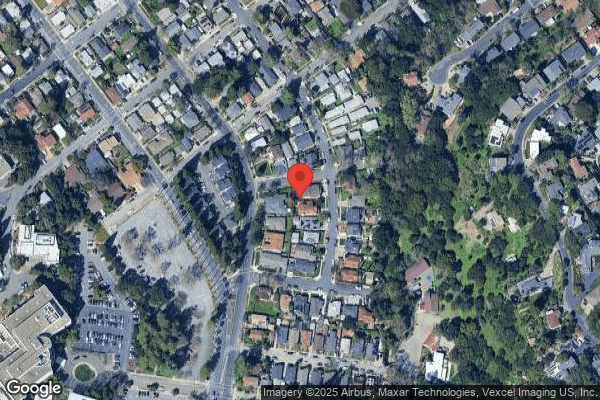
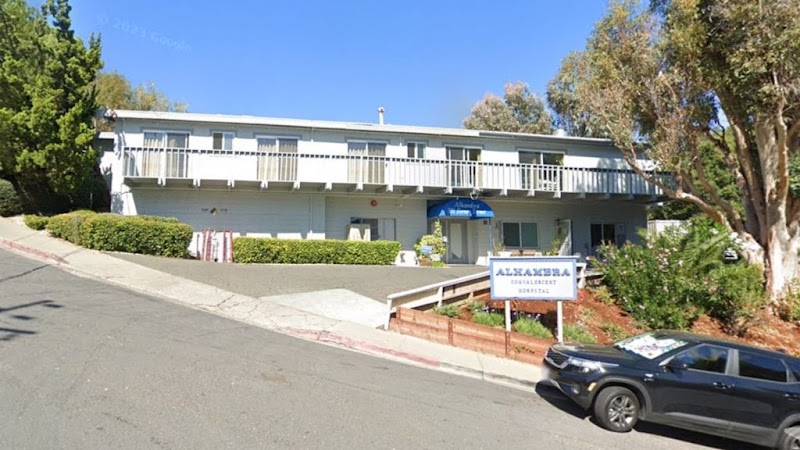
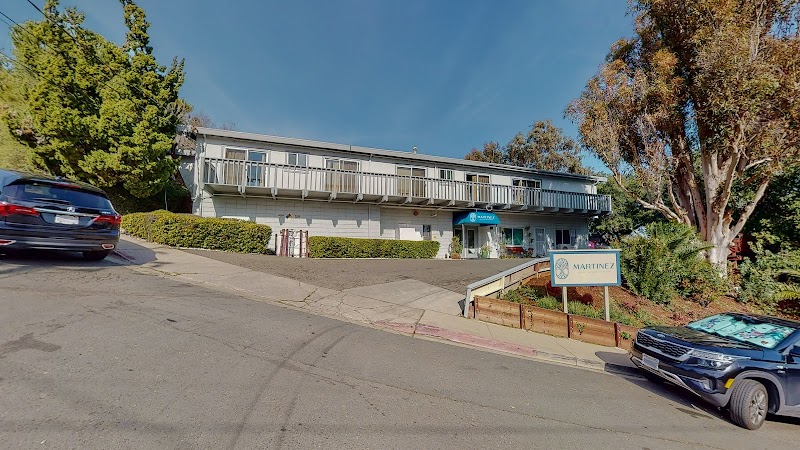
ALHAMBRA POST ACUTE

331 ILENE STREET, MARTINEZ, CA 94553 (925) 228-2020
For profit - Corporation 44 Beds PACS GROUP Data: November 2025
Trust Grade
60/100
#521 of 1155 in CA
Last Inspection: November 2024

Within standard 12-15 month inspection cycle. Federal law requires annual inspections.

Overview

Alhambra Post Acute has a Trust Grade of C+, indicating it is decent and slightly above average among nursing homes. It ranks #521 out of 1155 facilities in California, placing it in the top half, but #23 out of 30 in Contra Costa County suggests there are better local options available. The facility is improving overall, having reduced issues from 21 in 2023 to 13 in 2024. Staffing is rated 3 out of 5 stars, with a concerning turnover rate of 53%, significantly higher than the state average of 38%. While there have been no fines reported, which is a positive indicator, there were several incidents noted during inspections, such as failing to properly label and store medications, not allowing residents to heat personal food items, and not following proper infection control practices, which could lead to safety concerns.

Trust Score
C+
60/100
In California
#521/1155
Top 45%
Safety Record
Low Risk
No red flags
Inspections
Getting Better
21 → 13 violations
Staff Stability
⚠ Watch
53% turnover. Above average. Higher turnover means staff may not know residents' routines.
Penalties
✓ Good
No fines on record. Clean compliance history, better than most California facilities.
Skilled Nurses
✓ Good
Each resident gets 68 minutes of Registered Nurse (RN) attention daily — more than 97% of California nursing homes. RNs are the most trained staff who catch health problems before they become serious.
Violations
⚠ Watch
51 deficiencies on record. Higher than average. Multiple issues found across inspections.
★★★☆☆
3.0
Overall Rating
★★★☆☆
3.0
Staff Levels
★★★★☆
4.0
Care Quality
★★★☆☆
3.0
Inspection Score
Stable
2023: 21 issues
2024: 13 issues

The Good

  • 4-Star Quality Measures · Strong clinical quality outcomes
  • Full Sprinkler Coverage · Fire safety systems throughout facility
  • No fines on record

Facility shows strength in quality measures, fire safety.

The Bad

3-Star Overall Rating

Near California average (3.1)

Meets federal standards, typical of most facilities

Staff Turnover: 53%

Near California avg (46%)

Higher turnover may affect care consistency

Chain: PACS GROUP

Part of a multi-facility chain

Ask about local staffing decisions and management

The Ugly 51 deficiencies on record

Nov 2024 11 deficiencies
CONCERN (D)

Potential for Harm - no one hurt, but risky conditions existed

PASARR Coordination (Tag F0644)

Could have caused harm · This affected 1 resident

**NOTE- TERMS IN BRACKETS HAVE BEEN EDITED TO PROTECT CONFIDENTIALITY** Based on interview and record review, the facility failed to complete the Level I Preadmission Screening and Resident Review (PA...

Read full inspector narrative →
**NOTE- TERMS IN BRACKETS HAVE BEEN EDITED TO PROTECT CONFIDENTIALITY** Based on interview and record review, the facility failed to complete the Level I Preadmission Screening and Resident Review (PASARR, a federal requirement to ensure that residents are not inappropriately placed in nursing homes for long term care) assessment for one of one sampled resident (Resident 31). This failure had the potential for residents to not received appropriate care and services. Findings: During a review of Resident 31's admission Record, dated November 20 2024, the record indicated Resident 31 was originally admitted to the facility on [DATE]. During a concurrent interview and record review on 11/19/24 at 4:01 p.m. with Director of Nursing(DON), DON stated the facility was expected to complete a PASARR screening prior to residents' admission to the facility. DON could not provide Resident 31's Level 1 PASARR. DON stated Resident 31's Level 1 PASARR was not done. DON stated when Resident 31 was admitted to the facility she was a newly hired DON and did not know why Resident 31 did not have level 1 screening for PASARR completed. DON stated residents on psychotropic medication need to be screened for Level 1 PASARR. During an interview on 11/21/24 at 11:50 a.m. with admission Coordinator(AC), AC stated she was responsible to coordinate with hospital case managers prior to residents admissions to the facility. AC stated she did not know about Resident 31 level 1 PASARR because she was hired after Resident 31's admission to the facility.
CONCERN (D)

Potential for Harm - no one hurt, but risky conditions existed

Accident Prevention (Tag F0689)

Could have caused harm · This affected 1 resident

Based on observation, interview, and record review, the facility failed to ensure adequate supervision was provided to prevent falls and implement resident-centered care interventions for one (Residen...

Read full inspector narrative →
Based on observation, interview, and record review, the facility failed to ensure adequate supervision was provided to prevent falls and implement resident-centered care interventions for one (Resident 31) of four sampled residents when, Resident 31 had repeated unwitnessed falls. This failure caused Resident 31 to continued to fall and had the potential to result in injuries. Findings: During a review of Resident 31's Annual Minimum Data Set (MDS), Resident Assessment and care guide tool, dated 7/17/24, indicated Resident 31's Basic Interview of Mental status (BIMS, a scoring system used to determine the resident's cognitive status regarding attention, orientation, and ability to register and recall information. A BIMS score of thirteen to fifteen is an indication of intact cognitive status.). Resident 31's score was 03, meaning poor cognition. Resident 31's diagnoses included Non-Alzheimer's Disease (a group of diseases characterized by progressive deficits in behavior, executive function or language). Resident 31 was independent and once standing had the ability to walk at least 150 feet in corridor or similar space. Resident 31's behavior included wandering , the wandering placed Resident 31 at significant risk of getting to a potential dangerous place. During an observation on 11/20/24 at 1:19 p.m. Resident 31 wandered the hallways looking into other residents rooms. Review of Resident 31's Interdisciplinary Team (IDT- an approach to healthcare that integrates multiple disciplines through collaboration). The IDT progress notes indicated Resident 31 was at risk for falling and had the following falls: 6/28/24-Resident 31 had unwitnessed fall with no injury. 7/19/2-Resident 31 had unwitnessed fall with injury (hematoma on nose and face). Resident 31 was up ambulating went into the dining room and had an unwitnessed fall. Resident 31 laid face down head to the side assisted to the floor in the hallway when he tried to stand up and lost his balance. Resident 31's nose was swollen and discolored with small amount of blood from nose Resident 31 was transferred to the hospital for further evaluation and treatment. 9/1/24-Resident 31 lost her balance and fell on her buttock at the nursing station. 9/10/24-Resident 31 had an unwitnessed fall with no injuries. During a review of Resident 31's Change of Condition Evaluations (COC), dated 9/26/24, the COC indicated Resident 31 had unwitnessed fall, observed sitting on the floor, difficult to assess or redirect due to dementia. During a concurrent interview and record review on on 11/20/24 at 9:01 a.m. with the Director of Nursing (DON), Resident 31's IDT progress notes, COCs and fall care plan were reviewed. The IDT progress notes indicated prior interventions before each fall included remind resident to ask for help and current interventions after falls included redirection and reorientation. Resident 31's care plan indicated provide verbal reminders to ask for assistance as needed. DON stated Resident 31 wandered around the facility and had some falls in room and sometimes in the hallways. During an interview on 11/20/24 at 1:14 p.m. Certified Nursing Assistant (CNA2), CNA2 stated Resident 31 wandered around the facility, goes to every other residents' room and closet. CNA2 stated Resident 31 was very confused difficult to redirect. During an interview on 11/20/24 at 2:39 p.m. with DON, DON stated despite the interventions Resident 31 continued to wanders into other residents rooms despite redirection and reorientation. DON stated the interventions before and after falls are the same.
CONCERN (D)

Potential for Harm - no one hurt, but risky conditions existed

Deficiency F0744 (Tag F0744)

Could have caused harm · This affected 1 resident

**NOTE- TERMS IN BRACKETS HAVE BEEN EDITED TO PROTECT CONFIDENTIALITY** Based on observation, interview and record review, for one of two sampled residents (Resident 31), the facility failed to develo...

Read full inspector narrative →
**NOTE- TERMS IN BRACKETS HAVE BEEN EDITED TO PROTECT CONFIDENTIALITY** Based on observation, interview and record review, for one of two sampled residents (Resident 31), the facility failed to developed and implement person-centered interventions to prevent Resident 31 with dementia from wandering into the rooms and closets of other residents. Dementia is a general term to describe a group of symptoms related to loss of memory, judgment, language, complex motor skills, and other intellectual function, caused by the permanent damage or death of the brain's nerve cells, or neurons. However, dementia is not a specific disease. There are many types and causes of dementia with varying symptom and rates of progression. (Adapted from: About Dementia. Alzheimer's Foundation of America. 30). This failure had the potential to cause residents increase confusion and distress. Finding: During a review of Resident 31's admission Record (AR), the AR indicated, Resident 31's was an [AGE] year old female admitted to the facility on [DATE]. Resident 31's primary diagnoses included non traumatic subdural hemorrhage and Dementia without behavioral disturbance. During a review of Resident 31's Annual Minimum Data Set (MDS), Resident Assessment and care guide tool, dated 7/17/24, indicated Resident 31's Basic Interview of Mental status (BIMS, a scoring system used to determine the resident's cognitive status regarding attention, orientation, and ability to register and recall information. A BIMS score of thirteen to fifteen is an indication of intact cognitive status.). Resident 31's score was 03 meaning poor cognition. Resident 31 had no potential indicators of psychosis, no hallucination, no delusions. Resident 31 exhibited wandering and rejection of care behavior. The MDS indicated Resident 31's wandering placed the resident at significant risk of getting to a potentially dangerous place. Resident 31's wandering significantly intrude on the privacy or activities of others. Resident 31's diagnoses included Non-Alzheimer's Disease (a group of diseases characterized by progressive deficits in behavior, executive function or language). During a review of Resident 31's risk for elopement/exit seeking/wandering related to alter cognitive care plan, initiated 1/29/24 interventions did not address Resident 31 wandering into the rooms and closets of other residents. During a resident council meeting on 11/19/24 at 11:13 a.m. Resident 16, 17, 18, 36 and 38 complained that Resident 31 wandered into their rooms and takes their belongings e.g sweater. Resident 31 wanders into thier rooms day and night, rummages through their stuff. Resident 16, 17, 18, 36 and 38 are upset they do not like the situation sometimes Resident 31 tickle their feet, take their belongings. Residents stated Resident 31 need to be in a specialized facility to care for her conditions. During an interview on 11/20/24 at 1:14 p.m. with Certified Nursing Assistant (CNA2), CNA2 stated Resident 31 wandered around the facility goes into other residents rooms and closet. CNA2 stated Resident 31 was very confused, difficult to redirect. During an observation on 11/20/24 at 1:19 p.m. Resident 31 wandered in hallways looking into other residents rooms. During an interview on 11/20/24 at 2:39 p.m. with Director of Nursing (DON), DON stated Resident 31 continued to wander into other residents rooms despite redirection and reorientation. DON said other residents complained about Resident 31 wandering into their rooms in the evenings and at night. During an interview on 11/21/24 at 8:20 a.m. with Certified Nursing Assistant 3 (CNA3), CNA3 stated Resident 31 wandered around a lot. Resident 31 wandered into other residents rooms and closets picked up other residents' belongings. Resident 31 redirection depends on the days, some times Resident 31 yells and screams. CNA 3 stated other residents stated they don't want Resident 31 in their rooms because she picked up their belongings. During an interview on 11/21/24 at 8:24 a.m. with Certified Nursing Assistant 4 (CNA4), CNA4 stated Resident 31 wanders around in the facility. CNA4 stated Resident 31 looks for her clothes in other residents' closets. Resident 31 was always looking for something in other residents' room. During an interview on 11/21/24 at 9:35 a.m. Activities Director (AD), AD stated It was hard for Resident 31 to participate in activities, she is by her self . Resident 31 think we are stealing her clothes she cannot comprehend. Resident 31 roams the facility with her bag so we give her the space sometimes she walks in and goes out of other residents rooms, sat on bed looking out the window. AD stated other residents argued with Resident 31. AD said Resident 31 goes into other residents' room and take their clothes, things on their dresser, some of the resident don't tolerate some times she goes into men room. AD stated Resident 31's redirection depends on her mood sometimes she argues and she wants to go home looking for her keys. During an interview on 11/21/24 at 10:44 a.m. with Resident 31's Medical Doctor (MD) 1, MD 1 stated Resident 31 had profound dementia and subdural hematoma. MD 1 stated Resident 31's dementia was so severe. MD 1 stated Resident 31 will benefit from a dementia unit. During a review of the facility's policy and procedure (P&P) titled, Dementia-Clinical Protocol, revised 2022, the P&P indicated, The IDT will adjust interventions and the overall plan depending on the individual's responses to those interventions, progression of dementia, development of new acute medical conditions or complications, changes in resident or family wishes, and other relevant factors.
CONCERN (D)

Potential for Harm - no one hurt, but risky conditions existed

Deficiency F0761 (Tag F0761)

Could have caused harm · This affected 1 resident

**NOTE- TERMS IN BRACKETS HAVE BEEN EDITED TO PROTECT CONFIDENTIALITY** Based on observation, interview and record review, the facility failed to label medications and properly dispose of a medication...

Read full inspector narrative →
**NOTE- TERMS IN BRACKETS HAVE BEEN EDITED TO PROTECT CONFIDENTIALITY** Based on observation, interview and record review, the facility failed to label medications and properly dispose of a medication beyond the use by date for two of 14 sampled residents (Resident 36 and Resident 5), when while inspecting medication cart two (use by date is the date at which the manufacturer can still guarantee the full potency and safety of the drug): 1. Resident 36's one bottle of Latanoprost Ophthalmic Solution 0.005 % ( Latanoprost ) was not labeled with an open date. Another bottle Resident 36's Latanoprost was stored beyond the use by date in the medication cart (Latanoprost is an eyedrop used to treat a condition in which increased pressure in the eye can lead to gradual loss of vision). 2. A bottle of Atropine Sulfate Ophthalmic solution 1% was not properly labeled (Atropine Sulfate Ophthalmic solution is an eyedrop used to treat certain eye conditions). Findings: 1. Resident 36 was admitted on [DATE] with diagnoses including changes in retinal vascular appearance to the right eye (meaning changes in the light sensitive layer of tissue at the back of the right eyeball). During a concurrent observation and interview on 11/19/24, at 9:21a.m., with the Director of Staff Development (DSD), while inspecting medication cart two, Resident 36 had two opened bottles of Latanoprost eyedrops. One eyedrop bottle was not labeled with an open date and another eyedrop bottle had an open date of 9/10/24. Both boxes of the eyedrop bottles indicated, to dispose the eyedrops after 28 days from the opening date. DSD stated, the eyedrop without the open date should have been dated. The DSD further stated, the eyedrop with an open date of 9/10/24 should have been disposed after 28 days (the 28th day after 9/10/24 would have been 10/8/24, this observation was conducted on 11/19/24). During a review of Resident 36's Physician Order, dated 9/5/24, indicated an order, for Latanoprost Ophthalmic Solution 0.005 %, instill 1 drop in both eyes at bedtime for dry eyes and itching. During a review of Resident 36's Medication Administration Record (MAR),dated November 2024, the MAR indicated that Latanoprost eyedrops were last given to Resident 36 on 11/18/24 at 9:00 p.m. During an interview on 11/20/24 at 1015 a.m., with the Director of Nursing (DON), DON stated, the Latanoprost eyedrops with an open date of 9/10/24 should have been disposed after 28 days from the opening date and the other bottle of Latanoprost eyedrops with no open date should have been labeled with an open date to know when the eyedrop's use by date was. Stated the risk of giving the eyedrops past their use by date was that it would not be effective in treating the illness because they have less potency. During a telephone interview on 11/21/24 11:24 a.m., with the Consultant Pharmacist (CP), stated Resident 36's Latanoprost eyedrops should have had an open date label and should have been disposed after the use by date because of the risk of eye infection and blindness. 2. During a concurrent observation and interview on 11/19/24, at 9:21a.m., with the DSD, while inspecting medication cart two, observed an open Atropine Sulfate Ophthalmic Solution 1% eyedrop bottle in a box with no label. The box of the Atropine eyedrops had handwritten notes which read, 2 drop and L eye. DSD stated that the eyedrops belonged to Resident 5. Also stated Resident 5's Atropine should have been labeled with the resident's name and dosage, to prevent medication error. Resident 5 was admitted on [DATE]with diagnoses including ocular hypertension, unspecified eye (a condition when pressure within the eye increases). During a review of Resident 5's Physician Order, dated 3/21/24, indicated an order, for Atropine Sulfate Ophthalmic Solution 1%, instill two drops to left eye two times a day. During a review of Resident 5's Medication Administration Record (MAR), dated November 2024, the MAR indicated that Atropine was last given on 11/19/24 at 9:00 a.m. During an interview on 11/20/24 at 1015 a.m., with the DON, stated the Atropine eyedrops should have been labeled with the resident's name, dosage, open date and the initial of nurse who opened the medication. A review of the facility's policy and procedure (P&P) titled, Medication Labeling and Storage, dated 2001, the P&P indicated, . Medication Labeling. 1.Labeling of medications and biologicals dispensed by the pharmacy is consistent with applicable federal and state requirements and currently accepted pharmaceutical practices. 2. the medication label includes at a minimum a. medication names b. prescribed dose c. strength d. expiration date, when applicable e. resident's name f. route of administration; and g. appropriate instructions and precautions .
CONCERN (D)

Potential for Harm - no one hurt, but risky conditions existed

Infection Control (Tag F0880)

Could have caused harm · This affected 1 resident

**NOTE- TERMS IN BRACKETS HAVE BEEN EDITED TO PROTECT CONFIDENTIALITY** Based on observation, interview and record review, the facility failed to maintain an effective infection control program when t...

Read full inspector narrative →
**NOTE- TERMS IN BRACKETS HAVE BEEN EDITED TO PROTECT CONFIDENTIALITY** Based on observation, interview and record review, the facility failed to maintain an effective infection control program when the lid (cover) of Resident 144's suction machine cannister was not changed for 18 days (Suction machine is a device that is used for removing secretions like mucus, phlegm, saliva from a person's airway; the suction machine cannister is where the secretions are collected). This failure placed the resident at increased risk of healthcare associated infections. Findings: During a review of Resident 144's admission record indicated the resident was admitted on [DATE] with diagnoses that included esophageal obstruction (a blockage or narrowing of the esophagus, the muscular tube that connects the mouth to your stomach). During a concurrent observation and interview on 11/18/24, at 2:22 p.m., with Licensed Vocational Nurse (LVN) 2, in Resident 144's room, the resident's suction machine cannister was observed to be filled with 100 milliliters (ml., a form of measurement) of phlegm. The lid of the suction machine cannister was observed to have a handwritten date of 11/1/24. LVN 2 could not specify the date when the suction cannister was last changed. During a concurrent observation and interview on 11/18/24 at 2:30 p.m., with Registered Nurse (RN) 1, in Resident 144's room, RN 1 also could not specify when the suction cannister was last changed. RN 1 further stated, the container jar (bottom part) of the suction cannister was changed frequently, but the upper part of the suction canister ( lid or cover ) was not changed regularly. During an interview on 11/18/24 at 2:30 p.m., with Infection Preventionist (IP), IP acknowledged that the suction cannister lid should have been changed before 11/18/24, stated the risk of not changing the cannister lid was for Resident 144 to have a respiratory infection. During an interview on 11/20/24 at 1015 a.m., with the Director of Nursing (DON), stated, the suction cannister and its lid should have been changed every 7 days. Further stated risk of not changing the lid every seven days was infection. During a review of Resident 144's Order Summary Report dated 11/19/24, indicated an order with a start date of 8/2/24 to change the suction cannister weekly every Wednesday and as needed. During a review of the facility's policy and procedure (P&P) titled, Policies and Practices - Infection Control ,revised October 2018,the P & P indicated .4. All personnel (staff ) will be trained on our infection control policies and practices upon hire and periodically thereafter, including where and how to find and use pertinent procedures and equipment related to infection control .
CONCERN (E)

Potential for Harm - no one hurt, but risky conditions existed

Deficiency F0565 (Tag F0565)

Could have caused harm · This affected multiple residents

Based on interview and record review, the facility failed to act promptly upon the grievances and recommendations from the residents' group meetings concerning residents care and life in the facility....

Read full inspector narrative →
Based on interview and record review, the facility failed to act promptly upon the grievances and recommendations from the residents' group meetings concerning residents care and life in the facility. This failure had the potential to cause residents' emotional distress. Findings: During a review of the facility's residents group meeting, titled, Resident Council Minutes/Resident Council Resolution Form, dated 8/5/24, indicated residents reported concerns included: Certified Nursing Assistants (CNAs) making too much noise at night whereby residents can't sleep, rooms too hot, cold food and food doesn't look good, request bigger room for activities. Further review of the residents' council minutes dated 9/26/24 indicated residents reported delays in receiving assistance, CNAs lack of courtesy and professionalism, feeling of neglect and no dignity or respect, not feeling safe because other resident going into their rooms, cold food. During a concurrent interview and record review on 11/19/24 at 9:41 a.m. with the Activities Director (AD), the facility's residents council minutes notes dated 8/5/24 and 9/26/24 were reviewed. AD stated she did not communicate residents concerns reported during August and September 2024 residents group meeting to the appropriate department for follow up. During a concurrent interview and record review on 11/20/24 at 12:28 p.m. with Administrator (Admin), the facility's residents council minutes notes dated 8/5/24 and 9/26/24 were reviewed. Admin stated he cannot say for certain if he addressed grievances from the resident group meetings. Admin stated he did not have a good paper trail for residents' grievances follow up. Admin said facility has a plan to follow up with reported grievances from resident group meetings. During a review of the facility's policy and procedure (P&P) titled, Resident Council, revised February 2021, the P&P indicated,The purpose of the resident council is to provide a forum for residents, families and resident representatives to have input in the operation of the facility and discussion of concerns and suggestions for improvement, a resident council response form will be utilized to track issues and their resolution. During a review of the facility's policy and procedure (P&P) titled, Grievances/Complaints, Filing revised 2024, the P&P indicated Residents and their representatives have the right to file grievances, either orally or in writing, to the facility staff or to the agency designated to hear grievances. The administrator and staff will make prompt efforts to resolve grievances to the satisfaction of the resident and/or representative.
CONCERN (E)

Potential for Harm - no one hurt, but risky conditions existed

Medication Errors (Tag F0758)

Could have caused harm · This affected multiple residents

**NOTE- TERMS IN BRACKETS HAVE BEEN EDITED TO PROTECT CONFIDENTIALITY** Findings: 4. During a review of Resident 145's admission record, the admission record indicated the resident was admitted on [DA...

Read full inspector narrative →
**NOTE- TERMS IN BRACKETS HAVE BEEN EDITED TO PROTECT CONFIDENTIALITY** Findings: 4. During a review of Resident 145's admission record, the admission record indicated the resident was admitted on [DATE] with diagnoses that included Alzheimer's Disease (a brain disorder that gradually destroys memory and thinking skills) and Dementia (loss of memory, language, problem-solving and other thinking abilities). During a review of Resident 145's Minimum Data Set (MDS, a standardized resident assessment and care screening tool), dated 11/11/24, indicated the resident had severe cognitive impairment. During a review of Physician's orders dated 11/9/24, indicated, an order of Seroquel oral tablet 25 milligrams (mg., a form of measurement), give 0.5 tablet by mouth every 12 hours as needed for Alzheimer's Dementia manifested by depression and anxiety for 14 days (Seroquel is an antipsychotic medication; an antipsychotic is a medication that is used for the mind to manage delusions, hallucinations, disordered thought. Antipsychotic medications can cause severe side effects; depression is a mood disorder that causes persistent feelings of sadness). A review of Physician's orders dated 11/9/24, indicated, no target behaviors were specified to be monitored for the use of the antipsychotic drug Seroquel (target behaviors for antipsychotics refer to the specific, undesirable behaviors that a patient is exhibiting which a doctor aims to reduce or manage with the use of antipsychotic medication, such as aggression, agitation, hallucinations, delusions, or other disruptive behaviors). During an interview on 11/21/24, at 10:00 a.m., with the Director of Nursing (DON), DON stated that there should be target behaviors to be monitored for the use of Seroquel. Also stated this would help in surveilling the medication's effectiveness in controlling the undesirable behaviors. During a telephone interview on 11/21/24 11:24 a.m., with the Consultant Pharmacist (CP), CP stated that there should be target behaviors to be observed for the use of Seroquel. Further stated the behavior monitoring would have helped to determine if Seroquel was effective and if the resident still needed this medication. During a telephone interview on 11/21/24, at 10:36 a.m., with the Medical Doctor (MD) 1, MD 1 stated there should be target behaviors specified to be monitored for the use of Seroquel. During a review of the resident's Pre-admission Screening Resident Review (PASRR) for serious mental illness screening dated 11/9/24 indicated, Resident 145 did not have a serious mental illness. During a review of the facility's policy and procedure (P&P) titled, Antipsychotic Medication Use, dated 2001, the P&P indicated, . The attending physician will identify, evaluate, and document, with input from other disciplines and consultants as needed, symptoms that may warrant the use of antipsychotic medications . The staff will observe, document, and report to the attending physician information regarding the effectiveness of any interventions, including antipsychotic medications . Based on observation, interview and record review, the facility failed to ensure three (Resident 27, 31 and 145) of five sampled residents were free from unnecessary drugs when; 1. Resident 27 was administered Seroquel (an antipsychotic - drugs used to treat schizophrenia and bipolar serious mental health conditions and not approved for use in psychotic conditions related to dementia.) medication for wandering; 2. Resident 31 had a new diagnosis of schizophrenia (a serious mental health conditions capable of affecting the mind, emotions, and behavior); 3. Resident 31 with diagnosis of dementia was administered Zyprexa (an antipsychotic) medication for yelling and screaming; 4. Resident 145 was administered antipsychotic medication without adequate indication for use. These failures had the potential for residents to receive unnecessary medications and had the potential for the residents to suffer adverse medication side effects. Findings: 1. During a review of Resident 27's Annual Minimum Data Set (MDS), Resident Assessment and care guide tool, dated 3/8/24, indicated Resident 27's Basic Interview of Mental status (BIMS, a scoring system used to determine the resident's cognitive status regarding attention, orientation, and ability to register and recall information. A BIMS score of thirteen to fifteen is an indication of intact cognitive status.). Resident 27's score was 01 meaning poor cognition. Resident 27 had no behavior of wandering. Resident 27 had no physical or verbal behavioral symptoms directed towards others e.g., hitting, kicking, pushing, scratching, grabbing or screaming at others, verbal/vocal symptoms like screaming or disruptive sounds. Resident 27 had no potential indicators of psychosis. Resident 27's diagnoses included Non-Alzheimer's Disease (a group of diseases characterized by progressive deficits in behavior, executive function or language). During a review of Resident 27's Order Summary Report dated 11/12/24, indicated the physician prescribed Resident 27, Seroquel oral tablet 25 mg give 0.5 tablet by mouth in the afternoon for wandering and behavioral disturbances. During a review of Resident 27's Medication Administration Record (MAR), dated 11/12/24 to 11/18/24 indicated Resident 27 was administered seroquel 25 mg give 0.5 tablet by mouth in the afternoon for wandering and behavioral disturbances. Further review of Resident 27's MAR dated 10/1/24 to 10/31/24 indicated Resident 27 was administered seroquel 25 mg give 0.5 tablet by mouth in the afternoon for agitation and tearfulness. During a review of Resident 27's Pre-admission Screening Resident Review (PASRR) evaluation, dated 4/15/22, the PASRR indicated Resident 27 has no serious mental illness. During an observation on 11/18/24 at 10:48 a.m. in the hallway south station Resident 27 appeared well groomed wanders up and down the hallway and was redirected by staff to her bed. During an interview on 11/19/24 at 9:08 a.m. with Certified Nursing Assistant (CNA) 1, CNA1 stated Resident 27 was redirectable and nice. CNA 1 said Resident 27 liked to sit outside her room. During a review of Resident 27's Consultant Pharmacist's Medication Regimen Review (MRR), dated 8/13/24, the MRR indicated to please review indication for seroquel use. MRR indicated Resident 27 has a diagnosis of dementia . 2. During a review of Resident 31's Discharge Summary (D/S), dated 7/11/23, the D/S indicated, Resident 31's principal diagnoses was dementia and secondary diagnoses included dementia, severe protein-calorie malnutrition, ground level fall, subdural hematoma, subarachnoid hemorrhage. During a review of Resident 31's admission Record (AR), the AR indicated, Resident 31's was an [AGE] year old female admitted to the facility on [DATE]. Resident 31's primary diagnoses included non traumatic subdural hemorrhage and Dementia without behavioral disturbance. The AR did not show that Resident 31 had a diagnosis of schizophrenia upon admission to the facility. During a review of Resident 31's admission Minimum Data Set (MDS), Resident Assessment and care guide tool, dated 7/18/23, indicated Resident 31's active diagnoses did not include diagnosis of schizophrenia. During a concurrent interview and record review on 11/20/24 at 9:01 a.m. with the Director of Nursing (DON), Resident 31's D/S, AR and order summary report were review. The physician order indicated Resident 31 was prescribed Zyprexa oral tablet 2.5 mg by mouth at bed time for schizophrenia manifested by disorganized thought process. DON stated Resident 31 had dementia. DON said Resident 31 was not admitted with schizophrenia diagnosis. DON stated the psychiatry added the schizophrenia diagnosis with consultation. DON stated Resident 31 wanders around the facility. DON said somehow along the way Resident 31 was diagnosed with schizophrenia. DON said she did not know why Resident 31 was diagnosed with schizophrenia. During a review of Resident 31's Psychiatric Progress Report, dated 2/9/23, the Nurse Practitioner notes indicated Resident 1 had unclear confusion vs possible psychotic and disorganized thinking. Resident 31 diagnostic impression included other specified schizophrenia spectrum and dementia without behavior. During an interview on 11/21/24 at 10:44 a.m. with Resident 31's Medical Doctor (MD) 1, MD 1 stated Resident 31 had profound dementia and subdural hematoma. MD 1 stated he did not diagnosed Resident 31 with schizophrenia. MD 1 stated Resident 31 was on Zyprexa for agitation. MD 1 stated Resident 31's dementia was so severe that he was not capable of diagnosing Resident 31 with schizophrenia. MD 1 stated Resident 31 was seen by psychiatry. MD 1 stated Resident 31 will benefit from a dementia unit. 3. During a review of Resident 31's Annual Minimum Data Set (MDS), Resident Assessment and care guide tool, dated 7/17/24, indicated Resident 31's Basic Interview of Mental status (BIMS, a scoring system used to determine the resident's cognitive status regarding attention, orientation, and ability to register and recall information. A BIMS score of thirteen to fifteen is an indication of intact cognitive status.). Resident 31's score was 03 meaning poor cognition. Resident 31 had no potential indicators of psychosis, no hallucination, no delusions. Resident 31 exhibited wandering and rejection of care behavior. Resident 31's diagnoses included Non-Alzheimer's Disease (a group of diseases characterized by progressive deficits in behavior, executive function or language). During a review of Resident 31's Order Summary Report dated 2/14/24, indicated the physician prescribed Resident 31 zyprexa oral tablet 2.5 mg give 2.5 mg by mouth at bedtime for schizophrenia manifested by disorganized thought process. Further review of Resident 31's physician order dated 7/4/24 indicated behavior monitoring for antipsychotic seroquel and zyprexa medication, document number of episodes per shift of target behavior; screaming, yelling, pacing, refusing care every shift for behavior monitoring for zyprexa. During a review of Resident 31's Medication Administration Record (MAR), dated 11/1/24 to 11/18/24 indicated Resident 31 was administered zyprexa 2.5 mg give 2.5 mg tablet by mouth at bedtime. During a review of Resident 31's Behavior Management care plan initiated 11/28/23, indicated use of psychotropic medication related to episodes of yelling out, refusal of care, pacing, unable to redirect, interventions included monitor/record occurrence of target behavior symptoms i.e. pacing, wandering, disrobing, inappropriate response to verbal communication. During an observation on 11/19/24 at 11:09 a.m. Resident 31 wandered up and down the hallways alert with incomprehensible conversation. During an interview on 11/20/24 at 1:14 p.m. Certified Nursing Assistant (CNA2), CNA2 stated Resident 31 wanders around goes to other residents' rooms and closet. CNA2 stated Resident 31 was very confused and difficult to redirect. During an interview on 11/20/24 at 2:39 p.m. DON stated despite interventions Resident 31 continued to wanders into other residents rooms. During a review of the facility's policy and procedure (P&P) titled, Antipsychotic Medication Use, revised 2022, the P&P indicated, Antipsychotic medications will not be used if the only symptoms are one or more of the following: a. Wandering; b. Poor self care; c. Restlessness; d. impaired memory; e. Mild anxiety; f. Insomnia; g. Inattention or indifference to surroundings; i. Fidgeting; j. Nervousness; or k. Uncooperativeness.
CONCERN (E)

Potential for Harm - no one hurt, but risky conditions existed

Food Safety (Tag F0812)

Could have caused harm · This affected multiple residents

Based on observation, interviews and record review, the facility failed to ensure storage of food under sanitary conditions when the following food items in the refrigerator were not dated and labeled...

Read full inspector narrative →
Based on observation, interviews and record review, the facility failed to ensure storage of food under sanitary conditions when the following food items in the refrigerator were not dated and labeled with received, open and use-by dates : - One bag of cauliflower with brownish black discoloration - One bag of parsley moist and withered - Three cut up watermelon not labeled with date - One chest freezer had no temperature log. - Refrigerator temperature log missing entries - Trash can lid with brownish discoloration - Kitchen floor tiles with brownish stain and discoloration These failures had the potential to result in food borne illnesses. Findings: During the initial tour of the kitchen on 11/18/24 at 8:20 a.m. with Dietary Aide (DA)1, the following were observed in the refrigerator; one bag of cauliflower with brownish black discoloration, one bag of parsley moist and withered, three cuts up watermelon not labeled with use by date. DA 1 stated food items in refrigerator are labeled with use-by-date. DA 1 stated the bag of cauliflower and parsley were no longer good for use . DA 1 said she will disposed these food items. Further tour with DA 1 indicated refrigerator/freezer temperature log was missing entries from 11/13/24 to 11/17/24. Trash can located under hand washing sink lid had brownish discoloration. Kitchen floor tiles with brownish stain discoloration. During a follow up tour of kitchen on 11/19/24 at 12:24 p.m. with Dietary Supervisor (DS), one stand alone chest freezer had no temperature log, DS stated the temperature log for the chest freezer was missing and she will start a new log. DS stated she had new staff in the kitchen that are in training. During an interview on 11/19/24 at 2:34 p.m. with DA 2, DA 2 stated she received training on her job function including dating and labeling food in the refrigeration. During an interview on 11/19/24 at 2:42 p.m. with [NAME] (CK), CK stated he was a new hire. CK said he received training that included checking food temperature, dating and labeling of food in refrigerator and check and documentation of fridge and freezer temperature. During a review of the facility's policy and procedure (P&P) titled, Food receiving and storage of cold food, dated 2023, the P&P indicated, All perishable food items purchased by the department of food and dining services will be stored properly. All open food items will have an open date and use-by-date per manufacturer's guidelines.
CONCERN (E)

Potential for Harm - no one hurt, but risky conditions existed

Garbage Disposal (Tag F0814)

Could have caused harm · This affected multiple residents

Based on observation, interview and record review, the facility failed to ensure garbage and refuse storage area was maintained in a sanitary condition when the dumpster was overflowed with bags of tr...

Read full inspector narrative →
Based on observation, interview and record review, the facility failed to ensure garbage and refuse storage area was maintained in a sanitary condition when the dumpster was overflowed with bags of trash and not properly contained with lid. This failure had the potential of harborage and feeding of pest. Findings: During an observation on 11/19/24 at 7:12 a.m., with Dietary Services Manager (DSM) one dumpster located by the side of the facility overflowed with trash bags was not contained with lid. During an interview on 11/19/24 at 7:18 a.m. with Administrator (Admin) stated contracted company staff came and left without empty the dumpster. Admin stated house keeping staff assist with making sure dumpster was emptied. During an interview on 11/19/24 at 7:23 a.m. with Housekeeping Supervisor (HKS), HKS stated someone blocked the path to the dumpster and the dumpster was not emptied. During a review of the facility's policy and procedure (P&P) titled, Waste Disposal, revised January 2022, the P&P indicated, All infectious and regulated waste shall be handled and disposed of in a safe and appropriate manner.
CONCERN (E)

Potential for Harm - no one hurt, but risky conditions existed

Deficiency F0920 (Tag F0920)

Could have caused harm · This affected multiple residents

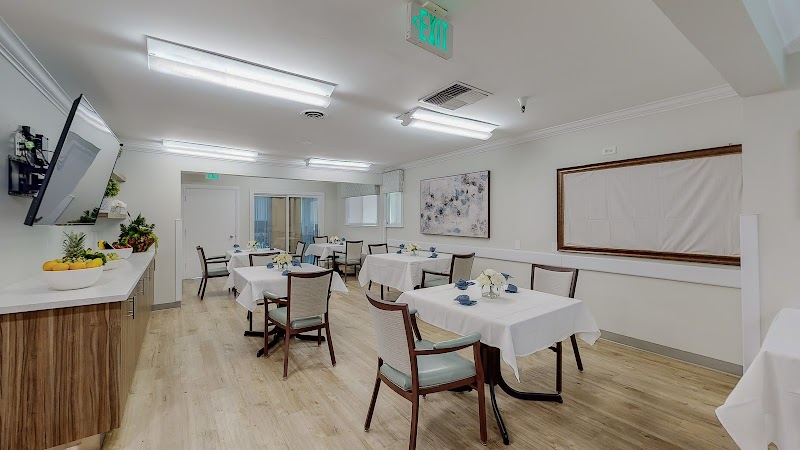
Based on observation and interview, the facility failed to provide a dining/activity room with adequate space for 42 residents. This failure resulted in limiting the independent functioning and task ...

Read full inspector narrative →
Based on observation and interview, the facility failed to provide a dining/activity room with adequate space for 42 residents. This failure resulted in limiting the independent functioning and task performance of the residents during mealtime and activity time. Findings: The facility census on 11/18/24 was 42 residents. On 11/21/24 at 12:04 p.m., observation of dining/activity room was conducted. The room which served as the residents' dining room and activity room had three square tables and accommodated five residents in wheelchairs and two ambulatory residents who used a walker as an assistive device. The dining room was observed to be crowded for the seven residents. The dining room staff were observed to push the tables to the side to be able to push and position some of the residents in wheelchairs in the dining tables. During an interview on 11/21/24 at 8:17 a.m., with Certified Nursing Assistant (CNA) 2 , CNA 2 stated the dining room was crowded at mealtimes and stated some of the ambulatory residents could slip and fall due to the tight space in the dining room. During an interview on 11/21/24 12:16 p.m., with Resident 16, stated the dining room was small and sometimes she had to dine in her room because the dining room space was limited. During an interview on 11/21/24 at 8:30 a.m., with Resident 17, stated the dining room was congested at mealtimes. Also stated it was difficult for the staff to position the residents in wheelchairs in the dining tables because of the small space of the dining area.
MINOR (B)

Minor Issue - procedural, no safety impact

Deficiency F0912 (Tag F0912)

Minor procedural issue · This affected multiple residents

**NOTE- TERMS IN BRACKETS HAVE BEEN EDITED TO PROTECT CONFIDENTIALITY** Based on observation and interview, the facility had sixteen resident rooms (Rooms 1, 3, 4, 5, 6, 7, 8, 9, 10, 11, 12, 14, 15, 1...

Read full inspector narrative →
**NOTE- TERMS IN BRACKETS HAVE BEEN EDITED TO PROTECT CONFIDENTIALITY** Based on observation and interview, the facility had sixteen resident rooms (Rooms 1, 3, 4, 5, 6, 7, 8, 9, 10, 11, 12, 14, 15, 16, 17 and 18) with multiple beds that provided less than 80 square foot (sq. ft) per resident who occupied these rooms. This deficient practice had the potential to result in inadequate space for the delivery of care to each of the residents in each room or for storage of residents' belongings. Findings: During an observation on 11/20/24, at 10:00 a.m., the following rooms and corresponding sq. ft per bed were identified: room [ROOM NUMBER] was observed with three beds. The room measured a total of 200 square feet. This size only provided 66 square feet per resident space. room [ROOM NUMBER] was observed with three beds. The room measured a total of 200 square feet. This size only provided 66 square feet per resident space. room [ROOM NUMBER] was observed with two beds. The room measured a total of 140 square feet. This size only provided 70 square feet per resident space. room [ROOM NUMBER] was observed with three beds. The room measured a total of 200 square feet. This size only provided 66 square feet per resident space. room [ROOM NUMBER] was observed with two beds. The room measured a total of 140 square feet. This size only provided 70 square feet per resident space. room [ROOM NUMBER] was observed with three beds. The room measured a total of 200 square feet. This size only provided 66 square feet per resident space. room [ROOM NUMBER] was observed with two beds. The room measured a total of 140 square feet. This size only provided 70 square feet per resident space. room [ROOM NUMBER] was observed with two beds. The room measured a total of 140 square feet. This size only provided 70 square feet per resident space. room [ROOM NUMBER] was observed with three beds. The room measured a total of 200 square feet. This size only provided 66 square feet per resident space. room [ROOM NUMBER] was observed with two beds. The room measured a total of 140 square feet. This size only provided 70 square feet per resident space. room [ROOM NUMBER] was observed with three beds. The room measured a total of 200 square feet. This size only provided 66 square feet per resident space. room [ROOM NUMBER] was observed with three beds. The room measured a total of 200 square feet. This size only provided 66 square feet per resident space. room [ROOM NUMBER] was observed with two beds. The room measured a total of 140 square feet. This size only provided 70 square feet per resident space. room [ROOM NUMBER] was observed with three beds. The room measured a total of 200 square feet. This size only provided 66 square feet per resident space. room [ROOM NUMBER] was observed with two beds. The room measured a total of 140 square feet. This size only provided 70 square feet per resident space. room [ROOM NUMBER] was observed with three beds. The room measured a total of 200 square feet. This size only provided 66 square feet per resident space. During random observations of care and services from 11/18/24 to 11/21/24, there were sufficient space for the provision of care for the residents in the rooms. There was no heavy equipment in the room that might interfere with residents' care and each resident had adequate personal space and privacy. There were no complaints from the residents regarding insufficient space for their belongings. There were no negative consequences attributed the decreased space and/or safety concerns in the five rooms. Granting of room size waiver recommended.
May 2024 1 deficiency
CONCERN (D) 📢 Someone Reported This

A family member, employee, or ombudsman was alarmed enough to file a formal complaint

Potential for Harm - no one hurt, but risky conditions existed

Deficiency F0660 (Tag F0660)

Could have caused harm · This affected 1 resident

**NOTE- TERMS IN BRACKETS HAVE BEEN EDITED TO PROTECT CONFIDENTIALITY** Based on interview and record review, the facility failed to ensure a follow up call and /or assessment was done to verify durab...

Read full inspector narrative →
**NOTE- TERMS IN BRACKETS HAVE BEEN EDITED TO PROTECT CONFIDENTIALITY** Based on interview and record review, the facility failed to ensure a follow up call and /or assessment was done to verify durable medical equipment was provided to Resident 1 as ordered (DME, are equipment and supplies for everyday or extended use). This failure posed a risk for an unsafe transition from the facility to the home setting. Findings: During an interview on 4/4/24 at 1:47 p.m., Resident 1's family member 1, stated, when the resident was discharged from the facility on 3/5/24, the family member was told by the facility's Social Service Director (SSD), that the DME would be delivered at their house. The family member stated, they did not receive the delivery of the DME. Further stated, they had to move the resident around the house for safe transfers, and after a few days, the family had to purchase a wheelchair to safely move the resident around the house because the resident could not walk. A review of Resident 1's admission Record, indicated, Resident 1 was admitted to the facility on [DATE], with diagnoses that included hemiplegia (paralysis that affects only one side of your body) and hemiparesis (muscle weakness or partial paralysis on one side of the body) following cerebral infarction (commonly known as stroke, caused by a blockage in a blood vessel in the brain, leading to brain damage). The admission record also indicated; the resident was discharged to home from the facility on 3/5/23 at 12:30 p.m. Review of Resident 1's Minimum Data Set (MDS, an assessment tool used to direct resident care) dated 3/5/24, under Section GG titled, Functional Abilities and Goals indicated, Resident 1 was unable to walk and used a wheelchair for mobility. The MDS also indicated, Resident 1 was dependent in the assistance of 2 or more helpers on surface-to-surface transfer (such as when transferring between bed and chair or wheelchair). Review of the physician's order dated 2/27/24, indicated an order for home health services referrals for Registered Nurse, Physical Therapy and Occupational Therapy services. The physician's order also indicated an order for DME of a wheelchair, hospital bed and patient lift (home health services are wide range of health services provided in a home for an illness ; patient lift is an equipment designed to lift and transfer patients from one place to another). Review of Resident 1's Discharge Summary dated 3/5/24, indicated, .discharged to daughter's house on 3/5/24. Home health ordered . home health to deliver DME to daughter's house. During an interview on 4/4/24 at 2:50 p.m., with SSD, stated she arranged home health services for Resident 1 prior to his discharge and the home health agency (HHA) was supposed to arrange for the delivery of the DME to the daughter's house. Stated she should have made sure that the DME was delivered to the resident's daughter's house before Resident 1 was discharged to ensure that the resident was safe at home. SSD acknowledged that even if the HHA stated they would arrange for the DME delivery, it was still the SSD's responsibility to ensure that Resident 1 was discharged safely from the facility (Home Health Agency or HHA is a public agency or private organization which provides home health services). During another interview on 4/10/24 at 11:31 a.m., with SSD, stated she made a follow up phone call to the Resident 1's family, 72 hours after the resident was discharged from the facility to verify the resident's status . Stated she failed to ask if the resident had already received the DME. Also stated, she had no documentation of the follow up phone call. Stated she should have verified the status of the DME delivery with the resident's family. Further stated, she did not make a follow up call to the HHA after the resident was discharged from the facility to verify if the DME were delivered. During a concurrent interview and record review on 4/23/24 at 9:45 a.m., with the Director of Nurses (DON), Social Services Director Job Description , dated March 2017 indicated, .Essential duties of SSD includes . assisting in discharge planning with appropriate agencies entities or individuals to include agency services equipment and agency referrals coordinates with interdisciplinary team . The DON acknowledged, the SSD should have followed up with the HHA and followed up on the DME before the resident's discharge. Further stated, Resident 1 should not have been discharged from the facility without the DME at home to ensure safety. Also stated, she could not find a documentation of Resident 1's post-discharge plan in the resident's medical records (a post-discharge plan is a plan developed by the facility to ensure that all the services the resident need are in place when the resident gets discharged from the facility). During a review of the facility's policy and procedure (P&P) titled, Discharge Summary and Plan, revised October, 2022, the P&P indicated, . When a resident's discharge is anticipated, . post-discharge plan is developed to assist the resident with discharge . the post discharge plan is developed by the care planning/interdisciplinary team (IDT), with the assistance of the resident and his or her family and includes: .arrangements that have been made for follow-up care and services; .how the IDT will support the resident or representative in the transition to post-discharge care . (Interdisciplinary team or IDT is a group of individuals representing different departments of the facility). The P&P also indicated; a copy of the post-discharge plan should be filed in the resident's medical records.
Apr 2024 1 deficiency
CONCERN (D) 📢 Someone Reported This

A family member, employee, or ombudsman was alarmed enough to file a formal complaint

Potential for Harm - no one hurt, but risky conditions existed

ADL Care (Tag F0677)

Could have caused harm · This affected 1 resident

Based on observation, interview and record review, the facility failed to provide bathing assistance for one of two sampled residents (Resident 1) for two extended intervals: a five-day interval from ...

Read full inspector narrative →
Based on observation, interview and record review, the facility failed to provide bathing assistance for one of two sampled residents (Resident 1) for two extended intervals: a five-day interval from 3/25/24 to 3/29/24 and a four-day interval from 3/31/24 to 4/3/24. This failure resulted in Resident 1 feeling emotional distress and that the facility did not support Resident 1's need for dignity. Findings: During a review of the admission Record (a document used to communicate basic information about a resident) for Resident 1, undated, the Record indicated Resident 1 was admitted to the facility in October 2023 with unspecified muscle weakness and paraplegia (the loss of muscle function in the lower part of the body including both legs). During a review of Resident 1's Minimum Data Set (MDS, an assessment tool used to plan care) dated 10/24/23, the MDS indicated Resident 1 had a score of 15 on the Brief Interview for Mental Status. (BIMS, is a scoring system used to determine the resident's cognitive status in regard to attention, orientation, and ability to register and recall information. A BIMS score of thirteen to fifteen is an indication of intact cognitive status.) The MDS indicated Resident 1 had impairment of both upper and lower extremities, was totally dependent on staff for transfers between surfaces and bathing, and had no behaviors of refusal of care. During a review of Resident 1's plan of care titled, Activities of Daily Living (ADL, those activities needed for self-care and mobility and include activities such as bathing, dressing, grooming, oral care, ambulation, toileting, eating, transferring, and communicating), dated 12/28/23, the care plan indicated Resident 1 had an intervention of, will have needs anticipated and met by staff. During a concurrent observation and interview on 4/16/24 at 10:48 a.m., with Resident 1 Resident 1 lay in bed with the head of bed elevated in a hospital gown. Resident 1 stated staff had not provided a shower although Resident 1 had requested one for what seemed like weeks. Resident 1 stated personal hygiene care was not provided as often as Resident 1 needed even after Resident 1 complained to the Director of Nursing (DON). Resident 1 became tearful and stated the facility failure to provide bathing and hygiene after repeated requests made Resident 1 feel like, they don't care about any of us here. Resident 1 stated the lack of showering made Resident 1 feel the facility did not support Resident 1's dignity. During a concurrent interview and record review on 4/16/24 at 11:41a.m., with the DON, Resident 1's Bathing Record and Progress notes from 3/17/24 through 4/16/24 were reviewed. The DON stated Resident 1 was not the type of person who refused hygiene care. The DON stated the expectation for residents who were unable to shower, for any reason, would be for staff to offer a bed bath. The DON stated if a resident refused bathing, staff should document the refusal in the resident's medical record. The DON stated Resident 1's Bathing Record indicated Resident 1 received bathing assistance 3/21/24, 3/23/24, 3/24/24, 3/30/24, 4/4/24, 4/8/24, 4/11/24, 4/14/24, 4/15/24; the Bathing Record indicated Resident 1 received showers on 3/21/24 and 4/11/24. The DON was unable to provide documentation Resident 1 had received assistance with bathing or refused bathing for the five-day interval of 3/25/24 to 3/29/24 or the four-day interval of 3/31/24 to 4/3/24. A review of the facility's policy titled, Activities of Daily Living (ADLs), Supporting, dated March 2018, indicated, Residents will be provided with care, treatment, and services as appropriate to maintain or improve their ability to carry out activities of daily living . appropriate care and services will be provided to residents who are unable to are unable to carry out ADLs independently, with the consent of the resident and in accordance with their plan of care.
Dec 2023 20 deficiencies
CONCERN (D)

Potential for Harm - no one hurt, but risky conditions existed

Deficiency F0554 (Tag F0554)

Could have caused harm · This affected 1 resident

**NOTE- TERMS IN BRACKETS HAVE BEEN EDITED TO PROTECT CONFIDENTIALITY** Based on observation, interview, and record review, the facility failed to perform a medication self-administration assessment p...

Read full inspector narrative →
**NOTE- TERMS IN BRACKETS HAVE BEEN EDITED TO PROTECT CONFIDENTIALITY** Based on observation, interview, and record review, the facility failed to perform a medication self-administration assessment prior to allowing Resident 12 to self-administer medications. This failure resulted in Resident 12 not taking ordered medication at the appropriate time, with the potential for adverse health outcomes related to incorrect medication administration. Findings: During a review of Resident 12's admission Record dated 11/28/23, which showed Resident 12 was admitted to the facility on [DATE]. Resident 12 had diagnoses that included hemiplegia and hemiparesis (severe or complete loss of strength to one side of the body) affecting the left side, dysphagia (difficulty and/or pain swallowing), and a gastrostomy (a surgical opening through the skin of the abdomen to the stomach). During a record review of the Medication Administration Record, dated 11/2023, the record showed Licensed Vocational Nurse 1 (LVN 1) administered Miralax (a medication to treat occasional constipation) powder to Resident 12 at 9:00 a.m. on 11/27/23. During a concurrent observation and interview on 11/27/23 at 10:15 a.m., a small unlabeled and undated medication cup with white powder was on Resident 12's bedside table. Resident 12 stated the powder was Miralax medication, and his nurse left it on the resident's bedside table while performing the morning medication administration. Resident 12 stated he would take the Miralax later. During a concurrent interview and record review with LVN 1 on 11/27/23 at 3:17 p.m., Resident 12's Electronic Health Record was reviewed. LVN 1 stated she left Miralax powder at Resident 12's bedside, and she did not witness Resident 12 take the medication. LVN 1 stated she usually leaves the medication at bedside for Resident 12 to take later at his request. LVN 1 further stated she did not know where to locate the self-administration assessment for Resident 12. LVN 1 also stated she was unable to find any record of the Medication Self Administration evaluation in Resident 12's electronic health record. During a record review of the facility policy titled Self-Administration of Medication, revised 2/2021, indicated as part of the evaluation comprehensive assessment, the interdisciplinary team (IDT-professionals from various disciplines who work in collaboration to address a resident with multiple physical and psychological needs) assesses each resident's cognitive and physical abilities to determine whether self-administering medications is safe and clinically appropriate for the resident.
CONCERN (D)

Potential for Harm - no one hurt, but risky conditions existed

Deficiency F0602 (Tag F0602)

Could have caused harm · This affected 1 resident

Based on interview and record review, the facility failed to ensure that missing property for one of one sampled resident (Resident 24) was accounted for and addressed. This failure placed Resident 2...

Read full inspector narrative →
Based on interview and record review, the facility failed to ensure that missing property for one of one sampled resident (Resident 24) was accounted for and addressed. This failure placed Resident 24 at risk for psychosocial stress and feeling vulnerable. Findings: During an interview on 11/27/23 at 9:24 a.m., Resident 24 stated she noticed her bank card was missing from her bedside tray table at 8:00 a.m., and notified the Licensed Vocational Nurse (LVN 4) and was told the card was not found in the room. Resident 24 further stated, I do not have the bank phone number or a phone. I am not sure what to do now. During an interview on 11/27/23 at 09:50 a.m., the Director of Nursing (DON) stated she was not aware of any reports of Resident 24's missing bank card. During an interview on 11/27/23 at 11:14 a.m., LVN 4 stated Resident 24 informed her of the missing bank card and a search was conducted of Resident 24's room. Resident 24 was provided a phone to call her responsible party. During a concurrent interview and record review on 11/29/23 at 11:16 a.m., with DON. The progress notes in the electronic healthcare record (EHR) for Resident 24 was reviewed. DON stated she found it concerning that staff did not inform her and document Resident 24's complaint and missing property. DON confirmed a thorough investigation was not completed for Resident 24's missing bank card. During a concurrent interview and record review on 11/29/23 at 12:18 p.m., with LVN 3, Resident 24's Inventory of Personal Effects, dated 8/31/22 was reviewed. LVN 3 stated the Inventory of Personal Effects list did not list a bank card. LVN3 stated she was not aware of resident 24's report of missing a bank card, I was not informed of this by anyone. LVN3 stated the Inventory of Personal Effects is to be completed on admission and should be updated as items are brought in for the resident. LVN3 verified the list was not updated, I have never seen the list updated as items are brought in for the residents. During an interview on 11/29/23 at 1:10 p.m., with Administrator (Admin), Admin stated he was not aware of resident 24's missing the bank card until notified by the surveyor this morning. Admin stated he was not aware of the facility staff being aware of resident 24's reports of the lost bank card. During an interview on 11/29/23 at 1:21 p.m., resident 24 stated losing the bank card, and not getting any help from the facility made her feel not good. During an interview on 11/29/23 at 1:49 p.m., Admin stated the facility policy for reports of lost items are to be investigated immediately, and a resolution must be completed within seven days. Admin stated the facility did not investigate resident 24's report of lost bank card immediately. During an interview on 11/30/23 at 10:23 a.m., LVN4 stated she did not document resident 24's report of lost bank card in the EHR. LVN4 stated she was not aware of the policy and procedure when residents report lost item. During a concurrent interview and record review on 11/30/23 at 10:28 a.m., with Director of Staff Development (DSD), the Staff in-service training records and acknowledgement of facilities polices for LVN3 was reviewed. DSD stated LVN3 attended and signed in staff in-services held on 06/19/23 and 08/14/23,, the topic of both these in-services were Abuse and staff's responsibility of notifying the appropriate authority, when it comes to abuse, resident to resident, verbal, physical, financial, isolation, or any other type of abuse. DSD stated LVN3 has also signed an acknowledgment of being informed of the Theft and Loss policy on 6/28/23 and agreed to participate in a facility search to locate any lost items of a resident. DSD stated, it's important to search for resident's lost property immediately to help locate items, and it's the policy. During a review of facility policy and procedure, titled Lost and Found dated January 2008, indicated, Our facility shall assist all personnel and residents in safe-guarding their personal property .6. Resident or family complaints of missing items must be reported to the Director of Nursing. 7. Lost and found records will be maintained for one (1) year, then destroyed. 8. Reports of misappropriation or mistreatment of resident property are immediately investigated.
CONCERN (D)

Potential for Harm - no one hurt, but risky conditions existed

Comprehensive Assessments (Tag F0636)

Could have caused harm · This affected 1 resident

**NOTE- TERMS IN BRACKETS HAVE BEEN EDITED TO PROTECT CONFIDENTIALITY** Based on interview and record review, the facility failed to conduct a comprehensive Minimum Data Set assessment (MDS, an assess...

Read full inspector narrative →
**NOTE- TERMS IN BRACKETS HAVE BEEN EDITED TO PROTECT CONFIDENTIALITY** Based on interview and record review, the facility failed to conduct a comprehensive Minimum Data Set assessment (MDS, an assessment tool used to direct resident care) for one (Resident 249) sampled resident as required within 14 calendar days after admission. This failure had the potential to result in no assessment of the residents' needs, strengths, and goals of care. Findings: Review of Resident 249's MDS assessment indicated Resident 249 was admitted on [DATE]. Resident 58's admission comprehensive assessment with the Assessment Reference Date (ARD) dated 11/1/2023 was completed on 11/15/2023. The ARD is the last day of the observation period the assessment covers for the resident. During an interview on 12/01/23 at 10:22 a.m., Registered Nurse/MDS Resource (MDS RN), MDS RN stated Resident 249's admission MDS assessment was completed late because of staffing issues. MDS RN stated the facility had no MDS coordinator. Review of the Long -Term Care Facility Resident Assessment Instrument 3.0 User's Manual Version 1.17.1 dated October 19, indicated the admission (Comprehensive) assessment must be completed by the 14th day of the resident's stay. Annual reassessment (Comprehensive) must be completed within 366 days of the most recent comprehensive assessment. [Reference:https://downloads.cms.gov/files]
CONCERN (D)

Potential for Harm - no one hurt, but risky conditions existed

MDS Data Transmission (Tag F0640)

Could have caused harm · This affected 1 resident

**NOTE- TERMS IN BRACKETS HAVE BEEN EDITED TO PROTECT CONFIDENTIALITY** Based on interview, record review, the facility failed to follow federal requirements to submit Quarterly Minimum Data Set (MDS,...

Read full inspector narrative →
**NOTE- TERMS IN BRACKETS HAVE BEEN EDITED TO PROTECT CONFIDENTIALITY** Based on interview, record review, the facility failed to follow federal requirements to submit Quarterly Minimum Data Set (MDS, an assessment tool used to guide care) assessment for one of 14 sampled residents (Resident 28) within 14 days after its completion. The failure resulted in late submission of Resident 28's quarterly MDS assessment. Findings: During a record review of the admission Record dated 11/29/23, the record indicated Resident 28 was admitted to the facility 06/01/20. During a concurrent phone interview and record review on 11/29/23 at 03:25 p.m. with MDS Resource Registered Nurse (MDS RN), Resident 28's quarterly MDS assessment dated [DATE] was reviewed. MDS RN stated the assessment was completed on 11/03/23. The MDS RN stated she worked remotely and was dependent on input and assessments from different disciplines at the facility, including the Director of Nursing and Social Services. MDS RN further stated a quarterly MDS assessment should be submitted within 14 days of its completion, indicating Resident 28's quarterly MDS assessment should have been submitted by 11/16/23. MDS RN also stated the facility was late in completing and submitting the MDS assessments lately. During a review of MDS 3.0 Final Validation Report dated 11/27/23, the report showed Resident 28's MDS dated [DATE] was submitted to CMS on 11/27/23, indicating it was 11 days late. During a review of the facility's policy and procedure titled, MDS Completion and Submission Timeframes, dated July 2017 indicated, (2) Timeframes for completion and submission of assessments is based on the current requirements published in the Resident Assessment Instrument Manual. Review of Resident Assessment Instrument Manual dated 10/2019, page 2-17, indicated Quarterly MDS assessment should be transmitted no later than MDS completion date + 14 calendar days.
CONCERN (D)

Potential for Harm - no one hurt, but risky conditions existed

Assessment Accuracy (Tag F0641)

Could have caused harm · This affected 1 resident

**NOTE- TERMS IN BRACKETS HAVE BEEN EDITED TO PROTECT CONFIDENTIALITY** 2.During a review of Resident 6's admission Record printed on 11/28/23, the record indicated Resident 6 was admitted to the faci...

Read full inspector narrative →
**NOTE- TERMS IN BRACKETS HAVE BEEN EDITED TO PROTECT CONFIDENTIALITY** 2.During a review of Resident 6's admission Record printed on 11/28/23, the record indicated Resident 6 was admitted to the facility on [DATE]. During a record Review of the quarterly Minimum Data Set (MDS-an assessment used to guide care) dated 04/17/23, and printed on 11/29/23, the assessment showed Resident 6 had No Impairment in Upper extremity (shoulder, elbow, wrist, hand). During a record Review of the quarterly Minimum Data Set (MDS-an assessment used to guide care) dated 07/07/23, and printed on 11/29/23, the assessment showed Resident 6 had No Impairment in Upper extremity (shoulder, elbow, wrist, hand). During a concurrent interview and record review on 11/30/23, at 10:45 a.m., with Director Of Nursing (DO) the MDS 3.0 Section G - Function Status for resdient 6 was reviewed. DON stated the assessment documented was wrong, she is contracted, and does not have any upper body strength. During a concurrent interview and record review on 11/30/23, at 10:51 a.m., with Licensed Vocational Nurse (LVN 3), the MDS 3.0 Section G - Function Status for resident 6 was reviewed. LVN 3 stated resident 6 had upper and lower extremity contracture, The MDS assessment documented was wrong, resident 6 is fully contracted, and does not have any upper body strength. The MDS nurse works remotely and, in my opinion, the MDS nurse must be here in-person to see the resident to correctly perform the assessments. During a telephone interview on 11/29/23 at 3:35 p.m., with Minimum Data Set Registered Nurse (MDS RN), MDS RN stated she was based remotely and had not conducted an in-person face to face assessment of residents, including resident 6. Review of facility's policy and procedure, titled Certifying Accuracy of the Resident Assessment, revised November 2019, indicated; any person completing a portion of the MDS must sign and certify the accuracy of that portion of the assessment. Based on interview and record review, the facility failed to ensure the Minimum Data Set (MDS-Resident Assessment and Care Screening tool used to guide care), was accurate for two ( Residents 5 and 6) of two sampled residents when; -MDS section G did not reflect Resident 5's contractures (fixed tightening of muscle, tendons, ligaments, or skin. It prevents normal movement of the associated body part) to lower extremities (hip, knee, ankle, foot) and limitation in range of motion. -MDS section G did not reflect Resident's 6 contractures to upper extremities (shoulder, elbow, wrist and hand). These failure had the potential for residents to not receive appropriate care and services. Findings: Review of the admission Record indicated Resident 5 was admitted to the facility on [DATE] with diagnoses that included unspecified osteoarthritis (the wearing down of the protective tissue at the ends of bones cartilage occurs gradually and worsens over time). Review of the MDS dated [DATE], Section G indicated Resident 5 had no limitation in range of motion to upper and lower extremities. During an observation on 11/28/23 at 9:10 a.m., Resident 5 laid in bed awake and verbally responsive. Resident 5 had contractures to the lower extremities. During an interview on 11/29/23 01:38 p.m., the certified nursing assistant 1 (CNA 1) stated she was a regular care giver for Resident 5 that had contractures to both legs. CNA 1 further stated Resident 5 had always been contracted since she started to work at the facility over a year ago. During an interview on 11/29/23 at 1:56 p.m., with Licensed Vocational Nurse (LVN 4), LVN 4 stated over a year and half ago Resident 5 refused to get out off bed and developed contractures. During an interview on 11/29/23 at 3:37 p.m., Registered Nurse/MDS Resource (MDS RN), MDSRN stated the facility did not have an MDS coordinator and it's hard to find an MDS coordinator for the facility. MDSRN further stated residents MDS are completed remotely with assistance from facility staff. MDSRN stated the facility MDS coordinator that completed Resident 5's section G no longer works at the facility.
CONCERN (D)

Potential for Harm - no one hurt, but risky conditions existed

Comprehensive Care Plan (Tag F0656)

Could have caused harm · This affected 1 resident

**NOTE- TERMS IN BRACKETS HAVE BEEN EDITED TO PROTECT CONFIDENTIALITY** Based on observation, interview and record review, the facility failed to develop and implement a person-centered care plan for ...

Read full inspector narrative →
**NOTE- TERMS IN BRACKETS HAVE BEEN EDITED TO PROTECT CONFIDENTIALITY** Based on observation, interview and record review, the facility failed to develop and implement a person-centered care plan for one of 14 sampled residents (Resident 38). Resident 38 did not have an individualized plan of care for her new diagnosis of Schizophrenia (a mental disorder usually exhibited with delusions - false beliefs, hallucinations - seeing or hearing things that don't exist), and new use of Seroquel (antipsychotic for Schizophrenia) medication. This failure placed Resident 38 at risk and not receive individualized care for her clinical condition. (Cross Reference F758) Findings: During a record review of the admission Record dated 11/29/23, which indicated Resident 38 was admitted to the facility 07/11/23. During an observation and interview on 11/27/23 at 9:43 a.m., Resident 38 was standing at the door of her room and was pleasantly confused at the time. During a record review of Resident 38's Minimum Data Set (MDS, an assessment used to guide plan of care) assessment dated [DATE], the Brief Interview for Mental Status (BIMS) score was 5 out 15, indicating severely impaired mental status. The assessment also showed Resident 38 had a diagnosis of non-Alzheimer's Dementia (changes in the brain that affect memory and the ability to perform daily abilities). During a concurrent interview and record review with Director of Nursing (DON), on 11/28/23 at 2:56 p.m., Resident 38's Electronic Health Record (EHR) was reviewed. DON stated on 11/10/23, a psych (psychiatric) nurse was visiting the facility to assess residents with mental issues. DON further stated the icensed staff (unable to state who) approached the psych nurse to assess Resident 38. DON also stated the psyche nurse had the psychiatrist assess Resident 38 via video call and prescribed Seroquel for Resident 38. During a concurrent interview and record review with Director of Nursing (DON), on 11/30/23 at 3:55 p.m., Resident 38's Electronic Health Record (EHR) was reviewed. DON stated on 7/13/23, Resident 38 was prescribed Zyprexa (antipsychotic for schizophrenia) 5 milligrams (mg), to give 0.5 tablet for agitation every eight hours for 14 days. DON stated the Zyprexa order was discontinued on 7/27/23 and Resident 38 received Zyprexa on four different occasions during that 14 day period. DON further stated she was unable to find any documentation whether licensed nurses were monitoring for Zyprexa side effects and monitoring and documenting behaviors related to Zyprexa use. During a concurrent interview and record review with DON, on 11/28/23 at 2:56 p.m., Resident 38's EHR was reviewed. DON stated on 11/10/23, the psychiatrist prescribed one half tablet of 25 mg (12.5 mg) Seroquel in the morning and one tablet of 25 mg Seroquel in the evening for a new diagnosis of Schizophrenia. DON stated the Medication Administration Record dated 11/2023 indicated Resident 38 was receiving the medication everyday twice a day since 11/10/23. DON further stated she was unable to find any documentation that staff monitored and documented behavior manifestations related to the use of Seroquel or had a care plan related to the new diagnosis of Schizophrenia and use of Seroquel since 11/10/23 and Zyprexa 7/2023. DON also stated the care plan was important to see if the treatments were effective. During a review of the facility's policy and procedures (P&P), Care Planning-Interdisciplinary Team, dated 3/22 indicated, Comprehensive, person-centered care plans are based on resident assessments and developed by an Interdisciplinary Team.
CONCERN (D)

Potential for Harm - no one hurt, but risky conditions existed

Deficiency F0657 (Tag F0657)

Could have caused harm · This affected 1 resident

**NOTE- TERMS IN BRACKETS HAVE BEEN EDITED TO PROTECT CONFIDENTIALITY** Based on observation, interview, and record review, the facility failed to review and revise one of one sampled resident (Reside...

Read full inspector narrative →
**NOTE- TERMS IN BRACKETS HAVE BEEN EDITED TO PROTECT CONFIDENTIALITY** Based on observation, interview, and record review, the facility failed to review and revise one of one sampled resident (Resident 6), the Activities of Daily Living (ADL) care plan for almost seven years. This failure placed Resident 29 at risk for impaired psychosocial and physical well-being. Findings: During a record review of Resident 6's admission Record dated 11/28/23, the record indicated that Resident 6 was admitted to the facility on [DATE]. During a concurrent observation and interview with Licensed Vocational Nurse (LVN 3), on 11/29/23 at 8:46 a.m., Resident 6 was sleeping in bed. LVN 3 stated Resident 6 has been out of bed in a chair for the past few days and is usually up in a chair on weekends. LVN 3 was not aware if Resident 6 was turned every two hours by the Certified Nursing Assistant (CNA). LVN 3 stated resident 6 requires total care for ADLs and contracted in her upper and lower extremities. During a concurrent observation and interview with Certified Nursing Assistant (CNA 3), on 11/29/23 at 09:41 a.m., CNA 3 stated she receives report from the licensed nurse at the beginning of the shift about which residents need to be gotten out of bed. CNA 3 stated Resident 6 is total care for ADLs and has no strength in her upper or lower extremities. During a concurrent interview and record review with LVN 4, on 11/30 at 10:47 a.m., the care plan for Resident 6 was reviewed. LVN 4 stated the care plan for Physical Mobility and ADL self-care incorrectly indicated Resident 6 is able to: Propel self around in wheelchair and uses ½ side rails as an enabler to assist with turning, positioning and safety consent given verbally. LVN 4 further stated the care plan was not updated since 2017, and has never seen Resident [6] self-propel in a wheelchair or assist with her ADLs. During a review of facility's policy and procedures (P&P) titled, Care Planning - Interdisciplinary Team dated March 2022, indicated the Interdisciplinary Team is responsible for the development of resident care plans .2. Comprehensive, person-centered care plans are based on resident assessments .6. If it is determined that participation of the resident or representative is not practicable for development of the care plan, an explanation is documented in the medical record.
CONCERN (D)

Potential for Harm - no one hurt, but risky conditions existed

ADL Care (Tag F0677)

Could have caused harm · This affected 1 resident

**NOTE- TERMS IN BRACKETS HAVE BEEN EDITED TO PROTECT CONFIDENTIALITY** Based on observation, interview, and record review, the facility failed to provide a shower for two of two sampled Residents (Re...

Read full inspector narrative →
**NOTE- TERMS IN BRACKETS HAVE BEEN EDITED TO PROTECT CONFIDENTIALITY** Based on observation, interview, and record review, the facility failed to provide a shower for two of two sampled Residents (Residents 18 and 298) accoridng to the shower schedule. The failure resulted in Resident 298 not feeling important and placed Resident 18 and Resident 298 at risk for compromised hygiene and at risk for infections. Findings: 1.During a record review of Resident 18's undated face sheet,Resident 18 was admitted to the facility on [DATE]. During a record review of Resident 18's Minimum Data Sheet (MDS- an assessment used to guide plan of care) dated 10/18/23, indicated Resident 18 required one staff assistance for bathing. During a record review of Resident 18's Activities of Daily Living (ADL) Care Plan, dated 07/13/21, which indicated Resident 18 has an ADL self-care performance deficit and limited mobility. Resident 18 is totally dependent on 1 staff to provide bath/shower as necessary. During an observation on 11/27/23 at 9:31 a.m., Resident 18 was lying in bed wearing a hospital gown and awake, but did not respond to questions. During a phone interview on 11/28/23 at 1:56 p.m. with Resident 18's Family Representative (FR) 1, FR 1 stated they visited Resident 18 at least four-five times a week. FR 1 stated Resident 18's memory was not 100%. FR 1 inquired to staff about Resident 18's showers and was told they were short staffed. FR 1 could tell that the staff did not provide a shower to Resident 18. During an interview on 11/30/23 at 04:41 p.m., CNA 3 stated Resident 18 required one staff assistance with shower. During a concurrent interview and record review on 11/29/23 at 08:59 a.m., at the nursing station, with Certified Nursing Assistant (CNA) 2, a blue binder labeled, Shower and Skin Record was reviewed. CNA 2 stated the Skin Observation & Bathing Sheet were completed every time a resident received a shower and documented in the Electronic Health Record (EHR). CNA 2 stated Resident 18's shower days were Mondays and Thursdays. CNA 2 stated she was unable to find the shower sheets record for Resident 18. During a concurrent interview and record review on 12/01/23 at 10:04 a.m., with Infection Preventionist (IP) 1, Resident 18's EHR ADL documentation sheet dated 11/2023 was reviewed. IP 1 stated she was unable to find documentation for Resident 18 if she received a shower on 11/23/23. IP 1 stated it was important for residents to receive showers for hygiene and to prevent infection. 2. During a record review of Resident 298's undated face sheet, Resident 298 was admitted to the facility on [DATE]. During a record review of Resident 298's MDS dated [DATE], indicated Resident 298's Brief Interview for Mental Status (BIMS) score was 15 out of 15, indicating intact mental status. The assessment showed Resident 298 required one staff assistance for bathing. During an interview on 11/30/23 at 04:41 p.m. Certified Nursing Assistant (CNA) 3 stated Resident 298 required one staff assistance with shower. During a concurrent observation and interview on 11/27/23 at 09:41 a.m., Resident 298 was lying in bed. Resident 298 stated she was admitted to the facility three weeks ago and has been requesting staff to assist her with showers. Resident 298 stated she felt like she had no shower for three weeks nor bed or sponge bath and it made her feel like, I'm not important. Resident 298 stated staff told her they were busy, and/or it was not her scheduled shower day. During a concurrent interview and record review on 11/30/23 at 01:26 p.m. with IP 1, the Shower and Skin Record binder was reviewed. There were no Skin Observation & Bathing Sheet for Resident 298 in the binder. IP 1 stated Resident 298 did not receive a shower or refuse one. During a review of the undated Shower Schedule record, the Shower Schedule record indicated, Resident 298's shower days were Tuesdays and Fridays. During a concurrent interview and record review on 12/01/23 at 10:04 a.m., with IP 1, Resident 298's EHR ADL documentation sheet dated 11/2023 was reviewed. IP 1 stated Resident 298 did not receive nor refused shower on 11/24/23. During a record review of the undated ADL Policy indicated, 2. Appropriate care and services will be provided for residents who are unable to carry out ADLs independently, with the consent of the resident and in accordance with the plan of care, including appropriate support and assistance with: a. Hygiene (bathing, dressing, grooming, and oral care).
CONCERN (D)

Potential for Harm - no one hurt, but risky conditions existed

Deficiency F0804 (Tag F0804)

Could have caused harm · This affected 1 resident

Based on observation, interview, and record review, the facility failed to ensure residents were served palatable food when, 1. The lunch for Resident 17 was not fortified as ordered by the physician...

Read full inspector narrative →
Based on observation, interview, and record review, the facility failed to ensure residents were served palatable food when, 1. The lunch for Resident 17 was not fortified as ordered by the physician. 2. The evening snack of Peanut Butter and Jelly (PB&J) sandwiches were not prepared according to the menu. This deficient practice placed the residents at risk of decreased nutrient intake and bland food, and potential weight for 2 residents who received food from the kitchen out of a census of 44. Findings: 1. During an observation on 11/28/23 at 11:10 a.m., a meal delivery cart holding Resident 17's lunch had a meal ticket (diet order) indicating, Special Diets: Fortified. During a record review of Resident 17's physician diet order, dated 3/23/23, printed on 12/1/23 indicated, Fortified Diet, Pureed texture, Thin Liquids consistency, for chocking on rice, add health shake with meals. During a concurrent observation and interview with Dietary Supervisor (Diet Sup) and Dietary [NAME] (Cook), on 11/28/23 at 12:06 p.m., Resident 17's meal tray was prepared as a puree texture meal. The tray contained pureed baked chicken with rosemary sauce, pureed boiled red potatoes, pureed green beans, and pureed cornbread. [NAME] stated she did not know how to fortify a meal. Diet Sup confirmed the [NAME] did not fortify Resident 17's lunch as ordered by the physician. Diet Sup stated the [NAME] should have added butter to the lunch tray to meet the fortification requirements. During an interview on 11/29/23 at 11:45 a.m., with Registered Dietician (RD), RD stated she was concerned about the kitchen cooks not fortifying the diets as ordered by physicians. They need to know how to fortify a meal because they are the ones preparing the meal, they need more training. 2. During an interview on 11/28/23 at 10:45 a.m., with Resident 3, Resident 3 stated the PB&J sandwiches have a thin layer of PB and the sandwiches are not palatable. During an interview on 11/30/23 at 4:17 p.m., Dietary [NAME] (Cook 1), [NAME] 1 stated he was responsible for making the PB&J sandwiches. [NAME] 1 stated he was not trained to follow a recipe or how to locate the PB&J recipe. [NAME] 1 further stated he made the sandwiches by applying a layer of peanut butter on one loaf of bread and a layer of jelly on the other loaf of bread. During an interview and record review on 11/28/23 at 4:40 p.m., with Diet Sup, the electronic repository of dietary recipes was reviewed for the PB&J sandwiches. Diet Sup stated the PB&J recipe was not available for the kitchen staff in a paper format for easy reference. Diet Sup verified that only she had access to the electronic repository for all recipes. Diet Sup stated, [NAME] 1 should have used the Orchid Scoop (rounded #40 scoop) to scoop up peanut butter for each sandwich. Diet Sup verified each scoop of the Orchid Scoop contained ¾ (three/fourths) of an ounce for each sandwich. Diet Sup stated [NAME] 1 did not use the Orchid Scoop. Review of the facility provided document, untitled and undated, indicated rounded # 40 Orchid scoop is equivalent to ¾ (three/fourth) of a fluid Ounce. Review of the policy and procedure titled, Fortified Diet dated 2020, indicated The Fortified Diet is designed for residents who cannot consume adequate amounts of calories and/or protein to maintain their weight or nutritional status .Example of adding calories may include - Extra margarine or butter to food items .Approximate Calories of foods used for Fortifying Diet: Butter, Margarine or Mayonnaise - 1 tsp (teaspoon) = 35 calories . Review of the facility provided document, Recipe: Peanut Butter and Jelly Sandwich Noon & Evening (undated) indicated, Directions: 1. Spread 2 tbsp (rounded # 40 scoop) peanut butter +1-2 Tbsp (#40) jelly per sandwich.
CONCERN (E)

Potential for Harm - no one hurt, but risky conditions existed

Deficiency F0576 (Tag F0576)

Could have caused harm · This affected multiple residents

Based on observation and interview, the facility failed to ensure privacy and right to send secure mail when a stack of residents' mail was left unattended on top of an unlocked mail box located outsi...

Read full inspector narrative →
Based on observation and interview, the facility failed to ensure privacy and right to send secure mail when a stack of residents' mail was left unattended on top of an unlocked mail box located outside the building. This failure had the potential to cause mail and identify theft. Findings: During a resident council (group) meeting on 11/28/23 at 10:02 a.m., Resident 3 stated the residents' mail was left outside the mail box unattended. During an observation and concurrent interview on 11/28/23 at 2:47 p.m., and accompanied by Activity Director (AD), the mail box located outside the building by the entrance door showed the mail box was not locked and a stack of residents' mail left unattended on top of the mail box. During an interview on 11/28/23 at 3:10 p.m., Administrator (Admin) stated he will make sure the mail box was locked. During an interview on 11/30/23 at 9:26 a.m., with Staffing/House Keeping Coordinator (SC), SC stated she was designated to collect the residents' mail from the mailbox. SC said she had the key to the mail box but forgot to lock the mail box. SC stated the mail left on top of the mail box were residents' bills that were meant to be taken to the post office to be mailed out.
CONCERN (E)

Potential for Harm - no one hurt, but risky conditions existed

Deficiency F0578 (Tag F0578)

Could have caused harm · This affected multiple residents

**NOTE- TERMS IN BRACKETS HAVE BEEN EDITED TO PROTECT CONFIDENTIALITY** 3. During a record review of the admission Record dated 11/29/2023, the record indicated Resident 38 was admitted to the facilit...

Read full inspector narrative →
**NOTE- TERMS IN BRACKETS HAVE BEEN EDITED TO PROTECT CONFIDENTIALITY** 3. During a record review of the admission Record dated 11/29/2023, the record indicated Resident 38 was admitted to the facility 07/11/2023. During a concurrent interview and record review on 11/27/23 at 01:11 p.m. with Licensed Vocational Nurse (LVN) 4, Resident 38's hardcopy chart and Electronic Health Record (EHR) was reviewed. LVN 4 stated she was unable to find a copy of Advanced Directives (AD) for Resident 38. LVN 4 stated facility inquired the new residents about advance directives upon admission. LVN 4 stated if there was one available then facility requested the families to bring a copy, so that it can be scanned into the Resident's chart. LVN 4 stated if residents did not have one and would like to have advance directives completed, then they were referred to the Social Services Director. LVN 4 also stated If residents refused to have advance directives completed, it has to be indicated in writing, either in the hard copy or electronic medical chart. LVN 4 then stated she was unable to any documentation if Resident 38 was offered to have one. During an interview on 11/29/23 on 09:21 a.m. with Director of Social Services (SSD), the SSD stated she was newly hired at the facility. SSD stated having advance directives on file was important to ensure Residents were taken care of in accordance with their wishes in regards of their financials, medical diagnosis, placement etc. The SSD also stated it was important to give an opportunity to residents to ensure if they wanted to have an advance directive or not. During a review of the facility's policy and procedure (P&P) titled Advanced Directives dated September 2022, indicated .The resident has the right to formulate an advance directive, including the right to accept or refuse medical or surgical treatment .1. Prior to or upon admission of a resident, the social services director or designee inquires of the resident, his/her family members and/or his or her legal representative, about the existence of any written advance directives. 2. The resident or representative is provided with written information concerning the right to refuse or accept medical or surgical treatment and to formulate an advance directive if she or she chooses to do so. 3. Written information about the right to accept or refuse medical or surgical treatment, and the right to formulate an advance directive provided in a manner that is easily understood by the resident or representative. 2. During a concurrent interview and record review with Social Services Director (SSD), on 11/29/23 at 10:17 a.m., the EHR and paper chart were reviewed for the presence of an Advance Directive for Resident 12 and Resident 29. SSD stated the Advance Directives were not in either resident records, and no documentation that assistance was offered to Resident 12 and Resident 29 to complete an Advance Directive. During an interview with the facility Administrator (ADM) on 11/29/23 at 10:30 a.m., ADM stated the prior SSD was dismissed, and partly due to the failure to ensure Advance Directives were completed or offered to residents. During an interview on 11/30/23 at 11:37 a.m., the Licensed Vocational Nurse 1 (LVN 1) stated the risk of not providing residents assistance for completing an Advance Directive could result in staff not knowing or following residents wishes related to life-sustaining measures. Based on interview and record review, the facility failed to offer and facilitate the preparation of an advance directive, including the right to accept or refuse medical-surgical treatment for seven of seven sampled residents upon admission. These failures resulted in Resident 3, 12, 24, 29, 30, 38, and 200 not being aware of their right to specify their wishes for medical-surgical care should they become incapacitated. Findings: 1.During a review of Resident 3's admission Record printed on 11/28/23, the record indicated Resident 3 was admitted to the facility on [DATE]. During a review of Resident 24's admission Record printed on 11/28/23, the record indicated Resident 24 was admitted to the facility on [DATE]. During a review of Resident 30's admission Record printed on 11/28/23, the record indicated Resident 24 was admitted to the facility on [DATE]. During a review of Resident 200's admission Record printed on 11/28/23, the record indicated Resident 24 was admitted to the facility on [DATE]. During a concurrent interview and record review on 11/27/23, at 1:08 p.m., with Medical Record (MR), the Electronic Healthcare Record (EHR) and the paper chart for Residents 3, 24, 30 and 200 were reviewed for the presence of an Advanced Directive (a legal document that provide instructions for medical care that go into effect if you cannot communicate your wishes). MR stated that Advanced Directives were not in either resident records, nor was there any documentation that assistance was offered to Resident 3, 24, 30 and 200 to complete an Advanced Directive. During an interview on 11/27/23 at 1:23 p.m., with Licensed Vocational Nurse (LVN 4), LVN 4 stated, The nurse doing the resident's admission is the one who checks if the resident has an Advance Directive in place, and it appears that this was not done. During an interview on 11/27/23 at 1:35 p.m., with Resident 3, Resident 3 stated he was not asked about an Advance Directive during admission and during his stay. During an interview on 11/27/23 at 1:40 p.m., with Resident 24, Resident 24 stated she does not recall being asked about an Advance Directive. During an interview on 11/27/23 at 1:43 p.m., with Resident 30, Resident 30 stated, The nurse who admitted me did not ask me if I had an Advance Directive or provide any paperwork regarding Advanced Directives. During an interview on 11/27/23 at 2:00 p.m., with Resident 200, Resident 200 stated she does not recall being asked about an Advance Directive during admission.
CONCERN (E)

Potential for Harm - no one hurt, but risky conditions existed

Grievances (Tag F0585)

Could have caused harm · This affected multiple residents

Based on observation, interview and record review the facility failed to make information on how to file a grievance or complaint available to six (3, 19, 22, 24, 26 and 38) of seven sampled residents...

Read full inspector narrative →
Based on observation, interview and record review the facility failed to make information on how to file a grievance or complaint available to six (3, 19, 22, 24, 26 and 38) of seven sampled residents. This deficient practice had the potential to cause residents fear and emotional distress. Findings: During a residents council (group) meeting on 11/28/23 at 10:02 a.m., Resident 3, 19, 22, 24, 26 and 38 stated they do not know how to file a grievances. During further interview on 11/28/23 at 10:02 a.m., Resident 19 stated she had no information on how to file a grievance. Resident 19 said If you have a grievance it is ignored. Review of admission Minimum Data Set (MDS), Resident Assessment and care guide tool, dated 5/30/23, indicated Resident 19's Basic Interview of Mental status (BIMS) score was 12 (meaning moderately impaired cognition). Resident 19 was oriented to correct year and day of the week. Resident 19 had clear speech, makes self understood and understand others. During an interview on 11/28/23 at 2:56 p.m., Activity Director (AD), AD stated she reviewed grievances protocols during monthly resident group meetings. AD stated facility had a binder by nurses station with information for residents and family member for filing grievances. AD stated she brought it up sometimes and remind residents to also talk to social worker and AD with grievance concerns. During an observation and concurrent interview on 11/29/23 at 10:44 a.m., accompanied by AD, AD stated the grievance binder with information's and copies of forms for completion of written grievances was not in the designated location. AD said she will look for the grievance binder. Further review of resident group meeting minutes for August, September and October 2023 on 11/29/23 at 10:44 a.m., in the presence of AD did not indicate that grievance procedure was reviewed with residents during monthly resident group meetings. Review of facility's policy and procedure titled, Resident Concern/Grievance Program, updated 12/17/06, indicated; The resident concern/grievance program is intended to reflect the facility policy which acknowledges the right of residents to voice concerns and the expectation of prompt effects by facility to resolve them. This program is supported by the Resident Council.
CONCERN (E)

Potential for Harm - no one hurt, but risky conditions existed

Pharmacy Services (Tag F0755)

Could have caused harm · This affected multiple residents

Based on observation, interview, and record review, the facility failed to follow safe pharmacy services when the following were noted: 1. Facility did not have morning medications readily available f...

Read full inspector narrative →
Based on observation, interview, and record review, the facility failed to follow safe pharmacy services when the following were noted: 1. Facility did not have morning medications readily available for administration for two of two sampled residents (Resident 22 and Resident 11). Resident 22 did not receive antidepressant medication. Resident 11 did not receive anticoagulant (used to prevent blood clots) as prescribed by the physician. (Cross reference F 759). 2. Facility did not maintain accounting records for controlled medications (medications with potential for abuse) for an active resident (Resident 19) and a discharged resident (Resident 299). These failures resulted in Resident 22 and Resident 11 to receive medications that were not accordng to physician orders and had the potential for drug diversion (the transfer of a controlled substance or other medication from a lawful to an unlawful channel of distribution or use). Findings: During a concurrent interview and record review on 11/28/23 at 8:22 a.m., with Licensed Vocational Nurse (LVN 3), Resident 22's medication orders were reviewed. LVN 3 stated Resident 22 was to receive 60 milligrams (mg) of Fluoxetine (Prozac-antidepressant) in the morning. During a concurrent observation and interview on 11/28/23 at 8:24 a.m., LVN 3 searched North hall medication cart and stated she only had 40 mg of Fluoxetine capsule and Fluoxetine 20 mg capsule medication was not available (to administer total of 60 mg) for Resident 22. LVN 3 stated she had called the pharmacy to re-order Fluoxetine 20 mg on 11/17/23. LVN 3 further stated she was not sure how other nurses were administering the correct dose all this time. LVN 3 then administered Fluoxetine 40 mg to Resident 22. During an interview on 11/28/23 at 9:37 a.m., LVN 3 stated she checked the facility's emergency medication supply and Fluoxetine 20 mg was not available in the facility. During an Electronic Health Record (EHR) review of Resident 11's physician orders for 11/2023, which indicated to administer one tablet of Apixaban (anticoagulant or blood thinner) 5 mg via G-tube (gastrostomy tube inserted into the stomach to provide nutrition and medications), two times a day to prevent blood clots and give 5 ml (milliter) of Ferrous Sulfate Syrup (iron) 300 (60 Fe) mg/5ml via G-tube, one time a day for supplement. During a concurrent medication administration observation and interview on 11/28/2023 at 9:41a.m., LVN 1 did not administer Resident 11's Apixaban 5mg tablet and Ferrous Sulfate Syrup medication. LVN 1 stated medications were not available in the South Hall medication cart or in the facility. During a concurrent observation and interview on 11/28/23 at 3:30 p.m., with LVN 5, Resident 11's bottle of Apixaban 5 mg was in the top right drawer of the South Hall medication cart. LVN 5 stated Liquid Iron was not in the medication cart. During a concurrent observation and interview on 11/28/23 at 3:40 p.m., LVN 7 stated Liquid Iron was not in the medication cart. During a concurrent observation and interview on 11/28/23 at 3:52 p.m., with Director of Nursing (DON), DON stated Liquid Iron supply was not available in the OTC cabinet in the medication room and Coordinator (SC 1) was responsible for ordering OTC supply. During a concurrent interview and record review on 11/28/23 at 4:13p.m., with SC 1, OTC delivery receipt form for the month of 10/2023 and 11/2023 were reviewed. The record indicated Liquid Iron was not ordered during that period. SC 1 stated they did not have Liquid Iron in the facility. 2. During a record review of the face sheet indicated Resident 299 was discharged on 8/10/23. During a concurrent observation and interview on 11/29/23 at 10:04 a.m., with DON, 30 capsules of Marinol (cannabinoid) 2.5 mg in a bubble pack was in the refrigerator for Resident 299. DON stated Resident 299 was discharged and controlled medications for discharged residents should be in a locked cabinet in her office. During a phone interview on 12/01/23 at 8:51a.m., with Pharmacy Consultant (PC 1), PC 1 stated Marinol was considered a controlled substance and must be given to DON once the resident is discharged . During a concurrent interview and record review on 11/29/23 at 10:52 a.m., with DON, a black safe box was at the corner of DON's office. DON stated all discontinued narcotic and controlled medications were stored in that box. The box had Resident 19's Oxycodone-Acetaminophen 10/325mg bottle medications in a sealed white plastic bag without a count/accounting sheet. During a phone interview with PC 1 on 12/1/23 at 8:51 a.m., PC 1 stated all controlled medications should be accounted for and a log should be created even for medications not coming from facility's contracted pharmacy. Record review of the facility's policy and procedure titled, Controlled Substances indicated, 13. Controlled Substances remaining in the facility after the order has been discontinued or the resident has been discharged are securely locked in an area with restricted access until destroyed and 14. Accountability records for discontinued controlled substances are kept with the unusual supply until it is destroyed or disposed of as required by applicable law or regulation.
CONCERN (E)

Potential for Harm - no one hurt, but risky conditions existed

Medication Errors (Tag F0758)

Could have caused harm · This affected multiple residents

**NOTE- TERMS IN BRACKETS HAVE BEEN EDITED TO PROTECT CONFIDENTIALITY** 2. During a record review of the admission Record dated 11/29/2023, the record indicated Resident 38 was admitted to the facili...

Read full inspector narrative →
**NOTE- TERMS IN BRACKETS HAVE BEEN EDITED TO PROTECT CONFIDENTIALITY** 2. During a record review of the admission Record dated 11/29/2023, the record indicated Resident 38 was admitted to the facility on [DATE]. During a record review of Resident 38's Minimum Data Set (MDS), an assessment used to guide plan of care) assessment dated [DATE], Brief Interview for Mental Status (BIMS) score was 5 out 15, indicating severely impaired mental status. Resident 38 had a diagnosis of non-Alzheimer's Dementia (a general term referring to changes in the brain that affect memory and the ability to perform daily abilities). The assessment also showed Resident 38 received antipsychotic medication as needed since her admission to the facility. During an observation and interview on 11/27/23 at 9:43 a.m., Resident 38 was standing at the door of her room and was pleasantly confused at that time. During an interview with Resident 38's Certified Nursing Assistant (CNA 4), on 12/1/23 at 8:20 a.m., CNA 4 stated Resident 38 exhibited behaviors like yelling, verbally abusive and wandering into other residents' room, but was easily re-directable. CNA 4 also stated at times Resident 38 asked her to get her car. CNA 4 stated she did not hear about any other behaviors exhibited by Resident 38. During an interview with Resident 38's night shift Registered Nurse (RN 2), on 12/1/23 at 7:27 a.m., RN 2 stated Resident 38 was very confused and hard to redirect when she was newly admitted to the facility. RN 2 further stated Resident 38 often looked for her car and was not combative during her shift. During a concurrent interview and record review with DON, on 11/28/23 at 2:56 p.m., Resident 38's EHR was reviewed. DON stated, since Resident 38 was admitted to the facility, she had behaviors of wanting to go home, and not wanting to participate in activities. DON stated, the facility staff attempted to re-orient Resident 38, but she continued to exhibit the behavior of wanting to go home. DON stated, on 11/10/23, a psyche nurse was visiting the facility. DON also stated the Psyche nurse had the Psychiatrist assess Resident 38 via video call and prescribed Seroquel for Resident 38. During a concurrent interview and record review with DON, on 11/30/23 at 3:55 p.m., Resident 38's EHR was reviewed. DON stated, on 7/13/23, Resident 38 was prescribed Zyprexa 5 mg to give 0.5 tablet for agitation every eight hours for 14 days. DON stated the Zyprexa order was discontinued on 7/27/23, and Resident 38 received Zyprexa on four different occasions during those 14 days. DON stated she was not sure if agitation is an appropriate indication for use of Zyprexa. DON was unable to find any documentation that licensed nurses were monitoring Zyprexa side effects or documenting behaviors. During a concurrent interview and record review with DON, on 11/30/23 at 4:05 p.m., Resident 38's EHR was reviewed. On 11/10/23, the physician prescribed one half tablet of 25 mg Seroquel in the morning and one tablet of 25 mg Seroquel in the evening for a new diagnosis of Schizophrenia. DON stated Resident 38 was receiving the medication everyday, twice a day since 11/10/23. DON was unable to find any documentation if staff monitored/documented behavior manifestations related to use of Seroquel. During an interview and record review with DON on 11/28/23 at 02:56 p.m., Resident 38's nursing progress notes from 10/30/23 till 11/28/23 was reviewed. Resident 38 was agitated, verbally abusive, confused on two days on 10/30/23 and 11/6/23. DON stated she was unable to find any documentation the facility attempted to try non-pharmacological interventions to manage Resident 38's behaviors during 10/2023 and 11/2023, prior to starting her Seroquel medication. During a phone interview with Resident 38's medical doctor (MD 1) and concurrent interview and record review, on 11/30/23 at 3:55 p.m., in the presence of DON, MD 1 stated she was notified that Resident 38 had behaviors of elopement and hitting staff. MD 1 stated she was aware the Psychiatrist prescribed Seroquel for Schizophrenia manifested by disorganized thinking for Resident 38, however did not know if disorganized thinking was an appropriate indication for Schizophrenia and use of Seroquel. During an interview with DON on 11/30/23 at 4:15 p.m., DON stated the Psychiatrist only emailed her the orders for Seroquel on 11/10/23. DON stated, there was no IDT discussion of risks and benefits of Seroquel and/or a new diagnosis of Schizophrenia manifested by disorganized thinking. The Psychiatrist was unavailable for interview during the survey. During an interview on 12/01/2023 at 08:48 a.m. with PC 1, PC 1 stated, she did not think agitation was an approved indication for the use of antipsychotic medications. PC 1 stated a person needs a prior diagnosis and repeated behavior patterns to diagnose someone with Schizophrenia. PC 1 stated she expected the facility to monitor and be documenting behavior manifestations in Resident 38's clinical record. During a review of policy and procedure (P&P) titled, Antipsychotic Medication Use, dated July,2022 which indicated #17- staff will observe, document, and report to the attending physician information regarding the effectiveness of any interventions, including antipsychotic medications; #18-nursing staff shall monitor for and report any of the following side effects and adverse consequences of antipsychotic medications to the attending physician . During a of P&P titled, Behavioral Assessment, Intervention and Monitoring, dated March 2019, when medications are prescribed for behavioral symptoms, documentation will include: (a) rationale for use, (b) potential underlying causes of the behavior, (c) other approaches and interventions tried prior to use of antipsychotics medications, (d) potential risks and benefits of medications as discussed with resident, (f) dosage, (g) duration and (h) monitoring for efficacy and adverse consequences. Review of the P&P, titled, Antipsychotic Medication Use, revised July 2022, indicated Residents will not receive medications that are not clinically indicated to treat a specific condition. Diagnoses alone do not warrant the use of antipsychotic medication. Antipsychotic medications will not be used if the only symptoms are one or more of the following; wandering, restlessness, impaired memory, inattention or indifference to surroundings, nervousness, uncooperativeness . Based on interviews and record review, the facility failed to ensure two (Resident 19 and 38) of five sampled residents were free from unnecessary drugs when - Resident 19 was administered Zyprexa (antipsychotic) medication for yelling and verbally abusive behavior. - Resident 38 was administered an antipsychotic medication without adequate behavior and adverse medication side effect monitoring. These failures had the potential for residents to receive unnecessary drugs and to suffer adverse medication side effects. Findings: Review of admission Minimum Data Set (MDS), Resident Assessment and care guide tool, dated 5/30/23, indicated Resident 19's Basic Interview of Mental status (BIMS) score was 12 (meaning moderately impaired cognition). Resident 19 was oriented to correct year and day of the week. Resident 19 had clear speech, makes self understood and understand others. Resident 19 had no potential indicators of psychosis ( a severe mental condition in which thought and emotions are so affected that contact is lost with external reality). Resident 19 exhibited no physical, verbal or other behavioral symptoms directed towards others, such as hitting or scratching and screaming. Resident 19's diagnoses included Non-Alzheimer's Dementia (a group of diseases characterized by progressive deficits in behavior, executive function or language). Review of care plan initiated 5/24/23, indicated Resident 19 was an elopement risk/wanderer related to decreased cognition, thought process, and safety awareness. Review of the order summary report dated 9/22/23 indicated the physician prescribed Resident 19 Zyprexa 2.5 mg, one tablet by mouth once a day for psychotic disorder manifested by yelling and verbally abusive behavior. According to the manufacturer, elderly patients with dementia-related psychosis treated with antipsychotic drugs are at an increased risk of death. Zyprexa can increase the risk of death in elderly people who have memory loss and is not approved for use in psychotic conditions related to dementia. [Reference: https://www.[NAME].comp]. Review of the Medication Administration Record (MAR), dated 11/1/2023 through 11/30/2023, indicated Resident 19 was administered Zyprexa 2.5 mg by mouth once a day for yelling and verbally abusive behavior. During an interview on 11/28/23 at 11:08 a.m., with Certified Nursing Assistant (CNA 1), CNA 1 stated, Resident 19 was pleasant had no yelling or verbally abusive behavioral problems. CNA 1 said Resident 19 liked to go out to smoke, and Resident 19's daughter visited and brought Resident 19 cigarettes. During an interview on 11/29/23 at 9:15 a.m., with Director of Nursing (DON), DON stated, Resident 19 was administered Zyprexa for verbally abusive behavior and combativeness when she made attempts at leaving the facility. During an interview on 11/29/23 at 9:29 a.m., Licensed Vocational Nurse (LVN 4) stated, Resident 19 was redirectable when she asked to go home. During an interview on 12/01/23 at 9:04 a.m., the Pharmacist Consultant (PC 1), PC 1 stated, yelling and verbally abusive behavior were not appropriate indications for the use of Zyprexa. PC 1 further stated the use of antipsychotic medication for residents with dementia had increased risk of death.
CONCERN (E)

Potential for Harm - no one hurt, but risky conditions existed

Unnecessary Medications (Tag F0759)

Could have caused harm · This affected multiple residents

Based on observation, interview, and record review, the facility failed to ensure three of six sampled residents for medication administration observation (Residents 200, 11, and 5) received medicatio...

Read full inspector narrative →
Based on observation, interview, and record review, the facility failed to ensure three of six sampled residents for medication administration observation (Residents 200, 11, and 5) received medications per the physician's orders. This failure resulted in a 13.16% medication error rate and Resident 200, 11 and 5 to not receive prescribed medications as ordered. Findings: During a medication administration observation, on 11/28/2023 at 8:07 a.m., Licensed Vocational Nurse (LVN) 3 administered Ventolin HFA (bronchodialator) 90 microgram (mcg) inhaler treatment to Resident 200. LVN 3 did not document the administration in Resident's 200's Medication Administration Record (MAR). During a concurrent interview and record review on 11/28/23 at 12:50 p.m. with LVN 3, the Electronic Health Record (EHR) for Resident 200's MAR dated 11/28/23 was reviewed. LVN 3 stated the record indicated she did not document Ventolin HFA 90 mcg inhaler administration for Resident 200 at the time of administration that day. During medication administration observation on 11/28/2023 at 8:47a.m., LVN 3 administered one tablet of Aspirin 81 mg (milligram) and one tablet of Vitamin D 10 microgram (mcg) to Resident 5. During a concurrent interview and record review on 11/28/23 at 12:55 p.m., Resident 5's EHR was reviewed. LVN 3 stated the physician orders showed to administer two tablets of Aspirin 81 mg and one tablet of Vitamin D3 1000 IU (international units) once a day. LVN 3 stated Resident 5 did not like two tablets of Aspirin to be taken together, and she gave the 1 tablet earlier at 7:30 a.m. LVN 3 stated she did not document the early administration of one tablet of Aspirin in Resident 5's MAR. LVN 3 also stated she was unable to find any care plan regarding Resident 5's choice to not take two tablets of Aspirin together at 9:00 a.m. LVN 3 stated she was aware that medication administration should be documented immediately after it has been done. During a concurrent observation and interview on 11/28/23 at 12:55 p.m. with LVN 3, North Hall medication cart was observed. LVN 3 stated she had two different types of Vitamin D in the cart, she did not look closely and missed getting the right medication for Resident 5 that day. During an EHR review of Resident 11's physician orders for 11/2023, the order indicated to administer one tablet of Apixaban (anticoagulant or blood thinner) 5 mg via G-tube (a tube inserted in the stomach to provide nutrition and medications) two times a day to prevent blood clots; and to give 5 ml (milliter) of Ferrous Sulfate Syrup (iron) 300 (60 Fe) mg/5ml via G-tube one time a day for supplement. During a concurrent medication administration observation and interview, on 11/28/2023 at 09:41a.m., LVN 1 did not administer Resident 11's Apixaban 5mg tablet and Ferrous Sulfate Syrup/Liquid Iron medication. LVN 1 stated the medications were not available in the South Hall medication cart or in the facility. During a concurrent observation and interview on 11/28/23 at 3:30p.m., with LVN 5, Resident 11's Apixaban 5mg bottle of medication was in the top right drawer of the South Hall medication cart. LVN 5 stated Liquid Iron was not in the medication cart and it should be in the over the counter (OTC) supply cabinet in the medication storage room. During a concurrent observation and interview on 11/28/23 at 3:40 p.m., LVN 7 did not find Liquid Iron in the North Hall medication cart. During a concurrent observation and interview on 11/28/23 at 3:52p.m., with Director of Nursing (DON), DON stated Liquid Iron supply was not available in the OTC cabinet in the medication room. DON stated Staffing Coordinator (SC 1) was responsible for ordering OTC supply. During a concurrent interview and record review on 11/28/23 at 4:13p.m. with SC 1, the OTC delivery receipt form for 10/2023 and 11/2023 were reviewed. The record indicated Liquid Iron was not ordered. SC 1 stated they did not have Liquid Iron in the facility. During a concurrent interview and record review on 11/28/23 at 3:52p.m. with DON, Resident 11's MAR and nursing progress notes dated 11/28/23 were reviewed. DON stated the record indicated Apixaban and Liquid Iron medication were not administered on 11/28/23. DON also stated that administered medication should be documented right away and given on time. During an interview on 11/29/23 at 8:52 a.m. with LVN 1, LVN 1 stated she did not notify Resident 11's doctor that she did not administer Apixaban and liquid iron supplement to Resident 11 on 11/28/23. During an interview with DON on 12/1/23 at 9:47 a.m. DON stated nurses were expected to administer the correct medications and follow five rights (right dose, right time, right medication, right route, and right resident) of medication administration. DON stated if nurses did not follow this, they were endangering residents' life. DON stated nurses should administer correct medication even if it was a supplement only. During a review of the undated facility's policy and procedure titled, Medication Administration (Orals) and Documentation of Medication Administration indicated, 7.5-7. Pour the correct number of tablets into the medication cup; 1. A nurse or certified medication aide (where applicable) documents all medication administered to each resident on the resident's medication administration record (MAR); 2. Administration of medication is documented immediately after it is given; 3.f. Document reason(s) why a medication was withheld, not administered, or refused (as applicable).
CONCERN (E)

Potential for Harm - no one hurt, but risky conditions existed

Deficiency F0883 (Tag F0883)

Could have caused harm · This affected multiple residents

**NOTE- TERMS IN BRACKETS HAVE BEEN EDITED TO PROTECT CONFIDENTIALITY** Based on interview and record review, the facility failed to implement the pneumococcal immunization (a vaccine to protect again...

Read full inspector narrative →
**NOTE- TERMS IN BRACKETS HAVE BEEN EDITED TO PROTECT CONFIDENTIALITY** Based on interview and record review, the facility failed to implement the pneumococcal immunization (a vaccine to protect against pneumonia, an infection of the lungs caused by bacteria, fungi or viruses) policy for three of five sampled residents (Resident 12, Resident 13, and Resident 38) when they did not receive a pneumonia vaccine immunization. This failure placed Resident 12, 13 and 38 at risk for pneumonia. Findings: During a record review of the Electronic Health Record (EHR) of Resident 12, the record showed Resident 12 was admitted on [DATE], A review of Resident 13's EHR showed, Resident 13 was admitted on [DATE]. A review of Resident 38's EHR showed Resident 38 was admitted on [DATE]. During an interview and record review on 11/30/23 at 11:30 a.m., the Infection Preventionist (IP 1) immunization records for Residents 12, 13, 38 were reviewed. IP 1 stated she was unable to find the pneumonia vaccine immunization records for Residents 12, 13, and 38. Record review of the Infection Prevention-Immunizations, Influenza (an acute respiratory infection caused by influenza viruses) and Pneumococcal (Resident), revised October 2018, indicated,Each resident is offered a pneumococcal immunization unless immunization is medically contraindicated (not recommended) or the resident has already been immunized. For residents who receive vaccination, the following information will be documented in the resident's electronic health record, under immunization tab: The date of vaccination, lot number, expiration date and site of vaccination. If declined, document the reason why resident did not receive the influenza and/or pneumococcal immunization. (Electronic Immunization Record).
CONCERN (F)

Potential for Harm - no one hurt, but risky conditions existed

Deficiency F0761 (Tag F0761)

Could have caused harm · This affected most or all residents

Based on observation, interview, and record review, the facility failed to store medications appropriately when the following were noted: 1. Resident 5's Lotemax eye drops bottle was not labeled with ...

Read full inspector narrative →
Based on observation, interview, and record review, the facility failed to store medications appropriately when the following were noted: 1. Resident 5's Lotemax eye drops bottle was not labeled with open date. 2. Facility did not dispose or destroy medications for discharged residents and/or expired 11 of 11 sampled residents (Residents 37, 40, 33, 20, 301, 302, 303, 32, 99, 21, 304). 3. Facility did not dispose of expired over the counter (OTC) medications and stored open bottles of OTC medications mixed with ready-to-use medication in the medication storage room. 4. Facility did not monitor and maintain a temperature log for medication storage room for September, October, and November of 2023. These failures had the potential to result in unsafe medication administration and storage practices. Findings: 1. During medication administration observation on 11/28/23 at 09:05 a.m. with Licensed Vocational Nurse (LVN) 3, Resident 5's Lotemax 0.5% eye drop (steroid medication used for swelling) was without an open date on the bottle or the box. LVN 3 stated the medication label indicated the pharmacy delivered the medication on 6/13/23. During a phone interview on 12/01/23 at 8:51a.m., with Pharmacy Consultant (PC) 1, PC 1 stated everything must have an open date including the eye drops, and the open bottle of eye drops should be disposed of after 30 days. 2.During a concurrent observation and interview on 11/29/23 at 10:04 a.m. with the Director of Nursing (DON) in the medication room,showed the following medications stored inside a clear plastic storage container: Resident 37's Humalog insulin (used to manage blood sugar levels) vial, two bottles of Amantadine (treats Parkinson's disease, commonly known as shaking palsy) 50 milligrams (mg)/5 milliliters (ml), one Heparin (blood thinner) 50,000 unit/10 ml vial, Amlodipine (used for high blood pressure) 5mg tab bubble pack; Resident 40's one bottle of Lactulose (laxative) 10mg/15ml; Resident 33' 9 patches of Lidocaine (anesthetic) 5%; Resident 20's five Carbidopa-Levo ER (treats Parkinson's disease) 25-100 mg tab bubble pack and Quetiapine (psychotropic) medication commonly used to treat mental disorder) 100mg tab bubble pack; Resident 301's three boxes of DuoNeb vial (respiratory treatment); Resident 302's Humalog 100unit/ml vial; Resident 303's Lantus (long acting insulin) 100unit/ml vial; Resident 32's two bubble packs of Carvedilol (used for heart conditions) 3.125mg tablets, one bubble pack of Ondansetron HCL ( anti nausea and vomiting) 4 mg tablets, one bubble pack of Omeprazole DR (used to treat certain stomach and esophagus problems) 20 mg capsules, and one bubble pack of Atorvastatin (used to lower fat levels in the blood) 80 mg tablets; Resident 99's Valsartan-HCTZ (high blood pressure medication) 80-12.5 mg tab, Flecainide Acetate (used for irregular heartbeats) 100 mg tab, Atorvastatin 40 mg tab, Nitrofurantoin (for urinary tract infection) 100 mg bubble packs; Resident 21's two bubble packs of Sevelamer Carbonate (controls high blood levels of phosphorus in people with chronic kidney disease on dialysis) 800 mg tablets; Resident 304's Hydroxyzine HCL (treats anxiety disorders and allergic conditions) 25 mg, Levofloxacin (antibiotic) 750 mg, Metronidazole (used to treat infections) 500 mg bubble packs; DON stated the above medications belonged to discharged or expired residents and were stored in the medication room for destruction. DON stated some of the discharged /expired residents were gone for over a month. and licensed nurses were supposed to dispose of the medications in a disposal bin kept in the utility room. 3. During a concurrent observation and interview on 11/29/23 at 10:04 a.m. with DON, a gray colored Intravenous supply emergency kit with expiration date 9/2023 and issued on 12/21/2022, including over the counter (OTC) medications mixed with unopened supply were inside a brown cabinet in the medication storage room as follows: One undated open bottle of Vitamin C 500 mg, one undated open bottle of Cranberry 450 mg tablets, four expired bottles of Bisacodyl EC (laxative) 5 mg with expiration date 9/2023; One expired bottle of Mi-Acid Gas Relief ; 80 mg tablets with expiration date 05/2023; two expired bottles of Senna Syrup (relieves constipation) with expiration date 10/2023. DON stated the nurses should keep the opened OTC bottle in the medication cart and should not be stored in the medication room to prevent cross contamination. DON stated expired medications should be disposed of and should not be used for residents. During a review of the facility's undated policy and procedure titled, Storage of Medication indicated, 4. Discontinued, outdated, or deteriorated drugs or biologicals are returned to the dispensing pharmacy or destroyed. During a concurrent interview and record review on 11/29/23 at 10:30 a.m., with DON, the Temperature Log for September, October and November 2023 were reviewed. DON stated licensed nurses were expected to check the medication storage refrigerator temperature and document it in the temperature log twice a day. The Temperature Log indicated temperatures were not monitored on 9/27, 10/2, 10/14, 10/26, 11/1, 11/7, 11/12, 11/13 and 11/19/23. During a review of the facility's policy and procedure titled, Cleaning Medication Storage Areas, dated August 2017 indicated, Check refrigerator's temperature daily and maintain between 38-46 degrees Fahrenheit.
CONCERN (F)

Potential for Harm - no one hurt, but risky conditions existed

Deficiency F0813 (Tag F0813)

Could have caused harm · This affected most or all residents

2. During a concurrent observation and interview on 11/27/23 at 09:41 a.m., with Resident 298, Resident 298 stated the facility did not warm the lobster brought from home on her birthday 11/22/23. Res...

Read full inspector narrative →
2. During a concurrent observation and interview on 11/27/23 at 09:41 a.m., with Resident 298, Resident 298 stated the facility did not warm the lobster brought from home on her birthday 11/22/23. Resident 298 stated she wanted to eat the lobster for dinner. Resident 298 stated she asked staff to warm it for her but one of the supervisors told the staff they cannot warm the lobster. Resident 298 stated she ate the cold lobster and it tasted nasty and was not the same. During an interview on 12/01/23 at 08:30 a.m. with Certified Nursing Assistant (CNA) 3, assigned to Resident 298 on 11/22/23, CNA 3 stated staff were not allowed to heat up food for Resident. During a review of the facility's policy and procedure (P&P) titled, Use and Storage of Food & beverages Brought in for Resident, dated December 2016 indicated, .It is the Policy of this facility to provide a safe and sanitary storage, handling, and consumption of all food including food and fluids brought to residents by family and other visitors .1. Upon admission resident and families will be given a copy of this policy and offered a handout on safe food handling practices. 2. Food brought in from the outside will be checked by a member of the food and nutrition department or a licensed nursing staff .b. Food item(s) will be labeled with resident's name, content, the date it was prepared, if known, and a discard/use by date .c .If the food is an item to be served hot, reheat to >165F (one time only) in the facility designated microwave oven, prior to service .8. Separate food storage and preparation areas (including a microwave oven) are designated for use for food brought in from outside sources . Based on observation, staff interview, and record review, the facility failed to follow their policy for the Use and Storage of Food & beverages Brought in for Resident and provide safe and sanitary storage, handling, and consumption of food brought to residents by family and visitors for two of 44 residents, when: 1.The staff refrigerator contained Resident 198's food that was not dated and stored with other unlabeled and undated staff food. This had the potential for cross contamination. 2. Resident 298 wanted to eat food brought for her birthday and have it for dinner and was told staff could not warm the food and ate cold lobster that was unpalatable. These failures had the potential for food contamination and food borne illness, and food not served at the preferred temperature diminished the enjoyment of the meal. This had the potential to affect other residents receiving food brought from outside sources for storage. Findings: 1. During a concurrent observation and interview on 11/29/23 at 4:22 p.m., with Administrator (Admin), the Staff designated white refrigerator in the Staff Break room had a container with cooked, partially used and undated, liquid food with green vegetable and white meat labeled with Resident 198's name and room number. Admin verified the undated food belonged to Resident 198 and was not supposed to be stored in the staff refrigerator and did not have discard or use-by-date. Admin stated the facility does not have a dedicated refrigerator or microwave designated for resident use to store and heat food brought in by family and visitors. During an interview with the Dietary Supervisor on 11/29/23 at 4:40 p.m., with Dietary Supervisor (Diet Sup), Diet Sup confirmed all food brought from home for staff were stored in the staff refrigerator and heated using the staff's microwave in the breakroom. During an interview on 12/01/23 at 1:27 p.m., with Resident 198, Resident 198 stated the food stored at the facility was wonton soup and brought in by family on 11/21/23. Resident 198 stated the facility had not provided a policy either orally or in writing regarding food brought in family or visitors. During an interview on 12/01/23 at 1:28 p.m., with Resident 298, Resident 298 stated she often has food brought in by family and other visitors and stores the food for her. Resident 298 stated the facility had not shared a policy either orally or in writing regarding food brought in by family and other visitors.
CONCERN (F)

Potential for Harm - no one hurt, but risky conditions existed

Infection Control (Tag F0880)

Could have caused harm · This affected most or all residents

**NOTE- TERMS IN BRACKETS HAVE BEEN EDITED TO PROTECT CONFIDENTIALITY** Based on observation, interview, and record review, the facility failed to follow infection prevention and control practices whe...

Read full inspector narrative →
**NOTE- TERMS IN BRACKETS HAVE BEEN EDITED TO PROTECT CONFIDENTIALITY** Based on observation, interview, and record review, the facility failed to follow infection prevention and control practices when the following were noted: 1. Oxygen tubing nasal canula for four of four sampled residents (Resident 18, 298, 11 and 30) was unlabeled and undated. 2. Two Licensed Vocational Nurses (LVN 3 and LVN 1) did not perform hand hygiene during medication administration for two of the seven sampled residents (Resident 16 and 11). 3. Medication storage refrigerator in the medication storage room was dusty and sticky to touch. 4. Licensed Nurse did not label a wound dressing for a gastrostomy tube (GT, a tube inserted into the stomach to provide liquid nutrition, fluids, and medications) site with date and staff initials. Licensed Nurse did not perform hand hygiene during wound care for one of two residents (Resident 12). 5. Resident 12's Spirometer (handheld device to help practice deep breaths) was stored on top of his shoes on the floor. These failures had the potential for delayed wound healing for Resident 12 cross contamination and spread of infections to residents at the facility. Findings: 1.During a concurrent observation and interview on 11/27/23 at 9:31 a.m., in Resident 18's room with Registered Nurse (RN) 1, oxygen (O2) nasal cannula (two prong tubing placed in the nares to receive oxygen) was wrapped around the handle of the O2 concentrator (delivers filtered O2 from the air), open to air, without a label or date. The nasal prongs had brown discoloration. RN 1 stated the tubing doesn't look dirty but does not look clean either. During a concurrent observation and interview on 11/27/23 at 09:41 a.m. in Resident 298's room, O2 nasal cannula tubing was not labeled while Resident 298 was receiving O2 treatment. Resident 298 stated, They never replace the tubing. Resident 298 stated she was admitted to the facility about three weeks ago. During an observation on 11/27/23 at 9:54 a.m. in Resident 11's room, the O2 nasal cannula tubing was hanging on the O2 tank holder hook without a label and touching the floor. During a concurrent observation and interview on 11/27/23 at 11:24 a.m., in Resident 298's and Resident 11's shared room with Infection Preventionist (IP) 1, the O2 nasal cannula tubing for Resident 298 and Resident 11 was observed. Resident 298 and Resident 11's O2 nasal cannula was still unlabeled and Resident 11's tubing was still hanging on the oxygen tank holder hook touching the floor. IP 1 stated the oxygen nasal cannula should be stored in an antimicrobial bag when not in use, labeled with date and changed weekly. During a concurrent interview and record review on 11/27/23 at 12:03p.m. with IP in the IP and Director of Rehab (DOR) office, the order summary for Residents 298, 18 and 11 was reviewed. The order summary dated 11/24/23 for Resident 298 indicated, change oxygen tubing every night shift every Saturday. IP stated Resident 18 and 11 has no order to change oxygen tubing weekly. IP stated residents were at risk for respiratory infections if nasal cannula tubing was not labeled and changed weekly. During a review of the facility's policy and procedure titled, Respiratory Therapy Performed by Nursing Services - Prevention of Infection, dated 2/08/20, indicated, Change the oxygen cannula and tubing every (7) days, or as needed (PRN) and Keep the oxygen cannula and tubing used PRN (as needed) in a plastic bag when not in use. During a review of Resident 30's admission Record Report printed on 11/28/23 showed Resident 30 was admitted to the facility on [DATE]. During an interview on 11/27/23, at 10:01 a.m., with Licensed Vocational Nurse (LVN 4), LVN 4 stated Resident 30 is alert and oriented and able to verbalize his needs. During an observation and interview on 11/27/23 at 09:30 a.m., Resident 30 was receiving O2 at 2 liters/minute (L/min), and the O2 tubing was dated 11/02/23. Resident 30 stated, I have had the same tubing since I have been here. During an observation and interview on 11/29/23 at 12:31 p.m., with LVN 3, LVN 3 confirmed the O2 tubing date was 11/2/23. LVN 3 stated the O2 tubing must be changed every week. During a concurrent interview and record review on 11/29/23 at 12:33 p.m., with LVN 3, the electronic medication administration record (eMAR) for Resident 30 was reviewed. LVN 3 stated she was unable to locate any documentation of O2 tubing change in the eMAR. LVN 3 stated the risk for not changing the O2 tubing is the spread of infection to the resident and others. 2. During medication administration observation on 11/28/23 at 09:09 a.m., Licensed Vocational Nurse (LVN) 3 prepared Resident 16's morning medications without performing hand hygiene and put on a new pair of gloves, went into Resident 16's room, administered morning medications, removed gloves and did not perform hand hygiene. LVN 3 then unlocked the medication cart, poured Milk of Magnesia (laxative) medication in a medication cup, without performing hand hygiene and donned a new pair of gloves, locked the medication cart, and administered medication to Resident 16. During an interview on 11/28/23 at 9:30a.m., LVN 3 stated I use hand sanitizer between each resident and when I change gloves. I don't touch residents much. During medication administration observation on 11/28/23 at 10:02 a.m., LVN 1 prepared Resident 11's medications, put gloves on, and went inside Resident 11's room with medications cups. Certified Nursing Assistant (CNA) 3 picked up a basin of water from the bedside table used after Resident 11's sponge bath. LVN 1 placed four medication cups, one four ounces plastic cup and one white plastic spoon on top of the table without cleaning and disinfecting the area. LVN 1 did not change gloves after touching bathroom doorknob to get warm water in the sink prior to giving Resident 11's medication through a GT. LVN 1 used the plastic spoon that was in contact with the uncleaned table to mix the crushed tablet and water in the medication cup and poured the medication into the syringe connected to Resident 11's G-tube to deliver the medication. During an interview on 11/28/23 at 10:16 a.m. LVN 1 stated it was necessary to change gloves after touching contaminated surfaces such as doorknob and sink faucet to not cross contaminate and introduce any bacteria into the Resident 18's gut. LVN 1 further stated she should have wiped the dirty bedside table with purple top germicidal wipes prior to putting medication cups on top of it. During a review of the undated facility's policy and procedure titled, Handwashing/Hand Hygiene, indicated, Use an alcohol-based hand rub containing at least 62% alcohol; or, alternatively, soap (antimicrobial or non-antimicrobial) and water for the following situations: c. Before preparing or handling medication; l. After contact with objects in the immediate vicinity of the resident; m. After removing gloves. 3. During a concurrent observation and interview on 11/29/23 at 10:04 a.m. with the Director of Nursing (DON) in the medication room, the medication storage refrigerator had sticky brown material and stains on the shelf where medications were stored. The refrigerator had dust build up on the top of the refrigerator. DON stated the nurses were responsible for cleaning the refrigerator. During a concurrent interview and record review on 11/29/23 at 10:30 a.m., with DON, temperature logs for the medication room to document and track date, temperature for medication, and food refrigerator, and refrigerator cleaning was reviewed. The log indicated, Cleaning of Refrigerator: Indicate if the F-Food or M-Medication refrigerator was cleaned. The DON stated she was unable to find any documentation if staff cleaned the medication refrigerator for September, October, and November 2023. During a review of the facility's policy and procedure titled, Cleaning Medication Storage Areas, dated August 2017, indicated, 1. Keep refrigerators clean and defrost weekly . 4. During a review of Resident 12's admission record titled admission Record dated 11/28/23, the record showed Resident 12 was admitted to the facility on [DATE]. Resident 12 had diagnoses of hemiplegia and hemiparesis (severe or complete loss of strength to one side of the body) affecting left side, dysphagia (difficulty and/or pain swallowing), and GT. During a concurrent observation and interview on 11/27/23 at 10:30 a.m., a foul odor was observed in Resident 12's room. Licensed Vocation Nurse 1 (LVN 1) stated the smell was likely due to Resident 12's GT site. LVN 1 stated Resident 12's GT often became gunky and smelly. During an observation on 11/27/23 at 10:36 a.m., Registered Nurse 1 (RN 1) went to Resident 12's room to change the GT dressing at GT site. RN 1 did not perform hand hygiene prior to donning gloves. Resident 12's GT dressing was noticeably soiled with dark brown matter, and no date or initials were visible on the dressing. RN 1 removed the soiled dressing, then cleaned the area with normal saline. RN 1 did not perform hand hygiene and glove change, then dated and initialed the GT dressing. Next, RN 1 applied Moisture Lotion (Emollient moisturizing treatment) to Resident 12's lower legs without performing hand hygiene and donning new gloves. During an interview with DON on 11/30/23 at 11:45 a.m., DON stated the risks of not dating/initialing dressings could result in wound care not being performed timely, and failure to perform hand hygiene and clean dressing change procedures could result in infection and cross-contamination. During a record review of facility's policy and procedures (P&P) titled, Dressings, Dry/Clean revised 9/2013, indicated, before touching a soiled dressing: Wash and dry your hands thoroughly, Put on clean gloves, loosen tape and remove soiled dressing, Pull glove over dressing and discard into plastic or biohazard bag, Wash and dry your hands thoroughly, Open dry, clean dressing, Label tape or dressing (new) with date, time and initials , Using clean technique, open other products, Wash and dry hands thoroughly, Put on clean gloves, (prior to assessment, cleaning wound site and applying new dressing) . During a record review of the P&P Infection Prevention - Hand Hygiene revised 10/2022, which indicated, Use an alcohol-based hand rub containing at least 62% alcohol; or alternatively, soap (antimicrobial (bacteria, fungi, protozoa, etc.) or non-antimicrobial) and water for the following situations: h. before moving from a contaminated body site to a clean body site during resident care. 5. During an observation on 11/27/23 at 10:30 a.m., Resident 12's incentive spirometer was seen uncovered, on the floor, atop a pair of Resident 12's shoes. During an interview on 11/30/23 at 11:43 a.m., IP stated incentive spirometers should be kept off the floor and away from sources of contamination to ensure that the device is clean and safe for resident's use. During a review of Resident 30's admission Record Report printed on 11/28/23, showed Resident 30 was admitted to the facility on [DATE]. During a interview on 11/27/23, at 10:01 a.m., with Licensed Vocational Nurse (LVN 4), LVN 4 stated Resident 30 is alert and oriented and is able to verbalize his needs. During an observation and interview on 11/27/23, at 09:30 a.m., Resident 30 was receiving O2 at 2 liters/minute (L/min), and tubing dated 11/02/23. Resident 30 stated, I have had the same tubing since I have been here. During an observation and interview on 11/29/23, at 12:31 p.m., with LVN 3, LVN 3 confirmed the date on the oxygen tubing as 11/2/23. LVN 3 stated the O2 tubing must be changed every week. During a concurrent interview and record review on 11/29/23 at 12:33 p.m., with LVN 3, the eMAR for resident 30 was reviewed. LVN 3 stated she was unable to locate any documentation of O2 tubing change in the eMAR. LVN 3 stated the risk for not changing the O2 tubing is the spread of infection to the resident and others.
MINOR (C)

Minor Issue - procedural, no safety impact

Deficiency F0912 (Tag F0912)

Minor procedural issue · This affected most or all residents

**NOTE- TERMS IN BRACKETS HAVE BEEN EDITED TO PROTECT CONFIDENTIALITY** Based on observation and interview, the facility had sixteen residents (Rt) rooms (room [ROOM NUMBER], 3, 4, 5, 6, 7, 8, 9, 10, ...

Read full inspector narrative →
**NOTE- TERMS IN BRACKETS HAVE BEEN EDITED TO PROTECT CONFIDENTIALITY** Based on observation and interview, the facility had sixteen residents (Rt) rooms (room [ROOM NUMBER], 3, 4, 5, 6, 7, 8, 9, 10, 11, 12, 14, 15, 16, 17 and 18) with multiple beds that provided less than 80 square foot (sq. ft) per resident who occupied these rooms. This deficient practice had the potential to result in inadequate space for the delivery of care to each of the residents in each room or for storage of residents' belongings. Findings: During an observation on 11/29/23 at 8:29 a.m., in the presence of Administrator (Admin) and accompanied by Maintenance Supervisor (MS), the following rooms and corresponding sq. ft per bed were identified: Room Activity/Room Size Floor Area 1 Rt room /200 sq. ft 66 sq. ft 3 Rt room /200 sq. ft 66 sq. ft 4 Rt room /140 sq. ft 70 sq. ft 5 Rt room/ 200 sq. ft 66 sq. ft 6 Rt room/ 140 sq. ft 70 sq. ft 7 Rt room /200 sq. ft 66 sq. ft 8 Rt room /140 sq. ft 70 sq. ft 9 Rt. room /140 sq. ft 70 sq. ft 10 Rt room /200 sq. ft 66 sq. ft 11 Rt room/ 140 sq. ft 70 sq. ft 12 Rt room /200 sq. ft 66 sq. ft 14 Rt room /200 sq. ft 66 sq. ft 15 Rt room/ 140 sq. ft 70 sq. ft 16 Rt room /200 sq. ft 66 sq. ft 17 Rt room/ 140 sq. ft 70 sq. ft 18 Rt room /200 sq. ft 66 sq. ft During an interview on 11/29/23 at 8:30 a.m., Certified Nursing Assistant (CNA 2) stated there was enough space to provide care for residents. CNA 2 stated she had no problems going in and out with necessary care equipment. During an interview on 11/29/23 at 8:36 a.m., CNA 1 stated there was no problem with space when care was provided to residents. CNA 1 stated it was easy to provide care for residents in these rooms. CNA 1 said residents are provided care with ease. During an interview on 11/29/23 at 8:43 a.m., Resident 22 stated there was enough room space for her belongings and had no concerns about space. During an interview on 11/29/23 at 8:43 a.m., Resident 26 stated she had enough room space for her belongings and care. During an observation and concurrent interview on 11/30/23 at 9:22 a.m., in the presence of CNA 3, CNA 3 stated there was enough space to conveniently provide care for residents in the rooms and for residents that need a hoyer lift (device to transfer resident in and out of bed). CNA 3 stated there was no heavy equipment kept in the rooms that might interfere with resident's care. There was no negative consequences attributed to the decreased space in the sixteen rooms. Granting of the room size waiver is recommended.
Nov 2023 1 deficiency
CONCERN (D) 📢 Someone Reported This

A family member, employee, or ombudsman was alarmed enough to file a formal complaint

Potential for Harm - no one hurt, but risky conditions existed

Deficiency F0573 (Tag F0573)

Could have caused harm · This affected 1 resident

Based on interview and record review, for one of one sampled resident (Resident 1), the facility failed to allow Resident 1's Representative (RR) to obtain a copy of the medical records within the req...

Read full inspector narrative →
Based on interview and record review, for one of one sampled resident (Resident 1), the facility failed to allow Resident 1's Representative (RR) to obtain a copy of the medical records within the required time frame. This failure resulted in violation of Resident 1's rights. Findings: During a review of Resident 1's admission Record, the admission Record indicated Resident 1 was initially admitted to the facility in August 2019. The admission Record indicated RR was designated as Resident 1's Responsible Party and Care Conference Person (care conference, a meeting of the facility representative, resident, and family to discuss, identify, address, implement and review plans to meet the needs of the resident). During a concurrent interview and record review on 11/7/23 at 10:13 a.m. with Administrator (Adm), the letter requesting medical records dated 10/3/23 was reviewed. The letter indicated a request for Resident 1's full and complete copy of the medical records was sent to the facility on 9/5/23 which have not been provided by the facility. The letter was received along with attached documents that included: -HIPAA (Health Insurance Portability and Accountability Act, a federal law that requires the creation of national standards to protect sensitive patient health information from being disclosed) Compliant Medical Authorization dated 7/25/23 and signed by RR, authorizing the facility to furnish and disclose all pertinent protected health information that pertained to Resident 1. -Designation of Attorney, dated 7/31/23 and signed by RR, designating the requesting office as RR's representative to obtain copies, examine, and review Resident 1's medical records. -Declaration of [RR]. Adm stated Resident 1's medical records should have been processed and released in a timely manner. During a review of the facility's policy and procedure (P&P) titled Release of Information last revised November 2009, the P&P indicated A resident may obtain photocopies of his or her by providing the facility with at least a forty-eight hour (48) hour (excluding weekends and holidays) advance notice of such request .
Mar 2022 17 deficiencies
CONCERN (D)

Potential for Harm - no one hurt, but risky conditions existed

Notification of Changes (Tag F0580)

Could have caused harm · This affected 1 resident

Based on interview and record review, the facility failed to immediately notify one (Resident 39) sampled residents' physician and representative or family member of the significant weight loss of sev...

Read full inspector narrative →
Based on interview and record review, the facility failed to immediately notify one (Resident 39) sampled residents' physician and representative or family member of the significant weight loss of seven pounds in a month and 24 pounds in six months. This deficient practice had the potential to denied Resident 39's necessary treatment options and his representative the rights to be informed. Findings: Review of the Significant change in status-Minimum Data Set (MDS - an assessment screening tool used to guide care), dated 8/10/21, indicated Resident 39 had limitations in upper and lower extremities, shoulder, elbow, wrist, hip, knee, ankle and foot. Resident 39 required set up help with eating. Resident 39 had weight loss and was not on a physician-prescribed weight loss program. Resident 39's diagnoses included Non-Alzheimer's dementia (a decline in mental ability severe enough to interfere with daily life) and Parkinson's Disease (a disorder of the central nervous system that affects movement, often including tremors). Review of the weights summary dated 1/2/22, Resident 39 weighed 163.2 pounds, and on 2/3/22, weighed 156 pounds with a significant weight loss of seven pounds in a month. Further review indicated on 8/2/21, Resident 39 weighed 180.5 and on 2/3/22 weighed 156 pounds with significant weight loss of 24 pounds in six months. During an interview on 3/8/22 at 9:23 a.m., the Director of Nursing (DON) stated the physician and resident representative were not notified of Resident 39's significant weight loss of 7 pounds in a month and 24 pounds in six months. The facility's policy and procedure titled, Change of Condition dated August 2017, indicated It shall promptly notify the resident, his or her attending physician, and representative of changes in resident's medical condition. The Director of Nurses and /or its designee shall be responsible for implementation and enforcement of this policy.
CONCERN (D)

Potential for Harm - no one hurt, but risky conditions existed

Comprehensive Assessments (Tag F0636)

Could have caused harm · This affected 1 resident

Based on interview and record review, the facility failed to conduct an annual comprehensive Minimum Data Set assessment (MDS, an assessment tool used to direct resident care) for one sampled resident...

Read full inspector narrative →
Based on interview and record review, the facility failed to conduct an annual comprehensive Minimum Data Set assessment (MDS, an assessment tool used to direct resident care) for one sampled resident (Resident 2) as required. This deficient practice had the potential to result in the lack of assessment of the residents' needs, strengths, and goals of care. Findings: Review of Resident 2's MDS assessment Section A indicated an annual (comprehensive) assessment was due 1/14/22. Resident 2's MDS Assessment Reference Date (ARD, the last day of the observation period that the Resident assessment covers) was 1/14/22, but was completed on 3/1/22 (46 days after the Assessment Reference Date). During an interview on 3/11/22 at 9:32 a.m., the Licensed Vocational Nurse/MDS coordinator (MDS 1) stated the MDS assessments were late because the facility did not have a full time MDS coordinator. During an interview on 3/11/22 at 10:08 a.m., MDS 2 stated according to the RAI (Resident Assessment Instrument) policy, assessments should be completed 14 days after the date of assessment. MDS 2 further stated the facility did not have an MDS Coordinator during the assessment period. During an interview on 3/11/22 at 9:13 a.m., the Administrator (Admin) stated he was aware of the late MDS assessments. Admin stated the facility had a part-time Licensed Vocational Nurse to assist with the MDS. The facility's policy and procedure titled, Late & Missed Minimum Data Set (MDS) Assessment dated May 2019, indicated the facility shall adhere to RAI Manual assessment schedules as required by federal and state agencies. The annual/comprehensive MDS assessments should be completed 14 days after the ARD.
CONCERN (D)

Potential for Harm - no one hurt, but risky conditions existed

Deficiency F0645 (Tag F0645)

Could have caused harm · This affected 1 resident

Based on interview and record review, the facility failed to ensure one (Resident 39) sampled resident's Pre-admission Screening Resident Review (PASRR) was referred to the appropriate state mental au...

Read full inspector narrative →
Based on interview and record review, the facility failed to ensure one (Resident 39) sampled resident's Pre-admission Screening Resident Review (PASRR) was referred to the appropriate state mental authority for Level II evaluation and determination when Resident 39's PASRR for serious mental illness was not accurately completed. This deficient practice had the potential to prevent Resident 39 from receiving appropriate required mental health services. Findings: Review of Minimum Data Set (MDS - an assessment screening tool used to guide care), dated 8/10/21, indicated the Preadmission Screening and Resident Review (PASRR) was coded zero-meaning, Resident 39 was not considered by the State Level II PASRR process to have a serious mental illness. However, Resident 39's diagnoses included a psychotic disorder, mental disorder involving a breakdown in the relation between thought, emotion, and behavior, leading to faulty perception, inappropriate actions and feelings, withdrawal from reality and personal relationships into fantasy and a sense of mental fragmentation, depression and anxiety. Review of the PASRR screening dated 1/3/22 indicated Resident 39 did not have a diagnosed mental disorder such as depression, anxiety, psychotic, delusional (false beliefs) and or mood disorder. During an interview and concurrent record review on 3/08/22 at 9:54 a.m., the Marketing Director (MD) stated she recently assumed the responsibility for completing the PASRR. MD stated Resident 39's PASRR was not completed accurately and Resident 39 was not referred to the State Mental Authority for specialized mental health services. The facility's policy and procedure titled, Pre-admission Screening Resident Review (undated), indicated the facility as a medicaid certified nursing facility, ensure that level 1 of the PASRR is completed to determine if they are mentally ill .
CONCERN (D)

Potential for Harm - no one hurt, but risky conditions existed

Deficiency F0676 (Tag F0676)

Could have caused harm · This affected 1 resident

Based on observation, interview and record review the facility failed to provide one (Resident 26) sampled resident restorative nursing care (RNA) for Resident 26's contracture (shortening of the musc...

Read full inspector narrative →
Based on observation, interview and record review the facility failed to provide one (Resident 26) sampled resident restorative nursing care (RNA) for Resident 26's contracture (shortening of the muscles, tendons or other tissue, often leading to deformity and rigidity of joints) of the right leg. This deficient practice had the potential to cause Resident 26 further decline in range of motion. Findings: During an observation on 3/8/22 at 9:28 a.m., Resident 26 was in bed and had a contracture of the right leg. During an interview on 3/8/22 at 9:28 a.m., the Director of Rehab (DOR) stated Resident 26 had an Occupational Therapy (OT) evaluation only and was to continue having RNA services, three times a week for bilateral lower extremities. Review of the Minimum Data Set (MDS - an assessment screening tool used to guide care) dated 1/8/22, indicated Resident 26 had limited range of motion and impairment to the lower extremity, hip, knee, ankle and foot. Resident 26 had diagnoses that included degenerative disease of the nervous system. Review of the order summary on 3/8/22 at 1:33 p.m., the physician prescribed on 2/9/22 for Resident 26 to continue on RNA three times a week for bilateral upper extremities/ bilateral lower extremities and passive range of motion. During an interview on 3/8/22 at 1:31 p.m., the Certified Nursing Assistant/Restorative Nursing Assistant (CNA/RNA 1) stated she did not know if Resident 26 was on RNA and thinks Resident 26 received OT. During an interview on 3/9/22 at 10:58 a.m., the Director of Nursing (DON) stated Resident 26 did not receive restorative nursing care for the right leg contracture. and the RNA order was overlooked.
CONCERN (D)

Potential for Harm - no one hurt, but risky conditions existed

Respiratory Care (Tag F0695)

Could have caused harm · This affected 1 resident

Based on observation, interview, and record review, the facility failed to ensure one of two sampled residents (Resident 191) received supplemental oxygen according to the physician's order. This fail...

Read full inspector narrative →
Based on observation, interview, and record review, the facility failed to ensure one of two sampled residents (Resident 191) received supplemental oxygen according to the physician's order. This failure resulted in Resident 191 receiving more supplemental oxygen without a physician's order. Findings: During an observation on 3/8/22 at 10:15 a.m., in Resident 191's room, Resident 191 was seen sitting in bed receiving oxygen at three liters per minute via nasal cannula (a device to provide supplemental oxygen therapy) from an oxygen concentrator (medical device that gives extra oxygen). During a concurrent observation and interview on 3/9/22, at 12:21 a.m., with Registered Nurse (RN) 1 in Resident 191's room, the oxygen concentrator was delivering three liters of oxygen per minute to Resident 191 via nasal cannula. RN 1 confirmed the oxygen concentrator was set to deliver three liters of oxygen per minute because the rate could be titrated (changed based on resident's response). A review of Resident 191's Orders, indicated a PRN (as needed) order dated 2/9/22 for, O2 (oxygen) at 2 l/min (liters per minute) NC (nasal cannula) for SOB (shortness of breath). There were no additional orders for oxygen titration.
CONCERN (D)

Potential for Harm - no one hurt, but risky conditions existed

Deficiency F0761 (Tag F0761)

Could have caused harm · This affected 1 resident

Based on observation, interview and record review, the facility failed to ensure proper labeling of medications for two of six sampled residents (Residents 18 and 23) when nasal spray and inhaler (med...

Read full inspector narrative →
Based on observation, interview and record review, the facility failed to ensure proper labeling of medications for two of six sampled residents (Residents 18 and 23) when nasal spray and inhaler (medication inhaled into lungs through the mouth) were not labeled with the resident's name. This failure had the potential to result in medication being used on another resident and cross-contamination (transfer of bacteria from one person, object, or place to another). Findings: During a concurrent observation and interview on 3/10/22 at 8:30 a.m., with the Licensed Vocational Nurse (LVN) 1, at South Hall medication cart, Resident 18's Fluticasone nasal spray (relieves allergy symptoms) bottle was labeled, 1A. Resident 23's Alvesco inhaler (to reduce swelling of the airways) had no label. LVN 1 indicated, only room numbers are placed on nasal sprays and inhalers and there is a risk of cross contamination if these medications are not labeled correctly and given to the wrong resident. During an interview on 3/10/22, at 10:07 a.m., with Director of Nursing (DON), DON indicated, medications should be labeled with resident name and room number and if medications get mixed up and are administered to a different resident it could spread disease.
CONCERN (D)

Potential for Harm - no one hurt, but risky conditions existed

Deficiency F0887 (Tag F0887)

Could have caused harm · This affected 1 resident

**NOTE- TERMS IN BRACKETS HAVE BEEN EDITED TO PROTECT CONFIDENTIALITY** Based on interview and record review, the facility failed to educate and offer COVID-19 (a new coronavirus that causes a respira...

Read full inspector narrative →
**NOTE- TERMS IN BRACKETS HAVE BEEN EDITED TO PROTECT CONFIDENTIALITY** Based on interview and record review, the facility failed to educate and offer COVID-19 (a new coronavirus that causes a respiratory viral infection that is easily spread) vaccine to one of 36 sampled residents (Resident 191). This failure resulted in Resident 191 being at higher risk for severe complications including death when the facility had an outbreak of COVID-19 on 2/25/22. A review of Resident 191's Face Sheet indicated, resident was admitted to facility on 2/9/22 with diagnosis of thrombocytopenia (low number of platelets in the blood), anemia (lack of red blood cells leading to reduced oxygen flow to organs) and bradycardia (slow heart rate). During a concurrent interview and record review, on 3/10/22 at 10:56 a.m., with Infection Preventionist (IP), Resident 191's medical record was reviewed. IP stated that vaccinations are provided to residents based on the discharge summary from the hospital, and confirmed no COVID-19 vaccination documentation was in the hospital Discharge summary dated [DATE]. IP further stated Resident 191 had not been educated or offered COVID-19 vaccination since being admitted to the facility. During a review of the facility's policy and procedure (P&P) titled, COVID-19 Vaccination, dated December 2021, the P&P indicated, provide periodic training for unvaccinated staff and residents and/or resident representative. Complete consents for residents and employees as well as document doses received.
CONCERN (E)

Potential for Harm - no one hurt, but risky conditions existed

Deficiency F0638 (Tag F0638)

Could have caused harm · This affected multiple residents

**NOTE- TERMS IN BRACKETS HAVE BEEN EDITED TO PROTECT CONFIDENTIALITY** Based on interview and record review, for five of six residents (Resident 3, 4, 5, 6, and 7) that were reviewed for resident ass...

Read full inspector narrative →
**NOTE- TERMS IN BRACKETS HAVE BEEN EDITED TO PROTECT CONFIDENTIALITY** Based on interview and record review, for five of six residents (Resident 3, 4, 5, 6, and 7) that were reviewed for resident assessments, the facility failed to assess residents using the quarterly review instrument in a timely manner. This failure had the potential to result in the delay of assessment of residents' needs and goals of care and inability to monitor each residents' decline and progress over time. Findings: During an interview and concurrent record review on 3/11/22 at 10:08 a.m., with the Licensed Vocational Nurse/MDS coordinator (LVN/MDS 1) stated all Minimum Data Set (MDS, an assessment tool used to direct resident care) assessments should be completed timely based on the requirement in the Resident Assessment Instrument (RAI, a system for evaluation and documentation in long-term care) manual. LVN/MDS 1 stated the MDS assessments indicated the following: - Resident 3's quarterly MDS assessment dated [DATE] was completed 3/1/22 (44 days after the Assessment Reference Date (ARD, the last day of the observation period that the assessment covers for the resident, the ARD is the date of the assessment). - Resident 4's quarterly MDS assessment dated [DATE] was completed 3/1/22 (39 days after the ARD). -Resident 5's quarterly MDS assessment dated [DATE] was completed 3/7/22 (43 days after the ARD). -Resident 6's quarterly MDS assessment dated [DATE] was completed 3/1/22 (36 days after the ARD). -Resident 7's quarterly MDS assessment dated [DATE] was completed on 3/1/22 (29 days after the ARD). During an interview on 3/11/22 at 9:32 a.m., LVN/MDS 1 stated the MDS assessments were late because the facility did not have full time MDS coordinator. During an interview on 3/11/22 at 10:08 a.m., LVN/MDS 2 stated, according to the RAI policy, assessments should be completed 14 days after the date of assessment. During an interview on 3/11/22 at 9:13 a.m., the Administrator (Admin) stated he was aware of the late MDS assessments, and had a part time Licensed Vocational Nurse to assist with the MDS. The facility's policy and procedure titled, Late & Missed Minimum Data Set (MDS) Assessment dated May 2019, indicated the facility shall adhere to RAI Manual assessment schedules as required by federal and state agencies. The annual/comprehensive MDS assessments should be completed 14 days after the ARD.
CONCERN (E)

Potential for Harm - no one hurt, but risky conditions existed

Comprehensive Care Plan (Tag F0656)

Could have caused harm · This affected multiple residents

Based on interviews and record review, the facility failed to develop and implement comprehensive care plans for five sampled residents (Resident 6, 12, 32, 34 and 39) when; 1 The care plan was not d...

Read full inspector narrative →
Based on interviews and record review, the facility failed to develop and implement comprehensive care plans for five sampled residents (Resident 6, 12, 32, 34 and 39) when; 1 The care plan was not developed to address Resident 6's lower extremity impairments. 2. Resident's 6, 12, 32, 34 and 39 care plans did not address the use of psychotropic medications, such as Seroquel (antipsychotic) and Depakote (medication for mood disorder) for behavioral manifestation (psychotropic medications are drugs used to treat mental illnesses). These deficient practices had the potential to result in residents not receiving appropriate care, monitoring, and treatment. Findings: 1. Review of Resident 6's Annual Minimum Data Set (MDS- an assessment and care screening tool used to guide care) dated 7/23/21, indicated Resident 6 had limitations in the upper and both lower extremities shoulder, elbow, wrist, hand, hip, knee, ankle and feet). Resident 6 had diagnoses that included arthritis (painful inflammation and stiffness of the joints). During an observation 3/07/22 at 11:17 a.m., Resident 6 had long crooked, foot toenails and left foot drop (difficulty lifting the front part of the foot). Review of the order summary indicated the physician had prescribed Resident 6 to receive PT (Physical Therapy) evaluation and treatment but only to be done when the family is in the building. During an interview on 3/07/22 at 11:17 a.m., the Director of Nursing (DON) stated the facility did not meet to discuss any other interventions. DON could not provide the care plan that had interventions for Resident 6's upper and lower extremity impairments, crooked foot toe nails, and left foot drop. During an interview on 3/11/22 at 9:32 a.m., the Licensed Vocational Nurse/MDS coordinator (MDS 1) stated facility did not have full time MDS coordinator for completing the comprehensive care plans. 2. Review of Resident 6's order summary dated 11/12/21 indicated the physician prescribed Seroquel 25 mg (milligram) give 0.5 mg tablet by mouth in the morning for agitation related to dementia (memory disorder) with behavior. Review of Resident 12's order summary dated 5/20/21 indicated the physician prescribed divalproex sodium (Depakote) 125 mg 2 capsules by mouth daily for mood disorder. Review of Resident 32's order summary dated 2/9/22 indicated the physician prescribed Risperidone (generic for Risperdol) 0.25 mg one tablet in the morning and evening for senile dementia with behavior. Review of Resident 34's order summary dated 6/11/21 indicated the physician prescribed Seroquel 25 mg one tablet two times daily, quetiapine fumate (generic for Seroquel) 50 mg two times daily for psychosis and Zoloft 50 mg by mouth daily for self isolation. Review of Resident 39's order summary dated 2/8/22 indicated the physician prescribed Risperdal 0.5 mg one tablet by mouth in the morning and afternoon for agitation. During a review of Residents 6, 12, 32, 34, and 39's care plans and concurrent interview on 3/11/22 at 8:30 a.m., the Director of Nursing (DON) stated the facility did not have an MDS coordinator at the time to develop, revise and update the residents' use of psychotropic medication care plans.
CONCERN (E)

Potential for Harm - no one hurt, but risky conditions existed

Deficiency F0726 (Tag F0726)

Could have caused harm · This affected multiple residents

Based on interviews and record review, the facility failed to ensure that one Certified Nursing Assistant (CNA 3) had the skilled competency evaluation completed, and for three CNAs (CNA 4. 5 and 6 ) ...

Read full inspector narrative →
Based on interviews and record review, the facility failed to ensure that one Certified Nursing Assistant (CNA 3) had the skilled competency evaluation completed, and for three CNAs (CNA 4. 5 and 6 ) from registry (temporary employees) had training on dementia prior to providing residents care. This deficient practice had the potential to cause residents to received inappropriate care and injuries. Findings: During a record review of the employee files on 3/9/22 at 2:55 p.m., in the presence of the Administrative Resource (AR) , the facility could not provide CNA 3's skilled competency evaluation. CNA 3 was hired 1/5/22. Review of the Registry CNA files on 3/10/22 at 9:47 a.m., with the Administrator (Admin), three CNAs 4, 5 and 6 did not receive Dementia training on record. During an interview on 3/9/22 at 1:30 p.m., the Director of Staff Development (DSD) stated she was newly hired. During an interview 3/10/22 at 9:47 a.m., Admin stated Registry Agencies are responsible for the training of the CNAs. The facility could not provide CNAs 4, 5 and 6's dementia training record. Review of the agency's CNA orientation checklist did not include dementia training. The policy and procedure titled, Competency Evaluation dated July 2019 indicated, it is the facility's policy to perform competency evaluation for all employees.
CONCERN (E)

Potential for Harm - no one hurt, but risky conditions existed

Medication Errors (Tag F0758)

Could have caused harm · This affected multiple residents

Based on interviews and record review, the facility failed to ensure three sampled residents (Resident 6, 32, 34 and 39) with diagnosed Alzheimer's Dementia (an irreversible, progressive brain disorde...

Read full inspector narrative →
Based on interviews and record review, the facility failed to ensure three sampled residents (Resident 6, 32, 34 and 39) with diagnosed Alzheimer's Dementia (an irreversible, progressive brain disorder that slowly destroys memory and thinking skills and eventually the ability to carry out simplest tasks) were free from unnecessary drugs. -Resident 6 was administered Seroquel (an antipsychotic) without adequate clinical indication for continued usage. -Resident 32 was administered Risperidone (an antipsychotic) without adequate clinical indication for continued usage. -Resident 34 was administered Quetiapine and Seroquel (antipsychotics) without adequate clinical indication for continued usage. -Resident 39 was administered Risperidone (an antipsychotic) without adequate clinical indication for continued usage. {A psychotropic drug is any drug that affects brain activities associated with mental processess and behavior} {According to the manufacturer of Seroquel, elderly patients with dementia-related psychosis treated with antipsychotic drugs are at an increased risk of death. Seroquel not approved for use in psychotic conditions related to dementia. Although causes of death varied, most of the deaths appeared to be related to cardiovascular e.g. heart failure, sudden death}. [Reference: https://www.drugs.com/pro/seroquel.html]. This failure had the potential for residents to receive unnecessary medications and had the potential for the residents to suffer adverse medication side effects. Findings: Review of Resident 6's order summary dated 11/12/21 indicated the physician prescribed seroquel 25 mg give 0.5 mg tablet by mouth in the morning for agitation related to dementia with behavior Review of Resident 32's order summary dated 2/9/22 indicated the physician prescribed risperidone 0.25 mg one tablet in the morning and 0.5 mg by mouth in the evening for senile dementia with behavior manifestation of kicking, yelling and irritability. Review of Medication Administration Record (MAR) dated 2/10/22 to 2/28/22 and 3/1/22 to 3/8/22, indicated Resident 32 was administered Risperidone 0.25 mg by mouth in the morning and 0.5 mg by mouth in the evening for senile dementia. During an observation on 3/7/22 at 11:43 p.m., Resident 32 was pleasant with incomprehensive conversation. During an interview on 3/7/22 at 12:45 p.m., Certified Nursing Assistant (CNA3) stated Resident 32 sometimes get agitated. CNA3 said Resident 32 was cooperative when care was explained. During an interview 3/9/22 at 9:11 a.m., CNA1 stated Resident 32 was cooperative when care was explained. CNA1 stated Resident 32 get agitated when 2 staff members approached with care. Review of Resident 34's Annual Minimum Data Set (MDS- an assessment and care screening tool used to guide care), dated 5/7/21, indicated Resident 34's diagnoses included Non-Alzheimer's Dementia. Review of Resident 34's order summary dated 6/11/21 indicated the physician prescribed seroquel 25 mg one tablet two times daily, Quetiapine Fumate 50 mg two times daily for psychosis Review of MAR dated 3/1/22 to 3/8/22, indicated Resident 34 was administered Seroquel 25 mg by mouth two times a day and Quetiapine Fumate 50 mg one tablet two times a day for psychosis manifested by anxiety and agitation . Further review inidicated Resident 34 was administered Quetiapine Fumate without behavioral indication. Review of Resident 39's Minimum Data Set (MDS- an assessment and care screening tool used to guide care), dated 8/10/21, indicated Resident 39's diagnoses included Non-Alzheimer's Dementia. Review of Resident 39's order summary dated 2/8/22 indicated the physician prescribed risperdal 0.5 mg one tablet by mouth in the morning and afternoon for agitation Review of MAR dated 2/1/22 to 2/28/22 and 3/1/22 to 3/8/22, indicated Resident 39 was administered Risperdal 0.5 mg one tablet by mouth in the morning and afternoon for agitation. During an interview on 3/7/22 at 1:26 p.m., CNA2 stated resident had no behavior but had sun downing in the afternoon when he kicked when agitated. During an interview on 3/9/22 at 9:03 a.m., CNA1 stated Resident 39 said get agitated towards evening. CNA1 said Resident 39 liked to walk, listen to music and color books . CNA1 stated towards evening when CNA1 walked Resident 39 that reduced his agitation. During a review of Resident 6, 32, 34 and 39's clinical records and concurrent interview on 3/11/22 at 8:30 a.m., Director of Nursing (DON) stated facility's IDT team did not meet and discussed residents behavioral manifestation with appropriate non pharmacological interventions before ordering and administration of antipsychotic /psychotropic medications. The facility's policy and procedure titled, Psychoactive Medication Management indicated: Indication for use is the identified documented clinical rationale for administering a medication that is based upon an assessment of the resident condition and therapeutic goals and is consistent with manufacturer's recommendations and/or clinical standard of practice, medication references, clinical studies or evidence-based review articles that are published in medical and/or pharmacy journal.
CONCERN (E)

Potential for Harm - no one hurt, but risky conditions existed

Food Safety (Tag F0812)

Could have caused harm · This affected multiple residents

Based on observation, interviews and record review, the facility failed to follow proper sanitation and food storage practices and ensure staff maintained competencies for kitchen service as follows. ...

Read full inspector narrative →
Based on observation, interviews and record review, the facility failed to follow proper sanitation and food storage practices and ensure staff maintained competencies for kitchen service as follows. a. Hand washing sink not working b. Kitchen floor tiles with brownish discoloration c. Dietary aide (DA 1) had long, acrylic fingernails d. Ice machine with whitish residue on hinges front and side e. Ice machine filters had dust residue f. Dish washer temperature was not logged on 3/6/22 g. Dish wash racks had blackish/brownish discoloration h. Sanitizing solution testing log was not initiated for March 2022 i. Double door refrigerator hinges had greenish discoloration These deficient practices had the potential to result in foodborne illness. Findings: During the initial tour of the kitchen on 3/07/22 at 10:10 a.m., accompanied by the Dietary Supervisor (DS), showed the hand washing sink was not working, and the kitchen floor tiles had brownish discoloration. The Ice machine had whitish residue on the hinges on the front and side, the ice machine filters had dusty residue and the dish washer temperature was not recorded on the log on 3/6/22. Further observations showed the dish wash racks had blackish/brownish discoloration, and the sanitizing solution testing log was not initiated for March 2022. The double door refrigerator hinges had greenish discoloration. During an interview on 3/7/22 at 10:10 a.m., DS stated she had to cook and had not paid attention to the sanitation logs. DS further stated the Dietician (RD) was aware of the staffing problems in the kitchen and RD had not provided the sanitation assessment of the Kitchen. During an interview on 3/07/22 at 10:30 a.m., DA 1 stated the kitchen department had requested for new dishwashing racks. During an interview on 3/08/22 at 8:28 a.m., DS stated she had been working as a cook for several months and had not done some of her job functions i.e. competencies and sanitation. During tray line on 3/08/22 at 11:37 a.m., in the presence of DS and RD, DA 1 wore long, acrylic fingernails. DA 1 did not wear gloves when handling the food processor to puree dessert for lunch. During an interview on 3/8/22 at 11:37 a.m., DA 1 stated she was not allowed to use acrylic long finger nails with food preparations. During an interview on 3/08/22 at 11:45 a.m., DS stated the hand wash sink was not working for over a month. DS said the dietary staff used the food prep sink for hand washing and moved food preparation over to the three compartment sink. During an interview on 3/10/22 at 9:40 a.m., the Maintenance Supervisor (MS) stated the faucet of the hand washing sink was not working for about 4 weeks. MS stated the previous Administrator had ordered to replace the faucet. MS stated he was in the kitchen on Saturday for maintenance and found the faucet had not been replaced. During an interview on 3/10/22 at 10:20 a.m., the Administrator (Admin) stated the replacement faucet was ordered on 3/9/22. The facility Policy and Procedure titled, Sanitation, undated. indicated; The food service area shall be maintained in a clean and sanitary manner.
CONCERN (E)

Potential for Harm - no one hurt, but risky conditions existed

Infection Control (Tag F0880)

Could have caused harm · This affected multiple residents

**NOTE- TERMS IN BRACKETS HAVE BEEN EDITED TO PROTECT CONFIDENTIALITY** Based on observation, interview and record review, the facility failed to implement their infection prevention and control progr...

Read full inspector narrative →
**NOTE- TERMS IN BRACKETS HAVE BEEN EDITED TO PROTECT CONFIDENTIALITY** Based on observation, interview and record review, the facility failed to implement their infection prevention and control program when: 1. Licensed nurse picked up a medication pill with bare hands and placed the pill inside a medication cup and administered it to Resident 34. 2. Licensed nurse placed Fluticasone (medication sprayed into nose to relieve symptoms of allergies such as runny nose and sneezing) nasal spray bottle into the scrub uniform pocket to transport and administered it to resident 18. 3. No tuberculosis (TB- infectious bacterial disease that mainly affects the lungs) screening was done for high-risk resident upon admission (Resident 191). These failures had the potential to spread infectious diseases to facility residents. Findings: 1. During an observation on 3/10/22, at 8:49 a.m., at the South Hallway medication cart, Licensed Vocational Nurse 1 (LVN 1) removed a pill from the packaging and dropped it on top of the medication cart and picked it up with bare hands. LVN 1 then placed the pill inside of a medication cup and administered the pill to Resident 34 to swallow. During an interview on 3/10/22, at 8:51 a.m., LVN 1 stated she does not usually drop pills, but it is hard to get them out of the packaging sometimes and she just did hand hygiene. During a review of the facility's policy and procedure (P&P) titled, Medication Administration General Guidelines, dated 9/18, the P&P indicated, .hands are washed with soap and water and gloves applied prior to handling tablets . 2. During an observation on 3/10/22, at 8:43 a.m., LVN 1 placed the Fluticasone nasal spray bottle in her scrub top pocket, then went to Resident 18's room and administered the medication by nose to Resident 18. During an interview on 3/10/22, at 10:07 a.m., with Director of Nursing (DON), DON stated medications should be transported to and from the medication cart using a small basket. 3. A review of Resident 191's Face Sheet indicated the resident was admitted to the facility on [DATE] with diagnosis of thrombocytopenia (low number of platelets in the blood), anemia (lack of red blood cells leading to reduced oxygen flow to organs) and bradycardia (slow heart rate). During a concurrent interview and record review on 3/10/22, at 12:37 p.m., with DON, Resident 191's Medication Administration Record (MAR), dated February 2022 was reviewed. The MAR indicated, on 2/12/22 at 16:54, LVN 1 documented Resident 191 did not receive PPD (purified protein derivative - injected under the skin to test for tuberculosis). On 2/15/22 at 16:03, LVN 2 read PPD as negative. There were no further attempts to administer PPD per MAR. During a concurrent interview and record review on 3/10/22, at 12:44 p.m., with LVN 1, Resident 191's Medication Administration Record (MAR), dated February 2022 was reviewed. LVN 1 indicated, resident 191 refused PPD on 2/12/22. Order for PPD stays highlighted in MAR for several days until administered. Confirmed she worked 2/13/22, but did not attempt to administer PPD again. During an interview on 3/11/22, at 10:37 a.m., with DON, DON stated facility must administer PPD within 72 hours of new admission. If resident is allergic to PPD, facility will complete TB screening form and do chest x-ray (imaging that creates pictures of the inside of the body). Confirms no TB screening form was completed for Resident 191. During a review of the facility's policy and procedure (P&P) titled, Tuberculosis (TB) Control Plan, dated November 2017, the P&P indicated, The facility will follow California Department of Health guidance instruction in the prevention, control and management of tuberculosis. The Guidelines for Prevention and Control of Tuberculosis in California Long Term Care Facilities, dated May 2013 by California Dept of Public Health (CDPH- state department responsible for public health in California) indicates, A two-step TST (tuberculin skin test - also known as a PPD) procedure is required as part of the admission health screening. TB symptom screen must be performed upon admission.
CONCERN (E)

Potential for Harm - no one hurt, but risky conditions existed

Deficiency F0883 (Tag F0883)

Could have caused harm · This affected multiple residents

**NOTE- TERMS IN BRACKETS HAVE BEEN EDITED TO PROTECT CONFIDENTIALITY** Based on interview and record review, the facility failed to ensure three of five sampled Residents (Residents 37, 90 and 191) w...

Read full inspector narrative →
**NOTE- TERMS IN BRACKETS HAVE BEEN EDITED TO PROTECT CONFIDENTIALITY** Based on interview and record review, the facility failed to ensure three of five sampled Residents (Residents 37, 90 and 191) were educated and offered influenza (Flu - a contagious respiratory illness caused by influenza virus) vaccination and four of five sampled residents (Residents 32, 37, 90 and 191) were educated and offered pneumococcal (PNA- a disease that can cause infection in the lung) vaccination. These failures had the potential to place Residents 37, 90 and 191 at higher risk for becoming infected and spread Flu to others and or acquire pneumococcal infections. For Resident 32, the risk of becoming infected with and spreading pneumococcal infection. Findings: During a concurrent interview and record review on 3/10/22, at 10:56 a.m., with the Infection Preventionist (IP), Resident 191's medical record was reviewed. Resident 191 was admitted to the facility on [DATE]. IP confirmed, no record of resident having received flu or pneumococcal vaccine prior to admission. There were no records of the facility educating resident on the benefits and potential side effects of the flu and pneumococcal vaccines or offering either vaccine to resident. IP stated it's important for residents to receive vaccines because many are immunocompromised (a weak immune system making it difficult to fight off infection) and are living close together at the facility. During a concurrent interview and record review on 3/10/22, at 11:09 a.m., with IP, Resident 37's medical record was reviewed. Resident 37 was admitted to the facility on [DATE]. IP confirmed there was no record of the resident having received flu or pneumococcal vaccine prior to admission. No records of the facility having educated the resident on the benefits and potential side effects of the flu and pneumococcal vaccines or offering either vaccine to resident. During a concurrent interview and record review on 3/10/22, at 11:25 a.m., with IP, Resident 32's medical record was reviewed. Resident 32 was admitted to facility on 12/7/21. IP confirmed there was no record of resident having received pneumococcal vaccine prior to admission. There was no record of the facility educating Resident 32 on the benefits and potential side effects of the pneumococcal vaccine or offering vaccine to resident. During a concurrent interview and record review on 3/10/22, at 11:37 a.m., with IP, Resident 90's medical record was reviewed. Resident 90 was admitted to the facility on [DATE]. IP confirmed there was no record of the resident having received the flu or pneumococcal vaccines prior to admission. There was no record of educating Resident 90 of the benefits and potential side effects of the flu and pneumococcal vaccine or offering either vaccine to resident. A review of the facility's policy and procedure (P&P) titled, Influenza Plan, dated November 2017, indicated, Prior to yearly flu season (October 1 - March 31 of the following year), provide educational material to residents and employees. If resident and responsible party agrees, administer flu vaccination. A review of the facility's policy and procedure (P&P) titled, Pneumococcal Plan, dated November 2017, indicated, Screen residents upon admission to determine if a pneumococcal vaccine has been received. Provide resident or responsible party with vaccine information sheet. If resident and responsible party agrees and there is no contraindication, administer pneumococcal vaccination.
CONCERN (F)

Potential for Harm - no one hurt, but risky conditions existed

Deficiency F0882 (Tag F0882)

Could have caused harm · This affected most or all residents

Based on interview and record review, the facility failed to ensure the designated Infection Preventionist (infection control nurse) completed the specialized training in infection prevention and cont...

Read full inspector narrative →
Based on interview and record review, the facility failed to ensure the designated Infection Preventionist (infection control nurse) completed the specialized training in infection prevention and control. This failure had the potential to contribute to residents' development of healthcare acquired infections (infections from receiving treatment at a healthcare facility). Findings: During a concurrent interview and record review, on 3/9/22, at 10:03 a.m., with the Infection Preventionist (IP), IP indicated the completion of the CDC (Centers for Disease Control and Prevention - national public health agency) Nursing Home Infection Preventionist Training Course. Upon review of the training completion certificates, the modules were completed for the course, but the final exam had not been completed. IP stated she did not take the final exam and did not have a certificate of completion for the course. IP did not take any other infection preventionist courses.
MINOR (C)

Minor Issue - procedural, no safety impact

Deficiency F0888 (Tag F0888)

Minor procedural issue · This affected most or all residents

Based on interview and record review, the facility failed to develop and implement a comprehensive staff COVID-19 (a new coronavirus causing a respiratory infection that is easily spread) vaccination ...

Read full inspector narrative →
Based on interview and record review, the facility failed to develop and implement a comprehensive staff COVID-19 (a new coronavirus causing a respiratory infection that is easily spread) vaccination policy and procedure (P&P) when: 1. The P&P did not include the required elements of tracking, and develop a process for requesting and granting COVID-19 vaccine exemption. 2. One COVID-19 vaccine religious exemption was not approved or denied for the (Dietary Aide-1 (DA 1) of two staff members. This failure had the potential to expose staff and residents to COVID-19. Findings: 1. During an interview on 3/10/22 at 2:16 p.m., with the Infection Preventionist (IP), IP stated there is no established process for staff to apply for a vaccine waiver or track when waivers are received. During an interview on 3/20/22, at 3:01 p.m., with the Administrator (Adm), Adm stated staff who want a COVID-19 vaccination exemption request a declination form. If it is a religious exemption, a letter from a religious source must be included and co-signed by Adm. For medical exemption requests,the facility must have a letter from the doctor. Adm further stated there is nothing in the policy that requests need to be cosigned by Adm or about granting exemptions received. A review of the facility's policy and procedure (P&P) titled, Mandatory COVID-19 Vaccination Order, dated January 2022 indicated, Complete declination form indicating understanding of the reason for COVID-19 vaccination. If there is a religious or medical reason for accommodations, document the information on the forms. 2. During an interview on 3/9/22, at 1:44 p.m., with DA 1, DA 1 stated when he applied for the position, he notified the facility that he was unvaccinated. The facility gave him a form to fill out and he submitted it with a letter from his pastor. DA 1 has been working at the facility for three weeks. DA 1 was not sure if his exemption was granted because the facility never told him. During a concurrent interview and record review, on 3/10/22 at 3:01 p.m., with Adm, DA 1's COVID-19 Vaccine Declination Form, dated 2/28/22, was reviewed. Adm stated the previous administrator granted requests for vaccination exemptions and there was no new COVID-19 vaccination exemption requests since he started on 2/21/22. Adm stated he has not reviewed DA 1's request yet.
MINOR (C)

Minor Issue - procedural, no safety impact

Deficiency F0912 (Tag F0912)

Minor procedural issue · This affected most or all residents

**NOTE- TERMS IN BRACKETS HAVE BEEN EDITED TO PROTECT CONFIDENTIALITY** Based on observation, interview, and record review, the facility failed to provide the required 80 square feet (sq ft) of living...

Read full inspector narrative →
**NOTE- TERMS IN BRACKETS HAVE BEEN EDITED TO PROTECT CONFIDENTIALITY** Based on observation, interview, and record review, the facility failed to provide the required 80 square feet (sq ft) of living space per resident in 15 resident rooms, affecting 33 of 36 current residents. This failure had the potential to result in a lack of adequate space for the provision of care by facility staff and for lack of sufficient space for residents to have personal belongings at bedside. Findings: During entrance conference on 3/7/22, at 10:13 a.m., with the Administrator (Adm), Adm confirmed the facility currently has a room waiver. During random observations on the days of the survey, 33 of 33 residents in rooms 1, 3, 4, 5, 6, 7, 8, 9, 10, 12, 14 and 16 required assistance getting out of bed, with personal care, including eating and dressing. Certified Nursing Assistants (CNA) were observed assisting residents to eat and move from bed to a wheelchair. The Restorative Nursing Assistant (RNA) was observed providing therapy in resident rooms. Licensed Nurses (LN) were observed providing medication at the bed side. Residents were observed using walkers or wheelchairs in their rooms with adequate space to move about safely and without obstruction. A review of the Client Accommodations Analysis form dated 3/11/22, indicates the following square feet per resident for rooms with requested waiver: room [ROOM NUMBER]: 71.47 sq ft per resident room [ROOM NUMBER]: 69.15 sq ft per resident rooms [ROOM NUMBERS]: 70.04 sq ft per resident Rooms 5, 12, 14 and 18: 69.5 sq ft per resident rooms [ROOM NUMBERS]: 68.88 sq ft per resident room [ROOM NUMBER]: 69.84 sq ft per resident room [ROOM NUMBER]: 70.68 sq ft per resident room [ROOM NUMBER]: 73.92 sq ft per resident room [ROOM NUMBER]: 69.77 sq ft per resident room [ROOM NUMBER]: 70.40 sq ft per resident There was sufficient space for provision of care and emergency access to all rooms. There was sufficient space for storage of personal items and there were no complaints from residents or family members. There were no negative consequences attributable to the decreased space in rooms nor were any safety concerns noted. The survey team recommends renewal of waiver for the afore mentioned rooms.
Understanding Severity Codes (click to expand)
Life-Threatening (Immediate Jeopardy)
J - Isolated K - Pattern L - Widespread
Actual Harm
G - Isolated H - Pattern I - Widespread
Potential for Harm
D - Isolated E - Pattern F - Widespread
No Harm (Minor)
A - Isolated B - Pattern C - Widespread

Questions to Ask on Your Visit

  • "Can I speak with families of current residents?"
  • "What's your RN coverage like on weekends and overnight?"

Our Honest Assessment

Strengths
  • • No major safety red flags. No abuse findings, life-threatening violations, or SFF status.
  • • No fines on record. Clean compliance history, better than most California facilities.
Concerns
  • • 51 deficiencies on record. Higher than average. Multiple issues found across inspections.
Bottom line: Mixed indicators with Trust Score of 60/100. Visit in person and ask pointed questions.

About This Facility

What is Alhambra Post Acute's CMS Rating?

CMS assigns ALHAMBRA POST ACUTE an overall rating of 3 out of 5 stars, which is considered average nationally. Within California, this rating places the facility higher than 0% of the state's 100 nursing homes. This mid-range rating indicates the facility meets federal standards but may have areas for improvement.

How is Alhambra Post Acute Staffed?

CMS rates ALHAMBRA POST ACUTE's staffing level at 3 out of 5 stars, which is average compared to other nursing homes. Staff turnover is 53%, compared to the California average of 46%.

What Have Inspectors Found at Alhambra Post Acute?

State health inspectors documented 51 deficiencies at ALHAMBRA POST ACUTE during 2022 to 2024. These included: 47 with potential for harm and 4 minor or isolated issues. While no single deficiency reached the most serious levels, the total volume warrants attention from prospective families.

Who Owns and Operates Alhambra Post Acute?

ALHAMBRA POST ACUTE is owned by a for-profit company. For-profit facilities operate as businesses with obligations to shareholders or private owners. The facility is operated by PACS GROUP, a chain that manages multiple nursing homes. With 44 certified beds and approximately 38 residents (about 86% occupancy), it is a smaller facility located in MARTINEZ, California.

How Does Alhambra Post Acute Compare to Other California Nursing Homes?

Compared to the 100 nursing homes in California, ALHAMBRA POST ACUTE's overall rating (3 stars) is below the state average of 3.1, staff turnover (53%) is near the state average of 46%, and health inspection rating (3 stars) is at the national benchmark.

What Should Families Ask When Visiting Alhambra Post Acute?

Based on this facility's data, families visiting should ask: "Can I visit during a mealtime to observe dining assistance and food quality?" "How do you handle medical emergencies, and what is your hospital transfer rate?" "Can I speak with family members of current residents about their experience?"

Is Alhambra Post Acute Safe?

Based on CMS inspection data, ALHAMBRA POST ACUTE has a clean safety record: no substantiated abuse findings (meaning no confirmed cases of resident harm), no Immediate Jeopardy citations (the most serious violation level indicating risk of serious injury or death), and is not on the Special Focus Facility watch list (a federal program monitoring the lowest-performing 1% of nursing homes). The facility has a 3-star overall rating and ranks #100 of 100 nursing homes in California. While no facility is perfect, families should still ask about staff-to-resident ratios and recent inspection results during their visit.

Do Nurses at Alhambra Post Acute Stick Around?

ALHAMBRA POST ACUTE has a staff turnover rate of 53%, which is 7 percentage points above the California average of 46%. Moderate turnover is common in nursing homes, but families should still ask about staff tenure and how the facility maintains care continuity when employees leave.

Was Alhambra Post Acute Ever Fined?

ALHAMBRA POST ACUTE has no federal fines on record. CMS issues fines when nursing homes fail to meet care standards or don't correct problems found during inspections. The absence of fines suggests the facility has either maintained compliance or corrected any issues before penalties were assessed. This is a positive indicator, though families should still review recent inspection reports for the full picture.

Is Alhambra Post Acute on Any Federal Watch List?

ALHAMBRA POST ACUTE is not on any federal watch list. The most significant is the Special Focus Facility (SFF) program, which identifies the bottom 1% of nursing homes nationally based on persistent, serious quality problems. Not being on this list means the facility has avoided the pattern of deficiencies that triggers enhanced federal oversight. This is a positive indicator, though families should still review the facility's inspection history directly.