MILLBRAE CARE CENTER
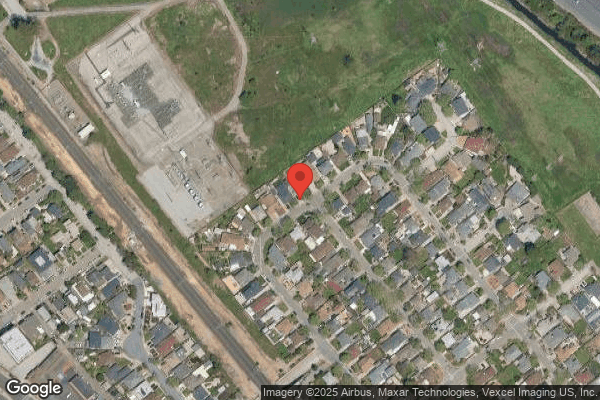
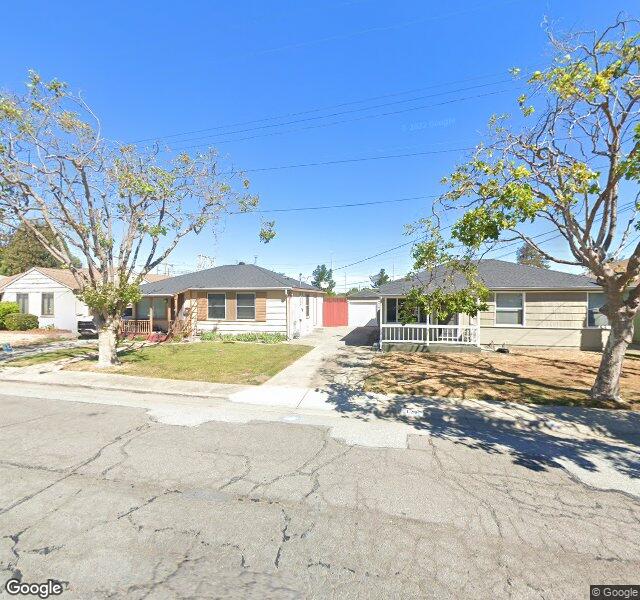
33 MATEO AVENUE, MILLBRAE, CA 94030 (650) 689-5784
For profit - Limited Liability company 140 Beds Independent Data: November 2025
Trust Grade
38/100
#854 of 1155 in CA
Last Inspection: October 2024

Within standard 12-15 month inspection cycle. Federal law requires annual inspections.

Overview

Millbrae Care Center has received a Trust Grade of F, indicating significant concerns about the quality of care provided, which places it in the poor category. In California, it ranks #854 out of 1155, meaning it's in the bottom half of facilities, and #11 out of 14 in San Mateo County, suggesting only a few local options are better. While the facility is improving, with issues decreasing from 25 to 2 in the past year, it still reported 71 total deficiencies, including two serious incidents related to weight loss management that could lead to severe health consequences for residents. Staffing is rated average with a turnover rate of 39%, which is in line with the state average, but the facility does have average RN coverage, providing some reassurance that registered nurses are present to catch potential problems. However, it is concerning that the facility has accumulated fines totaling $16,795, indicating ongoing compliance issues that families should carefully consider.

Trust Score
F
38/100
In California
#854/1155
Bottom 27%
Safety Record
Moderate
Needs review
Inspections
Getting Better
25 → 2 violations
Staff Stability
○ Average
39% turnover. Near California's 48% average. Typical for the industry.
Penalties
✓ Good
$16,795 in fines. Lower than most California facilities. Relatively clean record.
Skilled Nurses
⚠ Watch
Each resident gets only 27 minutes of Registered Nurse (RN) attention daily — below average for California. Fewer RN minutes means fewer trained eyes watching for problems.
Violations
⚠ Watch
71 deficiencies on record. Higher than average. Multiple issues found across inspections.
★★☆☆☆
2.0
Overall Rating
★★★☆☆
3.0
Staff Levels
★★☆☆☆
2.0
Care Quality
★★☆☆☆
2.0
Inspection Score
Stable
2024: 25 issues
2025: 2 issues

The Good

  • Full Sprinkler Coverage · Fire safety systems throughout facility
  • No fines on record
  • Staff turnover below average (39%)

    9 points below California average of 48%

Facility shows strength in fire safety.

The Bad

2-Star Overall Rating

Below California average (3.1)

Below average - review inspection findings carefully

Staff Turnover: 39%

Near California avg (46%)

Typical for the industry

Federal Fines: $16,795

Below median ($33,413)

Minor penalties assessed

The Ugly 71 deficiencies on record

2 actual harm
Jun 2025 1 deficiency
CONCERN (E) 📢 Someone Reported This

A family member, employee, or ombudsman was alarmed enough to file a formal complaint

Potential for Harm - no one hurt, but risky conditions existed

Deficiency F0745 (Tag F0745)

Could have caused harm · This affected multiple residents

Based on interview and record review, facility staff failed to provide social service-related services to 14 of 14 sample residents (Residents: 1, 2, 3, 4, 5, 6, 7, 8, 9, 10, 11, 12, 13, and 14) when ...

Read full inspector narrative →
Based on interview and record review, facility staff failed to provide social service-related services to 14 of 14 sample residents (Residents: 1, 2, 3, 4, 5, 6, 7, 8, 9, 10, 11, 12, 13, and 14) when there was only one social worker (SW 1) in the building and quarterly care conference meetings for at least 14 residents were not completed during the period of March 2025 to June 2025. This failure had the potential to result in residents not receiving appropriate and personalized care. Findings: The census on 06/04/2025 was 128 residents. During an interview on 06/04/2025 at 12:10 PM, SW 1 stated she was the only social worker in the building for approximately three months (March to June 2025). SW 1 stated with the facility workload, she was unable to coordinate and conduct IDT (interdisciplinary team) /care conference meetings. SW 1 explained that IDT meetings were attended by a variety of healthcare professionals, like nurses, therapists, social workers, and others, to discuss and manage resident care. During these meetings family members and/or responsible parties were invited to attend so that they could be made aware and participate in resident care discussions. SW 1 identified a list of 14 residents without IDT. SW 1 stated these IDT/care conference meetings should be conducted minimally quarterly (every three months). During a concurrent record review and interview on 06/04/2025 at 2:00 PM, Medical Record Staff (MRS) was asked to search the records of these 14 residents and provide the date the last IDT/care conference was conducted for these residents. Date of last IDT/care conference notes within a resident ' s medical record: Resident 1 = 10/18/24 (approximately 8 months ago) Resident 2 = 12/18/24 (approximately 6 months ago) Resident 3 = 11/12/24 (approximately 7 months ago) Resident 4 = 12/18/24 (approximately 6 months ago) Resident 5 = 10/15/24 (approximately 8 months ago) Resident 6 = 12/18/24 (approximately 6 months ago) Resident 7 = 12/6/24 (approximately 6 months ago) Resident 8 = 11/12/24 (approximately 7 months ago) Resident 9 = 12/16/24 (approximately 6 months ago) Resident 10 = 11/20/24 (approximately 7 months ago) Resident 11 = 10/9/24 (approximately 8 months ago) Resident 12 = 11/18/24 (approximately 7 months ago) Resident 13 = 11/18/24 (approximately 7 months ago) Resident 14 = 9/18/24 (approximately 8 months ago) Resident 15 = 11/12/24 (approximately 7 months ago) During an interview on 06/04/2025 at 2:30 PM, Resident 1 ' s family member, family member stated they has not been invited recently to an IDT meeting. They stated they were not updated on Resident 1 ' s plan of care nor Resident 1 ' s current medications. During an interview on 06/13/2025 at 11:48 AM, the Administrator stated IDT/care conference meetings were conducted to discuss care issues such as: weight loss, skin issue, falls, psychoactive medications, behavior, clothing, diet, diet preference, activities etc. The Administrator stated nursing chair these meetings, but Social Services was responsible for scheduling and coordinating these meetings with families/responsible parties and the care team. The Administrator stated residents were discussed during daily standup meetings, however daily standup meetings were not a total replacement for IDT/care conference meeting since: 1. Daily stand up dealt with acute care issues. 2. Chronic issues such as diabetes management, slow progressive weight loss, medication updates, ongoing behavior management, may not have been discussed with families and/or responsible parties if IDT/care conferences were not conducted. During an interview on 6/18/2025 at 3:37 PM, the Administrator stated that there was only one social worker in the building from March 10, 2025, to June 7, 2025 (a total of 89 days). A review of facility policy and procedure (P&P) titled Care Plan Conference, dated December 2016, P&P indicated .It is the policy of this facility to provide each resident, resident ' s family, surrogate or representative a medium to .(hold) a care conference to meet and discuss the progress, needs and goals of care. The interdisciplinary team, in conjunction with the resident, resident's family, surrogate or representative, will develop the plan of care based on the comprehensive assessment. The care plan conference is held to identify resident needs and establish obtainable goals.care plan conferences are held: Within 7 days of completion of the initial MDS assessment .At interval of every 90 days thereafter; with any subsequent completed assessments; and .When there is a change in resident status or condition.
May 2025 1 deficiency
CONCERN (D) 📢 Someone Reported This

A family member, employee, or ombudsman was alarmed enough to file a formal complaint

Potential for Harm - no one hurt, but risky conditions existed

Deficiency F0557 (Tag F0557)

Could have caused harm · This affected 1 resident

Based on observation, interviews and record reviews, the facility failed to manage residents ' belongings for Resident 1, 2, and 3, three of 6 sampled residents. Facility staff did not: 1. Follow faci...

Read full inspector narrative →
Based on observation, interviews and record reviews, the facility failed to manage residents ' belongings for Resident 1, 2, and 3, three of 6 sampled residents. Facility staff did not: 1. Follow facility policy in identifying/marking residents ' belongings. 2. Have a facility policy to periodically update resident inventory. These failures resulted in Resident 1 and 3 with missing belongings. Findings: Review of Resident 3 ' s medical records titled INVENTORY OF PERSONAL EFFECTS, dated 02/10/2023, indicated he was admitted with two shirts, two sweaters, and a pair of white mitt/glove. During a concurrent observation and interview with the Certified Nursing Assistant 1 (CNA) caring for Resident 3, on 05/19/2025 at 2:00 PM, CNA 1 looked through Resident 3 ' s belongings and stated he had 14 white tee shirts, and four dark tee shirts. None of the clothing were marked to identify these clothing belonged to Resident 3. CNA stated all of Resident 3 ' s clothing were donated, and he has no idea what happened to Resident 3 ' s clothing/personal belongings identified during admission. During an interview on 05/19/2025 on 1:20pm Resident 1 stated she was missing a red and black flannel jacket and one of her right shoes was missing. During an interview on 06/13/2025 at 12:40 PM Resident 2 ' s Responsible Party, she stated Resident 2 ' s belongings were missing for at least two weeks. The RP stated staff found Resident 2 ' s missing sweatpants, two long shirts and a pair of shoes yesterday. During an observation of Resident 2 ' s clothing, on 06/13/2025 at 1:00 PM, none of Resident 2 ' s clothing were marked to identify who they belong to. Review of the facility ' s policy titled Residents ' Personal Property, dated December 2016, indicated .Prior to, or upon admission, residents will be advised of the kinds and amounts of clothing and possessions permitted for personal use, and whether the facility will accept responsibility for maintaining these items (e.g., cleaning and laundry) . Any personal clothing or possessions retained by the facility for the resident during his or her stay will be identified and inventoried upon admission and the copy of inventory provided to the resident. Review of the policy found no language directing staff to update a resident ' s inventory list on an as needed basis and/or a regular basis. During an interview regarding resident belongings on 06/13/2025 at 11:44 AM, the Administrator stated upon admission, staff were expected to inventory resident ' s belongings and mark clothing with a permanent marker to identify who these clothing belonged to. The Administrator was asked to clarify the facility ' s personal belonging policy regarding periodically updating and/or updating a resident ' s inventory list on an as needed basis. The Administrator stated the facility does not periodically update a resident ' s inventory list on a regular basis. The Administrator stated family members and/or RP were expected to updated staff when they bring belongings into the facility. The findings regarding Resident 1, 2, and 3 ' s belongings were shared with the Administrator. The Administrator could not explain why some of the clothing were not identify/marked by staff. The Administrator stated they might need to look at periodically updating resident belongings to ensure belongings were trackable and safe guarded.
Oct 2024 8 deficiencies
CONCERN (D)

Potential for Harm - no one hurt, but risky conditions existed

MDS Data Transmission (Tag F0640)

Could have caused harm · This affected 1 resident

**NOTE- TERMS IN BRACKETS HAVE BEEN EDITED TO PROTECT CONFIDENTIALITY** Based on interview, record review, facility policy review, and review of the Centers for Medicare and Medicaid Services (CMS) Lo...

Read full inspector narrative →
**NOTE- TERMS IN BRACKETS HAVE BEEN EDITED TO PROTECT CONFIDENTIALITY** Based on interview, record review, facility policy review, and review of the Centers for Medicare and Medicaid Services (CMS) Long-Term Care Facility Resident Assessment Instrument [RAI] 3.0 User's Manual, the facility failed to complete a discharge Minimum Data Set (MDS) for 1 (Resident #108) of 3 residents reviewed for closed records. Specifically, the facility failed to complete a discharge MDS assessment for Resident #108, after the resident was discharged to a hospital on [DATE]. Findings included: A facility policy titled, Minimum Data Set (MDS) Assessment Schedule, dated 10/2023, indicated, 1. The facility conducts a comprehensive assessment to identify patient's needs per the guidelines set by the RAI Manual. The policy specified MDS assessments, including g. Discharge Assessments, would be completed based on the guidelines set by the RAI Manual. The policy revealed, 5. The MDS nurse or RN [Registered Nurse] MDS Coordinator will be responsible for ensuring timely completion of all MDS assessments. The policy further revealed, 8. MDS Assessment time schedule will be completed per attachment A. The facility's Minimum Data Set (MDS) Assessment Schedule Attachment A revealed a discharge assessment should be completed discharge date + 14 calendar days. The CMS Long-Term Care Facility Resident Assessment Instrument 3.0 User's Manual, Version 1.19.1, dated 10/2024, section 2.5 Assessment Types and Definitions indicated, Any of the following warrants a Discharge assessment, regardless of facility policies regarding opening and closing clinical records and bed holds: -Resident is discharged from the facility to a private residence (as opposed to going on a LOA [leave of absence]); -Resident is admitted to a hospital or other care setting (regardless of whether the nursing home discharges or formally closes the record); -Resident has a hospital observation stay greater than 24 hours, regardless of whether the hospital admits the resident. The user's manual revealed, This assessment includes clinical items for quality monitoring as well as discharge tracking information. An admission Record revealed the facility admitted Resident #108 on 10/31/2023. According to the admission Record, the resident had a medical history that included diagnoses of a pressure ulcer of the sacral region, type two diabetes mellitus, acute kidney failure, essential hypertension, pressure ulcer of the right upper back, difficulty walking, and a history of falling. The admission Record revealed the facility discharged Resident #108 on 08/28/2024 to an acute care hospital. Resident #108's Progress Notes revealed a Nurses Note, dated 08/20/2024 at 9:49 PM, that indicated the facility spoke with hospital staff who stated the resident would be there for approximately one month and asked the facility to make sure the resident brought their personal belongings. Resident #108's Progress Notes revealed a Nurses Note, dated 08/21/2024 at 7:40 AM, that the resident went to a surgery appointment with one bag of belongings, and the resident's family member planned to pick up the rest of the resident's personal effects. Resident #108's Census information in their electronic medical record (EMR) indicated the facility discharged Resident #108 on 08/21/2024, and the resident was on Hospital Paid Leave. Resident #108's MDS information in their EMR revealed the resident had been discharged , and a discharge assessment with an Assessment Reference Date (ARD) of 08/21/2024 was 43 days overdue. There was no documented evidence a discharge MDS was completed. During an interview on 10/17/2024 at 11:26 AM, the MDS Coordinator stated she was responsible for completing discharge MDS assessments. The MDS Coordinator further stated she did not complete Resident #108's discharge MDS. She stated the resident was long-term, and long-term residents typically came back to the facility after going to the hospital. The MDS Coordinator stated she did not identify that the resident did not return to the facility after a seven-day bed hold. During an interview on 10/17/2024 at 10:57 AM, the Director of Nursing (DON) stated she expected MDS assessments to be completed timely. The DON further stated the facility expected Resident #108 to return to the facility after surgery on 08/21/2024. According to the DON, she was unaware a discharge MDS was not completed for Resident #108. She stated it was important to complete MDS assessments according to the scheduled times to stay in compliance. During an interview on 10/17/2024 at 11:12 AM, the Administrator stated she expected the MDS team to follow the MDS schedule when completing assessments. The Administrator stated a discharge MDS should be completed when a resident discharged from the facility.
CONCERN (D)

Potential for Harm - no one hurt, but risky conditions existed

Assessment Accuracy (Tag F0641)

Could have caused harm · This affected 1 resident

Based on interview, record review, facility policy review, and review of the Centers for Medicare and Medicaid Services (CMS) Long-Term Care Facility Resident Assessment Instrument [RAI] 3.0 User's Ma...

Read full inspector narrative →
Based on interview, record review, facility policy review, and review of the Centers for Medicare and Medicaid Services (CMS) Long-Term Care Facility Resident Assessment Instrument [RAI] 3.0 User's Manual, the facility failed to ensure a Minimum Data Set (MDS) assessment was accurately coded to reflect the presence of behaviors for 1 (Resident #93) of 2 residents reviewed for behaviors. Specifically, the facility failed to ensure behavioral symptoms exhibited during the seven-day look-back period were coded on Resident #93's 08/23/2024 quarterly MDS. Findings included: A facility policy titled, Minimum Data Set (MDS) Accuracy, dated 10/2023, revealed, The facility shall establish a system in which MDS accuracy is checked to assure that each patient receives an accurate assessment by staff that are qualified to assess relevant care areas and are knowledgeable of the resident's status, needs, strength and areas of potential or actual decline. The policy revealed, 6. The IDT [interdisciplinary team] will verify coding accuracy of residents that triggered in the Resident Level Quality Measures. The policy indicated, 8. RAI Clinical consultant/Designee will conduct a sample of MDS for accuracy review at least annually or as needed. The CMS Long-Term Care Facility Resident Assessment Instrument 3.0 User's Manual, Version 1.19.1, dated 10/2024, Chapter 3, Section E: Behavior, revealed The items in this section identify behavioral symptoms in the last seven days that may cause distress to the resident, or may be distressing or disruptive to facility residents, staff members or the care environment. These behaviors may place the resident at risk for injury, isolation, and inactivity and may also indicate unrecognized needs, preferences or illness. Section E0200: Behavioral Symptom-Presence & Frequency revealed, Steps for Assessment 1. Review the resident's medical record for the 7-day look-back period. 2. Interview staff, across all shifts and disciplines, as well as others who had close interactions with the resident during the 7-day look-back period, including family or friends who visit frequently or have frequent contact with the resident. Coding Tips and Special Populations specified, -Code based on whether the symptoms occurred and not based on an interpretation of the behavior's meaning, cause or the assessor's judgment that the behavior can be explained or should be tolerated. -Code as present, even if staff have become used to the behavior or view it as typical or tolerable. An admission Record indicated the facility admitted Resident #93 on 11/18/2022. According to the admission Record, the resident had a medical history that included diagnoses of adjustment disorder with mixed anxiety and depressed mood, senile degeneration of the brain, psychotic disorder with hallucinations, and dementia. Resident #93's care plan included a problem statement, initiated on 02/25/2023, that indicated the resident had a history of refusing care. Another problem statement, initiated on 01/09/2024, indicated the resident had behaviors due to a diagnosis of dementia with behavioral disturbance, psychosis manifested by seeing other residents as dangerous intruders, a history of pilfering items, being physically aggressive toward others, and being an elopement risk. Resident #93's Order Summary Report, listing active orders as of 10/16/2024, revealed an order dated 07/05/2023 to monitor for getting roommate's stuff, food, and for being physically aggressive towards their roommate; an order dated 03/21/2024 to monitor for episodes of hitting; and an order dated 08/09/2024 to monitor for noncompliance with wearing non-skid socks. Resident #93's Progress Notes revealed the following Nurses Notes: - a note dated 08/17/2024 that indicated the resident hit, scratched, and cut Licensed Vocational Nurse (LVN) #7; - a note dated 08/18/2024 that indicated the resident refused socks/shoes; - a note dated 08/19/2024 at 1:36 PM that indicated the resident was non-compliant with non-skid socks; - a note dated 08/19/2024 at 11:11 PM that indicated the resident was taking things from the nurses' station; - a note dated 08/20/2024 that indicated the resident was non-compliant with non-skid socks; and - a note dated 08/21/2024 that indicated the resident had a couple episodes of stealing items at the beginning of the shift. A quarterly MDS, with an Assessment Reference Date (ARD) of 08/23/2024, revealed Resident #93 had a Brief Interview for Mental Status (BIMS) score of 5, which indicated the resident had severe cognitive impairment. Despite Resident #93's Progress Notes reflecting behaviors during the seven-day look-back period, Section E-Behavior was coded to reflect the resident did not display physical or verbal behavioral symptoms directed toward others or other behavioral symptoms not directed toward others and did not reject care during the seven-day look-back period. During an interview on 10/16/2024 at 12:57 PM, Certified Nursing Aide (CNA) #4 stated that Resident #93 took other residents' belongings. CNA #4 stated that Resident #93 also yelled at staff, and staff could not re-direct the resident. During an interview on 10/16/2024 at 1:14 PM, CNA #9 stated that Resident #93 exhibited behaviors that included taking items from the nurses' station and taking their roommate's belongings. During an interview on 10/17/22024 at 8:53 AM, the Director of Nursing (DON) stated if a resident had behaviors, the behaviors should be reflected on the MDS. During an interview on 10/17/2024 at 11:26 AM, the Administrator stated that if a resident had behaviors, the behaviors should be coded on the MDS.
CONCERN (D)

Potential for Harm - no one hurt, but risky conditions existed

PASARR Coordination (Tag F0644)

Could have caused harm · This affected 1 resident

Based on interview, record review, and facility policy review, the facility failed to resubmit a Level I Preadmission Screening and Resident Review (PASRR) for 1 (Resident #71) of 3 residents reviewed...

Read full inspector narrative →
Based on interview, record review, and facility policy review, the facility failed to resubmit a Level I Preadmission Screening and Resident Review (PASRR) for 1 (Resident #71) of 3 residents reviewed for PASRR requirements after receiving a letter that indicated a Level II Mental Health Examination was not scheduled and to reopen the case, a new Level I Screening would need to be submitted. Findings included: A facility policy titled, Pre-admission Screening and Resident Review, dated 12/2017, revealed, PURPOSE To ensure that all facility applicants are screened for mental illness and/or intellectual disability prior to admission and to ensure this assessment effort is coordinated with the appropriate state agencies if indicated. Preadmission Screening and Resident Review [PASRR] is a federal requirement to help ensure that individuals who have a mental disorder or intellectual disabilities are not inappropriately placed in nursing home for long term care. The policy further specified, h. A positive Level I screen necessitates an in-depth evaluation of the individual by the state-designated authority, known as [PASRR] Level II, which must be conducted prior to admission to a nursing facility. An admission Record revealed the facility admitted Resident #71 on 12/09/2023. According to the admission Record, the resident had a medical history that included a diagnosis of unspecified schizophrenia. An admission Minimum Data Set (MDS), with an Assessment Reference Date (ARD) of 12/16/2023, revealed Resident #71 had a Brief Interview for Mental Status (BIMS) score of 13, which indicated the resident had intact cognition. The MDS indicated the resident had an active diagnosis of schizophrenia and received an antipsychotic medication during the seven-day assessment look-back period. Resident #71's Pre-admission Screening and Resident Review (PASRR) Level I Screening, completed on 12/12/2023 by a local hospital, reflected a diagnosis of schizophrenia. The PASRR Level I Screening was positive for a suspected mental illness. A letter from the State of California Department of Healthcare Services, dated 12/12/2023 and addressed to the local hospital, revealed Resident #71's PASRR Level I Screening done on 12/12/2023 was positive; however, the letter indicated a Level II Mental Health Evaluation was not scheduled, because the individual was discharged from the facility. The letter further indicated the case was closed and if the case needed to be reopened, please submit a new Level I Screening. During an interview on at 11:28 AM, the MDS Coordinator confirmed Resident #71 had not been discharged from the facility since their original admission. The MDS Coordinator stated the facility should have completed another PASRR for Resident #71. During an interview on 10/17/2024 at 9:20 AM, the Director of Nursing (DON) stated that if the facility had a new admission, the hospital typically completed the PASRR before the resident was admitted , and the facility had to access the level I and Level II PASRRs via an online system. The DON said if a Level I PASRR was positive, the facility requested a Level II, if needed. The DON further stated she and the MDS Coordinator were responsible for reviewing the PASRRS to ensure they were correct. During an interview on 10/17/2024 at 9:27 AM, the Administrator stated that before a resident's admission, the hospital should complete a PASRR; the facility then pulled the PASRR results from the online system. According to the Administrator, if the Level I PASRR was positive, the facility would then submit a request for a Level II PASRR, then wait on a call from the state's PASRR office. The Administrator further stated the facility should respond to recommendations in Level II results letters. The Administrator stated she expected staff to ensure all PASRR paperwork was complete and correct.
CONCERN (D)

Potential for Harm - no one hurt, but risky conditions existed

Accident Prevention (Tag F0689)

Could have caused harm · This affected 1 resident

Based on observation, interview, record review, and facility policy review, the facility failed to ensure medications were not left at the bedside for 1 (Resident #21) of 5 residents observed during m...

Read full inspector narrative →
Based on observation, interview, record review, and facility policy review, the facility failed to ensure medications were not left at the bedside for 1 (Resident #21) of 5 residents observed during medication administration. Specifically, facility staff left medications at the bedside of a resident who had impaired eyesight and had not been assessed as safe to self-administer medications. Findings included: A facility policy titled, Medication Administration, dated 09/2028, revealed the section titled, Medication Administration specified, 4. Medications are to be administered at the time they are prepared. 5. The person who prepares the dose for administration is the person who administers the dose. The policy further specified, 15. Residents are allowed to self-administer medications when specifically authorized by the prescriber, the nursing care center's Interdisciplinary Team (IDT), and in accordance with procedures for self-administration of medication and state regulations, and 19. For residents not in their rooms or otherwise unavailable to receive medication on the pass, the MAR [Medication Administration Record] is 'flagged' (e.g. [exempli gratia, for example], tags, colored plastic strips, or paper clips). After completing the medication pass, the nurse returns to the missed resident to administer the medication. 20. The resident is always observed after administration to ensure that the dose was completely ingested. A facility policy titled, Self-Administration of Medication, dated 07/2017, revealed, It is the policy of this facility to (sic) that each resident has the right to self-administer medications, if able. The interdisciplinary team evaluates each resident who expresses wishes to self-administer medications to determine if the resident is safe to do so, and if so provides the education and monitoring necessary to ensure safe administration. The section of the policy titled, Responsible Discipline specified, The Director of Nurses (DON) and/or its designee shall be responsible for implementation and enforcement of this policy. The section of the policy titled, Procedure specified, 2. If a resident desire (sic) to participate in self-administration, the interdisciplinary team will assess the competence of the resident to participate, by completing a Self-administration of Medication Administration Assessment. 3. The nurse will interview the resident to determine the resident's ability to identify, prepare, and self-administer medications. The section of the policy titled, Documentation specified, 3. Use self-medication administration form to assess resident. An admission Record revealed the facility originally admitted Resident #21 on 09/17/2021 and most recently admitted the resident on 01/05/2024. According to the admission Record, the resident had a medical history that included diagnoses of age-related nuclear cataract of the left eye, legal blindness, glaucoma, hearing loss of the left ear, kidney transplant, end stage renal disease, hyperkalemia (high blood potassium), hypertension, and type two diabetes mellitus with diabetic neuropathy. An annual Minimum Data Set (MDS), with an Assessment Reference Date (ARD) of 09/13/2024, revealed Resident #21 had a Brief Interview for Mental Status (BIMS) score of 15, which indicated the resident had intact cognition. The MDS revealed the resident had moderately impaired vision (limited vision; not able to see newspaper headlines but can identify objects) while utilizing corrective lenses. Resident #21's care plan included a problem statement, initiated 09/19/2021, that indicated the resident had impaired visual function related to, Legally blind, Cataract, Glaucoma. An additional problem statement, initiated 9/19/2021, indicated Resident #21 had impaired visual function related to being Legally Blind (blurry vision), left eye Cataracts/Glaucoma, Right eye with prosthetic, Diabetes. Interventions initiated on 09/19/2021 directed staff to tell the resident where they were placing items and to be consistent and indicated the resident preferred to have their room and things arranged to promote independence. Resident #21's Order Summary Report, listing active orders as of 10/15/2024, included the following orders: - an order dated 04/11/224 for amlodipine besylate 5 milligram (mg) by mouth in the morning for hypertension, with instructions to hold for a systolic blood pressure less than 100 or a heart rate less than 60; - an order dated 12/15/2021 for Eliquis 2.5 mg by mouth two times a day for Atrial flutter; - an order dated 12/30/2023 for ferrous sulfate (an iron supplement) by mouth in the morning for supplement; - an order dated 07/16/2023 for hydralazine hydrochloric acid 25 mg by mouth two times a day for hypertension, with instructions to hold for a systolic blood pressure less than 100 or a heart rate less than 60; -an order dated 03/03/2024 for lidocaine external patch 4% (a topical anesthetic to relieve pain) to the right hip every twelve hours; - an order dated 12/15/2021 for metoprolol succinate extended release (XR) 200 mg by mouth one time a day for hypertension, with instructions to hold for a systolic blood pressure less than 100 or a heart rate less than 60; - an order dated 12/15/2021 for mycophenolate mofetil (an immunosuppressive drug used to prevent transplant rejection) 500 mg by mouth two times a day; - an order dated 12/15/2021 for sodium bicarbonate (an antacid used to relieve heartburn and indigestion) 325 mg by mouth two times a day; - an order dated 04/20/2024 for tacrolimus (used to lower the risk of organ rejection) 1 mg, three capsules by mouth two times a day; - an order dated 07/23/2023 for Veltassa oral packet 8.4 grams, one packet by mouth one time a day for hyperkalemia; and - an order dated 07/23/2023 for vitamin D3 1000 units by mouth in the morning for supplement. Additionally, the Order Summary Report contained an order dated 12/15/2021 for famotidine (a stomach acid blocker) 20 mg by mouth at bedtime. During a concurrent observation and interview on 10/15/2024 at 8:32 AM, Registered Nurse (RN) #2 was observed preparing Resident #21's medications. RN #2 placed Resident #21's ordered amlodipine, ferrous sulfate, metoprolol succinate ER, vitamin D3, Eliquis, hydralazine, sodium bicarbonate, mycophenolate mofetil, and tacrolimus into a medication cup. She then placed the medication cup, the resident's lidocaine patch, a Veltassa packet, a cup of water, and a spoon onto a tray and entered the resident's room. Upon entering Resident #21's room, a cup with medication in it was observed on the bedside table, and RN #2 stated it was the resident's famotidine from the night before. RN #2 then applied the resident's lidocaine patch, cut open the top of the Veltassa packet, and placed the cup of water, spoon, and the cup of medications on Resident #21's bedside table. RN #2 stated Resident #21 would eventually take the medication but preferred to do it after breakfast. RN #2 then walked out of the room, leaving the medications at the bedside with Resident #21. When asked why last night's medications were on the bedside table and Resident #21 had not taken them, RN #2 replied that Resident #21 took the medication when the resident wanted, and that was how they had been doing it for some time. RN #2 stated she could see how it could be a problem if the resident waited too long to take medications and took two doses together. During an interview on 10/17/2024 at 9:51 AM, Resident #21 stated they wanted to take their medication after eating, and they were slow. Resident #21 stated when the nurse administering the medication came in too early, the resident told them to leave the medications on the table so the resident could take them later. Resident #21 stated they forgot to take their medicine the on the night of 10/14/2024. Resident #21 stated, I just take what they give to me. During a phone interview on 10/17/2024 at 10:04 AM, RN #2 stated she was not aware the residents had to have a special assessment done in order to leave their medications with them and not watch them take it. RN #2 stated she had always left the medications with Resident #21. During an interview on 10/17/2024 at 9:35 AM, the Director of Nursing (DON) stated she expected staff to not leave medication at the bedside for the residents unless the residents were assessed as safe to do so. The DON stated, if a resident did not want medication at the time it was passed, staff should take the medication back to the cart and attempt again later. The DON stated staff had been told to never to leave medications at the bedside for the residents. The DON verified there was no self-administration assessment completed for Resident #21 and no care plan or physician's order that indicated the resident was safe to self-administer medications. During an interview on 10/17/2024 at 9:36 AM, the Administrator stated she expected nurses to give medications as ordered and to ensure the residents took them. The Administrator said that if a resident did not take medications when the nurse attempted to give them, the nurse should take the medication back to the medication cart and offer them later within the two-hour timeframe for medication administration.
CONCERN (D)

Potential for Harm - no one hurt, but risky conditions existed

Laboratory Services (Tag F0770)

Could have caused harm · This affected 1 resident

Based on interview, record review, and facility policy review, the facility failed to obtain laboratory services in a timely manner for 1 (Resident #15) of 5 residents reviewed for unnecessary medicat...

Read full inspector narrative →
Based on interview, record review, and facility policy review, the facility failed to obtain laboratory services in a timely manner for 1 (Resident #15) of 5 residents reviewed for unnecessary medications. Specifically, Resident #15 had an order to check their Keppra (an anticonvulsant) level every six months. The facility failed to obtain the resident's Keppra level in September 2024, six months after the previous level was obtained. Findings included: The facility policy titled, Physician Orders, dated December 2016, indicated, Physician orders are obtained to provide a clear direction in the care of the resident. During an interview on 10/16/2024 at 1:02 PM, the Administrator stated the facility did not have a policy regarding laboratory services. An admission Record revealed the facility initially admitted Resident #15 on 11/04/2022 and most recently admitted the resident on 02/18/2024. According to the admission Record, the resident had a medical history that included diagnoses of convulsions and epilepsy. A significant change Minimum Data Set (MDS), with an Assessment Reference Date (ARD) of 07/03/2024, revealed Resident #15 had a Brief Interview for Mental Status (BIMS) score of 12, which indicated the resident had moderate cognitive impairment. The MDS also revealed the resident had an active diagnosis of seizure disorder or epilepsy. Resident #15's Order Summary Report, with active orders as of 10/15/2024, contained an order dated 02/18/2024 that directed staff to administer Keppra 1000 milligrams (mg) by mouth two times a day for seizures. The Order Summary Report also contained an order dated 03/10/2024 to check the resident's Keppra level every six months. Resident #15's October 2024 Medication Administration Record [MAR] revealed Keppra 1000 mg was documented as administered as ordered. Resident #15's Lab Report revealed a Keppra laboratory test was completed on 03/13/2024 and the resident's Keppra level was 20.1 micrograms per milliliter (mcg/mL), which was within therapeutic range. There was no documented evidence the facility obtained another Keppra level for Resident #15 six months after the 03/13/2024 level was obtained. During an interview on 10/16/2024 at 2:58 PM, Licensed Vocational Nurse (LVN) #1 stated the Director of Nursing (DON) asked her to check all residents' Keppra levels in 03/2024. LVN #1 stated laboratory orders that were required to be repeated every six months should be put on a communication board in Resident #15's electronic medical record so that all nurses could see the order daily. LVN #1 stated it was important to follow the physician's order and check the resident's Keppra level to ensure the medication was at a therapeutic level and ensure the physician could adjust the medication dosage, if needed. During an interview on 10/17/2024 at 9:22 AM, the Medical Director (MD) stated if a resident had an active standing order to check a Keppra level, she expected the facility to follow the order and obtain the laboratory test. During an interview on 10/17/2024 at 10:57 AM, the DON stated that, when a physician wrote an order for laboratory testing, she expected nursing staff to follow through and obtain the test as ordered. The DON stated Resident #15's Keppra level should have been obtained in September 2024. During an interview on 10/17/2024 at 11:12 AM, the Administrator stated if there was a standing order to obtain laboratory tests, she expected nursing staff to follow the physician's order and obtain the ordered tests.
CONCERN (E)

Potential for Harm - no one hurt, but risky conditions existed

Infection Control (Tag F0880)

Could have caused harm · This affected multiple residents

**NOTE- TERMS IN BRACKETS HAVE BEEN EDITED TO PROTECT CONFIDENTIALITY** Based on observation, interview, and record review, the facility failed to maintain a system for preventing infection for 3 (Res...

Read full inspector narrative →
**NOTE- TERMS IN BRACKETS HAVE BEEN EDITED TO PROTECT CONFIDENTIALITY** Based on observation, interview, and record review, the facility failed to maintain a system for preventing infection for 3 (Resident #81, #21, and #116) of 24 sampled residents. Specifically, the facility failed to disinfect Resident #81's mattress after staff stepped on the mattress and disinfect a blood pressure cuff after resident use and prior to use for Resident #21 and Resident #116. Findings included: 1. A facility policy titled, Enhanced Barrier Precaution, dated 06/2022, revealed, Enhanced Barrier Precautions (EBP) are an infection control intervention designed to reduce transmission of resistant organisms that employs targeted gown and glove use during high contact resident care activities. EBP may be indicated (when Contact Precautions do not otherwise apply) for residents with any of the following: - Wounds or indwelling medical devices, regardless of MDRO colonization status. - Infection or colonization with an MDRO. The policy indicated, Use EBP for high-contact resident care activities by using gown and glove during: and f. Changing briefs or assisting with toileting. An admission Record revealed the facility admitted Resident #83 on 07/17/2024. According to the admission Record, the resident had a medical history that included diagnoses of acute respiratory failure with hypoxia, pleural effusion chronic congestive heart failure, Type 2 diabetes, and legal blindness. An admission Minimum Data Set (MDS), dated [DATE], revealed Resident #83 had a Brief Interview for Mental Status (BIMS) score of 12, which indicated the resident had moderate cognitive impairment. The MDS revealed the resident was always incontinent of bowel and bladder. An infection Progress Note dated 10/15/2024 revealed the Infection Preventionist (IP) documented that Resident #83 had clostridium difficile on 09/15/2024. According to the note, isolation had ended but the resident would remain on EBP for precautionary measures. The note revealed the resident's physician concurred with EBP precautions for the resident. On 10/16/2024 at 10:56 AM, Certified Nursing Aide (CNA) #10 entered Resident #83's room to provide incontinence care. CNA #10 donned gloves and closed the curtain. CNA #10 did not don a gown. An observation revealed a sign posted outside the resident's room that indicated Resident #83 was on EBP. The observation also revealed gowns and gloves were available in a shelf outside Resident #83's room. On 10/16/2024 at 11:07 AM, CNA #10 stated that they were aware they were supposed to wear a gown when providing incontinence care for a resident on EBP. CNA #10 stated an orange sticker indicated staff were supposed to wear PPE when caring for those residents. She stated there was normally a sign by the bed that indicated which type of PPE to use. According to CNA #10, she believed the signage outside the room was for another resident and she had not noticed an orange sticker for Resident #83. On 10/16/2024 at 1:39 PM, the IP stated that when a resident required EBP, they placed a sign outside their room and placed an orange sticker beside the resident's name. The IP stated she made rounds and tried to do surveillance. On 10/17/2024 at 8:53 AM, the Director of Nursing (DON) stated that if a resident needed EPB, the IP placed a container with the required Personal Protective Equipment (PPE) and informed the CNAs. The DON stated that CNAs were trained on donning and doffing gowns and gloves used for residents who were on EBP. During an interview on 10/17/2024 at 11:26 AM, the Administrator stated that CNAs were trained on EBP. The NHA stated that staff were aware which residents were on EPB because there was signage on the resident's door that indicated what PPE to use when providing direct care. The NHA stated that the PPE required was based on the infection type, but that the standard was to wear a gown and gloves. 2. On 10/17/2024 at 11:26 AM, the Administrator stated the facility did not have a policy related to sanitizing a mattress for a resident whose mattress was kept on the floor. An admission Record indicated the facility admitted Resident #81 on 12/27/2023. According to the admission Record, the resident had a medical history that included diagnoses of Alzheimer's disease, muscle weakness, difficulty in walking, and dementia. A quarterly Minimum Data Set (MDS), with an Assessment Reference Date (ARD) of 07/16/2024, revealed Resident #81 had severe impairment in cognitive skills for daily decision making and had short- and long-term memory problems per a Staff Assessment of Mental Status (SAMS). The MDS revealed the resident had not had any falls since admission/entry/reentry or since the prior assessment. Resident #81's care plan included a problem statement, initiated on 10/17/2023, that indicated the resident had a gait abnormality and had sustained a fall. Interventions directed staff to provide a mattress on the floor for injury prevention related to crawling (initiated on 10/17/2023). During an observation on 10/16/2024 at 10:31 AM, Certified Nursing Aide (CNA) #9 and CNA #11 assisted Resident #81 to their bed. During the observation, CNA #11 stepped on Resident #81's mattress with one foot that was fully placed on the end of the mattress. CNA #11 was wearing shoes. The observation revealed both CNAs left the room and did not change the sheets or sanitize the resident's mattress. During an interview on 10/17/2024 at 8:21 AM, CNA #11 stated she accidentally stepped on the mattress when assisting Resident #81 to bed. CNA #11 stated they probably should have changed the sheets. The CNA stated they had not received any training related to ensuring the mattress on the floor remained sanitized. During an interview on 10/17/2024 at 8:26 AM, the Infection Preventionist (IP) stated that if a CNA stepped on a mattress, the sheet should have been changed. The IP stated that situation had not come up before; subsequently, the CNAs had not received training. During an interview on 10/17/2024 at 8:53 AM, the Director of Nursing (DON) stated that if staff accidentally stepped on a mattress, the linens should have been changed. During an interview on 10/17/2024 at 11:26 AM, the Administrator stated that if a staff member accidentally stepped on the mattress, she would have expected the mattress to be cleaned, and the sheets changed. 3. During an interview on 10/17/2024 at 9:32 AM, the Administrator stated nurses were expected to clean resident care equipment between resident use. During an observation of medication administration on 10/15/2024 at 8:10 AM, Registered Nurse (RN) #2 obtained Resident #37's blood pressure and pulse with an automatic wrist blood pressure cuff. Once the blood pressure and pulse were obtained, RN #2 placed the blood pressure cuff on top of the medication cart and finished medication administration for Resident #37. RN #2 did not disinfect the blood pressure cuff after use. During an observation of medication administration on 10/15/2024 at 8:32 AM, RN #2 obtained Resident #21's blood pressure and pulse with the same automatic wrist blood pressure cuff, without first disinfecting the blood pressure cuff. Once the blood pressure and pulse were obtained, RN #2 placed the blood pressure cuff on top of the cart and finished medication administration for Resident #21. RN #2 did not disinfect the blood pressure cuff after removing the cuff from Resident #21's wrist. During an observation of medication administration on 10/15/2024 at 8:45 AM, RN #2 obtained Resident #116's blood pressure and pulse with the same automatic wrist blood pressure cuff used for Resident #37 and Resident #21 that had not been disinfected. During a telephone interview on 10/17/2024 at 10:04 AM, RN #2 stated she was nervous and aware that she forgot to wipe off the blood pressure cuff in between resident use. During an interview on 10/17/2024 at 9:31 AM, the Director of Nursing (DON) stated the facility provided two vital sign machines on every medication cart to prevent the issue in question. She stated she was not sure what happened to the second vital sign machine that day. The DON stated she expected nurses to clean and disinfect the machines between patient use. During an interview on 10/17/2024 at 9:32 AM, the Administrator stated the facility provided two machines on each medication cart for staff to disinfect the machine and allow it time dry.
CONCERN (E)

Potential for Harm - no one hurt, but risky conditions existed

Smoking Policies (Tag F0926)

Could have caused harm · This affected multiple residents

Based on observation, interview, record review, and facility document and policy review, the facility failed to ensure residents did not smoke in non-designated areas not equipped with needed safety e...

Read full inspector narrative →
Based on observation, interview, record review, and facility document and policy review, the facility failed to ensure residents did not smoke in non-designated areas not equipped with needed safety equipment and devices. In addition, the facility failed to enforce their smoking policy regarding the storage of lighters for 2 (Resident #39 and Resident #106) of 3 sampled residents reviewed for smoking. This deficient practice had the potential to affect all 7 residents identified by the facility as smokers. Findings included: A facility policy titled, Smoking Policy - Residents, released 06/2022, indicated, 1. Prior to, or upon admission, residents shall be informed about any limitations on smoking, including designated smoking areas, and the extent to which the facility can accommodate their smoking or non-smoking preferences; for example, in making room assignments. The policy revealed, 5. Metal containers, with self-closing cover devices, shall be available in smoking areas. The policy further revealed, 12. Smoking articles for residents with independent smoking privileges: a. Residents who have independent smoking privileges shall be permitted to keep cigarettes, pipes, tobacco, or other smoking articles in their possession. b. Residents may not keep even disposable safety lighters. All other forms of lighters, including matches, shall be prohibited. An undated document provided by the facility identified seven residents as smokers and reflected the facility's designated smoking area was the Backyard. During a random observation on 10/16/2024 at 7:50 AM, three residents were observed smoking around the garden area about 25 feet from the front door. Cigarette butts were observed in the raised flower bed. There were no No oxygen signs, no ashtrays or smoking chimneys, and no fire extinguisher observed. An admission Record revealed the facility originally admitted Resident #39 on 11/21/2020 and readmitted the resident on 08/31/2024. According to the admission Record, the resident had medical history that included a diagnosis of tobacco use. A quarterly Minimum Data Set (MDS), with an Assessment Reference Date (ARD) of 08/30/2024, revealed Resident #39 had a Brief Interview for Mental Status (BIMS) score of 15, which indicated the resident had intact cognition. Resident #39's care plan included a problem statement, revised 09/07/2024, that indicated the resident was a smoker and preferred to keep their cigarettes in their room. Resident #39's Smoking Assessment, dated 09/07/2024, indicated, Resident is a safe smoker and perform [sic] function independently. The assessment indicated Resident #39 was able to hold the smoking device while smoking, could light and smoke a cigarette while demonstrating safe technique or putting out matches or lights and disposing ash. The assessment indicated Resident #39 remained alert during the course of smoking, could communicate that they understood the smoking materials were for their own personal use, and could communicate they understood smoking materials were only for the designated smoking area. On 10/16/2024 at 8:26 AM, Resident #39 stated they smoked wherever they wanted as long as it was 25 feet from the doorway of the facility. Resident #39 stated there were no ashtrays or fire extinguishers in the vicinity of where they usually smoked. On 10/16/2024 at 9:36 AM, Resident #39 stated they kept their own smoking materials, including their lighter. An admission Record revealed the facility admitted Resident #106 on 10/02/2023. According to the admission Record, the resident had a medical history that included a diagnosis of nicotine dependence. A quarterly MDS, with an ARD of 07/10/2024, revealed Resident #106 had a BIMS score of 15, which indicated the resident had intact cognition. Resident #106's care plan included a problem statement, initiated 02/02/2024, that indicated the resident was a smoker. Resident #106's Smoking Assessment, dated 07/17/2024, revealed Resident #106 was able to hold the smoking device while smoking, the resident could light and smoke a cigarette while demonstrating safe technique or putting out matches or lights and disposing ash, and the resident remained alert during the course of smoking. The interdisciplinary team (IDT) comments indicated, Smokes safely outside the facility, aware of smoking protocol. Will continue plan of care. During an interview on 10/16/2024 at 10:17 AM, Resident #106 stated they kept their smoking materials with them, including their lighter. During an interview on 10/16/2024 at 8:50 AM, Restorative Nursing Aide (RNA) #3 stated residents sometimes went out front to smoke, but she did not know if there were any smoking receptacles/ashtrays in that area. During an interview on 10/16/2024 at 8:59 AM, Certified Nursing Aide (CNA) #4 stated residents smoked in front of the building, but he was not sure if they had smoking receptacles/ashtrays or a fire extinguisher in that area. During an interview on 10/16/2024 at 9:02 AM, Registered Nurse (RN) #5 stated residents had a designated smoking area in the back of the facility, but they also smoked out front. RN #5 stated the facility educated residents often to go out back to smoke, but the designated smoking area out back was too far, especially for residents with difficulty walking. RN #5 stated she was unsure about whether there was a fire extinguisher out front. During an interview on 10/16/2024 at 9:32 AM, RN #6 stated the assigned smoking area was out back, but, since it was so far, residents preferred to smoke out front. RN #6 stated there was a trashcan out front that residents could use to dispose of their cigarette butts and ashes, and he believed that was sufficiently safe. RN #6 stated he was not sure if there was a fire extinguisher. During an interview on 10/16/2024 at 9:53 AM, the Director of Nursing (DON) stated the designated smoking area was out back. The DON stated there were ashtrays and a fire extinguisher in the designated smoking location. The DON further stated in California it was illegal to have a smoking section within 25 feet from doorways. The DON stated the only thing the facility had done to enforce its rules was reeducation of residents. The DON stated if residents were independent, they were permitted to keep their own smoking materials including their lighters. The DON stated there had been no accidents at the facility related to smoking. During an interview on 10/16/2024 at 9:58 AM, the Administrator stated the designated smoking area was out back. However, the Administrator stated residents often smoked out front. The Administrator stated the facility could not rescind residents' smoking privileges out of fear the residents would try to smoke inside the building. The Administrator stated residents who were independent were allowed to keep their smoking materials, including lighters. The Administrator stated she did not know where the closest fire extinguisher to the front of the building was located.
MINOR (B)

Minor Issue - procedural, no safety impact

Deficiency F0911 (Tag F0911)

Minor procedural issue · This affected multiple residents

**NOTE- TERMS IN BRACKETS HAVE BEEN EDITED TO PROTECT CONFIDENTIALITY** Based on interview, record review, and facility document review, the facility failed to ensure 1 (room [ROOM NUMBER]) of 40 resi...

Read full inspector narrative →
**NOTE- TERMS IN BRACKETS HAVE BEEN EDITED TO PROTECT CONFIDENTIALITY** Based on interview, record review, and facility document review, the facility failed to ensure 1 (room [ROOM NUMBER]) of 40 resident rooms was not equipped to accommodate more than four residents. room [ROOM NUMBER] was occupied by four residents but had six beds available for use when at full occupancy. Findings included: A letter from the facility to the California Department of Public Health (CDPH), dated 12/28/2023, revealed the facility requested a waiver of the room requirement for no more than four residents per room for room [ROOM NUMBER]. The letter indicated that room [ROOM NUMBER] had six beds and 86 square feet per resident. A Census, dated 10/13/2024, revealed room [ROOM NUMBER] had a six-bed capacity, but was occupied by only four residents as of 10/13/2024. A Client Accommodations Analysis, dated 10/17/2024, indicated room [ROOM NUMBER] had a floor area of 544.7 square feet with an approved capacity of six residents. During an interview on 10/17/2024 at 12:13 PM, the Director of Nursing (DON) stated the facility was not cited on the room requiring a variance during their last recertification survey. She stated the residents in that room received the same amount of care as any other residents. During an interview on 10/17/2024 at 11:23 AM, the Administrator said the facility did not have a policy that addressed room variances. During a follow-up interview on 10/17/2024 at 12:26 PM, the Administrator stated the residents in room [ROOM NUMBER] received the same care as any other residents in the facility and said the facility had applied for a waiver for that room.
Aug 2024 1 deficiency
CONCERN (E) 📢 Someone Reported This

A family member, employee, or ombudsman was alarmed enough to file a formal complaint

Potential for Harm - no one hurt, but risky conditions existed

Deficiency F0726 (Tag F0726)

Could have caused harm · This affected multiple residents

Based on interview and record review, the facility failed to ensure that a Registered Nurse (RN) completed the assessments to seven of nine sampled residents (Resident 1, 2, 3, 4, 5, 6, and 7) when th...

Read full inspector narrative →
Based on interview and record review, the facility failed to ensure that a Registered Nurse (RN) completed the assessments to seven of nine sampled residents (Resident 1, 2, 3, 4, 5, 6, and 7) when the residents had a change in condition. The facility deficient practice has the potential harm on the resident safety and well-being. Findings: A review of the facility fall incidents on 8/5/24, indicated Residents 1,2,3,4,5,6, and 7 had fall incidents. During an interview on 8/5/24 at 1:02 PM, the Director of Nursing (DON) reviewed the post fall assessments and stated, the assessments for Residents 1,2,3,4,5,6, and 7 were completed by Licensed Vocational Nurse (LVN) 1,2,3,4, and 5. During an interview on 8/6/24, at 4:30 PM, the Administrator stated, If an LVN is assigned to the resident, the LVN performs the post fall assessment and evaluate the resident for injury. The Registered Nurse is not necessarily present. During a review of the job description for LVN dated 5/2017, indicated, .Under the direct supervision of a registered nurse, implement and established plan of care for each assigned group of residents. Responsibilities includes total care for chronically ill and technologically dependent residents, administrations of medications, performance of treatments, provision of resident/family education as directed, and maintenance of record of the care provided. Under the direct supervision of an RN, assist with planning, coordination, and provision of individualized resident care in accordance with the established policies and procedures of the facility . .The licensed vocational nurse performs services requiring technical and manual skills which include the following: (a) Uses and practices basic assessment (data collection), participates in planning, executes interventions in accordance with the care plan or treatment plan, and contributes to evaluation of individualized interventions related to the care plan or treatment plan. (b) Provides direct patient/client care by which the licensee: (1) Performs basic nursing services as defined in subdivision (a); (2) Administers medications; (3) Applies communication skills for the purpose of patient/client care and education; and (4) Contributes to the development and implementation of a teaching plan related to self-care for the patient/client . § 2518.5. Scope of Vocational Nursing Practice. Board of Vocational Nurse and Psychiatric Technician Examiners of the State of California.
Jun 2024 1 deficiency
CONCERN (D) 📢 Someone Reported This

A family member, employee, or ombudsman was alarmed enough to file a formal complaint

Potential for Harm - no one hurt, but risky conditions existed

Deficiency F0745 (Tag F0745)

Could have caused harm · This affected 1 resident

**NOTE- TERMS IN BRACKETS HAVE BEEN EDITED TO PROTECT CONFIDENTIALITY** Based on interview and record review, the facility failed to provide medically-related social services to one of 3 sampled resid...

Read full inspector narrative →
**NOTE- TERMS IN BRACKETS HAVE BEEN EDITED TO PROTECT CONFIDENTIALITY** Based on interview and record review, the facility failed to provide medically-related social services to one of 3 sampled residents (Resident 1) when there was no social worker available from 4/22/24 to 5/10/24. This failure had the potential not to maintain the highest practicable physical, mental, and psychosocial well-being of Resident 1. Findings: Review of Resident 1's clinical record indicated, Resident 1 was originally admitted on [DATE] with diagnoses including peripheral vascular disease (a slow and progressive disorder of the blood vessels), heart failure (a condition that develops when your heart doesn't pump enough blood for your body's needs), and diabetes mellitus (high blood sugar). He was transferred to a hospital on 5/3/24, then readmitted to the facility on [DATE], then discharged to the hospital on 5/20/24. Review of Resident 1's Minimum Data Set (MDS, resident assessment tool), dated 5/13/24 indicated, Resident 1 was cognitively intact. During an interview on 6/6/24 at 4:24 PM with Ombudsman (a person who assists residents in long-term care facilities with issues related to day-to-day care, health, safety, and personal preferences) by phone, Ombudsman stated, the facility did not have a social worker for 3-4 weeks from April to early May when asked if he heard any issue with transfer or discharge at the facility. Ombudsman stated, the social worker's job included assisting with discharge procedures and scheduling appointments. During an interview on 6/10/24 at 10:14 AM with Complainant by phone, Complainant stated, There was no social worker when we were there. She stated, she heard the facility hired the social worker, but stated, I never met them. During an interview on 6/10/24 at 1:19 PM with Director of Nursing (DON), DON stated, Yes when asked if the facility should have a social worker. During a concurrent interview and record review on 6/11/24 at 10:06 AM with DON, Resident 1's clinical records were reviewed. When asked if there were social services notes for Resident 1, DON showed Resident 1's Nurses Notes, dated 4/26/24 at 5:23 PM. It indicated, Had a Care Conference with wife . today. Dr XXX (Doctor's name), DON, treatment nurse present in care conference . DON verified there was no social services notes during Resident 1's stay at the facility when asked again. During an interview on 6/11/24 at 10:18 AM with DON, DON stated, there was no contingency plan in case of social worker's absence when asked. She verified, there was no social worker from 4/22/24 to 5/10/24 in the facility because the previous social worker already quit, and the other social worker (SW) was not available from 4/22/24 to 5/10/24 due to her vacation and her father's hospitalization, and the new Social Services Director (SSD) was hired on 5/13/24. DON stated, social workers help of meeting with a resident and family. She stated, social workers assist the resident's grievance, complaints and concerns when asked what kind of social services are provided to residents. During an interview on 6/11/24 at 10:35 AM with SSD, SSD stated, Discharge planning to make safe discharge . I accommodate IDT (interdisciplinary team) meeting . I provide psychosocial needs to the resident and family by education of the problems and disability . care conference meeting IDT, connect to dental, vision, podiatry (a branch of medicine devoted to the study, diagnosis, and treatment of disorders of the foot), ENT (ear, nose, and throat doctor) . Discharge transportation, in home support services to help with ADL's (activities of daily living), Meals on Wheels (a service that delivers daily hot meals to the homes of elderly or disabled people), hot food delivery (for discharged residents) . I provide support to the resident and family members, filing APS (Adult Protective Services), ombudsman . complete assessments, create care plan . I check grievance and follow up on their behalf . Apply for Medi-Cal (California's Medicaid program, covering those who have a low-income) for residents . when asked what kind of social services are provided to residents. During a concurrent interview and record review on 6/11/24 at 10:57 AM with SSD, Resident 1's Nurses Notes, dated 4/26/24 at 5:23 PM, was reviewed. After reviewing Nurses Notes which indicating, Had a Care Conference with wife . today. Dr XXX (Doctor's name), DON, treatment nurse present in care conference ., she verified, no social services was provided to Resident 1 when asked. She stated, . We advocate on behalf of the residents . to solve any issues they may have . She stated, they have a team meeting every day to resolve their residents' grievances. Review of the facility's organizational chart, undated, indicated, the social service was directly under Administrator. Review of the facility's policy and procedure (P&P) titled, Social Worker dated May 2017 indicated, . The Social Worker job description will provide the scope of the position for the facility . POSITION SUMMARY To assist in meeting the psychosocial needs of residents/families, to assist them in coping with problems related to illness and disability, and to enable residents/families to utilize medical and support services available in order to achieve their optimal level of functioning .
Apr 2024 2 deficiencies
CONCERN (D) 📢 Someone Reported This

A family member, employee, or ombudsman was alarmed enough to file a formal complaint

Potential for Harm - no one hurt, but risky conditions existed

Report Alleged Abuse (Tag F0609)

Could have caused harm · This affected 1 resident

**NOTE- TERMS IN BRACKETS HAVE BEEN EDITED TO PROTECT CONFIDENTIALITY** Based on interviews and record review, the facility failed to ensure the allegation of resident to resident abuse was promptly r...

Read full inspector narrative →
**NOTE- TERMS IN BRACKETS HAVE BEEN EDITED TO PROTECT CONFIDENTIALITY** Based on interviews and record review, the facility failed to ensure the allegation of resident to resident abuse was promptly reported to the State Agency (SA, which is the California Department of Public Health) in accordance with the facility policy and procedure for one of four sampled residents Resident 1. Failure to promptly report allegation of abuse has potential for further abuse to happen thereby increasing the harm to the resident. Findings: Record review of Resident 1's admission Record, dated 4/10/24, indicated, admitted to facility on 9/21/23 with diagnoses including: Seizures ( Involuntary body twitching), Alcohol dependence with Withdrawal, Major Depression. Resident 1 went Against Medical Advice (AMA) on 9/25/23. During a review of facility document, Investigative Report, dated 9/30/23, indicated, Resident 1 is alert and oriented, self-responsible, ambulatory with Brief Interview of Mental Status (BIMS) score of 14. On 9/25/23 at 3PM, Resident 1 discharged from the facility against medical advice. Resident 1 returned to the facility on 9/25/23 at 8:45 PM with Officer K.F. Resident 1 alleged that on 9/23/23 around 3PM, while using the bathroom, his roommate kicked the door and yelled, Hurry up and get out and claimed the bathroom door hit his leg. Skin assessment of his leg done by licensed nurse, no bruising or redness noted. Resident 1 reported this incident on 9/23/23 around 4:35 PM to Licensed Nurse ( LN) but did not mention the door hitting his leg. LN offered room change at that time but he refused. During a review of facility document. Nurses Notes, dated 9/23/23 at 16:35, indicated, Resident complaint to LN that around 0300 resident went to the bathroom and while using the restroom [ROOM NUMBER]D kicked the door and yelled, Hurry up and get out. Per resident he did not notify any staff because he did not want to make it a big deal. Resident requested to have resident 11 D removed by staff. LN notify him that we are not able to do that. LN offered him another room, but he refused. Per resident he will stay in room [ROOM NUMBER] and file a complaint with SS (social services) and Administrator. LN reminded him that there are nurses/staff 24/7 and we are here to assist in case he feels unsafe or has issues. Resident is calm and felt better after speaking with LN. During a review of facility document, Nurses notes, dated 9/25/23 at 15:23 PM, indicated, AMA note: Resident decided to leave the facility against medical advice, today 9/25/23. Resident was informed of his Last Covered day (LCD) for skilled services dated 10/2/23. Resident decided that he wanted to leave earlier than the discharge date . Resident is alert and oriented and is self -RP. Resident was informed that leaving the facility without a discharge order from the physician is considered against medical advice. Resident verbalized understanding of risks of leaving AMA .understand he will not have order for home health or Durable Medical Equipment(DME), no medications will be provided and transportation will not be arranged by the facility. Resident verbalized understanding and signed AMA. SSA respected resident's decision . Charge nurse signed as witness. Resident left around 3:10 PM together with his belongings. LTC Ombudsman notified. During an interview on 4/11/24, at 12 noon and concurrent chart review, with Administrator, per Administrator, she only knew of the incident when patient came back with police officer after AMA that day of 9/25/23. Per Administrator, no SOC 341 was reported on the day of incident. During an interview on 4/11/24 at 12 Noon with Director of Nursing (DON), per DON, will need a reported SOC and care plan and team meeting to address incident. No SOC, no care plan and no IDT meeting found in chart. During an interiew and concurrent chart review on 4/11/24 at 1:45 PM, with H.M. LVN, per LVN she has worked for 5 years now in this facility. Per LVN, I remember now, he has a lot of issues with other people. Was passing medication and patient mentioned it to me, the roommate kicked the bathroom door. To notify the DON and Administrator if I think its an abuse, I did not see him scared, some people are just don't like each other. He never mentioned, I'm scared so I don't think its an abuse. Per LVN, Abuse reporting in services are given yearly and more often when needed. During a review of facility document, Abuse Neglect Prohibition Policy , dated 6/22, indicated, Procedure: B. Training: 1. The facility's abuse and neglect training program will be provided to all employees, through orientation and on-going sessions related to abuse .at a minimum of annually and will include review of : iii. How staff should report their knowledge related to allegations without fear or reprisal . F. Reporting of Incidents, investigations, and facility's response to the investigation: i. All alleged violations-Immediately but not later than : 1. 2 hours-if the alleged violation involves abuse or results in serious bodily injury. ii submit a written report to the local Ombudsman or the law enforcement agency using the California Report of Suspected Dependent Adult/Elder Abuse Form (SOC 341) . iv. The Licensing and Certification Program District Office is required to receive these reports.
CONCERN (D) 📢 Someone Reported This

A family member, employee, or ombudsman was alarmed enough to file a formal complaint

Potential for Harm - no one hurt, but risky conditions existed

Accident Prevention (Tag F0689)

Could have caused harm · This affected 1 resident

**NOTE- TERMS IN BRACKETS HAVE BEEN EDITED TO PROTECT CONFIDENTIALITY** Based on observation, interview, and record review, the facility failed to provide supervision to ensure safety for one of one s...

Read full inspector narrative →
**NOTE- TERMS IN BRACKETS HAVE BEEN EDITED TO PROTECT CONFIDENTIALITY** Based on observation, interview, and record review, the facility failed to provide supervision to ensure safety for one of one sampled resident (Resident 3) when Resident 3 was found outside the facility unaccompanied. The facility's failure had the potential for resident harm. Resident 3 was admitted with diagnoses including dementia (a decline in memory or other thinking abilities). A review of Minimum Data Set (MDS, a standard assessment tool) dated 2/23/24, Brief Interview of Mental Status (BIMS, a brief memory test to help determine cognitive function (includes learning, thinking, and decision-making abilities) score of 5 indicated severe cognitive impairment (rarely makes decision). MDS also indicated Resident 3 has wandering behavior. During observation on 4/11/24, at 11:45 AM, Resident 3 was alert, smiling. Resident 3 got out of bed and ambulated to the bathroom. Resident 3 speaks a non-English language. A review of the Interdisciplinary Team (IDT) notes dated 1/8/24, indicated, Resident 3 walked out of the facility. A Certified Nurse Assistant (CNA) noted resident's absence routine during staff rounding and was located outside the facility. During an interview on 4/11/24, at 11:40 AM, Registered Nurse (RN) 1 stated, [Resident 3] was confused. She has dementia. [Resident 3] was located a couple of blocks away along El [NAME] Road (one of the most use road by drivers). RN 1 further stated, [Resident 3] stated that she was looking for food. She's always hungry. She had gained weight. A review of the care plan titled, Resident is elopement risk dated 12/13/23, indicated, . Goal: the resident will not leave facility unattended. Monitor behavior of wandering and or exit seeking behavior. Distract resident from wandering by offering pleasant diversions, structured activities, food, conversation, TV, book. Monitor residents whereabouts every shift. Staff to make checks to ensure resident is in areas of choice within the facility . A review of the Policy and Procedure titled, Elopement Behavior Management dated 12/2016, indicated, .It is the policy of this facility to ensure that each resident who is elopement risk is identified, assessed, and provided appropriate intervention, adequate supervision .Definition: elopement - a situation in which a resident with impaired or poor safety awareness or judgement successfully leaves the facility or a secured area undetected or unsupervised by staff. The following interventions will be taken to monitor the resident's whereabouts and minimize recurrence: Implement visual check sheet for 72 hours post incident. The checks will be done and documented every 15 minutes. If available, one-on-one supervision from the facility will be used for the resident until the physician can determine the cause. Staff will encourage activities that the resident enjoys to occupy the resident .
Jan 2024 11 deficiencies 1 Harm
SERIOUS (G) 📢 Someone Reported This

A family member, employee, or ombudsman was alarmed enough to file a formal complaint

Actual Harm - a resident was hurt due to facility failures

Deficiency F0692 (Tag F0692)

A resident was harmed · This affected 1 resident

Based on observation, interview, and record review, the facility failed to effectively assess weight loss, revise, and implement therapeutic interventions for one of one sampled resident (Resident 19)...

Read full inspector narrative →
Based on observation, interview, and record review, the facility failed to effectively assess weight loss, revise, and implement therapeutic interventions for one of one sampled resident (Resident 19) when Resident 19 had an unplanned weight loss. The facility's failure resulted to Resident 19 to experience a gradual, unintended, progressive weight loss overtime. Findings: A review of the facility's Policy and Procedure (P&P) titled Weight and Assessment Interventions dated 11/2017, indicated, the threshold for significant and unplanned and undesired weight loss will be 5% after a month, 7.5% after 3 months, and 10% after 6 months. The P&P further indicated, .Any weight change of 5% or more since the last weight assessment will be retaken the next day for confirmation .nursing will immediately notify the Registered Dietitian (RD). The RD will review the unit weight record every month to follow individual weight trends overtime. Negative trends will be evaluated by the interdisciplinary team. Individualized care plan shall address to the extent possible the identified causes of weight loss . Interventions for undesirable weight loss shall be based on careful consideration of the following: residents' choice and preferences; nutrition and hydration needs The policy did not address undesired weight loss in residents who do not meet the suggested thresholds. A review of the face sheet indicated, Resident 19 was admitted with diagnoses including dementia (a decline in memory or other thinking skills) and osteoarthritis (pain and stiffness of the joints). A review of the Minimum Data Set (MDS, a standard assessment tool) for Resident 19, dated 12/6/23, Brief Interview of Mental Status (BIMS, a brief memory test to help determine cognitive functioning [mental abilities, includes remembering, thinking,problem solving])score of 8 indicated moderate cognitive impairment. The MDS Section K (Swallowing/Nutritional Status) indicated, Resident 19 was not on physician-prescribed weight loss regimen. admission weight documented was 125 pounds (lbs). The admission diet order dated 7/31/21, indicated Resident 19 had a regular diet, regular texture, regular consistency. During an observation and interview on 12/19/23, at 1:13 PM, Resident 19 was alert, pleasant, verbally responsive in a foreign language. Resident 19 was sitting up at the edge of her bed feeding self with lunch. Certified Nurse Assistant (CNA, care giver) 3 stated, that Resident 19 usually eats a 100% of her meals. CNA 3 further stated, She's smaller now. She walks around a lot during the day and at night, and she takes a couple of rounds every time. CNA 3 also stated that Resident 19 will not ask for food but will accept and eat the food that was offered to her. During an observation on 12/20/23, at 2:36 PM, Resident 19 had walked the hallways in three rounds. During an interview on 12/20/23, at 3:12 PM, LVN(Licensed Vocational Nurse) 4 stated, (Resident 19 named) walks around all the time. You will always see her walking. LVN 4 as interpreter stated that Resident 19 likes to walk especially after meals, and that walking helps relieve her joint pains. During an interview on 12/20/23, at 4:35 PM, The Infection Preventionist (IP) stated, they were not able to find the Initial Nutritional Assessment for Resident 19. A review of the RD notes dated 11/8/22 indicated, Resident 19's weight had trend down gradually. A review of the RD (Registered Dietitian) notes dated 12/10/23, indicated, Resident 19 had a weight loss of 8 lbs. in 3 months and has a current weight of 98 lbs. During an interview and review of the nurses notes on 12/21/23, at 10:15 AM, the nurses' notes dated 12/11/23 indicated, Resident 19 had an 8 lbs. loss in 90 days and there were recommended supplements, Prostat (nourishment, protein supplement) 30 milliliter (ml, a unit of measurement) two times a day and Health shake (nourishment, nutritional supplement drink) daily. RN 1 stated, Weight loss is a change in condition and it should be monitored for 72 hours. The meal intake and nourishments should be charted. I don't see that the recommendation was followed up. During an interview and review of the nutrition plan of care (POC) on 12/21/23, at 11:02 AM, the POC initiated on 9/13/21, indicated Resident 19 was at risk for potential nutritional problem and malnutrition (caused by not having enough food to eat) related to Alzheimer dementia. Interventions included to monitor, evaluate and record of meal percentage intake, provide medpass, 120 ml with meals, multivitamin daily, report to Medical Doctor as needed (PRN) signs and symptoms (s/s) of malnutrition , serve diet as ordered, one ounce (oz) butter/olive oil added to entrees, RD to evaluate and make diet change recommendation as needed (PRN). Registered Nurse (RN) 2 reviewed the POC and acknowledged the POC further indicated on 11/8/22, Resident 19 weighed 103 lbs., a 14 lbs weight loss from 5/2022 weight of 117 lbs. And on 12/10/23, Resident 19 had a current weight of 98 lbs. a further weight loss of 8 lbs. from 9/2023 weight of 106 lbs. RN 2 stated, The care plan should be updated when she losses weight. There should be new interventions, example are supplements and what the dietician's recommended. The Director of Nursing and the MDS nurse reviews and updates the care plans. LVN 2 stated, I don't review care plans. LVN 3 stated, I don't review careplans. The POC did not address Resident 19's weight had trend down gradually as noted by the RD, and the interventions were last revised on 1/31/22. During an interview on 12/21/23, at 2:50 PM, RD stated, The supplement intake was documented by the nurses in the Medication Administration Record (MAR). Snacks, Sandwiches, juice, and cookies are available for the residents between meals and at bedtime. Regarding Resident 19's walking a lot during the day and at night as claimed by staff, RD stated that she needed to check on it. During an interview and review of the MAR on 12/21/23, at 3:02 PM, Licensed Vocational Nurse (LVN) 1 review the MAR and stated , The supplements were not given to Resident 19. During an interview on 12/21/23, at 3:20 PM, Social Services Designee stated, the social services have a backlog and the last care conference for Resident 19 was in 2022. During an interview on 12/21/23, at 3:48 PM, regarding Resident 19's weight loss, the Administrator stated that she need to check on it. During an interview and review of the Resident Daily Care Flow sheet (CNA flow sheet, Activity of Daily Living, ADL, documentation, includes eating, bathing) on 1/11/24, at 10:10 AM, the December 2023 entries indicated that Snack/Supplement was both not offered nor accepted by Resident 19. CNA 3 stated, We were told that if there is a nourishment (Supplement/nutritional drink) on the meal tray, we have to chart it as snacks. It is confusing. LVN 2 reviewed the CNA flow sheet, and stated that the entries were confusing and cannot tell if the resident was given the snack and supplement. During further an interview and review of the CNA flow sheet, on 1/11/24, at 10:14 AM, 11/2023 flow sheet indicated Snacks/nourishment was not offered, the 10/2023 flow sheet indicated Snacks/Supplement was not offered, and the 9/2023 flow sheet indicated Snacks/nourishment was not offered. Numerous omitted meal intake entries were found on the flow sheets for 9/2023,10/2023, 11/2023 and 12/2023. CNA 3 stated, that some of the registry staff (temporary replacement staff) were not completing the Activity of Daily Living (ADL, includes eating, bathing, bathroom use) documentation. CNA 3 further stated, They don't know the residents. They don't know the routine. They just leave after the shift. During an interview on 1/11/24, at 1:20 PM, the Director of Staff Development stated that he was not aware of the registry staff not completing the ADL documentation and has not address weight loss. A review of the physician's visit notes dated 12/13/23, did not address the weight loss of 8 lbs. in 3 months, from 9/2023 weight of 106 lbs down to 98 lbs. on 12/2023 for Resident 19. There was no assessment done to rule out any condition that might potentially cause the weight loss. The Director of Nursing was currently off work, and was not available for interview. Weight loss in nursing home residents is linked to poor outcomes, including higher rates of hospitalization and death (American Journal of Nursing 2008). A review of the Policy and Procedure titled, Comprehensive Plan of Care dated 12/16, indicated, .It is the policy of this facility to provide each resident with a comprehensive plan of care developed that includes goals, measurable objectives, and timetables to meet their medical, nursing, mental, and psychosocial needs identified during comprehensive assessment. The comprehensive care plan must describe the services that are provided to the resident to attain or maintains the resident's highest practicable physical, mental, and psychosocial wellbeing. The comprehensive plan of care will include, reflect interventions to meet both short- and long-term resident goals, interventions to prevent avoidable decline in function .include interventions to attempt to manage risk factors, be periodically reviewed and revised by interdisciplinary team as changes in the resident's needs .Reevaluate and modify care plans as necessary to reflect changes in care, services and treatment, quarterly and with significant change in status . A review of the Policy and Procedure titled Documentation Guidelines dated 11/21, indicated, .Guidelines .Promptly record as the events or observations occur . When a documentation error has been made in the record: dram a line through the error . Enter a new note or other documentation as specified . Do not leave blank spaces on forms .
CONCERN (D) 📢 Someone Reported This

A family member, employee, or ombudsman was alarmed enough to file a formal complaint

Potential for Harm - no one hurt, but risky conditions existed

Resident Rights (Tag F0550)

Could have caused harm · This affected 1 resident

Based on interview, observation, and record review, the facility failed to treat residents with dignity when Resident 38, one of 43 sampled residents, waited half an hour to receive peri-care (hygieni...

Read full inspector narrative →
Based on interview, observation, and record review, the facility failed to treat residents with dignity when Resident 38, one of 43 sampled residents, waited half an hour to receive peri-care (hygienic care) for soiled undergarments. This failure had the potential to cause injury and emotional distress to the resident. Findings: Resident 38 was admitted to facility 12/6/23 with diagnoses including diabetes, congestive heart failure, brain disease, open lower leg wound, and liver disease. The resident's Minimum Data Set, (MDS) an assessment tool, dated 12/13/23, indicated Resident 38 had a cognition score (thinking ability) of 10 (Highest score is 15). Had impairment of both lower limbs, unable to walk, needs repositioning in bed and turning from side to side, required toileting hygiene assistance. Required an interpreter for language communication. During an observation and interview on 12/19/23 at 4:40 PM, with wife present, resident stated he had to wait for a caregiver for half an hour today to provide peri-care. Resident stated call light response time has always been slow and wait time is usually 30 minutes or more. Wife stated resident has pain and needs medication, needs help with repositioning in bed, and peri-care. During an interview on 12/21/23 on 2:30 PM, the Infection Preventionist did not have a response for the residents lengthy wait time. Review of the facility's Answering Call Lights Policy and Procedure dated August, 2017, indicated Purpose: The purpose of the procedure is to respond to the resident's requests and needs. Steps are taken to ensure that a resident's need and request is considered when requests are made and when call lights are used to respond to needs at the time of use .
CONCERN (D) 📢 Someone Reported This

A family member, employee, or ombudsman was alarmed enough to file a formal complaint

Potential for Harm - no one hurt, but risky conditions existed

Deficiency F0558 (Tag F0558)

Could have caused harm · This affected 1 resident

**NOTE- TERMS IN BRACKETS HAVE BEEN EDITED TO PROTECT CONFIDENTIALITY** Based on interview and record review, the facility failed to accommodate the residents needs for tissue paper for Resident 37, o...

Read full inspector narrative →
**NOTE- TERMS IN BRACKETS HAVE BEEN EDITED TO PROTECT CONFIDENTIALITY** Based on interview and record review, the facility failed to accommodate the residents needs for tissue paper for Resident 37, one of one sampled resident, (a disposable piece of absorbent paper used as a handkerchief), who did not speak English, when tissue paper was unavailable to the resident for two days. This failure did not create an infection-controlled, individualized, respectful, and home-like environment. Findings: Resident 37 was admitted to the facility on [DATE] with diagnoses including hemiplegia, left side, (one-sided muscle paralysis), bed confinement, stroke (loss of blood flow to brain, damaging brain tissue), diabetes, (disease of too much sugar in blood), Depressive disorder, and high blood pressure. During an interview on 12/13/23 at 11 AM, Resident 37 had been asking for facial tissues for two days and staff said there were no tissues available (over the weekend). During an interview on 12/14/23 at 2:30 PM, the Supply Supervisor stated he was available to retrieve supplies if he had been notified. Review of Facility Central Supply Program, dated December, 2016, Policy and Procedure indicated, The supply department establishes approved suppliers and facility volume .for all departments .1. The individual at the facility who needs a supply .finds the item required on the Approved Supplier List (ASL) which is found in the Central Supply (CS). 2. The ASL will indicate the approved suppliers for such supply .that will contain all necessary product .3. The ordering instructions found in point 2 should be followed but only after obtaining the approval of the facility administrator .5. If the product is not included in the CS Manual, it should be ordered locally .6. The ordering party will receive the invoices for the ordering party to immediately process such invoices .
CONCERN (D) 📢 Someone Reported This

A family member, employee, or ombudsman was alarmed enough to file a formal complaint

Potential for Harm - no one hurt, but risky conditions existed

Report Alleged Abuse (Tag F0609)

Could have caused harm · This affected 1 resident

**NOTE- TERMS IN BRACKETS HAVE BEEN EDITED TO PROTECT CONFIDENTIALITY** Based on interviews and record reviews, the facility failed to ensure the allegation of accidents, was promptly reported to the ...

Read full inspector narrative →
**NOTE- TERMS IN BRACKETS HAVE BEEN EDITED TO PROTECT CONFIDENTIALITY** Based on interviews and record reviews, the facility failed to ensure the allegation of accidents, was promptly reported to the State Agency (SA, which is the California Department of Public Health, CDPH) in accordance with facility's policy and procedure for one of two sampled residents (Resident A). This failure to report fall with injury has potential for further accidents to happen not being reported. Findings: During a review on 1/11/24 at 11AM, of facility document, admission Record, dated 12/20/23, indicated, admitted on [DATE] with diagnoses including: Lymphoma (cancer of the lymphatic system), Unspecified Cord Compression( Pressure in the spinal cord), Diabetes Mellitus( high sugar levels), Anemia (low blood count). Review of facility document, Nursing admission Assessment, dated 12/20/23 indicated, for mobility, full ROM (range of motion) all extremities, moderate ability to roll from side to side. Summary: indicates, resident able to perform transfers. Review of facility document, progress notes admission Summary, dated 12/20/23, indicated, admitted from acute with diagnosis of Small Bowel Obstruction, for PT/OT/ST. Alert and oriented x 4, denies pain, able to move upper and lower extremities without limitations . On 12/21/23, S/P new admit day 1, A/O x 4, no pain/discomfort, uses urinal, one person limit assist with ADLs,(Activities of Daily Living). On 12/21/23, Resident alert and verbally responsive. No c/o of pain or discomfort noted. Continue therapy care. S/P new admit. Resident moved to another room. On 12/22/23, around 10:15 AM heard a big thud, resident laying on the floor on his back, head touches the window glass close to the restroom. Assessment done by this writer and one LN (licensed nurse) from head to toe, noted small bump on the back of his head, no bleeding noted, no dizziness, no headache, no vomiting noted, denies any pain, able to move all extremities, with friend on the side translating, per resident he is okay. Transferred back to bed with two persons assist. NVS checked BP 125/75, T-97.6, P-98, RR-18, O2 Sat- 95% RA, AOx4. After 20 minutes of reassessment noted complaining of mild headache, pain on his back of the head 5/10. Called 911 10:35 AM, paramedics came at 10:40 AM, handed pertinent papers and took over. Resident/911 left the building 10:58 AM, alert and responsive. Resident responsible to self. Daughter came to the building 11:40AM, letting her know that her dad was sent out to acute for Evaluation r/t S/P Falls, Review of Care plan, dated 12/21/23, indicated Patient with acute decline in functional mobility, decreased balance and coordination of movement and decreased safety awareness. PT (Physical Therapist clarified orders as intervention Review of Order Summary Report, dated 12/22/23, indicates, Resident has the Capacity to make Health Care Decisions- NO. Interview om 1/11/24 at 11:45 AM, with RN1, stated, If patient has a fall, License nurse assess patient and sure no injury. Neuro check done. If needs to be send out, MD will agree. Risk Management is completed after a fall/or COC (change of condition) for analysis. Monitor for 72 hours progress notes and neuro check x 72 hours S/P Fall. Care plan update, IDT meeting. Not all falls are reportable but if there is injury, has to be reported. During an interview on 1/10/24 at 2:28 PM , with family, stated, he fell in the bathroom, had surgery of the head and is now in another rehab center for recovery, cannot swallow. Review of hospital Discharge Summary, dated, 1/11/24, indicated, admission date:12/22/23, discharge date : 1/2/24 .Traumatic brain injury .12/22: R Craniotomy for evac of SDH. Review of facility document, Abuse and Neglect Prohibition Policy, dated 6/22, indicates. Reporting of Incident, investigations and facility's response to the investigation: 1. All alleged violations- immediately but not later than: 1. 2 hours - if the alleged violation involves abuse or results in serious bodily injury. Iv. The licensing and Certification District Office is required to receive these reports.
CONCERN (D) 📢 Someone Reported This

A family member, employee, or ombudsman was alarmed enough to file a formal complaint

Potential for Harm - no one hurt, but risky conditions existed

Deficiency F0637 (Tag F0637)

Could have caused harm · This affected 1 resident

**NOTE- TERMS IN BRACKETS HAVE BEEN EDITED TO PROTECT CONFIDENTIALITY** Based on interviews and record reviews, the facility failed to identify and document changes in Resident's A condition when: wei...

Read full inspector narrative →
**NOTE- TERMS IN BRACKETS HAVE BEEN EDITED TO PROTECT CONFIDENTIALITY** Based on interviews and record reviews, the facility failed to identify and document changes in Resident's A condition when: weight loss started on 1/12/23, IDT (Interdisciplinary Team) meeting done on 8/14/23, The care plan had no updates on intervention since 2019. These failures had the potential for Resident 1's condition not assessed and needs not addressed, could result in Resident A not getting the care that she needs. Findings: During a review of facility document, admission Record, dated, 1/11/24, indicated, admitted on [DATE] with diagnoses including: Cerebral Infarction (stroke), Dysphagia (problem with swallowing), Dementia(loss of memory), Epilepsy (Involuntary jerking movement of the body), Sepsis ( generalized Infection). Patient discharged to acute on 12/30/23. Review of Hospital H&P, dated 11/16/23, indicated, Full code, patient designated conservator as surrogate decision maker. Chief complaint: Hypoxia (lack of oxygen), female with history of Stroke, dementia who is bedbound and aphasic with slurred speech presents with hypoxia, fever, and low blood pressure. ED Course: she was febrile 104 degrees. BP was 54/38 she was tachypneic. Requiring 6 L of oxygen. Labs were abnormal admission was requested: 1. Septic Shock secondary to complicated pyelonephritis (kidney infection), obstructive nephrolithiasis (kidney stone). 2. Acute respiratory failure with hypoxia, 3. Acute kidney injury. Back to facility 11/30/23. Review of Care Plan on nutritional problems, indicated wt loss from 1/12/23 to 11/12/23, revised 11/12/23. Goal : the resident will maintain goal weight of 128 #, revision on 12/5/23. Interventions: date initiated: 3/1/2019, one revision on 8/21/22. All the other interventions initiated 3/1/19, no revision dates, no new care plans interventions added or deleted. Other interventions initiated: 2/24/21, no revision and no new interventions added. Review of Section c- Cognitive Pattern, dated 11/26/23, indicated, BIMS (Brief Interview for Mental Status) a tool to assess mental status, 0- not completed, (resident is rarely/never understood. Review of Nutritional Initial Assessment, dated, 12/1/23, indicated, Resident has been in and out of hospital. PO has been good overall. WT fluctuation. BMI WNL. No other changes. Will monitor need for oral supplements. Gradual wt loss may be acceptable. Continue poc. Review of Weight Variance IDT (Interdisciplinary) Review, dated 8/14/23, indicated, significant loss 6 lbs in 30 days, 16 lbs in 180 days. Interventions: Fortified diet, Pureed texture, nectar consistency. Ensure 237 ml daily. Recommendation; weekly weights x 4. These are not found in care plan. Review of MDS (minimum Data Set) Section K- Swallowing/Nutritional Status, dated 12/7/23, indicated, K0300. Weight Loss : 0. K0310. Weight gain : 0. Assessment did not address weight variance as stated in IDT review. An interview on 1/11/24 at 1:40PM, with LVN (licensed Vocational Nurse), stated, Patient is alert, non-verbal, don't understand, total care with ADLs and feedings. easy to care for Last year started coming, husband called 911 for urology appointment follow-up. MD cannot take her, no coverage on 12/23/23 . Then she was readmitted back here. Patient had a significant weight loss in November 2023, during her change of condition. when patient has a weight loss, a referral is sent to RD (registered Dietitian) and ST(speech therapist), tests done as recommended by RD to assess cause of weight loss. Then supplements are ordered per MD/RD. Weights taken weekly for a month to monitor weights. Review of the facility document.Weights and Vitals Summary, dated, 2/2/24, indicated, 11/9/23 weight: 128 lbs, -16lbs, 10% change. Entered in care plan problem on 11/12/23, No intervention updates. No Change of Condition record for weight loss.found in chart, LVN confirmed. Review of facility Comprehensive Plan of CAre, dated 12/16, indicated: 12. Re-evaluate and modify care plans as necessary to reflect changes in care, service and treatment, quarterly, and with significant changes in status assessment. 13. Care plan evaluation must occur in response to changes in the resident's physical, emotional, functional, psychosocail or communicative status as they occur, as well as following the RAI guidelines. 14. Ensure that care plan evaluation includes the following: 15. The resident's progress toward goal achievment is evaluated on or before the target date. 16. The status of progress toward goal achievemnt is documented in the care conference notes as part of the resident's medical record.
CONCERN (D) 📢 Someone Reported This

A family member, employee, or ombudsman was alarmed enough to file a formal complaint

Potential for Harm - no one hurt, but risky conditions existed

Deficiency F0825 (Tag F0825)

Could have caused harm · This affected 1 resident

Based on interview and record review, the facility failed to provide Occupational therapy ( OT, used to improve abilities that are needed to live life as independently as possible) services to one of ...

Read full inspector narrative →
Based on interview and record review, the facility failed to provide Occupational therapy ( OT, used to improve abilities that are needed to live life as independently as possible) services to one of one sampled resident (Resident 20) when OT services was ordered by the physician. The facility failure had the potential for further physical decline during Resident 20's stay in the facility. Findings: A review of the admission notes dated 8/31/22, indicated, Resident 20 had diagnoses including atrial fibrillation (abnormal heartbeat), diabetes (abnormally high sugar level in the blood) and diastolic heart failure (when the heart does not pump as strong as it should). The physician order dated 8/31/22, indicated Occupational therapy evaluation and treatment for Resident 20. A review of the OT evaluation notes dated 9/1/22, indicated, Resident 20 was referred to OT due to new onset of reduced Activity of Daily Living (ADL, includes eating, mobility, transfer, and walking) participation, reduce dynamic balance (ability to stay standing and stable while doing movements), decrease in functional mobility, decrease strength, fall risk, and increase need for assistance from others. The OT evaluation notes further indicated treatment plan including therapeutic exercises (activities designed to restore function, flexibility [ ability to move freely], and strength), and self-care management training, three (3) to five (5) times (X) a week for the duration of four (4) weeks, from 9/1/2022 to 9/30/2022. During a review and interview on 9/20/23, Rehabilitation Services Department (Rehab) Staff 1 reviewed the Occupational therapist (a healthcare provider) notes and acknowledged no treatments were provided to Resident 20 between 9/3/22 to 9/11/22. Rehab staff stated, I don't see any treatment notes here. The Occupational Therapist has terminated her employment. The rehab Director terminated employment in 11/2023. During an interview on 12/21/23, at 3:01 PM, the Infection preventionist stated, We cannot find a policy and procedure for rehab services. (Administrator named) said that the rehab department might have it. During an interview on 1/11/24, at 2:21 PM, the Rehab Director stated, the facility should have the policy and procedure for rehabilitation services. The facility was not able to provide the policy and procedure that addresses the rehabilitation services provided to the residents. The Director of Nursing was off work.
CONCERN (D) 📢 Someone Reported This

A family member, employee, or ombudsman was alarmed enough to file a formal complaint

Potential for Harm - no one hurt, but risky conditions existed

Deficiency F0911 (Tag F0911)

Could have caused harm · This affected 1 resident

Based on observation, interview, and record review, the facility failed to accommodate no more than four residents per room when one resident room contained a total of six residents. This failure had ...

Read full inspector narrative →
Based on observation, interview, and record review, the facility failed to accommodate no more than four residents per room when one resident room contained a total of six residents. This failure had the potential for residents to receive less privacy, care and attention, more noise and distraction. Findings: During an observation on 12/13/24 at 11 AM, one resident in the room was the last person at the end of the room with five other residents on either side of her. She did not speak English. Her room had visitors visiting two residents. The visitors were spread out around the two residents and standing outside of the residents privacy curtains. The room appeared dark, crowded, noisy, and less private for all of the residents. One resident angrily did not want visitors of other residents to be talking and visiting with others in the room and wanted the visitors to remain behind the privacy curtains of the resident they were visiting. Review of the number of residents in the room showed more residents in the room, (6), than the acceptable (4) residents per room. During an interview on 12/15/23 at 2:30 PM, the Administrator stated she would be applying for a room waiver to allow a six resident room. Review of Quality Assurance and Performance Improvement (QAPI) revised 8/03/23, indicated, Vision: The vision of facility is: To enhance and maintain the quality of care and quality of life of the ones we serve .Guiding Principle #8: The Outcome of our Quality Assurance Performance Improvement in our facility is to assist us to improve and enhance the quality of care and quality of life of our residents .Guiding Principle #9: Our facility takes any type of concern from a resident, staff or visitor as an opportunity for improvement. Guiding Principle #10 Our facility promotes and encourages participation, feedback and staff engagement in finding solutions to identify areas of concerns. Scope: The scope of the QAPI program encompasses all segments of care and services provided by facility that impact clinical care, quality of life, resident choice .The Quality Assurance Performance Improvement at facility will aim for safety and high quality with all clinical interventions while emphasizing autonomy and choice in the daily life for the residents' (or representative) .The facility will utilize the best evidence: . customer satisfaction to define and measure our goals.
CONCERN (E) 📢 Someone Reported This

A family member, employee, or ombudsman was alarmed enough to file a formal complaint

Potential for Harm - no one hurt, but risky conditions existed

Safe Environment (Tag F0921)

Could have caused harm · This affected multiple residents

**NOTE- TERMS IN BRACKETS HAVE BEEN EDITED TO PROTECT CONFIDENTIALITY** Based on observation, interview and record review, the facility failed to provide a safe and sanitary environment when shower ro...

Read full inspector narrative →
**NOTE- TERMS IN BRACKETS HAVE BEEN EDITED TO PROTECT CONFIDENTIALITY** Based on observation, interview and record review, the facility failed to provide a safe and sanitary environment when shower room [ROOM NUMBER]was found uncleaned and unhygienic. The facility failure has the potential for residents to cause uncomfortable experience during bathing and use of the shower room. Findings: During an observation in shower room one on 12/21/23, at 10:56 AM, on all four shower stalls, there were black gray substance on the grout in the walls, red substance splattered on the walls, brownish clay substance smeared all over the floor, and exposed rusty sharp pices of metal on all four shower stalls. The fabric curtains of the four shower stalls has holes sorrounded by black substance and brown substance smeared the lower bottom parts of the curtains. Six large containers were inside the shower rooom 1. During an interview on 12/21/24, at 11:23 AM, Certified Nurse Assistant (CNA, caregiver) 3 stated that the shower room [ROOM NUMBER] was currently used to give showers to all residents and that there was another shower room but has been closed for a couple of years. CNA 3 stated that it has been impossible to shower all residents with only one shower room, and said, We do what we can. CNA 3 stated, The red stuff was put about 3 months ago and the brown stuff on the floor was put last week. During an interview on 12/21/23, at 11:35 AM, Resident 42 stated, I'm supposed to have one shower twice aweek. I'm lucky if I get once a week. I'm supposed to get one today but it doesn't look like it is going to materialize. I stopped complaining here, it's a waste of time. These poor workers are trying but there isn't enough of them or what they need. It's terrible. During an interview on 12/21/23, at 11:45 AM, Maintenance Supervisor stated, Shower room [ROOM NUMBER] had been out of service for two weeks. It needs some plumbing work. Shower room [ROOM NUMBER] was locked and no available for inspection. MS stated, I dont have the key. I don't know who does. The Red Guard is the product that was the shower room [ROOM NUMBER]. The contractor is working on it. I want to change all that and use light blue and it will be done in the next year since we are so busy. Shower room [ROOM NUMBER] has molds in there and we are repairing the drains. MS provided a handwriten piece of paper that read, [NAME] (LA based contractor) and contact number and stated, You can call him. MS then left the room. During an interview on 12/21/23, at 12:02 PM, CNA 5 stated, We take the dirty linens and the garbage to the barrels in the shower room. The barrels are kept in the shower room until they get pick up. Im not sure when they get picked up. During an interview on 12/21/23, at 12:05 PM, MS further stated, I dont think the housekeepers can accommodate the cleaning schedule of the shower rooms. We do not have enough housekeepers staff.
CONCERN (F) 📢 Someone Reported This

A family member, employee, or ombudsman was alarmed enough to file a formal complaint

Potential for Harm - no one hurt, but risky conditions existed

Deficiency F0688 (Tag F0688)

Could have caused harm · This affected most or all residents

**NOTE- TERMS IN BRACKETS HAVE BEEN EDITED TO PROTECT CONFIDENTIALITY** Based on interview and record review the facility failed to provide preventive treatment and services to maintain and improve ra...

Read full inspector narrative →
**NOTE- TERMS IN BRACKETS HAVE BEEN EDITED TO PROTECT CONFIDENTIALITY** Based on interview and record review the facility failed to provide preventive treatment and services to maintain and improve range of motion (ROM, the extent or limit to which a part of the body can be moved) for 18 of 18 sampled residents (Resident 1, 2, 3, 4, 5, 6, 7, 8, 9, 10, 11, 12, 13, 14, 15, 16, 17, 18,) when physician order for Restorative Nursing Assistant Program (RNA, nursing interventions that promote the residents ability to adjust to living as independently and safely as possible) was not implemented. The facility failure had the potential for the residents to limit the ROM and a possible development of a contracture (shortening of muscles and joints which limit and interfere with daily functioning). FINDINGS: 1. A review of the face sheet indicated Resident 1 was admitted with diagnoses including rheumatoid arthritis (painful swelling of the joints) and muscle weakness. Minimum Data Set (MDS, a standard assessment tool) dated 10/6/23, indicated Brief Interview of Mental Status (BIMS, a brief memory test to help determine cognitive functioning [mental abilities, includes thinking, learning, and problem solving] score 1-7 severe impairment, score 8-12 moderately impaired, score 13-15 little to no cognitive impairment) score of 15. During an interview on 12/19/23, at 10:18 AM, Resident 1 stated that there was no RNA for months. Resident 1 stated, I am supposed to walk. I can barely walk. Resident 1 further stated she had to ask her doctor to write an order for Physical Therapy (used to help people improved mobility and muscle strengthening). A review of the care plan for Resident 1 dated 2/4/23, indicated, the resident has limited physical mobility related to contracture's of bilateral upper extremities (BUE, both arms) and (both lower extremities (BLE, both legs). During an interview on 12/20/23, at 1:56 PM, Physical Therapist Assistant (PTA) 1 stated, I am currently working with [Resident 1 named]. There was no RNA for over a month. 2. A review of the face sheet indicated Resident 2 was admitted with diagnoses including difficulty in walking, sciatica (condition where pain travels from the lower back down to each leg) and history of left femur (thigh bone) fracture (broken bone). A review of the MDS dated [DATE], indicated BIMS score of 11. During a review of the physician order for Resident 2 dated 9/20/23, indicated, RNA Program for Active Range of Motion (ROM) to (UBE/BLE) to maintain functional strength, maintain ROM and to decrease risk of contracture's and ambulation with front wheel walker (FWW, an assistive device) to maintain functional mobility, every Monday, Wednesday, and Friday. A review of the care plan for Resident 2 revised on 4/29/23, indicated, impaired physical mobility related to history of left hip fracture (broken). During an interview on 12/21/23, at 7:56 AM, Resident 2 stated, No one help me exercise. I try to walk by myself. A review of the Restorative Nursing Record for Resident 2 indicated RNA program was not implemented on 9/2023, 10/2023 and 12/2023. During an interview on 12/21/23 at 8:04 AM, Licensed Vocational Nurse (LVN 5) stated, There is no RNA. 3. A review of the face sheet indicated Resident 3 was admitted with diagnoses including muscle weakness. A review of MDS dated [DATE] indicated BIMS score of 5. During a review of the physician order for Resident 3 dated 9/24/23, indicated, RNA Program for ambulation with FWW to maintain functional mobility every Monday, Wednesday, Friday. A review of the care plan for Resident 7 revised on 8/22/23, indicated, the resident requires RNA program to maintain functional mobility. A review of the Restorative Nursing Record for Resident 3 indicated RNA program was not implemented on 9/2023, 10/2023 and 12/2023. 4. A review of the face sheet indicated Resident 4 was admitted with diagnoses including epilepsy and repeated falls. A review of MDS dated [DATE], indicated BIMS score of 5. During a review of the physician order for Resident 4 dated 10/12/23, indicated, RNA Program for Active (AROM) on BUE/BLE to maintain functional strength, maintain ROM and to decrease risk of contracture's three every Monday, Wednesday, and Friday. A review of the Restorative Nursing Record for Resident 4 indicated RNA program was not implemented on 10/2023, 11/2023, and 12/2023. 5. A review of the face sheet indicated Resident 5 was admitted with diagnoses including fracture of the right clavicle (collarbone) and right ribs (bony structure on the chest). A review of MDS dated [DATE], indicated BIMS score of 4. During a review of the physician order for Resident 5 dated 10/6/23, indicated RNA Program for AROM on BUE/BLE to maintain functional strength, maintain ROM and to decrease risk of contracture's every Monday, Wednesday, and Friday. A review of the care plan for Resident 5 revised on 10/21/23, indicated, Resident 5 has an Activity of Daily Living (ADL) performance deficit related to limited mobility. A review of the Restorative Nursing Record for Resident 5 indicated the RNA program was not implemented on 10/2023, 11/2023, and 12/2023. 6. A review of the face sheet indicated Resident 6 was admitted with diagnoses including osteoarthritis (pain and swelling of the bones). A review of MDS dated [DATE], indicated BIMS score of 3. During a review of the physician order for Resident 6 dated 10/5/23, indicated, RNA Program to BUE and BLE to maintain functional strength, maintain, ROM and to decrease risk of contracture's every Monday, Wednesday, and Friday. A review of the Restorative Nursing Record for Resident 6 indicated the RNA program was not implemented on 10/2023, 11/2023, and 12/2023. 7. A review of the face sheet indicated Resident 7 was admitted with diagnoses including history of stroke and repeated falls. A review of MDS dated [DATE], indicated BIMS score of 12. During a review of the physician order for Resident 7 dated 7/31/23, indicated, RNA Program for ambulation with to maintain functional mobility every Monday, Wednesday, and Friday. A review of the care plan for Resident 7 revised on 12/4/23, indicated, the resident requires RNA program for ambulation to maintain functional mobility. During an interview on 12/21/23, at 3:20 PM, Infection Preventionist (IP) stated that they were not able to print the Restorative Nursing Record for Resident 7. 8. A review of the face sheet indicated Resident 8 was admitted with diagnoses including low back pain, and osteoporosis (fragile bones). A review of the MDS dated [DATE] indicated severe cognitive impairment. A review of the care plan for Resident 8 revised on 7/1/23, indicated, resident requires RNA program to maintain ADL function. During a review of the physician order for Resident 8 dated 7/31/23, indicated RNA Program: ambulation with FWW 3 X/week for 90 days to maintain functional mobility. A review of the Restorative Nursing Record for Resident 8 indicated RNA program was not implemented on 9/2023, 10/2023 and 12/2023. 9. A review of the face sheet indicated Resident 9 was admitted with diagnoses including muscle weakness and difficulty in walking. A review of the MDS dated [DATE] indicated severe cognitive impairment. A review of the care plan for Resident 9 revised on 7/28/23, indicated, the resident has an ADL self-care performance deficit r/t limited mobility. During a review of the physician order for Resident 9 dated 10/20/23, indicated, RNA Program for AROM on BUE and BLE to maintain functional strength, maintain ROM and to decrease risk of contractures 3X a week for 90 days. A review of the Restorative Nursing Record for Resident 9 indicated RNA program was not implemented on 10/2023, 11/2023, and 12/2023. 10. During a review of the face sheet indicated Resident 10 was admitted with diagnoses including stroke, history of left femur fracture, and history of falling. A review of MDS dated [DATE], indicated BIMS score of 6. A review of the care plan for Resident 10 revised on 8/12/23, indicated, the resident is at risk for falls and injuries r/t impaired physical mobility. During a review of the physician order for Resident 10 dated 10/20/23, indicated, RNA program AROM on BUE and BLE and ambulation with FWW to maintain functional strength, maintain ROM and decrease risk of contracture's every Tuesday, Thursday, and Saturday. A review of the Restorative Nursing Record for Resident 10 indicated RNA program was not implemented on 10/2023, 11/2023, and 12/2023. 11. A review of the face sheet indicated Resident 11 was admitted with diagnoses including history of falling. A review of MDS dated indicated BIMS score of 12. A review of the care plan for Resident 11 revised on 4/8/23, indicated, the resident requires RNA program for ambulation to maintain functional mobility. During a review of the physician order for Resident 11 dated 10/12/23, indicated, RNA Program for ambulation with FWW 3 X/week every Monday, Wednesday, and Friday. A review of the Restorative Nursing Record Resident 11 indicated RNA program was not implemented on 10/2023, 11/2023, and 12/2023. 12. A review of the face sheet indicated Resident 12 was admitted with diagnoses including stroke and hemiplegia. A review of MDS dated [DATE], indicated BIMS score of 13. During a review of the physician order for Resident 12 dated 10/6/23, indicated, RNA program AROM on BUE and BLE, and ambulation with FWW to maintain functional strength, maintain ROM, and decrease risk of contractures every Monday, Wednesday, Friday. A review of the care plan for Resident 12, revised on 12/4/23, indicated the resident has muscle weakness and difficulty walking. A review of the Restorative Nursing Record for Resident 12 indicated RNA program was not implemented on 10/2023, 11/2023, and 12/2023. 13. A review of the face sheet indicated Resident 13 was admitted with diagnoses including history of falling and muscle weakness. A review of MDS dated [DATE], indicated BIMS score of 12. A review of the care plan for Resident 13 revised on 9/8/23, indicated the resident has limited physical mobility. During a review of the physician order for Resident 13 dated 10/22/23, indicated, RNA Program for bed mobility and transfer, sit to stand, ambulation with FWW to maintain functional mobility, AROM on BUE and BLE to maintain functional strength, maintain ROM, and to decrease risk of contractures Monday, Wednesday, Friday. A review of the Restorative Nursing Record for Resident 13 indicated RNA program was not implemented on 10/2023, 11/2023, and 12/2023. 14. A review of the face sheet indicated Resident 14 was admitted with diagnoses including stroke and hemiplegia. A review of MDS dated [DATE], indicated BIMS score of 11. During a review of the physician order for Resident 14 dated 7/31/23, indicated, RNA Program for ambulation with FWW 3X/week Monday, Wednesday, and Friday. A review of the care plan for Resident 14 revised on 11/11/23, indicated the resident requires RNA ambulation to maintain functional mobility. A review of the Restorative Nursing Record indfor Resident 14 icated RNA program was not implemented on 10/2023, 11/2023, and 12/2023. 15. A review of the face sheet indicated Resident 15 was admitted with diagnoses including muscle weakness, difficulty walking and history of falling. A review of MDS dated [DATE], indicated BIMS score of 5. During a review of the physician order for Resident 15 dated 10/6/23, indicated, RNA Program for AROM on BUE/BLE to maintain functional strength, maintain ROM, and to decrease risk of contractures every Monday, Wednesday, and Friday. A review of the care plan for Resident 15 revised on 10/26/23, indicated the resident requires RNA program to maintain functional strength, maintain ROM, and to decrease risk of contractures. A review of the Restorative Nursing Record for Resident 15 indicated RNA program was not implemented on 10/2023, 11/2023, and 12/2023. 16. A review of the face sheet indicated Resident 16 was admitted with diagnoses including dementia and history of falling. A review of the MDS dated [DATE], indicated BIMS score of 13. A review of the care plan for Resident 16 revised on 8/19/23, indicated the resident has an ADL self-care performance deficit r/t limited physical mobility. During a review of the physician order for Resident 16 dated 10/5/23, indicated, RNA Program for AROM to BUE and BLE to maintain functional strength, maintain ROM, and to decrease risk of contractures every Monday, Wednesday, and Friday. A review of the Restorative Nursing Record for Resident 16 indicated RNA program was not implemented on 10/2023, 11/2023, and 12/2023. 17. A review of the face sheet indicated Resident 17 was admitted with diagnoses including cerebrovascular disease (stroke) and hemiplegia (weakness of one side of the body). A review of MDS dated [DATE], BIMS score of 14. During a review of the physician order for Resident 17 dated 10/5/23, indicated, RNA Program for AROM on BUE and BLE to maintain functional strength, maintain ROM and to decrease risk of contractures every Monday, Wednesday, Friday. During an observation and interview on 1/11/24, at 11:23 AM, Resident 17 stated, I had a stroke. I paralyzed on my left side. I have contractures on my left arm. There is no RNA. I don't exercise. A review of the Restorative Nursing Record for Resident 17 indicated RNA program was not implemented on 10/2023, 11/2023, and 12/2023. 18. A review of the face sheet indicated Resident 18 was admitted with diagnoses including stroke. A review of the MDS dated [DATE], indicated little to no cognitive impairment. A review of the care plan for Resident 18 revised on 5/26/23, indicated, Resident has an ADL self-care performance deficit r/t impaired balance, limited mobility, and limited ROM. During a review of the physician order for Resident 18 dated 10/20/23, indicated, AROM on BUE and BLE, RNA for splinting on left elbow, left hand and left ankle to maintain functional strength, maintain ROM and to decrease risk of contractures every Monday, Wednesday, and Friday. During an interview on 1/11/24, at 11:30 AM, Resident 18 stated, We do not have an RNA, [RNA named] hasn't come back. I don't remember the last time I exercised. The splint? I don't think I ever worn them. It's there in cabinet in the next room. A review of the Restorative Nursing Record for Resident 18 indicated the RNA program was not implemented on 10/2023, 11/2023, and 12/2023. During an interview on 12/21/23, at, 10:36 AM, Administrator stated RNA 1 's last day of work was on 10/31/23, and RNA 2's last day of work was on 10/14/23. Administrator further stated, No one wanted to step up. During an interview on 12/21/23, at 11:18 PM, MDS Assessment Nurse 1 stated that the residents were not referred to the rehabilitation department to reassessed for decline in functioning. The Director of Nursing was off work at this time. Review of the facility's Standards for Restorative Nursing Program dated September 2019, indicated, .Restorative Nursing Program is a service provided by the facility generally under nursing, to ensure maintenance of a patients optimum level of function. The residents (patients) on this program are encouraged or assisted to achieve and maintain their highest level of self-care and independence. These services must be performed daily . The Physical Therapist (PT) is responsible for providing the RNA with the necessary guidance to perform the restorative ambulation program .The RNA will be responsible for administering the restorative program on a daily basis and will assure that each patient is treated according to the therapist guidelines. The RNA will report any change in a patient's status to the therapist, Director of Nursing (DON) .in a timely manner .The nursing staff takes their order from the patients' (residents) physician (medical doctor) and is responsible to see that patient receives the necessary nursing care .The administrator is the person who sets the tone for kind of care provided within the facility. The administrator's knowledge and understanding of the restorative care can help both patient and family accept this type of programming as a vital part that it is of total patient care .A licensed nurse will reassess residents' outcomes and responses at least every 90 days and as necessary .
CONCERN (F) 📢 Someone Reported This

A family member, employee, or ombudsman was alarmed enough to file a formal complaint

Potential for Harm - no one hurt, but risky conditions existed

QAPI Program (Tag F0867)

Could have caused harm · This affected most or all residents

Based on observation, interview, and record review the facility failed to implement its plan of action to correct the identified deficiency regarding the Restorative Nursing Assistant (RNA, nursing in...

Read full inspector narrative →
Based on observation, interview, and record review the facility failed to implement its plan of action to correct the identified deficiency regarding the Restorative Nursing Assistant (RNA, nursing interventions that promote the resident's ability to perform activities of daily living as independently and safely as possible) Program. The facility failure resulted in non-compliance to F688 which had the potential for the residents to limit range of motion (ROM, how far a person can move or stretch a part of the body) and a possible development of contracture (shortening of muscles and joints which limits and interfere with daily functioning). (Refer to F688) Findings: During an interview on 1/11/24, at 1:58 PM, Administrator acknowledged there were no Restorative Nurse Assistants (RNA's) from 10/2023, and the facility's failure to implement their RNA Program, was not addressed during the QAPI meetings. The Administrator stated, Obviously we didn't. No one wanted to step up. The Director of Nursing was off work and was not available for interview. A review of the facility Policy and Procedure titled Quality Assurance and Performance Improvement Program dated 8/2017, indicated, It is the policy of the facility to establish and maintain an ongoing, systematic, and proactive facility wide process and data driven information to plan to measure and assess as well as to carry out the plan and improve resident care, outcomes, and safety . The facility QAPI program scope facilitates an interdisciplinary, interdepartmental collaborative approach for all areas of services provided by the facility that influences the outcomes in the provision of operations and clinical care to improve quality of resident life and care , resident choices, safety and appropriate utilization of resources through designation of performance improvement activities .The Governing Board and/or facility's administration with the help of the QAPI committee is responsible and accountable for ensuring that the QAPI program identifies and prioritizes problems and opportunities that reflect organizational process, functions and services provided to the residents based on performance indicator data, and resident and staff input, and other information .
CONCERN (F) 📢 Someone Reported This

A family member, employee, or ombudsman was alarmed enough to file a formal complaint

Potential for Harm - no one hurt, but risky conditions existed

Deficiency F0919 (Tag F0919)

Could have caused harm · This affected most or all residents

**NOTE- TERMS IN BRACKETS HAVE BEEN EDITED TO PROTECT CONFIDENTIALITY** Based on observation, interview, and record review, the facility failed to ensure a functional communication system for 17 of 12...

Read full inspector narrative →
**NOTE- TERMS IN BRACKETS HAVE BEEN EDITED TO PROTECT CONFIDENTIALITY** Based on observation, interview, and record review, the facility failed to ensure a functional communication system for 17 of 128 sampled residents (Residents 1, 4, 15, 21, 22, 23, 24, 25, 26, 27, 28, 29, 30, 31, 32, 33, and 34) when call lights were broken in the resident bedrooms. The facility resulted in the residents not being able to call for help with their needs or in case of a fall injury while in their bedroom. Findings: 1. A review of the face sheet indicated Resident 1 was admitted with diagnoses including rheumatoid arthritis (painful swelling of the joints) and muscle weakness. A review of Minimum Data Set (MDS, a standard assessment tool) dated 10/6/23 Brief Interview of Mental Status (BIMS, a brief memory test to help determine cognitive functioning. Score 1-7 severe cognitive impairment, never/rarely make decisions. Score 8-12 moderate cognitive impairment, decisions poor, supervision required. Score 13-15 decision consistent/reasonable.) a score of 15. During an observation and interview on 12/19/23, at 10:03 AM, in room [ROOM NUMBER] bed B, Resident was screaming, I'm wet. I need to be changed. Resident 1 stated she either had to yell out or make a phone call to the (receptionist named) to get help because her call light (a device placed in close proximity with a resident used as a communication device to relay care needs with the facility staff) hasn't work in six (6) months. Resident 1 pressed the call light. The call light was observed not to light up or make any sound in the nurse's station where the panel was located. 2. A review of Minimum Data Set, dated [DATE], indicated Resident 21 has diagnoses including dementia (decline in memory or other thinking skills) and diabetes (abnormally high sugar level in the blood). BIMS score was 4. Resident 21 requires substantial/maximal assistance (helper does more than half the effort) with performance of Activity of Daily Living (ADL) including mobility, toileting, personal hygiene, and transfer. During an observation on 12/19/23, at 10:14 AM, in room [ROOM NUMBER] bed C, the call light for Resident 21 was pressed. The call light was observed not to light up or make a sound in the nurse's station where the panel is located. 3. A review of MDS dated [DATE], indicated Resident 22 has diagnoses including dementia and diabetes. BIMS indicated a score 11. Resident 22 requires set-up and clean up assistance during ADL. During an observation on 12/19/23, at 10:18 AM, in room [ROOM NUMBER] bed C, the call light for Resident 2 was pressed. The call light was observed not to light up or make a sound in the nurse's station where the panel is located. 4. A review of the most recent MDS dated [DATE], indicated Resident 23 has diagnoses including heart failure (when the heart does not work as strong as it should) and arthritis (pain and swelling of the bones). BIMS score of 15 indicated cognitively intact (decisions consistent/reasonable). During observation on 12/19/23, at 10:19 AM, in room [ROOM NUMBER] bed D, the call light for Resident 23 was pressed. The call light was observed not to light up or make a sound in the nurses' station where the panel is located. During an interview on 12/19/23, at 2:03 PM, the receptionist stated, I have received calls from [Resident 1 named] that she needs help from the Certified Nurse (CNA, caregiver) or a nurse. Then I paged to get their attention. She's not the only one that calls me. There's this other gentleman in room [ROOM NUMBER] A. 5. A review of the MDS dated [DATE], indicated Resident 5 has diagnoses including history of trans ischemic attack (TIA, mini stroke) and dementia. BIMS score was 4. During observation on 12/19/23, at 2:32 PM, in room [ROOM NUMBER] A, the call light was pressed. The call light was observed not to light up or make a sound in the nurse's station where the panel is located. 6. A review of the MDS dated [DATE], indicated Resident 29 has diagnoses including diabetes and asthma. BIMS score was 13. Resident 29 requires supervision or touching assistance with AD's including eating and toileting hygiene. During an observation on 12/19/23, at 2:34 PM, in room [ROOM NUMBER] B call light was pressed. The call light was observed not to light up or make a sound in the nurse's station where the panel is located. 7. A review of the MDS dated [DATE] indicated Resident 30 has diagnoses including stroke and dysphagia (difficulty swallowing). BIMS score was 9. Resident 30 requires partial/moderate assistance (helper does less half the effort) with ADL's including eating and toileting hygiene, substantial/maximal assistance with bed mobility. During an observation on 12/19/23, at 2:37 PM, in room [ROOM NUMBER] C, Resident 30's call light was pressed. The call light did not light up or make a sound in the nurse's station where the panel is located. 8. A review of the MDS dated [DATE], indicated Resident 26 has diagnoses including stroke and hemiplegia (weakness of one side of the body) BIMS indicated severe cognitive impairment. During observation on 12/19/23, at 2:48 PM, in room [ROOM NUMBER] bed A, Resident 26 was screaming out for help. Resident in 26 was confused and unable to answer question. The call light for Resident 26 was pressed, no call light over the door or at the nurse's station illuminated. No noise from the call light system was heard. 9. A review of the face sheet indicated Resident 27 was admitted with diagnoses including seizures, diabetes (abnormally High blood sugar level). MDS dated [DATE] indicated BIMS core of 13. During an interview on 12/19/23, 3 PM, in room [ROOM NUMBER] bed B, Resident 27, stated, Yeah my call light is the only one that actually works. The guy next to me (bed C) doesn't even have a cord. But here's the [NAME], you can't turn mine off next to my bed, they have to turn it off over by the other guy's bed whose bell doesn't even work. It's all messed up man. They all know. They don't care. So, if I'm awake or around I'll call if I think they need something. Otherwise, we yell and eventually someone shows up. 10. A review of the MDS dated [DATE], indicated Resident 28 has diagnoses including epilepsy and dysphagia (difficulty in swallowing food or fluids). BIMS indicated severe cognitive impairment. Resident 28 requires substantial/maximal assistance with ADL's including mobility, transfer, personal hygiene, and toileting. During observation on 12/19/23, at 3:10 PM, in room [ROOM NUMBER] C, the call light was pressed. The call light was observed not to light up or make a sound in the nurse's station where the panel is located. 11. A review of the face sheet indicated Resident 31 has diagnoses including congestive heart failure and dysphagia. MDS dated [DATE] indicated BIMS score of 15. Resident 31 requires substantial/maximal assistance with personal and toileting hygiene, supervision/touching assistance with eating. During an observation on 12/19/23, at 3:35 PM, in room [ROOM NUMBER] A call light was pressed. The call light was observed not to light up or make a sound in the nurse's station where the panel is located. 12. A review of the MDS dated [DATE], indicated Resident 32 has diagnoses including diabetes and difficulty walking. BIMS score was 12. Resident 32 requires supervision on performance of ADL's including transfer, toileting, and walking. During an observation on 12/19/23, at 3:38 PM, in room [ROOM NUMBER] B call light was pressed. The call light was observed not to light up or make a sound in the nurse's station where the panel is located. 13. A review of the face sheet indicated Resident 33 was admitted with diagnoses including history of TIA and diabetes. Facility was not able to provide evidence of a current completed MDS for Resident 33. During an observation on 12/19/23, at 3:38 PM, in room [ROOM NUMBER] C call light was pressed. The call light was observed not to light up or make a sound in the nurse's station where the panel is located. 14. A review of the face sheet indicated Resident 34 has diagnoses including stroke and dysphagia. MDS dated [DATE] indicated severe cognitive impairment. Resident 34 required supervision with eating, maximal assistance with mobility and transfer, and was dependent with toileting. During an observation on 12/19/23, at 3:42 PM, in room [ROOM NUMBER] bed A, call light was pressed. The call light was observed not to light up or make a sound in the nurse's station where the panel is located. 15. A review of the most recent MDS dated [DATE] indicated Resident 24 has diagnoses including stroke. During an observation and interview on 12/19/23, at 3:44 PM, in room [ROOM NUMBER] bed A, the call light was pulled from wall with exposed wires, the cord was tangled. Resident 24 ([NAME]) stated, It's been like this and has not work for weeks. I have to yell when I need help or call the front desk. 16. A review of the MDS dated [DATE] indicated Resident 15 has diagnoses including dementia. BIMS indicated a score of 5. Resident 15 requires substantial/maximal assistance with ADL's including mobility, personal hygiene, and toileting. During observation on 12/19/23, at 4 PM, in room [ROOM NUMBER] bed C, Resident 15 had 2 call lights, one attached to each side of his bed. The Maintenance Supervisor untangled the cord closest to the 37 D bed and ran it across the floor next to the wall and gave it to the resident in the D bed, who was sitting up in a wheelchair. 17. A review of the MDS dated [DATE], indicated Resident 25 has diagnoses including dementia and heart failure. BIMS indicated a score of 6. During observation and interview on 12/19/23, at 4 PM, there was no call light found in room [ROOM NUMBER] bed D occupied by Resident 25. Maintenance Supervisor stated, Oh he does. We just need to find it. See look it's here. The call light for Resident 25 was on the C bed. Resident 25 stated, I didn't know I had one. During an interview on 12/19/23, at 4:30 PM, Maintenance Supervisor acknowledged the nonfunctioning call lights in the resident bedrooms and stated, I am getting a new system. Getting quotes as we speak. It will be all working as soon as we get the parts. I've just been waiting on parts. We will get it done tomorrow. Maintenance supervisor provided the contact number and stated, You can call and ask if we get bid. A review of the facility Policy and Procedure titled, Answering Call Light dated 8/2017, indicated, .The purpose of this procedure is to respond to the resident's requests and needs. Steps are taken to ensure that a resident's [NAME] and request is considered when request are made and when call lights are used to respond to needs at the time of use . Ensure the call light is plugged all the time. When resident is in bed and confined to chair, the call will be placed within easy reach of the resident. Residents are encouraged to use call light. In case of some residents that is unable to use the call lights, residents will be check frequently. Reports all defective call lights promptly . A review of the Policy and Procedure titled Equipment Repair and Maintenance dated 12/2016, indicated, .The purpose of this policy is to ensure the proper functioning, safety, and reliability of all equipments used within the nursing home . The maintenance department is responsible for conducting routine inspections and preventive maintenance on all equipment. maintenance staff will keep detailed records of maintenance activities, including dates, findings, and actions taken,,,Any staff member who identifies malfunctioning equipment or observes a potential safety hazard must immediately report it to the maintenance department. A designated reporting mechanism, such as a maintenance request form or an electronic reporting system, will be in place. Regular inspections of all equipment will be conducted on a scheduled basis .Inspections will cover functionality, safety features, cleanliness, and overall condition .A preventive maintenance schedule will be establishes, outlining the frequency of inspections and maintenance activities for each type of equipment. The schedule will be reviewed and updated annually .The maintenance department will establish response time goals for addressing reported equipment issues based on severity. Urgent repairs posing an immediate safety risk will be addressed promptly .All repairs, whether routine or urgent, will be documented, including the issue identified, actions taken, and any replacement parts used. Detailed records of preventive maintenance activities will be maintained, including inspections reports, replacement parts, and any repairs conducted .Staff members will be trained on the reporting process for equipment issues and the importance of timely reporting . Based on interview, observation, and record review, the facility failed to respond to a residents call for staff assistance in a timely manner when Resident 38, one of 43 sampled residents, waited half an hour to receive peri-care (hygienic care) due to soiled undergarments. This failure had the potential to cause skin injury and emotional distress to the resident. Findings: Resident 38 was admitted to facility 12/6/23 with diagnoses including diabetes, congestive heart failure, brain disease, open lower leg wound, and liver disease. The resident's Minimum Data Set, (MDS) an assessment tool, dated 12/13/23, indicated Resident 38 had a cognition score (thinking ability) of 10. (Highest score is 15). Resident 38 required an interpreter for language communication. Had impairment of both lower limbs, unable to walk, or reposition in bed or turn from side to side, and required toileting hygiene assistance. During an observation and interview on 12/19/23 at 4:40 PM, with wife present, resident stated he had to wait for a caregiver to provide peri-care over half an hour today. Resident 38 stated call light response time has always been slow and wait time is usually 30 minutes or more. Wife stated he has pain and needs medication, repositioning, or peri-care. During an interview on 12/21/23 on 2:30 PM, the Infection Preventionist did not have a reason for the residents wait time for peri-care. Review of the facility's Policy and Procedure on Answering Call Lights dated August, 2017, indicated, Purpose: The purpose of this procedure is to respond to the resident's requests and needs. Steps are taken to ensure that a resident's need and request is considered when request are made and when call lights are used to respond to needs at the time of use .6. Residents' call lights will be answered as soon as possible .9. Request should be fulfilled. If request cannot be fulfilled at the time of call light being answered, consider reporting and asking charge nurse or supervisor or a department manager for assistance .
Jan 2024 2 deficiencies
CONCERN (E) 📢 Someone Reported This

A family member, employee, or ombudsman was alarmed enough to file a formal complaint

Potential for Harm - no one hurt, but risky conditions existed

Report Alleged Abuse (Tag F0609)

Could have caused harm · This affected multiple residents

**NOTE- TERMS IN BRACKETS HAVE BEEN EDITED TO PROTECT CONFIDENTIALITY** Based from interviews and record review, the facility failed to ensure the allegation of resident to resident abuse was promptly...

Read full inspector narrative →
**NOTE- TERMS IN BRACKETS HAVE BEEN EDITED TO PROTECT CONFIDENTIALITY** Based from interviews and record review, the facility failed to ensure the allegation of resident to resident abuse was promptly reported to the State Agency (SA, which is the California Department of Public Health, CDPH) in accordance with the facility's policy and procedure for four of eight sampled residents Resident 1 and Resident 2, Resident 3 and Resident 4). Failure to promptly report allegation of abuse had the potential for further abuse to happen and thereby increasing the chances of harm to the residents. Findings: During a record review for Resident 1, admission Record, dated, 1/3/24, indicated, admitted to facility on 10/16/19 with diagnoses including: Convulsions (an involuntary muscle contraction causing shaking), Diabetes Mellitus (uncontrolled blood sugar), Dementia (memory loss). Resident 1 has a BIMS (Brief Interview for Mental Status) a mental test, score of 7, severe cognitive impairment. Unable to interview. During a record review for Resident 2, admission Record, dated, 1/3/24, indicated, admitted on [DATE] with diagnoses including: Abdominal Aortic Aneurysm (localized enlargement of the aorta in the abdomen), Hypertension (HTN) high blood pressure,Chronic Obstructive Pulmonary Disease (COPD), a lung disease characterized by long term respiratory and airflow limitation. Resident 2 is alert and oriented, BIMs (Brief Interview for Mental Status) a mental test, score of 15, self-responsible. Unable to interview, was discharged to Board and Care home on 4/6/22. During a record review for Resident 3, admission Record, dated 12/21/23, indicated, admitted to facility on 1/19/23 with diagnoses including: Fracture of Femur (part of the hip), Dementia (loss of memory). Resident is ambulatory with a walker, with BIMS (Brief Interview for Mental Status) a mental test, a score of 6, severe cognitive impairment. During a record review for Resident 4, admission Record, dated 12/21/23, indicated, admitted on [DATE] with diagnoses including: Fractured Right Knee, COPD, Alcohol Abuse, Diabetes Mellitus (high blood sugar). Resident is alert and oriented, discharged on 9/13/23. Unable to interview. Review of facility document, Summary of Investigation, dated 9/29/21, indicated, At around 7:05 AM, on 9/25/21 resident 1, noted walking hallway towards room [ROOM NUMBER], was banging on the door for no apparent reason. Resident 2 immediately yells for resident to stop banging on the door. Resident 1 was raising his hand in the air what what in aggressive manner. Resident 2 showing same aggressive stance what do you want. Nurse on duty comes between both residents .begin to push each other while ignored nurse in between. No physical harm noted for both. Resident exchanged words .nurse able to separate them. Nurse called 911 for 5150. While on the phone, nurse hears loud yelling from the front station .nurse noted both residents contact each other .Resident 2 was noted with knees on ground kneeling while Resident 1 is facing front of Resident 2 as he grabs his waist locking him into place. Nurse on duty able to separate them as police arrives on scene and enters building at 7:30 AM. Resident 1 was brought to the hospital. Resident 2 refused to go to the hospital. Conclusion: No further incident reported. Behavior of both residents are manageable at this time and being followed by NP Psychiatry for behavior management. Facility staff will continue to monitor both residents for safety. Review of Resident 1's nurses notes for monitoring, no issues. Review of Resident 1's care plan for incident, no issues. Review of Resident 2's nurses notes for monitoring, no issues. Review of Resident 2's care plan for incident, no issues. Review of Resident 3's Care plan for 8/19/23 incident, hitting roommate with the walker on his shoulder, no issues. Review of Resident 3's IDT (Interdisciplinary team review) dated 8/19/21, indicated, resident 3 attempted to steal food from resident 4's bedside table. Resident 4 protect his food by shoving resident 3's left arm but resident 3, grabbed a walker and hit resident 4 on his left shoulder. Review of Resident 4s IDT, Resident 4 was sent to ER for evaluation of shoulder. Both residents were transferred to different rooms. Review of SOC 341, Report of Suspected Dependent Adult/Elder Abuse, dated 9/25/21 completed for Resident 1 and Resident 2, indicated, Transmission Report to CDPH, date: 9/25/21 at 04:20 PM. Resident to resident altercation report is 9/25/21 at 7:05 AM. Review of SOC 341, Report of Suspected Dependent Adult/Elder Abuse, dated 8/19/23 completed for Resident 3 and Resident 4, indicated, Transmission Report to CDPH, dated 08/21/23 at 03:36 PM.Resident to resident altercation report is 8/19/23 at 6:20 AM. Interview on 12/19/23 at 11AM, with Director of Social Services (DSS), stated, has started here since August, don't know the incident. SOC 341 (Report of Suspected Abuse form) can be done by anyone, everyone is a mandated reporter. Any abuse, physical, financial, should be reported. On physical abuse, make sure residents are safe and separated. Interview on 1/3/24, at 11 AM, with the Administrator, stated, Yes, the allegation should be reported promptly. I had been in serviced by corporate on that. That issue is our QAPI meeting. Review of facility document, Abuse and Neglect Prohibition Policy, dated 6/22, indicated: F. Reporting of incidents, investigations, and facility's response to the investigation: i. All alleged violations-Immediately but not later than: 1. 2 hours-if the alleged violation involves abuse or results in serious bodily injury. Iv. The licensing and Certification Program District Office is required to receive these reports.
CONCERN (E) 📢 Someone Reported This

A family member, employee, or ombudsman was alarmed enough to file a formal complaint

Potential for Harm - no one hurt, but risky conditions existed

Accident Prevention (Tag F0689)

Could have caused harm · This affected multiple residents

**NOTE- TERMS IN BRACKETS HAVE BEEN EDITED TO PROTECT CONFIDENTIALITY** Based on interview and record review, the facility failed to complete elopement risk assessment for 2 residents, and provide sup...

Read full inspector narrative →
**NOTE- TERMS IN BRACKETS HAVE BEEN EDITED TO PROTECT CONFIDENTIALITY** Based on interview and record review, the facility failed to complete elopement risk assessment for 2 residents, and provide supervision for (Resident 1 and Resident 2) when they left the building unsupervised. Resident 1 was found on the street in the next town, in shirt and slippers on 11/11/23 at around 5 PM. Resident 2 went missing on 7/20/21, at 9PM. Was found 7/21/21 in her San Francisco apartment. This failure has potential to result in harm or danger to these cognitively impaired residents. Findings: Review of admission record, dated 12/22/23, indicated, admitted with diagnoses including: Cellulitis Right lower leg (infection), type 2 Diabetes Mellitus (a disease which increases the sugar level in the blood and urine) Dementia ( problem with memory), major Depressive Disorder( a mental condition with feeling of inadequacy and guilt.) Review of MDS (Minimum Data Set), section C, Cognitive Pattern, dated 9/19/23, indicated, BIMS Score of 5. Indicates severe cognitive impairment. Interview on 12/19/23 at 11:37AM, with Resident 1, stated, Yes probably I left, I forgot to tell somebody, I go to the store. Resident 1 observed in his room, standing, and walking in the room. Not aware of what happened on 11/11/23 as reported. Interview with complainant, on 12/19/23 at 2:40PM, on the phone, stated, does not know the patient. I was driving on Cane/El [NAME], saw this gentleman had difficulty walking, not looking out for cars and almost falling. My boyfriend helped him cross the street. He was not dressed for cold weather, wearing t-shirt and slippers and sweatpants. This was around 5 PM. He said he wanted to go to Palo [NAME], he stated he was coming from Millbrae. [NAME] St is in San [NAME]. Asked where he lives, stated, I don't know, I forgot. Me and my boyfriend got him to my car, got him a sandwich, he was very nice and called San [NAME] Police. San [NAME] Police transferred call to Millbrae Police, since we were on our way to Peninsula ER. It took 30-40 minutes before Millbrae Police came, we did not go to ER there was a long line and Police coming. Police stated, no missing person report. Police found out he lives in Millbrae Care Center, called the center, and answered, Patient is here in his room. Police stated, How can he be in his room when he is with me. Police took him back to facility. Complainant stated, they should be taking care of their patients and let their families know of what is happening to them. Luckily, he did not have a fall, it was dark that time. Writer thanked the complainant for her concern and help to Resident 1. Review of facility document, Interdisciplinary Team Review, undated, indicated, On 11/11 found resident outside facility at around 1900, charge nurse able to redirect back to facility in his room., monitored resident for whereabouts every 15. No other episodes of elopement reported after incident. No nursing notes for monitoring resident for 72 hours found. No Social Workers notes for 72-hour monitoring found. Review of Care Plan, dated 5/22/23, indicated, Resident is an elopement risk/wanderer. Intervention: Wander Gard alert on left wrist. Care plan not updated on 11/11/23 incident. Wandering and Elopement risk assessment not done for date of 11/11/23 incident. Interview and concurrent record review on 12/19/23 at 11:13AM, with Social Services (SS), stated, resident is alert and verbally responsive. Patient ambulatory needs someone for safety. no report of elopement. Elopement assessment initial one done by nursing, not social services. Had actual elopement date 4/30/23 and 11/11/23. Resident 2, is admitted on [DATE], with diagnoses including: Aphasia, (difficulty talking) Cerebral Infarction (Ischemic stroke, resulting from disrupted blood flow to the brain), Altered Mental Status( change in mental status). Review of nurses notes , dated 7/16/21,admitted with diagnoses of Aphasia, HTN, CKD st 3. DNAR status. Alert and Oriented x 1, assessment done, denies pain, ambulates without device, steady gait, regular diet. On 7/17/21, nurses notes, no psychosocial distress, meds given, adjusting well. On 7/18/21, nurses notes, VS stable, alert and oriented x2, husband visited, became anxious when husband left attempting to leave the facility, given Diazepam 5 mg. On 7/19/21, SS Notes, IDT met .patient alert, responsive with cognitive impairment, on skilled services. D/C plan not determined. Lives alone in senior apartment with IHHS 2.3 hours per day. On SS income. No relatives, no siblings. IHSS provider became her friend and helping her with decision making. Patient might not be able to return to apartment due to safety concerns. SSD will coordinate with SW listed. On 7/20/21, nurses notes, resident has episodes of trying to leave the facility, resident assisted back into facility by staff. On 7/20/21, nurses notes, resident tried to leave multiple times, writer tried to place wander gard but resident refused, started to get agitated and aggressive toward staff. Review of MDS, Cognitive Pattern, Cognitive Skills for Daily Decision Making, indicated, 3. Severely Impaired. Review of facility document, Summary of Investigation dated, 7/22/21, indicated, On July 20, 2021 at around 9:15 PM. Resident 2 was noted missing in her room, thorough search to the whole building, surroundings, and neighborhood was done immediately. At approximately 10:30 PM, resident was reported missing to Millbrae Police Department. Resident Physician and Friend/RP were notified of this incident. Ombudsman, CDPH notified. SOC was faxed to CDPH and Ombudsman on 7/21/21. On July 21, 2021 at around 11:20AM, facility received a call from Apartment Manager, reported that resident 2 was seen inside her unit by their apartment maintenance staff and confirmed she is this resident. Millbrae Police was notified, SF Police was also notified, stated she will request Police Officer to go to her apartment for wellness check. APS was also notified. No negative outcome from this incident. Resident was found inside her apartment. Review of care plan for attempts to leave facility, not addressed. Interview on 12/20/23 at 10AM, with Infection Preventionist (IP), stated and confirmed, no care plan found for attempting to leave. Wandering and Elopement Risk assessment not addressed on admission. Review of facility Policy and Procedure, Wandering Behavior Management, dated 12/16, indicated, It is the policy of the facility to ensure that each resident who is a wandering risk is identified, assesses and provided appropriate intervention, adequate supervision and assistive devices. Assessment and Care Planning: a. Upon admission to the facility, the license nurse will complete a wandering and elopement risk assessment. b. Completed every quarter and with COC c. Develop a plan of care for resident.
Aug 2023 2 deficiencies
CONCERN (D) 📢 Someone Reported This

A family member, employee, or ombudsman was alarmed enough to file a formal complaint

Potential for Harm - no one hurt, but risky conditions existed

Abuse Prevention Policies (Tag F0607)

Could have caused harm · This affected 1 resident

**NOTE- TERMS IN BRACKETS HAVE BEEN EDITED TO PROTECT CONFIDENTIALITY** Based on observation interview and record review the facility failed to implement its Policy and Procedure on Abuse for one samp...

Read full inspector narrative →
**NOTE- TERMS IN BRACKETS HAVE BEEN EDITED TO PROTECT CONFIDENTIALITY** Based on observation interview and record review the facility failed to implement its Policy and Procedure on Abuse for one sampled resident (Resident 1) when, there was no documented evidence the Physician was notified of the allegation of financial abuse by a Family Member (FM). Failure to notify physician had the potential to negatively impact the care and services the resident needed in order to attain her highest physical mental and psychosocial well-being. Findings: Review of the admission Record dated 8/22/23 indicated, Resident 1 was admitted to the facility on [DATE]. The diagnosis included, Osteomyelitis (inflammation or swelling that occurs in the bone), dementia (loss of thinking ability, memory, attention, logical reasoning) and atrial fibrillation (irregular heartbeats). In an interview on 8/22/23, at 9:39 AM, with the Social Worker Assistant (SWA 1), SWA 1 stated, on 6/16/23 at 10:00 am, the Deputy Officer from the Millbrae Police Department came and told the facility staff that the resident's Family Member (FM2) reported to the police that the resident's FM1 made changes in the resident's bank information, the FM1 changed the password on the resident's bank account. In an observation on 8/22/23, at 12:10 PM, Resident 1 was in her room lying flat in bed, soundly asleep. In a concurrent interview and record review on 8/22/23, at 12:37 PM, with the Director of Nursing (DON), the DON searched the Electronic Health Records and the Medical Chart, but did not find the documentation the Physician was notified of the allegation of financial abuse. DON stated I did not see it. In an interview on 8/22/23, at 10:22 AM, with the Director of Nursing (DON), DON stated, for any kind of abuse the Physician should be notified in order for the Physician to know what's going on with the resident and for safety. Review of the facility's Policy and Procedure titled, Abuse and Neglect Prohibition, with the last revised date of June, 2022 indicated Procedure: G. Protecting of residents during Investigation: 1. 2. iii. All reports of suspected abuse will also be reported to . attending physician.
CONCERN (D) 📢 Someone Reported This

A family member, employee, or ombudsman was alarmed enough to file a formal complaint

Potential for Harm - no one hurt, but risky conditions existed

Comprehensive Care Plan (Tag F0656)

Could have caused harm · This affected 1 resident

**NOTE- TERMS IN BRACKETS HAVE BEEN EDITED TO PROTECT CONFIDENTIALITY** Based on observation interview and record review the facility failed to develop a Comprehensive Care Plan (CP, is a process that...

Read full inspector narrative →
**NOTE- TERMS IN BRACKETS HAVE BEEN EDITED TO PROTECT CONFIDENTIALITY** Based on observation interview and record review the facility failed to develop a Comprehensive Care Plan (CP, is a process that involves an ongoing regular assessments of the resident's condition to provide the appropriate interventions) to address the financial allegation of abuse for one resident (Resident 1) when a Family Member (FM) 1 changed the password on the resident's bank account. This deficient practice had the potential for the resident not to receive the care and service needed to maintain her highest practicable physical mental and psychosocial well-l being. Findings: Review of the admission Record dated 8/22/23 indicated, Resident 1 was admitted to the facility on [DATE]. The diagnosis included Osteomyelitis (inflammation or swelling that occurs in the bone), dementia (loss of thinking ability, memory, attention, logical reasoning) and atrial fibrillation (irregular heartbeats). In an interview on 8/22/23, at 9:39 AM, with the Social Worker Assistant (SWA 1), SWA 1 stated, on 6/16/23 at 10:00 am, the Deputy Officer from the Millbrae Police Department came and told the facility staff that the resident's Family Member (FM2) reported to the police that the resident's FM1 made changes in the resident's bank information, FM1 changed the password on the resident's bank account. In a concurrent interview and record review on 8/22/23, at 12:25 PM, with the Director of Nursing (DON) the Care Plans (CPs) were reviewed. The DON searched the entire list of CPs but did not find a CP on financial abuse. The DON stated, it should be care planned. When asked why it should be care planned, DON stated, in order to have a goal, a plan of action, and the necessary interventions to address the financial abuse. Review of the facility's Policy and Procedure titled Comprehensive Plan of Care, with the last revised date of 12/16 indicated, Procedure: . 3. Develop goals and approaches for each problem . that are . specific, measurable, and include interventions /approaches that relate to each stated long or short goal.
Aug 2023 1 deficiency
CONCERN (D) 📢 Someone Reported This

A family member, employee, or ombudsman was alarmed enough to file a formal complaint

Potential for Harm - no one hurt, but risky conditions existed

Abuse Prevention Policies (Tag F0607)

Could have caused harm · This affected 1 resident

Based on interview and record review, the facility failed to ensure written policies and procedures on abuse were implemented when: 1.There was no documented evidence employment reference check/s was ...

Read full inspector narrative →
Based on interview and record review, the facility failed to ensure written policies and procedures on abuse were implemented when: 1.There was no documented evidence employment reference check/s was conducted to determine employment eligibility, for the Certified Nursing Assistant (CNA) 1 who was involved in an abuse allegation, reported by Resident 1 (R1). 2.CNA 1 was not immediately removed from duty, on 3/9/23, pending completion of the facility ' s abuse investigation. 3.Resident 1 was not monitored for 72 hours, for any psychological, behavioral, or psychosocial outcomes, after the abuse allegation incident was reported. These failures had the potential to not ensure safety, well-being, and protection of Resident 1 and other residents from abuse and/or harm. Findings: 1.During a concurrent interview and record review on 7/26/23 at 12:29 PM, with the Administrator (ADM) and Director of Nursing (DON) present, CNA 1 ' s employment records were reviewed. When asked, DON stated the facility could not find employment reference checks conducted on CNA 1. DON explained that CNA 1 was hired by the previous administration, and prior to her and the current Administrator ' s hire date at the facility. DON stated the Director of Staff Development or Department Managers were responsible conducting employment reference checks on applicants and/or employees. Review of the facility ' s Policy and Procedures (P&P), titled, Abuse and Neglect Prohibition Policy, dated 6/2022, the P&P indicated, Policy – It is the facility ' s policy to prohibit abuse, mistreatment, neglect, involuntary seclusion, and misappropriation of property for all residents through the following: Screening of potential hires . Procedure – A. Screening: 1. The facility will screen potential employees for a history of abuse, neglect or mistreating residents. This includes attempts to obtain information from previous employers and/or current employers, including checking with the appropriate licensing boards and registries . Review of the facility ' s Policy and Procedures (P&P), titled, Employee Screening, dated 7/2019, the P&P indicated, Policy - It is the facility ' s policy to screen potential employees which includes reference check . Purpose - To determine if any of the employees are eligible for hire. Fundamental Information - The Compliance Program will include review of policies and procedures including screening of employees prior to hiring and yearly thereafter. Procedure - 1. Prior to hiring any new employees, at least two reference checks will be completed to determine if potential new employees are eligible for hire . Documentation . At least two different references preferably from prior employment and/or supervisor will be called. A copy of the results will be printed and inserted in the employee human resources (HR) file . 2. During a concurrent interview and record review on 7/26/23 at 12:40 PM, with the ADM and DON present, CNA 1 ' s timecard report on 3/9/23, the date the abuse allegation was reported by Resident 1, was reviewed. DON confirmed the timecard report, indicated CNA 1 worked at the facility on 3/9/23 from 2:30 AM until 7:31 AM. When asked, ADM stated, CNA 1 should have been removed from work and instructed to go home on 3/9/23 at around 2 AM or 2:30 AM, to protect the resident. ADM stated she did not know why CNA 1 was not removed immediately from work at the time. ADM confirmed the facility ' s policy and procedures on abuse prohibition and protection of resident from abuse was not followed. Review of the facility ' s Policy and Procedures (P&P), titled, Abuse and Neglect Prohibition Policy, dated 6/2022, the P&P indicated, Policy – It is the facility ' s policy to prohibit abuse, mistreatment, neglect, involuntary seclusion, and misappropriation of property for all residents through the following . Protection of residents during investigations . Procedure . G. Protecting of residents during investigation: 1. The facility will protect the resident from further harm during the investigation period . ii. The employee alleged to have committed the act of abuse will be immediately removed from duty, pending investigation . 3.During a concurrent interview and record review on 7/26/23 at 12:49 PM, with the ADM and DON present, Resident 1 ' s (R1) medical records were reviewed. R1 ' s record indicated the facility ' s Interdisciplinary Team (IDT) discussed the abuse allegation incident on 3/10/23 at 12:44 PM. The record indicated, Plan: 1. Monitor resident for emotional distress x 72 hrs. DON confirmed the resident was not monitored for 72 hours since the allegation incident was reported. DON stated she did not know what happened, and said, it was missed. When asked, DON stated there should have been a care plan initiated for the resident related to the incident. DON explained she did not what happened with the care plan. Review of the facility ' s Policy and Procedures (P&P), titled, Protection of Resident, dated 12/2017, the P&P indicated, Policy – The facility will provide a safe resident environment from abuse that will protect and monitor residents. Purpose – To monitor effects of abuse and ensure protection of residents and ensure that all staff are trained and are knowledgeable in how to react and respond appropriately to resident behavior . Procedure . 4. A 72-hour monitoring for resident will be initiated. 5. The following interventions will be initiated but not limited to: a. Monitor behaviors exhibited by resident . b. Consider monitoring of resident for any psychological, behavioral or psychosocial outcomes . Review of the facility ' s Policy and Procedures (P&P), titled, Abuse and Neglect Prohibition Policy, dated 6/2022, the P&P indicated, . Procedure . D. Identification of possible incidents or allegations which need investigations . 5. When an abuse is identified, the appropriate steps to protect residents from additional abuse will be implemented immediately, which will include . iii. Take appropriate action that is reflected in the revise the care plan that addressed the resident ' s current medical, nursing, physical, mental, or psychosocial needs or preferences changes as a result of an incident of abuse .
Jul 2023 1 deficiency
CONCERN (D) 📢 Someone Reported This

A family member, employee, or ombudsman was alarmed enough to file a formal complaint

Potential for Harm - no one hurt, but risky conditions existed

Abuse Prevention Policies (Tag F0607)

Could have caused harm · This affected 1 resident

Based on interview and record review, the facility failed to ensure the facility ' s abuse policy and procedures were implemented when: 1.The initial abuse allegation incident, involving Resident A an...

Read full inspector narrative →
Based on interview and record review, the facility failed to ensure the facility ' s abuse policy and procedures were implemented when: 1.The initial abuse allegation incident, involving Resident A and Resident B, on 2/26/23, was not reported within the required 2-hour timeline, to the state survey agency. 2.The state survey agency was not provided with sufficient information, about the reported abuse allegation incident, involving Resident A and Resident B, on 2/26/23. These failures had the potential to not provide protections for the health, welfare, and rights of each resident in the facility. Findings: 1.During a review of a suspected elder abuse report, dated 2/28/23, addressed to the state survey agency, the facility reported an allegation of abuse, involving Resident A and Resident B, which allegedly occurred on 2/26/23. During an interview and record review, on 7/19/23 at 10:13 AM, with the Director of Social Services (DSS), the initial suspected elder abuse report, dated 2/28/23, was reviewed. DSS confirmed she filled out and sent the initial abuse report received by the state survey agency on 2/28/23. DSS stated the facility became aware of the abuse allegation incident between Resident A and Resident B on 2/26/23, at around 4 AM. DSS stated the initial abuse allegation incident was reported late. DSS acknowledged the report should have been made to the state survey agency, within 2 hours of knowledge of the incident, on 2/26/23. 2.During a review of the facility ' s initial suspected elder abuse report, dated 2/28/23, provided to the state survey agency, the report did not include the following: incident information such as date and time of incident; including, other person believed to have knowledge of abuse such as family, medical providers, involved, etc. During a concurrent interview and record review, on 7/19/23, at 10:20 AM, with the DSS, the initial suspected elder abuse report, dated 2/28/23, was reviewed. DSS stated the report that she filled out was missing important information. DSS stated the date and time of the alleged incident, and the staff who had knowledge of the incident was not included on the report. DSS stated, I did not fill it in. I probably skipped it by mistake. DSS stated the missing information were critical and should have been indicated on the form when reported. Review of the facility ' s Policy and Procedures (P&P), titled, Abuse and Neglect Prohibition Policy, revision dated 6/2022, the P&P indicated, .Procedure .B. Training 1. The facility ' s abuse and neglect training program will be provided to all employees, through orientation and on-going sessions related to abuse prohibition practices at a minimum of annually, and will include review of: i. Abuse and neglect policy . iii. How staff should report their knowledge related to allegations . F. Reporting of incidents, investigations and facility ' s response to the investigation: 1. Upon receiving information concerning a report of suspected or alleged abuse, mistreatment, neglect, or exploitation the Administrator or designee will perform the following: i. All alleged violations-immediately but not later than: 2 hours – if the alleged violation involves abuse .iv. The Licensing and Certification Program District Office is required to receive these reports . 5. The investigation will be thoroughly documented on the facility ' s investigation form and log .
Jun 2023 1 deficiency
CONCERN (D) 📢 Someone Reported This

A family member, employee, or ombudsman was alarmed enough to file a formal complaint

Potential for Harm - no one hurt, but risky conditions existed

Deficiency F0583 (Tag F0583)

Could have caused harm · This affected 1 resident

**NOTE- TERMS IN BRACKETS HAVE BEEN EDITED TO PROTECT CONFIDENTIALITY** Based on observations, interviews and record reviews, the facility failed to protect two residents, (Resident 2 and Resident 3 )...

Read full inspector narrative →
**NOTE- TERMS IN BRACKETS HAVE BEEN EDITED TO PROTECT CONFIDENTIALITY** Based on observations, interviews and record reviews, the facility failed to protect two residents, (Resident 2 and Resident 3 ) from Resident 1 taking videos in the hallway of the facility. This failure has the potential for unauthorized disclosure to social media network. Findings: Review of Resident 1's admission record dated, 6/28/23, indicated, [AGE] year admitted to facility on 9/9/19 with diagnoses including: Chronic Pain Syndrome, Back Pains, Peripheral Venous Insufficiency (improper functioning of the veins in the leg causing swelling and skin changes). Review of Resident 2's admission record dated, 6/29/23, indicated, [AGE] year admitted on [DATE] with diagnoses including: Aneurysm (a ballooning and weakened area in an artery), Hemiplegia and Hemiparesis (partial paralysis on one side of the body), Dementia ( memory loss). Review of Resident 3's admission record, dated, 6/29/23, indicated, [AGE] year admitted on [DATE] with diagnoses including: Malignant Neoplasm of Colon, Dementia (memory loss). Interview with Ombudsman on 6/28/23 at 11:19 AM, Ombudsman stated, patient has posted videos on you tube, tried to videotape me during my visit, I told her 'I'm here to help you'. During an observation and interview with Resident 1 on 6/28/23 at 2:00 PM, in her room, to confirm her complaints, resident in bed with feet up stated, Its ongoing problem, stealing my wifi, purchasing things using my account, they change my account, vandalized my Samsung phone, now replaced Resident unable to state complaints, jumps from one topic to another. Observed room with dark sticky parts on the floor, table full of empty medication cups stacked together. Bedside table full of empty cola cans. One heater on, a big plastic bag full of empty soda cans. Has plastic bags with something inside on the side of her bed. During an observation on 6/28/23 at 3:00 PM, Resident 1 came to Administrator's office to talk to this surveyor. Surveyor came out followed resident in the hallway, resident stated, do you know that residents are allowed to choose a pharmacy? Surveyor asked which pharmacy she chose, resident stated, I ' m not gonna answer that. Resident 1's voice loud and demanding, changing from one topic to another. Demanding, inappropriate behavior in the hallway, high voice. Unable to investigate further. During an observation on 6/28/23 at 3:00 PM, Resident 2 and Resident 3 were observed to be in the hallway during this incident. Resident 1 was talking to Resident 2 in the hallway. Was change of shift, incoming and outgoing staff around the nursing station. Staff told Administrator that resident was taking video of this surveyor. Resident was holding a can of Coke and her phone on her left hand. Interview with Administrator on 6/28/23 at 3:30 PM, the Administrator stated, Resident 1 has been warned not to videotape other residents. Resident 1 refused to see a doctor, and a psychiatrist. We called 5150 before as ordered by MD, when she had escalation of behavior, she refused to go with paramedics. She is very hard to deal with, no payment source, no other resident can tolerate her as a roommate. Review of clinical document, of Resident 1, LongTerm Care Psychiatry, dated 6/11/23, entered by NP (nurse practitioner) indicated, reason for visit, management of delusional and personality disorder .refusing some medications (but not Opiates) wants medication left at bedside, refusing to take opiates in front of the nurses .Spurious complaints of being given wrong medication .fixated on facility and her treatment .posted videos on youtube showing what she calls abuse by staff members, actually showing her yelling at them .complaints that staff drug her into unconsciousness and then cut her, tie knots in her hair, put glue on her face, hit her .Totally uncooperative with interviews, says she fires me as her provider. Impression: Delusional disorder, Personality Disorder, Opioid Dependence. She is going to be extremely difficult to manage no matter what we do but one key is consistency. Everybody needs to follow rules and regulations very strictly when dealing with her. Plan: Absolutely no medications to be given unless taken in front of nurse. Review of Resident 1's clinical document, Progress Notes, Social Services Quarterly notes, dated 3/6/23, 12/1/22, 10/18/22 indicated, episodes of videotaping in the hallway. On 5/25/22, indicated, resident videotape staff while cleaning her room . On 3/8/22, indicated, resident started videotaping the social worker (SW.) Interview with Director of Nursing (DON) on 7/7/23 at 4:26 PM, DON stated, regarding the many episodes of Resident 1 videotaping in the facility, we cannot do anything, she owns her phone and usually videotapes the staff and other rooms. We reprimand her and tell her again and again that she does not have the right to videotape anybody without a consent. Interview with Social Worker (SW), on 7/13/23 at 4:33 PM, SW stated, Residents and staff are not allowed to videotape without consent in the hallway. If that happened, we inform resident that it is not allowed. With resident videotaping in the hallway, she might videotape other residents, then it's a HIPAA violation. We confront patient that's she is not allowed to record other patients. Patient gets more upset, yells and she thinks and states that she has the right to videotape anybody. Review of facility Policy and Procedure, Resident Dignity and Personal Privacy, dated 12/16, indicated, the facility provides care for residents in a manner that respects and enhance each resident's dignity, individually and the right to personal privacy. The policy and procedure does not indicate how staff can protect resident privacy and confidentiality.
Apr 2023 2 deficiencies
CONCERN (D) 📢 Someone Reported This

A family member, employee, or ombudsman was alarmed enough to file a formal complaint

Potential for Harm - no one hurt, but risky conditions existed

Abuse Prevention Policies (Tag F0607)

Could have caused harm · This affected 1 resident

Based on interview and record review, the facility failed to ensure abuse policy and procedures were implemented when: 1.There was no documented evidence the alleged suspect, (Certified Nursing Assist...

Read full inspector narrative →
Based on interview and record review, the facility failed to ensure abuse policy and procedures were implemented when: 1.There was no documented evidence the alleged suspect, (Certified Nursing Assistant) 1 (CNA 1), was interviewed about the abuse allegation incident reported by the alleged victim, (Resident) 1 (R1). 2.There was no documented evidence employment reference check/s was conducted to determine employment eligibility for the alleged suspect, CNA 1, involved in the abuse allegation incident reported by the alleged victim, R1. Insufficient employment screening, and lack of a complete, thorough investigation and documentation of abuse allegation incidents had the potential to not protect Resident 1 and other residents from abuse and/or harm during and after the investigation. Findings: 1.During a review of a suspected elder abuse report, dated 9/10/22, addressed to the state survey agency, the facility reported an allegation of abuse by CNA 1 on R1. During a concurrent interview and record review on 7/13/23 at 4:45 PM, with the Administrator (ADM), the result of the abuse investigation was reviewed. When asked when CNA 1, the alleged suspect, was interviewed about the abuse allegation incident, ADM stated she will find out, and provide the information to the surveyor. During an interview on 7/14/23 at 3:39 PM, with the ADM, ADM stated she could not find the document of the facility's interview with CNA 1. ADM stated the facility's practice was to interview and document staff interviews and/or staff statements involved in abuse allegation incidents. ADM confirmed there was no documented statement or interview on CNA 1 on the abuse investigation completed by the facility. Review of the facility's Policy and Procedures (P&P), titled, Abuse and Neglect Prohibition Policy, dated 6/2022, the P&P indicated, .Procedure .D. Identification of possible incidents or allegations which need investigations . 5. When an abuse is identified, the appropriate steps to protect residents from additional abuse will be implemented immediately, which will include: i. Conducting a thorough investigation of the alleged abuse. ii. Taking steps to prevent further potential abuse . E. Investigation of Incidents and allegations .2. The investigation will be thoroughly documented on the facility's investigation form and log. Ensure that documentation of witnessed interviews is included. i. The forms, logs, and statements will be kept confidential in a file in the administrative office . All documentation related to allegations of abuse will be maintained at the facility for not less than three (3) years . 2. During a concurrent interview and record review on 7/13/23 at 4:55 PM, with ADM, CNA 1's employment records were reviewed. When asked, ADM stated CNA 1 had one prior history of abuse allegation, reported by another resident in the facility, prior to the allegation reported by R1. ADM stated reference checks were conducted by the facility on their staff. ADM stated she will provide the surveyor with CNA 1's records of employment reference checks. During an interview on 7/14/23 at 4:45 PM, with the ADM, ADM stated she could not find and was unable to provide records of employment reference checks conducted by the facility on CNA 1. Review of the facility's Policy and Procedures (P&P), titled, Abuse and Neglect Prohibition Policy, dated 6/2022, the P&P indicated, .Procedure - A. Screening: 1. The facility will screen potential employees for a history of abuse, neglect or mistreating residents. This includes attempts to obtain information from previous employers and/or current employers, including checking with the appropriate licensing boards and registries . Review of the facility's Policy and Procedures (P&P), titled, Employee Screening, dated 7/2019, the P&P indicated, Policy - It is the facility's policy to screen potential employees which includes reference check, license and/or certificate screening. Purpose - To determine if any of the employees are eligible for hire. Fundamental Information - The Compliance Program will include review of policies and procedures including screening of employees prior to hiring and yearly thereafter. Procedure - 1. Prior to hiring any new employees, at least two reference checks will be completed to determine if potential new employees are eligible for hire . Documentation - Upon checking of the website for reference will be documented. At least two different references preferably from prior employment and/or supervisor will be called. A copy of the results will be printed and inserted in the employee human resources (HR) file .
CONCERN (D) 📢 Someone Reported This

A family member, employee, or ombudsman was alarmed enough to file a formal complaint

Potential for Harm - no one hurt, but risky conditions existed

Report Alleged Abuse (Tag F0609)

Could have caused harm · This affected 1 resident

Based on interview and record review, the facility failed to ensure it implemented written policies and procedures on abuse when: 1.An abuse allegation that involved one resident (Resident 1) (R1) was...

Read full inspector narrative →
Based on interview and record review, the facility failed to ensure it implemented written policies and procedures on abuse when: 1.An abuse allegation that involved one resident (Resident 1) (R1) was not reported to the state survey agency within 2 hours after an allegation was made. 2.Results of abuse investigation on R1 was not reported to the state survey agency within 5 working days of an abuse allegation incident. These failures had the potential to not ensure additional protection of R1 and other residents from abuse. Findings: During a review of a suspected elder abuse report, dated 9/10/22, addressed to the state survey agency, the facility reported an allegation of abuse by a Certified Nursing Assistant (CNA 1) on R1. During a concurrent interview and record review on 7/13/23 at 5:38 PM, with the Administrator (ADM), the abuse report was reviewed. ADM stated the facility was not compliant with the abuse allegation reporting requirement because the report was made to the state survey agency on 9/10/22 at 1:55 PM. ADM stated the abuse allegation incident should be reported to the state survey agency within 2 hours of knowledge of the incident. ADM stated the facility was aware of the abuse allegation on 9/10/22 at 10:30 AM. ADM stated she did not know why the incident was not reported timely. During a concurrent interview and record review on 7/13/23 at 5:40 PM, with the ADM, results of the summary of investigation for the abuse allegation incident reported to the state survey agency on 9/10/22, was reviewed. When asked, the ADM stated she could not find evidence when the facility reported the investigation results to the state survey agency. ADM stated the investigation report should be sent within 5 working days of the abuse allegation incident to the state survey agency. Review of the facility's Policy and Procedures (P&P), titled, Abuse and Neglect Prohibition Policy, dated 6/2022, the P&P indicated, .Procedure .F. Reporting of incidents, investigations and facility's response to the investigation: 1. Upon receiving information concerning a report of suspected or alleged abuse, mistreatment, neglect, or exploitation the Administrator or designee will perform the following: i. All alleged violations-immediately but not later than: 2 hours - if the alleged violation involves abuse . 5. The investigation will be thoroughly documented on the facility's investigation form and log . ii. The administrator or designee will repot findings of all completed investigations to the Licensing and Certification Program District Office via fax and other officials in accordance with state law within five (5) working days of the incident and take all necessary, corrective actions depending on the results of the investigation .
Mar 2023 1 deficiency
CONCERN (D) 📢 Someone Reported This

A family member, employee, or ombudsman was alarmed enough to file a formal complaint

Potential for Harm - no one hurt, but risky conditions existed

Report Alleged Abuse (Tag F0609)

Could have caused harm · This affected 1 resident

**NOTE- TERMS IN BRACKETS HAVE BEEN EDITED TO PROTECT CONFIDENTIALITY** Based on interview and record review, the Facility failed to report Abuse allegation within prescribed timeframe, for one of thr...

Read full inspector narrative →
**NOTE- TERMS IN BRACKETS HAVE BEEN EDITED TO PROTECT CONFIDENTIALITY** Based on interview and record review, the Facility failed to report Abuse allegation within prescribed timeframe, for one of three residents which had resulted to Resident A was placed at risk for safety. Findings: During review of Resident A's clinical record, Resident A was admitted on [DATE] with diagnoses included dementia (memory loss), parkinson's disease (movement disorder) and hemiplegia (paralysis of one side of the body). During interview with Resident B on 07/22/22 at 12:13 pm, Resident B stated he overheard CNA 1 had threatened Resident A (Resident B's room mate) that he will cut his fingers and legs off on 05/24/22. Resident B also stated he reported this to facility staff but no one had followed up to report to the state. During interview with the director of nursing (DON) on 07/27/22 at 3:37pm, DON stated that they did not report this as an abuse. Administrator (ADM) stated this should have been reported to the state authority immediately within 24 hours when the abuse allegation was made. The facility's policy and procedure titled Abuse and Neglect Prohibition Policy dated 4/2018, indicated F. Reporting of incidents, investigations and facility's response to the investigation. 1. Upon receiving information concerning a report of suspected or alleged abuse, mistreatment, neglect, or exploitation the Administrator or designee will perform the following: i. Enter allegation into the abuse tracking form: 1. All alleged violations - Immediately but not later than: a. 2 hours- if the alleged violation involves abuse or results in serious bodily injury. b. 24 hours - if the alleged violation does not involve abuse and does not result in serious bodily injury.
Feb 2023 1 deficiency
CONCERN (D) 📢 Someone Reported This

A family member, employee, or ombudsman was alarmed enough to file a formal complaint

Potential for Harm - no one hurt, but risky conditions existed

Infection Control (Tag F0880)

Could have caused harm · This affected 1 resident

Based on observation, interview, and record review, the facility failed to implement their infection prevention and control program when: 1. A used and dirty face shield (a type of personal protective...

Read full inspector narrative →
Based on observation, interview, and record review, the facility failed to implement their infection prevention and control program when: 1. A used and dirty face shield (a type of personal protective equipment (PPE) device designed to protect the facial area from splashes, sprays, and spatter of potentially infectious body fluids) was found on top of a PPE cart located outside of Resident 1's room. 2. There was no transmission-based precaution (TBP) alert or sign posted at or near the room entrance for 1 out of 1 resident (Resident 1). 3. Surgical face masks were not worn properly by three employees (Staff (S) 1, Certified Nursing Assistant (CNA) 1 and Licensed Vocational Nurse (LVN) 1). 4. There was lack of monitoring for duration of and ending transmission-based precautions (TBP) and isolation for 1 out of 1 resident (Resident 1) with COVID-19 infection. These failures have the potential to spread and not effectively control infection among staff, residents, and visitors. These failures also have the potential to restrict and/or limit Resident 1 movement including other residents when isolation is extended longer than necessary. Findings: 1. During an interview on 2/10/23 at 9:15 AM, with the Director of Nursing (DON), DON stated that Resident 1 was confirmed positive for COVID-19 and was assigned to a Room A [a room dedicated for a resident with confirmed COVID-19]. During a concurrent observation and interview on 2/10/23 at 9:33 AM, with the DON present, Room A's door was closed. Next to the room door entrance, there was a face shield placed on top of the PPE cart. On inspection, the DON stated the face shield was dirty and was used by the staff. DON stated the face shield had to be discarded after use. During an interview on 2/14/23 at 11:30 AM, with the Director of Staff Development (DSD), DSD stated the facility followed Centers for Disease Control and Prevention (CDC) Guidelines for Infection Prevention and Control on COVID-19. DSD also stated that face shields used at the facility had to be discarded after use and after leaving the resident's room. Review of the facility's Splash Guard Face Shield, manufacturer information sheet (MIS), MIS indicated, . Feature . Disposable . Individual Pack . The product is not recommended for multiple or cross use . Review of the CDC guidelines provided by the facility on How to Safely Remove Personal Protective Equipment (PPE), the guideline indicated, . Goggles or Face Shield . If the item is reusable, place in designated receptacle for reprocessing. Otherwise, discard in waste container . Review of the facility's Policy and Procedures (P&P), titled, COVID-19 Care Cohorting Guidelines, dated, 10/2022, the P&P indicated, .f. Ensure that HCP (Healthcare Personnel) have been trained on infection prevention measures, including the use of and steps to properly put on and remove recommended personal protective equipment (PPE). 2. During a concurrent observation and interview on 2/10/23 at 10:01 AM, with the Infection Preventionist 1 (IP 1), IP 1 confirmed Resident 1's room entrance did not have visual alert or sign posted on the applicable transmission-based precautions (TBP, infection control precautions used in health care to prevent the spread of an infectious agent) for COVID-19. IP 1 stated a TBP signage should be posted to remind staff to follow appropriate use of PPE and precautions to prevent the spread of infection. IP 1 stated nurses were responsible to ensure a signage was posted by Resident 1's room entrance. Review of the facility's Policy and Procedures (P&P), titled, COVID-19 Care Cohorting Guidelines, dated, 10/2022, the P&P indicated, .e. Place signage at the entrance to the COVID-19 care unit that instructs HCP (Healthcare Personnel) they must wear eye protection and an N95 or higher-level respirator (or facemask if a respirator is not available) at all times while on the unit. Gowns and gloves should be added when entering resident rooms . 3. During a concurrent observation and interview on 2/14/23 at 9:06 AM, with Staff 1 (S1), S1 was assigned at the facility's Reception Desk and had no face mask worn. S1 stated she forgot to wear a surgical face mask. S1 acknowledged the finding and stated it was important to wear a face mask at the facility to prevent transmission of infection. During a concurrent observation and interview on 2/14/23 at 9:30 AM, with Certified Nursing Assistant (CNA) 1, CNA 1 wore a disposable surgical face mask with nose exposed and exited Room B carrying a meal tray. CNA 1 stated she finished feeding one of the residents in the room. CNA 1 stated she did not wear the surgical face mask properly. During a concurrent observation and interview on 2/14/23 at 2:53 PM, with Licensed Vocational Nurse (LVN) 1, LVN 1 was noted to be in the resident hallway next to a medication cart. LVN 1 wore a disposable surgical face mask with nose and mouth exposed. LVN 1 acknowledged she did not wear the face mask correctly. During an interview on 2/14/23 at 2:10 PM, with the Director of Staff Development (DSD), DSD stated that staff were required at the least to wear a surgical face mask at work. DSD stated it was a challenge to get the staff to correctly wear surgical face masks. Review of the CDC guidelines provided by the facility on Sequence for Putting On Personal Protective Equipment (PPE), the guideline indicated, . Mask or Respirator - Secure ties or elastic bands at middle of head and neck. Fit flexible band to nose bridge. Fit snug to face and below chin . Review of the facility's Policy and Procedures (P&P), titled, COVID-19 Care Cohorting Guidelines, dated, 10/2022, the P&P indicated, .f. Ensure that HCP (Healthcare Personnel) have been trained on infection prevention measures, including the use of and steps to properly put on and remove recommended personal protective equipment (PPE). 4. During a review of Resident 1's laboratory test result (LTR), with sample collection dated 1/27/23 and received date of 1/30/23, the LTR indicated, COVID-19 was detected on Resident 1. During an interview on 2/14/23 at 11:25 AM, with the Director of Staff Development (DSD), DSD stated he was a full time DSD and part time Infection Preventionist (IP) during weekends at the facility. DSD stated he shared the IP role with another part time IP [IP 1]. When asked about when Resident 1 was cleared and discontinued from isolation, DSD explained the resident was supposed to be removed from COVID-19 isolation on 2/7/23 because the resident had no symptoms since 1/27/23. Resident 1 continued to be on isolation and TBP precautions at the time of the surveyor's visit at the facility on 2/10/23. When asked who was responsible to monitor and end isolation and TBP precautions, DSD stated nurses can assess the resident. DSD explained that there should have been some sort of documentation and follow up from the IP that the resident had to be cleared from isolation. DSD stated he knew he did not document if Resident 1 had been cleared [from isolation]. DSD explained it was his fault he did not inform the staff and ensured the resident had no signs and symptoms. When asked about the facility's process and how to communicate duration of isolation status with staff and the resident, DSD responded this was done through verbal and written documentation. DSD stated he did not follow through. DSD said, Trying to do both roles [Infection Preventionist and Director of Staff Development] is not ideal. Stuff like this can get missed easily. You don't want any patient to be on precaution [TBP] longer than they need to be. DSD stated he did not know why he forgot and that there was really no excuse. DSD further stated that he should have made sure to inform everyone and that it was on him for not following up. During an interview on 2/16/23 at 9:58 AM, with the IP 1, IP 1 stated Resident 1 was still on isolation status on 2/10/23 and was assigned a room dedicated for a resident with confirmed COVID-19. IP 1 stated there was no information that Resident 1 was released from COVID-19 isolation at the time. During a review of Resident 1's Order Summary Report, the order indicated, .Place on isolation . for COVID-19 Positive PCR Test until 02/06/2023 . Start Date 01/31/23 . End Date 02/06/2023 . On the approval section of the physician order, there was no physician name, signature, and date. During an interview on 2/16/23 at 1:36 PM, with the Director of Nursing (DON), DON stated that Resident 1 was placed on COVID-19 isolation and transferred to Room A on 1/31/23. DON explained that asymptomatic, COVID-19 positive patients were placed in isolation for 10 days. DON stated Resident 1 would have been released from isolation on 2/9/23. DON stated the criteria followed for ending COVID-19 isolation were to complete the 10-day isolation period and no COVID-19 symptoms noted on the resident. When asked if a physician order was required to end isolation, DON said, yes. DON stated for Resident 1, there was no verbal, telephone, nor written and documented order from the physician to end isolation. DON explained ending isolation for Resident 1 was a decision to be made by the physician in coordination with the Infection Preventionist and the nurses. DON stated she did not see any nursing progress notes to recommend discontinuance of COVID-19 isolation on Resident 1. DON also stated there was no communication nor documentation from the IP to end isolation for Resident 1. DON stated there was no documentation from IP or the nurses that Resident 1 was informed on the status of his isolation period and stated nurses and IP need to explain this to the resident. DON was unable to answer when asked why Resident 1 was not released sooner than necessary from isolation. DON acknowledged the finding and stated communication was the missing piece and that there had to be more education among staff on the issue. Review of the facility's Policy and Procedures (P&P), titled, COVID-19 Care, dated, 10/2022, the P&P indicated, . The purpose of this policy is to establish and provide guidelines for isolation precautions and care for COVID-19 as well as prevent transmission of infectious agents in the facility. Responsible Discipline: The Director of Nurses (DON) and/or its designee shall be responsible for implementation and enforcement of this policy. This responsibility maybe designated to the Facility's Infection Control Preventionist . Procedure . Facility's infection preventionist will initiate isolation droplet precautions if a patient meets CDC's criteria for COVID-19 . COVID-19 positive patients will include care and management which will include according to the physician's order and preference . Documentation . Document isolation precautions . Document monitoring . Update plan of care to address isolation . Review of the facility's Policy and Procedures (P&P), titled, Physician Orders, dated, 12/2016, the P&P indicated, Policy - Physician orders are obtained to provide a clear direction in the care of the resident . Procedure . Discontinuation Order 1. A physician's order is required prior to the discontinuation of any current order . Upon receipt of a discontinuation order, the licensed nurse must transcribe the order. (This applies to discontinuation of medication and/or treatment.) The licensed nurse makes notation of discontinuation by writing the following on the MAR or TAR, and any other pertinent document: D'cd (discontinued), His or her initials, Date .
Feb 2023 2 deficiencies
CONCERN (D) 📢 Someone Reported This

A family member, employee, or ombudsman was alarmed enough to file a formal complaint

Potential for Harm - no one hurt, but risky conditions existed

Grievances (Tag F0585)

Could have caused harm · This affected 1 resident

**NOTE- TERMS IN BRACKETS HAVE BEEN EDITED TO PROTECT CONFIDENTIALITY** Based on interview and record review, the facility failed to ensure prompt efforts to follow up and/or resolve complaints about ...

Read full inspector narrative →
**NOTE- TERMS IN BRACKETS HAVE BEEN EDITED TO PROTECT CONFIDENTIALITY** Based on interview and record review, the facility failed to ensure prompt efforts to follow up and/or resolve complaints about care and treatment were done for 1 out of 1 resident (Resident 1). Cross reference F684. This failure resulted in Resident 1's transfer to a hospital's emergency department that was initiated by the resident's responsible party (RP). Findings: Review of the Baseline Care Plan (BCP), indicated, Resident 1 was admitted [DATE] with medical diagnoses that included Parkinson ' s Disease (a brain disorder that affects movements causing shaking, stiffness, and loss of balance) and Dementia (loss of memory, language and other thinking abilities). The BCP indicated, Resident 1 ' s cognitive status as AO [alertness and orientation] x 0 [not aware of person, place, time, and sometimes situation], lethargic, and incontinent [loss of control] of bladder and bowel. During a concurrent interview and record review on 3/10/23 at 2:50 PM, with the Director of Nursing (DON), Resident 1 ' s Daily Care Flowsheet (DCF), dated 12/2/22 through 12/6/22 was reviewed. DON stated Resident 1 was fully dependent on staff with feeding. DON stated the DCF did not indicate if the resident was fed by staff for breakfast, lunch, and dinner on 12/3/22 and 12/4/22, and dinner on 12/5/22. Further review of DCF indicated, snacks and/or supplements were not offered to Resident 1 in the afternoon of 12/3/22, 12/4/22 and in the morning and afternoon of 12/5/22. DON stated snacks or supplement should be offered by the staff if the resident had poor food intake. Additionally, DCF did not indicate alternative meals were offered to Resident 1 on 12/3/22, 12/4/22 and 12/5/22. DON stated Resident 1 had poor food intake since admission on [DATE] and the nurse should have reported this to the physician. Review of the Nursing Progress Notes (PN), dated 12/5/22 at 12:08 AM [midnight] indicated, rapid testing 3rd day of admission done today [12/5/22] with Positive result to COVID-19. During an interview on 3/10/22 at 3:38 PM, with the DON, DON stated the COVID-19+ (positive) test result on 12/5/22 was considered a change of condition on Resident 1. DON stated there was no evidence Resident 1 ' s change of condition was reported by the nurse to the physician. DON stated it was important to notify the physician of the resident ' s change of condition to monitor any symptoms that may arise or may worsen. DON acknowledged the facility ' s Change of Condition protocol was not followed. Review of the Nursing Progress Notes (PN), dated 12/5/22 at 11:29 PM indicated, Resident 1's RP visited the resident at 6 PM (on 12/5/22). RP complained that Resident was not checked and changed [incontinence pads] regularly. Review of Resident 1 ' s Care Plan (CP) with initiation dated 12/3/22, indicated, Problem - The resident has an ADL [activities of daily living] self-care performance deficit r/t [related to] impaired physical mobility . Interventions . Assess/record self-care status change . Check at least q [every] 2 hours and PRN [as needed] for soiling and wetness. Cleanse as needed for episodes . During a concurrent interview and record review on 3/10/23 at 3:10 PM, with the DON, Resident 1's Daily Care Flowsheet (DCF), dated 12/2/22 through 12/6/22 was reviewed for bowel and bladder incontinence care. DON stated Resident 1 was fully dependent on staff for monitoring and changing adult incontinent diapers. DON confirmed the DCF for 12/2/22 through the morning of 12/6/22 indicated, the staff changed Resident 1 ' s adult incontinent diapers two times for each of the three work shifts daily. DON stated the facility practice was for staff to monitor and check the resident's adult incontinence diapers at the minimum of 3 to 4 times per shift. DON explained that the frequency of incontinence checks was not documented by the staff, but documentation in the DCF was done only when residents' adult incontinent diapers were changed by the staff. DCF indicated Resident 1 had 1 bowel movement recorded from 12/2/22 through 12/6/22. During an interview on 3/10/23 at 3:50 PM, with the DON, DON stated the nurse who spoke with Resident 1's RP about the complaint on 12/5/22 was a registry nurse [contracted staff, not a direct hire or full-time staff]. DON stated the registry nurse told her about the RP's complaints and that Resident 1's RP came to the facility to check on the resident every day in the afternoon. Review of the Nursing Progress Notes (PN), dated 12/6/22 at 1:57 PM indicated, the nurse received a phone call in the morning [on 12/6/22] from Resident 1's RP regarding Resident 1's care and concerns. The PN indicated, the RP was concerned that the resident is declining, that resident is eating less and has poor hx [history] of poor fluid intake . [RP] was upset regarding the resident condition . RP requested to take resident home D/C [discharge] or send him out . RP requested to call 911 . During an interview on 3/10/23 at 4:13 PM, with the DON, DON stated she was informed by the nurse about Resident 1's RP concerns and complaints but never spoke to the RP about it. DON stated at the time she was informed, she thought it was a weekend and that she was not at the facility at the time. DON explained that when patient care issues were brought up, the Interdisciplinary Team (IDT) usually arranged a family meeting to discuss. DON ackowledged the RP's issues and concerns on Resident 1 were considered a grievance or complaint. DON stated she had not spoken to the RP about the complaint. When asked who was responsible to address the complaint and concerns made by the RP, DON stated that she should have initiated a discussion with the RP. DON stated the Social Worker was another staff that could resolve the issues. When asked, DON stated she was not aware if the Social Worker reached out to the RP. DON confirmed there was no documentation the issues were discussed or resolved with the RP by the Social Worker. During an interview on 3/10/23 at 4:25 PM, with the DON, DON acknowledged that the RP's complaints over the course of Resident 1's stay at the facility were not addressed and resolved promptly. DON acknowledged there was no follow up and communication with the RP about Resident 1's care issues. DON stated, it ' s not a good thing, we will just continue to listen without resolving, and not a good practice. Review of the Notice of Proposed Transfer/Discharge Form, dated 12/6/22 at 1:57 PM indicated, Resident 1 was transferred on 12/6/22 [within 5 days since resident admission to the facility] to the hospital ' s emergency department. The form indicated that the hospital transfer was initiated by Resident 1 ' s RP. Review of the facility ' s Policy and Procedures (P&P), titled, Filling Grievances/Complaints, dated 4/2018, indicated, Policy: Our facility will help residents, their representatives (sponsors), other interested family members, or resident advocates file grievances or complaints when such requests are made. Responsible Discipline: The Social Services (SS) Director and/or its designee shall be responsible for implementation and enforcement of this policy. Procedure . 1. Any resident, his or her representative (sponsor), family member, or appointed advocate may file a grievance or complaint concerning treatment, medical care . 3. Grievances and/or complaints may be submitted orally or in writing. 7. The resident, or person filing the grievance and/or complaint on behalf of the resident, will be informed of the findings of the investigation and the actions that will be taken to correct any identified problems .
CONCERN (D) 📢 Someone Reported This

A family member, employee, or ombudsman was alarmed enough to file a formal complaint

Potential for Harm - no one hurt, but risky conditions existed

Quality of Care (Tag F0684)

Could have caused harm · This affected 1 resident

**NOTE- TERMS IN BRACKETS HAVE BEEN EDITED TO PROTECT CONFIDENTIALITY** Based on interview and record review, the facility failed to ensure 1 of 1 resident (Resident 1) received treatment and care in ...

Read full inspector narrative →
**NOTE- TERMS IN BRACKETS HAVE BEEN EDITED TO PROTECT CONFIDENTIALITY** Based on interview and record review, the facility failed to ensure 1 of 1 resident (Resident 1) received treatment and care in accordance with professional standards of practice when: 1. Resident 1's food intake was not monitored and reported to the physician. 2. The physician was not notified of Resident 1's change of condition related to a confirmed, COVID-19+ (positive) result detected on 12/5/22. These failures had the potential to not meet the resident's highest practicable physical, mental, and psychosocial well-being. Findings: 1. Review of the Physician ' s History and Physical (H&P), dated 12/4/22, indicated, Resident 1 ' s medical history included Parkinson ' s Disease (a brain disorder that affects movements causing shaking, stiffness, and loss of balance), Dementia (loss of memory, language and other thinking abilities) and Congestive Heart Failure (inability of the heart to pump blood throughout the body efficiently). The H&P also indicated, Resident 1 does not have the capacity to understand and make decisions. Review of the Nursing Progress Notes (PN), indicated, Resident 1 was admitted to the facility on [DATE] at 3:55 PM. The PN also indicated, Resident 1 was alert and oriented x 0-1 (1, oriented to person), lethargic, weakness on upper extremities, stiffness and unable to move lower extremities and incontinent or having no control over urination or defecation. During a concurrent interview and record review on 3/10/23 at 2:50 PM, with the Director of Nursing (DON), Resident 1 ' s Daily Care Flowsheet (DCF), dated 12/2/22 through 12/6/22 was reviewed. DON stated Resident 1 was fully dependent on staff with feeding. DON stated the DCF did not indicate if the resident was fed by staff for breakfast, lunch, and dinner on 12/3/22 and 12/4/22, and dinner on 12/5/22. DON stated the staff should record this information on the DCF. Further review of DCF indicated, snacks and/or supplements were not offered to Resident 1 in the afternoon of 12/3/22, 12/4/22 and in the morning and afternoon of 12/5/22. DON stated snacks or supplement should be offered by the staff if the resident had poor food intake. Additionally, DCF did not indicate alternative meals were offered to Resident 1 on 12/3/22, 12/4/22 and 12/5/22. DON stated Resident 1 had poor food intake since admission on [DATE] and the nurse should have reported this to the physician. Review of the Nursing Progress Notes (PN), dated 12/6/22 at 1:57 PM indicated, the nurse received a phone call in the morning [on 12/6/22] from Resident 1 ' s Responsible Party (RP) regarding Resident 1 ' s care and concern. The PN indicated, the RP was concerned that the resident is declining, that resident is eating less and has poor hx [history] of poor fluid intake . [RP] was upset regarding the resident condition . RP requested to take resident home D/C [discharge] or send him out . RP requested to call 911 . Review of the Nursing Progress Notes (PN), dated 12/6/22 at 12:04 PM, indicated, New order for send to ER [emergency room] for further evaluation r/t [related to] declining, ok per [name of physician assistant/provider, redacted]. Review of the facility ' s Policy and Procedures (P&P), titled, Resident Nutritional Services, dated 4/2018, indicated, Policy: Each resident shall receive the correct diet, with preferences accommodated as feasible and shall receive prompt meal service and appropriate feeding assistance. Purpose: The purpose of this procedure is to provide appropriate diet and feeding assistance for patients who need assistance with eating. Responsible Discipline: The Director of Nurses (DON) and/or its designee shall be responsible for implementation and enforcement of this policy . Nursing personnel will evaluate food and fluid intake in residents with, or at risk for, significant nutritional problems . Significant variations from usual eating or intake patterns must be recorded in the resident ' s medical record . The Nurse Supervisor and/or Unit Manager shall evaluate the significance of such information and report it, as indicated, to the Attending Physician and Dietitian . Documentation . Nursing staff will assess and document the amounts eaten as indicated for individuals with, or at risk for, impaired nutrition . 2. Review of the Nursing Progress Notes (PN), dated 12/2/22 at 7:45 PM indicated, Resident 1 had a rapid COVID-19 test completed upon admission at the facility [on 12/2/22] that resulted negative for COVID-19. Review of the Nursing Progress Notes (PN), dated 12/5/22 at 12:08 AM [midnight] indicated, rapid testing 3rd day of admission done today [12/5/22] with Positive result to COVID-19. Resident not showing any symptoms of COVID-19, stable vital signs, will cont [continue] to monitor. During an interview on 3/10/22 at 3:38 PM, with the DON, DON stated the COVID-19+ (positive) test result on 12/5/22 was considered a change of condition on Resident 1. DON stated there was no evidence Resident 1 ' s change of condition was reported by the nurse to the physician. DON stated it was important to notify the physician of the resident ' s change of condition to monitor any symptoms that may arise or may worsen. DON acknowledged the facility ' s Change of Condition protocol was not followed. Review of the facility ' s Policy and Procedures (P&P), titled, Change of Condition, dated 8/2017, indicated, Policy: It is the facility ' s policy that it shall promptly notify the resident, his or her Attending Physician, and representative (sponsor) of changes in the resident ' s medical/mental condition and/or status (e.g., changes in level of care .) . Purpose: The purpose of this policy is to establish and explain change of condition documentation guidelines when it occurs from admission to discharge in long term care. Responsible Discipline: The Director of Nurses (DON) and/or its designee shall be responsible for implementation and enforcement of this policy. Procedure: 1. Acute medical changes or any sudden or serious change in condition manifested by a marked change in physical, mental and psychosocial status: a Licensed Nurse will notify the physician, b If unable to contact attending physician or alternate physician, notify the Medical Director . 2. Using the Interact Tool SBAR - notify physician for all signs and symptoms manifested by the patient. The form will be used to initiate change of condition documentation for any decline or improvement. 3. Follow notification guideline for physicians using Interact Tool Change of Condition File Cards 4. Except in medical emergencies, notifications will be made within twenty-four (24) hours of a change occurring in the resident ' s medical/mental condition or status. 5. Regardless of the resident ' s current mental or physical condition, the Nursing Supervisor/Charge Nurse will inform the resident of any changes in his/her medical care or nursing treatments. 6. At the end of shift, nurses will communicate any changes of condition and outstanding follow up to the incoming shift. 7. If a significant change in the resident ' s physical or mental condition occurs, a comprehensive assessment of the resident ' s condition will be conducted as required and as outlined in the MDS RAI Instruction Manual. Documentation - 1. Care plan for change of condition will be developed. 2. Physician orders will be documented the attending physician ' s order for any treatment and medical intervention ordered. 3. Nurses ' notes will record in the resident ' s medical record information relative to changes in the resident ' s medical/mental condition or status. Training: The Staff Developer will conduct and provide educational training upon hire and yearly thereafter and/or as needed. A consultant may be utilized to provide training to the staff. Attachment: A1 Interact SBAR Documentation, A2 Interact Change of Condition File, A3 Interact Care Pathways, A4 Interact Stop and Watch File.
Feb 2023 5 deficiencies
CONCERN (D) 📢 Someone Reported This

A family member, employee, or ombudsman was alarmed enough to file a formal complaint

Potential for Harm - no one hurt, but risky conditions existed

Deficiency F0554 (Tag F0554)

Could have caused harm · This affected 1 resident

Based on observation, interview and record review, the facility's Interdisciplinary Team (IDT) failed to determine right to self-administration of medications before the resident was allowed to take h...

Read full inspector narrative →
Based on observation, interview and record review, the facility's Interdisciplinary Team (IDT) failed to determine right to self-administration of medications before the resident was allowed to take her medications unsupervised for 1 out of 1 resident (Resident 1) when: 1.There was no IDT evaluation and determination that it was safe and appropriate for Resident 1 to take her medications unsupervised. 2. Resident 1 was not assessed and did not have a self-administration of medication assessment form. 3. A care plan was not developed and implemented for Resident 1 which addressed self-administration of medications. 4. There was no physician's order obtained to self-administer medications for Resident 1. 5. There was no monitoring, verification and documentation of specific medications that were taken by Resident 1 unsupervised. These failures had the potential to cause resident harm due to a medication error from an unverified missed dose, refusal, loss and/or misplacement of a dispensed medication. Findings: During a review of the physician assistant ' s progress note, dated 12/28/22, the note indicated that Resident 1 ' s medical history included chronic pain, low back pain, neuralgia, opioid dependence, delusional disorder, and personality disorder. During a review of the Interdisciplinary Note and Annual Care Conference Progress Note, dated 12/1/22, the note indicated that Resident 1 was alert and oriented. The note also indicated, Resident 1 was self-responsible and had no relative who was involved with the resident ' s plan of care. During a review of the Physician ' s Order Summary Report, dated 2/14/23, the report indicated medication orders for Resident 1 included, Carlsopodrol Tablet 350 MG - Give 1 tablet by mouth every 6 hours for muscle spasms . Norco Tablet 10-325 MG (Hydrocodone-Acetaminophen) - Give 1 tablet orally every 3 hours as needed for moderate pain (4-6) . Oxycodone HCl Tablet 10 MG - Give 1 tablet by mouth every 3 hours as needed for severe pain (7-10) . During a concurrent observation and interview on 2/10/23 at 11:55 AM with Resident 1, in the resident ' s room, the resident discussed her situation at the facility with the surveyor when the licensed vocational nurse (LVN) 1, knocked on the door and asked to administer the 12 noon medications that were scheduled for the resident. On observation of the medication pass, LVN 1 gave each one of the three medication bubble pack for the resident to read and inspect before she popped the pills on the medication cup for Carlsopodrol, Norco and Oxocodone. Resident 1 stated her pain level was 8. Resident 1 stated she preferred to verify her name and information on the medication bubble pack for each of the medications. LVN gave the medication cup that contained 3 pills to Resident 1 and walked towards the door. When asked, LVN stated Resident 1 preferred to take her medications unsupervised after it was dispensed by the nurse. With LVN 1 present, Resident 1 confirmed that she did not want the nurse to stay in her room and wait for her to take the pills. Review of the Medication Administration Record (MAR) for period 2/1/23 through 2/16/23 indicated, Resident 1 was given Carisoprodol tablet on 2/10/23 at 12 noon. There was no record on the MAR that indicated Norco and Oxycodone (narcotic pain medications) tablets were given to Resident 1 by LVN 1 at around 12 noon on 2/10/23, as was observed during the medication pass. During an interview on 2/10/23 at 5:27 PM with the Director of Nursing (DON), the surveyor informed the DON about the medication pass observation with LVN 1 and Resident 1 ' s preference to take medications unsupervised. DON stated staff were aware of the Resident ' s history and behaviors. When asked, DON stated she will educate the nurses about the incident. During an interview on 2/14/23 at 9:48 AM with LVN 2, LVN 2 stated she was assigned to Resident 1 on 2/10/23. When asked how she administered medications to Resident 1, LVN 2 explained she handed the medication bubble pack and the resident scrutinized and looked at the front and back of the bubble pack and took photos. LVN 2 stated Resident 1 returned the bubble pack back to her [LVN 2] and she popped the pills in a medication cup in front of the resident. LVN 2 stated she left the resident ' s room after she handed the medication cup with the pills to the resident. LVN added Resident 1 preferred and only took narcotic pain medications. When asked, LVN 2 stated Resident 1 preferred to take medications unsupervised. LVN 2 said, she [Resident 1] wanted it that way or else she [Resident 1] curses, yells at you [nurse]. LVN 2 stated all the nurses, and the DON were aware of Resident 1 ' s preference to take medications unsupervised. LVN 2 stated she was not sure if Resident 1 ' s physician and physician assistant were aware of the matter. During an interview on 2/14/23 at 11:13 AM with LVN 3, LVN 3 stated she had been assigned to Resident 1 previously. When asked how she administered medications, LVN 3 explained Resident 1 checked medication bubble packs before she [LVN 3] popped the pills in a medication cup and gave it to the resident which the resident took. LVN 3 stated she had documented an incident in the past wherein Resident 1 had asked her to leave the room after she dispensed the medications. LVN 3 stated at the time, she did not witness the resident took the pills. During an interview on 2/14/23 at 3:12 PM with the DON, DON stated she was aware of Resident 1 ' s preference to self-administer and take medications unsupervised by staff since 2020. DON stated there was no IDT discussion and determination that it was safe and appropriate for Resident 1 to take medications unsupervised. DON acknowledged IDT determination was important to ensure patient was able to take medications on her own safely. DON stated Resident 1 was not assessed and did not have a Self-Administration of Medication Administration Assessment. DON stated Resident 1 had no care plan for unsupervised, self-administration of medications. DON stated self-administration of medication required an order from the physician. DON stated there was no physician ' s order obtained for Resident 1 ' s self-administration of medication. DON acknowledged the findings and stated the standard of practice was for the nurse to observe the patient take the medications and not leave the patient on their own after the pills were popped from the blister pack [medication bubble pack]. Review of the facility ' s Policy and Procedures (P&P), titled, Self-Administration of Medication, dated 7/2017, the P&P indicated, Policy: It is the policy of this facility to that each resident has the right to self-administer medications, if able. The interdisciplinary team evaluates each resident who expresses wishes to self-administer medications to determine if the resident is safe to do so, and if so provides the education and monitoring necessary to ensure safe administration. Responsible Discipline: The Director of Nurses (DON) and/or its designees shall be responsible for implementation and enforcement of this policy. Procedure: 1. When admitted , alert residents will be informed of their right to self-administer medications. 2. If a resident desire to participate in self-administration, the interdisciplinary team will assess the competence of the resident to participate, by completing a Self-administration of Medication Administration Assessment. 3. The nurse will interview the resident to determine the resident's ability to identify, prepare, and self-administer medications. 4. Based on the interdisciplinary team's review, a decision is made as to whether or not the resident is a candidate for self-administration. 5. The nurse will obtain a physician's order for each resident self-administering medication. 6. The nurse verifies consumption of medication with resident and documents on the medication administration record. 7. Storage of self-administered medications will comply with state and federal requirements for medication storage. 8. Following an error made by the resident self-administering medications, the nurse and/or IDT should review the resident's ability to safely continue self-administration. Documentation - 1. Document the self-administration of medication on the resident's comprehensive plan of care. 2. [NAME] medication administration records to identify individual medicines that are self-administered by each resident. 3. Use self-medication administration form to assess resident .
CONCERN (D) 📢 Someone Reported This

A family member, employee, or ombudsman was alarmed enough to file a formal complaint

Potential for Harm - no one hurt, but risky conditions existed

Deficiency F0557 (Tag F0557)

Could have caused harm · This affected 1 resident

Based on observation, interview, and record review, the facility failed to ensure 1 out of 1 resident (Resident 2) was treated with respect and dignity when Resident 2 verbalized concern that Certifie...

Read full inspector narrative →
Based on observation, interview, and record review, the facility failed to ensure 1 out of 1 resident (Resident 2) was treated with respect and dignity when Resident 2 verbalized concern that Certified Nursing Assistant (CNA) 1 used the sliding door in his room to enter the building premises in the middle of the night. This failure caused worry and concern for Resident 2 ' s privacy and requested a different CNA to be assigned for his care at the facility. Findings: During a review of Resident 2 ' s physician History and Physical (H&P), dated 2/1/23, the H&P indicated, a past medical history that included end stage renal disease (kidney failure), type II diabetes (abnormal blood sugar levels), atrial fibrillation (irregular and rapid heart rhythm) and amputation of the right toe. The H&P also indicated, Resident 2 has the capacity to understand and make decisions. During a review of Resident 2 ' s Minimum Data Set (MDS, an assessment tool) dated 2/6/23, the Brief Interview for Mental Status (BIMS) indicated a score of 13, which indicated no cognitive impairment. During a concurrent observation and interview on 2/10/23 at 2:46 PM in Resident 2 ' s room, Resident 2 expressed worry and verbalized concern to the surveyor that CNA 1 used the sliding door in his room to enter the building premises on 2/8/23 in the middle of the night at around 2 to 3 AM. Resident 2 ' s bed was closest to the sliding door that led to the back side of the building and facility parking area. Resident 2 stated he preferred a different CNA to care for him. During an interview on 2/10/23 at 5:08 PM, with the Director of Nursing (DON) and Administrator (ADM), the surveyor shared Resident 2 ' s concerns about CNA 1 and the resident ' s preference for a different CNA to provide for his care. During an interview on 2/14/23 at 2:35 PM with the Director of Staff Development (DSD), DSD stated staff were not supposed to use the sliding doors in the residents ' rooms to enter and exit the building premises. DSD stated he was not sure why staff would use those sliding doors for such purpose. DSD stated this concern would be considered a patient rights and safety issue because resident rooms were considered their [residents] own dwelling. DSD stated he had not done an actual staff orientation and building tour that covered designated entrances and exits for staff use. DSD stated staff cannot use the resident room sliding doors to enter and exit the building. DSD stated he began in-service staff education on the matter. Review of the facility ' s Policy and Procedures (P&P), titled, Resident [NAME] of Rights, undated, the P&P indicated, . Patients have the rights enumerated in this section and the facility shall ensure that these rights are not violated. The facility shall establish and implement written policies and procedures which include these rights . Patients shall have the right . To be treated with consideration, respect and full recognition of dignity and individuality, including privacy in treatment and in care of personal needs . Review of the facility ' s Policy and Procedures (P&P), titled, Resident Dignity & Personal Privacy, dated 12/2016, P&P indicated, Policy: The facility provides care for residents in a manner that respects and enhance each resident ' s dignity, individually, and right to personal privacy . Each resident ' s right to personal privacy includes the confidentiality of his or her personal and clinical affairs. Dignity means that when interacting with the residents, staff carries out activities that assist the resident in maintaining and enhancing his or her self-esteem and self-worth. Each resident has the right to be treated with dignity and respect. All activities and interactions with residents by any staff, temporary agency staff or volunteers must focus on assisting the resident in maintaining and enhancing his or her self-esteem and self-worth and incorporating the resident ' s, goals, preferences, and choices. When providing care and services, staff must respect each resident ' s individuality, as well as honor and value their input. Procedure: 1. Care for residents in a manner that maintains their dignity and individuality . Review of the facility ' s Policy and Procedures (P&P), titled, Resident ' s Homelike Environment, dated 12/2017, P&P indicated, Policy - Residents are provided with a safe, clean, comfortable, and homelike environment . Procedure - 1. Staff shall provide person-centered care that emphasizes the residents ' comfort, independence and personal needs and preferences .
CONCERN (D) 📢 Someone Reported This

A family member, employee, or ombudsman was alarmed enough to file a formal complaint

Potential for Harm - no one hurt, but risky conditions existed

Comprehensive Care Plan (Tag F0656)

Could have caused harm · This affected 1 resident

Based on interview, and record review, the facility failed to ensure a comprehensive plan of care was developed and implemented for 1 out of 1 resident (Resident 1) when there was no care plan that ad...

Read full inspector narrative →
Based on interview, and record review, the facility failed to ensure a comprehensive plan of care was developed and implemented for 1 out of 1 resident (Resident 1) when there was no care plan that addressed self-administration of medications before the resident was allowed to take her medications unsupervised. Cross reference F544, Right to Self-Administer Medications. This failure had the potential to not attain or maintain the resident's highest practicable physical, mental, and psychosocial well -being. Findings: During a review of the Interdisciplinary Team (IDT) Note and Annual Care Conference Progress Note, dated 12/1/22, the note had no record of Resident 1 ' s preference to take her medications unsupervised after it was given by the nurse. In addition, the note did not have information that the IDT discussed and determined it was safe and clinically appropriate for Resident 1 to self-administer medications. During an interview on 2/14/23 at 3:12 PM with the DON, DON stated she was aware of Resident 1 ' s preference to self-administer and take medications unsupervised by staff since 2020. DON stated there was no IDT discussion and determination that it was safe and appropriate for Resident 1 to take medications unsupervised. DON acknowledged IDT determination was important to ensure patient was able to take medications on her own safely. DON stated Resident 1 was not assessed and did not have a Self-Administration of Medication Administration Assessment. DON stated Resident 1 had no care plan for unsupervised, self-administration of medications. DON stated self-administration of medication required an order from the physician. DON stated there was no physician ' s order obtained for Resident 1 ' s self-administration of medication. DON acknowledged the findings and stated the standard of practice was for the nurse to observe the patient take the medications and not leave the patient on their own after the pills were popped from the blister pack [medication bubble pack]. Review of the facility ' s Policy and Procedures (P&P), titled, Comprehensive Plan of Care, dated 12/2016, the P&P indicated, . Policy: It is the policy of this facility to provide each resident with a comprehensive plan of care developed that includes goals, measurable objectives and timetables to meet their medical, nursing, mental, psychosocial needs identified during comprehensive assessment. Purpose: The comprehensive care plan must describe services that are provided to the resident to attain or maintain the resident's highest practicable physical, mental, and psychosocial well-being. Fundamental Information: The comprehensive plan of care will include: Address the resident's individual needs, strengths, and preferences; Reflect current standards of professional practice; Include treatment goals with measurable objectives; Reflect interventions to meet both short and long-term resident goals; Include interventions to prevent avoidable decline in function or functional level; Reflect the facility's efforts to provide alternative methods when a resident wishes to refuse certain treatments or services; Include interventions to attempt to manage risk factors; Reflect the resident's goals and wishes for treatment; Be developed by an interdisciplinary team that includes the attending physician, a registered nurse, and other appropriate staff as determined by the resident's needs; Be periodically reviewed and revised by the interdisciplinary team as changes in the resident's care and treatment occur; Reflect participation of the resident, the resident's family, or the resident's legal representative; and Includes potential for discharge. Responsible Discipline: The Director of Nurses (DON) and/or its designee shall be responsible for implementation of this policy. Procedure: Upon admission, the licensed nurse will conduct a head to toe assessment of resident and also gather specific information from the physician orders . The interdisciplinary team, resident, and family will discuss and prioritize the resident's needs with input from the resident and/or family . Develop goals and approaches for each problem and/or condition that are realistic, specific, measurable, and include interventions/approaches that relate to each stated long or short-term goal . Care Assessment Areas (CAAs) triggered by the MDS must be considered for care plan development . Comprehensive care plans will be fully developed within 7 days after completing the comprehensive assessment (MDS) . Ensure that care plan entries are signed and dated as they occur . Ensure that interventions specify the frequency of service provided . Ensure that the care plan specifies the interdisciplinary team member responsible . Communicate care plan changes on an ongoing basis to all members of the interdisciplinary team . Maintain the comprehensive care plan in the resident's current medical record . Ensure that care plans are computerized and/or written in black ink . Re-evaluate and modify care plans as necessary to reflect changes in care, service and treatment, quarterly . Care plan evaluation must occur in response to changes in the resident's physical, emotional, functional, psychosocial, or communicative status as they occur . Ensure that care plan evaluation includes . The resident's progress toward goal achievement is evaluated on or before the target date . The status of progress toward goal achievement is documented in the care conference notes as part of the resident's medical record. Documentation: 1. Comprehensive plan of care will remain in the resident ' s records until the comprehensive plan of care has been developed. 2. Care Conference Notes will document information and progress of resident . Review of the facility ' s Policy and Procedures (P&P), titled, Self-Administration of Medication, dated 7/2017, the P&P indicated, .Based on the interdisciplinary team's review, a decision is made as to whether or not the resident is a candidate for self-administration . Documentation - 1. Document the self-administration of medication on the resident's comprehensive plan of care .
CONCERN (D) 📢 Someone Reported This

A family member, employee, or ombudsman was alarmed enough to file a formal complaint

Potential for Harm - no one hurt, but risky conditions existed

Safe Environment (Tag F0921)

Could have caused harm · This affected 1 resident

Based on observation, interview, and record review, the facility failed to ensure resident rooms were well-kept and maintained when: 1. 2 out of four sampled rooms (Room A and Room B) had sliding door...

Read full inspector narrative →
Based on observation, interview, and record review, the facility failed to ensure resident rooms were well-kept and maintained when: 1. 2 out of four sampled rooms (Room A and Room B) had sliding doors that did not lock from the inside. 2. 1 room (Room A) had a closet door that would not close and had no closet door handle. These failures did not provide a safe, functional, and comfortable environment for the residents. Findings: During a concurrent observation and interview, on 2/10/23 at 10:39 AM with Resident 1, in the resident ' s room (Room A), Resident 1 stated she was not comfortable in her room and pointed out that the sliding door lock did not work. Resident 1 also stated the closet door did not close and had no door handle. On inspection, the sliding door in the room did not lock from the inside. The sliding door led to a walkway to the back side of the building. Resident 1 ' s closet door did not close, and the door hinge was broken. There was also no closet door handle noted. During an interview on 2/10/23 at 2:06 PM, with the Maintenance Supervisor (MS), MS stated residents ' rooms were checked for upkeep and maintenance once a week. MS stated he had not checked and inspected Resident 1 ' s room (Room A). MS stated he had no idea the sliding door did not lock in Resident 1 ' s room. MS also acknowledged the findings on Resident 1 ' s closet door (Room A). During a concurrent observation and interview, on 2/10/23 at 2:36 PM with Resident 3, in the resident ' s room (Room B), with the Director of Nursing (DON) present, Resident 3 stated the sliding door in the room did not lock. The sliding door led to a walkway to the back side of the building. DON acknowledged the finding. During a concurrent interview and record review, on 2/14/23 at 5 PM, with MS, the facility ' s Maintenance Communication Book, was checked for maintenance work orders recorded from 9/1/22 through 2/7/23. MS stated he inspected resident rooms and reviewed the log daily. MS stated the staff did not report maintenance issues regarding the repairs needed in the residents ' rooms. Review of the facility ' s Policy and Procedures (P&P), titled, Maintaining Resident Rooms, dated 4/2017, P&P indicated, Purpose - Resident rooms are inspected and maintained on a periodic basis to ensure proper function. Fundamental Information - In order to check each room at least once a week, it is necessary to schedule blocks of rooms to be checked each workday. This applies to both resident rooms and rooms for common use. Procedure . Check the condition of all doors (room, closet, and bath) to assure they close easily, are free from obstructions, and that the hardware is damage-free and works properly. Check for proper operation of door closures . Check that each room has appropriate furniture, and that the furniture is not damaged. Ensure that drawer pulls, knobs, and handles are in place and secure . Repair or replace faulty equipment and furnishings . Documentation - 1. Record equipment repairs or replacement on Equipment/Utility Inventory & Service Log . Record preventive maintenance on the appropriate preventive maintenance checklist(s) . PM Weekday Checklist . PM Weekly Checklist . Monthly Checklist. Review of the facility ' s Policy and Procedures (P&P), titled, Resident ' s Homelike Environment, dated 12/2017, P&P indicated, Policy - Residents are provided with a safe, clean, comfortable, and homelike environment . Procedure - 1. Staff shall provide person-centered care that emphasizes the residents ' comfort, independence and personal needs and preferences .
CONCERN (E) 📢 Someone Reported This

A family member, employee, or ombudsman was alarmed enough to file a formal complaint

Potential for Harm - no one hurt, but risky conditions existed

Deficiency F0940 (Tag F0940)

Could have caused harm · This affected multiple residents

Based on observation, interview, and record review, the facility failed to ensure employee handbook training on requirement to wear identification (ID) and/or name tags at the facility were implemente...

Read full inspector narrative →
Based on observation, interview, and record review, the facility failed to ensure employee handbook training on requirement to wear identification (ID) and/or name tags at the facility were implemented when 4 staff members (Licensed Vocational Nurse (LVN) 1, LVN 2, Director of Staff Development (DSD) and Infection Preventionist (IP) did not wear proper identification at the facility. This failure could result in residents ' inability to distinguish employees from non-employees in the facility. This failure also had the potential to make residents feel unsafe and unsecure if they were unable to identify facility employees designated to provide and ensure residents ' care, safety, and well-being at the facility. Findings: During an initial tour observation and concurrent interview on 2/10/23 at 9:40 AM, in the resident hallway, the surveyor noted LVN 2 had no visible ID worn. LVN 2 showed her name tag which was covered by a jacket and worn over the waist. LVN 2 apologized and stated she did not wear the ID properly. LVN 2 stated the ID must be visibly worn so that residents will know and recognize her name. During an observation and concurrent interview on 2/10/23 at 9:45 AM, LVN 1 stood in front of a medication cart in the resident hallway. LVN 1 had no ID worn. When asked, LVN 1 stated she forgot her ID. LVN 1 stated the facility ' s policy was for staff to wear an ID at work. During an observation and concurrent interview on 2/10/23 at 10:08 AM, with the DSD, DSD confirmed he did not wear an ID. DSD stated he left it at home. DSD explained there was no excuse for him to not wear an ID. DSD stated it was on him and that he had to be more vigilant about this policy. During an observation and concurrent interview on 2/10/23 at 10:10 AM, the IP had a hand-written name on a paper tape that was taped on left side the coat she wore. When asked, IP stated she had lost her ID and still had to get a replacement from the facility. IP stated it was important for staff to wear a ID so that residents and their families could identify the staff as employees. During an interview on 2/14/23 at 2:22 PM, with the DSD, DSD stated employees were trained on the requirement to wear IDs at work. DSD explained a staff orientation [to the facility], included a review of the employee handbook on the first day [of training] which covered staff requirement to wear name badges at the facility. DSD stated it was important that staff wore IDs as a professional standard. Review of the facility ' s Employee Handbook, dated 6/2019, indicated, .Appearance Standards - Because you are a representative of the Company in the eyes of the public, it is expected that you report to work maintaining good habits . in a manner appropriate to the nature of the job performed and specific requirements . Other Areas . Name tags are required .
Dec 2021 13 deficiencies 1 Harm
SERIOUS (G)

Actual Harm - a resident was hurt due to facility failures

Deficiency F0692 (Tag F0692)

A resident was harmed · This affected 1 resident

**NOTE- TERMS IN BRACKETS HAVE BEEN EDITED TO PROTECT CONFIDENTIALITY** Based on observation, interview, and record review, the facility failed to effectively assess or develop therapeutic interventio...

Read full inspector narrative →
**NOTE- TERMS IN BRACKETS HAVE BEEN EDITED TO PROTECT CONFIDENTIALITY** Based on observation, interview, and record review, the facility failed to effectively assess or develop therapeutic interventions including but not limited to implementation of a therapeutic diet for one of two sampled residents (Resident 35). This failure resulted in Resident 35 experiencing severe weight loss. Findings: Weight loss in nursing home residents is linked to poor outcomes, including higher rates of hospitalization and death (American Journal of Nursing, 2008). Facility policy titled Weight Assessment & Interventions dated 11/17 described the threshold for significant unplanned and undesired weight loss as 5% (percent) after 1 month; 7.5% within 3 months and 10% within 6 months. The facility policy also guided staff that if any documented weight change was 5% or more since the last weight assessment, a reweigh would occur and the Registered Dietitian (RD) would be immediately notified. The process also indicated the RD will review unit weight records monthly and follow individual trends over time. The policy did not address undesired weight loss in residents who do not meet the suggested thresholds. Additionally, the policy indicated, .6. Interventions for undesirable weight loss shall be based on careful consideration of the following: 7. Resident choice and preferences; a. Nutrition and hydration needs of the resident; . f. The use of supplementation and/or feeding tubes . Weight loss greater than the described parameters are suggestive of severe weight loss (Centers for Medicaid/Medicare (CMS), Appendix PP, 2017). Additionally, insidious weight loss is defined as a gradual, unintended, progressive weight loss over time (CMS, Appendix PP, 2008). Resident 35 was admitted on [DATE], with diagnoses including dementia. admission weight was documented on 2/22/21, as 157 pounds. admission diet order dated 2/19/21, indicated, Resident 35 had the regular diet with regular consistency and regular thin liquid consistency. Facility document titled admission Record dated 2/19/21, indicated Resident 35 was admitted from a board and care/assisted living facility and the responsible party was a public guardian. During a review of facility document titled Physician Orders for Life-Sustaining Treatment (POLST) dated 2/20/21, and signed by Resident 35's legal decision maker and Resident 35's physician, the document indicated, medical interventions to include selective treatment as well as a trial period of artificial nutrition During an observation on 11/29/21, at 2:46 PM, Resident 35 was in the dining room. Her meal intake was estimated by the surveyor as 20%. During an observation on 12/01/21, at 12:34 PM, in the kitchen, Resident 35's snack ticket indicated, one Cookie for 10 AM snack and half of a sandwich as a bedtime snack. During an observation on 12/01/21, at 1:17 PM, in hallway near the Resident 35's room, Resident 35's lunch tray was reviewed. The surveyor estimated Resident 35 ate 10% of beef cubes, bites of pasta, bites of ice cream, 2 ounces (60 milliliter) of milk, one third of salad, and half cup of coffee. There was also an unopened cookie package with a sticker indicating it was for Resident 35. In a concurrent interview with Certified Nursing Assistant (CNA) 5, CNA 5 stated, cookie was Resident 35's mid-morning snack. During an interview on 12/02/21, at 9:20 AM, in hallway, with CNA 6, CNA 6 stated, Resident 35 ate breakfast later and generally ate 75% of breakfast, however, at times ate only 15-20% of breakfast, 75-80% of dinner, and drank 1 bottle of ensure before dinner or after dinner. During a review of the Nutrition Initial Assessment with an effective date of 2/25/21, the assessment indicated, admission date of 2/19/21 and admission diagnoses including dementia. Resident 35's usual body weight as 150's, estimated nutritional needs of 2000-2300 calories and 67-80 grams of protein per day. The Registered Dietician (RD) recommended the addition of hi-cal (high calorie) foods, such as cookies, a magic cup (a nutritional supplement), and ½ sandwich two times a day, for an estimated 590 additional calories and 15 grams of protein per day. During a review of the Nutrition/Dietary Note dated 3/2/21, the dietary note indicated, Resident 35's weight on 3/1/21 was 152 pounds, physician ordered regular diet; a documented weight loss of 5 pounds (3% weight change) and an average meal intake of 35%. During a review of facility document titled Fall Menus dated 11/29/21, 11/30/21, and 12/1/21, the menus indicated regular diet contained 2100-2400 calories. During a review of facility document titled Weights and Vital Summary dated 12/1/21 for Resident 35, the document indicated, Resident 35 lost 12 pounds (7.64 %) of her weight one month after admission [DATE]); lost 20 pounds (12.74 %) within 3 months (5/24/21) of admission, and lost 27 pounds (17.2 %) within 6 months (8/23/21) of admission. From 8/23-11/15/21, Resident 35 lost an additional 6 pounds for a total weight loss of 33 pounds (19%) since admission. During a review of the Resident 35's clinical records, the nursing progress notes indicated the following: On 3/13/21, poor intake, resident refusing snacks; 3/22/21, refused lunch, no mention of current weight loss; 4/5/21, current weight of 144 pounds, no indication the weight loss was recognized or acted upon. On 5/31/21, Resident 35's weight was 134 pounds. On 5/31/21, nursing documented Resident 35 was on monitoring for weight loss, however there was no documentation of evaluation of existing interventions or recommendations for new interventions. On 6/28/21 nursing staff documented a weight of 128 pounds with no other notations. An additional nursing entry on 8/10 noted a 3-pound weight loss with a notation to continue to monitor. While there was recognition of progressive weight changes there were no documented reweighs or notification to the Registered Dietitian in accordance with the facility weight policy. During a review of facility documents dated 3/2/21, 3/9/21, 4/6/21, 6/1/21 and 9/7/21 titled Wt [Weight] Variance IDT [Interdisciplinary Team] Review, documents indicated, the team continued to identify weight loss, the interventions were limited to the addition of high calorie foods with and between meals as well as an update of food preferences. No documentation the IDT committee evaluated the effectiveness of the interventions. It was also noted there was no IDT committee evaluation for Resident 35 between 6/1 and 9/7/21. During a review of Resident 35's clinical order, the physician order indicated, high protein nutritional supplement, 1 bottle, two times/day. During a concurrent interview and record review on 12/01/21, at 1:20 PM, with CNA 5, Resident 35's Medication Administration Record (MAR), dated December 2021 was reviewed. The MAR indicated, on 12/01/21, for the 9 AM administration time, high protein ensure 1 bottle was given to Resident 35. CNA 5 stated, 1 bottle is about 240 milliliter. During a concurrent interview and record review on 12/1/21, at 1:21 PM, with LVN 3, Resident's 35's MAR, dated June 2021 was reviewed. The MAR indicated, the supplement was offered twice daily. No record of the amount eaten by Resident 35. When asked how staff evaluated the effectiveness of the supplement, LVN 3 stated, I see what you mean. During a review of a facility document titled Feeding, Food Intakes: Recording Percentage/Nutritional Assessment, undated, the document indicated, while the process was to record supplements/nourishments if a meal is refused, there was no guidance to record supplements given by nursing staff as part of medication administration. During a review of a facility document titled Resident Daily Care Flow Sheet from 2/20/21 to 10/31/21, the document indicated, most meal intakes were 50% or less with multiple refusals at breakfast. The document also indicated, that if breakfast was consumed the percentage recorded was often 40% or less. During a review of Resident 35's RD's initial nutrition assessment, dated 3/2/21, the assessment indicated, Resident 35's consumption would need to consistently be 100% for weight maintenance. During a review of Resident 35's Minimum Data Set (MDS, a resident assessment tool), dated 8/27/21, the MDS's BIMS (Brief Interview of Mental Status, a standardized test of cognitive function) score of 7 indicated, Resident 35 had severely impaired cognition. The MDS's section K (Swallowing/Nutritional status) indicated, Resident 35 was not on physician-prescribed weight-loss regimen for weight loss. During a concurrent interview and record review on 12/02/21, at 9:32 AM, with Registered Dietitian (RD), Resident 35's Nutrition/Dietary Note, dated 3/2/21, 6/2/21, and 9/7/21 were reviewed. The Nutrition/Dietary Note indicated, there were only these 3 entries. The RD stated, nurses usually get recommendations from doctor. RD stated, hi-cal (high calorie) food was started on 3/2/21 for intervention of Resident 35's weight loss. RD stated, there was no evaluation of the effectiveness of the intervention. The RD also stated, she was on a leave during the months of July and August 2021. The Dietary Note, dated 6/2/21, indicated, Resident 35 refused supplements and was on a continual downward weight trend. No modification of the current interventions or initiation of different interventions. The Dietary Note, dated 9/7/21, indicated, the document was a review of weights, meal intakes, estimated energy needs and current interventions. No plan to modify interventions. When asked about the frequency of resident reviews if weight loss was an issue, RD stated, residents with weight loss should be reviewed weekly. RD acknowledged the nutritional needs for Resident 35 were not fully addressed, the frequency of evaluation was not adequate and there was no evaluation of the effectiveness of the current plan. During a review of Resident 35's Order dated 6/13/21, the order indicated, Resident 35 had high protein ensure 1 bottle two times a day for supplement with meal, there were no other diet order update for Resident 35. During a concurrent interview and record review on 12/02/21, at 10:29 AM, with the Director of Nursing (DON), DON stated, nurses will give supplement like Ensure in the facility, and notify the Doctor and RD right away for weight loss. The DON also stated, . All depends on the recommendation from the doctor . She wakes up past 10AM . They need to be aware and make sure the patient is eating . When asked about the facility's expectation for documentation of supplements and snacks, DON stated, nursing staff document supplement consumption and CNA document snacks. Concurrent review of Resident 35's documents titled Resident Daily Care Flow Sheet beginning 3/21 through 10/21, the flow sheet indicated, during this time period while snacks were part of Resident 35's intervention for weight loss, the morning snack was frequently documented as O indicating it was not offered on 5/1/21, 5/2/21, and 5/3/21 in May 2021 for example. When the PM (post meridiem, after midday) snack was marked with a T for taken on 5/15/21, 5/16/21, 5/17/21, 5/18/21, 5/19/21, 5/20/21, 5/21/21, 5/22/21, 5/23/21, 5/24/21, 5/25/21, 5/26/21, 5/27/21, 5/28/21, 5/29/21, 5/30/21, and 5/31/21 in May 2021 for example, there was no indication of the type and percentage consumed. The instructions printed on the flow sheet guided staff to Document Type and % in notes. During an interview on 12/2/21, at 12:06 PM, with DON, DON stated, there was no RD during July and August 2021. DON stated, We interviewed, but could not find. when asked why the facility did not have an RD in July and August while RD was on family leave.
CONCERN (D)

Potential for Harm - no one hurt, but risky conditions existed

Pharmacy Services (Tag F0755)

Could have caused harm · This affected 1 resident

Based on observation, interview, and record review, the facility failed to provide pharmaceutical services in a timely manner for one of five residents (Resident A) when the Sevelamer Hydrochloride (a...

Read full inspector narrative →
Based on observation, interview, and record review, the facility failed to provide pharmaceutical services in a timely manner for one of five residents (Resident A) when the Sevelamer Hydrochloride (a phosphate binder medication used to control high blood level of phosphorous, a mineral found in food, in people with kidney disease who are on dialysis) was not available on 1/27/22. This failure resulted to Resident A not receiving the scheduled medication and had the potential for Resident A to suffer from high phosphate concentration in the blood. Findings: Review of the clinical record for Resident A indicated, was readmitted to facility on 1/14/22 with diagnoses including end-stage renal disease (ESRD, a longstanding kidney failure) and dependent on renal dialysis (the process of removing excess fluids and waste products from the blood when the kidneys stop working properly). Resident A had been receiving dialysis three times a week (Tuesday, Thursday, and Saturday) since admission. Review of the Physician Order Sheet dated 1/18/22, indicated, . 2. Start Sevelamer HCl 800 mg tab. Give 5 tablets by mouth 3 times a day with meals for hyperphosphatemia (abnormally high serum phosphate levels) . During medication pass observation on 1/27/22, at 10:28 AM, Registered Nurse (RN) 1 was looking through the medication cart and stated she could not find one medication. During concurrent interview, RN 1 stated she could not find the Sevelamer Hydrochloride (HCl) 800 milligrams (mg), which was scheduled to be given at 9:00 AM. During an interview with RN 1 on 1/27/22, at 10:40 AM, RN 1 stated, I looked through the med cart and med room but I cannot find it (referring to Sevelamer). The resident ran out of the medicine. I will call the pharmacy and have it (referring to Sevelamer) delivered right away. RN 1 confirmed the Sevelamer was not available for medication administration for Resident A. During an interview with RN 1 on 1/27/22, at 10:52 AM, RN 1 stated, Sevelamer is a phosphate binding medication. It's important. It may increase phosphate level if not taken. During an interview with RN 1 on 1/27/22, at 2:48 PM, RN 1 stated the Sevelamer for Resident A was not yet delivered and acknowledged the two doses were not administered. RN 1 stated Resident A did not receive the scheduled dose at 9:00 AM and 1:00 PM. RN 1 added, the physician was notified of the two doses that were not administered. During an interview with the Director of Nursing (DON) on 1 27/22, at 3:23 PM, the DON stated the nurses should request for medication refill once the remaining number of tablets reached the blue line on the right side of the blister pack. The DON also stated the Sevelamer HCl is a phosphate binder and an important medication for dialysis patients. An omission of the medication can put the resident at risk for increased phosphate levels. Review of Resident A's Medication Administration Record (MAR) for January 2022, indicated, the Sevelamer was scheduled to be given three times a day at 9:00 AM, 1:00 PM, and 5:00 PM. The MAR indicated RN 1's initials for Sevelamer administration were encircled on 1/27/22 at 9:00 AM and 1:00 PM. Review of the Nurses Notes dated 1/27/22 4:18 PM, indicated, Informed MD (Physician) . that resident missed Sevelamer HCl 800 mg tab breakfast and lunch doses. Per MD since resident had dialysis today continue with dinner dose, not additional dose needed . Review of the facility's policy for Non-Controlled Medication Orders, dated 12/12, indicated, . 4. The prescriber shall be contacted by nursing for direction when delivery of a medication will be delayed or the medication is not available .
CONCERN (D)

Potential for Harm - no one hurt, but risky conditions existed

Deficiency F0760 (Tag F0760)

Could have caused harm · This affected 1 resident

**NOTE- TERMS IN BRACKETS HAVE BEEN EDITED TO PROTECT CONFIDENTIALITY** Based on observation, interview, and record review, the facility failed to ensure one of five residents (Resident A) was free of...

Read full inspector narrative →
**NOTE- TERMS IN BRACKETS HAVE BEEN EDITED TO PROTECT CONFIDENTIALITY** Based on observation, interview, and record review, the facility failed to ensure one of five residents (Resident A) was free of significant medication error when, Resident A did not receive two doses of Sevelamer Hydrochloride (a phosphate binder medication used to control high blood level of phosphorous, a mineral found in food, in people with kidney disease who are on dialysis) on 1/27/22. This failure resulted to Resident A not receiving the scheduled medication and had the potential for Resident A to suffer from high phosphate concentration in the blood. Findings: Resident A was readmitted to the facility on [DATE] with diagnoses including end-stage renal disease (ESRD, a longstanding kidney failure) and dependent on renal dialysis (the process of removing excess fluids and waste products from the blood when the kidneys stop working properly). Resident A had been receiving dialysis three times a week (Tuesday, Thursday, and Saturday) since admission. Review of the Physician Order Sheet dated 1/18/22, indicated, . 2. Start Sevelamer HCl 800 mg tab. Give 5 tablets by mouth 3 times a day with meals for hyperphosphatemia (abnormally high serum phosphate levels) . During medication pass observation on 1/27/22, at 10:28 AM, RN 1 was looking through the medication cart and was not able to find one medication. During concurrent interview, RN 1 stated she could not find the Sevelamer Hydrochloride (a phosphate binder medication used to control high blood level of phosphorous, a mineral found in food, in people with kidney disease who are on dialysis) 800 milligrams (mg), which was scheduled to be given at 9:00 AM. During an interview with RN 1 on 1/27/22, at 10:40 AM, RN 1 stated, I looked through the med cart and med room but I cannot find it (referring to Sevelamer). The resident ran out of the medicine. I will call the pharmacy and have it (referring to Sevelamer) delivered right away. RN 1 confirmed the Sevelamer was not available for medication administration for Resident A. During an interview with RN 1 on 1/27/22, at 10:52 AM, RN 1 stated, Sevelamer is a phosphate binding medication. It's important. It may increase phosphate level if not taken. During a follow-up interview with RN 1 on 1/27/22, at 2:48 PM, RN 1 stated the Sevelamer for Resident A was not yet delivered and acknowledged the two doses were not administered. RN 1 stated Resident A did not receive the scheduled dose at 9:00 AM and 1:00 PM. RN 1 added, the physician was notified of the two doses that were not administered. Review of Resident A's Medication Administration Record (MAR) for January 2022, indicated, the Sevelamer was scheduled to be given three times a day at 9:00 AM, 1:00 PM, and 5:00 PM. The MAR indicated RN 2's initials for Sevelamer administration were encircled on 1/27/22 at 9:00 AM and 1:00 PM. During an interview with the Director of Nursing (DON) on 1 27/22, at 3:23 PM, the DON stated the nurses should request for medication refill once the remaining number of tablets reached the blue line on the right side of the blister pack. The DON also stated the Sevelamer HCl is a phosphate binder and an important medication for dialysis patients. An omission of the medication can put the resident at risk for increased phosphate levels. Review of Resident A's laboratory results for January 2022, indicated the following phosphorous levels (normal level: 2.5 - 5.0 milligram/deciLiter): 5.6 mg/dL on 1/10/22; 7.0 mg/dL on 1/11/22. Review of the Nurses Notes dated 1/27/22 4:18 PM, indicated, Informed MD (Physician) . that resident missed Sevelamer HCl 800 mg tab breakfast and lunch doses. Per MD since resident had dialysis today continue with dinner dose, not additional dose needed . Review of the facility's policy for Non-Controlled Medication Orders, dated 12/12, indicated, . 4. The prescriber shall be contacted by nursing for direction when delivery of a medication will be delayed or the medication is not available .
CONCERN (D)

Potential for Harm - no one hurt, but risky conditions existed

Deficiency F0804 (Tag F0804)

Could have caused harm · This affected 1 resident

**NOTE- TERMS IN BRACKETS HAVE BEEN EDITED TO PROTECT CONFIDENTIALITY** Based on observation, interview, and record review, the facility failed to ensure hot food was served that is palatable temperat...

Read full inspector narrative →
**NOTE- TERMS IN BRACKETS HAVE BEEN EDITED TO PROTECT CONFIDENTIALITY** Based on observation, interview, and record review, the facility failed to ensure hot food was served that is palatable temperature and appetizing texture when test tray temperature was not in range per policy and texture was not smooth enough softer than whipped topping per standardized recipe. This deficient practice had the potential to negatively impact the residents' dining experience which may result in poor dietary intake that could potentially compromise their health and nutritional status. Definition: 1. Food palatability - refers to the taste and/or flavor of the food, acceptable to the taste. 2. Proper (safe and appetizing) temperature - both appetizing to the resident and minimizing the risk for scalding and burns. Findings: The Guidance of Appendix PP dated 11/22/17, from Centers for Medicaid/Medicare (CMS) indicated, food should be palatable, attractive, and at an appetizing temperature as determined by the type of food to ensure resident's satisfaction. Appendix PP also indicated, providing palatable, attractive, and appetizing food and drink to residents can help to encourage residents to increase the amount they eat and drink. During a concurrent observation and interview on 12/01/21, at 1:05 PM, with Registered Dietitian (RD), a test tray was conducted in the Nursing station near room [ROOM NUMBER]. The test tray temperatures were taken by the RD using the facility's thermometer. Recorded temperatures were as follows: Pasta - 113 degrees Fahrenheit (a temperature scale); seasoned spinach - 115 degrees Fahrenheit; and pureed seasoned spinach 116 degrees Fahrenheit. It was also noted the texture for pureed beef cubes was stringy rather than smooth. The RD stated, the facility's policy is that meal hot food temperatures should be a Minimum 120 degrees Fahrenheit. During a review of the facility's document titled, Recipe: Pureed Meats, dated April 2017, the recipe indicated, . 4. Puree should reach a consistency slightly softer than whipped topping . During a review of the facility's document titled, Meal Service, dated 2020, the document indicated, . 7. Temperature of the food when the resident receives it is based on palatability. The goal is to serve cold food cold and hot food hot . The meal service also indicated, the recommended temperature at delivery to Resident is greater than or equal to120 degrees Fahrenheit for vegetables, hot entrée, waffles/pancakes, French toast and starch.
CONCERN (D)

Potential for Harm - no one hurt, but risky conditions existed

Food Safety (Tag F0812)

Could have caused harm · This affected 1 resident

Based on observation, interview, and record review, the facility failed to store food in accordance with accepted professional standards of practice when a Japanese bread crumbs bag was not stored pro...

Read full inspector narrative →
Based on observation, interview, and record review, the facility failed to store food in accordance with accepted professional standards of practice when a Japanese bread crumbs bag was not stored properly in a clean container. This failure had the potential to put residents at risk for foodborne illness. Findings: During an observation on 11/29/21, at 10:30 AM, in the Dry Storage room of the kitchen, a Japanese bread crumbs bag was observed. The Japanese bread crumbs were in the original bag with the received date of 9/16/21, and 10/26/21 as the date opened. During an interview on 12/01/21, at 11:59 AM, with Kitchen Director, Kitchen Director stated, the reason why the opened Japanese bread crumbs were still in the original bag is the vendor sent a big bulky bag instead of a small bag. During a review of the facility's document titled, Dry Goods Storage Guidelines, dated 2018, the Guideline indicated, 6 months for bread crumbs when unopened on shelf, and 6 months when opened on shelf, but there was no mention for putting in a clean container after opening. The Guidance of Appendix PP dated 11/22/17, from Centers for Medicaid/Medicare (CMS) indicated, the facility should keep proper sanitation and food handling practices to prevent the outbreak of foodborne illness. According to the Federal Food Code 2017, Dry storage area means a room or area designated for the storage of packaged or containerized bulk food that is not time/temperature control for safety food and dry goods such as single-service items. According to the Food Code, when food and other purchased goods are delivered and placed into designated locations within the food establishment during non-operating hours, the Person in Charge must make sure food employees inspect such product and verify that is in the desired condition. According to the Food Code, all food must be appropriately stored in a safe and secure manner within the food establishment. Additionally, the Federal Food Code notes that food shall be protected from contamination that may result from a factor or source not specified under Subparts 3-301 -3-306.
CONCERN (D)

Potential for Harm - no one hurt, but risky conditions existed

Room Equipment (Tag F0908)

Could have caused harm · This affected 1 resident

Based on observation, interview and record review, the facility failed to ensure essential equipment, including a sanitizer faucet, biofilm chemical for the floor drains, and splashguard, were maintai...

Read full inspector narrative →
Based on observation, interview and record review, the facility failed to ensure essential equipment, including a sanitizer faucet, biofilm chemical for the floor drains, and splashguard, were maintained in a safe operating condition. This failure had the potential to cause contamination in the kitchen, which could affect overall food service operations and safety to residents and staff. Findings: 1. During a concurrent observation, interview and record review on 11/30/21, at 10:53 AM, with Kitchen Aide 1, in the kitchen, sanitizing (to make clean and hygienic; to disinfect) testing process was conducted. The quaternary ammonium solution (quat: a kind of sanitizing water) came from the faucet connected to kitchen plumbing (pipes for the water supply). Kitchen Aide 1 proceeded to test the sanitizer strength by placing a test strip into the solution for no greater than 3 seconds. Kitchen Aide 1 did not check the temperature of the sanitizing water in accordance with the manufacturer's testing instructions. It was noted testing solution should be between 65 and 75 degrees Fahrenheit (a temperature scale) in the manufacturer's testing instructions. The temperature of quat solution was taken by Kitchen Aide 1 using the facility's thermometer. Recorded temperatures were as follows: quat solution from the faucet - 122 degrees Fahrenheit; and cold water alone - 88 degrees Fahrenheit. During an observation on 11/30/21, at 12:02 PM, in the Kitchen, the temperature of the new quat solution from faucet was taken by Registered Dietitian (RD) using the calibrated surveyor's thermometer. Recorded temperature was 119 degrees Fahrenheit which was not in range per manufacturer's testing instructions. During an interview on 11/30/21, at 12:30 PM, with Maintenance supervisor (Env), Env stated, Vendor installed the plumbing system for quat solution. Env stated, he was unaware they did not have cold water for the plumbing system for quat solution. During an observation on 11/30/21, at 12:39 PM, in the kitchen, the temperature of the previous quat solution from 12:02 PM was retaken by the surveyor using the surveyor's thermometer. Recorded temperature was 102.2 degrees Fahrenheit which was not in range per manufacturer's testing instructions. It was noted it took 37 minutes from 119 degrees Fahrenheit to 102.2 degrees Fahrenheit. During an interview on 12/01/21, at 10:05 AM, with Vendor 1, the Vendor 1 stated, Vendor performs maintenance inspection of quat solution plumbing system and reports monthly. The Vendor 1 stated, he found the sanitizing water was warmer than the instruction of sanitizing testing process because the sink valve would not shut off completely. During a review of the facility's policy and procedure (P&P) titled, Quaternary Ammonium Log Policy, dated 2018, the P&P indicated, . The Quaternary Ammonium Log on page 8.25 will be used when the temperature of the solution must be tested along with the concentration of the solution per instructions on the test strips . During a review of the facility's document titled, Quaternary Ammonium Log, dated November 2021, the log indicated, there is no temperature-check. 2. During an observation of the dishwashing area on 11/30/21, at 12:29 PM, in the kitchen, there was a black line and gaps between splashguard and kitchen wall. The surveyor wiped it with white colored kitchen towel. The kitchen towel changed to brownish color. During an interview on 11/30/21, at 12:30 PM, with Maintenance supervisor (Env), Env stated, It is sealer, when asked about the black line and gaps between splashguard and kitchen wall. Env then stated, It is like moisture, Env stated, there is no preventive maintenance and no routine evaluation for physical environment for the kitchen. Env stated, he does only for trouble shooting. Env also stated, he thought only dietary staff are allowed in the kitchen unless there is maintenance problem. 3. During an observation on 12/01/21, at 10:24 AM, in the kitchen, it was noted there was a 2-quart chemical container near the air gap with a clear dispensing tube which was attached to a unit mounted on the wall. The unit had a digital display screen that was blank. During an interview on 12/01/21, at 12:17 PM, with Maintenance supervisor (Env), Env stated, the wall unit was the dispenser for the chemical container which was a biofilm chemical intended to breakdown foodstuff that may end up in the floor drain. Env stated it was likely a non-functioning battery in the unit. Env stated, It is not working. During a review of the facility's document titled, Preventive Maintenance Schedule, dated April 2005, the document indicated, . A successful preventive maintenance is dependent on routine schedule . It was noted there are lists for preventive maintenance subject/area including ice machines, dishwasher, refrigerators and freezers' temperatures, ovens, convection, range, fryer, range hood, steam cookers, tray line conveyor belts, utility shutoffs, water heaters, dishwasher temperature, but not the kitchen plumbing system for quaternary ammonium solution, routine evaluation for physical environment for the kitchen, and biofilm chemical for the floor drains.
CONCERN (E)

Potential for Harm - no one hurt, but risky conditions existed

Quality of Care (Tag F0684)

Could have caused harm · This affected multiple residents

**NOTE- TERMS IN BRACKETS HAVE BEEN EDITED TO PROTECT CONFIDENTIALITY** Based on observation, interview, and record review, the facility failed to provide resident centered care for two of two sampled...

Read full inspector narrative →
**NOTE- TERMS IN BRACKETS HAVE BEEN EDITED TO PROTECT CONFIDENTIALITY** Based on observation, interview, and record review, the facility failed to provide resident centered care for two of two sampled residents (Resident 43 and Resident 114) when: a. Effective interventions were not developed to prevent urinary tract infection (UTI, urine infection, bladder infection) for Resident 43; b. Intervention were not reevaluated for effectiveness to address weight loss for Resident 114. This facility failure resulted to a. Recurrent UTI for Resident 43 and; b. Weight loss for Resident 114. Findings: a. Resident 43 was admitted with diagnoses including cerebral infarction (stroke) and diabetes (abnormally high sugar level in the blood). Minimum Data Set (MDS, a standardized tool) dated 10/22/21 Brief Interview of Mental Status (BIMS, a brief memory test to help determine cognitive function) score of 12 indicates moderate cognitive impairment. Under functional status, resident was totally dependent, requiring extensive assistance from a staff in performance of activities of daily living such as mobility, toileting, and personal hygiene. During an observation on 12/1/21, at 2:15 PM, Resident 43 was in transmission based precaution, alert, and verbally responsive. She had a peripherally inserted central catheter (PICC line, an intra-venous line, used to administer medication), foley catheter (a tube inserted in the bladder to drain urine), and vacuum assisted closure device (wound VAC, a type of therapy to help wound heal). Resident 43 stated, I told them it's burning down there, and I might have bladder infection again. I'm upset. During an interview on 12/1/21, at 11 AM, with Certified Nurse Assistant (CNA) 4, CNA 4 stated, She has infection. She always have UTI. I have to put on the PPE (personal protective equipment) when I enter the room. During a review of nurses notes dated 6/16/21, Resident 43 was sent to the emergency department, and readmitted to the facility on [DATE]. During a review of Inter-Facility Report dated 6/23/21, the Inter-Facility Report indicated, presence of escherichia coli (E. coli, a harmful bacteria that causes UTI) in the urine. A review of nurses notes dated 8/5/21 indicated Resident 43 was sent to the emergency department, and readmitted to the facility on [DATE]. A review of Interdisciplinary Team (IDT) meeting notes dated 8/10/21, IDT notes indicated, .readmitted with diagnosis of Proteus (Proteus mirabilis, a type of bacteria that causes infection) UTI . A review of nurses notes dated 9/7/21 indicated Resident 43 was sent to the emergency department, and readmitted to the facility on [DATE]. A review of Nurse's Progress notes dated 9/14/21 indicated, Administered meropenem (used to treat infection) solution . for UTI . A review of nurses notes dated 10/16/21, indicated Resident 43 was sent to the emergency department, and readmitted to the facility on [DATE]. A review of Interdisciplinary Team notes dated 10/21/21, IDT indicated, .readmitted on [DATE] .with admitting diagnosis of . acute cystitis (inflammation of the bladder). During an interview on 12/2/21, at 7:10 AM, with Licensed Vocational Nurse (LVN) 5, LVN 5 stated, There has to be a care plan where the intervention is listed like: encourage fluid intake, provide perineal care, assist with toileting, assist with handwashing. During an interview on 12/2/21, at 7:20 AM, with LVN 2, LVN 2 stated, There has to be a care plan for recurrent UTI. It should include offering cranberry juice, urologist consultation and or infection disease doctor consultation. UTI is serious. The care plan tells the staff what to do with the resident's problem. During an interview on 12/2/21, at 8:40 AM, with the Director of Staff Development / Infection Preventionist (DSD/IP), DSD/IP acknowledged there was no comprehensive care plan developed for Resident 43. DSD futher stated, She should be hydrated, assessed for discomfort, inform dietary, there should be a careplan and communicated to nurses. During a review of clinical records for Resident 43, the clinical records indicated there was no patient centered care plan and interventions developed to prevent recurrent UTI. During an interview on 12/2/21, at 11 AM, with the Director of Nursing (DON), DON acknowledged there was no comprehensive care plan addressing recurrent UTI. During a review of facility Policy and Procedure (P&P) titled, Urinary Tract Infections/Bacteriuria - Clinical Protocol, dated 4/2018, P&P indicated, Assessment and recognition 1. The physician and staff will identify individuals with a history of symptomatic urinary tract infections, and those who have risk factors (for example, an indwelling catheter .) for UTI's . Monitoring .2. When a resident has a persistent or recurrent urinary tract infection .the physician will review the situation carefully with the nursing staff and consider other or additional issues During a review of facility Policy and Procedure titled, Change in Condition dated 8/2017, P&P indicated, .Documentation 1. Care plan for change of condition will be developed . b. Resident 114 was admitted with diagnoses including cardiovascular accident (stroke) and dysphagia (difficulty of swallowing) and diabetes (abnormally high sugar level in the blood). MDS dated [DATE], BIMS score of 3 indicated severe cognitive impairment. During an interview on 11/29/21, at 10:10 AM, with Resident 114, Resident 114 stated, I wanted to go home. They told me I cannot go home because of this (pointing to her abdomen, resident has a feeding tube). But I don't use it. I can eat now. During a review of the weight record on 12/1/21, weight record indicated, on 7/27/21, Resident 114's weight was 105 lbs. A review of Medication Administration Record (MAR) for month of 7/21, MAR indicated, . Tube feeding: Jevity 1.2 continuous rate. Goal rate 50 ml/hr . During a review of the weight record on 12/1/21, weight record indicated, on 8/16/21, Resident 114's weight was 100 lbs. During a review of MAR for the month of 8/21, MAR indicated, .Tube feeding: Fiber source high nitrogen (HN) at 50 ml/hour for (x) 24 hours . During a concurrent interview on 12/1/21, at 2:10 PM, with Licensed Vocational Nurse (LVN) 5 and Registered Nurse (RN) 2, LVN 5 stated, It is impossible to complete the amount if it is scheduled as continuous rate. The feeding is held during activities of daily living (ADL). The resident get out of bed, goes to shower, uses the rest room. Registered Nurse 2 stated, The resident goes out for medical appointment, so the tube feeding is interrupted. The goal intake is not met. She will lose weight. During a review of the nurses notes on 12/1/21, nurses's notes indicated, no proof of documentation physician (medical doctor) was notified of the weight loss. During a review of the weight record on 12/1/21, weight record indicated, on 9/6/21, Resident 114's weight was 99 lbs. A review of Dietary note dated 9/10/21, indicated Speech Therapist (ST) placed resident on pureed diet and honey thick liquids (HTL). Resident (pt, patient) to get 3 meals a day . During a review of the nurses notes, nurse's notes indicated, no proof of documentation physician (MD, Medical Doctor) was notified of the weight loss. During a review of The Nutritional Initial Assessment for Resident 114, the Nutritional assessment indicated, was completed on 9/10/21. During a review of nurse's notes on 12/1/21, nurse's notes indicated, Resident was initially admitted [DATE]; and was readmitted on [DATE]. During an interview on 12/2/21, at 11:20 AM, with facility dietician, dietician stated, I was not here in July and August. I returned in 9/21. During a review of nurse's notes dated 10/1/21, nurse's notes indicated, received orders from MD, discontinuing tube feeding . During a review of the weight record on 12/1/21, weight record indicated on 10/11/21, Resident 114's weight was 97 lbs. A review of the Nutrition/Dietary notes dated 10/15/21, indicated, .Diet . Pureed HTL, no eggs. 120 ml Med Pass (a liquid dietary supplement) two times a day (BID) . significant weight loss for (x) 3 months (mo), likely transitioning from TF to by mouth (po's). Current po intake 60% . During a review of the nurses notes, nurses's notes indicated, no proof of documentation physician was notified of the weight loss During a review of the weight record on 12/1/21, weight record indicated on 11/1/21, Resident 114's weight was 94 lbs. A review of Nutrition/Dietary notes dated 11/3/21 indicated, .Significant weight loss .current po intake 50% .As weight (wt) continue to trend down, recommends (recs) to increase supplement to 120 ml Med Pass 2.0 three times a day (tid) . During a review of the nurses notes, nurse's notes indicated, no proof of documentation physician (medical doctor) was notified of the weight loss. During a review of the facility Weight Variance/ Interdisciplinary Team Review for Resident 114 dated 11/3/21, Weight Variance/IDT indicated, .Await for gastrointestinal (GI) evaluation for gastrostomy tube (GT, feeding tube) removal . During a review of the weight record on 12/1/21, weight record indicated, on 11/15/21, Resident 114's weight was 90 lbs. A review of Nutrition/Dietary notes dated 11/15/21, Nutrition/dietary Notes indicated, .Weight trend down . Diet . Mechanical (Mech) soft (a type of texture-modified diet for people who have difficulty chewing and swallowing), nectar thick liquid (NTL), add gravy to meat. no rice. no eggs . Noted another weekly weight (wt) trend down, spoke again to resident .Speech-language pathologist (SLP, a medical professional who assess and treat swallowing disorders) upgraded diet texture to and consistency .recommend (recs) to add hical (high calorie) snacks tid .increase 120 ml MedPasss to three times a day. Discussed care with Physician Assistant (PA) aware of resident not want to restart gastrostomy tube . During a review of the weight record on 12/1/21, weight record indicated, on 11/22/21, Resident 114's weight was 89 lbs. During a review of the nurses notes, nurse's notes indicated, there was no evidence of documentation physician was notified of the weight loss. During an interview on 12/2/21, at 4 PM, with Resident 114's responsible party, responsible party stated, The last time I visited her, I know she's below 115 lbs. I am not aware her weight (Resident 114) is declining that bad. I didn't know that restarting the tube feeding is something that needs to happen. The facility haven't discussed her condition with me. If I knew I pushed it to put her back on tube feeding. I only had a conference with them yesterday. It's about the discharge. She is staying in the facility long term. During a concurrent interview on 12/2/21, at 4:15 PM, with LVN 2, LVN 2 stated, For significant weight changes, we notify the doctor, the responsible party, and the Registered Dietitian (RD). We make a care plan, and the nurses start alert charting, resident monitoring for 72 hours. RN 2 stated, The RD will make a recommendation, give it to the nurse, then the nurse will get approval from the MD. During an interview on 12/3/21, at 11 AM, with Physician Assistant (PA), PA stated that the resident's goal is to go home, and she (Resident 114) does not want the tube feeding restarted. PO intake will be monitored. When PA was informed that Resident 114 is staying long term in the facility, PA stated that it is not the information that she has. During a review of care plan for Resident 114, care plan indicated, there was no evidence interventions were reevaluated for effectiveness to address weight loss. During a review of MD progress notes dated 11/01, 11/08, 11/15 and 11/20/21, MD progress notes indicated no evidence of documentation to address resident's weight loss. During an interview on 12/2/21, at 4:20 PM, with the Director of Nursing, DON acknowledged, interventions to prevent weight loss were not reevaluated and MD progress notes did not address Resident 114's weight loss. DON stated, I need to follow up. During a review of the facility Policy and Procedure (P&P) titled, 4. Weight Assessment and Interventions dated 11/2017, P&P indicated, .The Dietitian will review the weight record every month to follow individual weight trends overtime. Negative trends will be evaluated by the interdisciplinary team whether or not the criteria for significant weight change has been met. 5. Care planning for weight loss or impaired nutrition will be a multidisciplinary effort and will include the Physician, nursing staff, the Dietitian, the Pharmacist, and the resident or resident's legal surrogate. a. Individualized care plans shall address, to extent possible: b. The identified causes of weight loss; c. Goals and benchmarks for improvement; and d. Time frames and parameters for monitoring and reassessment .
CONCERN (E)

Potential for Harm - no one hurt, but risky conditions existed

Accident Prevention (Tag F0689)

Could have caused harm · This affected multiple residents

**NOTE- TERMS IN BRACKETS HAVE BEEN EDITED TO PROTECT CONFIDENTIALITY** Based observation, interview, and record review, the facility failed to provide a safe, hazard free environment to two of two sa...

Read full inspector narrative →
**NOTE- TERMS IN BRACKETS HAVE BEEN EDITED TO PROTECT CONFIDENTIALITY** Based observation, interview, and record review, the facility failed to provide a safe, hazard free environment to two of two sampled residents (Resident 64 and Resident 113) when: a. a knife was found at the bedside of Resident 64; b. A movable, unsecured TV was found placed on the bedside table at the foot area of the bed for Resident 113. This facility failure has the potential for Resident 64, other residents, and staff to sustain an injury; and the Television Set (TV) to fall on to Resident 113. Findings: a. Resident 64 was admitted with diagnoses including pulmonary embolism (presence of a blood clot in the lung) and fibrosis (when the lung is damaged and scarred). Minimum Data Set (MDS, a standard assessment tool), dated 9/27/21 Brief Interview of Mental Status (BIMS, brief memory test to help determine cognitive function) score of 15 indicates resident is cognitively intact. During an observation on 11/29/21, at 11:14 AM, a knife was found at the bedside. During a concurrent interview, Resident 64 stated, My friend brought this knife. I use this to peel and cut fruit. During an interview on 11/29/21, at 11:40 AM, with Certified Nurse Assistant (CNA) 1, CNA 1 stated, I do not know he has a knife. It is not safe. He can get cut when he use it. During an interview on 11/29/21, at 11:45 AM, with Registered Nurse (RN) 2, RN 2 stated, I didn't know he has a knife at the bedside. It is not safe for the resident to have a knife. Anyone can get injured from it. During an interview on 12/2/21, at 12:10 AM, with Director of Nursing (DON) DON stated, We didn't know he has a knife at the bedside. It is dangerous. We will reinforce the staff rounding. b. Resident 113 was admitted with diagnoses including cerebrovascular accident (stroke). MDS dated [DATE], BIMS score of 6 indicates severe cognitive impairment. During an observation on 12/2/21, at 10:45 AM, in a resident's room, bed A, a movable, unsecured TV was on a bedside table that was placed by the foot area of the bed. The television was leaning forward. During an inteview on 12/2/21, at 10:50 AM, with CNA 2, CNA 2 stated, That TV is not safe. It can be knocked off and injure her and the staff too. But the resident want it placed at the foot of the bed. So, it was just kept there. Everyone can easily see the location of the TV. During an interview on 12/2/21, at 10:55 AM, with Licensed Vocational Nurses (LVN) 1, LVN 1 stated, The location of the TV is not safe. (LVN 1 moved the base of the TV). It is not secured. There's a lot of risk here. It is in the walkway, it can be knocked off and it can fall on to resident. During an interview on 12/2/21, at 11:10 AM, with Maintenance Supervisor, Maintenance Supervisor acknowledged the TV was movable and unsecured and stated, The location of the TV is not safe, it can get knocked off and fall on someone and on the resident. During a review of the facility Policy and Procedure titled, Safety Program Statement dated 7/2016, P&P indicated, . It is the policy of this facility to provide . a safe environment for patients . Process, d. Motivation: The facility inspires and encourage each employee to work smart to prevent injury to self and others as well as to patients .
CONCERN (E)

Potential for Harm - no one hurt, but risky conditions existed

Unnecessary Medications (Tag F0759)

Could have caused harm · This affected multiple residents

**NOTE- TERMS IN BRACKETS HAVE BEEN EDITED TO PROTECT CONFIDENTIALITY** Based on observation, interview, and record review, the facility had 18.9% medication error rate when seven medication errors ou...

Read full inspector narrative →
**NOTE- TERMS IN BRACKETS HAVE BEEN EDITED TO PROTECT CONFIDENTIALITY** Based on observation, interview, and record review, the facility had 18.9% medication error rate when seven medication errors out of 37 opportunities were observed during a medication pass for Resident 61, Resident 68, and Resident 98. These deficient practice resulted in medications not given in accordance to the prescriber's order and/or manufacturer's specification which may result in residents not receiving the full therapeutic effect of the medications. Findings: 1. During a Medication Pass (Med Pass is the process through which medication is administered to the resident) observation on 11/30/21, at 9:01 a.m., after Resident 98 had her breakfast at 8:30 a.m., Licensed Vocational Nurse (LVN) 3, prepared and administered to Resident 98 Sevelamer (Renleva) Carbonate (a medication indicated for altered kidney function) .08 gm 1 packet mixed with 30 milliliter (ml) of water. During an interview on 11/30/21, at 12:00 p.m., with LVN3, LVN3 stated, I forgot it's to be given before meals. During a review of Resident 98's Order Summary Report (OSR), dated November 30, 2021, the OSR indicated a physicians order to give Renleva Packet 0.8 gm 1 packet by mouth before meals for supplement. During a review of the facility's policy and procedure (P&P) titled, Medication Administration, (undated), P&P indicated, . 2. Medications will be administered in accordance with the attending physicians orders. 2. During a Med Pass observation on 11/30/21, at 8:25 a.m., Registered Nurse (RN)1, administered to Resident 68, Symbicort [(budesonide and formoterol fumarate dihydrate) a combination of a steroid and a long-acting bronchodilator used to prevent bronchospasm in people with asthma or chronic obstructive pulmonary disease (COPD) {https://www.rxlist.com}] . RN1 did not shake the inhaler (hand held device that delivers medication straight into your lungs) prior to administration and did not give Resident 68 instruction to exhale and inhale. On 11/30/21, at 8:34 a.m., LVN1, administered to Resident 61, Symbicort inhaler . LVN1 did not shake the inhaler prior to administration and did not give Resident 61 instruction to exhale (breathe out) and inhale (breathe in) and on 11/30/21, at 9:01 a.m., LVN3, administered to Resident 98, Symbicort inhaler . LVN1 did not shake the inhaler and did not give Resident 98 instruction to exhale and inhale During a Med Pass observation on 11/30/21, at 9:01 a.m., LVN3, did not wipe the inhaler mouthpiece after administration to Resident 98. During an interview on 11/30/21, at 12:00 p.m., with LVN3, LVN3 acknowledged, she did not shake the inhaler before administration to Resident 98 and did not wipe the inhaler mouthpiece after administration. LVN3 stated, I forgot to do it. During an interview on 11/30/21, at 12:09 p.m., with RN1, RN1 acknowledged, Resident 68 did not shake the inhaler before administration and did not exhale and inhale before administration of Symbicort . During an interview on 11/30/21, at 11:45 a.m., with LVN1, LVN1 stated, she forgot to shake the inhaler before administration to Resident 61 and did not instruct resident to exhale completely and inhale until lungs are full . During a review of the facility's P&P titled, Medication Administration Oral Inhalations, dated 05/16, the P&P indicated, Procedures . (6.) Hold inhaler upright and shake well . (9.) ask resident to breathe out . (12.) Hold breathe for 5-10 seconds or as long as possible to allow medication to reach deeply into lungs . (17.) . (according to Symbicort package insert), wash and thoroughly dry mouthpiece. During a review of the Pharmerica Medication Administration Observation Report, dated 4/7/21, at 11:37 a.m., the Medication Administration Observation Report indicated, . (20.) Properly administered medication via metered dose inhalers (MDIs) . Proper administration includes: (a) shaking MDI well . (c) having resident exhale first then take a slow, deep breath . (d) holding breath for a count of 10 after inhalation before slowly exhaling . Reference: https://online.[NAME].com/Ico/action/home(a nationally recognized drug reference) accessed 12/8/21, indicated, . (6.) Shake Symbicort inhaler well for 5 seconds . (7.) breathe out fully (exhale) . (8.) breathe in (inhale) and hold breathe for about 10 seconds . wipe the inside and outside of the white mouthpiece opening with a clean, dry cloth . 3. During a Med Pass observation on 11/30/21, at 9:01 a.m., LVN3, administered to Resident 98 Tiotropium Bromide inhalation powder (Spiriva) - an anticholinergic indicated for the long-term, once-daily, maintenance treatment of bronchospasm, associated with chronic obstructive pulmonary disease (COPD), and for reducing COPD exacerbations. LVN3 did not instruct resident to breathe out completely (exhale) and breathe in (inhale) until lungs are full . to make sure resident get the full dose, resident must breathe out completely, and inhale again . During a review of the Pharmerica Medication Administration Observation Report, dated 4/7/21, at 11:37 a.m., the Medication Administration Observation Report indicated, . (20.) Properly administer medication via metered dose inhaler (MDI). (c) having resident exhale first then take a slow, deep breathe as MDI is activated . During a review of the facility's P&P titled, Medication Administration Oral Inhalations, dated 05/16, the P&P indicated, Procedures . (9.) Ask resident to breathe out . (11.) Press down on inhaler once to release medication as resident starts to breathe in slowly . Reference: https://online.[NAME].com/Ico/action/home, accessed 12/14/21, indicated, . Figure 9 . breathe out completely .Figure 10 .(4.) breathe in until lungs are full . 4. During a Med Pass observation on 11/30/21, at 8:34 a.m., LVN1, administered Fluticasone Propionate (Flonase) Nasal Spray 50 mcg 2 spray in each nostril in the morning for allergic rhinitis. LVN1 was observed not cleaning after use of the nasal applicator before replacing the dust cover. During an interview on 11/30/21, at 11:45 a.m., with LVN1, LVN1 acknowledged, she should have cleaned the nasal applicator. Reference : https://online.[NAME].com/Ico/action/home, accessed 12/14/21, indicated, .after removing the nasal adapter and dust cap, these pieces should be rinsed in warm water and dried thoroughly . During a review of the facility's P&P titled, Medication Administration Nose Drops, dated 09/08, the P&P indicated, Procedures . (9.) Rinse dropper tip with hot water and replace cap on container . 5. During a Med Pass observation on 11/30/21, at 8:34 a.m., LVN1, administered Artificial Tears Solution 1.4% in both eyes for dry eyes. LVN1 did not pull the lower eyelid down of Resident 61 and away from the eyeball to form a pocket and did not instruct resident to look downward and to gently close eyes for 1-2 minutes for the medication to be absorbed. During an interview on 11/30/21, at 11:45 a.m., with LVN1, LVN1 stated, I forgot to pull eyelid down and away from the eyeball. During a review of the facility's P&P titled, Medication Administration Eye Drops, dated 05/16, the P&P indicated, Procedures . (8.) . gently pull down lower eyelid to form pouch, while instructing resident to look up . press gently to instill prescribed number of drops into pouch near the outer corner of eye . (9.) Instruct resident to close eyes slowly to allow for even distribution over surface of the eye . (10.) while the eye is closed, use one finger to compress the tear duct in the inner corner (inner canthus) of the eye for 1-2 minutes .
CONCERN (E)

Potential for Harm - no one hurt, but risky conditions existed

Deficiency F0761 (Tag F0761)

Could have caused harm · This affected multiple residents

Based on observation, interview, and record review, the facility failed to ensure safe storage of medication for one of 24 sampled residents (Resident 64) when unprescribed medications were found at t...

Read full inspector narrative →
Based on observation, interview, and record review, the facility failed to ensure safe storage of medication for one of 24 sampled residents (Resident 64) when unprescribed medications were found at the bedside. This failure has the potential for duplication of treatment which can lead to untoward effects for Resident 64. Findings: Resident 64 was admitted with diagnoses including pulmonary embolism (presence of a blood clot in the lung) and pulmonary fibrosis (when lung tissue becomes damaged and scarred). Minimum Data Set (MDS, a standardized assessment tool) dated 9/27/21, Brief interview of Mental Status (BIMS, a brief memory test to help determine cognitive function) score of 15 indicates cognitively intact. During observation on 11/29/21, at 11:14 AM, combivent inhaler (used to prevent shortness of breath in a lung disease), fluticasone nasal spray (used to alleviate symptoms of allergies), a bottle of Vitamin B 12 (a dietary supplement), and silver sulfadiazine cream (used to prevent and treat wound infections) at the bedside. During a concurrent interview, Resident 64 stated, I need the inhaler for my breathing (resident proceeded to self administer one puff), this one (holding the fluticasone nasal spray) is for my allergies, this is my vitamins (pointing to the bottle of Vitamin B`12), and this one (holding on to the quench brand silver sulfadiazine cream) is for my face, it is for acne treatment. The lotion (holding the sarnax lotion) is for my itchy skin. I don't tell the nurse when I use them. Do they have to know? During an interview on 11/29/21, at 11:20 AM, with Certified Nurse Assistant (CNA) 1, CNA 1 stated, He has a lot of stuff in his room. He has creams and lotions. He has an inhaler. I thought it's okay for him to have it. During an interview on 11/29/21, at 11:40 AM, with Registered Nurse (RN) 1, RN 1 acknowledged, Resident 64 has combivent inhaler, fluticasone nasal spray, silver sulfadiazine cream, and a bottle of Vitamin B12 at the bedside. RN 1 stated, I didn't know he has those medications at his bedside. RN 1 reviewed the Medication Administration Record and stated, Combivent inhaler, fluticasone nasal spray, and Vitamin B 12 were not on the list. A review of the Physician Order for month of November 2021, Physician Order indicated, no orders for combivent inhaler, fluticasone nasal spray, Vitamin B 12, and silver sulfadiazine cream. During an interview on 11/29/21, at 12:10 PM, with DON, DON stated, The nurses are expected to observe the resident's bedside during rounds. The medications should be sent back home. We only used the medications supplied by our pharmacy. A review of the facility P&P, titled, Storage of Medication dated 2007, the P&P indicated, . Policy, Medications and biologicals are stored properly, following the manufacturer's or provider pharmacy recommendations, to maintain their integrity and to support safe effective drug administration. The medication supply shall be accessible only to the licensed nursing personnel, pharmacy personnel, or staff lawfully authorized to administer medications .
CONCERN (E)

Potential for Harm - no one hurt, but risky conditions existed

Deficiency F0802 (Tag F0802)

Could have caused harm · This affected multiple residents

Based on observation, interview, and record review, the facility failed to ensure the competencies of sanitizing (to make clean and hygienic; to disinfect) testing process and sanitizing process were ...

Read full inspector narrative →
Based on observation, interview, and record review, the facility failed to ensure the competencies of sanitizing (to make clean and hygienic; to disinfect) testing process and sanitizing process were completed according to manufactures' instructions when: 1. Kitchen Aide 1 did not follow the instruction of manufacture's sanitizing testing process. She did not check Quaternary Ammonium (quat: a kind of sanitizing water) solution temperature and dipped the test strip to the quat solution for 3 seconds rather than manufacturer's recommendation of 10 seconds. 2. Maintenance Supervisor (Env) did not follow the manufacture's instruction of sanitizing process for ice machine. This failure has the potential to increase spread of infection in the facility. Findings: 1. During a concurrent observation, interview and record review on 11/30/21, at 10:53 AM, with Kitchen Aide 1, in the kitchen, sanitizing testing process was conducted. Kitchen Aide 1, proceeded to test the sanitizer strength by placing a test strip into the quat solution for no greater than 3 seconds. Kitchen Aide 1 did not check the temperature of the sanitizing water in accordance with the manufacturer's testing instructions. When asked, Kitchen Aide 1, did not answer correctly regarding the testing process. It was noted testing solution should be between 65 and 75 degrees Fahrenheit (a temperature scale) in the manufacturer's testing instructions. The instructions indicated, . Dip paper in quat solution . for 10 seconds . Compare colors at once . After checking the instructions per the surveyor's request, the temperature of quat solution was taken by Kitchen Aide 1 using the facility's thermometer. Recorded temperatures were as follows: quat solution from the faucet - 122 degrees Fahrenheit; and cold water alone - 88 degrees Fahrenheit. During a review of the facility's policy and procedure (P&P) titled, Quaternary Ammonium Log Policy, dated 2018, the P&P indicated, . The concentration of the ammonium in the quaternary sanitizer will be tested to ensure the effectiveness of the solution .The Quaternary Ammonium Log on page 8.25 will be used when the temperature of the solution must be tested along with the concentration of the solution per instructions on the test strips. Read instructions on quaternary container and the test strips for proper concentration, length of time the strip needs to be in contact with solution, and if temperature of the solution is to be considered when testing for concentration .Follow container and test strip instructions . During a review of the facility's document titled, Quaternary Ammonium Log, dated November 2021, the log indicated, there was no temperature-check. 2. During a concurrent observation, interview and record review on 11/30/21, at 2:42 PM, with Env, in the Staff breakroom next to the dining room, sanitizing process for ice machine was conducted. Env, performed cleaning process correctly, but missed one step as written in the User Manual for Sanitation. The manufacturer's instruction indicated, . 16. Mix a solution of sanitizer ., but Env did not perform this process and did not answer when asked why he missed this step.
CONCERN (E)

Potential for Harm - no one hurt, but risky conditions existed

Menu Adequacy (Tag F0803)

Could have caused harm · This affected multiple residents

Based on observation, interview, and record review, the facility failed to ensure menus were followed during lunch trayline observation. Parsley garnish was not served as menus for six of 18 residents...

Read full inspector narrative →
Based on observation, interview, and record review, the facility failed to ensure menus were followed during lunch trayline observation. Parsley garnish was not served as menus for six of 18 residents. There was a total of 44 residents with physician ordered mechanical soft diets per tray tickets of 12/2/21. This failure had the potential to cause aspiration problem to residents who have swallowing difficulties, and to affect the residents' appetite. Findings: During an observation on 11/29/21, at 12:21 PM, in the kitchen, parsley garnish leaves instead of flakes as written on the menu were observed in the trays for six of 18 residents. Tray tickets indicated mechanical soft diets. During an interview on 12/03/21, at 1:57 PM, with Registered Dietitian (RD), RD stated, their educations were focused more to the infection control, not menu. RD stated, she will add more training for staff about menus. During a review of the facility's diet manual titled, Therapeutic diets, dated October 2017, the diet manual indicated, Therapeutic diets are prescribed . to support the resident's treatment and plan of care and in accordance with his or her goals and preferences . 4. A 'therapeutic diet is considered a diet ordered by physician, practitioner or dietitian as part of treatment for a disease of clinical condition . or to alter the texture of a diet, for example . d. Altered consistency diet . During a review of the facility's diet manual titled, Regular Mechanical Soft Diet, dated 2020, the diet manual indicated, .The mechanical soft diet is designed for residents who experience chewing or swallowing limitations . The diet manual also indicated to avoid any raw vegetables unless chopped.
CONCERN (E)

Potential for Harm - no one hurt, but risky conditions existed

Infection Control (Tag F0880)

Could have caused harm · This affected multiple residents

**NOTE- TERMS IN BRACKETS HAVE BEEN EDITED TO PROTECT CONFIDENTIALITY** Based on observation, interview, and record review, the facility failed to implement and maintain its infection control program ...

Read full inspector narrative →
**NOTE- TERMS IN BRACKETS HAVE BEEN EDITED TO PROTECT CONFIDENTIALITY** Based on observation, interview, and record review, the facility failed to implement and maintain its infection control program when: 1. The blood pressure (BP) monitor (an equipment used to measure blood pressure) and medication tray were not disinfected between resident use. 2. The Licensed Nurse did not wear the required personal protective equipment (PPE) inside the isolation room (room [ROOM NUMBER]) during medication administration. 3. For Resident A, the Continuous Positive Airway Pressure (CPAP) machine (an equipment that uses a hose connected to a mask or nosepiece to deliver constant and steady pressure to help the breathing during sleep) was placed on the floor and the nosepiece connected to a hose was left uncovered inside the bedside drawer. Failure to implement infection prevention practices may result in cross contamination of infection that may jeopardize the health and safety of the residents and staff. Findings: 1. During medication pass observation on 1/27/22, at 8:37 AM, Registered Nurse (RN) 1 entered Resident B's room to check the BP using an automatic upper arm BP monitor. After checking Resident B's BP, RN 1 placed the BP monitor on top of the medication cart. RN 1 did not disinfect the BP monitor after use. RN 1 then prepared Resident B's medication in a small medicine cup and placed it in a white medicine tray. During medication administration, RN 1 placed the medicine tray on top of Resident B's over bed table. RN 1 took the medicine tray from the over bed table, emptied the medicine tray and placed it on top of the medication cart. RN 1 did not disinfect the medicine tray after use. During medication pass observation on 1/27/22, at 9:03 AM, RN 1 entered Resident C's room and took her BP. RN 1 used the same BP monitor she used for Resident B without disinfecting the BP monitor prior to use. RN 1 went out of the resident's room and placed the BP monitor on top of the medication cart and did not disinfect after use. RN 1 then prepared Resident C's medication and placed it in the same medicine tray used to carry Resident B's medications. RN 1 did not disinfect the medicine tray prior to use. During an interview with RN 1 on 1/27/22, at 9:12 AM, RN 1 acknowledged she did not disinfect the BP monitor and medicine tray between Resident B and Resident C. RN 1 stated, I forgot. The BP machine should be disinfected before and after use to prevent spread of infection. During an interview with Licensed Vocational Nurse (LVN) 2, on 1/27/22, at 9:48 AM, LVN 2 stated, The BP monitor and medicine tray should be cleaned and disinfected every after patient use. During an interview with the Infection Preventionist (IP), on 1/27/22, at 10:02 PM, the IP stated, It (referring to BP monitor and medicine tray) should be cleaned and disinfected between resident use. According to the Centers for Disease Control and Prevention (CDC) Guideline for Disinfection and Sterilization in Healthcare Facilities, dated 5/24/19, indicated, . 3.c. Perform low-level disinfection for noncritical patient-care surfaces and equipment (e.g., blood pressure cuff) that touch intact skin . 4.d. If dedicated, disposable devices are not available, disinfect noncritical patient-care equipment after using it on a patient who is on contact precautions before using this equipment on another patient . According to the Centers for Disease Control and Prevention (CDC) Interim Infection Prevention and Control Recommendations for Healthcare Personnel During the Coronavirus Disease 2019 (COVID-19) Pandemic, dated 9/10/21, indicated, . Environmental Infection Control . All non-dedicated, non-disposable medical equipment used for that patient should be cleaned and disinfected according to manufacturer's instructions and facility policies before use on another patient. 2. During medication pass observation on 1/27/22, at 9:23 AM, LVN 2 went to Resident D's room to check her BP. LVN 2 entered the resident's room wearing a respirator, face shield, and gloves. LVN 2 did not wear an isolation gown before entering the room. After checking Resident D's BP, LVN 2 disinfected the BP monitor, discarded her gloves, and prepared the medications for Resident D. LVN 2 entered the resident's room wearing a respirator, faceshield, and gloves carrying Resident D's medications. LVN 2 did not wear an isolation gown before entering the room and during medication administration. A transmission based precaution signage posted outside the resident's room indicated, YELLOW ZONE CONTACT/DROPLET ISOLATION WHEN PROVIDING DIRECT PATIENT CARE - PPE REQUIRED: GOWN/FACESHIELD/GOGGLES/N95 MASKS/GLOVES. During an interview with LVN 2 on 1/27/22, at 9:50 AM, LVN 2 acknowledged she did not wear an isolation gown and stated, I forgot to wear the gown. During an interview with the IP, on 1/27/22, at 10:04 PM, the IP stated, They (referring to staff) should wear complete PPE when providing care to residents. Giving medications to a resident is considered direct patient care because you're also providing care and treatment. The IP also stated that a signage is posted outside the resident's rooms to remind the staff of what to wear when providing care. According to the Centers for Disease Control and Prevention (CDC) Interim Infection Prevention and Control Recommendations for Healthcare Personnel During the Coronavirus Disease 2019 (COVID-19) Pandemic, dated 9/10/21, indicated, . 2. Recommended infection prevention and control (IPC) practices when caring for a patient with suspected or confirmed SARS-CoV-2 infection . HCP who enter the room of a patient with suspected confirmed SARS-CoV-2 infection should adhere to Standard Precautions and use a NIOSH-approved N95 or equivalent or higher-level respirator, gown, gloves, and eye protection . 3. During medication pass observation on 1/27/22, at 10:43 AM, the CPAP machine for Resident A was found on the floor. The nosepiece connected to the hose did not have a cover and was placed inside the bedside (second) drawer together with Resident A's clothes, socks, and an empty carton of protein shake. During concurrent interview, RN 1 stated, The resident use it at night. I don't know why it's on the floor. It (referring to the nosepiece) should be in the Ziploc (a brand of bag container) for infection control. During an interview with the Director of Nursing (DON) on 1/27/22, at 2:36 PM, the DON stated, The nosepiece and tubing should be stored in a bag or Ziploc. The night shift or morning shift suppose to clean it at least once a week. During an interview with LVN 4 on 1/28/22, at 9:12 AM, LVN 4 stated, PM (afternoon) shift checks the CPAP. Ideally every day it should be cleaned before use (referring to CPAP machine and it's accessories). PM shift should check if clean. Resident put it on and remove it by himself at night. Review of the facility's document titled, Cleaning BiPAP/CPAP, undated, indicated, Daily - Clean chamber and wash with warm soapy water. Rinse well with warm water and pat completely dry. Store in equipment bag. - Clean BiPAP/CPAP mask with warm soapy water. Rinse well with warm water and pat completely dry. Store in equipment bag. - CPAP headgear and chin gear, clean with warm water and soap and pat completely dry. Store in equipment bag. Nightly - Before using BiPAP/CPAP mask at night, wash resident's face thoroughly and avoid use of facial moisturizers. Weekly - Clean corrugated tubing once per week with warm water and soap. Leave open to air to dry .
Jul 2019 15 deficiencies
CONCERN (D)

Potential for Harm - no one hurt, but risky conditions existed

Deficiency F0558 (Tag F0558)

Could have caused harm · This affected 1 resident

Based on observation, interview and record review, the facility failed to: provide care in accordance with resident's needs and preferences for one resident, Resident 250, when: 1. Activities of daily...

Read full inspector narrative →
Based on observation, interview and record review, the facility failed to: provide care in accordance with resident's needs and preferences for one resident, Resident 250, when: 1. Activities of daily living (ADL) were not provided 2. Dignity was not ensured. These failures resulted in physical discomfort and embarrassment for resident 250, preventing resident 250 from reaching her highest practicable level of well-being. Findings: The clinical record indicated Resident 250, a 60- year-old female, with a history of Stroke with left side paralysis (cannot move left side of body), admitted to facility on 06/18/19. The Minimum Data Set (MDS, a resident assessment tool), dated 6/25/19, indicated a Brief Interview for Mental Status (BIMS, a brief scanner to detect cognitive impairment) score of 14, which indicated cognitively intact. The MDS further indicated Resident 250 was totally dependent on one staff for personal hygiene (combing hair, face washing, brushing teeth). During an observation of Resident 250, on 7/22/19, at 8:30 AM, 7/23/19, at 10:30 AM, and 7/24/19, at 9 AM, the mouth of Resident 250 had a thick, white layer of saliva covering inside and outside of the mouth, dry, peeling skin on the lips, yellow, and white patches on tongue. During an interview with Resident 250, on 7/24/19, at 9 AM, Resident 250 stated her mouth felt dirty, she wanted her teeth brushed, and cannot remember the last time nurses or Certified Nursing Assistants (CNA's) brushed her teeth or provided any kind of oral care. During a review of the clinical record for Resident 250, the CNA document titled, Nurse Aide's Information Sheet, dated July, 2019, under grooming, indicated total care. During a review of the clinical record for Resident 250, CNA ADL document titled, Resident Daily Care Flowsheet, dated July 2019, under personal hygiene, it indicated D, which meant, dependent, and 1, which meant one-person physical assist. During an interview with Resident 250, on 7/22/19, at 9:30 AM, Resident 250 stated she felt embarrassed and over-exposed when multiple nurses and CNA's viewed her buttocks and vagina during a wound assessment of her coccyx (bone at the base of the spine). During an interview with Resident 250, on 7/23/19, at 11 A.M., Resident 250 stated she felt disrespected when she was woken up by nurses and CNAs speaking loudly in Tagalog (Filipino Language) and referring to her as wound vacuum (vac) (a type of therapy to help wounds heal). During a review of the clinical record for Resident 250, the document titled, Physical Therapy Treatment Encounter Note(s), dated 7/10/19 - 7/18/19, for Resident 250, indicated Resident 250 fearful, sound sensitive. During a review of the care plans for Resident 250 dated 6/18/19 - 6/19/19, no interventions were indicated to address concerns of Resident 250 regarding fear and sound sensitivity. Review of the facility policy and procedure titled, Activities of Daily Living (ADL), dated March 2018, indicated, . Appropriate care and services will be provided for residents who are unable to carry out ADL's independently . support and assistance with: . Hygiene (bathing, dressing, grooming, and oral care) . Elimination (toileting) .
CONCERN (D)

Potential for Harm - no one hurt, but risky conditions existed

Comprehensive Assessments (Tag F0636)

Could have caused harm · This affected 1 resident

**NOTE- TERMS IN BRACKETS HAVE BEEN EDITED TO PROTECT CONFIDENTIALITY** Based on observation, interview, and record review the facility failed to ensure the initial comprehensive assessment, using the...

Read full inspector narrative →
**NOTE- TERMS IN BRACKETS HAVE BEEN EDITED TO PROTECT CONFIDENTIALITY** Based on observation, interview, and record review the facility failed to ensure the initial comprehensive assessment, using the federal required Resident Assessment Instrument (RAI), was completed within the required regulatory timeframes for one of four sampled residents (Resident 99) when the admission Minimum Data Set (MDS - an assessment tool) was completed more than 14 calendar days after admission to the facility. Failure to complete a comprehensive assessment could negatively impact the care and services rendered to the resident. Definitions: Minimum Data Set - The Minimum Data Set (MDS) is part of the U.S. federally mandated process for clinical assessment of all residents in Medicare or Medicaid-certified nursing homes. It is a core set of screening, clinical and functional status elements, including common definitions and coding categories, which forms the foundation of a comprehensive assessment., as define in the State Operation Manual (SOM). Comprehensive Assessment includes the completion of the MDS as well as the CAA process, followed by the development and/or review of the comprehensive care plan. Comprehensive MDS assessments include Admission, Annual, Significant Change in Status Assessment and Significant Correction to Prior Comprehensive Assessment., as define in the SOM. Care Area Assessment (CAA) Process is a process outlined in Chapter 4 of the MDS manual designed to assist the assessor to systematically interpret the information recorded on the MDS. Once a care area has been triggered, nursing home providers use current, evidence-based clinical resources to conduct an assessment of the potential problem and determine whether or not to care plan for it. The CAA process helps the clinician to focus on key issues identified during the assessment process so that decisions as to whether and how to intervene can be explored with the resident., as defined in the SOM. Resident Assessment Instrument (RAI) consists of three basic components: the Minimum Data Set (MDS) version 3.0, the Care Area Assessment (CAA) process and the RAI utilization guidelines. The utilization of these components of the RAI yields information about a resident's functional status, strengths, weaknesses, and preferences, as well as offering guidance on further assessment once problems have been identified., as defined in the SOM. Assessment Reference Date (ARD) is the end of the observation period for which is the window during which a patient is being observed and assessed as well as when data is collected. The ARD is the last day of the MDS observation period., as defined in the facility policy. MDS Coordinator is a licensed nurse who aid in collecting and collating data for the MDS and with care planning activities., as defined in the facility policy. Findings: Review of the admission Record (AR) indicated Resident 99 was originally admitted to the facility on [DATE] with the diagnoses that included end stage renal disease (ESRD means kidney disease) on hemodialysis (a medical procedure to remove fluid and waste products from the blood and to correct electrolyte imbalances using a machine and a dialyzer or artificial kidney) and diabetes mellitus (a chronic disease associated with abnormally high levels of the sugar glucose in the blood). During a review of the admission MDS dated [DATE], it indicated the resident's Entry Date of 05/18/19, the Assessment Reference Date (ARD) was 05/27/19, the section Z0500 of the MDS which read: Signature of the RN (Registered Nurse) verifying Assessment Completion was electronically signed (e-signed) and dated by the RN on 7/12/19. During concurrent record review of the admission MDS dated [DATE] and interview on 7/25/19 at 9:40 AM, the MDS Coordinator (MDSC) 2 verified it was submitted 7/12/19 and acknowledged it was late in completing the MDS assessment. The MDSC 2 stated, it's more than 14 days from the ARD. Review of the facility policy on Resident Assessment Instrument (RAI) Process dated May, 2016 indicated, Policy: The facility shall use the . to provide ongoing assessment . to staff providing care that is necessary to . provide . care and services .based on patient's status. Definitions: . Process: 1. The facility conducts comprehensive assessment . per the guidelines set by RAI manual.
CONCERN (D)

Potential for Harm - no one hurt, but risky conditions existed

MDS Data Transmission (Tag F0640)

Could have caused harm · This affected 1 resident

**NOTE- TERMS IN BRACKETS HAVE BEEN EDITED TO PROTECT CONFIDENTIALITY** Based on interview and record review the facility failed to transmit the encoded and completed Minimum Data Set (MDS - an assess...

Read full inspector narrative →
**NOTE- TERMS IN BRACKETS HAVE BEEN EDITED TO PROTECT CONFIDENTIALITY** Based on interview and record review the facility failed to transmit the encoded and completed Minimum Data Set (MDS - an assessment tool that accurately reflects the resident's overall clinical status) to the Center for Medicare/Medicaid (CMS) System within the required time period for two of four sampled residents (Residents 3 and 99) when: 1. For Resident 3, the Quarterly MDS dated [DATE] was not completed and transmitted in a timely manner. 2. For Resident 99, the Initial MDS (admission Assessment) dated 5/27/19 was not completed and transmitted in a timely manner. These deficient practices had the potential to negatively affect the care and services rendered to residents. Definitions: Minimum Data Set - The Minimum Data Set (MDS) is part of the U.S. federally mandated process for clinical assessment of all residents in Medicare or Medicaid-certified nursing homes. It is a core set of screening, clinical and functional status elements, including common definitions and coding categories, which forms the foundation of a comprehensive assessment., as defined in the State Operation Manual. Care Area Assessment (CAA) Process is a process outlined in Chapter 4 of the MDS manual designed to assist the assessor to systematically interpret the information recorded on the MDS. Once a care area has been triggered, nursing home providers use current, evidence-based clinical resources to conduct an assessment of the potential problem and determine whether or not to care plan for it. The CAA process helps the clinician to focus on key issues identified during the assessment process so that decisions as to whether and how to intervene can be explored with the resident., as defined in the State Operation Manual. Complete means that all items required according to the record type, and in accordance with CMS' record specifications and State required edits are in effect at the time the record is completed., as defined in the State Operation Manual. Transmitted means electronically transmitting to the Quality Improvement Evaluation System (QIES) Assessment Submission and Processing (ASAP) System, an MDS record that passes CMS' standard edits and is accepted into the system, within 14 days of the final completion date, or event date in the case of Entry and Death in Facility situations, of the record., as defined in the State Operation Manual. Transmitting data refers to electronically sending encoded MDS information, from the facility to the QIES ASAP System., as define in the State Operation Manual. Assessment Reference Date (ARD) is the end of the observation period for which is the window during which a patient is being observed and assessed as well as when data is collected. The ARD is the last day of the MDS observation period., as defined in the facility policy. MDS Coordinator is a licensed nurse who aid in collecting and collating data for the MDS and with care planning activities., as defined in the facility policy. Findings: 1. Review of the admission Record (AR) indicated Resident 3 was originally admitted to the facility on [DATE] with the diagnoses that included type 2 diabetes mellitus (a chronic disease associated with abnormally high levels of the sugar glucose in the blood) and essential hypertension (abnormally high blood pressure). During a concurrent record review of the Quarterly MDS dated [DATE] and interview on 7/24/19 at 8:55 AM, the MDS Coordinator (MDSC) 1 stated the ARD for the Quarterly MDS was on 12/19/18, it was completed, signed and dated by the RN and was submitted on 1/8/19. The MDSC 1 stated it should be completed 14 days after the Target day (which is the ARD) and it's over 14 days. I agree it was late in submission. 2. Review of the AR indicated Resident 99 was originally admitted to the facility on [DATE] with the diagnoses that included end stage renal disease (ESRD means kidney disease) on hemodialysis (a medical procedure to remove fluid and waste products from the blood and to correct electrolyte imbalance) and diabetes mellitus (a chronic disease associated with abnormally high levels of the sugar glucose in the blood). During a concurrent record review of the initial MDS dated [DATE] with the MDS Coordinator (MDSC) 2 and interview on 7/25/19 at 9:55 AM, the MDSC 2 stated Resident 99 was originally admitted to the facility on [DATE], the admission Reference Date (ARD) was 5/27/19, the CAA Summary was completed and signed by the Registered Nurse (RN) on 7/12/19, and that it was late. MDSC 2 further stated the MDS was completed and signed by the RN on 7/12/19, and it was late. Review of the facility policy titled, Minimum Data Set (MDS) Assessment Schedule dated May, 2019 indicated, Policy: The facility shall adhere to Resident Assessment Instrument (RAI) Manual schedule as required by federal and state agencies. Definitions: . Process: 1. 5. The . MDS Coordinator will be responsible for ensuring timely completion of all MDS assessments. 8. MDS Assessment timing schedule will be completed . Review of the facility policy titled, Minimum Data Set (MDS) Transmission & [and] Validation Reports dated May, 2016 indicated, Policy: The facility shall establish a system in which MDS is transmitted once it is completed and locked. Definitions: . Process: 1. 4. Once the MDS is completed, the .MDS nurse . signs and lock the assessment.
CONCERN (D)

Potential for Harm - no one hurt, but risky conditions existed

Assessment Accuracy (Tag F0641)

Could have caused harm · This affected 1 resident

**NOTE- TERMS IN BRACKETS HAVE BEEN EDITED TO PROTECT CONFIDENTIALITY** Based on observation and record review the facility failed to ensure the admission Comprehensive Assessment, using the federal r...

Read full inspector narrative →
**NOTE- TERMS IN BRACKETS HAVE BEEN EDITED TO PROTECT CONFIDENTIALITY** Based on observation and record review the facility failed to ensure the admission Comprehensive Assessment, using the federal required Resident Assessment Instrument (RAI), was accurate and reflected the resident's status for one of four sampled residents (Resident 99) when the use of oxygen was not accurately coded in the admission MDS dated [DATE]. Failure to accurately assess resident's needs could negatively affect the care and services rendered to the resident. Definitions: Accuracy of Assessment means that the appropriate, qualified health professionals correctly document the resident's medical, functional, and psychosocial problems and identify resident strengths to maintain or improve medical status, functional abilities, and psychosocial status using the appropriate Resident Assessment Instrument (RAI) (i.e. comprehensive, quarterly, significant change in status). Minimum Data Set - The Minimum Data Set (MDS) is part of the U.S. federally mandated process for clinical assessment of all residents in Medicare or Medicaid-certified nursing homes. It is a core set of screening, clinical and functional status elements, including common definitions and coding categories, which forms the foundation of a comprehensive assessment. Resident Assessment Instrument (RAI) consists of three basic components: the Minimum Data Set (MDS) version 3.0, the Care Area Assessment (CAA) process and the RAI utilization guidelines. The utilization of these components of the RAI yields information about a resident's functional status, strengths, weaknesses, and preferences, as well as offering guidance on further assessment once problems have been identified. Findings: Review of the admission Record (AR) indicated Resident 99 was originally admitted to the facility on [DATE] with diagnoses that included end stage renal disease (ESRD means kidney disease) on hemodialysis (a medical procedure to remove fluid and waste products from the blood and to correct electrolyte imbalance) and diabetes mellitus (a chronic disease associated with abnormally high levels of the sugar glucose in the blood). During the initial tour on 7/21/19 at 10:12 AM, Resident 99 was in bed asleep, the oxygen face mask on top of the bedside table was uncovered. During an interview on 7/21/19 at 10:16 AM, the License Vocational Nurse (LVN) 2 stated the oxygen face mask was used for CPAP (Continuous Positive Airway Pressure therapy (CPAP) uses a machine to help a person who has obstructive sleep apnea breathe more easily during sleep. A CPAP machine increases air pressure in the throat so that the airway doesn't collapse when a person breathes in. It is used every night while asleep. The CPAP machine will have one of the following: a mask that covers the nose and mouth or a mask that covers the nose only, called nasal continuous positive airway pressure, or NCPAP, and prongs that fit into the nose). During a review of the admission Orders dated 5/18/19, it indicated an order for C-PAP at night. During a review of the admission MDS dated [DATE], the section O 0100 Special Treatments, Procedures, and Programs, . Respiratory Treatment: . , section on C. Oxygen therapy was not marked. Further review of the admission MDS dated [DATE], section on 0100, . G., which asked for Non-invasive mechanical Ventilator (BIPAP/CPAP): was marked. During a concurrent record review of the admission MDS dated [DATE] and interview on 7/24/19 at 10:10 AM, the MDS Coordinator (MDSC) 2 stated when CPAP is used, oxygen should be marked as well, and acknowledged the use of oxygen therapy was not marked. MDSC 2 stated, it should be marked.
CONCERN (D)

Potential for Harm - no one hurt, but risky conditions existed

Comprehensive Care Plan (Tag F0656)

Could have caused harm · This affected 1 resident

**NOTE- TERMS IN BRACKETS HAVE BEEN EDITED TO PROTECT CONFIDENTIALITY** 2. During a review of the clinical record for Resident 55, the admission Record (AR) indicated an admission date of 4/5/13 with ...

Read full inspector narrative →
**NOTE- TERMS IN BRACKETS HAVE BEEN EDITED TO PROTECT CONFIDENTIALITY** 2. During a review of the clinical record for Resident 55, the admission Record (AR) indicated an admission date of 4/5/13 with diagnoses that included Type II diabetes mellitus (abnormal blood sugar levels) and hypertension (high blood pressure). Review of Resident 55's Physician's Order Sheet dated 7/8/19, indicated, RNA AROM exercises on BLE 3x a week as tolerated .RNA AROM exercises on BUE 3x a week as tolerated . RNA program 3x a week to include ambulation with FWW as tolerated . During a record review of Resident 55's care plans and concurrent interview with the Licensed Vocation Nurse (LVN) 1 on 7/24/19 at 11:50 AM, LVN 1 stated she did not see a care plan to address the resident's RNA program services. During an interview with the Director of Nursing (DON) on 7/24/19 at 2:45 PM, she stated there should be an RNA Care Plan if the resident were ordered RNA services. Review of the facility policy and procedure titled, Care Plans, Comprehensive Person-Centered, revision date 12/2016, indicated, .8. The comprehensive, person-centered care plan will: a. Include measurable objectives and timeframes; b. Describe the services that are to be furnished to attain or maintain the resident's highest practicable physical, mental, and psychosocial well-being; c. Describe the services that would otherwise be provided for the above .; d. Describe any specialized services to be provided .; e. Include the resident's stated goals .13. Assessments of residents are ongoing and care plans are revised as information about the residents and the residents' conditions change 14. The Interdisciplinary Team must review and update the care plan . Based on observations, interview, and record review the facility failed to ensure a comprehensive Person-Centered Care Plan (PCCP) were developed for two residents (Residents 55 and 99) when: 1, For Resident 99, there was no PCCP developed to address the fungal toenails. 2. For Resident 55, there was no PCCP to address RNA Program Services as ordered by the physician. This deficient practices had the potential to negatively impact the resident's quality of life, as well as the quality of care and services received. Definitions: Person-Centered Care Plan (PCCP) means the facility focuses on the resident as the center of control, and supports each resident in making his or her own choices. Care planning drives the type of care and services that a resident receives. Fungus is normally present on the body, but if it overgrows, it can become a problem. Both fingernails and toenails are susceptible to infection, which usually appears as discoloration and thickening of the nail, and crumbling edges. RNA (Restorative Nursing Assistant) - a person trained to provide specific treatments in order to restore and maintain strength, coordination, and skills to perform functional activities of daily living) AROM (Active Range of Motion) - exercises to move the joint or body performed by the resident BLE (Bilateral Lower Extremity) - both lower limbs BUE (Bilateral Upper Extremity) - both upper limbs RNA Program - therapeutic and/or range of motion exercises to assist residents gain or improve level of strength and mobility. FWW (Front Wheel Walker) - a two-wheeled rolling walker with no rear wheels used as a walking aid Findings: 1. Review of the admission Record indicated Resident 99 was originally admitted to the facility on [DATE] with diagnoses that included end stage renal disease (ESRD is a medical condition in which a person's kidneys cease functioning on a permanent basis leading to the need for a regular course of long-term dialysis or a kidney transplant to maintain life) on hemodialysis (a medical procedure to remove fluid and waste products from the blood and to correct electrolyte imbalance) and diabetes mellitus (a chronic disease associated with abnormally high levels of the sugar glucose in the blood). The Resident Assessment Form (RAF) indicated the date of re-admission was 6/29/19. The History and Physical (H & P) form dated 7/2/19 indicated Resident 99 was re-admitted to the facility following acute re-hospitalization related to hypoxic respiratory failure (Hypoxic respiratory failure occurs when there is insufficient oxygen for the body tissues to function. This can be a result of a low oxygen level in the blood, an inefficient blood supply to the tissues or a toxic substance which prevents cells from using the oxygen that is supplied) and the discharge diagnosis was hypoxemia (an abnormally low concentration of oxygen in the blood), electronically signed (e-signed) by the Physician on 7/19/19 at 2:51 PM. During the initial tour on 7/21/19 at 10:19 AM, Resident 99 was in bed, asleep. The License Vocational Nurse (LVN) 2 called resident's name, introduced herself and removed the blanket covering the resident. The fingernails on both hands and the toenails of both feet were long and untrimmed. The LVN 2 stated the fingernails were about 2 (two) centimeters (cm) long, should be trimmed because the resident had been scratching her arms and back. The LVN 2 stated the toenails were about 3 1/2 to 4 cm long, it's fungus, verified resident was diabetic and the facility process was to refer it to Social Work service to get a Podiatrist (a person who treats the feet and their ailments) for evaluation. During a review of the admission Orders dated 5/18/19 it indicated an order to Monitor scattered skin scratches in both arms, both shoulders, right ear, right face, right and left thighs, right upper abdomen for skin breakdown. During an observation and concurrent interview on 7/23/19 at 12:15 PM, Resident 99 was in bed awake and reading. When asked how she was, resident was able to respond appropriately. She was observed intermittently scratching both arms and stated the staff trimmed her fingernails yesterday. During a review of the Order Summary Report dated 6/30/19 it indicated an order for: Podiatry care q (every) 2 months PRN (as needed) debridement (to remove dead, contaminated, or adherent tissue and/or foreign material) of hypertrophic (enlargement or overgrowth of an organ or part of the body due to the increased size of the constituent cells) mycotic nails (are nails that are infected with a fungus. The nail may be discolored, yellowish-brown or opaque, thick, brittle and separated from the nail bed), corns and/or callouses, with original date of 5/18/19. During a concurrent record review of the RAF forms with the Registered Nurse (RN) 2 and interview on 7/22/19 at 11:55 AM, the RAF form dated 5/18/19 indicated, Foot Condition: . fungal toenails . and the RAF form dated 6/29/19 indicated, Foot Condition: . long, fungus . The RN 2 acknowledged fungal toenails were identified both on the original admission and re-admission and after searching the entire chart for a Care Plan (CP), the RN 2 verified there was no CP developed to address the fungal toenails, and stated it should have been care planned, there's none here. Review of the facility policy titled: Comprehensive Person-Centered Care Plans, with the last revised date of December, 2016 indicated, Policy statement: . Policy Interpretation/Implementation: 1. 11. Care Plan interventions are chosen only after careful data gathering, . resident's problem areas . a. b. Care planning individuals' symptoms in isolation may have little, if any, benefits for the resident. Review of the facility policy titled Care of the Fingernails/Toenails with the last revised date of February, 2018 indicated: Purpose: The purpose . are to clean the nail bed, to keep nails trimmed, and to prevent infections. Preparation: 1. Review the resident's care plan . General Guidelines: 1. 2. Proper nail care can aid in the prevention of skin problems around the nail bed. 4. Trimmed and smooth nails prevent the resident from accidentally scratching and injuring his or her skin.
CONCERN (D)

Potential for Harm - no one hurt, but risky conditions existed

Deficiency F0688 (Tag F0688)

Could have caused harm · This affected 1 resident

**NOTE- TERMS IN BRACKETS HAVE BEEN EDITED TO PROTECT CONFIDENTIALITY** Based on observation, interview and record review, the facility did not ensure residents were provided services related to range...

Read full inspector narrative →
**NOTE- TERMS IN BRACKETS HAVE BEEN EDITED TO PROTECT CONFIDENTIALITY** Based on observation, interview and record review, the facility did not ensure residents were provided services related to range of motion (ROM) and mobility for 2 (Resident 55 and Resident 66) of 23 sampled residents. This deficient practice had the potential to result in residents not attaining their highest level of range of motion (ROM) and mobility. Definitions and Abbreviations: RNA (Restorative Nursing Assistant) - a person trained to provide specific treatments in order to restore and maintain strength, coordination, and skills to perform functional activities of daily living ROM (Range of Motion) - a measurement of movement around a joint AROM (Active Range of Motion) - exercise/s to move the joint or body performed by the resident BLE (Bilateral Lower Extremity) - both lower limbs BUE (Bilateral Upper Extremity) - both upper limbs RNA Program Services - therapeutic and/or range of motion exercises to assist residents gain or improve level of strength and mobility FWW (Front Wheel Walker) - a two-wheeled rolling walker with no rear wheels used as a walking aid. Findings: 1. During a review of the clinical record for Resident 55, the admission record indicated an admission date of 4/5/13 with diagnoses that included Type II diabetes mellitus (abnormal blood sugar levels) and hypertension (high blood pressure). Review of the Minimum Data Set (MDS, an assessment tool) dated 5/8/19, indicated Resident 55's functional status required assistance in performing activities of daily living. Resident 55's range of motion indicated no impairment on both upper and lower extremities. During an observation on 7/21/19 at 12:20 PM, with a resident's family member present in the room, Resident 55 was awake, sitting in a wheelchair next to her bed. When requested to demonstrate if she could move around using her wheelchair, Resident 55 was able to propel herself in a back and forward motion in the area by her bed. Review of Resident 55's PT (Physical Therapy) - Therapist Progress Notes & Updated Plan of Care, dated 2/23/19, indicated RNA treatments were started 1/24/19 and ended 3/5/19. Review of Resident 55's Order Summary Report signed by the Physician, dated 3/26/19, indicated .Start Date: 3/5/19 and End Date: 6/5/19 .RNA Program 3x/week x 3 months to include ambulation with FWW as tolerated and active range of motion exercises both upper extremity and lower extremity . (Re-eval. [evaluation] 6/6/19) . Review of Resident 55's Physician's Order Sheet dated 7/8/19, indicated, RNA AROM exercises on BLE 3x a week as tolerated .RNA AROM exercises on BUE 3x a week as tolerated . RNA program 3x a week to include ambulation with FWW as tolerated .ordered by [name of the physician] noted and carried out [signed by the license nurse] . During a record review of Resident 55's restorative nursing records, and concurrent interview with the Restorative Nursing Assistant (RNA) on 7/24/19 at 10:55 AM, she stated that she provided RNA services to the resident. The RNA explained the order forms (referring to the restorative nursing record forms) she completed in May 2019 and June 2019. When asked about previous records in March 2019, April 2019, and July 2019, the RNA said, the order they gave me was May 2019 .I stopped 6/5/19 .This is the only one I followed. There were no documented evidence RNA services were provided to Resident 55 in March and April 2019 and in July 2019. During a record review of Resident 55's current physician's order, and concurrent interview with the Licensed Vocation Nurse (LVN) 1 on 7/24/19 at 11:51 AM, she confirmed the resident was on the RNA program. LVN 1 said, we inform the RNA staff if the Resident has an RNA order. During an interview with the Director of Rehabilitation (DOR) and concurrent record review on 7/24/19 at 11:55 AM, when asked if Resident 55 was re-evaluated for RNA services on 6/6/19 as indicated in the Order Summary Report dated 3/26/19, she stated the previous Rehabilitation (Rehab.) Provider could have done it. The DOR stated they [the new Rehab. Provider for the facility] started on 7/1/19. The DOR also stated she could not find any record of a re-evaluation completed for Resident 55. When asked further about the RNA process, the DOR stated the therapist would provide training to the RNA staff as to the type of treatment program and restorative goals before implementation. Review of the Restorative Assessment/Referral Form showed the specific type of ROM, Splinting, and Mobility including the frequency and goals indicated for the resident. The DOR stated she was not aware Resident 55 was ordered RNA services in July 2019. She also stated the Director of Nursing (DON) had oversight of the RNA Program. The DOR said she will do a re-evaluation on Resident 55. During an interview with the DON on 7/24/19 at 2:46 PM, she confirmed she had oversight of the facility's RNA Program. When asked to explain the RNA Program process, the DON stated RNA services usually ran for a duration of 90 days. The DON said, after 90 days, we update/re-evaluate whether to continue or discontinue .if the resident declines we refer to Rehab., if there's any improvement, nursing would evaluate to continue .after 90 days, we inform the doctor .get an order to renew RNA . Review of the facility policy and procedure titled, Physician's Order, dated 12/2016 indicated, .Physician orders are obtained to provide a clear direction in the care of the resident .Procedure .a. Once the order is verified the receiving licensed nurse documents the word noted next to the order along with his or her signature, title, and the date . c. Draw an arrow to the box signifying the day and time the order is initiated . Review of the facility policy and procedure titled, Restorative Nursing Services, revision dated 7/2017 indicated, Residents will receive restorative nursing care as needed to help promote optimal safety and independence . 2. Residents may be started on a restorative nursing program upon admission, during the course when discharged from rehabilitative care . 5. Restorative goals may include, but not limited to supporting and assisting the resident in: a. Adjusting or adapting to changing abilities; b. Developing, maintaining or strengthening his/her physiological and psychological resources; c. Maintaining his/her dignity, independence and self-esteem; and d. Participating in the development and implementation of his/her plan of care. 2. Review of the Annual Minimum Data Set (MDS - a resident assessment form) dated 2/20/19 indicated Resident 66 was admitted to the facility on [DATE] with diagnoses that included peripheral vascular disease (PVD - a blood circulation disorder), diabetes (a disease that affects the body's ability to produce a hormone called insulin), dementia (a disease of the brain affecting memory, mood and reasoning), seizures (uncontrolled electrical activity of the brain) and muscle weakness. Under section G of the MDS, Resident 66 was assessed as totally dependent with a minimum of one-person physical assistance with activities of daily living and utilized a wheelchair for mobility. Review of the RNA Care Plan dated 4/1/19 indicated Resident 66 had weakness, joint tightness and muscle spasticity (a tight and rigid muscle reflex) with goals for RNA to exercise resident by AAROM (assisted active range of motion) to RUE (right upper extremity), RLE (right lower extremity), LUE (left upper extremity) and LLE (left lower extremity). Interventions included offering pain medication prior to procedure as needed. Review of the clinical record for Resident 66 on 7/22/19 at 1:24 pm indicated an MD order for RNA treatment three times a week. During concurrent interview the DON stated (Resident 66) receives RNA services but cannot find the treatment sheets in the resident's chart. During an interview on 7/24/19 at 11:54 am, the Administrator stated There was an RNA MD order dated 6/25/19 for RNA treatment three times a week and there is no record of the order ever being carried out. Review of Physician Orders dated 6/25/19 indicated, RNA perform AAROM to BLE 3x/week x 3 months as tolerated. The RNA care plan dated 4/1/19 was not re-evaluated to reflect this new order. Review of the Policy and Procedure titled, Physician Orders dated December 2016 indicated, under Procedure, .3. Transcribing the written order: .c. Draw an arrow to the box signifying the day and time the order is initiated. Review of the policy and procedure titled, Restorative Nursing Services dated July 2017, under policy interpretation and implementation indicated, 5. Restorative goals may include, but are not limited to supporting and assisting the resident in: . b. Developing, maintaining or strengthening his/her physiological and psychological resources .
CONCERN (D)

Potential for Harm - no one hurt, but risky conditions existed

Deficiency F0700 (Tag F0700)

Could have caused harm · This affected 1 resident

**NOTE- TERMS IN BRACKETS HAVE BEEN EDITED TO PROTECT CONFIDENTIALITY** Based on observation, interview and record review, the facility failed to ensure bed rails (adjustable metal or rigid plastic ba...

Read full inspector narrative →
**NOTE- TERMS IN BRACKETS HAVE BEEN EDITED TO PROTECT CONFIDENTIALITY** Based on observation, interview and record review, the facility failed to ensure bed rails (adjustable metal or rigid plastic bars attached to the bed) were used appropriately for 4 of 68 residents (Residents 65, 45, 97 and 250) who had bed rails in use as an enabler when: 1. For Resident 65, there was no evidence of a bed rail assessment, a bed rail entrapment risk assessment and an informed consent for bed rail use. 2. For Resident 45, there was no evidence of a bed rail assessment, a bed rail entrapment risk assessment and an informed consent for bed rail use. 3. For Resident 97, there was no evidence of a bed rail entrapment risk assessment and an informed consent for bed rail use. 4. For Resident 250, there was no evidence an informed consent was obtained for bed rail use. This deficient practice had the potential to put residents at risk for entrapment, fall and injury. Findings: 1. During an initial tour on 7/21/19 at 10:28 AM in room [ROOM NUMBER], Resident 65 was lying in her bed asleep. Resident 65 had bed rails attached to the bed. The bed rail on the left side was raised up and the bed rail on the right side was in a downward position. Review of Resident 65's Order Summary Report, dated 6/27/19 indicated, .May have ½ side rails as enablers to promote independence with positioning and bed mobility .order date 6/14/2019 . Review of the clinical record for Resident 65, indicated there was no documented evidence of a bed rail assessment, a bed rail entrapment risk assessment and an informed consent for bed rail use. Review of the clinical record for Resident 65, indicated an admission date of 2/14/17 with diagnoses that included diabetes mellitus Type II (abnormal blood sugar level), alzheimer's disease (a progressive brain disorder that affects memory and other mental functions) and muscle weakness. Review of the Minimum Data Set (MDS, an assessment tool) dated 5/17/19, indicated Resident 65 had severe cognitive impairment. Resident 65's functional status indicated extensive assistance with performance of activities of daily living (ADL) that included bed mobility, transfers, toilet use, personal hygiene, etc. During an observation on 7/23/19 at 9:30 AM in room [ROOM NUMBER] and concurrent interview with Licensed Vocational Nurse (LVN) 5, he confirmed that Resident 65's bed rail on the left side was raised up. Resident 65 was observed lying in bed with her eyes closed. During an interview with LVN 5 on 7/23/19 at 9:47 AM, when asked about the facility practice on resident's use of bed rails, he explained that bed rail use required obtaining a doctor's order and a consent that explained risks and benefits with the resident or responsible party. LVN 5 also stated an assessment of the resident's condition and risk for entrapment had to be completed. During an interview with the Director of Nursing (DON) on 7/24/19 at 2:15 PM, she stated bed rails were used as an enabler for mobility, and to encourage residents to turn and reposition independently. The DON stated the facility had to perform resident assessments and complete documentation that included a Consent for Bedside Rail Use, Bedside Rail Assessment, and Bedside Rail Entrapment Risk Assessment. During an interview with the DON on 7/24/19 at 2:28 PM, when notified there was no informed consent on bed rail use and assessments found on Resident 65's records, the DON stated she will look into it. As of the survey exit date from the facility on 7/25/19, there was no documentation provided pertinent to Resident 65's use of bed rails. 2. During an initial tour on 7/21/19 at 10:44 AM in room [ROOM NUMBER], Resident 45 was inside the bathroom being assisted by the staff. Resident 45's bed had a grab bar (a bed rail product or device) attached on the right side of the bed. There was no bed rail or grab bar attached on the left side of the bed. Review of Resident 45's Order Summary Report, dated 6/27/19 did not indicate an order for a bed rail or grab bar. Review of the clinical record for Resident 45, indicated there was no documented evidence of a bed rail or grab bar assessment, a bed rail or grab bar entrapment risk assessment and an informed consent for bed rail or grab bar use. Review of the clinical record for Resident 45, indicated an admission date of 3/14/13 with diagnoses that included hypertension (high blood pressure) and dementia (memory loss). Review of the Minimum Data Set (MDS, an assessment tool) dated 6/27/19, indicated Resident 45 had severe cognitive impairment. Resident 45's functional status indicated extensive assistance with performance of activities of daily living (ADL) that included bed mobility, transfers, toilet use, personal hygiene, etc. During an observation on 7/23/19 at 9:45 AM, in room [ROOM NUMBER] with LVN 5, he confirmed that Resident 45's bed had an assistive handle or bar attached on the right side of the bed. LVN 5 stated he was not sure of the name of the handle or bar attached to the bed. During an interview with the DON on 7/24/19 at 2:30 PM, she was notified that there was no informed consent nor assessments found on bed rail or grab bar use on Resident 45's records. The DON stated that a bed rail or grab bar was not indicated for the resident. During an observation and concurrent interview with the DON on 7/24/19 at 3:05 PM in room [ROOM NUMBER], she confirmed that a grab bar was attached on the right side of Resident 45's bed. The DON stated she will have the device removed from the bed. Review of the facility policy and procedure titled, Proper Use of Side Rails, revision dated 12/2016, indicated, .General Guidelines .3. An assessment will be made to determine the resident's symptoms, risk of entrapment and reason for using side rails. When used for mobility or transfer, an assessment will include a review of the resident's: a. Bed mobility; b. Ability to change positions, transfer to and from bed or chair, and to stand and toilet; c. Risk of entrapment from the use of side rails; and d. That the bed's dimensions are appropriate for the resident's size and weight .8. The risks and benefits of side rails will be considered for each resident. 9. Consent for side rail use will be obtained from the resident or legal representative, after presenting potential benefits and risks . 11. The resident will be checked periodically for safety relative to side rail use .13. When side rail usage is appropriate, the facility will assess the space between the mattress and side rails to reduce the risk for entrapment (the amount of space may vary, depending on the type of bed and mattress being used.) . 15. Facility staff, in conjunction with the Attending Physician, will assess and document the resident's risk for injury due to neurological disorders or other medical conditions. 3. Review of the admission Resident Assessment Form dated 6/21/19 indicated Resident 97 was admitted on [DATE] due to a fracture of the right femur (upper leg bone). Review of the physician orders for Resident 97 dated 6/21/19 indicated, 1/2 bed rails up while in bed for positioning to promote independence. During an observation on 7/23/19 at 2:26 PM, Resident 97 was observed sleeping in bed on his right side with half side rails up. Review of Care Plan titled: Enablers dated 7/22/19 indicated Resident 97 would benefit from use of half side rails to promote independence with positioning and bed mobility. Interventions indicated, Assess resident for current capabilities as it relates to balance, gait, sitting, standing, turning, transferring and walking as ordered by MD .Discuss with resident/responsible party the risks and benefits of the enabler . Review of the Bed Rail Utilization Assessment form for Resident 97 dated 6/24/19 indicated Resident 97 was non ambulatory, had a history of falls, had no independent bed mobility, was on medication that required increased safety precautions, utilized bedrails to enable positioning and had a desire to have bed rails raised while in bed. Review of the clinical record on 7/23/19 for Resident 97 indicated no record of a signed consent or Bed Rail Entrapment Risk Assessment for side rail use. During an interview on 7/23/19 at 2:35 PM, the DON stated, I have looked in the clinical record and in the binder of documents to be signed by the physician and cannot locate a consent for bedrail use for (Resident 97), the consent appears to be missing. Review of the policy and procedure titled: Proper Use of Side Rails dated 12/2016 indicated, The purposes of these guidelines are to ensure the safe use of side rails as resident mobility aids .General Guidelines .5. Consent for using restrictive devices will be obtained from the resident or legal representative per facility protocol .9. Consent for side rail use will be obtained from the resident or legal representative, after presenting potential benefits and risks. 4. Reviewof the clinical record indicated Resident 250, was a 60- year-old female with diagnosis of left side paralysis (cannot move right side of body). The Minimum Data Set (MDS, a resident assessment tool), dated 6/25/19, indicated a Brief Interview for Mental Status (BIMS, a brief scanner to detect cognitive impairment) score of 14, which indicated cognitively intact. During an observation on 7/22/19 at 8:30 AM, Resident 250 was lying in bed with two upper bedside rails in the raised position. During an interview with Resident 250, on 7/22/19, at 8:31 AM, Resident 250 stated she did not consent for the use of bedside rails.
CONCERN (D)

Potential for Harm - no one hurt, but risky conditions existed

Staffing Information (Tag F0732)

Could have caused harm · This affected 1 resident

Based on observation and interview, the facility failed to ensure nurse staffing data was readily accessible to residents or family. This deficient practice failed to provide needed information to res...

Read full inspector narrative →
Based on observation and interview, the facility failed to ensure nurse staffing data was readily accessible to residents or family. This deficient practice failed to provide needed information to residents/visitors regarding staffing available for care. Findings: During an observation of the facility's lobby, front and back nurses' stations on 7/24/19 at 9 AM, there was no daily staffing data posted. During an interview with the Director of Nursing (DON) and observation, on 7/24/19, at 9:15 AM, the DON stated the staffing NHPPD should be posted on top on the nurses' station desk. The DON lifted an empty clear paper stand from on top of the nurses' station desk and stated it should be in here. During an interview with the Director of Staff Development (DSD), 7/24/19, at 9:20 AM, the DSD stated she is responsible for posting daily NHPPD and was recalculating today's NHPPD. Review of Federal regulation §483.35(g)(2) indicated, Posting requirements. (i) The facility must post the nurse staffing data specified in paragraph (g)(1) of this section on a daily basis at the beginning of each shift. (ii) Data must be posted as follows: (A) Clear and readable format. (B) In a prominent place readily accessible to residents and visitors.
CONCERN (D)

Potential for Harm - no one hurt, but risky conditions existed

Deficiency F0745 (Tag F0745)

Could have caused harm · This affected 1 resident

**NOTE- TERMS IN BRACKETS HAVE BEEN EDITED TO PROTECT CONFIDENTIALITY** Based on observation, interview, and record review the facility failed to provide the necessary medically-related social service...

Read full inspector narrative →
**NOTE- TERMS IN BRACKETS HAVE BEEN EDITED TO PROTECT CONFIDENTIALITY** Based on observation, interview, and record review the facility failed to provide the necessary medically-related social services for one of one sampled resident (Resident 99) when the staff did not notify the Social Worker (SW) to get a referral for Podiatry evaluation of the fungal toenails. This deficient practice had the potential for the resident not to receive the needed treatment and services to attain or maintain adequate foot health and mobility. Definitions: Medically-related social services means services provided by the facility's staff to assist residents in attaining or maintaining their mental and psychosocial health. Fungus is normally present on the body, but if it overgrows, it can become a problem. Both fingernails and toenails are susceptible to infection, which usually appears as discoloration and thickening of the nail, and crumbling edges. Findings: 1. Review of the admission Record indicated Resident 99 was originally admitted to the facility on [DATE] with the diagnoses that included end stage renal disease (ESRD - kidney disease) on hemodialysis (a medical procedure to remove fluid and waste products from the blood and to correct electrolyte imbalance) and diabetes mellitus (a chronic disease associated with abnormally high levels of the sugar glucose in the blood) and the Resident Assessment Form (RAF) indicated the date of re-admission was 6/29/19. The History and Physical (H & P) form dated 7/2/19 indicated Resident 99 was re-admitted to the facility following acute re-hospitalization related to hypoxic respiratory failure (Hypoxic respiratory failure occurs when there is insufficient oxygen for the body tissues to function. This can be a result of a low oxygen level in the blood, an inefficient blood supply to the tissues or a toxic substance which prevents cells from using the oxygen that is supplied) and the discharge diagnosis was hypoxemia (an abnormally low concentration of oxygen in the blood), electronically signed (e-signed) by the Physician on 7/19/19 at 2:51 PM. During a review of the Order Summary Report dated 6/30/19, it indicated an order for: Podiatry care q (every) 2 months PRN (as needed) debridement of hypertrophic mycotic nails, corns and/or callouses dated 5/18/19. During the initial tour on 7/21/19 at 10:19 AM, Resident 99 was in bed, asleep. The Licensed Vocational Nurse (LVN) 2 called resident's name, introduced herself and removed the blanket covering the resident. The fingernails on both hands and the toenails of both feet were long and untrimmed. The LVN 2 stated the fingernails were about 2 (two) centimeter (cm) long and the toenails were about 3 1/2 to 4 cm long. LVN 2 stated, it's fungus. The LVN 2 verified resident was diabetic and the facility process was to refer it to the Social Worker to get a Podiatrist (a person who treats the feet and their ailments) for evaluation. During a concurrent record review of the RAF forms with the Registered Nurse (RN) 2 and interview on 7/22/19 at 11:55 AM, the RAF form dated 5/18/19 indicated, Foot Condition: . fungal toenails . and the RAF form dated 6/29/19 indicated, Foot Condition: . long, fungus . The RN 2 acknowledged fungal toenails were identified both on the original admission and re-admission. During an interview on 7/25/19 at 9:45 AM, the Social Service Supervisor (SSS) stated the order to have Podiatry evaluation was written on 5/18/19 and the referral from the nursing staff was received on 7/22/19. The SSD stated the request for podiatry evaluation was faxed to the office of the physician on 7/22/19. Review of the undated facility policy titled, Podiatry Care, indicated: Purpose: To assure residents have access to podiatry services, . Policy: Social Service shall assists residents . in obtaining required podiatry services. Procedure: 1. 3. Social service staff shall assist in contacting the . podiatrist for the necessary service. 4. A communication shall be developed for . podiatrist by social services and communicated to the podiatrist . Review of the facility policy titled, Foot Care, with the last revised date of March, 2018, indicated: Policy Statement: Residents will receive . in order to maintain mobility and foot health. Policy Interpretation/Implementation: 1. Residents will be provided with foot care and treatment in accordance with professional standards of practice . 2. Overall foot care will include . medical conditions associated with foot complications (e.g. diabetes, . ) .
CONCERN (D)

Potential for Harm - no one hurt, but risky conditions existed

Deficiency F0840 (Tag F0840)

Could have caused harm · This affected 1 resident

**NOTE- TERMS IN BRACKETS HAVE BEEN EDITED TO PROTECT CONFIDENTIALITY** Based on interview and record review, the facility failed to ensure there was a current agreement in place for the dialysis cent...

Read full inspector narrative →
**NOTE- TERMS IN BRACKETS HAVE BEEN EDITED TO PROTECT CONFIDENTIALITY** Based on interview and record review, the facility failed to ensure there was a current agreement in place for the dialysis center that provided dialysis (a treatment that filters the blood to remove harmful wastes and extra fluid from the body) for 1 (Resident 53) of 5 residents on dialysis. This deficient practice had the potential for outside providers to provide services that were not in accordance with facility policies and procedures and/or professional standards of practice that may place residents at risk for harm. Findings: Review of the clinical record for Resident 53, indicated an admission date of [DATE] with diagnoses that included end stage renal disease (last stage of long-term kidney disease leading to kidney failure) and diabetes mellitus Type II (abnormal blood sugar level). Review of Resident 53's Order Summary Report, dated [DATE] indicated, .Dialysis Treatment 4x/week on Monday, Wednesday, Thursday and Friday . Review of the latest dialysis communication record dated [DATE], indicated Resident 53 received dialysis treatment on [DATE] at [name of dialysis provider], [dialysis provider address] . Review of the facility document titled, Nursing Home Dialysis Transfer Agreement, indicated the . (Agreement) is made and entered into as of this 1 day of October, 2012, by and between [names of facility and dialysis provider] . 12. Term. The Term of this Agreement shall commence on the last date of execution of this Agreement as indicated on the signature page (Effective Date) and shall continue for one (1) year unless sooner terminated as provided below. This Agreement shall be automatically renewed for successive one (1) year terms after the end of the initial term, unless sooner terminated as provided below; provided, however, the parties agree to review this Agreement annually . Further review of the document indicated, the agreement was signed by a representative of the dialysis center on [DATE] and by a representative of the facility [no date indicated]. During an interview with the Administrator (FA) on [DATE] at 9 AM, when asked who reviews the contract for dialysis centers utilized by the facility, she stated that the Administrator or the corporate office usually signs the contract. During a record review of the Nursing Home Dialysis Transfer Agreement . for [name of dialysis provider], and concurrent interview with the FA on [DATE] at 9:04 AM, she confirmed that the dialysis agreement was signed in 2012, and expired in 2013. The FA said, I don't know if it [agreement] was reviewed in 2013 . I will find out from [name of dialysis provider] if there's a current one . if we don't, I'll get a new one done as soon as possible . Review of the facility policy and procedure titled, Facility Contract Management, dated 12/2016 indicated, .It is the policy of the facility that it enters into written contracts that comply with all laws governing the provision of health care services with vendors who are eligible to participate in federal health care programs . Purpose - To ensure compliance with all laws governing the provision of health care services; to enable facilities to quickly and efficiently manage the contracting process; and to ensure that correct legal entities are parties to contract. Scope - Contracts for the following services are included in the Facility's Contract Management and are filed in Contract Manual: .4.) Dialysis Service Agreement .Authority to Sign Contracts - Facility Administrator and above are the only persons with authority to bind the Facility by signing a contract . Procedure: .3. Fill in the blanks on the form contract, including the names of the parties, the effective date, the name and title of the person signing the contract, and the facility and vendor addresses .5. Provide the facility's business agreement contracts for all vendors to sign .7. File the fully executed (signed) contract with all required documentation in the contract Manual .
CONCERN (D)

Potential for Harm - no one hurt, but risky conditions existed

Safe Environment (Tag F0921)

Could have caused harm · This affected 1 resident

**NOTE- TERMS IN BRACKETS HAVE BEEN EDITED TO PROTECT CONFIDENTIALITY** Based on observation, interview and record review the facility did not ensure residents were provided a safe and functional envi...

Read full inspector narrative →
**NOTE- TERMS IN BRACKETS HAVE BEEN EDITED TO PROTECT CONFIDENTIALITY** Based on observation, interview and record review the facility did not ensure residents were provided a safe and functional environment when: 1. The glass sliding door locks in room [ROOM NUMBER] and room [ROOM NUMBER] were broken. 2. The oxygen storage room (OSR) across rooms [ROOM NUMBERS], was left unlocked. This deficient practice had the potential to place residents at risk for harm. Findings: 1. During an initial tour observation and concurrent interview on 7/21/19 at 1:35 PM, in room [ROOM NUMBER], there was sliding glass door that led to a pathway into the outside parking. The Certified Nursing Assistant (CNA) 3 tried to close and lock the glass sliding door. After several attempts, CNA 3 was unable to lock the glass sliding door, and said it doesn't lock. CNA 3 confirmed the door led out to an outside parking lot. When asked if the broken lock was reported to maintenance, CNA 3 said, I don't think so. During an interview with the Maintenance Supervisor (MS) on 7/21/19 at 2:10 PM, when asked who was responsible for checking the condition of the glass sliding doors in the resident's room, he said, I check them every day .last week I fixed everything . During an observation and concurrent interview with MS on 7/21/19 at 2:12 PM in room [ROOM NUMBER], he attempted to close and lock the glass sliding door several times. MS confirmed the door lock was broken and had to be fixed. MS stated the door should be lockable to ensure patient safety. When asked how he was notified involving sliding door repairs, the MS stated the staff would write it in the maintenance work order log. Review of the maintenance work order log for the period 4/1/19 to 7/19/19 indicated there were no entries on room [ROOM NUMBER] for repair of glass sliding door locks. room [ROOM NUMBER] was occupied by 2 residents, Residents 91 and 65. Review of the clinical record for Resident 91, indicated an admission date of 8/31/12 with diagnoses that included atrial fibrillation (irregular heart beat), age-related osteoporosis (a condition that causes bones to become weak and brittle) and dementia (memory loss). Review of the Minimum Data Set (MDS, an assessment tool) dated 6/12/19, indicated Resident 91 had severe cognitive impairment and was not interviewable. Resident 91's functional status indicated extensive assistance with performance of activities of daily living (ADL) that included bed mobility, transfers, toilet use, personal hygiene, etc. Review of the clinical record for Resident 65, indicated an admission date of 2/14/17 with diagnoses that included diabetes mellitus Type II (abnormal blood sugar level), Alzheimer's disease (a progressive brain disorder that affects memory and other mental functions) and muscle weakness. Review of the Minimum Data Set (MDS, an assessment tool) dated 5/17/19, indicated Resident 65 had severe cognitive impairment. Resident 65's functional status indicated extensive assistance with performance of activities of daily living (ADL) that included bed mobility, transfers, toilet use, personal hygiene, etc. - During an initial tour on 7/21/19 at 1:40 PM, in room [ROOM NUMBER], the sliding glass door that led to a pathway into the outside parking lot was also inspected. During an observation and concurrent interview on 7/21/19 at 1:42 PM, CNA 4 made several attempts but was unable to lock the door and said, it's broken, it cannot lock. CNA 4 stated that if the locks were broken, she would report to MS and write it in the maintenance log located at the nurse's station. Review of the maintenance work order log for the period 4/1/19 to 7/19/19 indicated there were no entries on room [ROOM NUMBER] for repair of glass sliding door locks. During an observation and concurrent interview with MS on 7/21/19 at 2:15 PM in room [ROOM NUMBER], he attempted to lock the glass sliding door several times but the door would not lock. MS confirmed it was broken. MS acknowledged door should be lockable to ensure patient safety, and stated he would fix the lock. room [ROOM NUMBER] was occupied by 3 residents, Residents 74, 86, and 68. Review of the clinical record for Resident 74, indicated an admission date of 3/25/13 with diagnoses that included hyperlipidemia (high levels of fat particles in the blood), contracture (shortening of a muscle or joint), and Vitamin D deficiency. Review of the Minimum Data Set (MDS, an assessment tool) dated 5/24/19 indicated Resident 74 had no cognitive impairment. Resident 74's functional status indicated extensive assistance with performance of activities of daily living (ADL) that included bed mobility, transfers, toilet use, personal hygiene, etc. Review of the clinical record for Resident 86, indicated an admission date of 9/25/13 with diagnoses that included Alzheimer's disease (a progressive brain disorder that affects memory and other mental functions), atrial fibrillation (irregular heart beat), and age-related osteoporosis (a condition that causes bones to become weak and brittle). Review of the Minimum Data Set (MDS, an assessment tool) dated 6/6/19 indicated Resident 86's was not interviewable and had severe cognitive impairment. Resident 86's functional status indicated total dependence on staff with performance of activities of daily living (ADL) that included bed mobility, transfers, toilet use, personal hygiene, etc. Review of the clinical record for Resident 68, indicated an admission date of 6/19/12 with diagnoses that included heart failure, chronic obstructive pulmonary disease (a progressive lung disease that blocks airflow causing difficulty in breathing) and hypertension (high blood pressure). Review of the Minimum Data Set (MDS, an assessment tool) dated 5/10/19 indicated Resident 68's had severe cognitive impairment. Resident 68's functional status indicated total dependence on staff with performance of activities of daily living (ADL) that included bed mobility, transfers, toilet use, personal hygiene, etc. During an interview with the MS on 7/24/19 at 2:10 PM, he stated that preventive maintenance on windows, doors, and door screens in resident rooms were done twice a year. During a review of the preventive maintenance log and concurrent interview with MS on 7/24/19 at 2:15 PM, he stated that doors were included in the inspection record titled, Window/Door Screens Cleaning/Servicing Record. For 2018, the records indicated resident rooms were checked on 1/28/18 and 1/29/18, and in 7/30/18 and 7/31/18. For 2019, resident rooms were checked on 3/20/19 and 3/25/19. During an interview with MS on 7/24/19 at 2:17 PM and concurrent review of the undated policy titled, Window/Door Screens, he stated that the same policy would apply to door maintenance. Review of the facility policy and procedure titled, Window/Door Screens, Semi-Annual, indicated, Procedure: 1. The M.P. will inspect and repair/replace all window and door screens in the facility as necessary .3. The inspection will include as a minimum . b. Fit of screen to window/door (loose/tight) .e. locks . 4. Repairs will be done immediately or the deficiency placed on the departmental maintenance worksheet for scheduled repair . Review of the facility policy and procedure titled, Maintaining Resident Rooms, dated 4/2005, indicated, .Resident rooms are inspected and maintained on a periodic basis to ensure proper function . Procedure: . 2. Check the condition of all doors (room, closet, and bath) to assure they close easily, are free of obstructions, and that the hardware is damage-free and works properly. Check for proper operation of door closures, magnetic holders, and magnetic locks/key pads, if applicable . Review of the facility policy and procedure titled, Work Orders Maintenance, undated, indicated Maintenance work orders shall be completed in order to establish a priority of maintenance service .1. In order to establish a priority of maintenance service, work orders must be filled out and forwarded to the Maintenance Director . 2. During the initial tour on 7/21/19 at 10:10 AM, accompanied by the Licensed Vocational Nurse (LVN) 2, the door of the Oxygen Storage Room (ORS) in the hallway, across rooms [ROOM NUMBERS], was closed but left unlocked. The LVN 2 opened the door and inside were two (2) oxygen tanks secured with metal chains on the wall and about six (6) portable oxygen cylinders, each in individual metal wheeled cart. During an interview on 7/21/1910:12 PM, the LVN 2 stated the door of the OSR should be locked. The LVN 2 stated an alert resident could grab the oxygen cylinder, it might explode and it could cause harm. During an interview on 7/24/19 at 11:25 AM, the Resident Care Coordinator (RCC)/Infection Infection Control Nurse (ICN) stated the door of the OSR should be locked at all times, we would not want any resident to get inside, for safety.
CONCERN (E)

Potential for Harm - no one hurt, but risky conditions existed

Pharmacy Services (Tag F0755)

Could have caused harm · This affected multiple residents

**NOTE- TERMS IN BRACKETS HAVE BEEN EDITED TO PROTECT CONFIDENTIALITY** Based on interview and observation, the facility failed to administer medications, per the physician's order, for two of four sa...

Read full inspector narrative →
**NOTE- TERMS IN BRACKETS HAVE BEEN EDITED TO PROTECT CONFIDENTIALITY** Based on interview and observation, the facility failed to administer medications, per the physician's order, for two of four sampled residents (Resident 6 and Resident42) when: 1. For Resident 42, an oral tablet of Pyridium (medication that relieves urinary tract pain) was administered to Resident 42 after the date the physician order to discontinue the medication. 2. For Resident 6, an inhaler was not administered per the manufacturer's specifications and per the standard professional practice. This deficient practice had the potential to cause adverse effects for Resident 42 stomach cramps. This deficient practice also increased the risk of thrush (an oral fungal/yeast infection) for Resident 6. Findings: 1. A review of the clinical record of Resident 42 indicated he was admitted on [DATE] for osteomyelitis of the right ankle and foot (a bone infection in the right ankle and foot), and a malignant neoplasm of the bladder (bladder cancer). Resident 42 was diagnosed with ESBL (a contagious bacteria, which has resistance to commonly used anti-bacterial medications) on 7/17/19. Resident 42 was able to make his own decisions. A review of the Minimum Data Set [MDS- a resident assessment tool] for Resident 42, dated 5/2/19, indicated. Resident 42 had a Brief Interview for Mental Status (BIMS - an aide in detecting cognitive impairment) score of 15 (meaning no cognitive impairment). During a concurrent observation and an interview with Licensed Vocational Nurse (LVN) 4 and Resident 42, on 7/21/19, at 10:20 AM, in the room of Resident 42, Resident 42 was lying in bed and had a foley catheter (a tube inserted into the bladder which drains urine) draining 300 ml of amber color-urine. Resident 42 stated he sometimes has pain in the bladder, but none right now. Resident denied stomach pain or cramping, nausea, dizziness, fever, or emesis. LVN 4 informed Resident 42 that the resident's medication to help with his bladder pain - Pyridium [a medication that relieves urinary tract pain]- is unavailable and will be reordered from pharmacy. When asked for the last time Pyridium was administered, LVN 4 replied, Yesterday . Resident 42 responded, Yesterday evening. During a concurrent observation and interview with LVN, on 7/21/19, at 10:28 am, LVN 4 was unable to find Pyridium in the medication chart, the emergency supply kit containing medications. LVN 4 stated, I can't find the medication . I'll reorder it . A review of the Medication Administration Record [MAR] for Resident 42, between 7/1/19 and 7/31/19, included two medication orders involving Pyridium: the first medication order was effective 7/7/19 through 7/8/19. The second medication order, effective 7/10/19 through 7/12/19, indicated [Give] Pyridium 100 milligrams 1 tab[let] p.o. [by mouth] TID [three times a day] until 7/12/19 for Dysuria [painful or difficult urination]. The MAR indicated the licensed nurses signed that the medication was given three times a day, until 7/20/19 (after the order's discontinuation date of 7/12/19). No documentation to reorder or continue Pyridium, after 7/12/19, in the MAR. A review of the Physician Order Sheet[s], and the Physician Telephone Orders, for resident 42, included a physician order to, Continue Pyridium 100 milligrams 1 tab[let] p.o. TID, stop on 7/12/19 for Dysuria, written 7/10/19. No documentation to reorder or continue Pyridium, after 7/12/19, in the records. A review of the Order Summary Report for Resident 42, dated 6/30/19, included physician orders signed on 7/3/19 (before the initial order date to administer Pyridium). A review of the SOAP [Subjective Objective Assessment and Plan] Note Summary[s] written by the physician (MD 1) of Resident 42, included no entries after 7/12/19. On the visit date of 7/12/19, MD 1 documented, . Continue Pyridium 100 milligrams 1 tab[let] p.o. [by mouth] TID [three times a day], stop on 7/12/19 for Dysuria. No documentation involving Pyridium on the 7/11/19 visit date. A review of Resident 42's Progress Notes, between 7/10/19 and 7/21/19, the Skilled Daily Nurses Notes, between 7/10/19 and 7/21/19, and the Nurse's Notes, between 7/10/19 and 7/21/19, included no documentation of a physician telephone order to continue Pyridium, after 7/12/19. During a concurrent record review and interview and with LVN 4, on7/21/19, at 10:44 am, LVN 4 reviewed documentation of communication to the physician, the clinical record for Resident 42 -such as MAR, between 7/1/19 and 7/31/19, Physician Order Sheet[s], the Physician Telephone Orders,the SOAP Note Summary [s], Order Summary Report for Resident 42, dated 6/30/19, the Progress Notes, between 7/10/19 and 7/21/19, the Skilled Daily Nurses Notes, between 7/10/19 and 7/21/19, and the Nurse's Notes, between 7/10/19 and 7/21/19. LVN 4 then stated These are all the records .the medication [Pyriridum] was administered to the resident after it was supposed to be discontinued on the 12th [of July, 2019] . We should have caught that error earlier -it's [the date to discontinue Pyridium] is written in the MAR . During an interview and record review with Director of Nursing (DON), on 7/22/19, at 10:40 am, DON reviewed the clinical record of Resident 42 and stated I'm aware of Pyridium was administered to Resident 42 until 7/20/19, after the medication's discontinued date of 7/12/19 is a medication error . could cause the resident stomach pain and dizziness. A review of the facility policy and procedure titled: Administering Medications, revised 12/2012, indicated, Medications must be administered in accordance with the [physician] orders, including any required time frame. A review of the facility policy and procedure titled: Physician Orders, released 12/2016, indicated Upon receipt of a discontinuation order, the licensed nurse must transcribe the order. (This applies to discontinuation of medication and/or treatment.) The licensed nurse makes notation of discontinuation by writing the following on the MAR or TAR [Treatment Administration Record], and other pertinent document: D'cd (discontinued); his or her initials; [and the] date. Documentation forms from electronic medical records. 1. admission Orders. 2. Physician Order Sheet. 3. Physician Telephone Orders. 4. Medication Administration Record. 5. Treatment Administration Record . During an interview with Pharmacist (Pharm), on 7/26/19, at 9:16 am, Pharm stated he reviewed the resident's most recent Pyridium orders and found . the medication was discontinued on 7/12/19 . When Pharm was asked to provide the adverse effects of administering the medication beyond the discontinued date, Pharm stated, .The resident could experience side effects such as discolored urine and upset stomach . During a telephone interview with medical doctor (MD) 1, on 7/26/2019, at 9:26 AM, MD 1 was left a voicemail and did not call back. 2. A review of the clinical record of Resident 6 indicated the resident was admitted on [DATE] with chronic obstructive pulmonary disorder (COPD - a lung disease which makes it hard to breathe over time); his son makes his decisions. A review of the MDS for Resident 6, dated 3/19/19, indicated a BIMS score of 15, meaning no cognitive impairment. During an medication administration observation, on 7/22/19, at 9:14 AM, in the room of Resident 6, Resident 6 spoke in simple English phrases and was able to follow directions given by Registered Nurse (RN) 1 during the medication administration; RN 1 did not have, or advise, Resident 6 to rinse the mouth with water and sput out the rinse water after inhaling one puff of Spiriva (a medication used to treat COPD and other lung diseases). During an interview with RN 1, on 7/22/19, at 2:18 PM, RN 1 is asked if Resident 6 follow directions from the staff during the medication administration observation. She stated, I think so . When RN 1 is asked if Resident 6 followed her directions during the medication administration observation, she stated, No. When RN 1 is asked to describe the steps after administering Spiriva, she provided an answer which did not include having the resident rinse their mouth out and not swallow, or spit out, the rinse water. RN 1 was asked if Spiriva contains a corticosteroid (a medication used to treat inflammation), she stated, Yes. RN 1 was asked if a resident should rinse their mouth out and spit out the rinse water after receiving Spiriva. She stated, I don't know. I'll look it up. RN 1 found the Spiriva inhaler and stated the inhaler has written instructions on it to read the manufacture's information prior to administering the medication. RN 1 found a packet attached to medication with the manufacture's specifications. RN 1 read a passage from the manufactures' specifications out loud, After inhalation, the patient [or resident] should rinse the mouth with water without swallowing . The manufacturer's specifications attached to the inhaler for resident sex, undated, indicated Symbicort is a combination product containing a corticosteroid . The Warning and Precautions and the Administration information sections included instructions to advise a resident to rinse their mouth with water without swallowing [the rinse water] after the medication is inhaled. The Manufacturer's specifications also indicated rinsing the mouth without swallowing the water help[s] reduce the risk of oral candidas (a yeast or fungal infection in the mouth). Oral Candidias, or thrush, is a common adverse reactions, of Spriva. RN 1 then reviewed the Medication Administration Record [MAR] for Resident 6, between 7/1/19 and 7/31/19, and found the MAR order for Symbicort Aerosol 80-4.5 MG/ ACT [micrograms] (Budesonide- Formosterol Fumerate]. [GIVE] 1 puff inhale orally two times a day for COPD [chronic obstructive pulmonary disorder], effective 6/10/16. RN 1 also reviewed the clinical record for Resident 6, which included the physician's orders and Order Summary Report for Resident 6, signed 7/3/19 by the resident's physician. LVN 1 was unable to find documentation by the physician which contraindicated the manufacturer specifications. During an during an interview with LVN 3, on 7/23/19, at PM, LVN 3 was asked what should residents do after inhaling Spiriva or another corticosteroid inhaler. LVN 3 stated resident should rinse the medication out with water and spit it out after I give the medication - or at least that's what nurses should tell them .to prevent thrush. When asked if resident 6 can rinse his mouth out with water and spit out the rinse water when he is asked. LVN 3 answered, Yes . During an during an interview with LVN 3 and LVN 6, on 7/23/19, at 9:06 AM, LVN 3 and LVN 6 were asked what should the nurse have the residents do after inhaling Spiriva or another corticosteroid inhaler. LVN 3 stated, I tell my residents to rinse the medication out with water and spit it out after they inhale the medicaiton. LVN 6 stated, I would have the patient resident rinse their mouth out and spit out the water too. LVN 3 and LVN 6 were instructed to provide a reason for having the resident rinse out their mouth with water without swallowing the rinse water. LVN 6 stated, To prevent thrush. LVN 3 stated, I agree, the resident would be more at risk for thrush. When asked can Resident 6 rinse his mouth out with water and spit out the rinse water when he is asked. LVN 6 stated, I'm new [to the facility]. I don't know . LVN 3 answered, Yes. he can, even though English is not the resident's native language . During a review of the facility policy and procedure titled, Oral Inhalation Administration Procedures, undated, the policy indicated, .To allow for correct administration of oral inhalers to residents, and for instruction in proper technique . Manufacture packaging contains instructions of use of the specific device provided . Have the resident rinse his/her mouth and spit out the rinse water . to prevent thrush (candidiasis) of the mouth . A review of the facility policy and procedure titled, Adverse Consequences and Medication Errors, revised 4/2016, indicated, .A 'medication error' is defined as the preparation or administration of drugs or biological which is not in accordance with physician orders, manufacturer specifications [manufacturer instructions], or accepted professional standards and principles . During an interview with Director of Staff Development (DSD), on 7/26/2019, at 1:58 PM, DSD was asked what are nurses trained to advise resident after inhaling Spiriva or another medication containing a corticosteroid. DSD responded the nurses are trained to advise resident to rinse mouth with water and spit out the water to reduce the risk of thrush. When asked if Resident 6 will rinse his mouth out with water and spit out the rinse water when the instruction is given, DSD stated Yes . During an interview with Director of Nursing (DON), on 7/25/19, at 2:03 PM, DON stated, Spiriva contains a corticosteroid .the nurses are supposed to .have the resident rinse their mouth with water and spit out the water after inhaling the medication .this practice helps prevent thrush .this practice is included in our facility's policy . it's [this practice is] also a standard [nursing] practice . DON reviewed the MAR for Resident 6, between 7/1/2019 and 7/31/2019, and Resident 6's physician orders, updated 7/23/2019; DON acknowledged Resident 6 was able to rinse his mouth and spit out the rinse water after inhaling Spirvia and not having Resident 6 do so was a medication error. During a concurrent record review and interview with Resident Care Coordinator (RCC)/Infection Control Nurse (RCC/ICN), on 7/26/2019, at 2:16 PM, RCC/ICN was asked should residents do after inhaling Spiriva or a medication containing a corticosteroid. RCC/ICN stated residents should rinse mouth with water and spit out the water to reduce their risk of thrush, and added, .that's [the practice is] taught in nursing school . RCC/ICN was asked will Resident 6 rinse his mouth out with water and spit out the rinse water when instructed. RCC/ICN answered yes. DSD and RCC/ICN reviewed the clinical record of Resident 6 and could not find documentation the resident was unable to rinse his/her mouth and spit out the rinse water after inhaling the medication. DSD and RCC/ICN reviewed facility policy and procedure titled, Oral Inhalation Administration Procedures, undated, and the facility policy and procedure titled, Adverse Consequences and Medication Errors, revised 4/2016, and both staff members acknowledged failing to have Resident 6 rinse his mouth with water without swallowing, and/or spitting out, the water was a medication error. During an interview with Pharm, on July 26, at 9:16 AM, Pharm stated Spirvia contains a corticosteroid, which requires the nurse to have, or instruct, the resident to rinse their mouth with water and spit out the rinse water, after the resident inhales the medication. During a telephone interview with MD 1, on 7/26/2019, at 9:26 AM, MD 1 was left a voicemail and did not call back.
CONCERN (E)

Potential for Harm - no one hurt, but risky conditions existed

Food Safety (Tag F0812)

Could have caused harm · This affected multiple residents

Based on observation, interview, and facility document review, the facility failed to ensure food safety and sanitation requirements were met in the kitchen for 113 of 114 residents who received food ...

Read full inspector narrative →
Based on observation, interview, and facility document review, the facility failed to ensure food safety and sanitation requirements were met in the kitchen for 113 of 114 residents who received food prepared in the kitchen when: 1. The cooling fans located inside the walk in refrigerator had dirt ingrained on the surfaces and were rusted. 2. The ice machine had a blackish build up on the plastic pieces within the ice storage bin. 3. The lids of three containers inside the walk-in refrigerator were not closed completely, preventing an air tight seal. 4. Food items found in the walk-in refrigerator and in the dry storage room were not labeled and dated appropriately. These failures had the potential to cause food borne illness in a medically vulnerable resident population who consumed food prepared in the kitchen. Findings: 1. The cooling fans located inside the walk in refrigerator had dirt ingrained on the surfaces and were rusted. During the initial observation of the kitchen on 7/21/19 at 9:10 AM, the cooling fans inside the walk-in refrigerator were noticeably rusty and had an ingrained buildup of a blackish grime. During an interview on 7/21/19 at 9:10 AM, the morning cook (MC) concurred that the cooling fans did not look clean. During an interview on 7/21/19 at 9:21 AM, the Certified Dietary Manager (CDM) concurred that the cooling fans were dirty and rusty and stated that it was the Maintenance Supervisor (MS) who was responsible for the cleaning of the fans. During an interview on 7/21/19 at 10:40 AM, the Maintenance Supervisor stated he cleaned the fans every week and that every three months an outside vendor provided maintenance and cleaning. He concurred that they were not clean. During review of the facility document titled: procedure for refrigerated storage RDS for Healthcare, Inc. 2018, numeral 3, indicated, Refrigeration equipment should be routinely cleaned. During review of the facility document titled: Freezer weekly log on 7/22/19, indicated weekly documentation and the comments indicated, clean. The MS stated he did cleaning every week, last done on 7/16/19. The MS was unable to provide evidence of the type of cleaning he performed or evidence of the outside vendor's invoices and what type of maintenance they performed. 2. The ice machine had a blackish material on the plastic parts within the ice storage bin. During on observation on 7/22/19 at 10:30 AM, the paper towel test showed a blackish type of dirt that came off on the paper towel when wiped across the plastic pieces inside the ice storage bin. During an interview on 7/22/19 at 10:30 AM, the CDM concurred that the ice machine was dirty and kept the paper towel to show to the MS. During an interview on 7/22/19 at 1 PM, the MS stated he performed cleaning of the ice machine monthly and as needed, which did include cleaning and was last done on 7/10/19. He concurred that he did see the paper towel with the blackish grime. He stated he would provide the paperwork for the cleaning, sanitation, and maintenance of the ice machine. During review of the facility record titled: C0322 through C1030 Series, Air and Water Cooled User Manual/Cleaning, Sanitation, and Maintenance, it indicated, it is the user's responsibility to keep the ice machine and ice storage bin in a sanitary condition. In reviewing the record, the MS was unable to provide evidence that showed he was following the manufacturers recommendations for manual cleaning and sanitation. 3. The lids of three containers found inside the refrigerator were not closed preventing an air tight seal. During an observation on 7/21/19 at 9:15 AM, the lids of a container of crushed pineapple, a container of mushrooms, and a container of cheese slices were not completely closed that prevented air tight seals. During an interview on 7/21/19 at 9:30 AM, the CDM concurred that the lids were not closed completely, preventing an air tight seal. He stated that the lids did not seal completely after a few uses. Review of Food Code 2017, Preventing Contamination from the Premises, section 3-305.11 Food Storage, indicated, Pathogens can contaminate and/or grow in food that is not stored properly. Drips of condensate and drafts of unfiltered air can be sources of microbial contamination for stored food. Shoes carry contamination onto the floors of food preparation and storage areas. Even trace amounts of refuse or wastes in rooms used as toilets or for dressing, storing garbage or implements, or housing machinery can become sources of food contamination. Moist conditions in storage areas promote microbial growth. Review of the facility record titled, Procedure for refrigerated storage, numeral 5, 6.11 RD's for Healthcare, Inc. 2018 indicated, food should be covered and stored loosely to permit circulation of air . 4. Food items found in the refrigerator and dry storage were not labeled and dated appropriately. During an initial tour of the kitchen on 7/21/19 at 9:10 AM, an observation of the refrigerator indicated a package of bread was dated 7/1/19, a partially used bag of [NAME] Krispies was dated opened 3/10/19, expired 7/10/19, a tray of three undated and unlabeled items were seen in the refrigerator (two cups of yogurt and one cup of applesauce), a plate with three cups of pickle relish was labeled mustard. During an interview on 7/22/19 at 9:18 AM, the CDM stated that the unopened bread was good for five to seven days, he concurred that the bread dated 7/1/19 was beyond the recommended use by date as he previously stated. He concurred that the plate of pickle relish was labeled incorrectly, and that the tray of yogurt and applesauce was unlabeled and undated. Review of the facility record titled: Procedure for refrigerated storage dated 2018, numeral 9, indicated, .all refrigerated foods are to be kept the amount of time per refrigerated storage guidelines page 6.13. Review of the facility record of in-service training for dietary staff on labeling and dating of all items opened and leftovers . indicated that on 6/18/19 the CDM had in-serviced his dietary staff on the proper labeling and dating of foods. Review of the facility record titled: Sunday Deep Cleaning Assignments, indicated, .check all items in refrigerator: check dates and labels, throw away any food item(s) that has expired.
CONCERN (E)

Potential for Harm - no one hurt, but risky conditions existed

Infection Control (Tag F0880)

Could have caused harm · This affected multiple residents

Based on observation, interview, and record review, the facility failed to implement infection control practices for four of seven residents (Residents 42, 11, 99, and 37) when: 1. For Resident 42, t...

Read full inspector narrative →
Based on observation, interview, and record review, the facility failed to implement infection control practices for four of seven residents (Residents 42, 11, 99, and 37) when: 1. For Resident 42, the staff did not follow contact precautions (used to prevent the spread of microorganisms from direct contact with the resident or indirect contact with environmental surfaces or resident care items in the resident's environment) as ordered. 2. For Resident 11, the nebulizer face mask was left uncovered and the tubing was not dated. 3. For Resident 99, the Continuous Positive Airway Pressure (a machine to help a person who has obstructive sleep apnea breathe more easily during sleep) face mask was not covered. 4. For Resident 37, the oxygen concentrator was not cleaned. This deficient practice had the potential to result in increased risk and spread of infection. Findings: 1. During a review of the clinical record of Resident 42, indicated he was diagnosed with ESBL (a contagious bacteria, which has resistance to commonly used anti-bacterial medications) on 7/17/19. Resident 42's medical history included a malignant neoplasm of the bladder (bladder cancer). Resident 42 was able to make his own decisions. A review of the Minimum Data Set (MDS - a resident assessment tool) for Resident 42, dated 5/2/19, indicated Resident 42 had a Brief Interview for Mental Status (BIMS - an aide in detecting cognitive impairment) score of 15 (meaning no cognitive impairment). During an observation, on 7/21/19, at 10:01 AM, in the hallway outside the room of Resident 42, personal protective equipment (PPE), including disposable gowns and disposable gloves, hung on the outside of the resident's door. No observed signage or notification displaying information, such as instructions on the use of PPE before entering the room and/or instructions to speak to a nurse before entering the resident's room, or the type of CDC (Center of Disease Control) precautions used while an individual is exposed to contaminated objects or persons. During a concurrent interview and record review with Licensed Vocational Nurse (LVN) 4, on 7/21/19, at 10:02 AM, LVN 4 was asked what type of transmission-based precautions should be used before entering the resident's room. LVN 4 was unable to provide an answer. LVN 4 reviewed the Medication Administration Record [MAR] for Resident 42, between 7/1/19 and 7/31/19, and stated, The resident has an order [written by the resident's physician] for contact precautions. LVN 4 then pointed to an order in the MAR, effective 7/17/19, for Contact precautions x [for] 10 days. When asked if a sign or notification should be posted outside the room of an individual on contact precautions, LVN 4 stated, We [the staff] should have a sign outside of the resident's room to let people know the PPE to wear before coming into contact with the resident . the sign should also say to what kind of transmission-based precautions is being used, or at least to speak with a nurse before entering in the room . LVN 4 was unable to find a sign outside the resident's room. LVN 4 then stated, We [the staff] need to have a sign posted . it'll [posting a sign will] prevent visitors and other people from contracting the disease, or spreading the bacteria . During a concurrent observation and interview with Licensed Vocational Nurse (LVN) 4 and Resident 42, on 7/21/19, at 10:20 AM, in the room of Resident 42, Resident 42 was lying in bed. Resident 42 had a foley catheter (a tube inserted into the bladder which drains urine) containing 300 ml of amber color-urine. Resident 42 stated he had an infectious disease called ESBL. During a review of the facility policy and procedure titled, Isolation - Categories of Transmission-Based Precautions, revised 10/18, indicated, Transmission - Based Precautions are initiated when a resident develops signs and symptoms of a transmissible infection . or has a laboratory confirmed infection; and is at risk of transmitting the infection to other residents . Transmission - Based Precautions are additional measures that protect staff, visitors, and other residents from becoming infected . When a resident is placed on Transmission-Based precautions, appropriate notifications is placed on the room entrance door and on the front of the chart so that personnel and visitors are aware of the need for and the type of precaution . signage informs the staff of the type of CDC [ Center of Disease Control] precaution(s), instructions for use of PPE [personal protective equipment], and/or instructions to see a nurse before entering the room .Contact Precautions may be implemented for residents known or suspected to be infected with microorganisms that can be transmitted by direct contact with the resident or indirect contact with environmental surfaces or resident care items in the resident's environment . Staff and visitors will wear gloves . [and] a disposable gown upon entering the room and remove before leaving the room . During an observation on, 7/22/19, at 10:08 AM, in the hallway outside of Resident 42's room, there was no PPE or sign posted outside of the resident's room. During a concurrent observation and interview with LVN 5, on 7/22/19, at 10:09 AM, LVN 5 was asked for the status on Resident 42. LVN 5 stated, There's no new changes . The resident still has ESBL and still has contact precautions in place since four or five days ago . I haven't received any updates to discontinue the contact precautions . LVN 5 then looked outside Resident 42's room and stated, I can't find the PPE or a sign .there should be a sign or PPE available .Everyone should still be maintaining contact precautions, unless it's [contact precautions] discontinued by the physician, since a licensed nurse can do that according to their scope of practice . LVN 5 reviewed the MAR for Resident 42, between 7/1/19 and 7/31/19, and found the order for Contact precautions x 10 days, effective 7/17/19. LVN 5 reviewed the Treatment Administration Record [TAR] for Resident 42, between 7/1/19 and 7/31/19, and did not find any documentation regarding Contact Precautions. LVN 5 reviewed the physician orders for Resident 42 and found a Physician Orders Sheet, dated 7/17/19, indicating, Change Ertapenem [a medication used to fight bacteria] 1 GM [Gram] IM [in the muscle] daily x 10 days for ESBL with lidocaine [a pain reliever] (start when available) . Contact precautions x 10 days. LVN 5 reviewed the SOAP [Subjective Objective Assessment and Plan] Note Summary[s] written by a physician of Resident 42 and stated he could not find any entries after 7/12/19 recorded (all entries written and signed by Medical Doctor [MD] 1). LVN 5 also reviewed the diagnostic laboratories and radiology reports for Resident 42 and stated he could not find any laboratory testing results collected between 7/17/19 and 7/22/19. After reviewing the remaining documents in the clinical record of Resident 42, LVN 5 stated he was unable to find any documentation to discontinue contact precautions for Resident 42. LVN 5 could not provide any documentation the resident's ESBL resolved written by the physician. LVN 5 stated, .Yeah, the Contact Precautions should still be in place . Let me figure out who took it [the contact precautions] off and what went wrong . During a concurrent record review and interview with LVN 5 and Resident Care Coordinator/Infection Control Nurse (RCC/ICN), on 7/22/19, at 10:11 AM, LVN 5 asked RCC/ICN if the contact precautions for Resident 42 were still in effect. RCC/ICN stated, I didn't hear anything different . I was the one who initiated contact precautions for the resident on the 17th [of July, 2019] because he has ESBL . I was here Friday, and they were still in place . LVN 5 informed RCC/ICN contact precautions equipment and signage were not being utilized for Resident 42. RCC/ICN then reviewed the clinical record for Resident 42 and could not find any documentation indicating to discontinue the contact precautions for Resident 42. During a concurrent record review and interview with LVN 5, RCC/ICN and Director of Staff Development (DSD), on 7/22/19 10:16 AM, RCC/ICN informed DSD the contact precautions for Resident 42 were not followed, per the physician's orders. DSD stated, We [the nurses] put in a request to discontinue the contact precautions, but have not received any response from the doctor . DSD reviewed communication records between the nurses and physician provided, included a note to MD 1, faxed 7/22/19, at 10:50 PM, requesting to discontinue the contact precautions for Resident 42. DSD also provided a Skilled Daily Nurses Note, dated 7/21/19, at 11:15 PM; however, DSD, RCC/ICN, and LVN 5 were unable to find a response from MD 1 about the request to discontinue the resident's contact precautions, nor could they find any documentation from the physician to discontinue the contact precautions. DSD, RCC/ICN, and LVN 5 denied receiving instructions from MD 1 to discontinue the contact precautions, that were not documented yet. When DSD was asked what nurses were taught regarding the discontinuation of contact precautions, DSD stated the nurses were trained to discontinue contact precautions after the physician gives the order. During an interview and record review with Consultant and Director of Nursing (DON), on 7/22/19, at 10:25 AM, the DON stated Resident 42 has been ordered contact precautions for ESBL. Consultant and DON stated the signage or PPE for contact precautions was not in place for Resident 42. DON and Consultant reviewed the MAR for Resident 42, the physician orders for Resident 42, and the faxed note asking MD 1 if contact precautions can be discontinued. DON and Consultant were unable to find documentation discontinuing the contact precautions. Consultant nodded in agreeance when DON stated, There's no order from the physician to discontinue contact precautions - there needs to be an order . So, contact precautions should be in place for this resident . there should also be PPE available outside the door . During a record review and interview with DON, on 7/22/19, at 11:15 AM, DON reviewed the remainder of the clinical record of Resident 42, the policy and procedure titled: Isolation - Categories of Transmission . DON then stated the physician's order for contact precautions should have been followed . a sign and PPE should have been outside of the resident's room to prevent the spread of infection . A review of the MAR order for Contact precautions ., dated 7/22/19, was blank, meaning there was no licensed nurse signature, or documentation, to indicate the contact precautions were executed on 7/22/19. During a telephone interview with MD 1, on 7/26/2019, at 9:26 AM, MD 1 was left a voicemail and did not call back. A review of the facility policy and procedure titled: Physician Orders, released 12/2016, indicated, Upon receipt of a discontinuation order, the licensed nurse must transcribe the order. (This applies to discontinuation of medication and/or treatment.) The licensed nurse makes notation of discontinuation by writing the following on the MAR or TAR [Treatment Administration Record], and other pertinent document: D'cd (discontinued); his or her initials; [and the] date. Documentation forms from electronic medical records. 1. admission Orders. 2. Physician Order Sheet. 3. Physician Telephone Orders. 4. Medication Administration Record. 5. Treatment Administration Record . 4. During a review of the clinical record for Resident 37, the admission record indicated an admission date of 11/15/13 with diagnoses that included epilepsy (a brain disorder that causes seizures) and dementia (memory loss). Review of Resident 37's latest Physician's Order Sheet dated 6/27/19, indicated, May use O2 [oxygen] at 2L/min [liters per minute] as needed for shortness of breath. Titrate (continuously measure and adjust the balance of) to keep O2 saturation (test that measures the amount of oxygen being carried by red blood cells) above 90%. During an initial tour observation on 7/21/19 at 10:57 AM, Resident 37 was in her room lying in bed awake. The head of the bed was elevated at 45 degrees. Resident 37 wore a nasal cannula (oxygen tubing) placed in her nostrils which was connected to an oxygen concentrator. Upon inspection, there was a significant amount of white-colored residue on the humidifier bottle compartment as well as on the exterior surface of the concentrator. During an interview with Licensed Vocation Nurse (LVN) 1, on 7/21/19 at 10:59 AM, she confirmed the findings on the oxygen concentrator. LVN 1 was unable to identify what the residue was, but stated they were spill marks. LVN 1 stated the exterior surface of the concentrator should be cleaned, and that the nurses were responsible for wiping it down with a germicidal wipe. During an interview with Director of Staff Development (DSD) on 7/25/19 at 8:25 AM, when asked about cleaning and disinfection of the oxygen concentrator, she stated that if the exterior surface of the machine was visibly soiled, then the nurses or housekeeping staff should wipe it down with a germicidal wipe. She also stated that neither her nor the Infection Control Nurse was responsible for training staff on disinfection of patient care equipment. Review of the facility policy and procedure titled, Cleaning and Disinfection of Resident-Care Items and Equipment, revision dated 10/2018, indicated, Resident-care equipment, including reusable items and durable medical equipment will be cleaned and disinfected according to current CDC [Center for Disease control] recommendations for disinfection and the OSHA Bloodborne Pathogens Standard . 1. The following categories are used to distinguish the levels of sterilization/disinfection necessary for items used in resident care: .b. Semi-critical items consist of items that may come in contact with mucous membranes or non-intact skin (e.g. respiratory therapy equipment). Such devices should be free from all microorganisms, although small numbers of bacterial spores are permissible .c. Non-critical items are those that come intact with intact skin but not mucous membranes . (2) Most non-critical reusable items can be decontaminated where they are used .d. Reusable items are cleaned and disinfected or sterilized between residents . 2. During the initial tour on 7/21/19 at 9:18 AM, Resident 11 was in bed, awake and stated she was in the hospital for Asthma (is a lung disease that makes it harder to move air in and out of the lungs), now it's better. A nebulizer face mask (a nebulizer is a machine used to change liquid medication into a vapor that a person can inhale. It works by pumping pressurized air through the liquid to form a fine mist, which can then be breathed in through a mask or mouthpiece) was uncovered on top of bedside table. The nebulizer tubing was not labeled and the end part of the tubing was on the floor. During an interview on 7/21/19 at 9:21 AM, LVN 2 acknowledged the nebulizer face mask was not covered and that it should be rolled in, placed inside a plastic bag and the tubing should be labeled, it should not be touching the floor. The LVN 1 stated the tubing should be changed every week, she would discard it and get a new one for the resident because of infection control. During record review of the July and June, 2019 Treatment Record (TR) and the July and June, 2019 Medication Record Administration (MAR) and concurrent interview on 7/23/19 at 2:51 PM, the Medical Record Staff (MRS) 1 verified there was no documented evidence the nebulizer face mask was changed. During an interview on 7/23/19 at 2:19 PM, the Resident Care Coordinator (RCC) stated Resident 11 was given Duoneb (Ipratorium Albuterol - drug used to help control the symptoms of lung diseases, such as asthma, chronic bronchitis, and emphysema. It is also used to treat air flow blockage and prevent the worsening of chronic obstructive pulmonary disease [COPD]) via the face mask nebulizer and it should be changed every week per facility policy. The RCC searched thru the entire record of the June and July, 2019 TR and the June and July, 2019 MAR to check when the oxygen face mask nebulizer was changed. The RCC verified there was no record the oxygen face mask nebulizer with the tubing was changed. Review of the facility policy titled: Departmental (Respiratory Therapy) Prevention of Infection with the last revised date of November, 2011 indicated: Purpose: The purpose of this procedure is to guide prevention of infection associated with respiratory therapy . Steps in the Procedure: Infection Control Considerations related to Oxygen Administration, 1. 7. Change the oxygen cannulae and tubing every seven (7) days, or as needed. 3. During the initial tour on 7/21/19 at 10:12 AM, Resident 99 was in bed asleep, the oxygen face mask was uncovered and on top of the bedside table. During an interview on 7/21/19 at 10:16 AM, the LVN 2 stated the oxygen face mask was used for CPAP (Continuous Positive Airway Pressure therapy (CPAP) uses a machine to help a person who has obstructive sleep apnea breathe more easily during sleep. A CPAP machine increases air pressure in the throat so that the airway doesn't collapse when a person breathes in. It is used every night while asleep. The CPAP machine will have one of the following: a mask that covers the nose and mouth or a mask that covers the nose only, called nasal continuous positive airway pressure, or NCPAP, and prongs that fit into the nose). The LVN 2 acknowledged the CPAP face mask was uncovered and stated it should be placed inside the plastic bag for infection control. Review of the facility policy titled, Departmental (Respiratory Therapy) Prevention of infection with the last revised date of November, 2011 indicated: Purpose: The purpose of this procedure is to guide prevention of infection associated with respiratory therapy . Steps in the Procedure: Infection Control Considerations Related to Oxygen Administration 1. 9. Infection Control Considerations Related to Medication Nebulizer/Continuous Aerosol: 1. 7. Store the circuit in plastic bag marked with date and resident's name, between uses.
CONCERN (F)

Potential for Harm - no one hurt, but risky conditions existed

Deficiency F0836 (Tag F0836)

Could have caused harm · This affected most or all residents

**NOTE- TERMS IN BRACKETS HAVE BEEN EDITED TO PROTECT CONFIDENTIALITY** Based on observation, interview and record review the facility failed to comply with applicable state laws when the state licens...

Read full inspector narrative →
**NOTE- TERMS IN BRACKETS HAVE BEEN EDITED TO PROTECT CONFIDENTIALITY** Based on observation, interview and record review the facility failed to comply with applicable state laws when the state licensing agency was not notified of changes in the number of licensed beds. This deficient practice resulted in an inaccurate number of licensed bed capacity. Findings: During a survey entrance interview with the Administrator (FA) on 7/21/19 at 11:32 AM, she stated there were no changes in the layout of the facility floor plan. Review of the facility's state license, effective date 12/02/18 with expiration 12/01/19 indicated, . [facility name], LLC to operate and maintain the following Skilled Nursing Facility .Bed Classifications/Services - 140 Skilled Nursing . During an observation on 7/21/19 at 12:03 PM in room [ROOM NUMBER], accompanied by the Maintenance Supervisor (MS) and Licensed Vocation Nurse (LVN) 3, there were 6 beds in the room. Two of six beds (room [ROOM NUMBER]A and room [ROOM NUMBER]C) were occupied by the residents. During an interview with the MS on 7/21/19 at 12:10 PM, he said, This room is good for 6 beds. During an interview with LVN 3 on 7/21/19 at 12:11 PM, she said, 4 was the maximum number of residents in room [ROOM NUMBER]. LVN 3 stated the Administrator or the Admissions Staff was responsible for assigning resident rooms. During a review of the bed room capacity indicated in the facility floor plan provided by the FA and concurrent interview with the FA on 7/24/19 at 12:40 PM, she acknowledged the facility had a total capacity of 138 beds which included 4 beds designated in room [ROOM NUMBER]. The FA stated she was not aware if the state licensing agency was notified of the change in the number of beds. The FA also stated she did not know if there was a previous room waiver submitted. During an interview with the FA on 7/25/19 at 8:29 AM, she said, We're going to submit a waiver .talked to the owners .she's [corporate consultant] going to help me draft a waiver and send it . The FA stated she knew that appropriate agencies had to be notified of the change and said, I was under the impression we had a waiver for room [ROOM NUMBER] .I should've verified it .Now it's my responsibility .
Understanding Severity Codes (click to expand)
Life-Threatening (Immediate Jeopardy)
J - Isolated K - Pattern L - Widespread
Actual Harm
G - Isolated H - Pattern I - Widespread
Potential for Harm
D - Isolated E - Pattern F - Widespread
No Harm (Minor)
A - Isolated B - Pattern C - Widespread

Questions to Ask on Your Visit

  • "Can I speak with families of current residents?"
  • "What's your RN coverage like on weekends and overnight?"

Our Honest Assessment

Strengths
  • • 39% turnover. Below California's 48% average. Good staff retention means consistent care.
Concerns
  • • 71 deficiencies on record, including 2 serious (caused harm) violations. Ask about corrective actions taken.
  • • $16,795 in fines. Above average for California. Some compliance problems on record.
  • • Grade F (38/100). Below average facility with significant concerns.
Bottom line: Trust Score of 38/100 indicates significant concerns. Thoroughly evaluate alternatives.

About This Facility

What is Millbrae's CMS Rating?

CMS assigns MILLBRAE CARE CENTER an overall rating of 2 out of 5 stars, which is considered below average nationally. Within California, this rating places the facility higher than 0% of the state's 100 nursing homes. A rating at this level reflects concerns identified through health inspections, staffing assessments, or quality measures that families should carefully consider.

How is Millbrae Staffed?

CMS rates MILLBRAE CARE CENTER's staffing level at 3 out of 5 stars, which is average compared to other nursing homes. Staff turnover is 39%, compared to the California average of 46%. This relatively stable workforce can support continuity of care.

What Have Inspectors Found at Millbrae?

State health inspectors documented 71 deficiencies at MILLBRAE CARE CENTER during 2019 to 2025. These included: 2 that caused actual resident harm, 68 with potential for harm, and 1 minor or isolated issues. Deficiencies causing actual harm indicate documented cases where residents experienced negative health consequences.

Who Owns and Operates Millbrae?

MILLBRAE CARE CENTER is owned by a for-profit company. For-profit facilities operate as businesses with obligations to shareholders or private owners. The facility operates independently rather than as part of a larger chain. With 140 certified beds and approximately 131 residents (about 94% occupancy), it is a mid-sized facility located in MILLBRAE, California.

How Does Millbrae Compare to Other California Nursing Homes?

Compared to the 100 nursing homes in California, MILLBRAE CARE CENTER's overall rating (2 stars) is below the state average of 3.1, staff turnover (39%) is near the state average of 46%, and health inspection rating (2 stars) is below the national benchmark.

What Should Families Ask When Visiting Millbrae?

Based on this facility's data, families visiting should ask: "Can I visit during a mealtime to observe dining assistance and food quality?" "How do you handle medical emergencies, and what is your hospital transfer rate?" "Can I speak with family members of current residents about their experience?"

Is Millbrae Safe?

Based on CMS inspection data, MILLBRAE CARE CENTER has a clean safety record: no substantiated abuse findings (meaning no confirmed cases of resident harm), no Immediate Jeopardy citations (the most serious violation level indicating risk of serious injury or death), and is not on the Special Focus Facility watch list (a federal program monitoring the lowest-performing 1% of nursing homes). The facility has a 2-star overall rating and ranks #100 of 100 nursing homes in California. While no facility is perfect, families should still ask about staff-to-resident ratios and recent inspection results during their visit.

Do Nurses at Millbrae Stick Around?

MILLBRAE CARE CENTER has a staff turnover rate of 39%, which is about average for California nursing homes (state average: 46%). Moderate turnover is common in nursing homes, but families should still ask about staff tenure and how the facility maintains care continuity when employees leave.

Was Millbrae Ever Fined?

MILLBRAE CARE CENTER has been fined $16,795 across 2 penalty actions. This is below the California average of $33,247. While any fine indicates a compliance issue, fines under $50,000 are relatively common and typically reflect isolated problems that were subsequently corrected. Families should ask what specific issues led to these fines and confirm they've been resolved.

Is Millbrae on Any Federal Watch List?

MILLBRAE CARE CENTER is not on any federal watch list. The most significant is the Special Focus Facility (SFF) program, which identifies the bottom 1% of nursing homes nationally based on persistent, serious quality problems. Not being on this list means the facility has avoided the pattern of deficiencies that triggers enhanced federal oversight. This is a positive indicator, though families should still review the facility's inspection history directly.