ENGLISH OAKS CONVALESCENT & REHABILITATION HOSPITA
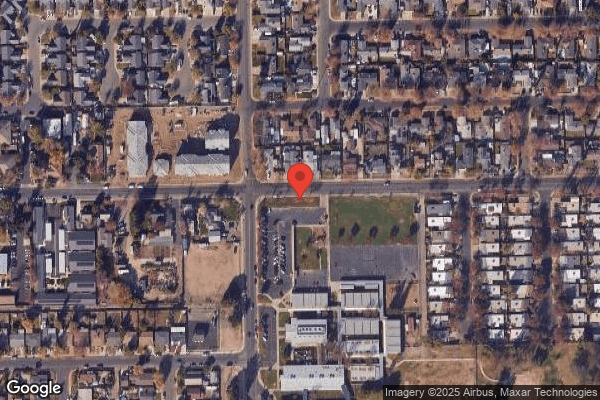

2633 WEST RUMBLE RD, MODESTO, CA 95350 (209) 577-1001
For profit - Limited Liability company 180 Beds GENERATIONS HEALTHCARE Data: November 2025
Trust Grade
55/100
#576 of 1155 in CA
Last Inspection: September 2024

Within standard 12-15 month inspection cycle. Federal law requires annual inspections.

Overview

English Oaks Convalescent & Rehabilitation Hospital has a Trust Grade of C, indicating that it is average compared to other facilities, placing it in the middle of the pack. It ranks #576 out of 1,155 nursing homes in California, which puts it in the top half, and #9 out of 17 in Stanislaus County, meaning only one local option is better. The facility is improving, with issues decreasing from 18 in 2024 to just 3 in 2025. Staffing is a strength, rated at 4 out of 5 stars, with a turnover rate of 32%, lower than the state average, suggesting that staff are experienced and familiar with residents. On the downside, there are concerning incidents reported, including a serious case of verbal and physical abuse towards a resident and failures in maintaining food safety standards, indicating that while there are strengths, there are also significant areas needing attention.

Trust Score
C
55/100
In California
#576/1155
Top 49%
Safety Record
Moderate
Needs review
Inspections
Getting Better
18 → 3 violations
Staff Stability
○ Average
32% turnover. Near California's 48% average. Typical for the industry.
Penalties
✓ Good
No fines on record. Clean compliance history, better than most California facilities.
Skilled Nurses
⚠ Watch
Each resident gets only 22 minutes of Registered Nurse (RN) attention daily — below average for California. Fewer RN minutes means fewer trained eyes watching for problems.
Violations
⚠ Watch
56 deficiencies on record. Higher than average. Multiple issues found across inspections.
★★★☆☆
3.0
Overall Rating
★★★★☆
4.0
Staff Levels
★★★☆☆
3.0
Care Quality
★★★☆☆
3.0
Inspection Score
Stable
2024: 18 issues
2025: 3 issues

The Good

  • 4-Star Staffing Rating · Above-average nurse staffing levels
  • Full Sprinkler Coverage · Fire safety systems throughout facility
  • No fines on record
  • Staff turnover below average (32%)

    16 points below California average of 48%

Facility shows strength in staffing levels, fire safety.

The Bad

3-Star Overall Rating

Near California average (3.1)

Meets federal standards, typical of most facilities

Staff Turnover: 32%

14pts below California avg (46%)

Typical for the industry

Chain: GENERATIONS HEALTHCARE

Part of a multi-facility chain

Ask about local staffing decisions and management

The Ugly 56 deficiencies on record

1 actual harm
Sept 2025 1 deficiency
CONCERN (D) 📢 Someone Reported This

A family member, employee, or ombudsman was alarmed enough to file a formal complaint

Potential for Harm - no one hurt, but risky conditions existed

Accident Prevention (Tag F0689)

Could have caused harm · This affected 1 resident

Based on observation, interview, and record review, the facility failed to ensure adequate supervision for one of four sampled residents (Resident 1) when resident 1 was found in the parking lot of th...

Read full inspector narrative →
Based on observation, interview, and record review, the facility failed to ensure adequate supervision for one of four sampled residents (Resident 1) when resident 1 was found in the parking lot of the apartment complex next to the facility at approximately 10:00 p.m., on 6/17/25.This failure resulted in two skin tears to Resident 1's right knee and had the potential of serious injury and harm.A review of Resident 1's clinical record, titled, admission RECORD (a document that contains the resident's demographic information) indicated, Resident 1 was admitted to the facility with diagnoses of but not limited to malignant neoplasm of unspecified kidney (a cancerous tumor that forms in the kidney), anxiety disorder (a mental health condition characterized by excessive and persistent worry, fear, and nervousness that can interfere with daily life), failure to thrive (a condition where an adult experiences unintentional weight loss, decreased appetite, and muscle wasting that can lead to health complications).A review of Resident 1's clinical record titled, SBAR Communication Form, dated 6/17/25, written by Licensed Nurse (LN) 1, indicated on 6/17/25 at 9:30 p.m., Resident 1 was not found in her room and the building was searched and resident was found outside around 9:45 p.m.During a concurrent interview and record review on 9/11/25, at 4:01 p.m., a review of Resident 1's clinical record titled, Progress Notes, dated 6/17/25, at 11:45 p.m., written by LN 2, indicated Resident 1 was found in the parking lot of an apartment complex next to the facility. LN 2 stated Resident 1 had was assessed for injuries and two skin tears to the right knee were noted and Resident 1 was not able to recall what happened. LN 2 further stated that Resident could have potentially gotten lost and was at risk of serious injury.During an interview on 9/12/25, at 11:40 a.m., with LN 3. LN 3 stated in the event of an elopement (when a person under supervised care leaves the healthcare facility without permission or anyone noticing) staff was not able to ensure safety and monitor a residents if they were not in the building or accounted for.During an interview on 9/12/25, at 12:30 p.m., with the Administrator (ADM), the ADM stated Resident 1 eloped on 6/17/25 and was assessed and treated for skin tears to the right knee. The ADM further stated there was potential for worse injury when the resident was not monitored while outside of the facility.
Feb 2025 2 deficiencies
CONCERN (D) 📢 Someone Reported This

A family member, employee, or ombudsman was alarmed enough to file a formal complaint

Potential for Harm - no one hurt, but risky conditions existed

Assessment Accuracy (Tag F0641)

Could have caused harm · This affected 1 resident

Based on interview and record review, the facility failed to ensure one of three sampled residents (Resident 1), was accurately assessed for the use of a partial denture (fully removable dental insert...

Read full inspector narrative →
Based on interview and record review, the facility failed to ensure one of three sampled residents (Resident 1), was accurately assessed for the use of a partial denture (fully removable dental inserts that replaced seven missing top teeth) and use of hearing aids. These failures resulted in staff not being aware when Resident 1 ' s partial denture and hearing aids were missing and the lack of consistent use could have contributed to Resident 1 ' s confusion and weight loss. Findings: During a review of Resident 1 ' s clinical record titled, admission RECORD (a document that contained Resident 1 ' s demographic information), indicated Resident 1 ' s diagnosis included the need for assistance with personal care. A review of Resident 1 ' s clinical record titled, NSG [nursing]: admission Data Collection and Baseline Care Plan Tool (a personalized document that identified problems, goals, and interventions), dated 1/3/25, by Licensed Nurse (LN 1), indicated Resident 1 was oriented to person, place, date, and time. The record further indicated Resident 1 ' s use of a partial denture and hearing aids were not assessed. A review of Resident 1 ' s clinical record titled, MDS [Minimum Data Set – part of a comprehensive assessment] – Section B – Hearing, Speech, and Vision, dated 1/10/25, by the MDS nurse (MDS 1), indicted Resident 1 did not use hearing aids. During a review of Resident 1 ' s clinical record titled, Nutritional Comprehensive Assessment, dated 1/14/25, by the Registered Dietitian (RD), indicated Resident 1 had dentures. A review of Resident 1 ' s clinical record titled, Theft/Loss Monitoring Report, by the Housekeeping Director (HD), indicated Resident 1 ' s partial denture was found in the laundry area of the facility on 1/8/25, and on 1/24/25, FRIEND 1 reported the missing partial denture, and the partial denture was returned to Resident 1. A review of Resident 1 ' s clinical record titled, Patient ' s Clothes and Possessions, dated 1/29/25, indicated Resident 1 had two hearing aids. A review of Resident 1 ' s clinical record titled, Weights and Vitals, dated 1/3/25 through 1/26/25, indicated Resident 1 lost 15 pounds (lbs.) while at the facility with the following weights recorded: 1/3/25 = 197 lbs. 1/5/25 – 194 lbs. 1/20/25 = 185 lbs. 1/26/25 – 182 lbs. During an interview on 2/6/25, at 1:55 p.m., with LN 2, LN 2 stated she was not aware that Resident 1 utilized a partial denture or hearing aids. LN 2 stated upon admission, the LN was supposed to assess Resident 1 ' s use of partial dentures or hearing aids. LN 2 stated Resident 1 had intermittent confusion while at the facility. During an interview on 2/6/25, at 2:05 p.m., Certified Nursing Assistant (CNA 1) stated she was not aware Resident 1 utilized a partial denture or hearing aids. CNA 1 stated Resident 1 had bouts of confusion. During a phone interview on 1/12/25, at 10 a.m., with Resident 1 ' s Family Member (FM 1), FM 1 stated Resident 1 ' s partial denture had been lost while at the facility. FM 1 stated when the denture was found, it was cracked and not able to be used. FM 1 stated after discharge from the facility, the partial denture was taken to a dentist for repair, however Resident 1 was not able to eat with the partial denture for over three weeks. FM 1 stated Resident 1 ' s hearing aids were lost for a few days but had been found. FM 1 stated the facility should have taken an accurate inventory assessment for Resident 1 ' s partial denture. During a phone interview on 1/12/25, at 12:34 p.m., Resident 1 ' s Friend (FRIEND 1) stated the facility had lost Resident 1 ' s partial denture soon after arriving at the facility. FRIEND 1 stated when the facility returned the partial denture to Resident, it was cracked. FRIEND 1 stated Resident 1 ' s hearing aids were also missing for a couple days at the facility. During a phone interview on 12/14/25, at 12:30 p.m., with Resident 1 ' s FM 2, FM 2 stated a family member had placed a sign above Resident 1 ' s bed that reminded staff to take out Resident 1 ' s partial dentures every night and soak them in cleaning solution and to charge Resident 1 ' s hearing aids each night. FM 2 stated the facility should have ensured the partial denture and hearing aids were accessible and properly cared for each day and that an inventory list and sensory assessment was accurately completed. FM 2 stated Resident 1 was confused while at the facility, which was not Resident 1 ' s baseline. During a phone interview on 2/17/25, at 5:14 p.m., with Resident 1, Resident 1 stated his partial dentures (upper) was lost at the facility. Resident 1 stated he looked all over for the partial and reported the loss to the staff, but staff stated the facility did not have a lost and found department. Resident 1 stated after approximately three weeks, the partial denture was returned to him, and it was cracked. Resident 1 stated his hearing aids were lost for a couple of days while he was at the facility. Resident 1 stated he was confused during his stay at the facility. During a phone interview on 2/20/25, at 11 a.m., with MDS 2, MDS 2 stated if the LN was unable to assess Resident 1 ' s hearing and dental status upon admission, the LN should have reassessed at a later date. MDS 2 stated the admission assessment problems and concerns generated Resident 1 ' s care plan and because hearing and dental was not assessed, there was not a careplan for hearing aids or partial dentures. MDS 2 stated Resident 1 ' s inventory list should have been updated with the partial denture when the dentures were found and returned to Resident 1. MDS 2 stated it was important to have identified if dentures were used because food modifications may have needed to be made. During phone interview on 2/20/25, at 11:05 a.m., with the RD, the RD stated Resident 1 reported to her that Resident 1 had dentures. The RD stated she had not asked Resident 1 to open his mouth and show RD his dentures. The RD stated she would have noticed if Resident 1 had seven missing front teeth. During a joint phone interview on 1/20/25, at 11:10 a.m., with the Administrator (ADM) and Director of Nursing (DON), the ADM and DON acknowelged that the LN should have reassessed Resident 1 ' s dental and hearing status which would have generated a hearing and dental care plan. During a concurrent phone interview, review of Resident 1 ' s clinical record, and review of the facility ' s policy and procedure (P&P), on 2/20/25, at 12:20 p.m., with the DON, the P&P titled, Resident Assessment/Care Plan Coordinator (MDS), dated 2003, was reviewed. The P&P indicated, .Ensures that all assessments are completed . Works with the Interdisciplinary Care Plan Team in developing a comprehensive resident assessment and care plan for each resident . Evaluate each resident ' s condition and pertinent medical data to determine any need for special assessment activities or a need to amend the admission assessment . The DON acknowelged the LN did not reassess Resident 1 ' s use of hearing aids or partial denture. The DON acknowelged the P&P was not followed.
CONCERN (D) 📢 Someone Reported This

A family member, employee, or ombudsman was alarmed enough to file a formal complaint

Potential for Harm - no one hurt, but risky conditions existed

Comprehensive Care Plan (Tag F0656)

Could have caused harm · This affected 1 resident

Based on interview and record review, the facility failed to ensure one of three sampled residents (Resident 1) had a care plan (a document that identified Resident 1 ' s problems, goals, and interven...

Read full inspector narrative →
Based on interview and record review, the facility failed to ensure one of three sampled residents (Resident 1) had a care plan (a document that identified Resident 1 ' s problems, goals, and interventions) in place that addressed Resident 1 ' s use of a partial denture (fully removable dental inserts that replaced seven missing top teeth) and hearing aids. These failures resulted in a lack of knowledge by nursing staff of Resident 1 ' s use of a partial denture and hearing aids, lack of care of the partial denture and hearing aids, and could have contributed to Resident 1 ' s confusion and 15-pound weight loss while at the facility. Findings: During a review of Resident 1 ' s clinical record titled, admission RECORD, (a document that contained Resident 1 ' s demographic information), indicated Resident 1 ' s diagnosis included the need for assistance with personal care. A review of Resident 1 ' s clinical record titled, NSG [nursing]: admission Data Collection and Baseline Care Plan Tool (an individualized plan of care that identified Resident 1 ' s problems, goals, and interventions), dated 1/3/25, by Licensed Nurse (LN 1), indicated Resident 1 was oriented to person, place, date, and time. The record further indicated Resident 1 ' s use of a partial denture and hearing aids were not assessed. During a review of Resident 1 ' s clinical record titled, Nutritional Comprehensive Assessment, dated 1/14/25, by the Registered Dietitian (RD) indicated Resident 1 had dentures. A review of Resident 1 ' s clinical record titled, Theft/Loss Monitoring Report, indicated Resident 1 ' s partial denture was found in the laundry area of the facility on 1/8/25 and on 1/24/25, FRIEND 1 reported the missing partial denture, and the partial denture was returned to Resident 1. A review of Resident 1 ' s clinical record titled, Weights and Vitals, dated 1/3/25 through 1/26/25, indicated Resident 1 lost 15 pounds while at the facility with the following weights recorded: 1/3/25 = 197 lbs. 1/5/25 – 194 lbs. 1/20/25 = 185 lbs. 1/26/25 – 182 lbs. A review of Resident 1 ' s clinical record titled, Patient ' s Clothes and Possessions, dated 1/29/25, indicted Resident 1 had two hearing aids. During an interview on 2/6/25, at 1:55 p.m., with LN 2, LN 2 stated she was not aware that Resident 1 utilized a partial denture or hearing aids. LN 2 stated upon admission, the LN was supposed to assess Resident 1 ' s use of partial dentures or hearing aids. LN 2 stated Resident 1 had intermittent confusion while at the facility. During a phone interview on 1/12/25, at 10 a.m., with Resident 1 ' s Family Member (FM 1), FM 1 stated Resident 1 ' s partial denture (7 false teeth on the top of the mouth) had been lost while at the facility. FM 1 stated when the denture were found, it was cracked and not able to be used. FM 1 stated after discharge from the facility, the partial denture was taken to a dentist for repair, however Resident 1 was not able to eat with the partial denture for over three weeks. FM 1 stated Resident 1 ' s hearing aids were missing for a few days but had been found. During a phone interview on 1/12/25, at 12:34 p.m., Resident 1 ' s Friend (FRIEND 1), FRIEND 1 stated the facility had lost Resident 1 ' s partial denture soon after arriving at the facility. FRIEND 1 stated when the facility returned the partial denture to Resident 1. FRIEND 1 stated Resident 1 ' s hearing aids were lost for a couple of days at the facility. During a phone interview on 12/14/25, at 12:30 p.m., with Resident 1 ' s FM 2, FM 2 stated a family member had placed a sign above Resident 1 ' s bed that reminded staff to take out Resident 1 ' s partial denture every night and soak them in cleaning solution and to charge Resident 1 ' s hearing aids each night. FM 2 stated the facility should have ensured the partial denture and hearing aids were accessible and properly cared for each day and that an inventory list and sensory assessment was accurately completed. FM 2 stated Resident 1 was confused while at the facility, which was not Resident 1 ' s baseline. During a phone interview on 2/17/25, at 5:14 p.m., with Resident 1, Resident 1 stated his partial denture (upper) was lost at the facility. Resident 1 stated he looked all over for the partial and reported the loss to the staff, but the staff stated the facility did not have a lost and found department. Resident 1 stated after approximately three weeks, the partial denture was returned to him, and it was cracked. Resident 1 stated his hearing aids were lost for a couple of days while at the facility. During a phone interview on 2/20/25, at 11 a.m., with MDS 2, MDS 2 stated if the LN was unable to assess Resident 1 ' s hearing and dental status upon admission, the LN should have reassessed at a later date. MDS 2 stated the admission assessment problems and concerns generated Resident 1 ' s care plan and because hearing and dental was not assessed, there was not a care plan created for Resident 1 to include hearing aids or partial dentures. MDS 2 stated it was important to have identified if dentures were used because food modifications may have needed to be made. During phone interview on 2/20/25, at 11:05 a.m., with the RD, the RD stated Resident 1 reported to her that Resident 1 had dentures. During a joint phone interview on 1/20/25, at 11:10 a.m., with the Administrator (ADM) and Director of Nursing (DON), the ADM and DON acknowelged that the LN should have reassessed Resident 1 ' s dental and hearing status which would have generated a hearing and dental care plan. During a concurrent phone interview and review of facility policies on 2/20/25, at 12:20 p.m., with the DON, the facility ' s policy and procedures (P&Ps) titled, Care planning – Interdisciplinary Team, dated 3/22, and Care Plans, Comprehensive Person-Centered, dated 3/22, were reviewed. The P&P titled Care planning – Interdisciplinary Team, indicated, . Comprehensive, Person-centered care plans are based on resident assessments and developed by an interdisciplinary team (IDT) . The P&P titled, Care Plans, Comprehensive Person-Centered, indicated, .The care plan interventions are derived from a through analysis of the information gathered as part of the comprehensive assessment .The compressive, person-centered care plan .describes the services that are to be furnished to attain or maintain the resident ' s highest physical, mental, and psychosocial well-being . The DON acknowelged when Resident 1 ' s initial hearing and dental needs were not reassessed by the LN, the hearing and dental care plans were not generated. The DON acknowelged the P&Ps were not followed.
Oct 2024 1 deficiency
CONCERN (D) 📢 Someone Reported This

A family member, employee, or ombudsman was alarmed enough to file a formal complaint

Potential for Harm - no one hurt, but risky conditions existed

Deficiency F0688 (Tag F0688)

Could have caused harm · This affected 1 resident

Based on interview, and record review, the facility failed to provide restorative (RNA- nursing intervention to increase or maintain resident's mobility and prevent further decline in mobility) treatm...

Read full inspector narrative →
Based on interview, and record review, the facility failed to provide restorative (RNA- nursing intervention to increase or maintain resident's mobility and prevent further decline in mobility) treatment and services for one of three sampled residents (Resident 2) when Resident 2 did not receive her ordered RNA therapy for the week of 9/23/24. This failure had the potential to result in a decline in physical functioning for Resident 2, resulting in a negative impact on Resident 2's health and well-being. Findings: A review of Resident 2's admission Record, indicated Resident 2 was admitted to the facility in 2024 with diagnoses that included difficulty in walking, hemiplegia (paralysis on one side of the body) and hemiparesis (muscle weakness on one side of the body) following cerebral infarction (a result of disrupted blood flow to the brain due to problems with the blood vessels that supply it, also known as stroke) affecting the left side. A review of Resident 2's Order Summary Report, (list of physician orders) dated 10/11/24, indicated RNA therapy was ordered two times a week for both upper extremity active range of motion (AROM) and transfer training on 9/24/24. Further review of the record indicated RNA therapy was ordered three times a week for both upper extremity AROM on 9/28/24 and RNA therapy three times a week for transfer training to the bedside commode on 10/4/24. A review of Resident 2's Case Manager Note, dated 10/4/24, indicated, .Met with .res [resident] and spouse to review ending of skilled services and end of therapy .Discussed that res is now receiving RNA program . A review of Resident 2's Restorative Nursing Referral and Care Plan, dated, 9/24/24, indicated, .Type of Restorative Program .Therapeutic Exercise/ROM [range of motion] .Problem: Resident at risk for decline in ROM .Goals: Maintain/increase range of motion Maintain/increase muscle strength .Decrease c/o [complaint of] pain and discomfort Maintain/improve functional use of extremity Prevent/reduce risk of deformity [a distortion or disfigurement that changes the shape or size of a body part from what's normal] and/or contracture [where muscles, tendons, joints or other tissues tighten or shorten] Task: RNA 2x/week [2 times a week] for both upper extremity AROM .Type of Restorative Program: Transfer/Sit to Stand .Problem: Resident at risk for decline in transfers .Goals: Resident will maintain transfer status .Task: RNA: 2x/week for transfer training . During a concurrent interview and record review on 10/11/24, at 11:33 a.m., with Restorative Nurse Assistant RNA (1) and RNA (2), Resident 2's electronic health record (EHR) was reviewed. RNA 1 stated RNA services were provided to residents on Sunday, Tuesday, and Friday of each week. RNA 1 confirmed there was no record of RNA services for the week of 9/23/24 in Resident 2's EHR. RNA 1 and RNA 2 stated they were not sure if Resident 2 received RNA services during the week of September 23rd. RNA 2 further stated that Resident 2's orders for RNA services were changed by the physician from two times a week to three times a week. RNA 2 stated that if Resident 2 received RNA services during the week of September 23rd, the documentation for RNA services would be in the medical record. During an interview on 10/11/24, at 12:17 p.m., with the Director of Rehabilitation (DOR), the DOR stated the original physician order for Resident 2's RNA services was received on 9/24/24 for RNA therapy two times a week. The DOR further stated that when RNA services were provided, they were documented in the EHR. The DOR stated the RNAs had a specific place in the EHR to document RNA services. The DOR stated that if the order for RNA services changed the documented services would still be part of the resident's EHR. During a concurrent interview and record review on 10/11/24, at 1:15 p.m., with the Asst ADM, Resident 2's EHR was reviewed. The Asst ADM confirmed there was no documentation for Resident 2 receiving RNA therapy from 9/23/24 through 9/28/24. The Asst ADM further confirmed there was no paper documentation of RNA services provided to Resident 2 from 9/23/24 through 9/28/24 in the medical record. The Asst ADM stated the risk for the resident not receiving RNA services was a decline in function and delayed recovery. During an interview on 10/11/24, at 1:45 p.m., with Resident 2 and Family Member (FM) 1, in Resident 2' s room, Resident 2 and FM 1 both stated RNA services started the week of 9/29/24. During a review of an undated facility policy titled, Restorative Nursing Services, indicated .Residents will receive restorative nursing care as needed to help promote optimal safety and independence .It is the policy to assist each and every resident to achieve the highest level of self-care possible . During a review of an undated facility policy titled, Charting and Documentation, indicated .All services provided to the resident, progress toward the care plan goals, or any changes in the resident's medical, physical, functional, or psychosocial condition, shall be documented in the resident's medical record .1. Documentation in the medical record may be electronic, manual, or a combination .2. The following is to be documented in the resident medical record .c. Treatments or services performed .7. Documentation of procedures and treatments will include care-specific details, including a. The date and time the procedure/treatment was provided; b. The name and title of the individual(s) who provided the care .
Sept 2024 15 deficiencies
CONCERN (D)

Potential for Harm - no one hurt, but risky conditions existed

PASARR Coordination (Tag F0644)

Could have caused harm · This affected 1 resident

Based on interview and record review, the facility failed to ensure coordination of specialized mental health services for 1 of 38 sampled residents (Resident 1), when the facility failed to respond t...

Read full inspector narrative →
Based on interview and record review, the facility failed to ensure coordination of specialized mental health services for 1 of 38 sampled residents (Resident 1), when the facility failed to respond to the state designated authority for further PASRR (Pre-admission Screening and Resident Review-a tool used to ensure residents with certain mental illnesses receive care needed in the most appropriate setting) Level II needs. This deficient practice had the potential for Resident 1 to not receive additional care and services related to a mental disorder. Findings: A review of Resident 1's admission Record indicated she was admitted to the facility in August 2024 with diagnoses which included bipolar disorder (a mental illness that causes extreme mood swings, or shifts in energy, activity, and concentration that can make it hard to do daily tasks), and schizophrenia (a serious mental illness that affects a person's thoughts, feelings, and behaviors). During a concurrent interview and record review on 9/18/24 at 11:09 a.m., with the Minimum Data Set Case Manager (MDSCM), Resident 1's PASRR Level II letter dated 8/21/24 indicated, . Facility staff were unresponsive to two or more separate attempts of communication within 48 hours of the Level I Screening. The case is now closed. To reopen, the facility must resubmit a new Level I Screening . The MDSCM stated a new PASRR Level I screening was completed for Resident 1 on 9/18/24. The PASRR screening indicated Resident 1 had serious mental illness diagnoses, was receiving psychotropic medications (any drug that affects brain activities associated with mental processes and behavior), and indicated Resident 1 required a PASRR Level II Screening. During an interview on 9/19/24 at 9:24 a.m. with the MDSCM, the MDSCM confirmed the PASRR Level II was closed because the agency was not able to contact anyone at the facility and it had to be reopened. The MDSCM stated the PASRR Level II screening was very important for Resident 1 and would ensure she received any additional services she might qualify for. A review of the facility's policy titled, Preadmission Screening Resident Review (PASRR), undated, indicated, .All Residents initially entering the facility will have a PASRR completed to determine if they are mentally ill .If a recipient is found to be mentally ill, the screening helps determine whether NF [nursing facility] care is appropriate or whether the recipient needs specialized services .
CONCERN (D)

Potential for Harm - no one hurt, but risky conditions existed

Comprehensive Care Plan (Tag F0656)

Could have caused harm · This affected 1 resident

Based on observation, interview, and record review, the facility failed to provide a resident centered care plan for 2 of 38 sampled residents (Resident 76 and Resident 104) when, 1. Resident 76 requ...

Read full inspector narrative →
Based on observation, interview, and record review, the facility failed to provide a resident centered care plan for 2 of 38 sampled residents (Resident 76 and Resident 104) when, 1. Resident 76 required oxygen therapy via a nasal cannula (NC- tubing which delivers oxygen into your nose) but often removed the tubing, and his care plan did not include interventions which would ensure his oxygen level remained above 90%; and, 2. Resident 104's intravenous (IV, refers to a way of giving a drug or other substance through a needle or tube inserted into a vein) therapy care plan was not specific to her midline catheter (a long, thin, flexible tube which is inserted into a large vein in the upper arm). These failures placed Resident 76 at risk of adverse effects of not enough oxygen, and placed Resident 104 at risk for harm related to inadequate care of her midline IV. Findings: 1. Review of Resident 76's admission RECORD indicated Resident 76 was admitted to the facility in the beginning of 2024 with diagnoses including hepatic encephalopathy (a brain disorder which occurs when the liver doesn't filter toxins), chronic obstructive pulmonary disease (COPD-a chronic lung disease), CHF (congestive heart failure-when the heart is weak and doesn't pump well. It can cause shortness of breath), and anxiety disorder. Review of Resident 76's clinical record, Progress Note, dated 9/10/24, indicated, .Medication Administration Note .Oxygen: 2 Liters/min [the flow rate of oxygen] via Nasal Canula Every Shift for hypoxia/shortness of breath [hypoxia is when there is not enough oxygen and can lead to tissue damage]. Goal is to maintain oxygen saturations above 90% . every shift . Review of Resident 76's care plan, dated 3/18/24, indicated, .Problem .admitted on oxygen therapy r/t [related to] CHF .Interventions .Administer oxygen as ordered by Physician . Review of Resident 76's care plan, dated 3/18/24, indicated, .Problem .The resident has COPD .Goal .The resident will display optimal breathing patterns daily through review date .Interventions/Tasks .Administer oxygen therapy as ordered by physician . Review of Resident 76's care plan, dated 9/10/24, indicated, .Problem .Covid-19 Infection .Intervention .Observe for psychosocial changes in behavior .Oxygen supplementation as indicated . During an observation on 9/18/24 at 11:05 a.m., Resident 76 was lying in bed and was not wearing his nasal canula. The oxygen concentrator (a machine which takes the room air and turns it into a higher percentage of oxygen) was on and running at 2.5 liters/min. During a concurrent observation and interview on 9/18/24 at 11:15 a.m., with Certified Nursing Assistant (CNA) 5, in Resident 76's room, CNA 5 stated Resident 76 got up to go to the bathroom and would take off his NC. CNA 5 stated the last time she saw Resident 76 wearing his NC was at breakfast around 9 a.m. During a concurrent observation and interview on 9/18/24 at 11:25 a.m., with Licensed Nurse (LN) 3, in Resident 76's room, LN 3 confirmed Resident 76 was not wearing his oxygen. LN 3 stated she was not sure how long Resident 76 was not wearing oxygen. During an interview on 9/18/24 at 11:35 a.m., LN 3 stated Resident 76 needed oxygen continuously due to his heart condition. LN 5 explained Resident 76 had a diagnosis of Covid-19 was on isolation and he needed more frequent checks. LN 5 stated if Resident 76 needed to go to the bathroom the CNA was to assist him. LN 5 stated if he did not wear his oxygen, his oxygen levels could drop, and he could experience shortness of breath and hypoxia. During an observation on 9/19/24, at 8:55 a.m., Resident 76 was lying in bed and was not wearing his NC. The oxygen concentrator was running. Resident 76's NC was on the floor behind his bed. During a concurrent observation and interview on 9/19/24 at 9:06 a.m., with LN 20 and CNA 6, in Resident 76's room, LN 20 confirmed Resident 76 was not wearing his NC for his oxygen therapy and stated he should be. LN 20 checked Resident 76's oxygen saturation, and confirmed his level was 88%. It took approximately 5 minutes for Resident 76's oxygen saturation to reach 92%. LN 20 stated Resident 20 had COPD and should be receiving oxygen at 2 L/min to keep his oxygen saturation above 90%. During a concurrent interview and record review on 9/20/24 at 9:00 a.m., the Assistant Director of Nurses (ADON) stated residents should always wear oxygen if they had orders to do so. The ADON stated staff should give frequent reminders for residents to wear them and for residents who were confused, nursing staff should do frequent checks. The ADON stated for residents who were on isolation for Covid-19 she expected nursing staff to check residents frequently. The ADON stated if the resident was observed not wearing their oxygen, then they would require more frequent checks. The ADON reviewed Resident 76's care plans and stated there were no interventions in place for frequent monitoring due to his not wearing oxygen or forgetting to put it on. The ADON stated residents who were confused often needed frequent checks to ensure they were wearing their oxygen. During an interview on 9/20/24, at 2:36 p.m., LN 8 stated if there were concerns for residents who are not wearing their oxygen nasal canula, then it would be important to plan their care including encouraging staff to explain and remind the resident to keep their oxygen on, check on the resident more frequently such as every 1-2 hours, checking to make sure they are wearing their oxygen, and have no respiratory symptoms. Review of a facility policy titled Oxygen Administration, dated 7/1/20, indicated, .The purpose of this procedure is to provide guidelines for safe oxygen administration .Preparation .Review the resident's care plan to assess for any special needs of the resident . 2. Review of Resident 104's admission RECORD indicated Resident 104 was admitted to the facility in mid-2024 with diagnosis including but not limited to infection and inflammatory reaction due to internal left hip prosthesis (artificial joint) and disruption of external operation (a surgical complication that occurs when a surgical incision reopens after closure). Review of Resident 104's Order Progress Summary, dated 8/18/24, indicated, .PICC-PICC [PICC, a peripherally inserted central catheter is a long, thin tube that is inserted through a vein in the arm and passed through to the larger veins near the heart] Line Site Location Right upper arm .for left Hip wound . Review of Resident 104's clinical record, a progress note dated 8/21/24, indicated, .ceFAZolin Sodium Intravenous Solution [antibiotic used to treat infection] .Use 2 gram [dose] intravenously three times a day for left hip wound/ dehiscence [partial or total separation of a wound] until 09/22/2024 . Review of Resident 104's clinical record, a progress note dated 9/3/24, indicated, .[Name of Company providing midline/PICC insertions], here today, midline placed in RUA [right upper arm]. Drsg [dressing] clean and intact, line patent, flushing well . Review of Resident 104's care plan, dated 9/8/24, indicated, .Problem .Intravenous (IV) Therapy. At risk for IV therapy complication(s): Phlebitis [inflammation of a vein], Extravasation [leakage of IV administered solution into surrounding tissues, which can cause serious damage], Air Embolism [occurs when air or gas is admitted into the vascular system]. At risk for adverse drug reaction .Goal .Will have signs/symptoms of complications r/t [related to] IV therapy identified and managed through the review date .Interventions .Administer IV therapy/medication as ordered by physician . Review of Resident 104's clinical record, a progress note dated 9/12/24, indicated, .Resident accidentally pulled her Midline out, when she was trying to go to the restroom. Writer inserted IV cannula @ [at] right arm using Gauge #22 [describes the size of the IV catheter]. Pt. tolerated well. Endorsed to NOC [night shift] RN for Midline placement order .Author [LN 7] Review of Resident 104's clinical record, a progress note dated 9/15/24, indicated, .[Name of company] this am to place new midline. Midline placed in RUA, pt tolerated well . During a concurrent observation and interview on 9/17/24, at 1:56 p.m., with Resident 104 and Family Member (FM) 1, FM 1 stated Resident 104 had been in the facility since the end of August and stated she was here because she is receiving antibiotics for hip surgery. FM 1 stated Resident 104 had initially gone home after hip surgery, but it got infected, so the doctors redid the surgery. FM 1 explained Resident 104 was now on antibiotics. Resident 104 was observed to have a midline catheter to left upper arm. During a concurrent interview and record review on 9/20/24, at 9:00 AM, the Assistant Director of Nurses (ADON) stated midline catheters were placed further up in the arm. The ADON stated there was care specific to the midline and it required a care plan. The ADON stated the care plan would indicate the maintenance of the type of IV access line the resident has, the frequency of dressing change, frequency of flushing, and signs and symptoms to look for regarding infection or other problems. The ADON stated only Registered Nurses could perform the dressing changes for the midline and they were done every seven days. The ADON stated PICC/Midline catheters were riskier due to the length of the catheter line. The ADON reviewed Resident 104's care plan for intravenous therapy dated 9/8/24 and confirmed the care plan did not specify the type of IV line she had, nor did it specify the dressing changes or signs and symptoms to look for specific to the risk of her midline catheter. The ADON explained these should be included in Resident 104's care plan. Review of a facility policy titled Care Plan, undated, indicated, .Our facility develops a resident centered comprehensive care plan for each resident that includes measurable objectives and timetables to meet the resident's medical, nursing, and psychological needs .An Interdisciplinary Assessment Team, in coordination with the resident .develops and maintains a comprehensive care plan for each resident .The comprehensive care plan has been designed to .Incorporate identified problem areas .Incorporate risk factors associated with identified problems . Care plans are revised as changes in the resident's condition dictate. Reviews are made at least quarterly .
CONCERN (D)

Potential for Harm - no one hurt, but risky conditions existed

Deficiency F0658 (Tag F0658)

Could have caused harm · This affected 1 resident

Based on observation, interview, and record review, the facility failed to provide care according to professional standards of practice for 1 of 38 sampled residents (Resident 104) when a licensed nur...

Read full inspector narrative →
Based on observation, interview, and record review, the facility failed to provide care according to professional standards of practice for 1 of 38 sampled residents (Resident 104) when a licensed nurse (LN) inserted a peripheral IV (intravenous device placed in a vein of the hand or arm and used to deliver fluids or medication) without a physician order. This failure had the potential to place Resident 104 at risk for complications related to inadequate maintenance of the peripheral IV. Findings: Review of Resident 104's admission RECORD indicated Resident 104 was admitted to the facility in mid-2024 with a diagnosis of infection and inflammatory reaction due to internal left hip prosthesis (artificial joint) and disruption of external operation (a surgical complication that occurs when a surgical incision reopens after closure). Review of Resident 104's clinical record, Progress Note, dated 8/21/24, indicated, .ceFAZolin Sodium Intravenous Solution [antibiotic used to treat infection] .Use 2 gram intravenously three times a day for left hip wound/ dehiscence [partial or total separation of a wound] until 09/22/2023 . Review of Resident 104's clinical record progress note, dated 9/03/24, indicated, .[Name of company providing IV midline insertions-long catheters placed into a large vein in the arm], here today, midline placed in RUA [right upper arm]. Drsg [dressing] clean and intact, line patent, flushing well . Review of Resident 104's care plan, dated 9/8/24, indicated, .Problem .Intravenous (IV) Therapy. At risk for IV therapy complication(s): Phlebitis [inflammation of a vein], Extravasation [is the leakage of IV administered solution into surrounding tissues, which can cause serious damage to the patient], Air Embolism [occurs when air or gas is admitted into the vascular system]. At risk for adverse drug reaction .Goal .Will have signs/symptoms of complications r/t [related to] IV therapy identified and managed through the review date .Interventions .Administer IV therapy/medication as ordered by physician . Review of Resident 104's clinical record progress note, dated 9/12/24, indicated, .Resident accidentally pulled her Midline out when she was trying to go to the restroom. Writer inserted IV cannula [a short thin tube] @ [at] right arm using Gauge #22 [describes the diameter of the tube]. Pt. tolerated well . Endorsed to NOC [night shift] RN for Midline placement order .Author [LN 7] Review of Resident 104's clinical record progress note, dated 9/15/24, indicated, .[Name of company] here this am to place new midline . During a concurrent observation and interview on 9/17/24, at 1:56 p.m., with Resident 104 and Family Member (FM) 1, FM 1 stated Resident 104 had been in the facility since the end of August and stated she was here because she was receiving antibiotics for hip surgery. FM 1 stated Resident 104 had initially gone home after hip surgery, but it got infected, so the doctors redid the surgery. FM 1 explained Resident 104 was now on antibiotics until 9/22/24. Resident 104 had a midline catheter in her left upper arm and a peripheral catheter on her right hand. During a concurrent observation and interview on 9/17/24 2:05 p.m., Licensed Nurse (LN) 4 confirmed Resident 104 had a peripheral line to her right hand with a date written on the dressing of 9/12/24 and left midline with a date written on the dressing of 9/16/24. Regarding Resident 104 having two IV access lines, LN 4 stated she was not sure why she had two IV lines. In a concurrent interview and record review on 9/20/24 9:00 AM, the Assistant Director of Nurses (ADON) stated a peripheral line could stay in place for five days before it needed to be removed. The ADON reviewed Resident 104's clinical record and was not able to locate a physician order for the peripheral line placed on 9/12/24 by the LN. The ADON confirmed there was also no nursing progress note indicating Resident 104's medical doctor was called by the LN regarding the dislodgement of her midline on 9/12/24. The ADON stated the LN should have called the doctor to let them know Resident 104 pulled out her midline and obtain a physician order prior to inserting a peripheral line. The ADON explained the physician may have wanted to change the antibiotic order to a different medication, since not all antibiotics could be given through a peripheral IV. In an interview and record review on 9/20/24, at 3:21 p.m., Medical Doctor (MD) 1 stated she did not recall or have record of the LN calling regarding Resident 104 needing a peripheral line on 9/12/24. MD 1 stated she did not place an order for Resident 104 to receive a peripheral line on 9/12/24 or thereafter. MD 1 stated there had been some issues with nursing staff not notifying at the time of the incident, and staff should have notified the MD of Resident 104's dislodged midline IV and should have received an order before placing a peripheral IV. Review of a facility policy titled OVERVIEW OF IV THERAPY, revised 10/15/18, indicated, .Short Peripheral Catheters .Short catheters that start and stop in the peripheral veins of the arms or hand. These catheters should not be used for infusing fluids or medications that have a pH of less than 5 or greater than 9 .Length of therapy determines catheter type . Peripheral catheters are for short term therapies (typically for less than 1 week) .Requires verbal consent for placement .
CONCERN (D)

Potential for Harm - no one hurt, but risky conditions existed

ADL Care (Tag F0677)

Could have caused harm · This affected 1 resident

Based on observation, interview, and record review, the facility failed to provide weekly showers to 1 of 38 sampled residents (Resident 48) as requested by Resident 48. This failure resulted in Resi...

Read full inspector narrative →
Based on observation, interview, and record review, the facility failed to provide weekly showers to 1 of 38 sampled residents (Resident 48) as requested by Resident 48. This failure resulted in Resident 48 not receiving preferred bathing services (showers) and had the potential to result in decreased comfort and hygiene. Findings: A review of Resident 48's admission Record, indicated Resident 48 was admitted to the facility in March 2022 with diagnoses which included, abnormalities of gait and mobility. A review of Resident 48 's Minimum Data Set (MDS- an assessment and care screening tool) dated 7/2/24, indicated Resident 48 had the ability to understand and be understood by others with an intact memory and a Brief Interview for Mental Status (BIMS) score of 15 (The BIMS assessment uses a points system that ranges from 0 to 15 points: 0 to 7 points suggests severe cognitive impairment. 8 to 12 points suggests moderate cognitive impairment. 13 to 15 points suggests that cognition is intact). The functional status section of the MDS indicated Resident 48 required substantial/ maximal assistance from staff for her upper body dressing and personal hygiene. During an interview on 9/17/24 at 5:27 p.m. in Resident 48's room, Resident 48 stated that she had been on COVID precautions since 9/8/24. Resident 48 stated her only concern was that she was not getting a shower since she had been on COVID precautions. Resident 48 stated her last shower was more than a week ago, and she preferred a shower to a bed bath. A review of Resident 48's care plan for ADL [activities of daily living] self-care performance deficit, dated 2/9/24, indicated, [Resident 48] At risk for altered ADL self care performance r/t requires assist of 1-2 person to start and complete most ADL task- .hygiene/grooming, bathing . Interventions/Tasks .Provide bathing assistance per Resident's preferences . During a concurrent interview and record review on 9/20/24 at 8:21 a.m. with the Director of Staff Development (DSD), Resident 48's shower schedule was reviewed. The DSD stated Resident 48 was scheduled for a shower every Monday and Thursday. The DSD was able to provide shower sheets for 9/2/24 and 9/5/24 for the month of September. The DSD was unable to provide documentation to show Resident 48 received a shower between 9/6/24 and 9/20/24. During a concurrent interview and record review on 9/20/24, at 8:34 a.m., with Certified Nursing Assistant (CNA) 1, Resident 48's Activities of Daily Living (ADL) flowsheet, dated September 2024 was reviewed. CNA 1 stated Resident 48's ADL flowsheet under type of bathing, indicated no showers had been given from 9/6/24 to 9/19/24. CNA 1 stated NA was documented from 9/6/24 to 9/19/24. CNA 1 stated NA denoted not applicable and stated staff documented NA when they did not provide a shower/bath to residents. During a review of Resident 48's Documentation Survey Report v2 dated September 2024, indicated Resident 48 received bath on 9/4/24, a shower on 9/5/24, and partial baths on 9/12/24, 9/17/24, and 9/18/24. During an interview on 9/20/24, at 11:19 a.m., with the Assistant Director of Nursing (ADON), the ADON stated CNAs were to provide residents showers according to the resident's shower schedule and document the shower on the ADL flowsheet and complete a Shower Sheet each time a shower was given. The ADON also stated if a resident was on COVID precautions, CNAs still had to provide a scheduled shower. The ADON explained showers and baths were very important for residents for hygiene, cleanliness and to prevent infection. During a review of the facility's policy and procedure (P&P) titled, ADL CARE PROVIDED FOR DEPENDENT RESIDENTS, dated June 2016 and revision date March 2018, the P&P indicated, .A resident who is unable to carry out activities of daily living receives the necessary services to maintain .grooming, and personal and oral hygiene . Facility staff will assist each resident with bathing .and other activities of daily living as necessary .
CONCERN (D)

Potential for Harm - no one hurt, but risky conditions existed

Quality of Care (Tag F0684)

Could have caused harm · This affected 1 resident

Based on observation, interview, and record review, the facility failed to ensure professional standards of care were met for 1 of 38 sampled residents (Resident 37) when licensed staff were unable to...

Read full inspector narrative →
Based on observation, interview, and record review, the facility failed to ensure professional standards of care were met for 1 of 38 sampled residents (Resident 37) when licensed staff were unable to contact Resident 37's orthopedist (doctor who treats disorders of bones, joints, muscles and tendons) for an order after she returned from an appointment wearing a sling (device worn to support and immobilize a limb) on her right arm and her primary medical doctor (MD) 2 was not notified. This failure led to Resident 37's sling being removed and had the potential for worsening of her condition. Findings: A review of Resident 37's admission RECORD, indicated she was readmitted to the facility in early 2024. During an interview on 9/19/24, at 11:47 AM, Resident 37 stated her right arm was extremely swollen, had limited movement, and caused her discomfort. During an interview on 9/19/24, at 12:48 PM, Licensed Nurse (LN) 5 stated Resident 37 went to an orthopedic appointment on 9/3/24 for her right shoulder. LN 5 further stated Resident 37 returned from the appointment with a sling on her right arm and no new orders. LN 5 stated she contacted the orthopedist's office but did not receive a response back. LN 5 further stated since there was no order for the sling, it was removed from Resident 37's right arm. A review of Resident 37's clinical record, Progress Notes, indicated, .09/04/2024 10:34 .Writer called [orthopedist] office requesting for MD to call back left phone number and extension. Pending MD response . and .09/19/2024 14:17 [2:17 PM] .writer received fax from unknown sender that pt needs x-rays of the right shoulder .No MD was clearly named on the fax . A review of Resident 37's orthopedic Progress Notes, obtained by the facility on 9/20/24, indicated, .09/03/2024 .Chief Complaint(s) .New patient, right shoulder pain .Clinical Notes .We are going to ask that they take her over and get x-rays .Referral to: DME [durable medical equipment, medical supplies] . Reason: Right shoulder Ultra sling . During an interview on 9/20/24, at 12:33 PM, the Assistant Director of Nurses (ADON) confirmed there was no documentation to indicate MD 2 had been informed of the staff's inability to reach the orthopedist and there should have been. The ADON further stated not contacting the MD put Resident 37 at risk of delayed care including any needed follow up appointments. During a telephone interview on 9/20/24, at 1:20 PM, MD 2 confirmed he was not informed by staff when they were unable to obtain orders from Resident 37's orthopedist. MD 2 stated it was his expectation that staff would always obtain appointment notes. A review of a facility policy and procedure titled, Change in a Resident's Condition or Status, revised February 2021, indicated, .Our facility promptly notifies the resident, his or her attending physician .of changes in the resident's medical/mental condition and /or status .The nurse will notify the resident's attending physician or physician on call when there has been a (an) .significant change in the resident's physical/emotional/mental condition .The nurse will record in the resident's medical record information relative to changes in the resident's medical /mental condition or status . A review of a facility job description titled Charge Nurse, dated 2003, indicated .Charting and Documentation .Report all discrepancies noted concerning physician's orders .to the Nurse Supervisor .Nursing Care Functions .Assess resident and notify the resident's attending physician .when there is a change in the resident's condition .
CONCERN (D)

Potential for Harm - no one hurt, but risky conditions existed

Accident Prevention (Tag F0689)

Could have caused harm · This affected 1 resident

**NOTE- TERMS IN BRACKETS HAVE BEEN EDITED TO PROTECT CONFIDENTIALITY** Based on observation, interview, and record review, the facility failed to implement measures to minimize accidents when: 1. One...

Read full inspector narrative →
**NOTE- TERMS IN BRACKETS HAVE BEEN EDITED TO PROTECT CONFIDENTIALITY** Based on observation, interview, and record review, the facility failed to implement measures to minimize accidents when: 1. One of fourteen resident's (Resident 122) wander guard to prevent elopement (a device used to alert staff if a resident leaves without their knowledge) was not being monitored; and, 2. One of three residents who smoked (Resident 296) was not assessed for the ability to smoke safely in a timely manner. These failures placed Resident 122 at an increased risk of physical harm due to his behavior of wandering in and outside the facility; and had the potential to result in Resident 296 not using her smoking device safely and could expose other residents to aerosols from an electronic cigarette device. Findings: 1. A review of Resident 122's admission Record (AR) indicated Resident 122 was admitted to the facility in 2023 with a diagnosis of Parkinson's disease (a progressive brain disorder that causes shaking, stiffness, and difficulty with balance and coordination). A review of Resident 122's Minimum Data Set (MDS, an assessment and care screening tool) dated 9/3/24, indicated Resident 122 had a Brief Interview for Mental Status (BIMS- an assessment tool used by facilities to identify memory, orientation, and judgement of the resident) score of 99 (indicates Resident 122 was unable to complete the interview). A review of Resident 122's clinical record, Progress Notes dated 9/7/24, indicated, .Resident [Resident 122] was seen going outside the front door by housekeeping. Housekeeping alerted charge nurse and called supervisor said to have someone watch resident outside .resident got angry when staff tried to redirect resident to come inside and wait for staff . A review of Resident 122's clinical record titled, NSG: Elopement Risk- V 2, dated 9/16/24, indicated, .Problem: At risk for elopement r/t the following risk factors: impulsive behavior with poor safety awareness and history of attempting to leave facility unattended . During a concurrent interview and record review on 9/19/24, at 9:42 a.m. with Licensed Nurse (LN) 11, Resident 122's clinical records were reviewed. LN 11 stated Resident 122 was at high risk for elopement because sometimes he would try to leave the building. LN 11 stated they had not been monitoring his wander guard placement. LN 11 further stated a wander guard without proper monitoring increased the risk for any resident to go outside alone without staff's knowledge. During a concurrent observation and interview on 9/19/24 at 9:48 a.m., Resident 122 had a walker with a wander guard wrist band on it. Resident 122 stated it was his wrist band and he did not know why he had it. During an interview on 9/19/24, at 1:06 p.m. with the Assistant Director of Nursing (ADON), the ADON confirmed Resident 122 was high risk for elopement. The ADON stated Resident 122 had a wander guard and staff should be monitoring the wander guard for placement and functioning. The DON further stated there was a potential risk for Resident 122 to wander unsupervised outside of the facility. The ADON explained it was not safe for Resident 122 to be outside by himself. During a telephone interview on 9/20/24 at 8:54 a.m. with Certified Nursing Assistant (CNA) 4, CNA 4 stated he was working on 9/7/24 when Resident 122 went outside the facility without notifying staff. CNA 4 further stated he went outside and observed Resident 122 standing by the road. CNA 4 explained Resident 122 was not wearing his wander guard wrist band. During a review of the facility's policy titled, Wandering Residents undated, indicated, .Every effort will be made to prevent wandering episodes .who are at risk for elopement .If a resident repeatedly wanders off the unit, a monitoring schedule will be implemented to ensure resident safety .a Wander Guard device will be placed on the Resident or appropriate equipment . During a review of the facility provided manufacturer's information, Installation and Use Instructions for the anti-wandering system used at the facility, undated, indicated, .To meet industry standards, door bars and wrist bands should be tested to assure proper functionality . 2. A review of Resident 296's admission Record (a document containing clinical and demographic data) indicated Resident 296 was admitted on [DATE] with diagnoses which included Chronic Obstructive Pulmonary Disease (COPD - a lung disease causing restricted airflow and breathing problems), dependence on supplemental oxygen, and nicotine dependence. During an interview with Resident 296 on 9/19/24, at 3:46 PM, Resident 296 stated she had been using her vape pen (battery-operated device that people use to inhale an aerosol, which typically contains nicotine) since arriving at the facility. A review of Resident 296's clinical record, Smoking Risk, dated 9/10/24, indicated the assessment was completed 12 days after admission. During an interview with the Assistant Director of Nursing (ADON), on 9/19/24, at 4:30 PM, the ADON confirmed Resident 296 was admitted on [DATE], and Resident 296's Smoking Evaluation was not completed until 9/10/24. The ADON explained if a Smoking Risk assessment was not done it could put the resident at risk, especially if they were on oxygen. The ADON further explained without having done the Smoking Risk assessment, staff could be unaware of a resident who was a smoker. A review of the facility policy titled, Smoking Policy - Residents, revised July 2017, indicated, .The resident will be evaluated on admission to determine if he or she is a smoker or non-smoker. If a smoker, the evaluation will include .Current level of tobacco consumption .Method of tobacco consumption .Desire to quit smoking, if a current smoker .Ability to smoke safely with or without supervision (per a completed Safe Smoking Evaluation) .
CONCERN (D)

Potential for Harm - no one hurt, but risky conditions existed

Medication Errors (Tag F0758)

Could have caused harm · This affected 1 resident

Based on interview and record review, the facility failed to ensure safe medication use for one of five residents (Resident 110) on antipsychotic medication, when Resident 110's antipsychotic drug, ca...

Read full inspector narrative →
Based on interview and record review, the facility failed to ensure safe medication use for one of five residents (Resident 110) on antipsychotic medication, when Resident 110's antipsychotic drug, called Haldol (a drug used to treat a variety of mental and neurological disorders) was not monitored for its effectiveness. These failures placed Resident 110 at risk for inadequate symptom relief and/or adverse effects from the use of an anti-psychotic medication. Findings: A review of Resident 110 's admission Record (AR) indicated Resident 110 was admitted to the facility in August 2024 with diagnoses which included dementia (a progressive state of decline in mental abilities), and personality disorder. During a review of Resident 110's medical record titled, Minimum Data Set, (MDS- a resident assessment tool), dated 8/12/24, section I under Psychiatric/Mood disorder, indicated, Anxiety Disorder: [box checked]; Depression (other than bipolar): [ box checked] . During a review of Resident 110's Care Plan initiated on 8/19/24, the care plan indicated, . [Resident 110] receiving antipsychotic medication r/t [related to] Medical Diagnosis: Personality disorder .Quetiapine [ a medication that treats several kinds of mental health conditions] At risk for adverse drug reaction. Haldol for agitation m/b [manifested by] aggressive behavior .Monitor/ record occurrence of target behavior symptom(s) QS [Each shift]. A review of Resident 110's medical record titled, Order Summary Report, indicated, Resident 110 was on multiple mind-altering medications including Haldol and Quetiapine as follows: Haloperidol [Haldol] Lactate Concentrate 2 MG (milligrams - a unit of measure)/ML (milliliter- a unit of measure) Give 0.5 ml by mouth every 12 hours for agitation M/b aggressive behavior .Order Date .8/15/24 . Quetiapine Fumarate oral tablet 100 MG .Give 1 tablet by mouth at bedtime for personality disorder . order date .08/07/2024 . Quetiapine Fumarate Tablet 50 MG .Give one tablet by mouth two times a day for personality disorder m/b episodes of striking out, Give 75 mg TOTAL. Give with 25 mg tablet .order date .08/21/2024 . During an interview on 9/19/24 at 11:20 a.m. with the Assistant Director of Nursing (ADON), the ADON confirmed aggressive behavior which indicated Haldol use was not monitored in August 2024. The ADON stated behavior monitoring for Haldol was started on 9/17/24 during the evening shift. The ADON further stated Resident 110 should have been monitored for aggressive behavior as an indication for Haldol. A review of the facility's policy titled, Antipsychotic Medication Use, undated, indicated, .The staff will observe, document, and report to the Attending Physician information regarding the effectiveness of any interventions, including antipsychotic medications .
CONCERN (D)

Potential for Harm - no one hurt, but risky conditions existed

Deficiency F0761 (Tag F0761)

Could have caused harm · This affected 1 resident

**NOTE- TERMS IN BRACKETS HAVE BEEN EDITED TO PROTECT CONFIDENTIALITY** Based on observation, interview, and record review, the facility failed to ensure safe medication storage practices in three of ...

Read full inspector narrative →
**NOTE- TERMS IN BRACKETS HAVE BEEN EDITED TO PROTECT CONFIDENTIALITY** Based on observation, interview, and record review, the facility failed to ensure safe medication storage practices in three of nine medication carts (Med Cart, a locked mobile cart used to store medications and supplies) when, 1. An expired multi-dose prescription medication was stored and available for use. 2. An undated multidose prescription medication was stored and available for use. 3. An expired single-dose prescription medication was stored and available for use. These failed practices could contribute to unsafe medication storage and administration of outdated and ineffective medications. Findings: 1. During a concurrent observation and interview on [DATE] at 4:16 p.m., License Nurse (LN) 15 removed a multi-dose inhaler, Wilexa Inhub (fluticasone propionate and salmeterol inhalation powder) 250/50 (a device used to administer medication to treat lung diseases), for Resident 26 from the Med Cart on North Med 3. The multi-dose inhaler had a date written on the date opened label of [DATE]. The manufacture label on the multi-dose inhaler indicated, .Discard 1 month after removal from the foil patch . LN 15 confirmed the date written on multi-dose inhaler was [DATE] and stated the medication should have been discarded closer to [DATE]. According to LexiComp (online resource of information from drug manufacturers), the manufacturer of Wilexa Inhub, indicated, . Device should be discarded 1 month after removal from foil pouch, or when dosing indicator reads 0 (whichever comes first) . Review of the facility's policy titled, Storage of Medications, undated, indicated .The facility shall not use discontinued, outdated, or deteriorated drugs or biologicals. All such drugs shall be returned to the dispensing pharmacy or destroyed . 2. During a concurrent observation and interview on [DATE] at 9:38 a.m., LN 14 removed a multi-dose injection pen of Ozempic (semiglutide-used to treat blood sugar disorders or weight management, dispensed by a pen like device), for Resident 259 from the Med Cart on 3West. The multi-dose injection pen did not have a date opened label on the medication. The manufacture label on the multi-dose injection pen indicated, .Discard pen 56 days after first use . LN 14 confirmed the medication did not include a date opened label, nor was there a date written anywhere on the medication which indicated the date the medication was opened or first used, and when it should be discarded. During an interview on [DATE] at 1:18 p.m., the Assistant Director of Nursing (ADON) stated she expected LN's to mark medications with the open date and the correct expiration date. The ADON stated after the medication was expired the dose might not be effective. According to LexiComp (online resource of information from drug manufacturers), the manufacturer of Ozempic, indicates, . After initial use, store .for up to 56 days; discard after 56 days . Review of the facility's policy titled Administering Medications, dated [DATE], indicated, .The expiration date on the medication label must be checked prior to administering. When opening a multi-dose container, the date opened shall be recorded on the container . 3. During a concurrent observation and interview on [DATE] at 9:38 a.m., LN 14 removed a single-dose package of hydralazine (a blood pressure medication) 50 mg (milligram-a unit for weight) crushed tablet for discharged Resident 1 from the Med Cart on 3West. The medication was prepackaged and the Use By date was [DATE]. The medication was located lying towards the back of the last drawer of the medication cart and was not stored with other resident medication. LN 14 stated she was not sure why the medication was in the drawer. LN 14 stated the medication was expired and should be discarded. LN 14 stated discharged Resident 1 was no longer in the facility. During an interview on [DATE] at 1:18 p.m., the ADON stated the reasonable time to remove discharged resident medications from the medication cart and place in the destruction area in the medication room, was within a day or two. The ADON stated the risk if the discharged medication were to stay in the medication cart would be the LN could inadvertently give the wrong medication to a resident. Review of the facility's policy titled Storage of Medications, undated indicated, .The facility shall not use discontinued, outdated, or deteriorated drugs or biologicals. All such drugs shall be returned to the dispensing pharmacy or destroyed . Review of the facility's policy titled Discarding and Destroying Medications, revised 11/22, indicated, .Medications that cannot be returned to the dispensing pharmacy ( .medications left by the residents upon discharge) are disposed of in accordance with federal, state and local regulations governing management of non-hazardous pharmaceuticals, hazardous waste and controlled substance .Staff shall contact the provider pharmacy if unsure of proper disposal methods for a medication .
CONCERN (D)

Potential for Harm - no one hurt, but risky conditions existed

Deficiency F0813 (Tag F0813)

Could have caused harm · This affected 1 resident

**NOTE- TERMS IN BRACKETS HAVE BEEN EDITED TO PROTECT CONFIDENTIALITY** Based on observation, interview, and record review, the facility failed to ensure the food brought in from the outside for 1 of ...

Read full inspector narrative →
**NOTE- TERMS IN BRACKETS HAVE BEEN EDITED TO PROTECT CONFIDENTIALITY** Based on observation, interview, and record review, the facility failed to ensure the food brought in from the outside for 1 of 38 sampled residents (Resident 85), was stored and reheated according to regulatory standards and facility policy. This failure affected the temperature and palatability of Resident 85's meal, and had the potential to alter nutrition status. Findings: A review of Resident 85's admission Record dated September 20, 2024, indicated the resident was admitted on [DATE] with diagnoses which included congestive heart failure (condition that occurs when the heart cannot pump enough blood to meet the body's needs), type 2 diabetes (uncontrolled blood sugar), iron deficiency anemia (low levels of iron in the blood), and vitamin D deficiency (low levels of vitamin D in the blood). A review of Resident 85's Minimum Data Set (MDS- an assessment and care screening tool) on 9/18/24 indicated she had a BIMS (brief interview of medical status) of 15, whereby a score of 13-15 meant cognition was intact. During an observation and interview on 9/19/24 at 9:27 AM with Resident 85, the resident was lying in her bed watching TV with her bedside table pushed across her calves. Resident 85 stated don't like the facility's food because it is too salty. The resident stated sometimes she got food from her granddaughter from the nearby steak restaurant. She stated recently on Sunday, September 15, her granddaughter brought her a steak without seasoning, mashed potatoes, and a dinner roll at 2:00 pm. The resident stated the nursing staff told her they couldn't store her food in the refrigerator or reheat her food if she wanted to save and eat it later. The resident further stated they let her food go bad because it was cold and soggy when she wanted to eat it in the evening after it sat for several hours on her room table. During an observation and interview 9/18/24 at 4:38 PM with Licensed Nurse (LN) 1, LN 1 stated all resident's food from outside could not be stored in the refrigerator, and it could only be kept up to the next meal with the resident in their room. LN 1 also said they could not store any food in the refrigerator that was opened or previously eaten but she did not know about how to reheat the resident food. During an observation and interview on 9/18/24 at 4:53 PM with LN 2 at the South Nurses Station, LN 2 stated resident's food could be stored for 48 hours in the refrigerator with a name and date. However, LN 2 stated she was unaware of the policy for reheating resident food brought in from outside. During an observation and interview on 9/18/24 at 5:02 PM at the [NAME] Nurses Station with LN 3, LN 3 stated they do not keep resident's food brought in from outside because they have nowhere to store the food. The small refrigerator was full to capacity, and she stated, we can't keep it in there. LVN 3 further stated they do not reheat resident's food. During an interview with the RD on 9/20/24 at 8:35 AM, the RD stated she expected the nursing staff to manage the resident's food brought in from outside and to comply with the facility's policy. The RD further stated it was important for residents to have the ability to consume food brought in by family and friends, and have it safely reheated if needed. During an observation and interview on 9/20/24 at 11:03 AM with the Assistant Director of Nursing (ADON), the ADON stated she expected the Certified Nursing Assistants (CNAs) and LNs to know the facility's policy for food brought in from the outside, which included how to safely manage the resident's food. She stated if the food was perishable, it should be labeled with resident's name and dated when it was received, then stored in the resident's refrigerator. She stated resident's food could be reheated in the kitchen, by kitchen staff but was unsure the time and temperature requirements for reheating foods. The ADON further stated the nursing staff may need training on the policy to safely store and reheat resident's food brought in from outside. Review of the facility's policies and procedures (P&P) undated titled Foods Brought in by Family/Visitors indicated .4. The clinical dietitian or nurse will document any such discussions in the resident's medical records .6. Perishable foods must be discarded after an appropriate time (specific to food and temperature) .
CONCERN (D)

Potential for Harm - no one hurt, but risky conditions existed

Infection Control (Tag F0880)

Could have caused harm · This affected 1 resident

Based on observation, interview, and record review, the facility failed to maintain infection prevention and control practices for 2 of 38 sampled residents (Resident 56 and Resident 246) when: 1. The...

Read full inspector narrative →
Based on observation, interview, and record review, the facility failed to maintain infection prevention and control practices for 2 of 38 sampled residents (Resident 56 and Resident 246) when: 1. The licensed nurse (LN) did not change gloves or perform hand hygiene during wound care for Resident 56; and, 2. Resident 246's urinal was not labeled with name or room number. These failures placed Resident 56 at increased risk of healthcare associated infections, and increased the risk Resident 246's urinal could be used by another resident. Findings: 1. A review of Resident 56's admission RECORD, indicated he was readmitted to the facility in mid-2024 with diagnoses which included a history of methicillin resistant staphylococcus aureus (MRSA) infection (a germ that is resistant to many antibiotics) and gastrostomy (a tube inserted through the abdomen and into the stomach to provide nutrition). A review of Resident 56's Treatment Administration Record (TAR), dated September 2024, indicated, .Cleanse tube Stoma [opening in the abdomen for the gastrostomy tube] Site with Theraworx Spray or foam [cleanser] and Cover with Dry Clean Dressing Daily . A review of Resident 56's care plan, initiated 8/7/24, indicated, .ENHANCED BARRIER Precautions [a set of infection control measures that use gowns and gloves during high contact resident care activities to reduce the spread of multidrug resistant organisms, MDRO] . Medical Device Care: Feeding Tube. Perform hand hygiene & apply personal protective equipment (PPE) gloves .Monitor and document signs and symptoms of .infection at tube site . During an observation on 9/19/24, at 12:55 PM, LN 4 was observed administering Resident 56's medication via gastrostomy tube and performing a dressing change to the stoma site. LN 4 washed her hands and applied gloves prior to administering the medication. After the medication was administered, wearing the same gloves, LN 4 removed the soiled dressing from Resident 56's stoma site and placed the soiled dressing in a plastic cup on the bedside table. LN 4 cleansed the stoma site with a gauze pad, then applied a clean dressing to the site while wearing the same gloves. LN 4 stated she did not change dressings frequently and was not aware she should have washed her hands and changed her gloves between the soiled and clean dressings. LN 4 stated there could be a risk of spreading infection if gloves were not changed and hands were not washed during wound care. During an interview on 9/20/24, at 8:48 AM, the Assistant Director of Nurses (ADON) stated it was her expectation that licensed nurses would perform hand hygiene and wash their hands before performing dressing changes and after removing a soiled dressing. The ADON stated performing hand hygiene and changing gloves were the standard of care during dressing changes and by not maintaining the standard, residents were put at a risk of infection. A review of a facility policy and procedure (P&P) titled, Wound Care, dated 2001, indicated, .The purpose of this procedure is to provide guidelines for the care of wounds to promote healing .Wash and dry your hands thoroughly .Put on exam glove .remove dressing .Pull glove over dressing and discard in appropriate receptacle. Wash and dry your hands thoroughly .Put on gloves .Wear gloves when physically touching the wound .Dress wound .Discard disposable items .Wash and dry your hands thoroughly . 2. During a review of Resident 246's admission Record (AR), the record indicated Resident 246 was admitted to the facility in September 2024 with diagnoses which included urinary tract infection and need for assistance with personal care. During an observation on 9/17/24, at 12 noon, Resident 246 was observed sitting at the edge of his bed with a urinal attached to the side of the bedrail. The urinal was not labeled with Resident 246's name or another identifier. During a concurrent observation and interview on 9/17/24, at 12:00. noon, in Resident 246's room, Certified Nursing Assistant (CNA) 3 confirmed Resident 246 had a urinal attached to the side rail of his bed and the urinal was not labeled with an identifier. CNA 3 stated Resident 246's room number identifier should have been written on his urinal. CNA also stated unlabeled urinals could put residents at risk of infection. A review of a facility P&P titled, Infection Prevention and Control Program, revised October 2018, indicated, . An infection prevention and control program (IPCP) is established and maintained to provide a safe, sanitary and comfortable environment and to help prevent the development and transmission of communicable diseases and infections .Policies and procedures reflect the current infection prevention and control standards of practice .Important facets of infection prevention include .educating staff and ensuring that they adhere to proper techniques and procedures .
CONCERN (E)

Potential for Harm - no one hurt, but risky conditions existed

Deficiency F0760 (Tag F0760)

Could have caused harm · This affected multiple residents

Based on observation, interview, and record review, the facility failed to protect residents from significant medication errors when 1 of 38 sampled resident's (Resident 137) Midodrine (medication use...

Read full inspector narrative →
Based on observation, interview, and record review, the facility failed to protect residents from significant medication errors when 1 of 38 sampled resident's (Resident 137) Midodrine (medication used to raise blood pressure and prevent it from going too low) was not administered per physician orders. This deficient practice had the potential for Resident 137 to suffer serious consequences from blood pressure being too high if the medication was given and was not needed, or symptoms such as dizziness from not receiving the medication when it was needed. Findings: Resident 137 was admitted to the facility with diagnoses which included, Aphasia [loss of ability to understand or express speech, caused by brain damage] Following Cerebral Infarction [stroke]. A review of Resident 137's physician order's indicated, Midodrine HCI Oral Tablet 5 MG [milligrams - a unit of measure] Give 1 tablet via PEG-Tube [a feeding tube that allows you to get nutrition and medications through a tube inserted into your stomach] three times a day for Hypotension [low blood pressure] Hold for SBP [systolic blood pressure- the upper number] > [greater than] 130. During a concurrent interview and review of Resident 137's Medication Administration Record, (MAR) for August and September 2024 with the Assistant Director of Nursing (ADON), on 9/20/24, at 11:30 AM, the ADON stated Midodrine was held or administered outside of physician ordered parameters for blood pressure on the following dates in September 2024: 9/3/24 5PM 130/67 held and should have been administered; 9/7/24 5PM 141/74 administered and should have been held; 9/8/24 1PM 132/66 administered and should have been held; 9/9/24 5PM 138/91 administered and should have been held; 9/14/24 1PM 98/70 held and should have been administered; 9/15/24 9AM 137/66 administered and should have been held; 9/15/24 5PM 95/86 held and should have been administered. The ADON confirmed Midodrine was held or administered outside of physician ordered parameters on the following dates in August 2024: 8/11/24 5PM 107/60 held and should have been administered; 8/16/24 1PM 136/70 administered and should have been held; 8/17/24 1PM 125/68 held and should have been administered; 8/19/24 5PM 130/57 held and should have been administered; 8/23/24 1PM 130/72 held and should have been administered; 8/26/24 1PM 132/75 administered and should have been held; 8/29/24 5PM 119/72 held and should have been administered. The ADON explained not giving the medication when needed could result in hypotension (low blood pressure) and if the resident's blood pressure was already high, this placed the resident at risk of hypertension (high blood pressure), which increased the potential for stroke. A review of the facility policy titled, Administering Medications, dated 7/1/20, indicated, .It is the policy of this facility that medications shall be administered in a safe and timely manner as prescribed by the healthcare provider .Medications must be administered in accordance with the orders, including any required time frame .
CONCERN (E)

Potential for Harm - no one hurt, but risky conditions existed

Deficiency F0802 (Tag F0802)

Could have caused harm · This affected multiple residents

Based on observation, interview, and record review, the facility failed to ensure the kitchen staff competently carried out the functions of the food and nutrition services department according to fac...

Read full inspector narrative →
Based on observation, interview, and record review, the facility failed to ensure the kitchen staff competently carried out the functions of the food and nutrition services department according to facility policy and standards of practice when: 1. A dishwasher (DSW) did not know how to correctly test the dish machine sanitizer or the safe temperatures and sanitizer levels for the 3-compartment sink. 2. A Diet Aide (DA) did not wash his hands after disposing the trash outside two times, and use proper food safety and sanitation practices to prevent cross-contamination. 3. Two DA's did not correctly demonstrate how to calibrate a thermometer. These failures had the potential to expose residents to bacterial contamination, which could result in food borne illnesses for all residents who consumed food from the kitchen. The facility census was 155. 1. During the initial kitchen tour observation, interview, and record review on 9/17/24 at 9:30 AM with DSW 1, DSW 1 tested the chemical sanitizer in the low temperature dish machine. DSW 1 took a test strip and wiped it on the counter where the dishes come out of the dish machine. The test strip turned dark purple. DSW 1 compared the test strip to the colors on the test strip container and stated, it is deep dark purple, and that's fine because it is between 150-200. DSW 1 stated the dish machine wash temperature was 153 degrees Fahrenheit (F) and the rinse temp was 145 F, which was also good. A review of the dish machine sanitizer testing log sheet for September 2024 indicated 200 from September 1 through 17. DSW 1 stated she was trained on how to test the sanitizer process at the facility a while ago. During a record review and interview with the Dietary Services Manager (DSM) on 9/17/24 at 10:35 AM, the DSM acknowledged the 200-ppm written on the dish machine log by the DSWs and stated, it should be 50-100 ppm, and not be 200 ppm. The DSM further stated the vendor Ecolab had trained the kitchen staff on how to correctly test the sanitizer level so they should know how to do it. During an observation and interview on 9/17/24 at 11:38 AM in the kitchen with DSW 1, the DSM, and the dish machine vendor technician (VT), the VT stated he provided education to DSW 1 on how to correctly test the dish machine sanitizer. The VT stated he adjusted the chemicals to 50-100 parts per million (ppm) because it was originally at 200 ppm, which was too high. The VT stated having too much chemical in the water could cause chemical residue on the dishes and into the food. The DSM acknowledge the VT's statement and stated it was important for the DSWs to know how to correctly check the dish machine sanitizer. During an observation and interview on 9/17/24 at 10:31 AM with DSW 1 and the DSM at the 3-compartment sink, all the compartments were empty without water or solution. DSW 1 stated she did not know what the three compartments temperature levels should be, or the process to use it if the dish machine goes out. DSW 1 stated she knew the first compartment can't be too hot and the other two compartments can't be too cold. The DSM acknowledged DSW 1 did not know the 3-compartment sink temperatures or the sanitizer level for the third compartment, but she should know them. The DSM stated the wash sink should be 110 degrees and sanitizer level between 150-200 ppm. The DSM filled the third sink and took a test strip to test sanitizer level. The test strip was 150-200 ppm, an olive-green color, and the DSM stated it was correct and okay. During an interview with the Registered Dietitian (RD) on 9/19/24 at 1:20 PM, the RD stated she expected the kitchen staff to know how to correctly test the dish machine and 3-compartment sanitizer levels correctly according to the dish machine's manufacturers operational guidelines. According to the 2022 Federal Food & Drug Administration (FDA) Food Code section 4-501.114, titled Manual and Mechanical Warewashing Equipment, Chemical Sanitization - Temperature, pH, Concentration, and Hardness, A chemical SANITIZER used in a SANITIZING solution for a manual or mechanical operation .50-99 mg/L (ppm) . 2. During a kitchen observation and interview on 9/17/24 at 12:30 PM with DSW 2 and the DSM, DSW 2 was observed taking out trash to the dumpster. DSW 2 pushed the large black garbage bin from the dish washing room outside to the dumpster on the side of the facility. DSW 2 threw the large plastic bag filled with trash into the dumpster. DSW 2 returned the garbage bin to the kitchen. After he entered the kitchen with the trash bin, he refilled with a new bag then placed it back in the dish room. DSW 2 did not wash his hands after entering the kitchen. DSW 2 then took another garbage bin full of trash outside to dump it. After he returned to the kitchen, he did not wash his hands after returning from the dumpster area into the kitchen. DSW 2 stated he was supposed to wash his hands each time he took the trash outside and returned to the kitchen. DSW 2 further stated he should have worn a disposable apron. The DSM acknowledged DSW 2 didn't wash his hands or wear an apron while taking the trash out, and the DSM stated he should have washed his hands and wore an apron to prevent cross contamination. During an interview on 9/19/24 at 1:20 PM with the RD, the RD stated she expected the kitchen staff to perform hand hygiene and wear the appropriate protection when handling trash to prevent exposure to contamination. According to the 2022 Federal Food & Drug Administration (FDA) Food Code section 2-301.14 titled When to Wash, indicated FOOD EMPLOYEES shall clean their hands and exposed portions of their arms as specified under § 2-301.12 immediately before engaging in FOOD preparation including working with exposed FOOD, clean EQUIPMENT and UTENSILS, and unwrapped SINGLE-SERVICE and SINGLE-USE ARTICLES .(E) After handling soiled EQUIPMENT or UTENSILS .(I) After engaging in other activities that contaminate the hands. 3. During a kitchen observation and interview on 9/18/24 at 10:04 AM with DA 2 about thermometer calibration, DA 2 stated she had never been trained on how to correctly calibrate a thermometer. DA 2 stated she takes temperatures of foods to assist the [NAME] but did not know how to calibrate a thermometer. During a kitchen observation and interview 9/20/24 at 10:14 AM with DA 4 about thermometer calibration, DA 4 stated he was not trained on how to calibrate a thermometer at the facility but remembered something about it from a previous job. DA 4 stated he thinks the thermometer has to be around 40 degrees. DA 4 stated he takes food temperatures during the food production process like desserts and other foods to help the Cooks. The DSM stated DA 4 should know how to calibrate a thermometer correctly. According to the California Retail Food Code, section 113928, titled Temperature measuring device, TEMPERATURE MEASURING DEVICE means a thermometer, thermocouple, thermistor, or other device that indicates the temperature of FOOD, air, or water. Section 114159 (e) FOOD TEMPERATURE MEASURING DEVICEs shall be calibrated in accordance with manufacturer's specifications as necessary to ensure their accuracy. During an interview on 9/19/24 at 1:20 PM with the RD, the RD stated she conducted monthly in-services and conducted quarterly kitchen sanitation checks. The RD stated the sanitation checks included reviewing the thermometer calibration log for completion. She stated said it was important for the diet aides who are prep cooks to know how to calibrate a thermometer. The RD further stated the kitchen staff in-services included videos, quizzes, and handouts. Review of the facility's Food & Nutrition Services In-Services from November 2023- September 2024, the in-service titled Kitchen Sanitation and Chemical Sanitizers dated 1-19-24 indicated DSW 1 did not attend the in-service. The in-service titled Food Preparation, Calibrating Thermometers, Thawing and Storage of Raw meat dated 5-23-24 indicated DA 2 and DA 4 did not attend the in-service. Review of the facility's policy and procedure (P&P) titled Sanitation dated 2023, indicated 1. The FNS (Food & Nutrition Services) Director is responsible for instructing employees in the fundamentals of sanitation in food service and for training employees to use appropriate techniques .4. The FNS Director is responsible for instructing Food & Nutrition Services personnel in the use of equipment. Each employee shall know how to operate and clean all equipment in his specific work area . Review of the facility's policies and procedures (P&P) dated 2023, titled Dishwashing indicated, .All dishes will be properly sanitized through the dishwasher. The dishwasher will be kept clean and in good working order .8. A temperature log (and chlorine log for low-temperature machines) will be kept and maintained by the dishwashers to assure that the dish machine is working correctly .Low-temperature dish machine: .The chlorine should read 50-100 ppm on dish surface in final rinse. The proper chlorine level is crucial in sanitizing the dishes . Review of the facility's policies and procedures (P&P) dated 2023, titled 3-Compartment Procedure for Manual Dishwashing indicated, .The first compartment is for washing. Fill the first compartment with detergent per manufacturer's instructions and hot water (110-120 degrees F). Record on temperature log .The second compartment is for rinsing. Fill the first compartment with detergent per manufacturer's instructions and hot water (110-120 degrees F) .The third compartment is for sanitizing. Fill the third compartment with clean clear water and sanitizer mix. Test the concentration with the appropriate test strip, which is dipped in sanitizer for 10 seconds before reading. Record on log. Must read 200-400 ppm (parts per million). Immerse for 60 seconds . Review of the facility's job description titled Dietary Aide, dated 2003, indicated .Administrative Functions .Ensure all food procedures are followed according with established policies .Food Service .Serve meals that are palatable and appetizing in appearance .Clean worktables, meat blocks, refrigerators/freezers, etc.Safety and Sanitation .Prepare food, etc. in accordance with sanitary regulations as well as with our established policies and procedures .Ensure that the department is maintained in a clean and safe manner by assuring the necessary equipment and supplies are maintained .Dispose of waste in accordance with established policies .Wear protective clothing and equipment when handling infectious waste and/or blood/body fluids . Review of the facility's policies and procedures (P&P) dated 2023, titled Handwashing indicated .Handwashing is important to prevent the spread of infection .When hands need to be washed: .3. Before and after doing housekeeping procedures .8. Touching trash can or lid .
CONCERN (E)

Potential for Harm - no one hurt, but risky conditions existed

Deficiency F0804 (Tag F0804)

Could have caused harm · This affected multiple residents

Based on observation, interview and record review, the facility failed to ensure resident meals were served at a palatable temperature and flavor according to facility policy. This deficient practice ...

Read full inspector narrative →
Based on observation, interview and record review, the facility failed to ensure resident meals were served at a palatable temperature and flavor according to facility policy. This deficient practice had the potential to result in insufficient food intake, which could impair nutrition status for 145 out of 155 residents who consumed food from the kitchen. Findings: Review of the facility's Fall Menus, Week 3 Wednesday dated 9/18/24, indicated the Regular lunch meal included: Chicken cacciatore- 3 ounce (oz.) of meat, 1-2 oz. sauce, ½ cup pasta with garlic and herbs, ½ cup broccoli & cauliflower, ½ cup Italian green salad, ½ oz. dressing, Cranberry crunch square, 4-oz. cup milk. The Pureed meal included the foods listed above but used alternate measuring scoops to prepare the servings. During a kitchen observation and interview on 9/18/24 at 10:05 AM, [NAME] (CK) 1 was preparing the lunch meal items. CK 1 stated she prepared all the food items and they were in the oven or steamer until trayline started. CK 1 stated she was not sure if the regular recipe for pasta with garlic and herbs was fully followed. CK 1 also stated the pureed chicken cacciatore sauce did not have the same food ingredient content as the regular chicken cacciatore. CK 1 acknowledged the flavor of the pureed food may be different than the regular meal food items. During a trayline service observation on 9/18/24 at 11:00 AM, a test tray for the pureed and regular diet meals were ordered to be placed on the [NAME] Hall, Food tray cart. Test tray temperatures and the taste and flavor for the pureed and regular meals were checked by the ( (Administrator) ADM, the Assistant Dietary Supervisor (ADS), and a Surveyor. The 4-ounce cup of milk was 52 degrees Fahrenheit (F). The ADM stated the milk was a little warm. The ADS stated the pureed salad looked and tasted watery and bland. The ADM stated it had no flavor and could have used the vinaigrette dressing blended into the salad. The pureed chicken cacciatore tasted bland and did not have flavor until the red tomato sauce was added to it. The ADM acknowledged the red sauce was not the same as the Regular diet chicken cacciatore sauce. The pureed dessert tasted like a cinnamon pudding and did not taste like a granola fruit crumble. The Regular meal pasta tasted buttery and bland because it did not have the garlic and herb flavor seasoning. The DSM acknowledged the flavor concerns identified with the pureed and regular meal food items and stated the food should be acceptable to the residents and match the flavor of the food items listed on the menu. The DSM stated she expected the Cooks and Diet Aides to follow the recipes. During the resident council meeting on 9/19/24, at 10:00 AM, a Resident Council meeting was conducted. During the meeting, multiple residents anonymously stated the food does not taste good and has been served cold. They also stated the food was bland and overcooked. During an interview on 9/19/24 at 1:20 PM with the Registered Dietitian (RD), the RD stated she did not do test trays to check food temperatures and palatability. The RD stated she ate the facility food and liked it. The RD stated the resident food complaints were not very profound or substantial. During an interview on 9/20/24 at 8:34 AM with the RD, the RD stated she expected the facility food to be at an appealing temperature for residents so they're more likely to eat it. Review of the facility's policy and procedure (P&P) dated 2023, titled Meal Service indicated .Meals that meet the nutritional needs of residents will be served in an accurate and efficient manner and served at the appropriate temperatures .Milk .41 degrees F .7. Temperature of the food when the resident receives it is based on palatability. The goal is to serve cold food cold and hot food hot . Review of the facility P&P titled Food Preparation, dated 2023, indicated .1. The facility will use approved recipes .Recipes are specific as to portion yield, method of preparation, amounts of ingredients, and time and temperature guide .5. Prepare food as close as possible to serving time in order to preserve nutrition .and prevent overcooking . Review of the facility's P&P titled Menu Planning, dated 2023, indicated .Procedures .4. Standardized recipes adjusted to appropriate yield shall be maintained and used in food preparation .
CONCERN (E)

Potential for Harm - no one hurt, but risky conditions existed

Room Equipment (Tag F0908)

Could have caused harm · This affected multiple residents

Based on observation, interview and record review, the facility failed to ensure the dish machine was in safe operating condition according to standards of practice and facility policy when the dish m...

Read full inspector narrative →
Based on observation, interview and record review, the facility failed to ensure the dish machine was in safe operating condition according to standards of practice and facility policy when the dish machine sanitizer exceeded safe sanitizing levels for dishes. This failure had the potential to place 145 out of 155 residents who receive food from the kitchen at risk of developing food related illnesses, or adverse effects from exposure to sanitizing chemicals. Findings: During the initial kitchen tour observation, interview and record review on 9/17/24 at 9:30 AM with dishwasher (DSW) 1, there was water dripping into puddles underneath the dish machine. DSW 1 stated she didn't know about the water leak. DSW 1 demonstrated how to test the chemical sanitizer in the low temperature dish machine by taking a test strip and wiping it on the counter in the back of the dish machine where the dishes came out. The test strip turned dark purple. DSW 1 compared the test strip to the colors on the test strip container and stated, It is deep dark purple, and that's fine because it is between 150-200. A review of the dish machine sanitizer testing log sheet for September 2024 indicated 200 in the column for sanitizer level from September 1 through 17. DSW 1 stated she initialed the 200 for the parts per million (ppm) on the log sheet. During a record review and interview with the Dietary Services Manager (DSM) on 9/17/24 at 10:35 AM, the DSM stated she did not see the water leak before now. The DSM also acknowledged the 200-ppm written on the dish machine log by the DSWs. The DSM further stated the correct dish machine sanitizer level should be 50-100 ppm, and not 200 ppm. During an observation and interview on 9/17/24 at 11:38 AM in the kitchen with DSW 1, the DSM, and the dish machine vendor technician (VT), the VT stated he had adjusted the chemicals to ensure they were set at 50-100 ppm because it was originally at 200 ppm, which was too high. The VT stated too much chemical on the dishes could cause the chemicals to leak onto them, and possibly onto the food. The DSM also acknowledged the sanitizer level was high and stated it was important for the dish machine to have safe chemical levels, so they do not affect the dishes and may be harmful to the residents. During a review of the dish machine's data plate underneath the front-loading rack counter, the data plate indicated, .dish sanitizing level 50 ppm . During an interview with the Registered Dietitian (RD) on 9/19/24 at 1:20 PM, the RD stated she checks the dish machine wash temperatures and sanitizer levels during her quarterly kitchen sanitation checks. The RD stated she expected the dish machine to wash and sanitize correctly according to the dish machine's manufacturer's operation guidelines. According to the 2022 Federal Food and Drug Association (FDA) Food Code section 4-501.11, titled, Good Repair and Proper Adjustment, Part (A) indicated Equipment shall be maintained in a state of repair and condition that meets requirements . (B) Equipment components such as doors, seals, hinges . shall be kept intact, tight, and adjusted in accordance with manufacturer's specifications. Review of the facility's policies and procedures (P&P) dated 2023, titled, Dishwashing indicated, .All dishes will be properly sanitized through the dishwasher. The dishwasher will be kept clean and in good working order .8. A temperature log (and chlorine log for low-temperature machines) will be kept and maintained by the dishwashers to assure that the dish machine is working correctly .Low-temperature dish machine: .The chlorine should read 50-100 ppm on dish surface in final rinse. The proper chlorine level is crucial in sanitizing the dishes . Review of the facility's policies and procedures (P&P) dated 2023, titled, Maintaining Dishwashing Machine indicated, .11. A periodic check should be made at least every six months by authorized manufacturer's maintenance personnel or authorized distributor. Check water pressure, temperature gauge.
CONCERN (F)

Potential for Harm - no one hurt, but risky conditions existed

Food Safety (Tag F0812)

Could have caused harm · This affected most or all residents

Based on observation, interview and record review, the facility failed to ensure safe and sanitary conditions were maintained for food storage according to standards of practice and facility policy wh...

Read full inspector narrative →
Based on observation, interview and record review, the facility failed to ensure safe and sanitary conditions were maintained for food storage according to standards of practice and facility policy when: 1) Three serving scoops were dirty with green and brown crusted substances, and were stored with clean serving utensils in a cook's undercounter drawer; 2) Eleven cases of thawed, soft mighty healthshakes were stored in the walk-in refrigerator and two cases of them were received on 8/29/24; 3) A pipe from the dish machine did not have an air gap; and, 4) Two ice machines were not cleaned and maintained according to manufacturer's instructions. These deficient practices exposed 145 of 155 facility residents who consume food from the kitchen to potentially harmful substances which could have led to widespread foodborne illness. Findings: 1. During the initial kitchen tour on 9/17/24 at 10:19 AM, an observation and interview was conducted with the Dietary Services Manager (DSM). There were six (6) serving scoops of different sizes found with dirt and brown food debris crusted on them, stored in a drawer with clean serving scoops. The DSM acknowledged the dirty scoops stored in the drawer and stated they should have been clean, and the drawer should have been checked by the Cooks. According to the 2022 Federal FDA Food Code, Section 4-903.11 titled Equipment, Utensils, Linens, and Single-Service and Single-Use Articles, Cleaned equipment and utensils .shall be stored clean .in a clean, dry location. 2. On 9/17/24 at 12:17 PM, a kitchen observation and interview with the DSM was conducted inside the walk-in refrigerator. There were 11 cases of mighty heathshakes stored in the walk-in refrigerator and were thawed and soft to touch. Two (2) cases had a received date of 8/29/24, one half full and the other with about seven healthshakes inside. The other nine cases were full and unopened with 50 mighty healthshakes per case and had a 9/12/24 received date. The DSM acknowledged the mighty health shakes were thawed and some were expired past their use by date. The DSM stated the healthshakes were used heavily in the facility. Review of the health mightyshakes manufacturers label indicated the Store Frozen and to Thaw and serve within 4 days. https://www.hormelhealthlabs.com/wp-content/uploads/ProductFactSheet_26337_08-09-2023.pdf 3. During the initial kitchen tour on 9/17/24 at 10:30 AM with the DSM in the dish machine area, a pipe was extended directly into a floor sink drain without an air gap space. The DSM stated she was unaware the pipe extended into the floor drain and did not have an air gap. On 9/18/24 at 9:12 AM, an observation and interview were conducted in the kitchen dish machine area with the Plant Operations Director (POD). The POD acknowledged the pipe underneath the dish machine did not have an air gap space, and stated the pipe needed to be raised higher. According to the 2022 Federal FDA Food Code section 5-202.13 titled Backflow Prevention, Air Gap. An air gap between the water supply inlet and the flood level rim of the PLUMBING FIXTURE, EQUIPMENT, or nonfood EQUIPMENT shall be at least twice the diameter of the water supply inlet and may not be less than 25 mm (1 inch). 4. A) During an observation and interview with the DSM and POD on 9/17/24 at 4:06 PM of the facility's ice machine in the dining room, the DSM stated the Maintenance/Plant Operations Department cleaned the ice machine, including deep internal cleaning and bin cleaning. The POD stated the facility's ice machines were cleaned every 3 months. During an observation and interview on 9/18/24 at 8:55 AM of the main ice machine with the POD, DSM, and Assistant Administrator (AADM), the ice machine was checked for cleanliness. The POD opened the ice machine cover and described how he followed the manufacturers guidelines for cleaning the ice machine. The ice machine curtain covering the grid had small brownish pink spots on it. The rubber baffle piece inside the ice bin had black, dark grayish spots resembling mold on the right side between one of the folds. The POD acknowledged the dirty black grayish spots on the baffle which touches the ice, and stated they must have missed the area during cleaning. The DSM and AADM acknowledged the black-grayish mold looking debris on the baffle inside the ice bin and stated it should be clean without the dirty colored spots. Review of the ice machine cleaning log schedule indicated the ice machine was last cleaned on 7/5/24. Review of the main ice machine manufacturer's cleaning instructions, Ice Machine Cleaning Procedure step 3: Remove ice from bin .step 4: Turn toggle switch to the clean position .step 6: .Remove all parts for cleaning and sanitizing . B) On 9/17/24 at 4:25 PM, an observation of the [NAME] Hall wing section ice/water machine was conducted. The walls inside the ice spout dispenser were dirty, filled with white and gray hard residue and debris. During an observation and interview on 9/18/24 at 9:41 AM with the DSM, POD, and AADM, the [NAME] Hall wing section ice/water machine was checked for cleanliness. Inside the ice spout walls were white grayish colored thick debris, and build up inside the ice shoot where the ice came out. The POD stated the ice/water machine was cleaned according to manufacturer's guidelines using the recommended manufacturers chemicals. The POD acknowledged the debris and residue inside the ice spout and stated the area could have been scrubbed and wiped more to remove the crusty buildup. The AADM and DSM acknowledged the discolored thick hard debris on the inside wall of the ice dispenser spout and stated it should have been clean. During an interview with the Registered Dietitian (RD) on 9/19/24 at 1:20 PM, the RD stated she expected the ice machines to be clean following the manufacturers guidelines and without black grayish residue or debris. According to the 2022 Federal FDA Food Code, section 4-602.11 Equipment Food-Contact Surfaces and Utensils, Ice bins and components of ice makers need to be cleaned: (a) At a frequency specified by the manufacturer, or (b) Absent manufacturer specifications, at a frequency necessary to preclude accumulation of soil or mold. Review of the facility's policies and procedures (P&P) dated 2023, titled Sanitation indicated .All equipment shall be maintained as necessary and kept in working order .14. Ice which is used in connection with food or drink shall be from a sanitary source and shall be handled and dispensed in a sanitary manner . 17. All Food & Nutrition Services staff shall know the proper hand washing technique . 21 . Thermometers will be used to check temperatures of refrigerators, freezers, and food storeroom. Thermometers will also be used to check the food at mealtimes . 24. Airgaps/Backflow prevention is necessary . Review of the facility's policies and procedures (P&P) dated 2023, titled General Cleaning of Food & Nutrition Services Department indicated .Floors, floor mats, and walls must be scheduled for routine cleaning and maintained in good condition . Review of the facility's policies and procedures (P&P) dated 2023, titled Refrigerator and Freezer indicated Maintaining a clean refrigerator and freezer can improve the safety and quality of your foods.1. Refrigerator and freezer should be on a weekly cleaning schedule.3. Clean the evaporator and condensing coils at least twice a year . Review of the facility's policies and procedures (P&P) dated 2023, titled Shelves, Counters, and Other surfaces including Sinks indicated, .Remove any large debris and wash surface with a warm detergent solution following manufacturer's instructions. Use a brush where necessary .2. Rinse with clear water using a clean sponge or cloth. Wipe dry with clean cloth. 3. Spray with a sanitizer .Do not rinse. Review of the facility's policies and procedures (P&P) dated 2023, titled Walls, Ceilings, and Light Fixtures indicated, .2. Walls and ceilings must be washed thoroughly at least twice a year. Heavily soiled surfaces must be cleaned more frequently, as necessary.5. Ceramic tile, stainless steel sections, and other surfaces must be cleaned according to product manufacturer's instructions . Review of the facility's policies and procedures (P&P) dated 2023, titled Ice Machine Cleaning Procedures indicated, .The internal components cleaned monthly or per manufacturer's recommendations .5. Be sure special attention is paid to cleaning the door molding and lid . Review of the facility's policies and procedures (P&P) dated 2023, titled Ice Procedures indicated, .Ice is to be handled properly to prevent infection.2. A covered plastic or stainless steel container will be used to hold the scoop.3. The scoop is not to left in the ice at any time.
Jul 2024 1 deficiency
CONCERN (D) 📢 Someone Reported This

A family member, employee, or ombudsman was alarmed enough to file a formal complaint

Potential for Harm - no one hurt, but risky conditions existed

Medical Records (Tag F0842)

Could have caused harm · This affected 1 resident

Based on interview and record review, the facility failed to ensure the medical record accurately reflected a fall incident for one of four residents (Resident 3) when, a. Licensed staff failed to doc...

Read full inspector narrative →
Based on interview and record review, the facility failed to ensure the medical record accurately reflected a fall incident for one of four residents (Resident 3) when, a. Licensed staff failed to document whether Resident 3's fall mat (placed on the floor at bedside to prevent injury in the event of a fall) was present on 9/8/23, when Resident 3 fell out of bed; and b. The interdisciplinary team (IDT-members include professionals from varied disciplines to provide collaboration) recommended use of a fall mat (to prevent injury in the event of a fall) for Resident 3, but Resident 3's care plan and other records indicated this intervention was in place. This failure had the potential to cause miscommunication of information and confusion among healthcare providers regarding Resident 3's fall, which could contribute to the development of inadequate fall prevention measures for Resident 3. Findings: A review of Resident 3's admission Record indicated Resident 3 was admitted to the facility in 2021 with diagnoses including congestive heart failure (when the heart muscle is weakened), depression, and anxiety. During a review of Resident 3's clinical record, Health Status Note dated 9/8/23, at 6:02 AM, written by Licensed Nurse (LN) 7, the note indicated, Called to assess patient [Resident 3] post fall. Found sitting on floor next to bed . During a review of Resident 3's clinical record, Fall Note, dated 9/8/23, at 6:58 AM, written by LN 8, the note indicated, Writer was notified at 0545 [5:45 AM] that resident was in the floor. [LN 7] made aware. Resident noted on her bottom next to the bed. Stated I couldn't get up and i [sic] fell .bed was in the lowest position. Call light with in [sic] reach . During a review of Resident 3's clinical record, IDT Note, the note indicated, IDT met to review fall event for [Resident 3] who fell on 9/8/23 at 0545 from bed .Preventative measures prior to event: bed in low/locked position, call light within reach .New Interventions implemented .landing pads [fall mats] .Care plan has reviewed [sic] and updated based on new interventions being recommended. During a concurrent interview and record review on 5/1/24, at 12:10 PM, the Director of Nursing (DON) reviewed Resident 3's clinical record, IDT Note. The DON stated the fall mats were not intended to be a new intervention as they were already in place for Resident 3. The DON stated, This was an error in the way it was documented. During a telephone interview on 5/1/24, at 3:25 PM, with LN 8, LN 8 indicated she should have documented whether Resident 3's fall mats were in place when she fell on 9/8/23. During a telephone interview on 5/3/24, at 3:23 PM, with LN 7, LN 7 indicated the presence of the fall mat should have been documented in the note written upon assessing Resident 3 after her fall.
Jul 2024 1 deficiency
CONCERN (D) 📢 Someone Reported This

A family member, employee, or ombudsman was alarmed enough to file a formal complaint

Potential for Harm - no one hurt, but risky conditions existed

Deficiency F0697 (Tag F0697)

Could have caused harm · This affected 1 resident

**NOTE- TERMS IN BRACKETS HAVE BEEN EDITED TO PROTECT CONFIDENTIALITY** Based on interview and record review, the facility failed to provide adequate pain management for one of seven sampled Residents...

Read full inspector narrative →
**NOTE- TERMS IN BRACKETS HAVE BEEN EDITED TO PROTECT CONFIDENTIALITY** Based on interview and record review, the facility failed to provide adequate pain management for one of seven sampled Residents (Resident 1) when Resident 1's pain medication was not ordered in a timely manner. This failure led to Resident 1 experiencing unnecessary pain which had the potential to affect her physical and psychosocial well-being. Findings: A review of Resident 1's admission RECORD, indicated she was admitted to the facility in May of 2024, with diagnoses which included osteoarthritis (type of arthritis that occurs when flexible tissue at the ends of bones wears down). A review of Resident 1's clinical record, Progress Notes, dated 5/18/24, at 2:20 PM, indicated, .Pt [patient] is requesting an order for Norco [narcotic pain-relieving medication] 5/325 mg [milligrams- unit of measure] for pain as Tylenol [non-narcotic pain-relieving medication] does not help with pain. Communication placed in . [physician medical group communication binder] . A review of Resident 1's clinical record, Progress Notes, dated 5/18/24, at 8:48 PM, indicated, .Pt began complaining of 9/10 [9 out of 10, severe pain] hip pain stating that she has been in this pain since early morning hours. Tylenol has been ineffective for pain, pt is growing increasingly angry .and stated staff has not helped her at all. Writer has used non pharmacological strategies like repositioning, distraction, and elevation of BLE [bilateral lower extremities, both legs] with little to no effect on pain. MD has been faxed on AM, called and messaged on PM, pending response of MD . A review of Resident 1's clinical record, Progress Notes, dated 5/19/24, at 11:29 PM, indicated, .Writer followed up with MD regarding Norco script that was signed 6/19 instead of 5/19 making the script invalid. MD aware. [Name of Pharmacy] states script still has not been updated but rather sent twice as 6/19. Pending MD correction. A review of Resident 1's clinical record, Progress Notes, indicated the first dose of medication, .Norco Oral Tablet 5-325 MG .moderate/severe pain in hips . was administered on 5/20/24, at 7:50 AM. A review of Resident 1's clinical record, Progress Notes, dated 7/4/24, at 5 AM, indicated, .Medication Administration Note .Norco 5-325 MG .2 tablet .c/o [complains of] 8/10 gen [severe generalized] body pain . During an interview in Resident 1's room, on 7/5/24, at 1:34 PM, Resident 1 stated she had not received a pain pill since last night. Resident 1 further stated the facility did not have her pain pills available. Resident 1 stated, .my pain is usually around eight or nine [severe pain] and they ran out . During an interview on 7/5/24, at 1:40 PM, Licensed Nurse (LN) 3 confirmed Resident 1's last dose of Norco was administered on 7/4/24, at 5 AM. LN 3 stated when a medication was running out the nursing staff would send a re-order request to the pharmacy and enter an order in the electronic health record (EHR) for the physician to sign. The pharmacy could not dispense the medication until the order was signed by the physician. LN 3 further stated on holidays and after-hours nursing staff could call or fax the physician to sign the orders. LN 3 stated the order requested on 7/4/24 was signed by the physician on 7/5/24. A review of Resident 1's clinical document titled, Order Entry, indicated, .Prescribed Order Start Date: 7/4/2024 23:45 [11:45 PM] .Medication: Norco Oral Tablet .Signed By: [Name], Nurse Practitioner .Signed Date: 7/5/2024 13:20 [1:20 PM] . During an interview on 7/5/24, at 4 PM, the Director of Nurses (DON) stated medications should be re-ordered by staff when there are approximately seven doses left to allow time for the order to be processed. The DON further stated the risk of not having Resident 1's medication available was unrelieved pain which could affect Resident 1's ability to sleep and participate in daily activities. During a telephone interview on 7/10/24, at 11:28 AM, the DON stated the physician's medical group binder was used for non- urgent matters. The physicians reviewed the information in the binder on their daily rounds. The DON further stated if nursing staff had an urgent patient need, like severe pain, an order should be received within an hour. The DON stated if staff were unable to contact the physician, they should have escalated the concern to a supervisor, the DON or the Medical Director to ensure an order was received. A review of a facility policy and procedure titled, Medication and Treatment Orders, revised July 2016, indicated, .Drugs and biologicals that are required to be refilled must be reordered from the issuing pharmacy not less than three (3) days prior to the last dosage being administered to ensure that refills are readily available . A review of a facility job description titled, Charge Nurse, dated 2003, indicated, Report all discrepancies noted concerning physician's orders .to the Nurse Supervisor .Order prescribed medications .as necessary and in accordance with established policies .
Nov 2023 2 deficiencies
CONCERN (D) 📢 Someone Reported This

A family member, employee, or ombudsman was alarmed enough to file a formal complaint

Potential for Harm - no one hurt, but risky conditions existed

Pressure Ulcer Prevention (Tag F0686)

Could have caused harm · This affected 1 resident

Based on observation, interview, and record review, the facility failed to ensure one of three sampled residents (Resident 2) received care to prevent pressure ulcers, when Resident 2 was not repositi...

Read full inspector narrative →
Based on observation, interview, and record review, the facility failed to ensure one of three sampled residents (Resident 2) received care to prevent pressure ulcers, when Resident 2 was not repositioned every two hours. This failure had the potential to result in Resident 2 developing pressure ulcers related to prolonged time spent on his back. Findings: A review of Resident 2's admission Record indicated Resident 2 was admitted to the facility with diagnoses which included weakness. A review of Resident 2's clinical record, Braden Scale For Predicting Pressure Sore Risk dated 9/28/23, indicated Resident 2 scored 15, which indicated he was at risk for developing a pressure ulcer. A review of Resident 2's Minimum Data Set (MDS - contains clinical and demographic information) dated 10/12/23, indicated, .Bed mobility - how resident .turns side to side, and positions body while in bed .Self Performance .Extensive assistance .Support .Two+ persons physical assist . A review of Resident 2's Care Plan, undated, indicated, .Impaired bed mobility and transfers related to: weakness .Reposition q2 [every two] hr [hour] and as necessary . During an observation on 11/21/23, at 8:30 AM, in Resident 2's room, Resident 2 was observed to be laying on his back and appeared to be sleeping. During an observation on 11/21/23, at 10:31 AM, in Resident 2's room, Resident 2 was observed to be laying on his back and appeared to be sleeping. During a concurrent observation and interview with Resident 2, on 11/21/23, at 12:35 PM, in Resident 2's room, Resident 2 was observed to be laying on his back. When asked if he had been turned side to side, Resident 2 stated he had not been. Resident 2 further stated he does not mind being turned. During an observation on 11/21/23, at 1:30 PM, in Resident 2's room, Resident 2 was observed to be laying on his back and appeared to be sleeping. During a concurrent observation and interview in Resident 2's room, on 11/21/23, at 2:18 PM, with certified nursing assistant (CNA) 5, CNA 5 was observed changing Resident 2's adult brief (disposable underwear). When CNA 5 was finished she placed Resident 2 on his back again and covered Resident 2 with blankets. When asked about how often Resident 2 was to be turned, CNA 5 stated every two hours. CNA 5 confirmed she had not turned Resident 2, and Resident 2 had been on his back until he was changed during the current round. During an interview with the Director of Nursing (DON), on 12/6/2,3 at 9:36 AM, the DON stated the importance of turning residents was for skin maintenance and pressure relief. The DON further stated it was for a redistribution of pressure. A review of the facility policy titled, Prevention of Pressure Ulcers/Injuries, revised July 2, 2022, indicated, .Choose a frequency for repositioning based on the resident's mobility, the support surface in use, skin condition and tolerance .Provide support devices and assistance as needed .
CONCERN (D) 📢 Someone Reported This

A family member, employee, or ombudsman was alarmed enough to file a formal complaint

Potential for Harm - no one hurt, but risky conditions existed

Infection Control (Tag F0880)

Could have caused harm · This affected 1 resident

Based on observation, interview, and record review, the facility failed to maintain its infection prevention program when: 1. Licensed nurse (LN) 4 failed to perform hand hygiene consistently while pe...

Read full inspector narrative →
Based on observation, interview, and record review, the facility failed to maintain its infection prevention program when: 1. Licensed nurse (LN) 4 failed to perform hand hygiene consistently while performing wound care for Resident 5. 2. Certified nursing assistant (CNA) 5 did not don (put on) the appropriate personal protective equipment (PPE) when providing care for residents on Enhanced Standard Precautions (an approach of targeted gown and glove use during high-contact resident care activities, designed to reduce transmission of drug resistant organisms). These failures had the potential to result in infection in residents receiving care in the facility. Findings: 1. A review of Resident 5's admission Record indicated Resident 5 was admitted to the facility with diagnoses which included, VENOUS INSUFFICIENCY (CHRONIC) (PERIPHERAL) [a condition in which veins have problems moving blood back to the heart]. During a concurrent observation and interview on 11/16/23, at 12:20 PM, in Resident 5's room, Resident 5 was observed to be in bed with his lower extremities uncovered and the wounds to his left lower leg exposed to air with the dressing off to the side. Multiple dime to quarter sized wounds were observed on his left lower leg. Resident 5 stated the nurse just removed his dressing and she had stated she would be back. During a concurrent observation in Resident 5's room, and interview with LN 4, on 11/16/23, at 12:25 PM, LN 4 returned to Resident 5's room to continue wound care. LN 4 performed hand hygiene prior to starting wound care and donned gloves. LN 4 applied [brand name] wound treatment to open wounds. LN 4 then picked up the old wound dressings off the bed and put them on Resident 5's bedside table. LN 4 then handled the tube of wound care ointment, set it down, doffed gloves, did not perform hand hygiene and went to the clean linen cart to get another blanket at Resident 5's request. LN 4 returned and applied the blanket. LN 4 then went to the wound care cart and began gathering supplies for her next wound care treatment for a different resident, and did not performed hand hygiene. LN 4 confirmed she had not performed hand hygiene. LN 4 stated the importance of hand hygiene was to stop the spread of infection. LN 4 explained it was possible to transfer germs to the clean linen in the linen cart and the items touched in the wound care cart. During an interview with the Infection Preventionist (IP), on 11/16/23, at 3:30 PM, the IP stated hand hygiene should always be performed after doffing (taking off) gloves to prevent and/or reduce germ transmission. The IP further stated there was the potential for cross contamination (the process by which bacteria are unintentionally transferred from one substance or object to another, with harmful effect) in the linen cart due to hand hygiene not being performed. A review of the facility policy titled, Wound Care, revised October 2010, indicated, .Wash and dry your hands thoroughly .Put on exam glove. Loosen tape and remove dressing .Pull glove over dressing and discard .Wash and dry hands thoroughly .Put on gloves . [description of performing wound care] .Remove disposable gloves .Wash and dry your hands thoroughly . 2. A review of Resident 5's Care Plan indicated, Enhanced Barrier Precautions - At high risk for multi-drug resistant organisms (MDRO) [microorganisms, predominantly bacteria, that are resistant to one or more classes of antimicrobial agents (antibiotics etc.,)] .colonization & transmission r/t [related to] foley catheter . During a concurrent observation and interview on 11/21/23, at 1:49 PM in Resident 5's room, a room containing 3 residents, with an Enhanced Barrier Precautions sign on the door, certified nursing assistant (CNA) 5 was not wearing a gown when she changed Resident 5's adult brief. CNA 5 confirmed she was not wearing a gown during the care she provided and she should have been. During an interview with the Infection Preventionist (IP), on 11/30/23, at 4:03 PM, the IP stated enhanced barrier precautions were to help prevent the transmission of MDROs. A review of the facility policy titled, Enhanced Standard Precautions, effective date 6/16/23, indicated, .It is the policy of this facility to implement Enhanced Standard Precautions (ESP) for the prevention of transmission of multidrug-resistant organisms .Implement Enhanced Standard Precautions for high-risk residents .Wear gown and gloves while performing the following high contact tasks associated with the greatest risk for MDRO contamination of HCP [health care personnel] hands, clothes, and environment: Any care activity where close contact with the resident is expected to occur such as bathing, peri-care, assisting with toileting, changing incontinence briefs .In multi-bedrooms, consider each bed space as a separate room and change gowns and gloves and perform hand hygiene when moving from contact with one resident to contact with another resident .
Oct 2023 2 deficiencies
CONCERN (D) 📢 Someone Reported This

A family member, employee, or ombudsman was alarmed enough to file a formal complaint

Potential for Harm - no one hurt, but risky conditions existed

Deficiency F0697 (Tag F0697)

Could have caused harm · This affected 1 resident

Based on observation, interview, and record review, the facility failed to ensure effective pain management for one of five sampled residents (Resident 5), when Resident 5 complained of pain and was n...

Read full inspector narrative →
Based on observation, interview, and record review, the facility failed to ensure effective pain management for one of five sampled residents (Resident 5), when Resident 5 complained of pain and was not assessed or given pain medication for approximately 2 hours. This failure resulted in Resident 5 waiting an extended time for pain medication and had the potential for Resident 5 to experience emotional distress from inadequate pain relief. Findings: A review of Resident 5's admission Record indicated Resident 5 was admitted to the facility with diagnoses which included a history of falls and dorsalgia (back pain). During a medication administration observation, with licensed nurse (LN) 1, on 10/13/23, at 9:34 AM, certified nursing assistant (CNA) 1 approached and informed LN 1 Resident 5 requested pain medication. LN 1 stated she had already given Resident 5 her pain medication and did not go and assess Resident 5. During a concurrent observation and interview with Resident 5 in Resident 5's room, on 10/13/23, at 10:57 AM, Resident 5 was tearful. Resident 5 stated she had been requesting pain medication since 9:30 AM. Resident 5 explained her pain was greater than 10 out of 10 (pain scale 1-10 with 10 being the worst pain). Resident 5 further explained she had told her CNA two times she was in pain and the CNA informed her she was going to go and inform the LN. During an interview with CNA 1, on 10/13/23, at 11:21 AM, CNA 1 stated it was around 9:30 AM when she told the LN 1 Resident 5 was in pain. CNA 1 further stated she had again informed LN 1 at 10:30 AM that Resident 5 continued to be in pain. During an interview with LN 1, 10/13/23, at 11:25 AM, LN 1 stated she had not yet assessed the Resident 5's pain. LN 1 was observed going into Resident 5's room to assess Resident 5's pain, 1 hour and 49 minutes after LN 1 was initially informed by CNA 1 that Resident 5 had been complaining of pain. A review of Resident 5's physicians orders, dated 8/23/23, indicated, TraMADol .50 MG (milligrams a unit of measure) give 1 tablet by mouth every hour as needed for SEVERE PAIN . A review of Resident 5's Medication Audit Report, dated 10/13/23, indicated Resident 5 received the as needed dose of Tramadol at 11:42 AM, 2 hours and 8 minutes after CNA 1 informed LN 1 Resident 5 had pain. A review of Resident 5's Care Plan with problem, [Resident 5] has (chronic) pain r/t [related to] chronic back pain ., revised 10/18/22, indicated, .Administer analgesia [pain medication] as per orders .Tramadol PRN [as needed] . During an interview with LN 1 on 10/13/23, at 2:47 PM, LN 1 stated she told CNA 1 she had given Resident 5 her medications, but it was Resident 5's roommate who received pain medication. LN 1 confirmed she was responsible for the delay in Resident 5 receiving her pain medication. During an interview with the Director of Nursing (DON), on 11/7/23, at 1:01 PM, the DON stated she expected the nurse to assess the pain level, check what pain medications were due and/or available for administration, and administer pain medications based on pain level. The DON explained the pain levels as 1-3 mild, 4-6 moderate, 7-10 severe. A review of the facility policy titled, Pain Assessment and Management, revised March 2015, indicated, .The purposes of this procedure are to help the staff identify pain in the resident .Pain management is defined as the process of alleviating the resident's pain to a level that is acceptable to the resident .Pain management is a multidisciplinary care process that includes the following: a. Assessing the potential for pain; b. Effectively recognizing the presence of pain; c. Identifying the characteristics of pain; d. Addressing the underlying causes of the pain .
CONCERN (D) 📢 Someone Reported This

A family member, employee, or ombudsman was alarmed enough to file a formal complaint

Potential for Harm - no one hurt, but risky conditions existed

Pharmacy Services (Tag F0755)

Could have caused harm · This affected 1 resident

Based on observation, interview, and record review, the facility failed to ensure professional standards of practice were implemented during medication administration for one of four sampled residents...

Read full inspector narrative →
Based on observation, interview, and record review, the facility failed to ensure professional standards of practice were implemented during medication administration for one of four sampled residents (Resident 4) when gastrostomy (G-Tube-a tube directly into the stomach for nutrition, hydration, and medications) tube medications were crushed together and administered at once. This failure had the potential to result in a clogged gastrostomy tube and unknown effects of medications interacting with each other. Findings: A review of Resident 4's admission Record indicated Resident 4 was admitted to the facility with diagnoses which included gastrostomy tube and dysphagia (difficulty swallowing). During an observation in Resident 4's room, with licensed nurse (LN) 1, on 10/13/23, at 8:36 AM, LN 1 had two small plastic pouches of crushed medications. LN 1 poured the crushed medications into two 30 ml (milliliter-a measure of volume) medication cups, added approximately 15 mls of water, stirred, opened the G-tube line, flushed with 30mls water, poured in the first mixture of medications, and flushed with 15mls water. LN 1 poured 15 mls of water into the second mixture of medications, opened the G-Tube, poured in medications, added 15 mls to medication cup, stirred, and poured the rest of the mixture into the G-tube. During an interview with LN 1, on 10/13/23, at 2:47 PM, LN 1 explained she was supposed to crush each medication separately, add water, pour medication into a G-tube syringe connected to the G-tube, flush with 15 mls water, and repeat the process for each medication individually. LN 1 confirmed she did not do the above process and crushed the medications together in two separate pouches and she should not have. During an interview with LN 1, on 10/19/23, at 2:57 PM, LN confirmed the medications crushed were the following medications listed on the Medication Administration Record (MAR) dated 10/1/23 through 10/31/23 as follows: Aspirin 81 Oral Tablet Chewable Give 1 tablet via PEG-Tube (gastrostomy tube); Atenolol Oral Tablet 50 MG (milligram - unit of measure) 1 tablet via PEG-Tube one time a day for HTN (hypertension - high blood pressure); Calcium + Vitamin D3 (supplement) Oral Tablet 600-10 MG-MCG (microgram - unit of measure) Give 1 tablet via PEG-Tube; Cholecalciferol (supplement) Tablet 1000 UNITs (unit - a measurement) Give 4 tablet via PEG-Tube; Lisinopril-hydroCHLOROthiazide (medication for high blood pressure and edema (excess fluid in the tissues) Oral Tablet 20-25 MG Give 1 tablet via G-Tube; Gabapentin (medication for nerve pain) Capsule 100 MG Give 1 capsule via PEG-Tube; Isordil Titradose (used for heart conditions) Oral Tablet 5 MG give 2 tablets via PEG-Tube. During an interview with the Director of Nursing (DON) on 10/13/23, at 5 PM, the DON stated the medications for gastrostomy tube administration should be crushed and administered separately. A review of the facility policy titled, Administering Medications through an Enteral Tube, revised 2018, indicated, .Administering each medication separately and flushing between medications .
Jun 2023 1 deficiency
CONCERN (D) 📢 Someone Reported This

A family member, employee, or ombudsman was alarmed enough to file a formal complaint

Potential for Harm - no one hurt, but risky conditions existed

Quality of Care (Tag F0684)

Could have caused harm · This affected 1 resident

Based on interview and record review, the facility failed to ensure treatment and care was provided in accordance with professional standards of practice for one of three sampled residents (Resident 1...

Read full inspector narrative →
Based on interview and record review, the facility failed to ensure treatment and care was provided in accordance with professional standards of practice for one of three sampled residents (Resident 1) when: 1. The medical doctor (MD or provider) was not notified of Resident 1's symptomatic low blood pressures (BP) in a timely manner; 2. Resident 1's orthostatic blood pressure measurements (to check for a drop in blood pressure when you stand up from a seated or lying position) were not consistently completed per the physician's order; and 3. Resident 1's medical record did not reflect that an antifungal cream (used to treat skin infections) had been applied as ordered. These failures delayed Resident 1's treatment for low blood pressure, had the potential to prolong Resident 1 from reaching the goals of rehabilitation, and put Resident 1 at risk for additional skin breakdown. Findings: 1. During an interview on 6/1/23, at 8:55 a.m., Licensed Nurse (LN) 1 stated she recalled Occupational Therapy (OT) reporting to her that Resident 1 was dizzy when he stood up and was brought back to his room. LN 1 stated she was not the assigned nurse for Resident 1 that day, so she had reported the information provided to her by OT to the nurse assigned to Resident 1. LN 1 stated if it was reported to her that a resident's BP was low, she would recheck the residents BP, document what she was informed of in the medical record and would then immediately notify the provider. During an interview on 6/1/23, at 11:18 a.m., Charge Nurse (CN) 1 stated if a resident continued to have low blood pressure, especially if it was occurring during therapy and it affected their ability to work with therapy, then she would call the provider to inform them of the low blood pressures. CN 1 stated if low blood pressures continued to occur over a two-day period, then she would notify the provider at that time. During a concurrent interview and record review on 5/25/23, at 2:51 p.m., Resident 1's Physical Therapy [PT] Treatment Encounter Note(s), dated 4/26/23, 4/27/23 and 4/28/23, and Resident 1's Occupational Therapy [OT] Treatment Encounter Note(s), dated 4/27/23, were reviewed with the Director of Rehabilitation (DOR). Resident 1's PT Treatment Encounter Note, dated 4/26/23, indicated, Pt [patient] ambulated .Pt c/o [complained of] dizziness .O2 [oxygen] .HR [heart rate] .[no documentation of blood pressure checked] . Resident 1's PT Treatment Encounter Note, dated 4/27/23, indicated, .Patient Response to Treatment = Poor (Pt had low BP and nausea) .Pt BP noted to be low all day and pt vomited with OT in the morning .BP 105/59 .Adjusted pt bed to long-sitting .BP decreased 95/55 .Performed bed exercises . Resident 1's PT Treatment Encounter Note, dated 4/28/23, indicated, BP 105/63 .Elevated pt head to long sitting .BP 94/62 .Reviewed pt therapy session with nursing . Patient 1's OT Treatment Encounter Note, dated 4/27/23, indicated, .Pt noted to be dizzy during functional transfer in room, nursing notified. Pt vomited during sitting activities, aslerted [sp] nurse, BP checked at 92/50 and transferred back to bed . The DOR confirmed Resident 1 was having issues with orthostatic blood pressures. The DOR explained, Resident 1's therapy was modified within the first few days at the start of therapy treatment because of symptomatic low blood pressures (dizziness) with position changes. The DOR stated symptomatic low blood pressures had the potential to delay a resident's progress towards their therapy goals. Review of Resident 1's Occupational Therapy (OT) Treatment Encounter Note(s), dated 5/1/23, indicated, .Pt BP inhibits him from getting up into WC [wheelchair] .BP lying 100/54 sitting 99/60, standing 86/63 sitting 76/55 lying 121/70 . Review of Resident 1's Health Status Note, dated 4/26/23, indicated, pt. had episode of acute lethargy while toileting with OT. Required max assist to transfer pt. back to w/c. Pt. did not lose consciousness .Checked BP which was normal 112/76. Pt. stated that he was tired. Transferred pt into bed so he could rest .Per spouse, he had severe episodes of orthostatic hypotension while at acute [hospital] . During an interview on 6/1/23, at 2:35 p.m., the Director of Nursing (DON) stated it depended on the whole picture of a resident when the provider would be notified of low blood pressures. The DON stated Resident 1's medical record indicated that Resident 1's provider was first notified of the low blood pressures on 5/1/23 and a medication was ordered to treat the low blood pressures at that time. During an interview on 6/1/23, at 4:56 p.m., MD 1 confirmed he saw Resident 1 on 4/26/23 and was not aware that Resident 1 had low blood pressures at that time. MD 1 stated it was expected that the nurse informs him of a resident's change in condition right away. MD 1 explained, there was no way to know of a change in a resident's condition and to provide treatment if the nurse did not inform him. MD 1 stated as soon as he was aware of Resident 1's low blood pressures on 5/1/23 a medication was ordered to treat the low blood pressures. 2. During a concurrent interview and record review on 6/1/23, at 2:35 p.m., Resident 1's Medication Administration Record (MAR), dated 5/2023, was reviewed with the Director of Nursing (DON). Resident 1's MAR indicated, .Check Orthostatic B/P every day shift for 1 week Start Date 5/11/2023 0630 [6:30 a.m.] . The DON confirmed orthostatic blood pressures were not documented as completed on the MAR on 5/11/23 and 5/15/23, nor anywhere else in Resident 1's medical record. The DON stated the expectation would be for staff to complete the orthostatic blood pressures as per the physician orders. 3. During a concurrent interview and record review on 6/1/23, at 2:35 p.m., Resident 1's treatment orders and Treatment Administration Record (TAR), dated 5/2023, were reviewed with the Director of Nursing (DON). Resident 1's treatment order indicated, .Order Date: 05/16/2023 .Order Summary: Redness on the perianal [near the rectum] area cleanse with soap and water and apply [name brand] antifungal cream q [every] shift x 14 days . The DON confirmed Resident 1 had an order for an antifungal cream that started on 5/16/23 and there was no documentation on the TAR that indicated that the antifungal cream had been applied as ordered. During a concurrent interview and record review on 6/1/23, at 10:51 a.m, Resident 1's medical record was reviewed with Wound Care Nurse (WCN) 1. WCN 1 stated Resident 1 had redness to the groin area that was located on both sides of the groin in the crease that was likely related to moisture. WCN 1 recalled applying the antifungal cream to Resident 1 daily in that area. WCN 1 stated when a treatment was applied it should be documented as applied on the TAR. WCN 1 confirmed there was no documentation on Resident 1's TAR that indicated that the antifungal cream that was ordered on 5/16/23 was applied as ordered. WCN 1 also confirmed she did not document in Resident 1's medical record on the redness noted to his groin but should have. WCN 1 stated if the redness had resolved, there should have been a note written that the area had resolved, but there was no note in Resident 1's medical record regarding the redness found in Resident 1's groin area. Review of a facility policy titled Charting and Documentation, revised 7/2017, indicated, .All services provided to the resident, progress toward the care plan goals, or any changes in the resident's medical, physical, functional or psychosocial condition, shall be documented in the resident's medical record. The medical record should facilitate communication between the interdisciplinary team regarding the resident's condition and response to care . The following information is to be documented in the resident medical record .Treatments or services performed .Changes in the resident's condition .
Feb 2023 13 deficiencies
CONCERN (D)

Potential for Harm - no one hurt, but risky conditions existed

Resident Rights (Tag F0550)

Could have caused harm · This affected 1 resident

Based on observation, interview, and record review, the facility failed to ensure resident's rights to be treated with dignity were honored for one of 32 sampled residents (Resident 7) when staff stoo...

Read full inspector narrative →
Based on observation, interview, and record review, the facility failed to ensure resident's rights to be treated with dignity were honored for one of 32 sampled residents (Resident 7) when staff stood at Resident 7's bedside while assisting Resident 7 to eat the lunch meal in bed. This failure had the potential to negatively impact Resident 7's psychosocial well-being. Findings: During a concurrent observation and interview on 2/15/23, at 12:48 p.m., Certified Nurse Assistant (CNA) 1 confirmed she stood at Resident 7's bedside to assist Resident 7 to eat the lunch meal on 2/15/23. CNA 1 stated she typically sat down while helping a resident to eat their meal, but she was tired of sitting and wanted to stand up. CNA 1 stated there was a potential to make the resident feel uncomfortable when standing to help them eat their meal. Review of Resident 7's ADL (Activities of Daily Living) care plan, initiated 6/6/19, indicated, .The resident requires Extensive assistance by 1 staff to eat . During an interview on 2/17/23, at 1:10 p.m., the Director of Nursing (DON) stated staff should be seated, and at eye level with the resident when assisting the resident to eat their meal. The DON stated when staff were seated to assist a resident to eat their meal staff could talk to them easier and could make the resident feel more comfortable. The DON explained standing to assist a resident to eat their meal could be a dignity issue. Review of a facility policy and procedure titled, Meal Service/ Assistance with Meals, revised 7/2017, indicated, .Residents who cannot feed themselves will be fed with attention to safety, comfort and dignity, for example .Not standing over residents while assisting them with meals .
CONCERN (D)

Potential for Harm - no one hurt, but risky conditions existed

Deficiency F0578 (Tag F0578)

Could have caused harm · This affected 1 resident

Deficiency Text Not Available

Read full inspector narrative →
Deficiency Text Not Available
CONCERN (D)

Potential for Harm - no one hurt, but risky conditions existed

Deficiency F0582 (Tag F0582)

Could have caused harm · This affected 1 resident

Deficiency Text Not Available

Read full inspector narrative →
Deficiency Text Not Available
CONCERN (D)

Potential for Harm - no one hurt, but risky conditions existed

Comprehensive Care Plan (Tag F0656)

Could have caused harm · This affected 1 resident

Based on observation, interview, and record review, the facility failed to develop and/or implement a person-centered care plan for one of thirty-five sampled residents (Resident 7) when fall risk car...

Read full inspector narrative →
Based on observation, interview, and record review, the facility failed to develop and/or implement a person-centered care plan for one of thirty-five sampled residents (Resident 7) when fall risk care plan interventions (call light within reach and non-skid footwear) were not implemented for Resident 7. This failure had the potential to result in a fall with the potential for injury for Resident 7. Findings: During a concurrent observation and interview on 2/14/23, at 4:25 p.m., Licensed Nurse (LN) 2 confirmed Resident 7 was sitting in a chair next to the bed. LN 2 confirmed Resident 7 was wearing regular socks and the call light was on the bed and located out of Resident 7's reach. LN 2 stated Resident 7 was at risk for falls. LN 2 stated that Resident 7 needed to wear non-skid socks and that any patient who was a fall risk needed to have non-skid socks on. LN 2 stated Resident 7 could be more at risk for falling without non-skid socks on. LN 2 stated the risk to a resident not having the call light within reach could result in their needs not being met and Resident 7 could fall trying to reach the call light. During a concurrent interview and record review on 2/14/23, at 4:25 p.m., Resident 7's fall risk care plan, initiated 1/5/21, was reviewed with LN 2. LN 2 confirmed Resident 7's care plan indicated Resident 7 was at high risk for falls and fall risk interventions included to have the call light within reach. During an interview on 2/17/23, at 1:37 p.m., the Director of Nursing (DON) stated fall risk interventions should be implemented in an attempt to minimize the risk of injury should another fall occur. The DON explained, when interventions were not implemented a resident could be at risk for another fall or injury related to the fall. The DON confirmed it was a standard of practice for residents to wear non-skid footwear/socks when up out of bed and did not need to be included in the care plan for the fall risk intervention to be implemented. Review of Resident 7's progress notes, dated 2/14/23, indicated, .IDT met to review fall that occurred on 2/7/23 at 1305 [1:05 p.m.] Event(Description): Unwitnessed fall from bed. Patient was found in a right side lying position on the floor, charge nurse called RN to assess. RN assessment- Called into room with reports of a fall. Upon arrival noted patient sitting on the floor in an upright position with her left arm holding the bed- bed locked and in lowest position, both legs extended in front of her. CNA [certified nurse assistant] and charge nurse at bedside. Knot development noted above right eyebrow with small cut. Patient has confusion and is unable to verbalize what had happened, which is her baseline. Surrounding area free of spills and clutter, dress socks noted to both feet, changed to non-skid socks for patient safety .BIMS [Brief Interview for Mental Status] 0/15 severe impairment Fall Risk Score: 20- High Risk Risk factors relating to event: Poor safety awareness, poor understanding of own limitations, patient was not wearing appropriate socks. HX [history] of falling .Root cause: Patient did not have appropriate footwear/ socks, potentially causing her to slip and fall when she stood up .Interventions implemented: Non-skid socks/ appropriate footwear, landing pads, Send out to acute [emergency room] for further evaluation. continue current interventions . Review of a facility policy and procedure titled, Care Plans, Comprehensive Person-Centered, revised 12/2016, indicated, .A comprehensive, person-centered care plan that includes measurable objectives and timetables to meet the resident's physical, psychosocial and functional needs is developed and implemented for each resident . Review of a facility P&P titled, Fall and Fall Risk, Managing, dated 7/1/20, indicated, .Based on previous evaluations and current data, the staff will identify interventions related to the resident's specific risks and cause to try to prevent the resident from falling and to try to minimize complications from falling .Fall Risk Factors .footwear that is unsafe or absent .The staff .will implement a resident-centered fall prevention plan to reduce the specific risk factor(s) of falls for each resident at risk or with a history of falls .
CONCERN (D)

Potential for Harm - no one hurt, but risky conditions existed

ADL Care (Tag F0677)

Could have caused harm · This affected 1 resident

**NOTE- TERMS IN BRACKETS HAVE BEEN EDITED TO PROTECT CONFIDENTIALITY** 1c. Review of Resident 77's admission RECORD indicated Resident 77 was admitted to the facility with diagnoses which included Al...

Read full inspector narrative →
**NOTE- TERMS IN BRACKETS HAVE BEEN EDITED TO PROTECT CONFIDENTIALITY** 1c. Review of Resident 77's admission RECORD indicated Resident 77 was admitted to the facility with diagnoses which included Alzheimer's disease (a progressive disease that destroys memory and other important mental functions) and dementia (a general term for loss of memory, language, problem-solving and other thinking abilities that are severe enough to interfere with daily life). During an interview on 2/16/23, at 10:10 a.m., Certified Nurse Assistant (CNA) 1 stated Resident 77 did not refuse care. CNA 1 stated sometimes Resident 77 could be resistive to a shower so then a bed-bath would be provided. CNA 1 stated if a resident refused to shower, then staff would document in the resident record that the resident refused. CNA 1 stated that they still followed the weekly shower schedule and provided showers to the residents even if they were on hospice care (for people who are nearing the end of life to provide services to maximize comfort for a person who is terminally ill by reducing pain and addressing physical, psychological, social and spiritual needs) and received a shower from hospice. CNA 1 explained they were unaware of when the hospice aide came into the facility, so staff still provided a shower to Resident 77 to ensure she did not miss getting one. During an concurrent interview and record review on 2/17/23, at 9:24 a.m., Resident 77's shower task was reviewed with the Director of Staff Development (DSD). The shower task indicated, .Task: ADL - Bathing Shower Tues/Fri PMs . The DSD confirmed the shower task was documented as Did Not Occur on 1/24/23 and Not Applicable on 1/27/23. The DSD stated not applicable and did not occur should not be marked for the shower task. The DSD stated not applicable did not apply to this situation and staff should check Resident Refused if that was the reason why the shower did not occur. The DSD stated staff completed a shower sheet for each resident when a shower (or bed-bath) occured. The DSD stated she would review the shower sheets to see if staff documented that a shower occurred on 1/24/23 and 1/27/23. During a concurrent interview and record review on 2/17/23, at 10:50 a.m., Resident 77's shower sheets (completed by the certified nurse assistants), were reviewed with the DSD. The DSD confirmed there were no shower sheets completed on 1/24/23, 1/27/23, and 2/3/23. The DSD confirmed without a written record of the shower occurring, cannot confirm if staff provided a shower for Resident 77 on those days. The DSD stated that even if a resident received a shower from hospice, staff should had completed a shower as scheduled by the facility. The DSD stated the additional showers received by hospice was an additional benefit for the resident. Review of Resident 77's ADL care plan, dated 1/3/20, indicated, .BATHING/SHOWERING: The resident is Total assistance on (1) staff to provide bath/shower . Review of the facility policy titled Activities of Daily Living (ADLs), Supporting revised March 2018, indicated, .Appropriate care and services will be provided for residents who are unable to carry out ADLs independently, with the consent of the resident and in accordance with the plan of care, including appropriate support and assistance with: a. Hygiene (bathing, dressing, grooming and oral care . 2. During a concurrent observation and interview on 2/17/23, at 8:53 a.m., Licensed Nurse (LN)16 confirmed that Resident 77's finger nails were longer than acceptable and were jagged with chipped finger nail polish on the ends. LN 16 confirmed Resident 77 had a skin tear on her left hand between her thumb and pointer finger. LN 16 explained she was unaware if the skin tear was new or she had just reopened it. LN 16 stated there was a possibility the skin tear happened as a result of Resident 77's long finger nails as she liked to reach out and grab onto things. During an interview on 2/17/23, at 9:03 a.m., Certified Nurse Assistant (CNA) 3 stated nail care can be done by CNA's. CNA 3 explained that nail care was done on an as-needed basis, that nails were checked twice a week, and were trimmed as needed. During a concurrent observation and interview on 2/17/23, at 9:24 a.m., the DSD confirmed that Resident 77's nails were long and jagged and should have been cut. The DSD reviewed the shower sheet completed by the CNA on 2/14/23 and stated the CNA did not mark on the sheet if nail care was needed or not. Review of Resident 77's ADL care plan, dated 1/3/20, indicated, .PERSONAL HYGIENE/ORAL CARE: the resident requires Extensive assistance by (1) staff with personal hygiene and oral care . 3. Review of Resident 7's admission RECORD, indicated Resident 7 was admitted to the facility with diagnoses which included, dementia and dysphagia (difficulty swallowing foods or liquids). During a concurrent observation and interview on 2/15/23, at 12:48 p.m., Certified Nurse Assistant (CNA) 1 confirmed Resident 7 and Resident 77 were fed their lunch meal in bed on 2/15/23. CNA 1 stated that typically Resident 7 and Resident 77 were up in their chairs in the morning, but because the facility was short staffed, Resident 7 and Resident 77 were still in bed for the lunch meal. CNA 1 stated that it was good for the residents to get out of bed and have their lunch meal in the dining room to socialize with others. CNA 1 explained residents should not just be in their room all the time, and when up in the chair they could do things they liked and be involved in the activities provided by the facility. During an interview on 2/17/23, at 10:50 a.m., the Director of Staff Development (DSD) stated the expectation was for staff to get residents up for the lunch meal. The DSD stated both Resident 7 and Resident 77 should have been up in their chairs for the lunch meals. The DSD explained being up to eat a meal was important for a residents swallowing, their quality of life, socializing, and attending activities. During an interview on 2/17/23, at 1:10 p.m., the Director of Nursing (DON) stated the expectation was for staff to get residents out of bed to eat their meals in the dining room. The DON explained, the benefit for the resident to eat in the dining room included; socialization, pressure relief from a position change, less chance for aspiration, and would give the staff the opportunity to clean the residents room when they were not in it. The DON stated even if they were short staffed, the expectation would still be to get the residents up out of bed for their meals. Review of Resident 7's ADL care plan, dated 6/6/19, indicated, .EATING: The resident requires Extensive assistance by 1 staff to eat .TRANSFER: the resident requires Extensive assistance by (2) staff to move between surfaces . Review of Resident 77's ADL care plan, dated 1/3/20, indicated, .EATING: The resident requires Extensive assistance by (1) staff to eat .TRANSFER: the resident requires Extensive assistance by (2) staff to move between surfaces . Review of a facility policy titled Meal Service/ Assistance with Meals, revised 7/2017, indicated, .All residents will be encouraged to eat in the dining room . Review of the facility policy titled Activities of Daily Living (ADLs), Supporting revised March 2018, indicated, .Residents who are unable to carry out activities of daily living independently will receive the services necessary to maintain good nutrition .Appropriate care and services will be provided for residents who are unable to carry out ADLs independently .including appropriate support and assistance with .Mobility (transfer and ambulation, including walking) .Dining (meals and snacks) . Based on observation, interview, and record review, the facility failed to provide the necessary care and services for one unsampled resident (Resident 546) and 3 of 32 sampled residents (Resident 548, Resident 77 and Resident 7), when; 1. Resident 546 and Resident 548 were not given showers and there was no documented evidence that Resident 77 received a shower at least twice a week from facility staff; 2. Resident 77's finger nails were not trimmed; and, 3. Staff did not get Resident 7 and Resident 77 up for the lunch meal on 2/15/23. These failures resulted in unmet care needs and had the potential to result in odors, infection, dry/broken skin, poor hygiene and embarrassment for Resident 77, Resident 546, and Resident 548 and had the potential to decline in the ability to achieve the highest practicable well-being and quality of life for Resident 7 and Resident 77. Findings: 1a. Review of admission Record indicated Resident 546 was admitted to the facility in early February 2023 with multiple diagnoses including aftercare following joint replacement surgery and abnormalities of gait and mobility. Review of the Minimum Data Set (MDS: a standardized assessment tool that measures health status in nursing home residents) dated 2/8/23, indicated Resident 546 had intact cognition and required assistance with bathing/shower activity. During an interview on 2/14/23 at 10:55 a.m., Resident 546 stated she had not had a shower since she had been in the facility and staff only gave her a bed bath once. Review of Resident 546's bathing record indicated Resident 546 was scheduled to receive showers in the morning shift on Mondays and Thursdays, and received a bed bath once on 2/6/23. Further review of Resident 546's bathing record indicated bathing activity did not occur on 2/13/23, and was documented not applicable on 2/9/23 and on 2/16/23. Review of Resident 546's care plan dated 2/2/23 indicated, Problem .ADL [Activities of Daily Living] Self-Care Performance Deficit. At risk for altered ADL self care performance r/t [related to] requires assist of 1-2 person assist to start and complete most ADL task - toileting, transfers, hygiene/grooming, bathing .Intervention .Provide appropriate self performance and support needed during ADL care . 1b. Review of admission Record indicated Resident 548 was admitted to the facility in late January 2023 with multiple diagnoses including displaced fracture of surgical neck of right humerus (shoulder fracture), need for assistance with personal care and abnormalities of gait and mobility. Review of the MDS assessment dated [DATE], indicated Resident 548 had intact cognition and required assistance with bathing/shower activity. During an interview on 2/14/23 at 1:48 p.m., Resident 548 stated she had been asking for a shower since admission to the facility and had recieved a shower only once. Resident 548 further stated she was scheduled to receive a shower on Tuesdays and Fridays. Resident 548 added staff forgot to give her a shower last Friday on 2/10/23. Review of Resident 548's bathing record indicated Resident 548 was scheduled to receive showers in the evening shift on Tuesdays and Fridays. Further review of Resident 548's bathing record indicated Resident 548 received a bed bath on 2/6/23 and a shower on 2/7/23 and was documented not applicable on 2/10/23. Review of Resident 548's care plan dated 2/1/23 indicated, Problem .ADL [Activities of Daily Living] Self-Care Performance Deficit. At risk for altered ADL self care performance r/t [related to] requires assist of 1-2 person assist to start and complete most ADL task - toileting, transfers, hygiene/grooming, bathing .Intervention .Provide appropriate self performance and support needed during ADL care . During an interview on 2/16/23 at 2:18 p.m., Certified Nursing Assistant (CNA) 2 stated there was a shower schedule for residents per their room numbers in a binder at the nurses' station and also in residents' electronic record. During a concurrent interview and record review on 2/16/23 at 2:26 p.m., CNA 2 verified the paper shower schedule indicated Resident 546 was scheduled to receive a shower in the evening shift on Mondays and Thursdays whereas Resident 546's electronic record indicated Resident 546 was scheduled to receive a shower in the morning shift on Mondays and Thursdays. CNA 2 stated she noticed that today and documented bathing activity not applicable for Resident 546 since she was scheduled to receive a shower in the evening shift per the paper schedule. CNA 2 verified Resident 546 received only one bed bath on 2/6/23 in the last 16 days. CNA 2 stated Resident 546's bathing task was documented not applicable on her shower days on 2/9/23 and 2/16/23 by the morning shift staff because she was scheduled to receive a shower in the evening shift per the paper schedule. CNA 2 stated resident 546 did not get a bed bath/shower twice a week as scheduled. CNA 2 stated Resident 546 was concerned about her showers. CNA 2 added, She asked me today when her shower is. I told her it will be tonight. CNA 2 stated showers should be given as scheduled to make sure everyone get their showers as scheduled, to prevent skin issues, keep them clean, to maintain their hygiene and self confidence. CNA 2 further stated, [Resident 546] was saying that look at my hair, she was worried about it. CNA 2 verified Resident 548's bathing record also indicated she did not recieve shower on 2/10/23 as scheduled. During a concurrent interview and record review on 2/17/23, at 9:52 a.m., Licensed Nurse (LN) 13 verified Resident 546's paper and electronic shower schedule did not match. LN 13 stated a resident's paper and electronic shower schedule should be the same so that staff would know when to give a resident their shower. LN 13 verified Resident 546 did not receive a shower twice a week as scheduled. LN 13 stated Resident 546 did not have any restrictions to have a shower. LN 13 verified Resident 548 did not get a shower on her scheduled shower day on 2/10/23. LN 13 stated residents should get a shower as per their schedule for hygiene, to maintain skin integrity, to prevent wounds, to assess the skin for skin issues. LN 13 added residents would feel dirty and depressed if they did not get shower. LN 13 stated residents should be able to get a shower on either day or any shift if requested, regardless of their shower schedule. Review of the facility policy titled Activities of Daily Living (ADLs), Supporting revised March 2018, indicated, .Appropriate care and services will be provided for residents who are unable to carry out ADLs independently, with the consent of the resident and in accordance with the plan of care, inluding appropriate support and assistance with: a. Hygiene (bathing, dressing, grooming and oral care .
CONCERN (D)

Potential for Harm - no one hurt, but risky conditions existed

Pressure Ulcer Prevention (Tag F0686)

Could have caused harm · This affected 1 resident

Based on observation, interview, and record review, the facility failed to implement interventions to prevent and/or heal pressure injuries (areas of damaged skin caused by staying in one position for...

Read full inspector narrative →
Based on observation, interview, and record review, the facility failed to implement interventions to prevent and/or heal pressure injuries (areas of damaged skin caused by staying in one position for too long) for one of thirty-five sampled residents (Resident 77) when a low air loss mattress (LAL, a mattress designed to prevent and treat pressure injuries) was not implemented as indicated in Resident 77's pressure injury care plan. This failure had the potential to delay the healing of Resident 77's pressure injury. Findings: During a concurrent observation and interview on 2/15/23, at 1:01 p.m., Licensed Nurse (LN) 15 confirmed that there was not a LAL mattress on Resident 77's bed. LN 15 stated Resident 77 had pressure injuries and there was a risk for the wounds to worsen or not to heal when the pressure injury interventions were not in place. During an interview on 2/16/23, at 11:06 a.m., Hospice Nurse (HN) 1 stated he had been involved in Resident 77's hospice care for the last six months. HN 1 stated hospice provided medical equipment to the residents when needed, including the LAL mattress. HN 1 stated he had suggested a LAL mattress for Resident 77 a few weeks ago, informed the facility staff, and thought that he had ordered the LAL mattress, but could not find the order. HN 1 stated that he was not informed prior to his recommendation for a LAL mattress that one was needed for Resident 77. During a concurrent interview and record review on 2/17/23, at 12:48 p.m., Resident 77's pressure injury care plan, initiated 1/22/23, was reviewed with the Director of Nursing (DON). The DON confirmed the pressure injury care plan intervention included, .Pressure Reduction Mattress-Low Air Loss apply to bed .Date Initiated 01/22/2023 . The DON stated the treatment nurse should have applied the LAL mattress at that time. The DON explained a LAL mattress could have been provided by the facility until hospice brought one. Review of Resident 77's Progress Notes, dated 1/22/23, indicated, .pt [patient] has 2 new pressure sores [injury] .
CONCERN (D)

Potential for Harm - no one hurt, but risky conditions existed

Accident Prevention (Tag F0689)

Could have caused harm · This affected 1 resident

Based on observation, interview, and record review, the facility failed to ensure a fall prevention measure was implemented for one of 32 sampled residents (Resident 82) when Resident 82's floor/landi...

Read full inspector narrative →
Based on observation, interview, and record review, the facility failed to ensure a fall prevention measure was implemented for one of 32 sampled residents (Resident 82) when Resident 82's floor/landing pads (mats) were not placed on the floor on each side next to Resident 82's bed while Resident 82 was asleep. This failure placed Resident 82 at risk for injury from a fall. Findings: Review of Resident 82's clinical records titled, admission Record dated 2/16/23, indicated Resident 82 was admitted to the facility in late 2022 with diagnosis of fracture (broken bone) of the left hipbone and left pelvic bone. Resident 82's Minimum Data Set (MDS-an assessment tool) dated 1/17/23 revealed a Brief Interview Mental Status (BIMS) score of 10 out of 15 suggesting a moderately impaired mental functioning. During an initial observation in Resident 82's room on 2/14/23, at 9:41 a.m., Resident 82 was in bed asleep and there were no floor/landing pads noted on the floor on either side of the bed. During an interview with Resident 82 on 2/14/23, at 2:19 p.m., Resident 82 stated she had a fall while at home and broke her left hip. During an observation on 2/16/23, at 11:07 a.m., Resident 82 was on a stretcher being wheeled out of the facility by the paramedics. During an interview with Licensed Nurse (LN) 6 on 2/16/23, at 11:17 a.m., LN 6 stated Resident 82 had a fall and complained of back pain. LN 6 further stated, Resident 82 was being transferred to the emergency department in a general acute hospital for further evaluation. Review of Resident 82's clinical record titled, Fall Risk Review dated 9/20/22, revealed Resident 82 was at risk for falls related to weakness. During a concurrent interview and record review of Resident 82's Fall Care Plan with the MDS (Minimum Data Set) Coordinator (MDSC) on 2/16/23, at 2:55 p.m., indicated, .Floor/Landing pad to be placed next to bed ON EACH SIDE . The MDSC confirmed there were no floor/landing pads in Resident 82's room. MDSC further stated Resident 82 should be using the floor/landing pads because it was in the care plan. During an interview with LN 6 on 2/16/23, at 3:49 p.m., LN 6 stated the floor/landing pads were used to cushion the floor. LN 6 further stated without the pads the floor would be hard and would increase the possibility of fractures from a fall. During an interview with the Director of Nursing (DON) on 2/17/23, at 1:37 p.m., the Director of Nursing (DON) stated floor/landing pads should be implemented to minimize or decrease injury from another fall. The DON further stated the floor/landing pads should be in place when resident in bed. The DON went on to say if care planned, she expected the interventions to be implemented. Review of the facility's policy and procedure titled, Fall and Fall Risk, Managing effective date 7/1/2020, indicated, .staff will identify interventions related to the resident's specific risks and causes to try to prevent the resident from falling and to try to minimize complications from falling .staff will identify and implement relevant interventions .to try to minimize serious consequences of falling .
CONCERN (D)

Potential for Harm - no one hurt, but risky conditions existed

Deficiency F0698 (Tag F0698)

Could have caused harm · This affected 1 resident

Based on observation, interview, and record review, the facility failed to ensure residents receiving dialysis (procedure done by a trained professional to remove wastes and excess fluids from the bod...

Read full inspector narrative →
Based on observation, interview, and record review, the facility failed to ensure residents receiving dialysis (procedure done by a trained professional to remove wastes and excess fluids from the body when the kidneys stop working properly) received quality care and services consistent with professional standards of practice for one of two residents (Resident 543), when: 1. Resident 543's post-dialysis assessment was not completed on 2/14/23; and, 2. Resident 543's arteriovenous shunt (AV- connection between an artery and a vein used as an access site for dialysis) was not assessed for bruit (a sound heard through a stethoscope) and/or thrill (vibrations felt through palpation) since admitted to the facility. These failures increased the potential for delayed detection, reporting, and/or management of complications from the hemodialysis access sites for Resident 543. Findings: Review of the admission Record indicated Resident 543 was admitted to the facility in February 2023 with multiple diagnoses including end stage of renal disease (the final, permanent stage of chronic kidney disease, where kidneys can no longer function on their own) and dependence on renal dialysis. During an interview on 02/15/23, at12:58 p.m., Resident 543 stated she went to dialysis twice a week. During a concurrent interview and record review on 02/16/23 at 3:57 p.m., Licensed Nurse (LN) 3 stated the licensed staff conducted resident assessments before and after dialysis treatments and documented the results in the dialysis assessment form. LN 3 stated the dialysis assessment form was also used as a communication tool with the dialysis center. LN 3 further stated the dialysis nurses documented resident assessment, any changes during the dialysis treatment, new orders or specific instructions on the same form and returned it back to the facility. Resident 543's dialysis assessment form dated 2/14/23 was reviewed. LN 3 verified Resident 543's post-dialysis assessment was not completed on 2/14/23. LN 3 stated the whole assessment was missed. LN 3 stated post-dialysis assessment was important, a lot of things could have happened, possible signs and symptoms of infection were missed, resident's blood pressure could drop drastically especially after dialysis treatment, resident's dialysis access site could be bleeding which need to be stopped immediately otherwise resident could bleed out completely from a dialysis access site. 2. Review of Resident 543's admission nurses' progress note dated 2/10/23 indicated Resident 543 had a permcath (a long, flexible tube that is inserted into a vein most commonly in the neck used for dialysis) and an immature AV shunt. Review of Resident 543's physician orders, Medication Administration Record (MAR), Treatment Administration Record (TAR) and nurses' progress notes failed to show Resident 543's AV shunt was assessed/monitored. During a concurrent interview and record review on 02/16/23 at 3:57 p.m., LN 3 stated residents' dialysis access site AV shunt was monitored every shift for bruit and thrill. LN 3 stated Resident 543 had an AV shunt which was new, still premature. LN 3 verified there were no orders to monitor Resident 543's AV shunt. LN 3 stated there should have been orders to monitor Resident 543's AV shunt for bruit and thrill every shift. LN 3 stated AV shunt needed to be monitored to ensure it was functioning and not blocked, it could block from blood clot which could travel to resident's heart and could cause cardiac arrest. During an interview on 2/17/23 04:53 p.m. the Director of Nursing (DON) stated staff should assess resident's AV shunt for bruit and thrill to ensure site was functional, no infection, no swelling, no pain, or bleeding. The DON stated post dialysis assessment should be completed and recorded, if not completed, communication from dialysis would be missed, resident would not be assessed for bleeding etc. Review of Resident 543's care plan dated 2/11/23, indicated, Problem End Stage Renal Failure requiring Hemodialysis. At risk for alteration in peripheral tissue perfusion related to clotting of shunt; potential for malfunctioning and/or infection .Goal .Will identify signs and symptoms of infection or complications .Interventions .Monitor access site for signs and symptoms of bleeding, if bleeding noted apply pressure with dressing until bleeding stops . Review of the facility policy titled End-Stage Renal Disease, Care of a Resident with revised 7/1/21, indicated, Residents with end-stage of renal disease (ESRD) will be cared for according to currently recognized standards of care .Care of ESRD residents includes .the nature and clinical management of ESRD (including infection prevention .) .Signs and symptoms of worsening condition and/or complications of ESRD .The care of grafts and fistulas .The resident's Physician orders will reflect the resident's needs related to ESRD/dialysis care .
CONCERN (D)

Potential for Harm - no one hurt, but risky conditions existed

Medication Errors (Tag F0758)

Could have caused harm · This affected 1 resident

Based on observation, interview, and record review, the facility failed to ensure one resident (Resident 64) of 32 sampled residents received a psychotropic medication (drug that effects a person's me...

Read full inspector narrative →
Based on observation, interview, and record review, the facility failed to ensure one resident (Resident 64) of 32 sampled residents received a psychotropic medication (drug that effects a person's mental state) for a specific psychiatric diagnosis (mental health illness) when: Resident 64 was treated with quetiapine (also known as Seroquel, a medication used to treat mental illness) to treat symptoms including hallucinations, and potential causes of behavioral symptoms, including other medications, were not addressed as a contributing factor to Resident 64's symptoms. These failures may have contributed to unsafe medication use and adverse consequences. Findings: Review of Resident 64's medication history in the medical record indicated two medications with effects on mental status as follows: Dicyclomine Capsule 10 mg (medication for stomach and bowel disease); Give 1 capsule by mouth four times a day for treatment of . irritable bowel syndrome (or IBS, type of abdominal pain or discomfort associated with change in bowel habit) -Start Date- 09/15/22; Hydroxyzine .Tablet (medication used for itching); Give 10 mg by mouth at bedtime for itching -Start Date- 9/15/22. Review of Resident 64's medical record under nursing notes, titled Health Status, dated 11/8/22 at 7:54 AM, the note addressed to Medical Doctor (MD) 1 indicating Pt [Patient] is stating he is seeing a horse in his room and yelling at his roommate to Go out the garage an shut the door. Pt is claiming that the roommate's closet is a garage, and then stated that the garage is behind him. Review of Resident 64's medical record under nursing notes, titled Health Status, dated 11/8/22 at 11:32 PM, indicated Pt continues to have hallucinations stating, 'there is a rattle snake in my room' also stating I caught the rattle snake, it's in my hand . Review of Resident 64's medical record under nursing notes Health Status, dated 11/14/22 at 5 PM, indicated, . Pt is still noted with some confusion, Pt stated this AM he was talking to his mother . Later in the day, when asked about talking to his mom, he stated No, my mom is dead. Review of Resident 64's medical record under nursing notes Health Status, dated 11/20/22 at 7:12 PM, the note indicated PT [patient] was noted to be experiencing hallucinations claiming, 'Get the cockroaches off the wall' and 'Look at all the men in the hallway yelling at me' and claiming he was 'Locked in the closet', MD was notified and gave verbal orders to start PT on Seroquel 25 mg . During a review of Resident 64's medical record, Medication Administration Record (MAR, a document which lists doctor's orders and medication use and monitoring), the MAR indicated a doctor's order for a mind-altering drug in November of 2022 as follows: SEROquel Tablet 25 mg [or QUEtiapine, mind altering drug; mg is unit of measure]; Give 25 mg by mouth two times a day for Hallucinations (seeing or hearing unreal events or subjects) -Start Date-11/20/22. Review of Resident 64's medical record under nursing notes, titled Health Status, dated 2/1/23 at 7:40 AM, the note indicated patient was yelling that his room had water on floor. MD 1 [Redacted] notified. will cont [continue] to monitor. Review of Resident 64's medical record under nursing notes Secure Conversation with subject hallucinating, dated 2/1/23 at 2:41 PM, the note to MD 1 indicated, Pt was yelling all night and Hallucinating that there was water on the floor and to call the water dept. During the day, pts hallucinations were minimal throughout the day, only stating twice throughout the day that .was standing in water. Pt is currently on Seroquel 25 mg BID [Twice daily] Please Advise. Review of Resident 64's medical record under Care Plan (Plan of care for nursing care), dated 2/2023, the care plan for use of mind-altering medication indicated, Resident is receiving antipsychotic medication r/t [For] Medical Diagnosis: Psychosis, AEB [ manifested by]: visual hallucinations that are upsetting to him. Medication: Seroquel; 2/1/23 increased Hallucinations. During an observation in Resident 64's room on 2/17/23, at 1:07 PM, Resident 64 was lying in bed, easily awakened, spoke softly and stated he felt okay. In an interview with Resident 64's Certified Nurse Assistant (CNA) 4, on 2/17/23, at 1:28 PM, CNA 4 stated Resident 64 ate all his meals, called when wanted to be changed, he was pleasant, cooperative and a nice guy. CNA 4 stated in the mornings he mumbled and said things that weren't there. During a concurrent interview and record review with the Director of Nursing (DON), on 2/15/23, at 3:56 PM, the DON stated hallucinations was not an acceptable diagnosis for Seroquel. Hallucinations were symptoms. She stated the facility process for psychotropic medications required a physician order, informed consent, behavior and side effect monitoring, care planning and quarterly Interdisciplinary Team (IDT, health care team) meetings to consider gradual dose reductions. The Consultant Pharmacist reviewed medications monthly and made recommendations. The recommendations were forwarded to the physician and/or nurses for follow up. The Assistant Director of Nurses (ADON) and DON followed up to ensure recommendations had been addressed. During an interview with the Consultant Pharmacist (CP), on 2/17/23, at 8:17 AM, the CP stated the pharmacy responsibilities included monthly Medication Regimen Review (or MRR- detailed review of medications by a pharmacist), initial admission reviews, and quarterly psychotropic review meetings. He stated he made recommendations to the medical doctor to discontinue Resident 64's hydroxyzine and change his dicyclomine to PRN (as needed) in December of 2022. He further stated he recommended that the diagnosis for use of Seroquel be clarified. In an interview with DON on 2/17/23, at 9:22 AM, the DON stated the medical doctors were good at reviewing resident's records if interventions were needed. The DON provided an unsigned/un-addressed copy of the MRR note dated 12/26/22 for Resident 64. The DON stated a team of social worker, the ADON, the CP and herself reviewed and evaluated the psychotropic medications use with recommendation to the medical doctor. Review of facility's Consultant Pharmacist (CP) Medication Regimen Review (MRR), titled Note to Attending Physician/Prescriber, dated 12/26/22, the note included medications including dicyclomine and hydroxyzine's effect on resident's mental status. The CP note further indicated Please be aware of the following safety concerns likely leading to residents delirium/hallucinations: Hydroxyzine: anticholinergic effects [a medication adverse effect resulting in confusion and hallucination] are not well tolerated in elderly and frequently result in bowel, bladder and mental status changes (ie constipation, confusion, delirium and urinary retention) . ; dicyclomine: Identified in the BEERS Criteria (A guideline for potentially inappropriate medication use in older adults) as potentially inappropriate medication to be avoided in patients greater than or equal to 65 due to highly anticholinergic properties and uncertain effectiveness as an antispasmodic [stomach cramps] . The American College of Gastroenterology [doctor's specialized in stomach disease] guidelines on management of irritable bowel syndrome (IBS) recommends against use of . dicyclomine for treatment of global symptom of IBS . some experts consider as-needed use beneficial for relief of abdominal pain associated with IBS. long term use of antispasmodics should be avoided in the elderly. The potential for a toxic reaction is greater than the potential benefit. The CP note additionally indicated, Concern: Psychosis/Delirium has been reported in patients with an extreme sensitivity to anticholinergic effects or at excessive dosage, such as the elderly or patients with mental illness. Recommendations: Please discontinue Hydroxyzine order (if not done so already) and update Dicyclomine order to PRN or consider discontinuation. The CP's note did not have any response or indication if MD 1 had reviewed or addressed the concerns. In a telephone interview with MD 1 on 2/17/23, at 2:40 PM, MD 1 stated he will review the medication use contributing to Resident 64's hallucination and will consider dose reduction. MD 1 stated he did not need to consult a specialist to address medication use for IBS. Review of the facility's policy titled Limitations on Psychoactive Drugs, dated 1/1/23, the policy indicated Providers will work with the interdisciplinary team to ensure psychotropic medications are used only for the treatment of specific medical or psychiatric conditions . Review of the facility policy titled medication Regimen review, dated 1/1/23, the policy indicated the consultant pharmacist identifies irregularities . the evaluation includes . written diagnosis, indication . support each medication order . Indications for use and therapeutic goals are consistent with current medical literature and clinical practice guidelines. The policy on section 17, indicated side effects, adverse reactions, and interactions (drug-drug, . drug-disease) are evaluated and modifications or alternatives are considered. The policy under resident specific irregularities, indicated following the monthly review . MRR comments to the director of nursing for timely follow through with the prescriber .
CONCERN (D)

Potential for Harm - no one hurt, but risky conditions existed

Unnecessary Medications (Tag F0759)

Could have caused harm · This affected 1 resident

Based on observation, interview, and record review the facility failed to ensure the medication error rate was less than 5% (% or percentage is a fraction of a number out of 100) during medication adm...

Read full inspector narrative →
Based on observation, interview, and record review the facility failed to ensure the medication error rate was less than 5% (% or percentage is a fraction of a number out of 100) during medication administration. The facility had a total of three errors out of 34 opportunities which resulted in a facility wide medication error rate of 8.82%. Medication observations were conducted over multiple days, at varied times, in random locations throughout the facility. The three medication errors were identified in three residents (Resident 52, Resident 64, and Resident 81) out of 12 residents observed for medication administration observation as follows: 1. Resident 52's eye drop medication administered in the wrong eye; 2. Resident 64's medications were crushed with no doctor's order; and, 3. Resident 81's medication was not administered after food consumption as ordered. These failures could contribute to unsafe medication use in the facility. Findings: 1. During a medication administration observation of Resident 52, in the facility's North unit, on 2/14/23, at 4:35 PM, Licensed Nurse 10 (LN 10) administered two eye drops as follows: a. Dorzolamide -Timolol . (two types of eye medication in one): Instill 1 drop in both eyes two times a day for Glaucoma (an eye disease); allow 5 minutes between administration of other eye drops -Start Date- 01/13/2020. b. Alphagan . (also known as Brimonidine, an eye medicine); Instill 1 drop in left eye two times a day for Glaucoma allow 5 minutes between administration of other eye drops -Start Date- 01/13/2020. LN 10 was observed administering one drop of Dorzolamide -Timolol eye drop in the left eye then waited 5 minutes and administered one drop of the second eye drop Alphagan into both eyes. In an interview with LN 10 on 2/16/23 at 5 PM, LN 10 stated she realized she mixed up the instruction on the eye drop orders during administration. 2. During a concurrent interview and medication administration observation of Resident 64, in the facility's North unit, on 2/14/23, at 4:07 PM, Licensed Nurse (LN) 10 crushed four pills in tablet form and opened one medication in capsule form then mixed them in apple sauce for administration as follows: a. Calcium . -Vitamin D (a supplement); Give 1 tablet by mouth two times a day for supplement -Start Date- 06/26/19. b. Senna Tablet (a laxative); Give 2 tablet by mouth two times a day for BOWEL . -Start Date- 06/26/19. c. Magnesium . (a supplement); Give 2 tablet by mouth three times a day for replacement -Start Date- 09/06/19. d. SEROquel . Give 25 mg (medication for mood; mg is measure of unit) tablet by mouth two times a day . -Start Date- 11/20/22. e. Dicyclomine . (medication for stomach problems); Give 1 capsule by mouth four times a day . -Start Date- 09/15/22. LN 10 stated the resident preferred to receive medications crushed in apple sauce. During a record review of Resident 64's medical record titled Order Summary Report (doctor's orders), dated 2/15/23, the record included nursing orders, dietary orders, and medication orders. The Order Summary Report did not show any doctor's order to crush the medication. In an interview with LN 3, on 2/15/23, at 2:07 PM, in the South nursing station, LN 3 stated the MAR (or Medication Administration Record- a record that listed all medication to be given) would tell the nurse if the medication could be crushed based on input from speech therapy, dietitian or family and the doctor's order. In an interview with the Director of Nursing (DON), in her office, on 2/15/23, at 4:24 PM, the DON stated the nursing staff needed a doctor's order to crush medications for administration. 3. During a medication administration observation of Resident 81 in the facility's South unit on 2/15/23, at 7:55 AM, Licensed Nurse (LN) 11 administered the following medication when Resident 81 had not eaten his breakfast: Tamsulosin . (medication for prostate issues); take one capsule by mouth 2 times daily . Take at the same time each day 30 minutes after Morning and evening meal . During a medication observation when LN 11 entered Resident 81's room to administer medications including tamsulosin, on 2/15/23, at 8 AM. Resident 81 stated that he wanted a different food item for his breakfast and did not want the food on the tray. LN 11 proceeded to administer the morning medications and then ordered Resident 81's requested breakfast immediately afterward. In an interview with LN 11 on 2/17/23, at 12:45 AM, LN 11 stated when a medication needed to be given before and after a meal, they would change the medication timing to comply with the medication order. Review of the facility's policy titled Medication Administration- General Guidelines, revised on 1/1/2023, the policy indicated FIVE RIGHTS- Right resident, ., right route, and right time, are applied for each medication being administered. The policy on section 8, further indicated, Tablet crushing/Capsule opening: crushing tablets may require a physician's order . The need for crushing medication is indicated on the resident's orders and the MAR so that all personnel administering medications are aware of this need .
CONCERN (E)

Potential for Harm - no one hurt, but risky conditions existed

Deficiency F0658 (Tag F0658)

Could have caused harm · This affected multiple residents

2a. Review of the admission Record indicated Resident 547 was admitted to the facility in February 2023 with multiple diagnoses including pulmonary embolism (blood clot in the lungs), Chronic obstruct...

Read full inspector narrative →
2a. Review of the admission Record indicated Resident 547 was admitted to the facility in February 2023 with multiple diagnoses including pulmonary embolism (blood clot in the lungs), Chronic obstructive pulmonary disease (COPD: a lung disease that cause airflow blockage and breathing-related problems), chronic respiratory failure (a condition that occurs when the lungs cannot get enough oxygen into the blood or eliminate enough carbon dioxide from the body), and heart failure. Review of the MDS (Minimum Data Set: a standardized assessment tool that measures health status in nursing home residents) dated 2/7/23 indicated Resident 547 had intact cognition. Review of Resident 547's progress note dated 2/1/23 indicated, . [Resident 547] is new admit .upon assessment .[Resident 547] noted with discolorations to left and right arm, bilateral lower extremities, has slight redness underneath breasts .will continue to monitor . Review of Resident 547's physician orders, Medication Administration Record (MAR) and Treatment Administration Record (TAR) failed to show treatment orders for bilateral upper and lower extremities discolorations identified upon admission. Further review of Resident 547's record failed to show weekly skin assessments and weekly summaries were done. During a concurrent observation and interview on 2/16/23 at 2:54 p.m. Licensed Nurse (LN) 14 verified Resident 547 had scattered bruises/discolorations on her bilateral upper extremities, had healed scabs under her breast, a bruise under her breast and a bruise on her right 2nd toe. Resident 547 stated she had bruises on her arms when she came to the facility. Resident 547 stated one bruise on each arm was old and other bruises were new. Resident 547 stated she noted the bruise on her toe on Friday, 2/10/23 and under her breast on Monday, 2/13/23. During a concurrent interview and record review on 2/16/23 at 3:10 p.m. LN 14 verified the admission progress note indicated Resident 547 had bilateral upper and lower extremities discoloration upon admission. LN 14 verified there was no documentation of Resident 547's under breast and right 2nd toe bruise. LN 14 added, that must be relatively new. LN 14 stated there should be monitoring of skin discolorations or skin issues identified upon admission to ensure those were not getting worse and were healing. LN 14 verified there was no documentation that Resident 547's bilateral upper and lower extremities discolorations identified upon admission were monitored. LN 14 stated they did not know if Resident 547's skin discolorations identified upon admission gotten worse or better. During a concurrent interview and record review on 2/17/23 at 10:05 a.m., LN 13 stated residents' skin assessments were done weekly. LN 13 verified Resident 547's weekly skin assessments were not done. LN 13 stated, I don't see a skin assessment here, none since the admission. LN 13 stated weekly skin assessments were important to monitor residents' skin for any wounds or changes to their skin. LN 13 added a resident could have developed a wound, skin infection that would go unnoticed, untreated and could worsen if weekly skin assessments were not done. LN 13 stated nurses did weekly summaries of residents based on a schedule. LN 13 stated as per schedule Resident 547 should have a weekly summary done on 2/8/23 and 2/15/23. LN 13 verified Resident 547's weekly summaries were not done. LN 13 added, none since admission. 2b. Review of the admission Record indicated Resident 548 was admitted to the facility in late January 2023 with multiple diagnoses including displaced fracture of surgical neck of right humerus (shoulder fracture), fracture of nasal bones. Review of Resident 548's record failed to show weekly skin assessment and weekly summary were completed for the week of February 6th. During a concurrent interview and record review on 2/17/23 at 10:05 a.m., LN 13 verified Resident 548's weekly summary and weekly skin assessments were not completed for the week of February 6th. LN 13 stated weekly summaries were important to see how a resident was doing overall in the week and to check their skin. LN 13 added staff would not know if there were changes in a resident's condition, those needed to be addressed, changes would go unnoticed, and resident could decline. During an interview on 2/17/23 at 4:58 p.m., the Director of Nursing (DON) stated resident's weekly summaries and weekly skin assessments should be completed as scheduled. The DON stated a resident's change in condition and skin issue could be missed and go untreated when weekly summaries and skin assessments were not done. Based on observation, interview, and record review, the facility failed to ensure safe resident monitoring and the services provided met professional standards of quality for three of 32 sampled residents, (Resident 547, Resident 56, and Resident 548) when: 1. Resident 547 and Resident 56 were not monitored for adverse effects of blood thinner medication use in the setting of high-risk status; and, 2. Resident 547's skin issues identified upon admission were not monitored, and weekly summaries (a head-to-toe assessment report that provides information progress or decline in a resident's health status on a weekly basis) and weekly skin assessments were not completed for Resident 547 and Resident 548 These failures could contribute to unsafe medication monitoring with adverse consequences for Resident 547, and Resident 56, and could contribute to decline in health condition of Resident 547 and Resident 548. Findings: 1a. During a review of Resident 547's medical record, titled Medication Administration Record (or MAR where key information about the Resident's medications including the medication name, dose taken, special instructions and date and time), with date range of 2/1/23 to 2/28/23, MAR indicated Resident 547 was on two blood thinners called aspirin and Warfarin (or coumadin, a medication that could cause bleeding) for a blood clot in her lungs as follows: i. Warfarin Sodium Tablet 5 MG; Give 1.5 tablet by mouth at bedtime for PE (PE stands for Pulmonary Embolism or blood clot in the lung) -Start Date- 02/05/23. ii. Aspirin EC (coated) Tablet 81 MG (Aspirin used as blood thinner or fever/pain); Give 1 tablet by mouth one time a day for clot prevention -Start Date- 02/02/23. Further review of the medical record and MAR did not show any monitoring parameters for bleeding or bruising while resident was taking two blood thinners. During an interview on 02/15/23 at 8:54 AM, Resident 547 stated she was on a blood thinning medication. Resident 547 stated she had bruises around her breast area and had told the staff about it. Review of Resident 547's medical record tilted Nursing Notes, dated 2/16/23, at 4:03 PM, the note under Health Status Note indicated pt (patient) has multiple scattered bruising on bilat [both sides of] upper extremities, breasts, and right foot/toe. Pt a/o . (patient alert and oriented). States she did have some bruising when she was admitted but seems to have more now, does not recall any falls or incidents that may have caused bruising . Pt also states she has had bloody nose a couple times also and thinks it was due to her oxygen making her nose dry. Explained to pt that she is on coumadin which is a blood thinner due to her dx [dx means diagnosis] of PE and bleeding can be a risk to taking this med. Notified MD of pt c/o [complaint of] nosebleed and noted bruising. Per MD, continue with current coumadin orders and continue to monitor . In a telephone interview with facility's Consultant Pharmacist (CP), on 2/17/23, at 8:38 AM, the CP stated medication with high risk of bleeding should have monitoring in place to recognize and alert the provider on timely manner. In an interview with Director of Nursing (DON), in her office, on 2/17/23, at 9:22 AM, the DON stated the blood thinner like coumadin should have had monitoring parameter in the MAR in addition to the care plan (or plan of care document for nursing staff to address major and risky conditions). 1b. Review of Resident 57's medical record, Progress Note written by Medical Doctor (MD) 2, dated 2/8/23, indicated Resident 57 had an active diagnosis of thrombocytopenia (a type of blood disease that causes bleeding into the tissues, bruising, and slow blood clotting after injury as a result of low blood platelet level (a blood marker for risk of bleeding) and Abdominal Aortic Aneurysm (or AAA, a swelling of the main blood vessel that leads away from the heart, down through the abdomen to the rest of the body). Review of Resident 57's medical record titled Medication Administration Record (MAR) with date range of 2/1/23 to 2/28/23, indicated an order for a blood thinner as follows: Aspirin EC Tablet Delayed Release 81 MG (Aspirin); Give 1 tablet by mouth one time a day for clot prevention -Start Date- 02/02/23. Further review of Resident 57's MAR and the care plan on 2/17/23, did not indicate any nursing care plan or monitoring parameter for bleeding symptoms related to the thrombocytopenia diagnosis. Review of Resident 57's medical record titled, Laboratory Results (blood tests), dated 2/11/23, the test for Platelet indicated a level of 88, when reference normal range was between 179-408 per microliter of blood (microliter is 1/1000th of a unit). Review of the Resident 57's medical record, Nursing Notes, dated 2/1/23, at 1:17 PM, under Health Status, indicated pt [patient] notified writer that she has been having bleeding in her vaginal area . sometimes the size of a golf ball in her briefs . MD was notified . In an interview with Licensed Nurse 11 (LN) 11, on 2/17/23, at 12:38 PM, LN 11 stated for any blood thinner, they needed to check for bleeding and /or bruises risk. LN 11 stated the workflow was to put the information in the care plan and the MAR when resident admitted or started on the blood thinner. In an interview with Director of Nursing (DON) on 2/17/23, at 8:49 AM, the DON stated there should be monitoring for bleeding considering resident's low platelet level and history. The DON stated the admission history summary should have been looked at when doing care planning or if the nurse noted bleeding or bruises, they should assess daily to see if it was getting worse. Review of the facility's policy titled Anticoagulation Clinical Protocol, with revision date of 7/1/20, the policy under Assessment and Recognition indicated Assess for any sign or symptoms related to adverse drug reaction due to the medication alone or in combination with other medications. The policy under Monitoring and Follow Up indicated, the staff and physician will monitor for possible complications in individuals who are being anticoagulated and will manage related problems. Review of the facility's policy titled Medication Administration-General Guidelines, last revised on 1/2/23, the policy statement indicated Medication are administered as prescribed in accordance with good nursing principles and practices. The policy on section 19 further indicated Monitoring of side effects or medication related problems occurs continually, but particularly after medication administration and especially after the first doses of a new medication. The risk for adverse consequences increases with both the number of medications being taken and with the medication from specific pharmacological classes (anticoagulation [blood thinners], diuretics [water pill and/or blood pressure pills] )
CONCERN (E)

Potential for Harm - no one hurt, but risky conditions existed

Respiratory Care (Tag F0695)

Could have caused harm · This affected multiple residents

**NOTE- TERMS IN BRACKETS HAVE BEEN EDITED TO PROTECT CONFIDENTIALITY** 2. A review of Resident 131's admission Record indicated Resident 131 was admitted to the facility in 2023 with diagnoses which ...

Read full inspector narrative →
**NOTE- TERMS IN BRACKETS HAVE BEEN EDITED TO PROTECT CONFIDENTIALITY** 2. A review of Resident 131's admission Record indicated Resident 131 was admitted to the facility in 2023 with diagnoses which included pneumonia (an infection that inflames the air sacs in one or both lungs) and acute respiratory failure (a serious condition that makes it hard to breathe, resulting in low blood oxygen levels). According to the MDS dated [DATE], indicated Resident 131 was using oxygen therapy. A review of Resident 131's electronic health record titled, Order Summary Report, indicated, .Oxygen: At_3_LPM [oxygen at 3 liters per minute] via_NASAL CANNULA .every shift for Hypoxia . A review of Resident 131's care plan initiated on 2/3/23, under the section titled, Problem, indicated, .Oxygen therapy r/t [related to] Pneumonia/respiratory failure . Further review of the care plan under the section titled, Interventions, indicated, .Administer oxygen as ordered by MD [medical doctor] . During a concurrent observation and interview on 2/16/23, at 10:16 a.m., with LN 16 in Resident 131's room, LN 16 confirmed Resident 131's oxygen concentrator was on and running at a flow rate of 2 LPM via NC. LN 16 stated the oxygen concentrator setting was incorrect and it should have been set at 3 LPM as ordered. LN 16 further stated the oxygen order should have been followed. LN 16 explained Resident 131 was on oxygen for shortness of breath and the risk for not following an oxygen order included Resident 131 not getting enough oxygen. During an interview on 2/17/23, at 12:47 p.m., the Director of Nursing (DON) stated licensed nurses were responsible for making sure the oxygen concentrator setting matched the physician's oxygen order. 3. A review of Resident 95's admission Record indicated Resident 95 was admitted to the facility in 2023. During a concurrent observation and interview on 2/16/23, at 8:28 a.m., with respiratory therapist (RT) in Resident 95's room, RT confirmed Resident 95 was using oxygen and the oxygen concentrator was on and running at 2 LPM via NC. During an interview on 2/16/23, at 8:30 a.m., family member (FM) 1 stated Resident 95 had been using oxygen since being admitted to the facility to help her breathe better. During a concurrent interview and record review with LN 7 on 2/17/23, at 3:09 p.m., LN 7 confirmed there was no current oxygen order. During an interview on 2/17/23, at 3:13 p.m., RT confirmed Resident 95 did not have an oxygen order and there should have been one. RT stated the licensed nurse who originally started Resident 95 on oxygen should have contacted the physician for an order. During an interview on 2/17/23, at 12:47 p.m., the DON stated she expected all residents using oxygen to have a physician order unless it was an emergency. 4. During a concurrent observation and interview on 2/16/23, at 8:28 a.m., with RT in Resident 95's room, RT confirmed Resident 95 was using oxygen and the oxygen concentrator was on and running at 2 LPM via NC. RT further confirmed Resident 95's oxygen tubing and the humidifier bottle were not labeled with a date. RT stated there should have been a date labeled on both the oxygen tubing and the humidifier when it was last changed. RT further stated the risk was an infection control issue because of not knowing when the oxygen tubing or the humidifier were changed. During an interview on 2/17/23, at 12:47 p.m., the DON stated residents' oxygen tubing was changed weekly and she expected the nurses to date the oxygen tubing and humidifier bottles. The DON further stated the risk was an infection control issue since the oxygen tubing could get dirty. Review of the facility policy and procedure titled Oxygen Administration revised October 2021, indicated, .The purpose of this procedure is to provide guidelines for safe oxygen administration .Verify that there is a physician's order for this procedure. Review the physician's orders .for oxygen administration . Based on observation, interview, and record review, the facility failed to ensure respiratory care provided was consistent with professional standards of practice for 3 of 32 sampled residents (Resident 547, Resident 131, and Resident 95) when: 1. Resident 547 had duplicate oxygen orders and did not receive oxygen at the prescribed flow rate; 2. The oxygen flow rate was not followed per physician order for Resident 131; 3. Oxygen therapy was provided without a physician order for Resident 95; and, 4. Resident 95's oxygen tubing and the oxygen humidifier bottle were not dated when changed. These failures placed Resident 547, Resident 131, and Resident 95 at risk for respiratory distress and inadequate treatment. Findings: 1. Review of the admission Record indicated Resident 547 was admitted to the facility in February 2023 with multiple diagnoses including pulmonary embolism (blood clot in the lungs), Chronic obstructive pulmonary disease (COPD: a lung disease that cause airflow blockage and breathing-related problems), chronic respiratory failure (a condition that occurs when the lungs cannot get enough oxygen into the blood or eliminate enough carbon dioxide from the body). Review of the MDS (Minimum Data Set: a standardized assessment tool that measures health status in nursing home residents) dated 2/7/23 indicated Resident 547 had intact cognition. During an observation on 2/14/23, at 11:06 a.m., Resident 547 had oxygen on at a flow rate of 2 liters via nasal cannula (NC: a small, flexible tube that contains two open prongs intended to sit just inside the nostrils). Review of Resident 547's physician orders for February 2023 indicated duplicate oxygen orders of Oxygen @ 2 Liters Via NC To Keep O2 SATS [saturation=level] >92% as needed for SOB [shortness of breath]/S/S[signs and symptoms] Of Heart Failure dated 2/1/23; and oxygen 3 L/M [liters per minute] via nasal cannula PRN [as needed] to maintain > 90% as needed for SOB/ Hypoxia [low levels of oxygen in body tissues] dated 2/13/23. Review of Resident 547's progress note dated 2/13/23, indicated, Spoke to [Doctor] in regards to [resident] continuously not utilizing her O2 .Requested to have orders changed for 3 L/M continuous to 3 l/m prn and was approved and carried out. Review of Resident 547's discontinued orders indicated, oxygen 3 L/M via nasal cannula continuous to maintain > 90% every shift for SOB/ Hypoxia start date 2/2/23, discontinued 2/13/23. During a concurrent observation and interview on 2/15/23, at 9:46 a.m., Resident 547 had oxygen on at a flow rate of 2 liters via nasal cannula. Resident 547 stated at home she was on 4 liters of O2, in the emergency room they dropped it to 3 liters. Resident 547 stated facility was keeping her O2 at the flow rate of 2 liters as told by their pulmonary person (Respiratory therapist: certified medical professional who treat problems with lungs or breathing). Resident 547 added she thought she should be up at least at 2.5 liters of O2 because when she laid down she started to gasp for air with 2 liters of O2. During a concurrent observation, interview and record review on 2/15/23, at 1:13 p.m. Licensed Nurse (LN) 7 verified Resident 547 was receiving oxygen at a flow rate of 2 liters. LN 7 verified Resident 547 had duplicate active oxygen orders of 2 liters as needed and 3 liters as needed. LN 7 stated Resident 547 should have been on 3 liters of O2 since the order was updated to 3 liters on 2/13/23. LN 7 stated when oxygen not given at 3 liters as prescribed, Resident 547 was placed at risk of desaturation (low O2 level), hypoxia. LN 7 added, It's one of those things if you don't have air, you can die Review of Resident 547's care plan revised 2/13/23 indicated, Problem Shortness of breath as evidenced by .difficulty breathing, breathlessness .COPD .Hypoxia, respiratory failure .Goal .Will be maintained at their respiratory baseline with a patent airway and unlabored respirations .Will have no complications related to shortness of breath .Will maintain normal breathing pattern .Interventions .Administer Oxygen as ordered by MD .
CONCERN (E)

Potential for Harm - no one hurt, but risky conditions existed

Deficiency F0761 (Tag F0761)

Could have caused harm · This affected multiple residents

Based on interview, observation, and record review the facility failed to ensure safe medication storage practices in three out of three medications rooms (a locked room that stored medication) and fo...

Read full inspector narrative →
Based on interview, observation, and record review the facility failed to ensure safe medication storage practices in three out of three medications rooms (a locked room that stored medication) and four out of eight medications/treatment carts (a locked mobile cart that stored medication and treatment drugs) when: 1. Treatment cart in the South station (a unit within the facility) contained unlabeled medications. 2. Medication room in the South station contained large quantities of un-used or discontinued medications and the multi-dose (means the bottle or container could be used multiple times) medication containesr were opened and undated. 3. Medication cart #C in the South station stored opened test strips bottle (strips used to measure blood sugar using a device) without an open date (when a fresh new container is opened, they mark the date it was opened) markings and the medication disposal bottle (also called RX Destroyer, a liquid container used to deactivate unused or refused medications) had brownish sticky spillage on the body of the container and on the storage floor. 4. Medication room in the North station stored opened multidose medication containers with no date open markings and un-used or discontinued medications were stored in all drawers of the cabinet. 5. Medication cart #2 in the North station contained undated multidose containers with no open date markings and the medication disposal bottle had brownish sticky spillage on the body of the container and on the storage floor. 6. Medication room in the [NAME] station had an opened EKit (or Emergency Kit- a sealed container with medications inside, to be used when drugs were not available on timely manner from pharmacy) with missing medications that had not been replaced for more than 12 days 7. Medication cart #3 in the North station stored two medication disposal bottles which had brownish spillage on the body of the containers and more spillage on the storage floor. These failures could contribute to unsafe medication handling and storage. Findings: 1. During a concurrent observation and interview in the South station, accompanied by Licensed nurse (LN) 1, on 2/14/23, at 9:12 AM, the treatment cart contained the following unlabeled and undated medications as follows: a. Triamcinolone . Cream 0.1% 30gm tube (Topical cream used to treat skin rash or redness; % or percent is measure of potency; gm is measure of weight) with Rx only (means prescription drug) marking on the tube. b. Ketoconazole Cream 2% 30 gm tube (a topical cream to treat infection) with Rx only marking on the tube. LN 1 acknowledged the finding and could not tell who these medications were prescribed for. c. Two bottles of Sterile Water . 100 mL (germ free water used to clean wounds or skin; mL is measure of volume) were open and without a date when it was opened. The bottle label indicated content sterile unless container is opened or damaged. LN 1 acknowledged the finding and could not comment if the product was for one time use only. 2. During a concurrent observation and interview in the South station's medication room, accompanied by Licensed Nurse (LN) 2, on 2/14/23, at 9:32 AM, the following undated and expired medications were stored in the refrigerator as follows: a. A bottle of Flu vaccine marked as Influenza Vaccine Afluria . 2022-2023 formula, 5 mL Multi-dose Vial (Afluria, the brand name for flu vaccine and mL is measure of volume) was open and hand dated 10/22 (or October of 2022) and another bottle was open with no open date on the container. The manufacturer package inserts (drug information sheet placed inside the product's packaging) for brand name of Afluria, indicated Once the stopper of the multi-dose vial has been pierced the vial must be discarded within 28 days. b. A bottle of medication named Aplisol . MDV 10 tests (a test agent used to see if someone has had TB exposure or Tuberculosis, a lung infection; MDV means multi-dose vial) and labeled as house Supply (means a supply that could be used on multiple residents) was open and not dated. The product label on the box indicated Once entered, vial should be discarded after 30 days. LN 2 acknowledged the findings and removed the products from active storage area. Further inspection and observation of the South station medication room, accompanied by LN 2, on 2/14/23, at 9:48 AM, discontinued or unused medication products were stored in all three drawers of a free-standing cabinet. The destruction log binder was empty with no input as to when medications were last disposed. LN 2 stated the discontinued or unused medications were removed from the medication carts and placed in the med room cabinet for destruction and she was not sure of frequency of disposition. 3. During a concurrent observation and interview in the South station, accompanied by LN 2 on 2/14/23, at 9:55 AM, Medication cart #C contained the following: a. Test strips used to measure blood sugar was open and was not dated when first opened. b. The medication disposal bottle or RX Destroyer in the bottom drawer of the medication cart, had brownish sticky spillage on the body of the container and on the storage floor where a glucometer (blood sugar measuring device) and antiseptic (germ free) wipes were stored. LN 2 acknowledged the finding and was not sure why the RX destroyer bottle had dark sticky material all around with spillage contaminating the medication cart and supplies. 4. During a concurrent observation and interview in the North station's medication room, accompanied by Licensed Nurse (LN) 3, on 2/14/23, at 10:20 AM, the refrigerator in the med room contained a bottle of medication named Aplisol . MDV 10 tests (a test agent used to see if someone has had TB exposure or Tuberculosis, a lung infection; MDV means multi-dose vial) and labeled as house Supply (means a supply that could be used on multiple residents) was open and not dated. The product label on the box indicated Once entered, vial should be discarded after 30 days. LN 3 acknowledged the finding. During inspection of the refrigerator in the North station medication room, accompanied by LN 3, on 2/14/23, at 10:22 AM, two bottles of a medication called Lorazepam Intensol oral Concentrate (highly concentered controlled medication used to treat anxiety or seizure) were not dated when it was first opened. The label on the bottle indicated to discard 90 days after opening. LN 3 acknowledged the finding. Further inspection and observation of the North station's medication room, accompanied by LN 3, on 2/14/23, at 10:27 AM, the discontinued or unused medications products were stored in all four drawers of a free-standing cabinet. LN 3 was not sure of frequency of disposition. 5. During a concurrent observation and interview, in the North station, accompanied by Licensed Nurse 4 (LN 4), on 2/14/23, at 10:48 AM, the Medication cart #2 contained the followings undated products: a. Opened foiled packages of an inhalation (breathing) medication called Ipratropium ./Albuterol . inhalation solution 0.5mg & 3 mg/3 mL (medication used to treat shortness of breath; mg and mL are measure of unit) were not dated as when the foil was opened. The product label on the foil indicated once removed from the foil pouch, the individual vials should be used within one week. b. An opened bottle of Lantus insulin (medication used to treat diabetes or blood sugar disease) was hand marked with open date of 12/20/22 and an expired date of 1/19/23. c. An open container of Tresiba . insulin (Tresiba, insulin degludec, is a long-acting insulin in a pen-like form) was not dated when first opened and removed from the refrigerator. d. The medication disposal bottle or RX Destroyer in the bottom drawer of the medication cart, had brownish sticky spillage on the body of the container and on the storage floor where a blood pressure device was stored. LN 4 acknowledged the finding on undated medications and was not sure why the RX destroyer bottle had dark sticky material all around with spillage contaminating the medication cart and supplies. 6. During a concurrent observation and interview, at the [NAME] station's medication room, accompanied by Licensed Nurse (LN) 5, on 2/14/23, at 1:24 PM, the opened emergency kit (or Ekit) for refrigerator was missing two types of insulin medication (medication given as a shot for blood sugar disease), insulin Regular and insulin Lispro (both are short acting medicine to treat blood sugar disease). Further review of the removal log indicated the last documentation for removal was on 2/3/23 at 8:22 PM for insulin regular. LN 5 could not locate any documentation for removal of the Insulin Lispro. LN 5 further stated once an EKit was opened, it should have been reported to the provider pharmacy by faxing the sticker label for next day or same day delivery of a new kit. 7. During a concurrent observation and interview in the North station, accompanied by Licensed Nurse (LN) 6, on 2/14/23, at 2:06 PM, the medication cart #3 in the North station contained two medication disposal bottles or Rx destroyer which had brownish spillage on the body of the containers and more spillage on the storage floor where a drug information book and a bottles of antiseptic (germ free) wipe was stored. LN 6 acknowledged the finding and was not sure how the liquids spilled out of the Rx destroyer bottle. In an interview and concurrent record review with Director of Nursing (DON), on 2/15/23, at 3:35 PM, in the DON office, the DON stated she expected the staff to send the carbon copy of the EKit usage to the pharmacy after each removal for replacement. The DON stated that non-narcotic prescription medications were supposed to be logged into a binder after disposal by nursing staff or the Assistant Director. The DON was aware of the extent of accumulation of discontinued or unused medication in the North and South station medication rooms where long-term residents were cared for. The DON stated some items in the [NAME] unit medication room were disposed the previous day by her Assistant Director. During a record review, with the DON in her office, on 2/15/23, at 3:35 PM, the facility's document binder, titled non-controlled Medication . Destruction Log, the document listed medication name sticker and quantity with one initial on the column with Signature of Nurse(s) destroying . The document did not include a co-signature or date of destruction on pages of the documents. Review of the facility's policy titled Storage of Medications, last revised on 4/2007, the policy indicated the facility shall store all drugs . in a safe, secure and orderly manner. The policy further indicated the facility shall use discontinued, outdated, or deteriorated drugs . all such drugs shall be . or destroyed. Review of the facility's policy titled Discontinued Medications, with revision date of 1/1/23, indicated, Medications are removed from the medication cart or active supply immediately upon receipt of an order to discontinue . discontinued medications not returned to pharmacy are destroyed in accordance with Medication Destruction Policy. The facility's policy titled Medication Storage in the Facility, with revision date of 1/1/23, indicated outdated, contaminated, or deteriorated medications and those . without secure closure are immediately removed from inventory, disposed of according to procedure for medication disposal. The policy on section J indicated Medication storage condition are monitored . and corrective action taken if problems identified.
Feb 2023 1 deficiency
CONCERN (D) 📢 Someone Reported This

A family member, employee, or ombudsman was alarmed enough to file a formal complaint

Potential for Harm - no one hurt, but risky conditions existed

Deficiency F0658 (Tag F0658)

Could have caused harm · This affected 1 resident

**NOTE- TERMS IN BRACKETS HAVE BEEN EDITED TO PROTECT CONFIDENTIALITY** Based on interview, and record review, the facility failed to ensure services provided meet professional standards of quality fo...

Read full inspector narrative →
**NOTE- TERMS IN BRACKETS HAVE BEEN EDITED TO PROTECT CONFIDENTIALITY** Based on interview, and record review, the facility failed to ensure services provided meet professional standards of quality for one of three sampled residents (Resident 1) when the facility failed to follow its own policy and procedures on charting and documentation and transfers and discharges. This failure resulted in an inaccurate documentation on Resident 1's clinical record and placed Resident 1 at risk of not having his care needs met. Findings: During a concurrent interview and record review on, 12/12/22, at 10:45 A.m., with Licensed Vocational Nurse (LVN) 1, Resident 1's Progress Note (PN), dated 11/20/22 was reviewed. The PN indicated, . 15:45 [3:45 p.m.] . Remained with pt [patient] until Emergency Personnel [EMS] arrived, pt began to open eyes and raise right arm but remained nonverbal and unable to follow commands . LVN 1 stated Resident 1's progress note was not accurate. LVN 1 stated the progress note did not include Resident 1's condition prior to leaving the facility, the time he left the facility and who accompanied the resident. LVN 1 stated Resident 1's progress note should be complete and accurate. During a concurrent telephone interview and record review on, 12/12/22, at 12:30 p.m., with Registered Nurse Supervisor (RNS), Resident 1's Progress Note (PN), dated 11/20/22 was reviewed. The PN indicated, . 15:45 [3:45 p.m.] . Remained with pt until EMS arrived, pt began to open eyes and raise right arm but remained nonverbal and unable to follow commands . RNS [e-SIGNED] . RNS stated she forgot to include in Resident 1's progress note the Resident's condition prior to leaving the facility, the time he left the facility and who accompanied him. RNS stated, It was a busy day [11/20/22, Sunday] but it's not an excuse not to have a complete and accurate documentation. We have a saying in nursing, if it's not documented, it did not happen. RNS stated Resident 1's progress note should be complete and accurate. RNS stated an incomplete record could potentially affect Resident 1's medical care. During a concurrent telephone interview and record review on, 1/17/22, at 2:30 p.m., with RNS, Resident 1's Transfer Form (TF), dated 11/20/22 was reviewed. The TF indicated, . Report Details . 1. Form Completed and Reviewed By: RNS . 3. Report Called in To (name/title): ER . 4. Report Called in On: 11/20/2022 00:00 [12:00 midnight] . Signed by DON [e-SIGNED] Signed Date 11/21/22 . RNS stated she don't recall calling the emergency room at [Acute Care Hospital] and giving a report to a nurse prior to Resident 1 leaving the facility. RNS stated Resident 1 left the faciity on [DATE] at 3:45 p.m. via gurney and accompanied by two EMS and family members. RNS stated she started preparing Resident 1's transfer form but unable to complete the document before Resident 1 left the facility. RNS stated, It was a busy day [11/20/22, Sunday] but it's not an excuse not to complete the transfer form, it's part of our process when transferring a resident to acute care. RNS stated Resident 1's transfer form contains medical information that the receiving facility could use to meet Resident 1's medical needs, such as emergency contacts, reason for transfer, code status, most recent vital signs, pain level, mental and functional status, treatments and medications received prior to the transfer. RNS stated without the transfer form available for the receiving facility to review, Resident 1's medical care could be delayed. During a telephone interview with the Director of Nursing (DON) on 12/20/22, at 3:30 p.m., the DON stated the purpose of progress note was for continuity of care, allowing other care team members to understand the care or treatment provided and residents' response to the care or treatment. The DON stated Resident 1's progress note did not have all the documentation elements according to the facility's policy. The DON stated documentation should be objective, complete, and accurate. The DON stated she expects licensed nurses to follow the facility's policy and procedure on charting and documentation. During a telephone interview with the DON on 1/17/23, at 2:55 p.m., the DON stated Resident 1's transform form should been prepared and sent with Resident 1 at the same time that he was transferred to acute hospital. The DON stated the RNS did not complete the transfer form on 11/20/22 and she [DON] does not have any proof that the transfer form was forwarded to the acute hospital. The DON stated Resident 1's transfer form contains medical information that the receiving facility could use to meet Resident 1's medical needs. The DON stated she expects licensed nurses to follow the facility's policy and procedure on transfers and discharges. During a concurrent telephone interview and record review on 1/11/23, at 4:36 p.m., with Acute Care Risk Manager (RM), Resident 1's Medical Record (MR), dated 1/11/23 was reviewed. The MR indicated, . Outside Records . Resident 1's Face Sheet . Resident 1's Laboratory Report . Resident 1's Order Summary Report . Total pages 11 . RM stated Resident 1's Transfer Form was not included in the packet that they received from the facility. During a review of the facility's policy and procedure (P&P) titled, Charting and Documentation, dated 7/2017, the P&P indicated, . Any changes in the resident's medical, physical, functional or psychosocial condition, shall be documented in the resident's medical record . documentation in the medical record will be objective, complete, and accurate . During a review of the facility's P&P titled, Transfers and Discharges, dated 12/2008, the P&P indicated, . Should it become necessary to make an emergency transfer or discharge to a hospital or other related institution, our facility will implement the following procedures . b. Notify the receiving facility that the transfer is being made . d. Prepare a transform form to send with the resident . During a review of the facility's document titled, Charge Nurse, dated 2013, the document indicated, . Duties and Responsibilities . Admit, transfer, and discharge residents as required . Charting and Documentation . Chart nurses' notes in an informative and descriptive manner that reflects the care provided to the resident, as well as the resident's response to the care . Fill out and complete transfer forms in accordance with established procedures . During a review of the facility's document titled, RN Charge Nurse, dated 2013, the document indicated, . Duties and Responsibilities . Assist in directing the day-to-day functions of the nursing activities in accordance with current rules, regulations, and guidelines that govern the long-term care facility . Admit, transfer, and discharge residents as necessary . Perform duties such as completing medical forms, reports, evaluations, studies, charting, etc., as necessary . During a professional reference review titled, Lippincott Manual of Nursing Practice 10th Edition, dated 2014, pages 16-17 indicated, . Standards of Practice . General Principles . These standards describe what nursing is, what nurses do, and the responsibilities for which nurses are accountable . A deviation from the protocol should be documented in the patient's chart with clear, concise statements of the nurse's decisions, actions, and reasons for the care provided, including any apparent deviation. This should be done at the time the care is rendered because passage of time may lead to a less than accurate recollection of the specific events . Common Departures from the Standards of Nursing Care . Legal claims most commonly made against professional nurses include the following departures from appropriate care: failure to assess the patient properly or in a timely fashion, follow physician orders, follow appropriate nursing measures, communicate information about the patient, adhere to facility policy or procedure, document appropriate information in the medical record, administer medications as ordered, and follow physician's orders that should have been questioned or not followed . Common Legal Claims for Departure from Standards of Care . Failure to implement a physician's . order properly . Failure to adhere to facility policy or procedural guidelines .
Aug 2019 16 deficiencies 1 Harm
SERIOUS (G)

Actual Harm - a resident was hurt due to facility failures

Free from Abuse/Neglect (Tag F0600)

A resident was harmed · This affected 1 resident

**NOTE- TERMS IN BRACKETS HAVE BEEN EDITED TO PROTECT CONFIDENTIALITY** Based on observation, interview and record review, the facility failed to ensure residents were free from verbal and physical ab...

Read full inspector narrative →
**NOTE- TERMS IN BRACKETS HAVE BEEN EDITED TO PROTECT CONFIDENTIALITY** Based on observation, interview and record review, the facility failed to ensure residents were free from verbal and physical abuse for one of nine sampled residents (Resident 103) when: Certified Nursing Assistant (CNA) 8 cursed at Resident 103, and used physical force to provide care by climbing on top of Resident 103's bed and forcibly straddled Resident 103 to hold her legs down; the Care Partner (CP) (an assistant to the facility residents who answers call lights) and CNA 9 failed to protect Resident 103 when they witnessed the use of physical force during care by CNA 8. This failure resulted in the excessive use of force and verbal abuse of Resident 103 who had a known history of cognitive impairment and placed Resident 103 at risk for physical and psychosocial harm. Findings: During an observation on 6/20/19, at 5:45 p.m. in the dining room, Resident 103 was eating dinner with staff supervision. Resident 103 sat in a geriatric chair (large padded chair with wheeled bases designed for residents with limited mobility). Resident 103 did not respond when asked how she was doing. Resident 103 rambled from subject to subject and proceeded to tell a story about her children. During a review of the clinical record for Resident 103's face sheet (document containing resident profile information) dated 8/13/19, indicated Resident 103 was admitted to the facility on [DATE] with diagnoses of unspecified dementia (loss of thinking, remembering and reasoning skills), major depressive disorder (a disorder characterized by feelings of prolonged unexplained sadness), and anxiety (a feeling of worry, nervousness, or unease) disorder. During a review of Resident 103's Minimum Data Set (MDS) assessment (assessment of healthcare and functional needs) dated 4/5/19, indicated Resident 103's Brief Interview for Mental Status (BIMS) (assessment of cognitive status) score of 3 of 15 points indicated Resident 103 had severe cognitive impairment. During an interview with Licensed Vocational Nurse (LVN) 15, on 6/20/19, at 6:15 p.m., LVN 15 stated she was the assigned nurse for Resident 103 on 6/4/19. LVN 15 stated the CP reported to her on 6/4/19 at about 5 p.m., CNA 8 was feeling stressed out because of a difficult work shift. LVN 15 stated the CP's report about CNA 8 was vague and did not give details about being stressed. LVN 15 stated she spoke to CNA 8, who told her she was having a difficult work day. LVN 15 stated she instructed and advised CNA 8 to ask for help if she felt overwhelmed. LVN 15 stated CNA 8 worked the rest of the evening shift from 2:30 p.m. to 11:30 p.m. LVN 15 stated she was not aware of the physical and verbal abuse that occurred between CNA 8 and Resident 103 on 6/4/19. LVN 15 stated the Director of Nursing (DON) informed her the next day on 6/5/19 at 2:30 p.m., about the verbal and physical abuse that occurred between CNA 8 and Resident 103. LVN 15 stated the DON told her CNA 8 yelled, cursed, held down and pulled Resident 103's pants down. LVN 15 stated if she had known about CNA 8's abuse of Resident 103, she would have reported it immediately to the Administrator (ADM), DON, Police, and the family. LVN 15 stated she did not do a head to toe assessment nor a care plan for Resident 103 because she was not aware of the incident of abuse. During an interview with the CP, on 6/20/19, at 7:15 p.m., she stated her job responsibilities included the assistance of residents by answering call lights and giving them water. The CP stated she was physically present in the room on 6/4/19 when the incident between Resident 103 and CNA 8 occurred at approximately 7 to 8 p.m. The CP stated Resident 103 was combative, yelling, hitting and refused care from CNA 8. The CP stated CNA 8 cursed, yelled and aggressively told Resident 103 to shut up. The CP stated she saw when CNA 8 grabbed and held Resident 103's legs in an effort to pull her pants down, which resulted in Resident 103 kicking CNA 8. The CP stated she knew something wasn't right about the interaction. The CP stated Resident 103 had the right to refuse care and was not provided with dignity and respect by CNA 8. The CP stated she immediately reported the incident to LVN 15 between 7 and 8 p.m. the same day. The CP stated she told LVN 15 that CNA 8 yelled and cursed at Resident 103. The CP stated, I did not report to anybody except to [LVN 15] who was the charge nurse at that time. The CP stated she should have reported the incident to the ADM, DON, or the local police and did not do so. During a telephone interview with CNA 8, on 6/26/19, at 1:39 p.m., she stated the incident happened on 6/4/19 at around 6:30 p.m., inside Resident 103's room. CNA 8 stated she was in the room with the CP, CNA 9 and Resident 103. CNA 8 stated Resident 103 was combative during care. CNA 8 stated Resident 103 hit and kicked with her arms and legs as she attempted to provide care. CNA 8 stated she asked CNA 9 to help her by holding on to Resident 103's arms. CNA 8 stated she got on top of the bed and straddled Resident 103. CNA 8 stated she held her legs down as she straddled her in order to pull her pants down to apply a clean brief. CNA 8 stated she verbally cursed at Resident 103. CNA 8 stated she told [Resident 103], Stop the [expletive]. CNA 8 stated she reported to the charge nurse (LVN 15) about the physical and verbal abuse that happened while she was providing care to Resident 103. CNA 8 stated LVN 15 advised her, if she was having a hard time with Resident 103 to come back later when she cooled off and ask another CNA for help. CNA 8 stated she continued to work, finished her shift, and returned to work the following day on 6/5/19 from 2:30-6 p.m. CNA 8 stated she took care of the same assigned residents including Resident 103 as the day before. CNA 8 stated she requested a change of assignment to another area with less combative residents, but her request was denied by the Director of Staff Development (DSD). CNA 8 stated the DSD told her she needed to handle and learn how to deal with all types of care and conditions of residents in the facility. During an interview with the DON, on 6/27/19, at 8:55 a.m., the DON stated the CP reported the incident she witnessed between CNA 8 and Resident 103 to her on 6/5/19 at around 5 p.m. The DON stated two CNAs and a CP were inside the room when the incident happened. The DON stated the CP heard CNA 8 yell and curse at Resident 103 while providing care. The DON stated the CP reported to LVN 15 that CNA 8 was feeling stressed out with caring for Resident 103 but did not mention the actual incident that happened on 6/4/19. The DON stated LVN 15 told her she called CNA 8 to the side to let her know that Resident 103 was difficult and combative. The DON stated if CNA 8 was having a hard time with Resident 103, she could have asked for help from another staff person. The DON stated, LVN 15 was not aware of the incident at that time. The DON stated Resident 103's head to toe assessment and care plan were not done on 6/4/19 because LVN 15 was not aware of the incident of abuse. The DON stated the care plan was initiated on 6/6/19 and the assessment was done by LVN 15 on 6/5/19. The DON stated Resident 103's physical and verbal abuse could have been avoided if CNA 9 and the CP intervened immediately. The DON stated CNA 9 and the CP could have stopped CNA 8 from climbing onto the bed of Resident 103. The DON stated CNA 9 and the CP could have called LVN 15 to step in and could have avoided the physical and verbal abuse. During an interview with DSD 1, on 6/27/19, at 11:10 a.m., DSD 1 stated all facility staff were trained to report any suspected abuse. If they witnessed any incident they were to report it immediately to the proper authorities and the abuse coordinator. The DSD stated the incident of physical and verbal abuse with Resident 103 was avoidable if CNA 9 and the CP would have intervened and stopped CNA 8. The DSD stated CNA 9 and the CP should have reported the incident immediately to the Charge Nurse. The DSD stated if Resident 103 was refusing care, CNA 8 should have stopped performing care. The DSD stated Resident 103's rights and dignity were violated at the time of the incident. During an interview with Minimum Data Set-Registered Nurse (MDS-RN), on 6/27/19, at 11:45 a.m., the MDS-RN stated CNA 8 and the CP could have intervened immediately by stopping to report the abuse to the charge nurse. The MDS-RN stated Resident 103 refused care at the time of the incident. The MDS-RN stated CNA 8 should have stopped and attempted to provide care at a later time with the help of other staff members or the charge nurse. During a telephone interview with a Family Member (FM), on 6/27/19, at 5:30 p.m., FM stated, LVN 15 notified her on 6/5/19 at 5:30 p.m., about CNA 8's use of physical force and verbal abuse toward Resident 103. The FM stated she requested the facility staff keep her informed as soon as possible anytime of the day of any incidents that occurred with Resident 103. The FM stated she was disappointed and sad that this incident took place between Resident 103 and CNA 8. The FM stated the facility staff should have used a different approach in caring for Resident 103 if the initial approach did not work. The FM stated Resident 103 had a right to her own preferences and the staff violated Resident 103's rights and dignity. During a telephone interview with CNA 9, on 7/3/19 at 9:01 a.m., CNA 9 stated she was working the evening shift on 6/4/19 when CNA 8 asked for assistance to provide care to Resident 103. CNA 9 stated she was with CNA 8, and the CP inside Resident 103's room. CNA 9 stated, [Resident 103] was yelling and cursing when we entered the room. CNA 9 stated Resident's 103's brief was soaked with urine and needed to be changed. CNA 9 stated she held the right hand of Resident 103 gently to keep Resident 103 from hitting and scratching CNA 8. CNA 9 stated Resident 103 continued to hit CNA 8 with her left hand. CNA 9 stated the facility did not have a system to call for help for an extremely combative resident. CNA 9 stated the facility should have developed a better system and trained all staff to deal with extremely combative residents to avoid physical and verbal abuse. CNA 9 stated in the past she had seen other CNA and licensed staff care for Resident 103 the same way as CNA 8 and adopted the same method of care for Resident 103. CNA 9 stated there was no protocol or better technique in place to care for combative residents in the facility. CNA 9 stated she was not taught to call the charge nurses when she had a problem with the residents. CNA 9 stated, I did not even know who was the charge nurse at that time. I know now that it was physical and verbal abuse that happened that day. [CNA 8] forcefully provided care and used foul language. CNA 9 stated she should have stopped CNA 8 and reported the incident to the charge nurse and did not do so. During a telephone interview with CNA 8, on 7/3/19, at 1:31 p.m., CNA 8 stated Resident 103 was confused and yelled and cursed during her shift on 6/4/19. CNA 8 stated Resident 103 was physically resistant to care. CNA 8 stated she asked CNA 9 to help her change Resident 103's shirt, pants and brief which were soaked with urine. CNA 9 stated LVN 15 told her not to yell or apply force when providing care to Resident 103. CNA 8 stated, [LVN 15] told me just to walk away and call other staff for help. CNA 8 stated, I realize I made a mistake by forcing her care. I wish I had not used foul language towards [Resident 103]. During a review of the facility policy and procedure titled, Rights-Protection From Abuse/Elder Abuse Reporting undated, indicated, 1.0 Policy 1.1 It shall be the policy of this facility to fully protect the rights of the individuals for whom we provide care and treatment; any form of abuse and neglect will not be tolerated.1.2 The basic responsibility of every employee is to ensure safety and well beings 1.3 The resident has the right to be free from verbal, sexual, physical, mental, financial . 1.5 Abuse must be reported if it is observed by a mandated reporter [California law requires all employees of a long term care facility to report abuse or suspected abuse to the proper authorities] or if the elderly person tells a mandated reporter that he/she suffered abuse, or if the mandated reporter had knowledge of an incident that reasonably appeared to be abuse .3.3 Failure to report suspected or known abuse may be punishable by incarceration and/or fine if death or great bodily injury resulted from abuse . Procedure 4.1 Any person having information either by direct observation or by report, of any act or suspected act that he/she considers may be abuse .b. Immediately reporting any observed or suspected case of resident physical abuse to the Ombudsman . 4.3 Failure to report Abuse information is cause for disciplinary Action up to termination . 1.12 The facility will make every attempt to prevent further potential abuse while the investigation is in progress .REPORTING RESPONSIBILITIES 3.1 Any care custodian, medical practitioner, non-medical practitioner, or employee of an elder protective agency who has actual knowledge that an elder has been a victim of any type of abuse shall report the suspected abuse. The report shall be telephoned to the local Ombudsman, Department of Licensing and Certification and to the law enforcement agency, immediately or as soon as practical, but within 2 hours of notification that abuse may have occurred . 3.3 Failure to report suspected or known abuse may be punishable by incarceration and/ or a fine . The facility policy and procedure titled, Rights- Protection from Abuse Prevention Adult/Elder Abuse undated indicated, 1.0 POLICY 1.1 It shall the policy of this facility to fully protect the rights of the individuals for whom we provide care and treatment: any form of abuse and neglect will not be tolerated.1.2 The facility will make every attempt to prevent any form of abuse by initiating an Adult/Elder Abuse Prevention Program .3.0 TRAINING 3.1 The facility will conduct employee training on issues related to abuse prohibition practices through new employee orientation and continuing in service training: a. Appropriate interventions to deal with aggressive and/or catastrophic reactions of residents: b. staff should report their knowledge related to allegations without fear of reprisal: c. How to recognize signs of burnout, frustration and stress that may lead to abuse .
CONCERN (D)

Potential for Harm - no one hurt, but risky conditions existed

Deficiency F0552 (Tag F0552)

Could have caused harm · This affected 1 resident

**NOTE- TERMS IN BRACKETS HAVE BEEN EDITED TO PROTECT CONFIDENTIALITY** Based on interview and record review, the facility failed to ensure a physician obtained informed consent (IC) for the use of ps...

Read full inspector narrative →
**NOTE- TERMS IN BRACKETS HAVE BEEN EDITED TO PROTECT CONFIDENTIALITY** Based on interview and record review, the facility failed to ensure a physician obtained informed consent (IC) for the use of psychotropic medication (medication capable of affecting the mind, emotions, and behavior) for two of two sampled residents (Resident 91 and Resident 77) when: 1. Resident 91 received escitalopram (a medication used to treat depression [mental illness manifested by prolonged sadness]) without the physician first obtaining an informed consent from the Responsible Party (RP). 2. Resident 77 received an increase in the dosage of buspirone (medication to treat anxiety) without the physician obtaining an informed consent from the RP. This failure resulted in the residents and their RP's not being fully informed of the risks and benefits of psychotropic medications being administered and not making an informed choice and possiby placed at risk of negative side effects. Findings: 1. During a review of the clinical record for Resident 91, the admission Record (document with resident demographic information) dated 8/13/19, indicated Resident 91 diagnosis included anxiety disorder (mental illness which causes feelings of uneasiness, worry and fear). Review of Resident 91's physician's order dated 8/13/19, indicated, Escitalopram Oxalate 10 milligrams (mg) Give 1 tablet orally one time a day for depression related to ANXIETY DISORDER . Start Date 6/26/2019. During a concurrent interview and record review with Licensed Vocational Nurse (LVN) 2, on 8/13/19 at 12:15 p.m., LVN 2 stated she was unable to provide documented evidence an informed consent was obtained for Resident 91's use of escitalopram. LVN 2 stated an IC should have been obtained from the resident's RP prior to administering a psychotropic medication. LVN 2 stated an IC provided an explanation to the resident and to the RP about the risk and benefits of the medication prescribed which provided an opportunity to agree or refuse the medication. During an interview with the Registered Nurse (RN) 1, on 8/13/19, at 12:35 p.m., RN 1 stated the facility could not administer psychotropic medications before obtaining an IC. She stated the indication and side effects of the medication should have been explained prior to the administration. RN 1 stated an IC provided the resident or family with information on would agree or refuse the medication. RN 1 stated if the resident was unable to make decision for herself, the RP would be called by phone to sign an IC. RN 1 stated if the RP was unable to come to the facility, the LN would obtain the IC by phone and the verbal consent would be verified by two licensed nurses at the facility. RN 1 stated there was no IC obtained from the RP before escitalopram was administered to Resident 91. During an interview with the Assistant Director of Nursing (ADON) 1 on 8/14/19, at 11: 52 p.m., ADON 1 stated an IC should have been obtained before any psychotropic medication was administered to a resident. 2. During a review of the clinical record for Resident 77, the admission Record dated 8/13/19, indicated, Resident 77 included diagnoses of anxiety disorder, dementia and major depressive disorder. Review of Resident 77's clinical record titled, Medication Regimen Review dated 5/29/19, the facility contracted pharmacy consultant pharmacist recommended, Buspirone .7.5 mg po (by mouth) [twice per day] This resident has been having behaviors daily, dose might need to be increased, based on the evaluation .RECOMMENDATION .Buspiorone 10 mg [by mouth three times per day] . A review of Resident 77's physician's order dated 8/15/19, indicated, busPIRone [Hydrochloride] HCL tablet 10 mg Give 10 mg .every 8 hours for antianxiety. Start Date 6/23/2019. During a concurrent interview and record review with LVN 2, on 8/13/19, at 12/30 p.m., LVN 2 stated Resident 77 record had an IC when Buspar 7.5 mg was started on 11/4/18. LVN 2 stated there was no IC obtained after the dosage increase was ordered on 6/23/19. During an interview with ADON 1, on 8/14/19, at 11:52 p.m., ADON 1 stated an IC should have been obtained and signed by the resident or the RP and signed by the physician when there was an increase in dosage of a psychotropic medication. The facility's policy and procedure titled Informed Consent- Decision Maker dated 12/07, indicated, Policy Statement . Informed consent will be obtained for all Psychotherapeutic medications prior to administration .Procedure: 1. When an order is received for the use of chemical .psychotherapeutic drug, the License Nurse must verify must [NAME] that the attending Physician has obtained informed consent .3. The License nurse must verify that the informed consent has been obtained by the physician prior to initiating the treatment or procedure for the first time .5. For resident who lack the capacity to understand, informed consent must be obtained from their surrogate decision maker .
CONCERN (D)

Potential for Harm - no one hurt, but risky conditions existed

Deficiency F0583 (Tag F0583)

Could have caused harm · This affected 1 resident

Based on observation, interview, and record review, the facility failed to protect the privacy and personal information for one of five sampled residents (Resident 104), when Resident 104's protected ...

Read full inspector narrative →
Based on observation, interview, and record review, the facility failed to protect the privacy and personal information for one of five sampled residents (Resident 104), when Resident 104's protected health information (PHI) was exposed to public view. This failure resulted in the potential for unauthorized access to personal information and violated residents' rights to confidentiality. Findings: During an observation on 8/13/19, at 10:07 a.m., in the north nursing station, the unattended computer positioned in the corner of the nursing station was opened and visible to the public from the hallway. The computer screen displayed Resident 104's name, photo, date of birth , room number, social security number, and Medi-Cal number. Resident 104's information was visible to anyone who passed by the nursing station. During an observation on 8/13/19, at 10:15 a.m., there were no staff in the north nursing station. Staff, family members and residents passed by the nursing station and the unattended computer with Resident 104's exposed PHI. During a concurrent observation and interview with the Assistant Director of Nursing (ADON) 1, on 8/13/19, at 10:24 a.m., she stated the unattended computer screen displayed Resident 104's photo, date of birth , social security number and the residents room number. ADON 1 stated the computer screen should be logged out when not in use to prevent unauthorized access. During an interview with the Director of Nursing (DON), on 8/15/19, at 10:31 a.m., she stated it was her expectation for staff to lock the computer when not in use. DON stated it was a Health Insurance Portability and Accountability Act (HIPAA) (law designed to provide privacy standards to protect patients' medical records and other health information provided to health plans, doctors, hospitals and other health care providers. violation to expose resident information to unauthorized personnel). The facility policy and procedure titled, Protected Health Information (PHI), Management and Protection of dated 4/14, indicated .It is the responsibility of all personnel who have access to resident and facility information to ensure that such information is managed and protected to prevent unauthorized release or disclosure .
CONCERN (D)

Potential for Harm - no one hurt, but risky conditions existed

Deficiency F0655 (Tag F0655)

Could have caused harm · This affected 1 resident

**NOTE- TERMS IN BRACKETS HAVE BEEN EDITED TO PROTECT CONFIDENTIALITY** Based on observation, interview and record review, the facility failed to develop and implement a baseline care plan within 48 h...

Read full inspector narrative →
**NOTE- TERMS IN BRACKETS HAVE BEEN EDITED TO PROTECT CONFIDENTIALITY** Based on observation, interview and record review, the facility failed to develop and implement a baseline care plan within 48 hours for two of two sampled residents (Resident 302 and Resident 303) when: Resident 302 and 303's baseline care plan did not reflect the need and care for the use of an indwelling urinary catheter (a hollow tube inserted into the bladder to continuously drain urine) and pain management. This failure had the potential for Resident 302 and 303 to not receive urinary catheter care and pain management that was person centered and individualized to their needs. Findings: During a concurrent observation and interview on 8/12/19, at 9:32 a.m., Resident laid on his left side in his bed. Resident 302 held on to a quarter bed rail with his feet hanging over the edge of the bed and with an indwelling urinary drainage bag taped to his right upper leg. Resident 302 stated he had been in the hospital for a surgical procedure which continued to cause him pain. Resident 302 stated he experienced pain during the night and was medicated for his pain. During a review of the clinical record for Resident 302, the face sheet (a document with personal and demographic information) dated 8/14/19, indicated Resident 302 was admitted to the facility on [DATE] from a general acute care hospital. During a review of the clinical record for Resident 302, the physician orders indicated Hydrocodone (a pain medication) 5/325 mg (milligram-a dry unit of measurement) one tablet every six hours as needed for pain, hydrocodone 10/325 mg one tablet every 4 [hours] as needed for moderate pain, and Hydrocodone 10/325 mg two tablets every four hours as needed for severe pain. During an interview with RN 2, on 8/14/19, at 9:21 a.m., he reviewed Resident 302's clinical record and stated he was unable to find a baseline care plan that addressed Resident 302's pain management. During a review of Resident 302's clinical record, Transfer: Interfacility From/&To Skilled Nursing Facility (SNF) ., dated 8/10/19, indicated the resident had an indwelling urinary catheter. During an interview with Registered Nurse (RN) 2, on 8/14/19 at 9:20 a.m., he reviewed Resident 302's clinical record and could not find a physician order to indicate Resident 302's need for an indwelling urinary catheter. He stated, I do not see it. RN 2 was unable to find a baseline care plan for an indwelling urinary drainage catheter. RN 2 stated there should be a physician order and baseline care plan for Resident 302's use of an indwelling urinary catheter. During an interview with the Assistant Director of Nursing (ADON) 2, on 8/14/19, at 11:21 a.m., she reviewed Resident 302's record and was unable to find a baseline care plan for pain or Resident 302's urinary drainage catheter. ADON 2 stated care plans were important to ensure the care and services which were needed were provided by the facility nursing staff. ADON 2 stated it was a matter of quality of care. During an observation on 8/12/19, at 9:25 a.m., in Resident 303's room, the resident sat on his wheelchair with an indwelling urinary catheter bag hanging from his wheelchair frame. During an interview with Resident 303, on 8/15/19, at 10:29 a.m., Resident 303 stated he was admitted to the facility with the urinary drainage catheter. During an interview with ADON 2, on 8/14/19, at 11:21 a.m., she reviewed Resident 303's clinical record and was unable to find a baseline care plan for Resident 303's indwelling urinary catheter. ADON 2 stated it was important to have a care plan in order to provide appropriate care. ADON 2 stated a care plan would address quality of care concerns and address risks of infection control. ADON 2 stated without a care plan those concerns could be missed. ADON 2 stated there were no physician orders for the urinary drainage catheter and no orders for the care of the catheter. During a concurrent observation and concurrent interview with Resident 303, on 8/13/19, at 12:01 p.m., Resident 303 sat on his wheelchair and stood up in front of his wheelchair with the aid of a walker which was positioned in front of him. Resident 303 stated his pain level was eight out of ten. Resident 303 stated he had put on his call light for a pain pill because his pain level was eight out of ten. During a review of the clinical record for Resident 303, the physician orders indicated Hydrocodone (a pain medication)-Acetaminophen (a medication for mild pain and fevers) 5/325 mg (milligram-a dry unit of measurement) one tablet every six hours as needed for pain. During an interview with the ADON 2, on 8/14/19, at 11:28 a.m., she reviewed Resident 303's clinical record and stated she was unable to find documentation of a baseline care plan for pain. ADON 2 stated care plans were important to ensure the care and services needed for the resident were provided and to address quality of care concerns related to pain management. During an interview with ADON 2, on 8/14/19, at 11:28 a.m., she reviewed Resident 303's clinical record and was unable to find a baseline care plan for pain. The facility policy and procedure titled, Care Plans- Baseline dated 12/16, indicated .A baseline plan of care to meet the resident's immediate needs shall be developed for each resident within forty-eight (48) hours of admission .
CONCERN (D)

Potential for Harm - no one hurt, but risky conditions existed

Deficiency F0657 (Tag F0657)

Could have caused harm · This affected 1 resident

Deficiency Text Not Available

Read full inspector narrative →
Deficiency Text Not Available
CONCERN (D)

Potential for Harm - no one hurt, but risky conditions existed

Deficiency F0697 (Tag F0697)

Could have caused harm · This affected 1 resident

**NOTE- TERMS IN BRACKETS HAVE BEEN EDITED TO PROTECT CONFIDENTIALITY** Based on observation, interview, and record review, the facility staff failed to ensure effective pain management for one of thr...

Read full inspector narrative →
**NOTE- TERMS IN BRACKETS HAVE BEEN EDITED TO PROTECT CONFIDENTIALITY** Based on observation, interview, and record review, the facility staff failed to ensure effective pain management for one of three sampled residents (Resident 118) when: 1. On 8/12/19, Resident 18 informed Activity Director (AD) of the need for relief of pain and the AD did not promptly inform licensed nurses. 2. Licensed Nurses did not develop and implement effective pain management strategies to address Resident 118's frequent complaints of moderate and severe pain. These failures resulted in Resident 118's frequent complaints of severe pain going unrelieved and limited his ability to participate in activities meant to improve and support his physical and psychosocial well-being. Findings: 1. During a concurrent observation and interview with Resident 118, on 8/12/19, at 9:33 a.m., Resident 118 laid on his bed and squeezed his eyes shut as he drew both legs towards his chest. Resident 118 rubbed his right thigh and stated, I am hurting. I asked for my pain meds and the staff [licensed nurse] did not come back. Resident 118 did not say at what time he made the request for pain medication. Resident 118 stated his right leg and lower back were hurting and rated his pain 8 out of 10. Resident 118 stated he experienced pain at night and would have to suffer until the morning time because he did not get help from the night shift nurses. Resident 118 stated he would sometimes have to wait up to four hours to receive pain medication from the nurses. Resident 118 stated he could not recall if he took pain medication that morning (8/12/19). Resident 118 stated he felt the staff was ignoring his need for pain medications. During a review of Resident 118's face sheet (a document with demographic, personal and medical information) dated 8/13/19, indicated Resident 118 was admitted to the facility on [DATE]. Resident 118's diagnoses included chronic kidney disease, dementia, and low back pain. During a concurrent observation and interview with Resident 118, on 8/13/19, at 8:40 a.m., Resident 118 grimaced and stated, I do not know what pain medications I have. [The pain] will go away maybe later but if I request [for pain medication] again, they [licensed nurses] think I am crazy. Resident 118 stated he felt the licensed nurses thought he was requesting for pain medications without really having pain. During a review of the clinical record for Resident 118, the Minimum Data Set (MDS) assessment (an evaluation of memory recall and functional needs), dated 7/19/19, indicated Resident 118 had severe cognitive impairment with a Brief Interview for Mental Status (BIMS) score of 7 of 15 possible points (0-7: severe impairment, 8-12: moderately impaired, 13-15: cognitively intact). During a review of the clinical record for Resident 118, section J of the MDS assessment dated [DATE], indicated Resident 118 experienced moderate pain frequently over the last 5 days. During a review of the clinical record for Resident 118, the acute care hospital Discharge Clinical Summary dated 12/1/17, indicated, . admit date : [DATE] . discharge diagnosis of . chronic kidney disease . dementia . chronic back pain . Pain Care Plans .Outcome Achieve/Maintain Acceptable Pain Level Throughout Phases of Care .Monitor PRN [as necessary] medication Effectiveness . During an observation in Resident 118's room, on 8/12/19, at 9:40 a.m., Resident 118 pressed the call light for assistance. At 9:42 a.m., the AD responded to Resident 118's call light. Resident 118 told the AD he was in pain. The AD turned off Resident 118's call light and exited his room. The AD walked towards the direction of the nurses' station and passed two licensed nurses who stood in the hallway with their medication carts performing a medication pass. The AD did not inform the two licensed nurses in the hallway about Resident 118's pain. During an interview with the AD, on 8/12/19, at 9:53 a.m., she stated she answered Resident 118's call light. The AD stated Resident 118 asked for his pain medication. The AD stated Resident 118 often made complaints about being in pain. The AD stated she turned off his call light and did not tell the nurse about Resident 118's need for medication to relieve his pain. The AD stated she should have notified the licensed nurses of Resident 118's need for pain medication as soon as possible and did not do so. During an observation on 8/12/19 at 9:55 a.m., the AD notified Licensed Vocational Nurse (LVN) 4 about Resident 118's complaint of pain. During a concurrent interview and record review with Registered Nurse (RN) 1, on 8/14/19 at 9:03 a.m., the facility policy and procedure titled, Answering the Call light dated 10/20, indicated, . 3. Do what the residents asks of you . 4. If you have promised the resident you will return with an item or information, do so promptly . She stated all facility staff were expected to communicate resident's needs promptly. 2. During a concurrent observation and interview with LVN 4, on 8/12/19 at 9:59 a.m., LVN 4 walked into Resident 118's room with pills inside a medication cup for Resident 118. LVN 4 stated she had acetaminophen (an over-the-counter medication to treat mild pain) for Resident 118 and proceeded to administer the acetaminophen. LVN 4 stated she asked Resident 118's pain level 15 minutes prior to administering the acetaminophen and did not reassess his pain level at the time the acetaminophen was administered. LVN 4 stated 15 minutes prior to administering acetaminophen to Resident 118 his pain level was four out of 10. LVN 4 asked Resident 118's pain level right after administering the acetaminophen and Resident 118 stated, Over to the top, 90 over 100. Resident 118 grimaced and rubbed his right thigh back and forth due to pain. During a concurrent interview and record review with LVN 4, on 8/12/19, at 10:03 a.m., she stated she administered acetaminophen to Resident 118 instead of tramadol (a narcotic analgesic used to treat moderate to severe pain) because the tramadol was not due until 10:20 a.m. During a review of the clinical record for Resident 118, the electronic medication administration record (e-mar) indicated Resident 118 received tramadol 50 milligrams (mg) (dry unit of measurement) at 4:20 a.m. on 8/12/19. During a review of the clinical record for Resident 118, the Order Summary Report dated 8/13/19, at 9:02 a.m., indicated, Start date 6/5/19 ASSESS PAIN LEVEL [EVERY] SHIFT- (0 to 10) 0 = NO PAIN; 1-4 = MILD PAIN; 5-7 = MODERATE PAIN; 8-10 = SEVERE PAIN .start date 6/28/19. Acetaminophen tablet 325 mg give two tablet by mouth every four hours as needed for mild pain .start date 6/28/19. Tramadol Hydrochloride (HCL) tablet 50 mg give one tablet by mouth every six hours as needed for moderate pain. During a concurrent interview and record review with RN 1, on 8/12/19, at 10:23 a.m., she was unable to find documentation entered by LVN 4 regarding Resident 118's pain assessment completed 15 minutes before the administration of acetaminophen. RN 1 stated LVN 4 should have reassessed Resident 118's pain level prior to administering acetaminophen. The RN 1 stated LVN 4 could have administered tramadol to Resident 118 instead of acetaminophen 30 minutes before the due time if his pain level was nine out of 10. The RN 1 stated LVN 4 could have notified his medical doctor (MD) of the pain he was experiencing. The RN 1 stated an extra dose of pain medication could have been ordered for severe pain. During a review of the clinical record for Resident 118, the e-mar dated 8/1/19 to 8/31/19 indicated, Tramadol HCL 50 mg one tablet was administered by mouth on 8/1/19 at 10:31 a.m. with pain level of 8; and on 8/12/19 at 5:26 p.m. with pain level of 8. During a concurrent interview and record review with Physical Therapist (PT) 1, on 8/13/19 at 4:07 p.m., the PT treatment encounter note dated 5/22/19, indicated, . [Resident 118] really needed to have pain medication prior to mobility . encounter note dated 6/3/19, [Resident 118] initially refused [treatment] stating he was in too much pain today . encounter note dated 6/4/19, indicated, [Resident 118] reporting pain in his left heel but wanting to participate [in physical therapy] . encounter note dated 6/5/19, indicated, [Resident 118] reports his pain was persistent at night and he does not want to aggravate it . encounter note dated 6/21/19, indicated, [Resident 118] reports 9/10 pain in his left heel despite premedication . The PT 1 stated Resident 118 was referred to PT services from 5/22/19 to 7/3/19 to help him increase his ability for sit to stand and progress to functional transfers. She stated Resident 118 often complain of back pain which affected his performance during his physical therapy sessions. The PT stated, He [Resident 118] really wanted to do more [activities]. He [Resident 118] has the potential to progress for higher function [mobility]. She stated she had to remind Resident 118's licensed nurse to pre-medicate Resident 118 before physical therapy sessions. During an interview with Resident 118, on 8/14/19 at 11:11 a.m., he stated, It [current pain medications] doesn't help and it takes time for pain to go away. I want to ask the nurses to get stronger pill. I can't stay in bed all the time. I want to get up and I want to go home and be with my wife. During a concurrent interview and record review with the RN 1, on 8/14/19, at 8:58 a.m., she reviewed Resident 118's clinical record titled, Weights and Vitals Summary from 6/11/19 to 8/15/19. RN 1 stated the licensed nurses should have assessed dementia residents for pain by utilizing the Pain Assessment in Advanced Dementia Scale (PAINAD) (a pain behavior tool used to assess residents with dementia and unable to reliably communicate their pain) and were not. RN 1 stated dementia residents were difficult to assess and recognition of pain levels would be by identifying behaviors, facial expressions and body language as indicated in the PAINAD assessment tool. RN 1 stated LN's used a numerical pain rating scale (NPRS) (a subjective measurement of numbering pain in a scale from zero (no pain at all) to 10 (worst pain) to assess and reassess Resident 118's pain level instead. During a concurrent interview and record review with RN 1, on 8/14/19, at 9:07 a.m., she reviewed the facility policy and procedure titled, Acute Condition Changes - Clinical Protocol dated 12/15 indicated, . 2. In addition, the Nurse shall assess and document/report the following . c. current level of pain, and any recent changes in pain level. She stated the licensed nurses failed to notify the MD of Resident 118's changes in pain level and his continuous complaint of pain. RN 1 was unable to locate the nursing assessments in Resident 118's pain management care plan and stated the licensed nurses should have reviewed Resident 118's pain care plans to address the appropriateness of Resident 118's pain management. During a review of the clinical record for Resident 118, the fax report dated 6/2/19 at 2:40 p.m. indicated, Attention to [attending physician (AP)/nurse practitioner (NP)] . [Resident 118] would like to have tramadol around the clock (RTC) to have his pain under control. [Resident 118] complains of pain in his back and right leg . The fax report was signed by Resident 118's NP on 6/6/19 and indicated, .seen. There were no new orders written for Resident 118's complaint of pain. During a concurrent interview and record review with RN 1, on 8/14/19, at 9:58 a.m., she reviewed the fax report and stated the request for pain management modification sent to Resident 118's NP on 6/2/19 was not followed up by any of the licensed nurses. The RN 1 stated the nursing protocol for the management of severe pain rated 8 to 10 required licensed nurses to call the MD and notify the MD regarding complaints of unresolved pain and request for higher pain medication dosage. She stated she was unable to locate documentation in Resident 118's clinical record that indicated notification was provided to Resident 118's MD regarding his significant complaints of severe pain. During an interview with LVN 6, on 8/14/19, at 11:22 a.m., she stated Resident 118 often forgot if he received his pain medications and would give him reminders of when the next pain medication dosage was due. LVN 6 stated she prepared the fax to notify Resident 118's NP concerning his pain and a request to increase his pain medication. LVN 6 stated, I requested for RTC tramadol [instead of] as needed (PRN). She stated she did not follow up with Resident 118's MD or NP regarding the request to increase pain medication for Resident 118. She stated she would give the Tramadol to Resident 118's severe pain because that's the only pill Resident 118 had. During a phone interview with the NP, on 8/14/19 at 11:43 a.m., she stated the licensed nurses did not remind her about Resident 118's complaints of pain. The NP stated she relied on the nurses to communicate to her the needs of the residents. She stated the licensed nursed did not follow up and allowed Resident 118 to experience severe pain. The NP stated her expectations was for the licensed nurses to communicate Resident 18's pain issues promptly to MD and NP.
CONCERN (D)

Potential for Harm - no one hurt, but risky conditions existed

Deficiency F0730 (Tag F0730)

Could have caused harm · This affected 1 resident

Based on interview and record review, the facility failed to complete a performance review of every nurse aide at least once every 12 months for three of 20 sampled Certified Nursing Assistants (CNAs)...

Read full inspector narrative →
Based on interview and record review, the facility failed to complete a performance review of every nurse aide at least once every 12 months for three of 20 sampled Certified Nursing Assistants (CNAs). These failures had the potential for residents' needs to go unmet by CNAs whose competence had not been determined through annual performance reviews. Findings: During an employee record review with the Directors of Staff Development (DSD) 1 and DSD 2, on 8/15/19, at 10:30 a.m., the following CNA records indicated the following: 1. CNA 3 had a hire date (HD) of 6/5/18 and had a performance review was not performed until 7/5/19, past the 12 months. 2. CNA 4 had a HD of 6/28/17 and a performance review was completed on 7/6/18. DSD 1 stated CNA 4 did not have a performance review for the year 2019 and a performance review should have been conducted on 7/2019. 3. CNA 5 had a HD of 8/20/90, a performance review was completed on 2/5/18, and no performance review was performed for the year 2019. DSD 1 stated a performance review should have been conducted on 2/2019 During an interview with DSD 1 and DSD 2, on 8/15/19, at 11:45 a.m., both DSD 1 and DSD 2 stated the CNA's performance evaluation should have been conducted at least once in every twelve months for the three CNAs and that did not occur. The facility's policy and procedure titled, Performance Evaluation dated 6/10 indicated, .The job performance of each employee shall be reviewed and evaluated according to the state and federal regulations [at least once in every twelve months] .
CONCERN (D)

Potential for Harm - no one hurt, but risky conditions existed

Deficiency F0761 (Tag F0761)

Could have caused harm · This affected 1 resident

Based on observation, interview, and record review, the facility failed to ensure resident medications were appropriately disposed of when Licensed Vocational Nurse (LVN) 10 did not discard a cup with...

Read full inspector narrative →
Based on observation, interview, and record review, the facility failed to ensure resident medications were appropriately disposed of when Licensed Vocational Nurse (LVN) 10 did not discard a cup with medications that a resident refused to take and instead stored the unlabeled cup of medications in a drawer on medication cart 3. This failure had the potential for the unlabeled cup of medications to be inappropriately administered to the wrong resident and possible result in harm or injury. Findings: During a concurrent observation and interview on 8/15/19, at 10:28 a.m., in the [NAME] wing hallway, eight medication pills were in a medication cup in the middle drawer of medication cart 3. The cup contained two orange pills, two pink pills, two white pills, one brown pill, and one white capsule. The medication cup had no resident name, nor label indicating what the medications were. LVN 14 stated she was unaware of how the unlabeled cup of medications was place in the drawer. LVN 14 stated it was not appropriate to have loose pills in a medication cup because staff would not know which resident the medications belonged to and could not identify what the medications were. During an interview with LVN 10, on 8/15/19, at 10:51 a.m., LVN 10 stated he placed the medication cup of pills in the middle drawer of medication cart 3. LVN 10 stated he was going to discard the medications because a resident had refused the medications. LVN 10 stated it was not appropriate to have loose pills in a medication cup because staff would not know which resident the medications belonged to and could not identify what the medications were to be discarded. During an interview with Assistant Director of Nursing (ADON) 2, on 8/15/19, at 11:28 a.m., ADON 2 stated it was not appropriate to have loose medication pills inside medication cart 3. ADON 2 stated LVNs needed to observe residents ingesting medications or destroy the medications immediately if a resident refused the medications. ADON 2 stated LVNs should not wait to discard medications at a later time. The facility policy and procedure titled Medication Administration - General Guidelines dated 5/16/18, indicated, .Medications supplied for one resident are never administered to another resident .No medications are kept on top of the cart .The resident is always observed after administration to ensure that the dose was completely ingested .
CONCERN (D)

Potential for Harm - no one hurt, but risky conditions existed

Infection Control (Tag F0880)

Could have caused harm · This affected 1 resident

Based on observation, interview and record review, the facility to ensure staff performed hand hygiene when Restorative Nurse Assistant (RNA) 2 did not sanitize her hands before preparing and serving ...

Read full inspector narrative →
Based on observation, interview and record review, the facility to ensure staff performed hand hygiene when Restorative Nurse Assistant (RNA) 2 did not sanitize her hands before preparing and serving coffee for one of three sample residents (Resident 98) during a lunch service observation. This failure placed Resident 98 at risk for potential cross contamination during meal service. Findings: During a lunch meal observation, on 8/12/19, at 12:20 p.m., in the South Dining Room, RNA 2 walked to the row of empty chairs located in the dining room, lifted a chair with her two hands and placed the chair near where Resident 46 was seated in the dining room. Prior to RNA 2 assisted Resident 46 with the meal, Resident 98 requested a cup of coffee from RNA 2. RNA 2 took Resident 98's empty coffee cup and without sanitizing her hands, went directly to the coffee machine and filled Resident 98's cup with coffee. RNA 2 added cream in the coffee, stirred, then served the cup of coffee to Resident 98 without sanitizing her hands. During an interview with RNA 2, on 8/12/19, at 2:45 p.m., RNA 2 stated she should have sanitized her hands after lifting the chair and before preparing and serving the cup of coffee to Resident 98. During an interview with the Director of Staff Development (DSD) 1, on 8/15/19, at 10:30 a.m., DSD 1 stated RNA 2 should have washed her hands before she served coffee or meals to Resident 98. The facility's policy and procedure titled, Handwashing/Hand Hygiene dated 8/15, indicated, This facility considers hand hygiene the primary means to prevent the spread of infections . All personnel shall . Use alcohol-based rub containing at least 62% alcohol; or. alternatively, soap (antimicrobial or non-antimicrobial) and water for the following situations . Before and after eating or handling food; p. Before and after assisting a resident with meals .
CONCERN (D)

Potential for Harm - no one hurt, but risky conditions existed

Deficiency F0919 (Tag F0919)

Could have caused harm · This affected 1 resident

Based on observation, interview, and record review, the facility failed to ensure the call light was within reach of residents to call for staff assistance for one of five sampled resident (Resident 4...

Read full inspector narrative →
Based on observation, interview, and record review, the facility failed to ensure the call light was within reach of residents to call for staff assistance for one of five sampled resident (Resident 449), when Resident 449's call light was hanging off the bed rail and out of Resident 449's reach. This failure had the potential for Resident 449 not being able to call for assistance in the event assistance was needed. Findings: During a concurrent observation and interview with Resident 449, on 8/12/19, at 10:39 a.m., in Resident 449's room, Resident 449's call light was hanging over the bed rail with the call light button facing down. Resident 449 attempted to reach for the call light, but could not reach the call light. Resident 449 stated she was not able to reach the call light. During an interview with Certified Nursing Assistant (CNA) 6, on 8/12/19, at 11:05 a.m., CNA 6 stated the call lights had a pin that should be attached to Resident 449's shirt to keep the call light within reach for the resident to call staff. CNA 6 stated Resident 449's call light should not be hanging over the bed rail and should have been placed within reach of Resident 449. CNA 6 stated it was important for call lights to be within reach of residents to call for any care the residents may need, especially in event assistance is needed immediately. During an interview with Licensed Vocational Nurse (LVN) 14, on 8/13/19, at 4:17 p.m., LVN 14 stated call lights needed to be within reach of residents. LVN 14 stated the call lights had clips that attached to a resident's clothing in order for the call light not to fall on the floor. LVN 14 stated it was important for call lights to be within reach for residents in order for residents to call for any need. LVN 14 stated if the resident could not reach the call light, the staff would not be able to respond to the resident's needs. During an interview with Assistant Director Nursing (ADON) 2, on 8/14/19, at 10:35 a.m., ADON 2 stated call lights needed to be accessible to residents and within reach. ADON 2 stated residents would not be able to call for help if call lights were not within reach of the residents. The facility policy and procedure titled Answering Call Light dated 10/10, indicated, .5. When the resident is in bed or confined to a chair be sure the call light is within easy reach of the resident .
CONCERN (E)

Potential for Harm - no one hurt, but risky conditions existed

Resident Rights (Tag F0550)

Could have caused harm · This affected multiple residents

**NOTE- TERMS IN BRACKETS HAVE BEEN EDITED TO PROTECT CONFIDENTIALITY** Based on observation, interview, and record review, the facility failed to ensure resident rights were respected for two of eigh...

Read full inspector narrative →
**NOTE- TERMS IN BRACKETS HAVE BEEN EDITED TO PROTECT CONFIDENTIALITY** Based on observation, interview, and record review, the facility failed to ensure resident rights were respected for two of eight sampled residents (Resident 103 and Resident 452) when: 1. Resident 103 experienced a situation where Certified Nursing Assistant (CNA) 8 cursed and used physical force to provide care. This failure resulted in Resident 103 to be treated without dignity and respect; and placed Resident 103 at risk for psychosocial harm. 2. Resident 452 with a known cognitive impairment ate alone in the hallway while she faced a wall instead of having a dignified social dining experience. This failure resulted in an undignified dining experience and placed her at risk for reduced nutritional intake and depression. Findings: 1. During an observation on 6/20/19, at 5:45 p.m., in the dining room, Resident 103 ate dinner with staff supervision. Resident 103 sat in a geriatric chair (large padded chair with wheeled bases designed for residents with limited mobility). Resident 103 did not respond when asked how she was doing. Resident 103 rambled from subject to subject and proceeded to tell a story about her children. During a review of the clinical record for Resident 103's face sheet (document containing resident profile information) undated, indicated Resident 103 was admitted to the facility on [DATE] with diagnoses of unspecified dementia (loss of thinking, remembering and reasoning skills), major depressive disorder (a disorder characterized by feelings of prolonged unexplained sadness), and anxiety (a feeling of worry, nervousness, or unease) disorder. During a review of Resident 103's Minimum Data Set (MDS) assessment (assessment of healthcare and functional needs) dated 4/5/19, indicated Resident 103's Brief Interview for Mental Status (BIMS) (assessment of cognitive status) score of 3 of 15 points indicated Resident 103 had severe cognitive impairment. During an interview with Care Partner (CP), on 6/20/19, at 7:15 p.m., she stated she was physically present in the room on 6/4/19 when the incident occurred between 7-8 p.m. The CP stated CNA 8 was very upset while providing care to Resident 103. Resident 103 was combative, yelling, hitting and refused care. The CP stated CNA 8 cursed, yelled and aggressively told Resident 103 to shut up. She saw CNA 8 grab and hold Resident 103's legs and pulled up her pants. Resident 103 was kicking CNA 8. The CP stated she knew something wasn't right. The CP stated she saw the verbal and physical abuse. The CP stated Resident 103 had the right to refuse care and was not provided with dignity and respect. During a telephone interview with CNA 8, on 6/26/19, at 1:39 p.m., she stated the incident happened on 6/4/19 at around 6:30 p.m., inside Resident 103's room. CNA 8 stated she was in the room with the CP, CNA 9 and Resident 103. CNA 8 stated Resident 103 was combative during care. CNA 8 stated Resident 103 hit and kicked with her arms and legs as she attempted to provide care. CNA 8 stated she asked CNA 9 to help her by holding on to Resident 103's arms. CNA 8 stated she got on top of the bed and straddled Resident 103. CNA 8 stated she held her legs down as she straddled her in order to pull her pants down to apply a clean brief. CNA 8 stated she verbally cursed at Resident 103. CNA 8 stated she told [Resident 103], Stop the [expletive]. CNA 8 stated she reported to the charge nurse (LVN 15) about the physical and verbal abuse that happened while she was providing care to Resident 103. CNA 8 stated LVN 15 advised her, if she was having a hard time with Resident 103 to come back later when she cooled off and ask another CNA for help. CNA 8 stated she continued to work, finished her shift, and returned to work the following day on 6/5/19 from 2:30-6 p.m. CNA 8 stated she took care of the same assigned residents including Resident 103 as the day before. CNA 8 stated she requested a change of assignment to another area with less combative residents, but her request was denied by the Director of Staff Development (DSD). CNA 8 stated the DSD told her she needed to handle and learn how to deal with all types of care and conditions of residents in the facility. During an interview with Director of Staff Development (DSD) 2, on 6/27/19, at 11:10 a.m., DSD 2 stated if Resident 103 refused care, CNA 8 should have stopped performing care on Resident 103. DSD 2 stated Resident 103's rights and dignity were violated at the time of the incident. During an interview with Minimum Data Set-Registered Nurse (MDS-RN), on 6/27/19, at 11:45 p.m., she stated CNA 9 and the CP could have intervened immediately by stopping CNA 8 and reported to the charge Nurse. The MDS-RN stated CNA 8 should have stopped and attempted to provide care at a later time with the help of other staff members or the charge nurse. During a telephone interview with a Family Member (FM), on 6/27/19, at 5:30 p.m., FM stated LVN 15 notified her on 6/5/19 at 5:30 p.m., about CNA 8's use of physical force and verbal abuse toward Resident 103. The FM stated she requested the facility staff keep her informed as soon as possible anytime of the day of any incidents that occurred with Resident 103. The FM stated she was disappointed and sad that this incident took place between Resident 103 and CNA 8. The FM stated the facility staff should have used a different approach in caring for Resident 103 if the initial approach did not work. The FM stated Resident 103 had a right to her own preferences and the staff violated Resident 103's rights and dignity. During a telephone interview with CNA 9, on 7/3/19 at 9:01 a.m., CNA 9 stated CNA 8 provided care to Resident 103 by force and spoke to her with use of foul language. CNA 9 stated she should have stopped CNA 8 and did not do so. CNA 9 stated Resident 103 was not treated with dignity or respect. The facility policy and procedure titled, Quality of Life- Dignity dated 10/09, indicated, . Policy Statement . Each resident shall be cared for in a manner that promotes and enhances quality of life, dignity, respect and individuality. Policy Interpretation and Implementation 1. Residents shall be treated with dignity and respect at all times. Treated with dignity means the resident will be assisted in maintaining and enhancing his or her self-esteem and self- worth .7. Staff shall speak respectfully to residents at all times .12 staff shall treat cognitively impaired residents with dignity and sensitivity . 2. During an observation on 8/12/19, at 12 p.m., outside Resident 452's room, Resident 452 was alone and sat in a wheelchair while she ate her lunch meal placed on a counter top in the hallway. Resident 452 faced a wall while she ate her lunch. During a review of the clinical record for Resident 452, face sheet dated 8/14/19, indicated a diagnosis of dementia (progressive brain disease which impairs memory, recall, and affects physical functions). During an interview with CNA 7, on 8/12/19, at 12:04 p.m., CNA 7 stated Resident 452 had dementia and often got up from her wheelchair while she ate. CNA 7 stated Resident 452 meals were set up on the counter top of the hallway in order for staff to monitor her when she stood up alone. CNA 7 stated CNAs were occasionally assigned to sit with Resident 452 while she ate. During an interview with LVN 13, on 8/13/19, at 4 p.m., LVN 13 stated Resident 452 was cognitively impaired with a diagnosis of dementia. LVN 13 stated it was not appropriate for Resident 452 to eat by herself and would be more appropriate if she was taken to the dining room for meals. LVN 13 stated Resident 452 could have CNAs assist her during the meals if she ate in the dining room. LVN 13 stated Resident 452 would benefit from a social dining experience if she ate her meals in the dinning room instead of sitting alone in the hallway while she faced the wall. During an interview with the Dietary Manager (DM), on 8/13/19, at 4:27 p.m., she stated Resident 452 was not provided with dignified dining experience because she ate her meals in the hallway facing a wall without any one sitting by her side. During an interview with Assistant Director of Nursing (ADON) 2, on 8/14/19, at 10:26 p.m., she stated residents with dementia would usually be assisted by a CNA because they would not be alert enough to know what they were doing. ADON 2 stated Resident 452 would not be able to voice preference on where to eat due to the diagnosis of dementia. ADON 2 stated Resident 452 could have been taken to the dining room for assistance with eating. The facility policy and procedure titled, Resident Rights dated 10/09, indicated, .Our facility will make every effort to assist each resident in exercising his/her rights to assure that the resident is always treated with respect, kindness, and dignity . The facility policy and procedure titled Dementia - Clinical Protocol dated 10/10, indicated, .For the individual with confirmed dementia, the staff and physician will identify a plan to maximize remaining function and quality of life .
CONCERN (E)

Potential for Harm - no one hurt, but risky conditions existed

Comprehensive Care Plan (Tag F0656)

Could have caused harm · This affected multiple residents

Deficiency Text Not Available

Read full inspector narrative →
Deficiency Text Not Available
CONCERN (E)

Potential for Harm - no one hurt, but risky conditions existed

Deficiency F0658 (Tag F0658)

Could have caused harm · This affected multiple residents

Based on observation, interview, and record review, the facility failed to meet professional standards of practice when two of two Licensed Vocational Nurses (LVN) 11 and LVN 12 did not administer ins...

Read full inspector narrative →
Based on observation, interview, and record review, the facility failed to meet professional standards of practice when two of two Licensed Vocational Nurses (LVN) 11 and LVN 12 did not administer insulin (medication injected to treat high blood sugar) by way of an insulin pen (a device used to inject insulin) in accordance with manufacturer guidelines for three of six residents (Resident 11, 52, and 66) during the medication pass observation. These failures had the potential for the residents to receive an inaccurate dose of insulin. Findings: During an observation on 8/13/19, at 10:59 a.m., in Resident 11's room, LVN 11 administered insulin lispro (fast acting insulin) 100 units/ml (u/ml) 2 units subcutaneously (an injection given in the fatty tissue, just under the skin) (SQ) to Resident 11 with an insulin pen. LVN 11 did not prime (remove bubbles form the needle) the insulin pen before administering the ordered insulin to Resident 11. During a review of the clinical record for Resident 11, the admission Record dated 8/15/19, indicated diagnosis of diabetes mellitus (a group of diseases that result in too much sugar in the blood.) During an observation on 8/13/19, at 11:10 a.m., in Resident 66's room, LVN 11 administered insulin aspart 100 u/ml 3 units SQ to Resident 66 by way of an insulin pen. LVN 11 did not prime the insulin pen before administering the ordered insulin to Resident 66. During a review of the clinical record for Resident 66, the admission Record dated 8/15/19, indicated diagnosis of diabetes mellitus (a group of diseases that result in too much sugar in the blood.) During an interview with LVN 11, on 8/13/19, at 11:21 a.m., LVN 11 stated the process for administering insulin by way of an insulin pen required to check the order for how many units of insulin to give the residents, dial the insulin to the proper dose, and administer the insulin pen and hold for three to five seconds to give the appropriate dose. LVN 11 did not mention priming of insulin pen. During an observation on 8/14/19, at 11:12 a.m., in Resident 52's room, LVN 12 administered insulin lispro 100 u/ml 8 units SQ to Resident 52 by way of an insulin pen. LVN 11 did not prime the insulin pen before administering the ordered insulin to Resident 52. During a review of the clinical record for Resident 52, the admission Record dated 8/15/19, indicated diagnosis of diabetes mellitus. During an interview with LVN 12, on 8/14/19, at 11:46 a.m., LVN 12 stated prior to using the insulin pen she checked the residents blood sugar levels to determine the amount of insulin to administer to the resident. LVN 12 stated she wiped the tip of the insulin pen with an alcohol swab, placed the needle cap on the insulin pen, and dialed the pen to the dose to be given. LVN 12 stated she did not do anything else before she administered the insulin using the insulin pen. During an interview with the Pharmacist Consultant (PC), on 8/15/19, at 1:36 p.m., the PC stated insulin pens needed to be primed in order to remove any air bubbles from the pen prior to administering the insulin. The PC stated it was important to remove air bubbles as it may lead to residents receiving an inaccurate dose of insulin. The PC stated the licensed nurses should have followed the manufacturer's guidelines for the use of insulin pens. During an interview with the Director of Nursing (DON), on 8/15/19, at 1:47 p.m., the DON stated priming of insulin pens needed to be done by the licensed nurses prior to insulin administration. The DON stated the importance of priming the insulin pens before use was to ensure no air bubbles were in the pen which would ensure the right amount of insulin was given to the residents. During review of the manufacturer's guidelines titled, Instructions for Use [Brand name] KwikPen indicated, . Prime your Pen before each injection. Priming your Pen means removing the air from the Needle and Cartridge that may collect during normal use and ensures that the Pen is working correctly. If you do not prime before each injection, you may get too much or too little insulin . To prime your Pen, turn the Dose Knob to select 2 units . During review of the professional reference retrieved from https://www.calhospital.org/sites/main/files/file-attachments/tk_insulin_guidelines_rev_9-21-17_final.pdf titled, Insulin Recommended Safe Practice Guidelines indicated, .Best practices for Safe Use of Insulin Pen Devices in Hospitals . To ensure the safe us of insulin pen devices, hospitals and health systems should .22. Ensure that health professional prime the insulin pen prior to administration .
CONCERN (E)

Potential for Harm - no one hurt, but risky conditions existed

Deficiency F0726 (Tag F0726)

Could have caused harm · This affected multiple residents

Based on staff interview and record review, the facility failed to ensure nursing staff have competencies and skill sets necessary to care and meet the needs of the residents for five of five sampled ...

Read full inspector narrative →
Based on staff interview and record review, the facility failed to ensure nursing staff have competencies and skill sets necessary to care and meet the needs of the residents for five of five sampled employees when: 1. License Vocational Nurse (LVN) 15 and LVN 16 did not attend the annual competency on dementia training for 2018; Certified Nursing Assistants (CNA) 2 employed by a staffing agency did not receive competency training on orientation to the facility in order to provide appropriate care on dementia residents. 2. LVN 11 and LVN 12 did not demonstrate the skill set necessary to appropriately administer insulin (medication used to treat high blood sugar) by way of an insulin pen (a device used to inject insulin to three of three residents (Resident 11, 52, 66). This failure resulted in staffs insufficient training which placed the resident at risk to not have quality of care needs met. Findings: 1. During a review of the facility record for Resident 103, 80, 00, and 22's admission Record [undated], indicating there were 4 of 8 sampled residents who were diagnosed with Alzheimer's/Dementia (an irreversible, progressive brain disorder that slowly destroyed memory and thinking skills and eventually the ability to carry out the simplest tasks). During an interview with Director of Staff Development (DSD) 2, on 6/27/19, at 11:10 a.m., the DSD stated CNA's were given dementia training upon orientation and needed to complete five hours annually. DSD stated the registry staffing company were responsible for to provide training for CNA 9. DSD stated Licensed Nurses needs an annual competency for dementia and LVN 15 and LVN 16 did not attend dementia training for 2018. During a telephone interview with CNA 9, on 7/3/19 at 9:01 a.m., CNA 9 stated she has worked for the staffing agency for 3 months now. CNA 9 stated she had been a CNA in the hospital for 3 years in another state and it is her first time to work as a CNA in a nursing home facility. CNA 9 stated she was not given proper orientation by the health agency and the facility to provide care for extremely combative residents. CNA 9 stated the facility gave her a tour of the building and gave her a list of residents on her first day and had worked as a regular staff in the facility. CNA 9 stated she had attended abuse training with the facility but she did not remember if she had attended dementia training. During a Telephone interview with DSD 1, on 7/3/19, at 2:45 p.m., the DSD 1 stated staffing agency were responsible in providing dementia training to CNA 9. She had offered dementia training 5 times a year for CNA's. The DSD 1 stated she had recently provided dementia training. DSD 1 stated, I did not remember the date and CNA 9 was not working on that specific date. DSD 1 stated Licensed Nurses were given dementia training once a year. DSD stated LVN 15 and LVN 16 were not given training for dementia for 2018. DSD 1 stated she was able to provide training to LVN 15 and LVN 16 on 6/28/19. During a telephone interview with the Health-care Recruiter, on 7/9/19, at 10:50 a.m., the HC-R stated it was the first time for their agency to send staff to a long term care facility and they did not know the requirements of training needed for abuse and dementia training. HC-R stated CNA 2 worked for another long term care facility and probably received the training there. The HC-R stated, To be honest with you, we had a verbal agreement with the facility that they will provide abuse and dementia training, but I do not remember the name of the person I have spoken with. During Review of the professional reference titled, Center for Clinical Standards and Quality/Survey and Certification Group dated 9/14/12, indicated, The Affordable Care Act: Section 6121 requires the Centers for Medicare and Medicaid Services (CMS) to ensure that nurse aides receive regular training on caring for residents with dementia .CMS created this training program to address the requirement for annual nurse aides training on these important topics. 2. During an observation on 8/13/19, at 10:59 a.m., in Resident 11's room, LVN 11 administered insulin lispro (fast acting insulin) 100 units/ml (u/ml) 2 units subcutaneously (an injection given in the fatty tissue, just under the skin) (SQ) to Resident 11 with an insulin pen. LVN 11 did not prime (remove bubbles from the needle) the insulin pen before administering the ordered insulin to Resident 11. During an observation on 8/13/19, at 11:10 a.m., in Resident 66's room, LVN 11 administered insulin aspart 100 u/ml 3 units SQ to Resident 66 by way of an insulin pen. LVN 11 did not prime the insulin pen before administering the ordered insulin to Resident 66. During an interview with LVN 11, on 8/13/19, at 11:21 a.m., LVN 11 stated the process for administering insulin by way of an insulin pen required to check the order for how many units of insulin to give the residents, dial the insulin to the proper dose, and administer the insulin pen and hold for three to five seconds to give the appropriate dose. LVN 11 did not mention priming of insulin pen. During an observation on 8/14/19, at 11:12 a.m., in Resident 52's room, LVN 12 administered insulin lispro 100 u/ml 8 units SQ to Resident 52 by way of an insulin pen. LVN 12 did not prime the insulin pen before administering the ordered insulin to Resident 52. During an interview with LVN 12, on 8/14/19, at 11:46 a.m., LVN 12 stated prior to using the insulin pen she checked the residents blood sugar levels to determine the amount of insulin to administer to the resident. LVN 12 stated she wiped the tip of the insulin pen with an alcohol swab, placed the needle cap on the insulin pen, and dialed the pen to the dose to be given. LVN 12 stated she did not do anything else before she administered the insulin using the insulin pen. During an interview with the Assistant Director of Nursing (ADON) 2, on 8/15/19, at 11:28 a.m., ADON 2 stated it was the responsibility of the ADONs and the Director of Nursing (DON) to provide in-service training on medication administration with the licensed nurses; including the preparation of insulin pens for the proper administration of insulin. During an interview with the Pharmacist Consultant (PC), on 8/15/19, at 1:36 p.m., the PC stated insulin pens needed to be primed in order to remove any air bubbles from the pen prior to administering the insulin. The PC stated it was important to remove air bubbles as it may lead to residents receiving an inaccurate dose of insulin. The PC stated the licensed nurses should have followed the manufacturer's guidelines for the use of insulin pens. During an interview with the DON, on 8/15/19, at 1:47 p.m., the DON stated priming of insulin need to be done by the licensed nurses. The DON stated the importance of priming the insulin pens before use was to ensure no air bubbles were in the pen which would ensure the right amount of insulin was given to the residents. The DON stated she did not have training logs for nurses for insulin pen use. The DON stated insulin pen use was a basic part of nursing education the license nurses should have known. The DON stated insulin pen use needed to be added to training list upon hire. The DON stated it was the DON and ADON's responsibility to ensure licensed nurses were competent in the use of insulin pens. The DON stated she did not verify the licensed nurses were competent in the use of insulin pens. During review of the facility job description titled Director of Nursing Services dated 2003, indicated, . Staff Development . Develop and participate in the planning, conducting, and scheduling of timely in-service training classes that provide instructions on how to do the job, and ensure a well-educated nursing service department . During review of the facility job description titled Charge Nurse dated 2003, indicated, .Staff Development .Attend and participate in continuing education programs designed to keep you abreast of changes in your profession .
CONCERN (E)

Potential for Harm - no one hurt, but risky conditions existed

Medication Errors (Tag F0758)

Could have caused harm · This affected multiple residents

**NOTE- TERMS IN BRACKETS HAVE BEEN EDITED TO PROTECT CONFIDENTIALITY** 2. During a review of the clinical record for Resident 65, the physician's order dated 5/6/19, indicated Xanax (antianxiety medi...

Read full inspector narrative →
**NOTE- TERMS IN BRACKETS HAVE BEEN EDITED TO PROTECT CONFIDENTIALITY** 2. During a review of the clinical record for Resident 65, the physician's order dated 5/6/19, indicated Xanax (antianxiety medication) Tablet 0.25 mg (milligrams). Give every 24 hours as needed for anxiety for six months, with no rationale for its continued use past he 14 day time limit. During a concurrent interview and record review with the Director of Nursing (DON), on 8/13/19, at 4:28 p.m., she stated Resident 65's physician's order for Xanax 0.25 mg PRN for anxiety was ordered on 5/6/19. The DON reviewed Resident 65's clinical record and was unable to find supporting documented rational for the PRN Xanax beyond the 14 day limit. DON stated based on the regulation Resident 65's clinical record should have documented rational to indicate the reason for its continued use beyond the 14 day limit. During a review of the clinical record for Resident 86, the physician's order dated 4/19/19, indicated Xanax (antianxiety medication) Tablet 0.25 mg (milligrams) BID (two times daily) PRN for anxiety with no rationale for its continued use. During a concurrent interview and record review with the DON, on 8/14/19, at 10:29 a.m., she stated Resident 86's physician's order for Xanax 0.25 mg PRN for anxiety was reordered on 4/19/19. The DON reviewed Resident 86's clinical record and was unable to find supporting documented rational for the continued use of PRN Xanax beyond the 14 day limit. The DON stated based on the regulation the clinical record should have documented rational to indicate the reason for its continued use. The facility policy and procedure titled, Antipsychotic Medication Use dated 12/16, indicated .The need to continue PRN orders for psychotropic medications beyond 14 days requires that the practitioner document the rationale for the extended order. The duration of the PRN order will be indicated in the order. Based on interview and record review, the facility failed to prescribe and administer psychotropic medications in accordance with the facility policies and procedures for two of two sampled residents (Resident 92, Resident 65, and Resident 86) when: 1. Resident 92's physician order for gradual dose reduction (GDR) for citalopram (a medication to treat depression) was not implemented. 2. Resident 65 and Resident 86's prescribed psychotropic medication (any drug capable of affecting the mind, emotions, and behavior) on an as needed (PRN) basis was ordered beyond the limit of 14 days when (Resident 65 and Resident 86) anti-anxiety medication did not indicate the rationale for continued use. These failures placed Resident 62, Resident 65, and Resident 86's health and safety at risk due to the continuous administration of the unnecessary psychotropic medications. Findings: 1. During a review of the clinical record for Resident 92, the admission Record (document with resident demographic information) dated 6/28/19 indicated, Resident 92 was originally admitted to the facility on [DATE] and was readmitted on [DATE]. Resident 92 was admitted with medical diagnosis which included Vascular Dementia (problems with reasoning, planning, judgment, memory and other thought processes caused by brain damage from impaired blood flow to your brain) with Behavioral Disturbance and Anxiety Disorder (symptoms of significant distress affecting a person's ability to function), Unspecified. A review of Resident 92's physician's order dated 8/13/19 indicated a medication order dated 6/24/19 for citalopram hydrobromide by mouth one time a day for depression (is a mood disorder that causes a persistent feeling of sadness and loss of interest). Review of Resident 92's Medication Regimen Review (MRR) dated 5/29/19 and received by the facility on 6/20/19 indicated a recommendation from the consultant pharmacist to consider a trial dose reduction to citalopram 5 mg (milligrams - unit of dose) PO (by mouth) QD (daily). During a concurrent interview with the Assistant Director of Nursing (ADON) 1 and the Director of Nursing (DON) and review of the clinical record for Resident 92, on 8/13/19, at 2:42 p.m., the DON reviewed Resident 92's clinical record and stated the order for the GDR for citalopram was received by the facility on 6/20/19 when Resident 92 was sent out to the hospital on 6/19/19. The DON stated when Resident 92 returned to the facility, the acute hospital medication list included an order for citalopram 10 mg QD (everyday). ADON 1 stated when the resident was sent out to the acute hospital, all Resident 92's medications were discontinued and when the resident returned the nurses used the list of medications from the acute hospital and did not implement the recommendation for the GDR. During a review of acute hospital records for Resident 92, dated 6/23/19, indicated SNF (Skilled Nursing Facility) medications included citalopram 10 mg tablet 1 tablet by mouth daily. Resident 92's physician's orders and medication administration record (MAR) dated 7/1/19 to 8/14/19 indicated the physician's order for a GDR was not implemented for 49 days. During a review of clinical records, Resident 92's MRR dated 5/29/19 received by the facility on 6/20/19, indicated Current Order: citalopram 10 mg po QD ordered 11/18. Within the first year a resident admitted on an antidepressant medication, or after an antidepressant medication has been initiated in the facility, a GDR must be attempted in two separate quarters (with at least one month between the attempts), unless contraindicated. After the first year, a GDR must be attempted annually, unless clinically contraindicated. Physician/Prescriber Response . citalopram 5 mg one tablet po daily. The facility's policy and procedure titled Antipsychotic Medication Use dated 12/16 indicated, Antipsychotic medications will be prescribed at the lowest possible dosage for the shortest period of time and are subject to gradual dose reduction and re- review .
CONCERN (E)

Potential for Harm - no one hurt, but risky conditions existed

Medical Records (Tag F0842)

Could have caused harm · This affected multiple residents

**NOTE- TERMS IN BRACKETS HAVE BEEN EDITED TO PROTECT CONFIDENTIALITY** Based on interview, and record review, the facility failed to maintain medical records in accordance with accepted professional ...

Read full inspector narrative →
**NOTE- TERMS IN BRACKETS HAVE BEEN EDITED TO PROTECT CONFIDENTIALITY** Based on interview, and record review, the facility failed to maintain medical records in accordance with accepted professional standards of practice for three of three sample residents (Resident 53, Resident 302, and Resident 303) when: 1. Resident 53's POLST (Physician Orders for Life-Sustaining Treatment - a form that records the patient's wish for treatment in the event of an emergency) form was not signed by the physician after the resident's admission to the facility. 2. Resident 302 did not have physician orders for the use of an indwelling urinary catheter (a flexible drainage tube that is inserted into the urinary bladder through the urethra and connected to a closed collection system). 3. Resident 303 did not have physician orders for the use of an indwelling urinary catheter. These failures resulted in an incomplete and inaccurate representation of the residents' status. Findings: During a concurrent interview with the Licensed Vocational Nurse (LVN) 2, on 8/13/19, at 10:30 a.m., LVN 2 stated Resident 53's POLST dated 4/20/19 was not signed by the physician. LVN 2 stated upon admission of Resident 53 the admitting Licensed Nurse (LN) reviewed the POLST with the resident or the responsible party (RP) to obtain the resident/family wishes for life sustaining treatment. LVN 2 stated when the POLST was signed by Resident 53's RP the form was flagged to alert the physician to sign the POST on his first visit to the resident. During an interview with the Assistant Director of Nursing (ADON) 1, on 8/14/19, at 11:09 a.m., she stated the admitting nurse should have ensured the POLST form was signed by the resident or RP and signed by the physician. The ADON 1 stated the physician would usually sign the POLST form on the physician's first visit to the newly admitted resident. ADON 1 stated if the LN failed to obtain the signature of the physician during the visit, the LN was expected to call the physician and inform the physician the POLST form required a signature to ensure the POST wishes were added to Resident 53's clinical record. During an interview with the Medical Records Director (MRD), on 8/15/19, at 2:20 p.m., the MRD stated Resident 53's POLST signed by the resident or RP should have been signed by the physician to maintain a complete medical records for Resident 53. The facility's undated policy and procedure titled Advance Directives indicated, Policy Interpretation and Implementation .14. Incomplete advanced directives (DPoAHC- Durable Power of Attorney for Healthcare Decision. DPoA- Durable Power of Attorney: for Finances) will not be considered or followed until completed. These forms may be maintained in the current medical records if for purpose of completion. The forms will be completed as soon as possible. 2. During an observation, on 8/12/19, at 9:32 AM, in Resident 302's room, Resident 302 was lying in bed partly on his back and left side. Resident 302 was holding on to the side rail with his feet hanging over the edge of the bed and a urinary drainage bag, connected to an indwelling catheter was taped to his right upper leg. During an interview with Registered Nurse (RN) 2, on 8/14/19, at 9:20 AM, RN 2 reviewed Resident 302's clinical record and was unable to find a physician order for Resident 302's urinary catheter. RN 2 stated, I do not see it. RN 2 stated Resident 302's clinical record should have an order for the use of the indwelling catheter to ensure the clinical record clearly represented Resident 302's clinical condition. During a concurrent interview with the ADON 2 and record review, on 8/14/19, at 11:40 AM, she reviewed Resident 302's physician orders and was unable to find orders for a urinary catheter. ADON 2 stated Resident 302's clinical record should have had a physician orders for the use of a urinary catheter and care of the catheter to ensure required services were provided and clearly reflected in Resident 302's clinical record. 3. During an observation, on 8/12/19, at 9:25 AM, in Resident 303's room, Resident 303 was sitting in his wheelchair with an indwelling urinary catheter bag hanging freely from his wheelchair frame. During a review of the clinical record for Resident 303, the hospital Inter-facility Transfer Report dated 8/7/19, indicated under discharge instructions that the indwelling urinary catheter could be removed at the facility in two to three days. During an interview on 8/15/19, at 10:29 AM, in Resident 303's room, Resident 303 stated he was admitted to the facility on [DATE] with the urinary catheter. Resident 303 stated the staff had provided urinary catheter care since his admission to the facility. During an interview with the ADON 2, on 8/15/19, at 10:48 AM, she reviewed Resident 303's admission nursing assessment and was unable to find documentation of Resident 303's urinary catheter. ADON 2 stated the admission nurse did not document the urinary catheter on Resident 303's admission assessment. The ADON 2 stated the admission assessment was not an accurate assessment of the resident's status. The ADON 2 stated Resident 303's clinical record did not have a physician order for Resident 303's urinary drainage catheter or care of the urinary catheter. ADON 2 stated it was important for nurses to document an accurate assessment of Resident 303 to ensure services were provided for urinary catheter care.
Understanding Severity Codes (click to expand)
Life-Threatening (Immediate Jeopardy)
J - Isolated K - Pattern L - Widespread
Actual Harm
G - Isolated H - Pattern I - Widespread
Potential for Harm
D - Isolated E - Pattern F - Widespread
No Harm (Minor)
A - Isolated B - Pattern C - Widespread

Questions to Ask on Your Visit

  • "Can I speak with families of current residents?"
  • "What's your RN coverage like on weekends and overnight?"

Our Honest Assessment

Strengths
  • • No fines on record. Clean compliance history, better than most California facilities.
  • • 32% turnover. Below California's 48% average. Good staff retention means consistent care.
Concerns
  • • 56 deficiencies on record, including 1 serious (caused harm) violation. Ask about corrective actions taken.
  • • Grade C (55/100). Below average facility with significant concerns.
Bottom line: Mixed indicators with Trust Score of 55/100. Visit in person and ask pointed questions.

About This Facility

What is English Oaks Convalescent & Rehabilitation Hospita's CMS Rating?

CMS assigns ENGLISH OAKS CONVALESCENT & REHABILITATION HOSPITA an overall rating of 3 out of 5 stars, which is considered average nationally. Within California, this rating places the facility higher than 0% of the state's 100 nursing homes. This mid-range rating indicates the facility meets federal standards but may have areas for improvement.

How is English Oaks Convalescent & Rehabilitation Hospita Staffed?

CMS rates ENGLISH OAKS CONVALESCENT & REHABILITATION HOSPITA's staffing level at 4 out of 5 stars, which is above average compared to other nursing homes. Staff turnover is 32%, compared to the California average of 46%. This relatively stable workforce can support continuity of care.

What Have Inspectors Found at English Oaks Convalescent & Rehabilitation Hospita?

State health inspectors documented 56 deficiencies at ENGLISH OAKS CONVALESCENT & REHABILITATION HOSPITA during 2019 to 2025. These included: 1 that caused actual resident harm and 55 with potential for harm. Deficiencies causing actual harm indicate documented cases where residents experienced negative health consequences.

Who Owns and Operates English Oaks Convalescent & Rehabilitation Hospita?

ENGLISH OAKS CONVALESCENT & REHABILITATION HOSPITA is owned by a for-profit company. For-profit facilities operate as businesses with obligations to shareholders or private owners. The facility is operated by GENERATIONS HEALTHCARE, a chain that manages multiple nursing homes. With 180 certified beds and approximately 161 residents (about 89% occupancy), it is a mid-sized facility located in MODESTO, California.

How Does English Oaks Convalescent & Rehabilitation Hospita Compare to Other California Nursing Homes?

Compared to the 100 nursing homes in California, ENGLISH OAKS CONVALESCENT & REHABILITATION HOSPITA's overall rating (3 stars) is below the state average of 3.1, staff turnover (32%) is significantly lower than the state average of 46%, and health inspection rating (3 stars) is at the national benchmark.

What Should Families Ask When Visiting English Oaks Convalescent & Rehabilitation Hospita?

Based on this facility's data, families visiting should ask: "Can I visit during a mealtime to observe dining assistance and food quality?" "How do you handle medical emergencies, and what is your hospital transfer rate?" "Can I speak with family members of current residents about their experience?"

Is English Oaks Convalescent & Rehabilitation Hospita Safe?

Based on CMS inspection data, ENGLISH OAKS CONVALESCENT & REHABILITATION HOSPITA has a clean safety record: no substantiated abuse findings (meaning no confirmed cases of resident harm), no Immediate Jeopardy citations (the most serious violation level indicating risk of serious injury or death), and is not on the Special Focus Facility watch list (a federal program monitoring the lowest-performing 1% of nursing homes). The facility has a 3-star overall rating and ranks #100 of 100 nursing homes in California. While no facility is perfect, families should still ask about staff-to-resident ratios and recent inspection results during their visit.

Do Nurses at English Oaks Convalescent & Rehabilitation Hospita Stick Around?

ENGLISH OAKS CONVALESCENT & REHABILITATION HOSPITA has a staff turnover rate of 32%, which is about average for California nursing homes (state average: 46%). Moderate turnover is common in nursing homes, but families should still ask about staff tenure and how the facility maintains care continuity when employees leave.

Was English Oaks Convalescent & Rehabilitation Hospita Ever Fined?

ENGLISH OAKS CONVALESCENT & REHABILITATION HOSPITA has no federal fines on record. CMS issues fines when nursing homes fail to meet care standards or don't correct problems found during inspections. The absence of fines suggests the facility has either maintained compliance or corrected any issues before penalties were assessed. This is a positive indicator, though families should still review recent inspection reports for the full picture.

Is English Oaks Convalescent & Rehabilitation Hospita on Any Federal Watch List?

ENGLISH OAKS CONVALESCENT & REHABILITATION HOSPITA is not on any federal watch list. The most significant is the Special Focus Facility (SFF) program, which identifies the bottom 1% of nursing homes nationally based on persistent, serious quality problems. Not being on this list means the facility has avoided the pattern of deficiencies that triggers enhanced federal oversight. This is a positive indicator, though families should still review the facility's inspection history directly.