VALLEY SKILLED NURSING CENTER
515 EAST ORANGEBURG AVENUE, MODESTO, CA 95350 (209) 529-0516
For profit - Limited Liability company 70 Beds KALESTA HEALTHCARE GROUP Data: November 2025
Trust Grade
63/100
#708 of 1155 in CA
Last Inspection: March 2025

Within standard 12-15 month inspection cycle. Federal law requires annual inspections.

Overview

Valley Skilled Nursing Center in Modesto, California has a Trust Grade of C+, indicating it is slightly above average but not particularly outstanding. In terms of rankings, it stands at #708 out of 1155 facilities in California, placing it in the bottom half, and #11 out of 17 in Stanislaus County, meaning there are only six local options that are worse. The facility is experiencing a worsening trend, with issues increasing from 2 in 2024 to 14 in 2025. Staffing is a relative strength, with a 2/5 rating and a turnover rate of 28%, which is below the state average. Notably, the facility has incurred no fines, which is a positive sign. However, there are several concerns that families should be aware of. Recent inspections revealed that the facility failed to properly secure residents' private health information when two storage sheds were left unlocked for over a week, raising the risk of unauthorized access. Additionally, there were issues with food preparation practices, including serving pureed food with chunks and not maintaining sanitary conditions in the kitchen, which could compromise residents' health. While the staffing turnover is manageable, the overall increase in deficiencies highlights the need for improvements.

Trust Score
C+
63/100
In California
#708/1155
Bottom 39%
Safety Record
Low Risk
No red flags
Inspections
Getting Worse
2 → 14 violations
Staff Stability
✓ Good
28% annual turnover. Excellent stability, 20 points below California's 48% average. Staff who stay learn residents' needs.
Penalties
✓ Good
No fines on record. Clean compliance history, better than most California facilities.
Skilled Nurses
⚠ Watch
Each resident gets only 24 minutes of Registered Nurse (RN) attention daily — below average for California. Fewer RN minutes means fewer trained eyes watching for problems.
Violations
⚠ Watch
46 deficiencies on record. Higher than average. Multiple issues found across inspections.
★★★☆☆
3.0
Overall Rating
★★☆☆☆
2.0
Staff Levels
★★★★☆
4.0
Care Quality
★★★☆☆
3.0
Inspection Score
Stable
2024: 2 issues
2025: 14 issues

The Good

  • 4-Star Quality Measures · Strong clinical quality outcomes
  • Low Staff Turnover (28%) · Staff stability means consistent care
  • Full Sprinkler Coverage · Fire safety systems throughout facility
  • No fines on record
  • Staff turnover is low (28%)

    20 points below California average of 48%

Facility shows strength in quality measures, staff retention, fire safety.

The Bad

3-Star Overall Rating

Near California average (3.1)

Meets federal standards, typical of most facilities

Chain: KALESTA HEALTHCARE GROUP

Part of a multi-facility chain

Ask about local staffing decisions and management

The Ugly 46 deficiencies on record

Jun 2025 1 deficiency
CONCERN (D) 📢 Someone Reported This

A family member, employee, or ombudsman was alarmed enough to file a formal complaint

Potential for Harm - no one hurt, but risky conditions existed

Deficiency F0557 (Tag F0557)

Could have caused harm · This affected 1 resident

Based on interview and record review, the facility failed to ensure one of six sampled residents (Resident 1) had the right to retain and use personal possessions when Resident 1 reported a missing pa...

Read full inspector narrative →
Based on interview and record review, the facility failed to ensure one of six sampled residents (Resident 1) had the right to retain and use personal possessions when Resident 1 reported a missing pair of shoes and a hinged knee brace on 5/23/25 and staff did not follow facility policy to investigate and offer to replace or reimburse the missing items. This failure resulted in the loss of Resident 1 ' s pair of shoes and hinged knee brace without being replaced or reimbursed for the value of the items. Findings: During a review of Resident 1 ' s admission Record (AR- a document that provides resident contact details, a brief medical history), dated 6/13/25, the AR indicated Resident 1 had diagnoses which included .TYPE 2 DIABETES MELLITUS WITHOUT COMPLICATIONS [a disorder characterized by difficulty in blood sugar control and poor wound healing] .UNSTEADINESS ON FEET .ESSENTIAL (PRIMARY) HYPERTENSION [high blood pressure] .DIFFICULTY IN WALKING . During a review of Resident 1's Minimum Data Set (MDS- a standardized assessment and care screening tool), dated 5/23/25, the MDS indicated Resident 1's Brief Interview for Mental Status (BIMS- an evaluation of attention, orientation and memory recall) indicated a score of 15 (0-7 severe cognitive impairment (an intense inability to think, remember, use judgement and make decisions), 8-12 moderate cognitive impairment (lessened ability to think, remember, use judgement and make decisions), 13-15 no cognitive impairment), which indicated Resident 1 had no cognitive impairment. During an interview on 6/13/25 at 10:29 a.m. with the Social Services Director (SSD), the SSD stated when a resident ' s personal belonging was reported missing, staff searched the resident ' s room, dining room, laundry room, outside and other common areas for the item. The SSD stated staff checked the resident ' s INVENTORY OF PERSONAL EFFECTS (IPE) to see what personal belongings had been reported upon admission by the resident. The SSD stated if the item was still missing after the search, a THEFT AND LOSS MONITORING (TLM) form was completed by the SSD. The SSD stated if the missing item was listed on the resident ' s IPE, it was easier to replace since there was evidence the resident had it upon admission. The SSD stated a missing item not listed on the resident ' s IPE required further investigation but still had the opportunity to be replaced by the facility. The SSD stated the missing item was eligible to be replaced with the same item, a similar item or cash. The SSD stated Resident 2 was discharged on 5/23/25 and had reported his missing items to the SSD during the discharge process. The SSD stated she could not find a TLM form for Resident 1. During a concurrent interview and record review on 6/13/25 at 10:43 a.m. with the Registered Nurse (RN), Resident 1 ' s IPE, dated 3/10/25 was reviewed. The IPE indicated, .At the time of admission, record the resident ' s personal belongings by indicating quantity of those items listed .The original copy shall be kept in the resident ' s medical record .Update as needed throughout the resident ' s stay by using the space provided. Upon discharge, use the [check mark symbol] columns to indicate that all personal belongings are accounted for .USE THIS SPACE TO RECORD MISCELLANEOUS INFORMATION (i.e. LOST, STOLEN, RETURNED/GIVEN TO FAMILY, ETC.) . The IPE indicated notes written below the miscellaneous information section was [Brand name of shoes]- Black lost and Hinged Knee Brace- lost. The RN stated an IPE was filled out on admission for each resident. The RN stated if an item was reported missing, the staff checked the IPE to see if the missing item was listed on the IPE. The RN stated Resident 1 ' s IPE was signed by Resident 1 and staff members on admission and discharge. The RN stated Resident 1 ' s IPE indicated Resident 1 was missing a black pair of (Brand name of shoes) shoes and a hinged knee brace. During an interview on 6/13/25 at 11:25 a.m. with the SSD, the SSD stated she did not have Resident 1 ' s TLM form and should have had one. The SSD stated she was responsible for the process of resolving missing resident belongings within ten days. The SSD stated she was past due on resolving Resident 1 ' s missing belongings since it was past the ten-day limit when the items were reported missing. The SSD stated when residents arrived to the facility, they were often in a difficult situation and should not have felt like their missing items were not taken seriously by the staff. The SSD stated Resident 1 ' s missing shoes and hinged knee brace was important to Resident 1 and may have had sentimental value. The SSD stated it was important to validate Resident 1 regarding the importance of the missing items. During a concurrent interview and record review on 6/13/25 at 2:30 p.m. with the Assistant Director of Nursing (ADON), Resident 1 ' s TLM, dated 6/13/25, and Resident 1 ' s Progress Notes (PN), dated 6/13/25 were reviewed. The TLM indicated, .[Resident 1] .DATE: 06/13/2025 .PERSON MAKING REPORT .[SSD] .DATE ITEM WENT MISSING: reported on 05/23/2025 .ITEM LOST .Black [Brand name of shoes] .resident aware .ESTIMATED VALUE OF MISSING ITEMS: ~$100 .ITEM FOUND .NO . The PN indicated, .Placed call to prior resident to follow up on missing black sketcher shoes and hinged knee brace .Writer initiated new theft and loss form .Author: [SSD] . The ADON stated if a resident reported a personal item was missing, the staff asked more questions to investigate the missing item and searched the resident ' s room. The ADON stated the staff referred to the resident ' s IPE for a list of the resident ' s belongings. The ADON stated the facility has replaced resident ' s missing items, even if it wasn ' t listed on the resident ' s IPE. The ADON stated a TLM was filled out for any resident missing items. The ADON stated there was no TLM created when Resident 1 reported the missing shoes and hinged knee brace to staff. The ADON stated the SSD created a new TLM on 6/13/25 which only mentioned the missing pair of shoes, however a PN was also created by SSD indicating Resident 1 was missing both a pair of shoes and a hinged knee brace. The ADON stated the facility should have replaced the missing items as soon as possible. The ADON stated Resident 1 considered the facility his home and Resident 1 ' s belongings should have been in the facility as long as he was. The ADON stated Resident 1 should have had the assurance his belongings were safe and would not have gone missing. During a phone interview on 6/18/25 at 2:47 p.m. with the Director of Nursing (DON), the DON stated when a resident ' s personal belongings were missing, staff searched around the resident ' s room with verbal permission from the resident. The DON stated the resident ' s missing item was then reported to the SSD. The DON stated the SSD was responsible for the process of replacing the missing item or providing a reimbursement if the missing item was not found. The DON stated the resident ' s IPE was referenced in the investigation of the missing item. The DON stated the resident ' s missing item investigation was discussed in the department head meetings. The DON stated Resident 1 reported his missing pair of shoes and hinged knee brace while being discharged on 5/23/25. The DON stated the process of investigating Resident 1 ' s missing items and offering a refund or replacement for the missing items should have been done as quickly as possible, but not longer than a week. The DON stated there was no theft and loss form completed for Resident 1 ' s missing items and there was no follow up after Resident 1 was discharged . The DON stated it was important to ensure Resident 1 had the right to retain and use his personal possessions to promote his emotional health and the usual routine he desired. During a review of the facility ' s policy and procedure (P&P) titled, THEFT & LOSS, undated, the P&P indicated, .While recognizing that the facility cannot safeguard all personal property and valuables that are in the possession of a resident, and that all theft and loss cannot be completely eliminated, the facility nevertheless will make reasonable efforts to safeguard resident ' s property and reduce the incidence of theft and loss .Any property with the value of $25 or more lost within [facility name acronym] must be reported to the Director of Nursing. This report will be handled as a normal Public Safety Department Incident Report which must include: (a) A description of the lost article (b) Estimated value (c) Date and time the loss as discovered (d) If determinable, the date and time the theft or loss occurred (e) Any action taken .A written resident personal property inventory is establishes upon admission with nursing and retained during the resident ' s stay in the long-term health-care and/or acute care facility .All reported losses will be documented and reported on the [facility name acronym] Occurrence/Incident Report .
May 2025 1 deficiency
CONCERN (F) 📢 Someone Reported This

A family member, employee, or ombudsman was alarmed enough to file a formal complaint

Potential for Harm - no one hurt, but risky conditions existed

Medical Records (Tag F0842)

Could have caused harm · This affected most or all residents

Based on observation, interview, and record review, the facility failed to protect and secure protected health information (PHI) for residents and private information for staff when two of seven sheds...

Read full inspector narrative →
Based on observation, interview, and record review, the facility failed to protect and secure protected health information (PHI) for residents and private information for staff when two of seven sheds (a simple roofed structure used as storage space) were broken into on 4/29/25 and was not secured until 5/6/25. This failure had the potential to result in loss, destruction, or unauthorized use of resident PHI and staff private information. Findings: During a concurrent observation and interview on 5/6/25 at 9:58 a.m. with the Environmental Service Director (ESD) outside behind the facility, two of seven sheds approximately 10 feet x 15 feet made of wood did not have locks and one shed did not have a door. The door to the first shed was missing and wide open with one 8 feet x 10 feet board made of wood standing at a 45 degree angle in front of the shed. The ESD stated the board was used to cover the entrance. Inside the first shed were two four feet high standard filing cabinets (specialized storage unit designed to organize and secure records, charts, and other sensitive information) with four drawers filled with resident medical records containing names, date of birth , social security number, and medical diagnosis (the patient ' s identified diseases and conditions) and one four feet high filing cabinet with four drawers four feet wide filled with employee files containing names, license and certification numbers, vaccination information, and salary (the amount of money a person is paid for working). The filing cabinets did not have a lock. There were over 200 files dated between 2017 and 2019. The second shed had a door but no lock and contained physical therapy equipment (devices and tools used to help patients recover from injuries, disabilities, or chronic conditions to improve mobility, strength, and overall physical function). The ESD stated the sheds were broken into during the night on 4/29/25. The ESD stated the sheds have remained unlocked since 4/29/25 and the facility planned to replace the sheds. The ESD stated he was unaware the sheds contained resident PHI and staff private information. The ESD stated the PHI and private information should be secured immediately and there was room in a metal shed with a lock located next to the wooden sheds where the filing cabinets can be stored. During a concurrent observation and interview on 5/6/25 at 10:38 a.m. with the Medical Records Director (MRD) inside the first shed, the filing cabinets were accessed with no lock. The MRD stated the files contained resident PHI and staff private information and should be kept confidential. The MRD stated it was unacceptable to store PHI and private information in an unsecured location. During an interview on 5/6/25 at 12:15 p.m. with the Assistant Director of Nursing (ADON), the ADON stated she was not aware the filing cabinets in the shed contained resident PHI and staff private information. The ADON stated the facility was required to keep resident PHI and staff private information protected and secure because of HIPAA (Health Insurance Portability and Accountability Act - a federal law enacted in 1996 that establishes national standards for protecting the privacy of individuals' identifiable health information). The ADON stated it was unacceptable to store PHI and private information in an unprotected and unsecured location. During an interview on 5/6/25 at 12:17 p.m. with the Director of Nursing (DON), the DON stated the sheds were broken into on 4/29/25 and she was not aware the filing cabinets contained resident PHI and staff private information. The DON stated the sheds should have been secured immediately after it was discovered that the sheds were broken into. The DON stated anyone could have access to the files and it was unknown if files were stolen. The DON stated it was unacceptable to store PHI and private information in an unsecured location. During an interview on 5/6/25 at 11:52 a.m. with the Administrator (ADM), the ADM stated the sheds were broken into on 4/29/25 and the facility planned to replace the sheds. The ADM stated he was not aware the filing cabinets in the first shed contained resident PHI and staff private information. The ADM stated the previous Human Resources Manager informed him the sheds did not contain PHI and private information on 4/29/25. The ADM stated staff should have inspected the filing cabinets to ensure that all PHI and private information were protected and secure. The ADM stated PHI was regulated by HIPAA and the facility was required to protect and secure it. The ADM stated it was unacceptable not to secure the sheds and the filing cabinets immediately after the break in. During a concurrent observation and interview on 5/6/25 at 12:20 p.m. with the DON and ESD inside the metal shed located next to the wooden sheds, the filing cabinets with resident PHI and staff private information were relocated and stored. The metal shed was secured with a lock on the door. The DON stated the filing cabinets will remain in the metal shed to protect resident PHI and staff private information. The ESD stated the filing cabinets will remain in the metal shed until the facility replaced the broken sheds. During a review of the facility ' s policy and procedure (P&P) titled, Protected Health Information (PHI), Management and Protection of, dated 4/2014, the P&P indicated, Policy Statement: Protected Health Information (PHI) shall not be used or disclosed except as permitted by current federal and state law. Policy Interpretation and Implementation: 1. It is the responsibility of all personnel who have access to resident and facility information to ensure that such information is managed and protected to prevent unauthorized release or disclosure . During a professional reference review retrieved from https://www.hhs.gov/hipaa/for-professionals/privacy/index.html#:~:text=The%20HIPAA%20Privacy%20Rule%20establishes,care%20providers%20that%20conduct%20certaintitled, The HIPAA Privacy Rule, dated 9/27/24, the professional reference indicated, The HIPAA Privacy Rule establishes national standards to protect individuals' medical records and other individually identifiable health information (collectively defined as protected health information) and applies to health plans, health care clearinghouses, and those health care providers that conduct certain health care transactions electronically. The Rule requires appropriate safeguards to protect the privacy of protected health information and sets limits and conditions on the uses and disclosures that may be made of such information without an individual ' s authorization .
Apr 2025 2 deficiencies
CONCERN (D) 📢 Someone Reported This

A family member, employee, or ombudsman was alarmed enough to file a formal complaint

Potential for Harm - no one hurt, but risky conditions existed

Pharmacy Services (Tag F0755)

Could have caused harm · This affected 1 resident

**NOTE- TERMS IN BRACKETS HAVE BEEN EDITED TO PROTECT CONFIDENTIALITY** Based on interview and record review, the facility failed to ensure medications were administered to meet the needs of one of fi...

Read full inspector narrative →
**NOTE- TERMS IN BRACKETS HAVE BEEN EDITED TO PROTECT CONFIDENTIALITY** Based on interview and record review, the facility failed to ensure medications were administered to meet the needs of one of five sampled residents (Resident 1) when nursing staff did not administer lorazepam (medication used to treat anxiety [mental condition which causes intense and persistent worry]) at the specified time frame according to the physician's order. This failure resulted in Resident 1 to receive his medication earlier than the prescribed time and had the potential to cause respiratory depression (characterized by slow and ineffective breathing), drowsiness (tiredness), change in consciousness (how alert and awake someone is), dry mouth, loss of appetite, memory impairment, trouble sleeping, abnormal movements of the body, constipation, and weakness. Findings: During a review of Resident 1's admission Record (AR- a document that provides resident contact details, a brief medical history) , dated [DATE], the AR indicated, Resident 1 had diagnoses which included .TYPE 2 DIABETES MELLITUS [DM- a disorder characterized by difficulty in blood sugar control and poor wound healing] .UNSPECIFIED DEMENTIA [a progressive state of decline in mental abilities] .WITH ANXIETY .DEPRESSION [persistent state of sadness or loss of interest or pleasure in activities which interferes with daily life] .POST-TRAUMATIC STRESS DISORDER [PTSD- a disorder in which a person has difficulty recovering after experiencing or witnessing a traumatic event] . During an interview on [DATE] at 2:40 p.m. with the Assistant Director of Nursing (ADON), the ADON stated, Resident 1 was admitted to the facility for respite care (temporary relief for caregivers, allowing them to take a break from their caregiving responsibilities). The ADON stated, a medication error occurred on [DATE] when Registered Nurse (RN) 2 incorrectly administered lorazepam to Resident 1. The ADON stated, the side effects of lorazepam included drowsiness, appetite change, memory impairment and respiratory depression. The ADON stated, staff should have made sure to administer medications according to physician's orders in order to avoid overdosing the resident and to give residents the correct medication for their care. During a phone interview on [DATE] at 9:41 a.m. with RN 2, RN 2 stated, he had administered lorazepam 0.5 milligrams (mg-unit of weight measurement) to Resident 1 on [DATE] at approximately 4:45 p.m. RN 2 stated, he realized he gave the lorazepam to Resident 1 too early according to MD orders when he went to chart the administration. RN 2 stated, he notified the physician promptly afterwards and was instructed to monitor Resident 1 to see if there were any reactions. RN 2 stated, prior to administration of lorazepam, he should have checked the five rights of medication administration including the right resident, right drug, right dose, right route and right time. RN 2 stated, side effects of lorazepam included drowsiness, changes in level of consciousness, sleep disturbances, abnormal body movements, and weakness. RN 2 stated, he should have followed the physician's orders when administering the lorazepam to Resident 1 to ensure the resident was being taken care of properly. During a concurrent phone interview and record review on [DATE] at 2:20 p.m. with the Director of Nursing (DON), Resident 1's Progress Notes (PN) , dated [DATE] was reviewed. The PN indicated, .[patient] accidentally given [lorazepam] [at] [4 pm] instead of Metformin [medication used to lower blood sugar]. [Patient] is assessed with no new changes present. Will continue to monitor . The DON stated, RN 2 had given a dose of lorazepam to Resident 1 on [DATE] in the afternoon. The DON stated, RN 2 had not verified when the last dose was previously administered due to being distracted during medication administration. The DON stated, RN 2 had administered the lorazepam to Resident 1 too early according to physician's orders. The DON stated, RN 2 should have checked the five rights of medication administration which included the right resident, right drug, right dose, right route and right time. The DON stated, side effects of lorazepam included lethargy (lack of energy), constipation (difficulty passing stool) and dry mouth. The DON stated, it was important to follow the physician's orders for continuity (unbroken and consistent operation) of care and to do the correct thing for the resident. During a concurrent phone interview and record review on [DATE] at 2:41 p.m. with the DON, Resident 1's Medication Administration Record (MAR) , dated [DATE] was reviewed. The MAR indicated, .[lorazepam] Oral Tablet 0.5 MG [unit of weight measurement] .Give 1 tablet by mouth every 8 hours as needed for anxiety -Order Date- [DATE] 1027 . The MAR indicated, Resident 1 was administered lorazepam on [DATE] at 11:27 a.m. and no other administrations of lorazepam were documented on [DATE]. The DON stated, RN 2 had documented on [DATE] the administration of Resident 1's lorazepam on the Controlled Substance Accountability Sheet (CSAS) at 4:43 p.m. but failed to document the administration on the MAR according to policy and procedure (P&P). The DON stated, it was important for RN 2 to document Resident 1's lorazepam administration on the MAR to make sure the physician's orders were followed correctly. During a review of Resident 1's Order Listing Report (OLR) , dated [DATE], the OLR indicated, .[lorazepam] Oral Tablet 0.5 MG .Give 1 tablet by mouth every 8 hours as needed for anxiety . During a review of Resident 1's CSAS , dated [DATE], the CSAS indicated .[Resident 1] .Medication Name/ Strength LORAZEPAM TAB 0.5 MG .Directions TAKE ONE TABLET BY MOUTH EVERY 8 HOURS AS NEEDED FOR ANXIETY .Charting on the medication record is required for each dose administered XXX[DATE] [4:43 p.m.] .Amount Administered 1 .Nurse Signature .[RN 1's initials] . During a review of RN 2's Documented Statement (DS) , dated [DATE], the DS indicated, .On [DATE] [at] approximately 430-445 pm as I was passing medication I was also attempting to redirect [Resident 1] from entering other rooms and singing louder thus, protecting the milieu [the physical or social setting] of my unit. I read [Resident 1] had [lorazepam] 0.5 mg ordered. My error was not confirming the last dose given, thereby I recognized the symptoms warranted the medication. I gave the medication [lorazepam] 0.5 mg when I checked the medication I realized he had received the dose earlier. The [medical doctor] was notified by phone and I promptly reported the error to her. New orders were given to monitor for any changes . During a review of Resident 1's PN , dated [DATE], the PN indicated, .Resident continues on monitoring for medication error . During a review of Resident 1's Care Plan Report (CPR) , undated, the CPR indicated, .The resident uses anti-anxiety [to reduce feelings of worry or fear] [lorazepam] 0.5 mg [related to] Anxiety disorder .Administer ANTI-ANXIETY medications as ordered by physician . During a review of the Mayo Clinic website, https://www.mayoclinic.org/drugs-supplements/lorazepam-oral-route/description/drg-20072296, dated [DATE], the website indicated, .Lorazepam is used to treat anxiety disorders .Take this medicine only as directed by your doctor. Do not take more of it, do not take it more often .This medicine may cause respiratory depression (serious breathing problem that can be life- threatening) .Side Effects .Drowsiness .Change in consciousness .Dry mouth .General feeling of tiredness or weakness .Loss of appetite .Problems with memory .Trouble sleeping .Twisting movements of body .Uncontrolled movements, especially of the face, neck and back .Constipation . During a review of the facility's P&P titled, MEDICATION ADMINISTRATION- GENERAL GUIDELINES , dated 10/17, the P&P indicated, .Medications are administered as prescribed in accordance with good nursing principles and practices .FIVE RIGHTS- Right resident, right drug, right dose, right route and right time, are applied for each medication being administered .The medication administration record (MAR) is always employed during medication administration the physician's orders are checked for the correct dosage schedule .Medications are administered in accordance with written orders of the prescriber .Medications are administered within [60 minutes] of scheduled time .The individual who administers the medication dose records the administration on the resident's MAR directly after the medication is given. At the end of each medication pass, the person administering the medications reviews the MAR to ensure necessary doses were administered and documented .When PRN [as needed] medications are administered, the following documented is provided .Date and time of administration, dose, route of administration (if other than oral) .Signature or initials of person recording administration .
CONCERN (D) 📢 Someone Reported This

A family member, employee, or ombudsman was alarmed enough to file a formal complaint

Potential for Harm - no one hurt, but risky conditions existed

Medical Records (Tag F0842)

Could have caused harm · This affected 1 resident

**NOTE- TERMS IN BRACKETS HAVE BEEN EDITED TO PROTECT CONFIDENTIALITY** Based on interview and record review, the facility failed to ensure medical records were complete and accurately documented in a...

Read full inspector narrative →
**NOTE- TERMS IN BRACKETS HAVE BEEN EDITED TO PROTECT CONFIDENTIALITY** Based on interview and record review, the facility failed to ensure medical records were complete and accurately documented in accordance with accepted professional standards of practice for one of five sampled residents (Resident 1) when Resident 1's dose of lorazepam (medication used to treat anxiety [mental condition which causes intense and persistent worry])was not documented in the Medication Administration Record (MAR) on [DATE] and the complete record of the medication error was not documented in an incident report and Resident 1's clinical record. This failure had the potential to affect the delivery of care and services to Resident 1 and the potential to cause errors in medical treatment and plan of care. Findings: During a review of Resident 1's admission Record (AR- a document that provides resident contact details, a brief medical history) , dated [DATE], the AR indicated, Resident 1 had diagnoses which included .TYPE 2 DIABETES MELLITUS [DM- a disorder characterized by difficulty in blood sugar control and poor wound healing] .UNSPECIFIED DEMENTIA [a progressive state of decline in mental abilities] .WITH ANXIETY .DEPRESSION [persistent state of sadness or loss of interest or pleasure in activities which interferes with daily life] .POST-TRAUMATIC STRESS DISORDER [PTSD- a disorder in which a person has difficulty recovering after experiencing or witnessing a traumatic event] . During an interview on [DATE] at 2:40 p.m. with the Assistant Director of Nursing (ADON), the ADON stated, Resident 1 was admitted to the facility for respite care (temporary relief for caregivers, allowing them to take a break from their caregiving responsibilities). The ADON stated, a medication error occurred on [DATE] when Registered Nurse (RN) 2 incorrectly administered lorazepam to Resident 1. The ADON stated, an incident report should have been completed due to the medication error that occurred on [DATE]. During a phone interview on [DATE] at 9:41 a.m. with Registered Nurse (RN) 2, RN 2 stated, he had administered lorazepam 0.5 milligrams (mg- unit of weight) to Resident 1 on [DATE] at approximately 4:45 p.m. RN 2 stated, he realized he gave the lorazepam to Resident 1 too early according to MD orders when he went to chart the administration. RN 2 stated, he notified the physician promptly afterwards and was instructed to monitor Resident 1 to see if there were any reactions. RN 2 stated, he did not document the call to the physician. During a phone interview on [DATE] at 10:01 a.m. with the Licensed Vocational Nurse (LVN), the LVN stated, if a medication error occurred, the physician and Director of Nursing (DON) should have been notified. The LVN stated, the physician would have given orders like obtaining blood work or monitoring for 72 hours for any adverse reactions (an undesirable and unexpected effect experienced as a result of taking a medication) to the medication. The LVN stated, risk management should have been notified of the medication error as well as the responsible party (RP). During a concurrent phone interview and record review on [DATE] at 2:20 p.m. with the DON, Resident 1's Progress Notes (PN) , dated [DATE] was reviewed. The PN indicated, .[patient] accidentally given [lorazepam] [at] [4 pm] instead of Metformin [medication used to lower blood sugar]. [Patient] is assessed with no new changes present. Will continue to monitor . The DON stated, RN 2 administered a dose of lorazepam to Resident 1 on [DATE] in the afternoon. The DON stated, RN 2 did not verify when the last dose was previously administered due to being distracted during medication administration. The DON stated, RN 2 administered the lorazepam to Resident 1 too early according to physician's orders. The DON stated, when the medication error occurred, the physician, DON or ADON and the RP should have been notified. The DON stated, physician's orders should have been followed and the oncoming staff should have been given report to know what to do. The DON stated, documentation in an incident report and in Resident 1's clinical record, including what the medication error was, notification of all parties, subsequent physician's orders and monitoring, should have been completed. The DON stated, the PN inadequately documented what the medication error was and did not include all the required documentation according to the policy and procedure (P&P). During a concurrent phone interview and record review on [DATE] at 2:41 p.m. with the DON, Resident 1's Medication Administration Record (MAR) , dated [DATE] was reviewed. The MAR indicated, .[lorazepam] Oral Tablet 0.5 MG [unit of weight measurement] .Give 1 tablet by mouth every 8 hours as needed for anxiety -Order Date- [DATE] [10:27 a.m.] . The MAR indicated, Resident 1 was administered lorazepam on [DATE] at 11:27 a.m. and no other administrations of lorazepam were documented on [DATE]. The DON indicated, RN 2 had documented on [DATE] the administration of Resident 1's lorazepam on the Controlled Substance Accountability Sheet (CSAS) but failed to document the administration on the MAR according to the P&P. The DON stated, it was important for RN 2 to document Resident 1's lorazepam administration on the MAR to make sure the physician's orders were followed correctly. The DON stated, there was not an incident report completed by RN 2. The DON stated, according to the Adverse Consequences and Medication Errors P&P, it was important to document an incident report and in the patient's clinical record an account of the medication error to ensure that the mistake was observed and corrected so it would not happen again. During a review of Resident 1's Order Listing Report (OLR) , dated [DATE], the OLR indicated, .[lorazepam] Oral Tablet 0.5 MG .Give 1 tablet by mouth every 8 hours as needed for anxiety . During a review of Resident 1's CSAS , dated [DATE], the CSAS indicated .[Resident 1] .Medication Name/ Strength LORAZEPAM TAB 0.5 MG .Directions TAKE ONE TABLET BY MOUTH EVERY 8 HOURS AS NEEDED FOR ANXIETY .Charting on the medication record is required for each dose administered XXX[DATE] [4:43 p.m.] .Amount Administered 1 .Nurse Signature .[RN 1's initials] . During a review of Resident 1's PN , dated [DATE], the PN indicated, .Resident continues on monitoring for medication error . During a review of RN 2's Documented Statement (DS) , dated [DATE], the DS indicated, .On [DATE] [at] approximately 430-445 pm as I was passing medication I was also attempting to redirect [Resident 1] from entering other rooms and singing louder thus, protecting the milieu [the physical or social setting] of my unit. I read [Resident 1] had [lorazepam] 0.5 mg ordered. My error was not confirming the last dose given, thereby I recognized the symptoms warranted the medication. I gave the medication [lorazepam] 0.5 mg when I checked the medication I realized he had received the dose earlier. The [medical doctor] was notified by phone and I promptly reported the error to her. New orders were given to monitor for any changes . During a review of Resident 1's Care Plan Report (CPR) , undated, the CPR indicated, .The resident uses anti-anxiety [to reduce feelings of worry or fear] [lorazepam] 0.5 mg [related to] Anxiety disorder .Administer ANTI-ANXIETY medications as ordered by physician . During a review of the facility's P&P titled, Documentation of Medication Administration , dated 11/22, the P&P indicated, .A medication administration record is used to document all medications administered .A nurse .documents all medications administered to each resident on the resident's medication administration record (MAR) .Administration of medication is documented immediately after it is given .Documentation of medication administration includes, as a minimum .the resident's name .name and strength of the drug .dosage .route of administration .date and time of administration .initials, signature and title of the person administering the medication . During a review of the facility's P&P titled, MEDICATION ADMINISTRATION- GENERAL GUIDELINES , dated 10/17, the P&P indicated, .Medications are administered as prescribed in accordance with good nursing principles and practices .The individual who administers the medication dose records the administration on the resident's MAR directly after the medication is given. At the end of each medication pass, the person administering the medications reviews the MAR to ensure necessary doses were administered and documented .When PRN [as needed] medications are administered, the following documented is provided .Date and time of administration, dose, route of administration (if other than oral) .Signature or initials of person recording administration . During a review of the facility's P&P titled, Adverse Consequences and Medication Errors , dated 2/23, the P&P indicated, .A ' medication error' is defined as the preparation or administration of drugs .which is not in accordance with physician's orders .Examples of medication errors include .Wrong drug .Wrong time .Document the following information in an incident report and in the resident's clinical record .The resident's name and age .Medication, route, dose, date and time of administration .Factual description of the error .Name of provider and time notified .Provider's orders .Treatment therapy or interventions Resident's condition for 24 to 72 hours or as directed .
Mar 2025 2 deficiencies
CONCERN (D) 📢 Someone Reported This

A family member, employee, or ombudsman was alarmed enough to file a formal complaint

Potential for Harm - no one hurt, but risky conditions existed

Report Alleged Abuse (Tag F0609)

Could have caused harm · This affected 1 resident

Based on interview and record review, the facility failed to report an injury of unknown origin in accordance with the facility's policy and procedure (P&P) and state regulations, for one of five samp...

Read full inspector narrative →
Based on interview and record review, the facility failed to report an injury of unknown origin in accordance with the facility's policy and procedure (P&P) and state regulations, for one of five sampled residents (Resident 1), when Resident 1 had a lump to the right shoulder, lump to the right side of the chest with bruising due to an unknown cause and it was not reported to the California Department of Public Health (CDPH, a government agency for the State of California in charge of protecting the public's health and helping shape positive health outcomes for individuals, families and communities) and the ombudsman (an advocate for residents of nursing homes, board and care centers, and assisted living facilities) within 2 hours as required by law. This failure resulted in a delayed investigation of the injury of unknown origin and placed Resident 1 at risk for physical harm and delayed care. Findings: During a review of Resident 1's admission Record (AR- a document that provides resident contact details, a brief medical history) , dated 3/27/25, the AR indicated, Resident 1 had diagnoses which included .TRANSIENT CEREBRAL ISCHEMIA ATTACK [TIA- a temporary lack of blood flow to the brain] .ESSENTIAL (PRIMARY) HYPERTENSION [high blood pressure] .MUSCLE WEAKNESS .NEED FOR ASSISTANCE WITH PERSONAL CARE . During a review of Resident 1's Minimum Data Set (MDS- a standardized assessment and care screening tool) , dated 12/2/24, the MDS indicated, Resident 1's Brief Interview for Mental Status (BIMS- an evaluation of attention, orientation, and memory recall) indicated a score of 15 (0-7 severe cognitive impairment, 8-12 moderate cognitive impairment, 13-15 no cognitive impairment), indicating Resident 1 had no cognitive impairment. During a phone interview on 4/3/25 at 11:00 a.m. with Licensed Vocational Nurse (LVN) 1, LVN 1 stated, Resident 1 came to her reporting pain to her right shoulder. LVN 1 stated, she assessed Resident 1's right shoulder and saw a lump that felt like a knot. LVN 1 stated, Resident 1 did not know how it happened, and staff also did not know what caused the injury. LVN 1 stated, an injury of unknown origin, abuse or neglect needed to be reported immediately but no longer than 2 hours to CDPH and the ombudsman. LVN 1 stated, prompt reporting of an injury of unknown origin, abuse and neglect was important because the matter was serious and needed to be investigated. During a phone interview on 4/3/25 at 11:33 a.m. with the Director of Staff Development (DSD), the DSD stated, after the discovery of an injury of unknown origin to a resident, the staff should have called CDPH and the ombudsman and filed an SOC 341 form (document used to report suspected cases of dependent adult and elder abuse and neglect) immediately but no later than 2 hours later. The DSD stated, prompt reporting of an injury of unknown origin, abuse or neglect was important to address the safety of the resident. During a concurrent phone interview and record review on 4/3/25 at 11:53 a.m. with the Director of Nursing (DON), Resident 1's fax sheet (FS) , dated 12/3/24 was reviewed. The FS indicated, Date: 12/3/24 .[Resident 1] .Nursing Concerns & Assessments: Please [evaluate] lump to [right upper chest (RUC)]. Measured 12 [centimeter (cm)- unit of length] x 7 cm. Deep purple bruise accompanied by [right (R)] shoulder pain. R shoulder x-ray [a medical imaging test commonly used to see the bones and other dense structures inside the body] clear .Pending ultrasound [a medical imaging test that uses sound waves to look at tissues and organs inside the body] report, but tech had stated it looked like a fluid filled sac .-Pectoralis [muscle in the chest] muscle tear .-Consult orthopedics [branch of medicine concerned with the bones and muscles] .12/3/24 . The DON stated, Resident 1 reported to staff that she was hurting and had bruising to the nurses. DON stated, Resident 1 had a lump to the right shoulder, a lump to the right side of her chest and bruising to her chest which extended under her right arm. The DON stated, Resident 1 and staff did not know the exact cause of the injury Resident 1 sustained. The DON stated, the doctor had ordered a right shoulder x-ray and a chest ultrasound. The DON stated, the FS indicated that the nurse had written an update about Resident 1's status to the doctor in the upper portion of the document. The DON stated, the FS indicated on the lower portion of the document that the doctor had a hand-written reply with a suspected pectoralis muscle tear diagnosis and orders to consult an orthopedic doctor on 12/3/24. The DON stated, the staff were expected to report any injury of unknown origin, abuse or neglect to the DON or to the Administrator (ADM), who is the abuse coordinator. The DON stated, CDPH and the ombudsman should have been promptly notified. The DON stated, the Abuse P&P speaks clearly to reporting immediately but no later than 2 hours after identification of an injury of unknown origin. The DON stated, the reporting of Resident 1's injury of unknown origin was not completed according to the facility P&P. During a review of Resident 1's SBAR Summary for Providers (SBAR) , dated 12/1/24, the SBAR indicated, .The Change in Condition [CIC]/s reported on this CIC Evaluation are/were: Pain .Resident came to [licensed nurse] this evening stating she had pain to the R shoulder, when LN assessed shoulder noticed a lump on the right shoulder. [Nurse Practitioner (NP)] was noticed via phone .NP gave order for [hydrocodone and acetaminophen- pain medication] 5/325 [milligram (mg)- unit of weight] q [every] 8 hours and xray to area . During a review of Resident 1's Progress Notes (PN) , dated 12/1/24, the PN indicated, .Lump to R chest is causing resident increased pain . During a review of Resident 1's PN, dated 12/2/24, the PN indicated, .[Resident (Res)] on [continued (cont)] monitoring due to Lump to RUC. LN asked to eval [evaluate] and measure, res agreed and complained of increased pain .Deep purple bruise noted to site .bruise noted to middle of chest and L [left] breast. Lump measured 12cm x 7cm. Res also complained of R shoulder pain with very minimal movement .NP notified and gave order for STAT [immediate] ultrasound to RUC and STAT x-ray to R shoulder . During a review of Resident 1's MD/NP Progress Notes (NPPN) , dated 12/2/24, the NPPN indicated, .Pain in right shoulder .Contusion [bruise] of right front wall of thorax [area between the neck and abdomen], initial encounter .Pain right shoulder: Xray ordered Pain medication adjusted .Right breast hematoma [a closed wound where blood collects and pools]: [ultrasound] ordered . During a review of Resident 1's Clinical Physician Orders (CPO) , undated, the CPO indicated .Refer to Ortho r/t suspected torn muscle fibers to RUC .STAT X-RAY of R shoulder .STAT ultrasound to RUC . During a review of Resident 1's Radiology Interpretation (RI) , dated 12/2/24, the RI indicated .HISTORY: LUMP AND A BRUISE IN THE RIGHT AXILA [armpit or underarm] .5.6 cm cyst [sac containing fluid]/hematoma .right axillary [pertaining to the armpit area] . The RI indicated a handwritten note, dated 12/3/24, Consult Orthopedics . During a review of Resident 1's PN, dated 12/3/24, the PN indicated, .Res is on cont monitoring due to Lump to RUC .Sent over ultrasound with significant find: Cyst and hematoma. Requested eval by MD today. MD evaluated. Bruising to area significantly worse and spread to R breast, chest, L breast, and upper abdomen. Res cont to [complain of (c/o)] pain .MD suspecting torn muscle fibers to pectoralis. Gave order for sling to R arm, referredres to Ortho, and to hold blood thinners x 3 days .Management made aware and updatedto situation . During a review of the facility's P&P titled, ABUSE REPORTING POLICY , dated 8/22, the P&P indicated, .To promote an environment free from any form of resident abuse, neglect, misappropriation of resident property, exploitation and/or mistreatment .Type of Abuse: . ' Injury of unknow source' is defined as an injury that meets both the following conditions: (1) the source of the injury was not observed by any person or the source of the injury could not be explained by the resident .(2) the injury is suspicious because of the extent of the injury, the location of the injury .the number of injuries observed at one particular point in time, or the incidence of injuries over time . The facility shall conduct mandatory Facility Staff training programs during orientation, annually, and as needed on .Reporting .injuries of unknown sources .The facility's Abuse Prevention Coordinator/Designee shall initiate the investigation process immediately within the required time frame in accordance to regulation .The Facility shall report any and all allegation of abuse to the District CDPH, Local Ombudsman and Local Law enforcement .
CONCERN (D) 📢 Someone Reported This

A family member, employee, or ombudsman was alarmed enough to file a formal complaint

Potential for Harm - no one hurt, but risky conditions existed

Comprehensive Care Plan (Tag F0656)

Could have caused harm · This affected 1 resident

Based on interview and record review, the facility failed to develop and implement a comprehensive person-centered care plan for one of five sampled residents (Resident 1) when Resident 1 had a newly ...

Read full inspector narrative →
Based on interview and record review, the facility failed to develop and implement a comprehensive person-centered care plan for one of five sampled residents (Resident 1) when Resident 1 had a newly developed lump to the right shoulder and a lump to the right side of the chest with bruising and the care plan did not include thorough and individualized objectives, timeframes, goals, and interventions. This failure placed Resident 1 at risk for complications and delayed healing to her right shoulder and chest. Findings: During a review of Resident 1's admission Record (AR- a document that provides resident contact details, a brief medical history) , dated 3/27/25, the AR indicated, Resident 1 had diagnoses which included .TRANSIENT CEREBRAL ISCHEMIA ATTACK [TIA- a temporary lack of blood flow to the brain] .ESSENTIAL (PRIMARY) HYPERTENSION [high blood pressure] .MUSCLE WEAKNESS .NEED FOR ASSISTANCE WITH PERSONAL CARE . During a review of Resident 1's Minimum Data Set (MDS- a standardized assessment and care screening tool) , dated 12/2/24, the MDS indicated, Resident 1's Brief Interview for Mental Status (BIMS- an evaluation of attention, orientation, and memory recall) indicated a score of 15 (0-7 severe cognitive impairment, 8-12 moderate cognitive impairment, 13-15 no cognitive impairment), indicating Resident 1 had no cognitive impairment. During a concurrent interview and record review on 3/27/25 at 1:30 p.m. with the ADON, Resident 1's Care Plans (CP), undated were reviewed. The CP indicated, . [Resident 1] has a Lump to R [right] Chest .Interventions .Encourage good nutrition and hydration in order to promote healthier skin .Identify potential causative factors and eliminate/resolve when possible . The ADON stated, Resident 1 had complained of right shoulder pain to Licensed Vocational Nurse (LVN) 1. The ADON stated, LVN 1 had assessed Resident 1 and found a right shoulder lump. The ADON stated, LVN 1 called Resident 1's doctor, completed the change of condition (COC- a significant, clinically important deviation from a resident's baseline that requires intervention) documentation and an SBAR (a communication framework which stands for Situation, Background, Assessment and Recommendation). The ADON stated, Resident 1's doctor ordered an x-ray (a medical imaging test commonly used to see the bones and other dense structures inside the body), an ultrasound (a medical imaging test that uses sound waves to look at tissues and organs inside the body), and an orthopedic (branch of medicine concerned with bones and muscles) consult. The ADON stated, there was no comprehensive person-centered care plan regarding Resident 1's right shoulder lump. The ADON stated, a CP should have been developed and implemented for the right shoulder lump because a change in condition (CIC) was completed. The ADON stated, the CP was an individualized, patient- specific plan of care for the resident that the staff should have followed. During a phone interview on 4/1/25 at 10:48 a.m. with LVN 1, LVN 1 stated, Resident 1 had come to her, pointed to her right shoulder and stated it was hurting. LVN 1 stated, she assessed the right shoulder and a lump was identified. LVN 1 stated, she called the nurse practitioner (NP) and received an order for pain medication. LVN 1 stated, orders for an x-ray and an ultrasound were also received for Resident 1. LVN 1 stated, she completed the SBAR documentation, CIC documentation and started a CP. LVN 1 stated, the importance of a CP was to indicate that the staff had identified a problem, created a goal to solve it and formed ways to intervene if issues arose. LVN 1 stated, the CP was important to keep the issue from happening again and to help the issue improve. During a concurrent phone interview and record review on 4/2/25 at 12:41 p.m. with the Director of Nursing (DON), Resident 1's CPs, undated were reviewed. The CP indicated, . [Resident 1] has a Lump to [right] Chest .Interventions .Encourage good nutrition and hydration in order to promote healthier skin .Identify potential causative [contributing] factors and eliminate/resolve when possible . The DON stated, there was no care plan for the lump to the right shoulder or the bruising to her chest. The DON stated, the CP was very generic, needed more detail and was not sufficient to show what staff were doing or were needing to do. The DON stated, the purpose of a care plan was to identify a problem or a potential problem and required a resident-specific goal. The DON stated, a minimum of 3-4 resident- specific interventions should have been included to direct the staff to mitigate the problem from getting worse or to reduce the risk of the problem. During a review of Resident 1's SBAR Summary for Providers (SBAR) , dated 12/1/24, the SBAR indicated, .The Change in Condition [CIC]/s reported on this CIC Evaluation are/were: Pain .Resident came to [licensed nurse] this evening stating she had pain to the [Right (R)] shoulder, when LN assessed shoulder noticed a lump on the right shoulder. NP was noticed via phone .NP gave order for [hydrocodone and acetaminophen- pain medication] 5/325 [milligram (mg)- unit of weight] [every] 8 hours and xray to area . During a review of Resident 1's Progress Notes (PN) , dated 12/1/24, the PN indicated, .Lump to R chest is causing resident increased pain . During a review of Resident 1's PN, dated 12/2/24, the PN indicated, .[Resident (Res)] on [continued (cont)] monitoring due to Lump to [right upper chest (RUC)]. LN asked to [evaluate] and measure, res agreed and complained of increased pain .Deep purple bruise noted to site .bruise noted to middle of chest and [left] breast. Lump measured 12 [centimeter (cm)- unit of length] x 7cm. Res also complained of R shoulder pain with very minimal movement .NP notified and gave order for STAT [immediate] ultrasound to RUC and STAT x-ray to R shoulder . During a review of Resident 1's Medical Doctor (MD)/Nurse Practitioner (NP) Progress Notes (NPPN) , dated 12/2/24, the NPPN indicated, .Pain in right shoulder .Contusion [bruise] of right front wall of thorax [area between the neck and abdomen], initial encounter .Pain right shoulder: Xray ordered Pain medication adjusted .Right breast hematoma [a closed wound where blood collects and pools]: US [ultrasound] ordered . During a review of Resident 1's PN, dated 12/3/24, the PN indicated, .Res is on cont monitoring due to Lump to RUC .MD evaluated. Bruising to area significantly worse and spread to R breast, chest, L breast, and upper abdomen .MD suspecting torn muscle fibers to pectoralis [muscle in the chest]. Gave order for sling to R arm, referredres to Ortho, and to hold blood thinners x 3 days .Management made aware and updatedto situation . During a review of the facility's policy and procedure (P&P) titled, Care Plans, Comprehensive Person- Centered , dated 3/22, the P&P indicated, .A comprehensive, person-centered care plan that includes measurable objectives and timetables to meet the resident's physical, psychosocial and function needs is developed and implemented for each resident .The care plan interventions are derived from a thorough analysis of the information gathered a part of the comprehensive assessment .The comprehensive, person-centered care plan .includes measurable objectives and timeframes .describes the services that are to be furnished to attain or maintain the resident's highest practicable physical, mental, and psychosocial well-being .interventions address the underlying source(s) of the problem areas(s), not just symptoms or triggers .Assessments of residents are ongoing and care plans are revised as information about the residents and the residents' conditions change .The interdisciplinary team reviews and updates the care plan .when there has been a significant change in the resident's condition .
Mar 2025 7 deficiencies
CONCERN (D)

Potential for Harm - no one hurt, but risky conditions existed

Free from Abuse/Neglect (Tag F0600)

Could have caused harm · This affected 1 resident

Based on interview and facility document and policy review, the facility failed to protect Resident #44's right to be free from physical abuse perpetrated by another resident (Resident #259). This def...

Read full inspector narrative →
Based on interview and facility document and policy review, the facility failed to protect Resident #44's right to be free from physical abuse perpetrated by another resident (Resident #259). This deficient practice affected 1 (Resident #44) of 2 sampled residents reviewed for abuse. Findings included: A facility policy titled, Abuse, Neglect, Exploitation and Misappropriation Prevention Program, revised 04/2021, revealed, Residents have the right to be free from abuse, neglect, misappropriation of resident property and exploitation. This includes but is not limited to freedom from corporal punishment, involuntary seclusion, verbal, mental, sexual, or physical abuse, and physical or chemical restraint not required to treat the resident's symptoms. An admission Record revealed the facility admitted Resident #44 on 10/01/2024. According to the admission Record, the resident had a medical history that included diagnoses of depression, major depressive disorder with severe psychotic symptoms, and legal blindness. An admission Minimum Data Set (MDS), with an Assessment Reference Date (ARD) of 10/04/2024, revealed Resident #44 had a Brief Interview for Mental Status (BIMS) score of 15, which indicated the resident had intact cognition. Resident #44's Care Plan Report included a focus area, initiated 10/28/2024, that indicated on 10/26/2024, Resident #44's roommate (Resident #259) approached Resident #44 in their room as the resident sat in the wheelchair and suddenly slapped Resident #44 on the right side of their face. Resident #44's Progress Notes revealed a Health Status note, dated 10/26/2024, that indicated Certified Nursing Assistant (CNA) #1 brought Resident #44 to the nursing station and reported they witnessed Resident #259 strike Resident #44 on the face. An admission Record revealed the facility admitted Resident #259 on 09/28/2024. According to the admission Record, the resident had a medical history that included diagnoses of anoxic brain damage, schizophrenia, depression, and anxiety disorder. An admission MDS, with an ARD of 09/30/2024, revealed Resident #259 had a BIMS score of 9, which indicated the resident had moderate cognitive impairment. An untitled facility document summarizing the facility's investigation into the incident involving Resident #44 and Resident #259, dated 10/30/2024, revealed CNA #1 witnessed Resident #259 walk over to Resident #44 and slap Resident #44 on the face on 10/26/2024 at approximately 1:15 PM. According to the document, the facility concluded Resident #44 nor Resident #259 had any previous reports of aggression, and the unfortunate event between these 2 [two] residents was an isolated occurrence. A typed statement from CNA #1, dated 10/28/2024, revealed the CNA witnessed Resident #259 slap Resident #44 across the face. According to the statement, when Resident #259 slapped Resident #44, their hand contacted Resident #44's right cheek and right ear. During an interview on 03/14/2025 at 6:14 PM, the Director of Nursing (DON) stated Resident #44 and Resident #259 had not had any incidents prior to this event.
CONCERN (D)

Potential for Harm - no one hurt, but risky conditions existed

Deficiency F0645 (Tag F0645)

Could have caused harm · This affected 1 resident

Based on interview, record review, and facility policy review, the facility failed to ensure Level I Preadmission Screening and Resident Review (PASARR) accurately reflected the presence of a diagnose...

Read full inspector narrative →
Based on interview, record review, and facility policy review, the facility failed to ensure Level I Preadmission Screening and Resident Review (PASARR) accurately reflected the presence of a diagnosed serious mental illness for 1 (Resident #35) of 1 sampled resident reviewed for PASARR requirements. Specifically, the facility failed to ensure Resident #35's initial PASARR reflected that the resident had a diagnosis of depression. Findings included: A facility policy titled, Pre-admission Screening and Resident Review, revised 12/2016, indicated, The objective of the PASARR policy is to ensure that individuals with mental illness and intellectual disabilities receive the care and services that they need in the most appropriate setting. An admission Record indicated admitted Resident #35 on 11/30/2024. According to the admission Record, the resident had a medical history that included a diagnosis of depression (onset date 11/30/2024). An admission Minimum Data Set (MDS), with an Assessment Reference Date (ARD) of 12/05/2024, revealed Resident #35 had a Brief Interview for Mental Status (BIMS) score of 11, which indicated the resident had moderate cognitive impairment. The MDS indicated the resident's active diagnoses at the time of the assessment included depression. Resident #35's Level I PASARR, dated 11/30/2024, indicated Section III - Serious Mental Illness, question 9. Diagnosed Serious Mental Illness. Does the individual have a serious diagnosed mental disorder such as Depressive Disorder, Anxiety Disorder, Panic Disorder, Schizophrenia/Schizoaffective Disorder, or symptoms of Psychosis, Delusions, and/or Mood Disturbance was answered, No. The resident's Level I PASARR indicated the results were negative, a Level II evaluation was not required, and the case was closed. During an interview on 03/13/2025 at 12:55 PM, the MDS Coordinator stated that when a resident was admitted to the facility, it was her responsibility to ensure their PASARR was accurate. After reviewing Resident #35's Level I PASARR, dated 11/30/2024, the MDS Coordinator stated it was inaccurate. The MDS Coordinator stated if a PASRR was not completed accurately, the resident might not get the care needed to help with their mental health diagnoses. During an interview on 03/14/2025 at 4:54 PM, the Administrator stated he expected staff to follow the facility's policy for PASSARs.
CONCERN (D)

Potential for Harm - no one hurt, but risky conditions existed

ADL Care (Tag F0677)

Could have caused harm · This affected 1 resident

Based on observation, interview, record review, and facility document and policy review, the facility failed to ensure staff assisted a dependent resident with activities of daily living (ADLs) for 1 ...

Read full inspector narrative →
Based on observation, interview, record review, and facility document and policy review, the facility failed to ensure staff assisted a dependent resident with activities of daily living (ADLs) for 1 (Resident #7) of 5 sampled residents reviewed for ADLs. Specifically, the facility failed to provide nail care for Resident #7. Findings included: A facility policy titled, Activities of Daily Living (ADLs), Supporting, revised 03/2018, indicated, Residents will [sic] provided with care, treatment and services as appropriate to maintain or improve their ability to carry out activities of daily living (ADLs). Residents who are unable to carry out activities of daily living independently will receive the services necessary to maintain good nutrition, grooming and personal and oral hygiene. An admission Record revealed the facility originally admitted Resident #7 on 02/02/2022 and most recently admitted the resident on 10/01/2024. According to the admission Record, the resident had a medical history that included diagnoses of quadriplegia (loss of function in all four limbs), hemiplegia (a condition characterized by paralysis or weakness on one side of the body), and hemiparesis (weakness or partial paralysis on one side of the body) following cerebral infarction (stroke) affecting the right dominant side. The admission Record did not reflect the resident had a diagnosis of diabetes. A quarterly Minimum Data Set (MDS), with an Assessment Reference Date (ARD) of 12/17/2024, revealed Resident #7 had short- and long-term memory problems and severely impaired cognitive skills for daily decision-making per a Staff Assessment for Mental Status (SAMS). The MDS indicated the resident was dependent on staff for personal hygiene. Resident #7's Care Plan Report included a focus area, initiated 07/25/2023, that indicated the resident was dependent on staff for meeting their emotional, intellectual, physical, and social needs. The focus area further indicated the resident was non-verbal and unable to ambulate. An observation on 03/10/2025 at 2:38 PM revealed Resident #7 had long fingernails on both hands. The observation revealed Resident #7 had bilateral hand contractures, and their fingernails were close to touching the inner palm of both hands. An observation on 03/11/2025 at 12:51 PM revealed Resident #7's fingernails remained long. During an interview on 03/12/2025 at 1:05 PM, Certified Nursing Assistant (CNA) #11 stated CNAs were responsible for trimming non-diabetic residents' fingernails. CNA #11 stated Resident #7 received showers or baths twice a week and should have had their fingernails trimmed. During a concurrent observation and interview on 03/12/2025 at 1:32 PM, Registered Nurse (RN) #9 confirmed Resident #7's fingernails were long and needed to be trimmed. During a concurrent observation and interview on 03/12/2025 at 2:01 PM, CNA #18 stated the CNAs were responsible for cleaning and trimming fingernails for non-diabetic residents. CNA #18 observed Resident #7's fingernails and stated they were too long and needed to be trimmed. During an interview on 03/12/2025 at 2:33 PM, CNA #13 stated Sunday was nail care day, and the CNAs should be checking the fingernails every day and keeping them clean and trimmed. During an interview on 03/13/2025 at 9:41 AM, Restorative Nursing Assistant (RNA) #17 stated she tried to pay attention to the residents' fingernails when she put on their splints. RNA #17 stated she should have trimmed Resident #7's fingernails. During an interview on 03/14/2025 at 4:11 PM, the Director of Nursing (DON) stated she expected the staff to trim and cut residents' fingernails. During an interview on 03/14/2025 at 4:54 PM, the Administrator stated he expected staff to keep the residents' nails trimmed per their policy.
CONCERN (D)

Potential for Harm - no one hurt, but risky conditions existed

Incontinence Care (Tag F0690)

Could have caused harm · This affected 1 resident

Based on interview, record review, and facility policy review, the facility failed to provide indwelling urinary catheter care per the facility's policy and accepted infection control standards and fa...

Read full inspector narrative →
Based on interview, record review, and facility policy review, the facility failed to provide indwelling urinary catheter care per the facility's policy and accepted infection control standards and failed to maintain an indwelling urinary catheter bag below the level of the bladder for 1 (Resident #111) of 3 residents reviewed with an indwelling urinary catheter. Findings included: A facility policy titled, Catheter Care, Urinary, revised 08/2022, revealed the section titled Maintaining Unobstructed Urine Flow, included, 3. Position the drainage bag lower than the bladder at all times to prevent urine from flowing back into the urinary bladder. The policy revealed the section titled Steps in the Procedure Routine Perineal Hygiene, included, c. Change the position of the washcloth (or wipe) with each cleansing stroke. d. With a clean washcloth (or wipe), rinse using the above technique. Further review revealed, 15. Use a clean washcloth with warm water and soap (or bathing wipe) to cleanse and rinse the catheter from insertion site to approximately four inches outward. An admission Record revealed the facility admitted Resident #111 on 01/22/2025 and most recently on 03/04/2025. According to the admission Record, Resident #111 had a medical history that included hemiplegia (total or nearly complete inability to use one side of the body) and hemiparesis (weakness of one side of the body) following cerebral infarction (stroke) affecting the left non-dominant side, generalized muscle weakness, and unspecified malignant neoplasm of the colon (colon cancer). An admission Minimum Data Set (MDS), with an Assessment Reference Date (ARD) of 01/24/2025, revealed Resident #111 had a Brief Interview for Mental Status (BIMS) score of 12, which indicated the resident had moderate cognitive impairment. The MDS revealed Resident #111 was dependent on staff for toileting hygiene and required substantial/maximal assistance from staff with showering/bathing, personal hygiene, and dressing of the upper body and lower body. The MDS also indicated Resident #111 required substantial to moderate assistance from staff to roll from side to side in bed and was dependent on staff for transferring to and from bed. The MDS also indicated Resident #111 was always incontinent of bowel and bladder. Resident #111's Care Plan Report included a focus area initiated 03/05/2025, that indicated Resident #111 had an indwelling urinary catheter due to urinary retention. Interventions directed staff to position the catheter bag below the level of the bladder (initiated 03/05/2025). Resident #111's Order Summary Report with active orders as of 03/12/2025, contained an order dated 03/05/2025 for a Foley catheter 16 FR (French)/10 milliliters (ml) with instructions for staff to change the Foley catheter every month and as needed for displacement or non-functioning. The Order Summary Report revealed an order dated 03/05/2025 directing staff to change the resident's Foley catheter bag every week on the night shift. The order Summary Report revealed an order dated 03/12/2025 directing staff to change the resident's Foley catheter bag as needed. The Order Summary Report revealed an order dated 03/05/2025 directing staff to provide Foley catheter care every shift. During an observation on 03/11/2025 at 11:35 AM, Resident #111's urinary catheter drainage bag was hanging on the footboard of the resident's bed above the level of the resident's bladder. During an interview on 03/11/2025 at 11:40 AM, Certified Nursing Assistant (CNA) #1, who was assigned to care for Resident #111, stated he had placed the urinary catheter drainage bag on the footboard of the bed when the room had been cleaned earlier and had forgotten to move the drainage bag to the side of the bed onto a lower rail. CNA #1 stated he had been taught that the urinary catheter drainage bag should be placed lower than the resident's bladder but was unsure why. Licensed Vocational Nurse (LVN) #14 was interviewed on 03/11/2025 at 11:50 AM. LVN #14 stated she had not noticed the positioning of Resident #111's urinary catheter drainage bag when she had been in the resident's room. LVN #14 stated the danger of having the urinary catheter drainage bag higher than the resident's bladder would be the potential for the catheter tubing to be pulled, harming the resident's genital area or could potentially cause an infection. The Director of Nursing (DON) was interviewed on 03/11/2025 at 12:00 PM. The DON stated the urinary catheter drainage bag for Resident #111 should not have been hanging on the foot of the bed since a urinary catheter drainage bag that was placed higher than the resident's bladder could cause a backflow of urine, resulting in a urinary tract infection (UTI). Medical Doctor (MD) #5 was interviewed on 03/14/2025 at 9:19 AM. He stated a resident's urinary catheter drainage bag was expected to be kept below the level of the bladder to prevent infection from urine backflow. An observation was made on 03/12/2025 at 9:11 AM of CNA #1 providing a bath and catheter care to Resident #111. CNA #1 used a towel and poured water over the resident's genital area, covering the area where the urinary catheter tubing entered the resident's body. CNA #1 then took another damp towel and washed the resident's face and upper body. When CNA #1 completed washing the resident's upper body, he used a disposable cloth to clean the resident's genital area where the catheter was located. CNA #1 stated he had been taught to use a different part of the cloth for each cleansing stroke and stated, Oh, when it was pointed out that he had not changed the position of the disposable cloth while cleaning the resident's genital area. CNA #1 washed back and forth across the catheter entry site. When cleaning the catheter tubing, CNA #1 started at the distal part of the tubing and cleaned toward the catheter's entry point into the resident's body. CNA #1 stated he was unaware he was to start at the entry point and clean outward. The DON was interviewed on 03/12/2025 at 9:58 AM. The DON stated that when catheter care was provided, staff were expected to wipe from the cleanest area, which was near the insertion site, and use a clean part of the cloth for each cleansing wipe. The Administrator was interviewed on 03/13/2025 at 1:22 PM. The Administrator stated he expected the facility's policy for catheter care to be followed to decrease the risk of UTIs for Resident #111.
CONCERN (D)

Potential for Harm - no one hurt, but risky conditions existed

Deficiency F0806 (Tag F0806)

Could have caused harm · This affected 1 resident

Based on observation, interview, and facility document and policy review, the facility failed to provide food that accommodated resident allergies and preferences for 2 (Resident #257 and Resident #41...

Read full inspector narrative →
Based on observation, interview, and facility document and policy review, the facility failed to provide food that accommodated resident allergies and preferences for 2 (Resident #257 and Resident #41) of 3 residents sampled for food. Findings included: A facility policy titled, Food Allergies, dated 2023, revealed, Policy: Residents with food allergies will be identified upon admission. The policy also indicated, Procedure: 1. Allergies will be noted in the medical record. 2. All allergies will be communicated in writing directly to the FNS [Food and Nutrition Services] Director by Nursing. 3. Appropriate food substitutions will be offered for foods the resident cannot eat. 4. Refer to [Vendor Name] Diet Manual for food allergy information. 5. Allergies will be noted on the tray card, the resident diet profile, and posted in the kitchen and nursing station, if necessary. A facility policy titled, Food Preferences, dated 2023, revealed, Policy: Resident's food preferences will be adhered to within reason. Substitutes for all foods disliked will be given from the appropriate food group. Condiments such as salt, pepper, and sugar are available at each meal unless contraindicated by the diet order. The policy also indicated, Procedure: Food preferences will be obtained as soon as possible through the initial resident screen. This screening must be completed within 7 days of admission by the FNS Director. Food preference can be obtained from the resident, family, or staff members. Updating of food preferences will be done as the resident's needs change and/or during the quarterly review. A facility policy titled, Food Allergies and Intolerances, revised August 2017, revealed, Residents with food allergies and/or intolerances are identified upon admission and offered food substitutions of similar appeal and nutritional value. Steps are taken to prevent resident exposure to the allergen(s). The policy revealed, Assessment and Interventions: 1. Residents are assessed for a history of food allergies and intolerances upon admission and as part of the comprehensive assessment. 2. All resident reported food allergies and intolerances are documented in the assessment notes and incorporated into the resident's care plan. Further review revealed, 5. Residents with food intolerances and allergies are offered appropriate substitutions for foods that they cannot eat. 1. An admission Record revealed the facility admitted Resident #257 on 02/25/2025. According to the admission Record, the resident had a medical history that included diagnoses of unspecified protein-calorie malnutrition, gastro-esophageal reflux disease without esophagitis, type 2 diabetes mellitus without complications, and a personal history of other diseases of the digestive system. The admission Record indicated Resident #257 was allergic to bell pepper, broccoli, cauliflower, and eggs. An admission Minimum Data Set (MDS), with an Assessment Reference Date (ARD) of 02/27/2025, revealed Resident #257 had a Brief Interview for Mental Status (BIMS) score of 15, which indicated the resident had intact cognition. The MDS revealed the resident required setup or clean-up assistance with eating and received a mechanically altered and therapeutic diet during the assessment lookback period. Resident #257's Care Plan Report included a focus statement dated 03/05/2025, that indicated the resident was at risk for impaired nutritional status as well as increased risk for malnutrition related to carbohydrate consistent diet (CCHO) diet restrictions, requests for a mechanical soft diet related to missing teeth, a recent hospitalization for a fracture, and obesity with a body mass index (BMI) greater than 30. The focus statement revealed the resident was allergic to eggs, bell peppers, broccoli, and cauliflower. Interventions directed staff to provide and serve the resident's diet as ordered (initiated 03/05/2025). Resident #257's Registered Dietitian Nutrition Assessment, dated 03/05/2025, indicated the resident had an allergy to eggs, bell peppers, broccoli, cauliflower. A document titled Good For Your Health Menus revealed the facility menus for the timeframe from 03/10/2025 through 03/16/2025. The menus revealed that for 03/10/2025 the lunch served to residents was tarragon chicken with oven roasted potatoes, green beans with red peppers, broccoli salad, and a tropical fruit mold. A Diet Type Report, dated 03/11/2025, revealed Resident #257 had the following food allergies: bell pepper, broccoli, cauliflower, and eggs. An undated document titled, Tray Check cart 2 Lunch, revealed Resident #257 had a food allergy to broccoli, cauliflower, bell peppers, and eggs. An observation on 03/10/2025 at 12:39 PM revealed Resident #257 in their room, seated in a wheelchair. Resident #257's lunch was delivered by a staff member and placed on the tray table in front of the resident. The lunch meal included a small bowl of broccoli salad. Resident #257 asked the staff member to remove the broccoli salad because the resident could not eat it. The staff member removed the broccoli salad, left the room, and did not offer an alternative. The resident's tray card was observed on their tray and showed that the resident was allergic to broccoli. During an interview on 03/12/2025 at 12:17 PM, Resident #257 stated that the meals they received included whatever the facility had on the menu and staff did not provide a substitute when a mistake with their meal was made. During an interview on 03/12/2025 at 1:36 PM, Dietary Aide #12 stated she looked at the tray check list on the wall in the kitchen for a list of resident allergies, preferences, and dislikes. She stated the allergies, preferences, and dislikes were also on the tray cards. She stated that when plating a meal, the dietary aide looked at the tray cards and let her know what was on the card for the meal to include preferences, dislikes, and allergies. Dietary Aide #12 stated they would give the resident an alternative if the meal went on the tray and there was an error. During an interview on 03/12/2025 at 1:54 PM, the Dietary Manager stated she printed the tray card, and the dietary staff were to check them. She stated the allergies, food preferences, and dislikes were on the tray card and on the Diet Type Report that was printed three times per week on Mondays, Wednesdays, and Fridays. She stated the dietary aides wrote on the tray card if there was an allergy or dislike even though it was already printed on the tray card. She stated staff were supposed to double check. During an interview on 03/12/2025 at 3:49 PM, the Registered Dietician (RD) stated the original allergy lists were part of the medical record and were not able to be revised without a physician's order. The RD stated the Dietary Manager, and she would visit a new resident within the first couple of days and confirm a resident's likes and dislikes. The RD stated the dietary staff needed to double check the list and tray cards. The RD stated the staff member could have offered something different to Resident #257. On 03/13/2025 at 1:20 PM, the Director of Nursing (DON) stated staff needed to read the names and diet (on the tray cards) and if something was wrong with the meal, staff should take the meal back to the kitchen to get a proper meal for the resident. 2. An admission Record revealed the facility admitted Resident #41 on 09/01/2024. According to the admission Record, the resident had a medical history that included a diagnosis of unspecified protein calorie malnutrition. The admission Record indicated Resident #41 was allergic to mushrooms. A quarterly Minimum Data Set (MDS), with an Assessment Reference Date (ARD) of 12/03/2024, revealed Resident #41 had a Brief Interview for Mental Status (BIMS) score of 15, which indicated the resident had intact cognition. The MDS revealed the resident was independent with eating and received a therapeutic diet during the assessment lookback period. Resident #41's Care Plan Report included a focus statement initiated 09/04/2024, that indicated the resident had a nutritional problem or potential nutritional problem related to a carbohydrate consistent diet (CCHO) diet, no added salt diet restrictions, and the resident was very particular about foods. The focus statement revealed the resident had an allergy to mushrooms and that the resident stated they had an allergy to eggs. Interventions indicated that the registered dietician would evaluate and make diet change recommendations as needed (initiated 09/04/2024). Resident #41's Progress Notes revealed a Nutrition/Dietary Note dated 12/18/2024 at 3:15 PM, that indicated the resident had an allergy to mushrooms listed in their electronic medical record. The note revealed the resident reported being allergic to eggs and any food that contained sulfur. The note revealed the resident's extensive list of preferences was provided to the dietary department. Per the note, the resident continued to have complaints regarding food and continued to change their preferences. The note revealed the resident refused all vegetables. The note indicated the resident would continue to provide preferences as needed, remained self-directed with intake, and frequently changed requests based on allergies. Resident #41's Progress Notes revealed a Nutrition/Dietary Note dated 01/08/2025 at 10:39 AM, that indicated the resident was particular about foods, did not receive vegetables, was allergic to mushrooms, and stated that they had an allergy to eggs. The note indicated that the resident's preferences were noted and honored. A Diet Type Report, dated 03/11/2025, revealed Resident #41 had a food allergy to mushrooms. An undated document titled Tray Check cart 2 Lunch revealed for Resident #41 there were instructions for staff to check the resident's dislikes, and NO VEGETABLES. The document revealed the resident was allergic to eggs and mushrooms. Resident #41's tray card for lunch, dated 03/13/2025, revealed Resident #41 was allergic to mushrooms and eggs. The tray card indicated Resident #41's dislikes included bread, eggs, and No Vegetables. During an interview on 03/10/2025 at 11:58 AM, Resident #41 was in their room, seated in a wheelchair. Resident #41 stated a list was given to the facility staff of foods the resident was unable to eat which included eggs, broccoli, and Brussel sprouts. Resident #41 stated they were allergic to foods with sulfur in it. Resident #41 stated if they ate any of the foods, they listed they would be fire engine red and itch constantly. Resident #41 stated they were very particular about what they ate. A document titled Good For Your Health Menus revealed the facility menus for the timeframe from 03/10/2025 through 03/16/2025. The menus revealed that for 03/12/2025 the lunch served to residents was sweet and sour chicken, sesame noodles, stir fry vegetables, mandarin Asian salad, and a lemon snow bar. An observation on 03/12/2025 at 12:12 PM revealed Resident #41 was in their room in a wheelchair, and a lunch tray was delivered by Certified Nursing Assistant (CNA) #6. During an observation on 03/12/2025 at 12:13 PM, Resident #41's meal tray revealed the resident was served stir fry vegetables. During a concurrent interview Resident #41 stated they did not eat the stir fry vegetables. An observation of Resident #41's tray card on their tray revealed no vegetables was circled with black marker. During an interview on 03/12/2025 at 12:21 PM, CNA #6 stated she looked at the food on the tray and the tray card. She stated Resident #41 had vegetables on their tray and the resident should not. During an interview on 03/12/2025 at 1:36 PM, Dietary Aide #12 stated she looked at the tray check list on the wall in the kitchen for a list of resident allergies, preferences, and dislikes. She stated the allergies, preferences, and dislikes were also on the tray cards. She stated that when plating a meal, the dietary aide looked at the tray cards and let her know what was on the card for the meal to include preferences, dislikes, and allergies. Dietary Aide #12 stated they would give the resident an alternative if the meal went on the tray and there was an error. During an interview on 03/12/2025 at 1:54 PM, the Dietary Manager stated she printed the tray card, and the dietary staff were to check them. She stated the allergies, food preferences, and dislikes were on the tray card and on the Diet Type Report that was printed three times per week on Mondays, Wednesdays, and Fridays. She stated the dietary aides wrote on the tray card if there was an allergy or dislike even though it was already printed on the tray card. She stated staff were supposed to double check. During an interview on 03/12/2025 at 3:49 PM, the Registered Dietician (RD) stated the original allergy lists were part of the medical record and were not able to be revised without a physician's order. The RD stated the Dietary Manager, and she would visit a new resident within the first couple of days and confirm a resident's likes and dislikes. The RD stated Resident #41's list was brought to the kitchen, and the staff must look at the list each time. Resident #41 should not receive vegetables. Resident #41 was allergic to sulfa antibiotics, so she put eggs as an allergy on the tray card as a precaution, and the resident stated being allergic to food items with sulfur in it. The RD stated the dietary staff needed to double check the list and tray cards. On 03/13/2025 at 1:20 PM, the Director of Nursing (DON) stated staff needed to read the names and diet (on the tray cards) and if something was wrong with the meal, staff should take the meal back to the kitchen to get a proper meal for the resident.
CONCERN (E)

Potential for Harm - no one hurt, but risky conditions existed

Respiratory Care (Tag F0695)

Could have caused harm · This affected multiple residents

Based on observation, interview, record review, and facility policy review, the facility failed to administer oxygen according to physician orders for 3 (Residents #6, #24, and #111) of 4 residents re...

Read full inspector narrative →
Based on observation, interview, record review, and facility policy review, the facility failed to administer oxygen according to physician orders for 3 (Residents #6, #24, and #111) of 4 residents reviewed for respiratory therapy. Findings included: A facility policy titled, Oxygen Administration, revised October 2010, revealed, Preparation included, 1. Verify that there is a physician's order for this procedure. Review the physician's orders or facility protocol for oxygen administration. 1. An admission Record revealed the facility admitted Resident #111 on 01/22/2025 and most recently on 03/04/2025. According to the admission Record, Resident #111 had a medical history that included diagnoses of hemiplegia (total or nearly complete inability to use one side of the body) and hemiparesis (weakness of one side of the body) following cerebral infarction (stroke) affecting the left non-dominant side, a history of coronavirus disease 2019 (COVID-19) (onset date 01/22/2025), unspecified heart failure, unspecified anemia, and morbid obesity. An admission Minimum Data Set (MDS), with an Assessment Reference Date (ARD) of 01/24/2025, revealed Resident #111 had a Brief Interview for Mental Status (BIMS) score of 12, which indicated the resident had moderate cognitive impairment. The MDS indicated Resident #111 received continuous oxygen therapy. Resident #111's Care Plan Report included a focus area initiated on 03/04/2025, that indicated the resident had congestive heart failure. Interventions directed staff to monitor the resident's vital signs every shift and to notify the physician of significant abnormalities (initiated 03/04/2025). Resident #111's Order Summary Report, with active orders as of 03/12/2025, revealed an order, with a start date of 03/04/2025, that indicated Resident #111 was to receive supplemental oxygen at 1 liter per minute (L/min) via nasal cannula (NC) as needed for shortness of breath. The Order Summary Report also revealed an order, with a start date of 03/04/2025, for supplemental oxygen to be administered at 2 L/min as needed for wheezing/shortness of breath. The Order Summary Report revealed an order, with a start date of 03/04/2025, that indicated staff were to check the resident's oxygen saturation every shift, and if it was less than 92%, staff were to apply supplemental oxygen. Resident #111's medication administration record (MAR), for the timeframe from 03/04/2025 through 03/11/2025, revealed a transcription of an order dated 03/04/2025, instructing staff to check the resident's oxygen saturation every shift, and if the value of the oxygen saturation was less than 92%, supplemental oxygen was to be applied. The MAR revealed staff documented that the order was followed from 03/05/2025 through 03/10/2025. The MAR also included a transcription of an order dated 03/04/2025, to check the resident's vital signs every shift and included a space to record the oxygen saturation. The MAR revealed that for the timeframe from 03/04/2025 through 03/10/2025, staff documented Resident #111's oxygen saturation ranged between 94% and 100%. The MAR revealed no values were recorded less than 92% in that portion of the MAR. The MAR revealed a transcription of an order dated 03/04/2025, for the resident to receive supplemental oxygen at 2 L/min via nasal cannula (NC) as needed for wheezing. The MAR revealed staff documented that the resident received oxygen therapy on 03/07/2025 at 12:42 AM for an oxygen saturation of 82%. Resident #111's O2 [Oxygen] Sats [Saturations] Summary, for the timeframe from 03/04/2025 through 03/12/2025, revealed staff documented Resident #111 received oxygen via NC on six of those days, and did not document an oxygen saturation lower than 92%, except on 03/07/2025 at 12:42 AM. Resident #111's Progress Notes, for the timeframe from 03/04/2025 through 03/11/2025, revealed no documentation that indicated the resident had a low oxygen saturation. An observation on 03/10/2025 at 10:57 AM revealed Resident #111's oxygen concentrator was set on 2.5 L/min, and the resident was receiving supplemental oxygen via NC. The residents MAR did not reflect this administration. An observation on 03/12/2025 at 12:48 PM revealed the resident's oxygen concentrator was set on 3.5 L/min, and the resident was receiving supplemental oxygen via NC. Licensed Vocational Nurse (LVN) #14 was interviewed on 03/12/2025 at 12:58 PM. LVN #14 stated the setting on an oxygen concentrator was determined by the physician's order. LVN #14 stated if increasing a resident's oxygen was needed, she would notify the physician regarding the resident's change in condition. LVN #14 reviewed Resident #111's physician orders and confirmed the resident had two orders for supplemental oxygen; one order was for 1 L/min and the other order was for 2 L/min. LVN #14 stated if the nurse followed the physician's order, the maximum amount of supplemental oxygen ordered for Resident #111 was 2 L/min. LVN #14 stated she had checked the resident's oxygen concentrator on 03/11/2025, and stated Resident #111 was receiving either 2.5 L/min or 3.5 L/min. She stated that she did not check the physician's orders since the resident was stable and the amount of supplemental oxygen the resident was receiving had not jumped out at her. LVN #14 went to the resident's room and confirmed the resident's concentrator was set at 3.5 L/min. LVN #14 then checked the resident's oxygen saturation, which was at 100%. The Director of Nursing (DON) was interviewed on 03/12/2025 at 2:07 PM. The DON stated that when a resident received an order for supplemental oxygen, she expected the nurses to follow the order given. The DON stated nurses were only able to increase and decrease supplemental oxygen within parameters given by the physician. The DON stated the oxygen concentrator should be set on the amount ordered by the physician. The DON stated that the nurse who took the two orders for supplemental oxygen on the same day should have clarified the orders. Resident #111's Order Summary Report, with active orders as of 03/12/2025, revealed an active order that the resident was to receive supplemental oxygen at 2 L/min via NC as needed for shortness of breath, with a start date 03/12/2025. The order indicated if the resident's oxygen saturation was less than 90%, the supplemental oxygen could be increased to 3 to 5 L/min via NC. An observation on 03/13/2025 at 10:08 AM revealed Resident #111 was in bed resting and receiving 3 liters of supplemental oxygen via NC. Resident #111's O2 Sats Summary, for the timeframe from 03/13/2025 through 03/14/2025, revealed staff documented Resident #111 received supplemental oxygen via NC on both days and did not document an oxygen saturation lower than 90%. LVN #4 was interviewed on 03/13/2025 at 10:19 AM. LVN #4 stated that she was assigned to provide care to Resident #111 that day. LVN #4 stated she usually checked the settings on oxygen concentrators during medication administration to make sure residents received the correct amount of supplemental oxygen. LVN #4 stated if a resident's oxygen saturation dropped, making it necessary to increase the flow of supplemental oxygen, the expectation was for the nurse to write a progress note about the respiratory assessment and the need to increase the supplemental oxygen. LVN #4 stated she would also notify the physician about the resident's change in condition. LVN #4 stated that when she received report that morning, she had not received any information that Resident #111 had a change in condition that made increasing the supplemental oxygen the resident received necessary. LVN #4 reviewed Resident #111's supplemental oxygen order and stated if the oxygen saturation were less than 90%, the supplemental oxygen could be increased, but added that if there had been no change in the resident's condition and the oxygen saturation was greater than 90%, then the oxygen concentrator should be set on 2 L/min. LVN #4 stated she had not looked at the resident's oxygen concentrator that morning to confirm the setting of how much supplemental oxygen the resident received. LVN #4 went to Resident #111's room and stated the oxygen concentrator was set to 3 L/min. LVN#4 reviewed the oxygen saturation values and progress notes and stated there had been no change in the resident's condition to warrant the concentrator being set on 3 L/min. LVN #4 stated the oxygen concentrator should be set to deliver 2 L/min to the resident. Medical Doctor (MD) #5 was interviewed on 03/14/2025 at 9:19 AM. MD #5 stated he expected orders for supplemental oxygen delivery to be followed. MD #5 stated giving too much oxygen could increase the resident's carbon dioxide level and depress the respiratory system, causing the resident harm. MD #5 stated oxygen should be titrated to keep the oxygen saturation greater than 90%. The DON was interviewed on 03/13/2025 at 1:00 PM. The DON stated she was disappointed the physician's oxygen orders for Resident #111 was still not followed. The Administrator was interviewed on 03/13/2025 at 1:21 PM. The Administrator stated he expected the physician's orders to be followed for the administration of supplemental oxygen for Resident #111 and stated that he expected staff to call the physician if clarification was needed. 2. An admission Record revealed the facility admitted Resident #24 on 02/18/2025. According to the admission Record, the resident had a medical history that included acute respiratory failure with hypoxia, sleep apnea, and dependence on supplemental oxygen. A five-day Minimum Data Set (MDS), with an Assessment Reference Date (ARD) of 02/20/2025, revealed Resident #24 had a Brief Interview for Mental Status (BIMS) score of 15, which indicated the resident had intact cognition. The MDS indicated Resident #24 received respiratory treatments through a non-invasive mechanical ventilator. Resident #24's Care Plan Report included a focus area initiated 02/18/2025, that indicated the resident had shortness of breath related to hypoxia. Interventions directed staff to use a bilevel positive airway pressure (BiPAP) machine as appropriate and monitor for effectiveness (initiated 02/18/2025). Resident #24's Order Summary Report, with active orders as of 03/12/2025, revealed an order dated 02/18/2025, for supplemental oxygen at 2 liters per minute (L/min) via nasal cannula (NC) to be administered as needed when the resident's oxygen saturation was below 92%. The Order Summary Report also revealed an order dated 02/18/2025, for supplemental oxygen at 5 L/min via face mask every shift; and an order dated 02/18/2025, for supplemental oxygen at 5 L/min via NC when the resident's oxygen saturation level was below 92%. Resident #24's medication administration record (MAR), for the timeframe from 03/01/2025 through 03/14/2025, revealed staff documented the resident received supplemental oxygen at 5 L/min via face mask. The MAR revealed staff documented the resident's oxygen saturation was between 94% and 100% during that timeframe. An observation on 03/11/2025 at 2:20 PM revealed Resident #24 receiving supplemental oxygen via facemask, the supplemental oxygen setting was at 8 L/min. An observation on 03/13/2025 at 9:53 AM revealed Resident #24 receiving supplemental oxygen via NC, the supplemental oxygen setting was at 8-9 L/min. At 9:56 AM, Registered Nurse (RN) #9 confirmed the resident's supplemental oxygen was set between 8 L/min and 9 L/min. During an interview on 03/13/2025 at 9:59 AM, RN #9 stated Resident #24's supplemental oxygen order was 5 L/min. RN #9 stated the resident struggled the day prior after returning from dialysis, so he increased the supplemental oxygen to 8 to 9 L/min. During an interview on 03/13/2025 at 10:04 AM, RN #9 stated that the danger of too much oxygen was oxygen toxicity. RN #9 stated staff had to have an order to change the supplemental oxygen amount. RN #9 stated he did not talk to the doctor about changing the amount of supplemental oxygen for Resident #24. RN #9 stated it was important to follow the doctor's orders. During an interview on 03/14/2025 at 9:08 AM, Medical Doctor (MD) #5 stated that if a resident had an order for supplemental oxygen, then he expected staff to ensure the supplemental oxygen was set at the correct level. MD #5 stated if a resident got too much oxygen, it could be dangerous. MD stated 8-9 L/min should not be the normal amount of supplemental oxygen for Resident #24 unless there were orders to monitor and adjust the amount to keep the resident's oxygen saturation at 90%. He stated if the resident's oxygen saturation remained in the high 90s, then the supplemental oxygen should be lowered back down. MD #5 stated staff should always follow physician orders. During an interview on 03/14/2025 at 4:11 PM, the Director of Nursing (DON) stated she expected staff to follow physician orders, and the physician had to be called before staff could change the supplemental oxygen settings. During an interview on 03/14/2025 at 4:54 PM, the Administrator stated he expected staff to follow the facility policy related to physician orders for oxygen therapy. 3. An Administration Record revealed the facility admitted Resident #6 on 06/04/2024 and readmitted the resident on 01/28/2025. According to the admission Record, the resident had a medical history that included diagnoses of polymyositis with respiratory involvement, acute and chronic respiratory failure with hypoxia, acute and chronic respiratory failure with hypercapnia, toxic effect of carbon dioxide, other pulmonary embolism (blood clot in a lung) without acute cor pulmonale (right side heart failure), unspecified systolic (congestive) heart failure, pleural effusion, shortness of breath, and unspecified asthma. A quarterly Minimum Data Set (MDS), with an Assessment Reference Date (ARD) of 02/03/2025, revealed Resident #6 had a Brief Interview for Mental Status (BIMS) score of 15, which indicated the resident had intact cognition. The MDS indicated Resident #6 had shortness of breath with exertion, when sitting at rest, and when lying flat. The MDS indicated the resident utilized a non-invasive mechanical ventilator for respiratory treatments while a resident. Resident #6's Care Plan Report included a focus area dated 09/10/2024, that indicated the resident had ineffective breathing, and indicated the resident used a bilevel positive airway pressure (BiPAP) machine. Interventions directed staff to check the resident's vital signs every shift and as needed (initiated 08/19/2024). Resident #6's Order Summary Report, with active orders as of 03/14/2025, revealed an active order dated 01/27/2025, to check the resident's oxygen saturation every shift and if less than 92%, supplemental oxygen was to be administered. The order did not include the amount of supplemental oxygen to be administered. Resident #6's medication administration record (MAR) for the timeframe from 03/01/2025 through 03/13/2025, revealed staff documented that they checked the resident's oxygen saturation. The MAR revealed staff documented the resident's oxygen saturation was 89% on 03/13/2025 during the 7:00 AM and 7:00 PM shift. The MAR revealed staff did not document the resident's oxygen saturation being lower than 92% on any other day. Resident #6's O2 [Oxygen] Sats [Saturations] Summary, revealed that Certified Nursing Assistant (CNA) #6 documented that Resident #6's oxygen saturation was 100% while receiving supplemental oxygen via nasal cannula (NC) on 03/09/2025 at 7:50 PM. Staff documented the resident received supplemental oxygen on 03/10/2025 at 6:56 AM and 7:20 PM, 03/12/2025 at 7:13 AM and 7:25 PM, and 03/13/2025 at 6:53 AM. Per the record, the resident's oxygen levels were only below 92% on 03/13/2025 at 6:53 AM. An observation on 03/11/2025 at 12:53 PM revealed Resident #6 in their room, seated in a wheelchair, eating lunch, and receiving supplemental oxygen via a NC. An observation on 03/12/2025 at 11:22 AM revealed Resident #6 in bed sleeping and receiving supplemental oxygen via a NC. Resident #6's Care Plan Report included a focus area dated 03/14/2025, that indicated the resident received supplemental oxygen at 2 liters via NC to keep the resident's oxygen saturation above 94%. Resident #6's Order Summary Report, with active orders as of 03/14/2025, revealed an active order with a start date of 03/14/2025, to administer supplemental oxygen via NC at 2 liters per minute (L/min) every shift, for shortness of breath, if the resident's oxygen saturation level was less than 92%. Resident #6's MAR revealed staff documented the resident's oxygen saturation on 03/14/2025 during the first shift was 99%. Resident #6's O2 Sats Summary revealed staff documented the resident's oxygen saturation on 03/14/2025 at 6:40 AM was 99% on room air. During a concurrent observation and interview on 03/14/2025 at 11:07 AM, Resident #6 was in bed and receiving supplemental oxygen via a NC at 2 L/min. Resident #6 stated they always received supplemental oxygen. Resident #6 stated it should be set at 2 L/min, and stated the nurses were the ones who administered the supplemental oxygen. During an interview on 03/12/2025 at 1:22 PM, CNA #6 stated Resident #6 always received supplemental oxygen. She stated that she always sees the resident receiving supplemental oxygen. During an interview on 03/14/2025 at 12:55 PM, Licensed Vocational Nurse (LVN) #7 stated she would know how much supplemental oxygen a resident should receive by reviewing the physician's order. LVN #7 stated she believed Resident #6 received 2 L/min. She stated if a physician's order did not provide the L/min, she would call the doctor to clarify the order. Medical Doctor (MD) #5 was interviewed on 03/14/2025 at 9:19 AM. MD #5 stated he expected orders for oxygen delivery to be followed. MD #5 stated giving too much oxygen could increase the resident's carbon dioxide level and depress the respiratory system, causing the resident harm. MD #5 stated oxygen should be titrated to keep the oxygen saturation greater than 90%. The Director of Nursing (DON) was interviewed on 03/12/2025 at 2:07 PM. The DON stated that when a resident received an order for supplemental oxygen, she expected the nurses to follow the order given. The DON stated nurses were only able to increase and decrease supplemental oxygen within parameters given by the physician. The DON stated the oxygen concentrator should be set on the amount ordered by the physician. During an interview on 03/14/2025 at 4:54 PM, the Administrator stated he expected staff to follow the facility policy related to physician orders for oxygen therapy.
CONCERN (E)

Potential for Harm - no one hurt, but risky conditions existed

Infection Control (Tag F0880)

Could have caused harm · This affected multiple residents

Based on observation, interview, record review, and facility policy review, the facility failed to ensure enhanced barrier precautions (EBPs) were provided for 2 (Resident #111 and Resident #24) of 7 ...

Read full inspector narrative →
Based on observation, interview, record review, and facility policy review, the facility failed to ensure enhanced barrier precautions (EBPs) were provided for 2 (Resident #111 and Resident #24) of 7 residents reviewed for transmission based precautions and failed to ensure staff followed infection control practices observed during medication administration for 1 (Resident #46) of 6 residents during medication administration and 1 (Resident #111) of 1 resident during wound care. Findings included: 1. A facility policy titled, Enhanced Barrier Precautions, dated 08/2022, revealed Enhanced barrier precautions (EBPs) are utilized to prevent the spread of multi-frug resistant organisms (MDROs) to residents. The policy revealed, 2. EBPs employ targeted gown and glove use during high contact resident care activities when contact precautions do not otherwise apply. The policy revealed, 3. Exampled of high-contact resident care activities requiring the use of gown and gloves for EBPs include: a. dressing; b. bathing/showering; c. transferring; d. providing hygiene; e. changing linens; f. changing briefs or assisting with toileting; g. device care or use (central line, urinary catheter, feeding tube, tracheostomy/ventilator, etc. [et cetera; and so forth]); and h. wound care (any skin opening requiring a dressing. Per the policy, 5. EBPs are indicated (when contact precautions do not otherwise apply) for residents with wounds and/or indwelling medical devices regardless of MDRO colonization. The policy revealed, 9. Staff are trained prior to caring for residents on EBPs. A facility policy titled, Handwashing/Hand Hygiene, revised 08/2019, revealed, This facility considers hand hygiene the primary means to prevent the spread of infections. The policy revealed, 7. Use an alcohol-based hand rub containing at least 62% alcohol; or, alternatively soap (antimicrobial or non-antimicrobial) and water for the following situations: which included, b. before and after direct contact with residents; e. before and after handling invasive device (e.g. [exempli gratia, for example], urinary catheters, IV [intravenous] access sites); g. Before handling clean or soiled dressings, gauze pads, etc.; h. Before moving from contaminated body site to a clean body site during resident care; j. After contact with blood or bodily fluids; k. After handling used dressings, contaminated equipment, etc.; l. After contact with objects (e.g., medical equipment) in the immediate vicinity of the resident; m. After removing gloves. The policy revealed, 8. Hand hygiene is the final step after removing and disposing or personal protective equipment. Per the policy, 9. The use of gloves does not replace hand washing/hand hygiene. Integration of glove use along with routine hand hygiene is recognized as the best practice for preventing healthcare-associated infections. 10. Single-use disposable gloves should be used: b. When anticipating contact with blood or body fluids; and c. When in contact with a resident, or the equipment or environment of a resident, who is on contact precautions. An admission Record revealed the facility admitted Resident #111 on 01/22/2025 and most recently on 03/04/2025. According to the admission Record, Resident #111 had a medical history that included hemiplegia (total or nearly complete inability to use one side of the body) and hemiparesis (weakness of one side of the body) following cerebral infarction (stroke) affecting the left non-dominant side, generalized muscle weakness, need for assistance with personal care, bacteremia, severe sepsis with septic shock, a personal history of other infectious and parasitic diseases, and unspecified malignant neoplasm of the colon (colon cancer). An admission Minimum Data Set (MDS) with an Assessment Reference Date (ARD) of 01/24/2025, revealed Resident #111 had a Brief Interview for Mental Status (BIMS) score of 12 which indicated the resident had moderate cognitive impairment. The MDS revealed Resident #111 was dependent on staff for toileting hygiene and required substantial/maximal assistance from staff with showering/bathing, personal hygiene, and dressing of the upper body and lower body. The MDS indicated Resident #111 was dependent on staff for transferring to and from bed. Resident #111's Care Plan Report included a focus area initiated on 03/05/2025 that indicated the resident required tube feeding (gastrostomy tube) related to swallowing problems. Interventions informed staff that the resident was dependent on tube feeding and water flushes (initiated 03/05/2025). The Care Plan Report included a focus area initiated 03/05/2025, that indicated Resident #111 had an indwelling urinary catheter due to urinary retention. Interventions directed staff to position the catheter bag below the level of the bladder (initiated 03/05/2025). The Care Plan Report included a focus area initiated 03/05/2025, that indicated the resident had potential/actual impairment to their skin integrity related to a coccyx wound cleanse. Interventions directed staff to monitor/document location, size, and treatment of skin injury (initiated 03/05/2025). On 03/11/2025 at 11:35 AM, an observation was made of Licensed Vocational Nurse (LVN) #14 administering medications to Resident #111 by the resident's gastrostomy tube. LVN #14 entered the resident's room, checked placement of the gastrostomy tube, flushed the gastrostomy tube, and gave the medications via gastrostomy tube. LVN #14 wore gloves but had not donned a gown prior to entering the resident's room. LVN #14 was interviewed on 03/11/2025 at 11:50 AM. LVN #14 stated she had not heard the term enhanced barrier precaution and had not received education instructing her to wear a gown when caring for a resident with a feeding tube or urinary catheter. LVN #14 stated she was unaware she should have worn a gown when administering medications to Resident #111 via gastrostomy tube. On 03/11/2025 at 11:40 AM, Certified Nursing Assistant (CNA) #1 was observed moving Resident #111's urinary catheter drainage bag from the foot of the bed to the side of the bed on a lower rail. CNA #1 donned gloves before moving the urinary catheter drainage bag but had not donned a gown. During a concurrent interview, CNA #1 stated he was unaware of the term enhanced barrier precaution and had not been taught that a gown was needed when caring for a resident with an indwelling urinary catheter. During an observation on 03/12/2025 at 8:53 AM, the Director of Staff Development (DSD), who was also the wound care nurse, changed a wound dressing for Resident #111. Resident #111's room had an EBP sign on the doorframe. The DSD used hand sanitizer prior to donning gown and gloves. CNA #1 assisted the DSD to turn the resident onto their right side. The DSD removed her gloves and donned clean gloves without using hand sanitizer or washing her hands. The DSD removed Resident #111's wound dressings. An outline of wound drainage was seen on the dressings. After cleaning the wound, the DSD removed her gloves and donned new gloves without using hand sanitizer or washing her hands. The DSD applied skin preparation (a product used to help protect the area of skin around the wound and to help the dressing adhere better to the resident's skin). The DSD removed her gloves and before donning clean gloves she was stopped. During a concurrent interview, the DSD stated she knew she should have cleaned her hands before donning new gloves but had been nervous and forgot. During an observation on 03/12/2025 at 8:53 AM, CNA #1 assisted the DSD with wound care for Resident #111. CNA #1 donned a gown and gloves prior to assisting the DSD with positioning of the resident. At 9:11 AM, CNA #1 began to provide Resident #111 with a bed bath without removing the gloves he used for assisting with wound care. CNA #1 washed Resident #111's face and upper body and provided catheter care for the resident without changing gloves. CNA #1 then washed the resident's buttocks and anal area. Without changing gloves, CNA #1 opened a container of moisture barrier and applied the moisture barrier to the resident's buttocks and anal area. CNA #1 did not change the gloves he was wearing. CNA #1 then applied a clean brief to Resident #111. CNA #1 touched the resident's pillow and bare arm and placed a clean gown on the resident. CNA #1 then emptied the resident's catheter drainage bag and placed the dirty linens and clothes in a bag. Wearing the same gloves, CNA #1 placed a blanket across Resident #111. CNA #1 removed his gown and gloves before leaving the room but failed to use hand sanitizer. CNA #1 went into the hall and requested assistance to reposition Resident #111, retrieved the dirty linen cart, and before entering the resident's room again donned a clean gown and gloves but did not use hand sanitizer or wash his hands. After repositioning Resident #111, CNA #1 removed their gown and gloves and, without using hand sanitizer, donned clean gloves to empty the resident's urinal after emptying the catheter drainage bag. CNA #1 then removed his gloves and used hand sanitizer. Without using gloves, CNA #1 emptied the dirty bath water, dried the wash basin with paper towels, and then used hand sanitizer. CNA #1 was interviewed on 03/12/2025 at 9:33 AM. CNA #1 stated he usually changed gloves between dirty and clean tasks but had not changed gloves during the resident's bath because he had been nervous. CNA #1 stated he had not used gloves to empty the bath water and stated he did not usually use gloves to empty dirty bath water. During an interview on 03/11/2025 at 11:55 AM, the Infection Preventionist (IP) stated she had read about EBP and knew staff should wear gowns and gloves when providing care for residents with gastrostomy tubes, indwelling urinary catheters, and wounds, but had not discussed what she had read with the Director of Nursing (DON). The IP confirmed the staff had not received any training on EBP and confirmed EBP signage had not been posted. The IP stated she was unsure if the facility had an EBP policy. The DON was interviewed on 03/11/2025 at 12:00 PM. The DON stated EBP should be used with any resident that had the potential to transmit body fluids to the staff. The DON stated these included residents that had urinary catheters, gastrostomy tubes, and wounds. The DON stated there had been no staff training on EBP. During an interview on 03/12/2025 at 9:58 AM, the DON stated that when gloves were removed the best practice was to use hand sanitizer before new gloves were donned, and gloves were expected to be changed between dirty and clean tasks. The DON stated she expected CNA #1 to remove their gloves after applying the moisture barrier to Resident #111's buttocks and before touching clean briefs or linens and expected the CNA to wear gloves when the dirty bath water was dumped. During an interview on 03/13/2025 at 1:27 PM, the Administrator stated he expected personal protective equipment (PPE) to be worn for residents that required EBP when care was provided. The Administrator stated he expected staff to wash or sanitize hands and change gloves between dirty and clean tasks and when involved in dirty tasks such as emptying bath water. The Administrator stated if nurses touched medications, he expected them to wear gloves to keep the medication from being absorbed through the skin. During an interview on 03/14/2025 at 9:27 AM, Medical Doctor (MD) #5 stated that when a resident required EBP he expected staff to wear PPE during the provision of care to prevent the spread of germs. MD #5 stated he expected gloves to be changed between dirty and clean tasks and added that after touching the catheter, CNA #1 should have removed their gloves and donned clean gloves. MD #5 stated any body cavity was a dirty area and CNA #1 should have changed gloves after applying cream to the resident's buttocks. 2. A facility policy titled, Enhanced Barrier Precautions, dated 08/2022, revealed Enhanced barrier precautions (EBPs) are utilized to prevent the spread of multi-frug resistant organisms (MDROs) to residents. The policy revealed, 2. EBPs employ targeted gown and glove use during high contact resident care activities when contact precautions do not otherwise apply. The policy revealed, 3. Exampled of high-contact resident care activities requiring the use of gown and gloves for EBPs include: a. dressing; b. bathing/showering; c. transferring; d. providing hygiene; e. changing linens; f. changing briefs or assisting with toileting; g. device care or use (central line, urinary catheter, feeding tube, tracheostomy/ventilator, etc. [et cetera; and so forth]); and h. wound care (any skin opening requiring a dressing. Per the policy, 5. EBPs are indicated (when contact precautions do not otherwise apply) for residents with wounds and/or indwelling medical devices regardless of MDRO colonization. The policy revealed, 9. Staff are trained prior to caring for residents on EBPs. An admission Record revealed the facility admitted Resident #24 on 02/18/2025. According to the admission Record, the resident had a medical history that included diagnoses of sepsis, need for assistance with personal care, disorder of the kidney and ureter, and dependence on renal dialysis. Resident #24's Care Plan Report, included a focus area initiated 01/17/2025, that indicated the resident needed dialysis related to renal failure. Interventions directed staff to check and change dressing daily at access site (initiated 01/17/2025). The Care Plan Report included a focus area initiated 02/18/2025, that indicated the resident had the potential impairment to skin integrity related to fragile skin. The focus area revealed the resident had an ulcer to their right toe and ischium. Interventions directed staff to provide treatment as ordered (initiated 03/10/2025). During an observation on 03/12/2025 at 8:14 AM, Certified Nursing Assistant (CNA) #20 entered Resident #24's room which had an enhanced barrier precaution (EBP) sign on the door. CNA #20 was observed assisting Resident #24 stand and pivot from the bed to the wheelchair. CNA #20 was holding the resident's arm with one hand and had her arm under the resident's other arm. CNA #20 wore no gloves and no gown when she placed the resident in the wheelchair during the transfer. When the transfer was completed, CNA #20 donned gloves but no gown and removed the linens from the resident's bed. CNA #20 was interviewed on 03/12/2025 at 8:38 AM. CNA #20 stated she had been taught if someone was on EBP she was supposed to wear personal protective equipment (PPE) when care was provided. CNA #20 stated the EBP sign on the door was for Resident #24. CNA #20 stated she had been told she did not have to wear a gown or gloves when a resident was transferred. CNA #20 stated she knew she should have worn a gown and gloves when removing linens, but she had forgotten to put a gown on to prevent from being exposed to germs. During an interview on 03/11/2025 at 11:55 AM, the Infection Preventionist (IP) stated she had read about EBP and knew staff should wear gowns and gloves when providing care for residents with gastrostomy tubes, indwelling urinary catheters, and wounds, but had not discussed what she had read with the Director of Nursing (DON). The IP confirmed the staff had not received any training on EBP and confirmed EBP signage had not been posted. The IP stated she was unsure if the facility had an EBP policy. The DON was interviewed on 03/11/2025 at 12:00 PM. The DON stated EBP should be used with any resident that had the potential to transmit body fluids to the staff. The DON stated these included residents that had urinary catheters, gastrostomy tubes, and wounds. The DON stated there had been no staff training on EBP. During an interview on 03/13/2025 at 1:27 PM, the Administrator stated he expected PPE to be worn for residents that required EBP when care was provided. During an interview on 03/14/2025 at 9:27 AM, Medical Doctor (MD) #5 stated that when a resident required EBP he expected staff to wear PPE during the provision of care to prevent the spread of germs. 3. A facility policy titled, Infection Control, revised 10/2028, revealed, This facility's infection control policies and practices are intended to facility maintaining a safe, sanitary and comfortable environment and to help prevent and manage transmission of diseases and infections. An observation was made on 03/12/2025 at 8:24 AM of Registered Nurse (RN) #9 preparing medications for Resident #46. During the preparation of medications, RN #9 punched losartan 25 milligrams (mg) ½ tablet out of the medication card and used his bare fingers to place the medication into a cup. RN #9 then removed a methadone 10 mg tablet out of the medication card and used his bare fingers to place the tablet into the medication cup. The medications were then crushed, mixed with applesauce, and given to the resident. During an interview on 03/12/2025 at 8:32 AM, RN #9 stated he had received no education indicating medications could not be touched with bare hands, but added he tried not to touch medications. During an interview on 03/12/2025 at 9:58 AM, the DON stated RN #9 was not expected to touch medication with their bare hands due to the risk of contamination.
Jan 2025 1 deficiency
CONCERN (D) 📢 Someone Reported This

A family member, employee, or ombudsman was alarmed enough to file a formal complaint

Potential for Harm - no one hurt, but risky conditions existed

Medication Errors (Tag F0758)

Could have caused harm · This affected 1 resident

Based on interview and record review, the facility failed to follow their policies and procedures (P&P) titled, Psychotropic Medication Use,regarding the safe and appropriate prescribing and administe...

Read full inspector narrative →
Based on interview and record review, the facility failed to follow their policies and procedures (P&P) titled, Psychotropic Medication Use,regarding the safe and appropriate prescribing and administering of psychotropic (used to treat psychosis- conditions that affect the mind, where there has been some loss of contact with reality) medication for one of five sampled residents (Resident 1) when Divalproex sodium (medication used to treat seizures [a sudden, uncontrolled electrical disturbance in the brain which can cause uncontrolled jerking, blank stares, and loss of consciousness] and mental disorders and to prevent migraine headaches) was prescribed and administered prior to determining the appropriate indication for use. This failure increased Resident 1 ' s risk of serious side effects that included but were not limited to nausea, vomiting, headaches, liver complications, tardive dyskinesia (condition causing uncontrolled movements various body parts like the arms and legs or of the tongue in a chewing motion) and changes to mood, behaviors and thought processes. Findings: During a review of Resident 1 ' s admission Record (AR- a document that provides resident contact details, a brief medical history), dated 1/15/25, the AR indicated, Resident 1 had diagnoses which included .VASCULAR DEMENTIA [decline in thinking, memory and judgement caused by an impaired supply of blood to the brain] .ANXIETY DISORDER [mental condition which causes intense and persistent worry] .CEREBRAL INFARCTION [a serious condition that occurs when blood flow to the brain is blocked causing damage to the tissue] .APHASIA [disorder affecting one ' s ability to communicate] .HISTORY OF TRANSIENT ISCHEMIC ATTACK [TIA- a temporary lack of blood flow to the brain] . During a review of Resident 1's Minimum Data Set (MDS- a standardized assessment and care screening tool), dated 1/4/25, the MDS indicated, Resident 1's Brief Interview for Mental Status (BIMS- an evaluation of attention, orientation, and memory recall) indicated a score of 6 (0-7 severe cognitive impairment, 8-12 moderate cognitive impairment, 13-15 no cognitive impairment), indicating Resident 1 had severe cognitive impairment. During a review of Resident 1 ' s Hospitalist Discharge Summary (HDS), dated 1/3/25, the HDS indicated, .past medical history significant for hypertension [high blood pressure], TIA, anxiety .and reported dementia who was brought to the ED [emergency department] (as a code stroke) on 12/30/2024 for slurred speech and confusion .and no reported history of seizures . During a concurrent interview and record review on 1/15/25 at 11:00 a.m. with Registered Nurse (RN) 2, Resident 1 ' s Order Summary Report (OSR), dated 1/3/25 was reviewed. The OSR indicated, . [Divalproex sodium] Oral Tablet Delayed Release 250 [milligram (MG - unit of measurement)] Give 1 tablet by mouth one time a day for seizure prevention . [Divalproex sodium] Oral Tablet Delayed Release 250 MG Give 2 tablet by mouth one time a day for seizure prevention . RN 2 stated, a possible side effect of Divalproex sodium were symptoms of tardive dyskinesia. During a concurrent interview and record review on 1/15/25 at 2:10 p.m. with the Director of Nursing (DON), Resident 1 ' s Medication Administration Record (MAR), dated 1/15/25 was reviewed. The MAR indicated, .[Divalproex sodium] Oral Tablet Delayed Release 250 MG .Give 1 tablet by mouth in the afternoon for seizure prevention -Order Date- 01/03/2025 [4:51 p.m.] - [discontinue (D/C)] Date- 01/05/2025 [10:49 a.m.] .[Divalproex sodium] Oral Tablet Delayed Release 250 MG . Give 2 tablet by mouth one time a day for seizure prevention -Order Date- 01/03/2025 [4:51 p.m.] -D/C Date- 01/05/2025 [10:49 a.m.] . The MAR indicated, Divalproex sodium was administered to Resident 1 on 1/4/25 at 9:00 a.m., 1/4/25 at 4:00 p.m. and 1/5/25 at 9:00 a.m. The DON stated, Divalproex sodium was administered to Resident 1 for seizure prevention on 1/4/25 at 9:00 a.m., 1/4/25 at 4:00 p.m. and 1/5/25 at 9:00 a.m. The DON stated, Resident 1 was not diagnosed with any seizure disorder. The DON stated, it was important to have the correct indication for use listed for Resident 1 ' s order for Divalproex sodium because otherwise it was an unnecessary medication and there was not a valid reason to administer it to Resident 1. The DON stated possible side effects of Divalproex sodium included gastrointestinal distress, headaches, and liver complications. The DON stated, Divalproex sodium potentially altered Resident 1 ' s behavior, mood and thought processes. During a phone interview on 1/16/25 at 4:32 p.m. with Licensed Vocational Nurse (LVN) 1, LVN 1 stated, Resident 1 ' s Inter-Facility Transfer Report (IFTR), was provided by the hospital to indicate which orders, including medications, Resident 1 should have continued upon admission to the facility. LVN 1 stated she administered Divalproex sodium on 1/5/25 at 9:00 a.m. to Resident 1 according to the medication orders. LVN 1 stated Resident 1 ' s responsible party (RP) asked for Divalproex sodium to be discontinued. LVN 1 stated she called Resident 1 ' s nurse practitioner (NP) and the NP ordered for the Divalproex sodium to be discontinued. During a phone interview on 1/17/25 at 3:00 p.m. with LVN 2, LVN 2 stated Divalproex sodium was prescribed to individuals as an anticonvulsant (to prevent seizures) medication and was also indicated to be used as a psychotropic medication. LVN 2 stated, it was important to administer the right medication with the appropriate indication according to the documented diagnoses of an individual. LVN 2 stated nurses should not administer an unnecessary medication like Divalproex sodium if Resident 1 did not have an appropriate diagnosis. During a phone interview on 1/17/25 at 3:45 p.m. with LVN 3, LVN 3 stated Resident 1 ' s RP was worried during a visit with Resident 1 on 1/4/25 because Resident 1 ' s mood was different than her usual self. LVN 3 stated Resident 1 ' s RP was upset after finding out Resident 1 was given Divalproex sodium because Resident 1 had not taken Divalproex sodium for a long time. LVN 3 stated a medication should only be given to Resident 1 for an appropriate diagnosis and not unnecessarily because there was a potential for Resident 1 to experience side effects. During a review of the facility ' s document titled, Psychotherapeutic [relating to the treatment of mental illness] Medication INFORMED CONSENT (PMIC), undated, the PMIC indicated, .MISCELLANEOUS MEDICATIONS . Depakote . DOCUMENTATION NEEDED IN CHART .Diagnosis and target behavior indicated in the medication order . During a review of the Mayo Clinic website, https://www.mayoclinic.org/drugs-supplements/divalproex-sodium-oral-route/description/drg-20072886, dated 8/31/24, the website indicated, .Divalproex sodium .is used to treat certain types of seizures .also used to treat the manic (extremely elevated and excited mood) phase of bipolar (mental illness that causes intense shifts in mood, energy levels and behavior) disorder .elderly patients are more likely to have unwanted effects . Liver problems may occur while .using this medicine, and some may be serious .Side Effects .Confusion .Delusions (a false belief or judgement about external reality, despite evidence, occurring in mental conditions) of persecution, mistrust, suspiciousness, or combativeness .False beliefs that cannot be changed by facts .False or unusual sense of well-being .Headaches .Nausea .Problems with memory or speech .Rapidly changing moods .Sleepiness or unusual drowsiness .Trouble thinking and planning .Uncontrolled chewing movements .Uncontrolled movements of the arms and legs .Vomiting . During a review of the facility ' s P&P titled, Psychotropic Medication Use, 7/22, the P&P indicated, .Residents will not receive medications that are not clinically indicated to treat a specific condition .A psychotropic medication is any medication that affects brain activity associated with mental processes and behavior .Residents, families and/or the representative are involved in the medication management process. Psychotropic medication management includes: a. indications for use .Situations which may prompt an evaluation .of the resident include: a. admission .The evaluation may include .an evaluation of resident status (co-morbid conditions, symptoms, psychiatric diagnoses; etc.) . Based on interview and record review, the facility failed to follow their policies and procedures (P&P) titled, Psychotropic Medication Use ,regarding the safe and appropriate prescribing and administering of psychotropic (used to treat psychosis- conditions that affect the mind, where there has been some loss of contact with reality) medication for one of five sampled residents (Resident 1) when Divalproex sodium (medication used to treat seizures [a sudden, uncontrolled electrical disturbance in the brain which can cause uncontrolled jerking, blank stares, and loss of consciousness] and mental disorders and to prevent migraine headaches) was prescribed and administered prior to determining the appropriate indication for use. This failure increased Resident 1's risk of serious side effects that included but were not limited to nausea, vomiting, headaches, liver complications, tardive dyskinesia (condition causing uncontrolled movements various body parts like the arms and legs or of the tongue in a chewing motion) and changes to mood, behaviors and thought processes. Findings: During a review of Resident 1's admission Record (AR- a document that provides resident contact details, a brief medical history) , dated 1/15/25, the AR indicated, Resident 1 had diagnoses which included .VASCULAR DEMENTIA [decline in thinking, memory and judgement caused by an impaired supply of blood to the brain] .ANXIETY DISORDER [mental condition which causes intense and persistent worry] .CEREBRAL INFARCTION [a serious condition that occurs when blood flow to the brain is blocked causing damage to the tissue] .APHASIA [disorder affecting one's ability to communicate] .HISTORY OF TRANSIENT ISCHEMIC ATTACK [TIA- a temporary lack of blood flow to the brain] . During a review of Resident 1's Minimum Data Set (MDS- a standardized assessment and care screening tool) , dated 1/4/25, the MDS indicated, Resident 1's Brief Interview for Mental Status (BIMS- an evaluation of attention, orientation, and memory recall) indicated a score of 6 (0-7 severe cognitive impairment, 8-12 moderate cognitive impairment, 13-15 no cognitive impairment), indicating Resident 1 had severe cognitive impairment. During a review of Resident 1's Hospitalist Discharge Summary (HDS) , dated 1/3/25, the HDS indicated, .past medical history significant for hypertension [high blood pressure], TIA, anxiety .and reported dementia who was brought to the ED [emergency department] (as a code stroke) on 12/30/2024 for slurred speech and confusion .and no reported history of seizures . During a concurrent interview and record review on 1/15/25 at 11:00 a.m. with Registered Nurse (RN) 2, Resident 1's Order Summary Report (OSR) , dated 1/3/25 was reviewed. The OSR indicated, . [Divalproex sodium] Oral Tablet Delayed Release 250 [milligram (MG - unit of measurement)] Give 1 tablet by mouth one time a day for seizure prevention . [Divalproex sodium] Oral Tablet Delayed Release 250 MG Give 2 tablet by mouth one time a day for seizure prevention . RN 2 stated, a possible side effect of Divalproex sodium were symptoms of tardive dyskinesia. During a concurrent interview and record review on 1/15/25 at 2:10 p.m. with the Director of Nursing (DON), Resident 1's Medication Administration Record (MAR) , dated 1/15/25 was reviewed. The MAR indicated, .[Divalproex sodium] Oral Tablet Delayed Release 250 MG .Give 1 tablet by mouth in the afternoon for seizure prevention -Order Date- 01/03/2025 [4:51 p.m.] – [discontinue (D/C)] Date- 01/05/2025 [10:49 a.m.] .[Divalproex sodium] Oral Tablet Delayed Release 250 MG . Give 2 tablet by mouth one time a day for seizure prevention -Order Date- 01/03/2025 [4:51 p.m.] -D/C Date- 01/05/2025 [10:49 a.m.] . The MAR indicated, Divalproex sodium was administered to Resident 1 on 1/4/25 at 9:00 a.m., 1/4/25 at 4:00 p.m. and 1/5/25 at 9:00 a.m. The DON stated, Divalproex sodium was administered to Resident 1 for seizure prevention on 1/4/25 at 9:00 a.m., 1/4/25 at 4:00 p.m. and 1/5/25 at 9:00 a.m. The DON stated, Resident 1 was not diagnosed with any seizure disorder. The DON stated, it was important to have the correct indication for use listed for Resident 1's order for Divalproex sodium because otherwise it was an unnecessary medication and there was not a valid reason to administer it to Resident 1. The DON stated possible side effects of Divalproex sodium included gastrointestinal distress, headaches, and liver complications. The DON stated, Divalproex sodium potentially altered Resident 1's behavior, mood and thought processes. During a phone interview on 1/16/25 at 4:32 p.m. with Licensed Vocational Nurse (LVN) 1, LVN 1 stated, Resident 1's Inter-Facility Transfer Report (IFTR) , was provided by the hospital to indicate which orders, including medications, Resident 1 should have continued upon admission to the facility. LVN 1 stated she administered Divalproex sodium on 1/5/25 at 9:00 a.m. to Resident 1 according to the medication orders. LVN 1 stated Resident 1's responsible party (RP) asked for Divalproex sodium to be discontinued. LVN 1 stated she called Resident 1's nurse practitioner (NP) and the NP ordered for the Divalproex sodium to be discontinued. During a phone interview on 1/17/25 at 3:00 p.m. with LVN 2, LVN 2 stated Divalproex sodium was prescribed to individuals as an anticonvulsant (to prevent seizures) medication and was also indicated to be used as a psychotropic medication. LVN 2 stated, it was important to administer the right medication with the appropriate indication according to the documented diagnoses of an individual. LVN 2 stated nurses should not administer an unnecessary medication like Divalproex sodium if Resident 1 did not have an appropriate diagnosis. During a phone interview on 1/17/25 at 3:45 p.m. with LVN 3, LVN 3 stated Resident 1's RP was worried during a visit with Resident 1 on 1/4/25 because Resident 1's mood was different than her usual self. LVN 3 stated Resident 1's RP was upset after finding out Resident 1 was given Divalproex sodium because Resident 1 had not taken Divalproex sodium for a long time. LVN 3 stated a medication should only be given to Resident 1 for an appropriate diagnosis and not unnecessarily because there was a potential for Resident 1 to experience side effects. During a review of the facility's document titled, Psychotherapeutic [relating to the treatment of mental illness] Medication INFORMED CONSENT (PMIC) , undated, the PMIC indicated, .MISCELLANEOUS MEDICATIONS . Depakote . DOCUMENTATION NEEDED IN CHART .Diagnosis and target behavior indicated in the medication order . During a review of the Mayo Clinic website, https://www.mayoclinic.org/drugs-supplements/divalproex-sodium-oral-route/description/drg-20072886, dated 8/31/24, the website indicated, .Divalproex sodium .is used to treat certain types of seizures .also used to treat the manic (extremely elevated and excited mood) phase of bipolar (mental illness that causes intense shifts in mood, energy levels and behavior) disorder .elderly patients are more likely to have unwanted effects . Liver problems may occur while .using this medicine, and some may be serious .Side Effects .Confusion .Delusions (a false belief or judgement about external reality, despite evidence, occurring in mental conditions) of persecution, mistrust, suspiciousness, or combativeness .False beliefs that cannot be changed by facts .False or unusual sense of well-being .Headaches .Nausea .Problems with memory or speech .Rapidly changing moods .Sleepiness or unusual drowsiness .Trouble thinking and planning .Uncontrolled chewing movements .Uncontrolled movements of the arms and legs .Vomiting . During a review of the facility's P&P titled, Psychotropic Medication Use , 7/22, the P&P indicated, .Residents will not receive medications that are not clinically indicated to treat a specific condition .A psychotropic medication is any medication that affects brain activity associated with mental processes and behavior .Residents, families and/or the representative are involved in the medication management process. Psychotropic medication management includes: a. indications for use .Situations which may prompt an evaluation .of the resident include: a. admission .The evaluation may include .an evaluation of resident status (co-morbid conditions, symptoms, psychiatric diagnoses; etc.) .
Aug 2024 2 deficiencies
CONCERN (D) 📢 Someone Reported This

A family member, employee, or ombudsman was alarmed enough to file a formal complaint

Potential for Harm - no one hurt, but risky conditions existed

Deficiency F0657 (Tag F0657)

Could have caused harm · This affected 1 resident

**NOTE- TERMS IN BRACKETS HAVE BEEN EDITED TO PROTECT CONFIDENTIALITY** Based on observation, interview, and record review the facility failed to develop and implement a comprehensive person-centered ...

Read full inspector narrative →
**NOTE- TERMS IN BRACKETS HAVE BEEN EDITED TO PROTECT CONFIDENTIALITY** Based on observation, interview, and record review the facility failed to develop and implement a comprehensive person-centered care plan per facility ' s policy and procedure titled Care Planning-Interdisciplinary Team for one of three sampled residents (Resident 1), when Resident 1 sustained a fracture (broken bone) of left arm on 7/24/24 and there was no care plan created for Resident 1 ' s care of the fractured right arm. This failure had the potential for harm when the facility staff did not create a care plan with interventions to monitor Resident 1 ' s fractured right arm with bandage that could have led to skin breakdown, pain, and acute compartment syndrome (bandage or cast placed on injured arm or leg too tightly) causing swelling, numbness, weakness, difficulty moving the affected body part. Findings: During an observation on 8/13/24 at 11:22 a.m. of Resident 1 in Resident 1 ' s room. Resident 1 was observed walking around facility with four wheeled walker. Resident 1 was observed to have an arm brace to the right arm, the right arm was observed wrapped in bandage appearing as an arm cast. Resident was dressed, clean and groomed. During a review of Resident 1's admission Record (AR-a summary of information regarding a patient which includes patient identification, past medical history, insurance status, care providers, family contact information and other pertinent information), the AR indicated Resident 1 was admitted to the facility on [DATE] with diagnoses of syncope (fainting), fall, unsteadiness (off balance) on feet. During a review of Resident 1's Minimum Data Set [MDS - a resident assessment tool used to identify cognitive (mental processes) and physical functional level assessment] dated 6/18/24, the MDS indicated, Resident 1's Brief Interview for Mental Status (BIMS screening tool used to assess resident cognitive level) score was 15 out of 15 (0- 7 indicated severe cognitive impairment [memory loss, poor decision making skills] 8 -12 moderate cognitive impairment, 13- 15 cognitively intact) which indicated Resident 1 was cognitively intact. During a record review of Resident 1 ' s Acute Hospital radiology (x-ray) report, dated 7/24/24, the x-ray report indicated, . There are acute fractures of the olecranon process/proximal ulna and radial neck (a bone injury in the elbow that can be caused by a direct blow or a fall) . During a concurrent interview and record review on 8/13/24 at 12:22 p.m. with Registered Nurse (RN) 1, Resident 1 ' s Care Plan (CP), initiated date 2/20/24, the CP indicated, there was no care plan created for Resident 1 ' s fracture following unwitnessed fall on 7/24/24. RN 1 stated there was no care plan created for Resident 1 ' s fracture. RN 1 stated it was important to have a care plan in place to know what new interventions would be part of Resident 1 ' s care. RN 1 stated the facility expectation was for the charge nurse to initiate the care plan to monitor Resident 1 ' s cast and possible complications such as change in color and sensation. During an interview on 8/13/24 at 2:07 p.m. with the director of nursing (DON), the DON stated that the facility did not create and implement a care plan for Resident 1 ' s fracture resulting from the unwitnessed fall on 7/24/24. The DON stated it was the expectation for the facility to create a care plan for Resident 1 for the new fracture to ensure all staff were implementing the same interventions. During a review of the facility ' s policy and procedure (P&P) titled, Care Planning-Interdisciplinary Team, dated 03/2022, the P&P indicated, . the interdisciplinary team (IDT) is responsible for the development of resident care plans . comprehensive person-centered care plans are based on resident assessments and developed by an IDT. The IDT includes but not limited to the resident ' s attending physician, a registered nurse, a nursing assistant, a member of the food and nutrition services staff, to the extent practicable, the resident and/or the resident ' s representative and other staff as appropriate or necessary to meet the needs of the resident, or as requested by the resident . [
CONCERN (E) 📢 Someone Reported This

A family member, employee, or ombudsman was alarmed enough to file a formal complaint

Potential for Harm - no one hurt, but risky conditions existed

Deficiency F0658 (Tag F0658)

Could have caused harm · This affected multiple residents

**NOTE- TERMS IN BRACKETS HAVE BEEN EDITED TO PROTECT CONFIDENTIALITY** Based on interview and record review, the facility failed to meet professional standards of quality for two of three sampled res...

Read full inspector narrative →
**NOTE- TERMS IN BRACKETS HAVE BEEN EDITED TO PROTECT CONFIDENTIALITY** Based on interview and record review, the facility failed to meet professional standards of quality for two of three sampled residents (Resident 1 and Resident 2), when: 1. Resident 1 had an unwitnessed fall on 7/24/24 and facility staff did not complete a change of condition (COC) assessment (used to describe situation, background, assessment of resident and physician recommendations). 2. Resident 2 had a change in urine patterns on 7/28/24, blood in urine on 7/30/24 and the facility did not complete a COC for both instances for Resident 2. These failures resulted in incomplete documentation for Resident 1 and Resident 2 putting Resident 1 at risk for falls and Resident 2 at risk for delay in care when there was no documentation of change in condition to inform other facility staff of changes in resident care. Findings: 1. During a record review of Resident 1 ' s Post Fall Evaluation (PFE), dated 7/25/24, the PFE indicated, Resident 1 had an unwitnessed fall on 7/24/24 resulting in fracture to the olecranon process/proximal ulna and radial neck (a bone injury in the elbow that can be caused by a direct blow or a fall). The PFE indicated, . fall was unwitnessed fall occurred in the bathroom. Resident was attempting to self-toilet at time of fall . injury redness left upper abdomen . During a concurrent interview and record review on 8/13/24 at 12:22 p.m. with Registered Nurse (RN) 1, Resident 1 ' s Post Fall Evaluation (PFE), dated 7/25/24, the PFE indicated Resident 1 had an unwitnessed fall on 7/24/24 resulting in fracture to the olecranon process/proximal ulna and radial neck. The PFE indicated, . fall was unwitnessed fall occurred in the bathroom. Resident was attempting to self-toilet at time of fall . injury redness left upper abdomen . RN 1 stated after review of Resident 1 ' s Electronic Medical Record (EMR), there was no change of condition report completed for Resident 1 ' s fall with fracture. RN 1 stated the facility process was for the charge nurse to complete a COC to ensure the circumstances were documented in Resident 1 ' s EMR. During an interview on 8/13/24 at 2:07 p.m. with the director of nursing (DON), the DON stated it was the facility process for the charge nurse on shift to complete a COC for all changes in resident health. The DON stated it was important to complete a COC because it gave more information of the circumstances and who was notified of the change. During a review of Resident 1's admission Record (AR-a summary of information regarding a patient which includes patient identification, past medical history, insurance status, care providers, family contact information and other pertinent information), the AR indicated Resident 1 was admitted to the facility on [DATE] with diagnoses of syncope (fainting), fall, unsteadiness (off balance) on feet. During a review of Resident 1's Minimum Data Set [MDS - a resident assessment tool used to identify cognitive (mental processes) and physical functional level assessment] dated 6/18/24, the MDS indicated, Resident 1's Brief Interview for Mental Status (BIMS screening tool used to assess resident cognitive level) score was 15 out of 15 (0- 7 indicated severe cognitive impairment [memory loss, poor decision making skills] 8 -12 moderate cognitive impairment, 13- 15 cognitively intact) which indicated Resident 1 was cognitively intact. During a review of the facility ' s policy and procedure (P&P) titled, Charting and Documentation, dated 07/2017, the P&P indicated, . all services provided to the resident, progress toward the care plan goals, or any changes in the resident ' s medical, physical, functional or psychosocial condition, shall be documented in the resident ' s medical record . the following information is to be documented in the resident medical record, objective observations, changes in the resident ' s condition, events, incidents or accidents involving the resident . documentation in the medical record will be objective, complete, and accurate . During a professional reference review titled, Lippincott Manual of Nursing Practice 11th Edition dated 2020, pages 15 indicated, . Standards of Practice . General Principles . These standards describe what nursing is, what nurses do, and the responsibilities for which nurses are accountable . A deviation from the protocol should be documented in the patient ' s chart with clear, concise statements of the nurse ' s decisions, actions, and reasons for the care provided, including any apparent deviation. This should be done at the time the care is rendered because passage of time may lead to a less than accurate recollection of the specific events . Common Departures from the Standards of Nursing Care . Legal claims most commonly made against professional nurses include the following departures from appropriate care: .follow physician orders, follow appropriate nursing measures, communicate information about the patient . document appropriate information in the medical record . and follow physician ' s orders that should have been questioned or not followed . Common Legal Claims for Departure from Standards of Care . Failure to implement a physician ' s . order properly . 2. During a review of Resident 2's the AR indicated Resident 2 was admitted to the facility on [DATE] with diagnoses of orthopedic aftercare (care and treatment received after surgery to recover and regain function) following surgical amputation (procedure that removes part of the body, such as arm or leg), osteomyelitis (a bone infection that causes swelling), muscle weakness, anemia (blood disorder that occurs when body doesn ' t have enough red blood cells to carry oxygen throughout the body), end stage renal disease (terminal condition when kidneys no longer function and don ' t filter waste from the blood), presence of urogenital implants (injection of material to help control urine leakage). During a record review of Resident 2 ' s Orders Administration Note (OAN), dated 7/30/24, the note indicated, . Blood in urine and bruising noted per MD hold [medication brand name] for 3 days . During a concurrent interview and record review on 8/13/24 at 12:39 p.m. with RN 1, Resident 2 ' s Progress note-Health status (PN), dated 7/28/24 and Resident 2 ' s OAN, dated 7/30/24 were reviewed. The PN indicated, . Burning during urination MD gave order to change foley catheter (device that drains urine from the bladder) if resident continues to have discomfort . The OAN indicated, . Blood in urine and bruising noted per MD hold [medication brand name] for 3 days . RN 1 stated the facility process was for the charge nurse on shift to complete a COC for any changes in resident status. RN 1 stated it was important for a COC to be completed to be aware of what was happening, what the change was, what time the incident occurred, instances and what interventions were implemented at the time of change in health. During an interview on 8/13/24 at 2:07 p.m. with the director of nursing (DON), the DON stated it was the facility process for the charge nurse on shift to complete a COC for all changes in resident health. The DON stated it was important to complete a COC because it gave more information of the circumstances and who was notified of the change. During a review of the facility ' s policy and procedure (P&P) titled, Charting and Documentation, dated 07/2017, the P&P indicated, . all services provided to the resident, progress toward the care plan goals, or any changes in the resident ' s medical, physical, functional or psychosocial condition, shall be documented in the resident ' s medical record . the following information is to be documented in the resident medical record, objective observations, changes in the resident ' s condition, events, incidents or accidents involving the resident . documentation in the medical record will be objective, complete, and accurate . During a professional reference review titled, Lippincott Manual of Nursing Practice 11th Edition dated 2020, pages 15 indicated, . Standards of Practice . General Principles . These standards describe what nursing is, what nurses do, and the responsibilities for which nurses are accountable . A deviation from the protocol should be documented in the patient ' s chart with clear, concise statements of the nurse ' s decisions, actions, and reasons for the care provided, including any apparent deviation. This should be done at the time the care is rendered because passage of time may lead to a less than accurate recollection of the specific events . Common Departures from the Standards of Nursing Care . Legal claims most commonly made against professional nurses include the following departures from appropriate care: .follow physician orders, follow appropriate nursing measures, communicate information about the patient . document appropriate information in the medical record . and follow physician ' s orders that should have been questioned or not followed . Common Legal Claims for Departure from Standards of Care . Failure to implement a physician ' s . order properly .
Nov 2023 2 deficiencies
CONCERN (D) 📢 Someone Reported This

A family member, employee, or ombudsman was alarmed enough to file a formal complaint

Potential for Harm - no one hurt, but risky conditions existed

Quality of Care (Tag F0684)

Could have caused harm · This affected 1 resident

**NOTE- TERMS IN BRACKETS HAVE BEEN EDITED TO PROTECT CONFIDENTIALITY** Based on interview and record review, the facility failed to ensure Licensed Vocational Nurses (LVN) followed professional stand...

Read full inspector narrative →
**NOTE- TERMS IN BRACKETS HAVE BEEN EDITED TO PROTECT CONFIDENTIALITY** Based on interview and record review, the facility failed to ensure Licensed Vocational Nurses (LVN) followed professional standards of practice for one of three sampled residents (Resident 2), when on 9/30/23 at 6:30 a.m., Resident 2's blood glucose (sugar) level was of 55 mg/dl [milligrams per deciliter [a unit of measurement]) and LVN did not communicate the result to Resident 2's physician and did not recheck Resident 2's blood glucose within 15 minutes as per the facility's Hypoglycemia (low blood glucose) policy. This failure increased the potential for Resident 2 to experience complications such as confusion, coma (a state of deep unconsciousness that lasts for a prolonged or indefinite period), headache and restlessness. Findings: During a review of Resident 2 ' s Face Sheet (FS- a document containing resident profile information), dated 10/17/23, the FS indicated, Resident 2 was admitted to the facility on [DATE] with a diagnosis which included type 2 diabetes mellitus (body cannot properly use insulin [a hormone that regulates blood sugar]). During a concurrent interview and record review on 10/17/23 at 11:03 a.m. with LVN 1, Resident 2's Medication Administration Record (MAR), dated 9/2023 was reviewed. The MAR indicated, Resident 2 ' s blood glucose on 9/30/23 at 6:30 a.m. was 55 mg/dl. LVN 1 reviewed Resident 2's clinical record and was not able to find documentation Resident 2 ' s physician was notified regarding the low blood glucose and there was no blood glucose recheck in 15 minutes. LVN 1 stated there was no follow up blood glucose check done until the scheduled blood glucose check at 11:30 a.m LVN 1 stated, If it was not documented, it was not done. LVN 1 stated the importance of calling the physician and rechecking the blood glucose was to prevent complications of low blood glucose. During concurrent interview and record review on 10/17/23 at 12:31 p.m. with the Director of Nursing (DON), the facility's policy and procedure (P&P) titled Management of Hypoglycemia dated 11/2020 indicated, .To provide guidelines for managing hypoglycemia .For .(<70 mg/dl) .Notify the provider immediately .Recheck blood glucose in 15 minutes .If blood sugar remains < (less than) 70 mg/dl repeat oral glucose and notify physician for further orders . The DON stated the purpose of rechecking the blood glucose was to ensure the blood glucose did not remain low. The DON stated per the facility policy the physician should have been notified but was not. During a review of the Professional Reference titled, Hypoglycemia (Low Blood Glucose) dated undated, retrieved from https://diabetes.org/living-with-diabetes/treatment-care/hypoglycemia, the professional reference indicated, .Low blood glucose is when your blood glucose levels have fallen low enough that you need to take action to bring them back to your target range. This is usually when your blood glucose is less than 70 mg/dL . If the blood sugar glucose continues to drop, the brain does not get enough glucose and stops functioning as it should. This can lead to blurred vision, difficulty concentrating, confused thinking, slurred speech, numbness, and drowsiness. If blood glucose stays low for too long, starving the brain of glucose, it may lead to seizures, coma, and very rarely death . The 15-15 rule-have 15 grams of carbohydrate to raise your blood glucose and check it after 15 minutes . Based on interview and record review, the facility failed to ensure Licensed Vocational Nurses (LVN) followed professional standards of practice for one of three sampled residents (Resident 2), when on 9/30/23 at 6:30 a.m., Resident 2's blood glucose (sugar) level was of 55 mg/dl [milligrams per deciliter [a unit of measurement]) and LVN did not communicate the result to Resident 2's physician and did not recheck Resident 2's blood glucose within 15 minutes as per the facility's Hypoglycemia (low blood glucose) policy. This failure increased the potential for Resident 2 to experience complications such as confusion, coma (a state of deep unconsciousness that lasts for a prolonged or indefinite period), headache and restlessness. Findings: During a review of Resident 2's Face Sheet (FS- a document containing resident profile information), dated 10/17/23, the FS indicated, Resident 2 was admitted to the facility on [DATE] with a diagnosis which included type 2 diabetes mellitus (body cannot properly use insulin [a hormone that regulates blood sugar]). During a concurrent interview and record review on 10/17/23 at 11:03 a.m. with LVN 1, Resident 2's Medication Administration Record (MAR), dated 9/2023 was reviewed. The MAR indicated, Resident 2's blood glucose on 9/30/23 at 6:30 a.m. was 55 mg/dl. LVN 1 reviewed Resident 2's clinical record and was not able to find documentation Resident 2's physician was notified regarding the low blood glucose and there was no blood glucose recheck in 15 minutes. LVN 1 stated there was no follow up blood glucose check done until the scheduled blood glucose check at 11:30 a.m LVN 1 stated, If it was not documented, it was not done. LVN 1 stated the importance of calling the physician and rechecking the blood glucose was to prevent complications of low blood glucose. During concurrent interview and record review on 10/17/23 at 12:31 p.m. with the Director of Nursing (DON), the facility's policy and procedure (P&P) titled Management of Hypoglycemia dated 11/2020 indicated, .To provide guidelines for managing hypoglycemia .For .(<70 mg/dl) .Notify the provider immediately .Recheck blood glucose in 15 minutes .If blood sugar remains < (less than) 70 mg/dl repeat oral glucose and notify physician for further orders . The DON stated the purpose of rechecking the blood glucose was to ensure the blood glucose did not remain low. The DON stated per the facility policy the physician should have been notified but was not. During a review of the Professional Reference titled, Hypoglycemia (Low Blood Glucose) dated undated, retrieved from https://diabetes.org/living-with-diabetes/treatment-care/hypoglycemia, the professional reference indicated, .Low blood glucose is when your blood glucose levels have fallen low enough that you need to take action to bring them back to your target range. This is usually when your blood glucose is less than 70 mg/dL . If the blood sugar glucose continues to drop, the brain does not get enough glucose and stops functioning as it should. This can lead to blurred vision, difficulty concentrating, confused thinking, slurred speech, numbness, and drowsiness. If blood glucose stays low for too long, starving the brain of glucose, it may lead to seizures, coma, and very rarely death . The 15-15 rule—have 15 grams of carbohydrate to raise your blood glucose and check it after 15 minutes .
CONCERN (D) 📢 Someone Reported This

A family member, employee, or ombudsman was alarmed enough to file a formal complaint

Potential for Harm - no one hurt, but risky conditions existed

Infection Control (Tag F0880)

Could have caused harm · This affected 1 resident

Based on observation, interview and record review, the facility failed to establish and maintain an effective infection control and prevention program designed to provide a safe, sanitary and comforta...

Read full inspector narrative →
Based on observation, interview and record review, the facility failed to establish and maintain an effective infection control and prevention program designed to provide a safe, sanitary and comfortable environment and to help prevent the development and transmission of communicable (contagious) diseases and infections when staff did not disinfect equipment with an agent that would kill Clostridium difficile (C. diff -bacterial infection that causes life threatening diarrhea) bacteria. These failures had the potential to increase the risk of transmission of C. diff infection to all residents and staff of the facility. Findings: During an observation on 10/17/23 at 10:05 a.m. in the north hallway, Resident 1's room had a plastic compartment drawer. A germicidal [brand name} agent wipes was on top of the drawer. During a review of Resident 1's Order Summary Report, dated 10/10/22, the order summary report indicated, .The resident must remain in his/her room. This requires that all services be brought to the resident .for isolation precaution C-diff for 13 days . During a concurrent observation and interview on 10/17/23 at 10:08 a.m. with Licensed Vocational Nurse (LVN) 1, the label for [brand name] disinfectant germicidal wipes located in front of Resident 1 ' s room was reviewed. LVN 1 stated the label had a list of microorganisms that it killed but the wipes did not kill C. diff bacteria. LVN 1 stated the wipes were used to clean reusable equipment. LVN 1 stated wipes that effectively kill C. diff should be used on equipment to prevent the spread of infection. LVN 1 stated Resident 1 was on isolation for C. diff. During a concurrent observation and interview on 10/17/23 at 10:30 a.m. with Houskeeping (HK), the label for [brand name] disinfectant germicidal wipes located in front of Resident 1's room was reviewed. HK stated she had the same wipes in her cart and had cleaned Resident 1 ' s room earlier in the day. HK stated she used the wipes to disinfect the bedside table, door handle, night stand, call light and other high touch surface areas in Resident 1 ' s room. HK stated she used to the wipes to disinfect the handles of the mop and broom she used in Resident 1 ' s room. During a concurrent observation and interview on 10/17/23 at 10:39 a.m. with Infection Preventionist (IP), the label for [brand name] disinfectant germicidal wipes located in front of Resident 1's room was reviewed. IP stated the label had a list of microorganisms that it killed but the wipes did not kill C. diff bacteria. IP stated the wipes should not have been placed in front of Resident 1 ' s room nor used because it did not kill C. diff organism and could lead to the spread of C. diff when used on reusable equipment. During concurrent interview and record review on 10/17/23, at 12:31 p.m., with the Director of Nursing (DON), the facility policy and procedure (P&P) titled Clostridium Difficile dated 9/2017 was the reviewed. The P&P indicated, .Measures will be taken to prevent the occurrence of Clostridium difficile infections among residents and precautions will be taken while caring for residents with C. difficile to prevent transmission to others residents .Steps toward prevention and early intervention include: .Disinfection of items with potential fecal soiling (e.g., bedpans, commode chairs, bedrails, etc.) using a disinfecting agent recommended for C. difficile .EPA [Environmental Protection Agency] registered germicidal agent effective against C. difficile .Due to the persistence of C. difficile spores for prolonged periods of time, the environment shall be disinfected with a disinfecting agent recommended for C. difficile . The DON stated the importance of using the correct disinfectant wipe was to prevent the spread of C. diff. The DON stated it was the IP ' s responsibility to ensure the correct germicidal wipes were used. A review of professional reference retrieved on 8/3/2020, from https://www.mayoclinic.org/diseases-conditions/c-difficile/symptoms-causes/syc-20351691 titled, C. difficile infection dated 1/4/2020, indicated, . In hospitals and nursing homes, C. difficile spreads mainly on hands from person to person, but also on cart handles, bedrails, bedside tables, toilets, sinks, stethoscopes, thermometers - and even telephones and remote controls . In any health care setting, all surfaces should be carefully disinfected with a product that contains chlorine bleach. C. difficile spores can survive exposure to routine cleaning products that don't contain bleach. Based on observation, interview and record review, the facility failed to establish and maintain an effective infection control and prevention program designed to provide a safe, sanitary and comfortable environment and to help prevent the development and transmission of communicable (contagious) diseases and infections when staff did not disinfect equipment with an agent that would kill Clostridium difficile (C. diff -bacterial infection that causes life threatening diarrhea) bacteria. These failures had the potential to increase the risk of transmission of C. diff infection to all residents and staff of the facility. Findings: During an observation on 10/17/23 at 10:05 a.m. in the north hallway, Resident 1's room had a plastic compartment drawer. A germicidal [brand name} agent wipes was on top of the drawer. During a review of Resident 1's Order Summary Report, dated 10/10/22, the order summary report indicated, .The resident must remain in his/her room. This requires that all services be brought to the resident .for isolation precaution C-diff for 13 days . During a concurrent observation and interview on 10/17/23 at 10:08 a.m. with Licensed Vocational Nurse (LVN) 1, the label for [brand name] disinfectant germicidal wipes located in front of Resident 1's room was reviewed. LVN 1 stated the label had a list of microorganisms that it killed but the wipes did not kill C. diff bacteria. LVN 1 stated the wipes were used to clean reusable equipment. LVN 1 stated wipes that effectively kill C. diff should be used on equipment to prevent the spread of infection. LVN 1 stated Resident 1 was on isolation for C. diff. During a concurrent observation and interview on 10/17/23 at 10:30 a.m. with Houskeeping (HK), the label for [brand name] disinfectant germicidal wipes located in front of Resident 1's room was reviewed. HK stated she had the same wipes in her cart and had cleaned Resident 1's room earlier in the day. HK stated she used the wipes to disinfect the bedside table, door handle, night stand, call light and other high touch surface areas in Resident 1's room. HK stated she used to the wipes to disinfect the handles of the mop and broom she used in Resident 1's room. During a concurrent observation and interview on 10/17/23 at 10:39 a.m. with Infection Preventionist (IP), the label for [brand name] disinfectant germicidal wipes located in front of Resident 1's room was reviewed. IP stated the label had a list of microorganisms that it killed but the wipes did not kill C. diff bacteria. IP stated the wipes should not have been placed in front of Resident 1's room nor used because it did not kill C. diff organism and could lead to the spread of C. diff when used on reusable equipment. During concurrent interview and record review on 10/17/23, at 12:31 p.m., with the Director of Nursing (DON), the facility policy and procedure (P&P) titled Clostridium Difficile dated 9/2017 was the reviewed. The P&P indicated, .Measures will be taken to prevent the occurrence of Clostridium difficile infections among residents and precautions will be taken while caring for residents with C. difficile to prevent transmission to others residents .Steps toward prevention and early intervention include: .Disinfection of items with potential fecal soiling (e.g., bedpans, commode chairs, bedrails, etc.) using a disinfecting agent recommended for C. difficile .EPA [Environmental Protection Agency] registered germicidal agent effective against C. difficile .Due to the persistence of C. difficile spores for prolonged periods of time, the environment shall be disinfected with a disinfecting agent recommended for C. difficile . The DON stated the importance of using the correct disinfectant wipe was to prevent the spread of C. diff. The DON stated it was the IP's responsibility to ensure the correct germicidal wipes were used. A review of professional reference retrieved on 8/3/2020, from https://www.mayoclinic.org/diseases-conditions/c-difficile/symptoms-causes/syc-20351691 titled, C. difficile infection dated 1/4/2020, indicated, . In hospitals and nursing homes, C. difficile spreads mainly on hands from person to person, but also on cart handles, bedrails, bedside tables, toilets, sinks, stethoscopes, thermometers - and even telephones and remote controls . In any health care setting, all surfaces should be carefully disinfected with a product that contains chlorine bleach. C. difficile spores can survive exposure to routine cleaning products that don't contain bleach.
Jul 2023 9 deficiencies
CONCERN (D)

Potential for Harm - no one hurt, but risky conditions existed

Transfer Notice (Tag F0623)

Could have caused harm · This affected 1 resident

**NOTE- TERMS IN BRACKETS HAVE BEEN EDITED TO PROTECT CONFIDENTIALITY** Based on Interview, and record review, the facility failed to notify the resident, Resident Representative (RP), and Ombudsman (...

Read full inspector narrative →
**NOTE- TERMS IN BRACKETS HAVE BEEN EDITED TO PROTECT CONFIDENTIALITY** Based on Interview, and record review, the facility failed to notify the resident, Resident Representative (RP), and Ombudsman (resident rights advocate) in writing of reason for transfer to the hospital for two of two sampled residents (Resident 3 and Resident 9) when Resident 3 and Resident 9 were transferred to the hospital. This failure resulted in the Residents, RPs, and Ombudsmans to not be properly informed on the reason for resident transfers to the hospital and deprived Resident 3 and Resident 9 of their rights for informed transfers and their rights to appeal the transfer process. Findings: During an interview on 7/27/23 at 10:22 a.m. with Registered Nurse (RN) 1, RN 1 stated, there was no documentation of the Ombudsman being notified of Resident 3's transfer to the hospital on 7/25/23. RN 1 stated, Resident 3 was her own RP, so no one was notified of Resident 3's transfer to the hospital. During an interview on 7/27/23 at 10:32 a.m. with the Social Services Director (SSD), the SSD stated, she only notified the Ombudsman when there was a discharge from the facility, not when there was a transfer. During an Interview on 7/27/23 at 11:41 a.m. with the Director of Nursing (DON), the DON stated, she was unsure if there was a physical paper form given to the residents or the RPs during transfers. The DON stated, staff have only given residents verbal notification of transfers in the past. During an interview on 7/28/23 at 11:57 a.m. with Licensed Vocational Nurse (LVN) 2, LVN 2 stated, Resident 9 had been transferred to the hospital on 7/17/23. LVN 2 stated, Resident 9 and their family members were informed verbally of transfer, but no written transfer document was provided to them. LVN 2 stated, the SSD notified the Ombudsman about transfers and discharges. LVN 2 stated, she does not know what documents the SSD sent to the Ombudsman. During a concurrent interview and record review on 7/28/23 at 12:55 p.m. with the DON, the facility's policy and procedure (P&P) titled, Transfer or Discharge Notice, dated March 2021 was reviewed. The P&P indicated, .4. Under the following circumstances, the notice is given as soon as it is practicable but before the transfer or discharge . d. an immediate transfer or discharge is required by the resident's urgent medical needs . 5. The resident and representative are notified in writing of the following information a. the specific reason for discharge; b. the effective date of the transfer or discharge; c. the location to which the resident is being transferred or discharged d. An explanation of the resident's rights to appeal the transfer or discharge to the state . 6. A copy of the notice is sent to the office if the State Long-Term Care Ombudsman at the same time the notice of transfer or discharge is provided to the resident and representative . The DON stated, only a bed hold form was provided to Resident 3 and Resident 9. The DON stated, the policy was not followed because no written notice of transfer was provided to Resident 3 or Resident 9. The DON stated, it is important to provide written information of transfers to the residents or the RPs, so the residents know their rights and are aware of their right to appeal. The facility did not give written notification residents and/or rps about transfer to acute hospital. Resident #3 Hospitalization 07/26/23 10:43 AM recently hospitalized , not sure why. RES admitted for COPD exacerbation, hematuria, and encephalopathy. 07/27/23 10:22 AM [NAME], RN (RR) COPD exacerbation, hematuria and encephalopathy; res was on oxygen-94% NC (I)she was no 2L but not documented. RES is her own RP so nobody was notified just the NP. OMB notification of transfer was not seen in the chart. 07/27/23 10:32 AM [NAME]-only sends the OMB notification when the res discharges from ; for hospitalizations she sends them a list at the end of the month; for the discharges she gives a copy to res/rp and send it to OMB. 07/27/23 11:41 AM [NAME], DON; when a res is transferred there is a form when res gets d/c or transfer filled out and provided to RP/RES. She doesn't know if there was a physical paper when a res is transferred, its usually a verbal notification to res/rp. a 07/27/23 02:53 PM [NAME], DON; interact and bed hold policy-, the interact tells teh res they are being transferred. both os these are provided the resident when they are transferred to acute. 07/27/23 03:11 PM [NAME], RN support services; (I) interact asstmt, reason for transfer, RP informed of transfer; is provided to res if they want it. d/c to home; anticipated date of d/c; services and pt/rp signature; nurse and md/np signature & d/c poc provided to resident as well. 07/27/23 03:15 PM [NAME] MDS-the bedhold is in the admission packet and provided to residetn again when they go out. 07/27/23 03:37 PM [NAME] couldn't find the bipolar dx Resident #9 Hospitalization 07/28/23 11:57 AM [NAME], LVN; 14 years, here for 4 years. (I)He was hospitalized for a plug in his g tube and came back the same day. (RR) G tube orders-g tube site cleaning, gauze around the tube. he takes meds crushed one by one.crush meds separately, 25ml of water q6h; feeding is 55ml for 20 hrs cont, stop at 10am and at 2pm restart. jevity per the orders. RR-CPg tube feeding (jevity) all the intes aer eing implemented for mr. myers; they need to check residual if more than 100ml then they need to call te MD. He is doesn't ahve issues w/ absorotpin/placement. **Monitoring-RR-all the interventions are in the nsg check off list per shift to do. when a res is sent to the gach, they fill out the Interact form which includes dx, facility, progress notes, ***IDT review RP notified, they provide to the res a bedhold; demographics, facesheet, meds, polst and interact and bed hold form. RR-Bedhold informed consent provided to the resident; medicare is 3 days, medical 7 days; he came back to the same room; this form is printed and provided ot res and rp/family. He's alert. The interact; they inform the resident verbally and inform family of the transfer but no actual form provided to them. The SSD notifies the OMB about the transfers/discharges. before they didn't ahve to call the OMB but SSD does this. She;s not sure what is sent to OMB. The intereact, ADT quick (discharge for admission/discahgnes to which hospital, per MD orders ADT quick if transfer ouf to actue, locations and name of hospital and MD who ordered, reason for sending res out, then leave outcome of transfer and save. this notifies everybodu the res is on leave from the facility. RR-7/17/23 res was transfer to hospital RR-Discharge orders-xray- eval gastrostomy perc w/ contranstordered (when checking palcement they check the residual) to check for palcement; peg tube education insturctions; (I) he was moved to another room, RES did not watch tv so he's now in room [ROOM NUMBER] but he was in RM [ROOM NUMBER]. He is nice res and is not combative. (I) He only went for a few hours; she had t update the ADT quick but she didn't not have add anything; cont to monitor 72 hrs for g-tube so no new cp have to be created and add progress notes. 07/28/23 12:55 PM [NAME], DON;They had two residents who were transferred today, they went over the bed hold form, the will be transferred and will be holding the bed. This was the only form provided to res; a progress note was documented informing RP of transfer. RR-Transfer/Discharge Policy 4, 5, 6, the policy was not followed when the facility did not provide the res/rp w/ written notice of transfer. importance of following facility policy is that its there right of the pt has the right to know the information provided in the notice and if they are unable to make decisions; residents need to know their rights. if a res did not know of their rights, they wouldn't knw what they didn't know; the biggest area of importance of being able to appeal or the right to appeal; all the res know the OMB they have the access. (I)(RR) [NAME] .Bed Hold Policy it does not contain the information on the policy.
CONCERN (D)

Potential for Harm - no one hurt, but risky conditions existed

Pharmacy Services (Tag F0755)

Could have caused harm · This affected 1 resident

**NOTE- TERMS IN BRACKETS HAVE BEEN EDITED TO PROTECT CONFIDENTIALITY** Based on observation, interview, and record review, the facility failed to provide pharmaceutical services for one of 25 residen...

Read full inspector narrative →
**NOTE- TERMS IN BRACKETS HAVE BEEN EDITED TO PROTECT CONFIDENTIALITY** Based on observation, interview, and record review, the facility failed to provide pharmaceutical services for one of 25 residents (Resident 93), when the facility did not obtain medications for Resident 93 after admission to the facility on 7/25/23, and Resident 93 did not receive medications per physician's orders. This resulted in Resident 93 not receiving his medications on 7/25/223 to treat his medical conditions, and place Resident 93 at harm. Findings: During a review of Resident 93's admission Record (AR-a document with personal, identifiable and medical information), dated 7/28/23, the AR indicated, .admission Date 7/25/23 .Primary Diagnosis .Schizophrenia, Unspecified (condition that involves delusions (false beliefs), hallucinations (seeing or hearing things that don't exist), unusual physical behavior, and disorganized thinking and speech) .Parkinson's Disease (a brain disorder that causes unintended or uncontrollable movements, such as shaking, stiffness, and difficulty with balance and coordination) . During a concurrent observation and interview on 7/26/23, at 8:44 a.m., with Licensed Vocational Nurse (LVN) 1, near Resident 93's room during a medication administration pass. LVN 1 administered medications to Resident 93, and then stated she did not have all the medications in the medication cart for Resident 93 for the 9 a.m. medication administration time. LVN 1 stated, she needed to call the pharmacy about delivery of the medications not found in the cart. LVN 1 measured Resident 93's blood pressure (the force of your blood pushing against the walls of the arteries. Each time heart beats, it pumps blood into the arteries. The blood pressure is highest when heart beats, pumping the blood. This is called systolic pressure) and was 140/60 mm/Hg (millimeters per mercury-unit of measurement for blood pressure). During a review of Resident 93's Medication Administration Record (MAR), dated 7/1/23-7/31/23, the MAR indicated, .Enoxaparin Sodium (medication used to prevent and treat harmful blood clots) 9 a.m .9[not given by LVN 1] .Fenofibrate (medication that helps to reduce and treat high cholesterol (fat-like substances) levels in the blood) .9 a.m .9 [not given by LVN 1] . Pramipexole (used to treat symptoms of Parkinson's disease (a brain disorder that causes unintended or uncontrollable movements, such as shaking, stiffness, and difficulty with balance and coordination), such as stiffness, tremors, muscle spasms, and poor muscle control) .9 a.m .9 [not given by LVN 1] .Nifedipine (to treat severe chest pain or high blood pressure .9 a.m .9 [not given by LVN] .Pantoprazole (to treat certain stomach problems) .9 a.m .9 [not given by LVN 1] .Terazosin (treats high blood pressure and used to treat symptoms of an enlarged prostate-a small gland in men) .9 a.m .9 [not given by LVN 1] . A total of six medications were not given to Resident 93 at 9 a.m. During a follow up interview on 7/26/23, at 2:40 p.m., with LVN 1, LVN 1 stated, there were six medications that were not in the medication cart for Resident 93. LVN 1 stated, the six medications missing were not located in the facilities' automated dispensing unit (ADU-a computerized medicine cabinet for hospitals and healthcare settings. ADU allow medications to be stored and dispensed near the point of care while controlling and tracking drug distribution). LVN 1, stated Resident 93 was admitted on [DATE] after 10 p.m., and the pharmacy had a cut off time of 10p.m. of processing new orders for medications to be delivered. LVN 1 stated, the nurses needed to fax new orders for medications to the pharmacy for delivery and would arrive the next day. LVN 1 stated, Resident 93's blood pressure was a elevated (140/60) and required his blood pressure medication as it could be harmful to him. During a review of Resident 93's Vitals Summary (VS), dated 7/25/23-7/26/23, the VS indicated, .152/80 .152/80 .141/60 [indicating elevated blood pressure readings- (Normal range 90/60 to 120/80)] . During an interview on 7/26/23, at 3:20 p.m., with the Assistant Director of Nursing (ADON), the ADON stated, Resident 93 was admitted on [DATE] at approximately 10:40 p.m. The ADON stated, Resident 93 had six medications that were not in the facility for the 9 a.m. medication administration. The ADON stated, Resident 93 was admitted after the pharmacy cut off time. The ADON stated, medications processed after the 10 p.m. mark would have to be delivered the next day during their delivery times. The ADON stated, the facility did have an ADU used to dispense certain medications for emergent use. The ADON stated, the facility also had other pharmacies they could use in the local area to deliver medications required for residents, as long as the staff communicated with their primary pharmacy to send fax of medication orders to local pharmacies. The ADON stated, there could be a potential for harm to Resident 93 if he did not receive his medications for more than 24 hours. The ADON stated, Resident 93 would need certain medications like his blood pressure medications to prevent harm to the resident. During an interview on 7/27/23, at 9:24 a.m., with the Director of Nursing (DON), the DON stated, the pharmacy cut off time to deliver medications was 10 p.m. every day. The DON stated, the facility needed to have a process to deliver medications 24 hours of the day, or have all resident admissions before 10p.m. cut off time for processing medications. The DON stated Resident 93 needed all his medications soul be available and administered once admitted to the facility. During an interview on 7/27/23, at 11:07 a.m., with the Pharmacy Operations Manager (POM), the POM stated, most resident admissions had physician orders for medications were delivered by the contracted pharmacy. The POM stated, the pharmacy could deliver medications by whatever the fastest route was either through their pharmacy or satellite pharmacies in the local area, or by using the ADU. The POM stated, facility and pharmacy communication was important to get the medications delivered to the facilities for residents. The POM stated, pharmacy turnaround for medications should have been two hours, and not wait an entire day for medications to be delivered. The POM stated, it was not standard practice for residents to have to wait until the next day for medications to be delivered. The POM stated, the cut off time of 10p.m. should not have been a reason for the delay of medications. During a review of the facility's Pharmacy Provider Agreement, dated 9/28/19, indicated, .2.1 Pharmacy will furnish Pharmacy Products and Facility shall order exclusively from Pharmacy all Pharmacy Products required for individual Patients .4. Responsibility of Pharmacy 4.1 Drug Distribution and Related Services. 4.1.1 Pharmacy shall furnish all Pharmacy Products requested by Facility and its Patients pursuant to the order of the Patient's attending physician, consulting physician, consulting medical director, or other lawful prescriber .4.2 Delivery. Pharmacy shall arrange for all new admissions orders and routine reorders to be delivered by Pharmacy, or another pharmacy, to meet the needs of the Patient. Facility shall use reasonable efforts to aggregate, organize, and plan all new admissions orders and routine reorders with Pharmacy to minimize the need for stat orders by Pharmacy, or another pharmacy . During a review of the facility policy and procedure (P&P) titled Ordering and Receiving Non-Controlled Medications from the Dispensing Pharmacy, dated 12/17, the P&P indicated, .5. New Admission/readmission Orders: a. When calling/faxing/sending electronically medication orders for a newly admitted resident, the pharmacy is also given all ancillary orders, allergies, and diagnoses to facilitate generation of the patient profile .and permit initial medication use assessment. b. Facility indicates name of pharmacy supplier, if other than contract pharmacy . During a review of the facility's policy and procedure (P&P) titled Administering Medication revised on 4/2019, the P&P indicated, .Medications are administered in a safe and timely manner, and as prescribed .4.Medications are administered in accordance with prescribed orders, including any required time frame .
CONCERN (E)

Potential for Harm - no one hurt, but risky conditions existed

Comprehensive Care Plan (Tag F0656)

Could have caused harm · This affected multiple residents

**NOTE- TERMS IN BRACKETS HAVE BEEN EDITED TO PROTECT CONFIDENTIALITY** The facility did not update a care plan when a resident had an order for fluid restriction. The facility did not individualize ...

Read full inspector narrative →
**NOTE- TERMS IN BRACKETS HAVE BEEN EDITED TO PROTECT CONFIDENTIALITY** The facility did not update a care plan when a resident had an order for fluid restriction. The facility did not individualize the care plan for a resident with multiple psychotropic medications. The facility did not update a care plan when resident had a healing pressure ulcer. The facility did not update and the individualize the care plan when a resident was non compliant with infection control measures. Resident #6 FTag Initiation 07/27/23 02:50 PM Attempted to interview resident but per LVN [NAME], resident left for HD this around 1400 today; will be back later on around 1800. Resident has COVID. 07/27/23 02:55 PM Room observation. Followed COVID precautions prior to entry; sanitized hands, don gloves and gown and face shield. Resident is COVID positive. Observation of room. observed unopened NEPRO carton and water pitcher with unspecified amount of water inside. On white board, no mention of fluid restrictions. pictures taken. 07/27/23 03:00 PM. Exited room. did hand hygiene. 07/27/23 03:05 PM [NAME] CNA, worked here for 3 years. CNA for today. Resident has is a renal diet. He usually eats around 50% but if not like food will get substitutes. Family also bring food him; almost always finishes food brought from home. Renal diet, watches his fluids, low protein, not a big fluid drinker. Does not urinate anymore. Does not know if he's on any restrictions. I don't think he's on fluid restrictions as I've been told. she asks the nurse for any updates with any updates to diet. Breakfast: French toast, sausage, cereal and ate 100% and drank 240ml. Lunch time: ate 50% and drank about 60cc; showed I&O binder. If fluid restrictions: put up note on board that they're on fluid restrictions. Will report to nurse. Per CNA, nurse charts into PCC. If resident wants extra, she will tell nurse and resident has rights to refuse MD orders. If she sees extra fluids on table, she takes. 07/27/23 03:27 PM Interviewed [NAME] RN. Worked 7-months. Renal diets; low k, low phos, low carb. Policies with fluid restrictions, everything is documented with meals adjusted with each shift. communicate with CNA and should be written on white boards. monitors reminders comes up every shift. 07/27/23 03:33 PM interviewed [NAME] RN Supervisor worked here for 2yrs. Mr. [NAME] was admitted on [DATE]. went home prior and came back because of fracture of left femur neck. when residents come back, they start new orders. they asked to about what a renal diet is; states renal diet involves low k, low na, needs to take phosphate binders, very restrictive diet; fluid restrictions if ordered by nephrologist. asked to see Mr. [NAME] chart: carb consistent regular diet, thin consistency. showed on PCC where diet is located. looking for fluid restriction orders; could not find it. labs are done monthly. how would asses fluid overload? through the weights (Weekly). asked to see if resident has care plans; no fluid restriction care plans found. if there's any changes in diet, it is written on white board. nurses verbally communicate to CNA. if resident wants more fluids; they could substitute. are given ice chips. ice chips counted as intake. what are the care plans associated with dialysis? monitoring access HD, fluid restriction if on it, diet restrictions, labs. 07/28/23 09:00 AM came into room in to interview resident. sitting on wheelchair. observed unopened NEPRO carton and water pitcher on bedside table. no nurses name or diet order charted on white board. he's waiting for his bed linens to be changed. resident in good spirits, just wants go home. states that he no longer in COVID isolation. states the staff treats him well. he likes the care here. the facility provides everything he needs. diet wise he is aware of all his medical issues, per Resident he states he's on a diabetic diet and on a renal diet. he states ***he is on a fluid restrictions*** and has been anuric for almost 8 years so he is aware of keeping track of his fluid and weight. been on HD for 9yrs. states that every 2-3 days to gain only 3kgs. He doesn't know the amount of restrictions he's. states the nurse tells him of how much allotment he takes. he has no other issues. he's excited to be able to go home. 07/28/23 09:41 AM interviewed [NAME] RN, stated resident was taken off COVID isolation. asked if she can show the orders to dc isolation; she states, i don't see it in the chart. per RN the COVID isolation policy is 10 days. per RN, from dx of COVID is ten days.asked to show diet on pcc: carb consistent, reg texture, thin liq and NEPRO. asked [NAME] RN to show in PCC if resident on fluid restrictions, nothing found and verified, He's not on fluid restrictions. if resident is on fluid restrictions. 07/28/23 09:57 AM spoke to [NAME] Real Medical Records Director to ask for weight records and hemodialysis communication form and monthly report. 07/28/23 10:08 AM Spoke to [NAME] LVN MDS coordinator. Asked to show to show diet on PCC: carbohydrate consistent diet, regular texture, this liquid consistency. Asked if the diet has any modifications, states what is written on PCC is what the resident follows. The admitting RN places the orders in PCC and dietician reviews it. Usually sent over with discharge paperwork from hospital and admitting nurse puts in PCC and dietician reviews it. Asked if the resident on a fluid restriction; I don't see see it in his orders. 07/28/23 10:34 AM did record review with [NAME] Dietician; she did confirm that the resident is on a fluid restrictions and visually verified through PCC that indeed resident was on a1.5lL fluid restrictions. Process of order input into PCC: when orders are received, the admitting RN puts into PCC, then a diet slip is written, then is verified by dietician. 07/28/23 10:41 AM did concurrent interview and record review with [NAME] DON and brought up concern that the two RNs ([NAME] and [NAME]) and CNA ([NAME]) all said that the resident was NOT on a fluid restrictions. Showed on PCC the fluid restrictions order that resident is in fact on a fluid restrictions. Inquired if the staff are following the orders, and DON confirmed that they are not following the fluid restriction orders. Based on interview, and record review, the facility failed to timely revise and implement a person centered comprehensive care plan for one of 12 sampled residents (Resident 1) when Resident 1's psychotropic medication (any drug that affects behavior, mood, thoughts, or perception) care plan was not individualized for each specific medication. This failure placed Resident 1 at risk for complications due to care needs not being planned by licensed nurses and the interdisciplinary team to determine if interventions needed to be added, changed or completed. Findings: During a review of Resident 1's admission Record (AR-a document with personal identifiable and medical information), dated 7/27/23, the AR indicated, Resident 1 was admitted on [DATE] with diagnoses which included fracture (partial or complete break in the bone) of right lower leg, fracture of left foot, surgical aftercare, bipolar disorder (a mental illness that causes unusual shifts in a person's mood, energy, activity levels, and concentration), suicidal ideations (a range of contemplations, wishes, and preoccupations with death and suicide), dementia (a condition characterized by progressive or persistent loss of intellectual functioning), and major depression disorder (a mood disorder that causes a persistent feeling of sadness and loss of interest). During a concurrent interview and record review on 7/27/23, at 11:09 a.m., Resident 1's care plan was reviewed by the Director of Nursing (DON). Residents 1's care plan indicated [Resident 1] uses psychotropic medications Haldol [a medication used to treat mental disorders], memantine [a medication used to treat dementia], Aripiprazole [a medication used to treat bipolar disorder and/or depression] and Donepezil [a medication used to treat dementia] r/t [related to] Behavior management . Monitor/document report PRN [as needed] any adverse reactions of PSYCHOTROPIC medications: unsteady gait, tardive dyskinesia [an uncommon side effect of certain medications where people develop a movement disorder that they can not control their facial movements], EPS [Extrapyramidial symptoms] (shuffling gait, rigid muscles, shaking), frequent falls, refusal to eat, difficulty swallowing, dry mouth, depression, suicidal ideations, social isolation, blurred vision, diarrhea, fatigue, insomnia, loss of appetite, weight loss, muscle cramps nausea, vomiting, behavior symptoms not usual to the person . The DON stated, the care plan should have specific behavior monitors for each medication order and not several medications for one problem area. During a concurrent interview and record review on 7/27/23 at 2:41 p.m. with the DON, the facility policy and procedure (P&P) titled, Psychotropic Medication Use dated July 2022, was reviewed. The DON stated the policy indicated each specific medication should be monitored based on the indication for the medication. The DON stated the interdisciplinary team used the information from the care of the resident to adjust the medications. The DON stated this was not done in the case of Resident 1 as each specific medication was not listed with the specific indications. During a review of the facility P&P titled, Care Plan, dated March 2022, the P&P indicated, . care plan for each resident that includes the instructions needed to provides effective and person-centered care of the resident that meet professional standards of quality of care . During a review of a professional reference retrieved from https://www.healthit.gov/buzz-blog/interoperability/comprehensive-shared-care-plan-nursing titled, What Does The Comprehensive Shared Care Plan Mean For Nursing? dated 5/8/2017, the reference indicated, .Since unique resident needs may require particular care or services, the services needed to attain this level of well-being are established in the individual's plan of care . Care plans help us document our assessment of patients' needs and goals, select appropriate interventions, and evaluate the impact of those interventions. But they are also evolving plans; they continue to be revised based on the patient's responses and progress .
CONCERN (E)

Potential for Harm - no one hurt, but risky conditions existed

Deficiency F0658 (Tag F0658)

Could have caused harm · This affected multiple residents

**NOTE- TERMS IN BRACKETS HAVE BEEN EDITED TO PROTECT CONFIDENTIALITY** the facility failed to administer medications when a nurse failed to assess the bp prior to giving a medication. The facility di...

Read full inspector narrative →
**NOTE- TERMS IN BRACKETS HAVE BEEN EDITED TO PROTECT CONFIDENTIALITY** the facility failed to administer medications when a nurse failed to assess the bp prior to giving a medication. The facility did not follow an order for fluid restriction for a resident on dialysis the facility failed to document the indication for psychotropic medication. Resident #6 FTag Initiation 07/27/23 02:50 PM Attempted to interview resident but per LVN [NAME], resident left for HD this around 1400 today; will be back later on around 1800. Resident has COVID. 07/27/23 02:55 PM Room observation. Followed COVID precautions prior to entry; sanitized hands, don gloves and gown and face shield. Resident is COVID positive. Observation of room. observed unopened NEPRO carton and water pitcher with unspecified amount of water inside. On white board, no mention of fluid restrictions. pictures taken. 07/27/23 03:00 PM. Exited room. did hand hygiene. 07/27/23 03:05 PM [NAME] CNA, worked here for 3 years. CNA for today. Resident has is a renal diet. He usually eats around 50% but if not like food will get substitutes. Family also bring food him; almost always finishes food brought from home. Renal diet, watches his fluids, low protein, not a big fluid drinker. Does not urinate anymore. Does not know if he's on any restrictions. I don't think he's on fluid restrictions as I've been told. she asks the nurse for any updates with any updates to diet. Breakfast: French toast, sausage, cereal and ate 100% and drank 240ml. Lunch time: ate 50% and drank about 60cc; showed I&O binder. If fluid restrictions: put up note on board that they're on fluid restrictions. Will report to nurse. Per CNA, nurse charts into PCC. If resident wants extra, she will tell nurse and resident has rights to refuse MD orders. If she sees extra fluids on table, she takes. 07/27/23 03:27 PM Interviewed [NAME] RN. Worked 7-months. Renal diets; low k, low phos, low carb. Policies with fluid restrictions, everything is documented with meals adjusted with each shift. communicate with CNA and should be written on white boards. monitors reminders comes up every shift. 07/27/23 03:33 PM interviewed [NAME] RN Supervisor worked here for 2yrs. Mr. [NAME] was admitted on [DATE]. went home prior and came back because of fracture of left femur neck. when residents come back, they start new orders. they asked to about what a renal diet is; states renal diet involves low k, low na, needs to take phosphate binders, very restrictive diet; fluid restrictions if ordered by nephrologist. asked to see Mr. [NAME] chart: carb consistent regular diet, thin consistency. showed on PCC where diet is located. looking for fluid restriction orders; could not find it. labs are done monthly. how would asses fluid overload? through the weights (Weekly). asked to see if resident has care plans; no fluid restriction care plans found. if there's any changes in diet, it is written on white board. nurses verbally communicate to CNA. if resident wants more fluids; they could substitute. are given ice chips. ice chips counted as intake. what are the care plans associated with dialysis? monitoring access HD, fluid restriction if on it, diet restrictions, labs. 07/28/23 09:00 AM came into room in to interview resident. sitting on wheelchair. observed unopened NEPRO carton and water pitcher on bedside table. no nurses name or diet order charted on white board. he's waiting for his bed linens to be changed. resident in good spirits, just wants go home. states that he no longer in COVID isolation. states the staff treats him well. he likes the care here. the facility provides everything he needs. diet wise he is aware of all his medical issues, per Resident he states he's on a diabetic diet and on a renal diet. he states ***he is on a fluid restrictions*** and has been anuric for almost 8 years so he is aware of keeping track of his fluid and weight. been on HD for 9yrs. states that every 2-3 days to gain only 3kgs. He doesn't know the amount of restrictions he's. states the nurse tells him of how much allotment he takes. he has no other issues. he's excited to be able to go home. 07/28/23 09:41 AM interviewed [NAME] RN, stated resident was taken off COVID isolation. asked if she can show the orders to dc isolation; she states, i don't see it in the chart. per RN the COVID isolation policy is 10 days. per RN, from dx of COVID is ten days.asked to show diet on pcc: carb consistent, reg texture, thin liq and NEPRO. asked [NAME] RN to show in PCC if resident on fluid restrictions, nothing found and verified, He's not on fluid restrictions. if resident is on fluid restrictions. 07/28/23 09:57 AM spoke to [NAME] Real Medical Records Director to ask for weight records and hemodialysis communication form and monthly report. 07/28/23 10:08 AM Spoke to [NAME] LVN MDS coordinator. Asked to show to show diet on PCC: carbohydrate consistent diet, regular texture, this liquid consistency. Asked if the diet has any modifications, states what is written on PCC is what the resident follows. The admitting RN places the orders in PCC and dietician reviews it. Usually sent over with discharge paperwork from hospital and admitting nurse puts in PCC and dietician reviews it. Asked if the resident on a fluid restriction; I don't see see it in his orders. 07/28/23 10:34 AM did record review with [NAME] Dietician; she did confirm that the resident is on a fluid restrictions and visually verified through PCC that indeed resident was on a1.5lL fluid restrictions. Process of order input into PCC: when orders are received, the admitting RN puts into PCC, then a diet slip is written, then is verified by dietician. 07/28/23 10:41 AM did concurrent interview and record review with [NAME] DON and brought up concern that the two RNs ([NAME] and [NAME]) and CNA ([NAME]) all said that the resident was NOT on a fluid restrictions. Showed on PCC the fluid restrictions order that resident is in fact on a fluid restrictions. Inquired if the staff are following the orders, and DON confirmed that they are not following the fluid restriction orders. 2. During a record review of Resident 3's admission Record (AR), dated July 2023, the AR indicated, Resident 3 was admitted to the facility on [DATE] for chronic obstructive pulmonary disease (COPD-a common, treatable, and largely preventable lung condition), anxiety disorder (persistent and excessive worry that interferes with daily activities), bacterial infection (occur when bacteria enter your body and causes an immune response), and major depressive disorder (a mood disorder that causes a persistent feeling of sadness and loss of interest). During a concurrent interview and record review on 7/27/23 at 10:38 a.m., with RN 1, Resident 3's Medication Review Report (MRR), dated July 2023 was reviewed. The MRR indicated, on 7/6/23, Resident 3 was ordered Risperidone tablet 0.5 milligrams (mg-unit of measurement of mass), give 1 tablet by mouth in the evening for Bipolar disorder m/b (manifested by) sudden anger and irritability and monitor episodes of sudden anger and irritability every shift for behaviors for Risperidone use. RN 1 stated Resident 3 was admitted to the facility and was already on this medication prior to admission from the hospital. RN 1 stated the MRR indicated the monitoring of behaviors was completed for the month of July. During a record review of Resident 3's Care Plans (CP), dated 7/7/23, the CP indicated, [Resident 3] uses psychotropic medications Risperidone r/t [related to] Disease process Bipolar Disorder .Interventions .Administer PSYCHOTROPIC medications as ordered by physician. Monitor for side effects and effectiveness Q-shift [every shift] .Monitor/document/report PRN [as needed] any adverse reactions of PSYCHOTROPIC medications .Monitor/record occurrence of for target behavior symptoms .document per facility protocol . During a concurrent interview and record review on 7/27/23 at 3p.m. with the Director of Nursing (DON), Resident 3's Electronic Health Record (EHR), dated July 2023 and Psychotherapy Progress Note (Note), dated 3/22/23 were reviewed. The DON stated the EHR indicated Resident 3 had a medical diagnosis of major depressive disorder and anxiety but did not find a bipolar disorder diagnosis in the record. The DON stated the Note indicated a diagnosis of, Adjustment Disorder [an emotional or behavioral reaction to a stressful event or change in a person's life], with mixed anxiety and depressed mood. The DON stated the EHR indicated Resident 3 had been administered Risperidone since 12/2022. During a concurrent interview and record review on 7/28/23 at 1:33 p.m. with RN 2, Resident 3's EHR, dated July 2023 was reviewed. RN 2 stated Resident 3 told RN 2 she was diagnosed with Bipolar disorder by her previous psychiatrist (a medical practitioner specializing in the diagnosis and treatment of mental illness). RN 2 stated the EHR indicated there was no indication in Resident 3's medical records indicating a diagnosis for Bipolar disorder. RN 2 stated when Resident 3 was admitted , she placed orders for Risperidone and the indications for use was documented based on her conversation with Resident 3. RN 2 stated she could have called Resident 3's primary physician or called the hospital Resident 3 was discharged from to verify the indications for use of Risperidone. RN 2 stated the importance of an accurate medical diagnosis for a resident was so the facility could provide the appropriate plan of care. RN 2 stated if the medical diagnosis was not accurate, the resident could go to another facility and could possibly not be provided with the appropriate care. During an interview on 7/28/23 at 1:54 p.m. with the DON, the DON stated prior to documenting Resident 3's indications for use of Risperidone, she could look at Resident 3's medical history, medical records or verify the indications for use with Resident 3's primary physician. The DON stated RN 2 should not have documented Resident 3's indications for use of Risperidone, based on the conversation with Resident 3. The DON stated on Resident 3's previous admission, there was a consent for use of Risperidone and the indications for use was anxiety. The DON stated a Licensed Nurse (LN) medically should not diagnose a resident and should have found the information to support the indications for use of Risperidone. The DON stated the importance of accurate diagnoses for residents was so the facility could provide the required care to the residents. During a review of the facility's policy and procedure (P&P) titled, Psychotropic Medication Use, dated July 2022, the P&P indicated, .Residents will not receive medications that are not clinically indicated to treat a specific condition .Psychotropic medication management includes: .indications for use .Consideration of the use of any psychotropic medication is based on comprehensive review of the resident. This includes evaluation of the resident's signs and symptoms in order to identify underlying causes .Situations which may prompt an evaluation or re-evaluation of the resident include: .admission or re-admission .The evaluation may include .an evaluation of the resident status (co-morbid conditions [the existence of more than one disease or condition within your body at the same time], symptoms, psychiatric diagnoses .history of medication use .When determining whether to initiate, modify, or discontinue medication therapy, the IDT [interdisciplinary team] conducts an evaluation of the resident. The evaluation will attempt to clarify whether: .signs and symptoms are clinically significant enough to warrant medication therapy .a particular medication is clinically indicated to manage the symptoms or condition .the actual or intended benefit of the medication is understood by the resident/representative . During a review of the professional reference from the American Family Physician titled, Appropriate Use of Psychotropic Drugs in Nursing Homes (Article), dated March 2000, the Article indicated, .Medical, environmental and psychosocial causes of behavioral problems must be ruled out, and nonpharmacologic management [interventions that do not involve the use of medications] must be attempted before psychotropic drugs are prescribed to nursing home residents. Because treatment with psychotropic medications is indicated only to maintain or improve functional status, diagnoses and specific target symptoms or behaviors must be documented, and the effectiveness of drug therapy must be monitored .The long-term care facility, rather than the prescribing physician, is accountable for monitoring drug use .this approach better reflects the realities of nursing home practice, in that the prescribing physician only visits the facility occasionally .physicians need to give careful attention to accurate diagnosis, appropriate dosing, side effects, drug interactions .an ongoing evaluation of effectiveness requires reassessment at regular intervals . During a review of a professional reference from the American Journal of Geriatric Psychiatry titled, Medication Reconciliation: Paperwork Saves Lives (Article), dated March 2023, the Article indicated, .When an older adult is admitted to a new health care setting .or transferring within a hospital setting, it is imperative that clinicians review prior medication lists along with new orders and plans for care and reconcile any discrepancies. Research has demonstrated that inaccurate communication of medical information at transitions of care is responsible for as many as 50% of all medication errors and up to 20% of adverse drug events in the hospital setting. This is especially true for older adults on psychiatric medications which may be altered for formulary [a list of prescription drugs covered by a prescription drug plan] reasons or treatment of acute delirium [a mental state in which involves confusion, not able to think or remember clearly] . Based on observation, interview, and record review, the facility failed to ensure the services provided met professional standards of practice for two of six sampled residents (Residents 3, and Resident 94) when: 1. Licensed Vocational Nurse (LVN) 1 did not take a blood pressure (the force of your blood pushing against the walls of your arteries. Each time your heart beats, it pumps blood into the arteries. Your blood pressure is highest when your heart beats, pumping the blood. This is called systolic pressure) reading for Resident 94 with blood pressure (BP) medication administration on 7/26/23 at 9 a.m. before administering Lisinopril (medication used to treat high blood pressure). This failure had the potential to result in an unwanted decrease in Resident 94's BP which could lead to lethargy, loss of consciousness and/or death. 2. Registered Nurse (RN) 2 placed physician orders for Risperidone (a drug used to treat certain mental disorders) for indications of Bipolar Disorder (a serious mental illness that causes unusual shift in mood, ranging from extreme highs to lows) with no documented medical diagnosis of Bipolar Disorder for Resident 3. This failure had the potential to result in Resident 3 receiving unnecessary medications with no appropriate medical diagnosis from a physician, that could lead to adverse effects of psychotropic medications (drugs that affect a person's mental state). Findings: 1. During a review of Resident 94's admission Record (AR-a document with personal, identifiable and medical information), dated 7/26/23, the AR indicated, .admission Date 6/23/23 .Diagnosis Information .Essential (Primary Hypertension (high blood pressure) . During an observation on 7/26/23, at 8:43 a.m., near Resident 94's room, LVN 1 was administering medications. LVN 1 administered Lisinopril to Resident 94. LVN 1 did not take Resident 94's BP before administering Lisinopril. During a concurrent interview and record review on 7/26/23, at 2:40 p.m., with LVN 1, Resident 94's Vitals Summary (VS), dated 7/26/23, and Medication Administration Record (MAR), dated 7/1/23-7/31/23 were reviewed. The VS indicated, Resident 94's BP was 104/55 mm/Hg (millimeters of mercury-measurement used to calculate BP) at 7:23 a.m. LVN 1 stated she needed to check Resident 94's BP at 8:43 a.m. when she administered the Lisinopril. LVN 1 stated Resident 94's BP was 104/55 at 7:23 a.m. LVN 1 stated, Resident 94's BP could have changed and decreased from the time the BP was taken at 7:23 a.m. LVN 1 stated, she would not have known Resident 94's BP at the time of administration of Lisinopril at 8:43 a.m. LVN 1 stated, she would have needed to hold the Lisinopril if Resident 94's BP would have been lower than 100 for systolic reading (reflects the force produced by the heart when it pumps blood out to the body). LVN 1 stated, if Resident 94's BP would have been low, the medication could have decreased it more and Resident 94 could have become lethargic, lost consciousness and have her heart stop. The MAR indicated, .Lisinopril Tablet 10 mg Give 1 tablet by mouth one time a day for hypertension (high blood pressure) .[LVN 1's initials ] . During an interview on 7/26/23, at 3:32 p.m., with the Assistant Director of Nursing (ADON), the ADON stated, LVN 1 should have checked Resident 94's BP at the point of administering the Lisinopril to ensure safe medication administration. The ADON stated, using a BP reading one and half hours apart could have placed Resident 94 at risk, because the BP reading could have been under 100 for systolic reading hence lowering the BP even more. The ADON stated, Resident 94 could have experienced lethargy, increased heart rate and causing her heart to stop. During an interview on 7/27/23, at 9:56 a.m., with the Pharmacist (PHM), the PHM stated, nurses should be assessing BP reading before administering any BP medication. The PHM stated, the best practice for administering a BP medication was to get a BP reading within 30 minutes of administration. The PHM stated, there could be many factors as to why a residents' BP can go up and down. The PHM stated, it was important to have a reference point for BP medication administration. During a review the facility's policy and procedure (P&P) titled Hypertension-Clinical Protocol, dated November 2018, the P&P indicated, .Monitoring and Follow-Up 1. The staff and physician will periodically monitor the individual's blood pressure control and cardiac function and the physician will adjust treatments accordingly . During a review of the professional reference titled Principles of Administration of Cardiac Medications, retrieved from https://shadwige.sites.[NAME].edu/cardiac-medications/principles-of-administration-of-cardiac-medications/#:~:text=If%20systolic%20blood%20pressure%20is,PRESSURE%20AND%20LEAVE%20YOUR%20PATIENT!, undated, indicated, .CHECK THE PATIENT'S BLOOD PRESSURE PRIOR TO ADMINISTERING A .HEMODYNAMIC MEDICATION (like vasodilators). If systolic blood pressure is < 100 mm Hg or 30 mm Hg below baseline, then hold medication . During a review of the facility job description titled Licensed Vocational Nurse, dated 3/1/14, the job description indicated, .Follow through on resident care services needed to meet the individualized needs of each resident. Administer medications in a proficient manner .Demonstrate knowledge of age specific care, including but not limited to identifying safety measure, physiological normal values/reading .
CONCERN (E)

Potential for Harm - no one hurt, but risky conditions existed

Deficiency F0761 (Tag F0761)

Could have caused harm · This affected multiple residents

**NOTE- TERMS IN BRACKETS HAVE BEEN EDITED TO PROTECT CONFIDENTIALITY** Based on observation, interview, and record review the facility failed to ensure drugs were labeled in accordance with currently...

Read full inspector narrative →
**NOTE- TERMS IN BRACKETS HAVE BEEN EDITED TO PROTECT CONFIDENTIALITY** Based on observation, interview, and record review the facility failed to ensure drugs were labeled in accordance with currently accepted professional standards of practice for five of six sampled residents (Resident 191, Resident 3, Resident 6, Resident 1, and Resident 34) when: 1. Resident 191 had one eye drops bottle stored in the medication cart in Hallway 3 without a resident identifier. 2. Inhalers (a device used to give medications in the form of a spray that is breathed in through the mouth) for Resident 3, Resident 6, Resident 18, and Resident 34 were stored in the medication cart in Hallway 3 without residents' identifiers. These failures had the potential for the medications to be given to the wrong residents which could cause adverse reactions (harmful, unintended result caused by a medication) and/or cross contamination (the physical movement or transfer of harmful bacteria from one person, object or place to another) which could cause an infection (when germs enter a person's body and multiply, causing illness, organ and tissue damage, or disease). Findings: 1. During a record review of Resident 191's admission Record (AR-a document with personal identifiable and medical information), dated July 2023, the AR indicated Resident 191 was admitted to the facility on [DATE] for orthopedic aftercare [focuses on the care of bones and joints (the part of the body where two or more bones meet to allow movement)], presence of left artificial hip joint, acute postprocedural (after a procedure) pain, and fall. During record review of Resident 191's Medication Review Report (MRR), dated July 2023, the MRR indicated, on 7/19/23, Resident 191 had orders for Latanoprost Solution (used to treat high pressure inside the eye) 0.005%, instill 1 drop in both eyes at bedtime for eye care. During a concurrent observation and interview on 7/27/23, at 1:30 p.m., with Registered Nurse (RN) 1 in Hallway 3, the medication cart contained a bottle of eye drops with no resident identifier. RN 1 stated a label should be on the bottle of eye drops itself, but this eye drops bottle was brought from home, so it did not have a label. RN 1 stated it would be a medication error if Resident 191's eye drops were administered to another resident. RN 1 stated, Labeling the eyedrops could prevent the eye drops from being administered to another resident. 2. During a concurrent observation and interview on 7/27/23, at 1:30 p.m., with RN 1 in Hallway 3, the medication cart contained six inhalers that did not have resident identifiers on the physical inhalers. RN 1 stated, there should be resident labels on the inhalers. RN 1 stated, he would not be able to differentiate the inhaler(s) if the inhaler fell out of the original packaging because the inhalers did not have resident labels. RN 1 stated the lack of resident identifier on the inhaler could cause cross contamination (the physical transfer of harmful bacteria from one person, object, or place to another) and residents who used the inhalers were at risk for adverse reactions if they were administered an inhaler that was not ordered for them. During a record review of Resident 3's AR, dated July 2023, the AR indicated Resident 3 was admitted to the facility on [DATE], for chronic obstructive pulmonary disease (COPD-a common, treatable and largely preventable lung condition), anxiety disorder (persistent and excessive worry that interferes with daily activities), bacterial infection (occur when bacteria enter your body and causes as immune response), and major depressive disorder (a mood disorder that causes a persistent feeling of sadness and loss of interest). During record review of Resident 3's MRR, dated July 2023, the MRR indicated, on 7/6/23, Resident 3 had orders for Tiotropium Bromide Monohydrate Inhalation Aerosol Solution (works by relaxing and opening the air passages to the lungs) 2.5 micrograms (MCG-unit of mass), two puff inhale orally one time a day for COPD. During a record review of Resident 6's AR, dated July 2023, the AR indicated, Resident 6 was admitted to the facility on [DATE] with a medical diagnosis of asthma (a long-term condition that affects the airways of the lungs). During record review of Resident 6's MRR, dated July 2023, the MRR indicated, on 6/26/23, Resident 6 had orders for Budesonide-Formoterol Fumarate Dihydrate Inhalation Aerosol (works by preventing swelling in the lungs) 80-4.5 MCG, one puff inhale orally two times a day for shortness of breath (SOB). During a record review of Resident 18's AR, dated July 2023, the AR indicated, Resident 17 was admitted to the facility on [DATE] with a medical diagnosis of COPD. During a record review of Resident 18's MRR, dated July 2023, the MRR indicated, Resident 18 had orders for Ipratropium-Albuterol Inhalation Aerosol Solution (used to help control the symptoms of lung diseases) 20-100 mcg, 2 puffs inhaled orally four times a day for SOB on 5/24/23 and orders for Budesonide-Formoterol Fumarate Dihydrate inhalation Aerosol 80-4.5 MCG, two puffs inhale orally every 12 hours for SOB, rinse mouth with water and spit out after each use on 6/26/23. During a record review of Resident 34's AR, dated July 2023, the AR indicated, Resident 34 was admitted to the facility on [DATE] with a medical diagnosis of history of pulmonary embolism (PE-occurs when a blood clot gets stuck in a blood vessel in the lung, blocking blood flow to part of the lung). During a record review of Resident 34's MRR, dated July 2023, the MRR indicated, Resident 34 had orders for Budesonide-Formoterol Fumarate Dihydrate Inhalation Aerosol 160-4.5 MCG, 2 puff inhale orally every 12 hours for SOB on 6/22/23. During an interview on 7/27/23, at 3:39 p.m., with the DON, the DON stated, her expectations for labeling of inhalers should include the resident's name, date of birth (DOB), when it was initially opened, the manufacturers expiration date, and then use the opened date to determine the discard date. The DON stated, her expectations were to have the inhalers held in the box, but labeling should be on the inhaler itself. The DON stated, the unlabeled inhaler could be misplaced or administered to another resident and cause cross contamination. The DON stated, the importance of labeling an inhaler was to ensure the right medication, right dose, accurate date opened and discard date, and the licensed nurse (LN) could identify which inhaler belonged to which resident. During a review of the facility's policy and procedure (P&P) titled, Medication Labeling and Storage, dated February 2023, the P&P indicated, .Labeling of medications .dispensed by the pharmacy is consistent with applicable federal and state requirements and currently accepted pharmaceutical practices .The medication label includes, at a minimum: . medication name .prescribed dose .strength .expiration date .resident's name .route of administrations .appropriate instructions and precautions .If medication containers are missing, incomplete, improper or incorrect labels, contact the dispensing pharmacy for instructions regarding returning or destroying these items .
CONCERN (F)

Potential for Harm - no one hurt, but risky conditions existed

Deficiency F0805 (Tag F0805)

Could have caused harm · This affected most or all residents

**NOTE- TERMS IN BRACKETS HAVE BEEN EDITED TO PROTECT CONFIDENTIALITY** 805/E: the facility failed to ensure the appropriate food textures was provided when 1. Pureed scalloped Potatoes had chunks fo...

Read full inspector narrative →
**NOTE- TERMS IN BRACKETS HAVE BEEN EDITED TO PROTECT CONFIDENTIALITY** 805/E: the facility failed to ensure the appropriate food textures was provided when 1. Pureed scalloped Potatoes had chunks for lunch on July 26, 2023. 2. M/S dessert peaches for lunch on July 26, 2023, supposed to be chopped with ½ peaches but provided peaches found were ~ 21/2. FACILITY Kitchen 07/25/23 09:32 AM START TOUR.START TOUR. [NAME]. Checked. (HECKED WATERTEMP.WASH BASIN. WASHED HANDS. Usually have 4 a day for staff. 2 cooks and 2 dietary aides. 07/25/23 09:38 AM [NAME] DIETICIAN since MID JANUARY Monthly kitchen sanitation done monthly. Currently No INSERVICE. 07/25/23 09:47 AM [NAME] EXPAINED CUTTING BOARD COLORS. Picture taken. [NAME] and red cutting board. Noted deeper grooves. Per [NAME], new boards have been ordered. 07/25/23 09:53 AM New cutting boards came in. Will run through dishwasher and put to use. 07/25/23 09:53 AM Dusty on clean utensil hangers. Picture taken. Hanger for pots pans and utensils. 07/25/23 09:56 AM menu for today. Picture taken. 07/25/23 09:57 AM special diet lists. Picture taken. 07/25/23 09:58 AM last puree done last. [NAME], AM COOK SINCE NOVEMBER LAST YEAR. 07/25/23 10:00 AM inspected can opener. Cleaned every night. 07/25/23 10:02 AM Checked red bucket by [NAME] (limited English) dietary aide since three months. She does dishes, tray line. Checked solution for 10secs. Number is 200 per [NAME]. What is the range? Between 150-200 per [NAME]. Picture taken 07/25/23 10:13 AM checked microwave. Checked with [NAME]. Possibly melted butter. 07/25/23 10:14 AM proceeded to clean microwave. 07/25/23 10:20 AM Noted brown debris collecting under prep area where clean pots and pans are stored. Pictures taken. 07/25/23 10:23 AM Electrical plug dust collection. Picture taken deep clean once a week by dietary aide. Dust collection underneath the prep are confirmed by [NAME]. 07/25/23 10:27 AM Noted small chipped tile underneath wash sink. Picture taken. 07/25/23 10:28 AM Store room obs. observed brown debris hanging from Shelves. Picture taken. Confirmed by [NAME] as dust. also noted brown stains, per [NAME] it is rust and can be scrubbed off and shelves are supposed to be wiping and cleaning twice a week once groceries are put in. 07/25/23 10:35 AM Shelves need to be repainted per [NAME]. Pictures taken. 07/25/23 10:44 AM observed particles underneath storage shelves and confirmed by [NAME] as food particles and open utensils. 07/25/23 10:46 AM observed expired coffee June 22. picture taken. thrown away by [NAME]. 07/25/23 10:50 AM observed dust particles that wad confirmed by [NAME] on storage doorway. picture taken. 07/25/23 10:52 AM observed aide puree food with 2oz of chicken base with 12 scoops broccoli with 12. pureed to nectar consistency. 07/25/23 11:02 AM fridge reach end vent has brown particles. picture taken. fridge shelves also has brown stains. temp 40 degrees. confirmed by [NAME] and [NAME]. work orders being written by [NAME]. maintenance checks q morning. 07/25/23 11:06 AM reach end right and left magnetic gaskets torn. pictures taken. confirmed torn by [NAME]. 07/25/23 11:11 AM walk in fridge observations. observed ice collection on door through the freezer. picture taken. temp taken 50degs. observed brown stains on shelves. picture taken. both blue fan covers has white and black debris. picture taken. floor discolored. picture taken. [NAME] and [NAME] states it could have been something that spilled (shelves). confirmed by [NAME] water on floor. per [NAME], maintenance comes in once a month to clean fan cover and pipes and defrost fridge. 07/25/23 11:21 AM turkey salad picture taken. thermometer checked using surveyor and kitchen thermometer. temp 38.1 on surveyor thermometer. below 50 degs on their thermometer (does not register temp below that). per [NAME], cooks calibrate the thermometer. 07/25/23 11:37 AM per [NAME] everyone eating in rooms through COVID. 07/25/23 11:52 AM observation inside walk in freezer. temp -3 degrees f. observed ice on doorway. picture taken. observed open waffle bag inside box. per [NAME], she says its supposed to be closed to not to get freezer burn. 07/25/23 11:58 AM per [NAME] there are 1 TF. 19b room. 07/25/23 12:02 PM food cart form rooms 1-20 going out. 07/25/23 12:04 PM entered room Resident # 9 observe TF. picture taken. not connected/running. levity 1.5. pump is clean, tube not on floor. 07/25/23 12:11 PM interviews Resident # 26 been here for couples of months. food gets here cold. all three meals are cold. haven't had hot meals. he tells everyone that its cold. doesn't warm them up for him. 'they deny everything I say but its the truth'. he does not like the cold food. he's talked to someone 2-3x. no one cones and asks him for food preference. 07/25/23 12:20 PM received tray for Resident # 26 . put the lid back on it, 'i want it to stay hot.' observed FR 1500 pic taken. cna gave another cup of 8oz coffee. resident has his own Salt and sugar shaker. don't tell them, they'll take it away'. 07/25/23 12:25 PM observed Resident # 12 being helped fed by [NAME] asseng CNA. purred diet. per CNA, doesn't eat much due to puree diet. but does like the drinks. resident can feed himself but needs encouragement to eat. per CNA he only eats around 25%. picture taken. 07/25/23 12:33 PM Resident # 16 observed eating. picture taken. per resident no issues. observations sugar free punch that looks thick. dual observation with [NAME] confirms nectar thick. 07/25/23 12:43 PM Resident # 22 cannot eat until someone helps him into bed. he is blind. he's in a lot of pain. he's been here a week he likes the food. 07/25/23 12:46 PM Resident # 24 observed eating while in bed. no complaints. 07/25/23 12:49 PM Resident # 15 observed patient sitting on wheel chair eating. he's done with secondary tray. on a renal diet. 1200ml fluid restriction on tray ticket but 1250ml on white board. he didn't eat the first tray because he doesn't like sandwiches. food is OK. 07/25/23 02:40 PM return obs in kitchen. observed brown colored splash marks on the wall under the beverage center. picture taken. confirmed by [NAME]. water filter changed 2/20/23. per [NAME] the filter to be changed every 6 months. 07/25/23 02:53 PM observed patient serving/soup bowls. noted inside of bowls are peeling. confirmed by [NAME]. pictures taken. 07/25/23 02:58 PM observed steam table. temperature logged within parameters. 07/25/23 03:00 PM observed spice rack. noted gray debris on the racks. picture taken. looks like dirt and dust per [NAME]. they ate supposed to be cleaned weekly. cleaning log posted on the reach end refrigerator door. 07/25/23 03:06 PM stove observations. per [NAME] the stove and vents are cleaned every three months. the vent blades cleaned weekly in dishwasher. 07/25/23 03:08 PM ice machine observed with [NAME] maintenance director working here since 6months ago. new ice machine installed today. old one broken. cleaning log posted on wall. observed hard water stains behind the cover door of the smaller ice machine. [NAME] confirmed. 07/25/23 03:28 PM observed oven base cover missing on right oven. noted black matter build up. confirmed by [NAME] possibly food droppings. picture taken. discussed with [NAME]. maintenance is responsible for cleaning per [NAME] but typically the base of oven isn't normally cleaned by kitchen staff only by maintenance due to risks of electrical shock. 07/25/23 03:40 PM manual rinse station prior to dishwasher placement. dishwasher hot water temp 120degs. chlorine cleaner checked by [NAME] cook/pm aide. chemical within parameters 100 ppm. 07/25/23 03:49 PM observation beneath manual rinse station noted wall molding peeking from wall. also observed buildup of black material. picture taken. per [NAME], 'he just fixed that, looks like its coming off again'. she also confirmed there's black debris including a paperclip and Splenda packet. 07/25/23 03:53 PM observed [NAME] AM cook making southwestern salad. after salad made, placed into fridge. 07/25/23 03:55 PM observed turkey breast salad made in 7/24/23 from fridge. no cooling log per [NAME]; mayonnaise from fridge. 07/25/23 04:03 PM exited kitchen. 07/25/23 04:05 PM checked outside trash bins picture taken. trash on ground. [NAME] MDS verified trash on ground. supposed to be cleaned up so no pests come. 07/26/23 10:13 AM started new kitchen obs. observed fish defrosting in still water prep sink where produce is also washed per [NAME]. picture taken. 07/26/23 10:17 AM prep sink air gap all connected outside. shown by [NAME]. picture taken. 07/26/23 10:21 AM asked maintenance [NAME] to open sink air gap box. pictures taken. per [NAME] this is a grease trap and air gap combo and is cleaned by a third party company. per maintenance, pipe has one way valve that prevents back flow. pic taken. copies made of cleaning invoice and manufacturer design specifications of air gap requested. 07/26/23 10:28 AM observed AM cook [NAME] making fish and scalloped potatoes for lunch. PM cook [NAME] making ground beef for dinner as well. 07/26/23 10:36 AM am cook removed potatoes from stove and drained into container into sink. then transferred to another container. seasoned and covered in foil and placed in oven. drain where potatoes were drained had onion peel and was dirty as verified by AM Cook. 07/26/23 10:43 AM observed PM cook hairnet not fully covering her hair. Verified with [NAME] that hair has to be completely. 07/26/23 10:45 AM observed AM cook washing hands now. 07/26/23 10:47 AM asked AM cook [NAME] states they pretty much wear gloves every time they handle different food stuffs. 07/26/23 10:50 AM admin [NAME] states that new gaskets for torn fridge gaskets have been ordered and Ontario refrigeration is coming to service the freezer. work order requested. 07/26/23 10:57 AM observed [NAME] taking temp of fish in oven. asked her what temp should fish be 'between 160-180'. temp reading 172 on one fish tray and 143 in then other tray (not done cooking). asked how often the thermometer calibrated: ' I think once a week, I'll find out.' observed cleaning with alcohol wipe every time she uses it to take Temps of different foods. another tray 165 degree and 169 degrees in another. 07/26/23 11:03 AM PM cook [NAME] demonstrated digital thermometer calibration. verified with surveyor thermometer in the same ice bath to 32 degrees. 07/26/23 11:09 AM AM cooked recheck fish; new temp 170.2 degrees. cleaned thermometer. 07/26/23 11:11 AM asked [NAME], thermometers are calibrated once a week. log located on fridge door. picture taken. 07/26/23 11:19 AM PM cook [NAME] demonstrated testing of sanitizer Quaternary concentration at 200ppm. however she also tested the detergent bucket. 07/26/23 11:32 AM observed AM cook [NAME] pureeing mixed vegetables. 2 1/2 cup veggie blend and added 1oz of chicken base. verified pudding consistency. 07/26/23 11:35 AM observed cracked blender cup. pic taken. verified with [NAME] about cracked blender cup. she confirmed that staff dropped blender cup either Saturday or Sunday and is trying to find a replacement. stated could be a hazard to residents if it continued to chip and be mixed with food. 07/26/23 11:46 AM observed dietary aide [NAME] prepping drinks in ice container and taking thermometer. per [NAME] temp should be below 41 degrees f. temperature verified at 39.5deg f. 07/26/23 11:51 AM observed [NAME] calling individual diet for [NAME] to plate. 07/26/23 11:53 AM observed desert food peach crisp. picture taken. 41 individual plates. 07/26/23 12:00 PM observed aide [NAME] putting salad and desert into resident trays. per [NAME], everybody gets the same desert. 07/26/23 12:33 PM last meal cart leaving kitchen. 07/26/23 12:34 PM last meal cart tray arrived at station at station 3. did Mirna [NAME] checking trays prior to being handed out. 07/26/23 12:41 PM observed trays being delivered to COVID rooms. staff wearing appropriate n95, gown, and gloves prior to entry. did hand hygiene prior and after entrance and exit. 07/26/23 12:51 PM Resident # 27 last tray received. 07/26/23 12:52 PM at DON office for test tray. 07/26/23 01:05 PM measured CCHQ peaches at 2.5 inches, confirmed by Admin [NAME]. peach can extra light syrup show by [NAME]. 07/26/23 01:09 PM tasted peaches; soft and slightly firm. 07/26/23 01:11 PM scalloped potato has chunks but supposed to be pureed. verified by dietician and admin. aspiration risk acknowledged by dietician. 07/26/23 01:15 PM completed test tray testing. Resident # 19 07/26/23 03:17 PM asked how food is. 'not good. almost every meal they write down dislikes but still gets it.' breakfast: fried egg over easy, toast that looked like from yesterday, hot cereal, coffee, OJ. She states she ate all of it, she liked it. for lunch; cheeseburger she requested because she got fish initially, scalloped potatoes, Italian vegetables, salad, and peach crisp. she also got corn as a sub, peaches, iced tea. she ate probably 3/4. states they are not good at giving her substitute food. states normally the trays she gets aren't warm. she also states she gets boost supplements TID. she also gets protein shake TID. [NAME] 25b, 07/26/23 03:37 PM how's the food here, states its cold. very unusual to get anything lukewarm. pretty much all her trays are cold. breakfast scrambled eggs, Two bowls of cream of wheat, glass of milk. egg was cold and cream of wheat was mildly warm. for lunch, cheeseburger, scalloped potatoes, mushy carrots and peas, corn, black bean and olive mixture and peaches. it was a substitute tray. did not want want fish dish. substitute tray was cold. states she's been here 12 days and hasn't seen dietician. no supplements with food. states she tells staff the food is cold once a day. states the staff doesn't do anything about the food temp. Based on observation, interview, and record review, the facility failed to prepare food in a form to meet individual needs for 12 of 12 sampled residents (Resident 3, 8, 10, 11, 12, 15, 16, 28, 30, 37, 38, and 241) when: 1. Residents 3, 8, 10, 11, 15, 16, 28, 30, 37, 38, and 241 did not receive Mechanical Soft diet (is a diet that contain food that is chopped into small pieces for residents who have limited chewing and swallowing ability) as indicated on physician's orders and received a regular texture dessert for lunch on 7/26/2023. 2. Resident 12 had physician order for Pureed diet (a diet with food texture of smooth like pudding or mashed potatoes that requires no chewing) but received scalloped potatoes which contained chunks of potatoes for lunch on 7/26/2023. These failures placed Residents 3, 8, 10, 11, 12, 15, 16, 28, 30, 37, 38, and 241 on choking hazard. Findings: During a concurrent observation and interview on 7/26/23 at 11:48 a.m. with Diet Aide (DA) 1, no chopped peaches were observed at the tray line (A system of food preparation, used in which trays move along an assembly line). DA 1 stated, she prepared 41 individual servings of regular texture peaches as dessert for all residents including mechanical soft residents. During an observation on 7/26/23 at 12:09 p.m. DA 1 put regular texture peaches on Resident 38 lunch meal tray whose meal ticket indicated Mechanicals Soft diet. During an observation on 7/26/23 at 12:10 p.m. DA 1 put regular texture peaches on Resident 15 lunch meal tray whose meal ticket indicated Mechanicals Soft diet. During an observation on 7/26/23 at 12:12 p.m. DA 1 put regular texture peaches on Resident 16 lunch meal tray whose meal ticket indicated Mechanicals Soft diet. During an observation on 7/26/23 at 12:24 p.m. DA 1 put regular texture peaches on Resident 30 lunch meal tray whose meal ticket indicated Mechanicals Soft diet. During an observation on 7/26/23 at 12:25 p.m. DA 1 put regular texture peaches on Resident 10 lunch meal tray whose meal ticket indicated Mechanicals Soft diet. During an observation on 7/26/23 at 12:26 p.m. DA 1 put regular texture peaches on Resident 28 lunch meal tray whose meal ticket indicated Mechanicals Soft diet. During an observation on 7/26/23 at 12:27 p.m. DA 1 put regular texture peaches on Resident 8 lunch meal tray whose meal ticket indicated Mechanicals Soft diet. During a concurrent observation, interview, and record review on 7/26/23 at 12:56 p.m., with Administrator (ADM), Registered Dietitian (RD) and Dietary Director (CDM), a test tray (to evaluate the quality of a meal during a meal service and identify any areas for improvement) for mechanical soft diet was performed and reviewed Cooks Spreadsheet (the document used to guide dietary staff on food items, portions, food texture and therapeutic diet), dated 7/26/23 with ADM, RD and CDM. RD and CDM stated, peaches needed to chop into ½ inch. ADM stated those served peaches were not ½ inch, they were approximate 2½ inch. During a review of the facility's document titled physician diet orders, dated 7/27/23, the physician diet orders indicated, 11 Residents (Resident 3, 8, 10, 11, 15, 16, 28, 30, 37, 38, and 241) were on mechanical soft diet. During a review of the facility's document titled Cooks Spreadsheet dated 7/26/23, the Cooks Spreadsheet indicated, .Mechanical soft: Peach . make with chopped ½ inch peaches . During a review of the facility provided Mechanical Soft Diet definition from diet menu, dated 2020, the diet menu indicated, MECHANICAL SOFT DIET. DESCIPTION: The Mechanical Soft diet is designed for residents who experience chewing or swallowing limitations. The regular diet is modified in texture to a soft, chopped or ground consistency as per foods below . AVOID: fruit pieces larger than ½ inch . 2. During a concurrent observation and interview on 7/26/23 at 12:56 p.m., with ADM, RD and CDM, a Test tray for pureed diet was performed. Pureed Scalloped potatoes was observed had chunks. RD acknowledged Pureed Scalloped potatoes had chunks. RD stated, Pureed Scalloped potatoes supposed to be smooth and without any chunk. RD stated the potential risk for Scalloped potatoes that had chunks was choking. The RD stated, the chunks of potatoes could catch in throat. During a review of the facility's document titled physician diet orders, dated 7/27/23, the physician diet orders indicated, Residents 12 was on Pureed diet. During a review of the facility provided Pureed Diet definition from diet menu, dated 2020, the diet menu indicated, PUREED DIET. DESCIPTION: The Pureed Diet is a regular diet that has been designed for residents who have difficulty chewing and/or swallowing. The Texture of the food should be of a smooth .
CONCERN (F)

Potential for Harm - no one hurt, but risky conditions existed

Food Safety (Tag F0812)

Could have caused harm · This affected most or all residents

**NOTE- TERMS IN BRACKETS HAVE BEEN EDITED TO PROTECT CONFIDENTIALITY** Based on observation, interview, and record review, the facility failed to ensure safe and sanitary food preparation and storage...

Read full inspector narrative →
**NOTE- TERMS IN BRACKETS HAVE BEEN EDITED TO PROTECT CONFIDENTIALITY** Based on observation, interview, and record review, the facility failed to ensure safe and sanitary food preparation and storage practices in the kitchen when: 1. There was no air gap for Prep sink and dishwasher machine. 2. Torn gaskets found on both Reach-in refrigerator's doors. 3. Dust found on these areas: a) Hanger for pot, pans and utensils. b) Under Food Prep stainless steel table. c) Wall in storeroom d) Four storage shelves in storeroom e) Storeroom's doorway. f) Ventilator fans in Reach-in refrigerator. g) Walk in refrigerator insulation black pipe. h) Under stainless steel table for beverage area. i) Stainless shelves for spices. 4. Storeroom's floor found food particles; walk in refrigerator's floor had rough surface and chipped paint; floor under oven had black grime and floor in dish washing area had black grime. 5. Five serving bowls did not had smooth surface. 6. One broken tile found under hand washing sink. 7. Two food storage shelves in walk in refrigerator had brown/black, white fuzzy buildup. 8. Walk in refrigerator's two blue fan covers had white/black/brown color build up. 9. Two cooks' hair not fully covered. 10. One of the storeroom's storage shelf had rust and another creamy colored storage shelf had chipped paint. 11. A container of expired instant coffee powder found in storeroom. 12. A cook used a broken blender container to prepared pureed foods. 13. One Open item found exposed to the air in walk in freezer. These failures had the potential for microorganisms (a microscopic organism, especially a bacterium, virus, or fungus) which could cause food-borne illness to a highly susceptible resident population of 39 out of 40 residents that consume food prepped in the kitchen. Findings: 1. During a concurrent observation and interview on 7/26/23, at 10:15 a.m., with Dietary Manager (CDM) there was a pan of fish soaking in water in a sink located in the food preparation area and observed did not have an air gap. CDM stated, dietary staff used the sink as a Food Prep sink (a sink intended used for preparation of foods). CDM brought surveyors outside of the kitchen and showed 2 grease traps which connected to Food Prep Sink, and dish machine as air gaps. During a review of FDA (Food and Drug Administration) Food Code 2022, Section 5-203.14 Backflow Prevention Device , the FDA Food Code indicated, A PLUMBING SYSTEM shall be installed to preclude backflow of a solid, liquid, or gas contaminant into the water supply system at each point of use at the FOOD ESTABLISHMENT, including on a hose [NAME] if a hose is attached or on a hose [NAME] if a hose is not attached and backflow prevention is required by LAW, by: (A) Providing an air gap .; or (B) Installing an APPROVED backflow prevention device . 2. During a concurrent observation and interview on 7/25/23 at 11:04 a.m., with RD and CDM in front of the Reach-in refrigerator. The gaskets (rubber piece that lined the door of the refrigerator to prevent cool air seeping out) of the Reach-In refrigerator were observe torn on both doors. RD and CDM confirmed the torn gaskets on the Reach-in refrigerator doors. The RD stated, the potential risk had torn gaskets in the Reach-in refrigerator was unable to hold cold temperature. During a review of the facility's policy and procedure (P&P) titled, Refrigerators and Freezers, dated December 2014, the P&P indicated, .Supervisors will inspect refrigerators and freezers for monthly for gasket conditions . and .assure that .equipment are maintained in a safe and operable manner . 3. During a concurrent observations and interview on 7/25/23 at 9:57 a.m., with RD and CDM, under food prep stainless steel table. There was brown debris found hanging under the food prep stainless-steel table and clean kitchen wares were stored on the bottom self of the Food Prep stainless steel table; RD and CDM validated the brown debris hanging under the food prep stainless steel table was dust. RD and CDM Stated, dust should not be hanging under the food prep stainless steel table because dust could get onto the clean kitchen wares. During a concurrent observations and interview on 7/25/23 at 9:53 a.m., with CDM in front of hanger. There was brown debris hanging on the hanger which keep clean pots, pans and utensils. CDM stated, the brown debris was dust. CDM stated dust not supposed to be on the hanger and dietary staff should have wiped down the dust otherwise it could cause contamination. During a concurrent observations and interview on 7/25/23 at 10:28 a.m., with RD in storeroom, brown debris was observed on the wall. RD acknowledged brown debris on wall was dust. During a concurrent observations and interview on 7/25/23 at 10:29 a.m., with RD in storeroom, brown debris was observed on the bottom all food storage shelves. RD confirmed the brown debris on bottom all 4 food storage shelves was dust. RD stated, dietary staff supposed to wipe down food storage shelves before put inventory and may be dietary staff missed to wipe the bottom shelves. During a concurrent observations and interview on 7/25/23 at 10:50 a.m., with CDM, in storeroom's doorway. [NAME] debris was observe covered on doorway; CDM confirmed brown debris as dust covered in storeroom's doorway. During a concurrent observations and interview on 7/25/23 at 11:04 a.m., with RD and CDM, in front of reach in refrigerator. There was black debris covered on the ventilator fans. RD and CDM confirmed the black debris covered on the ventilator fans was dust. During a concurrent observations and interview on 7/25/23 at 11:31 a.m., with RD, in walk in refrigerator. There was brown debris covered on insultation black pipe. RD verified brown debris was dust covered on insultation black pipe. During a concurrent observations and interview on 7/25/23 at 2:43 p.m., with RD and CDM, in kitchen beverage area. There was brown debris hanging on bottom stainless steel prep table which on bottom shelf stored a box of opened apples sauce and thickened juice. RD and CDM verified brown debris was dust on bottom stainless steel prep table. During a concurrent observation and interview on 7/25/23 at 3:00 p.m., with RD there was a stainlesssteel shelves used to stored spices and clean kitchen wares were observe covered with gray debris. RD stated the gray debris looked like dirt and dust. During a review of the facility's P&P titled, Sanitization, dated November 2022, indicated, All kitchens, kitchen areas and dining areas are kept clean, free from garbage and debris, and protected from rodents and insects. During a review of the facility's P&P titled, Refrigerators and Freezers, dated December 2014, indicated, .Refrigerators and freezers will be kept clean, free of debris . 4. During a concurrent observations and interview on 7/25/23 at 10:44 a.m., with CDM in storeroom, there was food particles were observed on the floor. CDM stated, floor not supposed to have food particles otherwise would attracted pests. During a concurrent observations and interview on 7/25/23 at 11:53 a.m., with RD in walk in refrigerator. The floor was observed had rough surface with chipped paint. RD stated, the floor needed to be painted. During a concurrent observations and interview on 7/25/23 at 10:44 a.m., with CDM in front of oven. The floor under oven had black grime. The back of the oven's floor covered with brown/grey/black debris. CDM confirmed the floor under oven had black grime. CDM stated, the brown/grey/black debris was dirt and dust. CDM claimed no dietary staff clean the back oven. During a concurrent observations and interview on 7/25/23 at 3:57 p.m., with CDM in dish washing area. The floor was observed had black grime. There was paper clip, sugar substitute package, salt package and brown debris on floor. CDM confirmed there was black grime, paper clip, sugar substitute package, salt package and brown debris on floor. During a review of the facility's P&P titled, Sanitization, dated November 2022, indicated, .All kitchens, kitchen areas and dining areas are kept clean, free from garbage and debris, and protected from rodents and insects . 5. During an observation on 7/25/23 02:53 p.m., with RD, five serving bowls were observe to had scratches and did not have smooth surface on the inside of the bowls. RD stated, the five serving bowls needed to be replaced because the scratched serving bowls were hard to clean. During a review of the facility's P&P titled, Sanitization, dated November 2022, the P&P indicated, .equipment are kept clean, maintained in good repair and free from breaks, corrosions, open seams, cracks and chipped areas that may affect their use or proper cleaning . 6. During a concurrent observation and interview on 7/25/23, at 10:26 a.m., with RD, there was a crack tile under hand washing sink. RD verified a crack tile under hand washing sink. RD stated, floor in the kitchen not supposed to have crack tile because dietary staff unable clean the floor properly and bacteria could harbor on the crack tile. During a review of FDA (Food and Drug Administration) Food Code 2022, Section 6-101.11 Surface Characteristics, the FDA Food Code indicated, . materials for indoor floor .surfaces under conditions of normal use shall be: (1) SMOOTH, durable, and EASILY CLEANABLE for areas where FOOD ESTABLISHMENT operations are conducted . 7. During a concurrent observation and interview on 7/25/23 on 11:31 a.m., with RD in walk in refrigerator. There were two food storage shelves in walk in refrigerator had brown/black, white fuzzy buildup. RD stated, food storage shelves in walk in refrigerator were not supposed to have any buildup or debris to prevent cross contamination. During a review of the facility's P&P titled, Refrigerators and Freezers, dated December 2014, indicated, .Refrigerators and freezers will be kept clean, free of debris . 8. During a concurrent observations and interview on 07/25/23 at 11:11 a.m., with RD in walk in refrigerator, there weree two blue fan covers observed that had white/black/brown color build up. RD confirmed the two blue fan covers had white/black/brown color build up. During a review of the facility's P&P titled, Sanitization, dated November 2022, the P&P indicated, .equipment are kept clean . 9. During concurrent observation and interview on 7/26/23 10:42 a.m., with CDM. Two cooks (an AM cook and PM cook) were observed preparing meals in front of the stove with their hair not fully covered. CDM verified both cooks' hair not fully covered. During a review of the facility's P&P, titled, Dress Code, the P&P indicated, . Hair net or hat which completely cover the hair . 10. During a concurrent observations and interview on 7/25/23 at 10:28 a.m., with RD in storeroom. There was a food storage shelf observed to had brown stains. RD confirmed the brown stains on the storage shelf was rust. Another creamy color storage shelf was observed to had chipped paint. RD stated, storage shelf should not have rust and the creamy color storage shelf needed to be repainted or replaced. During a review of the facility's P&P titled, Sanitization, dated November 2022, the P&P indicated, . shelves .maintained in good repair and free from breaks, corrosions, open seams, cracks and chipped areas that may affect their use or proper cleaning . 11. During a concurrent observations and interview on 7/25/23 10:46 a.m., with CDM in storeroom, there was an open plastic container of instant coffee with an expiration date of 2/24/2022. CDM verified the expired instant coffee and stated the expired instant coffee not supposed to be stored in storeroom. During a review of the facility's P&P titled, Refrigerator and Freezers, dated, December 2014, indicated, .Supervisors will be responsible for ensuring food items in pantry, refrigerators, and freezers are not expired or past perish date . 12. During a concurrent observations and interview on 7/26/23 11:32 a.m., with CDM in food prep area, an AM cook used an approximate 2 inch chipped and cracked blender container to prepare pureed food. CDM stated, a dietary staff accidentally dropped the blender container on 7/22/2023 which cracked and chipped the blender container. CDM stated, she was supposed to replace it with a new blender container and CDM admitted it took her toolong to find and replace a new blender container. During a review of the facility's P&P titled, Sanitization, dated November 2022, the P&P indicated, . equipment are kept clean, maintained in good repair and free from breaks, corrosions, open seams, cracks and chipped areas that may affect their use or proper cleaning. 13. During an observation on 7/25/23 11:53 a.m., in the walk-in freezer, with CDM, there was a bag open waffles exposed to the air. CDM stated, the open bag waffles supposed to be sealed otherwise the waffles could get freezer burn. During a review of the Facility's policy and procedure (P&P) titled Food Receiving and Storage revised on 11/2022, the P&P indicated, .Foods shall be received and stored in a manner that complies with safe food handling practices .Refrigerated/Frozen Storage .1.all foods in the refrigerator or freezer are covered .
CONCERN (F)

Potential for Harm - no one hurt, but risky conditions existed

Garbage Disposal (Tag F0814)

Could have caused harm · This affected most or all residents

Based on observation, interview, and record review, the facility failed to dispose garbage under sanitary conditions for one of two dumpsters when trash was found on the ground around the dumpster. Th...

Read full inspector narrative →
Based on observation, interview, and record review, the facility failed to dispose garbage under sanitary conditions for one of two dumpsters when trash was found on the ground around the dumpster. This failure had the potential to attract rodents, insects, and flies and could spread infection which placed the residents at risk for foodborne illness. Findings: During a concurrent observation and interview on 7/25/2023, at 4:05 p.m., with the Minimum Data Set Coordinator (MDSC) in the facility trash dumpster area near the parking spaces, there was trash, white plastic bag, plastic food bag, napkin/tissues, torn pieces of Styrofoam, and various pieces of paper, found on ground between the dumpster and a chain-link fence. MDSC confirmed there was trash on the ground between the dumpster and a chain-link fence. The MDSC stated, the dumpster should not have any trash around it because it would attract pests. During a review of the facility's policy and procedure (P&P) title, Sanitization, revised November 2022, the P&P indicated, .waste is properly contained in dumpsters/compactors with lids (or otherwise noted.) During a review of the Food and Drug Administration (FDA) Food code 2017, Annex 3 section 5-501.15 Outside Receptacles, the FDA food code indicated, Proper storage and disposal of garbage and refuse are necessary to minimize the development of odors, prevent such waste from becoming an attractant and harborage or breeding place for insects and rodents, and prevent the soiling of food preparation and food service areas. Improperly handled garbage creates nuisance conditions, makes housekeeping difficult, and may be a possible source of contamination of food, equipment, and utensils.Outside receptacles must be .with tight-fitting lids and covers to prevent the scattering of the garbage or refuse by birds, the breeding of flies, or the entry of rodents .
MINOR (B)

Minor Issue - procedural, no safety impact

Deficiency F0912 (Tag F0912)

Minor procedural issue · This affected multiple residents

Based on observation during the survey period of 7/25/23 to 7/28/23, the facility failed to provide the minimum of at least 80 square feet per resident in 18 out of 34 rooms (Rooms 1, 2, 3, 4, 5, 6, 7...

Read full inspector narrative →
Based on observation during the survey period of 7/25/23 to 7/28/23, the facility failed to provide the minimum of at least 80 square feet per resident in 18 out of 34 rooms (Rooms 1, 2, 3, 4, 5, 6, 7, 8, 10, 11, 12, 13, 14, 15, 16, 17, 18 and 19). This failure had the potential for residents in Rooms 1, 2, 3, 4, 5, 6, 7, 8, 10, 11, 12, 13, 14, 15, 16, 17, 18 and 19 to not have reasonable privacy or adequate space. Findings: During an observation on 7/5/23, at 11:00 a.m., an environment tour was conducted with the Administrator, the inspection indicated the following rooms did not meet the minimum square footage as required by regulation. These rooms were as follows: Room Number Square Feet Number of Residents 1 154.30 2 2 154.30 2 3 154.30 2 4 154.30 2 5 146.00 2 6 147.40 2 7 147.40 2 8 146.00 2 10 153.00 2 11 149.00 2 12 146.30 2 13 146.30 2 14 145.00 2 15 146.50 2 16 146.50 2 17 146.50 2 18 145.20 2 19 231.00 3 However, variations were in accordance with the particular needs of the residents. The residents had a reasonable amount of privacy. Closets and storage space were adequate. Bedside stands were available. There was sufficient room for nursing care and for residents to ambulate. Wheelchairs and toilet facilities were accessible. The waiver will not adversely affect the health and safety of residents. Recommend waiver be continue in effect.
Jan 2023 1 deficiency
CONCERN (D) 📢 Someone Reported This

A family member, employee, or ombudsman was alarmed enough to file a formal complaint

Potential for Harm - no one hurt, but risky conditions existed

Comprehensive Care Plan (Tag F0656)

Could have caused harm · This affected 1 resident

**NOTE- TERMS IN BRACKETS HAVE BEEN EDITED TO PROTECT CONFIDENTIALITY** Based on interview, and record review, the facility failed to develop and implement a comprehensive person-centered care plan (a...

Read full inspector narrative →
**NOTE- TERMS IN BRACKETS HAVE BEEN EDITED TO PROTECT CONFIDENTIALITY** Based on interview, and record review, the facility failed to develop and implement a comprehensive person-centered care plan (a plan that provides direction for individualized care of the resident) for one of three sampled residents (Resident 1) when a care plan was not developed after Resident 1 was involved in a resident to resident altercation on 9/3/22 and 9/25/22. This failure resulted in Resident 1 to have an altercation on 9/26/22 and had the potential for Resident 1 to be at risk for not receiving appropriate, consistent, and individualized care interventions to ensure safety and to prevent future resident altercations. Findings: During a review of Resident 1's admission Record (document containing resident demographic information and medical diagnosis), dated 11/8/22, the admission Record indicated, Resident 1 was admitted to the facility on [DATE]. Resident 1's diagnosis included .BIPOLAR DISORDER UNSPECIFIED [a disorder associated with episodes of mood swings ranging from depressive lows to manic highs] .NEED FOR ASSISTANCE WITH PERSONAL CARE [help with oral care, toileting etc.] .VASUCLAR DEMENTIA, UNSPECIFIED SEVERITY, WITHOUT BEAHVIORAL DISTURBANCE, PSYCHOLITC DISTRUBANCE, MOOD DISTRUBANCE AND ANXIETY [caused by conditions that disrupt blood flow to the brain and lead to problems with memory, thinking and behavior] .INSOMNIA, UNSPECIFIED [difficulty in falling and/or remaining asleep] .MUSCLE WEAKNESS [Decreased strength in the muscles]. During a review of Resident 1's Minimum Data Set (MDS-a resident assessment tool used to identify resident cognitive and physical function) Assessment), dated 7/19/22, the MDS indicated, Resident 1's Brief Interview for Mental Status (BIMS- an evaluation of attention, orientation, and memory recall) score of 5 (0-7 sever cognitive impairment, 8-12 moderate cognitive impairment, 13-15 no cognitive impairment), indicating Resident 1 had severe cognitive impairment. During a review of Resident 1's Health Status (a document with updated medical information), dated 9/3/22, the Health Status indicated, .Resident [1] .hit other resident . [Resident 2] .Resident [1] was coming from dining room in her [wheelchair] and resident [1] punch[ed] his back [Resident 2] with her hand told him he is in the way. During a review of Resident 1's Health Status , dated 9/25/22, the Health Status indicated, .Resident 1 was involved in .an altercation with another resident [Resident [3] . Resident [1] became very angry. Both residents yelled at each other, and when [Certified Nurse Assistant] pulled Resident [1] chair back, Resident [1] kicked at other resident slightly grazed her left knee .both residents were separated. During a review of Resident 1's Health Status , dated 9/26/22, the Health Status indicated, Resident [1] was involved in another verbal/physical altercation this morning after breakfast with [Resident 2] .[Resident 1] was exiting the dining room when another resident reversed into the dining room and bumped into her. Resident [1] became very angry, yelled at him, and elbowed him in the back of the head. During a review Resident 1's Care Plan , dated 9/8/22, the Care Plan indicated, .Focus .Revision date 09/27/22 .At times, [Resident 1] becomes confrontational and aggressive with other residents .Circumstances that aggravate or stress [Resident 1] will be avoided . [Resident 1] will not become aggressive with residents during activities .Interventions .[Resident 1] attitude will be evaluated before attending activities. Staff will monitor [Resident 1] and redirect her to her room if her attitude begins to change or she begins to become frustrated before she becomes aggressive .Focus .Date initiated 11/08/22 .Resident [1] has behaviors that impact others [Resident 1] has sudden and abrupt episodes of verbal and or physical aggression towards others without precursors .History of resident altercations on 9/3/22 and 9/25/22 .Interventions .Revision 11/08/22 .A staff designee is assigned to escort resident from dining room to her room after meals .Arrange table in the Dining Room for resident where she may eat her meals at a space not close to peers .as possible assign consistent staff .Assess and anticipate resident's needs .Give Resident as many choices as possible about care an activities .modify environment .Monitor/document/report PRN any s/sx [signs and symptoms] of resident posing danger to self and others . During an interview and concurrent record review, on 11/8/22, at 3 p.m., with the Director of Nursing (DON), Resident 1's Care Plan was reviewed. The DON validated there was no change to Resident 1's care plan on 9/3/22, 9/25/22 and 9/26/22. The DON stated, Resident 1' care plan should had been updated after 9/3/22, 9/25/22 and 9/26/22 after Resident 1's verbal and physical altercations. The DON stated, an updated care plan for Resident 1 was important to ensure the safety of the facility residents and staff. During a review of the facility's policy and procedure (P&P) titled, Resident-to-Resident Altercation dated 9/2022, the P&P indicated, .Review the resident's plan of care and make any necessary changes to include implementation of new interventions to any or all the involved residents .document the occurrence and subsequent care in the residents' clinical record every shift along with new interventions and their effectiveness for no less than 72 hours .The interdisciplinary team shall evaluate the occurrence and implement long-term intervention/s and monitoring as indicated .
Apr 2022 18 deficiencies
CONCERN (D)

Potential for Harm - no one hurt, but risky conditions existed

Tube Feeding (Tag F0693)

Could have caused harm · This affected 1 resident

**NOTE- TERMS IN BRACKETS HAVE BEEN EDITED TO PROTECT CONFIDENTIALITY** Based on observation, interview and record review the facility failed to provide care consistent with professional standards of ...

Read full inspector narrative →
**NOTE- TERMS IN BRACKETS HAVE BEEN EDITED TO PROTECT CONFIDENTIALITY** Based on observation, interview and record review the facility failed to provide care consistent with professional standards of practice for one of 15 residents (Resident 25) when: 1. Resident 25's gastrostomy tube (G-tube, is a tube that is placed directly into the stomach through an abdominal wall incision for administration of food, fluids, and medications) feeding was not changed in accordance with the physician orders. 2. Resident 25's G- tube dressing was not changed daily in accordance with the physician orders. These failures had the potential for Resident 25 to receive inadequate nutrition via the G-tube feedings and had the potential for Resident 25 to develop gastrointestinal issues and infection. Findings: 1. During a review of Resident 25's admission RECORD (AR- document that provides residents name, date of birth , admission date, insurance information, contact information, diagnosis's and more), dated 4/14/22 was reviewed. The AR indicated, Resident 25 was admitted on [DATE], with a diagnosis of Cerebral Infarction (damage or death to brain tissue due to lack of oxygen) due to Embolism (obstruction of an artery, typically by a clot of blood or an air bubble), COVID-19 (coronavirus disease an infectious disease causing mild to moderate respiratory illness, current world pandemic), Hemiplegia (severe or complete loss of strength on one side of the body) and hemiparesis (mild loss of strength in leg, arm or face), Gastrostomy (an opening into the stomach from the abdominal wall, made surgically for the introduction of food), Seizures (burst of uncontrolled electrical activity between brain cells causing resident to move abnormally), Atrial Fibrillation (irregular heart beat) and Dysphagia (difficulty or discomfort in swallowing). During a review of Resident 25's Order Summary Report (OSR), dated 4/14/22, indicated, Resident 25 had an Enteral [within, by way or, or related to the intestines] Feeding Order two times a day Via pump-via G-Tube [gastrostomy tube inserted through the wall of the abdomen directly into the stomach]: ([Brand name]1.5 [name of formula]) at (60) ml [milliliter- unit of measure] per hour x 20 hrs for a total volume of (1200) ml/ 24 hours. Start feedings at (1400) and end feedings at (1000) or when total volume infused. For a total of (1800) Kcal [kilocalorie- calorie]/24 hours. During an observation on 4/13/22, at 12:18 p.m., in Resident 25's room, Resident 25 was observed with a bottle of [Brand name]1.5 cal (calories) tube feeding hanging on the pole next to his bed. The bottle of tube feeding was not connected to the resident, labeled start time 4/12/22 at 9:15 a.m., rate 60 ml/hr (hour). Resident 35 was observed moaning, head of bed elevated 35-45 degrees, turned slightly on his right side and oxygen was on. During a concurrent observation and interview on 4/13/22, at 12:34 p.m., with Licensed Vocational Nurse (LVN) 2, in Resident 25's room, LVN 2 stated she was the nurse for Resident 25 and his orders were to hold [Brand name]1.5 cal from 10 am- 2 pm and restart at 2 pm. LVN 2 stated the bottle of [Brand name] is only good for 24 hours and new tubing is put up with each bottle. LVN 2 stated the current bottle has been up longer than 24 hours based on the labeled start time of 4/12/22 at 9:15 a.m. During a concurrent interview and record review on 4/14/22, at 4:52 p.m., with the Director of Nursing (DON), a picture of Resident 25's tube feeding bottle taken on 4/13/22 was reviewed. The DON stated, It should be changed every 24 hours. The DON stated when the tube feeding is not followed the resident is at risk for improper nutritional value from the tube feeding and can cause stomach issues. During an interview on 4/15/22, at 9:12 a.m., with the Assistant Director of Nursing (ADON), the ADON was shown a picture of Resident 25's tube feeding bottle taken 4/14/22 at 2:55 p.m., the DON stated, They [staff] didn't label it and it should be labeled with at least the time and date, so we don't go past the 24 hours. During an interview on 4/15/22, at 9:24 a.m., with the Consultant of Clinical Services (CCS), the CCS stated she was the one who hung the new tube feeding for Resident 25 on 4/14/22. The CCS stated that she did label it but had put a separate label on the left side of the bottle. The CCS was shown a picture of the tube feeding bottle label she had placed dated 4/14/22 and stated, the time is missing. The CCS stated the time was important to know when to replace it; it is only good for 24 hours. The CCS was then shown a picture of the tube feeding bottle taken today [4/15/22] for Resident 25, it was dated 4/14/22 with a start time of 5 p.m. The CCS stated she would fix the labeling of Resident 25's tube feeding bottle so that it gets changed at the right time and that it was her fault. During a review of the facility's policy and procedure (P&P) titled, Gastrostomy/Jejunostomy Site Care, dated 10/11, indicated, Purpose The purposes of this procedure are to promote cleanliness and to protect the gastrostomy or jejunostomy site from irritation, breakdown and infection . Steps in the Procedure . 8. Assess the stoma site for signs of redness, pain, or soreness, swelling, or drainage. Report any of these signs of infection immediately to your supervisor and the resident's physician . During a review of the facility's P&P titled, Enteral Tube Feeding Via Continuous Pump, dated 11/18, indicated, Purpose The purpose of this procedure is to provide a guideline for the use of a pump for enteral feedings . General Guidelines . 4. Refrigerate formulas that have been reconstituted in advance and discard within 24 hours . Initiate Feedings . 5. On the formula label document initials, date, and time the formula was hung/administered, and initial that the label was checked against the order . 2. During a review of Resident 25's document titled, admission RECORD (AR), dated 4/14/22 was reviewed. The AR indicated, Resident 25 was admitted on [DATE], with a diagnosis of Cerebral Infarction due to Embolism, COVID-19, Hemiplegia and hemiparesis, Gastrostomy, Seizures, Atrial Fibrillation, and Dysphagia. During a review of Resident 25's Order Details, dated 4/14/22, indicated, . Description: Tube site: Cleanse with normal saline, pat dry, cover with dry dressing . Frequency: every day shift . For: GT [G-tube] site . During an interview on 4/14/22, at 4:52 p.m., with the Director of Nursing (DON), the DON was shown a picture of Resident 25's G-tube dressing site taken on 4/14/22, at 9:26 a.m. the G-tube dressing was dated 4/12/22, the DON stated, It [the G-tube dressing] should have been changed on the 13th. The DON stated the risk to the resident was redness, irritation or infection at the site. During an interview on 4/15/22, at 9:07 a.m., with LVN 1, LVN 1 stated, She had a family emergency and tried to complete what she could, but she had to leave and forgot to mention that she did not get it done [G-tube dressing change for Resident 25]. LVN 1 stated it was completely her fault. During a review of the facility's P&P titled, Gastrostomy/Jejunostomy Site Care, date 10/11, indicated, Purpose The purposes of this procedure are to promote cleanliness and to protect the gastrostomy or jejunostomy site from irritation, breakdown and infection . Steps in the Procedure . 8. Assess the stoma site for signs of redness, pain, or soreness, swelling, or drainage. Report any of these signs of infection immediately to your supervisor and the resident's physician .
CONCERN (D)

Potential for Harm - no one hurt, but risky conditions existed

Respiratory Care (Tag F0695)

Could have caused harm · This affected 1 resident

**NOTE- TERMS IN BRACKETS HAVE BEEN EDITED TO PROTECT CONFIDENTIALITY** Based on observation, interview, and record review the facility failed to provide respiratory care services in accordance with t...

Read full inspector narrative →
**NOTE- TERMS IN BRACKETS HAVE BEEN EDITED TO PROTECT CONFIDENTIALITY** Based on observation, interview, and record review the facility failed to provide respiratory care services in accordance with their policy and procedure titled, Oxygen Administration, when the oxygen tubing was not changed as ordered for one of 15 sampled residents (Resident 35). This deficient practice had the potential for Resident 35 to develop a respiratory infection. Findings: During a review of Resident 35's admission RECORD (AR- document that provides residents name, date of birth , admission date, insurance information, contact information, diagnosis's and more), dated 4/14/22, the AR indicated Resident 35 was admitted on [DATE] with diagnoses including Hemiplegia (severe or complete loss of strength on one side of the body) and hemiparesis (mild loss of strength in leg, arm or face) following Cerebral Infarction (damage or death to brain tissue due to lack of oxygen), Disorders of Diaphragm (major muscle of respiration located below the lungs), Anxiety disorder (feelings of worry, anxiety, or fear that are strong enough to interfere with one's daily activities), COVID-19 (coronavirus disease an infectious disease causing mild to moderate respiratory illness, current world pandemic) and Diabetes Mellitus type 2 (impairment in the way the body regulates and uses sugar as a fuel). During a review of Resident 35's Medication Administration Record (MAR), dated 4/22, the MAR indicated Resident 35 had an order for Oxygen tubing/mask/NC [nasal cannula- part of tubing that goes into the resident's nose] and storage bag to be changed every (7 days) days and as needed. PRN [Latin for pro re nata meaning as needed] 2L/min [liters- unit of measure/ minute] via NC for O2% [oxygen level] less than 90% as needed for SOB [shortness of breath] for O2% less than 90%. During a concurrent observation and interview, on 4/13/22, at 6:01 p.m., with Resident 35 in her room, the oxygen tubing connected to the oxygen machine was dated 3/31. Resident 35 was observed wearing the oxygen tubing and she stated, it should be changed. The oxygen machine was observed with settings on 2 Liters and Resident 35 had no signs of shortness of breath. During an interview on 4/13/22, at 6:05 p.m., with the Administrator (ADM), the ADM stated the Central Supply Coordinator (CSC) is responsible for changing out the resident's oxygen tubing every 7 days. During an interview on 4/13/22, at 6:08 p.m., with the CSC, a picture of Resident 35's oxygen tubing was shown to the CSC. The CSC stated, We change oxygen tubing once a week, we change it when the resident first comes in and we change the filter bag once a month . It [the current oxygen tubing] says 3/31/22 on it, it's past due. We changed them all on 4/7/22, on Thursday. I document on my own paper not in the computer. The CSC stated if the tubing touches the floor or if the resident has a runny nose, it can become dirty and the resident can get an infection if not changed regularly. During a concurrent observation and interview on 4/14/22, 12:35 p.m., with the Director of Nursing (DON), in the DON's office, a picture of Resident 35's oxygen tubing with the date of 3/31 was shown to the DON. The DON stated the oxygen tubing is supposed to be changed every week. The DON stated, when the oxygen tubing is not changed every week the resident is at risk for not receiving the correct amount of oxygen and can be a source of infection. During a review of the facility's policy and procedure titled, Oxygen Administration, dated 1/21, indicated, Purpose The purpose of this procedure is to provide guidelines for safe oxygen administration . Infection Control Considerations Related to Oxygen Administration . 7. Change the oxygen cannula and tubing every seven (7) days, or as needed .
CONCERN (D)

Potential for Harm - no one hurt, but risky conditions existed

Deficiency F0757 (Tag F0757)

Could have caused harm · This affected 1 resident

Based on interview, and record review, the facility failed to conduct adequate monitoring for one of 15 sampled residents (Resident 54) when bupropion (a medication used to treat depression) was not a...

Read full inspector narrative →
Based on interview, and record review, the facility failed to conduct adequate monitoring for one of 15 sampled residents (Resident 54) when bupropion (a medication used to treat depression) was not appropriately monitored for negative effects. This failure had the potential to cause serious negative effects to Resident 54, including but not limited to changes in mood, thoughts of suicide, fast heartbeat, muscle pain, seizures, constipation, weight gain or weight loss. Findings: During a review of Resident 54's admission Record (AR, a document that provides resident contact details, a brief medical history, level of functioning, preferences, and wishes), dated 4/15/22, the AR indicated, Resident 54 was admitted from an acute care hospital on 4/23/21 to the facility, whose diagnoses included Paraplegia (immobility of the legs and lower body), Major Depressive Disorder (a persistent feeling of sadness and loss of interest) and Muscle Weakness. During a review of Resident 54's Order Summary Report (OSR), dated 4/15/22, the OSR indicated, buPROpion Hcl [Hydrochloride] . Tablet 100 MG (milligrams - a unit of measure) Give 1 tablet by mouth two times a day for depression m/b [manifested by] verbalization of sadness . Order Date . 3/14/22 . During a concurrent interview and record review on 4/15/22, at 11:40 a.m., with Licensed Vocational Nurse (LVN) 1, Resident 54's OSRdated 4/15/22 was reviewed. The OSR indicated, . ANTIDEPRESSANT MEDICATION - bUPROPION - MONITOR FOR ANXIETY, NERVOUSNESS, HEADACHE, INSOMNIA, SOMNOLENCE [Sleepiness], DROWSINESS, FATIGUE, TREMOR, DIZZINESS, DIARRHEA . every shift . Order date . 3/14/22 . LVN 1 stated the monitoring for Bupropion side effects was inadequate. LVN 1 stated the facility should also monitor for other side effects such as weight loss, constipation, irregular heartbeat and seizures. LVN 1 stated Resident 54 could experience medication side effects (an undesired harmful effect resulting from a medication) unknown to staff due to inadequate monitoring. During a telephone interview and record review on 4/15/22 at 2:05 p.m., with Consultant Pharmacist (CP), Resident 54's OSR, dated 4/15/22 was reviewed. CP stated the current monitoring for side effects for Resident 54's bupropion was inadequate. CP stated nursing should monitor for medication side effects specific to the medication and nurses did not do that. CP stated inadequate monitoring for side effects could potentially miss a reaction to the drugs and could potentially harm Resident 54. CP stated weight loss and seizure were significant side effects of Bupropion. During a concurrent interview and record review on 4/15/22 at 2:57 p.m., with the Director of Nursing (DON), Resident 54's OSR, dated 4/15/22 was reviewed. DON stated Resident 54's current monitoring for side effects for bupropion was not comprehensive. DON stated staff should monitor for side effects according to the manufacturer's recommendation. DON stated staff should also monitor for other side effects such as seizures, weight loss or weight gain. DON stated the inadequate monitoring could potentially affect Resident 54's health and well-being. During a review of Lexicomp, a nationally recognized drug reference, Bupropion is an antidepressant medication. Bupropion side effects include high blood pressure, headache or dizziness, passing out, or change in eyesight, feeling confused, not able to focus, or change in behavior, hallucinations (seeing or hearing things that are not there), seizures, chest pain or pressure, a fast heartbeat, or an abnormal heartbeat, swelling, shortness of breath, change in hearing, ringing in ears, passing urine more often, swollen gland, or a change in weight. During a review of the manufacturer's package insert, significant adverse reactions for Bupropion include, changes in mood, psychosis (impaired thought and emotions), hallucinations (seeing or hearing things), paranoia (suspicion and mistrust to people), . hostility, agitation, aggression, . as well as suicidal ideation (having thoughts of ending one's life), suicide attempt, and completed suicide . seizures . altered appetite and weight . During a review of the facility's policy and procedure (P&P) titled, Antipsychotic Medication Use dated 12/2016, the P&P indicated, . 17. Nursing staff shall monitor for and report any of the following side effects and adverse consequences of antipsychotic medications to the Attending Physician . a. General/ anticholinergic: constipation, blurred vision . b. Cardiovascular: orthostatic hypotension, arrhythmias, c. Metabolic: increase in total cholesterol . weight gain . d. Neurologic: akathisia, dystonia stroke or TIA [transient ischemic attack, mini-stroke] .
CONCERN (D)

Potential for Harm - no one hurt, but risky conditions existed

Deficiency F0801 (Tag F0801)

Could have caused harm · This affected 1 resident

Based on interview and record review, the facility failed to ensure the Food and Nutrition Director (FND) effectively monitored the dietetic service operations in accordance with the Dietary Service M...

Read full inspector narrative →
Based on interview and record review, the facility failed to ensure the Food and Nutrition Director (FND) effectively monitored the dietetic service operations in accordance with the Dietary Service Manager job description. This failure had the potential to result in ineffective and inadequate directing of the day-to-day foodservice operations to ensure the nutritional needs fifty three of 57 residents were met in a safe and sanitary manner. Findings: During the initial kitchen tour on 4/12/22, beginning at 8:43 A.M., observations and concurrent interviews were conducted with the FND regarding overall kitchen sanitation and cleanliness. There were multiple areas and equipment in the kitchen that were not clean including but not limited to dust and black/brown debris on the fan above dish room, the light fixtures above 3 compartment sinks and above tray line and the air conditioner in the dry food storage. Additionally, staff were using a black trash bag as a food liner to store flour and dietary staff were storing personal items in dry food storage room. During an observation, on 4/13/22, at 9:25 AM, DA 1 changed gloves after handing dirty dishes without washing her hands (Cross Reference F812). During an interview on 4/12/22, at 10:05 AM, with Food and Nutrition Director (FND), the surveyor request competency evaluations for dietary staff. The FND indicated she did not have any competency evaluations for dietary staff. The FND acknowledged that performing competency evaluations for dietary staff was part of her job description. During general food production observations issues were observed related to staff training and competency. During an observation, on 4/13/22, at 9:13 AM, [NAME] 1 did not follow the recipe to make cabbage and carrots. During an observation, on 4/13/22, at 11:27 AM, [NAME] 2 was unable to properly calibrated the thermometer. (Cross Reference F802). There were also multiple issues regarding food production. During an observation of the noon meal plating, on 4/13/22, at 12:02 PM when the physician ordered diet for one resident (Resident 33) was not communicated to the dietary department (Cross Reference F808). During a concurrent observation, on 4/13/22, at 12:31 PM, in the dining room, Resident 158's food preference was not honor. Beef was place on Resident's lunch plate, despite beef being listed as dislike on the lunch meal tray ticket (Cross Reference F806). During an interview on 04/14/22, at 8:30 AM, the Administrator acknowledged that dietary staff job performance competency evaluations need to get done and expected the FND follow her job description. During a review of the Facility's Job Description, Revision date: 9/1/16, titled Dietary Services Manager, Department: Dietary, indicated, .Essential Job Functions: .Direct the facility's food service operation, .Supervise preparation of food and service of residents' meals and nourishment in accordance with recipes ., .oversee that proper levels of cleanliness and sanitation within the department, .Maintain accurate records and tray tickets for all residents, .Provide instruction, supervision, counseling and written evaluations to dietary employees . During a review of the Facility's Monthly Kitchen inspection report performed by the facility's dietitian, dated 3/31/22, indicated, Floors are dirty, .Deep Cleaning needed under cabinets/drawers, the walls behind tablets etc.No Daily Supervisor Checklist, . All Nutrition Food Service staff need to have Annual Competencies on File .
CONCERN (D)

Potential for Harm - no one hurt, but risky conditions existed

Deficiency F0806 (Tag F0806)

Could have caused harm · This affected 1 resident

Based on observation, interview, and record review, the facility failed to ensure resident's food preferences were honored for one of 57 sampled residents (Resident 158) when beef was placed on Reside...

Read full inspector narrative →
Based on observation, interview, and record review, the facility failed to ensure resident's food preferences were honored for one of 57 sampled residents (Resident 158) when beef was placed on Resident 158's lunch plate, despite beef being listed as a dislike. This failure had the potential to result in decreased food intake, and could result in unplanned weight loss, further compromising Resident 158's nutritional and medical status. Findings: During a concurrent observation and interview on 04/13/22, at 12:31 PM, with Resident 158, in the dining room, Resident 158 meal tray ticket indicated dislike beef. Resident 158 received Corned Beef with her lunch. In a concurrent interviewed, Resident 158 stated I do not like beef. During an interview on 04/13/22, at 12:32 PM, with Certified Nursing Assistant (CNA) 1 and Food and Nutrition Director (FND), in the dining room, CNA 1 checked menu posted on the dining room wall and stated, today lunch is Corned Beef, and the brown color pureed meat is Corned Beef. Verification of meal tray ticket with the CNA 1, confirmed dislikes in meal ticket is beef. Verification of the meal with the FND, confirmed that Corned Beef was served to Resident 158. During a review of the facility policy Tray Card System, Revised January 2021, indicated, Each meal tray at breakfast, lunch and dinner will have a tray card which designates the resident's name, diet, food dislikes, food request . During a review of the Resident 158's lunch tray meal ticket, dated 4/14/22, indicated Dislikes: Beef . During a review of the facility policy Food Preferences, Revised January 2021, indicated, Resident's food preference will be adhered within reason .
CONCERN (D)

Potential for Harm - no one hurt, but risky conditions existed

Deficiency F0808 (Tag F0808)

Could have caused harm · This affected 1 resident

Based on observation, interview, and record review, the facility failed to follow the physician's prescribed diet order, regular diet, regular texture, for one of 57 sampled residents (Resident 33) du...

Read full inspector narrative →
Based on observation, interview, and record review, the facility failed to follow the physician's prescribed diet order, regular diet, regular texture, for one of 57 sampled residents (Resident 33) during lunch on 4/13/22 which result in Resident 33 receiving the wrong prescribed lunch meal. This failure had the potential to result in decreased food intake, and could result in unplanned weight loss, further compromising the nutritional and medical status of Resident 33. Findings: During an observation, of the noon meal plating, on 4/13/22, at 12:02 PM, [NAME] 1 served mechanical soft Corned Beef for Resident 33. Resident 33's lunch meal tray ticket indicated, Diet: 2 gram Sodium, Consistency: Mechanical soft. During a review of the Resident's 33 Order Summary Report, dated 4/14/22, Physician's Diet order indicated, Regular diet, Regular texture . During an interview on 04/14/22, at 11:40 AM, with Resident 33, at Resident 33's room, Resident 33 stated, I do not like provided foods. I do not know what kind of diet they give it to me. I want a regular diet and regular texture. During an interview on 04/14/22, at 11:45 AM, with Assistant Director of Nursing (ADON), ADON stated after nursing received the physician ordered diet; Nursing filled out a Diet order Communication slip which was then given to the Food and Nutrition Director (FND) who will update the diet. During an interview on 04/14/22, at 12:11 PM, the FND confirmed diet order communication slips should be received from nursing after which the new diet order was entered into the meal tray card system. The FND also stated the diet order communication slips were held in the diet office for one year. During an interview on 04/14/22, at 3:25 PM, the FND stated, Resident was on a 3- day mechanical soft trial on 12/8/21. I should check with Nursing after the trial whether the diet texture need to update but I forgot. Resident's initial admitted diet is 2 gram sodium, low fat, low cholesterol due to her heart condition. Resident had been in and out hospital couple of times and readmitted with Regular diet. The FND acknowledged she slipped as the diet was not change per the doctor's ordered. During a review of the facility policy Diet Orders, Revised January 2021, indicated, Policy: Diet orders as prescribed by the Physician will be provided by the Food and Nutrition Services department. Procedure: Nursing will send a Diet Order Communication slip to the Food and Nutrition Services department. The Food and Nutrition Service Director or [NAME] in charge will make or adjust the diet profile and tray card as prescribed . During a review of the Resident's 33 Order Summary Report, dated 4/14/22, indicated Dietary- Diet, Order Summary: Cardiac (2 gram Sodium, Low fat/low Cholesterol) diet, Regular texture .Order Status: Discontinued, Order Date: 11/26/2019 .; Regular diet, Regular texture, Order Status: Active, Order Date: 3/14/2022 . During a review of the facility policy Tray Card System, Revised January 2021, indicated, Each meal tray at breakfast, lunch and dinner will have a tray card which designates the resident's name, diet .The Food and Nutrition Service Director is responsible for the tray card system .
CONCERN (E)

Potential for Harm - no one hurt, but risky conditions existed

Safe Environment (Tag F0584)

Could have caused harm · This affected multiple residents

**NOTE- TERMS IN BRACKETS HAVE BEEN EDITED TO PROTECT CONFIDENTIALITY** Based on observation, interview, and record review, the facility failed to maintain a safe and comfortable environment when the ...

Read full inspector narrative →
**NOTE- TERMS IN BRACKETS HAVE BEEN EDITED TO PROTECT CONFIDENTIALITY** Based on observation, interview, and record review, the facility failed to maintain a safe and comfortable environment when the window sills were separating from the window's wooden frame exposing nails, splinters and letting in outside air for two of 34 resident rooms (room [ROOM NUMBER]B and room [ROOM NUMBER]B). This failure placed Resident 20 and Resident 30 at risk for splinters and nail injuries and placed Resident 20 and 30 at risk for increased hot and cold temperatures. Findings: During a review of Resident 30's admission Record (AR, a document that provides resident contact details, a brief medical history, level of functioning, preferences, and wishes), dated 4/13/22, the AR indicated, Resident 30 was a [AGE] year old female who was admitted from an acute care hospital on 5/15/21 to the facility, whose diagnoses included Congestive Heart Failure (CHF, weakness in the heart where fluid accumulates in the lungs) and Generalized Muscle Weakness. During a review of Resident 30's Minimum Data Set (MDS-comprehensive, standardized assessment of residents' functional capabilities and health needs), dated 1/7/22, the MDS indicated, . BIMS (Brief Interview for Mental Status) Summary Score . 15 [indicating cognitively intact] . During a concurrent observation and interview on 4/12/22, at 9:59 a.m., with Resident 30, inside Resident 30's room, Resident 30 was lying in bed, awake with eyes open. Resident 30 stated, My window sill needs to be fixed. The cold air comes in through the broken window sill. It is cold here especially at night. Resident 30's window sill was observed separating from the window's wooden frame. During a concurrent observation and interview on 4/12/22, at 4:20 p.m., with Licensed Vocational Nurse (LVN) 5, inside Resident 30's room, LVN 5 stated, Resident 30's window sill was in disrepair and was an environmental hazard. LVN 5 stated Resident 30 could potentially get sick from the hot or cold air entering into the room through the broken window sill. LVN 5 stated Resident 30 could be injured by the loose nails and splintered window sills. During a concurrent observation and interview on 4/12/22, at 5:04 p.m., with Maintenance Supervisor (MS), inside Resident 30's room, MS stated Resident 30's window sill was broken and requires immediate fixing. MS stated the splintered window sill and loose nails could cause injury to Resident 30. MS stated Resident 30's health might be affected by the cold or hot air entering the room through the broken window sill. During a review of Resident 20's AR, dated 4/13/22, the AR indicated, Resident 20 was a [AGE] year old female who was admitted from an acute care hospital on 1/9/19 to the facility, whose diagnoses included Traumatic Subdural Hemorrhage (a collection of blood between the covering of the brain and the surface of the brain) and Dysphagia (difficulty in swallowing). During a review of Resident 20's MDS, dated [DATE], the MDS indicated, . BIMS Summary Score . NA [indicating Not Applicable} . Category: Severe Cognitive Impairment] . During a concurrent observation and interview on 4/13/22, at 9:15 a.m., with LVN 1, inside Resident 20's room, LVN 1 stated, Resident 20's window sill was in disrepair and Maintenance should immediately repair the window sill to prevent injury to Resident 20. LVN 1 stated Resident 20 could potentially get sick from the hot or cold air entering to the room through the broken window sill. During a concurrent observation and interview on 4/13/22, at 12:01 p.m., with MS, inside Resident 30's room, MS stated Resident 20's window sill was broken and required immediate fixing. MS stated Resident 20's health might be affected by the cold or hot air entering the room through the broken window sill. During an interview on 4/15/22, at 3:33 pm, with the Director of Nursing (DON), DON stated the broken window sills in Residents 20 and 30's room were not acceptable. DON stated the broken window sills were an environmental hazard and could potentially affect Resident 20 and Resident 30's health and well-being. DON stated the broken window sills should be repaired immediately. DON stated the facility should maintain a safe and home-like environment for all residents. During a review of the facility's policy and procedure (P&P) titled, Maintenance Service, dated 12/2009 was reviewed. The P&P indicated . Maintenance service shall be provided to all areas of the building, grounds, and equipment . 1. The Maintenance Department is responsible for maintaining the buildings . in a safe and operable manner at all times. 2. Functions of maintenance personnel include . Maintaining the building in good repair and free from hazards .
CONCERN (E)

Potential for Harm - no one hurt, but risky conditions existed

Comprehensive Care Plan (Tag F0656)

Could have caused harm · This affected multiple residents

**NOTE- TERMS IN BRACKETS HAVE BEEN EDITED TO PROTECT CONFIDENTIALITY** Based on observation, interview and record review the facility failed to develop and/or implement a comprehensive person-centere...

Read full inspector narrative →
**NOTE- TERMS IN BRACKETS HAVE BEEN EDITED TO PROTECT CONFIDENTIALITY** Based on observation, interview and record review the facility failed to develop and/or implement a comprehensive person-centered care plan for five of 15 sampled residents (Residents 158, 24, 25, 26, and 8) when: 1. Resident 158's use of dentures were not care planned. This failure resulted in Resident 158 not enjoying her food due to being on a puree diet and having her needs not met. 2. The hospice status (the type of care provided at the end of life and centered on promoting comfort and pain-free existence) for Resident 24 and Resident 26 was not care planned. These failures had the potential for the hospice needs for Resident 24 and 26 to go unmet. 3. Resident 25 care plan for site dressing change for tube feeding was not followed. This failure had the potential for infection at the insertion site of Resident 25's Gastrostomy (G-tube- an opening into the stomach from the abdominal wall, made surgically for the introduction of food) site. 4. Resident 8 did not have a care plan developed and implemented for a foley catheter (thin, flexible catheter used to drain urine from the bladder). This had the potential for Resident 8 to not receive the care needed to maintain his foley catheter. Findings: 1. During a review of Resident 158's document titled, admission RECORD (AR- document that provides residents name, date of birth , admission date, insurance information, contact information, diagnosis's and more), dated 4/15/22, indicated Resident 158 was admitted on [DATE] with the diagnosis of Cerebral Infarction (damage or death to brain tissue due to lack of oxygen), Hemiplegia (severe or complete loss of strength on one side of the body) and hemiparesis (mild loss of strength in leg, arm or face), Chronic obstructive pulmonary disease (chronic inflammatory lung disease that causes obstructed airflow from the lungs), Type 2 Diabetes Mellitus (impairment in the way the body regulates and uses sugar as a fuel), Essential hypertension (abnormally high blood pressure that's not the result of a medical condition), COVID-19 (coronavirus disease an infectious disease causing mild to moderate respiratory illness, current world pandemic), Dysphagia (difficulty or discomfort in swallowing). During a concurrent observation and interview on 4/12/22, at 2:33 p.m., Resident 158 was observed laying in her bed. Resident 158 stated, I don't like the puree food. They have done a swallow evaluation and I am on a puree [diet] because I am missing my lower dentures and my sister won't bring them to me. During an interview on 4/13/22, at 11:15 a.m., Resident 158 stated, Puree is horrible, I have swallowing issues and am diabetic, sometimes the food is cold . During a review of Resident 158's, Focus Goal Interventions (Care Plan (CP)), dated 8/5/20, the CP indicated Resident 158 .has nutritional problem or potential nutritional problem r/t [related to] CCHO [Consistent Carbohydrate- eat the same amount of carbohydrates every day] Diet restrictions and use of supplements Diet changed to CCHO, puree, fortified. Slow wt. [weight] loss has persisted throughout stay; wt. decrease 10% over 6 mo. [months] Date Initiated: 05/06/2021. The CP indicated, .Goal was for Resident 158 to slowly gain weight and interventions included medication administration crush and observe for any difficulty, consult with dietician and change if chewing/swallowing problems are noted . Explain and reinforce to the resident the importance of maintaining the diet ordered. Encourage the resident to comply. Explain consequences of refusal, obesity/malnutrition risk factors. CCHO Purred Diet . Monthly Weights . During a concurrent interview and record review on 4/15/22, at 3:27 p.m., with the Social Services Director (SSD), Resident 158's Care Plans were reviewed. The SSD stated Resident 158's Care Plans did not indicate Resident 158 only had her upper dentures and needed lower dentures, nor was there a separate CP to address this issue. During a review of the facility's policy and procedure titled, Goals and Objectives, Care Plans, dated 4/09, indicated, Policy Statement Care plans shall incorporate goals and objectives that lead to the resident's highest obtainable level of independence. Policy Interpretation and Implementation 1. Care plan goals and objectives are defined as the desired outcomes for a specific resident problem. 2. When goals and objectives are not achieved, the resident's clinical record will be documented as to why the results were not achieved and what new goals and objectives have been established. Care plans will be modified accordingly. 3. Care plan goals and objectives are derived from information contained in the resident's comprehensive assessment and: a. Are resident oriented, b. Are behaviorally stated, c. Are measurable; and d. Contain timetables to meet the resident's needs in accordance with the comprehensible assessment. 4. Goals and objectives are entered on the resident's care plan so that all disciplines have access to such information and are able to report whether or not the desired outcomes are being achieved. 5. Goals and objectives are reviewed and/or revised: a. When there has been a significant change in the resident's condition; b. When the desired outcome has not been achieved, c. When the resident has been readmitted to the facility from a hospital/rehabilitation stay, and d. At least quarterly . 2. During a review of Resident 24's document titled, admission RECORD (AR), dated 4/14/22, indicated, Resident 24 was admitted on [DATE], with a diagnosis of Cerebral Infarct, Transient Ischemic attack (interruption in the blood supply to the brain), Congestive heart failure (weakness of the heart that leads to a buildup of fluid in the lungs and surrounding body tissues), Seizures (burst of uncontrolled electrical activity between brain cells causing resident to move abnormally), Major Depressive Disorder (mental disorder characterized by a persistently depressed mood and long-term loss of pleasure or interest in life) and Palliative Care (medical care that relieves pain, symptoms and stress caused by serious illness). During a review of Resident 26's document titled, admission RECORD (AR), dated 4/14/22, it indicated, Resident 26 was admitted on [DATE] with a diagnosis of Chronic kidney disease (kidneys are damaged and can't filter blood the way they should), Dementia (brain disease or injury and marked by memory disorders, personality changes, and impaired reasoning), Cerebral Infarction, Schizophrenia (long term mental disorder), Dysphagia (difficulty or discomfort in swallowing), COVID-19 (coronavirus disease an infectious disease causing mild to moderate respiratory illness, current world pandemic), Palliative Care, and more. During an interview on 4/15/22, at 9:01 a.m., with the Assistant Director of Nursing (ADON), the ADON provided a copy of Resident 26's care plan for his respiratory illness and did not provide a care plan for hospice and stated, If I didn't bring it then I couldn't find it. During an interview on 4/15/22, at 3:15 p.m., with the Director of Nursing (DON), the DON stated, the nurses are supposed to put the care plans in, the MDS [Minimum Data Set- tool for implementing standardized assessment and for facilitating care management in nursing homes] Coordinator does the quarterly updates to the care plans, and I add and review them as well. The DON stated a care plan should have been created for the resident once placed on hospice. During an interview on 4/15/22, at 3:30 p.m., with the DON, the DON stated Resident 24 is also on hospice with an order placed on 2/14/22 and has not had a hospice care plan made by the facility. The DON stated a care plan should have been created for the resident once placed on hospice. During a review of the facility's policy and procedure titled, Goals and Objectives, Care Plans, dated 4/09, indicated, Policy Statement Care plans shall incorporate goals and objectives that lead to the resident's highest obtainable level of independence. Policy Interpretation and Implementation 1. Care plan goals and objectives are defined as the desired outcomes for a specific resident problem. 2. When goals and objectives are not achieved, the resident's clinical record will be documented as to why the results were not achieved and what new goals and objectives have been established. Care plans will be modified accordingly. 3. Care plan goals and objectives are derived from information contained in the resident's comprehensive assessment and: a. Are resident oriented, b. Are behaviorally stated, c. Are measurable; and d. Contain timetables to meet the resident's needs in accordance with the comprehensible assessment. 4. Goals and objectives are entered on the resident's care plan so that all disciplines have access to such information and are able to report whether or not the desired outcomes are being achieved. 5. Goals and objectives are reviewed and/or revised: a. When there has been a significant change in the resident's condition; b. When the desired outcome has not been achieved, c. When the resident has been readmitted to the facility from a hospital/rehabilitation stay, and d. At least quarterly . 3. During a review of Resident 25's document titled, admission RECORD (AR), dated 4/14/22, indicated, Resident 25 was admitted on [DATE], with a diagnosis of Cerebral Infarction due to Embolism (obstruction of an artery, typically by a clot of blood or an air bubble), COVID-19 (coronavirus disease an infectious disease causing mild to moderate respiratory illness, current world pandemic), Hemiplegia (severe or complete loss of strength on one side of the body) and hemiparesis (mild loss of strength in leg, arm or face), Gastrostomy (G- tube), Seizures (burst of uncontrolled electrical activity between brain cells causing resident to move abnormally), Atrial Fibrillation (irregular heart beat), Dysphagia (difficulty or discomfort in swallowing). During a review of Resident 25's document titled, Care Plan (CP), dated 3/17/22, the CP indicated, the resident requires tube feeding (Brand Name1.5) r/t [related to] Dysphagia . Goal . The resident's insertion site will be free of s/sx [signs and symptoms] of infection through the review dated . Interventions . Monitor/document/report PRN [as needed] any s/sx of: Aspiration- fever, SOB [shortness of breath], Tube dislodgement, Infection at tube site . During an interview on 4/15/22, at 9:07 a.m., with Licensed Vocational Nurse (LVN 2), LVN 2 stated she forgot to change Resident 25's G-tube site dressing on 4/13/22 and she forgot to inform the next staff member taking over care of Resident 25 to change the site dressing. During an interview on 4/14/22, at 12:16 p.m., with the DON, the DON was shown a picture of Resident 25's g-tube dressing dated 4/12/22, the DON stated, It should have been changed on 13th. The risk to the resident is the site could get redness, irritation or infected but we don't know because it was not observed. During a review of the facility's policy and procedure titled, Goals and Objectives, Care Plans, dated 4/09, indicated, Policy Statement Care plans shall incorporate goals and objectives that lead to the resident's highest obtainable level of independence. Policy Interpretation and Implementation 1. Care plan goals and objectives are defined as the desired outcomes for a specific resident problem. 2. When goals and objectives are not achieved, the resident's clinical record will be documented as to why the results were not achieved and what new goals and objectives have been established. Care plans will be modified accordingly. 3. Care plan goals and objectives are derived from information contained in the resident's comprehensive assessment and: a. Are resident oriented, b. Are behaviorally stated, c. Are measurable; and d. Contain timetables to meet the resident's needs in accordance with the comprehensible assessment. 4. Goals and objectives are entered on the resident's care plan so that all disciplines have access to such information and are able to report whether or not the desired outcomes are being achieved. 5. Goals and objectives are reviewed and/or revised: a. When there has been a significant change in the resident's condition; b. When the desired outcome has not been achieved, c. When the resident has been readmitted to the facility from a hospital/rehabilitation stay, and d. At least quarterly . 4. During a review of Resident 8's document titled, admission RECORD (AR), dated 4/15/22, the AR indicated, Resident 8 was admitted on [DATE] with diagnosis of Transient Ischemic attack, Cerebral infarction, Atrial fibrillation, Congestive heart failure, contracture (shortening and hardening of muscles, tendons, or other tissue, often leading to deformity and rigidity of joints) of muscles multiple sites, COVID-19, Dysphagia (difficulty or discomfort in swallowing), Benign Prostatic Hyperplasia (not cancer - condition in which an overgrowth of prostate tissue pushes against the urethra and the bladder, blocking the flow of urine) with lower urinary tract symptoms and Dementia. During a concurrent interview and record review on 4/14/22, at 4:03 p.m., with the Assistant Director of Nursing (ADON), Resident 8's Care Plan (CP) for his foley catheter was reviewed. The ADON stated Resident 8's foley catheter care plan was resolved and it should not have been since Resident 8 still currently has a foley catheter. The ADON stated, Resident 8 does not currently have an active care plan for his foley catheter. During a review of the facility's policy and procedure titled, Goals and Objectives, Care Plans,dated 4/09, indicated, Policy Statement Care plans shall incorporate goals and objectives that lead to the resident's highest obtainable level of independence. Policy Interpretation and Implementation 1. Care plan goals and objectives are defined as the desired outcomes for a specific resident problem. 2. When goals and objectives are not achieved, the resident's clinical record will be documented as to why the results were not achieved and what new goals and objectives have been established. Care plans will be modified accordingly. 3. Care plan goals and objectives are derived from information contained in the resident's comprehensive assessment and: a. Are resident oriented, b. Are behaviorally stated, c. Are measurable; and d. Contain timetables to meet the resident's needs in accordance with the comprehensible assessment. 4. Goals and objectives are entered on the resident's care plan so that all disciplines have access to such information and are able to report whether or not the desired outcomes are being achieved. 5. Goals and objectives are reviewed and/or revised: a. When there has been a significant change in the resident's condition; b. When the desired outcome has not been achieved, c. When the resident has been readmitted to the facility from a hospital/rehabilitation stay, and d. At least quarterly .
CONCERN (E)

Potential for Harm - no one hurt, but risky conditions existed

Deficiency F0658 (Tag F0658)

Could have caused harm · This affected multiple residents

**NOTE- TERMS IN BRACKETS HAVE BEEN EDITED TO PROTECT CONFIDENTIALITY** Based on observation, interview, and record review, the facility failed to ensure services provided meet professional standard o...

Read full inspector narrative →
**NOTE- TERMS IN BRACKETS HAVE BEEN EDITED TO PROTECT CONFIDENTIALITY** Based on observation, interview, and record review, the facility failed to ensure services provided meet professional standard of practice for one of four sampled residents (Resident 42) when facility staff did not follow the physician's order to administer continuous oxygen via nasal cannula (a device used to deliver supplemental oxygen). This failure had the potential to cause Resident 42 to experience shortness of breath, headache, weakness, and trouble sleeping. Findings: During a review of Resident 42's admission Record (AR, a document that provides resident contact details, a brief medical history, level of functioning, preferences, and wishes), dated 4/13/22, the AR indicated, Resident 42 was admitted from an acute care hospital on [DATE] to the facility, whose diagnoses included Intracranial Hemorrhage (brain bleed, bleeding between the brain tissue and skull), Dysphagia (difficulty in swallowing), and Chronic Obstructive Pulmonary Disease (COPD, group of lung diseases that block airflow and make it difficult to breath). During a review of Resident 14's Minimum Data Set (MDS-comprehensive, standardized assessment of residents' functional capabilities and health needs), dated 11/23/21, the MDS indicated, . BIMS (Brief Interview for Mental Status) Summary Score . 99 [indicating not assessed] . During a review of Resident 42's Order Summary Report (OSR), dated 4/13/21, the OSR indicated, . oxygen @ 2L/min [liters per minute] via nasal cannula continuously for COPD . Order Date . 3/14/22 . During a concurrent observation and interview on 4/13/22, at 11: 30 a.m., with Licensed Vocational Nurse (LVN) 1, inside Resident 42's room, Resident 42 was observed sleeping in bed and without supplemental oxygen. LVN 1 stated the oxygen concentrator (a type of medical device used for delivering oxygen to individuals) was not plugged into the power outlet and the nasal cannula and oxygen tubing was on the floor. LVN 1 stated Resident 42's oxygen concentrator should be turned on and the nasal cannula should be attached to Resident 42's nose. LVN 1 stated the facility failed to follow the physician's order of administering continuous oxygen to Resident 42. LVN 1 stated Resident 42's health condition could worsen and potentially cause shortness of breath, headache, weakness, and trouble sleeping. During an interview on 4/15/22, at 2:45 p.m., with the Director of Nursing (DON), DON stated nurses should follow the physician's orders. The DON stated nurses should administer continuous oxygen to Resident 42. DON stated Resident 42's lack of oxygen could result to respiratory distress. During a review of the facility's document titled, Job Description Sub-Acute Licensed Vocation Nurse (LVN) dated 3/2014, the document indicated, . ESSENTIAL JOB FUNCTIONS . Follow through on resident care services needed to meet the individualized needs of each resident . Administer medications in a proficient manner . During a professional reference review titled, Oxygen Therapy for Patients With COPD, dated 2010, the document indicated, . Long-term use of supplemental oxygen improves survival in patients with COPD and severe resting hypoxemia .
CONCERN (E)

Potential for Harm - no one hurt, but risky conditions existed

Unnecessary Medications (Tag F0759)

Could have caused harm · This affected multiple residents

Based on observation, interview and record review, the facility failed to ensure a medication error rate of less than five percent when 15 medication errors were observed during 27 medication administ...

Read full inspector narrative →
Based on observation, interview and record review, the facility failed to ensure a medication error rate of less than five percent when 15 medication errors were observed during 27 medication administration opportunities, which resulted in an error rate of 55.56 percent. These failures resulted in Resident 8 and Resident 30 not being informed of the medications being administered and had the potential for unsafe medication administration and untherapeutic medication effects for Resident 8 and Resident 30. Findings: During a concurrent observation and interview on 4/14/22, at 10:38 a.m., with Licensed Vocational Nurse (LVN 4), LVN 4 was observed preparing Resident 8's medications. LVN 4 was outside Resident 8's room. LVN 4 stated she was giving Resident 8 the following medications: amiodarone (irregular rhythm medication), amlodipine (blood pressure medication), Aspirin (pain, fever, and inflammation reducer), Carvedilol (treats high blood pressure and heart failure), Eliquis (blood thinner), Ferrous sulfate (treats low iron levels), Finasteride (treats benign prostatic hyperplasia), Multivitamin, Senna (stool softener), thiamine (a vitamin B complex), and Effexor XR (treats depression, anxiety). LVN 4 was observed crushing all the medications and mixing them with vanilla pudding. LVN 4 was entered Resident 8's room, Resident 8 was laying in bed with the head of the bed approximately 20-25 degrees elevated. LVN 4 asked Resident 8 if he is ready for his medication and Resident 8 replied yes. LVN 4 administered the pudding from the medication cup and putting it in Resident 8's mouth. Resident 8 was observed swallowing, asked for water, began to cough and was observed reaching for his side rail to elevate his head. LVN 4 was observed helping Resident 8 pull his side rail up and raise his head to 45 degrees. LVN 4 did not inform Resident 8 of what medications were administered to him. During a concurrent observation and interview on 4/15/22, at 8:22 a.m., outside of Resident 30's room, LVN 2 was observed preparing Resident 30's medications. LVN 2 was observed reviewing each medication: Aspirin, Cholecalciferol (vitamin D), Diltiazem HCL (treat high blood pressure), docusate Sodium (stool softener), Gabapentin (anticonvulsant and pain relief), Metoprolol (blood pressure medication). LVN 2 stated she would hold the Metoprolol and Diltiazem, due to low blood pressure for Resident 30. LVN 2 stated duloxetine cap delayed release (depression medication) medication was not in the medication cart, and she would follow up with the medication. LVN 2 was observed removing Advair (used to prevent asthma attacks) from the medication cart. LVN 2 was observed then locking up all of Resident 30's medications in the medication cart. LVN 2 then went to the e-kit (emergency medication kit) and LVN 2 attempted to locate the duloxetine. LVN 2 was observed attempting to locate the medication but per the computer inventory, the e-kit did not have the medication available. LVN 2 stated she would need to send a message to pharmacy to have them correct this issue and obtain the medication for Resident 30. LVN 2 was observed making a note and stated she would handle this after her medication passes. LVN 2 then cleaned her hands, unlocked her medication cart, pulled out Resident 30's medications, knocked on the door and entered Resident 30's room. Resident 30 was observed sitting in a wheelchair with respiratory therapist working with her. LVN 2 then administered Resident 30 her medications and water. Resident 30 was observed taking the medications. Resident 30 was handed her Advair and began to administer the medication. Resident 30 was then handed a cup of water that she was observed swishing around and swallowed. LVN 2 stated Resident 30 was supposed to spit it out the water but forgot. LVN 2 was observed leaving Resident 30's room, cleaned the Advair container and put it back in its box in Resident 30's spot. LVN 2 then performed hand hygiene. LVN 2 did not inform Resident 30 of what medications she administered and she did not inform Resident 30 that her depression medication was not administered. LVN 2 stated Resident 30 did not routinely ask about the medications because once she gets used to the nurses she no longer asks. LVN 2 stated, Yes she does usually inform residents when they have missing medications but she was anxious because she was being observed. During a review of the facility policy and procedure, titled, Administering Medications, dated 4/19, indicated, Policy Statement Medications are administered in a safe and timely manner, and as prescribed . During a review of a professional reference titled, Involve Patients in Medication Checks, 2022, from the Institute for Healthcare Improvement retrieved from: http://www.ihi.org/resources/Pages/Changes/InvolvePatientsin MedicationChecks.aspx indicated, Patients have an important role in the medication administration process . Before administering any medications, clinicians should review the medication, its purpose, and the dose with the patient and ask him to verify that all are correct. The clinician should offer an opportunity for the patient to ask questions or raise concerns, and if anything is unclear the administration should be delayed until everything is resolved. This extra line of defense before the last step can be crucial in preventing adverse drug events .
CONCERN (E)

Potential for Harm - no one hurt, but risky conditions existed

Deficiency F0802 (Tag F0802)

Could have caused harm · This affected multiple residents

Based on observation, interview and record review, the facility failed to ensure that dietary staff safely and effectively carried out the functions of food and nutrition services when: 1. Food and N...

Read full inspector narrative →
Based on observation, interview and record review, the facility failed to ensure that dietary staff safely and effectively carried out the functions of food and nutrition services when: 1. Food and Nutrition Director (FND) did not follow manufacture temperature guideline for testing the Quaternary (Quat) ammonia sanitizer. 2. [NAME] 2 was unable to properly calibrated the thermometer. 3. [NAME] 1 did not follow the recipe for making Cabbage and carrots. Failure to ensure staff competency may result in resident exposure to bacterial growth associated with foodborne, incorrect and/or holding temperatures and practices that affect meal palatability to a population of Fifty three of 57 residents who received food from the kitchen and are medically compromised. Findings: 1. During a concurrent observation and interview on 4/12/22, at 9:59 AM, the Food and Nutrition Director (FND) was preparing Quat sanitizer. It was noted as the FND filled the bucket, there was moisture resembling steam on the surface of the solution in the bucket. The FND checked the temperature of the solution and stated temperature was 111 degrees Fahrenheit (a metric unit of measurement). During an interview on 4/12/22, at 10:51 AM, with the present of the Administrator and the FND, verified the [brand Name] manufacture temperature guideline for testing Quat sanitizer. The Administrator pointed out the [brand Name] Quat sanitizer manufacture poster posted above 3 compartment sinks and stated it is 65 degrees Fahrenheit . During a review of the facility policy's titled Quaternary Ammonium Log, Revised January 2021, indicated .Read instructions on quaternary .if temperature of the solution is to be considered when testing . During a review of the undated posted manufactures' guidance for the [brand Name] Quat sanitizer, indicated .Testing solution should be at room temperature - 65 degrees Fahrenheit - 75 degrees Fahrenheit . 2. During an observation on 4/13/22, at 11:27 AM, [NAME] 2 calibrated digital thermometer before checking food temperatures on the tray line. [NAME] 2 put some ice and water in a 8 oz cup and inserted the thermometer. When the thermometer temperature stopped at 35 degrees Fahrenheit , cook 2 took out thermometer from ice water. The surveyor asked [NAME] 2 if 35 degrees Fahrenheit was the correct thermometer calibration temperature. [NAME] 2 remained quiet. During an interview on 4/14/22, at 09:10 AM, FND stated cook 2 got a clarification, indicating the proper calibration is 32 degrees Fahrenheit . During a review of the facility policy's titled Thermometer use and Calibration, Revised January 2021, indicated .Checking the Accuracy and Calibrating .3 Digital Thermometer .recalibrate to 32 degrees Fahrenheit . 3. During a concurrent observation and interview on 4/13/22, at 9:13 AM, [NAME] 1 put an unmeasured amount of butter into a cooking pan on stove. [NAME] 1was unable to verbalize how much butter she added into the cooking pan. During a concurrent observation and interview on 4/13/22, at 9:27 AM, [NAME] 1 added bacon into cabbage and carrot. [NAME] 1 stated she added 3 strips bacon and the item was intended for regular diet. During a review of the facility's Recipe, titled Fresh Cabbage and Carrots, undated, the recipe does not indicate use bacon and butter as ingredients. During an interview on 4/13/22, at 2:42 PM, the FND indicated she had not provided training in following recipes. During a review of the facility Job Description, titled Cook, Department: Dietary, Revision Date: 09/01/16, indicated .Essential Job Functions: Follow recipes .
CONCERN (E)

Potential for Harm - no one hurt, but risky conditions existed

Deficiency F0804 (Tag F0804)

Could have caused harm · This affected multiple residents

Based on meal delivery observation, resident and staff interview, and record review, the facility failed to follow its policy on Meal Service to provide appetizing food at appropriate temperatures acc...

Read full inspector narrative →
Based on meal delivery observation, resident and staff interview, and record review, the facility failed to follow its policy on Meal Service to provide appetizing food at appropriate temperatures according to residents' preferences for four of fifty-three sampled residents (Resident 24, Resident 50, and Resident 53 and Resident 158). This failure placed residents at potential risk to decrease nutritional intake and affect the resident's nutrition status. Finding: During an interview on 4/13/22, at 11:15 AM, Resident 158 stated, . sometimes the food is cold . During the confidential resident council meeting, on 4/13/22, at 2:00 PM, three of five residents (Resident 24, Resident 50, and Resident 53) stated they received cold foods. During an observation on 4/14/22, at 4:58 PM, with the Food and Nutrition Director (FND), meal cart containing a test tray left the kitchen. On 4/14/22, at 5:13 PM, the last resident meal was served. On 4/14/22, at 5:14 PM, in the small dining room, in the presence of the Administrator (ADM), and FND, an evaluation for temperature and palatability, of a regular and pureed meal, was performed. The temperatures were as follows: Regular diet - Spaghetti with meat sauce:132.9 degrees Fahrenheit (Fahrenheit unit of measurement), [NAME] Beans:116.9 degrees Fahrenheit. Puree diet - Garlic bread: 125.4 degrees Fahrenheit, Spaghetti with meat sauce:130.2 degrees Fahrenheit , [NAME] Beans:123.8 degrees Fahrenheit. Temperature finding were verified with FND and Administrator. It was noted regular green beans were not served at recommended temperatures per facility policy. During a review of the facility policy Meal Service, Revised January 2021, indicated . 7. Temperature of the food when the resident receive it is based on palatability. The goal is to serve cold food cold and hot food hot . Recommended Temperature at Delivery to resident .Hot entrée equal or greater 120 degrees Fahrenheit , Starch equal or greater 120 degrees Fahrenheit , Vegetable equal or greater 120 degrees Fahrenheit . While, with the exception of one item, food temperatures were in accordance with facility policy, it did not fully meet resident needs.
CONCERN (E)

Potential for Harm - no one hurt, but risky conditions existed

Medical Records (Tag F0842)

Could have caused harm · This affected multiple residents

**NOTE- TERMS IN BRACKETS HAVE BEEN EDITED TO PROTECT CONFIDENTIALITY** Based on interview and record review, the facility failed to ensure complete and accurate documentation of medical records in ac...

Read full inspector narrative →
**NOTE- TERMS IN BRACKETS HAVE BEEN EDITED TO PROTECT CONFIDENTIALITY** Based on interview and record review, the facility failed to ensure complete and accurate documentation of medical records in accordance with accepted professional standards of practices for one of 15 sampled residents (Resident 58) when: 1. Licensed Vocational Nurse (LVN) 5 did not conduct a complete assessment and accurately document Resident 58's medical condition. 2. Certified Nurse Assistant (CNA) 2 did not complete and accurately document Resident 58's vital signs (clinical measurements, specifically pulse rate, temperature, respiration rate, and blood pressure, that indicate the state of a patient's body functions). These failures resulted in inaccurate documentation and resulted in delayed treatment for Resident 58. Findings: 1. During a review of Resident 58's admission Record (AR, a document that provides resident contact details, a brief medical history, level of functioning, preferences, and wishes), dated 4/13/22, the AR indicated, Resident 58 was admitted from an acute care hospital on 1/16/22 to the facility, whose diagnoses included Fracture of Right Femur (broken thighbone), Congestive Heart Failure (weakness in the heart where fluid accumulates in the lungs), and Dementia (a decline in memory or other thinking skills severe enough to reduce a person's ability to perform everyday activities). During a review of Resident 58's Minimum Data Set (MDS-comprehensive, standardized assessment of residents' functional capabilities and health needs), dated 1/17/22, the MDS indicated, . BIMS (Brief Interview for Mental Status) Summary Score . 9 [moderately impaired] . During a concurrent interview and record review, on 4/14/22, at 12:12 p.m., with LVN 5, Resident 58's Progress Note (PN), dated 1/17/22 was reviewed. The PN indicated, . 1/17/22 10:46 am . Note text: RESIDENT RECENTLY admitted TO FACILITY. RESIDENT ADJUSTING WELL TO ADMISSION. RESIDENT SHOWING NO S/S [signs and symptoms] OF DISTRESS OR DISCOMFOR. RESIDENT ABLE TO MAKE NEEDS KNOW TO STAFF, ALL NEEEDS MET IN A TIMELY MANNER. RESIDENT ABLE TO MAKE NEEDS KNOW TO STAFF, ALL NEEDS MET IN A TIMELY MANNER. RESIDENT ABLE TO DEMONSTRATE USE FOR CALL LIGHT, BED CONTROL, REMOTE CONTROL. RESIDENT RESTING COMFORTABLY IN BE[D], BED AT LOWEST POSITION WITH CALL LIGHT PLACED WITHIN REACH. WILL CONTINUE TO MX [monitor] FOR COC [change in condition] . Author: LVN 5 . LVN 5 stated her progress note on 1/17/22 at 12:12 p.m. was identical to her progress note on 1/18/22 at 12:00 p.m. During a concurrent interview and record review, on 4/14/22, at 12:25 p.m., with LVN 5, Resident 58's Progress Note (PN), dated 1/18/22 was reviewed. The PN indicated, . 1/18/22 12:00 pm . Note text: RESIDENT RECENTLY admitted TO FACILITY. RESIDENT ADJUSTING WELL TO ADMISSION. RESIDENT SHOWING NO S/S OF DISTRESS OR DISCOMFOR. RESIDENT ABLE TO MAKE NEEDS KNOW TO STAFF, ALL NEEEDS MET IN A TIMELY MANNER. RESIDENT ABLE TO MAKE NEEDS KNOW TO STAFF, ALL NEEDS MET IN A TIMELY MANNER. RESIDENT ABLE TO DEMONSTRATE USE OF CALL LIGHT, BED CONTROL, REMOTE CONTROL. RESIDENT RESTING COMFORTABLY IN BE[D], BED AT LOWEST POSITION WITH CALL LIGHT PLACED WITHIN REACH. WILL CONTINUE TO MX FOR COC . Temp:97.8 degrees F (Fahrenheit - unit of measurement) 1/18/22 03:29 [3:29 a.m.] . Pulse: 76 bpm (beats per minute) 1/18/22 03:29 [3:29 a.m.] . Resp: 17 Breaths/min [minute] 1/18/22 03:29 [3:29 a.m.] . O2 [oxygen level]: 97% (percent) 1/18/22 03:29 [3:29 a.m.] . Author: LVN 5 . LVN 5 stated her progress note on 1/17/22 at 12:12 p.m. was identical to her progress note on 1/18/22 at 12:00 p.m. LVN 5 stated she copied and pasted her previous note and forgot to edit. LVN 5 stated she did not review the date and time of Resident 58's vital signs on 1/18/22. LVN 5 stated the vital signs on her progress note on 1/18/22 was taken 8 hours ago. LVN 5 stated the day-shift CNA on 1/18/22 did not document Resident 58's vital signs. LVN 5 stated Resident 58's progress note on 1/18/22 was not accurate and not complete. LVN 5 stated when the assessment and documentation were not accurate and complete, it would be difficult for the nurses to determine if the resident's condition improved or declined. During review of Resident 58's PN, dated 1/18/22 was reviewed. The PN indicated . 1/18/22 14:21 [2:21 p.m.] . Note Text: Resident noted not responding to staff, not opening eyes, lung sounds coarse, Oxygen Sat [saturation] at 85 on RA [room air], O2 [oxygen] applied . B/P [blood pressure] 90/48 . labored (difficult) breathing . Author DON . During a concurrent interview and record review, on 4/15/22, at 12:08 p.m., with the Director of Staff Development (DSD), Resident 58's PN, dated 1/17/22 and 1/18/22 were reviewed. DSD stated LVN 5 failed to accurately document Resident 58's condition on 1/18/22. DSD stated LVN 5 failed to review the vital signs collected by the CNA for accuracy and completeness. DSD stated LVN 5 should have document her assessment in a timely manner and not copying and pasting the progress note from the previous day. DSD stated Resident 58 had a changed in condition on 1/18/22 and it was not reflected in LVN 5's progress note. During a concurrent interview and record review, on 4/15/22, at 3:00 p.m., with the Director of Nursing (DON), Resident 58's PN, dated 1/17/22 and 1/18/22 were reviewed. DON stated, It looks like she [LVN 5] did a cut and paste of her previous note. DON stated LVN 5 failed to accurately document Resident 58's condition on 1/18/22. DON stated LVN 5 failed to review the vital signs collected by day-shift CNA on 1/18/22 for accuracy and completeness. DON stated licensed nurses should conduct an assessment and document their findings in real time. DON stated Resident 58's changed of condition was not captured due to inaccurate assessment and incomplete documentation. During a review of the facility's document titled, Job Description Sub-Acute Licensed Vocation Nurse (LVN) dated 3/2014, the document indicated, . ESSENTIAL JOB FUNCTIONS . complete initial and ongoing assessments by gathering data in a timely manner, incorporating functional/development age factors into the assessment process . Proficiently and accurately monitor and report resident condition changes to the Registered nurse, attending physician . JOB FUNCTIONS . Timely, accurately, and thoroughly prepares documentation in a manner that conforms to prescribed style and format . During a review of the facility's policy and procedure (P&P) titled, admission Assessment and Follow Up: Role of the Nurse dated 9/2012, the P&P indicated, . The following information should be recorded in the resident's medical record: 1. The date and time the assessment was performed . 3. All relevant assessment data obtained during the procedure. 4. How the resident tolerated the assessment . 6. The signature and title of the person recording the data . During a professional reference reviewed retrieved from https://journals.lww.com/cnsjournal/Fulltext/2014/11000/Quality_Nursing_Documentation_in_the_Medical.4.aspx titled Quality Nursing Documentation in the Medical Record dated December 2014, .The medical record must be maintained in a manner that follows applicable regulations, accreditation standards, professional practice standards, and legal standards. All providers of healthcare for the patient are responsible for knowing the required documentation and are held accountable for their entries and for missing information in the medical record . An accurate medical record improves the quality of care through enhancing effective communication across the continuum of care for the patient, thus protecting the patient from potential harm Nursing documentation must be time sensitive: To ensure that all nursing documentation is a true reflection of the patient's condition and care, the nurse must document at the time of the event or shortly afterward .A failure to maintain a reasonable standard of documentation of nursing interventions administered to a patient could be viewed as professional misconduct .the nurse has an obligation to accurately document. The Lippincott Manual of Nursing Practice 10th Edition, dated 2014, page 16-17 indicated, Standards of practice General Principles . 1 The practice of professional nursing has standards of practice setting minimum levels of acceptable performance for which its practitioners are accountable .b. These standards provide patients with a means of measuring the quality of care they receive .5. A deviation from the protocol should be documented in the patient's chart with clear, concise statements of the nurse's decisions, actions, and reasons for the care provided, including any apparent deviation . Legal claims most commonly made against professional nurses include the following departures from appropriate care: failure to assess the patient properly or in a timely fashion, follow physician orders, follow appropriate nursing measures, communicate information about the patient, adhere to facility policy or procedure, document appropriate information in the medical record . 2. During a review of Resident 58's AR, dated 4/13/22, the AR indicated, Resident 58 was admitted from an acute care hospital on 1/16/22 to the facility, whose diagnoses included Fracture of Right Femur, Congestive Heart Failure, and Dementia. During a review of Resident 58's MDS, dated [DATE], the MDS indicated, . BIMS Summary Score . 9 . During a concurrent interview and record review, on 4/13/22, at 6:54 p.m., with LVN 5, Resident 58's PN, dated 1/18/22 was reviewed. The PN indicated, . 1/18/22 12:00 pm . Temp: 97.8 degrees F 1/18/22 03:29 [3:29 a.m.] . Pulse: 76 bpm 1/18/22 03:29 [3:29 a.m.] . Resp: 17 Breaths/min 1/18/22 03:29 [3:29 a.m.] . O2: 97% (percent) 1/18/22 03:29 [3:29 a.m.] . Author: LVN 5 . LVN 5 stated the vital signs on her progress note on 1/18/22 was taken 8 hours ago. LVN 5 stated the day-shift CNA on 1/18/22 did not document Resident 58's vital signs. LVN 5 stated Resident 58's progress note on 1/18/22 was not accurate and not complete. LVN 5 stated when the assessment and documentation were not accurate and complete, it would be difficult for the nurses to determine if the resident's condition improved or declined. During review of Resident 58's PN, dated 1/18/22 was reviewed. The PN indicated . 1/18/22 14:21 [2:21 p.m.] . Note Text: Resident noted not responding to staff, not opening eyes, lung sounds coarse, Oxygen Sat at 85 on RA, O2 applied . B/P 90/48 . labored breathing . Author DON . During a concurrent interview and record review, on 4/14/22, at 10:51 a.m., with CNA 3, Resident 58's PN, dated 1/18/22 was reviewed. CNA 3 stated the day-shift CNA on 1/18/22 failed to complete and accurately document Resident 58's vital signs. CNA 3 stated CNAs were responsible in taking vital signs every shift for the green zone and every four hours for residents in the yellow zone (new admit or resident on temporary isolation precaution). CNA 3 stated the day-shift CNA on 1/18/22 did not follow the expected job functions of the CNA. CNA 3 stated CNAs should collect and record accurate information in resident's records. During a concurrent interview and record review, on 4/15/22, at 12:08 p.m., with the DSD, Resident 58's PN, dated 1/17/22 and 1/18/22 were reviewed. DSD stated the day-shift CNA on 1/18/22 failed to complete and accurately document Resident 58's vital signs. DSD stated Resident 58 had a changed in condition on 1/18/22 and it was not captured because of missing vital signs on 1/18/22. DSD stated CNAs should collect vital signs once a shift. During a concurrent interview and record review, on 4/15/22, at 3:00 p.m., with the DON, Resident 58's PN, dated 1/17/22 and 1/18/22 were reviewed. DON stated the day-shift CNA on 1/18/22 failed to complete and accurately document Resident 58's vital signs. DON stated Resident 58's changed of condition was not captured due to inaccurate assessment and incomplete documentation. DON stated CNAs should collect vital signs at least once a shift and as needed. During a review of the facility's document titled, Job Description Certified Nurse Assistant (CNA) dated 3/2014, the document indicated, . ESSENTIAL JOB FUNCTIONS . Record accurate, legible information about resident care and condition in appropriate sections of resident's records . JOB FUNCTIONS . Demonstrate ability to prioritize takes/responsibilities and complete duties/projects within allotted time . During a professional reference reviewed retrieved from https://journals.lww.com/cnsjournal/Fulltext/2014/11000/Quality_Nursing_Documentation_in_the_Medical.4.aspx titled Quality Nursing Documentation in the Medical Record dated December 2014, .The medical record must be maintained in a manner that follows applicable regulations, accreditation standards, professional practice standards, and legal standards. All providers of healthcare for the patient are responsible for knowing the required documentation and are held accountable for their entries and for missing information in the medical record . An accurate medical record improves the quality of care through enhancing effective communication across the continuum of care for the patient, thus protecting the patient from potential harm Nursing documentation must be time sensitive: To ensure that all nursing documentation is a true reflection of the patient's condition and care, the nurse must document at the time of the event or shortly afterward .A failure to maintain a reasonable standard of documentation of nursing interventions administered to a patient could be viewed as professional misconduct .the nurse has an obligation to accurately document. The Lippincott Manual of Nursing Practice 10th Edition, dated 2014, page 16-17 indicated, Standards of practice General Principles . 1 The practice of professional nursing has standards of practice setting minimum levels of acceptable performance for which its practitioners are accountable .b. These standards provide patients with a means of measuring the quality of care they receive .5. A deviation from the protocol should be documented in the patient's chart with clear, concise statements of the nurse's decisions, actions, and reasons for the care provided, including any apparent deviation . Legal claims most commonly made against professional nurses include the following departures from appropriate care: failure to assess the patient properly or in a timely fashion, follow physician orders, follow appropriate nursing measures, communicate information about the patient, adhere to facility policy or procedure, document appropriate information in the medical record .
CONCERN (F)

Potential for Harm - no one hurt, but risky conditions existed

Staffing Information (Tag F0732)

Could have caused harm · This affected most or all residents

Based on observation, interview, and record review, the facility failed to ensure nursing staffing information was posted daily at the beginning of each shift for two out of four days (4/13/22 and 4/1...

Read full inspector narrative →
Based on observation, interview, and record review, the facility failed to ensure nursing staffing information was posted daily at the beginning of each shift for two out of four days (4/13/22 and 4/15/22). This failure resulted in facility staffing information not readily accessible to residents and visitors. Findings: During a concurrent observation and interview on 4/13/22, at 2:30 p.m., with the Assistant Director of Nursing (ADON), near the front entrance of the facility, the posted nursing staffing information was for 4/12/22 [previous day]. ADON stated he had forgotten to post the nursing staffing information for today [4/13/22]. ADON stated he was responsible for posting the nursing staffing information from Monday to Friday. ADON stated he does not print and post the weekend nursing staffing information. ADON stated he was not aware that he must post the nursing staffing information every day, including weekends. ADON stated without the posted nursing information, residents, staff and visitors would not know if the facility was meeting the required daily nursing hours to care for facility residents. During a concurrent observation and interview on 4/15/22, at 9:30 a.m., with the ADON, near the front entrance of the facility, the posted nursing staffing information was for 4/14/22 [previous day]. ADON stated, I'm sorry, I forgot to post the schedule for today. During an interview on 4/15/22, at 12:16 p.m., with the Director of Staff Development (DSD), DSD stated it was important to post the nursing staff information every day at the beginning of the shift to ensure the facility was meeting the requirement of nursing hours. DSD stated the facility failed to follow the facility's policy on posting nursing information within two (2) hours of the beginning of each shift. During an interview on 4/15/22, at 2:53 p.m., with the Director of Nursing (DON), the DON stated it was important to post the nursing staffing information to ensure the facility was meeting the staff requirement of licensed nurses and Certified Nurse Assistants (CNAs). DON stated posting staffing information helped assess if the facility was short staffed and needed to acquire more staff for the day. DON stated the person-in-charge of posting nursing staff information should post the schedule within two (2) hours of the beginning of each shift and everyday including weekends. During a review of the facility's policy and procedure titled, Posting Direct Care Daily Staff Numbers, dated 2/21, the policy indicated, . Our facility will post on a daily basis for each shift, the number of nursing personnel responsible for providing direct care to residents . 1. Within two (2) hours of the beginning of each shift, the number of Licensed Nurses (RNs, LPNs, and LVNs) and the number of unlicensed nursing personnel (CNAs) directly responsible for resident care will be posted in a prominent location (accessible to residents and visitors) and in a clear and readable format . 5. Within two hours of the beginning of each shift, the shift supervisor shall compute the number of direct care staff and complete the Nursing Staff Directly Responsible for Resident Care form. The shift supervisor shall date the form, record the census and post the staffing information in the location(s) designated by the Administrator .
CONCERN (F)

Potential for Harm - no one hurt, but risky conditions existed

Food Safety (Tag F0812)

Could have caused harm · This affected most or all residents

Based on observation, interview, and record review, the facility failed to ensure safe and sanitary food preparation and storage practices in the kitchen when: 1. The three compartment sinks (three si...

Read full inspector narrative →
Based on observation, interview, and record review, the facility failed to ensure safe and sanitary food preparation and storage practices in the kitchen when: 1. The three compartment sinks (three sinks used for washing dishes, one for washing, one for rinsing and one for sanitizing dishes) and a food preparation sink did not have an air gap. 2. The handwashing sink in dish room did not have soap and one Dietary Aide (DA) failed to properly wash hands after handling soiled items; 3. There were multiple areas in the kitchen, kitchen equipment and food storage areas that were not clean. 4. Dietary staff was storing food ingredients in trash bags; and 5. Dietary staff were storing personal items in food storage areas. The facility's failures to ensure safe and sanitary conditions may result in the likelihood of cross contamination and exposure of microorganisms that harbor foodborne pathogens of residents' food resulting in food-borne illness to a population of Fifty three of 57 residents who received food from the kitchen and are medically compromised. Findings: 1. During an observation on 4/12/22, at 8:56 AM, there was a serving pan filled with water had 3 package unopen spinach in sanitizing sink. During an observation on 4/12/22, at 3:37 PM, there was no air gap for the food preparation or 3-compartment sinks (a sink intended for washing, rinse and sanitizing dishware). During an interview, on 4/13/22, at 9:07 AM, with the FND, the FND confirmed that there was no air gap for any of the sinks in the kitchen. During a review of the facility policy's titled Accident prevention-safety precautions, Revised January 2021, indicated Backflow Prevention/Air Gaps. If a connection exits between the system and a source of contaminated water during times of negative pressure, contaminated water may be drawn into and foul the entire system. An air gap is the most reliable backflow prevention device. It is the physical separation of the potable and non-potable water supply systems by an air space food preparation sinks, .and other equipment that discharge liquid waste or condensate shall be drained through an air gap into an open floor sink. 2. During an observation on 4/12/22, at 9:29 AM, in the dish room, the hand washing sink did not have soap. During an interview on 4/12/22, at 9:30 AM, the Food and Nutrition Director (FND), confirmed hand washing sink did not have soap. The FND stated I will tell housekeeping. During an observation on 4/12/22, at 3:13 PM, in the dish room, [NAME] 2 tried to wash her hands but there was no soap in hand washing sink. The [NAME] 2 had to use another hand washing sink next to dry storage room. During an observation on 4/13/22, at 9:01 AM, checked the hand washing sink in the dish room which still did not have soap. During a concurrent observation and interview, on 4/13/22, at 9:25 AM, with DA 1, in the dish room, DA 1 removed gloves after handing dirty dishes. DA 1 proceeded to put on a new pair of new gloves without washing her hands. The surveyor interviewed DA 1 who claimed she washed her hands at the hand washing sink in the dish room before putting on new gloves. The surveyor showed DA 1 there was no soap at the hand washing sink in the dish room. During an interview on 4/14/22, at 9:10 AM, the FND stated hand washing sink should always have soap. And her expectation was dietary staff need to report to her when there was no soap in hand washing sink. During a review of the facility policy's titled Sanitation, Revised January 2021, indicated .15.The hand washing sink shall have .soap .20 . If an employee does need to go from soiled end to clean end, a strict hand washing routine must be followed. 3. During a record review of the FDA Federal Food Code 2017, .(C) Non-food contact surfaces of equipment shall be kept free of accumulation of dust, dirt, food residue, and other debris. The presence of food debris or dirt on nonfood contact surfaces may provide a suitable environment for the growth of microorganisms which employees may inadvertently transfer to food. If these areas are not kept clean, they may also provide harborage for insects, rodents and other pests. During a concurrent observation and interview on 4/12/22, from 9:39 AM, Fan above dish room had black debris. The FND claimed the debris look black because it was combination rust and dust. The FND admitted it had not been cleaned for 1 or 2 weeks. During a concurrent observations and interviews on 4/12/22, from 10:41 to 11:01 AM, the following areas/equipment were not clean: *a. A small fan located on top of the steam table, was covered with dust and brown debris blowing toward the tray line (the area where meals are plated) and stove. *b. The fire suppression system was covered with black debris. *c. The light fixtures above the 3 compartment sinks and above the tray line were covered with dust and brown debris. *d. The air conditioner in the dry food storage area was covered with a grey fuzzy material resembling dust. *e. The area under stainless steel counter, next to dry food storage area, was covered with material resembling dust and brown debris. There were clean/sanitized kitchen wares (mixer, serving pans, cooking pan, weight scale, mixing bowls) stored under the stainless counter. The FND stated under stainless counter was dusty and covered with debris because dietary staff could not move the stainless counter to clean. *f. The stainless shelves next to stove which held condiments, clean serving pans, clean muffin tins, clean utensils were covered with material resembling dust and brown debris. *g. The white shelf used to store clean water pitchers and clean plastic containers was covered with a brown material resembling rust. *h. The walk-in refrigerator gasket had black grime. *i. There were 3 plastic container covers which stored rice, sugar and thickener that was covered in material resembling dust, were sticky and not sealed properly. *j. There was black grime at the base of can opener and black residue on blade. *k. There was black grime on the floor under the shelves in the dish room. The FND acknowledged the observed areas and equipment were not clean and staff should be wiping unclean items daily. During an interview on 4/13/22, at 8:14 AM, the FND, stated she did not check the walk-in refrigerator gasket. During a review of the facility's Monthly Kitchen Inspection report performed by facility's Registered Dietitian, dated 3/31/22, indicated Floors are dirty .Appears floors have not been deep cleaned for years . During a review of the facility policy's titled Storeroom, Revised January 2021, indicated .1. The .lights, shelves and equipment must be kept clean .Routine inspections must be made to ensure cleanliness and high standards of sanitation . During a review of the facility policy's titled Sanitation, Revised January 2021, indicated .9. All .shelves .shall be kept clean . During a review of the facility policy's titled Storage of Food and Supplies, Revised January 2021, indicated Policy: Food and supplies will be stored properly and in a safe manner .6. Dry bulk foods (flour, sugar, dry beans, food thickener, spices, etc.) should be stored in seamless mental or plastic containers with tight covers . During a review of the facility policy titled Can Opener and Base, Revised January 2021, indicated Proper sanitation and maintenance of the can opener and base is important to sanitary food preparation .1. The can opener must be thoroughly cleaned . During a review of the facility policy's titled Storeroom, Revised January 2021, indicated .1. The floor, . must be kept clean .Routine inspections must be made to ensure cleanliness and high standards of sanitation . 4. During an observation on 4/12/22, at 10:26 AM, a black colored trash bag was used as a food liner to store flour. During an interview on 4/12/22, at 10:56 AM, the FND admitted dietary staff used a trash bag as a food liner because she could not find food grade bags. During a review of the facility policy's titled Storage of Food and Supplies, Revised January 2021, indicated Policy: Food and supplies will be stored properly and in a safe manner .6. Dry bulk foods (flour, sugar, dry beans, food thickener, spices, etc.) .If using plastic bags for dry food storage, food grade bags must be used . 5. During an observation on 4/12/22, at 10:36 AM, Dietary staff was storing personal items (2 jackets, 1 female backpack) dry food storage room. During an interview on 4/12/22, at 11:01 AM, the FND claimed the dry food storage room was the only place dietary staff could store their personal items. During a review of the facility policy's titled Employee Personal Items, Revised January 2021, indicated .Employees bringing in personal items from outside (i.e., jackets, ., purses, etc.) will not be kept in the kitchen area .
CONCERN (F)

Potential for Harm - no one hurt, but risky conditions existed

Garbage Disposal (Tag F0814)

Could have caused harm · This affected most or all residents

Based on observation, interview and record review, the facility failed to dispose of garbage and refuse properly when trash was found outside on the floor surrounding the dumpster. And the lids of the...

Read full inspector narrative →
Based on observation, interview and record review, the facility failed to dispose of garbage and refuse properly when trash was found outside on the floor surrounding the dumpster. And the lids of the dumpsters did not close properly. This failure had the potential to attract pests and rodents. Findings: During an observation on 4/12/22, at 1:52 PM, outside facility, there were 2 dumpsters. One of the dumpsters was recycle dumpster. The recycle dumpster lids were not closed. Trash was surrounding another dumpster floor and one of the lid was not closed. During an interview on 4/12/22, at 3:05 PM, with Food and Nutrition Director (FND), in front of dumpsters, FND stated it is inappropriate to have trash surrounding dumpster. My expectation is to have someone to clean, sanitize the area. Keep the odor away to avoid attract pests. During a review of the facility's policy titled Garbage, and Trash, Revised January 2021, indicated, Garbage and trash cans must be inspected daily that no debris is on the ground or surrounding area, and that the lids are closed The trash collection area is potential feeding ground for vermin and rodents and must kept clean .
CONCERN (F)

Potential for Harm - no one hurt, but risky conditions existed

Infection Control (Tag F0880)

Could have caused harm · This affected most or all residents

2. During a review of Resident 24's admission Record (AR), dated 4/14/22, the AR indicated, Resident 24 was admitted from an acute care hospital on 2/11/22 to the facility, whose diagnoses included Ce...

Read full inspector narrative →
2. During a review of Resident 24's admission Record (AR), dated 4/14/22, the AR indicated, Resident 24 was admitted from an acute care hospital on 2/11/22 to the facility, whose diagnoses included Cerebral Infarction (CVA), Systolic Congestive Heart Failure (CHF, weakness in the heart where fluid accumulates in the lungs), and Major Depressive Disorder (a persistent feeling of sadness and loss of interest). During a review of Resident 24's Order Summary Report (OSR), dated 4/14/22 was reviewed. The OSR indicated, . PATIENT admitted TO HOSPICE DX: CVA . Order Date . 2/15/22 . During a concurrent observation and interview on 4/14/22, at 10:30 a.m., with Hospice Nurse (HN), in Station 1 hallway facing the nurse's station, HN was observed obtaining Resident 24's blood pressure level, respiration and heart rate. Resident 24 was seated in her wheelchair while the HN was obtaining her blood pressure level, respiration, and heart rate. HN was observed returning the blood pressure cuff and sphygmomanometer to a black nursing bag without disinfecting. HN stated she did not disinfect blood the pressure cuff and sphygmometer prior to returning to her nursing bag. HN stated she should have disinfected the blood pressure cuff after use. HN stated using the same blood pressure cuff that was not disinfected to multiple residents was an infection control concern. During a concurrent interview and record review on 4/14/22, at 11:13 a.m., with the Infection Preventionist (IP), the facility's policy and procedure (P&P) titled Cleaning and Disinfection of Resident-Care Items and Equipment, dated 10/2018 was reviewed. The P&P indicated, . Resident-care equipment, including reusable items and durable medical equipment will be cleaned and disinfected according to current CDC recommendations for disinfection . 1.d. Reusable items are cleaned and disinfected or sterilized in between residents . IP stated the HN failed to follow the facility's policy. IP stated the HN should have disinfected the blood pressure cuff and sphygmometer after each use to prevent cross contamination. During an interview on 4/15/22, at 10:55 a.m., with the Administrator (ADM), ADM stated, the HN failed to follow the facility's policy on infection prevention and control program. ADM stated facility staff and hospice staff should clean reusable equipment after each use to prevent cross contamination and spread of germs. ADM stated the action of the HN nurse was not acceptable. During an interview on 4/15/22, at 2:43 p.m., with the Director of Nursing (DON), DON stated, the HN should clean and disinfect the blood pressure cuff and sphygmomanometer before and after each use to prevent cross contamination which is an infection control issue. DON stated the HN failed to follow the facility's policy on infection prevention and control program. During a review of the facility's P&P titled, Infection Prevention and Control Program, dated 10/2018, the P&P indicated, . 2. The program is based on acceptable national infection prevention and control standards. 3. The infection prevention and control program is a facility-wide effort involving all disciplines and individuals and is integral part of the quality assurance and performance improvement program . During a review of the hospice agency's P&P titled, Bag Technique, dated 10/2019, the P&P indicated, . Bag Technique . 5. When the visit is completed, reusable equipment will be cleaned using alcohol, soap and water, or other appropriate solution, hands will be washed, and equipment and supplies will be returned to the bag . Based on observation, interview, and record review, the facility failed to maintain an effective infection control and prevention program when: 1. There was no documented evidence that the screening questionnaires regarding signs and symptoms (S/S) of Coronavirus (COVID-19, a serious respiratory illness caused by a virus which is the cause of a current worldwide pandemic transmission) and vaccination status of each visitor/staff had been reviewed by a facility representative from 4/1/2022 until 4/14/2022 [14 days]. This failure placed all residents, visitors and staff who entered the facilitity from 4/1/2022 until 4/14/2022 at risk for COVID-19 . 2. Hospice Nurse (HN, a nurse providing care for individual with terminal illness) did not disinfect the blood pressure cuff and sphygmomanometer (medical instrument for checking blood pressure) after use for one of four sampled residents (Resident 24). This failure placed Resident 24 at risk for cross contamination. Findings: During a concurrent interview, and record review on 04/14/22, at 09:59 AM, with the Certified Nursing Assistant/Screener (CNA/S), the screening questionnaires from 4/1/22 to 4/14/22 were reviewed. The CNA/S validated the screening questionnaires from 4/1/22 until 4/14/22 did not have the co-signature from the facility representative indicating a review of the screening questionnaire was completed. The CNA/S validated there was 510 forms without a facility representative's documented signature. During a concurrent interview and record review on 04/14/22, at 10:10 AM, with the Infection Preventionist (IP), the screening questionnaire from 4/1/22 to 4/14/22 were reviewed with the IP. The IP validated, there was no documentation that anyone reviewed the screening questionnaire. The IP stated she reviewed the screening questionnaires at the end of the month The IP stated staff and visitors are required to complete the screening questionnaire to make sure they are not coming in with S/S of COVID-19. The IP stated we do not want to transmit COVID-19 to the residents, staff or visitors. During an interview on 4/14/22, at 10:15, with the Administrator (ADM), the ADM stated, the Infection Preventionist needed to verify that the visitors and staff are being screened and the IP should co-sign after reviewing the completed questionnaires. During a review of the facility's policy and procedure titled, Coronavirus Disease (COVID-19) - Visitors dated September 2021, indicated, .for the safety of residents and staff, visitation policies are in compliance with current recommendations from the Center for Disease Control and Prevention and The Centers for Medicare and Medicaid Services. Policy Interpretation an Implementation 1 .2. The Infection Preventionist maintains a list of individuals who have permission to enter the facility as a visitor. This list is updated and made accessible on a daily basis. 3 .4. Visitor entrances are staffed by personnel who have been trained on the current visitation policies and are qualified to conduct visitor screening. 5. Health screens are conducted on any potential visitor prior to being allowed in the building. Anyone showing signs or symptoms of respiratory infection or other signs/symptoms of possible COVID-19 infection or exposure are not allowed to enter the facility, regardless of compassionate care situation. 6. Vaccination status of visitors, to include vendors will be verified during the screening .9. Visitor logs and Visitor Health Screens are completed with each visitor and archived until further notice . During a review of the facility's policy and procedure titled, Coronavirus Disease (COVID-19) - Infection Prevention and Control Measures dated September 2021, indicated, Policy Statement this facility follows infection prevention and control practices recommended by the Centers for Disease Control and Prevention to prevent the transmission of COVID-19 within the facility .1. The infection prevention and control measures that are implemented to address the SARS-COV2 pandemic are incorporated into the facility infection prevention and control plan. There measures include:a. screening residents, staff and visitors for symptoms; .vaccinations .universal source .
MINOR (B)

Minor Issue - procedural, no safety impact

Deficiency F0912 (Tag F0912)

Minor procedural issue · This affected multiple residents

Based on observation during the survey period of 4/12/22 to 4/15/22, the facility failed to provide the minimum of at least 80 square feet per resident in 18 out of 34 rooms (Rooms 1, 2, 3, 4, 5, 6, 7...

Read full inspector narrative →
Based on observation during the survey period of 4/12/22 to 4/15/22, the facility failed to provide the minimum of at least 80 square feet per resident in 18 out of 34 rooms (Rooms 1, 2, 3, 4, 5, 6, 7, 8, 10, 11, 12, 13, 14, 15, 16, 17, 18 and 19). This failure had the potential for residents in Rooms 1, 2, 3, 4, 5, 6, 7, 8, 10, 11, 12, 13, 14, 15, 16, 17, 18 and 19 to not have reasonable privacy or adequate space. Findings: During an observation on 4/13/22, at 5:54 p.m., an environment tour was conducted with the maintenance supervisor, the inspection indicated the following rooms did not meet the minimum square footage as required by regulation. These rooms were as follows: Room Number Square Feet Number of Residents 1 154.30 2 2 154.30 2 3 154.30 2 4 154.30 2 5 146.00 2 6 147.40 2 7 147.40 2 8 146.00 2 10 153.00 2 11 149.00 2 12 146.30 2 13 146.30 2 14 145.00 2 15 146.50 2 16 146.50 2 17 146.50 2 18 145.20 2 19 231.00 3 However, variations were in accordance with the particular needs of the residents. The residents had a reasonable amount of privacy. Closets and storage space were adequate. Bedside stands were available. There was sufficient room for nursing care and for residents to ambulate. Wheelchairs and toilet facilities were accessible. The waiver will not adversely affect the health and safety of residents. Recommend waiver be continue in effect.
Understanding Severity Codes (click to expand)
Life-Threatening (Immediate Jeopardy)
J - Isolated K - Pattern L - Widespread
Actual Harm
G - Isolated H - Pattern I - Widespread
Potential for Harm
D - Isolated E - Pattern F - Widespread
No Harm (Minor)
A - Isolated B - Pattern C - Widespread

Questions to Ask on Your Visit

  • "Can I speak with families of current residents?"
  • "What's your RN coverage like on weekends and overnight?"

Our Honest Assessment

Strengths
  • • No major safety red flags. No abuse findings, life-threatening violations, or SFF status.
  • • No fines on record. Clean compliance history, better than most California facilities.
  • • 28% annual turnover. Excellent stability, 20 points below California's 48% average. Staff who stay learn residents' needs.
Concerns
  • • 46 deficiencies on record. Higher than average. Multiple issues found across inspections.
Bottom line: Mixed indicators with Trust Score of 63/100. Visit in person and ask pointed questions.

About This Facility

What is Valley Skilled Nursing Center's CMS Rating?

CMS assigns VALLEY SKILLED NURSING CENTER an overall rating of 3 out of 5 stars, which is considered average nationally. Within California, this rating places the facility higher than 0% of the state's 100 nursing homes. This mid-range rating indicates the facility meets federal standards but may have areas for improvement.
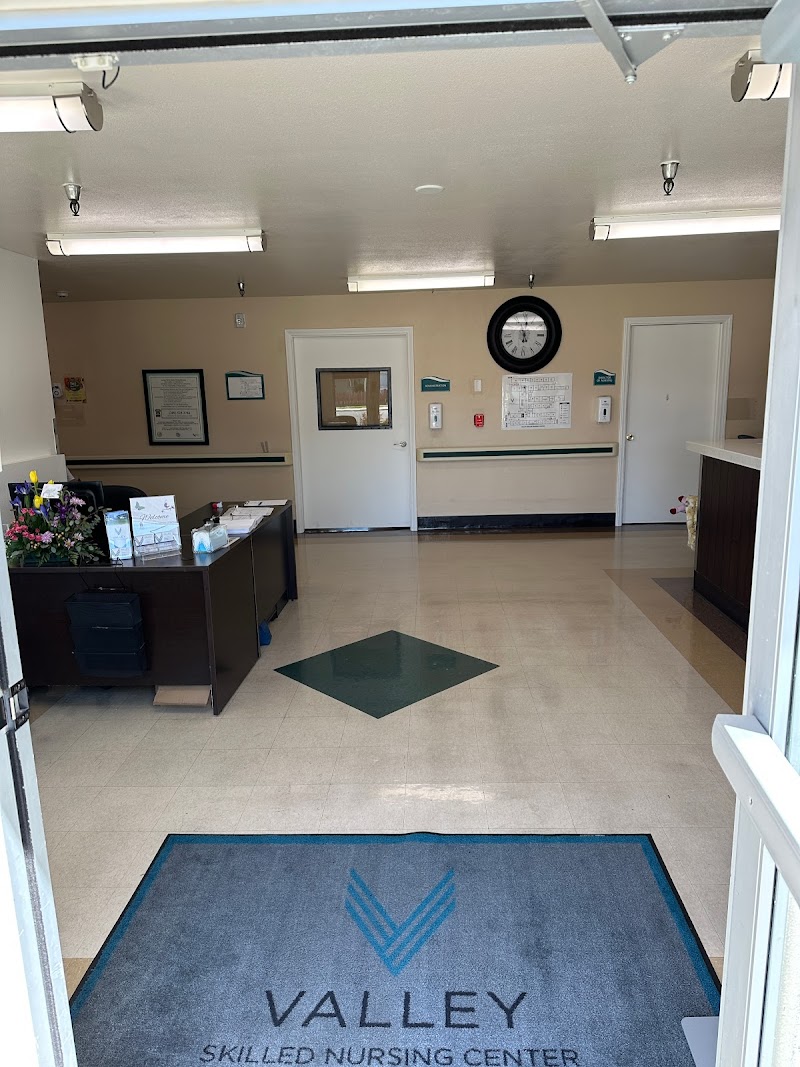
How is Valley Skilled Nursing Center Staffed?

CMS rates VALLEY SKILLED NURSING CENTER's staffing level at 2 out of 5 stars, which is below average compared to other nursing homes. Staff turnover is 28%, compared to the California average of 46%. This relatively stable workforce can support continuity of care. RN turnover specifically is 60%, which is notably high. RNs provide skilled clinical oversight, so turnover in this role can affect medical care quality.

What Have Inspectors Found at Valley Skilled Nursing Center?

State health inspectors documented 46 deficiencies at VALLEY SKILLED NURSING CENTER during 2022 to 2025. These included: 44 with potential for harm and 2 minor or isolated issues.
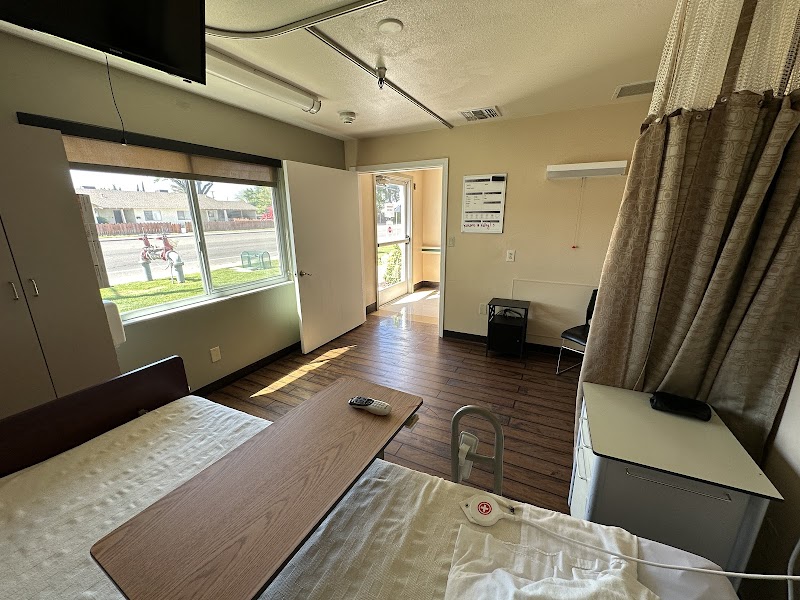
Who Owns and Operates Valley Skilled Nursing Center?

VALLEY SKILLED NURSING CENTER is owned by a for-profit company. For-profit facilities operate as businesses with obligations to shareholders or private owners. The facility is operated by KALESTA HEALTHCARE GROUP, a chain that manages multiple nursing homes. With 70 certified beds and approximately 52 residents (about 74% occupancy), it is a smaller facility located in MODESTO, California.
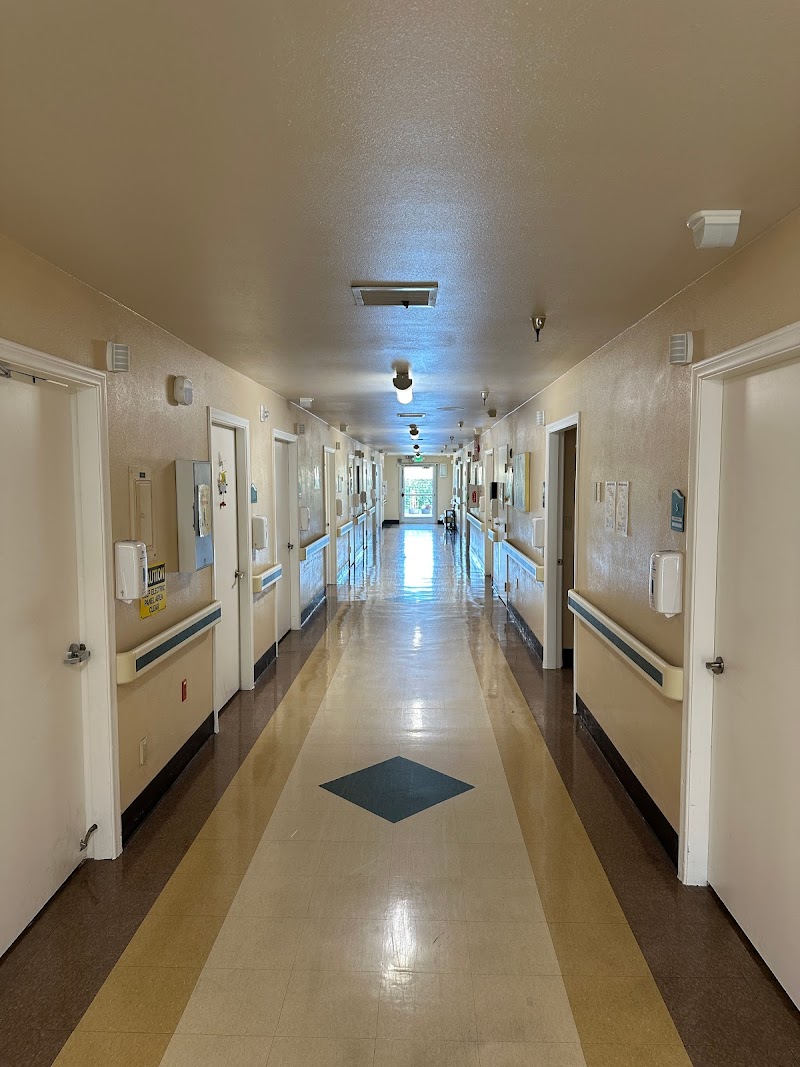
How Does Valley Skilled Nursing Center Compare to Other California Nursing Homes?

Compared to the 100 nursing homes in California, VALLEY SKILLED NURSING CENTER's overall rating (3 stars) is below the state average of 3.1, staff turnover (28%) is significantly lower than the state average of 46%, and health inspection rating (3 stars) is at the national benchmark.

What Should Families Ask When Visiting Valley Skilled Nursing Center?

Based on this facility's data, families visiting should ask: "Can you walk me through typical staffing levels on day, evening, and night shifts?" "Can I visit during a mealtime to observe dining assistance and food quality?" "How do you handle medical emergencies, and what is your hospital transfer rate?" "Can I speak with family members of current residents about their experience?" These questions are particularly relevant given the below-average staffing rating.

Is Valley Skilled Nursing Center Safe?

Based on CMS inspection data, VALLEY SKILLED NURSING CENTER has a clean safety record: no substantiated abuse findings (meaning no confirmed cases of resident harm), no Immediate Jeopardy citations (the most serious violation level indicating risk of serious injury or death), and is not on the Special Focus Facility watch list (a federal program monitoring the lowest-performing 1% of nursing homes). The facility has a 3-star overall rating and ranks #100 of 100 nursing homes in California. While no facility is perfect, families should still ask about staff-to-resident ratios and recent inspection results during their visit.

Do Nurses at Valley Skilled Nursing Center Stick Around?

Staff at VALLEY SKILLED NURSING CENTER tend to stick around. With a turnover rate of 28%, the facility is 18 percentage points below the California average of 46%. Low turnover is a positive sign. It means caregivers have time to learn each resident's needs, medications, and personal preferences. Consistent staff also notice subtle changes in a resident's condition more quickly.

Was Valley Skilled Nursing Center Ever Fined?

VALLEY SKILLED NURSING CENTER has no federal fines on record. CMS issues fines when nursing homes fail to meet care standards or don't correct problems found during inspections. The absence of fines suggests the facility has either maintained compliance or corrected any issues before penalties were assessed. This is a positive indicator, though families should still review recent inspection reports for the full picture.

Is Valley Skilled Nursing Center on Any Federal Watch List?

VALLEY SKILLED NURSING CENTER is not on any federal watch list. The most significant is the Special Focus Facility (SFF) program, which identifies the bottom 1% of nursing homes nationally based on persistent, serious quality problems. Not being on this list means the facility has avoided the pattern of deficiencies that triggers enhanced federal oversight. This is a positive indicator, though families should still review the facility's inspection history directly.