VINTAGE FAIRE NURSING & REHABILITATION CENTER
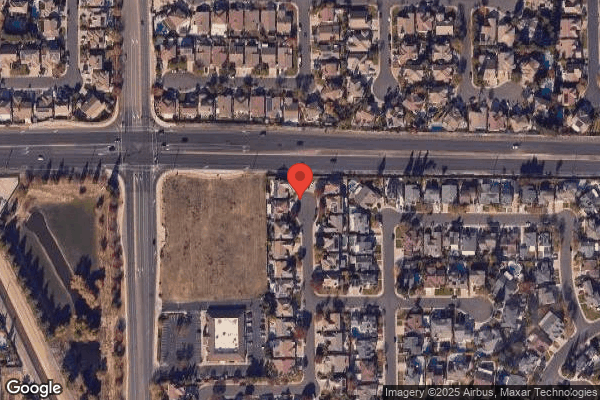
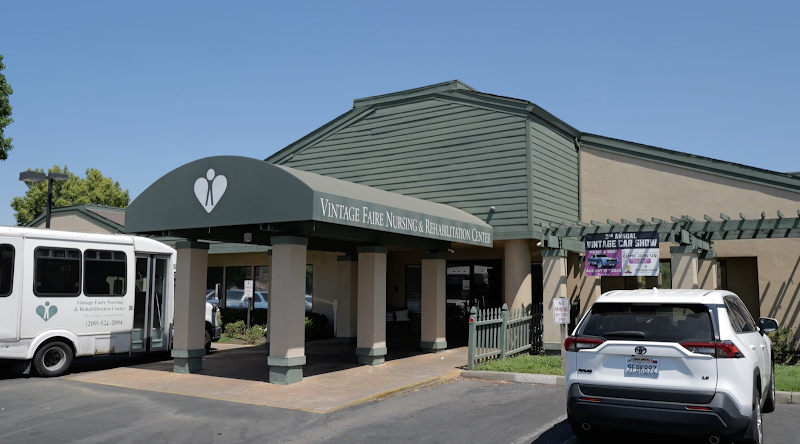
3620 B DALE RD., MODESTO, CA 95356 (209) 521-2094
For profit - Limited Liability company 99 Beds COVENANT CARE Data: November 2025
Trust Grade
60/100
#713 of 1155 in CA
Last Inspection: April 2025

Within standard 12-15 month inspection cycle. Federal law requires annual inspections.

Overview

Vintage Faire Nursing & Rehabilitation Center has a Trust Grade of C+, indicating it is slightly above average but not exceptional. It ranks #713 out of 1155 nursing homes in California, placing it in the bottom half of facilities statewide, and #12 out of 17 in Stanislaus County, suggesting limited competition for better options nearby. Unfortunately, the facility is experiencing a worsening trend, with issues increasing from 16 in 2024 to 24 in 2025. Staffing is average with a 39% turnover rate, which is close to the state average, and the facility has not incurred any fines, indicating compliance with regulations. However, there are significant concerns, including failures to keep care plans up to date for residents, as well as delays in providing necessary treatments, which could harm residents' health. Families should weigh these strengths and weaknesses carefully when considering this facility for their loved ones.

Trust Score
C+
60/100
In California
#713/1155
Bottom 39%
Safety Record
Low Risk
No red flags
Inspections
Getting Worse
16 → 24 violations
Staff Stability
○ Average
39% turnover. Near California's 48% average. Typical for the industry.
Penalties
✓ Good
No fines on record. Clean compliance history, better than most California facilities.
Skilled Nurses
⚠ Watch
Each resident gets only 21 minutes of Registered Nurse (RN) attention daily — below average for California. Fewer RN minutes means fewer trained eyes watching for problems.
Violations
⚠ Watch
66 deficiencies on record. Higher than average. Multiple issues found across inspections.
★★★☆☆
3.0
Overall Rating
★★★☆☆
3.0
Staff Levels
★★★★★
5.0
Care Quality
★★☆☆☆
2.0
Inspection Score
Stable
2024: 16 issues
2025: 24 issues

The Good

  • 5-Star Quality Measures · Strong clinical quality outcomes
  • Full Sprinkler Coverage · Fire safety systems throughout facility
  • No fines on record
  • Staff turnover below average (39%)

    9 points below California average of 48%

Facility shows strength in quality measures, fire safety.

The Bad

3-Star Overall Rating

Near California average (3.1)

Meets federal standards, typical of most facilities

Staff Turnover: 39%

Near California avg (46%)

Typical for the industry

Chain: COVENANT CARE

Part of a multi-facility chain

Ask about local staffing decisions and management

The Ugly 66 deficiencies on record

Apr 2025 22 deficiencies
CONCERN (D)

Potential for Harm - no one hurt, but risky conditions existed

Assessment Accuracy (Tag F0641)

Could have caused harm · This affected 1 resident

**NOTE- TERMS IN BRACKETS HAVE BEEN EDITED TO PROTECT CONFIDENTIALITY** Based on observation, interview and record review the facility failed to ensure assessments were completed accurately for 2 or 2...

Read full inspector narrative →
**NOTE- TERMS IN BRACKETS HAVE BEEN EDITED TO PROTECT CONFIDENTIALITY** Based on observation, interview and record review the facility failed to ensure assessments were completed accurately for 2 or 27 sampled residents (Resident 25 and Resident 28), when: 1. Resident 25's and Resident 28's weekly nursing evaluations were not completed accurately for the presence of pain and pressure ulcers (localized damage to the skin and underlying soft tissue, usually over a bony prominence, caused by prolonged or severe pressure); and 2. Resident 28's change of condition evaluation did not accurately reflect the location and/or description of the pressure ulcer located on the left thumb. These failures had the potential for Resident 25 to have inadequate pain relief and emotional distress and for Resident 28 to have delayed wound healing. Findings: 1a. Review of admission RECORD indicated Resident 25 was admitted to the facility with multiple diagnoses including hemiplegia and hemiparesis following cerebral infarction affecting left non-dominant side (the right side of the brain has been damaged, leading to one-sided weakness or paralysis on the left side of the body), and secondary malignant neoplasm of bone (also known as secondary bone cancer or bone metastasis, refers to cancer that has spread to the bone from a primary tumor located elsewhere in the body). During a concurrent interview and record review on 4/10/25 at 4:04 PM, Licensed Nurse (LN) 2 confirmed that Resident 25 was able to communicate and rate his pain level using a verbal 1-10 pain scale (a tool used to measure the intensity of pain, 0-3 mild pain, 4-6 moderate pain and 7/10 severe pain). LN 2 confirmed that Resident 25 had reported pain from 4/1-4/7/25 for the day, evening and night shifts as follows: 4/1/25 0.5.7 4/2/25 0.5.0 4/3/35 0.0.0 4/4/25 0.7.7 4/5/25 7.7.0 4/6/25 7.0.0 4/7/25 0.0.0 LN 2 confirmed that the weekly nurse's evaluation dated 4/8/25 indicated that Resident 25 reported no pain during the look back of period of 4/1/25-4/7/25. LN 2 confirmed Resident 25's weekly evaluation dated 4/8/25 was inaccurate based on the Resident's reported pain levels documented in the Medication Administration Record from 4/1/25 to 4/7/25. Review of an undated facility policy and procedure titled Pain Management indicated .The facility must ensure that pain management is provided to residents who require such services, consistent with professional standards of practice, the comprehensive person-centered care plan, and the residents' goals and preferences . Recognition: 1. In order to help a resident attain or maintain his/her highest practicable level of physical, mental and psychosocial well-being and to prevent or manage pain, the facility will: .b. Evaluate the resident for pain and the cause(s) upon admission, during ongoing scheduled assessments . 1b. Review of Resident 28's admission RECORD indicated he was admitted to the facility with multiple diagnosis including hemiplegia and hemiparesis following cerebral infarction affecting left non-dominant side, contracture (a condition of shortening and hardening of muscles, tendons, or other tissue, often leading to deformity and rigidity of joints) of muscle of the right and left lower legs and contracture of muscle of the left upper arm. During wound care observation with LN 5 on 4/10/25 at 10:18 am, Resident 28's left thumb was noted to have an unstageable pressure ulcer (a type of pressure ulcer where the wound bed is obscured by slough [a type of dead tissue that appears as yellow or white material in the wound bed] or eschar [a hardened, dry, dark dead tissue that forms a scab-like covering over deep wounds] making it impossible to determine the true depth of the ulcer) to the top of the left thumb that was covered in dry, black eschar. A record review of Resident 28's nurses progress note dated 3/29/2025 indicated, Patient has pressure ulcer on his left hand. It is located between the left thumb and index finger . A record review of Resident 28's weekly nursing assessment dated [DATE] and titled N Adv - Long Term Care Evaluation the skin section indicated: .1. skin warm & dry, skin color WNL [Within Normal Limit] and turgor [skin's elasticity or ability to return to its original shape after being pinched or pulled] is normal . Resident 28's weekly nursing assessment failed to indicate that Resident 28 had a pressure ulcer to the left thumb. During a concurrent interview and record review on 4/10/25 at 10:02 AM, LN 5 confirmed that Resident 28's weekly nursing assessment dated [DATE] was inaccurate since the pressure ulcer to the left thumb was not indicated. During an interview on 4/10/25 at 4:27 PM, the DON stated that her expectation was that the LN should accurately assess and document the overall picture of the resident on the weekly evaluation, including reported pain levels and skin condition. 2. A review of Resident 28's change of condition report titled SBAR-Physical Injury Report of Incident initiated on 3/29/25, indicated it was inaccurate and incomplete when entries for dates of 3/29/25, 3/20/25, 3/31/25, and 4/1/25 did not include a correct site or description of the pressure ulcer to the left thumb. Further review of the report indicated that the interdisciplinary team's (IDT - group of professionals from different disciplines or fields who work together on a project or task, leveraging their unique expertise to achieve a common goal) did not complete an assessment of Resident 28's newly developed pressure ulcer to the left thumb. During a concurrent interview and record review on 4/10/25 at 10:02 AM, LN 5 stated when a LN found a pressure ulcer, then they were supposed to assess the wound and complete the form titled SBAR-Physical Injury Report of Incident every shift for 72 hours. LN 5 confirmed that Resident 28's SBAR-Physical Injury Report of Incident was inaccurate and incomplete as it did not include accurate information on the pressure ulcer location or description and IDT assessment. LN 5 confirmed that the risk of evaluation not being completed accurately placed Resident 28 at risk for not being assessed correctly for needed interventions by the IDT. During a concurrent interview and record review on 4/10/25 at 10:28 AM, the Director of Nursing (DON) stated that LN and IDT are expected to complete all sections of a change of condition report accurately. The DON further stated that the risk of the LN and/or IDT not completing the evaluation accurately and, in its entirety, placed Resident 28 at risk for a delay in treatment and interventions being put into place to help resolve Resident 28's pressure ulcer. Review of an undated facility policy and procedure titled Resident Assessment (comprehensive assessment) indicated complete all areas on the assessment forms(s) . do not leave any blank areas on any forms . Review of an undated facility provided policy and procedure titled Conducting an Accurate Resident Assessment indicated . Accuracy of assessment means that the appropriate, qualified health professionals correctly document the resident's medical, functional, and psychosocial problems . 2. Qualified staff who are knowledgeable about the resident will conduct an accurate assessment addressing each resident's status, needs, strengths, and areas of decline. The assessment will be documented in the medical record.
CONCERN (D)

Potential for Harm - no one hurt, but risky conditions existed

Deficiency F0645 (Tag F0645)

Could have caused harm · This affected 1 resident

**NOTE- TERMS IN BRACKETS HAVE BEEN EDITED TO PROTECT CONFIDENTIALITY** Based on interview and record review, the facility failed to accurately complete a Pre-admission Screening and Resident Review (...

Read full inspector narrative →
**NOTE- TERMS IN BRACKETS HAVE BEEN EDITED TO PROTECT CONFIDENTIALITY** Based on interview and record review, the facility failed to accurately complete a Pre-admission Screening and Resident Review (PASRR, a required assessment for individuals with mental illness, intellectual or developmental disabilities, or related conditions, so that a determination of need, appropriate setting, and a set of recommendations for services to be included in the individual's plan of care is provided) for one of twenty-seven sampled residents (Resident 46) when, Resident 46's level I PASRR did not reflect his diagnosis of bipolar (a mental disorder characterized by periods of extreme mood swings, and causes shifts in mood, energy, activity levels, and concentration) and diagnosis of lack of expected normal psychological development in childhood (refers to a developmental delay in one or more areas such as a way a person thinks, interacts with and communicates with others and persists into adulthood). This failure resulted in a level II PASRR (a mental health screening for additional services) never being completed with the potential to affect the provision of appropriate treatment and specialized services for Resident 46 and increased his risk of having unmet behavioral health needs. Findings: Review of Resident 46's admission RECORD, indicated Resident 46 was originally admitted to the facility in summer of 2021, with a diagnosis including but not limited to, lack of expected normal physiological development in childhood, encounter for screening for other developmental delays, and bipolar disorder (a mental disorder characterized by periods of extreme mood swings, and causes shifts in mood, energy, activity levels, and concentration). Review of Resident 46' s [name redacted, Discharging Hospital A] Discharge Summary, dated 5/7/21, indicated, .This a [AGE] year-old male with a past medical history of developmental delay who was brought to the hospital by his brother due to declining health .Patient is unable to provide any useful history . During a concurrent interview and observation on 4/8/25, at 10:49 a.m., Resident 46 was observed in a private room with the door shut, sitting on the edge of his bed. Resident 46 stated his food was not served to him correctly on the food tray and as he was speaking it was observed Resident 46 was getting agitated. Resident 46's voice was raising, and Resident 46 stated the sugar packets were being placed in the dirt and served to him dirty and contaminated. During a phone interview on 4/9/25, at 9:18 a.m., Responsible Party (RP) 1 stated he was Resident 46's health care decision maker and family member and prior to coming to the facility four years ago, Resident 46 had lived at home but was not independent and had a caretaker. RP 1 stated Resident 46 was bipolar and had grown up as a child with a developmental delay. RP 1 stated a nurse had called him from the facility two days ago regarding Resident 46 refusal of taking his medications and was not allowing staff to address the swelling in his feet. RP 1 stated Resident 46 was refusing care and had become aggressive with staff in the last few months because the facility had changed his psychiatric medications. RP 1 stated in the last two years there had been issues regarding Resident 46's mental health and Resident 46 was exhibiting escalating behaviors. RP 1 explained he was concerned regarding Resident 46's refusal of medications and nursing care. RP 1 stated staff have told him they cannot control Resident 46. RP 1 stated Resident 46 was angry, easily agitated, and was verbally lashing out at people. RP 1 stated Resident 46 initially was able to tolerate a roommate but due to his behaviors he was not able to be housed with other residents. During an interview on 4/9/25, at 11:53 a.m., Certified Nursing Assistant (CNA) 4 stated Resident 46 used to have a roommate, but they had to isolate him because he was talking about the roommate having the devil in him. CNA 4 stated Resident 46 now stayed mostly in his room and did not want to participate in activities. During an interview on 4/9/25, at 12:39 p.m., LN 9 stated Resident 46 was verbally aggressive towards staff and was kind of scary. LN 9 stated he had a lot of odd behaviors. LN 9 stated Resident 46 had a psychiatrist see him one time via telehealth. LN 9 stated Resident 46 used to take all the medications but about a month ago he stopped taking his medications and he now only wanted to take the white pills. LN 9 stated he sometimes refused to take those too. LN 9 stated he will also refuse the water staff offer him because Resident 46 thought staff was poisoning him. During an interview on 4/9/25, at 3:00 p.m., LN 11 stated Resident 46 was sharing a room with another resident and but had to be moved to a private room. LN 11 stated Resident 46 refuses his medication and only wants to take specific medications. LN 11 stated Resident 46 does not want to talk to anyone and wants his room door shut. LN 11 stated he did not believe Resident 46 was currently receiving mental health therapies. LN 11 stated he though Resident 46 would benefit from mental health interventions including counseling. During an interview on 4/9/25, at 3:59 p.m., LN 8 stated Resident 46 refuses a lot of medications and will have outbursts where he gets upset and yells at people. LN 8 stated Resident 46 often thinks things are missing and get very upset about the missing items. Review of Resident 46's Preadmission Screening and Resident Review (PASRR) Level 1 Screening, dated 6/21/23, indicated under the section .Intellectual or Developmental Disability (ID /(DD) or Related Condition . the answer was marked Yes to the question. Under the question Specify type/Diagnosis was written .Unspecified lack of expected normal physiological development in childhood . To the question .The individual has a history of substantial disability prior to the age of 22 . the answer was marked Unknown. Upon review of the document, all questions pertaining to additional services received for Resident 46, including Regional Center (RC, agency contacted with the state and coordinated services and supports for individuals with developmental disabilities and their families) services, all questions were marked No, indicating the resident was never referred to the RC or had received RC services in the past. Under the question .Because of ID/DD the individual experiences functional limitations. Examples of functional limitations include .self-care, self-direction, learning/understanding/using language, capacity for living independently . the answer was marked No. A Review of Resident 46's Department of Developmental Services [DDS] Letter, dated 6/22/23, indicated, .In compliance .nursing homes .refer residents suspected of having intellectual disability or a condition similar to intellectual disability to DDS for Level II assessments .This document does not identify criteria for developmental disability in the named individual .A level II PASRR assessment will not be conducted by the regional center .Should you have any questions about this letter, please contact the DDS PASSR team [redacted contact information] . During a concurrent interview and record review on 4/10/25, at 10:22 a.m., with MDS Coordinator (MDS, Minimum Data Set represents a standardized assessment tool used in nursing homes and helps facilitate health care management for residents) 1 and MDS 2, MDS 2 stated she had been completing the PASSR's for the last six months while the Director of Nursing (DON) was on leave. MDS 2 stated PASSR's were completed every 18 months for all residents. MDS 2 stated Resident 46 had a lot of behavioral issues, will get paranoid, and yells at staff. During a record review of Resident 46's PASSR, dated 6/21/23, MDS 2 confirmed she had completed and submitted the document. MDS 2 stated she marked no for the questions regarding regional services. MDS 2 stated RP 1 could not provide the information, and she had not contacted the local regional center to verify if her answers were correct or to refer the Resident 46 for services. MDS 2 stated she should have answered unknown instead of no for Residents 46's PASSR for the questions regarding RC services received as she did not know the answer to the questions. MDS 2 confirmed the preadmission screening letter did not qualify Resident 46 for additional screening or services. MDS 2 acknowledged based on Resident 46's childhood developmental delay there was a high likelihood of him qualifying for additional services had the PASSR been filled out accurately. MDS 2 stated filling out the PASRR accurately ensures residents receive services they qualify for. The MDS 2 stated Resident 46 could benefit from additional therapies or services that help with socialization and activities of daily living. MDS 2 confirmed Resident 46's PASSR completed on 6/16/21 did not reflect his developmental delays and bipolar diagnosis. During a concurrent interview and record review on 4/10/25, at 11:14 a.m., the Social Services Director (SSD) stated she helped organize services and new referrals for the local RC. The SSD stated she takes direction from clinical staff of who needs to be referred to the RC and her understanding was those that qualify were intellectually delayed. The SSD explained the RC staff provide services to help meet the resident's various needs and those that qualify can attend offsite day programs. The SSD stated currently there was one resident in the facility who received RC services. The SSD stated she was familiar with Resident 46, and he was a long-term resident. The SSD stated Resident 46's RP 1 was not able to manage Resident 46's behaviors at home. The SSD explained Resident 46 was routine driven, liked to stay in his own room, and did not participate in activities. Through record review the SSD confirmed at the time of Resident 46's initial admission he was diagnosed with lack of expected normal psychological development in childhood. The SSD stated the regional center would be a referral that should have been presented to Resident 46 and the RP 1. The SSD stated the services the RC provided could be beneficial to Resident 46 as they provided specialized therapies, and the SSD acknowledged his behavior could have been better managed with more support. Review of facility Policy & Procedure (P&P) titled ADMISSION, TRANSFER, DISCHARGE, AND BED-HOLDS, dated 2016, indicated, .PURPOSE .To provide uniform guidelines for admission .in compliance with state and federal guidelines. To promote equal access to quality care and facilitate continuity with care transitions .The facility .requires individuals diagnosed with major mental illness .or developmental disabilities to be screened prior to admission and throughout stay in accordance with PASRR requirements . Review of facility P&P titled Behavioral Health Services, dated 2025, indicated, .It is the policy of this facility to ensure all residents receive necessary behavioral health services to assist them in reaching and maintaining their highest level of mental and psychosocial functioning and well-being .The facility will ensure that necessary behavioral health care services are person-centered and reflect the resident's goals for care, while maximizing the resident's dignity, autonomy[independence], privacy, socialization, independence, choice, and safety .Staff will .Complete PASARR screening .The Social Services Director shall serve as the facility's contact person for questions regarding behavioral services provided by the facility and outside sources such as physician, psychiatrist [doctor specializing in mental health], or neurologists [brain doctor] .
CONCERN (D)

Potential for Harm - no one hurt, but risky conditions existed

Comprehensive Care Plan (Tag F0656)

Could have caused harm · This affected 1 resident

Based on interview, and record review, the facility failed to ensure care plans were developed and implemented for 1 of 27 sampled residents (Resident 79) when, Resident 79's care plan for depression ...

Read full inspector narrative →
Based on interview, and record review, the facility failed to ensure care plans were developed and implemented for 1 of 27 sampled residents (Resident 79) when, Resident 79's care plan for depression was not developed and implemented. These failures had the potential to negatively affect Resident 79's psycho-social well-being. Findings: A review of Resident 79's clinical record titled, admission RECORD, indicated Resident 79 was admitted to the facility with diagnoses which did not include depression (a common mental health condition characterized by a persistent low mood, loss of interest in activities, and other symptoms that can significantly interfere with daily life). A review of Resident 79's clinical document titled, Order Details, (contains physician orders), dated 3/26/25, indicated, .Mirtazapine [an antidepressant medication given for depression] Give 1 tablet by mouth at bedtime for Depression . A review of Resident 79's clinical document titled, Care Plan Report, dated 4/8/25, indicated, .[Resident 79] has a mood problem r/t [related to] depression .Date Initiated: 04/08/2025 . Resident 79's depression care plan was initiated 13 days after starting mirtazapine. During a concurrent interview and record review with the Director of Nursing (DON), on 4/11/25, at 11:24 PM, the DON confirmed there was not a care plan in place addressing Resident 79's depression and there should have been. The DON explained the importance of Resident 79 having a care plan for depression was to ensure patient goals and interventions were being met. A review of the facility policy titled, Care Plan, Comprehensive, dated 12/17, indicated, .Care Plans are individualized through the identification of resident concerns, unique characteristics, strengths and individual needs .Resident progress is regularly evaluated, and approaches revised or updated as appropriate .Individualized Care Plans should be accessible to all care givers .
CONCERN (D)

Potential for Harm - no one hurt, but risky conditions existed

Deficiency F0679 (Tag F0679)

Could have caused harm · This affected 1 resident

Based on observation, interview, and record review, the facility failed to ensure one of twenty-seven sampled residents (Resident 64) received activities that met their interests and needs when Reside...

Read full inspector narrative →
Based on observation, interview, and record review, the facility failed to ensure one of twenty-seven sampled residents (Resident 64) received activities that met their interests and needs when Resident 64 did not attend group activities and in room activities had not been provided since 9/9/24. This failure had the potential to affect Resident 64's psychosocial well-being. Findings: During an interview with Resident 64 on 4/8/25, at 10:31 AM, Resident 64 stated, Activities don't bring me anything to do. The last time was a packet with word search puzzles last year. I prefer activities in my room. During a review of Resident 64's activities care plan dated 8/16/23, the care plan indicates Resident 64 prefers to spend most of her free time resting in the comfort of her room. The care plan also indicated Resident 64 would be empowered to make independent leisure choices daily and would be offered room visit check-ins 4 times weekly. During a record review of Resident 64's, Activities Progress Notes dated 9/9/2, at 1:37 PM, the progress note indicated, .Activity packet received with crayons and pencils for 1:1 . During a concurrent interview and record review on 4/9/25, at 11:43 AM, with the Activities Director (AD), Resident 64's activity documentation was reviewed. The AD confirmed the last one-to-one activity room visit was on 9/9/24. The AD stated, if we do not provide activities that are person centered residents could potentially experience psychosocial decline, depression, and isolation. A review of an undated facility policy and procedure (P&P) titled, ACTIVITY PROGRAM-GENERAL, indicated, .the activity program shall consist of individual .activities which are designed to meet the needs and interests of each resident .activities shall be available on a daily basis .
CONCERN (D)

Potential for Harm - no one hurt, but risky conditions existed

Quality of Care (Tag F0684)

Could have caused harm · This affected 1 resident

Based on interview and record review, the facility failed to provide appropriate blood glucose (BG; sugar in the blood) monitoring for a diabetic (blood sugar disease) condition for one of twenty-seve...

Read full inspector narrative →
Based on interview and record review, the facility failed to provide appropriate blood glucose (BG; sugar in the blood) monitoring for a diabetic (blood sugar disease) condition for one of twenty-seven sampled residents (Resident 77) when, Resident 77's blood sugar check order did not contain monitoring parameters (when to notify the provider) related to the blood sugar readings and Resident 77's high blood sugar readings were not reported to the Medical Doctor (MD). This failure could have contributed to unsafe blood glucose monitoring without proper notification of the medical doctor and could have impacted the Resident 77 well-being, including the wound healing process. Findings: Review of Resident 77's admission RECORD, indicated Resident 77 was admitted to the facility with a diagnosis of diabetes mellitus (DM) and wound care among other diagnosis. During a concurrent observation and interview on 4/8/25, at 1:05 p.m., Resident 77 was observed eating her lunch and stated she was diabetic and was not receiving a diabetic meal. Resident 77 stated she did not have any insulin coverage for her high blood sugars. Resident 77 stated she was concerned because about a week ago she had a blood sugar level of 300 (normal blood sugar level is between 80mg/dL and 120mg/dL; milligram per deciliter is a unit of measure) and never received insulin (medication to treat blood sugar disease). Resident 77 explained she asked the licensed nurse (LN) for insulin to bring the number down the same as she had received it at home and in the hospital, as she was not getting any insulin in the facility. Resident 77 stated she was concerned because having high blood sugar was not good for her body and explained she had multiple wounds, and they had been difficult to heal. Resident 77 stated prior to coming to the facility she had lived independently and had been giving herself insulin at home. Review of Resident 77's facility communication document, with the MD, dated 2/17/25, the written fax (a method of transmitting by scanning and transmitting over telephone lines) document indicated patient and family were requesting to do lab tests since the patient used to take insulin at home. Further review indicated the MD ordered to check BG for one week. During a concurrent interview and record review on 4/9/25, at 12:39 PM, LN 9 stated Resident 77's family member had asked why she was not on insulin. LN 9 stated most of her diabetic residents were on some sort of diabetic medication or insulin. LN 9 stated Resident 77's BG had been spiking into the high number in the afternoons. Through clinical record review, LN 9 confirmed Resident 77 had orders for BG checks four times a day, but there were no diabetic medications ordered. LN 9 confirmed there were no nursing notes or interventions performed regarding Resident 77's high BG readings. Through record review of Resident 77's progress notes, LN 9 confirmed there was no communication or notification to the MD for Resident 77's high BG's. LN 9 stated the nurse should have notified the MD if the BG was high with no treatment orders. LN 9 confirmed on 4/6/25, at 8:39 p.m. Resident 77 had a BG of 390 mg/dL and there was no notification made to the MD. LN 9 confirmed on 4/4/25, at 4:22 p.m., Resident 77 had a BG of 314 mg/dL and there were no notification made to the MD. LN 9 stated if a residents BG was above 200 md/dL she would have notified the MD. LN 9 stated the risk for a resident who had a high BG was hyperglycemic coma (when blood sugar high enough to cause severe symptoms such as mental status change) and the resident could become lethargic (drowsiness), and/or confused. LN 9 stated the high BG could slow Resident 77's wound healing. Review of Resident 77's Medication Administration Record [record of the doctors order and nursing documentations], dated 4/2025, the record indicated, .FSBG [Fasting (before eating) blood glucose] AC/HS before meals and at bedtime for DM .order date 3/13/24 . Review of the document indicated there were no parameters listed for blood sugar monitoring, including when to notify the doctor. Further review of the document indicated the following BG readings for Resident 77 were as follows: 4/4: 139, 183, 314, 291 4/5: 87, 194, 190, 215 4/6: 175,180, 185, 390 4/7: 113, 138, 290, 215 4/8: 101, 159,167, 200 4/9: 107,133, 148, 153 4/10: 114, 135, 230, 200 The MAR record did not indicate any nursing interventions, documentation, or physician notification for BG changes outside of the standard range. During a phone interview on 4/10/25, at 7:38 p.m., LN 13 stated Resident 77 had multiple wounds and was receiving antibiotics (medicines that fight bacterial infections). LN 13 stated she recalled taking Resident 77's FSBG's and having high BG readings. LN 13 stated she reached out to another nurse at the facility regarding Resident 77's high blood sugars of 390 mg/dL but the other nurse told her she did not think it was necessary to call the doctor because Resident 77's BG was not normally high. LN 13 stated she did not notify Resident 77's doctor of the high blood sugar. LN 13 stated the risk factor for residents having high blood sugars that were not managed were medical complications from high blood sugar and delayed wound healing. During an interview on 4/10/25, at 2:05 p.m., the MD stated Resident 77 was on antibiotics for a wound infection and was placed on orders for FSBG (finger stick blood glucose, same as using blood from finger to measure blood sugar) just in case she had high blood sugars. The MD stated he was not aware of Resident 77's high FSBG and the nurses should have informed him of high readings. The MD stated he should have put in place orders including parameters for when to notify him and an insulin order for treatment of high blood sugars. The MD stated he was not aware Resident 77 was previously on insulin or diabetic medication at home or in hospital. During a phone interview on 4/11/25, at 12:22 p.m., the wound care Medical Doctor (MD) 2 stated Resident 77 was admitted into the facility for a severe wound infection. The MD 2 stated Resident 77's DM diagnosis could delay the wound healing process. The MD 2 stated Resident 77's wounds were rarely seen in non-diabetics. During a concurrent interview and record review on 4/11/25, at 1:29 p.m., with the Director of Nursing (DON) and the Director of Nursing Consultant (DONC), the DON stated for Resident 77 the nurses should have communicated high blood sugar trends to the MD. The DON stated BG measurements should have had monitoring parameters for resident safety as the blood sugar was taken four times a day. The DON stated with a diabetes diagnosis the resident was at risk for delayed wound healing. Review of facility Policy & Procedure (P&P) titled Blood Sugar Monitoring, dated 2006, indicated, .check physician's order for blood sugar testing frequency .If blood glucose level is above or below normal range, document the time the physician was notified . Review of facility P&P titled Change of Condition, dated 2016, indicated, .Basic Responsibilities Licensed Nurse .to appropriately assess, document and communicate changes of condition including diagnostic results to the primary care provider. To provide treatment and services to address changes in accordance with resident needs .Document assessment findings and communications as soon as practical .Notify the physician and responsible party for assessment findings .Notify the Patient and/or responsible party of current status and subsequent actions/orders . Review of facility P & P titled Resident Rights, dated 10/2022, indicated, .The resident has the right to be informed of, participate in, his or her treatment, including: The right to be fully informed .of his or her total health status, including but not limited to .The right to participate in establishing the expected goals and outcomes of care, the type, amount, frequency, duration of care, and other factors related to the effectiveness of the plan of care . Review of undated facility provided job description titled DUTIES OF MEDICAL DIRECTOR, indicated, .Coordination of medical care in the Facility to ensure that adequate and appropriate medical services are provided to the patients in the Facility .participating in the development of a system providing a medical care plan for each patient, which covers medications, nursing care . Review of facility provided job description titled LVN/LPN [Licensed Vocational Nurse/Licensed Practical Nurse], dated 11/13/17, indicated, .Provides accurate assessment, over-sight, and monitoring of Patients for quality medical management and early detection of changes in condition .Recognizes AND appropriately responds to emergent [new] and significant change in condition; completes documentation as required .
CONCERN (D)

Potential for Harm - no one hurt, but risky conditions existed

Pressure Ulcer Prevention (Tag F0686)

Could have caused harm · This affected 1 resident

**NOTE- TERMS IN BRACKETS HAVE BEEN EDITED TO PROTECT CONFIDENTIALITY** Based on observation, interview, and record review the facility failed to ensure that one of twenty-seven sampled residents (Res...

Read full inspector narrative →
**NOTE- TERMS IN BRACKETS HAVE BEEN EDITED TO PROTECT CONFIDENTIALITY** Based on observation, interview, and record review the facility failed to ensure that one of twenty-seven sampled residents (Resident 28) received the necessary treatment and services consistent with professional standard of practices to prevent a pressure ulcer (PU - localized damage to the skin and underlying soft tissue, usually over a bony prominence, caused by prolonged or severe pressure) from developing and to promote healing when: 1. Interventions were not developed to prevent a PU from occurring to Resident 28's left contracted (a condition of shortening and hardening of muscles, tendons, or other tissue, often leading to deformity and rigidity of joints) hand; and 2. A wound evaluation was not completed when a PU was identified to Resident 28's left hand; and 3. Treatment interventions such as splinting (a medical technique used to immobilize a limb or body part, typically to support healing from injuries like fracture, sprains or dislocations) and range of motion exercises (designed to move a joint through its full available movement, helping to maintain or improve flexibility and reduce stiffness) were not included in Resident 28's PU care plan (specific actions nurses take to address a patient's health needs and work towards achieving desired outcomes) interventions, consistent with professional standards, to promote healing and/or minimizing the risk of the development of a new PU from occurring to Resident 28's left hand. These failures resulted in the development of a PU to Resident 28's left thumb with the potential to prolong healing of the PU. Findings: Review of Resident 28's admission RECORD indicated Resident 28 admitted to the facility with a diagnosis of HEMIPLEGIA AND HEMIPARESIS FOLLOWING CEREBRAL INFARCTION AFFECTING LEFT NON-DOMINATE SIDE (the right side of the brain has been damaged, leading to one-sided weakness or paralysis on the left side of the body) , CONTRACTURE (a condition of shortening and hardening of muscles, tendons, or other tissue, often leading to deformity and rigidity of joints) OF MUSCLE, RIGHT LOWER LEG, CONTRACTURE OF MUSCLE LEFT LOWER LEG, AND CONTRACTURE OF MUSCLE, LEFT UPPER ARM 1. Review of Resident 28's nurse progress dated 3/29/25 noted that .Patient has a pressure ulcer (localized damage to the skin and underlying soft tissue, usually over a bony prominence, caused by prolonged or severe pressure) on his left hand. It is located between the left thumb and index finger. Appears to be moisture associated due to his contraction (a condition of shortening and hardening of muscles, tendons, or other tissue, often leading to deformity and rigidity of joints). Pt [patient] unable to give statement. No complaints of pain at this time. Nurse cleansed with NS (normal saline is a mixture of sodium chloride and water. It has several uses in medicine including cleaning wounds), pat dry with gauze and dry gauze placed between fingers to reduce further injury/moisture . There is no mention of an intervention to treat the contraction of the left hand. A review of Resident 28's nurses progress note dated 4/3/25, indicated that Hospice Nurse (HN) 2 from the hospice agency was in house and was made aware that Resident 28 had developed a pressure ulcer to his left thumb and that Resident 28's left hand was contracted. LN 5 wrote that she received an order from the hospice physician to apply silver alginate and cover with gauze, and that LN 5 sent a message to HN 1regarding the new pressure ulcer and new treatment orders. There is no mention of a discussion regarding the left-hand contraction. During wound care observation with LN 5 on 4/10/25 at 10:18 am, Resident 28's left thumb was noted to have an unstageable wound to the top of the left thumb that was covered in dry, black eschar. A review of the care plans (a detailed document outlining a person's healthcare needs, goals, and the specific care and support they will receive, including how, when and by whom) for Resident 28 found no care plan for at risk for skin breakdown or pressure ulcer development based on Braden Scale evaluation and diagnosis risk factors. On 3/29/25 a LN initiated a care plan for Acute Physical injury (specify) Pressure Ulcer location: left thumb and index finger. On 4/9/25 LN 5 cancelled the care plan that was initiated on 3/29/25 and activated a care plan titled Actual pressure ulcer: unstageable to left thumb. Intervention included perform hand hygiene to contracted left hand an apply dry cloth every shift. This information was not on the CNA (Certified Nursing Assistant) [NAME] (a concise, centralized, and easily accessible record of essential resident information, used by staff to quickly summarize resident care and guide daily actions) 2. During a concurrent interview and record review on 4/10/25 at 10:02 AM, LN 5 confirmed that the Skin & Wound Evaluation was not completed on 3/29/25 by the facility nurse that first identified the wound, nor did LN 5 complete it on 4/3/25. LN 5 stated that the facility procedure was for this evaluation to be completed by the LN that first assesses the wound and then it is to be completed weekly by the treatment nurse until the wound has resolved. LN 5 confirmed that this procedure had not been followed and that not completing this evaluation meant the interdisciplinary team (IDT - group of professionals from different disciplines or fields who work together on a project or task, leveraging their unique expertise to achieve a common goal) would be at risk for not being aware of a new wound as this evaluation then crosses over to the wound report that the DON (Director of Nursing) runs for their IDT meeting. During an interview with the DON on 4/10/25 at 10:28 AM the DON confirmed that there was no Skin & Wound Evaluation completed for the pressure ulcer on Resident 28's left thumb on 3/29/25 or on 4/3/25. The DON stated that if that evaluation was not completed when she runs the skin and wound report, the wound would not be listed. The DON also stated that they were not doing IDT meetings on residents with wounds unless that resident also had weight loss. The DON stated that they had not met for an IDT review of Resident 28's wound. The DON stated that the expectation going forward was that all pressure ulcers would have the Skin & Wound Evaluation completed by a LN when the wound was first noted and then weekly until resolved and that the IDT would start reviewing all residents with pressure ulcers weekly. The DON stated that not having the IDT review residents with pressure ulcers places the resident at risk for not having a full assessment of medical and nutritional needs that could impact wound healing. Review of facility provided undated policy and procedure titled Documentation of Wound Treatments .1. Wound assessments are documented upon admission, weekly, and as needed if the resident or wound condition deteriorates. 3. A review of Resident 28's Braden Scale (a tool used in healthcare to assess a patient's risk for developing pressure injuries) evaluations completed on the following dates with adjacent scoring and risk category were noted as follows: (scoring breakdown: 9 or less very high risk, 10-12 High Risk, 13-14 Moderate Risk, 15-18 Mild Risk, and 19-23 No risk) 9/11/24 - 11 - Category: High Risk 9/18/24 - 13 - Category: Moderate Risk 11/26/24 - 12- Category: High Risk 2/18/25 - 13 - Category: Moderate Risk During a record review for Resident 28's Skin and Wound Evaluation dated 4/10/25 noted as an intervention for care to offload wound, reposition, rolled wash cloth to hand. This information was not on Resident 28's care plan for the pressure ulcer of the left hand or for the care plan for the left-hand contracture or the [NAME]. LN 5 reviewed the care plan and confirmed there was no at risk care plan for skin breakdown and the care plan for the wound to the left thumb did not have intervention for pressure relief. LN 5 confirmed that the active care plan for the pressure ulcer to the left thumb did not include the interventions that were listed on the Skin & Wound evaluation that she completed on 4/10/25. LN 5 confirmed that there was no documentation in Resident 28's electronic health record that the left-hand contracture had been discussed with the hospice nurse and this put Resident 28 at risk for further contracture development and continued skin breakdown or delay in wound healing. During a concurrent interview and record review on 4/9/25 at 12:50 PM, MDS (Minimum Data Set - a nurse who focuses on collecting and assessing patient data for Medicare and Medicaid-certified nursing homes) 1 confirmed that the care plan for the pressure ulcer of the left thumb and index finger did not include care plan interventions to maintain clean skin or prevent further breakdown. MDS 1 confirmed that the care plan for the left-hand contracture did not contain interventions for range of motion exercises or splinting of the hand. MDS 1 stated that the risk for a resident's care plan not reflecting personalized interventions for skin care and range of motion would impact the Certified Nursing Assistant (CNAs) ability to provide personalized care to the residents they were assigned too and could impact the resident's overall welfare. During a concurrent observation and interview on 4/9/25 at 2:40 PM, the DON and the ADON (Assistant Director of Nursing), checked Resident 28's skin. The DON and ADON assessed Resident 28's left hand and noted that the palm was dry and clean and there was a dry, clean gauze pad placed in the palm of the hand. The DON attempted passive range of motion (PROM - involves moving a joint through its full range of motion by an external force, like a therapist or another person, without the individual's active muscle contraction) to the hand. The DON stated that Resident 28's left hand contracture was not a fixed (a permanent shortening or tightening of muscles, tendons, ligaments, or skin, resulting in a limited range of motion at a joint) contracture but she did note some pain with the PROM attempt. The DON further stated that use of a carrot (a device used to position severely contracted hands) would be better used to help prevent the contracture from getting worse than the pad of dry gauze that was in place. During a concurrent interview and record review on 4/10/25 at 8:48 AM, HN 1 stated that she had not personally looked at Resident 28's skin during her last visit but used prior records for review and the verbal report received by the facility nurses. HN 1stated that the Hospice IDT (a group of professionals from different disciplines or fields who work together on a project or task, leveraging their unique expertise to achieve a common goal) note completed by the hospice staff on 4/2/25 should have reflected interventions for the prevention of skin breakdown and contracture prevention or management. HN1 confirmed that the Hospice IDT note dated 4/2/25 did not contain any such interventions.
CONCERN (D)

Potential for Harm - no one hurt, but risky conditions existed

Accident Prevention (Tag F0689)

Could have caused harm · This affected 1 resident

Based on observation, interview, and record review, the facility failed to ensure a census of 89 residents were safe from accidental hazards when: 1. Resident 63 kept cigarettes and a lighter in her ...

Read full inspector narrative →
Based on observation, interview, and record review, the facility failed to ensure a census of 89 residents were safe from accidental hazards when: 1. Resident 63 kept cigarettes and a lighter in her purse, unsecured in her room, and received oxygen (O2) via nasal canula (NC- tubing that delivers oxygen into resident's nose); 2. Smoking paraphernalia (items used to smoke which may include cigarette wrapper or cigarette paper, and tobacco) items were observed to be unsecured and on top of Resident 65's bed and Resident 65 did not have a lock box in the room; and These failures exposed residents, staff, and visitors to be at risk of burns, fire, and/or explosion while in the facility. Findings: 1. Review of Resident 63's Smoking Safety Screen, dated 3/13/25, indicated, Resident 63, .Has expressed continued desire to smoke despite explained health and safety risks .Expresses an understanding that smoking is not allowed near oxygen delivery systems (devices used to provide oxygen to a patient who is unable to obtain enough oxygen from their own breathing) even if the delivery system is turned off and complies with this practice .Had a signed Smoking Rules & Safety Agreement .Smoking Care Plan .Focus: High risk for accidental injury .Goal: Resident will exhibit safe smoking practices .Intervention: Observe/report unsafe smoking practices . During a concurrent observation and interview on 4/8/25 at 11:45 a.m. with Resident 63 in the center courtyard, Resident 63 was sitting on her walker (a device designed to assist individuals with support and stability while walking) seat and was smoking a cigarette. Resident 63 stated, she was a smoker, kept cigarettes in her purse, and kept her purse in her room. Resident 63 stated she had the right to smoke when she wanted. During a concurrent observation and interview on 4/10/25 at 8:50 a.m. with Resident 63 and the Administrator (ADM), Resident 63 was on her bed and wore a NC which was connected to an oxygen delivery system. The ADM asked Resident 63 where her cigarettes and lighter were located. Resident 63 stated her cigarettes and lighter were in her room inside her purse, she did not have a lock box, and did not want one. The ADM stated the risk to Resident 63 and her roommate was getting hurt caused by explosion and/or fire, and the building was at risk (for fire) too. A review of Resident 63's Release and Disclosure of Smoking Risk, signed 5/16/24, indicated, .By initialing and signing below .Consent and agree to abide by facility smoking policy .I understand I must relinquish my cigarettes and ignition devices to the facility .I understand that I must keep these items secured in a locked container . During a review of Resident 63's Care Plan Report (Care Plan), initiated on 12/30/23, indicated, .Focus .Resident has hx [history] of noncompliance with smoking policy and smoking contract e/b [evidenced by] .Smoking in room and has denial of risk factors .Resident will verbalize understanding of consequences of non-compliance . 2. During a concurrent observation and interview on 4/10/25 at 8:20 a.m. in Resident 65's room, with Certified Nursing Assistant (CNA) 2, there was unsecured smoking paraphernalia on top of Resident 65's bed in a food plate cover and included loose tobacco, an unfilled cigarette wrapper, and a plastic bag of loose tobacco. Resident 65 was not in the room and the items were left unattended. CNA 2 stated Resident 65 was not in the facility, and she did not know what the items were on the bed and thought it might be nicotine or tobacco. During an interview on 4/10/25 at 8:24 a.m. with Licensed Nurse (LN) 4, LN 4 confirmed the items on Resident 65's bed were cigarettes and Resident 65 rolled his own (cigarettes). During a concurrent observation and interview on 4/10/25 at 8:29 a.m. with the Activity Director (AD), the AD identified the following items on Resident 65's bed: a bag of loose tobacco, a white circular item that was an unfilled cigarette wrapper, and loose tobacco poured onto a plate cover. The AD stated the items should not be in Resident 65's room and should be at the nurse's station or in the locked medication cart (portable cart which contains medication). The AD verified that normally cigarettes were labeled and kept in the medication cart for all residents. The AD removed the items on Resident 65's bed to label and placed the items in a locked medication cart. The AD stated Resident 65 was not in the building. During an interview on 4/10/25 at 8:37 a.m., the ADM stated Resident 65 had cigarette making material and a lighter in his room on 4/9/25 and Resident 65 was not in the building. The ADM stated some residents were allowed to have cigarettes with them (no lighters) or locked in the medication cart. The ADM further stated residents were also encouraged to keep cigarettes at a nurse's station. The ADM stated the residents could also store cigarettes in drawers in their room. The ADM confirmed the facility bought locking containers or lock boxes to be kept in residents' rooms and Resident 65 did not have one. A review of the facility's policy titled, Appendix D: Smoking Policy, dated 1/23, indicated, .Residents who smoke will be assessed by Interdisciplinary Team (IDT [a group of healthcare professionals]) .and annually .to determine safe smoking ability and provide individualized intervention to address .Non-compliance or behavioral issues .Those assessed and deemed independent may be provided with a way to secure their own smoking materials (locked drawer or container) .Failure to abide by smoking policy (or care plan) may result in revised safety measures, behavior contracts, and considering alternate placement if non-compliance compromised the safety of resident and/or others .
CONCERN (D)

Potential for Harm - no one hurt, but risky conditions existed

Deficiency F0692 (Tag F0692)

Could have caused harm · This affected 1 resident

**NOTE- TERMS IN BRACKETS HAVE BEEN EDITED TO PROTECT CONFIDENTIALITY** 2. a. A review of Resident 79's clinical record titled, admission RECORD, indicated Resident 79 was admitted to the facility wit...

Read full inspector narrative →
**NOTE- TERMS IN BRACKETS HAVE BEEN EDITED TO PROTECT CONFIDENTIALITY** 2. a. A review of Resident 79's clinical record titled, admission RECORD, indicated Resident 79 was admitted to the facility with diagnoses which included a need for assistance with personal care and a primary diagnosis of hypo-osmolality (a low concentration of solutes (like sodium) in a fluid) and hyponatremia (a condition where there's a low concentration of sodium in the blood). A review of Resident 79's clinical record titled, Weights and Vitals Summary, dated 2/6/25 through 3/27/25, indicated, on the following dates, Resident 79's weight: 2/6/25 129.3 lbs. (pounds a unit of measure) 2/16/25 121 lbs. 3/1/25 118 lbs. 3/3/25 119 lbs. 3/9/25 118 lbs. noted in the record as an 8.7% weight loss since admit. 3/16/25 116 lbs. noted in the record as a 10.3% weight loss since admit. 3/27/25 115 lbs. noted in the record as an 11.1% weight loss since admit. A review of Resident 79's clinical document titled, .Progress Notes . did not indicate any refusals for weights from date of admission on [DATE] until 2/6/25, when the facility weighed Resident 79 for the first time. Resident 79 was not weighed weekly, as indicated above. Progress notes do not indicate any attempts to weigh Resident 79, and/or refusals for weights, from 2/6/25 through 2/16/25, 2/16/25 through 3/1/25, and 3/16/25 through 3/27/25. During a concurrent interview and record review of Resident 79's clinical record, with the Assistant Director of Nursing (ADON), on 4/10/25, at 12:24 PM, the ADON stated Resident 79's initial weight should have been done on admission. The ADON explained, after reviewing Resident's 79's weights, Resident 79's weights should have been done weekly due to her weight loss and they were not. The ADON further explained the registered dietitian should have noted Resident 79's weight loss and put Resident 79 on a weekly weight schedule, and did not. b. A review of Resident 79's clinical record titled, Medication Administration Record, (MAR contains physician orders with dates and times of administration) dated 2/1/25 through 2/28/25, indicated, .[brand name dietary supplement containing vitamins, minerals, protein, and fats] one time a day in the afternoon for variable PO [my mouth] intake. Encourage >75% intake .Order Date .02/07/2025 . To be administered at 4:30 PM. The supplement was not administered on 2/8/25 and 2/9/25. The supplement was signed off as administered 2/10/25 through 2/28/25 and did not indicate how much of the supplement Resident 79 consumed. A review of Resident 79's MAR, dated 3/1/25 through 3/31/25, indicated, [brand name dietary supplement] one time a day in the afternoon for variable PO intake. Encourage >75% intake .Order Date .02/07/2025 . To be administered at 4:30 PM. The supplement was refused on 3/4/25, 3/5/25, and administered the rest of the month and did not indicate how much of the supplement Resident 79 consumed. A review of Resident 79's MAR, dated 4/1/25 through 4/30/25, indicated, [brand name dietary supplement] one time a day in the afternoon for variable PO intake. Encourage >75% intake .Order Date .02/07/2025 . To be administered at 4:30 PM. Resident 79 refused the supplement on 4/3/25, and was administered the supplement through 4/11/25. The amount of the supplement consumed was not indicated. A review of Resident 79's clinical record titled, MINI NUTRITIONAL ASSESSMENT, dated 2/5/25, and Nutritional Risk Assessment / Full, dated 2/7/25, were the only nutritional assessments completed from 2/3/25, date of admission, through 4/11/25. During a concurrent interview and record review of Resident 79's clinical record, with the Assistant Director of Nursing (ADON), on 4/10/25, at 12:24 PM, the ADON confirmed Resident 79's clinical document titled, MINI NUTRITIONAL ASSESSMENT, dated, 2/5/25, did not have accurate information. The ADON explained Resident 79's weight was not indicated on the assessment to determine Resident 79's Body Mass Index (BMI - is a measure that calculates a person's weight relative to their height), and the clinical document indicated a BMI of 23 or greater. During an interview with the Registered Dietitian (RD), on 4/11/25, at 3:14 PM, the RD stated residents are weighed weekly for the first four weeks of admission. The RD further stated he recently started at the facility. The RD explained to determine a resident's weight loss, a weekly weight report is done. The RD further explained the report indicates if anyone was triggered for weight loss and how much they had lost. The RD explained his process was to run the weekly weight report. The RD stated Resident 79's weight loss had gone past the threshold for weight loss and would have been caught on the report. The RD further explained he would do a weight review to see what her intake was and what her medications were. The RD stated if Resident 79 was refusing meals he would expect to be notified. The RD explained the importance of being notified was to figure out if it was Resident 79's preference or if something else was going on. The RD stated he would have initiated weekly weights. The RD further stated when a resident is on [brand name supplement] he would want to know the milliliters consumed to determine how much nutrition she received from the [brand name supplement]. The RD stated the importance of know how many milliliters are consumed would show if she was consuming the [brand name supplement], stating just putting a check mark that the [brand name supplement] was given to Resident 79 does not give him any valuable information. The RD stated he would think a weight committee should have been triggered for Resident 79. A review of the facility policy titled, .Nutrition Assessment , dated 2/2009, indicated, .Each resident receives a comprehensive nutritional assessment upon admission .and whenever a resident is identified as having a significant change in status .At a minimum, a new nutritional assessment is completed .In conjunction with Significant Change in Status .Nutritional Screening and Assessment includes .Height and weight, including recent weight changes .Food and fluid intake in measurable terms .Calculation of energy protein and fluid needs for resident .Appropriateness of and rationale for diet . A review of the facility policy titled, .WEIGHT MANAGEMENT STANDARD, effective 10/2011, indicated, .Licensed nurse to review electronic weight reports and schedule re-weights within 24 hours for significant weight variance .A 5% weight variance (loss/gain) in one month, 7.5% in three months, or 10% in six months .Weekly weight monitoring may be appropriate for .New admissions for one month .Significant unplanned weight loss .Licensed nurse, IDT [interdisciplinary team consisting of nurses, registered dietitian (RD), physician etc.,] and/or RD complete an assessment which may include a review of meal intake records, medication changes, physical assessment for declines, special equipment needs .pain, psych-social issues .IDT may coordinate Walking Rounds in order to better assess contributing factors to significant weight variance .Review to identify potential causal factors of loss .need for significant change in condition assessment and referral for continued assessment and intervention. Assess impact which may include .Medication that alters taste or appetite .Medication that causes fluid loss/gain .Vision problems . Based on observation, interview, and record review, the facility failed to ensure 2 of 27 sampled residents' (Resident 30 and Resident 79) nutrition and hydration requirements were met when: 1. Nutritional recommendations of the Registered Dietitian (RD) to address Resident 30's significant weight loss were not followed. 2. Resident 79's significant weight loss was not addressed and monitored. These failures had the potential to result in Resident 30 not to receive the necessary intervention to prevent further weight loss and Resident 79's continued weight loss, negatively affecting Resident 30 and Resident 79's health and well-being. Findings: 1. Review of Resident 30's admission RECORD, indicated Resident 30 was admitted to the facility with a diagnosis of gastrostomy status (Gastrostomy Tube (GT); a soft tube surgically placed into the stomach to provide nutrition and medications). During a concurrent interview and record review on 4/9/25, at 2:22 PM, with Licensed Nurse (LN) 11, Resident 30's Medical Director (MD) progress note, dated 3/17/25, and Resident 30's enteral tube feeding orders were reviewed. LN 11 confirmed the Resident 30's MD progress note indicated, .Diet adjusted per Registered Dietitian (RD) recommendation due to weight loss . LN 11 confirmed Resident 30's enteral tube feeding orders indicated the following: meal replacement formula (a special nutrition drink for people with diabetes, directly into the body through a tube) that provided 1.2 Calories per milliliters (ML; a unit of measurement) and 100 ML of water through the GT every 6 hours. LN 11 was not sure if Resident 30's meal replacement formula had been adjusted per the RD recommendations. During a concurrent interview and record review on 4/9/25, at 2:50 PM, with the RD, Resident 30's, Nutritional Risk Assessment/Full, dated 2/25/25 was reviewed. The RD confirmed the risk assessment indicated, an RD recommendation to adjust Resident 30's meal replacement formula from 1.2 calories per ML to 1.5 calories per ML. The RD stated, if recommendations made by the RD were not followed Resident 30 was at risk of further weight loss. During a concurrent interview and record review on 4/9/25, at 3:22 PM, with the Director of Nursing (DON), Resident 30's, Nutritional Risk Assessment/Full, dated 2/25/25 and Resident 30's enteral tube feeding orders were reviewed. The DON confirmed Resident 30's enteral tube feeding orders indicated the following: meal replacement formula that provided 1.2 Calories per ML and 100 ML of water through the GT every 6 hours. The DON also confirmed Resident 30's, Nutritional Risk Assessment/Full indicated recommendations made by the RD to changed Resident 30's meal replacement formula from 1.2 calories per ML to 1.5 calories per ML. The DON confirmed the recommendations were not carried out and stated, it was her expectation that RD recommendations be carried out as soon as possible. The DON further stated Resident 30 was at risk for continued weight loss because of RD recommendations not being followed.
CONCERN (D)

Potential for Harm - no one hurt, but risky conditions existed

Deficiency F0694 (Tag F0694)

Could have caused harm · This affected 1 resident

Based on observation, interview, and record review, the facility failed to ensure one of twenty-seven sampled residents (Resident 77) who received parenteral fluids (delivery of fluid or medication th...

Read full inspector narrative →
Based on observation, interview, and record review, the facility failed to ensure one of twenty-seven sampled residents (Resident 77) who received parenteral fluids (delivery of fluid or medication through a vein) was provided services consistent with professional standards of practices when: 1. Resident 77's PICC (Peripherally Inserted Central Catheter; a thin, soft, long catheter (tube) that is inserted into a vein in the arm with the tip of the catheter positioned in a large vein that carries blood into the heart to provide medications) clear dressing was not changed within seven days according to the physician order; and, 2. There was no care plan created in relation to Resident 77's PICC line. These failures had the potential to result in a PICC line malfunction and/or infection for Resident 77. Findings: 1. Review of Resident 77's admission RECORD, indicated Resident 77 was initially admitted to the facility with a diagnosis of diabetes (a chronic condition that affects the way the body processes blood sugar), wound care, management of vascular access (a medical device used to gain access to the blood vessels for various purposes, such as administering medications, drawing blood, or delivering fluids), and urinary device (urinary catheter, flexible tube used empty bladder and collect urine in a drainage bag) among other diagnosis. During an observation on 4/8/25, at 1:10 p.m., Resident 77 had a PICC on her upper right arm and the clear dressing had a handwritten date of 3/30/25 along with the initial's cc. The clear dressing covering the PICC site was noted to be ten days old from the date of observation (4/8/25). During a review of Resident 77's Order Summary Report, indicated an active order, dated 3/13/25, as follows .IV PICC . During a review of Resident 77's Order Summary Report, indicated an active order, dated 3/27/25, as follows .Change Catheter Site RUA [right upper arm] Dressing with transparent dressing .Q [once] week, and prn [as needed] . During a review of Resident 77's Order Audit Report, indicated Resident 77's PICC dressing was changed on 4/6/25 by LN 11 and 3/30/25 by LN 14. During a concurrent observation, interview, and record review on 4/9/25, at 3 p.m., LN 11 confirmed Resident 77's PICC clear dressing was dated 4/8/25 and did not have written initials of the LN who changed the dressing. Through review of Resident 77's clinical record, LN 11 acknowledged he had documented a PICC line dressing change on 4/6/25. LN 11 explained his 4/6/25 dressing change documentation was an error on his part, and he had not changed the PICC line dressing on 4/6/25 when it was due. LN 11 confirmed the clear dressing observed on Resident 77's arm with a date of 4/8/25 was not documented in Resident 77's electronic chart. LN 11 stated it should have been documented in Resident 77's electronic chart. LN 11 stated the PICC line dressings should be changed every 7 days or as needed if the dressing was soiled to maintain sterility and to prevent infection and includes measurement of the arm circumference to make there was no DVT (Deep Vein Thrombosis; refers to the formation of a blood clot in a deep vein). LN 11 stated it was important for the LN to initial the dressing change as it identifies who last changed it and for accountability. During a phone interview on 4/10/25, at 7:19 p.m., LN 12 stated she was asked by the Director of Nurses (DON) to change the dressing for all residents who had IVs on Tuesday night (4/8/25). LN 11 stated she performed Resident 77's dressing change on the evening of 4/8/25. LN 11 stated she thought she documented the dressing change in the Resident 77's electronic chart. During a concurrent interview and record review on 4/11/25, at 11:35 a.m., the Infection Preventionist (IP) stated Resident 77 had chronic wound infections and a bone infection. The IP stated the expectation was Resident 77 should have had her PICC line dressing changed within seven days to prevent infection. The IP confirmed this was the facility's policy. The IP confirmed Resident 77's PICC dressing was changed at ten days and stated it was out of the acceptable range. The IP stated it was important to change the PICC line dressing every seven days because the LN also checked for infiltration (fluid leaking to surrounding tissue) and infection. The IP stated her expectation was for the LN to initial and date the dressing change, and document the details accurately in the resident's electronic health record. During a concurrent interview and record review on 4/11/25, at 1:29 p.m., with the DON and the DON Consultant (DONC), the DON stated her expectation was the PICC line dressing be changed within seven days for infection control. Review of a facility policy titled Dressing Change, Clean, dated 2006, indicated, .PURPOSE .To prevent infection and spread of infection .DOCUMENTATION GUIDELINES .Date, time, dressing change .Signature and title of nurse changing dressing .CARE PLANS DOUCMENTATION GUIDELINES .List instructions unique to the resident .List necessary monitoring and observations of the underlying condition .List preventative measures if any . Review of an online article created by the Joint Commission titled, CVC [central venous catheter] Maintenance Bundles, dated 11/20/13, indicated, Central venous catheters (CVCs) can be in place from hours to weeks or longer and are manipulated by a multitude of staff members. CVCs are accessed many times while in place, to deliver fluids and medications and to collect blood specimens. Because each entry into access points in the delivery system is an opportunity to introduce microorganisms [germs], the post-CVC insertion period presents multiple opportunities for risk of infection . In the section titled Proper procedures for catheter site dressing monitoring/changes, indicated, . Proper procedures for catheter site dressing monitoring/changes ? Change gauze dressing every 2 days, clear dressings every 7 days (and more frequently if soiled, damp, or loose).5 (or according to the manufacturer's recommendations and whenever the administration set is changed) . (https://www.jointcommission.org/-/media/tjc/documents/resources/health-services-research/clabsi-toolkit/clabsi_toolkit_tool_3-22_cvc_maintenance_bundlespdf.pdf) 2. During a concurrent interview and record review on 4/10/25, at 4:02 p.m., Resident 77's medical record was reviewed with LN 11. LN 11 confirmed Resident 77 did not have a care plan in place for her PICC line. LN 11 stated care plans guide staff on the proper and safe care of the PICC line. During a concurrent interview and record review on 4/11/25, at 1:29 p.m., with the DON and the DONC, the DON acknowledged there was no PICC line care plan for Resident 77. The DON stated her expectation was a PICC line care plan be in place for Resident 77. The DON explained the care plan provides the care team direction to give the best maximum care for the resident. The DON stated the care plan directs staff to the resident's goal, interventions, and outcome for the care of the residents PICC line. Review of a facility policy titled Care Plan, Comprehensive, dated 2017, indicated, .it is the policy of this facility to develop .the Comprehensive Resident Care Plan. The care plan is directed toward achieving and maintaining optimal status of health, functional ability, and quality of life .Care Plans are individualized through the identification of resident concerns, unique characteristics .Each plan should include measurable foals and associated time-frames and responsibility .
CONCERN (D)

Potential for Harm - no one hurt, but risky conditions existed

Deficiency F0697 (Tag F0697)

Could have caused harm · This affected 1 resident

Based on observation, interview, and record review, the facility failed to identify, assess and treat pain to the extent possible for one of twenty-seven sampled residents (Resident 25), when 1. Res...

Read full inspector narrative →
Based on observation, interview, and record review, the facility failed to identify, assess and treat pain to the extent possible for one of twenty-seven sampled residents (Resident 25), when 1. Resident 25 did not receive a pain medication as ordered when he had rated his pain level between 4-6 (on a pain scale of 0- 10 ( 0 = no pain and 10 = severe pain), and 2. Resident 25 did not have a pain regimen for pain level of 7 to 10. These failures resulted in the potential for inadequate pain relief and emotional distress for Resident 25. Findings: 1. During a concurrent observation and interview on 4/8/25 at 10:03 AM Resident 25 was observed to have nonverbal signs of pain which included facial expression of grimacing, wincing, and moaning as he attempted to reposition himself in his bed. Resident 25 stated that when he got pain medication it sometimes helped the pain in his back. Review of admission RECORD indicated Resident 25 was admitted to the facility with multiple diagnoses including malignant neoplasm of prostate, hemiplegia and hemiparesis following cerebral infarction affecting left non-dominant side, and secondary malignant neoplasm of bone. Review of Resident 25's Minimum Data Set (MDS - a standardized assessment tool used in nursing homes and swing bed facilities to assess residents' functional status, health needs, and preferences) dated of 3/11/25 indicated Resident 25 had a Brief interview for Mental Status (BIMs - a brief cognitive screening measure that focuses on orientation and short-term member recall) of a score of 9 out of a possible 15 indicating moderate cognitive impairment. Review of Resident 25's Medication Administration Record (MAR) dated for April 2025 indicated physician order for pain management for Norco Tablet 5-325 MG (Hydrocodone-Acetaminophen) Give 1 tablet by mouth every 4 hours as needed for moderate pain (4-6 on pain scale), was ordered on 3/23/25. Review of Resident 25's Medication Administration Record (MAR) for the month of April 2025 indicated Pain - Record Highest level Of Pain Every Shift . Resident 25's pain level was recorded at 4 on 4/8/25. Further review of MAR failed to show Resident was offered or given the Norco as prescribed for his recorded pain level of 4 on 4/8/25. During a concurrent interview and record review on 4/10/25 at 4:04 PM, LN (Licensed Nurse) 2 confirmed that Resident 25 was able to verbally communicate and rate his pain level. LN 2 confirmed the pain level parameter that accompanied Resident 25's Norco order was for moderate pain (4-6 on pain scale). LN 2 confirmed that Resident 25 did not receive Norco as ordered on 4/8/25 for a pain level of 4. 2. Review of Resident 25's MAR for the months of March 2025 and April 2025 indicated Pain - Record Highest level Of Pain Every Shift . Staff documented the following pain scores from 3/25/25 through 3/30/25 and from 4/1/25 through 4/6/25 for the day, evening, and night shifts: 3/25/25 4.4.0 3/26/25 7.0.0 3/27/35 7.0.0 3/28/25 6.0.0 3/29/25 7.0.0 3/30/25 0.0.0 4/1/25 0.5.7 4/2/25 0.5.0 4/3/35 0.0.0 4/4/25 0.7.7 4/5/25 7.7.0 4/6/25 7.0.0 4/7/25 0.0.0 4/8/25 4.0.0 4/9/25 0.0.0 4/10/25 0 There were no orders for pain management when Resident 25 rated his pain at or above a 7. During a concurrent interview and record review on 4/10/25 at 4:04 PM, LN 2 confirmed that there was no pain regimen order in place for a pain rating at or above 7 for Resident 25. LN 2 stated they should have reached out to Resident 25's physician to request a review of Resident 25's pain medication orders and/or parameters for possible order changes. LN 2 confirmed that there was no documentation found in Resident 25's medical record that there had been communication from nursing to the physician with this request. LN 2 stated the risk of not assessing pain correctly or communicating pain levels with the physician puts residents at risk for poorly management pain which may affect their ability to sleep, eat, complete activities of daily living (ADLs) and/or cause depression. During an interview on 4/10/25 at 4:27 PM, the Director of Nursing (DON) stated that her expectation was that the nursing staff would offer prn pain medication as ordered for the pain level being reported and document if the resident refused to take the medication. The DON further stated nursing staff should have contacted Resident 25's physician to review medication regimen for pain level being report at a level of 7 or higher. The DON stated the risk of not having an adequate regimen placed Resident 25 at risk for inadequate pain control, psychosocial health as well as his ability to complete ADL tasks. Review of an undated facility policy and procedure titled Pain Management indicated The facility must ensure that pain management is provided to residents who require such services, consistent with professional standards of practice, the comprehensive person-centered care plan, and the residents' goals and preferences.The facility will utilize a systematic approach for recognition, assessment, treatment and monitoring of pain . Recognition: 1. In order to help a resident attain or maintaining his/her highest practicable level of physical, mental and psychosocial well-being and to prevent or manage pain, the facility will: .b. Evaluate the resident for pain and the cause(s) upon admission, during ongoing scheduled assessments . 1. Based upon the evaluation, the facility in collaboration with the attending physician/prescriber, other health care professionals and the resident and/or the resident's representative will develop, implement, monitor and revise as necessary interventions to prevent or manage each individual resident's pain beginning at admission. 7 .The following are general principles the facility will utilize for prescribing analgesics: j. Facility staff will notify the practitioner, if the resident's pain is not controlled by the current treatment regimen.
CONCERN (D)

Potential for Harm - no one hurt, but risky conditions existed

Deficiency F0710 (Tag F0710)

Could have caused harm · This affected 1 resident

Based on observation, interview, and record review, the Attending Physician/Medical Doctor/Medical Director (MD) failed to provide blood glucose (sugar, BG) monitoring parameters for diabetic (blood s...

Read full inspector narrative →
Based on observation, interview, and record review, the Attending Physician/Medical Doctor/Medical Director (MD) failed to provide blood glucose (sugar, BG) monitoring parameters for diabetic (blood sugar disease) condition, and physician oversight for one of twenty-seven sampled residents (Resident 77) when, Resident 77's blood sugar monitoring orders from February 2025 and March 2025 did not provide parameters for management of blood sugar. This failure could have contributed to unsafe blood sugar monitoring with high or low blood sugar levels. Findings: Review of Resident 77's admission RECORD, indicated Resident 77 was initially admitted to the facility in 12/2024 and a readmission date of 3/2025, with a diagnosis of diabetes and wound care among other diagnosis. Review of Resident 77's admission history and physical, dated 12/18/24, written by the MD, indicated diabetic diagnosis and under recommendation included .DON'T SEE DM (diabetes, same as blood sugar disease) diet MED (medications) AC/HS (before meals and at bedtime) FS (fingerstick) on DM . During a concurrent observation and interview on 4/8/25, at 1:05 p.m., Resident 77 was observed eating her lunch and stated she was diabetic and was not receiving a diabetic meal. Resident 77 stated she did not have any insulin coverage for her high blood sugars. Resident 77 stated she was concerned because about a week ago she had blood sugars of over 300 (normal blood sugar is between 80mg/dL and 120mg/dL; milligram per deciliter is a unit of measure to express is a measure of unit used for blood sugar test) and never received insulin (medication to treat blood sugar disease). Resident 77 explained she asked the licensed nurse (LN) for use of insulin to bring the number down the way she received it at home and in the hospital, as she was not getting it in the facility. Resident 77 stated she was concerned because having high blood sugar was not good for her body and explained she had multiple wounds, and they had been difficult to heal. Resident 77 stated prior to coming to the facility she had lived independently and had been giving herself insulin at home. Review of Resident 77's facility communication document, with the MD, dated 2/17/25, the written fax (a method of transmitting by scanning and transmitting over telephone lines) document indicated patient and family were requesting to do lab tests since the patient used to take insulin at home. Further review indicated the MD ordered to check BG for one week. During a concurrent interview and record review on 4/9/25, at 12:39 PM, LN 9 stated Resident 77's family member had asked why she was not on insulin. LN 9 stated most of her diabetic residents were on some sort of diabetic medication or insulin. LN 9 stated Resident 77's BG had been spiking in high number in the afternoons. Through clinical record review, LN 9 confirmed Resident 77 had orders for BG checks four times a day while there were no diabetic medications ordered. LN 9 confirmed there were no nursing notes or interventions performed regarding Resident 77's high BG. Through record review of Resident 77's progress notes LN 9 confirmed there was no communication or notification of AP for high BG's. LN 9 stated the nurse should have notified the AP if BG was high with no parameters. LN 9 confirmed on 4/6/25, at 8:39 p.m. Resident 77 had a BS of 390 mg/dL and there was no notification of AP. LN 9 confirmed on 4/4/25, at 4:22 p.m., Resident 77 had a BG of 314 mg/dL and there were no notification of the AP. LN 9 stated if a residents BG was above 200 md/dL she would have notified the AP. LN 9 stated the risk for a resident who had high BG was hyperglycemic coma (when blood sugar high enough to cause severe symptoms such as mental status change), become lethargic (drowsiness), and/or confused. LN 9 stated BG could slow Resident 77's wound healing. During the review of Resident 77's Medication Administration Record (record of the doctors order and nursing documentation), dated 4/2025, the record indicated, .FSBG AC/HS before meals and at bedtime for DM .order date 3/13/24 . Review of the document indicated no parameters for blood sugar including when to notify the doctor. Further review of the document indicated the following BG readings (in milligram per deciliter (mg/dl) a measure of blood sugar, normal target range 80-120 ml/dL) for Resident 77 taken four times a day were as follows: 4/4: 139, 183, 314, 291 4/5: 87, 194, 190, 215 4/6: 175,180, 185, 390 4/7: 113, 138, 290, 215 4/8: 101, 159,167, 200 4/9: 107,133, 148, 153 4/10: 114, 135, 230, 200 The MAR record did not indicate any nursing interventions, documentation, or physician notification for BG changes outside of the standard range. Review of the MD's progress notes for Resident 77 with date range of 12/24 through 4/25, the notes did not address FSBG measurements or plan of care for diabetic management as follows: 12/26/24 Lab REVIEWED: .glu [glucose] 244 [assessment noted as diabetes without complications] 1/16/25 FSBG: [no result and no assessment] 1/23/25 FSBG: [no result and no assessment] 1/30/25 FSBG: [no result and no assessment] 2/10/25 FSBG: [no result and no assessment] 2/13/25 FSBG: [no result and no assessment] 2/17/25 FSBG: [no result and no assessment] 3/20/25 FSBG: 146 mg/dL [no assessment of FSBG readings] 4/3/25 FSBG: 142 mg/dL [no assessment of FSBG readings] During an interview on 4/10/25, at 2:05 p.m., the MD stated Resident 77 was on antibiotics for wound infection and was placed on orders for FSBG (finger stick blood glucose, same as using blood from finger to measure blood sugar) just in case she had high blood sugars. The MD stated he was not aware of Resident 77's high FSBG, and the nurses should have informed him of high readings. The MD stated he should have put in place orders including parameters for when to notify him and an insulin order for treatment of high blood sugars. The MD stated he was not aware Resident 77 was previously on insulin or diabetic medication at home or hospital. During a phone interview on 4/11/25, at 12:22 p.m., with the wound care doctor, MD 2, stated Resident 77 was admitted into the facility for a severe wound infection. The MD 2 stated Resident 77 was readmitted to the hospital in 3/2025 for increased drainage and worsening wound condition. The MD 2 stated Resident 77's DM diagnosis could delay the wound healing process. The MD 2 stated Resident 77's wounds were rarely seen in non-diabetics. During a concurrent interview and record review on 4/11/25, at 1:29 p.m., with the Director of Nursing (DON) and the Director of Nursing Consultant (DONC), the DON stated for Resident 77 the nurses should have communicated high blood sugar trends to the MD. The DON stated BG measurements should have had monitoring parameters for resident safety as the blood sugar was taken four times a day. The DON stated with diabetes diagnosis the resident was at risk for delayed wound healing. During a phone interview on 4/11/25, 3:02 p.m., the MD stated he ordered an A1C blood test (hemoglobin A1C, blood test that measures average blood sugar level over the past three months) for Resident 77 and he did not address it in his progress notes. The MD stated he only had received the results for one week in 2/2025 which were not worrying. The MD stated Resident 77's A1C was in the normal range and for daily FSBG above 200 mg/dL he would have expected the nursing staff to notify him. Review of facility Policy & Procedure titled Blood Sugar Monitoring, dated 2006, indicated, .check physician's order for blood sugar testing frequency .If blood glucose level is above or below normal range, document the time the physician was notified . Review of facility P & P titled Resident Rights, dated 10/2022, indicated, .The resident has the right to be informed of, participate in, his or her treatment, including: The right to be fully informed .of his or her total health status, including but not limited to .The right to participate in establishing the expected foals and outcomes of care, the type, amount, frequency, duration of care, and other factors related to the effectiveness of the plan of care . Review of undated facility P & P titled DUTIES OF MEDICAL DIRECTOR, indicated, .Coordination of medical care in the Facility to ensure that adequate and appropriate medical services are provided to the patients in the Facility .participating in the development of a system providing a medical care plan for each patient, which covers medications, nursing care .
CONCERN (D)

Potential for Harm - no one hurt, but risky conditions existed

Deficiency F0726 (Tag F0726)

Could have caused harm · This affected 1 resident

**NOTE- TERMS IN BRACKETS HAVE BEEN EDITED TO PROTECT CONFIDENTIALITY** Based on observation, interview, and record review, the facility failed to ensure that two of three certified nursing assistants...

Read full inspector narrative →
**NOTE- TERMS IN BRACKETS HAVE BEEN EDITED TO PROTECT CONFIDENTIALITY** Based on observation, interview, and record review, the facility failed to ensure that two of three certified nursing assistants (CNA 1 and CNA 2) had the appropriate competency to provide individualized resident care for a census of 89 residents when, CNA 1 and CNA 2 were not aware of how to access the resident [NAME] (a concise, centralized, and easily accessible record of essential resident information, used by staff to quickly summarize resident care and guide daily actions) in the residents medical record. This failure had the potential for resident centered interventions not to be implemented with the risk for residents not to meet their identified goals or suffer declines in their Activities of Daily Living. Findings: During a concurrent observation and interview on 4/9/25, at 2:26 PM, CNA 1 stated she had worked at the facility for about one month. CNA 1 confirmed she was assigned to care for Resident 28 for her shift. CNA 1 stated she was not aware that Resident 28 had a pressure injury (PI; localized damage to the skin and underlying soft tissue, usually over a bony prominence, caused by prolonged or severe pressure). When asked to show Resident 28's [NAME], CNA 1 logged into the wall mounted tablet located in the hallway to access a resident's plan of care information (system used to document care provided to a resident and to view a resident's person-centered plan of care tasks assigned to the CNA). CNA 1 was unable to locate Resident 28's [NAME]. CNA 1 stated to her knowledge there was no [NAME] to review, and she relied on the charge nurse (CN) to inform her of any resident care plan issues. CNA 1 stated she did not receive report from the off going CNA or the CN that Resident 28 had a PI. During a concurrent observation and interview on 4/9/25 at 2:46 PM, CNA 2 stated she had worked at the facility for a month. CNA 2 logged into the wall mounted tablet located in the hallway. CNA 2 was unable to confirm how to access a resident [NAME] in the residents' plan of care system. CNA 2 stated not having access to a resident's information from the [NAME] would affect her ability to properly care for the residents she was assigned to. During an interview on 4/9/25, at 2:59 PM, the Director of Staff Development (DSD) stated CNAs were made aware of resident care needs through shift report, beginning of shift huddle (when information is shared between staff regarding resident care needs), and by viewing the residents [NAME]. The DSD stated the expectation was for CNAs to review a resident [NAME] every day. The DSD stated the risk to a resident if the CNA did not review the [NAME] could result in a patient care not to be completed and could make a resident's condition, like a pressure ulcer, worse. Review of a facility policy and procedure titled Care Plan, Comprehensive, dated 12/17, .Care Plans are individualized through the identification of resident concerns, unique characteristics, strengths and individual needs .Individualized Care Plans should be accessible to all caregivers . Review of a facility provided document titled New Hire Clinical Orientation Standards - Day 2 Clinical Staff, dated 12/17, indicated, .CLINICAL ORIENTATION Training .[Name of electronic medical record, EMR] VIDEOS .[NAME] in POC [plan of care] . Review of a facility provided document titled JOB DESCRIPTION / PERFORMANCE EVALUATION, revised 11/13/17, indicated, .JOB TITLE: CERTIFIED NURSING ASSISTANT .DOCUMENTATION .Utilizes facility time of care documentation system as directed .
CONCERN (D)

Potential for Harm - no one hurt, but risky conditions existed

Deficiency F0742 (Tag F0742)

Could have caused harm · This affected 1 resident

Based on observation, interview, and record review, the facility failed to provide appropriate behavioral health treatment and services to meet the psychosocial needs for one of twenty-seven sampled r...

Read full inspector narrative →
Based on observation, interview, and record review, the facility failed to provide appropriate behavioral health treatment and services to meet the psychosocial needs for one of twenty-seven sampled residents (Resident 46), when 1. Resident 46's mental health consult notes and therapy recommendations via telehealth care (use of technology, video, or phone to provide long distance mental health care) dated 9/19/24 were not communicated to the Medical Doctor (MD) and the licensed nursing (LN) staff; and, 2. Resident 46 displayed episodes of anger and was refusing his treatments and medications, including his medication, and the resident's psychological evaluation (a comprehensive evaluation focused on the diagnosis, treatment and prevention of mental, emotional and behavioral disorders) and/or consultation was not provided as ordered by the physician on 2/13/25. This deficient practice had the potential to negatively affect the Resident 46's psychosocial (the mental, emotional, social, and spiritual effects of a disease) well-being. Findings: 1. Review of Resident 46's admission RECORD, indicated Resident 46 was originally admitted to the facility in summer of 2021, with a diagnosis including but not limited to lack of expected normal physiological development in childhood (refers to a developmental delay in one or more areas such as a way a person thinks, interacts with and communicates with others and persists into adulthood), screening for other developmental delays, bipolar disorder (a mental disorder characterized by periods of extreme mood swings, and causes shifts in mood, energy, activity levels, and concentration), hypertension (high blood pressure), and protein-calorie malnutrition. During a concurrent interview and observation on 4/8/25 at 10:49 a.m., Resident 46 was observed in a private room with the door shut, sitting on the edge of his bed. Resident 46 stated his food was not served to him correctly on the food tray and as he was speaking it was observed Resident 46 was getting agitated. It was observed Resident 46's voice was raising and stated the sugar packets were being placed in the dirt and served to him dirty and contaminated. During a phone interview on 4/9/25, at 9:18 a.m., Responsible Party (RP) 1 stated he was Resident 46's health care decision maker and family member and prior to coming to the facility four years ago, he had lived at home but was not independent and had a caretaker. The RP 1 stated Resident 46 was bipolar and had grown up as a child with a developmental delay. The RP 1 stated a nurse had called him from the facility 2 days ago regarding Resident 46 refusal of taking his medications and was not allowing staff to address the swelling in his feet. The RP 1 stated Resident 46 was refusing care and had become aggressive with staff in the last few months because the facility had changed his psychiatric medications. The RP 1 stated in the last two years there had been issues regarding Resident 46's mental health and was exhibiting escalating behaviors. The RP 1 explained he was concerned regarding Resident 46's refusal of medications and nursing care. The RP 1 stated staff have told him they cannot control Resident 46. The RP 1 stated Resident 46 was angry, easily agitated and was verbally lashing out at people. The RP 1 stated Resident 46 initially was able to tolerate a roommate but due to his behaviors he was not able to be housed with other residents. The RP 1 stated he was not aware Resident 46 had been referred for a mental health consult or had been seen by a psychiatrist. During a record request, with the Medical Records Assistant (MRA) on 04/10/25, at 12:44 p.m., a request for Resident 46's mental health records to include all psychiatric progress notes and consultation reports. The MRA provided Resident 46's name redacted, Psychiatric Visit Progress Report, dated 9/19/24. Review of Resident 46's name redacted, Visit Progress Report, dated 9/19/24, written by the psychiatrist (MD) 3 (psychiatrist, medical doctor who specializes in mental health), indicated a Plan as follows: .Can refer to neuropsychology [medical doctor that specializes in the way a person thinks and behavior] for further evaluation and then adjust meds [medications] as appropriate on further discussion .Psychiatry team will continue to assess resident's behavior in future visits and appropriateness of current psychotropic medication /s . Further review of the document indicated a Medication Order as follows: .#Refer to neuropsychology when available #Continue current medication/s and nonpharmacologic measures #Psychiatric MD [Medical Doctor] or NP [Nurse Practitioner] while in the facility . Review of the Resident 46's electronic medical records and notes did not reflect the recommendations were communicated with the medical doctor or the nurse. During an interview on 4/10/25, at 1:53 p.m., the MD stated Resident 46 had behavioral and psychiatric issues and was aggressive to staff members. The MD stated Resident 46 was refusing to take his medications. The MD stated it would be beneficial if Resident 46 was cooperative and therapy could help support his behaviors. The MD stated he was not aware of Resident 46's orders for neuropsychology from the mental health telehealth psychiatrist dated 9/19/24 and had not seen the report. The MD stated his expectation was the facility follow-up and communicate with him regarding residents' psychiatry consults so that he may review recommendations and new orders. The MD stated Resident 46 behavior was getting worse. The MD stated his expectation was the order he placed a psychiatric consult on 2/13/25 for Resident 46 be carried out. During a concurrent interview and record review on 4/11/25, at 1:29 p.m., with the Director of Nursing (DON) and Assistant Director of Nursing (ADON), the DON reviewed Resident 46's clinical record and stated the orders from his psychiatry consult should have been shared with the MD so new orders could have been placed for him. The DON stated the expectation would have been for the new orders to be transcribed for MD to approve. The DON stated the telehealth psychiatrist's order for neurotherapy should have been referred out from the social services department. The DON stated the therapies might have been beneficial to Resident 46 to address his behaviors. The DON explained Resident 46 refusal of medical care and medication could have been improved with the neuropsychology consult and additional therapies. 2. Review of Resident 46's Order Details, dated 2/23/25, written by MD, indicated, .Psych [psychiatric] eval [evaluation] and adjust as needed . Review of MD's progress notes for Resident 46, dated 1/22/25, indicated, .Patient continues to refuse care off and on. Legs still quite swollen, not sure if he is taking diuretic daily or not .PLAN Patient not compliant and still having behavior issue . Review of MD's progress notes for Resident 46, dated 2/19/25, indicated, .Patient still noted with leg edema [swelling] Per staff patient not allow them to look whether took med [medication] or not, also refuse to take meds crushed. Psych [Psychiatrist] eval [evaluation] ordered, will continue to monitor .PLAN .Watch PB [blood pressure] HR [heart rate] .Monitor behavior. Refer [referral] psych, doubt will be helpful either . Review of MD's progress notes for Resident 46, dated 3/19/25, indicated, .Patient still refusing meds off and on. PLAN .Monitor behavior, encourage compliance . Review of Resident 46's Social Services Note, dated 2/11/25, indicated, .Per nursing staff, the patient was refusing to have the echocardiogram [a test that measures and takes images of the heart] done with which was scheduled on 2/18. Due to the patient refusing the exam, I contacted RP [name redacted, RP 1] to confirm they wanted to cancel the appointment . Review of Resident 46's Nursing Note, dated 2/13/25, written by the DON 2, indicated, . [name redacted, mental health telehealth provider] informed and will next schedule for follow up psychiatric call . Review of Resident 46's Nursing Note, dated 2/21/25, written by the DON 2, indicated, .Resident has psychiatric telehealth follow up visit with [name redacted, mental health telehealth provider] mental health . Further review of Resident 46's clinical record did not include details of a date and time Resident 46 met with the telehealth mental health provider. During a concurrent interview and record review on 4/10/25, at 12:33 p.m., the Administrator (ADM) stated the facility uses a telehealth psychiatric service for residents who have orders for mental health services. The ADM stated the mental health telehealth employee will come to the facility once a month or as needed. The ADM stated when they come out there was a list of patients for them to see and a nurse will accompany them in the residents' rooms. The ADM stated the telehealth company communicates mainly with the DON 2 and stated she was currently on leave. During a record review of email communication with the mental health telehealth company and the DON 2, the ADM stated the DON 2 had emailed the company on 2/21/25 regarding Resident 46 needing to be seen. The ADM stated there was no other communication regarding an appointment for Resident 46 and he could not locate a record Resident 46 was seen for the psychiatric consultation ordered 2/13/25. The ADM confirmed the only psychiatric consultation progress notes for Resident 46 was from 9/19/24. The ADM was not aware of any neuropsychology appointments made for Resident 46. Review of Resident 46's Nursing Note, dated 3/13/25, indicated, Pt refused all his morning medications, except the white pills . Review of Resident 46's Nursing Note, dated 3/25/25, indicated, Endorsed from AM nurse that [name redacted, MD] gave new order for nursing to crush patient's medication to ensure patient not hiding/throwing way pills. Writer attempted to administer due medication crushed in applesauce. Pt refused x 3[times] attempts. Patient stated I am not taking medication in pudding or crushed, I need to see what I'm taking .Patient came close to writer with his hands up and very agitated from his meds being crushed .[name redacted, MD] notified of via fax of patients refusals and behavior . Review of Resident 46's Nursing Note, dated 3/25/25, indicated, Pt [patient] only took his Small white pill in PM shift, Pt refused the rest of his medications . During an interview on 4/9/25, at 11:53 a.m., Certified Nursing Assistant (CNA) 4 stated Resident 46 used have a roommate, but they had to isolate him because he was talking about the roommate having the devil in him. CNA 4 stated Resident 46 now stayed mostly in his room and does not want to participate in activities. During an interview on 4/9/25, at 12:39 p.m., LN 9 stated Resident 46 was verbally aggressive towards staff and was kind of scary. LN 9 stated he had a lot of odd behaviors. LN 9 stated Resident 46 had a psychiatrist see him one time via telehealth. LN 9 stated Resident 46 used to take all the medications but about a month ago he stopped taking his medications and he now only wanted to take the white pills. LN 9 stated he sometimes refused to take those too. LN 9 stated he would also refuse the water staff offer him because he thought staff was poisoning him. During an interview on 4/9/25, at 3:00 p.m., LN 11 stated Resident 46 was sharing a room with another resident and but had to be moved to a private room. LN 11 stated Resident 46 refuses his medication and only wants to take specific medications. LN 11 stated Resident 46 does not want to talk to anyone and wants his room door shut. LN 11 stated he did not believe Resident 46 was currently receiving mental health therapies. LN 11 stated he thought Resident 46 would benefit from mental health interventions including counseling. During an interview on 4/9/25, at 3:59 p.m., LN 8 stated Resident 46 refuses a lot of medications and will have outbursts where he gets upset and yells at people. LN 8 stated Resident 46 often thinks things are missing and get very upset about the missing items. During an interview on 4/10/25, 10:11 a.m., LN 6 stated when residents have new orders for psychiatrist consult the nurse will voice it over to the Director of Nursing (DON) who will then take over from there. During an interview on 4/10/25, at 10:19 a.m., the Social Services Director (SSD) stated nurses take care of psychiatrist consults and her department does not help with the scheduling of psychiatrist appointments. The SSD stated she was not aware Resident 46 had a psychiatric consult ordered. During a concurrent interview and record review on 4/10/25, at 11:14 a.m., the SSD stated she was familiar with Resident 46, and stated he was a long-term resident. The SSD stated the RP 1 was not able to manage Resident 46's behaviors at home and he was routine driven, likes to stay in his own room, and does not participate in activities. During an interview on 4/10/25, 11:29 a.m., with the DON and ADON, the DON stated she was the interim DON and had worked in the facility for the last two months since the DON (DON 2) had been off work. The ADON stated she was new and started the week before. The DON stated to her knowledge when a resident had an order for a psychiatrist consult, staff will inform the ADON and the SSD will schedule the appointment. The DON stated the facility used a telehealth company for mental health consults and services. The DON stated the psychiatrist assistant from the company came in last week and introduced herself but did not see any residents. The DON stated she was not aware Resident 46 had a psychiatrist consult ordered. The DON stated her expectation was Resident 46 should be seen as soon as possible and within the month. The DON stated if the resident was not seen timely, it could affect their psychosocial health, and their needs would not be met. During a concurrent interview and record review on 4/11/25, at 1:29 p.m., with the DON and Assistant Director of Nursing (ADON), the DON reviewed Resident 46's clinical record and the psychiatric consult ordered 2/13/25 and stated her expectation for scheduling would depend on the severity of the residents behaviors. The DON stated she would have wanted the appointment to be made within 24 hours for severe behaviors or if less behaviors then scheduled for him to be seen within 48-72 hours. The DON stated her expectation was social services should help with contacting mental health providers and carry out scheduling and ensuring the residents visit with the provider. The DON stated the risk to the resident were continuing or worsening behaviors and delays to the patient experiencing a benefit from the mental health treatment. Review of facility Policy & Procedure titled Social Services, dated 2025, indicated, .The social worker, or social service designee, will pursue the provision of any identified need for medically-related social services of the resident. Attempts to meet the needs of the resident will be handled by the appropriate discipline(s). Services to meet the resident's needs may include .Providing or arranging for needed mental and psychosocial counseling .The facility should provide social services or obtain needed services from outside entities during situations that include .Expressions or indications of distress that affect the resident's mental and psychosocial well-being .difficulty with personal interaction and socialization skills, and resident to resident altercations . Review of facility P & P titled Behavioral Health Services,, dated 2025, indicated, .It is the policy of this facility to ensure all residents receive necessary behavioral health services to assist them in reaching and maintaining their highest level of mental and psychosocial functioning and well-being .The facility will ensure that necessary behavioral health care services are person-centered and reflect the resident's goals for care, while maximizing the resident's dignity, autonomy [self-determination], privacy, socialization, independence, choice, and safety .The Social Services Director shall serve as the facility's contact person for questions regarding behavioral services provided by the facility and outside sources such as physician, psychiatrist [doctor specializing in mental health], or neurologists [brain doctor].
CONCERN (D)

Potential for Harm - no one hurt, but risky conditions existed

Deficiency F0745 (Tag F0745)

Could have caused harm · This affected 1 resident

**NOTE- TERMS IN BRACKETS HAVE BEEN EDITED TO PROTECT CONFIDENTIALITY** Based on interview and record review the facility failed to ensure the psychosocial well-being of one resident (Resident 79), in...

Read full inspector narrative →
**NOTE- TERMS IN BRACKETS HAVE BEEN EDITED TO PROTECT CONFIDENTIALITY** Based on interview and record review the facility failed to ensure the psychosocial well-being of one resident (Resident 79), in a sample of 27, when there was no documented evidence of Social Services following up with Resident 79 following initiation of three separate psychotropic (drugs that affect the mind and brain to treat mental health conditions) medication. These failures, due to lack of documented follow-up from social services, had the potential to negatively effect Resident 79's mental health and psychosocial well-being. Findings: A review of Resident 79's clinical record titled, admission RECORD, indicated Resident 79 was admitted to the facility on [DATE], with diagnoses which included a need for assistance with personal care and a primary diagnosis of hypo-osmolality (a low concentration of solutes (like sodium) in a fluid) and hyponatremia (a condition where there's a low concentration of sodium in the blood). Further review of Resident 79's admission RECORD, did not include any psychiatric diagnoses. A review of Resident 79's clinical record titled, Order Details, dated 2/20/24, indicated the following orders on the following dates: . [brexpiprazole] (medications used to treat mental health conditions) 1 MG (milligrams a unit of measure) . for Psychosis (a mental health condition characterized by a loss of touch with reality) m/b [manifested by] banging on side rails .Start Date: 02/20/2025 . . [brexpiprazole] 2 MG . for Psychosis m/b [manifested by] banging on side rails .Start Date: 02/24/2025 . indicating a dosage increase. .[aripiprazole] (medication used to treat mental health conditions) 10 MG . for psychosis . Start Date: 03/08/2025 . .[aripiprazole 15 MG . for antipsychotic . Start Date: 03/20/2025 . indicating a dosage increase. .Mirtazapine 15 MG . for Depression (a common mental health condition characterized by a persistent low mood, loss of interest in activities, and other symptoms that can significantly interfere with daily life) . Start Date: 03/25/2025 . During a concurrent interview and record review with Social Services Director (SSD), on 4/11/25, at 9:35 AM, the SSD stated she visits residents in the facility daily, but does not document her visits. During an interview with the Director of Nurses (DON), on 4/11/25, at 10:22 AM, (INT) DON, the DON stated when psychotropic medications are initiated for social services needs to be informed and social services would need to do an assessment on the resident. The DON explained it was important for Social Services to go and see Resident 79. The DON further explained Social Services would be part of the team that would help determine the source of Resident 79's behavior. The DON stated Social Services should be documenting their resident visits to be able to discuss how residents were doing in facility meetings. A review of the facility policy titled, Social Worker's Role With Psychotropics at Admission, dated 11/2016, indicated, . It is the social worker's responsibility to obtain the history psychotropic use . If a resident has a mental illness . our efforts in due diligence are even more important . A social service assessment is not complete unless we have interviewed the resident's family or responsible party and have obtained a comprehensive picture of the resident . A supporting diagnosis must be found in the H&P [history and physical], Psychiatric evaluation, or physician progress notes to justify the use of the psychotropic . Psychotropics/Behavior Management . Champion the psychotropic committee meeting . Lead the IDT [interdisciplinary team consists of the DON, nurses, social services etc.,] to identify possible medical, environmental and psychosocial causal factors of behaviors .
CONCERN (D)

Potential for Harm - no one hurt, but risky conditions existed

Pharmacy Services (Tag F0755)

Could have caused harm · This affected 1 resident

**NOTE- TERMS IN BRACKETS HAVE BEEN EDITED TO PROTECT CONFIDENTIALITY** Based on observation, interview, and record review the facility failed to follow safe disposition and destruction of controlled ...

Read full inspector narrative →
**NOTE- TERMS IN BRACKETS HAVE BEEN EDITED TO PROTECT CONFIDENTIALITY** Based on observation, interview, and record review the facility failed to follow safe disposition and destruction of controlled prescription medications (a drug with the potential for misuse and abuse) based on facility's policy with a census of 89 when controlled medication disposal bins or containers (where unused prescribed medications were held for ultimate safe disposal) were not secured, sealed, and rendered unusable (medication that has been altered in a way that it was no longer available for use) to prevent unauthorized access and risk of drug diversion (unsafe drug acquisition and unauthorized use by someone other than for whom it is prescribed) when stored in the shared Interim Director of Nursing (DON) and Assistant Director of Nursing (ADON) office. These failures had the potential to contribute to unsafe medication handling and risk of drug diversion. Findings: During a concurrent observation and interview on [DATE] at 3:52 p.m., accompanied by the DON and Pharmacist Consultant (PC), in the shared DON and ADON office, two controlled medication disposal containers were located on top of a file cabinet. Further observation indicated the two disposal containers were not secured, not sealed, and the contents were easily accessible by hand. The medications inside the disposal containers were not rendered unusable and medications could be seen and/or identified easily. The PC stated the facility had 90 days to send disposal containers for destruction to a contracted disposal company and acknowledged the disposal bins were not securely sealed. The DON confirmed the pills in the disposal containers located on top of the file cabinet were not rendered unusable and the disposed pills could have been poured or accessed from the top of the unsecured and unsealed containers. The DON stated there was a risk of unauthorized access to controlled medications with unsecured and unsealed containers that were not rendered unusable was diversion. The DON stated the facility's policy was not followed for controlled medication disposition and rendering it unusable. During a review of facility's undated policy titled, Destruction of Unused Drugs, the policy indicated, .drugs will be destroyed in a manner that renders the drugs unfit for human consumption and disposed of in compliance with all current and applicable state and federal requirements .upon verification of the dangerous drugs and controlled substances to be destroyed, the consultant pharmacist must seal the container .the sealed container must be maintained in a secure area in the pharmacy or in a locked cabinet in the medication room until transferred to the waste disposal service . During a review of facility's policy titled, Disposal/Destruction of Expired or Discontinued Medication, revised on [DATE], indicated, .facility staff should destroy and dispose of medications in accordance with facility policy and applicable law .An authorized facility staff member should remove medications, including pills, capsules, liquids, creams, etc., from their dispensing containers and pour the medications into a container or plastic bag. An authorized facility staff member may add a substance that renders the medications unusable to the plastic container or bag .
CONCERN (D)

Potential for Harm - no one hurt, but risky conditions existed

Medication Errors (Tag F0758)

Could have caused harm · This affected 1 resident

**NOTE- TERMS IN BRACKETS HAVE BEEN EDITED TO PROTECT CONFIDENTIALITY** 3. A review of Resident 25's admission RECORD, indicated Resident 25 was admitted to the facility with a diagnosis that included...

Read full inspector narrative →
**NOTE- TERMS IN BRACKETS HAVE BEEN EDITED TO PROTECT CONFIDENTIALITY** 3. A review of Resident 25's admission RECORD, indicated Resident 25 was admitted to the facility with a diagnosis that included anxiety disorder, unspecified. A record review of Resident 25's physician order dated 1/20/25 indicated Mirtazapine (a medication used to treat depression) 7.5mg (milligram - a metric unit of mass) 1 tablet at bedtime for appetite stimulation related to depression. A record review of Resident 25's clinical document titled; Psychotropic/Behavior Management IDT Review dated 3/14/25 indicated the Interdisciplinary team (IDT - group of professionals from different disciplines or fields who work together on a project or task, leveraging their unique expertise to achieve a common goal) made a recommendation to discontinue the Mirtazapine. A record review of Resident 25's Pharmacy consultation report indicated the IDT's recommendation to discontinue the Mirtazapine was faxed to the MD (Medical Doctor) on 3/13/25. Further review of Resident 25's health record indicated that there was no documentation to support the continued use of the Mirtazapine from the MD and no further follow up from the facility. As a result, Resident 25 remained on Mirtazapine 7.5mg at bedtime. During a concurrent interview and record review on 4/11/25 at 12:25 PM, LN (Licensed Nurse) 3 stated that pharmacy recommendations were given to the LN by the DON (Director of Nursing). The LN was then supposed to fax it to the physician for his/her review. The faxed recommendation goes into the fax binder and each shift is supposed to check the binder until all faxed items have been followed up on. Once the fax has been followed up it is removed from the binder and given to medical records to upload into the resident's electronic health record. LN 3 confirmed that there was no pharmacy consult report dated 3/17/25 for resident 25 in the binder. During a concurrent interview and record review on 4/11/25 at 12:41 PM, LN 2 stated that the nurse received the pharmacy recommendations from the DON, then they faxed it to the physician for his review. LN 2 confirmed that the pharmacy consult recommendation had been uploaded into Resident 25's electronic record and there was no documentation that the physician had responded to the recommendation to discontinue the Mirtazapine. LN 2 confirmed that Resident 25 continued to receive Mirtazapine 7.5mg 1 tablet at bedtime. During an interview on 4/11/25 at 12:48 PM, the DON stated she was part of the IDT Psychotropic team, which also included the SSD (Social Service Director) and the Pharmacy Consultant. The DON stated that her expectation was that the nursing staff will follow up with the physician when a pharmacy consultation report had not been responded to by the MD. The DON stated that not having the pharmacy recommendations followed up on placed a resident at risk for receiving unnecessary medications. Review of facility provided Policy and Procedure dated 10/1/17 titled Psychotropic Medication Use stated .Psychotropic medications to treat behaviors will be used appropriately to address specific underlying medical or psychiatric causes of behavioral symptoms .Physician/Prescriber should document the clinical rationale for why any additional attempted dose reduction at that time would be likely to impair the resident's or increase distressed behavior . Based on interview and record review the facility failed to ensure two residents (Resident 79 and Resident 25) psychotropic medications (drugs that affect the mind and brain to treat mental health conditions), brexpiprazole and aripiprazole (antipsychotics - any medications primarily used to manage psychosis (including hallucinations, delusions, and disorganized thinking)) regimen were safely implemented, managed, and monitored, a when; 1. Resident 79 did not have a diagnosis, behavior monitoring, and/or nonpharmacologic methods in place prior to initiating antipsychotic medications, during initiation of antipsychotic medications, and the course of treatment for the administration of antipsychotic medications; 2. A Medication Regimen Review (MRR - done to ensure the safe and effective use of medications, identify potential problems, and optimize treatment plans) was not conducted when Resident 79 was started on two antipsychotic medications; and, 3. Pharmacist recommendations for discontinuing Resident 25's mirtazapine (antidepressant medication and appetite stimulant) were not responded to. Findings: 1a. A review of Resident 79's clinical record titled, admission RECORD, indicated Resident 79 was admitted to the facility on [DATE], with diagnoses which included a need for assistance with personal care and a primary diagnosis of hypo-osmolality (a low concentration of solutes (like sodium) in a fluid) and hyponatremia (a condition where there's a low concentration of sodium in the blood). Further review of Resident 79's admission RECORD, did not include any psychiatric diagnoses. A review of Resident 79's clinical record titled, Order Details, dated 2/20/24, indicated the following orders on the following dates: . [brexpiprazole] 1 MG (milligrams a unit of measure) . for Psychosis m/b [manifested by] banging on side rails .Start Date: 02/20/2025 . . [brexpiprazole] 2 MG . for Psychosis m/b [manifested by] banging on side rails .Start Date: 02/24/2025 . indicating a dosage increase. .[aripiprazole] 10 MG . for psychosis . Start Date: 03/08/2025 . .[aripiprazole 15 MG . for antipsychotic . Start Date: 03/20/2025 . indicating a dosage increase. During a concurrent interview and record review of Resident 79's clinical record, with the Assistant Director of Nursing (ADON), on 4/10/25, at 12:33PM, the ADON stated, there was not an appropriate diagnosis in place to initiate use of antipsychotic medications. b. A review of Resident 79's clinic record titled, Progress Notes, dated 2/8/25 through 2/25/25, did not indicate Resident 79 was experiencing any anxiousness and/or behaviors, and all progress notes during this time frame indicated the following: . Skilled Nursing Evaluation .Mental Status : Resident is disoriented. Resident is confused. Resident is experiencing signs of short-term memory loss. Oriented to person. Oriented to place. Confused: Chronic. Disoriented: Chronic .Mood and Behavior: Mood is pleasant, no unwanted behaviors witness . and starting on 2/9/25 and thereafter, the progress notes indicated, . Mental Status : Resident is confused. Oriented to Person. Oriented to Place. Confused: Chronic .Mood and Behavior: Mood is pleasant, no unwanted behaviors witnessed. Resident sleeps through the night. Resident's psycho-spiritual needs are met . A review of Resident 79's clinic record titled, Progress Notes, dated 2/18/25 through 2/20/25, indicated Resident 79 was experiencing the following behaviors prior to the initiation of antipsychotic medication, on the following dates and times: .02/18/2025 07:59 [7:59 AM] . [Resident 79] aggressive towards staff, she threw BP [blood pressure] cuff at AM [morning] CNA [certified nursing assistant] while attempting to obtain her vitals. She then requested coffee was given to her and then proceeded to throw her hot coffee cup against the same CNA. .02/18/2025 12:43 [12:43 PM] . Fax sent to MD [medical doctor] requesting anxiety medication, [Resident 79] is aggressive towards staff and screams most of the day and night. Waiting on response . On the section above, the progress notes indicated Resident 79 had been sleeping through the night from 2/8/25 through 2/25/25. The above behavior on 2/18/25 at 9:26 AM was the first incident of behavior noted in the progress notes. .02/20/2025 06:52 [6:52 AM] . [Resident 79] .is confused at all times, she is tossing items across the room and banging call light on her side table, this writer went in her room to aid with needs, she stated 'I need help', wasn't able to express what she needs help with . Further review of the progress notes did not indicate further measures to determine what Resident 79 needed help with. A review of Resident 79's clinical record titled, Progress Notes, dated, 2/20/25, indicated, .Call placed to [MD 1] and notified regarding patient behaviors. [MD 1] verbally ordered to start on: [brexpiprazole] .one time a day for Psychosis m/b [manifested by] banging on side rails . Further review of progress notes did not indicate any prior behavior of 'banging on side rails'. A Review of Resident 79's clinical record titled, Progress Notes, dated, 2/24/25, indicated, .Call placed to [MD 1] and notified resident still exhibit behavior of banging on side rails. [MD 1] verbally ordered to start: [brexipiprazole] 1 mg [milligrams a unit of measure] to 2 mg. Order updated . A review of Resident 79's clinical record titled, Progress Notes, dated, 2/26/25, indicated, .Skilled Evaluation .Mood and Behavior : Mood is pleasant, no unwanted behaviors witnessed. Resident sleeps intermittently . A review of Resident 79's clinical record titled, Progress Notes, dated on the following dates: 3/3/25 and 3/7/25, indicated the following: 3/3/25 7:09 AM .[Resident 79] verbally aggressive towards staff, she slapped an AM CNA when attempting to obtain her vital signs. [Resident 79] was redirected that her behavior is inappropriate, but [Resident 79] continued yelling at this writer . 3/7/25 8:32 AM . [Resident 79] was aggressive towards staff members during breakfast time, this writer removed her utensils due to patient grabbing her fork and attempting to stab this writer with it. A plastic spoon was given instead to prevent the patient from hurting herself or others . and 1:35 PM, . [Resident 79] slapped an AM [day shift] CNA on the face when she was attempting to assist with her meal. [Resident 79] then spilled her food on her bed, when the CNA was trying to clean after her, she pulled her by the hair. This writer instructed CNA to leave patient alone, and checkon [sic] her in a couple of minutes. DSD [Director of Staff Development] aware of incident . Further review of Resident 79's progress notes indicated MD 1 had initiated a second antipsychotic medication, aripiprazole, on 3/8/24, for the indication of psychosis. On 3/24/25, Resident 79's aripiprazole dose was increased from 10 mg to 15 mg. During a concurrent interview and record review of Resident 79's clinical record, with the Assistant Director of Nursing (ADON), on 4/10/25, at 12:33PM, the ADON stated, prior to initiating antipsychotic medications, behavior monitoring and nonpharmacologic methods were not initiated and they should have been. The ADON explained the importance of behavior monitoring prior to initiating antipsychotics was to ensure other issues the resident may be having were considered. The ADON further explained something else might be causing Resident 79's behavior. The ADON confirmed there was not a care plan in place for behaviors prior to initiating the antipsychotic medication for Resident 79, and there should have been a care plan in place to address behaviors prior to initiating antipsychotic medication. During an interview with Medical Doctor (MD) 1, on 4/10/25, at 3:59 PM, MD 1 stated there should have been behavior in place prior to initiating antipsychotics. MD 1 explained the nurses should have been tracking Resident 79 for behaviors. MD 1 stated there should have been behavior monitoring in place before starting antipsychotics. During an interview with an outside Independent Living Representive (ILR), for Resident 79, on 4/11/25, at 9:10 AM, the ILR stated Resident 79 was a good tenant. The ILR explained Resident 79 was sent out for care because she was having health issues, and they were expecting her to return. During an interview with the Medical Director (MD) on 4/11/25, at 12:22 PM, The MD stated the facility should be tracking the resident's behavior every single day, every shift. The MD explained the diagnosis of 'antipsychotic' was not an appropriate diagnosis for administering the medication aripiprazole. A review of the facility policy titled, Use if Psychotropic Medication(s), dated 2025, indicated, . It is the intent of this policy to ensure that residents only receive psychotropic medications when other nonpharmacological interventions are clinically contraindicated. Additionally, these medications should only be used to treat the resident's medical symptoms and not used for discipline or staff convenience, which would deem it a chemical restraint . Psychotropic medications are to be used only when a practitioner determines that the medication(s) is appropriate to treat a resident's specific, diagnosed, and documented condition and the medication(s) is beneficial to the resident . Non-pharmacological approaches must be attempted, unless clinically contraindicated, to minimize the need for psychotropic medications, use the lowest possible dose, or discontinue the medications . Prior to initiating or increasing a psychotropic medication, the resident, family, and/or resident representative must be informed of the benefits, risks, and alternatives for the medication, including any black box warnings [signifies that the drug carries a serious risk of adverse effects, including death or serious injury] for antipsychotic medications, in advance of such initiation or increase .The effects of the psychotropic medications on a resident's physical, mental and psychosocial well-being will be evaluated on an ongoing basis . 2. A review of Resident 79's clinical document titled, Consultation Report, (Consult Pharmacist's (CP) MRR) dated for the period 3/1/25 through 3/31/25, did not indicate any concerns for the initiation of antipsychotic medications. During a concurrent interview and record review of Resident 79's clinical record, with the CP, on 4/11/25, at 12:39 PM, the CP confirmed she did not do a MRR for Patient 79 antipsychotic medications, and she should have. The CP stated the process for new antipsychotic medications was to look for indication of use and diagnoses. The CP explained there were not appropriate diagnoses in place for the antipsychotic medications for Resident 79. The CP further explained the importance of having appropriate diagnoses was to ensure Resident 79 was not receiving unnecessary antipsychotic medications. The CP stated best practice would be to initiate nonpharmacologic methods, and to have documentation regarding behaviors. The CP further stated best practice would include a psychiatric evaluation. The CP explained she missed the initiation of antipsychotics on her MRR, and she should have identified it. The CP further explained the importance of the MRR was to ensure diagnoses were in place and/or to clarify diagnoses During an interview with the DON, on 4/11/25, at 12:089 PM, the DON stated there should have been an MRR for Resident 79. The DON explained the importance of the MRR was in case there we changes to Resident 79's medications that needed to be reviewed. The DON further explained antipsychotic medications should always be reviewed to determine if less of medication can be administered. A review of the facility policy titled, Use of Psychotropic Medication(s), dated 2025, indicated, . It is the intent of this policy to ensure that residents only receive psychotropic medications when other nonpharmacological interventions are clinically contraindicated. Additionally, these medications should only be used to treat the resident's medical symptoms and not used for discipline or staff convenience, which would deem it a chemical restraint . The effects of the psychotropic medications on a resident's physical, mental, and psychosocial well-being will be evaluated on an ongoing basis . During the pharmacist's monthly medication regimen review .
CONCERN (D)

Potential for Harm - no one hurt, but risky conditions existed

Deficiency F0761 (Tag F0761)

Could have caused harm · This affected 1 resident

Based on observation, interview, and record review, the facility failed to ensure accurate medication labeling practices were followed when a blood pressure (BP-the force of blood pushing against the ...

Read full inspector narrative →
Based on observation, interview, and record review, the facility failed to ensure accurate medication labeling practices were followed when a blood pressure (BP-the force of blood pushing against the walls of arteries as heart pumps blood throughout the body) medication label was not updated with a new hold parameter (a number reflecting a change in the order for direction of use) for one resident (Resident 440) with a census of 89. This failure had the potential for Resident 440 to not receive blood pressure medication as prescribed to manage fluctuations in blood pressure. Findings: During a medication administration observation on 4/9/25 at 7:40 a.m. with Licensed Nurse (LN) 6 at medication cart 4, Resident 440's medication label on the bubble pack (a card that packages dosed of medication inside clear or light-colored bubbles or blisters) for amlodipine (a medication to treat high blood pressure; high blood pressure-when the force of blood pushing against artery walls is consistently too high) was not consistent with the Medication Administration Record (MAR-a legal record of the drugs administered to a patient at a facility by a health care professional) for use as follows: The mislabeled direction on the bubble pack indicated to hold the amlodipine when Systolic Blood Pressure (SBP-a numerical value for the pressure in the arteries when the heart contracts and pumps blood throughout the body) was greater than 110mm Hg (millimeters of mercury-a unit of measurement for blood pressure reading) when the MAR direction indicated to hold amlodipine for SBP less than 110mm Hg. During a concurrent interview and record review on 4/9/25 at 2:24 PM with LN 7 and LN 8, the bubble pack label and the MAR for amlodipine were reviewed. LN 7 and LN 8 also reviewed the active and discontinued orders for amlodipine. LN 8 stated the original label on the bubble pack should have been updated with the new and accurate hold parameters as prescribed by the doctor. LN 8 stated for problem with medication label the nursing staff should have called the pharmacy for clarification and/or requested a new medication label. LN 7 stated the wrong BP medication parameters could result in unsafe BP level and subsequent risk to Resident 440's well-being. During a concurrent interview and record review on 4/10/25 at 12:40 p.m. with the Consultant Pharmacist (CP) and accompanied by the Interim Director of Nursing (DON), the amlodipine orders, and the picture of the medication label on the bubble pack were reviewed. The CP stated the label should have been changed to reflect the current order and was not. During a telephone interview on 4/10/25 at 12:50 p.m. with the the CP and the Pharmacy Representative (PR), the PR stated the labeled amlodipine bubble pack for Resident 440 was sent to the facility on 4/2/25 and the hold parameters on the label was not accurate. The PR stated the pharmacy sent a fax to the facility on the morning of 4/3/25 to clarify the order and received the clarification from the facility on 4/3/25 at 4 PM with the corrected hold parameter. The PR stated once the pharmacy processed the clarified order, the insurance would not cover the cost of a new bubble pack to send to the facility until 4/9/25. The PR stated the process should have been to place a change in direction sticker (a sticker that alerts nursing staff of a change on the label of the bubble pack) on the original bubble pack. The PR confirmed the process for using the change in directions sticker was not followed. During a telephone interview on 4/10/25 at 1:01 p.m., the Pharmacist Supervisor (PS) stated the pharmacy had a policy that the facility should have placed a Directions Changed label on the bubble pack if there was a change in medication use directions. The PS stated a medication error could have resulted if the nurse followed the mislabeled medication directions. The PS stated it was a breakdown in the process of clarifying the order at the facility and not putting a Directions Changed sticker on the label while waiting for the new bubble pack to arrive (with the corrected label). The PS stated the risk was it could cause harm to the resident, and they could have high blood pressure if medications were held incorrectly. A review of the facility's policy titled, Physician/Prescriber Authorization and Communication of Orders to Pharmacy, revised 1/1/12, indicated, .Facility should contact Physician/Prescriber when staff is notified by Pharmacy of an order requiring clarification .Facility should explain the issue to the Physician/Prescriber, document the clarification and document any new orders received .Facility should then communicate the result and any new orders or directions to the Pharmacy . A review of the facility's policy titled, Reordering, Changing, and Discontinuing Orders, revised 1/1/13, indicated, Change orders: Any request to change an existing order should be treated by Facility as a new order .Pharmacy should receive a discontinuation order BEFORE a new order (that reflects a change) is filled .If Pharmacy receives a new order that changes the strength or dose of a medication previously ordered, and there is adequate supply on hand .Pharmacy should discontinue the original order .Prescriber should write the new order with new directions and Facility should enter the new order on the appropriate Medication Record Forms .Facility should notify Pharmacy not to send the medication by attaching a 'Change in Directions' sticker to the existing quantity of medications until Pharmacy permanently affixed the new label to the medication package or container . A review of the facility's policy titled, Authorization and Communication of Orders, revised 7/1/24, indicated, .This policy 4.0 sets forth procedures relating to physician/prescriber authorization and communication of orders .Upon receipt of medications from the pharmacy .facility staff should reconcile the medications received to the orders entered in the resident's medical record .Pharmacy may contact facility staff .when the pharmacist believes that there is a need to clarify the medication order .Facility staff should regularly monitor approved channels for pharmacy communication .Facility should explain the issue to the physician/prescriber, document the clarification .Facility staff should then communicate the result and any new orders or directions to the pharmacy .Facility should closely monitor communications from the pharmacy regarding significant medication-related issues .to assure the issue has been resolved in a timely manner, per regulation .
CONCERN (D)

Potential for Harm - no one hurt, but risky conditions existed

Deficiency F0849 (Tag F0849)

Could have caused harm · This affected 1 resident

Based on interview and record review the facility failed to develop and implement a coordinated plan of care with Hospice (provides comfort and support for individuals facing a terminal illness, focus...

Read full inspector narrative →
Based on interview and record review the facility failed to develop and implement a coordinated plan of care with Hospice (provides comfort and support for individuals facing a terminal illness, focusing on improving quality of life during the final stages of life) for two of two sampled residents (Resident 28 and Resident 47), when 1. The facility did not invite or include Resident 28's and Resident 47's hospice staff in the facility's interdisciplinary team (IDT - group of professionals from different disciplines or fields who work together to assess, coordinate, and plan resident care) meetings for care coordination, 2. The facility did not ensure that the hospice agencies nurses progress notes, IDT notes, and plan of care updates were available to the facility staff for Resident 28 and Resident 47. These failures had the potential for Resident 28 and Resident 47 to not receive proper, appropriate, and coordinated care and services from the facility and the hospice agency; and had the potential for Resident 28's and Resident 47's medical record to have insufficient information to reflect the condition, care and services provided. Findings: 1a. A review for Resident 28's admission RECORD indicated that Resident 28 was admitted to the facility under hospice services with a diagnosis of Hypertensive heart disease (heart problems that arise from prolonged high blood pressure (hypertension) with heart failure (a condition where the heart can't pump enough blood to meet the body's needs). A review of Resident 28's physician orders for March 2025 and April 2025 indicated there were no orders placed for hospice services. A review of Resident 28's IDT Assessment & Progress note - V4 dated 2/18/25, did not indicate that hospice staff involved in the care of Resident 28 attended or were invited to the IDT meeting. Further review of the IDT assessment and progress note did not specify what hospice services were being provided or the name of the hospice agency. 1b. A review for Resident 47's admission RECORD indicated that Resident 47 was admitted to the facility under hospice services with a diagnosis of vascular dementia (a type of dementia caused by impaired blood flow to the brain, leading to damage and eventual loss of brain cells). A review of Resident 47's physician orders for March 2025 and April 2025 indicated there were no order placed for hospice services. A review of Resident 47's IDT Assessment & Progress note - V4 dated 3/17/25 did not indicate that hospice staff involved in the care of Resident 47 attended or were invited to the IDT meeting. Further review of the IDT assessment and progress note did not specify what hospice services were being provided or the name of the hospice agency. During a concurrent interview and record review on 4/9/25 at 12:17 PM, MDS (a nurse who focuses on collecting and assessing patient data for Medicare and Medicaid-certified nursing homes) 1 and the Social Service Director (SSD) stated that hospice staff had not attended any facility IDT meetings for Resident 28 or Resident 47. The SSD verified there was no record indicating hospice staff were invited to attend Resident 28 and Resident 47's IDT meetings. The SSD stated that an email or letter was not sent to hospice staff to inform them of the meeting date and time for Resident 28 or Resident 47. MDS 1 and SSD stated the invitation should have been sent out and that it was important for the IDT meetings to include facility and hospice team members so there was coordination of care. During a concurrent interview and record review on 4/10/25 at 8:48 AM, Hospice Nurse (HN) 1 stated that she had never received a phone call, email or verbal invitation to attend a facility care conference for Resident 28. HN 1 stated she had been the RN Case manager for the facility since February and was not sure what the process was for a combined team meeting. HN 1 stated she had not spoken to anyone at the facility about what the facilities process was for the IDT meetings. HN 1 stated the risk of not having a combined IDT meeting could lead to poor care coordination between the hospice agency and the facility and could put the resident at risk for neglect from the lack of communication regarding care needs. During a concurrent staff interview and record review on 4/9/25 at 11:55 AM, the Director of Nursing (DON) stated that if there was no documented care coordination between facility and hospice staff it could affect resident care delivery. The DON stated that the expectation was for the IDT to review and update hospice care plans with personalized interventions that showed care coordination for different disciplines visits and task assignments during a joint IDT meeting. 2a. During a concurrent interview and record review on 4/9/25 at 12:33 PM, MDS 1 confirmed that Resident 28's hospice nurse progress notes, IDT meeting notes and care plan updates from November 2024 through April 2025 were not available in Resident 28's facility medical record. During a concurrent interview and record review on 4/9/25 12:33 PM, MDS 1 confirmed that in the electronic health record for Resident 28, there was a document from the hospice agency titled Plan of Care dated 8/28/24 had the following interventions: Patient to be totally fed in upright position Turn Patent every 2 hours if unable to turn self . MDS 1 stated that these orders listed on the document had not been transferred to Resident 28's facility physician orders or facility care plan. MDS 1 stated that the facility expectation is that the nurse who received this document would have reviewed it and transferred all orders and interventions into the resident's physician order orders section or the care plan. 2b. During a concurrent interview and record review on 4/9/25 at 12:33 PM, MDS 1 confirmed that Resident 47's hospice nurse progress notes, IDT meeting notes and care plan updates from January 2025 through April 2025 were not available in Resident 47's facility medical record. During an interview with the Medical Records Assistant (MRA) on 4/10/25 at 2:00 PM, the MRA stated that hospice usually emailed the most recent notes to the Medical Records Director (MRD). The MRA stated she was not sure why there were no current hospice records for Residents 28 or 47 facility medical record. During a concurrent staff interview and record review on 4/9/25 at 11:55 AM, the DON stated that she expected that Resident 28 and Resident 47 would have the most current hospice records uploaded into their medical records or paper copies be placed in their hospice binders. A review of the facility provided document titled End of Life dated 11/2016, indicated .the goal is for the hospice and facility staff to provide joint care. Communication is key .Careplans must be combined and illustrate that the two groups are working together on each careplan need identified .
CONCERN (D)

Potential for Harm - no one hurt, but risky conditions existed

Deficiency F0883 (Tag F0883)

Could have caused harm · This affected 1 resident

Based on interview, and record review the facility failed to ensure one of five sampled residents (Resident 23) received vaccine (a process whereby a person is made resistant to a disease by the admin...

Read full inspector narrative →
Based on interview, and record review the facility failed to ensure one of five sampled residents (Resident 23) received vaccine (a process whereby a person is made resistant to a disease by the administration of vaccines) education prior to administration of Pneumococcal (vaccine to prevent pneumonia) and Influenza (a contagious respiratory illness cause by influenza viruses) vaccines. These failures resulted in Resident 23 to not be aware or informed of the benefits, risks, and potential side effects of the immunizations, prior to receiving the vaccines. Findings: During a concurrent interview and record review on 4/11/25, at 10:00 AM, the Infection Preventionist (IP) stated Resident 23 received the influenza vaccine on 9/23/24, and Resident 23 received the pneumococcal vaccine on 9/26/24. During record review the IP was unable to find documented evidence where Resident 23 was educated on the risk and benefits of the influenza or pneumococcal vaccines. During an interview on 4/11/25, at 10:15 AM, the IP stated the importance of giving the education and benefits of the vaccines to Resident 23; was so that they may be aware of the side effects, benefits of vaccines they chose to receive, or not receive. The IP further stated if no education was provided Resident 23 may not understand the side effects and benefits of influenza and pneumococcal vaccines. During a review of the facility's policy and procedure titled, IMMUNIZATIONS: INFLUENZA (FLU VACCINATION OF RESIDENTS, STAFF, AND VOLUNTEERS dated 2012, indicated, .Informed consent in the form of a discussion regarding risks and benefits of vaccination will occur prior to vaccination .
CONCERN (E)

Potential for Harm - no one hurt, but risky conditions existed

Deficiency F0657 (Tag F0657)

Could have caused harm · This affected multiple residents

**NOTE- TERMS IN BRACKETS HAVE BEEN EDITED TO PROTECT CONFIDENTIALITY** Based on interview and record review, the facility failed to timely review and revise person-centered comprehensive care plans (...

Read full inspector narrative →
**NOTE- TERMS IN BRACKETS HAVE BEEN EDITED TO PROTECT CONFIDENTIALITY** Based on interview and record review, the facility failed to timely review and revise person-centered comprehensive care plans (a detailed document outlining a person's healthcare needs, goals, and the specific care and support they will receive, including how, when and by whom) for 3 of 27 sampled residents (Residents 25, 28, and 47) when, 1. Resident 25's comprehensive care plan for chronic pain lacked personalized non-pharmacological (healthcare approaches that don't primarily rely on medication) interventions that were to be used prior to offering pain medications, 2. Resident 28's comprehensive care plans for Activities of Daily Living (ADLs - refer to the basic self-care tasks essential for independent living, like bathing, dressing, eating and toileting), pressure ulcer (localized damage to the skin and underlying soft tissue, usually over a bony prominence, caused by prolonged or severe pressure) to the left hand, and hospice (provides comfort and support for individuals facing a terminal illness, focusing on improving quality of life during the final stages of life) were not personalized, and 3. Resident 47's comprehensive care plan for smoking was not personalized. These failures had the potential of discomfort, safety risk, poor care coordination for Resident 25, Resident 28 and Resident 47 and had the potential of delay in wound healing and further decline in range of motion for Resident 28. Findings: 1. Resident 25 was admitted to the facility with pertinent diagnosis of malignant neoplasm of prostate (a type of cancer that originates in the prostate gland, a male reproductive organ), hemiplegia and hemiparesis following cerebral infarction affecting left non-dominant side (the right side of the brain has been damaged, leading to one-sided weakness or paralysis on the left side of the body), and secondary malignant neoplasm of bone (also known as secondary bone cancer or bone metastasis, refers to cancer that has spread to the bone from a primary tumor located elsewhere in the body). During a concurrent interview and record review on 4/10/25 at 4:04 PM, Licensed Nurse (LN) 2 confirmed that non-pharmacological pain interventions were not added to Resident 25's care plan for chronic pain. LN 2 further stated that providing non-pharmacological interventions to aide in pain relief should be done before offering any pain medication because if the non-pharmacological intervention worked to relieve pain, then the medication would not be needed. LN 2 then stated that the use of pain medications could cause side effects to the person taking them and that would be avoided if the non-pharmacological interventions provided were affective. During a concurrent interview and record review on 4/10/25 at 4:20 PM, Certified Nursing Assistant (CNA) 1 accessed Resident 25's [NAME] (a concise, centralized, and easily accessible record of essential resident information, used by staff to quickly summarize resident care and guide daily actions) and stated there were not any non-pharmacological interventions for pain management listed. 2. Resident 28 was admitted to the facility under hospice services with diagnosis of Atrial Fibrillation (an irregular and often rapid heartbeat that originates in the heart's upper chambers) and Sick Sinus Syndrome (a heart rhythm disorder where the heart's natural pacemaker malfunctions, leading to an abnormal heartbeat). During a concurrent interview and record review on 4/9/25 at 12:50 pm, MDS 1 (a nurse who focuses on collecting and assessing patient data for Medicare and Medicaid-certified nursing homes) confirmed that Resident 28's care plan for the left thumb pressure ulcer did not address risk factors or had interventions to prevent further skin breakdown. MDS 1 confirmed that Resident 28's ADL care plan did not address the level of assistance he needed to complete tasks such as bathing, dressing, eating and toileting. MDS 1 confirmed Resident 28's hospice care plan was not personalized with the hospice agency contact information, hospice staff visit schedules or the hospice aide's visit days and times and tasks they were to complete during the facility visit. MDS 1 confirmed that Resident 28s care plan did not address his left-hand contracture. During a concurrent interview and record review on 4/9/25 at 1:41 PM, CNA 2 confirmed that Resident 28's [NAME] did not include the information on how to assist him with his ADL care, skin care, contracture management or what hospice services a hospice aide was providing. CNA 2 stated she needed this information in order to properly care for Resident 28. During a concurrent interview and record review on 4/9/25 at 2:26 PM, CNA 1 stated that she relied on the charge nurse or another CNA to provide her resident's care plan information. CNA 1 confirmed that Resident 28's [NAME] did not include the information on how to assist him with his ADL care, skin care, contracture management or what hospice services a hospice aide was providing. CNA 1 stated having access to this information on the [NAME] would help her provide better care to Resident 28. 3. During a record review of Resident 47's Smoking Safety Screen dated 9/26/24, indicated that Resident 47 required supervision and was to wear a smoking apron (a protective non-flammable cover that is worn when smoking to prevent injury) when smoking. During a concurrent interview and record review on 4/10/25 at 11:33 AM, the Activity Director (AD)and the Assistant Activity Director (AA) confirmed that Resident 47 was an active smoker. The AD confirmed that the smoking care plan for Resident 47 did not include the interventions that included Resident 47 was to be supervised and wear a smoking apron while he smoked. The AD and the AA stated that not having this information on the care plan placed Resident 47 at risk for injury when staff taking him out to smoke were unaware of these interventions. During a concurrent interview and record review on 4/10/25 at 11:45 AM, MDS 1 confirmed that Resident 47's smoking care plan did not include interventions for supervision and the use of a smoking apron while he smoked. MDS 1 stated the risk of these interventions not being on the care plan placed Resident 47 at risk for injury during his smoking sessions. During an interview on 4/9/25 at 11:55 AM, the Director of Nurses (DON) stated that her expectation was that Licensed Nurses, and other disciplines should update the care plans with personalized focus statements, goals, and interventions. The DON stated that the failure to personalize the care plans could result in a resident not receiving care at a level they require. Review of the facility policy and procedure titled Care Plan, Comprehensive dated 12/2017 indicates Care Plans should be developed by the Interdisciplinary Team (IDT), which includes activities, dietary, nursing management, social services and therapy and includes input from direct care staff including Licensed Nurses and Nursing Assistants .Care Plans are individualized through the identification of resident concerns, unique characteristics, strengths and individual needs .Care Plans become a comprehensive tool for the IDT to utilize as a reference for identified concerns and approaches to establish guidance for meeting resident individual needs .Individualized Care Plans should be accessible to all caregivers .
CONCERN (E)

Potential for Harm - no one hurt, but risky conditions existed

Deficiency F0688 (Tag F0688)

Could have caused harm · This affected multiple residents

Based on observation, interview, and record review, the facility failed to ensure appropriate treatment and services were provided in a timely manner to three of twenty-seven sampled residents (Reside...

Read full inspector narrative →
Based on observation, interview, and record review, the facility failed to ensure appropriate treatment and services were provided in a timely manner to three of twenty-seven sampled residents (Resident 3, Resident 25, and Resident 28) when: 1. Resident 3's physician order for therapy to evaluate for possible use of a brace to both contracted hands/fingers was not carried out in a timely manner; 2. Resident 25's physician order for therapy to evaluate for possible use of a brace for left hand contracture was not carried out in a timely manner; and, 3. Resident 28's contracted left hand was not assessed of the need for contracture management after developing a pressure ulcer from the contracture on 3/29/25. These failures placed Resident 3, Resident 25, and Resident 28 at risk for contracted hands/fingers to worsen and a pressure ulcer to develop or worsen. Findings: 1. A review of Resident 3's admission RECORD indicated, Resident 3 was admitted to the facility in the mid 2021 with diagnoses that included contracture (a condition of shortening and hardening of muscles, tendons, or other tissue, often leading to deformity and rigidity of joints) to right shoulder and pain. During a concurrent observation and interview on 4/8/25, at 12:50 p.m. with Resident 3 in Resident 3's room, Resident 3 was noted to have contractures to left hand and fingers. Resident 3 stated she did not receive exercises from restorative (focuses on maintaining ability to perform activities of daily living and to prevent contractures) program and required assistance with daily activities. During a record review of Resident 3's Minimum Data Set, (MDS-an assessment and care planning tool) dated 3/6/25, under the section Functional Abilities indicated, impairment to both upper and lower extremities and dependent on most of the activities of daily living. During a record review of Resident 3's Care Plan Report, dated 6/24/21, indicated, Resident 3 needed assistance with activities of daily living related to contractures. During a concurrent interview and record review on 4/10/25, at 4:17 p.m. with the Regional Director of Therapy (RDT), Resident 3's physician Order Summary, dated 3/29/25 was reviewed. The order indicated, .therapy to eval [evaluate] for possible brace for her both contracted hands/fingers . The RDT confirmed there was an order for therapy evaluation. During a subsequent interview with the Physical Therapy Assistant (PTA), he stated he was not aware of an order for therapy evaluation for a brace to contracted hands and fingers for Resident 3 was ordered by the physician. The PTA further stated, he usually received notification from the nursing staff or he was usually alerted of a new therapy order during the morning meetings. During a concurrent interview and record review on 4/10/25, at 4:28 p.m. with the MDS nurse, Resident 3's Order Summary revealed there was no order for restorative program and a new therapy order was in place. The MDS nurse also stated there was no documentation the therapy department was alerted to the new order. The MDS nurse explained the best practice was staff who received the order would let the therapy department know the same day the order was received. The MDS nurse further explained the order was not communicated because there was no documentation noted. During a concurrent interview and record review on 4/11/25, at 9:13 a.m. with the Interim Director of Nursing (IDON), Resident 3's Order Summary, dated 3/29/25 was reviewed. The IDON stated she was not aware there was a therapy order for Resident 3. The IDON further stated the order was missed and Resident 3 did not receive the services as ordered and therefore there was a delay in implementing the therapy treatment and services. A review of the facility's policy and procedure titled, Restorative Nursing Programs, dated 12/2021, indicated, .The interdisciplinary team, with the support and guidance from the physician, will assure the ongoing review, evaluation, and decision making regarding the services needed to maintain or improve resident's abilities . A review of the facility's policy and procedure titled, Activities of Daily Living (ADLs), Supporting, revised 1/2025, indicated, .Residents will be provided with care, treatment and services to ensure their ADLs do not diminish . A review of the facility's Registered Nurse JOB DESCRIPTION, revised 11/13/17, indicated, .Completes appropriate referrals to other departments and ancillary providers when needed to address patient needs .Takes .carries out orders in accordance with professional standards . 2. A review of Resident 25's admission RECORD indicated Resident 25 was admitted to the facility with diagnosis including hemiplegia and hemiparesis following cerebral infarction affecting the left non-dominant side (the right side of the brain has been damaged, leading to one-sided weakness or paralysis on the left side of the body). A review of Resident 25's evaluation titled N Adv - Restorative Nursing Screener/GG Evaluation dated 3/23/25, indicated that the upper extremity and lower extremity range of motion was impaired on one side. A review of Resident 25's physician's order dated 4/7/25 indicated that therapy was to evaluate Resident 25's left-hand contracture for possible brace use. A review of Resident 25's nurses progress noted dated 4/8/25 indicated that an order for therapy to evaluate Resident 25 for brace need for the left upper extremity due to contracture had been received. Further review of Resident 25's progress notes found no evidence that the order had been carried out by the therapy department. During a concurrent interview and record review on 4/10/25 at 4:42 PM, the Regional Director of Therapy (RDT) stated that therapy had been not notified of the order for Resident 25 and as a result, the evaluation had not been completed. The RDT stated that when Resident 25 did not receive therapy evaluation or treatment as ordered it placed Resident 25 at risk for delay in treatment that would have benefited Resident 25's hand mobility. During an interview 4/11/25 at 10:01 AM, the Director of Nursing ( DON) stated that the order given on 4/7/25 for therapy to complete a screen for contracture of Resident 25's left upper extremity was not discussed during the morning clinical meeting on 4/8/25. The DON stated that when a physician ordered therapy for a resident, it should be communicated to the therapy department. The DON stated the failure to communicate the therapy evaluation order for Resident 25 delayed the completion of the evaluation and as such delayed the start of treatment. 3. A review of Resident 28's admission RECORD indicated Resident 28 was admitted with multiple diagnosis including Hemiplegia and Hemiparesis following cerebral infarction affecting left non-dominant side, Contracture of muscle, right lower leg, Contracture of muscle, left lower leg, and Contracture of muscle, left upper arm. A review of Resident 28's nurses progress note dated 3/29/25 indicated Patient has pressure ulcer on his left hand. It is located between the left thumb and index finger. Appears to be moisture associated due to his contraction .'. A review of Resident 28's nurses progress note dated 4/3/25 indicated the pressure ulcer and left-hand contracture had been discussed with Hospice Nurse (HN) 2. During a concurrent interview and record review on 4/9/25 at 12:50 PM, MDS 1 confirmed that Resident 28 was noted to have a left-hand contracture on 3/29/25. MDS 1 confirmed that there had not been any follow up with Resident 28's physician or a discussion with therapy regarding Resident 28's the left-hand contracture. During a concurrent interview and record review on 4/10/25 at 8:48 AM, HN 1 confirmed that Resident 28 was noted with a left-hand contracture on 3/29/25. HN 1 confirmed there were no follow up for Resident 28's left-hand contracture. During concurrent interview and record review on 4/9/25 at 2:26 PM, Certified Nursing Assistant (CNA) 1 stated she was not aware that Resident 28 had a contracture of the left-hand. CNA 1 confirmed that it would be helpful to her to provide better resident care if that information had been communicated to her. During a concurrent interview and observation on 4/9/25 at 2:40 pm of Resident 28's hands, the DON confirmed Resident 28's left hand contracture and left thumb pressure ulcer. The DON confirmed that there was some dry gauze placed in the palm area of Resident 28's left hand. The DON stated that staff should have used a carrot (a device used to position severely contracted hands) to prevent the contracture from getting worse. The DON stated a therapy referral should have been requested to evaluate Resident 28's hands to provide recommendations for contracture care.
CONCERN (E)

Potential for Harm - no one hurt, but risky conditions existed

Medical Records (Tag F0842)

Could have caused harm · This affected multiple residents

Based on interview and record review, the facility failed to ensure one of twenty-seven residents' (Resident 17) medical records were complete and accurate when Resident 17's dialysis (a medical treat...

Read full inspector narrative →
Based on interview and record review, the facility failed to ensure one of twenty-seven residents' (Resident 17) medical records were complete and accurate when Resident 17's dialysis (a medical treatment that removes waste products and excess fluid from the blood when the kidneys are not functioning properly) medical record was in another resident's (Resident 21) clinical records. This failure had the potential to result in Resident 17's private health care information and personal information being disclosed to the unauthorized person. Findings: A record review of Resident 21's clinical record titled, admission RECORD, indicated Resident 21 was admitted to the facility with diagnoses that did not include dialysis. A record review of Resident 17's clinical record titled, admission RECORD, indicated Resident 17 was admitted to the facility with diagnoses that included a dependence on dialysis. A review of Resident 21's electronic health record (EHR) revealed Resident 17's clinical document titled, DIALYSIS CARE COMMUNICATION COORDINATION, dated 3/8/24, was contained in Resident 21's EHR. During an interview with the Assistant Director of Nursing (ADON), on 4/10/25, at 1 PM, the ADON confirmed Resident 17's above clinical document was in Resident 21's EHR. The ADON explained Resident 17's clinical document should not be in Resident 21's EHR. The ADON further explained the importance of keeping resident's clinical document in the right place for privacy.
Feb 2025 1 deficiency
CONCERN (D) 📢 Someone Reported This

A family member, employee, or ombudsman was alarmed enough to file a formal complaint

Potential for Harm - no one hurt, but risky conditions existed

Quality of Care (Tag F0684)

Could have caused harm · This affected 1 resident

**NOTE- TERMS IN BRACKETS HAVE BEEN EDITED TO PROTECT CONFIDENTIALITY** Based on interview and record review, the facility failed to ensure quality care was given to one of four sampled residents (Res...

Read full inspector narrative →
**NOTE- TERMS IN BRACKETS HAVE BEEN EDITED TO PROTECT CONFIDENTIALITY** Based on interview and record review, the facility failed to ensure quality care was given to one of four sampled residents (Resident 1), when the Medical Doctor (MD) was not notified when Resident 1 had six days of low body temperature. This failure could have contributed to Resident 1 being found unresponsive on 2/1/25 and transferred to [ACUTE CARE HOSPITAL NAME] for further evaluation and treatment in the Hospital Intensive Care Unit (ICU). Findings: During a review of Resident 1 ' s clinical record titled, admission Record (a document that contained Resident 1 ' s demographic information), indicated Resident 1 ' s diagnoses included dementia (general term for a decline in mental abilities that affects memory, thinking, and behavior), bariatric surgery (weight loss surgery), protein calorie malnutrition (health problems associated with consuming a lack of calories), and anemia (low red blood cells that resulted in low oxygen in the blood). A review of Resident 1 ' s clinical record titled, SBAR [Situation, Background, Assessment, Recommendation- a communication tool] COC [Change of Condition] 911 Transfer, dated 2/1/25 at 5:17 p.m., by Licensed Nurse (LN) 1, indicated Resident 1 was found unresponsive and starting out into space. Resident 1 ' s lungs had gurgling sounds (could have indicated fluid in the lungs), and the arms and legs were swollen (puffy). Resident 1 ' s vital signs (temperature, heart rate and respiratory rate per minute, and blood pressure) were: body temperature was low at 93.3 degrees (°) Fahrenheit (F - unit of measurement - normal range 97°F through 99°F), heart rate was low at 49 beats per minute (bpm - normal range 60 bpm-100 bpm), blood pressure was elevated at 131/89 (normal range less than 120) / (normal range is under 80). 911 (emergency help needed) was called and Resident 1 was transferred to [ACUTE CARE HOSPITAL NAME]. During a review of Resident 1 ' s clinical record titled, Weights and Vitals Summary, indicated: 1/25/25 at 2:53 p.m. - Body temperature - 96.8 °F 1/27/25 at 6:54 a.m. - Body Temperature 96.1 °F 1/29/25 at 4:13 p.m. - Body Temperature 94.4 °F 1/30/25 at 3:41 p.m. - Body Temperature 94.1 °F 1/31/25 at 6:27 a.m. - Body Temperature 96.1 °F 1/31/25 at 11:12 p.m. - Body Temperature 96.3 °F A review of Resident 1 ' s clinical record at [ACUTE CARE HOSPITAL NAME], titled, Hospitalist Discharge Summary, admit date [DATE] and discharge date [DATE], indicated on 2/1/25, Resident 1 was admitted from the facility to [ACUTE CARE FACILITY NAME] with altered mental status (confusion), dehydration (lacking water in the body), hypernatremia (excess salt in the blood), acute kidney injury (kidneys were newly damaged), and bradycardia (slow heart rate). Resident 1 ' s temperature upon arrival was 86.7 °F (low). Blood glucose (sugar) was 66 (low - normal range 70-99), Sodium level was 151 (high - normal range 135-145), Chloride level was 120 (high - normal range 96-106). Resident 1 was treated for sepsis (overwhelming infection in the body). During Resident 1 ' s stay in the ICU (from 2/1/25 through 2/10/25), Resident 1 was intubated (a machine did the work of breathing for Resident 1) twice, was on Norepinephrine (medication used to treat life threatening low blood pressure), received multiple blood transfusions (blood was transferred from a donor person to Resident 1 via an intravenous [IV] line - tube placed in the vein to deliver medications), and Resident 1 needed a Bair Hugger (a system used to warm up the core body temperature). During a phone interview on 3/5/25, at 9:50 a.m., with LN 2, LN 2 stated when she administered medications to Resident 1, Resident 1 stated she was cold and requested additional blankets. LN 2 stated the temperature LN 2 entered (for Resident 1) could have been entered in error because it was outside the normal parameters. LN 2 stated the process for when temperatures were taken by the Certified Nursing Assistant (CNA) (and were outside of the normal range), the CNA was supposed to inform the LN so the LN could assess the Resident and re-take the temperature. LN 2 stated if the vital signs were still outside the normal range, the doctor should be notified. During a phone interview on 3/5/25, at 12:40 p.m., with LN 3, LN 3 stated a low body temperature could have indicated Resident 1 was in distress. LN 3 stated she did not recall calling the MD regarding the low body temperature on 1/27/25 or 1/31/25. During a phone interview on 3/5/25, at 12:43 p.m., with LN 4, LN 4 stated Resident 1's low body temperatures could have been a sign of hypothermia (significant and dangerous drop in body temperature) or sepsis. During a phone interview on 3/5/25, at 12:45 p.m., with CNA 1, CNA 1 stated the CNAs and LNs assessed vital signs once per shift (8-hour shift) and as needed or ordered by the MD. CNA 1 stated when Resident 1 ' s temperature was not within the normal range, the nurses should have re-checked Resident 1 ' s temperature immediately, alerted the LN to assess Resident 1, and if the temperature was still low, the MD should have been notified. CNA 1 stated when an abnormal temperature was taken, the temperature displayed red on the thermometer screen. During a concurrent phone interview and record review on 3/5/25, at 12:50 p.m., with the Director of Nursing (DON), the faciliy ' s documents titled, Job Description [JD]/Performance Evaluation Certified Nursing Assistant (CNA), dated 11/13/17; the faciliy ' s document titled, Job Description/Performance Evaluation LVN/LPN [Licensed Vocational Nurse/License Practical Nurse], dated 11/13/17; and the faciliy ' s document titled, Job Description/Performance Evaluation Registered Nurse, dated 11/13/17, were reviewed. The CNA JD indicated, . notify charge nurse/supervisor of significant changes in condition or concerns . including . resident health/status change . The LVN/LPN JD indicated, . Provides accurate assessment, . and monitoring of Patients for . early detection of changes in condition . Supervises . CNAs providing quality services in accordance with facility policies . The RN JD indicated, . Provides accurate assessment, over-sight, and monitoring of Patients for quality medical management and early detection of changes in condition . regularly monitors documentation/Progress Reports to facilitate point of care . The DON acknowelged the JDs were not followed when re-assessment of the temperatures were not documented in a timely manner and the MD was not notified of abnormal temperatures on (on 1/25/25, 1/27/25, 1/29/25, 1/30/25, and 1/31/25). During a concurrent interview and record review on 3/5/15, at 12:51 p.m., with the Director of Nursing (DON), the Policy and Procedure (P&P) titled, Temperature, Pulse and Respirations, dated 8/14, was reviewed. The P&P indicated, . Purpose - to measure body temperature . Assessment Guidelines . skin . temperature . Care Plan Documentation Guidelines . identify the appropriate problem under which to list vital signs measurement as an approach . consider listing possible risks and complications . The DON stated the nurses should have looked at Resident 1 ' s entire condition and reported it to the Medical Doctor (MD). The DON agreed the above temperatures (on 1/25/25, 1/27/25, 1/29/25, 1/30/25, and 1/31/25) were not within normal limits and there was not any documentation in Resident 1 ' s medical record that indicated the MD had been notified on the dates listed above. Based on interview and record review, the facility failed to ensure quality care was given to one of four sampled residents (Resident 1), when the Medical Doctor (MD) was not notified when Resident 1 had six days of low body temperature. This failure could have contributed to Resident 1 being found unresponsive on 2/1/25 and transferred to [ACUTE CARE HOSPITAL NAME] for further evaluation and treatment in the Hospital Intensive Care Unit (ICU). Findings: During a review of Resident 1's clinical record titled, admission Record (a document that contained Resident 1's demographic information), indicated Resident 1's diagnoses included dementia (general term for a decline in mental abilities that affects memory, thinking, and behavior), bariatric surgery (weight loss surgery), protein calorie malnutrition (health problems associated with consuming a lack of calories), and anemia (low red blood cells that resulted in low oxygen in the blood). A review of Resident 1's clinical record titled, SBAR [Situation, Background, Assessment, Recommendation- a communication tool] COC [Change of Condition] 911 Transfer , dated 2/1/25 at 5:17 p.m., by Licensed Nurse (LN) 1, indicated Resident 1 was found unresponsive and starting out into space. Resident 1's lungs had gurgling sounds (could have indicated fluid in the lungs), and the arms and legs were swollen (puffy). Resident 1's vital signs (temperature, heart rate and respiratory rate per minute, and blood pressure) were: body temperature was low at 93.3 degrees (°) Fahrenheit (F – unit of measurement – normal range 97°F through 99°F), heart rate was low at 49 beats per minute (bpm - normal range 60 bpm-100 bpm), blood pressure was elevated at 131/89 (normal range less than 120) / (normal range is under 80). 911 (emergency help needed) was called and Resident 1 was transferred to [ACUTE CARE HOSPITAL NAME]. During a review of Resident 1's clinical record titled, Weights and Vitals Summary , indicated: 1/25/25 at 2:53 p.m. – Body temperature - 96.8 °F 1/27/25 at 6:54 a.m. – Body Temperature 96.1 °F 1/29/25 at 4:13 p.m. – Body Temperature 94.4 °F 1/30/25 at 3:41 p.m. – Body Temperature 94.1 °F 1/31/25 at 6:27 a.m. – Body Temperature 96.1 °F 1/31/25 at 11:12 p.m. – Body Temperature 96.3 °F A review of Resident 1's clinical record at [ACUTE CARE HOSPITAL NAME], titled, Hospitalist Discharge Summary , admit date [DATE] and discharge date [DATE], indicated on 2/1/25, Resident 1 was admitted from the facility to [ACUTE CARE FACILITY NAME] with altered mental status (confusion), dehydration (lacking water in the body), hypernatremia (excess salt in the blood), acute kidney injury (kidneys were newly damaged), and bradycardia (slow heart rate). Resident 1's temperature upon arrival was 86.7 °F (low). Blood glucose (sugar) was 66 (low - normal range 70-99), Sodium level was 151 (high - normal range 135-145), Chloride level was 120 (high - normal range 96-106). Resident 1 was treated for sepsis (overwhelming infection in the body). During Resident 1's stay in the ICU (from 2/1/25 through 2/10/25), Resident 1 was intubated (a machine did the work of breathing for Resident 1) twice, was on Norepinephrine (medication used to treat life threatening low blood pressure), received multiple blood transfusions (blood was transferred from a donor person to Resident 1 via an intravenous [IV] line – tube placed in the vein to deliver medications), and Resident 1 needed a Bair Hugger (a system used to warm up the core body temperature). During a phone interview on 3/5/25, at 9:50 a.m., with LN 2, LN 2 stated when she administered medications to Resident 1, Resident 1 stated she was cold and requested additional blankets. LN 2 stated the temperature LN 2 entered (for Resident 1) could have been entered in error because it was outside the normal parameters. LN 2 stated the process for when temperatures were taken by the Certified Nursing Assistant (CNA) (and were outside of the normal range), the CNA was supposed to inform the LN so the LN could assess the Resident and re-take the temperature. LN 2 stated if the vital signs were still outside the normal range, the doctor should be notified. During a phone interview on 3/5/25, at 12:40 p.m., with LN 3, LN 3 stated a low body temperature could have indicated Resident 1 was in distress. LN 3 stated she did not recall calling the MD regarding the low body temperature on 1/27/25 or 1/31/25. During a phone interview on 3/5/25, at 12:43 p.m., with LN 4, LN 4 stated Resident 1's low body temperatures could have been a sign of hypothermia (significant and dangerous drop in body temperature) or sepsis. During a phone interview on 3/5/25, at 12:45 p.m., with CNA 1, CNA 1 stated the CNAs and LNs assessed vital signs once per shift (8-hour shift) and as needed or ordered by the MD. CNA 1 stated when Resident 1's temperature was not within the normal range, the nurses should have re-checked Resident 1's temperature immediately, alerted the LN to assess Resident 1, and if the temperature was still low, the MD should have been notified. CNA 1 stated when an abnormal temperature was taken, the temperature displayed red on the thermometer screen. During a concurrent phone interview and record review on 3/5/25, at 12:50 p.m., with the Director of Nursing (DON), the faciliy's documents titled, Job Description [JD]/Performance Evaluation Certified Nursing Assistant (CNA) , dated 11/13/17; the faciliy's document titled, Job Description/Performance Evaluation LVN/LPN [Licensed Vocational Nurse/License Practical Nurse] , dated 11/13/17; and the faciliy's document titled, Job Description/Performance Evaluation Registered Nurse , dated 11/13/17, were reviewed. The CNA JD indicated, . notify charge nurse/supervisor of significant changes in condition or concerns . including . resident health/status change . The LVN/LPN JD indicated, . Provides accurate assessment, . and monitoring of Patients for . early detection of changes in condition . Supervises . CNAs providing quality services in accordance with facility policies . The RN JD indicated, . Provides accurate assessment, over-sight, and monitoring of Patients for quality medical management and early detection of changes in condition . regularly monitors documentation/Progress Reports to facilitate point of care . The DON acknowelged the JDs were not followed when re-assessment of the temperatures were not documented in a timely manner and the MD was not notified of abnormal temperatures on (on 1/25/25, 1/27/25, 1/29/25, 1/30/25, and 1/31/25). During a concurrent interview and record review on 3/5/15, at 12:51 p.m., with the Director of Nursing (DON), the Policy and Procedure (P&P) titled, Temperature, Pulse and Respirations , dated 8/14, was reviewed. The P&P indicated, . Purpose – to measure body temperature . Assessment Guidelines . skin . temperature . Care Plan Documentation Guidelines . identify the appropriate problem under which to list vital signs measurement as an approach . consider listing possible risks and complications . The DON stated the nurses should have looked at Resident 1's entire condition and reported it to the Medical Doctor (MD). The DON agreed the above temperatures (on 1/25/25, 1/27/25, 1/29/25, 1/30/25, and 1/31/25) were not within normal limits and there was not any documentation in Resident 1's medical record that indicated the MD had been notified on the dates listed above.
Feb 2025 1 deficiency
CONCERN (D) 📢 Someone Reported This

A family member, employee, or ombudsman was alarmed enough to file a formal complaint

Potential for Harm - no one hurt, but risky conditions existed

Deficiency F0692 (Tag F0692)

Could have caused harm · This affected 1 resident

**NOTE- TERMS IN BRACKETS HAVE BEEN EDITED TO PROTECT CONFIDENTIALITY** Based on interview, and record review, the facility failed to maintain the hydration status for 1 of 4 sampled residents (Reside...

Read full inspector narrative →
**NOTE- TERMS IN BRACKETS HAVE BEEN EDITED TO PROTECT CONFIDENTIALITY** Based on interview, and record review, the facility failed to maintain the hydration status for 1 of 4 sampled residents (Resident 1) when Resident 1's fluid intake was not monitored and documented accurately. This failure resulted in Resident 1 being hospitalized for dehydration (a condition that occurs when the body loses too much water and other fluids that it needs to work properly) and an electrolyte imbalance (the body's mineral levels are too high or too low). Findings: A review of Resident 1's admission RECORD, indicated Resident 1 was admitted to the facility with diagnoses including cerebral infarction (disrupted blood flow to the brain), dysphagia (difficulty swallowing), acute kidney failure (sudden loss of kidney function) and hyperkalemia (high potassium level in the blood). A review of Resident 1's care plan titled, Altered nutrition and hydration risk ., revised on 2/25/24, indicated, .Labs as per MD order .RD [registered dietician] evaluation as needed . A review of Resident 1's care plan titled, Resident is incontinent of Bowl/ Bladder, revised on 5/17/23, indicated, .Monitor and record bowel and bladder patterns each shift . A review of Resident 1's Nutritional Risk Assessment, dated 5/18/24, indicated, .Estimated fluid needs in ml: [milliliter- unit of measurement for volume] 1ML/KCAL [kilocalorie- unit of energy] OR PER MD [physician] .po [oral] intake varies 25-50% .Will continue to monitor wt [weight] trends and po intake .and hydration status . A review of Resident 1's electronic health record (EHR) titled, General Note, dated 6/13/24, at 1:17 p.m., indicated, .[Resident 1] being transferred D/T [due to] decline in cognition for baseline, decline in oral intake . A review of Resident 1's EHR titled, General Note, dated 6/13/24, at 6:12 p.m., indicated, .Spoke with ER [emergency room] nurse .PT [patient] being admitted with dx [diagnosis] of hyperkalemia, hypernatremia [high sodium level in the blood], acute renal insufficiency [sudden loss of kidney function], and uremia [a buildup of waste products in the blood due to impaired kidney function] . A review of Resident 1's hospital record titled, Discharge Summary, dated 6/16/24, indicated, XXX[AGE] year-old female history of prior CVA [cerebral vascular accident] left sided weakness who was brought to ER from rehab 6/13/2024 due to worsening shortness of breath desaturation [low blood oxygen], severe dehydration and hyperkalemia with AKI [acute kidney injury] . During an interview on 2/11/25, at 1:24 p.m., Certified Nurse Assistant (CNA) 1 stated fluid intake was checked if there was an order in the resident's chart. CNA 1 further stated generally there was no charting of fluid intake. During an interview on 2/11/25, at 1:55 p.m., Licensed Nurse (LN) 1 stated there would be an order in the resident's chart if a resident's intake and output (I&O) needed monitoring. During a concurrent interview and record review on 2/11/25, at 2:27 p.m., LN 2 confirmed Resident 1 did not have a physician order to monitor her intake and output. LN 2 stated Resident 1 was at risk of dehydration due to her refusal to eat or drink. LN 2 further stated she was not sure how intake and output was monitored for residents at the facility who had no order in place. LN 2 explained that monitoring I&O's would be a preventative measure and helpful for nurses to monitor for dehydration. During a concurrent interview and record review on 2/11/25, at 4:27 p.m., LN 3 confirmed Resident 1 was not on a fluid restriction. LN 3 stated only residents with a fluid restriction had their I&O monitored. LN 3 further stated there was no standard for monitoring I&O in the facility. During an interview on 2/12/25, at 1:12 p.m., the Medical Records (MR) stated the feature to monitor a resident's I&O used to be part of the facility's electronic health record system but was no longer available due to a corporate change. The MR further stated staff would only monitor the I&O if there was specific order for it. The MR stated she was not sure how a resident's input and output was monitored. During a concurrent interview and record review on 2/20/25, at 10:58 a.m., with LN 4, Resident 1's EHR was reviewed. LN 4 confirmed Resident 1 was not being monitored for I&O. LN 4 stated it was possible for Resident 1 to get dehydrated due to her behavior of refusing her meals. LN 4 further stated not monitoring I&O's was a risk for dehydration. LN 4 further confirmed Resident 1's reason for admission to the hospital on 6/13/24 meant Resident 1 was dehydrated. LN 4 stated Resident 1's dehydration could have been prevented with close I&O monitoring. During a concurrent interview and record review on 2/20/25, 3:51 p.m., with the Director of Nursing (DON), Resident 1's EHR was reviewed. The DON confirmed Resident 1 was at risk for dehydration. The DON further confirmed only meal percentages were documented, and no fluids were measured for Resident 1's fluid intake. The DON explained the RD's calculated recommendation for Resident 1's fluid intake was not followed because Resident's fluid intake was not monitored. The DON stated the amount of fluid Resident 1 drank in the facility could not be determined because fluid intake was not monitored. The DON further stated she expected the RD to review the resident's meal intakes, refusals, and medical history to determine if I&O's needed to be monitored for Resident 1. The DON confirmed no labs were ordered for Resident 1. The DON stated the MD should have ordered labs due to Resident 1's poor oral intake. The DON further stated the risk for not monitoring I&O's included patient safety, decline, and being transferred to the hospital. During a phone interview on 2/21/25, at 9:28 a.m., the RD stated fluid intake was not monitored for the residents. The RD further stated the overall percentage for the total meal documented by staff included the fluids a resident drank with meals. The RD stated the risk for not monitoring fluid intake would be dehydration and a decline in health. The RD further stated that the MD was the one to determine if a resident needed their I&O's monitored. During a phone interview on 2/21/25, at 3:48 p.m., the Medical Doctor (MD) 1 stated Resident 1 was at risk for dehydration due to her history of refusing to eat or drink. MD 1 further stated I&O monitoring should be routinely monitored as protocol at nursing homes. MD 1 explained the LN or CNA should document the amount a resident ate or drank in the facility. MD 1 stated the elderly could get dehydrated right away. MD 1 further stated the facility could do a better job in documenting the fluid intake for residents.
Apr 2024 16 deficiencies
CONCERN (D)

Potential for Harm - no one hurt, but risky conditions existed

Deficiency F0558 (Tag F0558)

Could have caused harm · This affected 1 resident

Based on observation, interview, and record review, the facility failed to ensure residents' needs were accommodated promptly for 2 of 25 sampled residents( Resident 190 and Resident 63) when call lig...

Read full inspector narrative →
Based on observation, interview, and record review, the facility failed to ensure residents' needs were accommodated promptly for 2 of 25 sampled residents( Resident 190 and Resident 63) when call lights were not answered in a timely manner. This failure resulted in needs not being met promptly and had the potential to cause psychosocial and/or physical harm for Resident 190, and Resident 63. Findings: 1. During a concurrent observation and interview on 4/22/24, at 9:18 a.m., Resident 190 was noted resting in bed in her room. Resident 190 stated she did not have her hearing aids on and could not hear well without her hearing aids. During a continued observation on 4/22/24, at 9:21 a.m., Resident 190 pressed her call light for staff to come help give her hearing aids from her nightstand drawer. During a continued observation and interview on 4/22/24, at 9:30 a.m., a staff member was heard talking outside the room in the hallway. Resident 190 stated in a frustrated tone that she wished she could get her hearing aids herself. During a continued observation on 4/22/24, at 9:37 a.m., staff were noted talking outside the room in the hallway. During a continued observation and interview on 4/22/24, at 9:40 a.m., Medical Records (MR) stood in the room doorway and asked Resident 190 if she needed help. Resident 190 told MR to give her hearing aids. MR informed Resident 190 that she was not her Certified Nursing Assistant (CNA) and she just saw the call light on from her office. MR stated she would send her CNA to help her with the hearing aids and then walked away. During a continued observation and interview on 4/22/24 at 9:42 a.m., CNA 1 came inside Resident 190's room and asked Resident 190 if she wanted her hearing aids while getting the hearing aids from Resident 190's bedside drawer. Resident 190 replied, You should have given to me earlier, so I didn't have to go through this. Give them when you bring the breakfast next time. CNA 1 apologized to Resident 190 and handed over hearing aids to Resident 190. Resident 190 placed her hearing aids in her ears and stated, Yeah, now I can hear. During an interview on 4/22/24, at 9:45 a.m., CNA 1 stated it would take her 10-15 minutes to answer the call light if she was assisting another resident in a room. CNA 1 further stated she was assisting another resident outside. CNA 1 stated she gave residents their hearing aids early in the morning around 6 am. CNA 1 further stated she did not offer Resident 190 her hearing aids earlier this morning. CNA 1 explained she should have offered Resident 190 to use her hearing aids this morning so Resident 190 could hear her while she was talking to her. During an interview on 4/22/24, at 9:50 a.m., Resident 190 stated she should have asked her CNA to give her hearing aids when she brought breakfast this morning. Resident 190 further stated she did not want to go through that again where she had to wait for a long time. Resident 190 added it was very upsetting to sit and wait for them to come help her. During an interview on 4/22/24, at 10:01 a.m., Resident 190 stated it always took them long time to answer her call light throughout the day. Review of Resident 190's care plan revised 4/12/24, indicated, At risk for falls and injuries . Interventions .Encourage use of call light . 2. During a concurrent observation and interview on 4/22/24, at 4:30 p.m., Resident 63 was observed lying in his bed and was noted with his bilateral lower extremities missing. Resident 63 stated he needed help to get up and pressed his call light. During a continued observation and interview on 4/22/24, at 4:37 p.m., Resident 63 was attempting to get up using his bedside rail. Resident 63 stated he wanted to get up and sit on the wheelchair (w/c) while pointing to the w/c at the foot of his bed. During a continued observation and interview on 4/22/24, at 4:39 p.m., when asked if staff always took long time to come help him, Resident 63 replied, Yeah, they don't come. Resident 63 continued to struggle to get up, holding his left side bed side rail with both hands. Resident 63 made multiple unsuccessful attempts to get up on his own. During a continued observation and interview on 4/22/24, at 4:41 p.m., Resident 63 stated, I want to sit down and go to bathroom. Resident 63 continued to try to get up on his own. During a continued interview on 4/22/24, at 4:46 p.m., Resident 63 stated in a louder tone, Come on help me .they are not gonna come. During a continued observation and interview on 4/22/24, at 4:49 p.m., CNA 2 came in the hallway with a coffee cart. CNA 2 came into Resident 63's room and asked him if he would like to get any coffee. During a continued observation and interview on 4/22/24, at 4:50 p.m., CNA 2 brought a cup of coffee for Resident 63 and asked Resident 63 if he needed something since his call light was on. CNA 2 then helped Resident 63 as per his request. During an interview on 4/22/24, at 4:57 p.m., CNA 2 stated sometimes it took her little bit longer to answer the call light if she was busy. CNA 2 stated sometimes it took her up to 20 minutes to answer a call light if she busy giving a shower to a resident. Review of Resident 63's care plan revised 9/12/23, indicated, At risk for falls and injuries . Interventions .Encourage use of call light . During an interview on 4/25/24, at 10:45 a.m., the Director of Nursing (DON) stated staff should answer the call light as soon as possible. The DON stated call lights should be answered in less than 5 minutes. The DON stated a call light not answered for more than 5 minutes was not acceptable. The DON added if a resident had a critical situation such as choking and pressed the call light for help and waiting for 5 minutes would pose a life risk. The DON stated waiting for a call light to be answered for long time such as 15 - 20 minutes or longer was not acceptable. The DON stated it would cause a delay in care, would not meet resident needs in a timely manner and could put residents' safety at risk. Review of a facility policy titled, Call Lights: Accessibility and Timely Response dated October 2022, indicated, .Call lights will directly relay to a staff member or centralized location to ensure appropriate response .To facilitate timely call light response, all staff members who see or hear an activated call light are responsible for responding. If the staff member cannot provide what the resident desires, the appropriate personnel should be notified .
CONCERN (D)

Potential for Harm - no one hurt, but risky conditions existed

Deficiency F0657 (Tag F0657)

Could have caused harm · This affected 1 resident

Based on observation , interview, and record review, the facility failed to ensure a comprehensive care plan was developed and revised for 3 of 25 sampled residents (Resident 6, Resident 8, and Reside...

Read full inspector narrative →
Based on observation , interview, and record review, the facility failed to ensure a comprehensive care plan was developed and revised for 3 of 25 sampled residents (Resident 6, Resident 8, and Resident 16), when: 1. A care plan was not developed for Resident 6 and Resident 16's oxygen therapy use; and, 2. Resident 8's nutrition care plan was not revised. These failures had the potential for Resident 6, Resident 8, and Resident 16's plan of care not being followed. Findings: 1a. A review of Resident 16's admission RECORD, indicated, she was re-admitted to the facility in 2024 with diagnoses which included Chronic Obstructive Pulmonary Disease (COPD, long term lung disease that causes airflow blockage and shortness of breath). A review of Resident 16's MAR dated April 2024, indicated, .Oxygen at 2 LPM (Liter Per Minute) via nasal cannula (NC: a small, flexible tube that contains two open prongs intended to sit just inside the nostrils). continuous .Order Date 03/14/2024 . During a concurrent interview and record review on 4/24/24, at 9:22 AM, Licensed Nurse (LN) 12 confirmed Resident 16 did not have a care plan for oxygen use, and she should have. During a concurrent interview and record review on 4/24/24, at 9:33 AM, the Director of Nurses (DON) confirmed Resident 16 did not have a care plan for oxygen use. The DON further stated the purpose of the care plan was to direct the residents care, inform the nurses of the interventions specific to the resident, the complications to monitor for, and to ensure communication of the resident's short term and long-term goals.1b. Review of Resident 6's admission Record indicated Resident 6 was readmitted to the facility in 2024 with multiple diagnoses including asthma (a condition that affects a person's airways and makes it difficult to breathe), acute respiratory failure with hypoxia (a condition when there is not enough oxygen in a person's body). During a concurrent observation and interview on 4/22/24, at 10:34 a.m., Resident 6 had oxygen on at a flow rate of 4 liters via NC. Resident 6 stated he was taking oxygen every night and sometimes during the day. During a concurrent observation and interview on 4/22/24, at 12:31 p.m., LN 9 confirmed Resident 6 was receiving oxygen. LN 9 stated Resident 6 was readmitted from the hospital on 3/22/24 and had been using oxygen every day since then. During a concurrent interview and record review on 4/25/24, at 11:21 a.m., the DON stated if a resident received oxygen, then resident's care plan should reflect use of oxygen therapy. Resident 6's care plans were reviewed with the DON. The DON verified there was no care plan for Resident 6's use of oxygen therapy. The DON stated Resident 6 had acute respiratory failure, hypoxia, and asthma. The DON stated use of oxygen therapy was one of the interventions they were providing to Resident 6 and could affect Resident 6's care when not reflected on the care plan. 2. Review of admission Record indicated Resident 8 was admitted to the facility with multiple diagnoses including dysphagia (difficulty swallowing food). During an observation on 4/24/24, at 1:07 p.m., Resident 8 was eating dinner with family at her bedside. Resident 8's meal tray card read, 1/2 dessert, sugar free condiment, fortified liquidized (smooth, liquified consistency). Preferences: 8oz [ounce: unit of measurement] fortified milk at all meals, add pudding or ice cream at lunch, extra sauce/gravies, serve meals in cups, small portions, soup x 3. Resident 8 had 4 cups of liquidized food, 1 glass of milk, and 1 glass of water. Resident 8 was drinking food with straw from a cup. Review of Resident 8's care plan revised 2/25/24, indicated, Altered nutrition and hydration risk .Interventions .Meal intervention per tray card: 1/2 portions desserts, SF [Sugar Free] condiments, extra gravy/sauce with meals, small portions . Review of Resident 8's care plan, revised on 2/20/24, indicated, Malnourished as evidenced by Nutritional Screening Tool. Care plan interventions did not reflect liquidized diet. During an interview on 4/24/24, at 4:26 p.m., the Dietary Services Supervisor (DSS) stated he had one resident, Resident 8 on a pureed liquidized diet as per family request. The DSS stated Resident 8's family spoke with him couple weeks ago that Resident 8 would not eat her puree (soft, pudding-like consistency) food but would drink with a straw. The DSS stated they decided to do a trial of puree liquidized diet to see if Resident 8 would eat more like that. The DSS stated he checked with Resident 8's family last week and was told Resident 8 was eating better with puree liquidized diet texture. The DSS stated Resident 8 had been eating better, drinking soups and taking more calories. Resident 8's nutrition care plan was reviewed with the DSS. The DSS verified Resident 6's nutrition care plans were not updated to reflect puree liquidized diet intervention. During an interview on 4/25/24, at 10:36 a.m., the DON stated resident's nutrition care plan should reflect diet interventions including trial of different diet or texture. The DON stated resident's care plan needed to be updated every time resident's diet change. The DON stated if resident's care plan not updated then it would not reflect the interventions being provided to the resident, might not get followed and could affect resident care. Review of a facility's policy, titled Care Plan, Comprehensive, dated December 2017, indicated, .It is the policy of this facility to develop, in conjunction with the resident and/or representative, the Comprehensive Resident Care Plan. The care plan is directed toward achieving and maintaining optimal status of health, functional ability, and quality of life .Care Plans are individualized through the identification of resident concerns, unique characteristics, strengths and individual needs .Care Plans become a comprehensive tool for the IDT to utilize as a reference for identified concerns and approaches to establish guidance for meeting resident individual needs .Resident progress is regularly evaluated, and approaches revised or updated as appropriate .
CONCERN (D)

Potential for Harm - no one hurt, but risky conditions existed

Deficiency F0694 (Tag F0694)

Could have caused harm · This affected 1 resident

Based on observation, interview, and record review, the facility failed to administer parenteral fluids (fluids/medications administered through the vein, also known as IV or intravenous) within the p...

Read full inspector narrative →
Based on observation, interview, and record review, the facility failed to administer parenteral fluids (fluids/medications administered through the vein, also known as IV or intravenous) within the professional standards of practice for two of five residents on IV therapy (Resident 22 and Resident 191) when: 1. Resident 22's IV tubing (plastic tubing that delivers the medication to the vein) did not have a cap (a covering device that covers the opening of the tubing and reduces the risk of infection to the resident) at the end of the tubing when the IV tubing was not in use; and, 2. Resident 191's PICC line (Peripherally Inserted Central Catheter: a long, thin tube that is inserted through a vein in the arm, neck or leg and passed through to the larger veins near the heart for long term intravenous (IV) antibiotics, nutrition, medication or blood draws) dressing was not changed. These failures could have resulted in Resident 22 acquiring an infection, and resulted in Resident 191's PICC line dressing not changed per physician order and increased the risk for infection at Resident 191's PICC line site. Findings: 1. A review of Resident 22's clinical record titled, admission Record, indicated Resident 22's diagnoses included heart failure and anemia (low amount of hemoglobin the in the blood - hemoglobin carries oxygen to the body). During a concurrent observation and interview on 4/22/24, at 8:04 a.m., with Licensed Nurse (LN) 6, it was observed that Resident 22's IV tubing did not have a cap on the end of the tubing. LN 6 verified the IV line was connected to another port in the tubing, and did not have an IV cap in place. LN 6 stated this practice was against facility practice and put Resident 22 at risk for infection. During an interview on 4/22/24, at 3:34 p.m., with LN 4, stated Resident 22's IV tubing line was supposed to have a white cap at the end of the line to help prevent an IV line infection. LN 4 stated Resident 22 was placed at risk for infection. During a review of Resident 22's clinical record titled, Orders, dated 4/16/24, at 8:04 a.m., the orders indicated Resident 22 was receiving ceftriaxone (or Rocephin, medication used to treat infections) 1 gram (unit of measurement) intravenously one time a day for 10 days for the treatment of a urinary tract infection (infection of the bladder and/or kidneys). During a concurrent interview and record review on 4/24/24, at 11:36 a.m., with the Director of Nursing (DON), the policy and procedure (P&P) titled, Administration of an Intermittent Infusion, dated 6/1/21, was reviewed. The P&P indicated, . Administration sets used for more than one dose in a 24-hour period will have a new sterile end cap placed on the end of the administration set upon completion of each dose . The DON stated IV lines should have been changed every 24 hours and capped off with a new sterile end cap. The DON acknowledged the P&P was not followed. 2. Review of Resident 191's admission Record indicated Resident 191 was admitted to the facility in 2024 with multiple diagnoses including acute lymphangitis (an inflammation and infection of the lymphatic system, which is part of the immune system) of left arm, bacteremia (the presence of bacteria in the bloodstream), and for maintenance of a vascular access device. During an observation on 4/22/24, at 10:13 a.m., Resident 191 had a PICC line on the right upper arm. Resident 191's PICC line dressing was dated as 4/13 (4/13/24). During a concurrent observation and interview on 4/22/24, at 4:09 p.m., LN 4 stated PICC line dressings were changed upon admission the same day and then weekly. LN 4 stated the date on the PICC line dressing indicated the date the dressing was last changed. LN 4 stated Resident 191 was admitted a couple days ago and had a PICC line at his right upper arm. Resident 191's PICC line dressing was observed with LN 4. LN 4 verified Resident 191's PICC dressing was dated 4/13. LN 4 stated it meant the dressing was last changed on 4/13/24. LN 4 stated Resident 191 came with that dressing from the hospital. LN 4 added Resident 191's PICC line dressing had not been changed in the facility. LN 4 stated it should have been changed the day Resident 191 was admitted to the facility to make sure he did not get an infection, it was clean, and that there was no redness or swelling at the PICC line insertion site. LN 4 stated there was an order to change the PICC line dressing upon admission and weekly. During an interview on 4/25/24, at 11:18 a.m., the DON stated PICC line dressings should be changed every seven days. The DON stated if the physician order indicated to change upon admission, then it should be changed upon admission as well. The DON stated the importance of the PICC line dressing change was to prevent infection, and to observe the area for signs and symptoms of infection such as new redness and swelling. Review of Resident 191's physician order, dated 4/20/24, indicated, Change Catheter Site RUA [Right Upper Arm] Dressing with transparent dressing: On Admission, Q [every] week, and prn [as needed] complications; observe site. Measure external catheter length & document in supplemental documentation. Arm circumference .every day shift every Fri [Friday] . Review of Resident 191's IV Medication Administration Record (MAR), dated 4/2024, failed to show the PICC line dressing was changed. Review of Resident 191's care plan, dated 4/22/24, indicated, Potential for infection R/T [related to]: PICC Line .Interventions .change dressing to site q [every] 48 hours with gauze dressing . Review of a facility policy titled Central Vascular Access Device (CVAD) Dressing Change revised 6/1/21, indicated, .Central vascular access devices (CVADs) include .Peripherally inserted central catheter (PICC) .The catheter insertion site is a potential entry site for bacteria that may cause a catheter-related infection .Perform sterile dressing changes using Standard-ANTT [Aseptic Non Touch Technique] .Upon admission .At least weekly .If the integrity of the dressing has been compromised (wet, loose, or soiled) .
CONCERN (D)

Potential for Harm - no one hurt, but risky conditions existed

Deficiency F0806 (Tag F0806)

Could have caused harm · This affected 1 resident

Based on observation, interview, and record review, the facility failed to ensure food preferences were honored for 3 of 90 residents (Resident 23, Resident 41, and Resident 344) receiving meals from ...

Read full inspector narrative →
Based on observation, interview, and record review, the facility failed to ensure food preferences were honored for 3 of 90 residents (Resident 23, Resident 41, and Resident 344) receiving meals from the kitchen, when pasta was added to Resident 23's meal tray, salt packets were added to Resident 41's meal tray, and rice was served to Resident 344. These failures had the potential to result in unintended weight loss and other adverse health effects for Resident 23, Resident 41, and Resident 344. Findings: a. During a concurrent tray line observation and record review on 4/24/24, between 11:45 AM- 12:45 PM, Resident 23's tray card indicated, .Dislikes .Pasta . Dietary staff were observed adding pasta to Resident 23's tray. The tray was placed on the cart to be delivered to the residents. The Dietary Services Supervisor (DSS) confirmed pasta was added to Resident 23's plate and should not have been. A review of Resident 23's care plan indicated, .Focus .The resident is at risk for impaired nutritional status r/t [related to] at risk for wt [weight] fluctuations .Goal .encourage 76-100% meal intake .Interventions .Honor food/fluid preferences . b. A review of Resident 41's admission RECORD, indicated she was re-admitted to the facility in 2023 with diagnoses which included hypertensive heart disease (heart disease caused by high blood pressure). A review of Resident 41's care plan, dated 9/29/23, indicated, .Focus .Altered Nutrition .Goal .Interventions .Meal intervention per tray card .No salt packet . During a concurrent tray line observation and record review on 4/24/24, between 11:45 AM- 12:45 PM, Resident 41's meal tray card indicated, .NO SALT PKT [packet] . Dietary staff were observed adding salt packets to Resident 41's tray. The DSS confirmed salt packets were provided on the meal tray for Resident 41 and should not have been. During an interview on 4/24/2024, at 1:32 PM, the DSS stated residents should receive their dietary preferences 100% of the time. The DSS further stated there was the potential for adverse health effects if residents received salt packets when they should not. c. During a concurrent observation and record review on 4/22/24, at 12:18 PM, in the dining room, Resident 344 was observed being served a meal tray that contained rice. A visitor at the table stated Resident 344 could not eat the food on his tray. A review of Resident 344's tray card indicated, .Dislikes .RICE . A review of Resident 344's care plan, dated 4/14/24, indicated, .Focus .resident is at risk for impaired nutritional status .Interventions .Meal intervention per tray card .Honor food/fluid preferences . During an interview on 4/22/24, at 5:04 PM, the DSS stated he was not sure how the wrong tray was sent to Resident 344. The DSS further stated it was important to follow the resident's preferences for palatability and had the potential to diminish his appetite. During an interview on 4/24/24, at 2:37 PM, the Registered Dietitian (RD), stated resident's tray cards should be followed to ensure their personal preferences were met and to minimize potential adverse effects to residents' health. During an interview on 4/25/24, at 7:55 AM, the Director of Nurses (DON) stated not following resident preferences was a safety and dignity issue. The DON further stated it was her expectation that residents' preferences would be honored. A review of a facility policy and procedure titled, RESIDENT FOOD PREFERENCES, dated 11/2016, indicated, .Purpose .Satisfy resident's tastes and appetites by determining and providing their food preferences at meals .All food and dining services staff will be made aware of all preferences .the food and dining services staff will make every attempt to meet the resident's food preferences .
CONCERN (D)

Potential for Harm - no one hurt, but risky conditions existed

Infection Control (Tag F0880)

Could have caused harm · This affected 1 resident

Based on observation, interview, and record review, the facility failed to follow their infection control policies and procedures when there was no signage posted on the door or the wall outside of Re...

Read full inspector narrative →
Based on observation, interview, and record review, the facility failed to follow their infection control policies and procedures when there was no signage posted on the door or the wall outside of Resident 64's room indicating the type of transmission-based precautions (TBP- precautions implemented based upon means of transmission to prevent or control the spread of germs) and required personal protective equipment (PPE- gowns, gloves, eye protection, facemasks or respirators used to prevent the spread of germs) needed prior to entering Resident 64's room. This failure could have resulted in the spread of infection and the need for additional medical interventions (medications/treatments) with a census of 91 residents. Review of Resident 64's admission Record indicated Resident 64 was admitted to the facility with diagnoses which included a nephrostomy tube (a tube that lets urine drain from the kidney through an opening in the skin). During a concurrent observation and interview with Resident 64 on 4/22/24, at 9:20 a.m., Resident 64 stated, There are gowns and gloves outside the room, to visitors standing outside the door. There was no signage on the door or wall outside of Resident 64's room indicating the type of TBP and required PPE needed to enter the resident's room. Resident 64 stated, Yes; I have an infection in my urine, when asked why TBP were in place. During an interview with Certified Nursing Assistant (CNA) 3 on 4/22/24, at 9:24 a.m., CNA 3 stated Resident 64 had an infection in the urine. During an interview with Licensed Nurse (LN) 7 on 4/22/24, at 9:26 a.m., LN 7 stated she believed Resident 64 was on TBP for a multi-drug resistant organism (MDRO- infections that are resistant to three or more drugs that kill infection). LN 7 checked Resident 64's electronic medical record (EMR) and verified Resident 64 was on contact precautions (a type of TBP intended to prevent the spread of MDROs and other infections that are spread by direct or indirect contact with the resident or the resident's environment). LN 7 confirmed that there was no signage on the door or near the door of Resident 64's room, indicating the TBP needed prior to entering the room. LN 7 stated family and staff going into Resident 64's room without the proper PPE increased the risk of spreading the MDRO infection to other residents and staff in the facility. During an interview with the Director of Nursing (DON) on 4/23/24, at 8:50 a.m., the DON stated when there was a resident in the facility on TBP, signs indicating the type of TBP needed to be posted near the room door. The DON stated if someone went into a resident's room without the proper PPE, there was a risk of cross-contamination; staff could carry the organism (germs) to other resident rooms. During an interview with the Infection Preventionist (IP) on 4/23/24, at 11:40 a.m., the IP stated Resident 64 should have been on contact precautions on 4/22/24, and signage should have been in place near the room door alerting anyone who entered the room of the need for PPE. During a review of an undated facility policy and procedure titled, Infection Prevention Manual for Long Term Care, in the section titled Multi-Drug Resistant Organisms (MDROs), indicated, Purpose: To prevent transmission of multi-drug resistant organisms (MDROs) .Policy: Prevention, containment and eradication measures including use of contact precautions are indicated to prevent the spread of resistant microorganisms [germs] that have been identified within a facility . In the section II. Gloves and Hand Hygiene, indicated, .A. Hand hygiene should be completed prior to donning gloves. B. Gloves should be worn when entering the room .D. Gloves should be removed before leaving the resident's room and hand hygiene should be performed immediately . In the section .Gowns, indicated, .A gown should be donned prior to entering the room or resident's cubicle .The gown should be removed before leaving the resident's room . Review of an online document published by the Centers for Disease Control and Prevention (CDC) titled, Implementation of Personal Protective Equipment (PPE) Use in Nursing Homes to Prevent Spread of Multidrug-Resistant Organisms (MDROs), last reviewed dated 7/12/22, indicated, .Post clear signage on the door or wall outside of the resident room indicating the type of Precautions and required PPE (e.g., gown and gloves) .Contact Precautions are intended to prevent transmission of infectious agents, like MDROs, that are spread by direct or indirect contact with the resident or the resident's environment .Contact Precautions require the use of gown and gloves on every entry into a resident's room . (https://www.cdc.gov/hai/containment/PPE-Nursing-Homes.html)
CONCERN (E)

Potential for Harm - no one hurt, but risky conditions existed

Deficiency F0578 (Tag F0578)

Could have caused harm · This affected multiple residents

Based on interview, and record review, the facility failed to ensure the Physician Orders for Life-Sustaining Treatment [POLST- a legal document communicating the resident's medical wishes for end-of-...

Read full inspector narrative →
Based on interview, and record review, the facility failed to ensure the Physician Orders for Life-Sustaining Treatment [POLST- a legal document communicating the resident's medical wishes for end-of-life care] was completed accurately for 7 of 25 sampled residents (Resident 22, Resident 62, Resident 79, Resident 491, Resident 3, Resident 63, and Resident 78), when: 1. Resident 22's POLST did not contain the resident representative (RR- the person who acts on behalf of the Resident) contact information, 2. Resident 62's POLST did not include Resident 62's contact information; and the date Resident 62 signed was missing, 3. Resident 491's POLST did not contain Resident 491's conservator (CON) 1 (a person who manages the resident's financial and healthcare issues when the resident is not able) contact information; and the date signed was missing, 4. Resident 3's POLST was signed by Resident 3, who did not have the capacity to sign for herself, 5. Resident 63's POLST was not dated when prepared, and the Advanced Directive (explains the type of health care you prefer in case you can't make your own decisions. It's used to appoint someone to speak for you to make sure your wishes are carried out- this person becomes your healthcare agent) section was not dated, and the healthcare agent was not verified from Resident 63's Advanced Directive; and, 6. Resident 78's POLST in Section D for Advanced Directive was left blank. These failures had the potential for the following: Incomplete contact information for Resident 22, Resident 62, and Resident 491 had the potential to delay emergency treatment or not honoring personal preferences for life-sustaining treatment; Resident 3's inability to understand her choices increased the risk medical treatment preferences would not be honored; Unverified healthcare agent information for Resident 63 increased the risk medical treatment preferences would not be honored; and, Advanced Directive information not collected for Resident 78 increased the risk medical treatment preferences would not be honored. Findings: 1. A review of Resident 22's clinical record titled, admission Record, indicated Resident 22's admitting diagnoses included heart failure, diabetes (inability to control blood sugar), and the presence of a cardiac pacemaker (implanted device in the heart that assists the heart in maintaining a steady heart rhythm). During a review of Resident 22's clinical record titled, POLST, dated 3/23/24, signed by the Medical Director (MD) and RR 1 indicated RR 1's mailing address and phone number were not listed. During a concurrent interview and record review on 4/23/24, at 3:02 p.m., with LN 2, Resident 22's document titled, POLST, dated 3/23/24, was reviewed. LN 2 verified the address and phone number of RR 1 was missing on the POLST form. LN 2 stated the legal document should have been completed in its entirety in order for the facility to easily reach RR 1 in case of an emergency. During an interview on 4/24/24, at 10:50 a.m., with the admission Nurse (Admit Nurse- the nurse who completes the admission assessment and assists with paperwork) 1, Admit Nurse 1 stated it was the responsibility of the admission nurse to ensure the POLST form was initiated and completed. 2. During a review of Resident 62's clinical record titled, admission Record, indicated Resident 62's admitting diagnoses included diabetes, heart failure, and history of a heart attack. A review of Resident 62's clinical record titled, POLST, dated 3/20/24, signed by the MD and Resident 62, indicated the POLST did not include the date the document was signed by Resident 62 or Resident 62's mailing address and phone number. During a concurrent interview and record review on 4/23/24, at 2:56 p.m., with LN 1, Resident 62's document titled, POLST, dated 3/20/24, was reviewed. LN 1 verified there was not a mailing address or phone number for Resident 62 listed on the POLST form. LN 1 stated the POLST form should not have had any blank areas. During an interview on 4/24/24, at 10:50 a.m., Admit Nurse 1 stated it was the responsibility of the admission nurse to ensure the POLST form was initiated and completed. 3. A review Resident 491's clinical record titled, admission Record, indicated, Resident 491's admitting diagnosis included Chronic Obstructive Pulmonary Disease (COPD - a group of diseases that cause airflow blockage and breathing-related problems), heart failure, and respiratory failure. During a review of Resident 491's clinical record titled, POLST, prepared on 3/3/23, signed by Phys 1 and CON 1, indicated the POLST form did not include CON 1's mailing address, phone number, and the date the document was signed. During a concurrent interview and record review on 4/23/24, at 3:02 p.m., with LN 2 Resident 491's clinical record titled, POLST, prepared on 3/3/23, was reviewed. LN 2 acknowelged the POLST form did not include the CON 1's mailing address, phone number, and the date the document was signed. LN 2 stated the POLST was a legal document and should have been completed in its entirety. During an interview on 4/24/24, at 10:50 a.m., with Admit Nurse 1, stated it was the responsibility of the admission nurse to ensure the POLST was completed, and the document should have been completely filed out. During a concurrent interview and record review on 4/24/24 at 8:45 a.m., with the DON, the P&P titled, Promoting the Right of Self-Determination for Healthcare Decisions and Advanced Healthcare Directives [a legal document that gives instructions on health care], dated 11/2016, was reviewed. The P&P indicated, .a completed, fully executed form is a legal physician order and is immediately actionable .staff should review documents for completeness . The DON acknowelged the POLSTs for Resident 22, Resident 62, Resident 79, and Resident 491 were not filled out in their entirely and stated the staff needed to be reeducated on the importance of completing all aspects of the POLST form. The DON stated, the P&P was not followed. 4. Review of Resident 3's admission Record indicated Resident 3 was admitted to the facility in 2012 with multiple diagnoses including severe intellectual disabilities and a case worker was her responsible party for healthcare decisions (CON 2). Review of the MDS (Minimum Data Set: a standardized assessment tool that measures health status in nursing home residents) assessment, dated 10/26/12, indicated Resident 3 had severley impaired cognition. Review of Resident 3's POLST, dated 10/19/12, indicated Resident 3's POLST was discussed with Resident 3's legal decision maker, but was signed by Resident 3. During a concurrent interview and record review on 4/23/24, at 4:18 p.m., LN 14 stated a POLST was filled out with the resident or resident representative upon admission. LN 14 verified Resident 3's POLST prepared on 10/19/2012 was signed by Resident 3. LN 14 stated Resident 3 had a conservator and did not have the mental capacity to make her own decisions. LN 14 stated it should not have been signed by Resident 3 since she did not have the capacity. During a concurrent interview and record review on 4/24/24, at 9:44 a.m., Resident 3's POLST was reviewed with Minimum Data Set (a resident assessement tool) Nurse (MDS) 1. MDS 1 stated Resident 3 had a conservator and did not have the mental capacity to make her own decisions since being admitted to the facility. MDS 1 confirmed Resident 3's POLST was signed by Resident 3 herself. MDS 1 stated Resident 3's decisions were made by CON 2. During an interview on 4/25/24, at 8:23 a.m., CON 2 stated directors at the agency would make decisions on her behalf when needed. CON 2 stated Resident 3 was severely intellectually disabled ever since she was enrolled with their agency which was 1984. CON 2 stated Resident 3 did not have the mental capacity to make her own decisions. 5. Review of Resident 63's admission Record indicated Resident 63 was admitted to the facility in 2024 with multiple diagnoses including encephalopathy (a group of conditions that cause brain dysfunction), and end stage renal disease (when kidneys no longer function well enough to meet a body's needs). Review of Resident 63's POLST dated 4/15/24, indicated in section D, Advance Directive (describes a person's designation of a healthcare agent to make decisions on their behalf if they are no longer able) was marked as discussed with the legally recognized decisionmaker. The Advance Directive date was left blank. Resident 63's daughter's name was listed under the Health Care Agent if named in Advance Directive section. The date when the POLST form was prepared was left blank. During a concurrent interview and record review on 4/23/24, at 4:18 p.m., with LN 14 and LN 15, Resident 63's POLST was reviewed. LN 14 stated a healthcare agent was listed on Resident 63's POLST so Resident 63 must have an Advance Directive. LN 14 confirmed the date of the Advance Directive was missing and there was also no date when the POLST form was prepared. LN 15 stated Resident 63's daughter filled out the POLST. LN 15 further stated he went over the POLST form with Resident 63's daughter, but did not go over the Advanced Directive information. LN 15 stated he instructed the daughter to fill out Resident 63's RP's information in Section D of the POLST. LN 15 further stated he did not realize that the healthcare agent information was to be filled out as listed on the resident's Advance Directive. LN 15 stated he did not ask Resident 63's daughter anything about an Advance Directive and did not know if he had Advance Directive. LN 14 stated staff needed to see the Advanced Directive in order to enter the healthcare agent information. LN 14 stated it was important to know if a resident had an Advance Directive because an Advance Directive had their decision for treatment in life threatening situations and it should coincide with their POLST. LN 14 stated there was a possibility that the resident's life decision treatments/wishes might not be respected if a resident had an Advance Directive and it was not available. 6. Review of Resident 78's admission record indicated Resident 78 was admitted to the facility in 2024 with multiple diagnoses including atrial fibrillation (an irregular, often rapid heart rate that commonly causes poor blood flow), portal vein thrombosis (PVT: a narrowing or blockage by a blood clot in the veins of the liver). Resident 78's POLST dated 2/11/24 was reviewed. Section D of the Advanced Directive on the POLST was left blank. During an interview on 4/23/24, at 11:21 a.m., when asked about her Advanced Directive, Resident 78 stated she had a power of attorney (POA) who would make healthcare decisions on her behalf, and she had given a copy to the facility. During a concurrent interview and record review on 4/23/24, at 4:56 p.m., LN 14 verified Resident 78's POLST was incomplete. LN 14 stated staff should have discussed the Advanced Directive information with Resident 78 and should have entered this on her POLST. LN 14 stated there was no Advanced Directive in Resident 78's record. LN 14 further stated they did not know if Resident 78 had an Advance Directive. During a concurrent interview and record review on 4/24/24, at 10 a.m., MDS 1 confirmed the Advanced Directive section on Resident 78's POLST was left blank and it meant that it was not discussed with Resdient 78. MDS 1 stated residents should be asked about an Advanced Directive in order to know what their wishes were for medical care in life threatening situations and who the decision maker was, in case they were unable. During an interview on 4/25/24, at 10:50 a.m., the Director of Nursing (DON) stated upon admission residents were asked about Advanced Directive, documented on the POLST, asked to provide a copy by the next day and uploaded in their chart. The DON further stated if a resident did not provide Advanced Directive they were asked again during care conference meeting. The DON stated staff should inquire about an Advanced Directive when filling out the POLST and document this. The DON stated Advanced Directives indicated a resident's living wishes towards end of life and had information of their healthcare agent who would be making decisions on their behalf if not able to. The DON stated if a resident had Advance Directive then the facility should have a copy in their record. Without a copy, the residents' life wishes might not be honored. The DON stated staff should not have a resident fill the POLST who did not have the mental capacity to make decisions, because the resident did not have enough understanding and could not make a good judgement. Review of the facility policy, titled Promoting The Right of Self-Determination For healthcare Decisions and Advanced Healthcare Directives, dated November 2016, indicated, .Residents will be informed upon admission, and periodically, of their rights concerning self-determination of preferred intensity of care and the process for creating and implementing advanced health care directives .Staff should document in the medical chart, the existence of an Advance Directive, Living Will, and/or standing physician order form .POLST .Staff should review documents for completeness and confirm with the resident and/or the legal healthcare decision maker that the documents are current .An Advance Directive can only be executed by the resident and the resident must have healthcare decision making capacity when executed .A resident's standing physician order form and Advanced Directives will be reviewed by the facility interdisciplinary team (IDT) with the resident/legal healthcare decision maker, on a periodic basis and as warranted by a change in the resident's health status, medical condition or preferences .The facility will implement existing Advance Directives when they have been created prior to admission to the facility .
CONCERN (E)

Potential for Harm - no one hurt, but risky conditions existed

Safe Environment (Tag F0584)

Could have caused harm · This affected multiple residents

Based on observation, interview, and record review, the facility failed to ensure a clean, comfortable, and homelike environment for 4 out of 46 facility rooms (Room A, Room B, Room C and Room D) when...

Read full inspector narrative →
Based on observation, interview, and record review, the facility failed to ensure a clean, comfortable, and homelike environment for 4 out of 46 facility rooms (Room A, Room B, Room C and Room D) when: 1. The floor in Room A, under the nightstand, next to the first bed, contained stained, broken tiles and trash, 2. Room B had two areas of deep scratches in the drywall behind the first bed, 3. Room C had two deep scratches in the dry wall behind the second bed, the bathroom door had a broken, jagged edged striker plate (protective plastic disc used to prevent the bedroom doorknob breaking the bathroom door) partially covering a splintered, cracked area in the door, the bathroom sink was pulling away from the wall; and, 4. The toilet in Room D had been leaking for an unknown period of time. These failures resulted in the facility residents not being provided a clean, comfortable, and homelike environment with the potential to negatively impact the residents physical and psychosocial well-being. Findings: 1. During a concurrent observation and interview on 4/22/24, at 9:53 AM, in Room A, Housekeeper (HSK) 2 was observed moving a nightstand. HSK 2 confirmed there were three straws, several napkins, two medicine cups, a butter knife, a pen, a broken mirror, and a plastic lid on the floor under the cabinet. HSK 2 further confirmed five tiles were stained with dark brown and pink dried substances and two of the tiles were broken. HSK 2 stated, .This is not good for the residents . During an interview on 4/22/24, at 11 AM, the Maintenance Director (MDir) stated he was disappointed in the cleanliness of the floor in room A. The MDir further stated items and furniture should be pulled out daily and cleaned under. The MDir confirmed the broken tiles needed to be replaced. 2. During an observation on 4/22/24, at 10:17 AM, in Room B two deep scratches were noted in the dry wall behind the first bed. The area on the left measured approximately 12 inches (or in.) by 17 inches and the area on the right side measured approximately 12 in. by 7 in. both areas contained several areas of peeled drywall hanging off the wall. During an interview on 4/22/24, at 11 AM, the MDir confirmed the wall in Room B contained scratched areas and did not meet his expectations for a homelike environment. 3. During a concurrent observation and interview on 4/22/24, at 11 AM, in Room C, the MDir confirmed the bathroom sink was pulling away from the wall and there were gaps between the caulking material (flexible material used to seal leaks or gaps) and the wall and sink. The MDir stated when the sink was reset it was not fastened correctly and there was a separation of the brackets and the caulking material needed to be replaced. The MDir further stated repairing the sink was a high priority. The MDir stated the wall behind the bed in Room C looked poorly and needed to be repaired. The MDir confirmed the striker plate on the bathroom door was broken and had jagged edges and exposed a cracked area in the door underneath it. The MDir stated the broken striker plate was not safe and had the potential to injure the residents in the room. A review of a facility document titled, Work Order #817, dated 3/28/24, indicated, .Room [C} .SHEET ROCK BEHIND HEAD OF BED IS TORE UP, BASEBOARD IS ALSO DETACHED FROM WALL .Location BEHIND HEAD OF BED .COMMENTS Repaired . During a concurrent interview and review of pictures taken in Rooms A, B, and C, on 4/25/24, at 7:51 AM, the Director of Nurses (DON) confirmed the sink in Room C posed a safety risk for the residents who shared the bathroom. The DON stated it was her expectation that the issues in Rooms A, B, and C would have been addressed immediately. The DON further stated those rooms did not provide a homelike environment for the residents. A review of a facility policy and procedure (P&P) titled, Housekeeping Cleaning Schedule-Sample, dated 8/14, indicated, .To ensure that all areas receive standard levels of care .Document any repair needs and turn in to housekeeping supervisor .Clean resident rooms .Sweep and mop entire floor including under bed, nightstands, and dressers . A review of a facility P&P titled, Safe, Clean, Comfortable, and Homelike Environment, dated 6/2023, indicated, .In accordance with residents' rights, the facility will strive to provide a safe, clean, comfortable and homelike environment .Housekeeping and maintenance services will be provided as necessary to maintain a sanitary, orderly and comfortable environment .Maintenance/Housekeeping Supervisor should conduct regular facility rounds and provide general monitoring/oversight of efforts to maintain a safe, clean, comfortable environment .4. During a review of Resident 79's clinical record titled, admission Record, indicated Resident 79's medical diagnoses included muscle weakness and need for assistance with personal care. During an interview on 4/22/24, at 12:16 p.m., with Resident 79, stated the toilet in Room D had been leaking for three to four days. Resident 79 stated he told everyone that came in the room about the toilet and the facility staff looked and the toilet and then did not do anything to fix the problem. During a concurrent observation and interview on 4/22/24, at 12:21 p.m., with the Maintenance Director (MDir), the bathroom in Room D was observed. MDir took a few paper towels and wiped up the fluid that was around the toilet on the floor and the paper towels were saturated with fluid. MDir confirmed there was a large stain area around the toilet, and it appeared to be a result of a toilet that had been leaking for some time. MDir stated the staff should have informed him as soon as possible either verbally and/or by in putting an electronic work order in the computer. MDir stated there were not any current work orders listed for Room D. During an interview on 4/22/24 at 12:21 p.m., with Housekeeping (HSK) 1, HSK 1 stated the toilet in Room D was leaking yesterday. HSK 1 acknowledged she had not informed MDir that the toilet was leaking. During a review of the undated facility document titled, Job Description/Performance Evaluation .Supervisor Maintenance, indicated, .ensure that all patient and resident rooms are properly maintained (furniture, wall coverings, flooring, plumbing, lights, etc.) . During a concurrent interview and record review on 4/24/24, at 8:53 a.m., with the Director of Nursing (DON), the facility's Policy and Procedure (P&P) titled, Safe, Clean, Comfortable and Homelike Environment, dated 6/2023, was reviewed. The P&P indicated, .Housekeeping and maintenance services will be provided as necessary to maintain a sanitary, orderly, and comfortable environment . The DON acknowledged the leaking toilet did not provide a sanitary homelike environment and the P&P was not followed.
CONCERN (E)

Potential for Harm - no one hurt, but risky conditions existed

ADL Care (Tag F0677)

Could have caused harm · This affected multiple residents

Based on observation, interview, and record review, the facility failed to ensure necessary care and services were provided for 2 of 25 sampled residents (Resident 3 and Resident 8), when: 1. Resident...

Read full inspector narrative →
Based on observation, interview, and record review, the facility failed to ensure necessary care and services were provided for 2 of 25 sampled residents (Resident 3 and Resident 8), when: 1. Resident 3 and Resident 8's nails were not cleaned and trimmed; and 2. Resident 3 did not receive showers as per her shower schedule. These failures had the potential for Resident 3 and Resident 8 to experience decreased self esteem from poor hygiene, poor skin integrity, and scratches which could lead to infection for Resident 8. Findings: 1a. Review of the admission Record indicated Resident 8 was admitted to the facility in early 2023 with multiple diagnoses including hemiplegia with hemiparesis following cerebral infarction (paralysis of partial or total body function on one side of the body after stroke), need for assistance with personal care. During an observation on 4/22/24, at 10:22 a.m., Resident 8 had long fingernails with dirt in them. Resident 8 had scratch marks on her left forearm. During a concurrent observation and interview on 4/23/24, at 11:39 a.m., Certified Nursing Assistant (CNA) 4 confirmed Resident 8 had long fingernails and had dirt in them. CNA 4 stated Resident 8's fingernails needed to be trimmed and cleaned. CNA 4 stated residents' fingernails should be cleaned and trimmed, and stated residents could scratch themselves and break their skin. CNA 4 stated Resident 8 scratched herself and had scratch marks on her body. 1b. Review of Resident 3's admission Record indicated Resident 3 was admitted to the facility in 2012 with multiple diagnoses including severe intellectual disabilities. Review of Resident 3's care plan, revised 2/27/24, indicated Self Care Deficit As Evidenced by: Extensive assistance with most ADLs [Activities of Daily Living] d/t [due to] weakness and poor endurance with severe confusion and some behaviors .Interventions .Personal Hygiene: One person physical assistance required .Bathing: one person physical assistance required. During a concurrent observation and interview on 4/22/24, at 10:26 a.m., Resident 3 had long toenails with the small toenail on the right foot noted to be black. Resident 3 stated she did not like long toenails. Resident 3 stated she had asked staff to cut her long toenails. During a concurrent observation and interview on 4/23/24, at 11:30 a.m., CNA 4 stated nail care was done every Sunday and on residents' shower days. CNA 4 stated residents got showers twice a week. CNA 4 stated nail care included cleaning the dirt out, cut and file nails as needed. CNA 4 stated none of her residents requested to keep their fingernails long. CNA 4 added she trimmed their nails all the way. CNA 4 stated Resident 3 was scheduled to receive showers in the evening shift. CNA 4 stated she did not provide nail care for Resident 3. CNA 4 verified Resident 3's fingernails were long and had dirt in them. CNA 4 stated her nails needed to be cleaned and cut. CNA 4 stated CNAs were not allowed to cut residents' toenails and were done by podiatrist. CNA 4 stated they would notify charge nurse if resident needed toenail care. CNA 4 verified Resident 3's toenails were long. CNA 4 further stated those were too long. CNA 4 stated Resident 3's right little toenail looked like it was rotten or had fungus. During an interview on 4/24/24, at 1:42 p.m., the Director of Staff Development (DSD) stated staff should provide nail care during showers. The DSD stated she had also added the nail care task in residents' electronic record for staff do it every day. The DSD stated nail care included toenail care as well. The DSD stated CNAs were supposed to provide toenail care for non-diabetic residents. The DSD verified Resident 3 was non-diabetic (with no blood sugar disease). During an interview on 4/25/24, at 9:13 a.m., Licensed Nurse (LN) 9 stated all residents' toenail care was done by the Podiatrist (foot doctor), and she thought a podiatrist came to the facility once a month. LN 9 stated diabetic residents' fingernail care was done by the nurses. LN 9 stated nail care needed to be done at least twice a week. During a concurrent observation and interview on 4/25/24, at 9:37 a.m., Resident 3's toenails were observed with LN 9. LN 9 stated looking at the severity of Resident 3's toenails, a podiatrist should be taking care of them. LN 9 stated Resident 3's toenails were quite long and needed to be trimmed. LN 9 stated Resident 3's right little toenail was black and looked like old blood. LN 9 stated it needed to be taken care of. LN 9 stated she was not aware of Resident 3's toenails situation, no-one informed her and neither had she checked it. During an interview on 4/25/24, at 9:52 a.m., the Social Services Director (SSD) stated all long-term care residents were seen by the podiatrist every quarter. The SSD stated residents were seen by the podiatrist last time on 4/22/24. The SSD stated if a resident needed to be seen sooner or had an urgent need then she would reach out the podiatrist and he would come sooner. The SSD added if podiatrist was not able to come sooner then she would refer the resident out to receive the needed care. The SSD stated she did not remember receiving a request for any resident to be seen by the podiatrist this month. Review of the untitled facility provided document from outside podiatry provider, dated 4/25/24, the document indicated the list of residents seen by the podiatrist on 4/22/24. The list did not include any care provided to Resident 3. 2. During a concurrent interview and record review on 4/24/24, at 10:50 a.m., Resident 3's shower task for the last 30 days was reviewed with LN 8. LN 8 stated per the electronic record, Resident 3 was scheduled to receive showers on Mondays and Thursdays on the morning shift. LN 8 verified there was no record of a shower offered or given to Resident 3 on her scheduled shower days on 4/11/24, 4/15/24, 4/18/24, and 4/22/24. LN 8 confirmed Resident 3's scheduled shower days 3/28/24, 4/4/24, and 4/18/24 were documented as not applicable. LN 8 stated CNAs followed a paper shower schedule kept at the nurses station. LN 8 verified the paper shower schedule indicated Resident 3 was scheduled to receive a shower on Wednesday and Saturday evening shift. LN 8 stated this conflicted with the electronic record. LN 8 verified there was no record of a shower offered/given to Resident 3 on her scheduled shower days as per the paper shower schedule on 4/3/24 and 4/6/24. LN 8 confirmed Resident 3's scheduled shower days per the paper shower schedule, 3/30/24, and 4/17/24 were documented as not applicable. LN 8 stated Resident 3 did not receive a shower according to either shower schedule. LN 8 stated Resident 3 missed showers because of conflicting shower schedules. LN 8 stated it was not good for Resident 3's hygiene and self-esteem. During an interview on 4/25/24, at 9:42 a.m., CNA 5 stated she documented residents' shower task in the electronic record. CNA 5 stated she would have choosen option not applicable under the shower task if it was not resident's shower day but was triggered to document. CNA 5 stated she would choose option refused under a shower task if a resident refused a shower, full bed bath and partial bed bath. CNA 5 stated she would choose the option not available under the shower task if resident was out of facility for an appointment or so and was not available for shower in her shift. During a concurrent interview and record review on 4/24/24, at 1:42 p.m., the DSD verified Resident 3 was scheduled to receive a shower on Wednesday and Saturday in the evening shift as per the paper shower schedule, and to receive a shower on Monday and Thursday in the morning shift per the electronic record. The DSD stated Resident 3 should have been receiving shower on Wednesday and Saturday per the paper shower schedule. During an interview on 4/25/24 at 10:03 a.m., the Director of Nursing (DON) stated CNAs were to provide nail care to non-diabetic residents over the weekend. The DON further stated nurses were responsible to provide toenail care to the residents unless a resident was diabetic and had thick or in grown toenails then it was done by a podiatrist. The DON stated residents' nails should be cleaned and trimmed for personal hygiene, safety, and dignity. The DON stated long, and dirty nails could pose a safety risk such as scratching that could lead to skin issues, long nails could get tangled with clothes, and dirt in nails could cause infection. The DON stated residents should receive a shower twice a week as per their schedule. The DON stated the facility was like their home and they should receive proper care. The DON stated showers were important for residents for their personal hygiene, respect, dignity, safety, and infection control. Review of Resident 3's care plan revised 2/27/24, indicated, Potential for pressure ulcer [Injury to skin and underlying tissue resulting from prolonged pressure on the skin] development r/t [related to] Impaired mobility .Interventions .Bathe/shower as scheduled and as needed . Review of a facility procedure, titled Bath, Bed, dated 2006, indicated, .PURPOSE .To cleanse, refresh and soothe the resident .To stimulate circulation .To inspect the body .Care of fingernails and toenails is part of the bath. be certain nails are clean. If toenails are difficult to cut, inform the charge nurse .Fingernails and toenails of diabetic residents are cut by the licensed nurse or podiatrist . Review of a facility procedure, titled Bath, Shower, dated 2006, indicated, .PURPOSE .To cleanse and refresh the resident .To observe the skin .To provide increased circulation .
CONCERN (E)

Potential for Harm - no one hurt, but risky conditions existed

Respiratory Care (Tag F0695)

Could have caused harm · This affected multiple residents

2c. A review of Resident 53's admission Record indicated Resident 53 was admitted to the facility in 2024 with diagnoses including acute respiratory failure with hypoxia (an absence of enough oxygen i...

Read full inspector narrative →
2c. A review of Resident 53's admission Record indicated Resident 53 was admitted to the facility in 2024 with diagnoses including acute respiratory failure with hypoxia (an absence of enough oxygen in the tissues to sustain bodily functions), acute respiratory failure with hypercapnia (excessive carbon dioxide in the bloodstream), and chronic obstructive pulmonary disease (a chronic inflammatory lung disease that causes obstructed airflow from the lungs) with (acute) exacerbation. During an observation on 4/22/24, at 9:12 a.m., Resident 53 was observed lying in bed receiving oxygen at three LPM via nasal cannula via an oxygen concentrator. No oxygen in use signs were posted outside Resident 53's room. During a concurrent observation and interview on 4/22/24, at 10:49 a.m., with the DON, the DON stated there should be signs placed outside of the rooms to alert everyone that a resident was on oxygen. The DON further stated it was a safety concern if signs were not posted. The DON's expectation was for signs to be placed on all rooms for residents who had oxygen for safety reasons. During a review of the facility's policy and procedure titled, Oxygen Administration, dated 8/2014, in the section, PROCEDURE, indicated, .Place appropriate oxygen sign per facility procedure . 3a. During an observation on 4/22/24, at 9:12 a.m., Resident 53 was observed lying in bed receiving oxygen at three LPM via nasal cannula via an oxygen concentrator. During a concurrent observation and interview on 4/22/24, at 10:49 a.m., with the DON, the DON confirmed Resident 53 was receiving oxygen at three LPM via nasal cannula. During a concurrent observation and interview on 4/22/24, at 11:51 a.m., with Licensed Nurse (LN) 5, LN 5 observed Resident 53 was receiving oxygen at three LPM via nasal cannula. LN 5 stated that Resident 53 should be at two LPM and should not be at three LPM. LN 5 further stated that the order indicated for Resident 53 to be on two LPM and not three LPM. During a review of Resident 53's Order Summary Report, dated 3/25/24, indicated Resident 53 was to receive oxygen at two LPM via nasal cannula. 2 b. Review of Resident 341's admission Record indicated Resident 341 was admitted with diagnoses which included chronic respiratory failure (a disease that can cause shortness of breath, anxiety, and confusion due to a lack of oxygen to support body functions). During an observation on 4/23/24, at 12:15 p.m., Resident 341 was using supplemental oxygen at four liters by nasal cannula. Outside the room there was no oxygen in use safety sign. During an interview with LN 1 on 4/23/24, at 12:23 p.m., LN 1 stated that there should be an oxygen in use safety sign posted outside the rooms of all residents using supplemental oxygen. LN 1 confirmed that there was no oxygen safety signage outside Resident 341's room door. During a review of Resident 341's Order Summary Report, dated 4/19/24, the Order Summary Report indicated that Resident 341 was to receive oxygen at four to five liters per minute per nasal cannula. 3b. A review of Resident 32's admission RECORD, indicated she was admitted to the facility with diagnoses which included COPD. A review of Resident 32's Medication Administration Record, (MAR) dated April 2024, indicated .Oxygen at 2LPM [liters per minute, rate of flow] via NC [nasal cannula, small flexible tube that contains two open prongs intended to sit just inside the nose] . During a concurrent observation and interview on 4/22/24, at 11:09 AM, in Resident 32's room, LN 13 confirmed Resident 32's oxygen flow rate was set to 3 LPM via NC and it should have been set to 2 LPM. During an interview on 4/24/24, at 2:09 PM, LN 12 stated oxygen at the wrong flow rate could have a negative effect on the resident, especially a resident with COPD. A review of Resident 32's care plan initiated 2/18/22, indicated, The resident has altered cardiovascular [heart and blood vessel] status r/t [related to] critical high CO2 [carbon dioxide, a gas that is a waste product of respiration] .Administer oxygen as ordered . During an interview on 4/24/24, at 8:11 AM, the DON stated it was her expectation that physician orders for oxygen flow rates would be followed for all residents who received oxygen. The DON further stated oxygen at the wrong flow rate could negatively impact the resident's health. The DON stated a resident with COPD may retain carbon dioxide (excess carbon dioxide builds up in the blood which can cause serious symptoms and make it more difficult to breath) which could adversely affect their health and respiratory status. A review of an undated facility policy and procedure (P&P) titled, Procedure-Oxygen Concentrator, indicated, .Oxygen concentrators filter nitrogen out of the room air, collect the remaining oxygen and dispense it at prescribed liter flows .Procedure .Verify physician's order for use . 4a. A review of Resident 16's admission RECORD, indicated, she was re-admitted to the facility with diagnoses which included COPD. A review of Resident 16's MAR dated April 2024, indicated, .Oxygen at 2 LPM via nasal cannula continuous .Order Date 03/14/2024 . During a concurrent observation and interview on 4/22/24, at 11:17 AM, in Resident 16's room, LN 13 confirmed Resident 16's nasal cannula was undated, and LN 13 was not sure when it had last been changed. During an interview on 4/24/24, at 8:11 AM, the DON stated it was her expectation that oxygen tubing's would be changed every Sunday. The DON further stated when tubings were changed, the MAR was signed to document completion of the task. During a concurrent interview and record review on 4/24/24, at 9:22 AM, LN 12 confirmed there was no documentation on Resident 16's MAR to indicate her tubing had been changed. LN 12 stated Resident 16 did not have an order to change her oxygen tubing and she should have. LN 12 further stated not changing the oxygen tubing routinely put Resident 16 at risk of infection. A review of an undated facility policy and procedure (P&P) titled, Procedure-Oxygen Concentrator, indicated, .Use tubing up to one month; and replace when visibly soiled or contaminated. Monitor tubing changes by either dating tubing at bedside or recording date of last change on TAR [treatment administration record] or MAR .4b During a concurrent observation and interview on 4/22/24, at 10:34 a.m., Resident 6 had oxygen on at a flow rate of 4 LPM via nasal cannula. Resident 6's oxygen tubing was not dated. Resident 6 stated he was using oxygen every night and sometimes during the day. Resident 6 stated staff was not changing his oxygen tubing that often. During a concurrent observation, interview, and record review on 4/22/24, at 12:31 p.m., LN 9 verified Resident 6's oxygen tubing was not dated. LN 9 stated oxygen tubing should be dated to ensure it got changed weekly. LN 9 stated oxygen tubing needed to be changed weekly to ensure it was clean, patent, and to prevent infection. LN 9 stated there should be an order to change Resident 6's oxygen tubing. Resident 6's physician orders were reviewed with LN 9. LN 9 verified Resident 6 did not have an order to change his oxygen tubing. During an interview on 4/25/24, at 11:21 a.m., the DON stated oxygen tubing needed to be changed every 28 days and as needed as per their policy for tubing patency and infection prevention. The DON stated if a resident did not have an order, then the staff would not have known if oxygen tubing was being changed. Review of an undated facility policy titled, Procedure-Oxygen Concentrator, indicated, .Use tubing up to one month; and replace when visibly soiled or contaminated. Monitor tubing changes by either dating tubing at bedside or recording date of last change on TAR [Treatment Administration record or MAR [Medication Administration Record; section of the clinical record that indicated when medications were given and when medication related tasks were completed)] . 4c. During a review of Resident 491's clinical record titled, admission Record, indicated Resident 491's medical diagnosis included respiratory failure, shortness of breath, and COPD. During a review of Resident 491's clinical record titled, Order Summary Report, dated 1/12/24, indicated Resident 491 was receiving formoterol inhalation nebulization solution (medication that treated COPD and was administered via a machine that made the medication into a breathable mist) two times a day for shortness of breath. During a concurrent observation and interview on 4/22/24, at 11:58 AM, with LN 4, the nebulizer tubing (tubing connected to a machine that delivers medication to the lungs) for Resident 491 did not contain a label indicating when the nebulizer tubing needed to be changed. LN 4 acknowelged the nebulizer tubing was not dated, and she was unsure how often the tubing needed to be changed. During a review of Resident 491's clinical record, there was not a physician's order on how often the nebulizer tubing needed to changed and there was not a section in the MAR for nursing to document when the nebulizer tubing was changed. During an interview on 4/24/24, at 9:30 a.m., LN 5 stated the nebulizer tubing was supposed to be changed weekly and documented in the electronic Heath Record (EHR) under the Medication Administration Record (MAR) section. During a concurrent interview and review of Resident 491's clinical record, on 4/24/24, at 8:59 a.m., with the DON, the DON acknowledged there was not a physician's order of how often the nebulizer tubing was supposed to be changed and there was not an area in the MAR to document tubing changes. The DON stated the expectation was that the tubing was changed once a week and the tubing changes would have been documented in the MAR. During a concurrent interview and record review on 4/25/24, at 3:00 p.m., with the Administrator (Admin), the undated facility document titled, Procedure - Small Nebulizer (SVN), was reviewed. The Procedure indicated, .Replace administration set up monthly (minimally), or as otherwise directed by MD . The Admin acknowledged the P&P was not followed when the nebulizer tubing was not dated with a change by date. Based on observation, interview, and record review, the facility failed to ensure respiratory care was provided in accordance with professional standards of practice for 6 of 25 sampled residents (Resident 6, Resident 16, Resident 32, Resident 53, Resident 341, and Resident 491) when: 1. Resident 6 received oxygen without an order, 2. There was no oxygen safety signage posted outside Resident 6, Resident 341, and Resident 53's rooms, 3. Resident 53 and Resident 32's oxygen was not provided at the prescribed flow rate; and 4. Oxygen tubings were not changed for Resident 16 and Resident 6, and Nebulizer tubing was not changed for Resident 491. These failures had the potential to result in negative impacts on the health and safety of Resident 6, Resident 16, Resident 32, Resident 53, Resident 341, and Resident 491 including risks for ineffective oxygen therapy, respiratory distress, infection and fire safety. Findings: 1. Review of the admission Record indicated Resident 6 was readmitted to the facility in 2024 with multiple diagnoses including asthma (a condition that affects a person's airways and makes it difficult to breathe), and acute respiratory failure with hypoxia (a condition when there is not enough oxygen in a person's body). During a concurrent observation and interview on 4/22/24, at 10:34 a.m., Resident 6 had oxygen on at a flow rate of 4 liters per minute (L/Min or LPM) via nasal cannula (NC: a small, flexible tube that contains two open prongs intended to sit just inside the nostrils). Resident 6 stated he was probably taking oxygen at a flow rate of 1 liter per minute. Resident 6 stated he was taking oxygen every night and sometimes during the day. During a concurrent observation, interview, and record review on 4/22/24 at 12:31 p.m., Licensed Nurse (LN) 9 confirmed Resident 6 received oxygen at a flow rate of 4 liters. Resident 6's active physician orders were reviewed with LN 9. LN 9 verified Resident 6 did not have an active order for oxygen therapy. LN 9 stated Resident 6 was readmitted from the hospital on 3/22/24 and had been using oxygen every day since then. LN 9 further stated Resident 6 used to receive oxygen as needed at a flow rate of 2 liters. LN 9 stated Resident 6 should have an order for oxygen therapy because technically without an order the facility could not administer oxygen, and they needed to know how much oxygen to administer, and how often. LN 9 added they did not want Resident 6 to have too much or too little oxygen. LN 9 stated if a resident received more oxygen than needed then it could cause hyperoxygenation [high level of oxygen that could lead to oxygen toxicity, shortness of breath, collapsed lungs, change of mental status] and if a resident received less oxygen than needed, then it would cause shortness of breath. During an interview on 4/25/24, at 11:21 a.m., the Director of Nursing (DON) stated oxygen should be administered per physician's order. The DON stated without a physician's order they would not know at what flow rate oxygen needed to be given to the resident which would put a resident life at risk. The DON stated if oxygen was given at higher flow rate than needed, then it could affect residents' lungs, lung capacity, could cause hypercapnia (too much carbon dioxide in the blood), hyperoxygenation, and brain damage. The DON further stated if oxygen was given at a lower rate than needed, then there was high risk of hypoxia (low oxygen level in blood), and a resident's organs would not get enough oxygen, which would put a resident's life at risk. Review of an undated facility policy, titled, Procedure-Oxygen Concentrator [a machine which filters air and provides air which has a high concentration of oxygen] indicated, .Verify physician's order for use .Adjust the flow meter control knob to the flow setting prescribed by the doctor . 2a. During a concurrent observation and interview on 4/22/24, at 12:31 p.m., LN 9 confirmed Resident 6 was receiving oxygen and an oxygen in use warning sign was not posted at Resident 6's room doorway. LN 9 stated an oxygen in use warning sign should have been posted at Resident 6's room doorway to alert others that the resident was on oxygen, and for safety to warn of no smoking near oxygen to prevent a fire hazard. During an interview on 4/25/24, at 11:21 a.m., the DON stated if a resident was receiving oxygen, then an oxygen in use sign should be posted at the resident's room doorway for safety, to alert others of no smoke and combustible substances near the room with oxygen use.
CONCERN (E)

Potential for Harm - no one hurt, but risky conditions existed

Pharmacy Services (Tag F0755)

Could have caused harm · This affected multiple residents

**NOTE- TERMS IN BRACKETS HAVE BEEN EDITED TO PROTECT CONFIDENTIALITY** Based on observation, interview, and record review, the facility failed to ensure safe medication disposition practices for a ce...

Read full inspector narrative →
**NOTE- TERMS IN BRACKETS HAVE BEEN EDITED TO PROTECT CONFIDENTIALITY** Based on observation, interview, and record review, the facility failed to ensure safe medication disposition practices for a census of 91 residents, when discontinued and discharged medications were stored and disposed of with no documentation and without cosignatory of the licensed staff. This unsafe practice could put the facility at risk of drug diversion and prescription medications mishandling. Findings: During a concurrent observation and interview with the Director of Nursing (DON), in the facility's medication room, at Station 1 and 2, on [DATE] at 9:44 AM, the discontinued prescription medications were piled up on a countertop in a corner next to the sink. The DON stated the pile of medications belonged to residents who were discharged , or medications discontinued by the doctor. The DON stated the nursing staff were responsible to destroy them when they had time. During an interview with Licensed Nurse (LN) 1, at station 1-2, on [DATE], at 9:56 AM, LN 1 stated she was not aware of any documentation on destruction of the prescription medications. LN 1 stated the discontinued narcotic medications were given to the DON to dispose, but the regular prescription drugs were not documented. During a concurrent observation and interview with LN 7, in the facility's medication room [ROOM NUMBER]-4, on [DATE], at 10:54 AM, the medication room countertop on the corner next to the sink stocked a large pile of medications both in pill form and liquid form. The cabinet above the pile of medications was a storage place for staff belongings. LN 7 stated the medications on the countertop were discontinued or unusable medications that needed to be destroyed. LN 7 could not state how often the medications were destroyed or where it was documented. During a concurrent interview and second inspection of the facility's medication room [ROOM NUMBER]-2, on [DATE], at 4:41 PM, the DON stated she helped destroy the discontinued medications and disposed of them in the pharmaceutical waste bin. The DON stated the facility did not document the destruction as there was no need to document. The DON stated every and any licensed nurse was responsible for destruction and disposition of medications. The DON stated the pharmacy provider never questioned them about not documenting the destruction. The DON was not sure how the hazardous medications were disposed of. The DON acknowledged that the staff were storing personal belongings including purses and backpacks in the medication room right next to where the discontinued medications were openly stored on the countertop. During a review of the facility's policy titled, Storage and expiration dating of Medications ., revised [DATE], the policy in Section 18 indicated, Facility should destroy or return all discontinued, outdated/expired, or deteriorated medications or biologicals in accordance with Pharmacy return/destruction guidelines . and in accordance with Policy 8.2 (Disposal/destruction of discontinued Medications). Review of the facility's policy titled, Disposal/Destruction of Expired or Discontinued Medications, revised on [DATE], indicated, The facility should dispose of discontinued medication, outdated medication, or medications left in facility after a resident has been discharged in a timely fashion .The facility should place all discontinued or outdated medications in a designated, secure location which is solely for discontinued medication or marked to identify the medication are discontinued and subject to destruction. The policy in section 5 indicated, Facility should destroy non-controlled medications in the presence of a registered nurse and witnessed by one other staff member, in accordance with Facility policy or Applicable Law. The policy in section 6 indicated, .facility should enter the following information on a drug destruction form when medication are destroyed Resident name, name and strength of medication, prescription number, amount of medication (dosage unit) destroyed, date of destruction, signature of staff destroying medications, signature of witnesses; and method of disposition .by applicable Law.
CONCERN (E)

Potential for Harm - no one hurt, but risky conditions existed

Deficiency F0757 (Tag F0757)

Could have caused harm · This affected multiple residents

**NOTE- TERMS IN BRACKETS HAVE BEEN EDITED TO PROTECT CONFIDENTIALITY** Based on observation, interview, and record review, the facility failed to ensure safe medication use and monitoring in three ou...

Read full inspector narrative →
**NOTE- TERMS IN BRACKETS HAVE BEEN EDITED TO PROTECT CONFIDENTIALITY** Based on observation, interview, and record review, the facility failed to ensure safe medication use and monitoring in three out of seven residents (Resident 342, Resident 33, Resident 343) reviewed for unnecessary drug use when: 1. Resident 342's high risk blood thinner medication, called Apixaban (or Eliquis, drug used to prevent blood clot formation and can cause bleeding) was not monitored and care planned (Care Plan, a document that listss resident's medical issues and how the nursing staff should monitor and care for the resident) for safe use, 2. Resident 33's heart medication called metoprolol (a medication used to lower blood pressure and heartbeat) was not monitored according to hold parameters per doctor's order, 3. Resident 33's pain medication called Celebrex was continued upon admission without reassessment of its safe use and potential for side effects; and, 4. Resident 343's duplicate use of Vitamin D (a type of vitamin that could accumulate in the body when used in high doses) was not addressed and justification or diagnosis for use was not documented in the medical records. These failures could contribute to unsafe medication use in frail elderly and put them at risk of adverse consequences. Findings: 1. During a medication administration observation with Licensed Nurse (LN) 5 on 4/22/24, at 8:48 AM, in the hallway at station 3-4, LN 5 administered apixaban blood thinner along with 10 other pills to Resident 342. LN 4 did not name or explained the medication she was administering to Resident 342. During a review of Resident 342's medical record titled, Medication Administration Record, ( MAR- a document used to list medications to be administered and how to monitor the drug use) dated 4/2024, the MAR indicated the order for blood thinner as follows: Eliquis Oral Tablet 5 MG; [MG- milligram, a unit of measure]; Give 1 tablet by mouth two times a day for Atrial Fibrillation [a type of heart rhythm problem]; Order Date- 1/22/24 Further review of the MAR did not show side effect monitoring parameters for nursing staff to monitor or address. During a review of Resident 342's electronic medical record, the Plan of Care dated 1/22/24, did not address Resident 342's use of blood thinner medication and how to monitor its potential adverse effects. During a review of Resident 342's electronic medical record, titled Minimum Data Set (MDS-a report provided by the facility that includes diagnosis and summarizes information for residents currently in nursing homes), dated 4/2024, the record did not include use of blood thinner or anticoagulant use by the resident. In a telephone interview with facility's Consultant Pharmacist (CP) on 4/25/24, at 10:15 AM, the CP stated she had not reviewed the records for Resident 342 and stated blood thinner medication posed a risk of bleeding, bruising, and should have been monitored. During a concurrent interview and record review with LN 4 on 4/25/24, at 11:32 AM, LN 4 acknowledged Resident 342's blood thinner medication apixaban was not monitored for sign and symptoms of bleeding, bruising and other adverse effects. LN 4 could not locate any care plan documentation for use of this high-risk medication (Drug that could pose more likelihood of harm with routine use). 2.During a review of Resident 33's MAR dated 4/2024, indicated a medication order as follows: Metoprolol Succinate .25 MG; Give 1 tablet by mouth one time a day for htn (hypertension- high blood pressure) hold for SBP [Systolic Blood Pressure; the amount of pressure experienced by the arteries while the heart is beating] < [less than] 110 or HR [heart rate] <60; -Order Date- 2/8/24. Further review of the MAR indicated the medication was administered when the heart rate was below the ordered parameter of less than 60 beats per minute on the following days: On 4/6/24 the HR was 56 and metoprolol was given, On 4/7/24, the HR was 55 and metoprolol was given, On 4/11/24, the HR was 57 and metoprolol was given, On 4/12/24, the HR was 56 and metoprolol was given, On 4/22/24, the HR was 56 and metoprolol was given, On 4/24/24, the HR was 58 and metoprolol was given. During a review of Resident 33's electronic [NAME] record titled, Progress Notes, with a date range of 4/4/24 to 4/25/24, the Progress Notes did not show any indication of why metoprolol was given when the heart rate was below the ordered parameter. During a concurrent interview and record review with LN 4 on 4/25/24, at 11:32 AM, LN 4 confirmed the hold parameters were not followed by nursing staff for Resident 33. LN 4 stated by not withholding the drug, this could contribute to heart stopping and the nursing staff should have notified the doctor so the drug could have been adjusted. During an interview with the Director of Nursing (DON) on 4/24/24, at 3:05 PM, the DON stated she expected the nursing staff to follow doctor's orders and notify the doctor if needed. 3. During a review of the Resident 33's electronic health record, the MAR dated 4/2024 indicated a medication order as follows: CeleBREX Oral Capsule 200 MG [or Celecoxib; a nonsteroidal anti-inflammatory drug or NSAID which relieves pain and swelling]; Give 1 capsule by mouth one time a day for SACRAL PAIN [pain in buttocks and lower back]-Order Date-2/9/24. The order did not specify a duration of use or a timeline to re-assess its use. During a review of the Resident 33's electronic medical record titled, Discharge Orders, from the hospital to the facility dated 2/8/24, the record indicated Resident 33 was treated for chest pain, low potassium level, and dehydration (not drinking enough water or fluids) in the hospital. Further review of the transfer medication list did not include Celebrex for treatment of the pain. In an interview with the facility's Consultant Pharmacist (CP) on 4/25/24, at 10:15 AM, the CP stated she had not reviewed Resident 33's records yet. In a telephone interview with Medical Doctor (MD) 2 on 4/25/24, at 10:52 AM, MD 2 stated Celebrex for long term use was not a good idea. MD 2 stated there could be risk of kidney damage, heart issues and stomach bleeding with use of Celebrex. MD 2 stated the resident did not have an arthritis diagnosis. MD 2 stated for new residents who came from the hospital, he would continue the hospital discharge orders. MD 2 stated he could not recall when he ordered Celebrex and could stop the use of the drug if needed. 4. During a medication observation with LN 5 on 4/22/24, at 9:33 AM, LN 5 administered a large dose of vitamin D products to Resident 343. During a review of Resident 343's electronic medical record, the MAR dated 4/2024, indicated two different orders for vitamin D as follows: Ergocalciferol Oral Capsule [a form of vitamin D2]; 1.25 MG [equivalent to 50,000 unit-MG or milligram and Units a measure of potency] Give 1 by mouth one time a day every Mon (Monday) for supplement -Order Date-4/19/24, Vitamin D3 Oral Tablet 20 MCG [equivalent to 800 units] [MCG- microgram a unit of measure]; Give 1 tablet by mouth one time a day for vitamin D deficiency -Order Date- 4/19/24. Further review of the MAR did not show any calcium product ordered for Resident 343. During a review of Resident 343's medical record titled, History and Physical, ( H&P, a doctor's note describing a resident's overall medical condition and diagnosis), dated 4/22/24, the record written by MD 1 did not indicate any diagnosis related to vitamin D deficiency requiring high dosage of the medicine. Further review of the H&P did not indicate any blood level lab work indicating the need for high dosage vitamin D use. During a review of Resident 343's Plan of Care, dated 4/19/24, the record did not indicate a diagnosis or monitoring for vitamin D deficiency. In an interview with facility's Consultant Pharmacist (CP) on 4/25/24, at 10:07 AM, the CP stated she would ask the doctor to order a vitamin D level. The CP stated the pharmacy services first drug review was done upon admission for checking duplication or any medication issues. The CP stated taking vitamin D without a calcium supplement would make its use ineffective. In an interview with MD 1 on 4/25/24, at 12:32 PM, MD 1 stated the nursing staff put the new admission orders from the hospital in the computer, and if there was any discrepancy they clarified with his office. MD 1 could not recall if he reviewed the medication list, vitamin D use and duplicate orders. MD 1 stated he did not recall if he wrote an indication or diagnosis for vitamin D deficiency. MD 1 was aware of risk of vitamin D accumulation in the body and issues with effectiveness if not used with calcium supplement. Review of FDA (Food and Drug Administration; a federal entity that approves prescription drugs) drug labeling information Dailymed, last accessed on 5/1/24, the record indicated the following on ergocalciferol use: THE RANGE BETWEEN THERAPEUTIC AND TOXIC DOSES IS NARROW . DOSAGE MUST BE INDIVIDUALIZED UNDER CLOSE MEDICAL SUPERVISION. Calcium intake should be adequate. Blood calcium and phosphorus determinations must be made every 2 weeks or more frequently if necessary. Review of LexiDrug, a drug information resource, last accessed on 5/2/24, indicated, Treatment of vitamin D deficiency; Initial dosing: High-dose therapy: May be preferred in patients with a serum 25(OH)D [type of vitamin D] level <12 ng/mL [ng/mL or nanogram per milliliter, a unit of measure] or who are symptomatic [eg, bone fracture/pain, muscle weakness], or in patients with concomitant hypocalcemia [low calcium]. Oral: 50,000 units (1,250 mcg) once weekly (or equivalent dose administered once daily) for 6 to 12 weeks, then recheck 25(OH)D level . Review of the facility's policy titled, General Dose Preparation and Medication Administration, last revised on 1/1/22, indicated, Prior to administration of medication, facility staff should take all measures required by facility policy and applicable law . Review of FDA (Food and Drug Administration; a federal entity that approved prescription drugs) drug labeling information Dailymed on Celebrex, last accessed on 5/2/24 via https://dailymed.nlm.nih.gov/dailymed/lookup.cfm?setid=8d52185d-421f-4e34-8db7-f7676db2a226, the record indicated the following boxed warnings (serious and/or life-threatening adverse effect) on use of NSAID's WARNING: RISK OF SERIOUS CARDIOVASCULAR AND GASTROINTESTINAL EVENTS .Nonsteroidal anti-inflammatory drugs (NSAIDs) cause an increased risk of serious cardiovascular thrombotic (blood clot)events, including myocardial infarction(heart attack), and stroke, which can be fatal. This risk may occur early in the treatment and may increase with duration of use .NSAIDs cause an increased risk of serious gastrointestinal (GI) adverse events including bleeding, ulceration, and perforation of the stomach or intestines, which can be fatal. These events can occur at any time during use and without warning symptoms. Elderly patients and patients with a prior history of peptic ulcer disease and/or GI bleeding are at greater risk for serious GI events. Review of LexiDrug, a drug information resource on use of Celebrex, last accessed on 5/2/24, indicated the following: Dosage guidance: Safety: Avoid or use with caution in patients at risk for or with existing cardiovascular disease, GI disease, kidney impairment, chronic liver disease, or a bleeding diathesis due to greater risk for adverse events. Consider administering in combination with a proton pump inhibitor [a drug that protects the stomach lining] in patients at risk for GI [gastro Intestinal or stomach] bleeding [eg, taking dual antiplatelet therapy or an anticoagulant-blood thinner or aspirin like drugs] , >[AGE] years of age more than [AGE] year old], high celecoxib doses; Dosing: Use the lowest effective dose for the shortest duration of time.
CONCERN (E)

Potential for Harm - no one hurt, but risky conditions existed

Medication Errors (Tag F0758)

Could have caused harm · This affected multiple residents

Based on interview, observation, and record review, the facility failed to ensure safe use and monitoring of psychotropic medications (drugs used to treat mental health such as anxiety, depression, or...

Read full inspector narrative →
Based on interview, observation, and record review, the facility failed to ensure safe use and monitoring of psychotropic medications (drugs used to treat mental health such as anxiety, depression, or anger outburst) in four out of seven residents (Resident 33, Resident 342, Resident 343, and Resident 390) reviewed for unnecessary medication use (when medications are used without adequate monitoring or without adequate indication) when: 1. Resident 33's antidepressant medication called citalopram (or Celexa, a drug used to treat depression and anxiety) was not monitored for resident specific symptoms and behaviors that affected the mental health of the resident, 2. Resident 342's antidepressant medication called Effexor (or venlafaxine, a mood elevating drug that helps with depression and anxiety) was not monitored for resident specific behavior or symptoms of depression and anxiety, 3. Resident 343's antidepressant medication called escitalopram (or Lexapro, a medication used for treatment of depression) was not monitored for resident specific behavior or symptoms which accompanied depression; and, 4. Resident 390's anxiety and depression medications duloxetine (or Cymbalta, used to treat depressive mood) and Buspar (or buspirone, used to treat anxiety) were not monitored for resident specific symptoms and behaviors associated with the mental health disorder. These failures could contribute to unsafe use and monitoring of mental health medications and could hinder the assessment of medications for effectiveness. Findings: 1. During a review of Resident 33's electronic medical records titled, Medication Administration Record, (MAR) dated 4/2024, the MAR indicated an antidepressant medication order for citalopram as follows: Citalopram .Tablet 10 MG [MG or milligram; a unit of measure]; Give 1 tablet by mouth one time a day for depression; -Order Date-2/8/24. Further review of the MAR did not show daily nursing monitoring of the depression symptoms specific to Resident 33. During a telephone interview with facility's Consultant Pharmacist (CP), on 4/25/24, at 10:15 AM, the CP stated Resident 33's psychotropic medications were reviewed by the team of nurses, social worker, and the pharmacist. The CP stated they must have missed addressing the behavior monitoring parameters on this resident. During a concurrent interview and record review with the Director of Nursing (DON) on 4/25/24, at 2:09 PM, Resident 33's nursing Plan of Care (a plan for how the resident should be monitored) was reviewed. The DON stated the depression and anxiety care plan was completed by a social worker not a nursing staff. The DON stated the behavior monitoring was not included in the MAR for nursing staff to document and monitor. 2. During a medication pass observation with License Nurse (LN) 5, on 4/22/24, at 8:48 AM, LN 5 administered Resident 342's mood-altering medication called Venlaxafine (Effexor) along with 10 other medications without explaining the medication use or indication. During a review of Resident 342's MAR, dated 4/2024, the MAR indicated an order as follows: Venlafaxine .Tablet Extended Release .150 MG [MG milligram, a unit of measure]; Give 1 tablet by mouth one time a day for GAD [General Anxiety Disorder]; -Order Date- 1/22/24. Further review of the MAR did not show daily nursing monitoring for anxiety symptoms specific to Resident 342. During a review of the Resident 342's medical record for the nursing Plan of Care, last revised on 2/6/24, the Plan of Care document did not address use of mood-altering medication for Generalized Anxiety Disorder as ordered by the medical provider. During an interview with the DON on 4/25/24, at 2:09 PM, the DON stated the nursing staff should document any unusual behavior in their nursing notes. 3. During a medication pass observation with LN 5, on 4/22/24, at 9:33 AM, LN 5 administered Resident 343's mood-altering medication called escitalopram along with five other morning medications without explaining the medication use or indication. During a review of Resident 343's MAR, dated 4/2024, the MAR indicated an order for escitalopram as follows: Escitalopram .Tablet 10 MG; Give 1 tablet by mouth one time a day for Depression -Order Date 4/19/24. Further review of the MAR did not show daily nursing monitoring for depression symptoms specific to Resident 343. During a review of Resident 343's electronic medical record for nursing Plan of Care, last revised on 4/22/24 by Social Services, the Plan of Care for, mood problem r/t [related to] depression indicated, monitor for anti-psychotic medication (medication used for violent or unsafe behavior) side effects .Monitor for mood of isolation and provide assistance to a social activity if mood seen. The plan of care for behavior monitoring was not included in the MAR for nursing staff to document and monitor resident specific behaviors. 4. During a review of Resident 390's MAR dated 4/2024, the MAR indicated two mood altering medication order as follows: busPIRone HCl Oral Tablet 5 MG; Give 1 tablet by mouth two time a day for ANXIETY -Order Date- 4/10/24. DULoxetine HCl Capsule Delayed Release Particles 30 MG; Give 1 capsule by mouth one time a day for depression; -Order Date- 4/16/24. Further review of the MAR did not show daily nursing monitoring of the depression or anxiety symptoms specific to Resident 390. During a review of the Resident 390's medical record for nursing Plan of Care, last revised on 4/12/24 by Social Services, the record indicated Monitor for the mood of restlessness and provide a quiet/calm, environment if mood seen . The Plan of Care for depression indicated monitor for anti-psychotic medication side effects .Monitor for the mood of appetite loss and snack if mood seen. During an interview with the DON on 4/25/24, at 2:09 PM, the DON stated the depression and anxiety care plan were completed by a social worker staff and not a nursing staff. The DON stated the behavior monitoring was not included in the MAR for nursing staff to document and monitor. Review of the facility's policy titled, Psychotropic Medication Use, revised 10/24/22, indicated, Psychotropic medications to treat behaviors will be used appropriately to address specific underlying medical or psychiatric causes of behavioral symptoms. The policy in section 16 indicated, Facility staff should monitor the resident's behavior pursuant to Facility policy using a behavioral monitoring chart or behavioral assessment record for residents receiving psychotropic medication . Facilities staff should monitor behavioral triggers, episodes, and symptoms. Facility staff should document the number and/or intensity of symptoms and the resident's respond to staff interventions.
CONCERN (E)

Potential for Harm - no one hurt, but risky conditions existed

Deficiency F0761 (Tag F0761)

Could have caused harm · This affected multiple residents

**NOTE- TERMS IN BRACKETS HAVE BEEN EDITED TO PROTECT CONFIDENTIALITY** Based on observation, interview, and record review, the facility failed to ensure safe medication storage practices in three out...

Read full inspector narrative →
**NOTE- TERMS IN BRACKETS HAVE BEEN EDITED TO PROTECT CONFIDENTIALITY** Based on observation, interview, and record review, the facility failed to ensure safe medication storage practices in three out of three medication rooms and two out of the four medication and treatment carts for a census of 91 when: 1. The Automated Dispensing Device (or ADD, an electronic medication storage device that controls access and usage of prescription medications) was stored in the same room as a hopper (a disposal and washing/rinsing device where bedpans [container used to collect urine or feces, shaped to fit under a person lying or sitting in bed], urinals [urine bottle, a bottle for urination for residents who find it impossible or difficult to get out of bed to urinate], and other body fluids were disposed), and the room was accessible to nursing assistants. The room's temperature log was not consistently monitored or documented, 2. Undated and unlabeled prescription medication was stored in the medication room active storage areas in Medication rooms at nursing station 1 & 2 (Med room [ROOM NUMBER]&2), 3. Undated and unlabeled prescription medications were stored in the active storage areas in the treatment cart; and, 4. The medication refrigerator inside the Medication room at station 3&4 (Med room [ROOM NUMBER]&4) stored opened and undated multi-dose vials of multi-dose injectable (inject into the skin) drugs, and the refrigerator was cluttered with excessive frosting where the insulin products (drug used to treat blood sugar disease and diabetes) and a vaccine were stored in direct contact with the frosted/frozen area on the top shelf. These failures could result in unsafe and unsanitary medication storage and the risk of residents receiving unusable or spoiled medications. Findings: 1. During a concurrent interview and inspection of the facility's ADD room, in the Station 3&4 hallway, on 4/22/24, at 11:14 AM, accompanied by Licensed Nurse (LN) 7, a room marked as utility room (a room that stored extra devices and supplies) stored patient care supplies such as clean urinals, a small refrigerator to store urine and specimen samples and the ADD device. Further observation indicated an open toilet like device with a flush and water spray system sitting on the corner next to the door with no sign around it. LN 7 stated the toilet like device was called a hopper and was used to dump urinals and resident waste by CNAs (Certified Nursing Assistants) and other staff. Further observation indicated the room temperature log was not consistently documented, and from 3/27/24 to 4/19/24 there were 10 markings for the room temperature documentation. LN 7 stated the nursing staff were responsible to check and document the temperature on a daily basis. During an interview with CNA 6, on 4/23/24, at 10:32 AM, at Station 3&4, CNA 6 stated she used the hopper to dump and clean the urinals. CNA 6 stated sometimes the urinals smelled and she had to flush and clean it. CNA 6 stated it was much easier to use the hopper rather than using the resident's bathroom. During a concurrent observation and interview with CNA 7, on 4/23/24, at 10:55 AM, at station 3&4 hallway, CNA 7 stated the utility room had a hopper she used to dump urinals and resident waste. LN 7 stated the resident's bathroom also could be used to dump the urinals. CNA 7 was able to open the utility room where the ADD and the hopper was located. The hopper had a note Out of Order which was not there the day before. During an interview with the Director of Nursing (DON), in her office, on 4/24/24, at 3:05 PM, the DON stated when the ADD was installed, pharmacy was concerned about infection control and cross contamination having the hopper and ADD in the same room. The DON stated they approved and licensed it last month for use. The DON stated the nursing staff should have been checking the room temperature on daily basis. The DON stated the CNA staff had an access code to the room, but they did not have ADD access. In a telephone interview with facility's Consultant Pharmacist (CP), on 4/25/24, at 10:16 AM, the CP stated the medications stored inside the ADD device were not exposed to infectious particles as a result of hopper use. The CP stated the assumption was that they were not using the hopper for human waste disposal in the utility room. The CP stated the facility should document the daily room temperature monitoring. A review of the facility's policy titled, Automated Medication Dispensing System or AMDS, revised 12/13/23, indicated, Facilities using AMDS should place it in a secure area of the facility and assure monitoring devices such as cameras are in working order, if applicable per state law. The AMDS should be always locked when not in use. Per applicable state law, the AMDS should be locked in an area behind locked doors .Temperature of the AMDS should be monitored daily and maintained at 59 to 77°F (degree Fahrenheit) for Medications. The storage area should be properly ventilated per manufacture requirement. 2. During a concurrent interview and inspection of the medication room in the facility's Med room [ROOM NUMBER]&2, on 4/22/24, at 9:37 AM, accompanied by LN 13, and the DON, an unlabeled prescription medication called SPS (or Sodium Polystyrene Sulfonate or Kayexalate; a medication used to treat high potassium levels) was stored in the same shelf as non-prescription medications. The DON stated if the bottle did not have a label, it was an OTC (Over the Counter) or non-prescription medication. During a concurrent interview and inspection of medication room in the facility's Med room [ROOM NUMBER]&2, on 4/22/24, at 10:04 AM, accompanied by LN 1, the refrigerator stored an opened vial of testing agent called Tuberculin Purified Protein (or Aplisol, a test injected under the skin for tuberculosis, a serious lung infection) with no marking when it was first opened. The label on the box of Aplisol indicated, Once entered, vial should be discarded after 30 days. The refrigerator stored a plastic zip lock bag with a faded/unreadable label, containing a controlled prescription medication called lorazepam (or Ativan in injection form, a drug used to treat anxiety or seizure). LN 1 stated the multi-use injectable medications should be dated when opened and stated the zip lock bag for lorazepam should have been relabeled as she suspected the resident was still on the drug although it had not been used for a long time. 3. During a concurrent interview and inspection of the treatment cart, in the facility's Station 3&4 hallway, accompanied by LN 8, the following unlabeled and undated products were stored in the treatment cart: I. Nystatin topical Powder (anti-fungal drug) did not have a prescription label. The container label indicated RX Only (means available only by prescription written by a Doctor) II. Mupirocin Ointment (topical anti-infective drug) tube did not have a prescription label. The container label indicated RX Only. III. Normal Saline sterile irrigation solution (Salt Solution to clean wounds) bottle was half used; the label on the bottle indicated Do Not Reuse. IV. An open container of Iodoform packing strip (a sterile single use wound dressing) had expiration date of 3/2024. LN 8 acknowledged the findings. 4. During a concurrent interview and inspection of the medication room in the facility's Med room [ROOM NUMBER]&4, on 4/22/24, at 10:51 AM, accompanied by LN 7, the medication refrigerator was cluttered and had excessive frosting on the top shelf. The two sealed Emergency kits (Ekit, a small supply of insulins used for urgent needs) containing insulin products were touching the frosted areas. The top shelf of the refrigerator stored a resident's vaccine called Prevnar-20 (a pneumonia vaccine) in a zip lock bag and it was in close proximity to the frosted area. Further observation of the medication refrigerator indicated an open vial of testing drug called Aplisol that was not dated when it was first opened. LN 7 acknowledged the findings. LN 7 stated they will request a new Ekit from the provider pharmacy. LN 7 was not sure who was responsible to defrost the refrigerator. LN 7 stated the multi-dose vials should have been dated when first opened. Review of the facility's policy titled, Storage and Expiration Dating of Medications ., revised 4/11/18, indicated, Facility should ensure that only authorized facilities staff as defined by facility should have possession of the keys, access cards, electronic codes, or combinations which open medication storage areas. Authorize staff may include nursing supervisors, charge nurses, licensed nurses and other personnel authorized to administer medications in compliance with Applicable Law. Facility should ensure that medication and biologicals are stored in an orderly manner in cabinets, drawers, carts, refrigerator/freezers of sufficient size to prevent crowding. Review of the facility's policy, titled Storage and Expiration Dating of Medications ., revised 4/11/18, the policy in section 5, 6 and 10 indicated, .Once any medication or biological package is opened, facility should follow manufacturer/supplier guideline with respect to expiration dates for open medications. Facility staff should record the date opened on the medication container when the medication has a shortened expiration date once opened. Facility staff may record the calculated expiration date based on date opened on the medication container. Facility should destroy and reorder medications and biologicals with soiled, illegible, worn, makeshift, incomplete, damaged, or missing labels. Facility should ensure that resident medication and biological storage areas are locked and do not contain non-medication/biological items.
CONCERN (E)

Potential for Harm - no one hurt, but risky conditions existed

Deficiency F0808 (Tag F0808)

Could have caused harm · This affected multiple residents

Based on observation, interview, and record review, the facility failed to ensure the therapeutic diets prescribed by the physician were followed for 3 of 90 residents receiving meals (Resident 5, Res...

Read full inspector narrative →
Based on observation, interview, and record review, the facility failed to ensure the therapeutic diets prescribed by the physician were followed for 3 of 90 residents receiving meals (Resident 5, Resident 344, and Resident 8) when: 1. Salt packets were added to Resident 5's meal tray, 2. Resident 344 did not receive his prescribed diet texture; and, 3. Resident 8's therapeutic diet order change was not confirmed/obtained from the physician. These failures had the potential to adversely affect Resident 5 and Resident 8's health and well-being and put Resident 344 at risk of choking or decreased oral intake which could lead to weight loss. Findings: 1. A review of Resident 5's admission RECORD, indicated she was re-admitted to the facility in 2024 with diagnoses which included hypertensive chronic kidney disease (high blood pressure caused by damage to the kidneys). A review of Resident 5's Order Listing Report, dated 4/24/24, indicated, .Regular diet .NO SALT PX [packet] for CARDIAC DIET . A review of Resident 5's care plan, dated 3/7/24, indicated, .Focus .The resident is at risk for impaired nutritional status .Interventions .Meal interventions per tray card .No Na [salt] packet .Diet as ordered . During a concurrent tray line observation and record review on 4/24/24, between 11:45 AM- 12:45 PM, Resident 5's meal tray card indicated, .NO SALT PKT [packet] . Dietary staff were observed adding salt packets to Resident 5's tray. The Dietary Services Supervisor (DSS) confirmed salt packets were provided on the meal tray for resident 5 and should not have been. During an interview on 4/24/2024, at 1:32 PM, the DSS stated there was the potential to adversely affect residents' health if they received salt packets when they should not. 2. A review of Resident 344's admission RECORD, indicated he was admitted to the facility in 2024 with diagnoses which included, hemiplegia and hemiparesis following cerebral infarction (weakness or inability to move a limb after a stroke -disrupted blood flow to the brain) During a concurrent observation and record review on 4/22/24, at 12:18 PM, in the dining room, Resident 344 was observed being served a meal tray which contained chicken cut into approximately one to two-inch (unit of measurement for length) pieces. A visitor at the table stated Resident 344 could not eat the food on his tray. A review of Resident 344's meal tray card indicated, .GROUND MEATS . A review of Resident 344's care plan dated 4/14/24, indicated, .Focus .resident is at risk for impaired nutritional status .dysphagia [difficulty swallowing] .therapeutic and mechanically altered diet .Interventions .Meal intervention per tray card .Monitor for Sign and Symptoms of aspirations [accidently inhaling food into the airway] . A review of Resident 344's Order Listing Report, dated 4/24/24, indicated .diet Soft & Bite sized texture . A review of an online document by the International Dysphagia Diet Standardization Initiative (IDDSI) titled, SOFT & BITE-SIZED, dated January 2019, last accessed on 5/2/24 via https://iddsi.org/IDDSI/media/images/ConsumerHandoutsAdult/6_Soft_Bite_Sized_Adult_consumer_handout_30Jan2019.pdf, indicated, .Meat cooked tender and chopped so pieces are no bigger than 1.5 cm [approximately 0.6 inches] x 1.5 cm lump size .To make sure the food is soft enough, press down on the fork until the thumbnail blanches white, then lift the fork to see that the food is completely squashed and does not regain its shape .If cannot serve soft and tender serve as minced and moist .AVOID these food textures that pose a choking risk for adults who need Level 6 Soft and Bite-Sized Food .meat .larger than 1.5 cm x 1.5 cm . During an interview on 4/22/24, at 5:04 PM, the DSS stated he was not sure how the wrong tray was delivered to Resident 344. The DSS further stated it was important to serve the correct food texture to prevent choking. During an interview on 4/25/24, at 10 AM, Licensed Nurse (LN) 12 stated nursing staff checked the meal trays prior to every meal to ensure residents received the right diet and texture, portion size, and utensils. LN 12 further stated therapeutic diets should be followed per physician orders due to the risk of choking or aspiration. During an interview on 4/24/24, at 2:37 PM, the Registered Dietitian (RD), stated it was her expectation that diet textures would be followed 100% of the time for resident safety. The RD further stated the tray cards should be followed to ensure residents personal preferences were met and to minimize potential adverse effects to residents' health. During an interview on 4/25/24, at 7:55 AM, the Director of Nurses (DON) stated it was her expectation that diet textures were treated as a high priority to prevent choking. The DON further stated diets needed to be followed per physician orders due to potential health risks.3. Review of Resident 8's admission Record indicated Resident 8 was admitted to the facility in 2023 with multiple diagnoses including dysphagia (difficulty swallowing food). During an observation on 4/24/24, at 1:07 p.m., Resident 8 was eating dinner with family at her bedside. Resident 8's meal tray card read, 1/2 dessert, SF [sugar free] condiment, fortified liquidized [smooth, liquified consistency]. Preferences: 8oz [ounce: unit of measurement] fortified milk at all meals, add pudding or ice cream at lunch, extra sauce/gravies, serve meals in cups, small portions, soup x 3. Resident 8 had 4 cups of liquidized food, 1 glass of milk, and 1 glass of water. Resident 8 was drinking food with a straw from a cup. Review of Resident 8's active physician order, dated 2/25/24 indicated, .CCHO [Controlled Carbohydrate- to help manage blood sugar levels] diet Soft & Bite Sized texture, Regular/Thin consistency, Fortified Diet; 1/2 DESSERTS, SF CONDIMENTS . During an interview on 4/24/24, at 4:26 p.m., the DSS stated diet orders were sent to him through a dietary communication slip by the nurses and he also had access to the residents' records. The DSS stated once he received the dietary slip, he entered the diet order in his system where tray cards were printed from, and food was served as listed on the tray card. The DSS stated he had one resident, Resident 8 with pureed liquidized diet per family request. The DSS stated Resident 8's family spoke with him a couple weeks ago, to let him know Resident 8 would not eat her pureed (soft, pudding-like consistency) food but would drink with a straw. The DSS stated he suggested a trial of puree liquidized diet to see if Resident 8 would eat more, and Resident 8's family agreed. The DSS stated he entered the trial puree liquidized diet in his system. The DSS stated Resident 8's diet order should have been updated in her record as well. The DSS stated the charge nurse would update the diet order. The DSS stated he did not inform the nurse. The DSS stated he needed to tell the charge nurse that they were doing puree liquidized diet trial for Resident 8. The DSS stated the diet order should match the tray card and food served, so everyone knew what her current diet order was, that the diet order was being followed, and to make sure it was within the parameters. The DSS stated Resident 8 was on a pureed diet order before the trial of puree liquidized diet. The DSS stated Resident 8 had been eating better, drinking soups and taking more calories with the puree liquidized diet texture. Resident 8's current diet order was reviewed with the DSS. The DSS stated, Oh Wow and verified Resident 8's diet order indicated soft and bite sized texture. The DSS stated soft bite size and liquidized diets were two different types of diets by 3 levels. During an interview on 4/25/24, at 10:36 a.m., the DON stated the diet order in the resident's record and on the tray card should match to ensure the diet order was followed, such as diet texture and special therapeutic diet. The DON stated if it did not match, a resident might get food they were allergic to or a different diet texture that they might not be able to swallow, and their diet restrictions might not get followed. The DON stated even trial diet orders were needed to be updated in the residents' record. Review of a facility policy and procedure titled, THERAPEUTIC DIETS, dated 2/09, indicated, .A therapeutic diet is a diet ordered to manage problematic health conditions. Examples include .no added salt .A mechanically -altered diet is a diet specifically prepared to alter the consistency of food in order to facilitate oral intake .A physicians order is written for all therapeutic and mechanically altered diets .The facility prepares and serves all special diets as planned .
CONCERN (E)

Potential for Harm - no one hurt, but risky conditions existed

Food Safety (Tag F0812)

Could have caused harm · This affected multiple residents

Based on observation, interview, and record review, the facility failed to ensure safe and sanitary food storage practices for a total of 90 residents who received food from the kitchen when: 1. Food ...

Read full inspector narrative →
Based on observation, interview, and record review, the facility failed to ensure safe and sanitary food storage practices for a total of 90 residents who received food from the kitchen when: 1. Food items available for use were stored in undated and unlabeled containers, 2 The unit snack/nourishment refrigerator contained ice buildup in the freezer, food debris, and stains, 3. The unit snack/nourishment refrigerator contained moldy foods and foods past their use by dates; and, 4. The unit snack/nourishment refrigerator did not have a temperature log. These failures had the potential to expose the facility residents to expired foods and placed these residents at risk of food borne illnesses (eating or drinking something that is contaminated with germs that can cause illness). Findings: 1. During a concurrent observation and interview on 4/22/24, at 8:24 AM, during the initial kitchen tour, three 5-gallon (unit of measurement for volume) containers were observed on the bottom shelf of a rack in the food storage room. The Dietary Service Supervisor (DSS) stated one bin contained flour, one contained rice and the other contained granulated sugar. The DSS confirmed none of the bins were labeled or dated and should have been. The DSS further stated if the bins were not labeled or dated, staff would not know what was in the container or when to use it by. The DSS stated the quality of the food could be affected if the items were expired. During an interview on 4/24/24, at 2:37 PM, the Registered Dietitian (RD) stated it was her expectation that all food items available for use would be dated and labeled to ensure they were not expired and to maintain resident safety. 2. During a concurrent observation and interview on 4/23/24, at 3:08 PM, the [NAME] President of Nursing Services (VPNS) confirmed the unit refrigerator used to store resident snacks and nourishments, contained a thick brown substance on the bottom shelf and the drawer above it was stuck to the debris. The VPNS further confirmed a thick build up ice from the freezer caused the containers on the shelf below it to be unmovable. The VPNS stated she was unaware the refrigerator was used for resident snacks. The VPNS further stated the cleanliness of the refrigerator should be maintained. 3. During a concurrent observation and interview on 4/23/24, at 3:08 PM, the VPNS confirmed the unit snack/nourishment refrigerator contained the following: a. An opened package of cheese with 3 green, moldy slices visible, and a use by date of March 25, 2024; b. A packaged meal with a use by date of October 22, 2023; and, c. A container of milk with a use by date of March 6, 2024. The VPNS stated the expiration dates on food items should be checked and food should be thrown away if expired. The VPNS further stated staff should not serve expired or questionable foods to residents and moldy food was unacceptable. During an interview on 4/24/24, at 2:37 PM, the RD stated snacks stored in the unit refrigerator should all be labeled and dated correctly to ensure they were not expired. The RD further stated the unit refrigerator should be clean for sanitary purposes and to maintain infection control standards. 4. During a concurrent observation and interview on 4/25/24, at 7:47 AM, the Director of Nurses (DON) confirmed there was no temperature log for the unit snack/nourishment refrigerator and there should have been. The DON stated the refrigerator temperature should have been monitored for resident safety and to prevent the potential for food borne illness. A review of a facility policy and procedure (P&P) titled, FOOD SAFETY IN RECEIVING AND STORAGE, dated, 2/2009, indicated, .Food is received and stored by methods to minimize contamination and bacterial growth .Expiration and use by dates will be checked to assure the dates are within reason .Food that is repackaged will be placed in a sanitary container .The container will be labeled with name of the contents and dated with the date it was transferred to the new container .Food will be stored in a manner to allow air circulation around food .The temperature of refrigerators shall be maintained to keep cold foods at 41 degrees F [Fahrenheit, measure of temperature] or below . A review of a facility P&P titled, Use and Storage of Food Brought in by Family or Visitors, dated 8/2023, indicated, .It is facility policy to honor a Resident's Right to have food brought in .however, food must be handled and stored in a way to facilitate safety .Staff will monitor unit refrigerator temperatures daily and notify Maintenance Supervisor .when temperature is above 41 degrees F .Units will be assessed for temperature adjustment/repair needs and contents disposed of accordingly .Refrigerators will be cleaned weekly by designated staff .
CONCERN (E)

Potential for Harm - no one hurt, but risky conditions existed

Medical Records (Tag F0842)

Could have caused harm · This affected multiple residents

Based on interview, and record review, the facility staff failed to maintain complete and accurate medical records in accordance with accepted professional standards for 3 of 25 sampled residents (Res...

Read full inspector narrative →
Based on interview, and record review, the facility staff failed to maintain complete and accurate medical records in accordance with accepted professional standards for 3 of 25 sampled residents (Resident 390, Resident 3, and Resident 8) when: 1. Resident 390's wound care was not documented in a timely manner on 4/14/24, 2. Resident 3 and Resident 8's records indicated nail care was provided, but Resident 3 and Resident 8 had long dirty nails; and, 3. Resident 3's shower schedule in the electronic and physical record did not match. These deficient practices had the potential to result in confusion in the care and services for Resident 390 and placed the resident at risk for not receiving appropriate care due to inaccurate and incomplete documentation, and resulted in inaccurate medical records for Resident 3 and Resident 8, and missed showers for Resident 3. Findings: 1. A review of Resident 390's admission Record indicated Resident 390 was admitted to the facility with diagnoses including an open wound on the right and left thighs, and an infection of the skin and subcutaneous (beneath, or under, all the layers of the skin) tissue. During a concurrent interview and record review on 4/22/24, at 3:06 pm, Resident 390's Treatment Administration Record, (TAR) dated April 2024 was reviewed with Licensed Nurse (LN) 8. LN 8 confirmed the TAR indicated, on 4/14/24, the administration dates for the following four treatments were left blank without any licensed staff's initials: 1. Wound to Right Medial [situated in the middle] Thigh: Cleanse with normal saline [a mixture of sodium chloride and water] pat dry, apply medihoney [an all-natural way to treat open wounds] and cover with dry dressing every day and as needed on every day shift. 2. Wound to Left Buttock: Cleanse with normal saline, pat dry, apply medihoney and cover with dry dressing every day and as needed on every day shift. 3. Wound to Left Lateral Thigh: Cleanse with normal saline, pat dry, apply medihoney and cover with dry dressing every day and as needed on every day shift. 4. Wound to Right Lateral Thigh: Cleanse with normal saline, pat dry, apply medihoney and cover with dry dressing every day and as needed on every day shift. During a concurrent interview and record review on 4/23/24, at 11:50 a.m., with the Director of Nurses (DON), Resident 390's Treatment Administration Record (TAR), dated April 2024, was reviewed. The DON stated it looked like the wound care was not done when you see the empty white boxes. During an interview with LN 7, on 4/24/24, at 1:14 p.m., LN 7 stated she forgot to document on 4/14/24 that the wound care was done for Resident 390. LN 7 stated the issue with not documenting timely was that you could forget what you did or what the wound looked like. LN 7 further stated that if it was not documented, it was not done and that she would question if the order was carried out if she saw empty white boxes on the TAR.2a. Review of Resident 8's admission Record indicated Resident 8 was admitted to the facility in 2023 with multiple diagnoses including hemiplegia with hemiparesis following cerebral infarction (paralysis of partial or total body function on one side of the body after stroke), and need for assistance with personal care. During an observation on 4/22/24, at 10:22 a.m., Resident 8 had long fingernails with dirt in them. Resident 8 was noted with scratch marks on her left forearm. Review of Resident 8's Activities of Daily Living (ADL) task record titled, Nails Clean and Trimmed, for the past 14 days indicated Resident 8 received nail care at least once a day from 4/12/24 to 4/22/24. During a concurrent observation and interview on 4/23/24, at 11:39 a.m., Certified Nursing Assistant (CNA) 4 confirmed Resident 8 had long fingernails and had dirt in them. CNA 4 stated Resident 8's fingernails needed to be trimmed and cleaned. 2b. Review of Resident 3's admission record indicated Resident 3 was admitted to the facility in 2012 with multiple diagnoses including severe intellectual disabilities. Review of Resident 3's care plan, revised on 2/27/24, indicated, Self Care Deficit As Evidenced by: Extensive assistance with most ADLs [Activities of Daily Living] d/t [due to] weakness and poor endurance with severe confusion and some behaviors .Interventions .Personal Hygiene: One person physical assistance required .Bathing: one person physical assistance required . During a concurrent observation and interview on 4/22/24, at 10:26 a.m., Resident 3 had long toenails with the small toenail on the right foot noted to be black. Resident 3 stated she did not like long toenails. Resident 3 stated she had asked staff to cut her long toenails. Review of Resident 3's Activities of Daily Living (ADL) task record titled, Nails Clean and Trimmed, indicated Resident 3 received nail care at least once a day from 4/12/24 to 4/22/24. During a concurrent observation and interview on 4/23/24, at 11:30 a.m., CNA 4 stated nail care was done every Sunday and on residents' shower days. CNA 4 stated residents got showers twice a week. CNA 4 stated nail care included cleaning the dirt out, cut and file nails as needed. CNA 4 stated none of her residents requested to keep their fingernails long. CNA 4 added she trimmed their nails all the way. Observed Resident 3's nails with CNA 4. CNA 4 stated Resident 3 was scheduled to receive showers in the evening shift. CNA 4 stated she did not provide nail care for Resident 3. CNA 4 verified Resident 3's fingernails were long and had dirt in them. CNA 4 stated those needed to be cleaned and cut. During an interview on 4/24/24, at 1:42 p.m., the Director of Staff Development (DSD), the DSD stated staff should provide nail care during showers. The DSD stated she had also added the nail care task in residents' electronic record for staff do it every day. The DSD stated the nail care task included toenail care as well. The DSD stated CNAs were supposed to provide toenail care for non-diabetic residents. The DSD verified Resident 3 was non-diabetic. During a concurrent observation, interview and record review on 4/25/24, at 9:13 a.m., Licensed Nurse (LN) 9 stated the nail care task was recorded in the residents' records. LN 9 verified the nail care task was scheduled for every shift for Resident 3 and Resident 8. LN 9 verified the record indicated nail care was provided to Resident 3 and Resident 8 at least daily for the last 7 days. LN 9 stated Resident 3 and Resident 8's nails were quite long and it would take at least a couple weeks for nails to get that long. LN 9 stated the nail care documentation was not correct. 3. During a concurrent interview and record review on 4/24/24, at 10:50 a.m., Resident 3's shower task for the last 30 days was reviewed with LN 8. LN 8 stated per the electronic record Resident 3 was scheduled to receive showers on Mondays and Thursdays on the morning shift. LN 8 verified there was no record of showers offered/given to Resident 3 on her scheduled shower days on 4/11/24, 4/15/24, 4/18/24, and 4/22/24. LN 8 confirmed Resident 3's scheduled shower days 3/28/24, 4/4/24, and 4/18/24, were documented as not applicable. LN 8 stated CNAs followed a paper shower schedule kept at the nurses station. LN 8 verified the paper shower schedule indicated Resident 3 was scheduled to receive a shower on Wednesdays and Saturdays during the evening shift. LN 8 stated the paper record conflicted with the electronic record. LN 8 verified there was no record of showers offered/given to Resident 3 on her scheduled shower days as per the paper shower schedule for 4/3/24 and 4/6/24. LN 8 confirmed on Resident 3's scheduled shower days per the paper shower schedule on 3/30/24, and 4/17/24, showers were documented as not applicable. LN 8 stated Resident 3 did not receive showers per either shower schedule. LN 8 stated the shower schedule in paper and electronic record should match so that there was no conflicting information and care could be provided as scheduled. LN 8 stated Resident 3 missed showers because of conflicting shower schedules. LN 8 stated it was not good for Resident 3's hygiene and self-esteem. During an interview on 4/25/24, at 9:42 a.m., CNA 5 stated she documented residents' shower task in the electronic record. CNA 5 stated she would choose option not applicable under the shower task if it was not a resident's shower day, but was triggered to document. CNA 5 stated she would choose option refused under the shower task to document if a resident refused a shower, full bed bath and partial bed bath. CNA 5 stated she would choose option not available under the shower task if a resident was out of the facility for an appointment or was not available for a shower on her shift. During a concurrent interview and record review on 4/24/24, at 1:42 p.m., the DSD stated residents' shower schedules were on paper at the nurses' stations and also in residents' electronic records. The DSD stated the shower schedule on both electronic and paper records should match so that it coincided with charting, to make sure showers were being done and not missed and to document that showers were given. The DSD verified Resident 3 was scheduled to receive showers on Wednesday and Saturday in the evening shift per the paper shower schedule, and to receive showers on Monday and Thursday in the morning shift per the electronic record. The DSD stated Resident 3 should have been receiving showers on Wednesday and Saturday per the paper shower schedule. During an interview on 4/25/24, at 10:03 a.m., the Director of Nursing (DON) stated CNAs were to provide nail care to non-diabetic residents over the weekend. The DON stated staff should document nail care accurately in residents' electronic records. Resident 3 and Resident 8's nail care documentation and pictures taken on 4/22/24 and 4/23/24 were reviewed with the DON. The DON verified Resident 3 and Resident 8's nails were not trimmed, were quite long, and had dirt in them. The DON stated Resident 3 and Resident 8's nail care documentation was not accurate. The DON stated their record should have reflected nail care not done, refused or accordingly. The DON stated it should have been documented correctly. The DON stated residents should receive shower twice a week as per their schedule for their personal hygiene, respect, dignity, safety, and infection control. The DON stated the shower schedule should match at both paper and electronic records for accuracy so that CNAs could follow it consistently. The DON stated if the paper and electronic shower record did not match, then it was inaccurate, could create confusion, and a resident might miss a shower. During a review of the facility's policy and procedure titled, LTC [Long Term Care] Health Information Practice and Documentation Guidelines, dated 8/2001 , in the section, Federal Regulations Pertaining to Clinical Records, indicated, must maintain clinical records on each resident in accordance with accepted professional standards and practices that are complete, accurately documented, readily accessible, and systematically organized .
Dec 2023 2 deficiencies
CONCERN (D) 📢 Someone Reported This

A family member, employee, or ombudsman was alarmed enough to file a formal complaint

Potential for Harm - no one hurt, but risky conditions existed

Notification of Changes (Tag F0580)

Could have caused harm · This affected 1 resident

**NOTE- TERMS IN BRACKETS HAVE BEEN EDITED TO PROTECT CONFIDENTIALITY** Based on interview and record review, the facility failed to notify one of 3 sampled resident's (Resident 1) emergency contact p...

Read full inspector narrative →
**NOTE- TERMS IN BRACKETS HAVE BEEN EDITED TO PROTECT CONFIDENTIALITY** Based on interview and record review, the facility failed to notify one of 3 sampled resident's (Resident 1) emergency contact person/s of Resident 1's change in condition (COC), when Resident 1 had a low blood sugar (BS) level, fell with resulting head injury, became unresponsive, and was sent to the hospital on [DATE]. This failure resulted in Resident 1's family being uninformed and unaware of Resident 1's COC. Findings: Review of Resident 1's admission record indicated Resident 1 was admitted to the facility in early November 2023 with multiple diagnoses including diabetes mellitus (a metabolic disease, involving inappropriately elevated blood sugar levels) with foot ulcer, difficulty with walking and mobility, need for assistance with personal care, and had a history of falling. Further review of the admission record indicated Resident 1's Family Member (FM) 1 was listed as his emergency contact #1 and power of attorney (a document outlining who is responsible for making decisions for another person) for care, and FM 2 was listed as emergency contact #2. Review of Resident 1's fall report dated 11/24/23 indicated, .This patient .had .an Un-Witnessed or Suspected Fall .Which occurred at approximately .11/24/2023 02:25 [2:25 a.m.] .Unable to communicate what occurred .Orientation Level Abnormal for this resident .Resident found on floor next to his bed .Responsible Party Notified .Self .MD Response .Transfer to Emergency Department for Evaluation . Review of Resident 1's medical record titled, SBAR [Situation Background Assessment Recommendation] COC 911 Transfer - V3 dated 11/24/23, indicated, .Situation .Patient appears to have had a hypoglycemic [low BS] episode (BS of 33) which caused him to have an unwitnessed fall with head injury. Patient was diaphoretic [sweating heavily] and unresponsive. He had a laceration [cut] above his left ear that appeared to be from fall .Transferred 911 to the hospital .Name of Family/Health Care Agent Notified .Name: [Resident 1] .Contact Type: [x]Agent [] Caregiver [] Emergency Contact [] Guardian [] Next of kin [] Personal . Review of Resident 1's medical record SNF [Skilled Nursing Facility]/NF [nursing facility] to Hospital Transfer Form dated 11/24/23, indicated, .Resident Representative . [Resident 1] Relationship .Self .Tel [Resident 1's home phone number] Notified of transfer? .Yes . Aware of clinical situation? .Yes . Further review of Resident 1's medical record failed to show that either of Resident 1's emergency contact person/s were notified of Resident 1's COC or that Resident 1 was sent to the hospital. During an interview on 12/12/23, at 2:42 p.m., Licensed Nurse (LN) 1 stated Resident 1's roommate informed her on 11/24/23 that Resident 1 had fallen. LN 1 stated Resident 1 was on the floor and was confused. LN 1 further stated Resident 1 had a laceration above his left ear and his BS was 33. LN 1 stated Resident 1 then became unresponsive and was sent to the emergency room. LN 1 stated if a resident was his own responsible party and sent out to the hospital then they would not inform the resident's family. During a concurrent interview and record review with the Director of Nursing (DON) and the Assistant Director of Nursing (ADON) on 12/12/23, at 3:30 p.m., the DON stated if a resident had a COC and was sent to the emergency room she expected staff to notify the family of the situation and where the resident was sent. The DON stated resident families needed to be notified even if the resident was his/her own self responsible party. The DON added if a resident was unresponsive and sent out to the hospital it became implied consent to notify the resident's family. The DON stated staff recorded the date and time the responsible party was notified on the SBAR report. Resident 1's SBAR record was reviewed with the DON and the ADON. The DON and the ADON confirmed Resident 1's SBAR report indicated Resident 1 was notified himself of his own COC and his home phone number was listed. The DON and the ADON verified Resident 1's profile included two contacts, emergency contact #1 (FM 1's name and phone number were listed) and emergency contact #2 (FM 2's name and phone number were listed.) The DON verified there was no documentation indicating staff contacted Resident 1's family about Resident 1's COC, unresponsive status, or transfer to the hospital. The DON stated all nurses were expected to call all the family members listed on the resident's profile to inform them of a resident's COC and transfer to the hospital. During an interview on 1/8/24, at 10:52 a.m., FM 1 stated the facility did not inform her or any other family member when Resident 1 had a COC and was sent to the hospital on [DATE]. FM 1 stated she received a phone call around 7 a.m. from the hospital that Resident 1 was transferred to around 1:30 a.m. FM 1 stated she did not have any missed calls or voice messages from the facility. FM 1 stated Resident 1's home phone number had been disconnected since late November 2023. FM 1 further stated there had not been anyone at Resident 1's home since 10/23/23 to answer the home phone. FM 1 added facility staff were aware of this. FM 1 further stated the facility knew that she was Resident 1's primary contact person and the facility had contacted her before regarding Resident 1's care prior to his COC on 11/24/23. FM 1 stated she kept her phone on at all times including at night since Resident 1 had been sick so she could be reached and informed immediately of any changes. Review of the facility policy titled Change of Condition dated 2016, indicated, .PURPOSE To appropriately assess, document and communicate changes of condition .For emergent life-threatening events .Call 911 .Render emergency interventions . Document assessment findings and communications as soon as practical .Notify the responsible party .
CONCERN (E) 📢 Someone Reported This

A family member, employee, or ombudsman was alarmed enough to file a formal complaint

Potential for Harm - no one hurt, but risky conditions existed

Deficiency F0658 (Tag F0658)

Could have caused harm · This affected multiple residents

Based on interview and record review, the facility failed to ensure services provided to one of three sampled residents (Resident 1) met professional standards of quality, when Resident 1's insulins (...

Read full inspector narrative →
Based on interview and record review, the facility failed to ensure services provided to one of three sampled residents (Resident 1) met professional standards of quality, when Resident 1's insulins ( medication used to treat high blood sugar levels) were not administered timely. This failure resulted in delayed medication administration and had the potential for the medication to not be fully effective and to cause high blood sugar levels for Resident 1. Findings: Review of Resident 1's admission record indicated Resident 1 was admitted to the facility in early November 2023 with multiple diagnoses including diabetes mellitus (a metabolic disease, involving inappropriately elevated blood sugar levels) with foot ulcer, and heart failure. Review of Resident 1's Medication Administration Record (MAR) for November 2023 indicated Resident 1's HumaLog Solution (insulin used to treat high blood glucose levels) and Lispro (used to treat high blood sugar levels) were scheduled to be given three times a day at 6:30 a.m., 11:30 a.m. and 4:30 p.m. Further review of Resident 1's MAR indicated as below: Humalog Scheduled Time versus Humalog Administered Time 11/8/23 6:30 a.m. 11/8/23 8:50 a.m. (2 hours(hrs) and 20 minutes past scheduled time) 11/8/23 11:30 a.m. 11/8/23 12:42 p.m. (1 hr and 12 minutes past scheduled time) 11/11/23 11:30 a.m. 11/11/23 12:49 p.m. (1 hr and 19 minutes past scheduled time) 11/12/23 6:30 a.m. 11/12/23 7:38 a.m. (1hr and 8 minutes past scheduled time) Insulin Lispro Scheduled Time versus Insulin Lispro Administered Time 11/8/23 6:30 a.m. 11/8/23 8:50 a.m. (2 hrs and 20 minutes past scheduled time) 11/8/23 11:30 a.m. 11/8/23 12:42 a.m. (1 hr and 12 minutes past scheduled time) 11/9/23 11:30 a.m. 11/9/23 1:02 p.m. (1 hr and 32 minutes past scheduled time) 11/10/23 6:30 a.m. 11/10/23 7:56 p.m. (1 hr and 26 minutes past scheduled time) 11/10/23 11:30 a.m. 11/10/23 12:42 p.m. (1 hr and 12 minutes past scheduled time) 11/11/23 11 :30 a.m. 11/11/23 12:49 p.m. (1 hr and 19 minutes past scheduled time) 11/12/23 6:30 a.m. 11/12/23 7:39 a.m. (1 hr and 9 minutes past scheduled time) 11/13/23 6:30 a.m. 11/13/23 7:36 a.m. (1 hr and 6 minutes past scheduled time) During an interview on 12/12/23, at 3:30 p.m., the Director of Nursing (DON) stated insulin should be administered 30 minutes prior to the meal. The DON stated insulin administration time was scheduled in coordination with mealtimes. Mealtimes at the facility are as follows: Breakfast 7-8 a.m., Lunch 11-12 p.m., Dinner 4-5 p.m. During a concurrent interview and record review on 12/12/23, at 4:53 p.m., Resident 1's MAR was reviewed with the ADM and the ADON. The ADM and the ADON verified late insulin administrations for Resident 1 as above. The ADM and the ADON stated meds should be administered timely as scheduled per the Physicians order to be effective. Review of Resident 1's care plan dated 11/7/23, indicated, The resident has Diabetes Mellitus .Interventions .Diabetes medication as ordered by doctor. Monitor/document for side effects and effectiveness . Review of the facility policy titled, 06 General Dose Preparation and Medication Administration revised 1/1/13, indicated, .Facility staff should comply with Facility policy, Applicable Law and the State Operations Manual when administering medications .Facility staff should .Verify each time a medication is administered that it is the correct medication, at the correct dose, at the correct route, at the correct rate, at the correct time, for the correct resident .Administer medications within timeframes specified by Facility policy .Document necessary medication administration/treatment information (e.g., when medications are opened, when medications are given, injection site of a medication, if med cations are refused, PRN[as needed] medications, application sight) on appropriate forms . Review of an undated facility policy titled, Documentation in Medical Record indicated, .Each resident's medical record shall contain an accurate representation of the actual experiences of the resident and include enough information to provide a picture of the resident's progress through complete, accurate, and timely documentation .Documentation shall be completed at the time of service .
Dec 2023 2 deficiencies
CONCERN (D) 📢 Someone Reported This

A family member, employee, or ombudsman was alarmed enough to file a formal complaint

Potential for Harm - no one hurt, but risky conditions existed

Deficiency F0558 (Tag F0558)

Could have caused harm · This affected 1 resident

Based on observation, interview, and record review the facility failed to ensure a reasonable accommodation of needs for 1 out of 4 sampled residents (Resident 3) when Resident 3 needed assistance and...

Read full inspector narrative →
Based on observation, interview, and record review the facility failed to ensure a reasonable accommodation of needs for 1 out of 4 sampled residents (Resident 3) when Resident 3 needed assistance and was unable to access the call light. This failure caused Resident 3's needs to be unmet and had the potential to cause physical and psychosocial harm. Findings: A review of Resident 3's admission RECORD, indicated, Resident 3 was admitted to the facility in November of 2023, with diagnoses which included, systemic lupus erythematosus (SLE, an inflammatory disease caused when the immune system attacks healthy tissue), anxiety disorder, and fibromyalgia (a chronic disorder that causes pain and tenderness throughout the body). During a concurrent observation and interview on 12/1/23 at 9:31 AM, in Resident 3's room, Resident 3 was lying in bed asking for help. Resident 3 stated she needed to be changed. Resident 3 further stated she had no call light, so she yelled to get help. Resident 3 stated she had needed help for a few hours. During a concurrent observation and interview at 9:32 AM, licensed nurse (LN) 1 confirmed Resident 3's call light was out of reach on the other side of a cabinet that was between the two beds. LN 1 stated Resident 3 was at risk of falling and suffering distress when her call light was not in reach. During an interview on 12/1/23 at 9:59 AM, Resident 3 stated she frequently waited a couple of hours for help. Resident 3 further stated it was not unusual for her call light to be out of reach. During an interview on 12/1/23 at 12:52 PM, the assistant director of nurses (ADON) stated call lights should be answered right away. The ADON further stated that the call light should always be in reach of the resident. The ADON stated not having the call light in reach put the resident at risk of falls and injuries. The ADON further stated the resident was at risk of skin breakdown and increased anxiety. A review of a facility policy and procedure titled, Call Lights: Accessibility and Timely Response, dated October 2022, indicated, .The purpose of this policy is to assure the facility is adequately equipped with a call light at each residents' bedside, toilet and bathing facility to allow residents to call for assistance .Staff will ensure the call light is within reach of the resident and secured as needed .The call system will be accessible to residents while in their bed or other sleeping accommodations within the resident's room .
CONCERN (D) 📢 Someone Reported This

A family member, employee, or ombudsman was alarmed enough to file a formal complaint

Potential for Harm - no one hurt, but risky conditions existed

ADL Care (Tag F0677)

Could have caused harm · This affected 1 resident

Based on observation, interview, and record review the facility failed to ensure 2 out of 4 sampled residents, (Resident 2 and Resident 4), were assisted with nail care as a part of their activities o...

Read full inspector narrative →
Based on observation, interview, and record review the facility failed to ensure 2 out of 4 sampled residents, (Resident 2 and Resident 4), were assisted with nail care as a part of their activities of daily living (ADL's, normal daily functions related to personal care needs) when staff did not trim their fingernails. These failures had the potential for Resident 2 and Resident 4 to acquire an infection or sustain injuries related to having long, jagged, and unclean nails. Findings: a. During a phone interview on 11/30/23, at 3:40 PM, family member (FM) 1 stated they had requested Resident 2's fingernails to be trimmed three weeks ago. FM 1 further stated Resident 2's fingernails were chipped, broken, and sharp. FM 1 stated a request was made again on 11/29/23 due to Resident 2 scratching himself. A review of Resident 2's admission RECORD, indicated, Resident 2 was admitted to the facility in November of 2023 with diagnoses which included, weakness, type 2 diabetes mellitus (a chronic disease that affects blood sugar levels), and chronic kidney disease. During a concurrent observation and interview on 12/1/23, at 9:38 AM, Resident 2's fingernails were observed to be long with brown residue underneath. Resident 2 stated he requested many times for his fingernails to be cut. Licensed nurse (LN) 1 was present during the observation and interview and stated LNs were responsible for cutting the fingernails of diabetic residents. b. A review of Resident 4's admission RECORD, indicated, Resident 4 was admitted to the facility in 2019 with diagnoses which included hemiplegia (paralysis of one side of the body) and hemiparesis (weakness or inability to move one side of the body) following cerebral infarction (stroke) affecting left non dominant side and epilepsy (a seizure disorder). A review of Resident 4's Minimum Data Set (MDS, a resident assessment and screening tool), section C, indicated a Brief Interview for Mental Status (BIMS) score of 15 out of 15 which suggested intact cognition. A review of Resident 4's care plan, revised 1/20/20 indicated, .needs assistance with ADL's related to CVA [stroke]/left sided weakness .resident will be clean .well groomed .Personal Hygiene-One-person physical assistance required . During a concurrent observation and interview on 12/1/23, at 10:16 AM, Resident 4 was observed with long, jagged, fingernails with brown/tan residue underneath. Resident 4 stated staff never offered to cut his fingernails. During an interview on 12/1/23, at 12:37 PM, the director of nurses (DON) stated not trimming residents' fingernails was a dignity issue. The DON further stated long unclean fingernails can carry bacteria and can cause infection control issues (spread illness). A review of a facility policy and procedure (P&P) titled, Activities of Daily Living (ADLs), copyright 2023, indicated, .A resident who is unable to carry out activities of daily living will receive the necessary services to maintain good nutrition, grooming, and personal and oral hygiene . A review of a facility P&P titled, Nail Care, copyright 2023, indicated, .The purpose of this procedure is to provide guidelines for the provision of care to a residents nails for good grooming and health .Identify conditions that increase risk for foot or nail problems, such as diabetes .or stroke .Routine cleaning and inspection of nails will be provided during ADL care and on an ongoing basis .Routine nail care, to include trimming and filing, will be provided on a regular schedule .Nail care will be provided between scheduled occasions as the need arises .Principles of nail care: Nails should be kept smooth to avoid skin injury .Only licensed nurses will trim or file the fingernails of residents with diabetes .
Aug 2023 1 deficiency
CONCERN (D) 📢 Someone Reported This

A family member, employee, or ombudsman was alarmed enough to file a formal complaint

Potential for Harm - no one hurt, but risky conditions existed

Accident Prevention (Tag F0689)

Could have caused harm · This affected 1 resident

Based on observation, interview, and record review, the facility failed to implement interventions to reduce the risk of elopement for one resident (Resident 1) in a sample of three, when the monitori...

Read full inspector narrative →
Based on observation, interview, and record review, the facility failed to implement interventions to reduce the risk of elopement for one resident (Resident 1) in a sample of three, when the monitoring of a sensor device (an device worn by the resident used to alert staff of attempts to exit the building) worn by Resident 1 was not entered into Resident 1's electronic health record (EHR, resident health information that can be accessed across different disciplines) after Resident 1 eloped from the building on 7/2/23. This failure resulted in Resident 1's sensor device not being monitored by staff to ensure it was in working order and resulted in the sensor device not being checked for placement on Resident 1's body, potentially resulting in Resident 1 eloping from the facility. Findings: A review of Resident 1's admission RECORD indicated Resident 1 was admitted to the facility with diagnoses which included dementia (a condition characterized by loss of memory and thinking, and often personality changes). A review of Resident 1's Minimum Data Set (MDS - an assessment tool) dated June 5, 2023, indicated Resident 1 had a Brief Interview for Mental Status (BIMS) of 5, on a scale of 15, indicating severe cognitive (ability to think and reason) impairment. A review of Resident 1's Progress Note, dated 7/2/23, at 6:39 AM, indicated, Resident was discovered missing from facility at 0400. Resident was found in close proximity of facility/around perimeter . A review of Resident 1's Care Plan, revised 7/2/23, indicated, .Elopement Episode .*Place Electronic Sensor Device to alert staff of exit attempt .Check Battery Function . A review of Resident 1's Elopement Risk Assessment, dated 7/2/23, revealed a score of 10 indicating a high risk for elopement. A review of Resident 1's .elopement report of incident . dated 7/2 indicated the IDT (interdisciplinary team, a group of professional from different disciplines) recommended and applied a sensor device to Resident 1. During an interview with licensed nurse (LN) 1, on 7/23/23, at 5:45 AM, LN 1 stated she believed Resident 1's sensor device was tested on ce a week for functioning by taking Resident 1 near the exit door to ensure the alarm sounded. During an observation on 7/23/23, at 9:23 AM, Resident 1 was observed to have a sensor device on his right wrist. A review of Resident 1's clinical record on 7/23/23 did not reveal any monitoring for Resident 1's sensor device was entered in his EHR. During an interview with the Administrator (Admin), on 7/23/23, at 10:30 AM, the Admin confirmed checking the sensor device weekly for functionality, and checking daily for placement of the sensor device on Resident 1's body had not been entered into Resident 1's EHR after his elopement on 7/2/23. The Admin acknowledged the information should have been put into the system. During a telephone interview with the Minimum Data Set (an assessment tool) Coordinator (MDSC), on 8/10/23, at 4:08 PM, the MDSC explained the risk to Resident 1 when the sensor device monitoring was not entered into the EHR was that Resident 1 could have eloped again. A review of the facility policy and procedure titled, ELOPEMENT AND MISSING RESIDENT, dated December 2017, indicated, .An elopement occurs when a resident leaves the premises or a safe area without authorization or staff notification and/or any necessary supervision to do so .Check placement of alert devices on a daily basis at a minimum .Check resident alert devices for proper functioning weekly, at minimum .
Apr 2023 20 deficiencies
CONCERN (D)

Potential for Harm - no one hurt, but risky conditions existed

Deficiency F0558 (Tag F0558)

Could have caused harm · This affected 1 resident

Based on observation, interview, and record review, the facility failed to ensure reasonable accommodation of needs were honored for one of thirty sampled residents (Resident 245), when Resident 245's...

Read full inspector narrative →
Based on observation, interview, and record review, the facility failed to ensure reasonable accommodation of needs were honored for one of thirty sampled residents (Resident 245), when Resident 245's wheelchair was not available for use due to Resident 245's wheelchair being borrowed to another resident. This failure resulted in Resident 245 not being able to get up for the lunch meal. Findings: During an observation on 4/11/23, at 12:20 p.m., Resident 245 called out from his bed, Where is my wheelchair? During an observation on 4/11/23, at 12:31 p.m., staff entered Resident 245's room. Resident 245 asked the staff where his wheelchair was. Staff responded to Resident 245 stating the facility had borrowed it for another resident to go to a doctor's appointment. During an interview on 4/11/23, at 12:31 p.m., Certified Nurse Assistant (CNA) 3 stated she took Resident 245's wheelchair around 10 a.m. today to use it for another resident who had a doctor's appointment today, who did not have a wheelchair. CNA 3 stated there were no additional wheelchairs available in the facility that were not broken, and that was the reason she borrowed Resident 245's wheelchair. CNA 3 stated sometimes Resident 245 got out of bed to eat his meals in the dining room, but not all the time. During an interview on 4/11/23, at 2:57 p.m., Resident 245 stated that he got up in his wheelchair two to three times a week to have his lunch meal in the dining room. Resident 245 stated that he would have gotten up for the lunch meal today, but the facility had borrowed his wheelchair. During an interview on 4/13/23, at 3:37 p.m., the Director of Nursing (DON) stated there was additional medical equipment such as walkers, canes, and wheelchairs that were available for resident use. The DON stated it was not an acceptable practice to take another resident's wheelchair to be used for a resident who did not have one. Review of a facility policy titled Accommodation of Needs, dated 2022, indicated, .The facility will treat each resident with respect and dignity and will evaluate and make reasonable accommodations for the individual needs and preferences of a resident .
CONCERN (D)

Potential for Harm - no one hurt, but risky conditions existed

Deficiency F0658 (Tag F0658)

Could have caused harm · This affected 1 resident

Based on observation, interview, and record review, the facility failed to provide services which met professional standards of quality for one of 30 sampled residents (Resident 52), when Resident 52'...

Read full inspector narrative →
Based on observation, interview, and record review, the facility failed to provide services which met professional standards of quality for one of 30 sampled residents (Resident 52), when Resident 52's order for thromboembolic deterrent hose (TED- stockings designed to promote circulation in the legs to prevent the formation of blood clots) was not followed. This failure placed Resident 52 at increased risk for developing blood clots. Findings: A review of Resident 52's admission RECORD, indicated Resident 52 was admitted to the facility in the winter of 2022 with diagnoses which included diabetes mellitus (a chronic condition that affects the way the body processes blood sugar) and peripheral vascular disease (a circulatory condition in which narrowed blood vessels reduce blood flow to the limbs). A review of Resident 52's clinical record, Physician Orders indicated, .TED hose ON in AM, OFF at HS [bedtime] every day and evening shift . During a concurrent observation, interview and record review on 4/13/23, at 9:03 a.m., Licensed Nurse (LN) 1 confirmed Resident 52 was not wearing TED hose. LN 1 reviewed Resident 52's physician order and confirmed Resident 52 should be wearing the TED hose according to the physician's order. During a concurrent interview and record review on 4/13/23, at 10:06 a.m., the DON reviewed Resident 52's Physician's Order. The DON confirmed Resident 52's physician order for TED hose was not being followed and it should have been. The DON further stated she expected licensed nurses to carry out and follow the physician's order.
CONCERN (D)

Potential for Harm - no one hurt, but risky conditions existed

Deficiency F0688 (Tag F0688)

Could have caused harm · This affected 1 resident

**NOTE- TERMS IN BRACKETS HAVE BEEN EDITED TO PROTECT CONFIDENTIALITY** Based on observation, interview, and record review, the facility failed to provide the necessary care and services to ensure tha...

Read full inspector narrative →
**NOTE- TERMS IN BRACKETS HAVE BEEN EDITED TO PROTECT CONFIDENTIALITY** Based on observation, interview, and record review, the facility failed to provide the necessary care and services to ensure that one of 30 sampled residents (Resident 5) functional abilities did not diminish when: 1. Resident 5 had a decline in her ability to walk, and services were not provided to determine the cause and/or to maintain her ambulation status; and, 2. Resident 5 did not receive restorative nursing assistant (RNA) services five times weekly from 3/26/23-4/13/23. This failure potentially contributed to Resident 5's decline in ambulation status. Findings: 1. Review of Resident 5's admission RECORD, indicated Resident 5 was admitted to the facility in 2018 with diagnoses of hemiplegia (paralysis of one side of the body) and hemiparesis (weakness or inability to move one side of the body) following cerebral vascular accident (CVA, damage to the brain from interruption of its blood supply) During a concurrent observation and interview on 4/12/23, at 8:10 a.m., Resident 5 was sitting up in her wheelchair. Resident 5 had a brace on her left leg and her left arm was resting on her abdomen. Resident 5 stated, .my left leg and arm are paralyzed, I used to walk with the RNA [restorative nursing assistant]. I stopped walking after 11 therapy treatments .they don't have enough staff . now I am unable to walk . Resident 5 further stated, .I pull up on the handrail by myself to stand . During an interview on 4/13/23, at 10:54 a.m., the RNA stated the last time Resident 5 walked she was unsteady. The RNA stopped walking Resident 5 at that time. The RNA further stated he had .meant to tell therapy if they could pick her up for walking . Review of Resident 5's MDS [minimum data set, a resident assessment and screening tool] -Section G, dated Sep 26, 2022, indicated, .walk in room . limited assistance, .one person physical assist- [and] .walk in corridor . limited assistance, .one person physical assist . Review of Resident 5's MDS- Section G, dated [DATE], indicated, .Walk in room .Activity occurred only once or twice . one person physical assist .[and] .walk in corridor . activity occurred only once or twice .one person physical assist . During an interview on 4/14/23, at 7:30 a.m., the MDS assistant (MDSA) stated there were two RNAs; one worked two days per month and the other worked five days per week. The MDSA further stated if a resident had a decline in ADLs it was discussed during the quarterly evaluation. The MDSA indicated there were no routine RNA meetings and was unable to provide a list of residents receiving RNA services, .the RNA has the list memorized . The MDSA stated Resident 5 did show a decline from October 2022-March 2023. The MDSA further stated, .we thought it was because of social decline. [Resident 5] changed to two-bed from four-bed room, seemed less social, came out of room less . During an interview on 4/14/23, at 9:23 a.m., the RNA stated residents were referred to the RNA program from therapy or nursing. The MDSA supervised the RNA program and provided the residents' exercise regimens to the RNA. The RNA explained the focus of the RNA program was residents' ADL (Activities of daily living, activities related to personal care) function and measurable goals of going home. The RNA further stated if a resident had a decline, it was verbally communicated to the supervisor. The MDSA made the judgment to refer residents to therapy services. The RNA stated there were thirteen residents receiving RNA services. The RNA provided a handwritten list of 13 residents' names. The RNA further stated, .there used to be four RNA's now there is only one . 2. Review of Resident 5's Care Plan initiated 1/17/2019, indicated, .Achieve highest level of physical function to bilateral upper and lower extremities related to .weakness(s) related to diagnosis of .left sided paralysis .Brace to LLE [left lower extremity] .sit to stand at least 5x week with RNA .revision on 8/24/2020 . Review of RNA documentation for Resident 5 dated 3/26/23-4/13/23 indicated Resident 5 received AROM (active range of motion, exercise to move a joint without any assistance or effort of another person to the muscles surrounding the joint) to right upper and lower extremities (arms and legs) on Monday 3/27/23, Thursday 3/30/23, Wednesday 4/5/23, Saturday 4/8/23 and Monday 4/10/23 (5 out of 15 days). Review of a facility policy & procedure (P&P), titled Activities of Daily Living (ADL's), dated October 2022, indicated, .The facility will .ensure a resident's abilities in ADL's do not deteriorate unless deterioration is unavoidable .the facility will provide a maintenance and restorative program to assist the resident in achieving and maintaining the highest practicable outcome . Review of the facility's P&P titled Restorative Nursing Programs, dated December 2021, indicated, .the interdisciplinary team .will assure the ongoing review, evaluation and decision making .to maintain or improve resident's abilities .designated licensed nurse will .review the documentation as least weekly and evaluate the effectiveness of the plan monthly . Review of a facility document titled TIPS FOR IMPROVING OR MAINTAINING ADL SKILLS dated 2022, indicated, .Responding to decline in ADL skills as a change in medical condition .evaluating reasons for decline .
CONCERN (D)

Potential for Harm - no one hurt, but risky conditions existed

Deficiency F0692 (Tag F0692)

Could have caused harm · This affected 1 resident

Based on interview, clinical record review, and facility policy and procedure review, the facility failed to ensure acceptable parameters of nutritional status related to significant weight loss for o...

Read full inspector narrative →
Based on interview, clinical record review, and facility policy and procedure review, the facility failed to ensure acceptable parameters of nutritional status related to significant weight loss for one of four sampled residents, (Resident 86). This failure resulted in Resident 86's significant weight loss not being monitored effectively to prevent further weight loss, potentially affecting Resident 86's health and well-being. Findings: A review of Resident 86's clinical document, admission RECORD, (a document containing clinical and demographic data), indicated Resident 86 was admitted to the facility 3/12/23, with diagnoses of dysphagia (difficulty or discomfort in swallowing) and diabetes (problems with blood sugar). A review of Resident 86's weights in the clinical record indicated the following: 3/12/23 132 Lbs. (pounds) 3/19/23 125 Lbs. 4/9/23 117 Lbs. The weights indicated a weight loss of 7 Lbs. (5.3%) from 3/12/23 to 3/19/23 and an 8 Lb. weight loss (6.4%) from 3/19/23 to 4/9/23 for a total of 15 Lbs. (11.36%) in 4 weeks. There were no documented weights recorded for March 26, 2023 and April 2, 2023. During a telephone interview on 4/14/23, at 12:13 p.m., with the Registered Dietitian (RD), regarding Resident 86's recorded weights and weight loss, the RD stated, They are somewhat significant. It ended up being a 15 lb weight loss, it's a significant decrease. I changed to large protein meals on the 20th of March, that was to be implemented. The RD further stated weekly weights should have been initiated. The RD stated the process for significant weight loss was to screen weights weekly and if there was significant weight loss she informs the Director of Nursing and they do an Interdisciplinary Team meeting, usually with Social Services, Activities, and nursing, and if there is significant weight loss identified, they initiate weekly weights and adjust the diet order. During an interview on 4/14/23, at 2:37 p.m., with the Director of Nurses (DON), when asked what her expectations were when a resident is identified with significant weight loss, the DON stated, Weight monitoring weekly to monitor the progress of our interventions. Weight variance meeting is the IDT meeting, inform the MD [Medical Doctor] and RP [Responsible Party], and the RD should be notified. The DON further stated the importance of doing an IDT meeting was to prevent further weight loss and to improve the weight of the patient. The DON stated there was no weight monitoring for Resident 86 from 3/19/23 to 4/9/23 and stated it would be important to monitor her weight during that time to determine if implemented interventions had been effective and to see the progress of the resident. The DON stated Resident 86's weights were not done weekly for the first month of her admission and her second weight reflected significant weight loss. The DON stated, Yes, there was no initiation of weekly weights after Resident 86 had significant weight loss. A review of the facility policy and procedure titled, Weight Management, indicated, .PURPOSE: Residents identified to be at risk for weight variance, will have routine assessment and care plan interventions implemented .The objective of this process is to assess and manage weight variances, to determine appropriate referrals and/or interventions to achieve the best possible clinical outcomes .PROCEDURE: .5. Licensed nurse to review electronic weight reports and schedule re-weights within 24 hours for significant variance: a five pound weight loss from previous weight. A 5% weight variance (loss/gain) in one month .6. Weekly weight monitoring may be appropriate for: New admissions for one month; Significant unplanned weight loss/gain .
CONCERN (D)

Potential for Harm - no one hurt, but risky conditions existed

Pharmacy Services (Tag F0755)

Could have caused harm · This affected 1 resident

Based on observation, interview, and record review, the facility failed to ensure routine medications were provided for one of six sampled residents (Resident 153) observed during medication administr...

Read full inspector narrative →
Based on observation, interview, and record review, the facility failed to ensure routine medications were provided for one of six sampled residents (Resident 153) observed during medication administration when, Resident 153 did not receive a prescribed medicated inhaler for two days because it was unavailable. This failure had the potential to cause worsening of respiratory symptoms for Resident 153. Findings: Review of Resident 153's admission RECORD indicated Resident 153 was admitted to the facility with diagnoses which included, chronic obstructive pulmonary disease (COPD, a disease of the lungs that blocks airflow and makes it difficult to breath) and dependence on supplemental oxygen. During a concurrent observation of a medication pass and interview on 4/13/23, that started at 7:05 a.m., Licensed Nurse (LN) 3 prepared Resident 153's medications for administration. LN 3 stated Resident 153's tiotropium bromide inhaler (an inhaled medication to prevent bronchospasm (the airways that connect your windpipe to your lungs are called bronchi. Sometimes the muscles that line your bronchi tighten and cause your airways to narrow) caused by COPD and reduce flare-ups of serious symptoms) was missing from the medication cart. LN 3 stated she did not give the tiotropium bromide yesterday (4/12/23) to Resident 153 either because she could not find it. LN 3 stated that she had followed up with the pharmacy yesterday, but the medication had still not arrived. During an interview on 4/13/23, at 3:02 p.m., LN 3 confirmed Resident 153's tiotropium bromide had still not arrived from the pharmacy, and she did not follow-up with the provider. Review of Resident 153's medication order, dated 3/11/23, indicated, .(Tiotropium Bromide Monohydrate) 2 inhalation inhale orally one time a day for SOB [shortness of breath] . Review of Resident 153's Orders - Administration Note, dated 4/13/23 at 3:04 p.m., indicated, .[Tiotropium Bromide] .pending pharmacy delivery . Review of Resident 153's Medication Administration Record (MAR), dated April 2023, indicated, (Tiotropium Bromide Monohydrate) 2 inhalation inhale orally one time a day for SOB .0800 . was documented as not given on 4/12/23. During an interview on 4/13/23, at 3:37 p.m., the Director of Nursing (DON) stated when a medication was not available for a resident the nursing staff should retrieve the medication from a machine that contained overstock medications. The DON explained, if the medication was not in the facility, staff should call the pharmacist to see if the medication could be provided by another pharmacy if the facility pharmacy did not have the medication in stock. The DON stated the expectation was for the medication to at least be available by the next administration time. The DON stated nursing staff should call the provider and inform them that the medication was not available and not administered. During an interview on 4/14/23, at 1:25 p.m., the Consultant Pharmacist (CP) stated when the inhaler was not available, the nursing staff should follow-up on why it was not delivered, and the medication should be obtained by the following day. During an interview on 4/14/23, at 2:48 p.m., the CP stated Resident 153's tiotropium bromide inhaler had been delivered to the facility on 4/3/23 and this was the reason why the pharmacy was not sending an additional one. The CP stated the nursing staff should have called the pharmacy and stated that they needed an early refill because it was too soon to refill the medication since it had just been delivered. Review of the American Lung Association online article titled Understanding Your COPD Medications, dated 3/27/23, indicated, .People living with COPD may be treated with a combination of quick relief and long- acting or controller medications. The goal is for you to take the right medicine at the right time to best manage your COPD. Long-acting medicine [tiotropium bromide is a long-acting medication] reduces the swelling and inflammation in your airways and prevents symptoms. These medications need to be taken every day, even when you feel well .Medication does not cure COPD, but it can help improve your symptoms, reduce frequency and severity of flare ups or exacerbations, and help you stay more active. The goal is for you to be able to take the right medicine at the right time with the right technique. This will help you to feel your best . (https://www.lung.org/lung-health-diseases/lung-disease-lookup/copd/treating/copd-medications)
CONCERN (D)

Potential for Harm - no one hurt, but risky conditions existed

Drug Regimen Review (Tag F0756)

Could have caused harm · This affected 1 resident

Based on interview and record review, the facility failed to ensure medication irregularities were identified during the monthly drug regimen review (DRR) for one of thirty sampled residents (Resident...

Read full inspector narrative →
Based on interview and record review, the facility failed to ensure medication irregularities were identified during the monthly drug regimen review (DRR) for one of thirty sampled residents (Resident 73) when, Resident 73 had an as needed (PRN) order for buspirone (medication used to treat anxiety) with no end date which was not identified and reported to the appropriate facility personnel. This failure had the potential for Resident 73 to continue to take a mind altering medication for a prolonged duration with risks for side-effects to occur. Findings: Review of Resident 73's admission RECORD indicated that Resident 73 was adminitted to the facility with diagnoses which included anxiety and major depressive disorder (a mental health disorder characterized by persistently depressed mood or loss of interest in activities, causing significant impairment in daily life). Review of Resident 73's Medication Administration Record (MAR, where doctor's medication orders were documented as given), dated 4/2023, indicated an order as follows: .busPIRone .Oral Tablet 10 MG [milligrams, a unit of measurement] .Give 1 [tablet] by mouth every 24 hours as needed for anxiety .Order Date .02/15/2023 . During an interview on 4/14/23, at 10:43 AM, the Director of Nursing (DON) stated that the Pharmacist Consultant (PC) completed a Drug Regimen Review (DRR) for all of the residents in the facility on a monthly basis. The DON explained the purpose of a DRR was for the PC to review the entire medical record to determine things such as; drug interactions, possible medication dose reductions, medications which may have impacted a resident's change of condition, risks to residents taking specific medications, and if a medication was missing parameters for administration that needed them. The DON confirmed a DRR was completed for Resident 73 for the months of 2/2023 and 3/2023 without any recommendations from the PC. The DON confirmed there was no note in Resident 73's medical record that indicated the provider reviewed the PRN order for buspirone and recommended to continue it. The DON stated the provider should have evaluated the PRN order to determine if the medication was still appropriate for the resident to use. The DON stated the goal was to remove the medication if possible and replace it with a non-pharmacological intervention. The DON explained, it was important to discontinue psychtropic medications if possible because of all the side-effects the medications could cause. The DON stated, if the resident started to have side-effects from the psychotropic medication then additional medications would need to be added to treat the side-effects. During an interview on 4/14/23, at 1:25 PM, the Consultant Pharmacist (CP) stated PRN orders for psychotropic medications (used to treat mental health disorders) are only allowed to be prescribed for fourteen days and then the provider needed to re-evaluate the need for the medication for it to be continued. The CP stated buspirone was an anxiolytic medication (an anti-anxiety drugs, a category of drugs used to prevent and treat anxiety) could be prescribed on a PRN basis for whatever time-frame the provider deemed was appropriate. The CP stated the PRN order for buspirone for Resident 73 should have had an end date, but it did not. The CP stated she missed the PRN order for Buspirone for Resident 73 and she should have sent a recommendation for the provider to review the order and clarify the end date. The CP stated the expectation would be for the provider to document the rationale for the continuance of the medication. Review of a facility procedure titled Psychotropic Medication Management, dated 12/2017, indicated, .Psychotropic Medications should only be used when necessary to minimize or eliminate medical symptoms and promote/maintain a Resident's highest practicable mental, physical, and psychosocial well-being .
CONCERN (D)

Potential for Harm - no one hurt, but risky conditions existed

Medication Errors (Tag F0758)

Could have caused harm · This affected 1 resident

2. A review of Resident 21's admission RECORD, indicated Resident 21 was admitted to the facility in March of 2022 with diagnoses which included major depressive disorder (a mood disorder that causes ...

Read full inspector narrative →
2. A review of Resident 21's admission RECORD, indicated Resident 21 was admitted to the facility in March of 2022 with diagnoses which included major depressive disorder (a mood disorder that causes a persistent feeling of sadness and loss of interest), bipolar disorder (a disorder that causes changes in a person's mood, energy, and ability to function), and schizophrenia (a disorder that affects a person's ability to think, feel, and behave clearly) Review of Resident 21's Order Summary Report, dated 4/14/23, indicated, Olanzapine tablet 5mg [milligrams, a unit of measure] .at bedtime for psychotic disorder, Trazadone .tablet 50mg .at bedtime for major depressive disorder, Sertraline .tablet 25mg .1 tablet .for major depressive disorder. Review of a document titled, Psychotropic Behavior Summary/GDR form-V4, dated 9/6/2022, indicated, olanzapine tablet 5mg . order date 5/4/22 .date of last GDR (gradual dose reduction) 9/6/2022. The form further indicated, .Yes, this resident is a candidate for a dose reduction . The Physician response section of the form was blank. The form was signed by the facility Medical Doctor (MD). Review of a document titled, Consultation Report ., dated 9/6/22, indicated, .Recommendation: Please attempt a gradual dose reduction (GDR) to olanzapine to 2.5 mg once daily while monitoring withdrawal symptoms . Review of document titled, Consultation Report ., dated 9/2/20 indicated, .recommendations: please consider decreasing trazadone to 25mg once daily while monitoring withdrawal symptoms . During an interview on 4/14/23, at 10:43 a.m., the Director of Nursing (DON) stated the Interdisciplinary team (IDT) addressed the residents' behaviors and side effects during the psychotropic review meeting. The DON further stated that long term psychotropic medication use can cause Tardive Dyskinesia (TD-repetitive, involuntary movements) and long-term issues. If behaviors could be managed in non-pharmacological ways, that was the better way to do it. The DON stated the pharmacist performed a record review for any drug reactions, lab work, and changes of condition to determine if adjustments were necessary. During an interview on 4/14/23, at 2:02 p.m., the Consultant Pharmacist (CP) stated a recommendation was made in September to lower Resident 21's dose of olanzapine. The CP's recommendation was a GDR of the Olanzapine from 5mg to 2.5mg. The CP further stated a recommendation was made in December to evaluate resident 21's use of two antidepressants. The CP confirmed the MD had not responded in several months to the recommendations and there had been no follow up. The CP stated the purpose of the GDR was to make sure the resident was not receiving medications that they should not be receiving, and to decrease the potential risk of side effects, especially for the elderly. During a concurrent interview and record review on 4/14/23, at 2:36 p.m., the Health Information Manager (HIM) stated the recommendations from September were faxed to the hospice MD and not the facility MD. The HIM further stated the recommendation should have been forwarded to the facility MD. The HIM verbalized that Resident 21 was discharged from hospice services in August of 2022. Review of a facility policy & procedure titled, Psychotropic Medication Management dated December 2017, indicated, .Psychotropic Medications should only be used when necessary to minimize or eliminate medical symptoms and promote/maintain a Resident's highest practicable mental, physical, and psychosocial well-being .Purpose: to avoid unnecessary medications and facilitate the proper use, dose, and duration of psychotropic agents in accordance with resident assessed need(s) and condition(s) .Procedural Guidelines: . Gradual dose reduction (GDR) should be attempted twice in the first year of admit or use .unless clinically contraindicated . Based on interview and record review the facility failed to ensure two of thirty sampled residents (Resident 73 and Resident 21) psychotropic medication (any drug that affects brain activities associated with mental processes and behavior) regimen were safely managed and monitored when; 1. Resident 73's PRN (as needed) order for buspirone (a medication to treat anxiety) was ordered for longer than 14 days and without an end date or medical doctor's review and assessment; and, 2. A gradual dose reduction (GDR; an attempt to taper or discontinue a medication) recommendation was not followed for two medications, olanzapine (a medication used to treat mental disorders) and trazadone (a medication used to treat depression), by the medical doctor (MD) for Resident 21. These failures had the potential for Resident 73 and Resident 21 to remain on potentially unnecessary medication for an extended duration, with the potential to result in adverse consequences (side effects) from long term use. Findings: 1. Review of Resident 73's admission RECORD indicated that Resident 73 was admitted to the facility with diagnoses which included anxiety and major depressive disorder (a mental health disorder characterized by persistently depressed mood or loss of interest in activities, causing significant impairment in daily life). Review of Resident 73's Medication Administration Record (MAR, where doctor's medication orders were documented as given), dated 4/2023, the record indicated an order as follows: .busPIRone .Oral Tablet 10 MG [milligrams, a unit of measurement] .Give 1 [tablet] by mouth every 24 hours as needed for anxiety .Order Date .02/15/2023 . During an interview on 4/14/23, at 10:43 AM, the Director of Nursing (DON) confirmed there was no note in Resident 73's medical record that indicated the provider reviewed the PRN order for buspirone and recommended to continue it. The DON stated the provider should have evaluated the PRN order to determine if the medication was still appropriate for the resident to use. The DON stated the goal was to remove the medication if possible and replace it with a non-pharmacological intervention. The DON explained it was important to discontinue psychotropic medications, if possible, because of all the side-effects the medications could cause. The DON stated,\ if the resident started to have side-effects from the psychotropic medication, then more medications would be added to treat the side-effects. During an interview on 4/14/23, at 1:25 PM, the Consultant Pharmacist (CP) stated PRN orders for psychotropic medications (used to treat mental health disorders) are only allowed to be prescribed for fourteen days and then the provider needed to re-evaluate the need for the medication for it to be continued. The PC confirmed she did not provide any recommendations to the facility in regard to Resident 73's PRN buspirone order. Review of a facility procedure titled Psychotropic Medication Management, dated 12/2017, indicated, .Psychotropic Medications should only be used when necessary to minimize or eliminate medical symptoms and promote/maintain a Resident's highest practicable mental, physical, and psychosocial well-being .PURPOSE To avoid unnecessary medications and facilitate the proper use, dose, and duration of psychotropic agents in accordance with Resident assessed need(s) and condition(s) .Clinically necessary PRN psychotropic drug orders are limited to 14 days. If the prescribing practitioner determined a need for continued PRN use beyond the original 14 days, it is accompanied by supporting documentation in the electronic health record (EHR) including the rationale for continued use and duration .
CONCERN (D)

Potential for Harm - no one hurt, but risky conditions existed

Unnecessary Medications (Tag F0759)

Could have caused harm · This affected 1 resident

Based on observation, interview, and record review, the facility failed to ensure the medication administration error rate was less than five percent (%), when two medication errors occurred out of tw...

Read full inspector narrative →
Based on observation, interview, and record review, the facility failed to ensure the medication administration error rate was less than five percent (%), when two medication errors occurred out of twenty-seven opportunities during medication administration for 2 out of 6 residents observed (Resident 153 and Resident 65). As a result of these failures, the facility's medication administration error rate was 7.41%. Findings: 1. During a concurrent observation of a medication pass and interview on 4/13/23, at 3:12 p.m., Licensed Nurse (LN) 8 prepared Resident 65's medications for administration. LN 8 removed two medications from the medication cart, pantoprazole (a medication that decreases the amount of acid made in the stomach) and another type of medication and placed them in a small plastic pouch. LN 8 crushed both of the medications with a medication crusher located on top of the medication cart. LN 8 mixed the two medications together in applesauce and entered Resident 65's room to administer the medications. LN 8 returned to the medication cart and confirmed she had crushed Resident 65's pantoprazole for administration. LN 8 stated Resident 65's medications were crushed because he was unable to take them whole. LN 8 reviewed Resident 65's medication order and bubble pack (sealed compartments located on a piece of cardboard that contains medication to be taken at specific times of the day) for pantoprazole and confirmed the order and the label on the bubble pack indicated to not crush the medication. LN 8 stated she should have called the provider to request for the medication to be changed since the medication should not be crushed and Resident 65 could not take medications whole. LN 8 stated she was unsure what the risk to the resident would be if she crushed a medication that should not be crushed and administered it to the resident. Review of Resident 65's order, dated 2/9/23, indicated, .Pantoprazole Sodium Oral Tablet Delayed Release 40 MG [milligrams, a unit of measurement] .Give 1 tablet enterally two times a day for GERD [Gastroesophageal reflux disease; occurs when stomach acid repeatedly flows back into the tube connecting your mouth and stomach (esophagus) and irritates the lining of the espohagus] . During an interview on 4/13/23, at 3:37 PM, the Director of Nursing (DON) stated enteric coated medications should not be crushed. The DON stated the medication becomes unstable when crushed and it should be given whole. The DON stated if the resident was unable to take the medication whole then the expecation would be for licensed staff to contact the provider to determine if the medication can be changed to a liquid form. 2. Review of Resident 153's admission RECORD indicated Resident 153 was admitted to the facility with diagnosis which included chronic congestive heart failure (CHF, a long-term condition that happens when your heart cannot pump blood well enough to give your body a normal supply. Blood and fluids collect in your lungs and legs over time. Medications and other treatments help manage symptoms like swelling). During a concurrent observation of a medication pass and interview on 4/13/23, at 7:16 a.m. Licensed Nurse (LN) 3 prepared Resident 153's medications for administration. LN 3 stated she was going to check Resident 153's blood pressure prior to medication administration. LN 3 checked Resident 153's blood pressure and stated it was 103/62. LN 3 finished preparing the medications for Resident 153 and then administered the medications she had prepared to Resident 153. A review of Resident 153's Medication Administration Record (MAR), dated for April of 2023, indicated the medication furosemide (medication used to treat fluid retention (edema) and swelling caused by CHF), which was scheduled for administration at 8 am on 4/13/23, was documented as not administered by LN 3 because the blood pressure was outside of parameters. During an interview on 4/13/23, at 3:02 PM, LN 3 confirmed she held Resident 153's furosemide because Resident 153's blood pressure was low. LN 3 reviewed the order for Resident 153's furosemide and confirmed there were no hold parameters listed on the order. LN 3 stated she should have called the provider to confirm if the medication should have been held or given to the resident based on the low blood pressure reading. During an interview on 4/13/23, at 3:37 PM, the Director of Nursing (DON) stated if furosemide was given for a patient with CHF it needed to be given routinely. The DON stated if the nurse had concerns in regards to giving the medication, the expectation would be for the nurse to call the provider. The DON stated it was not within the scope of practice for the nurse to decide to hold the medication (if there was no hold parameters listed on the order), the provider would need to make the decision.
CONCERN (D)

Potential for Harm - no one hurt, but risky conditions existed

Deficiency F0761 (Tag F0761)

Could have caused harm · This affected 1 resident

**NOTE- TERMS IN BRACKETS HAVE BEEN EDITED TO PROTECT CONFIDENTIALITY** Based on observation, interview, and record review, the facility failed to ensure the proper storage of drugs and biologicals fo...

Read full inspector narrative →
**NOTE- TERMS IN BRACKETS HAVE BEEN EDITED TO PROTECT CONFIDENTIALITY** Based on observation, interview, and record review, the facility failed to ensure the proper storage of drugs and biologicals for a census of 90 when; 1. A lock was not secured on the refrigerator that contained a controlled substance (a drug or other substance that is tightly controlled by the government because it may be abused or cause addiction); 2. Keys to the locked refrigerator that contained a controlled substance was left unattended in the medication storage room; 3. The temperature of a medication storage room was not monitored; and, 4. Two blood glucose test strips (small, plastic strips used to test and measure the blood glucose (sugar) level in the body) containers were not labeled with an open date. These failures had the potential for drug diversion (the illegal distribution or abuse of prescription drugs or their use for purposes not intended by the prescriber), medications to become ineffective, and blood glucose readings to be inaccurate. Findings: 1. During a concurrent observation and interview on [DATE], at 7:33 AM, in the medication storage room located on Station 3 & 4, the Director of Nursing (DON) confirmed the lock located on the refrigerator in the medication storage room was left unlocked. The DON confirmed the refrigerator contained a controlled medication, a vial of lorazepam (medication used for seizure disorders and anxiety) for Resident 55. The DON stated the lock should have been locked to prevent the risk of drug diversion. During an interview on [DATE], at 1:25 PM, the Consultant Pharmacist (CP) stated controlled substances located in the refrigerator needed to be kept locked at all times to prevent drug diversion. 2. During a concurrent observation and interview on [DATE], at 7:33 AM, in the medication storage room located on Station 3 & 4, the Director of Nursing (DON) confirmed there was a set of keys left on the counter in the medication storage room. The DON stated the keys belonged to the nurse supervisor and contained keys to the locked medication storage room and the lock on the refrigerator located in the medication storage room. The DON confirmed the keys were left unattended in the medication storage room for a period of time. The DON explained the night shift supervisor would leave the keys in the medication storage room at the end of the shift and the day shift nurse supervisor obtained the keys from the medication storage room when they arrived at the facility at nine in the morning. The DON stated only nursing staff had a key to the medication storage room. The DON confirmed the medication storage room door had a delayed close feature and there was a potential for unlicensed staff to enter the medication storage room if the nurse did not ensure the door was closed all the way before leaving the area. The DON confirmed there was a risk for drug diversion to occur when the keys were left unattended on the counter in the medication storage room. During an interview on [DATE], at 1:25 PM, the Consultant Pharmacist (CP) stated the expectation was for controlled substances to be kept double locked all the time. The CP stated the nursing staff should keep the keys to the locks, where the controlled substances were stored, on them all of the time. The CP stated the nurse should always carry the keys on them to prevent anyone from obtaining the keys. The CP stated this should be done to prevent drug diversion from occurring. Review of a facility policy titled Medication Storage, dated 2022, in the section Narcotics and Controlled Substances indicated, .Schedule II drugs [a controlled substance; Schedule II drugs, substances, or chemicals are defined as drugs with a high potential for abuse, with use potentially leading to severe psychological or physical dependence. These drugs are also considered dangerous] .are stored under double-lock and key . 3. During a concurrent observation and interview on [DATE], at 11:32 AM, in the medication storage room for OTC (over the counter) medications, the Director of Nursing (DON) stated she was unsure if the facility had to monitor the temperature of the OTC medication storage room or not. The DON confirmed some of the labels on the medications that were stored in the room listed a temperature range in which the medication should be stored. During an interview on [DATE], at 10:17 AM, Licensed Nurse (LN) 2 confirmed the medication storage room that contained OTC medications for resident use did not contain a temperature log. LN 2 stated that staff did not check the temperature of that room. During an interview on [DATE], at 1:25 PM, the Consultant Pharmacist (CP) stated there should be a temperature log to ensure the temperature was checked in areas where medications were stored. The CP explained the importance for checking the room temperature where medications were stored was to ensure the stability of the medications. Review of a facility policy titled, Medication Storage, dated 2022, indicated, .It is the policy of this facility to ensure all medications housed on our premises will be stored in the pharmacy and/or medication rooms according to the manufacturer's recommendations and sufficient to ensure proper sanitation, temperature .All drugs and biologicals will be stored in locked compartments .under proper temperature controls . 4. During a concurrent observation and interview on [DATE], at 8:43 AM, medication cart 2 was inspected with Licensed Nurse (LN) 4. LN 4 confirmed the open bottle of glucose test strips located in the cart were not labeled with an open date. LN 4 stated the bottles of the glucose test strips did not need to be labeled with an open date because the facility used so many of them. During a concurrent observation and interview on [DATE], at 10:20 AM, medication cart 4 was inspected with LN 3. LN 3 confirmed the medication cart contained an undated bottle of glucose test strips that had been opened. LN 3 stated the glucose test strips were good for ninety days and should be dated with the open date, so staff knew when they expired. During an interview on [DATE], at 3:46 PM, the Director of Nursing (DON) stated the glucose test strip bottle should be dated when it was opened to determine when they become ineffective. Review of the same brand of Blood Glucose Test Strips bottles located in both medication cart 4 and medication cart 2, indicated, Date Opened with a box to put the date which was blank. Below the date box indicated, Use within 90 days (3 months) of first opening .
CONCERN (D)

Potential for Harm - no one hurt, but risky conditions existed

Deficiency F0805 (Tag F0805)

Could have caused harm · This affected 1 resident

Based on observation, interview, and facility policy review, the facility failed to prepare food appropriate to meet resident's needs when; 1. A pureed food (a pudding-like texture that is smooth, ble...

Read full inspector narrative →
Based on observation, interview, and facility policy review, the facility failed to prepare food appropriate to meet resident's needs when; 1. A pureed food (a pudding-like texture that is smooth, blended, or pureed) was not prepared in the correct consistency for five out of five residents receiving pureed diet, and 2. Diet orders and meal textures were not verified before service of meal trays for 22 of 25 patients on a modified diet, (Patient 86, Patient 77, Patient 75, Patient 46, Patient 79, Patient 39, Patient 34, Patient 43, Patient 149, Patient 94, Patient 11, Patient 30, Patient 396, Patient 66, Patient 394, Patient 63, Patient 3, Patient 65, Patient 38, Patient 397, Patient 195, Patient 194). This failure had the potential for food aspiration (something you swallow goes down the wrong way and enters your airway or lungs) for all five residents on pureed diet and 22 residents on a modified diet. Findings: 1. During a test tray (to evaluate the quality of a meal during a normal meal service) observation of a pureed diet lunch meal tray with the Certified Dietary Manager (CDM) on 4/12/23, at 1:08 p.m., the test tray consisted of a pureed plate entree, a glass of beverage, and a bowl of a pureed chocolate cake dessert. The test tray was evaluated for the taste and the correct consistency of the pureed food. When asked about the consistency of the pureed chocolate cake, the CDM described it as liquid. The CDM further described the pureed dessert as thin and should be thicker. The CDM went on to say the pureed dessert should have a pudding-like consistency, should not fall off from the spoon, and should be formed. The pureed chocolate cake was observed dripping from the spoon. During an interview with the Registered Dietitian (RD) on 4/14/23, at 12:56 p.m., the RD expected the texture of pureed food should not be liquidy and would anticipate it would be smooth, nectar to pudding thick. The RD explained the pureed dessert should fall off the spoon but be congealed (to change from a liquid into a soft semisolid form) or blob (a drop of a thick liquid or viscous substance) not a continuous stream. The RD added if you have a run off then it was overhydrated. Review of the facility's guidelines titled, Pureed Diet - Level 1 NDD [National Dysphagia Diet], dated 2003, indicated, .Foods are modified to a consistency to that is pudding-like .Meals need to be modified to suit individual resident tolerance as determined by appropriate personnel at the facility level . 2 During a concurrent observation and interview on 4/12/23, at 7:48 a.m., breakfast meal trays arrived on Station 1 by closed, wheeled meal cart. The Infection Preventionist (IP) began checking the meal tickets (a ticket placed on a meal tray that indicates the type and texture of foods being served) and was asked to identify the diet for Patient 149. The meal ticket was observed to have a code SB6 in the left-hand corner but the IP was unable to identify the type of diet ordered for the Patient 149 from the code. The IP was asked how the diet could be verified and stated, I just know the patients. The IP was asked how a staff member unfamiliar with the patients could verify the meal being served and replied, The staff would have to check the chart for the diet order. During an interview on 4/12/23, at 8:03 a.m., certified nursing assistant (CNA) 4 was asked the process for distributing meal trays and stated that the licensed nurses checked the trays and made sure the diets are correct before giving trays to the CNAs to pass out. During a concurrent observation and interview on 4/12/23, at 1:07 p.m., licensed staff members were observed checking meal tickets for lunch service on Station 1. Licensed nurse (LN) 6 was asked the type of diet indicated on a ticket with ECT in the left corner. LN 6 was unable to explain the code but knew the diet was correct from checking the diet order in the chart. LN 6 confirmed the meal ticket indicated ECT in the left-hand corner and stated that she was not familiar with the coding system used by dietary. During a concurrent interview and record review on 4/12/23, at 1:14 p.m., LN 7 was shown a meal ticket with the code ECT, and asked what the code indicated. LN 7 was unable to explain what the code meant or the type of diet that should be received. LN 7 further stated she was not familiar with the coding system used by dietary but knew most of the patients' diets. LN 7 was asked why the meal tickets were checked, and stated it was to ensure the patients received the correct diet and texture, to prevent risk of aspiration, and ensure preferences were being followed to prevent weight loss. During a concurrent interview and record review on 4/12/23, at 1:37 p.m. with the Director of Staff Development (DSD), the DSD was shown the meal ticket with the ECT code and was unable to identify the diet and texture it indicated. The DSD was asked if the licensed nurses are trained on the dietary codes and stated that it should be part of their unit orientation conducted by their preceptor (An experienced staff member who provides supervision during orientation for new staff). When asked how the orientation was tracked the DSD produced a form titled, Licensed Nurse Orientation Standards, dated April 2017, and confirmed that training for the meal tickets was not listed on the form. The DSD stated her expectation would be for the preceptor to go over the codes and explain the process. During a concurrent interview and record review on 4/14/23, at 9:38 a.m., with the DON, the DON was asked the process for meal tray distribution. She explained the LN should compare the meal ticket against the meal being served to ensure that patients received the proper diet and texture. The DON was shown the meal ticket which had a code of SB6. The DON was unable to state what type of diet the patient was receiving and was not familiar with the codes used by the kitchen. The DON was asked about the risks associated with not confirming diets were correct before being served and stated the risks included the potential to cause aspiration, chewing difficulties, and reduced intake leading to weight loss all of which could lead to negative outcomes. During an interview on 4/14/23, at 2:40 p.m., with the Certified Dietary Manager (CDM), the CDM stated that the dietary department does not conduct any in-services for the nursing staff related to the codes used on meal tickets.
CONCERN (D)

Potential for Harm - no one hurt, but risky conditions existed

Food Safety (Tag F0812)

Could have caused harm · This affected 1 resident

**NOTE- TERMS IN BRACKETS HAVE BEEN EDITED TO PROTECT CONFIDENTIALITY** Based on observation, interview, and facility policy review, the facility failed to follow proper sanitation and food handling p...

Read full inspector narrative →
**NOTE- TERMS IN BRACKETS HAVE BEEN EDITED TO PROTECT CONFIDENTIALITY** Based on observation, interview, and facility policy review, the facility failed to follow proper sanitation and food handling practices for a census of 90 when: 1. Residents were not offered hand hygiene prior to meals in the dining room, 2. Staff did not perform hand hygiene prior to passing meal trays in the dining room and in the residents' rooms at Station 4 (a unit in the facility). These failures had the potential to cause an outbreak of foodborne illnesses (eating or drinking something that is contaminated with germs or chemicals that can make people sick). Findings: 1. During a lunch meal observation in the facility's main dining room on 4/11/23, at 12:21 p.m., there were ten residents seated at six different square tables waiting for their lunch meal to be served. When the food cart arrived, the staff pulled out each of their meal trays and served it to the residents without offering hand hygiene and some of the residents had fingerfoods for lunch. During an interview with Certified Nurse Assistant (CNA) 1 on 4/11/23, at 4:50 p.m., CNA 1 stated she usually offerred hand wipes or wet wash cloths to residents in the dining room but she did not do it today. CNA 1 further stated hand hygiene should have been performed or offered first before serving the residents' food. During an interview with the Director of Nursing (DON) and the Assistant Director of Nursing (ADON) on 4/14/23, at 1:45 p.m., they both agreed residents in the dining room should have been offered hand hygiene before meals. The ADON stated residents should be offered wet hand towels to wash or wipe their hands prior to eating their food. The DON stated that handling food with dirty hands could potentially cause foodborne illnesses. 2a. During a lunch meal observation at the facility's main dining room on 4/11/23, at 12:21 p.m., there were three staff in the dining room waiting for the food cart to arrive to serve 10 residents their meals. As soon as the food cart arrived, the staff started serving the residents their meals without performing hand hygiene. The three staff were in the dining room for several minutes and they were seen touching other surfaces. A hand washing sink was located in the dining room for an easy access for the staff to wash hands. There was no hand hygiene observed immediately prior to handling the residents' food trays. During an interview with CNA 1 on 4/11/23, at 4:50 p.m., CNA 1 stated she would normally wash hands before serving the residents' food trays but she did not do it today. During an interview with the DON and the ADON on 4/14/23, at 1:45 p.m., they both agreed staff should have performed hand washing/hand hygiene prior to handling residents' food trays in the dining room. The DON and the ADON stated handwashing or hand hygiene would ensure hands were clean and would prevent contamination of food that could potentially cause foodborne illnesses. An article published by the California Department of Public Health (CDPH) titled, FOODBORNE ILLNESSES AND OUTBREAKS, updated 4/10/23, indicated, .You can help prevent foodborne illness by safely handling .food before you eat or serve it .wash your hands .with soap and water . (https://www.cdph.ca.gov/Programs/CID/DCDC/Pages/FoodborneDiseasesandOutbreaks.aspx) checked internet on 4/19/23 2b. During an observation on 4/12/23, at 7:57 a.m., breakfast trays were observed being delivered to room [ROOM NUMBER] by two staff members. The staff member delivering to bed A was observed moving items on Bed A's overbed table and then placed the tray on the overbed table. The staff member who delivered the tray did not perform hand hygiene before going to get coffee from the hydration cart, and touched the multi-dispensing unit to pour hot water, returning to bed A with hot chocolate. The staff member did not perform hand hygiene before getting another tray to deliver to room [ROOM NUMBER]. The staff member exited room [ROOM NUMBER] without performing hand hygiene. During an interview on 4/12/23, at 8:08 a.m., with the restorative nursing assistant (RNA), when asked if he performed hand hygiene when delivering meal trays, RNA stated, From [room] 45 to 40 I did not wash my hands. When asked if he performed hand hygiene, RNA stated, I did not wash my hands when I came out of the room to get her hot chocolate. When asked if he should have performed hand hygiene, RNA stated, Yes, that would make sense to do hand hygiene. During an interview on 4/14/23, at 9:58 a.m., with the Infection Preventionist (IP), when asked what the process was for passing meal trays and performing hand hygiene, the IP stated, They should be sanitizing between, They should sanitize their hands. When asked why hand hygiene was important, the IP stated, Cross contamination from one room to another, and on an item that is used by multiple staff. A review of the facility policy and procedure titled, Hand Hygiene, dated 2012, indicated, PURPOSE: To decrease the risk of transmission of infection by appropriate hand hygiene. POLICY: Handwashing/hand hygiene is generally considered the most important single procedure for preventing healthcare associated infections. Antiseptics control or kill microorganisms [germs] contaminating skin and other superficial tissues. Although antiseptics and other handwashing/hand hygiene agents do not sterilize the skin, they an reduce microbial contamination depending on the type and the amount of contamination, the agent used, the presence of residual activity and the handwashing/hand hygiene technique followed .11. WATERLESS HANDWASHING PRODUCTS: If hands are not visibly soiled, use an alcohol-based hand rub for routinely decontaminating hands .
CONCERN (D)

Potential for Harm - no one hurt, but risky conditions existed

Garbage Disposal (Tag F0814)

Could have caused harm · This affected 1 resident

Based on observation, interview, and policy review, the facility failed to maintain the garbage storage area in a sanitary condition when two out of two dumpsters stored outside the building and behin...

Read full inspector narrative →
Based on observation, interview, and policy review, the facility failed to maintain the garbage storage area in a sanitary condition when two out of two dumpsters stored outside the building and behind the kitchen were left open. This failure had the potential to attract pests. Findings: During an observation of the facility's garbage storage area with the Certified Dietary Manager (CDM) on 4/13/23, at 8:03 a.m., there were two dumpsters noted that were uncovered and one of the dumpsters was filled with trash. The CDM explained the garbage company picked up the trash three times a week and returned the dumspters uncovered. The CDM stated the dumpsters should be covered everyday due to the risk of attracting pests, pests could spread diseases, and could get into the building. During an interview with the Registered Dietician (RD) on 4/14/23, at 12:56 p.m. the RD stated, .The garbage bins [dumpters] should be covered . Review of the facility's policy and procedure titled, GARBAGE AND RUBBISH DISPOSAL, effective date February 2009, indicated, .Maintain a sanitary and safe environment through effective disposal of garbage and rubbish .All garbage and rubbish .shall be kept in containers .All containers are provided with tight-fitting lids or covers .Garbage and rubbish .shall be inaccessible to vermin [animals that carry disease] .Outside dumpsters provided by garbage pickup services must be kept closed .
CONCERN (D)

Potential for Harm - no one hurt, but risky conditions existed

Deficiency F0847 (Tag F0847)

Could have caused harm · This affected 1 resident

Based on interview and record review, the facility failed to inform residents or their representatives of the nature and implications of any proposed binding agreement when one out of three sampled re...

Read full inspector narrative →
Based on interview and record review, the facility failed to inform residents or their representatives of the nature and implications of any proposed binding agreement when one out of three sampled residents (Resident 55) signed the arbitration agreement (a document that designates a third party to resolve a dispute between others) in a form or manner that she did not understand. This deficient practice had the potential for Resident 55 to sign a binding agreement without ensuring a complete understanding of the document that was signed. Findings: A review of Resident 55's admission Record, indicated Resident 55 was admitted to the facility with diagnoses which included developmental delay (A delay in reaching language, thinking, social, motor skills milestones). Under the section CONTACTS, listed responsible party (RP) 1 as Resident 55's responsible party for Health Care Decision Maker and Financial decisions. During an interview on 4/14/23, at 2:11 p.m., Resident 55 stated she did not recall signing an arbitration agreement. Resident 55 explained RP 1 was her decision maker and she would sign all documents on her behalf. During a concurrent interview and record review on 4/14/23, at 3:07 p.m., Resident 55's undated ADMISSSION RECORD and Resident 55's Dispute Resolution Agreement, dated 2/11/23, was reviewed with the admission Coordinator (AC). The AC confirmed Resident 55 signed the dispute resolution agreement. The AC confirmed the admission record showed RP 1 as Resident 55's responsible party. The AC stated Resident 55's RP should have signed the Dispute Resolution Agreement and not Resident 55. During a phone interview on 4/14/23, at 3:14 p.m. (RP) 1 stated she did not recall signing an arbitration agreement on behalf of Resident 55 and she would not have agreed to sign one. RP 1 stated Resident 55 had cognitive loss and impaired memory and that was why she was designated as her decision maker. During an interview on 4/14/23, at 3:59 p.m., the Administrator (ADM) stated when a resident was not alert and oriented, the RP would be the one to sign the arbitration agreement. The ADM explained if they are not their own RP, then the decision maker should sign the arbitration agreement.
CONCERN (D)

Potential for Harm - no one hurt, but risky conditions existed

Infection Control (Tag F0880)

Could have caused harm · This affected 1 resident

Based on observation, interview, and record review the facility failed to ensure appropriate infection control measures were completed for a census of 90 when: 1. A blood pressure cuff (used to measur...

Read full inspector narrative →
Based on observation, interview, and record review the facility failed to ensure appropriate infection control measures were completed for a census of 90 when: 1. A blood pressure cuff (used to measure a resident's blood pressure) was not cleaned between resident use; 2. The rubber seals on Resident 147's insulin pens (medication used to treat/prevent high blood sugars in the body) were not cleaned with an alcohol wipe prior to attaching the needles; and, 3. Hand hygiene was not completed during wound care for Resident 86. These failures had the potential to spread germs among residents, to inject germs into Resident 147's body, and had the potential to cause infection to Resident 86's wound. Findings: 1. During an observation on 4/13/23, at 7:01 AM, Resident 146 approached Licensed Nurse (LN) 3 in the hallway asking for pain medication. LN 3 checked Resident 146's blood pressure with the blood pressure cuff and placed it on the top of the medication cart when she was done. During an observation on 4/13/23, at 7:16 AM, LN 3 removed the blood pressure cuff from the medication cart and entered Resident 153's room. LN 3 checked Resident 153's blood pressure. LN 3 then exited Resident 153's room and placed the blood pressure cuff on top of the medication cart. During an interview on 4/13/23, at 8:07 AM, Licensed Nurse (LN) 3 confirmed that she did not sanitize the blood pressure cuff in-between resident use. During an interview on 4/14/23, at 4:29 PM, the Infection Preventionist (IP) stated staff should sanitize (clean) the blood pressure cuff in-between resident use. The IP stated cross contamination (of germs) can occur if staff did not clean the blood pressure cuff in-between resident use. Review of a facility policy titled Cleaning and Disinfection of Resident-Care Equipment, dated 2022, indicated, .Resident-care equipment can be a source of indirect transmission of pathogens [organism causing disease]. Reusable resident-care equipment will be cleaned and disinfected in accordance with current CDC [Centers for Disease and Control] recommendations in order to break the chain of infection . 2. During a concurrent observation and interview on 4/13/23, at 8:07 AM, Licensed Nurse (LN) 3 prepared Resident 147's insulin injections for administration at the medication cart outside of Resident 147's room. LN 3 removed the cap from both pens and screwed on a one-time use needle to both. LN 3 entered Resident 147's room and administered both insulin injections to Resident 147. LN 3 confirmed that the rubber stoppers on the insulin pens were not cleaned prior to attaching the needle to them. LN 3 stated that she was unaware that the rubber stopper on the insulin pen needed to be cleaned with an alcohol wipe prior to attaching the disposable needle to the insulin pen. LN 3 stated it could be an infection control risk when that step in preparing the insulin pen was not completed. Review of Resident 147's Medication Administration Record (MAR), dated 4/2022, indicated, [Insulin NPH] .Pen-injector .Inject .subcutaneously [insertion of medications beneath the skin by injection] . two times a day [8 a.m. and 8 p.m.] for DIABETES [diseases that result in too much sugar in the blood] .Insulin Lispro .Pen-injector . Inject subcutaneously before meals for DIABETES . During an interview on 4/13/23, at 3:37 PM, the Director of Nursing (DON) stated nursing staff should follow the manufacture recommendations of preparing the insulin pens for administration to ensure they are administered to the residents properly. Review of the manufacture instructions for use titled Instructions for Use [Insulin NPH pen], dated 6/2020, indicated, .Step 1: Pull the Pen Cap straight off. Do not remove the Pen Label. Wipe the Rubber Seal with an alcohol swab .Step 3: Select a new Needle. Pull off the Paper Tab from the Outer Needle Shield. Step 4: Push the capped Needle straight onto the Pen and twist the Needle on until it is tight . (https://pi.lilly.com/us/HUMULIN-N-KWIKPEN-IFU.pdf) Review of the manufacture instructions for use titled Instructions for Use Insulin Lispro Injection [pen], dated 6/2020, indicated, .Step 1: Pull the Pen Cap straight off. Do not remove the Pen Label. Wipe the Rubber Seal with an alcohol swab .Step 3: Select a new Needle. Pull off the Paper Tab from the Outer Needle Shield. Step 4: Push the capped Needle straight onto the Pen and twist the Needle on until it is tight . (https://pi.lilly.com/insulin-lispro-kwikpen-us-ifu.pdf) 3. During a concurrent wound care observation and interview on 4/13/23, at 10 a.m., with Licensed Nurse (LN) 1, for Resident 86, LN 1 stated Resident 86 had a stage 3 (full-thickness skin loss potentially extending into the subcutaneous tissue layer) wound to her coccyx (tailbone). LN 1 was observed gathering supplies to perform wound care, a large bandage, sterile gauze, medihoney (a topical healing agent), normal saline (salt water), and extra gloves. LN 1 performed hand hygiene, donned gloves, and turned Resident 86 to her left side. LN 1 removed the bandage. LN 1 did not perform hand hygiene after removing the bandage. LN 1 then cleansed the site with normal saline and did not perform hand hygiene after cleansing the site. LN 1 applied medihoney and placed a large bandage over the treatment and the wound. LN 1 then removed her gloves and performed hand hygiene. LN 1 confirmed she should have done hand hygiene. When asked why hand hygiene was important, LN 1 stated to prevent any further infections and contamination. During an interview on 4/13/23, at 10:17 a.m., with the Infection Preventionist (IP), when asked the process for doing wound care and dressing changes, the IP stated, Basically you gather your supplies look at treatment order, create my clean zone on the cart, wash my hands take extra gloves, prep, notify, pain meds prior to treatment. Then I would remove old dressing, discard gloves, sanitize, new gloves and clean wound, perform hand hygiene and then apply the new dressing. The IP further stated these were her expectations and stated those were the standards. A review of the facility policy and procedure (P&P) titled, Hand Hygiene, dated 2012, the P&P indicated, PURPOSE: To decrease the risk of transmission of infection by appropriate hand hygiene. POLICY: Handwashing/hand hygiene is generally considered the most important single procedure for preventing healthcare associated infections. Antiseptics control or kill microorganisms [germs] contaminating skin and other superficial tissues. Although antiseptics and other handwashing/hand hygiene agents do not sterilize the skin, they an reduce microbial contamination depending on the type and the amount of contamination, the agent used, the presence of residual activity and the handwashing/hand hygiene technique followed .11. WATERLESS HANDWASHING PRODUCTS: If hands are not visibly soiled, use an alcohol-based hand rub for routinely decontaminating hands .
CONCERN (E)

Potential for Harm - no one hurt, but risky conditions existed

Safe Environment (Tag F0584)

Could have caused harm · This affected multiple residents

Based on observation, interview, and record review, the facility failed to provide a safe and comfortable homelike environment when: 1. No follow up occurred after two of three residents (Resident 73 ...

Read full inspector narrative →
Based on observation, interview, and record review, the facility failed to provide a safe and comfortable homelike environment when: 1. No follow up occurred after two of three residents (Resident 73 and Resident 45) reported missing personal property; 2. One of three residents (Resident 73) inventory check list was incomplete; 3. One of thirty sampled residents (Resident 59) bedside table had a large hole in it; 4. Meals were served on trays for ten of ten residents eating in the dining room; and, 5. Towels were used as clothing protectors during mealtime for seven of ten residents eating in the dining room. These failures removed residents' rights to a dignified homelike environment, with the potential to result in psychosocial harm. Findings: 1a. During an interview on 4/11/23, at 9:30 a.m., Resident 45 stated, .someone stole my stuff on February 15th, and the facility didn't do anything about it. Resident 45 further stated the missing items included: brand new clothes, shoes, boots, a zippo lighter with sentimental value, jewelry boxes, and a black lock box. During an interview on 4/13/23, at 2:15 p.m., the Social Services Director (SSD) stated missing property complaints were handled by the Social Services department. The licensed nurses referred missing items to the SSD via electronic messaging in the facility documentation system or on handwritten notes. The SSD followed up with the resident. The facility would replace missing items on a case-by-case basis. The SSD further stated she had no reports of missing items for Resident 45 from February to April of this year. During an interview on 4/14/23, at 7:41a.m., Resident 45 stated when the items first went missing Resident 45 reported the loss to the Maintenance Manager (MM), a licensed nurse, and everybody she encountered. During an interview on 4/14/23, at 7:50 a.m., the MM stated Resident 45 reported the missing items just after February 15, 2023. Resident 45 reported cigarettes, money, jewelry, and clothes were missing. The MM searched Resident 45's room and verified several items, including cigarettes and jewelry were missing. The MM and Resident 45 sorted through the remaining belongings and packed them in totes. The totes were stacked on top of each other in Resident 45's room. The MM stated the next day the items in the top tote were missing. The MM encouraged Resident 45 to use a lock box to store her valuables. The MM placed the lock box in the bottom drawer of Resident 45's nightstand. The MM stated the lock box also went missing. The MM further stated the missing items were reported to the SSD each time. The MM was aware of the SSD meeting with Resident 45 after the second report. The MM was not aware of Resident 45's inventory lists being updated. During an interview on 4/14/23, at 8:03 a.m., the Activity Director (AD) stated Resident 45 reported missing items, including a special hand crocheted blanket. The AD reported the missing items verbally to the Social Services Department. The AD further stated items started to go missing in January and stopped disappearing the beginning of March of this year. Review of Resident 45's Inventory of Personal Effects dated, 1/20/21, indicated .1 pair boots bear paw brown suede . Review of Resident 45's Inventory of Personal Effects dated 8/5/21, indicated, .5 grey metal rings, 1 grey metal bracelet, 1 grey metal earring . [also included multiple clothing items]. 3a. During a concurrent observation and interview on 4/14/23, at 8:54 a.m., in Resident 59's room, CNA 2 stated the bedside table was in bad shape and appeared as if it was wet for a while from water and/or beverages. CNA 2 stated Resident 59's bed side table could be a safety hazard. CNA 2 explained the bedside table could have splinters from the wood that could cause a wound on the resident. CNA 2 stated the bedside table in the current condition did not provide for a homelike environment. During a concurrent observation and interview on 4/14/23, at 9:07 a.m., LN 2 confirmed Resident 59's bedside table had a large hole in it. LN 2 stated housekeeping should be checking residents' bed side tables when they cleaned rooms and notify the supervisor if they needed repair. LN 2 further stated Resident 59 was at risk for skin tear. During a concurrent interview and record review on 4/14/23, at 9:22 a.m., Maintenance Manager (MM) stated she was not aware of Resident 59's bedside table had a big hole in it. MM further stated the housekeeper should report equipment that needed repair to the charge nurse or supervisor, so a work order could be requested through Point Click Care (PCC- web based electronic health record). During a concurrent interview and record review on 4/14/23, at 9:45 a.m., MM confirmed Resident 59's bedside table had no work order in place. During a review of the facility's MAINTENANCE MANUAL POLICIES AND PROCEDURES titled Equipment Repair, dated 8/2014, indicated, .To outline the procedure how damaged or malfunctioning equipment will be repaired .Issues presenting safety concerns .should be prioritized accordingly .If the assigned individual or external vendor determines that the equipment cannot be repaired, The Maintenance Department will notify the Executive Director and Regional Maintenance Manager that the equipment will be taken out of service and disposed of appropriately. 1b. During an interview on 4/11/23, at 3:59 p.m., Resident 73 stated she had jewelry go missing about two months ago that she had brought to the facility, which included a ring, diamond studs, and silver hoop earrings. Resident 73 stated the ring her late husband had given her was missing and it had sentimental value. Resident 73 stated she told the nurse the items had gone missing, and the nurse came into her room and inventoried all her belongings. Resident 73 stated about three to four weeks had passed since she reported the missing items when she had informed the activities staff about her missing items as well. Resident 73 stated the items that were missing were not replaced, nor was she reimbursed for them. During an interview on 4/13/23, at 2:15 p.m., the Social Services Director (SSD) stated she was unaware of missing items for Resident 73. The SSD stated when residents reported missing personal belongings staff would send electronic messages or slip a note under the social services door if she was not in the building. During an interview on 4/13/23, at 2:30 p.m., the Activities Director (AD) stated about a month ago Resident 73 reported missing personal items to her. The AD stated she obtained a lock box and gave it to Resident 73 to keep her valuable items in. The AD stated she informed the SSD in person about Resident 73's missing items. The AD stated the facility practice was to complete a theft and loss form, but one was not completed for Resident 73's missing items, nor did she make a note in Resident 73's medical record. Review of a facility policy titled Resident Personal Belongings, dated 2022, indicated, .All resident possessions, regardless of their apparent value to others, will be treated with respect .The facility will exercise reasonable care for the protection of the resident's property from loss or theft . 2. During an interview on 4/11/23, at 3:59 p.m., Resident 73 stated she did not recall completing or signing an inventory sheet upon admission to the facility. During a concurrent interview and record review on 4/13/23, at 2:15 p.m., Resident 73's INVENTORY OF PERSONAL EFFECTS, dated 10/4/22 was reviewed with the SSD. The SSD stated an inventory list was completed upon admission and was signed by the resident or family member if the resident was unable, and by the staff who completed the inventory sheet. The SSD confirmed Resident 73's inventory sheet, in the section titled CERTIFICATION OF RECEIPT ON ADMISSION contained two signatures that appeared to be staff signatures. The SIGNED line which indicated it was for PATIENT OR RESPONSIBLE PARTY was blank. The SSD confirmed the inventory sheet was not signed by Resident 73. The SSD confirmed Resident 73 was alert and oriented and had family who could have signed the inventory sheet. Review of a facility policy titled Resident Personal Belongings, dated 2022, indicated, .All resident personal items will be inventoried at the time of admission by the social services designee, or another designated staff member . 4. During a lunch meal observation at the facility's main dining room on 4/11/23, at 12:21 p.m., there were seven out of ten residents who used white towels as a table napkin or clothing protector (a piece of cloth used around the neck and across the chest to protect clothes from food spillage). During an interview with CNA 1 on 4/11/23, at 4:50 p.m., CNA 1 explained when she was assigned in the dining room for meals, one of her responsibilities was to bring towels to residents and to residents who requested the towels. CNA 1 also explained the towels were used as clothing protectors. CNA 1 stated that some places have clothing protectors but they only had towels in the facility. During an interview with the DON and the Assistant Director of Nursing (ADON) on 4/14/23, at 1:45 p.m., they both agreed towels should not be used as a clothing protector. The DON stated the residents were not treated with dignity and they were not provided a homelike dining experience by using the towels as clothing protectors. Review of the facility's undated policy titled, Accommodation of Needs, indicated, .The facility will treat each resident with respect and dignity . 5. During a lunch meal observation at the facility's main dining room on 4/11/23, at 12:21 p.m., there were 10 residents seated in six different square tables waiting for their lunch meal to be served. When the food cart arrived, the staff who were assigned in the dining room pulled out each of the meal trays from the food cart and served it to the residents. All 10 residents who ate in the dining room received their meals served on trays. Staff did not remove the food items from the tray and place them on the table. During an interview with CNA 1 on 4/11/23, at 4:50 p.m., CNA 1 stated they usually left the plate on the tray. CNA 1 also stated all other food items such as the beverages and desserts were left on the tray. During an interview with the DON and the ADON on 4/14/23, at 1:45 p.m., they both agreed residents should not receive their meals served on trays in the dining room. The DON stated there should have been a placemat on the table and staff should have placed the food items on the placemat. The DON expected the staff to provide a homelike environment to promote a good dining experience for the residents. Review of the facility's undated policy titled, Accommodation of Needs indicated, .The facility will assist the resident in maintaining and/or achieving independent functioning, dignity, and well-being .
CONCERN (E)

Potential for Harm - no one hurt, but risky conditions existed

Deficiency F0679 (Tag F0679)

Could have caused harm · This affected multiple residents

Based on observation, interview, and record review, the facility failed to meet the interests and support the physical, mental, and psychosocial needs for three of thirty sampled residents (Resident 7...

Read full inspector narrative →
Based on observation, interview, and record review, the facility failed to meet the interests and support the physical, mental, and psychosocial needs for three of thirty sampled residents (Resident 75, Resident 63, and Resident 83) when in-room activities were not provided for the three residents who remained in their own rooms and were unable to attend out-of-room activities. This failure had the potential to affect the psychosocial needs and wellbeing of Resident 75, Resident 83, and Resident 63. Findings: 1. A review of Resident 75's admission RECORD indicated Resident 75 was admitted to the facility in 2022 with diagnoses which included end stage renal disease (last stage of long-term kidney disease), cerebral edema (swelling of the brain) and left sided hemiplegia (a severe or complete loss of strength). During an interview on 4/11/23, at 3:09 p.m., Resident 75 stated, .They said they would get me up . Resident 75 stated she had not attended any out of room activities and indicated she was provided a wheelchair. Review of Resident 75's clinical record, Activity .Assessment, dated 2/23/23, indicated, .type of assessment quarterly . resident will participate in activities when she receives a wheelchair .room visit check -ins: activity staff and/or volunteers will offer room visit check -ins for added socialization . Review of Resident 75's Activity Care Plan with a revision date of 2/17/23, indicated, .prefers to spend the majority of her time resting in the comfort of her room .will be offered in room visit check- ins 2x weekly through next review . Review of a Resident 75's, Event Calendar Report for the month of April 2023, indicated 0% attendance in activity programs. During an interview on 4/13/23, at 3:16 p.m., the Activities Director (AD) stated Resident 75 had not attended out of room activities since admission. She further stated Resident 75 liked to have her fingernails painted and be read to. The AD stated, Resident 75 was provided with one-on-one visits from the activity department twice in the last month. The AD further stated their documentation would only indicate if residents were invited to group activities. There was no documentation that one-on-one activities occurred. The AD verbalized that if it wasn't documented it didn't happen. 2. Review of Resident 63's admission RECORD revealed Resident 63 was admitted to the facility in early 2022 with cervical spinal stenosis (narrowing of spaces within the spine at the neck area) and was confined to bed. During a concurrent observation and interview with Resident 63 in her room on 4/11/23, at 11:25 a.m., Resident 63 was in bed. Resident 63 stated she stayed in bed most of the day and did not go out of her room for activities because she could not move her legs. She further stated a family member brought in music for her. Review of Resident 63's Activity Care Plan (a care plan provides direction on the type of care the individual may need and how to manage those needs) revised 12/28/22, indicated, .The resident has little or no activity involvement r/t [related to] immobility. Resident wishes not to participate as it is to [sic] painful to get up in a wheelchair for activities .Encourage .participation .The resident's preferred activities are: Bingo . The care plan did not indicate any in-room activities as an alternate for out-of-room activities. Review of the facility's activity calendar for April 2023 revealed the dates and times bingo listed on the calendar were as follows: 4/1/23 at 2 p.m., 4/2/23 at 2 p.m., 4/4/23 at 2 p.m., 4/6/23 at 3 p.m., 4/7/23 at 4 p.m., 4/10/23 at 4 p.m., 4/13/23 at 3 p.m., and 4/14/23 at 2 p.m. The calendar indicated, .Bingo Games will be accommodating to all Residents . Review of Resident 63's Event Calendar Report for the month of April 2023, indicated 0% attendance in Bingo and other activity programs offered. 3. Review of Resident 83's admission RECORD revealed Resident 83 had been in the facility for a little over a month with cellulitis (skin infection) to both lower legs. During a concurrent observation and interview with Resident 83 in her room on 4/12/23, at 7:45 a.m., Resident 83 was in bed and had just finished her breakfast. Resident 83 stated she was in bed all the time and did not go out for activities because of her feet. Resident 83 further stated she only performed arm exercises with the therapist and was not provided with any other activities. Review of Resident 83's Activity Care Plan initiated 4/13/23, indicated, .Desires in room activities .enjoys watching movies in the comfort of her room .Provide any needed supplies and assistance for activities . The care plan did not indicate what other types of in-room activities Resident 83 would like to do. Review of Resident 83's Event Calendar Report for the month of April 2023, indicated 0% attendance in discovery channel films and other activity programs offered. During a review of the facility's Activity Calendar for April 2023 with the AD on 4/13/23, at 11 a.m., the AD stated in-room visits every Wednesdays, Saturdays, and Sundays were provided for residents who remained in their own rooms. The AD also stated mobile activities such as books, coloring, word searches, word puzzles, and any kind of interests could be provided. The AD further stated the activity staff spent some time with the residents to paint fingernails, read books, or talked about sports. The AD went on to say that she kept a written log of the in-room activities provided to the residents who remained in their own rooms and those who were unable to attend group activities. During a review of the facility's log titled, ACTIVITY PARTICIPATION-ROOM VISITS & INDEPENDENT ACTIVITIES with the AD on 4/13/23, at 3:16 p.m., the AD confirmed this record was blank and did not have documentation of the type of in-room activities that were provided to the residents who remained in their rooms. The AD stated she could not show any documentation in-room visits were done. The AD further stated their documentation would only indicate if residents were invited to group activities. There was no current documentation that one-on-one activities occurred. The AD also stated if it was not documented then it was not done. Review of the facility's undated policy and procedure titled, ROOM VISIT PROGRAM/INDEPENDENT ACTIVITIES indicated, .To provide activity involvement for those residents who are unable to leave or who choose to pursue activity interests in their own rooms .Activity staff .are trained to provide appropriate room visits .Room visit program .are recorded on the Activity Attendance Record form .Some group activities may be modified and adapted for residents who are room bound and/or bed bound, or prefer to remain in their rooms. The activities offered are reflective of the resident's individual activity interest, as identified in the resident .care plan .Room visits provide social, mental, physical, and emotional support .Room visit records are kept in the activity office as part of the attendance record keeping system. This includes the date of visit, the activity provided and the resident's response .
CONCERN (E)

Potential for Harm - no one hurt, but risky conditions existed

Accident Prevention (Tag F0689)

Could have caused harm · This affected multiple residents

**NOTE- TERMS IN BRACKETS HAVE BEEN EDITED TO PROTECT CONFIDENTIALITY** b. During an interview on 4/11/23, at 3:24 PM, Resident 244 stated he smoked cigarettes and kept his cigarettes and lighter with...

Read full inspector narrative →
**NOTE- TERMS IN BRACKETS HAVE BEEN EDITED TO PROTECT CONFIDENTIALITY** b. During an interview on 4/11/23, at 3:24 PM, Resident 244 stated he smoked cigarettes and kept his cigarettes and lighter with him. Review of Resident 244's admission RECORD indicated Resident 244 was admitted to the facility on [DATE]. Review of Resident 244's admission Nursing Assessment - V 8, dated 4/4/23, in the section SOCIAL HISTORY/LIFESTYLE CONCERNS/PREFERENCES, indicated, .Uses Tobacco / Smoker .Current smoker [was marked] . Review of Resident 244's Smoking Safety Screen indicated that it was completed on 4/11/23. Review of Resident 244's smoking care plan, initiated on 4/12/23, indicated, .Resident is a smoker .The resident will not suffer injury from unsafe smoking practices through the review date . During an interview on 4/14/23, at 3:48 PM, the Director of Nursing (DON) stated when a resident was identified as a smoker a smoking assessment should be conducted, and a smoking care plan should be created based off the assessment. The DON confirmed if a resident was identified as a current smoker on admission, then a smoking assessment and applicable care plan should be completed at that time. A review of the facility policy and procedure (P&P) titled, Smoking Policy, revised October 2022, the P&P indicated, .Policy: It is facility policy to provide a safe and healthy environment for residents, visitors, and employees who engage in smoking activities on facility premises .Smoking Rules and Compliance Guidelines: .4. Residents who smoke will be assessed by IDT [(Interdisciplinary Team)] (minimally) upon admission, with each significant change of condition, and annually to determine safe smoking ability and provide individualized interventions to address: Cognitive, manual dexterity, or other physical/mobility issues; Poor Safety Awareness &/or Supervision needs; Adaptive equipment needs (smoking aprons, etc.); Desires to quit smoking; educational materials, pharmacological, &/or behavioral support .6. All safe smoking measures will be documented on each resident's care plan . Based on observation, interview, and record review, the facility did not ensure a safe environment when: A smoking assessment and smoking care plan was not completed in a timely manner for 2 of 15 residents who smoked cigarettes, (Resident 81 and Resident 244). These failures had the potential to result in smoking accidents for Resident 81 and Resident 244. Findings: a. A review of the admission RECORD, (a document containing clinical and demographic data) for Resident 81 indicated, Resident 81 was admitted to the facility in 2023 with diagnoses which included, weakness and altered mental status (a change in mental function). A review of the Minimum Data Set (MDS-an assessment tool), section C, Cognitive Patterns, Resident 81 scored 99, indicating severe cognitive impairment (Problems with a person's ability to think, learn, remember, use judgement, and make decisions). A review of Resident 81's admission Nursing Assessment, dated 3/2/23, the admission Nursing Assessment indicated, .C. SOCIAL HISTORY/LIFESTYLE CONCERNS/PREFERENCES 1. Uses of Tobacco / Smoker .d. UTD (Unable to Determine) / No . A review of Resident 81's clinical document, untitled, dated 3/15/23, the Focus indicated, .Resident is a smoker and will be supervised . The document did not contain any resident specific safety interventions. A review of Resident 81's clinical document, untitled, dated 4/11/23, the Focus indicated, High Risk for accidental injury; smoking related diseases and conditions .Goal: The resident will not suffer injury from unsafe smoking practices through the review date .Interventions/Tasks: Educate / Enforce smoking in designated areas only . A review of Resident 81's clinical document, untitled, dated 4/12/23, indicated, Focus: Resident is a smoker .Goal: The resident will not suffer injury from unsafe smoking practices through the review date .Interventions/Tasks: Instruct resident about smoking risks and hazards about smoking cessation aids that are available .Instruct resident about the facility policy on smoking: locations, times, safety concerns .Notify charge nurse immediately if it is suspected resident has violated facility smoking policy . A review of Resident 81's clinical document titled, Smoking Safety Screen, dated 4/11/23, indicated the Smoking Safety Screen was to be completed, At a minimum, complete upon admission, with every significant change of condition or function and annually for residents who express a desire to smoke . The Smoking Safety Screen was completed 4 weeks after the facility recognized Resident 81 as a smoker on 3/15/23. During an interview on 4/14/23, at 2:15 p.m., with the Director of Nurses (DON), the DON stated Resident 81's smoking assessment was completed 4/11/23, and should should have been done, When they identified that he [Resident 81] was a smoker, 3/15/23. When asked why smoking assessments were important, the DON stated, To determine if they are safe or can be independent or if they need supervision. The DON stated Resident 81's care plan should have been completed also, and was not completed until 4/12/23.
CONCERN (E)

Potential for Harm - no one hurt, but risky conditions existed

Respiratory Care (Tag F0695)

Could have caused harm · This affected multiple residents

Based on observation, interview and record review, the facility failed to ensure respiratory care was provided in accordance with professional standards of practice for four out of four residents samp...

Read full inspector narrative →
Based on observation, interview and record review, the facility failed to ensure respiratory care was provided in accordance with professional standards of practice for four out of four residents sampled (Resident 17, Resident 45, Resident 59, and Resident 43) when: 1. Resident 17 and Resident 45's oxygen flow rates did not match their physician orders; 2. Resident 45's oxygen humidifier bottle (medical device used to increase moisture and decrease dryness from supplemental oxygen) was empty; 3. Resident 17's, Resident 43's, and Resident 45's nasal cannula (flexible tubing that sits inside the nostrils and delivers oxygen) was not dated; 4. No oxygen care plan was created for Resident 17; and, 5. Resident 43, Resident 59, and Resident 45's oxygen concentrator (a machine used to deliver extra oxygen to a person) filters were covered in dust/debris; These failures had the potential to result in negative impacts on Resident 17, Resident 45, Resident 59, and Resident 43's health and safety, including risks for ineffective oxygen therapy and respiratory distress. Findings: 1a. During a concurrent observation and interview on 4/11/23, at 10 a.m., Licensed Nurse (LN) 1 confirmed Resident 17's oxygen flow rate was at 3 liters per minute via nasal cannula. Review of Resident 17's Physician Orders, dated 4/11/23, indicated an order for .Oxygen at 2 LPM [liters per minute] via nasal cannula continuous. 1b. A review of Resident 45's admission RECORD, indicated Resident 45 was admitted to the facility in 2021 with diagnoses which included Chronic Obstructive Pulmonary Disease (COPD, lung disease that blocks airflow and makes it difficult to breath). During a concurrent observation and interview on 4/11/23, at 9:22 a.m., LN 1 confirmed Resident 45's oxygen flow rate was at 5 liters per minute. LN 1 stated resident 45's oxygen flow rate should be at 2 liters per minute. Review of Resident 45's Physician Orders dated 11/8/22, indicated, .Oxygen at 2 LPM [liters per minute] via NC [nasal cannula] continuous. During an interview with LN 1 on 4/14/23 at 7:46 a.m., LN 1 verbalized the risk of oxygen being administered at the wrong flow rate was that the resident can receive too much oxygen. LN 1 further stated it was .especially bad for COPD residents and can potentially cause worsening of disease . During an interview on 4/14/23, at 12:11 p.m., the Director of Nursing (DON) stated the expectation was that LN's will follow physician orders for oxygen flow rates. If they do not there was the risk, especially for residents who retain carbon dioxide (CO2), (have too much CO2 in their blood stream, can cause dizziness, fatigue, and shortness of breath), to trigger issues with breathing and the potential for a negative effect on the resident's respiratory status. Review of a facility policy and procedure (P&P), titled Oxygen Administration dated August 2014, indicated, .Check physicians order for liter flow and method of administration . 2. During a concurrent observation and interview on 4/11/23, at 9:22 a.m., LN 1 confirmed Resident 45's oxygen concentrator humidifier bottle, dated 4/6/23, did not contain water. LN 1 stated it should have water in it. LN 1 further stated Resident 45's nose could dry out if there was not water in the bottle. During an interview on 4/14/23, at 12:11 p.m., the DON stated it was the expectation that LN's would change humidifier bottles before they are empty. If the humidifier bottle was left empty, there was a risk for dry mucous membranes (moist inner lining of the nose and mouth). Review of a facility policy and procedure titled, Oxygen Administration dated August 2014, indicated, .at regular intervals check fluid level in humidifier . 3a. During a concurrent observation and interview on 4/11/23, at 9:22 a.m., LN 1 confirmed Resident 45's nasal cannula was not dated. Review of Resident 45's Medication Administration Record (MAR), for April 2023, indicated, Change oxygen tubing monthly . every NOC [night] shift every 28 days . PRN [as needed] when visibly soiled. 3b. During a concurrent observation and interview on 4/11/23, at 10 a.m., Licensed Nurse (LN) 1, confirmed resident 17's nasal cannula was not dated. LN 1 stated it should be changed weekly and it was unknown when the tubing was last changed. During an interview on 4/14/23, at 12:11 p.m., the DON stated the risk of a nasal cannula not being changed was that it was unsanitary and a potential source of infection. The expectation was that cannulas would be changed monthly and as needed. 3c. Review of Resident 43's admission RECORD indicated Resident 43 was admitted to the facility in early 2019 with diagnoses which included dependence of supplemental oxygen and acute respiratory failure (when the respiratory system cannot adequately provide oxygen to the body). During a concurrent observation and interview on 4/11/23, at 12:01 PM, in Resident 43's room, Licensed Nurse (LN) 4 confirmed the nasal cannula attached to a portable oxygen tank on the back of Resident 43's wheelchair was undated. LN 4 stated she was unaware of when the nasal cannula was changed last. LN 4 stated there was a risk for respiratory infection issues when the nasal cannula was not replaced because they could become dirty and clogged up. LN 4 stated the nasal cannula should be changed on a weekly basis or as needed. Review of Resident 43's orders, dated 2/8/23, indicated, .Change Oxygen tubing as needed for when visibly soiled. AND every night shift every 28 day(s) .Oxygen at 4LPM [liters per minute] via NC continuous every shift . 4. Record review of Resident 17's physician orders, dated 4/11/23, indicated an order for .Oxygen at 2 LPM [liters per minute] via nasal cannula continuous. During an interview on 4/14/23, at 12:11 p.m., the DON stated it was the expectation that care plans would be in place for all residents' changes in condition. The DON further stated care plans directed the care provided for the resident. During concurrent interview and record review on 4/14/23, at 2:59 p.m., the Health Information Manager (HIM )confirmed that an oxygen care plan had not been initiated for Resident 17. Review of a facility policy and procedure, titled Oxygen Administration, dated August 2014, indicated, .Care plan documentation guidelines .identify the appropriate problem under which to list oxygen administration as an approach .list observation for effectiveness of treatment .list monitoring for complications . 5a. During a concurrent interview and observation on 4/11/23, at 3:30 p.m., LN 1 confirmed Resident 45's oxygen concentrator filter had white fluffy dust present. LN 1 stated it was changed weekly by nursing or maintenance. LN 1 stated if it was not changed it could affect the resident's health and may cause a fire. Review of Resident 45's Medication Administration Record (MAR), for April 2023 indicated Oxygen: rinse and replace Intake filter every week .every NOC [night] shift every Sat. [Saturday]. 5b. During an observation on 4/12/23, at 10:23 a.m., Resident 59's filter on the oxygen concentrator was covered in dust and was a gray color in appearance. During a concurrent observation and interview on 4/13/23, at 3:35 p.m., LN 2 confirmed Resident 59's oxygen filter was dirty. LN 2 stated Resident 59 was at risk for respiratory problems and infection. During a concurrent interview and record review on 4/13/23, at 3:35 p.m., with LN 2, Resident 59's Medication Administration Record (MAR), dated April 2023 was reviewed. The MAR indicated, oxygen: Rinse and replace intake filter every week. During a review of facility document titled, Oxygen Concentrator JMC5A Ni User's Manual, dated Sep.16, 2019, indicated, Maintenance .Cleaning or Replacing the Filter .Clean and replace the filters as often as specified in the following paragraphs .The intake filter, need to clean per half month .Washing or change frequency of filter shall Based on actual use time and environment. If the filtration core becomes black, no matter how long . 5c. Review of Resident 43's admission RECORD indicated Resident 43 was admitted to the facility in early 2019 with diagnoses which included, dependence of supplemental oxygen and acute respiratory failure (when the respiratory system cannot adequately provide oxygen to the body). During a concurrent observation and interview on 4/11/23, at 12:01 PM, in Resident 43's room, Licensed Nurse (LN) 4 confirmed the oxygen concentrator filter was caked in a thick white colored dust. LN 4 was unaware of when the filter had been cleaned last, stating it appeared as if it had been a long time since it was done. LN 4 stated she did not clean the filter on the oxygen concentrator and was unsure of who did, but thought maybe maintenance completed the cleaning on the oxygen concentrators. LN 4 stated the filters on the oxygen concentrators should be cleaned because they could get dirty and clogged up and cause respiratory infection issues for the resident. During an interview on 4/13/23, at 4:06 PM, the Director of Nursing (DON) stated the nurse was responsible to ensure the filter on the oxygen concentrator was cleaned every Sunday night on the night shift. The DON stated the filter should be cleaned with warm water and soap and left to dry. The DON stated the filter should be cleaned for infection control reasons and to ensure the proper functioning of the oxygen concentrator. The DON stated when the filter was full of debris/dust the oxygen concentrator might not function well. Review of Resident 43's orders, dated 2/8/23, indicated, Oxygen: Rinse and Replace Intake filter every week. every night shift every Sun [Sunday] . Review of the manufacture recommendation booklet for Resident 43's oxygen concentrator, titled Operator's Manual, revised 2/2008, in the section SECTION 6-MAINTENANCE indicated, .Routine Maintenance NOTE: The following routine maintenance should be performed more frequently. See recommended intervals in each section and preventive maintenance record. Cleaning the Cabinet Filter .Remove each filter and clean at least once a week depending on environmental conditions. NOTE: Environmental conditions that may require more frequent cleaning of the filters include but not limited to: high dust, smoking, air pollutants, etc .Clean the cabinet filters with a vacuum cleaner or wash in warm soapy water and rinse thoroughly .
CONCERN (E)

Potential for Harm - no one hurt, but risky conditions existed

Deficiency F0885 (Tag F0885)

Could have caused harm · This affected multiple residents

Based on interview, record review, and facility policy and procedure review, the facility failed to ensure notification requirements were implemented for a census of 90, when: 1. Residents, Resident R...

Read full inspector narrative →
Based on interview, record review, and facility policy and procedure review, the facility failed to ensure notification requirements were implemented for a census of 90, when: 1. Residents, Resident Representatives, and Staff were not notified of new cases of COVID-19; and, 2. Required elements of notification were not present in the facility policy and procedure and the notifications of COVID-19. These failures resulted in residents, Resident Representatives, and Staff not being notified in a timely manner of the current status of COVID-19 in the facility and not being fully informed due to missing elements in the notification process, placing residents, Resident Representatives, and Staff at increased risk for COVID-19. Findings: 1. During a concurrent interview and record review on 4/13/23, at 9:41 a.m., with the Infection Preventionist (IP), the IP stated the facility used a telephone notification system and for the latter half of March 2023, notifications went out via this system on 3/20/23, 3/23/23, and 3/24/23. On 3/21/23, one staff member and one resident tested positive for COVID-19. During a review of the telephone transcripts with the IP, for notifications of COVID-19, the IP confirmed no notifications were sent for the two positive cases on 3/21/23. A review of the facility document titled, COVID-19 MANAGEMENT & MITIGATION POLICY, (Policy), updated 2/8/23, the Policy indicated, .Facility Communication/Reporting Plan .Regularly communicate with staff, residents, and families regarding the status of COVID-19 within the facility as required .(in staff or residents) by 5:00pm next calendar day . 2. During a concurrent interview and record review on 4/13/23, at 9:41 a.m., with the IP, the IP stated there were COVID-19 positive staff and residents identified on 3/19/23, 3/21/23, and 3/23/23. The IP confirmed notifications went out via the telephone system on 3/20/23 for the positive cases on 3/19/23. The IP confirmed no notifications went out for positive cases on 3/21/23. The IP confirmed notifications went out via the telephone system on 3/23/23 for the positive cases identified that day. The IP further confirmed there were no mitigating actions communicated in the telephone notifications sent out, and there was not a cumulative total of the COVID-19 infections communicated during the latter March outbreak. A review of the facility document titled, COVID-19 MANAGEMENT & MITIGATION POLICY, updated 2/8/23, indicated, .Facility Communication/Reporting Plan .Regularly communicate with staff, residents, and families regarding the status of COVID-19 within the facility as required. Reasonable efforts must be taken to notify Residents and families of a single confirmed COVID-19 infection; or, 3 or more respiratory cases with onset occurring within 72 hours of each other (in staff or residents) by 5:00pm next calendar day.include information on mitigating actions the facility has implemented to prevent or reduce transmission, and any required alterations to normal operations . A review of the Center for Medicare & Medicaid Services (CMS); Center for Clinical Standards and Quality/Quality, Safety & Oversight Group QSO-20-29-NH, dated 5/6/20, QSO-20-29-NH indicated, .Covid-19 Reporting .(3) Inform residents, their representatives, and families of those residing in facilities by 5 p.m., the next calendar day following the occurrence of either a single confirmed infection of COVID-19, or three or more residents or staff with new-onset of respiratory symptoms occurring within 72 hours of each other. This information must-- .(ii) Include information on mitigating actions implemented to prevent or reduce the risk of transmission, including if normal operations of the facility will be altered; and (iii) Include any cumulative updates for residents, their representatives, and families at least weekly or by 5 p.m. the next calendar day following the subsequent occurrence of either: each time a confirmed infection of COVID-19 is identified, or whenever three or more residents or staff with new onset of respiratory symptoms occur within 72 hours of each other.
CONCERN (F)

Potential for Harm - no one hurt, but risky conditions existed

Deficiency F0848 (Tag F0848)

Could have caused harm · This affected most or all residents

Based on interview and record review the facility failed to ensure the facility's arbitration agreement (a document that designates a third party to resolve a dispute between others), that was present...

Read full inspector narrative →
Based on interview and record review the facility failed to ensure the facility's arbitration agreement (a document that designates a third party to resolve a dispute between others), that was presented to residents to sign, contained the selection of a neutral arbitrator (an impartial, or unbiased third-party decision maker, contracted with, and agreed to by both parties to resolve their dispute) and a venue (a location to carry out the arbitration proceedings that was agreed upon by both parties) that was convenient to both parties for a census of 90. This deficient practice had the potential for facility residents to be misinformed and to potentially negatively affect the ability to resolve disputes fairly. Findings: During a concurrent interview and record review on 4/14/23, at 3:59 p.m., the facility's undated arbitration agreement titled DISPUTE RESOLUTION AGREEMENT, was reviewed with the Administrator (ADM). The ADM stated the Dispute Resolution Agreement was presented to residents and/or their responsible parties within 72 hours of their admission to the facility. The Dispute Resolution Agreement contained the following language, .The arbitration shall be administered by [specific name of a company that provides private dispute resolution services] pursuant to its arbitration roles, as applicable . The ADM confirmed the arbitration agreement specified a specific arbitrator named by the facility within the agreement and did not contain verbiage to state that a neutral arbitrator would be selected and agreed upon by both parties. The ADM stated a mutual arbitrator selection would be fair and a facility selected arbitrator could be biased. The ADM confirmed the Dispute Resolution Agreement did not contain language to imply that the selection of a venue would be convenient for both parties, but rather indicated .The arbitration shall be conducted by one neutral arbitrator in the county in which Facility is located . The ADM stated holding the venue in the county in which the facility is located would be more convenient for the facility than the resident and/or the residents responsible party.
Apr 2023 1 deficiency
CONCERN (D) 📢 Someone Reported This

A family member, employee, or ombudsman was alarmed enough to file a formal complaint

Potential for Harm - no one hurt, but risky conditions existed

Deficiency F0697 (Tag F0697)

Could have caused harm · This affected 1 resident

**NOTE- TERMS IN BRACKETS HAVE BEEN EDITED TO PROTECT CONFIDENTIALITY** Based on interview and record review, the facility failed to provide an effective pain management for one of three sampled resid...

Read full inspector narrative →
**NOTE- TERMS IN BRACKETS HAVE BEEN EDITED TO PROTECT CONFIDENTIALITY** Based on interview and record review, the facility failed to provide an effective pain management for one of three sampled residents (Resident 1) when Resident 1 was experiencing severe pain (8 out of 10 in the pain scale [a numeric scale from 0 to10, with '0' representing no pain and '10' representing extreme pain]) and Licensed Nurse (LVN) 1 did not ensure physician prescribed pain medication (Hydrocodone-Acetaminophen - used to treat moderate to severe pain]) was available and administered to Resident 1. This failure resulted in Resident 1 experiencing unrelieved pain. Findings: Review of Residents 1's clinical record titled, Discharge Report, from [Name of Hospital], dated 3/17/2023 at 2:58 p.m., the record indicated . Hydrocodone-acetaminophen 10-325 mg tablet, commonly known as [Brand Name], take 1 Tablet by mouth every 6 hours as needed for pain . You were already taking a medication with same name and this prescription was added . During a review of Resident 1's clinical record titled, admission Record (AR- document containing resident personal information), dated 4/6/23, the AR indicated, Resident 1 was admitted to the facility on [DATE] with diagnoses which included surgical aftercare (special care after surgery) following surgery on the nervous system, radiculopathy (injury or damage to nerve roots in the area where they leave the spine) of the lumbar (lower back) region, need for assistance with personal care, major depressive disorder and anxiety disorder . Date of Discharge . 03/20/2023 . HOME . Review of Resident 1's clinical record titled, Progress Notes , dated 3/17/23 at 8:00 p.m., the progress notes indicated, . pt [Resident 1] is currently in pain 8-9 out of 10. workin [working] on ekit [emergency stock of medications] for pain medication . During a concurrent interview and record review, on 4/6/23 at 4:05 p.m., with LVN 4, Resident 1's admission Skilled Care Assessment, dated 3/17/23 at 8:33 p.m., was reviewed. The record indicated Resident 1's pain noted 8/ on admission . Pt [Patient] admitted from lumbar sugary [surgery] with surgical incision to Mid back . During a review of Resident 1's clinical record titled, Order Summary Report , dated 4/6/23, the report indicated, . [Brand Name] Oral Tablet 10-325 MG [milligrams – unit of measure] (Hydrocodone-Acetaminophen) Give 1 tablet by mouth every 6 hours as needed for pain . Order Date . 03/17/2023 . During a review of Resident 1's clinical record titled, Minimum Data Set (MDS- a resident assessment tool used to plan care) assessment, dated 3/20/23, the MDS indicated, Resident 1 had a Brief Interview for Mental Status (BIMS, a test of memory and recall) score of 14 points out of a possible 15 points which indicated Resident 1 had no cognitive (pertaining to memory, recall, judgement, and reasoning ability) impairment. During a concurrent interview and record review on 4/6/23, at 4:05 p.m., with LVN 4, Resident 1's admission Pain Assessment, dated 3/17/23, was reviewed. The assessment indicated Resident 1 . Describe all methods of alleviating pain and their effectiveness: pain medication . LVN 4 stated she was to fax orders to pharmacy service for review and if pain medications were not available then e-kit should have been utilized to obtain the medications. LVN 4 stated LVN 1 should have followed up on the care of the resident as she was the admissions nurse. During a telephone interview on 4/6/23, at 4:10 p.m., with LVN 1, LVN 1 stated when Resident 1 was admitted to the facility (3/17/23) there were only two pain medications available. LVN 1 stated, . I only had Tylenol [a medication to treat mild to moderate pain] and Flexeril [medication helps control the muscle spasms that result in pain] available, and I gave her [Resident 1] what I had . LVN 1 stated, Resident 1 requested (Hydrocodone-acetaminophen brand name). LVN 1 stated she called pharmacy to access the ekit and obtain the ordered Norco. LVN 1 stated the physician did not return the call for the required signature/authorization. LVN 1 stated, During my shift, I did not get a hold of doctor. I understand pain . they [residents] should get medication and I understand how pain is . I told a.m. shift to follow up. She's [Resident 1] in lots of pain, and she had back surgery. LVN 1 stated she did not call medical director or Director of Nursing (DON) regarding the pain medication. During an interview on 4/6/23 at 4:22 p.m., with the DON, the DON stated, LVN 1 should not have left resident in pain. DON stated LVN 1 should have obtained ordered pain medication and taken cared of resident. During a review of the facility's policy and procedure (P&P) titled, General Dose Preparation and Medication Administration, dated 1/1/13, the P&P indicated, . 5. During medication administration, Facility staff should take all measures required by Facility policy and Applicable Law, including, but not limited to the following: . 5.4 Administer medications within timeframes specified . During a review of the facility's P&P titled, Emergency Medical Supplies , dated 1/1/13, the P&P indicated, . 8. Before Facility staff may access a medically necessary . controlled substance [drug or other substance that is tightly controlled by the government because it may be abused or cause addiction] from Facility's Emergency Medication Supply, Facility staff should request and receive authorization from Pharmacy confirming that Pharmacy has received: . 8.1 A valid written prescription . by a Physician/Prescriber; . 8.2 A faxed, written prescription . transmitted by Physician/Prescriber. 8.3 In an emergency situation, a verbal authorization . directly from Physician/Prescriber .
Understanding Severity Codes (click to expand)
Life-Threatening (Immediate Jeopardy)
J - Isolated K - Pattern L - Widespread
Actual Harm
G - Isolated H - Pattern I - Widespread
Potential for Harm
D - Isolated E - Pattern F - Widespread
No Harm (Minor)
A - Isolated B - Pattern C - Widespread

Questions to Ask on Your Visit

  • "Can I speak with families of current residents?"
  • "What's your RN coverage like on weekends and overnight?"

Our Honest Assessment

Strengths
  • • No major safety red flags. No abuse findings, life-threatening violations, or SFF status.
  • • No fines on record. Clean compliance history, better than most California facilities.
  • • 39% turnover. Below California's 48% average. Good staff retention means consistent care.
Concerns
  • • 66 deficiencies on record. Higher than average. Multiple issues found across inspections.
Bottom line: Mixed indicators with Trust Score of 60/100. Visit in person and ask pointed questions.

About This Facility

What is Vintage Faire Nursing & Rehabilitation Center's CMS Rating?

CMS assigns VINTAGE FAIRE NURSING & REHABILITATION CENTER an overall rating of 3 out of 5 stars, which is considered average nationally. Within California, this rating places the facility higher than 0% of the state's 100 nursing homes. This mid-range rating indicates the facility meets federal standards but may have areas for improvement.
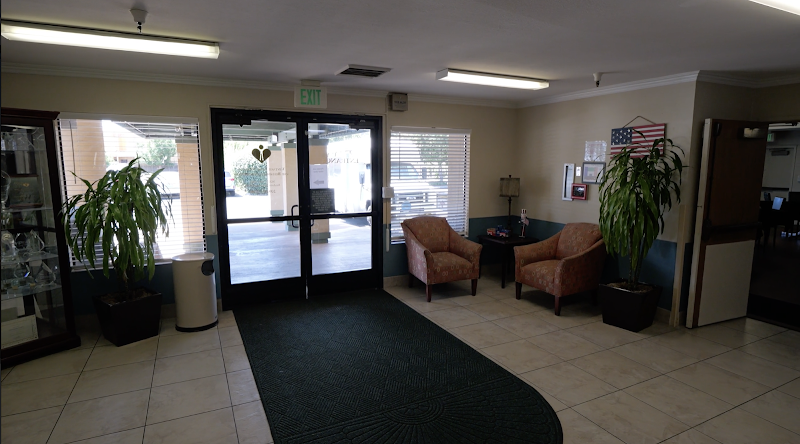
How is Vintage Faire Nursing & Rehabilitation Center Staffed?

CMS rates VINTAGE FAIRE NURSING & REHABILITATION CENTER's staffing level at 3 out of 5 stars, which is average compared to other nursing homes. Staff turnover is 39%, compared to the California average of 46%. This relatively stable workforce can support continuity of care.

What Have Inspectors Found at Vintage Faire Nursing & Rehabilitation Center?

State health inspectors documented 66 deficiencies at VINTAGE FAIRE NURSING & REHABILITATION CENTER during 2023 to 2025. These included: 66 with potential for harm. While no single deficiency reached the most serious levels, the total volume warrants attention from prospective families.

Who Owns and Operates Vintage Faire Nursing & Rehabilitation Center?

VINTAGE FAIRE NURSING & REHABILITATION CENTER is owned by a for-profit company. For-profit facilities operate as businesses with obligations to shareholders or private owners. The facility is operated by COVENANT CARE, a chain that manages multiple nursing homes. With 99 certified beds and approximately 85 residents (about 86% occupancy), it is a smaller facility located in MODESTO, California.
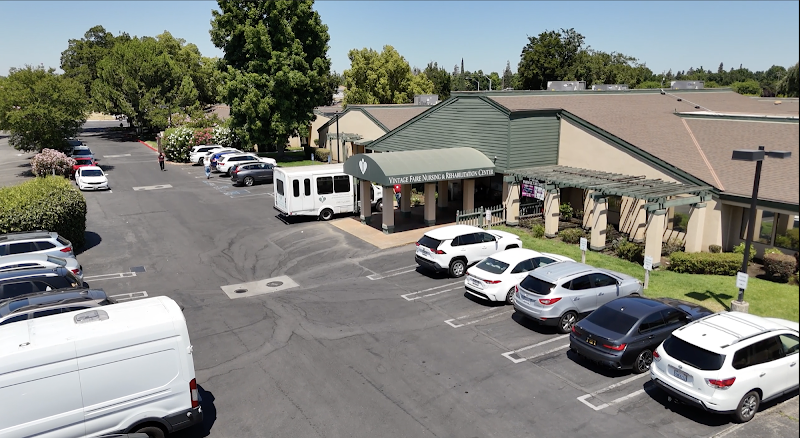
How Does Vintage Faire Nursing & Rehabilitation Center Compare to Other California Nursing Homes?

Compared to the 100 nursing homes in California, VINTAGE FAIRE NURSING & REHABILITATION CENTER's overall rating (3 stars) is below the state average of 3.1, staff turnover (39%) is near the state average of 46%, and health inspection rating (2 stars) is below the national benchmark.

What Should Families Ask When Visiting Vintage Faire Nursing & Rehabilitation Center?

Based on this facility's data, families visiting should ask: "Can I visit during a mealtime to observe dining assistance and food quality?" "How do you handle medical emergencies, and what is your hospital transfer rate?" "Can I speak with family members of current residents about their experience?"

Is Vintage Faire Nursing & Rehabilitation Center Safe?

Based on CMS inspection data, VINTAGE FAIRE NURSING & REHABILITATION CENTER has a clean safety record: no substantiated abuse findings (meaning no confirmed cases of resident harm), no Immediate Jeopardy citations (the most serious violation level indicating risk of serious injury or death), and is not on the Special Focus Facility watch list (a federal program monitoring the lowest-performing 1% of nursing homes). The facility has a 3-star overall rating and ranks #100 of 100 nursing homes in California. While no facility is perfect, families should still ask about staff-to-resident ratios and recent inspection results during their visit.

Do Nurses at Vintage Faire Nursing & Rehabilitation Center Stick Around?

VINTAGE FAIRE NURSING & REHABILITATION CENTER has a staff turnover rate of 39%, which is about average for California nursing homes (state average: 46%). Moderate turnover is common in nursing homes, but families should still ask about staff tenure and how the facility maintains care continuity when employees leave.

Was Vintage Faire Nursing & Rehabilitation Center Ever Fined?

VINTAGE FAIRE NURSING & REHABILITATION CENTER has no federal fines on record. CMS issues fines when nursing homes fail to meet care standards or don't correct problems found during inspections. The absence of fines suggests the facility has either maintained compliance or corrected any issues before penalties were assessed. This is a positive indicator, though families should still review recent inspection reports for the full picture.

Is Vintage Faire Nursing & Rehabilitation Center on Any Federal Watch List?

VINTAGE FAIRE NURSING & REHABILITATION CENTER is not on any federal watch list. The most significant is the Special Focus Facility (SFF) program, which identifies the bottom 1% of nursing homes nationally based on persistent, serious quality problems. Not being on this list means the facility has avoided the pattern of deficiencies that triggers enhanced federal oversight. This is a positive indicator, though families should still review the facility's inspection history directly.