RANCHO BELLAGIO POST ACUTE
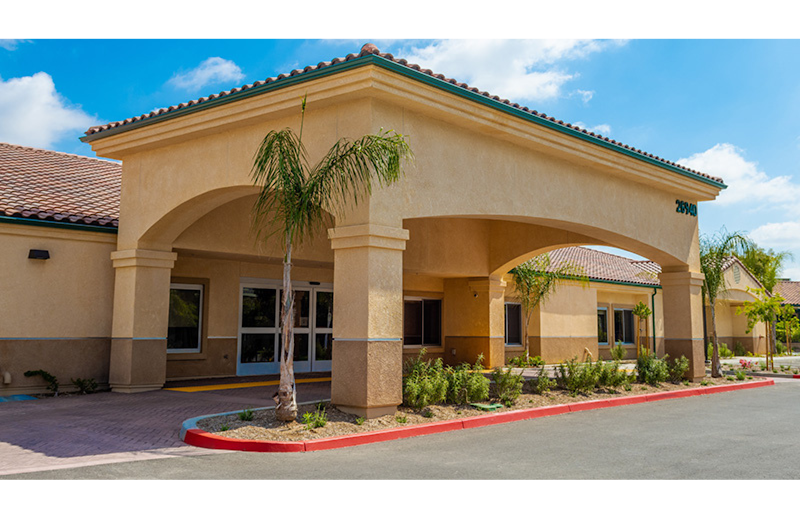
26940 E HOSPITAL ROAD, MORENO VALLEY, CA 92555 (951) 363-5434
For profit - Limited Liability company 99 Beds PACS GROUP Data: November 2025 1 Immediate Jeopardy citation
Trust Grade
36/100
#888 of 1155 in CA
Last Inspection: December 2024

Within standard 12-15 month inspection cycle. Federal law requires annual inspections.

Overview

Families considering Rancho Bellagio Post Acute in Moreno Valley should be aware of several important factors. The facility received a Trust Grade of F, indicating significant concerns about its operations and care quality. Ranking #888 out of 1155 in California places it in the bottom half of all facilities, and #41 out of 53 in Riverside County suggests that only a few local options are better. Although the facility's trend is improving, having reduced issues from 15 in 2024 to just 3 in 2025, the staffing rating is only 2 out of 5 stars, with a turnover rate of 40%, which is average. Notably, there have been critical incidents, including a resident with dementia who eloped from the facility due to inadequate supervision and a failure to monitor their whereabouts, exposing them to potential danger. Additionally, there were concerns about proper garbage disposal, which could lead to pest infestations and infection control issues. Overall, while there are some signs of improvement, the facility has significant weaknesses that families should carefully consider.

Trust Score
F
36/100
In California
#888/1155
Bottom 24%
Safety Record
High Risk
Review needed
Inspections
Getting Better
15 → 3 violations
Staff Stability
○ Average
40% turnover. Near California's 48% average. Typical for the industry.
Penalties
⚠ Watch
$13,580 in fines. Higher than 99% of California facilities. Major compliance failures.
Skilled Nurses
⚠ Watch
Each resident gets only 20 minutes of Registered Nurse (RN) attention daily — below average for California. Fewer RN minutes means fewer trained eyes watching for problems.
Violations
⚠ Watch
53 deficiencies on record. Higher than average. Multiple issues found across inspections.
★★☆☆☆
2.0
Overall Rating
★★☆☆☆
2.0
Staff Levels
★★★★☆
4.0
Care Quality
★★☆☆☆
2.0
Inspection Score
Stable
2024: 15 issues
2025: 3 issues

The Good

  • 4-Star Quality Measures · Strong clinical quality outcomes
  • Full Sprinkler Coverage · Fire safety systems throughout facility
  • No fines on record
  • Staff turnover below average (40%)

    8 points below California average of 48%

Facility shows strength in quality measures, fire safety.

The Bad

2-Star Overall Rating

Below California average (3.1)

Below average - review inspection findings carefully

Staff Turnover: 40%

Near California avg (46%)

Typical for the industry

Federal Fines: $13,580

Below median ($33,413)

Minor penalties assessed

Chain: PACS GROUP

Part of a multi-facility chain

Ask about local staffing decisions and management

The Ugly 53 deficiencies on record

1 life-threatening
May 2025 1 deficiency
CONCERN (D) 📢 Someone Reported This

A family member, employee, or ombudsman was alarmed enough to file a formal complaint

Potential for Harm - no one hurt, but risky conditions existed

Deficiency F0558 (Tag F0558)

Could have caused harm · This affected 1 resident

**NOTE- TERMS IN BRACKETS HAVE BEEN EDITED TO PROTECT CONFIDENTIALITY** Based on observation and interview, the facility failed to ensure resident 's call light was within reach, for one of three samp...

Read full inspector narrative →
**NOTE- TERMS IN BRACKETS HAVE BEEN EDITED TO PROTECT CONFIDENTIALITY** Based on observation and interview, the facility failed to ensure resident 's call light was within reach, for one of three sampled residents out (Resident 1). This failure could have resulted in Resident 1 not receiving nursing assistance when needed. Findings: On April 14, 2025, at 750 a.m., an interview was conducted with Certified Nursing Assistant (CNA) 1, who stated, the residents use their call lights to request help from nursing staff. CNA 1 stated, the call light should always be within reach of the resident. On April 16, at 1105 a.m., a concurrent observation and interview of Resident 1 were conducted. Resident 1 was heard calling out from the room for staff assistance. Resident 1 was then observed in his room sitting in a reclining chair, with his legs and feet up, the chair was horizontal to the foot of his bed. Resident 1 ' s call light was at the head of the bed, out of reach from resident. Resident 1 stated, I ' ve been here too long, I want to go to bed. On April 16, 2025, at 11:18 a.m., a concurrent observation of Resident 1 and interview with CNA 2 was conducted. CNA 2 stated, the call lights should always be within reach of the resident so they can call for assistance. CNA 2 observed Resident 1 in his room, reclining in the chair, and stated, Oh (Resident 1 ' s) back, he was just in the dining room somebody must have put him in his room I think from activities (department). CNA 2 verified (Resident 1 ' s) call light was not within reach, and resident had no way to call for staff ' s assistance. Resident 1 stated, I want to go to bed. On April 16, 2025, at 1132 a.m., an interview was conducted with the Activity Assistant (AA), who stated, after activities group, she returned Resident 1 to his bedroom and placed him at the foot of the bed in his reclining chair. The AA stated, when she returned Resident 1 to his bedroom, she hit the call light to inform the nursing staff resident was back to his room from activities. The AA stated, she returned to the activities department without waiting for nursing staff to answer resident ' s call light, to hand off resident 's care. The AA stated, I had to get back to the activity room to monitor the residents. The AA could not explain the process of the call lights and residents ' use for assistance. On April 16, 2025, at 11:42 a.m., an interview was conducted with the Activities Director (AD), who stated, when activity staff return a resident back to their unit, they are to take the resident directly to the nursing station and hand off care to nursing staff via communication. If a resident is returned to their room, care must be handed off to a member of nursing staff, prior to leaving the resident in their bedroom. The AD verified, Resident 1 should not have been left in his room by AA, without communicating to staff resident had returned to his bedroom. The AD further stated, Resident 1 's call light should have been within resident 's reach. On April 22, 2025, at 4:26 p.m., an interview conducted with the Director of Nursing (DON), who stated, call lights should always be within the residents reach. DON further stated, activity staff should communicate to nursing staff resident has been returned to the unit/bedroom, and the call light should be left within resident 's reach. A review of Resident 1's admission Record, indicated, Resident 1 was admitted to the facility on [DATE], with diagnoses which included diabetes mellitus (abnormal level of blood sugar) and hemiplegia (a condition characterized by paralysis of one side of the body) and hemiparesis (a condition characterized by weakness or partial loss of strength on one side of the body). A review of Resident 1's care plan dated January 30, 2025, indicated, .ADL (activities of daily living)/Mobility .at risk for ADL/Mobility decline and requires assistance related to bed-bound status .Interventions .Encourage to use call light for assistance . A facility Policy & Procedure, titled, Call Lights, revised, October 2010, indicated, . Purpose: . is to respond to the resident ' s requests and needs. General Guidelines: . 5. When the resident is in bed or confined to a chair be sure the call light is within easy reach of the resident .
Feb 2025 2 deficiencies 1 IJ
CRITICAL (J) 📢 Someone Reported This

A family member, employee, or ombudsman was alarmed enough to file a formal complaint

Immediate Jeopardy (IJ) - the most serious Medicare violation

Accident Prevention (Tag F0689)

Someone could have died · This affected 1 resident

**NOTE- TERMS IN BRACKETS HAVE BEEN EDITED TO PROTECT CONFIDENTIALITY** Based on observation, interview, and record review, the facility failed to provide adequate supervision to one of six sampled re...

Read full inspector narrative →
**NOTE- TERMS IN BRACKETS HAVE BEEN EDITED TO PROTECT CONFIDENTIALITY** Based on observation, interview, and record review, the facility failed to provide adequate supervision to one of six sampled residents (Resident 1), who was diagnosed with dementia (a chronic or persistent disorder of the mental processes caused by brain disease or injury and marked by memory disorders, personality changes, and impaired reasoning) and had history of elopement (incident when a resident leaves the facility without authorization). In addition, the facility failed to frequently monitor the whereabouts of Resident 1 in accordance with the care plan. Resident 1 exited the facility on December 20, 2024, via the BC wing (name of a facility wing) automatic sliding door. It was observed that the sliding door led directly to the facility's parking lot, which led to a two-way street. This failure exposed the resident to immediate danger, accidents, serious harm, or death. Resident 1 returned to the facility on January 7, 2025 (18 days after the resident eloped). On January 24, 2025, at 12:23 p.m., the Director of Nursing (DON) and the Director of Staff Development (DSD), were provided a copy of the CMS Immediate Jeopardy (IJ) template and notified them an immediate jeopardy (IJ) existed on December 20, 2024, related to Title 42 Code of Federal Regulation 483.25- Accidents (F 689). On January 24, 2025, at 1:32 p.m., the facility provided the corrective action plan dated January 15, 2025. On January 24, 2025, at 4:03 p.m., the surveyor validated that the facility removed the IJ (the facility has taken the necessary corrective actions to address and resolve the seriousness and urgent risk) before the survey entrance on December 24, 2024. IJ at F 689, severity J, cited as Past non-compliance (at some point, the facility did not meet the established rules). Findings: A review of Resident 1's admission record indicated Resident 1 was admitted on [DATE], with diagnoses of dementia, paranoid schizophrenia (a mental illness that is characterized by disturbances in thought), and psychoactive substance abuse (a strong desire or sense of compulsion to take a drug that affects how the brain works and causes changes in mood, awareness, thoughts, feelings, or behavior). A review of Resident 1's History and Physical, dated November 7, 2024, indicated Resident 1 did not have the capacity to understand and make decisions. A review of Resident 1's Elopement and Wandering (the behavior of moving about without clear purpose) Risk Observation/Assessment, dated November 6, 2024, indicated, Instructions: Evaluate/Assess the resident status in the seven clinical areas listed below. If the total score is 10 or greater, the resident would be considered At Risk for Wandering or Elopement. Interventions implemented as determined by the facility IDT .A. MOBILITY STATUS . 4. Does the resident ambulate (move from one place to another) independently with or without the use of assistive devices (tools or equipment to help resident perform task that might be difficult) . B. COGNITIVE STATUS .2. Is the resident disoriented or has periods of confusion and/or impaired attention span but does not wander . C. DISEASE DIAGNOSIS .Does the resident have a diagnosis that may impact cognition? (i.e. Alzheimer's disease [a progressive, neurodegenerative disorder that affects memory, thinking, and behavior], Anxiety Disorder [a mental health condition characterized by excessive and persistent worry, fear, and unease that can interfere with daily life] . 4. Two or more present .E. MEDICATION (Does the resident take medications that could increase restlessness or agitation . 4. Takes two or more medications . I. INTERVENTIONS . 1. Has the care plan been initiated/updated to reflect interventions aimed at reducing the risk of unsafe wandering or an elopement a. Yes . A review of Resident 1's eINTERACT Change in Condition Evaluation, dated November 12, 2024, at 6:24 p.m., indicated .Resident wanders around. Found resident outside facility along (name of the street - which was 2.2 miles from the facility) . A review of Resident 1's eINTERACT Change in Condition Evaluation, dated December 20, 2024, at 6 p.m., indicated, .charge nurse reported to RN [Registered Nurse], patient was not located in her room around 1700 (5p.m.), patient was last seen at 16:00 (4 p.m.) in-patients (sic) room. All nursing staff looked all around facility and could not find the patient. police dept (department) was notified at 17:45 (5:45 p.m.). Md (Medical Doctor), notified. No family or emergency contact phone number is listed on patient face sheet. A review of Resident 1 ' s Care Plan indicated the following: - On November 12, 2024, .Resident wanders around .Goal .Resident will stay in the facility until they find placement .Interventions .Did frequent visual check to resident. Placing resident close to nursing station .resident was placed to another room and station for closer monitoring and doors with alarms . - On November 27, 2024, .Elopement: Resident is at risk for elopement/exit seeking/wandering related to dementia or other cognitive impairment (decline or difficulty in mental abilities such as memory, thinking or decision making) .Goal .will not wander out of facility .Interventions .monitor whereabouts frequently . A review of the video surveillance footage of the whereabouts of Resident 1 with time stamped images with date and time indicated the following: .12-20-2024 .2:57 p.m. Resident 1 was standing in Hallway B lobby, in front of the nursing station located in the BC wing of the facility, with automatic doors open. .12-20-2024 .2:58 p.m. Resident 1 was walking out of the facility BC wing automatic sliding door. .12-20-2024 .3:02 p.m. Resident 1 was walking into the facility with BC wing automatic sliding door open and sitting in the front lobby with belonging bag in hand watching television. .12-20-2024 .3:08 p.m. Resident 1 was walking out of the facility BC wing automatic sliding door and did not re-enter the facility. Further review of the video surveillance footage dated December 20, 2024, from 2:57 to 3:08 p.m. did not show presence of facility staff to supervise the resident nor to redirect the resident away from the BC wing automatic sliding door. A review of Resident 1 ' s progress notes dated December 20, 2024, at 5:57 p.m., .CNA (Certified Nursing Assistant) alerted charge nurse of patient not being in room at 5:00 p.m. Patient was last seen at 3:45 p.m. in patients (sic) room, CNA stated she saw the patient at the beginning of her shift before she started doing patient care and after she was done with patient care went to go check on patient and noticed she was not in her room .We notified police at 5:45 p.m. Further review of Resident 1's progress notes dated November 16, 2024, to December 20, 2024, indicated there was no documented evidence that the facility frequently monitored Resident 1's whereabouts. On January 23, 2025, at 12:52 p.m., during an interview with CNA 1, CNA 1 stated on December 20, 2024, Resident 1 was assigned to her for the 7 a.m. to 3 p.m. shift. CNA 1 stated on December 20, 2024, prior to leaving for the day at 3 p.m., she had seen Resident 1 in her room. CNA 1 stated she was unaware Resident 1 had eloped from the facility on November 12, 2024, and would have considered the resident as high risk for elopement. CNA 1 stated residents at risk for elopement would require checking on the resident at least every two hours. CNA 1 stated that during her shift on December 20, 2024, BC wing automatic sliding door was opened and was being used by visitors to enter and exit the facility. On January 23, 2025, at 1:11 p.m., during an interview with Licensed Vocational Nurse (LVN 1), LVN 1 stated that he was working on December 20, 2024, 7 a.m. to 3 p.m., shift. LVN 1 stated that he had seen Resident 1, who was from Hallway A, sitting in a chair adjacent from Nursing station B, by the BC wing automatic sliding door before 3 p.m. LVN 1 stated that when residents have a history of elopement they should be placed on 1:1 (one staff to one resident) for 72 hours, they should be checked at least hourly, and the residents ' location should be known at all times. LVN 1 stated he was unaware that Resident 1 had a history of elopement and was unsure if the staff in Hallway A knew Resident 1 was by the BC wing automatic sliding door. On January 23, 2025, at 1:24 p.m., during an interview with CNA 2, CNA 2 stated if a resident is at risk for elopement, the staff should check on the resident every hour and the facility staff should know where the residents are at all times. CNA 2 stated that the BC wing automatic sliding door was open before, (prior to the elopement incident of Resident 1), but this door is now locked. On January 23, 2025, at 1:30 p.m., during a concurrent observation and interview, Resident 3 was sitting in a chair next to the BC wing automatic sliding door. Resident 3 stated that on December 20, 2024, he was sitting here in this location (near the BC wing with automatic sliding door) with Resident 1. Resident 3 stated that Resident 1 walked out the automatic door a little after 3 p.m. Resident 3 stated that there were staff at the nursing station across from the BC wing automatic sliding door. On January 23, 2025, at 4:21 p.m., during an interview with the Registered Nurse Supervisor (RN), the RN stated she was working on December 20, 2024, 3 p.m. to 11 p.m. shift. The RN stated Resident 1 was not able to be located on December 20, 2024. The RN stated they searched the premises, reported the elopement to the Director of Nursing, and the police department. On January 24, 2025, at 10:40 a.m., during an interview with LVN 2, LVN 2 stated that she was working on December 20, 2024, from 7 a.m. to 11 p.m. LVN 2 stated that she had given Resident 1 her medications between 12:30 p.m. and 1 p.m., prior to attending the staff meeting, which ended at approximately 3 p.m. LVN 2 stated at approximately 5 p.m., CNA 3 reported to her that she could not locate Resident 1. LVN 2 stated that she was aware that Resident 1 was a risk for elopement, however, she did not report this information to CNA 3 as she (CNA 3) had cared for Resident 1 before. LVN 2 stated they should have been checking on Resident 1 every two hours. LVN 2 stated that they should have been aware that Resident 1 was off the unit. On January 24, 2025, at 2:49 p.m., a telephone interview was conducted with CNA 3. CNA 3 stated she was working on December 20, 2024, 3 p.m. to 11 p.m., and was assigned to care for Resident 1. CNA 3 stated that when she came on to her shift, she went room to room to check on her assigned residents but did not see Resident 1. CNA 3 stated did not know that Resident 1 was a high risk for elopement, as she never received that information. A review of the facility's policy and procedure titled Wandering and Elopements revised March 2019, indicated The facility will identify residents who are at risk of unsafe wandering and strive to prevent harm while maintaining the least restrictive environment for residents .1. If identified as at risk for wandering, elopement, or other safety issues, the resident's care plan will include strategies and interventions to maintain the resident's safety . A review of the facility's Corrective Action Plan dated January 15, 2025, included the following: Immediate Actions: Facility followed the policy and procedure in searching for the resident missing upon knowledge of resident not being in the facility on December 20, 2024. Staff searched inside the facility while other staff searched around the vicinity. The facility notified the police department as well calling (Emergency Rooms) ER around the area and called the homeless shelter where she was at prior, to see if she checked in there. Staff continued driving round the area to search for the resident on December 20, 2024. The facility created a plan to close BC wing sliding door between 8:30 am to 5 pm and have a designated staff to monitor the door between 6:00 am to 8:30 am. Signage was also placed of the time the sliding door will be closed and when it will be available for entrance and exit. In-services were given by the RN supervisor and the Director of Staff Development on December 21, 2024, to staff regarding the facility policy and protocol on elopement and wandering of the residents, as well as, providing staff an update on the plan discussed by IDT. Identification of others: The DON reviewed all current residents who were at high risk for elopement on December 21, 2024. The facility identified 1 resident. This resident was placed on l: l sitter immediately. Facility identified all residents who are considered high risk for elopement and necessary interventions were placed such as (I: I Sitter. activity monitoring Q hour, [every hour], Q 2 [every two] hours). The Emergency IDT [Interdisciplinary Team] meeting with all the department managers was held on December 21, 2024, to discuss a plan to prevent resident elopement. On December 21, 2024, the facility created an elopement risk binder with the face sheet and photos of residents who are high risk for elopement and this binder is kept in nursing station and in the front lobby with the receptionist, for the staff to be aware of the residents at risk for elopement. Binders are updated by the DON and updated as needed. On admission a wandering evaluation will be conducted and when resident scores I0 and above or noted to have high risk of wandering, staff will initiate preventative measures and ensure proper documentation and notify DON accordingly. The maintenance supervisor or designee will check all the emergency doors, making sure the alarm is placed and working daily. Any findings will be corrected immediately. On December 21, 2024, facility Administrator contacted wander guard vendor for installation quotes and installing schedule. Estimated installation schedule is anticipated to be completed by January 31, 2025. The maintenance supervisor will conduct random checks on different shifts to monitor the alarms of the emergency door and report the response time of the staff when the alarm goes off biweekly x 3 months. Findings will be reported during the QA Meeting to monitor trends and compliance. The DON will report on monthly QA those residents at risk for elopement or any resident identify score of 10 or above on elopement assessment and discuss effectiveness of measure provided and monitor for trends. Completion date: January 13, 2025.
CONCERN (D) 📢 Someone Reported This

A family member, employee, or ombudsman was alarmed enough to file a formal complaint

Potential for Harm - no one hurt, but risky conditions existed

Medical Records (Tag F0842)

Could have caused harm · This affected 1 resident

**NOTE- TERMS IN BRACKETS HAVE BEEN EDITED TO PROTECT CONFIDENTIALITY** Based on observation, interview, and record review, the facility failed to ensure accurate documentation for one of six resident...

Read full inspector narrative →
**NOTE- TERMS IN BRACKETS HAVE BEEN EDITED TO PROTECT CONFIDENTIALITY** Based on observation, interview, and record review, the facility failed to ensure accurate documentation for one of six residents reviewed, (Resident 1), as the resident's record indicated Resident 1 was last seen at 3:45 p.m. on December 20, 2024, while the video surveillance showed Resident 1 left the facility at 3:08 p.m. on December 20, 2024. This failure resulted in an inaccurate account of Resident 1's whereabouts and potentially impacting the accuracy of their care documentation. Findings: On January 23, 2025, at 10:45 a.m., an unannounced visit to the facility on a facility reported incident was initiated. A review of Resident 1's medical records indicated she was admitted on [DATE], with diagnoses of dementia, (a chronic or persistent disorder of the mental processes caused by brain disease or injury and marked by memory disorders, personality changes, and impaired reasoning), paranoid schizophrenia, (a mental illness that is characterized by disturbances in thought), psychoactive substance abuse. (a strong desire or sense of compulsion to take a drug that affects how the brain works and causes changes in mood, awareness, thoughts, feelings, or behavior). Resident 1 eloped from the facility on December 20, 2024. A review of Resident 1's History and Physical dated November 7, 2024, indicated she did not have the capacity to understand and make decisions. A review of the video surveillance footage of the whereabouts of Resident 1 with time stamped images with date and time indicated the following: .12-20-2024 .3:08 p.m. Resident 1 was walking out of the facility through BC wing automatic sliding door and did not re-enter the facility. A review of Resident 1's Nurse's Note dated December 20, 2024, at 5:57 p.m., indicated, .CNA alerted charge nurse of patient (Resident 1) not being in room at 1700. Patient (Resident 1) was last seen at 15:45 (3:45 p.m.) in patients room. The CNA stated she saw the patient at the beginning of her shift before she started doing patient care and after she was done with patient care went to go check on patient and noticed she was not in her room . A review of Resident 1's eINTERACT Change in Condition Evaluation dated December 20, 2024, at 6 p.m., indicated, .charge nurse reported to RN, patient (Resident 1) was not located in her room around at 1700 (5 p.m.), patient (Resident 1) was last seen at 16:00 (4 p.m.) in-patients room. All nursing staff looked all around facility and could not find the patient. police dept was notified at 17:45. (5:45 p.m.) md notified. No family or emergency contact phone number is listed on patient face sheet . On January 23, 2024, at 1:30 p.m., an interview was conducted with Resident 3. Resident 3 was sitting in a chair next to the automatic door in Hallway B. Resident 3 stated that on December 20, 2024, he was sitting here in this location with Resident 1. Resident 3 stated that Resident 1 walked out the automatic door a little after 3 p.m. and headed to the right. Resident 3 stated that there were staff at the nursing station across from the BC wing automatic sliding door. On January 24, 2024, at 10:40 a.m., an interview was conducted with LVN 2. LVN 2 stated that she was working on December 20, 2024, from 7 a.m. to 11 p.m. LVN2 stated that she had given Resident 1 her medications between 12:30 p.m. and 1 p.m. LVN2 stated she went to a staff meeting at 2:30 p.m. and saw Resident 1 in her room. LVN 2 stated the meeting ended approximately 3 p.m. LVN 2 stated that approximately 5 p.m. CNA 3 reported to her that she could not locate Resident 1. LVN 2 stated that CNA 3 had reported that she last saw Resident 1 in her room or nursing station between 3:45 p.m. and 4 p.m. On January 24, 2024, at 2:49 p.m., a telephone interview was conducted with CNA 3. CNA 3 stated she was working on December 20, 2024, 3 p.m. to 11 p.m., and was assigned to care for Resident 1. CNA 3 stated that when she came on to her shift, she goes room to room to check on her assigned residents. CNA 3 stated that she did not see Resident 1 on her first rounds. CNA 3 stated that after she provided care to a resident, she searched the facility for Resident 1. CNA 3 stated that she informed LVN 2 that she was unable to locate Resident 1 after she searched for her. CNA 3 stated that she was unsure that Resident 1 was a high risk for elopement as she never received that information. A review of the facility policy and procedure titled Charting and Documentation revised July 2017, indicated .3. Documentation in the medical record will be objective (not opinionated or speculative), complete, and accurate .
Dec 2024 10 deficiencies
CONCERN (D) 📢 Someone Reported This

A family member, employee, or ombudsman was alarmed enough to file a formal complaint

Potential for Harm - no one hurt, but risky conditions existed

Quality of Care (Tag F0684)

Could have caused harm · This affected 1 resident

**NOTE- TERMS IN BRACKETS HAVE BEEN EDITED TO PROTECT CONFIDENTIALITY** Based on interview and record review, the facility failed to ensure the medication Nexium (esomeprazole-is used to treat conditi...

Read full inspector narrative →
**NOTE- TERMS IN BRACKETS HAVE BEEN EDITED TO PROTECT CONFIDENTIALITY** Based on interview and record review, the facility failed to ensure the medication Nexium (esomeprazole-is used to treat conditions where there is too much acid in the stomach) was administered according to the physician's order for one of one resident reviewed (Resident 56). This failure had the potential to result in the worsening of gastroesophageal reflux disease (GERD-overaccumulation of stomach acid) for Resident 56. Findings: On December 11, 2024, at 2:48 p.m., during an interview with Resident 56, she stated she had been experiencing a little bit of nausea. Resident 56 stated she takes Nexium before breakfast for GERD but further stated she had not taken her Nexium medication for two days. A review of Resident 56's admission Record, indicated Resident 56 was admitted to the facility on [DATE], with diagnoses which included gastroparesis (a condition in which the muscles in the stomach does not move food for digestion) and GERD. A review of Resident 56's Physician's Order, dated October 10, 2024, indicated, . Nexium .40 MG (milligram - unit of measurement) Give 1 capsule by mouth in the morning for GERD before breakfast . A review of Resident 56's Care Plan, dated October 11, 2024, indicated .FOCUS .gastrointestinal problem related to GERD .Intervention .Administer medication per physician's order . A review of Resident 56's eMAR (electronic Medication Administration Record) Medication Administration Note, indicated, Resident 56 did not receive Nexium on December 10, 2024 and December 11, 2024. On December 11, 2024, at 2:50 p.m., during a concurrent interview and review of Resident 56's eMAR with LVN 1, LVN 1 stated Resident 56 was not given Nexium on December 10, 2024, and December 11, 2024. LVN 1 stated, Nexium was not available. On December 11, 2024, at 2:55 p.m., during an interview with LVN 2, she stated Nexium had been delivered on December 2, 2024, and Resident 56 should have received the medication on December 10, 2024, and December 11, 2024. LVN 2 further stated Nexium should have been administered as ordered by the physician to prevent the worsening of Resident 56's GERD. A review of the facility policy and procedure titled, Administering Medications, dated April 2019, indicated, .Medications are administered in a safe and timely manner, and as prescribed .Medications are administered in accordance with prescriber orders .
CONCERN (D) 📢 Someone Reported This

A family member, employee, or ombudsman was alarmed enough to file a formal complaint

Potential for Harm - no one hurt, but risky conditions existed

Respiratory Care (Tag F0695)

Could have caused harm · This affected 1 resident

**NOTE- TERMS IN BRACKETS HAVE BEEN EDITED TO PROTECT CONFIDENTIALITY** Based on observation, interview, and record review, the facility failed to replace the oxygen humidifier bottle in accordance wi...

Read full inspector narrative →
**NOTE- TERMS IN BRACKETS HAVE BEEN EDITED TO PROTECT CONFIDENTIALITY** Based on observation, interview, and record review, the facility failed to replace the oxygen humidifier bottle in accordance with the facility policy and procedure for one of one resident reviewed for respiratory (Resident 66). This failure had the potential to result in ineffective oxygen therapy, respiratory distress, cross-contamination, and infection, which would lead to a decline in Resident 66's health condition. Findings: On December 9, 2024, at 10:27 a.m., a concurrent observation and interview were conducted in Resident 66's room with LVN 3. Resident 66 was receiving oxygen via nasal cannuala (NC-plastic tube that allows oxygen to be delivered to the nose from a machine). The nasal cannula was observed to be labeled with a date of 12/7. A humidifier bottle (plastic cannister filled with water to humidify air flow) was less than half filled and labeled with the date 11/24. LVN 3 stated, the nasal cannula and humidifier bottle should be changed every seven days. LVN 3 stated the cannula and humidifier bottle should have been changed together on December 7, 2024 but it did not appear that they were changed at the same time. LVN 3 stated if the nasal cannula and humidifier bottle were not changed according to the facility policy and procedure, there would be a potential for cross-contamination which could lead to a decline in the residents respiratory condition if the cannula and humidifier bottle are not changed according to the facility policy and procedures. On December 12, 2024, at 2:40 p.m. an interview was conducted with the infection preventionist (IP). The IP stated nasal cannulas and humidifier bottles are to be changed every seven days or as needed and if humidifiers are empty, they should be replaced. The IP stated if nasal cannulas and humidifiers should be changed every seven days to prevent the risk of cross-contamination and infection for residents receiving respiratory treatment. On December 12, 2024, Resident 66's record was reviewed. Resident 66 was admitted to the facility on [DATE], with a diagnosis which included immunodeficiency (weak ability to fight infection), and Chronic Obstructive Pulmonary Disease (COPD-lung disease making it difficult to breath). A review of the physicians order dated September 20, 2024, indicated, O2 at 2 L/min (liters per minute) via nasal cannula (a tube used to deliver oxygen through the nose) for as needed for SOB (shortness of breath). A review of the physician's order dated December 6, 2024, indicated, change O2 (oxygen) tubing every shift every Saturday. A review of the Care Plan titled Oxygen: Resident requires the use of oxygen. Indicated, .change humidification and O2 tubing as indicated .follow infection control protocol for universal/standard precautions . A review of the facility policy and procedure titled, Prevention of Infection Respiratory Equipment, Revised November 2011, indicated, .the purpose of this procedure is to guide prevention of infection associated with respiratory therapy tasks and equipment among residents and staff .change pre-filled humidifier when the water level becomes low .change the oxygen tubing every seven (7) days, or as needed .take care not to contaminate internal nebulizer tubes .
CONCERN (D) 📢 Someone Reported This

A family member, employee, or ombudsman was alarmed enough to file a formal complaint

Potential for Harm - no one hurt, but risky conditions existed

Unnecessary Medications (Tag F0759)

Could have caused harm · This affected 1 resident

Based on observation, interview, and record review, the facility failed to ensure the medication error rates were not five percent or greater when: 1. Resident 21's lidocaine (local anesthetic to reli...

Read full inspector narrative →
Based on observation, interview, and record review, the facility failed to ensure the medication error rates were not five percent or greater when: 1. Resident 21's lidocaine (local anesthetic to relieve pain) patch was applied to the wrong body location; and 2. Resident 137's Metformin (medication to treat high blood sugar) and Carvedilol (heart medicine) were administered without food. These failures had the potential for Residents 21 and 137 to not adequately received the therapeutic effect of the medications. Findings: 1. On December 10, 2024, at 8:39 a.m., during medication administration observation inside Resident 21's room with Licensed Vocational Nurse (LVN) 3, LVN 3 applied Lidocaine Patch 5% (percent - unit of measurement) on Resident 21's back near the right shoulder blade. A review of Resident 21's Physician's Orders, dated August 18, 2024. indicated, .Lidocaine Patch 5% apply to each knee topically one time a day for pain management . On December 10, 2024, at 12:27 p.m., during a concurrent interview and review of Resident 21's Physician's Orders, with LVN 3, he stated he had applied the lidocaine patch to Resident 21's back. LVN 3 further stated he did not follow the physician's order. LVN 3 stated if the resident was complaining of pain in a different site, he should have called the physician to change the area of application. A review of the facility policy and procedure titled, .SPECIFIC MEDICATION ADMINISTRATION PROCEDURES, dated October 2012, indicated, .Apply topical treatment as per physician's order . 2. On December 10, 2024, at 9:30 a.m., during medication administration observation with LVN 1 inside Resident 137's room, LVN 1 administered Carvedilol and Metformin to Resident 137 without food. A review of Resident 137's Physician's Orders, indicated the following: - On November 20, 2024, indicated, .Carvedilol tablet 25 mg (milligram - unit of measurement) .Give 1 tablet by mouth two times a day .Give with food/meal . - On November 27, 2024, indicated .Metformin .oral tablet 1000 mg .Give 1 tablet by mouth two times a day .Give with food/meal . On December 10, 2024, at 3 p.m., during a concurrent interview and review of Resident 137's Physician's Orders, with LVN 1, she stated she did not administer food when she gave Carvedilol and Metformin to Resident 137. LVN 1 further stated she should have administered the medications with food as indicated by the physician's order. The facility's undated policy titled, .SPECIFIC MEDICATION ADMINISTRATION PROCEDURES .ORAL MEDICATION ADMINISTRATION, dated October 2012, indicated .To administer oral medication in a safe, accurate and effective manner .if needed for medication .administered in food .
CONCERN (D) 📢 Someone Reported This

A family member, employee, or ombudsman was alarmed enough to file a formal complaint

Potential for Harm - no one hurt, but risky conditions existed

Infection Control (Tag F0880)

Could have caused harm · This affected 1 resident

**NOTE- TERMS IN BRACKETS HAVE BEEN EDITED TO PROTECT CONFIDENTIALITY** Based on observation, interview, and record review, the facility failed to implement proper infection control measures when Cert...

Read full inspector narrative →
**NOTE- TERMS IN BRACKETS HAVE BEEN EDITED TO PROTECT CONFIDENTIALITY** Based on observation, interview, and record review, the facility failed to implement proper infection control measures when Certified Nurse Assistant (CNA) 1 did not perform hand hygiene and wear personal protective equipment (PPE - equipment use to protect against infection or illness) upon entering the room and while providing care to Resident 283, who was positive for Clostridium Difficile infection (C. diff - a bacteria that cause diarrhea and is spread through contact with contaminated surfaces or people). This failures had the potential to increase the spread of pathogens (germs) and infections from staff to residents, potentially leading to illness. Findings: On December 10, 2024, at 8:25 a.m., during a concurrent observation and interview in the hallway outside Resident 283's room, a contact precaution (a set of precautions to prevent the spread of germs that are transmitted through direct or indirect contact) sign was observed on the wall. CNA 1 entered and exited the room, provided care to Resident 283, and did not perform hand hygiene or don (put on) PPE. CNA 1 stated Resident 283 was on contact precautions for C. diff. CNA 1 stated, facility staff and visitors must wash hands, wear a gown and gloves before room entry and upon room exit. CNA 1 further stated she entered and exited Resident 283's room, provided care and she did not wash her hands and wear PPE. CNA 1 stated she should have washed her hands and worn gloves and a gown (PPE) to prevent the spread of pathogens and infection to facility resaidents. On December 10, 2024, Resident 283's record was reviewed. Resident 283 was admitted to the facility on [DATE], with diagnosis which included Enterocolitis (inflammation of intestines) due to Cdiff. A review of Resident 283's Minimum Data Set (MDS - an assessment tool), dated September 12, 2024, indicated Resident 283 had a Brief Interview for Mental Status (use to assess cognition) score of 3 (severe cognitive impairment). A review of Resident 283's Lab Results, dated December 7, 2024, indicated, .Critical result .December 8, 2024 .Cdiff: Positive . A review of Resident 283's Care Plan, dated December 8, 2024, indicated, .Stool culture positive for c-diff .Interventions: isolation with contact precautions . A review of the facility document titled, Contact Precaution Sinage, undated, indicated, .Everyone Must: Clean their hands, including before entering and when leaving the room .Providers and Staff must also: Put on gloves before room entry .Put on gown before room entry . On December 11, 2024, at 9:05 a.m., during an interview with the Infection Preventionist (IP), he stated it was the facility practice for staff to perform hand hygiene upon entering and exiting a resident's room and to wear personal protective equipment when caring for residents on contact preacutions. The IP stated, all staff were expected to follow the facility infection control practices to prevent cross contamination and infection to facility residents. A review of the facility Policy and Procedure titled, Isolation - Transmission-Based Precautions & Enhanced Barrier Precautions, dated September 2022, indicated, .Contact Precautions .Staff and visitors wear gloves when entering the room .Wear disposable gown upon entering the room . A review of the facility Policy and Procedure titled, Handwashing/Hand Hygiene, dated 2021, indicated, .This facility considers hand hygiene as the primary means to prevent the spread of infections .All personnel shall follow the handwashing/hand hygiene procedures to to help prevent the spread of infection to .residents .
CONCERN (D) 📢 Someone Reported This

A family member, employee, or ombudsman was alarmed enough to file a formal complaint

Potential for Harm - no one hurt, but risky conditions existed

Room Equipment (Tag F0908)

Could have caused harm · This affected 1 resident

Based on observation, interview, and record review, the facility failed to maintain the dish machine's temperature within the manurfacturer's guidelines. Failure to ensure adequate water temperature i...

Read full inspector narrative →
Based on observation, interview, and record review, the facility failed to maintain the dish machine's temperature within the manurfacturer's guidelines. Failure to ensure adequate water temperature in the dish machine may result in ineffective cleaning of dishes, putting 95 residents at risk for food-borne illness (stomach illness acquired from ingesting contaminated food). Findings: According to the United States FDA (Food and Drug Administration) Food Code 2022, Section 4-204.115 Warewashing Machines, Temperature Measuring Devices, the Food Code indicated, The requirement for the presence of a temperature measuring device in each tank of the warewashing machine is based on the importance of temperature in the sanitization step. In hot water machines, it is critical that minimum temperatures be met at the various cycles so that the cumulative effect of successively rising temperatures causes the surface of the item being washed to reach the required temperature for sanitization. When chemical sanitizers are used, specific minimum temperatures must be met because the effectiveness of chemical sanitizers is directly affected by the temperature of the solution. On December 8, 2024, at 9:14 a.m., a concurrent observation and interview with [NAME] (Ck) 2, with a review of the manufacturer's guidelines for the dish machine, were conducted. The Manufacturer's guideline indicated, Wash tank temperature: minimum 150 degrees Fahrenheit (°F - a unit of measurement) and Final Rinse temperature minimum: 180 °F. During the observation of the dish machine in operation, the wash temperature was recorded at 143°F and the rinse temperature at 175 °F. In a follow-up interview with Ck 2 at 9:15 a.m., Ck 2 confirmed that the dish machine's wash temeprature was at 142 °F and the rinse temperature was 178 °F, not within manufacturer's guideline. Ck 2 stated the dish machine wash temperature should be 150 °F and rinse temperature should be 180 °F. On December 8, 2024, at 9:25 a.m., a concurrent reobservation of the dish machine in operation and an interview with Ck 2 were conducted. Ck 2 confirmed the dish machine's temperatures were not within manufacturer's guidelines, with the wash temperature at 145 °F and rinse temperature at 172 °F. On December 8, 2024, at 9:41 a.m., a concurrent observation and interview were conducted with the Maintenance Supervisor (MTD) while the dish machine was operating. The MTD verified that the wash temperature indicated 149 °F and the rinse temperature was 174°F. The MTD stated the dish machine water temperature should be between 150°F and 180°F. The MTD acknowledged sometimes dish machine water temperature could change during cleaning process and he could set the machine to maintain temperature range of 150°F to 180°F. On December 8, 2024, at 2:58 p.m., an interview was conducted with the Infection Preventionist (IP). The IP stated not maintaining the dish machine's temperature within the manufacturer's guidelines could result in improperly cleaned and sanitized dishes, which could lead to cross-contamination and the risk of food borne illness. On December 8, 2024, at 3:46 p.m., an interview was conducted with the Registered Dietitian (RD). The RD stated the dish machine must maintain the manufacturer's guidelines temperatures, otherwise the dishes would not be cleaned and sanitized properly, which could lead to cross contamination, infection control issue, and risk of food borne illness. During a review of the facility's Policy and Procedure (P&P) titled, DISHWASHING, dated 2023, the P&P indicated, POLICY: All dishes will be properly sanitized through the dishwasher.PROCEDURE: .9. The dishwasher will run the dish machine until the temperature is within the manufacturer's recommendations.High-temperature machine: .use the machine at a temperature of 150 °F to 165 °F or higher for the wash and 180 °F or above for the rinse.
CONCERN (E) 📢 Someone Reported This

A family member, employee, or ombudsman was alarmed enough to file a formal complaint

Potential for Harm - no one hurt, but risky conditions existed

Deficiency F0578 (Tag F0578)

Could have caused harm · This affected multiple residents

**NOTE- TERMS IN BRACKETS HAVE BEEN EDITED TO PROTECT CONFIDENTIALITY** 3. Resident 19's record was reviewed. Resident 19 was admitted to the facility on [DATE]. A review of Resident 19's History and ...

Read full inspector narrative →
**NOTE- TERMS IN BRACKETS HAVE BEEN EDITED TO PROTECT CONFIDENTIALITY** 3. Resident 19's record was reviewed. Resident 19 was admitted to the facility on [DATE]. A review of Resident 19's History and Physical dated November 8, 2024, indicated Resident 19 has fluctuating capacity to understand and make decisions. A review of Resident 19's Advance Directive Acknowledgement Form, undated, indicated Resident 19 was not screened or provided AD education. A review of Resident 19's Social History Assessment, dated November 18, 2024, indicated, .Self-responsible .Advance Directive .None of the above . A review of Resident 19's IDT Conference Summary, dated November 11, 2024, indicated the formulation of AD was not discussed with Resident 19 or the RP. Further review of Resident 19's medical record indicated no documented evidence Resident 19 was screened and the resident or the RP was provided education and information about AD. On December 10, 2024, at 11:42 a.m., during a concurrent interview and review of Resident 19's medical record with the SSD, he stated if a resident did not have an AD, he would offer resources and education to the resident or RP. The SSD further stated it was important for residents to be educated and have the opportunity to formulate an AD in the event the resident were unable to make decisions in the future. The SSD stated Resident 19 had no AD and he did not provide resources and education. The SSD further stated he should have provided AD resources and education to Resident 19 or the RP. A review of the facility policy and procedure titled, Advance Directives, dated 2021, indicated, .Prior to, upon, or immediately after admission, the social service director or designee inquires of the resident .about the existence of any written advance directive .If a resident or representative indicates that he or she has not established advance directives, the facility staff will offer assistance in establishing advance directives .Information about whether or not the resident has executed and advance directive is displaced prominently in the medical records. Based on interview and record review, the facility failed to provide Advance Directive (AD-a written instruction related to the provision of health care when the resident is no longer able to make decisions) education, materials, and follow-up for three of five residents reviewed for AD (Residents 19, 35, and 69) and/or their resident representatives (RP). This failure had the potential for Residents 19, 35, and 69's medical preferences not being honored during critical healthcare decisions. Findings: 1. Resident 35's record was reviewed. Resident 35 was admitted to the facility on [DATE], with a diagnoses which included cerebral infarction (lack of oxygen to the brain). A review of Resident 35's history and physical dated November 4, 2024, indicated Resident 35 had the capacity to understand and make decisions. Resident 35 is self-responsible. A review of Resident 35's, Advance Directive Acknowledgement, dated November 3, 2024, indicated, Resident 35 was not screened or provided AD education. A review of Resident 35's, IDT (Interdiciplinary Team) Conference Summary, dated November 5, 2024, indicated Resident 35 was not screened or provided AD education. Further review of Resident 25's records, indicated there was no documented evidence education and information was provided to Resident 35 in the medical record. On December 10, 2024, at 11:43 a.m., during a concurrent interview and review of Resident 35's medical record with the Social Service Director (SSD), he stated Resident 35 was not screened, provided education, and reviewed for an AD. The SSD further stated there was a potential for resident preferences to not be honored if they are not screened for an AD. 2. Resident 69's record was reviewed. Resident 69 was admitted to the facility on [DATE], with diagnoses that included traumatic subdural hemorrhage with loss of consciousness (bleeding from the brain). A review of Resident 69's Minimum Data Set (MDS- an assessment tool), dated November 23, 2024, indicated, Resident 69 had a Brief Interview of Mental Status (used to assess cognitive status in elderly) score 8 (moderate cognitive impairment). A review of Resident 69's, Advance Directive Acknowledgement, dated November 3, 2024, indicated, Resident 69 was not screened or provided AD education. A review of Resident 69's, IDT Conference Summary, dated November 12, 2024, indicated Resident 69 was not screened or provided AD education. Further review of Resident 69's medical records indicated no documented evidence that education and information were provided to Resident 69. On December 10, 2024, at 11:43 a.m. during a concurrent interview and review of Resident 69's medical record with the Social Service Director (SSD), he stated Resident 69 was not screened, provided education, and reviewed for an AD during the IDT meeting. The SSD further stated he should have discussed the AD with the resident and or the resident representative.
CONCERN (E) 📢 Someone Reported This

A family member, employee, or ombudsman was alarmed enough to file a formal complaint

Potential for Harm - no one hurt, but risky conditions existed

Menu Adequacy (Tag F0803)

Could have caused harm · This affected multiple residents

**NOTE- TERMS IN BRACKETS HAVE BEEN EDITED TO PROTECT CONFIDENTIALITY** Based on observation, interview, and record review, the facility failed to ensure the lunch menu on December 9, 2024, met reside...

Read full inspector narrative →
**NOTE- TERMS IN BRACKETS HAVE BEEN EDITED TO PROTECT CONFIDENTIALITY** Based on observation, interview, and record review, the facility failed to ensure the lunch menu on December 9, 2024, met residents' needs when: 1. Dietary Aide (DA 1) served pudding instead of mandarin oranges for five of five residents (Residents 19, 41, 134, 190 and 332) on a renal diet (a restricted diet that can help slow kidney damage). 2. [NAME] (CK 1) served pureed spinach instead of green beans for one of one resident (Resident 332) on a renal pureed diet (smooth, lump-free foods that require no chewing). 3. DA 1 used a #8 scoop size to serve dessert for regular diets. 4. CK 1 did not follow the recipe when preparing garlic parmesan spinach. These failures had the potential for residents to miss out on therapeutic and nutritional benefits, correct serving portion, and/or palatability (acceptable taste). Findings: 1. A review of the facility's Winter menu for Week 2, dated December 9, 2024, indicated: -Southern beef patties with cream gravy, Mashed Potatoes (renal diet: wheat pasta) Garlic Parmesan Spinach (renal diet: green beans) Dessert: Ambrosia pudding (1/3 (one-third) cup (unit of measurement), pudding with coconut for regular diets No pudding for renal diets, instead 1/2 (one-half) cup mandarin oranges with coconut. A review of the physician diet orders for Residents 19, 41, 134, 190 and 332 indicated Residents 19, 41, 134, 190, and 332 were on renal diet. On December 9, 2024, at 11:30 a.m., during a concurrent observation and interview of the lunch tray line service (the serving of food onto plates) in the kitchen, DA 1 was observed preparing and scooping pudding into individual cups. DA 1 stated all residents would receive pudding for dessert. On December 9, 2024, at 12:45 p.m., during an observation of the tray line in the kitchen, the meal trays for Residents 19 and 41 contained pudding. On December 9, 2024, at 12:55 p.m., during an observation of the meal service carts, the meal trays for Residents 134 and 190 included pudding. On December 9, 2024, at 1:20 p.m., during a concurrent observation, interview, and review of the spreadsheet menu with the Dietary Supervisor (DSS) in the kitchen, the DSS stated Resident 332's lunch meal tray included pudding. The DSS stated the resident was on a renal diet and should not have been served pudding. The DSS further stated Residents 19, 41, 134 and 190 were also on renal diets and should not have received pudding with their lunch meal trays. She further stated DA 1 should have followed the menu to avoid potential strain on residents with compromised kidney function. On December 9, 2024, at 1:54 p.m., during an interview with the Registered Dietitian (RD), the RD stated dietary staff should have followed the cook's spreadsheet and prepare the meals according to the menu and physician orders to meet residents' nutritional needs. The RD further stated Residents 19, 41, 134, 190 and 332 should not have received pudding because the high phosphorus (a mineral that help keep bones and muscles healthy) content could be harmful to residents with kidney disease. A review of the facility policy and procedure titled Menu Planning, Section 3, dated 2023, indicated, .Menus and cook's spreadsheets are to be dated and posted in the kitchen .The menus are planned to meet nutritional needs of residents in accordance with established national guidelines, Physician orders and followed .The facility's diet manual and the diets ordered by the physician should mirror the nutritional care provided by the facility .Standardized recipes adjusted to appropriate yield shall be maintained and used in food preparation . A review of the facility policy and procedure titled Renal Diet 40-60-80 Gram Protein, Low Potassium, Low Salt Menu, dated 2023, indicated, .This diet regulates the dietary intake of sodium, potassium and protein to lighten the work of the diseased kidneys . 2. Resident 332's record were reviewed. Resident 332 was admitted to the facility on [DATE], with diagnoses that included End-Stage Renal Disease (when the kidneys stop working) and on hemodialysis (special procedure done by a trained professional to remove wastes and excess fluids from the body). A review of Resident 332's physician's diet order, dated December 9, 2024, indicated, .Controlled Carbohydrate diet, Renal diet, and pureed texture . A review of Resident 332's Care Plans included a care plan with a .Focus .nutritional risk: Resident is at risk for nutritional imbalance related to dialysis, therapeutic diet .Interventions .Provide diet, supplements .as ordered . A review of the facility's Winter menu for week 2, dated December 9, 2024, indicated, .renal diet to be served seasoned green beans with margarine . The facility's Winter menu for Week 2 (Monday) was reviewed. The menu indicated renal diet to be served seasoned green beans with margarine. On December 9, 2024, at 11:39 a.m., during a concurrent observation and interview, CK 1 placed spinach and green beans into serving pans. CK 1 stated, spinach would be served to residents on regular diets and green beans to residents on renal diets. On December 9, 2024, at 1:20 p.m., during a concurrent interview and observation of the lunch tray line in the kitchen, CK 1 prepared pureed spinach on Resident 332's meal tray. CK 1 stated she forgot to substitute green beans for Resident 332, who was on a renal diet. CK 1 stated she did not check the meal card or followed the menu. CK 1 further stated, she should have prepared green beans as spinach was high in potassium (a mineral that help the body function) which may not be safe for residents with kidney disease. On December 9, 2024, at 1:20 p.m., during a concurrent observation and interview with the DSS in the kitchen, the DSS verified Resident 332's meal tray included spinach. The DSS stated, Resident 332 was on a renal diet and should not have been served spinach because of the high potassium content, which could further damage the resident's kidneys. On December 9, 2024, at 1:54 p.m., during an interview with the RD, the RD stated CK 1 should have followed the cook's spreadsheet and recipes, preparing meals according to the menu to meet Resident 332 nutritional needs according to physician orders. The RD further stated Resident 332 should not have been served spinach because high levels of potassium could accumulate in the body and further damage the kidneys. A a review of the facility policy and procedure titled Menu Planning, Section 3, dated 2023, indicated, .Menus and cook's spreadsheets are to be dated and posted in the kitchen .The menus are planned to meet nutritional needs of residents in accordance with established national guidelines, Physician orders and followed .The facility's diet manual and the diets ordered by the physician should mirror the nutritional care provided by the facility .Standardized recipes adjusted to appropriate yield shall be maintained and used in food preparation . A review of the facility policy and procedure titled Renal Diet 40-60-80 Gram Protein, Low Potassium, Low Salt Menu, dated 2023, indicated, .Description .This diet regulates the dietary intake of sodium, potassium and protein to lighten the work of the diseased kidneys . A review of the facility policy and procedure titled Therapeutic Diets, dated October 2017, indicated, .Policy Interpretation and Implementation .A therapeutic diet is considered a diet ordered by a physician, practitioner or dietitian as part of treatment for a disease or clinical condition, to modify specific nutrients in the diet . 3. On December 9, 2024, at 11:30 a.m., during a concurrent observation and interview with DA 1 in the kitchen, DA 1 used a #8 gray colored scoop to serve pudding and stated it was the correct scoop. During a review of the Winter Menus Spreadsheet, the menu indicated the Ambrosia pudding for regular diet portions was to use the #12 scoop size, equivalent to 1/3 (one-third) cup (unit of measure) or 5 tablespoons (unit of measure). On December 9, 2024, at 4:33 p.m., during a concurrent observation, interview, and review of the menu spreadsheet with the DSS, the DSS stated, DA 1 had used a #8 scoop and should have used a #12 scoop to serve the pudding. The DSS further stated a #8 scoop was almost doubled the portions of the pudding and could result residents to receive too many calories and affect their health. On December 12, 2024, at 3:25 p.m., a telephone phone interview was conducted with the RD. The RD stated the dietary staff should have used the correct serving scoop when preparing pudding. She stated using the wrong scoop could result in residents receiving incorrect calorie amounts and could affect their health. The RD further stated all dietary staff were expected to follow the menu, recipes and serving portions accurately. A review of the facility policy and procedure titled Portion Control, dated 2023, indicated, .To provide specific portion control information .To be sure portions served equal portion sizes listed on the menu, the portion control equipment must be used .Scoop numbers and amounts are listed within the Healthcare Menus Direct, LLC. Recipe books . 4. On December 9, 2024, at 11:39 a.m., during a concurrent interview and observation with CK 1, CK 1 prepared the garlic parmesan spinach. CK 1 stated she had steamed seven large bags of spinach to make about 100 servings. The recipe sheet titled, Recipe: Garlic Parmesan Spinach, was reviewed. The recipe for the garlic parmesan spinach indicated the addition of 11/2 (one and one-half) cup margarine, 12 chopped cloves, 1 tablespoon of salt, and 3 cups of Parmesan cheese to boiled or steamed spinach and may substitute 1/8 teaspoon garlic powder for 1 clove garlic. On December 9, 2024, at 11:45 a.m., during a concurrent interview and observation with CK 1 in the kitchen, CK 1 added an unmeasured amount of butter to the spinach. CK 3 stated the recipe called for one stick of butter and parmesan cheese to be sprinkled on top of the spinach when plating. CK 1 stated she should have followed the recipe as listed to ensure the flavor of the spinach would be palatable and the residents would be served good quality food. On December 9, 2024, at 1:20 p.m., during a concurrent observation and interview with the DSS in the kitchen, the DSS stated CK 1 had not used all the ingredients in the recipe for the garlic parmesan spinach. The DSS stated it was important to follow the recipe because it was designed to meet the nutritional needs and flavor for each serving of food. The DSS further stated, not following the recipe could result in the food being under-flavored and the residents may not want to eat it, which could lead to weight loss. On December 9, 2024, at 1:54 p.m., a test tray sample was conducted with the RD in the DSD's office. The RD stated she did not taste salt or garlic in the spinach. She stated cooks should follow recipes when preparing meals to ensure the food were appealing and the residents met the nutritional value of the meals. The RD further stated not following the recipe could result in residents not wanting to eat the food which could lead to low calorie intake or malnutrition (a condition when the body doesn't get the right amount of nutrients). A review of the facility policy and procedure titled Food Preparation, dated 2023, indicated, .Food shall be prepared by methods that conserve nutritive value, flavor .The facility will use approve recipes, standardized to meet the resident census .Recipes are specific as to portion, yield, method of preparation, quantities of ingredients, and time and temperature guidelines .
CONCERN (E) 📢 Someone Reported This

A family member, employee, or ombudsman was alarmed enough to file a formal complaint

Potential for Harm - no one hurt, but risky conditions existed

Deficiency F0804 (Tag F0804)

Could have caused harm · This affected multiple residents

Based on observation, interview, and record review, the facility failed to follow its policy on Meal Service to provide appetizing food at appropriate temperatures and appetizing taste according to re...

Read full inspector narrative →
Based on observation, interview, and record review, the facility failed to follow its policy on Meal Service to provide appetizing food at appropriate temperatures and appetizing taste according to residents' preferences for 14 of 96 sampled residents (Residents 14, 15, 19, 29, 36, 41, 43, 51, 65, 69, 73, 77, 182, and 282). This failure placed residents at potential risk to decrease nutritional intake and affect the resident's nutrition status. Findings: On December 8, 2024, at 8:47 a.m., during an interview with Resident 73, she stated, the served food does not taste very good, not good quality. On December 8, 2024, at 9:30 a.m., during an interview with Resident 282, he stated, food tasted bad and is cold for breakfast, lunch and dinner every day. On December 8, 2024, at 9:55 a.m., during an interview with Resident 182, he stated, food tasted bland. On December 8, 2024, at 9:55 a.m., during an interview with Resident 14, she stated, the served food taste bad. On December 8, 2024, at 10:12 a.m., during an interview with Resident 41, she stated, the served food not appetizing, sometimes tasted salty and sometimes tasted bland. On December 8, 2024, at 10:20 a.m., during an interview with Resident 65, he 65 stated, served food is cold and they don't serve what's listed on the menu. On December 8, 2024, at 11:17 a.m., during an interview with Resident 36, he stated, the food is unbearable and is cold. On December 8, 2024, at 11:18 a.m., during an interview with Resident 15, she stated, food tasted, bland, cold and sometimes tasted salty. On December 8, 2024, at 12:16 p.m., during an interview with Resident 19, he stated, food is served cold on 3 meals mostly on breakfast. On December 8, 2024, at 12:54 p.m., during an interview with Resident 43, she stated, food is too salty, not cooked well, sausage has pink and turkey is dry and hard. On December 8, 2024, at 12:58 p.m., during an interview with Resident 69, he stated, food is cold especially during dinner. On December 9, 2024, at 11:00 a.m., Residents 51 and Resident 77 stated, cold food service. On December 9, 2024, at 11:00 a.m., Resident 29 stated, food is cold. On December 9, 2024, at 1:54 p.m., a concurrent observation of test tray (to evaluate the quality of a meal during a meal service and identify any areas for improvement) for regular diet and pureed diet and interview with the Registered Dietitian (RD) were conducted. The RD acknowledged she could not taste garlic or parmesan cheese on the served Garlic Parmesan Cheese Spinach. The RD stated served spinach (regular and pureed) required more seasoning. The RD stated cooks should follow recipes when preparing meals to ensure the food is appealing and palatable (refers to the taste and/or flavor of the food). She further stated serving unseasoned foods could result in residents not wanting to eat, which could lead to malnutrition (a condition when the body doesn't get the right amount of nutrients). A review of the facility policy and procedure titled, Meal Service, dated 2023, indicated, .Meals that meet the nutritional needs of the residents will be served in an accurate and efficient manner, and served at the appropriate temperatures .Temperature of the food when the resident receives it is based on palatability .
CONCERN (E) 📢 Someone Reported This

A family member, employee, or ombudsman was alarmed enough to file a formal complaint

Potential for Harm - no one hurt, but risky conditions existed

Food Safety (Tag F0812)

Could have caused harm · This affected multiple residents

Based on observation, interview, and record review, the facility failed to ensure safe and sanitary food preparation and storage practices in the kitchen when: 1. Food and Nutrition Service employees...

Read full inspector narrative →
Based on observation, interview, and record review, the facility failed to ensure safe and sanitary food preparation and storage practices in the kitchen when: 1. Food and Nutrition Service employees did not follow the facility cleaning procedure to clean food preparation surfaces and stationary equipment. 2. Four out of four green storage shelves in the walk-in refrigerator had buildup; 3. Dust was hanging on walk-in refrigerator's fan covers; and 4. One wet plastic container was stacked with other dried plastic containers. These failures had the potential to cause foodborne illness (stomach illness acquired from ingesting contaminated food) in a medically vulnerable population of 95 out of 95 residents who received food prepared in the kitchen. 1. During a review of the facility provided procedure title, SHELVES, COUNTERS, AND OTHER SURFACES INCLUDING SINKS (HANDWASHING, FOOD PREPARATION, ETC.), the procedure indicated, CLEANING PROCEDURE: 1. Remove any large debris and wash surface with a warm detergent solution . 2. Rinse with clear water using a clean sponge or cloth. Wipe dry with a clean cloth. 3. Spray with a sanitizer . On December 8, 2024, at 10:29 a.m., an interview was conducted with the Dietary Supervisor (DSS). The DSS stated Food and Nutrition service employees only used sanitizer to clean used prep table surfaces and stationary equipment. On December 8, 2024, at 10:47 a.m., an interview was conducted with [NAME] (Ck) 2. Ck 2 stated he only used sanitizer to clean used prep table surface and stationary equipment. On December 8, 2024, at 10:56 a.m., an interview was conducted with Ck 4. Ck 4 stated she used detergent to wash the stationary equipment and then sanitized it with sanitizer. Ck 4 stated, for used Prep table surface, she only used sanitizer to sanitize. On December 9, 2024, at 8:30 a.m., an observation was conducted with [NAME] (Ck) 1. Ck 1 cleaned stationary mixer base with sanitizer after preparing pudding. On December 9, 2024, at 11:44 a.m., a concurrent observation and interview were conducted with Ck 3. Ck 3 cleaned stationary blender base with sanitizer after preparing mechanical soft meat. Ck 3 confirmed she cleaned the blender base twice with sanitizer. On December 11, 2024, at 3:45 p.m., a phone interview was conducted with the RD. The RD stated Food and Nutrition service employees should follow the facility cleaning procedure to wash, rinse, and sanitize used stationary equipment and food preparation surface. The RD further stated if the cleaning procedure was not followed, used equipment and food preparation surface would not be properly cleaned, which could result in cross-contamination and lead to food borne illness in the residents. 2. On December 8, 2024, at 10:29 a.m., a concurrent observation and interview were conducted with the DSS in the walk-in refrigerator. Four out of four green storage shelves were observed to have whitish, grayish, blackish particles, and grime buildup. Milk, egg, and produce were observed stored on the green storage shelves. The DSS verified the buildup and stated, Food and Nutrition Service employees had missed cleaning the green storage shelves. The DSS stated unsanitary storage shelves could potentially cause cross-contamination when Food and Nutrition Service employees touched the unsanitary shelves while removing food items from the refrigerator. On December 8, 2024, at 3:46 p.m., an interview was conducted with the RD. The RD stated storage shelves in walk-in refrigerator should be kept clean. The RD stated the potential concern for unsanitary storage shelves in walk-in refrigerator was cross-contamination and mold growth. During a review of the facility's Policy and Procedure (P&P) titled, SANITATION, dated 2023, the P&P indicated, .11. All .shelves . shall be kept clean . 3. On December 8, 2024, at 11:37 a.m., a concurrent observation and interview with the DSS were conducted, in the walk-in refrigerator. The DSS confirmed black debris was dust hanging on the refrigerator's fan covers. On December 8, 2024, at 3:46 p.m., an interview was conducted with the RD. The RD stated the walk-in refrigerator's fan covers should not have dust. The RD explained dust could potentially fall into food items stored in the refrigerator. During a review of the facility's Policy and Procedure (P&P) titled, SANITATION, dated 2023, the P&P indicated, .11. All .equipment shall be kept clean . 4. On December 8, 2024, at 12:06 p.m., a concurrent observation and interview with the DSS were conducted in the coffee room. A wet clear plastic container was stacked together with four dried plastic containers on the rack. The DSS stated the wet clear plastic container should not have been stacked with the dried plastic containers. On December 8, 2024, at 3:46 p.m., a concurrent observation and interview with the RD. The RD stated wet container should be air dried before being stacked and stored with other dried containers on the rack. The RD explained that the moisture from the wet container could create an environment for bacteria to grow, which could lead to cross-contamination and food borne illness. During a review of the facility's Policy and Procedure (P&P) titled, DISHWASHING, dated 2023, the P&P indicated, .PROCEDURE: .5. Dishes are to be air dried in racks before stacking and storing .
CONCERN (F) 📢 Someone Reported This

A family member, employee, or ombudsman was alarmed enough to file a formal complaint

Potential for Harm - no one hurt, but risky conditions existed

Garbage Disposal (Tag F0814)

Could have caused harm · This affected most or all residents

Based on observation, interview, and record review, the facility failed to ensure proper disposal of garbage when three dumpsters were overflowing, the lids could not be closed, and the surrounding ar...

Read full inspector narrative →
Based on observation, interview, and record review, the facility failed to ensure proper disposal of garbage when three dumpsters were overflowing, the lids could not be closed, and the surrounding area was littered with debris. This failure had the potential to attract pests and cause infection control issues. Findings: On December 8, 2024, at 8:15 a.m., during an observation of the dumpster storage area outside of the facility near the corner entrance, three out of three dumpsters were overflowing with garbage and cardboard boxes. The dumpster lids were not closed, and debris was scattered around the dumpsters. On December 8, 2024, at 10:17 a.m., during a concurrent observation and interview with the Dietary Supervisor (DSS), in front of the dumpsters, the DSS stated the dumpsters should be closed and not overflowing with garbage or boxes. The DSS further stated there should not be any debris surroundnig the dumpster area to prevent pest infestations, which could lead to infection control issues. On December 8, 2024, at 10:22 a.m., during a concurrent observation and interview with the Maintenance Supervisor (MTD), in front of the dumpsters, the MTD stated all dumpsters should be closed and not overflowing to prevent rodent infestation which could result in infection control problems. The MTD further stated, the dumpsters should be inspected daily to ensure no garbage is left around the outside perimeter of the dumpsters. On December 8, 2024, at 3:13 p.m., during an interview with the Registered Dietitian (RD), the RD stated the dumpsters should not be overflowing and should always remain closed to avoid attracting flies, insects, rodents, and other pests. The RD stated, there should not be no garbage in the surrounding area. The RD further stated, not adhering to the policy could result in pest infestation and infection control issues. A review of the facility policy and procedure titled Miscellaneous Areas: Garbage and Trash Procedure, dated 2023, indicated, .Garbage and trash cans must be inspected daily that no debris is on the ground or surrounding area, and that the lids are closed .The trash collection area is a potential feeding ground for vermin and rodents and must be kept clean .
Oct 2024 3 deficiencies
CONCERN (D) 📢 Someone Reported This

A family member, employee, or ombudsman was alarmed enough to file a formal complaint

Potential for Harm - no one hurt, but risky conditions existed

Deficiency F0558 (Tag F0558)

Could have caused harm · This affected 1 resident

**NOTE- TERMS IN BRACKETS HAVE BEEN EDITED TO PROTECT CONFIDENTIALITY** Based on observation, interview, and record review, the facility failed to ensure one of seven residents' (Resident 7) call ligh...

Read full inspector narrative →
**NOTE- TERMS IN BRACKETS HAVE BEEN EDITED TO PROTECT CONFIDENTIALITY** Based on observation, interview, and record review, the facility failed to ensure one of seven residents' (Resident 7) call light was answered timely. This failure had the potential to not meet the resident's needs. Findings: On October 31, 2024, at 8:44 a.m., an unannounced visit was conducted to the facility for a quality of care issue. On October 31, 2024, at 12:02 p.m., during a concurrent observation and interview with Certified Nursing Assistant (CNA) 2, CNA 2 was observed to not answer Resident 7's call light after walking past the resident's room twice. CNA 2 stated he had just finished taking his morning break and did not have any residents to assist at the time. CNA 2 stated he saw the call light on and thought the nurse assigned to that room would answer it. CNA 2 stated he should have answered the call right away, even if the room was not on his assignment list. CNA 2 further stated he should have checked on the resident and communicated the resident's needs to the other CNA or licensed nurse. CNA 2 stated, had the resident needed immediate help, it would not have been known, which placed the resident at risk for harm or injury. On October 31, 2024, at 12:17 p.m., an interview was conducted with Resident 7 in her room. Resident 7 was alert and oriented and stated she had pressed her call light more than 20 minutes ago. Resident stated, sometimes it took a while for staff to respond. She stated a nurse eventually came in to help reposition her in bed because she was not comfortable. Resident 7 stated, she was weak and needed assistance with repositioning. On October 31, 2024, at 12:27 p.m., during a concurrent observation and interview with a Licensed Vocational Nurse (LVN) 1, LVN 1 stated he was the charge nurse on that wing that day. LVN 1 further stated one way staff were alerted when a call light was activated was through a wall board system mounted on the wall in the nursing station. LVN 1 stated, when the call light was activated, the resident ' s room would light up, accompanied by an alarm sound, to alert staff that resident needed assistance. LVN 1 stated all staff were expected to respond to a call light whether the room was not assigned to them. LVN 1 further stated, if the call light was not answered immediately, it could delay meeting the resident ' s needs. On October 31, 2024, at 3:28 p.m., the Director of Staff Development (DSD) was interviewed. The DSD stated staff members were expected to answer the call light as soon as possible and should never ignore it. She stated CNA 2 should have answered the call light to avoid delays in providing care to residents. On October 31, 2024, at 4:15 p.m., the Director of Nursing (DON) was interviewed. The DON stated, staff members were expected to answer the call light immediately to ensure the needs of residents were met. The DON further stated, CNA 2 should have answered the call light even if the room was not assigned to him, and communicated the resident's needs to the appropriate staff. On October 31, 2024, Resident 7's record was reviewed. Resident 7 was admitted to the facility on [DATE], with diagnoses which included bilateral osteoarthritis of knee, muscle weakness, and asthma (a type of lung disease). A review of Resident 7's Brief Interview for Mental Status (BIMS -a tool used to screen and identify cognitive condition of residents), dated September 23, 2024, indicated a score of 13 (cognitively intact). A review of Resident 7's care plan, dated June 17, 2024, indicated, .ADL (activities of daily living)/Mobility: Resident has actual risk for ADL/mobility decline and requires assistance .Will have needs anticipated and met by staff . A review of facility policy and procedure titled, Answering the Call Light, dated October 2010, indicated, .Answer the resident's call as soon as possible .If you are uncertain as to whether or not a request can be fulfilled or if you cannot fulfill the resident' s request, ask the nurse supervisor for assistance .
CONCERN (D) 📢 Someone Reported This

A family member, employee, or ombudsman was alarmed enough to file a formal complaint

Potential for Harm - no one hurt, but risky conditions existed

Deficiency F0700 (Tag F0700)

Could have caused harm · This affected 1 resident

**NOTE- TERMS IN BRACKETS HAVE BEEN EDITED TO PROTECT CONFIDENTIALITY** Based on observation, interview, and record review, the facility failed to ensure the correct size bed rails were installed on o...

Read full inspector narrative →
**NOTE- TERMS IN BRACKETS HAVE BEEN EDITED TO PROTECT CONFIDENTIALITY** Based on observation, interview, and record review, the facility failed to ensure the correct size bed rails were installed on one resident's bed as indicated on the resident's bed rails admission assessment, for one of seven sampled residents (Resident 2). This failure had the potential to result in negative outcomes including accident, physical restraint, decline in mobility and function, and psychosocial outcome. Findings: On October 31, 2024, at 12:02 p.m., a concurrent observation and interview were conducted with Resident 2. Resident 2 stated her bed was comfortable, but she did not like her side rails. Resident 2 stated she initially had short side rails but after she returned from the hospital, they changed her bed to one with longer side rails. She further stated that she felt closed in and she could not transfer easily to her wheelchair. A review of Resident 2's medical records indicated she was originally admitted on [DATE], with diagnoses of left knee and hip effusion (when fluids collect around a joint and cause swelling), muscle weakness, and was readmitted on [DATE]. A review of Resident 2's History and Physical,dated September 18, 2024, indicated .patient has intermittent capacity to make decisions . A review of Resident 2's Bed Rail and Entrapment Risk Observation/Assessment dated September 16, 2024, and October 26, 2024, both indicated .quarter (1/4 - unit of measurement) bed rail type .left and upper locations .for mobility . On October 31, 2024, at 1:09 p.m., a concurrent observation, interview and record review were conducted with the Minimum Data Set (MDS) coordinator (a person who coordinates assessments in long-term care facilities). The MDS stated the admitting nurse would complete a bed rails assessment for each resident upon admission. The MDS stated, if the resident or family wished to make a change, a re-assessment of the resident would be done, and the physician would be informed. The MDS verified that Resident 2 had half side rails installed on her bed, instead of the quarter side rails as indicated on her bed rails assessment. The MDS stated Resident 2 should not have had half side rails installed on her bed because they could potentially make the resident feel entrapped and may have limited her mobility on the bed. On October 31, 2024, at 1:37 p.m., a concurrent observation and interview were conducted with the Maintenance Director (MTD). The MTD stated most of the facility beds came with the quarter side rails, which measured at 10 inches (a unit of measurement) long and half side rails, which measured at 32 inches long. The MTD verified that Resident 2 had half side rails installed on her bed. On October 31, 2024, at 4:15 p.m., an interview was conducted with the Director of Nursing (DON). The DON stated upon admission, all residents were assessed for side rail use. The DON stated in the facility, quarter side rails were standard but if a resident or family requested a change, the licensed nurse would re-assess the resident and inform the physician. The DON stated according to Resident 2's re-admission assessment, Resident 2 should have had quarter side rails, not the half side rails, on her bed. The DON stated Resident 2's bed rails assessment was not accurate and should have been followed up. The DON further stated the resident could potentially have felt uncomfortable and entrapped in her bed, which could have limited her mobility. A review of facility policy and procedure titled, Bed Safety and Bed Rails, dated August 2022, indicated, .The use of bed rails or side rails is prohibited unless the criteria for use of bed rails have been met .including resident assessments .The resident assessments to determine risk of entrapment includes .mobilit .accident hazards .barrier to perform routine activities .contributes to feelings of isolation .or anxiety .The staff shall report to the director or nursing and administrator any incidents associated with side or bed rails .
CONCERN (D) 📢 Someone Reported This

A family member, employee, or ombudsman was alarmed enough to file a formal complaint

Potential for Harm - no one hurt, but risky conditions existed

Infection Control (Tag F0880)

Could have caused harm · This affected 1 resident

**NOTE- TERMS IN BRACKETS HAVE BEEN EDITED TO PROTECT CONFIDENTIALITY** Based on observation, interview, and record review, the facility failed to ensure infection control practices were implemented w...

Read full inspector narrative →
**NOTE- TERMS IN BRACKETS HAVE BEEN EDITED TO PROTECT CONFIDENTIALITY** Based on observation, interview, and record review, the facility failed to ensure infection control practices were implemented when a Certified Nurse Assistant (CNA) did not perform handwashing after leaving the room of a resident on Enhanced Barrier Precautions (EBP - infection prevention and control practices that can help reduce the spread of infection). This failure had the potential to increase the spread of pathogens (germs) from staff to residents which could lead to infections and illness. Findings: On October 31, 2024, at 9:29 a.m., a Certified Nursing Assistant (CNA) 1 was observed providing care to a resident on EBP. CNA 1 removed her gown and gloves and did not perform hand hygiene after exiting the resident's room. CNA 1 was observed grabbing a meal tray cart from outside and pushing the cart down the hallway. On October 31, 2024, at 9:31 a.m., CNA 1 was interviewed. CNA 1 stated she had forgotten to wash her hands and that she should have used the gel sanitizer outside in the hallway after leaving the resident's room. She further stated, not washing her hands could spread germs through cross contamination and potentially cause infections in the residents. On October 31, 2024, at 3:15 p.m., the Infection Preventionist (IP) was interviewed. The IP stated that all staff should wash their hands before and after any patient care or procedures. The IP further stated that CNA 1 should have washed her hands to prevent the spread of infection to the residents. On October 31, 2024, at 4:15 p.m., the Director of Nursing (DON) was interviewed. The DON stated all staff members were expected to perform hand washing before and after patient care. The DON stated that CNA 1 should have washed her hands or used the gel sanitizers available in the hallway. The DON further stated unwashed hands could transmit and spread infection to other residents. On October 31, 2024, Resident 6's record was reviewed. Resident 6 was admitted to the facility on [DATE], with diagnoses which included left hip replacement surgery and right breast cancer with mastectomy (surgery to remove a breast). A review of Resident 6's care plan, dated August 2, 2024, indicated, .Vascular Access: Resident is at risk for complications due to presence of a peripherally inserted central catheter (PICC - a long, thin tube that's inserted through a vein in your arm and passed through to the larger veins near your heart and used to deliver fluids and medications) .Utilize Enhanced Barrier Precautions (EBP) during high-contact resident care activities . A review of facility policy and procedure titled, Handwashing/Hand Hygiene, dated August 2019, indicated, .All personnel shall follow the handwashing/hand hygiene procedures to help prevent the spread of infections to other personnel, residents, and visitors .
Oct 2024 1 deficiency
CONCERN (D) 📢 Someone Reported This

A family member, employee, or ombudsman was alarmed enough to file a formal complaint

Potential for Harm - no one hurt, but risky conditions existed

Notification of Changes (Tag F0580)

Could have caused harm · This affected 1 resident

**NOTE- TERMS IN BRACKETS HAVE BEEN EDITED TO PROTECT CONFIDENTIALITY** Based on observation, interview, and record review, the facility failed to ensure one of three residents (Resident 1) ' s family...

Read full inspector narrative →
**NOTE- TERMS IN BRACKETS HAVE BEEN EDITED TO PROTECT CONFIDENTIALITY** Based on observation, interview, and record review, the facility failed to ensure one of three residents (Resident 1) ' s family was notified of a change in condition within 24 hours, on August 9, 2024. This failure had the potential for Resident 1's family to not know the medical condition of Resident 1, and not be able to advocate and assist with making medical decisions based on the change of condition. Findings: On September 16, 2024, at 2:30 p.m., an unannounced visit to the facility on two complaints investigation was initiated. A review of Resident 1's medical records indicated she was originally admitted on [DATE], with diagnoses of aphasia, (affects the ability to express and understand written and spoken language), after a stroke, urinary tract infection, (infection in the bladder), hydronephrosis, (caused by a blockage in the tube that connects the kidney to the bladder), with renal and ureteral calculi, (hard deposits made of minerals and salts that form inside the kidneys), Pressure ulcer injury, (bedsore) stage 4, (full thickness tissue loss with exposed bone, tendon, or muscle). A review of Resident 1's Brief Interview for Mental Status, (BIMS - an assessment tool for cognitive status) dated August 8, 2024, indicated a score of 10, (8-12 - moderate cognitive impairment, [cannot navigate to new places, and they have significant difficulty completing complex tasks such as managing finances. In this stage, a person sometimes becomes confused about where they are and what is happening]). A review of Resident 1 ' s Care Plan dated August 5, 2024, indicated .Cognitive impairment exhibits cognitive loss related to Alzheimer ' s ability to make self-understood, decreased ability to understand others, impaired decision making skills, long term and short term deficit . On September 16, 2024, at 4:30 p.m., an interview was conducted with Resident 1. Resident 1 was asked if she was capable of making decisions for her care. Resident 1 answered my daughter helps me with decisions. A review of Resident 1's eInteract Change in Condition Evaluation dated August 9, 2024, at 9:32 p.m., indicated .1. The change in condition, symptoms or signs I am calling about is/are . 9. Diarrhea . CNA [Certified Nursing Assistant] reported stool with slimy consistency and mucus. Sample was collected . 3. Resident Representative Notification 1. Name of family/resident representative notified: self notified . A review of Resident 1's Progress Notes dated August 14, 2024, at 12:53 p.m., indicated .Called Family [name of family member] regarding Resident got C-Diff, [infection in the stool] as a result . Further review of Resident 1's medical records indicated that the resident representative was notified on August 14, 2024, five days after the change in condition, and there was no documentation Resident 1's representative was notified on August 9, 2024. On September 16, 2024, at 5:38 p.m., a concurrent interview and record review was conducted with the Registered Nurse, (RN). The RN stated that Resident 1's BIMS score was 10. The RN stated that Resident 1 had cognitive impairment. The RN stated that if a resident had cognitive impairment, they would notify the resident representative listed as an emergency contact if a change in condition had occurred. The RN stated that Resident 1's representative should have been notified on August 9, 2024, when she had a change in condition. A review of the facility ' s policy and procedure titled Change in a Resident ' s Condition or Status revised May 2017, indicated .Our facility shall promptly notify the resident, his or her Attending Physician, and representative (sponsor) of changes in the resident's medical/mental condition and/or status .2. A significant change of condition is a major decline or improvement in the resident's status that: a. Will not normally resolve itself without intervention by staff or by implementing standard disease - related clinical interventions (is not self-limiting) b. Impacts more than one area of the resident's health status c. Requires interdisciplinary review and/or revision to the care plan .3. Unless otherwise instructed by the resident, a nurse will notify the resident's representative when . b. There is a significant change in the resident's physical, mental, or psychosocial status .4. Except in medical emergencies, notifications will be made within twenty-four (24) hours of a change occurring in the resident's medical/mental condition or status .
Jul 2024 1 deficiency
CONCERN (D) 📢 Someone Reported This

A family member, employee, or ombudsman was alarmed enough to file a formal complaint

Potential for Harm - no one hurt, but risky conditions existed

Report Alleged Abuse (Tag F0609)

Could have caused harm · This affected 1 resident

**NOTE- TERMS IN BRACKETS HAVE BEEN EDITED TO PROTECT CONFIDENTIALITY** Based on interview and record review, the facility failed to report an allegation of sexual abuse within two hours to the Califo...

Read full inspector narrative →
**NOTE- TERMS IN BRACKETS HAVE BEEN EDITED TO PROTECT CONFIDENTIALITY** Based on interview and record review, the facility failed to report an allegation of sexual abuse within two hours to the California Department of Public Health (CDPH) after the allegation was made for two of three sampled residents (Residents A and C). This failure had the potential to result in further abuse. Findings: On May 29, 2024, at 9:40 a.m., an unannounced visit to the facility was conducted to investigate an allegation of abuse. a. During an interview on May 29, 2024, at 1:17 p.m., with Resident A, she stated she was touched inappropriately three weeks ago by Resident B. Resident A further stated she felt dirty. During a review of Resident A's admission RECORD, indicated Resident A was admitted on [DATE], with diagnoses which included depression (feelings of sadness) and schizoaffective disorder (a mental health disorder). During a review of Resident A's MDS (minimum data set- an assessment tool) dated April 30, 2024, indicated Brief Interview of Mental Status (a tool used to screen and identify the cognitive condition of residents) score of 10 (Moderately Impaired Cognition). During a review of Resident A's Interdisciplinary Team (IDT- includes the nurse, social worker, dietician, physician, and the resident working together to assess, coordinate and manage each resident's care) Note dated May 28, 2024, indicated, . in regard to Resident A reported incident on 5/26/24 involving another male resident (Resident B). Resident (Resident A) had reported to staff that male resident (Resident B) kissed her and touched her breast about 3 weeks ago .Resident A stated at the time that male resident approached and was flirting with her. Stating that she was beautiful and wanted to kiss her. Resident A stated to staff that it was consensual, and she allowed him to kiss her and then he touched her breast . During a review of Resident A's Progress Notes, titled 72-hour Charting, dated May 26, 2024, indicated, . RESIDENT LATER INFORMED STAFF THAT SAME MALE RESIDENT KISSED HER AND TOUCHED HER BREAST 3 WEEKS AGO . Further review of Resident A's Progress Notes, from May 26, 2024 to May 30, 2024, indicated, there was no documentation the allegation of sexual abuse between Residents A and B was reported to CDPH within two hours after the allegation was made. During an interview on May 29, 2024, at 4:30 p.m., with the Registered Nurse (RN), she stated she heard Resident A talking to another resident about being kissed and inappropriately touched by Resident B. The RN stated Resident A reported to her and the Licensed Vocational Nurse (LVN) that she was touched inappropriately and kissed by Resident B three weeks ago. The RN stated she reported the incident to the Director of Nursing (DON) on May 26, 2024, but did not report the allegation of abuse to CDPH within two hours. The RN stated Resident A was monitored to prevent further abuse. The RN further stated the allegation should have been reported to CDPH within two hours. During an interview on May 29, 2024, at 4:45 p.m., with the LVN, she stated on May 26, 2024, Resident A reported to her and the RN that she was touched by Resident B. The LVN stated the allegation of inappropriate touching by Resident B should have been reported to the CDPH within two hours for the safety of the resident. During an interview on May 30, 2024, at 4 p.m., with the DON, she stated any allegation of abuse should be reported within two hours. The DON stated, on May 26, 2024, the LVN reported to her that Resident A was kissed and touched by Resident A. The DON stated the alleged incident did not happen, so she did not report to CDPH. b. During an interview on May 30, 2024, at 12:30 p.m., with Certified Nursing Assistant (CNA) 1, CNA 1 stated, she was familiar with Resident C. CNA 1 stated, on May 27, 2024, at around 10 a.m., Resident D told her Resident C was inappropriately touched by Resident B. CNA 1 stated she did not report to her supervisor regarding the allegation made by Resident D because she thought the incident had already been reported. CNA 1 stated any allegation of abuse should be reported immediately. A review of Resident C's admission RECORD, indicated, Resident C was admitted to the facility on [DATE], with diagnoses which included major depressive disorder (a mental health condition that causes a persistently low mood and a loss of interest in activities). During a review of Resident C's Progress Notes, from May 27, 2024 to May 30, 2024, indicated, there was no documentation that the allegation of inappropriate touching by Resident B was investigated or reported to CDPH within two hours after the allegation was made. During an interview on June 19, 2024, at 2:30 p.m., with the DON, the DON, stated she was not aware of the incident involving Resident B inappropriately touching Resident C. The DON stated, the staff did not report the allegation to her. The DON stated any allegation of abuse should be reported to CDPH within two hours after being reported by a resident to the staff. During a review of facility policy and procedure (P&P) titled, Abuse Prevention, dated December 21, 2015, indicated, .REPORTING .The facility is required to report all allegations of abuse .must report even if no reasonable suspicion with in 2 hours .
Dec 2023 1 deficiency
CONCERN (D) 📢 Someone Reported This

A family member, employee, or ombudsman was alarmed enough to file a formal complaint

Potential for Harm - no one hurt, but risky conditions existed

Deficiency F0660 (Tag F0660)

Could have caused harm · This affected 1 resident

**NOTE- TERMS IN BRACKETS HAVE BEEN EDITED TO PROTECT CONFIDENTIALITY** Based on interview and record review, the facility failed to ensure, for one of three residents reviewed, (Resident 1), a follow...

Read full inspector narrative →
**NOTE- TERMS IN BRACKETS HAVE BEEN EDITED TO PROTECT CONFIDENTIALITY** Based on interview and record review, the facility failed to ensure, for one of three residents reviewed, (Resident 1), a follow up call and/or assessment was done to verify durable medical equipment (DME) was provided to Resident 1 upon discharge as ordered. This failure had the potential to complicate Resident 1's recovery and had the potential for Resident 1 to suffer undue financial expenses for needed medical equipment. Findings: On November 20, 2023, at 8 a.m., a telephone interview was conducted with Resident 1. Resident 1 stated when he was discharged from the facility, the facility did not provide him with the ordered DME, and he had to purchase the equipment himself. On November 21, 2023, at 10:40 a.m., an unannounced visit was conducted at the facility. On November 21, 2023, Resident 1's medical record was reviewed. Resident 1 was admitted to the facility on [DATE], with diagnoses which included rhabdomyolysis (a breakdown of muscle tissue that releases a damaging protein into the blood), acute respiratory failure (respiratory failure that occurs suddenly), and pulmonary edema (excess fluid in the lungs). Resident 1 was discharged from the facility on January 13, 2023. Review of Resident 1's physician order summary indicated, .Per pt (patient) request Pt may go home .with .Home Health following PT (physical therapy)/ OT (occupational therapy)/RN (registered nurse) Eval (evaluation) DME needed: wheelchair, 3in1 (sic) commode . dated January 10, 2023. Review of Resident 1's Discharge Summary dated January 13, 2023, at 4:29 a.m., indicated, .discharge date and Time .01/13/23 12:00 .Post-discharge Services/Referrals .(name) HOME HEALTH .Post-discharge Supply Needs .Durable Medical Equipment (DME) .wheelchair .other .shower chair will be delivered to Pt (patient) home . Review of Resident 1's nursing progress note dated January 13, 2023, at 10:42 a.m., indicated, .RESIDENT DC'D (discharged ) HOME WITH ALL BELONGINGS VIA PRIVATE CAR ACCOMPANIED BY SISTER . There were no further notes documented in Resident 1's progress notes. On November 20, 2023, at 1:02 p.m., an interview and concurrent record review was conducted with the Assistant Director of Rehab (ADOR). The ADOR stated the Case Manager or Social Services worked with the residents upon discharge to provide DME as needed. The ADOR stated Resident 1 was ambulatory but was it safer for Resident 1 to use a wheelchair to prevent falls. The ADOR stated Resident 1 needed DME when he returned to his home. On November 20, 2023, at 1:24 p.m., an interview and concurrent interview was conducted with the Social Services Director (SSD). The SSD stated when a resident discharged from the facility either Social Services or the Case Manager would do a follow up call to verify the resident received the ordered DME and the services needed and document in the resident's record. The SSD stated Resident 1 was discharged with orders for a wheelchair and a 3:1 commode, which also functioned as a shower chair. The SSD stated the DME should have been delivered to Resident 1's home as ordered. The SSD stated there was no follow up documentation in Resident 1's record to verify the needed DME was delivered to Resident 1. The SSD stated there should have been a follow up telephone call and documentation. On November 20, 2023, at 1:40 p.m., the SSD stated he was unable to find any documentation Resident 1 had a follow up call to verify his DME was delivered as ordered. The SSD stated he had contacted the Home Health agency as well, and they stated they did not deliver any DME to Resident 1. At 1:50 p.m., The SSD stated he had contacted the equipment company and they indicated they did not deliver the ordered DME to Resident 1. The SSD stated the equipment company stated Resident 1's insurance had changed, and the equipment would not be covered and therefore was not delivered. The SSD stated Resident 1 should have had the ordered DME delivered to his home, and he did not. The SSD stated it was the facilities responsibility to verify that the ordered DME was provided, and to work with Resident 1 to help provide the ordered DME when his insurance had changed. On November 20, 2023, at 2 p.m., an interview was conducted with the Director of Nursing (DON). The DON stated the facility process was to make a follow up call to discharged residents to verify a safe discharge and all medical equipment and services were provided. The DON stated the follow up calls were conducted one to three days after discharge. The DON stated the follow up calls should be documented in the resident's record. The DON stated Resident 1's insurance had changed, and the Home Health Agency was not able to provide Resident 1 with the DME ordered. The DON stated a follow up call should have been made to Resident 1 and the facility should have verified the DME and services were provided as ordered. The DON stated when Resident 1 had an insurance change the facility should have helped Resident 1 obtain the needed DME. The DON stated there was no documentation a follow up call was made to verify Resident 1 received the DME as ordered, and there was no documentation Resident 1 was assisted to provide the DME needed after his insurance had changed. Review of the facility document titled, Discharge Summary and Plan revised December 2016, indicated, .When a resident's discharge is anticipated, a discharge summary and post-discharge plan will be developed to assist the resident to adjust to his/her new living environment .Every resident will be evaluated for his or her discharge needs .The post-discharge plan .will include .Arrangements that have been made for follow-up care and services .What factors may make a resident vulnerable to preventable readmission; and .How those factors will be addressed .
Nov 2023 1 deficiency
CONCERN (D) 📢 Someone Reported This

A family member, employee, or ombudsman was alarmed enough to file a formal complaint

Potential for Harm - no one hurt, but risky conditions existed

Deficiency F0551 (Tag F0551)

Could have caused harm · This affected 1 resident

**NOTE- TERMS IN BRACKETS HAVE BEEN EDITED TO PROTECT CONFIDENTIALITY** Based on interview and record review the facility failed to notify the representative for one of three sampled residents (Reside...

Read full inspector narrative →
**NOTE- TERMS IN BRACKETS HAVE BEEN EDITED TO PROTECT CONFIDENTIALITY** Based on interview and record review the facility failed to notify the representative for one of three sampled residents (Resident 1) when the facility applied a knee immobilizer to Resident 1. This failure had the potential to violate the rights Resident 1's representatives. Findings: A review of Resident 1's admission record indicated the resident was admitted to the facility on [DATE], with diagnoses which included cerebral infarction (impaired oxygen delivery to the brain), diabetes mellitus (inability to regulate blood sugar), and dementia (impaired ability to remember, think, or make decisions that interferes with doing everyday activities). The record further indicated the resident, and her daughter-in-law were the resident's responsible parties. A review of Resident 1's Brief Interview for Mental Status (BIMS) dated June 9, 2023, indicated a score of 3 (severe cognitive impairment). A review of Resident 1's History and Physical dated June 9, 2023, indicated the resident was alert and oriented times one. The note did not indicate if the resident had capacity to make her own decisions. A review of Resident 1's physician order dated August 29, 2023, indicated B knee immobilizer on at all time r/t BLE increased flexor tone. May be taken off during therapy, hygiene, and skin check dated August 29, 2023. A review of Resident 1's care plan entry titled, PT Care Plan: PT presents with decreased strength, balance, endurance, and activity tolerance which impairs optimal physical performance dated August 29, 2023, indicated interventions including B Knee immobilizer on at all times (especially at night time) r/t BLE (bilateral lower extremity) increased flexor (a muscle) tone. May be taken off during therapy, hygiene, and skin check and PT Eval (evaluation) and tx (treatment) 5xs (times)/wk (week) x 4 wks (weeks) QD (each day). A review of Resident 1's progress notes from August 25, 2023, to September 5, 2023, indicated no notification or discussion with the resident's RP regarding the resident's immobilizer. On September 27, 2023, at 10:35 a.m., during an interview with the representative (RP), she stated they were notified of the resident being in a fetal position but discovered on a visit the resident had braces on. She stated they were unaware the brace was put on. On September 29, 2023, at 4:10 p.m., during an interview with the Director of Rehabilitation (DoR) She stated there is a discussion with the resident and representative regarding the brace. She stated the discussion should be documented. She stated herself and the physical therapy supervisor decided to apply the immobilizer to Resident 1. She stated the resident had been receiving physical therapy and her legs were straight. She stated suddenly staff observed the resident in the fetal position and staff could not straighten the resident's legs. On October 26, 2023, at 2:45 p.m., during an interview with the Director of Nursing (DON), she stated if a resident is confused and cannot make decisions then the facility involves the family member. She stated if the resident is alert, the facility will ask if the resident wants representative involvement. She stated the facility carries over the representative from acute care. She stated if the resident is not able to make decision for new treatment orders and care the representative has to be notified. She stated she would expect the representative to be notified of a new device application. She stated the application of the brace falls under rehab. She stated rehabilitation should have notified the representative. A review of the facility's policy and procedure titled, Resident Rights revised February 2021 indicated, Federal and state laws guarantee certain basic rights to all residents of this facility. These rights include the resident's right to .appoint a legal representative of his or her choice, in accordance with state law.
Oct 2023 3 deficiencies
CONCERN (D) 📢 Someone Reported This

A family member, employee, or ombudsman was alarmed enough to file a formal complaint

Potential for Harm - no one hurt, but risky conditions existed

Deficiency F0697 (Tag F0697)

Could have caused harm · This affected 1 resident

**NOTE- TERMS IN BRACKETS HAVE BEEN EDITED TO PROTECT CONFIDENTIALITY** Based on observation, interview, and record review, the facility failed to ensure pain medication was offered or provided for on...

Read full inspector narrative →
**NOTE- TERMS IN BRACKETS HAVE BEEN EDITED TO PROTECT CONFIDENTIALITY** Based on observation, interview, and record review, the facility failed to ensure pain medication was offered or provided for one of four residents reviewed (Resident 1). This failure had the potential for Resident 1 to have increased pain which could impair mobility and function. Findings: On September 9, 2023, at 11:28 a.m., an unannounced visit was conducted at the facility for a complaint investigation. On September 9, 2023, at 12:10 p.m., Resident 1 was observed sitting on the edge of her bed. During a concurrent interview, Resident 1 stated she had been at the facility for about two months. Resident 1 stated she took routine pain medication for chronic pain. Resident 1 stated sometimes the medication was not available at the facility. Resident 1 stated her only concern was that the pain medication was not available consistently for her use and there was a delay in her receiving it. On September 9, 2023, Resident 1's record was reviewed. Resident 1 was admitted to the facility on [DATE], with diagnoses which included cellulitis of the legs (bacterial infection that causes swelling and tenderness), congestive heart failure (CHF-the heart is unable to pump adequately), and pain due to internal orthopedic devices. Review of Resident 1's Physician History and Physical indicated Resident 1 had capacity to understand and make decisions. Review of Resident 1's Physician Order Summary indicated, .fentaNYL Transdermal (on the skin) Patch .Apply 1 patch transdermally every 72 hours for pain mgt (management) . and .Oxycodone-Acetaminophen (medication used to treat moderate to severe pain) .Give 1 tablet by mouth every 6 hours as needed for breakthrough pain . Review of Resident 1's Care Plan indicated, .Focus .Pain: at risk for pain or discomfort .Goal .Pain will be relived to a tolerable level .Interventions .Administer medication as ordered . Review of Resident 1's nursing progress note dated August 8, 2023, at 7:43 p.m., indicated, .Resident refused to allow A-wing charge nurse to remove patch .stated, I'm not letting you take this patch off until there is a patch to put on . I will not allow any one (sic) to touch me or this patch until a new patch comes in from the pharmacy .contacted pharmacy, per pharmacy they are waiting on authorization form to be signed by MD .reached out to MD awaiting for authorization to be signed at this time . The nursing progress note dated August 8, 2023 at 7:47 p.m., indicated, .fentaNYL .Medication not available at this time, Awaiting authorization to be signed by MD per pharmacy .Resident refused to allow A-wing charge nurse to remove patch .stated, I'm not letting you take this patch off until there is a patch to put on . I will not allow any one (sic) to touch me or this patch until a new patch comes in from the pharmacy .contacted pharmacy, per pharmacy they are waiting on authorization form to be signed by MD .reached out to MD awaiting for authorization to be signed at this time . The nursing progress note dated August 10, 2023, at 9:27 p.m., indicated, .FentaNYL Patch .Per pharmacist medication should be arriving on the next run around 10-11pm today . The nursing progress note dated August 26, 2023, at 9:19 p.m., indicated, .fentaNYL .Resident refused to take off last patch d/t (due to) no other patches being available ad (sic) waiting for pharmacy to deliver new package . The nursing progress note dated August 26, 2023, at 9:20 p.m., indicated, .fentaNYL .Waiting for pharmacy to deliver medication . The nursing progress note dated August 29, 2023, at 9:49 p.m., indicated, .fentaNYL .waiting for medication to be delivered by pharmacy . The nursing progress note dated September 4, 2023, at 10:18 p.m., indicated, .fentaNYL .Waiting for pharmacy to deliver medication . The nursing progress note dated September 4, 2023, at 10:19 p.m., indicated, .fentaNYL .Resident will keep patch on until new medication is delivered by pharmacy . The nursing progress note dated September 5, at 5:45 p.m., 2023, indicated, .Called pharm (pharmacy) re (regarding) fentanyl patch not being delivered per pharm need auth (authorization) from (name of physician) to release meds, (Name of primary physician) made aware advised to reach out to (name of physician), Called (name of physician) re the pain medication, MD did a video call with the resident with RN (registered nurse) supervisor and per MD will call pharm to release the meds . The nursing note dated September 5, 2023, at 7:27 p.m., indicated, .At around 1830 (6:30 p.m.) received a call from (name of family) .had been out of medication since 9/1/23, and that she is concerned .After the phone call we were able to get hold of the MD in order to fill the medication .medication was delivered at 1930 (7:30 p.m.) the patch was then applied . The nursing progress note dated September 6, 2023, at 6:04 a.m., indicated, .Resident requested a pain medication but I explained that we don't have the medication at this time. Called the pharmacy but they are closed at this time .Offered Tylenol that time but stated that its (sic) not gonna (sic) help . The nursing progress note dated September 6, 2023, at 11:34 a.m., indicated, .voiced out concerns re pain medication not being available, explained process of the pharm and authorization from MD to release meds. Called (name of physician) .and obtained new order for the quantity for fentanyl patch and Percocet (oxycodone-Acetaminophen) . The nursing progress note dated 12:05 p.m., indicated, .called pharmacy .medication Oxycodone-Acetaminophen .from e-kit (emergency medication kit) . The nursing progress note dated September 6, 2023, at 7:42 p.m., indicated, .called pharm to follow up re percocet (sic), per pharmacy it was processed and will be delivered bet (between) 9:30pm and 11:30pm . The nursing progress note dated September 6, 2023, at 10:57 p.m., indicated, .During med pass on monday (sic) 9/4/23 I informed (Resident 1) that we are still waiting for the medication to be delivered and that I can give her the percocet (sic) in order to help with the pain. She understood and asked for the percocet (sic). At around 2000 (8 p.m.) I called (name of pharmacy) in order to get an update on the medication. I also updated the MD on her missing the medication dose on 9/4/23. I updated (Resident 1) on the medication and she understood that the percocet (sic) will be the primary until the fentanyl patchesarrive (sic), and once they arrive they would be placed on herself in order to help with pain management . On September 8, 2023, at 2:30 p.m., an interview was conducted with Licensed Vocational Nurse (LVN) 1. LVN 1 stated medication should be re-ordered when five days were left. LVN 1 stated when medication required authorization from the physician, it was important to contact the physician early to prevent a delay in the medication arriving at the facility. LVN 1 stated it was important to have the ordered medication at the facility for the resident's use. LVN 1 stated it was important for resident's who had chronic pain for their pain medication to be given timely to prevent an increase in the resident's pain. LVN 1 stated Resident 1 had problems getting her fentanyl patch on time. LVN 1 stated the medication was not available at the facility due to pharmacy delays. LVN 1 stated the fentanyl needed authorization to be dispersed to the facility and there was not always authorization. LVN 1 stated Resident 1 should have had her medication available as ordered to help with her pain management. On September 8, 2023, at 2:45 p.m., an interview was conducted with the RN supervisor (RNS). The RNS stated medication needed to be re-ordered when there was only 5-7 days left. The RNS stated medications requiring authorization could get delayed being delivered from the pharmacy. The RNS stated when medication needed authorization the charge nurse needed to contact the physician and the pharmacy to ensure the medication was delivered timely. The RNS stated when the medication was not available the Director of Nursing (DON) needed to be notified to help address any issues with the pharmacy and authorization. The RNS stated the physician needed to be notified the medication was delayed or not given. The RNS stated it was important for the pain medication to be available for residents with chronic pain to prevent an increase in the resident's pain. During a concurrent record review of Resident 1's eMAR, the RNS stated Resident 1 had several missed doses of the fentanyl patch. The RNS stated the progress notes indicated the medication needed authorization in order to be delivered to the facility. The RNS stated there was no documentation the DON was notified to help expedite the medication. The RNS stated there was no documentation the physician was notified Resident 1 was not receiving the fentanyl patch as ordered. The RNS supervisor stated Resident 1 had an order for Percocet for breakthrough pain. The RNS stated Percocet was pulled from the e-Kit for Resident 1, which could cause a delay in Resident 1's pain relief. The RNS stated the medication should have been available for Resident 1. The RNS stated it was the facilities responsibility to have the pain medication available for Resident 1's use. The RNS stated Resident 1's pain medication should have been available, and it was not. On September 11, 2023, at 11:30 a.m., a telephone interview was conducted with the DON. The DON stated medication was ordered 3 days before the medication was to run out. The DON stated the facility was having problems getting pain medication that required authorization. The DON stated the charge nurses needed to contact the physician to remind them to sign the authorization timely. The DON stated when the authorization was not obtained the charge nurses were to contact the DON so she could intervene. During a concurrent record review, the DON stated Resident 1 had orders for a fentanyl patch every 72 hours, and Percocet for breakthrough pain. The DON stated the facility had trouble obtaining the medication due to physician authorization. The DON stated the medication should have been available for Resident 1 and it was not. Review of the facility document titled Pain Assessment and Management revised March 2020, indicated, .The purposes of this procedure are to help the staff identify pain in the resident, and to develop interventions that are consistent with the resident's goals and needs and that address the underlying causes of pain .Pharmacological interventions .Administering medications around the clock rather than PRN (as needed) .Combining long-acting medications with PRNs for breakthrough pain .Implement the medication regime as ordered .
CONCERN (D) 📢 Someone Reported This

A family member, employee, or ombudsman was alarmed enough to file a formal complaint

Potential for Harm - no one hurt, but risky conditions existed

Pharmacy Services (Tag F0755)

Could have caused harm · This affected 1 resident

**NOTE- TERMS IN BRACKETS HAVE BEEN EDITED TO PROTECT CONFIDENTIALITY** Based on observation, interview, and record review, the facility failed to ensure pharmaceutical services were provided to meet ...

Read full inspector narrative →
**NOTE- TERMS IN BRACKETS HAVE BEEN EDITED TO PROTECT CONFIDENTIALITY** Based on observation, interview, and record review, the facility failed to ensure pharmaceutical services were provided to meet the needs of a resident when the physician ordered medications were not acquired by the facility timely and available for use, for one of four residents reviewed (Resident 1). This failure had the potential to result in the delay of treatment and care for Resident 1. Findings: On September 9, 2023, at 11:28 a.m., an unannounced visit was conducted at the facility for a complaint investigation. On September 9, 2023, at 12:10 p.m., Resident 1 was observed sitting on the edge of her bed. During a concurrent interview, Resident 1 stated she had been at the facility for about two months. Resident 1 stated she took routine pain medication for chronic pain. Resident 1 stated sometimes the medication was not available at the facility. Resident 1 stated she was told the medication could not be given because the facility needed authorization, and they were not able to contact the physician. Resident 1 stated her only concern was that the pain medication was not available consistently for her use and there was a delay in her receiving it. On September 9, 2023, Resident 1's record was reviewed. Resident 1 was admitted to the facility on [DATE], with diagnoses which included cellulitis of the legs (bacterial infection that causes swelling and tenderness), congestive heart failure (CHF-the heart is unable to pump adequately), and pain due to internal orthopedic devices. Review of Resident 1's Physician History and Physical indicated Resident 1 had capacity to understand and make decisions. Review of Resident 1's Physician Order Summary indicated, .fentaNYL Transdermal (on the skin) Patch .Apply 1 patch transdermally every 72 hours for pain mgt (management) . Review of Resident 1's Care Plan indicated, .Focus .Pain: at risk for pain or discomfort .Goal .Pain will be relived to a tolerable level .Interventions .Administer medication as ordered . Review of Resident 1's electronic medication administration record (eMAR) indicated in August 2023, Resident 1's fentanyl patch: -August 2 at 1:46 p.m. code 9 (9=other/see nurse notes) and at 7:45 p.m., 9 -August 5 at 7:45 p.m., applied -August 6 at 10:30 a.m. 9 -August 8 at 7:45 p.m. 9 -August 11, 14, 17, 20, and 23 at 7:45 p.m., applied -August 26 at 7:45 p.m. 9 and -August 29 at 7:45 p.m., 9. 7 out of 10 fentanyl patches were applied with 3 doses not given., Resident 1 was without her fentanyl patch for 5 days between August 6-11, 2023. Resident 1 was without her fentanyl patch for 8 days, between August 23-31, 2023. Review of Resident 1's eMAR indicated in September 2023, Resident 1's fentanyl patch was applied September 1, at 7:45 pm and on September 4 at 7:45 p.m., was coded 9. There was no other documentation Resident 1 received the fentanyl patch as ordered by the physician every 72 hours. Review of Resident 1's nursing progress note dated August 6, 2023, at 11:21 a.m., indicated, .FentaNYL Patch 72 Hour .patched (sic) already applied/duplicated order . The nursing progress note dated August 8, 2023, at 7:43 p.m., indicated, .Resident refused to allow A-wing charge nurse to remove patch .stated, I'm not letting you take this patch off until there is a patch to put on . I will not allow any one (sic) to touch me or this patch until a new patch comes in from the pharmacy .contacted pharmacy, per pharmacy they are waiting on authorization form to be signed by MD .reached out to MD awaiting for authorization to be signed at this time . The nursing progress note dated August 8, 2023 at 7:47 p.m., indicated, .fentaNYL .Medication not available at this time, Awaiting authorization to be signed by MD per pharmacy .Resident refused to allow A-wing charge nurse to remove patch .stated, I'm not letting you take this patch off until there is a patch to put on . I will not allow any one (sic) to touch me or this patch until a new patch comes in from the pharmacy .contacted pharmacy, per pharmacy they are waiting on authorization form to be signed by MD .reached out to MD awaiting for authorization to be signed at this time . The nursing progress note dated August 10, 2023, at 9:27 p.m., indicated, .FentaNYL Patch .Per pharmacist medication should be arriving on the next run around 10-11pm today . Per the eMAR the fentanyl patch was not replaced for Resident 1 until August 11, 2023, at 7:45 p.m. (Six days after Resident 1's last fentanyl patch was placed.) The nursing progress note dated August 26, 2023, at 9:19 p.m., indicated, .fentaNYL .Resident refused to take off last patch d/t (due to) no other patches being available ad (sic) waiting for pharmacy to deliver new package . The nursing progress note dated August 26, 2023, at 9:20 p.m., indicated, .fentaNYL .Waiting for pharmacy to deliver medication . The nursing progress note dated August 29, 2023, at 9:49 p.m., indicated, .fentaNYL .waiting for medication to be delivered by pharmacy . There was no documented evidence the physician and/or pharmacy were contacted regarding Resident 1's fentanyl patch between August 26-31, 2023. The nursing progress note dated September 4, 2023, at 10:18 p.m., indicated, .fentaNYL .Waiting for pharmacy to deliver medication . The nursing progress note dated September 4, 2023, at 10:19 p.m., indicated, .fentaNYL .Resident will keep patch on until new medication is delivered by pharmacy . The nursing progress note dated September 5, at 5:45 p.m., 2023, indicated, .Called pharm (pharmacy) re (regarding) fentanyl patch not being delivered per pharm need auth (authorization) from (name of physician) to release meds, (Name of primary physician) made aware advised to reach out to (name of physician), Called (name of physician) re the pain medication, MD did a video call with the resident with RN (registered nurse) supervisor and per MD will call pharm to release the meds . The nursing note dated September 5, 2023, at 7:27 p.m., indicated, .At around 1830 (6:30 p.m.) received a call from (name of family) .had been out of medication since 9/1/23, and that she is concerned .After the phone call we were able to get hold of the MD in order to fill the medication .medication was delivered at 1930 (7:30 p.m.) the patch was then applied . On September 8, 2023, at 2:30 p.m., an interview was conducted with Licensed Vocational Nurse (LVN) 1. LVN 1 stated medication should be re-ordered when five days were left. LVN 1 stated it was the same with medication given every 72 hours. LVN 1 stated when medication required authorization from the physician, it was important to contact the physician early to prevent a delay in the medication arriving at the facility. LVN 1 stated it was important to have the ordered medication at the facility for the resident's use. LVN 1 stated a 9 in the eMAR indicated a nursing note needed to be made to indicate why the medication was not given. LVN 1 stated when medication was not available the physician needed to be notified, and documentation done with any new orders. LVN 1 stated Resident 1 had problems getting her fentanyl patch on time. LVN 1 stated the medication was not available at the facility due to pharmacy delays. LVN 1 stated the fentanyl needed authorization to be dispersed to the facility and there was not always authorization. LVN 1 stated Resident 1 should have had her medication available as ordered. On September 8, 2023, at 2:45 p.m., an interview was conducted with the RN supervisor (RNS). The RNS stated medication needed to be re-ordered when there was only 5-7 days left. The RNS stated the same applied to medication used every 72 hours. The RNS stated medications requiring authorization could get delayed being delivered from the pharmacy. The RNS stated when medication needed authorization the charge nurses needed to contact the physician and the pharmacy to ensure the medication was delivered timely. The RNS stated when the medication was not available the Director of Nursing (DON) needed to be notified to help address any issues with the pharmacy and authorization. The RNS stated the physician needed to be notified the medication was delayed or not given. The RNS stated it was important the medication be available for resident use. During a concurrent record review of Resident 1's eMAR, the RNS stated Resident 1 had several missed doses of the fentanyl patch. The RNS stated the progress notes indicated the medication needed authorization in order to be delivered to the facility. The RNS stated there was no documentation the DON was notified to help expedite the medication. The RNS stated there was no documentation the physician was notified Resident 1 was not receiving the fentanyl patch as ordered. On September 11, 2023, a copy of the controlled substance logs for Resident 1's fentanyl patches were reviewed. The controlled substance logs indicated: -July 31, 2023, 2 patches were delivered to the facility and applied Aug. 3 and 5; -August 8, 2023, 5 patches were delivered and applied Aug. 11, 14, 17, 20 and 23 (6 days between the last dose recieved); -September 1, 1 patch was delivered and applied (9 days between doses); and -September 5, 2023, 5 patches were delivered and 1 was applied. (4 days between doses). On September 11, 2023, at 11:30 a.m., a telephone interview was conducted with the DON. The DON stated medication was ordered 3 days before the medication was to run out. The DON stated the facility was having problems getting medication that required authorization. The DON stated the charge nurses needed to contact the physician to remind them to sign the authorization timely. The DON stated when the authorization was not obtained the charge nurses were to contact the DON so she could intervene. During a concurrent record review, the DON stated Resident 1 had orders for a fentanyl patch every 72 hours. The DON stated the facility had trouble obtaining the medication due to physician authorization. The DON stated the medication should have been available for Resident 1 and it was not. Review of the facility document titled, Pharmacy Services Overview revised April 2019, indicated, .The facility shall accurately and safely provide or obtain pharmaceutical services .Pharmacy services are available to residents 24 hours a day, seven days a week .Resident have sufficient supply of their prescribed medications and receive medications (routine, emergency or as needed) in a timely manner .Nursing staff communicate prescriber orders to the pharmacy and are responsible for contacting the pharmacy if a resident's medication is not available for administration .
CONCERN (D) 📢 Someone Reported This

A family member, employee, or ombudsman was alarmed enough to file a formal complaint

Potential for Harm - no one hurt, but risky conditions existed

Medical Records (Tag F0842)

Could have caused harm · This affected 1 resident

**NOTE- TERMS IN BRACKETS HAVE BEEN EDITED TO PROTECT CONFIDENTIALITY** Based on interview, and record review, the facility failed, for one of four residents reviewed (Resident 1), to maintain accurat...

Read full inspector narrative →
**NOTE- TERMS IN BRACKETS HAVE BEEN EDITED TO PROTECT CONFIDENTIALITY** Based on interview, and record review, the facility failed, for one of four residents reviewed (Resident 1), to maintain accurate medical records in accordance with accepted professional standards and practice when the staff failed to accurately document medication given to Resident 1 on the medication administration record (eMAR). This failure could increase the potential for confusion to occur in the provision of care for Resident 1 and for Resident 1 to receive unnecessary duplicated medication. Findings: On September 9, 2023, at 11:28 a.m., an unannounced visit was conducted at the facility for a complaint investigation. On September 9, 2023, at 12:10 p.m., Resident 1 was observed sitting on the edge of her bed. During a concurrent interview, Resident 1 stated she had been at the facility for about two months. Resident 1 stated she took routine pain medication for chronic pain. Resident 1 stated sometimes the medication was not available at the facility. Resident 1 stated her only concern was that the pain medication was not available consistently for her use and there was a delay in her receiving it. On September 9, 2023, Resident 1's record was reviewed. Resident 1 was admitted to the facility on [DATE], with diagnoses which included cellulitis of the legs (bacterial infection that causes swelling and tenderness), congestive heart failure (CHF-the heart is unable to pump adequately), and pain due to internal orthopedic devices. Review of Resident 1's Physician History and Physical indicated Resident 1 had capacity to understand and make decisions. Review of Resident 1's Physician Order Summary indicated, .fentaNYL Transdermal (on the skin) Patch .Apply 1 patch transdermally every 72 hours for pain mgt (management) . Review of Resident 1's eMAR indicated in September 2023, Resident 1's fentanyl patch was applied September 1, at 7:45 pm, on September 4, at 7:45 p.m., the eMAR was coded 9. (9=other/see nurse notes). The nursing progress note dated September 4, 2023, at 10:18 p.m., indicated, .fentaNYL .Waiting for pharmacy to deliver medication . The nursing progress note dated September 4, 2023, at 10:19 p.m., indicated, .fentaNYL .Resident will keep patch on until new medication is delivered by pharmacy . Review of Resident 1's nursing progress note dated September 5, 2023, at 9:03 p.m., indicated, .Fentanyl patch was placed today at 1945 (7:45 p.m.) on the left chest . There was no documentation in Resident 1's eMAR, Resident 1's fentanyl patch was applied on September 5, 2023. On September 9, 2023, at 2:45 p.m., an interview and concurrent record review was conducted with the Registered Nurse Supervisor (RNS). The RNS stated there was no documentation in the eMAR Resident 1 received her fentanyl patch on September 5, 2023. The RNS stated it was important to document accurately to avoid medication errors. Review of the facility document titled, Administering Medications revised April 2019, indicated, .As required or indicated for a medication, the individual administering the medication record s (sic) in the resident's medical record .The date and time the medication was administered .
Oct 2023 3 deficiencies
CONCERN (D) 📢 Someone Reported This

A family member, employee, or ombudsman was alarmed enough to file a formal complaint

Potential for Harm - no one hurt, but risky conditions existed

Deficiency F0691 (Tag F0691)

Could have caused harm · This affected 1 resident

**NOTE- TERMS IN BRACKETS HAVE BEEN EDITED TO PROTECT CONFIDENTIALITY** Based on observation, interview, and record review, the facility failed to ensure one of three sampled residents (Resident 1) re...

Read full inspector narrative →
**NOTE- TERMS IN BRACKETS HAVE BEEN EDITED TO PROTECT CONFIDENTIALITY** Based on observation, interview, and record review, the facility failed to ensure one of three sampled residents (Resident 1) received colostomy care as ordered by the physician. This deficient practice had the potential for Resident 1 to suffer from infection, skin breakdown, and pain. Findings: On October 11, 2023, at 9:00 a.m., an unannounced visit was conducted at the facility. A review of Resident 1's admission record dated October 11, 2023, indicated he was admitted to the facility on [DATE], with diagnoses that included colostomy (an opening in the belly that's made during surgery with the end of the colon brought through this opening to form a stoma), abdominal abscess (pocket of infected fluid and pus located inside the belly), encephalopathy (disease, damage, or malfunction of the brain) and type 2 diabetes (a disease in which your blood sugar levels are too high). During an observation on October 11, 2023, at 9:15 a.m., of Resident 1's colostomy, the colostomy bag was full of fecal matter, bloated and tight. Certified Nurses Assistant (CNA) 1 entered the room, observed the colostomy, and stated that the colostomy bag was full, and she would get it emptied now. CNA performed care and resettled the resident. A review of the physician orders on October 11, 2023, dated July 28, 2023, indicated to provide colostomy care as sufficient and as needed every shift. On October 16, 2023, at 12:09 p.m., during an interview with the Director of Nursing (DON) at the facility, the DON stated the risk of a colostomy bag being full is it could possibly burst and it could cause skin breakdown, irritation and possible infection. A review of the facility procedure titled Colostomy/Ileostomy Care dated October 2010, indicated, .the purpose of this procedure is to provide guidelines that will aid in preventing exposure of the resident's skin to fecal matter . The procedure also indicated when evaluating the condition of the resident`s skin, note the following: breaks in the skin, excoriation, and signs of infection (heat, swelling, pain, redness, purulent exudate, etc.). Replace with clean drainage bag.
CONCERN (D) 📢 Someone Reported This

A family member, employee, or ombudsman was alarmed enough to file a formal complaint

Potential for Harm - no one hurt, but risky conditions existed

Deficiency F0909 (Tag F0909)

Could have caused harm · This affected 1 resident

**NOTE- TERMS IN BRACKETS HAVE BEEN EDITED TO PROTECT CONFIDENTIALITY** Based on observation, interview and record review, the facility failed to ensure that one of three sampled residents, Resident 1...

Read full inspector narrative →
**NOTE- TERMS IN BRACKETS HAVE BEEN EDITED TO PROTECT CONFIDENTIALITY** Based on observation, interview and record review, the facility failed to ensure that one of three sampled residents, Resident 1, bedframe was properly maintained in safe operating condition. The brake on Resident 1's bed was malfunctioning, causing the bed to move from left to right while in the locked position. This failure had the potential to place the resident at risk for entrapment, accident, and injury. Findings: On October 11, 2023, at 9:00 a.m., an unannounced visit was conducted at the facility. A review of Resident 1's admission record dated October 11, 2023, indicated he was admitted to the facility on [DATE], with diagnoses that included colostomy (an opening in the belly that's made during surgery with the end of the colon brought through this opening to form a stoma), abdominal abscess (pocket of infected fluid and pus located inside the belly), encephalopathy (disease, damage, or malfunction of the brain) and type 2 diabetes (a disease in which your blood sugar levels are too high). During an observation on October 11, 2023, at 9:15 a.m., of Resident 1's bed, the bed was in the locked position. The red lever, which indicated locked was lowered to the floor. Certified Nurse Aide (CNA) 1 unlocked the bed with the green lever and replaced the bed in the locked position. While in the locked position, CNA 1 was able to move the bed from right to left while in the locked position. During an interview with CNA 1 on October 11, 2023, at 9:36 a.m., CNA 1 stated, the bed should not be able to move in the locked position. During an observation and concurrent interview on October 11, 2023, at 9:49 a.m., Licensed Vocational Nurse (LVN) 1 placed the bed in the locked position and was able to move the bed from left to right while in the locked position. When ask if the bed should move while in the locked position, LVN 1 stated the bed should not move in any direction while in the locked position. LVN 1 explained the risk of the bed failing to secure in the locked position stating, he could injure himself or fall if he attempts to get up. During an interview on October 11, 2023, at 10:08 a.m., with the Maintenance Director (MAD), the MAD stated Resident 1 has a longer bed now than he had on admission; the bed he had on admission was too short for him and was replaced. The MAD stated that once the bed was replaced, I did not check the bottom brakes . It has been fixed now. I just saw it for the first time today . We check all the beds every month, this one I did not check. A review of facility policy dated February 2021, titled Homelike Environment, indicated a resident's bed must be . in good condition. A review of facility policy titled Maintenance Service, dated December 2009, indicated, .the Maintenance Director is responsible for developing and maintaining a schedule of maintenance service to assure that the buildings, grounds, and equipment are maintained in a safe and operable manner.
CONCERN (D) 📢 Someone Reported This

A family member, employee, or ombudsman was alarmed enough to file a formal complaint

Potential for Harm - no one hurt, but risky conditions existed

Deficiency F0919 (Tag F0919)

Could have caused harm · This affected 1 resident

**NOTE- TERMS IN BRACKETS HAVE BEEN EDITED TO PROTECT CONFIDENTIALITY** Based on observation, interview, and record review, the facility failed to ensure a call light (a device to alert nursing staff ...

Read full inspector narrative →
**NOTE- TERMS IN BRACKETS HAVE BEEN EDITED TO PROTECT CONFIDENTIALITY** Based on observation, interview, and record review, the facility failed to ensure a call light (a device to alert nursing staff when a resident is in need) was within reach of one resident (Resident 1) out of a sample of three residents. This failure prevented Resident 1 from communicating his care needs and had the potential to increase his anxiety (a feeling of fear, and uneasiness). Findings: On October 11, 2023, at 9:00 a.m., an unannounced visit was conducted at the facility. A review of Resident 1's admission record dated October 11, 2023, indicated he was admitted to the facility on [DATE], with diagnoses that included colostomy (an opening in the belly that's made during surgery with the end of the colon brought through this opening to form a stoma), abdominal abscess (pocket of infected fluid and pus located inside the belly), encephalopathy (disease, damage, or malfunction of the brain) and type 2 diabetes (a disease in which your blood sugar levels are too high). During a concurrent observation and interview on October 11, 2023, at 9:15 a.m., Resident 1 was observed lying in bed. The call light was located in the top drawer of the resident's nightstand with the drawer closed, not within immediate reach of the resident. Certified Nurses Assistant (CNA) 1 stated the resident's wife places the call light in the drawer because she says he does not know how to use it. Resident 1 was able to demonstrate the use of the call light independently. CNA 1 stated the call light should be at the resident's bedside at all times. During a telephone interview with the Director of Nursing (DON) on October 16, 2023, at 12:09 p.m., the DON stated the risk of the resident's call light not being in reach was He will not be able to ask for help if he needed it. A record review of the facility's policy and procedure titled, Answering the Call Light, revised October 2010, indicated, .the purpose of this procedure is to respond to the resident's requests and needs . General guidelines .when the resident is in bed or confined to a chair be sure the call light is within easy reach of the resident .
Aug 2023 1 deficiency
CONCERN (D) 📢 Someone Reported This

A family member, employee, or ombudsman was alarmed enough to file a formal complaint

Potential for Harm - no one hurt, but risky conditions existed

Quality of Care (Tag F0684)

Could have caused harm · This affected 1 resident

**NOTE- TERMS IN BRACKETS HAVE BEEN EDITED TO PROTECT CONFIDENTIALITY** Based on interview and record review the facility failed to administer pain medication in accordance with the facility policy an...

Read full inspector narrative →
**NOTE- TERMS IN BRACKETS HAVE BEEN EDITED TO PROTECT CONFIDENTIALITY** Based on interview and record review the facility failed to administer pain medication in accordance with the facility policy and procedure for one of three sampled residents (Resident 1). This failure had the potential to jeopardize the health and safety of Resident 1. Findings: A review of Resident 1's admission record indicated the resident was admitted to the facility on [DATE], with diagnoses which included malignant neoplasm of unspecified site (cancer) and pressure ulcer of sacral region (tail bone). A review of Resident 1's Brief Interview for Mental Status (BIMS) dated June 19, 2023, indicated the resident had a score of 10 (moderate cognitive impairment). A review of Resident 1's physician orders indicated the following: a. Morphine sulfate solution 20 mg/ml, give 0.25 ml by mouth every 2 hours as needed for mild breakthrough pain and give 0.5 ml by mouth every 2 hours as needed for moderate breakthrough pain AND give 1 ml by mouth every 2 hours as needed for severe breakthrough pain dated June 30, 2023; b. Morphine sulfate ER oral tablet extended release 30 mg- give 2 tablets by mouth twice daily for severe pain. hold for RR<12 and sedated dated July 5, 2023; and c. Morphine sulfate oral solution 20 mg/ml, give 0.5 ml by mouth every 2 hours for severe pain dated July 5, 2023. A review of Resident 1's care plan entry titled At risk for pain related to: CA (cancer) or other health condition, chronic pain syndrome, generalized body, wounds, dx (diagnosis) liver and kidney CA with mets (metastasis- spread) to bone, spinal cord compression, dated May 30, 2023 indicated interventions which included administer medication as ordered, observe for side effects and effectiveness of medication, and encourage resident to use relaxation activities of choice. On July 7, 2023, at 5:00 p.m., during an interview with Resident 1, he stated a nurse left his pain medication at the bedside for him to take and left the room. A review of Resident 1's July 2023 Medication Administration Record (MAR) indicated the resident received morphine sulfate ER oral tablet 30 mg on July 4, 2023, at 9:00 p.m. The MAR further indicated administration of the medication was signed by Licensed Vocational Nurse (LVN) 1. On August 9, 2023, at 2:05 p.m., during an interview with the Director of Nursing (DON), she stated the facility in the past has let residents self-administer medications, but the facility has not allowed the practice since 2022. She stated the resident would have to be assessed and have education to self-administer medications. There was no documentation in the physician orders, progress notes, nor care plan indicating the resident can self-administer medications. On August 9, 2023, at 3:25 p.m., during an interview with LVN 2, she stated she had worked at the facility for about two years. LVN 2 stated she did not have a resident self-administer medication during her employment at the facility. She stated she knew there were exceptions when a resident would request and the physician would approve the practice, but she had not witness it while working at the facility. On August 14, 2023, at 11:10 a.m., during an interview with LVN 1, he stated on July 4, 2023, there was a resident whose family member accused the staff of not providing pain medication. He could not recall the resident's name, but stated the resident was on hospice. He stated the medication was as needed, and he left the medication with the family member to administer. He stated the resident was alert and oriented. He stated the medication was a sublingual morphine. LVN 1 stated he was just outside the room at his medication cart. He could not be certain if the resident was assessed to self-administer his medications. He stated he could not visualize the resident while at this medication cart. However, he stated he asked the resident if the medication had been given. On August 14, 2023, at 11:30 a.m., during an interview with the Director of Staff Development (DSD), she stated the facility did not allow residents to self-administer medications unless they had a medication self-administration assessment. She stated she is unaware of any incidences recently where a resident was self-administering medications. On August 14, 2023, at 2:45 p.m., during an interview with the DON, she stated for residents to self-administer their medications the facility would have to conduct an assessment and obtain a physician order. She stated, so far, nobody wanted to self-administer their medications. She stated she was informed of an incident where LVN 1 left a medication with a resident and the family member to administer. She stated the incident was not in accordance with the facility's practice and policy. She stated the nurse was reprimanded and was written up. A review of the facility policy and procedure titled, Administering Medications, revised April 2019, indicated, Medications are administered in a safe and timely manner, and as prescribed .Only persons licensed or permitted by this state to prepare, administer and document the administration of medications may do so . A review of the facility policy and procedure titled, Self-Administration of Medications, revised February 2021 indicated, If it is deemed safe and appropriate for a resident to self-administer medications, this is documented in the medical record and the care plan .Residents who are identified as being able to self-administer medications are asked whether they wish to do so.
Jun 2023 2 deficiencies
CONCERN (D) 📢 Someone Reported This

A family member, employee, or ombudsman was alarmed enough to file a formal complaint

Potential for Harm - no one hurt, but risky conditions existed

Accident Prevention (Tag F0689)

Could have caused harm · This affected 1 resident

**NOTE- TERMS IN BRACKETS HAVE BEEN EDITED TO PROTECT CONFIDENTIALITY** Based on observation, interview, and record review, the facility failed to ensure resident's bathroom emergency light was answer...

Read full inspector narrative →
**NOTE- TERMS IN BRACKETS HAVE BEEN EDITED TO PROTECT CONFIDENTIALITY** Based on observation, interview, and record review, the facility failed to ensure resident's bathroom emergency light was answered promptly for one out of three residents reviewed (Resident 2). This failure had resulted in delayed provision of immediate assistance to Resident 2, which could negatively affect the resident's health condition. In addition, this lack of prompt response from the staff caused Resident 1 (roommate) to assist Resident 2 in the bathroom which resulted in Resident 1 sustaining a fall. Findings: On May 5, 2023, at 1:05 p.m., an unannounced visit was conducted at the facility to investigate a quality-of-care issue. On May 5, 2023, at 1:50 p.m., a concurrent observation and interview were conducted. Resident 2 was observed sitting on the edge of the bed. Oxygen was observed being used by Resident 2. Resident 2 stated yesterday (May 4, 2023), she got up to use the bathroom. Resident 2 stated while she was up, she noticed her oxygen tank was low and she started to feel sick. Resident 2 stated she pulled the emergency call light (an alert system used to notify staff of an emergency or need for immediate assistance) in the bathroom for assistance. Resident 2 stated she started to bang on the bathroom walls and called out for help. Resident 2 stated after about ten minutes, Resident 1(Resident 2's roommate) came to the bathroom to assist her. Resident 2 stated Resident 1's walker (a device used to assist with walking) caught the bathroom door and Resident 1 fell. Resident 2 stated Resident 1 lay on the floor for a couple minutes before staff came to assist them. On May 5, 2023, at 2 p.m., during interview, Resident 1 stated she was able to get up with staff assistance. Resident 1 stated yesterday (May 4, 2023) around lunch time, Resident 2 (her roommate) was in the bathroom, calling out for help and banging on the walls. Resident 1 stated she put on her call light (a system used to notify staff a resident needed assistance) and after waiting several minutes, got up to assist Resident 2 since no staff were coming. Resident 1 stated she was yelling out for help as she went to the bathroom to assist Resident 2. Resident 1 stated when she got to the bathroom her walker got caught on the bathroom door, she tripped and fell. On May 5, 2023, at 2:05 p.m., Resident 1's call light was pushed to verify the system was working. On May 5, 2023, at 2:06 p.m., Certified Nursing Assistant (CNA) 1 responded to the call light. CNA 1 was asked to activate the emergency call light in the residents' bathroom. A red flashing light over the residents' bedroom door was observed and a rapid audible tone was heard. CNA 1 stated the bathroom call light was an emergency light that flashed and sounded differently than the regular call light system used at the bedside. CNA 1 stated all call lights should be answered promptly. CNA 1 stated all staff should answer call lights. On May 5, 2023, at 2:15 p.m., an interview was conducted with CNA 2. CNA 2 stated the bathroom emergency light flashed red and should be answered ASAP (as soon as possible) by all staff, if not the resident had the potential to fall and injure themselves. CNA 2 stated call lights should be answered by all staff, not just CNAs, and residents should not have to assist other residents because staff did not. On May 5, 2023, at 2:30 p.m., an interview was conducted with CNA 3. CNA 3 stated there was a difference between the regular call light and the emergency light in the resident's bathroom. CNA 3 stated everyone should respond to the call light, but emergency lights should be answered immediately. On May 5, 2023, at 2:35 p.m., an interview was conducted with Licensed Vocational Nurse (LVN) 1. LVN 1 stated the bathroom emergency light flashed and sounded different than the bedside call light. LVN 1 stated a bathroom emergency light could be more emergent and increased the risk of a resident falling if not answered. LVN 1 stated it was not acceptable for another resident to respond to calls for help. LVN 1 stated all staff should answer call lights, and all call lights should be answered before ten minutes. On May 5, 2023, at 3:15 p.m., an interview was conducted with CNA 4. CNA 4 stated she provided care to Residents 1 and 2 yesterday (May 4, 2023). CNA 4 stated Resident 1 told her she fell because no one came for a long time after she pushed the call light. CNA 4 stated Resident 1 tends to move slowly and needed assistance to ambulate. CNA 4 stated the emergency call light Resident 2 pushed should have been answered by staff before Resident 1 got out of bed herself and ambulated to the bathroom to assist Resident 2. CNA 4 stated all staff should answer the call lights and staff should prioritize the bathroom call light which flashed and sounded different. On May 5, 2023, at 3:30 p.m., an interview was conducted with LVN 2. LVN 2 stated she provided care to Residents 1 and 2 on May 4, 2023. LVN 2 stated she was passing medication on an adjacent hall when she heard the emergency call light sound. LVN 2 stated she finished passing the medication and returned to the medication cart outside the room in the hall. LVN 2 stated the emergency call light was still sounding and she heard residents yelling. LVN 2 stated she ran to the sound and found Resident 1 on the floor by the bathroom door and Resident 2 in the bathroom. LVN 2 stated she was the first staff member to arrive at the residents' room. LVN 2 stated Resident 1 had stated she got up to assist Resident 2. LVN 2 stated both residents were shaky but had no significant injuries. LVN 2 stated Resident 1 did not usually get up without assistance. LVN 2 stated Resident 1's fall was avoidable; staff should have responded to Resident 2's emergency call light from the bathroom before Resident 1 got up. LVN 2 stated all staff should answer call lights. On May 5, 2023, Resident 1's record was reviewed. Resident 1 was admitted to the facility on [DATE], with diagnoses which included difficulty walking, shortness of breath, and congestive heart failure (the heart does not pump effectively). Review of Resident 1's Physician History and Physical indicated Resident 1 had capacity to understand and make decisions. A review of Resident 1's Change in Condition Evaluation dated May 4, 2023, at 4:12 p.m., indicated, .Falls .Patient was found lying on their left side by bedroom doorway. Per pt. (patient) she stood up to assist roommate in bathroom and lost balance. Assessed skin and noted skin tear to left elbow with no active bleeding . On May 5, 2023, Resident 2's record was reviewed. Resident 2 was admitted to the facility on [DATE], and re-admitted on [DATE], with diagnoses which included difficulty in walking, shortness of breath, congestive heart failure and dependence on supplemental oxygen. Review of Resident 2's Physician History and Physical indicated Resident 2 had capacity to understand and make decisions. There was no documentation of the incident above in Resident 2's record. On May 5, 2023, at 4:18 p.m., an interview was conducted with the Director of Nursing (DON). The DON stated the bathroom emergency call light and the bedside call light sounded and lighted differently. The DON stated the bathroom emergency call light was more urgent and needed to be responded to immediately by all staff. The DON stated Resident 1 fell because she was helping Resident 2. The DON stated staff should have responded to the emergency call light from Resident 2 before Resident 1 got up. A review of the facility document titled, Answering the Call Light revised October 2010, indicated, .The purpose of this procedure is to respond to the resident's requests and needs .Answer the resident's call as soon as possible .
CONCERN (E) 📢 Someone Reported This

A family member, employee, or ombudsman was alarmed enough to file a formal complaint

Potential for Harm - no one hurt, but risky conditions existed

Pharmacy Services (Tag F0755)

Could have caused harm · This affected multiple residents

**NOTE- TERMS IN BRACKETS HAVE BEEN EDITED TO PROTECT CONFIDENTIALITY** Based on observation, interview, and record review, the facility failed to ensure pharmaceutical services were provided to meet ...

Read full inspector narrative →
**NOTE- TERMS IN BRACKETS HAVE BEEN EDITED TO PROTECT CONFIDENTIALITY** Based on observation, interview, and record review, the facility failed to ensure pharmaceutical services were provided to meet the needs of a resident when the physician ordered medications were not acquired by the facility timely and available for use, for one of three residents reviewed (Resident 1). This failure had the potential to result in the delay of treatment and care for Resident 1. Findings: On May 5, 2023, an unannounced visit was conducted at the facility to investigate a quality-of-care issue. On May 5, 2023, at 2 p.m., Resident 1 was observed dressed, lying on her bed. During a concurrent interview, Resident 1 stated she was supposed to be taking Lasix (furosemide-diuretic medication used for fluid retention and swelling caused by congestive heart failure), and potassium (medication used to treat low potassium levels in the blood caused by diuretics) every day. Resident 1 stated staff told her the medication was not available because it had not been delivered from the pharmacy. Resident 1 stated she needed the medication to prevent her health from getting worse and felt by not taking the medication she had had set-back. On May 5, 2023, Resident 1's record was reviewed. Resident 1 was admitted to the facility on [DATE], with diagnoses which included difficulty walking, shortness of breath, and congestive heart failure. Review of Resident 1's Physician History and Physical indicated Resident 1 had the capacity to understand and make decisions. A review of Resident 1's Physician Order Summary with orders dated April 22, 2023, indicated: -Furosemide Oral Tablet 40 MG (milligrams-dosage) .Give 0.5 tablet by mouth in the morning for non-pitting edema (swelling) to lower extremities . -Potassium Chloride ER (extended release) Tablet Extended Release 10 MEQ (milliequivalents-dosage) Give 1 tablet by mouth one time a day for supplement . -Tiotropium Bromide Monohydrate (breathing medication) Capsule 18 MCG (micrograms-dosage) 1 capsule inhale orally one time a day to prevent bronchospasm (muscle tightening in the lungs that can restrict airflow) . A review of Resident 1's electronic medication administration record (eMAR) for April 2023, indicated the following: -On April 28, 2023; for Furosemide, code 9 (Other/See Nurse Notes); - On April 29, 2023; for Furosemide, code 4 (Vital Signs outside of parameter); -On April 30, 2023; for Potassium Chloride, code 9 ; -On April 29, 2023; for Tiotropium Bromide, code 9 ; and -On April 30, 2023; for Tiotropium Bromide, code 9 A review of Resident 1's eMAR for May 2023, indicated: -Furosemide May 1-3, code 9 -Potassium Chloride May 1-5, code 9 and -Tiotropium Bromide May 1, 3-5, code 9 A review of Resident 1's nursing progress notes dated April 28-29, 2023, at 11:01 a.m., and 9:56 a.m., indicated .Furosemide .pending pharmacy delivery . A review of Resident 1's nursing progress notes dated April 29-30, 2023, at 9:58 a.m. and 10:51 a.m., indicated, .Tiotropium .Pending pharmacy . A review of Resident 1's nursing progress note dated April 30, 2023, at 10:51 a.m., indicated, .Potassium Chloride .pending pharmacy . A review of Resident 1's nursing progress notes dated May 1, 2023, at 11:18 a.m., and 11:22 a.m., indicated, .Potassium Chloride .pending pharmacy .Tiotropium .pending pharmacy .Furosemide .pending pharmacy . A review of Resident 1's progress notes dated May 2, 2023, at 10:01 a.m., and 10:02 a.m., indicated, .Furosemide .pending pharmacy .Potassium Chloride .pending pharmacy . A review of Resident 1's progress notes dated May 3, 2023, at 10:25 a.m., and 1:43 p.m., indicated, .Tiotropium .pending pharmacy .Potassium Chloride .pending pharmacy .Furosemide .pending pharmacy . A review of Resident 1's progress notes dated May 4, 2023, at 10:37 a.m. and 1:54 p.m., indicated, .Tiotropium .pending .Potassium Chloride .pending . A review of Resident 1's progress notes dated May 5, 2023, at 9:32 a.m., and 9:33 a.m., indicated, .Tiotropium .pending pharmacy .Potassium Chloride .pending pharmacy . On May 5, 2023, at 2:35 p.m., an interview was conducted with Licensed Vocational Nurse (LVN) 1. LVN 1 stated medication was delivered from the pharmacy generally within four hours and should not take over 24 hours to be delivered for resident use. LVN 1 stated residents should receive their medication without delay. LVN 1 stated when the medication was not available the physician should be notified with documentation in the nursing progress notes. During a concurrent record review, LVN 1 stated Resident 1 had a physician order for furosemide, potassium chloride and Tiotropium dated April 22, 2023. LVN 1 stated per the nursing notes the medication was documented as pending pharmacy delivery from April 28-May 5, 2023. LVN 1 stated the medication should have been available for Resident 1's use, and the physician should have been notified Resident 1 was not receiving the medication as ordered. LVN 1 stated it was unacceptable for Resident 1 to not have the medication ordered available. On May 5, 2023, at 3:30 p.m., an interview was conducted with LVN 2. LVN 2 stated medication should arrive from the pharmacy within 1-2 days. LVN 2 stated after three missed doses of medication the physician should be notified. LVN 2 stated Resident 1's furosemide arrived today (May 5) from the pharmacy. During a concurrent record review, LVN 2 stated Resident 1 had not received the medication as ordered by the physician since April 28, 2023. LVN 2 stated the nursing progress notes indicated the three medications were pending delivery from the pharmacy. LVN 2 stated the physician should have been notified Resident 1 was not receiving the medications as ordered. On May 5, 2023, at 4:18 p.m., an interview was conducted with the Director of Nursing (DON). The DON stated medication should be available for resident use. She stated after 3 missed doses the physician should be notified. The DON stated when there was difficulty getting the medication from the pharmacy she should be notified to follow up. The DON stated she contacted the physician today (May 5, 2023, after one week of Resident 1's missed medication) regarding Resident 1's medication not being available. A review of the facility document titled, Pharmacy Services Overview revised April 2019, indicated, .The facility shall accurately and safely provide or obtain pharmaceutical services .Residents have sufficient supply of their prescribed medications and receive medications (routine, emergency or as needed) in a timely manner .
Apr 2023 2 deficiencies
CONCERN (D) 📢 Someone Reported This

A family member, employee, or ombudsman was alarmed enough to file a formal complaint

Potential for Harm - no one hurt, but risky conditions existed

Resident Rights (Tag F0550)

Could have caused harm · This affected 1 resident

**NOTE- TERMS IN BRACKETS HAVE BEEN EDITED TO PROTECT CONFIDENTIALITY** Based on interview and record review, the facility failed to ensure the resident was treated with dignity and respect for one of...

Read full inspector narrative →
**NOTE- TERMS IN BRACKETS HAVE BEEN EDITED TO PROTECT CONFIDENTIALITY** Based on interview and record review, the facility failed to ensure the resident was treated with dignity and respect for one of three sampled residents (Resident 1), when a staff (Certified Nursing Assistant [CNA 1]) confronted the resident for reporting her to other CNAs. This failure of the facility resulted for the resident to feel scared and intimidated, which could affect the resident's emotional and well-being. Findings: On November 29, 2022, at 3:45 p.m., during an interview, Resident 1 stated CNA 1 was upset with her. Resident 1 stated she did not know what the CNA was talking about. Resident 1 stated she told CNA 1 she did not report the CNA to anybody. Resident 1 stated CNA 1 and herself started shouting at each other, and she felt scared and intimidated with CNA 1. Resident 1 stated she was scared to report the incident that day (November 23, 2022). However, she reported the incident the following day (November 24, 2022) to a licensed nurse. On November 29, 2022, at 4:19 p.m., CNA 2 was interviewed. She stated she was with CNA 1 when the incident happened between CNA 1 and Resident 1. CNA 2 stated she observed CNA 1 was irritated while asking Resident 1 about reporting her. On November 29, 2022, at 4:35 p.m., Licensed Vocational Nurse (LVN) 1 was interviewed. LVN 1 stated Resident 1 reported being scared and nervous. LVN 1 stated Resident 1 told her that CNA 1 came to her (Resident 1), and was told that CNA 1 did not appreciate being reported to other staff and getting her (CNA 1) in trouble. LVN 1 stated Resident 1 felt intimidated. On November 29, 2022, at 4:49 p.m., LVN 2 was interviewed. She stated on the day of the incident (November 23, 2022), she was called to Resident 1's room. LVN 2 stated Resident 1 was not feeling well, and could not breathe. LVN 2 stated she was not aware Resident 1 had an incident with CNA 1. Resident 1's record was reviewed. Resident 1 was admitted to the facility on [DATE], with diagnoses which included heart failure (the heart does not pump blood as well as it should). A review of Resident 1's document titled Progress Notes, dated November 24, 2022, indicated, .Per resident after CNA approached her to the right side and told her that she does not appreciated (sic) that she had reported her, per resident she tried to sit up on bed and CNA pushed her down to the bed from her right shoulder very hard that make her [NAME] (sic) intimidated . On January 13, 2023, at 11:45 a.m., Resident 2 was interviewed. She stated her roommate (Resident 1) was confronted by the CNA. Resident 2 stated the CNA told Resident 1 that she did not appreciate her telling other CNA. Resident 2 stated she heard Resident 1 hyperventilating. Resident 2 stated she could hear the sound of Resident 1's breathing. Resident 2 stated the CNA should have not confronted Resident 1. On January 17, 2023, at 3:56 p.m., CNA 1 was interviewed. CNA 1 stated if there was a complaint against her, she would talk to the resident and would go to the licensed nurse. CNA 1 stated she did not remember asking the resident about being reported. On January 17, 2023, at 3:48 p.m., the Director of Nursing (DON) was interviewed. She stated there was a discussion between the resident and the CNA regarding resident reporting CNA 1. The DON stated the discussion was about why did you report me. The DON stated CNA 1 should have not asked the resident that question. The DON stated the CNA should have reported to the supervisor and let the supervisor talked to the resident. The DON stated Resident 1 did not know what the CNA was talking about. A review of the facility policy and procedure titled, Resident Right, dated December 2016, indicated, .Employees shall treat all residents with kindness, respect, and dignity .These rights include the resident's right to .a dignified existence .be treated with respect, kindness, and dignity .be free from abuse .exercise his or rights without interference, coercion, discrimination or reprisal from the facility .
CONCERN (D) 📢 Someone Reported This

A family member, employee, or ombudsman was alarmed enough to file a formal complaint

Potential for Harm - no one hurt, but risky conditions existed

Report Alleged Abuse (Tag F0609)

Could have caused harm · This affected 1 resident

**NOTE- TERMS IN BRACKETS HAVE BEEN EDITED TO PROTECT CONFIDENTIALITY** Based on interview and record review, the facility failed to ensure an allegation of abuse was reported within two hours to the ...

Read full inspector narrative →
**NOTE- TERMS IN BRACKETS HAVE BEEN EDITED TO PROTECT CONFIDENTIALITY** Based on interview and record review, the facility failed to ensure an allegation of abuse was reported within two hours to the California Department of Public Health (CDPH) after the allegation was made, for one of three sampled residents (Resident 1). The allegation of abuse involves a facility staff member. This failure had the potential to result in delay of investigation and reporting of further abuse for the resident. Findings: On November 29, 2022, CDPH received a 5 day summary report from the facility, regarding an allegation of abuse involving a certified nursing assistant and a resident. There was no report received on the day the allegation was made on November 24, 2022. On November 29, 2022, at 3:30 p.m., an unannounced visit was conducted at the facility to investigate an allegation of abuse. On November 29, 2022, at 3:45 p.m., Resident 1 was interviewed, and stated a Certified Nursing Assistant (CNA 1) was upset at her. Resident 1 stated CNA 1 told her she should have not reported her. Resident 1 stated CNA 1 and herself started shouting at each other. Resident 1 stated she was trying to get up and the CNA was pushing her down on her right shoulder. Resident 1 stated she felt broken inside. On November 29, 2022, at 4:35 p.m., Licensed Vocational Nurse (LVN) 1 was interviewed. She stated Resident 1 reported that CNA pushed her right shoulder on November 24, 2022. LVN 1 stated Resident 1 felt intimidated by the CNA. LVN 1 stated an allegation of abuse should be reported within two hours to the state agency. LVN 1 stated she faxed the abuse form and the fax machine did not give her confirmation that it was received by CDPH. LVN 1 stated she did not call CDPH to report Resident 1's allegation of abuse. On November 29, 2022, at 4:32 p.m., the Director of Nursing (DON) was interviewed. The DON stated she did not see the confirmation that the allegation of abuse was reported to CDPH within two hours. The DON stated the licensed nurse should have called CDPH to report the allegation of abuse. Resident 1 ' s record was reviewed. Resident 1 was admitted to the facility on [DATE], with diagnoses which included heart failure (the heart does not pump blood as well as it should). A review of Resident 1's document titled Progress Notes, dated November 24, 2022, indicated, .Per resident after CNA approached her to the right side and told her that she does not appreciated (sic) that she had reported her, per resident she tried to sit up on bed and CNA pushed her down to the bed from her right shoulder very hard that make her [NAME] (sic) intimidated, hyperventilated, scared about the brutality that was done to her by CNA . A review of Resident 1's care plan, dated November 24, 2022, indicated, .At risk for emotional distress due to allege (sic) abuse fro (sic) staff .Intervention .notify outside agencies . There was no documentation indicating that Resident 1's allegation of abuse was reported to CDPH on November 24, 2022. On March 23, 2023, at 11:42 a.m., during a concurrent interview and record review with the DON, the DON stated there was no documentation Resident 1's allegation of abuse was reported to CDPH. The process of the facility in reporting abuse to CDPH, was to fax the abuse form to CDPH. She stated the licensed should have confirmed if the document was transmitted to CDPH. The DON stated the licensed nurse should have called CDPH for confirmation. A review of the facility policy and procedure titled, Abuse, Neglect, Exploitation or Misappropriation – Reporting and Investigating dated April 2021, indicated, .All reports of resident abuse .are reported to local, state and federal agencies .The administrator or the individual making the allegation immediately reports his or her suspicion to the following persons or agencies .The state licensing/certification agency responsible for surveying/licensing the facility . Immediately is defined as .within two hours of an allegation involving abuse .Verbal/Written notices to agencies are submitted via special carrier, fax, e-mail, or by telephone .
Mar 2023 3 deficiencies
CONCERN (D) 📢 Someone Reported This

A family member, employee, or ombudsman was alarmed enough to file a formal complaint

Potential for Harm - no one hurt, but risky conditions existed

Quality of Care (Tag F0684)

Could have caused harm · This affected 1 resident

**NOTE- TERMS IN BRACKETS HAVE BEEN EDITED TO PROTECT CONFIDENTIALITY** Based on interview and record review, the facility failed to ensure resident was provided care and services in accordance with p...

Read full inspector narrative →
**NOTE- TERMS IN BRACKETS HAVE BEEN EDITED TO PROTECT CONFIDENTIALITY** Based on interview and record review, the facility failed to ensure resident was provided care and services in accordance with professional standards of practice for one of three sampled residents (Resident 1), when Resident 1 was administered a medication without a physician's order. This failure resulted in administering the insulin without the knowledge of the physician, placing the resident at risk for harm. Findings: On January 13, 2023, at 9:45 a.m., an unannounced visit was conducted to investigate a quality of care issue. Resident 1's record was reviewed. Resident 1 was admitted to the facility on [DATE], with diagnoses which included type 2 diabetes mellitus (a chronic condition that affects the way the body processes blood sugar). A review of the document titled, Order Summary Report, for the month of April 2022, indicated: - .Insulin Lispro Solution (short acting insulin [medication to lower down blood sugar level]) .Inject as per sliding scale (progressive increase in pre-meal or nighttime insulin doses) .before meals and at bedtime . - .Lantus solution (long acting insulin) .Inject 15 unit subcutaneously (insertion of medications beneath the skin) one time a day (9 a.m.) for BLOOD SUGAR CONTROL . - .BLOOD SUGAR CHECK every shift . A review of Resident 1's care plan dated April 25, 2022, indicated, .DIABETES MELLITUS .Interventions/Tasks .Administer medications as ordered . A review of Resident 1's progress notes dated April 30, 2022, indicated, .1:29 (a.m.) .BLOOD SUGAR CHECK .every shift .ADMINISTERED 8UNITS (insulin) PER RESIDENTS REQUEST . On February 6, 2023, at 4:47 p.m., Licensed Vocational Nurse (LVN) 1 was interviewed. He stated when a resident requested to administer a medication without a physician's order, he should call and verify with the physician before giving the medication. LVN 1 stated he should not give the medication without physician's order, even if it was requested by the resident. On February 6, 2023, at 3:47 p.m., during interview and Resident 1's record review with the Director of Nursing (DON), the DON stated the licensed nurse should call the physician if the resident requested to administer the insulin. The DON stated there was no documentation the physician was notified. The DON stated there was no physician order to give insulin after blood sugar check on April 30, 2022, at 1:29 a.m.
CONCERN (D) 📢 Someone Reported This

A family member, employee, or ombudsman was alarmed enough to file a formal complaint

Potential for Harm - no one hurt, but risky conditions existed

Deficiency F0760 (Tag F0760)

Could have caused harm · This affected 1 resident

**NOTE- TERMS IN BRACKETS HAVE BEEN EDITED TO PROTECT CONFIDENTIALITY** Based on interview and record review, the facility failed to ensure for one of three sampled residents (Resident 1), resident wa...

Read full inspector narrative →
**NOTE- TERMS IN BRACKETS HAVE BEEN EDITED TO PROTECT CONFIDENTIALITY** Based on interview and record review, the facility failed to ensure for one of three sampled residents (Resident 1), resident was free of medication error when the medications Lantus (long acting insulin [medication to lower don't blood sugar level]) and Daptomycin (injectable antibiotic [to treat bacterial infections]) were not given as prescribed by the physician. This failure had the potential for the medications to not be able to receive its therapeutic level affecting resident's medical condition. Findings: 1a. Resident 1's record was reviewed. Resident 1 was admitted to the facility on [DATE], with diagnoses which included type 2 diabetes mellitus (a chronic condition that affects the way the body processes blood sugar). A review of the document titled, Order Summary Report, for the month of April 2022, indicated, .Lantus solution (long acting insulin) .Inject 15 unit subcutaneously one time a day (9 a.m.) for BLOOD SUGAR CONTROL . A review of Resident 1's Medication Administration Record for the month of April 2022, indicated, Resident 1 was administered Lantus solution at 11 a.m. on April 26, 2022. Resident 1 was not administered Lantus solution at 9 a.m. as per physician order. On January 17, 2023, at 11:17 a.m., Resident 1 was interviewed. He stated his insulin was off schedule. Resident 1 stated his Lantus was scheduled for 8 a.m. and he was administered Lantus at 11 a.m. On February 21, 2023, at 1:38 p.m., Licensed Vocational Nurse (LVN) 2 was interviewed. She stated the practice during medication pass was to administer the medication one hour before and one hour after. In a concurrent review of Resident 1's record with LVN 2, she stated she administered Lantus at 11:09 a.m., not within the allowed time frame. A review of the facility policy and procedure titled, Administering Medications, dated April 2019, indicated, .Medications are administered in accordance with prescriber orders, including any required time frame .Medications are administered within one (1) hour of their prescribed time, unless otherwise specified . 1b. Resident 1's record was reviewed. Resident 1 was admitted to the facility on [DATE], with diagnoses which included osteomyelitis (bone infection). A review of Resident 1's physician order dated April 28, 2022, indicated, DAPTOmycin Solution Reconstituted Use 750 mg (milligram) intravenously (administered into a vein) in the evening every Fri (Friday), Sat (Saturday) . A review of Resident 1's Medication Administration Record (MAR) for the month of April 2022, indicated, .DAPTOmycin Solution Reconstituted Use 750 mg (milligram) intravenously (administered into a vein) in the evening every Fri (Friday), Sat (Saturday) .Fri .29 (April 29) .blank (no entry) . There was no documentation the registered nurse administered Daptomycin on Friday, April 29, 2022. On February 6, 2023, at 2:45 p.m., during interview and record review with the Registered Nurse Supervisor (RNS), she stated if the medication was given, it should be documented in the electronic MAR. The RNS stated there was no documentation Resident 1 was given Daptomycin as per physician order. On February 6, 2023, at 5:21 p.m., the Director of Nursing (DON) was interviewed. She stated registered nurses should document once the medication was administered to residents. The DON stated there was no documentation registered nurse administered Daptomycin to Resident 1. A review of the facility policy and procedure titled, Administering Medications, dated April 2019, indicated, .Medications are administered in accordance with prescriber orders, including any required time frame .The individual administering the medication initials the resident's MAR on the appropriate line after giving each medication and before administering the next ones .
CONCERN (E) 📢 Someone Reported This

A family member, employee, or ombudsman was alarmed enough to file a formal complaint

Potential for Harm - no one hurt, but risky conditions existed

Deficiency F0725 (Tag F0725)

Could have caused harm · This affected multiple residents

Based on interview and record review, the facility failed to ensure sufficient staffing was provided for vulnerable residents in the facility, when the Direct Care Service Hours Per Patient Day (DHPPD...

Read full inspector narrative →
Based on interview and record review, the facility failed to ensure sufficient staffing was provided for vulnerable residents in the facility, when the Direct Care Service Hours Per Patient Day (DHPPD – the actual hours of work performed per patient day by a direct caregiver) on multiple dates in April and May 2022 was below the state-mandated minimum requirement of 2.4. This failure had the potential for residents' needs not met and affecting the quality of care provided to the residents. Findings: On February 6, 2023, at 2:07 p.m., Certified Nursing Assistant (CNA) 1 was interviewed. CNA 1 stated there were times when there were CNAs who called off. She stated resident's care was better if there were enough CNAs on the floor. On February 6, 2023, at 2:20 p.m., CNA 2 was interviewed. She stated there were days when there were less CNAs on the floor. CNA 2 stated the care provided to the residents were affected if there were less CNAs working on each shift. She stated she had to work faster to get the work done. On February 17, 2023, at 3:55 p.m., the Director of Staff Development (DSD) was interviewed. She stated the PPD hours for the CNAs should be 2.4. In a review of the facility DHPPD record from April 22, 2022, to May 4, 2022, indicated the facility was below the minimum 2.4 DHPPD actual hours for Certified Nursing Assistant on the following dates: - April 26, 2022 – 2.27 - May 1, 2022 – 1.87 - May 2, 2022 – 1.97 - May 3, 2022 – 1.91 - May 4, 2022 – 2.19 On February 21, 2023, at 10:37 a.m., the DSD was interviewed. She stated the PPD hours were low on April 26, May 1, May 2, and May 3, 2022. The DSD stated the scheduler should keep tracked of the PPD hours.
Jan 2023 3 deficiencies
CONCERN (D) 📢 Someone Reported This

A family member, employee, or ombudsman was alarmed enough to file a formal complaint

Potential for Harm - no one hurt, but risky conditions existed

Deficiency F0558 (Tag F0558)

Could have caused harm · This affected 1 resident

**NOTE- TERMS IN BRACKETS HAVE BEEN EDITED TO PROTECT CONFIDENTIALITY** Based on observation, interview, and record review, the facility failed to ensure the call light was answered for one of three s...

Read full inspector narrative →
**NOTE- TERMS IN BRACKETS HAVE BEEN EDITED TO PROTECT CONFIDENTIALITY** Based on observation, interview, and record review, the facility failed to ensure the call light was answered for one of three sampled residents (Resident 2). This failure had the potential to result for resident's needs not accomodated. Findings: On December 29, 2022 at 9:52 a.m., the call light in Room B08 was observed turned on. At the nurses station, the residents' call light could be heard. A licensed nurse (LVN 1) was observed at the nurses station. The call light panel was observed with a red light. On December 29, 2022, at 9:55 a.m., a staff (Physical Therapy Assistant [PTA]) was observed passing by the call light in Room B08. The staff did not answer the call light. On December 29, 2022, at 9:58 a.m., another staff passed by the call light in Room B08. The staff did not answer the call light. On December 29, 2022, at 10:06 a.m., a CNA (CNA 1) was observed passing by the call light in Room B08. On December 29, 2022, from 9:52 a.m. to 10:14 a.m., the call light in Room B08 was observed not answered by staff. On December 29, 2022, at 10:15 a.m., Resident 2 was interviewed. She stated she waited for 15 to 20 minutes for the staff to answer the call light. Resident 2 stated she wanted the CNA to put back her telephone on the overbed table where she could reach it. Resident 2 stated she was waiting for a phone call and she did not want to miss it. Resident 2 stated she could not move her upper extremity and she could not reach the telephone. On December 29, 2022, at 1:20 p.m., the PTA was interviewed. He stated if he passed by a call light , the had to answer the call light. The PTA stated he had to ask the resident what they need. On December 29, 2022, at 2:11 p.m., CNA 2 was interviewed. She stated the call light should be answered right away. On December 29, 2022, at 2:27 p.m., the Director of Staff Development (DSD) was interviewed. She stated the staff was expected to answer the call light right away. The DSD stated everybody in the facility should answer the call light. On January 13, 2022, at 10:36 a.m., CNA 1 was interviewed. She stated whether it was her resident or not, the call light should be answered. CNA 1 stated the facility protocol was everybody should answer the call light. On January 17, 2023, at 1:45 p.m., LVN 1 stated the call light should be answered right away. She stated if she is at the nurses station and she heard the call light, she should answer the call light. A review of Resident 2's record indicated Resident 2 was admitted to the facility on [DATE], with diagnoses which included fracture of the right femur (broken thighbone) and fracture of the upper end of the right humerus (broken upper arm bone). A review of Resident 2's Minimum Data Set (an assessment tool) dated November 21, 2022, indicated Resident 2 required extensive to total assistance with activities of daily living. A review of the facility policy and procedure titled, Answering the Call Light, dated October 2010, indicated, .The purpose of this procedure is to repsond to the resident's requests and needs .Answer the resident's call as soon as possible .
CONCERN (D) 📢 Someone Reported This

A family member, employee, or ombudsman was alarmed enough to file a formal complaint

Potential for Harm - no one hurt, but risky conditions existed

Comprehensive Care Plan (Tag F0656)

Could have caused harm · This affected 1 resident

**NOTE- TERMS IN BRACKETS HAVE BEEN EDITED TO PROTECT CONFIDENTIALITY** Based on observation, interview, and record review, the facility failed to ensure the care plan intervention for fall was implem...

Read full inspector narrative →
**NOTE- TERMS IN BRACKETS HAVE BEEN EDITED TO PROTECT CONFIDENTIALITY** Based on observation, interview, and record review, the facility failed to ensure the care plan intervention for fall was implemented for one of three sampled residents (Resident 1). This failure had the potential for the resident to have further falls. Findings: On December 29, 2022, at 9:30 a.m., an unannounced visit was conducted to the facility to investigate a quality of care issue. On December 29, 2022, at 1 p.m., Resident 1 was observed in bed. Resident 1's overbed table was observed not within reach of Resident 1. On December 29, 2022, at 1:10 p.m., in a concurrent observation and interview with Certified Nursing Assistant (CNA) 1, CNA 1 stated Resident 1's overbed table was not within reach of Resident 1. CNA 1 stated Resident 1's overbed table should be within reach. CNA 1 stated on the overbed table was the resident's water pitcher and snacks. A review of Resident 1's record indicated Resident 1 was admitted to the facility on [DATE], with diagnoses which included anoxic brain damage (harm to the brain due to lack of oxygen). A review of Resident 1's care plan dated June 27, 2022, indicated: - .AT RISK FOR FALL: Balance problem .Interventions .Keep grequently used items within reach .frequent visual checking . - .ADL: Self Care Deficit .requiring assist with ADLs .Interventions .Keep personal items within reach . A review of Resident 1's Minimum Data Set (an assessment tool) dated October 12, 2022, indicated Resident 1 required extensive to total assistance with ADLs. A review of Resident 1's document titled Documentation Survey Report, for the month of December 2022, indicated, on the following dates and times, there was no documentation Resident 1 was frequently checked by the nurses. - On December 10, 2022, from 4 p.m. to 10 p.m. - On December 12, 2022, from 10 a.m. to 2 p.m. - On December 14, 2022, from 4 p.m., to 10 p.m. - On December 17, 2022, from 8 a.m. to 2 p.m. - On December 18, 2022, from 12 a.m. to 2 p.m. - On December 19, 2022, from 12 a.m to 6 a.m. - December 21, 2022, from 8 am. to 2 p.m. - December 24, 2022, from 12 a.m. to 6 a.m. - December 27, 2022, from 4 p.m. to 10 p.m. - December 31, 2022, from 8 a.m. to 10 p.m. On January 13, 2023, at 12:09 p.m., CNA 2 stated the licensed nurse would inform him, residents who were on visual checks. CNA 2 stated he should document the whereabouts of the residents. In a concurrent review of Resident 1's record, he stated he would not be able to know if resident was frequently checked if there was no documentation. On January 13, 2022 at 12:14 p.m., in a concurrent review and interview with Registered Nurse Supervisor (RNS), she stated there was no documentation Resident 1 was frequently checked. RNS stated she could not tell by looking at the documentation if Resident 1 was frequently checked, RNS stated Resident 1's care plan for fall indicated Resident 1 should be frequenly checked. A review of the facility policy and procedure titled, Falls and Fall Risk, Managing, dated March 2018, indicated, .Resident-Centered Approaches to Managing Falls and Fall Risk .The staff .will implement a resident-centered fall prevention plan to reduce the specific risk factor(s) of falls for each resident at risk or with a history of falls .Monitoring Subsequent Falls and Fall Risk .The staff will monitor and document each resident's response to interventions intended to reduce falling or the risks of falling .
CONCERN (D) 📢 Someone Reported This

A family member, employee, or ombudsman was alarmed enough to file a formal complaint

Potential for Harm - no one hurt, but risky conditions existed

Deficiency F0657 (Tag F0657)

Could have caused harm · This affected 1 resident

**NOTE- TERMS IN BRACKETS HAVE BEEN EDITED TO PROTECT CONFIDENTIALITY** Based on interview and record review, the facility failed to ensure the care plan was revised for one of three sampled residents...

Read full inspector narrative →
**NOTE- TERMS IN BRACKETS HAVE BEEN EDITED TO PROTECT CONFIDENTIALITY** Based on interview and record review, the facility failed to ensure the care plan was revised for one of three sampled residents, (Resident 1) when resident had a change in skin condition. This failure had the potential for the resident's changing needs not met when the current interventions were not effective. Findings: A review of Resident 1's record indicated Resident 1 was admitted to the facility on [DATE], with diagnoses which included anoxic brain damage (harm to the brain due to lack of oxygen). A review of Resident 1's document titled, SBAR [Situation, Background, Appearance, Review and Notify] Communication Form, dated December 14, 2022, indicated, Resident 1 was observed with two scrapes to left elbow . There was no documentation Resident 1's care plan was revised. On January 17, 2023, at 1:50 p.m., the Treatment Nurse (TN) was interviewed. He stated if there was a change in skin condition, the care plan should be revised. On January 17, 2023, at 4:28 p.m., the Director of Nursing (DON) was interviewed. She stated Resident 1 had an abrasion on December 14, 2022. The DON stated Resident 1 could have brushed his elbow on the resident's chair. The DON stated there was a change of condition. She stated if there was a change of condition, the physician and the family member shoud be notified, the care plan should be revised. In a concurrent review of Resident 1's record, she stated the care plan was not revised. The DON stated the resident had a change in skin condition and the care plan should have been revised. A review of the facility policy and procedure titled, Care Plans, Conprehensive Person-Centered, dated December 2016, indicated, .Assessments of residents are ongoing and care plans are revised as information about the residents and the residents' conditions change .The Interdisciplinary Team must review and update the care plan .When the desired outcome is not met .
Jan 2023 1 deficiency
CONCERN (D) 📢 Someone Reported This

A family member, employee, or ombudsman was alarmed enough to file a formal complaint

Potential for Harm - no one hurt, but risky conditions existed

Transfer Requirements (Tag F0622)

Could have caused harm · This affected 1 resident

**NOTE- TERMS IN BRACKETS HAVE BEEN EDITED TO PROTECT CONFIDENTIALITY** Based on interview and record review, the facility failed to ensure transfer was necessary, for one of three residents reviewed ...

Read full inspector narrative →
**NOTE- TERMS IN BRACKETS HAVE BEEN EDITED TO PROTECT CONFIDENTIALITY** Based on interview and record review, the facility failed to ensure transfer was necessary, for one of three residents reviewed (Resident 1), when Resident 1 was transferred from one skilled nursing facility (SNF) to another SNF without an appropriate reason. This failure had the potential for Resident 1 to experience an unnecessary transfer, which could negatively impact the psychosocial well-being of Resident 1. Findings: On December 12, 2022, at 10:10 a.m., an unannounced visit was conducted at the facility for a complaint investigation. On December 12, 2022, Resident 1's record was reviewed. Resident 1 was admitted to the facility on [DATE], with diagnoses which included diabetes mellitus (abnormal sugar in the blood), blindness, and adult failure to thrive (a chronic condition that leads to poor nutrition and weight loss). A review of Resident 1's physician history and physical indicated Resident 1 had capacity to make decisions. A review of Resident 1's Physician Order Summary indicated, .May transition to custodial care (non-medical care that helps individuals with their activities of daily living [ADLs] such as eating and bathing) as of January 24, 2022 . dated January 24, 2022.May transfer to (name of SNF) for long term/custodial placement . dated September 2, 2022. A review of the facility document titled, Notice of Proposed Transfer/Discharge dated September 2, 2022, indicated, .The transfer or discharge is appropriate because your health has improved sufficiently, so that you no longer require services provided by this facility . A review of Resident 1's progress note dated September 6, 2022, at 4:57 p.m., indicated, .meeting with resident in regards to discharge to a Skilled Nursing Facility for long term care. SSD (Social Service Director) was able to meet with resident (Resident 1's name) in regards to transferring to (Name of other SNF) for long term/custodial placement and was able to explain to resident that he would continue to get the care that he was receiving here, but that the facility will be able to render services needed on a long term care/custodial placement .and let him know arrangements that would be made for him to discharge tomorrow (9/7/22) . A review of Resident 1's Discharge Summary dated September 6, 2022, at 5:07 p.m., indicated, .discharge date and Time .09/07/2022 .Discharge location .Skilled Nursing . A review of Resident 1's progress note dated September 7, 2022, at 2:27 p.m., indicated, .Resident got May (sic) transfer to (name of SNF) .for long term/custodial placement . On December 12, 2022, at 11:44 a.m., an interview was conducted with the SSD. The SSD stated residents were transferred per resident/family request, a change of condition that required a different level of care, or sent home. He stated when residents/family requested a transfer, the SSD would assist the resident/family to provide a safe transfer. During a concurrent record review, the SSD stated the physician order indicated to transfer Resident 1 for custodial care. The SSD stated Resident 1 was already receiving custodial care since January 24, 2022. The SSD stated Resident 1 was transferred to a sister facility that provided the same level of care. The SSD stated he approached Resident 1 to transfer to another SNF out of the area. He stated Resident 1 agreed. The SSD stated there was no documentation Resident 1 requested a transfer to another SNF. He stated the only documentation indicated Resident 1 was approached regarding a transfer to another SNF and was agreeable. The SSD stated Resident 1 was transferred to a facility five hours away and should have not been transferred. On December 12, 2022, at 12 p.m., an interview was conducted with the Director of Nursing (DON). The DON stated residents could be transferred to another facility at the resident/family request. She stated there should be documentation the request for transfer came from the resident/family. During a concurrent record review, the DON stated Resident 1 was transferred to a sister facility five hours away. She stated it appeared to be a facility initiated transfer as there was no documentation Resident 1 requested a transfer. The DON stated the documentation indicated Resident 1 was approached by staff to transfer to another facility. She stated Resident 1 should not have been transferred to another facility unless he requested. The DON stated there was no documentation Resident 1 initiated the transfer request to another facility. She stated if Resident 1 wanted to transfer to another SNF, he should have been transferred locally and not five hours away. A review of the facility document titled, Transfer or Discharge Notice revised March 2021, indicated, .Residents are permitted to stay in the facility and not be transferred or discharged unless .the transfer is necessary for the resident's welfare and the resident's needs cannot be met in the facility .the transfer or discharge is appropriate because the resident's health has improved sufficiently .
Jan 2023 2 deficiencies
CONCERN (D) 📢 Someone Reported This

A family member, employee, or ombudsman was alarmed enough to file a formal complaint

Potential for Harm - no one hurt, but risky conditions existed

Accident Prevention (Tag F0689)

Could have caused harm · This affected 1 resident

**NOTE- TERMS IN BRACKETS HAVE BEEN EDITED TO PROTECT CONFIDENTIALITY** Based on interview and record review, the facility failed to ensure resident received adequate supervision to reduce the risk of...

Read full inspector narrative →
**NOTE- TERMS IN BRACKETS HAVE BEEN EDITED TO PROTECT CONFIDENTIALITY** Based on interview and record review, the facility failed to ensure resident received adequate supervision to reduce the risk of an accident when the resident was left unsupervised and walked out of the facility to the parking area and fell. This failure resulted for the resident to sustain a laceration to the forehead and was transferred to the hospital. Findings: On December 13, 2022, at 1 p.m., an unannounced visit to the facility was conducted to investigate a quality of care issue. On December 13, 2022, at 2:02 p.m., the Family Member (FM) was interviewed. She stated Resident 1 left the facility and run across the hospital and fell. The FM stated when she visited Resident 1, the day prior to the incident, Resident 1 was disoriented, just staring and walking around. The FM stated Resident 1 was telling her that he wanted to leave the facility. On December 13, 2022, at 4:44 p.m., Registered Nurse Supervisor (RNS) 1 was interviewed. He stated Resident 1 had history of attempting to leave. RNS 1 stated on December 9, 2022, at around 5:30 p.m., he saw the resident walked out of his room, exited through the emergency exit door. RNS 1 stated the resident was combative and did not want to go back to the facility. RNS 1 stated he was following the resident when Resident 1 fell, face first sustaining laceration on the forehead while at the parking area. A review of Resident 1's record indicated Resident 1 was admitted to the facility on [DATE], with diagnoses which included Parkinson's disease (a progressive disease marked by tremor, muscular rigidity, and slow imprecise movement) and dementia with Lewy bodies (a type of dementia [memory loss] characterized by changes in sleep, behavior, cognition, and movement). A review of Minimum Data Set (an assessment tool) dated October 11, 2022, indicated Resident 1 had moderately impaired cognition. A review of Resident 1's progress notes titled, Nurse's Note, indicated: - Dated December 9, 2022, .At 10:50am, writer received a call from one of the office manager that resident is out of the facility and not wanting to return. Noted resident was at the parking area walking towards the street .Upon return resident was placed on one on one supervision . - Dated December 9, 2022, at 18:22 (6:22 p.m.), .resident started to display aggressive behavior towards staff. resident stormed out of the facility .While following pt (patient) pt tripped and fell face first. Resident was noted with laceration on top of forehead . A review of hospital record dated December 9, 2022, indicated .(name of the resident) .brought in by law enforcement to (name of the acute hospital) with concern for head injury s/p (status post) trip and fall .Pt was running away from the (name of the skilled nursing facility) when he fell .Required intubation for inability to protect airway for possible seizure like activity and unresponsiveness shortly after arrival . On December 29, 2022, at 2:27 p.m., Licensed Vocational Nurse (LVN) 1 was interviewed. She stated she was told by the business office staff Resident 1 was outside of the facility. LVN 1 stated when Resident 1 left the faciity on December 9, 2022, at 10:50 a.m., Resident 1 could not be redirected. LVN 1 stated Resident 1 was placed on one on one. On December 29, 2022, at 5:38 p.m., LVN 2 was interviewed. He stated he remembered the incident on December 9, 2022 with Resident 1. He stated at around 4 p.m., he observed Resident 1 pacing his room and getting agitated. LVN 2 stated there was no Certified Nursing Assistant (CNA) watching Resident 1. On January 4, 2023, at 2:41 p.m., CNA 1 was interviewed. She stated she was asked to do a one on one for Resident 1. CNA 1 stated Resident 1 was calm the whole time she was with the resident. CNA 1 stated at around 5:30 p.m., she stepped out of the resident's room and when she came back Resident 1 walked out of the facility. On January 5, 2023, at 12:54 p.m., the DON was interviewed. She stated when a resident was on one on one, the staff should be with the resident. The DON stated Resident 1 was placed on one on one as a nursing intervention to prevent the resident from walking out of the facility. On January 10, 2023, at 3 p.m., the DON was asked regarding facility policy and procedure on one on one supervision, she stated the facility did not have policy and procedure regarding one on one supervision.
CONCERN (D) 📢 Someone Reported This

A family member, employee, or ombudsman was alarmed enough to file a formal complaint

Potential for Harm - no one hurt, but risky conditions existed

Pharmacy Services (Tag F0755)

Could have caused harm · This affected 1 resident

**NOTE- TERMS IN BRACKETS HAVE BEEN EDITED TO PROTECT CONFIDENTIALITY** Based on interview and record review, the facility failed to ensure resident's medication was available for administration as or...

Read full inspector narrative →
**NOTE- TERMS IN BRACKETS HAVE BEEN EDITED TO PROTECT CONFIDENTIALITY** Based on interview and record review, the facility failed to ensure resident's medication was available for administration as ordered by the physician, for one of three sampled residents (Resident 1). This failure had the potential to result in decrease effectiveness of the medication and could cause worsening of resident's health condition. Findings: A review of Resident 1's record indicated Resident 1 was admitted to the facility on [DATE], with diagnoses which included Parkinson's disease (a progressive disease marked by tremor, muscular rigidity, and slow imprecise movement) and dementia with Lewy bodies (a type of dementia [memory loss] characterized by changes in sleep, behavior, cognition movement). A review of Resident 1's physician order dated December 5, 2022, indicated, .SEROquel (medication for mental or mood condition) Tablet 25 MG (milligram) .by mouth .two times a day . A review of Resident 1's Medication Administration Record (MAR) for the month of December 2022, indicated Resident 1 was not administered Seroquel on December 6 2022 at 9 a.m. and 1 p.m. A review of the progress notes dated December 6, 2022, indicated, - at 8:45 a.m., .will f/u (follow-up) wit (sic) pharmacy . - at 12:31 p.m., .will f/u with pharmacy . There was no documentation the physician was notified. On December 29, 2022, at 10:28 a.m., LVN 3 was interviewed. She stated when a medication was ordered the night before, the medication should be available the following morning. LVN 3 stated pharmacy delivered medications at 6 a.m. LVN 3 stated Resident 1's medication Seroquel was ordered the night before and the pharmacy should have delivered the medication at 6 a.m. LVN 3 stated Seroquel was not available and was not administered to Resident 1 at 9 a.m. and 1 p.m. On January 5, 2023, at 12:54 p.m., the Director of Nursing (DON) was interviewed. She stated the pharmacy should have delivered the medications. A review of the facility policy and procedure titled, Pharmacy Services Overview, dated April 2019, indicated, .Resident have sufficient supply of their prescribed medications and receive medications (routine, emergency or as needed) in a timely manner .
Dec 2022 1 deficiency
CONCERN (E)

Potential for Harm - no one hurt, but risky conditions existed

Infection Control (Tag F0880)

Could have caused harm · This affected multiple residents

Based on observation, interview, and record review, the facility failed to ensure policy and procedure for COVID-19 (a respiratory disease caused by SARS Cov-2 [coronavirus discovered in 2019] that sp...

Read full inspector narrative →
Based on observation, interview, and record review, the facility failed to ensure policy and procedure for COVID-19 (a respiratory disease caused by SARS Cov-2 [coronavirus discovered in 2019] that spreads mainly from person to person) was implemented when: 1. Four staff were observed wearing an N95 (a respirator which reduce the wearer's exposure to airborne particles) as ear loops and not as head straps; 2. Three staff members were observed entering a droplet precaution room (residents with exposure to COVID-19) without an isolation gown as per facility protocol. These failures had the potential to cause cross contamination resulting in spread of COVID-19 infection to vulnerable population. Findings: 1a. On December 13, 2022, at 1:10 p.m., Certified Nursing Assistant (CNA) 1 was observed entering a droplet precaution room. CNA 1 was wearing an isolation gown, white mask, goggles and gloves. CNA 1 was observed wearing the white mask as ear loop. In a concurrent interview with CNA 1, she stated she was wearing her N95 as ear loop and not as head strap. 1b. On December 13, 2022, at 1:28 p.m., CNA 2 was observed entering a droplet precaution room. CNA 2 was observed wearing a white mask as ear loop. On December 13, 2022, at 3:08 p.m., CNA 2 was interviewed. She stated droplet precaution room meant residents were exposed to COVID-19. CNA 2 stated she should wear an N95, isolation gown, face shield, and gloves. She stated the facility had two kinds of N95, one that could be worn as ear loop and the other one could be worn as head strap. CNA 2 stated she was wearing the N95 that she can use as ear loop. 1c. On December 13, 2022 at 1:32 p.m., CNA 3 was observed entering a droplet precaution room wearing a white mask as ear loop. On December 13, 2022, at 2:58 p.m., CNA 3 was interviewed. CNA 3 stated when in a droplet precaution room, she should be wearing an N95, isolation gown, face shield, and gloves. She stated the proper way to wear an N95 was to wear it as head strap and not as ear loop. She stated she cut the strap of her N95, tie it together, and use it as ear loop. 1d. On December 13, 2022, at 2:46 p.m., CNA 4 was observed wearing a white mask as ear loop. In a concurrent interview with CNA 4, she stated she was wearing an N95. She stated she was not comfortable wearing the N95 as head strap. 1e. On December 13, 2022, at 4:54 p.m., in a concurrent observation and interview with Licensed Vocational Nurse (LVN) 1, he stated he was assigned to work in COVID-19 unit. LVN 1 was observed wearing an N95 as ear loop. LVN 1 was asked how to use an N95, he stated he was not comfortable wearing the N95 using head strap, so he wore the N95 as ear loop. On December 13, 2022, at 4:03 p.m., the Infection Preventionist (IP) was interviewed. She stated the staff should be wearing an N95 as head strap and not as ear loop. The IP stated since the facility had COVID-19 positive residents, the staff should be wearing an N95 mask and not KN95 mask (counterpart to the N95 respirator, has ear loops and does not form a tight seal). The IP stated the facility had KN95 and N95 masks. The IP stated she removed the KN95 masks at the nurses station so the nurses would not use it. A review of the policy and procedure titled, PPE (Personal Protective Equipment, dated September 3, 2020, indicated, .Recommendation .N95 .COVID Exposed Residents .Yes . According to Centers for Disease Control and Prevention, titled HOW TO USE YOUR N95 RESPIRATOR, undated, indicated, .Wear your N95 properly so it is effective .As long as your N95 has two head straps (not ear loops) .Pull the top strap over your head, placing it near the crown. Then, pull the bottom strap over and place it at the back of your neck, below your ears . 2a. On December 13, 2022, at 1:20 p.m., Activity Staff (AS) was observed leaving a droplet precaution room. The AS was not observed doffing an isolation gown. In a concurrent interview with AS, she stated when entering a droplet precaution room, she should be wearing an N95 and a face shield. The AS stated she was not sure if she was going to wear an isolation gown when entering a droplet precaution room. 2b. On December 13, 2022, at 1:22 p.m., Licensed vocational Nurse (LVN) 2 was observed entering a droplet precaution room without donning an isolation gown. On December 13, 2022, at 1:26 p.m., LVN 2 was interviewed. LVN 2 stated she should be wearing an isolation gown, an N95, face shield or goggles, and gloves when inside the droplet precaution room. LVN 2 stated she forgot to wear the isolation gown when she entered the droplet precaution room to take the resident's blood sugar. 2c. On December 13, 2022, at 3:15 p.m., CNA 5 was observed in the droplet precaution room. CNA 5 was not wearing an isolation gown. In a concurrent interview with CNA 5, CNA 5 stated when inside the droplet precaution room, she should be wearing an N95, face shield or goggles, isolation gown, and gloves. She stated she was not wearing an isolation gown since she was not doing direct care. On December 13, 2022, at 4:03 p.m., the Infection Preventionist (IP) was interviewed. She stated once the staff entered the droplet precaution room, the staff should wear an N9, face shield, isolation gown, and gloves which is the facility protocol. A review of the facility policy and procedure titled, Coronavirus Disease (COVID-19) updated Policy on Surveillance, Testing, Reporting and Staffing Guidance, dated October 7, 2022, indicated, .Clinical Care .Staff caring for residents with suspected or confirmed COVID-19 must strictly adhere to infection prevention and control practices outlined in Coronavirus Disease (COVID-19) - Infection Prevention and Control Measures .A facility-wide or group-level .approach with quarantine for exposed groups should be considered if all potential contacts cannot be identified .
Nov 2022 2 deficiencies
CONCERN (D) 📢 Someone Reported This

A family member, employee, or ombudsman was alarmed enough to file a formal complaint

Potential for Harm - no one hurt, but risky conditions existed

Deficiency F0657 (Tag F0657)

Could have caused harm · This affected 1 resident

**NOTE- TERMS IN BRACKETS HAVE BEEN EDITED TO PROTECT CONFIDENTIALITY** Based on interviews and record review, the facility failed to ensure the plan of care (POC) was revised and new interventions ad...

Read full inspector narrative →
**NOTE- TERMS IN BRACKETS HAVE BEEN EDITED TO PROTECT CONFIDENTIALITY** Based on interviews and record review, the facility failed to ensure the plan of care (POC) was revised and new interventions added for one of four residents reviewed (Resident 1), when Resident 1 had an actual fall. This failure had the potential for Resident 1 not to receive the appropriate care and treatment needed. Findings: On October 11, 2022, at 10:10 a.m., an unannounced visit was conducted at the facility for a quality of care complaint. On October 11, 2022, Resident 1's record was reviewed. Resident 1 was admitted to the facility on [DATE], and readmitted on [DATE], with diagnoses which included osteomyelitis (bone infection), sepsis (severe blood infection), diabetes mellitus (abnormal sugar in the blood), and right below the knee amputation. (RBKA). A review of Resident 1's physician order summary indicated, .May send to ER (emergency room) due to unwitnessed fall r/t (related to) knee pain . dated September 2, 2022. A review of Resident 1's nursing progress note dated September 2, 2022, at 8:31 p.m., indicated, .Resident transferred hospital .wife (name) notified . A review of Resident 1's progress note dated September 3, 2022, at 5:20 a.m., indicated, .MD informed of resident returned to the facility from the ER due to a fall . A review of Resident 1's POC dated July 20, 2022, indicated, .Focus .AT RISK FOR FALL .Goal .Will have no incidents of fall daily x (times) 3 months . There was no documented evidence Resident 1's POC was revised to include his actual fall on September 2, 2022. On October 11, 2022, at 12:45 p.m., an interview was conducted with the Director of Nursing (DON). The DON stated that when a resident had an actual fall the POC was revised. During a concurrent record review, the DON stated Resident 1's POC was not revised to include his actual fall on September 2, 2022. She stated Resident 1's POC should have been updated and it was not. A review of the facility document titled Charting and Documentation, revised July 2017, indicated, .All services provided to the resident, progress toward the care plan goals .shall be documented .Progress toward or changes in the care plan goals and objectives .
CONCERN (D) 📢 Someone Reported This

A family member, employee, or ombudsman was alarmed enough to file a formal complaint

Potential for Harm - no one hurt, but risky conditions existed

Medical Records (Tag F0842)

Could have caused harm · This affected 1 resident

**NOTE- TERMS IN BRACKETS HAVE BEEN EDITED TO PROTECT CONFIDENTIALITY** Based on interview, and record review, the facility failed, for one of four residents reviewed (Resident 1), to maintain accurat...

Read full inspector narrative →
**NOTE- TERMS IN BRACKETS HAVE BEEN EDITED TO PROTECT CONFIDENTIALITY** Based on interview, and record review, the facility failed, for one of four residents reviewed (Resident 1), to maintain accurate medical records in accordance with accepted professional standards and practice when Resident 1 had an actual fall. This failure could increase the potential for confusion to occur in the provision of care for Resident 1. Findings: On October 11, 2022, at 10:10 a.m., an unannounced visit was conducted at the facility for a quality of care complaint. On October 11, 2022, Resident 1's record was reviewed. Resident 1 was admitted to the facility on [DATE], and readmitted on [DATE], with diagnoses which included osteomyelitis (bone infection), sepsis (severe blood infection), diabetes mellitus (abnormal sugar in the blood), and right below the knee amputation. (RBKA). A review of Resident 1's physician order summary indicated, .May send to ER (emergency room) due to unwitnessed fall r/t (related to) knee pain . dated September 2, 2022. A review of Resident 1's nursing progress note dated September 2, 2022, at 8:31 p.m., indicated, .Resident transferred hospital .wife (name) notified . A review of Resident 1's progress note dated September 3, 2022, at 5:20 a.m., indicated, .MD informed of resident returned to the facility from the ER due to a fall . There was no further documentation in Resident 1's record regarding his fall on September 2, 2022. On October 11, 2022, at 12:45 p.m., an interview was conducted with the Director of Nursing (DON). The DON stated that when a resident had a fall, staff were to document, notify the physician, and update the POC. During a concurrent record review, the DON stated Resident 1 had a fall on September 2, 2022, and was sent out to the ER for evaluation per physician order. The DON stated there was no documentation when, where, or how Resident 1 fell. The DON stated there should be documentation on how Resident 1 fell, where, and when, and there was not. She stated staff should have documented and they did not. A review of the facility document titled Charting and Documentation, revised July 2017, indicated, .All services provided to the resident .or any changes in the resident's medical, physical, functional or psychosocial condition, shall be documented in the resident's medical record. The medical record should facilitate communication between the interdisciplinary team regarding the resident's condition and response to care .
Mar 2022 10 deficiencies
CONCERN (D)

Potential for Harm - no one hurt, but risky conditions existed

Resident Rights (Tag F0550)

Could have caused harm · This affected 1 resident

**NOTE- TERMS IN BRACKETS HAVE BEEN EDITED TO PROTECT CONFIDENTIALITY** Based on observation, interview and record review, the facility failed to provide one of four residents (Resident 15) dignity wh...

Read full inspector narrative →
**NOTE- TERMS IN BRACKETS HAVE BEEN EDITED TO PROTECT CONFIDENTIALITY** Based on observation, interview and record review, the facility failed to provide one of four residents (Resident 15) dignity when the resident was observed with long, dirty fingernails and with an unshaven face. This failure had the potential to affect resident's self-esteem and psychosocial well-being. Findings: During an observation on March 4, 2022, at 10:23 a.m., Resident 15 was observed with an unshaven beard. Resident 15 was observed with long and dirty fingernails. In a concurrent interview, Resident 15 stated he wanted to be shaved. He stated he has not been shaved in over a week. Resident 15 stated, he made a request for his nails to be trimmed. During an observation and interview on March 4, 2022, at 10:46 a.m., with the Certified Nursing Assistant (CNA 1), she stated nails and beards should be assessed when giving a bath. CNA 1 stated, Resident 15's beard and fingernails were long and should have been taken care of during a shower. Resident 15's record was reviewed. Resident 15 was admitted to the facility on [DATE], with diagnoses which included muscle wasting and atrophy (decrease in size of body part or organ). Resident 15's Minimum Data Set (an assessment tool) dated December 17, 2021, indicated Resident 15 required limited assistance with personal hygiene. A review of the facility policy titled, Dignity, dated revised February 2021, the policy indicated: Each Resident shall be cared for in a manner that promotes and enhances his or her sense of well-being, level of satisfaction with life, and feelings of self-worth and self- esteem. Policy Interpretation and Implementation 5. When assisting with care, residents are supported in excercising their rights. For example, residents are: a. groomed as they wish to be groomed(hair styles, nails, facial hair,etc.) . A review of the facility document titled, Job Description: Certified Nursing Assistant, dated February 2019, indicated, .Check residents routinely to ensure that their personal care needs are being met .Assist residents with daily function (dental and mouth care, bath functions, combing of hair, dressing, and undressing as necessary) .Check each resident routinely to ensure that his/her personal care needs are being met .
CONCERN (D)

Potential for Harm - no one hurt, but risky conditions existed

Free from Abuse/Neglect (Tag F0600)

Could have caused harm · This affected 1 resident

**NOTE- TERMS IN BRACKETS HAVE BEEN EDITED TO PROTECT CONFIDENTIALITY** Based on interview and record review, the facility failed to keep Resident 11 free from verbal abuse when the staff, while exiti...

Read full inspector narrative →
**NOTE- TERMS IN BRACKETS HAVE BEEN EDITED TO PROTECT CONFIDENTIALITY** Based on interview and record review, the facility failed to keep Resident 11 free from verbal abuse when the staff, while exiting the room used foul language which was perceived by Resident 11 as being directed to her. This failure had the potential for Resident 11 to experience psychological harm. Findings: During an interview conducted on March 1, 2022, at 9:05 a.m., Resident 11 stated she had a verbal altercation with CNA 2 on February 20, 2022, and she and her roommate overheard Certified Nursing Assistant (CNA 2) say an expletive phrase, (curse words in spanish) as he walked out of the resident's room. She stated that she cried and felt horrible. Resident 11 stated CNA 2 came into her room and stated, I will lose my license and have to go back to flipping burgers.She stated that she felt bad and did not want to, ruin this kids' life, but he shouldn't have said that to her. She reported that she cried and felt horrible. Resident 11 stated that she notified the Licensed Vocational Nurse (LVN 1) the day of the incident. The incident occurred February 20, 2022. While interviewing Resident 11, her (roommate) Resident 54, confirmed she witnessed the incident and overheard what CNA 2 said. Resident 54 stated, He said, F**k your mother in Spanish. On March 2, 2022, at 9:10 a.m., during an interview with CNA 2. CNA 2 raised his voice to Resident 11, Why are you yelling at me, I am not night shift (NOC shift), I am morning, in Spanish. CNA 2 stated he was frustrated. On March 2, 2022, at 9:29 a.m., during an interview with the Director of Staff Development (DSD). The DSD stated CNA 2 raised his voice at Resident 11, was sent home, written up and a grievance was filed. The DSD stated, CNA 2 was allowed to return to work the following day (February 21, 2022). On March 2, 2022, at 11:06 a.m., during an interview with Registered Nurse (RN 1), she stated CNA 2 said a bad word in Spanish out of frustration. RN 1 stated the investigation was completed and she spoke with Resident 11 and (roommate) Resident 54 who confirmed that CNA 2 said, F**k your mother, in Spanish. RN 1 believed it was verbal abuse but did not report it to State agencies. On March 2, 2022, at 3:13 p.m., during an interview with LVN 1 she stated Resident 11 was involved in an altercation with CNA 2. The resident was upset and in a bad mood. LVN 1 stated, expletive phrase, was used and Resident 11 thought it was used and directed towards her. LVN 1 reported the verbal altercation between Resident 11 and CNA 2 to the RN 1 and Director of Nursing (DON). On March 3, 2022, at 9:34 a.m., during an interview with the Administrator who is also the abuse coordinator, he was told by RN 1 that an incident happened between Resident 11 and CNA 2. He was unaware that an expletive phrase, was said. He just thought CNA 2 said, f**k, he did not think this was verbal abuse. During his investigation, the Administrator did not conduct a formal internal investigation and did not interview Resident 11 and the (roommate) Resident 54. He did not report the incident to State agencies. He approved the employee to return to work the following day on February 21, 2022. On March 3, 2022, at 9:57 a.m., during an interview with RN 1. RN 1 stated during her investigation she did not quote the resident. RN 1 stated she used general information. RN 1 stated Resident 11 told her that CNA 2 said, F**k your mother in Spanish. RN 1 stated that she did not add this information to the grievance report. RN 1 stated, she notified the Administrator that CNA 2 said, F**k your mother. RN 1 stated she felt the resident was okay. During a review of the Declaration on March 3, 2022. LVN 1 provided a signed Declaration statement, documenting that Resident 11 and her (roommate) Resident 54 reported that CNA 2 said, expletive phrase. This was reported to RN 1 and the DON. A review of Resident 11's record indicated that the resident was admitted to the facility on [DATE], with diagnoses which included chronic pain and anxiety disorder. (Chronic pain is persistent pain that lasts weeks or years) (anxiety disorder is a mental health disorder characterized by worry, anxiety, or fear that are strong enough to interfere with one's daily activities). A review of the facility document titled, Abuse and Neglect - Clinical Protocol, revised March 2018, indicated, .Abuse .The willful infliction of injury, unreasonable confinement, intimidation, or punishment with resulting physical harm, pain or mental anguish .Abuse also includes deprivation by an individual, including a caretaker, of goods or services that are necessary to attain or pertain physical, mental, and psychosocial well-being. Instances of abuse of all residents, irrespective of any mental or physical condition, cause physical harm, pain or mental anguish. It includes verbal abuse, sexual abuse, physical abuse, and mental abuse including abuse facilitated or enabled through the use of technology . A review of the facility undated document titled, WALK AWAY POLICY & PROCEDURE, indicated, Policy: It is the policy of [Name of the Facility], that any staff member who becomes frustrated when assisting resident must walk away from the situation, absent of an emergency and request assistance so as to prevent a resident from being subject to inappropriate conduct which includes, but is not limited to, verbal, mental, sexual, or physical abuse, corporal punishment, involuntary seclusion, or misappropriation of a resident money or other property .Employees will be educated about the facility's walk away policy during orientation and annually thereafter, or more often as deemed necessary by the Administrator, Director of Nurses or staff developer . A review of the facility document titled, Abuse Prevention Program, revised December 2016, indicated, .Our residents have the right to be free from abuse, neglect, misappropriation of resident property and exploitation .This includes but is not limited to freedom from corporal punishment, involuntary seclusion, verbal, mental, sexual, or physical or chemical restraint not required to treat the resident symptoms . A review of the facility document titled, Grievances/Complaints,Recording and Investigating, Revised April 2017, indicated, under the section, Policy Interpretation and Implementation, 4. The investigation and report will include as applicable: a. The date and time of the alleged incident; b. The circumstances surrounding the alleged incident; c. The location of the alleged incident; d.The names of any witnessesand their account of the alledged incident; e. The resident's account of the alleged incident; f. The employee's account of the alleged incident; g. Accounts of any other individuals involved(i.e., employee's supervisor, ect); and h. Recommendations for corrective actions .
CONCERN (D)

Potential for Harm - no one hurt, but risky conditions existed

Report Alleged Abuse (Tag F0609)

Could have caused harm · This affected 1 resident

**NOTE- TERMS IN BRACKETS HAVE BEEN EDITED TO PROTECT CONFIDENTIALITY** Based on interview and record review, the facility failed to report an allegation of verbal abuse involving a Certified Nurse As...

Read full inspector narrative →
**NOTE- TERMS IN BRACKETS HAVE BEEN EDITED TO PROTECT CONFIDENTIALITY** Based on interview and record review, the facility failed to report an allegation of verbal abuse involving a Certified Nurse Assistant (CNA) and a resident, no later than 2 hours to the State Survey Agency, after the allegation was made. This failure had the potential to result in a delay of investigation which placed resident at risk for further abuse. Findings: During an interview conducted on March 1, 2022, at 9:05 a.m., Resident 11 stated she had a verbal altercation with CNA2 on February 20, 2022 and she and her roommate overheard Certified Nursing Assistant (CNA 2) say an expletive phrase, (curse words in spanish) as he walked out of the resident's room. She stated that she cried and felt horrible. Resident 11 stated CNA 2 came into her room and stated, I will lose my license and have to go back to flipping burgers.She stated that she felt bad and did not want to, ruin this kids' life, but he shouldn't have said that to her. She reported that she cried and felt horrible. Resident 11 stated that she notified the Licensed Vocational Nurse (LVN 1) the day of the incident. The incident occurred February 20, 2022. While interviewing Resident 11, her (roommate) Resident 54, confirmed she witnessed the incident and overheard what CNA 2 said, Resident 54 stated, He said, F**k your mother in Spanish. On March 2, 2022, at 9:10 a.m., during an interview with CNA 2. CNA 2 rasied his voice to Resdient 11, Why are you yelling at me, I am not night shift (NOC shift), I am morning, in Spanish. CNA 2 stated he was frustrated. On March 2, 2022, at 9:29 a.m., during an interview with the Director of Staff Development (DSD). The DSD stated CNA 2 raised his voice at Resident 11, was sent home, written up and a grievance was filed. The DSD stated, CNA 2 was allowed to return to work the following day (February 21, 2022). The DSD stated that the practice of the facility was to notify the abuse coordinator, investigate the allegation, report to CDPH (Californina Department of Public Health), Ombudsman, and the police within 2 hours. On March 2, 2022, at 11:06 a.m., during an interview with Registered Nurse (RN 1), she stated CNA 2 said a bad word in Spanish out of frustration. RN 1 stated the investigation was completed and she spoke with Resident 11 and (roommate) Resident 54 who confirmed that CNA 2 said, F**k your mother, in Spanish. RN 1 believed it was verbal abuse but did not report it to State agencies. RN 1 stated the process of reporting alleged abuse was, finding out what happened, report the incident to the Administrator and the DON, report to the police, CDPH, Ombudsman and responsible party. On March 2, 2022, at 3:13 p.m., during an interview with LVN 1 she stated Resident 11 was involved in an altercation with CNA 2. The resident was upset and in a bad mood. LVN 1 stated, an expletive phrase, was used and Resident 11 thought it was used and directed towards her. LVN 1 reported the verbal altercation between Resident 11 and CNA 2 to RN 1 and Director of Nursing (DON). LVN 1 stated if there is an issue with alleged abuse, she is to report to the Supervisor within 2 hours, she and the RN would investigate the allegation, and the Administrator would be notified. On March 3, 2022, at 9:34 a.m., during an interview with the Administrator who is also the abuse coordinator, he was told by RN 1 that an incident happened between Resident 11 and CNA 2. He was unaware that an expletive phrase, was said. He just thought CNA 2 said, f**k, he did not think this was verbal abuse. During his investigation, the Administrator did not conduct a formal internal investigation and did not interview Resident 11 and the (roommate) Resident 54. He did not report the incident to State agencies. He approved the employee to return to work the following day on February 21, 2022. On March 3, 2022, at 9:57 a.m., during an interview with RN 1. RN 1 stated during her investigation she did not quote the resident. RN 1 stated she used general information. RN 1 stated Resident 11 told her CNA 2 said, F**k your mother in Spanish. RN 1 stated that she did not add this information in the grievance report. RN 1 stated, she notified the Administrator that CNA 2 said, F**k your mother. RN 1 stated she felt the resident was okay. During a review of the Declaration on March 3, 2022. LVN 1 provided a signed Declaration statement, documenting that Resident 11 and her (roommate) Resident 54 reported that CNA 2 said, expletive phrase. This was reported to RN 1 and the DON. A review of Resident 11's record indicated that the resident was admitted to the facility on [DATE], with diagnoses which included chronic pain and anxiety disorder. (Chronic pain is persistent pain that lasts weeks or years) (anxiety disorder is a mental health disorder characterized by worry, anxiety, or fear that are strong enough to interfere with one's daily activities). A review of the facility document titled, Abuse and Neglect - Clinical Protocol, revised March 2018, indicated, .Abuse .The willful infliction of injury, unreasonable confinement, intimidation, or punishment with resulting physical harm, pain or mental anguish .Abuse also includes deprivation by an individual, including a caretaker, of goods or services that are necessary to attain or pertain physical, mental, and psychosocial well-being. Instances of abuse of all residents, irrespective of any mental or physical condition, cause physical harm, pain or mental anguish .It includes verbal abuse, sexual abuse, physical abuse, and mental abuse including abuse facilitated or enabled through the use of technology . A review of the facility undated document titled, WALK AWAY POLICY & PROCEDURE, indicated, Policy: It is the policy of Rancho Bellagio Post- Acute, that any staff member who becomes frustrated when assisting resident must walk away from the situation, absent of an emergency and request assistance so as to prevent a resident from being subject to inappropriate conduct which includes, but is not limited to, verbal, mental, sexual, or physical abuse, corporal punishment, involuntary seclusion, or misappropriation of a resident money or other property .Employees will be educated about the facility's walk away policy during orientation and annually thereafter, or more often as deemed necessary by the Administrator, Director of Nurses or staff developer . A review of the facility document titled, Abuse Prevention Program, revised December 2016, indicated, .Our residents have the right to be free from abuse, neglect, misappropriation of resident property and exploitation .This includes but is not limited to freedom from corporal punishment, involuntary seclusion, verbal, mental, sexual, or physical or chemical restraint not required to treat the resident symptoms . A review of the facility document titled, Abuse Prevention Program, Revised December 2016, indicated, Role of the Investigator: Review the completed documentation forms; Review the resident's medical record to determine events leading up to the incident; Interview the person(s) reporting the incident; Interview any witnesses to the incident; Interview the resident (as medically appropriate); Interview the resident's Attending Physician as needed to determine the resident's current level of cognitive function and medical condition; Interview staff members (on all shifts) who have had contact with the resident during the period of the alleged incident; Interview the resident's roommate, family members, and visitors; Interview other resident's to whom the accused employee provides care or services; and Review all events leading up to the alleged incident . A review of the facility document titled, Grievances/Complaints,Recording and Investigating, Revised April 2017, indicated, under the section, Policy Interpretation and Implementation, 4. The investigation and report will include as applicable: a. The date and time of the alleged incident; b. The circumstances surrounding the alleged incident; c. The location of the alleged incident; d.The names of any witnessesand their account of the alledged incident; e. The resident's account of the alleged incident; f. The employee's account of the alleged incident; g. Accounts of any other individuals involved(i.e., employee's supervisor, ect); and h. Recommendations for corrective actions .
CONCERN (D)

Potential for Harm - no one hurt, but risky conditions existed

Comprehensive Care Plan (Tag F0656)

Could have caused harm · This affected 1 resident

**NOTE- TERMS IN BRACKETS HAVE BEEN EDITED TO PROTECT CONFIDENTIALITY** Based on observation, interview, and record review, the facility failed to ensure a comprehensive care plan was developed to add...

Read full inspector narrative →
**NOTE- TERMS IN BRACKETS HAVE BEEN EDITED TO PROTECT CONFIDENTIALITY** Based on observation, interview, and record review, the facility failed to ensure a comprehensive care plan was developed to address resident's dental problem, for one of 19 residents reviewed (Resident 37). This failure had the potential for staff not to be aware of the resident's dental needs and provide the necessary care. Findings: On March 1, 2022, at 8:39 a.m., Resident 37 was observed with a full upper denture and missing teeth on the lower portion of mouth. In a concurrent interview with Resident 37, he stated difficulty chewing food and required lower dentures. He stated a dental consultation was completed and no follow-up from staff. Resident 37's record was reviewed. Resident 37 was admitted to the facility on [DATE], with diagnoses which included cerebrovascular accident (interruption in the blood to cells in the brain) and mild protein calorie malnutrition (a medical condition when not consuming enough protein and calories-leads to muscle loss). A document titled, Nursing Admission/readmission Assessment, dated December 28, 2021, indicated, .Oral/Dental assessment: Dentures-upper .Teeth: Broken . The document titled, Dental Notes dated January 17, 2022, indicated .Initial evaluation .Patient's FUD (full upper denture) tooth #12 broke .Recommendation: New FUD/PLD (partial lower denture) . There was no care plan initiated to address Resident 37's dental status and dental concerns. On March 3, 2022, at 3:13 p.m., Certified Nursing Assistant (CNA 3) was interviewed. She stated she was not aware Resident 37 had dentures and problems with chewing. On March 4, 2022, at 1:52 p.m., the Director of Nursing (DON) was interviewed. She stated the licensed nurse, during admission assessment, should assess the resident's dental condition and should have initiated the plan of care. A review of the facility policy and procedure titled, Care Plans, Comprehensive Person-Centered, dated December 2016, indicated, .The Interdisciplinary Team (IDT), in conjunction with the resident .develops and implements a comprehensive, person-centered care plan for each resident .Areas of concern .identified during .resident assessment .evaluated before interventions are added to the care plan .Identifying problem areas and their causes .developing interventions .targeted and meaningful to the resident .endpoint of an interdisciplinary process .Assessments of residents are ongoing and care plans are revised as information about the residents and the residents' conditions change .
CONCERN (D)

Potential for Harm - no one hurt, but risky conditions existed

Deficiency F0658 (Tag F0658)

Could have caused harm · This affected 1 resident

**NOTE- TERMS IN BRACKETS HAVE BEEN EDITED TO PROTECT CONFIDENTIALITY** Based on observation, interview, and record review, the facility failed to meet professional standards during medication adminis...

Read full inspector narrative →
**NOTE- TERMS IN BRACKETS HAVE BEEN EDITED TO PROTECT CONFIDENTIALITY** Based on observation, interview, and record review, the facility failed to meet professional standards during medication administration for one of three residents (Resident 54), when the Diclofenac Gel (medication used to treat pain) was not administered in accordance with the physician's order. This failure had the potential to result in not having the effective amount of medication at all times and prolonging the amount of time for the resident to feel relief. Findings: On March 1, 2022, at 4:29 p.m., during the medication administration observation, Licensed Vocational Nurse (LVN 2) did not administer Diclofenac gel to Resident 54. Resident 54's record was reviewed. Resident 54 was admitted to the facility on [DATE], with diagnoses which included asthma (a respiratory condition causing difficulty in breathing) and necrotizing fasciitis (infection that destroys tissue under skin). The Order Summary Report, for the month of March, 2022, indicated, .Diclofenac Sodium Gel 1% Apply topically four times a day for pain . the order was dated February 28, 2022. The Medical Administration Record (MAR), for the month of March, 2022, indicated, .Diclofenac Sodium Gel 1% apply topically four times a day for pain .with scheduled administration time of 9:00 a.m., 1:00 p.m., 5:00 p.m. and 9:00 p.m . Resident 54's Medication Administration Record indicated Resident 54 was administered Diclofenac Gel medication at 7:19 p.m., on March 1, 2022. On March 3, 2022, at 2:21 p.m., LVN 2 was interviewed. She stated she was applying Diclofenac gel to the resident after dinner. LVN 2 stated resident preferred the Diclofenac gel to be applied after dinner. LVN 2 stated if the resident wanted a change in the time of administration, the process was to inform the physician and change the time as per the physician order. In a concurrent review of Resident 54's record, LVN 2 stated, there was no documentation the physician was notified of the change in administration of the medication. LVN 2 stated the physician should have been informed. On March 4, 2022, at 1:35 p.m., the Director of Nursing (DON) was interviewed. She stated medications should be given according to the physician's order. The DON stated the facility's process was to give medications one hour before and one hour after the scheduled time of medications. She further stated if medications were not given the nurses were expected to document in the electronic medication record and the physician should have been notified. A review of an article titled, Nursing Rights of Medication Administration by [NAME] A, and [NAME] LM, updated September, 2021, indicated, .It is standard during nursing education to received instruction .to clinical medication administration .upholding patient safety known as the five rights or five R's of medication administration .The five traditional rights in the traditional sequence .Right patient .Right drug .Right route .Right time .administering medications at a time that was intended by the prescriber .Certain drugs have specific intervals or window periods during which another dose should be given to maintain a therapeutic effect or level .A guiding principle of this right is that medications should be prescribed as closely to the time possible, and nurses should not deviate from this time by more than half an hour .
CONCERN (D)

Potential for Harm - no one hurt, but risky conditions existed

Deficiency F0679 (Tag F0679)

Could have caused harm · This affected 1 resident

**NOTE- TERMS IN BRACKETS HAVE BEEN EDITED TO PROTECT CONFIDENTIALITY** Based on observation, interview, and record review, the facility failed to provide activities that met the interest for one of o...

Read full inspector narrative →
**NOTE- TERMS IN BRACKETS HAVE BEEN EDITED TO PROTECT CONFIDENTIALITY** Based on observation, interview, and record review, the facility failed to provide activities that met the interest for one of one residents reviewed (Resident 44). This failure had the potential to result in a decline in the physical, and emotional well-being of Resident 44. Findings: Resident 44 was observed on his iPad on multiple occasions: a. On February 28, 2022, at 4:27 p.m., playing game; b. On March 1, 2022, at 12:50 p.m., watching movie; c. On March 2, 2022, at 3:50 p.m., watching movie; and d. On March 3, 2022, at 9:50 a.m., playing game. A review of Resident 44's record indicated, he was admitted to the facility on [DATE], with diagnoses which included rheumatoid arthritis (inflammatory disorder affecting many joints, including those in the hands and feet.), scoliosis (abnormal shape of the spine), muscle wasting atrophy (weak muscles), and dysphagia (difficulty speaking). Resident 44's history and physical examination, dated December 23, 2021, indicated resident has the capacity to understand and make decisions. A review of Resident 44's MDS (minimum data set - an assessment tool) dated December 29, 2021, indicated B0500 .Interview for Activity Preference .How important is it to you to participate in religious services or practices .Very Important .How important is to you to do your favorite activity .Very important . A review of Resident 44's base line care plan (person-centered care planning tool) dated December 23, 2021, indicated, .Activities .Activity Preferences .Activities and Hobbies .Resident has personal iPad .Daily Routine .Resident enjoys watching TV, enjoys listening to music and spending time with his family member . No religious preferences noted under baseline care plan activities. A review of Resident 44's Acitvity assessment dated [DATE], indicated, Resident profile .Religious/Faith Identity .Christian .Activity Pursuit Patterns and Preferences .How important is it to you to participate in religious services or practices .Very important . On March 3, 2022, at 10:15 a.m., an interview was conducted with Resident 44. Resident 44 stated he uses the iPad to keep him informed with the news and do activities. Resident 44 stated he would like to be able to participate in a Baptist religious service and had not been able to do so since he was admitted . He stated he would like to watch church on his iPad or TV but needs help with navigating the internet for religious services and turning on the television. He further stated he does not have a particular Baptist service he would like to watch. Resident 44 stated his favorite activities are games, reading, movies, music, and church. On March 3, 2022, at 3:33 p.m., an interview was conducted with the Activities Director (AD). She stated she along with her activity assistants are responsible for checking with residents in order to determine what materials they need for activities. A concurrent review of the activity log with the AD was conducted. The AD stated Resident 44 had not recieved assistance with watching religious services and was not on her list for participation in religious activity planning. A review of the facility document titled, Activity Programs, date revised August 2006, indicated, .Our activity programs are designed to encourage maximum individual participation and are geared to the individual resident's needs .Spiritual programming is scheduled to meet the religious needs of the residents .Reflect the cultural and religious interests, hobbies, life experiences, and personal perferences of the residents . A review of the facility document titled, Acitvity Evaluation, dated June 2018, indicated, .The resident's lifelong interests, spirituality, life goals, strengths, needs and activity pursuit patterns and preferences are included in the evaluation .
CONCERN (D)

Potential for Harm - no one hurt, but risky conditions existed

Quality of Care (Tag F0684)

Could have caused harm · This affected 1 resident

**NOTE- TERMS IN BRACKETS HAVE BEEN EDITED TO PROTECT CONFIDENTIALITY** Based on observation, interview, and record review, the facility failed to ensure a resident received treatment and care for one...

Read full inspector narrative →
**NOTE- TERMS IN BRACKETS HAVE BEEN EDITED TO PROTECT CONFIDENTIALITY** Based on observation, interview, and record review, the facility failed to ensure a resident received treatment and care for one of 19 residents reviewed (Resident 25), when he was not re-evaluated for persistent swelling (edema) of bilateral lower extremities. This failure had the potential to result in the delay in treatment and further decline in resident's medical condition, affecting, psychosocial, mental, and physical well-being of Resident 25 Findings: On February 28, 2022, at 3:45 p.m., Resident 25 was observed with swelling to both lower extremities. In a concurrent interview with Resident 25, he stated he had swelling for a while. Resident 25's record was reviewed. Resident 25 was admitted to the facility on [DATE], with diagnoses which included coronary artery disease (narrowing or blockage of coronary arteries). The document titled, Interact Change in Condition Evaluation, dated January 31, 2022, indicated, .resident bilateral legs and feet swollen and redness .bilateral leg edema +3 (pressure indentation in the skin of 5-6 mm) (millimeter-unit of measurement) and both feet edema +2 (pressure indentation in the skin of 3-4 mm) noted . Resident 25's progress notes, dated January 31, 2022, indicated .Diagnosis: Beginning cellulitis (infection in the skin) of the LLE (left lower extremity), pitting edema of BLE (bilateral lower extremity) .Plan: Started on Keflex 500 mg (milligram-unit of measurement) every 8 hours for cellulitis LLE x 7 days . Resident 25's progress notes, dated February 1, 2022. indicated .Order for Lasix 20 mg tab 1 tab M (Monday) - W (Wednesday) - F (Friday) for 14 days . There was no documentation Resident 25's bilateral lower extremity edema was reassessed after the completion of the treatment. In addition, there was no monitoring conducted for Resident 25's bilateral lower extremity edema. On March 3, 2022, at 9:15 a.m., an interview was conducted with Licensed Vocational Nurse (LVN 4). LVN 4 stated she was not aware of Resident 25's edema. In a concurrent review of Resident 25's record, LVN 4 stated Resident 25 was treated for cellulitis of LLE. LVN 4 stated there was no re-evaluation of the bilateral leg swelling post antibiotic therapy. On March 3, 2022, at 9:30 a.m., in a concurrent observation and interview with Registered Nurse (RN 2), RN 2 stated Resident 25 had pitting edema to bilateral lower extremities up to the ankle area. On March 3, 2022, at 9:51 a.m., a concurrent interview and record review was conducted with RN 2. She stated she could not tell if the resident had an ongoing edema or worsening of edema. RN 2 stated there was no documentation Resident 25's edema was monitored. RN 2 stated there should be a re-evaluation of the resident's edema and a notification to the physician. On March 3, 2022, at 10:28 a.m., the Director of Nursing (DON) was interviewed. The DON stated it was the facility's process to assess the resident and inform the physician for any change of condition. The DON stated staff should have re-assessed the edema post-interventions, document in the medical record and notify the physician if edema persisted. A review of the facility policy and procedure titled, Change in a Resident's Condition or Status, dated May, 2017, indicated, .The facility shall promptly notify the resident, his or her Attending Physician and representative of changes in the resident's medical/mental condition and/or status .The nurse will notify the resident's Attending Physician or physician on call when there has been a (an) .significant change in the resident's physical/emotional/mental condition .need to alter resident's medical treatment significantly .Any changes in skin integrity such as rashes, skin tears, discoloration, etc .The nurse will record in .resident's medical record information relative to changes in .resident's medical/mental condition or status and monitor the medical/mental condition of resident .
CONCERN (D)

Potential for Harm - no one hurt, but risky conditions existed

Unnecessary Medications (Tag F0759)

Could have caused harm · This affected 1 resident

**NOTE- TERMS IN BRACKETS HAVE BEEN EDITED TO PROTECT CONFIDENTIALITY** Based on observation, interview, and record review, the facility failed to ensure the medication error rate was less than 5% whe...

Read full inspector narrative →
**NOTE- TERMS IN BRACKETS HAVE BEEN EDITED TO PROTECT CONFIDENTIALITY** Based on observation, interview, and record review, the facility failed to ensure the medication error rate was less than 5% when: 1. For Resident 54, the medications Q-var inhaler (used to treat lung problem) and Diclofenac Sodium topical Gel 1% (used to treat pain) were not administered in accordance with the physician order. 2. For Resident 52, the medication [NAME] C tablet (B complex) was not available for administration. This failure resulted in a medication error rate of 6.12% which had the potential to which cause complications to an already compromised residents. Findings: 1. On March 1, 2022, at 4:29 p.m., during the medication administration observation, Licensed Vocational Nurse (LVN 2) administered the following medications to Resident 54: - Sulfamethoxazole- Trimethoprim 800-160 mg (milligrams-unit of measurement) 1 tablet (used to treat infection); - Famotidine 20 mg 1 tablet (used to treat indigestion); - Metoprolol 50 mg 1 tablet (used to treat high blood pressure); - Methocarbamol 500 mg 1 tablet (used to treat muscle spasm and pain); - Oxybutrin 5 mg 1 tablet (used to treat overactive bladder); - Tylenol 500 mg 2 tablets (used to treat mild pain); - Vitamin C 500 mg 1 tablet (supplement); - Ranitidine 150 mg 1 tablet (used to treat indigestion); and - Insulin Lispro Pen 4 units (used to treat for high blood sugar). LVN 2 was not observed administering the following medications: - Diclofenac Sodium Gel 1% -Apply topically to affected areas four times a day for pain; and - Q-var Aerosol Solution 80 mcg (micrograms-unit of measurement) 1 puff two times a day for asthma Resident 54's record was reviewed. Resident 54 was admitted to the facility on [DATE], with diagnoses which included asthma (a respiratory condition causing difficulty in breathing) and necrotizing fasciitis (infection that destroys tissue under skin). Medications administered were reconciled with the Order Summary Report, for the month of March, 2022, indicated the following medications: - .Sulfamethoxazole - Trimethoprim 800 mg-160 mg tablet Give 1 tablet by mouth two times a day for 7 days for urinary tract infection . order date February 28, 2022; - .Famotidine 20 mg tablet Give 1 tablet by mouth two times a day for indigestion . order date February 28, 2022; - .Metoprolol 50 mg tablet Give 1 tablet by mouth two times a day for high blood pressure . order date February 28, 2022; - .Methocarbamol 500 mg tablet Give 1 tablet three times a day for neuropathy (nerve problem that causes pain, tingling to parts of body) . order date January 18, 2022; - .Oxybutrin 5 mg tablet Give 1 tablet by mouth three times a day for overactive bladder . order date February 28, 2022; - .Tylenol 500 mg tablets Give 2 tablets (1000 mg) by mouth two times a day for mild pain . order February 28, 2022; - .Vitamin C 500 mg tablet Give 1 tablet by mouth two times a day for supplement . order date February 28, 2022; - .Ranitidine 150 mg capsule Give 1 capsule by mouth two times day for indigestion . order date February 28, 2022; - .Insulin Lispro (an injectable medication to treat diabetes (abnormal blood sugar) Inject as per sliding scale (dose of insulin medication based on blood sugar level) .subcutaneously before meals and at bedtime . order date January 18, 2022; - .Q-var Aerosol Solution 80 mcg Give 1 puff inhale orally two times a day for asthma . order date February 28, 2022; - .Diclofenac Sodium Gel 1%. Apply topically four times a day for pain . order date February 28, 2022. On March 2, 2022, at 3:55 p.m., LVN 2 was interviewed. LVN 2 stated she did not administer the Q-var to Resident 54. She stated she missed it and administered the medication at 7:18 p.m. LVN 2 stated the Diclofenac gel was administered to the resident after dinner at 7:19 p.m. On March 4, 2022, at 1:35 p.m., the Director of Nursing (DON was interviewed. She stated medications should be given according to the physician's order. A review of an article titled, Nursing Rights of Medication Administration by [NAME] A, and [NAME] LM, updated September, 2021, indicated, .It is standard during nursing education to received instruction .to clinical medication administration .upholding patient safety known as the five rights or five R's of medication administration .The five traditional rights in the traditional sequence .Right patient .Right drug .Right route .Right time .administering medications at a time that was intended by the prescriber .Certain drugs have specific intervals or window periods during which another dose should be given to maintain a therapeutic effect or level .A guiding principle of this right is that medications should be prescribed as closely to the time possible, and nurses should not deviate from this time by more than half an hour .2. On March 2, 2022, at 8:23 a.m.,during the medication administration observation, a Licensed Vocational Nurse (LVN) 5 was to administer the following medications to Resident 52: - Nifedipine 90 mg (milligrams - a unit of measure) tab (tablet) by mouth one time a day (used to treat blood pressure); - Sevelamer carb 800 mg tab by mouth with meals (used to control high levels of phosphorus); - Carvedilol 3.125 mg tab by mouth twice a day (used to treat blood pressure); - Polyethylene Glycol 17g (grams-a unit of measure) by mouth daily (used for bowel management); - Lidocaine patch 5% 70 mg daily (used for pain management); - Vitamin C 500 mg tablet by mouth two times a day (used for supplement); - Docusate Sodium 100 mg tablet by mouth two times a day (used for bowel management); - Nepro vitamin 8 oz (ounces-a unit of measures) one time a day (used for supplement); and - [NAME]/C (B complex) tablet by mouth one time a day (used for supplement). LVN 5 was not observed administering the following medications: - [NAME]/C (B complex) tablet by mouth one time a day (used for supplement). Resident 52's record was reviewed. Resident 52 was admitted to the facility on [DATE], with diagnoses which included end stage renal disease (failure of the kidneys), and muscle spasm (uncontrolled movement of muscles). Medications administered were reconciled with the physician's orders for the month of March, 2022, included the following; - .Nifedipine 90 mg tab by mouth one time a day for hypertension (high blood pressure) hold for sbp (systolic blood pressure) <110 and Hr (heart rate) <60. DO NOT CRUSH . order date February 28, 2022. - .Sevelamer carb 800 mg Give one tab by mouth with meals for ESRD (end stage renal disease). Give with food . order date January 20, 2022. - .Carvedilol 3.125 mg tab by mouth two times a day for HTN (hypertension) HOLD IF SBP LESS THAN 110 OR HR LESS THAN 60 . order date January 17, 2022. - .Polyethylene Glycol 17g by mouth one time a day for Bowel Mgt (management) Mix With 8oz of Water, Hold if Loose Stools . order date January 17, 2022. - .Lidocaine patch 5% 70 mg daily for PAIN and remove per schedule . order date January 20, 2022. - .Vitamin C 500 mg (Ascorbic Acid) Give one tablet by mouth two times a day for supplement . order date January 17, 2022. - .Docusate Sodium 100 mg tablet by mouth two times a day for Bowel Mgt Hold if Loose Stools . order date January 17, 2022. - .Nepro vitamin 8 oz one time a day for supplement. Give 8oz. Record intake percentage . order date March 1, 2022 - .[NAME]/C (B complex) tablet by mouth one time a day for Supplement . order date January 17, 2022 On March 2, 2022, at 8:30 a.m., LVN 5 was interviewed. LVN 5 stated she did not administer the [NAME]/C to Resident 52. She stated she called the pharmacy to request a refill of the medication but it had not been delivered prior to administration due time. A review of the facility electronic record dated March 2, 2022, titled, eMAR - Mediation Administration Note, indicated, .[NAME]/C Tablet Give 1 tablet by mouth one time a day for SUPPLEMENT . not given .pending pharmacy delivery/don approval. On March 3, 2022, at 12:19 a.m., the Registered Nurse supervisor (RN) 2 was interviewed. RN 2 RN 2 stated if a medication requires a refill and not available to be given to the resident at the scheduled time then the LVN should follow up with the pharmacy to coordinate a time to administer the medication, as ordered. She stated the medication should had been provided to the resident according to the physician's order. RN 2 stated medications should be ordered prior to running out to prevent missed doses. A review of the facility policy and procedure titled, Pharmacy Services Overview, dated April 2019, indicated, .Residents have sufficient supply of their prescribed medications and receive mediations (routine, emergancy or as needed) in a timely manner . According to Community Care Licensing Division Advocacy and Technical Support Resource Guide titled, MEDICATIONS GUIDE, Residential Care Facilities for the Elderly, indicated, Medication management represents an area of great responsibility. If not managed per physician orders and in compliance with statutory and regulatory requirements, medications intended to assist with a resident's health maintenance may place an individual's health and safety at risk .Medication is refilled .Make sure refills are ordered promptly (e.g. order 10 days prior to running out) .Never let medications run out unless directed to by the physician in writing .
CONCERN (D)

Potential for Harm - no one hurt, but risky conditions existed

Deficiency F0805 (Tag F0805)

Could have caused harm · This affected 1 resident

**NOTE- TERMS IN BRACKETS HAVE BEEN EDITED TO PROTECT CONFIDENTIALITY** Based on interview and record review, the facility failed to ensure the appropriate diet texture was provided for one of one res...

Read full inspector narrative →
**NOTE- TERMS IN BRACKETS HAVE BEEN EDITED TO PROTECT CONFIDENTIALITY** Based on interview and record review, the facility failed to ensure the appropriate diet texture was provided for one of one resident (Resident 37), when Resident 37 was having difficulty chewing food due to dental problem. This failure had the potential to negatively affect the resident's food intake which could cause a decline in nutritional health status of Resident 37. Findings: On March 1, 2022, at 8:39 a.m., Resident 37 was interviewed. Resident 37 stated he had difficulty chewing food especially if the meat served was tough. Resident 37 stated he was using his old full upper dentures and had only four teeth on the bottom. Resident 37 stated he did not have partial lower dentures. He stated he followed-up with the staff but he did not get any response. Resident 37's record was reviewed. Resident 37 was admitted to the facility on [DATE], with diagnoses that included cerebrovascular disease (interruption in the blood to cells in the brain) and mild protein calorie malnutrition (a medical condition when not consuming enough protein and calories-leads to muscle loss). The Order Summary Report, for the month of March, 2022, indicated, .NAS (No Added Salt), CCHO (Consistent Carbohydrate) diet, Regular texture, thin liquids consistency . order date of February 28, 2022. A document titled Nursing Admission/readmission Assessment, dated December 28, 2021, indicated, .Oral/Dental assessment: Dentures-upper .Teeth: Broken . The document titled, Dental Notes, indicated, .Initial evaluation .Patient's FUD (full upper denture) tooth #12 broke .Recommendation: New FUD/PLD (partial lower denture) . There was no documentation Resident 37 was reassessed for a change in diet consistency. On March 2, 2022, at 3:15 p.m., a concurrent interview and record review was conducted with Social Services Director (SSD). He stated Resident 37 was seen by the dentist on January 17, 2022, with recommendation for full upper denture and partial lower denture. On March 3, 2022, at 3:02 p.m., a follow-up interview with SSD was conducted, and stated he was not aware Resident 37's dentures were not approved by the insurance. The SSD stated he knew about the denial for resident's denture yesterday March 2, 2022 (one and a half months from last seen by the dentist). On March 3, 2022, at 3:27 p.m., Licensed Vocational Nurse (LVN 3) was interviewed. LVN 3 stated she was informed by Resident 37 yesterday (March 2, 2022), that he has a dental appointment, due to had a problem with chewing food. LVN 3 stated since Resident 37 had problem with chewing, the resident should be evaluated for a diet change. LVN 3 stated she would refer the resident to the Registered Nurse Supervisor (RN 2). On March 3, 2022, at 3:40 p.m., RN 2 was interviewed. RN 2 stated she was not aware Resident 37 was having problem chewing food due to dental issues. She further stated facility process was to assess resident and inform the physician for possible change in texture of diet. RN 2 stated Resident 37 would be referred to the dietitian for re-evaluation. On March 4, 2022, at 1:52 p.m., the Director of Nursing (DON) was interviewed. The DON stated if a resident was having difficulty in chewing food due to missing teeth, staff should have done a re-assessment, inform the physician for possible change in diet consistency, swallow evaluation, and dietary referral.
CONCERN (E)

Potential for Harm - no one hurt, but risky conditions existed

Infection Control (Tag F0880)

Could have caused harm · This affected multiple residents

**NOTE- TERMS IN BRACKETS HAVE BEEN EDITED TO PROTECT CONFIDENTIALITY** 2. On February 28, 2022, at 12:30 p.m., during an observation, three urinals, two with urine and one empty was on top of Residen...

Read full inspector narrative →
**NOTE- TERMS IN BRACKETS HAVE BEEN EDITED TO PROTECT CONFIDENTIALITY** 2. On February 28, 2022, at 12:30 p.m., during an observation, three urinals, two with urine and one empty was on top of Resident 36 overbed table. CNA 6 responded to the call light, emptied the urinals and placed one urinal on the overbed table near the Residents lunch tray. CNA 6 was not observed offering hand hygeine to Resident 36 and did not sanitize the overbed table. On February 28, 2022. at 12:42 p.m., an interview with CNA 6 stated that the overbed tabel should of been sanitized before the lunch tray was placed. CNA 6 further stated Resident 36 should have been offered hand hygeine. A record of Resident 36's record indicated that resident was admitted to the facility on [DATE], with diagnoses which include hypertension (a condition in which the force of the blood against the artery walls is too high). A review of the facility document titled, Job Description: Certified Nursing Assistant, dated February 2019, indicated, .The primary purpose of your job position is to provide each of your assigned residents with routine daily nursing care and services in accordance with the resident's assessment and care plan, and as may be directed by your supervisor .Perform meal care (i.e., remove trays, clean resident's hands, face, clothing, ect.) (sic) . Based on observation, interview, and record review, the facility failed to ensure proper infection control measures were implemented when: 1. One facility staff did not perform hand hygiene during, donning (putting on gloves and gown) and doffing (removing gloves and gown) of PPE (Personal Protective Equipment - mask, gown, gloves, face shield or goggles) inside the PUI Unit (Person Under Investigation - a resident suspected of having or exposed to COVID-19 [coronavirus-an illness caused by a virus that can spread from person to person]) upon meal pass; 2. A resident's urinal was placed on a bedside table beside a lunch tray; 3. A licensed nurse did not disinfect a medication tray during med pass; 4. One facility staff touched resident's meal with dirty gloves; 5. During multiple observations one facility staff was observed not wearing a face shield according to facility policy in a PUI room; 6. One facility staff during med pass did not perform hand hygiene between glove use; 7. Multiple staff were observed with long fingernails; and 8. A visitor was observed in the PUI room not wearing gloves and after doffing gown the visitor did not perform hand hygiene. These failures had the potential to result in the transmission of infection to an already vulnerable population of residents in the facility. Findings: 1. On March 1, 2022, at 12:40 p.m., during an observation of the lunch meal tray delivery in the PUI unit hallway A, Certified Nursing Assistant (CNA) 4 was observed receiving lunch trays from CNA 5 to provide resident's with lunch trays. CNA 4 was observed donning PPE, prior to entry into room A2, A3, and A4. CNA 4 did not perform hand hygiene between donning and doffing PPE from room A2, A3 and A4, as well as, before, in between, and after receiving lunch trays during meal pass for rooms A2, A3 and A4. On March 1, 2022, at 12:55 p.m., an interview was conducted with CNA 4. CNA 4 stated it was the policy of the facility to perform hand hygiene at minimum once after every two rooms (example provided, from A2 and A3 and A4 to A5 hand hygiene should be performed once). CNA 4 stated the facility replaced old alcohol dispensers with a new aloe gel, which she has an allergy too. She stated there are only a few dispensers on the walls that had the old alcohol that she is not allergic. CNA 4 stated it is very inconvenient for her to perform hand hygiene with a sanitizer she is allergic too. On March 2, 2022, at 12:37 p.m. an interview was conducted with CNA 5. CNA 5 stated the process for meal pass is one staff member will don PPE and another staff would hand the meal tray to the staff with PPE at the doorway of each room. CNA 5 stated hand hygiene should be performed before donning and after doffing during each room meal pass. CNA 5 stated it is the policy of the facility that staff perform hand hygiene before and after each meal tray pass. CNA 5 stated hand hygiene should be performed before entering any room and after exiting any room. On March 2, 2022, at 12:58 p.m., an interview was conducted with the Director of Staff Development (DSD). The DSD stated CNA 4 should have performed hand hygiene before entering and after exiting a resident's room. The DSD stated all hand hygiene is to be performed before going into the room and before PPE is donned and doffed. DSD stated she was not aware of any employees having an allergy to the alcohol sanitizing dispensers available for use. DSD stated if an employee has an allergy to the alcohol gel then they should be washing their hands in the rooms or at the hand washing station located outside of the room at the nursing station. On March 2, 2022, at 3:40 p.m., an interview was conducted with the Infection Preventionist (IP) 2. The IP2 stated the facility policy was to use the alcohol-based gel dispensers located in the hallways of the residents rooms and/or to wash hands before and after donning and doffing PPE in the yellow zone. The IP2 stated CNA 4 should have performed hand hygiene before and after each contact with the residents. The facility policy and procedure titled, Handwashing/Hand Hygiene, dated August 2019, was reviewed. The policy indicated, .Use of alcohol-based hand rub containing at least 70% alcohol; or, alternatively, soap (antimicrobial or non-antimicrobial) and water .before and after direct contact with residents .after contact with objects (e.g., medical equipment) in the immediate vicinity of the resident; after removing gloves .before and after entering isolation precaution settings .before and after assisting a resident with meals . 3. On March 1, 2022, at 4:29 p.m., during medication pass observation, Licensed Vocational Nurse (LVN) 2 was observed placing the medical equipment and the medications on the medication tray for Resident 54. After using the medication tray for Resident 54, LVN 2 perform medication pass for Resident 11 using the same tray. LVN 2 was not observed disinfecting the medication tray in between medication pass. LVN 2 moved to another room and did not disinfect the medication tray used for Residents 11 and 54. On March 1, 2022, at 4:35 p.m., LVN 2 was interviewed. She stated she disinfected the medication tray at the start of her shift and she would disinfect the medication tray again after the end of the shift. On March 4, 2022, at 2:13 p.m., Infection Preventionist (IP) 2 was interviewed. She stated the practice of the facility was to disinfect the medication tray in between medication pass for residents. IP 2 stated the licensed nurse should have disinfected the tray after each use. 4. On March 3, 2022, at 8:35 a.m., Certified Nursing Assistant (CNA) 3 was observed serving Resident 37's meal tray. After serving Resident 37's meal tray, CNA 3 retrieved the call light button from the floor wearing gloves and proceeded to assist resident with his meal. CNA 3 was observed to peel the eggs for the resident with the dirty gloves. CNA 3 was not observed changing gloves and performing hand hygiene. On March 3, 2022, at 11:12 a.m., CNA 3 was interviewed. She stated she did not change her gloves when she assisted the resident with his meal. CNA 3 stated she should have changed her gloves when her gloves were dirty. On March 4, 2022, at 2:13 p.m., Infection Preventionist (IP) 2 was interviewed. She stated staff should changed gloves when visibly soiled or contaminated. 5. On February 28, 2022, at 10:56 a.m., and at 11:17 a.m., CNA 7 was observed entering a resident's room wearing a mask, gown, gloves, and a face shield with the panel of the face shield facing upward towards the forehead. The resident's room had a sign which indicated droplet precautions (a PUI room). On March 2, 2022, at 10:51 a.m., CNA 7 was observed entering the resident's room with the face shield facing upward torwards the forehead. On March 2, 2022, at 11 a.m., CNA 7 was interviewed. CNA 7 stated all the residents' room were PUI room. She stated when entering the residents' room, she should wear an N95 mask, face shield, gown, and gloves. CNA 7 stated the face shield should be covering her face when entering the resident's room. On March 2, 2022, at 11:06 a.m., Infection Preventionist (IP) 1 was interviewed. She stated when entering the PUI room, the staff should be wearing an N95 mask, face shield, gown, and gloves. She stated the face shield should be covering the face of the staff. According to Centers for Disease Control and Prevention guidance titled SEQUENCE FOR PUTTING ON PERSONAL PROTECTIVE EQUIPMENT (PPE), indicated, .GOGGLES OR FACE SHIELD .Place over face and eyes and adust to fit . 6. On March 1, 2022, at 4:40 p.m., during medication pass observation, Licensed Vocational Nurse (LVN) 2 removed her gloves after administration of medication to Resident 54. She donned new gloves to perform medication pass to Resident 11 and was not observed performing hand hygiene in between. On March 1, 2022, at 4:52 p m., LVN 2 was interviewed. She stated she should perform hand hygiene before and after use of gloves. A review of the facility policy and procedure titled, Handwashing/Hand Hygiene, dated August 2019, indicated, . This facility considers hand hygiene the primary means to prevent the spread of infection .Use of an alcohol-based hand rub .or alternatively, soap . and water for the following situations .Before donning sterile gloves .after removing gloves . 7. On February 28, 2022, at 12:19 p.m., CNA 5 was observed feeding a resident in the dining room. CNA 5 was observed with long fingernails, more than one fourth inch from the nail tip. On March 2, 2022, at 1:23 p.m., CNA 8 was observed with long white gel manicured fingernails. CNA 8's fingernails were observed approximately half-inch long from the nail tip. On March 2, 2022, at 1:23 p.m., CNA 5 was interviewed. CNA 5 stated the staff were not allowed to have long nails. She stated her fingernails were long and she should have trimmed her fingernails. On March 2, 2022, at 1:33 p.m., CNA 8 was interviewed. She stated she had long gel manicured fingernails. CNA 8 stated she should not have long gel manicured fingernails while doing direct care to the resident. On March 2, 2022, at 1:36 p.m., CNA 9 was observed with long fake fingernails approximately more than a half inch from the nail tip. In a concurrent interview, she stated she was assigned in the yellow zone (designated area for resident exposed to COVID-19 [viral illness that spread from person to person]). CNA 9 stated she was not aware of the facility policy regarding long fake fingernails. CNA 9 stated she was wearing long fake fingernails. On March 3, 2022, at 9:10 a.m., CNA 10 was observed with long artificial fingernails approximately more than a half-inch from the nail tip. In a concurrent interview with CNA 10, she stated she had long artificial fingernails while she was doing direct care to the resident. On March 3, 2022, at 10:28 a.m., the Director of Nursing (DON) was interviewed. She stated staff doing direct care should have short fingernails. According to Centers for Disease Control and Prevention guidance titled, Nail Hygiene, dated November 3, 2021, indicated, .Appropriate hand hygiene includes diligently cleaning and trimming fingernails, which may harbor dirt and germs and can contribute to the spread of some infections .Fingernails should be kept short . According to Centers for Disease Control and Prevention guidance titled, Hand Hygiene in Healthcare Settings-Core, dated 2002, indicated, .Fingernails and Artificial Nails .Nail length is important because even after careful handwashing, HCWs (healthcare workers) often harbor substantial numbers of potential pathogens (microorganism that causes diseases) in the subungual spaces (potential space beneath the nail) .Natural nail tips should be kept to 1/4 inch in length .Healthcare workers who wear artificial nails are more likely to harbor .pathogen on their fingertips than those who have natural nails, both before and after handwashing. Therefore, artificial nails should not be worn when having direct contact with high risk patients . 8. On March 3, 2022, at 7:35 a.m., a visitor (a visiting doctor) was observed inside a PUI room wearing an N95 mask, face shield, and gown. The Visiting Doctor (VD) was not observed wearing gloves. After a few minutes, the VD was observed doffing the gown, exited the room without performing hand hygiene. The VD went back to the resident's room, talked to the resident, wearing an N95 mask, face shield, gown, but not wearing gloves. The VD was observed doffing the gown, exited the room without performing hand hygiene. On March 3, 2022, at 7:43 a.m., the VD was interviewed. She stated she was in the facility once every two months. The VD stated she should be wearing an N95 mask, face shield, and gown when entering the PUI room. She stated she would wear gloves when getting close to the resident. The VD stated she should perform hand hygiene after removing PPE. On March 4, 2022, at 2:13 p.m., Infection Preventionist (IP) 2 was interviewed. She stated whenever staff entered the PUI room, staff should be wearing proper PPE which includes the N95 mask, face shield, gown, and gloves. A review of the facility policy and procedure titled, Handwashing/Hand Hygiene, dated August 2019, indicated, .This facility considers hand hygiene the primary means to prevent the spread of infections .Residents, family members and/or visitors will be encouraged to practice hand hygiene .Use of an alcohol-based hand rub .or alternatively, soap .and water for the following situations .before and after entering isolation precautions settings .
Understanding Severity Codes (click to expand)
Life-Threatening (Immediate Jeopardy)
J - Isolated K - Pattern L - Widespread
Actual Harm
G - Isolated H - Pattern I - Widespread
Potential for Harm
D - Isolated E - Pattern F - Widespread
No Harm (Minor)
A - Isolated B - Pattern C - Widespread

Questions to Ask on Your Visit

  • "What changes have you made since the serious inspection findings?"
  • "Can I speak with families of current residents?"
  • "What's your RN coverage like on weekends and overnight?"

Our Honest Assessment

Strengths
  • • 40% turnover. Below California's 48% average. Good staff retention means consistent care.
Concerns
  • • Multiple safety concerns identified: 1 life-threatening violation(s). Review inspection reports carefully.
  • • 53 deficiencies on record, including 1 critical (life-threatening) violation. These warrant careful review before choosing this facility.
  • • $13,580 in fines. Above average for California. Some compliance problems on record.
  • • Grade F (36/100). Below average facility with significant concerns.
Bottom line: Trust Score of 36/100 indicates significant concerns. Thoroughly evaluate alternatives.

About This Facility

What is Rancho Bellagio Post Acute's CMS Rating?

CMS assigns RANCHO BELLAGIO POST ACUTE an overall rating of 2 out of 5 stars, which is considered below average nationally. Within California, this rating places the facility higher than 0% of the state's 100 nursing homes. A rating at this level reflects concerns identified through health inspections, staffing assessments, or quality measures that families should carefully consider.
How is Rancho Bellagio Post Acute Staffed?

CMS rates RANCHO BELLAGIO POST ACUTE's staffing level at 2 out of 5 stars, which is below average compared to other nursing homes. Staff turnover is 40%, compared to the California average of 46%. This relatively stable workforce can support continuity of care.

What Have Inspectors Found at Rancho Bellagio Post Acute?

State health inspectors documented 53 deficiencies at RANCHO BELLAGIO POST ACUTE during 2022 to 2025. These included: 1 Immediate Jeopardy (the most serious level, indicating potential for serious harm or death) and 52 with potential for harm. Immediate Jeopardy findings are rare and represent the most serious regulatory concerns. They require immediate corrective action.
Who Owns and Operates Rancho Bellagio Post Acute?

RANCHO BELLAGIO POST ACUTE is owned by a for-profit company. For-profit facilities operate as businesses with obligations to shareholders or private owners. The facility is operated by PACS GROUP, a chain that manages multiple nursing homes. With 99 certified beds and approximately 93 residents (about 94% occupancy), it is a smaller facility located in MORENO VALLEY, California.
How Does Rancho Bellagio Post Acute Compare to Other California Nursing Homes?

Compared to the 100 nursing homes in California, RANCHO BELLAGIO POST ACUTE's overall rating (2 stars) is below the state average of 3.1, staff turnover (40%) is near the state average of 46%, and health inspection rating (2 stars) is below the national benchmark.

What Should Families Ask When Visiting Rancho Bellagio Post Acute?

Based on this facility's data, families visiting should ask: "What changes have been made since the serious inspection findings, and how are you preventing similar issues?" "Can you walk me through typical staffing levels on day, evening, and night shifts?" "Can I visit during a mealtime to observe dining assistance and food quality?" "How do you handle medical emergencies, and what is your hospital transfer rate?" These questions are particularly relevant given the facility's Immediate Jeopardy citations and the below-average staffing rating.

Is Rancho Bellagio Post Acute Safe?

Based on CMS inspection data, RANCHO BELLAGIO POST ACUTE has documented safety concerns. Inspectors have issued 1 Immediate Jeopardy citation (the most serious violation level indicating risk of serious injury or death). The facility has a 2-star overall rating and ranks #100 of 100 nursing homes in California. Families considering this facility should ask detailed questions about what corrective actions have been taken since these incidents.

Do Nurses at Rancho Bellagio Post Acute Stick Around?

RANCHO BELLAGIO POST ACUTE has a staff turnover rate of 40%, which is about average for California nursing homes (state average: 46%). Moderate turnover is common in nursing homes, but families should still ask about staff tenure and how the facility maintains care continuity when employees leave.

Was Rancho Bellagio Post Acute Ever Fined?

RANCHO BELLAGIO POST ACUTE has been fined $13,580 across 1 penalty action. This is below the California average of $33,215. While any fine indicates a compliance issue, fines under $50,000 are relatively common and typically reflect isolated problems that were subsequently corrected. Families should ask what specific issues led to these fines and confirm they've been resolved.

Is Rancho Bellagio Post Acute on Any Federal Watch List?

RANCHO BELLAGIO POST ACUTE is not on any federal watch list. The most significant is the Special Focus Facility (SFF) program, which identifies the bottom 1% of nursing homes nationally based on persistent, serious quality problems. Not being on this list means the facility has avoided the pattern of deficiencies that triggers enhanced federal oversight. This is a positive indicator, though families should still review the facility's inspection history directly.