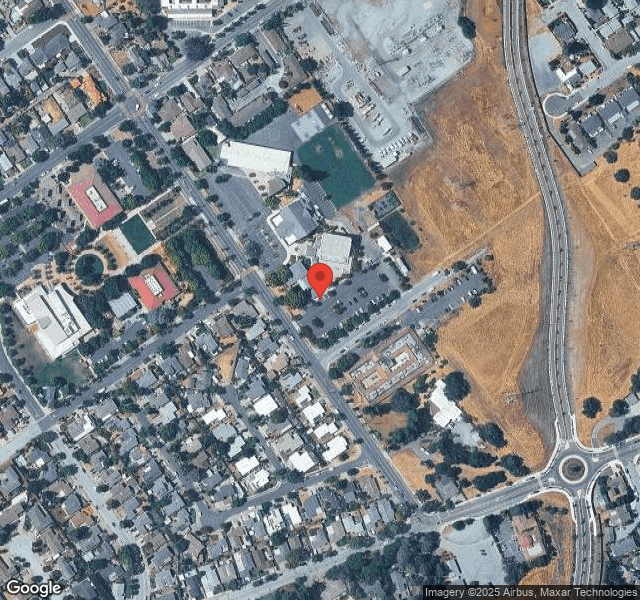

PACIFIC HILLS MANOR

370 NOBLE COURT, MORGAN HILL, CA 95037 (408) 779-7346
For profit - Limited Liability company 99 Beds COVENANT CARE Data: November 2025
Trust Grade
83/100
#157 of 1155 in CA
Last Inspection: June 2024

Within standard 12-15 month inspection cycle. Federal law requires annual inspections.

Overview

Pacific Hills Manor has received a Trust Grade of B+, indicating that it is above average and recommended for families considering care for their loved ones. It ranks #157 out of 1,155 nursing homes in California, placing it in the top half of facilities statewide, and #10 out of 50 in Santa Clara County, meaning there are only nine better options locally. The facility shows an improving trend, reducing its issues from seven in 2024 to just one in 2025. Staffing is a strong point, with a perfect 5/5 star rating and a turnover rate of only 27%, which is significantly lower than the state average, ensuring continuity of care. Notably, there have been no fines, indicating good compliance with regulations, and the facility has more RN coverage than 82% of California facilities, which enhances resident care. However, there are some concerns to be aware of. The inspector findings revealed several issues, including a failure to maintain sanitary conditions in the dishmachine, which could lead to foodborne illnesses, and lapses in hand hygiene practices during wound care and medication administration, raising potential infection risks. Additionally, there was a critical oversight in ensuring one resident received proper monitoring and follow-up care, which could impact their health and well-being. While the facility has many strengths, these incidents highlight areas needing attention and improvement.

Trust Score
B+
83/100
In California
#157/1155
Top 13%
Safety Record
Low Risk
No red flags
Inspections
Getting Better
7 → 1 violations
Staff Stability
✓ Good
27% annual turnover. Excellent stability, 21 points below California's 48% average. Staff who stay learn residents' needs.
Penalties
✓ Good
No fines on record. Clean compliance history, better than most California facilities.
Skilled Nurses
✓ Good
Each resident gets 46 minutes of Registered Nurse (RN) attention daily — more than average for California. RNs are trained to catch health problems early.
Violations
⚠ Watch
39 deficiencies on record. Higher than average. Multiple issues found across inspections.
★★★★★
5.0
Overall Rating
★★★★★
5.0
Staff Levels
★★★★★
5.0
Care Quality
★★★★☆
4.0
Inspection Score
Stable
2024: 7 issues
2025: 1 issues

The Good

  • 5-Star Staffing Rating · Excellent nurse staffing levels
  • 5-Star Quality Measures · Strong clinical quality outcomes
  • Low Staff Turnover (27%) · Staff stability means consistent care
  • Full Sprinkler Coverage · Fire safety systems throughout facility
  • No fines on record
  • Staff turnover is low (27%)

    21 points below California average of 48%

Facility shows strength in staffing levels, quality measures, staff retention, fire safety.

The Bad

Chain: COVENANT CARE

Part of a multi-facility chain

Ask about local staffing decisions and management

The Ugly 39 deficiencies on record

Sept 2025 1 deficiency
CONCERN (D) 📢 Someone Reported This

A family member, employee, or ombudsman was alarmed enough to file a formal complaint

Potential for Harm - no one hurt, but risky conditions existed

Comprehensive Care Plan (Tag F0656)

Could have caused harm · This affected 1 resident

**NOTE- TERMS IN BRACKETS HAVE BEEN EDITED TO PROTECT CONFIDENTIALITY** Based on observation, interview, and record review, the facility failed to develop and implement a comprehensive, resident-cente...

Read full inspector narrative →
**NOTE- TERMS IN BRACKETS HAVE BEEN EDITED TO PROTECT CONFIDENTIALITY** Based on observation, interview, and record review, the facility failed to develop and implement a comprehensive, resident-centered care plan for one out of three residents investigated, (Resident 1), when Resident 1 did not have a care plan for his broken tooth. This failure had the potential to result in the resident, not receiving the proper intervention and monitoring necessary to maintain his highest level of well-being. Findings: During the observation of Resident 1 on 8/12/25 at 3:00 p.m., Resident 1 was in his room, laying in bed. He's alert, oriented, calm, comfortable and verbally responsive. Resident 1 confirmed that he had a broken tooth, but it was already extracted. Review of Resident 1's admission record (document created when a resident is admitted to a healthcare facility, containing the vital information about the resident) indicated, Resident 1 was readmitted to the facility on [DATE] with diagnoses including encounter for palliative care (specialized medical approach that focuses on improving the quality of life for people with serious or life-threatening illnesses), alcoholic cirrhosis of liver (chronic condition characterized by permanent scarring of the liver tissue) with ascites (abdominal swelling caused by accumulation of fluid, most often related to liver disease) and type 2 diabetes mellitus (chronic condition characterized by high blood sugar, insulin resistance, and relative lack of insulin) with other specified complication (secondary disease, condition, or issue that arises during the course of a primary disease or after a medical procedure or treatment). Review of Resident 1's care plans indicated, Resident 1 did not have a care plan created when he had a change of condition (any significant, clinically important deviation from a resident's baseline in physical, cognitive, behavioral, or functional domains that may require a change in their plan of care) for his broken tooth, including the interventions to be done and the monitoring of it. During the concurrent review of Resident 1's care plans and interview with the director of nursing (DON) on 8/12/25 at 2:20 p.m., DON acknowledged that Resident 1 did not have a care plan initiated for his change of condition, for having a broken tooth. DON further acknowledged that a care plan should have been made for Resident 1's broken tooth to address Resident 1's needs but there was no care plan at all, and she further stated that she would update his care plan. During another interview with DON on 9/10/25 at 1:00 p.m., DON verified that for Resident 1's broken tooth, a care plan should have been created for proper monitoring, interventions and follow up. Review of the facility's policy and procedure titled, Care Plan, Episodic, dated August 2014 indicated, It is the policy of the facility to develop an episodic/short term care plan for acute temporary changes and/or condition. Entries will be realistic and have measurable goals and timeframes and responsibility for meeting the specific goals Review of the facility's policy and procedure titled, Care Plan, Comprehensive, dated 2008 indicated, It is the policy of the facility to develop, in conjunction with the resident and/or representative, the Comprehensive Resident Care Plan. The care plan is directed toward achieving and maintaining optimal status of health, functional ability, and quality of life The Care Plan is individualized by identified resident problems, unique characteristics, strengths, and individual needs Review of the facility's policy titled, Change of Condition, dated 2016 indicated, Purpose: To appropriately assess, document and communicate changes of condition To provide treatment and services to address changes in accordance with resident needs and existing Advance Directives
Nov 2024 1 deficiency
CONCERN (D) 📢 Someone Reported This

A family member, employee, or ombudsman was alarmed enough to file a formal complaint

Potential for Harm - no one hurt, but risky conditions existed

Quality of Care (Tag F0684)

Could have caused harm · This affected 1 resident

Based on interview and record review the facility failed to have a procedure in place to ensure a resident who displays, or who has a mental disorder, receives appropriate treatment and services to co...

Read full inspector narrative →
Based on interview and record review the facility failed to have a procedure in place to ensure a resident who displays, or who has a mental disorder, receives appropriate treatment and services to correct the assessed problem for one of two sampled residents (Resident 1). The facility did not implement the psychiatry recommendations timely for Resident 1 after their assessment and psych evaluation was completed due to the facility not having a procedure to follow up with the recommendations from outside referrals. This failure resulted in a delay of starting Resident 1's new treatment plan by three weeks. This failure had the potential to negatively affect Resident 1's behavior and the safety of other residents in the facility. Findings: During a review of Resident 1's Diagnosis Information, undated, document indicated, Resident 1 was diagnosed with Schizophrenia, Unspecified [a serious mental health condition that affects how people think, feel and behave]. During a review of Resident 1's Care Plan dated, 6/28/22 indicated, a Focus of Potential Behavior disturbance Related to DX [diagnosis of] Schizophrenia manifested by restlessness with agitation.Interventions/Tasks. Monitor for behavior. During a review of Resident 1's Care Plan dated, 2/26/24 indicated, a Focus of Resident has a positive indication of Mental Illness.Interventions/Tasks.follow up with psych service as needed. During a review of Resident 1 and Resident 2's Verification of Incident Investigation dated 9/10/24, indicated and allegation of physical abuse was investigated between Resident 1 (alleged aggressor) and Resident 2 (alleged victim). During a review of Resident 1's Progress Note dated 9/6/24 note indicated, given he [Resident 1] has had 2 altercations with other PT's [patients] recently NP [Nurse Practitioner] will order a Psych eval [Psychiatric Evaluation] to evaluate possible restart of Zyprexa [antipsychotic medication that can treat several mental health conditions like schizophrenia]. Signed by Resident 1's Physician. During an interview on 10/8/24, at 1:45 pm, with Social Services Director (SSD) SSD stated, she sent the referral to the NP for a psych eval for Resident 1. SSD stated, she did not see the recommendation by the NP until today (10/8/24), and the medication order from her recommendation was ordered today. SSD stated the facility did not have a procedure how to follow up the recommendations from the psychiatry referral made by the NP. During a review of Resident 1's Psychiatry Diagnostic Interview(psych eval) dated 9/18/24, Interview indicated, NP conducted a psych eval on Resident 1. Interview indicated, Reason for visit: Diagnostic evaluation due to altercation with another resident, concern for agitation or aggression.Recommend increase Mirtazapine [antidepressant medication] to 15 mg nightly for depression m/b [manifested by] verbalizations if sadness.Consideration should be given to adding mood stabilizing agents such as Depakote sprinkles [This medication is used to treat seizure disorders and mental/mood conditions] 125 mg BID [twice daily] for irritability and aggression, given two aggressive episodes in the past year and mild agitation with staff in hallways.Redirect patient when possible. Use caution given his history of physical aggression. During an interview on 10/10/24 at 8:06 a.m., with NP, NP stated, she performed a psychiatric assessment for Resident 1 on 9/18/24 and uploaded her eval/assessment with her recommendations that same day. NP stated, she does not send the recommendations to the facility, but the staff there have access to an online portal and can access her recommendations as soon as she uploads them. NP stated she was not contacted by the facility until 10/8/24 when they asked her for the psych assessment for Resident 1 and she provided a copy. During a review of Job Description for Social Services Director, undated, Job Description indicated, Manages department to assure assessments, discharges and psychological needs of residents are met.
Oct 2024 2 deficiencies
CONCERN (D) 📢 Someone Reported This

A family member, employee, or ombudsman was alarmed enough to file a formal complaint

Potential for Harm - no one hurt, but risky conditions existed

Report Alleged Abuse (Tag F0609)

Could have caused harm · This affected 1 resident

Based on interview and record review, the facility failed to report the results of its abuse investigations to the State Agency (California Department of Public Health-CDPH) within five working of the...

Read full inspector narrative →
Based on interview and record review, the facility failed to report the results of its abuse investigations to the State Agency (California Department of Public Health-CDPH) within five working of the incident for two of three sampled Residents (Resident 1 and Resident 2). When: 1. The facility failed to report the results of the investigation of Resident 1's verbal abuse allegation to CDPH within five working days of the alleged incident. 2. The facility failed to report the results of the investigation of Resident 2's psychological abuse allegation to CDPH within five working days of the alleged incident. These failures resulted in CDPH being unaware of the outcome of Resident 1's verbal abuse allegation investigation and Resident 2's psychological abuse allegation investigation. This failure also had the potential for Resident 1 and Residents 2's abuse allegations to not be investigated thoroughly. Findings: 1. During a review of Resident 1's SOC 341 (Abuse allegation reporting form) dated 5/28/24, SOC 341 indicated, an abuse allegation was reported to facility on 5/27/24 at approximately 3 p.m. SOC 341 indicated, a verbal abuse from a staff member to Resident 1 was alleged. During a review of Resident 1's Verification of Incident Investigation(also known as 5-day report), dated 6/4/24, indicated, alleged incident occurred on 5/27/24, and reported to CDPH 5/28/24. 5 day report indicated, a family member of Resident 1 alleged verbal abuse occurred with a facility staff member and Resident 1 on 5/27/24. There is no indication or date the report was sent to CDPH. During an interview on 8/22/24, at 4 p.m., with Administrator, Administrator stated, she did not have any documented evidence the facility sent a 5 day report to CDPH for Resident 1's abuse allegation within 5 working days of the allegation. 2. During a review of Resident 2's SOC 341 dated 5/3/24, SOC 341 indicated, an abuse allegation from a staff member against Resident 2 was alleged to occur on 5/2/24 around 7:30 p.m. SOC 341 indicated, a psychological abuse incident was alleged between a staff member and Resident 2. During a review of Resident 2's Verification of Incident Investigation(also known as 5-day report), dated 5/8/24, document indicated, the facility determined Resident 2's abuse allegation was unsubstantiated. Document indicated, it was faxed to CDPH on 5/13/24, 10 days after the facility was aware of the allegation. During an interview on 8/22/24, at 9:34 a.m., with Administrator, Administrator stated she believes the 5-day report was sent to CDPH after she signed the document. Administrator was unable to verify the date the facility sent the 5-day report for Resident 2. Administrator stated, she could not confirm when the 5-day report was sent to CDPH for Resident 2. There was no documented evidence the 5 day report of investigation was sent to CDPH. During a review of Resident 2's Verification of Incident Investigation(also known as 5-day report) dated 5/13/24, indicated, the 5 day-report was faxed to CDPH on 5/13/24 (Ten days after facility was aware of allegation). During a review of the Facility's Policy and Procedure (P&P) titled, Alleged or Suspected Abuse and Crime Reporting, the P&P indicated, 6. Investigation Injuries of unknown source, suspected or alleged abuse, neglect, and involuntary seclusion, misappropriation of resident property or funds, mistreatment, and suspicions of a crime will be investigated with results reported in accordance with facility policies and federal and state regulations.
CONCERN (D) 📢 Someone Reported This

A family member, employee, or ombudsman was alarmed enough to file a formal complaint

Potential for Harm - no one hurt, but risky conditions existed

Investigate Abuse (Tag F0610)

Could have caused harm · This affected 1 resident

Based on interview and record review, the facility failed to follow its Policy and Procedure (P&P) titled, Alleged or Suspected Abuse and Crime Reporting for two of three sampled residents (Resident 1...

Read full inspector narrative →
Based on interview and record review, the facility failed to follow its Policy and Procedure (P&P) titled, Alleged or Suspected Abuse and Crime Reporting for two of three sampled residents (Resident 1 and Resident 2) when: The facility failed to provide thorough summary of findings including information obtained in interviews for abuse investigations for Resident 1 and Resident 2, to the State Agency (CDPH-California Department of Public Health) upon request. This deficient practice resulted in CDPH being unaware if the abuse allegations by Resident 1 and Resident 2 were investigated thoroughly. Findings: During a review of Resident 1's SOC 341 (mandated abuse allegation reporting form) dated 5/28/24, SOC 341 indicated, an abuse allegation was reported to facility on 5/27/24 at approximately 3 p.m. SOC 341 indicated, a verbal abuse from a staff member against Resident 1 was alleged. During a review of Resident 1's Verification of Incident Investigation (also known as 5-day report) dated 6/4/24, document indicated, the facility determined Resident 1's abuse allegation was unsubstantiated(not supported by evidence). Report indicated, no other specific evidence related to the investigative findings, such as interviews or medical record reviews. During a review of Resident 2's SOC 341 dated 5/3/24, SOC 341 indicated , an abuse allegation from a staff member against Resident 2 was alleged to occur on 5/2/24 around 7:30 p.m. During a review of Resident 2's Verification of Incident Investigation dated 5/8/24, document indicated, the facility determined Resident 2's abuse allegation was unsubstantiated. Document indicated, no other specific evidence related to the investigative findings, such as interviews or medical record reviews. During an interview on 8/22/24, at 9:34 a.m., with Administrator, Administrator stated, she was unable to provide the investigative interviews, follow-up actions, or any other evidence of the facility's thorough summary of investigation or findings for both abuse allegations (Resident 1 and Resident 2) because they are protected documents. The surveyor had two request regarding the abuse investigative documents for Resident 1 and Resident 2 but the Administrator denied the request for both times. During a review of the facility's P&P titled, Alleged or Suspected Abuse and Crime Reporting dated 2022, the P&P indicated, 6. Investigation .The facility will complete a Verification of Incident Investigation giving a brief description of incident, thorough summary of findings including information obtained in interviews, follow-up actions taken and notifications made. This verification may be provided to federal or state survey agencies upon request.
Jun 2024 1 deficiency
CONCERN (D)

Potential for Harm - no one hurt, but risky conditions existed

Assessment Accuracy (Tag F0641)

Could have caused harm · This affected 1 resident

Based on interview, record review, and review of the Centers for Medicare and Medicaid Services (CMS) Long-Term Care Facility Resident Assessment Instrument [RAI] 3.0 User's Manual, the facility faile...

Read full inspector narrative →
Based on interview, record review, and review of the Centers for Medicare and Medicaid Services (CMS) Long-Term Care Facility Resident Assessment Instrument [RAI] 3.0 User's Manual, the facility failed to ensure a Minimum Data Set (MDS) assessment for 1 (Resident #13) of 3 residents reviewed for MDS discrepancies accurately reflected the resident was receiving an antiplatelet medication, instead of indicating the resident received an anticoagulant medication. Findings included: CMS's Long-Term Care Facility Resident Assessment Instrument 3.0 User's Manual, dated 10/2023, Chapter 3: MDS Items, N0415: High Risk Drug Classes: Use and Indication, revealed, Steps for Assessment 1. Review the resident's medical record for documentation that any of these medications were received by the resident and for the indication of their use during the 7-day-look-back period (or since admission/entry or reentry if less than 7 days. The RAI User's Manual further indicated, Coding Instructions *Code all high-risk medications according to their pharmacological classification, not how they are being used. The manual specified N0415I1. Antiplatelet should be checked if medications, including clopidogrel, were taken by the resident at any time during the 7-day observation period. An admission Record revealed the facility admitted Resident #13 on 05/29/2024. According to the admission Record, the resident had a medical history that included diagnoses of congestive heart failure, peripheral vascular disease, and hypertension. Resident #13's Order Summary Report, listing active orders as of 06/26/2024, contained an order, started on 05/30/2024, for clopidogrel bisulfate (an antiplatelet medication), 75 milligrams (mg), one tablet by mouth one time a day for blood clot prevention. The Order Summary Report did not reflect any orders for medications classified as anticoagulants. Resident #13's care plan included a focus area, initiated 05/29/2024, that indicated the resident was at risk for abnormal bruising or bleeding related to antiplatelet medication use. An admission Minimum Data Set (MDS), with an Assessment Reference Date (ARD) of 06/02/2024, revealed Resident #13 was coded under section N0415 as having received an anticoagulant medication, instead of an antiplatelet medication, during the seven-day look-back period. During an interview on 06/26/2024 at 12:43 PM, the MDS Director stated MDS assessments were coded according to what medications a resident was receiving. The MDS Director confirmed clopidogrel bisulfate was an antiplatelet medication and should be coded on the MDS as an antiplatelet medication. During an interview on 06/26/2024 at 1:14 PM, the Administrator stated she expected MDS assessments to be accurately coded.
May 2024 1 deficiency
CONCERN (E) 📢 Someone Reported This

A family member, employee, or ombudsman was alarmed enough to file a formal complaint

Potential for Harm - no one hurt, but risky conditions existed

Quality of Care (Tag F0684)

Could have caused harm · This affected multiple residents

**NOTE- TERMS IN BRACKETS HAVE BEEN EDITED TO PROTECT CONFIDENTIALITY** Based on interview, and record review, the facility failed to ensure one of three residents (Resident 1) received the necessary ...

Read full inspector narrative →
**NOTE- TERMS IN BRACKETS HAVE BEEN EDITED TO PROTECT CONFIDENTIALITY** Based on interview, and record review, the facility failed to ensure one of three residents (Resident 1) received the necessary care and services when: 1a. The interdisciplinary team (IDT - a group of health care professionals from diverse fields who work toward a common goal for residents) did not develop a change in condition plan of care (POC) for Resident 1; 1b. There was no close monitoring of Resident 1 for signs and symptoms of hypoglycemia (low blood sugar level) and no documentation of hypoglycemia protocol in Resident 1's clinical record; and 1c. Licensed nurses did not follow Resident 1's physician order for post operative (post-op, aftercare assessment and treatment after a surgery) follow-up with the surgeon. These failures had the potential to affect resident's care, health, and well-being. Findings: 1a. Review of Resident 1's admission Record dated 12/26/2023, indicated, Resident 1 was admitted to the facility on [DATE] with diagnoses including acute kidney failure (a sudden loss of kidney function), chronic metabolic acidosis (a condition in which there is too much acid in the body fluids), cystitis (swelling of the bladder [an organ that stores the urine secreted by the kidneys], usually caused by bladder infection), dysphagia (difficulty in swallowing) , and retention of urine (inability to empty all the urine from the bladder). Further review indicated, Resident 1 was discharged to hospital on [DATE]. Review of Resident 1's Admission/5-day scheduled minimum data set (MDS, an assessment tool) dated 11/28/2023, indicated Resident 1's brief interview for mental status (BIMS, assessment for cognition level) score was 15 (13-15 score suggests the resident is cognitively intact). Review of Resident 1's interim payment assessment (IPA, an optional MDS assessment when resident had experienced changes to his or her clinical condition) MDS, dated [DATE], indicated Resident 1's BIMS score was 03 (0-7 suggests severe cognitive impairment). During an interview with director of nursing (DON) on 12/26/2023 at 12:51 p.m., DON confirmed there was an IPA MDS assessment completed for Resident 1. DON stated they did the IPA MDS assessment because there was a decline in Resident 1's cognition and had intravenous infusion (or IV drip, administration of fluids or medicines straight to the resident's veins rather than having to swallow). DON confirmed the IDT did not address Resident 1's decline in cognition and there was no plan of care developed. During interview with certified nursing assistant A (CNA A) on 12/26/2023 at 1:46 p.m., CNA A confirmed she took care of Resident 1. CNA A stated Resident 1 was very confused when she was transferred out to the hospital. During an interview with MDS assistant (MDSA) on 5/10/2024 at 10:27 a.m., MDSA stated they did the IPA MDS assessment when there were some changes in resident's care and resident's condition. MDSA further stated IDT meeting should have been done first for MDS nurses to know if an IPA assessment was needed to be completed. MDSA confirmed there should have been a comprehensive plan of care to address the resident's decline. During a concurrent interview and record review on 5/10/2024 at 11:21 a.m., assistant director of nursing (ADON) reviewed Resident 1's clinical records. ADON confirmed Resident 1's changed in condition were as follows: critical blood glucose levels at 39-50 milligrams per deciliter (mg [unit of measurement]/ dL[unit of capacity]) (Normal range: 70-100 mg/dL) as indicated in Resident 1's progress notes dated 11/30, 12/13 and 12/14/2023; increased confusion as indicated in Resident 1's progress note dated 12/11/2023 and with increased word salad (a jumble of extremely incoherent speech), low blood pressure, mildly increased heart rate as indicated in the nurse practitioner's (NP) note dated 12/12/2023. Another review of NP's progress note dated 12/13/2023, ADON confirmed Resident 1 had mild expressive aphasia (a language disorder wherein the person is unable to communicate effectively to others). ADON stated Resident 1 was not admitted with aphasia. ADON confirmed she was a member of the IDT. ADON tried to look for the IDT notes in Resident 1's clinical records but did not find one. ADON confirmed IDT missed to review Resident 1's condition and they missed to develop a new plan of care. ADON stated there should have been an IDT meeting note to addressed Resident 1's decline, possible contributing factors, and developed plan of care. ADON further stated, they had a walking IDT where the team would make rounds and visited residents with change in condition. During a concurrent interview and record review on 5/10/2024 at 12:02 p.m., case manager (CM) reviewed Resident 1's clinical records. CM confirmed she was Resident 1's case manager and she was involved in the IDT. CM confirmed she did not find any documentation of the IDT's meeting notes and the POC to address Resident 1's decline.CM stated she was not even aware about Resident 1's changed in condition before Resident 1 was transferred out to the hospital. CM confirmed Resident 1 did not come back when transferred out. During a review of the facility's policy and procedure titled, INTERDISCIPLINARY WALKING ROUNDS, dated in 2017, indicated, Walking Rounds are completed on a regularly scheduled basis to manage new admission transitions of care and to mitigate unnecessary transfers related to changes of condition. The results of such IDT efforts assist in both clinical and financial management by identifying changes and intervening more quickly. Additional positive outcomes would be anticipated: Improved resident/family satisfaction & decreased grievances due to enhanced communication and attention .Provide supportive documentation for the at-risk resident and for on-going observation of resident condition. IDT members see the resident through their own expertise, all at the same time, thereby developing a holistic picture of the resident, helping to define the most appropriate referrals and interventions .There are four types of IDT Walking Rounds .4. Clinical Change of Condition: Required meeting attendees: DON, ADON and/or nursing designee. Other IDT members as necessary. Based on SBAR [Situation, Background, Assessment and Recommendation, a documentation completed by nurses whenever there is a change in resident's condition] and/or other observations, the DON reviews clinical condition changes and decides whether a COC WR [change of condition walking rounds] is necessary (by next business day). This may include conditions such as .weight loss, change in behavior .worsening body systems concerns. 1b. Review of Resident 1's SBAR Communication Form and Progress Note for RNs [Registered Nurses] /LPN [also known as Licensed Vocational Nurses (LVNs)] /LVNs dated 11/29/2023, indicated Resident 1 had a critical low blood sugar level of 50mg/dL. Further review indicated, Faxed results to MD [medical doctor]. Pending response. Will endorse to AM [morning] Supervisor to F/U [follow up] with MD. There was no other documented assessment, or a repeat blood sugar checked, and no documented interventions performed to address Resident 1's critical low blood sugar level. Review of Resident 1's General Note dated 12/13/2023 at 12:52 a.m., indicated, Received update from lab [laboratory] with critical low value for glucose [blood sugar] of 44. Notified MD of critical value . Further review did not indicate further assessment, monitoring and other interventions to address Resident 1's critical low blood sugar. Review of Resident 1's General Note dated 12/14/2023 at 1:00 a.m., indicated, Received critical low glucose level of 39 .MD notified of critical low value and lab results faxed to MD. No new orders at this time. Further review did not indicate further assessment, monitoring and other interventions to address Resident 1's critical low blood sugar. During an interview with ADON on 12/26/2023 at 12:14 p.m., ADON stated nurses should have assessed Resident 1 for any signs and symptoms of hypoglycemia, checked her blood sugar again, initiated any possible interventions and then, notified the physician. ADON further stated, nurses should have monitored Resident 1 for any signs and symptoms of hypoglycemia. During an interview with licensed vocational nurse B (LVN B) on 12/26/2023 at 12:26 p.m., LVN B confirmed he was one of the nurses who took care of Resident 1 and LVN B was aware about Resident 1's critical low blood sugar level. LVN B stated, once they received a critical low blood sugar level, she should have assessed the resident for any signs and symptoms of hypoglycemia, they could re-check the blood sugar, offer orange juice if it was still low then notify the physician. LVN B further stated, they should have documented whatever interventions they did to the resident. During an interview with DON on 12/26/2023 at 12:51 p.m., DON stated nurses should have notified the physician right away, assessed resident and initiated an intervention to manage hypoglycemia. DON did not have a clear answer whether nurses should re-checked Resident 1's blood sugar level again after they received a critical low blood sugar level from the laboratory. During an interview with licensed vocational nurse C (LVN C) on 12/26/2023 at 1:30 p.m., LVN C confirmed Resident 1 was pretty much confused, when she took care of her. LVN C stated, they should assess the resident when they received resident's critical low blood sugar level, offered orange juice, if needed, and notified the physician. LVN C further stated, they should have manage intervention related to hypoglycemia provided to the resident. During a review of the facility's policy and procedure titled, Hypoglycemia Management, dated 11/2021, indicated, It is the policy of this facility to ensure effective management of a resident who experiences a hypoglycemic episode. The facility will identify residents that are at risk for hypoglycemia and observe them for signs and symptoms of low blood glucose. A bedside blood glucose test should be administered for any resident reporting or experiencing symptoms of hypoglycemia such as: .fast heart beat .confusion .weakness or having no energy. If the blood glucose reading is 70 mg/dL or below, the nurse will utilize the hypoglycemic protocol as per the practitioner's orders, with follow up blood glucoses as indicated, and notify the practitioner of the results as ordered. The blood sugar(s) and treatment will be documented as per facility protocol. 1c. Review of Resident 1's clinical records titled, Interfacility Transfer Report, dated 11/24/2023, indicated Resident 1 had a discharged order for a post op appointment with the general surgeon on 12/4/2023 at 2:15 p.m. Review of Resident 1's Order Summary Report, order dated 11/24/2023, indicated, a post op appointment with the general surgeon on 12/4/2023 at 2:15 p.m. During a phone interview with DON on 5/14/2024 at 3:32 p.m., DON confirmed Resident 1's post op appointment was not followed as ordered by the physician. DON stated, honestly speaking, I am not sure of what happened. DON confirmed there was no documentation that indicated Resident 1 made it to her appointment. DON stated, she interviewed the nurse who received the order and confirmed the physician's order was not properly transcribed to Resident 1's medication administration record (MAR). DON confirmed, the order was not in Resident 1's MAR that was why nobody knew about the appointment. DON further confirmed, their social services did not receive the appointment information for them to set up transportation. During a review of the facility's policy and procedure titled, PROCESSING PHYSICIAN ORDERS, dated August 2017, indicated, It is practice of this facility to process physician orders through entry into the Electronic Health Record (EHR) and to clarify these orders with the attending physician, including communication of any system identified medication contraindications prior to submission to the pharmacy. To verify and maintain accuracy of physician orders to provide appropriate care and services . Upon patient admission/readmission the LN [licensed nurse) enters the hospital transfer orders, obtained from the acute hospital discharge summary or discharge order sheet . All admission orders are reviewed the next business day by nursing management.
Apr 2024 1 deficiency
CONCERN (D) 📢 Someone Reported This

A family member, employee, or ombudsman was alarmed enough to file a formal complaint

Potential for Harm - no one hurt, but risky conditions existed

Pressure Ulcer Prevention (Tag F0686)

Could have caused harm · This affected 1 resident

Based on observation, interview, and record review the facility failed to ensure to assess, notify to physician and Resident's responsible party (RP: person act on behalf of resident), and document pr...

Read full inspector narrative →
Based on observation, interview, and record review the facility failed to ensure to assess, notify to physician and Resident's responsible party (RP: person act on behalf of resident), and document pressure injury (injury to skin and underlying tissue resulting from prolonged pressure on the skin) on bilateral (both) buttocks for one of two sampled resident (Resident 1). This failure had the potential for delayed wound healing, adverse effects on the health and wellbeing of Resident 1. Findings: Review of Resident 1 face sheet (FS: a document that gives a resident's information at a quick glance) indicated Resident 1 was admitted to facility on 11/14/2023. Resident 1's admission diagnoses including diabetes type 2 (high sugar levels in blood), and dementia (loss of cognitive functioning, thinking, and reasoning those interfere with daily functioning). Resident 1's FS also indicated family member assigned as RP for Resident 1. Review of Resident 1's braden scale for predicting pressure sore risk assessment upon the admission to facility dated 11/14/2023 indicated score of 14 (score of 13-14: moderate risk). Review of another braden scale for predicting pressure sore risk assessment for Resident 1 dated 2/6/2024 indicated score of 12 (score of 10-12: high risk). Review of Resident 1's physician orders dated 2/7/2024 indicated, bilateral buttocks clean with normal saline (solution used to clean wounds), apply calazime (ointment used to protect skin, and treat skin irritation) daily. Review of Resident 1's clinical documentation indicated there was no documented evidence of change of condition (COC: detecting and promptly reporting changes of resident's clinical condition), or situation, background, assessment, recommendations (SBAR: written communication tool helps to provide essential, concise information), measurements of affected area, and notification to physician or RP of pressure injury for bilateral buttocks for Resident 1 on 2/7/2024. During a concurrent record review and interview with licensed vocational nurse A (LVN A) on 3/4/2024 at 2:09 p.m., LVN A confirmed physician order on 2/7/2024 for bilateral buttocks area for Resident 1. LVN A acknowledged there was no documentation for pressure injury assessment, measurements of pressure injury on the bilateral buttocks. LVN A also confirmed there was no documentation for notification to Resident 1's physician or RP of the pressure injury area on 2/7/2024. LVN A stated there was a non-blanching (skin does not turn white when applied pressure, clinically important skin abnormality) redness on both buttock area and received order to treat the area from physician on 2/7/2024. LVN A further stated she did not measure area of redness, document, inform RP and physician regarding pressure injury on bilateral buttoks for Resident 1 on 2/7/2024. During an interview with director of nursing (DON) on 3/4/2024 at 3:06 p.m., DON confirmed there was no documentation for assessment for pressure injury for Resident 1. DON stated nursing staff should have assessed, measured, informed RP and physician, and documented for Resident 1 on 2/7/2024. DON also stated there was a potential for pressure injury delayed healing process without appropriate clinical assessment. Review of facility's policy and procedure (P&P) titled, Change of Condition, dated 2016, the P&P indicated, Document assessment findings and communication as soon as practical. Notify physician and responsible party as assessment findings. Review of facility's P&P titled, Skin Integrity, dated 2016, the P&P indicated, If skin integrity issues are identified post-admission to the facility the following documented information is required: Wound Specifics: Location of wound, Size of the wound .
Feb 2024 1 deficiency
CONCERN (D) 📢 Someone Reported This

A family member, employee, or ombudsman was alarmed enough to file a formal complaint

Potential for Harm - no one hurt, but risky conditions existed

Quality of Care (Tag F0684)

Could have caused harm · This affected 1 resident

Based on interview and record review the facility failed to provide needed care or services based on professional standards of practice to one of three sampled residents (Resident 1) when: 1. Resident...

Read full inspector narrative →
Based on interview and record review the facility failed to provide needed care or services based on professional standards of practice to one of three sampled residents (Resident 1) when: 1. Resident 1 did not receive a Magnetic Resonance Imaging (MRI-scanner that uses magnetic and radio waves to generate images of the organs in the body) and physician was not notified regarding refusal of Resident 1; and 2. There was no documented evidence the physician was notified regarding the refusal of the MRI for Resident 1. These failures had the potential to negatively affect Residents 1 ' s health, due to the potential of an undiagnosed injury. Findings: During an interview on 12/19/23, at 1:11 p.m., with Resident 1, she was unable to answer simple questions. During a review of Resident 1 ' s Brief Interview for Mental Status (BIMS- tool used to screen and identify the cognitive condition of residents), dated 10/7/23, the BIMS indicated, a score of 11 (indicating moderate cognitive impairment: confusion or memory loss that is happening more often or is getting worse during the past 12 months.) During a review of Resident 1 ' s Trauma Critical Care Prog Note dated 6/25/23, Progress Note indicated, Resident 1 was admitted to Trauma Critical Care unit on 6/25/23. During a review of Resident 1 ' s Diagnosis, Assessment & Plan from the acute care hospital dated, 6/25/23, indicated, Problem List 1. Vertigo. 2.fracture of nasal bone. 3. Pneumothorax [collapsed lung] 4. Multiple rib fractures 5. Chest wall hematoma [a solid swelling of clotted blood within the tissues] 6. Thoracic [part of middle spine] compression fracture. 7. Fracture of distal fibula [lower leg bone]. During a review of Resident 1 ' s MD Progress Noted dated 8/23/23, the Progress Note indicated, [Resident 1] who was sent to ED after a MVC[motor vehicle collision] LOC [loss of consciousness] 2-3mins. Found pneumothorax, multiple ribs fracture, [left] ankle and wrist fracture. CT[computed tomography: medical imaging technique used to obtain detailed internal images of the body] head noted [left] frontal scalp hematoma and [right] nasal bone [fracture]. [Resident 1] was confused after accident. During a review of Resident 1 ' s Facesheet (undated), Facesheet indicated, Resident 1 was admitted to facility on 6/29/23. During a review of Resident 1 ' s Physician Order dated 9/19/23, Order indicated, Neurology consult, MRI of head Dx[diagnosis]: Decreased cognitive function after car accident. During a review of Resident 1 ' s Order Details, dated 10/17/23, Order details indicated, facility ordered a MRI due to cognitive function. During a review of Resident 1 ' ' s Progress Note dated 11/21/23, Progress note indicated, Resident refused to go to MRI @ 11:30 AM. During a concurrent interview and Record Review, on 12/19/23, at 4:17 p.m., with Director of Nursing (DON), Resident 1 ' s Progress notes dated 6/29/23-12/19/23 was reviewed. The Progress notes indicated, no documentation Resident 1 ' s doctor was notified of her refusal for the MRI. DON stated, There should be a progress note regarding the refusal of Resident 1. There is no way to confirm MD was aware. During a review of the facility ' s policy & procedure (P&P) titled, Refusal of Treatment, dated 2014, the P&P indicated, 2. Notify the Physician of the resident ' s refusal of treatment and document notification.
Sept 2023 1 deficiency
CONCERN (D) 📢 Someone Reported This

A family member, employee, or ombudsman was alarmed enough to file a formal complaint

Potential for Harm - no one hurt, but risky conditions existed

Quality of Care (Tag F0684)

Could have caused harm · This affected 1 resident

**NOTE- TERMS IN BRACKETS HAVE BEEN EDITED TO PROTECT CONFIDENTIALITY** Based on interview and record review, the facility failed to make notification of resident's change in condition for one of thre...

Read full inspector narrative →
**NOTE- TERMS IN BRACKETS HAVE BEEN EDITED TO PROTECT CONFIDENTIALITY** Based on interview and record review, the facility failed to make notification of resident's change in condition for one of three sampled residents (Resident 1) when: 1.There was no documented evidence the nurses were notified by physical therapist (PT) and occupational therapist of Resident 1's sudden unsteadiness and impairment in balance; and 2.There was no evidence licensed nurses notified the physician and Resident 1's responsible party regarding the high blood pressure (BP, the pressure of blood pushing against the wall of your arteries) readings. These failures had the potential to negatively affect the resident's physical and psychosocial well-being. Findings: 1. Review of Resident 1's clinical record titled, admission Record, indicated Resident 1 was admitted on [DATE] with diagnoses including orthostatic hypotension (also known as postural hypotension - a form of low blood pressure that happens when standing up from sitting or lying down), dizziness and giddiness, and type 2 diabetes mellitus with diabetic neuropathy (occurs when the body is unable to regulate glucose [sugar] in the blood, with nerve damage). Review of Resident 1's clinical record titled, Progress Notes - Clinical Case Management, dated 6/15/2023 at 4:55 p.m., indicated Resident 1 was walking 160 feet using a front wheeled walker (FWW - an assistive device) with supervision, and did 6 steps in stairs with contact guard assistance (the physical therapist needs to merely have one or two hands on your body but provides no other assistance to perform the functional task). Further record review, dated 6/19/2023 at 3:41 p.m., indicated the clinical case manager issued a Notice of Medicare Non-Coverage (NOMNC - anotice that indicates when your care is set to end from a facility) letter to Resident 1 with the last covered day of 6/21/2023, which meant Resident 1 could either stay at the facility or discharge back home. Review of Resident 1's Physical Therapy Treatment Encounter Note(s), dated 6/21/2023, it indicated, Start of session patient (pt) in wc (wheelchair): BP 162/75 .1st Sit to stand: Pt unsteady and pt reporting difficulty with balance, unable to verbalize why . Further review did not reveal notification of changes to nurses. Review of Resident 1's Occupational Therapy Treatment Encounter Note(s), dated 6/21/2023, it indicated, pt completed STS (sit to stand) MI (modified independent), became wobbly leaning back and forth x2 (twice), therapist instructed pt to sit. Per pt she isn't sure why it happened, but she felt dizzy and lightheaded. Further review did not reveal notification of changes to nurses. During a phone interview with Resident 1's daughter on 6/29/2023 at 10:50 a.m., she stated Resident 1 called her and complained about weakness on her legs. Resident 1's daughter further stated staff never called her or Resident 1's doctor to notify about Resident 1's concern. During a concurrent interview and record review on 8/25/2023 at 11:55 a.m., the director of rehabilitation (DOR) reviewed Resident 1's therapy notes (PT and OT notes) dated 6/21/2023. DOR confirmed Resident 1's BP was >160, had unsteadiness, difficulty in balance, became wobbly and reported lightheadedness. DOR stated these changes should have been reported to nurses. DOR confirmed there was no documented evidence the therapists notified the nurses regarding above changed in Resident 1's condition on 6/21/2023. During an interview with the clinical case manager (CCM) on 8/25/2023 at 1:28 p.m., CCM confirmed she did not get any report with Resident 1's changed in condition on 6/21/2023. CCM stated the changes in Resident 1's condition should have been reported to licensed nurses. 2.Review of Resident 1's Order Summary Report, dated with active orders as of 6/5/2023, indicated the following: Midodrine (treat low blood pressure) HCl (Hydrochloride) 5 MG (milligram - unit of measurement) Give 3 tablet by mouth three times a day for Hypotension (low BP). Hold for SBP (Systolic Blood Pressure) > (greater than) 160. Droxidopa (medication used to treat orthostatic hypotension) Oral Capsule 100 MG Give 1 capsule by mouth three times a day for Dizziness. Hold for SBP >160. Review of Resident 1's Medication Administration Record (MAR), indicated the above ordered medications were held on the following dates and times: 6/11 at 5p.m. with BP of 165/59; 6/15 at 1 p.m. with BP of 162/63, and at 5 pm with BP of 174/69; 6/17 at 1 p.m. with BP of 165/65; 6/20 at 1 p.m. with BP of 170/60 and at 5 p.m. with BP of 161/51; 6/21 at 5 p.m. with BP of 183/65; and on 6/22/2023 at 1 p.m. with BP of 161/67. During a concurrent interview and record review on 8/25/2023 at 12:41 p.m., licensed vocational nurse A (LVN A) reviewed Resident 1's MAR and confirmed the above BP readings were >160. LVN A stated the physician should have been notified when medications were held due to BP outside the ordered parameter (limit). During a concurrent interview and MAR record review on 8/25/2023 at 1:40 p.m., with the director of nursing (DON). DON stated the BP >160 should have been reported to the physician. DON confirmed there was no documentation that the high readings of BP were reported to the physician. Review of Resident 1's Progress Notes, dated 6/19 to 6/22/2023, it indicated Resident 1's daughter told nurses, I am calling to let you know that I am not picking my mom up tomorrow. Because she is not safe. Further review indicated, Resident 1's daughter was concerned about Resident 1's high BP and lower legs weakness as reported to her by Resident 1. On 6/22/2023, Resident 1 was transferred out to the hospital as requested by her daughter for further evaluation. Review of Resident 1's Discharge Summary from the hospital dated 6/22/2023-6/25/2023, it indicated, Reason for Hospital admission (Admitting Diagnosis): Acute BLE (bilateral lower extremities - both lower legs) weakness, likely spinal cord infarct (is a stroke within the spinal cord or the arteries that supply it). During a review of the facility ' s policy and procedure titled, Change of Condition, dated 2016, indicated, PURPOSE: To appropriately assess, document and communicate changes of condition including diagnostic results to the primary care provider. To provide treatment and services to address changes in accordance with resident needs .If the change in condition does not require immediate 911 transfer the following steps may be followed: 1. Document assessment findings and communications as soon practical. 2. Notify physician and responsible party of assessment findings. 3. If unable to communicate with the Patient's attending/on-call physician, contact the facility Medical Director. 4. Notify the Patient and/ or responsible party of current status and subsequent actions/orders.
Jun 2023 1 deficiency
CONCERN (D) 📢 Someone Reported This

A family member, employee, or ombudsman was alarmed enough to file a formal complaint

Potential for Harm - no one hurt, but risky conditions existed

Deficiency F0745 (Tag F0745)

Could have caused harm · This affected 1 resident

**NOTE- TERMS IN BRACKETS HAVE BEEN EDITED TO PROTECT CONFIDENTIALITY** Based on interview and record review, the facility failed to provide a medically related social services to one of two sampled r...

Read full inspector narrative →
**NOTE- TERMS IN BRACKETS HAVE BEEN EDITED TO PROTECT CONFIDENTIALITY** Based on interview and record review, the facility failed to provide a medically related social services to one of two sampled residents (Resident 1) when: 1. The social service director (SSD) did not properly assess Resident 1's needs during the admission assessment and care planning process; and 2.The SSD did not provide Resident 1 with assistance when he lost his hearing aids twice. These failures had the potential to result in not able to meet Resident 1's communication needs. Findings: 1. Review of Resident 1's admission Record indicated, Resident 1 was admitted to the facility with diagnoses including other fracture (broken) of shaft of right fibula (one of two bones in the lower leg); pressure ulcer (skin injury in the bony area caused by pressure) of sacral region (lower part of the spine), and Alzheimer's disease (a progressive disease that destroys memory and mental functions). Review of Resident 1's Possessions List indicated, there were hearing aids and hearing aid charger upon admission. Resident 1's Possessions List was signed by Resident 1's wife. Review of social service admission assessment, dated 12/23/2022, indicated Resident 1's hearing aids were not mentioned. Review of Resident 1's admission Minimum Data Set (MDS - an assessment tool), dated 12/24/2022, indicated Resident 1 had adequate hearing and did not use hearing aid. The brief interview for mental status (BIMS- cognition level) score was 08 (moderately impaired cognition). Review of Resident 1's Physical Therapy and Occupational Therapy's Evaluation and Plan of Treatment, dated 12/20/2022, indicated, Precautions/Contraindications: .severe HOH (hard of hearing) - use pt's (patient's) hearing aids . During a concurrent interview and record review on 4/3/2023 at 1:21 p.m., the SSD reviewed Resident 1's admission MDS dated [DATE]. The SSD confirmed she did Resident 1's MDS sections B, C, D, E and Q. The SSD stated she would initiate a care plan regarding resident's cognition, use of eyeglasses, use of hearing aids and other care areas in her section. The SSD confirmed she did not code Resident 1's use of hearing aids and did not initiate the care plan. During a concurrent interview and record review on 4/3/2023 at 1:49 p.m., the MDS nurse (MDSN) reviewed Resident 1's admission MDS. The MDSN confirmed the SSD did Resident 1's MDS sections B, C, D, E, and Q. The MDSN stated the SSD should have also initiate a care plan related to the MDS sections. The MDSN confirmed hearing aids were not coded in the admission MDS and there was no hearing aid care plan initiated for Resident 1. The MDSN stated it was important to have the hearing aids care planned for staff to know how to care for Resident 1's hearing aids and how to communicate with Resident 1. Review of the SSD's Job Description, date revised 11/13/17, indicated, Key/Essential Duties: .Understands the MDS process and accurately assesses, documents and provides interventions in the areas of hearing, speech, vision, cognitive patterns .and communicates interventions to the care team. 2. Review of the Theft and Loss Investigation Report, dated 1/22/2023, initiated by Resident 1's wife, indicated Resident 1 lost his hearing aid. The report also indicated, the investigation was not completed. During a phone interview with Resident 1's wife on 3/30/2023 at 2:46 p.m., Resident 1's wife stated her husband lost his left hearing aid in January and reported it to the SSD. Resident 1's wife further stated, her husband also lost his right hearing aid; it was reported to SSD and was not advised to fill up another Theft and Loss Investigation Report. During a concurrent interview and record review on 6/26/2023 at 1:40 p.m., the SSD reviewed Resident 1's Theft and Loss Investigation Report and progress notes. The SSD acknowledged the Theft and Loss Investigation Report was filled out by Resident 1's wife on 1/22/2023 and was submitted to her. The SSD confirmed the investigation regarding the lost hearing aids were not completed and was only followed up until 3/16/2023. During an interview with the director of nursing (DON) on 6/26/2023 at 1:45 p.m., the DON confirmed the SSD should have followed up the investigation of the lost hearing aids and submitted the result of investigation to the administrator. During a review of the SSD's Job Description, date revised 11/13/17, indicated, Key/Essential Duties: .Understand, comply and promote rules regarding all resident rights, promote positive relationship with residents, visitors and regulators .Demonstrate key competencies as required by the position and in accordance with State/Federal regulations. Review of the facility's policy and procedure, titled, Theft and Loss Report, dated November 2016, indicated, OBJECTIVE: All residents/families who report missing or stolen property can expect to have their concern investigated .PROCESS: 4. Social Services or a designee will investigate report, interview staff and residents and provide the Executive Director with information regarding the missing item(s).
Nov 2022 1 deficiency
CONCERN (D) 📢 Someone Reported This

A family member, employee, or ombudsman was alarmed enough to file a formal complaint

Potential for Harm - no one hurt, but risky conditions existed

Deficiency F0658 (Tag F0658)

Could have caused harm · This affected 1 resident

Based on interview and record review the facility failed to follow professional standards of care in developing a timely a care plan and implementing a care measure regarding foot wound for one of thr...

Read full inspector narrative →
Based on interview and record review the facility failed to follow professional standards of care in developing a timely a care plan and implementing a care measure regarding foot wound for one of three sampled residents (Resident 1). This failure placed the resident at risk for health complications. Findings: Review of Resident 1 ' s admission Nursing Assessment, dated 6/30/22 at 8:49 p.m., indicated the resident had a right heel open area. Resident 1 had a right heel pressure ulcer care plan, dated 7/11/22, with an approach to apply blue foam foot elevator while in bed. Resident 1 ' s Skin &Wound Evaluation form, dated 7/20/22, indicated the resident developed a brown discolored wound to her dorsal (front) right foot. A care plan, dated 7/24/22, indicated Resident 1 developed a vascular acute ischemic right foot wound (wound that begins and worsen quickly from poor circulation). Resident 1 ' s Skin &Wound Evaluation form, dated 7/24/22, indicated Resident 1 ' s physician was informed at 11:30 a.m. about the right foot discoloration getting worse and a physician ' s order was obtained to send the resident to the hospital. Review of the Prevention of Pressure Ulcer policy, dated 2006, did not address when care plan needed to be developed and when approaches needed to be implemented. During an interview on 10/3/22 at 3:20 p.m., the wound nurse (WN) stated wound care plans should be developed and preventative measures be started one to two days after admission or occurrence. The WN who reviewed the record stated the blue foam was started on 7/11/22, and the approach and the foot wound care plans were late.
Nov 2022 1 deficiency
CONCERN (D) 📢 Someone Reported This

A family member, employee, or ombudsman was alarmed enough to file a formal complaint

Potential for Harm - no one hurt, but risky conditions existed

Quality of Care (Tag F0684)

Could have caused harm · This affected 1 resident

**NOTE- TERMS IN BRACKETS HAVE BEEN EDITED TO PROTECT CONFIDENTIALITY** Based on interview and record review the facility failed to develop a plan of care and failed to obtain physician ' s orders for...

Read full inspector narrative →
**NOTE- TERMS IN BRACKETS HAVE BEEN EDITED TO PROTECT CONFIDENTIALITY** Based on interview and record review the facility failed to develop a plan of care and failed to obtain physician ' s orders for the monitoring of pacemaker (small device implanted in the chest to regulate heartbeat) for one of three sampled residents (Resident 1) with a pacemaker. Resident 1 did not have a care plan or physician ' s order in place to monitor pacemaker function, she developed symptoms of pacemaker failure and was transferred to an acute care hospital a day later. This failure led to late recognition of pacemaker failure which place the resident at risk for health complications. Findings: Review of Resident 1 ' s hospital Discharge summary, dated [DATE] at 2:25 p.m., indicated the resident had a history of stroke, atrial fibrillation (irregular heartbeat), bradycardia (slow heartbeat), and she had a pacemaker. Review of Resident 1 ' s facesheet (summary of important information about a resident) indicated the resident had diagnoses including heart failure and did not indicate she had a pacemaker. There were no care plan developed or physician ' s order outlining parameters for monitoring pacemaker function between Resident 1 ' s admission and later readmission. During an interview on 10/20/22 at 12:30 p.m., the director of staff development stated a normal heart rate was 60 to 100 beats per minute, licensed nurses were to review hospital records such as discharge summary and include medical information such as a pacemaker to the list of diagnoses, and there should be physician order and a care plan addressing pacemaker care and monitoring. Review of the MD/NP/PA (physician/nurse practitioner/physician assistant) Progress Note, dated 9/7/22 at 10:05 a.m., indicated Resident 1 had an elevated systolic blood pressure (SBP, first number of the blood pressure that measures the pressure in the arteries when the heart beats) and low heart rate and a family member had stated the resident had stopped seeing her cardiologist for her pacemaker. Resident 1 ' s Vitals Summary indicated on 8/7/22 at 1:39 p.m., her blood pressure (BP) was 176/60 (normal is 120/80) and pulse was 37; at 4:08 p.m. the BP was 180/95; at 7:25 p.m. BP was 153/50 and pulse was 38. Review of a General Note, dated 9/7/22 at 2:38 p.m., indicated the nurse practitioner was notified about Resident 1 ' s abnormal blood pressure and heartrate. During an interview on 11/7/22 at 2:50 p.m., registered nurse (B) who documented the above General Note stated if he knew Resident 1 had a pacemaker he would have sent the resident to the hospital as soon as possible. Review of a General Note, dated 9/8/22 at 11:10 a.m., indicated the social services director reported Resident 1 was not feeling well, had a low heart rate of 38, had a history of congestive heart failure, new diagnosis of pneumonia (lung infection) and pacemaker. The medical director gave an order to send to the hospital for evaluation and to check pacemaker, and the resident was sent out by 911. The hospital discharge summary, from 9/8/22 to 9/13/22, indicated Resident 1 presented with generalized weakness, significant bradycardia (slow heart rate) without pacemaker capture, she underwent pacemaker generator replacement and her old pacemaker was inserted on 09/09. Upon readmission to the facility Resident 1 had physician ' s orders, dated 9/13/22 to observe for signs of pacemaker failure, such as pulse below 60, bradycardia, etc. every shift and to notify physician and document in nurses notes for abnormal sighs. There was no pacemaker care plan developed after Resident 1 ' s readmission on [DATE]. Review of the Care of a Permanent Pacemaker policy, dated 2008, indicated residents with pacemakers were to be monitored for pacemaker function. Procedures included check pacemaker every 3 months if newly inserted, or every 6 months or as ordered by a physician, include an entry for pacemaker on the resident care plan, determine the type of pacemaker, date of insertion, firing rate and frequency of pacemaker checks, report to physician any rate changes, missed beats, or any unaccustomed sensations associated, observe for pain, swelling or discoloration at pacemaker site, do not use electrical appliances (e.g. electric razors) that come in contact with the resident ' s skin.
Jul 2021 21 deficiencies
CONCERN (D)

Potential for Harm - no one hurt, but risky conditions existed

Resident Rights (Tag F0550)

Could have caused harm · This affected 1 resident

Based on observation, interview and record review, the facility failed to treat one of 18 residents (Resident 21) with respect and dignity when staff did not ask permission from the resident before pe...

Read full inspector narrative →
Based on observation, interview and record review, the facility failed to treat one of 18 residents (Resident 21) with respect and dignity when staff did not ask permission from the resident before performing any procedure. This failure had the potential to cause emotional distress to Resident 21. Findings: During an observation on 7/7/21 at 9:50 a.m., Resident 21 was sleeping in bed covered with a blanket when certified nursing assistant B (CNA B) removed the blanket to show the resident's right lower leg wound without asking her permission. The resident stated, ohh, it's cold and pulled back her blanket to cover herself. During a concurrent interview, CNA B stated she should have explained the procedure and asked Resident 21's permission before touching her. Review of the facility's August 2009 policy and procedure, Quality of Life, Dignity, indicated each resident shall be treated with dignity and respect at all times. Staff shall keep the resident informed and procedures shall be explained before they are performed and residents will be told in advance. Staff shall promote, maintain and protect resident privacy, including bodily privacy during assistance with care and during treatment procedures.
CONCERN (D)

Potential for Harm - no one hurt, but risky conditions existed

Deficiency F0552 (Tag F0552)

Could have caused harm · This affected 1 resident

Based on interview and record review, the facility administered a psychotropic medication (drug that affects brain activities associated with mental processes and behavior) to one of 18 sampled reside...

Read full inspector narrative →
Based on interview and record review, the facility administered a psychotropic medication (drug that affects brain activities associated with mental processes and behavior) to one of 18 sampled residents (Resident 73) without informed consent from the resident. This failure had the potential to compromise the resident's right to be informed of, and participate in, his treatment. Findings: Review of Resident 73's clinical record indicated he was self-responsible (was his own health care decision maker). Review of Resident 73's Facility Verification/Informed Consent for Psychotherapeutic Drugs, dated 4/21/21, indicated the facility had informed consent to administer Seroquel (medication used to treat psychotic disorders) 25 milligrams (mg, unit of dose measurement) by mouth as needed every six hours for 14 days (until 5/5/21). Review of Resident 73's 7/2021 medication administration record (MAR) indicated he received Seroquel 25 mg by mouth two times a day from 7/1/21 to 7/6/21. During an interview with Minimum Data Set nurse D (MDSN D) on 7/9/21 at 12:41 p.m., she reviewed Resident 73's clinical record and confirmed the facility did not have informed consent to administer Seroquel to the resident past 5/5/21. MDSN D acknowledged the facility administered Seroquel to Resident 73 without informed consent. Review of the facility's policy, Psychotropic Medication Management, dated 11/2017, indicated Informed Consent for psychoactive medications must be verified prior to use.
CONCERN (D)

Potential for Harm - no one hurt, but risky conditions existed

Deficiency F0558 (Tag F0558)

Could have caused harm · This affected 1 resident

**NOTE- TERMS IN BRACKETS HAVE BEEN EDITED TO PROTECT CONFIDENTIALITY** Based on observation, interview, and record review, the facility failed to respond to residents' call lights in a timely manner ...

Read full inspector narrative →
**NOTE- TERMS IN BRACKETS HAVE BEEN EDITED TO PROTECT CONFIDENTIALITY** Based on observation, interview, and record review, the facility failed to respond to residents' call lights in a timely manner for two of five sampled residents (Residents 32 and 38), when: 1. Resident 32's call light was not placed within reach, and 2. Resident 38 waited 15 minutes for help to get up in the wheelchair. This failure resulted in the delayed response to residents' needs and could potentially cause resident emotional distress. Findings: 1. During review of Resident 32's clinical record, Resident 32 was admitted on [DATE], with diagnoses included left elbow injury, depression and chronic obstructive pulmonary disease. Review of Resident 32's quarterly MDS dated [DATE], indicated Resident 32 was cognitively intact and required extensive assistance with two-person physical assist during transfers and bed mobility. During concurrent observation and interview, on 07/08/21 at 9:55 a.m., Resident 32 was yelling Help! help! help! I can't breathe . He was lying flat in bed and his call light was placed right across on his bed, and then he stated could not reach for his call light to ask staff for help. During interview with CNA Q on 07/08/21 at 10:00 a.m. , CNA Q stated he was waiting for someone to help him with repositioning, but the other CNA was busy too with his assigned residents. During interview with DSD on 07/08/21 at 10:01 a.m. , the DSD acknowledged that the call light was not placed within the resident's reach, and stated that it should be placed within reach. Review of Resident 32's care plan related to risk for falls and injuries dated 3/4/21, indicated Keep call light within reach 2. During review of Resident 38's clinical record, Resident 38 was admitted on [DATE], with diagnoses included Parkinson's disease, chronic pain syndrome, and osteoporosis. Review of the admission MDS dated [DATE], indicated Resident 38 was cognitively intact and required extensive assistance with two-person physical assist during transfers and toilet use. During concurrent observation and interview, on 07/07/21 at 10:50 a.m., Resident 38's call light was turned on. She stated she was ready to get up in her wheelchair. No staff came to help with her until 11:17 a.m. when CNA N entered the room. Resident 38 stated it takes 2-3 hours for her call light to be responded, and every time she asked the staff to change her soiled diaper, staff would come to say that she's dry even though she felt wet on her buttocks. Resident 38 stated she felt bad that she is neglected. During interview with CNA N on 7/07/21, at 11:45 a.m., CNA N stated the CNA assigned with her was on break at this time. CNA N also stated that whichever CNA is available to cover will be the one to respond, but sometimes all CNAs were busy with other patients. CNA N further stated that it should not take longer than five minutes or as soon as possible for staff to answer residents' call lights.
CONCERN (D)

Potential for Harm - no one hurt, but risky conditions existed

Assessment Accuracy (Tag F0641)

Could have caused harm · This affected 1 resident

**NOTE- TERMS IN BRACKETS HAVE BEEN EDITED TO PROTECT CONFIDENTIALITY** Based on interview and record review, the facility failed to accurately complete the Minimum Data Set (MDS, an assessment tool) ...

Read full inspector narrative →
**NOTE- TERMS IN BRACKETS HAVE BEEN EDITED TO PROTECT CONFIDENTIALITY** Based on interview and record review, the facility failed to accurately complete the Minimum Data Set (MDS, an assessment tool) for three of 18 sampled residents (Residents 82, 84 and 83). Failure to accurately assess had the potential to result in unmet care needs for the residents. Findings: Review of Resident 82's Fall Report of Incident dated 4/24/21 indicated she had an unwitnessed fall with skin tear and discoloration of right bicep (a muscle on the front part of the upper arm), and complained of stomach pain that resulted from another unwitnessed fall on 4/26/21. During a review and concurrent interview on 7/8/21 at 10:05 a.m., minimum data set nurse D (MDSN D) reviewed Resident 82's MDS, Section J dated 6/14/21. She stated Resident 82's two fall incidents with minor injuries were not coded accurately in Section J1900 which should have indicated two instead of one. MDSN D also stated she would do the correction. Review of Resident 84's clinical record indicates she was discharged to home on 4/30/21. Her MDS dated [DATE] Section A 2100 (Discharge Status) indicated she was discharged to acute hospital instead of Community (private home, board and care, assisted living, group home). During an interview and concurrent record review on 7/7/21 at 4:09 p.m., minimum data set nurse C (MDSN C) confirmed Resident 84 was discharged home, she stated the coding was inaccurate. Review of Resident 83's Fall Report of Incident, dated 3/13/2021, indicated Resident 83 had an unwitnessed fall from bed. The report further indicated Resident 83 had a reddened area on his left elbow and an excoriated (skin was removed) area to his right upper back that measured three by two centimeters (cm, unit of measurement). Resident 83's 5/25/2021 MDS was reviewed. Section J1900B was coded 0, which indicated the resident had no falls with injury. During an interview with MDSN C on 7/8/2021 at 2:34 p.m., she reviewed Resident 83's clinical record and confirmed that on 3/13/2021, the resident had a fall with injury. MDSN C confirmed this fall with injury should have been coded on Resident 83's MDS dated [DATE]. MDSN C reviewed Resident 83's 5/25/2021 MDS and confirmed the fall with injury was not coded. She acknowledged the MDS was not accurate. Review of the Centers for Medicare & Medicaid Services (CMS) 10/2019 Resident Assessment Instrument 3.0 User's Manual (RAI Manual, MDS coding instructions) indicated, Previous falls, especially recurrent falls or falls with injury, are the most important predictor of future falls and injurious falls. Identification of residents who are at high risk of falling is a top priority for care planning. The RAI Manual further indicated for section J1900B, Code 1, one: if the resident has had one injurious fall (except major) since admission/entry or reentry or prior assessment.
CONCERN (D)

Potential for Harm - no one hurt, but risky conditions existed

PASARR Coordination (Tag F0644)

Could have caused harm · This affected 1 resident

Based on interview and record review the facility failed to complete the pre-admission screening and resident review (PASARR) for one of 18 sampled residents (Resident 343). Findings: During a record ...

Read full inspector narrative →
Based on interview and record review the facility failed to complete the pre-admission screening and resident review (PASARR) for one of 18 sampled residents (Resident 343). Findings: During a record review and concurrent interview on 7/8/21 at 10:42 a.m., minimum data set nurse D (MDSN D) reviewed Resident 343's face sheet that indicated admission to the facility on 7/6/21 and did not find any documented evidence that a PASARR was completed since Resident 343's admission. The MDSN D stated a PASARR should be completed upon the resident's admission to the facility. Review of the facility's August 2018 revised policy, Pre-admission Screening and Resident Review, indicated the objective of PASARR is to ensure that individuals with mental illness and intellectual disabilities receive the care and services that they need in the most appropriate setting. During admission and readmission the facility participates in or completes the Level 1 screen for all potential admissions regardless of payor source, to determine if the individual meets the criterion for mental disorder (SMI,SMD), intellectual disability (ID) or related condition.
CONCERN (D)

Potential for Harm - no one hurt, but risky conditions existed

Deficiency F0645 (Tag F0645)

Could have caused harm · This affected 1 resident

**NOTE- TERMS IN BRACKETS HAVE BEEN EDITED TO PROTECT CONFIDENTIALITY** 2. Review of Resident 72's facesheet included diagnoses of anxiety disorder (a mental health disorder characterized by feelings ...

Read full inspector narrative →
**NOTE- TERMS IN BRACKETS HAVE BEEN EDITED TO PROTECT CONFIDENTIALITY** 2. Review of Resident 72's facesheet included diagnoses of anxiety disorder (a mental health disorder characterized by feelings of worry, fear, or anxiety strong enough to interfere with daily activities), adjustment disorder with depressed mood, major depressive disorder (a mental health disorder characterized by persistent loss of interest in activities causing significant impairment in daily life), psychotic disorder with delusions (a severe mental illness in which a person cannot tell what is real and what is imagined). During a record review and concurrent interview on 7/8/21 at 9:23 a.m., minimum data set nurse D (MDSN D) reviewed Resident 72's PASARR completed on 2/25/21 that indicated Section V (Mental Illness) item 27 with missing response, and item 29 with incorrect response. MDSN D stated if these two items were correctly coded it would require Level II PASARR evaluation. Review of the facility's August 2018 revised policy, Pre-admission Screening and Resident Review, indicated the objective of PASARR is to ensure that individuals with mental illness and intellectual disabilities receive the care and services that they need in the most appropriate setting. During admission and readmission, the facility will participate in or complete the Level 1 screen for all potential admissions regardless of payer source to determine if the individual meets the criterion for mental disorder (SMI, SMD), intellectual disability (ID) or related condition. Based on interview and record review, the facility failed to accurately complete the Pre-admission Screening and Resident Review (PASARR) for two of 18 sampled residents (Residents 83 and 72). This failure had the potential to result in the residents not receiving the appropriate evaluations to determine if they could be properly cared for in the facility. Findings: 1. Review of Resident 83's Medicine History and Physical from the acute care hospital, dated 2/12/21 indicated, The patient has developmental delay, non-verbal, unable to provide any history. Review of Resident 83's clinical record indicated he was admitted to the facility on [DATE] and had the diagnosis of unspecified lack of expected normal physiological development in childhood. Resident 83's PASARR, dated 2/22/21, was reviewed. The front page of the document indicated, Level 1 - Negative [no further evaluation needed]. The individual who completed the PASARR answered No when asked if Resident 1 had a primary diagnosis of intellectual disability or developmental disability (ID/DD). They also answered No when asked if Resident 1 had a history of substantial disability prior to the age of 22. During an interview with the director of nursing (DON) on 7/8/21 at 11:09 a.m., he reviewed Resident 83's clinical record and confirmed the person who completed the PASARR should have answered Yes to the above questions. He confirmed that if Resident 83's PASARR had been completed accurately, the resident may have required further evaluation to determine if it was appropriate for him to remain in the facility.
CONCERN (D)

Potential for Harm - no one hurt, but risky conditions existed

Deficiency F0655 (Tag F0655)

Could have caused harm · This affected 1 resident

**NOTE- TERMS IN BRACKETS HAVE BEEN EDITED TO PROTECT CONFIDENTIALITY** Based on observation, interview and record review, the facility failed to develop a resident centered care plan for monitoring o...

Read full inspector narrative →
**NOTE- TERMS IN BRACKETS HAVE BEEN EDITED TO PROTECT CONFIDENTIALITY** Based on observation, interview and record review, the facility failed to develop a resident centered care plan for monitoring of a resident's surgical incision (also known as surgical wound, a cut through the skin made during surgery) and urostomy (surgical procedure that creates an opening in the belly to which urine passes), use of antibiotic (medication to treat infection) for one of 18 sampled residents (Resident 343). A baseline care plan is needed to provide effective and person-centered care of the resident that meet professional standards of quality care. Findings: Review of Resident 343's facesheet indicated admission to the facility on 7/6/21. His admission assessment dated [DATE] indicated presence of surgical incision at the right abdomen and a urostomy. Review of Resident 343's physician's order dated 7/6/21 indicated Cefepime (antibiotic) 2 grams intravenously (IV, route of administration via vein) every 12 hours for cholecystitis(inflammation of the gall bladder) for 7 days. During an observation on 7/8/21 at 8:38 a.m., with registered nurse E (RN E) at bedside, she confirmed Resident 343 had a urostomy connected to a pouch and surgical incision with steristrips (adhesive skin closure) on the right side of his abdomen. During the record review and concurrent interview on 7/9/21 at 10:42 a.m., minimum data set nurse D (MDSN D) and treatment nurse (TN) reviewed Resident 343's clinical record and did not find any documented evidence that care plan was developed that included specific monitoring and care required for his surgical wound with steristrips, urostomy and antibiotic use. The MDSN D stated a baseline care plan should be developed as a basis for resident's care like monitoring for signs and symptoms of infection, specific care of urostomy and any adverse effects of antibiotic use. The TN stated he was responsible for wound care and skin assessment but admitted he did not check what type of ostomy (surgical opening) and surgery Resident 343 had.
CONCERN (D)

Potential for Harm - no one hurt, but risky conditions existed

Tube Feeding (Tag F0693)

Could have caused harm · This affected 1 resident

Based on observation, interview and record review, the facility failed to provide the necessary care and services for gastrostomy tube (GT, a tube surgically placed into the stomach used for feeding a...

Read full inspector narrative →
Based on observation, interview and record review, the facility failed to provide the necessary care and services for gastrostomy tube (GT, a tube surgically placed into the stomach used for feeding and medication administration) for two of 18 sampled residents (Residents 337 and 83), when: 1. For Resident 337, the head of the bed was in an almost flat position, the disconnected GT tubing was not capped, the GT site dressing, asepto syringe used to flush the GT before and after medication administration, and GT administration tubing were not dated. 2. For Resident 83, staff did not label and date the GT formula bag and administration tubing. These failures posed the risk for complications related to the GT. Findings: 1. During a concurrent observation and interview on 7/6/21 at 12:58 p.m., licensed vocational nurse F (LVN F) confirmed Resident 337's GT feeding was off and the disconnected tubing was not capped. The GT site dressing was intact and not dated. The aseptic syringe was on top of the table not properly kept in a container or covered. The GT administration tubing set was not dated. LVN F stated the tip of the GT administration tubing should be capped, the asepto syringe should be covered to prevent contamination. LVN F also stated the nurse who changed the GT site dressing should have dated the dressing. During concurrent observation and interview on 7/8/21 at 8:36 a.m. registered nurse E (RN E) validated Resident 337 had the head part of his bed almost flat while currently on GT feeding with Jevity 1.2 (formula) at a rate of 75 milliliter/hour. RN E stated the head of the bed should be higher or elevated to prevent aspiration. RN E with the assistance of another staff pulled Resident 337 up in bed. A review of the facility's 2006 policy and procedure, Enteral Nutritional Therapy (Tube Feeding), indicated place resident in semi-Fowler's position during feeding unless contraindicated. 2. During an observation on 7/6/21 at 9:48 a.m., Resident 83 was lying in bed. There was a clear GT formula bag with attached administration tubing hanging on a pole next to Resident 83's bed. There was a small amount of GT formula left in the bag. Resident 83's GT formula bag and administration tubing were not labeled or dated. During an observation on 7/6/21 at 11:52 a.m., Resident 83's GT formula bag with attached administration tubing were still hanging on a pole next to the resident's bed. The bag and tubing were still not labeled or dated. During an observation and concurrent interview with registered nurse H (RN H) on 7/6/21 at 11:58 a.m., Resident 83's GT formula bag and tubing were still not labeled or dated. RN H confirmed this observation and confirmed the GT formula bag and tubing should have been labeled and dated. Review of the facility's 2006 policy, Enteral Nutritional Therapy, (Tube Feeding), indicated Change prefilled formula container and tubing every 48 hours or per manufacturer guidelines. Change non-prefilled feeding bag every 24 hours.
CONCERN (D)

Potential for Harm - no one hurt, but risky conditions existed

Deficiency F0694 (Tag F0694)

Could have caused harm · This affected 1 resident

**NOTE- TERMS IN BRACKETS HAVE BEEN EDITED TO PROTECT CONFIDENTIALITY** Based on observation, interview, and record review, the facility failed to ensure the peripherally inserted central catheter (PI...

Read full inspector narrative →
**NOTE- TERMS IN BRACKETS HAVE BEEN EDITED TO PROTECT CONFIDENTIALITY** Based on observation, interview, and record review, the facility failed to ensure the peripherally inserted central catheter (PICC, a thin flexible tube inserted into a vein in the upper arm and guided into a large vein above the right side of the heart to obtain intravenous access for medication administration) line care for one of two residents (Resident 343) were done per professional standards of practice when: 1. Registered nurses (RNs) did not follow the physician's orders of PICC line dressing changes, measure and document external catheter length and arm circumference on admission. 2. Registered nurse did not follow the correct procedure of PICC line dressing change and measurement of upper arm circumference during dressing change observation. 3. Registered nurse did not develop a person-centered, resident-specific PICC line care plan and included PICC line-related information such as insertion site/location, date of insertion, external length of catheter, number of lumens (openings), type of catheter, etc.) in the care plan. These failures posed risk for Resident 343 to develop complications that could compromise his care, health and safety. Findings: 1. A review of Resident 555's facesheet indicated the resident was admitted to the facility on [DATE] with diagnoses of sepsis (a potentially life-threatening condition caused by the body's response to an infection), acute cholecystitis (inflammation of the gall bladder), and acute kidney failure. During an observation and concurrent interview on 7/8/21 at 8:38 a.m., registered nurse E (RN E) validated the PICC line transparent dressing was intact at right upper arm (RUA) and dated 7/6/21. A review of Resident 343's physician's orders included admission orders to change PICC line dressing at right upper arm on admission, every week and PRN (as needed), measure external catheter length, and arm circumference 10 cm. (centimeter, unit of measurement) above the antecubital fossa (located anterior to the elbow joint). A review of Resident 343's July 2021 medication administration record (MAR) and progress notes from 7/6/21 to 7/9/21 indicated no documented evidence that the PICC line external catheter length and upper arm circumference were measured and recorded on admission. A review of the facility's August 15, 2008 revised policy and procedure, Peripherally Inserted Central Catheter (PICC) Dressing Changes indicated the catheter insertion site is a potential entry site for bacteria that may cause a catheter-related infection. Dressing changes using transparent dressings are performed 24 hours post insertion or upon admission. The length of external catheter and upper arm circumference (3 inches or 10 centimeters above the insertion site) is obtained upon admission and dressing changes, and document in the medical record. 2. During an observation and follow-up interview on 7/8/21 at 2:26 p.m., the PICC line dressing change observation with the minimum data set nurse D (MDSN D), a registered nurse (RN) was done. The MDSN D did not follow the correct sterile technique when she did not have Resident 343 don a surgical mask before performing the sterile procedure, did not place the sterile drape under the resident's arm to maintain a sterile field, did not maintain a sterile field when with bare hands she touched the gloves' paper cover, then put the paper together with the sterile supplies, did not sanitize hands after removing dirty gloves and before putting on sterile gloves, did not allow the skin to air dry after applying antiseptic solution, and did not measure the arm circumference 10 cm. above the insertion site. The standard procedure to apply sterile dressing include using sterile gloves to touch only the contents of the sterile kit, as the outside of the catheter is not sterile. Discard dressing and remove gloves, wash hands. Cleanse around catheter insertion site with antimicrobial solution. Allow to air dry. 3. During the record review and concurrent interview on 7/8/21 at 10:42 a.m., the MDSN D reviewed Resident 343's clinical record and did not find any documented evidence that individualized PICC line care plan was developed that included PICC line-related information as to the type of catheter used, date of insertion, external catheter length and arm circumference. Review of the California Board of Registered Nursing website, California Business and Professions Code, Division 2, Chapter 6, Article 2, Section 2725(b)(2), indicated registered nurses (RNs) should ensure the safety, protection of residents; administration of medications, and therapeutic agents, necessary to implement a treatment, disease prevention, ordered by and within the scope of the licensure of a physician.
CONCERN (D)

Potential for Harm - no one hurt, but risky conditions existed

Deficiency F0697 (Tag F0697)

Could have caused harm · This affected 1 resident

Based on observation, interview and record review the facility failed to provide adequate pain management for one of 18 residents (Resident 337) when prior care coordination between Rehab staff and nu...

Read full inspector narrative →
Based on observation, interview and record review the facility failed to provide adequate pain management for one of 18 residents (Resident 337) when prior care coordination between Rehab staff and nursing was not done to make certain the need to premedicate the resident before rehabilitation treatment (assessment, evaluation and treatment) was initiated. This failure had contributed to Resident 337's pain and discomfort. Findings: A review of Resident 337's clinical record indicated he had a fall on 7/8/21 when found on the floor next to his bed that resulted to a skin tear on his left elbow and pain on his left hip. During an observation on 7/08/21 at 2:55 p.m., while the surveyor was standing between Resident 337's bed (19-C) and Resident 343's bed (19-B), Resident 337 screamed in pain when a physical therapist (PT) and occupational therapist (OT) were working with him. The resident reported 5/10 pain when asked by the staff. Both staff continued to perform range of motion (ROM) to both lower extremities and assessment despite the resident's complaint of pain. During an interview on 7/8/21 at 4:54 p.m., the director of rehabilitation services (DRS) stated if a resident complained of pain during rehab treatment, the staff should stop and report to the nurse. The DRS also stated the rehab department's protocol was to coordinate with the nurse to premedicate the resident for pain prior to therapy. During an interview on 7/9/21 at 8:59 a.m., the DRS, PT and OT stated they were aware Resident 337 had a fall and had been complaining of pain after the fall, and needed post fall assessment and evaluation for any changes in functional status. Both staff also stated they did not check with the nurse before working with Resident 337. During an interview on 7/9/21 at 1:05 p.m., the director of nursing (DON) stated the rehab department must coordinate and ask the licensed nurse if a resident needs and was given pain medication prior, during, or after therapy. During a follow up interview and record review on 7/12/21 at 11:50 a.m., the DRS stated having completed an in-service to his Rehab staff regarding the coordination between his staff and nursing on the need for pain medication prior to therapy. The DRS also stated, moving forward, we would continue to collaborate with nursing. Review of the facility's 6/09 policy and procedure Pain Managment Process, indicated the objective of the pain management process is to identify resident need and determine the potential referrals/interventions to affect positive functional change through pain reduction, and enhancement of the quality of life.
CONCERN (D)

Potential for Harm - no one hurt, but risky conditions existed

Deficiency F0757 (Tag F0757)

Could have caused harm · This affected 1 resident

2. Review of Resident 22's physician orders dated 3/23/21 included Basaglar KwikPen solution, Pen Injector 100 units/ml. (milliliter, unit of measurement), (Insulin Glargine) 10 units subcutaneously (...

Read full inspector narrative →
2. Review of Resident 22's physician orders dated 3/23/21 included Basaglar KwikPen solution, Pen Injector 100 units/ml. (milliliter, unit of measurement), (Insulin Glargine) 10 units subcutaneously (under the skin) one time a day for DM 2 (diabetis mellitus type 2- insulin dependent diabetis). During an interview and concurrent record review on 7/12/21 at 10:02 a.m., the minimum data set nurse D (MDSN D) reviewed Resident 22's clinical record and did not find a care plan developed regarding resident's risk for hypo/hyperglycemia related to insulin use. The MDSN D stated base line care plan was important especially for residents with DM and she would develop one. Based on interview and record review, the facility failed to ensure two of 18 sampled residents (Resident 22 and Resident 43) were free from unnecessary medications. For Resident 43, the nursing staff did not develop and implement the care plan and monitor for signs and symptoms of adverse effects related to the use of Eliquis (an anticoagulant or blood thinner - to treat and prevent blood clots and stroke). For Resident 22, the facility did not develop and implement the care plan regarding the resident's risk for hypo/hyperglycemia (low/high blood sugar) associated with the use of Basaglar KwikPen (medication to lower blood sugar level). The deficient practice had the potential for inadequate care and side effects of these medications to go undetected or recognized for timely intervention. Findings: 1. On 7/7/21, a review of Resident 43's clinical record indicated he was admitted to the facility with diagnoses including atherosclerotic heart disease (build-up of cholesterol plaque in the walls of the arteries causing obstruction of blood flow) and angina pectoris (chest pain caused by reduced blood flow to the heart). His physician's orders included an order dated 4/14/21, Eliquis 2.5 mg 1 tablet by mouth two times a day to prevent strokes or blood clots. Further review of the resident's clinical record indicated the resident had been on Eliquis since 8/2019. A review of the Prescribing Information (detailed description of a drug's uses, dosage range, side effects, drug-drug interactions, and contraindications that is available to clinicians) for Eliquis, revised November 2019, indicated to monitor patients frequently for signs and symptoms such as neurological (related to the nervous system) impairment; unexpected or abnormal bleeding (such as gum or nose bleeding); red, pink, or brown urine; red/black stools; cough up blood or blood clots; bloody or coffee ground-like vomit; unexpected pain, swelling, or joint pain; headaches; and feeling dizzy or weak. There was no documented evidence the facility developed and implemented a care plan that included goals, interventions, and side effects related to the use of Eliquis since it was ordered. Also, there was no documented evidence the nursing staff had been monitoring for its side effects. During a concurrent interview and review of Resident 43's clinical record on 7/8/21 at 9:02 a.m. with the director of nursing (DON), he confirmed the above findings. He said there should have been a care plan developed for the anticoagulant use, and that the nursing staff should document the side effect monitoring on the medication administration record (MAR). He confirmed there was no documented evidence the nursing staff monitored for side effects of Eliquis. During a review of the facility's Anticoagulant Therapy Procedure, dated September 2010, it indicated, Monitor for signs and symptoms of adverse drug effects, including, but not limited to, abnormal or prolonged bleeding, excessive bruising, petechiae [tiny round brown-purple spots due to bleeding under the skin], melena (blood in stool), hematuria [blood in urine], coffee ground emesis [vomit], bleeding from eyes, nose, or gums, etc. Recognize and report abnormal conditions associated with anticoagulant therapy . Include anticoagulant use and monitoring in care plan.
CONCERN (D)

Potential for Harm - no one hurt, but risky conditions existed

Deficiency F0760 (Tag F0760)

Could have caused harm · This affected 1 resident

**NOTE- TERMS IN BRACKETS HAVE BEEN EDITED TO PROTECT CONFIDENTIALITY** Based on observation, interview, and record review, the facility failed to ensure one of 18 sampled residents (Resident 40) was ...

Read full inspector narrative →
**NOTE- TERMS IN BRACKETS HAVE BEEN EDITED TO PROTECT CONFIDENTIALITY** Based on observation, interview, and record review, the facility failed to ensure one of 18 sampled residents (Resident 40) was free of a significant medication error when he received Humulin Regular (R) (short-acting insulin, medication to lower blood sugar level) nine (9) dosages past the discard (expiration) date. This deficient practice had the potential for ineffective use of the insulin, resulting in uncontrolled high blood sugar for the resident. Findings: During a medication pass observation for Resident 40 on [DATE] at 4:47 p.m. with licensed vocational nurse (LVN) I, she was observed withdrawing into a syringe 2 units of the medication from the Humulin R 100 units/1 milliliter (unit of measurement) vial. After drawing up the insulin, LVN I was about to put it back in the medication cart when the surveyor asked to see the Humulin R vial. A green sticker label on the vial indicated it was opened on [DATE], and to discard after [DATE] (or 30 days from opening). LVN I said it was still good to give even though the label indicated to discard after [DATE] (8 days prior to the observation date of [DATE]). After a short while, LVN I decided it was no longer usable and went to the medication refrigerator to obtain a new Humulin R for Resident 40. On [DATE] at 5:02 p.m., LVN I returned and said she could not find another vial and had to get it from the emergency kit. LVN I would have given the expired Humulin R to Resident 40 had the surveyor not intervened. Shortly after the medication pass observation on [DATE] at 5:05 p.m., LVN I reviewed the resident's medication administration record and said the nursing staff administered the expired Humulin R nine (9) times since [DATE]. On [DATE], a review of Resident 40's clinical record indicated a physician's order, dated [DATE], for Humulin R, inject as per sliding scale (a set of instructions for administering insulin dosages based on specific blood glucose readings). A review of the Prescribing Information (detailed description of a drug's uses, dosage range, side effects, drug-drug interactions, and contraindications that is available to clinicians) for Humulin R, revised 3/2020, indicated to store Humulin R in the refrigerator or at room temperature for up to 31 days. It indicated: Do not use HUMULIN R past the expiration date printed on the label or 31 days after you first use it and ,Throw away all opened vials after 31 days, even if there is still insulin left in the vial. According to the Consumermedsafety.org (a nationally recognized medication safety organization), it indicated, Never use insulin if expired. The expiration date will be stamped on the vial or pen. Remember if not in the fridge, the date on the vial or pen does not apply. You must throw away after 28 days since outside the fridge. (https://consumermedsafety.org; accessed [DATE]) During a review of the facility's Storage and Expiration of Medications, Biologicals, Syringes, and Needles, revised [DATE], it indicated, Facility should ensure that medications . Have not been retained longer than recommended by manufacturer or supplier guidelines.
CONCERN (E)

Potential for Harm - no one hurt, but risky conditions existed

Accident Prevention (Tag F0689)

Could have caused harm · This affected multiple residents

**NOTE- TERMS IN BRACKETS HAVE BEEN EDITED TO PROTECT CONFIDENTIALITY** 5. A review of Resident 40's SBAR- Fall Report of Incident indicated he had an unwitnessed fall on 12/8/2020 when he was found o...

Read full inspector narrative →
**NOTE- TERMS IN BRACKETS HAVE BEEN EDITED TO PROTECT CONFIDENTIALITY** 5. A review of Resident 40's SBAR- Fall Report of Incident indicated he had an unwitnessed fall on 12/8/2020 when he was found on the floor. A review of Resident 43's SBAR- Fall Report of Incident indicated he fell on 7/5/21 while trying to sit at the edge of the bed. A review of Resident 46s SBAR- Fall Report of Incident indicated he had a witnessed fall on 6/10/21 when he slid on the floor while he was trying to transfer from bed to chair. A review of Resident 82's SBAR- Fall Report of Incident indicated she had unwitnessed falls on 4/24/21 and 4/26/21 when she was found sitting on the floor. A review of Resident 337's SBAR-Fall Report of Incident indicated she was found on the floor on 7/8/21. During review of Residents 40, 43, 46, 82 and 337 clinical records, indicated there were no fall risk assessments completed after each resident's fall episodes. During interview with minimum data set nurse D (MDSN D) on 7/09/21 at 8:15 a.m., MDSN D confirmed the lack of fall risk assessments and stated that it should have been completed after each resident's fall episodes. 6. During the inital tour on 7/6/21 at 12:54 p.m., with LVN F, Resident 342 was in his bed awake. Resident 342 alleged having fallen while in the shower room when one certified nursing assistant (CNA) opened the shower door and hit him on his back. During a review of Resident 342's clinical record and follow-up interview on 7/7/21 at 12:09 p.m., LVN F confirmed he did not complete the SBAR Fall Report of incident and did not notify the MD (doctor of medicine) regarding the claimed fall incident. LVN F also stated Resident 342 was self responsible and he would notify the MD and complete the SBAR. A review of Resident 342's SBAR- Fall Report of Incident dated 7/7/21 indicated the resident claimed he fell on 7/4/21 while in the shower room. During an interview with MDSN D on 7/8/21 at 10:15 a.m., MDSN D reviewed Resident 342's clinical record and did not find any documented evidence that a care plan regarding the fall incident was developed and post fall Fall Risk Assessment was completed. The facility's policy and procedure, Fall Management, dated 8/2014, indicated nursing staff and Interdisciplinary Team evaluate risk factors and provide interventions to minimize risk, injury, and occurrences. Evaluate actual and suspected causal factors to prevent recurrences. Notify the attending physician as soon as practicable. 4. Review of Resident 83's clinical record indicated he was admitted on [DATE]. Review of Resident 83's Fall Risk Assessment, dated 2/20/21, indicated a score of 41 (a score of 25 to 44 indicates moderate risk for falling). The instructions printed on the Fall Risk Assessment indicated, Complete on admission, quarterly, at change of condition, and after a fall. Further review of Resident 83's clinical record indicated the facility completed a Fall Report of Incident, indicating the resident fell, on 3/8/21, 3/13/21, and 5/5/21. There was no documentation that the facility completed a Fall Risk Assessment after each of these falls. Review of Resident 83's Fall Report of Incident, dated 5/5/21 indicated, Resident's roommate called out for help because resident fell and hit his head. The Fall Report of Incident further indicated the interdisciplinary team (IDT, staff from different disciplines who work together to plan and provide care) recommended, Sent to acute ED [emergency department] for further evaluation. Returned same night, stable, no new order. There was no documentation in Resident 83's record that the facility developed and implemented a new fall prevention intervention after the fall on 5/5/21. During an interview with the director of nursing (DON) on 7/8/21 at 1:20 p.m., he confirmed the facility was supposed to complete a Fall Risk Assessment after each fall. He also confirmed that after each fall, the facility should develop and implement a new intervention to prevent further falls. The DON reviewed Resident 83's record and confirmed the facility did not complete a Fall Risk Assessment after the resident's three falls. He also confirmed the facility did not develop and implement a new fall prevention intervention after Resident 83 fell on 5/5/21. Review of the facility's policy titled Fall Management, dated 8/2014 indicated, Initiate a fall prevention care plan when appropriate with strategies to minimize risk and potential for injuries. Review, revise, and evaluate care plan effectiveness at minimizing falls and injuries during IDT walking rounds and as needed. Based on interview and record review, the facility failed to ensure an accident-free environment for 10 of 18 residents reviewed for fall, when: 1. Resident 10 had no fall risk assessment and neuro-checks (evaluation of person's nervous system) completed after she fell on floor on 1/10/21 and 2/07/21 while she was turning on her bed. Also, staff did not develop a new fall prevention intervention to prevent fall recurrence. Resident 10 complained of headache, neck and back pain and was transferred to the hospital for evaluation. 2. For Resident 19, the facility did not complete neurochecks and fall risk assessments after each fall episodes. Also, Resident 19's fall care plan did not develop new interventions to prevent fall recurrence. Resident 19 fell on the floor from the wheelchair in her room on 5/6/21 while attempting to use the restroom. She stood up then lost her balance and slid to the floor which resulted in an abrasion on her midback. 3. For Resident 68, the facility did not complete fall risk assessments after each fall, and did not develop a new fall prevention intervention after her recent fall on 4/4/21. Resident 68 fell on the floor in her room on 4/4/21 and sustained subdural hematoma (type of bleed that occurs within the skull of head), hence transferred to the hospital for observation. 4. For Resident 83, the facility did not complete a fall risk assessment after each fall, and did not develop a new fall prevention intervention after his latest fall. 5. For Residents 40, 43, 46, 82 and 337, there were no post fall risk assessments completed after each resident's fall episodes. 6. For Resident 342, there was no SBAR done when Resident 342 fell on floor in the shower room on 7/04/21. Also, staff did not notify the physician about this fall incident. Findings: 1. During review of Resident 10's clinical record, Resident 10 was admitted on [DATE] with diagnoses included cerebrovascular disease (stroke, damage to the brain from interruption of its blood supply), acquired absence of left leg above knee, and muscle weakness. Review of the quarterly MDS dated [DATE], indicated Resident 10 required extensive assistance with two-person physical assist during activities of daily living. During interview with Resident 10 on 07/09/21, at 9:10 a.m., Resident 10 stated, it hurts so bad especially in my right leg. I hope I'll not fall again. I guess we'd have to be more careful During review of Resident 10's SBAR dated 1/10/21 indicated, .at 0700 am, found on floor next to bed, attempting to turn over and slid from bed, complained of headache, left rib and hip pain. transferred to hospital Review of Resident 10's SBAR dated 2/07/21, indicated Resident 10 fell at 0030 from bed which occurred during self-transfer in her room while she was turning onto side. She then hit her head twice on the arm chair and fell on the floor. Resident 10 complained of headache, neck and back pain. Resident was immobilized and 911 call was initiated. Review of Resident 10's clinical record, indicated there was no fall risk assessment and neurochecks completed after Resident 10 fell on 1/10/21 and 2/07/21. Also, Resident 10's fall care plan did not develop new interventions to prevent fall recurrence. During interview with LVN L on 7/9/21 at 12:15 p.m., LVN L acknowledged the above findings, and stated it should have been done after the fall incidents. LVN L also stated the staff nurse did not develop new interventions to prevent fall recurrence. The facility's policy and procedure, Fall Management dated 8/2014, procedure for responding to a fall indicated .2. Initiate neurological checks for any unwitnessed falls, and falls with actual or suspected head trauma/injury 2. During review of Resident 19's clinical record, Resident 19 was admitted on [DATE] with diagnoses included heart failure, diabetes mellitus (high blood sugar), Parkinson's disease (a disorder of the central nervous system that affects movement, often including tremors). During review of quarterly MDS dated [DATE], indicated Resident 19 required extensive assistance with one-person physical assist during bed mobility, transfers and toilet use. During review of Resident 19's SBAR notes indicated the following: a. On 1/12/21, Patient noted with increased confusion was trying to walk outside her room and just slipped to the floor, witnessed by CNA and nurse. b. On 1/30/21, CNA alerted nurse that pt was in bathroom standing and stated she had fallen in bathroom on her bottom and hit back of her head., then complained of pain at the bottom. c. On 2/4/21, Resident found on floor next to bed. d. On 2/8/21, Resident found lying on floor in the middle of the room. [NAME] was beside her. No injuries noted. Resident was able to stand w/min assist. e. On 2/15/21, at 6:50 p.m., CNA found resident lying on her left side in her room. f. On 2/16/21, Resident was found in the bathroom on the floor next to the toilet. g. On 2/19/21, [Resident 19] was attempting to go to the BR. Legs weak and leg buckles. States she hit her head but no obvious trauma noted to head. Awake and alert per her usual. VSS. Able to move all extremities while sitting on the floor. Assisted back to bed. Denies losing consciousness. h. On 2/22/21, Resident found sitting on floor in the room beside bed and in front of wheelchair. i. On 3/1/21, Resident found sitting beside bed, in front of walker and wheelchair. j. On 3/2/21, per CNA reported that she was entering to resident's room when she saw resident ambulate and fell sitting on floor in front of tv wall. Writer assessed resident who denies hitting head. Able to move all extremities, eye reactive to light, no changes on LOC alert and verbally responsive. Hands grasps equal. Denies pain or discomfort. Resident very involved when CNA assisted with transfer to w/c. chair alarm activated, call light within reach. Reminded resident to use call light for help. k. On 3/15/21, laundry staff reported resident sitting on floor mat next to bed. l. On 4/19/21, CNA heard alarm during shift change and when she entered the room, Resident 19 was sitting on the floor between her chair and bed. Licensed nurse (LN) asked resident what happened and she stated that while she was reaching for a bag of food on her bed, her left leg got caught on the wheel of her wheelchair. She stated that she was stepping over, lost balance and sat to the floor. Resident denies hitting head and c/o mild pain to the back of her LLE behind the thigh. m. On 5/6/21, indicated .at 1428, [Resident] 19 fell from wheelchair in her room while attempting to use restroom. She stood up then lost her balance and slid to the floor. Abrasion noted to mid spine. Review of Resident 19's clinical record, indicated there was no fall risk assessment and neurochecks completed after each fall episodes. Also, Resident 19's fall care plan did not develop new interventions to prevent fall recurrence. During interview with LVN L on 7/9/21 at 12:17 pm, LVN L acknowledged the above findings, and stated it should have been done after the fall incidents. LVN L also stated the staff nurse did not develop new interventions to prevent fall recurrence. 3. During review of Resident 68's clinical record, Resident 68 was admitted on [DATE] with diagnoses included subarachnoid hemorrhage (bleeding into the space surrounding the brain), Parkinson's disease, aphasia (loss of ability to understand or express speech, caused by brain damage) and dysphagia (difficulty swallowing). Review of Resident 68's quarterly MDS dated [DATE], it indicated Resident 68 was cognitively intact and required extensive assistance with two persons physical assist during transfer and bed mobility. During review of Resident 68's SBAR notes indicated the following: a. on 1/12/21, Resident fell on floor in her room while attempting to go the bathroom. b. on 1/14/21, Resident was seen sitting on the floor, by the bed and she stated to go to the bathroom, denies hitting head. c. on 2/11/21, Resident was found on floor sitting next to bed. d. on 3/4/21, Writer found resident sitting on floor mat with head resting on bed. e. on 4/4/21, [Resident 68] was found on the floor facing down. When asked, resident stated that she was trying to go swimming. Three CNAs including licensed nurse assisted her to get up in the chair. [Resident 68] seemed more confused, slightly lethargic, and had bruise on the forehead . Review of Resident 68's clinical record, indicated there was no fall risk assessment done for every after fall episodes, and the staff did not develop new interventions to prevent fall recurrences. During interview with LVN L on 7/9/21 at 12:17 p.m., LVN L acknowledged the lack of Resident 68's fall risk assessments after every fall incident. LVN L also stated the staff nurse did not develop new interventions to prevent fall recurrence. Review of Resident 68's hospital Discharge summary dated [DATE], indicated .Per staff patient is bedbound and total care but was found to have an unwitnessed fall and sustained a bruise on her forehead. As patient is on anticoagulant for A fib she was sent to ED for further evaluation. CT in ED showed a very small subdural hematoma, hence being admitted for observation Review of the facility's policy, Fall Management, dated 8/2014, indicated Initiate a fall prevention care plan when appropriate with strategies to minimize risk and potential for injuries. Review, revise, and evaluate care plan effectiveness at minimizing falls and injuries during IDT walking rounds and as needed.
CONCERN (E)

Potential for Harm - no one hurt, but risky conditions existed

Deficiency F0698 (Tag F0698)

Could have caused harm · This affected multiple residents

**NOTE- TERMS IN BRACKETS HAVE BEEN EDITED TO PROTECT CONFIDENTIALITY** Based on observation, interview and record review the facility failed to ensure three of 18 sampled residents (Residents 40, 43,...

Read full inspector narrative →
**NOTE- TERMS IN BRACKETS HAVE BEEN EDITED TO PROTECT CONFIDENTIALITY** Based on observation, interview and record review the facility failed to ensure three of 18 sampled residents (Residents 40, 43, and 78) who required dialysis, received such services, consistent with professional standards of practice, the comprehensive person-centered care plan, and intake and output (I & O) monitoring, and coordination with dialysis centers done. These failures could increase the risk for complications, and potential miscommunication between the facility and dialysis center. Findings: 1. Review of Resident 40's facesheet included diagnoses which included end stage renal disease (ESRD, a medical condition in which a person's kidneys cease functioning on a permanent basis). During a concurrent observation and interview on 7/6/21 at 3:35 p.m., Resident 40 was eating his meal, claimed he came back from dialysis that day and had dialysis every Tuesday, Thursday and Saturday. A pitcher filled with ice was on his tray table. Resident 40 stated he ate the ice without any restrictions. Resident 40 showed his dialysis port access (hemodialysis access, or vascular access, that allows blood to travel through soft tubes to the dialysis machine where it is cleaned as it passes through a special filter, called a dialyzer) located at his left upper chest. During an observation on 7/9/21 at 9:52 a.m., a pitcher of ice was on top of Resident 40's tray table. He stated nobody gave any instruction on any restriction of his fluid intake. No one asked him how much he drank and he no longer had urine output due to his renal failure. During an interview and record review on 7/9/21 at 10:19 a.m., minimum data set nurse D (MDSN D) upon review of Resident 40's clinical record confirmed the updated dialysis access site information in the physician's order, care plan and in the Dialysis Care Communication/Coordination form were not done. MDSN D stated Resident 40's dialysis access site was located at his left upper chest, and not the two AV shunts (arteriovenous shunt is a type of access used for hemodialysis usually placed in the arm) that were no longer functional, and the correct dialysis site should have been reflected in the resident's clinical record for staff to be aware. 2. Review of Resident 43's Order Summary Report included diagnoses of ESRD, dependence on renal dialysis, fluid overload and active physician's orders of fluid restriction 1200 ml. (milliliter, unit of measurement) total for 24 hours and dialysis every Tuesday, Thursday and Saturday. During an interview on 7/7/21 at 9:11 a.m., Resident 43 alleged he was not informed of any restriction on his fluid intake so he drank water, and juice and ice whenever he wanted. He also stated staff do not ask how much he drank and how much he voided. During a record review and concurrent interview on 7/9/21 at 10:45 a.m., MDSN D reviewed Resident 43's clinical record and confirmed the care plan did not include the resident-specific information on correct location and care of the dialysis access located at his left upper am. The Dialysis Care Communication/ Coordination form completed during dialysis days did not document consistently the correct location of dialysis access, and the skin condition/wound. MDSN D also did not find any documented evidence that I & O were monitored and recorded. MDSN D stated the I & O was very important especially for dialysis residents, and nurses should inform CNAs if the resident required I & O to be completed. 3. Review of Resident 78's Order Summary Report included diagnoses of ESRD, dependence on renal dialysis, complication of kidney transplant with active physician's order of fluid restriction 1000 ml. total for 24 hours. During an observation and concurrent interview on 7/9/21 at 9:37 a.m., Resident 78 stated he had dialysis every Monday, Wednesday and Friday, and he showed his dialysis access port located at his left upper chest. During a record review and concurrent interview on 7/9/21 at 10:38 a.m., MDSN D confirmed Resident 78's physician's orders and care plan, and the Dialysis Care Communication/Coordination form reviewed did not indicate the resident's specific dialysis access site. MDSN D could not find any documented evidence that the I & O were monitored and recorded that would follow the 1000 ml fluid restriction as per physician's order. During a record review and concurrent interview on 7/12/21 at 11:16 a.m., the medical records director (MRD) stated she looked in all the files in the medical record department, nursing station and could not find any I & O records completed for Residents 40, 43 and 78. Review of the September 2007 policy and procedure, Hemodialysis Care, indicated hemodialysis treatments are provided for residents outside the center under the auspices of a written agreement between the facility and the dialysis center. The facilities will mutually coordinate the exchange of pertinent information to promote continuity and quality of care for the dialysis client. The facility has the direct responsibility for the care of the resident including: providing and monitoring fluid restrictions when ordered by the physician, communication of pertinent resident information to MD and dialysis center. Review of the August 2014 facility's policy and procedure, Intake and Output, indicated place the resident on intake and output monitoring as necessary to evaluate hydration status, compliance with fluid restrictions, to assist in the assessing and managing fluid needs. The LN/CNA is responsible for completing the subtotal of oral fluids consumed during the shift . The LN is responsible for completing the subtotals of any fluids consumed during the shift and totals the intake and output for all three shifts and records the amounts under the total section of the Intake and Output Record. Intake and output patterns and hydration status will be evaluated by a LN no less than often than weekly. Review of the August 2014 facility's policy and procedure, Fluid Restriction, indicated fluid restrictions will be followed per physicican order and monitored by nursing staff for resident compliance. Fluid restriction is documented on the MAR and care plan, identifying the fluids provided by Dietary and Nursing [NAME]. Water pitchers should not be available at the bedside unless evaluated as appropriate.
CONCERN (E)

Potential for Harm - no one hurt, but risky conditions existed

Pharmacy Services (Tag F0755)

Could have caused harm · This affected multiple residents

**NOTE- TERMS IN BRACKETS HAVE BEEN EDITED TO PROTECT CONFIDENTIALITY** Based on observation, interview, and record review, the facility failed to ensure accurate accountability and effective storage ...

Read full inspector narrative →
**NOTE- TERMS IN BRACKETS HAVE BEEN EDITED TO PROTECT CONFIDENTIALITY** Based on observation, interview, and record review, the facility failed to ensure accurate accountability and effective storage of controlled medications (those with high potential for abuse or addiction) when: 1. Discontinued controlled medications for 11 discharged residents were not removed timely from one of two medication carts (Med Cart #1) to prevent medication errors and potential for loss and misuse; and 2. Random controlled medication use audit for four out of four residents (Residents 10, 25, 67, and 291) did not reconcile. The medications were signed out of the Controlled Drug Record (CDR, an inventory sheet that keeps record of the usage of controlled medications) but not documented on the Medication Administration Record (MAR) to indicate they were given to the residents. The failure had the potential for misuse or diversion of controlled medications. Findings: 1. During an inspection for the Medication Cart #1 with licensed vocational nurse F (LVN F) on [DATE] on at 10:55 a.m., a locked compartment containing controlled medications was identified. It contained medications for current residents as well as for discharged residents. They were separated by a divider. Review of the contents inside revealed 31 blister cards (a pharmacy-prepared paperboard with medications in individual doses that can be punched out of the card when administered) and 3 vials of discontinued controlled medications that belonged to 11 discharged residents. LVN F said he was supposed to give them to the director of nursing (DON) as soon as possible after their discharge but he did not get a chance to do that yet. LVN F said some of the residents were discharged months ago. On [DATE], a review of the clinical records indicated: one resident was discharged on [DATE] (or 4 months prior); another resident on [DATE] (more than 3 months prior); another resident on [DATE] (more than 3 months prior); and another resident on [DATE] (almost 3 months prior). During an interview on [DATE] at 1:33 p.m. with the DON, he said he picked up discharged or discontinued controlled medications from the medication carts twice a week. He said the expectation was for the staff nurses to give them to him as soon as possible so they could be locked away to prevent errors or misuse. DON said he did not know what happened with those identified in Medication Cart #1. He acknowledged some of the residents were discharged months ago. During a review of the facility's policy and procedures titled Storage and Expiration of Medications, Biologicals, Syringes and Needles, revised [DATE], it indicated: Facility should ensure that medications . for expired or discharged residents are stored separately, away from use, until destroyed or returned to the provider. 2. The Controlled Drug Records (CDRs) for four random residents receiving as-needed controlled medications were requested for review during the survey. a. Resident 25 had a physician's order, dated [DATE], for hydrocodone/acetaminophen (brand name: Norco, a controlled medication for pain) 5/325 milligram (mg), 1 tablet every 6 hours as needed for pain. On [DATE], a review of the CDR for Resident 25's Norco 5/325 mg indicated in [DATE], the nursing staff signed out of the CDR six (6) tablets but only documented 4 times on the MAR. Those removed on [DATE] at 2:25 a.m. and [DATE] at 3:50 p.m. were not documented on the MAR to indicate they were given to the resident. This resulted in two Norco tablets for Resident 25 unaccounted for. b. Resident 67 had a physician's order, dated [DATE], for hydromorphone (a potent controlled medication for pain) 4 mg 1 tablet by mouth every 6 hours as needed for severe pain. On [DATE], a review of the CDR for Resident 67's hydromorphone indicated the nursing staff signed out of the CDR on [DATE] at 11:53 a.m. and [DATE] at 11:30 a.m., but neither was documented on the MAR as being given to the resident. This resulted in two hydromorphone tablets unaccounted for. c. Resident 291 had a physician's order, dated [DATE], for oxycodone/acetaminophen (a potent controlled medication for pain) 7.5/325 mg, 1 tablet every 6 hours as needed for severe pain. On [DATE], a review of the CDR for Resident 291's oxycodone/acetaminophen 7.5/325 mg indicated, from [DATE] to [DATE], the nursing staff signed out of the CDR 14 tablets. However, they only documented 12 times on the MAR. Those removed on [DATE] at 3 p.m. and [DATE] at 12:57 p.m. were not documented on MAR to indicate they were given to the resident. d. Resident 10 had a physician's order, dated [DATE], for oxycodone 10 mg, 1 tablet every 6 hours as needed for moderate pain. On [DATE], a review of the CDR for Resident 10's oxycodone indicated a nursing staff signed it out on [DATE] at 1:15 a.m. However, it was not documented on the MAR to indicate it was given to the resident. During a concurrent interview and record review with the director of staff development (DSD) on [DATE] at 10:06 a.m., the DSD said any time a nurse signed a controlled medication out of the CDR, they needed to document the administration on the MAR after administering it to the resident. She acknowledged the above findings for the above four residents. During a follow-up interview on [DATE] at 2:51 p.m., the DSD said she could not find any supporting evidence, such as in the nursing progress notes, that accounted for the missing documentation on the MAR. During a review of the facility's Medication Administration Operating Standard Guideline, dated 12/2012, it indicated: Controlled medications will be reconciled accurately per facility practice. Document on MAR and control sheet.
CONCERN (E)

Potential for Harm - no one hurt, but risky conditions existed

Drug Regimen Review (Tag F0756)

Could have caused harm · This affected multiple residents

3. Review of Resident 22's clinical record indicated diagnoses of anxiety disorder (refers to specific psychiatric disorders that involve extreme fear or worry and Alzheimer's disease [Alzheimer's dis...

Read full inspector narrative →
3. Review of Resident 22's clinical record indicated diagnoses of anxiety disorder (refers to specific psychiatric disorders that involve extreme fear or worry and Alzheimer's disease [Alzheimer's disease is a neurological condition in which the death of brain cells causes memory loss and cognitive disorder]). Review of Resident 22's physician order dated 3/23/21 included Mirtazapine (Remeron), antidepressant) 7.5 mg at HS (bedtime) for poor appetite. During a record review and concurrent interview on 7/12/21 at 10:02 a.m., MDSN D reviewed Resident 22's clinical record that indicated target behavior being monitored was not consistent with Resident 22's actual behaviors. The care plan indicated the resident has the potential to be physically aggressive kicking caregivers related to dementia, depression. The Documentation Survey Report from April-June 2021 indicated Resident 22 had eaten 76-100% of her meals. MDSN D stated she would update the care plan and physician's orders. Review of the CP's monthly medication regimen review (RR) for April-June 2021 did not address the specific target behavior. 4. Review of Resident 82's physician's orders dated 4/22/21 indicated Quetiapine Fumarate 50 mg. give 1.5 tablets (75 mg) at bedtime for behavioral disturbances for psychotic disorder m/b accusing staff /resident taking her personal belongings, and Sertraline (an antidepressant medication) 100 mg 1.5 tablets (150 mg) daily for depression m/b sad affect. During a record review and concurrent interview on 7/9/21 at 11:56 a.m., MDSN D stated the sad affect behavior was too vague to describe, it should be more specific of what resident is exhibiting. Review of Resident 82's MAR (medication administration record) for May to June 2021 did not include any documented evidence that behavior monitoring required for the use of Sertraline, antidepressant and Seroquel, antipsychotic medications were not done every shift. Monitoring of behavior episodes were completed when both medications were scheduled to be administered (i.e. 9:00 p.m. or HS for Quetiapine and 9:00 a.m. for Sertraline). During an interview and concurrent record review on 7/9/21 at 12:41 p.m., the DON confirmed the missing target behavior documentation every shift from March to June 2021. The DON stated the monitoring of the behavior episodes should be done every shift and documented in the MAR. During an interview on 7/12/21 at 12:35 p.m., the CP confirmed that for psychotropic medications, the facility had been monitoring for generic behaviors and not target behaviors that were specific to the resident. The CP states she was aware the facility had been doing the wrong practice and it was a wide spread problem. Based on interview and record review, the facility's consultant pharmacist (CP) failed to identify and make recommendations to the facility regarding irregularities related to the residents' drug regimen for four of 18 sampled residents (Residents 17, 73, 22 and 82). These failures resulted in inadequately monitored medications, which could lead to unsafe and ineffective medications for residents, and unnecessary medications for the residents, which had the potential to place them at risk for harm or adverse consequences. Findings: Review of Resident 17's clinical record indicated she had the diagnosis of major depressive disorder (a mood disorder that causes a persistent feeling of sadness and loss of interest). Review of Resident 17's Order Summary Report indicated she had a physician's order, dated 6/15/21, for Fluoxetine (medication used to treat depression) 10 milligrams (mg, unit of dose measurement) one capsule by mouth one time a day for depression. There was no specific target behavior (behavior intended to be reduced or eliminated by administering the medication) indicated in Resident 17's Fluoxetine order. During an interview with the director of nursing (DON) on 7/8/21 at 4:11 p.m., he explained that for residents taking psychotropic medications (drugs that affect brain activities associated with mental processes and behavior), the facility must identify specific target behaviors for the use of these medications. The DON reviewed Resident 17's clinical record and confirmed the facility did not identify a specific target behavior for the use of Fluoxetine. The DON acknowledged that without a specific target behavior, staff would not know what behavior to monitor for. Review of Resident 73's clinical record indicated he had the diagnosis of dementia with behavioral disturbances (mental disorder caused by brain disease or injury that affects behavior). Review of Resident 73's Order Summary Report indicated he had a physician's order, dated 4/21/21, for Depakote (medication that can treat certain seizure disorders and mental/mood conditions) 250 mg one tablet by mouth two times a day for dementia with behaviors. There was no specific target behavior indicated in Resident 73's Depakote order. During an interview with Minimum Data Set nurse D (MDSN D) on 7/9/21 at 12:41 p.m., she reviewed Resident 73's clinical record and confirmed the facility did not identify a specific target behavior for the use of Depakote. MDSN D acknowledged that without a specific target behavior, staff would not know what behavior to monitor for. During an interview with the CP on 7/12/21 at 12:35 p.m., she confirmed that for psychotropic medications, the facility had been monitoring for generic behaviors and not target behaviors that were specific to each resident. She acknowledged this was the wrong practice. The CP stated she had not identified this issue for each resident because the facility had been doing this wrong practice for so long and it was a widespread problem. Review of the facility's policy titled Psychotropic Medication Management, dated 11/2017 indicated, When psychoactive medications are prescribed, the clinical record should reflect the diagnosis and specific condition, or targeted behavior being treated.
CONCERN (E)

Potential for Harm - no one hurt, but risky conditions existed

Medication Errors (Tag F0758)

Could have caused harm · This affected multiple residents

2. Review of Resident 22 physician's order dated 3/23/21 included Mirtazapine 7.5 mg. (milligrams, unit of measurement) for depression m/b poor appetite. A review of the Documentation Survey Report fr...

Read full inspector narrative →
2. Review of Resident 22 physician's order dated 3/23/21 included Mirtazapine 7.5 mg. (milligrams, unit of measurement) for depression m/b poor appetite. A review of the Documentation Survey Report from April to July 2021, indicated the amount of meal eaten was between 76%-100% (coded as 99) most of the time. Review of Resident 22's care plan 8/26/17 indicated the resident has depression manifested by crying, sad facial expression which was not consistent with the target behavior for the resident's use of antidepressant medication. During a record review and concurrent interview on 7/12/21 at 10:02 a.m., minimum data set nurse D (MDSN D) confirmed Resident 22's target behavior of poor meal intake was not consistent with the specific behaviors indicated in her care plan. During an interview on 7/12/21 at 10:32 a.m., the director of nursing validated Resident 22's meal intake coded 99 meant 76%-100% of the meal was eaten. 3. Review of Resident 82's physician's orders dated 4/22/21 indicated Quetiapine Fumarate 50 mg. give 1.5 tablets (75 mg) at bedtime for behavioral disturbances for psychotic disorder m/b accusing staff/resident of taking her personal belongings, and Sertraline (an antidepressant medication) 100 mg 1.5 tablets (150 mg) daily for depression m/b sad affect. During a record review and concurrent interview on 7/9/21 at 11:56 a.m., MDSN D stated the sad affect behavior was too vague to describe, it should be more specific of what resident is exhibiting. Review of Resident 82's MAR (medication administration record) for May to June 2021 did not include any documented evidence that behavior monitoring required for the use of Sertraline, antidepressant and Seroquel, antipsychotic medications were not done every shift. Monitoring of behavior episodes were completed when both medications were scheduled to be administered, (i.e., 9:00 p.m. or bedtime (HS) for Quetiapine and 9:00 a.m. for Sertraline. During a record review and concurrent record review on 7/9/21 at 12:30 p.m., the social services director (SSD) reviewed Resident 82's monthly Psychotropic Behavior Summary/GDR Form from March to June 2021 that indicated the behavior summary was not completed. The SSD stated she already called the attention of the director of nursing (DON) for support regarding the behaviors not being monitored and she would continue to work with nursing staff to report the resident's behavior. During an interview and concurrent record review on 7/9/21 at 12:41 p.m., the DON confirmed the missing behavior documentation every shift from March to June 2021. The DON stated the monitoring of the behavior episodes should be done every shift and documented in the MAR. Review of the November 2017 facility's policy and procedure Psychotropic Medication Management, indicated when psychoactive medications are prescribed, the clinical record should reflect the diagnosis and specific condition, or targeted behavior being treated. Care plans should be updated to reflect behavior(s) causing functional, emotional or safety impairment and observed or reported behaviors are to be documented in the EHR. 4. Review of Resident 17's clinical record indicated she had the diagnosis of major depressive disorder. Review of Resident 17's Order Summary Report indicated she had a physician's order, dated 6/15/2021, for Fluoxetine 10 mg one capsule by mouth one time a day for depression. There was no specific target behavior (behavior intended to be reduced or eliminated by administering the psychotropic medication) indicated in Resident 17's Fluoxetine order. During an interview with the director of nursing (DON) on 7/8/2021 at 4:11 p.m., he explained that for residents taking psychotropic medications, the facility must identify specific target behaviors for the use of these medications. The DON reviewed Resident 17's clinical record and confirmed the facility did not identify a specific target behavior for the use of Fluoxetine. The DON acknowledged that without a specific target behavior, staff would not know what behavior to monitor for. 5. Review of Resident 73's clinical record indicated he had the diagnosis of dementia with behavioral disturbances (mental disorder caused by brain disease or injury that affects behavior). Review of Resident 73's Order Summary Report indicated he had a physician's order, dated 4/21/2021, for Depakote 250 mg one tablet by mouth two times a day for dementia with behaviors. There was no specific target behavior indicated in Resident 73's Depakote order. During an interview with Minimum Data Set nurse D (MDSN D) on 7/9/2021 at 12:41 p.m., she reviewed Resident 73's clinical record and confirmed the facility did not identify a specific target behavior for the use of Depakote. MDSN D acknowledged that without a specific target behavior, staff would not know what behavior to monitor for. Review of the facility's policy, Psychotropic Medication Management, dated 11/2017, indicated When psychoactive medications are prescribed, the clinical record should reflect the diagnosis and specific condition, or targeted behavior being treated. Based on observation, interview, and record review, the facility failed to ensure 5 of 18 sampled residents (Residents 7, 17, 22, 73 and 82) were free from unnecessary psychotropic medications (drugs that affects brain activities associated with mental processes and behaviors) when: 1. Resident 7 received a high dose Seroquel (an antipsychotic medication) for physical aggression without evidence of physical aggression; without adequate indication for use; without a gradual dose reduction (GDR, tapering of a dose to determine if symptoms, conditions, or risks can be managed by a lower dose); and the staff failed to report to the physician the resident had been oversleeping (possible side effect of her medications) during the day; 2. Resident 22 was on mirtazapine (an antidepressant medication) for poor appetite without evidence of poor meal intake for the past three months; the care plan indicated other target behaviors (crying, sad facial expressions, anxiety, kicking); 3. Resident 82 was on quetiapine fumarate (an antipsychotic medication) for psychotic disorder manifested by (m/b) accusing staff/resident of taking her personal belongings, and Sertraline (an antidepressant medication) for depression m/b sad affect without adequate and specific behavior monitoring; 4. Resident 17 received fluoxetine (an antidepressant) without specific target behaviors; 5. Resident 73 received Depakote (medication that can treat certain seizure disorders and mental/mood conditions) without specific target behaviors; These failures resulted in lack of adequate monitoring, inadequate indications for use, and unnecessary medications for the residents, which had the potential for increased risks associated with psychotropic medication use that include but are not limited to sedation, respiratory depression, falls, constipation, anxiety, agitation, and memory loss. Findings: 1. On 7/8/21, a review of Resident 7's clinical record indicated she was an elderly resident admitted to the facility with diagnoses including unspecified dementia (a condition characterized by memory loss) with behavioral disturbance, major depressive disorder (a mood disorder that causes a persistent feeling of sadness and loss of interest), and psychotic disorder with delusions (mental disorders that cause abnormal thinking and perceptions). A review of Resident 7's clinical record reflected she was on the following psychotropic medications: a. Seroquel 25 milligrams (mg): 2 tablets in the morning, 2 tablets in the afternoon, and 1 tablet at night (total 125 mg daily) for Psychotic Disorder m/b physically aggressive towards others, dated 6/9/21. b. Celexa (an antidepressant) 20 mg daily for depression manifested by sad affect, dated 6/3/21. c. Lorazepam (for anxiety) 0.5 mg 1 tablet daily for anxiety manifested by inability to relax, dated 5/24/21. d. Trazodone (an antidepressant) 25 mg twice daily for depression manifested by being withdrawn, dated 6/2/21. A review of Lexi-comp (a nationally recognized drug information resource) indicated each of the medications is capable of depressing the function of the central nervous system (CNS). Such effects may include, but are not limited to, ataxia [impaired balance], confusion, drowsiness, respiratory depression, and weakness. Concomitant use of two or more of these drugs may increase the risks associated with CNS depression. Lexi-comp also indicated Seroquel dosing in patients with agitation/aggression and psychosis associated with dementia as: 25 mg at bedtime; may increase dose gradually . based on response and tolerability up to 75 mg twice daily. A review of Resident 7's clinical record indicated the resident was admitted to the facility in June 2020, with Seroquel 25 mg daily at bedtime. It was increased to a total of 125 mg daily on 7/28/2020. A review of Physician A's Progress Notes, dated 8/25/2020, indicated, .seroquel increased to 50 mg at 6a, 50 mg at 2 pm, 25 mg 10 pm UA UC [urinanalysis urinary culture] unable to obtain pt [patient] hit staff during straight cath [small hollow, flexible tubes that are used to empty urine from the bladder]. Further review of Resident 7's clinical record indicated she had been receiving the same dose, Seroquel 125 mg daily, since 7/28/2020 with different indications such as dementia without behavioral disturbance and psychotic disorder. The indication was changed to physically aggressive towards others on 6/9/21. On multiple observations on 7/08/21 9:12 a.m., 10:03 a.m., 11:39 a.m., 11:49 a.m.; on 7/9/21 at 8:15 a.m., 9:58 a.m.,11:05 a.m., and 11:23 a.m., Resident 7 was observed asleep in bed. During an interview on 7/8/21 at 09:19 a.m. with certified nursing assistant (CNA) M., CNA M said Resident 7 sleeps throughout the day. CNA M said she had never witnessed the resident being physically aggressive. She said the resident called out for her family member (FM) often. During an interview with CNA N on 7/8/21 at 11:32 a.m., CNA N said Resident 7 would say things like don't hurt me or things that did not make sense but was never physically aggressive. She said, during the day, She sleeps most of the the time, may be up for an hour and again sleeping. During an interview with CNA O on 7/8/21 at 11:43 a.m., she said the resident was confused most of the time, often called out for FM, and yelled out dabadabadoo a lot. She said the resident pinched her once during care, but that was a long time ago when she first was admitted . CNA O said she was not aware Resident 7 being physically aggressive towards anyone since then. During a concurrent observation and interview on 7/8/21 at 1:10 p.m., Resident 7 was observed being fed lunch by CNA M. CNA M said Resident 7 was sweet, gets agitated sometimes, calls for her [FM], and yells out dabadabadoo quite often. During an interview on 7/8/21 at 1:21 p.m. with LVN L, she said Resident 7 was often anxious, calls out for her [FM] . She was not aware the resident being physically aggressive. LVN L verified the Seroquel order indicated for psychotic disorder manifested by physically aggressive. During an interview on 7/8/21 at 1:26 p.m. with LVN J, he said the resident cried and got upset but not physically aggressive. He acknowledged the resident slept often throughout the day. During another concurrent observation and interview on 7/9/21 at 8:24 a.m., Resident 7 was eating breakfast, being assisted by CNA M. CNA M said the resident got awakened to eat her meals, then she would fall right back to sleep. CNA M said the resident would be awake about 3 to 4 hours during the day but not continuously. She added, She's up and back to sleep again. During a telephone interview with FM on 7/9/21 at 8:45 a.m., FM said Resident 7 had anxiety and called out for him sometimes, but he was not aware of her being physically aggressive. FM said he communicated with the resident almost every day through FaceTime. During an interview on 7/9/21 at 9:23 a.m. with LVN L, she said the resident gets up for her meds and meals and FaceTime with her [FM]. LVN L said she did not report the resident oversleeping during the day because she did not think the resident overslept. On 7/09/21 at 11:05 a.m., CNA P was observed waking the resident up to feed her a snack. CNA P said she used to care for Resident 7 when she was at a different station. She said the resident was confused, called out for FM often, but never physically or verbally aggressive. She said the resident used to sleep often but not as much as now. During another telephone interview with FM on 7/9/21 at 11:24 a.m., FM said he communicated with Resident 7 daily through FaceTime, about 5 minutes each time. He said, She falls asleep pretty fast. He said about half of the time she would fall asleep during their FaceTime. A review of Resident 7's clinical record indicated no documented evidence the facility conducted the GDR for Resident 7's Seroquel since it was increased on 7/28/2020. The record indicated the consultant pharmacist made two recommendations, on 11/23/2020 and 5/21/21, for the reduction of the resident's psychotropic medications. However, Physician A declined both recommendations indicating the resident continued to be anxious and calling out for FM as the rationale. During a concurrent interview and record review with the director of nursing (DON) on 7/9/21 at 11:44 a.m., the DON could not provide evidence the resident exhibited physical aggression towards others. The DON also verified that there had been no GDR for her Seroquel since 7/28/2020, a year ago. Additionally, the DON could not provide evidence the nursing staff reported to Physician A that the resident had been oversleeping throughout the day. He also acknowledged the behaviors of anxiety and calling out for FM did not justify the use of Seroquel. During a telephone interview on 7/9/21 at 6:35 p.m. with Physician A, she said when the resident first came in to the facility, she was aggressive and yelling all the time, but she had been a lot better. She still had anxiety and kept calling out for FM. Physician A was not aware those were not appropriate indications for an antipsychotic medication. She confirmed there had been no attempts for GDR even though Resident 7 had been on a high dose Seroquel. She said she was not aware, and the nursing staff did not report to her, the resident had been oversleeping throughout the day. During a review of the facility's undated policy and procedures (P&P) titled Antipsychotic Medication Use, it indicated, Residents will only receive antipsychotic medications when necessary to treat specific conditions . The P&P indicated the nursing staff shall monitor and report to the Attending Physician side effects of antipsychotic medications such as sedation. The P&P also indicated antipsychotic medications will not be used for conditions such as restlessness and anxiety. During a review of the facility's Psychotropic Medication Management Procedure, dated 11/2017, it indicated, Gradual dose reduction (GDR) should be attempted twice in the first year of admit or use . unless clinically contraindicated.
CONCERN (E)

Potential for Harm - no one hurt, but risky conditions existed

Unnecessary Medications (Tag F0759)

Could have caused harm · This affected multiple residents

Based on observation, interview, and record review, the facility had a medication error rate of 15.63% when five medication errors occurred out of 32 opportunities during medication administration for...

Read full inspector narrative →
Based on observation, interview, and record review, the facility had a medication error rate of 15.63% when five medication errors occurred out of 32 opportunities during medication administration for three out of six residents (Residents 40, 54, and 65). The deficient practice resulted in medications not given in accordance with the prescriber's orders and/or manufacturer's specifications, which may result in residents not receiving the full therapeutic effect of the medications. Findings: 1. During a medication pass observation on 7/6/21 at 8:22 a.m. with licensed vocational nurse (LVN) G, she was observed offering 5 medications to Resident 54. Resident 54 refused most of his medications except two medications, losartan (for high blood pressure) 50 milligrams (mg) and the albuterol inhaler (medication for shortness of breath). During the observation, LVN G gave the albuterol inhaler to the resident who inhaled two puffs simultaneously, one after another, without allowing time in between the puffs. LVN G did not instruct the resident to allow time between the puffs. Shortly after the observation, LVN G said she would normally allow 2 to 5 minutes between puffs for different inhalers, but not for the same inhaler. Then she said she should allow time between puffs for the same inhaler too. She acknowledged she did not instruct the resident to wait between the 2 albuterol puffs. On 7/6/21, a review of Resident 54's clinical record indicated a physician's order, dated 5/16/21, for Ventolin (brand name for albuterol) HFA (hydrofluoroalkane, a propellant) 2 puffs inhale orally every 4 hours as needed for wheezing or shortness of breath secondary to COPD (chronic obstructive pulmonary disease- a chronic inflammatory lung disease that causes obstructed airflow from the lungs). A review of the Prescribing Information (PI, detailed description of a drug's uses, dosage range, side effects, drug-drug interactions, and contraindications that is available to clinicians) for Ventolin HFA, revised 2/2021, indicated: If your healthcare provider has told you to use more sprays, wait 1 minute and shake the inhaler again. Repeat Steps 2 through Step 6 [the administration process]. During a review of the facility's Medication Administration Operating Standard Guideline, dated December 2012, it indicated, Inhalers . Wait one minute between puffs and 5 minutes between different medications. 2. During the medication pass observation above with LVN G, on 7/6/21 at 8:22 a.m., she did not offer the QVAR RediHaler (a medication given through inhalation to treat asthma and other breathing problems) to Resident 54. On 7/6/21, a review of Resident 54's clinical record indicated a physician's order, dated 5/16/21, for QVAR RediHaler 40 micrograms (unit of measurement) per actuation, 1 inhalation orally two times a day for COPD. It was scheduled to be given daily at 9 a.m. and 5 p.m. On 7/6/21 at 1:31 p.m., a review of Resident 54's July 21 medication administration record (MAR) indicated LVN G documented she administered the QVAR RediHaler during the 9 a.m. medication pass on 7/6/21. There was no documentation of the albuterol inhaler administration during this medication pass. During an interview on 7/6/21 at 2:17 p.m. with LVN G, she said she made a mistake by documenting the QVAR administration that morning. She said, There's no QVAR available to give. LVN G acknowledged she did not document the albuterol administration but I will document now. During an interview on 7/6/21 at 4:17 p.m. with LVN I, she looked through her medication cart and said there was no QVAR available for Resident 54. She acknowledged one dose was due that afternoon at 5 p.m. On 7/7/21, a review of Resident 54's July 21 MAR indicated LVN G and LVN I documented MN (medication not available) for 7/6/21 at 9 a.m. and 5 p.m. respectively. 3. During a medication pass observation with registered nurse (RN) H on 7/6/21 at 9:45 a.m., RN H administered 9 medications to Resident 65. Included in the medications were 3 capsules of calcium acetate (a phosphate binder, medication to control high blood levels of phosphorus, a mineral found in food- in people with kidney disease who are on dialysis) 667 mg, which the resident took with water. The resident did not take the medications with a meal. There was no meal tray observed in his room. Shortly after the medication pass observation, RN H said the resident had his breakfast around 8 a.m. or 8:30 a.m. (more than 1 hour ago). On 7/6/21, a review of Resident 65's clinical record indicated a physician's order, dated 6/15/21, for calcium acetate, give 3 capsules by mouth 3 times a day for renal [kidney] supplement - with meals. During a concurrent interview and review of Resident 65's clinical record on 7/6/21 at 3:12 p.m. with RN H, she again said Resident 65 had breakfast around 8 a.m. She acknowledged the physician's order indicated to give calcium acetate with meals. It was given about 1.5 hours after a meal. During a concurrent interview and record review on 7/7/21 at 10:00 a.m. with the director of nursing (DON), he said the certified nursing assistants (CNAs) would document the residents' meal intake ideally shortly after each meal. He said the resident's CNA documented Resident 65 had his breakfast at 8:43 a.m. that morning. During a review of the PI for calcium acetate, revised 7/2020, it indicated it is a phosphate binder, used to decrease the absorption of phosphate from food in the digestive tract. It indicated, Calcium acetate, when taken with meals, combines with dietary phosphate to form an insoluble calcium phosphate complex, which is excreted in the feces, resulting in decreased serum phosphorus concentration. According to Davita.com (a nationally known kidney care organization), it indicated, Phosphorus binders help to pass excess phosphorus out of the body in the stool, reducing the amount of phosphorus that gets into the blood. Usually phosphate binders are taken within 5 to 10 minutes before or immediately after meals and snacks. (www.davita.com; access 7/13/21). 4. During a medication pass observation on 7/6/21 at 4:47 p.m. with LVN I, she gave 5 medications to Resident 40, including a tablet of sevelamer (a phosphate binder) 800 mg tablet. Resident 40 did not take his medications with a meal. Shortly after the medication observation, a review of Resident 40's clinical record indicated a physician's order, dated 6/23/21, for sevelamer 800 mg 1 tablet by mouth three times daily for end-stage renal disease with meals. During a concurrent interview and record review with LVN I about an hour later, on 7/6/21 at 5:38 p.m., she acknowledged the physician's order indicated to give sevelamer with meals. At this time, there was no dinner offered yet to the resident. During a concurrent interview and record review with the DON on 7/7/21 at 10:09 a.m., the DON said the CNA documented Resident 40's dinner intake on 7/6/21 at 7:20 p.m. (about 2 hours after the sevelamer administration). During a review of the facility's Medication Administration Operating Standard Guideline, dated December 2012, it indicated, Ensure that . medications are given at the proper times surrounding meals. 5. During the same medication pass observation for Resident 40 above on 7/6/21 at 4:47 p.m. with LVN I, she was observed withdrawing into a syringe 2 units of the medication from the Humulin Regular (R) (short-acting insulin, medication to lower blood sugar level) 100 units/1 milliliter (unit of measurement) vial. After drawing up the insulin, LVN I was about to put it back in the medication cart when the surveyor asked to see the Humulin R vial. A green sticker label on the vial indicated it was opened on 5/29/21, and to discard after 6/28/21 (or 30 days from opening). LVN I said it was still good to give even though the label indicated to discard after 6/28/21 (8 days from survey date). After a short while, LVN I decided it was no longer usable and went to the medication refrigerator to obtain a new Humulin R for Resident 40. On 7/6/21 at 5:02 p.m., LVN I returned and said she could not find another vial and had to get it from the emergency kit. LVN I would have given the expired Humulin R to Resident 40 had the surveyor not intervened. On 7/6/21, a review of Resident 40's clinical record indicated a physician's order, dated 5/25/21, for Humulin R, inject as per sliding scale (a set of instructions for administering insulin dosages based on specific blood glucose readings). A review of the PI for Humulin R, revised 3/2020, it indicated to store it in the refrigerator or at room temperature for up to 31 days. It indicated: Do not use HUMULIN R past the expiration date printed on the label or 31 days after you first use it and Throw away all opened vials after 31 days, even if there is still insulin left in the vial. During a review of the facility's Storage and Expiration of Medications, Biologicals, Syringes, and Needles, revised 1/1/2013, it indicated, Facility should ensure that medications . Have not been retained longer than recommended by manufacturer or supplier guidelines.
CONCERN (E)

Potential for Harm - no one hurt, but risky conditions existed

Deficiency F0761 (Tag F0761)

Could have caused harm · This affected multiple residents

**NOTE- TERMS IN BRACKETS HAVE BEEN EDITED TO PROTECT CONFIDENTIALITY** Based on observation, interview, and record review, the facility failed to ensure: 1. Many opened multi-dose eye medications, in...

Read full inspector narrative →
**NOTE- TERMS IN BRACKETS HAVE BEEN EDITED TO PROTECT CONFIDENTIALITY** Based on observation, interview, and record review, the facility failed to ensure: 1. Many opened multi-dose eye medications, inhalers, and insulin (medication to lower blood sugar level) vials were dated with an open and discard date, to make sure they were not used beyond the discard date; 2. Many expired medications were not available for resident use; and, 3. Disposed medications and sharp medical instruments/devices were not accessible to unauthorized persons such as staff, residents, visitors, or anyone passing by the storage area. The deficient practices had the potential for unsafe and ineffective use of medications being used past the expiration date, and risk for lost/stolen, misuse, or abuse of disposed medications and devices. Findings: 1. During a medication pass observation on 7/6/21 at 9:12 a.m. with licensed vocational nurse J (LVN J), he was observed giving 6 medications to Resident 34 including the dorzolamide-timolol (combination of eye medications for increased pressure in the eye) eye drop. The bottle did not have an open date. Shortly after the medication pass observation, LVN J verified the eye drop bottle for the resident was not dated after opening, and said he did not know when it was opened or when it expired. During another medication pass observation on 7/6/21 at 9:33 a.m. with registered nurse (RN) H, she was observed giving 9 medications to Resident 65 including the dorzolamide-timolol eye drops. The bottle did not have an open date. Shortly after the medication pass observation, RN H verified the resident's dorzolamide-timolol eye drop bottle was not dated after opening. She said she did not know when it was opened. During an interview with the assistant director of nursing (ADON) on 7/6/21 at 10:20 a.m., he said he believed eye drops were good for 28 days after opening. During an interview with the director of staff development (DSD) on 7/6/21 at 12:41 p.m., when asked when the eye drops were good until after opening, the DSD said, I think they are good for 28 days. During an inspection of the Medication Cart #4 with LVN K on 7/6/21 at 4 p.m., eight (8) opened eye drop bottles for residents were identified without the open date. LVN K said she thought they were good for 60 days without opening. LVN K verified they did not have the open date. During an interview with the director of nursing (DON) on 7/7/21 at 10:07 a.m., he said eye drops were good for 28 days after opening unless the manufacturer indicated otherwise. DON confirmed those identified in Medication Cart #4 were good for 28 days after opening. During an inspection of the Medication Cart #1 with LVN F on 7/7/21 at 10:38 a.m., the following were identified: a. Two inhalers: Incruse Ellipta and Breo Ellipta (inhaled medications for breathing problems) for Resident 293 were identified without an open date. The manufacturer's label on the carton box for each indicated: Discard the inhaler 6 weeks after opening; b. A dorzolamide-timolol eye drop bottle for Resident 340 was opened without the open date. c. Admelog (short acting insulin) for Resident 340 was opened but not dated. The pharmacy label on the vial indicated discard 28 days after opening. d. A Lantus (a long-acting insulin) vial for Resident 297 was opened without an open date. The pharmacy label on the vial indicated it expired 28 days after opening. e. A Humulin R (a short-acting insulin) vial for Resident 290 was opened but not dated with an open date. The pharmacy label on the vial indicated to discard 31 days after opening. f. A Humulin R vial for Resident 294 was opened but not dated with an open date. The pharmacy label indicated to discard 31 days after opening. During the inspection, LVN F verified the above findings and said the medications should have been dated. A review of the facility's policy & procedures (P&P) titled Storage and Expiration of Medications, Biologicals, Syringes and Needles, revised 1/1/2013, indicated, Facility should ensure that medications and biologicals: Have an Expiration Date on the label . Once any medication . package is opened, Facility should follow manufacturer/supplier guidelines with respect to expiration dates for opened medications. Facility staff should record the date opened on the medication container when the medication has a shorted expiration date once opened. 2. During an inspection for the Medication Cart #1 with LVN F on 7/7/21 on at 10:39 a.m., a bottle of Vitamin E was identified with the expiration date of 6/21. LVN F verified this finding. During a concurrent observation and interview with the facility's consultant pharmacist (CP) on 7/7/21 at 1:42 p.m., the facility's one of one Omnicell (the automated drug dispensing system) was identified in a nursing station, outside of the Medication room [ROOM NUMBER]. CP said the Omnicell stored medications for emergency use, for first doses, and for any medication that the nursing staff needed before the pharmacy delivery. Random inspection of the Omnicell identified the following: a. Two out of 5 promethazine (medication for nausea/vomiting) 25 mg/ml injectable vials expired 1/21. b. Five of 5 metoprolol (for high blood pressure) 25 mg tablets expired 3/27/21. c. Two of 14 acyclovir (an anti-viral medication for infections) 200 mg tablets expired 1/9/21. d. Ten of 10 ciprofloxacin (antibiotic for various infections) 250 mg tablets expired 5/12/21. e. Thirteen of 13 levofloxacin (antibiotic) 250 mg tablets expired 1/29/21. f. Two of 7 cefepime (injectable antibiotic) 2 grams vials expired 5/21. g. Two of 10 sodium chloride (normal saline for hydration) solution 250 ml bags expired [DATE]. h. One of 1 sodium chloride solution 1 liter bag expired January 21. During the inspection, CP verified the above findings. She said the pharmacy sent her a list of expired (or about to expire) medications to remove during her monthly visit to the facility. She did not know why there were so many expired medications in the Omnicell. During a review of the facility's P&P titled Storage and Expiration of Medications, Biologicals, Syringes and Needles, revised 01/01/13, it indicated, Facility should ensure that medications and biologicals: . Have not been contaminated or deteriorated, are stored separate other medications until destroyed or returned to the pharmacy or supplier. 3. During an inspection of the Medication room [ROOM NUMBER] with the assistant director of nursing (ADON) on 7/6/21 at 10:16 a.m., two full pharmaceutical waste containers containing loose pills, medication vials, inhalers, creams, etc. were observed in the medication room. ADON said disposed medications (those that had been discontinued or expired) were placed in the pharmaceutical waste bins. He said once the bins were full, the maintenance staff (MS) would store them some place else in the building before they got picked up by Stericyle (a pharmaceutical waste company). During a concurrent observation and interview on 7/7/21 at 11:14 a.m. with MS, a storage shed was observed outside, in the back of the facility building. The shed was locked, however, the key to the lock was attached by a string about 10 inches below the lock. MS used the key to open the lock. There were two large plastic trash cans inside. One contained eight filled Sharps containers (hard plastic container that is used to safely dispose of needles and other sharp medical instruments), the other was empty. MS said filled Sharps containers and pharmaceutical waste bins go into the shed until they were picked up by Stericycle. MS acknowledged because the key was being hung there, the disposed medications and sharp devices inside could be tampered with or stolen by staff, residents, visitors, and anyone passing by (such as homeless people) because they were not being monitored, as it was outside of the building. A review of the facility's P&P Storage and Expiration of Medications, Biologicals, Syringes and Needles, revised 1/1/2013, indicated, Facility should ensure that only authorized Facility staff, as defined by Facility, should have possession of the keys . which open medication storage areas. A review of the facility's P&P, Disposal/Destruction of Expired or Discontinued Medications, revised 1/1/2013, indicated: Prior to destruction, an authorized Facility staff member should remove medications, including pills, capsules, liquids, creams, etc. from their dispensing containers and pour the medications into a container . The container or box should be secured in a locked cabinet or room until it is disposed or picked up by a licensed waste disposal company.
CONCERN (E)

Potential for Harm - no one hurt, but risky conditions existed

Food Safety (Tag F0812)

Could have caused harm · This affected multiple residents

Based on observation, interview and record review, the facility failed to maintain standards of food service safety when: 1. One of four dietary staff were working in the kitchen with unrestrained hai...

Read full inspector narrative →
Based on observation, interview and record review, the facility failed to maintain standards of food service safety when: 1. One of four dietary staff were working in the kitchen with unrestrained hair and, 2. One of two ice machines had a drain pipe outlet located at approximately the sa.m.e height as the top rim of the floor sink into which the pipe drained. When staff prepare food with unrestrained hair, a potential exists for residents' food to become conta.m.inated with fallen, unrestrained hair. An ice machine drain pipe outlet located too close in proximity to a floor sink has the potential to become contaminated with sewage, if the floor sink were to flood with sewage from a clog or backflow in the sewage system. 1. During an observation with the dietary manager (DM) on 07/06/21 at 8:40 a.m., Dietary Aide A (DA A) was in the kitchen food preparation area with unrestrained hair. During a concurrent interview, the DM confirmed the observation of DA A in the kitchen food preparation area with unrestrained hair. She stated DA A should wear a hairnet on his head when preparing residents' drinks in the kitchen food preparation area. During an interview with DA A on 7/06/21 at 11:05 a.m., he stated he prepared residents' milk and juice drinks that morning without wearing a hairnet over his head to cove his hair. He stated he forgot to put a hairnet on. However, he usually wore one when preparing food for residents in the kitchen. Review of the facility's FOOD AND DINING SERVICES policy and procedure, dated 2/2009, indicated, .food and dining personnel will be required to adhere to the following sanitary standards . Hair must be restrained or covered (via hat or hairnet). 2. During an observation of the kitchen ice machine and ice bin drain pipe with the Dietary Manager on 7/06/21 at 10:05 a.m., the pipe's outlet that drained into the floor sink was located at same level as the top rim of the floor sink. During a concurrent interview, the DM confirmed the observation and acknowledged the ice machine and ice bin drain pipe's outlet was too low in proximity to the floor sink's top rim and should be located higher up in proximity. Review of the 2017 United States Food and Drug Administration Food Code indicated, Backflow Prevention, Air Gap . An air gap between the water supply inlet and the flood level rim of the PLUMBING FIXTURE, EQUIPMENT, or nonFOOD EQUIPMENT shall be at least twice the dia.m.eter (length of a circle) of the water supply inlet and may not be less than 25 mm (millimeter, a unit of measure) .
CONCERN (E)

Potential for Harm - no one hurt, but risky conditions existed

Infection Control (Tag F0880)

Could have caused harm · This affected multiple residents

**NOTE- TERMS IN BRACKETS HAVE BEEN EDITED TO PROTECT CONFIDENTIALITY** 1. During an observation on 7/6/2021 at 1:44 p.m., Resident 289 had an oxygen concentrator (machine used to deliver oxygen to th...

Read full inspector narrative →
**NOTE- TERMS IN BRACKETS HAVE BEEN EDITED TO PROTECT CONFIDENTIALITY** 1. During an observation on 7/6/2021 at 1:44 p.m., Resident 289 had an oxygen concentrator (machine used to deliver oxygen to the resident) in his room. The nasal cannula (tubing attached to the oxygen concentrator) was not labeled with a date. During an observation and concurrent interview with Resident 289 on 7/6/2021 at 3:41 p.m., the nasal cannula was still not labeled with a date. Resident 289 stated the last time he used his oxygen was earlier that day. During an observation and concurrent interview with registered nurse E (RN E) on 7/8/2021 at 8:26 a.m., Resident 289 was lying in bed receiving oxygen by way of nasal cannula. The nasal cannula was still not labeled with a date. RN E confirmed this observation. During an interview with RN E on 7/8/2021 at 8:33 a.m., she confirmed that Resident 289's nasal cannula should have been labeled with a date. RN E explained the nasal cannula should be changed every week. Review of the facility's policy, Oxygen Administration Per Nasal Cannula, dated 1/1/2014, indicated Humidifier and nasal cannula shall be changed every 7 days or frequently when needed. 2. During an observation and concurrent interview on 7/6/21 at 11:24 a.m., certified nursing assistant P (CNA P) did not sanitize her hands after she adjusted the facemask of Resident 82, and wheeled another resident in the hallway. CNA P validated the observation and stated she should have disinfected her hands to prevent cross-contamination. During an observation on 7/6/21 at 11:33 activity assistant Q (AAQ) and activity assistant R (AAR) did not sanitize their hands after they assisted multiple residents wheel themselves in the hallway. Both staff admitted they should have sanitized their hands to prevent the spread of infection. 3. During an observation and concurrent interview on 7/6/21 at 12:16 p.m., licensed vocational nurse F (LVN F) entered room [ROOM NUMBER] in the yellow zone (observation unit for admitted residents who are on a 14-day monitoring for signs and symptoms of COVID-19) without donning an isolation gown and did not sanitize his hands after he closed the door. LVN F stated sanitizing hands was important to prevent self-contamination. During an observation and concurrent interview on 7/6/21 at 12:38 p.m., with LVN F, Resident 338 had an oxygen (O2) inhalation and the O2 tubing was not dated. LVN F stated O2 tubing should be dated. 4. During an observation and concurrent interview on 7/6/21 at 12:41 p.m., certified nursing assistant S (CNA S) was reusing the white disposable blood pressure (BP) when taking the BP of residents in the yellow unit. CNA S stated staff had been reusing them ever since because we don't have anymore. LVN F who was present validated the observation. CNA S also stated the DON gave them instruction to reuse the disposable cuff. During an observation and concurrent interview on 7/6/21 at 4:41 p.m., licensed vocational nurse J (LVN J) did not have his surgical mask on while he was with other staff by the nurses station. LVN J apologize and properly donned his facemask. 5. During an observation on 7/8/21 at 4:25 p.m., licensed vocational nurse I (LVN I) who worked as afternoon shift (PM) charge nurse, was wearing artificial nails. During an interview on 7/12/21 at 10:31 a.m., the director of staff development (DSD) stated staff were not allowed to wear artificial or long nails. During an interview on 7/12/21 at 11:31 a.m., the infection preventionist (IP) stated staff should wear their surgical mask at all times while in the facility and artificial or long nails were not allowed. The IP also stated disposable BP cuff should be provided for each of the residents in the yellow zone and should not be reused for other residents. The IP also stated staff were not allowed to wear artificial nails while on duty because long artificial nails could harbor micro-organisms. During a follow-up interview on 7/12/21 at 1:10 p.m., both DON and regional nurse consultant (RNC) confirmed staff should provide each resident in the yellow zone their individual disposable BP cuff to be used during their course of stay in the yellow zone. Both staff stated that's why they are called disposable and needed to be thrown away after use. Review of the facility's August 2015 revised policy and procedure, Handwashing/Hand Hygiene, indicated the facility considers hand hygiene the primary means to prevent the spread of infections. All personnel shall follow the handwashing/hand hygiene procedures to help prevent the spread of infection to other personnel, residents and visitors/Use an alcohol-based hand rub containing at least 62%; or, alternately, soap (antimicrobial or non-antimicrobial (and water for the following situations: before and after direct contact with residents, before donning sterile gloves, after contact with resident's intact skin, before and after entering isolation precaution settings) . Wearing artificial nails is strongly discouraged among staff members with direct resident- care responsibilities. The Infection Preventionist maintains the right to request the removal of artificial fingernails at any time if he or she determines that they present an unusual infection control risk. Based on observation, interview and record review, the facility failed to implement infection prevention strategies when: 1. Staff did not label Resident 289's oxygen tubing with a date; 2. Staff did not perform hand hygiene when indicated; 3. Staff did not wear appropriate personal protective equipment (PPE, gown, gloves, face mask, eye protection) when indicated; 4. Staff did not clean and disinfect items when indicated; and 5. Staff with artificial nails provided care to multiple residents. These failures had the potential to result in the spread of infection throughout the facility. Findings:
Sept 2019 6 deficiencies
CONCERN (D)

Potential for Harm - no one hurt, but risky conditions existed

Resident Rights (Tag F0550)

Could have caused harm · This affected 1 resident

Based on observation, interview and record review, the facility failed to ensure treating one of 18 sampled residents (53) with respect and dignity while providing feeding assistance. This failure had...

Read full inspector narrative →
Based on observation, interview and record review, the facility failed to ensure treating one of 18 sampled residents (53) with respect and dignity while providing feeding assistance. This failure had the potential to cause emotional distress to the resident. Findings: Review of Resident 53's clinical record indicated Resident 53 was admitted to facility on 6/8/2010 with diagnoses including Parkinson's disease (an illness that affects the part of your brain that controls how you move your body) and was under hospice care. Review of Resident 53's diet slip indicated Resident 53 received a pureed diet. During a breakfast observation on 9/4/19 at 8:34 a.m., Resident 53 wore a hospital-type gown and sat down in a wheelchair. There was a breakfast tray on an over-bed table next to her. She had a bowl of pureed cereal with a regular spoon in front of her. Certified nursing assistant E (CNA E) walked into her room and sat down on Resident 53's bed to provide spoon-feeding to Resident 53. After one spoon-feeding CNA E walked out of Resident 53's room and then returned to continue assisting Resident 53. CNA E used Resident 53's gown to wipe Resident 53's mouth. During a concurrent interview with CNA E, he stated Resident 53 was alert, non-verbal, a slow eater and he was busy with three other residents who required feeding assistance too. During a continuous observation on 9/4/19 at 8:42 a.m., CNA E walked out of Resident 53's room to get a cup of hot coffee for Resident 53's roommate. At 8:45 a.m., CNA E returned and stood next to Resident 53 to resume spoon-feeding for a while and then he walked out to check on his other residents. At 8:50 a.m., CNA E returned to Resident 53's room and sat on Resident 53's bed to continue with one spoon-feeding her. Resident 53 swallowed her food slowly. CNA E started to provide cueing to Resident 53 by standing next to Resident 53 and then CNA E walked out again. At 8:56 a.m., CNA E returned to Resident 53's room and took away Resident 53's breakfast tray. During an interview with the assistant director of nursing (ADON) on 9/5/19 at 8:59 a.m., she reviewed Resident 53's minimum data set (MDS, an assessment tool) and stated Resident 53 required extensive assistance for eating. CNA E should not have wiped Resident 53' mouth with her gown and should not have walked in and out several times during feeding and should have sat down to provide spoon-feeding assistance to Resident 53. Review of the facility's undated feeding assistant training module indicated to offer assistance in an unobstructive manner. Sit with residents. Do not stand above residents when assisting. Wipe the resident's face with a napkin as needed.
CONCERN (D)

Potential for Harm - no one hurt, but risky conditions existed

Deficiency F0658 (Tag F0658)

Could have caused harm · This affected 1 resident

**NOTE- TERMS IN BRACKETS HAVE BEEN EDITED TO PROTECT CONFIDENTIALITY** Based on observation, interview and record review, the facility failed to obtain a wound treatment order for one of 18 sampled r...

Read full inspector narrative →
**NOTE- TERMS IN BRACKETS HAVE BEEN EDITED TO PROTECT CONFIDENTIALITY** Based on observation, interview and record review, the facility failed to obtain a wound treatment order for one of 18 sampled residents (68) after admission. This failure had the potential for wound complications for Resident 68. Findings: Review of Resident 68's clinical record indicated he was admitted on [DATE] and had diagnoses including pressure ulcer (a bedsore, open wounds on the skin, usually found around bony areas of the body) on sacral region (near the lower back at the bottom of the spine). During an interview with licensed vocational nurse G (LVN G) on 9/5/19 at 10:56 a.m., he stated Resident 68 came with a stage I pressure ulcer (a sore is not open wound) on admission. During a wound treatment observation on 9/5/19 at 10:58 a.m., LVN G removed Resident 68's old dressing from the sacro-coccyx area and Resident 68 had an open wound with size of 0.5 centimeters (cm, a unit of measurement for length, width and depth) in length and 0.5 cm in width and 0.1 cm in depth. Review of Resident 68's admission assessment dated [DATE], indicated to monitor coccyx for a pressure ulcer. Review of Resident 68's wound assessment dated [DATE], indicated documented a stage I pressure ulcer with size of 4 cm in length and 4 cm in width. Review of Resident 68's wound treatment order indicated physician prescribed a wound treatment order dated 7/8/19 to cleanse sacro-coccyx area (the end of the buttock to tailbone area) with normal saline, pat dry, apply theraworx skin barrier (a single, safe, hygiene and barrier solution) every shift until resolved. During an interview with the director of nursing (DON) on 9/6/19 at 1:30 p.m., he confirmed and stated there was no wound treatment for three days after admission for Resident 68's pressure ulcer and they should have obtained a wound treatment order upon admission.
CONCERN (D)

Potential for Harm - no one hurt, but risky conditions existed

Quality of Care (Tag F0684)

Could have caused harm · This affected 1 resident

**NOTE- TERMS IN BRACKETS HAVE BEEN EDITED TO PROTECT CONFIDENTIALITY** Based on interview and record review, the facility failed to follow their bowel management for one of 18 sampled residents (46) ...

Read full inspector narrative →
**NOTE- TERMS IN BRACKETS HAVE BEEN EDITED TO PROTECT CONFIDENTIALITY** Based on interview and record review, the facility failed to follow their bowel management for one of 18 sampled residents (46) to receive treatment and care in accordance with professional standards of practice when Resident 46 had a pattern of no bowel movement (BM) for seven days to eight days from July to August without following their protocol for giving as needed (PRN) laxative medication to Resident 46. This failure potentially affected Resident 46's quality of care in the facility. Findings: During an observation on 9/4/19 at 9:40 a.m., Resident 46 was lying in bed. During a concurrent interview with Resident 46, she stated she had constipation problems and sometimes would have no BM for five to six days and it troubled her. Review of Resident 46's clinical record indicated she was readmitted on [DATE] and had diagnoses including constipation (infrequent bowel movements or difficult passage of stools). Review of PRN physician orders dated 7/2/19, indicated physician prescribed medications including the following: Dulcolax tablet delayed release 5 milligram (mg, unit of measurement) give one tablet by mouth every 24 hours as needed for constipation; Milk of magnesia (MOM) suspension 400 mg / 5 milliliter (ml, unit of measurement) to give 30 ml by mouth every 24 hours as needed for constipation; Dulcolax suppository 10 mg, insert rectally every 24 hours as needed for constipation if MOM ineffective; Fleet enema 7-19 gram (unit of measurement) /118 ml insert one applicator rectally every 24 hours as needed for constipation if dulcolax suppository is ineffective. Review of Resident 46's July and August 2019 BM reports indicated Resident 46 had eight consecutive days without BM from 7/16/19 to 7/23/19 and seven consecutive days without BM from 8/8/19 to 8/14/19. Review of Resident 46's medication administration record (MAR) from 7/16/19 to 7/23/19 indicated Resident 46 only received MOM suspension 30 ml by mouth on 7/22/19 at 6:38 p.m. Review of Resident 46's MAR from 8/8/19 to 8/14/19 indicated Resident 46 received dulcolax tablet delayed release 5 mg by mouth on 8/12/19, at 5:14 a.m., MOM suspension 30 ml by mouth on 8/13/19, at 8:24 p.m. and dulcolax suppository 10 mg rectally on 8/14/19, at 8:57 p.m. During a follow-up interview with licensed vocational nurse H (LVN H) on 9/6/19 at 12:36 p.m., she stated if a resident had no BM for three days, the nurse should give MOM to the resident. LVN H stated if after the MOM, the resident still does not have a BM, then the nurse should give the dulcolax suppository. LVN H stated the nurse should give an enema if the suppository is not effective. She reviewed Resident 46's July and August 2019 BM reports and stated it should have been monitored and reported by nursing staff when Resident 46 had no BM on the third day. Review of Resident 46's revision care plan dated 4/6/18, indicated would follow-up with facility's bowel protocol for bowel management and to keep physician informed of any problems.
CONCERN (D)

Potential for Harm - no one hurt, but risky conditions existed

Medication Errors (Tag F0758)

Could have caused harm · This affected 1 resident

**NOTE- TERMS IN BRACKETS HAVE BEEN EDITED TO PROTECT CONFIDENTIALITY** Based on observation, interview and record review, the facility failed to ensure one of 18 sampled residents (25) was being moni...

Read full inspector narrative →
**NOTE- TERMS IN BRACKETS HAVE BEEN EDITED TO PROTECT CONFIDENTIALITY** Based on observation, interview and record review, the facility failed to ensure one of 18 sampled residents (25) was being monitored for the side effects of using Seroquel (a short-acting antipsychotic drug and used to treat schizophrenia, bipolar I disorder and as an add-on treatment for major depression) for more than one month. This failure placed the resident at risk from use of unnecessary medications. Findings: During multiple observations from 9/3/19 at 10:10 a.m. to 9/5/19 at 1:28 p.m., Resident 46 did not speak English. He stayed in his bed at most of times without presenting unpleasant behaviors. Review of Resident 46's clinical record indicated he was readmitted on [DATE] and had diagnoses including major depressive disorder (a mood disorder that interferes with daily life). Review of Resident 46's a physician order dated 7/27/19, indicated physician prescribed Seroquel 25 milligram (mg, unit of measurement) by mouth at bedtime. During an interview with the assistant director of nursing (ADON) on 9/4/19 at 3:02 p.m., she reviewed Resident 46's care plans and stated there was a care plan dated 8/27/19 for Resident 46's manipulative behavior, spitting or being disrespectful to staff and peers. However, there was no care plan regarding the use of Seroquel. She also stated there was no side effects monitoring for use of Seroquel in place. During an interview with the ADON on 9/5/19 at 9:28 a.m., she reviewed Resident 46's clinical record and stated Resident 46 had a episode of combative behavior in the hospital and received Seroquel since that time. During a follow-up interview with the ADON on 9/5/19 at 9:30 a.m., she reviewed Resident 46's behavior monitoring and stated Resident 46 did not have episodes of behaviors in August 2019. She further stated Resident 46 had disruptive behaviors such as spitting or being disrespectful to staff, anger issues and depression. She confirmed and stated there was no evidence for monitoring behavioral symptoms presenting a danger to the resident or to others. During an interview with certified nursing assistant F (CNA F) on 9/5/19 at 1:28 p.m., she stated Resident 46 had no dangerous behaviors toward self or others except sometimes she would yell to get help. Review of the facility's 12/2017's, policy and procedure, Psychotropic Medication Management, indicated newly admitted residents receiving psychoactive medications are evaluated through comprehensive assessment process to determine historical usage and confirm appropriate indications and clinical necessity. When psychoactive medications are prescribed, the clinical record should reflect the diagnosis and specific condition or targeted behavior being treated. Care plans should be updated to reflect behaviors causing functional, emotional, or safety impairment, non-drug interventions to alleviate conditions, and potential side effects of psychotropic medications. Observed or reported behaviors, effectiveness of non-drug approaches, and monitoring of medication side effects are to be documented in the electronic health record.
CONCERN (F)

Potential for Harm - no one hurt, but risky conditions existed

Food Safety (Tag F0812)

Could have caused harm · This affected most or all residents

Based on observation, interview, and record review, the facility failed to maintain the sanitary condition of the dishmachine when: 1. The dishmachine's sanitizing solution was not checked prior to us...

Read full inspector narrative →
Based on observation, interview, and record review, the facility failed to maintain the sanitary condition of the dishmachine when: 1. The dishmachine's sanitizing solution was not checked prior to use and 2. The dishmachine's metal cover had a lime (a calcium containing inorganic minerals composed primarily of oxides and hydroxide) formation at the right side and the lower part of the metal cover. This failure had the potential to result in foodborne illnesses in a highly vulnerable population. Findings: 1. During the initial observation in the kitchen on 9/3/19 at 9:50 a.m., the dietary aide (DA) was unloading the first dish rack which contained miscellaneous kitchen utensils from the dishmachine. The DA was about to load the next dish rack containing plates when the surveyor asked the DA if the dishmachine's sanitizing solution was checked. The DA admitted , the dishmachine's sanitizing solution was not checked when the first dish rack was loaded. The dishmachine's sanitizing solution was checked through test strips (a paper test to measure the concentration of the sanitizing solution) by the assistant dietary manager (ADM). The color of the test strip did not change color which showed that there was no sanitizing solution flowed into the dishmachine. The testing process was repeated three times by the ADM with the same results obtained. During an interview with the registered dietician/certified dietary manager (RD/CDM) on 9/3/19 at 10:20 a.m., the RD/CDM confirmed the test results. Review of the undated facility's policy, Dishmachine/Temperature and Sanitizer Record, indicated Take temperature and sanitizer ppm BEFORE starting to wash dishes after each meal. Review of the dishmachine company service report dated 9/3/19 at 1:42 p.m., indicated, Equipment not working. Hose connection and squeeze tube were replaced. 2. During a concurrent observation in the kitchen on 9/3/19 at 9:50 a.m., the dishmachine had lime formed at the right side and in the lower part of the dishmachine's metal cover. The RD/CDM was notified. During a follow-up visit in the kitchen on 9/4/19 at 10:00 a.m. and on 9/5/19 at 10:15 am., the lime formation at the right side and at the lower part of the dishmachine's metal cover was not removed. This lime formation was observed on 9/3, 9/4, and 9/5/19. The RD was notified on all days of observation.
CONCERN (F)

Potential for Harm - no one hurt, but risky conditions existed

Infection Control (Tag F0880)

Could have caused harm · This affected most or all residents

2. During a wound treatment observation for Resident 28 on 9/5/19 at 11:43 a.m., LVN G wore a pair of gloves to remove Resident 28's old dressing. LVN G then removed his gloves and put on a new pair o...

Read full inspector narrative →
2. During a wound treatment observation for Resident 28 on 9/5/19 at 11:43 a.m., LVN G wore a pair of gloves to remove Resident 28's old dressing. LVN G then removed his gloves and put on a new pair of gloves to continue with wound treatment for Resident 28. LVN G did not perform hand hygiene in between changing gloves. During a follow-up interview with LVN G on 9/5/19 at 1:51 p.m., he stated he should have washed his hands in between changing gloves. Review of the facility's 11/2017's, policy and procedure, Hand Hygiene, indicated to perform hand hygiene after removing personal protective equipment. 3. During a medication pass observation on 9/4/19 at 4:35 p.m., LVN I administered six units of insulin to Resident 18's left arm without wearing gloves. During a follow-up interview with LVN I on 9/4/19 at 4:40 p.m., he confirmed and stated he should have worn a pair of gloves during insulin administration to Resident 18. According to the Centers for Disease Control and Prevention (CDC) for injection safety, one should wear gloves during blood glucose monitoring and during any other procedure that involves potential exposure to blood or body fluids. Based on interview and record review, the facility failed to maintain an infection prevention and control program when: 1. Staff did not follow isolation precautions for Resident 342 and; 2. Staff did not perform hand hygiene after removing gloves during care; 3. Staff did not wear gloves during insulin administration to non-sampled Resident 18. These failures have the potential to result in the spread of infection and disease. Findings: 1a. During an observation on 9/3/19 at 12:10 p.m., licensed vocational nurse A (LVN A) was observed at Resident 342's bed side. LVN A was observed with gloves on with no isolation gown performing a blood glucose check on Resident 342. LVN A was observed putting her gloved hands inside the pockets of her clothes. LVN A then took off her gloves and performed hand hygiene. LVN A got a plastic cup from Resident 342's table and left the room to go to another room. During an interview with LVN A on 9/3/19 at 12:14 p.m., LVN A stated she was not aware Resident 342 was on contact precaution and confirmed she was not wearing a gown when she went into Resident 342's room to work with the resident. During an interview with LVN D on 9/3/19 at 12:16 p.m., LVN D stated Resident 342 was on contact precaution because Resident 342 has carbapenem-resistant Enterobacteriaceae (CRE, a multi-drug resistant organism [MDRO] found in the gastrointestinal tract that can cause infections in health care settings). LVN. LVN D stated that if there was any contact with the patient and the patient area that the staff have to put on PPE like gown, gloves and mask. LVN D stated there was no sign indicating Resident 342 was on contact precaution by the door because it fell off. 1b. During an observation on 9/3/19 at 12:18 p.m., certified nursing assistant B (CNA B) was observed in Resident 342's room with no personal protective equipment (PPE) like gown or gloves. CNA B was observed putting her hands on Resident 342's bed side table while speaking with Resident 342. During an observation on 9/3/19 at 12:18 p.m., CNA B confirmed she did not put on PPE when she went in Resident 342's room. 1c. During an observation on 9/4/19 at 8:18 a.m., CNA C was observed going in Resident 342's room without PPE with the breakfast tray. CNA C was observed leaning over Resident 342's bed and cutting up the food and opening drink containers. CNA C also touched a cup handed to her by Resident 342. CNA C left the room holding the plate cover and placed it back on top of the food cart outside of Resident 342's room. CNA C did not perform hand hygiene before leaving Resident 342's room. During an interview with CNA C on 9/4/19 at 8:22 a.m., CNA C stated she should have worn gloves when working with Resident 342 and performed hand washing before leaving the room. During an interview with the assistant director of nursing (ADON) who was also the infection control nurse on 9/5/19 at 10:40 a.m., the ADON confirmed the staff were required to wear PPE when working with Resident 342 who was the only resident on contact precaution. Review of the Enhanced Standard Precautions for Skilled Nursing Facilities (SNF), 2019) indicated multi-drug resistant organisms (MDRO) contaminate the skin and immediate environment of residents who are dependent upon assistance for activities of daily living. It also indicated for staff to perform hand hygiene and don PPE before or upon entry into the resident's room and to remove, discard PPE and perform hand hygiene at exit from room for residents with suspected or confirmed infectious agents or ongoing MDRO transmission.
Understanding Severity Codes (click to expand)
Life-Threatening (Immediate Jeopardy)
J - Isolated K - Pattern L - Widespread
Actual Harm
G - Isolated H - Pattern I - Widespread
Potential for Harm
D - Isolated E - Pattern F - Widespread
No Harm (Minor)
A - Isolated B - Pattern C - Widespread

Questions to Ask on Your Visit

  • "Can I speak with families of current residents?"
  • "What's your RN coverage like on weekends and overnight?"

Our Honest Assessment

Strengths
  • • Grade B+ (83/100). Above average facility, better than most options in California.
  • • No major safety red flags. No abuse findings, life-threatening violations, or SFF status.
  • • No fines on record. Clean compliance history, better than most California facilities.
  • • 27% annual turnover. Excellent stability, 21 points below California's 48% average. Staff who stay learn residents' needs.
Concerns
  • • 39 deficiencies on record. Higher than average. Multiple issues found across inspections.
Bottom line: Generally positive indicators. Standard due diligence and a personal visit recommended.

About This Facility

What is Pacific Hills Manor's CMS Rating?

CMS assigns PACIFIC HILLS MANOR an overall rating of 5 out of 5 stars, which is considered much above average nationally. Within California, this rating places the facility higher than 99% of the state's 100 nursing homes. This rating reflects solid performance across the metrics CMS uses to evaluate nursing home quality.

How is Pacific Hills Manor Staffed?

CMS rates PACIFIC HILLS MANOR's staffing level at 5 out of 5 stars, which is much above average compared to other nursing homes. Staff turnover is 27%, compared to the California average of 46%. This relatively stable workforce can support continuity of care.

What Have Inspectors Found at Pacific Hills Manor?

State health inspectors documented 39 deficiencies at PACIFIC HILLS MANOR during 2019 to 2025. These included: 39 with potential for harm.

Who Owns and Operates Pacific Hills Manor?

PACIFIC HILLS MANOR is owned by a for-profit company. For-profit facilities operate as businesses with obligations to shareholders or private owners. The facility is operated by COVENANT CARE, a chain that manages multiple nursing homes. With 99 certified beds and approximately 92 residents (about 93% occupancy), it is a smaller facility located in MORGAN HILL, California.

How Does Pacific Hills Manor Compare to Other California Nursing Homes?

Compared to the 100 nursing homes in California, PACIFIC HILLS MANOR's overall rating (5 stars) is above the state average of 3.2, staff turnover (27%) is significantly lower than the state average of 46%, and health inspection rating (4 stars) is above the national benchmark.

What Should Families Ask When Visiting Pacific Hills Manor?

Based on this facility's data, families visiting should ask: "Can I visit during a mealtime to observe dining assistance and food quality?" "How do you handle medical emergencies, and what is your hospital transfer rate?" "Can I speak with family members of current residents about their experience?"

Is Pacific Hills Manor Safe?

Based on CMS inspection data, PACIFIC HILLS MANOR has a clean safety record: no substantiated abuse findings (meaning no confirmed cases of resident harm), no Immediate Jeopardy citations (the most serious violation level indicating risk of serious injury or death), and is not on the Special Focus Facility watch list (a federal program monitoring the lowest-performing 1% of nursing homes). The facility has a 5-star overall rating and ranks #1 of 100 nursing homes in California. While no facility is perfect, families should still ask about staff-to-resident ratios and recent inspection results during their visit.

Do Nurses at Pacific Hills Manor Stick Around?

Staff at PACIFIC HILLS MANOR tend to stick around. With a turnover rate of 27%, the facility is 19 percentage points below the California average of 46%. Low turnover is a positive sign. It means caregivers have time to learn each resident's needs, medications, and personal preferences. Consistent staff also notice subtle changes in a resident's condition more quickly. Registered Nurse turnover is also low at 26%, meaning experienced RNs are available to handle complex medical needs.

Was Pacific Hills Manor Ever Fined?

PACIFIC HILLS MANOR has no federal fines on record. CMS issues fines when nursing homes fail to meet care standards or don't correct problems found during inspections. The absence of fines suggests the facility has either maintained compliance or corrected any issues before penalties were assessed. This is a positive indicator, though families should still review recent inspection reports for the full picture.

Is Pacific Hills Manor on Any Federal Watch List?

PACIFIC HILLS MANOR is not on any federal watch list. The most significant is the Special Focus Facility (SFF) program, which identifies the bottom 1% of nursing homes nationally based on persistent, serious quality problems. Not being on this list means the facility has avoided the pattern of deficiencies that triggers enhanced federal oversight. This is a positive indicator, though families should still review the facility's inspection history directly.