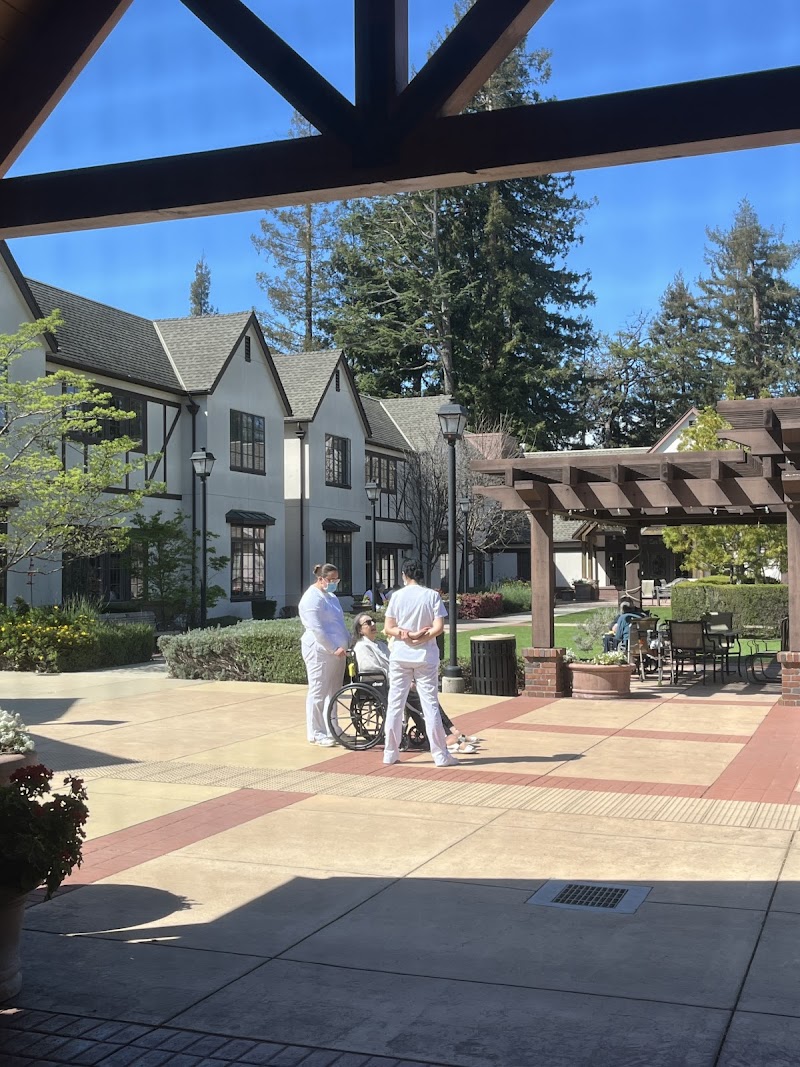
VILLA SIENA

1855 MIRAMONTE AVENUE, MOUNTAIN VIEW, CA 94040 (650) 961-6484
Non profit - Corporation 30 Beds Independent Data: November 2025
Trust Grade
50/100
#943 of 1155 in CA
Last Inspection: July 2025

Inspected within the last 6 months. Data reflects current conditions.

Overview

Villa Siena in Mountain View, California, has a Trust Grade of C, indicating that it is average compared to other nursing homes. It ranks #943 out of 1155 facilities in California, placing it in the bottom half of all state options, and #45 out of 50 in Santa Clara County, meaning there are many facilities that are rated higher. The facility is improving, as the number of issues decreased from 12 in 2024 to 11 in 2025. Staffing is a strength, with a turnover rate of 0%, which is well below the California average, but the facility has less RN coverage than 75% of others in the state, which is concerning. While there have been no fines, which is positive, the inspector found serious issues such as not using bed rails correctly for all residents and failing to provide flu and pneumonia vaccinations for many residents, which could put their health at risk.

Trust Score
C
50/100
In California
#943/1155
Bottom 19%
Safety Record
Low Risk
No red flags
Inspections
Getting Better
12 → 11 violations
Staff Stability
○ Average
Turnover data not reported for this facility.
Penalties
✓ Good
No fines on record. Clean compliance history, better than most California facilities.
Skilled Nurses
⚠ Watch
Each resident gets only 29 minutes of Registered Nurse (RN) attention daily — below average for California. Fewer RN minutes means fewer trained eyes watching for problems.
Violations
⚠ Watch
34 deficiencies on record. Higher than average. Multiple issues found across inspections.
★★☆☆☆
2.0
Overall Rating
★★★☆☆
3.0
Staff Levels
★☆☆☆☆
1.0
Care Quality
★★★☆☆
3.0
Inspection Score
Stable
2024: 12 issues
2025: 11 issues

The Good

  • Full Sprinkler Coverage · Fire safety systems throughout facility
  • No fines on record

Facility shows strength in fire safety.

The Bad

2-Star Overall Rating

Below California average (3.1)

Below average - review inspection findings carefully

The Ugly 34 deficiencies on record

Jul 2025 11 deficiencies
CONCERN (D)

Potential for Harm - no one hurt, but risky conditions existed

Deficiency F0730 (Tag F0730)

Could have caused harm · This affected 1 resident

Based on interview and record review, the facility failed to conduct the Certified Nursing Assistant's (CNA) Annual Performance Evaluation (a formal, documented review of an employee's work over the p...

Read full inspector narrative →
Based on interview and record review, the facility failed to conduct the Certified Nursing Assistant's (CNA) Annual Performance Evaluation (a formal, documented review of an employee's work over the past year, assessing their performance against established goals and expectations) for two (CNA E and CNA F) of five sampled employees.This failure did not ensure CNA E and CNA F had the necessary job knowledge and had worked to provide safe resident care.During a review of the facility's randomly selected five employee files on 7/25/2025 at 9:45 a.m., indicated:1. * CNA E's Annual Performance Evaluation from the period 4/16/2023 to 4/16/2024 was completed and there was no Annual Performance Evaluation completed from the period 4/16/2024 to 4/16/2025 in the employee file; and2. * CNA F's Annual Performance Evaluation from the period 4/16/2023 to 4/16/2024 was completed and there was no Annual Performance Evaluation completed from the period 4/16/2024 to 4/16/2025 in the employee file.During a concurrent interview with human resources staff (HR) on 7/25/2025 at 11:28 a.m., HR reviewed CNA F's employee file and confirmed CNA F's Annual Performance Evaluation was not completed. HR stated that the director of nursing (DON) was responsible for completion of the Annual Performance Evaluation but there was a backlog (an accumulation of something, especially uncompleted work or matters that need to be dealt with).During an interview with the DON on 7/25/2025 at 2:08 p.m., DON confirmed she was the one responsible for the staff performance evaluation, and she did it yearly. DON stated, I am behind with their performance evaluation.During a concurrent interview with DON and record review on 7/28/2025 at 9:18 a.m., DON provided a copy of CNA E and CNA F's Annual Performance Evaluation completed from the period 4/16/2024 to 4/16/2025 and reviewed them. DON confirmed that both CNA E and CNA F's Annual Performance Evaluations were not updated.During a review of the facility's undated document titled Employee Handbook, indicated, Performance Reviews We want associates to know how well they are performing in their jobs. We have a performance review program, which serves as a direct channel of communication between associates and supervisors. Performance reviews, which occur annually, are meant to encourage open, two-way conversations that measure performance objectively and provide opportunities to discuss career growth.
CONCERN (D)

Potential for Harm - no one hurt, but risky conditions existed

Staffing Information (Tag F0732)

Could have caused harm · This affected 1 resident

Based on observation, interview, and document review, the facility failed to update the daily nurse staffing information posts for 7/19/2025, 7/20/2025, and 7/21/2025.This failure communicated inaccur...

Read full inspector narrative →
Based on observation, interview, and document review, the facility failed to update the daily nurse staffing information posts for 7/19/2025, 7/20/2025, and 7/21/2025.This failure communicated inaccurate facility staffing information to residents and visitors.During an observation beside the facility's nurse station on 7/21/2025 at 10:15 a.m., a glass covered board was observed and the facility's daily nurse staffing information dated 7/18/2025 was posted (picture taken).During another observation on 7/21/2025 at 3:21 p.m., beside the facility's nurse station, the daily nurse staffing information posting was changed to a new one dated 7/22/2025 (picture taken).During a concurrent interview with registered nurse C (RN C) and photo review on 7/22/2025 at 2:38 p.m., RN C reviewed the pictures of the daily nurse staffing information taken on 7/21/2025. RN C confirmed the first picture was dated 7/18/2025 and the second picture was dated 7/22/2025. RN C stated the daily nurse staffing information should have been updated during the weekend and it should be updated by night shift nurses. RN C confirmed weekend staff missed to post the 7/19/2025, 7/20/2025, and the 7/21/2025 daily nurse staffing information. RN C stated it should always reflect the current date and staffing information.During an interview with the director of nursing (DON) on 7/25/2025 at 2:15 p.m., DON confirmed the daily nurse staffing information was not updated over the weekend and the evening shift tried to update it on 7/21/2025 but posted it with the wrong date. DON stated the daily nurse staffing information should reflect the current date.During a review of the facility's policy and procedure titled, Posting Direct Care Daily Staffing Numbers, dated revised 8/2022, indicated, Our facility will post on a daily basis for each shift nurse staffing data.Within two (2) hours of the beginning of each shift, the number of licensed nurses and the number of unlicensed nursing personnel directly responsible for resident care is posted in a prominent location (accessible to residents and visitors) and in a clear and readable format.Shift staffing information is recorded on a form for each shift. The information recorded on the form shall include the following: a. The name of the facility; b. The current date (the date for which the information is posted).
CONCERN (D)

Potential for Harm - no one hurt, but risky conditions existed

Deficiency F0761 (Tag F0761)

Could have caused harm · This affected 1 resident

Based on observation, interview, and record review, the facility failed to ensure an expired emergency kit (a kit/box containing medications for immediate use during a medical emergency) and a medicat...

Read full inspector narrative →
Based on observation, interview, and record review, the facility failed to ensure an expired emergency kit (a kit/box containing medications for immediate use during a medical emergency) and a medication were replaced timely to ensure unexpired medications were available for resident use.During a visit to the medication room on 7/21/25, at 10:21 a.m., with Licensed Vocational Nurse (LVN) B, an emergency kit containing three refrigerated medications was observed in the medication refrigerator. A review of the contents list on the outside of the kit indicated the expiration date for two lorazepam vials (injectable medication to treat seizures and agitation) was 3/2025. Further inspection of the contents inside with LVN B revealed one lorazepam vial had the expiration date of 3/2025 (4 months ago), and another vial expired in 4/2025. LVN B acknowledged this finding and stated it should be replaced.On 7/21/25, at 10:37 a.m., random inspection of medications in the medication room with LVN B revealed a tube of Capzasin Quick Relief Gel (topical medication for arthritis pain) for Resident 18 had the expiration date of 5/2025. LVN B acknowledged the medication had expired and should have been removed from active stock.A review of the facility's policy and procedures (P&P) titled Emergency Pharmacy Service and Emergency Kits (E-Kits), dated 1/2025, indicated The nursing staff, consultant pharmacist and provider pharmacy designee checks the emergency kits regularly for expiration dating of contents.A review of the facility's P&P titled Storage of Medications, dated 1/2025, indicated, Outdated . medications . are immediately removed from stock, disposed of according to procedures for medication disposal.
CONCERN (E)

Potential for Harm - no one hurt, but risky conditions existed

Deficiency F0604 (Tag F0604)

Could have caused harm · This affected multiple residents

**NOTE- TERMS IN BRACKETS HAVE BEEN EDITED TO PROTECT CONFIDENTIALITY** Based on interview and record review, the facility failed to ensure monitoring for safety, comfort, skin integrity, and continue...

Read full inspector narrative →
**NOTE- TERMS IN BRACKETS HAVE BEEN EDITED TO PROTECT CONFIDENTIALITY** Based on interview and record review, the facility failed to ensure monitoring for safety, comfort, skin integrity, and continued need of the use of physical restraints (devices or techniques used to limit a person's movement or access to their body to ensure safety or manage behavior) were provided for two of three residents (Resident 10 and 28). This failure had the potential to adversely affect the safety and wellbeing of the residents.Review of Resident 10's admission record, indicated Resident 10 was admitted to the facility on [DATE] with diagnoses including Parkinson's disease (a progressive neurological disorder that affects movement) with dyskinesia (abnormal, involuntary movements), psychotic disorder with hallucinations (a mental illness where a person experiences hallucinations, which are sensory perceptions such as hearing voices or seeing things that aren't there), major depressive disorder (persistent low or depressed mood).Review of Resident 10's clinical record indicated she had a physician's order, dated 4/30/25, for personal alarm (a small, portable device that has a button or a pull-cord that emits a loud sound when activated), bed alarm (a device that alerts caregivers when someone gets out of bed), and lap buddy (a foam-covered device that provides upper body support and posture assistance while safely securing the resident in a seated position) for safety.During an observation on 7/21/25 at 9:33 a.m., Resident 10 was sitting on a wheelchair by the nurse's station with personal alarm attached to her back.During a concurrent observation and interview, on 7/22/25 at 9:00 a.m., with the Director of Nursing (DON), Resident 10 was observed to have a personal alarm attached to her back and a lap buddy placed in front of the wheelchair. The DON stated the lap buddy, and personal alarm was used to prevent Resident 10 from falling.During an interview with the DON, on 7/25/25 at 9:40 a.m., the DON stated the personal alarm and lap buddy was used to prevent sudden and abrupt movement of Resident 10. The DON confirmed there was no monitoring for safety, comfort, skin integrity, and continued need for the use of personal alarm, lap buddy, and bed alarm documented.Review of Resident 28's admission record, indicated Resident 28 was admitted to the facility on [DATE] with diagnoses including unspecified dementia (a decline in mental abilities, severe enough to interfere with daily life), essential hypertension (high blood pressure that does not have a known cause), cataract (a clouding of the natural lens of the eye, which can cause blurred vision and other vision problems).Review of Resident 28's clinical record, indicated she has a physician's order, dated 6/24/25, for personal alarm for fall alert.During an observation on 7/25/25 at 10:05 a.m., Resident 28 was sitting on a wheelchair by the nurse's station with a personal alarm attached to her back.During an interview on 7/25/25 at 10:07 a.m., with Registered Nurse (RN) C, RN C stated personal alarm was used because Resident 28 was impulsive and got out of chair.During a concurrent interview and record review with the DON, on 7/25/25 at 12:12 p.m., the DON stated there was no monitoring for safety, comfort, skin integrity, and continued need of the use of personal alarm documented.Review of the facility's policy and procedure (P&P), titled Use of Restraints, dated 2001, indicated when the use of restraints is indicated, the least restrictive alternative will be used for the least amount of time necessary, and the ongoing re-evaluation for the need for restraints will be documented. Documentation regarding the use of restraints shall include: .f. observation, range of motion and repositioning flow sheets.Review of facility's P&P, titled Use of Lap Restraint for Resident Safety, dated 1/15/2020, indicated. 5. Monitoring and Evaluation: The resident will be monitored routinely for safety, comfort, skin integrity, and continued need for the lap buddy. Documentation in the medical record will reflect ongoing assessment of effectiveness and resident tolerance.
CONCERN (E)

Potential for Harm - no one hurt, but risky conditions existed

Deficiency F0605 (Tag F0605)

Could have caused harm · This affected multiple residents

Based on observation, interview, and record review, the facility failed to ensure 1 out of 5 sampled residents (Resident 29) was free from unnecessary psychotropic medication (drug that affects brain ...

Read full inspector narrative →
Based on observation, interview, and record review, the facility failed to ensure 1 out of 5 sampled residents (Resident 29) was free from unnecessary psychotropic medication (drug that affects brain activities associated with mental processes and behavior) when Resident 29 received:1. PRN (as-needed) lorazepam (medication to treat agitation or anxiety) 9 times for a condition not as prescribed and without documented evidence of attempted behavioral (or non-pharmacological) interventions prior to its use; and2. PRN lorazepam order for 90 days but it was transcribed as 120 days.These failures resulted in unnecessary psychotropic medication for Resident 29 who received medication outside of the prescribed indication, without attempted behavioral interventions, and longer than prescribed.1. A review of Resident 29's clinical record indicated he was admitted to the facility with diagnoses including Alzheimer's disease (progressive disease that destroys memory and other important mental functions), general anxiety disorder (severe, ongoing anxiety that interferes with daily activities), and dementia (chronic or persistent disorder of the mental processes caused by brain disease or injury and marked by memory disorders, personality changes, and impaired reasoning).A review of Resident 29's physician's orders indicated an order, dated 4/17/25, for Ativan (lorazepam) 0.5 milligrams (mg, unit of measurement), give 1 tablet by mouth every 6 hours as needed for anxiety for 120 Days constantly looking for his wife, repeatedly asking of wanting to go home causing him distress.During a medication administration observation on 7/21/25 at 4:25 p.m., Resident 29 was observed being quiet, pleasant, and patient while Licensed Vocational Nurse (LVN) A was having trouble getting the blood pressure machine to work. The resident was compliant with LVN A's instructions and had no distress or anxiety during this observation.On 7/22/25 at 2:48 p.m., Resident 29 was observed sitting in a chair in the hallway, being quiet and engrossed in a book. No anxiety or distress was observed.On 7/23/25 at 8:50 a.m., Resident 29 was observed in the dining room eating breakfast, calm, and collective. No anxiety or distress was observed.During a concurrent interview and record review with Registered Nurse (RN) C on 7/23/25 at 10:22 a.m., she stated Resident 29 occasionally gets agitated especially when he could not find his wife, the car key, or his car. She stated the resident's behaviors have improved lately, and he has not been getting the PRN lorazepam often. She stated the nursing staff only gave lorazepam in situations when he had increased agitation, or not redirectable, or in distress. She also stated the hospice nurse would come and give him a shower and would ask the staff to give him a lorazepam dose before coming. She reviewed Resident 29's clinical record and stated she administered one dose of lorazepam the morning of 7/17/25. When asked if she had tried any non-drug interventions before giving the lorazepam, RN C stated she recalled asking the resident if he was ready for a shower, and the resident responded he was not sure about a shower. RN C stated, I gave it off of hospice request. RN C acknowledged the premedication before a shower was not part of the lorazepam order and not consistent with the physician's order.On 7/23/25, a review of Resident 29's nursing progress notes (PNs) indicated the nursing staff administered a dose of lorazepam 0.5 mg before a shower on 9 occasions from 3/27/25 to 7/17/25, during which there were no documented evidence the nursing staff implemented behavioral interventions prior to the medication administration. A review of the nursing PNs and the corresponding medication administration record (MAR) indicated the following administration and PNs: - 3/27/25 at 6:08 a.m.; the PNs indicated, given before scheduled shower- 4/1/25 at 7:34 a.m.; the PNs indicated, premedication before scheduled shower- 4/8/25 at 7:06 a.m.; the PNs indicated, Given prior to hospice aide visit for shower per hospice RN- 4/10/25 at 10:38 a.m.; the PNs indicated, Premedicating for shower with hospice CNA- 5/8/25 at 7:35 a.m., the PNs indicated, Premedicate for shower day- 5/15/25 at 7:36 a.m., the PNs indicated, premedication before shower- 5/22/25 at 7:59 a.m., the PNs indicated, Premedicate for hospice shower- 5/29/25 at 7:16 a.m., the PNs indicated, given prior shower schedule- 7/17/2025 07:38 a.m., the PNs indicated, Hospice called to inform of HHA coming for shower, requested premedication with Lorazepam.During a concurrent interview and record review with the Director of Nursing (DON) on 7/23/25 at 2:05 p.m., she acknowledged Resident 29's PRN lorazepam order did not include premedication prior to a shower; and that the resident has the right to refuse a shower. She explained that there are times when the staff approach Resident 29 with a shower, it would trigger him to have distress; he would start asking for his wife and get really distressed. When asked to show documented behavioral or non-drug interventions attempted or other methods tried before the administration of lorazepam, the DON reviewed the nursing PNs for each of the 9 medication administrations above and confirmed she could not find documented evidence that behavioral interventions were attempted and failed.During another interview and record review with the DON on 7/24/25 at 2:31 p.m., she provided some of the staff documentation of behavioral interventions but stated that they were documented at end of shift and not necessarily tied in with the time of medication administration, especially those prior to the shower by hospice.2. A review of Resident 29's clinical record indicated the consultant pharmacist made a recommendation, on 4/15/25, asking the physician to provide the duration and rationale for the continued use of PRN lorazepam order. In response, the physician gave an order for lorazepam 0.5 mg, give 1 tablet every 6 hours as needed for 90 days, dated 4/25/25.A review of the Informed Consent for Use of Psychotropic Medication form indicated Resident 29's family member consented to this order for 90 days on 4/25/25.During a concurrent interview and record review with the DON on 7/23/25 at 2:34 p.m., she reviewed the above-stated order and informed consent form and confirmed the resident's latest lorazepam order was for 90 days, not 120 days (as in the current order). During a follow-up interview on 7/23/25 at 3:39 p.m., the DON stated she reviewed further into Resident 29's record and the Ativan order is for 90 days. A review of the facility's policy and procedures titled Psychotropic Medication Use, dated July 2022, indicated the psychotropic medication management includes the duration for its use. It also indicated, non-pharmacological approaches are used (unless contraindicated) to minimize the need for medications . Psychotropic medications are not .given on a PRN basis unless that medication is necessary to treat a diagnosed specific condition that is documented in the clinical record.
CONCERN (E)

Potential for Harm - no one hurt, but risky conditions existed

Assessment Accuracy (Tag F0641)

Could have caused harm · This affected multiple residents

**NOTE- TERMS IN BRACKETS HAVE BEEN EDITED TO PROTECT CONFIDENTIALITY** Based on observation, interview, and record review, the facility failed to accurately reflect the status of residents in the ass...

Read full inspector narrative →
**NOTE- TERMS IN BRACKETS HAVE BEEN EDITED TO PROTECT CONFIDENTIALITY** Based on observation, interview, and record review, the facility failed to accurately reflect the status of residents in the assessment for 11 (Residents 26, 19, 6, 17, 18, 29, 22, 4, 14, 15, and 7) of 15 residents (residents who used side or bed rails [SR/BR, adjustable rigid bars attached to the side of the bed]) when the Minimum Data Set (MDS - a federally mandated resident assessment tool) assessment for Residents 26, 19, 6, 17, 18, 29, 22, 4, 14, 15, and 7 was coded they used SR/BRs as restraints.This failure increased the potential for inaccurate care to be provided for Residents 26, 19, 6, 17, 18, 29, 22, 4, 14, 15, and 7.For Resident 19:Review of Resident 19's Bed Rail assessment dated [DATE], it indicated the use of SR/BRs to serve as an enabler to promote independence.Review of Resident 19's annual MDS assessment dated [DATE], indicated Resident 19's brief interview for mental status (BIMS-an assessment tool used by facilities to screen and identify memory, orientation, and judgement status of the resident) score was 13 (a score of 0 to 7 indicates severe cognitive impairment, 8-12 moderate impairment, 13-15 patient is cognitively intact). Further review indicated Resident 19 used Bed rail daily as Physical Restraints.During a concurrent observation and interview with minimum data set nurse (MDSN) on 7/23/2025 at 1:37 p.m., inside Resident 19's room, Resident 19's bed had two upper bed rails installed, and the right upper SR/BR was in upright position. MDSN confirmed the observation.During a concurrent interview with MDSN and record review on 7/28/2025 at 9:49 a.m., MDSN reviewed Resident 19's BR assessment and the annual MDS assessment and confirmed Resident 19 used the two upper BRs only. MDSN stated restraint was anything that hinders a person's movement. MDSN further stated Resident 19 used of BR should not be coded as a restraint in MDS because the BRs did not hinder Resident 19's movement in bed, and the BRs could even help her transfer out of bed.For Resident 26:Review of Resident 26's Bed Rail assessment dated [DATE], it indicated the use of SR/BRs to serve as an enabler to promote independence.Review of Resident 26's quarterly MDS assessment dated [DATE], indicated Resident 26 had a BIMS score of 15. Further review indicated Resident 26 used Bed rail daily as Physical Restraints.During a concurrent observation and interview with MDSN on 7/23/2025 at 1:43 p.m., inside Resident 26's room (Resident 26 was not present), Resident 26's bed had four installed bed rails (upper and lower), and the two upper BRs were in an upright position. MDSN confirmed the above observation.During an interview with Resident 26 on 7/24/2025 at 1:21 p.m., Resident 26 stated he used his BRs at night to reposition himself.During a concurrent interview with MDSN and record review on 7/28/2025 at 9:48 a.m., MDSN reviewed Resident 26's BR assessment and the quarterly MDS assessment and confirmed Resident 26 used the two upper bed rails only. MDSN stated Resident 26 used of BRs would not hinder his movement and should not be coded as a restraint in MDS. MDSN confirmed Resident 26's MDS on 4/17/2025 was inaccurate for coding bed rail as a restraint.For Resident 6:Review of Resident 6's Bed Rail assessment dated [DATE], it indicated the use of SR/BRs to serve as an enabler to promote independence.Review of Resident 6's annual MDS assessment dated [DATE], indicated Resident 6 had a BIMS score of 7. Further review indicated Resident 6 used Bed rail daily as Physical Restraints.During a concurrent observation and interview with MDSN on 7/23/2025 at 1:45 p.m. inside Resident 6's room, Resident 6 was in bed and had four BRs installed. All four BRs were not in use and MDSN confirmed the observations.During a concurrent interview with MDSN and record review on 7/28/2025 at 9:50 a.m., MDSN reviewed Resident 6's BR assessment and the annual MDS assessment and confirmed Resident 6 used the 2 upper bed rails only. MDSN further confirmed the bed rails were coded in MDS and it was not a restraint.For Resident 17:Review of Resident 17's Bed Rail assessment dated [DATE], it indicated the use of SR/BRs to serve as an enabler to promote independence.Review of Resident 17's quarterly MDS assessment dated [DATE], indicated Resident 17 had a BIMS score of 15. Further review indicated Resident 17 used Bed rail daily as Physical Restraints.During a concurrent observation and interview with MDSN and Resident 17 on 7/23/2025 at 1:46 p.m., inside Resident 17's room, Resident 17 was seated on a chair in front of his computer and his bed had two upper bed rails in place. The left upper bed rail was in an upright position and MDSN confirmed the observations. Resident 17 stated he used the left BR to help him to reposition in bed and with transfer out of bed.During a concurrent interview with MDSN and record review on 7/28/2025 at 9:51 a.m., MDSN reviewed Resident 17's BR assessment and the quarterly MDS assessment and confirmed Resident 17 used the left upper bed rail only. MDSN further confirmed the bed rails were coded in MDS as a restraint and stated it should not be coded in the MDS because Resident 17 could still get in and out of bed.For Resident 18:Review of Resident 18's quarterly MDS assessment dated [DATE], indicated Resident 18 had a BIMS score of 15. Further review indicated Resident 18 used Bed rail daily as Physical Restraints.During a concurrent observation and interview with MDSN on 7/23/25 at 2:03 p.m., inside Resident 18's room, Resident 18 was lying in bed, alert and verbally responsive. MDSN verified that Resident 18 had her two upper bed rails in an upright position, and she used them.During a concurrent interview with MDSN and record review on 7/28/2025 at 9:53 a.m., MDSN reviewed Resident 18's quarterly MDS assessment and confirmed the BRs were coded as a restraint in MDS. MDSN stated it should not be coded as a restraint in MDS.For Resident 29:Review of Resident 29's quarterly MDS assessment dated [DATE], indicated Resident 29 had short term (also known as working memory or primary memory, is a cognitive system that holds a limited amount of information for a short duration, typically for a few seconds to a minute) and long-term memory (refers to the system in the brain that stores information for extended periods, ranging from days to years) problems. Further review indicated Resident 29 used Bed rail daily as Physical Restraints.During a concurrent observation and interview with MDSN on 7/23/25 at 2:12 p.m., Resident 29 had two side rails attached to the bed. MDSN verified that Resident 29 had been using either of his side rails, when he's getting up in bed.During a concurrent interview with MDSN and record review on 7/28/2025 at 9:54 a.m., MDSN reviewed Resident 29's quarterly MDS assessment and confirmed Resident 29 used only the two upper bed rails and should not be coded in MDS. For Resident 22: Review of Resident 22's quarterly MDS assessment dated [DATE], indicated Resident 22's BIMS score was 5. Further review indicated Resident 22 used Bed rail daily as Physical Restraints.During a concurrent observation and interview with MDSN on 7/23/25 at 2:15 p.m., inside Resident 22's room, Resident 22's bed had the right-side rail in upright position. MDSN verified that Resident 22 had been using her right-side rail.During a concurrent interview with MDSN and record review on 7/28/2025 at 9:55 a.m., MDSN reviewed Resident 22's quarterly MDS assessment and confirmed she coded the use of BRs in MDS. MDSN stated Resident 22's used of BRs should not be coded in MDS because Resident 22 used the right BR only for mobility. For Resident 4:Review of Resident 4's quarterly MDS assessment dated [DATE], indicated Resident 4's BIMs score was 15. Further review indicated Resident 4 used Bed rail daily as Physical Restraints.During a concurrent observation and interview with MDSN on 7/23/25 at 2:22 p.m., inside Resident 4's room, Resident 4 was asleep and observed her bed had the right upper and lower side rails in upright position and both left upper and lower side rails were down. MDSN confirmed the above observation. During a concurrent interview with MDSN and record review on 7/28/2025 at 9:56 a.m., MDSN reviewed Resident 4's quarterly MDS assessment and confirmed she coded the use of BRs in MDS. MDSN stated Resident 4's use of BRs should not be coded in MDS because it was not used as a restraint. MDSN further stated the BRs helped Resident 4 with mobility in bed.For Resident 14: Review of Resident 14's quarterly MDS assessment dated [DATE], indicated Resident 14's BIMS score was 14. Further review indicated Resident 14 used Bed rail daily as Physical Restraints. During a concurrent observation and interview with MDSN on 7/23/25 at 2:24 p.m., inside Resident 14 room, Resident 14 was not in the room. Resident 14 had both upper side rails were in a down position. MDSN confirmed the above observation.During a concurrent interview with MDSN and record review on 7/28/2025 at 9:57 a.m., MDSN reviewed Resident 14's quarterly MDS assessment and confirmed she coded the use of BRs in MDS. MDSN stated Resident 14's use of BRs did not hinder his movement in bed, and he could still get out of bed. MDSN further stated Resident 14's BRs helped him to reposition himself and with transfers.For Resident 15:Review of Resident 15's quarterly MDS assessment dated [DATE], indicated Resident 15's BIMS score was 9. Further review indicated Resident 15 used Bed rail less than daily as Physical Restraints.During a concurrent observation and interview with MDSN on 7/23/25 at 2:26 p.m., inside Resident 15's room, Resident 15 was not in the room, and the bed had both upper and lower side rails in a down position. MDSN stated Resident 15 used the left upper side rails. MDSN confirmed the above observation.During a concurrent interview with MDSN and record review on 7/28/2025 at 9:58 a.m., MDSN reviewed Resident 15's quarterly MDS assessment and confirmed she coded the use of BRs less than daily in MDS. MDSN stated Resident 15 only used the left upper SR/BR.For Resident 7: Review of Resident 9's quarterly MDS assessment dated [DATE], indicated Resident 9's BIMS score was 15. Further review indicated Resident 9 used Bed rail daily as Physical Restraints.During a concurrent observation and interview with MDSN on 7/23/25 at 2:32 p.m., inside Resident 7's room. Resident 7 was not in the room, and the bed had both upper and lower side rails in down position. MDSN confirmed the above observation. MDSN stated the side rails were used to transfer Resident 7 from bed to wheelchair. During a concurrent interview with MDSN and record review on 7/28/2025 at 9:59 a.m., MDSN reviewed Resident 7's quarterly MDS assessment and confirmed she coded the use of BRs in MDS. MDSN stated Resident 7 only used the two upper BRs to help her transfer out of bed and should not be coded as a restraint in MDS.During a review of the Centers for Medicare and Medicaid Services (CMS) Long-Term Care Facility Resident Assessment Instrument (LTCF RAI - a comprehensive guide for healthcare professionals, particularly in nursing homes and other long-term care facilities, on how to effectively assess and care for residents) 3.0 User's Manual , Version 1.19.1, dated 10/2024, indicated, SECTION P: RESTRAINTS AND ALARMS Intent: The intent of this section is to record the frequency that the resident was restrained by any of the listed devices or an alarm was used, at any time during the day or night, during the 7-day look back period. Assessors will evaluate whether or not a device meets the definition of a physical restraint or an alarm and code only the devices that meet the definition in the appropriate categories. DEFINITION - PHYSICAL RESTRAINTS Any manual method or physical or mechanical devices, material or equipment attached or adjacent to the resident's body that the individual cannot remove easily, which restricts freedom or movement or normal access to one's body. Evaluate whether the resident can easily and voluntarily remove any manual method or physical or mechanical device, material, or equipment attached or adjacent to their body. If the resident cannot easily and voluntarily do this, continue with the assessment to determine whether or not the manual method or physical or mechanical device, material or equipment restrict freedom of movement or restrict the resident's access to their own body.
CONCERN (E)

Potential for Harm - no one hurt, but risky conditions existed

Comprehensive Care Plan (Tag F0656)

Could have caused harm · This affected multiple residents

**NOTE- TERMS IN BRACKETS HAVE BEEN EDITED TO PROTECT CONFIDENTIALITY** Based on observation, interview, and record review, the facility failed to develop and implement comprehensive, resident-centere...

Read full inspector narrative →
**NOTE- TERMS IN BRACKETS HAVE BEEN EDITED TO PROTECT CONFIDENTIALITY** Based on observation, interview, and record review, the facility failed to develop and implement comprehensive, resident-centered care plans, do timely initial assessment and develop baseline care plan for four out of sixteen sampled residents (Residents 1, 5, 8 and 28), when: 1. For Resident 1, the initial recreational activity assessment was not done in a timely manner and there was no baseline activity care plan; 2. For Resident 5, there was:a. no care plan developed for Resident 5's tardive dyskinesia (TD, an involuntary movement disorder that causes a range of repetitive muscle movements in the face, neck, arms and legs; a condition which sometimes develops as a side effect of long-term treatment with antipsychotic medications) andb. no care plan developed for dementia (a group of symptoms affecting thinking and social abilities interfering with daily functioning) care;3. For Resident 8, there was no care plan developed for the use of restraints; and 4. For Resident 28, there was no care plan developed for the use of personal alarm. These failures placed the residents at risk of not being provided with appropriate, consistent and individualized care in order to maintain their highest level of well-being. 1. During the observation of Resident 1 on 7/21/25 at 10:42 a.m., Resident 1 was laying in her bed, alert, calm, comfortable, and verbally responsive. She's able to answer simple questions when asked. Review of Resident 1’s admission record (document created when a resident is admitted to a healthcare facility, containing the vital information about the resident) indicated, she was admitted to the facility on [DATE] with the primary diagnosis of unspecified dementia (group of symptoms affecting memory, thinking and social abilities), unspecified severity with mood disturbance. Review of Resident 1’s initial recreational activity assessment indicated that it was not done on time. It was not done within 14 days from Resident 1’s admission which was 8/12/22 and the initial recreational activity assessment was done on 9/7/22. During the concurrent review of Resident 1’s activity assessments and interview with the social worker (SW, staff who helped with the resident activities) on 7/24/25 at 10:05 a.m., SW verified that the initial recreational activity assessment of Resident 1 was not done in a timely manner. He further verified that it was not done within 14 days from Resident 1’s admission which was 8/12/22 and the initial recreational activity assessment was done on 9/7/22. Review of Resident 1’s activity care plan indicated that Resident 1 did not have a baseline care plan for her activities. During the concurrent review of Resident 1’s care plans and interview with SW, on 7/24/25 at 10:05 a.m., SW verified that Resident 1 did not have a baseline care plan for her activities. He further verified that there was no baseline care plan for her activities that was initiated at all. During the interview with the director of nursing (DON) on 7/25/25 at 2:15 p.m., DON acknowledged that the recreational activity assessment of Resident 1 should have been done within 14 days from her admission date and there should have been a baseline care plan for her activities. DON then stated that she would follow up on those concerns. Review of the facility’s policy titled, “Comprehensive Assessments,” revised March 2022 indicated, “admission Assessment – The admission assessment is a comprehensive assessment for a new resident and, under some circumstances, a returning resident that must be completed by the end of day 14, counting the date of admission to the nursing home as day 1……….” Review of the facility’s policy titled, “Care Plans – Baseline,” revised March 2022 indicated, “A baseline plan of care to meet the resident’s immediate health and safety needs is developed for each resident within forty-eight (48) hours of admission……….” 2a. A review of Resident 5's clinical record indicated she was admitted to the facility with diagnoses included bipolar disorder (disorder associated with episodes of mood swings ranging from depressive lows to manic highs). A review of Resident 5's physician's orders indicated Resident 5 has been receiving: a. Fluphenazine (an antipsychotic medication) 5 milligrams (mg, unit of measurement) once daily related to bipolar disorder since 10/24/24; and b. Benztropine (medication to manage symptoms of movement disorders, including side effects caused by certain drugs such as antipsychotic medications) 1 mg once daily at bedtime for Tardive Dyskinesia since 10/23/24. A review of Resident 5's clinical record indicated no comprehensive care plan that included signs and symptoms to monitor, treatment approaches/goals, and interventions related to tardive dyskinesia despite the use of fluphenazine and benztropine. During a concurrent interview and record review with the Director of Nursing (DON) on 7/24/25 at 1:45 p.m., she stated Resident 5 is receiving benztropine for TD as the resident has been on fluphenazine for a long time. The DON stated the resident had tongue rolling, which was more severe when she first arrived in the facility. When asked if there was a care plan related to TD, the DON stated she will look up and respond later. During a follow-up interview on 7/24/25 at 2:57 p.m., the DON stated the behavioral care plan listed TD as a side effect of fluphenazine, but she did not find a care plan for TD. She stated there should have been a care plan developed for Resident 5's TD. A review of the facility's policy and procedures titled Care Plans, Comprehensive Person-Centered, dated 3/2022, indicated that the facility developed a comprehensive, person-centered care plan with measurable objectives and timeframes, expected goals and outcomes, and interventions, that reflects current recognized standards of practice for problem areas and conditions. 2b. Review of Resident 5’s clinical record titled, “admission Record,” dated 7/23/2025, indicated Resident 5 was admitted to the facility on [DATE] with diagnosis of unspecified dementia, with anxiety (with constant fear). Review of Resident 5’s physician progress note dated 7/18/2025, indicated resident 5 had a medical history of dementia with paranoia (a mental state characterized by excessive and irrational distrust and suspicion of others, often leading to the belief that others are deliberately trying to harm or persecute them). Review of Resident 5’s admission minimum data set (MDS – a federally mandated resident assessment tool) assessment dated [DATE], indicated Resident 5 had a brief interview for mental status (BIMS - an assessment tool used by facilities to screen and identify memory, orientation, and judgement status of the resident) score of 15 (a score of 0 to 7 indicates severe cognitive impairment, 8-12 moderate impairment, 13-15 patient is cognitively intact). Further review indicated the Non-Alzheimer’s Dementia (a group of brain disorders that cause dementia but are not Alzheimer’s disease) was checked. Review of Resident 5’s quarterly MDS assessment dated [DATE], indicated Resident 5’s BIMS score was 15. Further review indicated Resident 5 had a behavior of rejection of care (with blood work, taking medications, activities of daily living [ADL - routine tasks/activities such as bathing, dressing and toileting a person performs daily to care for themselves] assistance) which occurred 1 to 3 days and Non-Alzheimer’s Dementia was checked. Review of Resident 5’s list of care plans revealed there was no person-centered care plan related to dementia care developed and implemented for Resident 5. During a concurrent observation and interview with Resident 5 on 7/21/2025 at 3:05 p.m., at the facility’s hallway, Resident 5 observed walking with the use of a rollator walker (a mobility aid designed to assist individuals with balance and walking difficulties consisting of four wheels, adjustable handlebars, a seat and brakes), and dressed in pants and a blouse. Resident 5 stated the facility would have an upcoming event, an anniversary celebration and she planned to get her hair done for the event. During another observation and interview at the resident council meeting on 7/22/2025 at 10:45 a.m., inside the facility’s living room, Resident 5 was present at the meeting. Resident 5 participated in the meeting and tried to answer each question but would always jump to another topic like she would talk about her family, about the upcoming event at the facility, and her plan of what to wear for the event and to get her hair done. During a concurrent interview with minimum data set nurse (MDSN) and record review on 7/24/2025 at 10:39 a.m., MDSN reviewed Resident 5’s admission Record, admission and quarterly MDS assessment and list of care plans. MDSN confirmed Resident 5 had a diagnosis of dementia, it was coded in MDS and there was no care plan developed. MDSN stated dementia care plan should have been developed for Resident 5. During an interview with the director of nursing (DON) on 7/25/2025 at 1:37 p.m., the DON stated there should have been a care plan developed for Resident 5’s dementia for staff to address the specific dementia interventions needed. During a review of the facility’s undated policy and procedure titled, “Dementia-Clinical Protocol,” indicated, “The staff will monitor the individual with dementia for changes in condition and decline in function and will report these findings to the physician. The IDT [interdisciplinary team - a group of health care professionals from diverse fields who work toward a common goal for residents] will adjust interventions and the overall plan depending on the individual’s responses to those interventions, progression of dementia, development of new acute medical conditions or complications, changes in resident or family wishes, and other relevant factors.” During a review of the facility’s policy and procedure titled, “Care Plans, Comprehensive Person-Centered,” date revised 3/2022, indicated, “The interdisciplinary team (IDT), in conjunction with the resident and his/her family or legal representative, develops and implements a comprehensive, person-centered care plan for each resident. The comprehensive, person-centered care plan is developed within seven (7) days of the completion of the required MDS assessment (Admission, Annual or Significant Change in Status), and no more than 21 days after admission. The care plan interventions are derived from a thorough analysis of the information gathered as part of the comprehensive assessment.” 3. Review of Resident 8’s admission record, indicated Resident 8 was admitted to the facility on [DATE] with diagnoses including generalized epilepsy (a neurological condition characterized by a tendency to have recurrent seizures [uncontrolled, abnormal electrical activity of the brain]), unspecified intellectual disabilities (a condition characterized by significant limitations in both intellectual functioning and adaptive behavior). Review of Resident 8’s clinical record, indicated Resident 8 had a physician’s order, dated 7/24/25, for full padded side rails. During an interview with the Director of Nursing (DON) on 7/28/25 at 1:00 p.m., the DON stated all the side rails were raised and considered as restraints. During a concurrent interview and record review with the DON on 7/28/25 at 1:59 p.m., the DON confirmed there was no care plan developed for the use of restraints. 4. Review of Resident 28’s admission record, indicated Resident 28 was admitted to the facility on [DATE] with diagnoses including unspecified dementia (a decline in mental abilities, severe enough to interfere with daily life), essential hypertension (high blood pressure that does not have a known cause), cataract (a clouding of the natural lens of the eye, which can cause blurred vision and other vision problems). Review of Resident 28’s clinical record, indicated she has a physician’s order, dated 6/24/25, for personal alarm for fall alert. During a concurrent interview and record review with the DON, on 7/28/25 at 1:57 p.m., the DON confirmed there was no care plan developed for the use of personal alarm. Review of the facility's policy and procedure (P&P), titled Care Plans, Comprehensive Person-Centered, dated 2001, indicated Assessments of residents are ongoing and care plans are revised as information about the residents and the resident's condition change.
CONCERN (E)

Potential for Harm - no one hurt, but risky conditions existed

Deficiency F0657 (Tag F0657)

Could have caused harm · This affected multiple residents

**NOTE- TERMS IN BRACKETS HAVE BEEN EDITED TO PROTECT CONFIDENTIALITY** Based on observation, interview and record review, the facility failed to ensure that the resident care plans and assessment wer...

Read full inspector narrative →
**NOTE- TERMS IN BRACKETS HAVE BEEN EDITED TO PROTECT CONFIDENTIALITY** Based on observation, interview and record review, the facility failed to ensure that the resident care plans and assessment were reviewed and updated for effectiveness in two of sixteen sampled residents, (Residents 2 and 22), when: 1. For Resident 2, the activity care plan and hospice care plan were not reviewed and updated quarterly and2. For Resident 22, the activity assessment and activity care plan were also not reviewed and updated quarterly. These failures had the potential to result in the residents not receiving the interventions necessary to maintain their highest level of well-being.1.During the lunch observation of Resident 2 on 7/21/25 at 12:32 p.m., she was eating lunch with the assistance of the facility staff. Resident 2 was confused and could not answer questions. Review of Resident 2's admission record (document created when a resident is admitted to a healthcare facility, containing the vital information about the resident) indicated, she was admitted to the facility on [DATE] with the primary diagnosis of unspecified Alzheimer's disease (a progressive disease that destroys memory and other important mental functions). Review of Resident 2's activity care plan indicated that it was last updated on 3/25/25 and there was no update after that. During the concurrent review of Resident 2's activity care plan and interview with the social worker (SW, staff who helped with the resident activities) on 7/24/25 at 10:19 a.m., SW verified that the activity care plan of Resident 2 was not updated quarterly. He further verified that it was last updated on 3/25/25 and there was no update after that. During the interview with the director of nursing (DON) on 7/25/25 at 2:15 p.m., DON acknowledged that the activity care plan should have been updated quarterly and would follow up on it. Review of Resident 2's hospice care plan indicated that it was not updated regularly or quarterly. The last hospice care plan update was on 3/25/25. During the concurrent review of Resident 2's care plans and interview with registered nurse C (RN C) on 7/23/25 at 11:30 a.m., RN C verified that the last update of the hospice care plan of Resident 2 was on 3/25/25 and it should have been updated quarterly. During the concurrent review of Resident 2's care plans and interview with minimum data set nurse (MDSN, nurse who specializes in the assessment, monitoring, and documentation of patient care in long-term care or residential care facilities) on 7/23/25 at 2:20 p.m., MDSN verified that the last update of the hospice care plan of Resident 2 was on 3/25/25 and it should have been updated quarterly. During the interview with the DON on 7/25/25 at 2:15 p.m., DON acknowledged that the hospice care plan should have been updated quarterly and would follow up on it. 2. During the lunch observation of Resident 22 on 7/21/25 at 12:41 p.m., she was eating lunch in the dining area. Resident 22 was alert, calm and verbally responsive. Review of Resident 22's admission record indicated, she was admitted to the facility on [DATE] with the primary diagnosis of unspecified Alzheimer's disease. Review of Resident 22's activity assessment indicated that it was not updated quarterly. During the concurrent review of Resident 22's activity assessment and interview with the social worker on 7/24/25 at 10:08 a.m., he verified that the activity assessment of Resident 22 was not updated regularly or quarterly. Review of Resident 22's activity care plan indicated that it was not updated regularly or quarterly as well. During the concurrent review of Resident 22's activity care plan and interview with the social worker on 7/24/25 at 10:08 a.m., he verified that the activity care plan of Resident 22 was not updated regularly or quarterly. During the interview with the DON on 7/25/25 at 2:15 p.m., DON acknowledged that Resident 22's activity assessment and activity care plan should have been updated quarterly and would follow up on them. Review of the facility's policy and procedure titled, Care Plans, Comprehensive Person-Centered, revised March 2022 indicated, A comprehensive, person-centered care plan that includes measurable objectives and timetables to meet the resident's physical, psychosocial and functional needs is developed and implemented for each resident.Assessments of residents are ongoing and care plans are revised as information about the residents and the residents' condition change. The interdisciplinary team (IDT, group of professionals from different fields who work together to achieve a common goal, in healthcare) reviews and updates the care plan.at least quarterly, in conjunction with the required quarterly minimum data set (MDS, a standardized assessment tool used to evaluate the health and functional capabilities of nursing home residents) assessment.
CONCERN (E)

Potential for Harm - no one hurt, but risky conditions existed

Quality of Care (Tag F0684)

Could have caused harm · This affected multiple residents

**NOTE- TERMS IN BRACKETS HAVE BEEN EDITED TO PROTECT CONFIDENTIALITY** Based on interview and record review, the facility failed to provide care in accordance with standards of practice for two out o...

Read full inspector narrative →
**NOTE- TERMS IN BRACKETS HAVE BEEN EDITED TO PROTECT CONFIDENTIALITY** Based on interview and record review, the facility failed to provide care in accordance with standards of practice for two out of two residents (Resident 28, and 29) when there was no physician's order, monitoring, and policy for the use of Wander Guard (a monitoring device to alert staff when a resident approaches or exits a designated area).Review of Resident 28's admission record, indicated Resident 28 was admitted to the facility on [DATE] with diagnoses including unspecified dementia (a decline in mental abilities, severe enough to interfere with daily life), essential hypertension (high blood pressure that does not have a known cause), cataract (a clouding of the natural lens of the eye, which can cause blurred vision and other vision problems).During an interview with Registered Nurse (RN) C, on 7/25/25 at 11:13 a.m., RN C confirmed Resident 28 have wander guard.During a concurrent interview and record review with the Director of Nursing (DON), on 7/25/25 at 2:17 p.m., the DON confirmed there was no physician order and no monitoring for the use of wander guard.Review of Resident 29's admission record, indicated Resident 29 was admitted to the facility on [DATE] with diagnoses including Alzheimer's disease (a brain disorder that gradually impairs memory, thinking, and behavior), dementia (a decline in mental abilities, severe enough to interfere with daily life), hypertensive heart disease (heart problems that develop because of long-term high blood pressure) and chronic kidney disease (progressive loss of kidney function) with heart failure (the heart muscle can't pump enough blood to meet the body's needs) and end stage renal disease ( the kidneys have lost their ability to function adequately).During a concurrent interview and record review with the DON, on 7/28/25 at 10:06 a.m., the DON confirmed Resident 29 have wander guard. The DON stated there was no physician order and monitoring for the use of wander guard. The DON further stated the facility did not have a policy for the use of wander guard.During an interview with Licensed Vocational Nurse (LVN D), on 7/28/25 at 10:53 a.m., LVN D stated we don't document the monitoring for the use of wander guard.
CONCERN (E)

Potential for Harm - no one hurt, but risky conditions existed

Food Safety (Tag F0812)

Could have caused harm · This affected multiple residents

Based on observation, interview, and record review, the facility failed to ensure safe food storage practices and sanitary conditions in the kitchen when three of 13 avocados were wrinkled, soft and d...

Read full inspector narrative →
Based on observation, interview, and record review, the facility failed to ensure safe food storage practices and sanitary conditions in the kitchen when three of 13 avocados were wrinkled, soft and dented, and nine of 13 cutting boards had deep cut marks and brown discoloration on their surfaces.These failures had the potential to cause food contamination and spread food-borne illnesses to residents who received their food from the kitchen. During a concurrent observation and interview on 7/21/25 at 8:53 a.m., with the Nutrition Service Director (NSD), the NSD confirmed the three pieces of avocado were wrinkled, soft and dented. The NSD stated the avocados will not be served and will be thrown out.Review of the facility's policy and procedure (P&P), titled Food Receiving And Storage of Cold Foods: Suggested Refrigerated Storage Guidelines, dated 2023, indicated Fruit - check quality.During a concurrent observation and interview on 7/21/25 at 9:02 a.m., with the NDS, the NSD confirmed the nine cutting boards had deep cut marks and dark discoloration on the surface. The NSD stated the nine cutting boards will be thrown out.Review of the The Federal Food and Drug Administration (FDA) Food Code 2022 Chapter 4-501.12, indicated surfaces such as cutting blocks and boards that are subject to scratching and scoring shall be resurfaced if they can no longer be effectively cleaned and sanitized.
CONCERN (F)

Potential for Harm - no one hurt, but risky conditions existed

Deficiency F0700 (Tag F0700)

Could have caused harm · This affected most or all residents

Based on observation, interview, and record review, the facility failed to ensure the proper use of side or bed rails (SR/BR, adjustable rigid bars attached to the side of the bed) for 30 out of 30 re...

Read full inspector narrative →
Based on observation, interview, and record review, the facility failed to ensure the proper use of side or bed rails (SR/BR, adjustable rigid bars attached to the side of the bed) for 30 out of 30 residents when:1.There was no documentation that indicated the facility conducted an accurate routine bed inspection following the Food and Drug Administration (FDA, a federal agency within the U.S. Department of Health and Human Services responsible for protecting public health by ensuring the safety, efficacy [the power to produce a desired result], and security of human and animal drugs, biological products [substances derived from living organisms and used in medicine for prevention, diagnosis, or treatment], medical devices, our nation's food supply, cosmetics, and products that emit radiation [like smoke detectors, microwave ovens, or wireless devices) entrapment zones for the facility's beds and side rails of 30 out of 30 residents (Residents 19, 13, 26, 6, 17, 21, 25, 5, 23, 16, 2, 18, 28, 1, 29, 27, 22, 12, 24, 4, 11, 9, 14, 8, 15, 10, 3, 7, 32, and 20), (with bed rails installed in their beds);2.There was no documentation that indicated the risk of entrapment (a situation where an individual can become caught by their head, neck, chest, or other body parts in the tight spaces around the bed rail) assessment from bed rails was completed prior to installation for 30 of 30 residents (Residents 19, 13, 26, 6, 17, 21, 25, 5, 23, 16, 2, 18, 28, 1, 29, 27, 22, 12, 24, 4, 11, 9, 14, 8, 15, 10, 3, 7, 32, and 20; 3. There was no documentation that indicated alternatives were offered and/or attempted prior to the use of side rails for 15 of 15 residents (Residents 19, 13, 26, 6,17, 16, 18, 29, 22, 7, 20, 14, 15, 4, and 8) who used them;4. There was no physician's order indicated the use of side/bed rails for 13 (Residents 19, 13, 26, 6, 17, 18, 29, 22, 7, 20, 14, 15, and 4) of 15 residents;5. There was no person-centered care plans related to side/bed rail used for 15 of 15 residents (Residents 19, 13, 26, 6,17, 16, 18, 29, 22, 7, 20, 14, 15, 4, and 8);6. Bed Rail Assessment for Residents 21, 25, 5, and 20 had no indication for their use;7. There was no side/bed rail assessment form completed for 12 (Residents 23, 2, 28, 1, 27, 12, 24, 9, 11, 3, 32, and 10) of 30 residents; and8. There was no updated Bed Rail Assessment, completed for Residents 18 and 29.These failures had the potential to place the residents at risk of entrapment and serious injury.1.During an interview with Plant Operations Manager (POM) on 7/25/2025 at 11:25 a.m., POM confirmed all 30 beds in the facility had bed rails and stated he stopped checking the bed measurements since the director of nursing (DON) told him that the state regulation has changed. POM stated he used to measure the space between the mattress and side/bed rails, the space between the mattress and headboard and the space between the mattress and the footboard.During a concurrent interview with POM and record review on 7/25/2025 at 1:19 p.m., POM reviewed the bed's quarterly inspection and confirmed he inspected all the beds from January 2025 to July 2025. POM confirmed there was no bed measurements for each bed, and he only documented, YES to each bed which indicated, All side rails have an opening of less than 4 inches. POM stated he only measured all four sides of the spaces between the mattress and side rails.During a concurrent observation and interview with POM together with two other nurse surveyors on 7/25/2025 at 1:30 p.m., inside Resident 28's room, there was an upper left and right bed rails installed in the bed and POM confirmed the observation. POM demonstrated how he did the bed inspection and stated he measured the space between the mattress and the bed rail to the left and right side. POM further stated, he also measured the spaces between the mattress and the headboard and between the mattress and the footboard. When asked if he followed the FDA's recommended entrapment zones, POM was unable to demonstrate the other zones to be assessed or measured in the bed.During a review of the FDA's guidance document titled, Hospital Bed System Dimensional and Assessment Guidance to Reduce Entrapment, dated 8/23/20218, indicated, Key Areas of Concern and Recommendations: Zone 1: Within the Rail: Open spaces within the bed rail perimeter can pose a head entrapment risk. The FDA recommends a space of less than 43/4 inches. Zone 2: Under the Rail, Between Rail supports: The gap under the rail and above the mattress can be a dangerous entrapment zone. Zone 3: Between the Rail and the Mattress: The space between the inside of the rail and the mattress should be minimized to prevent entrapment. Zone 4: Under the Rail at the Ends of the Rail: The gap between the mattress and the bottom of the rail can cause neck entrapment. The FDA recommends a space of less than 2 3/8 inches. Zone 5: Between Split Bed Rails: When using partial-length rails, the space between them can be a risk zone. Zone 6: Between the End of the Rail and the Side Edge of the Head or Foot Board: The gap here can also pose a risk of entrapment.During a review of the facility's policy and procedure titled, Bed Safety and Bed Rails, date revised 8/2022, indicated, Bed frames, mattresses and bed rails are checked for compatibility and size prior to use. Bed dimensions are appropriate for the resident's use. Regardless of mattress type, width, length, and/or depth, the bed frame, bed rail and mattress will leave no gap wide enough to entrap a resident's head or body. Any gaps in the bed system are within the safety dimensions established by the FDA. Maintenance staff routinely inspects all bed and related equipment to identify risks and problems including potential entrapment risks. The Maintenance department provides a copy of inspections to the administrator and report results to the QAPI [Quality Assurance and Performance Improvement] committee for appropriate action. Copies of the inspection results and QAPI committee recommendations are maintained by the administrator and/or safety committee.2. During a concurrent observation and interview with minimum data set nurse (MDSN) on 7/23/2025 at 1:37 p.m., inside Resident 19 and Resident 13's room, Resident 19's bed had two upper bed rails installed in the bed and the right side/bed rail was in upright position. MDSN confirmed the above observation. At 1:39 p.m., Resident 13 was observed seated on her wheelchair and her bed had two upper bed rails installed but they were not in an upright position. MDSN confirmed Resident 13's bed rail could be pulled up if needed. At 1:40 p.m., Resident 13 stated she used the right upper bed rail when she was in bed to access the bed remote which was located at the right upper bed rail.During a concurrent observation and interview with MDSN on 7/23/2025 at 1:43 p.m., inside Resident 26's room (Resident 26 was not present), Resident 26's bed had four installed bed rails (upper and lower), and the two upper BRs were in an upright position. MDSN confirmed the above observation.During a concurrent observation and interview with MDSN on 7/23/2025 at 1:45 p.m. inside Resident 6's room, Resident 6 was in bed and had four BRs installed. All four BRs were not in use and MDSN confirmed the observations.During a concurrent observation and interview with MDSN and Resident 17 on 7/23/2025 at 1:46 p.m., inside Resident 17's room, Resident 17 was seated on a chair in front of his computer and his bed had two upper bed rails in place. The left upper bed rail was in an upright position and MDSN confirmed the observations. Resident 17 stated he used the left BR to help him to reposition in bed and with transfer out of bed.During a concurrent observation and interview with MDSN on 7/23/2025 at 1:48 p.m., inside Resident 21's room, Resident 21's had two upper BRs installed in bed. Both upper BRs could be pulled up as needed and MDSN confirmed the observations.During a concurrent observation and interview with MDSN on 7/23/2025 at 1:49 p.m., inside Resident 25's room, Resident 25 had two upper BRs installed in bed and could be pulled up as needed. MDSN confirmed the observations. MDSN stated bed rails were already installed in resident's bed upon admission, and they had to complete the bed rail assessment to determine if the bed rails were indicated to use.During a concurrent observation and interview with MDSN on 7/23/2025 at 1:55 p.m., inside Residents 5 and 23's room, both residents were not in the room, and their beds had upper and lower bed rails in place. MDSN confirmed the above observation.During a concurrent observation and interview with MDSN on 7/23/25 at 2:00 p.m., inside Resident 16's room, Resident 16 was sitting in her wheelchair and verbalized that she was using her side rails, if needed. She had two upper side rails attached to her bed. MDSN verified that Resident 16 would sometimes use her right-side rail if needed.During a concurrent observation and interview with MDSN on 7/23/25 at 2:03 p.m., inside Resident 2 and Resident 18's room, Resident 2 was lying in her bed, confused and could not answer questions. MDSN verified that Resident 2 had bilateral half (2 upper) side rails attached to her bed. Resident 18 was lying in bed, alert and verbally responsive. MDSN verified that Resident 18 had her bilateral half side rails up and she used them.During a concurrent observation and interview with MDSN on 7/23/25 at 2:07 p.m., inside Resident 28's room, Resident 28 had four half side rails attached to her bed. MDSN verified that Resident 28 had four half side rails attached to her bed.During a concurrent observation and interview with MDSN on 7/23/25 at 2:10 p.m., inside Resident 1's room, Resident 1 had four side rails attached to the bed. MDSN verified that Resident 1 had four side rails attached to her bed. During a concurrent observation and interview with MDSN on 7/23/25 at 2:12 p.m., Resident 29's had bilateral half side rails attached to the bed. MDSN verified that Resident 29 had been using either of his side rails, when he's getting up in bed.During a concurrent observation and interview with MDSN on 7/23/25 at 2:15 p.m., inside Resident 27 and Resident 22's room, Resident 27 had four side rails attached to her bed. MDSN verified that Resident 27 had four side rails attached to her bed. Resident 22's bed had the right-side rail in upright position. MDSN verified that Resident 22 had been using her right-side rail.During a concurrent observation and interview with MDSN on 7/23/25 at 2:18 p.m., inside Resident 12's room, Resident 12 had bilateral half side rails attached to her bed. MDSN verified that Resident 12 had bilateral half side rails attached to her bed. During a concurrent observation and interview with MDSN on 7/23/25 at 2:20 p.m., inside Resident 24's room, Resident 24 had bilateral half side rails attached to her bed. MDSN verified that Resident 24 had bilateral half side rails attached to her bed. During a concurrent observation and interview with MDSN on 7/23/25 at 2:22 p.m., inside Resident 4 and 11's room, both residents were sleeping. Resident 4 had the right upper and lower side rails raised and both left upper and lower side rails down. Resident 11 had both upper side rails down. MDSN confirmed the above observation. During a concurrent observation and interview with MDSN on 7/23/25 at 2:23 p.m., inside Resident 9's room, both upper and lower side rails were down. MDSN confirmed the above observation.During a concurrent observation and interview with MDSN on 7/23/25 at 2:24 p.m., inside Resident 14 and 8's room, both residents were not in the room. Resident 14 had both upper side rails down. Resident 8 had both upper and lower side rails raised. MDSN confirmed the above observation.During a concurrent observation and interview with MDSN on 7/23/25 at 2:26 p.m., inside Resident 15's room, Resident 15 was not in the room, and the bed had both upper and lower side rails down. MDSN stated Resident 15 used the left upper side rails. MDSN confirmed the above observation.During a concurrent observation and interview with MDSN on 7/23/25 at 2:28 p.m., inside Resident 10's room, Resident 10 was sleeping, and the bed had both upper side rails down. MDSN confirmed the above observation. During a concurrent observation and interview with MDSN on 7/23/25 at 2:30 p.m., inside Resident 3's room, Resident 3 was not in the room, and the bed had both upper side rails down. MDSN confirmed the above observation. During a concurrent observation and interview with MDSN on 7/23/25 at 2:32 p.m., inside Resident 7 and 32's room. Resident 7 was not in the room, and the bed had both upper and lower side rails down. MDSN stated the side rails were used to transfer Resident 7 from bed to wheelchair. Resident 32 was in the room sleeping, and the bed had both upper and lower side rails down. MDSN confirmed the above observation.During a concurrent observation and interview with MDSN on 7/23/25 at 2:33 p.m., inside Resident 20's room, the resident was sitting in the wheelchair, and the bed had both upper and lower side rails down. Resident 20 stated she does not use the side rails. MDSN confirmed the above observation. During a concurrent interview with MDSN and record review on 7/23/2025 at 2:34 p.m., MDSN reviewed Resident 19's BR assessment completed on 5/23/2025 and MDSN confirmed it did not indicate an entrapment risk assessment was also completed.During a concurrent interview with MDSN and record review on 7/23/2025 at 2:48 p.m., MDSN reviewed Resident 13's BR assessment completed on 4/30/2025 and the SR Rational Screen completed on 5/8/2025. MDSN confirmed the documentation did not indicate an entrapment risk assessment was completed.During a concurrent interview with MDSN and record review on 7/24/2025 at 10:00 a.m., MDSN reviewed Resident 6's BR assessment completed on 5/23/2025 and MDSN confirmed it did not indicate an entrapment risk assessment was also completed.During a concurrent interview with MDSN and record review on 7/24/2025 at 10:12 a.m., MDSN reviewed Resident 26's BR assessment completed on 5/23/2025 and MDSN confirmed it did not indicate an entrapment risk assessment was also completed.During a concurrent interview with MDSN and record review on 7/24/2025 at 10:18 a.m., MDSN reviewed Resident 17's BR assessment completed on 5/23/2025 and MDSN confirmed it did not indicate an entrapment risk assessment was also completed.During a concurrent interview with MDSN and record review on 7/24/2025 at 10:22 a.m., MDSN reviewed Resident 21's BR assessment completed on 4/1/2025 and MDSN confirmed it did not indicate an entrapment risk assessment was also completed.During a concurrent interview with MDSN and record review on 7/24/2025 at 10:26 a.m., MDSN reviewed Resident 25's BR assessment completed on 3/18/2025 and MDSN confirmed it did not indicate an entrapment risk assessment was also completed.During a concurrent interview with MDSN and record review on 7/24/2025 at 10:30 a.m., MDSN reviewed Resident 5's BR assessment completed on 3/25/2025 and MDSN confirmed it did not indicate an entrapment risk assessment was also completed.During a concurrent interview with MDSN and record review on 7/24/2025 at 10:34 a.m., MDSN reviewed Resident 23's electronic and paper documentation and MDSN confirmed there was no entrapment risk assessment completed.During the concurrent review of Resident 16's clinical records and interview with MDSN on 7/24/25 at 1:22 p.m., MDSN verified that Resident 16 did not have proper assessment for the risks of entrapment.During the concurrent review of Resident 2's clinical records and interview with MDSN on 7/24/25 at 1:25 p.m., MDSN verified that Resident 2 did not have the assessment for the risks of entrapment for the bilateral half side rails attached to the bed. During the concurrent review of Resident 18's clinical records and interview with MDSN on 7/24/25 at 1:27 p.m., MDSN verified that Resident 18 did not have the assessment for the risks of entrapment related to side rails. During the concurrent review of Resident 28's clinical records and interview with MDSN on 7/24/25 at 1:30 p.m., MDSN verified that Resident 28 did not have the assessment for the risks of entrapment for the four half side rails attached to the bed. During the concurrent review of Resident 1's clinical records and interview with MDSN on 7/24/25 at 1:32 p.m., MDSN verified that Resident 1 did not have the assessment for the risks of entrapment for the four half side rails attached to the bed. During the concurrent review of Resident 29's clinical records and interview with MDSN on 7/24/25 at 1:34 p.m., MDSN verified that Resident 29 did not have the assessment for the risks of entrapment.During the concurrent review of Resident 27's clinical records and interview with MDSN on 7/24/25 at 1:36 p.m., MDSN verified that Resident 27 did not have the assessment for the risks of entrapment for the four half side rails attached to the bed. During the concurrent review of Resident 22's clinical records and interview with MDSN on 7/24/25 at 1:38 p.m., MDSN verified that Resident 22 did not have the assessment for the risks of entrapment. During the concurrent review of Resident 12's clinical records and interview with MDSN on 7/24/25 at 1:40 p.m., MDSN verified that Resident 12 did not have the assessment for the risks of entrapment for the bilateral half side rails attached to the bed. During the concurrent review of Resident 24's clinical records and interview with MDSN on 7/24/25 at 1:42 p.m., MDSN verified that Resident 24 did not have the assessment for the risks of entrapment for the bilateral half side rails attached to the bed. During a concurrent interview and record review with MDSN, on 7/24/25 at 11:12 a.m., MDSN reviewed Resident 4's electronic and paper documentation and MDSN confirmed there was no entrapment risk assessment completed. During a concurrent interview and record review with MDSN, on 7/24/25 at 11:17 a.m., MDSN reviewed Resident 11's electronic and paper documentation and MDSN confirmed there was no entrapment risk assessment completed.During a concurrent interview and record review with MDSN, on 7/24/25 at 11:22 a.m., MDSN reviewed Resident 3's electronic and paper documentation and MDSN confirmed there was no entrapment risk assessment completed. During a concurrent interview and record review with MDSN, on 7/24/25 at 11:23 a.m., MDSN reviewed Resident 9's electronic and paper documentation and MDSN confirmed there was no entrapment risk assessment completed. During a concurrent interview and record review with MDSN, on 7/24/25 at 11:24 a.m., MDSN reviewed Resident 32's electronic and paper documentation and MDSN confirmed there was no entrapment risk assessment completed. During a concurrent interview and record review with MDSN, on 7/24/25 at 11:26 a.m., MDSN reviewed Resident 14's electronic and paper documentation and MDSN confirmed there was no entrapment risk assessment completed.During a concurrent interview and record review with MDSN, on 7/24/25 at 11:28 a.m., MDSN reviewed Resident 15's electronic and paper documentation and MDSN confirmed there was no entrapment risk assessment completed.During a concurrent interview and record review with MDSN, on 7/24/25 at 11:29 a.m., MDSN reviewed Resident 7's electronic and paper documentation and MDSN confirmed there was no entrapment risk assessment completed.During a concurrent interview and record review with MDSN, on 7/24/25 at 11:32 a.m., MDSN reviewed Resident 20's electronic and paper documentation and MDSN confirmed there was no entrapment risk assessment completed.During a concurrent interview and record review with MDSN, on 7/24/25 at 11:33 a.m., MDSN reviewed Resident 8's electronic and paper documentation and MDSN confirmed there was no entrapment risk assessment completed.During a concurrent interview and record review with MDSN, on 7/24/25 at 11:37 a.m., MDSN reviewed Resident 10's electronic and paper documentation and MDSN confirmed there was no entrapment risk assessment completed. During a concurrent interview with the POM and DON on 7/25/2025 at 1:32 p.m., both POM and DON confirmed they did not complete an entrapment risk assessment to all the 30 residents in the facility.During a review of the facility's policy and procedure titled, Bed Safety and Bed Rails, date revised 8/2022, indicated, The resident assessment to determine risk of entrapment includes, but is not limited to: a. medical diagnosis, conditions, symptoms, and/or behavioral symptoms; b. size and weight; c. sleep habits; d. medication(s); e. acute medical or surgical interventions; f. underlying medical conditions; g. existence of delirium; h. ability to toilet self safely; i. cognition; j. communication; k. mobility (in and out of bed); and l. risk of falling.3. During a concurrent interview with MDSN and record review on 7/23/2025 at 2:34 p.m., MDSN reviewed Resident 19's BR assessment completed on 5/23/2025 and MDSN confirmed it did not indicate that they offered or attempted any alternatives prior to the use of BRs.During a concurrent interview with MDSN and record review on 7/23/2025 at 2:48 p.m., MDSN reviewed Resident 13's BR assessment completed on 4/30/2025 and the SR Rational Screen completed on 5/8/2025. MDSN confirmed the documentation did not indicate that they offered or attempted any alternatives prior to the use of BRs.During a concurrent interview with MDSN and record review on 7/24/2025 at 10:00 a.m., MDSN reviewed Resident 6's BR assessment completed on 5/23/2025 and MDSN confirmed it did not indicate that they offered or attempted any alternatives prior to the use of BRs.During a concurrent interview with MDSN and record review on 7/24/2025 at 10:12 a.m., MDSN reviewed Resident 26's BR assessment completed on 5/23/2025 and MDSN confirmed it did not indicate that they offered or attempted any alternatives prior to the use of BRs.During a concurrent interview with MDSN and record review on 7/24/2025 at 10:18 a.m., MDSN reviewed Resident 17's BR assessment completed on 5/23/2025 and MDSN confirmed it did not indicate that they offered or attempted any alternatives prior to the use of BRs.During a concurrent interview and record review with MDSN on 7/24/25 at 11:12 a.m., MDSN reviewed Resident 4's BR assessment completed on 1/21/25 and MDSN confirmed it did not indicate that they offered or attempted any alternatives prior to the use of BRs.During a concurrent interview and record review with MDSN on 7/24/25 at 11:26 a.m., MDSN reviewed Resident 14's BR assessment completed on 1/24/25 and MDSN confirmed it did not indicate that they offered or attempted any alternatives prior to the use of BRs.During a concurrent interview and record review with MDSN on 7/24/25 at 11:28 a.m., MDSN reviewed Resident 15's BR assessment completed on 3/28/24 and MDSN confirmed it did not indicate that they offered or attempted any alternatives prior to the use of BRs.During a concurrent interview and record review with MDSN on 7/24/25 at 11:29 a.m., MDSN reviewed Resident 7's BR assessment completed on 3/31/25 and MDSN confirmed it did not indicate that they offered or attempted any alternatives prior to the use of BRs.During a concurrent interview and record review with MDSN on 7/24/25 at 11:32 a.m., MDSN reviewed Resident 20's BR assessment completed on 1/14/25 and MDSN confirmed it did not indicate that they offered or attempted any alternatives prior to the use of BRs.During a concurrent interview and record review with MDSN on 7/24/25 at 11:33 a.m., MDSN reviewed Resident 8's BR assessment completed on 5/13/24 and MDSN confirmed it did not indicate that they offered or attempted any alternatives prior to the use of BRs.Review of Resident 16's clinical records indicated, Resident 16 did not have documentation that alternatives were attempted prior to the installation of side rails. During the concurrent review of Resident 16's clinical records and interview with MDSN on 7/24/25 at 1:22 p.m., MDSN verified that Resident 16 did not have documentation that alternatives were attempted prior to side rails installation. Review of Resident 18's clinical records indicated, Resident 18 did not have documentation that alternatives were attempted prior to the installation of side rails. During the concurrent review of Resident 18's clinical records and interview with MDSN on 7/24/25 at 1:27 p.m., MDSN verified that Resident 18 did not have documentation that alternatives were attempted prior to side rails installation.Review of Resident 29's clinical records indicated, Resident 29 did not have documentation that alternatives were attempted prior to the installation of side rails. During the concurrent review of Resident 29's clinical records and interview with MDSN on 7/24/25 at 1:34 p.m., MDSN verified that Resident 29 did not have documentation that alternatives were attempted prior to side rails installation.Review of Resident 22's clinical records indicated, Resident 22 did not have documentation that alternatives were attempted prior to the installation of side rails.During the concurrent review of Resident 22's clinical records and interview with MDSN on 7/24/25 at 1:38 p.m., MDSN verified that Resident 22 did not have documentation that alternatives were attempted prior to side rails installation.During an interview with DON on 7/25/2025 at 1:32 p.m., DON confirmed there were no documented alternatives offered or attempted to all the 15 residents who used the BRs. During a review of the facility's policy and procedure titled, Bed Safety and Bed Rails, date revised 8/2022, indicated, Prior to the installation or use of a side or bed rail, alternatives to the use of side or bed rails are attempted. Alternatives may include: a. roll guards; b. foam bumpers; c. lowering the bed; and/or d. use of concave mattresses to reduce rolling off the bed. If attempted alternatives do not adequately meet the resident's needs the resident may be evaluated for the use of bed rails. This interdisciplinary evaluation includes: a. an evaluation of the alternatives to bed rails that were attempted and how these alternatives failed to meet the resident's needs; b. the resident's risk associated with the use of bed rails; c. input from the resident and/or representative; and d. consultation with the attending physician.4. During a concurrent interview with MDSN and record review on 7/23/2025 at 2:34 p.m., MDSN reviewed Resident 19's order summary report with active orders as of 7/1/2025, and MDSN confirmed there was no physician's order for Resident 19's BR use. MDSN stated there should have been an order for Resident 19's BR use, and the indication of use should be included in the order.During a concurrent interview with MDSN and record review on 7/23/2025 at 2:48 p.m., MDSN reviewed Resident 13's order summary report with active orders as of 7/1/2025, and MDSN confirmed there was no physician's order for Resident 13's BR use.During an interview with the DON on 7/24/2025 at 9:57 a.m., DON confirmed they did not have physician's order for the residents' (Residents 19, 13, 26, 6, 17, 18, 29, 22, 7, 20, 14, 15, and 4) use of bed rails, and she was told by the physician that the consent signed by the physician was considered an order.During a concurrent interview with MDSN and record review on 7/24/2025 at 10:00 a.m., MDSN reviewed Resident 6's order summary report with active orders as of 7/1/2025, and MDSN confirmed there was no physician's order for Resident 6's BR use.During a concurrent interview with MDSN and record review on 7/24/2025 at 10:12 a.m., MDSN reviewed Resident 26's order summary report with active orders as of 7/1/2025, and MDSN confirmed there was no physician's order for Resident 26's BR use.During a concurrent interview with MDSN and record review on 7/24/2025 at 10:18 a.m., MDSN reviewed Resident 17's order summary report with active orders as of 7/1/2025, and MDSN confirmed there was no physician's order for Resident 17's BR use.During a concurrent interview and record review with MDSN on 7/24/25 at 11:12 a.m., MDSN reviewed Resident 4's order summary report as of 7/1/25, and MDSN confirmed there was no physician's order for Resident 4's BR use.During a concurrent interview and record review with MDSN on 7/24/25 at 11:26 a.m., MDSN reviewed Resident 14's order summary report as of 7/1/25, and MDSN confirmed there was no physician's order for Resident 14's BR use.During a concurrent interview and record review with MDSN on 7/24/25 at 11:28 a.m., MDSN reviewed Resident 15's order summary report as of 7/1/25, and MDSN confirmed there was no physician's order for Resident 15's BR use.During a concurrent interview and record review with MDSN on 7/24/25 at 11:29 a.m., MDSN reviewed Resident 7's order summary report as of 7/1/25, and MDSN confirmed there was no physician's order for Resident 7's BR use.During a concurrent interview and record review with MDSN on 7/24/25 at 11:32 a.m., MDSN reviewed Resident 20's order summary report as of 7/1/25, and MDSN confirmed there was no physician's order for Resident 20's BR use.During the concurrent review of Resident 18's order summary report with active orders as of 7/1/2025 and interview with MDSN on 7/24/25 at 1:27 p.m., MDSN verified that Resident 18 did not have a written physician's order for the use of her side rails.During the concurrent review of Resident 29's order summary report with active orders as of 7/1/2025 and interview with MDSN on 7/24/25 at 1:34 p.m., MDSN verified that Resident 29 did not have a written physician's order for the use of his side rails.During the concurrent review of Resident 22's order summary report with active orders as of 7/1/2025 and interview with MDSN on 7/24/25 at 1:38 p.m., MDSN verified that Resident 22 did not have a written physician's order for the use of her side rails. Review of the facility's informed consent used by the physician titled, PHYSICAL RESTRAINTS INFORMED CONSENT, related to bed rail use, indicated, it will be considered to treat a medical condition or symptom that endangers my physical safety or safety of other residents and will: Only be used upon the written order of my attending physician.5. During a concurrent interview with MDSN and record review on 7/23/2025 at 2:34 p.m., MDSN reviewed Resident 19's list of care plans and MDSN confirmed there was no person-centered care plan developed and implemented for Resident 19's bed rail use.During a concurrent interview with MDSN and record review on 7/23/2025 at 2:48 p.m., MDSN reviewed Resident 13's list of care plans and MDSN confirmed there was no person-centered care plan developed and implemented for Resident 13's bed rail use.During a concurrent interview with MDSN and record review on 7/24/2025 at 10:00 a.m., MDSN reviewed Resident 6's list of care plans and MDSN confirmed there was no person-centered care plan developed and implemented for Resident 6's bed rail use.During a concurrent interview with MDSN and record review on 7/24/2025 at 10:12 a.m., MDSN reviewed Resident 26's list of care plans and MDSN confirmed there was no person-centered care plan developed and implemented for Resident 26's bed rail use. During a concurrent interview with MDSN and record review on 7/24/2025 at 10:18 a.m., MDSN reviewed Resident 17's list of care plans and MDSN confirmed there was no person-centered care plan developed and implemented for Resident 17's bed rail use.During a concurrent interview and record review with MDSN on 7/24/25 at 11:12 a.m., MDSN reviewed Resident 4's list of care plans and MDSN confirmed there was no person-centered care plan developed and implemented for Resident 4's bed rail use.During a concurrent interview and record review with MDSN on 7/24/25 at 11:26 a.m., MDSN reviewed Resident 14's list of care plans and MDSN confirmed there was no person-centered care plan developed and implemented for Resident 14's bed rail use.During a concurrent interview and record review with MDSN on 7/24/25 at 11:28 a.m., MDSN reviewed Resident 15's list of care plans and MDSN confirmed there was no person-centered care plan developed and implemented for Resident 15's bed rail use.During a concurrent interview and record review with MDSN on 7/24/25 at 11:29 a.m., MDSN reviewed Resident 7's list of care plans and MDSN confirmed there was no person-centered care plan developed and implemented for Resident 7's bed rail use.During a concurrent interview and record review with MDSN on 7/24/25 at 11:32 a.m., MDSN reviewed Resident 20's list of care plans and
Apr 2024 12 deficiencies
CONCERN (D)

Potential for Harm - no one hurt, but risky conditions existed

Comprehensive Care Plan (Tag F0656)

Could have caused harm · This affected 1 resident

**NOTE- TERMS IN BRACKETS HAVE BEEN EDITED TO PROTECT CONFIDENTIALITY** Based on interview and record review, the facility failed to develop and implement care plans for one of 13 sampled residents (R...

Read full inspector narrative →
**NOTE- TERMS IN BRACKETS HAVE BEEN EDITED TO PROTECT CONFIDENTIALITY** Based on interview and record review, the facility failed to develop and implement care plans for one of 13 sampled residents (Resident 8) when a care plan for a fall was not developed. This failure had the potential to not meet the resident's medical, nursing, and mental and psychosocial needs that were identified in the comprehensive assessment. Findings: Review of Resident 8's clinical record indicated she was admitted on [DATE] and had diagnoses including dementia (a decline in mental capacity affecting daily function), congestive heart failure (a chronic condition in which the heart doesn't pump blood as well as it should), and personal history of traumatic fracture (broken bone from force being applied to a bone). Review of Resident 8's minimum data set (MDS, an assessment tool) dated 4/03/24 indicated she had a brief interview of mental status (BIMS, a tool used to assess cognition) score of 03, meaning she had severe cognitive impairment [a score of 0 to 7 indicates severe cognitive impairment, 8-12 moderate impairment, 13-15 patient is cognitively intact]. Review of Resident 8's Post Fall Data Collections indicated she fell on 8/04/23, 1/27/24, and 2/10/24. Review of Resident 8's physician's order dated 5/24/21 indicated Personal bed/wheelchair alarm for fall alert. Review of Resident 8's care plans indicated there was no care plan developed to address falls. During an interview and concurrent record review on 4/17/24 at 10:42 a.m. with the Minimum Data Set Coordinator (MDSC), she confirmed the above record review. The MDSC acknowledged that the fall care plan should have been developed with the interventions to address falls. During a review of the facility's policy and procedure (P&P) titled Care Planning Policy and Procedure, dated 1/2014, the P&P indicated, in coordination with the resident, his/her family or representative develops and maintains a comprehensive care plan for each resident that identifies the highest level of functioning the resident may be expected to attain. During a review of the facility's policy and procedure (P&P) titled Falls and Fall Risk, Managing, revised 3/2018, the P&P indicated, The staff, with the input of the attending physician, will implement a resident-centered fall prevention plan to reduce the specific risk factor(s) of falls for each resident at risk or with a history of falls.
CONCERN (D)

Potential for Harm - no one hurt, but risky conditions existed

Respiratory Care (Tag F0695)

Could have caused harm · This affected 1 resident

Based on observation, interview and record review, the facility failed to provide respiratory care in accordance with professional standards of practice for one of one sampled resident (Resident 27) w...

Read full inspector narrative →
Based on observation, interview and record review, the facility failed to provide respiratory care in accordance with professional standards of practice for one of one sampled resident (Resident 27) when: 1. Resident 27's nasal cannula (NC, flexible tubing inserted into the nostrils and attached to an oxygen source) and humidifier were outdated; 2. The licensed nurses failed to document when oxygen was administered to Resident 27; 3. Resident 27's physician order for oxygen did not have an indication for use. These failures had the potential to compromise Resident 27's health and safety. Findings: 1. Review of Resident 27's clinical record indicated he had diagnoses including heart failure (heart cannot pump enough blood and oxygen to support other organs in the body), hypertensive heart disease with heart failure (type of high blood pressure that affects the blood vessels of the heart), and cardiomyopathy (chronic disease of the heart muscle). During an observation on 4//15/24 at 9:35 a.m., Resident 27 was lying in bed receiving oxygen at 2 liters per minute (LPM, rate of oxygen administration) via a nasal cannula. The NC was dated 4/2/24 (13 days prior to this observation). The NC was connected to an empty humidifying bottle. The humidifier bottle did not have any water inside and there were no visible bubbles inside the humidifying bottle. The humidifier was dated 4/2/24 (13 days prior to this observation). During a concurrent observation and interview on 4/15/24, at 10:30 a.m., with licensed vocational nurse A (LVN A), she confirmed the oxygen tubing was dated 4/2/24. LVN A verified the oxygen humidifier bottle was empty and dated 4/2/24. LVN A stated the oxygen tubing and humidifier bottle is changed every seven days and as needed by the treatment nurse. LVN A confirmed Resident 27's oxygen tubing and humidifier were outdated. Review of the facility's policy Oxygen Therapy indicated Date the humidifier bottle as you attach it to the O2 (oxygen) gauge . replace humidifier bottle if solution left in bottle is between 80-100 cc's (cubic centimeters, a unit of measure). Pure O2 is irritating to mucous membrane (this is the rationale for using a humidifier). 2. During an observation on 4//15/24 at 9:35 a.m., Resident 27 was lying in bed and receiving oxygen at 2 LPM via a nasal cannula. During a second observation on 4/16/24/at 11:45 a.m., Resident 27 was sitting in bed receiving oxygen at 2 LPM via nasal cannula. During an observation on 4/19/24 at 7:20 a.m., Resident 27 was lying in bed receiving oxygen at 2 LPM. During a concurrent interview with licensed vocational nurse C (LVN C), LVN C confirmed Resident 27 was using oxygen and stated Resident 27 uses oxygen all the time, everyday. LVN C was asked where the oxygen usage is documented for Resident 27, to which she responded: In the treatment record. A record review of Resident 27's treatment administration record (TAR) indicated a physician order, dated 3/1/24, for oxygen 2 LPM per nasal cannula as needed. There were no entries by licensed nurses for oxygen usage for Resident 27 in the April or March TARs. During a concurrent interview with LVN C, she confirmed the April and March TARs were blank for oxygen usage and stated licensed nurses should document when Resident 27 receives oxygen. Review of the facility's policy Oxygen Therapy indicated . Turn on O2 as per prescribed liter flow . record/chart . include time started and flow rate, device used, tolerance of resident, and other pertinent observations. 3. Review of Resident 27's physician order, dated 3/1/24, indicated Oxygen at 2 LPM per nasal cannula as needed. There was no indication for the use of the oxygen. During an interview and concurrent record review with the director of nursing (DON) on 4/19/24 at 7:45 a.m., she confirmed Resident 27's oxygen order did not have an indication for the use of oxygen. The DON stated the physician order should indicate the rationale for using the oxygen, so when the oxygen is administered there will be an expected outcome to address the purpose of oxygen administration. Review of the facility's policy Oxygen Therapy indicated Objective: To administer oxygen in conditions in which insufficient oxygen is carried by the blood to the tissues - ie hypoxia (absence of enough oxygen), dyspnea (difficult or labored breathing) .Oxygen therapy must be ordered by the physician when a resident needs it.
CONCERN (D)

Potential for Harm - no one hurt, but risky conditions existed

Deficiency F0711 (Tag F0711)

Could have caused harm · This affected 1 resident

**NOTE- TERMS IN BRACKETS HAVE BEEN EDITED TO PROTECT CONFIDENTIALITY** Based on observation, interview, and record review, the facility failed to obtain physician admission orders for two of 29 resid...

Read full inspector narrative →
**NOTE- TERMS IN BRACKETS HAVE BEEN EDITED TO PROTECT CONFIDENTIALITY** Based on observation, interview, and record review, the facility failed to obtain physician admission orders for two of 29 residents (Resident 1 and 17). These deficient practices had the potential for unauthenticated and inaccurate treatment orders. Findings: A review of Resident 1's face sheet indicated Resident 1 was admitted to the facility on [DATE] with diagnoses including chronic atrial fibrillation (an irregular, often rapid heart rate that causes poor blood flow) and heart failure (condition in which the heart does not pump blood as well as it should). A further review of Resident 1's physician order summary indicated no order for admission to the facility. A review of Resident 17's face sheet indicated Resident 17 was admitted to the facility on [DATE] with diagnoses including unspecified atrial fibrillation and sequelae (consequence) of cerebral infarction (also called ischemic stroke, disrupted blood flow to the brain due to problems with the blood vessels that supply it). A further review of Resident 17's physician order summary indicated no orders for admission to the facility. During a concurrent interview and record review with the Infection Preventionist (IP) on 4/22/2024 at 1:07 p.m., the IP reviewed the physician order summaries and confirmed that there were no admission orders for Residents 1 and 17. The IP stated that the licensed nurse should have obtained the admission orders from the physician and no resident should be admitted without physician orders. A review of the facility's policy and procedure titled Nursing Facility admission Policy indicated that no resident shall be admitted except on the order of a physician.
CONCERN (D)

Potential for Harm - no one hurt, but risky conditions existed

Medication Errors (Tag F0758)

Could have caused harm · This affected 1 resident

Based on interview and record review, the facility failed to ensure a physician's order for a PRN (as needed) psychotropic medication (medication capable of affecting the mind, emotions, and behavior)...

Read full inspector narrative →
Based on interview and record review, the facility failed to ensure a physician's order for a PRN (as needed) psychotropic medication (medication capable of affecting the mind, emotions, and behavior) was limited to 14 days for one of five sampled residents (Resident 27). This failure had the potential to result in the resident receiving the medication for an excessive length of time and experiencing adverse medication side effects. Findings: Review of Resident 27's physician order dated 3/14/24 indicated Lorazepam 0.5 milligrams (mg, unit of dose measurement). Give one tablet by mouth every 6 hours PRN as needed for anxiety/restlessness as manifested by inability to relax. Review of Resident 27's medication administration record (MAR) indicated Resident 27 received PRN Lorazepam 0.5 mg on 4/3/24, 4/4/24, and 4/5/24. During an interview and concurrent record review with director of nursing (DON) on 4/18/24 at 9:07 a.m., she stated PRN psychotropic medications should be limited to 14 days unless the physician provides a rationale to extend the PRN use beyond the 14 days. The DON confirmed Resident 27's Lorazepam physician order, dated 3/14/24, had no stop date. The DON stated the order should be for 14 days only and then re-evaluated by the physician. The DON reviewed Resident 27's MAR and confirmed licensed nurses administered Lorazepam 0.5 mg to Resident 27 on 4/3/24, 4/4/24, and 4/5/24. The DON stated these administration dates were beyond the 14 days after the PRN order was written. Review of the facility's policy, Psychotropic Medication Use, dated July 2022, indicated PRN orders for psychotropic medications are limited to 14 days .If the prescriber or attending physician believes it is appropriate to extend the PRN order beyond 14 days, he or she will document the rationale for extending the use and include the duration for the PRN order.
CONCERN (D)

Potential for Harm - no one hurt, but risky conditions existed

Deficiency F0761 (Tag F0761)

Could have caused harm · This affected 1 resident

**NOTE- TERMS IN BRACKETS HAVE BEEN EDITED TO PROTECT CONFIDENTIALITY** Based on observation, interview, and record review, the facility failed to ensure proper medication storage for three out of 29 ...

Read full inspector narrative →
**NOTE- TERMS IN BRACKETS HAVE BEEN EDITED TO PROTECT CONFIDENTIALITY** Based on observation, interview, and record review, the facility failed to ensure proper medication storage for three out of 29 residents (Residents 6, 13, 27) when expired or discarded medications were stored, not put away. This failure had the potential for residents to receive medications with unsafe and reduced potency from being used past their expiration date, which could lead to unsafe medication for the residents. Findings: 1. During an inspection of the medication cart with LVN C on [DATE] at 3:18 p.m., a Latanoprost solution (eye drop for glaucoma [eye disease]) for Resident 6 was stored in the cart. The medication container box indicated it was opened on [DATE], and the expiration date was [DATE]. LVN C confirmed the Latanoprost solution had expired and should have been removed from the cart. A review of Lexi-comp, a nationally recognized drug information resource, indicated the following for Latanoprost solution storage: Once opened, the container may be stored at room temperature for 6 weeks. 2. During an inspection of the medication cart with LVN C on [DATE] at 3:35 p.m., two bottles of Furosemide (a medication to treat fluid retention and swelling) 20 milligrams (mg, a type of unit measurement) tablets for Resident 13 were stored in the cart. The medication container bottles indicated one bottle should be discarded on [DATE] and another bottle should be discarded on [DATE]. LVN C confirmed the furosemide had expired and should have been removed from the cart. 3. During an inspection of the medication cart with LVN C on [DATE] at 3:44 p.m., a bottle of Oxycodone HCL (a pain medication) 5mg/millimeter (ml, a type of unit measurement) solution for Resident 27 was stored in the cart. The medication container bottle indicated it was refilled on [DATE] and the bottle indicated it should be discarded after 3/2024. LVN C confirmed the oxycodone had expired and should have been removed from the cart. During a review of the facility's policy and procedure (P&P) titled Storage of Medications, revised 4/2019, the P&P indicated, Discontinued, outdated, or deteriorated drugs or biologicals are returned to the dispensing pharmacy or destroyed.
CONCERN (D)

Potential for Harm - no one hurt, but risky conditions existed

Deficiency F0813 (Tag F0813)

Could have caused harm · This affected 1 resident

Based on observation, interview, and record review, the facility failed to properly store and label the food brought from outside the facility by the family for one of one sampled residents (Resident ...

Read full inspector narrative →
Based on observation, interview, and record review, the facility failed to properly store and label the food brought from outside the facility by the family for one of one sampled residents (Resident 24). This failure had the potential for unsafe storage and might result in foodborne illness. Findings: During an observation with the Director of Staff Development (DSD) on 4/17/2024 at 2:25 p.m., seven small plastic containers in an open big container for Resident 24 were not labeled with a date in the residents' refrigerator. During an observation on 4/18/2024 at 2:28 p.m., it was observed that seven small plastic containers in an open big container for Resident 24 were not labeled with a date in the residents' refrigerator. During a concurrent observation and interview with the Food Service Director (FSD) on 4/19/2024 at 9:20 a.m., seven small containers in an open big plastic container for Resident 24 were not labeled with dates in the residents' refrigerator. The FSD confirmed the above obervation and stated that all the food in the refrigerator should be labled with residents' name and date. During an interview with the Director of Nursing (DON)on 4/19/2024 at 12:50 p.m., the DON stated that the licensed nurse should have checked and labeled the food brought from an outside source with the resident's name and date. A review of the facility's policy and procedure(P&P) titled Food Brought in From Outside Sources indicated that all food brought in should be checked by the charge nurse or the Director of Food and Nutrition Services. It must be placed in a tightly sealed container with the resident's name and date on it .Food that does not have a manufacture's date must be thrown out 3 days from the time it was brought in .
CONCERN (D)

Potential for Harm - no one hurt, but risky conditions existed

Infection Control (Tag F0880)

Could have caused harm · This affected 1 resident

Based on observation, interview, and document review, the facility failed to ensure infection prevention practices were followed when: 1. For Residents 2, 12, and 22, staff did not clean the glucomete...

Read full inspector narrative →
Based on observation, interview, and document review, the facility failed to ensure infection prevention practices were followed when: 1. For Residents 2, 12, and 22, staff did not clean the glucometer machine according to the manufacturer guidelines; and 2. For Resident 29, staff did not perform hand hygiene during a wound treatment procedure. These failures had the potential to spread infection in the facility. Findings: 1. During a medication administration observation on 4/16/24 at 11:45 a.m., Licensed Vocational Nurse A (LVN A) used a glucometer machine to take Resident 2's blood sugar. LVN A cleaned the glucometer machine with a Sani-Cloth wipe (a disinfectant wipe, a product used to kill microorganisms) and put the glucometer in the medication cart without any air drying time. During an observation on 4/16/24 at 11:58 a.m., LVN A used a glucometer machine to take Resident 22's blood sugar. LVN A cleaned the glucometer machine with a Sani-Cloth wipe and put the glucometer in the medication cart without any air drying time. During an observation on 4/16/24 at 12:03 p.m., LVN A used a glucometer machine to take Resident 12's blood sugar. LVN A cleaned the glucometer machine with a Sani-Cloth wipe and put the glucometer in the medication cart without any air drying time. The manufacturer's instructions on the container of Sani-Cloth wipes were reviewed. The directions indicated, Unfold a clean wipe and thoroughly wet surface. Allow surface to remain wet for two (2) minutes. Let air dry. During an interview on 4/16/24 at 12:11 p.m. with LVN A, she confirmed the above observation. LVN A stated she should use a Sani-Cloth wipe to disinfect the glucometers after use but didn't know that they should remain wet for 2 minutes and air dried. During an observation on 4/16/24 at 4:36 p.m., LVN B used a glucometer machine to take Resident 2's blood sugar. LVN B cleaned the glucometer machine with a Sani-Cloth wipe and put the glucometer in the medication cart without any air drying time. During an interview on 4/16/24 at 4:38 p.m. with LVN B, she confirmed the above observation. LVN B stated she should use Sani-Cloth wipes to disinfect the glucometers after use, and allow them to remain wet for 2 minutes, and let the air dry. LVN A confirmed that she didn't allow the glucometer to remain wet for 2 minutes. During a review of the facility's undated policy and procedure (P&P) titled Glucometer and Diabetic Testing Supplies Policy and Procedure, the P&P indicated, Follow specific manufactures instructions regarding cleaning of meter. (Refer to each manufactures guidelines as recommendations differ on cleaning/disinfecting procedures.) 2. During a wound treatment observation on 4/16/24 at 1:35 p.m., LVN C provided wound treatment for Resident 29 without performing hand hygiene or changing her gloves after removing the previous dressing from the wound on the coccyx (the tailbone). LVN C then started to cleanse the wound with normal saline and pat it dry. LVN C removed her gloves after applying a dressing to the wound and put on new gloves without performing hand hygiene. During an interview on 4/16/24 at 1:54 p.m. with LVN C, she confirmed the above observation. LVN C stated she should have performed hand hygiene and changed her gloves after removing the previous dressing, and hand hygiene between glove changes. During a review of the facility's undated policy and procedure (P&P) titled Operating Policy, the P&P indicated, Handwashing Technique: When should hands be washed: before putting on gloves and immediately after removing gloves; after contact with wounds, secretions, mucous membranes and blood and other body fluids.
CONCERN (E) 📢 Someone Reported This

A family member, employee, or ombudsman was alarmed enough to file a formal complaint

Potential for Harm - no one hurt, but risky conditions existed

Deficiency F0604 (Tag F0604)

Could have caused harm · This affected multiple residents

**NOTE- TERMS IN BRACKETS HAVE BEEN EDITED TO PROTECT CONFIDENTIALITY** Based on observation, interview, and record review, the facility failed to obtain informed consents for the use of restraints (a...

Read full inspector narrative →
**NOTE- TERMS IN BRACKETS HAVE BEEN EDITED TO PROTECT CONFIDENTIALITY** Based on observation, interview, and record review, the facility failed to obtain informed consents for the use of restraints (a specific intervention or device that prevents the patient from moving freely or restricts normal access to the patient's own body) for 13 of 13 sampled residents (2, 3, 5, 7, 8, 9, 15, 17, 18, 20, 24, 26, and 29) who were using a personal safety alarm (a small, noise-making device meant to surprise a potential attacker or draw attention to an individual in distress), floor mat alarm (a mat that is placed on the floor which sounds when it senses that a person is walking over it), and wander/elopement alarm (the person at risk of eloping is provided with a bracelet or anklet that triggers an alarm if they attempt to exit those doors which then alerts staff so they can assist the individual), when 1. There was no documentation indicating that Resident 2 or her responsible parties (RP) signed the informed consent to use the floor mat alarm; 2. There was no documentation indicating that Resident 5 or her RP signed the informed consent form to use the wander/elopement alarm; 3. There was no documentation indicating that Resident 3, 5, 7, 8, 9, 15, 17, 18, 20, 24, 26, and 29 or their RP signed an informed consent to use the personal alarm on beds or chairs. These failures had the potential to result in the continued use of the restraint without informed consent, which could significantly impact the physical and psychosocial well-being of the resident and potentially lead to a deterioration in their overall health and quality of life. Findings: 1. A review of Resident 2's medical record indicated she was admitted to the facility on [DATE] with diagnoses including repeated falls. A further review of Resident 2's physician order indicated a floor mat alarm for fall precautions to be applied after dinner and taken off in the morning started on 3/13/2024. During an interview with Resident 2 on 4/18/2024 at 8:30 a.m., Resident 2 stated that she was unaware she was using the floor mat alarm at night. During a concurrent interview and record review with the Director of Staff Development (DSD) on 4/22/2024 at 9:51 a.m., the DSD confirmed that no documentation indicated that Resident 2 or her RP signed the informed consent prior to using the floor mat alarm. 2. A review of Resident 5's medical record indicated she was admitted to the facility on [DATE] with diagnoses including a history of falling. A further review of Resident 5's physician order indicated to have a code alert transmitter (a wander/elopement alarm; a device designed for residents who are at risk for wandering) on her walker started on 7/17/2020. A record review of Resident 5's Minimum Data Set (MDS, an assessment tool) Section P Restraints dated 4/4/2024 indicated that Resident 5 was using a wander/elopement alarm. During an observation with Resident 5 in the activity room on 4/22/2024 at 10:40 a.m., there was a code alert transmitter on her walker. During a concurrent interview and record review with the DSD on 4/22/2024 at 10:46 a.m., the DSD confirmed the above observation and stated that there was no documentation indicating that Resident 5 or her RP signed the informed consent prior to using the wander/elopement alarm. 3a. A review of Resident 5's medical record indicated she was admitted to the facility on [DATE] with diagnoses including a history of falling. A further review of Resident 5's physician order indicated the use of a personal safety alarm in bed and chair at all times started on 7/1/2020. A record review of Resident 5's Minimum Data Set (MDS, an assessment tool) Section P Restraints dated 4/4/2024 indicated that Resident 5 was using bed and chair alarms. During an observation with Resident 5 in the hallway on 4/19/2024 at 10:11 a.m., Resident 5 was wearing a personal safety alarm while she was sitting in a chair. A review of Resident 26's medical record indicated he was admitted to the facility on [DATE] with diagnoses including dysphagia (difficulty swallowing), oropharyngeal (middle part of the throat, behind the mouth) phase, and takotsubo syndrome (a condition of acute heart failure and ballooning of the left ventricle, often triggered by emotional or physical stress). A further review of Resident 26's physician order indicated that a personal safety alarm in bed and a wheelchair should be applied to alert staff from standing up unattended, which started on 5/19/2021. A record review of Resident 26's Minimum Data Set (MDS, an assessment tool) Section P Restraints dated 2/16/2024 indicated that Resident 26 was using bed and chair alarms. During an observation with Resident 26 in the activity room on 4/22/2024 at 10:50 a.m., he wore a personal safety alarm while sitting in his wheelchair. During a concurrent interview and record review with the Director of Staff Development (DSD) on 4/22/2024 at 9:54 a.m., the DSD confirmed there were no documentation indicating that Resident 5, 26 or their RP signed the informed consents prior to using the personal safety alarm on the bed and the chairs. The DSD stated facility did not obtain informed consents for the use of floor mat alarm, wander/elopement alarm and bed/chair alarms because the facility did not consider them as restraints. 3c. Review of Resident 3's medical record indicated she was admitted to the facility on [DATE] with diagnoses including dementia and a history of falling. Review of Resident 3's physician order, dated 8/12/21, indicated, Personal alarm attach on chair in room and in bed for fall precaution only. Review of Resident 3's MDS, Section P Restraints, dated 2/22/24, indicated Resident 3 used a bed alarm and chair alarm daily. During an interview on 4/19/24 at 7:20 a.m., Resident 3 stated a personal safety alarm was attached to the bed at bedtime. Review of Resident 7's medical record indicated she was admitted to the facility on [DATE] with diagnoses including Alzheimer's disease. Review of Resident 7's physician order, dated 8/21/19, indicated, Personal bed & chair alarm for safety. Review of Resident 7's MDS, Section P Restraints, dated 2/08/24, indicated Resident 7 used a bed alarm and chair alarm daily. During an observation on 4/15/24 at 11:55 a.m., Resident 7 was sitting up in a wheelchair with a personal safety alarm attached to the wheelchair. Review of Resident 8's medical record indicated she was admitted to the facility on [DATE] with diagnoses including dementia. Review of Resident 8's physician order, dated 5/24/21, indicated, Personal bed/wheelchair alarm device for fall alert. Review of Resident 8's MDS, Section P Restraints, dated 4/03/24, indicated Resident 8 used a bed alarm and chair alarm daily. During an observation on 4/15/24 at 11:55 a.m., Resident 8 was sitting up in a wheelchair with a personal safety alarm attached to the wheelchair. Review of Resident 9's medical record indicated she was admitted to the facility on [DATE] with diagnoses including dementia. Review of Resident 9's physician order, dated 11/07/23, indicated, Personal alarm device for fall precautions only.; dated 11/11/23, indicated, Pressure bed alarm for fall precaution. Review of Resident 9's MDS, Section P Restraints, dated 1/30/24, indicated Resident 9 used a bed alarm and chair alarm daily. During an observation on 4/18/24 at 3:16 p.m., Resident 9 was sitting up in a chair with a personal safety alarm attached to her top. Review of Resident 18's medical record indicated he was admitted to the facility on [DATE] with diagnoses including dementia. Review of Resident 18's physician order, dated 9/01/23, indicated, Personal or tab alarm attached to walker or blanket to alert staff. Review of Resident 18's MDS, Section P Restraints, dated 3/19/24, indicated Resident 18 used a bed alarm and chair alarm daily. During an observation on 4/18/24 at 2:16 p.m., Resident 18 was lying in bed with a personal safety alarm attached to a blanket. Review of Resident 20's medical record indicated she was admitted to the facility on [DATE] with diagnoses including dementia. Review of Resident 20's physician order, dated 2/22/23, indicated, Personal/pad alarm on bed/wheelchair/recliner chair for safety. Review of Resident 20's MDS, Section P Restraints, dated 2/26/24, indicated Resident 20 used a bed alarm and chair alarm daily. During an observation on 4/18/24 at 3:25 p.m., Resident 20 was lying in bed with a personal safety alarm attached to the bed. Review of Resident 24's medical record indicated she was admitted to the facility on [DATE] with diagnoses including dementia and repeated falls. Review of Resident 24's physician order, dated 8/15/22, indicated, Personal alarm for fall alert. Review of Resident 24's MDS, Section P Restraints, dated 2/23/24, indicated Resident 24 used a bed alarm and chair alarm daily. During an observation on 4/18/24 at 2:19 p.m., Resident 24 was lying in bed with a personal safety alarm attached to the bed. Review of Resident 29's medical record indicated she was admitted to the facility on [DATE] with diagnoses including Alzheimer's disease. Review of Resident 29's physician order, dated 11/07/22, indicated, Personal alarm to prevent falls. Review of Resident 29's MDS, Section P Restraints, dated 2/12/24, indicated Resident 29 used a bed alarm and chair alarm daily. During an observation on 4/15/24 at 9:04 a.m., Resident 29 was lying in bed with a personal safety alarm attached to the bed. During a record review of Residents 3, 7, 8, 9, 18, 20, 24, and 29's medical records, there were no documentation indicating that Residents 3, 7, 8, 9, 18, 20, 24, and 29, or their RPs signed an informed consent prior to using the personal safety alarms on the beds and/or chairs of Residents 3, 7, 8, 9, 18, 20, 24, and 29. During an interview with the DON on 4/17/24 at 12:20 p.m., the DON confirmed there was no informed consents for the use of bed/chair alarms for Residents 3, 7, 8, 9, 18, 20, 24, and 29. During an interview with the DON on 4/17/24 at 12:36 p.m., the DON stated that the facility did not obtain informed consent for the use of bed/chair alarms because the facility did not consider them a restraint. The facility could not provide a policy on the use of restraints (including personal safety [bed/chair] alarms, floor mat alarms, and wander/elopement alarms although they were charting these under Section P Restraints in the MDS. 3b. A review of Resident 15's medical record indicated she was admitted to the facility on [DATE] with diagnoses including a history of falling. A review of Resident 15's physician order, dated 3/25/22 indicated Personal Bed Alarm for Safety. A review of Resident 15's Minimum Data Set (MDS, an assessment tool), Section P Restraints dated 3/15/24, indicated Resident 15 used a bed alarm daily. During an observation on 4/15/24 at 12:45 p.m., Resident 15 was lying in bed with a personal safety alarm attached to the bed on her right side. A review of Resident 17's medical record indicated she was admitted to the facility on [DATE] with diagnoses including Alzheimer's Disease (a progressive mental deterioration due to generalized degeneration of the brain), and Dementia (decline in mental capacity affecting daily function). A review of Resident 17's physician order, dated 9/27/22 indicated Bed Alarm. A review of Resident 15's Minimum Data Set (MDS, an assessment tool), Section P Restraints dated 2/15/24, indicated Resident 17 used a bed alarm daily. During an observation on 4/15/24 at 9:05 a.m., Resident 17 was lying in bed with a personal safety alarm attached to the bed on her left side. During a record review of Resident 15's and Resident 17's medical record, there was no documentation indicating that Resident 15, Resident 17, or their RPs signed an informed consent prior to using the personal safety alarms on the beds of Resident 15 and Resident 17. During an interview with the Director of Nursing (DON) on 4/17/24 at 12:35 p.m., the DON confirmed there was no informed consents for the use of bed alarms for Resident 15 or Resident 17. The DON stated: We don't do consents for bed alarms, I do not consider it a restraint.
CONCERN (E)

Potential for Harm - no one hurt, but risky conditions existed

Assessment Accuracy (Tag F0641)

Could have caused harm · This affected multiple residents

**NOTE- TERMS IN BRACKETS HAVE BEEN EDITED TO PROTECT CONFIDENTIALITY** Based on interview and record review, the facility failed to accurately assess and complete the Minimum Data Set (MDS, an assess...

Read full inspector narrative →
**NOTE- TERMS IN BRACKETS HAVE BEEN EDITED TO PROTECT CONFIDENTIALITY** Based on interview and record review, the facility failed to accurately assess and complete the Minimum Data Set (MDS, an assessment tool) for 20 of 29 residents (Residents 2, 3, 5, 6, 7, 9, 10, 11, 13, 14, 15, 16, 18, 20, 21, 23, 24, 25, 26, and 29). This failure had the potential to compromise the facility's ability to develop and implement resident-centered care plans and interventions. Findings: 1. Review of Resident 29's clinical record indicated that she was admitted on [DATE]. Resident 29's MDS dated [DATE] was reviewed. The MDS section M0210 asked, Does this resident have one or more unhealed pressure ulcers/injuries? and was coded 0. No. Resident 29's MDS dated [DATE] was reviewed. The MDS section M0210 was coded 1. Yes. The MDS section M0300 asked to enter Current number of unhealed pressure ulcers/injuries at each stage, and number 1 was entered for B. stage 2: 1. Number of stage 2 pressure ulcers; number 1 was entered for B. stage 2: 2. Number of these stage 2 pressure ulcers that were present upon admission/entry or reentry. During an interview and concurrent record review on 4/17/24 at 10:17 a.m. with the Minimum Data Set Coordinator (MDSC), she confirmed the above MDS review. The MDSC confirmed that Resident 29 did not have a pressure ulcer on admission. The MDSC acknowledged that number 0 should have been entered on Resident 29's MDS, dated [DATE], section M0300 B. stage 2: 2 because the resident did not have a pressure ulcer on admission. The MDSC confirmed the MDS dated [DATE] was not accurate. 2. Review of Resident 24's physician's order indicated, Seroquel (a medication for mental health) 25 milligrams (mg, a type of unit measurement) tablet: give 1 and ½ tablets (37.5 mg) by mouth each morning, order date 8/25/23. Seroquel 25 mg tablet: give 1 tablet by mouth in evening, order date 8/11/23. and Sertraline HCL (a medication to treat depression) 50 mg tablet: give 1.5 tablets (75 mg) by mouth daily for depression, order date 10/02/23. Resident 24's MDS dated [DATE] was reviewed. Section N0415 asked to check if the resident is taking any medications during the last 7 days or since admission/entry or reentry if less than 7 days, and A. antipsychotic (a medication for mental health) and C. antidepressant (a medication to treat depression) were checked. Section N0450A asked, Did the resident receive antipsychotic medications since admission/entry or reentry or the prior OBRA assessment, whichever is more recent? and was coded 0. No - antipsychotics were not received. During an interview and concurrent record review on 4/18/24 at 11:22 a.m. with the Director of Staff Development (DSD), she confirmed the above MDS review. The DSD acknowledged that the MDS, dated [DATE], section N0450A, should have been coded 1. Yes - antipsychotics were received on a routine basis only. The MDSC confirmed the MDS was not accurate. 3. Residents 2, 3, 5, 6, 7, 9, 10, 11, 13, 14, 15, 16, 18, 20, 21, 23, 24, 25, and 26's MDS section O0300A were reviewed. The MDS section O0300A asked, Is pneumococcal vaccination (vaccine to prevent bacterial pneumonia [infection of the lungs]) up to date? Review of Resident 2's clinical record indicated that the resident was admitted on [DATE]. The resident's MDS dated [DATE], section O0300A, was coded 1. Yes. Review of Resident 6's clinical record indicated that the resident was admitted on [DATE]. The resident's MDS dated [DATE], section O0300A, was coded 1. Yes. Review of Resident 7's clinical record indicated that the resident was admitted on [DATE]. The resident's MDS dated [DATE], section O0300A, was coded 1. Yes. Review of Resident 9's clinical record indicated that the resident was admitted on [DATE]. The resident's MDS dated [DATE], section O0300A, was coded 1. Yes. Review of Resident 15's clinical record indicated that the resident was admitted on [DATE]. The resident's MDS dated [DATE], section O0300A, was coded 1. Yes. Review of the immunization list provided by the facility indicated there was no documentation of Resident 2, 6, 7, 9, and 15's pneumococcal vaccination status. During an interview and record review on 4/19/2024 at 2:51 p.m. with the Director of Nursing (DON), she confirmed there was no documentation indicating the residents were up to date per the Centers for Disease Control and Prevention (CDC) pneumococcal vaccine recommendations. Review of Resident 3's clinical record indicated that the resident was admitted on [DATE] and received pneumococcal (not specified) on 10/14/15 and Prevnar13 (PCV13, a type of pneumococcal vaccine) on 10/27/17. The resident's MDS dated [DATE], section O0300A, was coded 1. Yes. Review of Resident 5's clinical record indicated that the resident was admitted on [DATE] and received Prevnar 13 on 6/01/15 and Pneumovax 23 (PPSV23, a type of pneumococcal vaccine) on 10/13/16. The resident's MDS dated [DATE], section O0300A, was coded 1. Yes. Review of Resident 10's clinical record indicated that the resident was admitted on [DATE] and received PPV23 on 7/15/19. The resident's MDS dated [DATE], section O0300A, was coded 1. Yes. Review of Resident 11's clinical record indicated that the resident was admitted on [DATE] and received PCV13 on 10/2014 and PPSV23 on 2/06/14. The resident's MDS dated [DATE], section O0300A, was coded 1. Yes. Review of Resident 13's clinical record indicated that the resident was admitted on [DATE] and received PPSV23 on 4/30/13 and PCV13 on 2/04/15. The resident's MDS dated [DATE], section O0300A, was coded 1. Yes. Review of Resident 14's clinical record indicated that the resident was admitted on [DATE] and received Prevnar (not specified) in 2015 and Pneumovax on an unknown date. The resident's MDS dated [DATE], section O0300A, was coded 1. Yes. Review of Resident 16's clinical record indicated that the resident was admitted on [DATE] and received PNUPS (pneumococcal polysaccharide vaccine, PPSV) on 9/05/02 and PCV13 on 6/10/17. The resident's MDS dated [DATE], section O0300A, was coded 1. Yes. Review of Resident 18's clinical record indicated that the resident was admitted on [DATE] and received PPSV23 on 8/15/03 and PCV13 on 11/25/15. The resident's MDS dated [DATE], section O0300A, was coded 1. Yes. Review of Resident 20's clinical record indicated that the resident was admitted on [DATE] and received PPSV23 on 9/18/1997 and PCV13 on 1/19/15. The resident's MDS dated [DATE], section O0300A, was coded 1. Yes. Review of Resident 21's clinical record indicated that the resident was admitted on [DATE] and received PCV13 on 11/28/16 and PPSV23 on 11/18/17. The resident's MDS dated [DATE], section O0300A, was coded 1. Yes. Review of Resident 23's clinical record indicated that the resident was admitted on [DATE] and received PPSV23 on 1/21/08 and PCV13 on 2/23/17. The resident's MDS dated [DATE], section O0300A, was coded 1. Yes. Review of Resident 24's clinical record indicated that the resident was admitted on [DATE] and received PCV (not specified) on 11/30/00. The resident's MDS dated [DATE], section O0300A, was coded 1. Yes. Review of Resident 25's clinical record indicated that the resident was admitted on [DATE] and received PCV23 (pneumococcal polysaccharide vaccine, PPSV23) on 1/01/21 and PCV13 on 5/01/16. The resident's MDS dated [DATE], section O0300A, was coded 1. Yes. Review of Resident 3, 5, 10, 11, 13, 14, 16, 18, 20, 21, 23, 24, and 25's clinical records indicated all 13 residents were over [AGE] years old. Review of Resident 26's clinical record indicated that the resident was admitted on [DATE] and received PPSV23 on 2/16/21. The resident was less than [AGE] years old and had diagnoses including type 2 diabetes mellitus (high blood sugar). The resident's MDS dated [DATE], section O0300A, was coded 1. Yes. During an interview on 4/19/24 at 1:10 p.m. with the DON, she confirmed the above pneumococcal vaccination record review and stated those residents were eligible to receive the pneumococcal vaccine to be up to date per the CDC recommendation, and the facility did not offer the vaccine to them. During an interview and concurrent record review on 4/22/24 at 11:54 a.m. with the DSD, she confirmed the above record review. The DSD confirmed Residents 2, 3, 5, 6, 7, 9, 10, 11, 13, 14, 15, 16, 18, 20, 21, 23, 24, 25, and 26's MDS section O0300A were not accurate because their pneumococcal vaccination was not up to date. During a review of Long-Term Care Facility Resident Assessment Instrument (RAI) 3.0 User's Manual Version 1.18.11 October 2023, the manual indicated, The RAI process has multiple regulatory requirements. Federal regulations at 42 CFR 483.20 (b)(1)(xviii), (g), and (h) require that (1) the assessment accurately reflects the resident's status.
CONCERN (E)

Potential for Harm - no one hurt, but risky conditions existed

Deficiency F0727 (Tag F0727)

Could have caused harm · This affected multiple residents

Based on observation, interview and record review, the facility failed to ensure a registered nurse (RN) was on duty for 8 consecutive hours for 8 days during the months of October, November, and Dece...

Read full inspector narrative →
Based on observation, interview and record review, the facility failed to ensure a registered nurse (RN) was on duty for 8 consecutive hours for 8 days during the months of October, November, and December of 2023. This failure had the potential to affect resident's care, health, and wellbeing. Findings: A review of the facility's Staff Schedule Sheet - Licensed Nurses dated October 2023, indicated, no RN was scheduled or was on duty on 10/7/23, 10/21/23, or 10/28/23. A review of the facility's Staff Schedule Sheet - Licensed Nurses dated November 2023, indicated, no RN was scheduled or was on duty on 11/4/23, 11/11/23, or 11/24/23. A review of the facility's Staff Schedule Sheet - Licensed Nurses dated December 2023, indicated, no RN was scheduled or was on duty on 12/2/23, or 12/9/23. During an Interview with the director of nursing (DON) on 4/18/24 at 11:08 a.m., she stated the facility was unable to provide evidence that an RN was on duty at the facility for the above dates in October, November, and December of 2023. The DON confirmed there was no RN on duty on 10/7/23, 10/21/23, 10/28/23, 11/4/23, 11/11/23, 11/24/23, 12/2/23, and 12/9/23. The DON stated the facility did not have any waiver in place for the reduced RN nursing hours. The DON further stated the facility was aware of the requirement for a registered nurse to provide resident care, 8 hours a day, 7 days a week.
CONCERN (E)

Potential for Harm - no one hurt, but risky conditions existed

Food Safety (Tag F0812)

Could have caused harm · This affected multiple residents

Based on observation, interview, and record review, the facility failed to ensure safe and sanitary food service operations were carried out according to standards of practice when: 1. The ice machine...

Read full inspector narrative →
Based on observation, interview, and record review, the facility failed to ensure safe and sanitary food service operations were carried out according to standards of practice when: 1. The ice machine drain pipe and the floor drainage sink did not have air gaps (an unobstructed vertical space between the water outlet and the flood level of a fixture), 2. A Dietary Aide did not wear a hair net while serving food in the the Skilled Nursing Facility (SNF) kitchen, 3. The temperature of the resident's refrigerator in the activity room was not recorded two times each day. These failures could potentially expose 29 residents to harmful contaminants that could cause foodborne illness. Findings: 1. During a concurrent observation and interview on 4/15/2024 at 11:25 a.m. with the Food Service Director (FSD) in the SNF Kitchen, the ice machine drain pipe touched the bottom of the floor drainage sink. The FSD confirmed the above observation and stated that there should be a two-inch air gap between the ice machine drain pipe and the bottom of the floor drainage sink. During a review of the Food and Drug Administration (FDA) Food Code 2022, section 5-202.13, titled Backflow Prevention, Air Gap, it indicated, An air gap between the water supply inlet and the flood level rim of the plumbing fixture, equipment, or nonfood equipment shall be at least twice the diameter of the water supply inlet and may not be less than 25 mm (1 inch). And section 5-202.14, titled, Backflow Prevention Device, Design Standard, it indicated, A backflow or back siphonage prevention device installed on a water supply system shall meet American Society of Sanitary Engineering (A.S.S.E.) standards for construction, installation, maintenance, inspection, and testing for that specific application and type of device. During a review of 2023 C.A. Retail Food Code, section 114193. (a), it indicated, All steam tables, ice machines and bins, food preparation sinks, warewashing sinks, display cases, walk-in refrigeration units, and other similar equipment that discharge liquid waste shall be drained by means of indirect waste pipes, and all wastes drained by them shall discharge through an airgap into a floor sink or other approved type of receptor. Section 114193.1 indicated, Backflow prevention methods an air gap between the water supply inlet and the flood level rim of the plumbing fixture, equipment, or nonfood equipment shall be at least twice the diameter of the water supply inlet and may not be less than one inch. 2. During a concurrent observation and interview with the Dietary Aide (DA) on 4/15/2024 at 12:20 p.m., the DA served food without wearing a hair net. The DA stated that he should have worn a hair net while serving food. During an interview with the FSD on 4/17/2024 at 10:41 a.m., the FSD stated that all kitchen staff, whether with long or short hair, should wear hair nets when serving food. A review of the facility's policy and procedure titled Sanitation and Infection Control indicated that a hair net and/or head covering that covers all hair should be worn during meal preparation and service. 3. During a concurrent record review and interview with the FSD on 4/19/2024 at 9:20 a.m., The FSD reviewed the resident's refrigerator temperature log and confirmed the temperature was recorded weekly. The NSD stated that staff should follow the facility policy and procedures to monitor the refrigerator temperature to make sure the temperature was less than or equal to 41 degrees Fahrenheit and recorded two times each day. A review of the facility's policy and procedure titled Refrigerated Storage indicated that Refrigerator temperature should be recorded two times each day .perishable foods should be stored less than or equal to 41 degrees Fahrenheit.
CONCERN (F)

Potential for Harm - no one hurt, but risky conditions existed

Deficiency F0883 (Tag F0883)

Could have caused harm · This affected most or all residents

**NOTE- TERMS IN BRACKETS HAVE BEEN EDITED TO PROTECT CONFIDENTIALITY** Based on interview and record review, the facility failed to follow their policies for influenza vaccine (known as flu shot, imm...

Read full inspector narrative →
**NOTE- TERMS IN BRACKETS HAVE BEEN EDITED TO PROTECT CONFIDENTIALITY** Based on interview and record review, the facility failed to follow their policies for influenza vaccine (known as flu shot, immunization against infection by influenza viruses) and pneumococcal vaccine (vaccine to prevent bacterial pneumonia [infection of the lungs]) when the facility did not offer pneumococcal vaccinations and influenza vaccinations in accordance with the current Centers for Disease Control and Prevention (CDC) recommendations to 22 of 29 residents (Residents 2, 3, 5, 6, 7, 9, 10, 11, 12, 13, 14, 15, 16, 18, 20, 21, 23, 24, 25, 26, 27, and 181). This failure had the potential to put the residents at risk of acquiring pneumococcal and influenza infections. Findings: 1. Review of Resident 2's face sheet indicated that the resident was admitted on [DATE]. Review of Resident 6's face sheet indicated that the resident was admitted on [DATE]. Review of Resident 7's face sheet indicated that the resident was admitted on [DATE]. Review of Resident 9's face sheet indicated that the resident was admitted on [DATE]. Review of Resident 12's face sheet indicated that the resident was admitted on [DATE]. Review of Resident 15's face sheet indicated that the resident was admitted on [DATE]. Review of Resident 27's face sheet indicated that the resident was admitted on [DATE]. Review of Resident 181's face sheet indicated that the resident was admitted on [DATE]. Review of the immunization list provided by the facility on 4/19/24 indicated there was no documentation of Resident 2, 6, 7, 9, 12, 15, 27, or 181's pneumococcal vaccination status. During an interview and record review on 4/19/2024 at 2:51 p.m. with the Director of Nursing (DON), she stated she could not locate any documentation of Resident 2, 6, 7, 9, 12, 15, 27, or 181's pneumococcal vaccination status. The DON acknowledged that the facility should have tracked the pneumococcal vaccination record for the residents. The DON confirmed there was no documentation indicating the residents were up to date per the CDC's pneumococcal vaccine recommendations. 2. Review of Resident 3's medical record indicated that the resident was admitted on [DATE] and received pneumococcal (not specified) on 10/14/15 and Prevnar13 (PCV13 [Pneumococcal Conjugate Vaccine 13], a type of pneumococcal vaccine) on 10/27/17. Review of Resident 5's medical record indicated that the resident was admitted on [DATE] and received Prevnar 13 on 6/01/15 and Pneumovax 23 (PPSV23 [Pneumococcal Polysaccharide Vaccine 23], a type of pneumococcal vaccine) on 10/13/16. Review of Resident 10's medical record indicated that the resident was admitted on [DATE] and received PPV23 on 7/15/19. Review of Resident 11's medical indicated that the resident was admitted on [DATE] and received PCV13 on 10/2014 and PPSV23 on 3/06/14. Review of Resident 13's medical record indicated that the resident was admitted on [DATE] and received PPSV23 on 4/30/13 and PCV13 on 2/04/15. Review of Resident 14's medical record indicated that the resident was admitted on [DATE] and received Prevnar (not specified) in 2015 and Pneumovax on an unknown date. Review of Resident 16's medical record indicated that the resident was admitted on [DATE] and received PNUPS (pneumococcal polysaccharide vaccine, PPSV) on 9/05/02 and PCV13 on 6/10/17. Review of Resident 18's medical record indicated that the resident was admitted on [DATE] and received PPSV23 on 8/15/03 and PCV13 on 11/25/15. Review of Resident 20's medical record indicated that the resident was admitted on [DATE] and received PPSV23 on 9/18/1997 and PCV13 on 1/19/15. Review of Resident 21's medical record indicated that the resident was admitted on [DATE] and received PCV13 on 11/28/16 and PPSV23 on 11/18/17. Review of Resident 23's medical record indicated that the resident was admitted on [DATE] and received PPSV23 on 1/21/08 and PCV13 on 2/23/17. Review of Resident 24's medical record indicated that the resident was admitted on [DATE] and received PCV (not specified) on 11/30/00. Review of Resident 25's medical record indicated that the resident was admitted on [DATE] and received PCV23 (pneumococcal polysaccharide vaccine, PPSV23) on 1/01/21 and PCV13 on 5/01/16. Review of Residents 3, 5, 10, 11, 13, 14, 16, 18, 20, 21, 23, 24, and 25's face sheets indicated all 13 residents were over [AGE] years old. Review of Resident 26's medical record indicated that the resident was admitted on [DATE] and received PPSV23 on 2/16/21. The resident was less than [AGE] years old and had diagnoses including type 2 diabetes mellitus (high blood sugar). During an interview on 4/19/24 at 1:10 p.m. with the DON, she confirmed the above medical record review and stated Residents 3, 5, 10, 11, 13, 14, 16, 18, 20, 21, 23, 24, and 25 were eligible for their pneumococcal vaccines. The DON stated the Infection Preventionist (IP) was responsible for the immunization, and the IP did not offer the vaccines to Residents 3, 5, 10, 11, 13, 14, 16, 18, 20, 21, 23, 24, and 25 per the CDC's pneumococcal vaccine recommendations. The DON confirmed Residents 3, 5, 10, 11, 13, 14, 16, 18, 20, 21, 23, 24, and 25 were eligible to receive the pneumococcal vaccine to be up to date per the CDC recommendation, and the facility did not offer the vaccine to them. During an interview on 4/22/24 at 11:42 a.m. with the IP, she confirmed the above medical record review. The IP stated Residents 3, 5, 10, 11, 13, 14, 16, 18, 20, 21, 23, 24, and 25 were eligible for their pneumococcal vaccines, and the facility did not offer the vaccine to them per the CDC's pneumococcal vaccine recommendations. The IP acknowledged that Residents 3, 5, 10, 11, 13, 14, 16, 18, 20, 21, 23, 24, and 25 should have been up to date with the CDC recommendation for pneumococcal vaccine. The IP further stated the facility did not follow their policy of pneumococcal vaccine. Review of the CDC's Pneumococcal Vaccine Timing for Adults dated 3/15/23 indicated, Adults 65 years and older to complete pneumococcal vaccine schedules: If a resident only received PPSV23, then give 1 dose of Prevnar20 (PCV20, the most up to date pneumococcal vaccine) or PCV15 (Prevnar 15, a type of pneumococcal vaccine) at least 1 year after the most recent PPSV23 vaccination. If a resident only received PCV13, then give 1 dose of PCV20 or PPSV23 at least 1 year after PCV13. If a resident received PCV13 and PPSV23, then give 1 dose of PCV20 or PPSV23 at least 5 years after the most recent PCV13 or PPSV23. Adults 19-[AGE] years old with chronic health conditions to complete pneumococcal vaccine schedules: If a resident only received PPSV23, then give 1 dose of PCV20 or PCV15 at least 1 year after the most recent PPSV23. [Please refer to the CDC website for complete information]. During a review of the facility's policy and procedure (P&P) titled Pneumococcal Vaccine, revised 3/2022, the P&P indicated, All residents are offered pneumococcal vaccines to aid in preventing pneumonia/pneumococcal infections. 1. Prior to or upon admission, residents are assessed for eligibility to receive the pneumococcal vaccine series, and when indicated, are offered the vaccine series within thirty (30) days of admission to the facility unless medically contraindicated or the resident has already been vaccinated. 2. Assessments of pneumococcal vaccination status are conducted within five (5) working days of the resident's admission if not conducted prior to admission. 7. Administration of the pneumococcal vaccines are made in accordance with current Centers for Disease Control and Prevention (CDC) recommendations at the time of the vaccination. 3. Review of the immunization list provided by the facility from 9/21/23 to 4/22/24 indicated there was no documentation of Resident 12 or 181's influenza vaccination status. During an interview and record review on 4/22/24 at 11:06 a.m. with the Infection Preventionist (IP), she stated she could not locate any documentation of Resident 181's influenza vaccination status. The IP acknowledged that the facility should have tracked the influenza vaccination record for Resident 181. During an interview and record review on 4/22/24 at 11:50 a.m. with the IP, she stated that Resident 12 refused the influenza vaccine when offered. The IP stated that she could not locate any documentation indicating the influenza vaccine was offered to Resident 12 but declined. The IP acknowledged that the facility should have documented if Resident 12 declined the influenza vaccination when it was offered. During a review of the facility's policy and procedure (P&P) titled Influenza Vaccine, revised 3/2022, the P&P indicated, 1. Between October 1st and March 31st each year, the influenza vaccine shall be offered to residents and employees, unless the vaccine is medically contraindicated or the resident or employee has already been immunized. 6. A resident's refusal of the vaccine shall be documented on the informed consent for influenza vaccine and placed in the resident's medical record. 11. Administration of the influenza vaccine will be made in accordance with current Centers for Disease Control and Prevention (CDC) recommendations at the time of the vaccination.
Aug 2023 1 deficiency
CONCERN (D) 📢 Someone Reported This

A family member, employee, or ombudsman was alarmed enough to file a formal complaint

Potential for Harm - no one hurt, but risky conditions existed

Deficiency F0726 (Tag F0726)

Could have caused harm · This affected 1 resident

**NOTE- TERMS IN BRACKETS HAVE BEEN EDITED TO PROTECT CONFIDENTIALITY** Based on interviews, and record review the facility failed to ensure to follow their policy and procedure for nurse assistant ce...

Read full inspector narrative →
**NOTE- TERMS IN BRACKETS HAVE BEEN EDITED TO PROTECT CONFIDENTIALITY** Based on interviews, and record review the facility failed to ensure to follow their policy and procedure for nurse assistant certification for one of three certified nursing assistants (CNA A) during his employment. This failure had the potential for not meeting resident's safety, and attain or maintain the highest practicable physical, mental, and psychosocial well-being of 27 residents currently residing in the facility. Findings: During record review of employee file for current nurse assistant certification for CNA A indicated, CNA A's nurse assistant certification expired on [DATE]. During the search for CNA A's nurse assistant certification verification status at the California Department of Public Health (CDPH)'s License and Verification (L &V) web site (a collection of files accessed through a web address, covering a particular subject and managed by a particular person or organization) on [DATE] indicated there was no active nurse assistant certification for CNA A. Review of facility's Daily staffing sheet indicated, CNA A was assigned to residents care as a CNA during evening shift (4:00 pm to 12 AM) on [DATE], [DATE], [DATE], [DATE], [DATE], [DATE], [DATE], [DATE], and [DATE] with total 9 days during this 2-week period. Further review of the daily staffing sheets, CNA A signed daily staffing sheets for above 9 days for his nurse assistant assignment for evening shift. Review of facility's timecard for CNA A indicated, CNA A worked in facility on [DATE], [DATE], [DATE], [DATE], [DATE], [DATE], [DATE], [DATE], and [DATE] for evening shift. Total 9 days during this 2-week period. During an interview with CNA A over the telephone on [DATE] at 2:05 p.m., CNA A confirmed his nurse assistant certification expired on [DATE]. During an interview with director of nursing (DON) on 8/24//2023 at 11:29 a.m., DON confirmed CNA A's nurse assistant certification expired on [DATE]. DON also confirmed daily staffing sheets, and timecard for CNA A for above dates. DON stated CNA A was assigned to resident's care during evening shift for those 9 days. During an interview with director of staff development (DSD) on [DATE] at 12:35 p.m., DSD confirmed CNA A's nurse assistant certification expired on [DATE]. DSD stated she should have verified CNA A's certification for expiration and removed CNA A from resident's care when CNA A's certification was expired. During an interview with DON on [DATE] at 12:40 p.m., DON stated CNA A should not have allowed to work with residents with expired certification. DON also stated facility should have verified CNA A's nurse assistant certification for expiration and removed CNA A from work schedule till CNA A's certification reinstated. During review of facility's policy and procedure (P&P) titled, Licensure, Certification, and Registration of Personnel, revised [DATE], the P&P indicated, Our facility conducts employment background screening checks, reference checks, license verification and criminal conviction investigation checks in accordance with current federal and state laws. Should the background investigation reveal that the employee/applicant does not hold a current unencumbered or valid license/certification/registration, the employee will not be employed (or discharged if employed) and appropriate state and federal officials will be notified of such information.
Dec 2022 10 deficiencies
CONCERN (D)

Potential for Harm - no one hurt, but risky conditions existed

Deficiency F0658 (Tag F0658)

Could have caused harm · This affected 1 resident

2. A review of Resident 1's clinical record, dated 9/16/2022, indicated the presence of a cardiac pacemaker. A review of Resident 1's clinical record of December 2022 lacked documentation of the type ...

Read full inspector narrative →
2. A review of Resident 1's clinical record, dated 9/16/2022, indicated the presence of a cardiac pacemaker. A review of Resident 1's clinical record of December 2022 lacked documentation of the type of pacemaker, type of leads, manufacturer, model, serial number, date of implant, and paced rate. A review of Resident 4's clinical record of December 2022 indicated the presence of a cardiac pacemaker. A review of Resident 4's clinical record of December 2022 lacked documentation of the type of pacemaker, type of leads, manufacturer, model, serial number, date of implant, and paced rate. A review of Resident 13's clinical record, dated 2/26/2022, indicated the presence of a cardiac pacemaker. A review of Resident 13's clinical record of December 2022 lacked documentation of the type of pacemaker, type of leads, manufacturer, model, serial number, date of implant, and paced rate. During a concurrent interview and record review on 12/08/2022 at 2:40 p.m. with the Licensed Vocational Nurse (LVN) E, she confirmed that Resident 1 had a pacemaker, and that there was a lack documention of pacemaker information in her medical record. During a concurrent interview and record review on 12/09/2022 at 11:17 a.m. with the Director of Staff Development (DSD), she confirmed that Residents 1, 4, and 13 had pacemakers, and that documentation of pacemaker information on their medical records was lacking. She further stated that the pacemaker information, including the type of pacemaker, manufacturer and model, serial number, date of the implant, and paced rate should be documented in residents' medical records. A review of the facility's policy and procedures, revised in December 2015, titled Pacemaker, Care of a Resident it indicated to document the following in the medical record and on a pacemaker identification card upon admission: the name, address and telephone number of the cardiologist, type of pacemaker, manufacturer, model, serial number, date of the implant, and the paced rate. 3. A review of Resident 4's clinical record, the current care plan of December 2022, indicated there was no care plan to monitor for pacemaker failure. During a concurrent interview and record review on 12/09/2022 at 11:17 a.m. with DSD, she confirmed there was no care plan to monitor pacemaker malfunction for Resident 4. She further stated that they should have a care plan to monitor pacemaker malfunction every shift for residents with a pacemaker and report the abnormalities to doctors. A review of the facility's policy and procedures, revised in December 2015, titled Pacemaker, Care of a Resident, indicated monitor for signs and symptoms of bradyarrhythmias. Symptoms associated with bradyarrhythmias may include syncope, shortness of breath, dizziness, fatigue, and/or confusion. Based on observation, interview and record review, the facility failed to ensure services were provided to meet the professional standard of practice for 5 of 12 sampled residents (Residents 4, 19, 3, 13 and 1) when: 1) Licensed vocational nurse D (LVN D) did not check Resident 4, 19 and 3's blood pressure (BP) and pulse rate (PR) or heart rate (HR) prior to administration of antihypertensive (a type of medication used to lower blood pressure) medication. 2) documentation of pacemaker (implanted device for a heart condition, a battery-powered device implanted inside the heart to restore a normal heartbeat.) information in residents' medical records were lacking for Residents 1, 4 and 13. 3) No pacemaker care was included in Resident 4's care plan. These failures had the potential to jeopardize the residents' health. Findings: 1a. During a medication pass observation on 12/6/2022 at 8:58 a.m., the licensed vocational nurse D (LVN D) administered Resident 4's medications: Lisinopril 20 milligram (mg- unit of measurement) 1 tablet (tab) and Metoprolol Succinate ER (extended release) 200 mg 1 tablet. The LVN D did not check Resident 4's BP and PR before the medication administration. A review of Resident 4's clinical record, titled Physician Orders, for the month of December 2022, indicated, METOPROLOL SUCC ER 200 MG TAB GIVE ONE TABLET BY MOUTH DAILY FOR ELEVATED BP HOLD IF SBP (systolic blood pressure - measures the pressure in arteries when the heart beats) <100 OR PR <60, date ordered, 9/82020. LISINOPRIL 20 MG TABLET GIVE 1 TABLET BY MOUTH TWICE DAILY HOLD FOR SBP <100 OR HR<60, date ordered, 6/9/2021. 1b. During a medication pass observation on 12/6/2022 at 9:20 a.m., the LVN D administered Resident 19's Metoprolol Tartrate 25 mg 1 tab. The LVN D did not check Resident 19's BP and HR before medication administration. A review of Resident 19's clinical record, titled, Physician Orders, for the month of December 2022, indicated, METOPROLOL TARTRATE 25 MG TAB GIVE ONE TAB BY MOUTH TWICE DAILY HOLD IF SBP<100 OR HR<60, date ordered, 5/20/2022. 1c. During another medication pass observation on 12/6/2022 at 9:35 a.m., the LVN D administered Resident 3's medications: Metoprolol succ ER 25 mg tab half tablet and Furosemide 20 mg 1 tab. The LVN D did not check Resident 3's BP and HR before giving the medications. A review of Resident 3's clinical record, titled Physician Orders, for the month of December 2022, indicated, METOPROLOL SUCC ER 25 MG TAB GIVE 0.5 = 12.5. MG BY MOUTH DAILY HOLD FOR SBP <110 OR HR <60, date ordered, 8/9/2022. FUROSEMIDE 20 MG TABLET GIVE ONE TAB BY MOUTH DAILY. HOLD IF SBP <100, & NOTIFY MD IF MORE THAN 2 CONSECUTIVE, date ordered, 8/31/22. During an interview with LVN D on 12/6/2022 at 9:54 a.m., the LVN D confirmed she did not check Resident 4, 19 and 3's BP and HR prior to giving their antihypertensive medications. The LVN D stated the certified nurse assistant checked the residents BP and HR in the morning. The LVN D further stated, she was not sure what time the BP and HR were checked. During an interview with the director of staff development (DSD) on 12/7/2022 at 8:56 a.m., the DSD stated licensed nurses should check resident's BP and HR prior to administration of antihypertensive medications especially if there was a parameter ordered for BP and HR. During a review of the facility's policy and procedure titled, Medication Administration General Guidelines, dated 01/2021, indicated, Medications are administered as prescribed in accordance with manufacturers' specifications, good nursing principles and practices and only by persons legally authorized to do so .2. Obtain and record any vital signs as necessary prior to medication administration.
CONCERN (D)

Potential for Harm - no one hurt, but risky conditions existed

Quality of Care (Tag F0684)

Could have caused harm · This affected 1 resident

**NOTE- TERMS IN BRACKETS HAVE BEEN EDITED TO PROTECT CONFIDENTIALITY** Based on observation, interview, and record review, the facility failed to provide treatment and care in accordance with profess...

Read full inspector narrative →
**NOTE- TERMS IN BRACKETS HAVE BEEN EDITED TO PROTECT CONFIDENTIALITY** Based on observation, interview, and record review, the facility failed to provide treatment and care in accordance with professional standards of practice for two of 12 sampled residents (Residents 26 and 27) when: 1. For Resident 26, nursing staff did not apply Posey boot (heel protector) to left foot as ordered; and 2. For Resident 27, there was no proper supervision in the dining room and a nutrition care plan was not updated. These failures had the potential to affect the residents care and jeopardize their health and well-being. Findings: 1. Review of Resident 26's clinical record indicated she was admitted [DATE] and had the diagnoses of Alzheimer's disease (a condition characterized by memory loss), pressure ulcer (injury to skin and tissue resulting from prolonged pressure on the skin) of left heel, and hypertension (high blood pressure). Review of Resident 26's physician order dated 4/18/22, indicated Posey boot on left foot. During an observation on 12/07/22 at 3:30 p.m., while Resident 26 was lying in her bed, there was no Posey boot on left foot. During a concurrent observation and interview on 12/07/22 at 3:32 p.m., licensed vocational nurse A (LVN A) confirmed Resident 26 did not have the Posey boot to her left foot. During a concurrent interview and record review on 12/07/22 at 3:33 p.m., LVN A reviewed Resident 26's physician order and confirmed Resident 26 should have the Posey boot to her left foot. During an interview with the director of staff development (DSD) on 12/08/22 at 8:55 a.m., the DSD reviewed Resident 26's physician order and stated nursing staff should have applied the left foot Posey boot to Resident 26. 2. Review of Resident 27's clinical record indicated he was admitted [DATE] and had the diagnoses of type 2 diabetes (high blood sugar), transient ischemic attack (a temporary stroke), dysphagia (difficulty swallowing), and hypertension (high blood pressure). Review of Resident 27's Minimum Data Set (MDS, an assessment tool) dated 11/16/22, indicated he had a brief interview of mental status (BIMS, a structured cognitive test) score of 03 (severe impairment). Review of Resident 27's physician order dated 12/05/22, indicated CCHO diet (consistent carbohydrate diet, a diet which helps people with diabetes), regular texture with nectar thick liquids (liquids which thickened to prevent aspiration for people with dysphagia). During the dining room observation on 12/07/22 at 8:20 a.m., Resident 27's dietary card on the dining table indicated Nectar Consistency, Sugar Free juice. Resident 27 had a cup of orange juice which was a liquid of regular consistency and not thickened. During an interview on 12/07 22 at 8:20 a.m., CNA B confirmed the orange juice which Resident 27 had was not thickened. CNA B further reviewed Resident 27's dietary card and stated Resident 27 should have thickened liquids. During an interview on 12/07/22 at 8:22 a.m., dietary attendant C (DA C) stated the orange juice was not for Resident 27. Resident 27 stated the orange juice was on the dining table, so he drank it. During an interview on 12/07/22 at 8:33 a.m., CNA B stated staff in the dining room should have supervised Resident 27 because he should have thickened liquids. During an interview with the director of staff development (DSD) on 12/07/22 at 8:53 a.m., the DSD stated staff in the dining room should have supervised Resident 27. The DSD stated unthickened liquids could cause a complication, like aspiration (inhalation of liquid) to the resident. Review of Resident 27's nutrition care plan initiated on 5/19/21, included NCS (No concentrated Sweets) mechanical soft diet (a diet used for people with difficulty swallowing) with nectar thick liquids. During a concurrent interview and record review on 12/09/22 at 11:56 a.m., LVN A reviewed Resident 27's nutrition care plan and confirmed the care plan was not updated with this current diet. LVN A stated the care plan should have been updated with the current diet. Review of the facility's policy Safety and Supervision of Residents, revised 7/2017, indicated Resident safety and supervision and assistance to prevent accidents are facility-wide priorities. Review of the facility's Care Planning Policy and Procedure, dated 1/2014, indicated Assessments of residents are ongoing and care plans are revised as information about the resident and the resident's condition change.
CONCERN (D)

Potential for Harm - no one hurt, but risky conditions existed

Deficiency F0712 (Tag F0712)

Could have caused harm · This affected 1 resident

**NOTE- TERMS IN BRACKETS HAVE BEEN EDITED TO PROTECT CONFIDENTIALITY** Based on interview, and record review the facility failed to ensure residents were seen by their attending physicians for two of...

Read full inspector narrative →
**NOTE- TERMS IN BRACKETS HAVE BEEN EDITED TO PROTECT CONFIDENTIALITY** Based on interview, and record review the facility failed to ensure residents were seen by their attending physicians for two of 12 sampled residents (Residents 11 and 9). These failures had the potential to affect residents' care, health, and wellbeing. Findings: 1. A review of Resident 11's clinical records indicated, Resident 11 was admitted on [DATE] with diagnoses including dementia (a condition characterizes by a decline in mental capacity affecting daily function), hypertension (high blood pressure), depression (a mood disorder that causes a persistent feeling of sadness and loss of interest), and osteoarthritis (OA, joint disease characterized with pain). During a concurrent interview and record review with the director of staff development (DSD) on 12/7/2022 at 1:01 p.m., the DSD reviewed Resident 11's physician's progress notes. The DSD confirmed the physician's last visit to Resident 11 was on 8/31/2022. The DSD stated the physician should visit residents in their facility monthly until stable and every 60 days after. The DSD further stated Resident 11 was overdue for a physician visit. 2. A review of Resident 9's clinical records indicated, Resident 9 was admitted on [DATE] with diagnoses including hemiplegia following unspecified cerebrovascular disease affecting left non-dominant side (paralysis or weakness to left side of the body from a stroke), depression (a mood disorder that causes a persistent feeling of sadness and loss of interest), glaucoma (damage of the eye's optic nerve from accumulation of fluid) and Alzheimer's disease, unspecified (a progressive disease that destroys memory and mental functions) During a concurrent interview and record review with the DSD on 12/8/2022 at 10:31 a.m., the DSD reviewed Resident 9's physician's progress notes. The DSD stated the last documented visit was on 9/11/2022. At 11:48 a.m., the DSD confirmed the physician's last visit to Resident 9 was on 9/11/2022 and Resident 9 was also overdue for a physician visit. During a review of the facility's policy and procedure titled, Physician Visits, date revised April 2013, indicated, 1. The attending physician will visit residents in a timely fashion, consistent with applicable state and federal requirements, and depending on the individual's medical stability, recent and previous medical history, and the presence of medical conditions or problems that cannot be handled readily by phone. 2. The attending physician must visit his/her patients at least once every thirty (30) days for the first ninety (90) days following the resident's admission, and then at least every (60) days thereafter.
CONCERN (D)

Potential for Harm - no one hurt, but risky conditions existed

Deficiency F0727 (Tag F0727)

Could have caused harm · This affected 1 resident

Based on observation, interview and record review, the facility failed to provide a registered nurse (RN) for at least 8 hours a day to 29 residents. This failure had the potential to affect resident'...

Read full inspector narrative →
Based on observation, interview and record review, the facility failed to provide a registered nurse (RN) for at least 8 hours a day to 29 residents. This failure had the potential to affect resident's care, health, and wellbeing. Findings: During multiple observations at the facility on 12/5/2022 from 8:30 a.m. to 4:00 p.m., 12/6/2022 from 8:00 to 4:00 p.m., 12/7/2022 from 8:30 a.m. to 4:00 p.m., 12/8/2022 from 8:30 a.m. to 2:00 p.m. and 12/9/2022 from 8:30 a.m. to 2:00 p.m., there were no RN available. During a concurrent interview and record review on 12/9/2022 at 10:28 a.m., the Director of Staff Development (DSD) reviewed the daily staffing sheet, dated 12/1/2022 to 12/9/2022. The DSD confirmed their director of nursing (DON) who was an RN, was on vacation. The DSD confirmed there was no RN coverage since 12/3/2022. The DSD stated, they only have one RN scheduled every Sunday, but the RN was off on 12/4/2022. During an observation on 12/9/2022 at 10:30 a.m., the DSD asked the executive director (ED) about the RN coverage. The ED stated, Yes, we don't have an RN right now. A review of the Licensed Nurses: Staff Schedule Sheet, dated December 2022, indicated there was no RN scheduled to work on 12/10/2022.
CONCERN (D)

Potential for Harm - no one hurt, but risky conditions existed

Staffing Information (Tag F0732)

Could have caused harm · This affected 1 resident

**NOTE- TERMS IN BRACKETS HAVE BEEN EDITED TO PROTECT CONFIDENTIALITY** Based on observation, interview, and record review, the facility failed to ensure the daily staffing information posted was comp...

Read full inspector narrative →
**NOTE- TERMS IN BRACKETS HAVE BEEN EDITED TO PROTECT CONFIDENTIALITY** Based on observation, interview, and record review, the facility failed to ensure the daily staffing information posted was complete. This failure had the potential to result in nurse staffing misinformation about resident's care. Findings: During a concurrent observation and record review on 12/5/2022 at 10:22 a.m., a nurse staffing information was observed posted on a board within a sliding glass display case, beside the nurse station. The posting was titled, Villa [NAME], Report of Nursing Staff Directly Responsible for Resident Care, dated 12/5/2022, it indicated nothing about the total number and the actual hours of licensed and unlicensed staff directly responsible for resident care per shift and the resident census. During a concurrent interview and posting review on 12/9/2022 at 10:48 a.m., the director of staff development (DSD) reviewed the nurse staffing posting. The DSD confirmed there was no total number and actual hours of licensed and unlicensed staff directly responsible for resident care per shift and the resident census was also missing. The DSD stated they have been using the same format of nursing staff posting information for years.
CONCERN (D)

Potential for Harm - no one hurt, but risky conditions existed

Pharmacy Services (Tag F0755)

Could have caused harm · This affected 1 resident

Based on observation, interview and record review, the facility failed to ensure an account of controlled drug was maintained and reconciled for one of three randomly selected residents (Resident 5). ...

Read full inspector narrative →
Based on observation, interview and record review, the facility failed to ensure an account of controlled drug was maintained and reconciled for one of three randomly selected residents (Resident 5). This failure had the potential for misuse or diversion of controlled medications. Findings: A review of Resident 5's Physician Orders for the month of December 2022, it indicated, TRAMADOL HCL [a class of drugs known as opioid analgesics - use to relieve moderate to severe pain] 50 MG TABLET [tab]- GIVE 2 HALF TABS = 50 MG THREE TIMES A DAY PRN [pro re nata - as needed only] (ONLY IF PAIN IS EQUAL TO OR GREATER THAN 7/10 [for severe pain]). During a concurrent observation and record review on 12/5/2022 at 3:39 p.m., a narcotic count was performed with the licensed vocational nurse F (LVN F). The actual count of Resident 5's Tramadol HCL 50 mg half tablets was 80 half tablets. The LVN F reviewed Resident 5's Controlled Drug Record of Tramadol 50 mg half tablets and stated there should be 81 half tablets of Tramadol HCL as indicated. During a follow up interview with the LVN F on 12/5/2022 at 3:50 p.m., the LVN F stated the day shift nurse gave two half tablets of Tramadol 50 mg to Resident 5 on 12/4/2022 at 2:13 p.m. The LVN F further stated the day shift nurse forgot to sign out the other half of the Tramadol and the actual count of the medication was correct, which was 80 half tablets. The LVN F stated, Nurses should sign out the correct number of narcotics taken from the box and sign the electronic medication administration record (E-MAR - computerized recording of medications received by residents). The LVN F confirmed evening shift and night shift nurses missed to notice the narcotic count discrepancy during shift change count. A review of Resident 5's E-MAR, dated 12/4/2022, it indicated the LVN D have given two half tablets of the Tramadol HCL 50 mg at 2:13 p.m. During a review of the facility's policy and procedure titled, Medication Storage, Controlled Medication Storage (California Specific), dated 11/2017, indicated, 7. At each shift change or when keys are surrendered, a physical inventory of all Schedule II controlled medication is conducted by two licensed nurses or per state regulation and is documented on the controlled substances accountability record or verification of controlled substances count report. The nursing care center may elect to count all controlled medications at shift change. 8. Any discrepancy in controlled substance medication counts is reported to the director of nursing immediately .9. Current controlled medication accountability records are kept in MAR or narcotic book.
CONCERN (D)

Potential for Harm - no one hurt, but risky conditions existed

Deficiency F0761 (Tag F0761)

Could have caused harm · This affected 1 resident

**NOTE- TERMS IN BRACKETS HAVE BEEN EDITED TO PROTECT CONFIDENTIALITY** Based on observation, interview and record review, the facility failed to properly label and store medications and biologicals w...

Read full inspector narrative →
**NOTE- TERMS IN BRACKETS HAVE BEEN EDITED TO PROTECT CONFIDENTIALITY** Based on observation, interview and record review, the facility failed to properly label and store medications and biologicals when: 1. The medication cart drawer had some sticky, brown substance at the bottom and on the sides; 2. A box of Loperamide Hydrochloride (a medication for loose stools) 2 mg (milligram - a unit of measurement) tablets for Resident 26 was expired and stored in the medication cart; 3. A bottle of Fluticasone Propionate (a nasal spray for relief of nasal congestion, itchy and runny nose) for Resident 1 was not labeled. These failures had the potential for residents to receive unsafe and reduced potency of medications. Findings: 1. During an inspection of the facility's medication cart and interview with the licensed vocational nurse F (LVN F) on [DATE] at 3:31 p.m., the drawer below the narcotic box had some over the counter medications placed on a removable box. The bottom part of the removable box had some sticky and brownish build up substance. The bottom and side part of the medication cart drawer had some sticky and brownish substances. The LVN F confirmed the medication cart drawer and the removable box needed to be cleaned. During an interview with the director of staff development (DSD) on [DATE] at 8:56 a.m., the DSD stated the night shift nurse was responsible for cleaning the medication cart. The DSD further stated the nurses should take turns in cleaning the medication cart and they should immediately clean any medication spills. During a review of the facility's policy and procedure titled, Medication Storage: Storage of Medication (California Specific), dated 09/2018, indicated, 15. All medication storage areas should be kept clean, well lit, organized and free of clutter. 16. Medication storage conditions are monitored on a regular basis as a random quality assurance (QA) check. As problems are identified, recommendations are made for corrective action to be taken. 2. During a continued inspection of the facility's medication cart and interview with the LVN F on [DATE] at 3:34 p.m., a box of Loperamide Hydrochloride tablets for Resident 26 was found stored in the medication cart. The medication's manufacturer's box indicated the expiration date was 06/2022. The pharmacy label indicated the expiration date was also 6/22. The LVN F confirmed the medication was expired and should not be in the medication cart. The LVN F stated the box of expired Loperamide Hydrochloride should have been discarded. During a review of the facility's policy and procedure titled, Medication Storage: Storage of Medication (California Specific), dated 09/2018, indicated, Medication and biologicals are stored properly, following manufacturer's or provider pharmacy recommendations, to maintain their integrity and to support safe effective drug administration .14. Outdated, contaminated, discontinued or deteriorated medications and those in containers that are cracked, soiled, or without secure closures are immediately removed from stock, disposed of according to procedures for medication disposal (Refer to Section 5.5-Disposal of Medications), and reordered from the pharmacy (Refer to Section 3.2-Ordering and Receiving Non-Controlled Medications and Section 3.3 - Ordering and Receiving Controlled Medications), if a current order exists. 3. During a medication pass observation and interview with the licensed vocation nurse D (LVN D) on [DATE] at 8:29 a.m., the LVN D took out the Fluticasone Propionate nasal spray out of the medication cart. The box of the nasal spray had the room number written in a permanent marker and the date it was opened. When the nasal spray bottle was taken out of the box, it did not have a label of the resident's name and directions of how to use it. At 8:42 a.m., the LVN D administered the nasal spray to Resident 1. During an interview with the DSD on [DATE] at 8:56 a.m., the DSD stated the nasal spray bottle should have a label from the pharmacy. During a review of the facility's policy and procedure titled, Medication Ordering and Receiving From Pharmacy Provider: Medications and Medication Labels, dated 05/2016, indicated, 1. Each prescription medication will be labeled to include: a. Resident's name; b. Specific directions for use, including route of administration; c. Medication name; d. Strength of medication; e. Prescriber's name; f. Date medication is dispensed; g. Quantity dispensed; h. Expiration or end-of-use date, if not dispensed in original manufacturer packaging, i. Name, address, and telephone number of dispensing pharmacy; j. Prescription number; k. Accessory/precautionary labels indicating storage requirements and special procedures; l. Dispensing pharmacist's initials; m. Lot number of medication dispensed, if not dispensed in original manufacturer packaging; n. Any other information required by state and federal regulations .4. The provider pharmacy permanently affixes label to the outside of prescription containers. Medication labels are not inserted into vials, bags or other containers. For medications designed for multiple administration, (for example, inhalers or eye drops), a label is affixed to product to assure proper resident identification.
CONCERN (D)

Potential for Harm - no one hurt, but risky conditions existed

Staffing Data (Tag F0851)

Could have caused harm · This affected 1 resident

Based on interview and record review, the facility failed to electronically submit staffing information based on payroll data on a quarterly schedule to the Centers for Medicare & Medicaid Services (C...

Read full inspector narrative →
Based on interview and record review, the facility failed to electronically submit staffing information based on payroll data on a quarterly schedule to the Centers for Medicare & Medicaid Services (CMS) in 2022. The deficient practice prevented the provision of complete and accurate direct care staffing information to the public. Findings: A review of facility's Payroll-Based Journal (PBJ - nurse staffing and non-nurse staffing datasets) Data Report indicated, the facility did not submit the third fiscal year quarter of 2022 (April 1-June 30) staffing information based on payroll data. During an interview with the director of staff development (DSD) on 12/9/2022 at 10:25 a.m., the DSD stated the human resource (HR) staff was responsible for the submission of the staffing information to CMS. During an interview with the HR staff on 12/9/2022 at 11:18 a.m., the HR staff stated the submission of the staffing information to CMS should have been done on a quarterly basis. A review of CMS' Electronic Staffing Data Submission Payroll-Based Journal: Long-Term Care Facility Policy Manual, Version 2.6., dated June 2022, indicated, (5) Submission schedule. The facility must submit direct care staffing information on the schedule specified by CMS, but no less frequently than quarterly. Deadline: Submissions must be received by the end of the 45th calendar day (11:59 PM Eastern Time) after the last day in each fiscal quarter in order to be considered timely 2) Uploading data directly from an automated payroll or time and attendance system will function very similarly to how MDS data are submitted currently. The data will be required to meet very specific technical specifications in order to be successfully submitted.
CONCERN (E)

Potential for Harm - no one hurt, but risky conditions existed

Food Safety (Tag F0812)

Could have caused harm · This affected multiple residents

Based on observation, interview, and facility document review, the facility failed to ensure food was stored, prepared, and served in accordance with professional standards for food safety when: 1. An...

Read full inspector narrative →
Based on observation, interview, and facility document review, the facility failed to ensure food was stored, prepared, and served in accordance with professional standards for food safety when: 1. An ice machine was not kept in a sanitary condition; and 2. The certified nursing assistant G (CNA G) assisted two residents (Resident 8 and 5) in then dining room without performing hand hygiene. These failures had the potential to cause cross-contamination of food (cross-contamination occurs when unclean surfaces or utensils spread germs to food and can potentially cause foodborne illness), the growth of microorganisms, and foodborne illness for the 29 residents eating at the facility. Findings: 1. During an observation on 12/05/22 at 10:02 a.m. in the main kitchen, the ice machine had blackish substances on the interior top part. There was no signage indicating the ice machine was out of order or not in use. The top part was wiped with white paper towel, and the white paper towel had blackish substances. There was the monthly ice machine cleaning log on the top of the ice machine. The log was indicating it was cleaned lately on October 30/2022. During an interview with the nutrition service director (NSD) on 12/05/22 at 10:02 a.m., the NSD confirmed there was blackish substances on the white paper towel. The NSD further confirmed there was no cleaning in November 2022. During an observation on 12/05/22 at 10:22 a.m. in the dining room, the ice machine had brownish and blackish particles on the interior side part. There was no signage indicating the ice machine was out of order or not in use. The side part was wiped with white paper napkin, and the white paper napkin had brownish and blackish particles. During an interview with the NSD on 12/05/21 at 10:22 a.m., the NSD confirmed the observation. Review of the facility's policy Sanitation and Infection Control - Cleaning Ice Machine dated 2018, indicated Ice machine will be cleaned and sanitized once a month. The 2017 Food Code, as specified in paragraph 4-602.11, indicated water vending equipment, ice makers should be cleaned on a routine basis to prevent the development of slime, mold, or soil residues that may contribute to an accumulation of microorganisms. 2. During a dining room observation on 12/5/2022 at 12:22 p.m., the CNA G helped Resident 8 in cutting the barbecued ribs' meat into bite sizes with the use of Resident 8's knife and fork. Then, CNA G approached Resident 5, who was located beside Resident 8, and took Resident 5's fork and knife without performing hand hygiene. CNA G then began cutting the Resident 5's barbecued rib meat into bite sized portions. During a follow up interview with the CNA G on 12/5/2022 at 12:34 p.m., the CNA G confirmed she did not perform hand hygiene in between assisting residents with dining. CNA G stated she should have performed hand hygiene between assisting each resident. During a review of the facility's policy and procedure titled, Handwashing/Hand Hygiene, dated August 2019, indicated, 7. Use an alcohol-based hand rub containing at least 62% alcohol; or, alternatively, soap (antimicrobial or non-antimicrobial) and water for the following situations . Before and after assisting a resident with meals .
CONCERN (E)

Potential for Harm - no one hurt, but risky conditions existed

Infection Control (Tag F0880)

Could have caused harm · This affected multiple residents

Based on observation, interview, and facility record review, the facility failed to implement infection control practices when the licensed vocational nurse D (LVN D) did not perform hand hygiene prio...

Read full inspector narrative →
Based on observation, interview, and facility record review, the facility failed to implement infection control practices when the licensed vocational nurse D (LVN D) did not perform hand hygiene prior to donning (putting on) gloves during medication administration for three of five randomly selected residents (Residents 1, 25, and 3). This failure put residents and staff at risk of possible spread of infection. Findings: 1a. During a medication administration observation on 12/6/2022 at 8:42 a.m., the LVN D entered Resident 1's room, donned a new pair of gloves and administered Resident 1's oral (by mouth) medications and nasal spray. The LVN D did not perform hand hygiene prior to donning gloves. 1b. During a medication administration observation on 12/6/2022 at 9:10 a.m., the LVN D entered Resident 25's room, donned a new pair of gloves and administered Resident 25's nasal spray. The LVN D did not perform hand hygiene prior to donning a new pair of gloves. 1c. During another medication administration observation on 12/6/2022 at 9:41 a.m., the LVN D donned another pair of gloves to split Resident 3's medication into half per Resident 3's request. The LVN D did not perform hand hygiene prior to donning gloves. A review of the facility's policy and procedure titled, Handwashing/Hand Hygiene, date revised August 2019, indicated, This facility considers hand hygiene the primary means to prevent the spread of infections .7. Use an alcohol-based hand rub containing at least 62% alcohol; or, alternatively, soap (antimicrobial or non-antimicrobial) and water for the following situations: f. Before donning sterile gloves; 9. The use of gloves does not replace hand washing/hand hygiene. Integration of glove use along with routine hand hygiene is recognized as the best practice for preventing healthcare-associated infections.
Understanding Severity Codes (click to expand)
Life-Threatening (Immediate Jeopardy)
J - Isolated K - Pattern L - Widespread
Actual Harm
G - Isolated H - Pattern I - Widespread
Potential for Harm
D - Isolated E - Pattern F - Widespread
No Harm (Minor)
A - Isolated B - Pattern C - Widespread

Questions to Ask on Your Visit

  • "Can I speak with families of current residents?"
  • "What's your RN coverage like on weekends and overnight?"

Our Honest Assessment

Strengths
  • • No major safety red flags. No abuse findings, life-threatening violations, or SFF status.
  • • No fines on record. Clean compliance history, better than most California facilities.
Concerns
  • • 34 deficiencies on record. Higher than average. Multiple issues found across inspections.
  • • Grade C (50/100). Below average facility with significant concerns.
Bottom line: Mixed indicators with Trust Score of 50/100. Visit in person and ask pointed questions.

About This Facility

What is Villa Siena's CMS Rating?

CMS assigns VILLA SIENA an overall rating of 2 out of 5 stars, which is considered below average nationally. Within California, this rating places the facility higher than 0% of the state's 100 nursing homes. A rating at this level reflects concerns identified through health inspections, staffing assessments, or quality measures that families should carefully consider.

How is Villa Siena Staffed?

CMS rates VILLA SIENA's staffing level at 3 out of 5 stars, which is average compared to other nursing homes.

What Have Inspectors Found at Villa Siena?

State health inspectors documented 34 deficiencies at VILLA SIENA during 2022 to 2025. These included: 34 with potential for harm.

Who Owns and Operates Villa Siena?

VILLA SIENA is owned by a non-profit organization. Non-profit facilities reinvest revenue into operations rather than distributing to shareholders. The facility operates independently rather than as part of a larger chain. With 30 certified beds and approximately 29 residents (about 97% occupancy), it is a smaller facility located in MOUNTAIN VIEW, California.

How Does Villa Siena Compare to Other California Nursing Homes?

Compared to the 100 nursing homes in California, VILLA SIENA's overall rating (2 stars) is below the state average of 3.1 and health inspection rating (3 stars) is at the national benchmark.

What Should Families Ask When Visiting Villa Siena?

Based on this facility's data, families visiting should ask: "Can I visit during a mealtime to observe dining assistance and food quality?" "How do you handle medical emergencies, and what is your hospital transfer rate?" "Can I speak with family members of current residents about their experience?"

Is Villa Siena Safe?

Based on CMS inspection data, VILLA SIENA has a clean safety record: no substantiated abuse findings (meaning no confirmed cases of resident harm), no Immediate Jeopardy citations (the most serious violation level indicating risk of serious injury or death), and is not on the Special Focus Facility watch list (a federal program monitoring the lowest-performing 1% of nursing homes). The facility has a 2-star overall rating and ranks #100 of 100 nursing homes in California. While no facility is perfect, families should still ask about staff-to-resident ratios and recent inspection results during their visit.

Do Nurses at Villa Siena Stick Around?

VILLA SIENA has not reported staff turnover data to CMS. Staff turnover matters because consistent caregivers learn residents' individual needs, medications, and preferences. When staff frequently change, this institutional knowledge is lost. Families should ask the facility directly about their staff retention rates and average employee tenure.

Was Villa Siena Ever Fined?

VILLA SIENA has no federal fines on record. CMS issues fines when nursing homes fail to meet care standards or don't correct problems found during inspections. The absence of fines suggests the facility has either maintained compliance or corrected any issues before penalties were assessed. This is a positive indicator, though families should still review recent inspection reports for the full picture.

Is Villa Siena on Any Federal Watch List?

VILLA SIENA is not on any federal watch list. The most significant is the Special Focus Facility (SFF) program, which identifies the bottom 1% of nursing homes nationally based on persistent, serious quality problems. Not being on this list means the facility has avoided the pattern of deficiencies that triggers enhanced federal oversight. This is a positive indicator, though families should still review the facility's inspection history directly.