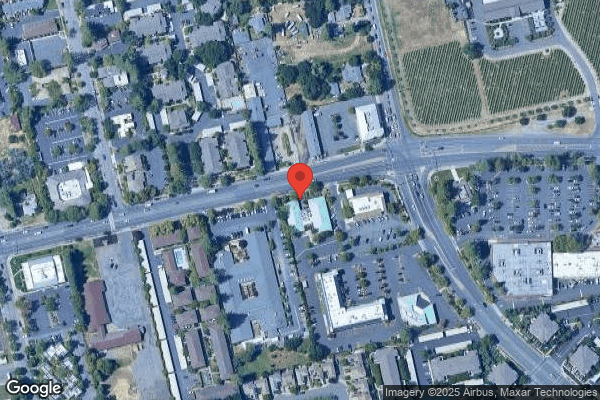

NAPA POST ACUTE

705 TRANCAS ST., NAPA, CA 94558 (707) 255-6060
For profit - Limited Liability company 120 Beds PACS GROUP Data: November 2025
Trust Grade
25/100
#860 of 1155 in CA
Last Inspection: March 2025

Within standard 12-15 month inspection cycle. Federal law requires annual inspections.

Overview

Napa Post Acute has received a Trust Grade of F, indicating poor performance with significant concerns regarding resident care. It ranks #860 out of 1155 facilities in California, placing it in the bottom half, and #5 out of 6 in Napa County, meaning there is only one local option that is better. The facility's trend is worsening, with issues increasing from 2 in 2024 to 11 in 2025. Staffing is rated average at 3 out of 5, but the turnover rate is concerning at 52%, significantly higher than the state average. Additionally, the facility has incurred $65,143 in fines, which is more than 82% of California facilities, suggesting ongoing compliance issues. Specific incidents raise serious red flags, such as a resident losing significant weight without proper notification to their healthcare team, and another resident leaving the facility unsupervised, resulting in hospitalization for hypothermia. While there is average RN coverage, the facility has been cited for failing to provide adequate care, particularly for residents with dementia. Overall, families should weigh these serious deficiencies against the facility's staffing and coverage metrics when considering care options.

Trust Score
F
25/100
In California
#860/1155
Bottom 26%
Safety Record
High Risk
Review needed
Inspections
Getting Worse
2 → 11 violations
Staff Stability
⚠ Watch
52% turnover. Above average. Higher turnover means staff may not know residents' routines.
Penalties
✓ Good
$65,143 in fines. Lower than most California facilities. Relatively clean record.
Skilled Nurses
○ Average
Each resident gets 35 minutes of Registered Nurse (RN) attention daily — about average for California. RNs are the most trained staff who monitor for health changes.
Violations
⚠ Watch
38 deficiencies on record. Higher than average. Multiple issues found across inspections.
★★☆☆☆
2.0
Overall Rating
★★★☆☆
3.0
Staff Levels
★★★☆☆
3.0
Care Quality
★★☆☆☆
2.0
Inspection Score
Stable
2024: 2 issues
2025: 11 issues

The Good

  • Full Sprinkler Coverage · Fire safety systems throughout facility
  • No fines on record

Facility shows strength in fire safety.

The Bad

2-Star Overall Rating

Below California average (3.1)

Below average - review inspection findings carefully

Staff Turnover: 52%

Near California avg (46%)

Higher turnover may affect care consistency

Federal Fines: $65,143

Above median ($33,413)

Moderate penalties - review what triggered them

Chain: PACS GROUP

Part of a multi-facility chain

Ask about local staffing decisions and management

The Ugly 38 deficiencies on record

3 actual harm
Mar 2025 8 deficiencies
CONCERN (D)

Potential for Harm - no one hurt, but risky conditions existed

Assessment Accuracy (Tag F0641)

Could have caused harm · This affected 1 resident

2. An admission Record revealed the facility admitted Resident #106 on 11/23/2024. According to the admission Record, the resident had a medical history that included diagnoses of acute on chronic dia...

Read full inspector narrative →
2. An admission Record revealed the facility admitted Resident #106 on 11/23/2024. According to the admission Record, the resident had a medical history that included diagnoses of acute on chronic diastolic congestive heart failure, presence of a cardiac pacemaker, and dependence on supplement oxygen. A physician's telephone order, dated 12/16/2024, indicated Resident #106 was to be sent to a hospital. Resident #106's Progress Notes, dated 12/16/2024, revealed Resident #106 was having a hard time breathing, the medical doctor was informed and agreed to send the resident to the hospital. The Progress Notes revealed the resident left the facility at approximately 6:18 PM. A discharge return anticipated MDS, with an Assessment Reference Date (ARD) of 12/16/2024, revealed Resident #106's discharge status as to home/community. The MDS indicated Licensed Vocational Nurse (LVN) Manager #2 signed the discharge MDS on 12/26/2024 indicating the completion and accuracy of the discharge status section. On 03/04/2025 at 2:42 PM, MDS Nurse #1 stated Resident #106 was discharged to the hospital and the MDS was inaccurate. MDS Nurse #1 stated the MDS should be accurate including the resident's discharge location. On 03/05/2025 at 3:00 PM, LVN Manager #2 stated they completed the discharge MDS for Resident #106, and the resident discharged to the hospital. LVN Manager #2 stated it was an error. On 03/05/2025 at 9:01 AM, the Director of Nursing (DON) stated her expectation was that the MDS was as accurate as possible. On 03/07/2025 at 8:40 AM, the Administrator stated the expectation was for the MDS to be accurate and reflective of the resident's condition while at the facility and at discharge. 3. An admission Record indicated the facility admitted Resident #61 on 11/09/2021. According to the admission Record, the resident had a medical history that included diagnoses of hemiplegia and hemiparesis (partial paralysis) following cerebral infarction (stroke) affecting the right dominant side, difficulty in walking, schizophrenia, psychotic disorder with delusions, anxiety disorder, unspecified epilepsy, and type 2 diabetes mellitus without complications. Resident #61's quarterly MDSs, with Assessment Reference Dates (ARDs) of 07/30/2024, 10/28/2024, and 01/27/2025, did not indicate the resident used a wander/elopement alarm. Resident #61's Care Plan Report included a focus area initiated on 03/04/2023, that indicated the resident was at risk for elopement/exit seeking. Interventions directed staff to keep the resident's picture in the elopement book (initiated 03/04/2023) and check for placement and function of the WanderGuard device (departure alert system) attached to the lower part of the resident's wheelchair (initiated 04/30/2024 and revised 01/20/2025). Resident #61's Order Details, dated 04/30/2024, revealed an order for a WanderGuard device to be attached to the back of the resident's wheelchair with instructions for staff to check for placement and function every shift. The Order Details revealed the order expiration date was 02/03/2025. Resident #61's Order Details, dated 01/03/2025, revealed an order for a WanderGuard device to be attached on the lower part of the resident's wheelchair with instructions for staff to check placement and function every shift. The Order Details revealed the order expiration date was 02/03/2025. Resident #61's Order Details, dated 01/20/2025, revealed an order for a WanderGuard device to be attached to the lower part of the resident's wheelchair with instructions for staff to check for function every night shift. The Order Details revealed the order expiration date was 06/09/2025. Resident #61's Order Summary Report, with active orders as of 03/04/2025, revealed an order dated 01/20/2025 for a WanderGuard device to be attached to the lower part of the wheelchair with instructions for staff to check for function every night shift. On 03/04/2025 at 2:37 PM, MDS Nurse #1 stated Resident #61 had an order for a WanderGuard device, and it was not coded on three quarterly assessments. On 03/05/2025 at 9:01 AM, the Director of Nursing (DON) stated Resident #61 had alarms (WanderGuard device), and it was not coded on two or three assessments. The DON stated her expectation was that the MDS was as accurate as possible. On 03/07/2025 at 8:40 AM, the Administrator stated the expectation was for the MDS to be accurate and reflective of the resident's condition while at the facility. Based on interview, record review, and facility policy review, the facility failed to ensure Minimum Data Set (MDS) assessments accurately reflected the status of 3 (Residents #107, #106, and #61) of 29 sampled residents reviewed for MDS accuracy. Specifically, the MDS assessments inaccurately reflected Resident #107 was discharged to a hospital; Resident #106 was discharged to home/community, and Resident #61 did not use a wander/elopement alarm. Findings included: A facility policy titled, Certifying Accuracy of the Resident Assessment, revised 11/2019, indicated, Any person completing a portion of the Minimum Data Set/MDS (Resident Assessment Instrument) must sign and certify the accuracy of that portion of the assessment. The policy also indicated, 3. The information captured on the assessment reflects the status of the resident during the observation (look-back) period for that assessment. 1. An admission Record indicated the facility originally admitted Resident #107 on 05/29/2024, readmitted the resident on 11/18/2024, and discharged the resident on 12/06/2024. According to the admission Record, the resident had a medical history that included a diagnosis of traumatic subdural hemorrhage. A discharge return not anticipated MDS, with an Assessment Reference Date (ARD) of 12/06/2024, indicated Resident #107 was discharged to a short-term general hospital. Resident #107's Post-Discharge Plan of Care, effective 12/03/2024, indicated a discharge status of home/community. The Post-Discharge Plan of Care indicated the reason for discharge was Resident #107 no longer required skilled services and was discharged home with a referral for home health services. During an interview on 03/07/2025 at 10:00 AM, MDS Nurse #1 revealed Resident #107 was discharged home with home health and the discharge MDS was coded incorrectly. During an interview on 03/07/2025 at 11:17 AM, the Director of Nursing (DON) stated the MDSs needed to be comprehensive and accurate. The DON stated Resident #107 was discharged home, and the discharge MDS was inaccurate. During an interview on 03/07/2025 at 11:55 AM, the Administrator stated the expectation was for MDSs to be accurate. The Administrator stated Resident #107 was discharged home, and the discharge MDS was inaccurate.
CONCERN (D)

Potential for Harm - no one hurt, but risky conditions existed

Deficiency F0645 (Tag F0645)

Could have caused harm · This affected 1 resident

Based on interview, record review, and facility policy review, the facility failed to ensure a resident's admission Pre-admission Screening and Resident Review (PASRR) accurately captured an admission...

Read full inspector narrative →
Based on interview, record review, and facility policy review, the facility failed to ensure a resident's admission Pre-admission Screening and Resident Review (PASRR) accurately captured an admission diagnosis of a serious mental illness (SMI) for 1 (Resident #64) of 2 residents reviewed for PASRR. Specifically, Resident #64's admission PASRR did not capture their admission diagnosis of unspecified psychosis. Findings included: A facility policy titled, Pre-admission Screening and Resident Review, revised 12/2016, revealed, a. The facility will participate in or complete the Level I screen for all potential admissions regardless of payer source to determine if the individual meets the criterion for mental disorder (SMI/SMD), intellectual disability (ID) or related condition. An admission Record revealed the facility admitted Resident #64 on 11/01/2024. According to the admission Record, the resident had a medical history that included a diagnosis of unspecified psychosis (onset date 11/01/2024). Resident #64's quarterly Minimum Data Set (MDS), with an Assessment Reference Date (ARD) of 02/06/2025, revealed the resident had a Brief Interview for Mental Status (BIMS) score of 6, which indicated the resident had severe cognitive impairment. Resident #64's Preadmission Screening and Resident Review (PASRR) Level I Screening, dated 10/15/2024, indicated the resident did not have a SMI. During an interview on 03/05/2025 at 2:50 PM, Registered Nurse (RN) #13 stated the PASRR process started on admission. RN #13 stated for an admission diagnosis that was not captured on the PASRR, the facility would have sent the PASRR back to the hospital so it could be completed correctly. During an interview on 03/06/2025 at 10:12 AM, the Director of Nursing (DON) stated that if a resident had a diagnosis of an SMI that was not captured by their PASRR, the facility should do another resident review. During an interview on 03/07/2025 at 11:31 AM, the DON stated that Resident #64's PASRR was resubmitted on 03/05/2025 because the surveyor brought it to their attention during the survey process. Resident #64's Preadmission Screening and Resident Review (PASRR) Level I Screening, dated 03/05/2025, indicated the resident had an SMI of unspecified psychosis.
CONCERN (D)

Potential for Harm - no one hurt, but risky conditions existed

Deficiency F0688 (Tag F0688)

Could have caused harm · This affected 1 resident

Based on interview, record review, and facility policy review, the facility failed to ensure residents with limited range of motion (ROM) received care and services to prevent any further decrease in ...

Read full inspector narrative →
Based on interview, record review, and facility policy review, the facility failed to ensure residents with limited range of motion (ROM) received care and services to prevent any further decrease in ROM for 1 (Resident #28) of 2 residents reviewed for rehabilitation and restorative services. Specifically, Resident #28 had an order for staff to ask rehabilitation services to perform passive ROM, but there was no documentation that this order had been completed. Findings included: A facility policy titled, Restorative Nursing Services, indicated, 1. Restorative nursing care consists of nursing interventions that may or may not be accompanied by formalized rehabilitative services (e.g. [exempli gratia, for example], physical, occupational or speech therapies). 2. Residents may be started on a restorative nursing program upon admission, during the course of stay or when discharged from rehabilitative care. An admission Record revealed the facility admitted Resident #28 on 03/04/2017. According to the admission Record, the resident had a medical history that included diagnoses of morbid obesity, unspecified joint contracture, rheumatoid arthritis, and difficulty in walking. An annual Minimum Data Set (MDS), with an Assessment Reference Date (ARD) of 02/03/2025, revealed Resident #28 had a Brief Interview for Mental Status (BIMS) score of 15, which indicated the resident had intact cognition. According to the MDS, the resident had impairment in their functional limitation in range of motion on both lower extremities. Resident #28's [Facility Name] Order Recap [Recapitulation] Report revealed an order dated 10/28/2024, that indicated, Ask rehab [rehabilitation] to do passive ROM. Further review revealed the order was written by the Medical Director. Resident #28's Rehab - Joint Mobility Screen, dated 01/29/2025, revealed the resident had severe impairment in their left and right shoulder, elbow, wrist, hand, hip, knee, and ankle. During an interview on 03/03/2025 at 11:00 AM, Resident #28 stated they would like therapy to help them pivot and stand. Resident #28 stated that the doctor had agreed and ordered therapy, but they had not heard further about it. Resident #28 stated they requested therapy several times including a week and a half ago. During an interview on 03/06/2025 at 10:58 AM, Physical Therapy Assistant (PTA) #17 stated that the last documented visit they had with Resident #28 was in 2023. PTA #17 stated an order for rehabilitative ROM would be a restorative nursing aide (RNA) intervention, so nursing staff would be the staff to ask. PTA #17 stated the last documentation of restorative care for Resident #28 was in 2022. During an interview on 03/06/2025 at 11:11 AM, Resident #28 stated that RNAs had not been coming in to provide ROM care, nor had any other nursing staff. During an interview on 03/06/2025 at 11:14 AM, the Director of Staff Development and Human Resources (DSDHR) confirmed that she ran the restorative program. She stated that Resident #28 was not receiving restorative therapy. The DSDHR stated she was not aware of any order for restorative care. She stated that when nursing staff saw the order, they should have asked the therapy department if they could do passive ROM. She stated then the therapy department could put in an order for restorative care, and she would see that order and begin restorative care. The DSDHR stated that she did not know how that order slipped through, but there was no record that the order was being carried out. During an interview on 03/07/2025 at 11:31 AM, the Director of Nursing (DON) stated that if the doctor ordered rehabilitation services or therapy, staff should communicate that to the therapy department and/or restorative staff. During an interview on 03/07/2025 at 1:19 PM, the Medical Director stated passive ROM would definitely benefit the resident to prevent further contractures. The Medical Director then stated that passive ROM might not do anything, but might help. During an interview on 03/07/2025 at 1:53 PM, Certified Nursing Aide (CNA) #18 stated she had worked at the facility since July 2024. She stated that she worked with Resident #28 every day she was at the facility. CNA #18 stated that while she had done some passive ROM with the resident during transfers and showers, it was not an everyday occurrence. She stated that she did not know there was an order regarding passive ROM.
CONCERN (D)

Potential for Harm - no one hurt, but risky conditions existed

Accident Prevention (Tag F0689)

Could have caused harm · This affected 1 resident

**NOTE- TERMS IN BRACKETS HAVE BEEN EDITED TO PROTECT CONFIDENTIALITY** Based on observation, interview, record review, and facility policy review, the facility failed to ensure a resident was safe fr...

Read full inspector narrative →
**NOTE- TERMS IN BRACKETS HAVE BEEN EDITED TO PROTECT CONFIDENTIALITY** Based on observation, interview, record review, and facility policy review, the facility failed to ensure a resident was safe from eloping from the facility for 1 (Resident #61) of 2 residents reviewed for elopements. Specifically, Resident #61 eloped from the facility on 02/25/2025 and was found in a parking lot approximately one block away from the facility. At the time of the elopement Resident #61 was utilizing a WanderGuard device (departure alert system); however, the WanderGuard device was not applied in accordance with manufacturer's instructions. Additionally, the facility failed to ensure 1 of 1 supply closet observed containing medical supplies was locked and inaccessible to residents. Findings included: 1. A facility policy titled, Wandering and Elopements, revised 03/2019, specified, 2. If a resident is missing, initiated the elopement/missing resident emergency procedure: which included, c. if the resident is not located, notify the administrator and the director of nursing services, the resident's legal representative, the attending physician, law enforcement officials, and (as necessary) volunteer agencies (i.e. [id est, that is] emergency management, rescue squads, etc. [et cetera; and so forth]. A WanderGuard User instructions manual, dated 2023, revealed a WARNING box that indicated, Do not place the signaling device on or next to metal, such as wheelchair frames, jewelry, watches, etc. or allow it to come in contact with a door or associated hardware such as crash-bars, push-bars etc. Metal could interfere with the signal sent to the door modules. An admission Record indicated the facility admitted Resident #61 on 11/09/2021. According to the admission Record, the resident had a medical history that included diagnoses of hemiplegia and hemiparesis (partial paralysis) following cerebral infarction (stroke) affecting the right dominant side, difficulty in walking, schizophrenia, psychotic disorder with delusions, anxiety disorder, unspecified epilepsy, and type 2 diabetes mellitus without complications. A quarterly Minimum Data Set (MDS), with an Assessment Reference Date (ARD) of 01/27/2025, revealed Resident #61 had a Brief Interview for Mental Status (BIMS) score of 3, which indicated the resident had severe cognitive impairment. The MDS revealed the resident wandered four to six days during the assessment's seven-day lookback period. The MDS revealed the resident used a wheelchair for mobility during the assessment's seven-day lookback period. The MDS revealed the resident was independent with all areas of activities of daily living except for showering/bathing where they required partial/moderate assistance from staff. Resident #61's Care Plan Report included a focus area initiated on 03/04/2023, that indicated the resident was at risk for elopement/exit seeking. Interventions directed staff to keep the resident's picture in the elopement book and check for placement and function of the WanderGuard device attached to the lower part of the resident's wheelchair. Resident #61's Order Summary Report, with active orders as of 03/04/2025, revealed an order dated 01/20/2025 for a WanderGuard device to be attached to the lower part of the resident's wheelchair with instructions for staff to check for function every night shift. Resident #61's 06. Nursing- Elopement and Wandering Risk Observation/Assessment - V 1.0, dated 01/23/2025, indicated the resident had exhibited unsafe wandering or had made one or more attempts to elope prior to admission or in the past year. The assessment revealed the resident exhibited unsafe wandering or elopement attempts and was difficult to redirect. The assessment revealed that based on the assessment findings a wander alarm was indicated. Resident #61's Progress Notes, dated 02/25/2025 at 8:20 AM, revealed the Social Service Director was notified that the resident was last seen at 6:00 AM that morning. The Progress Notes revealed staff searched the rooms, parking lot, and surrounding grounds. Per the Progress Notes, staff left the facility via their personal vehicles and began a two-mile radius search. The Progress Notes revealed that the resident was found and [NAME] back to the facility. Resident #61's Progress Notes, dated 02/25/2025 at 2:11 PM, indicated that around 6:40 AM, a certified nursing assistant (CNA) reported to a nurse that the resident was missing. The Progress Notes indicated the resident was last seen at 6:00 AM in front of their room door. The Progress Notes revealed staff tried to find the resident inside and outside the facility. The Progress Notes revealed the staff notified the Director of Nursing (DON), Administrator, medical doctor, the resident's emergency contact, and the police. The Progress Notes indicated staff found Resident #61 one block away from the facility. An Incident Summary Report, dated 02/26/2025, revealed that on 02/25/2025 Resident #61 left the facility around 6:45 AM through the front door. The report revealed the front door had a functioning WanderGuard alarm, but it did not alarm during the incident. The report revealed the resident was found a block away from the facility roughly an hour later. Per the report, when the resident was found, there were no signs of injury or distress. The report revealed that when the resident returned to the facility staff checked the WanderGuard device at all exits and confirmed that it was working. During a telephone interview on 03/04/2025 at 10:42 AM, with the aid of a translator, Family Member (FM) #12, Resident #61's FM, stated the facility called to notify them Resident #61 was missing (on 02/25/2025), and they were told the staff did not hear the alarm. On 03/04/2025 at 1:07 PM, CNA #10 stated that (on 02/25/2025) he completed his rounds and did not see Resident #61. He stated that he asked Licensed Vocational Nurse (LVN) #8 if he had seen the resident. He stated he went outside and did not find the resident. He stated he asked staff on the other side of the facility (if they had seen the resident) and came back to ask LVN #8 again, and LVN #8 did not know. CNA #10 stated he went outside and checked the smoking area. CNA #10 stated that when the morning nurse, LVN #4, had taken over, he told LVN #4 that Resident #61 was missing. Per CNA #10, LVN #4 was the only staff member who took the time to help him look for the resident. He stated that Resident #61's WanderGuard device was on the right wheel of their wheelchair. CNA #10 stated that the resident had a history of wandering and exit-seeking, and there had been multiple occasions when he found the resident in the parking lot by the time he could respond to the WanderGuard alarm. On 03/05/2025 at 8:21 AM, LVN #4 stated that (on 02/25/2025) CNA #10 noticed that Resident #61 was not in their room, so they looked for the resident inside the facility. She stated they could not find the resident, so they called the Infection Preventionist (IP) and a nurse manager and started looking outside the facility. LVN #4 stated she got in her car and drove around looking for the resident. Per LVN #4, the resident was found one block away, and when the resident returned to the facility, she completed a skin assessment and took their vital signs. She stated that Resident #61 wandered a lot and their WanderGuard device was placed on their wheelchair because the resident became agitated and would remove it if they put it on them. She stated that when the resident would get close to any of the doors, they could hear the alarm through the halls. On 03/04/2025 at 11:50 AM, the IP stated that (on 02/25/2025) at 6:45 AM he received a call from the DON and was informed that they had a missing person, and they needed him to drive around the vicinity. He stated that he picked up RN #20 and they found Resident #61 in a parking lot near a housing complex. He stated the resident was in a wheelchair sitting with their legs crossed and they called for transportation. On 03/04/2025 at 11:28 AM, Registered Nurse (RN) #20 stated that she did not see Resident #61 that morning (02/25/2025) but was told by a nurse that they were missing. RN #20 stated the nurse asked for help in locating the resident. RN #20 stated that (before the resident eloped on 02/25/2025) the last time the resident had been seen was by the night nurse during morning medication. She stated that they checked the common room and surrounding area of the facility; when they could not find the resident, they notified social services, the Administrator, and the DON. She stated they walked around outside, but it was too cold, so they returned to the facility, got in a car, and drove around. She stated she was with the IP when they found Resident #61 near an apartment. RN #20 stated the resident was sitting in their wheelchair with their legs and [NAME] crossed. She stated she assessed Resident #61 and noted that they did not appear to be in distress; however, there was a language barrier, and they used the assistance of a language line to communicate with the resident. She stated the resident was wearing a shirt, jacket, long pants, and shoes when they were found. RN #20 stated she called the facility driver to bring the van so that they could transport the resident back to the facility. She stated that upon returning, they checked the resident's vital signs, completed a head-to-toe assessment to rule out any injuries, and provided the resident with blankets. She stated that the medical doctor was notified. Per RN #20, Resident #61's WanderGuard device was located on their wheelchair on that day (02/25/2025). On 03/04/2025 at 12:50 PM, LVN #8 stated (on 02/25/2025) Resident #61 was last seen close to 6:00 AM, when the resident was administered 6:00 AM medication. LVN #8 stated a CNA reported Resident #61 was missing. LVN #8 stated he could not recall the location of Resident #61's WanderGuard device. He acknowledged that he signed Resident #61's Medication Administration Record (MAR) (on 02/25/2025), indicating he had verified the function of the WanderGuard device; however, he admitted he did not know how to check its functionality. He stated that the facility provided education (on how to check the function of the WanderGuard device), but he did not attend and did not know how to check the function of the WanderGuard device. Resident #61's February 2025 Medication Administration Record, revealed, LVN #8 signed verifying function of the WanderGuard device on 02/25/2025. On 03/04/2025 at 11:21 AM, the Administrator stated that (on 02/25/2025) the WanderGuard device had malfunctioned, and he believed that (before the resident eloped on 02/25/2025) the last place Resident #61 was seen was near the front entrance. The Administrator stated that when the resident returned to the facility the WanderGuard device worked so they did not have to replace it. On 03/04/2025 at 11:39 AM, the DON stated the facility was not able to identify which exit door Resident #61 used and was not sure of the exact time the resident was last seen by staff (on 02/25/2025). During an interview on 03/04/2025 at 10:07 AM, Social Worker (SW) #16 stated Resident #61 used a wheelchair for locomotion. She stated she arrived at work (on 02/25/2025) at around 6:30 AM and was notified that Resident #61 was not in their room. She stated that they began searching the rooms and the area outside for the resident. SW #16 stated Resident #61 was in a parking lot of another facility that was a block away, approximately 0.3 miles. She stated that when the resident returned to the facility, she checked on them; however, she did not complete any psychosocial assessments; she only ensured that the resident contacted their family. She stated that Resident #61 would frequently go out to the parking lot. She stated the resident's WanderGuard device would alert staff, who would then bring them back into the facility. SW #16 revealed that she previously had to retrieve the resident from the parking lot and brought them back to the facility. She stated she did not document Resident #61's elopements but should have. She stated she informed the nurse (when the resident eloped); however, she stated that she would not report all instances (of the resident eloping). SW #16 stated that she did not have a system that tracked the elopements and would not be able to provide dates for Resident #61's elopements. An observation on 03/04/2025 at 8:04 AM revealed Resident #61 was in bed with their wheelchair nearby. The residents WanderGuard device was attached to the right wheel of their wheelchair. An observation on 03/05/2025 at 11:13 AM revealed Resident #61's WanderGuard device was located on the metal part of their wheelchair. On 03/05/2025 at 11:48 AM, the Maintenance Assistant stated the WanderGuard device was usually attached to a resident's arm or leg. He stated that it might be possible to attach the WanderGuard device to a resident's wheelchair, but that they should follow the manufacturer's guidelines. The Maintenance Assistant stated that failing to adhere to these guidelines could result in residents leaving the facility unnoticed by the staff. On 03/05/2025 at 11:49 AM, Medical Director (MD) stated that he was unsure why they decided to affix the WanderGuard device to Resident #61's wheelchair, but that it was probably because it was less intrusive. The MD stated that the manufacturer guidelines should have been followed with regards to minimizing possible harm to the resident. The MD stated he was unsure if affixing the WanderGuard device to metal violated the manufacturers guidelines. On 03/05/2025 at 11:57 AM, the Administrator stated that he was uncertain about where to place the WanderGuard device on a resident and how the facility staff made that determination. He stated that he was unsure as to why staff chose to attach the WanderGuard device to Resident #61's wheelchair. He stated that it was important to follow the manufacturer's guidelines to ensure that the device was used correctly and functioning properly; however, he was unsure if attaching the WanderGuard device to the resident's wheelchair violated those guidelines. On 03/07/2025 at 10:15 AM, the DON stated that she was unaware that attaching the WanderGuard device to metal could interfere with its function. Per the DON, they did not check the manufacturer's recommendations for the WanderGuard device during the facility's investigation (of Resident #61's elopement on 02/25/2025). She stated that failing to follow the manufacturer's guidelines could result in the device not functioning properly and not alarming, which would prevent staff from knowing if a resident was near a door and potentially allowing the resident to exit the facility. She stated that there was a possibility that having the WanderGuard device attached to the metal of the wheelchair may have caused the alarm to malfunction. 2. A facility policy titled, Storage of Medications, revised April 2019, indicated, The facility stores all drugs and biologicals in a safe, secure, and orderly manner. During an observation on 03/03/2025 at 12:01 PM, a supply closet was observed unlocked. The supply closet contained iodine swabs in packages and hydrogen peroxide in containers. There were no unassisted residents who were wandering or going past the unlocked supply room during the observation. On 03/03/2025 at 12:06 PM, Registered Nurse (RN) #13 stated there were only supplies for treatments and basic wound supplies in the supply closet. She stated there were no medications in that supply closet. She stated the supply closet had never been locked. During a concurrent observation, RN #13 observed the supplies in the closet and stated there was ultrasound gel, hydrogen peroxide, iodine swab sticks, triamcinolone acetonide ointment cream, and alcohol prep pads located in the supply closet. She stated there would be a concern with poisoning if someone ingested these supplies. She stated there was a way to lock the supply closet. Per RN #13, the supply closet had a lock, and the nurses and DON had the key. RN #13 stated that the facility had residents that wandered. On 03/07/2025 at 11:00 AM, the Director of Nursing (DON) stated it was her expectation that the supply closet should be locked so that only authorized staff could get into the closet. The DON stated confused residents might access the closet and mess with the supplies, potentially affecting them negatively. On 03/07/2025 at 11:56 AM, the Administrator stated his expectation would be if there were medical supplies in the supply closet the closet would be locked. He stated the staff would need to investigate the root cause as to why the supply closet was not locked.
CONCERN (D)

Potential for Harm - no one hurt, but risky conditions existed

Deficiency F0761 (Tag F0761)

Could have caused harm · This affected 1 resident

**NOTE- TERMS IN BRACKETS HAVE BEEN EDITED TO PROTECT CONFIDENTIALITY** Based on observation, interview, and facility policy review, the facility failed to ensure medication carts were locked when una...

Read full inspector narrative →
**NOTE- TERMS IN BRACKETS HAVE BEEN EDITED TO PROTECT CONFIDENTIALITY** Based on observation, interview, and facility policy review, the facility failed to ensure medication carts were locked when unattended by staff for 1 of 6 medication carts observed. Findings included: A facility policy titled, Storage of Medications, revised 04/2019, indicated, The facility stores all drugs and biologicals in a safe, secure, and orderly manner. The policy revealed the section titled, Policy Interpretation and Implementation, included, 9. Unlocked medication carts are not left unattended. During an observation on 03/07/2025 at 10:35 AM, an unattended and unlocked medication cart was observed outside room [ROOM NUMBER]. The staff were not around or within eyesight of the cart. There were no residents nearby. During an interview on 03/07/2025 at 10:39 AM, Registered Nurse (RN) #19 confirmed she was in a resident's room and out of eyesight from the medication cart. She stated she should have locked the medication cart. During an interview on 03/07/2025 at 11:31 AM, the Director of Nursing (DON) stated medication carts should not be left unlocked and unattended.
CONCERN (D)

Potential for Harm - no one hurt, but risky conditions existed

Medical Records (Tag F0842)

Could have caused harm · This affected 1 resident

Based on interview, record review, and facility policy review, the facility failed to ensure an order to discontinue a medication was transcribed into the clinical record for 1 (Resident #84) of 28 sa...

Read full inspector narrative →
Based on interview, record review, and facility policy review, the facility failed to ensure an order to discontinue a medication was transcribed into the clinical record for 1 (Resident #84) of 28 sampled residents for whom orders were reviewed. Findings included: A facility policy titled, Discontinued Medications, revised in 04/2007, indicated, 1. A practitioner's order to discontinue a resident's medication must be documented in the resident's clinical record and on the medication administration record (MAR). An admission Record indicated the facility admitted Resident #84 on 09/15/2024. According to the admission Record, the resident had a medical history that included a diagnosis of type two diabetes mellitus. A quarterly Minimum Data Set (MDS), with an Assessment Reference Date (ARD) of 12/23/2024, revealed Resident #84 had a Brief Interview for Mental Status (BIMS) score of 15, which indicated the resident was cognitively intact. A physician note, dated 01/27/2025, revealed Resident #84 had a follow-up appointment with an outside provider, Physician #22, on 01/27/2025 and voiced concerns of worsening vision and floaters (spots in vision), aggravated by reading. The note indicated Resident #84 had Combined Senile Cataract, and Physician #22 documented, Unclear why patient is still on prednisolone, will d/c [discontinue] at this time. However, Resident #84's Order Summary Report, including active, discontinued, and completed orders as of 03/04/2025, contained an active order dated 12/20/2024 for Pred Forte (prednisolone acetate) ophthalmic suspension 1 percent (%), with instructions to instill one drop in both eyes two times a day for Anti inflammatory [sic]. On 03/03/2025 at 10:26 AM, Resident #84 stated they had prescribed eye drops that should have been discontinued per their eye doctor, but the facility did not discontinue the order. The resident stated their eye doctor's office faxed the paperwork regarding the discontinued order to the facility after their appointment. On 03/05/2025 at 2:42 PM, Licensed Vocational Nurse (LVN) #14 stated that when residents had appointments with outside providers, the physician's office faxed any updates to the facility. LVN #14 stated faxes printed out at the nurses' station, but she had not received a fax about Resident #84's 01/27/2025 appointment. LVN #14 then reviewed the physician note from 01/27/2025 that was scanned into the resident's clinical record and stated the note did not appear to have been reviewed by a nurse. LVN #14 confirmed the resident's order for Pred Forte should have been discontinued. On 03/05/2025 at 5:21 PM, Physician #22 stated that in 01/2025 he made it clear in his note that the resident's Pred Forte should have been discontinued. On 03/06/2025 at 11:55 AM, the Medical Records Director stated that when a patient came back from an outside appointment, the nurse should enter a progress note that indicated if there were any new orders. She stated that when nursing staff reviewed physician progress notes, they should document on the physician progress note to indicate the note was reviewed. She stated that once a nurse reviewed the physician progress note, the medical records staff scanned the physician note into the resident's electronic medical record (EMR). After reviewing Resident #84's physician note from 01/27/2025, the Medical Records Director stated there was no documentation on the physician note to indicate it was reviewed by a nurse. She stated the note should not have been scanned into the resident's EMR without first ensuring the physician progress note was reviewed by nursing staff. On 03/07/2025 at 11:09 AM, the Director of Nursing (DON) stated that once a resident returned from an outside physician appointment, nursing staff should check for new orders, notify the attending physician of any new orders, and then enter any new orders into the resident's EMR. She stated medical records staff should not scan physician notes into the computer until a nurse followed up on any orders.
CONCERN (F)

Potential for Harm - no one hurt, but risky conditions existed

Deficiency F0577 (Tag F0577)

Could have caused harm · This affected most or all residents

Based on interview, observation, and facility policy review, the facility failed to ensure the most recent survey results were readily accessible for all residents to review. This deficient practice h...

Read full inspector narrative →
Based on interview, observation, and facility policy review, the facility failed to ensure the most recent survey results were readily accessible for all residents to review. This deficient practice had the potential to affect all residents who resided in the facility. Findings included: A facility policy titled, Examination of Survey Results, revised 04/2017, indicated, 2. A copy of the most recent survey report and any plans of correction are kept in a binder in the residents' dayroom. During observations on 03/05/2025 beginning at 8:15 AM of readily accessible areas to residents, the state survey results could not be found in the facility. During an interview on 03/05/2025 at 8:24 AM, the Activities Director revealed she did not know where the survey results were posted. She stated she did not know the survey results were required to be available without asking. During an interview on 03/05/2025 at 9:40 AM, the Social Services Director (SSD) stated the survey binder was on the table near the building's entrance. She said she last saw the survey binder when the state surveyors were at the facility, which was about three weeks prior. During an interview on 03/05/2025 at 9:50 AM, the Administrator stated he did not know where the survey binder was, but it was supposed to be on the table across from the conference room. During an interview on 03/05/2025 at 10:26 AM, the Director of Nursing (DON) stated she took the survey results binder on Monday (03/03/2025) to add the most recent survey and she had forgotten to return it. She confirmed that the survey results binder had not been in its usual location for that week, and she further confirmed that the survey results binder was supposed to be available without having to ask. During an interview on 03/07/2025 at 10:56 AM, the Administrator stated the survey results binder should be available for all residents. During an interview on 03/07/2025 at 11:31 AM, the DON stated the survey results binder was supposed to be posted in the lobby for residents to access.
CONCERN (F)

Potential for Harm - no one hurt, but risky conditions existed

Grievances (Tag F0585)

Could have caused harm · This affected most or all residents

Based on interview, observation, and facility policy review, the facility failed to protect the rights of residents and their representatives to have the ability to file grievances anonymously. This d...

Read full inspector narrative →
Based on interview, observation, and facility policy review, the facility failed to protect the rights of residents and their representatives to have the ability to file grievances anonymously. This deficient practice had the potential to affect all residents who resided in the facility. Findings included: A facility policy titled, Grievances / Complaints, Filing, dated 2001, indicated, 5. Grievances and/or complaints may be submitted orally or in writing, and may be filed anonymously. An undated facility Grievance Process, indicated, Grievance forms are available for the individual and/or their family members to complete independently and/or with employee assistance. Forms can be obtained by contacting the executive director, director of nursing services, social services director and other department heads, or they can be obtained from the nurses' station. A sign posted in the facility indicated that the Grievance Officer was Social Worker (SW) #16. During an observation on 03/05/2025 at 8:15 AM, there were no grievance forms available for public use. There was no way to take a grievance form anonymously to fill out and submit. During an interview on 03/05/2025 at 2:08 PM, SW #16 confirmed she was the grievance official and had been for the past two months. She stated it was facility practice for a resident to either tell staff or her if they wished to file a grievance. She stated that the residents could also call the Ombudsman. SW #16 stated the grievance forms were stored in the front and back social services offices, and they could not be obtained without asking social services staff. SW #16 stated that there was a grievance binder located behind the nurses' station with grievance forms, but residents would have to ask nursing staff for access to those forms. She stated the grievance forms were not kept in public areas for anonymous use. She stated that the grievance official could not address a grievance without knowing who made the grievance. She stated that she could keep grievances confidential, but she needed to know who made the grievance to investigate it. During an observation on 03/05/2025 at 2:20 PM, a grievance binder with grievance forms on the East Hall nurses' station was on a rack with resident charts behind the nursing station. SW #16 confirmed the observation and confirmed that any resident who wished to fill out one of the grievance forms at the nurses' station would have to ask staff for assistance to obtain the grievance form. During an observation on 03/05/2025 at 2:26 PM, a grievance binder with grievance forms on the [NAME] Hall nurses' station was behind the nursing station in a cabinet with the door shut. During an interview on 03/07/2025 at 10:56 AM, the Administrator stated that there should be an option for residents and their families to file grievances anonymously. During an interview on 03/07/2025 at 11:31 AM, the Director of Nursing (DON) stated that residents should be able to file grievances anonymously.
Feb 2025 3 deficiencies
CONCERN (D) 📢 Someone Reported This

A family member, employee, or ombudsman was alarmed enough to file a formal complaint

Potential for Harm - no one hurt, but risky conditions existed

Grievances (Tag F0585)

Could have caused harm · This affected 1 resident

Based on observation, interview and record review, the facility failed to ensure the Social Services Department resolved the resident concerns grievances for brought up by one resident (Resident 2) of...

Read full inspector narrative →
Based on observation, interview and record review, the facility failed to ensure the Social Services Department resolved the resident concerns grievances for brought up by one resident (Resident 2) of three sampled residents (Resident 2) when Resident 2 reported his bed frame was broken and a staff member broke his electronic tablet (a portable computer with a touchscreen designed for easy use on the go). This resulted in Resident 2's boredom and frustration when the electronic tablet had not been replaced and the inability to sleep comfortably in bed. Findings: Record review or Resident 2's admission record indicated admission to the facility on 3/29/21 with medical diagnoses including Hemiplegia (Paralysis or weakness on one side of the body) & Hemiparesis (One-sided muscle weakness) following a Cerebral Infarction (A medical condition where blood flow to the brain is interrupted, leading to damage or death of brain tissue), and insomnia (sleep disorder characterized by difficulty falling or staying asleep). Record review of a facility document titled, THEFT AND LOSS REPORT , dated 2/28/24, indicated, Tablet Screen was cracked when dropped to the floor .[Resident 2] reported that the tablet was dropped by staff member and the screen is cracked .2-29-24- Admin offered to have it repaired, either family take in or have [facility] get it repaired. Message left with [Resident 2's] son .4-22-24 [Resident 2] said that the family took the tablet to get repaired .5-5-24 .left message offering to reimburse .- Investigation Closed. During a concurrent observation and interview with Resident 2 on 2/5/25 at 10:12 a.m., he stated he was unable to sleep at night because his bed frame was broken, and this made it extremely uncomfortable for him. Resident 2 stated he had notified social services staff about this issue around the holidays of 2024, but they had done nothing about it. Upon observation, it was noted his bed was tilted to the right side, instead of being horizontal to the floor. Resident 2 also stated a Certified Nursing Assistant (CNA) had accidentally broken his electronic tablet which he used to watch movies and listen to music. Resident 2 stated he notified Social Services Staff B about it, but they had not yet replaced it. Resident 2 could not remember the approximate date when this occurred. Resident 2's broken electronic tablet was found inside Resident 2's bedside commode and was observed by the Surveyor with Resident 2's permission. The screen was discolored, shattered, and the device could not be turned on. Resident 2 stated he became bored and frustrated without his electronic tablet. During an interview with Social Services Staff B and Social Services Staff C, on 2/5/25 at 3 p.m., Social Services Staff B confirmed Resident 2 had informed her of his broken bed frame around the holidays of 2024. Social Services B stated she notified the Maintenance Director but did not follow-up with Resident 2 to see if this problem had been fixed. Social Services Staff C also confirmed Resident 2 had notified her of the broken electronic tablet. Social Services Staff C stated she left a message with Resident 2's son informing him to bring a replacement electronic tablet for Resident 2, and the facility would reimburse them for it. Social Services Staff C confirmed she did not follow-up with Resident 2 to see if he had been provided with a new electronic tablet. Record review of a facility document titled, CONCERN/GRIEVANCE REPORT, dated 1/19/25 indicated Resident 2 had notified Social Services Staff B his bed was not going up and down. According to this hand-written report, a maintenance staff checked it and indicated the frame worked perfectly fine. However, this Surveyor observed Resident 2's bed frame continued to be broken on 2/5/24 at 10:12 a.m. During an interview on 2/06/25 at 3:18 p.m., the Director of Staff Development (DSD) stated when complaints were filed with the Social Services personnel, the Social Service personnel were responsible for ensuring the issues were resolved. This included checking with the resident making the complaint to ensure the issues had been resolved. Record review of the facility policy titled, Grievances/Complaints, Recording and Investigating, dated 2001, indicated, All grievances and complaints filed with the facility will be investigated and corrective actions will be taken to resolve the grievance(s) .Grievance is expected to be resolved timely .The resident, or person acting on behalf of the resident , will be informed of the findings of the investigation as well as any corrective actions recommended.
CONCERN (E) 📢 Someone Reported This

A family member, employee, or ombudsman was alarmed enough to file a formal complaint

Potential for Harm - no one hurt, but risky conditions existed

ADL Care (Tag F0677)

Could have caused harm · This affected multiple residents

**NOTE- TERMS IN BRACKETS HAVE BEEN EDITED TO PROTECT CONFIDENTIALITY** Based on observation, interview and record review, the facility failed to provide assistance with Activities of Daily Living (AD...

Read full inspector narrative →
**NOTE- TERMS IN BRACKETS HAVE BEEN EDITED TO PROTECT CONFIDENTIALITY** Based on observation, interview and record review, the facility failed to provide assistance with Activities of Daily Living (ADL) for three residents (Resident 1, Resident 2 & Resident 3) of four sampled residents when Resident 1, Resident 2, and Resident 3 developed a gray-white residue inside their oral cavities and malodorous breath. This finding had the potential to result in tooth decay, gum disease, discomfort, and tooth loss among residents. Findings: Record review of Resident 1's admission record indicated admission to the facility on 9/5/17 with medical diagnoses including Hemiplegia (Paralysis or weakness on one side of the body) & Hemiparesis (One-sided muscle weakness) following a Cerebral Infarction (A medical condition where blood flow to the brain is interrupted, leading to damage or death of brain tissue). Record review of Resident 1's Minimum Data Set (MDS-An assessment tool) dated 8/06/24 indicated he needed set-up or clean-up assistance with oral care. Record review of a Palliative Care progress note from the hospital dated 9/23/24 indicated, Phone call to [Family Member XX] who answered phone and states she visited [Resident 1] . [Resident 1's daughter] visited [Resident 1] late last night [and stated,] ' His mouth is rotting and smells' .His mouth has broken teeth and had a grey salavia [sic].' She states he has been at [the facility] for 4 years .[Resident 1's daughter also stated] ' I want you to see his broken teeth and I want an oral surgeon to come and take them out as I know they cause infection.' .[Resident 1's daughter] tells me that [Resident 1] will not be going back to [the facility] as she believes they neglected him. I was appalled by what he looked like. His salvia is dried and gray in his mouth. His mouth is rotting and smells . She tells me that he will not be going back to [Facility], as she believes they neglected him. During a phone interview on 2/3/25 at 1:20 p.m., Family Member XX stated Resident 1 was transferred to the hospital on 9/18/24. When she visited him at the hospital she noticed Resident 1's teeth were rotted and falling out of his mouth, his tongue was completely white, his saliva was gray, and his breath smelled like refuse. Family Member XX stated Resident 1 was not receiving oral care at the nursing facility, and she felt he was being neglected. Record review or Resident 2's admission record indicated admission to the facility on 3/29/21 with medical diagnoses including Hemiplegia & Hemiparesis following a Cerebral Infarction. A review of Resident 2's MDS dated [DATE] indicated a Brief Interview for Mental Status (BIMS, a screening tool used to help identify cognitive impairment) score of 15 which meant he had no cognitive (the mental process of thinking, remembering, and using judgement) impairment. A review of this MDS also indicated Resident 2 required set-up or cleaning-up assistance with oral care. During a concurrent observation and interview on 2/5/24 at 10:12 a.m., Resident 2 was observed with a significant amount of grayish white residue on his front teeth and malodorous breath. Resident 2 stated staff were not providing him with routine oral care. Resident 2 stated he was able to brush his own teeth but needed staff to provide him with the required supplies since he could not get up from bed. Resident 2 stated the last time staff provided oral care supplies, was nine days prior. According to Resident 2, he had not brushed his teeth during these nine days. Resident 2 stated staff did not provide him with oral care supplies even when he requested them. During an interview with Unlicensed Staff A on 2/5/25 at 10:41 a.m., she confirmed she was the Certified Nursing Assistant (CNA) assigned to Resident 2 on 2/5/24 for the morning shift. Unlicensed Staff A acknowledged she had not provided supplies for Resident 2 to perform oral care. Unlicensed Staff A stated oral care should be provided to residents prior to 9 a.m. When asked the reason for not providing Resident 2 with oral care supplies, Unlicensed Staff A stated she was not usually assigned to this resident. Record review of Resident 3's admission record indicated he was admitted to the facility on [DATE] with medical diagnoses including Parkinsonism (a group of neurological disorders characterized by involuntary shaking or slowed movements and stiffness in muscles) and Pneumonia (An infection of the lungs). Record review of Resident 3's MDS dated [DATE] indicated he required partial/moderate assistance with oral care. During a concurrent observation and interview on 2/4/25 at 4:20 p.m., Resident 3 was observed with excessive yellow- white residue on his lips, teeth, and tongue. The residue was so extreme it looked as if Resident 3 had just eaten cheese and had small particles of it all over his oral cavity. In addition, Resident 3's breath was noted to be malodorous. Resident 3 stated he had not been offered oral care that day, and regularly did not get assistance brushing his teeth. Resident 3 stated he would like to get oral care more frequently. Resident 3 stated he did not refuse oral care on 2/4/24, it was simply not offered to him. During an interview with Unlicensed Staff D on 2/5/25 at 9:22 a.m., she confirmed she was the assigned CNA for Resident 3 during the morning shift on 2/4/25 starting at around 9 a.m. Unlicensed Staff D stated she did provide oral care to Resident 3 the morning shift of 2/4/25 but used only a swab, and not a toothbrush, and did not do it for very long as Resident 3 did not tolerate it. Unlicensed Staff D stated she was unsure if she documented the oral care provided to Resident 3. During an interview with the Director of Staff Development (DSD) and record review of Resident 3's ADL flowsheets on 2/5/25 at 3:18 p.m., the DSD confirmed oral care was not provided by Unlicensed Staff D as it was not documented on the morning shift of 2/4/24. The DSD stated all ADLs were required to be documented by the staff who provided them. Record review of the facility policy titled, Activities of Daily Living (ADL), Supporting, last revised in March of 2018, indicated, Residents who are unable to carry out activities of daily living independently will receive the services necessary to maintain good nutrition, grooming and personal and oral hygiene.
CONCERN (E) 📢 Someone Reported This

A family member, employee, or ombudsman was alarmed enough to file a formal complaint

Potential for Harm - no one hurt, but risky conditions existed

Deficiency F0761 (Tag F0761)

Could have caused harm · This affected multiple residents

Based on observation, interview and record review, the facility failed to ensure expired medications were discarded from the only treatment cart (cart containing supplies and treatments for resident w...

Read full inspector narrative →
Based on observation, interview and record review, the facility failed to ensure expired medications were discarded from the only treatment cart (cart containing supplies and treatments for resident wounds) the facility had. This finding decreased the facility's potential to prevent residents from receiving outdated medications/supplies. Findings: During an interview with Licensed Staff E on 2/04/25 at 11:30 a.m., she confirmed she was a treatment nurse at the facility. Licensed Staff E stated the charge treatment nurse regularly checked the cart to ensure there were no expired medications or supplies but was on leave of absence. During a concurrent observation and interview on 2/04/25 at 12:03 p.m., with Licensed Staff E, the treatment cart was checked for expired medications. The following expired medications and supplies were found in the treatment cart, stored with other active medications/supplies, and not labeled for destruction or disposal: 1. Silver nitrate (A topical antiseptic agent used to treat certain types of wounds) applicators (approximately 10), with an expiration date of 07/24. 2. A bottle of Brand Name Barrier Cream (A cream to help protect and repair the skin of anyone suffering from incontinence [loss of bowel or bladder control]) with an expiration date of 10/10/24. 3. Two bottles of Providone Iodine 10% solution (An antiseptic used on the skin to decrease risk of infection) with an expiration date of 9/2024 4. Two bottles of Providone Iodine 10% solution with expiration dates that had been erased. Licensed Staff E acknowledged the findings and stated she would discard the outdated products right away. During an interview with the Director of Staff Development (DSD) on 2/5/25 at 3:18 p.m., she stated the treatment nurse was responsible for checking her assigned treatment cart to ensure there were no expired medications or treatments. She stated the facility had a designed receptacle for discarding these products. Record review of the facility policy titled, Medication Labeling and Storage, dated 2001, indicated, If the facility has discontinued, outdated or deteriorated medications or biologicals, the dispensing pharmacy is contacted for instructions regarding returning or destroying these items.
Jul 2024 1 deficiency
CONCERN (E) 📢 Someone Reported This

A family member, employee, or ombudsman was alarmed enough to file a formal complaint

Potential for Harm - no one hurt, but risky conditions existed

Deficiency F0576 (Tag F0576)

Could have caused harm · This affected multiple residents

**NOTE- TERMS IN BRACKETS HAVE BEEN EDITED TO PROTECT CONFIDENTIALITY** Based on observation, interview and record review, the facility failed to ensure one of three sampled residents (Resident 1) was...

Read full inspector narrative →
**NOTE- TERMS IN BRACKETS HAVE BEEN EDITED TO PROTECT CONFIDENTIALITY** Based on observation, interview and record review, the facility failed to ensure one of three sampled residents (Resident 1) was able to receive private telephone calls during her stay at the facility. This triggered a family member (Family Member AA) to call the police to perform a wellness check on Resident 1 since she was unable to contact Resident 1 by phone after multiple attempts. This failure had the potential to result in inability for Resident 1 and other residents of the facility to socialize and interact with the outside world, which could affect their emotional and mental health. This finding also had the potential to result in inability for friends and family members to advocate for the residents' health, request updates on their medical status, and ensure they were safe and comfortable at the facility. Findings: Record review of Resident 1's Face Sheet (Facility demographic) indicated Resident 1 was admitted to the facility on [DATE] with medical diagnoses including Fracture of One Rib. During a phone interview with Family Member AA on 6/06/24 at 11:00 a.m., she stated being unable to reach Resident 1 by phone, especially on the weekends, which prompted her to call the police to do a wellness on Resident 1, at the facility a few days prior. Family Member AA explained that she lived out of state and could not visit Resident 1 in person but every time she would call, nobody would pick-up, and voicemails left were not responded to. During a phone interview with Anonymous Staff BB from the Long-Term-Care Ombudsman's Office (An organization that offers advocacy services for nursing home residents) on 6/06/24 at 11:15 a.m., she stated the phone system at the facility, Was a problem, and explained staff often did not pick-up. During an interview with Resident 1 on 6/06/24 at 1:30 a.m., she stated the phones at the facility did not work properly, and in addition, staff did not answer phone calls. Resident 1 stated that a week prior, she was expecting a visitor, who was coming from out of town, on a Monday. Resident 1 stated she waited and waited, and the visitor never came to the facility. Resident 1 stated she later found out; the visitor called her about nine times to notify her he would not be coming that Monday, but was unable to reach her. During multiple observations on the following days, the Surveyor attempted to call the facility and the phone was not picked up: a) 7/04/24 5:30 p.m. b) 7/04/24 7:21 p.m. c) 7/16/24 7:46 p.m. d) 7/16/24 8:22 p.m. During an interview on 7/17/24 at 9:45 a.m., Anonymous Staff CC stated being aware the facility had issues with the phone system. Anonymous Staff CC stated that on the weekends, after 4:30 p.m., there was no receptionist to answer the phones, and although Licensed Nurses were made aware it was their responsibility to answer the phones after that time, they did not always answer it. Anonymous Staff CC also stated that most of the phones inside the residents' rooms were not working, the overhead pager of the facility to call staff, was not working either, or the wireless phones for resident use. Anonymous Staff CC stated visitors complained about the phone system all the time. Anonymous Staff CC stated the Administrator was aware of the issue. Record review of an article titled, Your Rights and Protections as a Nursing Home Resident, published by CMS (Centers for Medical and Medicaid Services, a federal agency that administers the nation's major healthcare programs- https://www.cms.gov/about-cms/what-we-do/nursing-homes/patients-caregivers/rights-quality-care) on 9/06/23, indicated, As a nursing home resident, you have certain rights and protections under Federal and state law that help ensure you get the care and services you need . You have the following rights: To make and get private phone calls.
Jul 2024 1 deficiency
CONCERN (D) 📢 Someone Reported This

A family member, employee, or ombudsman was alarmed enough to file a formal complaint

Potential for Harm - no one hurt, but risky conditions existed

Deficiency F0658 (Tag F0658)

Could have caused harm · This affected 1 resident

**NOTE- TERMS IN BRACKETS HAVE BEEN EDITED TO PROTECT CONFIDENTIALITY** Based on interview and record review, the facility failed to ensure one of three residents (Resident 1) received medications as ...

Read full inspector narrative →
**NOTE- TERMS IN BRACKETS HAVE BEEN EDITED TO PROTECT CONFIDENTIALITY** Based on interview and record review, the facility failed to ensure one of three residents (Resident 1) received medications as ordered by the physician, when one routine medication (a prescription that is followed until another order cancels it), Chlordiazepoxide (a medication used to treat symptoms of anxiety and symptoms of alcohol withdrawal) was unavailable for five scheduled doses. This failure had the potential to cause Resident 1 to experience anxiety and symptoms of alcohol withdrawal. Findings: A review of Resident 1's admission Record (patient demographics and admission diagnoses), indicated Resident 1 was admitted on [DATE] with diagnoses of anxiety disorder (a mental health disorder characterized by feelings of worry, anxiety, or fear that are strong enough to interfere with one's daily activities) and alcohol dependence with withdrawal (symptoms that occur when someone stops using alcohol after a period of heavy drinking and may include headaches, nausea, tremors, and anxiety). A review of Resident 1's Minimum Data Set (MDS, a standardized assessment and care planning tool), dated 4/25/2024, indicated a BIMS (Brief Interview of Mental Status) score of 14. A BIMS score of 14 indicated Resident 1 had intact cognition (capable of remembering, learning new things, concentrating, and making decisions that affect everyday life). A review of a document titled, Physician's Progress Notes Psychology Services , dated 4/29/24, the following Psychotropic Meds (medications that affect the brain and nervous system and are used to treat mental disorders) were prescribed for Resident 1: Chlordiazepoxide, 25 milligrams (mg - a unit of weight measure), 2 tablets every 8 hours for anxiety and Cymbalta (a medication used to treat depression) 60 mg, 1 tablet once daily for depression. The document also indicated Resident 1 reported, anxiety - it's severe. I got a lot of thoughts and I get shaky, my chest feels something, I'm fidgety, I'm a worry wart. A review of a record titled, Order Summary Report for Resident 1, dated 7/2/2024, indicated Resident 1 had an order for Chlordiazepoxide Oral Capsule 25 mg, give 2 capsules by mouth every 8 hours for anxiety m/b (manifested by) inability to socialize. The record further indicated the medication was an active order with an order date of 4/18/2024. A review of a record titled, Care Plan , for Resident 1, initiated on 4/19/2024, indicated as a focus, medication - anti-anxiety: resident requires anti-anxiety medication related to anxiety disorder and as an intervention, administer anti-anxiety medication as ordered by the physician. A review of a record titled, Individual Patient's Narcotic Record for Resident 1, indicated Chlordiazepoxide was available to order after 6/16/24. A review of a record titled, Medication Administration Record (MAR) , dated 6/1/2024 - 6/30/2024, indicated Resident 1 did not receive Chlordiazepoxide Oral Capsule 25 mg, 2 capsules on the following dates and times: 6/20/2024 at 11 PM 6/21/2024 at 7 AM, 3 PM, and 11 PM 6/22/2025 at 7 AM A review of a record titled, Medication Administration Note , dated 6/20/2024 at 22:56, indicated, chlordiazepoxide oral capsule .awaiting from pharmacy. Triplicate faxed to MD pm shift. A review of a record titled, Medication Administration Note , dated 6/21/2024 at 15:00, indicated, chlordiazepoxide oral capsule .medication on order and at 23:04 indicated awaiting from pharmacy. A review of a record titled, Medication Administration Note , dated 6/22/2024 at 07:32, indicated, chlordiazepoxide oral capsule .Waiting for delivery. During an interview on 8/27/24 at 12:16 PM, the Director of Nursing (DON) stated medications were reordered by the licensed nurse via the electronic medical records system. The DON further stated a licensed nurse submitted an order for Resident 1's Chlordiazepoxide on 6/20/2024 after the last available dose was administered to Resident 1. The DON confirmed the facility did not allow enough time for the medication order to be completed before the next dose was due. The DON further stated it was facility policy to give medications on the date and time specified in the MD order. A review of a Policy and Procedure, titled, Ordering and Receiving . Medications , indicated, Reorder routine medications by the re-order date on the label to assure an adequate supply is on hand .and inform the pharmacy of the need for prompt delivery.
Nov 2023 1 deficiency 1 Harm
SERIOUS (G) 📢 Someone Reported This

A family member, employee, or ombudsman was alarmed enough to file a formal complaint

Actual Harm - a resident was hurt due to facility failures

Accident Prevention (Tag F0689)

A resident was harmed · This affected 1 resident

**NOTE- TERMS IN BRACKETS HAVE BEEN EDITED TO PROTECT CONFIDENTIALITY** Based on Observation, interviews and records review, the facility failed to ensure a safe environment for one of three sampled r...

Read full inspector narrative →
**NOTE- TERMS IN BRACKETS HAVE BEEN EDITED TO PROTECT CONFIDENTIALITY** Based on Observation, interviews and records review, the facility failed to ensure a safe environment for one of three sampled residents (Resident 1) when the facility staff were aware that Resident 1 attempted to leave the facility a few hours after his admission and did not develop and implement interventions to prevent Resident 1 from leaving the facility unsupervised. This failure resulted to Resident 1 leaving the facility unnoticed few hours after midnight and ended at the hospital with Hypothermia (a medical emergency that occurs when your body loses heat faster than it can produce heat, causing a dangerously low body temperature) and Traumatic (relating to or denoting physical injury) hematoma (occurs when a blood vessel ruptures and blood collects in the area) of left elbow. Findings: During a telephone interview with Family Member A on 11/17/23 a 2:38 p.m., Family Member A stated he received a call from the facility on Sunday 11/12/23 at 3 a.m. to inform him that Resident 1 was missing. Family Member A stated the nurse told him that Resident 1 managed to leave the building through an unlocked back door outside of Resident 1's room. Family Member A stated Resident 1 was missing for seven hours until a concerned citizen found him on some street corner and called for an ambulance. Family Member A stated Resident 1 was admitted to the ICU (Intensive Care Unit - unit in a hospital providing intensive care given to patients who are acutely unwell and require critical medical care) for Hypothermia and cuts and bruises on his legs and his left elbow. During a review of the Face Sheet (A one-page summary of important information about a resident) indicated Resident 1 was admitted on [DATE] with diagnosis including but not limited to Diabetes Mellitus (disease that result in too much sugar in the blood); Psychosis (severe mental disorder); and Epilepsy (a disorder of the brain characterized by repeated seizures [alteration of behavior due to a temporary change in the electrical functioning of the brain.]). During a review of the Progress Notes for Resident 1 titled admission Summary dated 11/11/23 at 4:48 p.m. indicated, Resident 1 arrived at the facility after discharge from a hospital at approximately 4:40 p.m. The Progress Note indicated Resident 1 was alert and oriented with intermittent confusion. The progress note indicated, at the end of PM (evening) shift, [Resident 1] attempted to leave facility but staff was able to reorient him to room. The Progress Note indicated Resident 1 calmed down after talking to Family Member A. The Progress Note indicated, Report given, and patient's care was endorsed to charge nurse on duty. During a review of the Progress Notes for Resident 1 titled Nurse ' s Note dated 11/12/23 at 4:13 a.m. indicated, Resident 1 was alert and oriented with intermittent confusion. The Progress Note indicated Licensed Staff B saw Resident 1 during her room rounds (a process of checking on residents) at approximately 12:45 a.m. and a CNA (Certified Nursing Assistant) saw Resident 1 at approximately 1:00 a.m. The Progress Note indicated staff noted Resident 1 was missing from his bed at 3 a.m. and staff attempted to search the facility grounds and adjoining streets for Resident 1. The Progress Note indicated the hospital emergency department was called at 3:23 a.m. to inquire if Resident 1 was admitted back to the hospital, however, there was no record of Resident 1 being admitted back to the hospital. The Progress Note indicated Resident 1's roommate saw Resident 1 leave through the back door at approximately 2:00 a.m. During a review of the hospital document titled Emergency Department (ED) History and Physical dated 11/12/23 at 8:41 a.m., indicated an ambulance brought Resident 1 to the Emergency Department on 11/12/23 at 8:20 a.m. The document indicated a bystander found Resident 1 on the corner of the street with multiple abrasions and altered mentation (disruption in how your brain works that causes a change in behavior). The document indicated Resident 1 presented to the ED with Hypothermia due to cold environment and traumatic hematoma of left elbow. During an interview and concurrent record review with the DON (Director of Nursing) on 11/20/23 at 2:19 p.m., when the DON was asked if she was aware that Resident 1 attempted to leave the facility few hours after his admission to the facility, the DON stated she was not informed of the above incident. After review of the Progress Note dated 11/11/23 at 4:48 p.m. with the DON, the DON verified there was a nurse's note indicating Resident 1 attempted to leave the facility at the end of PM shift on 11/11/23. When the DON was asked what interventions were put in place to ensure Resident 1 did not leave the facility unsupervised, the DON stated a wanderguard (bracelet that residents wear, sensors that monitor doors and a technology platform that sends safety alerts in real time) was not necessary at that time because Resident 1 calmed down after talking to Family Member A and Resident 1 did not appear he was adamant to leave the facility. The DON stated staff did their routine check, however, she stated there was no set time for staff to check the resident. When the DON was asked how Resident 1 managed to leave the facility unnoticed, the DON stated Resident 1's room was at the far back of the nurse's station and Resident 1 exited through the back door. When the DON was asked how staff would know if a resident left the facility unsupervised through the back door, she stated the door was equipped with an alarm system triggered by a wanderguard. The DON stated if a resident did not have a wanderguard, there was no way for staff to know if a resident left the back door. The DON stated that a room change (closer to a nurse's station) was not considered for Resident 1 after his first attempt to leave the facility because Resident 1 calmed down and was not adamant to leave. During a review of the facility document titled Elopement (A situation in which a resident leaves the premises or a safe area without the facility ' s knowledge and supervision) Risk Observation/ Assessment for Resident 1 dated 11/11/23 at 4:49 p.m., with the DON on 11/20/23 at 2:29 p.m. indicated, If the total score is 10 or greater, the Resident would be considered At Risk for Elopement. Interventions would be implemented as determined by the facility. The document indicated Resident 1 was able to propel self/some assist (2 points); Resident 1 had mood-altering medication (2 points) and Resident 1 had any type of cognitive impairment (2 points) giving Resident 1 a total elopement risk score of six (6). The document did not show checkmarks for the following items: is disoriented and/or confused with no wandering (2 points); and has made 1 or more attempts in the last year (10 points); however, the DON verified that the Progress Note dated 11/11/23 at 4:48 p.m. indicated Resident 1 had intermittent confusion and had attempted to leave the facility. The DON stated the assessment was completed prior to Resident 1's attempt of leaving the facility and concurred that the assessment should have been updated after the incident to reflect an accurate elopement risk score of Resident 1 which could have triggered him as high elopement risk. During an observation, and concurrent interview with the DON on 11/20/23 at 2:36 p.m., the DON stated Resident 1's room was located in the west wing of the building which was observed to be at the far back of the nurse's station. Beside Resident 1's room there was a glass exit door going to the parking lot. The DON stated the doors were locked from the outside during the night to restrict people from outside going in, however, people inside the facility could open the door to go outside. During an interview with Licensed Staff D on 11/20/23 at 2:53 p.m., when asked about the facility policy when a resident was observed attempting to leave the facility unsupervised, Licensed Staff D stated she would notify the doctor and obtain an order for wanderguard or could also use one-to-one supervision (intervention aimed to keep residents safe through observation by staff) as needed. During an interview with Licensed Staff E on 11/20/23 at 2:57 p.m., when asked about the facility policy when a resident was observed leaving the facility unsupervised, Licensed Staff E stated the resident would be listed on the elopement binder and obtain an order from the doctor for wanderguard immediately. Licensed Staff E stated the exit doors (including the glass exit door on west wing) were equipped with alarm systems triggered by a wanderguard to alert the staff of resident's attempt to leave the facility unsupervised. When asked how staff were notified if a resident with no wanderguard left the facility without notice during the night, Licensed Staff E stated the staff would not know unless the resident was observed leaving. Review of the Facility policy and procedure titled Elopements (revised December 2007) with the DON on 11/20/23 at 4:13 p.m., the DON verified the policy did not address how the facility would assess, identify, monitor, and manage residents at risk for elopement. The DON stated the facility did not have other policies and procedure related to elopement other than what was reviewed. During a telephone interview with Licensed Staff B on 11/21/23 at 4:12 a.m., Licensed Staff B stated Unlicensed Staff C informed her that Resident 1 was missing at around 3:00 a.m. on 11/12/23. Licensed Staff B stated Resident 1 ' s roommate said Resident 1 left the facility around 2:00 a.m. using the back door. Licensed Staff B stated staff looked for Resident 1 in and out of the facility. Licensed Staff B stated they did not find Resident 1 during their search. She stated she called the hospital to check if Resident 1 was brought to the hospital but there was no report that Resident 1 was at the hospital. When Licensed Staff B was asked if she received a report from the PM shift nurse that Resident 1 attempted to leave the facility during PM shift, she stated, yes. When Licensed Staff B was asked how she made sure that Resident 1 did not leave the facility again without supervision, Licensed Staff B stated there was only one attempt on PM shift of Resident 1 leaving the facility. Licensed Staff B stated no interventions were put in place to ensure a resident did not leave the facility other than doing her routine room checks every two hours for all residents. Licensed Staff B stated applying a wanderguard to Resident 1 was not necessary because Resident 1 was calm until he was found missing. During a telephone interview with Unlicensed Staff C on 11/21/23 at 4:18 a.m., Unlicensed Staff C stated he looked for Resident 1 all over the facility when he noticed Resident 1 was not in his room before he reported to Licensed Staff B. Unlicensed Staff C stated he and another CNA drove around the area to look for Resident 1, however, they did not find Resident 1. Unlicensed Staff C stated he was aware that Resident 1 had already attempted to leave the facility from the previous shift and stated, that is why I was checking the resident every two hours.
Sept 2023 2 deficiencies 1 Harm
SERIOUS (H) 📢 Someone Reported This

A family member, employee, or ombudsman was alarmed enough to file a formal complaint

Actual Harm - a resident was hurt due to facility failures

Deficiency F0692 (Tag F0692)

A resident was harmed · This affected multiple residents

**NOTE- TERMS IN BRACKETS HAVE BEEN EDITED TO PROTECT CONFIDENTIALITY** Based on interview and record review, the facility failed to ensure 1 of 3 sampled resident's (Resident 1) maintained adequate h...

Read full inspector narrative →
**NOTE- TERMS IN BRACKETS HAVE BEEN EDITED TO PROTECT CONFIDENTIALITY** Based on interview and record review, the facility failed to ensure 1 of 3 sampled resident's (Resident 1) maintained adequate hydration (fluid status in the body) and nutrition (food intake) during his approximate 3.5 week stay at the facility. Resident 1 was transferred to the facility from Hospital 1 (approximately 90 miles North of the facility) after having his right toe amputated (removed) and his plan of care included post-surgical (after surgery) rehabilitation at the facility, with an ultimate goal of returning home to his wife. Upon admission to the facility, Resident 1 required the assistance of staff for eating and drinking and nursing staff documented he was at risk for dehydration and malnutrition. Although Resident 1 was a Full Code (directs a patient's medical care regarding life-sustaining interventions; full support): 1) Nursing staff and the Registered Dietitian (RD) did not notify Resident 1's physician (Physician F), Nurse Practitioner (NP G), or family when he had a 30.8 (31) pound weight loss 18 days after admission; 2) Nursing staff and the RD did not identify Resident 1's consuming too little fluid, dating back to his admission; 3) Resident 1's severe weight loss was not presented and discussed during the Weight Committee (also known as the Nutritionally at Risk [NAR] Committee; RD and nursing staff monitor/intervene in patient care as it relates to weight loss and weight gain) nor during an IDT meeting (interdisciplinary team of healthcare professionals including nursing, social workers, pharmacy, and dietary staff); 4) Nursing staff did not implement a Change of Condition (COC; clinically important deviation from a patient's baseline in physical, cognitive, behavioral, or functional domains) in response to Resident 1's severe weight loss and failed to document it in his medical record; and, 5) Certified nursing assistants (CNA's) did not consistently and accurately document Resident 1's oral fluid intake in his medical record. These failures: 1) Caused Resident 1 to lose approximately 30.8 pounds during his first 18 days at the facility; 2) Contributed to Resident 1 ' s approximate 44-pound weight loss (an approximate 27% weight loss) between hospital discharge (on 5/24/23) and hospital ED re-admission [DATE]), Resident 1 ' s approximate 3.5 week stay at the facility; 3) Caused Resident 1 to become severely dehydrated and severely malnourished, 4) Prevented Physician F and NP G from being aware of Resident 1's decline and therefore, prevented them from evaluating and treating his severe weight loss; 5) Caused Resident 1's family, after observing his condition during a visit, to remove him from the facility AMA (Against Medical Advice) and drive him to Hospital 1; 6) Caused Resident 1 to be admitted into Hospital 1's Intensive Care Unit (hospital department in which dangerously ill patients are under constant observation); 7) Prevented Resident 1's family from being aware of his decline, thereby denying them the opportunity to support and comfort him; 8) Contributed to an exacerbation (make worse) of Resident 1's kidney injury; 9) Contributed to a urinary tract infection and aphasia (loss of ability to understand or express speech); and, 10) Potentially contributed to Resident 1 being placed on Hospice care (End of Life Care). Online review of the Mayo Clinic website revealed dehydration occurs when a person uses or loses more fluid than they take in; the body doesn't have enough water and other fluids to carry out its normal functions; if lost fluids are not replaced, dehydration occurs. One common cause is vomiting and older adults and people with chronic illnesses are most at risk. Severe dehydration requires immediate medical treatment. One complication of dehydration is kidney failure, a potentially life-threatening problem. (https://newsnetwork.mayoclinic.org/discussion/dehydration-can-lead-to-serious-complications/). Findings: Review of Resident 1's medical records from Hospital 1 (first admission, prior to his stay at the facility) indicated he was admitted on [DATE] and discharged to the facility on 5/24/2023 (six-day hospital stay). The physician Discharge Summary (physician documentation summarizing the hospital stay), dated 5/24/23, indicated, Hospital Course . male with history of . DM2 (diabetes type 2; chronic disease characterized by elevated levels of blood glucose [blood sugar]), CVA (stroke), and dementia (general term for the impaired ability to remember, think, or make decisions that interferes with doing everyday activities) who presents with generalized weakness .1. Right food diabetic ulcer (wound) .right fifth toe amputation (on 5/19/2023) . 2. Fever, positive for group B strep (bacteria) on admission . received ceftriaxone (antibiotic) .3. AKI (Acute kidney injury; an abrupt decrease in kidney function, which encompasses both injury [structural damage] and impairment [loss of function]) present on admission: Baseline serum creatinine (chemical waste product; indicates how well the kidney works; Creatinine is removed from the body entirely by the kidneys) approximately 0.9 mg/dL (milligrams per deciliter – unit of measure showing concentration of a substance), presented (on hospital admission) at 1.3 mg/dL, now (at discharge, 5/24/23) 1.1 mg/dL (normal). Likely . due to dehydration. Received maintenance fluids (intravenous fluids) with normalization of his creatinine . 5. Type 2 diabetes . 6. Physical deconditioning per the family, weak beyond his baseline in the setting of acute (new/current) illness . Discharge details indicated, Follow-Up Plans: Per SNF (skilled nursing facility) orders .Discharge Activity: Ambulates (walks) with Assist (assistance) Discharge Diet: Pureed diet (food with soft, pudding-like consistency; pureed diet continued at the facility) . Wound care: (physician name) from podiatry (medical specialty devoted to the study/diagnosis/treatment of foot and ankle disorders) has been consulting on this patient . Daily dressing changes by nursing at (facility name) . Review of Resident 1's medical records from Hospital 1 (second admission, after his 3.5 week stay in the facility), dated 6/18/2023 at 8:05 p.m., revealed documentation by Physician C titled, Emergency Department Reports, subtitled, History (History of Present Illness). Physician C documented, Family went to go visit Patient (Resident 1) today at (facility name) where the patient has been . since discharge (5/24/2023) to that facility from here (approximately twenty-five days/3.5 weeks). He was noted to be markedly more emaciated (abnormally thin or weak, especially because of illness or lack of food) and nonverbal than he was on their previous visit which was approximately 3 weeks ago. Family elected to sign him out of that facility and bring him here for evaluation. Patient does apparently have a history of being verbal and ambulatory (able to walk) and now is neither . by report, the patient has not been eating much at this post-acute facility for some time . Physician C documented his diagnosis to include acute (new onset) renal failure, dehydration, urinary tract infection, and encephalopathy. Physician C documented Resident 1 was, .clearly quite ill ., and in, critical condition. Physician C documented he was admitting Resident 1 into the Intensive Care Unit. Continued review of Resident 1's medical records from Hospital 1 (second admission), dated 6/18/2023 at 10:11 p.m., revealed documentation by Physician D (a nephrologist; specialist in kidney function) that indicated, Per (family member) at bedside, reports visiting (at the facility) with other family members today, (and) noticed significant weight loss, was non-verbal, unintelligible when (he, Resident 1) attempted to speak. (Family member) reports (the facility) mentioned that he (Resident 1) hasn't eaten or had water in days; even vomited a few times a few days ago . Physician C documented his impression (diagnosis) included, #AKI, oligoanuris (condition lying between anuria [no urine output] and oligouria [low urine output], when less than 100 cc (cubic centimeters) of urine is produced per day; normal urine output is [PHONE NUMBER] cc each day) . etiology (cause) suspect to be due to . severe volume depletion in the setting of significant caloric and water deprivation; as family mentions days without food/water and significant weight loss . Physician D documented a second impression to include, #Electrolytes (minerals in blood/body fluids that affect how the body functions in many ways including the amount of water in the body and the acidity of blood) . HyperNA (increased sodium concentration in the blood; causes lethargy/confusion/excessive thirst) HyperCl (excessive Chloride level in the blood; sign of dehydration, kidney disease, and too much acid in the blood), Hypo K (low potassium) . suspect related to lack of access to free water and poor nutritional intake . Continued review of Resident 1's medical records from Hospital 1 (second admission), dated 6/19/2023 at 10 minutes after midnight and 6/19/2023 at 4:56 a.m., indicated Physician E documented Resident 1's History and Physical assessment (documentation of physician's thorough medical history and physical exam). Physician E's history and physical indicated, . pt (patient) . admitted in May 2023 (first admission) for R fifth toe infection s/p (status post) amputation . who was discharged to (facility name) . who presents to the (Hospital 1 name) ED from the care home (facility) via private transportation [his family drove him] . They (family) visited him for Father's Day and found him to be in terrible condition: generalized weakness, dehydration, non-verbal, oral thrush (fungal infection of the mouth), and significant weight loss . They were concerned enough to remove him from the care home (facility) and drive him to (Hospital 1's) ED . His weight in the ED was 44 kg (kilograms), whereas upon hospital discharge on [DATE]th, it had been recorded as 64 kg, representing a 20 kg (44 lbs [pounds]) weight loss in just 3.5 weeks. Labs (laboratory blood work) showed significant AKI, with a serum Cr (creatinine) of 6.2, whereas it had been 1.1 on May 23rd . UA (urinalysis) was positive for UTI (urinary tract infection). He was given 1 L NS (one liter [1000 cc's] normal saline [intravenous fluids]) as well as Rocephin (antibiotic) . He appeared gaunt and weak and was non-verbal. His tongue was white. His abd (abdomen) was scaphoid (abdominal wall is sunken; concave). Continued review of Physician E's History and Physical (dated 6/19/2023 at 10 minutes after midnight and 6/19/2023 at 4:56 a.m.) indicated Physician E's active diagnoses included, AKI. Due to severe dehydration . Severe dehydration. Probably due to significantly reduced oral intake, for whatever reason (not sure if dysphagia [difficulty or discomfort in swallowing] precluded oral intake, or if he was refusing, or if he was being neglected). Aggressive IVFs (aggressive intravenous fluid treatment) . Severe Acute Protein-Calorie Malnutrition; Unintentional Weight Loss . Aphasia. Could be due to TME (toxic-metabolic encephalopathy; encephalopathy caused by toxins (substances that are poisonous [toxic] to humans; can be produced inside the body), AKI, and hypernatremia (elevated blood sodium level) . Acute Encephalopathy on Chronic Dementia. Acute component most likely a TME due to dehydration . Oral thrush . UTI . S/P (status post) R (right) 5th toe amputation May 2023 . Physician E documented Resident 1's code status was, Code: Full and his disposition was, ICU. Expected stay 2 or greater midnights. Continued review of Resident 1's medical records from Hospital 1 (second admission), dated 6/25/23, indicated Nurse Practitioner K documented a Discharge Summary (summary of hospital stay) that indicated, . removed by family from (facility) . found to have (in the ED) acute renal failure . Thought related to severe dehydration. Also with significant malnutrition with weight loss of 20 kg (kilograms) in last month . 1. Acute kidney injury . likely secondary to severe dehydration . 3. Severe dehydration this is likely the result of very poor oral intake . 5. Severe acute protein calorie malnutrition . Discharge planning: Palliative care (comfort measures only) . Confirmed that patient will be receiving services from hospice . Review of Resident 1's facility electronic medical record (EMR; at the facility) Facesheet (a demographic) indicated he was admitted from Hospital 1, and into the facility on 5/24/2023. Resident 1's facility Facesheet indicated his diagnoses included sepsis (infection; treated at the hospital), aftercare following surgical amputation (his right toe), generalized weakness, difficulty walking, dementia, diabetes type 2, acute kidney failure, Cerebral infarction (history of stroke), blindness in one eye, and dysphagia (difficulty swallowing). Review of Resident 1's facility EMR revealed a nursing care plan (document that contains essential information about a patient's condition, diagnosis, goals, interventions, and outcomes), dated 5/24/2023, that indicated, Nutrition: Resident at nutrition & hydration risk . Goals on the care plan indicated, Maintain po (oral) intake (greater than) 75% (for) most meals . maintain CBW (current body weight) 146# (146 pounds) +/- (plus or minus) 5# (5 pounds) . Adequate fluid intake . No sign/symptoms of dehydration . Nursing interventions included, Assess for signs/symptoms of dehydration . Assist with meals . Encourage adequate fluids as tolerated, monitor % of intake . RD evaluation as needed .Weight as ordered . A second nursing care plan, dated 5/24/2023, indicated, Dehydration: At risk for dehydration .Interventions .Encourage increase p.o. fluid .monitor for s/s (signs/symptoms) of dehydration . provide adequate fluids . A third nursing care plan, dated 6/5/2023 indicated, Resident is in facility for short term placement . Lives in (city name) w/ (with) his wife and support from his adult children . Wife plans for him to return home . Resident 1's facility EMR contained one provider (physician or nurse practitioner) progress note documented by NP G on 6/2/2023 at 1:49 p.m. (nine days after admission) that indicated, .Seen today for initial exam . Here for rehab (rehabilitation) following hospitalization for AKI, R (right ) diabetic foot ulcer s/p (status post) partial amputation of the R 5th (toe) . PMH (past medical history) DM II (diabetes type 2) Dementia . Glaucoma (increased pressure within the eyeball, causing gradual loss of sight) - R eye blind .CODE status: FULL . NP G documented her assessment and plan for Resident 1's stay was, Weakness/ambulatory impairment - PT/OT (physical therapy/occupational therapy) - Supportive care Dementia .(medication for treatment listed) .AKI - Resolving: CR (creatinine) 1.1 (normal level) at time of discharge (from hospital, 5/24/23) . DMII - controlled - R foot wound s/p R (sic) - Wound care per nursing - F/u (follow up with) podiatry . During a tour of the facility and concurrent interview on 8/16/2023 at 1:30 p.m., LN H was asked how staff handled residents with weight loss. LN H stated the RD came to the facility three times per week and made recommendations (for nutritional interventions) and the resident would be discussed at the Weight Committee. LN H stated staff monitored resident intake and output and RNA's (restorative nursing assistants; help residents perform tasks that restore/maintain physical function as directed by the established care plan) weighed residents. Review of Resident 1's medical record revealed one assessment from the RD (dated 5/31/2023 - one week after admission) that indicated, E Physical and Mental Functioning . e. Feeds Self . (MDS assessment indicated he required assistance of one staff to eat/drink). RD documented the following data regarding Resident 1: L. Fluid Intake . 1. Consumes 1,500 and over cc/day . M . 5a. Meal Intake % 76% . Under the category titled, S. Nutrition Goals/Monitoring and Evaluation, the RD documented, . Recommendations: Continue with current POC (plan of care) Goals: Maintain CBW (current body weight) 146# (pounds) +/- (plus or minus) 5# (pounds). Maintain po intake (greater than) 75% x (for) most meals. Maintain (+) [positive] hydration status. Eval (evaluation): Resident with dementia and currently tolerating puree texture diet . Will continue to monitor PRN (as necessary) . (Resident 1 ' s facility diet order was CCHO (consistent, constant, or controlled carbohydrate diet – secondary to DM), puree consistency, with thin liquids). During an interview and concurrent record review on 8/16/2023 at 2:20 p.m., the Registered Dietitian (RD) was asked how the facility handled resident weight loss and specifically, Resident 1's weight loss. RD stated residents who were newly admitted to the facility had their weights monitored weekly for four weeks. She stated weekly weights were discontinued until the resident's weight was stable, at which time the resident would be weighed monthly. RD stated interventions to address the weight loss included a root cause analysis (determining the potential causes) including assessing the resident's appetite/food preferences, determining if medications may be a contributing factor, and considering absorption [absorbing nutrients from the small and large intestines] issues. The RD stated additional interventions included discussing the weight loss at the Weight Committee (Registered Dietitian, DON and/or the Assistant DON, and the treatment nurse [nurse who treats wounds]) and calling/faxing the physician if necessary. The RD stated the physician was always faxed to notify him/her and to suggest interventions. During the same interview and concurrent record review on 8/16/2023 at 2:20 p.m., Resident 1's medical record titled, Weights and Vitals Summary indicated Resident 1 was weighed 5/25/23 (the day after admission) and his weight was 148 pounds; his weight on 5/31/23 was 146 pounds; and his weight on 6/12/23 was 117.2 pounds (a 30.8-pound weight loss in approximately eighteen days). The RD stated in addition to the three documented weights, Resident 1 had an undocumented weight obtained on 6/8/23 which was 119 pounds. During the same interview and concurrent record review on 8/16/2023 at 2:20 p.m., RD stated Resident 1's family took him out of the facility on 6/18/23 AMA. When asked why the family took Resident 1 out AMA, RD stated the family wanted to take him because he was declining. When asked if she thought Resident 1 had been declining, RD stated he had a vomiting issue. RD stated she did not remember the details but Resident 1 had been eating well but was vomiting. RD stated Resident 1 was eating everything until he began having nausea and vomiting. She stated Resident 1 stopped eating two days prior to his family taking him to the Emergency Department. During the same interview and concurrent record review on 8/16/2023 at 2:20 p.m., RD was asked about the interventions implemented to address Resident 1's weight loss and she stated there were, none. RD stated her normal process was to ask for a re-weight (to ensure the weight was accurate) and then document the re-weight. When asked why that was not done for Resident 1, RD stated she did not know. RD stated she had added additional items to his tray such as yogurt, but this was written in her binder and did not show up in the medical record. When asked if the CNAs or nursing staff informed her of Resident 1's weight loss, RD stated she tracked resident weights herself. When asked why Resident 1's medical record did not have an RD progress note (with one exception of the RD assessment on 5/31/2023), RD stated she normally wrote a note. RD stated she was not sure why (his weight loss) was not caught. RD stated the weight loss was missed. Review of a document titled, Weekly Weights 6/4/22 - (facility name), provided by the RD (weight loss tool; not located in Resident ' s EMR), indicated Resident 1 had an 18.49% weight loss. RD stated she assumed that number was incorrect. During the same interview and concurrent record review on 8/16/2023 at 2:20 p.m., RD stated the facility received a call from Adult Protective Services (APS) on 7/18/23 (after Resident 1 had left the facility) regarding Resident 1. RD stated APS was requesting Resident 1's medical progress notes. Review of facility policy titled, Weight Assessment and Intervention, subtitled, Weight Assessment (revised March 2022) indicated, .4. The threshold for significant unplanned and undesired weight loss will be based on the following . a. 1 month - 5% weight loss is significant; greater than 5% is severe . During a telephone interview on 9/11/2023 at 3:31 p.m., Adult Protective Services Social Worker (APS S.W.) stated (an anonymous complainant) had filed a complaint with her department (Adult Protective Services). APS S.W. stated the complaint indicated that Resident 1's family had gone to visit him at the facility and found him in a, bad situation. APS S.W. stated the family was very upset the facility had not communicated (with them) that he had declined (in health status). APS S.W. stated the family took Resident 1 (out of the facility) and brought him to Hospital 1. APS S.W. stated the family had not been able to visit Resident 1 at the facility for three weeks and when they saw him at the facility (on 6/18/2023), they took him straight to Hospital 1. Review of a nursing progress note from Resident 1's medical record (dated 6/18/2032 at 11:50 a.m.), documented by Licensed Nurse A (LN A), indicated, Approx (approximately) 0930 (9:30 a.m.) residents ' family .want the resident to be discharged AMA (against medical advice) . They (family members) said that they are very concerned that the resident seems to be declining and he has lost weight. They want to take him home so they can . take care of him better . During an interview and concurrent record review on 9/14/23 at 2:33 p.m., Certified nursing assistant B (CNA B) stated she had worked with Resident 1 once or twice in the past. When asked how she monitored a resident's intake (oral) and output (urine and stool), CNA B stated she looked at the meal tray and marked down how much they ate and drank. She stated if a resident only drank a little, she would tell (verbally) the nurse. During an interview on 9/14/23 at 2:55 p.m., LN A stated she had some recollection of Resident 1 and he had been her patient when she worked in the morning (morning shift). When asked what she recalled, LN A stated Resident 1's family took him out of the facility AMA. LN A stated she remembered they said, they could take care of him better (than the facility). During the same interview and concurrent record review on 9/14/23 at 2:55 p.m., LN A stated Resident 1 was a fall risk and therefore, his room was near the nurse's station. LN A stated, he's a feeder (unable to feed himself; requires staff assistance to eat). LN A reviewed the Weights and Vitals Summary (that indicated Resident 1 lost 30.8 pounds between 5/25/23 and 6/12/23) and stated it was a, significant weight loss. When asked if she was aware of Resident 1's weight loss, LN A stated she did not remember. When asked what she would have done if she had been aware, LN A stated she would have called the doctor, notified the RD, and documented a note (in the nurse progress notes). LN A confirmed Resident 1's EMR did not contain a nurses note indicating Resident 1's physician (Physician F) or family were notified of the significant weight loss. LN A confirmed Resident 1's medical record did not contain a Change of Condition (COC) or an SBAR (Situation-Background-Assessment-Recommendation; communication technique between health care team members regarding a patient's condition) nursing note identifying the significant weight loss. During the same interview and concurrent record review on 9/14/23 at 2:55 p.m., LN A confirmed a COC, dated 6/16/23 (four days after his documented significant weight loss), was located in Resident 1's medical record. LN A stated the form was completed due to Resident 1 experiencing nausea and vomiting. LN A stated Resident 1 had emesis (vomiting) three times in an eight-hour period and NP G had been notified. LN A confirmed NP G had ordered medication (Zofran) to treat Resident 1's nausea and vomiting after she was notified. LN A confirmed Resident 1's weight loss was not addressed in the COC dated 6/16/23. Review of facility policy titled, Change in a Resident's Condition or Status, subtitled, Policy Statement (revised February 2021) indicated, Our facility promptly notifies the resident, his or her attending physician, and the resident representative of changes in the resident's medical/mental condition . Under subtitle, Policy Interpretation and Implementation, the policy indicated, 1. the nurse will notify the resident's attending physician . when there has been a(an): .d. significant change in the resident's physical/emotional/mental condition . 2. A significant change of condition is a major decline . in the resident's status that: a. will not normally resolve itself without intervention by staff or by implementing standard . interventions . c. requires interdisciplinary review and/or revision to the care plan . 3. Prior to notifying the physician . the nurse will make detailed observations and gather relevant and pertinent information . 4 . a nurse will notify the resident's representative when: .b. there is a significant change in the resident's physical, mental .status .5. Except in medical emergencies, notifications will be made within twenty-four (24) hours of a change occurring . 8. The nurse will record in the resident's medical record information relative to changes in the resident's medical/mental condition . During an interview and concurrent record review on 9/14/23 at 3:57 p.m., the Social Worker (SW) stated her memory of Resident 1 was that he lived in a nearby city with his wife, he was at the facility for therapy and nursing care, and the plan for him was to return home with his wife (after discharge from the facility). Review of an IDT progress note (dated 6/12/2023 at 4:46 p.m. - after Resident 1's weight loss was documented in his medical record) indicated the following: Note Text: Psychoactive Medication Review. The IDT note indicated the DON, LN H and the SW were the members present at the meeting. SW reviewed the IDT note and confirmed the meeting was, just (a) psychoactive (medication) review and did not address his weight loss. When asked if she had been aware of Resident 1's significant weight loss, the SW stated she was, not aware at that point. SW stated she had called Resident 1's family member two days after he left the facility AMA and his family member informed SW that Resident 1 was in the Hospital 1's Intensive Care Unit. During an interview and concurrent record review on 9/14/2023 at 4:29 p.m., the DON was asked if she had had any interaction with Resident 1 during his approximately three and a half-week stay at the facility and she stated, no, just rounding (proactive, systematic, nurse-driven, evidence-based intervention that helps anticipate and address patient needs). The DON stated she had not spoken to his family, either. The DON reviewed the Weights and Vitals Summary, documenting weights from 5/25/23, 5/31/23 and 6/12/23, (indicating Resident 1's 30.8-pound significant weight loss) and stated it was a huge weight loss. When asked what staff should have done with this information, the DON stated normally staff would recheck the weight to ensure accuracy, notify the RD for her review and recommendations, notify the DON or ADON (assistant DON), call (notify) the provider (physician or nurse practitioner), notify the family and/or responsible party, document (interventions and actions taken), and write a COC note to document and monitor the issue. When asked if any of these interventions had been taken for Resident 1, the DON stated, Unfortunately, I do not remember and further stated she did not remember if she was notified. The DON confirmed the EMR did not contain evidence Resident 1's weight had been rechecked or that the DON, RD, or ADON had been notified of the weight loss. During the same interview and concurrent record review on 9/14/2023 at 4:29 p.m., the DON confirmed the RD had provided a nutritional evaluation for Resident 1 on 5/31/23 but the medical record did not contain documentation by the RD of Resident 1's significant weight loss. During a concurrent interview and review of Resident 1's medical record on 9/14/23 at 4:45 p.m., the Director of Staff Development (DSD) and the DON reviewed the documents titled, Documentation Survey Report v2 (report generated when the CNA's charted resident's intake/output). The documents indicated that from 5/24/23 (admission) until 6/18/23 (leaving AMA), the CNA's documentation of Resident 1's fluid consumption was both incomplete and reflected he had a low fluid intake; the DSD and DON confirmed this information. The report indicated on 5/25/23, CNA's documented Resident 1 consumed a total of 360 cc of fluid (the RD's assessment indicated he consumed 1500 cc/day) but his fluid intake at night was left blank; on 5/26/23, the CNA's documented he consumed a total of 580 cc. During Resident's stay at the facility, the CNA's failed to document his fluid intake on approximately seven occasions (Day shift: 6:30 a.m. to 2:30 p.m. - on 6/3/2023; Night shift: 10:30 p.m. to 6:30 a.m. - on 5/24/2023, 5/25/23, 5/29/23, 6/1/23, 6/3/23, 6/14/23); the DSD and DON confirmed this trend. During his stay at the facility, the documents indicated Resident 1 consumed between 100 cc - 1110cc of fluid per day. The documentation indicated Resident 1 consumed less than 500cc in twenty-four hours on approximately eight occasions (5/25/23, 5/27/23, 5/29/23, 5/31/23, 6/3/23, 6/9/23, 6/14/23, 6/15/23 and 6/17/2023). The DSD and DON confirmed nursing staff did not document Resident 1's low oral intake trend on their daily nursing notes titled, Nursing - Daily Skilled Charting Form - V 3.0 or on the MAR (Medication Administration Report) from 5/24/23 through 6/18/23. During a telephone interview on 9/18/2023 at 2:17 p.m., Physician F (Resident 1's doctor and the facility's Medical Director at the time of Resident 1's admission) stated Nurse Practitioner G (NP G, Resident 1's NP during his stay) worked under him (he supervised her work). Physician F was asked about Resident 1's weight loss, poor fluid intake, lack of nurse monitoring of intake, and lack of RD and nurse response to his severe weight loss. When asked if he had been notified Resident 1's weight loss, Physician F stated he did not recall being notified. Physician F stated if a resident who was a Full Code (like Resident 1) had a thirty-one-pound weight loss, he and/or the NP would act on the information. He stated they would recheck the weight for accuracy, assess any medical trends with the resident, call and notify the family, have a Care Conference to discuss the issue, get a written nutritional evaluation, possibly order an appetite stimulant, possibly order intravenous fluids, and order stat (immediate) labs (laboratory tests such as albumin (a simple form of protein that is found in blood serum). Physician F stated if he had known about Resident 1's decline, he would have intervened. When asked if he thought the facility's failure to monitor and intervene in Resident 1's fluid status and weight loss contributed to his diagnosis in Hospital 1 (kidney injury, severe dehydration, severe malnutrition, etc.), P[TRUNCATED]
CONCERN (E) 📢 Someone Reported This

A family member, employee, or ombudsman was alarmed enough to file a formal complaint

Potential for Harm - no one hurt, but risky conditions existed

QAPI Program (Tag F0867)

Could have caused harm · This affected multiple residents

**NOTE- TERMS IN BRACKETS HAVE BEEN EDITED TO PROTECT CONFIDENTIALITY** Based on interview, and facility document review, the facility's Quality Assurance and Performance Improvement Committee (QAPI, ...

Read full inspector narrative →
**NOTE- TERMS IN BRACKETS HAVE BEEN EDITED TO PROTECT CONFIDENTIALITY** Based on interview, and facility document review, the facility's Quality Assurance and Performance Improvement Committee (QAPI, a data driven and proactive approach to quality improvement; process used to ensure services are meeting quality standards and assuring care reaches a certain level) failed to identify quality deficiencies and subsequently investigate and act upon the deficiencies once identified, as evidenced by: 1 of 3 sampled Residents (Resident 1) experienced a 30.8 (31) pound weight loss during his first 18 days at the facility. Facility staff did not notify Resident 1's physician or nurse practitioner (NP) of the severe weight loss; interventions to address the severe weight loss were not implemented; and Resident 1's family took him from the facility AMA (Against Medical Advice - in an effort to get him help) and transported him directly to Hospital 1's Emergency Department (ED), where he was admitted into the ICU (Intensive Care Unit). Resident 1's weight loss at the facility was documented on a list titled, June 2023 Monthly Weight Variances (list of residents with weight loss/gain), which was presented at the July 2023 QAPI meeting. However; Resident 1's weight loss, it's causes, staff failure to notify the physician, facility failure to implement interventions to address the decline, and his family's need to remove him from the facility in order to get him help were not addressed or discussed during the QAPI meeting. These failures prevented the facility from gaining insight into potential system failures (nursing, dietary, certified nursing staff competency, etc.) that potentially contributed to Resident 1's severe decline (and ultimate hospitalization in the ICU); thereby impairing facility leadership from implementing changes that would address the failures and ultimately prevent similar harm to other residents (Cross Reference F692). Findings: Review of Resident 1's medical records from Hospital 1 (first admission, prior to his stay at the facility) indicated he was admitted on [DATE] and discharged to the facility on 5/24/2023 (six-day hospital stay). The physician Discharge Summary (physician documentation summarizing the hospital stay), dated 5/24/23, indicated, Hospital Course . [AGE] year-old male (with) .1. Right food diabetic ulcer (wound) .right fifth toe amputation (on 5/19/2023) . Discharge details indicated, Follow-Up Plans: Per SNF (skilled nursing facility) orders . Discharge Diet: Pureed diet (food with soft, pudding-like consistency ) . Wound care: . Daily dressing changes by nursing at (facility name) . Review of Resident 1's medical records from Hospital 1 (second admission, after his 3.5 week stay in the facility), dated 6/18/2023 at 8:05 p.m., revealed documentation by Physician C titled, Emergency Department Reports, subtitled, History (History of Present Illness). Physician C documented, Family went to go visit Patient (Resident 1) today at (facility name) where the patient has been . since discharge (5/24/2023) to that facility from here . He was noted to be markedly more emaciated (abnormally thin or weak, especially because of illness or lack of food) and nonverbal than he was on their previous visit which was approximately 3 weeks ago. Family elected to sign him out of that facility and bring him here for evaluation Physician C documented Resident 1 was, .clearly quite ill ., and in, critical condition. Physician C documented he was admitting Resident 1 into the Intensive Care Unit. Continued review of Resident 1's medical records from Hospital 1 (second admission), dated 6/19/2023 at 10 minutes post midnight and 6/19/2023 at 4:56 a.m., indicated Physician E documented Resident 1's History and Physical assessment (documentation of physician's thorough medical history and physical exam). Physician E's history and physical indicated, . presents to the (Hospital 1 name) ED from the care home (facility) via private transportation [his family drove him] . They (family) visited him for Father's Day and found him to be in terrible condition: generalized weakness, dehydration, non-verbal, oral thrush (fungal infection of the mouth), and significant weight loss . They were concerned enough to remove him from the care home (facility) and drive him to (Hospital 1's) ED . His weight in the ED was 44 kg (kilograms), whereas upon hospital discharge on [DATE]th, it had been recorded as 64 kg, representing a 20 kg (44 lbs [pounds]) weight loss in just 3.5 weeks . He appeared gaunt and weak, and was non-verbal. His tongue was white. His abd (abdomen) was scaphoid (abdominal wall is sunken; concave). Continued review of Physician E's History and Physical (dated 6/19/2023 at 10 minutes post midnight and 6/19/2023 at 4:56 a.m.) indicated Physician E's active diagnoses included, . Severe dehydration. Probably due to significantly reduced oral intake, for whatever reason (not sure if dysphagia [difficulty or discomfort in swallowing] precluded oral intake, or if he was refusing, or if he was being neglected) . Severe Acute Protein-Calorie Malnutrition; Unintentional Weight Loss . Aphasia. Could be due to TME (toxic-metabolic encephalopathy; encephalopathy caused by toxins, infection, organ dysfunctionality, or organ failure), AKI (acute kidney injury) . Acute Encephalopathy on Chronic Dementia (group of symptoms affecting memory, thinking and social abilities severely enough to interfere with your daily life). Acute component most likely a TME due to dehydration . Oral thrush . UTI . Physician E documented Resident 1's disposition was, ICU. Expected stay 2 or greater midnights. Review of Resident 1's facility electronic medical record (EMR; at the facility) facesheet indicated he was admitted from Hospital 1, and into the facility on 5/24/2023. Resident 1's facility facesheet indicated his diagnoses included . aftercare following surgical amputation (his right toe), generalized weakness, difficulty walking, dementia, diabetes type 2, acute kidney failure, Cerebral infarction (history of stroke), blindness in one eye, and dysphagia (difficulty swallowing). Review of Resident 1's facility EMR revealed a nursing care plan (document that contains essential information about a patient's condition, diagnosis, goals, interventions, and outcomes), dated, dated 5/24/2023, that indicated, Dehydration: At risk for dehydration .Interventions .Encourage increase p.o. fluid .monitor for s/s (signs/symptoms) of dehydration . provide adequate fluids . Resident 1's facility EMR contained one provider (physician or nurse practitioner) progress note documented by NP G on 6/2/2023 at 1:49 p.m. (nine days after admission) that indicated, .Seen today for initial exam . Here for rehab (rehabilitation) following hospitalization for .diabetic foot ulcer s/p (status post) partial amputation of the R 5th (toe) . CODE status: FULL . NP G documented her assessment and plan for Resident 1's stay was, .PT/OT (physical therapy/occupational therapy) - Supportive care Dementia .(medication for treatment listed) .AKI - Resolving . Review of Resident 1's facility medical record revealed one assessment from the RD (dated 5/31/2023 - one week after admission) that indicated, E Physical and Mental Functioning . e. Feeds Self . (MDS assessment indicated he required assistance of one staff to eat/drink). RD documented the following data regarding Resident 1: L. Fluid Intake . 1. Consumes 1,500 and over cc/day . M . 5a. Meal Intake % 76% . Under the category titled, S. Nutrition Goals/Monitoring and Evaluation, the RD documented, . Goals: Maintain CBW (current body weight) 146# (pounds) +/- (plus or minus) 5# (pounds). Maintain po intake (greater than) 75% x (for) most meals. Maintain (+) [positive] hydration status. Eval (evaluation): Resident with dementia and currently tolerating puree texture diet . Will continue to monitor PRN (as necessary) . During the same interview and concurrent record review on 8/16/2023 at 2:20 p.m., Resident 1's medical record titled, Weights and Vitals Summary indicated Resident 1 was weighed 5/25/23 (the day after admission) and his weight was 148 pounds; his weight on 5/31/23 was 146 pounds; and his weight on 6/12/23 was 117.2 pounds (a 30.8 pound weight loss in approximately eighteen days). RD stated Resident 1's family took him out of the facility on 6/18/23 AMA. She stated Resident 1 stopped eating two days prior to his family taking him to the Emergency Department. RD was asked about the interventions implemented to address Resident 1's weight loss and she stated there were, none. RD stated she was not sure why (his weight loss) was not caught. RD stated the weight loss was missed. Review of a document titled, Weekly Weights 6/4/22 - (facility name) indicated Resident 1 had an 18.49% weight loss. RD stated she assumed that number was incorrect. During the same interview and concurrent record review on 8/16/2023 at 2:20 p.m., RD stated the facility received a call from Adult Protective Services (APS) on 7/18/23 (after Resident 1 had left the facility) regarding Resident 1. RD stated APS was requesting Resident 1's medical progress notes. Review of facility policy titled, Weight Assessment and Intervention, subtitled, Weight Assessment (revised March 2022) indicated, .4. The threshold for significant unplanned and undesired weight loss will be based on the following . a. 1 month - 5% weight loss is significant; greater than 5% is severe . During a telephone interview on 9/11/2023 at 3:31 p.m., Adult Protective Services Social Worker (APS S.W.) stated (an anonymous complainant) had filed a complaint with her department (Adult Protective Services). APS S.W. stated the complaint indicated that Resident 1's family had gone to visit him at the facility and found him in a, bad situation. APS S.W. stated the family was very upset the facility had not communicated (with them) that he had declined (in health status). APS S.W. stated the family had not been able to visit Resident 1 at the facility for three weeks and when they saw him at the facility (on 6/18/2023), they took him straight to Hospital 1. Review of a nursing progress note from Resident 1's medical record (dated 6/18/2032 at 11:50 a.m.), documented by Licensed Nurse A (LN A), indicated, Approx (approximately) 0930 (9:30 a.m.) residents family .want the resident to be discharged AMA (against medical advice) . They (wife and daughter) said that they are very concerned that the resident seems to be declining and he has lost weight. They want to take him home so they can . take care of him better . During the same interview and concurrent record review on 9/14/23 at 2:55 p.m., LN A reviewed the Weights and Vitals Summary (that indicated Resident 1 lost 30.8 pounds) and stated it was a, significant weight loss. LN A confirmed Resident 1's medical record did not contain a Change of Condition (COC) or an SBAR (Situation-Background-Assessment-Recommendation; communication technique between health care team members regarding a patient's condition) nursing note identifying the significant weight loss. Review of facility policy titled, Change in a Resident's Condition or Status, subtitled, Policy Statement (revised February 2021) indicated, Our facility promptly notifies the resident, his or her attending physician, and the resident representative of changes in the resident's medical/mental condition . Under subtitle, Policy Interpretation and Implementation, the policy indicated, 1. the nurse will notify the resident's attending physician . when there has been a(an): .d. significant change in the resident's physical/emotional/mental condition . During an interview and concurrent record review on 9/14/23 at 3:57 p.m., the Social Worker (SW) reviewed an IDT progress note (dated 6/12/2023 at 4:46 p.m. - after Resident 1's weight loss was documented in his medical record) indicated the following: Note Text: Psychoactive Medication Review. The IDT note indicated the DON, LN H and the SW were the members present at the meeting. SW reviewed the IDT note and confirmed the meeting was, just (a) psychoactive (medication) review and did not address his weight loss. SW stated she had called Resident 1's wife two days after he left the facility AMA and his wife informed SW that Resident 1 was in the Hospital 1's Intensive Care Unit. During an interview and concurrent record review on 9/14/2023 at 4:29 p.m., the DON reviewed the Weights and Vitals Summary (indicating Resident 1's 30.8 pound significant weight loss) and stated it was a huge weight loss. When asked what staff should have done with this information, the DON stated normally staff would recheck the weight to ensure accuracy, notify the RD for her review and recommendations, notify the DON or ADON (assistant DON), call (notify) the provider (physician or nurse practitioner), notify the family and/or responsible party, document (interventions and actions taken), and write a COC note to document and monitor the issue. When asked if any of these interventions had been taken for Resident 1, the DON stated, Unfortunately, I do not remember and further stated she did not remember if she was notified. The DON confirmed the medical record did not contain evidence Resident 1's weight had been rechecked or that the DON, RD, or ADON had been notified of the weight loss. During a concurrent interview and review of Resident 1's medical record on 9/14/23 at 4:45 p.m., the Director of Staff Development (DSD) and the DON reviewed the documents titled, Documentation Survey Report v2 (report generated when the CNA's charted resident's intake/output). The documents indicated that from 5/24/23 (admission) until 6/18/23 (leaving AMA), the CNA's documentation of Resident 1's was both incomplete and reflected he had a low fluid intake; the DSD and DON confirmed this information. The documentation indicated Resident 1 consumed less that 500cc on approximately eight occasions. The DSD and DON confirmed nursing staff did not document Resident 1's low oral intake trend on their daily nursing notes titled, Nursing - Daily Skilled Charting Form - V 3.0 or on the MAR (Medication Administration Report) from 5/24/23 through 6/18/23. During a telephone interview on 9/18/2023 at 2:17 p.m., Physician F (Resident 1's doctor and the facility's Medical Director at the time of Resident 1's admission) stated Nurse Practitioner G (NP G, Resident 1's NP during his stay) worked under him (he supervised her work). Physician F was asked about Resident 1's weight loss, poor fluid intake, lack of nurse monitoring of intake, and lack of RD and nurse response to his severe weight loss. When asked if he had been notified Resident 1's weight loss, Physician F stated he did not recall being notified. Physician F stated if a resident who was a Full Code (like Resident 1) had a thirty-one pound weight loss, he and/or the NP would act on the information. Physician F stated if he had know about Resident 1's decline, he would have intervened. When asked if he thought the facility's failure to monitor and intervene in Resident 1's fluid status and weight loss contributed to his diagnosis in Hospital 1 (kidney injury, severe dehydration, severe maturation, abnormal lab values, etc.), Physician F stated yes he would agree. During a telephone interview on 9/20/23 at 11 a.m., LN I was asked about her work with Resident 1. LN I stated she remembered Resident 1, his room was near the nurses station, and she was present when his wife and family came to the facility and took him out AMA. LN I stated Resident 1's wife showed up (at the facility) and was very upset. LN I stated Resident 1's wife said her husband was not improving, therapy was not working, and he would be better off at home. During a telephone interview on 9/20/23 at 2:40 p.m., the DON was asked if Resident 1's 31 pound weight loss was discussed in the Weight Committee. The DON stated, no and stated she did not find any notes (documentation) on him. Review of facility policy titled, Nutritionally At Risk (NAR) Committee (also known as the Weight Committee), undated, indicated the purpose of the committee was, monitoring and intervening in the care of patients as it relates to weight loss . Under the subtitle, Procedure, the policy indicated, The committee will identify, prevent, and reduce the risk factors associated with nutritional disorders . Under the subtitle, Criteria for NAR monitoring, the policy indicated, Significant weight loss . -(minus) 5% in 1 month . Under subtitle, Key Components and Procedures for NAR Monitoring, the policy indicated, . 5. Every resident will be discussed each week until discontinued from the NAR monitoring. Review of facility policy titled, Weight Assessment and Intervention, subtitled, Weight Assessment, subtitled, Evaluation (revised March 2022) indicated, 1. Undesirable weight change is evaluated by the treatment team whether or not the criteria for significant weight change has been met . Under subtitle, Interventions, the policy indicated, 1. Interventions for undesirable weight loss are based on careful considerations of the following: .b. Nutrition and hydration needs of the resident; c. Functional factors that may inhibit independent eating . e. Chewing and swallowing abnormalities . g. The use of supplementation . During a telephone interview 9/21/2023 at 10:40 a.m., Administrator was asked if he was aware of Resident 1's weight loss prior to the Department's investigation (first onsite visit was 8/16/2023 - approximately two months after Resident 1 left the facility AMA) and he stated, Not off the top of my head. Administrator stated QAPI (members) go over residents on the weight list (Monthly Weight Variances list), review them together (not individually), discuss what was done for them; Administrator stated they did not go in-depth. Review of the document titled, June 2023 Monthly Weight Variances, indicated, . (Resident 1's room number and name) [-30.8# (minus 30.8 pounds)/20.8% (percent of weight loss) x < (in less than) 1month) - Add items to meal trays, po (oral) intake excellent, fluids given .). During the same telephone interview on 9/21/2023 at 10:40 a.m., Resident 1's thirty-one pound weight loss and his leaving AMA was discussed with the administrator. Administrator stated staff ususally put interventions in place. When asked why Resident 1's physician was not notified of his weight loss, Administrator stated usually the RD called (the doctor). When asked about why the IDT team did not discuss Resident 1's severe weight loss, Administrator stated he was not aware they hadn't. He stated a Change of Condition (COC) should have been done. During the same telephone interview on 9/21/2023 at 10:40 a.m., Administrator was asked if the QAPI team had done a Root Cause Analysis (RCA; method of problem-solving used to identify the underlying causes of problems) to determine the cause(s) of Resident 1's severe weight loss and Administrator stated, Doesn't look like it. When asked why a RCA was not conducted, Administrator stated he could look through the QAPI notes. When asked if the QAPI team had done an RCA after the SW learned Resident 1 was admitted directly into Hospital 1's ICU, Administrator stated, no, and stated the SW had not notified him of the information. When asked if the QAPI team had done an RCA to determine the cause of Resident 1's family removing him from the facility AMA, Administrator stated they discussed it during the morning meeting stand up (department heads connect at the start of the day to share relevant and time-sensitive information) but no documentation was recorded for that meeting. Administrator stated he was aware APS called the facility and requested medical records. When asked if an RCA should have been done about that, Administrator stated something should have been done on 6/12/2023 (when the facility discovered Resident 1's 30.8 pound weight loss). When asked why Resident 1's physician was never brought into this process, Administrator stated he should have been brought in on 6/12/2023. During the same telephone interview on 9/21/2023 at 10:40 a.m., Administrator was asked if the QAPI team had identified other issues of weight loss at the facility. Administrator stated they had not identified concerns and stated, we do pretty good with weights. Review of facility policy titled, Quality Assurance and Performance Improvement (QAPI) Program, (Revised February 2020) indicated, This facility shall develop, implement, and maintain an ongoing, facility-wide, data-driven QAPI Program that is focused on indicators of the outcomes of care and quality of life for our residents. Under subtitle, Implementation, the policy indicated, . 2. The QAPI plan describes the process for identifying and correcting quality deficiencies. Key components of this process include: a.Tracking and measuring performance; . c. Identifying and prioritizing quality deficiencies; d.Systematically analyzing underlying causes of systemic quality deficiencies; e. Developing and implementing corrective action or performance improvement activities; and f. Monitoring or evaluating the effectiveness of corrective action/performance improvement activities, and revising as needed .
Aug 2023 1 deficiency
CONCERN (D) 📢 Someone Reported This

A family member, employee, or ombudsman was alarmed enough to file a formal complaint

Potential for Harm - no one hurt, but risky conditions existed

Transfer Requirements (Tag F0622)

Could have caused harm · This affected 1 resident

**NOTE- TERMS IN BRACKETS HAVE BEEN EDITED TO PROTECT CONFIDENTIALITY** Based on interview and record review, the facility failed to ensure one of three sampled residents (Resident 1) was emergently t...

Read full inspector narrative →
**NOTE- TERMS IN BRACKETS HAVE BEEN EDITED TO PROTECT CONFIDENTIALITY** Based on interview and record review, the facility failed to ensure one of three sampled residents (Resident 1) was emergently transferred to a General Acute Care Hospital (GACH) in a safe manner, when physician orders and facility policies were not followed. This had the potential to result in harm, and even death to Resident 1. Findings: Record review indicated Resident 1 was admitted to the facility on [DATE] with medical diagnoses including Cirrhosis of the Liver (Permanent scarring that damages the liver and interferes with its functioning), and Hepatic Encephalopathy (An often-temporary neurological (nervous system) disorder due to chronic, severe liver disease) according to the facility Face Sheet (Facility demographic). Record review of Resident 1's MDS (Minimum Data Sheet-An assessment tool) dated 5/03/23 indicated his BIMS (Brief Interview of Mental Status-A cognition [ the mental action or process of acquiring knowledge and understanding through thought, experience, and the senses] assessment) score was 14, which indicated his cognition was intact (A score of 1-7 indicates the cognition is severely impaired, 8-12 indicates the cognition is moderately impaired, and 13-15 indicates the cognition is intact). Record review of a Nursing Note dated 6/22/23 at 1:25 p.m., indicated, LN (Licensed Nurse) with student nurses noted that patient (Resident 1) was lethargic (A state of sleepiness or deep unresponsiveness and inactivity) and confused at approximately 09:58am during med (Medication) pass .Resident can't follow simple instruction, alert and oriented x 1 (name) (Oriented only to name, but not place or time) .MD (Medical Doctor) ordered to get patient to wheelchair and send to ED (Emergency Department) vial BLS (Basic Life Support-A level of medical care which is used for patients with life-threatening illnesses or injuries until they can be given full medical care) transport if no improvement. Patient was picked up by Facility in-house driver at approximately 11:50am. This note was documented by Licensed Staff A. Record review of a Physician Order dated 6/22/23 at 10:53 a.m., for Resident 1 indicated, May send out patient to ED for altered mental status via BLS transport. During an interview with Licensed Staff A on 7/11/23 at 10:05 a.m., she stated the Physician Order for Resident 1's transfer indicated to use BLS transport, but she decided to have the facility in-house driver take him to the GACH, although she was not sure if she could use that type of transportation for GACH transfers. Licensed Staff A stated she sent Resident 1 to the GACH with a report written on paper, but did not call the GACH ahead of time to give them a report or tp notify them of Resident 1's arrival. Licensed Staff A stated staff from the GACH called back (After Resident 1 had arrived to the ED) to the facility for a report, but another nurse provided report, although she (Licensed Staff A) was the assigned nurse for Resident 1. During an interview on 7/11/23 at 10:44 a.m., Unlicensed Staff B confirmed he was the driver that took Resident 1 to the GACH on 6/22/23. Unlicensed Staff B originally stated he could not remember if he provided a report to the staff at the GACH in regard to Resident 1's clinical situation at the time of the transfer, but then he changed his story and stated he had provided report. Unlicensed Staff B stated staff from the GACH asked him why they had not sent somebody with Resident 1, and he told them that the Skilled Nursing Facility (SNF) was short-staffed. Unlicensed Staff B stated he gave the receptionist the paperwork (for Resident 1) that was given to him by Licensed Staff A, and the SNF's phone number on a sticky note, and left. When asked if he was a clinician, Unlicensed Staff B stated he was not. When asked if had training on basic life support, Unlicensed Staff B stated he had not. During an interview with the Director of Nursing (DON) on 7/26/23 at 3:45 p.m., the DON indicated that if the order indicated to use BLS transport for a transfer, then BLS transportation had to be used. She also stated that the requirement for nurses transferring residents emergently to a GACH was to call the ED ahead of time before the resident's arrival. Record review of an ED note dated 6/22/23 at 12:10 p.m., for Resident 1, indicated, lethargic (dropped off [by name of Skilled Nursing Facility [SNF]) cannot talk. Record review of a second ED note from the GACH where Resident 1 was transferred on 6/22/23, indicated, Pt (Resident 1) brought in from [Name of SNF] via private vehicle. Transporter unable to [tell] staff why pt needed to come to ED. Pt presented lethargic, unable to keep head up in wheel chair. This note was documented on 6/22/23 at 12:19 p.m. Record review of the facility policy titled, Transfer or Discharge, Emergency, last revised in August of 2018, indicated, Should it become necessary to make an emergency transfer or discharge to a hospital or other related institution, our facility will implement the following procedures: b. Notify the receiving facility that the transfer is being made .Assist in obtaining transportation.
Nov 2022 15 deficiencies
CONCERN (D)

Potential for Harm - no one hurt, but risky conditions existed

Comprehensive Assessments (Tag F0636)

Could have caused harm · This affected 1 resident

**NOTE- TERMS IN BRACKETS HAVE BEEN EDITED TO PROTECT CONFIDENTIALITY** Based on interview and record review, the facility failed to complete a comprehensive assessment for one of three sampled reside...

Read full inspector narrative →
**NOTE- TERMS IN BRACKETS HAVE BEEN EDITED TO PROTECT CONFIDENTIALITY** Based on interview and record review, the facility failed to complete a comprehensive assessment for one of three sampled residents (Resident 76) when an annual assessment for Resident 76 was not completed for more than 92 days. This failure had the potential to cause inadequate care based on delayed assessments and care planning. Findings: During a record review for Resident 76, the Minimum Data Set (MDS-health status screening and assessment tool used for all residents) dated 7/04/22, indicated Resident 76 was admitted on [DATE] with diagnoses including Coronary Artery Disease (CAD - caused by plaque buildup in the wall of the arteries that supply blood to the heart); Hypertension (High Blood Pressure); Diabetes (disease that result in too much sugar in the blood); and Cerebrovascular Accident (CVA - also known as Stroke). During a record review for Resident 76 and with MDS Consultant A on 11/17/22 at 3:10 PM, the electronic MDS tracking log for Resident 76 indicated the most recent MDS Quarterly assessment was completed on 7/04/22. During a record review for Resident 76 and concurrent interview with MDS Consultant A on 11/17/22 at 3:13 PM, MDS Consultant A verified the electronic MDS tracking log for Resident 76 indicated an incomplete annual assessment dated [DATE]. The annual assessment showed in progress indicating the assessment was not complete. When MDS Consultant A was asked about the process for assessment scheduling, MDS Consultant A stated an assessment may be scheduled early, however, the next assessment should be scheduled within 92 days after ARD (Assessment Reference Date-the date that signifies the end of the look back period) of the last completed assessment. Review of the Facility policy and procedure titled MDS Completion and Submission Timeframes revised in July 2017 indicated, Timeframes for completion and submission of assessments is based on the current requirements published in the Resident Assessment Instrument Manual (RAI - a comprehensive, standardized tool. It is the basis for the accurate assessment of each resident). Review of the Long Term Care Facility Resident Assessment Instrument 3.0 User's Manual Version 1.17.1 effective October 2019 indicated, The Annual assessment is a comprehensive assessment for a resident that must be completed on an annual basis. The ARD must be set within 366 days after the ARD of the previous OBRA (Omnibus Budget Reconciliation Act - require nursing homes that are Medicare certified, Medicaid certified or both, to conduct initial and periodic assessments for all their residents) comprehensive assessment AND within 92 days since the ARD of the previous OBRA Quarterly assessment.
CONCERN (D)

Potential for Harm - no one hurt, but risky conditions existed

Accident Prevention (Tag F0689)

Could have caused harm · This affected 1 resident

**NOTE- TERMS IN BRACKETS HAVE BEEN EDITED TO PROTECT CONFIDENTIALITY** Based on interview and record review the facility failed to keep one resident (Resident 35) out of two sampled residents safe wh...

Read full inspector narrative →
**NOTE- TERMS IN BRACKETS HAVE BEEN EDITED TO PROTECT CONFIDENTIALITY** Based on interview and record review the facility failed to keep one resident (Resident 35) out of two sampled residents safe while smoking. This failure resulted in Resident 35 suffering burns on his fingers from smoking. Findings: During a review of Resident 35's, admission Record, dated 4/4/22 indicated Resident 35 was admitted to the facility on [DATE] with a history of chronic pulmonary edema (a condition caused by excess fluid in the lungs), primary osteoarthritis of both hips (a condition that starts with the breakdown of cartilage in the joints and as the cartilage wears down the bone ends may thicken and form bony growths also known as spurs), insulin dependent diabetes (a chronic condition that affects the way the body process blood sugar or glucose) and difficulty walking. During a record review for Resident 35, the Minimum Data Set (MDS- health status screening and assessment tool used for all residents) dated 9/16/22 indicated Resident 35 had a BIMs (Brief Interview for Mental Status) score of 15 out of 15 meaning he did not have any cognitive impairments. During an interview on 11/15/22 at 8:55 a.m., with Resident 35, he stated he smoked and the facility secured his cigarettes and lighter in between designated smoking times. Resident 35 stated he also used a vape (an electronic cigarette device that simulates tobacco smoking, it consists of an atomizer, a power source such as a battery, and a container such as a cartridge or tank which produces a vapor that is inhaled) in between smoking designated smoking times which gave him more freedom to smoke at his leisure. A review of Resident 35's, Nursing Progress Notes dated 7/30/22, indicated Resident 35 had an unwitnessed fall while smoking and burned his finger. A review of Resident 35's Nursing Progress Notes dated 8/3/22, indicated Resident 35 was non-compliant with cigarette smoking and would go out on the smoking patio unsupervised. Resident 35 was educated on fire safety and risk of burns. During a review of Resident 35's Nursing Change in Condition dated 8/13/22 indicated Resident 35 had burns on his fingers. During a review of Resident 35's, Care Plan, initiated on 4/13/22 indicated Resident 35 was at risk for smoking related injury due to smoking independently. On 9/8/22, Resident 35's, Care Plan was updated to include an injury to fingers when Resident 35 dozes off while sitting in his wheelchair and would require supervision when smoking. Resident 35's, Care Plan related to skin integrity was initiated on 9/1/22 regarding a blister on Resident 35's left hand, middle finger, which occurred from a cigar burn and a left-hand, index finger cigar burns dated 11/14/222. During an interview on 11/18/22 at 9:38 a.m., with Licensed Staff P, Licensed Staff P stated Resident 35 was transferred out of the facility earlier that morning. Licensed Staff P stated, Resident 35 was assessed by a medical doctor who was concerned regarding the injury to Resident 35's fingers which might be infected and would need treatment. Licensed Staff P stated she was unsure if the injury was related to the cigarette burns or something else, since she was not familiar with Resident 35. Licensed Staff P stated the nursing staff did not supervise Resident 35 during smoking, it was the responsibility of the Activity Department and she did not store the cigarettes or lighter either. During an interview on 11/18/22 at 9: 47 a.m. with Unlicensed Staff O, Unlicensed Staff O stated Resident 35 was supervised when out in the patio smoking and someone from the Activity Department would do that job. During an interview on 11/18/22 at 9:57 a.m., with Unlicensed Staff F, Unlicensed Staff F stated that today (11/18/22), the Activity Department was short handed and Unlicensed Staff F was the only employee for the Activity Department. Unlicensed Staff F stated she was instructed by her boss that there was only one smoker to observe and it was Resident 35. Unlicensed Staff F stated it would be hard to conduct one to one activity, group activities, supervise the residents in the dining room and supervise Resident 35 smoking but that was why she had asked the Housekeeping Supervisor to supervise the residents in the dining room. During an interview on 11/18/22 at 1:32 p.m., with Unlicensed Staff F, Unlicensed Staff F stated Resident 35 was supervised during smoking and stated sometimes Resident 35 was out of it but thought Resident 35 could continue to smoke his cigarette by himself. Unlicensed Staff F stated the census of the facility was over 100 residents but not sure exactly how many. Unlicensed Staff F stated the designated smoking times for Resident 35 was 9:30 a.m., 1:30 p.m. and 6:30 p.m. each day. During a review of the facility's, Activity Staff Schedule, dated 9/22, indicated the staffing schedule for activity personnell was one person each day, except for Tuesdays, Wednesday and Thursdays where two staff members were scheduled, to take care of one to one activities, group activities, supervsing the dining room and supervising Resident 35 at designated smoking times. During a review of the facility's, Activity Staff Schedule, dated 10/22, indicated the staffing schedule for activity personnell was one person each day except for Tuesday, Wednesdays and Thursdays where two staff members were scheduled. During a review of the facility's, Activity Staff Schedule, dated 11/22, indicated there were three staff members sheduled for the following dates: 11/1/22, 11/2/22, 11/8/22 and 11/15/22. Two staff members were sheduled for the following dates: 11/3/22, 11/9/22, 11/10/22, 11/11/22, 11/12/22, 11/16/22, 11/17/22, 11/23/22, 11/27/22 and 11/28/22. There was one staff member scheduled the following dates: 11/4/22, 11/5/22, 11/6/22, 11/13/22, 11/14/22, 11/18/22, 11/20/22, 11/21/22, 11/25/22, 11/26/22, 11/29/22 and 11/30/22. There was no staff scheduled on the following days: 11/19/22, 11/22/22 and 11/24/22 (Thanksgiving). During a review of the facility's policy and procedure titled, Activity Programs, dated 8/06, indicated, 3. Our activity programs consist of individual and small and large group activities that are designed to meet the needs and interests of each resident and include, as minimum . The facility policy and procedure did not include smoking or supervision during smoking in the policy.
CONCERN (D) 📢 Someone Reported This

A family member, employee, or ombudsman was alarmed enough to file a formal complaint

Potential for Harm - no one hurt, but risky conditions existed

Deficiency F0761 (Tag F0761)

Could have caused harm · This affected 1 resident

**NOTE- TERMS IN BRACKETS HAVE BEEN EDITED TO PROTECT CONFIDENTIALITY** Based on observation, interview and record review, the facility failed to ensure one of three sampled residents (Resident 29) wa...

Read full inspector narrative →
**NOTE- TERMS IN BRACKETS HAVE BEEN EDITED TO PROTECT CONFIDENTIALITY** Based on observation, interview and record review, the facility failed to ensure one of three sampled residents (Resident 29) was kept safe, when medications were left by Resident 29's bedside, unattended, when she did not have an order for self-administration of medications. This failure could have resulted in omission and/or overdoses of medications, and deterioration of medications by leaving them unattended and exposed for a prolonged period of time, which ultimately could have caused serious harm to Resident 29 and other residents if they had ingested them. Findings: Record review indicated Resident 29 was admitted to the facility on [DATE] with medical diagnoses including End Stage Renal Disease (A medical condition in which a person's kidneys cease functioning on a permanent basis leading to the need for a regular course of long-term dialysis or a kidney transplant to maintain life), Dependence on Renal Dialysis, and Diabetes Mellitus (A chronic disease characterized by high levels of blood sugar), according to the facility Face Sheet (Facility demographic). During a concurrent observation and interview on 10/04/22 at 8:45 a.m., a cup of unattended medications was observed on Resident 29's bedside table. The unlabeled cup included several tablets and pills. Resident 29 stated the Licensed Nurse (Licensed Staff C) assigned to her care had left them for her to take at a later time, but she had no water to take them with. The pills remained on Resident 29's bedside table until 9:05 a.m., when Licensed Staff C was called by the Surveyor. Licensed Staff C, assigned to Resident 29's care, came into the room on 10/04/22 at 9:05 and confirmed she left the medications in the cup, on Resident 29's bedside table. Licensed Staff C stated the cup with medications included medication for high blood pressure, and multivitamins. Licensed Staff C stated she was not aware if Resident 29 had an order for self-administration of medications. Record review of a physician order dated 5/05/22, scheduled daily at 9:00 a.m., indicated, Carvedilol Tablet (A medication to treat high blood pressure with side effects including slow heartbeat, dizziness and fainting) 3.125 MG (Milligrams) Give 1 tablet by mouth two times a day for HTN (Hypertension-High blood pressure) Take with food. Hold if SBP (Systolic Blood Pressure- Measures the pressure in the arteries when the heart beats) less than 130. This was the only high blood pressure medication for Resident 29 in her Medication Administration Record, and required her blood pressure to be taken right before administration. During an interview with the Director of Nursing (DON) on 10/04/22 at 9:43 a.m., she stated Resident 29 did not have an order for self-administration of medications. The DON also stated Licensed Nurses were not allowed to leave medications on residents' bedside tables, as they had to watch the administration of the medications. During an interview with the Director of Staff Development on 10/18/22 at 11:55 a.m., she stated the facility had residents with advanced dementia that sometimes got into other residents' rooms. These residents could potentially enter Resident 29's room and ingest the unattended medications. Record review of the facility policy titled, Self-Administration of Medications, last revised in February of 2021, indicated, Residents have the right to self-administer medications if the interdisciplinary team has determined that it is clinically appropriate and safe for the resident to so .If it is deemed safe and appropriate for a resident to self-administer medications, this is documented in the medical record and the care plan .Self-administered medications are stored in a safe and secure place, which is not accessible by other residents.
CONCERN (E)

Potential for Harm - no one hurt, but risky conditions existed

Assessment Accuracy (Tag F0641)

Could have caused harm · This affected multiple residents

**NOTE- TERMS IN BRACKETS HAVE BEEN EDITED TO PROTECT CONFIDENTIALITY** Based on interviews and records review, the facility failed to ensure the Minimum Data Set (MDS - provides a comprehensive asses...

Read full inspector narrative →
**NOTE- TERMS IN BRACKETS HAVE BEEN EDITED TO PROTECT CONFIDENTIALITY** Based on interviews and records review, the facility failed to ensure the Minimum Data Set (MDS - provides a comprehensive assessment of each resident's functional capabilities) for three of three sampled residents (Resident 53, 90 and 7) were accurately assessed of their current health and functional status when: 1) Resident 53's MDS indicated he had stage four pressure ulcer (wound is very deep, reaching into muscle and bone and causing extensive damage); however, Resident 53's physician documented Resident 53 had an arterial ulcer (damage to the arteries due to lack of blood flow to tissue). 2) Resident 90's MDS indicated she had septicemia (bacteria enter the bloodstream, and cause blood poisoning which triggers sepsis [an overwhelming and life-threatening response to infection]); however, Resident 90's record did not indicate she was monitored or treated for infection. 3) Resident 7 spoke Cantonese and used hand gestures to communicate with facility staff, however, Resident 7's MDS, dated [DATE], indicated Resident 7's Brief Interview for Mental Status (BIMS) was obtained from Resident 7. These failures resulted in an inaccurate representation of the residents current clinical status and had the potential to cause inadequate care based on inaccurate assessment and care planning. Findings: RESIDENT 53 During a record review for Resident 53, the Face sheet (A one-page summary of important information about a resident) indicated Resident 53 was admitted on [DATE] with diagnoses including Cellulitis (bacterial skin infection) of right lower limb, and Peripheral Vascular Disease (PVD - a blood circulation disorder). During a record review for Resident 53, the hospital document titled Discharge Summary dated 10/21/22 indicated Resident 53 had right lower extremity cellulitis. During a record review for Resident 53, the document titled Nursing - Admission/ readmission Assessment dated 10/21/22 indicated an open area to Resident 53's right ankle. During a record review for Resident 53, the document titled Surgical and Wound Care dated 10/26/22, indicated Resident 53 had right leg and right ankle full thickness (damage extends below the epidermis and dermis [all layers of the skin] into the subcutaneous tissue or beyond [into muscle, bone, tendons, etc.]) arterial ulcer (damage to the arteries due to lack of blood flow to tissue). During a record review for Resident 53, the document titled Progress Note dated 10/26/22 indicated Resident 53 had an arterial wound to his lower extremity. During a record review for Resident 53, the Minimum Data Set (MDS -health status screening and assessment tool used for all residents) dated 10/27/22, indicated Resident 53 had a Stage 4 pressure ulcer (wound is very deep, reaching into muscle and bone and causing extensive damage.) on admission. During an interview with Licensed Staff D on 11/16/22 at 10:23 AM, regarding Resident 53's wound, Licensed Staff D stated Resident 53 had stage 4 pressure ulcer to his right ankle. During a review of the document titled Surgical and Wound Care Note dated 11/7/22 and concurrent interview with Licensed Staff D on 11/16/22 at 11:31 AM, Licensed Staff D verified the doctor documented Resident 53's right ankle wound was arterial. When Licensed Staff D was asked when the wound was reclassified as pressure ulcer, Licensed Staff D stated the location of the wound was on a bony prominence and presumed it was a pressure ulcer. Licensed Staff D verified the doctor did not indicate Resident 53's wound was a pressure ulcer. During an interview with MDS Consultant A on 11/17/22 at 2:42 PM, MDS Consultant A was asked how the MDS Coordinator gather data entered to the MDS assessment. MDS Consultant A stated MDS data were obtained from records review either from hospital records, ADL Records, Medication Administration Record (MAR), Nurse's Notes, Physician's progress notes and other sources that is related to the resident's care. During a review Resident 53's hospital discharge summary and concurrent interview with MDS Consultant A on 11/17/22 at 3:10 PM, MDS Consultant A verified the discharge summary indicated Resident 53's right leg wound was not a pressure ulcer. MDS Consultant A concurred the MDS coding was not accurate. When MDS Consultant A was asked about the purpose of MDS assessment, MDS Consultant A stated information gathered were used to develop or update a care plan. RESIDENT 90 During a record review for Resident 90, the Face sheet (A one-page summary of important information about a resident) indicated Resident 90 was admitted on [DATE] with diagnoses including Metabolic Encephalopathy (alteration in consciousness); Sepsis (an overwhelming and life-threatening response to infection); and Urinary Tract Infection (UTI - condition in which bacteria invade and grow in the urinary tract - the kidneys, ureters, bladder, and urethra) During a record review for Resident 90 and concurrent interview with MDS Consultant A on 11/17/22 at 2:42 PM, the Minimum Data Set (MDS -health status screening and assessment tool used for all residents) dated 10/31/22 indicated Resident 90 had an active diagnosis of Septicemia (bacteria enter the bloodstream, and cause blood poisoning which triggers sepsis). When MDS Consultant A was asked if Resident 90 was treated for septicemia during the MDS seven day look-back period (observation period that ends on the assessment reference date (ARD -last day of the observation period that the assessment covers for the resident), MDS Consultant A verified, after review of Resident 90's electronic record, that Resident 90 had a urinalysis (test of urine) on 10/12/22 which showed no bacteria in urine. MDS Consultant A concurred Resident 90 did not have septicemia. During an interview with MDS Consultant A on 11/17/22 at 3:27 PM, MDS Consultant A was asked about the facility policy for MDS data entry, MDS Consultant A stated the facility did not have a policy; however, the facility follows the Resident Assessment Instrument Manual ( RAI - a comprehensive, standardized tool. It is the basis for the accurate assessment of each resident) for data entry. Review of the Long Term Care Facility Resident Assessment Instrument 3.0 User's Manual Version 1.17.1 effective October 2019 indicated under Section I: Active Diagnosis, The items in this section are intended to code diseases that have a direct relationship to the resident's current functional status, cognitive status, mood or behavior status, medical treatments, nursing monitoring, or risk of death. One of the important functions of the MDS assessment is to generate an updated, accurate picture of the resident's current health status. RESIDENT 7 During a record review, Resident 7's Brief Interview for Mental Status (BIMS) scored 00, which indicated Resident 7 had severe impairment of cognition, encoded (entered information into the facility MDS software in the computer) by MDS Licensed Nurse R on 11/11/22. During an observation on 11/14/2022 at 11:17 a.m., in his room, Resident 7 communicated his needs by hand gesture to Unlicensed Staff D by pointing at his brief to indicate he needed assistance in that area. Unlicensed Staff D responded to Resident 7's hand gesture by bringing him to the bathroom. During an observation on 11/16/2022 at 2 p.m., Resident 7 wheeled himself to the Nurse's Station and made a hand gesture to Licensed Nurse U and pointed at his brief. License Nurse U stated, do you need to be changed? Licensed Nurse U wheeled Resident 7 back to his room and asked an unlicensed staff to change his brief. During an interview on 11/17/22 at 10:13 a.m., Unlicensed Staff E stated Resident 7 could make his needs known by using hand gestures. Unlicensed Staff E stated when communication became difficult, she would call Family T (Resident 7's daughter) for translation. Unlicensed Staff E stated there was no communication board or pictures to use as communication tools with Resident 7. During an interview on 11/17/2022 at 10:19 a.m., Licensed Nurse U stated Resident 7 understood hand gestures for communication. Licensed Nurse U stated Resident 7 understood the reason for taking his medication. Licensed Nurse U stated, sometimes he would call Resident 7's family or use telephone translator for communication. However, Licensed Nurse U stated there was no communication board or pictures available to use for communication. During a telephone interview on 11/17/2022 at 10:59 a.m., with Family S (Resident 7's son), he stated he speaks to Resident 7 by phone, and both understood each other. Family S stated, sometimes Resident 7 was not aware of the date or events like Christmas or Thanksgiving until he was reminded. Family S stated Resident 7 spoke and read only Chinese and did not understand any English. Family S stated Resident 7 did not need eyeglasses or hearing aids. During a telephone interview on 11/17/2022 at 2:30 p.m., MDS Licensed Nurse R stated, she did not see Resident 7 in person when she assessed and coded his BIMS. License Nurse R coded Resident 7 with 00 which indicated severe cognitive impairment. MDS Licensed Nurse R stated she relied on information she received from an Interview Information form completed by another Licensed Staff. A review of Resident 7's Interview Information form (11/3/22-filled out by Licensed Nurse ZZ) unsigned and without a designated interpreter revealed under Cognition/Behavior, Asked [Resident 7] to repeat words 'sock, blue, bed,' and Resident 7 answered 0.' The form also indicated that Resident 7 was asked what year it was, and Resident 7 answered don't know. The form indicated, when Resident 7 was asked to repeat sock, blue, bed, Resident 7 answered No for each word. During an interview on 11/17/2022 at 3:30 p.m., Licensed Nurse ZZ (who filled out the interview information form for MDS) stated she would assess residents and fill out the form and then submit the form to MDS License Nurse R for coding to MDS software. Licensed Nurse ZZ stated she called Resident 7's daughter for communication and interpretation but did not document that on the form or in the chart. Licensed Nurse ZZ stated she was not told to sign the form when finished. . A review of the Center for Medicare Service/Resident Assessment Instrument (CME/RAI) revealed Under Intent; This section are intended to determine the resident's attention, orientation and ability to register and recall new information. These items are crucial factors in many care planning decisions. Under steps for assessment 1) Interact with the resident using his or her preferred language. Be sure he or she can hear you and/or has access to his or her preferred method of communications. If the resident appears unable to communicate, offer alternatives such as writing, pointing, sign language, or cue cards. 2) Determine if the resident is rarely/never understood verbally, in writing, or using another method.
CONCERN (E)

Potential for Harm - no one hurt, but risky conditions existed

Comprehensive Care Plan (Tag F0656)

Could have caused harm · This affected multiple residents

**NOTE- TERMS IN BRACKETS HAVE BEEN EDITED TO PROTECT CONFIDENTIALITY** Based on interviews and records review, the facility failed to develop and implement person-centered Care Plan for three of 24 s...

Read full inspector narrative →
**NOTE- TERMS IN BRACKETS HAVE BEEN EDITED TO PROTECT CONFIDENTIALITY** Based on interviews and records review, the facility failed to develop and implement person-centered Care Plan for three of 24 sampled residents (Resident 27, 80 and 7) when, 1. Facility staff were aware of Resident 27's repeated refusal of showers, however, no care plan interventions were put in place to ensure Resident 27's personal hygiene needs were maintained. (Reference F677) 2. Facility did not develop a communication care plan and activity care plan for Resident 80 to ensure Resident 80's needs were met. 3. Facility did not develop communication care plan and activity care plan for Resident 7 to ensure Resident 7's needs were met. These failures had the potential for facility staff to provide inadequate care to vulnerable residents when their individual needs and interests were not addressed appropriately. Findings: RESIDENT 27 1. During an observation and concurrent interview with Resident 27 on 11/14/22 at 11:19 AM, Resident 27 was in her bed watching television. When Resident 27 was asked about her shower schedule, Resident 27 stated she had not received shower since admission; however, she stated she received bed baths. During an interview with Unlicensed Staff G on 11/16/22 at 12:01 PM regarding Resident 27's shower schedule, Unlicensed Staff G stated Resident 27 was scheduled for showers on Wednesday and Saturdays PM shift. Unlicensed Staff G stated Resident 27 refused showers because her knee was painful. During an interview with Licensed Staff J on 11/16/22 at 3:57 PM regarding shower for Resident 27, Licensed Staff J stated Resident 27 refused showers. Licensed Staff J stated she would encourage Resident 27 and offer pain medications prior to shower however Resident 27 would consistently refuse shower. During an interview with the Director of Staff Development (DSD) on 11/16/22 at 4:07 PM regarding Resident 27's shower schedule, the DSD stated Resident 27 refused to get up due to complaint of pain. During an interview with the Director of Nursing (DON) on 11/16/22 at 4:10 PM, the DON was asked if the Interdisciplinary Team (IDT - group of health care professionals who work together toward the goals of the resident) met and addressed about the concern that Resident 27 repeatedly refused showers, the DON reviewed Resident 27's care plans and verified there were no care plan interventions in place and IDT notes addressing Resident 27 refusing showers. RESIDENT 80 2a. During a record review for Resident 80, the Face sheet (A one-page summary of important information about a resident) indicated Resident 80 was admitted on [DATE] with diagnoses including Hemiplegia and Hemiparesis (paralysis of one side of the body), and Aphasia (disorder that affects how you communicate) due to Cerebral Infarction (also known as stroke). During a record review for Resident 80, the Minimum Data Set (MDS -health status screening and assessment tool used for all residents) dated 10/19/22 indicated Resident 80 had moderately impaired cognitive skills for daily decision making. The MDS indicated Resident 80 could not speak. During a record review for Resident 80, the document titled Speech Therapy Plan Of Care dated 10/14/22 indicated, [Resident 80] presents as having a global aphasia (inability or extreme difficulty of reading, writing, understanding speech, and speaking) characterized by no vocalization or verbalization, inability to respond to gestures and verbal Instructions. During an observation on 11/15/22 at 10:00 AM, Resident 80 was in his room, in his bed, awake, his television was off. Resident 80 did not respond when spoken to. During an interview with Unlicensed Staff I on 11/16/22 at 11:22 AM, Unlicensed Staff I was asked how she would know of Resident 80's needs, Unlicensed Staff I stated Resident 80 would either nod or shake head when asked and observed Resident 80's facial expression for signs of pain. When Unlicensed Staff I was asked what type of communication tool was used for Resident 80, she stated she asked Resident 80 to write one time; however, Resident 80 could not write. During an interview with Licensed Staff Y on 11/16/22 at 11:41 AM, Licensed Staff Y was asked how staff would know of Resident 80's needs, Licensed Staff Y stated she would communicate to Resident 80 thru hand gestures and asked Resident 80 with question answerable with nodding or shaking head. When Licensed Staff Y was asked what type of communication tool was used for Resident 80, Licensed Staff Y stated she was not sure if facility had communication tool for Resident 80. During an interview an interview with Unlicensed Staff G on 11/16/22 at 12:11 PM, Unlicensed Staff G was asked what type of communication tool was used for non-verbal residents. Unlicensed Staff G stated she was not aware of any communication tools used for non-verbal residents. During an interview an interview with Speech Therapist Z on 11/16/22 at 3:50 PM Speech Therapist Z stated picture recognition was used for Resident 80 during treatment, however, Resident 80 could not recognize any pictures. When Speech Therapist Z was asked what care plan interventions were put in place to address Resident 80's inability to express his needs and to ensure his needs were met, Speech Therapist Z stated she was not sure about the details of Resident 80's care plan. During an interview and concurrent record review with the Director of Nursing (DON) on 11/16/22 at 4:17 PM, the DON was asked how staff made sure Resident 80's needs were met and the DON stated Resident 80's room was close to the nurse's station for staff to do constant monitoring and to anticipate his need through offering fluids, frequent check for soiled brief and observing for signs of pain/discomfort. The DON reviewed the Communication Care Plan initiated on 10/18/22 and verified the care plan intervention indicated: to anticipate Resident 80's needs and use of communication tool for Resident 80. The DON was not able to show the communication tool used for Resident 80 when asked. 2b. During an observation on 11/15/22 at 10:00 AM, Resident 80 was in his room, in his bed, awake, his television was off. Resident 80 did not respond when spoken to. During an observation on 11/15/22 at 2:42 PM, Resident 80 was in his room lying flat in his bed staring at the ceiling, Resident 80's television was off. During an observation on 11/16/22 at 9:06 AM, Resident 80 was in his room lying in his bed, eyes were closed. During an observation on 11/16/22 at 11:10 AM, Resident 80 was in his room lying in his bed, eyes closed. Resident 80's room was dark, and his television was off. During a record review for Resident 80, the Minimum Data Set (MDS -health status screening and assessment tool used for all residents) dated 10/19/22 indicated Resident 80 had moderately impaired cognitive skills for daily decision making. The MDS indicated it was not very important for Resident 80 to: have books, newspapers, and magazines to read; be around animals such as pets; keep up with the news; and to participate in religious services or practices. These activity responses triggered (require further investigation to determine if the triggered area require interventions and care planning) the Care Area Assessments (CAAs - part of the MDS process and provides the foundation upon which a resident's individual care plan is formulated) for Activities. The MDS indicated to proceed with care planning. During an interview and concurrent record review with Unlicensed Staff H on 11/17/22 at 10:16 AM, Unlicensed Staff H was asked how she assessed Resident 80's daily activity preferences. Unlicensed Staff H stated she obtained the information through Resident 80's wife. When Unlicensed Staff H was asked if the Interdisciplinary Team (IDT - group of health care professionals who work together toward the goals of the resident) met to address Resident 80's psychosocial needs, Unlicensed Staff H verified there was no record of IDT care conference or an activity care plan for Resident 80. During an interview with the DON on 11/18/22 at 11:29 AM, when the DON was asked about their process on the development of a Care Plan, the DON stated the facility would develop a baseline care plan on admission and the MDS Coordinator would be responsible in the development of comprehensive care plan based on her assessment of the resident. During an interview with MDS Consultant A on 11/18/22 at 1:28 PM, when MDS Consultant A was asked about the process for comprehensive care planning, MDS Consultant A stated the MDS Coordinator was responsible for the completion of the comprehensive care plan within 21 days from admission. MDS Consultant A stated care plan would be based on the outcome of the comprehensive assessment. RESIDENT 7 3. A review of Resident 7's admission record sheet indicated he was admitted on [DATE] with diagnosis of heart conditions, lung conditions, unspecified dementia without behavioral disturbance who spoke and read Chinese only. A review of Resident 7's Care Plan initiated on 10/2/2018, revised on 8/9/2021, revealed, [Resident 7] had a communication problem related to Tai San (a Chinese dialect). Under Goal, [Resident 7] will be able to make basic needs known by (translator) or pictures daily through the review date, revision date 2/14/2022. During an observation on 11/14/2022 at 11:18 a.m., in Resident 7's room, the activity calendar was written in English and posted on his wall. During an observation on 11/15/2022 at 2:30 p.m., Resident 7 wheeled himself into the hallway and entered the Activity Room while other residents listened to a live music in English and other residents were busy painting and drawing pictures. Resident 7 did not have any interaction with the Activity Staff. Unlicensed Staff F was at the desk checking her laptop. During an interview on 11/17 at 10:13 a.m., Unlicensed Staff E (Certified Nursing Assistant) stated, Resident 7 speaks Chinese only but he's able to express his needs by hand gestures. Unlicensed Staff E stated the facility did not have a communication board for Resident 7. During an interview on 11/17/2022 at 10:19 a.m., Unlicensed Staff F (Activity Assistant) stated Resident 7 had difficulty communicating and a had communication problem. When asked what Resident 7's Activity Plan was, Unlicensed Staff F stated they had no Activity Plan for Resident 7. During an interview on 11/17/2022 at 10:22 a.m., Licensed Nurse U stated Resident 7 understood hand gestures for communication. Licensed Nurse U stated Resident 7 understood the purpose for taking his medication. Licensed Nurse U stated sometimes he would call Resident 7's family or use a telephone translator for communication. Licensed Nurse U stated there was no communication board or pictures available to use for communication. During an interview on 11/18/2022 at 4:00 p.m., DON stated that the facility did not have a Policy and Procedure for residents with a language barrier. DON stated the facility did not have a communication board for residents with a language barrier. A review of Care plan for Resident 7, initiated on 5/4/22 revealed, [Resident 7] may be at risk for alteration in activity related to his diagnoses. [Resident 7] has language barrier and speaks Tai San (a Chinese dialect), however can let his needs be known through gesturing or family contact interpretation. Under Goal, [Resident 7] will need activity supplies/materials to pursue independent activities of leisure interest. Under Interventions/Tasks [Resident 7] will be provided communication folder to interact his needs . highlight activities of leisure, interest on [Resident 7's] activity calendar with him. Review of the Facility policy and procedure titled, Care Plans, Comprehensive Person-Centered revised in March 2022 indicated, The comprehensive, person-centered care plan is developed within seven (7) days of the completion of the required MDS assessment (Admission, Annual or Significant Change in Status), and no more than 21 days after admission. Review of the Facility Assessment tool updated in February 2022 indicated, Common diseases, conditions, physical and cognitive disabilities, or combinations of conditions that [Facility] can treat/provide care for: Psychiatric/ Mood Disorder; Heart/ Circulatory System; Neurological System (includes the brain, spinal cord, and a complex network of nerves); Vision; Hearing; .Residents with language barrier or verbal impairment was not included on the list that facility could provide care. Review of the Facility policy and procedure titled Programming for Residents with Cognitive Impairments and Other Special Needs revised in June 2018 indicated: 1. Residents with special needs are discussed with the Interdisciplinary Team during care planning. The Activity Department coordinates care planning with nursing and other members of the Interdisciplinary Team to develop an effective approach for meeting special activity needs of residents 2. Reality and Sensory Awareness focuses on orienting the resident to the current time and place, while providing intervention to stimulate the five senses. Identification of the immediate environment ( e.g., the weather, a color of clothing worn by a participant, etc.) will be used to encourage recognition and response. Sensory Awareness will focus on the five senses of taste, touch, sight, hearing and smell. Residents who could benefit from this activity include those with limited verbal skills if they use eye contact and exhibit some form of awareness that either verbal or non-verbal information is being exchanged.
CONCERN (E)

Potential for Harm - no one hurt, but risky conditions existed

ADL Care (Tag F0677)

Could have caused harm · This affected multiple residents

**NOTE- TERMS IN BRACKETS HAVE BEEN EDITED TO PROTECT CONFIDENTIALITY** RESIDENT 27 During a record review for Resident 27, the Face sheet (A one-page summary of important information about a residen...

Read full inspector narrative →
**NOTE- TERMS IN BRACKETS HAVE BEEN EDITED TO PROTECT CONFIDENTIALITY** RESIDENT 27 During a record review for Resident 27, the Face sheet (A one-page summary of important information about a resident) indicated Resident 27 was admitted on [DATE] with diagnoses including Left Hip Fracture (a break in the thigh bone); Depression (a mental disorder characterized by a persistently depressed mood and long-term loss of pleasure or interest in life) and Anxiety (intense, excessive, and persistent worry and fear about everyday situations). During an observation and concurrent interview with Resident 27 on 11/14/22 at 11:19 AM, Resident 27 was in her bed watching television. When Resident 27 was asked about her shower schedule, Resident 27 stated she had not received shower since admission; however, she stated she received bed baths. Resident 27 stated she would like to have showers. She stated she did not feel good without shower. Resident 27 was observed with big clump of entangled hair strands at the back of her head. Resident 27 stated the hair tangle used to be bigger, but her boyfriend was slowly detangling it. When resident was asked if facility staff had asked her about her bathing preference, Resident 27 stated, no. During a record review for Resident 27, the ADL Self Care Deficit Care Plan initiated on 9/18/22 indicated Resident 27 required assistance with bathing. The care plan indicated the following interventions: assist or provide shower or bed bath as scheduled, and grooming and personal hygiene daily and as needed. During a record review for Resident 27, the Minimum Data Set (MDS -health status screening and assessment tool used for all residents) dated 9/22/22 indicated Resident 27 had a BIMS score of 12 out of 15 points (Brief Interview for Mental Status - a 15-point cognitive screening measure that evaluates memory and orientation. A score of 13 - 15 is cognitively intact, 08 - 12 is moderately impaired, and 00 - 07 is severe impairment). The MDS indicated it was important for Resident 27 to choose between a tub bath, shower, bed bath or sponge bath. The MDS indicated Resident 27 required total assistance with bathing needs. MDS also indicated Resident 27 did not reject evaluation or care that was necessary to achieve her goals for health and well-being. During a record review for Resident 27, the document titled ADL - Bathing/ shower for Resident 27 indicated from 10/19/22 to 11/18/22 (30 day look back period), Resident 27 received seven bed baths and zero shower. The document did not show Resident 27 refused shower. During a record review for Resident 27, the document titled Skin Assessment/ Shower Sheet indicated on 11/5/22, 11/9/22, and 11/12/22, Resident 27 received bed bath. The document did not indicate Resident 27 refused shower. During an observation and concurrent interview with Resident 27 on 11/16/22 at 11:05 AM Resident 27 was in her bed watching television When Resident 27 was asked if she was informed of her shower days, Resident 27 stated nobody told her which days she could have shower. Resident 27 stated had not gotten shower since admission. During an interview and concurrent record review with Unlicensed Staff I on 1/16/22 at 11:13 AM regarding resident's shower schedule, Unlicensed Staff I stated residents were scheduled to have shower twice a week. Review of the shower schedule for Resident 27 with Unlicensed Staff I indicated Resident 27 was scheduled for shower on Wednesdays and Saturdays PM shift. During an interview with Unlicensed Staff G on 11/16/22 at 12:01 PM regarding Resident 27's shower schedule, Unlicensed Staff G stated Resident 27 was scheduled for showers on Wednesday and Saturdays PM shift. Unlicensed Staff G stated Resident 27 refused showers because her knee was painful, however, Unlicensed Staff G stated bed bath was offered. Unlicensed Staff G stated Resident 27's hair would still be washed with shampoo with conditioner and hair combed every time bed bath was provided. When Unlicensed Staff G was asked about their process when Resident 27 refused shower, Unlicensed Staff G stated she would report to the nurse and document to either POC (Plan of Care - electronic health record) or to the shower sheet. Unlicensed Staff G stated the Director of Nursing was made aware of Resident 27's repeated refusals for shower. During an interview with Licensed Staff J on 11/16/22 at 3:57 PM regarding shower for Resident 27, Licensed Staff J stated Resident 27 refused showers. Licensed Staff J stated she would encourage Resident 27 and offer pain medications prior to shower however Resident 27 would consistently refuse shower. During an interview with the Director of Staff Development (DSD) on 11/16/22 at 4:07 PM regarding Resident 27's shower schedule, the DSD stated Resident 27 refused to get up due to complaint of pain. The DSD verified Resident 27 did not receive shower since admission; however, Resident 27 received full bed bath including hair washed and combed from her CNAs (Certified Nurse Assistant). When DSD was asked if she was aware that Resident 27 had a big clump of tangled hair at the back of her head. She stated, No. The DSD stated Resident 27 should not have tangled hair when her hair was washed and combed regularly. During an interview with the Director of Nursing (DON) on 11/16/22 at 4:10 PM, the DON was asked if the Interdisciplinary Team (IDT - group of health care professionals who work together toward the goals of the resident) met and addressed about the concern that Resident 27 repeatedly refused shower, the DON reviewed Resident 27's care plans and verified there were no care plan interventions in place and IDT notes addressing Resident 27 refusing showers. RESIDENT 80 During a record review for Resident 80, the face sheet (A one-page summary of important information about a resident) indicated Resident 80 was admitted on [DATE] with diagnoses including Hemiplegia and Hemiparesis (paralysis of one side of the body), and Aphasia (disorder that affects how you communicate) due to Cerebral Infarction (also known as stroke). During an observation in Resident 80's room on 11/15/22 at 10:00 AM, Resident 80 was in his bed and awake. Resident 80 did not respond when spoken to. Resident 80 was observed with untidy facial hair. During a record review for Resident 80, the Minimum Data Set (MDS -health status screening and assessment tool used for all residents) dated 10/19/22 indicated Resident 80 had moderately impaired cognitive skills for daily decision making. The MDS Resident 80 required limited (resident highly involve in activity; staff provide guided maneuvering of limbs or other non-weightbearing assistance) one-person physical assistance. During a record review for Resident 80, the ADL Self Care Deficit Care Plan not dated indicated Resident 80 required assistance with bathing. The care plan indicated the following interventions: assist or provide shower or bed bath as scheduled, and grooming and personal hygiene daily and as needed. During a record review for Resident 80, the document titled, ADL - Bathing/shower for Resident 80 indicated from 10/19/22 to 11/18/22 (30 day look back period), Resident 80 received three showers and zero bed baths. The document did not show whether Resident 80 refused showers. During a record review for Resident 80, the document titled, Skin Assessment/ Shower Sheet indicated on 10/29/22, Resident 80 refused shower. The document did not indicate whether Resident 80 received a bed bath. During an interview with Unlicensed Staff I on 11/16/22 at 11:17 AM, Unlicensed Staff I was asked how often showers were provided to residents, Unlicensed Staff I stated showers were provided twice a week. Unlicensed Staff I was asked what the process was when a resident refused a shower and Unlicensed Staff I stated she would ask the nurse to talk to the resident and would document to either their kiosk or on the paper/shower sheet. Unlicensed Staff I stated she would offer a bed bath when a resident refused a shower. During record review and concurrent interview with the Director of Nursing (DON) on 11/16/22 4:22 PM, the electronic document titled, ADL - Bathing/shower indicated Resident 80 had three showers in a 30 day period (10/19/22; 11/2/22 and 11/9/22). The DON verified there was no care plan for Resident 80 indicating Resident 80 had refused showers. During review of the document titled Skin Assessment/Shower Sheet with the Director of Staff Development (DSD) on 11/16/22 at 4:25 PM, the DSD verified from 11/1/22 to 11/16/22, Resident 80 received a shower on 11/12/22. RESIDENT 35 During an interview on 11/15/22 at 8:41 a.m., with Resident 35, he stated, he was not getting his showers. Resident 35 stated he had moved rooms multiple times and thought that was the reason for not being provided showers. Resident 35 stated he also thought his wound care scheduled on Tuesdays might have interfered with his showers scheduled for Wednesdays. During a review of Resident 35's, admission Record, dated 4/4/22 indicated Resident 35 was admitted to the facility on [DATE] with a history of chronic pulmonary edema (a condition caused by excess fluid in the lungs), primary osteoarthritis of both hips (a condition that starts with the breakdown of cartilage in the joints and as the cartilage wears down the bone ends may thicken and form bony growths also known as spurs) and difficulty walking. During a record review for Resident 35, the Minimum Data Set (MDS- health status screening and assessment tool used for all residents) dated 9/16/22 indicated Resident 35 had a BIMs (Brief Interview for Mental Status) score of 15 out of 15 meaning he did not have any cognitive impairments. A review of Resident 35's, Napa Post Acute Skin Assessment/Shower Sheet, dated 9/3/22, 9/17/22 and 9/20/22, indicated Resident 35 were assisted with showers on those dates. On 9/7/22, the Skin Assessment/Shower Sheet indicated Resident 35 had refused a shower. The Skin Assessment/Shower Sheets indicated Resident 35 was living in room [ROOM NUMBER] A. A review the facility's, WEST SIDE SHOWER SCHEDULE, indicated room [ROOM NUMBER] had showers scheduled for Wednesday and Saturday during the day shift. The Skin Assessment/Shower Sheets, dated 9/22/22 and 9/28/22 indicated Resident 35 had changed rooms and was living in room [ROOM NUMBER] A. A review of the facility's, WEST SIDE SHOWER SCHEDULE, indicated room [ROOM NUMBER] A was scheduled for showers Wednesday and Saturday during the evening shift. During the month of September, Resident 35 was scheduled for eight showers and had five showers with one refusal (9/7/22). During an interview on 11/18/22 at 9:47 a.m., with Unlicensed Staff O, Unlicensed Staff O stated Resident 35 has his showers assigned on the evening shift and had not asked her to assist him with showers on the day shift. Unlicensed Staff O stated she was not aware of Resident 35 not getting his showers since he had not mentioned it to her. Review of the Facility policy and procedure titled Activities of Daily Living (ADLs), Supporting revised in March 2018 indicated, Residents who are unable to cany out activities of daily living independently will receive the services necessary to maintain good nutrition, grooming and personal and oral hygiene Based upon observation, interview and record the facility failed to provide scheduled showers to three (Resident 27, 80 and 35) out of five sampled residents. This failure resulted in residents verbalizing feelings of not feeling clean or good about themselves. Findings:
CONCERN (E)

Potential for Harm - no one hurt, but risky conditions existed

Deficiency F0679 (Tag F0679)

Could have caused harm · This affected multiple residents

**NOTE- TERMS IN BRACKETS HAVE BEEN EDITED TO PROTECT CONFIDENTIALITY** RESIDENT 27 During a record review for Resident 27, the Face sheet (A one-page summary of important information about a resident...

Read full inspector narrative →
**NOTE- TERMS IN BRACKETS HAVE BEEN EDITED TO PROTECT CONFIDENTIALITY** RESIDENT 27 During a record review for Resident 27, the Face sheet (A one-page summary of important information about a resident) indicated Resident 27 was admitted on [DATE] with diagnoses including Left Hip Fracture (a break in the thigh bone); Depression (a mental disorder characterized by a persistently depressed mood and long-term loss of pleasure or interest in life) and Anxiety (intense, excessive, and persistent worry and fear about everyday situations). During an observation and concurrent interview with Resident 27 on 11/14/22 at 11:33 AM, Resident 27 was in her bed watching television. Resident 27 was asked what facility activities were provided that interests her. Resident 27 stated the facility do not provide activities. Resident 27 stated she was just left in bed. Resident 27 stated she had not spoken to activity staff to discuss her activity preferences. During a record review for Resident 27, the Activity Care Plan initiated on 9/18/22 indicated, [Resident 27's] activity attendance may fluctuate depending on endurance and preference. The Care Plan intervention indicated: Invite and remind [Resident 27] of times and locations of scheduled activity settings and highlight areas of interest; music programs/independent music listening opportunities, independent book reading, card and table-games, artistic drawing and sketching, movie matinees, sporting events, pet therapy, being outdoors and church/religious services as tolerated; Provide [Resident 27] with independent individual activities during her own leisure time along with activity supplies/materials as needed including, one-on-one room visit interactions as tolerated. During a record review for Resident 27, the Minimum Data Set (MDS -health status screening and assessment tool used for all residents) dated 9/22/22 indicated Resident 27 had a BIMS score of 12 out of 15 points (Brief Interview for Mental Status - a 15-point cognitive screening measure that evaluates memory and orientation. A score of 13 - 15 is cognitively intact, 08 - 12 is moderately impaired, and 00 - 07 is severe impairment). The MDS indicated it was very important for Resident 27 to: have books, newspapers, and magazines to read; listen to music; be around animals such as pets; keep up with the news; do things with groups of people; go outside to get fresh air when the weather is good; and participate in religious services or practices. During an observation on 11/15/22 at 2:06 PM, Resident 27 was in her bed watching television. During an observation on 11/16/22 at 10:42 AM, Resident 27 was in her bed facing the window, watching television. During an interview with Unlicensed Staff G on 11/16/22 at 12:09 PM, when Unlicensed Staff G was asked about Resident 27's activities. Unlicensed Staff G stated Resident 27 does not get out of her room. She stated Activity staff would encourage Resident 27 to participate with activities. Unlicensed Staff G stated Resident 27 watches investigative shows most of the day. During an observation on 11/16/22 at 3:28 PM, Resident 27 was in her bed facing the window, watching TV using her headphone. During a record review and concurrent interview with Unlicensed Staff H on 11/17/22 at 10:04 AM, the document titled Activity Assessment dated 9/16/22 indicated it was very important for Resident 27 to: have books, newspapers, and magazines to read; listen to music; be around animals such as pets; keep up with the news; do things with groups of people; do her favorite activities; go outside to get fresh air when the weather is good; and participate in religious services or practices. When Unlicensed Staff H was asked which of these activities were provided to Resident 27, Unlicensed Staff H verified none of the mentioned activities were provided. Unlicensed Staff H stated Resident 27 was encouraged to participate with facility activities; however, Resident 27 would always decline. When Unlicensed Staff H was asked if Resident 27's refusals to participate with activities were documented, Unlicensed Staff H stated, no. Unlicensed Staff H verified. there was no IDT meeting held for Resident 27 discussing Resident 27's refusal to participate with activities. When Unlicensed Staff H was asked if religious services was offered to Resident 27, Unlicensed Staff H stated no in room religious service provided because Resident 27 was a Baptist member, and there was no available Baptist elder to provide in room visit for Resident 27. Unlicensed Staff H verified virtual Sunday mass was not coordinated between the staff and Resident 27. Review of the Facility policy and procedure titled Activity Programs revised in August 2006, indicated, Our activity programs consist of individual and small and large group activities that are designed to meet the needs and interests of each resident and include, as a minimum: Spiritual programming is scheduled to meet the religious needs of the residents. RESIDENT 80 During a record review for Resident 80, the Face sheet (A one-page summary of important information about a resident) indicated Resident 80 was admitted on [DATE] with diagnoses including Hemiplegia and Hemiparesis (paralysis of one side of the body), and Aphasia (disorder that affects how you communicate) due to Cerebral Infarction (also known as stroke). During an observation on 11/15/22 at 10:00 AM, Resident 80 was in his room, in his bed, awake did not respond when spoken to. Resident 80's television was off. During an observation on 11/15/22 at 2:42 PM, Resident 80 was in his room lying flat in his bed staring at the ceiling, Resident 80's television was off. During an observation on 11/16/22 at 9:06 AM, Resident 80 was in his room lying in his bed, eyes were closed. During an observation on 11/16/22 at 11:10 AM, Resident 80 was in his room lying in his bed, eyes closed. Resident 80's room was dark, and his television was off. During a record review for Resident 80, the Minimum Data Set (MDS -health status screening and assessment tool used for all residents) dated 10/19/22 indicated Resident 80 had moderately impaired cognitive skills for daily decision making. The MDS indicated it was somewhat important for Resident 80 to: listen to music; do things with groups of people; go outside to get fresh air when the weather is good; and to do his favorite activities. During record review and concurrent interview with Unlicensed Staff H on 11/17/22 at 10:16 AM, the document titled Activity Assessment dated 10/20/22 indicated it was somewhat important for Resident 80 to: listen to music; do things with groups of people; go outside to get fresh air when the weather is good; and to do his favorite activities. When Unlicensed Staff H was asked which of these activities were provided to Resident 80, Unlicensed Staff H stated Resident 80 would be invited for morning group activity for music. Unlicensed Staff H concurred Resident 80 was in his room all day from 11/14/22 to 11/16/22 with no activity. Review of the Facility policy and procedure titled Activity Programs revised in August 2006, indicated, Activity programs designed to meet the needs of each resident are available on a daily basis. Review of the Facility policy and procedure titled Programming for Residents with Cognitive Impairments and Other Special Needs revised in June 2018 indicated, Activity programs are provided for the maintenance and enhancement of each resident's quality of life while promoting physical, cognitive and emotional health. The facility will offer meaningful programs for residents with cognitive impairments that use reality and sensory awareness techniques. Based on observations, interviews, and records review, the facility failed to provide activities to meet the needs and preferences for three of 24 sampled residents (Residents 27, 80, and 7) when: 1. Resident 7 was not provided with activity that he could understand. Resident 7 spoke Chinese and used hand gestures to communicate with facility staff. 2. Resident 27 and 80 were left in their rooms without activities. This failure had the potential for self-isolation and decreased stimulation resulting in a diminished quality of life. Findings: Resident 7 A review of Resident 7's admission record indicated he was admitted on [DATE] with diagnoses of heart conditions, lung conditions, unspecified dementia (a group of thinking and social symptoms that interferes with daily functioning) without behavioral distrubance, who spoke and read Chinese only. During observation on 11/14/22 at 11:18 a.m., in Resident 7's room, the facility's activity calendar, posted on his wall, was written in English. During an observation on 11/15/22 at 2:30 p.m., Resident 7 wheeled himself into the hallway and entered the Activity Room while other residents listened to live music in English while other residents were busy painting and drawing pictures. Resident 7 stayed in the Activity Room for approximately five minutes then wheeled himself out of the Activity Room. Resident 7 did not have any interaction with the Activity Staff. During an interview on 11/1722 at 10:13 a.m., Unlicensed Staff E (Certified Nursing Assistant) stated, Resident 7 was able to wheel himself to the Activity Room but would only stay for a few minutes, then wheel himself out. Unlicensed Staff E stated Resident 7 spoke Chinese only but he was able to express his needs by hand gestures. During an interview on 11/17/22 at 10:19 a.m., Unlicensed Staff F (Activity Assistant) stated Resident 7 had difficulty communicating. When asked what type of activities were planned for Resident 7, Unlicensed Staff F stated they had no activities planned for Resident 7. A review of the Care Plan for Resident 7, initiated on 5/4/22, indicated [Resident 7] may be at risk for alteration in activity related to his diagnoses. [Resident 7] has language barrier and speaks Tai San (a Chinese dialect), however can let his needs be known through gesturing or family contact interpretation. Under Goal, [Resident 7] will need activity supplies/materials to pursue independent activities of leisure interest. Under Interventions/Tasks [Resident 7] will be provided communication folder to interact his needs . Highlight activities of leisure, interest on [Resident 7's] activity calendar with him. A review of Policy & Procedure titled Activity Program revised 8/2006 revealed, Activity programs designed to meet the needs of each resident are available daily. Under Implementation, 1) Our activity programs are designed to encouraged maximum individual participation and are geared to the individual resident's needs. A review of facility's Policy & Procedure titled Programming for Residents with Cognitive Impairments and Other Special Needs, revised on 6/2018, revealed Activity programs are provided for the maintenance and enhancement of each resident's quality of life while promoting physical, cognitive and emotional health. The facility will offer meaningful programs for residents with cognitive impairments that use reality and sensory awareness techniques.
CONCERN (E) 📢 Someone Reported This

A family member, employee, or ombudsman was alarmed enough to file a formal complaint

Potential for Harm - no one hurt, but risky conditions existed

Deficiency F0698 (Tag F0698)

Could have caused harm · This affected multiple residents

**NOTE- TERMS IN BRACKETS HAVE BEEN EDITED TO PROTECT CONFIDENTIALITY** Based on observation, interview and record review, the facility failed to follow physician orders, and provide adequate care aft...

Read full inspector narrative →
**NOTE- TERMS IN BRACKETS HAVE BEEN EDITED TO PROTECT CONFIDENTIALITY** Based on observation, interview and record review, the facility failed to follow physician orders, and provide adequate care after dialysis (A procedure to remove waste products and excess fluid from the blood when the kidneys stop working properly) for two of three sampled residents (Resident 29 and Resident 60) when the pressure dressings to prevent bleeding, applied at the dialysis clinic right after dialysis treatments were not removed timely, and the Arteriovenous (AV) Shunts (An arteriovenous fistula or shunt is an abnormal connection or passageway between an artery and a vein surgically created to remove and return blood during dialysis) were not assessed for bruit and thrill (Normal vibrations and sounds that indicate the fistula is working. Any changes may indicate problems with the fistula). These findings could have caused Resident 29's right upper arm Arteriovenous (AV) Shunt to stop working, and had the potential to cause malfunction of Resident 29 and Resident 60's current fistulas, inability to identify infections and other potentially serious complications capable of causing harm to the residents involved, including death. Findings: Resident 29 Record review indicated Resident 29 was admitted to the facility on [DATE] with medical diagnoses including End Stage Renal Disease (A medical condition in which a person's kidneys cease functioning on a permanent basis leading to the need for a regular course of long-term dialysis or a kidney transplant to maintain life), Dependence on Renal Dialysis, and Diabetes Mellitus (A chronic disease characterized by high levels of blood sugar), according to the facility Face Sheet (Facility demographic). Record review of Resident 29's MDS (Minimum Data Set-An assessment tool) dated 9/08/22 indicated her BIMS (Brief Interview of Mental Status-A cognition assessment) was 15, which indicated her cognition was intact. Record review of a physician order for Resident 29 dated 9/21/20, indicated, Check Right arm A.V. shunt for presence of bruit and thrill upon return from dialysis, then Q shift (Every shift). If negative notify MD (Medical Doctor), every shift. Record review of a physician verbal order dated 10/04/22 at 3:37 p.m., indicated, Remove dressing to right lower arm AV Shunt 4 hours after dialysis treatment. One time a day every Mon, Wed, Fri. During a concurrent observation and interview on 10/04/22 at 8:45 a.m., Resident 29 stated that right after her dialysis treatments scheduled on Mondays, Wednesdays, and Fridays, staff at the dialysis clinic applied a dressing so she would not bleed, and this dressing was supposed be removed two to three hours after dialysis, but facility staff at the skilled nursing facility (SNF) were not removing the dressings. Resident 29 stated SNF staff were not checking the bruit and thrill either. Resident 29 stated that about a month prior, the facility left the dressing on for too long, which smashed the dialysis site making it nonfunctional for dialysis. Resident 29 stated that, as a result, she had to undergo surgery to create another dialysis site to her right forearm, which was very painful. On observation, this new site on Resident 29's right forearm appeared very swollen and tender. The old site was on Resident 29's right upper arm. Resident 29 stated she felt neglected and added, It's my arm they have to butcher to put in the new site, I am the one who suffers for it. During a concurrent observation and interview on 10/10/22 at 8:05 p.m., Resident 29 was observed in bed. She stated she returned from her dialysis treatment that same day at 3:50 p.m. On observation, the dressing applied at the dialysis clinic was still on her right forearm. The resident removed the dressing herself in the presence of the Surveyor. Large indentations and pressure marks were left on the skin of the right forearm, where the AV shunt was located. No bleeding was observed. Resident 29 stated nobody had removed her dressing last Wednesday (after her dialysis treatment) either, or checked her bruit and thrill. During an interview on 10/10/22 at 8:10 p.m., with Licensed Staff B, Resident 29's assigned Licensed Nurse, she stated the dialysis dressings were not removed until the next morning after dialysis treatments, and not in the evenings. Licensed Staff B also stated the bruit and thrill assessments were only done in the mornings. Licensed Staff B stated she had asked Resident 29 if she wanted the dressing removed earlier that evening, and Resident 29 had refused, but she did not document this refusal. During a phone interview with Witness AA (Who works at the dialysis clinic), on 10/17/22 at 12:15 p.m., she stated several times when Resident 29 came to the dialysis clinic, she came with the same dressing that was applied during her last treatment at the dialysis clinic. Witness AA stated staff at the SNF were not removing the dressing. She stated the dressing was supposed to be removed 3-4 hours after dialysis and the bruit and thrill were supposed to be checked every shift, since it was impossible to check the bruit and thrill with the dressing on. Witness AA stated Resident 29's last dialysis site got messed up due to staff not removing the dressing. Witness AA stated this new AV shunt on Resident 29's right forearm was her lifeline, if Resident 29 was unable to have her dialysis treatments, her potassium could go up, and Resident 29 could die. Resident 60 Record review indicated Resident 60 was admitted on [DATE] with medical diagnoses including End Stage Renal Disease and Diabetes Mellitus, according to the facility Face Sheet (Facility demographic). Resident 60's MDS dated [DATE] indicated his BIMS score was 15, which indicated his cognition was intact. Record review of a physician order for Resident 60 dated 9/20/21, indicated, Remove dressing to left upper arm AV shunt 4 hours after dialysis treatment one time a day every Mon, Wed, Fri. During an interview with Resident 60 on 10/04/22 at 9:55 a.m., he stated he usually returned to the SNF from dialysis on Mondays, Wednesdays and Fridays, at 3:30 p.m. Resident 60 stated Licensed Nurses removed the dialysis dressings at approximately 10:00 p.m., the evening of the dialysis treatments, or he would remove them himself at around that same time (10:00 p.m., the day of dialysis). During an interview with Resident 60 on 10/10/22 at 8:20 p.m., he stated the Licensed Nurse assigned to his care just came to remove the dressing, 10 minutes ago. He stated he had returned from dialysis that day at 3:45 p.m., which indicated the dressing was removed 4 hours and 25 minutes after he returned from dialysis. During an interview with the Infection Preventionist on 10/18/22 at 12:20 p.m., she stated it was important to check the fistula sites for signs and symptoms of infection such as redness, warmth to the site, and fever. To check the site, it was necessary to remove the dialysis dressing. During an interview with the Director of Nursing (DON) on 10/18/22 at 11:55 a.m. she stated dialysis dressings were required to be removed by Licensed Nurses 4 to 5 hours after dialysis, and the bruit and thrill were supposed to be checked every shift. The DON stated that if a resident refused the dressing removal, this should be documented. Record review of the facility policy titled, End-Stage Renal Disease, Care of a Resident with, last revised in September of 2010, stated, Residents with end-stage renal disease (ESRD) will be cared for according to currently recognized standards of care .Education and training of staff includes, specifically: a. The nature and clinical management of ESRD (including infection prevention and nutritional needs); b. The type of assessment data that is to be gathered about the resident's condition on a daily or per shift basis .g. The care of grafts and fistulas.
CONCERN (E)

Potential for Harm - no one hurt, but risky conditions existed

Deficiency F0725 (Tag F0725)

Could have caused harm · This affected multiple residents

**NOTE- TERMS IN BRACKETS HAVE BEEN EDITED TO PROTECT CONFIDENTIALITY** Based on observation, interviews and records review, the facility failed to ensure sufficient nursing staff to provide care to t...

Read full inspector narrative →
**NOTE- TERMS IN BRACKETS HAVE BEEN EDITED TO PROTECT CONFIDENTIALITY** Based on observation, interviews and records review, the facility failed to ensure sufficient nursing staff to provide care to three of sampled residents (Resident 27, 80 and 35) and two unsampled residents (Residents 320 and 325) when: 1. Scheduled showers for Resident 27, 80 and 35 were not provided. This failure to maintain Residents' personal grooming and hygiene needs had the potential to raise the risk of unidentified skin issues, bacterial and fungal infections. 2. Call lights for Resident 27, 320 and 325 were not answered timely. This failure kept the residents needs uncommunicated to the staff, potentially placing them at risk for neglect and harm. Findings: RESIDENT 27 During an observation and concurrent interview with Resident 27 on 11/14/22 at 11:19 AM, Resident 27 was in her bed watching television. When Resident 27 was asked about her shower schedule, Resident 27 stated she had not received shower since admission. During a record review for Resident 27, the document titled ADL - Bathing/ shower for Resident 27 indicated from 10/19/22 to 11/18/22 (30 day look back period), Resident 27 received seven bed baths and zero showers. The document did not show Resident 27 refused showers. During a record review for Resident 27, the document titled Skin Assessment/ Shower Sheet indicated on 11/5/22, 11/9/22, and 11/12/22, Resident 27 received a bed bath. The document did not indicate Resident 27 refused showers. RESIDENT 80 During an observation in Resident 80's room on 11/15/22 at 10:00 AM, Resident 80 was in bed and awake. Resident 80 did not respond when spoken to. Resident 80 was observed with untidy facial hair. During a record review for Resident 80, the document titled ADL - Bathing/ shower for Resident 80 indicated from 10/19/22 to 11/18/22 (30 day look back period), Resident 80 received three showers and zero bed baths. The document did not show Resident 80 refused showers. During a record review for Resident 80, the document titled Skin Assessment/ Shower Sheet indicated on 10/29/22, Resident 80 refused a shower. The document did not indicate Resident 80 received a bed bath instead. RESIDENT 35 During an interview on 11/15/22 at 8:41 a.m., with Resident 35, he stated, he was not getting his showers. Resident 35 stated he had moved rooms multiple times and thought that was the reason for not being provided showers. Resident 35 stated he also thought his wound care scheduled on Tuesdays might have interfered with his showers scheduled for Wednesdays. A review of Resident 35's, Skin Assessment/Shower Sheet dated 9/3/22, 9/17/22 and 9/20/22, indicated Resident 35 was assisted with showers on those dates. On 9/7/22, the Skin Assessment/Shower Sheet indicated Resident 35 had refused a shower. The Skin Assessment/Shower Sheets indicated Resident 35 was living in room [ROOM NUMBER] A. A review the facility's, WEST SIDE SHOWER SCHEDULE, indicated room [ROOM NUMBER] had showers scheduled for Wednesday and Saturday during the day shift. The Skin Assessment/Shower Sheets dated 9/22/22 and 9/28/22 indicated Resident 35 had changed rooms and was living in room [ROOM NUMBER] A. A review of the facility's, WEST SIDE SHOWER SCHEDULE, indicated room [ROOM NUMBER] A was scheduled for showers Wednesday and Saturday during the evening shift. During the month of September, Resident 35 was scheduled for eight showers and had five showers with one refusal (9/7/22). During an interview on 11/18/22 at 9:47 a.m., with Unlicensed Staff O, Unlicensed Staff O stated Resident 35 had his showers assigned on the evening shift and had not asked her to assist him with showers on the day shift. Unlicensed Staff O stated she was not aware of Resident 35 not getting his showers since he had not mentioned it to her. 2. During an observation and concurrent interview with Resident 27 on 11/14/22 at 11:19 AM, Resident 27 was in her bed watching television. Resident 27 had a right knee brace (used support and stabilize an injured knee, limiting movement while your knee heals). Resident 27 was asked about facility staff's timeliness for responding her call light, Resident 27 stated her call light was not answered on time. Resident 27 stated she had to wait for four hours one time to reposition in bed. Resident 27 stated she had left hip fracture and right knee injury and needed help to reposition bed. During an interview with Resident 320 on 11/15/22 at 9:40 AM, Resident 320 was asked about facility staff's timeliness for responding her call light, Resident 320 stated facility staff took a long time to answer her call light. Resident 320 stated she would not dare transfer herself to go to the bathroom and sacrifice hurting another leg. Resident 320 stated she would just pee in her brief. During an interview with Resident 325 on 11/15/22 9:51 AM, Resident 325 was asked about facility staff's timeliness for responding her call light, Resident 325 stated facility staff took a while to answer her call light. During an interview with Unlicensed Staff V on 11/18/22 at 9:42 AM, Unlicensed Staff V stated she worked night shift but was asked to work a double shift on 11/18/22. When Unlicensed Staff V was asked how many resident she was responsible for on her regular shift, Unlicensed Staff V stated she had 22, however, she stated she could have more than 30 residents when the facility was short staffed. She stated she was always asked to stay overtime or come in early. Unlicensed Staff V stated they worked short for all shift most of the time. Unlicensed Staff V stated there were two occasions when she had to work by herself for the entire hallway. When Unlicensed Staff V was asked how did she ensure that resident needs were met, Unlicensed Staff V stated it was impossible to provide incontinence care every two hours, she just had to do the best she could. Unlicensed Staff V stated, the only reason staffing looks good right now is because you guys are here. When Unlicensed Staff V was asked what were the risks of working with not enough staff, Unlicensed Staff V stated the number one concern was residents falling and frustrations for the residents. During an interview with RNA (Restorative Nursing Assistant) W on 11/18/22 at 10:04 AM, RNA W was asked if she was pulled to work on the floor. RNA W stated she was pulled to work on the floor once every two weeks. She stated another RNA would cover her case load, however, not all scheduled treatments were provided to the residents. During an interview with Staffer X (person responsible to ensure staffing requirements for each shift are filled) on 11/18/22 at 10:29 AM, Staffer X was asked about her process when staff called in (could not come to work). Staffer X stated she would either call the regular staff, ask staff from prior shift, or call the registry agency to fill up the shift. Staffer X stated the facility used 4 registry (staffing) agencies for both CNAs and Licensed Nurses. Staffer X verified no registry staff was used from 11/1/22 to 11/16/22. During an interview and concurrent record review with Staffer X on 11/18/22 at 10:44 AM, Staffer X stated she was aware that 2.4 hours per patient day (PPD) must be performed by Certified Nursing Assistants. When Staffer X was asked how she calculated the PPD hours for CNAs, Staffer X stated she would add the number of CNAs for AM and PM shift and multiply it by 7.5 hours, while the number of night shift (NOC) CNAs were multiplied by 2 hours, then add the hours for AM, PM and NOC CNAs divided by total number of active residents for the day. Staffer X was asked to calculate PPD hours for CNAs from 11/1/22 to 11/18/22 and verified PPD hours for the following days were: 1.74 (11/1/22); 1.71 (11/2/22); 1.38 (11/3/22); 1.58 (11/4/22); 1.47 (11/5/22); 1.59 (11/6/22); 1.6 (11/7/22); 1.63 (11/8/22); 1.68 (11/9/22); 1.53 (11/10/22); 1.67 (11/11/22); 1.47 (11/12/22); 1.59 (11/13/22); 1.64 (11/14/22); 1.7 (11/15/22) and 1.64 (11/16/22). Review of AFL (All Facilities Letter) 19-16 for Skilled Nursing Facilities (SNF) dated 4/09/19 indicated, The 3.5 DHPPD (Direct Care Service Hours Per Patient Day) staffing requirement, of which 2.4 hours per patient day must be performed by CNAs, is a minimum requirement for SNFs. SNFs shall employ and schedule additional staff and anticipate individual patient needs for the activities of each shift, to ensure patients receive nursing care based on their needs. The staffing requirement does not ensure that any given patient receives 3.5 or 2.4 DHPPD; it is the total number of actual direct care service hours performed by direct caregivers per patient day divided by the average patient census.
CONCERN (E)

Potential for Harm - no one hurt, but risky conditions existed

Deficiency F0727 (Tag F0727)

Could have caused harm · This affected multiple residents

Based on interviews and records review, the facility failed to ensure staffing requirements where met when the facility's daily occupancy was more than 110 and did not use the services of a Registered...

Read full inspector narrative →
Based on interviews and records review, the facility failed to ensure staffing requirements where met when the facility's daily occupancy was more than 110 and did not use the services of a Registered Nurse (RN) for at least eight consecutive hours a day, seven days a week to oversee the care provided to the residents. This failure had the potential risk to endanger the health and safety for all the residents. Findings: During an interview with Staffer X (person responsible to ensure staffing requirements for each shift are filled) on 11/18/22 at 10:29 AM, Staffer X was asked about her process when staff called in (could not come to work). Staffer X stated she would either call the regular staff, ask staff from prior shift, or call the registry agency to fill up the shift. Staffer X stated the facility used 4 registry agency for both CNAs and Licensed Nurses. Staffer X verified no registry staff used from 11/1/22 to 11/16/22. During a review of the document titled Daily Staffing and concurrent interview with Staffer X on 11/18/22 at 10:44 AM, Staffer X verified from 11/1/22 to 11/16/22, there was no Registered Nurse for at least 8 consecutive hours on 11/4, 11/7 and 11/14. Staffer X stated the Director of Nursing (DON) was available for these days to oversee the care provided to the residents. During a review and concurrent interview with the Administrator on 11/18/22 at 1:47 PM, the document titled Facility Assessment Tool updated in February 2022 indicated a staffing plan for Registered Nurses (RN). The staffing plan indicated, total number needed per 24 hours on average for Registered Nurses was 24. The Administrator verified the facility did not have RNs every shift. He stated the goal for the facility was to have RNs 24 hours a day. Review of the document titled Facility Assessment Tool updated in February 2022 under Nursing Services indicated, The facility must have sufficient nursing staff with the appropriate competencies and skills sets to provide nursing and related services to assure resident safety and attain or maintain the highest practicable physical, mental, and psychosocial well-being of each resident, as determined by resident assessments and individual plans of care and considering the number, acuity, and diagnoses of the facility's resident population in accordance with the facility assessment required at §483.70(e).
CONCERN (E)

Potential for Harm - no one hurt, but risky conditions existed

Food Safety (Tag F0812)

Could have caused harm · This affected multiple residents

**NOTE- TERMS IN BRACKETS HAVE BEEN EDITED TO PROTECT CONFIDENTIALITY** Based on observation and interview, the facility did not store food items under sanitary conditions when foods was kept past the...

Read full inspector narrative →
**NOTE- TERMS IN BRACKETS HAVE BEEN EDITED TO PROTECT CONFIDENTIALITY** Based on observation and interview, the facility did not store food items under sanitary conditions when foods was kept past the use-by dates and frozen items were found with ice crystals clinging to them. This had to the potential to cause food-borne illness in a vulnerable population. Findings: During a concurrent observation and interview on 11/14/22 at 10:12 a.m., with Dietary Manager (DM) and Registered Dietician (RD), the freezer was observed for sanitation of the food inside. The first freezer was observed to have a box labeled hot dogs which was opened with many loose hot dogs observed inside of an open plastic bag. The box was labeled with an open date of 1/8/22 and an expired date of 8/27/22. DM stated the facility does not have hot dogs on the menu any longer and did not know why the box of hot dogs remained in the freezer. RD observed the labeling of the box and agreed the hot dogs had expired and should not be prepared for residents to consume. DM observed the ice crystals on the hot dogs inside of the packaging inside of the box and stated that looked like freezer burn and no food with freezer burn should be prepared for the residents. A second freezer was observed and there was a package of pork meat which had a label indicating it was opened on 7/21/22 and had a use-by date of 8/21/22. DM was asked if this was acceptable to be prepared for the residents and he stated no, it was not acceptable and should have been discarded. A third freezer was observed, with a package of crabby cakes which was labeled with a received date of 6/11/22, an open date of 6/22/22 and use-by date of 9/22/22. DM was asked if the label indicated if the food was appropriate to serve to the residents and he stated the food was not appropriate to be served to the residents. A fourth freezer was observed with a package of hash browns with a label that indicated a received date of 6/9/22 and a use-by date of 10/15/22. The DM and RD were both asked if the hash browns were acceptable to served to the residents and both shook their heads and stated no, the package should have been discarded. RD stated there were audit logs for kitchen inspections which were routinely completed and would indicate if the freezers and refrigerators were clean and food rotated appropriately. DM stated there was a person dedicated to ensure the food was rotated appropriately and could not understand how these items had been missed and not thrown out. During an interview on 11/18/22 at 10:21 a.m. with Dietary Aide K (DAK), DAK stated the process for processing new food shipments was to label each box or package with a label which would have space to indicate when the box was opened and the date to be used- by and then once the label was adhered to the package, put the food into the freezer or refrigerator. The older food should be brought to the front of the shelf and the new food items would be placed in the back of the freezer or refrigerator. DAK stated every Wednesday all of the items in the freezers and refrigerators would be taken out to check labels and make sure the old food first and the new food last. During an interview on 11/18/22 at 10:26 a.m., with Dietary Aide L (DAL), DAL stated there was a person designated to the stacker (person who labels the new shipments of food and rotates the old with new food when putting away the food into the freezers and refrigerators.) The usual person referred to as the stacker was on vacation and another person was performing that role. During an interview on 11/18/22 at 10:45 a.m., with Dietary [NAME] M (DCM), DCM stated the stacker would put the food away when new shipments were delivered. DCM stated when accessing the freezer or refrigerators to prepare meals for the residents the labels were identified on each food item, but he did not pay attention to how much back stock would have been stored for a particular item. DCM stated when he would be looking for a food item, he would look in the front and did not pay attention if the food was being rotated appropriately. DCM stated there was a rush to prepare the meals for so many residents that he did not have time to go through the food items to ensure the food was being rotated based upon received date or use-by date. During an interview on 11/18/22 at 11:25 a.m., with Dietary Aide N ([NAME]), [NAME] stated his job was to stack or restock the food shipments when they were delivered. [NAME] stated he was instructed to make sure the older food items were placed in the front and new items placed in the back. [NAME] stated he did not empty out each shelf when putting the food away from new shipments. [NAME] stated he was only doing the job of stacker while the regular person was on vacation and had not been doing the job very long. A review of the facility's, Food & Nutrition- RDN Monthly Inspection Checklist Updated 6.15.2020 dated 9/18/22 and 10/19/22, did not indicate the freezers or refrigerators were checked to see if food was being rotated and or expired food was being thrown out. RD indicated she had completed the document and reviewed the elements of the kitchen inspection. A policy was requested regarding the process for putting away food shipments but was not presented by the end of the survey on 11/18/22.
CONCERN (E)

Potential for Harm - no one hurt, but risky conditions existed

Deficiency F0868 (Tag F0868)

Could have caused harm · This affected multiple residents

Based on interview and record the facility failed to have the appropriate compliment of Quality Assessment and Assurance (QAA) committee members when the Medical Director attended one out of three qua...

Read full inspector narrative →
Based on interview and record the facility failed to have the appropriate compliment of Quality Assessment and Assurance (QAA) committee members when the Medical Director attended one out of three quarters sampled for 2022. This failure had the potential to result in the medical director not providing oversight and input into the overall clinical facility management as provided in the QAA meetings. Findings: During a concurrent interview and record review on 11/18/22 with Administrator, QAPI (Quality Assessment Performance Improvement) Meeting Minutes were reviewed with Administrator who stated the committee would meet every month and the Medical Director would attend the meetings at least quarterly. The QAPI meeting minutes sign-in attendance forms were reviewed for 1/26/22 where the Medical Director signature was observed. The QAPI committee meeting sign-in sheets for the following meetings dated: 2/23/22, 3/23/22, 4/27/22, 5/2022 (copy of requested meeting was not provided to surveyor), 6/29/22, 7/27/22, 8/31/22, 9/2022 (copy of requested meeting minutes were not provided to surveyor) and 10/26/22, did not indicate the Medical Directors' signature (of attendance) for all those dates. Administrator stated he thought the Medical Director had attended more QAPI meetings but stated if the Medical Director did not sign the attendance form then he did not attend those meetings. Administrator could not explain why the Medical Director did not attend the QAPI meetings more regularly. Administrator stated he had not been employed at the facility for the entire year, so he was unable to explain what had occurred prior to his employment at the facility. During a review of the facility's policy and procedure titled, 2022 QAPI Goals, dated 6/15/22, indicated, Minutes of meeting will reflect membership and attendance of those participating and will be reported quarterly in the monthly QAPI Summary Report to the Board of Directors . The QAPI Steering Committee will meet, at a minimum, quarterly and will record minutes on the QAPI Meeting Minutes template . During a review of the facility's policy and procedure titled, Quality Assurance and Performance Improvement (QAPI), dated 2/2020, indicated, 1. Administrator is responsible for assuring that this facility's QAPI Program complies with federal, dated and local regulatory agency requirements .
CONCERN (E)

Potential for Harm - no one hurt, but risky conditions existed

Deficiency F0887 (Tag F0887)

Could have caused harm · This affected multiple residents

**NOTE- TERMS IN BRACKETS HAVE BEEN EDITED TO PROTECT CONFIDENTIALITY** Based on interview and record review, the facility failed to develop and implement effective policies and procedures to ensure C...

Read full inspector narrative →
**NOTE- TERMS IN BRACKETS HAVE BEEN EDITED TO PROTECT CONFIDENTIALITY** Based on interview and record review, the facility failed to develop and implement effective policies and procedures to ensure COVID-19 vaccinations were offered accordingly for three of five sampled residents (Residents 102, 108 and 109) who were clinically eligible. This failure increased the susceptibility of these clinically eligible individuals to contract and transmit the COVID-19 virus among the residents and staff. Findings: During Entrance Conference on 11/14/22 at 11:12 a.m., the facility provided an undated log indicating a list of residents and their COVID-19 vaccination status. Further record review on 11/17/22 at 9:03 a.m., indicated, UKNOWN under VACCINE BRAND for Residents 102, 108 and 109. There were no entries under tabs 1st DOSE, 2nd DOSE, 1ST BOOSTER, 2ND BOOSTER, and 3RD BOOSTER, for said three residents either. During a concurrent interview DSD stated Resident 102 was admitted to the facility on [DATE], and both Residents 108 and 109 were admitted to the facility on [DATE]. During an interview on 11/17/22 at 10:31 a.m., IP stated all residents' COVID-19 vaccination status were checked by the nurse upon admission and documented on their records. During a concurrent record review, DSD confirmed there were no documentation of COVID-19 vaccination, or refusals, for Residents 102, 108, and 109. When queried, IP confirmed Residents 102, 108, and 109 had been in the facility for weeks now and stated there should have been follow-up to update their incomplete vaccination data. IP stated unvaccinated residents would be offered the vaccine, and the administration or refusal documented in their chart. When queried, IP stated facilities were expected to offer the vaccine to residents to decrease their risk of getting infected with the COVID-19 virus. During an interview on 11/17/22 at 12:22 p.m., Administrator stated the importance of keeping updated vaccination data of the residents for was for everyone's safety, and stated he expected staff to follow-up on incomplete documentation as quick as possible. Administrator stated part of the facility's role to mitigate COVID-19 was to track vaccinations and offer it to residents who have yet to receive it. A review of the facility policy titled, COVID-19 Vaccine, dated 11/5/2021, indicated, Residents and staff will be educated on the benefits, assessed for eligibility and offered the COVID-19 vaccine series unless medically contraindicated.
CONCERN (F)

Potential for Harm - no one hurt, but risky conditions existed

Infection Control (Tag F0880)

Could have caused harm · This affected most or all residents

Based on observation, interview, and record review, the facility failed to ensure laundry staff observed proper PPE (Personal Protective Equipment) use when handling used laundry. This failure increas...

Read full inspector narrative →
Based on observation, interview, and record review, the facility failed to ensure laundry staff observed proper PPE (Personal Protective Equipment) use when handling used laundry. This failure increased the potential of spread of pathogens and communicable diseases among residents and staff at the facility. Findings: During an observation of the laundry room on 11/17/22 at 4:04 p.m., a single yellow gown was observed hanging on a peg by the washers. During a concurrent interview, Housekeeping Supervisor stated the staff would put on gloves and the yellow gown, handle the dirty laundry, then remove the gloves and gown after. Housekeeping Supervisor stated the gloves get discarded, but the gown would be re-hung on the peg for re-use. Housekeeping Supervisor stated the laundry staff would use one gown to process an approximated 10 loads of laundry during an eight-hour shift. Housekeeping Supervisor confirmed the laundry staff moves between the dirty (area for receiving and handling the soiled laundry) and clean (area for processing the washed items) areas frequently throughout the shift. Housekeeping Supervisor denied a shortage of gowns in the facility and stated it [reuse of gown] had been a habit. When queried, Housekeeping Supervisor stated a gown used while sorting dirty laundry could already be potentially contaminated. When asked how the clean laundry was protected from recontamination if staff repeatedly wore a used gown, Housekeeping Supervisor nodded her head and stated, Yes, I could see how that could be an infection control problem. During an interview on 11/17/22 at 4:21 p.m., DSD stated laundry staff were expected to use appropriate PPE when handling dirty laundry. When asked if gowns should be re-used, DSD responded with an emphatic, No! DSD stated the gowns were meant to protect the laundry staff's clothes from coming into contact with potential contaminants in the dirty laundry, and as the staff moves between the clean and dirty areas of the laundry room, reusing gowns increased the risk for cross-contamination between the clean and dirty side. A review of the Centers for Disease Prevention (CDC) recommendation titled, Guidelines for Environmental Infection Control in Health-Care Facilities, updated July 2019, indicated, Existing control measures (e.g., standard precautions) are effective in reducing the risk of disease transmission to patients and staff. Therefore, use of current control measures should be continued to minimize the contribution of contaminated laundry to the incidence of health-care associated infections . Laundry workers should wear appropriate personal protective equipment (e.g., gloves and protective garments) while sorting soiled fabrics and textiles . Further CDC recommendations titled, Strategies for Optimizing the Supply of Isolation Gowns, updated Jan. 21, 2021, indicated, The risks to HCP (healthcare personnel) and patient safety must be carefully considered before implementing a gown reuse strategy. Disposable gowns generally should NOT be re-used, and reusable gowns should NOT be reused before laundering, because reuse poses risks for possible transmission among HCP and patients that likely outweigh any potential benefits. Similar to extended gown use, gown reuse has the potential to facilitate transmission of organisms (e.g., C. auris) among patients . Repeatedly donning and doffing a contaminated gown may increase risk for HCP self-contamination .
MINOR (C)

Minor Issue - procedural, no safety impact

Deficiency F0888 (Tag F0888)

Minor procedural issue · This affected most or all residents

Based on interview and record review, the facility failed to maintain documentation of COVID-19 vaccination exemption for one of eight sampled staff with granted exemptions. This failure had the poten...

Read full inspector narrative →
Based on interview and record review, the facility failed to maintain documentation of COVID-19 vaccination exemption for one of eight sampled staff with granted exemptions. This failure had the potential for decreased assurance of adherence to the facility's established COVID-19 mitigation policies and procedures by staff rendered more susceptible to the COVID-19 virus, which could lead to an increased transmission risk of COVID-19 among the residents and staff. Findings: During an interview on 11/17/22 at 9:03 a.m., DSD stated the facility tracked COVID-19 vaccination and/or exemptions of all staff. During a concurrent record review, DSD was unable to locate Licensed Staff D's booster vaccine exemption form. DSD stated Licensed Staff D worked part-time in the facility as a wound nurse. During an interview on 11/17/22 at 10:31 a.m., IP stated she recalled requesting Licensed Staff D to complete and return the vaccination exemption form months ago. IP confirmed there had not been any follow-up done since then and stated, No, I should have. IP stated resident assignments and PPE (Personal Protective Equipment) use during outbreaks and increased community transmission rates were dependent on a staff's vaccination status. During an interview on 11/17/22 at 12:22 p.m., Administrator stated it was very important for staff vaccination statuses and/or exemptions be tracked and secured. Administrator stated this was part of the facility's plan to mitigate COVID-19, and he expected staff to return vaccination exemption forms and filed immediately to ensure everyone's peace of mind. A review of the facility policy titled, COVID-19 Vaccine, dated 11/5/2021, indicated, Such staff members claiming the seriously upheld religious belief exemption must complete proper exemption paperwork by December 4, 2021, as mandated by the November 4, 2021 Interim Final Rule . Facility will keep a record at the facility of all signed exemption forms of all staff members with recognized exemptions. Facility will show copies of these exemption records to public health officials as required by law .
Aug 2019 6 deficiencies 1 Harm
SERIOUS (G)

Actual Harm - a resident was hurt due to facility failures

Deficiency F0744 (Tag F0744)

A resident was harmed · This affected 1 resident

**NOTE- TERMS IN BRACKETS HAVE BEEN EDITED TO PROTECT CONFIDENTIALITY** Based on observation, interview, record review, and policy review, the facility failed to develop and implement interventions to...

Read full inspector narrative →
**NOTE- TERMS IN BRACKETS HAVE BEEN EDITED TO PROTECT CONFIDENTIALITY** Based on observation, interview, record review, and policy review, the facility failed to develop and implement interventions to assure a resident with dementia received person centered care for activities of daily living for one of 26 sampled residents (Resident (R) 98), selected for review. As a result of this deficient practice, R98's dementia care needs were not addressed resulting in the inability to achieve the highest level of psychosocial and mental well-being. This deficient practice had the potential to affect the other 28 residents identified by the facility with a diagnosis of dementia, out of a total census of 119. Findings include: Review of the admission Record located in the front of R98's paper medical record, indicated he was admitted to the facility on [DATE] with diagnosis including dementia with behavioral disturbances. Review of the 30 day Minimum Data Set (MDS), an assessment tool completed by the facility staff to identify resident care problems and assist with care planning, with an Assessment Reference Date (ARD), the end point of the evaluation period, of 07/09/19, located under the MDS tab in the electronic medical record (EMR), Section C: Cognitive Patterns, a Brief Interview of Mental Status (BIMS) score of 3 of 15, indicating severely impaired cognitive abilities; Section E: Behaviors, rejection of care was not present; Section H: Bladder and Bowel, the resident was always incontinent of bowel and bladder. The Care Plan dated 06/27/19, located under the Care Plan tab of the EMR, documented a focus area of refusing therapy services. The goal documented, he would be comfortable and have his needs met, with approaches of encouraging the resident to attend therapy, monitor for ill effects of his refusals, monitoring his vital signs each shift, and notifying his physician of his refusals. The Care Plan dated 06/27/19, located under the Care Plan section of R98's paper medical record, indicated a focus area for Activities of Daily Living (ADL). The focus area indicated the resident required assistance for bathing, with the Goal, the resident would be well-groomed and free of odor, and the Intervention, the resident should be provided or assisted with a shower or bed bath as scheduled. The Care Plan dated 07/23/19, located under the Care Plan tab of R98's EMR indicated the resident was incontinent of bowel and bladder, and was on a check and change program. Review of 98's EMR failed to reflect the diagnosis of dementia with behavioral disturbance was incorporated in the care plan and failed to reflect individualized person centered interventions were implemented in the plan of care. Observation on 08/06/19 at 11:40 AM, identified R98 was lying in bed on his back, wearing a hospital gown. He was not visibly soiled, and there was no odor in the room. The resident was leaning slightly to his left with the head of his bed elevated to approximately 30 degrees. There was an overbed table to the resident's left which contained a water mug approximately half full of water. There were no snacks or other food items visible in the room. The resident stated he was hungry and wanted something to eat. At 11:42 AM, Certified Nurse Aide (CNA) 1 entered the room and offered the resident a bed bath. The resident stated he did not want a bath but wanted something to eat. CNA1 responded by stating, I have to change you. The resident became agitated and stated, No you don't Goddammit. You try to do that every damn day. I don't need to change clothes that much, I'll exchange [the bath] for something to eat. As CNA1 turned to leave the room, the resident again asked for something to eat. CNA1 left the room without responding. Observation identified that at 11:58 AM, CNA1 returned with CNA3. No other staff were observed to enter the resident's room after CNA1 left the room. CNA3 approached R98's bed as CNA1 went into the bathroom and filled a basin with soapy water. CNA3 told R98 they were there to clean him. R98 stated, No, I'm clean enough. I'm not going to do this every day. I don't want that water here either [referring to the basin of soapy water]. The resident stated he fought in World War II in Japan and knew when he was dirty. CNA3 asked some questions about the food the resident ate in Japan while she and CNA1 attempted to reposition the resident in bed. CNA1 and CNA3 did not inform the resident they were going to reposition him. As they moved the resident's right arm, he yelled out, Ow, stop it. Stop it. I feel like a damn piece of sandpaper. CNA1 stated, I'm being gentle. CNA1 then used a washcloth to wash the resident's face. He was agitated and yelled, Ow, ow, ow, you're rubbing too hard. You're rubbing too Goddamned hard, Stop. CNA1 stated, I'm not rubbing, I'm patting, and continued the task. The resident stated in a loud tone of voice, Lady will you stop that. Both of you. I'm hungry. CNA1 and CNA3 continued to bathe the resident's neck and arms, with the hospital gown in place. CNA3 told the resident it was almost lunchtime. The resident stated, That don't mean a Goddamn thing. I'm hungry now. That's f***ing hot water. I hurt. I'm going to find somewhere else to live. Continued observation identified, CNA3 and CNA1 began to remove R98's hospital gown, so the observation continued from the hallway. The privacy curtain around the resident's bed was drawn, but the door to the room was open. From the hallway outside the room, the resident could be heard calling out, Ow, ow, ow, I'm hungry, that hurts, and You two knock it off repeatedly. At 12:07 PM, the resident yelled, Quit touching my Goddamn ass. At 12:09 PM, the resident began to call out, Ow, let go of my Goddamn legs At 12:10 PM, CNA3 left the room. CNA1 remained in the room and stated, It's almost lunchtime. Now you can have your lunch. R98 began to call out that he needed to urinate. CNA1 told him she would get him another blanket. The resident stated loudly, Blanket, hell I've got to pee. CNA1 went into the bathroom, emptied the basin of water into the sink, and said that she would bring the resident another blanket. CNA1 gathered the soiled towels used for the bed bath and left the room. R98, alone now in the room, began calling out loudly, Please help me, where's my food, I've got to pee. At 12:14 PM, CNA1 returned to the room with a blanket. R98 stated, I'm hungry. Can I get some food? I'll take anything. CNA1 stated she would get some ice cream, left the room, and returned a minute later with a pudding cup. She assisted the resident to eat the pudding without speaking to him, then left the room. No staff entered the room until 12:40 PM. Observation continued at 12:22 PM, the surveyor approached the resident in his room. He was lying in bed, dressed again in a hospital gown, leaning slightly towards the left, with the head of his bed elevated to approximately 30 degrees. The resident stated, I'm hungry and I have to pee. When asked about the pudding cup, the resident stated, I ate it. It wasn't very good. I want some f***ing food. They keep saying they'll bring it and then they never do. I'm going to pee my pants, I'm hungry, and I f***ing hurt. Staff did not enter R98's room until 12:40 PM, though he continued to call out that he was hungry and had to urinate. At 12:40 PM, LVN1 entered the room and asked R98 if he was in pain. The resident responded, Yes, hunger pains. LVN1 offered R98 ice cream, and he stated he would like vanilla. LVN1 left the room and returned a minute later with a small Styrofoam container of strawberry ice cream. She removed the lid, began to set the container down on the resident's overbed table, then stopped herself and stated, Oh, it's too frozen. We'll have to wait for it to thaw. As she placed the lid back on the container, R98 shouted, No please I'm hungry, I can eat it, just leave it please. LVN1 told R98 again that the ice cream was too frozen and he would have to wait. At 12:44 PM as LVN1 turned to leave the room with the ice cream, CNA1 brought the resident's lunch tray and began to cut up his food. The resident asked her to hurry, and cut it into big bites damn it, I'm hungry. Interview on 08/06/19 at 12:50 PM, LVN1 stated CNA3 informed her after R98 had been bathed that he was complaining of pain, so she went into the room to assess his pain level. LVN1 stated R98 ate breakfast that morning, and had a snack mid-morning, so it was acceptable for the CNA's to bathe him before his lunch was served, even though he was complaining of hunger. LVN1 stated she brought ice cream in response to the resident's statements that he had hunger pains, but the ice cream was too frozen for the resident to eat so she planned to let it thaw for a few minutes once she removed the lid. LVN1 stated she was planning to keep the ice cream on her medication cart until it was thawed enough to eat, since the resident needed assistance to eat. LVN1 stated she knew the resident wanted her to leave the ice cream, but she also knew his lunch would be delivered shortly so felt it was acceptable to take the ice cream. Interview on 08/06/19 at 1:55 PM, CNA3 stated she did not normally take care of R98, but CNA1 asked for assistance to give him a bed bath on 08/06/19. CNA3 acknowledged R98 was complaining of hunger and pain throughout the bath. CNA3 stated, He was not my resident, but if he was, I would have stopped when he said no. CNA3 stated she thought CNA1 just wanted to hurry through it. CNA3 stated, I had the authority to stop CNA1, but I didn't. He was her resident, not mine. Interview on 08/07/19 at 08:48 AM, R98's physician, who is the facility's Medical Director (MD) stated the resident frequently complained of hunger, and frequently refused cares. The MD stated if staff were forcing R98 to bathe, especially when voicing complaints of other physical discomforts, the facility needed to review its approaches. The MD stated in general, the resident had the right to refuse cares, but there is a line if the resident lacks the capacity to understand the social consequence of his decision, then staff have to proceed. The MD stated the parameters defining at what point staff should halt or proceed with cares during resident refusals should be identified in the resident care plan, but for R98 he would consider odor to be a reason to proceed with a bath against the resident's objections, and weight gain to be a reason to not provide food when the resident complained of hunger. Interview on 08/07/19 at 9:00 AM, the Master Social Worker (MSW)1 stated she would typically be informed of continued resident refusals of care, so there could be further evaluation of the root cause and a care plan could be developed. MSW1 stated she was not informed R98 was resistive during care. MSW1 reviewed R98's care plan and confirmed the care plan did not include a focus area for dementia and dementia care interventions were not implemented for R98. Interview on 08/07/19 at 9:36 AM, the Director of Nursing (DON) said she agreed the CNA's should have listened to the resident, even though he had a diagnosis of dementia, and informed the nurse of his concerns before proceeding with the bath. Interview on 08/07/19 at 12:26 PM, CNA1 stated she was often assigned to care for R98, and when assigned to care for him she often gives him a bed bath. When questioned about the observation on 08/06/19, CNA1 said, I know I didn't do a thorough job. I wanted to wash his hair, but it's hard because he's always in pain when we move him, and he's really confused. I always ask him if I can change him, and he usually says yes even though he always tells me he is clean or just changed himself. If he says no, I leave and come back, but if he still says no, we just have to go ahead and do it [provide care]. Regarding the resident's statements that he was hungry, CNA1 stated, He's so confused, he thought he hadn't eaten yet, even though he ate breakfast that morning. I knew he was hungry again, because it was almost lunchtime, which is why I wanted to hurry. I told him I would get him some ice cream. He has the right to refuse, but if he is dirty, we have to just go ahead and clean him. He's just so confused. On 08/07/19 at 1:00 PM, LVN5 in interview stated, she has been one of R98's regular nurses since he had moved to his current room several weeks ago, and it would be her expectation that CNA's stop performing cares when a resident refused, so long as the resident was covered and safe, and inform the nurse. Interview on 08/08/19 at 9:00 AM, the Staff Development Coordinator (SDC) stated she was responsible for training staff to provide care to residents with dementia. The SDC stated it would be her expectation that CNA's would stop providing care when a resident refused and inform the nurse for further evaluation. The SDC stated the CNA's should listen to the needs expressed by a resident, no matter how confused, and respond to those needs. Regarding the 08/06/19 observation, the SDC stated the CNA's should have stopped the bath, provided the resident with something to eat, and informed the nurse of his complaints of pain. Interview on 08/08/19 at 10:27 AM, the administrator stated the CNA's should have stopped the bath and reported the resident's concerns to the charge nurse. The administrator said he would make sure all staff received re-education on this matter. The facility policy titled Requesting, Refusing and/or Discontinuing Care or Treatment Policy Statement, revised May 2017 and provided by the Administrator on 08/08/19 at 4:09 PM documented, The resident is not forced to accept any medical care or treatment and may refuse or discontinue care or treatment at any time. This includes care or treatment prescribed by a physician, care or treatment that has been administered previously and/or care or treatment that the resident has previously agreed to but has not yet been administered.
CONCERN (D)

Potential for Harm - no one hurt, but risky conditions existed

Deficiency F0578 (Tag F0578)

Could have caused harm · This affected 1 resident

**NOTE- TERMS IN BRACKETS HAVE BEEN EDITED TO PROTECT CONFIDENTIALITY** Based on interview, record review, and policy review, the facility failed to determine whether the resident had an advance direc...

Read full inspector narrative →
**NOTE- TERMS IN BRACKETS HAVE BEEN EDITED TO PROTECT CONFIDENTIALITY** Based on interview, record review, and policy review, the facility failed to determine whether the resident had an advance directive or durable power of attorney, and failed to assure documentation was included in the medical record for three of 30 sampled residents (Resident (R) 6, R65, and R78), selected for review. As a result of this deficient practice R6, R65, and R78's ability to control decisions about medical care and assure their advance directives were honored. This deficient practice had the potential to affect all residents, out of a total census of 119. Findings include: 1. Review of the Minimum Data Set (MDS), an assessment tool used by the facility to develop a resident care plan, Entry Tracking Record, Section A1600, found in R6's electronic medical record (EMR) indicated R6 was admitted to the facility on [DATE]. Review of the POLST (Physicians Order for Life Sustaining Treatment) located in R6's EMR under the Documents Section, indicated R6 selected Full Code status, and education on advance directives was signed by R6 on 04/07/19. Review of PACS: SOCIAL HISTORY ASSESSMENT (ADMISSION) - V1, dated 04/08/19, provided by Social Services Director (SSD), documented under N.3., R6 had a Durable Power of Attorney (DPOA) for HC [healthcare], but not an Advance Directive. Under Q. 1. R6 indicated that Family Member (F)1 would have a copy of the DPOA. Interview and review of R6's EMR on 08/07/19 at 09:14 AM, the SSD said she was not able to find a copy of R6's DPOA paperwork in the record. SSD said she would follow up on the matter. Review of Napa Post-Acute Progress Note, dated 08/07/19, provided by the SSD, documented the SSD called F1 and left a message requesting a call back about obtaining R6's DPOA paperwork. 2. Review of the MDS Entry Tracking Record, Section A1600, located in R65's EMR, indicated R65 was admitted to the facility on [DATE]. Review of the POLST located in R65's EMR under the Documents Section, indicated a Post-Acute Advance Directive should be found in the EMR under the Documents Tab. Review failed to locate an advance directive or DPOA in the EMR or paper medical record. Interview on 08/07/19 at 09:14 AM, the SSD said when she conducted R65's initial assessment, R65 was going to have F2 investigate it [the advance directive] and bring it in. Review of PACS: SOCIAL HISTORY ASSESSMENT (ADMISSION) - V1, dated 06/10/19, provided by the SSD on 08/07/19, indicated, under N. 1., R65 had a DPOA for HC [healthcare], and under Q.1., R65 had a DPOA for HC that F2 would look to locate. Review of the Napa Post-Acute Progress Note, dated 08/07/19, documented by SSD indicated she contacted F2 about R65's DPOA for HC. F2 thought he brought the DPOA paperwork to the facility but could not remember who was given the document. F2 would be coming in tomorrow and would bring the advance directive. 3. Review of the MDS Entry Tracking Record, Section A1600, located in R78's EMR indicated R78 was admitted to the facility on [DATE]. Review of Physician Orders, found in the EMR dated 06/14/19 indicated R78 was Full Code status. Review of the EMR and the paper medical record failed to reflect evidence R78 had an advance directive. Interview and record review on 08/07/19 at 09:14 AM, the SSD said she was not able to find R78's advance directive. She said she would look further into the matter. Review of PACS: SOCIAL HISTORY ASSESSMENT (ADMISSION)- V1, with an effective date of 06/16/19, provided by the SSD, indicated under Section N. 2., R78 did not have an advance directive, under the Section Q.1., the resident stated she thought she had a DPOA and to ask F3. Review of NAPA Post-Acute Progress Note dated 08/07/19, indicated SSD contacted F3 to follow up on the DPOA for HC question and F3 stated R78 did not have a DPOA. Review of the facility policy titled, Advance Directives, last revised December 2016, identified, . Social Services Director or designee will inquire of the resident, His/her family members and/or his or her legal representative, about the existence of any written advance directives. 6. Information about whether or not the resident has executed an advance directive shall be displayed in the medical record. 7. If the resident indicates that he or she has not established advance directives, the facility staff will offer assistance in establishing advance directives.
CONCERN (D)

Potential for Harm - no one hurt, but risky conditions existed

Incontinence Care (Tag F0690)

Could have caused harm · This affected 1 resident

**NOTE- TERMS IN BRACKETS HAVE BEEN EDITED TO PROTECT CONFIDENTIALITY** Based on interview, record review, and policy review, the facility failed to conduct a comprehensive bladder assessment to achie...

Read full inspector narrative →
**NOTE- TERMS IN BRACKETS HAVE BEEN EDITED TO PROTECT CONFIDENTIALITY** Based on interview, record review, and policy review, the facility failed to conduct a comprehensive bladder assessment to achieve or maintain as much normal bladder function as possible for two of 30 sampled residents, (Residents (R) 98, and R215), selected for review. As a result of the deficient practice, R 98 and R215 did not receive appropriate treatment and services to restore or maintain continence to the extent possible. This deficient practice had the potential to affect the 55 other residents identified by the facility to have bladder incontinence, out of a total census of 119. Findings include: 1. Review of the admission Record, located in the front of R98's paper medical record, documented he was admitted to the facility on [DATE] with diagnoses including dementia with behavioral disturbances, type II diabetes mellitus, gastroesophageal reflux disease, and a stage III pressure ulcer. Review of the 30 day Minimum Data Set (MDS), an assessment tool completed by the facility staff to identify resident care problems and assist with care planning, with an Assessment Reference Date (ARD), the end point of the evaluation period, of 07/09/19, located under the MDS tab in the electronic medical record (EMR), Section C: Cognitive Status, a Brief Interview of Mental Status (BIMS), score of 3 out of 15, that indicated severe impaired cognitive abilities, and Section H: Bladder and Bowel, indicated the resident was always incontinent of bowel and bladder. Review of the Bowel and Bladder Observation/Assessment dated 06/11/19, located under the Assessments tab of the EMR, indicated R98 was incontinent of urine, and had been for three years prior to admission. The remainder of the assessment form, including voiding patterns, type of incontinence, risk factors, diagnoses which may contribute to his incontinence, and internal functional changes contributing to incontinence, was blank. Review of the Care Plan dated 07/23/19, under the Care Plan tab located in R98's EMR indicated R98 was incontinent of bladder, was on a check and change program, should be provided with prompt incontinence care, and monitored for skin breakdown. On 08/06/19 at 11:58 AM and 12:40 PM, CNA1 and CNA3 were observed providing R98 with a bed bath. At 12:10 PM, at the conclusion of the bath, CNA3 left the room and R98 told CNA1 that he needed to urinate. CNA1 responded by telling R98 she would get him a blanket. R98 again stated he needed to urinate. CNA1 left the room without addressing R98's request. No other staff were observed to enter the resident's room. At 12:22 PM, when approached in his bed, R98 stated, I have to pee. R98 continued to call out from his bed that he needed to urinate until 12:40 PM when LVN1 entered the room to assess his pain level. At 12:44 PM, CNA1 brought his lunch tray to the room and began to feed him his meal. The resident's statement that he needed to urinate was not addressed. On 08/07/19 at 12:26 PM, CNA1 stated R98 was incontinent due to his level of confusion and was on a check and change program. CNA1 stated R98's adult brief was soiled with urine when he received his bed bath the previous day, so she assumed he did not actually have to urinate when stating so at the end of his bath. CNA1 stated, He would have been checked and changed again two hours later. We don't take him to the toilet. Interview on 08/08/19 at 9:00 AM, the Staff Development Coordinator (SDC) stated she was responsible for training CNA's and monitoring the provision of care. The SDC stated when R98 stated he needed to urinate, the CNA should have offered him either the toilet or a urinal, even if his MDS and care plan documented he was incontinent. 2. Review of the Electronic Medical Record (EMR) documented R215 was admitted to the facility on [DATE], with dementia, heart disease, diabetes, and dyspnea. Review of the baseline Care Plan initiated 07/29/19, located in the EMR, for activities of daily living, included toileting, documented a goal, Will be well-groomed, free of odor, and dressed appropriately daily x 90 days, interventions of, Assist or provide shower or bed bath as scheduled. Encourage participation in their care and praise for efforts. Encourage use of call light for assistance. Explain plan of care. Promote dignity by ensuring privacy, conversing with resident. Review of the 07/29/19 through 08/09/19 Continence Record located in the Tasks Section of R215's EMR, indicated the resident was incontinent of urine 6 of 12 days, one time for five days and two times on the sixth day, usually during the daytime hours. Review of the admission MDS with an ARD of 08/05/19, Section H: Bladder and Bowel, indicated R215 was occasionally incontinent of urine. Review of the EMR failed to reflect an admission bowel and bladder (B & B) assessment was conducted when R215 was admitted to the facility. The EMR software displayed an alert indicating the completion of the B & B assessment was 7 days overdue. Interview on 08/06/19 at 2:36 PM, R215 said she was continent of urine at home before admission to the hospital and this facility. R215 said since admission to the facility, she has been incontinent several times waiting for assistance to arrive. R215 said she sometimes transfers herself to the bathroom without assistance and sometimes she did not call for assistance to use the bathroom. Interview and EMR review on 08/09/19 at 09:20 AM, the Director of Nursing (DON) said the B & B assessment for R215 was not located in the EMR and was not completed. She said usually, the admission nurse is responsible to complete the B & B assessment by the 3rd day after admission. The DON said the admissions nurse was not currently at the facility and she would try to determine why the assessment was not completed. Interview on 08/09/19 at 09:32 AM, the DON provided the B & B assessment policy and procedure and said she called the admissions nurse, but she was not available for an interview. The DON said the facility just missed completing the assessment for R215. In an interview on 08/09/19 at 10:07 AM, with CNA8 said she often anticipates when R215 will need to use the bathroom. She said sometimes R215 will request assistance and sometimes you catch her getting up on her own. CNA8 said she always provides stand by assistance for safety when the resident transfers to the bathroom. Review of the facility policy titled, Urinary Continence and Incontinence - Assessment and Management, last revised September 2010, documented, 1. Staff and practitioner will appropriately screen for, and manage, individuals with urinary incontinence .
CONCERN (D)

Potential for Harm - no one hurt, but risky conditions existed

Respiratory Care (Tag F0695)

Could have caused harm · This affected 1 resident

**NOTE- TERMS IN BRACKETS HAVE BEEN EDITED TO PROTECT CONFIDENTIALITY** Based on observations, interview, record review, and policy review, the facility failed to provide oxygen therapy in a manner to...

Read full inspector narrative →
**NOTE- TERMS IN BRACKETS HAVE BEEN EDITED TO PROTECT CONFIDENTIALITY** Based on observations, interview, record review, and policy review, the facility failed to provide oxygen therapy in a manner to prevent cross contamination of oxygen delivery devices for two of 27 sampled residents (Resident (R) 46 and R74), selected for review. As a result of this deficient practice, R46 and R74 had the potential for infection and cross contamination. This deficient practice had the potential to affect the other 26 residents identified by the facility to use oxygen and receive respiratory care, out of a total census of 119. Findings include: Random observations during the initial tour of the facility on 08/06/19, revealed R46 and R74's oxygen nasal cannulas were on the floor and not on the residents. R46 and R74's oxygen tubing had a yellow sticker on the tubing dated 06/20/19 located at the site where the tubing connects to the oxygen concentrator. 1.Review of the undated admission Record found in R46's Electronic Medical Record (EMR), revealed the resident was admitted to the facility on [DATE] with diagnoses including; chronic obstructive pulmonary disease, dementia with behavioral disturbance, and acute/chronic respiratory failure. Review of the July 2019 Physicians Order Summary Report, found in the EMR, revealed a physician order originally written May 17, 2016 and renewed on 06/28/19, Change set up bag, oxygen tubing, nebulizer tubing and mask every week .every Sat [Saturday] . On 08/07/19 at 12:32 PM, R46 was observed awake and confused in his bed. Licensed Practical Nurse (LVN) 5 was present to administer the resident's medications and tube feeding. The nasal cannula was again noted to be on the floor and not delivering oxygen to the resident. The tubing was unchanged (from the observation on 08/06/19) and the sticker indicated the last time the nasal cannula and tubing had been changed was 06/20/19. LVN5 confirmed that O2 tubing is supposed to be changed weekly and that it is usually done on Saturdays. She removed the tubing and replaced the set. 2.Review of the undated admission Record, found in R74's EMR, revealed the resident was admitted to the facility on [DATE] with diagnoses including incomplete quadriplegia, angina, shortness of breath, and a history of falls. Review of the July 2019 Physicians Order Summary, found in the EMR, revealed an order to Start oxygen at 2L [liter] for shortness of breath, chest pain, or O2 sat [percentage of oxygen in the blood] < [less than] 90%. Pulse oximetry [measures percentage of O2 in the blood] daily. During medication pass observations with LVN 5 on 08/07/19 at 12:41 PM, R74's room was entered. The resident was awake and sitting in her recliner. Her O2 tubing and cannula were again noted to be on the floor and not delivering oxygen to the resident. When asked, R74 stated, I only wear it at night, but it always ends up down there [indicating the floor, with a nod of her head]. LVN5 again confirmed the nasal cannula was potentially contaminated and the O2 tubing/cannula set was dated 06/20/19. LVN5 replaced the oxygen delivery set immediately. Interview with the Director of Nursing (DON) on 08/08/19 at 8:39 AM, confirmed the facility policy directed to change oxygen supplies weekly, and the new supplies should be dated with each change. The DON was notified of the observations of R46 and R74 and the potential contamination of the nasal cannulas and outdated oxygen supplies. The DON stated she would address it with her staff. Review of the facility's policy titled Oxygen Administration, revised October 2010, documented, .Disposable cannulas and humidification bottles are to be changed weekly, and as indicated. Tubing and humidification bottles should be dated/labeled when changed.
CONCERN (D)

Potential for Harm - no one hurt, but risky conditions existed

Deficiency F0697 (Tag F0697)

Could have caused harm · This affected 1 resident

**NOTE- TERMS IN BRACKETS HAVE BEEN EDITED TO PROTECT CONFIDENTIALITY** Based on observation, interview, record review, and policy review, the facility failed to ensure pain management was provided fo...

Read full inspector narrative →
**NOTE- TERMS IN BRACKETS HAVE BEEN EDITED TO PROTECT CONFIDENTIALITY** Based on observation, interview, record review, and policy review, the facility failed to ensure pain management was provided for one of 30 sampled residents, (Resident (R) 98), selected for review. As a result of this deficient practice, R98 did not receive services, consistent with standards of practice related to pain management. This deficient practice had the potential to affect the other 75 residents identified by the facility on pain management, out of a total census of 119. Findings include: Review of the admission Record, located in the front of 98's paper medical record, indicated R98 was admitted to the facility on [DATE] with diagnoses including dementia with behavioral disturbances, type II diabetes mellitus, gastroesophageal reflux disease, diabetic neuropathy, and a stage III pressure ulcer. Review of the residents Minimum Data Set (MDS), an assessment tool completed by the facility staff used to identify resident care problems and assist with care planning, with an Assessment Reference Date (ARD), the end-point of the evaluation period, of 07/09/19 and located under the MDS tab in the electronic medical record (EMR), specified under Section C: Cognitive Patterns, the resident had a Brief Interview of Mental Status (BIMS) (a cognitive evaluation) score of three out of 15, which indicated severe impaired cognitive abilities. Under Section J: Health Conditions, the resident experienced pain rarely, pain intensity rated on numeric rating scale was a 3 on a 0-10 scale and required as needed pain medication. Review of the Care Plan, dated 06/12/19 and revised 07/09/19, under the Care Plan section of R98's EMR, indicated a potential for pain related to his pressure ulcer and diabetic neuropathy. The goal, Will remain adequate level of comfort as evidenced by no signs or symptoms of unrelieved pain or distress . The approaches included frequently assessing for pain, administering medication as ordered, and considering pre-medicating for pain to optimize participation. Review of the Physician's Orders, dated 08/01/19, under the Orders tab, located in R98's EMR, documented acetaminophen 355 milligram (mg) two tablets every four hours as needed for pain. Review of the July 2019 and August 1-5, 2019 Medication Administration Record (MAR), located in R98's EMR indicated R98's pain level assessed daily on each shift was rated a 0 out of 10, with 10 being the highest degree of pain. The MAR dated 08/06/19, on the day shift, indicated R98's pain level was documented as a 6 out of 10. The MAR indicated the resident received acetaminophen 325 mg two tablets at 12:46 PM. There was no follow up pain level documented following the administration of the acetaminophen. On 08/06/19 at 11:58 AM, certified nurse aide (CNA)1 and CNA3 were observed to provide a bed bath to R98. As they moved the resident's right arm, he yelled out, Ow, stop it, stop it. I feel like a damn piece of sandpaper. CNA1 stated, I'm being gentle. CNA1 then used a washcloth to wash the resident's face. He was agitated and yelled, Ow, ow, ow, you're rubbing too hard. You're rubbing too Goddamned hard, stop. CNA3 and CNA1 began to remove R98's hospital gown, so the observation continued from the hallway. The privacy curtain around the resident's bed was drawn, but the door to the room was open. From the hallway outside the room the resident could be heard calling out, Ow, ow, ow, that hurts and you two knock it off. Interview on 08/06/19 at 12:50 PM, Licensed Practical Nurse (LVN)1 stated CNA3 informed her after R98 had been bathed, he was complaining of pain, so she went into the room to assess his pain level, asking the resident to describe his pain on a 1-10 scale. The resident stated he did not understand what LVN1 meant, and stated he had hunger pains. LVN1 said she left the room and returned with ice cream for the resident. Interview on 08/06/19 at 1:55 PM, CNA3 stated she did not normally take care of R98, but CNA1 asked for assistance to give him a bed bath on 08/06/19. CNA3 acknowledged R98 was complaining pain throughout the bath. CNA3 stated, He was not my resident, but if he was, I would have stopped when he said no and told the nurse he was in pain. CNA3 acknowledged she did not report R98's complaints of pain to the nurse until the completion of the bed bath. Interview on 08/07/19 at 12:26 PM, CNA1 stated she was often assigned to care for R98, and when assigned to care for him she often gave him a bed bath. When questioned about the observation on 08/06/19, CNA1 said, I know I didn't do a thorough job. I wanted to wash his hair, but it's hard because he's always in pain when we move him, and he's really confused. I always ask him if I can change him, and he usually says yes even though he always tells me he is clean or just changed himself. If he says no, I leave and come back, but if he still says no, we just have to go ahead and do it [provide care]. CNA1 stated she normally does not inform the nurse when R98 complained of pain with movement because he, always tells us he hurts when we are moving him, then stops complaining when we are done. Interview on 08/07/19 at 01:00 PM, R98's physician, who is also the facility's Medical Director (MD), stated he spoke with the facility nurses and examined the resident based on the surveyor's observation and confirmed from nurses familiar with R98 that he often complained of pain with movement. MD stated he was not sure if R98 had sensory misperception or was in genuine pain, but because nursing staff reported R98 consistently complained of pain, he was planning to adjust R98's pain medication. Review of the facility's policy titled, Pain-Clinical Protocol, revised March 2018, documented, . The nursing staff will identify any situations or interventions where an increase in the resident's pain may be anticipated; for example, wound care, ambulation or repositioning.
CONCERN (E)

Potential for Harm - no one hurt, but risky conditions existed

Deficiency F0925 (Tag F0925)

Could have caused harm · This affected multiple residents

**NOTE- TERMS IN BRACKETS HAVE BEEN EDITED TO PROTECT CONFIDENTIALITY** Based on observation, interview, record review, and policy review, the facility failed to implement an effective pest control pr...

Read full inspector narrative →
**NOTE- TERMS IN BRACKETS HAVE BEEN EDITED TO PROTECT CONFIDENTIALITY** Based on observation, interview, record review, and policy review, the facility failed to implement an effective pest control program to ensure the facility was free from insects for six of 30 sampled residents (Residents (R6, R11, R57, R70, R71, and R277), selected for review. As a result of this deficient practice R6, R11, R57, R70, R71, and R277 were subjected to ants and spiders in their rooms. This practice had the potential to adversely affect all residents, out of a census of 119. Findings include: 1. Review of the Minimum Data Set (MDS), an assessment tool used by the facility to develop a resident care plan, Entry Tracking Record, Section A1600, found in R6's electronic medical record (EMR) indicated R6 was admitted to the facility on [DATE]. The MDS Assessment Reference Date (ARD), the end-point of the evaluation period, of 04/10/19, Section C: Cognitive Function, a Brief Interview for Mental Status (BIMS), (cognitive evaluation), score 15 out of 15 (which identifies intact cognition). Observation and interview on 08/06/19 at 12:32 PM, R6 said there were ants on the floor of her room, all over the bed and she complained every day. She said staff come in and clean the room and wipe down the bed with bleach wipes and housekeeping comes in and mops the floor. R6 said the ants went away for a while but then they came back. She said At night when I'm ready for bed the aide wipes the bed down and that helps for a while, but they [the ants] come back in the night. The ants are bothering me every night. I can't even reach all the parts of my body where the ants get too. Some days I find about seven ants in my bed and some days I find up to fifteen. This has been going on ever since I came to this room about a week ago. R6 did not think she was bitten by the ants. R6 told the surveyor to look in the night stand drawers because ants were in there. There were three draws in the night stand which were full of nonfood items. Three ants were noted in the top drawer. R6 said It's maddening to have ants crawling on you and you can see them. On 08/07/19 at 08:35 AM, R6 was awake in bed. She said staff came in and cleaned her room last night and she believed they sprayed for the ants. R6 said she hadn't had a problem today. She again said she had only had the and problem since moving into this room about a week ago. R6's bed was located by the window on the far wall of the room. The window and screens all appeared intact. In an interview on 08/09/19 at 12:04 PM, Licensed Practical Nurse (LPN) 4 said she was aware of problems with ants in the past, especially R6's room. She said she reported this room and believed the room was cleaned and bleached, because there had been food on the table in the room. She said this incident with the ants happen a couple of weeks ago and that was when she reported the ants. 2.Review of the EMR indicated R11 was admitted to the facility on [DATE]. The MDS with an ARD of 07/07/19, identified a BIMS score of 15 out of 15, which means no cognitive impairment. R11 required limited assistance of one person for bed mobility and transfers. During an observation and interview on 08/06/19 at 11:45 AM, R11 said he noticed ants in their room. R11 said when he reported the ants, the facility would come around and clean them up. He was not sure what the facility did to clean them up, and said the ants were more of a nuisance then anything. Observation did not identify any ants on the window seal or in the room. 3.Review of the EMR indicated R57 was admitted to the facility 08/21/18. The admission MDS with an ARD of 01/24/19, indicated a BIMS score of 13 of 15, which means little or no cognitive impairment. R57 required an extensive assist of one person for bed mobility and transfers. During an observation and interview on 08/06/19 at 11:45 AM, R57 said he noticed ants in his room. He reported the ants to the facility and they would come around and clean them up. He said the ants were a nuisance. Observation did not reveal ants on the window seal or in the room. 4.Review of the EMR indicated R70 was admitted to the facility 03/04/19. Review of the MDS with an ARD of 03/11/19, indicated a BIMS score of 10 out of 15, a moderate cognitive impairment. R70 required an extensive assist of two people for bed mobility and transfers. During an observation and interview on 08/06/19 at 11:18 AM, R70's window seal was covered with small ants. During interview R70 was observed to have ants crawling on her right arm. She said, Oh no, we had these before and we had to leave our room, and they sprayed for them, or so they say. Three ants were pulled off R70's arm during the interview. 5.Review of the EMR indicated R71 was admitted to the facility 06/11/19. The admission MDS dated [DATE], indicated R71 had a BIMS score of 13 (meaning little or no cognitive impairment.) R71 required an extensive assist of two persons for bed mobility and transfers. During an interview on 08/06/19 at 1:45 PM, R71 showed the surveyor a spider bite on the inside of her right thigh that occurred several days ago. R71 said the facility provided her some cream that she has been putting on the bite, and the bite got better. 6.Review of the EMR indicated R277 was admitted to the facility 07/26/19. The entry MDS did not reflect R227's BIMs score. During an observation and interview on 08/06/19 at 12:20 PM, R277 said she squished an ant on her sock and showed it to staff. She said often ants are in her room and that someone told her the person who lived in her room prior, hoarded food. R277 said she thought there was still popcorn behind her bedside table from the person who had her room before her. R227 conversed fluently and followed the subject of the conversation without redirection. Observation did not reveal ants in the room. Review of the contracted pest-control company Customer Service Report, indicated the pest-control company provided service to the facility on a monthly basis and provided information on the physical needs of the building to prevent pest infestations. The following was documented: 04/19/19- Location Exterior area - Exterior- Findings Ants noted during service front exterior- Action Needed/Taken This area was serviced for ants; 05/19/19- Location Rear door- Introduction point- Introduction point- exit door found open-Action Needed/Taken- remind employees to keep the door closed. Install screen door, auto door closer; 06/19/19 - Location Exterior door- Exterior- Findings Ants noted during service next to front door; Action Needed/Taken- This area was serviced for ants; and, 07/24/19 -Location Entry- Introduction point - Introduction point- Findings Exit door doesn't close/seal properly -1/4 gap or greater exists. Multiple doors in the facility need door sweeps and weather stripping. - Action Needed/Taken install replace door sweep, and Location Kitchen area- Interior-Findings floor drains in need of cleaning. Please use an extended brush to clean deep inside of drain specifically the drains that are screwed on, in order to prevent biofilm buildup and a breading site for small flies. In an interview on 08/07/19 at 11:19 AM, the Maintenance Director said he was not aware the pest-control contractor had made recommendations to address the doors last month. He said he was responsible for pest-control in the facility but had not reviewed the report and would alert the pest-control contractor to have the technician alert him to these things in the future. The Maintenance Director said the condition of the doors had not been brought up as a concern or area for improvement in the quality improvement program and that the gaps around the doors had not been on the radar for an improvement project. He said usually the ant problem occurs when residents have food items in their rooms, or when the family brings food to the resident's room. Review of the facility policy titled, Pest Control Policy Statement, last updated May of 2008, indicated, Our facility shall maintain an effective pest control program. Policy Interpretation and Implementation. l. This facility maintains an on-going pest control program to ensure that the building is kept free of insects and rodents. 2. Pest control services are provided by (contract company.) 3. Windows are screened at all times. 4. Only approved FDA and EPA insecticides and rodenticides are permitted in the facility and all such supplies are stored in areas away from food storage areas. 5. Garbage and trash are not permitted to accumulate and are removed from the facility daily. 6. Maintenance services assist, when appropriate and necessary, in providing pest control services.
Understanding Severity Codes (click to expand)
Life-Threatening (Immediate Jeopardy)
J - Isolated K - Pattern L - Widespread
Actual Harm
G - Isolated H - Pattern I - Widespread
Potential for Harm
D - Isolated E - Pattern F - Widespread
No Harm (Minor)
A - Isolated B - Pattern C - Widespread

Questions to Ask on Your Visit

  • "Can I speak with families of current residents?"
  • "What's your RN coverage like on weekends and overnight?"

Our Honest Assessment

Strengths
  • • Licensed and certified facility. Meets minimum state requirements.
Concerns
  • • Multiple safety concerns identified: 3 harm violation(s), $65,143 in fines. Review inspection reports carefully.
  • • 38 deficiencies on record, including 3 serious (caused harm) violations. Ask about corrective actions taken.
  • • $65,143 in fines. Extremely high, among the most fined facilities in California. Major compliance failures.
  • • Grade F (25/100). Below average facility with significant concerns.
Bottom line: Trust Score of 25/100 indicates significant concerns. Thoroughly evaluate alternatives.

About This Facility

What is Napa Post Acute's CMS Rating?

CMS assigns NAPA POST ACUTE an overall rating of 2 out of 5 stars, which is considered below average nationally. Within California, this rating places the facility higher than 0% of the state's 100 nursing homes. A rating at this level reflects concerns identified through health inspections, staffing assessments, or quality measures that families should carefully consider.

How is Napa Post Acute Staffed?

CMS rates NAPA POST ACUTE's staffing level at 3 out of 5 stars, which is average compared to other nursing homes. Staff turnover is 52%, compared to the California average of 46%.

What Have Inspectors Found at Napa Post Acute?

State health inspectors documented 38 deficiencies at NAPA POST ACUTE during 2019 to 2025. These included: 3 that caused actual resident harm, 34 with potential for harm, and 1 minor or isolated issues. Deficiencies causing actual harm indicate documented cases where residents experienced negative health consequences.

Who Owns and Operates Napa Post Acute?

NAPA POST ACUTE is owned by a for-profit company. For-profit facilities operate as businesses with obligations to shareholders or private owners. The facility is operated by PACS GROUP, a chain that manages multiple nursing homes. With 120 certified beds and approximately 114 residents (about 95% occupancy), it is a mid-sized facility located in NAPA, California.

How Does Napa Post Acute Compare to Other California Nursing Homes?

Compared to the 100 nursing homes in California, NAPA POST ACUTE's overall rating (2 stars) is below the state average of 3.1, staff turnover (52%) is near the state average of 46%, and health inspection rating (2 stars) is below the national benchmark.

What Should Families Ask When Visiting Napa Post Acute?

Based on this facility's data, families visiting should ask: "Can I visit during a mealtime to observe dining assistance and food quality?" "How do you handle medical emergencies, and what is your hospital transfer rate?" "Can I speak with family members of current residents about their experience?"

Is Napa Post Acute Safe?

Based on CMS inspection data, NAPA POST ACUTE has a clean safety record: no substantiated abuse findings (meaning no confirmed cases of resident harm), no Immediate Jeopardy citations (the most serious violation level indicating risk of serious injury or death), and is not on the Special Focus Facility watch list (a federal program monitoring the lowest-performing 1% of nursing homes). The facility has a 2-star overall rating and ranks #100 of 100 nursing homes in California. While no facility is perfect, families should still ask about staff-to-resident ratios and recent inspection results during their visit.

Do Nurses at Napa Post Acute Stick Around?

NAPA POST ACUTE has a staff turnover rate of 52%, which is 6 percentage points above the California average of 46%. Moderate turnover is common in nursing homes, but families should still ask about staff tenure and how the facility maintains care continuity when employees leave.

Was Napa Post Acute Ever Fined?

NAPA POST ACUTE has been fined $65,143 across 1 penalty action. This is above the California average of $33,730. Fines in this range indicate compliance issues significant enough for CMS to impose meaningful financial consequences. Common causes include delayed correction of deficiencies, repeat violations, or care failures affecting resident safety. Families should ask facility leadership what changes have been made since these penalties.

Is Napa Post Acute on Any Federal Watch List?

NAPA POST ACUTE is not on any federal watch list. The most significant is the Special Focus Facility (SFF) program, which identifies the bottom 1% of nursing homes nationally based on persistent, serious quality problems. Not being on this list means the facility has avoided the pattern of deficiencies that triggers enhanced federal oversight. This is a positive indicator, though families should still review the facility's inspection history directly.