NAPA VALLEY CARE CENTER
3275 VILLA LANE, NAPA, CA 94558 (707) 257-0931
For profit - Limited Liability company 130 Beds PACS GROUP Data: November 2025
Trust Grade
30/100
#637 of 1155 in CA
Last Inspection: July 2025

Inspected within the last 6 months. Data reflects current conditions.

Overview

Napa Valley Care Center has received a Trust Grade of F, which indicates significant concerns about the quality of care provided. Ranking #637 out of 1155 facilities in California places it in the bottom half of nursing homes statewide, and #3 out of 6 in Napa County means only two local options are better. The facility is currently worsening, with issues increasing from 13 in 2024 to 17 in 2025. On a positive note, staffing is rated 4 out of 5 stars, suggesting stability, with a turnover rate of 38% that aligns with the state average. However, several serious incidents were noted, including failures to administer prescribed pain medications leading to severe discomfort, neglect in preventing pressure injuries, and a lack of proper daily care for residents, which resulted in emotional distress and potential health risks. Overall, while there are some strengths, the concerning findings highlight significant weaknesses that families should consider.

Trust Score
F
30/100
In California
#637/1155
Bottom 45%
Safety Record
High Risk
Review needed
Inspections
Getting Worse
13 → 17 violations
Staff Stability
○ Average
38% turnover. Near California's 48% average. Typical for the industry.
Penalties
○ Average
$30,259 in fines. Higher than 63% of California facilities. Some compliance issues.
Skilled Nurses
○ Average
Each resident gets 31 minutes of Registered Nurse (RN) attention daily — about average for California. RNs are the most trained staff who monitor for health changes.
Violations
⚠ Watch
66 deficiencies on record. Higher than average. Multiple issues found across inspections.
★★★☆☆
3.0
Overall Rating
★★★★☆
4.0
Staff Levels
★★★★★
5.0
Care Quality
★★☆☆☆
2.0
Inspection Score
Stable
2024: 13 issues
2025: 17 issues

The Good

  • 4-Star Staffing Rating · Above-average nurse staffing levels
  • 5-Star Quality Measures · Strong clinical quality outcomes
  • Full Sprinkler Coverage · Fire safety systems throughout facility
  • No fines on record
  • Staff turnover below average (38%)

    10 points below California average of 48%

Facility shows strength in staffing levels, quality measures, fire safety.

The Bad

3-Star Overall Rating

Near California average (3.1)

Meets federal standards, typical of most facilities

Staff Turnover: 38%

Near California avg (46%)

Typical for the industry

Federal Fines: $30,259

Below median ($33,413)

Moderate penalties - review what triggered them

Chain: PACS GROUP

Part of a multi-facility chain

Ask about local staffing decisions and management

The Ugly 66 deficiencies on record

5 actual harm
Jul 2025 13 deficiencies
CONCERN (D)

Potential for Harm - no one hurt, but risky conditions existed

Deficiency F0628 (Tag F0628)

Could have caused harm · This affected 1 resident

**NOTE- TERMS IN BRACKETS HAVE BEEN EDITED TO PROTECT CONFIDENTIALITY** Based on interview and record review, the facility failed to provide a written transfer notification to one of 30 sampled reside...

Read full inspector narrative →
**NOTE- TERMS IN BRACKETS HAVE BEEN EDITED TO PROTECT CONFIDENTIALITY** Based on interview and record review, the facility failed to provide a written transfer notification to one of 30 sampled residents (Resident 6) or to his representative upon Resident 6's transfer to an acute care hospital on 4/2/2025. This failure had the potential for Resident 6 and/or his representative not to be informed of his rights to return to the facility following a hospitalization. Findings:During a review of Resident 6's admission Record, dated 7/22/2025, the admission Record indicated Resident 6 was admitted to the facility on [DATE] with a diagnosis of chronic respiratory failure (a long-term condition where the lungs cannot adequately exchange oxygen and carbon dioxide). During a review or Resident 6's Progress Notes, dated 4/2/2025, the Progress Notes indicated at 10:28 p.m., Resident 6 appeared to be jaundice (a condition characterized by the yellowing of the skin, mucous membranes, and whites of the eyes) and confused. The physician was notified of the altered mental status (a change in a person's level of consciousness, awareness, and cognitive function) and the jaundice. At 10:30 p.m., the Progress Notes indicated (name of the doctor) ordered to send Resident 6 to (name of the hospital) and if Resident 6 worsens or becomes unstable, to send him via 911. At 11:27 p.m., the Progress Notes indicated Resident 6 was picked up by two emergency medical technicians and left the facility.During a review of Resident 6's Bed Hold Policy and Notification, dated 12/31/2024, the section that indicated to be completed upon transfer was blank. This blank section identifies the name of the resident, when and where the resident was transferred to, the name, date, and time the person who was notified of the transfer, and if the person notified has been informed of their rights to hold the resident's bed. During an interview on 7/25/2025 at 9:24 a.m., with the Director of Nursing (DON), the DON confirmed that there was no documented evidence a written transfer notification was provided to Resident 6 or his representative when Resident 6 was transferred to a hospital on 4/2/2025.During a review of the facility's policy and procedure (P&P) titled, Bed-Holds and Returns, dated October 2022, the P&P indicated, 1. All residents/representatives are provided written information regarding the facility and state bed-hold policies, which address holding or reserving a resident's bed during periods of absence (hospitalization or therapeutic leave). Residents, regardless of payer source, are provided written notice about these policies at least twice: a. notice 1: well in advance of any transfer (e.g., in the admission packet); and b. notice 2: at the time of transfer (or, if the transfer was an emergency, within 24 hours).
CONCERN (D)

Potential for Harm - no one hurt, but risky conditions existed

Comprehensive Care Plan (Tag F0656)

Could have caused harm · This affected 1 resident

**NOTE- TERMS IN BRACKETS HAVE BEEN EDITED TO PROTECT CONFIDENTIALITY** Based on interview and record review, the facility failed to initiate and create a care plan (an individualized plan that provid...

Read full inspector narrative →
**NOTE- TERMS IN BRACKETS HAVE BEEN EDITED TO PROTECT CONFIDENTIALITY** Based on interview and record review, the facility failed to initiate and create a care plan (an individualized plan that provides direction on the type of care a patient needs) for one of 30 sampled residents (Resident 125), when Resident 125 was placed on contact precautions (infection control measures used to prevent the spread of infectious agents that can be transmitted through direct or indirect contact with a resident or their environment) on 5/12/2025. This failure had the potential to not provide the necessary care and treatment for Resident 125.Findings:During a review of Resident 125's admission Record, dated 7/22/2025, the admission Record indicated Resident 125 was admitted to the facility on [DATE] with diagnosis of facial weakness following a cerebral infarction (when blood supply to part of the brain is blocked or reduced).During an interview on 7/21/2025 at 5:14 p.m., with the Infection Preventionist (IP), IP stated Resident 125 was on contact precautions because Resident 125 had a wound on his scrotum which tested positive for MRSA (Methicillin-resistant Staphylococcus aureus, a type of bacteria that has become resistant to many of the antibiotics used to treat an ordinary staph infection).During a review of Resident 125's Progress Notes, dated 5/12/2025 at 1:25 p.m., the Progress Notes indicated a wound was noted with MRSA and contact isolation precautions were started. The Progress Notes further indicated IP was updated on the new orders and culture results.During a concurrent interview and record review on 7/23/2025 at 2:15 p.m., with MDS (Minimum Data Set) Coordinator 1 (MDS 1) , Resident 125's isolation precautions care plan was reviewed. MDS 1 stated IP created the isolation precautions care plan on 6/12/2025 (a month after Resident 125 tested positive for MRSA) and not 5/12/2025. MDS 1 further stated the initiation date of a care plan can be changed but not the creation of the care plan. During a review of the facility's policy and procedure (P&P) titled, Care Plans, Comprehensive Person-Centered, dated March 2022, the P&P indicated, A comprehensive, person-centered care plan that includes measurable objectives and timetables to meet the resident's physical, psychosocial and functional needs is developed and implemented for each resident. Policy Interpretation and Implementation . 11. Assessments of residents are ongoing and care plans are revised as information about the residents and the residents' conditions change. 12. The interdisciplinary team reviews and updates the care plans: a. when there has been a significant change in the resident's condition.
CONCERN (D)

Potential for Harm - no one hurt, but risky conditions existed

Quality of Care (Tag F0684)

Could have caused harm · This affected 1 resident

**NOTE- TERMS IN BRACKETS HAVE BEEN EDITED TO PROTECT CONFIDENTIALITY** Based on observation, interview, and record review, the facility failed to provide the necessary care and services to attain or ...

Read full inspector narrative →
**NOTE- TERMS IN BRACKETS HAVE BEEN EDITED TO PROTECT CONFIDENTIALITY** Based on observation, interview, and record review, the facility failed to provide the necessary care and services to attain or maintain the highest practicable well-being for one of 30 sampled residents (Resident 96) when there were no documented evidence Resident 96 was exhibiting wandering behavior prior to placing a wander guard bracelet (a wearable device designed to help prevent residents at risk of wandering from leaving a designated area in a care facility). This failure resulted in Resident 96's quality of life being negatively affected when Resident 96 stated he could not do the things he likes to do.Findings:During a review of Resident 96's admission Record, dated 7/22/2025, the admission Record indicated Resident 96 was admitted to the facility on [DATE] with metabolic encephalopathy (a condition where the brain's function is impaired due to an underlying condition such as electrolyte imbalances and infections) and generalized muscle weakness. During a review of Resident 96's Minimum Data Set (MDS, a health status screening and assessment tool) dated 6/3/2025, under Section C - Cognitive Patterns indicated Resident 96 was cognitively intact. During a concurrent observation and interview on 7/21/2025 at 4:42 p.m., in Resident 96's room, Resident 96 had a wander guard bracelet on his right ankle. Resident 96 stated he had the wander guard bracelet so that he would not go beyond the borders of the facility. Resident 96 stated he had asked the staff to remove it because he did not like it. Resident 96 stated he was restricted inside the facility and felt like he was in a police department. Resident 96 further stated that he likes to sit outside to get fresh air so that he can talk to people and make some friends. Resident 96 stated the wander guard prohibits him from going outside and making some friends. During a review of Resident 96's Order Summary Report, dated 7/23/2025, the Order Summary Report indicated an order on 6/4/2025 for a wander guard to the right ankle related to wandering/exit seeking behaviors and for the nurse to check its placement every shift until October 2027.During a review of Resident 96's MDS dated [DATE], under Section E - Behavior, indicated Resident 96 had not been exhibiting wandering behavior.During a concurrent interview and record review on 7/23/2025 at 2:59 p.m., with the Assistant Director of Nursing (ADON), Resident 96's medical record was reviewed. Resident 96's Elopement and Wandering Risk Observation/Assessment dated 5/27/2025 indicated Resident 96 had not expressed a desire to leave, had not attempted to leave the facility, and did not exhibit unsafe wandering or elopement attempts. The Elopement and Wandering Risk Observation/Assessment further indicated although Resident 96 exhibited agitation, Resident 96 may be redirected and did not warrant the use of wander alarms. The ADON confirmed that Resident 96 scored 4 on his Elopement and Wandering Risk Observation/Assessment which indicated that Resident 96 had a low risk of elopement and wandering. The ADON stated Resident 96 ambulated and there was an incident when Resident 96 attempted to leave the facility without informing the staff. The ADON confirmed Resident 96 was not reassessed for elopement and wandering risk after the incident. The ADON stated Resident 96 should have been reassessed for elopement and wandering risk.In addition, the ADON confirmed Resident 96's Informed Consent for Use of Wander/Elopement Alarm dated 6/4/2025 was incomplete. The ADON confirmed that the Informed Consent for Use of Wander/Elopement Alarm had no documentation of medical needs that address the use of wander/elopement alarm for Resident 96, had no documentation of the possible benefits of wander/elopement alarm use, had no documentation of possible risks of the wander/elopement alarm use and how will these risks be mitigated, and had no documentation of alternatives to wander/elopement alarms use that have been attempted but failed to meet Resident 96's needs. The ADON confirmed there was no documentation regarding the reason a wander guard bracelet was placed on Resident 96 on 6/4/2025. During a concurrent interview and record review on 7/23/2025 at 4:26 p.m., with the Director of Nursing (DON), the DON confirmed there was no documentation and no indication on why a wander guard bracelet was placed on Resident 96. The DON stated Resident 96 did not try to elope or had any episodes of elopement or wandering but rather Resident 96 was walking around the parameter of the facility just like what he used to do when he was at home. The DON stated she was being precautious and jumped the gun on putting a wander guard bracelet on Resident 96. The DON confirmed there was no documentation of alternative interventions done prior to putting a wander guard bracelet on Resident 96. The DON stated Resident 96 should have been reassessed for elopement and wandering behavior prior to putting a wander guard bracelet on him.During an interview on 7/24/2025 at 10:28 a.m. with the Receptionist, the Receptionist stated she works Monday to Friday from 8 a.m. to 4:30 p.m. The Receptionist stated Resident 96 would ask her if he can go out, but Resident 96 would never attempt to go out during her shift. The Receptionist stated Resident 96 would sit in the lobby and look outside. During a review of Resident 96's Progress Notes from 5/27/2025 to 6/4/2025, the Progress Notes had no documented evidence of Resident 96 exhibiting wandering behavior prior to applying a wander guard bracelet on 6/4/2025.During an interview on 7/24/2025 at 10:40 a.m. with Registered Nurse (RN) 1, RN 1 stated a cognitively intact resident does not need permission to go outside and walk around the facility. During a review of the facility's policy and procedure (P&P) titled, Elopement and Wandering Policy, [undated], the P&P indicated, Policy Explanation and Compliance Guidelines: . 3. The facility shall establish and utilize a systematic approach to monitoring and managing residents at risk for elopement or unsafe wandering, including identification and assessment of risk, evaluation and analysis of hazards and risks, implementing interventions to reduce hazards and risks, and monitoring for effectiveness and modifying interventions when necessary. 4. Monitoring and Managing Residents at Risk for Elopement or Unsafe Wandering . a. Residents will be assessed for risk of elopement and unsafe wandering upon admission and throughout their stay be the interdisciplinary care plan team. e. Charge nurses and unit managers will monitor the implementation of interventions, response to interventions, and document accordingly.
CONCERN (D)

Potential for Harm - no one hurt, but risky conditions existed

Respiratory Care (Tag F0695)

Could have caused harm · This affected 1 resident

**NOTE- TERMS IN BRACKETS HAVE BEEN EDITED TO PROTECT CONFIDENTIALITY** Based on observation, interview, and record review, the facility failed to ensure two of 30 sampled Residents (Residents 36 and ...

Read full inspector narrative →
**NOTE- TERMS IN BRACKETS HAVE BEEN EDITED TO PROTECT CONFIDENTIALITY** Based on observation, interview, and record review, the facility failed to ensure two of 30 sampled Residents (Residents 36 and 53) that:1.Resident 36's oxygen therapy was reviewed and updated to reflect her current clinical status. This failure had the potential to compromise the care provided to Resident 36.2.Residents 53's nasal cannula (a device used to deliver supplemental oxygen through the nose) was labeled and stored appropriately. This failure had the potential for residents to be exposed to infectious diseases. Findings:1. During a review of Resident 36's admission Record, dated 7/22/2025, the admission Record indicated Resident 36 was admitted to the facility on [DATE] with diagnosis of heart failure. During a review of Resident 36's Physician's order, dated 1/8/2025 and 1/17/2025, the physician's order indicated Oxygen at 2 liters/minute (unit of measurement) by nasal cannula (a device used to deliver supplemental oxygen through the nose), continuously for CHF (Congestive Heart Failure, a condition where the heart does not pump blood as well as it should), and the goal was to maintain the oxygen saturation (O2 Sat, a measurement of how much oxygen your blood is carrying), greater than 90 percent. Further review of the physician's order indicated to monitor the oxygen saturation every shift.During a review of Resident 36's Quarterly Minimum Data Set (MDS, a health status screening and assessment tool), dated 1/24/2025, under Section O - Special Treatment, Procedures, and Programs, the oxygen therapy was checked.During a review of Resident 36's Annual MDS, dated [DATE], under Section O - Special Treatment, Procedures, and Programs, the oxygen therapy was not checked.During a review of Resident 36's Oxygen Therapy Care Plan (an individualized plan that provides direction on the type of care a patient needs), revised 1/17/2025, the oxygen care plan indicated Resident 36 required the use of continuous oxygen related to CHF.During a review of Resident 36's Provider Progress Notes, dated 7/14/2025 by Nurse Practitioner (NP 1), the provider progress notes indicated Resident 36 has not been using oxygen per nasal cannula all the time and was used just as needed. During an observation on 7/23/2025 at 7:36 a.m., in Resident 36's room, Resident 36 was not on oxygen therapy. An oxygen concentration was next to Resident 36's foot of the bed and not powered on.During a concurrent observation and interview on 7/23/2025 at 11:41 a.m. with Licensed Vocational Nurse (LVN 8), outside of Resident 36's room, Resident 36 was not on oxygen therapy. LVN 8 stated Resident 36 was not on continuous oxygen therapy, but just as needed. During an interview on 7/23/2025 at 11:44 a.m., with Resident 36, Resident 36 stated she uses oxygen when she gets out of breath. Resident 36 stated she used oxygen sometimes and not continuously. Resident 36 stated the last time she used oxygen was last week.During a concurrent interview and record review on 7/23/2025 at 11:46 a.m., with the Assistant Director of Nursing (ADON), the physician's orders for oxygen therapy and the oxygen saturation documentation was reviewed. The ADON confirmed, Resident 36's current oxygen therapy dated 1/17/2025 was ordered as continuous. The ADON confirmed, Resident 36's O2 Sats Summary for the month of July 2025 indicated Resident 36 was either on room air or on nasal cannula. The ADON stated the nurses should collaborate with the interdisciplinary team to determine whether Resident 36 needed continuous or as needed oxygen therapy and then clarify the order with Resident 36's physician. During a review of the facility's policy and procedure (P&P) titled, Oxygen Administration, dated October 2022, the P&P indicated, 1. Verify that there is a physician's order for this procedure. Review the physician's orders or facility protocol for oxygen administration.2. During a review of Resident 53's admission Record, dated 7/22/2025, the admission Record indicated Resident 53 was admitted to the facility on [DATE] with diagnosis of Parkinson's Disease (a movement disorder that worsens over time).During a concurrent observation and interview on 7/21/2025 at 2:45 p.m., with Resident 53, in Resident 53's room, two portable oxygen tanks were observed in the room. One portable oxygen tank was next to Resident 53 and one portable oxygen tank was next to a console table near Resident 53's area in the room. Both portable oxygen tanks had unlabeled nasal cannulas wrapped on top of the tanks. Resident 53 stated she did not remember the last time she used the oxygen, but she uses the oxygen as needed. During a concurrent observation and interview on 7/21/2025 at 3:11 p.m., with Licensed Vocational Nurse (LVN 1), in Resident 53's room, LVN 1 confirmed the two portable oxygen tanks had unlabeled nasal cannulas wrapped on top of the tanks. LVN 1 stated the nasal cannulas should have been dated and placed in a bag.During a review of Resident 53's Physician's order, dated 11/29/2023, the physician's order indicated oxygen at two liters per minute by nasal cannula as needed for chest pain and shortness of breath and the goal was to maintain oxygen saturation (O2 Sat, a measurement of how much oxygen your blood is carrying), greater than 90 percent. During an interview on 7/22/2025 at 1:57 p.m., with the Infection Preventionist (IP), the IP stated the nasal cannulas should have been dated and placed in a bag if not being used. IP stated, the bag should be labeled with the resident's name.
CONCERN (D)

Potential for Harm - no one hurt, but risky conditions existed

Deficiency F0725 (Tag F0725)

Could have caused harm · This affected 1 resident

**NOTE- TERMS IN BRACKETS HAVE BEEN EDITED TO PROTECT CONFIDENTIALITY** Based on observation, interview and record review, the facility failed to ensure sufficient nursing staff were available to resp...

Read full inspector narrative →
**NOTE- TERMS IN BRACKETS HAVE BEEN EDITED TO PROTECT CONFIDENTIALITY** Based on observation, interview and record review, the facility failed to ensure sufficient nursing staff were available to respond to call lights in a timely manner for one of 30 sampled residents (Resident 113). This failure resulted in Resident 113 experiencing long wait times and feelings of neglect.Findings:During a review of Resident 113's Minimum Data Set (MDS, a health status screening and assessment tool), dated [DATE], the MDS indicated Resident 113 was admitted on [DATE] with diagnoses that included Multiple Sclerosis (disease that affects the nervous system and can lead to problems with movement and balance) and muscle weakness.During a review of Resident 113's Quarterly MDS Assessment, dated [DATE], the quarterly MDS assessment indicated in Section GG: Functional Abilities and Goals: that Resident 113 ambulated by wheelchair and required moderate assistance with the following tasks: (1) the ability to bathe and dry self, (2) the ability to dress and undress above the waist, (3) the ability to dress and undress below the waist, and (4) the ability to put on and take off footwear.During an interview on [DATE] at 2:57 p.m. with Resident 113, Resident 113 stated that he had a concern regarding staff response times. Resident 113 stated that he has sat on the toilet and waited for assistance from staff for 20 to 30 minutes multiple times before a staff member was available to assist him.During a concurrent observation and interview on [DATE] at 10:20 a.m., with Resident 113, in the hallway outside his room, his right hand and arm were observed with moderate tremor-like shaking movement. Resident 113 stated that he waited 45 minutes today after pressing his call light around 8:45 a.m., because his assigned Certified Nursing Assistant (CNA 1) was pulled for shower duty and arrived around 9:30 a.m. Resident 113 stated he had physical therapy scheduled at 10:00 a.m. and needed help from staff with getting up, using the bathroom, and getting dressed for his scheduled therapy. Resident 113 stated because he was upset he was unable to get assistance from staff to get ready, he decided to cancel his therapy. Resident 113 stated, when he gets worked up he can get a little shaky. Resident 113 stated, I feel neglected. Resident 113 stated he doesn't understand why his assigned CNA 1 is often pulled to shower duty when he requires assistance with his activities of daily living (ADLs), such as toileting and hygiene care in the morning.During an interview with Licensed Vocational Nurse (LVN 3) on [DATE] at 10:34 a.m., LVN 3 confirmed, Resident 113 approached him on multiple occasions with concerns about staff response times.During an interview with CNA 2 on [DATE] at 9:22 a.m., CNA 2 confirmed, Resident 113 voiced concerns about call light response times maybe a few times a week. CNA 2 stated, there were signs posted throughout the facility that stated, Call lights are for everyone. CNA 2 stated everyone is supposed to answer call lights but really it seems like it's only the CNAs who do. CNA 2 confirmed, staffing has been an issue and the difference between having five CNAs on the floor as opposed to four CNAs, is that each CNA has less showers to do and will have more time to assist residents and answer call lights.During an interview with the Director of Nursing (DON) on [DATE] at 3:16 p.m., the DON stated her expectation on response time for call lights was The fastest.the better. DON stated that when someone must wait after pressing their call light, that 45 minutes would be a long time to wait.During an interview on [DATE] at 8:30 a.m. with the Administrator (Admin), Admin stated the facility had experienced a shortage of CNAs. Admin confirmed that the facility's program flex called, Workforce Shortage Waiver, expired on [DATE]. Admin stated the licensed nurses should be used to replace CNAs and be responsible for specific residents, carrying a full CNA assignment and completing CNA duties.During a record review of the facility's CNA Direct Care Service Hours Per Patient Per Day (CNA DHPPD, a way to measure staffing levels by how much hands-on care time each resident gets from a CNA in a nursing home each day), [DATE] to [DATE], the CNA direct care service hours indicated, for the last 3 months, the facility did not meet the minimum staffing requirement of 2.4 CNA DHPPD hours on multiple days that included:(1) [DATE] actual CNA DHPPD: 1.95 (requirement of 2.4 not met)(2) [DATE] actual CNA DHPPD: 1.96 (requirement of 2.4 not met)(3) [DATE] actual CNA DHPPD: 2.30 (requirement of 2.4 not met)(4) [DATE] actual CNA DHPPD: 2.14 (requirement of 2.4 not met)(5) [DATE] actual CNA DHPPD: 2.02 (requirement of 2.4 not met)(6) [DATE] actual CNA DHPPD: 2.14 (requirement of 2.4 not met)(7) [DATE] actual CNA DHPPD: 2.12 (requirement of 2.4 not met)(8) [DATE] actual CNA DHPPD: 2.13 (requirement of 2.4 not met)(9) [DATE] actual CNA DHPPD: 2.12 (requirement of 2.4 not met)(10) [DATE] actual CNA DHPPD: 1.98 (requirement of 2.4 not met)During a review of the California Health and Safety Code (HSC), section 1276.65, [undated], the HSC section 1276.65, indicated facilities are required to provide prompt response by facility staff to patient calls for assistance. The minimum is 2.4 CNA DHPPD.During a review of the facility's policy and procedure (P&P) titled, Call System, Residents, revised on [DATE], the P&P indicated Residents are provided with a means to call staff for assistance through a communication system that directly calls a staff member. Calls for assistance are answered as soon as possible.
CONCERN (D)

Potential for Harm - no one hurt, but risky conditions existed

Unnecessary Medications (Tag F0759)

Could have caused harm · This affected 1 resident

**NOTE- TERMS IN BRACKETS HAVE BEEN EDITED TO PROTECT CONFIDENTIALITY** Based on observation, interview and record review, the facility failed to ensure the medication error rate was not greater than ...

Read full inspector narrative →
**NOTE- TERMS IN BRACKETS HAVE BEEN EDITED TO PROTECT CONFIDENTIALITY** Based on observation, interview and record review, the facility failed to ensure the medication error rate was not greater than five percent when four identified medication errors out of 27 opportunities were observed:1. Vancomycin (antibiotic used to treat serious bacterial infections) solution was not administered per medication label instructions for one of 30 sampled residents (Resident 50).2. Insulin Aspart (rapid acting medication used to decrease blood sugar) was administered at the wrong time for one of 30 sampled residents (Resident 39).3. Albuterol (medication used to prevent and treat breathing difficulties) was not administered per physician instructions for one of 30 sampled residents (Resident 16).4. Eliquis (medication to prevent and treat blood clots) was not administered per physician instructions for one of 30 sampled residents (Resident 16).These failures resulted in an overall facility medication error rate of 14.81% and had the potential to result in negative health outcomes for Resident 16, Resident 39, and Resident 50.Findings:1. During a review of Resident 50's Face Sheet (Resident Demographics), the Face Sheet indicated, Resident 50 was admitted to the facility on [DATE] with diagnoses which included Abscess of the Liver (localized infection in the liver that forms pus-filled pocket), and Type 2 Diabetes Mellitus (disease that causes blood sugar levels to be high).During an observation on 7/23/2025 at 12:03 p.m. with Licensed Vocational Nurse (LVN) 4, LVN 4 was observed preparing Resident 50's Vancomycin. The label on the Vancomycin bottle indicated, Shake Well. LVN 4 partially tipped Resident 50's Vancomycin solution bottle once and poured the medication into a medication cup for administration. LVN 4 administered Vancomycin solution to Resident 50.During an interview on 7/24/2025 at 2:03 p.m. with Licensed Vocational Nurse (LVN 2), LVN 2 stated medications with Shake Well label should be inverted several times prior to administration.During an interview on 7/24/2025 at 2:17 p.m. with the Pharmacist, the Pharmacist stated Vancomycin solution should be shaken well prior to administration to prevent the solution from separating. The Pharmacist stated the Vancomycin solution bottle should have been fully tilted for a minimum of 2 times.During a review of the facility's policy and procedure (P&P) titled, Specific Medication Administration Procedures, dated June 2021, the P&P indicated, To administer medications in a safe and effective manner. Check MAR (Medication Administration Records) for order.Read medication label three (3) times.prior to removing the medication from the package/container.2. During a review of Resident 39's Face Sheet (Resident Demographics), the Face Sheet indicated Resident 39 was admitted to the facility on [DATE] with diagnoses which included Type 2 Diabetes Mellitus (disease that causes blood sugar levels to be high).During an observation on 7/23/2025 at 3:35 p.m. with Licensed Vocational Nurse (LVN 2) in Resident 39's room, LVN 2 was observed preparing Resident 39's Insulin Aspart. The Insulin Aspart medication label indicated give before meal. LVN 2 administered Insulin Aspart 2 units (unit of measure) via flex pen (inject device) to Resident 39. LVN 2 did not instruct Resident 39 to eat or offer food to Resident 39 after administering the medication. No food items were observed in Resident 39's room.During an observation on 7/23/2025 at 4:46 p.m. in Resident 39's room, Resident 39 was seated in his wheelchair with no food in his room.During a concurrent observation and interview on 7/23/2025 at 5:16 p.m. with Resident 39 in Resident 39's room, Resident 39 was sleeping in his wheelchair. Resident 39 aroused when his name was called. No food or snacks were observed in Resident 39's room. Resident 39 stated he usually gets his insulin before meals and was unsure why his Insulin was administered early. Resident 39 confirmed he had not eaten since his insulin administration.During an interview on 7/23/2025 at 5:25 p.m. with Director of Nursing (DON), the DON stated meals should be given approximately 15-30 minutes after rapid acting insulin administration.During an interview on 7/24/2025 at 1:40 p.m. with LVN 2, LVN 2 stated she administered Resident 39's insulin too early.During a review of Resident 39's Physician Orders dated 6/11/2025, the Physician Orders indicated Insulin Aspart Injection Solution 100 unit/ml (milliliter, unit of measure) inject subcutaneously (under the skin) before meals.During a review of the facility's policy and procedure titled, Specific Medication Administration Procedures, dated June 2021, the P&P indicated, To administer medications in a safe and effective manner. Check MAR (Medication Administration Records) for order.Read medication label three (3) times.prior to removing the medication from the package/container.3. During a review of the Resident 16's Face Sheet (Resident Demographics), [undated], the Face Sheet indicated Resident 16 was admitted to the facility on [DATE] with diagnoses which included chronic obstructive pulmonary disease (COPD, group of lung diseases that cause ongoing breathing problems) and chronic atrial fibrillation (disorder where upper chambers of heart beat irregularly and rapidly).During an observation on 7/23/2025 at 4:20 p.m. with Licensed Vocational Nurse (LVN 2) in Resident 16's room, LVN 2 prepared Resident 16's evening medications. LVN 2 shook Resident 16's Albuterol inhaler twice and handed the inhaler to Resident 16. Resident 16 administered one puff of Albuterol inhaler, exhaled and administered a second puff immediately after. LVN 2 did not instruct Resident 16 to rinse his mouth with water after Albuterol administration.During a review of Resident 16's Physician Orders, dated July 2025, the physician orders indicated, Albuterol Inhaler wait 1 minute between puffs and rinse well after administration.During an interview on 7/24/2025 at 2:03 p.m. with LVN 2, LVN 2 stated Resident 16 should not have administered his Albuterol inhaler puffs consecutively. LVN 2 confirmed Resident 16 did not rinse his mouth with water after Albuterol administration. LVN 2 also stated the resident's mouth should be rinsed after Albuterol inhaler administration to prevent thrush (fungal infection) and bacteria in his mouth.During an interview on 7/24/2025 at 2:17 p.m. with the Pharmacist, the Pharmacist stated a one minute wait between Albuterol inhaler puffs was needed to ensure the medication had the proper time to work in the lungs. The Pharmacist stated Albuterol medication may not be effective if a one minute wait period was not adhered to.During a review of the facility's policy and procedure (P&P) titled, Specific Medication Administration Procedures, dated June 2021, the P&P indicated, To administer medications in a safe and effective manner. Check MAR (Medication Administration Records) for order.Read medication label three (3) times.prior to removing the medication from the package/container.4. During a review of Resident 16's Face Sheet (Resident Demographics), the Face Sheet indicated Resident 16 was admitted to the facility on [DATE] with diagnoses which included chronic obstructive pulmonary disease (COPD, group of lung diseases that cause ongoing breathing problems) and chronic atrial fibrillation (disorder where upper chambers of heart beat irregularly and rapidly).During an observation on 7/23/2025 at 4:20 p.m. with Licensed Vocational Nurse (LVN 2) in Resident 16's room, LVN 2 prepared Resident 16's Eliquis for administration. The Eliquis label indicated Take with full glass of water. LVN 2 administered one tablet of Eliquis to Resident 16. Resident 16 drank approximately 2 sips of water after consuming Eliquis tablet. LVN 2 did not instruct Resident 16 to consume additional water after Eliquis administration. During a review of Resident 16's Physician Orders, dated July 2025, the physician orders indicated, Eliquis 5 mg (milligram- unit of measurement) tab, take with full glass of water.During an interview on 7/24/2025 at 2:03 p.m. with LVN 2, LVN 2 stated Resident 16's Eliquis administration instructions indicated to take Eliquis with full glass of water. LVN 2 confirmed Resident 16 did not consume full glass of water after Eliquis administration.During a review of the facility's policy and procedure (P&P) titled, Specific Medication Administration Procedures, dated June 2021, the P&P indicated To administer medications in a safe and effective manner. Check MAR (Medication Administration Records) for order.Read medication label three (3) times.prior to removing the medication from the package/container.
CONCERN (D)

Potential for Harm - no one hurt, but risky conditions existed

Deficiency F0760 (Tag F0760)

Could have caused harm · This affected 1 resident

**NOTE- TERMS IN BRACKETS HAVE BEEN EDITED TO PROTECT CONFIDENTIALITY** Based on observation, interview and record review, the facility failed to ensure one of 30 sampled residents (Resident 39) remai...

Read full inspector narrative →
**NOTE- TERMS IN BRACKETS HAVE BEEN EDITED TO PROTECT CONFIDENTIALITY** Based on observation, interview and record review, the facility failed to ensure one of 30 sampled residents (Resident 39) remained free from significant medication error when rapid acting insulin (medication used to decrease blood sugar) was administered at the wrong time.This failure had the potential to result in Resident 39 experiencing adverse complications from hypoglycemia (condition in which blood sugar level drops below normal) including dizziness, sleepiness, passing out or death. Findings:During a review of Resident 39's Face Sheet (Resident Demographics), the Face Sheet indicated Resident 39 was admitted to the facility on [DATE] with diagnoses which included Type 2 Diabetes Mellitus (disease that causes blood sugar levels to be high).During an observation on 7/23/2025 at 3:35 p.m. with Licensed Vocational Nurse (LVN 2), in Resident 39's room, LVN 2 administered Insulin Aspart (rapid acting medication used to decrease blood sugar) 2 units (unit of measurement) via flex pen (injection device). Resident 39's Insulin Aspart medication label indicated give before meals. LVN 2 did not instruct Resident 39 to eat or offer food to Resident 39 after administration. No food items were observed in Resident 39's room.During an observation on 7/23/25 at 4:46 p.m., Resident 39 was in his room speaking with maintenance staff. No food items were observed in the resident's room.During a concurrent observation and interview on 7/23/2025 at 5:16 p.m. with Resident 39, in Resident 39's room, Resident 39 was sleeping in his wheelchair. Resident 39 aroused when his name was called. No food or snacks were observed in Resident 39's room; two unopened bottles of cola were observed on the resident's bedside table. Resident 39 stated he was tired, and staff usually administered his insulin approximately 30 minutes before he eats. Resident 39 stated I don't know why [nurse] gave it to me so early today. Resident 39 confirmed he had not eaten since his insulin administration.During an interview on 7/23/2025 at 5:25 p.m. with the Director of Nursing (DON), the DON stated meals should be given approximately 15-30 minutes after rapid acting insulin administration. The DON stated LVN 2 should not have administered insulin without feeding Resident 39.During an interview on 7/24/2025 at 1:40 p.m. with LVN 2, LVN 2 stated Resident 39's insulin was administered too early.During an interview on 7/24/2025 at 2:17 p.m. with the Pharmacist, the Pharmacist stated rapid acting insulin should be administered 30 minutes prior to meals. The Pharmacist stated Resident 39 was at risk for hypoglycemia.During a review of Resident 39's Physician Orders, dated 6/11/2025, the physician orders indicated Insulin Aspart Injection Solution 100 unit/ml (milliliters, unit of measurement) inject.subcutaneously (under the skin) before meals.During a review of the facility's policy and procedure (P&P) titled, Specific Medication Administration Procedures, dated June 2021, the P&P indicated, To administer medications in a safe and effective manner. Check MAR (Medication Administration Records) for order.Read medication label three (3) times.prior to removing the medication from the package/container.During a review of the facility's policy and procedure (P&P) titled Insulin Administration dated March 2025, the P&P indicated, Key characteristics of insulin are: Onset of action-how quickly the insulin reaches the bloodstream and begins to lower blood glucose; Peak effects- the time when the insulin is at its maximum effectiveness.Insulin: Rapid acting.Onset within 15 min, Peak 0.5-1.5 hrs.
CONCERN (D)

Potential for Harm - no one hurt, but risky conditions existed

Deficiency F0761 (Tag F0761)

Could have caused harm · This affected 1 resident

Based on observation, interview and record review, the facility failed to ensure a medication cart (a cart that contains medications for residents) was locked while not in use and unattended. This fai...

Read full inspector narrative →
Based on observation, interview and record review, the facility failed to ensure a medication cart (a cart that contains medications for residents) was locked while not in use and unattended. This failure had the potential to allow residents, staff and visitors to gain access to the medication cart.Findings:During a concurrent observation and interview on 7/21/2025 at 1:50 p.m. with the Infection Preventionist (IP) on Unit 1A, the medication cart was observed unlocked and unattended. IP stated the medication cart should be locked when not in use.During an interview on 7/22/2025 at 8:47 a.m. with the Director of Nursing (DON), the DON stated the medication carts should be locked at all times when not in use.During a review of the facility's policy and procedure (P&P) titled, Storage of Medications, revised April 2007, the P&P indicated, Compartments .containing drugs and biologicals shall be locked when not in use, and trays or carts used to transport such items shall not be left unattended if open or otherwise potentially available to others.
CONCERN (D)

Potential for Harm - no one hurt, but risky conditions existed

Garbage Disposal (Tag F0814)

Could have caused harm · This affected 1 resident

Based on observation, interview and record review, the facility failed to ensure the garbage was disposed of properly, when a garbage can lid and a garbage compactor (a machine that reduces the volume...

Read full inspector narrative →
Based on observation, interview and record review, the facility failed to ensure the garbage was disposed of properly, when a garbage can lid and a garbage compactor (a machine that reduces the volume of trash by compacting it), were not closed and the surrounding area had piles of trash bags on the ground.This failure resulted in pest attraction and odor in the garbage disposal area.Findings:During a concurrent observation and interview on 7/23/2025 at 11:50 a.m., with the Housekeeping Supervisor (HS), in the garbage disposal area, the garbage compactor was not closed, the surrounding area had piles of trash bags on the ground with flies and a foul odor. The HS stated the compactor should be covered when not in use to prevent odor and to prevent attracting pests.During a concurrent observation and interview on 7/24/2025 at 7:50 a.m., with Housekeeping (HK), in the garbage disposal area, one of the garbage can lids was opened with birds flying in and out of the garbage can. Housekeeping (HK) stated the garbage can lid needed to be closed to prevent harborage of rodents or pests.During an interview on 7/24/2025 at 8:10 a.m. with the Infection Preventionist (IP), the IP stated the garbage can lid had to be closed at all times and the area around it had to be clean. The IP further stated this was important to prevent attracting rats and pests to the facility.During a review of the Food and Drug Administration (FDA) Food Code 2022, Section 5-501.110 Storage Refuse, Recyclables, and Returnable, dated January 2023, the FDA food code indicated, Outside receptacles must be constructed with tight-fitting lids or covers to prevent the scattering of the garbage or refuse by birds, the breeding of flies, or the entry of rodents. proper cleaning of garbage storage areas and receptacles so that unsanitary conditions can be eliminated.
CONCERN (D)

Potential for Harm - no one hurt, but risky conditions existed

Deficiency F0825 (Tag F0825)

Could have caused harm · This affected 1 resident

**NOTE- TERMS IN BRACKETS HAVE BEEN EDITED TO PROTECT CONFIDENTIALITY** Based on interview and record review, the facility failed to ensure a speech therapy evaluation for one of 30 sampled residents ...

Read full inspector narrative →
**NOTE- TERMS IN BRACKETS HAVE BEEN EDITED TO PROTECT CONFIDENTIALITY** Based on interview and record review, the facility failed to ensure a speech therapy evaluation for one of 30 sampled residents (Resident 60) was performed when ordered by the physician.This failure had the potential to result in Resident 60 receiving an inappropriate diet, choking or weight loss.Findings:During a review of Resident 60's Face Sheet (Resident Demographics), the Face Sheet indicated Resident 60 was admitted to the facility on [DATE] with diagnoses which included Myasthenia Gravis (chronic autoimmune disease that causes muscle weakness) and Parkinson's Disease (brain disorder that causes uncontrollable body movements).During a review of Resident 60's Physician Orders, dated 6/11/2025, the physician orders indicated, a speech therapy evaluation was ordered for Resident 60 on 6/11/2025 at 11:13 a.m. There was no documentation in Resident 60's record which indicated the speech therapy consult had been performed (43 days later).During an interview on 7/24/2025 at 2:44 p.m. with the Speech Therapist (ST), the ST confirmed Resident 60's speech therapy evaluation had not been completed. ST stated the order was missed.During an interview on 7/24/2025 at 2:59 p.m. with the Director of Rehabilitation (DOR), the DOR stated speech therapy evaluation orders should be completed within approximately 48 hours. The DOR confirmed Resident 60's speech therapy evaluation order from 6/10/2025 was not completed in a 48-hour time frame.During an interview on 7/25/2025 at 9:05 a.m. with Licensed Vocational Nurse (LVN 2), LVN 2 stated nurses were responsible for verifying speech therapy evaluation consults were completed to ensure residents were receiving the correct diet. LVN 2 stated omitted speech therapy evaluation orders could result in resident choking or receiving the incorrect diet.During a review of the facility's policy and procedure (P&P) titled, Specialized Rehabilitative Services, dated December 2022, the P&P indicated, In addition to rehabilitative nursing care, the facility provides specialized rehabilitative services by qualified professional personnel. Specialized rehabilitative services include the following: Speech pathology/audiology.Therapeutic services are provided only upon the written order of the resident's attending physician.
CONCERN (D)

Potential for Harm - no one hurt, but risky conditions existed

Safe Environment (Tag F0921)

Could have caused harm · This affected 1 resident

**NOTE- TERMS IN BRACKETS HAVE BEEN EDITED TO PROTECT CONFIDENTIALITY** Based on observation, interview, and record review, the facility failed to provide a sanitary and comfortable environment when t...

Read full inspector narrative →
**NOTE- TERMS IN BRACKETS HAVE BEEN EDITED TO PROTECT CONFIDENTIALITY** Based on observation, interview, and record review, the facility failed to provide a sanitary and comfortable environment when the Stop sign banners in Hallway 3A had hair and lint on the velcro areas of the banners. This failure had the potential to negatively affect the residents' homelike environment. Findings:During a concurrent observation and interview on 7/21/2025 at 2:45 p.m., with the Director of Staff Development (DSD), three Stop sign banners were hanging on Hallway 3A rails next to rooms [ROOM NUMBER]. The Stop sign banners had hair and lint on the velcro areas. The DSD stated the Stop sign banners are put on the door to prevent wandering residents from going into residents room. The DSD confirmed the hair and lint on the velcro areas on the three Stop sign banners.During a concurrent observation and interview on 7/21/2025 at 3:25 p.m., with Housekeeping (HK), HK confirmed the hair and lint on the velcro areas on the three Stop sign banners hanging on Hallway 3A rails next to rooms [ROOM NUMBER]. HK stated the Stop sign banners were sanitized and replaced, but the facility did not have the tools to remove the hair and lint on the velcro area. HK stated the Stop sign banners did not look clean with the hair and lint on the velcro areas. During a review of the facility's policy and procedure (P&P) titled, Policies and Practices-Infection Control, dated October 2018, the P&P indicated, 2. The objective of our infection control policies and practices are to: . b. maintain a safe, sanitary, and comfortable environment for personnel, residents, visitors, and the general public.
CONCERN (E)

Potential for Harm - no one hurt, but risky conditions existed

Food Safety (Tag F0812)

Could have caused harm · This affected multiple residents

Based on observation, interview, and record review, the facility failed to ensure food was stored in safe and sanitary conditions in the food service department when:1. The walk-in fridge contained fo...

Read full inspector narrative →
Based on observation, interview, and record review, the facility failed to ensure food was stored in safe and sanitary conditions in the food service department when:1. The walk-in fridge contained food items that were not labeled.2. The walk-in fridge and freezer number #3 contained food items that were expired.These failures had the potential to place residents at risk for developing food-borne illnesses (sickness by consuming contaminated food or drinks) by exposing residents to contaminated food and unsanitary practices.Findings:1.During a concurrent observation and interview on 7/21/2025 at 1:35 p.m. with the Dietary Manager (DM) in the kitchen's walk-in fridge, there was an opened bag of parsley with the date of 7/20/2025, a container with eight red onions with an expiration date of 7/12/2025, and two boxes of fully cooked bacon with no date. The DM stated that the parsley, red onions and fully cooked bacon were expired and should be discarded to prevent food-borne illnesses.During an interview on 7/24/2025 at 8:10 a.m. with the Registered Dietitian (RD), the RD stated the kitchen staff had not been labeling the received date and the expiration date of food items, because the kitchen staff expected the DM to perform this task. The RD stated this was not an acceptable practice and the kitchen staff were also responsible for accurately labeling and dating any food products to prevent cross-contamination and food-borne illnesses. The RD further stated the expiration date was important to ensure the residents consumed a safe food product.During a review of the facility's policy and procedure (P&P) titled, Food Receiving and Storage, dated November 2022, the P&P stated 1. All foods stored in the refrigerator or freezer are covered, labeled and dated (use-by-date). 7. Refrigerated foods are labeled, dated and monitored so they are used by their use-by date.or discarded. 2. During a concurrent observation and interview on 7/21/2025 at 4:00 p.m., with the Kitchen Aide (KA 2) in the kitchen's freezer number #3, there was a bag of gluten free white bread, unopened, and a used-by-date of 7/6/2025. KA 2 stated this item was expired and should be discarded to prevent food contamination. During an interview on 7/24/2025 at 8:10 a.m. with the Registered Dietitian (RD), the RD stated the kitchen staff had not been labeling the received date and the expiration date of food items, because the kitchen staff expected the DM to perform this task. The RD stated this was not an acceptable practice and the kitchen staff were also responsible for accurately labeling and dating any food products to prevent cross-contamination and food-borne illnesses. The RD further stated the expiration date was important to ensure the residents consumed a safe food product.During a review of the facility's policy and procedure (P&P) titled, Food Receiving and Storage, dated November 2022, the P&P stated 1. All foods stored in the refrigerator or freezer are covered, labeled and dated (use-by-date). 7. Refrigerated foods are labeled, dated and monitored so they are used by their use-by date.or discarded.
CONCERN (E)

Potential for Harm - no one hurt, but risky conditions existed

Infection Control (Tag F0880)

Could have caused harm · This affected multiple residents

**NOTE- TERMS IN BRACKETS HAVE BEEN EDITED TO PROTECT CONFIDENTIALITY** Based on observation, interview, and record review, the facility failed to follow and implement infection control practices and ...

Read full inspector narrative →
**NOTE- TERMS IN BRACKETS HAVE BEEN EDITED TO PROTECT CONFIDENTIALITY** Based on observation, interview, and record review, the facility failed to follow and implement infection control practices and maintain a sanitary environment when:1. A contact precaution order was not in place when Resident 125 was identified to have a multidrug resistance organism (MDRO, a bacteria that have developed resistance to multiple antibiotics).2. Dirty items were found stored in the clean shower.3. An unlabeled urinal was found stored in a bathroom sink next to oral hygiene items in room [ROOM NUMBER]. Unlabeled oral hygiene items were found stored on top of a toilet lid in room [ROOM NUMBER].4. Enhanced Barrier Precautions (EBP- safety measures in place for residents with wounds or indwelling devices) was not implemented for one of 30 sampled residents (Resident 7) with a wound vac (medical device that heals slow-healing wounds by using gentle suction).These failures had the potential to result in the spread of infectious diseases amongst residents, staff, and visitors.Findings: 1. During a review of Resident 125’s “admission Record,” dated 7/22/2025, the admission record indicated Resident 125 was admitted to the facility on [DATE] with diagnosis of facial weakness following a cerebral infarction (when blood supply to part of the brain is blocked or reduced). During a review of Resident 125’s “Progress Notes,” dated 5/12/2025 at 1:25 p.m., the progress notes indicated a wound was noted with MRSA (Methicillin-Resistant Staphylococcus Aureus, a type of bacteria that has become resistant to many of the antibiotics used to treat an ordinary staph infection) and contact isolation precautions were started. The progress notes further indicated the IP nurse was updated on the new orders and culture results. During a review of Resident 125’s Contact Precautions Order, dated 6/12/2025, the order indicated an order for contact precautions related to MRSA in wound. During an interview on 7/21/2025 at 5:17 p.m., with the Infection Preventionist (IP), the IP stated Resident 125 was on contact precautions (infection control measures used to prevent the spread of infectious agents that can be transmitted through direct or indirect contact with a patient or their environment), because Resident 125 had a wound on his scrotum which tested positive for MRSA. During a concurrent observation and interview on 7/21/2025 at 5:42 p.m., a “Contact Precautions” sign was posted on the outside of Resident 125’s room. The “Contact Precautions” sign indicated that everyone must clean their hands, including before entering and when leaving the room. The “Contact Precautions” sign further indicated providers and staff must also put on gloves before room entry, discard gloves before room exit, put n gown before room entry, and discard gown before room exit. During an interview on 7/23/2025 at 11:34 a.m., with the Director of Nursing (DON), the DON stated when a culture was received and the culture indicated a MDRO requiring contact precautions, then contact precautions would be initiated right away and there should be an order for contact isolation in place at that time. During a review of the facility’s policy and procedure (P&P) titled, “Isolation-Initiating Transmission-Based Precautions,” dated September 2024, the P&P indicated, “Transmission-Based Precautions will be initiated when there is reason to believe that a resident has a communicable infectious disease. 4. Transmission-Based Precautions shall remain in effect until the Attending Physician or Infection Preventionist discontinues them, which should occur after pertinent criteria for discontinuation are met.” 2. During a concurrent observation and interview on 7/21/2025 at 1:59 p.m. with the Infection Preventionist (IP) in the shower room on Unit 1A, two dirty linen barrels and one rolling commode were found stored in the clean shower. IP stated the dirty linen barrels and rolling commode should be stored in the dirty utility area, not the clean shower area. The facility was unable to provide a policy regarding the storage of dirty items at the time requested. 3. During a concurrent observation and interview on 7/22/2025 at 12:14 p.m. with Certified Nursing Assistant (CNA 3), in room [ROOM NUMBER]’s shared bathroom, an unlabeled urinal was observed in the sink next to oral hygiene items (toothbrush and toothpaste) that were uncovered and left open to the air. CNA 3 stated that the urinal should not be kept in the bathroom. CNA 3 further stated that the urinal should be stored at the resident's bedside. CNA 3 confirmed that the urinal was not labeled, and that the urinal should have been labeled with the resident's name. During a concurrent observation and interview on 7/23/2025 at 11:15 a.m. with Licensed Vocational Nurse (LVN 5), in room [ROOM NUMBER]’s shared bathroom, an unlabeled emesis basin containing a toothbrush, mouth wash, toothpaste, and a razor was observed sitting on top of the toilet tank and left uncovered and open to the air. LVN 5 stated she did not know which resident the hygiene items belonged to and confirmed the items were unlabeled. LVN 5 stated that the hygiene items should have been labeled and stored in the bedside cabinet and should not be stored on top of the toilet. During a review of the facility’s policy and procedure (P&P) titled, “Cleaning and Disinfecting Non-Critical Resident-Care Items,” dated June 2022, the P&P indicated, “Single resident use items are for single resident use only. [NAME] with the resident’s name and/or room number. Bedpans…Return the bedpan or urinal to resident’s bedside cabinet.” 4. During a review of Resident 7’s Minimum Data Set (MDS, a health status screening and assessment tool), dated 7/24/2024, the MDS indicated, Resident 7 was admitted on [DATE] with diagnoses that included unspecified fracture of left pubis (anterior bone of the pelvis). During a review of Resident 7’s Physician Orders, dated 6/10/2025, the physician orders indicated, an order for a wound vac was placed on 6/10/2025 for Resident 7. During a review of Resident 7's Physician Orders, dated 7/22/205, the physician orders indicated, an order for Enhanced Barrier Precautions on 7/22/2025 (42 days later), indication: Wound Vac, with PPE (personal protective equipment, specifically gown and gloves) required for high resident contact care activities. During an observation on 7/21/2025 at 2:50 p.m. in Resident 7’s room, the door was observed as having no notable signage present. During a concurrent observation and interview on 7/22/2025 at 8:51 a.m. with Resident 7, in Resident 7’s room, a new sign on Resident 7’s door indicated Enhanced Barrier Precautions were in place directing staff to wear gowns and gloves for high-contact resident care activities, such as dressing, transferring, providing hygiene, device care and wound care. A dispenser stocked with isolation gowns and gloves was observed on the front of Resident 7’s door for staff use. Resident 7 stated that she had a wound vac and confirmed that staff have not consistently worn isolation gowns when providing hygiene or wound care to her in the last month. During an interview on 7/23/2025 at 2:30 p.m., with Licensed Vocational Nurse (LVN 2), LVN 2 stated Enhanced Barrier Precautions (EBP) requires that a gown and gloves are worn for resident care tasks when a resident is on EBP. LVN 2 stated, EBP was for the protection of the residents. LVN 2 further stated, when staff members provide care to residents on EBP without wearing gowns and gloves, they put the residents at increased risk for infection. During an interview on 7/24/2025 at 3:08 p.m., with the Director of Nursing (DON), the DON stated a staff member responding to a call light is not likely to know that a resident requires Enhanced Barrier Precautions if EBP signage is not in place on the resident’s door. The DON stated, a possible consequence of not implementing EBP was infection and EBP is for the protection of residents. During a review of the facility’s policy and procedure (P&P) titled “Enhanced Barrier Precautions,” revised December 2024, the P&P indicated, “Enhanced barrier precautions (EBPs) refer to infection prevention and control interventions designed to reduce the transmission of multi-drug-resistant organisms (MDROs) during high contact resident care activities. Enhanced Barrier Precautions apply when; a resident is not know to be infected or colonized with any MRDO, has a wound or indwelling medical devices. EBP are in place for the duration of the resident's stay or until resolution of the wound or discontinuation of the indwelling medical device that place that resident at higher risk. Signs are posted on the door or wall outside the residents' rooms which communicate the type of precautions and PPE required…with personal protective equipment and alcohol-based hand-rub…readily accessible to staff.”
May 2025 1 deficiency
CONCERN (D) 📢 Someone Reported This

A family member, employee, or ombudsman was alarmed enough to file a formal complaint

Potential for Harm - no one hurt, but risky conditions existed

Report Alleged Abuse (Tag F0609)

Could have caused harm · This affected 1 resident

Based on interview and record review, the facility failed to report an injury of unknown origin when one of two sampled residents (Resident 1) was found to have extensive bruising and pain to his left...

Read full inspector narrative →
Based on interview and record review, the facility failed to report an injury of unknown origin when one of two sampled residents (Resident 1) was found to have extensive bruising and pain to his left leg, that ultimately was found to be a fractured femur (broken thighbone, the longest and strongest bone in the human body) in the emergency department (ED), and facility staff were unable to explain how Resident 1 got the bruise. This failure prevented outside agencies from investigating the injury of a vulnerable resident who was nonverbal and unable to advocate for himself or explain how he was injured. Findings: During a record review on 5/8/25 at 11:06 a.m., Resident 1's face sheet indicated an admission date of 11/10/21 and multiple medical diagnoses including Lewy Body dementia (a progressive brain disorder causing problems with thinking, movement, mood, and behavior). Review of Resident 1's nurse progress note dated 5/3/25 at 2:15 p.m. indicated, This nurse was called to room [approximately] 11am by CNA's [certified nursing assistants] to show me the residents [left] leg. Upon arrival this nurse noticed deep purple discoloration mid thigh to below the knee. Area was very firm when palpated [examined by touch]. Leg was in a weird position and when this nurse tried to do ROM [range of motion] to the [left] leg resident showed facial grimacing showing he was clearly uncomfortable. EMS [emergency medical services] arrived @ 1140 and they left the facility 10 minutes later with resident transferred to gurney. During a record review on 5/13/25 at 8:30 a.m., Resident 1's emergency department document titled History of Present Illness, dated 5/3/25, indicated the emergency physician's exam found Resident 1 was nonverbal and unable to provide any history. Further review of Resident 1's History of Present Illness revealed Resident 1 had a deformity present in his left upper leg and significant bruising and swelling over the distal (away from the hip) left leg. Review of Resident 1's x-ray results dated 5/3/25 at 1:30 p.m., indicated, Comminuted [occurs when a bone breaks into three or more pieces, often caused by high-impact trauma] and markedly displaced and angulated [significantly out of alignment] fracture of the left femur. Review of Resident 1's ED Triage Note, dated 5/3/25 at 12:11 p.m., indicated Resident 1 was brought in by ambulance for bruising on left upper leg. [Patient] non-verbal upon arrival . No reported fall. Obvious deformity/hematoma [bruise] to left upper leg. During an interview on 5/14/25 at 9:47 a.m., Director of Nursing (DON) stated she did not report Resident 1's injury right away (to the Department) because they had not done their investigation yet and they did not know if it was known or unknown. DON stated their investigation was started on Monday, 5/5/25. DON stated she also spoke to Resident 1's doctor, Physician A, on 5/5/25, who determined the fracture was pathalogical (caused by disease). DON stated this was her first time coming across an injury of unknown origin and was not aware it needed to be reported within two hours if serious bodily injury, or 24 hours if not. DON verified it should have been reported if that is what the policy says. DON stated Administrator usually did the reporting (to the Department) but anybody could report. DON stated they would need to have the x-ray report to know if the resident had a serious bodily injury. Review of facility policy Abuse, Neglect, Exploitation or Misappropriation - Reporting and Investigating, last revised 4/2021, revealed, All reports of resident abuse (including injuries of unknown origin) . are reported to local, state, and federal agencies . If resident abuse . or injury of unknown source is suspected, the suspicion must be reported immediately to the administrator and to other officials according to state law. 'Immediately' is defined as: a. within 2 hours of an allegation involving abuse or result in serious bodily injury; or b. within 24 hours of an allegation that does not involve abuse or result in serious bodily harm.
Apr 2025 1 deficiency
CONCERN (E) 📢 Someone Reported This

A family member, employee, or ombudsman was alarmed enough to file a formal complaint

Potential for Harm - no one hurt, but risky conditions existed

Infection Control (Tag F0880)

Could have caused harm · This affected multiple residents

Based on observation, interview and record review, the facility failed to follow infection control policy when disposable razors were found either on top or partially inserted into sharps containers (...

Read full inspector narrative →
Based on observation, interview and record review, the facility failed to follow infection control policy when disposable razors were found either on top or partially inserted into sharps containers (containers specifically designed for items that are both contaminated and pose a puncture risk) in three communal (used or shared by multiple residents) shower/tub rooms. This failure had the potential risk of subjecting staff and residents to injury and blood-borne pathogen (infectious bacteria, virus, or fungus that can cause disease when transmitted through blood or other body fluids) transmission. Findings: During an observation on 4/8/25 at 11:00 a.m., the station three tub room was observed. There was a blue disposable razor partially inserted through the lid mechanism. There was no protective cover observed on the razor, leaving the sharp portion exposed. During an observation on 4/8/25 at 11:17 a.m. in the station three shower room, two blue disposable razors were found atop the sharps container lid. The sharps container was full of used disposable razors. During an observation on 4/8/25 at 11:58 a.m. in the station one shower room, a blue disposable razor was found partially inserted into the sharp container lid mechanism. The sharps container was full of used disposable razors. During an concurrent observation/interview on 4/8/25 at 1:12 p.m. with Certified Nursing Assistant 1 (CNA 1) in the station three tub room, the sharps container with the razor in the lid was observed. CNA 1 stated this was dangerous and staff should never leave razors on top or partially inserted into sharps containers. During a concurrent observation and interview on 4/8/25 at 1:45 p.m. with the Infection Preventionist (IP) in the station three shower room, two razors were still seen on top of the full sharps container. The IP stated it was either the IP's or housekeeping staff's responsibility to change the sharps container when they are full. The IP stated CNAs are educated to not leave razors there, as it can be unclear if they are used or not. During a concurrent observation an interview on 4/8/25 at 1:50 p.m. with the IP in the station one shower room, one razor was again seen partially inserted into the full sharps container. The IP agreed this practice was dangerous, and that there was a pattern which needed correction. During an interview on 4/8/25 at 3:14 p.m. with the Director of Nursing (DON), the DON stated policy was not followed when sharps containers were full and not emptied, putting staff at risk for injury. The DON also stated she didn't believe CNAs would mistakenly re-use disposable razors on different residents, but it could happen if they are stored on top of sharp's containers in the shower/tub rooms. A review of facility policy and procedure titled, Sharps Disposal , revised 1/2012, it indicated Whoever uses contaminated sharps will discard them immediately or as soon as feasible into designated containers , designated individuals will be responsible for sealing and replacing containers when they are 75% to 80% full to protect from punctures and/or needlesticks when attempting to push sharps into the container , and whoever observes incorrect disposal or handling of contaminated sharps should report the information to the IP (or designee).
Feb 2025 1 deficiency
CONCERN (D) 📢 Someone Reported This

A family member, employee, or ombudsman was alarmed enough to file a formal complaint

Potential for Harm - no one hurt, but risky conditions existed

Accident Prevention (Tag F0689)

Could have caused harm · This affected 1 resident

Based on interview and record review, the facility failed to maintain the safety one of two sampled residents when a staff member solely operated a mechanical lift to transfer Resident 1 from the bed ...

Read full inspector narrative →
Based on interview and record review, the facility failed to maintain the safety one of two sampled residents when a staff member solely operated a mechanical lift to transfer Resident 1 from the bed to a recliner. This failure resulted in Resident 1 to fall and sustain a hematoma (a closed wound where blood collects and fills a space) on her head. Findings: A review of Intake Information dated 2/10/25 indicated a complaint alleging Resident 1 sustaining a fall as she was transferred from bed to a chair on 2/9/25. A review of Resident 1's Face Sheet indicated she was admitted to the facility with diagnoses including multiple sclerosis (a disease resulting in the damage to the nerves in the brain, spinal cord, and nerves) and dementia (a general term for loss of memory and other mental abilities severe enough to interfere with daily life). Resident 1's Progress Notes , dated 2/9/25 , indicated, Resident had a witnessed fall while transferring to chair. Aide reported that while she was transferring via [product brand] lift to chair, the chair tipped over and resident fell backwards and hit her head . Further review of Resident 1's notes from the Emergency Department titled, SNF admission History and Physical , dated 2/10/25 , indicated, Patient presents with fall . + (positive for) head impact . hematoma to the posterior (back of) head . During an interview on 2/21/25 at 12:16 p.m., Licensed Staff A stated she recalled Resident 1's fall on 2/9/25. Licensed Staff A stated she heard calls for help coming from Resident 1's room. Licensed Staff A stated she found Resident 1 on a fallen recliner on the floor. Licensed Staff A stated Unlicensed Staff B used a mechanical lift by herself, to transfer Resident 1 from the bed to the recliner. Licensed Staff A stated Resident 1's body might have been positioned mostly over the back of the recliner, which caused it to tilt backwards. Licensed Staff A stated Resident 1 had a bump on her head and was transferred to the Emergency Department after the fall. During an interview on 2/21/25 at 12:23 p.m., with Licensed Staff C translating, Unlicensed Staff B stated she used a mechanical lift to transfer Resident 1 from the bed to a recliner. Unlicensed Staff B stated she had set Resident 1 down on the recliner and as she removed the sling from the lift, the back of the chair tipped back and fell, taking Resident 1 with it. Unlicensed Staff B stated she did not see if the back of chair was positioned too far back, nor did she expect it to fall backwards. Unlicensed Staff B stated she was alone when she used the mechanical lift to transfer Resident 1 and added it was a bad decision . Unlicensed Staff B stated there should have been two staff when using the mechanical lift. During an interview on 2/21/25 at 12:33 p.m., Unlicensed Staff D stated the mechanical lift was frequently used in the facility. Unlicensed Staff D stated having two staff present when using the mechanical lift was for resident safety. Unlicensed Staff D stated there should be two people when using the mechanical lift, with one acting as a spotter while another operated the machine. Unlicensed Staff D stated the spotter made sure the resident was positioned correctly on the receiving surface before setting them down. During an interview on 2/21/25 at 1:03 p.m., the Director of Nursing (DON) stated there should have been two staff present during a resident transfer when mechanical lifts were used to ensure their safety. The DON stated it was later identified that the recliner was tilted too far back at the time, and the imbalance caused it to fall backwards. The DON stated Resident 1's fall was preventable, had a second staff been present in the room at the time to ensure the safety of the equipment and positioning of Resident 1. A review of the facility policy titled, Lifting Machine, Using a Mechanical , dated July 2017 , indicated, At least two (2) nursing assistants are needed to safely move a resident with a mechanical lift . Be mindful of the resident's position and balance . A review of the [product brand] manufacturer guideline titled, Transfer from a Bed or Stretcher , dated March 2019 , indicated, Make sure the required number of staff members are present . Make sure the patient is safely positioned before removing the [product brand] and sling from the room .
Jan 2025 1 deficiency
CONCERN (D) 📢 Someone Reported This

A family member, employee, or ombudsman was alarmed enough to file a formal complaint

Potential for Harm - no one hurt, but risky conditions existed

Deficiency F0625 (Tag F0625)

Could have caused harm · This affected 1 resident

Based on interview and record review, the facility failed to provide a written notification of the hospital transfer for one of two sampled residents (Resident 1) to her Responsible Party (RP). Failur...

Read full inspector narrative →
Based on interview and record review, the facility failed to provide a written notification of the hospital transfer for one of two sampled residents (Resident 1) to her Responsible Party (RP). Failure to notify the Responsible Party (RP) of Resident 1's whereabouts had the potential for an inability for her to advocate for Resident 1's needs and preferences during the transfer process, and coordinate care with the receiving hospital. Findings: A review of Intake Information dated 12/13/24 indicated RP was not notified of Resident 1's transfer to acute care, nor of any bed hold policy. A review of Resident 1's Face Sheet indicated she was admitted to the facility with diagnoses including schizophrenia and left femur (thigh bone) fracture. Resident 1's Face Sheet indicated RP's name, call phone number and mailing address were listed under her Contacts . Further review of Resident 1's records indicated she was transferred to acute care for chest pain and fainting on 11/27/24. During an interview on 1/9/25 at 12:15 p.m., Licensed Staff B stated residents' families and responsible parties get notified of changes in condition and hospital transfers via phone calls. Licensed Staff B stated recalling Resident 1 and her hospital transfer on 11/27/24. Licensed Staff B stated that while he was handling Resident 1's care and her transfer paperwork at the time, another nurse was calling Resident 1's RP to inform her of the transfer. During an interview on 1/9/25 at 12:27 p.m., Licensed Staff C stated recalling Resident 1 and her hospital transfer on 11/27/24. Licensed Staff C stated she attempted to call RP to notify her of Resident 1's change of condition and transfer to the hospital. Licensed Staff C stated the call was unanswered and she left a message in the voicemail. Licensed Staff C stated she could not recall hearing back from RP after she left her a voicemail that day. Licensed Staff C stated it was protocol for responsible parties and families to be notified via phone call should residents experience a change of condition and/or would have to be transferred out to the hospital. Licensed Staff C stated RP had always been hard to get ahold of, staff would leave messages on her voicemail as phone calls were unanswered. During an interview on 1/9/25 at 1:29 p.m., the Social Services Director (SSD) stated she sent out written Transfer Notice Forms to residents and their responsible parties only for planned transfers or discharges to the community. The SSD stated in the case of an emergency transfer to the hospital because of a change in the resident's condition, it was up to the nurses to send out the Transfer Notices. During a concurrent interview and review on 1/9/25 at 1:33 p.m. with Licensed Staff A, Resident 1's Notice of Proposed Transfer/Discharge form was reviewed. Resident 1's form indicated a section, VI. Mailed Certified By Facility Representative – If Unable to Obtain Resident/Resident Representative Signature , which was blank. Licensed Staff A confirmed the Notice of Proposed Transfer/Discharge form as the same as the Transfer Form or Notice of Transfer . Licensed Staff A confirmed Section VI of Resident 1's Transfer Form was blank. Licensed Staff A stated it was unlikely that RP was sent a written notice of Resident 1's transfer, as families and responsible parties were usually notified via phone calls, and only the Ombudsman was sent a copy of the Transfer Notice. A review of the facility policy titled, Transfer or Discharge, Facility-Initiated dated, October 2022 , indicated, Facility-initiated transfers and discharges, when necessary, must meet specific criteria and require resident/representative notification and orientation, and documentation as specified in this policy . Notice of Transfer or Discharge (Emergent or Therapeutic Leave): Notice of Transfer is provided to the resident and representative as soon as practicable . Notice of Facility Bed-Hold and Return policies are provided to the resident and representative within 24 hours of emergency transfer . Notices are provided in a form and manner that the resident can understand, taking into account the resident's educational level, language, communication barriers, and physical or mental impairments .
Oct 2024 5 deficiencies
CONCERN (D) 📢 Someone Reported This

A family member, employee, or ombudsman was alarmed enough to file a formal complaint

Potential for Harm - no one hurt, but risky conditions existed

Deficiency F0557 (Tag F0557)

Could have caused harm · This affected 1 resident

**NOTE- TERMS IN BRACKETS HAVE BEEN EDITED TO PROTECT CONFIDENTIALITY** Based on interview and record review, the facility failed to ensure one of three sampled residents (Resident 1) was treated with...

Read full inspector narrative →
**NOTE- TERMS IN BRACKETS HAVE BEEN EDITED TO PROTECT CONFIDENTIALITY** Based on interview and record review, the facility failed to ensure one of three sampled residents (Resident 1) was treated with dignity and respect when two certified nursing assistants (Unlicensed Staff A and Unlicensed Staff B) attempted to provide incontinence care (Cleaning the private areas and changing the undergarments of a patient with loss of bowel or bladder control) to Resident 1 against her wishes. This finding had the potential to result in injuries to Resident 1, frustration, sadness, and trauma. Findings: Record review of the facility Face Sheet (Facility demographic) indicated Resident 1 was admitted to the facility on [DATE] with medical diagnoses including Hemiplegia (Severe or complete loss of strength on one side of the body) and Hemiparesis (Weakness or inability to move one side of the body). Record review of Resident 1's MDS (Minimum Data Sheet-An assessment tool) dated 8/28/24 indicated her BIMS (Brief Interview of Mental Status-A cognition [the mental action or process of acquiring knowledge and understanding through thought, experience, and the senses] assessment) score was 13, which indicated her cognition was intact (A score of 1-7 indicates the cognition is severely impaired, 8-12 indicates the cognition is moderately impaired, and 13-15 indicates the cognition is intact). This document also indicated Resident 1 required partial/moderate (helper lifts, holds, or supports trunk or limbs, but provides less than half the effort) staff assistance. Record review of a report sent to the DEPARTMENT on 8/09/24 at 3:20 p.m., indicated, Resident [Resident 1] complained of 2 cna's (Certified nursing assistants) held her hand and changed her. Resident stated that she refused to be changed, she doesn't want to be bother (Sic) and left alone. Resident [Resident 1] mentioned [Unlicensed Staff B] and [Unlicensed Staff A] the 2 cna (Sic) that changed her. Record review of a nursing note dated 8/08/24 at 10:53 a.m., indicated, Resident [Resident 1] was complaining NOC (night) shift CNA. this nurse and DSD (Director of Staff Development) went her (Sic) room asked her what happened last night. resident stated when CNA cleaned her they held her hand and Resident stated get discoloration on her arm and and (Sic-repeated word) upper arm but this nurse assess her skin no discoloration noted .administrator talking to her. During an interview with Resident 1 on 9/12/24 at 12:08 p.m., she stated the night of 8/07/24-8/08/24, a CNA entered her room and told her she was going to change her disposable brief. Resident 1 stated she immediately notified this CNA she did not want to be changed. Resident 1 stated the CNA left her room and a few minutes later came back with another CNA (Unlicensed Staff A and Unlicensed Staff B), and between the two, started to remove her clothing and disposable brief forcefully, despite asking them to stop. Resident 1 stated they held her arms down so she could not defend herself. Resident 1 stated she was halfway naked when they finally stopped. Resident 1 stated she was scared, since she did not know what they were going to do to her. Resident 1 stated she felt abused and treated with lack of dignity and respect. During a phone interview with Unlicensed Staff A on 9/16/24 at 9:40 a.m., she stated Resident 1 did complain about herself and Unlicensed Staff B coming into the room and turning on the lights, but she [Resident 1] never refused to be changed. Record review of a text message Unlicensed Staff A sent to the DSD on 8/08/24 at 1:32 p.m., contradicted her statements during the phone interview (above, on 9/16/24 at 9:40 a.m.). This text message stated, [Unlicensed Staff B] ask me if I could help change [Resident 1] and as we was changing her she was complaining about being woke up when she's sleeping she also mentioned she still be wet after being changed so as we continue to try to change her she started yelling she don't want to be changed so we tried to put the straps on the diaper she started yelling louder .So, [Resident 2] came out and started yelling what are talk (Sic) doing to her . During an interview with Unlicensed Staff B on 9/16/24 at 9:57 a.m., she stated Resident 1 was upset about been woken up, but she agreed to be changed. During an interview on 10/08/24 at 6:15 a.m. with Licensed Staff C, Resident 1's assigned nurse the night of 8/07/24-8/08/24, Licensed Staff C stated Unlicensed Staff B came up to her that night and told her Resident 1 had refused to be changed. Licensed Staff C stated she told Unlicensed Staff B to leave Resident 1 alone and offer her incontinence care later during the shift. This contradicted Unlicensed B's statement that Resident 1 agreed to be changed. During an interview with Resident 2 on 10/08/24 at 6:45 a.m., he stated he witnessed the incident the night of 8/07/24-8/08/24 with Resident 1. Resident 2 stated he heard Resident 1 yelling at Unlicensed Staff A and Unlicensed Staff B, telling them she did not want to be changed, from his room, which was across the hall from Resident 1's room. Resident 2 stated he wheeled himself all the way to the entrance to Resident 1's room, and from there, he could partially see one of the two staff holding down Resident 1's arms while the other one continued to change her. According to Resident 2, the reason he could only moderately see the situation was because the curtain was partially pulled, obstructing his view. Resident 2 stated Resident 1 was clearly and hysterically screaming at the two CNAs, telling them she did not want to be changed, and the two CNAs would not stop until a Licensed Nurse entered the room and stopped the process. Resident 2 stated he also told the CNAs, Knock it off, leave her alone. Resident 2 stated Unlicensed Staff A and Unlicensed Staff B forced Resident 1 to get changed. Resident 2 stated Resident 1 was not treated with respect and dignity. Record review of Resident 2's MDS dated [DATE] indicated his BIMS score was 15, which indicated his cognition was intact. During a concurrent interview and record review with the Director of Nursing (DON) on 10/08/24 at 10:40 a.m., a nursing care plan for Resident 1 initiated on 12/08/23 was reviewed. This care plan was aimed at preventing skin breakdown for Resident 1 and indicated, Refusals/getting agitated/irritated when being changed at night time. The DON, who reviewed the care plan, confirmed Resident 1 already had a history of refusing being changed during the night. The DON was asked the reason Unlicensed Staff A and Unlicensed Staff B still attempted to change Resident 1 regardless of this choice, which had already been care planned. The DON stated she did not believe Unlicensed Staff A and Unlicensed Staff B received this information prior to the incident. Record review of the facility policy titled, Residents Rights, last reviewed in February of 2024, indicated, Federal and state laws guarantee certain basic rights to all residents of this facility. These rights include the resident's right to: b. be treated with respect, kindness and dignity .d. be free from corporal punishment or involuntary seclusion, and physical or chemical restraints not required to treat the resident's condition .h. be supported by the facility in exercising his or her rights.
CONCERN (D) 📢 Someone Reported This

A family member, employee, or ombudsman was alarmed enough to file a formal complaint

Potential for Harm - no one hurt, but risky conditions existed

Report Alleged Abuse (Tag F0609)

Could have caused harm · This affected 1 resident

**NOTE- TERMS IN BRACKETS HAVE BEEN EDITED TO PROTECT CONFIDENTIALITY** Based on interview and record review, the facility failed to report an allegation of abuse within two hours to the DEPARTMENT fo...

Read full inspector narrative →
**NOTE- TERMS IN BRACKETS HAVE BEEN EDITED TO PROTECT CONFIDENTIALITY** Based on interview and record review, the facility failed to report an allegation of abuse within two hours to the DEPARTMENT for one of three sampled residents (Resident 1). This finding had the potential to result in inability for the DEPARTMENT to investigate and advocate for Resident 1's rights, and possible continuous abuse to Resident 1 and other residents of the facility. Findings: Record review of the facility Face Sheet (Facility demographic) indicated Resident 1 was admitted to the facility on [DATE] with medical diagnoses including Hemiplegia (Severe or complete loss of strength on one side of the body) and Hemiparesis (Weakness or inability to move one side of the body). Record review of a nursing note dated 8/08/24 at 10:53 a.m., indicated, Resident [Resident 1] was complaining NOC (night) shift CAN (Certified Nursing Assistant). this nurse and DSD (Director of Staff Development) went her (Sic) room asked her what happened last night. resident stated when CNA cleaned her they held her hand and Resident stated get discoloration on her arm and and (Sic-repeated word) upper arm but this nurse assess her skin no discoloration noted .administrator talking to her. Record review of a report sent to the DEPARTMENT on 8/09/24 at 3:20 p.m. (28 hours after Resident 1's abuse allegation above), indicated, Resident [Resident 1] complained of 2 cna's (Sic) (Certified nursing assistants) held her hand and changed her. Resident stated that she refused to be changed, she doesn't want to be bother (Sic) and left alone. Resident [Resident 1] mentioned [Unlicensed Staff B] and [Unlicensed Staff A] the 2 cna that changed her. During an interview with Resident 1 on 9/12/24 at 12:08 p.m., she stated some time the night of 8/07/24-8/08/24 (This shift started at 11:00 p.m. on 8/07/24 and ended at 7:00 a.m. on 8/08/24), a CNA entered her room and told her she was going to change her disposable brief. Resident 1 stated she immediately notified this CNA she did not want to be changed. Resident 1 stated the CNA left her room and a few minutes later came back with another CNA (Unlicensed Staff A and Unlicensed Staff B), and between the two, stated to remove her clothing and disposable attends forcefully, despite being asked by Resident 1 to stop. Resident 1 stated they held her arms down so she could not defend herself. Resident 1 stated she was halfway naked when they finally stopped. Resident 1 stated she was scared, since she did not know what they were going to do to her. Resident 1 stated she felt abused and treated with lack of dignity and respect. Record review of a text message Unlicensed Staff A sent to the DSD on 8/08/24 at 1:32 p.m., indicated [Unlicensed Staff B] ask me if I could help change [Resident 1] and as we was changing her she was complaining about being woke up when she's sleeping she also mentioned she still be wet after being changed so as we continue to try to change her she started yelling she don't want to be changed so we tried to put the straps on the diaper she started yelling louder .So, [Resident 2] came out and started yelling what are talk (Sic) doing to her so [Resident 1] responded there scratching and hitting me. During an interview with the DSD on 10/08/24 at 12:40 p.m., she confirmed being involved in investigated this incident along with the Administrator on 8/08/24. The DSD was asked the reason this abuse allegation was not immediately reported to the DEPARTMENT since they were aware of it since 8/08/24 at 10:53 a.m. (According to the nursing note above). The DSD stated this was because initially they had perceived this incident as a resident grievance. During an interview with the Director of Nursing (DON) on 10/08/24 at 10:03 a.m., she was asked if an allegation consisting of holding a resident down to change her without her permission, could be considered an abuse allegation. The DON confirmed this was an abuse allegation and stated abuse allegations needed to be reported within 24 hours. Record review of the facility policy titled, Abuse, Neglect, Exploitation or Misappropriation-Reporting and Investigating, dated 2001 indicated, All reports of resident abuse (including injuries of unknown origin), neglect, exploitation, or theft/ misappropriation of resident property are reported to local, state and federal agencies (as required by current regulations) .Immediately is defined as: a. within two hours of an allegation involving abuse or result in serious bodily injury; or b. within 24 hours of an allegation that does not involve abuse or result in serious bodily injury.
CONCERN (D) 📢 Someone Reported This

A family member, employee, or ombudsman was alarmed enough to file a formal complaint

Potential for Harm - no one hurt, but risky conditions existed

Accident Prevention (Tag F0689)

Could have caused harm · This affected 1 resident

**NOTE- TERMS IN BRACKETS HAVE BEEN EDITED TO PROTECT CONFIDENTIALITY** Based on interview and record review, the facility failed to ensure one of three sampled residents at risk for elopement (Reside...

Read full inspector narrative →
**NOTE- TERMS IN BRACKETS HAVE BEEN EDITED TO PROTECT CONFIDENTIALITY** Based on interview and record review, the facility failed to ensure one of three sampled residents at risk for elopement (Resident 3) eloped from the facility, when several steps to prevent it, such as completing the elopement risk assessment, creating a care plan to prevent elopement, and initiating interventions to keep her safe, were omitted. Resident 3 eloped form the facility on 8/20/24 while being COVID-19 positive and was found a block away from the facility on a high traffic street, by police. This failure had the potential to result in serious harm, including death, to Resident 3. This failure placed other residents of the facility and residents of the community at risk for becoming infected with COVID-19, a contagious and potentially deadly illness. Findings: Record review of Resident 3's Face Sheet (Resident demographics) indicated Resident 3 was admitted to the facility on [DATE] with medical diagnoses including Parkinson's Disease (A chronic, progressive brain disorder that causes movement problems, stiffness, and other symptoms) and Generalized Anxiety Disorder (A mental health condition that causes people to experience excessive and persistent worry about everyday things). Record review of Resident 3's MDS (Minimum Data Sheet-An assessment tool) dated 8/16/24 indicated her BIMS (Brief Interview of Mental Status-A cognition [the mental action or process of acquiring knowledge and understanding through thought, experience, and the senses] assessment) score was 12, which indicated her cognition was moderately impaired (A score of 1-7 indicates the cognition is severely impaired, 8-12 indicates the cognition is moderately impaired, and 13-15 indicates the cognition is intact). This document also indicated Resident 3 required supervision for walking 10 feet. Record review of a facility document titled, NURSING-ELOPEMENT AND WONDERING RISK OBSERVATION/ASSESSMENT, dated 8/09/24 at 11:28 p.m., indicated, Evaluate/Assess the resident status in the seven clinical areas listed below. If the total score is 10 or greater, the resident would be considered At Risk for Wandering or Elopement. Interventions implemented as determined by the facility IDT (Interdisciplinary Team). This document contained several questions that were left unanswered, except for one question, which inquired for the type of assessment it was, to which the answer was Admission/readmission. As a result, no score was given, and the section on interventions to prevent elopement was left blank. This document was documented by Licensed Staff I. No other elopement risk assessments were on file. This was confirmed by the Director of Nursing (DON) during an interview on 10/08/24 at 11:30 a.m. During a phone interview with Licensed Staff I on 10/08/24 at 12:50 p.m., she stated she was the resource nurse the day Resident 3 was admitted to the facility and helped with the admission, but she was not the assigned nurse. Licensed Staff I stated it was a busy shift since they had about four admissions that day. Licensed Staff I stated she forgot to fill out the elopement risk assessment for Resident 3. Licensed Staff I also stated that although Resident 3 did not attempt to walk out of the facility during admission, she was restless and could not keep herself seated. During a concurrent interview and record review of all care plans for Resident 3 on 10/08/24 at 11:30 a.m., indicated only one care plan was developed to prevent elopement, and the creation date was 9/05/24, but, by that date, according to nursing progress notes, Resident 3 no longer lived at the facility. This was confirmed by the DON. Record review of a progress note dated 8/20/24 at 7:55 a.m., indicated, Note Text: Monitoring resident while on COVID-19 isolation .Continues to have episode of restlessness and inability to sleep well, noted to rest for 1-2 hrs (Hours) but otherwise is often standing or ambulating around room. During change of shift from NOC (Night) to AM (Morning) shift, CNA (Certified Nursing Assistant) witnessed resident out of room and ambulating quickly down hallway without any assistive device, no mask, no pants and holding only robe, brief still intact. Resident ambulated all the way to Station 3 hallway before Station 1 nursing staff reached resident. Resident redirected to sit on WC (Wheelchair) and returned to room, reoriented to condition, time and situation, reminded importance of maintaining isolation while still testing positive for COVID-19. Endorsed to AM charge nurse to continue monitor. This note was written by Licensed Staff J. Licensed Staff J was called twice for an interview but did not respond or returned the call. Record review of a nursing note dated 8/20/24 at 12:32 p.m., indicated, Resident [Resident 3] was noted missing approximately 1028 am. (10:28 a.m.) Resident was last seen sitting near the patio door [Resident was required to be on isolation due to COVID-19 isolation procedures]. The charge nurse notified this writer that she cannot find the resident. Page code yellow ' missing resident' was announced to notify all the employees to activate search and mobilization of staff. Employees searched room to room, inside the facility, outside parking lot of the facility and resident was not found. The facility charge nurse notified son regarding incident. Facility staff searched nearby streets and areas and was planning to call the police when the facility staff saw the missing patients (Sic) with the Napa police by street [Name of street] avenue. Per charge nurse, the resident was with the police and the paramedics. Paramedic staff did an assessment of the resident, stable no injury noted. During an interview with Licensed Staff K on 10/08/24 at 11:15 a.m., she confirmed she was the assigned nurse for Resident 3 the day of the elopement. Licensed Staff K stated she could not remember well what happened the morning of 8/20/24 but could recall being notified by the night shift nurse that Resident 3 was restless and awake during the night (prior to the elopement). Licensed Staff K stated that certified nursing assistants were checking on Resident 3 often, but she could not recall if there was any documentation of these frequent checks. Licensed Staff K stated she could not remember anybody in particular being assigned as a one-to-one (One staff assigned to only one resident for increased supervision) to Resident 3, and she was very busy with her medication administration task. Licensed Staff K was asked what time she saw Resident 3 last before the elopement. Licensed Staff K stated it was prior to 10:00 a.m. but could not recall the exact time. Licensed Staff K was asked the reason Resident 3 was observed sitting near the patio door before the elopement, when she was supposed to be on isolation due to COVID-19. Licensed Staff K stated Resident 3 refused to stay in her room. Licensed Staff K was asked if she notified the DON how restless Resident 3 was, and how she was refusing to stay in her room, prior to the elopement. Licensed Staff K stated she did talk about it, for forgot who she talked to regarding this matter. During a concurrent interview and record review with the DON on 10/08/24 at 11:30 a.m., nursing progress notes were reviewed for Resident 3 since her admission on [DATE] until discharge on [DATE]. There were several progress notes found where nurses indicated Resident 3 was confused and non-compliant with staying in her room (due to her COVID-19 positive state), and wanting to leave the facility. The DON stated a care plan for elopement should have been developed for Resident 3 within the first 24 hours after admission. The DON also reviewed the risk assessments, and was unable to find elopement risk assessments, other than the one left unanswered on 8/09/24 (above). The DON also stated that the morning of 8/20/24 prior to the elopement, she was not notified the resident was restless and had attempted to walk out of her room. The DON agreed more interventions could have been implemented to prevent this elopement. Record review of the facility policy titled, Wandering and Elopements last revised in March of 2019, indicated, The facility will identify residents who are at risk of unsafe wandering and strive to prevent harm while maintaining the least restrictive environment for residents .If identified as at risk for wandering, elopement, or other safety issues, the resident's care plan will include strategies and interventions to maintain the resident's safety.
CONCERN (E) 📢 Someone Reported This

A family member, employee, or ombudsman was alarmed enough to file a formal complaint

Potential for Harm - no one hurt, but risky conditions existed

Deficiency F0658 (Tag F0658)

Could have caused harm · This affected multiple residents

**NOTE- TERMS IN BRACKETS HAVE BEEN EDITED TO PROTECT CONFIDENTIALITY** Based on observation, interview and record review, the facility failed to ensure oxygen therapy (A medical treatment that provid...

Read full inspector narrative →
**NOTE- TERMS IN BRACKETS HAVE BEEN EDITED TO PROTECT CONFIDENTIALITY** Based on observation, interview and record review, the facility failed to ensure oxygen therapy (A medical treatment that provides supplemental or extra oxygen for breathing) was provided as ordered by the physician for two of two sampled residents on continuous supplemental oxygen (Resident 5 & Resident 6) when the nasal cannulas (A device consisting of a lightweight tube used to deliver supplemental oxygen) were not observed to be in their noses in the early morning hours of 10/08/24, and the oxygen settings were incorrect. In addition, the facility failed to ensure the administration of oxygen therapy was documented for one of three sampled residents (Resident 4). These findings had the potential to result in harm, suffering and death to the residents on oxygen therapy. Findings: Record review of Resident 4's Face Sheet (Facility demographic) indicated he was admitted to the facility on [DATE] with medical diagnoses including Parkinson's Disease (A chronic, progressive brain disorder that causes movement problems, stiffness, and other symptoms) and Acute Respiratory Failure (Acute respiratory failure is defined as the inability of the respiratory system to meet the oxygenation, ventilation, or metabolic requirements of the patient). Record review of a report sent to the DEPARTMENT on 5/08/24 at 12:20 p.m., indicated, Due to his [Resident 4's] oxygen needs, he had to be on supplemental oxygen 24 hrs (Hours) a day, but on 3 seprate mornings we arrived to find his nasal cannula ON THE GROUND. We had no idea how long it had been out of his nose—perhaps all night. Record review of Resident 4's Medication Administration Record (MAR) for February of 2024, indicated Resident 4 had orders for supplemental oxygen therapy as needed via nasal cannula at 2 liters per minute. This MAR indicated supplemental oxygen was not administered to Resident 4, since the boxes to sign for the administration of it were left blank. Record review of an interdisciplinary progress note dated 2/13/24 at 2:49 p.m., indicated, on 2/13/24 while with the therapist, resident [Resident 4] was noted de-sating (With oxygen saturation in the blood) to below 88% with 5L/min (Five liters per minute) nasal cannula. Staff change (Sic) nasal cannula to nonrebreather mask (A medical device that provides oxygen therapy by delivering high concentrations of oxygen to patients who can still breathe on their own) and 02 (Oxygen in the blood) rises 97% - 98% on 5L/min and is on respiratory symptoms. Resident was sent to Ed (Emergency department) for further eval. This contradicted Resident 4's February MAR which indicated that oxygen therapy was not administered. This was confirmed by the Director of Nursing (DON) during an interview on 10/08/24 at 11:13 a.m. The DON stated oxygen therapy was required to be documented. Resident 4 had been discharged from the facility. Record review of Resident 5's Face Sheet indicated she was admitted to the facility on [DATE] with medical diagnoses including Chronic Obstructive Pulmonary Disease (A lung disease characterized by chronic obstruction of lung airflow that interferes with normal breathing and is not fully reversible). Record review of physician orders for Resident 5 for October of 2024, indicated, Oxygen-@2Liters/Min (Oxygen at two liters per minute)Via Nasal Cannula continuous. During an observation on 10/08/24 at 6:40 a.m., Resident 5 was observed in bed, with her eyes closed as if sleeping, with the nasal cannula not on her nose. The oxygen settings in the oxygen concentrator (A medical device that concentrates oxygen from environmental air and delivers it to a patient in need of supplemental oxygen) indicated it was delivering three liters of oxygen per minute. During a concurrent observation and interview with Licensed Staff G on 10/08/24 at 7:15 a.m., Resident 5 was observed with the nasal cannula on her nose, but the oxygen settings continued to indicate she was receiving 3 liters of oxygen per minute. Licensed Staff G stated she had not checked the oxygen settings yet, but there were required to check the position of the nasal cannula and oxygen settings at the beginning of their shifts. She proceeded to turn down the oxygen to 2 liters per minute. Resident 3 stated she had removed the nasal cannula earlier in the day for a few minutes. Record review of Resident 6's Face Sheet indicated she was admitted to the facility on [DATE] with medical diagnoses including Chronic Respiratory Failure (A long-term condition that occurs when the lungs are unable to exchange oxygen and carbon dioxide effectively). Record review of physician orders for Resident 5 for October of 2024, indicated, Oxygen-@2Liters/Min Via Nasal Cannula continuous. During an observation on 10/08/24 at 6:43 a.m., Resident 6 was observed in bed, awake, moving her sheets and visibly preoccupied because she could not find her nasal cannula. The nasal cannula was not on her nose. Resident 6 stated the nasal cannula was in her nose earlier at around 5:00 a.m. when the night shift nurse had given her a morning medication, but she fell asleep, and the nasal cannula must have fallen off. The nasal cannula was observed on the floor. An unlicensed staff was called to assist Resident 6, and she proceeded to place the nasal cannula on Resident 6's nose. The oxygen settings in the oxygen concentrator were set at 3.5 liters per minute. During an interview with Licensed Staff H on 10/08/24 at 7:00 a.m., she confirmed she was the assigned nurse for Resident 6. Licensed Staff H stated she usually checked the placement of the nasal cannula and oxygen settings for Resident 6 after change of shift report, which started at 6:30 a.m. Licensed Staff H stated she still had not checked Resident 6 to ensure the oxygen concentrator settings were correct and the nasal cannula was in place. During an interview with the DON on 10/08/24 at 10:38 a.m., she stated Licensed Nurses were required to check their residents on continuous oxygen right after end-of-shift reports, or while doing bedside reporting, prior to 7:00 a.m. Record review of the facility's undated job description for Licensed Vocational Nurses indicated, Perform routine charting duties as required and in accordance with established charting and documentation policies and procedures .Make periodic checks to ensure that prescribed treatments are properly administered .Monitor seriously ill residents as necessary. Record review of the facility's undated job description for Registered Nurses indicated, Provide direct nursing care as necessary .Assist the Charge Nurse in monitoring seriously ill residents .Monitor medication passes and treatment schedules to ensure that medications are being administered as ordered that that treatments are provided as scheduled.
CONCERN (E) 📢 Someone Reported This

A family member, employee, or ombudsman was alarmed enough to file a formal complaint

Potential for Harm - no one hurt, but risky conditions existed

Deficiency F0725 (Tag F0725)

Could have caused harm · This affected multiple residents

**NOTE- TERMS IN BRACKETS HAVE BEEN EDITED TO PROTECT CONFIDENTIALITY** Based on interview and record review, the facility failed to provide enough nursing staff to deliver the nursing and related car...

Read full inspector narrative →
**NOTE- TERMS IN BRACKETS HAVE BEEN EDITED TO PROTECT CONFIDENTIALITY** Based on interview and record review, the facility failed to provide enough nursing staff to deliver the nursing and related care and services required by the residents. Three of three unlicensed staff interviewed (Anonymous Staff D, Anonymous Staff E, and Anonymous Staff F) indicated the facility was extremely short-staffed for certified nursing assistants (CNAs), and this affected the quality of care the residents were receiving. This finding had the potential to result in inability for the residents to reach their full potential, neglect, and feelings of abandonment and frustration. Findings: Record review of Resident 4's Face Sheet (Facility demographic) indicated he was admitted to the facility on [DATE] with medical diagnoses including Parkinson's Disease (A chronic, progressive brain disorder that causes movement problems, stiffness, and other symptoms) and Acute Respiratory Failure (Acute respiratory failure is defined as the inability of the respiratory system to meet the oxygenation, ventilation, or metabolic requirements of the patient). Record review of Resident 4's MDS (Minimum Data Sheet-An assessment tool) dated 2/13/24 indicated he required substantial/maximal assistance (Helper does more than half the effort) with toileting, and partial/moderate assistance (Helper does less than half the effort) with rolling left and right in bed. Record review of a report sent to the DEPARTMENT on 5/08/24 at 12:20 p.m., indicated, The staff-to-patient ratio was very low, and it didn't feel like his [Resident 4's] needs were being met at all. We were not comfortable with leaving him [Resident 4] there overnight. Due to his [Resident 4's] oxygen needs, he had to be on supplemental oxygen 24 hrs (Hours) a day, but on 3 separate mornings we arrived to find his nasal cannula (A device consisting of a lightweight tube used to deliver supplemental oxygen) ON THE GROUND. We had no idea how long it had been out of his nose—perhaps all night. During an interview with Resident 2 on 9/12/24 at 12:20 p.m., he stated call lights took hours to be answered, especially at night, and sometimes they were not answered at all. Resident 2 stated he felt the facility was significantly short-staffed. During an interview with Anonymous Staff D on 9/12/24 at 2:30 p.m., he/she stated the facility was very short-staffed for CNAs, especially at nighttime. Anonymous Staff D stated that during the night, 43 residents were assigned to only two CNAs, making it impossible to reposition them every two hours and provide the care they needed. Anonymous Staff D stated call lights took a long time to be answered, and although some CNAs were willing to work extra shifts, the facility would not schedule more than 2 CNAs for each station during the night. Anonymous Staff D stated having observed residents that appeared to have been soiled with feces/urine for hours at the beginning of morning shift, indicating night shift was unable to provide them with these services. Anonymous Staff D stated for morning shift, each station required five CNAs, but only four were assigned. Anonymous Staff D stated the biggest problem the facility was facing at the time was insufficient staffing. During an interview with Anonymous Staff E on 9/12/24 at 2:48 p.m., he/she stated the facility needed more unlicensed staff (CNAs) per shift. Anonymous Staff E stated the facility scheduled 4 CNAs for morning and evening shifts per station, when they needed five CNAs. Anonymous Staff E stated the worst shift in terms of staffing shortage was night shift, when only two CNAs were assigned to care for an entire station which included more than 40 residents. Anonymous Staff E stated residents were not being changed at night, and he/she had observed residents whose disposable briefs were significantly soiled with urine and feces at the beginning of morning shift because they had not been changed at night, or had not been changed recently. During an interview with Anonymous Staff F on 10/08/24 at 6:50 a.m., she stated the facility definitely needed more staff. Anonymous Staff F stated that during night shift, two CNAs were assigned to care for all the residents of one nursing station with more than 40 residents, therefore, when one CNA took his/her meal break, only one CNA was left on the floor, assigned to assist all the residents of that nursing station by himself/herself. Anonymous Staff F confirmed call lights took up to 15 minutes to be answered at night, and stated some Licensed Nurses did not help CNAs in answering call lights. Anonymous Staff F added that he/she had been assigned to care for 21 residents the night of 10/07/24-10/08/24, and only two were independent with toileting. Record review of staffing sheets from 2/06/24 through 2/13/24 indicated CNA direct patient care hours were below 2.4 every day throughout these 8 days. Record review of staffing sheets from 9/08/24 through 9/24/24 indicated CNA direct patient care hours were below 2.4 every day throughout these 17 days. During an interview with the Director of Nursing (DON) on 10/08/24 at 10:42 a.m., she confirmed the facility continued to struggle with staffing for CNAs and were still in the process of hiring. During a concurrent interview and record review with the DON and Director of Staff Development (DSD) on 10/08/24 at 11:11a.m., they were presented with Resident 4's flowsheets for bowel/bladder care and repositioning which indicated Resident 4 was provided with incontinence care (Cleaning the private areas of residents with inability to control their bladder and bowels) and repositioning only once per shift on most shifts, and none per shift on some shifts. For example, the bladder flow sheet indicated that on 2/10/24, Resident 4 was assisted with bladder care at 7:46 a.m., and not again until 2:58 p.m. (7 hours later), and not again until 1:21 a.m, the following day (on 2/11/24, which was approximately 11 hours later), and not again until 4:08 on 2/11/24 (14 hours later), and not again until 4:35 p.m., (4 hours later). The DON and DSD were asked how they knew Resident 4 had been receiving these services, which they indicated were required to be provided every two hours if there was no documentation of it. The DON and DSD stated the standard was to provide incontinence care and repositioning to dependent residents every two hours, therefore they assumed it was being provided. Record review of the facility staffing plan dated 8/18/17 indicated, Daily staffing assignments are made by facility staffing coordinator after taking specific resident needs into consideration. Staffing based on census. We utilize the state and federal PPD (PPD stands for per patient day and refers to the number of hours of care allocated to each patient in a facility) requirements to ensure that we have sufficient staff for any census to meet the day to day needs of the residents. For Example: For a census of 100 patients we would need 30 CNAs to meet 2.4 DPPD (Direct hours per patient day) and 14 nurses to reach an over 3.5 NPPD (Nursing hours per patient day). Record review of the facility policy titled, Staffing, Sufficient and Competent Nursing, last revised in August of 2022, indicated, Our facility provides sufficient numbers of nursing staff with the appropriate skills and competency necessary to provide nursing and related care and services for all residents in accordance with resident care plans and the facility assessment. Record review of the California Health and Safety Code (The codification of general statutory law covering the subject areas of health and safety in the state of California) § 1276.65, current as of January 1st, 2023, indicated, Skilled nursing facilities shall have a minimum of 2.4 hours per patient day for certified nurse assistants.
Jul 2024 3 deficiencies
CONCERN (D) 📢 Someone Reported This

A family member, employee, or ombudsman was alarmed enough to file a formal complaint

Potential for Harm - no one hurt, but risky conditions existed

Deficiency F0658 (Tag F0658)

Could have caused harm · This affected 1 resident

**NOTE- TERMS IN BRACKETS HAVE BEEN EDITED TO PROTECT CONFIDENTIALITY** Based on interviews and record reviews, the facility did not ensure residents receive treatment and care in accordance with prof...

Read full inspector narrative →
**NOTE- TERMS IN BRACKETS HAVE BEEN EDITED TO PROTECT CONFIDENTIALITY** Based on interviews and record reviews, the facility did not ensure residents receive treatment and care in accordance with professional standards of practice when Licensed Staff C allowed family members to administer medication to one out of two sampled residents (Resident 1). This failure was a safety risk and could potentially lead to incorrect dose administration and lack of patient education. Findings: A review of Resident 1 ' s face sheet (demographics) indicated Resident 1 was admitted on [DATE]. Her diagnoses included chronic kidney disease stage 3A (CKD, mild to moderate loss of kidney function), Cachexia (significant loss of muscle and adipose tissue- body fat) and Hyperlipidemia (HLP, high levels of fats (lipids) in your blood). A review of Resident 1 ' s Data Sheet Assessment (MDS, a standardized assessment tool that measures health status in nursing home residents) dated 5/29/24, indicated Resident 1 needed maximal assistance up to dependent on staff for provision of personal care. During an interview on 7/24/24 at 10:19 a.m., Licensed Staff A stated it was the facility ' s policy for medications to be administered by nurses only. Licensed Staff A stated if this was not done, it meant the facility ' s policy was not followed. Licensed Staff A stated nurses were responsible for administering medications for residents ' safety and to ensure residents were taking their medications. Licensed Staff A stated family members or responsible party (RP, person who possesses the authority to oversee and manage residents care) were not supposed to administer medications to their residents. During an interview on 7/24/24 at 10:28 a.m., Licensed Staff B stated nurses should be administering the medications for residents to ensure safety. Licensed Staff B stated family members or RPs should not be administering a residents ' medications. During an interview on 7/24/24 at 10:47 a.m., Licensed Staff C stated she left the medications to Resident 1 ' s daughter for her to administer the medication to Resident 1. Licensed Staff C stated she would occasionally leave medications for family to administer to the residents especially if the resident would not take medications from her. When asked if that was the facility ' s policy, she did not reply. Licensed Staff C stated she would leave the medications to the family or RP to administer the medications so that residents would take their medications. Licensed Staff C stated she does not always watch the resident while the medication was being administered by the RP. When asked how she knew if a resident took the medications, she was did not reply. During an interview on 7/24/24 at 11:19 a.m., the Director of Staff Development (DSD) stated only the nurses were allowed to administer medications to the residents. The DSD stated nurses should not leave medications at bedside. The DSD stated the residents ' RP or family members were not allowed to administer medications to their residents. The DSD stated this was a safety issue. During an interview on 7/24/24 at 11:40 a.m., the Infection Preventionist (IP) stated it was the nurse ' s responsibility to administer medications to the residents. The IP stated RP/family members were not allowed to administer medications to their residents for safety purposes. During a telephone interview on 7/26/24 at 2:33 p.m., Licensed Staff D stated the nurses were the only one ' s allowed to administer medications to the residents. Licensed Staff D stated RP or family members should not administer medications to their residents for safety. A review of the facility ' s policy and procedure (P&P) titled Administering Medications revised 12/2012, the P&P indicated only persons licensed or permitted by this state to prepare, administer, and document the administration of medications may do so. Based on interviews and record reviews, the facility did not ensure residents receive treatment and care in accordance with professional standards of practice when Licensed Staff C allowed family members to administer medication to one out of two sampled residents (Resident 1). This failure was a safety risk and could potentially lead to incorrect dose administration and lack of patient education. Findings: A review of Resident 1's face sheet (demographics) indicated Resident 1 was admitted on [DATE]. Her diagnoses included chronic kidney disease stage 3A (CKD, mild to moderate loss of kidney function), Cachexia (significant loss of muscle and adipose tissue- body fat) and Hyperlipidemia (HLP, high levels of fats (lipids) in your blood). A review of Resident 1's Data Sheet Assessment (MDS, a standardized assessment tool that measures health status in nursing home residents) dated 5/29/24, indicated Resident 1 needed maximal assistance up to dependent on staff for provision of personal care. During an interview on 7/24/24 at 10:19 a.m., Licensed Staff A stated it was the facility's policy for medications to be administered by nurses only. Licensed Staff A stated if this was not done, it meant the facility's policy was not followed. Licensed Staff A stated nurses were responsible for administering medications for residents' safety and to ensure residents were taking their medications. Licensed Staff A stated family members or responsible party (RP, person who possesses the authority to oversee and manage residents care) were not supposed to administer medications to their residents. During an interview on 7/24/24 at 10:28 a.m., Licensed Staff B stated nurses should be administering the medications for residents to ensure safety. Licensed Staff B stated family members or RPs should not be administering a residents' medications. During an interview on 7/24/24 at 10:47 a.m., Licensed Staff C stated she left the medications to Resident 1's daughter for her to administer the medication to Resident 1. Licensed Staff C stated she would occasionally leave medications for family to administer to the residents especially if the resident would not take medications from her. When asked if that was the facility's policy, she did not reply. Licensed Staff C stated she would leave the medications to the family or RP to administer the medications so that residents would take their medications. Licensed Staff C stated she does not always watch the resident while the medication was being administered by the RP. When asked how she knew if a resident took the medications, she was did not reply. During an interview on 7/24/24 at 11:19 a.m., the Director of Staff Development (DSD) stated only the nurses were allowed to administer medications to the residents. The DSD stated nurses should not leave medications at bedside. The DSD stated the residents' RP or family members were not allowed to administer medications to their residents. The DSD stated this was a safety issue. During an interview on 7/24/24 at 11:40 a.m., the Infection Preventionist (IP) stated it was the nurse's responsibility to administer medications to the residents. The IP stated RP/family members were not allowed to administer medications to their residents for safety purposes. During a telephone interview on 7/26/24 at 2:33 p.m., Licensed Staff D stated the nurses were the only one's allowed to administer medications to the residents. Licensed Staff D stated RP or family members should not administer medications to their residents for safety. A review of the facility's policy and procedure (P&P) titled Administering Medications revised 12/2012, the P&P indicated only persons licensed or permitted by this state to prepare, administer, and document the administration of medications may do so.
CONCERN (E) 📢 Someone Reported This

A family member, employee, or ombudsman was alarmed enough to file a formal complaint

Potential for Harm - no one hurt, but risky conditions existed

Deficiency F0725 (Tag F0725)

Could have caused harm · This affected multiple residents

**NOTE- TERMS IN BRACKETS HAVE BEEN EDITED TO PROTECT CONFIDENTIALITY** Based on interviews and record reviews, the facility failed to ensure there were adequate staff to care for three out of three s...

Read full inspector narrative →
**NOTE- TERMS IN BRACKETS HAVE BEEN EDITED TO PROTECT CONFIDENTIALITY** Based on interviews and record reviews, the facility failed to ensure there were adequate staff to care for three out of three sampled residents (Residents 2,3 and 4) needs when: 1. Residents 2, 3 and 4 complained of staffs late response to call lights and late provision of care due to short staffing. 2. Unlicensed staff statements the facility was short staffed, stating they have difficulty meeting their residents needs timely, or completing their task timely. These failures resulted in: 1a Resident 2 feeling frustrated, anxious, and afraid staff would not be available to assist her in case of a medical emergency. 1b Resident 3 feeling frustrated and upset waiting for a long time before staff responds to call light and 1c Resident 4 feeling unsafe and in fear something might happen to her and there would be no staff to assist her when she needed medical attention. These failures could also put the residents at risk for falls, injuries, accidents, late provision of care or care not being rendered at all. Findings: A review of Resident 2 ' s face sheet (demographics) indicated she was initially admitted to the facility on [DATE]. Her diagnoses included Osteoarthritis (a condition that causes joints to become painful and stiff), Hyperlipidemia (HLP, increased lipids-fats in your blood) and Insomnia (sleep disorder where you have trouble falling or staying asleep). A review of Resident 2 ' s Minimum Data Sheet Assessment (MDS, a federally mandated process for clinical assessment of all residents in Medicare and Medicaid certified nursing homes) dated 6/6/24, the Brief Interview for Mental Status (BIMS, a mandatory tool used to screen and identify the cognitive- the conscious intellectual activity, condition of resident score was 15 indicating intact cognition.Resident 2 ' s functional status indicated she required maximal staff assistance for provision of personal care. A review of Resident 3 ' s face sheet indicated he was initially admitted to the facility on [DATE]. His diagnoses included Muscle Weakness, Chronic Pain (persistent pain that lasts weeks to years) and adult Failure to Thrive (FTT, a decline in older adults that manifests as a downward spiral of health and ability). A review of Resident 3 ' s dated 5/7/24 score was 14 indicating intact cognition. Resident 3 needed set up and supervision when performing his activities of daily living (ADL, activities related to personal care such as bathing or showering, dressing, getting in and out of bed or a chair, walking, using the toilet, and eating). A review of Resident 4 ' s face sheet indicated she was initially admitted to the facility on [DATE]. Her diagnoses included Obstructive Sleep Apnea (OSA, sleep-disordered breathing and is characterized by recurrent episodes of upper airway collapse during sleep), Anxiety Disorder (condition in which a person has excessive worry and feelings of fear, dread, and uneasiness) and Muscle Weakness. A review of Resident 4 ' s MDS, dated [DATE] indicated Resident 4 needed supervision up to maximal assistance of staff when performing her ADLs. During an interview on 7/24/24 at 10:19 a.m., Licensed Staff A stated staffing was an issue and sometimes there were only 2 certified nursing assistants (CNAs) scheduled per hallway. Licensed Staff A stated night shift staffing was bad. Licensed Staff A stated short staffing could contribute to call lights not being answered timely and could lead to fall and accidents. Licensed Staff A stated call lights should be answered between 3 to 5 minutes. Licensed Staff A stated call light response time beyond 5 minutes placed residents ' safety at risk. During an interview on 7/24/24 at 10:28 a.m., Licensed Staff B stated staffing was a struggle on all shifts. Licensed Staff B stated call light should be answered within 5 minutes. Licensed Staff B stated 15 minutes of waiting for staff to answer a call light was unacceptable and could be a safety risk. Licensed Staff B stated short staffing could be a contributing factor on why residents call light was not answered timely. During an interview on 7/24/24 at 10:47 a.m., Licensed Staff C stated the facility was sometimes short staffed on CNAs. Licensed Staff C stated it was difficult to complete task or answer call lights timely if each CNAs had 8 to 9 up to 12 residents in the morning shift. Licensed Staff C stated short staffing could lead to late response to call light, late provision of care, increased falls, and accidents. Licensed Staff C stated call lights should be responded to as soon as possible. Licensed Staff C stated answering call light after 15 minutes could result in falls and accidents. During an interview on 7/24/24 at 11:15 a.m., Unlicensed Staff G stated the facility could improve CNA staffing. Unlicensed Staff G stated short staffing could be a factor on why call lights were not answered promptly. Unlicensed Staff G stated short staffing could lead to accidents and falls. Licensed Staff G stated short staffing was a safety risk. Licensed Staff G stated call light should be answered within 5 minutes. Licensed Staff G stated if a call light was answered after 15 minutes, resident could already be on the floor or resident could have an accident. During an interview on 7/24/24 at 11:19 a.m., the Director of Staff Development (DSD) stated short staffing could lead to accidents, falls, skin issues, late provision of care and late response to call light. The DSD stated short staffing could be a contributing factor on why call lights were not answered as soon as possible. The DSD stated short staffing could put residents ' safety at risk. When asked how soon staff should answer a call light, the DSD stated as soon as possible. When asked if a wait time of 15 minutes or more for staff to answer call light was acceptable, the DSD stated no. The DSD stated not answering call light as soon as possible could result to falls and accidents. During an interview on 7/24/24 at 12:30 p.m., Resident 2 stated the facility was short staffed. Resident 2 stated staff would tell her the facility was short staffed especially when they take forever to answer her call light. Resident 2 stated she had experienced her call lights being responded to between 45 minutes up to an hour later. Resident 2 stated this was very frustrating. Resident 2 stated it makes her anxious and afraid staff would not be available to assist her in case of a medical emergency. During an interview on 7/24/24 at 12:35 p.m., Resident 3 stated staff would tell him they were short staffed. Resident 3 stated staffing was bad at night. He stated that on the rare occasion that he used his call light, staff would respond to his call light between 30 minutes up to an hour. Resident 3 stated when he asked staff why it took them a while to answer call lights, the response would be we are short staffed. Resident 3 stated waiting for a long time before staff responds to call light was very frustrating and upsetting. During an interview on 7/24/24 at 12:40 p.m., Resident 4 stated staff would respond to her call light between an hour up to 2 hours especially at night. She stated she suspect there were not enough staff especially at night that was why staff were not responding to her call light timely, or it could be because they were not paying attention and were just lazy. Resident 4 stated she was [AGE] years old and she feared something might happen to her and there would be no staff to assist her when she needed medical attention. During an interview on 7/29/24 at 8:27 a.m., Licensed Staff N stated the facility was sometimes short on CNAs. Licensed Staff N stated short staffing could contribute to call lights not being answered timely and late provision of care to the residents. Licensed Staff N stated short staffing could lead to residents fall, accidents and injuries. During an interview on 7/29/24 at 8:32 a.m., Unlicensed Staff L stated the facility was short staffed. Unlicensed Staff L stated she usually had 12 residents in the morning shift. Unlicensed Staff L stated it was hard to complete their task timely if they were short staffed. Unlicensed Staff L stated short staffing could lead to falls and accidents. During an interview on 7/29/24 at 8:35 a.m., Unlicensed Staff M stated the facility was short staffed. Unlicensed Staff M stated short staffing put residents ' safety at risk. Unlicensed Staff M stated short staffing could lead to accidents and falls. Unlicensed Staff M stated short staffing could contribute to call lights not being answered timely and late provision of care to the residents. Unlicensed Staff M stated it was tough to complete her task timely when the facility was short staffed. A review of the facility ' s policy and procedure (P&P) titled Answering the Call Light, revised 9/2003, to answer residents call as soon as possible .when resident is in bed be sure the call light is within easy reach of the resident . A review of the facility ' s P&P titled Staffing, Sufficient and Competent Nursing revised 8/2022, the P&P indicated the facility provide sufficient staff to assure resident safety .responding to their needs .attaining or maintaining the highest practicable physical, mental and psychosocial (focuses on four aspects of one's life: mental, emotional, social, and spiritual) well being of each residents . Based on interviews and record reviews, the facility failed to ensure there were adequate staff to care for three out of three sampled residents (Residents 2,3 and 4) needs when: 1. Residents 2, 3 and 4 complained of staffs late response to call lights and late provision of care due to short staffing. 2. Unlicensed staff statements the facility was short staffed, stating they have difficulty meeting their residents needs timely, or completing their task timely. These failures resulted in: 1a Resident 2 feeling frustrated, anxious, and afraid staff would not be available to assist her in case of a medical emergency. 1b Resident 3 feeling frustrated and upset waiting for a long time before staff responds to call light and 1c Resident 4 feeling unsafe and in fear something might happen to her and there would be no staff to assist her when she needed medical attention. These failures could also put the residents at risk for falls, injuries, accidents, late provision of care or care not being rendered at all. Findings: A review of Resident 2's face sheet (demographics) indicated she was initially admitted to the facility on [DATE]. Her diagnoses included Osteoarthritis (a condition that causes joints to become painful and stiff), Hyperlipidemia (HLP, increased lipids-fats in your blood) and Insomnia (sleep disorder where you have trouble falling or staying asleep). A review of Resident 2's Minimum Data Sheet Assessment (MDS, a federally mandated process for clinical assessment of all residents in Medicare and Medicaid certified nursing homes) dated 6/6/24, the Brief Interview for Mental Status (BIMS, a mandatory tool used to screen and identify the cognitive- the conscious intellectual activity, condition of resident score was 15 indicating intact cognition.Resident 2's functional status indicated she required maximal staff assistance for provision of personal care. A review of Resident 3's face sheet indicated he was initially admitted to the facility on [DATE]. His diagnoses included Muscle Weakness, Chronic Pain (persistent pain that lasts weeks to years) and adult Failure to Thrive (FTT, a decline in older adults that manifests as a downward spiral of health and ability). A review of Resident 3's dated 5/7/24 score was 14 indicating intact cognition. Resident 3 needed set up and supervision when performing his activities of daily living (ADL, activities related to personal care such as bathing or showering, dressing, getting in and out of bed or a chair, walking, using the toilet, and eating). A review of Resident 4's face sheet indicated she was initially admitted to the facility on [DATE]. Her diagnoses included Obstructive Sleep Apnea (OSA, sleep-disordered breathing and is characterized by recurrent episodes of upper airway collapse during sleep), Anxiety Disorder (condition in which a person has excessive worry and feelings of fear, dread, and uneasiness) and Muscle Weakness. A review of Resident 4's MDS, dated [DATE] indicated Resident 4 needed supervision up to maximal assistance of staff when performing her ADLs. During an interview on 7/24/24 at 10:19 a.m., Licensed Staff A stated staffing was an issue and sometimes there were only 2 certified nursing assistants (CNAs) scheduled per hallway. Licensed Staff A stated night shift staffing was bad. Licensed Staff A stated short staffing could contribute to call lights not being answered timely and could lead to fall and accidents. Licensed Staff A stated call lights should be answered between 3 to 5 minutes. Licensed Staff A stated call light response time beyond 5 minutes placed residents' safety at risk. During an interview on 7/24/24 at 10:28 a.m., Licensed Staff B stated staffing was a struggle on all shifts. Licensed Staff B stated call light should be answered within 5 minutes. Licensed Staff B stated 15 minutes of waiting for staff to answer a call light was unacceptable and could be a safety risk. Licensed Staff B stated short staffing could be a contributing factor on why residents call light was not answered timely. During an interview on 7/24/24 at 10:47 a.m., Licensed Staff C stated the facility was sometimes short staffed on CNAs. Licensed Staff C stated it was difficult to complete task or answer call lights timely if each CNAs had 8 to 9 up to 12 residents in the morning shift. Licensed Staff C stated short staffing could lead to late response to call light, late provision of care, increased falls, and accidents. Licensed Staff C stated call lights should be responded to as soon as possible. Licensed Staff C stated answering call light after 15 minutes could result in falls and accidents. During an interview on 7/24/24 at 11:15 a.m., Unlicensed Staff G stated the facility could improve CNA staffing. Unlicensed Staff G stated short staffing could be a factor on why call lights were not answered promptly. Unlicensed Staff G stated short staffing could lead to accidents and falls. Licensed Staff G stated short staffing was a safety risk. Licensed Staff G stated call light should be answered within 5 minutes. Licensed Staff G stated if a call light was answered after 15 minutes, resident could already be on the floor or resident could have an accident. During an interview on 7/24/24 at 11:19 a.m., the Director of Staff Development (DSD) stated short staffing could lead to accidents, falls, skin issues, late provision of care and late response to call light. The DSD stated short staffing could be a contributing factor on why call lights were not answered as soon as possible. The DSD stated short staffing could put residents' safety at risk. When asked how soon staff should answer a call light, the DSD stated as soon as possible. When asked if a wait time of 15 minutes or more for staff to answer call light was acceptable, the DSD stated no. The DSD stated not answering call light as soon as possible could result to falls and accidents. During an interview on 7/24/24 at 12:30 p.m., Resident 2 stated the facility was short staffed. Resident 2 stated staff would tell her the facility was short staffed especially when they take forever to answer her call light. Resident 2 stated she had experienced her call lights being responded to between 45 minutes up to an hour later. Resident 2 stated this was very frustrating. Resident 2 stated it makes her anxious and afraid staff would not be available to assist her in case of a medical emergency. During an interview on 7/24/24 at 12:35 p.m., Resident 3 stated staff would tell him they were short staffed. Resident 3 stated staffing was bad at night. He stated that on the rare occasion that he used his call light, staff would respond to his call light between 30 minutes up to an hour. Resident 3 stated when he asked staff why it took them a while to answer call lights, the response would be we are short staffed . Resident 3 stated waiting for a long time before staff responds to call light was very frustrating and upsetting. During an interview on 7/24/24 at 12:40 p.m., Resident 4 stated staff would respond to her call light between an hour up to 2 hours especially at night. She stated she suspect there were not enough staff especially at night that was why staff were not responding to her call light timely, or it could be because they were not paying attention and were just lazy. Resident 4 stated she was [AGE] years old and she feared something might happen to her and there would be no staff to assist her when she needed medical attention. During an interview on 7/29/24 at 8:27 a.m., Licensed Staff N stated the facility was sometimes short on CNAs. Licensed Staff N stated short staffing could contribute to call lights not being answered timely and late provision of care to the residents. Licensed Staff N stated short staffing could lead to residents fall, accidents and injuries. During an interview on 7/29/24 at 8:32 a.m., Unlicensed Staff L stated the facility was short staffed. Unlicensed Staff L stated she usually had 12 residents in the morning shift. Unlicensed Staff L stated it was hard to complete their task timely if they were short staffed. Unlicensed Staff L stated short staffing could lead to falls and accidents. During an interview on 7/29/24 at 8:35 a.m., Unlicensed Staff M stated the facility was short staffed. Unlicensed Staff M stated short staffing put residents' safety at risk. Unlicensed Staff M stated short staffing could lead to accidents and falls. Unlicensed Staff M stated short staffing could contribute to call lights not being answered timely and late provision of care to the residents. Unlicensed Staff M stated it was tough to complete her task timely when the facility was short staffed. A review of the facility's policy and procedure (P&P) titled Answering the Call Light , revised 9/2003, to answer residents call as soon as possible .when resident is in bed be sure the call light is within easy reach of the resident . A review of the facility's P&P titled Staffing, Sufficient and Competent Nursing revised 8/2022, the P&P indicated the facility provide sufficient staff to assure resident safety .responding to their needs .attaining or maintaining the highest practicable physical, mental and psychosocial (focuses on four aspects of one's life: mental, emotional, social, and spiritual) well being of each residents .
CONCERN (E) 📢 Someone Reported This

A family member, employee, or ombudsman was alarmed enough to file a formal complaint

Potential for Harm - no one hurt, but risky conditions existed

Antibiotic Stewardship (Tag F0881)

Could have caused harm · This affected multiple residents

**NOTE- TERMS IN BRACKETS HAVE BEEN EDITED TO PROTECT CONFIDENTIALITY** Based on interviews and record reviews, the facility failed to: 1.ensure six out of nine licensed staff (Licensed Staff A,B, C, ...

Read full inspector narrative →
**NOTE- TERMS IN BRACKETS HAVE BEEN EDITED TO PROTECT CONFIDENTIALITY** Based on interviews and record reviews, the facility failed to: 1.ensure six out of nine licensed staff (Licensed Staff A,B, C, E, F and G) were aware of the facility ' s Antibiotic Stewardship Program (ASP, a coordinated program that promotes the appropriate use of antimicrobials, including antibiotics- a group of agents that share the common aim of reducing the possibility of infection and sepsis (body's extreme reaction to an infection). 2.promote the appropriate use of antibiotics when the antibiotic was prescribed without proper indication and no attempts were made by the facility to reassess the need for continued antibiotic use for one out of two sampled residents (Resident 1) when Resident 1 received the antibiotic Augmentin ES-600 oral suspension 5 milliliters (ml, a unit of measurement) by mouth two times a day for Aspiration Pneumonia (infection of the lungs that occurs when food or liquid is breathed into the lungs instead of being swallowed) from 6/18/24 up to 6/25/24 for a total of 8 days and received the antibiotic Vancomycin oral suspension 125 milligram (mg , a unit of weight) by mouth one time daily for C.Diff prophylaxis (to prevent an illness) with oral Augmentin from 6/18/24 up to 6/25/24 [AES4] for a total of 8 days. These failures put the residents at risk for adverse outcomes associated with the inappropriate use of antibiotics such as infections from Clostridium difficile (C.Diff, a germ (bacterium) that causes diarrhea and colitis (an inflammation of the colon) and could be life-threatening, Candida such as oral thrush) and colonization and/or infection with antibiotic-resistant organisms such as Methicillin Resistant Staphylococcus Aureus (MRSA, a staph germ (bacteria) that does not get better with the type of antibiotics that usually cure staph infections), Vancomycin Resistant Enterococcus (VRE, superbugs that was dangerous because they were [AES6] more difficult to treat than regular infections. Findings: A review of Resident 1 ' s face sheet (demographics) indicated Resident 1 was admitted on [DATE]. Her diagnoses included Chronic Kidney Disease stage 3A (CKD, mild to moderate loss of kidney function), Cachexia (significant loss of muscle and adipose tissue) and Hyperlipidemia (HLP, high levels of fats (lipids) in your blood). A review of Resident 1 ' s Minimum Data Sheet Assessment (MDS, a standardized assessment tool that measures health status in nursing home residents) dated 5/29/24, indicated Resident 1 needed maximal up to dependent on staff for provision of personal care. A review of Chest X-Ray (CXR, produces images of the heart, lungs, airways, blood vessels and the bones of the spine and chest) result done on 6/18/24 indicated there was no acute Pneumonia (PNA, infection on one or both lungs). A review of the Infection Screening form dated 6/20/24 indicated Resident 1 had no fever, had unproductive cough and the respiratory rate was not greater than 25 breaths per minute. Although this form indicated Resident 1 had a CXR with infiltrates (any substance denser than air that could lead to lung damage), the Infection Preventionist (IP) verified this information was a typographical error. A review of Resident 1 ' s electronic medication record (EMAR, computerized documentation system used for medication administration) for 6/2024 indicated Resident 1 received the antibiotic Augmentin ES-600 oral suspension 5 milliliters (ml, a unit of measurement) by mouth two times a day for Aspiration Pneumonia from 6/18/24 up to 6/25/24 for a total of 8 days. A review of 6/2024 EMAR also indicated Resident 1 received the antibiotic Vancomycin oral suspension 125 milligram (mg[AES13] , a unit of weight) by mouth one time daily for C.Diff prophylaxis with oral Augmentin from 6/18/24 up to 6/25/24 for a total of 8 days. During an interview on 7/24/24 10:19 a.m., Licensed Staff A stated she was not very familiar with the facility ' s ASP. Licensed Staff A stated usually, the physician would order the antibiotics based on laboratory test and CXR result. Licensed Staff A stated the physician ' s order for antibiotics should still be followed even if it does not have the proper indication or if the laboratory test was negative. During an interview on 7/24/24 at 10:28 a.m., Licensed Staff B stated he was not familiar with the facility ' s ASP and does not know which criteria needs to be met for a certain infection before an antibiotic could be prescribed. During an interview on 7/24/24 at 10:47 a.m., Licensed Staff C stated she does not know much about ASP. Licensed Staff C stated she thought the facility used McGeer ' s criteria (surveillance infection checklist) before initiating antibiotics. Licensed Staff C stated the resident must meet the criteria before initiating antibiotics however if the physician ordered it, they should follow the physician order. When asked what staff should do if a physician ordered an antibiotic even if it did not meet the criteria or if the laboratory test or CXR result were negative, Licensed Staff C did not respond. During an interview on 7/24/24 at 11:19 a.m., the Director of Staff Development (DSD) stated residents would need to meet the pneumonia infection criteria before initiating antibiotics. The DSD stated the facility had an infection screening form which they use to screen residents for infection. The DSD stated this form determines when an antibiotic was indicated to treat an infection. When asked if initiating an antibiotic therapy when a laboratory test result or CXR result was negative and the infection control screening form did not indicate resident had an active infection was appropriate, the DSD did not respond. During a concurrent interview and EMAR review for 6/2024 on 7/24/24 at 11:40 a.m., the Infection Preventionist (IP) stated ASP was in place to make sure residents do not receive antibiotics unless it was indicated and to prevent antibiotic resistance. The IP verified the facility used Infection Screening form to check for symptoms and to determine whether resident have an active infection that needed to be treated with antibiotics. The IP verified Resident 1 received Augmentin ES-600 oral suspension 5 ml by mouth two times a day for Aspiration PNA from 6/18/24 up to 6/25/24 for a total of 8 days. The IP verified Resident 1 also received Vancomycin oral suspension 125 mg by mouth one time daily for C.Diff prophylaxis with oral Augmentin from 6/18/24 up to 6/25/24 for a total of 8 days. The IP verified the CXR done on 6/18/24 indicated Resident 1 had no acute PNA. The IP stated it was the physician ' s order to administer antibiotic so the staff were following the physician ' s order. When asked if this action support the facility ' s ASP, the IP did not respond. When asked if Resident 1 met the criteria for use of Augmentin, the IP stated no. When asked if Resident 1 met the criteria for active PNA, the IP stated no. When asked if a staff or the physician reassessed Resident 1 for the need to continue or discontinue the antibiotic therapy, the IP stated no. The IP verified there were no documentation to indicate Resident 1 was reassessed for continuation of antibiotic therapy despite Resident 1 not meeting the criteria for PNA. When asked what type of infection Resident 1 had to medically justify use of antibiotic therapy, the IP did not respond. During a telephone interview on 7/25/24 at 4:54 p.m., the pharmacy consultant (PC) stated antibiotic should only be used when it was indicated, when it met the criteria of an active infection or when there was a positive laboratory or CXR result. The pharmacist stated antibiotics could also be used empirically (with a basis in or reliance on information obtained through observation or experience) however there should be an assessment to determine if the antibiotic remains indicated or if adjustments or discontinuance to therapy should be made. During a telephone interview on 7/26/24 at 2:33 p.m., Licensed Staff D stated Resident 1 did not meet the indication for antibiotic usage for Aspiration PNA. Licensed Staff D verified there was no physician documentation discussing risk versus benefit of starting Resident 1 on antibiotic. Licensed Staff D verified there was no indication Resident 1 was reassessed for continued antibiotic need. Licensed Staff D stated Resident 1 had no signs and symptoms of C.Diff although Resident 1 had history of C.Diff. Licensed Staff D stated Resident 1 was started on Vancomycin to prevent development of C.Diff secondary to Augmentin use. During an interview on 7/29/24 at 7:40 a.m., Licensed Staff E stated she was not familiar with the facility ' s ASP. Licensed Staff E stated antibiotic usage especially if it was not indicated could lead to C.Diff infections and antibiotic resistance. During an interview on 7/29/24 at 7:48 a.m., Licensed Staff F stated she was not aware of the facility ' s ASP. Licensed Staff F stated antibiotic use if not indicated could hurt the resident and could result to C.Diff infection and antibiotic resistance. During an interview on 7/29/24 at 7:49 a.m., Licensed Staff G stated she was not aware of the facility ' s ASP. During an interview on 7/29/24 at 8:30 a.m., the Medical Director (MD) stated ASP was in place to ensure judicial use of antibiotics. When asked if they had discussed Resident 1 ' s antibiotic use during their ASP meeting, the MD stated they do not touch Kaiser patients. A review of the facility ' s policy and procedure (P&P) titled Pneumonia, Bronchitis ( an inflammation or the body ' s response to injury, of the airways leading into your lungs) and Lower Respiratory Infections-Clinical Protocol revised 11/2018, the P&P indicated a CXR may be helpful for resident with suspected or documented PNA . A review of the facility ' s policy and procedure (P&P) titled Antibiotic Stewardship-Order for Antibiotics revised 12/2016, the P&P indicated the appropriate use of antibiotic include: criteria met for clinical definition of active infection .pathogen susceptibility (any organism that has a tendency to be affected) based on culture and sensitivity (C&S, a culture is a test to find germs that can caused the infection, a sensitivity test checks to see what kind of medicine or antibiotic, will work best to treat the illness or infection) .laboratory results and clinical situations will be communicated with the prescriber as soon as available to determine if antibiotic therapy should be modified or discontinued. Based on interviews and record reviews, the facility failed to: 1.ensure six out of nine licensed staff (Licensed Staff A,B, C, E, F and G) were aware of the facility's Antibiotic Stewardship Program (ASP, a coordinated program that promotes the appropriate use of antimicrobials, including antibiotics- a group of agents that share the common aim of reducing the possibility of infection and sepsis (body's extreme reaction to an infection). 2.promote the appropriate use of antibiotics when the antibiotic was prescribed without proper indication and no attempts were made by the facility to reassess the need for continued antibiotic use for one out of two sampled residents (Resident 1) when Resident 1 received the antibiotic Augmentin ES-600 oral suspension 5 milliliters (ml, a unit of measurement) by mouth two times a day for Aspiration Pneumonia (infection of the lungs that occurs when food or liquid is breathed into the lungs instead of being swallowed) from 6/18/24 up to 6/25/24 for a total of 8 days and received the antibiotic Vancomycin oral suspension 125 milligram (mg , a unit of weight) by mouth one time daily for C.Diff prophylaxis (to prevent an illness) with oral Augmentin from 6/18/24 up to 6/25/24 [AES4] for a total of 8 days. These failures put the residents at risk for adverse outcomes associated with the inappropriate use of antibiotics such as infections from Clostridium difficile (C.Diff, a germ (bacterium) that causes diarrhea and colitis (an inflammation of the colon) and could be life-threatening, Candida such as oral thrush) and colonization and/or infection with antibiotic-resistant organisms such as Methicillin Resistant Staphylococcus Aureus (MRSA, a staph germ (bacteria) that does not get better with the type of antibiotics that usually cure staph infections), Vancomycin Resistant Enterococcus (VRE, superbugs that was dangerous because they were [AES6] more difficult to treat than regular infections. Findings: A review of Resident 1's face sheet (demographics) indicated Resident 1 was admitted on [DATE]. Her diagnoses included Chronic Kidney Disease stage 3A (CKD, mild to moderate loss of kidney function), Cachexia (significant loss of muscle and adipose tissue) and Hyperlipidemia (HLP, high levels of fats (lipids) in your blood). A review of Resident 1's Minimum Data Sheet Assessment (MDS, a standardized assessment tool that measures health status in nursing home residents) dated 5/29/24, indicated Resident 1 needed maximal up to dependent on staff for provision of personal care. A review of Chest X-Ray (CXR, produces images of the heart, lungs, airways, blood vessels and the bones of the spine and chest) result done on 6/18/24 indicated there was no acute Pneumonia (PNA, infection on one or both lungs). A review of the Infection Screening form dated 6/20/24 indicated Resident 1 had no fever, had unproductive cough and the respiratory rate was not greater than 25 breaths per minute. Although this form indicated Resident 1 had a CXR with infiltrates (any substance denser than air that could lead to lung damage), the Infection Preventionist (IP) verified this information was a typographical error. A review of Resident 1's electronic medication record (EMAR, computerized documentation system used for medication administration) for 6/2024 indicated Resident 1 received the antibiotic Augmentin ES-600 oral suspension 5 milliliters (ml, a unit of measurement) by mouth two times a day for Aspiration Pneumonia from 6/18/24 up to 6/25/24 for a total of 8 days. A review of 6/2024 EMAR also indicated Resident 1 received the antibiotic Vancomycin oral suspension 125 milligram (mg[AES13] , a unit of weight) by mouth one time daily for C.Diff prophylaxis with oral Augmentin from 6/18/24 up to 6/25/24 for a total of 8 days. During an interview on 7/24/24 10:19 a.m., Licensed Staff A stated she was not very familiar with the facility's ASP. Licensed Staff A stated usually, the physician would order the antibiotics based on laboratory test and CXR result. Licensed Staff A stated the physician's order for antibiotics should still be followed even if it does not have the proper indication or if the laboratory test was negative. During an interview on 7/24/24 at 10:28 a.m., Licensed Staff B stated he was not familiar with the facility's ASP and does not know which criteria needs to be met for a certain infection before an antibiotic could be prescribed. During an interview on 7/24/24 at 10:47 a.m., Licensed Staff C stated she does not know much about ASP. Licensed Staff C stated she thought the facility used McGeer's criteria (surveillance infection checklist) before initiating antibiotics. Licensed Staff C stated the resident must meet the criteria before initiating antibiotics however if the physician ordered it, they should follow the physician order. When asked what staff should do if a physician ordered an antibiotic even if it did not meet the criteria or if the laboratory test or CXR result were negative, Licensed Staff C did not respond. During an interview on 7/24/24 at 11:19 a.m., the Director of Staff Development (DSD) stated residents would need to meet the pneumonia infection criteria before initiating antibiotics. The DSD stated the facility had an infection screening form which they use to screen residents for infection. The DSD stated this form determines when an antibiotic was indicated to treat an infection. When asked if initiating an antibiotic therapy when a laboratory test result or CXR result was negative and the infection control screening form did not indicate resident had an active infection was appropriate, the DSD did not respond. During a concurrent interview and EMAR review for 6/2024 on 7/24/24 at 11:40 a.m., the Infection Preventionist (IP) stated ASP was in place to make sure residents do not receive antibiotics unless it was indicated and to prevent antibiotic resistance. The IP verified the facility used Infection Screening form to check for symptoms and to determine whether resident have an active infection that needed to be treated with antibiotics. The IP verified Resident 1 received Augmentin ES-600 oral suspension 5 ml by mouth two times a day for Aspiration PNA from 6/18/24 up to 6/25/24 for a total of 8 days. The IP verified Resident 1 also received Vancomycin oral suspension 125 mg by mouth one time daily for C.Diff prophylaxis with oral Augmentin from 6/18/24 up to 6/25/24 for a total of 8 days. The IP verified the CXR done on 6/18/24 indicated Resident 1 had no acute PNA. The IP stated it was the physician's order to administer antibiotic so the staff were following the physician's order. When asked if this action support the facility's ASP, the IP did not respond. When asked if Resident 1 met the criteria for use of Augmentin, the IP stated no. When asked if Resident 1 met the criteria for active PNA, the IP stated no. When asked if a staff or the physician reassessed Resident 1 for the need to continue or discontinue the antibiotic therapy, the IP stated no. The IP verified there were no documentation to indicate Resident 1 was reassessed for continuation of antibiotic therapy despite Resident 1 not meeting the criteria for PNA. When asked what type of infection Resident 1 had to medically justify use of antibiotic therapy, the IP did not respond. During a telephone interview on 7/25/24 at 4:54 p.m., the pharmacy consultant (PC) stated antibiotic should only be used when it was indicated, when it met the criteria of an active infection or when there was a positive laboratory or CXR result. The pharmacist stated antibiotics could also be used empirically (with a basis in or reliance on information obtained through observation or experience) however there should be an assessment to determine if the antibiotic remains indicated or if adjustments or discontinuance to therapy should be made. During a telephone interview on 7/26/24 at 2:33 p.m., Licensed Staff D stated Resident 1 did not meet the indication for antibiotic usage for Aspiration PNA. Licensed Staff D verified there was no physician documentation discussing risk versus benefit of starting Resident 1 on antibiotic. Licensed Staff D verified there was no indication Resident 1 was reassessed for continued antibiotic need. Licensed Staff D stated Resident 1 had no signs and symptoms of C.Diff although Resident 1 had history of C.Diff. Licensed Staff D stated Resident 1 was started on Vancomycin to prevent development of C.Diff secondary to Augmentin use. During an interview on 7/29/24 at 7:40 a.m., Licensed Staff E stated she was not familiar with the facility's ASP. Licensed Staff E stated antibiotic usage especially if it was not indicated could lead to C.Diff infections and antibiotic resistance. During an interview on 7/29/24 at 7:48 a.m., Licensed Staff F stated she was not aware of the facility's ASP. Licensed Staff F stated antibiotic use if not indicated could hurt the resident and could result to C.Diff infection and antibiotic resistance. During an interview on 7/29/24 at 7:49 a.m., Licensed Staff G stated she was not aware of the facility's ASP. During an interview on 7/29/24 at 8:30 a.m., the Medical Director (MD) stated ASP was in place to ensure judicial use of antibiotics. When asked if they had discussed Resident 1's antibiotic use during their ASP meeting, the MD stated they do not touch Kaiser patients. A review of the facility's policy and procedure (P&P) titled Pneumonia, Bronchitis ( an inflammation or the body's response to injury, of the airways leading into your lungs) and Lower Respiratory Infections-Clinical Protocol revised 11/2018, the P&P indicated a CXR may be helpful for resident with suspected or documented PNA . A review of the facility's policy and procedure (P&P) titled Antibiotic Stewardship-Order for Antibiotics revised 12/2016, the P&P indicated the appropriate use of antibiotic include: criteria met for clinical definition of active infection .pathogen susceptibility (any organism that has a tendency to be affected) based on culture and sensitivity (C&S, a culture is a test to find germs that can caused the infection, a sensitivity test checks to see what kind of medicine or antibiotic, will work best to treat the illness or infection) .laboratory results and clinical situations will be communicated with the prescriber as soon as available to determine if antibiotic therapy should be modified or discontinued.
Feb 2024 4 deficiencies
CONCERN (D) 📢 Someone Reported This

A family member, employee, or ombudsman was alarmed enough to file a formal complaint

Potential for Harm - no one hurt, but risky conditions existed

Safe Environment (Tag F0584)

Could have caused harm · This affected 1 resident

**NOTE- TERMS IN BRACKETS HAVE BEEN EDITED TO PROTECT CONFIDENTIALITY** Based on observation, interview, and record review, the facility failed to maintain a homelike environment for the residents whe...

Read full inspector narrative →
**NOTE- TERMS IN BRACKETS HAVE BEEN EDITED TO PROTECT CONFIDENTIALITY** Based on observation, interview, and record review, the facility failed to maintain a homelike environment for the residents when the walls of the residents ' communal areas and showers had crumbling dry wall, a loose tile, and a brownish black substance on the grout. This had the potential to result in residents feeling that the facility is not being maintained. Findings: On 1/17/24, the Department received an anonymous complaint that indicated, Black mold in showers. During an observation on 2/2/24 at 9:54 a.m., the resident shower next to resident room [ROOM NUMBER] had a brownish black substance on the grout between the tiles and the wall at the entrance to the shower had crumbling drywall that exposed the metal supports underneath it. During an observation on 2/2/24 at 10:29 a.m., the cabinet under the sink in the activity room/dining room had a brownish black substance in the corner on the caulking between the wall and the cabinet. The corner of the wall adjacent to the sink was cracked and crumbling where a base board had come off. During an observation on 2/2/24 at 10:42 a.m., the resident shower across from the Station 1 nurses ' station had a tile, approximately 2.5 inches by 2.5 inches, that had come loose from the ceramic tile floor. The loose tile was on the shower floor a few inches away from where it had come loose. In the corner of the shower, on the right side of the door, the dry wall was crumbling. During an observation on 2/2/24 at 11:07 a.m., the resident shower across from Station 3 nurses ' station had a brownish black substance on the grout and caulking between the tiles. During an observation and concurrent interview on 2/16/24 at 10:26 a.m., Housekeeper D stated she was responsible for cleaning the showers between resident use. When asked about the loose tile and the brownish black substance on the grout in the shower rooms, Housekeeper D stated that she cleaned it with Clorox every day, and she stated the tiles have been loose for a while. When asked whether she had reported the loose tiles, Housekeeper D stated she let the maintenance director know, but no specific date was provided. During an observation and concurrent interview on 2/16/24 at 2:17 p.m., Maintenance Director verified the baseboard was missing and exposed crumbling drywall in the resident activity room/dining room. Maintenance Director stated they were waiting for the renovation to fix the baseboard. Maintenance Director stated they had gotten a bid for the renovation and it was going to happen this year. Continuing the observation and interview, Maintenance Director verified the crumbling dry wall in the resident shower next to room [ROOM NUMBER]. He stated no one had brought it to his attention. When queried, Maintenance Director verified it should be fixed and stated the repair did not have to wait for renovation. Continuing the observation and interview on 2/16/24 at 2:28 p.m. with Maintenance Director, the loose tile observed on 2/2/24 on the floor of the shower across from the Station 1 nurses ' station was still loose and had now been broken. Maintenance Director picked up the tile and stated it was sharp. He verified the crumbling dry wall in the shower needed repair. When queried, Maintenance Director stated he did not know about the wall or the loose tile. He stated he did rounds on the showers daily to look for resident safety issues, but verified he did not know about the needed repairs. When asked about the facility ' s system for staff to report maintenance issues to him, Maintenance Director obtained a clip board from the Station 1 nurses ' station which had blank maintenance request forms for staff to fill out if they observed needed repairs in the facility. He stated the maintenance staff checked the clip board every day for any completed forms. Review of facility policy and procedure Homelike Environment, revised 2/2021, indicated, Residents are provided with a safe, clean, comfortable and homelike environment . Review of facility job description Maintenance Director, dated 9/2018, indicated, The primary purpose of your position is to plan, organize, develop, and direct the overall operation of the maintenance department . to assure that our facility is maintained in a safe and comfortable manner.
CONCERN (E) 📢 Someone Reported This

A family member, employee, or ombudsman was alarmed enough to file a formal complaint

Potential for Harm - no one hurt, but risky conditions existed

Deficiency F0804 (Tag F0804)

Could have caused harm · This affected multiple residents

Based on observation, interview, and record review, the facility failed to serve food at a palatable temperature when a test tray of beef stroganoff with noodles was not at a palatable temperature. Th...

Read full inspector narrative →
Based on observation, interview, and record review, the facility failed to serve food at a palatable temperature when a test tray of beef stroganoff with noodles was not at a palatable temperature. This failure resulted in two anonymous residents complaining that hot foods were served cold. Findings: On 1/17/24, the Department received an anonymous complaint that indicated, food is cold/inedible. During an interview on 2/2/24 at 11:10 a.m., an anonymous resident, who had been living at the facility for over a year, verified hot foods were served cold, especially hamburgers. During an observation on 2/16/24 at 12:38 p.m. with Registered Dietitian, a test tray of beef stroganoff with noodles, revealed the beef was warm, not hot, and the noodles were cold. The beef was 116 degrees Fahrenheit, and the noodles were 92 degrees Fahrenheit. Both surveyors testing the tray agreed the temperature of the food was not palatable and needed to be warmer. Review of facility policy Food and Nutrition Services, revised 10/2017, indicated, Each resident is provided a nourishing, palatable, well-balanced diet .
CONCERN (E) 📢 Someone Reported This

A family member, employee, or ombudsman was alarmed enough to file a formal complaint

Potential for Harm - no one hurt, but risky conditions existed

Food Safety (Tag F0812)

Could have caused harm · This affected multiple residents

Based on observation, interview, and record review, the facility failed to ensure the ice machine in the kitchen was sanitized and maintained to prevent buildup of water deposits on outer surface. Thi...

Read full inspector narrative →
Based on observation, interview, and record review, the facility failed to ensure the ice machine in the kitchen was sanitized and maintained to prevent buildup of water deposits on outer surface. This had the potential for cross contamination and the spread of water borne pathogens to the residents that use ice in the facility. Findings: During an observation on 2/2/2024 at 10:07 a.m., The ice machine in the facility ' s kitchen had a visible white crust like substance, dust, and water stain marks on the exterior surface of the top front panel. Also, there was a panel on the left side of the ice maker that was not completely secured. During a concurrent observation and interview on 2/2/2024 at 10:15 a.m., with the Registered Dietitian (RD), after showing her the surfaces on the ice machine, the RD acknowledged there was build-up on the front surface. The RD stated the maintenance director (MD) was responsible for cleaning and sanitizing the ice machine. Also, The RD confirmed ice machine was last cleaned on 1/30/2024 as indicated on the maintenance log posted on the front of the ice machine. When asked about the loose panel on the left side of the ice machine, the RD stated that the MD was aware and would close it. Following the interview, The RD went and got a white piece of cloth and tried to wipe off the surfaces on the ice machine. On 02/22/24 at 10:44 a.m., an interview was conducted with the maintenance director (MD). The MD confirmed he was responsible for cleaning the outside of the ice machine. The MD stated he cleans the outside of the ice machine once a month and conducts deep cleaning every 6 months to remove any dust that ' s in the machine using a vacuum cleaner. During a review of the facility ' s provided monthly cleaning schedule of the kitchen for the month of February, there was no indication on the log for routine cleaning to the outside of the ice machine. According to the CDC's (Center for Disease Control) Guidelines for Environmental Infection Control in Health Care Facilities, Recommendations of CDC and the Healthcare Infection Control Practices Advisory Committee (HICPAC), revised July 2019, https://www.cdc.gov/infectioncontrol/pdf/guidelines/environmental-guidelines-P.pdf), microorganisms may be present in ice, ice-storage chests, and ice-making machines. The two main sources of microorganisms in ice are the potable water from which it is made and a transferal of organisms from hands. Ice from contaminated ice machines has been associated with .blood stream infections, pulmonary (relating to the lungs) and gastrointestinal (relating to the stomach and intestines) illnesses. Recommendations for a regular program of maintenance and disinfection have been published. Some waterborne bacteria found in ice could potentially be a risk to immunocompromised patients if they consume ice or drink beverages with ice. Review of the Food and Drug Administration Food Code 2022 revealed, 4-602.13 Nonfood-Contact Surfaces. NonFOOD-CONTACT SURFACES of EQUIPMENT shall be cleaned at a frequency necessary to preclude accumulation of soil residues.
CONCERN (F) 📢 Someone Reported This

A family member, employee, or ombudsman was alarmed enough to file a formal complaint

Potential for Harm - no one hurt, but risky conditions existed

Infection Control (Tag F0880)

Could have caused harm · This affected most or all residents

**NOTE- TERMS IN BRACKETS HAVE BEEN EDITED TO PROTECT CONFIDENTIALITY** Based on observation, interview and record review, the facility failed to ensure that staff wore face masks appropriately in pat...

Read full inspector narrative →
**NOTE- TERMS IN BRACKETS HAVE BEEN EDITED TO PROTECT CONFIDENTIALITY** Based on observation, interview and record review, the facility failed to ensure that staff wore face masks appropriately in patient care areas during a covid outbreak in the facility. This failure had the potential to spread infections among residents in the facility. Findings: During an observation and concurrent interview on 2/2/24 at 11:45 a.m., a nurse was standing at a medication cart with her mask pulled down below her chin while talking on her cell phone in the hallway outside a resident room. Continuing the observation, a nurse at the Station 3 nurses ' station was sitting at a computer with her mask pulled down under her chin. When queried, Licensed Nurse A stated she needed a break from her mask. When asked the reason N95 masks were required in the facility, Licensed Nurse A stated it was because of the current COVID outbreak in the building. Licensed Nurse A stated she should go to the break room if she needed to take off her mask. During an interview on 2/2/24 at 2:20 p.m., Anonymous Resident stated a nurse came in her room yesterday with a surgical mask pulled under her chin. On 2/2/2024, a record review for a resident that chose to be anonymous was documented by a facility licensed nurse B on January 4th was documented at 3:23 PM. Licensed nurse B stated, a resident wanted to complain about the CNA related to masking. It was reported with that the resident wanted to make it clear that she did not want to contract COVID from staff and she requested that education be provided to staff and that they needed to know the signs and symptoms of COVID. On 2/2/2024, a record review from January 6th, 2024, at 10:53 a.m., indicated the resident was upset with one of the CNA ' s from the previous night for not using a mask. The resident requested that staff wear PPE when entering her room. According to nurses note from Licensed Nurse C, she notified the DON and administrator. During an observation on 2/16/24 at 10:29 a.m., staff in resident room [ROOM NUMBER] was providing care with her mask pulled under her chin exposing her nose and mouth. During an observation on 2/16/24 at 10:46 a.m., staff walked by the nurse ' s station with his mask pulled under his nose, holding a pair of gloves. During an observation on 2/16/24 at 10:50 a.m., a nurse pushed a medication cart away from a resident room door as he exited the room with his mask pulled under his chin. Continuing the observation, a staff pushed a Hoyer lift down the hall with his mask pulled under his chin. During an observation on 2/16/24 at 11:15 a.m., staff in the gym area between nurses ' station 1 and nurses ' station 2 had his mask pulled under his chin while a resident sat in her wheelchair next to nurses ' station 1. During an observation on 2/16/24 at 2:28 p.m., nurses sat next to each other in proximity while speaking at Nurses ' Station 1, one of the nurses had her mask pulled down below her chin. Continuing the observation, nurses sat next to each other in proximity while speaking at Nurses ' Station 3, one of the nurses had her mask pulled down below her chin. During an observation on 2/16/24 at 2:34 p.m., staff in resident hallway 1 had his mask below his chin while using a wall-mounted computer monitor. During a phone interview on 2/16/24 at 2:49 p.m. with Infection Preventionist (IP) Nurse, when asked what masking guidelines the facility followed for Covid outbreaks, she stated they followed state and county guidelines. She stated she expected staff to wear a mask while caring for residents. IP Nurse stated the county had a mandate for surgical masks for staff through flu season, but staff should be wearing N95s right now in the hallways, nurses ' stations if patients are around, and in resident rooms. When informed about the observations of staff with masks pulled down off their nose and mouths, IP Nurse stated it had required constant education about possible exposure to residents. She stated she knew it was uncomfortable, but they needed to wear them. IP Nurse stated, Exposure goes both ways, residents could expose staff and staff could expose the residents (to an infectious virus). During a phone interview on 2/28/24 at 1:34 p.m., DON stated the facility did not have a policy for masking during a COVID outbreak in the facility. DON stated masking would be according to state and county guidance. In response to a request for the masking guidance followed by facility staff, Administrator provided by email the California Department of Public Health Guidance for the Use of Face Masks dated 4/3/23. Review of this document revealed, Masks are especially important in settings where vulnerable people are residing or being cared for, and increasingly important as the risk for transmission increases in the community. Health care facilities and other high-risk setting operators should develop and implement their own facility-specific plans based on their community, patient population, and other facility considerations incorporating CDPH and CDC recommendations. Regardless of the COVID-19 community levels, CDPH recommends: . When choosing to wear a mask, ensure your mask provides the best fit and filtration (respirators like N95, KN95 and KN94 are best).
Jan 2024 1 deficiency 1 Harm
SERIOUS (G) 📢 Someone Reported This

A family member, employee, or ombudsman was alarmed enough to file a formal complaint

Actual Harm - a resident was hurt due to facility failures

Pressure Ulcer Prevention (Tag F0686)

A resident was harmed · This affected 1 resident

**NOTE- TERMS IN BRACKETS HAVE BEEN EDITED TO PROTECT CONFIDENTIALITY** Based on interview and record review, the facility failed to provide care, consistent with professional standards of practice, t...

Read full inspector narrative →
**NOTE- TERMS IN BRACKETS HAVE BEEN EDITED TO PROTECT CONFIDENTIALITY** Based on interview and record review, the facility failed to provide care, consistent with professional standards of practice, to prevent pressure injuries (bedsores) to one of two residents (Resident 1), when the facility did not frequently and regularly turn and reposition Resident 1, who could not turn and reposition herself independently, and was at risk for developing pressure injuries. This failure resulted in Resident 1 developing two unstageable (unable to determine the exact extent of the wounds) pressure injuries, one on her sacrum (the tailbone area) and one on her buttocks area. Findings: A review of Resident 1 ' s Facesheet indicated she was admitted to the facility on [DATE] with a primary diagnosis of hip fracture. A review of Resident 1 ' s admission Assessment, which included a Skin Assessment, dated 6/7/22, indicated Resident 1 ' s skin was intact and had no pressure injuries. A review of Resident 1 ' s Braden Scale assessment (a standardized assessment that indicates the resident ' s risk of developing pressure injuries), dated 6/7/22, indicated Resident 1 was at mild risk of developing pressure injuries. The Braden Scale assessment indicated Resident 1 ' s mobility (ability to change and control body position) was very limited - make[s] occasional slight changes in body or extremity position, but unable to make frequent or significant changes independently. The Braden Scale assessment indicated Redistributing Pressure .Turning and Re-positioning . as an intervention to prevent the formation of pressure injuries on Resident 1. A review of Resident 1 ' s care plans (documents created by the facility indicating the care and services to be provided by the facility to the resident) indicated care plan titled Resident has potential for pressure ulcer development related to . assistance required with mobility and transfers, dated 6/7/22. This care plan did not contain interventions for turning and repositioning Resident 1. A further review of Resident 1 ' s care plans indicated care plan titled Skin Care, dated, 6/7/22, which contained the intervention to turn and re-position [Resident 1] frequently. A review of Resident 1 ' s Minimum Data Set (MDS) (a standardized assessment tool), dated 6/10/22, indicated the following: - Resident 1 had no pressure injuries; - Resident 1 was at risk for developing pressure injuries; - Resident 1 required extensive assistance and the help of two or more persons for bed mobility (how [the] resident moves to and from lying position, turns side to side, and positions body while in bed); and - Interventions to prevent pressure injuries included pressure reducing device for chair and applications of ointments and medications. A review of Resident 1 ' s Medication Administration Record (MAR) (where the administration of medications is documented) and Treatment Administration Record (TAR) (where the administration of nursing treatments is documented) for the periods of 6/7/22 to 6/20/22, 7/1/22 to 7/31/22, 8/1/22 to 8/31/22, and 9/1/22 to 9/30/22, indicated no documentation of frequent turning and repositioning Resident 1. A review of Resident 1 ' s clinical record indicated document titled IDT - Skin Management, Date Observed 9/5/22, indicated Resident 1 had developed two pressure injuries, as follows: Size and size: Right buttock stage 3 . wound bed with yellow slough [dead skin cells] . Sacral [the area just above the tail bone] UTD [undetermined] . wound bed 100% yellow slough . wounds present with both pressure and MASD [Moisture Associated Skin Damage][damage to the skin caused by prolonged exposure to moisture] . High risk for skin breakdown r/t history of pelvic pressure, decreased mobility, incontinence, overactive bladder . Interventions: .turning and repositioning q 2hrs [every two hours] as determined . A review of Resident 1 ' s clinical record indicated a physician specialized in wound care, Physician A, assessed Resident 1 ' s skin on 9/19/22. Physician A ' s report, dated 9/19/22, indicated Resident 1 had developed two pressure injuries, as follows: REASON FOR VISIT: To manage the patient ' s wounds found at the left sacral and right sacrum. RISK FACTORS: Limited Mobility and Depression. WOUND LOCATION: Left Sacral ETIOLOGY [the cause of the injury]: Pressure injury/ulcer TISSUE TYPES BY PERCENTAGE: 100% Necrotic [dead skin] SIZE: LENGTH (cm) [centimeters] 1.6, WIDTH (cm) 3.0, DEPTH (cm) 0, WOUND AREA (cm2) [square centimeters] 4.8 WOUND LOCATION: Right Sacrum ETIOLOGY: Pressure injury/ulcer TISSUE TYPES BY PERCENTAGE: 100% Granulation [a type of skin tissue that develops over a wound] SIZE: LENGTH (cm) 0.6, WIDTH (cm) 1.1, DEPTH (cm) 0, WOUND AREA (cm2) 0.66 ASSESSMENT AND PLAN: The patient has wounds on the left sacrum and right sacrum. The patient has also the following risk factors: Limited Mobility and Depression . Offloading [relieving pressure on bony prominences of the body]: turn per facility protocol. A review of Resident 1 ' s MDS dated [DATE] indicated the following: - Resident 1 had pressure injuries; - Resident 1 was at risk for developing pressure injuries; - Resident 1 required extensive assistance and the help of two or more persons for bed mobility (how [the] resident moves to and from lying position, turns side to side, and positions body while in bed); and: - Interventions to prevent pressure injuries included pressure reducing device for chair, pressure reducing device for bed, turning/repositioning program, nutrition or hydration intervention, pressure ulcer/injury care, application of non-surgical dressings and applications of ointments and medications. A review of Resident 1 ' s clinical record indicated the wound care physician, Physician A, re-assessed Resident 1 ' s skin on 9/26/22. Physician A ' s report, dated 9/26/22, indicated the following: REASON FOR VISIT: To manage the patient ' s wounds found at the left sacral and right sacrum. RISK FACTORS: Limited Mobility and Depression. WOUND LOCATION: Left Sacral ETIOLOGY: Moisture Associated Skin Damage (MASD) worsened by pressure TISSUE TYPES BY PERCENTAGE: 70% Slough, 30% Granulation SIZE: LENGTH (cm) 2.5, WIDTH (cm) 3.5, DEPTH (cm) Undetermined, WOUND AREA (cm2) 8.8 PROCEDURE PERFORMED: Muscle tissue debridement [removal of dead tissue] performed by surgical excision [cutting] of devitalized [dead] skin, subcutaneous [under the skin], muscle, fascia [a type of body tissue], and tendon tissue. A total area of 8.8 sq cm of devitalized tissue was debrided. WOUND LOCATION: Right Sacrum ETIOLOGY: Pressure injury/ulcer TISSUE TYPES BY PERCENTAGE: 100% Granulation SIZE: LENGTH (cm) 0.5, WIDTH (cm) 1., DEPTH (cm) 0, WOUND AREA (cm2) 0.5 ASSESSMENT AND PLAN: This patient has wounds found on the left sacrum and right sacrum. The wound debrided today was at the left sacral. For this wound, there was confirmation of tissue decline necessitating continuing surveillance and may require future debridement. The patient also has the following risk factors: Limited Mobility and Depression . Offloading: turn per facility protocol. A review of Resident 1 ' s clinical record indicated the wound care physician, Physician A, re-assessed Resident 1 ' s skin on 10/6/22. Physician A ' s report, dated 10/6/22, indicated two pressure injuries, as follows: REASON FOR VISIT: To manage the patient ' s wounds found at sacrum . RISK FACTORS: Limited Mobility and Depression. WOUND LOCATION: Sacrum ETIOLOGY: Pressure injury/ulcer TISSUE TYPES BY PERCENTAGE: 100% Slough SIZE: LENGTH (cm) 3, WIDTH (cm) 2, DEPTH (cm) 2, WOUND AREA (cm2) 6 PROCEDURE PERFORMED: Muscle tissue debridement performed by surgical excision of devitalized skin, subcutaneous, muscle, fascia, and tendon tissue. A total area of 6.5 sq cm of devitalized tissue was debrided . WOUND LOCATION: Right Buttock ETIOLOGY: Pressure injury/ulcer TISSUE TYPES BY PERCENTAGE: 100% Slough SIZE: LENGTH (cm) 0.5, WIDTH (cm) 0.8, DEPTH (Undetermined), WOUND AREA (cm2) 0.4 PROCEDURE PERFORMED: Muscle tissue debridement performed by surgical excision of devitalized skin, subcutaneous, muscle, fascia, and tendon tissue. A total area of 0.54 sq cm of devitalized tissue was debrided . A review of Resident 1 ' s physician orders indicated order dated 10/7/22 as follows: Encourage turning and repositioning for skin integrity maintenance every 2 hours. A review of Resident 1 ' s clinical record indicated no previous physician order for turning and repositioning Resident 1 every 2 hours. During and interview on 1/10/24, at 1:05 p.m., the facility ' s Director of Staff Development (DSD) stated she oversaw training licensed nurses and Certified Nursing Assistants (CNAs), which included instruction on the prevention and treatment of pressure injuries. The DSD was asked the most important interventions to prevent pressure injuries. The DSD stated turning and repositioning residents at least every two hours and incontinence care (keeping residents clean and dry). The DSD was asked who was responsible for turning and repositioning residents. The DSD stated it was the CNAs. The DSD was asked if CNAs documented the turning and repositioning of residents. The DSD stated CNAs documented turning and repositioning in the residents ' clinical record using the CNA flowsheets, but only if there was a physician ' s order for turning and repositioning the resident. The DSD reviewed Resident 1 ' s physicians order and stated there was no physician order for turning and repositioning Resident 1 during June, July, August and September 2022, the period when Resident 1 developed her pressure injuries. During an interview on 1/10/24, at 1:15 p.m., the facility ' s Wound Care Nurse (WCN) stated she was familiar with Resident 1 and had treated her pressure injuries when Resident 1 was at the facility. The WCN stated Resident 1 had no pressure injuries upon admission to the facility. The WCN stated Resident 1 subsequently developed unstageable pressure injuries on her sacrum and buttocks, which were detected by the facility on 9/5/22. The WCN stated it was not possible to stage Resident 1 ' s pressure injuries because the wounds were covered by dead tissue. The WCN stated the pressure injuries were in the sacrum/buttocks area, but it was not possible to precise their location because the pressure injuries covered more than one area on the sacrum/buttocks area and the wounds merged and combined. The WCN stated she believed the pressure injuries were caused by Resident 1 ' s insistence in using double briefs at night, against facility advice. During an interview on 1/10/14, at 2:20 p.m., CNA B, who stated he had worked for 10 years at the facility, stated CNAs were responsible for turning and repositioning residents. CNA B was asked where CNAs documented it. CNA A stated resident turning and repositioning was documented in the CNA flowsheets. A review of Resident 1 ' s CNA flowsheets for June, July, August, and September 2022, indicated no documentation of turning and repositioning Resident 1 every two hours. During an interview on 1/11/24, at 12:30 p.m., the Director of Nursing (DON) was asked for documentary evidence Resident 1 had been turned and repositioned at least every two hours in June, July, August, and September 2022, prior to the development of her sacrum/buttocks pressure injuries. The DON stated documentation of turning and repositioning of Resident 1 was found in Resident 1 ' s Medication Administration Record (MAR), under the field Monitor resident through increased intentional hourly rounding asking the 5Ps (Potty, Pain, Placement, Position, Participation) for fall prevention . A review of Resident 1 ' s MAR for June, July, August, and September 2022, indicated documentation of hourly monitoring of the 5Ps but no documentation of turning and repositioning Resident 1 at least every two hours. During an interview on 1/11/24, at 12:45 p.m., the Administrator in Training (AIT) was asked for the facility ' s policies and procedure on pressure injuries prevention and treatment. None were provided. A review of the National Pressure Injury Advisory Panel (NPIAP) document titled NPIAP Pressure Injury Stages, undated, indicated A pressure injury is localized damage to the skin and underlying soft tissue usually over a bony prominence or related to a medical or other device. The injury can present as intact skin or an open ulcer and may be painful. The injury occurs as a result of intense and/or prolonged pressure or pressure in combination with shear. A further review of the NPIAP document titled NPIAP Pressure Injury Stages indicated Pressure Injuries are divided in four stages and two unstageable categories, as follows: Stage 1 Pressure Injury: Non-blanchable erythema of intact skin Intact skin with a localized area of non-blanchable erythema, which may appear differently in darkly pigmented skin. Presence of blanchable erythema or changes in sensation, temperature, or firmness may precede visual changes. Color changes do not include purple or maroon discoloration; these may indicate deep tissue pressure injury. Stage 2 Pressure Injury: Partial-thickness skin loss with exposed dermis Partial-thickness loss of skin with exposed dermis. The wound bed is viable, pink or red, moist, and may also present as an intact or ruptured serum-filled blister. Adipose (fat) is not visible and deeper tissues are not visible. Granulation tissue, slough and eschar are not present . Stage 3 Pressure Injury: Full-thickness skin loss Full-thickness loss of skin, in which adipose (fat) is visible in the ulcer and granulation tissue and epibole (rolled wound edges) are often present. Slough and/or eschar may be visible. The depth of tissue damage varies by anatomical location; areas of significant adiposity can develop deep wounds. Undermining and tunneling may occur. Fascia, muscle, tendon, ligament, cartilage and/or bone are not exposed. If slough or eschar obscures the extent of tissue loss this is an Unstageable Pressure Injury. Stage 4 Pressure Injury: Full-thickness skin and tissue loss Full-thickness skin and tissue loss with exposed or directly palpable fascia, muscle, tendon, ligament, cartilage or bone in the ulcer. Slough and/or eschar may be visible. Epibole (rolled edges), undermining and/or tunneling often occur. Depth varies by anatomical location. If slough or eschar obscures the extent of tissue loss this is an Unstageable Pressure Injury. Unstageable Pressure Injury: Obscured full-thickness skin and tissue loss full-thickness skin and tissue loss in which the extent of tissue damage within the ulcer cannot be confirmed because it is obscured by slough or eschar. If slough or eschar is removed, a Stage 3 or Stage 4 pressure injury will be revealed. Stable eschar (i.e. dry, adherent, intact without erythema or fluctuance) on the heel or ischemic limb should not be softened or removed. Deep Tissue Pressure Injury: Persistent non-blanchable deep red, maroon or purple discoloration Intact or non-intact skin with localized area of persistent non-blanchable deep red, maroon, purple discoloration or epidermal separation revealing a dark wound bed or blood filled blister. Pain and temperature change often precede skin color changes. Discoloration may appear differently in darkly pigmented skin. This injury results from intense and/or prolonged pressure and shear forces at the bone-muscle interface. The wound may evolve rapidly to reveal the actual extent of tissue injury, or may resolve without tissue loss. If necrotic tissue, subcutaneous tissue, granulation tissue, fascia, muscle or other underlying structures are visible, this indicates a full thickness pressure injury (Unstageable, Stage 3 or Stage 4). A review of NPIAP document titled Pressure Injury Prevention Points, dated 2016, indicated: Repositioning and Mobilization .Turn and reposition all individuals at risk for pressure injury .Turn the individual into a 30-degree side lying position and use your hand to determine if the sacrum is off the bed . Avoid positioning the individual on body areas with pressure injury . Continue to reposition an individual when placed on any support surface . reposition weak or immobile individuals in chairs hourly . A review of the National Institute of Health document titled Preventing Pressure Ulcers, dated 2018, indicated: Most pressure ulcers (bedsores) arise from sitting or lying in the same position for a long time without moving . Regularly changing a person ' s lying or sitting position is the best way to prevent pressure ulcers. A review of the American Family Physician document titled Common Questions About Pressure Ulcers, dated 2015, indicated: Patients with limited mobility due to physical or cognitive impairment are at risk of pressure ulcers . There is . no evidence to suggest an optimal interval at which to reposition patients, although every two hours is recommended based on expert opinion. A review of the Wound, Ostomy and Continence Nurses Society (WOCN), Society Position Paper: Avoidable vs. Unavoidable Pressure Ulcers/Injuries, dated 2017, indicated avoidable pressure ulcers can occur when the provider does not define and implement interventions consistent with individual needs, individual goals, and recognized standards of practice; monitor and evaluate the impact of the interventions; or revise the interventions as appropriate.
Dec 2023 1 deficiency
CONCERN (D) 📢 Someone Reported This

A family member, employee, or ombudsman was alarmed enough to file a formal complaint

Potential for Harm - no one hurt, but risky conditions existed

Safe Environment (Tag F0584)

Could have caused harm · This affected 1 resident

Based on observation and interview, the facility failed to provide a safe, clean, comfortable, and homelike environment to one of three residents (Resident 1) when the reading light above Resident 1's...

Read full inspector narrative →
Based on observation and interview, the facility failed to provide a safe, clean, comfortable, and homelike environment to one of three residents (Resident 1) when the reading light above Resident 1's bed and the outlet in Resident 1's bathroom did not work. This failure resulted in Resident 1's not being able to read while in bed and not being able to charge her cell phone in the bathroom. Findings: During an interview on 11/8/23, at 10:20 a.m., Resident 1 stated her bed light and the outlet in the bathroom did not work. Resident 1 stated she used the bed light to read while in bed and the outlet in the bathroom to charge her cell phone. During a concurrent observation, the Maintenance Director tested the operation of the bed light and the bathroom outlet and confirmed both were non-operational. A review of facility policy and procedure titled Maintenance Service , revised December 2009, indicated: The Maintenance Department is responsible for maintaining the buildings, grounds, and equipment in a safe and operable manner at all times.
Oct 2023 2 deficiencies
CONCERN (D) 📢 Someone Reported This

A family member, employee, or ombudsman was alarmed enough to file a formal complaint

Potential for Harm - no one hurt, but risky conditions existed

Transfer Requirements (Tag F0622)

Could have caused harm · This affected 1 resident

**NOTE- TERMS IN BRACKETS HAVE BEEN EDITED TO PROTECT CONFIDENTIALITY** Based on interview and record review, the facility failed to ensure resident discharges in accordance with federal regulations f...

Read full inspector narrative →
**NOTE- TERMS IN BRACKETS HAVE BEEN EDITED TO PROTECT CONFIDENTIALITY** Based on interview and record review, the facility failed to ensure resident discharges in accordance with federal regulations for one of three residents (Resident 1) when the facility initiated the discharge of Resident 1 for the reasons of lack of insurance coverage and non-payment before Resident 1's insurance coverage lapsed and before non-payment by Resident 1's for charges related to her stay at the facility. This failure resulted in Resident 1 being subject to an invalid discharge process. Findings: A review of Resident 1's admission Record indicated she was admitted to the facility on [DATE]. During an interview and record review on 10/17/23, at 1 p.m., Resident 1 stated on 10/11/23 the facility provided her a letter indicating she had to leave the facility within 30 days. A review of the letter indicate it was dated 10/11/23, addressed to Resident 1, signed by the Administrator, titled 30 Day Notice to Vacate [Facility] , and indicated that Resident 1 will be discharged from the facility on 11/10/23 due to denial of [insurance] coverage . The letter further indicated Resident 1's insurance coverage would end on 10/31/23 and thereafter Resident 1 would be financial liable for her stay at the facility. The letter did not indicate Resident 1 owed money to the facility and did not indicate other reasons for discharge. During an interview and record review on 10/17/23, at 2:10 p.m., the Social Services Director (SSD) stated she was responsible for resident discharges at the facility. The SSD stated Resident 1 was being discharged because her insurance plan would not cover her stay after 10/31/23 because Resident 1 no longer needed or qualified for skilled nursing care. The SSD confirmed the letter dated 10/11/23 was the facility's notice of discharge for Resident 1. During an interview on 10/17/23, at 3:45 p.m., the Administrator stated Resident 1 was being discharged for denial of insurance coverage. The Administrator stated Resident 1's insurance plan determined Resident 1 no longer needed or qualified for skilled nursing care and would not cover her stay after 10/31/23. The Administrator stated the letter dated 10/11/23 was the facility's notice of discharge for Resident 1. The Administrator was asked if Resident 1 owned any money to the facility. The Administrator stated Resident 1 did not owe money to the facility and that her insurance plan was paying for her stay and would cover all charges until 10/31/23. A review of facility policy and procedure titled Discharge , effective date 12/2015, indicated the following: Notice of Proposed Transfer/Discharge . A transfer or discharge will be in accordance with federal and state law or upon the request of resident/family. a. Federal Regulations specify the following: i. A thirty (30) day notification of discharge before the discharge occurs in the following cases: .The resident has failed, after reasonable and appropriate notice, to pay for (or to have paid under Medicare or Medicaid) a stay at the facility.
CONCERN (E) 📢 Someone Reported This

A family member, employee, or ombudsman was alarmed enough to file a formal complaint

Potential for Harm - no one hurt, but risky conditions existed

Transfer Notice (Tag F0623)

Could have caused harm · This affected multiple residents

**NOTE- TERMS IN BRACKETS HAVE BEEN EDITED TO PROTECT CONFIDENTIALITY** Based on interview and record review, the facility failed to issue the notice of discharge as soon as practicable to two of thre...

Read full inspector narrative →
**NOTE- TERMS IN BRACKETS HAVE BEEN EDITED TO PROTECT CONFIDENTIALITY** Based on interview and record review, the facility failed to issue the notice of discharge as soon as practicable to two of three residents (Residents 2 and 3); failed to timely provide a copy of the notice of discharge to the Ombudsman for three of three residents (Residents 1, 2 and 3); and failed to indicate a valid reason for discharge and to list the name of address of the Office of the State Long-Term Care Ombudsman and location to which the resident would be discharged on the notice of discharge to one of three residents (Resident 1). These failures could have resulted in Residents 2 and 3 not having enough time to prepare for discharge from the facility; the Office of the State Long-Term Care Ombudsman not assisting Residents 1, 2 and 3 during the discharge process; and Resident 3 not knowing where she would be discharge to. Findings: A review of Resident 1's admission Record indicated she was admitted to the facility on [DATE]. During an interview and record review on 10/17/23, at 1 p.m., Resident 1 stated on 10/11/23 the facility provided her a letter indicating she had to leave the facility within 30 days. A review of the letter, dated 10/11/23, addressed to Resident 1, signed by the Administrator, and titled 30 Day Notice to Vacate [Facility] , indicated that Resident 1 will be discharged from the facility on 11/10/23 due to denial of [insurance] coverage . The letter further indicated Resident 1's insurance coverage would end on 10/31/23 and Resident 1 would be financial liable for her stay at the facility past 10/31/23. The letter did not indicate the location to which the resident would be discharged or the name and contact information of the Office of the State Long-Term Care Ombudsman. During an interview and record review on 10/17/23, at 2:10 p.m., the Social Services Director (SSD) stated she was responsible for resident discharges at the facility. The SSD stated Resident 1 was being discharged because her insurance plan would not cover her stay after 10/31/23 because Resident 1 no longer needed or qualified for skilled nursing care. The SSD confirmed the letter dated 10/11/23 was the facility's notice of discharge for Resident 1. The SSD stated the facility had not provided a copy of the letter to the Office of the State Long-Term Care Ombudsman. During an interview on 10/17/23, at 2:55 p.m., the Program Coordinator of the Office of the State Long-Term Care Ombudsman stated his office had not received a copy of Resident's 1 Notice of Discharge. During an interview on 10/17/23, at 3:45 p.m., the Administrator stated Resident 1 was being discharged for denial of insurance coverage. The Administrator stated Resident 1's insurance plan determined Resident 1 no longer needed or qualified for skilled nursing care and would not cover her stay after 10/31/23. The Administrator stated the letter dated 10/11/23 was the facility's notice of discharge for Resident 1. A review of Residents 2 and 3 admission Record indicated they were admitted to the facility on [DATE] and 9/26/23. During an interview and record review on 10/18/23, at noon, the SSD stated Resident 2 was discharged on 10/2/23 and Resident 3 on 10/16/23. The SSD provided their notices of discharges. The notices of discharge for Residents 2 and 3 indicated the residents were discharged because their health had improved sufficiently that they no longer needed the services provided by the facility. The notices of discharge indicated a copy of the notices of discharges were provided to Residents 2 and 3 on the same date they were discharged : 10/2/23 for Resident 2 and 10/16/23 for Resident 3. The SSD was asked the date in which the facility determined the health of the residents had improved sufficiently that they no longer needed the services provided by the facility. The SSD stated this determination was made by the facility's Medical Director and documented in the clinical record. The SSD was asked for this documentation. For Resident 2, discharged on 10/2/23, the SSD provided a discharge order signed by the Medical Director dated 9/25/23. For Resident 3, discharged on 10/16/23, the SSD provided a discharge order signed by the Medical Director on 10/12/23. The SSD was asked the reason for providing the Notice of Discharge for Resident 2 and 3 only on the day of their discharge instead of when the Medical Director had written their discharge orders. The SSD stated this was the way it was done at the facility. During the same interview and record review on 10/18/23, at noon, the SSD was asked when the facility had provided a copy of Residents 2 and 3 Notice of Discharge to the letter to the Office of the State Long-Term Care Ombudsman. The SSD stated she had faxed a copy Resident 2's Notice of Discharge to the Ombudsman on 10/3/23 and Resident 3's on 10/17/23, one day after they were discharged . A review of facility policy and procedure titled Discharge , effective date 12/2015, indicated the following: Notice of Proposed Transfer/Discharge . A transfer or discharge will be in accordance with federal and state law or upon the request of resident/family. a. Federal Regulations specify the following: i. A thirty (30) day notification of discharge before the discharge occurs in the following cases: .The resident has failed, after reasonable and appropriate notice, to pay for (or to have paid under Medicare or Medicaid) a stay at the facility. Notice of Proposed discharged provided will include . location to which the resident is being discharged .state specific statement of the right to appeal and the appropriate names, addresses and phone number of state agencies will be included in the form.
Sept 2023 2 deficiencies 1 Harm
SERIOUS (H) 📢 Someone Reported This

A family member, employee, or ombudsman was alarmed enough to file a formal complaint

Actual Harm - a resident was hurt due to facility failures

Deficiency F0697 (Tag F0697)

A resident was harmed · This affected multiple residents

**NOTE- TERMS IN BRACKETS HAVE BEEN EDITED TO PROTECT CONFIDENTIALITY** Based on interviews and records review, the facility failed to implement a physician ' s order for pain management for two of fo...

Read full inspector narrative →
**NOTE- TERMS IN BRACKETS HAVE BEEN EDITED TO PROTECT CONFIDENTIALITY** Based on interviews and records review, the facility failed to implement a physician ' s order for pain management for two of four sampled residents (Resident 1 and Resident 2) when: 1. Resident 1 had a physician ' s order for Dilaudid (an opioid [class of drugs that derive from, or mimic, natural substances found in the opium poppy plant] used to relieve moderate to severe pain) 4 mg (milligram-a unit of mass) to be given three times a day for pain management; however, the facility did not administer the medication according to the physician ' s order. This failure had caused Resident 1 to experience moderate to severe pain which prevented him to sleep during the night and prevented him to participate with occupational therapy (a form of therapy for those recuperating from physical or mental illness that encourages rehabilitation through the performance of activities required in daily life). 2. Resident 2 had a physician ' s order for Hydrocodone-Acetaminophen (a combination of opioid pain medication - [Hydrocodone] and non-opioid pain medication [Acetaminophen]) to give 1 tablet every six hours as needed for moderate to severe pain; however, the facility did not administer the medication according to the physician ' s order. This failure had the potential for unmanageable pain for Resident 2. Findings: 1. Review of the Face sheet (A one-page summary of important information about a resident) indicated Resident 1 was admitted on [DATE] with diagnoses including but not limited to Fracture (break in a bone) of the Sacrum (the triangular bone just below the lumbar vertebrae [series of small bones forming the backbone]); Muscle Weakness; and Difficulty in Walking. Review of the document titled Order Summary Report for September 2023, indicated a physician ' s order for Resident 1 written on 8/28/23 to give one tablet of Dilaudid 4 mg three times a day for pain management. Review of the September 2023 Medication Administration Record (MAR) for Resident 1, indicated a physician ' s order written on 8/28/23 to give one tablet of Dilaudid 4 mg three times a day at 6:00 a.m.; 2:00 p.m. and 10:00 p.m. for pain management. Review of the document titled Order Summary Report for September 2023, indicated a physician ' s order written on 9/02/23 to give three tablets of Roxicodone (also an opioid) 5 mg every 4 hours as needed for moderate to severe pain. (A numerical scale of 0 means no pain; 1-3 means mild pain; 4-6 is moderate pain and 7-10 is severe pain). Review of the document titled Controlled Drug Record for Resident 1, indicated licensed nurses signed out one tablet of Dilaudid 4 mg on the following dates and times: 9/01/23 at 6:00 a.m. and 2:00 p.m.; 9/02/23 at 6:00 a.m.; 9/03/23 at 6:00 a.m.; 9/04/23 at 1:00 p.m. and 9/05/23 at 5:16 a.m. Review of the September 2023 MAR and concurrent interview with the DON on 9/21/23 at 12:59 p.m., indicated Resident 1 ' s scheduled Dilaudid was withheld on the following days and time: 9/01/23 at 10:00 p.m.; 9/02/23 at 2:00 p.m. and 10:00 p.m.; 9/03/23 at 2:00 p.m. and 10:00 p.m.; 9/04/23 at 6:00 a.m. and 10:00 p.m.; 9/05/23 at 2:00 p.m. and 10:00 p.m. The DON stated she did not know the reason why Resident 1 ' s scheduled Dilaudid was withheld. The DON stated nurses should administer medications to the resident ' s according to the doctor ' s order, unless there was a reason for holding the medication; however, the DON stated nurses should document in the resident ' s record for reason of not giving the medication. Review of the document titled Progress Note for Resident 1 from 9/01/23 to 9/05/23 did not have documentation for reason of withholding Resident 1 ' s scheduled Dilaudid. Review of the September 2023 MAR indicated Resident 1 received three tablets of Roxycodone 5 mg on 9/02/23 at 4:02 a.m. for pain scale of six (6). Review of the document titled Progress Note dated 9/02/23 at 4:59 a.m. indicated, Resident 1 was given Melatonin (a sleep hormone) for difficulty sleeping. The Progress Note indicated, Resident 1 continued to be restless and unable to sleep. Resident 1 was given Roxycodone for complaint of pain. Review of the September 2023 MAR indicated Resident 1 received three tablets of Roxycodone 5 mg on the following dates and times: 9/03/23 at 12:30 a.m. for a pain scale of six (6); 9/04/23 at 12:22 a.m. for a pain scale of five (5); 9/05/23 at 11:41 p.m. for a pain scale of eight (8) and 9/06/23 at 11:44 p.m. for a pain scale of six (6). Review of the document titled Progress Note dated 9/5/23 at 12:45 a.m. indicated Resident 1 was given Naproxen (used to treat pain and inflammation [swelling]) and Melatonin for complaint of generalized body pain. Review of the document titled Occupational Therapy (OT) Treatment Encounter Note(s) dated 9/05/23 at 3:37 p.m. indicated, In PM (afternoon) [Resident 1] was received in wheelchair coming back from outside with his son. [Resident 1] stated he was in pain and needed to get back to bed. Educated [Resident 1] on increased participation with therapy. The OT note indicated, [Resident 1] stating I'll do it tomorrow, I just can't today''. 2. Review of the Face sheet indicated Resident 2 was admitted on [DATE] with diagnoses including but not limited to Gout (painful form of arthritis [swelling of one or more joints]) and Fracture of the Right Femur (the bone of the thigh). Review of the September 2023 MAR for Resident 2 indicated a physician ' s order written on 1/16/23 to give two tablets of Acetaminophen 500 mg every 6 hours as needed for Mild Pain. Review of the September 2023 MAR for Resident 2 indicated a physician ' s order written on 4/24/23 to give one tablet of Hydrocodone-Acetaminophen 5-325 mg every 6 hours as needed for moderate pain to severe pain. After review of the September 2023 MAR for Resident 2 with Licensed Staff B on 9/21/23 at 12:06 p.m., Licensed Staff B verified that Resident 2 received 2 tablets of Acetaminophen 500 mg for a pain scale of six (6) on the following dates: 9/01/23; 9/03/23; 9/06/23; 9/12/23; 9/13/23; 9/14/23; 9/15/23; 9/18/23; 9/19/23; and 9/20/23. During an interview with Licensed Staff C on 9/21/23 at 10:54 a.m., when asked about the facility policy for pain assessment and management, Licensed Staff C stated residents who are verbally responsive would be asked for their level of pain using a pain scale of 1 to 10 and administer pain medication to the resident according to the doctor ' s order. During an interview with Licensed Staff B on 9/21/23 at 11:03 a.m., when asked about the facility policy on pain assessment and management, Licensed Staff B stated residents would be asked for their pain level if verbally responsive and residents who were non-verbal would be assessed for non-verbal indicators of pain like grimacing. Licensed Staff B stated she would administer pain medication to the resident according to the doctor ' s order. When Licensed Staff B was asked about the risk for the resident if the doctor ' s order for pain management was not followed, Licensed Staff B stated there would be a risk for the resident for over sedation, drug dependence and risk for unrelieved pain which could affect resident ' s daily routine. Review of the Facility policy and procedure titled Administering Medications revised in April 2019 indicated, Medications are administered in a safe and timely manner, and as prescribed. The policy indicated: Medications are administered in accordance with prescriber orders, including any required time frame; Medications are administered within one (1) hour of their prescribed time, unless otherwise specified; and The individual administering the medication checks the label THREE (3) times to verify the right resident, right medication, right dosage, right time and right method (route) of administration before giving the medication. Review of the Facility policy and procedure titled Pain Assessment and Management revised in October 2022 indicated, The medication regimen (a prescribed course of medical treatment) is implemented as ordered.
CONCERN (E) 📢 Someone Reported This

A family member, employee, or ombudsman was alarmed enough to file a formal complaint

Potential for Harm - no one hurt, but risky conditions existed

Deficiency F0760 (Tag F0760)

Could have caused harm · This affected multiple residents

**NOTE- TERMS IN BRACKETS HAVE BEEN EDITED TO PROTECT CONFIDENTIALITY** Based on interviews, and records review, the facility failed to ensure one of four sampled residents (Resident 1) was free from ...

Read full inspector narrative →
**NOTE- TERMS IN BRACKETS HAVE BEEN EDITED TO PROTECT CONFIDENTIALITY** Based on interviews, and records review, the facility failed to ensure one of four sampled residents (Resident 1) was free from significant medication errors, when Resident 1 had a physician ' s order for 1) Dilaudid (an opioid [class of drugs that derive from, or mimic, natural substances found in the opium poppy plant] - used to relieve moderate to severe pain) 4 mg (milligram-a unit of mass) to give one tablet three times a day for pain management; and 2) Roxycodone (also an opioid) 5 mg to give 2 tablets every 4 hours as needed for pain management; however, the facility did not administer the medication according to the physician ' s order. This failure had the potential to result in ineffective pain management, over sedation, or possible dependence or addiction to the medication. Findings: Review of the Face sheet (A one-page summary of important information about a resident) indicated Resident 1 was admitted on [DATE] with diagnoses including but not limited to Fracture (break in a bone) of the Sacrum (the triangular bone just below the lumbar vertebrae [series of small bones forming the backbone]); Muscle Weakness; and Difficulty in Walking. 1. Review of the document titled Order Summary Report for September 2023 indicated a physician ' s order for Resident 1 written on 8/28/23 to give one tablet of Dilaudid Oral Tablet 4 mg (milligram-a unit of measure) three times a day for pain management. Review of the September 2023 Medication Administration Record (MAR) for Resident 1 indicated a physician ' s order written on 8/28/23 to give one tablet of Dilaudid Oral Tablet 4 mg three times a day at 6:00 a.m.; 2:00 p.m. and 10:00 p.m. for pain management. The MAR indicated Resident 1 received one tablet of Dilaudid 4 mg on 9/07/23 at 10:00 p.m. Review of the document titled Controlled Drug Record for Resident 1 indicated Licensed Staff A signed out three tablets of Dilaudid 4 mg on 9/08/23 at 12:05 a.m. Review of the MAR for September 2023 indicated Resident 1 was given one spray of Naloxone (also known as Narcan - a life-saving medication that can reverse an overdose from opioids) to his nostril on 9/08/23 at 12:42 a.m. Review of the document titled Progress Note dated 9/08/23 at 1:07 a.m., indicated Resident 1 was given 3 tablets of Dilaudid 4mg for pain. The progress note indicated Resident 1 had no change in level of consciousness, remained alert and oriented, and was able to verbalize his needs. The progress note indicated Resident 1 ' s physician was notified of the medication error and gave an order to administer Narcan. During an interview with the Director of Nursing (DON) on 9/14/23 at 10:46 a.m., when asked about the medication error involving Resident 1 on 9/08/23, the DON stated the night nurse on 9/08/23 accidentally gave Resident 1 three tablets of Dilaudid 4 mg instead of Roxycodone 5 mg for pain management. DON stated the nurse immediately notified the doctor and obtained an order to give Resident 1 the Narcan. The DON stated Resident 1 received the Narcan; however, she stated Resident 1 was sent to the hospital as Resident 1 ' s family member wanted him to go to the hospital. The DON stated the nurse in question was given one on one in-service on 9/09/23 via phone call of the five rights of medication administration: route, dose, time, person, and medication including right to refuse and documentation. Review of the September 2023 MAR with the DON on 9/21/23 at 12:59 p.m. indicated Resident 1 ' scheduled Dilaudid was withheld on the following days and time: 9/01/23 at 10:00 p.m.; 9/02/23 at 2:00 p.m. and 10:00 p.m.; 9/03/23 at 2:00 p.m. and 10:00 p.m.; 9/04/23 at 6:00 a.m. and 10:00 p.m.; 9/05/23 at 2:00 p.m. and 10:00 p.m. The DON stated she did not know the reason why Resident 1 ' s scheduled Dilaudid was withheld. The DON stated nurses should administer medications to the resident ' s according to the doctor ' s order and were expected to document in the resident ' s record for reason of not giving the medication. Review of the document titled Progress Note for Resident 1 from 9/01/23 to 9/05/23 did not have documentation for reason of withholding Resident 1 ' s scheduled Dilaudid. 2. Review of the document titled Order Summary Report for September 2023 indicated a physician ' s order written on 8/25/23 to give two tablets of Roxycodone (also known as Oxycodone) Oral Tablet 5 mg every 4 hours as needed for moderate to severe pain. (A numerical scale of 0 means no pain; 1-3 means mild pain; 4-6 is moderate pain and 7-10 is severe pain). Review of the August 2023 Medication Administration Record (MAR) for Resident 1 indicated Resident 1 received two tablets of Oxycodone on the following dates and times: 8/27/23 at 8:38 a.m. when his pain scale was zero (0); 8/28/23 at 2:58 p.m. when his pain scale was zero (0); and 8/30/23 when his pain scale was three (3). During an interview with Licensed Staff C on 9/21/23 at 10:54 a.m., when asked about the facility policy for pain assessment and management, Licensed Staff C stated residents who are verbally responsive would be asked for their level of pain using a pain scale of 1 to 10 and administer pain medication to the resident according to the doctor ' s order. During an interview with Licensed Staff B on 9/21/23 at 11:03 a.m., when asked about the facility policy on pain assessment and management, Licensed Staff B stated residents would be asked for their pain level if verbally responsive and residents who were non-verbal would be assessed for non-verbal indicators of pain like grimacing. Licensed Staff B stated she would administer pain medication to the resident according to the doctor ' s order. When Licensed Staff B was asked about the risk for the resident if the doctor ' s order for pain management was not followed, Licensed Staff B stated there would be a risk for the resident for over sedation, drug dependence and risk for unrelieved pain which could affect resident ' s daily routine. Review of the Facility policy and procedure titled Administering Medications revised in April 2019 indicated, Medications are administered in a safe and timely manner, and as prescribed. The policy indicated: Medications are administered in accordance with prescriber orders, including any required time frame; Medications are administered within one (1) hour of their prescribed time, unless otherwise specified; and The individual administering the medication checks the label THREE (3) times to verify the right resident, right medication, right dosage, right time and right method (route) of administration before giving the medication. Review of the Facility policy and procedure titled Pain Assessment and Management revised in October 2022 indicated, The medication regimen (a prescribed course of medical treatment) is implemented as ordered.
Sept 2023 5 deficiencies 1 Harm
SERIOUS (G) 📢 Someone Reported This

A family member, employee, or ombudsman was alarmed enough to file a formal complaint

Actual Harm - a resident was hurt due to facility failures

ADL Care (Tag F0677)

A resident was harmed · This affected 1 resident

**NOTE- TERMS IN BRACKETS HAVE BEEN EDITED TO PROTECT CONFIDENTIALITY** Based on observation, interview and record review, the facility failed to ensure that three of three sampled residents (Resident...

Read full inspector narrative →
**NOTE- TERMS IN BRACKETS HAVE BEEN EDITED TO PROTECT CONFIDENTIALITY** Based on observation, interview and record review, the facility failed to ensure that three of three sampled residents (Resident 1, Resident 2 & Resident 3) were provided with activities of daily living (ADLs-Activities related to personal care such as dressing, bathing and toileting) as required in their comprehensive care plans. The three residents were not provided with incontinence care (Cleaning the skin and changing the soiled undergarments and clothing of people with bowel or bladder incontinence [inability to control urination and defecation (The discharge of feces from the body)]), and two residents (Resident 1 & Resident 2) were not provided with bed repositioning as needed. Resident 1 indicated having suffered serious psychological and emotional harm as a result of this lack of care including depression, feelings of neglect and discrimination, and anxiety attacks. These findings also had the potential to result in skin issues, infections, feelings of loss of dignity and neglect to Resident 2 and Resident 3. Findings: Record review indicated Resident 1 was admitted to the facility on [DATE] with medical diagnoses including Idiopathic Gout (A condition characterized by sudden, severe attacks of pain, swelling, redness and tenderness in one or more joints of the body), Diabetes Mellitus (A chronic disease characterized by high levels of blood sugar) and Morbid Obesity (Being 100 pounds or more above the ideal body weight), according to the facility Face Sheet (Facility demographic). Record review of Resident 1's MDS (Minimum Data Sheet-An assessment tool) dated 7/28/23 indicated his BIMS (Brief Interview of Mental Status-A cognition [the mental action or process of acquiring knowledge and understanding through thought, experience, and the senses] assessment) score was 13, which indicated his cognition was intact (A score of 1-7 indicates the cognition is severely impaired, 8-12 indicates the cognition is moderately impaired, and 13-15 indicates the cognition is intact). Resident 1's MDS also indicated he required extensive assistance of two staff for toilet use, bed repositioning and personal hygiene. In addition, Resident 1's MDS indicated he was occasionally incontinent of urine (bladder) and always incontinent of bowel. Record review of Resident 1's care plan for ADLs last revised on 8/01/23 indicated he required extensive assistance of one to two staff for toilet use, and extensive assistance of two staff for bed repositioning. During a phone interview with Witness XX on 7/31/23 at 9:00 a.m., he stated he was notified Resident 1 was not receiving adequate care at the facility. Witness XX stated he went to the facility and visited Resident 1 himself and noticed Resident 1 had a strong body odor and was developing skin issues. Witness XX stated Resident 1 told him getting help at the facility was hard. During an observation on 7/31/23 at 10:00 a.m., Resident 1 and Resident 2 were both observed resting in their beds. Resident 1's and Resident 2's shared room had a very strong smell of feces and urine that permeated the environment and made it uncomfortable for the Surveyor to be there. During an interview and observation with Resident 1 on 7/31/23 at 10:10 a.m., he stated he did not eat much because he did not want to have a large bowel movement and have to sit in it for hours while waiting for assistance. Resident 1 stated it took him hours to get bowel and bladder incontinence care. Several large white towels were observed hanging from a trapeze above Resident 1's bed. Resident 1 stated he used those towels to urinate on them so he would not have to lay wet in bed all day. Resident 1 stated that during a 24-hour period, on an average he was changed only once. Resident 1 stated having to sit in his urine/feces for hours made him feel terrible. Resident 1 also stated he was not being provided with showers or bed baths. Resident 1 stated the smell in the room was due to his roommate's soiled briefs, as he, Went all the time, and was not provided incontinence care promptly. Resident 1 stated the strong constant offensive smell in the room was the reason he had fans to help the air circulate. Record review of Resident 1's flowsheet for July, 2023, indicated he was provided with bladder care (Incontinence care for urinary accidents) only two times on 7/02/23, 7/04/23, 7/06/23, 7/12/23, 7/16/23, 7/18/23, 7/19/23, 7/21/23, 7/24/23, 7/25/23 & 7/26/23, and only one time on 7/20/23, at 9:37 p.m. Prior to this incontinence care episode, the last incontinence care was recorded at 2:29 p.m. on 7/19/23, indicating Resident 1 did not get incontinence care for a period of more than thirty-one (31) hours. Record review of Resident 1's flowsheet for July, 2023, indicated he was provided with bowel care (Incontinence care for bowel accidents) only twice on 7/01/23, 7/02/23, 7/04/23, 7/06/23, 7/12/23, 7/13/23, 7/16/23, 7/18/23, 7/19/23, 7/22/23, 7/24/23, & 7/26/23, and only one time on 7/20/23, 7/21/23 and 7/25/23. Record review of Resident 1's flowsheet for bed mobility for July 2023, indicated he was repositioned in bed only 2 times in 24 hours on the following days: 7/03/23, 7/04/23, 7/06/23, 7/10/23, 7/12/23, 7/18/23, 7/20/23, 7/21/23, 7/22/23, 7/24/23, 7/25/23, 7/26/23, & 7/28/23, and only one time on 7/16/23. Record review of Resident 1's flowsheet for baths/showers for July 2023, indicated on 59 out of 62 shifts, baths/showers were, Not Applicable, or Resident 1 had refused them (40 shifts documented as, Not Applicable, 19 shifts documented as refused). During an interview with Resident 1 on 9/13/23 at 7:00 a.m., he stated he felt neglected and discriminated against due to the lack of ADL services provided by the facility. Resident 1 stated he felt depressed on some days, and it got so bad, he sometimes suffered anxiety attacks, where he had difficulty breathing, thinking about the lack of care provided at the facility. Resident 1 stated he never refused baths; however, he did refuse to work with certain people, and the facility had it all, Mixed-up. Resident 2 Record review indicated Resident 2 was admitted to the facility on [DATE] with medical diagnoses including Diabetes Mellitus and Cognitive Disorder with Lewy bodies (A condition that affects brain regions involved in thinking, memory and movement), according to the facility Face Sheet. Record review of Resident 2's MDS dated [DATE] indicated his BIMS score was 4, which indicated his cognition was severely impaired. Record review of Resident 2's care plan for ADL's last revised on 7/11/23 indicated he required extensive assistance of one staff for toilet use and extensive assistance of two staff for bed mobility. During an observation on 7/31/23 at 10:00 a.m., Resident 2 was observed in bed, and his disposable brief was visible because he was exposed from his waist down. Resident 2's disposable brief appeared to be soiled with urine and feces as a dark yellow moist stain was observed in the crotch area. Resident 2 could not be interviewed due to his advanced dementia (A general term for loss of memory, language, problem-solving and other thinking abilities that are severe enough to interfere with daily life). During an observation on 7/31/23 from 11:20 a.m. to 11:30 a.m., the Surveyor attempted to find a staff member in Resident 1's hallway to assist Resident 2 with incontinence care. Other hospice nurses (Nurses from an outside agency involved in caring for terminally ill residents) were observed in the hallway also looking for a staff member. For 10 minutes, no staff could be located. During an interview on 7/31/23 at 11:45 a.m., Unlicensed Staff A, assigned to both Resident 1 and Resident 2, stated he last provided incontinence care to Resident 2 at around 9:45 a.m., but he was not sure of the exact time. During an interview on 7/31/23 at 12:00 p.m., with Unlicensed Staff A, Unlicensed Staff B and Licensed Staff C, they confirmed they all took their 30-minute lunch breaks at around the same time (at 11:00 a.m., 11:11 a.m., and 11:20 a.m.), leaving the hallway, where Resident 1's room was located, along with many other residents' rooms, completely unattended for 10 minutes. Record review of Resident 2's flowsheets for July 2023, indicated he was provided with bed mobility only twice on 7/02/23, 7/06/23, 7/10/23, 7/12/23, 7/18/23, 7/20/23, 7/21/23, 7/24/23, 7/26/23 & 7/28/23 and only once on 7/16/23. The bladder continence flowsheet indicated Resident 2 was provided with bladder care only twice on 7/02/23, 7/06/23, 7/12/23, 7/16/23, 7/18/23, 7/20/23, 7/21/23 and 7/24/23. The bowel care flowsheet indicated Resident 2 was provided with bowel care only twice on 7/01/23, 7/02/23, 7/06/23, 7/12/23, 7/16/23, 7/18/23, 7/20/23, 7/21/23 and 7/24/23. Record review of Resident 2's bladder care flowsheet for July, 2023, indicated that on 7/31/23 (The day he was observed soiled with feces and urine in his room at 10:00 a.m.,) he was provided with bladder care three times in a 24-hour period, at 12:34 a.m., 12:26 p.m. and 1:22 p.m. Similarly, the July flowsheet indicated Resident 1 was provided with bowel care three times on 7/31/23, at 6:08 a.m., 12:26 p.m., and 1:22 p.m. That indicated that prior to the observation on 7/31/23 at 10:00 a.m., Resident 2 had not received bowel care since 6:08 a.m. that morning (a period of almost 4 hours) or bladder care since 12:34 a.m. (a period of more than 9 hours). During a concurrent interview and record review with the Infection Preventionist (IP) on 8/23/23 at 9:02 a.m., she confirmed the lack of documentation for bowel/bladder incontinence care and bed repositioning for Resident 1 and Resident 2, for July, 2023. The IP was asked how often residents with bowel/bladder incontinence were required to be provided with incontinence care. The IP stated incontinence care should be provided every two hours. The IP was also asked how often residents who required assistance with bed repositioning needed to be repositioned. The IP stated this should be done every two hours. Resident 3 Record review indicated Resident 3 was admitted to the facility on [DATE] with medical diagnoses including Fracture (Break) of Left Femur (Thigh bone) and Asthma (A chronic disease that causes the airways of the lungs to swell and narrow), according to the facility Face Sheet. Record review of Resident 3's MDS dated [DATE] indicated Resident 3 required extensive assistance of one staff for toilet use. Record review of a care plan last revised on 8/18/23 for Resident 3 indicated, [Resident 3] is at risk for UTI (Urinary tract infection-a bacterial infection of the bladder and associated structures), septicemia (A serious bloodstream infection) and skin breakdown r/t (Related to) extensive assistance required with toileting and episodes of bladder/bowel incontinence, One of the interventions for this condition included, Check [Resident 3] as required for incontinence. Wash, rinse and dry perineum (The region between the thighs). Change clothing PRN (As needed) after incontinence episodes. Record review of Resident 3's flowsheets from 8/10/23 through 8/23/23, indicated she was provided with bowel/bladder incontinence care only twice on 8/10/23, 8/12/23, 8/13/23/ 8/14/23, 8/15/23, 8/16/23, 8/17/23, 8/18/23, 8/20/23, 8/21/23 & 8/22/23, and only once on 8/11/23 & 8/23/23. The flowsheet indicated that on 8/11/23, she received the last incontinence care services at 8:59 p.m., and no further incontinence care services until the following day, on 8/12/23 at 7:26 a.m., which was a time period of more than 10 hours. Record review of the staffing timesheets for August 2023, indicated the Certified Nursing Assistant assigned to Resident 3 for night shift on 8/11/23 was assigned to 43 residents, which was confirmed by the Director of Staff Development (DSD) during an interview on 9/13/23 at 9:13 a.m. The DSD explained that another Certified Nursing Assistant scheduled to work night shift on 8/11/23 had called off, and the facility was unable to find a replacement, leaving one Certified Nursing Assistant assigned to 43 residents. The DSD stated there was not enough time for one Certified Nursing Assistant to provide ADL services required by 43 residents. During an interview with Resident 3 on 8/23/23 at 10:20 a.m., she confirmed there was one night when there was nobody to change her diaper for hours during the nighttime, until morning shift arrived. Resident 3 stated she was left wet for more than 2 hours. During an interview with the DSD on 8/23/23 at 9:57 a.m., she stated staff should be charting every time they provided incontinence care to a resident, but a minimum of once per shift. Record review of the facility policy titled, Incontinence, last revised in August of 2022, indicated, Residents must be cleaned after each episode of incontinence .As appropriate, based on an assessment of the category and causes of incontinence the staff will provide scheduled toileting. Record review of the facility policy titled, Repositioning, last revised in May of 2023, indicated, Residents who are in bed should be on at least every two hour (q2 hour) repositioning schedule.
CONCERN (D) 📢 Someone Reported This

A family member, employee, or ombudsman was alarmed enough to file a formal complaint

Potential for Harm - no one hurt, but risky conditions existed

Deficiency F0557 (Tag F0557)

Could have caused harm · This affected 1 resident

**NOTE- TERMS IN BRACKETS HAVE BEEN EDITED TO PROTECT CONFIDENTIALITY** Based on observation, interview, and record review, the facility failed to ensure one of three sampled residents (Resident 2) wa...

Read full inspector narrative →
**NOTE- TERMS IN BRACKETS HAVE BEEN EDITED TO PROTECT CONFIDENTIALITY** Based on observation, interview, and record review, the facility failed to ensure one of three sampled residents (Resident 2) was treated with dignity and respect when he was noted to be resting in bed in the early morning hours, with no blanket, no bed linens, and no clothing except for his disposable attends (A form of undergarment designed to be used / worn once and then thrown away), and a thin top sheet. Resident 2 voiced being terribly cold on multiple occasions, and when the call light was pressed to alert staff he needed a blanket, it took 10 minutes for a staff member to respond to it. These findings had the potential to result in suffering, frustration and feelings of distress for Resident 2. Findings: Record review indicated Resident 2 was admitted to the facility on [DATE] with medical diagnoses including Diabetes Mellitus (A chronic disease characterized by high levels of blood sugar) and Cognitive Disorder with Lewy bodies (A condition that affects brain regions involved in thinking, memory and movement), according to the facility Face Sheet (Facility demographic). Record review of Resident 2's MDS (Minimum Data Sheet-An assessment tool) dated 7/10/23 indicated his BIMS (Brief Interview of Mental Status-A cognition [the mental action or process of acquiring knowledge and understanding through thought, experience, and the senses] assessment) score was 4, which indicated his cognition was severely impaired (A score of 1-7 indicates the cognition is severely impaired, 8-12 indicates the cognition is moderately impaired, and 13-15 indicates the cognition is intact). During an observation on 9/13/23 at 7:18 a.m., Resident 2 was observed in bed with no bed linens covering the mattress, except for a bath towel placed under his buttocks area. Most of his body was observed touching the plastic from the mattress. In addition, Resident 2 was undressed except for his disposable brief, and was only covered with a thin top sheet. Resident 2 stated, I am awfully cold, I need a blanket. The call bell was pressed at 7:20 a.m., by the Surveyor to notify staff Resident 2 needed a blanket. Resident 2 continued to repeat he was cold and needed a blanket approximately 5 times. Although Resident 2 was able to verbalize being cold, due to his advanced cognitive decline, he was unable to be interviewed. The call bell was answered until 7:30 a.m., by Unlicensed Staff B. She confirmed Resident 2 did not have a blanket or bed linens and stated night shift staff was supposed to ensure he had these items to keep him comfortable. Unlicensed Staff B stated she was busy giving somebody a shower and was unable to answer the call light promptly. Unlicensed Staff B stated facility staffing was not good, and explained that the morning of 9/13/23, she had been assigned to care for 11 residents. Record review of the facility policy titled, Resident Rights last revised in December of 2016, indicated, Federal and state laws guarantee certain basic rights to all residents of this facility. These rights include the resident's right to: a. a dignified existence; b. be treated with respect, kindness, and dignity.
CONCERN (D) 📢 Someone Reported This

A family member, employee, or ombudsman was alarmed enough to file a formal complaint

Potential for Harm - no one hurt, but risky conditions existed

Deficiency F0838 (Tag F0838)

Could have caused harm · This affected 1 resident

Based on interview and record review, the facility failed to document in the facility assessment, the resources necessary to care for its residents competently during day-to-day operations. The staffi...

Read full inspector narrative →
Based on interview and record review, the facility failed to document in the facility assessment, the resources necessary to care for its residents competently during day-to-day operations. The staffing section on the facility assessment made it impossible to determine how many Certified Nursing Assistants (CNAs) were needed based on the census, condition of residents, or any other category that would provide specific information on the number of required CNAs per shift to meet the residents' needs. As a result, there were days and nights when the facility was extremely short staffed, including the night shift of 8/11/23, when one CNA (Unlicensed Staff E) was assigned 43 residents requiring assistance with ADLs (Activities related to personal care such as dressing, bathing and toileting). These findings had the potential to result in lack of nursing services, decreased quality of life and neglect to the residents of the facility. Findings: Record review of the staffing timesheets for August, 2023, indicated Unlicensed Staff E was assigned to care for 43 residents the night shift of 8/11/23. This was confirmed by the Director of Staff Development (DSD) during an interview on 9/13/23 at 9:13 a.m. The DSD explained that another CNA scheduled to work night shift on 8/11/23 had called off, and the facility was unable to find a replacement, leaving one CNA (Unlicensed Staff E) assigned to 43 residents. The DSD stated there was not enough time for one CNA to provide all the ADL services required by 43 residents. During an interview with Unlicensed Staff E on 9/13/23 at 6:40 a.m., he confirmed he had been assigned to care for more than 40 residents for one night shift, although he did not specify what night shift that was. Unlicensed Staff E stated he did the best he could, but it was impossible to provide all the residents with their required ADLs, including incontinence care (Cleaning the private areas, and changing the undergarments of residents after bowel/bladder accidents). Unlicensed Staff E stated it was not fair for the CNAs or residents to assign so many residents to one CNA. During an interview with the Director of Nursing (DON) on 9/13/23 at 11:57 a.m., she stated all 120 residents at the facility required some level of assistance with ADLs from staff, except for one resident. During an onsite visit on 8/23/23 at 11:10 a.m., the Surveyor requested the facility assessment. This request was made to the Infection Preventionist. Record review of the undated facility assessment, provided through email on 8/28/23 at 4:16 p.m., indicated, Evaluation of the overall number of facility staff needed to ensure a sufficient number of qualified staff are available to meet each resident's needs .Nurse aides Total Number Needed or Average or Range 50-60 (Did not indicate how many for AM (Morning), PM (Evening), or night shift, or based on census or residents' needs). This document also indicated, Describe how you determine and review individual staff assignments for coordination and continuity of care for residents within and across these staff assignments. [Response] Staffing based on census, scheduler monitors PPD (The actual hours of work performed per patient day by a direct caregiver). The document did not provide the formula to determine staffing based on census, or the number of PPD hours required per resident, or any other way to accurately and specifically determine the number of CNAs required per shift. Record review of an e-mail sent to the Administrator by the Surveyor on 9/05/23 at 10:00 requested a facility policy on staffing and the maximum number of residents that could be assigned to one CNA on all shifts. Record review of an e-mail sent to the Surveyor by the Administrator on 9/07/23 at 11:42 a.m., in response to the request for the staffing policy, indicated, The only thing you won't find is a Policy for Staffing (CNA and LN [Licensed Nurses]). We don't have any facility policy . We also don't have a set number of CNAs per shift and station. During an onsite visit on 9/13/23 at 9:44 a.m., the DON was asked to provide a policy on emergency staffing, since there was no other guidance to indicate the number of CNAs required to provide care on any given shift. During an interview on 9/13/23 at 1:20 a.m., the Administrator stated they did not have a policy on emergency staffing. The Administrator stated they did have a staffing plan, but it could not be considered a policy. Review of the staffing plan discussed recruiting efforts to hire more staff, but it did not indicate the staffing numbers required by the facility on any given shift to meet the resident's needs. Record review of the Federal regulation §483.70(e) indicated, The regulation outlines that the individualized approach of the facility assessment is the foundation to determine staffing levels and competencies. Therefore, the facility assessment must include an evaluation of the overall number of facility staff needed to ensure sufficient number of qualified staff are available to meet each resident's needs.
CONCERN (E) 📢 Someone Reported This

A family member, employee, or ombudsman was alarmed enough to file a formal complaint

Potential for Harm - no one hurt, but risky conditions existed

Deficiency F0725 (Tag F0725)

Could have caused harm · This affected multiple residents

**NOTE- TERMS IN BRACKETS HAVE BEEN EDITED TO PROTECT CONFIDENTIALITY** Based on interview, and record review, the facility did not have sufficient staff to meet the care needs of three of three sampl...

Read full inspector narrative →
**NOTE- TERMS IN BRACKETS HAVE BEEN EDITED TO PROTECT CONFIDENTIALITY** Based on interview, and record review, the facility did not have sufficient staff to meet the care needs of three of three sampled residents (Resident 1, Resident 2 & Resident 3) when they were not provided with activities of daily living (ADLs-Activities related to personal care such as bathing and toileting) as required, and call lights were not answered promptly. The night of 8/11/23 one Certified Nursing Assistant (CNA) was assigned to provide services to 43 residents. In addition, staffing shortages occurred in all shifts. These findings had the potential to result in harm to the residents involved, inability for staff to respond to medical emergencies, and lack of health services provided to the residents of the facility. Findings: Record review of a report sent to the DEPARTMENT on 8/14/23 indicated the facility was, tremendously, understaffed, and on the night of 8/11/23 one CNA has been ensigned the entire section 3 of the facility (Which based on the facility census on 8/11/23, housed 43 residents). Resident 1 Record review indicated Resident 1 was admitted to the facility on [DATE] with medical diagnoses including Idiopathic Gout (A condition characterized by sudden, severe attacks of pain, swelling, redness and tenderness in one or more joints of the body), Diabetes Mellitus (A chronic disease characterized by high levels of blood sugar) and Morbid Obesity (Being 100 pounds or more above the ideal body weight), according to the facility Face Sheet (Facility demographic). Resident 1's MDS (Minimum Data Set-An assessment tool) indicated he required extensive assistance of two staff for toilet use, bed repositioning and personal hygiene. In addition, Resident 1's MDS indicated he was occasionally incontinent of urine (bladder) and always incontinent of bowel. During an interview and observation with Resident 1 on 7/31/23 at 10:10 a.m., he stated he did not eat much because he did not want to have a large bowel movement and have to sit in it for hours while waiting for assistance. Resident 1 stated it took him hours to get bowel (Bowel care-Incontinence care for fecal accidents) and bladder incontinence care (Cleaning and drying of the skin and changing the disposable briefs of residents with loss of bowel or bladder control functions). Several large white towels were observed hanging from a trapeze above Resident 1's bed. Resident 1 stated he used those towels to urinate on them so he would not have to lay wet in bed all day. Resident 1 stated that during a 24-hour period, on an average he was changed only once. Resident 1 stated having to sit in his urine/feces for hours made him feel terrible. Resident 1 also stated he was not being provided with showers or bed baths. Record review of Resident 1's flowsheet for July, 2023, indicated he was provided with bladder care (Incontinence care for urinary accidents) only two times on 7/02/23, 7/04/23, 7/06/23, 7/12/23, 7/16/23, 7/18/23, 7/19/23, 7/21/23, 7/24/23, 7/25/23 & 7/26/23, and only one time on 7/20/23, at 9:37 p.m. Prior to the incontinence care episode on 7/20/23 at 9:37 p.m., the last incontinence care was recorded at 2:29 p.m. on 7/19/23, indicating Resident 1 did not get incontinence care for a period of more than thirty-one (31) hours. Record review of Resident 1's flowsheet for July, 2023, indicated he was provided with bowel care only twice on 7/01/23, 7/02/23, 7/04/23, 7/06/23, 7/12/23, 7/13/23, 7/16/23, 7/18/23, 7/19/23, 7/22/23, 7/24/23, & 7/26/23, and only one time on 7/20/23, 7/21/23 and 7/25/23. Resident 2 Record review indicated Resident 2 was admitted to the facility on [DATE] with medical diagnoses including Diabetes Mellitus and Cognitive Disorder with Lewy bodies (A condition that affects brain regions involved in thinking, memory and movement), according to the facility Face Sheet. Record review of Resident 2's care plan last revised on 7/11/23 indicated he required extensive assistance of one staff for toilet use and extensive assistance of two staff for bed mobility. During an observation on 7/31/23 at 10:00 a.m., Resident 2 was observed in bed, and his disposable brief was visible because he was exposed from his waist down. Resident 2's disposable brief appeared to be soiled with urine and feces as a dark yellow moist stain was observed in the crotch area. Resident 2 could not be interviewed due to his advanced dementia (A general term for loss of memory, language, problem-solving and other thinking abilities that are severe enough to interfere with daily life). Record review of Resident 2's flowsheets for July 2023, indicated he was provided with bed mobility only twice on 7/02/23, 7/06/23, 7/10/23, 7/12/23, 7/18/23, 7/20/23, 7/21/23, 7/24/23, 7/26/23 & 7/28/23 and only once on 7/16/23. The bladder continence flowsheet indicated Resident 2 was provided with bladder care only twice on 7/02/23, 7/06/23, 7/12/23, 7/16/23, 7/18/23, 7/20/23, 7/21/23 and 7/24/23. The bowel care flowsheet indicated Resident 2 was provided with bowel care only twice on 7/01/23, 7/02/23, 7/06/23, 7/12/23, 7/16/23, 7/18/23, 7/20/23, 7/21/23 and 7/24/23. Record review of Resident 2's bladder care flowsheet for July, 2023, indicated that on 7/31/23 (The day he was observed soiled with feces and urine in his room at 10:00 a.m.,) he was provided with bladder care three times in a 24-hour period, at 12:34 a.m., 12:26 p.m. and 1:22 p.m. Similarly, the July flowsheet indicated Resident 2 was provided with bowel care three times on 7/31/23, at 6:08 a.m., 12:26 p.m., and 1:22 p.m. That indicated that prior to the observation on 7/31/23 at 10:00 a.m., Resident 2 had not received bowel care since 6:08 a.m. that morning (a period of almost 4 hours) or bladder care since 12:34 a.m., on 7/31/23 (a period of more than 9 hours). Resident 3 Record review indicated Resident 3 was admitted to the facility on [DATE] with medical diagnoses including Fracture (Break) of Left Femur (Thigh bone) and Asthma (A chronic disease that causes the airways of the lungs to swell and narrow), according to the facility Face Sheet. Record review of Resident 3's MDS dated [DATE] indicated Resident 3 required extensive assistance of one staff for toilet use. Record review of Resident 3's flowsheets from 8/10/23 through 8/23/23, indicated she was provided with bowel/bladder incontinence care only twice on 8/10/23, 8/12/23, 8/13/23/ 8/14/23, 8/15/23, 8/16/23, 8/17/23, 8/18/23, 8/20/23, 8/21/23 & 8/22/23, and only once on 8/11/23 & 8/23/23. The flowsheet indicated that on 8/11/23, she received the last incontinence care services at 8:59 p.m., and no further incontinence care services until the following day, on 8/12/23 at 7:26 a.m., which was a time period of more than 10 hours. Record review of the staffing timesheets for August 2023, indicated the CNA assigned to Resident 3 for night shift on 8/11/23 was assigned to 43 residents, which was confirmed by the Director of Staff Development (DSD) during an interview on 9/13/23 at 9:13 a.m. The DSD explained that another CNA scheduled to work night shift on 8/11/23 had called off, and the facility was unable to find a replacement, leaving one CNA assigned to 43 residents. The DSD stated there was not enough time for one CNA to provide the ADL services required by 43 residents. During an interview with the Director of Nursing (DON) on 9/13/23 at 11:57 a.m., she stated all 120 residents at the facility required some level of assistance with ADLs from staff, except for one resident. During an interview with Resident 3 on 8/23/23 at 10:20 a.m., she confirmed there was one night when there was nobody to change her brief for hours during the nighttime, until morning shift arrived. Resident 3 stated she was left wet for more than 2 hours. Record review of a document titled, DAILY STAFFING SCHEDULE, dated 8/16/23 indicated only three CNAs worked for AM shift (Morning) on Station 3, which, according to the facility census, had 43 residents. That gave them an assignment of approximately 14-15 residents per CNA. Record review of a document titled, DAILY STAFFING SCHEDULE, dated 8/19/23 indicated only three CNAs worked for AM shift on Station 3, which, according to the facility census, had 43 residents. That gave them an assignment of approximately 14-15 residents per CNA. Record review of a document titled, DAILY STAFFING SCHEDULE, dated 8/27/23 indicated only three CNAs worked for PM (Evening) shift on Station 2, which, according to the facility census, had 43 residents. That gave them an assignment of approximately 14-15 residents per CNA. Record review of a document titled, DAILY STAFFING SCHEDULE, dated 8/29/23 indicated only one CNAs worked for night shift on Station 2, which housed 43 residents according to the facility census. That gave the CNA an assignment of 43 residents. Record review of a document titled, DAILY STAFFING SCHEDULE, dated 8/30/23 indicated only three CNAs worked for AM shift on Station 1, which, according to the facility census, housed 42 residents. That gave them an assignment of approximately 14 residents per CNA. During an interview on 9/13/23 at 6:35 a.m., Unlicensed Staff G stated the facility way very understaffed, and he had sometimes been assigned to care for all the residents in an entire section of the facility, which housed more than 40 residents. Unlicensed Staff G stated several patients required a lot of care; therefore, he was unable to check them and provide them with incontinence every two hours, and call lights took up to ten minutes to be answered. During an interview on 9/13/23 at 6:40 a.m., Unlicensed Staff E also confirmed he had been assigned to care for more than 40 residents for night shift. Unlicensed Staff E stated he did the best he could, but it was impossible to provide all the residents with their required ADLs, including incontinence care. Unlicensed Staff E stated it was not fair for the CNAs or residents to assign so many residents to one CNA. During an interview with Unlicensed Staff B on 9/13/23 at 7:30 a.m., she stated there had been days when only two CNAs for AM shift had been assigned the entire section of more than 40 residents. Unlicensed Staff B stated it was not possible to provide all needed ADLs to the residents, even with an assignment of 14 residents per CNA. During an interview with Resident 1 on 9/13/23 at 7:00 a.m., he stated call lights took up to two hours to be answered. During an observation on 9/13/23 from 7:20 a.m. to 7:30 a.m., a call light took 10 minutes to be answered, when Resident 2 needed a blanket and was cold. During an interview with Resident 3 on 9/13/23 at 8:00 a.m., Resident 3 stated call lights took a long time to be answered at night, but she was not sure exactly how long. During an interview with Resident 4 on 9/13/23 at 8:33 a.m., he stated call lights took more than an hour to be answered, especially at night. During an interview with the DON on 9/13/23 at 1:30 p.m., she stated call lights should be answered within five minutes. The DON also stated sometimes waiting one minute to answer a call light was too long. Record review of AFL 18-27 published on June 19, 2018, indicated, Facilities shall anticipate individual patient needs for the activities of each shift and staff direct caregivers throughout the day to achieve a minimum of 3.5 DHPPD (Direct Care Service Hours Per Patient Day), with 2.4 hours per patient day performed by CNAs. In addition, skilled nursing facilities shall employ, and schedule additional staff as needed to ensure patients receive nursing care based on their needs. Record review of a document titled, Census and Direct Care Service Hours Per Patient Day (DHPPD), from 8/10/23 to 8/31/23, indicated the facility did not meet State requirements for CNA DHPPD hours on any day during this time period. The DHPPD recorded were: · 8/10/23-Actual CNA DHPPD-1.81 · 8/11/23-Actual CNA DHPPD-1.76 · 8/12/23-Actual CNA DHPPD-1.74. · 8/13/23-Actual CNA DHPPD-1.51. Overall (for all direct care givers) DHPPD was 3.13 · 8/14/23-Actual CNA DHPPD-1.59 · 8/15/23-Actual CNA DHPPD-2.016 · 8/16/23-Actual CNA DHPPD-1.89 · 8/17/23-Actual CNA DHPPD-2.11 · 8/18/23-Actual CNA DHPPD-1.99 · 8/19/23-Actual CNA DHPPD-1.84 · 8/20/23-Actual CNA DHPPD-1.81 · 8/21/23-Actual CNA DHPPD-1.79 · 8/22/23-Actual CNA DHPPD-1.82 · 8/23/23-Actual CNA DHPPD-1.89 · 8/24/23-Actual CNA DHPPD-2.07 · 8/25/23-Actual CNA DHPPD-1.78 · 8/26/23-Actual CNA DHPPD-1.85 · 8/27/23-Actual CNA DHPPD-1.72 · 8/28/23-Actual CNA DHPPD-1.89 · 8/29/23-Actual CNA DHPPD-2.03 · 8/30/23-Actual CNA DHPPD-1.87 · 8/31/23-Actual CNA DHPPD-2.0 During an onsite visit on 8/23/23 at 11:10 a.m., the Surveyor requested the facility assessment. This request was made to the Infection Preventionist. Record review of the undated facility assessment, provided through email on 8/28/23 at 4:16 p.m., indicated, Evaluation of the overall number of facility staff needed to ensure a sufficient number of qualified staff are available to meet each resident's needs .Nurse aides Total Number Needed or Average or Range 50-60 (Did not indicate how many for AM, PM, or night shift, or based on census or residents' needs). This document also indicated, Describe how you determine and review individual staff assignments for coordination and continuity of care for residents within and across these staff assignments. [Response] Staffing based on census, scheduler monitors PPD (The actual hours of work performed per patient day by a direct caregiver). The document did not provide the formula to determine staffing based on census, or the number of PPD hours required per resident, or any other way to accurately and specifically determine the number of CNAs required per shift. Record review of an e-mail sent to the Administrator by the Surveyor on 9/05/23 at 10:00 requested a facility policy on staffing and the maximum number of residents that could be assigned to one CNA on all shifts. Record review of an e-mail sent to the Surveyor by the Administrator on 9/07/23 at 11:42 a.m., in response to the request for the staffing policy, indicated, The only thing you won't find is a Policy for Staffing (CNA and LN [Licensed Nurses]). We don't have any facility policy . We also don't have a set number of CNAs per shift and station. During an onsite visit on 9/13/23 at 9:44 a.m., the DON was asked to provide a policy on emergency staffing, since there was no other guidance to indicate the number of CNAs required to provide care on any given shift. During an interview on 9/13/23 at 1:20 a.m., the Administrator stated they did not have a policy on emergency staffing. The Administrator stated they did have a staffing plan but it could not be considered a policy. Review of the staffing plan discussed recruiting efforts to hire more staff, but it did not indicate the staffing numbers required by the facility on any given shift to meet the resident's needs. Record review of the facility policy titled, Answering Call Lights, last revised in August of 2022, indicated, The purpose of this procedure is to respond to the resident's requests and needs. The policy did not mention how soon the call light was required to be answered.
CONCERN (E) 📢 Someone Reported This

A family member, employee, or ombudsman was alarmed enough to file a formal complaint

Potential for Harm - no one hurt, but risky conditions existed

Deficiency F0804 (Tag F0804)

Could have caused harm · This affected multiple residents

Based on observation, interview and record review, the facility failed to ensure residents' meals were palatable, appetizing and safe for ingestion. Three of four sampled residents (Resident 3, Reside...

Read full inspector narrative →
Based on observation, interview and record review, the facility failed to ensure residents' meals were palatable, appetizing and safe for ingestion. Three of four sampled residents (Resident 3, Resident 4 and Resident 5) complained about the food quality and taste. These findings could have resulted in decreased caloric intake, malnutrition, frustration, and decreased quality of life for the residents of the facility. Findings: Record review of a report sent to the DEPARTMENT on 8/14/23 indicated the food was not edible, and the facility was out of several essential food items such as milk and butter. During an interview on 8/23/23 at 10:20 a.m., with Resident 3, she stated the food needed to be improved as it was often not appetizing. Resident 3 stated the meat was hard and difficult to cut, and the flavor was fair. Resident 3 stated she lost a lot of weight when she was first admitted to the facility as a result of the food not being appetizing, but she had since adjusted. During an interview with Dietary Staff F on 9/13/23 at 6:53 a.m., she confirmed the facility did run out of milk and butter on some occasions when the facility had a different Dietary Manager. Dietary Staff stated this Dietary Manager had left her position approximately three weeks ago. Dietary Staff F stated the Dietary Manager would state there was a shortage of milk and butter. During an observation and interview with Resident 3 on 9/13/23 at 8:00 a.m., she stated breakfast was acceptable that morning, although she did not think the pancakes should look like that. Upon observation, it was noted the pancakes were burned, as indicated by their black, crusty skin. During an interview with Resident 4 on 9/13/23 at 8:33 a.m., he stated the food was, Unbelievable terrible. Resident 4 stated the food was cold, not prepared right, dry, and had no flavor. He also stated the food was sometimes delivered late. During an interview with Resident 5 on 9/13/23 at 8:35 a.m., he stated the food was sometimes good, but sometimes it was cold and had no flavor. During a taste tray observation on 9/13/23 at 8:38 a.m., with the Registered Dietician (RD) present, the fist spoonful of cream of wheat the Surveyor tasted, contained a hard and sharp unknown object, which was discovered in the mouth as it was mixed with the cream of wheat. The Surveyor spit the object into a paper napkin, and a white plastic unidentified object became visible, measuring approximately ¾ inch in length by ½ inch in width, with sharp edges. The RD stated it was a piece of the lid used to cover the cream of wheat. The pancakes in the plate with pureed breakfast had a sour and unpleasant flavor that could not be disguised even with syrup. The RD, who also tasted the pureed pancakes, stated she could feel that the taste was different from the regular pancakes, but did not know if they were sour, or the flavor was from being overcooked. The RD asked Dietary Staff F, who had cooked the pancakes, to come to the conference room where the taste tray observation was being conducted. Dietary Staff F tasted the pureed pancakes and confirmed they were sour. Dietary Staff F stated she had cooked them for too long, and then pureed them with milk. Record review of the facility policy titled, Food and Nutrition Services, last revised in October of 2017, indicated, Food and nutrition services staff will inspect food trays to ensure that the correct meal is provided to each resident, the food appears palatable and attractive, and it is served at a safe and appetizing temperature.
Apr 2023 1 deficiency
CONCERN (E) 📢 Someone Reported This

A family member, employee, or ombudsman was alarmed enough to file a formal complaint

Potential for Harm - no one hurt, but risky conditions existed

Report Alleged Abuse (Tag F0609)

Could have caused harm · This affected multiple residents

Based on interview and record review, the facility (1) failed to timely report to the California Department of Public Health two of two allegations of abuse no later than two hours after the allegatio...

Read full inspector narrative →
Based on interview and record review, the facility (1) failed to timely report to the California Department of Public Health two of two allegations of abuse no later than two hours after the allegations were made and (2) failed to ensure its policy and procedure on reporting abuse allegations indicated the correct reporting time frame of two hours. These failures had the potential to delay the Department's investigations of the abuse allegations. Findings: A review of facility records indicated Form SOC 341 REPORT OF SUSPECTED DEPENDENT ADULT/ELDER ABUSE dated 1/28/23 notifying the Department of the suspected physical abuse of Resident 1 by Resident 2. The form indicated the date of the incident was 1/28/23 at 11:15 a.m. The form had a fax transmittal sheet to the Department dated 1/30/23. A review of Department records indicated the form was received by the Department on 1/30/23 at 10:05 a.m. A review of the facility's investigative report of Resident 1's abuse allegation, dated 2/1/23, indicated Resident 1's allegation of abuse was reported to the facility on 1/28/23. A review of facility records indicated Form SOC 341 REPORT OF SUSPECTED DEPENDENT ADULT/ELDER ABUSE dated 1/31/23 notifying the Department of the suspected physical abuse of Resident 3 by an unknown assailant. The form indicated Resident 3 reported the incident at around 9:30 p.m. (no date given) and the date of the incident was approximately last weekend. The form had a fax transmittal sheet to the Department dated 1/31/23. A review of Department records indicated the form was received by the Department on 1/31/23 at 9:23 a.m. A review of the facility's investigative report of Resident 3's abuse allegation, dated 2/1/23, indicated Resident 3's allegation of abuse was reported to the facility on 1/28/23. During an interview on 2/2/23, at 2:15 p.m., the Administrator confirmed both allegations of abuse had been reported to the facility on 1/28/23. A review of facility policy titled Abuse Investigation and Reporting , Revised June 2021, which does not conform with federal regulations, indicated: All alleged violation of abuse, neglect, exploitation or mistreatment . will be reported immediately (within 24 hours).
Apr 2023 2 deficiencies 1 Harm
SERIOUS (G) 📢 Someone Reported This

A family member, employee, or ombudsman was alarmed enough to file a formal complaint

Actual Harm - a resident was hurt due to facility failures

Accident Prevention (Tag F0689)

A resident was harmed · This affected 1 resident

Deficiency Text Not Available

Read full inspector narrative →
Deficiency Text Not Available
CONCERN (D) 📢 Someone Reported This

A family member, employee, or ombudsman was alarmed enough to file a formal complaint

Potential for Harm - no one hurt, but risky conditions existed

ADL Care (Tag F0677)

Could have caused harm · This affected 1 resident

**NOTE- TERMS IN BRACKETS HAVE BEEN EDITED TO PROTECT CONFIDENTIALITY** Based on interviews, and records review, the facility failed to provide showers for one of three sampled residents (Resident 2)....

Read full inspector narrative →
**NOTE- TERMS IN BRACKETS HAVE BEEN EDITED TO PROTECT CONFIDENTIALITY** Based on interviews, and records review, the facility failed to provide showers for one of three sampled residents (Resident 2). This failure to maintain Resident 2's personal grooming and hygiene needs had the potential to raise the risk of unidentified skin issues, bacterial and fungal infections. Findings: During an interview with Family Member F on 10/11/22 at 4:16 p.m., Family Member F stated Resident 2 had been at the facility for two weeks and only received 2 showers. Family Member F stated he repeatedly ask the facility to give Resident 2 a shower because Resident 2 was feeling dirty. During a record review for Resident 2, the Face sheet (A one-page summary of important information about a resident) indicated Resident 2 was admitted on [DATE] with diagnoses including but not limited to Muscle Weakness, Depression (a mental disorder characterized by a persistently depressed mood and long-term loss of pleasure or interest in life), Anxiety (intense, excessive, and persistent worry and fear about everyday situations) and Morbid obesity (resident weigh 100 pounds over her recommended weight). During a record review for Resident 2, the Minimum Data Set (MDS -health status screening and assessment tool used for all residents) dated 9/29/22 indicated Resident 2 had a BIMS score of 13 out of 15 points (Brief Interview for Mental Status - a 15-point cognitive (involving conscious intellectual activity [such as thinking, reasoning, or remembering]) screening measure that evaluates memory and orientation. A score of 13 to 15 is cognitively intact, 08 to 12 is moderately impaired, and 00 to 07 is severe impairment). The MDS indicated it was very important for Resident 2 to choose between a tub bath, shower, bed bath or sponge bath. The MDS indicated Resident 2 required total (full staff) one-person physical assistance with bathing needs. During review of the shower record for Resident 2, the shower record from 9/26/22 to 10/06/22 indicated Resident 2 received shower on 9/27/22 and 10/04/22. The document did not indicate Resident 2 refused showers. During a record review for Resident 2, the document titled Progress Notes dated 10/3/22 at 10:53 a.m. indicated Family Member F was upset that Resident 2 had no shower in fourteen days. During an interview with Unlicensed Staff C on 10/13/22 at 2:00 p.m. when asked about shower schedule for residents, Unlicensed Staff C stated residents were scheduled for shower two times a week. Unlicensed Staff C stated for newly admitted residents, they would give the initial shower as per their designated shower schedule. Unlicensed Staff C stated they would document in resident ' s record when shower was given or when resident refused. During an interview with Unlicensed Staff D on 10/13/22 at 2:08 p.m. when asked about resident ' s shower schedule, Unlicensed Staff D stated residents were given showers twice a week. New admits would get there first shower on their scheduled shower days. Unlicensed Staff D stated if resident refused, he would try to ask the resident at a later time to see if resident would agree, if not, he would report it to his nurse. Unlicensed Staff D stated he would document in resident ' s record whether resident got his/ her shower or if he/she refused shower. Review of the Code of Federal Regulations §483.24(a)(2) effective date 11/28/17 indicated, A resident who is unable to carry out activities of daily living receives the necessary services to maintain good nutrition, grooming, and personal and oral hygiene.
Apr 2023 1 deficiency
CONCERN (E) 📢 Someone Reported This

A family member, employee, or ombudsman was alarmed enough to file a formal complaint

Potential for Harm - no one hurt, but risky conditions existed

Resident Rights (Tag F0550)

Could have caused harm · This affected multiple residents

**NOTE- TERMS IN BRACKETS HAVE BEEN EDITED TO PROTECT CONFIDENTIALITY** Based on interview and record review, the facility failed to respect and maintain the dignity and privacy of residents when staf...

Read full inspector narrative →
**NOTE- TERMS IN BRACKETS HAVE BEEN EDITED TO PROTECT CONFIDENTIALITY** Based on interview and record review, the facility failed to respect and maintain the dignity and privacy of residents when staff: 1. Did not respond in a timely manner to calls for assistance for three of four residents (Resident 1, Resident 3, and Resident 4), 2. Did not close the curtain when changing one of four residents, Resident 2. 3. Personal items of one of four residents, Resident 4, were left out of her drawers and her room was left disorganized when she returned from the acute hospital. These failures caused Resident 1 to have bowel incontinence while waiting for assistance, Residents 3 and 4 left lying in urine or stool, and Resident 2 feeling exposed leading to residents feeling shamed, embarrassed, and worthless. Findings: During an interview on 2/22/22, at 1:38 p.m., Resident 1 stated he had experienced waiting for up to three hours for assistance. There was a time he needed to go the bathroom, and he had bowel incontinence in his bed while waiting. Resident 1 stated staff did not seem to respond in a timely manner, and management did not do anything about it. Resident 1 stated he would never treat people the way they treat people in the facility. When asked how he felt about the bowel incontinence while waiting, Resident 1 stated he was not happy, he felt terrible, shame, embarrassed, and annoyed. Resident 1 stated there was no excuse for it. A review of Resident 1's MDS (Minimum Data Set, an assessment tool) dated 1/6/22, indicated Resident 1 had a BIMS (Brief Interview for Mental Status) score of 15 (13 to 15 suggests the patient is cognitively intact, 8 to 12 suggests moderately impaired and 0 to 7 suggests severe impairment). During an interview on 2/22/22, at 3:00 p.m., Resident 3 stated it was frustrating with the amount of time she had to wait to get changed. Resident 3 stated the longest wait was 45 minutes. Resident 3 stated she cried when one time a CNA told her they were on break, and busy distributing ice water, but helped change her even though she was not the CNA's patient. Resident 3 stated she would lie in her urine or stool, and the CNAs would say they could not help it. Resident 1 added once in a while she would get rashes, and staff would be surprised. When asked how she felt about the situation of incontinence when waiting, Resident 3 stated she got mad and felt like a baby. It made her feel horrible, worth less than a pitcher of water. A review of Resident 3's MDS dated [DATE], indicated Resident 3 had a BIMS score of 15. During an interview on 2/22/22, at 2:30 p.m., Resident 4 stated when she came back from the acute hospital all her things were not placed in the drawers, there was no attempt to make her room in order, and nobody even apologized. Resident 4 added sometimes the evening shift did not get her changed until the next morning or until 24 hours. She had been left sitting in her urine or stool for a prolonged period of time. This happened 4-5 times a week. She felt like a piece of crap. Resident 4 stated the last she was changed was 6 in the morning that day and she was lying in her urine. She had told them earlier, but they were busy and told her they would do it after lunch, and now she had to wait for the next shift. A review of Resident 4's MDS dated [DATE], indicated Residents 4 had a BIMS score of 15. During an interview on 2/22/22, at 2:02 p.m., Resident 2 stated a couple of times, CNAs had changed her and forgot to close the curtain. This happened in the mornings or late evenings. When asked how she felt about the experience, Resident 2 stated she felt exposed and stated there were those who just did thing without talking to you. It is just a job to them. A review of Resident 2's MDS dated [DATE], indicated Residents 2 had a BIMS score of 15. During an interview on 11/22/22, at 12:07 p.m., CNA LV stated she responds to call lights in 3-5 minutes or right away. CNA LV stated when they are short of staff, it might take 10 minutes, and that's the longest. CNA LV stated it was not acceptable to let patients wait 15-20 minutes. During an interview on 11/22/22, at 12:36 p.m., Licensed Nurse JB stated facility staff should answer call lights of patient even not their patient, and to not ignore call lights. Licensed Nurse JB stated it could be busy, but beyond 20 minutes is too long. Licensed Nurse JB stated it was not acceptable to let patient wait 45 minutes or until the next shift. Licensed Nurse JB stated staff should close the curtain when doing a procedure to maintain privacy and dignity. During an interview on 11/22/22, 12:42 p.m., Licensed Nurse LB stated she prefers to go in immediately to acknowledge call lights and determine what was needed. Licensed Nurse LB stated the resident might have to wait if a CNA was not available, but it was not acceptable to let residents sit in their urine or feces while waiting. During an interview on 11/28/22 at 2:06 p.m., the Director of Nursing (DON) stated it had been very chaotic and hectic during COVID time. There were a lot of room changes and Resident 4 had a lot of things. It may be true that her things were not organized before she returned from the acute care, but there was no report of loss or misplaced items. The DON stated Resident 4 was choosy and very picky of CNAs who care for her. They had a lot of Registry CNAs (CNAs sent by an agency to fill in when the facility has not enough staff), and Resident 4 only wanted CNAs she knew to care for or clean her. The DON stated is was not acceptable to allow residents to sit in their urine or feces, or wait a long time to get changed, but it could happen. They could not force a resident to get cleaned by someone they were not comfortable with. A review of the facility's policy title Quality of Care – Dignity revised 10/09, indicated residents shall be treated with dignity and respect at all times which means resident will be assisted in maintaining and enhancing his or her self-esteem and self-worth; procedures shall be explained before they are performed; staff shall promote and protect resident privacy, including bodily privacy during assistance with personal care and during treatment procedures. The policy also indicated demeaning practices and standards of care that compromise dignity are prohibited. Staff shall promote dignity and assist residents as needed by promptly responding to the resident's request for toileting assistance.
Sept 2021 19 deficiencies 1 Harm
SERIOUS (G)

Actual Harm - a resident was hurt due to facility failures

Deficiency F0685 (Tag F0685)

A resident was harmed · This affected 1 resident

Based on observation, interview and record review, the facility failed to arrange a follow-up appointment for vision care for 1 of 20 sampled residents (Resident 60) when Resident 60 verbalized she co...

Read full inspector narrative →
Based on observation, interview and record review, the facility failed to arrange a follow-up appointment for vision care for 1 of 20 sampled residents (Resident 60) when Resident 60 verbalized she could not see well and needed new eyeglass. This failure resulted to Resident 60's inability to pursue her interest to read, stopped Resident 60 from watching T.V., feeling sad and uncomfortable because of headaches. Findings: During a clinical record review for Resident 60, the Progress Notes dated 11/17/20 indicated, the Director of Staff Development (DSD) spoke to the Nurse Practitioner (NP) about Resident 60's need for a new eyeglass. The NP stated to make an appointment for Resident 60. DSD called the Optical office but there was no available appointment. The optical office would call the facility when appointment was available. During a clinical record review for Resident 60, the Vision Care Plan dated 02/12/21 indicated Resident 60 had altered visual ability related to: Glaucoma (a condition of increased pressure within the eyeball, causing gradual loss of sight), Cataracts (a clouding of the normally clear lens of the eye), Diabetic Retinopathy (caused by damage to the blood vessels in the tissue at the back of the eye), Macular Degeneration (deterioration of the central portion of the retina, the inside back layer of the eye that records the images we see. The retina's central portion is responsible for focusing central vision in the eye, and it controls our ability to read, drive a car, recognize faces or colors, and see objects in fine detail). The facility indicated these visual problems could have an impact on Resident 60's ability to self-feed and participate in ADL (Activities of Daily Living - common ADLs include feeding oneself, bathing, dressing, grooming, transferring, walking). The interventions were for Resident 60 to use Eyeglasses and magnifying glass; and provide eye exam as applicable. The long-term goals included Resident 60 would maintain optimal quality of life within limitation imposed by disease process; would be able to participate self-performance of ADLs; and would be able to participate in pursue of activities of reading/ writing interest. During a clinical record review for Resident 60, the Physician's Order dated 03/09/21, indicated an order for vision consult with follow-up and treatment as indicated. During a clinical record review for Resident 60, the Minimum Data Set (MDS - an assessment tool) dated 05/05/21, indicated Resident 60 had moderately impaired vison (limited vision, not able to see newspaper headlines but can identify objects). During a clinical record review for Resident 60, the NP's Progress Notes dated 07/13/21, indicated Resident 60 has a diagnosis of Macular Degeneration. NP notes indicated an assessment plan to monitor, consult with ophthalmology (the branch of medicine concerned with the study and treatment of disorders and diseases of the eye) for low vision prn (as needed). During a clinical record review for Resident 60, the Hospice (a type of health care that focuses on easing the pain and symptoms of a terminally ill patient and attending to her emotional and spiritual needs at the end of life) Notes dated 07/13/21, indicated Resident 60 could get emotional and mentioned her eyeglasses were not working. During a Review of Resident 60's Medication Administration Record (MAR), the MAR indicated Resident 60 received Tylenol 650 mg for headache on 8/8/21, 8/18/21, 8/27/21, 8/31/21, 9/1/21, 9/10/21, and 9/15/21 During a telephone interview with Resident 60's Responsible Party (RP)on 09/14/21 7:24 p.m., the RP stated, Resident 60 wears eyeglass but she probably needed a new one. The RP stated Resident 60 did not watch TV anymore because she could not see, and she was supposed to have an eye appointment last year, but it did not happen. During an interview with Unlicensed Staff F on 09/15/21 at 10:46 a.m. Unlicensed Staff F stated Resident 60 used to have eyeglasses but refuse to wear them because Resident 60 said they were not working, and she needed a new pair of eyeglasses. During an interview and concurrent record review with Unlicensed Staff O on 09/15/21 at 11:01 a.m., Unlicensed Staff O stated, We don't do ancillary services (services other than room, board, medical and nursing services that are provided to residents in the course of care) for hospice patients. Hospice Nurses and Doctors take care of this. Unlicensed Staff O provided a copy of Resident 60's Social Service progress note dated 11/17/2020, indicated for Licensed Staff D to schedule an appointment with the Optometrist (an eye doctor who provides primary eye and vision care, performs eye examinations to detect vision problems, and prescribes corrective lenses to correct those problems) because Resident 60 could not see well. During an interview with Unlicensed Staff P on 09/15/21 at 11:21 a.m. Unlicensed Staff P stated, Per Hospice, we may ask our in-house Ophthalmologist/ Optometrist if they can see (Resident 60) in the facility. Unlicensed Staff P reviewed Resident 60's clinical record and verified that no Ophthalmology/ Optometry appointment was scheduled for Resident 60 since 11/17/2020. During an interview with Licensed Staff D on 09/15/21 at 1:52 p.m., Licensed Staff D stated Resident 60 was last seen by the Optometrist in 2018. Licensed Staff D stated Social Service Assistants could also make follow-up appointments if needed. When asked how long it takes to make another appointment, Licensed Staff D stated, I don't think there is a policy on how long we have to wait before we can make a follow-up in setting an appointment. My rule is that I can give another 2 weeks before I make a follow-up, but it will not go over two weeks. During an interview with Licensed Staff W on 09/15/21 at 3:20 p.m., Licensed Staff W stated she spoke to the Social Worker and Licensed Staff D regarding Resident 60's complain about her eyeglasses. Licensed Staff W stated Licensed Staff D said he would put (Resident 60) on the list for the eye exam. During an observation with Unlicensed Staff G on 09/15/21 at 3:36 p.m. in Resident 60's room, Unlicensed Staff G asked Resident 60 how she felt not being able to see well without her eyeglasses. Resident 60 replied she felt sad and uncomfortable because it gave her headaches and the light also bothers her. During an interview with Unlicensed Staff F on 09/16/21 at 10:14 a.m. Unlicensed Staff F stated Resident 60 always complained about her eyeglass not working, and she said she could not read the paper unless she read it close to her face. During an interview with Unlicensed Staff O on 09/17/21 at 10:55 a.m., Unlicensed Staff O stated she did not offer Resident 60 a magnifying glass to aid Resident 60's vision. Unlicensed staff O stated she offered Resident 60 to try from their pile of donated eyeglasses but Resident 60 was unable to find one that worked for her. Review of the Facility policy and procedure titled Referrals and Appointments revised on 12/2008 indicated, Social Services Personnel shall coordinate most resident referrals and appointments. Social Services will collaborate with the nursing staff or other pertinent disciplines to arrange for services that have been ordered by the physician. Review of the Facility policy and procedure titled Hospice Program revised on 7/2017 indicated, In general, it is the responsibility of the facility to meet the resident's personal care and nursing needs in coordination of the hospice representative and ensure that the level of care provided is appropriately based on the individual resident's needs. Review of the Facility policy and procedure titled Care Plan revised on 10/2017 indicated, Care plans are developed to address and manage the resident overall health conditions and disease process.
CONCERN (D)

Potential for Harm - no one hurt, but risky conditions existed

Notification of Changes (Tag F0580)

Could have caused harm · This affected 1 resident

Based on interview and record review, the facility failed to notify responsible party and the physician for one resident (Resident 53) of a significant weight loss. This failure resulted in significan...

Read full inspector narrative →
Based on interview and record review, the facility failed to notify responsible party and the physician for one resident (Resident 53) of a significant weight loss. This failure resulted in significant weight loss not monitored and addressed. Findings: A review of Resident 53's weights record dated 7/8/21 to 9/13/21 indicated, recorded weight of 175 lbs (pounds) on 7/11/21 and weight of 165 lbs on 8/22/21. Resident 53 had a significant weight loss of 5.71% in 30 days. A review of Resident 53's progress notes dated 8/22/21 to 9/14/21, did not indicate notification of significant weight loss to responsible party and the physician. Progress notes did not indicate Registered Dietician's (RD) documentation about the significant weight loss. Progress notes indicated Resident 53 had four IDT (Interdisciplinary Team) meetings from 8/23/21 to 8/30/21. During a concurrent interview and record review on 9/15/21, at 1:18 p.m., Resident 53's progress notes from 8/22/21 to 9/14/21 were reviewed with Licensed Staff E. Licensed Staff E was asked about the process if resident had weight loss. Licensed Staff E stated they notify the responsible party (RP) and the physician of the weight loss and document it in the progress notes. Licensed Staff E stated, she did not find documentation that Resident 53's RP and physician were notified.
CONCERN (D)

Potential for Harm - no one hurt, but risky conditions existed

Deficiency F0637 (Tag F0637)

Could have caused harm · This affected 1 resident

Based on interview and record review, the facility failed to complete a comprehensive assessment for 1 of 20 sampled residents (Resident 60) when a Minimum Data Set (MDS - an assessment tool completed...

Read full inspector narrative →
Based on interview and record review, the facility failed to complete a comprehensive assessment for 1 of 20 sampled residents (Resident 60) when a Minimum Data Set (MDS - an assessment tool completed by clinical staff to assess a resident's cognitive, psychological, physical, and functional capabilities) was not completed within 14 days of Resident 60's admission to hospice care. This failure resulted in an inaccurate representation of Resident 60's current clinical status and had the potential to cause inadequate care based on a delinquent comprehensive assessment and care planning. Findings: During a clinical record review for Resident 60, the Physician's Order dated 03/09/21 indicated an order for hospice referral due to Cerebral Infarction (stroke). During a clinical record review for Resident 60, the Progress Note dated 03/12/21 indicated, Resident 60 was admitted to Hospice Services. During a concurrent interview and record review of Resident 60's MDS with the Assistant Director of Nursing (ADON) on 09/17/21 at 11:25 a.m., the MDS indicated a Significant Change in Status Assessment (SCSA) was completed on 02/11/21. The ADON stated, I think this was completed because resident was admitted on Hospice, but I will double check and will get back to you. The ADON reviewed section O0100K and verified hospice care was not checked on the MDS and there was no other SCSA completed after Resident 60 was admitted to hospice. During an interview with the ADON on 09/20/21 at 09:44 a.m., the ADON stated Resident 60 was admitted to hospice in March. Review of the Facility policy and procedure titled Resident Assessment Instrument revised on 09/2010 indicated The Assessment Coordinator is responsible for ensuring that the Interdisciplinary Assessment Team conduct timely resident assessments and reviews according to the following schedule .When there has been a significant change in resident's condition. Review of the Long-Term Care Facility Resident Assessment Instrument (RAI - an assessment tool) effective October 2019, An SCSA is required to be performed when a terminally ill resident enrolls in a hospice program or changes hospice providers and remains a resident at the nursing home. The Assessment Reference Date (refers to the last day of the observation) must be within 14 days from the effective date of the hospice election (which can be the same or later than the date of the hospice election statement, but not earlier than). An SCSA must be performed regardless of whether an assessment was recently conducted on the resident.
CONCERN (D)

Potential for Harm - no one hurt, but risky conditions existed

Assessment Accuracy (Tag F0641)

Could have caused harm · This affected 1 resident

**NOTE- TERMS IN BRACKETS HAVE BEEN EDITED TO PROTECT CONFIDENTIALITY** Based on interview and record review, the facility failed to accurately document an MDS assessments for 1 of 20 sampled resident...

Read full inspector narrative →
**NOTE- TERMS IN BRACKETS HAVE BEEN EDITED TO PROTECT CONFIDENTIALITY** Based on interview and record review, the facility failed to accurately document an MDS assessments for 1 of 20 sampled residents (Resident 60). This failure resulted to inaccurate reflection of resident status and incomplete comprehensive care plans to meet Resident 60's needs. Findings: 1. Significant Change in Status Assessment (2/11/21) During a clinical record review for Resident 60, the Dental Progress Note dated 1/21/2021, indicated Resident 60 had three broken/ decayed teeth and had Periodontal Disease (a gum infection that is ongoing). During a clinical record review for Resident 60's MDS Significant Change in Status assessment dated [DATE], Section L0200 (Dental and Oral Status) indicated Resident 60 had no obvious or likely cavity or broken natural teeth. 2. Quarterly Assessment (5/5/21) a. During a clinical record review for Resident 60, the Progress Note dated 3/12/21 indicated Resident 60 was admitted to Hospice Services. During a clinical record review for Resident 60's MDS Quarterly assessment dated [DATE], Section O0100 (Special Treatments, Procedures and Programs) indicated Resident 60 was not on Hospice Care. b. During a clinical record review for Resident 60, the Hospice Note dated 4/30/21, indicated Resident 60 had episode of agitation/ combativeness and was given Lorazepam injection (an antianxiety medication - to calm and relax people with Anxiety). Section N0410 (Medications) indicated Resident 60 did not receive an antianxiety medication during the 7-day (4/29/21 to 5/5/21) look-back period [observations of a resident over a specified time-period from the assessment reference date (the last day of the observation period)] 3. Quarterly Assessment (8/1/21) a. During a clinical record review for Resident 60, the Progress Notes dated 5/18/2021 at 11:39 p.m., indicated Resident 60 had a fall at 07:30 p.m. During a clinical record review for Resident 60, the Progress Notes dated 6/30/21 at 05:03 p.m., indicated CNA found Resident 60 on the floor laying on her right side. Progress note indicated Resident 60 complaint of right knee hurting and was given Tylenol. During a clinical record review for Resident 60's MDS Quarterly assessment dated [DATE], Section J1800 (Health Conditions) indicated Resident 60 had no falls since admission/ entry or reentry or prior assessment. b. During a clinical record review for Resident 60, the Progress Notes dated 7/23/21 at 03:44 p.m., indicated Resident 60 had complained of pain while urinating. The urine test result on 7/23/21 indicated Resident 60 had Urinary Tract Infection and was started on antibiotic. During a clinical record review for Resident 60's MDS Quarterly assessment dated [DATE], Section I2300 (Active Diagnoses) indicated Resident 60 had no Urinary Tract Infection during the 30-day look-back period. Section N0410 (Medications) indicated Resident 60 did not receive antibiotic during the 7-day look-back period. During a concurrent interview and record review of Resident 60's MDS with the ADON on 9/17/21 at 11:25 a.m., the ADON verified the following MDS Assessments were inaccurately coded: MDS Significant Change in Status assessment dated [DATE] Section L0200D. MDS Quarterly assessment dated [DATE] Section O0100K. MDS Quarterly assessment dated [DATE] under Sections I2300, J1800, and N0410F. Asked ADON if these item questions should be coded on the MDS and she said Yes. Review of the Facility policy and procedure titled Certifying Accuracy of the Resident Assessment indicated, All personnel who complete any portion of the Resident Assessment (MDS) must sign and certify the accuracy of that portion of the assessment.
CONCERN (D)

Potential for Harm - no one hurt, but risky conditions existed

Deficiency F0645 (Tag F0645)

Could have caused harm · This affected 1 resident

**NOTE- TERMS IN BRACKETS HAVE BEEN EDITED TO PROTECT CONFIDENTIALITY** Based on observation, interview and record review, the facility failed to follow the facility's policy and procedure to ensure a...

Read full inspector narrative →
**NOTE- TERMS IN BRACKETS HAVE BEEN EDITED TO PROTECT CONFIDENTIALITY** Based on observation, interview and record review, the facility failed to follow the facility's policy and procedure to ensure a PASARR (Medicaid Pre-admission Screening and Resident Review) was completed for one of 10 sampled residents (Resident 66). This failure had the potential to put residents at risk for not receiving the appropriate mental health care to meet their needs. Findings: During a record review of Resident 66's chart on 9/13/21 at 2:00 p.m., no PASARR form was found in the medical record. During an interview with Medical Records Manager on 9/14/21 at 10:30 a.m., when asked where PASARR forms were kept, he stated they were kept in the Matrix (Electronic Medical Record). During a record review on 9/14/21 at 11:00 a.m., there was no PASARR form found for Resident 66 in the Matrix. During an interview with Licensed Staff A on 9/15/21 at 2:21 p.m., when asked for Resident 66's PASARR, Licensed Staff A looked into the medical record and stated there was no PASARR found for Resident 66. Licensed Staff A stated, Resident 66 was admitted [DATE]. When asked what the facility process was for screening for PASARR, Licensed Staff A stated residents were screened on admission. The facility policy and procedure titled Pre-admission Screening and Resident Review (PASARR) dated 2001 revised March 2019, indicated, All new admissions and readmissions are screened for mental disorders (MD), intellectual disabilities (ID) or related disorders (RD) per the Medicaid Pre-admission Screening and Resident Review (PASSAR) process. The facility conducts a Level 1 PASARR screen for all potential admissions, regardless of payer source, to determine if the individual meets the criteria for a MD, ID or RD.
CONCERN (D)

Potential for Harm - no one hurt, but risky conditions existed

Deficiency F0676 (Tag F0676)

Could have caused harm · This affected 1 resident

Based on observation, interview and record review, the facility failed to communicate the recommendations of the restorative nursing assistants (RNA, provide rehabilitation care to help people regain ...

Read full inspector narrative →
Based on observation, interview and record review, the facility failed to communicate the recommendations of the restorative nursing assistants (RNA, provide rehabilitation care to help people regain or improve their physical, mental and emotional health) to the rehabilitation (rehab) department for one of six residents (Resident 91) sampled for ADL (activities of daily living) decline. This failure could potentially result in a decline in mobility, loss of independence, depression, and could cause Resident 91 to give up. Findings: During an observation and interview on 9/13/21 at 4:21 p.m., Resident 91 stated the staff were not trained in rehabilitation. Resident 91 stated staff did not seem to understand that she was numb on her left side, which was paralyzed. Resident 91 stated that during transfers (such as from bed to chair) she did most of the work herself. She stated that a few weeks ago, she pulled a muscle in her shoulder when a staff member helped her during a transfer. Resident 91 stated that she lost her balance due to a miscommunication with the staff member, and when Resident 91 grabbed the grab bar to keep from falling, she injured her right shoulder. Review of Resident 91's face sheet revealed Resident 91 was admitted to the facility 2/1/13. Resident 91's medical diagnoses included Hemiplegia (paralysis on one side) and hemiparesis (weakness on one side) following unspecified cerebrovascular disease (condition that affects blood flow in the brain, can lead to stroke) affecting left non-dominant side. Review of Resident 91's ADL care plan included the intervention notify therapy for decline when noted. Review of Resident 91's MDS (minimum data set, an assessment tool) dated 8/13/21 indicated a BIMS score of 15 (brief interview for mental status, score of 13 to 15 indicates cognitively intact), and indicated Resident 91 required extensive assistance of one staff member for transfers and toileting. Review of Resident 91's physician orders indicated an order dated 7/15/21, RNA Program - RNA to assist with: ambulation . up to 250 [feet] 2 - 3 [times per week] or as tolerated. Review of Resident 91's documents Nursing Rehab/RNA Weekly Progress Note revealed on 7/3/21, Resident 91 walked 100 feet twice using a quad cane (a cane with four small feet at the base). The document indicated, resident has been able to ambulate and receive [passive range of motion] exercises to left wrist and hand as tolerated able to maintain his exercises treatments [sic]. RNA Weekly Progress Note dated 7/10/21 indicated Resident 91 had one session with the RNA and four refusals. The document indicated Resident 91 walked 60 feet with a quad cane. On 7/24/21, 7/31/21, and 8/8/21, RNA Weekly Progress Notes indicated Resident 91 refused all RNA sessions multiple times, Resident 91 did not walk, and included comments that Resident 91 declined her exercises due to some pain on her right shoulder. RNA Weekly Progress Notes dated 8/17/21 and 8/21/21 indicated Resident 91 continued to refuse all RNA sessions, including ambulation, due to right shoulder pain. Both documents included recommendations that Resident 91 be referred to therapy for right shoulder pain and declining her exercises. RNA Weekly Progress Note dated 9/7/21 indicated Resident 91 refused to ambulate due to shoulder pain, and included the recommendation that she be referred to therapy with the comment, Resident has been refusing to do her ambulations due to alot pain on the leg and shoulder [please] . can you evaluate her [sic]. Review of Resident 91's nursing progress note, dated 7/20/21, revealed, Resident has been [complaining of] R[ight] shoulder pain and has been taking [as needed] Norco (narcotic pain medication) and Tylenol for the past week. Sent a note to [nurse practitioner named] and gave an order for Voltaren gel (anti-inflammatory gel for arthritis pain), to be applied topically to resident's R[ight] shoulder . Review of Resident 91's nursing progress note, dated 7/21/21, indicated Resident 91 received an X-ray of her right shoulder that showed she did not have a fracture. Resident 91's nursing progress note dated 7/27/21 indicated, Resident has arthritis pain on her right shoulder. Per [nurse practitioner named] resident can rest for a few days from doing her exercises until shoulder feels better. Review of Resident 91's nursing progress note authored by Director of Staff Development (DSD), dated 7/29/21, revealed, Visited resident in her room and address her concerned regarding staff. Assured resident that education will be done today regarding her concerned [sic]. Educated staff to listen to the resident, give time to talk, follow up what resident likes and dislikes. During an interview on 9/17/21 at 1:44 p.m., Unlicensed Staff K stated she was one of the RNAs here at the facility. Unlicensed Staff K stated that lately Resident 91 had been refusing her RNA treatments due to right shoulder pain and a blister on her left lower extremity. Unlicensed Staff K stated Resident 91 did not say especially what happened to her right shoulder. Unlicensed Staff K stated, We were planning to let [Rehab Director] know she needed an evaluation of her shoulder. Unlicensed Staff K stated Resident 91 had been refusing her sessions for three weeks. Unlicensed Staff K stated, Some days she'll try, but she's not participating like she used to. When asked about how much assitance she needed with transfers, Unlicensed Staff K stated Resident 91 pretty much transfered herself, she just needed the gait belt (device used for patients who may have problems with balance to aid in safe movement, such as from a standing position to a wheelchair) on. Unlicensed Staff K stated, We have to use the gait belt for transfers. During a record review and concurrent interview on 9/17/21 at 2:11 p.m., DSD stated she did not know what caused Resident 91's shoulder pain. When queried, DSD stated she spoke with Resident 91 about training with the CNAs (certified nursing assistants). DSD stated Resident 91 was concerned that they were not listening. DSD stated that Resident 91 mentioned she had used the word counterclockwise and, because of a language barrier, DSD felt some staff would not know what that means. When queried, DSD denied that Resident 91 mentioned her right shoulder at all during her conversation and Resident 91 did not mention the reason the word counterclockwise was mentioned. Reviewed Resident 91's RNA Weekly Progress Note dated 9/7/21. DSD confirmed the note included the recommendation for Resident 91's referral to therapy for her shoulder pain. DSD stated she reviewed and signed off the RNA progress notes, but Rehab Director had oversight of the RNA program and would receive the therapy recommendations from them. During a record review and concurrent interview on 9/17/21 at 2:28 p.m., Rehab Director stated she was not aware Resident 91's shoulder needed an evaluation. Rehab Director reviewed Resident 91's electronic medical record and confirmed Resident 91's RNA Weekly Progress Note dated 9/7/21 included a recommendation for a referral to therapy. When asked how those referrals were communicated to the therapy department, Rehab Director stated they were communicated by verbal communication from the RNAs to herself. When asked what was her expectation for when the referral should be communicated to Rehab Director, Rehab Director stated the referral should be communicated right away. Rehab Director stated she was on vacation last week, and if she was on vacation the referrals should be told to the physical therapist. Rehab Director reviewed Resident 91's most recent RNA Weekly Progress Note, dated 9/11/21, which indicated Resident 91 participated in her session, and stated, Maybe that's why [Unlicensed Staff K] didn't tell me, she doesn't need it anymore. When asked if her sign off on the RNA's progress notes included making sure communication to therapy about referrals was followed through, DSD stated, No. During an interview on 9/17/21 at 3:51 p.m., Resident 91 stated no gait belt was used by the CNA during the incident that caused the injury to her shoulder. When asked who she informed about the incident, Resident 91 stated she described the incident to her nurse and the nurse practitioner. Resident 91 stated the nurse practitioner came and talked to her but did not do a hands on exam. When asked how the injury was affecting her life, Resident 91 stated she could not walk anymore for exercise, she could not lift things, and she could not progress as she was before the injury. Resident 91 stated she felt discouraged, and if she lost function of her right arm, she would just give up. Resident 91 stated, I don't want to be bed ridden. Resident 91 stated she had a lot of pain. She stated the voltaren gel helped, but not all the nurses put it on and when she tried to remind them, the nurses were not available. During an interview on 9/20/21 at 10:57 a.m., when asked if the RNAs communicated to her their recommendations for a referral to therapy for Resident 91 in August, Rehab Director stated she did not have anyone bring Resident 91's need for a therapy evaluation to her attention in August, and stated that it did not come up at the RNA meeting at the end of August either. When queried, Rehab Director stated that if Resident 91 did not get full function back to her right arm she could get depressed, have increased need for caregiver assistance and decreased ability for self care. Rehab Director stated Resident 91 had been limited assist forever so our goal is to maintain that level of ability. During an interview on 9/20/21 at 11:04 a.m., Nurse Practitioner R stated she saw Resident 91 in July, and recalled Resident 91's right shoulder had a muscular injury, maybe a pull. When asked if therapy would help with Resident 91's pain, Nurse Practitioner R stated, Yes, OT (occupational therapy) would help. When asked about potential outcome if Resident 91 did not get full function back to her right arm, Nurse Practitioner R stated it could affect Resident 91's right shoulder joint mobility, and she will need more assistance with transfers. Nurse Practitioner R stated, Those kids of injuries usually get better with rest and therapy. Review of facility policy Restorative Nursing Services, last revised 7/2017, indicated, Residents will received restorative nursing care as needed to help promote optimal safety and independence. Review of facility policy Activities of Daily Living (ADLs), Supporting, last revised 3/2018, indicated, Residents will be provided with care, treatment and services to ensure that their actvities of daily living (ADLs) do not diminish unless the circumstances of their clinical condition(s) demonstrate that diminishing ADLs are unavoidable. a. The existence of a clinical diagnosis or condition does not alone justify a decline in a resident's ability to perform ADLs.
CONCERN (D)

Potential for Harm - no one hurt, but risky conditions existed

Deficiency F0692 (Tag F0692)

Could have caused harm · This affected 1 resident

Based on observation, interview and record review, the facility failed to provide care and services to meet the nutritional needs of one resident (Resident 53) with feeding tube (medical device used t...

Read full inspector narrative →
Based on observation, interview and record review, the facility failed to provide care and services to meet the nutritional needs of one resident (Resident 53) with feeding tube (medical device used to provide liquid nourishment, fluids and medications by bypassing oral intake). This failure resulted in Resident 53 having significant weight loss in 30 days. Findings: A review of Resident 53's weights record dated 7/8/21 to 9/13/21 indicated, recorded weight of 175 lbs (pounds) on 7/11/21 and weight of 165 lbs on 8/22/21. Resident 53 had a significant weight loss of 5.71% in 30 days. A review of Resident 53's Physician Order Report dated 7/19/21, it indicated, Monitor Intake and Output (I & O) every shift; NOC (night), AM, PM. During an interview on 9/16/21, at 2:06 p.m., Licensed Staff L was asked if they were monitoring and documenting Resident 53's tube feeding. Licensed Staff L stated she got the total amount of feeding formula consumed during her shift and the total of fluids provided and documented it at the end of her shift. During an interview on 9/16/21, at 3:17 p.m., Licensed Staff N was asked about tube feeding documentation. Licensed Staff N stated, she got the total amount of water she provided during medication administration and the water flushing and documented it at the end of her shift. Licensed Staff N further stated she did not document the feeding formula consumed during her shift. During a concurrent interview and record review on 9/17/21, at 10:19 a.m., Resident 53's Intake and Output Report was reviewed with ADON. ADON stated the Intake and Output Report was the record of the feeding formula consumed per day. A review of Resident 53's Physician Order Report dated 9/1/21 to 9/16/21, it indicated, General .Start Date 7/23/21-Open Ended .Diabetisource @ (at) 85 ml/hr x (milliliter per hour times) 20 hours via PEG-Tube (Percutaneous Endoscopic Gastrostomy-tube placed directly into the stomach for administration of food, fluids and medications) Special Instruction: ON at 2:00 PM; OFF at 10:00 AM. 85 ml per hour for 20 hours was equivalent to 1,700 ml. A review of Resident 53's Intake and Output Report dated 7/23/21 to 7/31/21, indicated daily intake was between 600 ml and 1,610 ml of feeding formula (Diabetisource). I&O report dated 8/1/21 to 8/22/21 indicated, daily intake was between 540 ml and 1,635 ml of feeding formula. During an interview on 9/20/21, at 9:32 a.m., Registered Dietician (RD) stated, if the total volume of feeding were not received continuously then resident did not receive proper nutrition and this could result in weight loss. During an interview on 9/20/21, at 10:54 a.m., Nurse Practitioner (NP) S stated, if the total volume of the feeding was not fully provided, it would affect the weight of the resident. NP S was asked if she was aware of Resident 53's weight loss back in August 2021. NP S stated she could remember, but if it was communicated to her then there would be documentation that she addressed the weight loss, and if there was no documentation then it was not communicated to her. During an interview on 9/16/21, at 11:24 a.m., RD stated she ran the report for residents with weight changes and presented it to the IDT (Interdisciplinary Team) meetings, and care plans were updated at the same time by the ADON or her. RD did not explain why Resident 53's significant weight loss was not addressed in the IDT meeting. During an interview on 9/17/21, at 8:48 a.m., ADON was asked why the significant weight loss was not addressed in one of the four IDT meetings from 8/23/21 to 8/30/21. ADON stated she did not know what happened why the significant weight loss was not addressed.
CONCERN (D)

Potential for Harm - no one hurt, but risky conditions existed

Tube Feeding (Tag F0693)

Could have caused harm · This affected 1 resident

Based on observation, interview and record review, the facility failed to provide care and services according to resident needs and professional standard of practice to one resident (Resident 53) with...

Read full inspector narrative →
Based on observation, interview and record review, the facility failed to provide care and services according to resident needs and professional standard of practice to one resident (Resident 53) with a feeding tube (medical device used to provide liquid nourishment, fluids and medications by bypassing oral intake). This failure resulted in: 1. Water flushing order not followed 2. Possible aspiration pneumonia Findings: 1. During an observation on 9/15/21, at 2:46 p.m., Resident 53 was observed with feeding tube Diabetisource (formula) running at a rate of 85 ml (milliliters) per hour with 100 ml flushing every eight hours. Review of Resident 53's Physician Order Report dated 9/1/21 to 9/16/21, it indicated, Diabetisource @ 85 ml/hr x 20 hours via PEG-Tube (Percutaneous Endoscopic Gastrostomy-tube placed directly into the stomach for administration of food, fluids and medications) Special Instruction: ON at 2:00 PM; OFF at 10:00 AM. Physician order report with start date 9/14/21 indicated, Enteral-Free Water Flush 150 ml TID Three Times a Day. During an observation on 9/16/21, at 2:23 p.m., Licensed Staff L was observed setting up Resident 53's new bag of tube feeding formula but did not start it, stepped out of the room and prepared Resident 53's medications. The tube feeding machine was set up to flush 100 ml every eight hours. During an interview on 9/16/21, at 2:23 p.m., Licensed Staff L was asked if the tube feeding machine (Covidien) was set up and ready to run. Licensed Staff L stated a new bag of formula was hung and the machine was set up and she would start running it after she gave the medications. Licensed Staff L was asked to check the Physician order for the water flush on the eMAR (electronic medication administration record). Licensed Staff L stated, there was a new water flush order to 150 ml three times a day and the tube feeding machine was programmed to 100 ml. Licensed Staff L further stated, the new water flush order should have been programmed to the machine by the nurse who received and carried out the order. 2. A review of Resident 53's progress notes dated 7/10/21, at 3:20 a.m., it indicated, Increased fluid intake encouraged when awake, water available at bedside for hydration as needed, and at 15:53 (PM), it indicated, noted episodes of congestion, increase secretion but res unable to cough it up .new orders: may suction gently PRN (as needed). Progress notes dated 8/5/21 indicated, Excess secretions observed yaunker (yankauer-tool used to suction secretions to prevent aspiration) utilized PRN .Water available at bedside and hydration encouraged. Progress notes dated 8/7/21 indicated, Res. needed suctioning by oral yankauer 3 times during shift for excess clear/white secretions and congestion. Progress notes dated 8/9/21 indicated, Water available at bedside for hydration. Progress notes dated 8/19/21 indicated, patient noted with what looked like chicken in his mouth .Patient currently on NPO (nothing by mouth) and on GT (gastrostomy tube) continuous feeding. A review of Resident 53's Vitals Report dated 7/8/21 to 9/16/21, indicated records of fluids provided and route of administration. Fluids record from 7/8/21 to 7/31/21 indicated that Resident 53 was provided oral fluids 18 times. Fluids record from 8/1/21 to 8/31/21 indicated, oral fluids were provided 36 times. And for 9/1/21 to 9/16/21, oral fluids provided 18 times. During an interview on 9/20/21, at 9:17 a.m., Licensed Staff L stated, if Resident 53 was given oral fluids he would be at risk for aspiration. Licensed Staff L stated she saw the documentation for oral fluids and did not know why it was documented as oral. During a concurrent interview and record review on 9/17/21, at 8:48 a.m. and at 9:33a.m., Resident 53's Physician order was reviewed. ADON (Assistant Director of Nursing) stated, Resident 53 was strictly NPO but did not see an order for NPO. ADON was asked if she was aware that oral fluids were provided to Resident 53 and she stated, she would check the records. A review or Resident 53's IDT (Interdisciplinary Team) notes dated 8/10/21 indicated, Event: Congestion .Risk Factors: CVA (cerebrovascular accident-stroke) with frequent aspiration pna (pneumonia-lungs may fill with fluid) on g-tube (gastrostomy tube). IDT notes dated 8/25/21 indicated, EVENT: 8/19/21-FOOD PARTICLES NOTED IN MOUTH .RISK FACTORS: Aspiration Precaution, Tube feeding, Muscle weakness. During a concurrent interview and record review on 9/17/21, at 10:19 a.m., facility's Enteral Feedings-Safety Precautions policy was reviewed. ADON stated, the enteral policy and procedure did not indicate if NPO order was needed to be in writing. During an interview on 9/17/21, at 11:00 a.m., Nurse Practitioner S (NP S) was asked if resident on tube feeding needed to have an order for NPO. NP S stated NPO was a straight up protocol for tube feeders but could not say if the facility needed to have it written down as an order. NP S stated, NPO was protocol for tube feeders except indicated on trial by Speech Therapist (ST). NP S further stated, she did not give any order for oral fluids, Resident 53 was 100% tube feeder. NP S stated, documentation was done by nurses and if orders were not followed, it would be an error.
CONCERN (D)

Potential for Harm - no one hurt, but risky conditions existed

Deficiency F0865 (Tag F0865)

Could have caused harm · This affected 1 resident

Based on record review and Administrator interview the facility failed to ensure an effective Quality Assurance and Performance Improvement (QAPI) Plan. Failure to assess areas of patient care priorit...

Read full inspector narrative →
Based on record review and Administrator interview the facility failed to ensure an effective Quality Assurance and Performance Improvement (QAPI) Plan. Failure to assess areas of patient care priorities resulted in the facility's inability to self-identify areas for improvement. Findings: The concept of developing QAPI plans is for facility self-identification and correction of quality deficiencies. In addition to identification and correcting quality deficiencies it provides opportunities for improvement, which will lead to improvement in the lives of nursing home residents, through continuous attention to quality of care, quality of life, and resident safety (Centers for Medicare/Medicaid Services, State Operations Manual Transmittal 169). The annual recertification survey from 9/20/21 - 9/21/21 revealed deficient practices related to the safe and effective implementation of food services (Cross Reference F801, F802, F803, F 806, F 808, F812, F692), Covid Monitoring (Cross Reference F880), PASARR Screening (Cross Reference F645), Activities of Daily Living Decline (Cross Reference F676), Care Plan Individualization (Cross Reference F657), Free of Accidents (Cross Reference F689), Tube Feeding Standard of Care (Cross Reference F 693). In an interview on 9/20/21, at 1:30 p.m., the surveyor asked the Administrator to describe how the facility evaluated the effectiveness of the QAPI Plan. He stated the department was working on multiple issues and would present additional documents during the quality assurance interview. Repeated requests where made to the Administrator for the QAPI Plan, that identified the issues the facility had prioritized and set goals for, based on high risk, high volume, and problem-prone issues. A QAPI Plan, for the facility, for 2020 - 2021 and approved by the QAPI Committee was not received. A request for standing agenda items to identify ongoing areas of assessment by QAPI was not received by the end of the survey. Facility policy dated 2013 and titled Quality Assurance and Performance Improvement (QAPI) Program indicated the responsibility of the committee was to 17. Prioritizing identified quality issues based on risk of harm and frequency of occurrence, and determining which will become the focus of Performance Improvement Projects (PIPs).9. Establishing a QAPI Plan that guides quality efforts and serves as the main document that supports the QAPI implementation. Review of a document titled Appendix PP, indicated §483.75(a)(2)-(3), and (h)-(i) QAPI Plan A QAPI plan is the written plan containing the process that will guide the nursing home's efforts in assuring care and services are maintained at acceptable levels of performance and continually improved. The plan describes how the facility will conduct its required QAPI and QAA committee functions. The facility is required to develop a QAPI plan and present its plan to federal and state surveyors at each annual recertification survey and upon request during any other survey, and to CMS upon request. The QAPI plan must describe in detail the scope of the QAA committee's responsibilities and activities, and the process addressing how the committee will conduct the activities necessary to identify and correct quality deficiencies.
CONCERN (E)

Potential for Harm - no one hurt, but risky conditions existed

Comprehensive Care Plan (Tag F0656)

Could have caused harm · This affected multiple residents

**NOTE- TERMS IN BRACKETS HAVE BEEN EDITED TO PROTECT CONFIDENTIALITY** Based on interview and record review, the facility failed to develop and implement person-centered care plans for 2 of 20 sample...

Read full inspector narrative →
**NOTE- TERMS IN BRACKETS HAVE BEEN EDITED TO PROTECT CONFIDENTIALITY** Based on interview and record review, the facility failed to develop and implement person-centered care plans for 2 of 20 sampled residents (Resident 60 & Resident 53) when: 1 a. Resident 60 was found to have three broken/ decayed teeth after a dental exam and the facility did not develop a dental care plan to address prevention of potential complications from broken/ decayed teeth. This failure resulted in staff not assessing Resident 60 for dental problem. b. Resident 60 had verbalized she needed new eyeglass because could not see well and the facility did not implement their interventions as listed in Resident 60's vision care plan. This failure resulted in Resident 60 refusing to participate with activities of interest, feeling uncomfortable and sad.(Reference F 685). 2) Resident 53 was receiving food through a gastric tube (a tube inserted through the wall of the abdomen directly into the stomach) to meet his nutritional needs and the facility did not develop an individualized care plan. This failure resulted in provision of Resident 53's nutritional needs not met. Findings: 1.a. During a clinical record review for Resident 60, the Dental Progress Note dated 01/21/2021, the record indicated, Resident 60 had three broken/ decayed teeth and had Periodontal Disease (a gum infection that is ongoing and could potentially cause more tooth decay and tooth loss). During a telephone interview with Resident 60's Responsible Party (RP) on 09/14/21 at 07:19 p.m., the RP stated Resident 60 complained the back of her tooth was painful, and the nurses gave her Tylenol for pain. During an interview and concurrent review with the Assistant Director of Nursing (ADON) on 09/20/21 at 11:54 a.m., when asked for Resident 60's dental care plan, the ADON verified there was no dental care plan. Upon review of Resident 60's Dental Progress Note dated 01/21/21, when asked if Resident 60 was supposed to have a dental care plan, the ADON stated, Yes. 1.b. During a clinical record review for Resident 60, the Vision Care Plan dated 02/12/21 indicated Resident 60 had altered visual ability. The interventions were for Resident 60 to use Eyeglasses and magnifying glass; and provide eye exam as applicable. During an interview and concurrent record review with Unlicensed Staff O on 09/15/21 at 11:01 a.m., Unlicensed Staff O stated, We don't do ancillary services for hospice patients. Hospice Nurses and Doctors take care of this. Unlicensed Staff O provided a copy of Resident 60's Social Service progress note dated 11/17/2020, indicated for Licensed Staff D to schedule an appointment with the Optometrist because Resident 60 could not see well. During an interview with Unlicensed Staff P on 09/15/21 at 11:21 a.m. Unlicensed Staff P stated, Per Hospice, we may ask our in-house Ophthalmologist/ Optometrist if they can see (Resident 60) in the facility. Unlicensed Staff P reviewed the social service notes and verified there was no follow-up done with the request for an Ophthalmology/ Optometry appointment placed on 11/17/20. During an interview with Unlicensed Staff O on 09/17/21 at 10:55 a.m., Unlicensed Staff O stated she did not offer Resident 60 a magnifying glass to aid Resident 60's vision. Unlicensed staff O stated she offered Resident 60 to try from their pile of donated eyeglasses but Resident 60 was unable to find one that works for her. Review of the Policy and Procedure titled Care Plans indicated, Care plans shall incorporate goals and objectives that lead to resident's highest obtainable level of independence. Care Plans are developed to address and manage the resident's overall health conditions and disease process. 2. A review of Resident 53's progress notes dated 7/8/21 indicated, Resident 53 was admitted [DATE] with GT (gastrostomy tube) feeding continuously with diabetic source at rate started at 30 ml (milliliters) upon arrival. During an interview on 9/17/21, at 11:00 a.m., Nurse Practitioner S (NP S) stated NPO (nothing by mouth) was a straight up protocol for tube feeders. NP S stated she did not give any order for oral fluids, Resident 53 was 100% tube feeder. A review of Resident 53's NUTRITION CARE PLAN dated 7/19/21, it indicated, Problem .At Risk for Altered Nutritional Status, Malnutrition and Dehydration Related to having multiple DX (diagnoses) .Goal .Will eat/drink 50-100% of meals/drinks provided. Will have no s/s of dehydration. Will have no complaints of hunger or thirst. Will tolerate food/beverages without choking or aspiration .Approach .Honor resident food preferences within diet parameters. Offer substitute if meal taken <50%.
CONCERN (E)

Potential for Harm - no one hurt, but risky conditions existed

Deficiency F0657 (Tag F0657)

Could have caused harm · This affected multiple residents

Based on interview and record review, the facility failed to implement timely revision of comprehensive care plan for 2 of 20 sampled residents (Resident 60 and Resident 7) when: 1) Resident 60 had tw...

Read full inspector narrative →
Based on interview and record review, the facility failed to implement timely revision of comprehensive care plan for 2 of 20 sampled residents (Resident 60 and Resident 7) when: 1) Resident 60 had two incidents of accidental fall in a 43-day period which caused Resident 60 to experience physical discomfort; 2) Resident 7 had a care plan for assessment of medication side affects, for medications she was not prescribed for six years. This caused a pattern of yelling, screaming and anxiety for Resident 7 and other residents. This failure puts Resident 60 at risk for more incidents of falling that could potentially result to serious injuries or death, and Resident 7 at risk for not receiving medications that would reduce her non compliance and disruptive behavior. Findings: During a clinical record review for Resident 60, the Progress Notes dated 05/18/2021 at 11:39 p.m., indicated Resident 60 had a fall at 07:30 p.m. that day. During a clinical record review for Resident 60, the Progress Notes dated 05/19/21 at 02:00 p.m., indicated Resident 60 was noted with redness at the corner of her right lower eyelid and complained of pain on palpation (act of feeling with the the fingers). Resident 60 was medicated with Morphine (a very strong pain killer). During a clinical record review for Resident 60, the Progress Notes dated 06/30/21 at 05:03 p.m., indicated CNA found Resident 60 on the floor laying on her right side. Progress note indicated Resident 60 complaint of her right knee hurting and was given Tylenol (a pain medication). During a clinical record review for Resident 60, the Medical Records Manager verified on 09/16/21 at 11:01 a.m. that the facility failed to initiate a short-term care plan for 5/18/21 fall incident for Resident 60. During a concurrent interview and record review of Resident 60's Fall Care Plan with the Assistant Director of Nursing (ADON) on 09/20/21 at 08:42 a.m., the ADON verified the facility did implement new fall interventions to prevent Resident 60 from falling. The ADON stated, nurses initiate the short-term care plan after a fall and the Interdisciplinary Team (IDT) would review and revise the care plan as needed. She stated, the MDS Coordinator was responsible for updating/ revising the long-term care plan when completing a resident's MDS Quarterly or Annual Assessment. Asked the ADON if long-term care plan should be updated after a fall incident and an MDS assessment was completed, the ADON stated, Yes, it should be updated. Review of the Policy and Procedure titled Care Plans revised on 10/2017 indicated, Care plans shall incorporate goals and objectives that lead to resident's highest obtainable level of independence. Care Plans are developed to address and manage the resident's overall health conditions and disease process. During an observation on 9/13/21, at 10:30 a.m., Resident #7's door was open, and she was yelling at anyone passing her room to remove a trash can located at the foot of her bed. Multiple staff were observed explaining to her the trash can was necessary for disposal of gowns and gloves. Resident #7's agitation increased as evidenced by increased volume and pitch of her screaming. During an interview on 9/13/21, at 10:38 a.m., Resident #7 yelled What do you want?!? Get my trash can away from my bed now!! During an interview with Unlicensed Staff X, on 9/13/21, at 1:45 p.m., he stated She does not want us to go into the room and touch her stuff or move anything around or she starts yelling. During an interview with Resident #36, on 9/15/21, at 10:35 a.m., he stated he wanted the door closed because of all the yelling and screaming. He stated he could not rest with all the noise. During an interview on 9/16/21, at 3:44 p.m., the Medical Director stated he reviewed Gradual Dose Reductions (stepwise tapering of a medication dose to determine if symptoms can be managed by a lower dose or if the medication can be stopped altogether) for all residents on Antipsychotic medications (Antipsychotic medications are used as a short or long-term treatments to control psychotic symptoms such as hallucinations, delusions, or mania symptoms). He stated in his own practice he preferred to use non-pharmacological approaches first before prescribing medication for behaviors. During an interview with Licensed Staff E, on 9/20/21, at 3:30 p.m., she stated Resident #7 yelled all the time, that was why the other residents' doors were closed. She stated the resident was not on any medications for behaviors, but she would benefit from them. During an interview on 9/20/21, at 8:30 a.m., Licensed Staff EE stated she was unaware if Resident #7 was on Antipsychotic medications. She stated staff were supposed to monitor her outbursts and if she was throwing things or had non-compliant behaviors. During an interview and record review, on 9/20/21, at 1:15 p.m., Social Services Director review the Inter Disciplinary Team (IDT) assessment documentation for Resident #7. She stated the last IDT Meeting occurred 8/4/21, and all the care plans, Antipsychotic Medications and behaviors were reviewed with herself, the Activities Director and the Public Guardian (a person appointed by the county to make decisions for someone who can no longer make decisions for themselves) for Resident #7. She stated Resident #7 was conserved. A review of her medication orders did not indicate any Antipsychotic medications. Social Services Director stated that was a mistake. A review of Resident #7's medical record document titled Face Sheet, indicate a primary diagnosis of schizoaffective disorder (mental health condition characterized by symptoms of schizophrenia, such as hallucinations or delusions, and symptoms of a mood disorder, such as mania and depression), Major depressive disorder. Her primary Physician was listed as (Medical Director). Social Services reviewed the care plan Titled Behavioral Symptoms, dated 8/20/15, that indicated BEHAVIOR CARE PLAN**Resident with altered behavior with potential to disrupt resident and/or others R/T (related to): Dementia Manifested by : .yells when (items) removed, .Has history of antagonizing roommates to the point where they move out; becomes upset when roommates are placed in her room and will throw things at the curtain, Has tendency to present with irritable mood (i.e.) When staff enter room statesWell, what's your problem?!). Speaks in a loud voice at times which may disrupt others. She will not let staff touch anything she will not let staff do Activities of Daily Living (ADLs). She throws thing(s). She refuses medications. Mood and behaviors are uncontrolled. Social Services Director stated she had a consult with a Psychiatrist Nurses on 6/22/20, and stated nothing was prescribed for Resident #7's behaviors because she refused. Social Services Director stated because Resident #7 was conserved she could not make medical decision for herself. During a review of Resident #7's medical record, a document titled Behavioral Care Plan, dated 8/20/15 indicated the following interventions; Medication as ordered to manage behaviors, Monitor for Side Effect from meds as indicated, Observe for clinical indicators of changes (fever, cough, lethargy, anorexia, dysuria). Provide distraction: .Provide education regarding: use of a semi-private room, explain the definitions of 'abuse' and educate that throwing things at her roommates is a reportable event. Problem Start Date 6/20/16, Resident with episodes of choosing not to take/receive prescribe medications/supplements/treatments by MD with potential for complications. Goal Will have no complications from choosing not to take prescribe medications. Approach If resident behavior affect resident overall health and safety Notify MD & request additional guidance. During a review of Resident #7's Minimum Data Set (MDS) (A health status screening and assessment tool used for all residents.) her Brief Interview for Mental Status (BIMS)(The BIMS test is used to get a quick snapshot of how well a resident is functioning cognitively at the moment. Residents with a BIMS score of 8-12 were considered to be mildly impaired. Residents were considered cognitively intact if they were able to complete the BIMS and scored between 13 and 15.) was 15. Her MDS Section N, titled Medications, indicated no Antipsychotic's were documented. Her MDS Section E, titled Behavior, indicated B. Verbal behavioral symptoms directed toward other (e.g., threatening others, screaming at others, cursing at others.), was present. A review of a document titled General Order, dated 1/27/21, indicated Behavioral Health evaluation and treatment by Psychiatric and psychological services. No evidence of Psychiatric consult after 1/27/21, was provided by facility. No evidence of discussion with Conservator about her behaviors, was provided by facility after 1/27/21.
CONCERN (E)

Potential for Harm - no one hurt, but risky conditions existed

Deficiency F0740 (Tag F0740)

Could have caused harm · This affected multiple residents

Based on observation, interview and record review, the facility failed to ensure person centered care when pharmacological interventions for behaviors were not considered after non-pharmacological int...

Read full inspector narrative →
Based on observation, interview and record review, the facility failed to ensure person centered care when pharmacological interventions for behaviors were not considered after non-pharmacological interventions were ineffective, for one sampled resident (Resident #7). This failure to review and consider medication therapy for behaviors related to a primary diagnosis of Schizoaffective disorder (Schizoaffective disorder is a chronic mental health condition characterized primarily by symptoms of schizophrenia, such as hallucinations or delusions, and symptoms of a mood disorder, such as mania and depression.), and depression had the potential to result in increased anxiety, non-compliant behavior and contribute to increased agitation and behaviors. Findings: During an observation on 9/13/21, at 10:30 a.m., Resident #7's door was open, and she was yelling at anyone passing her room to remove a trash can located at the foot of her bed. Multiple staff were observed explaining to her the trash can was necessary for disposal of gowns and gloves. Resident #7's agitation increased as evidenced by increased volume and pitch of her screaming. During an interview on 9/13/21, at 10:38 a.m., Resident #7 yelled What do you want?!? Get my trash can away from my bed now!! During an interview with Unlicensed Staff X, on 9/13/21, at 1:45 p.m., he stated She does not want us to go into the room and touch her stuff or move anything around or she starts yelling. During an interview with Resident #36, on 9/15/21, at 10:35 a.m., he stated he wanted the door closed because of all the yelling and screaming. He stated he could not rest with all the noise. During an interview on 9/16/21, at 3:44 p.m., the Medical Director stated he reviewed Gradual Dose Reductions(stepwise tapering of a medication dose to determine if symptoms can be managed by a lower dose or if the medication can be stopped altogether) for all residents on Antipsychotic medications (Antipsychotic medications are used as a short or long-term treatments to control psychotic symptoms such as hallucinations, delusions, or mania symptoms.). He stated in his own practice he preferred to use non-pharmacological approaches first before prescribing medication for behaviors. During an interview with Licensed Staff E, on 9/20/21, at 3:30 p.m., she stated Resident #7 yelled all the time, that was why the other residents' doors were closed. She stated the resident was not on any medications for behaviors, but she would benefit from them. During an interview on 9/20/21, at 8:30 a.m., Licensed Staff EE stated she was unaware if Resident #7 was on Antipsychotic medications. She stated staff were supposed to monitor her outbursts and if she was throwing things or had non-compliant behaviors. During an interview and record review, on 9/20/21, at 1:15 p.m., Social Services Director review the Inter Disciplinary Team (IDT) assessment documentation for Resident #7. She stated the last IDT Meeting occurred 8/4/21, and all the care plans, Antipsychotic Medications and behaviors were reviewed with herself, the Activities Director and the Public Guardian (a person appointed by the county to make decisions for someone who can no longer make decisions for themselves) for Resident #7. She stated Resident #7 was conserved. A review of her medication orders did not indicate any Antipsychotic medications. Social Services Director stated that was a mistake. A review of Resident #7's medical record document titled Face Sheet, indicate a primary diagnosis of Schizoaffective disorder, Major depressive disorder. Her primary Physician was listed as (Medical Director). Social Services reviewed the care plan Titled Behavioral Symptoms, dated 8/20/15, that indicated BEHAVIOR CARE PLAN**Resident with altered behavior with potential to disrupt resident and/or others R/T (related to): Dementia Manifested by : .yells when (items) removed, .Has history of antagonizing roommates to the point where they move out; becomes upset when roommates are placed in her room and will throw things at the curtain, Has tendency to present with irritable mood (i.e.) When staff enter room statesWell, what's your problem?!). Speaks in a loud voice at times which may disrupt others. She will not let staff touch anything she will not let staff do Activities of Daily Living (ADLs). She throws thing(s). She refuses medications. Mood and behaviors are uncontrolled. Social Services Director stated she had a consult with a Psychiatrist Nurse on 6/22/20, and stated nothing was prescribed for Resident #7's behaviors because she refused. Social Services Director stated because Resident #7 was conserved she could not make medical decision for herself. During a review of Resident #7's medical record, a document titled Behavioral Care Plan, dated 8/20/15 indicated the following interventions; Medication as ordered to manage behaviors, Monitor for Side Effect from meds as indicated, Observe for clinical indicators of changes (fever, cough, lethargy, anorexia, dysuria). Provide distraction: .Provide education regarding: use of a semi-private room, explain the definitions of 'abuse' and educate that throwing things at her roommates is a reportable event. Problem Start Date 6/20/16, Resident with episodes of choosing not to take/receive prescribe medications/supplements/treatments by MD with potential for complications. Goal Will have no complications from choosing not to take prescribe medications. Approach If resident behavior affect resident overall health and safety Notify MD & request additional guidance. During a review of Resident #7's Minimum Data Set (MDS) (A health status screening and assessment tool used for all residents.) her Brief Interview for Mental Status (BIMS)(The BIMS test is used to get a quick snapshot of how well a resident is functioning cognitively at the moment. Residents with a BIMS score of 8-12 were considered to be mildly impaired. Residents were considered cognitively intact if they were able to complete the BIMS and scored between 13 and 15.) was 15. Her MDS Section N, titled Medications, indicated no Antipsychotic's were documented. Her MDS Section E, titled Behavior, indicated B. Verbal behavioral symptoms directed toward other (e.g., threatening others, screaming at others, cursing at others.), was present. A review of a document titled General Order, dated 1/27/21, indicated Behavioral Health evaluation and treatment by Psychiatric and psychological services. No evidence of Psychiatric consult after 1/27/21 was provided by facility. No evidence of discussion with Conservator about her behaviors, was provided by facility after 1/27/21.
CONCERN (E)

Potential for Harm - no one hurt, but risky conditions existed

Deficiency F0802 (Tag F0802)

Could have caused harm · This affected multiple residents

Based on observation, interview and record review, the facility failed to have sufficient number of dietary staff to provide food and nutrition services needed by the residents and to maintain cleanli...

Read full inspector narrative →
Based on observation, interview and record review, the facility failed to have sufficient number of dietary staff to provide food and nutrition services needed by the residents and to maintain cleanliness of the food storage units. This failure resulted in: 1. Freezers and refrigerators were not cleaned 2. Residents' food preferences were not updated 3. Not enough time to train dietary staff Findings: 1. During an observation in the initial tour of the kitchen on 9/13/21, at 9:56 a.m., freezer one was observed with dried brownish dirt on the freezer floor and freezer three had corn bits and dried yellowish-brownish dirt on the freezer floor. During an interview on 9/16/21, at 9:59 a.m., Registered Dietician (RD) was asked about kitchen and food storage cleaning. RD stated, they usually do it as a team but, with staffing issue she did not have enough staff, they cannot do it. RD stated, there was a professional cleaning company for food services that deep clean the entire kitchen on 9/3/21. RD was asked if the refrigerator and freezers were included in the deep clean and RD stated, it was not included. RD further stated that kitchen staff needed to be in the kitchen during deep clean to make sure all foods were taken out of the refrigerator and freezer and stored safely, but there was no kitchen staff available to work at night as the deep cleaning was done at nighttime. RD stated, she could not remember the last time the refrigerator and freezers were cleaned. 2. During an interview on 9/16/21, at 9:59 a.m., Registered Dietician (RD) was asked how often residents' food preferences were updated. RD stated food preferences were updated within 48 hours upon admission and quarterly by the Dietary Manager. RD stated, due to staffing issues, it had not been done in a while. RD further stated, when Dietary Staff V started training for Dietary Manager, he updated food preferences for newly admitted residents in early July 2021, but mid-July started to have crash in staffing so it has not been done. 3. During an observation on 9/13/21, at 11:36 a.m., Resident 23's lunch tray was observed with one whole banana. During an interview on 9/15/21, at 4:51 p.m., RD was asked about the banana served for the renal diet resident. RD stated, it was a lapse in judgement. RD stated staff knew not to serve banana to renal diet residents. RD further stated, she did not have enough time to train Dietary Staff Y who prepared the trays for lunch. During an interview on 9/20/21, at 11:01 a.m., RD stated there was no Dietary Manager in the kitchen, but she was a full time RD and acting as Dietary Manager at the same time. RD stated, there was no posting to hire for Dietary Manager and was waiting for Dietary Staff V to finish his school and training for the Dietary Manager position. RD further stated, she got help from another RD from a sister facility who worked remotely to fulfill her job as RD.
CONCERN (E)

Potential for Harm - no one hurt, but risky conditions existed

Menu Adequacy (Tag F0803)

Could have caused harm · This affected multiple residents

Based on observation, interview and record review, the facility failed to follow menus for: 1. five residents on renal diet and 17 residents on heart healthy diet 2. seven residents on pureed diet 3. ...

Read full inspector narrative →
Based on observation, interview and record review, the facility failed to follow menus for: 1. five residents on renal diet and 17 residents on heart healthy diet 2. seven residents on pureed diet 3. 12 residents on fortified diet 4. 28 residents on mechanical soft/ground diet These failure resulted in residents not receiving their physician ordered diets and could result in residents not getting their nutritional needs to maintain normal body weight. Findings: 1. A review of facility's menu spreadsheet for 9/13/21 indicated, residents on renal and heart healthy diet, should receive diet salad dressing for the green salad. During an observation on 9/13/21, at 11:36 a.m., lunch tray line was observed. All residents that were served green salad had either regular Italian or regular Balsamic Vinegar dressing. During an interview on 9/16/21, at 9:59 a.m., Registered Dietician (RD) was asked about the salad dressing served on 9/13/21 for renal and heart healthy diet residents. RD stated they served standard dressing to renal and heart healthy diet residents because they did not have the diet dressing. RD stated, they used to have diet salad dressing, but the vendors could not deliver it and she had brought it up with the Administrator. During an interview on 9/17/21, at 9:58 a.m., Administrator was asked if he was aware of the problem with ordering supplies from vendors. Administrator stated it was brought up to his attention, but he was not aware to the extent of the problem. Administrator stated that if vendors did not have access to the supplies then local groceries would not have access to it either and the RD needed to substitute. 2. A review of facility's menu spreadsheet for 9/13/21, it indicated, residents on pureed diet should be served two scoops of pureed lasagna. During an observation on 9/13/21, at 11:36 a.m., lunch tray line was observed. Residents on pureed diet were served one scoop (gray scoop) of lasagna. 3. A review of facility's menu spreadsheet for 9/13/21 and 9/14/21, indicated, for lunch residents with physician ordered fortified diets should be servedFortified .super soup. During an observation on 9/13/21, at 11:36 a.m., and on 9/14/21, at 12:20 p.m., lunch tray lines were observed. There was no super soup served to residents on fortified diet. During an interview on 9/15/21, at 4:51 p.m., Registered Dietician (RD) stated, the facility has a new menu system, and it has not been followed, there was no super soup served to fortified diet residents on the tray line observation. RD further stated she agreed that the foods were not fortified. 4. A review of facility's menu spreadsheet for 9/13/21, indicated, physician ordered mechanical soft diets should receive green salad that was Mechanical soft/grnd .F CHP (finely chopped). During an observation on 9/13/21, at 11:36 a.m., lunch tray line was observed. Residents on mechanical soft/ground diets were served greens (lettuce) that were approximately one inch long and two inches wide. There was no finely chopped lettuce observed during tray line. A review of facility's Menu Guidelines Mechanical Soft Diet with RD approval dated 1/16/19, it indicated, under Recommended Foods .shredded lettuce and for Foods to Avoid .Raw vegetables (except shredded lettuce).
CONCERN (E)

Potential for Harm - no one hurt, but risky conditions existed

Deficiency F0806 (Tag F0806)

Could have caused harm · This affected multiple residents

**NOTE- TERMS IN BRACKETS HAVE BEEN EDITED TO PROTECT CONFIDENTIALITY** Based on observation, interview and record review, the facility failed to: 1. Provide food preferences to three sampled residen...

Read full inspector narrative →
**NOTE- TERMS IN BRACKETS HAVE BEEN EDITED TO PROTECT CONFIDENTIALITY** Based on observation, interview and record review, the facility failed to: 1. Provide food preferences to three sampled residents (Resident 36, 86 and 72). 2. Offer food substitute to five sampled residents (Resident 36, 86, 113, 157 and 158). These failures could result to residents losing appetite and potential weight loss. Findings: During an interview on 9/13/21 at 12:05 p.m., Resident 72 stated she was always given eggs, but she did not eat eggs. Resident 72 stated she had told the staff she did not like eggs, but they brought it to her anyway. During an interview on 9/13/21, at 11:10 a.m., Resident #157 stated the food was industrial, and not good. He stated he had asked for substitutions, but not received them. Resident #157 stated he asked for a meal substitution because he was hungry. He stated they always brought a peanut butter and jelly sandwich, and that gets old. During an observation on 9/13/21, at 1:35 p.m., Resident #113, was observed to refuse his lunch tray. Staff did not offer something else to eat. During an observation and interview on 9/13/21, at 1:40 p.m., Resident #158 stated her lunch was unpalatable. She stated it was supposed to be lasagna, but they served her brown rice with tomato sauce and a patty of meat. She stated she did not get fresh fruit or vegetables. She pointed to her salad which was observed to be seven small one inch by two-inch pieces of lettuce. Resident #158 stated she was sick and recently dropped eight pounds before she entered the facility, two days ago. She stated the quality of the food has her scared about losing more muscle mass. During an interview and document review, on 9/13/21, at 1:40 p.m., Resident #158's meal ticket indicated Gluten restricted, GF (gluten free) LASAGNA 1 SQ (square), GF GREEN SALAD / DRSG (dressing) 2-#8 SCP (1/2 cup scoop), GF GARLIC BREAD 1-EACH, GF CAKE/CREAMY FROSTING 1-SQ, MILK WHOLE 8-FL OZ (fluid ounce), BEVERAGE 8-FL OZ. She stated she did get a slice of bread but there was not any butter for it and the cake did not have frosting and was dry. During an observation and interview on 9/14/21, at 9:12 a.m., Resident #36's breakfast tray included a plate with two pancakes, one small container of butter, and two containers of syrup, a box of corn flakes, two empty cups that had coffee in them, a carton of milk and a nutritional drink. Review of the meal ticket indicated Diet Order: CCHO (consistent carbohydrate diet)/RENAL BRANBERRY JUICE 4-FL OZ, SF (sugar free) OATMEAL 1-4 OZ L (ladel), RAISIN BRAN 1-#8SCP, SF EGG OF THE DAY 1-EACH, COFFEE CAKE 1/2 -SQ, FRESH FRUIT 1-SERV (serving), MILK WHOLE 4-FL OZ, COFFEE 4-FL OZ, MARGARINE 2-EACH. Resident # 36 stated this tray was the only tray he received that morning, and the pancakes were cold. He stated they did not serve him fresh fruit, they never bring him fresh fruit, and he did not get eggs, oatmeal or coffee cake. He stated they never get the food correct. He stated he loved hot cereal especially Cream of Wheat and the meal ticket indicated he disliked hot cereal. He stated that is just not true. During an observation and interview on 9/14/21, at 12:48 p.m., Resident #36 pointed to his lunch tray and stated, It's so bad I need seasick pills before I eat it. Observation indicated on the lunch tray was one roll, mashed potatoes covered in gravy, meat covered in gravy, mixed vegetables, and peaches with what appeared to be grease spots hardened around the edges. The meal ticket on the tray indicated CCHO RENAL DIET, Dislikes GRAVY, Hot Cereal, Scrambled Eggs. Roast Pork 3 oz, SG mashed potatoes / Gravy 1-#8 scp, SG Italian blend veg 1#8 scoop, Roll/[NAME] 1 each, Peach cobbler 1 #16 scoop, DT Beverage 4 fl oz. Resident #36 stated he never gets fresh fruit or vegetables, and the food is generally unpalatable. He stated he never asked for substitutions because he did not want staff to think of him as that kind of resident. He stated he knew about substitutions; the quality of the sandwiches was awful. He stated the sandwiches were made the day before and were stale. Resident #36 stated the cheese sandwich only has one slice of cheese and if you order the egg salad there is only a tiny scoop in the middle and then all the edges are left empty. An unopened carton of CCHO nutritional drink and banana were observed on his bedside table next to his lunch tray. He stated he does not like the nutritional drink and never drinks them. He stated he kept the banana on his tray table as a reminder to staff he is not supposed to get bananas on his diet. During an interview and observation on 9/14/21, at 1 p.m., Resident #36 stated he would be willing to try a substitution for his lunch. Unlicensed Staff Z was informed Resident #36 would like to try a substitution for lunch. She was observed entering then exiting the room. She was observed to come out of the room and began talking to another CNA and stated loudly that she offered Resident #35 a grilled cheese and he refused because there was only one slice of cheese. She continued to state I offered him a quesadilla, but he refused again because of only one slice of cheese. The other CNA laughed loudly and stated he must be a cheese guy. Neither CNA was observed to contact the kitchen to request a substitution that had more than one slice of cheese. During an interview and observation on 9/14/21, at 2 p.m., Resident #36 stated he never got a substitution for lunch. During an interview and observation on 9/16 /21, at 9:12 a.m., Resident #36 breakfast tray was observed to have no fresh fruit, a plastic pre-packaged cup of canned peaches, scrambled eggs, brown tan colored bread casserole, juice, and cold cereal. He stated he never got fresh fruit and the food was served lukewarm. He stated he disliked scrambled eggs, but they kept bringing them to him. He stated he loved hot cereal, especially Cream of Wheat, but they never bring it to him for breakfast. An observation of his meal ticket indicated CCHO RENAL DIET, Dislikes GRAVY, Hot Cereal, Scrambled Eggs. During an interview and observation on 9/16/21, at 8:30 a.m., Resident #86 stated he could only speak Spanish. Physical Therapist AA provided Spanish interpretation for Resident #86. Observation of his breakfast tray indicated a large serving of scrambled eggs, a large scoop of brownish tan bread casserole, pancake syrup, a margarine packet, a bowl of cooked cereal, a carton of milk and some coffee. An observation of the breakfast meal ticket indicated Diet 80 GM Renal DISLIKES: Eggs, Raisin Bran. APPLE JUICE 4-FL OZ, SF OATMEAL 1-4 OZ L, CREAM OF WHEAT 1-6 OZ, FRENCH TOAST CASSEROLE 1/2 SQ, SF EGG OF THE DAY 1-EACH, FRESH FRUIT (RENAL) 1-SER (serving), MILK WHOLE 4-FL OZ, COFFEE 4-FL OZ, SYRUP 1-FL OZ. Resident #86 stated he did not eat any of his breakfast because he was not hungry. He stated he did not like scrambled eggs. He stated there was no pancakes served. When asked if he was offered any substitutions, he stated no. Resident #86 stated he would like to have some Mexican food like beans and rice and tortillas, something with flavor. During the interview with CNA BB, on 9/16/21, at 8:45 a.m., she stated Resident #86 did not get food that he liked, like beans and rice and tortillas. She stated when he does not eat his meals, she has told nurses and even kitchen that he doesn't like the food and requested Mexican food for him. She stated they never send anything because of poor staffing, and they do not have time to prepare anything different. She said they offered sandwiches, but Resident #86 gets tired of them. She stated food is important for Resident to fight infections and fight boredom. During a record review, a document titled Face Sheet, indicated Resident #36 was admitted [DATE], with diagnoses that included End Stage Renal Disease, Dependence on renal dialysis, Muscle weakness, Diabetes Mellites. Physician DD was his attending Physician. A review of the Minimum Data Set (MDS, an assessment tool used for all residents.) indicated a Brief Interview for Mental Status score of 15 (BIMS, a test used to get a quick snapshot of how well a resident is functioning cognitively at the moment. Residents with a BIMS score 13-15 were considered cognitively intact). A document titled Behavior Monitoring flow sheet, dated 7/6/21, indicated Monitor Episodes of Depression AEB (As Evidenced By): Poor appetite. Review of a document titled RDN (Registered Dietician Nutritionist) (Registered Dietitians play an integral role in maintaining the optimal standard of care for people in long term care. They have specialized knowledge for the nutrition needs of many disease states and allergies and play a role in food preparation and menu planning.), dated 4/22/21 at 3:51 p.m., indicated Energy Intake, was not evaluated.Final Review Nutrition Diagnosis: .Increased Nutrient Needs .AEB Increased needs related to excess KCAL/Energy output AEB dependence on hemodialysis. Goal(s): Maintain UBW (Usual Body WEIGHT) 145# +/- 5#. Maintain po intake >75% most meals. Assessment / Note: Eval: .Preferences are honored. Resident attends dialysis 3x per week. A request for Meal Intake documentation and Physicians Orders, for Resident #36, were requested but not provided by the facility. During an interview and record review with Licensed Nurse CC, on 9/16/21 at 9:50 a.m., she stated she checked the meal tickets before breakfast. She stated she looked for food that was supposed to be on the resident's meal tray. She stated if something on the meal ticket is highlighted with green, it meant the food was not supposed to be there. She stated she usually worked nights, but worked a double today. She stated she usually did not do this on night shift. She stated she was not oriented to how to do it because of the short staffing. She reviewed the breakfast meal ticket for Resident #86 and stated she did not notice that his dislikes were eggs and Raisin Bran. Licensed Nurse CC stated she must have sent Resident #86 a tray with scrambled eggs on it. She stated she did not understand what a Renal diet was and did not know the difference between renal fresh fruit and regular fruit. She stated if a resident does not eat their food it can result in weight loss. During an interview on 9/16/21, at 9:59 a.m., Registered Dietician (RD) was asked how often residents' food preferences were updated. RD stated food preferences were updated within 48 hours upon admission and quarterly by the Dietary Manager. RD stated, due to staffing issues, it has not been done in a while. During an interview with Nurse Practitioner S, on 9/16/21, at 2:30 p.m., she stated renal diets were very important for dialysis residents. If they do not like the food and do not eat their condition could decline. She stated she tried to work with the Registered Dietician during care conferences to be sure residents were eating and had what they needed. Food was much more than nutrition; it was culturally important to help residents adjust to their lives in the facility and make them feel better. She could not state when she attended the last care conference for any dialysis residents. During an interview on 9/16/21, at 3:44 p.m., Physician DD stated he was very involved in all aspects of resident care. He stated he was aware the kitchen staffing and knew the facility had addressed it. He stated every month resident issues like weights, weight loss and weight gain are reviewed. He was unable to remember how many residents had experienced weight loss. Physician DD stated for the dialysis residents he treated; it was really important to monitor their weight because they were high risk for weight loss. He stated the RDA was responsible for monitoring any diet changes. During a record review, a document titled Face Sheet, indicated Resident #86 was admitted [DATE], with diagnoses that included End Stage Renal Disease, Anemia, Dependence on renal dialysis, Anemia in chronic kidney disease. The document indicated Physician DD was his attending Physician. A review of his BIMS score indicated a score of 15. A review of a document titled Vitals Report, dated 9/1/21 - 9/20/21, indicated amount of meal consumed as refused or none, 16 times, and 1% - 25%, 2 times, and 26%-50% 8 times, in 19 days. During a record review, a document titled Care Plan History, dated 6/11/21, indicated NUTRITION CARE PLAN .Resident with specific food preferences and not willing to discuss them.Goal .Will eat/drink 50-100% of meals / drinks provided.Honor resident food preferences within diet parameters. Offer substitute if meal taken < 50%. During a record review, a document titled Resident Progress Notes, indicated 8/19/20 .RD Review .Po (oral) intake is average 34% with 6 refusals .He is meeting about 58% of estimated kcal (calories) needs and 66% or pro (protein) needs with current po intake of food. 12/10/20 .Attended Long Term Care Conference with Interdisciplinary Team. Resident no available due to dialysis appointment. Resident remains stable, Will continue to monitor . 8/2/21 .{Recorded as a Late Entry on 09/18/2021 01:17 PM} Resident did not wish to attend care conference however have had prior attempts to discuss preferences with resident. Upon asking resident what he likes to usually eat, he stated in Spanish 'it doesn't matter, you won't be able to get me what I want.' .Aware that resident prefers authentic cultural food of choice. Encouraged to order food from outside.
CONCERN (E)

Potential for Harm - no one hurt, but risky conditions existed

Deficiency F0808 (Tag F0808)

Could have caused harm · This affected multiple residents

**NOTE- TERMS IN BRACKETS HAVE BEEN EDITED TO PROTECT CONFIDENTIALITY** Based on observation, interview and record review, the facility failed to provide therapeutic diets to two residents on Renal di...

Read full inspector narrative →
**NOTE- TERMS IN BRACKETS HAVE BEEN EDITED TO PROTECT CONFIDENTIALITY** Based on observation, interview and record review, the facility failed to provide therapeutic diets to two residents on Renal diet (Resident 23 and 36). This failure could result to residents not receiving proper nutrition needed. Findings: During a concurrent observation and record review on 9/13/21, at 11:36 a.m., Resident 23's lunch tray was observed with one whole banana. Tray ticket was reviewed and indicated, 80 GM Renal BANANA 1-each. During an interview on 9/15/21, at 4:51 p.m., RD was asked about the banana served for the renal diet resident. RD stated, it was a lapse in judgement. RD stated staff knew not to serve banana to renal diet residents. RD further stated, she did not have enough time to train Dietary Staff Y who prepared the trays for lunch. During an observation and interview on 9/14/21, at 12:48 p.m., Resident #36's lunch observation indicated One roll, mashed potatoes covered in gravy, meat covered in gravy, mixed vegetables, and peaches with what appeared to be grease spots hardened around the edges. The meal ticket on the tray indicated CCHO RENAL DIET, Dislikes GRAVY, Hot Cereal, Scrambled Eggs. Roast Pork 3 oz, SG mashed potatoes / Gravy 1-#8 scp, SG Italian blend veg 1#8 scoop, Roll/[NAME] 1 each, Peach cobbler 1 #16 scoop, DT Beverage 4 fl oz. Resident #36 stated he never gets fresh fruit or vegetables, and the food is generally unpalatable. A black banana was observed on his bedside table next to his lunch tray. He stated he kept the banana on his tray table as a reminder to staff he is not supposed to get bananas on his diet. During an interview and record review with Licensed Nurse CC, on 9/16/21 at 9:50 a.m. she stated I checked the meal tickets before breakfast. She stated I looked for food that was supposed to be on the resident's meal tray. She stated if something on the meal ticket is highlighted with green, it meant the food was not supposed to be there. She stated I usually worked nights, but I worked a double today. I usually do not do this on night shift. She stated I was not oriented how to do it because of the short staffing. She reviewed the breakfast meal ticket for Resident #36 and stated she did not notice that his dislikes were eggs. Licensed Nurse CC stated she must have sent Resident #36 a tray with scrambled eggs on it. She stated she did not understand what a Renal diet was and did not know the difference between renal fresh fruit and regular fruit. She stated if a resident does not eat their food it can result in weight loss. She stated food is also like entertainment. During an interview with Nurse Practitioner S, on 9/16/21, at 2:30 p.m., she stated renal diets were very important for dialysis residents. If they do not like the food and do not eat, their condition can decline. She stated I try to work with the Registered Dietician during care conferences to be sure residents are eating and have what they need. Food is much more than nutrition; it is culturally important to help resident's adjust to their lives in the facility and make them feel better. She could not state when she attended the last care conference for any dialysis residents. During an interview on 9/16/21, at 3:44 p.m., Physician DD stated he is very involved in all aspects of resident care. Physician DD stated for the dialysis residents he treated; it was really important to monitor their diet and weight because they were hi risk for weight loss. He stated the RDA is responsible to monitor any diet changes. During a record review, a document titled Face Sheet, indicated Resident #36 was admitted [DATE], with diagnoses that included End Stage Renal Disease, Dependence on renal dialysis, Muscle weakness, Aftercare following joint replacement, Diabetes Mellites. Physician DD was his attending Physician. A review of the Minimum Data Set (MDS)(a health status screening and assessment tool used for all residents.) indicated a Brief Interview for Mental Status (BIMS)(A test is used to get a quick snapshot of how well a resident is functioning cognitively at the moment. Residents with a BIMS score 13-15 were considered cognitively intact. if they were able to complete the BIMS and scored between 13 and 15. A document titled Behavior Monitoring flow sheet, dated 7/6/21, indicated Monitor Episodes of Depression AEB(As Evidenced By): Poor appetite. Review of a document titled RDN (Registered Dietician Nutritionist)(Registered Dietitians play an integral role in maintaining the optimal standard of care for people in long term care. They have specialized knowledge for the nutrition needs of many disease states and allergies and play a role in food preparation and menu planning.), dated 4/22/21 at 3:51 p.m., indicated Energy Intake, was not evaluated.Final Review Nutrition Diagnosis: .Increased Nutrient Needs .AEB Increased needs related to excess KCAL/Energy output AEB dependence on hemodialysis. Goal(s): Maintain UBW(Usual Body WEIGHT) 145# +/- 5#. Maintain po intake >75% most meals. Assessment / Note: Eval: .Preferences are honored. Resident attends dialysis 3x per week. A request for Meal Intake documentation and Physicians Orders, for Resident #36, was not provided by the facility.
CONCERN (E)

Potential for Harm - no one hurt, but risky conditions existed

Deficiency F0868 (Tag F0868)

Could have caused harm · This affected multiple residents

Based on interview and record review, the facility failed to follow Policy and Procedure (P&P) for the Quality Assurance and Performance Improvement (QAPI) Program, when they did not communicate QAPI ...

Read full inspector narrative →
Based on interview and record review, the facility failed to follow Policy and Procedure (P&P) for the Quality Assurance and Performance Improvement (QAPI) Program, when they did not communicate QAPI initiatives, or seek input from staff, residents, and family members. This failure had the potential for the QAPI Committee to miss valuable feedback from the residents, family members and staff who provide direct resident care. Findings: During an observation on 9/13/21, at 11 a.m., a communication board behind glass indicated Quality Advancement and Performance Improvement (QAPI) Committee Components. No current projects were listed. A copy of the QAPI plan dated 2019 was observed. During an interview on 9/14/21, at 11:45 a.m., Licensed Staff E and Unlicensed Staff X stated they had not been asked for feedback or input about resident care issues and did not know what QAPI was. During an interview on 9/16/21, at 3:44 p.m., the Medical Director stated he attended the monthly QAPI. He indicated the committee reviewed Policy and Procedures (P&P), Infection Prevention and COVID data every month. The Medical Director stated other issues discussed by QAPI were the kitchen staffing challenges. He stated QAPI discussed to bring over staff from their sister facility to help and approved of hiring a company to clean the kitchen at night. He stated the facility had increased wages to improve their ability to hire new kitchen staff. He stated resident call lights were always a struggle and did not remember if QAPI had a project to monitor or improve the response times. The Medical Director stated each department in the facility had their own audits to complete and could not name any of them or recall if QAPI conducted any Performance Improvement Activities related to any department. He stated he was a data guy and looked at pharmacy issues, residents falls and injuries and facility interventions, resident weight loss/weight gain, readmissions reasons, and Antibiotic Stewardship. During an interview and observation at the QAPI board in the hallway leading to Unit #1, on 9/20/22, at 1:35 p.m., Administrator stated an updated QAPI Plan was posted on the cork board next to the QAPI board. It was at the top of the bulletin board, which was over six foot off the ground, and partially behind other documents. Administrator stated someone in a wheelchair would not be able to reach the document to review it. During an interview and record review with the Administrator on 9/20/21, at 1:40 p.m., he stated QAPI Committee met monthly. He stated no staff attended the QAPI meetings. He stated residents, family members and staff could look at the QAPI board or ask if they wanted to find out information about QAPI. A review of the standing agenda items for July indicated each department had departmental specific audits. Administrator stated the audits were based upon data from a report generated by the Medical Assessment Data. A request for the standing agenda document was made and not received. Minutes from the July meeting were not provided and there was no documentation to indicate discussions and PIPs. Administrator stated Monthly Resident Psychotropic Medication use and Gradual Dose Reductions were discussed monthly. He stated Resident Council issues and Grievances were documented as reviewed and resolved monthly. Administrator reviewed copies of audits for food preferences that indicated the dietary staff utilized critical element pathways (inspection protocols used by surveyors during facility surveys) to audit five residents each month. All the food preference audits indicated no issues or complaint regarding food or food preferences. During the interview Administrator provided QAPI PIP (performance improvement plan) documentation of an issue with kitchen staffing. He stated the Registered Dietician had not completed her staff evaluations in a timely manner related to understaffing. He stated the PIP included posting dietary jobs on employment web sites, providing financial incentives, and attempting to hire temporary kitchen staff from an employment agency. Administrator stated the QAPI had not reviewed or updated the plan to address the ongoing kitchen staffing PIPs in July. He indicated QAPI had PIPs to update the Interdisciplinary Team documentation in a timely manner, Staff Evaluations, Occupational Therapy 48-hour notes, Hand Hygiene, Resident Showers and Department Head Evaluations. A review of a facility document titled Quality Assurance and Performance Improvement (QAPI) Program, revised 2014, indicated Governance and leadership: a. Input is sought from facility staff, residents, family members and individuals who are involved in the care of residents.Staff are encouraged to identify and report quality concerns as well as opportunities for improvement. QAPI Action Steps .3. Providing Staff, Family members and residents with information about QAPI initiatives. 4. Providing channels of communication between staff, residents, family members and leadership.10. Communicating the QAPI plan and principles to staff and consultants. 11. Communicating the QAPI plan and principles to residents and families, and encouraging their participation in the systems. The Code of Federal Regulations, §483.75(g)(2)(ii), indicated Quality Assurance and Performance Improvement (QAPI): Nursing home QAPI is the coordinated application of two mutually-reinforcing aspects of a quality management system: Quality Assurance (QA) and Performance Improvement (PI). QAPI takes a systematic, interdisciplinary, comprehensive, and data-driven approach to maintaining and improving safety and quality in nursing homes while involving residents and families, and all nursing home caregivers in practical and creative problem solving.
CONCERN (F)

Potential for Harm - no one hurt, but risky conditions existed

Food Safety (Tag F0812)

Could have caused harm · This affected most or all residents

Based on observation, interview and record review, the facility failed to store and prepare foods in a safe and sanitary environment when: 1. Cool down process for prepared food was not monitored 2. ...

Read full inspector narrative →
Based on observation, interview and record review, the facility failed to store and prepare foods in a safe and sanitary environment when: 1. Cool down process for prepared food was not monitored 2. No air gap in the food production sink 3. Food storage were dirty 4. Food items were not labeled and dated 5. Dented cans of tomato sauce were in the dry storage area These failures could have resulted in foodborne illness and allergies to all residents in the facility. Findings: 1. During an interview on 9/14/21, at 9:45 a.m., Dietary Staff U was asked about tuna salad preparation. Dietary Staff U stated, she got the tuna from the dry storage and mixed all the ingredients together. Dietary Staff U was asked if she ever took the temperature of the tuna salad and she stated, she took temperature of the tuna salad after making it but there was no log to show that temperature was taken and monitored. During an interview on 9/14/21, at 9:55 a.m., Dietary Staff V was asked about Turkey salad preparation. Dietary Staff V stated, Turkey was pre-cooked and was in the fridge and they just mixed all the ingredients. Dietary Staff V was asked if Turkey salad temperature was taken and monitored. Dietary Staff V stated temperature should have been logged but it was not. Dietary Staff V further stated, there was no tuna salad log either. A review of facility's Cool Down Log for 2021, it indicated, Menu Item .Garden Salad, Rice, Pea Salad, Garden Salad, Corn Salad. During an interview on 9/15/21, at 4:51 p.m., RD was asked about the cool down process of prepared food and the temperature log. RD stated, she did not catch that the tuna and Turkey salad were not logged. A review of Food and Drug Administration (FDA) Code 2017 it indicated, (B) TIME/TEMPERATURE CONTROL FOR SAFETY FOOD shall be cooled within 4 hours to 5 degrees C (41 degrees F) or less if prepared from ingredients at ambient temperature, such as reconstituted FOODS and canned tuna. 2. During an observation on 9/14/21, at 9:55 a.m., food production sink was observed and there was no air gap. During an interview on 9/14/21, at 10:28 a.m., Management Staff T stated, he was not familiar with air gap. During an interview on 9/20/21, at 2:39 p.m., RD stated there should have air gap under the sink so when pipes get clogged it would not go up to the sink. A review of Food and Drug Administration (FDA) Code 2017 it indicated, An air gap between the water supply inlet and the flood level rim of the PLUMBING FIXTURE, EQUIPMENT, or nonFOOD EQUIPMENT shall be at least twice the diameter of the water supply inlet and may not be less than 25mm (1 inch). 3. During an observation in the initial tour of the kitchen on 9/13/21, at 9:56 a.m., freezer one was observed with dried brownish dirt on the freezer floor. In the stack of clean food trays, four rectangular food trays had dried food particles. In the dry storage area, a scoop holder for the oatmeal had dried brownish-grayish dirt, and freezer three had corn bits and dried yellowish-brownish dirt on the freezer floor. During an interview on 9/16/21, at 9:59 a.m., Registered Dietician (RD) was asked about kitchen and food storage cleaning. RD stated, they usually do it as a team but, with staffing issue she did not have enough staff, they could not clean it. RD stated, there was a professional cleaning company for food services that deep clean the entire kitchen on 9/3/21. RD was asked if the refrigerator and freezers were included in the deep clean and RD stated, it was not included. RD further stated that kitchen staff needed to be in the kitchen during deep clean to make sure all foods were taken out of the refrigerator and freezer and stored safely, but there was no kitchen staff available to work at night as the deep cleaning was done at nighttime. RD stated, she could not remember the last time the refrigerator and freezers were cleaned. 4. During an observation in the initial tour of the kitchen on 9/13/21, at 9:56 a.m., the walk-in refrigerator was observed with one container with salsa inside, but it was labeled Turkey 9/2/21, one container with watery-orange liquid in it without label and date and one container with white cream labeled Whipped topping 9/3/21 dinner. During an interview on 9/13/21, at 10:23 a.m., RD stated, the container with salsa in it was not labeled properly. RD further stated, container with watery-orange liquid in it was tomato juice and did not know when it was opened, and the whipped topping should have been taken out already. RD stated, food should have been labeled and their hold time for food is five days. Review of facility's Dry Goods Storage Guideline dated 2018, it indicated, Food Item juices .opened-refrigerated-5 days. Review of facility's Refrigerated Storage Guide dated 2018, it indicated, whipped topping .maximum refrigeration time-1 week. During a concurrent observation and interview on 9/13/21, at 10:25 a.m., dry storage-area and freezer three were observed. In the dry storage area there was one container with blue lid and white powder inside and it was not labeled and dated. RD stated it was powdered sugar. Another container with powder inside and was not labeled and dated was observed. RD stated it was thickener. In freezer 3, there was one opened plastic bag of food and was not labeled. RD stated, it was cookie dough. 5. During a concurrent observation and interview on 9/13/21, at 10:25 a.m., three dented cans of tomato sauce were observed in the dry storage area. RD stated, staff should be checking the cans for dents as they stock them. RD stated they remove the dented cans and put them on the side and got reimbursed for these supplies.
CONCERN (F)

Potential for Harm - no one hurt, but risky conditions existed

Infection Control (Tag F0880)

Could have caused harm · This affected most or all residents

**NOTE- TERMS IN BRACKETS HAVE BEEN EDITED TO PROTECT CONFIDENTIALITY** During a record review and concurrent interview on 9/16/21 at 9:34 a.m., Assistant Director of Nursing (ADON) reviewed the line ...

Read full inspector narrative →
**NOTE- TERMS IN BRACKETS HAVE BEEN EDITED TO PROTECT CONFIDENTIALITY** During a record review and concurrent interview on 9/16/21 at 9:34 a.m., Assistant Director of Nursing (ADON) reviewed the line list of resident testing for COVID-19. ADON stated Resident 52 developed symptoms of COVID-19. The line list revealed Resident 52 was tested for COVID-19 on 8/31/21 and the results came back positive on 9/1/21. During a record review and concurrent interview on 9/17/21 at 9:15 a.m., Medical Record Director reviewed the medical records for Resident 60 and Resident 66 and stated he could not find an order to monitor the residents for COVID-19 symptoms. Medical Record Director reviewed Resident 52's record, and found an order for COVID-19 symptom monitoring and demonstrated that the nurses documented on the medication administration record the monitoring of symptoms. During an interview on 9/17/21 at 10:51 a.m., Director of Nursing (DON) stated every resident should have COVID symptom monitoring. DON stated, We will try to find out how the order dropped off (for Residents 60 and 66). During a record review and concurrent interview on 9/17/21 at 11 a.m., Infection Preventionist Nurse (IPN) reviewed the medical records of Residents 6, 46, 54, 60, 66, and 91. IPN stated Resident 91 had an order to monitor for shortness of breath, loose stools, chest pain and any change on condition. When queried, IPN stated an order for COVID-19 monitoring should include all the symptoms of COVID-19. IPN confirmed all the residents reviewed (Residents 6, 46, 54, 60, 66, and 91) did not have documentation of COVID-19 symptom monitoring in their records. Review of facility document [Facility] COVID-19 Mitigation Plan Manual, last reviewed 8/2021, revealed, Resident cohorting is re-evaluated by the infection control representative and clinical staff and implemented based on results of any of the following: . symptom screening in accordance with CDC (Centers for Disease Control and Prevention) recommendations. Review of CDC guidance Interim Infection Prevention and Control Recommendations to Prevent SARS-CoV-2 (the virus that causes COVID-19) Spread in Nursing Homes, last revised 9/10/21, revealed, Actively monitor all residents upon admission and at least daily for fever (temperature =100.0°F) and symptoms consistent with COVID-19. Older adults with SARS-CoV-2 infection may not show common symptoms such as fever or respiratory symptoms. Less common symptoms can include new or worsening malaise, headache, or new dizziness, nausea, vomiting, diarrhea, loss of taste or smell. Based on interview and record review, the facility failed to monitor residents for potential COVID-19 infection when six of seven residents sampled for COVID-19 screening review (Residents 6, 46, 54, 60, 66, 91) were not monitored for symptoms of COVID-19, even after identifying a resident positive for COVID-19 in the facility. This failure could potentially lead to undetected COVID-19 infections in residents, spread of COVID-19 amongst staff and residents, hospitalizations, or death. Findings: During an interview on 9/13/21, at 9:57 a.m., Administrator stated there were no Covid Positive residents in the facility. During an observation and interview on 9/13/21, at 10:55 a.m., a staff wearing a face mask and a face shield was observed entering Resident room [ROOM NUMBER], after using alcohol hand sanitizer and donning gown, gloves. During an observation on 9/13/21, in the main corridor that led into hallway one, a sign indicated YELLOW ZONE. During an interview, on Nursing Station #1, on 9/13/21, at 12:25 p.m., Licensed Staff E and Licensed Staff EE stated hallways one and three were considered yellow zones related to one resident who tested positive. They stated the resident was asymptomatic and the facility was awaiting one final negative test.
Aug 2019 3 deficiencies
CONCERN (D)

Potential for Harm - no one hurt, but risky conditions existed

Drug Regimen Review (Tag F0756)

Could have caused harm · This affected 1 resident

Based on record review, staff interview, and facility policy review, the facility failed to ensure the Consultant Pharmacist identified, and acted upon, irregularities for the use of an antipsychotic ...

Read full inspector narrative →
Based on record review, staff interview, and facility policy review, the facility failed to ensure the Consultant Pharmacist identified, and acted upon, irregularities for the use of an antipsychotic medication (Haldol decanoate) for one resident (Resident (R) 51), out of a survey sample of five residents and one expanded resident sample reviewed. Findings Include: Review of R51's, Resident Face Sheet, indicated the facility admitted Resident 51 on 03/19/13. Review of, Note to Attending Physician/Prescriber, dated 12/06/18, with a hand-written noted that a telephone order was obtained to have R51 seen by psych services to address her current use of Haldol. This note came from the Consultant Pharmacist. Review of a nursing, Resident Progress Note, dated 12/06/18, indicated a referral was obtained to have R51 evaluated by behavioral health services for medication management and treatment of early onset Alzheimer's disease. Review of a document titled, .Behavioral. dated 12/10/18, indicated R51 was seen by an Advance Practice Registered Nurse (APRN), and the APRN recommended Resident 51 to be taken off the Haldol IM and placed on Risperdal 0.5 mg, each day. Review of the monthly, Medication Regimen Review (MRR), from 02/03/19 through 03/03/19, 03/05/19 through 03/31/19, 04/02/19 through 05/02/19, 05/03/19 through 06/02/19, and 06/05/19 through 07/03/19, indicated R51 had her medications reviewed by the Consultant Pharmacist. Further review of the MRRs failed to indicate the Consultant Pharmacist recommended any medication changes related to the Haldol decanoate. Review of the, Physician Order Report, dated 05/08/19, indicated Haldol decanoate solution 12.5 milligrams (mg) intramuscular (IM) was to be administered once a month for behavioral or psychological symptoms of dementia. The Director of Nursing (DON) and the Assistant Director of Nursing (ADON) were interviewed on 08/06/19 at 1:02 PM. The DON and ADON both confirmed the Consultant Pharmacist participated monthly in the behavioral meetings and the Quality Assurance meetings. The DON and ADON stated the behavioral meetings were held to discuss residents and go over the medications and any changes that a resident may experience. Gradual dose reductions were also discussed in this meeting, according to the DON. The ADON said R51 was admitted to the facility with a much higher dose of Haldol than what she was currently taking. The ADON said, once a denial for a gradual dose reduction was determined by the physician, the issue of a gradual dose reduction did not progress further. The DON stated staff were attempting to get residents off antipsychotics, especially if there was a diagnosis of dementia. The Consultant Pharmacist was interviewed by telephone on 08/07/19 at 10:36 AM. The Consultant Pharmacist stated he conducted monthly medication regimen reviews and was familiar with R51. He confirmed he attended the monthly behavioral meetings with staff from the facility. He stated he reviewed the monthly behavioral logs for the residents and spoke with clinical staff on the status of residents. He stated staff were good at alerting him if there were changes in the status of a resident. The Consultant Pharmacist stated it was his intention to have the APRN provide a psych evaluation for R51. The Consultant Pharmacist was asked why the APRN would substitute one anti-psychotic (Haldol) for another (Risperdal), since R51 had no behaviors. He stated he was confused about this and recently asked for another psych evaluation. He stated there were several ways to decrease the IM Haldol when determining a way to do a gradual dose reduction. The DON was interviewed on 08/07/19 at 2:10 PM, and she stated she did not know why another gradual dose reduction was not attempted since December 2018. She then placed a call to the Consultant Pharmacist during this interview. The Consultant Pharmacist was asked why another gradual dose reduction was not attempted, since R51 had no behaviors. The Consultant Pharmacist stated the behavioral team spoke about this issue in April 2019, and wanted the APRN to come back and re-evaluate Resident 51. He said he wanted to make the decision for a gradual dose reduction a, group decision, without placing judgement on this topic. Review of the facility policies entitled, Pharmacy Provider Services, dated 01/10/11, failed to identify the responsibilities of the Consultant Pharmacist, such as monthly regimen reviews and to alert the medical provider of any discrepancies identified during these reviews. Review of the, Pharmaceutical Services Agreement, dated 06/10/19, indicated, . Pharmacy Consultant shall conduct a review of the drug regimen of each Facility resident at least once each month and report in writing any irregularities to the Executive Director, Medical Director and Director of Nursing Services and, where appropriate, the individual resident's physician.All other responsibilities required of a qualified Consultant pharmacist as set forth in any Federal or State laws, statutes, or regulations as enacted or as may be enacted or amended .
CONCERN (D)

Potential for Harm - no one hurt, but risky conditions existed

Medication Errors (Tag F0758)

Could have caused harm · This affected 1 resident

Based on observation, interviews, record review, and review of facility policy, the facility failed to ensure one of five sampled residents, (Resident (R) 51), had appropriate clinical indications for...

Read full inspector narrative →
Based on observation, interviews, record review, and review of facility policy, the facility failed to ensure one of five sampled residents, (Resident (R) 51), had appropriate clinical indications for the continued use of an antipsychotic medication (Haldol decanoate), out of a survey sample of five and one expanded resident sample for unnecessary medications. (Cross Reference F756) Findings include: Review of R51's, Resident Face Sheet, indicated the facility admitted Resident 51 on 03/19/13, with a diagnosis of early onset Alzheimer's disease. Review of, Consents-Facility Verification of Informed Consent-Psychotropic Drug, dated 03/09/16, indicated Resident 51's representative was informed R51 was administered Haldol decanoate 25 milligrams (mg) intramuscular (IM), scheduled one time a month for behavioral or psychological symptoms of dementia. Review of, Consents-Facility Verification of Informed Consent-Psychotropic Drug, dated 08/29/18, indicated R51's resident representative was informed the use of Haldol decanoate 12.5 mg IM was for the treatment of random outbursts and striking out. Review of an, Abnormal Involuntary Movement Scale (AIMS), was completed for R51 on 12/05/18. The AIMS determined if a resident had symptoms of tardive dyskinesia (such as tongue thrusting or jerking movements of the face or neck). The results of this assessment tool noted Resident 51 scored with mild symptoms of tardive dyskinesia. Review of a document titled, .Behavioral. dated 12/10/18, identified R51 was being seen by an Advance Practice Registered Nurse (APRN) for early onset dementia with behavioral disturbances. This document identified Resident 51 as being administered Haldol decanoate 12.5 mg IM once a month for behavioral or psychological symptoms of dementia. On this form, the APRN conducted an AIMS assessment, which was negative. Under a category titled, Medical Decision-Making, indicated, .She is currently on Haldol Injection which is not recommended to treat dementia with behaviors. The APRN recommended to begin Risperdal (an anti-psychotic) 0.5 mg every day. This information was forwarded, by fax, to the physician on 12/11/18. The fax cover indicated R51 was seen by psych services, and the recommendation was to discontinue the Haldol decanoate IM, once per month and begin Resident 51 on Risperdal 0.5 mg daily, due to the Resident 51's excessive yelling. There was a hand-written note from the physician which indicated no changes were to be made to Resident 51's medication since there were continued episodes of non-compliance with medications. Review of the, Physician Order Report, dated 05/08/19, indicated Haldol decanoate solution 12.5 mg IM was to be administered once a month for behavioral or psychological symptoms of dementia. Review of Resident 51's, Minimum Data Set (MDS), (an assessment tool, completed by facility staff, used to identify resident care problems and assist with care planning), with an, Assessment Reference Date (ARD), (the end-point of the evaluation period), of 06/11/19, specified under, Section C: Cognitive Patterns, Resident 51's, Brief Interview for Mental Status (BIMS) (a cognitive evaluation), could not be determined, which indicted Resident 51 was severely cognitively impaired. Review of, Section E: Behaviors, indicated R51 had no behaviors identified. Review of, Care Plan History, dated as revised 06/12/19, indicated Resident 51 was on an anti-psychotic medication for dementia with associated psychotic/agitated behaviors as evidenced by striking out. The approach was to administer Haldol decanoate IM 12.5 mg and to monitor for changes and to notify the physician. Review of, Behavior Monitoring Administration History, from 11/01/18 through 07/31/19, showed R51 hit out once on 01/05/19, hit out twice on 05/19/19, hit out once on 06/01/19, and hit out once on 07/13/19. There were no corresponding nursing notes, to clarify if these incidents were unusual for Resident 51. Review of the, Medications Administration History, from 12/01/18 through 07/31/19, revealed R51 was administered 12.5 mg of Haldol decanoate once a month for behavioral or psychological symptoms of dementia. R51 was observed on 08/04/19 at 12:19 PM, prior to being assisted with her lunch meal. Resident 51 reached her left arm out in front of her and held it there. Her face was expressionless. Review of an AIMS, dated 08/05/19, indicated Resident 51 had a decline, and she now scored moderate symptoms. The Nurse Practitioner (NP) was notified of this change on this same date. Certified Nursing Assistant (CNA) 150 was interviewed on 08/05/19 at 12:30 PM. CNA 150 said R51 did not hit staff or residents, and that she was not afraid of Resident 51. CNA 150 stated R51 would make a noise such as Be .be .be . She said she had worked with the facility for the past two months. CNA 150 said, if R51 yelled out, she would bring her something to drink or take her to the bathroom, and this worked. CNA 81 was interviewed on 08/05/19 at 12:35 PM. CNA 81 said she has worked for the facility for the past year, and she was familiar with R51. She said she was not afraid of R51, and R51 did not hit out, and no other residents were afraid of her. CNA 81 said R51 was in bed and would yell out Be .be .be ., but no other residents had complained about that sound. Licensed Vocational Nurse (LVN) 134 was interviewed on 08/05/19 at 12:38 PM. She said she had been employed for the facility since May 2019. LVN 134 said R51 had no aggressive behaviors, and if R51 had behaviors, she would enter this observation in the behavior tracking section of the electronic medical records. Nurse Practitioner (NP) for R51 was interviewed on 08/05/19 at 1:24 PM. The NP said she recently took over the care of R51 and saw R51 on 07/08/19. The NP said, there was no distress observed with R51. The APRN was interviewed on 08/05/19 at 1:40 PM. The APRN confirmed she was the medical practitioner who saw R51 on 12/10/18. She said the Haldol IM was not appropriate for R51. She said, staff would not need to taper the IM Haldol since it was given once a month. The APRN added she had not seen R51 since 12/10/18, since R51's insurance did not cover her services. She stated, the facility did not offer to pay for her to see the resident sooner to continue the evaluation of the resident and her medications. During the interview, she said she did recommend the use of Risperdal since there were fewer side effects than Haldol. LVN 211 was interviewed on 08/06/19 at 11:12 AM. LVN 211 said R51 would scream out at night, and when R51 did this, LVN 211 said she would approach R51 and let her know she was there for her. LVN 211 said, the resident would then calm down. R51 was observed during this interview, and she was walking around the 300-nursing station. She was well dressed and her face had a flat affect. The Director of Nursing (DON) and the Assistant Director of Nursing (ADON) were interviewed on 08/06/19 at 1:02 PM. The ADON said the facility was planning on paying for psych services for R51. The ADON stated the primary care providers for R51 recently changed, and R51 had a new NP and physician managing her care. The ADON stated R51 came to the facility initially on a much higher dose of Haldol, and currently she was on the lowest dose. Both stated the Consultant Pharmacist participated monthly in a behavioral meeting. They both stated the pharmacist also participated in the Quality Assurance meetings as well. The DON stated the goal of the behavior meetings was to get residents off antipsychotic medication. The ADON was interviewed on 08/07/19 at 9:14 AM. The ADON said R51 had a flat affect for at least a year and had experienced a slow decline over the past six years, due to her dementia. The APRN was interviewed by telephone on 08/07/19 at 1:53 PM, and stated she had witnessed severe distress with R51. The APRN stated the reason why she wanted to try Risperdal, instead of the continuation of the Haldol, was, 70 percent of the people who were placed on an antipsychotic could be tapered off within four months. She stated it was a shame the facility did not document Resident 51's distress. Review of the facility's policies titled, Antipsychotic Medication Use, dated as revised 12/18, documented, .Antipsychotic medications may be considered for residents with dementia but only after medical, physical, functional, psychological, emotional psychiatric, social and environmental causes of behavioral symptoms have been identified and addressed . Antipsychotic medications will be prescribed at the lowest possible dosage for the shortest period of time and are subject to gradual dose reduction and re-review.The Attending Physician and other staff will gather and document information to clarify a resident's behavior, mood, function, medical condition, specific symptoms, and risks to the resident and others
CONCERN (E)

Potential for Harm - no one hurt, but risky conditions existed

Quality of Care (Tag F0684)

Could have caused harm · This affected multiple residents

**NOTE- TERMS IN BRACKETS HAVE BEEN EDITED TO PROTECT CONFIDENTIALITY** Based interview and record review, the facility failed to re-check blood sugars and notify the physician/nurse practitioner, as ...

Read full inspector narrative →
**NOTE- TERMS IN BRACKETS HAVE BEEN EDITED TO PROTECT CONFIDENTIALITY** Based interview and record review, the facility failed to re-check blood sugars and notify the physician/nurse practitioner, as ordered, of blood sugar levels greater than 450 for one of two sampled residents (Resident (R) 58), who were reviewed for insulin concerns. The facility identified 24 residents with physician orders for finger stick blood sugar level checks and 12 residents with physician orders for sliding scale insulin. Findings Include: The facility's policy titled, Change in a Resident's Condition or Status, dated 05/2017, indicated, . Our facility shall notify the resident, his or her Attending Physician, and representative (sponsor) of changes in the resident's medical/mental condition and/or status . The nurse will notify the resident's Attending Physician or physician on call when there has been a(an) . specific instruction to notify the Physician of changes in the resident's condition . The nurse will record in the resident's medical record information relative to changes in the resident's medical/mental condition or status . R58's, Facesheet, a document that includes the resident's demographic data and a list of the dates the diagnoses were assigned, indicated Resident 58 was admitted to the facility on [DATE], with diagnoses including diabetes mellitus. Review of the Resident 58's, Minimum Data Set (MDS), an assessment tool completed by facility staff to identify resident care problems and assist with care planning, with an, Assessment Reference Date (ARD), the end-point of the evaluation period, of 02/12/19, indicated Resident 58 was cognitively intact and received insulin injections on seven of the preceding seven days. A, Physician's Order, dated 02/20/19, indicated, . Humulin R Regular . (insulin regular human) . 100 unit/ml [milliliter] . Per Sliding Scale . If Blood Sugar is greater than 449, give 14 Units . If Blood Sugar is greater than 450, call MD [medical doctor] . Before Meals and At Bedtime . Special Instructions: Check in 2 hours and notify MD/NP [nurse practitioner] if glucose still >450 . For DM [diabetes mellitus]. Before Meals and At Bedtime . R58's, Progress Notes, and Diabetic Management Administration History, dated 02/14/19 through 03/06/19, indicated the following blood sugar levels and amount of Humulin R insulin administered to R58: ~ 02/14/19 at 7:30 AM - 466, received 14 units; ~ 03/02/19 at 12:30 PM - 495, received 14 units; and, ~ 03/06/19 at 7:30 AM - 594, received 14 units. There was no indication the physician or nurse practitioner (NP) were notified of the blood sugar levels or that the levels were re-checked in two hours. A, Physician's Order, dated 03/25/19, indicated, . Humulin R Regular . (insulin regular human) . 100 unit/ml . Per Sliding Scale . If Blood Sugar is greater than 449, give 14 Units . If Blood Sugar is greater than 450, call MD . Before Meals and At Bedtime . Special Instructions: Check in 2 hours and notify MD/NP if glucose still >450 . For DM. Before Meals and At Bedtime . R58's, Progress Notes, and Diabetic Management Administration History, dated 04/01/19 through 04/20/19, indicated the following blood sugar levels and amount of Humulin R insulin administered to R58: ~ 04/01/19 at 12:30 PM - 476, received 14 units; ~ 04/01/19 at 5 PM - 514, received 14 units; ~ 04/02/19 at 7:30 AM - 514, received 14 units; ~ 04/02/19 at 12:30 PM - 462, received 14 units; ~ 04/06/19 at 12:30 PM - 504, received 14 units; ~ 04/07/19 at 7:30 AM - 516, received 14 units; ~ 04/07/19 at 12:30 AM - 482, received 14 units; ~ 04/12/19 at 7:30 AM - 513, received 14 units; ~ 04/16/19 at 7:30 AM - 461, received 14 units; ~ 04/19/19 at 12:30 PM - 513, received 14 units; and, ~ 04/20/19 at 12:30 PM - 493, received 14 units. There was no indication the physician or NP were notified of the blood sugar levels or that the levels were re-checked in two hours. Resident 58's, Care Plan, dated 04/27/19, indicated a problem related to diabetes mellitus. The goals included maintain blood glucose [sugar] levels between physician ordered levels. Approaches included, . Blood glucose check as ordered . A, Physician's Order, dated 04/27/19, indicated, . Humulin R Regular . (insulin regular human) . 100 unit/ml . Per Sliding Scale If Blood Sugar is greater than 449, give 14 Units. If Blood Sugar is greater than 450, call MD . Special Instructions: Check in 2 hours and notify MD/NP if glucose still > [greater than] 450 . Before Meals and At Bedtime . R58's, Progress Notes, and Diabetic Management Administration History, dated 05/01/19 through 06/18/19, indicated the following blood sugar levels and amount of Humulin R insulin administered to R58: ~ 05/02/19 at 7:30 AM - 470, received 14 units; ~ 05/20/19 at 12:30 PM - 492, received 14 units; ~ 05/25/19 at 12:30 PM - 497, received 14 units; ~ 05/30/19 at 12:30 PM - 461, received 14 units; ~ 06/01/19 at 8 PM - 452, received 14 units; ~ 06/02/19 at 7:30 AM - 588, received 14 units; and, ~ 06/02/19 at 12:30 PM - 482, received 14 units; There was no indication the physician or NP were notified of the blood sugar levels or that the levels were re-checked in two hours. A, Physician's Order, dated 06/19/19, indicated, . Humulin R Regular . (insulin regular human) . 100 unit/mL . Per Sliding Scale . If Blood Sugar is greater than 449, give 14 Units. If Blood Sugar is greater than 450, call MD . Special Instructions: Check in 2 hours and notify MD/NP if glucose still >450 . R58's, Progress Notes, and Diabetic Management Administration History, dated 06/19/19 through 07/25/19, indicated the following blood sugar levels and amount of Humulin R insulin administered to R58: ~ 06/19/19 at 12:30 PM - 452, received 14 units; ~ 06/29/19 at 12:30 PM - 540, received 14 units; ~ 07/05/19 at 12:30 PM - 517, received 14 units; ~ 07/07/19 at 7:30 AM - 455, received 14 units; and, ~ 07/25/19 at 7:30 AM - 484; received 14 units. There was no indication the physician or NP were notified of the blood sugar levels or that the levels were re-checked in two hours. On 08/04/19 at 2:57 PM, R58 stated her blood sugar levels were high and other times, they were low. The nurses always checked her levels before meals and before bed. She stated her blood sugar level had been very low a, couple of months ago, and she had to be taken to the hospital. During an interview on 08/06/19 at 1 PM, LVN 98 stated Resident 58 had physician orders for Humulin R insulin on a sliding scale before meals and at bedtime. The staff was supposed to call the physician or nurse practitioner if the blood sugar level was about 450, to get instructions. The communication should be documented in Resident 58's clinical record. The staff were, usually advised to give 14 units of insulin and re-check the blood sugar level in two hours. If the level was still elevated, they were to call the physician or nurse practitioner again. She reviewed the record, and stated there was no documentation the physician was notified of the high results on 07/05/19, 07/07/19, or 07/25/19. On 08/06/19 at 2:05 PM, the Director of Nursing (DON) was asked to provide documentation the physician or nurse practitioner had been notified of the blood sugar levels above 450 and that staff had re-checked the level after the administration of insulin, per physician orders. During an interview on 08/06/19 at 3:29 PM, the DON stated she would have followed the, special instructions, listed with the physician's order regarding management of Resident 58's blood sugar levels. The physician notification and blood sugar level re-check should be documented in the progress notes or electronic medication administration record. On 08/07/19 at 10:02 AM, the DON stated the physician orders for R58 documented, when Resident 58's blood sugar level was greater than 450, staff should administer 14 units of Humulin R insulin and re-check the level in two hours. If the level was still greater than 450, two hours after the administration of the 14 units, the physician or nurse practitioner should be called for a change in condition. This information would be documented in either the electronic medication administration record or in the progress notes and, it would be a change in condition. The DON stated the facility's policy on following physician's orders, related to blood glucose levels and insulin administration, was to notify the physician of the change in condition, as ordered. She stated it was her expectation for staff to do this. The DON commented staff was still looking for information related to physician notification and blood sugar level re-checks for R58. She stated, We are still pulling that up. She stated she did not see anything documented in the electronic medical record. When she was asked if staff had followed the facility's policy. She stated, No, and they get counseled for that. No documentation was provided by the end of the survey. On 08/07/19 at 9:40 AM, the Nurse Practitioner (NP) stated, when R58's blood sugar levels were over 450, the clinicians wanted the nurses to treat the resident with insulin, give it about two hours to work, and then reassess. She stated, sometimes she received notification Resident 58's blood sugar levels were above 450, and she expected nurses to re-check the level in two hours. She would expect that information to be documented in the clinical record. The periods where Resident 58's blood sugar level remained high, would be of concern because she would wonder if there was something else going on with Resident 58, like sepsis.
Understanding Severity Codes (click to expand)
Life-Threatening (Immediate Jeopardy)
J - Isolated K - Pattern L - Widespread
Actual Harm
G - Isolated H - Pattern I - Widespread
Potential for Harm
D - Isolated E - Pattern F - Widespread
No Harm (Minor)
A - Isolated B - Pattern C - Widespread

Questions to Ask on Your Visit

  • "Can I speak with families of current residents?"
  • "What's your RN coverage like on weekends and overnight?"

Our Honest Assessment

Strengths
  • • 38% turnover. Below California's 48% average. Good staff retention means consistent care.
Concerns
  • • Multiple safety concerns identified: 5 harm violation(s), $30,259 in fines. Review inspection reports carefully.
  • • 66 deficiencies on record, including 5 serious (caused harm) violations. Ask about corrective actions taken.
  • • $30,259 in fines. Higher than 94% of California facilities, suggesting repeated compliance issues.
  • • Grade F (30/100). Below average facility with significant concerns.
Bottom line: Trust Score of 30/100 indicates significant concerns. Thoroughly evaluate alternatives.

About This Facility

What is Napa Valley's CMS Rating?

CMS assigns NAPA VALLEY CARE CENTER an overall rating of 3 out of 5 stars, which is considered average nationally. Within California, this rating places the facility higher than 0% of the state's 100 nursing homes. This mid-range rating indicates the facility meets federal standards but may have areas for improvement.
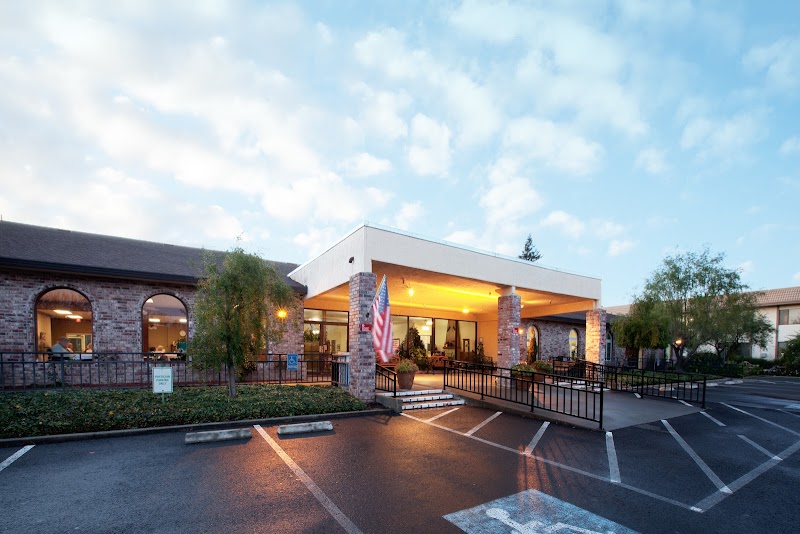
How is Napa Valley Staffed?

CMS rates NAPA VALLEY CARE CENTER's staffing level at 4 out of 5 stars, which is above average compared to other nursing homes. Staff turnover is 38%, compared to the California average of 46%. This relatively stable workforce can support continuity of care.

What Have Inspectors Found at Napa Valley?

State health inspectors documented 66 deficiencies at NAPA VALLEY CARE CENTER during 2019 to 2025. These included: 5 that caused actual resident harm and 61 with potential for harm. Deficiencies causing actual harm indicate documented cases where residents experienced negative health consequences.

Who Owns and Operates Napa Valley?

NAPA VALLEY CARE CENTER is owned by a for-profit company. For-profit facilities operate as businesses with obligations to shareholders or private owners. The facility is operated by PACS GROUP, a chain that manages multiple nursing homes. With 130 certified beds and approximately 126 residents (about 97% occupancy), it is a mid-sized facility located in NAPA, California.

How Does Napa Valley Compare to Other California Nursing Homes?

Compared to the 100 nursing homes in California, NAPA VALLEY CARE CENTER's overall rating (3 stars) is below the state average of 3.1, staff turnover (38%) is near the state average of 46%, and health inspection rating (2 stars) is below the national benchmark.

What Should Families Ask When Visiting Napa Valley?

Based on this facility's data, families visiting should ask: "Can I visit during a mealtime to observe dining assistance and food quality?" "How do you handle medical emergencies, and what is your hospital transfer rate?" "Can I speak with family members of current residents about their experience?"

Is Napa Valley Safe?

Based on CMS inspection data, NAPA VALLEY CARE CENTER has a clean safety record: no substantiated abuse findings (meaning no confirmed cases of resident harm), no Immediate Jeopardy citations (the most serious violation level indicating risk of serious injury or death), and is not on the Special Focus Facility watch list (a federal program monitoring the lowest-performing 1% of nursing homes). The facility has a 3-star overall rating and ranks #100 of 100 nursing homes in California. While no facility is perfect, families should still ask about staff-to-resident ratios and recent inspection results during their visit.

Do Nurses at Napa Valley Stick Around?

NAPA VALLEY CARE CENTER has a staff turnover rate of 38%, which is about average for California nursing homes (state average: 46%). Moderate turnover is common in nursing homes, but families should still ask about staff tenure and how the facility maintains care continuity when employees leave.

Was Napa Valley Ever Fined?

NAPA VALLEY CARE CENTER has been fined $30,259 across 1 penalty action. This is below the California average of $33,381. While any fine indicates a compliance issue, fines under $50,000 are relatively common and typically reflect isolated problems that were subsequently corrected. Families should ask what specific issues led to these fines and confirm they've been resolved.

Is Napa Valley on Any Federal Watch List?

NAPA VALLEY CARE CENTER is not on any federal watch list. The most significant is the Special Focus Facility (SFF) program, which identifies the bottom 1% of nursing homes nationally based on persistent, serious quality problems. Not being on this list means the facility has avoided the pattern of deficiencies that triggers enhanced federal oversight. This is a positive indicator, though families should still review the facility's inspection history directly.