CHAPMAN GLOBAL MEDICAL CENTER D/P SNF


2601 EAST CHAPMAN AVENUE, ORANGE, CA 92869 (714) 633-0011
For profit - Corporation 27 Beds Independent Data: November 2025
Trust Grade
71/100
#311 of 1155 in CA
Last Inspection: February 2025

Within standard 12-15 month inspection cycle. Federal law requires annual inspections.

Overview

Chapman Global Medical Center D/P SNF has earned a Trust Grade of B, indicating it is a good choice for families considering nursing home options. Ranking #311 out of 1,155 facilities in California places it in the top half, while its county rank of #23 out of 72 suggests it is one of the better options in Orange County. The facility is improving, with issues decreasing from 22 in 2024 to 18 in 2025. Staffing is average with a turnover rate of 30%, which is lower than the state average, but the facility has received an average fine of $4,194, indicating some compliance issues. While the facility provides good RN coverage, there have been concerning incidents, such as failing to ensure proper side rail padding for residents, which could lead to injury, and not adequately meeting the activity needs of several residents, impacting their mental well-being. Additionally, some residents with pressure ulcers did not receive consistent treatment, risking their recovery. Overall, while there are strengths in staffing and improvement trends, families should consider these weaknesses when making their decision.

Trust Score
B
71/100
In California
#311/1155
Top 26%
Safety Record
Low Risk
No red flags
Inspections
Getting Better
22 → 18 violations
Staff Stability
✓ Good
30% annual turnover. Excellent stability, 18 points below California's 48% average. Staff who stay learn residents' needs.
Penalties
⚠ Watch
$4,194 in fines. Higher than 85% of California facilities, suggesting repeated compliance issues.
Skilled Nurses
✓ Good
Each resident gets 61 minutes of Registered Nurse (RN) attention daily — more than 97% of California nursing homes. RNs are the most trained staff who catch health problems before they become serious.
Violations
⚠ Watch
55 deficiencies on record. Higher than average. Multiple issues found across inspections.
★★★★☆
4.0
Overall Rating
★★★☆☆
3.0
Staff Levels
★★★★☆
4.0
Care Quality
★★★★☆
4.0
Inspection Score
Stable
2024: 22 issues
2025: 18 issues

The Good

  • 4-Star Quality Measures · Strong clinical quality outcomes
  • Low Staff Turnover (30%) · Staff stability means consistent care
  • Full Sprinkler Coverage · Fire safety systems throughout facility
  • No fines on record
  • Staff turnover is low (30%)

    18 points below California average of 48%

Facility shows strength in quality measures, staff retention, fire safety.

The Bad

Federal Fines: $4,194

Below median ($33,413)

Minor penalties assessed

The Ugly 55 deficiencies on record

Oct 2025 1 deficiency
CONCERN (D) 📢 Someone Reported This

A family member, employee, or ombudsman was alarmed enough to file a formal complaint

Potential for Harm - no one hurt, but risky conditions existed

Quality of Care (Tag F0684)

Could have caused harm · This affected 1 resident

**NOTE- TERMS IN BRACKETS HAVE BEEN EDITED TO PROTECT CONFIDENTIALITY** Based on interview and medical record review, the facility failed to provide necessary care and services to ensure the residents...

Read full inspector narrative →
**NOTE- TERMS IN BRACKETS HAVE BEEN EDITED TO PROTECT CONFIDENTIALITY** Based on interview and medical record review, the facility failed to provide necessary care and services to ensure the residents maintained their highest physical well-being for five of five sampled residents (Residents 1, 2, 3, 4, and 5). * Resident 1 had fracture of the right upper arm. There was no monitoring for pain, redness, swelling and warmth of extremities. * The facility failed to follow the physician's order for PT and OT treatment for Resident 1 and OT treatment for Resident 4. * The facility failed to follow the physician's order for daily RNA services for Residents 1, 2, 3, and 5. These failures had the potential for delayed medical interventions and could negatively impact the residents well-being.Findings: 1. Medical record review for Resident 1 was initiated on 10/1/25. Resident 1 was admitted to the facility on [DATE]. Review of Resident 1's MDS assessment dated [DATE], showed a BIMS score of 00 (severe cognitive impairment). Review of Resident 1's Care Plans initiated 7/28/25, showed the following:- risk for pain, redness, swelling and warmth of extremity/ies; interventions included monitoring for pain, warmth, redness and swelling of affected extremity/ies, document and report to MD any signs and symptoms of pain, warmth and redness.- risk for fracture/spontaneous fracture; interventions included monitoring for signs and symptoms of fracture and notify MD as soon as possible. Also to monitor signs and symptoms of pain and discomfort and refer to MD.- risk for pain/altered comfort; interventions included assessment for non-verbal signs and symptoms of pain: grimaces, irritability, crying and posturing. Review of Resident 1's PT/OT Treatment record dated 9/16/25, showed the resident was grimacing when there was repositioning of the head/body/bilateral lower extremities. Review of Resident 1's medical record failed to show documented evidence the PT had reported the resident with grimacing during the repositioning. Review of Resident 1's Flowsheets - All Others dated 9/17/25, failed to show documentation of the following: - no documentation of the limited range of motion in upper and lower extremity joints and for no joint tenderness/swelling under the Musculoskeletal Assessment - no CNA documentation for the 0700 to 1730 hours shift. Further review of Resident 1's Flowsheets - All Others dated 9/17/25, showed RN 3 was notified Resident 1's right arm was swollen, warm to touch, and with bruises at 2130 hours. Resident 1 was unable to move arm, and nodded when asked if there was pain when the right arm was touched. Review of Resident 1's x-ray report for the right shoulder dated 9/17/25, showed a fractured humerus. On 10/2/25 at 1244 hours, a telephone interview was conducted with LVN 4. LVN 4 stated Resident 1 was not checked for signs and symptoms of swelling or redness. Furthermore, LVN 4 stated a head-to-toe assessment was not completed. Resident 1 looked fine. On 10/3/25 at 0919 hours, an interview and concurrent medical record review was conducted with the DON. The DON stated the RNs should monitor the residents every four hours, the LVNs every two hours, as well as the CNAs. Skin monitoring should be included. The DON verified there was no CNA documentation for the 0700 to 0730 hours on 9/17/25. Furthermore, the DON verified there was no documentation to show the PT had reported the resident had grimacing during the treatment on 9/16/25. On 10/3/25 at 1646 hours, a telephone interview was conducted with LVN 2. LVN 2 stated Resident 1 was uncomfortable when the right arm was touched. The swelling and bruise would not be visible unless the sleeves of the hospital gown was pulled up. 2. a. Medical record review for Resident 1 was initiated on 10/1/25. Resident 1 was admitted to the facility on [DATE]. Review of Resident 1's Order Summary Report showed the following orders: - dated 8/20/25, for PT treatment once a day for two days per week times two weeks for therapeutic activity, functional mobility, neuromuscular (network of nerves and muscles) re-education, therapeutic exercise and patient/family education.- dated 8/26/25, for OT to continue treatment two times a week for four weeks for ADL retraining, functional mobility for ADLs, neuromuscular re-education, therapeutic activities, therapeutic exercise for ADLs, resident/family education. Review of Resident 1's PT/OT Treatment Record for August to September 2025 showed only one PT treatment for the week 8/25 to 8/29/25, and no PT treatment for the week 9/1 to 9/5/25. Further review of the document failed to show Resident 1 had OT treatment from 9/1 to 9/16/25. b. Medical record review for Resident 4 was initiated on 10/2/25. Resident 4 was admitted to the facility on [DATE]. Review of Resident 4's MDS assessment dated [DATE], showed a BIMS score of 2 (severe cognitive impairment). Review of Resident 4's Order Summary Report showed an order dated 8/5/25, for OT to continue one time a week for four weeks for ADL retraining, functional mobility for ADLs, neuromuscular re-education, patient/family education, therapeutic activities and therapeutic exercise for ADLs. Review of Resident 4's medical record failed to show documentation Resident 4 had OT treatment for the week 9/1 to 9/5/25. On 10/2/25 at 1321 hours, an interview was conducted with the PT. The PT stated the Rehab Department serviced the whole hospital (including the SNF). If there were surgeries, the surgery patient becomes the priority for treatment. On 10/3/25 at 1200 hours, the DON was made aware and acknowledged the findings. 3. a. Medical record review for Resident 1 was initiated on 10/1/25. Resident 1 was admitted to the facility on [DATE]. Review of Resident 1's Order Summary Report showed the following orders:- dated 7/23/25, RNA for AROM right upper extremity and AAROM left upper extremity (except left shoulder joint) daily as tolerated.- dated 7/23/25, RNA for bilateral lower extremities active assisted/passive range of motion exercise daily seven times a week.- dated 9/12/25, RNA to apply the bilateral multi Podus orthoses (boot to relieve pressure, prevent skin breakdown and correct or prevent foot and ankle contractures and foot drop) to bilateral ankles for four hours of use. Monitor for redness.- dated 9/19/25, hold ROM and exercises to RUE.- dated 9/22/26, RNA for AAROM for left upper extremity (except shoulder joint) daily as tolerated. Review of Resident 1's RNA Flowsheet for 9/1 to 9/30/25, failed to show the RNA provided RNA services on the following dates:- on 9/6, 9/10, 9/11, and 9/14/25, for AROM right upper extremity and AAROM left upper extremity.- on 9/6, 9/10, 9/11, 9/14, 9/20, 9/27, and 9/28/25, for bilateral lower extremities active assisted/passive range of motion exercise.- on 9/20, 9/27, and 9/28/25, to apply bilateral multi podus orthoses to bilateral ankles for four hours of use and to monitor for redness.- on 9/27 and 9/28/25, for AAROM for left upper extremity (except shoulder joint). b. Medical record review for Resident 2 was initiated on 10/1/25. Resident 2 was admitted to the facility on [DATE]. Review of Resident 2's Order Summary Report showed the following orders:- dated 6/4/25, RNA for bilateral lower extremities passive range of motion exercise once a day for seven days. Monitor for redness.- dated 7/15/25, RNA to apply BUE resting hand splints daily after PROM for four hours as tolerated. Check skin for redness or breakdown before and after. Apply towel rolls after removal.- dated 8/18/25, RNA to apply the ankle foot orthosis to left ankle and ankle foot orthosis (device inserted into a shoe to support and correct foot structure and function) with lateral side straps to right ankle for two hours when patient is supine for total use of four hours a day. RNA to apply the orthoses (device to correct alignment and provide support) daily. Monitor for redness.- dated 9/15/25, for RNA to apply the right knee comfy splint (soft straps attached to joints to accommodate sensitive skin, edema and fragile skin) when patient is in supine for two hours twice a day daily for total of four hours. Monitor for redness. Review of Resident 2's medical record failed to show documented evidence the RNA had performed the above tasks on 9/6, 9/10, 9/11, 9/14, 9/20, 9/27, and 9/28/25. Additionally, the medical record failed to show the RNA applied the right knee comfy splint on 9/20, 9/27, and 9/28/25. c. Medical record review for Resident 3 was initiated on 10/1/25. Resident 3 was admitted to the facility on [DATE]. Review of Resident 3's Order Summary Report showed the following orders:- dated 6/4/23, RNA to apply the left hand/wrist splints daily after ROM for six hours as tolerated.- dated 6/4/23, RNA to apply the right hand/wrist splints daily after ROM for six hours as tolerated.- dated 6/4/23, RNA for active/active-assist/passive ROM exercises for bilateral upper/lower extremities as tolerated daily.- dated 6/4/23, RNA to apply the bilateral hand roll-type splints daily for 3.5 hours, coordinate with hand cream for pain. Apply the hand rolls after the splints are taken off.- dated 7/18/23, RNA to apply the left roll-type goniometer wrist brace (a mechanism to control a joint's range of motion) for six hours as tolerated daily after PROM and self-care. Review of Resident 3's medical record failed to show documented evidence the RNA had performed the above tasks on 9/6, 9/10, 9/11, 9/14, 9/20, 9/27, and 9/28/25. d. Medical record review for Resident 5 was initiated on 10/2/25. Resident 5 was originally admitted to the facility on [DATE], and was readmitted on [DATE]. Review of Resident 5's Order Summary Report showed an order dated 5/17/23, for the RNA to provide daily active/passive/active assistive ROM for all the four extremities daily. Review of Resident 5's medical record failed to show documented evidence the RNA had performed the above tasks on 9/6, 9/10, 9/11, 9/14, 9/20, 9/27, and 9/28/25. On 10/1/25 at 1600 hours, an interview was conducted with the RNA. The RNA stated on days the facility was short staffed, the RNA was pulled out to take the role of CNA. On 10/3/25 at 0919 hours, an interview and concurrent medical record review was conducted with the DON. The DON was asked why there were days when the RNA services were not provided. The DON stated it was because the facility was short staffed that the RNA had to work as CNA. The DON verified the findings.
May 2025 1 deficiency
CONCERN (D) 📢 Someone Reported This

A family member, employee, or ombudsman was alarmed enough to file a formal complaint

Potential for Harm - no one hurt, but risky conditions existed

Respiratory Care (Tag F0695)

Could have caused harm · This affected 1 resident

**NOTE- TERMS IN BRACKETS HAVE BEEN EDITED TO PROTECT CONFIDENTIALITY** Based on interview, medical record review, facility document review, and facility P&P review, the facility failed to provide the...

Read full inspector narrative →
**NOTE- TERMS IN BRACKETS HAVE BEEN EDITED TO PROTECT CONFIDENTIALITY** Based on interview, medical record review, facility document review, and facility P&P review, the facility failed to provide the necessary respiratory care and services for two of two sampled residents (Residents 1 and 2) who were dependent on the ventilator with tracheostomy for breathing. * The facility failed to ensure Resident 1's ventilator circuit was effectively monitored. As a result, the resident experienced the respiratory arrest. * The facility failed to ensure the P&Ps for respiratory care and services were followed for Resident 2 when the oxygen therapy and a part of the disposable ventilator circuit was replaced and rinsed by a non-qualified personnel. These failures posed the risk of delayed care and interventions for the residents. Findings: 1. Review of the facility's P&P titled Subacute Ventilator Management reviewed [DATE] showed to establish a mutual understanding and a standard of ventilator management for Nursing staff and Respiratory Therapists, which work as a team to provide quality ventilator support. Ventilator management and support will be provided by doing Ventilator Rounds/Checks every four hours and as needed by the Respiratory Therapist which consists of: a. Providing a complete assessment and support for any needs the patient may have at that time. b. Visual inspection of the ventilator and its equipment. If a ventilator failure/ malfunction is evident, ventilate the resident with a manual resuscitator and replace the ventilator with an operational unit (See Ventilator Failure). c. Document pertinent information/findings and current vent settings/alarm settings. d. Provide airway maintenance by providing suctioning of the trachea or mouth when necessary. e. Keeping the patient care team informed of any changes in patient's condition. f. Assessing and monitoring the status of the resident's stoma. g. Monitor the HME and other equipment and change per policy. Review of facility's P&P titled Code Blue reviewed [DATE] showed Code Blue is to be called: a. In emergency situations when a patient has a significant change or b. On any patient in cardiac or respiratory arrest unless there is a specific physician order to the contrary. (See withholding/withdrawing life support). Examples of significant changes: i. Decreasing level of consciousness – unresponsiveness ii. Hypotension – lack of audible/palpable BP iii. Dyspnea – apnea iv. Sudden decreasing or absent peripheral pulses v. Uncontrolled hemorrhage vi. Ventricular fibrillation vii. Ventricular tachycardia viii. Asystole c. Rapid Response is to be called when a patient is identified as at risk according to selected criteria. Review of facility's P&P titled Tracheostomy Tube Suctioning with an In-line Catheter reviewed on [DATE] showed the resident with tracheostomy tube will be suctioned every two hours and as needed. Review of [NAME] Respironics Trilogy 202 Ventilator User Manual showed: Alarm Summary Table indication of high, medium, and low priority and recommended clinical actions as follows: - Low Circuit Leak: High priority, recommended clinician action was to remove obstruction in leak device. Reduce the flow rate to in line nebulizer or low pressure oxygen bleed into the circuit. If the alarm continues, have the device serviced. - High Resp Rate: High priority, recommended clinician action was to verify patient status - High Insp Pressure: Escalates from audible indicator to medium priority and then high priority, recommended clinician action was to verify patient status. If the problem continues, have the device serviced. - Circuit disconnect: High priority, recommended clinician action was to reconnect tubing or fix leak. - Low minute ventilation: High priority, recommended clinician action was to verify patient status. 1. Closed medical record review for Resident 1 was initiated on [DATE]. Resident 1 was readmitted on [DATE] at 1330 hours, and discharged on [DATE] at 1706 hours, to the acute care hospital. Review of Resident 1's Patient Orders for [DATE] showed the following orders: - dated [DATE], for mechanical ventilation, vent mode: assist control, Tidal Volume 450, set rate 16, FiO2: 30%, PEEP: 5, Maintain oxygen saturation: above 92% - dated [DATE], suction, artificial airway every twohours PRN: for retained or increased secretions every shift - dated [DATE], full code There was no documented evidence Resident 1 was suctioned on [DATE]. Review of Resident 1's RT note dated [DATE] at 1330 hours, showed Resident 1 was alert, awake, and oriented to person and place. Resident 1 was placed on the ventilator with ventilator settings as per the physician's order. Further review of Resident 1's RT notes failed to show any documentation of the ventilator and/or settings after 1330 hours on [DATE]. Review of Resident 1's Nurse Progress Notes dated [DATE], showed the following sequence of events: - At1345 hours, Resident 1 was alert and oriented and denied pain. - At 1453 hours, Resident 1 indicated she wanted to get up and sit at the edge of the bed. - At 1600 hours, Resident 1 was found lying on her side, disconnected from the ventilator, and unresponsive. The resident was immediately connected to an ambu bag while the resident's pulse oximetry was assessed. The peripheral oxygen saturation level was initially in the 60s range (normal range: 95%-100%). The manual ventilation continued while the RT was called. The interventions were maintained until the RT arrived. The CAT was activated, followed by a Code Blue. Review of Resident 1's Code Blue Record dated [DATE], showed the following sequence of events: - At1645 hours, the time of arrest. The type of arrest was respiratory, initial ventilation via tracheostomy ambu bag. Resident 1's heart rhythm was sinus bradycardia. - From 1648 hours to 1651 hours, Resident 1's heart rhythm was Pulseless Electrical Activity. - At 1652 hours, Resident 1's heart rhythm was supraventricular tachycardia. - At1653 hours, Resident 1's heart rhythm was sinus tachycardia. - At 1706 hours, the code blue was stopped. The resident was transferred to the acute care hospital. Review of Resident 1's H&P examination dated [DATE], from the acute care hospital showed under the history of present illness, the resident was noted to be disconnected from the ventilator, faint pulses, the atropine was given, and the resident was ambu bagged by the RN charge nurse. Resident 1 went into asystole and the CPR was started. Review of Resident 1's Neurology Consult dated [DATE], from the acute care hospital showed the history of recent suspected cardiac arrest status post ROSC neurology was consulted for evaluation of encephalopathy and anoxic brain injury. The problem or assessment showed hypoxic respiratory failure status concerns for anoxic brain injury global cerebral dysfunction (signifies widespread dysfunction affecting the brain's overall functioning). On [DATE] at 1105 hours, an interview was conducted with RN 3. RN 3 stated Resident 1 was awake and alert upon return to the facility on [DATE] at approximately 1330 hours. Resident 1 was able to communicate by writing or mouthing words and wanted to sit up at the edge of the bed. Resident 1 had the capability to use the call light. RN 3 further stated Resident 1 did not want the ventilator circuit to be touching the resident's bed. RN 3 stated she told the resident she would tell the RT to fix the ventilator circuit with an arm to hold the tubing; however, she had not seen the RT since the RT set up the ventilator on [DATE] at 1330 hours. RN 3 stated at approximately 1600 hours, she responded to Resident 1's call lightand found Resident 1 unresponsive. RN 3 stated the circuit from the ventilatorwas disconnected off the resident and was placed along the side of the bed. RN 3 further stated she reconnected the circuit and started to use ambu bag and give manual breaths to Resident 1. RN 3 further stated she called for the RT and then called for code blue. RN 3 stated she did not know how long the call light was on prior to responding to the resident's call light. On [DATE] at 1149 hours, an interview was conducted with RT 1. RT 1 stated Resident 1 was alert and tried to communicate by writing and pointing. RT 1 stated she set up the Resident 1's ventilator at approximately 1300 hours, then left the facility to go to the acute care unit of the hospital. RT 1 stated she had not seen Resident 1 since she left the resident until she heard a call for the RT to the facility. RT 1 stated she was not aware the resident did not want the circuit touching her bed. The RT stated she should have gone back to Resident 1 to check for suctioning every two hours; however, she was at the acute care unit of the hospital. On [DATE] at 1222 hours, an interview was conducted with RN 3. RN 3 stated she could not remember if Resident 1's ventilator alarm sounded. RN 3 further stated she went to Resident 1's room to answer the call light and was focused to intervene when she saw Resident 1 was unresponsive. On [DATE] at 1620 hours, a concurrent observation, interview, and facility document review was conducted with RT 3. RT 3 showed the ventilator machine used forResident 1. RT 3 showed the ventilator alarm log. RT 3 stated the time for the ventilator machine was not accurate and the ventilator was supposed to be checked every four hours and should have been documented. On [DATE] at 0932 hours, an interview was conducted with the RT Manager. The RT Manager stated the ventilator circuit should not easily loosen. The RT Manager stated the ventilator would alarm when the circuit got loose or disconnected. The RT Manager stated the number of residents with ventilators in the facility wasdivided for the RT assigned in the acute care hospital. The RT Manager further stated there was no dedicated RT assigned in the facility. The RT Manager expected the RT to suction the residents with a ventilator in the facility every twohours and check in with the RN in charge. On [DATE] at 0946 hours, an observation of Resident 1's ventilator machine alarm log was conducted with the RT Manager. The ventilator machine showed the inaccurate time. At the time of the observation, the ventilator machine time showed 1649 hours, but the ventilator machine clock setting was seven hours and three minutes in advance from actual time of observation. The ventilator machine alarm showed the following: - at 0906p Low circuit - at 0942p Low circuit leak - at 0938p High respiratory rate - at 1038p High inspiratory pressure - at 1059p Low circuit leak - at 1101p High inspiratory pressure - at 1102p High respiratory rate - at 1106p High respiratory rate - at 1108p Low circuit leak - at 1111p Circuit disconnect - at 1117p High inspiratory pressure - at 1118p Low minute ventilation - at 1118p Circuit disconnect - at 1119p Low minute ventilation - at 1124p Audio paused - at 1124p Low minute ventilation - at 1131p Audio paused - at 1133p Power off The RT Manager acknowledged the inaccuracy time of the ventilator machine used by Resident 1. The RT Manager stated she would call the manufacturer to make sure the time display of the ventilators was accurate. The RT Manager stated the ventilator alarm should sound but was not sure whether the ventilator alarmed during the incident. On [DATE] at 1425 hours, a concurrent interview and closed medical record review was conducted with the Subacute Unit Manager. The Subacute Unit Manager stated there was no dedicated RT in the unit; the RT was usually called when needed. The Subacute Unit Manager verified Resident 1's progress notes on [DATE], when the resident was found lying on the side, disconnected from the ventilator, and unresponsive. The Subacute Unit Manager verified the Code Blue Record dated [DATE], showed the time of arrest was 1645 hours. On [DATE] at 1640 hours, an interview was conducted with the DON. The DON was informed and acknowledged the findings as above. 2. Review of the facility's P&P titled Changing Disposable Equipment reviewed February 2024 showed the scope of practice: RT, RN and LVN. The HME should be changed when visible soiled or mechanically malfunctioning. The ventilator circuit T-adapter should be changed when visible soiled or mechanically malfunctioning and when needed. Review of the facility's P&P titled Oxygen Therapy reviewed [DATE] showed the scope of practice forRT, RN and LVN (nothing for CNA). The P&P showed oxygen is a drug and will only be administered by licensed nurse or respiratory therapists. Review of Resident 2's medical record review was initiated on [DATE]. Resident 2 was admitted to the facility on [DATE]. Review of Resident 2's Patient Orders for [DATE] showed an order dated 5/l7/23, for HME, to check HME filter every 24 hours and as needed for high pressure or large amounts of secretions. Review of Resident 2's MDS assessment dated [DATE], showed the resident had severely impaired decision-making capacity. Review of Resident 2's Patient Orders showed the following orders: - dated [DATE], for mechanical ventilation, vent mode: SIMV, Tidal Volume 500, set rate 10, PEEP: 5, and Pressure Support: l 0 - dated [DATE], suction, every two hours. - dated [DATE], suction as needed for increased secretions. - dated [DATE], titrate FiO2 to keep oxygen saturation levels at 94% Review of Resident 2's Progress Note dated [DATE] at 1530 hours, showed about 1515 hours, the resident suddenly turned blue. The Fi02 was temporarily increased to 100%. The RT arrived around 1520 hours and by this time the resident's color was pink. On [DATE] at 1346 hours, an interview was conductedwith Family Member 1. Family Member 1 stated the ventilator machine was beeping continuously and had told the nurse to suction Resident 2. The nurse told Family Member 1 she would give the resident's medication and call the RT to suction Resident 2. Resident 2 was turning purple. CNA 1 came in to help the resident because the nurse did not know what to do. Family Member 1 further stated there was no designated RT in the facility and usually not there when needed because they work also in the acute care unit of the hospital. On [DATE] at 0843 hours, a phone interview was conducted with CNA 1. CNA 1 stated RN 2 asked for his help. When CNA 1 went to Resident 2, Resident 2 was having difficulty breathing, had excessive secretion in the tracheostomy tube, and the skin looked purple. CNA 1 stated he called the RT. CNA 1 stated RN 2 was standing in front of the alarming ventilator machine and heard RN 2 stated, I don't know what is going on. CNA 1 stated he asked RN 2 to suction the resident, and she did, but there was still excessive secretion. CNA 1 further stated RN 2 asked him to get suction catheter from the supply room to get suction, when he returned the resident was still purple. CNA 1 further stated he replaced the HME filter and rinsed the T-adapter in the sink because it had excessive secretion then RN 2 put the ventilator tubing together. CNA 1 further stated he increased the FiO2 to 100%. CNA 1 stated after less than a minute, Resident 2's color became normal. CNA 1 stated the RT came to the room after the resident stabilized. CNA 1 stated he knew he was not supposed to increase the oxygen and touch the ventilator circuit, rinse the T-adapter however, it was an emergency, and he did what he could at the time to help Resident 2. On [DATE] at 0935 hours, an interview was conducted with the RT Manager. The RT Manager stated the T adapter should not have been rinsed. The RT Manager further stated the RN was trained and were expected to take care of the residents with the ventilators in the facility. The RT Manager stated the CNAs were not allowed to touch the HME and increase the FiO2. On [DATE] at 1036 hours, an interview was conducted with RN 2. RN 2 stated CNA 1 rinsed the T-adaptor because it had excessive secretion. When asked if CNA 1 was allowed to rinse the adapter RN 2 stated CNA 1 was trying to help. RN 2 verified CNA 1 increased Resident 2's FiO2 to 100%. RN 2 verified Family Member 1 had requested for Resident 2 to be suctioned and informed the family member she would suction the resident after hanging the IV medication. On [DATE] at 1640 hours, an interview and concurrent medical record review was conducted with Subacute Manager. The Subacute Manager verified the progress notes on [DATE], when the resident suddenly turned blue, and the Fi02 was temporarily increased to 100%. The Subacute Unit Manager stated there was no dedicated RT in the unit, and he RT was usually called in the subacute unit when needed. On [DATE] at 1640 hours, an interview was conducted with the DON. The DON was informed and acknowledged the findings as above.
Feb 2025 16 deficiencies
CONCERN (D)

Potential for Harm - no one hurt, but risky conditions existed

Pressure Ulcer Prevention (Tag F0686)

Could have caused harm · This affected 1 resident

**NOTE- TERMS IN BRACKETS HAVE BEEN EDITED TO PROTECT CONFIDENTIALITY** Based on observation, interview, and medical record review, the facility failed to provide the necessary care and services to pr...

Read full inspector narrative →
**NOTE- TERMS IN BRACKETS HAVE BEEN EDITED TO PROTECT CONFIDENTIALITY** Based on observation, interview, and medical record review, the facility failed to provide the necessary care and services to promote healing of the pressure injuries for one of two final sampled residents (Resident 18) reviewed for pressure injuries. * The facility failed to ensure Resident 18's air mattress was set at the alternate mode (setting where mattress inflates and deflates with air cyclically to redistribute pressure on the body) as ordered by the physician. This failure had the potential to inhibit the pressure injury healing. Findings: Medical record review for Resident 18 was initiated on 2/10/25. Resident 18 was admitted to the facility on [DATE]. Review of Resident 18's Interventional Wound Care Management Progress Note dated 2/5/25, showed Resident 18 had several wounds which included a Stage 3 pressure injury to the sacrum and Stage 4 pressure injuries to the left and right hips and right ankle. On 2/12/25 at 0830 hours, an observation and concurrent interview was conducted with LVN 4. Resident 18 was observed lying on an air mattress. The air mattress was observed with a setting of the static mode (setting where the mattress remains inflated with air at a constant pressure). LVN 4 was asked if the static mode setting was the correct setting for Resident 18's air mattress. LVN 4 stated yes, the static mode setting for Resident 18's air mattress was the correct setting. On 2/12/25 at 1236 hours, a follow-up interview and concurrent medical record review was conducted with LVN 4. Review of Resident 18's physician's order dated 2/13/24, for an air mattress to be set at the alternate mode with a cycle of five minutes. LVN 4 verified Resident 18's physician had ordered for Resident 18's air mattress to be set at the alternate mode and not the static mode.
CONCERN (D)

Potential for Harm - no one hurt, but risky conditions existed

Deficiency F0688 (Tag F0688)

Could have caused harm · This affected 1 resident

**NOTE- TERMS IN BRACKETS HAVE BEEN EDITED TO PROTECT CONFIDENTIALITY** Based on interview, facility document review, and facility P&P review, the facility failed to ensure two of two final sampled re...

Read full inspector narrative →
**NOTE- TERMS IN BRACKETS HAVE BEEN EDITED TO PROTECT CONFIDENTIALITY** Based on interview, facility document review, and facility P&P review, the facility failed to ensure two of two final sampled residents (Residents 9 and 11) reviewed for RNA services received the RNA services as ordered. * The facility failed to ensure Residents 9 and 11 received the RNA services daily as ordered by the physician. This failure had the potential for the residents to have a decline in ROM function, which could lead to worsening of contractures or muscle weakness. Findings: Review of the facility's P&P titled Restorative Nursing Program revised 11/2021 showed for the RNA to ensure that all the residents are assessed on admission and ongoing for their restorative/rehabilitative needs and abilities. All the residents will be assessed by rehabilitative services within 48 hours of admission and ongoing for their restorative/rehabilitative needs and abilities. A plan of care will be developed specifically designed to promote and improve functional levels and enhance the quality of life. The RNA program is provided seven days a week based on the resident's individual needs and delivered per the physician order. The P&P further showed the RNA will carry out the treatment programs per the physician order and to document daily in the Restorative Nursing Documentation Record and complete a weekly summary for each of the resident in the program. 1. Medical record review for Resident 9 was initiated on 2/11/25. Resident 9 was admitted to the facility on [DATE], and readmitted on [DATE]. Review of Resident 9's H&P examination dated 11/4/24, showed Resident 9 had history of contractures and quadriplegia. Review of Resident 9's Care Plan titled ADLs Functional Status/Rehabilitation Potential dated 3/27/12, showed Resident 9 was limited in physical mobility related to the risk for decline with the ROM related to contractures and risk for further decline and limitation with BUE/BLE. The care plan interventions included to provide assistance for repositioning/transferring, bed mobility, and locomotion and RNA as ordered. Review of Resident 9's Patient Orders for February 2025 showed a physician's orders dated 5/17/23, for RNA to do the following: - to apply the right and left elbow extension splints after ROM exercises for four hours daily for seven days, and skin check as needed; - to provide passive ROM exercises to all four extremities daily; - to apply bilateral PRAFOs after ROM exercises times four hours daily; and - to apply right and left WHFOs after PROM exercises for four hours daily, and skin check as needed. Review of Resident 9's RNA Flowsheet for February 2025 showed no documented evidence the RNA services were provided as ordered by the physician on 2/1, 2/2, and 2/5/25. 2. Medical record review for Resident 11 was initiated on 2/11/25. Resident 11 was admitted to the facility on [DATE], and readmitted on [DATE]. Review of Resident 11's H&P examination dated 9/16/24, showed Resident 11 had history of contractures and quadriplegia. The H&P examination further showed the plan for Resident 11 included the ROM exercises. Review of Resident 11's Care Plan titled Respiratory dated 12/8/15, showed an approach included ROM exercises on all extremities during the care and activities. Review of Resident 11's Care Plan titled Alteration in Cardiac Function dated 12/8/25, showed to provide assistance for repositioning/transferring, bed mobility, and locomotion. Review of Resident 11's Patient Orders for February 2025, showed a physician's orders dated 5/17/23, for RNA to do the following: - to apply the bilateral PRAFOs/ankle contracture boots to bilateral ankles for two hours on, and one hour off daily, and monitor for redness; - to apply the bilateral knee extension brace daily for four hours after the ROM exercises and check skin for breakdown; - to provide PROM exercises of the bilateral upper and lower extremities once daily, seven days per week; and - to place a hand/towel rolls in bilateral hands after ROM exercises and self care when resting; and may remove for ADL care. Review of Resident 11's RNA Flowsheet for February 2025 showed no documented evidence the RNA services were provided as ordered by the physician on 2/1, 2/2, 2/4, 2/5, and 2/8/25. On 2/13/25 at 1038 hours, a concurrent interview and medical record review was conducted with RNA 1. RNA 1 stated Residents 9 and 11 required total care, including staff assistance with turning, repositioning, and cleaning. RNA 1 verified the above missing RNA documentations for Residents 9 and 11. RNA 1 stated the RNAs were supposed to sign off on the RNA Flowsheet when the RNA services were completed. RNA 1 stated not performing the RNA services as ordered by the physician could lead to resident's extremity contractures and stiffness. RNA 1 further stated the RNA services would help prevent resident's extremity contractures and stiffness from occurring. On 2/13/25 at 1052 hours, a concurrent interview and record review was conducted with RN 1. RN 1 verified the above findings for Residents 9 and 11. RN 1 stated the signatures on the RNA Flowsheet indicated the RNA tasks were completed. RN 1 stated if the RNA did not sign the RNA Flowsheet, then it meant RNA services were not provided or the RNA forgot to sign. RN 1 further stated missing several days of RNA services could affect the residents' muscles and lead to contractures. On 2/13/25 at 1403 hours, a concurrent interview and record review was conducted with the CNO. The CNO verified Residents 9 and 11 had missing RNA signatures in the RNA Flow Sheets for February 2025. The CNO stated her expectations were for the RNAs to work on the RNA services as ordered to prevent the risk of further contractures.
CONCERN (D)

Potential for Harm - no one hurt, but risky conditions existed

Accident Prevention (Tag F0689)

Could have caused harm · This affected 1 resident

**NOTE- TERMS IN BRACKETS HAVE BEEN EDITED TO PROTECT CONFIDENTIALITY** 3. Medical record review for Resident 12 was initiated on 2/10/25. Resident 12 was admitted to the facility on [DATE]. Review of...

Read full inspector narrative →
**NOTE- TERMS IN BRACKETS HAVE BEEN EDITED TO PROTECT CONFIDENTIALITY** 3. Medical record review for Resident 12 was initiated on 2/10/25. Resident 12 was admitted to the facility on [DATE]. Review of Resident 12's MDS dated [DATE], showed Resident 12 had severely impaired cognition and was dependent on staff for self-care and mobility. Review of Resident 12's Rounding Notes dated 6/7/23 at 0745 hours, showed Resident 12 sustained a fall in the facility. Review of Resident 12's physician's order dated 5/17/23, for floor mats to both sides of Resident 12's bed for safety. On 2/11/25 at 0935 hours, and 2/11/25 at 1045 hours, an observation was conducted of Resident 12. Resident 12 was observed lying in bed. Resident 12's bed was observed with a floor mat in place on one side of Resident 12's bed. The opposite side of Resident 12's bed was observed without a floor mat in place. On 2/11/25 at 1450 hours, an observation, interview, and concurrent medical record review was conducted with LVN 5. Resident 12 was observed lying in bed. Resident 12's bed was observed with a floor mat in place on one side of Resident 12's bed. The opposite side of Resident 12's bed was observed without a floor mat in place. LVN 5 verified the findings. LVN 5 stated Resident 12 was at risk for falls, and she would immediately implement the second fall mat, in accordance with the physician's order to have the floor mats to both sides of the bed for safety. Based on observation, interview, medical record review, facility document review, and facility P&P review, the facility failed to provide the necessary care and services to prevent accidents for three of 12 final sampled residents (Residents 12, 13, and 21). * The facility failed to ensure the low air loss mattress pump of Residents 13 and 21 was placed in a safe area as per the manufacturer's recommendation. * The facility failed to implement the floor mats to both sides of Resident 12's bed for safety, in accordance with the physician's order. These failures put the residents at high risk of serious injury. Findings: Review of the facility's P&P titled Pressure Ulcer Prevention, Management Protocol and Treatment dated 10/2024 showed the residents will be assessed for pressure ulcer to prevent the occurrence and/or progression of a pressure ulcer. The interventions for prevention of pressure ulcer includes the use of pressure relief/low air loss mattress/egg crate/overlay. 1. Review of Resident 13's low air loss mattress user manual for Power Pro Elite Mattress System, (undated), showed the important safety warnings instructions to reduce the risk of injury to person included to avoid dropping or putting any heavy objects on the pump. The product installation guide showed to position the pump by its elastic hanger brackets over the footboard of the bed. On 2/10/25 at 1058 hours, and 2/11/25 at 1423 hours, Resident 13 was observed in bed on a low air loss mattress and the pump was observed on the floor under the bed. Medical record review for Resident 13 was initiated on 2/11/25. Resident 13 was admitted to the facility on [DATE]. Review of Resident 13's Patient Orders showed a physician's order dated 2/13/24, to place an air mattress in bed for wound healing. Review of Resident 13's Plan of Care dated 6/3/21, showed a care plan problem was developed addressing Resident 13's risk of skin breakdown problem and pressure ulcer. The interventions included the use of low air loss mattress for skin management. On 2/11/25 at 1423 hours, an observation and concurrent interview for Resident 13 was conducted with LVN 1. LVN 1 was asked about Resident 13's low air loss mattress pump observed under the bed and on the floor. LVN 1 verified the low air loss pump was placed under the resident bed and stated the pump was not supposed to be under the bed. LVN 1 stated the low air loss pump should be placed and hanged on the footboard of the bed and should be off the floor. 2. Review of Resident 21's low air loss mattress operations/maintenance manual for [NAME] Air II Low Air Loss Therapy Mattress dated 5/2009 showed under the set-up guide, a caution to not place the control unit on the floor and should hang the control unit on the foot of the bed facing away from the bed. Failure to do so could result in a personal injury. On 2/10/25 at 0929 hours, and 2/11/25 at 0930 hours, Resident 21 was observed in bed on a low air loss mattress and the control unit was observed on the floor under the bed. Medical record review for Resident 21 was initiated on 2/11/25. Resident 21 was admitted to the facility on [DATE]. Review of Resident 21's Patient Orders showed a physician's order dated 5/29/24, to place a low air loss mattress in bed for wound healing. Review of Resident 21's Plan of Care dated 5/30/24, showed a care plan problem was developed addressing Resident 21's risk of skin breakdown problem. The interventions included the use of pressure relieving mattress for skin management. On 2/11/25 at 1533 hours, an observation and concurrent interview for Resident 21 was conducted with RN 2. RN 2 was asked about Resident 21's low air loss mattress control unit observed under the bed and on the floor. RN 2 verified the low air loss control unit was placed under Resident 21's bed and stated the low air loss control unit hook did not fit the foot board of the bed and unable to hang where the machine was supposed to be. RN 2 acknowledged the low air loss control unit was placed under Resident 21's bed and it was not safe. On 2/13/25 at 1350 hours, an interview and concurrent medical record review for Residents 13 and 21 was conducted with the CNO. The CNO was informed of the findings and acknowledged the above findings.
CONCERN (D)

Potential for Harm - no one hurt, but risky conditions existed

Tube Feeding (Tag F0693)

Could have caused harm · This affected 1 resident

**NOTE- TERMS IN BRACKETS HAVE BEEN EDITED TO PROTECT CONFIDENTIALITY** Based on observation, interview, medical record review, and facility P&P review, the facility failed to ensure the appropriate c...

Read full inspector narrative →
**NOTE- TERMS IN BRACKETS HAVE BEEN EDITED TO PROTECT CONFIDENTIALITY** Based on observation, interview, medical record review, and facility P&P review, the facility failed to ensure the appropriate care and services for the use of GT were provided for two of 12 final sampled residents (Residents 3 and 13). * The facility failed to ensure Resident 3's HOB was elevated at a 30 degree angle or higher when Resident 3 was receiving the enteral feeding via GT. * The facility failed to ensure Resident 13's HOB was elevated at a 30 degree angle or higher when Resident 13 was receiving the enteral feeding via GT. These failures posed the risk for complications related to use of the GT for Residents 3 and 13. Findings: Review of the facility's P&P titled Enteral Feeding dated 10/2024 showed during the enteral feeding, keep the resident's head of the bed at a 30 to 45 degree angle as per the physician's order. 1. Medical record review for Resident 3 was initiated on 2/12/25. Resident 3 was admitted to the facility on [DATE]. On 2/10/25 at 0923 hours, and 2/12/25 at 0835 hours, Resident 3 was observed in bed with the head of the bed not elevated at a 30 degree angle or higher while the GT feeding was infusing. Review of Resident 3's MDS dated [DATE], showed Resident 3 had severe cognitive impairment, difficulty of swallowing, and on tube feeding. Review of Resident 3's Patient Orders showed the following physician's orders: - dated 5/22/23, to always elevate HOB at 30 to 45 degrees while feeding is administered and for one hour after the GT feeding. - dated 10/1/24, to administer Glucerna 1.2 (enteral feeding formula) via GT at 50 ml/hr. On 2/12/25 at 1101 hours, an observation and concurrent interview for Resident 3 was conducted with LVN 2 at bedside. LVN 2 verified the HOB for Residents 3 was not elevated at 30 degrees angle and the GT feeding was infusing. LVN 2 was asked on how she would determine if the head of bed was elevated properly as per the physician's order. LVN 2 stated there was a device on the bed to show the degree angle of the HOB elevation. LVN 2 verified Residents 3's bed had no device to determine the proper elevation of the HOB. LVN 2 verified Residents 3's HOB was not elevated at 30 degree angle and should have been elevated as per the physician's order. On 2/12/25 at 1044 hours, an observation and concurrent interview for Resident 3 was conducted with CNA 1 at the resident's bedside. CNA 1 verified Resident 3 needed total assistance from the staff on all ADL care. CNA 1 verified the HOB was elevated for Resident 3. However, CNA 1 stated she did not know if the HOB was high enough for the resident. On 2/12/24 at 1423 hours, an interview and concurrent medical record review for Resident 3 was conducted with RN 2. RN 2 stated the resident's HOB should be elevated as per the physician's order or at least 30 degree angle to prevent aspiration. RN 2 verified Resident 3's physician's order to elevate the HOB 30 to 45 degrees angle while the enteral feeding was infusing. RN 2 was informed of the findings and stated all the nurses should ensure the HOB was elevated as per the physician's order. 2. Medical record review for Resident 13 was initiated on 2/11/25. Resident 13 was admitted to the facility on [DATE]. On 2/10/25 at 1058 hours, and 2/11/25 at 1423 hours, Resident 13 was observed in bed with the HOB not elevated at a 30 degree angle or higher while the GT feeding was infusing. Review of Resident 13's MDS dated [DATE], showed Resident 13 had difficulty of swallowing, and on tube feeding. Review of Resident 13's Patient Orders showed the following physician's order: - dated 11/26/24, to administer Glucerna Nepro (enteral feeding formula) via GT at 40 ml/hr. - dated 7/3/23, to always elevate the HOB at 30 to 45 degrees while feeding is administered and for one hour after the GT feeding. Review of Resident 13's Plan of Care showed a care plan problem was developed on 6/10/21, addressing Resident 13's risk of nutritional deficit. The interventions included for the HOB elevated 30 to 45 degrees while the GT feeding was administered. On 2/12/25 at 1044 hours, an observation and concurrent interview for Resident 13 was conducted with CNA 1 at bedside. CNA 1 verified Resident 13 needed total assistance from the nurses on all ADL care. CNA 1 verified the HOB was elevated for Resident 13. However, CNA 1 stated she did not know if the HOB was high enough for the resident. On 2/12/25 at 1348 hours, an interview and concurrent medical record review for Resident 13 was conducted with LVN 3. LVN 3 was asked about Resident 13's HOB. LVN 3 stated Resident 13's HOB was elevated at 15 degree angle. LVN 3 verified Resident 13's physician's order was to elevate the HOB at 30 to 45 degree angle. LVN 3 was asked how they would know if the HOB was elevated within the physician's order, LVN 3 stated she would base it on an observation the HOB position. LVN 3 was asked if there was a device on the bed that would measure the exact elevation of the HOB. LVN 3 verified and acknowledged there was no device on the bed to show the exact elevation of the HOB. LVN 3 stated the HOB should have been elevated to 30 degree angle to prevent aspiration of the resident. On 2/13/25 at 1345 hours, an interview and concurrent medical record review for Resident 3 and 13 was conducted with the CNO. The CNO was informed and acknowledged the above findings.
CONCERN (D)

Potential for Harm - no one hurt, but risky conditions existed

Deficiency F0694 (Tag F0694)

Could have caused harm · This affected 1 resident

**NOTE- TERMS IN BRACKETS HAVE BEEN EDITED TO PROTECT CONFIDENTIALITY** Based on observation, interview, and medical record review, the facility failed to provide the necessary care and services to ma...

Read full inspector narrative →
**NOTE- TERMS IN BRACKETS HAVE BEEN EDITED TO PROTECT CONFIDENTIALITY** Based on observation, interview, and medical record review, the facility failed to provide the necessary care and services to maintain the intravenous accesses for one of 12 final sampled residents (Resident 21). * The facility failed to obtain a physician's order for the care and maintenance of the IV access and develop a plan of care for Resident 21's IV access to the lower extremity. These failures had the potential to delay identification of intravenous access to lower extremity related complications for the resident. Findings: On 2/10/25 at 0929 hours, Resident 21 was observed in bed with an IVF infusing at 70 ml per hour via IV machine. Resident 21's IV access was unable to locate due to the cover in bed. Medical record review for Resident 21 was initiated on 2/11/25. Resident 21 was admitted to the facility on [DATE]. Review of Resident 21's MDS dated [DATE], showed Resident 21 had moderately impaired cognitive skills. On 2/11/25 at 1533 hours, an observation and concurrent interview was conducted with RN 2 at Resident 21's bedside. RN 2 was asked about Resident 21's IV access. RN 2 stated Resident 21's IV access was located on Resident 21's lower extremity. RN 2 showed Resident 21's IV access was on the right foot and the IV access was observed with a dry transparent dressing dated 2/10/25. RN 2 stated Resident 21 was on the IV for hydration due to the abnormal laboratory results. Review of Resident 21's physician's order dated 2/10/25, to start a peripheral IV line on the lower extremity due to the difficulty finding a good access on the upper extremities. Further review of the physician's order showed no documented evidence a physician order was obtained for the IV access assessment, dressing change, and how often the peripheral IV access site should be changed. Review of Resident 21's Plan of Care failed to show a care plan problem was developed to address Resident 21's use of the IV including the care and maintenance of the IV access site on Resident 21's lower extremities. On 2/12/25 at 1503 hours, a follow-up interview and concurrent medical record review was conducted with RN 2. RN 2 verified Resident 21's physician's order for the IV access to the lower extremity due to the poor IV access on the upper extremities. RN 2 was asked for Resident 21's physician's order for the IV access assessment, dressing change, and how often the peripheral IV access site should be changed. RN 2 stated they changed the IV access every four days and they would call the physician to ask for the extension of the order. RN 2 verified there was no physician's order for the IV access assessment, dressing change, and how often the peripheral IV access site should be changed. Furthermore, RN 2 verified there was no care plan developed for Resident 21's IV use. On 2/13/25 at 1350 hours, an interview and concurrent medical record review was conducted with the CNO. The CNO was informed and verified the above findings.
CONCERN (D)

Potential for Harm - no one hurt, but risky conditions existed

Pharmacy Services (Tag F0755)

Could have caused harm · This affected 1 resident

**NOTE- TERMS IN BRACKETS HAVE BEEN EDITED TO PROTECT CONFIDENTIALITY** Based on observation, interview, medical record review, and facility P&P review, the facility failed to dispose the unused medic...

Read full inspector narrative →
**NOTE- TERMS IN BRACKETS HAVE BEEN EDITED TO PROTECT CONFIDENTIALITY** Based on observation, interview, medical record review, and facility P&P review, the facility failed to dispose the unused medication in accordance with the facility's P&P. * LVN 4 disposed Resident 18's unused half tablet fludrocortisone (corticosteroid medication) in a sharps container (container used for the disposal of sharp medical equipment) instead of the pharmaceutical waste container as per the facility's P&P. This failure posed the risk for improper management of pharmaceutical waste. Findings: Review of the facility's P&P titled Pharmaceutical Waste dated 10/2022 showed the pharmaceutical waste includes all the unusable medications. All unusable pharmaceutical waste shall be disposed of in the pharmaceutical waste containers (white with blue lids) including the partially used medications including tablets. Medical record review for Resident 18 was initiated on 2/10/25. Resident 18 was admitted to the facility on [DATE]. Review of Resident 18's the physician's order dated 10/25/23, showed an order to give fludrocortisone 0.05 mg daily via GT for hypotension (low blood pressure). On 2/12/25 at 0835 hours, a medication administration observation for Resident 18 was conducted with LVN 4. LVN 4 prepared and administered Resident 18's medications. During the medication administration observation for Resident 18, LVN 4 was observed disposing a portion of the fludrocortisone medication in the sharps container. LVN 4 stated she obtained a fludrocortisone 0.1 mg tablet from the facility's Pyxis. LVN 4 stated she cut the fludrocortisone 0.1 mg tablet in half and administered a half tablet (0.05 mg) of fludrocortisone to Resident 18. LVN 4 further stated she disposed of the unused half tablet of fludrocortisone in the sharps container attached to the medication cart.
CONCERN (D)

Potential for Harm - no one hurt, but risky conditions existed

Drug Regimen Review (Tag F0756)

Could have caused harm · This affected 1 resident

**NOTE- TERMS IN BRACKETS HAVE BEEN EDITED TO PROTECT CONFIDENTIALITY** Based on interview, medical record review, and facility P&P review, the facility failed to ensure the Pharmacy Consultant's reco...

Read full inspector narrative →
**NOTE- TERMS IN BRACKETS HAVE BEEN EDITED TO PROTECT CONFIDENTIALITY** Based on interview, medical record review, and facility P&P review, the facility failed to ensure the Pharmacy Consultant's recommendations from the MRR were acted upon for one of five final sampled residents (Resident 13) reviewed for the unnecessary medications. * The Pharmacy Consultant's recommendation to discontinue the chlorhexidine (antiseptic medication) and perform a hemoglobin A1c level (a blood test that measures the average blood sugar level over the past two or three months) for Resident 13 were not acted upon. These failures had the potential to put the residents at risk for adverse consequences related to the medications. Findings: Review of the facility's P&P titled Skilled Nursing Facility - Drug Regimen Review dated 09/2022 showed the pharmacist review the drug regimen of the resident monthly and make appropriate recommendations. The pharmacist will report in writing the irregularities in the dispensing and administration of drugs and other matters relating to the review of the drug regimen to the administrator and to the director of nursing services. The identified irregularity from the review should change request to residents' drug regimen should be conducted in a timely manner. Medication order recommendations or actions in response to the irregularities should be performed, unless specified otherwise or sooner if deemed clinically significant. Medical record review for Resident 13 was initiated on 2/11/25. Resident 13 was admitted to the facility on [DATE]. Review of Resident 13's MRR dated 12/31/24, showed the pharmacist's recommendation to discontinue the chlorhexidine medication for the medication was not recommended for the residents on a ventilator. Another pharmacist's recommendation dated 1/28/25, showed to draw a hemoglobin A1c level with the next laboratory test. The MRR was signed by the physician; however, there was no response from the physician if the pharmacist's recommendations were approved or not. Review of Resident 13's physician's order dated 3/28/24, to administer chlorhexidine 0.12 % 10 ml oral rinse twice a day. The medication was an active order and had not been discontinued. Further review of the physician's order failed to show documented evidence the laboratory order for hemoglobin A1c level was obtained from the physician. On 2/13/25 at 0959 hours, an interview and concurrent medical record review was conducted with the Director of Pharmacy. The Director of Pharmacy verified the MRR for Resident 13. The Director of Pharmacy stated the physician did not want the chlorhexidine medication to be discontinued and the physician should put the reason as to why the medication should not be discontinued. The Director of Pharmacy verified the recommendation for Resident 13's laboratory of hemoglobin A1c level was due to the diagnosis of diabetes. On 2/13/25 at 1031 hours, an interview and concurrent medical record review was conducted with RN 1. RN 1 stated when they received the MRR from the pharmacist, they would inform the physician and follow up for any orders. RN 1 was informed of the MRR of Resident 13 with recommendations from the pharmacist. RN 1 reviewed Resident 13's MRR and verified the charge nurses failed to follow up with the physician about Resident 13's MMR recommendations from the pharmacist. On 2/13/25 at 1340 hours, an interview and concurrent medical record review for Resident 13 was conducted with the CNO. The CNO was informed and verified the above findings.
CONCERN (D)

Potential for Harm - no one hurt, but risky conditions existed

Unnecessary Medications (Tag F0759)

Could have caused harm · This affected 1 resident

**NOTE- TERMS IN BRACKETS HAVE BEEN EDITED TO PROTECT CONFIDENTIALITY** Based on observation, interview, medical record review, and facility P&P review, the facility failed to ensure the medication er...

Read full inspector narrative →
**NOTE- TERMS IN BRACKETS HAVE BEEN EDITED TO PROTECT CONFIDENTIALITY** Based on observation, interview, medical record review, and facility P&P review, the facility failed to ensure the medication error rate was below 5%. The facility's medication error rate was 8%. * The facility failed to administer Resident 18's lactulose (laxative) and clonidine (antihypertensive) medications as ordered by the physician. These failures had the potential to negatively affect the resident's health. Findings: Review of the facility's P&P titled Medication Administration revised 7/2013 showed prior to administering a medication, the healthcare professional shall: verify that the medication selected for the administration is correct based on the medication order and product label. Review of the facility's P&P titled Medication Administration Schedule revised 5/2023 showed a scheduled medication maybe administered 30 minutes before or after the scheduled time. Actual time of medication administration must be documented on the Medication Administration Record. Medical record review for Resident 18 was initiated on 2/10/25. Resident 18 was admitted to the facility on [DATE]. Review of Resident 18's Patient Orders showed the folloiwng physician's orders: - dated 12/12/23, to administer lactulose 30 grams via GT daily (at 0900 hours) for elevated ammonia. - dated 9/11/24, to administer clonidine 0.3 mg/24 hours transdermal patch once a week on Wednesday (at 0900 hours) for muscle spasticity. On 2/12/25 at 0835 hours, a medication administration observation for Resident 18 was conducted with LVN 4. LVN 4 prepared and administered Resident 18's medications via GT which included the following: - Norco (narcotic pain medication) 5/325 mg one tablet; - Eliquis (a blood thinner medication) 5 mg one tablet; - levetiracetam (antiseizure medication) 500 mg two tablets; - folic acid (supplement) 1 mg one tablet; - Fludrocortisone Acetate (a medication used to reduce inflammation) 0.1 mg, half a tablet; - levalbuterol inhalation solution (breathing treatment) 1.25 mg/ml; - ferrous sulfate oral solution (iron supplement) 300 mg/5 ml; - valproic acid oral solution (antiseizure medication) 250 mg/5 ml, administered 750 mg/15 ml; - lactulose solution 20 gm (30 ml); - Allegra (anti-allergy medication) 180 mg one tablet; and - chlorhexidine 0.12% oral rinse. During the medication administration for Resident 18, LVN 4 was observed having administered the lactulose solution 20 grams/30 ml medication via Resident 18's GT. Additionally, LVN 4 was not observed applying Resident 18's clonidine 0.3 mg/24 hours transdermal patch. On 2/12/25 at 1108 hours, after having administered Resident 18's scheduled medications, an interview and concurrent medical record review was conducted with LVN 4. LVN 4 reviewed Resident 18's active medication orders. LVN 4 verified Resident 18's physician's order showed to administer lactulose 30 grams (45 mls) via GT daily for elevated ammonia. LVN 4 acknowledged she only administered 20 grams (30 ml) of lactulose instead of 30 grams as ordered by the physician to Resident 18. Additionally, LVN 4 verified she failed to administer (apply) Resident 18's clonidine 0.3 mg/24 hours transdermal patch as ordered by the physician, which was scheduled to be applied at 0900 hours.
CONCERN (D)

Potential for Harm - no one hurt, but risky conditions existed

Deficiency F0761 (Tag F0761)

Could have caused harm · This affected 1 resident

Based on observation, interview and facility P&P review, the facility failed to provide the necessary pharmacy services to ensure the proper storage, labeling and disposal of the medications for two o...

Read full inspector narrative →
Based on observation, interview and facility P&P review, the facility failed to provide the necessary pharmacy services to ensure the proper storage, labeling and disposal of the medications for two of four medication carts (Medication Carts A and B). This failure posed the risk for the occurrence of errors in medication administration. Findings: Review of the facility's P&P titled Medication Storage and Security, Pharmacy Manual dated 9/2023, under the Policy section, showed all the medications shall be stored in appropriately segregated and secure conditions to minimize the potential for medication errors and theft or diversion. The external use medications in liquid, tablet, capsule, or powder form shall be segregated from the medications intended for internal use. The aerosol products shall be stored separately from other topical products. 1. On 2/11/25 at 1155 hours, an observation of Medication Cart A and concurrent interview was conducted with LVN 5. The following was observed: - inside the first drawer, one bottle of loperamide liquid ( medication to treat loose bowel movement/diarrhea), one bottle of Carboxymethylcellulose 0.5% eye drops (medication used to relieve dry, irritated eyes), and one Albuterol Sulfate inhaler (medication that treats and prevent breathing problems like shortness of breath) were stored in one tray with no partition. - inside the second drawer, one vial of Insulin Lantus 100 units/ml (medication to treat high blood sugar level) and one bottle of Calcitonin Sodium Nasal spray (medication to treat bone loss sprayed thru the nose) were stored in one tray with no partition. LVN 5 verified the above findings and placed a separator on each medication. LVN 5 acknowledged the above medications should have been stored separately. 2. On 2/11/25 at 1205 hours, an observation of Medication Cart B and concurrent interview was conducted with LVN 6. The third drawer of the medication cart was observed with one vial of Insulin Lantus 100 units/ml and one bottle of Carboxymethylcellulose 0.5% eye drops stored in one tray with no partition. LVN 6 verified the above findings and stated the medications should have been stored separately with partitions.
CONCERN (D)

Potential for Harm - no one hurt, but risky conditions existed

Food Safety (Tag F0812)

Could have caused harm · This affected 1 resident

Based on observation, interview, facility P&P review, and facility document review, the facility failed to ensure the food safety and sanitary requirements were met in the kitchen. * The facility fail...

Read full inspector narrative →
Based on observation, interview, facility P&P review, and facility document review, the facility failed to ensure the food safety and sanitary requirements were met in the kitchen. * The facility failed to ensure the food preparation utensils and equipment were in good, sanitary, and cleanable working conditions. * The facility failed to ensure the staff's personal food items were not placed in the kitchen refrigerator. * The facility failed to ensure the kitchen staff wore hair restraint. These failures had the potential to cause foodborne illnesses to the medically vulnerable resident population who consumed food prepared in the kitchen. Findings: Review of the facility's census on 2/10/25, showed two of 23 residents received food prepared from the facility's kitchen. 1. According to the USDA Food Code 2022, Section 4-601.11, Equipment, Food-Contact Surfaces, Nonfood-Contact Surfaces, and Utensils: (A) Equipment food-contact surfaces and utensils shall be clean to sight and touch. (B) The food-contact surfaces of cooking equipment and pans shall be kept free of encrusted grease deposits and other soil accumulations. (C) Nonfood-contact surfaces of equipment shall be kept free of an accumulation of dust, dirt, food residue, and other debris. Review of the facility's P&P titled Sanitation reviewed 8/2024 showed to prevent food borne illness in patients and customers, separate cutting boards are provided for meat, fish, and poultry (red), and raw fruits and vegetables. Cooked foods must not be placed on the same cutting boards as raw foods. Cutting boards are cleaned and sanitized in between each use. On 2/11/25 at 0930 hours, during the initial tour, a concurrent observation and interview with the RD was conducted. The following was observed: - one spatula with brown discoloration and heavily worn, - two scoops with melted handles and heavily worn, and - three white cutting boards with heavily marred with black discoloration. The RD verified the above findings. The RD stated the above kitchen equipment would need to be replaced. 2. On 2/11/25 at 0913 hours, a concurrent observation and interview with Dietary Aide 1 and the RD was conducted in front of the reach-in Refrigerator 2. A black container was noted with green food substance. Dietary Aide 1 verified the above item was her personal salad brought from home. Dietary Aide 1 stated she stored her personal food in the kitchen reach-in Refrigerator 2. The RD stated the staff's personal food items should not be kept in the kitchen refrigerator. 3. According to the USDA Food Code 2022, Section 2-402.11, Hair Restraints - Effectiveness showed consumers are particularly sensitive to food contaminated by hair. Hair can be both a direct and indirect vehicle of contamination. The food employees may contaminate their hands when they touch their hair. A hair restraint keeps dislodged hair from ending up in the food and may deter employees from touching their hair. The USDA Food Code 2022 further showed food employees shall wear hair restraints such as hats, hair coverings or nets, beard restraints, and clothing that covers body hair, that are designed and worn to effectively keep hear from contacting exposed food; clean equipment, utensils, and linens; and unwrapped single-service and single-use articles. Review of the facility's P&P titled Food Preparation/Production revised 8/2024 showed the hair nets, hats or caps must be worn, and beard guards where indicated, when working in the kitchen and dish room. On 2/12/25 at 0901 hours, a concurrent observation and interview with [NAME] 1 was conducted in the kitchen. [NAME] 1 was observed with sideburns and a mustache with no beard restraint. [NAME] 1 verified the findings and stated he would wear a beard restraint. The RD was present and verified the observation. The RD acknowledged the beard restraints should be worn in the kitchen. On 2/13/25 at 1325 hours, an interview with the RD and Dietary Supervisor was conducted. All of the above findings were acknowledged and verified. On 2/13/25 at 1403 hours, an interview with the CNO was conducted. The CNO verified the staff's personal food items should not be kept in the kitchen refrigerator. The CNO acknowledged all of the above findings.
CONCERN (D) 📢 Someone Reported This

A family member, employee, or ombudsman was alarmed enough to file a formal complaint

Potential for Harm - no one hurt, but risky conditions existed

Deficiency F0838 (Tag F0838)

Could have caused harm · This affected 1 resident

**NOTE- TERMS IN BRACKETS HAVE BEEN EDITED TO PROTECT CONFIDENTIALITY** Based on interview and facility document review, the facility failed to ensure the Facility Assessment addressed or included the...

Read full inspector narrative →
**NOTE- TERMS IN BRACKETS HAVE BEEN EDITED TO PROTECT CONFIDENTIALITY** Based on interview and facility document review, the facility failed to ensure the Facility Assessment addressed or included the following: 1. Active involvement of required individuals in developing the Facility Assessment; 2. Resources necessary to care for residents including weekends; 3. Include a plan to maximize recruitment and retention of direct care staff; and 4. Include a contingency plan for staffing needs. This failure had the potential to not meet the residents' care needs if the assessed population's needs and resources were not comprehensively identified and addressed. Findings: According to the CMS QSO-24-13-NH dated 6/18/24, with an implementation date of 8/8/24, CMS issued a revised guidance for long-term care facility assessment requirement. The Facility Assessment should address and includes the active involvement of direct care staff in developing the Facility Assessment. Also includes the staffing resources necessary to care for the residents, including the weekends; a plan to maximize recruitment and retention of direct care staff member, and a contingency plan for staffing needs for the events not to activate the facility's emergency plan. Review of the Facility assessment dated [DATE], did not show the direct care staff member, direct care representatives, residents, residents' representatives, and residents' family members were actively involved in developing the Facility Assessment; the resources necessary to care for the residents including weekends; and a plan to maximize recruitment and retention of the direct care staff, or include a contingency plan for the staffing needs. On 2/13/25 at 1342 hours, an interview and concurrent facility document review of the Facility Assessment was conducted with the CNO. The CNO verified the Facility Assessment was dated 1/11/24, and acknowledged she was not aware of the new update of the Facility Assessment from the CMS. The CNO verified there were no direct care staff, direct care representatives, residents, resident representatives, and family members actively involved in developing the Facility Assessment. The CNO further verified there were no resources necessary to care for the residents including weekends, and a plan to maximize recruitment and retention of the direct care staff, or include a contingency plan for the staffing needs. The CNO verified and acknowledged the Facility Assessment was not updated based on the latest update from the CMS.
CONCERN (D)

Potential for Harm - no one hurt, but risky conditions existed

Infection Control (Tag F0880)

Could have caused harm · This affected 1 resident

Based on observation, interview, and facility P&P review, the facility failed to ensure the appropriate infection control practices were implemented. * The facility's infection control committee did ...

Read full inspector narrative →
Based on observation, interview, and facility P&P review, the facility failed to ensure the appropriate infection control practices were implemented. * The facility's infection control committee did not meet for one quarter in 2024 to discuss infection control within the subacute unit. This failure posed the risk for transmission of diseases-causing microorganisms and resulted in the committee not being able to discuss quarterly infection control statistics within the subacute unit. Findings: Review of the facility's P&P titled Medical Staff Bylaws, undated, showed the Medical Executive/Quality Improvement Committee shall meet as often as necessary, but at least quarterly and shall maintain a record of its proceedings and actions. On 2/12/25 at 1337 hours, a concurrent interview and document review was conducted with the Director of Infection Prevention/Acting IP. Review of the Infection Control Pharmacy and Therapeutics meeting logs showed no quarterly meeting was held after 8/20/24. When asked about the last infection control committee meeting, the Director of Infection Prevention/Acting IP stated the last infection control meeting was held on 8/20/24. The Director of Infection Prevention/Acting IP verified the infection control committee did not meet in November 2024 due to the Medical Doctor who also served as the Infection Control Chair, being out of the country until 1/30/25. The Director of Infection Prevention/Acting IP verified the infection control committee was supposed to meet quarterly and missed the November 2024 quarterly infection control meeting.
CONCERN (D) 📢 Someone Reported This

A family member, employee, or ombudsman was alarmed enough to file a formal complaint

Potential for Harm - no one hurt, but risky conditions existed

Deficiency F0882 (Tag F0882)

Could have caused harm · This affected 1 resident

Based on interview and facility document review, facility failed to have a full-time, dedicated IP. This failure had the potential for the Infection Prevention and Control Program not being implemente...

Read full inspector narrative →
Based on interview and facility document review, facility failed to have a full-time, dedicated IP. This failure had the potential for the Infection Prevention and Control Program not being implemented without proper oversight. Findings: Review of the Organizational Chart of the facility updated February 2025 showed the position for Infection Control Supervisor/Infection control was vacant. Review of the QSO-22-19 dated 6/29/22, showed the SNFs are required to have an IP who has specialized training onsite at least part-time to effectively oversee the facility's infection prevention and control program. On 2/12/25 at 1105 hours, an interview was conducted with the Director of Infection Prevention/Acting IP. The Director of Infection Prevention/Acting IP stated she was being stationed and stayed most of the time at the acute care unit of the facility. The Director of Infection Prevention/Acting IP stated she was currently helping the facility on their infection control and would stay in the building for only one to two hours including her work in the acute unit of the facility. The Director of Infection Prevention/Acting IP verified there was no dedicated IP personnel in the facility since January 2024 and they had been hiring and interviewing applicants. The Director of Infection Prevention/Acting IP verified no other facility staff was taking the responsibilities of a dedicated IP. On 2/13/25 at 0840 hours, an interview was conducted with the CNO. The CNO stated the facility shared an IP personnel with the acute care unit of the facility. The CNO verified the facility did not have a full time, dedicated IP, and was actively doing interviews and have full intention to fill the position.
MINOR (B)

Minor Issue - procedural, no safety impact

Deficiency F0583 (Tag F0583)

Minor procedural issue · This affected multiple residents

**NOTE- TERMS IN BRACKETS HAVE BEEN EDITED TO PROTECT CONFIDENTIALITY** Based on observation, interview, medical record review, and facility P&P review, the facility failed to ensure the resident's pr...

Read full inspector narrative →
**NOTE- TERMS IN BRACKETS HAVE BEEN EDITED TO PROTECT CONFIDENTIALITY** Based on observation, interview, medical record review, and facility P&P review, the facility failed to ensure the resident's protected health information was utilized in a confidential manner for one of 12 final sampled residents (Resident 10). * Resident 10's protected health information was displayed on a staff computer screen located in the residents' hallway. The facility staff left the computer unattended on two occasions, while Resident 10's protected health information was displayed. This failure had the potential to violate the resident's right to protected health information privacy. Findings: Review of the facility's P&P titled Confidentiality of Medical Records revised 12/2022 showed the information contained within the medical record belongs to the resident and will be kept confidential. Employees and medical staff are expected to exercise due care in any discussion, use, or disclosure of the protected health information. Medical record review for Resident 10 was initiated on 2/10/25. Resident 10 was admitted to the facility on [DATE]. On 2/12/25 at 1520 hours, a computer was observed in the hallway adjacent to the residents' rooms. The computer screen displayed Resident 10's personal health information which included the resident's name and scheduled medications. The hallway was utilized by the residents' family members and visitors. On 2/12/25 at 1525 hours, an observation and concurrent interview was conducted with LVN 2. LVN 2 was observed in the nursing station and asked to come to the residents' hallway to observe the unattended staff computer. LVN 2 verified the staff computer located in the residents' hallway was unattended and displayed Resident 10's personal health information. LVN 2 stated this computer was utilized by the Respiratory Therapist. LVN 2 stated when the Respiratory Therapist left the computer unattended, he should have either logged out of the computer or utilized the paper attached to the computer screen (which functioned to cover the computer screen when staff were not present) to ensure Resident 10's personal health information confidentiality. On 2/12/25 at 1549 hours, a follow-up observation and concurrent interview was conducted with LVN 2. The same computer in the hallway adjacent to the residents' rooms was again observed unattended, and the computer screen was observed with Resident 10's personal health information displayed (Resident 10's name and scheduled medications). LVN 2 verified the findings.
MINOR (B) 📢 Someone Reported This

A family member, employee, or ombudsman was alarmed enough to file a formal complaint

Minor Issue - procedural, no safety impact

Safe Environment (Tag F0584)

Minor procedural issue · This affected multiple residents

Based on observation and interview, the facility failed to maintain a homelike environment for four of 12 final sampled residents (Residents 10, 14, 18, and 23). * Resident 23 resided in Room A and R...

Read full inspector narrative →
Based on observation and interview, the facility failed to maintain a homelike environment for four of 12 final sampled residents (Residents 10, 14, 18, and 23). * Resident 23 resided in Room A and Residents 10, 14, and 18 resided in Room B. The walls behind the residents' beds were observed in disrepair as evidenced by holes, scratches, unfinished patchwork, and/or peeled paint. This failure had the potential to negatively impact the residents' well-being. Findings: On 2/13/25 at 1438 hours, an observation was conducted of Resident 23. Resident 23 was observed lying in his bed in Room A. The wall behind Resident 23's bed was observed with a hole, scratches, and unfinished patch work. On 2/13/25 at 1440 hours, an observation was conducted of Room B. Residents 10, 14, and 18 resided in Room B. The residents were observed lying in their beds. The wall behind the residents' beds was observed in disrepair as evidenced by holes, scratches, unfinished patchwork, and peeled paint. The residents who resided in Rooms A and B were not interviewable, as the residents were cognitively impaired. On 2/13/25 at 1519 hours, an interview was conducted with the CNO. The CNO was shown the photos of the walls with holes, scratches, unfinished patchwork, and/or peeled paint behind Residents 10, 14, 18, and 23's beds. The CNO verified the findings and acknowleged Rooms A and B needed to be repaired.
MINOR (B)

Minor Issue - procedural, no safety impact

Garbage Disposal (Tag F0814)

Minor procedural issue · This affected multiple residents

Based on observation, interview, facility P&P review, and facility document review, the facility failed to ensure the facility's garbage and refuse was properly disposed as evidence by: * The facilit...

Read full inspector narrative →
Based on observation, interview, facility P&P review, and facility document review, the facility failed to ensure the facility's garbage and refuse was properly disposed as evidence by: * The facility failed to ensure two of eight waste dumpsters were properly closed and not overfilled with trash. This failure had the potential to cause unsafe sanitary conditions and potential to harbor pests and rodents. Findings: According to the USDA Food Code 2022, Section 5-501.11 Storing Refuse, Recyclables, and Returnables showed refuse, recyclables, and returnables shall be stored in receptacles or waste handling units so that they are inaccessible to insects and rodents. According to the USDA Food Code 2022, Section 5-501.113 Covering Receptacles: Receptacles and waste handling units for refuse, recyclables, and returnables shall be kept covered. (A) Inside the food establishment if the receptacles and units: (1) Contain food residue and are not in continuous use (2) After they are filled; and (B) With tight-fitting or doors if kept outside the food establishment. Review of the facility's P&P titled Sanitation dated 8/2024 showed to prevent food borne illness in residents and customers, food waste is kept in leakproof, nonabsorbent, tightly closed containers and disposed of as frequently as necessary to prevent nuisance or unsightliness. On 2/11/25 at 0942 hours, a concurrent observation and interview with the RD was conducted. Two waste dumpster were observed overflowing with trash. The RD verified the findings and stated waste dumpster lids should be closed to prevent attracting pests and rodents. On 2/13/25 at 1325 hours, an interview with the RD and Dietary Supervisor was conducted. All of the above findings were acknowledged and verified. On 2/13/25 at 1403 hours, an interview with the CNO was conducted. The CNO acknowledged all of the above findings.
Sept 2024 1 deficiency
CONCERN (D) 📢 Someone Reported This

A family member, employee, or ombudsman was alarmed enough to file a formal complaint

Potential for Harm - no one hurt, but risky conditions existed

Deficiency F0688 (Tag F0688)

Could have caused harm · This affected 1 resident

**NOTE- TERMS IN BRACKETS HAVE BEEN EDITED TO PROTECT CONFIDENTIALITY** Based on observation, interview, medical record review, and facility P&P review, the facility failed to ensure the RNA services ...

Read full inspector narrative →
**NOTE- TERMS IN BRACKETS HAVE BEEN EDITED TO PROTECT CONFIDENTIALITY** Based on observation, interview, medical record review, and facility P&P review, the facility failed to ensure the RNA services were provided as ordered to one of three sampled residents (Resident 3) to prevent a decline in the ROM functions. * The facility failed to follow a physician's order for the RNA to apply the bilateral hand splints, bilateral PRAFOs the to lower extremities, and provide the ROM exercises daily to Resident 3. This failure had the potential for Resident 3 to sustain a decline in the ROM functions, which could lead to the worsening of contractures and muscle atrophy. Findings: Review of the facility's P&P titled Restorative Nursing Program (RNA) reviewed August 2023 showed the RNA program is provided seven days a week based on the resident's individual needs and delivered per the physician's order. On 9/25/24 at 1500 hours, a concurrent observation and interview was conducted with Resident 3. Resident 3 was observed lying in bed with both hands contracted and hand rolls in place. Resident 3 expressed the concerns of not having the RNA daily to do the ROM exercises and application of the splints and PRAFOs. Resident 3 further stated this could worsen his ROM functions and contractures. Medical record review for Resident 3 was initiated on 9/25/24. Resident 3 was admitted to the facility on [DATE], with a history of contractures of the unspecified joint, muscle wasting, and atrophy. Review of Resident 3's Physician's Order Summary for 9/1/24 to 9/30/24, showed to apply the bilateral hand splints daily for 3.5 hours, bilateral PRAFOs for both lower extremities daily after the ROM exercises for six hours, and provide the active/passive ROM exercises for the bilateral upper and lower extremities as tolerated daily. Review of Resident 3's care plan addressing the problem of the resident's contractures dated 7/22/21, showed the resident would have the ROM exercises daily with the RNA and application of the splints and PRAFOs as ordered. Review of Resident 3's RNA Flowsheet for September 2024 showed Resident 3 only had the RNA services on 9/5, 9/6, 9/9, 9/11, 9/12, 9/16, 9/19, and 9/20/24. On 9/26/24 at 1100 hours, an interview was conducted with LVN 5. LVN 5 confirmed Resident 3 had a physician's order for the RNA to provide the ROM exercises and application of the splints and PRAFOs daily. LVN 5 further stated there had been days that the RNA was not scheduled to work, which could affect Resident 3's ROM status and increase the stiffness to both upper and lower extremities. On 9/26/24 at 1245 hours, an interview was conducted with RNA 1. RNA 1 verbalized she was able to perform her role as an RNA today; however, the facility had scheduled her and two other RNAs to work as CNAs due to challenges with the CNAs' coverage on the unit in the past weeks. The RNA further stated she would prefer to work as an RNA to assist the residents with their ROM exercises. On 9/26/24 at 1630 hours, an interview was conducted with the DON. The DON acknowledged the concerns of not having an RNA scheduled daily. He further stated the residents' hygiene and ADL assistance were the priority; however, he was working on recruiting the staff for the RNA position as the job had been posted last month. The DON also verbalized understanding of this issue could impact the resident's health and ROM status.
Feb 2024 21 deficiencies
CONCERN (D)

Potential for Harm - no one hurt, but risky conditions existed

Deficiency F0604 (Tag F0604)

Could have caused harm · This affected 1 resident

**NOTE- TERMS IN BRACKETS HAVE BEEN EDITED TO PROTECT CONFIDENTIALITY** Based on observation, interview, medical record review, and facility P&P review, the facility failed to ensure one of 12 final s...

Read full inspector narrative →
**NOTE- TERMS IN BRACKETS HAVE BEEN EDITED TO PROTECT CONFIDENTIALITY** Based on observation, interview, medical record review, and facility P&P review, the facility failed to ensure one of 12 final sampled residents (Resident 7) was free from the physical restraints. * The facility failed to conduct an assessment and implement the least restrictive measures prior to applying a mitten (mitten which look like boxing gloves with a Velcro or tie at the wrist to hold them in place and immobilize the resident's fingers) to Resident 7's left hand. In addition, the facility failed to obtained the physician's order and informed consent from the responsible party. These failures posed the risk of compromising the residents' independence and psychosocial well-being. Findings: Review of the facility's P&P titled Restraints dated 11/2021 showed the restraints will be used only with a written order from a physician, ensure the least possible discomfort to the resident, and informed consent was obtained. All restraints use is documented in the care plan, nurse's notes, and reviewed by the interdisciplinary team. On 2/12/24 at 0926 hours, and 2/13/24 at 0851 hours, Resident 7 was observed lying in bed with a left-hand mitten in place. Medical record review for Resident 7 was initiated on 2/13/24. Resident 7 was admitted to the facility on [DATE]. Review of Resident 7's MDS dated [DATE], showed Resident 7's cognitive skills for daily decision making was severely impaired. Review of Resident 7's medical record failed to show documentation of the physician's order, informed consent, assessment, and least restrictive measures completed prior to implementing the left hand mitten. Review of Resident 7's plan of care showed a care plan problem dated 11/29/22, addressing the use of physical restraints. However, it was not spcific to the use of mitten on left hand. Further review of Resident 7's medical record failed to show documented evidence the left hand mitten was released every two hours for 10 minutes for circulation. On 2/13/24 at 1051 hours, an interview was conducted with CNA 2. CNA 2 verified Resident 7 was wearing a cloth gloves on the left hand. CNA 2 stated Resident 7 was wearing the mitten because the resident was pulling out his GT. On 2/13/24 at 1143 hours, a concurrent interview and medical record review was conducted with LVN 7. LVN 7 stated Resident 7's left hand gloves soft cloth was brought in by his mother and not considered as a restraint. LVN 7 stated Resident 7's family brought the mitten and wanted just to put it on for circulation. LVN 7 verified there was no documentation about the application of the mitten on Resident 7's left hand. On 2/14/24 at 0956 hours, a concurrent interview and medical record review was conducted with RN 1. RN 1 stated Resident 7 has a left hand mitten to prevent Resident 7's from scratching himself. RN 1 stated Resident 7's mother made aware the facility would not allow to place the left hand mitten but she insisted to put the mitten on. RN 1 verified there were no documented evidence the physician's order, informed consent, assessment, and least restrictive messures prior to applying the left hand mitten on Resident 7. On 2/15/24 at 1429 hours, a concurrent interview and medical record review was conducted with the DON. The DON verified the above findings.
CONCERN (D)

Potential for Harm - no one hurt, but risky conditions existed

Comprehensive Care Plan (Tag F0656)

Could have caused harm · This affected 1 resident

**NOTE- TERMS IN BRACKETS HAVE BEEN EDITED TO PROTECT CONFIDENTIALITY** Based on observation, interview, medical record review, and facility P&P review, the facility failed to ensure the baseline care...

Read full inspector narrative →
**NOTE- TERMS IN BRACKETS HAVE BEEN EDITED TO PROTECT CONFIDENTIALITY** Based on observation, interview, medical record review, and facility P&P review, the facility failed to ensure the baseline care plan for one of 12 final sampled residents (Resident 8) and one nonsampled resident (Resident 9). * The facility failed to develop a care plan problem for Resident 9's use of adaptive device (a beige colored velcro strap that was used to assist in holding utensils during meal times). * The facility failed to develop a care plan problem to address the use of peripheral IV (peripheral intravenous access for IV fluids and/or medications) for Resident 8. These failures posed the risk of not providing the appropriate, consistent, and individualized care to the residents. Findings: 1. Review of the facility's P&P titled Care Planning revised 8/2010 showed the resident care plan will be maintained as part of resident health, will identify the problems or needs. After information has been gathered, the data is analyzed to determine what problems and needs exist. On 2/12/24 at 1148 hours, during the lunch meal observation, CNA 4 placed an adaptive device on Resident 9's hand, then secured a spoon on the strap. CNA 4 stated the strap and spoon were brought by the family. Medical record review for Resident 9 was initiated on 2/12/24. Resident 9 was admitted on [DATE], and readmitted to the facility on [DATE]. Further review of the medical record showed no documented evidence the resident's care plan addressed the use of the adaptive device during the mealtime. On 2/12/24 at 1452 hours, medical record review and concurrent interview for Resident 9 was conducted with RN 1. RN 1 verified Resident's 9's current care plan did not reflect the use of the adaptive device. 2. On 2/13/23 at 1115 hours, Resident 8 was observed in bed with 0.9% normal saline infusing at a rate of 10 ml/hr via Resident 8's left lower leg peripheral IV line. Medical record review for Resident 8 was initiated on 2/12/24. Resident 8 was admitted to the facility on [DATE]. Review of Resident 8's physician's order showed an order dated 2/8/24, for cefiderocol (antibiotic medication) 2000 mg IV every eight hours. Review of Resident 8's plans of care failed to show a care plan problem was developed to address Resident 8's use of IV peripheral line. On 2/14/24 at 0825 hours, an interview and concurrent medical record review for Resident 8 was conducted with RN 1. RN 1 reviewed a physician's order dated 1/4/24, to insert an IV into the lower extremities due to difficult IV access . When asked, RN 1 stated the resident with a peripheral IV should have a care plan. RN 1 verified a care plan problem addressing Resident 8's IV peripheral line was not developed. On 2/15/24 at 1117 hours, an interview was conducted with the DON. The DON stated the IV peripheral line should be care planned and initiated from the first date of an IV insertion.
CONCERN (D)

Potential for Harm - no one hurt, but risky conditions existed

Quality of Care (Tag F0684)

Could have caused harm · This affected 1 resident

**NOTE- TERMS IN BRACKETS HAVE BEEN EDITED TO PROTECT CONFIDENTIALITY** Based on observation, interview, medical record review, and facility P&P review, the facility failed to provide the necessary ca...

Read full inspector narrative →
**NOTE- TERMS IN BRACKETS HAVE BEEN EDITED TO PROTECT CONFIDENTIALITY** Based on observation, interview, medical record review, and facility P&P review, the facility failed to provide the necessary care and services to ensure one of 12 final sampled residents (Resident 7) attained and maintained their highest practicable well-being. * The facility failed to ensure Resident 7 was provided with the heel protectors while in bed as per the physician's order and resident's care plan. This failure had the potential for the resident to not receive appropriate care and treatment to prevent a skin problem. Findings: Review of the facility's P&P titled Pressure Ulcer Prevention, Management Protocol and Treatment with a revised date of 10/21 showed the prevention of pressure ulcer techniques included the protection on all bony prominences, application of heel protectors, reposition the resident every two hours, and keep the skin clean and dry. On 2/12/24 at 0926 hours, and 2/13/24 at 0851 hours, Resident 7 was observed in bed and no heel protector in place on both feet. Medical record review for Resident 7 was initiated on 2/13/24. Resident 7 was admitted to the facility on [DATE]. Review of Resident 7's Physician Order Report for the month of February 2024, showed an order dated 11/24/23, to apply bilateral heel protectors while in bed. Review of Resident 7's plan of care showed a care plan problem addressing Resident 7's at risk for skin breakdown and pressure ulcer related to immobility and cognitive impairment. The interventions included to apply the bilateral heel protectors while in bed. On 2/13/24 at 1051 hours, an interview for Resident 7 was conducted with CNA 2. CNA 2 verified Resident 7 had no heel protector in place on both feet. On 2/13/24 at 1143 hours, an interview for Resident 7 was conducted with LVN 7. LVN 7 verified Resident 7 was not wearing a heel protector while in bed. On 2/14/24 at 0956 hours, an interview for Resident 7 was conducted with RN 1. RN 1 verified there was a physician's order for bilateral heel protectors for Resident 7 while in bed. RN 1 stated she would provide heel protector to Resident 7. On 2/15/24 at 1429 hours, an interview was conducted with the DON. The DON was informed and verified the above findings.
CONCERN (D)

Potential for Harm - no one hurt, but risky conditions existed

Pressure Ulcer Prevention (Tag F0686)

Could have caused harm · This affected 1 resident

**NOTE- TERMS IN BRACKETS HAVE BEEN EDITED TO PROTECT CONFIDENTIALITY** Based on observation, interview, medical record review, and facility P&P, the facility failed to ensure the necessary care and s...

Read full inspector narrative →
**NOTE- TERMS IN BRACKETS HAVE BEEN EDITED TO PROTECT CONFIDENTIALITY** Based on observation, interview, medical record review, and facility P&P, the facility failed to ensure the necessary care and services were provided to prevent the development of new pressure injuries and promote the healing of the existing pressure injuries for two of 12 final sampled residents (Residents 8 and 12). * The facility failed to ensure the LAL mattress setting was consistent with Resident 8's weight and the service light on the LAL mattress unit was addressed; and failed to ensure Resident 8 was administered wound treatments as per the physician's orders. These failures put Resident 8 at higher risk for developing new pressure injuries and worsening of the existing pressure injury on the left buttock. * The facility failed to ensure the LAL mattress setting was appropriate for Resident 12's weight. This failure posed the risk for Resident 12 to not benefit from the therapy provided by the LAL mattress. Findings: Review of the facility's P&P titles Pressure Ulcer Prevention, Management Protocol and Treatment dated 8/2023 showed the pressure ulcer prevention and/or treatment orders will be initiated if indicated and included in the chart. Prevention techniques may include any of the following: a. Pressure relief mattress/low air loss mattress/egg crate/overlay- to follow manufactures recommendation for settings Review of the Power Pro Operating, Maintenance and Trouble Shooting Insert, undated, under the section Operation, showed to select the resident's comfort setting: based on average the resident's weight. Further review of the insert showed for a 36-inch mattress, to select the following: - light 4 (four) for 145-200 lbs, - light 5 (five) for 175-230 lbs, - light 6 (six) for 200-265 lbs, - light 7 (seven) for 230-300 lbs, and - light 8 (eight) for 265-330 lbs. 1.a. Medical record review for Resident 8 was initiated on 2/12/24. Resident 8 was admitted to the facility on [DATE]. Review of Resident 8's MDS dated [DATE], showed Resident 8 was totally dependent for mobility to roll from left and right. The MDS also showed Resident 8 was at risk for developing pressure injuries and had a Stage IV (full thickness tissue loss with exposed bone, tendon, or muscle) pressure injury, not present on admission. Review of Resident 8's Physician's Orders Report for February 2024, showed a physician's order dated 10/7/22 for low air loss mattress for wound management. Review of Resident 8's plan of care showed a care plan problem initiated on 11/20/13, addressing Resident 8's risk for skin breakdown and pressure ulcer related to total dependence with mobility. The interventions included a pressure relieving mattress or device to the bed at all times. Review of the facility's Monthly Weight Log showed on 2/1/24, Resident 8 weighted 85.3 kg (187.66 lbs). During the initial tour of the facility on 2/12/24 at 0833 hours, Resident 8 was observed lying on a LAL mattress. The service light on the LAL unit was on and the LAL mattress was set at light 8. On 2/13/24 at 1333 hours, an interview was conducted with the Central Service Supervisor. The Central Service Supervisor stated if there were any issues with the LAL mattress unit, he would be notified by the staff or the DON, and he would contact the company to get the unit replaced. The Central Service Supervisor further stated he had not been notified of any maintenance issues for any LAL mattress units. On 2/13/24 at 1444 hours, an interview and concurrent observation was conducted with LVN 6. LVN 6 stated Resident 8 had pressure injuries on his left and right buttocks and had a low air loss mattress. LVN 6 further stated the level of firmness on the mattress was related to Resident 8's weight. LVN 6 verified the firmness level on the LAL mattress unit was set at the light eight, and the service light was on. On 2/13/24 at 1615 hours, an interview and concurrent observation was conducted with RN 1. RN 1 stated she rounded on and checked all the LAL mattress units every couple of hours on her shifts. RN 1 stated she checked if the units were on, and the setting was appropriate to the residents' weight. Concurrent observation of Resident 8's LAL mattress unit was conducted with RN 1. RN 1 verified Resident 8's LAL mattress was set at the 8th light. RN 1 reviewed the Power Pro insert for Resident 8's LAL mattress and stated Resident 8 was not between 265 to 330 lbs. RN 1 was observed adjusting the settings of the unit and pushing the buttons. RN 1 stated she was not aware of any units with the service light on. RN 1 further stated during her rounds, she only checked to see the LAL mattress units were on, and stated she did not pay attention to the firmness settings on the units. On 2/14/24 at 0931 hours, the Central Service Supervisor stated he called the supplier for the LAL mattress unit and was notified by the representative, all the LAL mattresses sent to the facility were 35 inches. On 2/15/24 at 1117 hours, an interview was conducted with the DON. The DON stated all staff were responsible for checking if the LAL mattress units were working and the settings were correct. The DON stated the settings on the LAL mattress unit should be specific to the resident's weight and inappropriate setting of the mattress may delay the wound healing. b. Review of Resident 8's MAR dated 2/13/24, showed the following: - an order dated 5/16/23, to cleanse the left gluteal area with normal saline, pat dry, then apply vitamin E topically two times per day. The treatment was documented as administered twice a day from 2/1 to 2/12/24. - an order dated 1/5/24, to cleanse the wound bed with normal saline, pat dry, loosely pack gauze with medihoney (an ointment made with a special honey with antibacterial properties and anti-inflammatory effects used for wound management and treatment) and collagen powder, and apply vitamin E to the periwound and cover with an abdominal pad, daily and PRN if soiled. The treatment was documented as administered from 2/2 to 2/12/24. Review of Resident 8's plan of care showed a care plan problem initiated on 10/25/23, addressing Resident 8's Stage IV left buttock pressure injury. The interventions included to administer the treatments as ordered, and to clean the wound bed with normal saline, pat dry, loosely pack gauze with medihoney and collagen powder, apply vitamin E to the peri wound, and cover with an abdominal pad, every shift and PRN if soiled. On 2/14/24 at 1057 hours, a wound treatment observation was conducted with LVN 4. LVN 4 with the help of the CNA turned Resident 8 to his right side. LVN 4 started to perform the wound care for Resident 8's left buttock wound. LVN 4 removed the old dressing, discarded her gloves, applied hand sanitizer, and applied new gloves, cleansed the wound and the peri wound with normal saline and gauze, discarded her gloves, applied hand sanitizer and donned new gloves, applied medihoney mixed with collagen powder, and loosely packed the wound with gauze, applied zinc oxide to the surrounding skin on the left and right buttocks with a tongue depressor, and covered the left buttock wound with a dry dressing. On 2/15/24 at 0900 hours, an interview and concurrent record review was conducted with LVN 4. LVN 4 reviewed Resident 8's MAR and verified she did not apply vitamin E to Resident 8's buttock area and periwound. LVN 4 stated the nurse practitioner had told her that for some residents, vitamin E was easier to remove without damaging the skin. LVN 4 further stated she should have followed the physician's order when providing treatment. On 2/15/24 at 1117 hours, an interview was conducted with the DON. The DON stated he expected the nursing staff to follow the physician's order for treatment orders. 2. Medical record review for Resident 12 was initiated on 2/12/24. Resident 12 was admitted to the facility on [DATE]. Review of Resident 12's MDS dated [DATE], showed Resident 12 was in a persistent vegetative state, dependent on staff for bed mobility to roll from left to right, and was at risk for developing pressure injuries. Review of Resident 12's Physician's Orders Report for February 2024 showed a physician's order dated 12/18/23 for low air loss mattress. Review of Resident 12's plan of care showed a care plan problem created 12/8/15, addressing Resident 12's risk for skin breakdown and pressure injury related to total dependence with all ADL care and mobility, quadriplegia, and fragile skin. The intervention included the use of LAL mattress. Review of the facility's Monthly Weight Log showed on 2/1/24, Resident 12 weighed 86.0 kgs (189.2 lbs). During the initial tour of the facility on 2/12/24 at 0810 hours, Resident 12 was observed lying on a LAL mattress. The firmness setting on the LAL mattress unit was set at light eight. On 2/13/24 at 1337 hours, Resident 12 was observed lying on a LAL mattress. The setting on the LAL mattress was set at light eight. On 2/13/24 at 1615 hours, an interview and concurrent observation was conducted with RN 1. RN 1 stated she rounded and checked the LAL mattress units every couple of hours on her shifts. RN 1 stated she checked the LAL mattress units were on, and the settings were appropriate to the residents' weight. RN 1 verified Resident 12's LAL mattress was set at the 8th light. RN 1 reviewed the Power Pro insert for Resident 12's LAL mattress unit and stated Resident 12's LAL mattress setting was not appropriate for his weight. RN 1 further stated during her rounds, she only checked to see the LAL mattress units were on, and stated she did not pay attention to the firmness settings on the units. On 2/14/24 at 0931 hours, the Central Service Supervisor stated he called the supplier for the LAL mattress unit and was notified by the representative, all the LAL mattresses sent to the facility were 35-inches. On 2/15/24 at 1117 hours, an interview was conducted with the DON. The DON stated all the staff were responsible for checking if the LAL mattress units were working and the settings were correct. The DON stated the settings on the LAL mattress unit should be specific to the resident's weight and inappropriate setting of the mattress may delay the wound healing.
CONCERN (D)

Potential for Harm - no one hurt, but risky conditions existed

Deficiency F0688 (Tag F0688)

Could have caused harm · This affected 1 resident

Based on interview and medical record review, the facility failed to ensure the residents with limited ROM functions consistently received the treatments and services. * All 23 residents with orders f...

Read full inspector narrative →
Based on interview and medical record review, the facility failed to ensure the residents with limited ROM functions consistently received the treatments and services. * All 23 residents with orders for RNA services (including the ROM exercises and application of splints) did not consistently receive their treatments on multiple occasions. This failure had the potential for the residents to develop further decrease in ROM functions. Findings: On 2/13/24, the facility census was 23. On 2/14/24, while conducting the sufficient staffing task, the 2/14/22 daily staffing documentation showed one RNA was assigned to perform ROM exercises and application of splints to all residents. Further review of the daily staffing documents showed no staff was assigned to perform ROM exercises and applications of splints to the residents on 1/3, 1/7, 1/20, 1/22, 1/27, 1/28, 1/29, 2/11, and 2/10/24. Review of the facility's RNA binder showed all residents had the orders for daily RNA services. Further review of the RNA binder showed no RNA services were provided to the residents on 1/1, 1/3, 1/7, 1/8, 1/15, 1/20, 1/22, 1/27, 1/28, 1/29, 2/3, 2/4, 2/10, and 2/11/24. 0n 2/14/24 at 0924 hours, an interview with RNA 1 was conducted. RNA 1 stated one RNA was assigned to complete the RNA services for all residents in the facility. RNA 1 stated RNA services included providing the ROM exercises and applying the splints to all 23 residents. RNA 1 stated the residents' RNA services had to be rushed due to time constraints of completing all therapy and documenting while also helping out other CNAs as needed within a 12 hour shift. RNA 1 stated the RNA staff were reassigned from doing the RNA services when the facility needed the RNAs to work as the CNAs. RNA 1 stated the management staff had already been made aware that the RNA services were sometimes not provided to the residents due to the RNAs having to work as the CNAs. On 2/14/24, at 1008 hours, a concurrent interview and medical record review was conducted with the DSD. The DSD verified the above findings.
CONCERN (D)

Potential for Harm - no one hurt, but risky conditions existed

Tube Feeding (Tag F0693)

Could have caused harm · This affected 1 resident

**NOTE- TERMS IN BRACKETS HAVE BEEN EDITED TO PROTECT CONFIDENTIALITY** 2. Review of the facility's P&P titled Medication Administration Via Feeding Tube revised 8/2021 showed to ensure that proper pr...

Read full inspector narrative →
**NOTE- TERMS IN BRACKETS HAVE BEEN EDITED TO PROTECT CONFIDENTIALITY** 2. Review of the facility's P&P titled Medication Administration Via Feeding Tube revised 8/2021 showed to ensure that proper protocol is followed during medication administration; and to administer medications via gravity by pouring one after another, flushing with a minimum of 10 ml of water between each medication. a. On 2/14/24 at 1415 hours, an observation of medication administration for Resident 2 via GT was conducted with LVN 4. LVN 4 crushed the Keppra (medication to treat seizure) 500 mg tablet and poured into a medicine cup, then went inside Resident 2's room. LVN 4 checked Resident 2's GT placement and residual and poured 50 ml of water into the piston syringe and pushed the water with the syringe plunger to flush the GT. LVN 4 added 40 ml of water in the medication cup containing the crushed Keppra, mixed the content, poured in the piston syringe, and administered the medication by pushing with syringe plunger. After the medication administration, LVN 4 pushed another 10 ml of water to flush the GT. Medical record review for Resident 2 was initiated on 2/14/24. Resident 2 was admitted to the facility on [DATE]. Review of Resident's physician's orders showed an order dated 11/6/23, for levetiracetam (Keppra) 500 mg via GT at 0600, 1400, and 2200 hours. b. On 2/14/24 at 1451 hours, an observation of medication administration for Resident 15 via GT was conducted with LVN 4. LVN 4 prepared two medications in two separate medication cups: Gabapentin (medication to treat seizure) 300 mg and Baclofen (medication to treat muscle spasms) 20 mg. LVN 4 went inside Resident 15's room and checked Resident 15's GT placement and residual. LVN 4 mixed 20 ml of water to each medication cup and poured the medications one by one into the piston syringe and pushed the medications into Resident 15's GT with a syringe plunger, with 10 ml water flush in between. Post administration of medications via GT for Residents 2 and 15, an interview was conducted with LVN 4. LVN 4 was asked regarding the facility's process to administer medications via GT. LVN 4 stated per the facility's policy, the medication was supposed to have been given by gravity and verified she was not supposed to have pushed the medications through the GT. Medical record review for Resident 15 was initiated on 2/14/24. Resident 15 was admitted to the facility on [DATE]. Review of Resident 15's physician's orders showed an order dated 11/6/23, for baclofen 20 mg via GT at 0600, 1400, and 2200 hours, for decreased muscle tone; and an order dated 11/6/23, for gabapentin 300 mg via GT every eight hours for tremors m/b involuntary shaking. Based on observation, interview, medical record review, and facility P&P review, the facility failed to provide the necessary enteral feeding (a way of delivering nutrition directly to the stomach or small intestine) care and services for five of 12 final sampled residents (Residents 3, 14, 15, 19, and 20) and one nonsampled resident (Resident 2). * The facility failed to ensure Residents 3, 14, 19, and 20's enteral feeding bottles were completely labeled to include the time and rate. * The facility failed to ensure the medications were administered via GT by gravity for Residents 2 and 15. These failures posed the risk for complications related to the use of the enteral feeding for Residents 2, 3, 14, 15, 19, and 20. Findings: 1. Review of the facility's P&P titled Enteral Feeding revised 8/23 showed the enteral feeding will be administered as ordered by the physician, in collaboration with the Registered Dietitian. The procedure also showed to label bag and tubing with date and time hung. a. During the initial tour of the facility on 2/12/24 at 1138 hours, an observation was conducted for Resident 3. Resident 3 was observed lying in bed with an enteral feeding hanging and connecting via enteral feeding pump. Resident 3's enteral feeding was labeled with the resident's name, room number and date; however, no start time and rate indicated on the enteral feeding bottle. Medical record review for Resident 3 was initiated on 2/13/24. Resident 3 was admitted to the facility on [DATE]. Review of Resident 3's H&P examination dated 9/14/23, showed Resident 3 had a GT feeding. Review of Resident 3's Physician Order Report dated 2/24, showed a physician's order dated 10/3/23, for Glucerna 1.2 at 55 ml/hour to provide a total of 1320 ml/1584 kcals via enteral pump via GT every shift. Review of Resident 3's care plan problem dated 10/3/23, showed to provide a tube feeding per the physician's order. Enteral formula of Glucerna 1.2 at 55 ml/hour for 24 hours, to provide 1320 ml/1584 kcals via enteral pump via GT. Review of Resident 3's MDS dated [DATE], showed under Section K for Swallowing/Nutritional Status, Resident 3 had a feeding tube. On 2/12/24 at 1609 hours, an observation and concurrent interview was conducted with the DSD. The DSD verified the above findings and stated the enteral feeding bottle should have been labeled with the start time and rate to know when the enteral feeding was exactly changed and if it was old or new and had to be consistent with the physician's order. b. Medical record review for Resident 14 was initiated on 2/13/24. Resident 14 was admitted to the facility on [DATE]. Review of Resident 14's H&P examination dated 9/14/23, showed Resident 14 had a GT feeding. Review of Resident 14's Physician Order Report for February 2024 showed a physician's order dated 1/31/22, for Nepro to run 45 ml/ hour for 20 hours to provide total 900 ml/1620 kcals via enteral pump via GT. Review of Resident 14's care plan problem dated 1/31/22 showed to provide Nepro at 45 ml/hour for 20 hours, to provide 900 ml/1620 kcals. Review of Resident 14's MDS dated [DATE], showed under Section K for Swallowing/Nutritional Status, Resident 14 had a feeding tube. On 2/12/24 at 1427 hours, an observation was conducted with Resident 14. Resident 14 was observed lying in bed with an enteral feeding hanging and connecting via enteral feeding pump. Resident 14's enteral feeding was labeled with the resident's name, room number and date; however, no start time and rate indicated on the enteral feeding bottle. On 2/12/24 at 1603 hours, an observation and concurrent interview was conducted with LVN 6. LVN 6 verified the above findings and stated the enteral feeding bottle should have been labeled with the start time and rate to ensure enteral dose was met and the resident did not miss her nutrition. c. Medical record review for Resident 19 was initiated on 2/13/24. Resident 19 was admitted to the facility on [DATE]. Review of Resident 19's H&P examination dated 8/1/23, showed Resident 19 has a PEG tube. Review of Resident 19's Physician Order Report for February 2024 showed a physician's order dated 9/19/23, for Jevity 1.5 at 75 ml/hour to provide a total of 1500 ml/2250 kcals via enteral pump via GT. Review of Resident 19's care plan problem dated 9/19/23, showed to provide tube feeding per the physician's order, Jevity 1.5 at 75 ml/hour to provide 1500 ml/2250 kcals. Review of Resident 19's MDS dated [DATE], showed under Section K for Swallowing/Nutritional Status, Resident 19 had a feeding tube. On 2/12/24 at 0920 hours, an observation was conducted with Resident 19. Resident 19 was observed lying in bed with an enteral feeding hanging and connecting via enteral feeding pump. Resident 19's enteral feeding was labeled with the resident's name, room number, and date; however, no start time and rate indicated on the enteral feeding bottle. On 2/12/24 at 1159 hours, an observation was conducted with Resident 19. Resident 19 was observed lying in bed with an enteral feeding hanging and connecting via enteral feeding pump. Resident 19's enteral feeding was labeled with the resident's name, room number, and date; however, the enteral feeding bottle did not show the start time and rate. On 2/12/24 at 1549 hours, an observation and concurrent interview was conducted with LVN 6. LVN 6 acknowledged the above findings and stated the enteral feeding bottle should have been labeled with the start time and rate to ensure the enteral dose was met and the resident did not miss his nutrition. d. Medical record review for Resident 20 was initiated on 2/13/24. Resident 20 was admitted to the facility on [DATE]. Review of Resident 20's H&P examination dated 5/30/23, showed Resident 20 had a GT feeding. Review of Resident 20's Physician Order Report for February 2024 showed a physician's orders dated 10/2/23, for Jevity 1.2 at 75 ml/ hour to provide a total of 1500 ml/1800 kcals via enteral pump via GT. Review of Resident 20's care plan problem dated 6/20/23 showed to provide tube feeding per the MD order, Jevity 1.2 at 75 ml/hour for 20 hours to provide 1500 ml/1800 kcals. Review of Resident 20's MDS dated [DATE], showed under Section K for Swallowing/Nutritional Status, Resident 20 had a feeding tube. On 2/12/24 at 0931 hours, an observation was conducted with Resident 20. Resident 20 was observed lying in bed with an enteral feeding hanging and connecting via enteral feeding pump. Resident 20's enteral feeding was labeled with the resident's name, room number, and date; however, no start time and rate indicated on the enteral feeding bottle. On 2/12/24 at 1112 hours, an observation was conducted with Resident 20. Resident 20 was observed lying in bed with an enteral feeding hanging and connecting via enteral feeding pump. Resident 20's enteral feeding was labeled with the resident's name, room number and date; however, the enteral feeding bottle did not show the start time and rate. On 2/12/24 at 1558 hours, an observation and concurrent interview was conducted with LVN 6. LVN 6 verified the above findings and stated the enteral feeding bottle should have been labeled with the start time and rate to ensure the enteral dose was met and the resident did not miss his nutrition.
CONCERN (D)

Potential for Harm - no one hurt, but risky conditions existed

Deficiency F0694 (Tag F0694)

Could have caused harm · This affected 1 resident

**NOTE- TERMS IN BRACKETS HAVE BEEN EDITED TO PROTECT CONFIDENTIALITY** Based on observation, interview, medical record review, and facility P&P review, the facility failed to ensure the appropriate c...

Read full inspector narrative →
**NOTE- TERMS IN BRACKETS HAVE BEEN EDITED TO PROTECT CONFIDENTIALITY** Based on observation, interview, medical record review, and facility P&P review, the facility failed to ensure the appropriate care and services for IV therapy (the administration of fluids or medications through an IV line) for one of 12 final sampled residents (Resident 8) and one nonsampled resident (Resident 5). * The facility failed to change Resident 8's IV tubing per the date on the label; and the facility failed to ensure Resident 8 had an order for TKO. * The facility failed to label Resident 5's IV tubing with the date to be changed; and the facility failed to ensure Resident 5 had an order for TKO. These failures had the potential for complications related to IV therapy and negative effects related to the residents' medical condition. Findings: Review of the facility's P&P titled Intravenous Therapy Administration reviewed 6/2020 showed specific flow rates or TKO (to keep open) must be ordered by the physician; IV administration set and extension tubing shall be changed two times per week; and all IV tubing must be labeled with date to be changed. 1. Medical record review for Resident 8 was initiated on 2/12/24. Resident 8 was admitted to the facility on [DATE]. Review of Resident 8's physician's orders for February 2024 showed an order dated 2/8/24, for cefiderocol (an antibiotic) 2000 mg IV every eight hours. Further review of Resident 8's physician's orders failed to show a physician's order for TKO. On 2/12/24 at 0833 hours, Resident 8 was observed in bed with IV fluids and cefiderocol IV medication hanging on Resident 8's IV pump. The IV fluid was labeled as 0.9% normal saline and was observed to be infusing at a rate of 10 ml/hour. A sticker label was observed on the IV tubing connected to the IV fluid. The sticker label showed to change on Sunday 2/11/24. On 2/12/24 at 1130 hours, an interview and concurrent observation was conducted with RN 1. RN 1 verified the sticker label on Resident 8's IV tubing showed to change Sunday 2/11/24, and should have been changed on 2/11/24. On 2/13/24 at 1115 hours, a follow-up interview and concurrent record review for Resident 8 was conducted with RN 1. RN 1 stated all IV antibiotics would be piggybacked to a primary line with 0.9% NS at TKO rate of 10 ml/hour. RN 1 stated there should be an order for TKO. RN 1 reviewed Resident 8's physician's orders and verified there were no physician's order for TKO. 2. Medical record review for Resident 5 was initiated on 2/12/24. Resident 5 was admitted to the facility on [DATE]. Review of Resident 5's physician's orders for February 2024 showed an order dated 2/11/24, for meropenem (an antibiotic) 500 mg IV every 12 hours. Further review of Resident 5's physician's orders failed to show a physician's order for TKO. On 2/12/24 at 0815 hours, Resident 5 was observed in bed with IV fluids and meropenem hanging on Resident 5's IV pump. The IV pump was observed infusing IV fluid, 0.9% normal saline (NS) at 10 ml/hour into Resident 5's right forearm. The IV tubing connected to the IV fluid was not labeled with the date to be changed. On 2/12/24 at 1130 hours, an observation and concurrent interview was conducted with RN 1. RN 1 verified Resident 5's primary tubing was not labeled with the date to be changed. On 2/15/24 at 1113 hours an interview and concurrent closed record review for Resident 5 was conducted with RN 2. RN 2 stated all residents on IV antibiotics would receive 0.9% NS at 10 ml/hours (TKO). RN 2 reviewed Resident 5's physician's orders and verified Resident 5 did not have a physician's order for TKO while Resident 5 was on the IV meropenem medication. On 2/15/24 at 1117 hours, an interview was conducted with the DON. The DON stated the IV tubings should be changed twice a week and labeled with the change date. The DON also stated all residents on antibiotics should have a physician's order for IV fluids at TKO rate.
CONCERN (D)

Potential for Harm - no one hurt, but risky conditions existed

Respiratory Care (Tag F0695)

Could have caused harm · This affected 1 resident

**NOTE- TERMS IN BRACKETS HAVE BEEN EDITED TO PROTECT CONFIDENTIALITY** Based on observation, interview, medical record review, and facility P&P review, the facility failed to provide safe respiratory...

Read full inspector narrative →
**NOTE- TERMS IN BRACKETS HAVE BEEN EDITED TO PROTECT CONFIDENTIALITY** Based on observation, interview, medical record review, and facility P&P review, the facility failed to provide safe respiratory care to meet the needs for one of 12 final sampled residents (Resident 13). * The facility failed to ensure Resident 13 was placed on the correct ventilator settings ordered by the physician. In addition, the ventilator machine alarms were not set for high pressure alarms. These failures had the potential to result in poor health outcomes to the resident and posed the risk of delayed intervention in the event of an emergency. Findings: Review of the facility's P&P titled Continuous Mechanical Ventilator revised 7/2023 showed the residents are placed on a mechanical ventilator per the physician's order. The physician will be contacted if the order requires further clarification or if there's a change in the resident condition that requires a change in vent setting. Review of the facility's P&P titled Ventilator Alarm Setting guidelines, troubleshooting and Corrective Action revised 7/2023, showed the resident would be place on ventilator according to the physician's order. The alarm settings should be adjusted the high/low pressure and make sure the ventilator is still audible/functional after every movement of the resident, and to document all ventilator alarm settings in the resident's medical record. It is the responsibility of the RT to test the alarms with each ventilator check, and resident movement. On 2/12/24 at 1040 hours, and 2/13/24 at 0845 hours, Resident 13 was observed in bed with a tracheostomy tube in place and connected to a mechanical ventilator. Resident 13's ventilator was observed set to SIMV mode, rate of 12, tidal volume of 600 ml, and PEEP of 5. On 2/13/24 at 1027 hours, Resident 13's mechanical ventilator was observed set to SIMV mode, rate of 12, tidal volume of 600 ml, and PEEP of 5. The mechanical ventilator machine had the red flashing light showing high pres, and with numbers 40,12, and 30. There was no audible sound of the mechanical ventilator machine alarm was heard in the room or in the hallway. Medical record review for Resident 13 was initiated on 2/13/24. Resident 13 was admitted to the facility on [DATE]. Review of Resident 13's Physician's Order Report showed an order dated 6/6/23, to set Resident 13's ventilator to SIMV mode, rate of 15, tidal volume of 500 ml, and PEEP of 5. Review of Resident 13's Respiratory Flow Sheet dated 2/11/24 from 0100 to 1914 hours, showed Resident 13's tidal volume was set to 600 ml. However, there was no documented evidence to show a physician's order to change Resident 13's tidal volume from 500 to 600 ml. In addition, further review of the respiratory flowsheet document failed to show the high-pressure alarm was set on the mechanical ventilator machine. On 2/13/24 at 1421 hours, an interview and concurrent medical record review was conducted with RT 1. RT 1 verified the findings and confirmed there was no documentation as to why the resident's tidal volume was changed. RN 1 verified there was no physician's order to change Resident 13's tidal volume from 500 to 600 ml. RT 1 was asked about the ventilator machine with blinking light high pres, and no audible sound. RT 1 stated there should have been a loud sound alarm when the machine was blinking and able to hear in the room and in the hallway. RT 1 verified the respiratory flowsheet document failed to show the high-pressure alarm was set on the machine. On 2/14/24 at 0909 hours, Resident 13 was observed in bed with the mechanical ventilator machine with blinking red light high pres. There was no alarm sound was heard from the ventilator machine. On 2/14/24 at 0926 hours, an observation and concurrent interview with the DSD was conducted in Resident 7's room. The DSD stated if the mechanical ventilator machine had a problem, there should be an audible sound that could be heard. The DSD stated the high-pressure alarm had a high pitch intermittent sound, meaning there was a problem with the tubing, or the resident needed to be suctioned. The DSD verified the ventilator machine had blinking light in red with high pres, and verified there was a problem with Resident 13's ventilator. The DSD summoned the RT assigned to Resident 13 to fix the resident's ventilator machine. The DSD stated there should be a sounding alarm from the machine and he did not know why the ventilator machine sound alarm was turned off. On 2/14/24 at 0943 hours, an interview and concurrent medical record review was conducted with RN 1. RN 1 verified the above findings. RN 1 stated the ventilator machine had an alarm and when Resident 13 was in the room, the ventilator was connected to the wall alarm in the hallway to notify the staff for a problem. RN 1 verified the ventilator machine had no sounding alarm when flashing the high pres alarm. On 2/15/24 at 1409 hours, an interview and concurrent medical record review was conducted with the DON. The DON was informed and verified the findings.
CONCERN (D)

Potential for Harm - no one hurt, but risky conditions existed

Deficiency F0700 (Tag F0700)

Could have caused harm · This affected 1 resident

**NOTE- TERMS IN BRACKETS HAVE BEEN EDITED TO PROTECT CONFIDENTIALITY** Based on observation, interview, and medical record review, the facility failed to ensure the appropriate use of side rails for ...

Read full inspector narrative →
**NOTE- TERMS IN BRACKETS HAVE BEEN EDITED TO PROTECT CONFIDENTIALITY** Based on observation, interview, and medical record review, the facility failed to ensure the appropriate use of side rails for two of 12 final sampled residents (Residents 8 and 12). The facility failed to ensure the informed consents for side rail use matched the indications for side rail use ordered by the physician for Residents 8 and 12. This failure had the potential to put the residents at risk for entrapment and serious injury. Findings: 1. Medical record review for Resident 8 was initiated on 2/12/24. Resident 8 was admitted to the facility on [DATE]. On 2/12/24 at 0840 hours, during an initial tour of the facility, Resident 8 was observed lying in bed with four side rails elevated. Review of Resident 8's Physician Order Report for February 2024 showed a physician's order dated 8/30/21, for the use of bilateral side rails as per the resident's request for safety, every shift. Review of Resident 8's Consent for Use of Side Rails signed 12/10/17, showed the informed consent was obtained for bilateral side rails for safety during activities of daily living. Review of Resident 8's Quarterly Side Rail assessment dated [DATE], showed the boxes were marked for the resident/surrogate decision maker expressed a desire to have side rails raised while in bed, and bilateral upper side rails. Review of Resident 8's plan of care showed a care plan problem dated 8/30/21, addressing the use of bilateral side rails as per the resident's request for safety. On 2/13/24 at 0830 and 1341 hours, Resident 8 was observed sleeping in bed with four side rails elevated. On 2/14/24 at 0930 hours, an observation, interview, and concurrent medical record review for Resident 8 was conducted with RN 1. RN 1 verified the physician's orders for side rails and the indications for side rails on Resident 8's informed consent did not match. RN 1 also reviewed Resident 8's care plan addressing the use of bilateral side rails. RN 1 verified Resident 8 was in bed with all four side rails elevated. RN 1 stated the side rail consent did not match the physicians' orders or the care plan problem for side rail use. 2. Medical record review for Resident 12 was initiated on 2/12/24. Resident 12 was admitted to the facility on [DATE]. On 2/12/24 at 0810 hours, during an initial tour of the facility, Resident 12 was observed sleeping in bed with bilateral padded upper side rails elevated. Review of Resident 12's MDS dated [DATE], showed Resident 12 had a diagnosis of seizure disorder. Review of Resident 12's Physician Order Report for February 2024 showed an order dated 8/31/21, to implement bilateral side rails for involuntary muscular spasms and family's request for safety, every shift. Review of Resident 12's Consent for Use of Side Rails signed 12/8/17, showed the informed consent was obtained for bilateral side rails for safety during activities of daily living. Review of Resident 12's Annual Side Rail assessment dated [DATE], showed the side rails were indicated due to seizure activity. On 2/13/24 at 1037 hours, Resident 12 was observed lying in bed with bilateral side rails elevated. On 2/13/24 at 1457 hours, an interview was conducted with LVN 1. LVN 1 stated Resident 12 had bilateral side rails for seizure precautions to prevent injury. On 2/14/24 at 0801 hours, an interview was conducted with the DSD. The DSD stated the indications for side rail use would be on the informed consents and if the indication changed, there should be a new consent obtained with the new indication on the consent. On 2/14/24 at 0923 hours, an interview and concurrent observation was conducted with RN 1. RN 1 verified the physician's orders for side rails and the indications for side rails on Resident 12's informed consent did not match. RN 1 further stated the indications should match.
CONCERN (D)

Potential for Harm - no one hurt, but risky conditions existed

Unnecessary Medications (Tag F0759)

Could have caused harm · This affected 1 resident

**NOTE- TERMS IN BRACKETS HAVE BEEN EDITED TO PROTECT CONFIDENTIALITY** Based on observation, interview, medical record review, and facility P&P review, the facility failed to ensure the medication er...

Read full inspector narrative →
**NOTE- TERMS IN BRACKETS HAVE BEEN EDITED TO PROTECT CONFIDENTIALITY** Based on observation, interview, medical record review, and facility P&P review, the facility failed to ensure the medication error rate was below 5%. * The facility's medication error rate was 48%. Two of three licensed nurses (LVNs 3 and 5) were found to have made errors during the medication administration. These failures resulted in the residents not receiving the prescribed medications as ordered by the physician, which posed the risk of adverse effects for the residents. Findings: Review of the facility's P&P titled Medication Administration revised 7/2013 showed all medications will be administered throughout the hospital utilizing the same standards of practice. The P&P also showed to verify that the medication is being administered at the proper time, in the prescribed dose, and by the correct route. Review of the facility's P&P titled Medication Administration-Eye Drops dated 6/2016 showed where multiple drops and/or ointment are prescribed for one or both eyes, the order of administration is important to ensure maximum therapeutic effect of each. Five minutes should elapse between administration of a different eye drop to achieve maximum therapeutic effect. 1. On 2/14/24 at 0815 hours, a medication administration observation was conducted with LVN 3 in Resident 17's room. LVN 3 prepared and administered the following medications to Resident 17 via GT, eye drops instillation, and eye ointment application: - acetaminophen (medication to relieve pain and fever) Oral Solution USP 650 mg/20.3 ml, one pod - Docusate Sodium liquid 100 mg/10 ml-stool softener laxative, two pods - metoclopramide (medication to treat nausea and vomiting) oral solution USP 10 mg/10 ml, give 5 ml. - rosuvastatin calcium (medication to treat high cholesterol level) 10 mg two tablets - modafinil (medication to treat sleep disorder) 200 mg one tablet - vitamin D3 (supplement) 10 mcg/400 IU one tablet - tizanidine (medication to treat muscle spasms) 4 mg one-half tablet - famotidine (medication to treat heartburn and acids in the stomach) 20 mg one tablet - methocarbamol (medication to treat muscle spasm and pain) 500 mg one tablet - Thera (supplement) one tablet - 12 hour allergy fexofenadine hydrochloride 60 mg two tablets - Refresh PM Lubricant Eye Ointment Night Time Relief 3.5 gm, apply 1/3 inch strip ointment to both eyes - carboxymethylcellulose sodium (medication to temporarily relieve burning, irritation, and discomfort due to dryness) 0.5% eye drops one drop to the left eye and two drops to the right eye. After the GT medication administration, some medication residues were observed in the medication cups labeled for the following medications: vitamin D3, methocarbamol, fexofenadine, and Thera. LVN 3 verified the findings. When asked if Resident 17 received the full dose as ordered by the physician when there were medication residues left inside the cups, LVN 3 stated no. On 2/14/23 at 1027 hours, after medication administration via GT for Resident 17, LVN 3 instilled one drop of carboxymethylcellulose sodium 0.5% eye drops to Resident 17's left eye. At 1028 hour, LVN 3 instilled two drops of carboxymethylcellulose sodium 0.5% eye drops to Resident 17's right eye, one drop after another. On 2/14/23 at 1030 hours, LVN 3 applied 1/3 of an inch strip of Refresh PM Lubricant Eye Ointment Night Time Relief 3.5 gm to the left eye, then to the right eye of Resident 17. LVN 3 did not wait five minutes to apply the eye ointment after the administration of carboxymethylcellulose sodium 0.5% eye drops. Medical record review for Resident 17 was initiated on 2/13/24. Resident 17 was admitted to the facility on [DATE]. Review of Resident 17's physician's orders showed the following orders: - dated 5/16/23, to administer methocarbamol 500 mg two times a day for fall risk medication for muscle tightness. - dated 7/4/23, to administer cholecalciferol 400 IU via GT as supplement - dated 12/6/23, to administer fexofenadine 120 mg via GT daily for excessive secretion - dated 12/6/23, to administer fexofenadine 120 mg via GT daily for excessive secretion - dated 2/9/24, to administer Refresh PM ointment 3.5 gm 1/3 inch strip ointment BID at 0900-2100 hours to both eyes for severe eye dryness - dated 2/9/24, to administer carboxymethylcelllulose sodium 0.5% eye drops instill two drops into both eyes every four hours while awake, if overlaps with ointment apply artificial tears first then ointment for severe eye dryness. The eye drops were to be administered at 0800 hours. - dated 3/13/24, to administer MVI (supplement) one tablet via GT daily On 2/14/23 at 1337 hours, an interview was conducted with LVN 3 regarding the carboxymethylcellulose sodium 0.5% eye drops. LVN 3 verified the medication was not administered as ordered to Resident 17. On 2/14/23 at 1500 hours, an interview and concurrent P&P review was conducted with the Director of Pharmacy. The Director of Pharmacy verified the nurse needed to wait 5 minutes in between administration of two different eye medications. On 2/14/23 at 1445 hours, a follow-up interview was conducted with LVN 3. LVN 3 verified she did not wait five minutes in between administration of eye drops and eye ointment to Resident 17. 2. On 2/15/24 at 0851 hours, a medication administration observation was conducted with LVN 5 in Resident 4's room. LVN 5 prepared and administered the following medications to Resident 4 via GT: - Miralax (laxative) PEG3350 powder - morphine (prescription medication to treat moderate to severe pain) liquid 10 mg/5 ml (2 mg/ml) - ferrous sulfate (supplement) 300 mg/5 ml - vitamin D3 (supplement) 25 mcg (1000 IU) one tablet. - metoprolol tartrate (medication to treat high blood pressure) 25 mg one tablet - calcium carbonate (supplement) 500 mg one tablet - simethicone (medication to relieve gas in the stomach) 80 mg chewable one tablet - Thera M Plus (supplement) one tablet On 2/15/24 at 1023 hours, LVN 5 completed the GT medication administration for Resident 4. Three unlabeled medication cups were observed with medication residue; however, LVN 5 identified the medications as Multi-vitamin Thera Plus, simethicone, and calcium carbonate. The pink medication tray was observed with medication residue which LVN 5 identified as calcium carbonate. LVN 5 verified the findings and stated Resident 4 did not receive the full dose of the three medications identified. Medical record review for Resident 4 was initiated on 2/15/24. Resident 4 was admitted to the facility on [DATE]. Review of Resident 4's physician's orders showed the following orders: - dated 5/16/23, to administer simethicone 80 mg oral every 12 hours via GT for gas relief - dated 5/16/23, to administer calcium carbonate 500 mg via GT daily as supplement - dated 5/16/23, to administer ferrous sulfate 300 mg via GT every two days at 0900 hours - dated 7/31/23, to administer carboxymethylcellulose sodium 0.5% 15 ml one drop to both eyes three times per day - dated 8/4/23, to administer multivitamin with mineral one tablet via GT daily as supplement Review of Resident 4's MAR showed Resident 4 received the ferrous sulfate 300 mg via GT on 2/14/24 at 1100 hours. On 2/15/24 at 1324 hours, an interview was conducted with LVN 5. When asked about Resident 4's order for the Ocular lubricant eye drop, LVN 5 verified she did not administer the eye drops because she did not have the medication available. On 2/15/24 at 1422 hours, a follow-up interview was conducted with LVN 5 regarding Resident 4's ferrous sulfate order. LVN 5 verified ferrous sulfate was administered yesterday and not supposed to have been given during the above medication administration observation because the physician's order was for every two days. LVN 5 stated she did administer the ferrous sulfate to Resident 4 today by accident.
CONCERN (D)

Potential for Harm - no one hurt, but risky conditions existed

Deficiency F0761 (Tag F0761)

Could have caused harm · This affected 1 resident

Based on observation, interview, and facility P&P review, the facility failed to ensure the medications were stored and labeled properly in two medication carts (Medication Carts A and B) and failed t...

Read full inspector narrative →
Based on observation, interview, and facility P&P review, the facility failed to ensure the medications were stored and labeled properly in two medication carts (Medication Carts A and B) and failed to ensure an expired medication was not stored in Medication Cart A. * Three medications in Medication Cart B and one medication in Medication Cart A did not have clear labels and were unreadable. * Five medications in Medication Cart B and five medications in Medication Cart A did not have no open dates. * One expired medication was found in Medication Cart B. * One drawer from Medication Cart B contained 3 containers of protein powder stored with alcohol gel and hydrogen peroxide 3% in the same drawer. * Medication Cart B contained one bottle of sterile water without an open date * The medication refrigerator contained tuberculin solution without an open date These failures had the potential for the nurses to administer the incorrect medication or expired medications; and had the potential to negatively impact the residents' well-being. Findings: Review of the facility's P&P titled Medication Expiration Dating revised on 11/2018 showed multiple dose vials (with preservatives) must be used within 28 days (or the expiration date if sooner) after the initial puncture. All multiple dose vials shall have the actual expiration date noted on the vial. Certain types of insulin (eg, regular and NPH) may be stored outside of the refrigerator for maximum of 28 days or until the expiration date, whichever is sooner. Further review of the facility's P&P showed ophthalmic and otic drops shall be discarded 3 months after opening or at the time of the manufacturer's expiration date, whichever is sooner. Review of the facility's P&P titled Medication Labeling Requirements revised 1/2016 showed all medication labels shall be clear, consistent, and legible. The P&P also showed the medication label shall include resident name, resident location, generic or brand medication name, amount of drug in the dosage form, directions for use and any applicable cautionary statements. 1. On 2/13/24 at 0952 hours, an observation of medication cart B and concurrent interview was conducted with LVN 1. Medication cart B contained separate drawers assigned to the residents as follows: - Resident 20's medication drawer contained one bottle of carboxymethylcellulose sodium ophthalmic with an expiration date of 9/2025. There was no open date on the bottle. - Resident 23's medication drawer contained one bottle of carboxymethylcellulose sodium 0.5 % eye drops, with an instruction not to use after 4/17/24. There was no open date on the bottle. Furthermore, the label for directions to administer the eye drops was illegible. - Resident 2's medication drawer contained one bottle of carboxymethylcellulose sodium 0.5 % eye drops, with an open date of 2/7/24, and not to use after 5/7/24. The label for direction was illegible. -Resident 12's medication drawer contained the following medications: - One opened vial of Insulin Glargine 300 units/3 ml with an expiration date of 3/10/24. The insulin vial did not have an open date labeled. - One opened bottle of carboxymethylcellulose sodium 0.5 % eye without an open date labeled. Furthermore, the direction on the label was illegible. - One opened vial of Lantus 1000 units/10 ml with an open date labeled. The vial showed an instruction to not use after 2/24/24. - Medication Cart B had a drawer with Repair and Recover Powder, Beneportein Instant Protein Powder, and Nutrisource Fiber Powder stored with alcohol gel and hydrogen peroxide 3% in the same drawer. - Medication Cart B had a drawer containing one bottle of Regular Strength Antacid/Antigas liquid Cool Mint Flavor with an expiration date of 01/2024. -Medication Cart B had an opened bottle of sterile water for irrigation with approximately 700 ml in the bottle undated and unlabeled, stored with the expired antacid. LVN 1 acknowledged and verified all the findings. 2. On 2/13/24 at 1128 hours, an observation of Medication Cart A and concurrent interview was conducted with LVN 2. Medication cart A contained drawers assigned to the residents as follows: - Resident 3's medication drawer contained one bottle of Sodium chloride nasal (opened bottle) without an open date labeled. -Resident 14's medication drawer contained the following medications: - One opened bottle of Latanoprost ophthalmic 0.005% 2.5 ml without an open date labeled. - One opened bottle of Desmopressin nasal 10 mcg/5 ml spray for Diabetic Insipidus without an open date labeled. The direction on the label was illegible. - Resident 1's medication drawer contained one opened bottle of Ocular Lubricant without an open date labeled. - Resident 16's medication drawer contained one opened bottle of Phenol 1.4% 177 ml spray without an open date labeled. LVN 2 acknowledged and verified all the findings. 3. On 2/13/24 at 1047 hours, an observation of the Pyxis and refrigerator inside the nursing station and concurrent interview was conducted with RN 1. In the refrigerator, a vial of Tuberculin Purified Protein Derivative was noted without an open date. RN 1 verified the findings and stated the vial should have been dated and was good for only one month. On 2/13/24 at 1436 hours, an interview was conducted with the DOP. The DOP stated all drugs should have the labels, and the label should include the resident's name, drug, strength, account number, and direction of use. When asked for the facility's process if the label was no longer clear or unreadable, the DOP stated that the nurses were to contact the pharmacy to relabel and if the medication cannot be identified with the resident's name, the medication was disposed and new medication was provided from the pharmacy. The DOP also verified all insulin and tuberculin vials expired 28 days after the date the medication was opened.
CONCERN (D)

Potential for Harm - no one hurt, but risky conditions existed

Food Safety (Tag F0812)

Could have caused harm · This affected 1 resident

Based on observation, interview, facility document review, and P&P review, the facility failed to ensure food safety and sanitation in the kitchen as evidenced by: * The FSS did not perform hand hygi...

Read full inspector narrative →
Based on observation, interview, facility document review, and P&P review, the facility failed to ensure food safety and sanitation in the kitchen as evidenced by: * The FSS did not perform hand hygiene after removing the gloves and touched the food with the dirty gloves during the food preparation. * Resident 9's culinary utensil was not washed and sanitized as per the facility's P&P. * A handwashing sink was used for purposes other than hand washing when the CNA used hand sink to wash the spoon. * The food contact surfaces were not clean. * A hair restraint was not worn during food preparation, * The following nonfood contact surfaces were not clean. * The nonperishable food brought from the outside was not labeled or dated. * The can opener blade was worn. * The test strips used to test the dish machine sanitizer were expired. These failures had the potential to cause outbreak of foodborne illness to one of the 23 facility residents, staff and visitors who consumed food prepared in the kitchen. Findings: Review of the facility matrix showed one of 23 residents received food prepared in the kitchen. 1. Review of the facility's P&P titled Food Preparation/Production revised 6/2012 showed hands must be washed frequently in designated handwashing sink using proper hand washing technique. Disposable gloves are to be worn when handling food. Gloves will be changed as soon as they become soiled or torn and before beginning a different task. On 2/12/2024 at 1129 hours, an observation of the lunch meal preparation was conducted with the FSS. The FSS removed his gloves and donned a new pair of gloves without washing his hands. Using a scoop, the FSS placed the ground chicken in a Styrofoam bowl. The FSS then proceeded to touch unclean surfaces, steam table, weighing scale, and counter, then placed the ground chicken into a regular bowl. Using the same gloved hands, the FSS touched the ground chicken to form it to a bowl shape. On 2/13/24 at 1336 hours, an interview was conducted with the FNSD. The FNSD verified the hands should always be washed when the gloves were changed and when working with food. 2.a. According to the 2022 USDA Food Code Section 4-702.11 Before Use After Cleaning, utensils and food-contact surfaces of equipment shall be sanitized before use after cleaning. Review of the facility's P&P titled Cleaning-General revised 6/2014 showed all working surfaces, utensils and equipment are cleansed thoroughly and sanitized after each period use. Dishes and utensils used for eating, drinking and in the preparation and serving of food shall be cleaned and disinfected by proper dishwashing techniques after each usage. They will be washed in a National Sanitation Foundation approved commercial dish machine at a minimum wash temperature of 120 degrees Fahrenheight (F) with an approved commercial dishwashing detergent. They shall go through an automatic rinse cycle of clean water with a minimum temperature of 120 degrees F with proper sanitizing agent dispensed and shall be allowed to drain dry in racks over clean, nonabsorbent surface. Review of the facility's P&P titled Equipment revised 6/1998 showed equipment of the type and in amount necessary for the proper preparation, serving and storing of food and for proper dishwashing shall be provided and maintained in good working order. Such equipment shall be in compliance with applicable sanitation and safety law and regulation. On 2/12/24 at 1229 hours, an observation of the lunch meal service for Resident 9 and concurrent interview with CNA 4 was conducted. CNA 4 obtained a spoon from Resident 9's bedside table drawer which was wrapped in a paper towel stored in a used ziplock bag. CNA 4 put the spoon into the assistive feeding device. Resident 9 fed himself with assistance from CNA 4. CNA 4 stated that was the only spoon Resident 9 would use, and the spoon was brought to the facility by the family. After Resident 9 completed his lunch meal, CNA 4 washed the spoon in the hand sink located in Resident 9's bathroom. CNA 4 used the hand soap to wash the spoon, rinsed the spoon with water, dried the spoon with a paper towel, wrapped the spoon with a paper towel, and then stored in the ziplock bag in Resident 9's bedside table drawer. When asked if that was how he usually cleaned the spoon, CNA 4 stated Yes, that was the only way Resident 9 would allow the facility to wash the spoon. On 12/13/24 at 1028 hours, an interview was conducted with the FNSD. The FNSD stated all utensils must be washed and sanitized using the dishwashing machine or the manual dishwashing sink in the kitchen. b. According to USDA Food Code 2022 Section 5-205.11 Using a Handwashing Sink, facilities must be maintained in a condition that promotes handwashing and restricted for that use . Sinks used for food preparation and ware washing can become sources of contamination if used as handwashing facilities by employees returning from the toilet or from duties which have contaminated their hands. On 2/12/24 at 1229 hours, observed CNA 4 washed Resident 9's spoon on the bathroom sink. On 12/13/24 at 1028 hours, during an interview with the FNSD, she stated the hand sinks should not be used for dishwashing. 3. Review of the facility's P&P titled Cleaning-Handwashing Pots, Pans and Utensils in 3 Compartment Sink, revised 3/16 showed to check pots, pans & utensils for cleanliness/condition before storing and discard any that can no longer be adequately cleaned and are unsightly, unsanitary or hazardous because of chips, cracks, corrosion, rust, etc. Review of the facility's P&P titled Equipment revised 6/98 showed equipment of the type and in amount necessary for the proper preparation, serving and storing of food and for proper dishwashing shall be provided and maintained in good working order. Such equipment shall be in compliance with applicable sanitation and safety law and regulation. On 2/12/24 at 0754 hours, during the initial tour of the kitchen, an interview was conducted with the Kitchen Supervisor. The Kitchen Supervisor acknowledged the following food contact surfaces were not in proper sanitary condition. - Four frying pans had a thick black residue on the cooking surfaces. - A frying strainer had a brown colored sticky residue. - The ice scoop had a brown residue. - The ice machine bin had a dark reddish-brown residue. 4. Review of the facility's P&P titled Dress Code/Grooming revised 2/2017 showed the food employees shall wear hair restraints, and clothing that covers body hair, and that are designed and worn to effectively keep their hair from contacting exposed food, clean equipment, utensils, etc. Review of the facility's P&P titled Food Preparation/Production revised 6/2012 showed the hairnets, hats or caps must be worn and beard guards where indicated, when working in the kitchen and dish room. On 2/13/24 at 1559 hours, an observation and concurrent interview was conducted with [NAME] 1. [NAME] 1 did not wear a hair restraint for his beard during meal preparation in the kitchen. [NAME] 1 acknowledged he needed to wear a hair restraint for his beard . 02/13/24 at 1608 hours, an interview was conducted with the FNSD. The FNSD acknowledged [NAME] 1 should wear a beard guard when in the kitchen. 5. Review of the facility's P&P titled, Cleaning-General revised 6/2014 showed the kitchen areas should be free of food debris and visible soil, used in a manner that prevents contamination of food, equipment, utensils, etc. Review of the facility's P&P titled Equipment revised 6/1997 showed the equipments shall be in compliance with applicable sanitation and safety law and regulation. During the initial tour of the kitchen on 2/12/24 at 0759 hours, an interview was conducted with the Kitchen Supervisor. The Kitchen Supervisor acknowledged the following needed proper cleaning and/or if not, be discarded: - The freezer floor was not clean; food debris and a dark purple dried liquid spillage was noted. - A large fan located above a food preparation sink was not clean. - Six dish racks contained a black sticky residue. 6. Review of the facility's P&P titled Food from Outside Source reviewed date 7/22 showed the resident should be encouraged to eat food immediately and not store food, patient food may only be stored in patient refrigerators; all containers must be labeled with patient's name (first and last), medical record number, date and will be discarded within 48 hours unless a manufacturer expiration date is present. On 2/12/24 at 1148 hours, a lunch meal observation of Resident 9 was conducted. Two 110 ml bottles of hot sauce and one 28 ounces bottle of hot sauce were observed in Resident 9's room without a label or date. On 2/12/24 at 1342 hours, an interview was conducted with the FNSD. The FNSD confirmed the food from outside of the facility should be labeled and dated. 7. According the USDA Food Code 2022 Section 4-501.11 Good Repair and Proper Adjustment, (C) Cutting or piercing parts of can openers shall be kept sharp to minimize the creation of metal fragments that can contaminate food when the container is opened. On 2/12/24 at 0814 hours, during the initial tour of the kitchen with the Kitchen Supervisor, an observation of the can opener was conducted. The can opener blade was worn. The Kitchen Supervisor acknowledged the can opener blade should be replaced. 8. Review of the facility's P&P titled Cleaning-Dishwashing revised 5/2005 showed the facility should assure the sanitation of the dishes and utensils by following the proper procedures for dishwashing in the dishwashing machine. On 2/12/24 at 0917 hour, an observation of the dishwashing machine area and concurrent interview was conducted with the Dietary Aide and Kitchen Supervisor. The dish machine sanitizer test strips had an expiration date of 3/1/23. The Dietary Aide and Kitchen Supervisor acknowledged the test strips were expired and should be discarded.
CONCERN (D)

Potential for Harm - no one hurt, but risky conditions existed

Deficiency F0813 (Tag F0813)

Could have caused harm · This affected 1 resident

Based on interview and facility P&P review, the facility failed to ensure the staff and visitors who brought food from outside were educated on the safe food handling practices. This failure had the p...

Read full inspector narrative →
Based on interview and facility P&P review, the facility failed to ensure the staff and visitors who brought food from outside were educated on the safe food handling practices. This failure had the potential to cause the risk of safety of usage, handling, and consumption of foods brought to the residents by the resident's family and visitors. Findings: Review of the facility's P&P titled Food From An Outside Source dated 7/2022 did not show a process to ensure the visitors who brought food from outside or facility staff were educated on the safe food handling guidelines. On 2/13/24 at 0916 hours, an interview was conducted with the DON. The DON stated the staff did not provide the safe food handling education handouts to the visitors who brought food to the residents. On 2/13/24 at 0939 hours, an interview was conducted with the DSD. The DSD stated they did not have copies given for safe food handling education to the visitors. On 2/15/24 at 0945 hours, an interview with the FNSD was conducted. The FNSD confirmed no handouts were given to the visitors regarding education on the safe food handling practices.
CONCERN (D)

Potential for Harm - no one hurt, but risky conditions existed

Infection Control (Tag F0880)

Could have caused harm · This affected 1 resident

**NOTE- TERMS IN BRACKETS HAVE BEEN EDITED TO PROTECT CONFIDENTIALITY** Based on observation, interview, and facility P&P review, the facility failed to ensure the appropriate infection control practi...

Read full inspector narrative →
**NOTE- TERMS IN BRACKETS HAVE BEEN EDITED TO PROTECT CONFIDENTIALITY** Based on observation, interview, and facility P&P review, the facility failed to ensure the appropriate infection control practices designed to provide the safe and sanitary environment were implemented. * LVNs 3, 4, and 5 failed to perform hand washing prior to the administration of medications via GT to three nonsampled residents (Residents 2, 4, and 17). * The trash can in Resident 4's room was overfilled with yellow gowns which was used for contact precaution isolation. * The facility's infection control committee did not meet for one quarter to discuss the residents who did not meet McGeer's criteria in November 2023. These failures posed the risk for transmission of disease causing microorganism, and resulted for the committee not able to discuss about the residents on antibiotics who did not meet McGeer's criteria. Findings: 1. Review of the facility P&P titled Medication Administration Via Feeding Tube revised on 8/2021 showed steps in procedure to wash hands before crushing pills and administering medications to the resident. a. Medical record review for Resident 17 was initiated on 2/13/24. Resident 17 was admitted to the facility on [DATE]. On 2/14/24 at 0815 hours, a medication administration observation was conducted with LVN 3 in Resident 17's room. LVN 3 performed hand hygiene using alcohol hand gel prior to the administration of medications via GT; however, LVN 3 did not wash her hands prior to the administration of medications to Resident 17. On 2/14/24 at 1500 hours, an interview was conducted with LVN 3. When asked regarding the facility's process about hand hygiene prior to the administration of medications via GT, LVN 3 stated they were supposed to wash their hands before the medication administration. b. Medical record review for Resident 2 was initiated on 2/13/24. Resident 2 as admitted to the facility on [DATE]. On 2/14/24 at 1415 hours, a medication administration observation was conducted with LVN 4 in Resident 2's room. LVN 4 donned a gown, sanitized her hands, and put on gloves prior to the administration of medications to Resident 2 via GT. LVN 4 did not wash her hands prior to the administration of medications to Resident 2. After the GT medication administration of medications, LVN 4 verified she did not wash her hands before giving medications to Resident 2. LVN 4 also stated she was aware of the policy for the nurses to wash hands before giving the medications to Resident 2. c. Medical record review for Resident 4 was initiated on 2/13/24. Resident 4 was admitted to the facility on [DATE]. On 2/15/24 at 0851 hours, a medication administration observation was conducted with LVN 5 in Resident 4's room. LVN 5 donned a gown, sanitized her hands, and put on the gloves prior to the administration of medications to Resident 4 via GT. LVN 5 did not wash her hands prior to the administration of medications to Resident 4. On 2/15/24 at 1023 hours, an interview was conducted with LVN 5. When asked regarding the facility's process about hand hygiene prior to the administration of medications via GT, LVN 5 stated she used to wash her hands during the day, but not before medication administration. 2. On 2/15/24 at 1030 hours, a trash container inside Resident 4's room, by the door, was observed overfilled with yellow gowns. Yellow gowns were hanging over the trash container. LVN 5 verified the findings and stated the EVS was in charge of emptying the trash, and the trash can should not be overfilled. 2. On 2/13/24 at 1517 hours, concurrent interview and document review was conducted with the IP. Review of the November 2023 infection control logs showed four of five residents with infection did not meet McGeer's criteria. Further review of the facility's documents showed no documented evidence the infection control committee addressed these residents who did not meet McGeer's criteria in November 2023. When asked about the last infection control committee, the IP stated the last infection control meeting was held on 8/10/23. The IP verified the infection control committee did not meet to discuss the residents who did not meet McGeer's criteria in November 2023. The IP verified the infection control committee missed one quarterly infection control meeting.
CONCERN (D)

Potential for Harm - no one hurt, but risky conditions existed

Room Equipment (Tag F0908)

Could have caused harm · This affected 1 resident

2. Review of the facility's P&P titled Refrigerator Temperature Checks revised 9/2009 showed freezers shall be defrosted when the temperature cannot be maintained or excessive frost is observed. On 2...

Read full inspector narrative →
2. Review of the facility's P&P titled Refrigerator Temperature Checks revised 9/2009 showed freezers shall be defrosted when the temperature cannot be maintained or excessive frost is observed. On 2/13/24 at 1047 hours, an observation of the Pyxis system and concurrent interview was conducted with RN 1. The freezer compartment of the medication refrigerator was observed with ice buildup. The door section of the fridge, inside the fridge, was observed with a yellow stain. RN 1 verified the findings and further stated she did not know what the yellow stain was. When asked who was responsible to clean the medication refrigerator, RN 1 stated it was the Pharmacy Technician. On 2/13/24 at 1109, an observation and concurrent interview was conducted with the Pharmacy Technician. The Pharmacy Technician stated they were responsible for checking the medication refrigerator when they conducted the audit, and the freezer was thawed every month. When asked what was the facility's process when an ice buildup was observed and the freezer was not scheduled for thawing, the Pharmacy Technician stated the freezer had to be thawed right away. Based on observation, interview, facility document review, and facility P&P review, the facility failed to maintain the essential equipment in a safe operating condition. * The facility failed to ensure the ice machine located in the kitchen was cleaned and sanitized as per the manufacturer's guidelines. * The facility failed to ensure the medication refrigerator was maintained and the freezer compartment inside the medication refrigerator was free of ice buildup. These failures had the potential for the refrigerator not being maintained in a safe operating condition and posed the risk of ice contamination and equipment to function improperly. Findings: Review of the [Manitowoc] ice machine manufacturer's guidelines, Section 4, showed in part, to use only [Manitowoc] approved metal safe ice machine de-scaler (part number 000000084) and [Manitowoc] Sanitizer 9 (part number 9405653). Detailed De-scaling/Sanitizing procedure as follows: to be performed every six months. All ice must be removed from the bin. The ice machine and bin must be disassembled, descaled, and sanitized. The ice machine produces ice with the de-scaler and sanitizing procedure must be discarded. Sanitizing Procedures can be performed independently and more frequently than de-scaling as needed (detailed de-scaling must be performed once every six months). Detailed de-scaling and sanitizing procedure: Use Metal Safe Ice Machine De-Scaler, part number 000000084 (used to remove lime scale and mineral deposits). Use Ice Machine Sanitizer part number 9405653 (used to disinfect, remove algae and slime) .Step 5. Follow the chart and premix de-scaler and water. Amount of Water = 1gallon (4 Liters). Amount of Metal Safe De-Scaler- Part Number 000000084 = 3 ounces (90 ml). Step 6. Fill the evaporator and reservoir with de-scaling solution .Step 10. Refer to removal of parts for de-scaling/ sanitizing and disassemble parts for hand de-scaling/ sanitizing. Hand de-scale all parts. Rinse all parts with clear potable water. Sanitize all parts- do not rinse after sanitizing. Spray all interior bin surfaces with sanitizer (do not rinse sanitized areas). Spray evaporator discharge spout. Step 11. Reassemble ice machine. Step 12. Turn off the ice making water supply. Step 13 refer to chart and premix water and sanitizer: Amount of water = 1 gallon (4 L) water. Amount of sanitizer 0.5-ounce (15 ml). Ice chute removal. Step 3. Remove microswitch and bin thermostat from ice chute. Step 4. Remove retainer, ice chute elbow and ice chute. On 2/12/24 at 1050 hours, an observation and concurrent interview was conducted with the General Maintenance Staff and the Kitchen Supervisor. The General Maintenance Staff showed and stated [Ice Kleen] Ice Machine cleaner and [IMS-III] Sanitizing Concentrate were used to clean the Manitowoc Ice Machine. The General Maintenance Staff stated he did not know how the ice chute was cleaned and he did not remove parts or disassemble parts for hand de-scaling/sanitizing when cleaning the ice machine. The Kitchen Supervisor verified the solutions used should be in accordance with the guidelines, and the ice chute should be removed, cleaned, and sanitized.
CONCERN (E)

Potential for Harm - no one hurt, but risky conditions existed

Accident Prevention (Tag F0689)

Could have caused harm · This affected multiple residents

**NOTE- TERMS IN BRACKETS HAVE BEEN EDITED TO PROTECT CONFIDENTIALITY** Based on observation, interview, medical record review, and facility P&P review, the facility failed to ensure nine of 12 final ...

Read full inspector narrative →
**NOTE- TERMS IN BRACKETS HAVE BEEN EDITED TO PROTECT CONFIDENTIALITY** Based on observation, interview, medical record review, and facility P&P review, the facility failed to ensure nine of 12 final sampled residents (Residents 3, 7, 11, 12, 13, 15, 19, 20, and 23) remained free from accident hazards. * The facility failed to ensure the residents' side rail paddings were properly placed as ordered by the physicians and residents' care plans for Residents 3, 7, 11, 12, 13, 15, 19, and 20. * The facility failed to ensure an informed consent was obtained, conduct an assessment, and implement the least restrictive measures prior to utilizing the enclosed bed (Posey Bed - a hospital bed with canopy and mattress designed to help provide a safe, controlled environment for residents at extreme risk of injury from a fall. It is a restraint and must be prescribed by a licensed physician) for Resident 23. In addition, the facility failed to ensure the monitoring of the device was documented. These failures had the potential risk for injury to the residents. Findings: Review of the facility's P&P titled Seizure Precautions reviewed 6/2020 showed the purpose is to prevent injury to the resident during the seizure. The P&P also showed nursing responsibility for seizure precautions was to have side rails (padded) up at all times. 1. Medical record review for Resident 11 was initiated on 2/12/24. Resident 11 was admitted to the facility on [DATE]. Review of Resident 11's MDS dated [DATE], showed Resident 11 had a diagnosis of seizure disorder. Review of Resident 11's Physician's Orders Report for February 2024 showed a physician's order dated 8/31/21, for bilateral side rails up for involuntary movements and family's request for safety, and to apply padded side rails for seizure precautions. Review of Resident 11's plan of care showed a care plan problem created 8/31/21, addressing the use of bilateral side rails for involuntary movements and family's request for safety. The care plan interventions included a padded bilateral side rails both sides for safety related to seizure disorder. On 2/13/24 at 0829 hours, Resident 11 was observed lying in bed with bilateral side rails elevated. The left side rail was observed padded covering the top part of the side rail; however, the right side rail was not observed with the pad covering the top part of the side rail. On 2/13/24 at 1045 and 1339 hours, Resident 11 was observed lying in bed with bilateral side rails elevated. Paddings were observed on both side rails, however, the right side rail was not fully covered exposing the top part of the side rail. On 2/13/24 at 1424 hours, an interview and concurrent observation was conducted with CNA 1. CNA 1 stated Resident 11 had a history of seizures and had bilateral padded side rails to prevent injury. Concurrent observation of Resident 11's side rails was conducted with CNA 1. CNA 1 verified the right side rail was not properly padded to cover the top part of the side rail. On 2/13/24 at 1439 hours, an interview and concurrent observation was conducted with LVN 6. LVN 6 stated Resident 11 had a history of seizures and interventions included padded side rails and visual checks. LVN 6 verified the padding on Resident 11's right side rail was not properly placed. LVN 6 stated the right side rail was not padded to cover the top part of the side rail. On 2/14/24 at 0801 hours, and interview was conducted with the DSD. The DSD stated paddings on the side rails should cover the top part of the side rails to prevent injury, especially for the residents with seizures who would be at risk for hitting the exposed side rails. 2. Medical record review for Resident 12 was initiated on 2/12/24. Resident 12 was admitted to the facility on [DATE]. Review of Resident 12's MDS dated [DATE], showed Resident 12 had a diagnosis of seizure disorder. Review of Resident 12's Physician's Orders Report for February 2024, showed the following physician's order: - dated 8/31/21, for bilateral side rails up for involuntary muscular spasms and family's request for safety, every shift. - dated 2/16/23, to apply padded side rails at all times for seizure precautions. Review of Resident 12's plan of care showed a care plan problem, created 12/8/15, addressing Resident 12's risk for injury related to seizure disorder. The interventions included to pad the bilateral side rails for safety due to diagnosis of seizure disorder. On 2/13/24 at 0814 hours, Resident 12 was observed lying in bed. The bilateral side rails were observed elevated, with padding. Hhowever, the padding of the right side rail was observed at the inner base of the side rail, leaving the top part of the right side rail exposed. On 2/13/24 at 1337 hours, Resident 12 was observed lying in bed with bilateral side rails elevated, with padding; however, the padding on the right side rail was observed not covering the top part of the side rail. On 2/14/24 at 1356 hours, Resident 12 was observed lying bed with bilateral side rails elevated. The padding on the right side rail was observed not covering the top part of the side rail. On 2/14/24 at 1407 hours, an interview and concurrent observation was conducted with LVN 4. LVN 4 verified the above finding and stated the padding on the right side rail was incorrectly placed and should cover the top of the side rail as well, to prevent injury. On 2/15/24 at 1117 hours, an interview was conducted with the DON. The DON stated he expected the staff to apply paddings on the side rails so that the pads were not lower than the top part of the side rails. The DON further stated the staff should provide visual inspections and adjust the pads accordingly to prevent possible injuries. 3. Medical record review for Resident 15 was initiated on 2/12/24. Resident 15 was admitted to the facility on [DATE]. Review of Resident 15's MDS dated [DATE], showed Resident 15 had a diagnosis of seizure disorder. Review of Resident 15's Physician's Orders Report for February 2024 showed a physician's order dated 3/10/23, to implement padded side rails for seizure precaution every shift. Review of Resident 15's plan of care showed a care plan problem dated 8/10/21, addressing Resident 15's risk for injury during seizures, twitching, tremors, or involuntary spasms. The intervention included to pad side rails for seizure precautions. On 2/13/24 at 0821 hours, Resident 15 was observed lying in bed with bilateral side rails elevated, with paddings; however, the padding was observed covering the inner base of both side rails, but the top part of both side rails were exposed. On 2/13/24 at 1338 hours, Resident 15 was observed lying in bed with bilateral side rails elevated, with padding, however, the padding on the left side rail did not cover the top part of the side rail. On 2/13/24 at 1415 hours, an interview and concurrent observation of Resident 15 was conducted with CNA 1. CNA 1 stated Resident 15 had a history of seizures and coughing episodes where Resident 15's upper body would lift up from the pillow. CNA 1 stated the side rails were padded to prevent injury during coughs or seizures. CNA 1 verified the padding on the left side rail was incorrectly place, leaving the top of the side rail exposed. CNA 1 further stated Resident 15 could injure himself while coughing if side rails were not padded correctly. On 2/14/24 at 0801 hours, an interview was conducted with the DSD. The DSD stated the paddings on side rails should cover the top part of the side rails to prevent from injury, especially for the residents with seizures who would be at risk for hitting the exposed side rails. On 2/15/24 at 1117 hours, an interview was conducted with the DON. The DON stated he expected the staff to apply the paddings on side rails so the pads were not lower than the top part of the side rails. The DON further stated the staff should provide visual inspections and adjust the pads accordingly to prevent for possible injuries. 4. Medical record review for Resident 3 was initiated on 2/13/24. Resident 3 was admitted to the facility on [DATE]. Review of Resident 3's H&P examination dated 9/14/23, showed Resident 3 had an altered mental status and vent dependent. Review of Resident 3's Physician's Orders Report dated 2/24, showed a physician's order dated 3/10/23, to monitor seizure episodes every shift, and a physician's order dated 12/25/16, for padded side rails for seizure precautions. Review of Resident 3's MDS dated [DATE], showed Resident 3 had severe cognitive impairment and required staff assistance for all her activities of daily living. Review of Resident 3's plan of care problem addressing the resident's seizure disorder revised 2/5/24, showed to use padded side rails for seizure precautions. On 2/13/24 at 0846 hours, Resident 3 was observed lying in bed. The bilateral side rails were observed elevated, with padding; however, the paddings of the right and left side rails were observed not covering the top part of the side rails. On 2/13/24 at 1414 hours, an observation and concurrent interview was conducted with LVN 2. LVN 2 verified the above findings and stated the padding should have been placed correctly for seizure precaution and the resident could possibly get hurt when padding was incorrectly placed. 5. Medical record review for Resident 19 was initiated on 2/13/24. Resident 19 was admitted to the facility on [DATE]. Review of Resident 19's H&P examination dated 8/1/23, showed Resident 19 had an altered mental status with no meaningful response and history of seizures. Review of Resident 19's Physician's Orders Report dated 2/24, showed a physician's orders dated 7/31/23, to monitor the seizure episodes every shift and use padded siderails for seizure precautions. Review of Resident 19's MDS dated [DATE], showed Resident 19 had severe cognitive impairment and required staff assistance for all his activities of daily living. Review of Resident 19's plan of care problem addressing the resident's seizure disorder revised 2/9/24, showed to use bilateral side rails and padded for safety and seizure disorder. On 2/13/24 at 1359 hours, Resident 19 was observed lying in bed. The bilateral side rails were observed elevated, with padding; however, the padding of the right side rail was observed not covering the top part of the side rail. On 2/13/24 at 1405 hours, an observation and concurrent interview was conducted with LVN 1. LVN 1 verified the above findings and stated the padding should have been placed correctly for seizure precautions. 6. Medical record review for Resident 20 was initiated on 2/13/24. Resident 20 was admitted to the facility on [DATE]. Review of Resident 20's H&P examination dated 5/30/23, showed Resident 20 had acute encephalopathy with nonconclusive epilepticus and myoclonic jerks (a condition characterized by recurrent seizures (epilepsy), abnormal brain function (encephalopathy), and intellectual disability). Review of Resident 20's Physician's Orders Report dated 2/24, showed a physician's orders dated 5/19/23, to monitor the seizure episodes every shift and a physician's order dated 12/18/23, for padded siderails for seizure precautions. Review of Resident 20's MDS dated [DATE], showed Resident 20 had a BIMS of 5 and required staff assistance for all his activities of daily living. Review of Resident 20's plan of care problem revised 1/18/24, showed the interventions included to use the padded bilateral side rails. On 2/13/24 at 0820 hours, Resident 20 was observed lying in bed. The bilateral side rails were observed with padding and elevated; however, the paddings of the right and left side rails were observed not covering the top part of the side rails. On 2/13/24 at 1402 hours, Resident 20 was observed lying in bed. The bilateral side rails were observed with padding and elevated; however, the paddings of the right and left side rails were incorrectly placed as they did not cover the top part of the side rails, leaving the top part of the side rails exposed. On 2/13/24 at 1405 hours, an observation and concurrent interview was conducted with LVN 1. LVN 1 verified the above findings and stated the paddings should have been placed correctly for seizure precautions. 7. On 2/12/24 at 0926 hours, and 2/13/24 at 0851 hours, Resident 7 was observed in bed with the bilateral padded upper side rails elevated. However, the paddings were not properly placed on the side rails as the top part of the side rails were exposed, which would not protect the resident from injury in the event of seizure activity. Medical record review for Resident 7 was initiated on 2/13/24. Resident 7 was admitted to the facility on [DATE]. Review of Resident 7's MDS dated [DATE], showed Resident 7 had a diagnosis of seizure disorder. Review of Resident 7's physician's order dated 11/23/22, showed an order for a bilateral side rail due to history of falls. Another physician's order dated 3/10/23, showed an order for a padded side rail for seizure precaution. Review of Resident 7's plan of care showed a care plan problem dated 11/29/22, addressing the risk for injury related to episode of involuntary jerking movements for a diagnosis of seizure. The interventions included padded side rails for seizure precaution. On 2/13/24 at 1051 hours, an interview for Resident 7 was conducted with CNA 2. CNA 2 verified Resident 7's side rail pads were not properly placed. On 2/13/24 at 1143 hours, an interview for Resident 7 was conducted with LVN 7. LVN 7 verified Resident 7 had a history of seizure and with a physician's order for padded side rails. LVN 7 verified the side rail pads were not properly placed. On 2/14/24 at 0956 hours, an interview for Resident 7 was conducted with RN 1. RN 1 verified Resident 7 had a diagnosis of seizure disorder and there was a physician's order to place a pad on the side rail for safety. RN 1 verified Resident 7's side rail pads were not properly placed. 8. Medical record review for Resident 13 was initiated on 2/13/24. Resident 13 was admitted to the facility on [DATE]. On 2/12/24 at 1039 hours, and 2/13/24 at 0845 hours, Resident 13 was observed in bed with four side rails elevated. Resident 13's two upper side rails were padded; however, the two lower side rails had no pads in place. Review of Resident 13's MDS dated [DATE], showed Resident 13 had a diagnosis of seizure disorder. Review of Resident 13's physician's order dated 3/10/23, showed an order for four side rails for involuntary movement. Another physician's order dated 3/10/23, showed an order for a padded side rails for seizure precaution. Review of Resident 13's plan of care showed a care plan problem dated 5/3/21, addressing the risk for injury related to a diagnosis of seizure disorder. The interventions included the padded side rails for seizure precaution. On 3/13/24 at 1039 hours, an interview for Resident 13 was conducted with CNA 2. CNA 2 verified Resident 13 have side rails in bed and the upper side rail with the pads in place and there were no pads on the lower side rails. CNA 2 stated the side rails were padded for safety. On 2/13/24 at 1129 hours, an interview for Resident 13 was conducted with LVN 7. LVN 7 verified Resident 13 had a history of seizure and with a physician's order for the padded side rails. LVN 7 verified the side rail pads were placed on the upper side rails and there were no pads on the lower side rails. On 2/14/24 at 0956 hours, an observation and concurrent interview for Resident 13 was conducted with RN 1. RN 1 verified Resident 13 had a diagnosis of seizure disorder with a physician's order to place a pad on the side rail for safety. RN 1 verified Resident 13's upper side rails had padding in place but the lower side rails had no pads in place. 9. Medical record review for Resident 23 was initiated on 2/12/24. Resident 23 was admitted to the facility on [DATE]. On 2/12/24 at 1059 hours, and 2/13/24 at 0852 hours, Resident 23 was observed in bed with an enclosed bed. Review of Resident 23's MDS dated [DATE], showed Resident 23's cognitive skills for daily decision making was severely impaired. Review of Resident 23's medical record failed to show documentation of an informed consent, assessment, and least restrictive measures use prior to implementing the enclosed bed. On 2/15/24 at 0915 hours, an observation and concurrent interview for Resident 23 was conducted with LVN 3 in Resident 23's room. LVN 3 verified Resident 23's using of enclosed bed. LVN 3 stated Resident 23 was in the enclosed bed to prevent the resident from falling. On 2/15/24 at 0929 hours, an interview and concurrent medical record review for Resident 23 was conducted with the MDS Coordinator. The MDS Coordinator verified there was a physician's order for the use of enclosed bed for Resident 23. The MDS Coordinator verified there were no informed consent, monitoring, and assessment of the enclosed bed. On 2/15/24 at 1415 hours, an interview and concurrent medical record review for Resident 7, 13, and 23 was conducted with the DON. The DON was informed and verified the above findings.
MINOR (B)

Minor Issue - procedural, no safety impact

Resident Rights (Tag F0550)

Minor procedural issue · This affected multiple residents

**NOTE- TERMS IN BRACKETS HAVE BEEN EDITED TO PROTECT CONFIDENTIALITY** Based on observation, interview, and medical record review, the facility failed to promote the dignity and respect for one nonsa...

Read full inspector narrative →
**NOTE- TERMS IN BRACKETS HAVE BEEN EDITED TO PROTECT CONFIDENTIALITY** Based on observation, interview, and medical record review, the facility failed to promote the dignity and respect for one nonsampled resident (Resident 9). * CNA 4 was observed standing over Resident 9 while assisting and feeding the resident with his lunch. This failure posed the risk of not treating the resident with respect. Findings: Medical record review for Resident 9 was initiated on 2/12/24. Resident 9 was admitted to the facility on [DATE], and readmitted on [DATE]. On 2/12/24 at 1229 hours, a lunch meal observation of Resident 9 and concurrent interview was conducted with CNA 4. CNA 4 was observed standing over Resident 9 while assisting and feeding him. The DSD entered the room and offered CNA 4 a stool. CNA 4 continued assisting and feeding Resident 9 while he stood over Resident 9. CNA 4 stated he preferred to stand in case of an emergency involving Resident 9. On 2/12/24 at 1447 hours, an interview was conducted with the DSD. The DSD acknowledged the findings and verified feeding of the residents should be performed at the residents' eye level.
MINOR (B)

Minor Issue - procedural, no safety impact

Deficiency F0582 (Tag F0582)

Minor procedural issue · This affected multiple residents

Based on interview and facility document review, the facility failed to provide one nonsampled resident (Resident 526) with the Skilled Nursing Facility Advance Beneficiary Notice of Non-coverage (SNF...

Read full inspector narrative →
Based on interview and facility document review, the facility failed to provide one nonsampled resident (Resident 526) with the Skilled Nursing Facility Advance Beneficiary Notice of Non-coverage (SNF ABN) Form CMS-10055). This failure had the potential of not allowing Resident 526 to make an informed decision regarding their Medicare services. Findings: Medical record review for Resident 526 who was discharged from the facility showed no documented evidence of the SNF ABN Form CMS-10055 was provided to the resident. On 2/15/24 at 1025 hours, an interview and concurrent facility document review was conducted with the Social Worker and DON. The Social Worker was asked to provide the evidence of the original notice or documentation the SNF ABN Form CMS-10055 was provided to three residents who were discharged with Medicare Part A benefit days remaining. The Social Worker stated it was before his time, and he thought the facility did not provide the SNF ABN form to the residents. The DON stated they were informed by the billing department as to how many Medicare days the residents had left; however, did not provide any SNF ABN form to the residents. On 2/15/24 at 1342 hours, a follow-up interview and concurrent facility document review was conducted with the Social Worker. The Social Worker verified the facility had not been providing the SNF ABN form to the residents.
MINOR (B)

Minor Issue - procedural, no safety impact

Deficiency F0583 (Tag F0583)

Minor procedural issue · This affected multiple residents

**NOTE- TERMS IN BRACKETS HAVE BEEN EDITED TO PROTECT CONFIDENTIALITY** Based on observation, interview, and facility P&P review, the facility failed to provide the personal privacy for two nonsampled...

Read full inspector narrative →
**NOTE- TERMS IN BRACKETS HAVE BEEN EDITED TO PROTECT CONFIDENTIALITY** Based on observation, interview, and facility P&P review, the facility failed to provide the personal privacy for two nonsampled residents (Residents 2 and 17) when the nurses failed to provide full privacy to the residents during the medication administration via GT. This failure had the potential to negatively affect the dignity of the residents and violate the residents' right to privacy. Findings: Review of the facility's P&P titled Resident Privacy & Confidentiality revised 8/2005 showed the resident's right to personal privacy and confidentiality will be fully recognized, and always use curtains to provide full visual privacy when caring for the resident. 1. Medical record review for Resident 17 was initiated on 2/13/24. Resident 17 was admitted to the facility on [DATE]. On 2/14/24 at 0815 hours, a medication administration observation was conducted with LVN 3 in Resident 17's room. LVN 3 did not pull Resident 17's privacy curtain all the way prior to accessing the resident's GT site for medication administration. Resident 17's privacy curtain was halfway closed while the door was open, and the resident's abdomen was exposed during the medication administration. On 2/14/24 at 1035 hours, an interview was conducted with LVN 3. LVN 3 verified the findings and she should have closed Resident 17's privacy curtain all the way to provide privacy. 2. Medical record review for Resident 2 was initiated on 2/13/24. Resident 2 as admitted to the facility on [DATE]. On 2/14/24 at 1415 hours, a medication administration observation was conducted with LVN 4 in Resident 2's room. LVN 4 did not pull Resident 2's privacy curtain all the way prior to accessing the resident's GT site for medication administration. Resident 2's blinds and door were open and abdomen was exposed. When the medication administration was completed, LVN 4 acknowledged the findings and verified she did not pull the curtain all the way to provide privacy and the door was open for Resident 2.
MINOR (B)

Minor Issue - procedural, no safety impact

Deficiency F0635 (Tag F0635)

Minor procedural issue · This affected multiple residents

**NOTE- TERMS IN BRACKETS HAVE BEEN EDITED TO PROTECT CONFIDENTIALITY** Based on observation, interview, facility document review, and facility P&P review, the facility failed to obtain the physician'...

Read full inspector narrative →
**NOTE- TERMS IN BRACKETS HAVE BEEN EDITED TO PROTECT CONFIDENTIALITY** Based on observation, interview, facility document review, and facility P&P review, the facility failed to obtain the physician's order for an adaptive device for one nonsampled resident (Resident 9). This failure had the potential for Resident 9 to not receive the appropriate care and services in the facility. Findings: Review of the facility's P&P titled Physician Orders revised 12/2008 showed all orders for the medications, procedures, and devices shall be clearly documented in writing in the resident's medical record. Medical record review for Resident 9 was initiated on 2/12/24. Resident 9 was readmitted to the facility on [DATE]. On 2/12/24 at 1148 hours, observation was conducted with CNA 4 who was assisting and feeding Resident 9. CNA 4 placed the adaptive device on Resident 9's left hand. Further review of Resident 9's medical record failed to show documented evidence of a physician's order for the use of adaptive device and spoon to assist the resident during the mealtime. On 2/13/24 at 1126 hours, medical record review and concurrent interview was conducted with OT 1. OT 1 confirmed there was no current physician's order for the use of adaptive device, and it required an order from the physician. On 2/13/24 at 1347 hours, medical record review and concurrent interview was conducted with RN 1. RN 1 stated there was an order for the adaptive device with the discontinued date of 5/25/21 at 0739 hours. RN 1 verified an adaptive device was not included in the current physician's orders because it was discontinued and stated it should be reinitiated since Resident 9 was using it again.
MINOR (B)

Minor Issue - procedural, no safety impact

Garbage Disposal (Tag F0814)

Minor procedural issue · This affected multiple residents

Based on observation, interview, and USDA Food Code review, the facility failed to ensure the safe handling and collection of regular waste. This failure posed the risk for safety and pest contaminati...

Read full inspector narrative →
Based on observation, interview, and USDA Food Code review, the facility failed to ensure the safe handling and collection of regular waste. This failure posed the risk for safety and pest contamination . Findings: 1. According to the USDA Food Code 2022 Section 5-501.110. Storing refuse, recyclables and returnables, shall be stored in receptacles or waste handling units so that they are inaccessible to insects and rodents. According to the USDA Food Code 2022 Section 5-502.11. Frequency. refuse, recyclable and returnables, shall be removed from the premises at a frequency that will minimize the development of objectionable order and other conditions that attract or harbor insects and rodents. On 2/13/24 at 0850 hours, an observation and concurrent interview was conducted with the EVS Supervisor. Broken glass, more than ten cardboard boxes, a microwave, a weighing scale and an office chair were found on the ground in the dumpster area of the facility. The EVS Supervisor verified it was unsafe and posed the risk for pest contamination. 2. According to the USDA Food Section 2022 Section 5-501.113 Covering Receptacles. Receptacles and waste handling units for REFUSE, recyclables, and returnables shall be kept covered: (B) With tight-fitting lids or doors if kept outside the food establishment. On 2/13/24 at 0822 hours, an observation of the dumpster area was conducted. Four of four dumpsters were observed uncovered. On 2/13/24 at 0850 hours, an observation and concurrent interview was conducted with the EVS Supervisor. The EVS Supervisor confirmed the dumpsters needed to be covered.
Sept 2023 1 deficiency
CONCERN (E) 📢 Someone Reported This

A family member, employee, or ombudsman was alarmed enough to file a formal complaint

Potential for Harm - no one hurt, but risky conditions existed

Deficiency F0679 (Tag F0679)

Could have caused harm · This affected multiple residents

**NOTE- TERMS IN BRACKETS HAVE BEEN EDITED TO PROTECT CONFIDENTIALITY** Based on observation, interview, medical record review, and facility P&P review, the facility failed to implement the resident-c...

Read full inspector narrative →
**NOTE- TERMS IN BRACKETS HAVE BEEN EDITED TO PROTECT CONFIDENTIALITY** Based on observation, interview, medical record review, and facility P&P review, the facility failed to implement the resident-centered activity programs to meet the residents' needs and interests for one sampled resident (Resident 2) and 22 nonsampled residents (Residents A, B, C, D, E, F, G, H, I, J, K, L, M, N, O, P, Q, R, S, T, U, and V). This failure had the potential to negatively affectthe residents' psychosocial well-being. Findings: Review of the facility's P&P titled Activities Program, Resident reviewed August 2023 showed a purpose to provide activities designed to appeal to the resident's interests and abilities to assist in achieving the highest level of physical, mental, and psychosocial well-being possible. The P&P also showed to develop the care plan designed to improve the resident's quality of life, develop and arrange suitable activities, and post the scheduled activities on the unit. On 9/7/23 at 1550 hours, an interview was conducted with the Subacute Unit Director. The Subacute Unit Director stated they did not currently have an Activities Director at the facility and were actively trying to fill the position. The Subacute Unit Director stated the MDS Coordinator had taken over the Family Council, one of the Activities Director's duties. The Subacute Unit Director stated the MDS Coordinator had not done any other activity duties. Medical record review for Resident 2 was initiated on 9/7/23. Resident 2 was admitted to the facility on [DATE]. Review of Resident 2's physician's orders showed an order dated 10/6/16, for the resident to participate in the activity program. Review of Resident 2's MDS dated [DATE], showed the following activities were very important to the resident: listening to music they enjoy, being around animals/pets, keeping up with the news, doing their favorite activities,and participating in the religious activities. Review of Resident 2's Care Plan showed an activity problem with a start date of 1/21/20, for diversional activity deficit related to physical limitations, inability to provide resident's own stimulation, inability to communicate, and institutionalization. The Care Plan's goal was for Resident 2 to receive the daily room visits to prevent social isolation and receive religious visits weekly. The approaches included to invite the resident to the activities daily or as scheduled, encourage the resident to attend activities in the day room (activity room) or patio as scheduled, get up in a geri-chair daily as tolerated, and include the resident in the religious visits. On 9/7/23 at 1402 hours, an interview and concurrent observation was conducted with Resident 2. Resident 2 was in bed, wearing a religious pendant around their neck. Resident 2 stated they had not had activities in a while since the former Activities Director was at the facility. Resident 2 stated they did not get up and go out of their room anymore and would enjoy getting up in a chair. Resident 2 stated the religious activities were very important to him and they had not had any since the former Activities Director left. When asked how the lack of activities made the resident feel, Resident 2 replied they felt very lonely as the staff were busy and did not have time for personal relationships with him like the former Activities Director did. An 8.5x11 paper activity calendar for July 2023 was observed posted on the cork board across from the resident's bed, and no update activity calendar was observed. On 9/8/23 at 1113 hours, an observation of the facility's activity room was conducted. An 8.5x11 paper activity calendar for July 2023 was posted on the dry-erase board. No recent calendars were found in the activity room or around the facility. On 9/13/23 at 1132 hours, an interview was conducted with CNA 2. When asked who was doing the activities with the residents since the former Activity Director had left their position, CNA 2 replied no one. CNA 2 stated there were no 1:1 activity room visits or group activities. CNA 2 stated they used to get the residents up routinely in their wheelchairs or geri-chairs for activities, but not anymore since they had not been having any activities. Now, only a few residents got up in their chairs, and that was when their families were visiting. On 9/13/23 at 1136 hours, an interview was conducted with LVN 1. When asked who was doing the activities with the residents, LVN 1 replied the former Activity Director used to do room visits, play movies, and read books to the residents, but she had been gone for a few months. LVN 2 stated they had not seen any activities being conducted with the residents since the former Activity Director left. On 9/13/23 at 1142 hours, an interview was conducted with LVN 2. When asked what activities were being done for the resident, LVN 2 replied none since the former Activity Director left. On 9/13/23 at 1312 hours, an interview was conducted with the Subacute Unit Director. The Subacute Unit Director stated the former Activity Director's last day at the facility was 7/13/23, and that was why the posted activity calendars were from July 2023. The Subacute Unit Director stated they were actively trying to hire a new director. When asked about religious activities, the Subacute Unit Director stated there was a chaplain who came every one to two weeks though he was out for a bit after the former Activity Director had left. He was recently here for the resident visits, but the visits were not documented. When asked to show documentation that any activities were provided to the residents since the former Activity Director left, the Subacute Unit Director stated there were no records. On 9/13/23 at 1445 hours, a follow-up interview was conducted with the Subacute Unit Director. When asked which resident had the activity orders, the Subacute Unit Director stated all of their 23 residents should have the activity orders. Review of the physician's orders for Residents'2, A, B, C, D, E, F, G, H, I, J, K, L, M, N, O, P, Q, R, S, T, U, and V showed the orders for the residents to participate in the activity programs. On 9/20/23 at 0918 hours, a telephone interview was conducted with the Chaplain. When asked what type of visits the Chaplain had conducted after the facility's former Activity Director left on 7/13/23, the Chaplain stated he stopped the resident visits there when the Director left and was going to resume once the facility hired a new Director. The Chaplain stated in August or early September 2023, he stopped by the facility, and they still did not have an Activity Director. The Chaplain stated they did not do any resident visits at that time. The Chaplain stated he went to the facility last week on 9/14/23, and did the resident visits for the first time since the former Activity Director left.
Aug 2023 1 deficiency
MINOR (B) 📢 Someone Reported This

A family member, employee, or ombudsman was alarmed enough to file a formal complaint

Minor Issue - procedural, no safety impact

Safe Environment (Tag F0921)

Minor procedural issue · This affected multiple residents

Based on observation and interview, the facility failed to ensure the environmental conditions were kept sanitary as evidenced by: * Total of four resident rooms (Rooms A, B, C, and D) and one hallway...

Read full inspector narrative →
Based on observation and interview, the facility failed to ensure the environmental conditions were kept sanitary as evidenced by: * Total of four resident rooms (Rooms A, B, C, and D) and one hallway area used by the residents, staff, and visitors were not kept in the sanitary conditions. This failure posed the risk of unsanitary and unsafe conditions for the residents, staff, and visitors. Findings: On 8/25/23 at 1309 hours, an environmental inspection was conducted with the Facilities Operator and Quality Risk Manager. The following was observed: - Resident Room A had a circular yellow stain and holes in the ceiling near a resident's bed. Also, the peeling paint and holes were observed on the wall at the head of a resident's bed. - Resident Room B's sink had yellow stains and broken tiles. - Resident Room C had bubbling condition on the wall near a resident's bed. - Resident Room D's air conditioner vent cover located above the resident's head of bed had black substance on it. In addition, the ceiling near the resident's bed had holes. - The hallway ceiling near Resident Room E had a stain, bubbling, and paint peeling. The Facilities Operator and Quality Risk manager verified the above findings.
Feb 2023 13 deficiencies
CONCERN (D)

Potential for Harm - no one hurt, but risky conditions existed

Deficiency F0578 (Tag F0578)

Could have caused harm · This affected 1 resident

**NOTE- TERMS IN BRACKETS HAVE BEEN EDITED TO PROTECT CONFIDENTIALITY** Based on interview and medical record review, the facility failed to ensure the formulated advance directive for one of 12 final...

Read full inspector narrative →
**NOTE- TERMS IN BRACKETS HAVE BEEN EDITED TO PROTECT CONFIDENTIALITY** Based on interview and medical record review, the facility failed to ensure the formulated advance directive for one of 12 final sampled residents (Resident 17) was accurately maintained. Resident 17 had a formulated advance directive; however, Resident 17's POLST failed to show Resident 17 had formulated an advance directive. This failure posed the risk of the resident not receiving appropriate interventions as the medical record information was inaccurate and the residents' decision regarding their health care and treatment options to not be honored. Findings: Medical record review for Resident 17 was initiated on 2/14/23. Resident 17 was admitted to the facility on [DATE]. Review of Resident 17's POLST, Section D (advance directive) dated 5/6/21, failed to show documentation Resident 17 had formulated an advance directive. Review of Resident 17's History and Physical Examination dated 2/14/23, showed Resident 17 had the capacity to understand and make decisions. Review of the MDS dated [DATE], showed Resident 17 was cognitively intact. Review of Resident 17's Advance Healthcare Directive Form dated 11/7/22, showed Resident 17 had formulated an advance directive. Further review of Resident 17's medical record failed to show the resident's POLST was updated to show an advance directive was formulated. On 2/14/23 at 1450 hours, an interview and concurrent medical record review was conducted with RN 2. RN 2 verified Resident 17 had formulated an advance directive, but the POLST was not updated to show an advance directive was formulated. RN 2 stated the advance directive should have been clarified with the resident and Ombudsman.
CONCERN (D)

Potential for Harm - no one hurt, but risky conditions existed

Comprehensive Care Plan (Tag F0656)

Could have caused harm · This affected 1 resident

**NOTE- TERMS IN BRACKETS HAVE BEEN EDITED TO PROTECT CONFIDENTIALITY** Based on observation, interview, medical record review, and facility P&P review, the facility failed to ensure the resident-cent...

Read full inspector narrative →
**NOTE- TERMS IN BRACKETS HAVE BEEN EDITED TO PROTECT CONFIDENTIALITY** Based on observation, interview, medical record review, and facility P&P review, the facility failed to ensure the resident-centered care plan was developed for one of 12 sampled residents (Resident 14). This failure posed the risk for not providing necessary care and services for the resident. Findings: Review of the facility's P&P titled Seizure Precautions revised and reviewed by the facility on 6/2020 showed in part, the following: Purpose: A. To prevent injury to the patient during the seizure. Equipment: A. Side rails are to be padded with bath blankets or anti-trauma pads. Policy: The procedure is to be started on all patients with a diagnosis or history of seizure activity. Procedure: A. Nursing responsibility for seizure precautions: 1. Side rails (padded) up at all times. Review of Resident 14's medical record was initiated on 2/14/23. Resident 14 was admitted to the facility on [DATE]. Review of Resident 14's H&P Examination dated 7/21/22, showed a diagnosis of seizure disorder. Review of Resident 14's MDS dated [DATE], showed the resident's diagnoses included seizure disorder and traumatic brain injury On 2/14/23 at 1448 hours, an observation of Resident 14 was conducted. Resident 14 was observed laying on his back in bed. The side rails of Resident 14's bed did not have padding of any kind on the side rails. On 2/15/23 at 1059 hours, an observation of Resident 14 and concurrent interview was conducted with LVN 1. Resident 14 was observed laying on his back in bed. The side rails of Resident 14's bed did not have padding of any kind on the side rails. LVN 1 verified the above findings. When asked if Resident 14's bed should have padded side rails, LVN further verified the side rails of Resident 14's bed should have had padding to prevent injury. On 2/15/23 at 1125 hours, Resident 14's medical record review was conducted with the DSD. When asked who was responsible for formulating Resident 14's plan of care, the DSD stated it was the charge nurse's responsibility on admission. When asked why it was important Resident 14 had a care plan which included padded side rails, the DSD answered it was important for every staff to know what was going on with Resident 14 and if Resident 14 had seizures, so the staff could keep Resident 14 safe. On 2/15/23 at 1132 hours, a review of Resident 14's medical record was conducted with the DSD. When asked if Resident 14 had any care plans in the paper chart or electronic chart for the staff to be aware that they needed to pad Resident 14's bed side rails to prevent injury due to seizure, the DSD answered no. On 2/16/23 at 1148 hours, an observation of Resident 14 was conducted with RN 1. Resident 14 was observed laying on his back in bed. Resident 14's bed side rails were observed without padding of any kind on the side rails. RN 1 verified the above findings. RN 1 further verified the side rails of Resident 14's bed should have had padding to prevent injury and did not. Cross reference to F773.
CONCERN (D)

Potential for Harm - no one hurt, but risky conditions existed

Quality of Care (Tag F0684)

Could have caused harm · This affected 1 resident

**NOTE- TERMS IN BRACKETS HAVE BEEN EDITED TO PROTECT CONFIDENTIALITY** Based on observation, interview, and medical record review, the facility failed to provide the necessary care and services to en...

Read full inspector narrative →
**NOTE- TERMS IN BRACKETS HAVE BEEN EDITED TO PROTECT CONFIDENTIALITY** Based on observation, interview, and medical record review, the facility failed to provide the necessary care and services to ensure one of 12 final sampled residents (Resident 7) received treatment and care in accordance with the professional standards of practice. * The facility failed to ensure Resident 7' s left foot wounds were assessed accurately. This had the potential for Resident 7 to receive the wrong treatment for his wounds. Findings: On 2/14/23 at 0841 hours, an observation and concurrent interview was conducted with LVN 6. Resident 7 was observed with a dressing to his left toes. LVN 6 was asked what type of wound Resident 7 had on his toes. LVN 6 stated Resident 7 had healing vascular ulcers (wounds on the skin that develop because of problems with blood circulation) on his toes. Medical record review for Resident 7 was initiated on 2/14/23. Resident 7 was admitted to the facility on [DATE]. Review of Resident 7's Long History and Physical examination dated 11/14/22, showed Resident 7 had diagnoses that included vascular insufficiency (occurs when your leg veins do not allow blood to flow back up to your heart). Review of Resident 7's Medication Administration Record dated 2/15/23, showed the physician's orders to provide the following wound care treatments: - cleanse the left fifth toes vascular ulcer with normal saline (a mixture of sodium chloride and water), pat dry, and paint with povidone-iodine solution (an antiseptic used for skin disinfection), cover with dry dressing daily and as needed if soaked or peeled off for 21 days the reevaluate; and, - cleanse the left great toe vascular ulcer with normal saline, pat dry, paint with povidone-iodine solution, cover with a dry dressing, and wrap with a Kerlix dressing (type of wound dressing) daily and as needed if soaked or peeled off for 21 days then reevaluate. Review of Resident 7's plan of care showed a care plan problem addressing the left great toes vascular ulcer and fifth toe vascular ulcer initiated on 2/2/23, included interventions to assess the skin condition daily, inform the physician and family if any changes, and monitor for any skin breakdown. Review of Resident 7's Podiatry (a branch of medicine devoted to the study, diagnosis, medical and surgical treatment of disorders of the foot, ankle and structures of the leg) note dated 2/1/23, did not show Resident 7 had vascular ulcers on his left toes. On 2/15/23 at 1010 hours, a wound care observation and concurrent interview was conducted with LVN 1. LVN 1 was observed providing the wound care treatment as ordered by the physician. However, when asked, LVN 1 stated she did not identify any vascular ulcers on Resident 7's left great toe and fifth toe. LVN 1 stated Resident 7 did not have vascular ulcers to begin with. LVN 1 added Resident 7 had his toenails trimmed by the podiatrist on 2/1/23, and the toes were bleeding after the treatment, and that was how Resident 7 got the wounds. LVN 1 was asked if she clarified with Resident 7's physician about the wound care treatment orders for Resident 7's vascular ulcers despite having no vascular ulcers. LVN 1 stated the facility had not done so. On 2/16/23 at 0851 hours, an interview and concurrent medical record review was conducted with RN 1 and the DON. Review of Resident 7's wound picture of the left toes taken on 2/2/23, showed dry scabs around the nail beds and no vascular ulcers were seen. The DON confirmed Resident 7's skin assessment performed on 2/2/23, and wound care treatment orders did not reflect Resident 7's actual skin condition. The DON stated they would consult with the nurse practitioner to follow up with the correct assessment, diagnosis, and wound care orders.
CONCERN (D)

Potential for Harm - no one hurt, but risky conditions existed

Accident Prevention (Tag F0689)

Could have caused harm · This affected 1 resident

**NOTE- TERMS IN BRACKETS HAVE BEEN EDITED TO PROTECT CONFIDENTIALITY** Based on observation, interview, medical record review, and facility P&P review, the facility failed to ensure one of 12 final s...

Read full inspector narrative →
**NOTE- TERMS IN BRACKETS HAVE BEEN EDITED TO PROTECT CONFIDENTIALITY** Based on observation, interview, medical record review, and facility P&P review, the facility failed to ensure one of 12 final sampled residents (Resident 14) and one nonsampled resident (Resident 13) were free from hazards. * The facility failed to ensure Residents 13 and 14, with a diagnosis of seizure disorders (a sudden, uncontrolled burst of electrical activity in the brain. It can cause changes in behavior, movements, feelings and levels of consciousness), had padded side rails to prevent injury during an episode of seizure activity. This failure had the potential for injury to Residents 13 and 14. Findings: Review of the facility's P&P titled Seizure Precautions revised and reviewed by the facilty on 6/2020 showed the side rails are to be padded with bath blankets or anti-trauma pads. The procedure is to be started on all patients with a diagnosis or history of seizure activity. 1. Medical record review for Resident 14 was initiated on 02/14/23. Resident 14 was admitted to the facility on [DATE]. Review of Resident 14's the Short History and Physical examination dated 7/21/22, showed diagnoses that included a seizure disorder. On 2/14/23 at 1458 hours, an observation of Resident 14 was conducted. Resident 14 was observed laying on his back in bed. Resident 14's bed side rails were up and observed without any padding. On 2/15/23 at 1033 hours, an interview and concurrent medical record was conducted with LVN 1. When asked to describe Resident 14, LVN 1 stated Resident 14 was completely dependent on staff for all care and was unable to express needs, thoughts, or feelings. When asked what precautions the facility staff should take for a resident with seizures, LVN 1 stated the resident should have padded bed side rails. When asked why the intervention was important, LVN 1 stated so the residents would not injure themselves in the event of a seizure. On 2/15/23 at 1059 hours, an observation of Resident 14 was conducted with LVN 1. Resident 14 was observed laying in bed. LVN 1 verified Resident 14 did not have padded raised side rails. When asked if Resident 14's bed should have padded side rails, LVN 1 stated yes. 2. Medical record review for Resident 13 was initiated on 02/15/23. Resident 13 was admitted to the facility on [DATE]. Review of Resident 13's Long History and Physical examination dated 9/22/22, showed the resident's diagnoses included a seizure disorder. On 2/16/23 at 1148 hours, an observation of Resident 13 was conducted with RN 1. Resident 13 was observed in bed. Resident 13's bed was observed without padding of any kind on the raised side rails. RN 1 verified the above findings. RN 1 verified Resident 13's bed should have padded side rails to prevent injury and did not.
CONCERN (D)

Potential for Harm - no one hurt, but risky conditions existed

Tube Feeding (Tag F0693)

Could have caused harm · This affected 1 resident

Based on observation, interview, and facility P&P review, the facility failed to ensure the necessary care and services provided related to GT for one nonsampled resident (Resident 4). * LVN 3 did no...

Read full inspector narrative →
Based on observation, interview, and facility P&P review, the facility failed to ensure the necessary care and services provided related to GT for one nonsampled resident (Resident 4). * LVN 3 did not properly check Resident 4's GT placement prior to administering the medications via GT as per the facility's P&P. This failure had the potential to cause health complications for the resident. Findings: Review of the facility's P&P titled Medication Administration Via Feeding Tube revised 8/2021 showed to check the tube placement by introducing 15-20 ml of air, using a stethoscope to auscultate. On 2/15/23 at 0830 hours, during the medications pass observation for Resident 4, the following was observed: LVN 3 administered 15 ml of air via the resident's GT and checked for placement without the use of a stethoscope (medical instrument used for detecting sounds produced in the body) when the physician's order dated on 4/24/11, showed to check the GT placement every shift and prior to administration of the feeding, water, or medications. Review of Resident 4's care plan problem to address the resident's GT showed an approach dated 2/27/18, to check the feeding tube placement and residual prior to giving the medications and feeding. On 2/15/23 at 0910 hours, during an interview with LVN 3, she stated the GT placement was checked by using a stethoscope to hear for air. LVN 3 verified she did not use a stethoscope when checking for the placement prior to administering the medications for Resident 4 and stated she forgot to use one. During an interview with the DON on 2/15/23 at 1515 hours, the DON stated a stethoscope should be used when checking for placement for the resident's GT.
CONCERN (D)

Potential for Harm - no one hurt, but risky conditions existed

Medication Errors (Tag F0758)

Could have caused harm · This affected 1 resident

**NOTE- TERMS IN BRACKETS HAVE BEEN EDITED TO PROTECT CONFIDENTIALITY** Based on interview, and medical record review, the facility failed to ensure two of 12 final sampled residents (Residents 17 and...

Read full inspector narrative →
**NOTE- TERMS IN BRACKETS HAVE BEEN EDITED TO PROTECT CONFIDENTIALITY** Based on interview, and medical record review, the facility failed to ensure two of 12 final sampled residents (Residents 17 and 20) were free from unnecessary psychotropic medications. * Resident 17 had the physician's order for Xanax (medication for anxiety). The facility failed to ensure Resident 17's use of Xanax had a specific behavior manifestation for the provision of psychotropic medication use. The facility also failed to ensure Resident 17's use of Xanax had a stop date and the justification for continuing use of the medication. Furthermore, the facility failed to ensure Resident 17's consent for use of Xanax medication was revised when the medication dosage was increased. This posed a risk of Resident 17 to not be informed regarding the medications and Residents 17's physician not having the necessary information to determine the effectiveness of the medication. * Resident 20 had a physician's order for Klonopin (medication for anxiety). The facility failed to ensure to monitor for a specific behavior manifestation related to the use of the medication. This failure has the potential for inaccurate behavior monitoring and Resident 20's physician not having the necessary information to determine the effectiveness of the medication. Findings: 1. Medical record review for Resident 17 was initiated on 2/14/23. Resident 17 was admitted to the facility on [DATE]. Review of the MDS dated [DATE], showed Resident 17 was cognitively intact. a. Review of Resident 17's Medication Administration Record for the month of February 2023 showed an order dated 9/24/22, to administer Xanax 0.5 mg by GT every eight hours as needed for anxiety agitation. However, there was no documentation of the manifestation of the behavior being monitored for the use of Xanax. In addition, there was no stop date for the use of the Xanax medication for as needed use and there was no documentation for the justification for the prolong use of the medication was documented. b. Furthermore, review of Resident 17's informed consent for the use of Xanax medication dated 7/29/22, showed the dose of the Xanax medication was 0.25 mg. There was no informed consent obtained from Resident 17 for the use of Xanax 0.5 mg dose. Review of the Medication Regimen Review for Resident 17 completed by the pharmacist dated 1/24/23, showed there was no recommendation necessary. On 02/21/23 at 1019 hours, an interview and concurrent medical record review for Resident 17 was conducted with the Pharmacist. The Pharmacist verified the physician's order for Resident 17's use of medication Xanax. The Pharmacist verified the above findings. The Pharmacist stated there should have been a behavior manifestation being monitored, a stop date and justification for the use of the medication, and consent when the dose of the medication was increased. 2. Medical record review for Resident 20 was initiated on 2/14/23. Resident 20 was admitted to the facility on [DATE]. Review of the MDS dated [DATE], showed Resident 20 was cognitively impaired. Review of the Medication Administration Record for February 2023 showed a physicians order dated 9/13/21, to administer Klonopin 0.25 mg by GT twice a day for tremors. Further review of the medical record failed to show documentation of the specific behavior manifestation for the use of Klonopin. Review of the Medication Regimen Review for Resident 20 completed by the Pharmacist dated 1/17/23, showed no recommendation necessary and was signed by the physician. On 02/21/23 at 1041 hours, an interview and concurrent medical record review for Resident 20 was conducted with the Pharmacist. The Pharmacist verified the above findings. The Pharmacist stated there should have been a manifestation behavior for the use of the Klonopin medication. On 2/21/23 at 1451 hours, an interview and concurrent medical record review for Residents 17 and 20 was conducted with the DON. The DON informed and verified the findings.
CONCERN (D)

Potential for Harm - no one hurt, but risky conditions existed

Unnecessary Medications (Tag F0759)

Could have caused harm · This affected 1 resident

Based on observation, interview, medical record review, and facility P&P review, the facility failed to ensure the medication error rate was less than 5%. * The facility's med error rate was 32.14%. ...

Read full inspector narrative →
Based on observation, interview, medical record review, and facility P&P review, the facility failed to ensure the medication error rate was less than 5%. * The facility's med error rate was 32.14%. One of two licensed nurses (LVN 2) was found to have made errors during the medication administration to one of 12 final sampled residents (Resident 6). This failure had the potential to negatively affect the residents' well-being. Findings: Review of the facility's P&P titled Medication Administration Via Feeding Tube revised August 2021 showed the procedure for medication administration included the pills, tablets or empty contents of the capsules in separate containers and mixing with water. On 2/15/23 at 0833 hours, an observation of medication administration via GT was conducted with LVN 2. LVN 2 was observed crushing nine tablets, which consisted of the following medications: - hyrdalazine (antihypertensive) 25 mg one tablet - vitamin D3 (supplement) 25 mcg one tablet - Losartan Potassium (antihypertensive) 25 mg tablet - glipizide (antidiabetic) 5 mg one tablet times two (total of two tablets) - Tradjenta (antidiabetic) 5 mg one tablet - levetiracetam (anticonvulsant) 500 mg one tablet - hydrocodone (Bitartrate 10 mg/acetaminophen 325 mg) (narcotic analgesic) one tablet - folic acid (supplement) 1 mg one tablet - nephro-vite (supplement) one tablet LVN 2 placed all crushed tablets together in one medicine cup, opened one capsule of Culturelle 15 billions CFUS into one medicine cup, and opened one packet Juven nutritional powder supplement into a standard up. LVN 2 proceeded with entering Resident 6's room, identified Resident 6 using appropriate identifier, held the continuous feeding, checked GT placement using a stethoscope, and administered the medicine cup of nine crushed tablets mixed with water first, then followed by flushing the remaining two individual cup of medicines. On 2/14/23 at 1441 hours, an interview and concurrent facility P&P review was conducted with LVN 2. The observation and review of the facility's P&P on medication administration were verified with LVN 2 that each of the nine tablets of medication was to be placed in a separate cup. LVN 2 stated she should not be mixing multiple crushed medications into one container. When asked what the purpose of separating the medicines into different cups was, LVN 2 stated to monitor for the resident's medication adverse reactions. LVN 2 confirmed she might not be able to distinguish the mixed crushed medications if she had spilled the medicine cup. On 2/16/23 at 1538 hours, an interview was conducted with the DSD. The DSD verified the facility's policy for medication administration for GT that each crushed medicine was to be placed in a separate medicine cup and administered each medication individually via GT. The DSD confirmed the purpose of separating each crushed medicine was to monitor for adverse reactions. Mixing the crushed medicines together in a single cup and administered together at the same time would inhibit the ability to distinguish which medicine had caused the adverse reactions.
CONCERN (D)

Potential for Harm - no one hurt, but risky conditions existed

Deficiency F0761 (Tag F0761)

Could have caused harm · This affected 1 resident

Based on observation, interview, and medical record review, the facility failed to ensure all medications were stored securely. * One of two medication carts (Medication Cart #2) had the internal and...

Read full inspector narrative →
Based on observation, interview, and medical record review, the facility failed to ensure all medications were stored securely. * One of two medication carts (Medication Cart #2) had the internal and external medications stored together. * Resident 1's medicaitons were left unattended at the bedside. * The facility failed to ensure the medications were properly stored in a locked area. These failures had the potential for medication errors and diversion. Findings: Review of the facility's P&P tilted Medication Storage and Security showed all medicines shall be stored in an appropriately segrated condition to prevent the potential for medication errors. 1. On 2/15/23 at 0930 hours, an observation of Medication Cart #2 and concurrent interview was conducted with LVN 1. The bottom drawer of Medication Cart #2 was divided in two separate bins and contained the following: * In the first bin: - one container of protein powder - one container of fiber powder, resident-specific - two bottles of chlorhexidine (also known as CHG, used to reduce bacteria in the mouth) oral rinse - one container of purple Super Sani-Cloth wipes (a disposable disinfectant used on aborad range of surfaces and equipment in healthcare). * In the second bin: - eight bottles of chg oral rinse - one can of air freshener - two small bottles of blue oral rinse - one bottle of Dynahex chlorhexidne body wash - one bottle of medicated shampoo - one bottle of oral throat spray LVN 1 verified the above findings. LVN 1 was asked if the oral medicated rinse and oral throat spray should be stored together with the body wash, shampoo, and air freshener. LVN 1 stated they should not be stored or mixed up together. 2. Review of the facility's P&P titled Medication Storage and Securit reviewed date 06/20 showed all medications shall be stored in appropriately segregated and secure conditions to minimize the potential for medication errors and theft or diversion. During a concurrent observation of Resdient 1's room and interview with LVN 3 on 2/13/23 at 0958 hours, four medication cups with liquid medication and one medication cup with crushed medication were observed unattended at Resident 1's bedside. LVN 3 verified the liquid medications in the individual medication cups were left unattended included liquid iron (supplement), liquid potassium (supplement), liquid colace (stool softener), and miralax. LVN 3 further stated she crushed and combined the following medications in one medication cup: multivitamin (supplement), vitamin D (supplement), magnesium (supplement), and zinc tablets (supplements). LVN 3 stated she was going to administer the medications to Resident 1 but had to assist Resident 1's roommate in B bed with a suction (clearing the airway of saliva or other secretions) first. On 2/13/23 at 1143 hours, during an interview with LVN 3 at the nurse's station, LVN 3 acknowledged she was supposed to give the medications one by one. LVN 3 further stated the facility's policy was to place each medication into a separate medication cup. LVN 3 stated it was important to separate each medication to ensure no reaction was observed and the resident took all the medications. On 2/21/23 at 0903 hours, an interview with the Risk Manager was conducted. The Risk Manager stated the medications were not to be left unattended and should be within direct view. The Risk Manager further stated leaving the medications at the bedside unattended may pose a risk for ambulatory patients, family members, or staff taking or using the medication. 3. On 2/15/23 at 0825 hours, an observation of the medication storage was conducted with RN 2. Nine breathing treatment medications were observed in a blue container labeled pharmacy on top of the medication refrigerator. RN 2 verified the above medications were not locked up and should have been. When asked to elaborate, RN 2 stated they were medications and not supposed to be out. They were unlocked and should be locked in the drawer.
CONCERN (D)

Potential for Harm - no one hurt, but risky conditions existed

Deficiency F0773 (Tag F0773)

Could have caused harm · This affected 1 resident

**NOTE- TERMS IN BRACKETS HAVE BEEN EDITED TO PROTECT CONFIDENTIALITY** Based on interview, medical record review, and facility P&P review, the facility failed to notify the physician of the laborator...

Read full inspector narrative →
**NOTE- TERMS IN BRACKETS HAVE BEEN EDITED TO PROTECT CONFIDENTIALITY** Based on interview, medical record review, and facility P&P review, the facility failed to notify the physician of the laboratory test results which were out of range for one of 12 final sampled residents (Resident 14). This failure had the potential for Resident 14 not receiving the therapeutic dose of medication to prevent seizures. Findings: Review of the facility's P&P titled Patient Care Guidelines revised 10/2014 showed the following: - Nursing personal should follow established guidelines in the delivering of patient care. - Notify attending and physician in charge immediately of any abnormal diagnostic finding or labs and follow up on the physician's orders if applicable. Review of Resident 14's medical record was initiated on 2/14/23. Resident 14 was admitted to the facility on [DATE]. Review of the H&P examination dated 7/21/22, showed a diagnosis of seizure disorder. Review of the MDS dated [DATE], showed the resident had seizure disorder and traumatic brain injury On 2/15/23 at 1509 hours, concurrent interview and medical record review of Resident 14 was conducted with RN 2. Resident 14's physician order summary dated 2/7/23, showed Resident 14 had a physician's order for valproic Acid (anticonvulsant medication) 250 mg/ml via feeding tube daily. Resident 14's Valproic Acid level laboratory test result showed the following: * Laboratory result dated 2/8/23, showed the resident's Valproic Acid level was <10 ug/ml. * Laboratory result dated 11/2/22 showed Valproic Acid level result was 11 ug/ml. * Laboratory result dated 8/11/22 showed Valproic Acid level result was 14 ug/ml. * Laboratory result dated 5/4/22 showed Valproic Acid level result was 12 ug/ml. * Laboratory result dated 2/2/22 showed Valproic Acid level result was 10 ug/ml. *Laboratory result dated 10/6/21 showed Valproic Acid level result was 11 ug/ml. *Laboratory result dated 9/8/21 showed Valproic Acid level result was 19 ug/ml. The laboratory results also showed the therapeutic reference range of the Valproic Acid level should be 50-125 ug/ml. All of the above laboratory results showed with a yellow explanation mark indicated in the EMAR. RN 2 verified the above laboratory results. When asked if the physician had been notified of the above laboratory results, RN 2 stated no. When asked what the significance of the yellow exclamation mark next to the above laboratory results, RN 2 stated that meant the laboratory results were out of range. When asked to describe the process for the staff to take when the laboratory results were out of range, RN 2 stated the staff needed to notify the physician. When asked what would be the risk for the laboratory results not being at the therapeutic levels, RN 2 stated possible seizures as the risk to Resident 14.
CONCERN (D)

Potential for Harm - no one hurt, but risky conditions existed

Food Safety (Tag F0812)

Could have caused harm · This affected 1 resident

Based on observation and interview, the facility failed to ensure the sanitary requirements were met in the kitchen as evidenced by: * The facility failed to ensure the expired foods were discarded. *...

Read full inspector narrative →
Based on observation and interview, the facility failed to ensure the sanitary requirements were met in the kitchen as evidenced by: * The facility failed to ensure the expired foods were discarded. * The facility failed to ensure the damaged or worn-out kitchen equipment was replaced. These failures had the potential to cause foodborne illnesses in a medically vulnerable resident population who consumed food prepared in the kitchen. Findings: Review of the CMS 672 Resident Census and Condition of Residents completed by the facility dated 2/13/23, showed four of 23 residents in the facility received foods prepared in the kitchen. 1. According to the FDA Food Code 2017, Section 3-501.17 Ready-To-Eat, Time/Temperature Control for Safety Food, Date Marking: marking the date or day the original container is opened with a procedure to discard the food on or before the last date by which the food must be consumed. During the initial kitchen tour on 2/13/23 at 0820 hours, a marinara sauce in a sauce pan covered with a plastic wrap with a date of 2/7/23. The DSS was asked how long they could to keep the sauce in the refrigerator, the DSS checked the Guidelines for food storage and stated for all opened sauce in the refrigerator, they should be keep for three to five days. The DSS verified the marinara sauce had expired and stated it should have been thrown out. 2. According to the 2017 FDA Food Code Section 4-202.11, multi-use food contact surfaces shall be: smooth; free of breaks, open seams, cracks, chips, inclusions, pits, and similar imperfections; free of sharp internal angles, corners, and crevices; and finished to have smooth welds and joints. On 2/15/23 at 0923 hours, an observation and concurrent interview was conducted with the DSS. The DSS was observed using the cutting board with extensive rough cut marks over most of the surface with black stains. The DSS verified the chopping board was marred and needed to be replaced. On 2/16/23 at 0936 hours, an interview was conducted with the RD. The RD was informed and verified of the above findings. The RD stated the expired foods should have been discarded and the marred chopping board should have been replaced.
CONCERN (D)

Potential for Harm - no one hurt, but risky conditions existed

Deficiency F0909 (Tag F0909)

Could have caused harm · This affected 1 resident

Based on observation, interview, and facility P&P review, the facility failed to conduct the regular inspections of all resident bed frames and mattresses as part of a regular maintenance program to i...

Read full inspector narrative →
Based on observation, interview, and facility P&P review, the facility failed to conduct the regular inspections of all resident bed frames and mattresses as part of a regular maintenance program to identify areas of possible entrapment. This had the potential to place the residents at risk for entrapment and injury. Findings: According to the Food and Drug Administration (FDA) documents entitled Hospital Bed System Dimensional and Assessment Guidance to Reduce Entrapment dated March 10. 2006, Practice Hospital Bed Safety dated February 2013, and Guide to Bed Safety Rails in Hospitals, Nursing Homes and Home Health Care: The Facts, to the proper dimensions and distances apart of various parts of the bed such as distance between bed frames and mattresses, bed rails and mattress etc. to prevent entrapment by users of the bed. 1. On 2/13/23 at 1002 hours, during the initial tour, Resident 17 was observed in bed with bilateral side rails elevated. On 2/16/23 at 0901 hours, an interview for Resident 17 was conducted with CNA 6. CNA 6 stated Resident 17 used the side rails for safety. CNA 6 stated Resident 17 needed assistance in repositioning and turning in bed. 2. On 2/13/23 at 1449 hours, during the initial tour, Resident 20 was observed in bed with bilateral side rails elevated. On 2/15/23 at 1032 hours, an interview was conducted with CNA 3. CNA 3 stated Resident 20 used the side rails for safety. CNA 3 stated Resident 20 needed assistance in repositioning and turning in bed. 3. On 2/13/23 at 1236 hours, during the initial tour, Resident 23 was observed in bed with bilateral side rails elevated. On 2/15/23 at 1024 hours, an interview for Resident 23 was conducted with CNA 3. CNA 3 stated Resident 23 used the side rails to prevent the resident falling out of bed. CNA 3 stated Resident 23 has no episodes of falling out of bed. On 2/16/23 at 1447 hours, an interview was conducted with the Director of Facilities. The Director of Facilities stated the annual inspection of the beds were conducted and was able to show the worksheet for the bed inspections. When asked if the bed entrapment inspection was completed for all the bed in the subacute unit, the Director of Facilities stated they did not complete the entrapment assessment of the beds because the beds were new and they did the entrapment assessment only for the old bed. When asked who was responsible for inspection of the side rails and perform the entrapment assessment, the Director of Facilities stated the nursing staff were responsible to do the side rails inspection and bed entrapment assessment. The Director of Facilities verified the entrapment assessments of the beds and inspection of the side rails were not done. On 2/21/23 at 1451 hours, an interview was conducted with the DON. The DON informed of the above findings and verified there were no entrapment assessments for the residents' beds.
CONCERN (E)

Potential for Harm - no one hurt, but risky conditions existed

Pressure Ulcer Prevention (Tag F0686)

Could have caused harm · This affected multiple residents

**NOTE- TERMS IN BRACKETS HAVE BEEN EDITED TO PROTECT CONFIDENTIALITY** Based on observation, interview, medical record review, and facility P&P review, the facility failed to ensure five of 12 final ...

Read full inspector narrative →
**NOTE- TERMS IN BRACKETS HAVE BEEN EDITED TO PROTECT CONFIDENTIALITY** Based on observation, interview, medical record review, and facility P&P review, the facility failed to ensure five of 12 final sampled residents (Residents 3, 6, 10, 12, and 18) with existing pressure ulcers received the necessary treatment and services consistent with professional standards of practice. * The facility failed to consistently perform weekly wound assessments for Residents 6 and 18's pressure injuries. This put the residents at risk for poor wound healing. * The facility failed to assess and document wounds weekly for Residents 3 and 10. This failure had the potential for the residents' wounds to worsen undetected and without proper treatment and interventions. * The nursing staff failed to clean Resident 12's bowel movement before performing wound treatment and failed to complete weekly skin assessments from 12/16/22 through 2/15/23. This had the potential of Resident 12 not receiving the appropriate care and services to prevent wound infection. Findings: Review of the facility's P&P titled Pressure Ulcer Prevention, Management Protocol and Treatment reviewed by the facility on 09/22, showed complete pressure ulcer assessment was to be done every seven days. 1. On 2/14/23, medical record review was initiated for Resident 6. Resident 6 was admitted on [DATE], with sacrococcyx pressure ulcer, and current wound assessment documented pressure ulcer as Stage 4. Review of Resident 6's Short History & Physical Examination dated 7/18/22, showed Resident 6 has anoxic encephalopathy, IDDM, chronic bedridden, and spastic quadriplegia with tube feeding. Resident 6 has no capacity to understand and make decisions. Review of Resident 6's Medication Administration Record History Report dated 2/16/22, showed a physician's order to apply Honey 80% (Medihoney-used for the treatment of different types of wound including pressure ulcers) topically twice a day to Resident 6's sacrococcyx. The order also showed to cleanse the wound with normal saline, pat dry, apply collagen powder (helps with wound healing), then apply wet to dry dressing with 4x4 gauze, cover with dry dressing as needed and if soiled or dislodged. Review of Resident 6's weekly wound assessment dated [DATE], showed: the resident's wound measured 5.2 cm (length) x 7.2 cm (width) x 3.1 cm (depth), with 80% red tissue and 20% yellow slough to wound bed; whereas the wound assessment dated [DATE], showed the resident's wound measured 7 cm x 8 cm x 2.8 cm, with 50% red tissue, 40% slough, 10% eschar. Further review of Resident 6's weekly wound assessments between 12/23/22 to 2/15/23 failed to show the weekly wound assessments were performed for Resident 6's pressure ulcer on the sacrococcyx area. On 2/14/23 at 1408 hours, an interview was conducted with the DON. The DON verified the weekly wound assessments were not done to all residents with wounds after the treatment nurse left the position vacant in December 2022, and insufficient staffing did not provide opportunities for the Charge Nurses to follow up on weekly wound assessments. On 2/16/23 at 1518 hours, an interview and concurrent record review was conducted with LVN 4. LVN 4 verified the wound care order in the MAR for Resident 6's pressure ulcer was changed by the nurse practitioner and required application of Santyl ointment to the wounds; and the medihoney and collagen powder was discontinued. LVN 4 was asked why the wound treatment was changed, and she stated the wound was not healing properly. LVN 4 was asked who was she reporting to for any changes of the wound, and she stated she would report it to the charge nurses. On 2/2/23 at 1426 hours, an interview was conducted with the Risk Manager. The Risk Manager confirmed if the nurses were not doing weekly wound assessments, then it would increase the risk of worsening the pressure ulcer in size and condition because the wound assessment was used to monitor the wounds. On 2/21/23 at 1552 hours, a concurrent interview and record review was conducted with Charge Nurse 2. Charge Nurse 2 was shown a copy of the weekly wound assessments documented on 12/23/22 and 2/15/23. Charge Nurse 2 was asked why Resident 6's pressure ulcer measurements increasing and wound bed description changing. Charge Nurse 2 verified they did not have a treatment nurse to do the weekly pressure ulcer assessments, and they were not doing the weekly wound assessments due to staffing issues. Charge Nurse 2 was asked what was the purpose of weekly wound assessments and she stated it was to monitor the progress of the wounds. Charge Nurse 2 confirmed if the weekly wound assessments were done, it would prevent Resident 6's pressure ulcer from increasing in size and worsening of wound bed. 2. Review of the facility's P&P titled Pressure Ulcer Prevention, Management Protocol and Treatment revised 10/2021 showed the facility is to complete Pressure Ulcer Assessment on admission and/or discovery, reassessment every 7 days and at discharge. On 2/15/23 at 1124 hours, a wound treatment observation was conducted for Resident 18's Stage 4 sacrococcyx pressure injury. LVN 4 applied Medihoney 80% gel to the six o'clock and nine o'clock of the wound bed. The wound bed was noted as beefy red with no odor, drainage, or slough. The wound measured 7 cm x 8.3 cm x 2.5 cm, with 3 cm tunneling and had eschar at 9 o'clock and 11 o'clock. On 2/15/23 at 1440 hours, medical record review for Resident 18 showed the resident was admitted to the facility on [DATE]. Review of the care plan problem addressing the left to right sacrococcyx wounds dated 6/3/21, showed an approach with the start date of 8/24/22, to perform skin treatment as ordered. Review of the treatment orders showed to apply Medihoney 80% gel to affect area to sacrococcyx wound extending to the left and right buttocks. * However, during the above observation, LVN 4 failed to apply the Medihoney as ordered. In addition, review of the weekly skin assessments showed the weekly skin assessments were only completed on 12/16, 12/23, and 1/20/23, instead of weekly. Review of the weekly skin assessment dated on 1/20/23, showed the wound measurements were 7.2 cm x 8.1 cm x 2.4 cm, with 3.5 cm tunneling. During an interview with LVN 4 on 2/15/23 at 1210 hours, LVN 4 verified she missed applying Medihoney 80% gel to parts of the affected areas of the wound bed. LVN 4 stated it was important to apply treatment to the whole affected area for proper wound healing. During an interview with the DON on 2/15/23 at 1459 hours, the DON verified they were behind in completing the weekly skin assessments from 12/23/22 to 2/15/23. The DON also acknowledged the medihoney treatment should be applied to the whole entire wound to ensure wound healing and stated the wounds may not heal as quickly if the treatment was not applied to the whole wound. 3. Review of the facility's P&P titled Pressure Ulcer Prevention, Management Protocol & Treatment revised 10/21 showed in part: Purpose: I. To provide guidelines for assessment, staging, interventions and Documentation of patients with actual or potential [NAME] breakdown. Documentation: A. Staff are to complete a pressure ulcer assessment on admission and/or discovery, re-assessment every even (7) days. Staff are to complete care plan on admission upon discovery or with change in staging B. Photograph pressure ulcer on discovery, and significant changes. Place photos on the progress notes and label with the following: 1. Patient Name 2. Date Taken 3. Location of pressure ulcer. a. Review of Resident 3's medical record was initiated on 02/13/23. Resident 3 was admitted to the facility on [DATE]. Review of the MDS dated [DATE], under Section M: Titled Skin Condition, showed Resident 3 was assessed with a Stage 3 pressure injury. On 2/16/23 at 1044 hours, an interview and concurrent medical record review of Resident 3 was conducted with RN 1. When asked what date Resident 3's right buttock pressure injury was first developed, RN 1 stated in 9/22 according to the pictures. When asked how often the wound assessment and pictures were to be documented, RN 1 stated they were to be documented weekly. When asked why the weekly wound documentation and photos were important, RN 1 stated so the staff would know if a wound was getting better or getting worse. When asked where the weekly wound assessments were to be documented, RN 1 stated the assessments were to be documented in the weekly wound assessment, under the section titled Daily Wound Assessments. Review of Resident 3's weekly wound pictures showed the weekly wound photos of Resident 3's left buttock wound were not done weekly between the dates of 11/23/22 - 2/2/23. RN 1 verified the above findings. RN 1 further verified there should have been wound pictures and wound assessments weekly. However, there were not. b. Review of Resident 10's medical record was initiated on 02/14/23. Resident 10 was admitted to the facility on [DATE]. Review of the MDS dated [DATE], under section M: Titled Skin Condition, showed Resident 10 was assessed with a Stage 2 pressure injury. Review of the facility's matrix dated 2/13/23, showed Resident 10 was identified by the facility as having a facility acquired pressure injury. On 2/16/23 at 1117 hours, an interview and concurrent medical record review of Resident 10 was conducted with RN 1. When asked what date Resident 10's right buttock pressure injury was first developed, RN 1 stated on 9/8/22, according to the pictures. Review of the weekly wound photos for Resident 10 showed no weekly wound photos of the left buttock wound between 12/8/22 - 2/2/23. Review of the weekly wound assessments showed no documented evidence of the weekly assessments as follows: - Weekly wound assessments between 11/2/22 - 11/16/22 - Weekly wound assessments between 11/16/22 - 12/8/22 - Weekly wound assessments between 12/822 - 2/15/23 RN 1 verified the above weekly wound assessments were missing and should not have been. When asked why documenting the wound assessment weekly was important, RN 1 stated to keep track of the wound to make sure it did not get worse. 4. Medical record review was initiated for Resident 12 on 2/13/22. Resident 12 was admitted to the facility on [DATE]. Review of Resident 12's Daily Assessment Inquiry dated 11/18/22, showed the resident had the following wounds: - Stage 4 right ischium pressure injury with red wound bed with yellow/tan slough, moderate serous drainage, and surrounding fragile scar tissue. - Stage 4 left ischium pressure injury with red wound bed, moderate serous drainage, and surrounding fragile periwound. Review of Resident 12's Daily Assessment Inquiry dated 12/16/22, showed the following wounds: - Stage 4 right ischium pressure injury, measuring 5.1 cm x 4.7 cm x 4 cm, with undermining 2 cm from 10-3 o'clock, and tunneling of 4.8 cm at 12 o' clock; The wound had red wound bed with yellow/tan slough which decreased at the deepest part of wound, small amount of serous drainage, mild excoriation to the periwound, and excoriated surrounding tissue. - Stage 4 left ischium pressure injury, measuring 3.2 cm x 3 cm x 4 cm, with undermining 3 cm from 8-5 o'clock and tunneling of 4.2 cm at 12 o'clock. The wound had red wound bed, drainage small serous, and excoriated surrounding tissue. Review of Resident 12's Medication Order Report dated 12/9/22, showed the following physician's orders: - an order dated 8/16/22, to cleanse the right buttock fold with normal saline, pat dry, apply collagenase ointment to wound bed and calcium alginate dressing, apply calazime skin barrier to periowund, and cover with a foam dressing daily and as needed if soiled or dislodged. In addition, the order showed to apply calazime skin barrier to the right hip area every shift for skin maintenance - an order dated 12/9/22, to cleanse the right and left ischium wounds with normal saline, pat dry, apply Medihoney and collagen powder, and pack lightly with a wet to dry dressing, and cover with a dry dressing daily and as needed if soiled or dislodged. On 2/14/23 at 1350 hours, an interview and concurrent medical record review was conducted with the DON. The DON was asked about the resident's weekly assessments after 12/16/22. The DON stated they did not have the weekly assessments after 12/16/22. The treatment nurse had performed the weekly assessment but was no longer around since December 2022. The DON stated the weekly assessments for pressure injury should have been done every week. The DON verified the staff failed to do the weekly assessments after 12/16/22, for Resident 12. On 2/15/23 at 0945 hours, Resident 12's buttock area was observed to have small soft bowel movement. LVN 5 with the help of CNAs 3 and 4 were observed turning Resident 12 to his right side. LVN 5 started to do wound treatment for the resident's left ischium wound. LVN 5 removed the old dressing, washed her hands, and applied new gloves, cleansed the wound with normal saline, pat dry, apply Medihoney, collagen powder and pack lightly with wet to dry dressing 4 x 4 gauze, cover with dry dressing. Then Resident 12 was turned to his left side. Resident 12's new dressing to the left ischium was observed smeared with bowel movement after the resident was turning. Then LVN 5 was observed continue to complete dressing care to the right ischium wound. Neither LVN 5 or CNAs 3 or 4 cleaned the bowel movement after finished the dressing changes. LVN 5 and CNA 3 stated they were finished with the treatment. LVN 5 and CNA 3 was informed of the observation that they did not clean Resident 12's bowel movement before performing the wound treatments to the resident's wounds. LVN 5 acknowledged the bowel movement should be cleaned before starting the wound treatment so it would not contaminate the new dressing. LVN 5 verified the finding. Review of the Daily Assessment Inquiry dated 2/15/23, showed the following: - Stage 4 right ischium pressure injury, measuring 3 cm x 3.5 cm x 2.5 cm, with undermining/ tunneling as follows: 5 cm at 12 o'clock, 5.2 cm at 1 o'clock, 4.4 cm at 2 o'clock, 0.8 cm at 4 o'clock, 0.8 cm at 5 o'clock, 2.3 cm at 9 o'clock, 3.8 cm at 10 o'clock, and 4.8 cm at 11 o'clock. The wound had no drainage. - Stage 4 left ischium pressure injury, measuring 2.5 cm x 3 cm x 0.51 cm, with undermining tunneling as follows: 3 cm at 12 o'clock, 3 cm at 1 o'clock, 3 cm at 2 o'clock, 4 cm at 3 o'clock, 3 cm at 5 o'clock, and 1.8 cm at 11 o'clock. The wound had small amount of drainage small, pink and yellow/tan (slough) wound bed, and excoriated surrounding tissue. On 2/16/23 at 1500 hours, an interview and concurrent medical record review was conducted with the DON. The DON stated they had initiated the weekly assessment yesterday afternoon on 2/15/23, for all residents who had pressure ulcers with no weekly assessments.
CONCERN (E)

Potential for Harm - no one hurt, but risky conditions existed

Deficiency F0700 (Tag F0700)

Could have caused harm · This affected multiple residents

**NOTE- TERMS IN BRACKETS HAVE BEEN EDITED TO PROTECT CONFIDENTIALITY** 7. Medical record review for Resident 6 was initiated on 2/13/23. Resident 6 was admitted to the facility on [DATE]. Review of R...

Read full inspector narrative →
**NOTE- TERMS IN BRACKETS HAVE BEEN EDITED TO PROTECT CONFIDENTIALITY** 7. Medical record review for Resident 6 was initiated on 2/13/23. Resident 6 was admitted to the facility on [DATE]. Review of Resident 6's history and physical examination creation dated 7/18/22, showed Resident 6 had anoxic encephalopathy, spastic quadriplegia, and was chronic bedridden. Further review of Resident 6's medical record showed the completed side rail assessment and signed consent for the use of the side rails, however, there was no documented evidence of the entrapment assessment. On 2/13/23 at 1030 hours, an observation and concurrent interview was conducted with CNA 5. Resident 6 was observed with the bilateral side rails up on bed, which was verified by CNA 5. CNA 5 was asked if Resident 6 was using the side rails and what the purpose of the side rails was. CNA 5 stated Resident 6 did not move nor used the side rails. CNA 5 stated the purpose of the side rails was to prevent Resident 6 from falling. 8. On 2/14/23 at 0841 hours, observation and interview was conducted with LVN 6. During the initial tour, Resident 7 was observed with the bilateral side rails up while in bed, which was verified by LVN 6. LVN 6 was asked if Resident 7 used the side rails and she stated Resident 7 did not use it, but the side rails was used to prevent him from falling off the bed. Medical record review for Resident 7 was initiated on 2/14/23. Resident 7 was admitted to the facility on [DATE]. Further review of Resident 7's medical record showed the resident was in a chronic vegetative state and had the completed side rail assessment and signed consent form for the use side rails. However, there was no documented evidence of the entrapment assessment. On 2/21/23 at 0940 hours, an interview was conducted with the MDS Coordinator. The MDS Coordinator verified the facility had implemented and utilized the side rail assessments forms only and no entrapment assessment. On 2/21/23 at 1420 hours, an interview was conducted with RN 2. RN 2 verified they conducted the side rail assessment, not entrapment assessment. RN 2 also confirmed it was important to conduct an entrapment assessment to ensure the appropriateness of the side rails. 6. On 2/13/23 at 0945 hours, during initial rounds, Residents 4 and 18 were observed in bed with bilateral side rails up. Resident 4 had padded side rails. On 2/13/23 at 0958 hours, during an initial round, Resident 1 also observed in bed with bilateral side rails up. On 2/21/23 at 0838 hours, during an interview with CNA 2 who was assigned to Residents 1, 4, and 18, CNA 2 stated all three residents were unable to independently get out of bed and needed to be assisted by the staff with repositioning. CNA 2 verified the side rails were up at all times for the three residents. On 2/21/23 at 0843 hours, review of the medical records for Residents 1, 4, and 18, showed the following: - Resident 1 was admitted to the facility on [DATE]. - Resident 4 was admitted to the facility on [DATE]. - Resident 18 was admitted to the facility on [DATE]. Further review of the medical records showed no documented evidence of the risk for entrapment assessments for these residents. On 2/21/23 at 0856 hours, an interview with the Risk Manager was conducted. The Risk Manager stated many of the residents did not have the functional mobility to get out of bed. On 2/21/23 at 1355 hours, during a follow up interview with the Risk Manager, he verified the DON or MDS could not provide the Risk for Entrapment Assessment form. The Risk Manager further stated assessing for the entrapment was important to avoid the risk of injury if the resident became entangled between the zones of the bed. On 2/23/23 at 1420 hours, an interview with RN 2 was conducted. RN 2 verified the facility did not do the entrapment assessments. RN 2 stated the entrapment assessments was to ensure the appropriateness of side rails for the resident, and stated entrapment may cause injury to the resident. Based on observation, interview, medical record review , and facility P&P review, the facility failed to ensure 10 of 12 final sampled residents (Residents 1, 4, 6, 7, 9, 12, 17, 18, 20, and 23) remained free from accident hazards due to use of elevated side rails in bed. * The facility failed to assess the risk of entrapments for Residents 1, 4, 6, 7, 9, 12, 17, 18, 20, and 23. * The facility failed to obtain the informed consents from Resident 12 and 23 prior to the use of bilateral side rails in bed. These failures had the potential to place the residents at risk for entrapment and serious injury. Findings: According to the facility's P&P titled Assessment: Siderail dated 9/22 showed each resident should be assessed for the use of siderail upon admission and an order from the physician will be obtained indicating the medical justification for use of siderail. According to the FDA, potential risks of bedrails include strangling, suffocation, serious bodily injury or death when residents or parts of their bodies are caught between rails, the openings of the rails, or between the bedrails and the mattress. Bedrails may create negative psychological effects such as contributing to resident isolation and incontinence. Those most at risk for entrapment include the frail and elderly. 1. Medical record review for Resident 17 was initiated on 2/14/23. Resident 17 was admitted to the facility on [DATE]. Review of the MDS dated [DATE], showed Resident 17 needed an extensive assistance from one facility staff with bed mobility. Review of the Siderail assessment dated [DATE], showed Resident 17 needed to use side rails for mobility and repositioning. Further review of the medical record failed to show Resident 17 was assessed for the risk of entrapment related to side rail use. On 2/13/23 at 1002 hours, during the initial tour, Resident 17 was observed in bed with bilateral side rails elevated. On 2/14/23 at 1335 hours, Resident 17 was observed in bed with bilateral side rails elevated. On 2/16/23 at 0901 hours, an interview was conducted with CNA 6. CNA 6 stated Resident 17 used the side rails for safety. CNA 6 stated Resident 17 needed assistance in repositioning and turning in bed. On 2/16/23 at 0941 hours, an interview and concurrent medical record review for Resident 17 was conducted with the MDS Coordinator. The MDS Coordinator verified Resident 17 used the side rails in bed. The MDS Coordinator was asked about the side rail entrapment assessment. The MDS Coordinator verified there was no entrapment assessment for the side rail use. Cross reference to F909, example #1. 2. Medical record review for Resident 20 was initiated on 2/14/23. Resident 20 was admitted to the facility on [DATE]. Review of the MDS dated [DATE], showed Resident 20 needed extensive assistance from one facility staff with bed mobility. Review of the Siderail assessment dated [DATE], showed Resident 20 needed to use side rails for safety. Further review of the medical record failed to show Resident 20 was assessed for the risk of entrapment related to side rail use. On 2/13/23 at 1449 hours during the initial tour, Resident 20 was observed in bed with bilateral side rails elevated. On 2/14/23 at 1353 hours, Resident 20 was observed in bed with bilateral side rails elevated. On 2/15/23 at 1032 hours, an interview was conducted with CNA 3. CNA 3 stated Resident 20 used the side rails for safety. CNA 3 stated Resident 20 needed assistance in repositioning and turning in bed. On 2/16/23 at 0930 hours, an interview and concurrent medical record review for Resident 20 was conducted with LVN 7. LVN 7 verified Resident 20 used the side rails in bed. LVN 7 stated the side rails were used for safety. On 2/16/23 at 0950 hours, an interview and concurrent medical record review for Resident 20 was conducted with the MDS Coordinator. The MDS Coordinator verified Resident 20 used the side rails in bed. The MDS Coordinator was asked about the side rails entrapment assessment. The MDS Coordinator verified there was no entrapment assessment for the side rails use. Cross reference to F909, example #2. 3. Medical record review for Resident 23 was initiated on 2/14/23. Resident 23 was admitted to the facility on [DATE]. Review of the MDS dated [DATE], showed Resident 23 needed extensive assistance from two facility staff with bed mobility. Review of the Siderail assessment dated [DATE], showed Resident 23 has no medical justification for the use of side rail and side rails was not indicated. Further review of the medical record failed to show Resident 23 was assessed for risk of entrapment related to side rail use. On 2/13/23 at 1236 hours, during the initial tour, Resident 23 was observed in bed with bilateral side rails elevated. On 2/14/23 at 1331 hours, Resident 23 was observed in bed with bilateral side rails elevated. On 2/15/23 at 1024 hours, an interview for Resident 23 was conducted with CNA 3. CNA 3 stated Resident 23 used the side rails to prevent the resident falling out of bed. CNA 3 stated Resident 23 had no episodes of falling out of bed. On 2/16/23 at 0958 hours, an interview and concurrent medical record review for Resident 23 was conducted with LVN 7. LVN 7 verified Resident 23 used the side rails in bed. LVN 7 stated the side rails were used for safety and per family request. LVN 7 stated Resident 23 was not able to move or reposition herself in bed. On 2/16/23 at 1005 hours, an interview and concurrent medical record review for Resident 23 was conducted with the MDS Coordinator. The MDS Coordinator verified Resident 23 used the side rails in bed. The MDS Coordinator verified there was no documented evidence an informed consent for the use of the side rails was obtained. The MDS Coordinator was asked about the side rails entrapment assessment. The MDS Coordinator verified there was no entrapment assessment for the side rails use. Cross reference to F909, example #3. On 2/21/23 at 1429 hours, an interview and concurrent medical record review for Residents 17, 20, and 23 was conducted with the DON. The DON informed and verified the above findings. 4. On 2/13/23 at 0850 and 1000 hours, Resident 12 was observed in bed with bilateral side rails elevated. Medical record review for Resident 12 was initiated on 2/13/23. Resident 12 was admitted to the facility on [DATE]. Review of the MDS dated [DATE] , showed Resident 12 had severe cognitive impairment. Review of the Physician Order dated 8/31/21, showed an order for bilateral siderails up for involuntary muscular spasm and family request for safety. Review of the Siderail assessment dated [DATE], showed Resident 12 needed to use the side rails for safety due to high fall risk and history of seizure activity. Further review of the medical record did not show an assessment for the risk of entrapment. On 2/15/23 at 0928 hours, an interview and record review were conducted with the MDS Coordinator. The MDS Coordinator was asked if the informed consent use of the side rail was signed by the responsible party. The MDS Coordinator stated the informed consent for side rails use was not signed by the responsible party. The MDS Coordinator stated the resident was unable to express his needs or thoughts. They should obtain consent from the responsible party to be aware of the risk of entrapment and benefit for the use of the side rail. The MDS Coordinator verified the findings. On 2/16/23 at 1018 hours, an interview and concurrent medical record review were conducted with the MDS Coordinator. The MDS Coordinator confirmed Resident 12 was not assessed for the risk of entrapment prior to the installation of the bed rails. 5. On 2/13/23 at 0814 and 1118 hours, Resident 9 was observed in bed with the bilateral side rails elevated. Medical record review for Resident 9 was initiated on 2/13/23. Resident 9 was admitted to the facility on [DATE]. Review of the MDS dated [DATE] , showed Resident 9 had severe cognitive impairment. Review of the Physician Order dated 11/23/22, showed an order for the bilateral side rails up for involuntary muscular spasm and family request for safety. Review of the Siderail assessment dated [DATE], showed Resident 12 needed to use the side rails for involuntary muscular spasm and family request for safety. Further review of the medical record did not show an assessment for the risk of entrapment or use of the bed rails for involuntary muscular spasm and safety. On 2/16/23 at 1025 hours, an interview and record review were conducted with the MDS Coordinator. The MDS Coordinator confirmed Resident 12 was not assessed for the risk of entrapment prior to the installation of the bed rails.
Understanding Severity Codes (click to expand)
Life-Threatening (Immediate Jeopardy)
J - Isolated K - Pattern L - Widespread
Actual Harm
G - Isolated H - Pattern I - Widespread
Potential for Harm
D - Isolated E - Pattern F - Widespread
No Harm (Minor)
A - Isolated B - Pattern C - Widespread

Questions to Ask on Your Visit

  • "Can I speak with families of current residents?"
  • "What's your RN coverage like on weekends and overnight?"

Our Honest Assessment

Strengths
  • • No major safety red flags. No abuse findings, life-threatening violations, or SFF status.
  • • $4,194 in fines. Lower than most California facilities. Relatively clean record.
  • • 30% annual turnover. Excellent stability, 18 points below California's 48% average. Staff who stay learn residents' needs.
Concerns
  • • 55 deficiencies on record. Higher than average. Multiple issues found across inspections.
Bottom line: Mixed indicators with Trust Score of 71/100. Visit in person and ask pointed questions.

About This Facility

What is Chapman Global Medical Center D/P Snf's CMS Rating?

CMS assigns CHAPMAN GLOBAL MEDICAL CENTER D/P SNF an overall rating of 4 out of 5 stars, which is considered above average nationally. Within California, this rating places the facility higher than 99% of the state's 100 nursing homes. This rating reflects solid performance across the metrics CMS uses to evaluate nursing home quality.

How is Chapman Global Medical Center D/P Snf Staffed?

CMS rates CHAPMAN GLOBAL MEDICAL CENTER D/P SNF's staffing level at 3 out of 5 stars, which is average compared to other nursing homes. Staff turnover is 30%, compared to the California average of 46%. This relatively stable workforce can support continuity of care.

What Have Inspectors Found at Chapman Global Medical Center D/P Snf?

State health inspectors documented 55 deficiencies at CHAPMAN GLOBAL MEDICAL CENTER D/P SNF during 2023 to 2025. These included: 46 with potential for harm and 9 minor or isolated issues. While no single deficiency reached the most serious levels, the total volume warrants attention from prospective families.
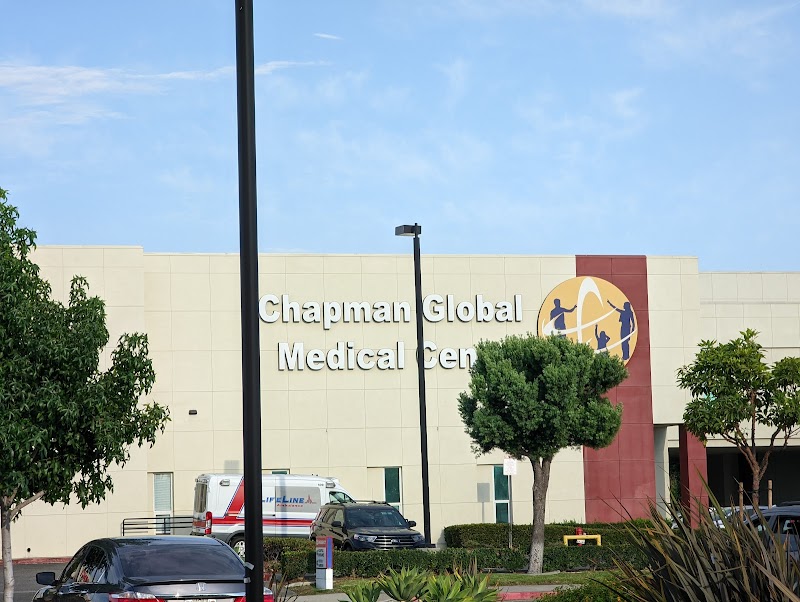
Who Owns and Operates Chapman Global Medical Center D/P Snf?

CHAPMAN GLOBAL MEDICAL CENTER D/P SNF is owned by a for-profit company. For-profit facilities operate as businesses with obligations to shareholders or private owners. The facility operates independently rather than as part of a larger chain. With 27 certified beds and approximately 23 residents (about 85% occupancy), it is a smaller facility located in ORANGE, California.
How Does Chapman Global Medical Center D/P Snf Compare to Other California Nursing Homes?

Compared to the 100 nursing homes in California, CHAPMAN GLOBAL MEDICAL CENTER D/P SNF's overall rating (4 stars) is above the state average of 3.2, staff turnover (30%) is significantly lower than the state average of 46%, and health inspection rating (4 stars) is above the national benchmark.

What Should Families Ask When Visiting Chapman Global Medical Center D/P Snf?

Based on this facility's data, families visiting should ask: "Can I visit during a mealtime to observe dining assistance and food quality?" "How do you handle medical emergencies, and what is your hospital transfer rate?" "Can I speak with family members of current residents about their experience?"

Is Chapman Global Medical Center D/P Snf Safe?

Based on CMS inspection data, CHAPMAN GLOBAL MEDICAL CENTER D/P SNF has a clean safety record: no substantiated abuse findings (meaning no confirmed cases of resident harm), no Immediate Jeopardy citations (the most serious violation level indicating risk of serious injury or death), and is not on the Special Focus Facility watch list (a federal program monitoring the lowest-performing 1% of nursing homes). The facility has a 4-star overall rating and ranks #1 of 100 nursing homes in California. While no facility is perfect, families should still ask about staff-to-resident ratios and recent inspection results during their visit.

Do Nurses at Chapman Global Medical Center D/P Snf Stick Around?

Staff at CHAPMAN GLOBAL MEDICAL CENTER D/P SNF tend to stick around. With a turnover rate of 30%, the facility is 16 percentage points below the California average of 46%. Low turnover is a positive sign. It means caregivers have time to learn each resident's needs, medications, and personal preferences. Consistent staff also notice subtle changes in a resident's condition more quickly. Registered Nurse turnover is also low at 29%, meaning experienced RNs are available to handle complex medical needs.

Was Chapman Global Medical Center D/P Snf Ever Fined?

CHAPMAN GLOBAL MEDICAL CENTER D/P SNF has been fined $4,194 across 1 penalty action. This is below the California average of $33,121. While any fine indicates a compliance issue, fines under $50,000 are relatively common and typically reflect isolated problems that were subsequently corrected. Families should ask what specific issues led to these fines and confirm they've been resolved.

Is Chapman Global Medical Center D/P Snf on Any Federal Watch List?

CHAPMAN GLOBAL MEDICAL CENTER D/P SNF is not on any federal watch list. The most significant is the Special Focus Facility (SFF) program, which identifies the bottom 1% of nursing homes nationally based on persistent, serious quality problems. Not being on this list means the facility has avoided the pattern of deficiencies that triggers enhanced federal oversight. This is a positive indicator, though families should still review the facility's inspection history directly.