MONTEREY PALMS HEALTH CARE CENTER
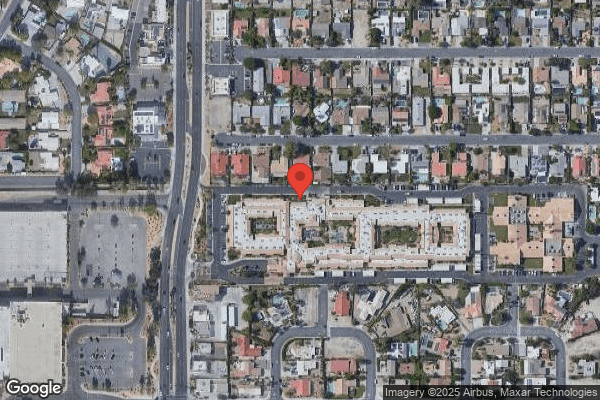
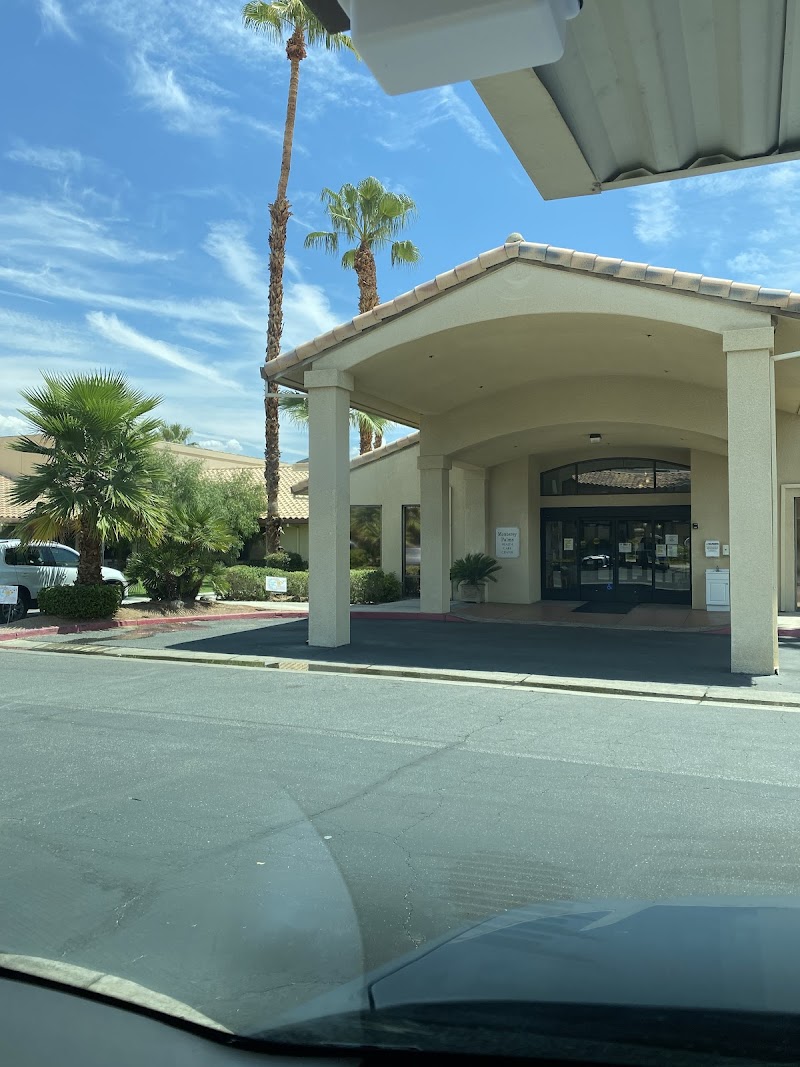
44610 MONTEREY AVENUE, PALM DESERT, CA 92260 (760) 776-7700
For profit - Limited Liability company 99 Beds MARINER HEALTH CARE Data: November 2025
Trust Grade
70/100
#410 of 1155 in CA
Last Inspection: January 2025

Within standard 12-15 month inspection cycle. Federal law requires annual inspections.

Overview

Monterey Palms Health Care Center has a Trust Grade of B, which means it is considered a good choice among nursing homes. It ranks #410 out of 1,155 facilities in California, placing it in the top half, and #14 out of 53 in Riverside County, indicating that there are only 13 better local options. However, the facility is experiencing a worsening trend, with the number of issues found increasing from 3 in 2024 to 12 in 2025. Staffing is average here with a rating of 3 out of 5 stars and a turnover rate of 47%, which is higher than the state average. On the positive side, there have been no fines, which is a good sign, but concerningly, the facility has less RN coverage than 96% of other California facilities, meaning residents may not receive the close monitoring they need. Specific incidents highlight some of the facility's weaknesses: two residents did not receive their medications as prescribed, which could worsen their health conditions, and there were issues with documenting medication administration accurately, increasing the risk of medication errors. Additionally, dietary staff failed to follow proper food safety protocols, raising concerns about potential foodborne illnesses. While there are strengths, such as a good overall star rating and no fines, these issues suggest that families should carefully consider the quality of care provided at this facility.

Trust Score
B
70/100
In California
#410/1155
Top 35%
Safety Record
Low Risk
No red flags
Inspections
Getting Worse
3 → 12 violations
Staff Stability
⚠ Watch
47% turnover. Above average. Higher turnover means staff may not know residents' routines.
Penalties
✓ Good
No fines on record. Clean compliance history, better than most California facilities.
Skilled Nurses
⚠ Watch
Each resident gets only 13 minutes of Registered Nurse (RN) attention daily — below average for California. Fewer RN minutes means fewer trained eyes watching for problems.
Violations
⚠ Watch
31 deficiencies on record. Higher than average. Multiple issues found across inspections.
★★★★☆
4.0
Overall Rating
★★★☆☆
3.0
Staff Levels
★★★★★
5.0
Care Quality
★★★☆☆
3.0
Inspection Score
Stable
2024: 3 issues
2025: 12 issues

The Good

  • 5-Star Quality Measures · Strong clinical quality outcomes
  • Full Sprinkler Coverage · Fire safety systems throughout facility
  • No fines on record

Facility shows strength in quality measures, fire safety.

The Bad

Staff Turnover: 47%

Near California avg (46%)

Higher turnover may affect care consistency

Chain: MARINER HEALTH CARE

Part of a multi-facility chain

Ask about local staffing decisions and management

The Ugly 31 deficiencies on record

Jun 2025 2 deficiencies
CONCERN (E) 📢 Someone Reported This

A family member, employee, or ombudsman was alarmed enough to file a formal complaint

Potential for Harm - no one hurt, but risky conditions existed

Pharmacy Services (Tag F0755)

Could have caused harm · This affected multiple residents

**NOTE- TERMS IN BRACKETS HAVE BEEN EDITED TO PROTECT CONFIDENTIALITY** Based on interview and record review, the facility failed to ensure pharmacy services were provided to meet the needs of residen...

Read full inspector narrative →
**NOTE- TERMS IN BRACKETS HAVE BEEN EDITED TO PROTECT CONFIDENTIALITY** Based on interview and record review, the facility failed to ensure pharmacy services were provided to meet the needs of residents when two of four sampled residents' (Resident 3 and Resident 7) medications were not administered in accordance with the physician orders. This failure has the potential to negatively impact the effectiveness of the medication which could lead to worsening of Residents 3 and 7's health condition. Findings: On April 29, 2025, at 1:20 p.m., Resident 3 was interviewed. Resident 3 was alert and oriented. Resident 3 stated he would at times receive his antibiotic late or early. A review of Resident 3's admission record indicated the resident was admitted to the facility on [DATE], with diagnoses which included bacteremia (bacteria in blood), diabetes (high blood sugar), hypertension (high blood pressure). A review of the physician order dated April 11, 2025, indicated, cefazolin 2 (grams) gm/(milliliter) mL (gm/mL measure of metric) administer intravenous (in the vein) every 8 hours at 7:00 am, 3:00 pm, and 11:00 pm for bacteria in the blood. A review of the Medication Administration Record (MAR) for the month of April 2025, indicated the following: a. April 13, 2025, the 7 am dose of cefazolin was documented as administered late, charted at 9:16 a.m.; and b. April 13, 2025, the 11 pm dose of cefazolin was not documented as administered. A review of Resident 7's admission record was admitted to the facility on [DATE], with diagnoses which included pneumonia (infection in the lungs), congestive heart failure, cerebral vascular accident (stroke), and end stage renal disease (kidney failure). A review of the prescription order dated April 25, 2025, indicated a start date of April 28, 2025, and end date of May 4, 2025, for Vancomycin 500 mg. to be given intravenously once every Monday, Wednesday, and Friday, for hospital acquired pneumonia. A review of the MAR for the month of April 2025, indicated the 9 am dose of vancomycin was not administered on April 28 and April 29, 2025. The MAR indicated the medication was unavailable on April 28, 2025. On May 2, 2025, at 2:17 p.m., an interview and concurrent record review was conducted with the Registered Nurse (RN). The RN stated Residents 3's and Resident 7's MAR indicated late, missed, and early administration. The RN stated residents should not have missed or late medication doses. The RN stated if unable to administer a medication or a dose was missed the process is to call the physician, notify the physician of the issue and get orders to adjust the time. On May 2, 2025, at 4:04 p.m. an interview and concurrent record review was conducted with the Director of Nursing (DON). The DON stated there was no documented evidence that the antibiotics cefazolin and vancomycin were given on time. The DON stated the MAR should reflect the administered time of a medication not the charted time of a medication. The DON stated medication should be charted accurately and timely. The DON stated the physician, and the pharmacy should have been notified that a resident medication was not in the facility to administer. A review of the facility policy and procedure titled, Medication Administration General Guidelines, dated January 2021, indicated, .Medications are administered as prescribed .good nursing principles and practices .Medications are administered in accordance with written orders of the prescriber .if necessary the nurse contacts the prescriber for clarification .Medications are administered within 60 minutes of scheduled time .individuals who administers the medication dose, records the administration on the resident's MAR immediately following the medication being given .
CONCERN (E) 📢 Someone Reported This

A family member, employee, or ombudsman was alarmed enough to file a formal complaint

Potential for Harm - no one hurt, but risky conditions existed

Medical Records (Tag F0842)

Could have caused harm · This affected multiple residents

**NOTE- TERMS IN BRACKETS HAVE BEEN EDITED TO PROTECT CONFIDENTIALITY** Based on interview and record review, the facility failed to ensure medical records were maintained in accordance with the accep...

Read full inspector narrative →
**NOTE- TERMS IN BRACKETS HAVE BEEN EDITED TO PROTECT CONFIDENTIALITY** Based on interview and record review, the facility failed to ensure medical records were maintained in accordance with the accepted professional standards and practices when three of four sampled residents' (Resident 3, Resident 5, and Resident 6) medication administrations were not accurately documented. This failure increased the risk for medication errors which could negatively impact Residents 3, 5, and 6's health condition. Findings: On April 29, 2025, at 1:20 p.m., Resident 3 was interviewed. Resident 3 was alert and oriented. Resident 3 stated he would at times receive his antibiotic late or early. A review of Resident 3's admission record indicated the resident was admitted to the facility on [DATE], with diagnoses which included bacteremia (bacteria in blood), diabetes (high blood sugar), and hypertension (high blood pressure). A review of the physician order dated April 11, 2025, indicated, cefazolin 2 (grams) gm/(milliliter) mL (gm/mL measure of metric) administer intravenous (in the vein) every 8 hours at 7:00 am, 3:00 pm, and 11:00 pm for bacteria in the blood. A review of Resident 3's Medication Administration Record (MAR) for the month of April 2025, indicated the following: a. April 12, 2025, 7 a.m. dose of cefazolin was charted as administered at 8:04 a.m., with the comment that the medication was given on time; b. April 14, 2025, 7 a.m. dose of cefazolin was charted as administered at 9:16 a.m., with the comment that medication administration was charted late; c. April 15, 2025, 7 a.m., dose of cefazolin was charted as administered at 9:35 a.m., with the comment that medication administration was charted late; d. April 16, 2025, 7 a.m. dose of cefazolin was charted as administered at 8:27 a.m., with the comment that medication administration was charted late; e. April 17, 2025, 7 a.m. dose of cefazolin was charted as administered at 9:39 a.m., with the comment that medication administration was charted late; f. April 18, 2025, 7 a.m. dose of cefazolin was charted as administered at 9:08 a.m., with the comment that medication administration was charted late; g. April 21, 2025, 7 a.m. dose of cefazolin was charted as administered at 9:30 a.m., with the comment that medication administration was charted late; h. April 22, 2025, 7 a.m. dose of cefazolin was charted as administered at 9:29 a.m., with the comment that medication administration was charted late; i. April 23, 2025, 7 a.m. dose of cefazolin was charted as administered at 8:12 a.m., with the comment that medication administration was charted late; j. April 24, 2025, 7 a.m. dose of cefazolin was charted as administered at 8:41 a.m., with the comment that medication administration was charted late; k. April 25, 2025, 7 a.m. dose of cefazolin was charted as administered at 8:49 a.m., with the comment that medication administration was charted late; and l. April 28, 2025, 7 a.m. dose of cefazolin was charted as administered at 10:39 a.m., with the comment that medication administration was charted late. A review of Resident 5's admission record indicated the resident was admitted to the facility on [DATE], with diagnoses which included septicemia (bacteria in blood), congestive heart failure, and cerebral vascular attack (stroke). A review of the physician order dated April 25, 2025, indicated for Resident 5 to be given ceftriaxone 2 gm/50 mL intravenously, daily at 9:00 a.m. for sepsis. A review of the MAR for the month of April 2025, indicated the 9 am dose of ceftriaxone dated April 28, 2025, was charted as administered at 10:53 a.m. and on April 29, 2025, charted as administered at 10:08 a.m. A review of Resident 6's admission record indicated the resident was admitted to the facility on [DATE], with diagnoses which included Crohn's disease (inflammatory disease of the intestines), ileocecal resection (removal of small intestine), ileostomy (artificial opening in the stomach wall). A review of the physician order dated May 1, 2025, indicated for Resident 6 to be given fluconazole 200 mg/100 mL intravenously daily at 9:00 p.m. for abdominal abscess with JP drain (stomach pus drained through a closed suction drain). A review of the MAR for the month of May 2025, indicated the 9 pm dose of fluconazole dated May 1, 2025, indicated the medication administration was charted at 10:26 p.m. On May 2, 2025, at 2:17 p.m. an interview and concurrent record review was conducted with the Registered Nurse (RN). The RN stated Residents 3, 5, and 6's MARs indicated late administrations doses on time but documented late. The RN stated documentation in the medication administrations should have done accurately and timely. On May 2, 2025, at 4:04 p.m. an interview and concurrent record review was conducted with the Director of Nursing (DON). The DON stated the MAR should reflect the administered time of a medication not the charted time of a medication. The DON stated medication should be charted accurately and timely. A review of the facility policy and procedure titled Charting, indicated, .Entries should reflect factual statements .be accurate .right date/time .all entries are considered final upon completion and may not be altered or removed .altering any portion of the medical record .willful acts of falsification entries should never be post-dated/timed . A review of the facility policy and procedure titled, Medication Administration General Guidelines, dated January 2021, indicated, .Medications are administered as prescribed .good nursing principles and practices .Medications are administered in accordance with written orders of the prescriber .if necessary the nurse contacts the prescriber for clarification .Medications are administered within 60 minutes of scheduled time .individuals who administers the medication dose, records the administration on the resident's MAR immediately following the medication being given .
Jan 2025 10 deficiencies
CONCERN (D)

Potential for Harm - no one hurt, but risky conditions existed

Comprehensive Care Plan (Tag F0656)

Could have caused harm · This affected 1 resident

**NOTE- TERMS IN BRACKETS HAVE BEEN EDITED TO PROTECT CONFIDENTIALITY** Based on observation, interview, and record review, the facility failed to ensure a person-centered care plan was developed and ...

Read full inspector narrative →
**NOTE- TERMS IN BRACKETS HAVE BEEN EDITED TO PROTECT CONFIDENTIALITY** Based on observation, interview, and record review, the facility failed to ensure a person-centered care plan was developed and implemented for a resident with a new diagnosis of pulmonary emboli (a condition in which one or more arteries in the lungs become blocked by a blood clot) and on anticoagulant (medication used to prevent blood clots from forming or growing larger) treatment. This failure had the potential to delay the necessary care and services which could place Resident 24 at risk for another life-threatening blood clot or other complications that could develop related to the treatment with an anticoagulant. Findings: On January 27, 2025, at 1:40 p.m., Resident 24 was observed awake, alert, lying on bed. Resident 24 was asked if he was hospitalized recently. Resident 24 could not recall. On January 28, 2025, Resident 24's record was reviewed. Resident 24 was admitted to the facility on [DATE], and was re-admitted on [DATE], with diagnoses which included heart failure (a chronic condition in which the heart does not pump blood as well as it should) atrial fibrillation (an irregular, often rapid heart rate that causes poor blood flow) and pulmonary emboli. Resident 24's Minimum Data Set (MDS - an assessment tool) dated October 28, 2024, indicated a Brief Interview for Mental Status (BIMS - a screening tool for cognitive status) score of 9 (moderate cognitive impairment). The physician's history and physical dated April 18, 2024, indicated Resident 24 does not have the capacity to understand and make decisions, can make needs known, but can not make medical decisions. The nurse's notes dated December 15, 2024, indicated, .Resident c/o (complaint of) general body pain, chest pain before dinner. B/P (blood pressure) 121/82, P (pulse) 92, Oxygen 98%. PRN (as needed) pain medication was given . after resident ate dinner, nursing assessed for pain, resident stated now only having discomfort in chest on left side and requested to be sent out to the hospital . The nurse's note dated December 16, 2024, indicated, .Per (name of the hospital) nurse , patient admitted to (name of hospital) for pulmonary embolism and patient discharging with new order for Eliquis (a medication used for blood clot) . The hospital CTA (Computed Tomography Angiography - a type of special X-ray used to diagnosed conditions of blockages, blood clots and many diseases of blood vessels) of the chest performed on December 16, 2024, indicated pulmonary emboli. The hospital discharge medication list on December 16, 2024, included .Apixaban 5 milligram (mg - a unit of measurement) tablet. Commonly known as Eliquis. Start taking on December 16, 2024. Take 2 tablets (10 mg total) by mouth 2 (two) times a day for 7 days, then 1 tablet (5 mg) two times a day for 21 days. Last time this was given: 10 mg on December 16, 2024 8:57 a.m., next dose due:12/16/24 at dinner . The physician's order for the month of January 2025, indicated, .Eliquis (Apixaban) tablet; 5 milligram (mg - a unit of measurement) amount to administer: 1 tablet oral twice a day. Give 1 tablet po (by mouth) BID (twice a day) x 21 days .) with the start date of 12/25/24 - 01/15/2025 . The facility's electronic Medication Administration Record (MAR) indicated Resident 24 had completed the anticoagulant therapy for 28 days. There was no documented evidence a patient centered care plan for the care of Resident 24 was developed and implemented for signs and symptoms of pulmonary emboli, while receiving the anticoagulant medication, Eliquis. On January 31, 2025, at 9 a.m., a concurrent interview and record review was conducted with the MDS Coordinator and the Director of Nursing (DON). The DON acknowledged Resident 24 was sent out on December 15, 2024, for chest pain, and returned to the facility on December 16, 2024, with pulmonary emboli. The DON acknowledged a care plan was not developed for Resident 24, specific for his new diagnosis and the use of Eliquis. The DON stated she and the QA (Quality Assurance) nurse are responsible for initiating the care plan for residents who were sent out to the acute hospital. The DON stated the MDS coordinator/staff will conduct a 24 hour follow up of the residents diagnosis at the acute hospital. The facility's undated policy and procedure titled, Acute Condition Plan of Care, indicated, .Each resident will have an acute condition plan of care developed when an acute condition is identified. The Acute Condition Plan of care is developed by the Licensed Nurse and/or any member of the facility's Interdisciplinary Team (IDT - a group of healthcare professionals who work together to coordinate and provide care for a patient) .to review and address the resident's acute condition until the Comprehensive Plan of Care is finalized by the Interdisciplinary Team. The care plan shall be used in addressing the acute condition of the resident. The care plan shall be used in developing the resident's daily care routines and will be available to staff personnel who are responsible in providing care or services to the resident .
CONCERN (D)

Potential for Harm - no one hurt, but risky conditions existed

ADL Care (Tag F0677)

Could have caused harm · This affected 1 resident

**NOTE- TERMS IN BRACKETS HAVE BEEN EDITED TO PROTECT CONFIDENTIALITY** Based on observation, interview, and record review, the facility failed to provide the necessary care and services to maintain c...

Read full inspector narrative →
**NOTE- TERMS IN BRACKETS HAVE BEEN EDITED TO PROTECT CONFIDENTIALITY** Based on observation, interview, and record review, the facility failed to provide the necessary care and services to maintain cleanliness and proper hygiene of resident's fingernails for one of 19 residents reviewed (Resident 29). This failure had the potential to negatively impact the physiological and psychological well being of Resident 29. In addition this failure had the potential to result in cross contamination of bacteria underneath the dirty fingernails to Resident 29's food during meals. Findings: On January 27, 2025, at 2:30 p.m., an Enhanced Barrier Precaution (EBP - a type of infection control practices that use personal protective equipment to reduce the spread of multidrug resistant organism) sign was observed outside Resident 29's room. Resident 29 was observed asleep. A review of Resident 29's record, on January 28, 2025, indicated Resident 29 was admitted to the facility on [DATE], and had a latest readmission on [DATE], with diagnoses which included cerebral infarction (a condition that occurs when the blood flow to the brain is disrupted, causing brain tissue to die) with left sided weakness and paralysis, osteomyelitis (bone infection), status post below the knee amputation, End Stage Renal Disease (ESRD - kidney failure) and hemodialysis (a treatment that removes waste products and fluid from the blood). During a concurrent observation and interview on January 28, 2025, at 9:49 a.m., with Resident 29, Resident 29 was observed lying on bed, awake, alert, and able to verbalize his needs. He stated he just returned from the dialysis center. Resident 29 was observed moving and scratching his face with his right hand. Resident 29's right hand fingernails were observed with blackish materials underneath the nail beds. He stated his nails had been like that for a while. He stated he would like to have his nails cleaned. He stated his mother would always remind him to keep his nails clean. Resident 29 was observed with left sided weakness. He stated he had a stroke, kidney failure, and ended up having dialysis. On January 28, 2028, at 10:08 a.m., a concurrent observation and interview was conducted with the Infection Preventionist (IP). The IP stated Resident 29's right hand fingernails were dirty. The IP stated the Certified Nursing Assistant (CNA) should have cleaned his nails before going to hemodialysis treatment. On January 28, 2025, at 10:19 a.m., a concurrent observation and interview was conducted with CNA 1. CNA 1 stated Resident 29's fingernails needed cleaning. CNA 1 stated every Sunday is when residents are shaved and have their nails cleaned and clipped. During a review of Resident 29's care plan dated December 20, 2023, and edited on January 13, 2025, for SELF CARE DEFICIT .Extensive assistance to dependent .due to physical limitation . a long term goal of providing assistance in ADL (activity of daily living) to maintain comfort and dignity . On January 29, 2025, at 12:15 p.m., an interview was conducted with the Director of Nursing (DON). The DON stated the facility had established that every Sunday is scheduled for nail cleaning and shaving. She stated the CNAs were supposed to check all residents nails and keep them clean. A review of the facility's undated policy and procedure titled,Fingernail Care, indicated, .Care of the fingernails promotes circulation to the hands and helps prevent small tears around the nails that could lead to infections .Nail care includes daily cleaning and regular trimming .Proper nail care can aid in the prevention of skin problems around the nail bed .
CONCERN (D)

Potential for Harm - no one hurt, but risky conditions existed

Deficiency F0761 (Tag F0761)

Could have caused harm · This affected 1 resident

**NOTE- TERMS IN BRACKETS HAVE BEEN EDITED TO PROTECT CONFIDENTIALITY** Based on observation, interview, and record review, the facility failed to ensure medications and biologicals were properly stor...

Read full inspector narrative →
**NOTE- TERMS IN BRACKETS HAVE BEEN EDITED TO PROTECT CONFIDENTIALITY** Based on observation, interview, and record review, the facility failed to ensure medications and biologicals were properly stored when: 1. One of 36 residents reviewed (Resident 47) had a bottle of medication from an outside pharmacy by her bedside, readily available for use; 2. Three expired Daptomycin antibiotic (medications used to treat infections) intravenous piggyback (IVPB - a method of administering IV antibiotics by piggybacking it to a primary IV fluids) were stored in the F Court medication room refrigerator for Resident 68, readily available for use. These failures had the potential for the residents to self-administer a medication without licensed nurse monitoring and to receive expired or ineffective medications. Findings: 1. On January 27, 2025, at 11:25 a.m., an observation and concurrent interview was conducted with Resident 47. Resident 47 was observed in her wheelchair by the bedside. Resident 47 was alert, oriented with some confusion noted. An orange medication bottle from (name of outside pharmacy), containing four pills of Simvastatin (a medication that lowers the cholesterol level) 20 mg (milligrams - a unit of measurement) was observed on the bedside table. Resident 47 stated she wanted to take it in the evening. Resident 47 stated she found the medication bottle at home in her son's belongings and brought it to the facility. On January 29, 2025, at 11:28 a.m., an interview was conducted with Licensed Vocational Nurse (LVN) 2. LVN 2 stated the bottle of Simvastatin medication should not be at Resident 47's bedside. On January 29, 2025, at 11:30 a.m., an interview was conducted with the Quality Assurance Nurse (QA nurse). The QA nurse stated the bottle of Simvastatin at Resident 47's bedside was a medication from an outside pharmacy, and not the medication from the facility. The QA nurse stated resident should not have the bottle of outside medication readily available at the bedside. On January 29, 2025, Resident 47's record was reviewed. Resident 47 was admitted to the facility on [DATE], with diagnoses which included: hyperlipidemia (high cholesterol), depression, and mild cognitive impairment (problems with a person's ability to think, learn, remember, use judgement, and make decisions). The physician's order from December 19, 2023, indicated Simvastatin tablet 20 mg, one tablet by mouth at bedtime. On January 29, 2025, at 10:11 a.m., a concurrent interview and record review was conducted with the QA nurse. The QA nurse stated there was no record of a medication self-administration assessment for Resident 47 prior to January 27, 2025, when the medication bottle was found at Resident 47's bedside by surveyors. On January 29, 2025, at 10:17 a.m., a concurrent interview and record review was conducted with the Director of Nursing (DON). The DON stated a medication self-administration assessment was not conducted for Resident 47 prior to the medication being found at the bedside by surveyors. The facility's policy and procedure, titled, Medication Storage - Storage of Medication, dated January 2021, was reviewed. The policy indicated, .Medication and biologicals are stored properly, following manufacturers or provider pharmacy recommendations, to maintain their integrity and to support safe effective drug administration. The medication supply shall be accessible only to licensed nursing personnel, pharmacy personnel, or staff members lawfully authorized to administer medications .The provider pharmacy dispenses medications in containers that meet state and federal labeling requirements, including requirements of good manufacturing practices established by the United States Pharmacopeia (USP). Medications are to remain in these containers and stored in a controlled environment. This may include such containers as medication carts, medication rooms, medication cabinets, or other suitable containers .In order to limit access to prescription medications, only licensed nurses, pharmacy staff, and those lawfully authorized to administer medications (such as medication aides) are allowed access to medication carts. Medication rooms, cabinets and medication supplies should remain locked when not in use or attended by persons with authorized access . The facility's policy and procedure, titled, Self-Administration of Medication, undated, was reviewed. The policy indicated, .Purpose .To provide an assessment and evaluation process to determine if a resident is capable of self-administration .To provide instructions for those capable of self-administration .To maintain the safety and accuracy of medication administration . 2. A review of Resident 68's medical records indicated Resident 68 was admitted to the facility on [DATE], with diagnoses which included urosepsis (a urinary tract infection [UTI] that spread to the kidneys). A review of Resident 68's physician's order dated, December 22, 2024, indicated to administer daptomycin 350 mg (milligrams - unit of measurement) per 50 mL (milliliters - unit of measurement) intravenous once a day for sepsis. On January 27, 2025, at 11:45 a.m., a concurrent observation and interview was conducted with Registered Nurse (RN) 1, inside the Medication Room in F Court unit. During the inspection, three IVPB daptomycin antibiotic bags labeled 350mg/50 mL normal saline were stored inside the big refrigerator for Resident 68. One bag was observed to have a use by date of January 23, 2025, and the other two bags had a use by date of January 25, 2025. RN 1 stated the three antibiotic medications were expired and should have been discarded and removed from the refrigerator. She further stated expired antibiotics could have less therapeutic potency (dose strength) and not be effective in treating infections. On January 28, 2025, at 3:30 p.m., an interview was conducted with the Infection Preventionist (IP) nurse. The IP nurse stated licensed nurses were responsible for ensuring no expired medications were stored in the refrigerator. The IP further stated administering expired antibiotic medications may not be effective in treating infections. On January 30, 2025, at 11:43 a.m., an interview was conducted with the Director of Nursing (DON). The DON stated the RN staff should have checked the expiration dates of the antibiotic bags and remove the medications out of the storage room. She further stated administering expired medications had the potential to cause harmful side effects and ineffective treatment for residents. A review of the facility's policy and procedure titled, Medication Storage, dated 2007, indicated, .Outdated, contaminated, discontinued or deteriorated medications, and those in containers that are cracked, soiled, or without secure closures are immediately removed from stock .disposed of . A review of the facility's policy and procedure titled, Disposal of Medications, Syringes and Needles, dated 2007, indicated, .Outdated medications, contaminated, or deteriorated medications, and the contents of containers with no label shall be destroyed .
CONCERN (D)

Potential for Harm - no one hurt, but risky conditions existed

Deficiency F0806 (Tag F0806)

Could have caused harm · This affected 1 resident

Based on observation, interview, and record review, the facility failed to ensure resident's food preference was honored for one of three sampled residents (Resident 50), when a turkey sandwich was on...

Read full inspector narrative →
Based on observation, interview, and record review, the facility failed to ensure resident's food preference was honored for one of three sampled residents (Resident 50), when a turkey sandwich was on Resident 50's lunch plate and the meal ticket (lists resident's current diet, likes and dislikes for the current day and mealtime) indicated she disliked turkey and liked cottage cheese. This failure had the potential to result in decreased food intake, and could lead to unplanned weight loss, further compromising Resident 50's nutritional and medical status. Findings: On January 27, 2025, at 1:16 p.m., during a concurrent observation, interview and review of meal ticket was conducted with Resident 50 in the small dining hall. Resident 50's meal ticket that designated her food preferences and dislikes, was reviewed. The meal ticket listed 4 oz Cottage Cheese under preferences and Turkey under dislikes. Observed Resident 50 eating a turkey sandwich and the meal ticket indicated dislikes turkey and prefers cottage cheese to be served daily. Resident 50 stated she did not like turkey sandwiches but did not want to bother anyone. Resident 50 further stated she liked cottage cheese, and it was not served today. On January 27, 2025, at 1:20 p.m., during an interview with the Restorative Nurse Assistant (RNA) she confirmed Resident 50 did not receive cottage cheese and did not like turkey sandwich as indicated on the meal ticket. On January 29, 2025, at 11:43 a.m., during an interview with the Dietary Manager (DSS), stated it was important to honor resident's food preferences and offer them alternatives. The DSS further stated if a resident does not enjoy their food, it could result in decreased food intake, weight loss and nutritional deficiency. A review of the facility's policy and procedure titled, Serving Foods undated indicated, .Use diet tray cards (meal ticket) to ensure tray accuracy and that resident preferences are provided . A review of the facility's policy and procedure titled, Nutrition Care dated 2018, indicated .The resident/patient food preferences should be placed on the profile card and identified on the tray card .Appropriate substitutions will be offered for individual resident/patient dislikes .
CONCERN (D)

Potential for Harm - no one hurt, but risky conditions existed

Garbage Disposal (Tag F0814)

Could have caused harm · This affected 1 resident

Based on observation, interview and record review, the facility failed to dispose of garbage and refuse properly when trash was found outside on the floor surrounding the dumpsters, and the lids of th...

Read full inspector narrative →
Based on observation, interview and record review, the facility failed to dispose of garbage and refuse properly when trash was found outside on the floor surrounding the dumpsters, and the lids of the dumpsters did not close properly. This failure had the potential to attract pests and cause infection control issues. Findings: On January 27, 2025, at 8:41 a.m., an observation was conducted outside back kitchen at dumpster area. There ware three dumpsters, a white color recycle dumpster and another two black color dumpsters for trash. The recycle dumpster's lid and one of the trash dumpster's lids were not close. Trash (used gloves, used fork, napkins, opened cut boxes) was found on floor surrounding the dumpster area. On January 27, 2025, at 9:43 a.m., a concurrent observation and interview was conducted with the Dietary Services Supervisor (DSS) outside back kitchen at the dumpster area. The DSS acknowledged trash was found on floor surrounding the dumpster area. The DSS stated dumpsters' lids needed to close properly all the time otherwise would attract pests and cause infection control issues. On January 29, 2025, at 8:38 a.m., an interview was conducted with the Registered Dietitian (RD). The RD stated dumpsters' lids needed to close all the time to minimal the smell, prevent attract pests and infection control issue. The RD further stated surrounding dumpster area needed to kept clean. During a review of the facility's Policy and Procedure (P&P) titled, Pest Control, dated 2018, the P&P indicated, .Keep the dumpster, waste removal and trash storage areas clean and sanitized. Trash receptacles will .kept covered at all times .The lid of the dumpster should be closed at all times .
CONCERN (D)

Potential for Harm - no one hurt, but risky conditions existed

Infection Control (Tag F0880)

Could have caused harm · This affected 1 resident

**NOTE- TERMS IN BRACKETS HAVE BEEN EDITED TO PROTECT CONFIDENTIALITY** Based on observation, interview, and record review, the facility failed to follow infection control measures for one of 19 resid...

Read full inspector narrative →
**NOTE- TERMS IN BRACKETS HAVE BEEN EDITED TO PROTECT CONFIDENTIALITY** Based on observation, interview, and record review, the facility failed to follow infection control measures for one of 19 residents reviewed for infection (Resident 507) who required contact isolation precautions (method to prevent the spread of serious illnesses that can be transmitted by direct or indirect contact), when multiple staff members were observed entering and exiting the resident's room without following contact isolation precautions. This failure had the potential to result in spreading infection to a vulnerable resident population. Findings: On January 29, 2025, at 2:22 p.m., Certified Nursing Assistant (CNA) 2 was observed entering Resident 507's room answering a call light and providing Resident 507 with water. CNA 2 did not wear appropriate PPE (Personal Protective Equipment - gown, gloves, mask) while in the room of Resident 507. On January 29, 2025, at 3:32 p.m., CNA 3 was observed entering Resident 507's room to perform vital sign monitoring. CNA 3 did not use a disposable blood pressure cuff, did not wear PPE, and utilized orange top Sani-wipes (bleach wipes) to perform hand hygiene upon leaving the contact isolation room. On, January 29, 2025, at 4:07 p.m., during an interview with CNA 3, CNA 3, stated that PPE only needs to be worn when there is patient care is being done, quick interactions like taking blood pressure readings and answering call lights are not necessary. She stated the only acceptable hand hygiene is washing hands or using the supplied hand sanitizer. She also stated the use of non-disposable medical devices should be acceptable if cleaned properly. CNA 3 was unable to state the proper way to disinfect equipment. On January 30, 2025, at 12:10 p.m., during an interview with Licensed Vocational Nurse (LVN) 2, LVN 2 stated any time you enter a room with contact precautions, you must wear all associated PPE. Resident 507's record was reviewed. Resident 507 was admitted to the facility on [DATE], with diagnoses that included Urinary Tract Infection (UTI). The physician's order dated January 21, 2025, indicated, Contact isolation ESBL (Extended-spectrum beta-lactamases - a hard to treat bacterial infection) .in urine . A record review of the facility policy and procedure title, Transmission Precaution: Contact, undated, indicated, .Wear a clean, non-sterile gown upon entering a resident's room .Dedicate the use of non-critical resident care equipment (stethoscope, sphygmomanometer [blood pressure cuff], bedside commode or glass thermometer) to a single resident .
CONCERN (E)

Potential for Harm - no one hurt, but risky conditions existed

Deficiency F0802 (Tag F0802)

Could have caused harm · This affected multiple residents

Based on dietetic service observations, dietary staff interviews and dietary document reviews the facility failed to ensure that dietary staff safely and effectively carried out the functions of food ...

Read full inspector narrative →
Based on dietetic service observations, dietary staff interviews and dietary document reviews the facility failed to ensure that dietary staff safely and effectively carried out the functions of food and nutrition services when: 1. Dietary Aide (DA) 2 did not follow manufacture's guideline time length for testing the Quaternary (Quat) sanitizer (sanitizing solution used for sanitizing food contact surfaces); 2. [NAME] 2 did not follow the proper steps to clean the Prep counter after preparing raw chicken on January 28, 2025, (Cross reference to 812); and 3. [NAME] 1 was unable to demonstrate proper Cooling Food (an essential process used in food production to prevent foodborne illness. Bacteria grow best in food in the temperature range 135°F (°F - a unit of measurement) to 41°F, also referred to as the temperature danger zone. Food must be cooled quickly to minimize bacterial growth. If left out to cool, cooked food can become unsafe to eat in a matter of hours). These failures had the potential to cause foodborne illness for 89 out of 89 sampled residents who received food from the kitchen. Findings: 1. A review of the test strip manufacturer's guidelines indicated the test strip needed to be dipped into Quat sanitizer for 10 seconds. On January 28, 2025, at 8:36 a.m., a concurrent observation and interview was conducted with the Dietary Aide (DA) 2. DA 2 was asked how long she needed to dip test strip into the Quat sanitizer to test sanitizer concentration. DA 2 stated she needed to dip test strip into sanitizer for 1 second and she dipped the test strip into sanitizer for 1 second to test the concentration of sanitizer. On January 29, 2025, at 10:12 a.m., an interview was conducted with the Registered Dietitian (RD). The RD stated dietary staff need to follow manufacturer's guideline to dip test strip for 10 seconds into sanitizer, otherwise would result in false reading of the sanitizer concentration. The RD explained if the sanitizer was not in the right concentration, could result in not properly sanitizing the food contact surface. During a review of the facility's Job Description, DIETARY AIDE, undated, the Job description indicated, .ESSENTIAL DUTIES AND RESPONSIBILITIES .Maintains food service equipment and work spaces in a clean and safe condition at all times per facility policies and procedures and applicable regulations . 2. On January 28, 2025, at 9:41 a.m., a noon meal preparation observation was conducted with [NAME] (CK) 2. The Prep counter was observed dripping with pink chicken juice after CK 2 prepared raw chicken. CK 2 was observed only using sanitizing wipes to clean the Prep counter. On January 29, 2025, at 8:24 a.m., an interview was conducted with the RD. The RD stated CK 2 should follow the steps to wash, rinse, air dry and sanitize to clean the Prep counter after preparing the raw chicken; otherwise, it was a hazard for food borne pathogen (a bacterium, virus or other microorganism that can cause disease). During a review of the facility's Job Description, COOK, dated 2018, the Job description indicated, .The [NAME] . assuring proper .sanitation and cleaning procedures are followed .RESPONSIBILITIES .Cleans and sanitizes equipment and food preparation area using proper cleaning agents and cleaning methods and following established procedures .Practices safety, infection control .according to facility procedures . During a review of the facility's Policy and Procedure (P&P) titled, Dietary Cleaning, undated, the P&P indicated, .PURPOSE: Proper cleaning and sanitation of equipment ensures removal of residual food, chemicals, and bacteria .PROCEDURE .Cleaning fixed equipment .Non-removable parts will be washed, rinsed, air dried, and sprayed with sanitizing solution . 3. On January 28, 2025, at 11:02 a.m., an interview was conducted with CK 1. CK 1 was asked to demonstrate Cooling Food. CK 1 stated he started cooling roast meat from 140 degrees F and stored the roast meat in refrigerator during cooling process and rechecked the temperature the next day, 14 hours later, to reach 40 °F. On January 29, 2025, at 10:23 a.m., an interview was conducted with the RD. The RD explained it was important for cooks to know the cooling process to minimize exposing roast meat to the temperature danger zone. The RD stated roast meat started cooling process at 140 °F and need to reach 70 °F within 2 hours. Cooks have another 2 hours to cool down the roast meat to 40 °F. Cooks need to check the roast meat every 2 hours to ensure it reached the proper temperature from 140 °F to 40 °F for total 6 hours process. The RD explained if the roast meat was not monitored at least a 2 hours period; that meant CK 1 did not perform the cooling process for the roast meat. The RD claimed the roast meat should be discarded after 14 hours without monitoring the temperature. The RD stated the potential risk for not monitoring cooling process for the roast meat was food safety issue that microorganism (bacteria or virus) could grow on the roast meat which could cause foodborne illness if residents consume it. During a review of the facility's Policy and Procedure (P&P) titled, Cooling Foods, undated, the P&P indicated, .PURPOSE: Proper cooling of foods eliminates the most common cause of foodborne illness. BACKGROUND: Hazard Analysis Critical Control Point (HACCP) guidelines are to cool food items from 140 °F to 70 °F within 2 hours and 41 °F or lower within an additional 4 hours. PROCEDURE . Monitor temperature at least 2 hours for 4 hours or until the appropriate temperature is achieved, whichever comes first .If the hot food is not cooled to 41 °F after 6 hours, discard it or reheat to at least 165 °F for 15 seconds and used immediately . During a review of the facility's Job Description, COOK, dated 2018, the Job description indicated, .The [NAME] assists in assuring proper .preparation .are followed .RESPONSIBILITIES Assures all food items are handled properly to meet safety and sanitation standards according to State and Federal regulations .Ensures that foods are cooked to the appropriate temperatures according to the latest FDA Food Code, State, local regulations .
CONCERN (E)

Potential for Harm - no one hurt, but risky conditions existed

Menu Adequacy (Tag F0803)

Could have caused harm · This affected multiple residents

Based on dietary observation, dietary staff interview and record review, the facility failed to ensure the menus, recipes, Cooks spreadsheet were followed and resident nutritional needs were met when:...

Read full inspector narrative →
Based on dietary observation, dietary staff interview and record review, the facility failed to ensure the menus, recipes, Cooks spreadsheet were followed and resident nutritional needs were met when: 1. [NAME] 1 and [NAME] 2 did not follow the Cooks spreadsheet (the menu document used to guide dietary staff on food items, portions, texture of foods and therapeutic diet) to serve the portion size of pureed food items during the noon meal on 1/27/2025 and 1/28/2025; 2. [NAME] 1 did not follow recipe to make pureed cauliflower during the noon meal on January 27, 2025; 3. [NAME] 2 did not follow recipe to make Buttered corn during the noon meal on January 28, 2025 (Cross reference 804); 4. Dietary Aide 1 did not follow the Cooks spreadsheet served the right dessert for Low fat low cholesterol diet and Cardiac diet during the noon meal on January 28, 2025; and 5. The Dietary Manager served salad dressing without measuring during noon meal on January 27, 2025. These failures had the potential for 89 out of 89 sampled residents receiving food prepared in the kitchen to not meet their nutritional needs which may lead to nutritional related health complications. Findings: 1. On January 27, 2025, at 12:16 p.m., a concurrent observation of the lunch meal plating service and Cooks spreadsheet review was conducted with [NAME] (CK) 1 at the Trayline (a system of food preparation in which trays move along an assembly line). CK 1 used number (#) 12 scoop [equal to 2.75 ounce (oz- a unit of measurement)] served all pureed foods items including beef pot pie, and cauliflower to pureed diet residents. Reviewed Cooks' spreadsheet of the day indicated CK 1 should use 2 scoop of # 8 (equal to 8 oz) to serve the pureed beef pot pie and #16 scoop (equal to 2 oz) to serve the pureed cauliflower. On January 28, 2025, at 12:30 p.m., a concurrent observation of the lunch meal plating service and Cooks spreadsheet review was conducted with CK 2 at the Trayline. CK 2 used # 12 scoop served all pureed foods items including pureed chicken and pureed white rice. Reviewed Cooks' spreadsheet of the day indicated CK 2 should use # 8 scoop (equal to 4 oz) to serve the pureed chicken and # 10 scoop (equal to 3.5 oz) to serve the pureed white rice. On January 29, 2025, at 11:10 a.m., a concurrent interview and Cooks spreadsheet review was conducted with the Dietary Services Supervisor (DSS) and the Registered Dietitian (RD). After review Cooks spreadsheet on January 27, 2025, and January 28, 2025, the RD stated cooks (CK1 and CK 2) underserved pureed beef pot pie, pureed chicken and pureed white rice and overserved pureed cauliflower to pureed diet residents. The RD stated cooks should use the scoop size as indicated in the Cooks spreadsheet. The RD explained underserved food items to residents on pureed diet could result in residents not receiving enough calories, protein and nutrients need and overserved could lead to providing extra nutrients than the pureed diet residents' need. A review of the facility's document titled, The facility Diet Type Report, dated January 28, 2025, indicated, five Residents (Resident 27,40, 54, 307 and 357 ) were on a Pureed diet. A review of the facility's Policy and Procedure (P&P) titled, FOOD PREPARATION, dated 2018, the P&P indicated, SUBJECT: PORTION CONTROL. POLICY: Portion control assures correct quantities are served to resident/patients to meet the nutritional specifications as determined by the menu. Standard portions are necessary to control food costs, quality, attractiveness and appeal of food. Resident/patient satisfaction is highest when expectations about the amount of food received are the same for all resident/patients. Standard portion control equipment will be available and utilized for measuring and serving residents meal portions. PROCEDURES:1. Portions served are those listed on the menu for each food items. 2. Standard tools are utilized to assure portion control, i.e. scoops . 2. On January 27, 2025, at 12:12 p.m., a concurrent noon prep pureed cauliflower observation and interview was conducted with CK 1. CK 1 placed cooked cauliflower in the blender and gradually added unmeasured hot water to make pureed cauliflower. End product of pureed cauliflower was observed runny and not in the form of mashed potatoes. CK 1confirmed he was adding unmeasured hot water while preparing pureed cauliflower. CK 1 was not using recipe during preparation of the pureed cauliflower. On January 29, 2025, at 10:53 a.m., an interview was conducted with the DSS and the RD. The RD and DSS stated pureed food items should have soft mashed potatoes consistency. The RD confirmed the pureed cauliflower did not have soft mashed potatoes consistency. The RD and DSS claimed runny consistency pureed food items did not have good presentation which was not appealing and appetizing for residents to enjoy and eat. The DSS stated CK 1 was not supposed to add water into pureed cauliflower because water did not have any nutrition value and made the consistency runny and dilute the nutrient of the pureed cauliflower. The RD and DSS stated cooks should follow recipes. A review of the facility's Policy and Procedure (P&P) titled, FOOD PREPARATION, dated 2018, the P&P indicated, .FOOD PREPARATION .Employee will prepare foods by methods that conserve nutrients, enhance flavor, and maintain attractive appearance . PROCEDURES .Standardized recipes will be used to ensure meals are attractive, palatable and provide necessary nutritive value . A review of the facility's Policy and Procedure (P&P) titled, SERVING FOODS, undated, the P&P indicated, PURPOSE: Serve foods at the . attractively . BACKGROUND: Preparation: Prepare pureed food the consistency of mashed potatoes .PROCEDURE .Use .standardized recipes . A review of the facility's document titled, RECIPE: CAULIFLOWER PURRED, undated, the recipe did not instruct adding any liquid. 3. On January 28, 2025, at 11:57 p.m., a concurrent noon prep meal observation and interview was conducted with CK 2. CK 2 pulled out cooked corn from steamer and directly served on Trayline. CK 2 admitted he forgot to add margarine and seasoning to corn. On January 28, 2025, at 12:41 p.m., a test tray (to evaluate the quality of a meal during a meal service and identify any areas for improvement) was performed with the RD. The RD acknowledged the corn did not have any flavor of margarine and seasoning. On January 29, 2025, at 10:54 a.m., an interview was conducted with the RD. The RD stated cooks needed to follow recipe while preparing foods. The RD explained not follow recipe would result in served foods did not taste good which could lead to Residents' decrease meal intake and cause weight loss. A review of the facility's Policy and Procedure (P&P) titled, FOOD PREPARATION, dated 2018, the P&P indicated, SUBJECT: FOOD PREPARATION. POLICY .Employee will prepare foods by methods that conserve nutrients, enhance flavor, and maintain attractive appearance . PROCEDURES .Standardized recipes will be used to ensure meals are attractive, palatable and provide necessary nutritive value . A review of the facility's document titled, RECIPE: BUTTERED CORN, undated, the recipe indicated, DIRECTIONS .ADD MARGARINE, SALT AND PEPPER TO CORN . 4. A review of the facility's provided document titled, Cooks Spreadsheet on Monday, undated, the Cooks Spreadsheet indicated, Low fat low Cholesterol (LFLC) diet served chilled pears. On January 27, 2025, at 1:04 p.m., a concurrent observation, interview and meal ticket review was conducted at dining room with Resident 40 and Infection Preventionist (IP). Resident 40's meal ticket indicated, Cardiac diet (a combination of low fat low cholesterol diet and 2 gram sodium diet). Resident 40 was served ice cream. IP confirmed Resident 40 was served ice cream. On January 27, 2025, at 1:12 p.m., a concurrent interview and meal ticket review was conducted at dining room with Resident 19. Resident 19's meal ticket indicated, LFLC. Resident 19 stated he received ice cream with his lunch. On January 27, 2025, at 1:21 p.m., a concurrent observation and meal ticket review was conducted at dining room with Resident 30. Resident 30's meal ticket indicated, LFLC. Resident 30 was served ice cream. On January 29, 2025, at 11:18 a.m., a concurrent interview and Cooks spreadsheet review was conducted with the DSS and the RD. After reviewing the Cooks spreadsheet, the RD stated Residents' who on Cardiac diet and the LFLC should not receive ice cream because ice cream had more cholesterol than pears. The DSS stated she reminded Dietary Aide 1 served pears to Cardiac diets and LFLC diets' residents. The RD and DSS acknowledged dietary staff should follow Cooks spreadsheet when served food items to residents. A review of the facility's Policy and Procedure (P&P) titled, MENUS, dated 2018, the P&P indicated, SUBJECT: THERAPEUTIC DIET ORDERS .PROCEDURES .There will be a therapeutic diet spreadsheet, which specifically lists the food items to be prepared for each diet served by the facility . 5. On January 27, 2025, at 12:25 p.m., a noon meal preparation observation was conducted with the DSS. The DSS was observed pouring salad dressing into large water pitcher and then she poured unmeasured amount salad dressing from water pitcher into individual serving salad. On January 29, 2025, at 11:27 a.m., an interview was conducted with the DSS and the RD. The DSS stated she was running out of time, so she poured the salad dressing without measuring into individual serving salad. The RD and DSS stated without measuring salad dressing, dietary staff could under or over serve the salad dressing in the salad which could lead to over or under served calories and nutrients needs to residents. The RD and DSS claimed dietary staff needed to follow the serving portion size of salad dressing according to Cooks spreadsheet. A review of the facility's provided document titled, Cooks Spreadsheet on Monday, undated, the [NAME] Spreadsheet indicated, Dressing ½ oz A review of the facility's Policy and Procedure (P&P) titled, FOOD PREPARATION, dated 2018, the P&P indicated, SUBJECT: PORTION CONTROL. POLICY: Portion control assures correct quantities are served to resident/patients to meet the nutritional specifications as determined by the menu. Standard portions are necessary to control food costs, quality, attractiveness and appeal of food. Resident/patient satisfaction is highest when expectations about the amount of food received are the same for all resident/patients. Standard portion control equipment will be available and utilized for measuring and serving residents meal portions. PROCEDURES .Portions served are those listed on the menu for each food items .Standard tools are utilized to assure portion control, i.e ladles .
CONCERN (E)

Potential for Harm - no one hurt, but risky conditions existed

Deficiency F0804 (Tag F0804)

Could have caused harm · This affected multiple residents

Based on observation, interview, and record review, the facility failed to follow its policy and procedure to provide appetizing and palatable (refers to the taste and/or flavor of the food) food at a...

Read full inspector narrative →
Based on observation, interview, and record review, the facility failed to follow its policy and procedure to provide appetizing and palatable (refers to the taste and/or flavor of the food) food at appropriate temperatures according to residents' preferences, for seven out of 89 sample residents, Residents 23, 43, 47, 82, 84, 96 and 99. This failure placed residents at risk for decreased nutritional intake and had the potential to affect the resident's nutritional status. Findings: (Cross reference 803) On January 27, 2025, at 9:27 a.m., during an interview, Resident 96 stated the food was cold most of the time. On January 27, 2025, at 10:59 a.m., during an interview, Resident 43 stated dinner needs to be warm and served on time. On January 27, 2025, at 10:59 a.m., during an interview, Resident 47 stated they did not like the taste of the food. On January 27, 2025, at 11:27 a.m., during an interview, Resident 82 stated the food was terrible and cold. On January 27, 2025, at 11:56 a.m., during an interview, Resident 84 stated the food was terrible, and eggs were cold. On January 28, 2025, at 9:05 a.m., during an interview, Resident 23 stated the food was often cold and did not taste well. On January 28, 2025, at 10:29 a.m., during an interview, Resident 99 stated they did not like the food. On January 28, 2025, at 11:57 a.m., during a concurrent observation and interview with [NAME] 1 (CK1). CK 1 stated he forgot to add margarine to the Buttered Corn. On January 28, 2025, at 12:41 p.m., during a concurrent interview and test tray (to evaluate the quality of a meal during a meal service and identify any areas for improvement) for regular and pureed food was performed with the Registered Dietician (RD). The RD confirmed Buttered Corn and Lemon Pepper Chicken had no flavor and lacked seasoning. On January 29, 2025, at 7:32 a.m., a concurrent interview and breakfast test tray observation was performed with the Dietary Service Supervisor (DSS). The DSS confirmed the eggs were cold with scrambled eggs at 101°F and pureed eggs at 100°F. The DSS stated one of the reason residents received cold food was, due to delay in passing the meal trays. On January 29, 2025, at 10:57 a.m., during an interview with the RD, the RD stated the cooks should follow the recipe to prepare tasty meals, if not, the residents would not eat the served meals which could lead to inadequate food intake and weight loss. A review of the facility's policy and procedure titled, Food Preparation, dated 2018, indicated, .Cooks are required to taste all food prior to serving to ensure adequate seasoning and quality .prepared food should be routinely checked and tested by the DSS and RD for portion control, seasoning, quality and correct consistency . A review of the facility's policy and procedure titled, Serving Foods undated, indicated, Serve foods at the proper temperatures, attractively, and under sanitary conditions .monitor point of delivery temperatures if problem is identified .hot foods 110°F or above .
CONCERN (E)

Potential for Harm - no one hurt, but risky conditions existed

Food Safety (Tag F0812)

Could have caused harm · This affected multiple residents

The facility failed to maintain a sanitary environment, prepare, and serve food in accordance with the professional standards for food service and safety when: 1. Kitchen equipment was stored wet; 2...

Read full inspector narrative →
The facility failed to maintain a sanitary environment, prepare, and serve food in accordance with the professional standards for food service and safety when: 1. Kitchen equipment was stored wet; 2. Dust was found on several locations in the kitchen; 3. Build-up on kitchen equipment: on storage shelves in walk in freezer, on the blender machine, ice machine and hot waterspout; 4. Two opened tortillas exposed to the air in walk in refrigerator; 5. Ground beef was placed in walk in refrigerator for defrosting without a label; 6. Strainer had brown spots on the sieve (mesh in the strainer frame); 7. Two cracked tiles and one broken tile found in dishwashing area; 8. Four jackets found on the rack in storage area number 2; 9. One cutting board was marred found in kitchen; and 10. Cook 2 did not follow proper steps to clean the prep counter after preparing raw chicken. (Cross reference 802) These failures had the potential to cause foodborne illnesses (stomach illness acquired from ingesting contaminated food) in a medically vulnerable population of 89 of 89 residents who received food prepared in the kitchen. Findings: 1.On January 27, 2025, at 9:05 a.m., a concurrent observation and interview was conducted with the Dietary Aide (DA) 1 at the prep sink (a small sink in the kitchen used for food preparation) area six wet plastic containers were observed stacked and stored under the prep sink. DA 3 stated the six wet plastic washed containers had to be air dried before storing under the prep sink. On January 27, 2025, at 9:21 a.m., during an interview, the Dietary Services Supervisor (DSS) stated containers and utensils should be air dried before stacking and storing them. On January 27, 2025, at 10:20 a.m., a concurrent observation and interview was conducted with the Registered Dietician (RD). The food processor container was observed wet on the counter. The RD stated all equipment used in kitchen including the food processor container, and the plastic containers should be air dried after washing. The RD explained wet equipment has the potential to transmit microorganisms. A review of the facility's policy and procedure titled, Sanitation and Infection Control dated 2018, indicated, .Blenders, Food Processors and Mixers will be cleaned and sanitized after each use .remove all parts, wash in hot soapy water, rinse, sanitize and air dry .allow racks of dishes/trays/utensils to air dry .Do not rack and stack wet dishes or trays . A review of the facility's policy and procedure titled, Machine Dishwashing Racking Procedure, undated, indicated, .Air dry dishes. Do not wipe with a dish towel. Stack when dry . 2. On January 27, 2025, at 10:18 a.m., a concurrent observation of the kitchen and interview with the RD was conducted. Observed dust build-up on the door frame. The RD confirmed entrance door frame had accumulated dust. On January 27, 2025, at 10:27 a.m., a concurrent observation and interview was conducted with the RD in the walk-in refrigerator. Observed two vents and pipes on the ceiling covered with black debris. The RD confirmed the black debris was dust. The RD stated the walk-in refrigerator needed to be kept clean, free of dust and debris to prevent food contamination and infection control. A review of the U.S. Food and Drug Administration's (FDA) Food Code 2022, Section 4-602.13 Nonfood-Contact Surfaces, the Food Code indicated, The presence of food debris or dirt on nonfood contact surfaces may provide a suitable environment for the growth of microorganisms which employees may inadvertently transfer to food. If these areas are not kept clean, they may also provide harborage for insects, rodents, and other pests. 3. On January 27, 2025, at 10:20 a.m., a concurrent observation of the kitchen and an interview with the RD was conducted. Observed base of the blender had a yellow build up. The RD stated, the yellowish build up looked like pureed egg. The RD stated the base of the blender needed to be washed, cleaned and sanitized. On January 27, 2025, at 10:25 a.m., a concurrent observation of the kitchen and an interview with the RD was conducted. Observed build up on the gasket in walk in freezer. The RD stated the buildup looked like a combination of dust and debris. The RD stated the gasket needed to be washed, cleaned and sanitized. The RD stated there was a potential risk of cross contaminating (process of bacteria or microorganisms transferring from one substance or object to another). On January 27, 2025, at 10:27 a.m., a concurrent observation of the kitchen and an interview with the RD was conducted. An observation of three out of three storage shelves in the walk-in freezer had brown and grey color buildup and worn-out plastic on the racks. On January 28, 2025, at 10:13 a.m., a concurrent observation of the kitchen ice machine and an interview with the RD was conducted. The RD confirmed there was build up inside the ice machine near the ice maker. The RD confirmed the observation and stated there should not be any build up on the kitchen equipment due to infection control and potential to contaminate the food. A review of the facility's policy and procedure titled, Sanitation and Infection Control, dated 2018, indicated .Equipment will be cleaned and sanitized to prevent food borne illness . A review of the facility's policy and procedure titled, Dietary Cleaning undated indicated, .Proper cleaning and sanitation of equipment ensures removal of residual food, chemicals, and bacteria . 4. On January 27, 2025, at 10:27 a.m., a concurrent observation of the walk-in refrigerator and an interview with the RD was conducted. The walk-in refrigerator had two six-inch tortillas in a cardboard box exposed to the air. The RD confirmed and stated food had to be sealed to retain the quality of food and prevent food borne illness. A review of the facility's policy and procedure titled, Food Receiving and Storage of Cold Foods, dated 2018, indicated, .All refrigerated foods will be covered properly. Leftover food or unused portions of packaged foods should be covered . 5. On January 27, 2025, at 10:27 a.m., a concurrent observation of the walk-in refrigerator and an interview with the RD was conducted. During this observation, there was a box of ground beef, and three five-pound tubes of ground beef with no labels. The RD stated labelling the food was important to minimize the risk of food borne pathogens. On January 27, 2025, at 10:56 a.m., during an interview with the [NAME] (Cook1) stated after he placed a box of ground beef and the three five-pound tubes of ground beef in the refrigerator for defrosting, but he forgot to label the pull-out and use by date. On January 27, 2025, at 11:23 a.m., during an interview with the DSS, the DSS stated dietary staff are responsible for labeling the food with pull-out date and use by date for thawing. The DSS further stated it was important to label the food to know the freshness of the food and to know the use by date to prevent any food borne illness. A review of the facility's policy and procedure titled, Food Receiving and Storage of Cold Foods dated 2018, indicated, .Labelled with pull by date and used by date all frozen, uncooked meat, poultry and fish should be placed on the bottom shelf for proper thawing .All meat and perishable food .placed in the refrigerator for thawing must be labeled on pull date and used by date when item was transferred to the refrigerator . A review of the facility's policy and procedure titled, Food Preparation, dated 2018, indicated, .Foods must be labeled and dated with item name, pull date and use-by date no more three days past use by date . 6. On January 27, 2025, at 11:40 a.m., during a concurrent observation and interview with the RD, the strainer was observed with brown spots on the sieve. The RD stated the sieve needed to be discarded immediately, it could be rust and could cause food borne illness. A review of the U.S. Food and Drug Administration's (FDA) Food Code 2022, Section 4-101.11 Equipment Characteristics, the Food Code indicated food-contact surfaces and utensils are to be clean to sight and touch and utensils and food contact surfaces of equipment are to have a smooth, easily cleanable surface and resistant to scratching, pitting, chipping, crazing, scoring, distortion and decomposition. 7. On January 28, 2025, at 10:28 am., during a concurrent observation in the kitchen and interview with the RD, two cracked tiles and one broken tile were observed at the dishwashing area. The RD stated there should not be cracked or broken tiles, as it can be a fall hazard, an infection issue, food particles can get trapped in the crevices and could attract pests. A review of the facility's policy and procedure titled, Physical Plant Interior Maintenance, undated, indicated, .All interior areas of the building are inspected within a one-month period to ensure proper condition and function .check all areas of ceramic/vinyl flooring for repairs and cleanliness . 8. On January 28, 2025, at 9:14 a.m., in the second dry storage room a concurrent observation and interview with the RD was conducted. There were four jackets hung on the rack in the second storage room. The RD stated the rack was not designated for personal items but was to be used only to store paper goods. The RD stated personal items if stored in storage rooms can cause cross contamination. A review of the facility's policy and procedure titled, Personal Belongings Storage Guidelines, undated, indicated, .The company shall make a secure space available where employees can store their personal belongings during their working hours .The employee may store belonging in the employee lounge(s), designated space/area in the nurses' station(s), and designated offices during working hours . 9. On January 28, 2025, at 9:00 a.m., during a concurrent observation of the kitchen and interview with the DSS, there was one worn out yellow cutting board with scratches and brownish black grime on the cutting board. The DSS stated when the cutting board was rough to touch with scratches, it can cause cross contamination and should be discarded. A review of the U.S FDA (Food and Drug Administration) Food Code 2022, Section 4-501.12 Cutting Surfaces, the FDA Food Code indicated, Cutting surfaces such as cutting boards and blocks that become scratched and scored may be difficult to clean and sanitize. As a result, pathogenic microorganisms transmissible through food may build up or accumulate. These microorganisms may be transferred to foods that are prepared on such surfaces. 10.On January 28, 2025, at 9:41 a.m., during an observation of food preparation, the [NAME] (Cook 2) placed a box of defrosted raw chicken on the prep table and pink defrosted water from the box dripped on the prep table. After the prepping was completed, [NAME] 2 cleaned the prep table using only sanitary wipes. On January 29, 2025, at 8:24 a.m., during an interview with the RD, the RD stated after use, the prep table had to be washed with soap and water at 125°F, next clean with a dry towel, then sanitize with a sanitizer cloth and air dried. The RD further stated if the kitchen was not cleaned properly, it was a hazard for food borne pathogen and had to follow the steps of wash, rinse and sanitize. A review of the facility's policy and procedure titled, Dietary Cleaning, undated, indicated, .Proper cleaning and sanitation of equipment ensures removal of residual food, chemicals, and bacteria .
Jul 2024 1 deficiency
CONCERN (D) 📢 Someone Reported This

A family member, employee, or ombudsman was alarmed enough to file a formal complaint

Potential for Harm - no one hurt, but risky conditions existed

Deficiency F0558 (Tag F0558)

Could have caused harm · This affected 1 resident

**NOTE- TERMS IN BRACKETS HAVE BEEN EDITED TO PROTECT CONFIDENTIALITY** Based on observation, interview, and record review, the facility failed to ensure basic accommodations of needs were provided wh...

Read full inspector narrative →
**NOTE- TERMS IN BRACKETS HAVE BEEN EDITED TO PROTECT CONFIDENTIALITY** Based on observation, interview, and record review, the facility failed to ensure basic accommodations of needs were provided when one of three residents, (Resident 3)'s call light was not within reach. This failure resulted in Resident 3 to be unable to call for assistance. Findings: On July 2, 2024, at 11:58 a.m., an unannounced visit to the facility for a complaint investigation was initiated. On July 2, 2024, at 1:42 p.m., observed Resident 3 sitting in a wheelchair at the foot of her bed. Resident 3's call light was wrapped around the right siderail. On July 2, 2024, at 1:42 p.m., an interview was conducted with Resident 3. Resident 3 stated she was unable to reach her call light and could not call for help. On July 2, 2024, at 1:57 p.m., an interview was conducted with the Certified Nursing Assistant, (CNA). The CNA stated that when residents are sitting in wheelchairs their call lights should be within reach. The CNA observed Resident 3's call light and stated that Resident 3's call light was not within reach. A review of Resident 1's medical record indicated she was admitted to the facility on [DATE], with diagnoses with diagnoses of cerebral infarction, (stroke), and Parkinson's disease, (a progressive disease of the nervous system marked by tremor, muscular rigidity, and slow, imprecise movement). A review of Resident 3's History and Physical dated April 22, 2024, indicated she had the capacity to make decisions. A review of Resident 3's Care Plan dated June 1, 2022, indicated Problem: Increase susceptibility to falling that may cause physical harm .Approach: call light within reach . A review of the facility's policy and procedure titled Call Lights-Answering Of undated, indicated .7. When leaving the room, ensure that the call light is placed within the Resident's reach .
Apr 2024 1 deficiency
CONCERN (D) 📢 Someone Reported This

A family member, employee, or ombudsman was alarmed enough to file a formal complaint

Potential for Harm - no one hurt, but risky conditions existed

Deficiency F0558 (Tag F0558)

Could have caused harm · This affected 1 resident

**NOTE- TERMS IN BRACKETS HAVE BEEN EDITED TO PROTECT CONFIDENTIALITY** Based on observation, interview, and record review, the facility failed to ensure the call lights (devices that emit a tone and ...

Read full inspector narrative →
**NOTE- TERMS IN BRACKETS HAVE BEEN EDITED TO PROTECT CONFIDENTIALITY** Based on observation, interview, and record review, the facility failed to ensure the call lights (devices that emit a tone and light up indicating the location of the call, used by the residents to signal a need for assistance from facility staff), were answered timely, when two out of five residents (Residents 1 and 5), who required assistance from staff with activities of daily living (ADLs), verbalized their concerns of facility staff not answering their call lights and/or attending to their needs in a timely manner. This failure had the potential for delayed medical management and unmet care needs. Findings: On April 19, 2024, at 11:09 a.m., an unannounced visit was conducted at the facility for a quality-of-care complaint. On April 19, 2024, at 11:24 a.m., Resident 1 was observed lying in bed. During a concurrent interview, Resident 1 stated she was able to get up to the bathroom with staff assistance. Resident 1 stated she would press the call light to get assistance from staff. Resident 1 stated sometimes call light response was over 30 minutes and sometimes up to an hour, usually on the evening or night shifts. Resident 1 stated staff usually came to assist her, but they did not come one evening. Resident 1 stated she did not make it to the bathroom in time, and she soiled herself. Resident 1 stated she was embarrassed and humiliated that she did not get to the bathroom in time. On April 19, 2024, Resident 1's medical record was reviewed. Resident 1 was admitted to the facility on [DATE], with diagnoses which included glioblastoma (a malignant brain tumor), left sided hemiplegia (paralysis effecting one side of the body), and muscle wasting. Resident 1's Physician Order Summary indicated Resident 1 had capacity to make decisions. Resident 1's Bowel and Bladder Assessment dated April 4, 2024, at 10 p.m., indicated, .Bowel .Usually Continent (aware of the need to use the bathroom to void or have a bowel movement) .Cognitive Skills .Independent-Alert And Oriented . On April 19, 2024, Resident 5's medical record was reviewed. Resident 5 was admitted to the facility on [DATE], with diagnoses which included Chronic Obstructive Pulmonary Disease (COPD-a lung condition that makes breathing difficult), muscle wasting, and congestive heart disease (the heart does not pump blood effectively). Resident 5's Physician History and Physical indicated Resident 5 had capacity to make decisions. On April 19, 2024, at 1:55 p.m., Resident 5 was observed sitting on her bed, finishing her lunch meal. During a concurrent interview, Resident 5 stated call light response could be up to 30 minutes sometimes. Resident 5 stated she and Resident 1 would time the call light response and write it down, and some responses were at one hour. Resident 5 stated call light response was longer on the evening or night shifts. At 2 p.m., Resident 5 was observed pushing her call light, a light was observed illuminated outside the room. At 2:10 p.m., Physical Therapy Assistant (PTA) 1 was observed entering the room. PTA 1 stated she did not enter the room for the call light but to assist Resident 5 with scheduled therapy. On April 19, 2024, at 2:10 p.m., Certified Nursing Assistant (CNA) 1 was observed entering Resident 1 and 5's room. During a concurrent interview, CNA 1 stated he had come to answer the call light (10 minutes after the call light was activated). CNA 1 stated it was important to answer the call lights timely to prevent accidents or falls, and to assist with resident needs. CNA 1 stated 10 minutes was too long for the call light to be answered by staff. CNA 1 stated residents should be assisted up to the bathroom if able. CNA 1 stated a resident might be embarrassed or humiliated by soiling themself when they were able to go to the bathroom. On April 19, 2024, at 2:13 p.m., a follow-up interview was conducted with PTA 1. PTA 1 stated call lights needed to be answered timely and in less than 5 minutes to prevent falls and accidents, and to assist with resident needs. PTA 1 stated the call light should have been answered timely and not 10 minutes after it was pushed. PTA 1 stated Resident 1 was aware of when she needed to use the bathroom and should be encouraged to get up. PTA 1 stated Resident 1 would probably be humiliated and embarrassed if she was not able to get to the bathroom timely and soiled herself. On April 19, 2024, at 2:16 p.m., an interview was conducted with CNA 2. CNA 2 stated she provided care to Resident 1 and 5 but was busy with other residents when the call light was activated. CNA 2 stated all staff were responsible for answering the call lights not just the CNAs. CNA 2 stated call lights should be answered timely and before 5 minutes to prevent accidents, falls, and to assist with resident needs. CNA 2 stated Resident 1 was young and alert and knew when she needed to go to the bathroom but needed assistance from staff. CNA 2 stated Resident 1 could be humiliated if she had soiled herself because she did not make it to the bathroom timely. On April 19, 2024m at 2:20 p.m., Registered Nurse (RN) 1 was interviewed. RN 1 stated call lights should be answered as soon as possible and within 3-5 minutes. RN 1 stated it was unacceptable for a continent resident to soil themselves because staff did not answer a call light timely to assist. RN 1 stated a resident could feel embarrassed and their dignity could be affected by soiling themselves. Review of the facility document titled, Call Lights-Answering Of undated, indicated, .Facility Staff will provide an environment that helps meet the Resident's needs .Respond to Resident's call light in a timely manner . Review of the facility document titled, Resident Rights undated, indicated, .The resident has a right to a dignified existence .
Mar 2024 1 deficiency
CONCERN (D) 📢 Someone Reported This

A family member, employee, or ombudsman was alarmed enough to file a formal complaint

Potential for Harm - no one hurt, but risky conditions existed

Garbage Disposal (Tag F0814)

Could have caused harm · This affected 1 resident

Based on observation, interview, and record review, the facility failed to ensure that two of three trash dumpster lids were securely closed. This failure had the potential to attract pests, insects, ...

Read full inspector narrative →
Based on observation, interview, and record review, the facility failed to ensure that two of three trash dumpster lids were securely closed. This failure had the potential to attract pests, insects, and vermin (animals that are believed to carry diseases such as rodents [rats/mice]) which could create an unsanitary environment for the vulnerable residents residing in the facility. Findings: On March 21, 2024, at 10:50 a.m., an unannounced visit was conducted at the facility for an environmental complaint. On March 21, 2024, at 11:05 a.m., an observation was conducted with the Administrator (Adm) and the Director of Nursing (DON) of the three facility trash dumpsters. One trash dumpster located at the back of the facility, near the kitchen, was observed with the lid open. The trash dumpster had two bags of trash and there were flies flying in and out. The second trash dumpster located across the driveway, near the facility property line by a brick wall, was observed with lid open was for recyclables. The dumpster was observed to be full of broken-down cardboard. During a concurrent interview, the Adm stated the dumpster lids should be closed to prevent insects and rodents. The Adm was then observed telling staff to close the dumpster lids. On March 21, 2024, at 11:10 a.m., an interview was conducted with the Janitor. The Janitor stated he was asked by the Adm to close the trash dumpster lids. The Janitor stated the dumpster lids needed to remain closed to prevent insects and rodents. On March 21, 2024, at 11:17 a.m., an interview was conducted with the Dietary Supervisor (DS). The DS supervisor stated it was important for the trash dumpster lids to be closed. The DS stated when the lids were left open flies and rodents could be attracted to the trash. The DS stated the lids should be closed to prevent odors as well. On March 21, 2024, at 11:20 a.m., an interview was conducted with the Director of Maintenance (DM). The DM stated the trash dumpsters were emptied every day but Sunday. The DM stated the trash dumpster lids should be closed to prevent insects and rodents. On March 21, 2024, at 11:25 a.m., an interview was conducted with the housekeeper (HSK). The HSK stated it was important for the trash dumpster lids to be closed to prevent flies and rodents. The HSK stated the dumpster lids were heavy and hard to close, so they were left open sometimes. On March 21, 2024, at 11:30 a.m., an interview was conducted with the Housekeeping Supervisor (HSK-S). The HSK-S stated the trash dumpster lids needed to be kept closed to prevent flies, rodents, and odors. The HSK-S stated the trash dumpster lids should not be left open. Review of the facility document titled, Pest Control undated, indicated, .Keep facility grounds free of trash and brush. Keep dumpster area clean and the lid closed . According to the 2022 FDA (Food and Drug Administration) Food Code, revised January 18, 2023, in section 5-501.110 titled Storing Refuse, Recyclables, and Returnables indicated, REFUSE, recyclables, and returnables shall be stored in receptacles or waste handling units so that they are inaccessible to insects and rodents . Section 5-501.113, part A (2) and B, titled, Covering Receptacles. indicated, Receptacles and waste handling units for REFUSE, recyclables, and returnables shall be kept covered .(2) After they are filled; and (B) With tight-fitting lids or doors if kept outside .
Dec 2023 1 deficiency
CONCERN (D) 📢 Someone Reported This

A family member, employee, or ombudsman was alarmed enough to file a formal complaint

Potential for Harm - no one hurt, but risky conditions existed

Free from Abuse/Neglect (Tag F0600)

Could have caused harm · This affected 1 resident

**NOTE- TERMS IN BRACKETS HAVE BEEN EDITED TO PROTECT CONFIDENTIALITY** Based on interview and record review, the facility failed to ensure one of three sampled residents (Resident 1) was free from ab...

Read full inspector narrative →
**NOTE- TERMS IN BRACKETS HAVE BEEN EDITED TO PROTECT CONFIDENTIALITY** Based on interview and record review, the facility failed to ensure one of three sampled residents (Resident 1) was free from abuse when his arm was held down by a Certified Nurse Aide's (CNA) knee while attempting to dress him. This failure resulted in Resident 1 being subjected to physical abuse, which had the potential to result in physical injury, emotional and psychological distress. Findings: On December 11, 2023, at 8:54 a.m., an unannounced visit was conducted at the facility to investigate a facility reported incident involving Resident 1. A review of Resident 1's admission record indicated he was admitted to the facility on [DATE], with diagnoses including hemiplegia (paralysis of one side of the body) and hemiparesis (one-sided muscle weakness), history of falling, cerebral infarction (stroke) and expressive language disorder (a problem with language communication). The MDS (Minimum Data Set, an assessment tool), dated October 1, 2023, indicated Resident 1 had severe cognitive impairment and unclear speech. A review of Resident 1's History and Physical record dated February 10, 2023, indicated Resident 1 does not have the capacity for decision making. A review of Resident 1's SBAR (Situation, Background Assessment and Recommendation) report dated November 28, 2023, indicated, .CNA reported to this nurse while providing care to resident, resident then struck CNA in face. CNA held resident ' s arms down with knee. CNA was then approached by housekeeping nearby who told her to get help to provide care. CNA then left room at that point . On December 11, 2023, at 11:35 a.m., an interview was conducted with a facility housekeeper (HK). The HK stated On November 28, 2023, between 6:45 a.m., and 7:00 a.m., she observed CNA 4 trying to put the shirt on Resident 1. The HK stated the resident ' s left arm was extended, and the CNA had her left knee on the resident ' s arm. The HK stated, I told the CNA to ask for someone to help her. The HK stated the CNA ' s stated that other staff were busy. The HK stated, .I said to tell the nurse about it, but she continued to attempt to put on the shirt on him with her knee on top of his arm. I asked the CNA to please take her knee off his arm and the CNA responded in other places she got hit before by resident and she was not going to let this patient hit her. The HK stated, I asked again for the CNA to go and ask for help. The HK stated the CNA did eventually go ask for help. On December 11, 2023, at 12:12 p.m., an interview was conducted with Licensed Vocational Nurse (LVN) 2. LVN 2 stated she heard about the incident from the housekeeper of what happened. LVN 2 stated CNA 4 said he hit me. LVN 2 stated, I informed her that she is to tell the nurse if the resident is hitting or striking out. LVN 2 stated CNA 4's response was what am I gonna do, let him hit me? LVN 2 stated I then informed the charge nurse. On December 11, 2023, at 12:42 p.m., an interview was conducted with Registered Nurse (RN) 1. RN 1 stated she was called to assess Resident 1 in the morning after breakfast, possibly between 8-9 AM by LVN 2, who stated that she was informed by a housekeeper that he (Resident 1) was being pinned down by a CNA. I did assessment and body check, there was no redness or scratches. On December 11, 2023, at 3:03 p.m., an interview was conducted with the facility Administrator (ADM). The ADM stated, I was informed that a registry (a non-employee who is a certified nurse aide hired to work at the facility by a staffing agency) CNA [CNA 4], she was hit by him [Resident 1]. The ADM stated he was told she was trying to change him, and he was swinging at her. CNA 4 stated he hit her in the jaw. Instead of stopping to get help, she continued to attempt to dress him and placed her knee on his arm. The housekeeper discovered her with her knee placed on his arm. The ADM further stated, I completed a one-on-one in-service with her and informed her that she would be canceled with our facility. I informed her that she should have immediately stopped and informed the supervisor. The ADM stated The risk to the patient is that he could have been hurt . A review of the facility ' s record titled, One on One Training, dated November 28, 2023, indicated the ADM Spoke to [CNA 4] about reported incident. She admitted to placing her knee on [Resident 1 ' s] hands to stop him from grabbing or hitting her. The record also indicated the ADM stated, We advised CNA that in situations like these, she must stop and get help. It must be reported right away . CNA [4] stated that she wanted to continue dressing the patient. She agreed she should stop care immediately and get help. A review of the undated facility policy titled, Abuse, Neglect and Exploitation Prohibition, indicated Each resident has the right to be free from mistreatment, neglect, abuse . Abuse means the willful infliction of injury, unreasonable confinement, intimidation or punishment resulting harm, pain or mental anguish.
Oct 2023 1 deficiency
CONCERN (D) 📢 Someone Reported This

A family member, employee, or ombudsman was alarmed enough to file a formal complaint

Potential for Harm - no one hurt, but risky conditions existed

Quality of Care (Tag F0684)

Could have caused harm · This affected 1 resident

**NOTE- TERMS IN BRACKETS HAVE BEEN EDITED TO PROTECT CONFIDENTIALITY** Based on interview and record review, the facility failed to accurately assess, and monitor neuro-checks (a neurologic function ...

Read full inspector narrative →
**NOTE- TERMS IN BRACKETS HAVE BEEN EDITED TO PROTECT CONFIDENTIALITY** Based on interview and record review, the facility failed to accurately assess, and monitor neuro-checks (a neurologic function assessment tool used to assess and monitor a resident's level of consciousness) on one of four residents (Resident 1), after an unwitnessed fall. This failure had the potential to result in an unassessed altered level of consciousness (ALOC- state of decreased awareness and/or arousability), and delay of treatment for Resident 1. Findings: On August 24, 2023, at 11:10 a.m., an unannounced visit was made to the facility to investigate a quality-of-care issue. A record review of Resident 1's medical records indicated the resident was admitted to the facility on [DATE], at 6:42 p.m., with diagnoses which included history of falls; syncope (Fainting) and collapse; delirium (Mental state of confusion). Resident 1 had a brief stay, of less than 24 hours at the facility, as she was discharged to the General Acute Care Hospital (GACH) on August 9, 2023, at 3:29 p.m., for re-evaluation of ALOC, following an unwitnessed fall earlier in the day. A review of Resident 1's SBAR - Fall (Situation, Background, Assessment, Recommendation), dated August 9, 2023, at 6:30 a.m., by Licensed Vocational Nurse (LVN) 1, indicated, Resident 1 was heard, Moaning lightly . and found . laying . on her right side (on the floor) at the right of her bed . On August 28, 2023, at 1:51 p.m., an interview was conducted with LVN 2. LVN 2 worked the AM (morning) shift, and she took over Resident 1's care, post unwitnessed fall August 9, 2023. LVN 2 stated the procedure for monitoring a resident who experienced an unwitnessed fall, included initiating and assessing neuro-checks for ALOC, for 72 hours. LVN 2 stated neuro-checks were then filed in the resident's medical records. LVN 2 stated, she remembered monitoring & assessing Resident 1's and completing neuro-checks, throughout her shift on August 9, 2023. However, she was unable to produce a copy of the neuro-check monitoring documentation. On August 28, 2023, at 2:50 p.m., during a concurrent interview with the Director of Nursing (DON), and record review of Resident 1's medical record. The DON verified, if a resident has an unwitnessed fall, the neuro-check assessment would be initiated by staff and monitored for 72 hours. The DON further stated, staff should have initiated neuro-check assessments on Resident 1, after her unwitnessed fall, from the time she was found on the floor, until she transferred out to GACH for assessment of ALOC. The DON verified, she could not locate Resident 1's neuro-check assessments in her medical records, stating, It doesn't look like (the neuro-checks) have been uploaded (to resident's electronic medical record). On August 30, 2023, at 9:30 a.m., an interview was conducted with the Registered Nurse Supervisor (RN 1). RN 1 verified he was the nursing supervisor the day of August 9, 2023, when he took over care of Resident 1. RN 1 stated, after an unwitnessed fall, staff were to monitor residents for ALOC by initiating, and completing neuro-checks for 72-hour post fall. RN 1 further stated, he remembered completing Resident 1's neuro-checks on August 9, 2023; however, he was unable to locate Resident 1's documented neuro-checks. On August 30, 2023, at 10:51 a.m., a follow-up interview was conducted with the DON. The DON stated, after investigation, facility staff were unable to locate documented neuro-check assessments on Resident 1. The DON further verified, If an action is not documented, it's not done.
Sept 2023 1 deficiency
CONCERN (E) 📢 Someone Reported This

A family member, employee, or ombudsman was alarmed enough to file a formal complaint

Potential for Harm - no one hurt, but risky conditions existed

Safe Environment (Tag F0584)

Could have caused harm · This affected multiple residents

Based on interview and record review the facility failed to maintain a comfortable environment for residents residing in one of the facility's nursing stations (F court nursing station) when temperatu...

Read full inspector narrative →
Based on interview and record review the facility failed to maintain a comfortable environment for residents residing in one of the facility's nursing stations (F court nursing station) when temperatures were measured greater than 81 degrees Fahrenheit. This failure had the potential to result in uncomfortable temperatures for residents residing in F court nursing station. Findings: On July 25, 2023, at 10:37 a.m., during a concurrent observation and interview with Resident 1, she stated her room was warm a couple of days ago. On July 25, 2023, at 10:40 a.m., during an interview with the Administrator (ADM), he stated the facility's air conditioning system began to not blow cool enough air last week. He stated the facility's air conditioning units were overworked. On July 25, 2023, at 11:00 a.m., during a concurrent observation and interview with Resident 2, the resident noted to be sitting up at the side of his bed dressed and groomed. He stated the air conditioning went out about a week ago. He stated, It got a little warm. On July 25, 2023, at 11:35 a.m., during an interview with the corporate maintenance (CM), he stated the facility had multiple units that required service (units 1, 5, 6, 8 & 9). A review of a work proposal by [name of company] dated July 18, 2023, indicated the facility needed to replace a condenser fan motor and capacitor for air conditioning unit numbers 1,5, & 9. A review of a work proposal by [name of company] dated July 18, 2023, indicated the facility needed to replace a compressor and drier for air conditioning unit numbers 6 & 8. On July 25, 2023, at 11:55 a.m., during an interview with Licensed Vocational Nurse (LVN)1, she stated facility's air conditioning stopped working about four or five days ago. She stated there was a few complaints on the F hallway with some of the room numbered in the 120's. She stated it got hot in the facility in the afternoon. On July 25, 2023, at 12:12 p.m., during an interview with Resident 3, he stated it got warm in his room about two days ago. He stated the thermostat in his room was reading 86. On July 25, 2023, at 12:24 p.m., during a concurrent interview and record review with the ADM, he reviewed the temperature log dated July 20, 2023, and the readings on the log in the 6 o'clock hour timeframe. He stated some of the temperatures were warm and outside of regulation. A review of the facility's patient room temperature log dated July 20, 2023, indicated the following: a. 6:38 pm room F 119 temperature measured 83 degrees Fahrenheit. b. 6:44 pm room F 122 temperature measured 83 degrees Fahrenheit. c. 6:46 pm room F 123 temperature measured 82 degrees Fahrenheit. A review of the facility's policy and procedure titled, Air Temperature Readings dated April 15, 2001, indicated, Investigate air temperature complaints. The acceptable range for air temperatures is 71 -81-degree F (Fahrenheit).
May 2023 1 deficiency
CONCERN (D) 📢 Someone Reported This

A family member, employee, or ombudsman was alarmed enough to file a formal complaint

Potential for Harm - no one hurt, but risky conditions existed

Report Alleged Abuse (Tag F0609)

Could have caused harm · This affected 1 resident

**NOTE- TERMS IN BRACKETS HAVE BEEN EDITED TO PROTECT CONFIDENTIALITY** Based on interview and record review, the facility failed to ensure an allegation of abuse was reported to the California Depart...

Read full inspector narrative →
**NOTE- TERMS IN BRACKETS HAVE BEEN EDITED TO PROTECT CONFIDENTIALITY** Based on interview and record review, the facility failed to ensure an allegation of abuse was reported to the California Department of Public Health (CDPH) immediately, but not later then two hours after the facility was aware of the allegation for one of three sample residents reviewed (Resident A). This failure increased the potential of delayed investigation and implementation of facility's policy and procedure for the protection of Resident A while the allegation was under investigation. In addition, this failed practice could lead to other incidents of actual abuse to not to be reported timely. Findings: On January 11, 2023, at 10:30 a.m., an unannounced visit to the facility was conducted to investigate one facility reported incident regarding an allegation of abuse made by Resident A. Resident A alleged a staff member slapped her hand during dinner time on December 27, 2022. On January 11. 2023, Resident A's record was reviewed. Resident A was admitted to the facility on [DATE], with diagnoses which included Sepsis (blood infection) and bowel resection (a surgery to remove part of the intestine). Resident A's Minimum Data Set (MDS- an assessment tool) dated December 28, 2022, indicated a Brief Interview for Mental Status (BIMS) score of 14 (cognitively intact). On January 11, 2023, at 4:26 p.m., Licensed Vocational Nurse (LVN) 1 was interviewed. LVN 1 stated on December 27, 2022, during dinner time, the Nursing Assistant (NA) reported to her Resident A was angry and mad about the food served for dinner. She stated the NA tried to calm and convince Resident A that the food was not old, and touched her hand. Resident A alleged the NA slapped her hand. LVN 1 stated there was no signs of redness, bruising or pain when she asked Resident A about her hand. LVN 1 stated she reported the incident to the Registered Nurse Supervisor (RNS) immediately. On January 11, 2023, at 4:53 p.m., the RNS was interviewed. The RNS stated she was informed by the LVN and the NA regarding Resident A's allegation. She stated she made a call to the Administrator on December 27, 2022, regarding Resident A's allegation. The report from the facility regarding the alleged abuse, received by CDPH, was dated December 28, 2022, at 10:44 a.m. On January 11, 2023, at 5:20 p.m., the Administrator was interviewed. He stated he received a missed telephone call from the facility on December 27, 2022. He stated he was not able to return the facility's call. He stated on December 28, 2022, he visited Resident A to discuss the resident's allegation on December 27, 2022, during evening shift. He stated he should have reported the abuse allegation immediately. The Administrator further acknowledged the abuse allegation should have been reported to CDPH within two hours. The facility's policy and procedure titled, Abuse Investigation and Reporting, dated May 5, 2019, was reviewed. The policy indicated, .All reports of resident abuse, neglect .shall be promptly reported to local, state and federal agencies (as defined by current regulations) .An alleged violation of abuse .will be reported immediately, but not later than .Two (2) hours if the alleged violation involves abuse .
May 2023 1 deficiency
CONCERN (D) 📢 Someone Reported This

A family member, employee, or ombudsman was alarmed enough to file a formal complaint

Potential for Harm - no one hurt, but risky conditions existed

Pressure Ulcer Prevention (Tag F0686)

Could have caused harm · This affected 1 resident

**NOTE- TERMS IN BRACKETS HAVE BEEN EDITED TO PROTECT CONFIDENTIALITY** Based on observation, interview and record review, the facility failed to identify and prevent the development of a pressure ulc...

Read full inspector narrative →
**NOTE- TERMS IN BRACKETS HAVE BEEN EDITED TO PROTECT CONFIDENTIALITY** Based on observation, interview and record review, the facility failed to identify and prevent the development of a pressure ulcer for one of three residents reviewed (Resident 1). This failure negatively impacted Resident 1's physical wellbeing, as an unstageable pressure ulcer developed on her coccyx (Tailbone) area. Findings: On April 3, 2023, at 09:55 a.m., an unannounced visit to the facility was conducted. On April 3, 2023, at 1:34 PM, a record review of Resident 1's chart was performed. Review of records showed Resident 1 was admitted to the facility on [DATE], with diagnosis which includes: Fracture of left patella (Knee); Orthopedic aftercare status post left knee surgery; Type 2 diabetes mellitus (A disease characterized by abnormally high blood sugar levels); Hypertension (High blood pressure). A review of the admission skin assessment, by Licensed Vocational Nurse (LVN)1, dated February 19, 2023, indicated, .Non blanchable dark discoloration to coccyx (8cm x 5cm x SF). No c/o pain . A review of the Treatment Administration Record (TAR) from February 18 to March 17, 2023, indicated the following orders: a.Cleanse non blanchable discoloration to coccyx with NSS (Normal saline) pat dry apply Calazime Zinc paste and cover with sacral foam dressing QD (once a day) until resolved. Start Date 02/20/2023-02/21/2023 (DC Date); b. Cleanse DTI (deep tissue injury- localized area of discolored intact skin or blood-blister due to damage of underlying soft tissue from pressure/or shear) to coccyx with NSS, pat dry apply Calazime Zinc Paste and cover with sacral foam dressing QD until resolved. Start date 2/21/2023- 03/06/2023 (D/C Date); and c. Cleanse DTI (deep tissue injury- localized area of discolored intact skin or blood-blister due to damage of underlying soft tissue from pressure/or shear) to coccyx with NSS, pat dry apply Calazime Zinc Paste and cover with sacral foam dressing QOD until resolved. Start date 03/06/2023- 03/17/2023 (D/C Date); On April 3, 2023, Resident 1's Treatment Administration Record (TAR) was reviewed. The TAR showed Resident 1 was receiving daily wound care treatments to her coccyx area dated February 20, 2023, to March 16, 2023, as ordered by the MD. No charting on the condition of Resident 1's coccyx was found in her chart. On April 3, 2023, at 10:41 AM, an interview was conducted with LVN 2. LVN 2 stated, we assess residents for skin changes via body checks, or the Certified Nursing Assistant (CNA) will notify nursing staff of skin change of conditions, and document in the shower book, under Shower Skin Inspection Sheet (SSIS). On April 3, 2023, at 3:30 PM, during record review of Resident 1's SSIS, dated February 25, 2023; March 01, 04, 08, 11 and 16, 2023, indicated each inspection sheet had Resident 1's back circled on the human diagram with the words .Clear . Skin intact; 0 discoloration; 0 Skin tear; 0 Ulcer; 0 reddened area . On April 3, 2023, at 3:48 p.m., an interview was conducted with Treatment Nurse (TN) 1. TN 1 stated wound care treatments are initialed in the TAR, which indicated the treatment was performed. A review of progress notes by LVN 2, dated March 17, 2023, indicated, .Pt reported to be sweaty and clammy during rounds . checked blood sugar (BS) results at 49 .Paramedics arrived . sent (Resident 1) to (Acute care hospital -ACH) ER (Emergency room) for further evaluation . A record review of ACH ER notes was conducted. Records indicated Resident 1 was transferred to the ACH on March 7, 2023. A review of the ACH admission assessment at 08:19 AM, by ACH RN 2, Resident 1 was noted to have an .Unstageable .Pressure injury to the sacrum . measuring 5 centimeters (cm) length by 3 cm width. A review of the Policy and Procedure (P&P) titled, Wound Care and Treatment. Indicated, .Documentation: The following information will be recorded in the resident's medical record: 1. The type of wound care given; 2. The date and time the wound care was given; 6. All assessment data (i.e., wound bed color, size, drainage, etc.) obtain when inspecting the wound .
Mar 2023 4 deficiencies
CONCERN (D)

Potential for Harm - no one hurt, but risky conditions existed

Deficiency F0658 (Tag F0658)

Could have caused harm · This affected 1 resident

**NOTE- TERMS IN BRACKETS HAVE BEEN EDITED TO PROTECT CONFIDENTIALITY** Based on observation, interview, and record review, the facility failed to ensure the over-the-counter (OTC) medication, hydroge...

Read full inspector narrative →
**NOTE- TERMS IN BRACKETS HAVE BEEN EDITED TO PROTECT CONFIDENTIALITY** Based on observation, interview, and record review, the facility failed to ensure the over-the-counter (OTC) medication, hydrogen peroxide (an antiseptic solution) brought by the resident's family member was stored properly and was ordered by the physician for one of 20 residents reviewed (Resident 14). In addition, the facility failed to provide care and services in accordance to their policy and procedure and in accordance with professional standard of practice. This failure had the potential for the hydrogen peroxide to cause irritation of Resident 14's mouth and cause side effects to the resident's teeth and may cause breathing problems if not properly used. Findings: On February 28, 2023, at 11:45 a.m., a concurrent observation and interview was conducted with Resident 14. Resident 14 was observed awake, lying in bed, and able to verbalize her needs. One bottle of 3% (percent - a unit of measurement) hydrogen peroxide was observed on the top of Resident 14's bedside cabinet readily available for use. Resident 14 stated a her daughter brought the hydrogen peroxide for her to rinse her mouth a long time ago. She stated her daughter would help her rinse her mouth with the hydrogen peroxide. On February 28, 2023, at 12:08 p.m., Licensed Vocational Nurse (LVN) 1 was interviewed. LVN 1 stated she was not aware Resident 14 had a bottle of hydrogen peroxide at her bedside. She stated Resident 14 should not have the hydrogen peroxide bottle at the bedside. On February 28, 2023, at 12:10 p.m., a concurrent observation and interview was conducted with the Director of Nursing (DON) in Resident 14's room. The DON confirmed from Resident 14, the hydrogen peroxide had been at her bedside for a while which her daughter brought from home and who would help rinse her mouth when she visits. The DON acknowledged the hydrogen peroxide should not be stored at Resident 14's bedside. The DON stated the LVN's and Certified Nursing Assistants were responsible to check Resident 14's bedside for any medications brought by the family. On March 3, 2023, Resident 14's record was reviewed. Resident 14 was admitted to the facility on [DATE], with diagnosis which included left hemiplegia (paralysis on one side) secondary to stroke. Resident 14's Brief Interview for Mental Status (BIMS - initial assessment tool to identify a resident's cognitive function) score on December 3, 2022, was 12. The BIMS score indicated Resident 14 was moderately impaired. Resident needed extensive assistance in her personal hygiene with one person assistance. The Medication Administration Record (MAR) dated February 1 - February 28, 2023, was reviewed. The MAR indicated there was no physician's order for the hydrogen peroxide for Resident 14 to rinse her mouth. On March 3, 2023, the facility's policy and procedure titled, .Medications Brought To Nursing Care Center By Resident or Representative or Responsible Party, dated December 2012, was reviewed. The policy indicated, .Medications brought into the nursing care center by a resident or responsible party are accepted only with a current order by the resident's prescriber, after the contents are verified by the prescriber or pharmacist, and if the packaging meets the state, federal and pharmacy's guidelines. Medication must have been stored properly. Other unauthorized medications are not accepted by the nursing care center .
CONCERN (D)

Potential for Harm - no one hurt, but risky conditions existed

Incontinence Care (Tag F0690)

Could have caused harm · This affected 1 resident

**NOTE- TERMS IN BRACKETS HAVE BEEN EDITED TO PROTECT CONFIDENTIALITY** Based on observation, interview, and record review, the facility failed to ensure a resident with an indwelling urinary catheter...

Read full inspector narrative →
**NOTE- TERMS IN BRACKETS HAVE BEEN EDITED TO PROTECT CONFIDENTIALITY** Based on observation, interview, and record review, the facility failed to ensure a resident with an indwelling urinary catheter (a plastic flexible tube inserted into the bladder to collect urine) was monitored and assessed for the presence of sediment (particles or mucus) in the urine for one of two residents reviewed for catheters (Resident 16). This failure had the potential to delay the identification and treatment of a possible urinary tract infection for Resident 16. Findings: On March 1, 2023, at 11:58 a.m., a concurrent observation and interview was conducted with Resident 16, in his room. Resident 16 was observed lying in bed awake, alert, and able to verbalize his needs. Resident 16 was observed with an indwelling urinary catheter attached to the side of his bed. The indwelling urinary catheter tubing was observed with a moderate amount of sediment. Resident 16 stated his catheter had not been changed for a while. On March 1, 2023, at 12 p.m., a concurrent observation and interview was conducted with Licensed Vocational Nurse (LVN) 2. LVN 2 acknowledged Resident 16's urine inside the collection bag was cloudy. LVN 2 stated the tubing was full of sediment. Resident 16's Medication Administration Record (MAR) and Treatment Administration Record (TAR) were reviewed with LVN 2. LVN 2 was not able to find documentation Resident 16's indwelling urinary catheter was assessed for the presence of sediment. There was no documented evidence to show when Resident 16's indwelling catheter was last changed. LVN 2 stated Resident 16's indwelling catheter should have been monitored for signs and symptoms of infection. On March 1, 2023, at 12:16 p.m., a concurrent observation and interview was conducted in Resident 16's room with the Director of Nursing (DON). The DON acknowledged Resident 16's urine was cloudy and had sediment. The DON stated the treatment nurse and licensed staff should have monitored and assessed the presence of sediment in Resident 16's urine. On March 2, 2023, Resident 16's record was reviewed. Resident 16 was admitted to the facility on [DATE], with diagnosis which included urinary tract infection and benign prostatic hyperplasia (BPH-prostate enlargement). The nurse's notes for the months of January and February 2023, were reviewed. There was no documented evidence indicating Resident 16's indwelling catheter was assessed for the presence of sediment in the urine. The facility's policy and procedure titled, Urinary Tract Infection, dated August 18, 2021, was reviewed. The policy indicated, .Urinary Tract Infection (UTIs) are the leading nosocomial infection (healthcare-associated infection) in long term care facilities .Clinical manifestations of UTI in the elderly are often nonspecific. Absence of signs and symptoms does not rule out UTI. Common risk factors include .indwelling urinary catheters .Monitor resident's urine for odor, color, and amount of sediment .
CONCERN (D)

Potential for Harm - no one hurt, but risky conditions existed

Food Safety (Tag F0812)

Could have caused harm · This affected 1 resident

Based on observation, interview, and record review, the facility failed to ensure sanitary food preparation and storage practices were followed when: 1. One box of Tricolor Penne Pasta was left open t...

Read full inspector narrative →
Based on observation, interview, and record review, the facility failed to ensure sanitary food preparation and storage practices were followed when: 1. One box of Tricolor Penne Pasta was left open to air; and 2. Gravy stored in a metal container was readily available for use after the use-by-date had already passed. These failures had the potential to expose residents to foodborne illness. Findings: 1. On March 1, 2023, at 9:30 a.m., an observation in the dry storage area was done. One box of Tricolor Penne Pasta was observed open to air. On March 1, 2023, at 9:44 a.m., an interview was conducted with the Dietary Manager (DM). The DM stated staff should have closed the box properly or thrown the box away. 2. On March 1, 2023, at 10:10 a.m., an observation in the kitchen's refrigerator was conducted. A metal container of gravy with a preparation date of February 26, 2023, and a use-by-date of February 29, 2023 was stored in the refrigerator, readily available for use. On March 1, 2023, at 10:12 a.m., an interview was conducted with the DM. The DM confirmed that the metal container of gravy should have been discarded. The facility policy and procedure titled, Food Storage Principles, dated August 17, 2021, indicated, .Proper food storage is essential for preserving food quality. This applies to food storage prior to preparation .Storage factors that impact the preservation of quality include holding period, temperature, and humidity .Discard leftover foods that have not been used within 48 hours of preparation .
CONCERN (E)

Potential for Harm - no one hurt, but risky conditions existed

Deficiency F0761 (Tag F0761)

Could have caused harm · This affected multiple residents

**NOTE- TERMS IN BRACKETS HAVE BEEN EDITED TO PROTECT CONFIDENTIALITY** Based on observation, interview, and record review, the facility failed to ensure stored medical supplies were current when expi...

Read full inspector narrative →
**NOTE- TERMS IN BRACKETS HAVE BEEN EDITED TO PROTECT CONFIDENTIALITY** Based on observation, interview, and record review, the facility failed to ensure stored medical supplies were current when expired intravenous (within the vein) medication tubing was found in the facility's medication storage room. This failure had the potential to cause all of the facility's four residents receiving intravenous therapy to be exposed to expired intravenous equipment. Findings: On [DATE], at 10:39 a.m., during a concurrent observation and interview with Registered Nurse (RN)1, in station F court's medication storage room, 20 packets of CareFusion MaxPlus intravenous extension sets with expiration dates of [DATE], was observed. RN 1 stated the extension sets were expired and should have been thrown away. On [DATE], at 10:47 a.m., during a concurrent observation and interview with the Director of Nursing (DON), she reviewed the package of CareFusion MaxPlus intravenous extension set with an expiration date of [DATE], stored in the facility's F court medication storage room. The DON stated the packages should have been thrown out. She stated it is the facility's practice to discard expired supplies. A review of the facility's policy and procedure titled, Medication Storage, Storage of Medication, dated [DATE], indicated, Outdated, contaminated, discontinued or deteriorated medications and those in containers that are cracked, soiled, or without secure closures are immediately removed from stock .
Sept 2019 7 deficiencies
CONCERN (D)

Potential for Harm - no one hurt, but risky conditions existed

Deficiency F0658 (Tag F0658)

Could have caused harm · This affected 1 resident

**NOTE- TERMS IN BRACKETS HAVE BEEN EDITED TO PROTECT CONFIDENTIALITY** Based on observation, interview, and record review, for one of 21 residents (Resident 19) the facility failed to ensure the serv...

Read full inspector narrative →
**NOTE- TERMS IN BRACKETS HAVE BEEN EDITED TO PROTECT CONFIDENTIALITY** Based on observation, interview, and record review, for one of 21 residents (Resident 19) the facility failed to ensure the services being provided meet professional standards of practice when facility staff consumed Resident 19's lunch meal during a lunch observation on September 24, 2019. This failure had the potential to result in Resident 19 not to meet her daily nutritional intake. Findings: On September 24, 2019, at 1:15 p.m., an observation and interview was conducted with the Director of Staff Development (DSD) and Certified Nursing Assistant (CNA) 1. CNA 1 was observed with Resident 19's lunch tray. CNA 1 was asked how much Resident 19 consumed for lunch. CNA 1 stated Resident 19 refused her lunch meal. An Inspection of the lunch tray was conducted. The lunch tray plate was almost empty only the carrots were observed. The lunch menu for September 24, 2019, indicated, .Salisbury Steak, Gravy, Whipped Potatoes, Roasted Carrots, and Wheat Roll . A concurrent interview was conducted with CNA1 regarding Resident 19's lunch tray, the steak, mashed potatoes, wheat roll and margarine were consumed. The CNA 1 stated, she ate the lunch meal of Resident 19. CNA 1 further stated she wanted to eat the lunch meal of Resident 19. A concurrent interview was conducted with the DSD. The DSD stated Resident 19's lunch meal should have not been eaten by CNA 1. DSD further stated if Resident 19 refused her lunch meal, CNA 1 should have reported to the licensed nurses. A concurrent interview was conducted with Resident 19. Resident 19 was asked if she was hungry and wanted to eat lunch. Resident 19 stated she did not have the appetite to eat and wanted to save her lunch meal for later. On September 25, 2019, at 3 p.m., a record review and interview was conducted with the Minimum Data Set (MDS- an assessment tool)-Licensed Vocational Nurse (LVN) 1. Resident 19 was admitted to the facility on [DATE], with diagnoses that included dementia (loss of memory) and history of weight loss. On September 24, 2019, at 3:51 p.m., an interview was conducted with the Director of Nursing (DON). The DON stated Resident 19's lunch tray should not have been eaten by CNA 1. The DON further stated Resident 19's lunch tray should have been saved as requested.
CONCERN (D)

Potential for Harm - no one hurt, but risky conditions existed

Deficiency F0685 (Tag F0685)

Could have caused harm · This affected 1 resident

**NOTE- TERMS IN BRACKETS HAVE BEEN EDITED TO PROTECT CONFIDENTIALITY** Based on interview and record review, the facility failed for one resident, Resident 57 to follow up on an optometrist's (physic...

Read full inspector narrative →
**NOTE- TERMS IN BRACKETS HAVE BEEN EDITED TO PROTECT CONFIDENTIALITY** Based on interview and record review, the facility failed for one resident, Resident 57 to follow up on an optometrist's (physician who specializes in examining the eyes for visual defects and prescribes corrective lenses) visit on June 26, 2019 treatment plan for new prescription reading glasses. This failure had the potential to negatively impact the resident's quality of life. Findings: On September 23, 2019, at 10:53 a.m., Resident 57 was interviewed. Resident 57 stated that she thinks she is losing her vision. She stated that things were getting darker and she can no longer read. In addition, she stated the eye doctor made her glasses, but she sent them back because they would not stay on her head. Resident 57 further stated the eye doctor was going to make her another pair of reading glasses, but she never heard from them again. She stated that she thinks she would see better with glasses. On September 25, 2019, Resident 57's record was reviewed. Resident 57 was admitted to the facility on [DATE] with diagnoses that included end stage renal disease (kidneys no longer filter the toxins from the body), diabetes mellitus (elevated sugar in the blood) with other diabetic kidney complications, and depression (a mood disorder). On September 25, 2019, the document titled Summary of Optometric and Ophthalmological Consultation dated June 26, 2019 was reviewed. The document indicated, .diagnosis .senile cataract (a progressive thickening of the lenses in the eye causing blindness) diabetic retinopathy (high level of sugar in the blood damaging blood vessels in the eye) .glaucoma suspect ( pressure in the eye) .optic atrophy (nerve damage in the eye) .TIA/CVA (stroke in the blood vessels of the eye) vision loss .New Glasses ordered for: Reading . On September 26, 2019, at 10:05 p.m., a concurrent interview and record review was conducted with the Social Service Director (SSD). The SSD stated they missed the consultation notes, referring to the document Summary of Optometric and Ophthalmological Consultation for Resident 57, dated June 26, 2019. SSD stated she failed to call the optometry office and confirm the Optometrist's treatment plan for new reading glasses for Resident 57. The SSD stated there was no documented evidence that the facility followed up on the Optometrist's treatment plan for new prescription reading glasses for Resident 57.
CONCERN (D)

Potential for Harm - no one hurt, but risky conditions existed

Tube Feeding (Tag F0693)

Could have caused harm · This affected 1 resident

**NOTE- TERMS IN BRACKETS HAVE BEEN EDITED TO PROTECT CONFIDENTIALITY** Based on observation, interview and record review, the facility failed to ensure for one of 21 residents (Resident 21), the head...

Read full inspector narrative →
**NOTE- TERMS IN BRACKETS HAVE BEEN EDITED TO PROTECT CONFIDENTIALITY** Based on observation, interview and record review, the facility failed to ensure for one of 21 residents (Resident 21), the head of the bed (HOB) was elevated at 45 degrees while the enteral feeding tube (a tube inserted through the wall of the abdomen directly into the stomach for feeding) was running. This failure had the potential for Resident 21 to experience aspiration pneumonia [a lung infection after food or vomit is aspirated (accidental inhaling of fluids or foods) into the lungs]. Findings: On September 23, 2019, at 11:53 a.m., an observation was conducted of Resident 21. Resident 21 was observed lying in bed asleep with the head of the bed up 20-25 degrees while the enteral feeding was running at 55 cc (cubic centimeters, a unit of measurement) per hour. On September 23, 2019, at 11:55 a.m., an observation and interview was conducted with the MDS (Minimum Data Set- an assessment tool) Licensed Vocational Nurse (LVN)1. MDS-LVN 1 stated the HOB was not elevated to 45 degrees and Resident 21 could experience aspiration pneumonia. On September 24, 2019, Resident 21's record was reviewed. Resident 21 was admitted to the facility on [DATE], with diagnoses that included candidal esophagitis (type of fungus infection affecting the esophagus), NPO status (nothing by mouth), history of diseases of the digestive system and history of colon cancer. A physician's order dated September 13, 2019, indicated, Diet: NPO; formula Osmolite (nutrition used for tube feeding) via enteral pump at 55 cc/hr, times 20 hours .elevate head of the bed (HOB) 30-45 degrees at all times. every shift . On September 24, 2019, the care plan dated September 14, 2019, Resident on tube feeding for nutrition and hydration was reviewed, the care plan indicated, elevate the head of the bed at 45 degrees .Monitor for Signs and symptoms (S/S) of aspiration . The facility's policy and procedures titled, Enteral Feedings -Safety Precautions, dated July 28, 2007, was reviewed. The policy indicated .elevate the head of the bed at least 30 to 45 degrees during tube feeding .
CONCERN (D)

Potential for Harm - no one hurt, but risky conditions existed

Pharmacy Services (Tag F0755)

Could have caused harm · This affected 1 resident

**NOTE- TERMS IN BRACKETS HAVE BEEN EDITED TO PROTECT CONFIDENTIALITY** Based on observation, interview, and, record review, the facility failed to ensure a deteriorated intraveneous (IV-medication gi...

Read full inspector narrative →
**NOTE- TERMS IN BRACKETS HAVE BEEN EDITED TO PROTECT CONFIDENTIALITY** Based on observation, interview, and, record review, the facility failed to ensure a deteriorated intraveneous (IV-medication given via vein) was not stored in the IV medication cart readily available for use. This failure had the potential for the deteriorated IV medication to be administered to a resident. In addition, this failure resulted in the facility to not be in compliance with the applicable state and federal laws. Findings: On [DATE], an inspection of the IV medication cart was conducted with Registered Nurse (RN) 1. RN 1 stated all medications stored inside the IV medication cart was readily available for use. During the inspection, one IV medication, labeled as ampicillin sulbactam (antibiotic IV medication) was stored in the bottom drawer underneath a plastic bag of IV medications with the same label. The IV medication had a vial attached to a 100 milliliter (ml) 0.9 sodium chloride (type of IV solution used for mixing IV medication). The vial contained a dark yellow semi-liquid thick substance. The vials of the same IV medications, stored inside the plastic bag, contained a white powdery substance. In a concurrent interview, RN 1 stated the powder in the vial was usually mixed with the 0.9% sodium chloride prior to administering the IV medication to the resident. RN 1 stated once the medication IV medication was mixed it should be administered by the licensed nurse right away. RN 1 further stated the IV medication containing the thick tellow semi-liquid substance in the vial was unusable. RN 1 stated she did not know who had left it in the IV medication cart. She further stated it should have been discarded and not stored in the IV medication cart readily available for use. On [DATE], at 3:11 p.m., RN 2 was interviewed. RN 2 stated he saw the deteriorated IV medication in the IV medication cart, stored in the plastic bag together with the IV medications with the same label, yesterday, [DATE], during the evening shift. RN 2 stated he took out the deteriorated IV medication and brought it to the medication room for disposal, but he was not able to open the medication container used for discarded medications, so he stored it back in the IV medication cart together with the rest of the IV medications. RN 2 stated he did not know why the detriorated IV medication was stored inside the plastic bag and was mixed together with the usable IV medications. He further stated the deteriorated IV medication with the thick yellow semi-liquid substance in the vial was already compromised and could not be used on a resident. RN 2 further stated he should have discarded it properly and should not have stored it back in the IV medication cart. The facility's policy and procedure titled, Disposal/Destruction of Expired or Discontinued Medications, dated[DATE], was reviewed. The policy indicated, .Facility staff should destroy and dispose of medications in accordance with facility policy and Applicable Law .Facility should place all discontinued or outdated medications in a designated, secure location, which is solely for discontinued medications . The facility's policy and procedure titled, .Storage and Expiration Dating of Drugs, Biologicals, Syringes and Needles, dated [DATE], was rviewed. The policy indicated, .The Facility should ensure that drugs and biologicals that .have been contaminated or deteriorated, are stored separate from other medications until destroyed .
CONCERN (D)

Potential for Harm - no one hurt, but risky conditions existed

Deficiency F0757 (Tag F0757)

Could have caused harm · This affected 1 resident

**NOTE- TERMS IN BRACKETS HAVE BEEN EDITED TO PROTECT CONFIDENTIALITY** Based on interview and record review, the facility failed, for one of seven residents (Resident 27) reviewed for unnecessary use...

Read full inspector narrative →
**NOTE- TERMS IN BRACKETS HAVE BEEN EDITED TO PROTECT CONFIDENTIALITY** Based on interview and record review, the facility failed, for one of seven residents (Resident 27) reviewed for unnecessary use of medications, to ensure Resident 27 was monitored for the adverse side effects of Oxycodone (type of an opioid drug - drug used to treat pain and with prolonged use may result in dependence and drug overdose). This failure had the potential for the resident to not be monitored for the signs and symptoms of Oxycodone overdose and may result in a delay in treatment if undetected. Findings: On September 25, 2019, Resident 27's record was reviewed. Resident 27 was admitted to the facility on [DATE], with diagnoses that included opioid dependence and unspecified pain. The physician's order indicated to give Oxycodone 10 milligrams (mg) every 12 hours routine for pain management (date ordered April 11, 2019); Oxycodone 10 mg every four hours as needed for pain management (ordered June 26, 2019); and Narcan (drug used to treat opioid overdose) 4mg one nasal spray as needed for opioid overdose and respiratory depression. The electronic Medication Administration Record (eMAR) dated September 1 to 25, 2019, indicated Oxycodone 10 mg one tablet was administered to Resident 27 every 12 hours as ordered and was being given the PRN Oxycodone 10 mg at least up to six times a day in between as needed from September 1 to 25, 2019. There was no documented evidence Resident 27 was being monitored for the adverse side effects of Oxycodone after the PRN Oxycodone was administered by the licensed nurses to the resident. On September 25, 2019, at 3:41 p.m., the Director of Nursing (DON) was interviewed. The DON verified Resident 27 was being given Oxycodone 10 mg every 12 hours routine and Oxycodone 10 mg every four hours as needed. The DON verified Resident 27 used the PRN Oxycodone frequently. The DON stated the licensed nurses should monitor the effectiveness and the adverse side effects each time the licensed nurses administered the PRN Oxycodone to Resident 27. The DON stated the monitoring should have been documented in the eMAR. On September 25, 2019, at 3:57 p.m., Resident 27's record was reviewed with MDS (minimum data set- an assessment tool) Licensed Vocational Nurse (LVN) 1. MDS-LVN 1 stated Resident 27 had an order for PRN Narcan for opioid overdose but there was no documented evidence Resident 27 was being monitored for the adverse side effects of Oxycodone since it was ordered in April 11, 2019. The MDS-LVN stated Resident 27 used the Oxycodone frequently and she should have been monitored for the adverse side effects of the medication. She further stated Resident 27 should have been monitored for the adverse side effects since the Oxycodone was ordered in April 11, 2019. According to DailyMed (drug reference) Oxycodone acute overdosage can be manifested by respiratory depression, somnolence (strong desire for sleep and feeling of drowsiness) progressing to stupor (a state of near unconscious or insensibility) or coma, skeletal muscle flaccidity, cold and clammy skin, constricted pupils, and in some cases pulmonary edema (excessive fluid in the lung), bradycardia (slow heart rate), hypotension (low blood pressure), partial or complete airway obstruction, atypical snoring, and death.
CONCERN (E)

Potential for Harm - no one hurt, but risky conditions existed

Quality of Care (Tag F0684)

Could have caused harm · This affected multiple residents

**NOTE- TERMS IN BRACKETS HAVE BEEN EDITED TO PROTECT CONFIDENTIALITY** 4. On September 23, 2019, at 10:55 a.m., Resident 57 was interviewed. Resident 57 complained of being constipated. She stated sh...

Read full inspector narrative →
**NOTE- TERMS IN BRACKETS HAVE BEEN EDITED TO PROTECT CONFIDENTIALITY** 4. On September 23, 2019, at 10:55 a.m., Resident 57 was interviewed. Resident 57 complained of being constipated. She stated she only had one bowel movement in the last week and that she would like to have a bowel movement every day. On September 25, 2019, Resident 57's record was reviewed. Resident 57's History and Physical dated June 13, 2019, indicated Resident 57 had the capacity to understand and made decisions. Resident 57 was admitted to the facility on [DATE]. The Physicians Orders dated September 13, 2019, indicated: bisacodyl (OTC- over the counter) suppository (medication inserted into the rectum); 10 mg (milligrams); amt (amount): 1 dose; rectal. Special Instructions: FOR CONSTIPATION IF MILK OF MAGNESIA (medication for constipation) IS INEFFECTIVE as Needed (PRN) PRN 2, PRN 3; as needed . Miralax (polyethyiene glycol 3350- medication for constipation) OCT (over the counter) powder; 17 gram/dose; amt: 17 gram; oral. Special Instructions: constipation, mix with 8oz (ounces) of drink, Hold for loose stool Once A Day on Sun, Tues, Thu, Sat; 9:00 AM . magnesium hydroxide (milk of magnesia) (otc) suspension (liquid); 400 mg/5 ml (milliliter); amt: 30ml; oral Special Instructions: For Constipation As Needed; PRN 1, PRN 2, PRN 3 as needed . senna (laxative) (otc) tablet; 8.6 mg; amt: 1 tablet oral Special Instructions: .residents with Chronic Kidney Disease (long term disease of the kidneys) and /or Dialysis (machine to filter the blood of toxins) Senna 1 tab (tablet) by mouth x1 (once) as needed if no bowel movement x2 (two) days. As needed; PRN, as needed. On September 25, 2019, at 9:47 a.m., a concurrent interview and record review was conducted with MDS (minimum data set-an assessment tool) Licensed Vocational Nurse (LVN)1. The facility's documents titled Vitals Report (nursing assistant notes) and Nursing Progress Notes were reviewed. MDS-LVN1 stated Resident 57's record did not indicate documented evidence Resident 57 had a bowel movement for seven days from September 10, 2019 through September 17, 2019. The electronic Medication Administration Record (eMAR) was also reviewed with MDS-LVN1. MDS-LVN1 stated there was no documented evidence the licensed nurses administered the physician's order to use the PRN laxative when Resident 57 did not have a bowel movement from September 10 through September 17, 2019. On September 26, 2019 at 8 a.m., a concurrent interview and record review was conducted with the Director of Nursing (DON). The DON stated Resident 57's record did not indicate that a PRN laxative was given to Resident 57 when she did not have a bowel movement for seven days. The DON further stated the licensed nurses should have followed the physician's order to administer the PRN laxative to Resident 57 as needed. The facility's policy and procedure titled Constipation Management Clinical Practice Guidelines, dated August 2019, indicated .If non-drug interventions are ineffective, follow the Physician's order for bowel management regime . 5. On September 23, 2019, at 1:01 p.m., an observation with a concurrent interview was conducted with Resident 29. Resident was in her room, alert, and conversant. Multiple purplish green skin discolorations, variable in size, were observed on her bilateral arms. In a concurrent interview, Resident 29 stated the skin discolorations on her arms were caused by the medicine she was taking. Resident 29 further stated the nurses were aware of the skin discolorations on her bilateral arms. On September 24, 2019, Resident 29's record was reviewed. Resident 29 was admitted to the facility on [DATE], with diagnoses that included atrial fibrillation (irregular, often rapid heart rate). The physician's order indicated Resident 29 had been on Xarelto (anticoagulant medication- blood thinning medication that may cause bleeding such as bruising) 15 milligrams (mg) once a day for atrial fibrillation since April 10, 2019. The physician's order dated May 2, 2019, indicated to monitor Resident 29 for signs and symptoms of bleeding every shift due to anticoagulant use. The electronic Medication Administration Record (eMAR) from June 2019 to September 25, 2019, was reviewed. There was no documented evidence the licensed nursed identified the multiple skin discolorations on Resident 29's bilateral arms, as a sign and symptom of bleeding related to the use of Xarelto. In addition, there was no documented evidence, a care plan was initiated to address the multiple skin discolorations identified on Resident 29's bilateral arms. On September 24, 2019, at 9:35 a.m., an observation with a concurrent interview, was conducted on Resident 29 with Minimum Data Set (MDS- an assessment tool) Licensed Vocational Nurse (LVN) 2. Resident 29 was in her room, lying in bed, and gave the permission to inspect her bilateral arms. MDS-LVN 2 identified the multiple skin discolorations on Resident 29's arms as a possible side effect of Xarelto. MDS-LVN 2 further stated a care plan should have been developed to address the multiple skin discolorations on Resident 29's bilateral arms. MDS-LVN 2 further stated the mulitple skin discolorations on Resident 29's bilateral arms should have been monitored to prevent complications such as skin breakdown. On September 24, 2019, at 10:19 a.m., Resident 29's record was reviewed with MDS-LVN 2. She stated the licensed nurses should have identified in the eMARS the multiple skin discolorations on Resident 29's as a sign and symptom of bleeding (e.g. bruising) related to the use of Xarelto. MDS-LVN 2 stated there was no documented evidence the licensed nurses documented in the eMARS the multiple skin discolorations on Resident 29's was a sign and symptom of bleeding (e.g. bruising) related to the use of Xarelto. MDS-LVN 2 further stated there was no documented evidence a care plan was initiated or developed to address the multiple skin discolorations and prevent complications. In addition, MDS-LVN 2 stated Resident 29 did not have a care plan to address the possible side effects of Xarelto. MDS-LVN 2 stated these care plans should have been developed when the Xarelto was ordered and the skin discolorations on Resident 29 was identified. Based on observation, interview, and record review, the facility failed, for five of 21 residents reviewed (Residents 19, 45, 134, 57 and 29), to ensure; 1. For Resident 19, the licensed nurses identified, assessed, monitored, and referred to the physician the multiple skin discolorations identified on the resident's bilateral arms on September 23, 2019; 2a. For Resident 45, the licensed nurses identified, assessed, monitored, and referred to the physician the multiple skin discolorations identified on the resident's left arm on September 23, 2019. This failure had the potential for the resident to not be monitored for complications related to the multiple skin discolorations such as bleeding, skin tears, and infection; 2b. In addition, Resident 45 was observed in bed with a urinary leg bag attached to the Foley catheter (a flexible tube inserted through the bladder to drain urine) and not draining by gravity. This failure had the potential for the resident to develop urinary retention (unable to empty the bladder completely), abdominal pain, and urinary tract infection (type of bladder infection); 3. For Resident 134, the facility failed to administer the medications metformin (treat high blood sugar) and lisinopril (treat high blood pressure) as ordered on September 20, 2019. This failure had the potential for Resident 134 to have complications such as increased blood sugar and increased blood pressure; 4. For Resident 57, the facility failed to follow physician's orders to administer PRN (as needed) laxative (treat constipation) to the resident who went seven days without having a bowel movement. This failure had the potential for Resident 57 to develop complications related to constipation such as abdominal pain, bowel obstruction, and including hospitalization; and 5. For Resident 29, the facility failed to address the multiple discolorations on both upper extremities and in addition, the facility failed to accurately document and monitor the side effects of Xarelto (anticoagulant medication). This failure had the potential for the resident to not be monitored for complications related to the multiple skin discolorations such as bleeding, skin tears, and infection. Findings: 1. On September 23, 2019, at 10:07 a.m., an observation was conducted of Resident 19. Multiple bluish skin discolorations were observed on the resident's bilateral arms. In a concurrent interview, Resident 19 stated she did not know how she had the skin discolorations on her bilateral arms. On September 25, 2019, at 9:37 a.m., an observation and interview was conducted with Licensed Vocational Nurse (LVN) 1. LVN 1 stated Resident 19 had fragile skin and easily sustained bruises. LVN 1 further stated the bruises on bilateral arms of Resident 19 should have been identified, addressed, assessed, and the physician and responsible party should have been notified about resident 19's discolorations on her bilateral arms. On September 26, 2019, at 10:52 a.m., Resident 19's record was reviewed with the Minimum Data Set (MDS-assessment tool)-Licensed Vocational Nurse (LVN) 1. Resident 19 was admitted to the facility on [DATE], with diagnoses that included anemia (type of blood disorder). In a concurrent interview, MDS-LVN 1 stated if a skin discoloration, skin trauma, or injury was identified on a resident, the resident should be assessed and the physician should be notified for treatment orders. MDS-LVN 1 further stated a care plan should have been developed and initiated to prevent complications related to the skin injury. MDS-LVN 1 stated there was no documented evidence the multiple skin discolorations on Resident 19's bilateral arms were addressed and identified by the facility. On September 26, 2019, at 11: 37 a.m., an interview was conducted with the Director of Nurses (DON). The DON stated the discolorations on Resident 19's bilateral arms should have been identified, assessed, and care planned by the licensed nurses. The DON further stated Resident 19's, physician and responsible party should have been notified by the licensed nurses. 2a. On September 23, 2019, at 10:23 a.m., an observation was conducted with Resident 45. Multiple skin discolorations were observed on the resident's left arm. On September 23, 2019, at 10:15 a.m., an observation and interview was conducted with Licensed Vocational Nurse (LVN) 2. LVN 2 acknowledged the multiple discolorations to Resident 45's left arm. On September 26, 2019, at 9:37 a.m., Resident 45's record was reviewed with the Minimum Data Set (MDS-an assessment tool)-Licensed Vocational Nurse (LVN) 1. Resident 19 was admitted to the facility on [DATE]. The MDS dated [DATE], indicated, Resident 45 had impairments on both sides of the lower and upper extremities. In a concurrent interview, MDS-LVN 1 stated if a skin discoloration, skin trauma, or injury was identified on a resident, the resident should be assessed and the physician should be notified for treatment orders. MDS-LVN 1 further stated a care plan should had been developed and initiated to prevent complications related to the skin injury. MDS-LVN 1 stated there was no documented evidence the multiple skin discolorations on Resident 45's left arm were addressed and identified by the facility. On September 26, 2019, at 11: 37 a.m., an interview was conducted with the Director of Nurses (DON). The DON stated the discolorations on Resident 45's left arm should have been identified, assessed, and care planned by the licensed nurses. The DON further stated Resident 45's, physician and responsible party should have been notified by the licensed nurses. 2b. On September 23, 2019, at 10:15 a.m., an observation and interview was conducted with Licensed Vocational Nurse (LVN) 2. Resident 45 was lying in bed. Resident 45 had a urinary leg bag attached to the Foley catheter and not draining by gravity. The leg bag was strapped to the resident's right lower leg. Resident 45's right leg was crossed on top of her left leg. Resident 45 's urine output was approximately 400 cubic centimeter (cc) with red, yellowish colored urine. LVN 2 acknowledged Resident 45 was lying in bed and the urinary leg bag attached to the Foley catheter was not draining by gravity. The leg bag was strapped to the resident's right lower leg. Resident 45's right leg was crossed on top of her left leg. Resident 45's urine output was approximately 400 cc with red, yellowish colored urine. On September 23, 2019, at 3:25 p.m., Resident 45's records was reviewed with Minimum Data Set (MDS-assessment tool)-Licensed Vocational Nurse (LVN) 1. Resident 45 was admitted to the facility on [DATE], with diagnoses that included chronic kidney disease stage 2 (mild-kidney failure). The Physician's order dated September 1, 2019, indicated, .F/C (Foley catheter) 15 FR/10 CC (size of catheter) connected to drainage bag positioned lower than bladder at all times .Maintained a closed system, Diagnosis: urinary retention . A concurrent interview was conducted with MDS-LVN 1. The MDS-LVN 1 stated Resident 45 should have had a drainage bag and not a leg bag as ordered by the physician. MDS-LVN 1 further stated she was unaware Resident 45 had a leg bag. MDS-LVN 1 further stated if Resident 45 had used a leg bag when in bed for a longer period, it could have caused a urine back flow and may have resulted in complications such as a bladder infection. The facility's policy and procedure titled,Leg Bag, dated March 2000, was reviewed. The policy indicated, PURPOSE .A leg bag for urine collection provides the catheterized resident with greater mobility and more comfort since the bag is hidden under clothing.FUNDAMENTAL INFORMATION- Leg bags are worn during the day and are replaced at night with a standard collection device .The resident should not go to bed or take long naps while wearing leg bag .Empty bag when half full and inspect catheter and drainage tube for compression and kinking . 3. On September 24, 2019, at 9:30 a.m., Resident 134's record was reviewed. Resident 134 was admitted to the facility on [DATE], with diagnoses that included diabetes mellitus (high blood sugar) and hypertension (high blood pressure). Resident 134's physician's order dated September 19, 2019, indicated, .metformin oral tablet; 500 milligram (mg); amount: two tablet = 1000 mg; oral Special instructions: DM. take with breakfast once a day; 07:30 AM .lisinopril tablet ten milligram (mg); amount; oral. Special Instructions: hypertension (HTN) .Once a day; 09:00 AM . The electronic Medication Administration Record (eMAR) dated September 20, 2019, indicated the medication lisinopril 10 mg was due to be given at 9 a.m. daily. Resident 134's eMAR for the date of September 20, 2019, the 9 a.m. dose, indicated Resident 134's lisinopril 10 mg was not given to the resident. The eMAR dated September 20, 2019, indicated the medication metformin 1000 mg was due to be given at 7:30 a.m. daily. Resident 134's eMAR for the date of September 20, 2019, the 7:30 a.m. dose, indicated Resident 134's metformin 1000 mg was not given to the resident. On September 25, 2019, at 09:30 a.m., an observation, interview, and record review was conducted with LVN 1. LVN 1 stated Resident 134 was scheduled to receive lisinopril 10 mg for 9 a.m. dose and metformin 1000 mg for 7:30 a.m. dose on September 20, 2019. LVN 1 further stated she did not administer the medication lisinopril and metformin on September 20, 2019, because she was unable to find the medicatons. LVN 1 further stated the pharmacy delivered the medications, but the licensed nurse who received the medications put the medications in the wrong slot inside the medication Cart 2. LVN 1 stated the medication should have been given to Resident 134 timely as ordered by the physician, On September 26, 2019, at 10:11 a.m., a review of the pharmacy proof of delivery- Shipment detail was conducted with the Minimum Data Set (MDS- an assessment tool)-Licensed Vocational Nurse (LVN) 1. MDS-LVN 1 acknowledged the medications lisinopril and metformin were delivered on September 20, 2019, at 6:43 a.m. The MDS-LVN 1 stated the medications for Resident 134 should have been given timely as ordered by the physician. The facility's policy and procedure titled,Physician Orders, updated December 2016, was reviewed. The policy indicated, PURPOSE .Physician orders are obtained to provide a clear direction in the care of the resident .
CONCERN (E)

Potential for Harm - no one hurt, but risky conditions existed

Deficiency F0711 (Tag F0711)

Could have caused harm · This affected multiple residents

**NOTE- TERMS IN BRACKETS HAVE BEEN EDITED TO PROTECT CONFIDENTIALITY** Based on interview and record review, the facility failed, for six of six residents reviewed (Residents 29, 42, 10, 81, 49, and ...

Read full inspector narrative →
**NOTE- TERMS IN BRACKETS HAVE BEEN EDITED TO PROTECT CONFIDENTIALITY** Based on interview and record review, the facility failed, for six of six residents reviewed (Residents 29, 42, 10, 81, 49, and 52), to ensure the Monthly Recapitulated Physician's Orders (MRPO) were reviewed and renewed by signature by the residents' physicians during their monthly visits. This failure had the potential for the residents not to have updated and accurate physicians' orders in their medical records which may affect the residents plan of treatment and care. Findings: On September 24, 2019, the following resident records were reviewed and indicated there was no documented evidence the residents' primary physician had reviewed, and renewed by signature, the MRPO: - Resident 29 was admitted to the facility on [DATE]. The last MRPO in the chart was dated May 26, 2019 to June 26, 2019. The last MRPO in the chart did not indicate it was reviewed and renewed by the resident's physician. The physician's progress notes indicated the resident was seen by the physician on April 7, 2019, May 24, 2019, July 9, 2019, and August 9, 2019. Resident 29 did not have a MRPO for the months of June, July, and August 2019 in her records. - Resident 42 was admitted to the facility on [DATE]. The last MRPO in the chart was dated May 19, 2019 to June 19, 2019. The last MRPO was signed and dated by physician on July 12, 2019. Resident 42 did not have MRPO for the months of June, July, and August 2019 in her records. - Resident 10 was admitted to the facility on [DATE]. The last MRPO in the chart was dated May 23, 2019 to June 23, 2019. The physician progress notes indicated the resident was seen by the physician on a monthly basis in May, June, July, and August 2019. Resident 10 did not have MRPO for the months of June, July, and August 2019 in her records. - Resident 81 was admitted to the facility on [DATE]. The last MRPO in the chart was dated May 25, 2019 to June 25, 2019. The physician progress notes indicated the resident was seen by the physician on May, 15, 2019, June 6, 2019, July 2, 2019, August 6, 2019, and September 4, 2019. Resident 81 did not have MRPO in her record for the months of June, July, and August 2019; - Resident 49 was admitted to the facility on [DATE]. The MRPO for the months of June, July, and August 2019, were all printed on September 24, 2019, and signed by the physician on September 24, 2019; - Resident 52 was admitted to the facility on [DATE]. The MRPO in the record for the months July, and August 2019, were all printed on September 24, 2019, and signed by the physician on September 24, 2019; On September 24, 2019, at 11:04 a.m., the Medical Records Director (MRD) was interviewed. The MRD stated Residents 29, 42, 10, 81, 49, and 52 should have a MRPO in the chart that should have been signed by the residents' physicians during their monthly visits. The MRD verified the residents did not have a monthly physician recap, signed by the residents's physicians for the months of June, July, and August 2019. The MRD stated the facility used to have a recap nurse (licensed nurse assigned to do the MRPO) but she was not informed the recap nurse was no longer employed by the facility.The MRD stated she was not able to check if the residents had MRPO in the chart and were reviewed and renewed by signature by the physicians during their monthly visit. The facility's policy and procedure titled, Physician Orders, dated December 2016, was reviewed. The policy indicated, .On a regular basis (often 30 days, or as required by state law), the current set of physician orders is printed for the attending phyisician to review and renew with signature. The physician is to review the orders at the time of the physician's visit .
Understanding Severity Codes (click to expand)
Life-Threatening (Immediate Jeopardy)
J - Isolated K - Pattern L - Widespread
Actual Harm
G - Isolated H - Pattern I - Widespread
Potential for Harm
D - Isolated E - Pattern F - Widespread
No Harm (Minor)
A - Isolated B - Pattern C - Widespread

Questions to Ask on Your Visit

  • "Can I speak with families of current residents?"
  • "What's your RN coverage like on weekends and overnight?"

Our Honest Assessment

Strengths
  • • No major safety red flags. No abuse findings, life-threatening violations, or SFF status.
  • • No fines on record. Clean compliance history, better than most California facilities.
Concerns
  • • 31 deficiencies on record. Higher than average. Multiple issues found across inspections.
Bottom line: Mixed indicators with Trust Score of 70/100. Visit in person and ask pointed questions.

About This Facility

What is Monterey Palms Health's CMS Rating?

CMS assigns MONTEREY PALMS HEALTH CARE CENTER an overall rating of 4 out of 5 stars, which is considered above average nationally. Within California, this rating places the facility higher than 99% of the state's 100 nursing homes. This rating reflects solid performance across the metrics CMS uses to evaluate nursing home quality.

How is Monterey Palms Health Staffed?

CMS rates MONTEREY PALMS HEALTH CARE CENTER's staffing level at 3 out of 5 stars, which is average compared to other nursing homes. Staff turnover is 47%, compared to the California average of 46%. RN turnover specifically is 71%, which is notably high. RNs provide skilled clinical oversight, so turnover in this role can affect medical care quality.

What Have Inspectors Found at Monterey Palms Health?

State health inspectors documented 31 deficiencies at MONTEREY PALMS HEALTH CARE CENTER during 2019 to 2025. These included: 31 with potential for harm.

Who Owns and Operates Monterey Palms Health?

MONTEREY PALMS HEALTH CARE CENTER is owned by a for-profit company. For-profit facilities operate as businesses with obligations to shareholders or private owners. The facility is operated by MARINER HEALTH CARE, a chain that manages multiple nursing homes. With 99 certified beds and approximately 91 residents (about 92% occupancy), it is a smaller facility located in PALM DESERT, California.

How Does Monterey Palms Health Compare to Other California Nursing Homes?

Compared to the 100 nursing homes in California, MONTEREY PALMS HEALTH CARE CENTER's overall rating (4 stars) is above the state average of 3.2, staff turnover (47%) is near the state average of 46%, and health inspection rating (3 stars) is at the national benchmark.

What Should Families Ask When Visiting Monterey Palms Health?

Based on this facility's data, families visiting should ask: "Can I visit during a mealtime to observe dining assistance and food quality?" "How do you handle medical emergencies, and what is your hospital transfer rate?" "Can I speak with family members of current residents about their experience?"

Is Monterey Palms Health Safe?

Based on CMS inspection data, MONTEREY PALMS HEALTH CARE CENTER has a clean safety record: no substantiated abuse findings (meaning no confirmed cases of resident harm), no Immediate Jeopardy citations (the most serious violation level indicating risk of serious injury or death), and is not on the Special Focus Facility watch list (a federal program monitoring the lowest-performing 1% of nursing homes). The facility has a 4-star overall rating and ranks #1 of 100 nursing homes in California. While no facility is perfect, families should still ask about staff-to-resident ratios and recent inspection results during their visit.

Do Nurses at Monterey Palms Health Stick Around?

MONTEREY PALMS HEALTH CARE CENTER has a staff turnover rate of 47%, which is about average for California nursing homes (state average: 46%). Moderate turnover is common in nursing homes, but families should still ask about staff tenure and how the facility maintains care continuity when employees leave.

Was Monterey Palms Health Ever Fined?

MONTEREY PALMS HEALTH CARE CENTER has no federal fines on record. CMS issues fines when nursing homes fail to meet care standards or don't correct problems found during inspections. The absence of fines suggests the facility has either maintained compliance or corrected any issues before penalties were assessed. This is a positive indicator, though families should still review recent inspection reports for the full picture.

Is Monterey Palms Health on Any Federal Watch List?

MONTEREY PALMS HEALTH CARE CENTER is not on any federal watch list. The most significant is the Special Focus Facility (SFF) program, which identifies the bottom 1% of nursing homes nationally based on persistent, serious quality problems. Not being on this list means the facility has avoided the pattern of deficiencies that triggers enhanced federal oversight. This is a positive indicator, though families should still review the facility's inspection history directly.