CALIFORNIA NURSING & REHABILITATION CENTER

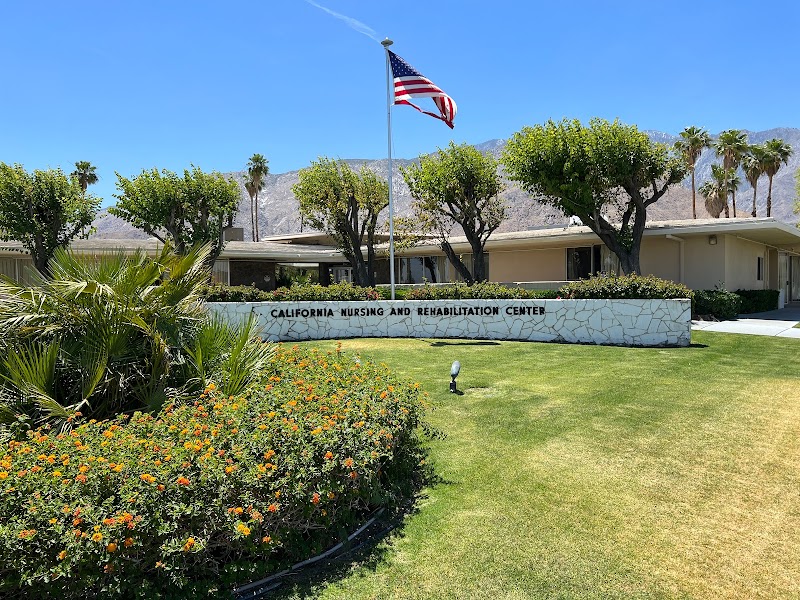
2299 NORTH INDIAN CANYON DRIVE, PALM SPRINGS, CA 92262 (760) 325-2937
For profit - Limited Liability company 80 Beds PACIFIC HEALTHCARE HOLDINGS Data: November 2025 2 Immediate Jeopardy citations
Trust Grade
6/100
#994 of 1155 in CA
Last Inspection: March 2025

Within standard 12-15 month inspection cycle. Federal law requires annual inspections.

Overview

California Nursing & Rehabilitation Center in Palm Springs has received a Trust Grade of F, indicating significant concerns about the quality of care provided. Ranking #994 out of 1155 facilities in California places it in the bottom half, while its county rank of #47 out of 53 suggests that only a few local options are better. The facility is worsening, with issues increasing from 15 in 2024 to 30 in 2025. Staffing is rated average at 3 out of 5 stars, with a turnover rate of 41%, which is in line with the state average. However, the facility has faced concerning fines totaling $84,534, higher than 91% of California facilities, and has less RN coverage than 96% of state facilities, impacting overall care quality. Specific incidents include a failure to monitor residents for severe weight loss and inadequate supervision for residents at risk of wandering, raising serious safety and health concerns. While there are some average staffing metrics, the overall picture suggests families should proceed with caution.

Trust Score
F
6/100
In California
#994/1155
Bottom 14%
Safety Record
High Risk
Review needed
Inspections
Getting Worse
15 → 30 violations
Staff Stability
○ Average
41% turnover. Near California's 48% average. Typical for the industry.
Penalties
○ Average
$84,534 in fines. Higher than 50% of California facilities. Some compliance issues.
Skilled Nurses
⚠ Watch
Each resident gets only 14 minutes of Registered Nurse (RN) attention daily — below average for California. Fewer RN minutes means fewer trained eyes watching for problems.
Violations
⚠ Watch
85 deficiencies on record. Higher than average. Multiple issues found across inspections.
★☆☆☆☆
1.0
Overall Rating
★★★☆☆
3.0
Staff Levels
★★★★☆
4.0
Care Quality
★☆☆☆☆
1.0
Inspection Score
Stable
2024: 15 issues
2025: 30 issues

The Good

  • 4-Star Quality Measures · Strong clinical quality outcomes
  • Full Sprinkler Coverage · Fire safety systems throughout facility
  • No fines on record
  • Staff turnover below average (41%)

    7 points below California average of 48%

Facility shows strength in quality measures, fire safety.

The Bad

1-Star Overall Rating

Below California average (3.1)

Significant quality concerns identified by CMS

Staff Turnover: 41%

Near California avg (46%)

Typical for the industry

Federal Fines: $84,534

Well above median ($33,413)

Moderate penalties - review what triggered them

Chain: PACIFIC HEALTHCARE HOLDINGS

Part of a multi-facility chain

Ask about local staffing decisions and management

The Ugly 85 deficiencies on record

2 life-threatening
Aug 2025 1 deficiency
CONCERN (D) 📢 Someone Reported This

A family member, employee, or ombudsman was alarmed enough to file a formal complaint

Potential for Harm - no one hurt, but risky conditions existed

Infection Control (Tag F0880)

Could have caused harm · This affected 1 resident

**NOTE- TERMS IN BRACKETS HAVE BEEN EDITED TO PROTECT CONFIDENTIALITY** Based on observation, interview, and record review, the facility failed to ensure proper infection control precautions were impl...

Read full inspector narrative →
**NOTE- TERMS IN BRACKETS HAVE BEEN EDITED TO PROTECT CONFIDENTIALITY** Based on observation, interview, and record review, the facility failed to ensure proper infection control precautions were implemented for one of two residents (Resident 1), when a staff member was observed returning an unused dinner tray from a COVID (Corona virus - a contagious respiratory disease) positive residents isolation room (A room that separates residents from others, while receiving specialized medical treatment) to the meal cart which stored trays that were being served to other residents.This failure had the potential to cross contaminate clean resident dinner trays and spread COVID infection to uninfected residents. Findings:On August 26 and 27, 2025, unannounced visits were made to the facility to investigate infection control, safety, and quality of care issues.On August 26, 2025, at 2:10 p.m., an interview was conducted with the Infection Prevention (IP) Nurse, who stated the facility had two COVID positive residents sharing an isolation room. The IP stated an in-service was recently provided to staff on COVID which reviewed the topics of proper hand washing, Personal Protective Equipment (PPE-equipment worn by staff to protect against exposure to COVID positive residents), and the proper use of isolation/airborne precautions (specific infection control measures implemented to help prevent the spread of airborne diseases, such as COVID). The IP stated before staff enter a COVID isolation room they are to don (put on) PPE, including a mask, gown, gloves, and eye shields. When staff have completed caring for a COVID resident, they are to doff (take off) the PPE and dispose of the equipment in the rooms trash. A review of the facility in-service titled, COVID-19 & Droplet Isolation Precautions Management, dated, August 17, 2025, indicated, . At the conclusion of the presentation, (staff) will be able to .Demonstrate correct donning and doffing of PPE including gown, gloves, mask/N95, and face shield .Apply proper hand hygiene techniques according to facility policy .Safely manage meal tray removal for residents on droplet/COVID isolation using . reusable trays .On August 26, 2025, at 2:55 p.m., an observation of Resident 1's COVID isolation room was conducted. The room had a sign outside of the resident's door indicating airborne/droplet precautions, instructing staff to don the PPE of a mask, gown, gloves and eye shield before entering the room. A cart containing PPE equipment for staff to use was also outside of the room.On August 26, 2025, at 5:10 p.m., an observation of dinner service was conducted. Dinner trays from the kitchen on a main cart were rolled onto the unit. Two staff members were observed taking the unused dinner trays to assigned resident rooms.On August 26, 2025, at 5:20 p.m., an observation of Certified Nursing Assistant (CNA) 1 delivering Resident 1's dinner tray to resident's COVID isolation room was conducted. CNA 1 was observed wearing an N95 mask (respiratory protective mask that filters out bacteria and viruses), cleaning his hands with alcohol-based hand rub, then donning PPE of a gown, eye shield and gloves, prior to entering Resident 1's room. After donning PPE, an additional staff member was observed handing Resident 1's plastic dinner tray to CNA 1. CNA 1 then entered the resident's room with the dinner tray and partially closed the room door.On August 26, 2025, at 5:38 p.m., an observation of the Activity Director (AD) at Resident 1's bedroom door was conducted. The AD was wearing an N95 mask, approached Resident 1's room door, knocked on it, then opened it. The AD stood outside of the door, while asking CNA 1 a question. CNA 1 then approached the AD with Resident 1's plastic dinner tray in hand, and handed the tray to the AD, asking the AD if she could return the tray to the dinner cart. The AD took the tray from CNA 1 with ungloved hands and began walking the used tray to the main dinner cart. Unused dinner trays were observed still being served by staff from the cart. The surveyor intervened and asked the AD not to return Resident 1's tray to the cart.On August 26, 2025, at 5:42 p.m., an interview was conducted with CNA 1 who stated the correct process to return a used plastic meal tray from a COVID isolation room to the main service cart, includes placing the tray in a plastic bag when the resident is finished eating, and returning the tray to the main cart with other used trays, while wearing PPE (gloves). CNA 1 verified Resident 1 did eat from his dinner tray. CNA verified he did not follow the proper procedure of returning Resident 1's used dinner tray to the main cart, as he did not place the tray in a plastic bag, before handing the tray to the AD who was not wearing the proper PPE.On August 26, 2025, at 5:51 p.m., an interview was conducted with the IP who stated the correct process to return a used meal tray to the kitchen from a COVID isolation room is to place the used tray in a plastic bag after the resident is done eating, then leave the tray in the resident's room until all used trays are returned, then return the tray to the kitchen. The IP stated, after returning all used meal trays, staff are to go back to the COVID room, take the bagged tray to the kitchen, and notify kitchen staff that the tray came from a COVID isolation room. The IP verified CNA 1 did not follow the proper procedure of returning Resident 1's meal tray to the kitchen, as CNA 1 should have placed the resident's tray in a plastic bag, left the tray in resident's room, and returned the tray to the kitchen once all residents were done eating. The IP also verified CNA 1 should not have handed Resident 1's used dinner tray to the AD if she was not wearing gloves.On August 26, 2025, at 6:04 p.m., an interview was conducted with the AD who stated she should not have taken Resident 1's tray from CNA 1, when he handed her the tray, as she did not have gloves on. The AD stated she should have stopped CNA 1 and took the time to find out the facilities procedure on taking meal trays out of COVID isolation rooms.On August 27, 2025, at 3:00 p.m., an interview was conducted with the Director of Nursing (DON), who stated meal trays for residents with COVID will come in the main service cart with all the other trays, and served last to COVID residents. When the resident is done eating, the trays are to be placed in a plastic bag inside the room, returned to the main cart once all other trays are collected and returned to the kitchen. The DON verified CNA 1 did not follow the proper procedure of returning Resident 1's used dinner tray when he asked the AD to return Resident 1's tray to the main service cart prior to all other used resident trays being returned to the cart. A review of Resident 1's, Resident Information, dated, August 27, 2025, indicated Resident 1 was admitted to the facility on [DATE], with a diagnosis of Kidney Failure, and a Brief Interview for Mental Status (BIMS-a cognitive assessment) score of 12 (Moderate cognitive impairment). A review of Resident 1's, Progress Notes, dated, August 16, 2025, at 9:24 p.m., indicated . Covid test was done on (Resident 1) (August 16, 2025). Results were positive .
Jul 2025 2 deficiencies
CONCERN (D) 📢 Someone Reported This

A family member, employee, or ombudsman was alarmed enough to file a formal complaint

Potential for Harm - no one hurt, but risky conditions existed

Quality of Care (Tag F0684)

Could have caused harm · This affected 1 resident

**NOTE- TERMS IN BRACKETS HAVE BEEN EDITED TO PROTECT CONFIDENTIALITY** Based on observation, interview, and record review, the facility failed to provide a gastrostomy tube (g-tube, a tube inserted t...

Read full inspector narrative →
**NOTE- TERMS IN BRACKETS HAVE BEEN EDITED TO PROTECT CONFIDENTIALITY** Based on observation, interview, and record review, the facility failed to provide a gastrostomy tube (g-tube, a tube inserted through the abdomen into the stomach, to deliver fluids and nutrition) stoma (opening) dressing change daily, for one of three residents reviewed (Resident 2).This failure had the potential to lead to skin breakdown or infection at/or around the stoma site.Findings:On July 28, 2025, at 1:10 p.m., an unannounced visit was made to the facility to investigate complaints related to quality of care. On July 29, 2025, at 8:44 a.m., an interview with the Treatment (Tx) Nurse was conducted. The Tx Nurse stated she was going to perform the dressing change on Resident 2's g-tube stoma site and that the dressing change is to be provided daily. A review of Resident 2's Resident Information, indicated resident was admitted to the facility on [DATE], with a diagnosis of stroke and dysphagia (difficulty swallowing). Resident 2 had a Brief Interview of Mental Status (BIMS-a cognitive assessment) score of 15 (cognitively intact). A review of Resident 2's physician orders, dated, June 13, 2022, at 2:07 p.m., indicated, . Cleanse stoma site with NS (Normal Saline), pat dry, and cover with dry split dressing every day shift for Peg tube (a type of g-tube) . On July 29, 2025, at 8:51 a.m., an interview with Resident 2 and a concurrent interview and observation of Resident 2's g-tube dressing change was conducted. Resident 2 stated her g-tube dressing change wasn't done yesterday.The Tx nurse stated the process to provide a dressing change includes verifying the physician orders, removing the prior dressing, assessing the site, applying the new dressing, then initialing the Treatment Administration Record (TAR), indicating the treatment has been provided. The Tx nurse was observed removing Resident 2's prior g-tube dressing. The dressing was noted to have a moderate amount of dried brown colored drainage on it. The Tx nurse acknowledged the dried drainage and stated, she was not sure if the drainage was from resident's g-tube nutrition or drainage from the site. The Tx nurse stated Resident 2's stoma site appeared red in color, and was cool to the touch. When she touched the site the resident stated, ouch. The Tx nurse stated the redness may be irritation from the site's drainage. The Tx nurse stated the site did not appear infected, but she was going to put a temporary cover on it and notify the physician of the red appearance. The Tx nurse then covered the site. A review of Resident 2's, July 2025 TAR, indicated, Resident 2's g-tube dressing change was initialed by the Tx Nurse on July 28, 2025, indicating the treatment had been provided. On July 29, 2025, at 9:01 a.m., an interview with the Tx nurse, and a record review of Resident 2's July 2025 TAR was conducted. The Tx nurse stated if a resident's treatment is not provided as ordered the process is to endorse the treatment to the next shift, do not initial the TAR, and notify the charge nurse. The Tx nurse stated she was the Tx nurse on July 28, 2025, and verified she did not provide Resident 2's g-tube dressing change as ordered by the physician. The Tx nurse stated she was busy doing rounds (assessing residents) with the wound doctor. The Tx nurse verified she initialed Resident 2's TAR on July 28, 2025, indicating the treatment had been provided. The Tx nurse stated she was not sure why she initialed resident's TAR when the treatment was not provided, but she should not have initialed it. The Tx nurse further stated she did not endorse Resident 2's g-tube dressing change to the next shift or notify the charge nurse. The Tx nurse further stated it is important to provide resident treatments as ordered to avoid the chance of infection. A review of Resident 2's Care Plan, titled, . (Resident 2) requires tube feeding . initiated June 10, 2022, indicated, an intervention of . Provide local care to g-Tube site as ordered and monitor for signs and symptoms of infection . On July 30, 2025, at 1:42 p.m., an interview was conducted with the Director of Nursing (DON) who stated she expects the Tx nurse to follow the physician orders. The TAR is to be initialed by the Tx nurse after the treatment has been provided, and initialing the TAR, when the treatment has not been provided, Is not a practice that we do here. The DON further stated, if the Tx nurse could not provide the treatment as ordered, they are to endorse to the next shift. The DON verified she was aware the Tx nurse had not provided Resident 2's g-tube stoma treatment as ordered on July 28, 2025, and the physician had already been notified. A facility Policy and Procedure titled, Pressure Injury and Skin Integrity Treatment, revised, August 12, 2016, indicated.Policy: Treatments.will be provided as ordered by the physician .Treatments administered will be documented on the Treatment Administration Record.
CONCERN (D) 📢 Someone Reported This

A family member, employee, or ombudsman was alarmed enough to file a formal complaint

Potential for Harm - no one hurt, but risky conditions existed

Deficiency F0692 (Tag F0692)

Could have caused harm · This affected 1 resident

**NOTE- TERMS IN BRACKETS HAVE BEEN EDITED TO PROTECT CONFIDENTIALITY** Based on interview and record review, the facility failed to accurately monitor and document total fluid intake via gastrostomy ...

Read full inspector narrative →
**NOTE- TERMS IN BRACKETS HAVE BEEN EDITED TO PROTECT CONFIDENTIALITY** Based on interview and record review, the facility failed to accurately monitor and document total fluid intake via gastrostomy tube (g-tube, tube inserted through the abdomen, into the stomach to administer medications, nutrition and hydration) and the output (I &O) per physician orders, for two out of three residents (Residents 1 and 2). This failure had the potential to result in resident dehydration leading to other health complications such as decreased urine output, dizziness, rapid heart rate, and altered mental status.Findings: On July 28, 2025, at 1:10 p.m., an unannounced visit to the facility was made for a quality-of-care issue.1. A review of Resident 1's Resident Information, indicated, resident was admitted to the facility on [DATE], with a diagnosis of dysphagia (difficulty swallowing), and g-tube. Resident 1 had a Brief Interview for Mental Status (BIMS-a cognitive assessment) score of 6 (severe cognitive impairment). A review of Resident 1's, Care Plan dated April 5, 2022, titled, (Resident 1) has an alteration in (g-tube) (related to) Dysphagia ., indicated an intervention of .Monitor intake and output . A review of Resident 1's, Order Summary, indicated following physician orders: - June 14, 2023, untimed, monitor intake and output every shift for (g-tube);- July 21, 2025, untimed, Bolus (all at once through g-tube) Osmolite (nutrition via g-tube), 237 ml (milliliters - a unit of measure), three times a day, via (G-tube) = 711 ml (per day); and- July 21, 2025, untimed, water flush 180 ml (before & after) (nutrition) = 1080 mls (per day). On July 28, 2025, at 4:45 p.m., an interview was conducted with Licensed Vocational Nurse (LVN) 1, who stated, when administering g-tube hydration and nutrition, she follows the physician orders. LVN 1 stated when monitoring a resident's intake the amounts are documented on the resident's Medication Administration Record (MAR) along with the nurses' initials. LVN 1 verified she was currently Resident 1's nurse and she had already administered resident's ordered nutrition and hydration for the night.A review of Resident 1's MAR for the Month of July 2025, indicated LVN 1 documented Resident 1's intake (I) as 186.5 (ml), and an output (O) as 50(ml), on the dates of July 1-3, 7- 10, 13-16, 19-22, and 25-28, 2025. On July 28, 2025, at 5:19 p.m., a concurrent interview with LVN 1, and record review of Resident 1's physician orders, and July 2025 MAR was conducted. LVN 1 verified Resident 1 had physician orders for 180 ml of water before and after nutrition, and 237 ml of nutrition ordered daily on the evening shift. LVN 1 verified she did not add the total nutrition and hydration she administered to Resident 1 per physician orders, on the dates of July 1-3, 7- 10, 13-16, 19-22, and 25-28, 2025, and stated she should have. On July 30, 2025, at 1:42 p.m., a concurrent interview with the Director or Nursing, (DON), and record review of Resident 1's, g-tube orders, and July 2025 MAR was conducted. The DON stated she expects staff to monitor a resident's I&O by adding up the total I&Os for the shift, and document the totals on the resident's MAR. The DON stated she reviewed Resident 1's g-tube physician orders, and the MAR. The DON verified staff are inconsistently documenting I&Os on the resident's MAR, as staff were not adding up the fluids and documenting them correctly as ordered by the physician. 2. A review of Resident 2's Resident Information, indicated Resident 2 was admitted to the facility on [DATE], with a diagnosis of stroke and dysphagia. Resident 2 had a BIMS score of 15 (cognitively intact). A review of Resident 2's Care Plan titled, (Resident 2) is at risk for dehydration ., initiated on January 22, 2025, indicated, an intervention of, . Monitor and document intake and output . A review of Resident 2's, physician orders, indicated the following: - December 6, 2024, untimed, 200 ml water flush, every 6 hours = 800 ml/(per) day; January 25, 2024, untimed, monitor intake and output every shift for (g-tube);- March 25, 2025, untimed, 1 Carton of (nutrition) five times per day = 1185 ml; and- August 17, 2023, 60 ml water flush before and after (nutrition) bolus, three times a day. On July 28, 2025, at 4:45 p.m., an interview was conducted with Licensed Vocational Nurse (LVN) 1 who stated when administering g-tube hydration and nutrition, she follows the physician orders. LVN 1 stated when monitoring a resident's I&O, the amounts are documented on the resident's MAR, along with the nurse's initials. LVN 1 verified she was Resident 2's nurse.A review of Resident 2's, Medication Administration Record (MAR), dated July 2025, indicated, . Monitor . every shift for (g-tube) intake . Further review indicated, LVN 1 documented 20 mls on the dates of, July 1, 2, 9 & 16 and 30 mls, on the dates of July 3, 7, 8, 10, 13-15, 19-22, & 25-28, 2025. On July 28, 2025, at 5:19 p.m., a concurrent interview with LVN 1, and record review of Resident 2's hydration orders, and the July 2025 MAR was conducted. LVN 1 verified Resident 2 had hydration orders for 200 ml water flush every 6 hours, nutrition orders for 1 Carton (five times per day) = 1185 ml, and orders to monitor Resident 2's I&O via g-tube every shift. LVN 1 verified, she documented 20 mls on Resident 2's MAR (evening shift) on the dates of July 1, 2, 9 & 16, and 30 mls on the dates of July 3, 7, 8, 10, 13-15, 19-22 & 25-28, 2025. LVN 1 stated she documented 20 and 30 mls, under resident's I&O because she thought she was supposed to document the resident's g-tube residual amount (contents remaining in the g-tube before or during feedings) and not the total I&O. LVN 1 further stated, she should have added up the total fluids administered to resident throughout the shift, and documented under I&O, but she did not. On July 30, 2025, at 1:42 p.m., a concurrent interview with the DON, and record review of Resident 2's, g-tube orders, and July 2025 MAR was conducted. The DON stated she expects staff to monitor a resident's I&O by adding up the total I&Os for the shift, and document the totals on the resident's MAR. The DON stated she reviewed Resident 2's g-tube physician orders, and MAR. The DON verified staff have inconsistently documented I&Os on the resident's MAR, as staff are not adding up the fluids and documenting them correctly as ordered by the physician. A review of the facility Policy & Procedure revised February 27, 2025, indicated, . Policy .The Facility will record intake and output, as ordered by the physician and per regulations . Purpose .To provide a record of the Resident's fluid intake and /or output . Process .Fluid intake and output shall be recorded for each resident as follows .If ordered per physician .
Jun 2025 1 deficiency
CONCERN (D) 📢 Someone Reported This

A family member, employee, or ombudsman was alarmed enough to file a formal complaint

Potential for Harm - no one hurt, but risky conditions existed

Quality of Care (Tag F0684)

Could have caused harm · This affected 1 resident

**NOTE- TERMS IN BRACKETS HAVE BEEN EDITED TO PROTECT CONFIDENTIALITY** Based on observation, interview and record review, the facility failed to provide wound treatment in accordance with the physici...

Read full inspector narrative →
**NOTE- TERMS IN BRACKETS HAVE BEEN EDITED TO PROTECT CONFIDENTIALITY** Based on observation, interview and record review, the facility failed to provide wound treatment in accordance with the physician order for one of three sampled residents (Resident 1). This failure had the potential to delay wound healing for Resident 1. Findings: On June 6, 2025, at 8:05 a.m., an unannounced visit was made to the facility to investigate quality-of-care issues. A review of Resident 1 ' s admission record indicated that the resident was admitted to the facility on [DATE], with diagnoses which included peripheral vascular disease (narrowed blood vessels reduce blood flow to affected limbs). A review of Resident 1 ' s Minimum Data Set (MDS- an assessment tool) dated March 26, 2025, indicated the resident ' s Brief Interview for Mental Status (BIMS- a cognitive assessment) had a score of 15 (cognitively intact). A review of Resident 1 ' s Skin Issues, dated June 2, 2025, indicated resident had a front left (outer) chronic leg wound, measuring 8 centimeters ({cm} – a unit of measure) in length X (times) 2 cm in Width (W) X 0.1 cm Depth (D), in stable condition. A review of Resident 1 ' s Order Summary Report, active as of June 11, 2025, indicated, Left lower extremity, Venous Ulcer: Cleanse with NS (normal saline), pat (dry), apply Oil emulsion (moist gauze) and (wrap) with Kerlix (woven absorbent cotton wrap) . secure with retention tape . Every Other Day for 30 days .Order date: 05/23/2025. Start Date: 05/24/2025 . On June 6, 2025, at 10:34 a.m., a concurrent observation of Tx nurse providing Resident 1 ' s left leg Tx, and interview with Tx nurse were conducted. The Tx nurse was observed removing a Coban (self-adherent wrap) then Kerlix wrap, a 4 X 4 gauze pad, a Calcium alginate (absorbent dressing), then Xeroform (petroleum/bacteriostatic impregnated gauze) dressing from the resident ' s left leg. The Tx nurse stated that the resident ' s wounds appeared to be Stage 2 (shallow open ulcers with partial skin loss). The Tx nurse verified the dressing she applied to Resident 1 ' s left leg wounds the day prior was not the current TX ordered by the physician. The Tx nurse stated, she did not have a physician order to apply Calcium alginate and a Xeroform dressing to Resident 1 ' s left leg. The TX Nurse stated the Tx she provided was from her memory of past treatments. On June 9, 2025, at 11:24 a.m., an interview was conducted with Resident 1 ' s Wound doctor, who stated wound treatments are discontinued or changed because sometimes wounds would drain, and sometimes wounds are dry, so different treatments are intermittently ordered. On June 17, 2025, 11:45 a.m., an interview was conducted with the Director of Nursing (DON), who stated the process when Tx nurse removes wound dressing, and identifies a COC, she would expect the nurse to cover the wound with a 4X4 gauze, or apply the current ordered tx, then notify the physician of the COC for further orders. The DON further stated the Tx nurse should have received further clarification of Tx orders from the physician at the time she unwrapped Resident 1 ' s left leg and assessed the wound. A review of the facility ' s Policy & Procedure (P&P) titled, Medication-Administration, revised, January 1, 2012, indicated, . Purpose: To ensure the accurate administration of (treatments) for residents in the Facility. Policy: 1. (Treatment) will be administered directed by a Licensed nurse and upon the order of a physician or licensed independent practitioner. II. No (treatment) will be used for any patient other than the patient for whom it was prescribed . Procedure: I. Administration of (Treatments) A. (Treatment) . orders will be receive by a licensed Nurse prior to administration . F. If the (Dr) increases or changes a (treatment) order, this is an automatic stop of discontinue . for the original order . VI. Medication Rights A. Nursing staff will keep in mind the seven rights of (treatments) when administering (treatments) B. i. The right (treatment) .
Jun 2025 1 deficiency
CONCERN (D) 📢 Someone Reported This

A family member, employee, or ombudsman was alarmed enough to file a formal complaint

Potential for Harm - no one hurt, but risky conditions existed

Accident Prevention (Tag F0689)

Could have caused harm · This affected 1 resident

**NOTE- TERMS IN BRACKETS HAVE BEEN EDITED TO PROTECT CONFIDENTIALITY** Based on observation, interview and record review, the facility failed to implement smoking precaution, by not providing a smoki...

Read full inspector narrative →
**NOTE- TERMS IN BRACKETS HAVE BEEN EDITED TO PROTECT CONFIDENTIALITY** Based on observation, interview and record review, the facility failed to implement smoking precaution, by not providing a smoking apron (worn while smoking to help decrease incidents of burning self), to one of four residents (Resident 1) while smoking cigarette at the facility patio. This failure had the potential for Resident 1 to sustain burn injuries while smoking a cigarette. Findings: On May 9, 2025, at 10:30 a.m., an unannounced visit was made to the facility to investigate a quality-of-care issue. On May 9, 2025, at 10:50 a.m., during an observation of residents smoking on the patio, the Activity Assistant (AA) was observed taking the smoking apron and placing the apron to Resident 1 who was almost done smoking his cigarette. The AA stated she forgot to put the smoking apron to the resident (Resident 1). On May 9, 2025, at 10:53 a.m., during an interview, the AA stated she was on the patio to supervise the residents smoking. The AA stated, when residents smoke, she would hand out the cigarettes and an apron to those who are required to wear them, then light their cigarettes. The AA stated the resident (Resident 1) is blind, and the resident should wear an apron to prevent burns. The AA verified Resident 1 was not wearing a smoking apron, while smoking because she forgot to hand him (Resident 1) one. On May 9, 2025, at 10:57 a.m., during an interview, Resident 1 stated he is supposed to wear an apron when smoking, and to return the apron back to the staff when done. The resident verified he was not wearing a smoking apron when he was smoking. On May 9, 2025, at 11:32 a.m., during an interview, the Activities Director (AD) stated nursing staff would complete a smoking assessment on all smokers, and from this assessment, it would be determined if a resident is required to wear a smoking apron for safety. The AD stated the activity staff would monitor smoke breaks, and ensure residents are wearing their smoking apron, prior to lighting their cigarettes. The AD stated she would expect the staff to ensure residents are wearing their smoking aprons while smoking. A review of Resident 1 ' s admission record dated, May 9, 2025, indicated the resident was admitted to the facility on [DATE], with diagnoses which included chronic obstructive pulmonary disease (COPD-a group of lung diseases that make it difficult to breath), and legal blindness. A review of Resident 1 Brief Interview of Mental Status (BIMS- a cognitive assessment) indicated a score of 12, which meant moderate cognitive impairment. A review of Resident 1 ' s, Smoking and Safety, assessment dated [DATE], indicated, . Poor vision or blindness . Care Planning: Tobacco Use; Intervention: Utilize smoking apron . A review of Resident 1 ' s, Care Plan, titled, Tobacco use, dated, February 25, 2025, indicated, . Resident needs supervision during smoking schedule with the use of apron due to total blindness . On May 9, 2025, at 3:30 p.m., during an interview, the Director of Nursing (DON) stated a staff member has to supervise residents while smoking in the patio. The DON stated Resident 1 should have a smoking apron prior to staff lighting his cigarette for safety. The DON verified that Resident 1 was not wearing the smoking apron while smoking at the patio. The DON stated the AA knew the smoking policy and that the resident (Resident 1) should have a smoking apron when smoking. A review of the facility Policy & Procedure (P&P) titled, Smoking Residents, revised, July 27, 2023, indicated, . Procedure: 2. Smoking by residents is allowed outside the facility in designated, marked smoking areas with the following safety measures readily available . d. Fire-retardant blanket (Smoking blanket) . 6. Using the Resident Smoking Assessment, the licensed Nurse will assess residents who express a desire to smoke, upon admission, quarterly, annually and upon significant change of condition, and present it to the interdisciplinary Team (IDT) for review .
Mar 2025 24 deficiencies 1 IJ (1 affecting multiple)
CRITICAL (K)

Immediate Jeopardy (IJ) - the most serious Medicare violation

Deficiency F0692 (Tag F0692)

Someone could have died · This affected multiple residents

**NOTE- TERMS IN BRACKETS HAVE BEEN EDITED TO PROTECT CONFIDENTIALITY** Based on observation, interview, and record review, the facility failed to implement a comprehensive systematic approach to ensu...

Read full inspector narrative →
**NOTE- TERMS IN BRACKETS HAVE BEEN EDITED TO PROTECT CONFIDENTIALITY** Based on observation, interview, and record review, the facility failed to implement a comprehensive systematic approach to ensure effective monitoring to maintain acceptable parameters of nutritional status for 5 of 5 sampled Residents (23, 43, 51, 58, and 673) when: 1. Resident 23 experienced a severe unplanned weight loss of 16 lbs. (pounds- a measurement of weight), 8.04% from the weights obtained on 11/5/24 to 2/26/25. Weights were obtained but a weight loss change of condition was not completed, the resident was not placed on weekly weights, the Registered Dietitian (RD) did not reassess the resident to determine appropriate interventions, weight loss was not communicated to the Physician, the IDT (IDT- an interdisciplinary team comprised of professionals from various disciplines who work in collaboration to address a Resident with multiple physical and psychological needs) did not address the severe unplanned weight loss, and the care plan did not reflect the severe unplanned weight loss for the interventions to be implemented. Resident 23 was diagnosed with uncontrolled diabetes mellitus (condition in which the body has trouble controlling blood sugar). 2. Resident 43 experienced a severe unplanned weight loss of 14 lbs. or 11.67% from the weights obtained on 11/5/24 to 2/7/25. Weights were obtained but a weight loss change of condition was not completed, the resident was not placed on weekly weights, the RD did not reassess the resident to determine appropriate weight loss interventions, weight loss was not communicated to the Physician, the IDT did not address the severe unplanned weight loss, and the care plan did not reflect the severe unplanned weight loss for the interventions to be implemented. Resident 43 was diagnosed with hyperlipidemia (elevated blood fat levels) and a body mass index (BMI) of 16.5 (less than 18 is underweight). 3. Resident 51 experienced a severe unplanned weight gain of 16 lbs., 10.26% from the weights obtained on 11/5/24 to 2/7/25. Weights were obtained but the resident was not placed on weekly weights, the weight loss was not addressed by the Physician, the IDT did not address the severe unplanned weight loss, and the care plan did not reflect the severe unplanned weight loss for the interventions to be implemented. Resident 51 was diagnosed with chronic kidney disease (CKD) (when the kidneys cannot filter waste). 4. Resident 58 experienced a severe unplanned weight loss of 23 lbs., 12.3% from the weights obtained on 12/24/24 to 2/20/25. Weights were obtained but the resident was not reassessed by the RD to determine appropriate interventions, and the IDT did not follow up with the Physician to address the severe unplanned weight loss to ensure appropriate interventions were implemented. Resident 58 was diagnosed with hypothyroidism (condition which the thyroid gland does not produce enough thyroid hormone). 5. Resident 673 experienced a severe unplanned weight loss of 8.6 lbs., 5.78% from the weights obtained on 11/5/24 to 2/6/25. Weights were obtained but a change of condition for severe unplanned weight loss was not completed, the Physician or the RD did not address the severe weight loss with the IDT to determine effective interventions to prevent further weight loss, and the care plan did not reflect goals to address the severe unplanned weight loss. Resident 673 was diagnosed with dysphagia (difficulty swallowing) and hemiplegia (paralysis of one side of the body). As a result of these failures, these five (5) residents compromised nutritional status was not addressed which could have resulted in further medical complications including but not limited to dehydration, loss of muscle mass with decreased mobility and negatively affect the diagnoses for each resident, which could include death. Because of the severe unplanned weight losses for Residents 23, 43, 51, 58, and 673 and the facility lacking a comprehensive systematic approach to ensure effective monitoring to maintain acceptable parameters of nutritional status, an Immediate Jeopardy (IJ- a situation in which the provider's noncompliance with one or more requirements of participation has caused or is likely to cause serious injury, harm, impairment, or death to a resident) situation was called on 2/27/25 at 7:45 PM, under Code of Federal Regulations (CFR) §483.25 Nutrition/Hydration Status Maintenance (F692) with the Administrator (ADM), Director of Nursing (DON), and Dietary Services Manager/Registered Dietitian (DSM-RD) in attendance. The IJ template was provided to the ADM. The facility submitted an acceptable IJ Removal Plan (Version 3) on 2/28/25, at 4:53 PM. The IJ Removal Plan included but was not limited to the following: 1) Notify the Physicians for Residents 23, 43, 51, 58, and 673 of significant and severe weight change. 2) Re-weigh all five residents and place on weekly weights for four weeks. 3) Review labs (clinical blood tests), weights, physician visits, PO (eating by mouth) intake, and therapy orders for the five identified weight loss residents 23, 43, 51, 58, and 673. 4) The RD will re-assess and re-evaluate Residents 23, 43, 51, 58, and 673 nutrition status. 5) Immediate training for Certified Nursing Assistants (CNAs) and Licensed Vocational Nurses (LVNs) on monitoring and recording meal intake percentages and supplement orders. 6) The RD will monitor the weekly weights and residents with significant weight loss of 5% /5# (pounds) x 30 days, 7.5% x 90 days, 10% x 180 days, and 3# or more for residents who are under 100# x 30 days were reevaluated by the Senior (Sr.) Regional Registered Dietitian and followed up by the Facility RD, as well as the Weight Variance and Nutrition Condition Interdisciplinary team (IDT) weekly for 4 weeks, then, bi-monthly for 2 months. 7) IDT will monitor for sustainable compliance to determine weight variances/significant weight losses and accuracy of assessments to meet weight loss resident's nutritional needs and goals of care such as improved PO intake or weight goals are met. Identified concerns will be addressed immediately and reported to the DON and Administrator for follow-up as warranted. 8) Senior Regional Registered Dietitian provided one to one (1:1) re-education to the Registered Dietitian on Evaluation of Weight & Nutritional Status Policy and Procedures and an RD competency with current facility's RD. 9) Regional Quality Management Compliance (RQMC) and Senior RD completed education on Evaluation of Weight and Nutritional Status policy with IDT members. 10) the Medical Director was notified by the Administrator and Director of Nursing (DON) of the concerns related to Weight Loss and Nutritional Assessments and presented and discussed the immediate action plan for implementation. 11) Pharmacy medication regimen review completed for the five (5) identified weight loss residents 23, 43, 51, 58, and 673 for review of weight change related medications. The components of the IJ Plan of Removal were validated through observations, interviews, and record review and the IJ was removed on 3/3/25 at 12:50 PM with the ADM and DON in attendance. Findings: According to a 2002 American Academy of Family Physicians Journal article, Involuntary weight loss can lead to muscle wasting, decreased immunocompetence, (the ability for the body to develop an immune response) depression and an increased rate of disease complications. Research has shown institutionalized elderly patients who lost 5 percent of their body weight in one month were found to be four times more likely to die within one year. (www.aafp.org/afp) According to a literature review of the Academy of Nutrition & Dietetics, Nutrition Care Manual, dated 2022, .Unintended weight loss is linked to increased mortality (death) among older adults . residents in long-term-care facilities who continue losing weight have a higher mortality rate compared with those who stop losing weight. Weight loss of 5% or more within 30 days is associated with a tenfold increase in the likelihood of death . https://www.nutritioncaremanual.org/ 1. A record review of Resident 23's Facility admission Record indicated the resident was admitted to the facility on [DATE] with diagnoses that included dysphagia (difficulty swallowing), diabetes mellitus, hypertension (elevated blood pressure levels), gastro-esophageal reflux disease-GERD (a condition where stomach contents flow back up into the esophagus, causing irritation) and hyperlipidemia (abnormally high levels of fat in the blood). Record review of Resident 23's minimum data set (MDS- a standardized comprehensive assessment of residents' health conditions, functional abilities, and care needs) report dated 1/8/25 indicated the resident's brief interview of mental status-BIMS (a short cognitive screening test) score was 6, whereby a score of 0-7 refers to severe impairment. Review of Resident 23's Weights and Vitals Summary report on 2/28/25 indicated: 8/06/24 - 198 lbs. 9/03/24 - 200 lbs. 10/2/24 - 198 lbs. 11/5/24 - 199 lbs. 12/5/24 - 197 lbs. 01/6/25 - 203 lbs. 02/7/25 - 185 lbs. 2/26/25 - 183 lbs. Resident 23 experienced a 16-pound, 8.04% severe weight loss in ninety days or 3 months, from 11/5/24 to 2/26/25. Review of Resident 23's eInteract Change in Condition (COC) Evaluation dated 1/30/25 completed by Licensed Vocational Nurse (LVN) 7 indicated the .Signs and symptoms . Food and/or fluid intake (decreased or unable to eat and/or drink adequate amounts) and Functional decline (worsening mobility). Weight loss was not checked. Review of Resident 23's physician's diet order dated 2/10/25 indicated NAS (no added salt) CCHO (consistent carbohydrate) diet, Mechanical Soft texture, Regular/Thin consistency and supplement order dated 2/8/25 indicated 4 ounce (oz.) House Supplement/Milk Shake three times a day for Malnutrition risk with meals. On 2/28/25 at 12:40 PM, a joint observation and interview of resident 23's lunch meal intake was conducted in the resident's room. Resident 23's lunch meal tray was on his bedside table. Certified Nursing Assistant (CNA) 2 and CNA 5 were feeding the resident his lunch meal which was beef goulash with spaghetti noodles, bite-sized coin carrots, and a parsley garnish on the plate. The resident drank thickened milk in 8-ounce cup with his meal. The CNA 5 stated the resident generally eats 50%-100% of his meals, depending on the meal. Review of Resident 23's January 2025 - February 2025 Meal Intake percentage (%) report indicated the resident consumed an average of 25% to 100% of meals, 25% of his house supplements. The facility's Diet Manual indicated the CCHO diet provided 2200 calories and 70-90 grams of protein per day, which led to Resident 23 consuming up to 550 fewer calories and 20 fewer grams of protein per day required to meet his estimated daily nutrition needs. Review of Resident 23's Nutrition Risk assessment dated [DATE] completed by the DSM-RD, indicated the resident's usual body weight was 206 lbs., estimated daily nutrition needs were 1800-2250 kcal (calories) and 90-108 grams of protein. Nutrition Goal: 1) stable wt. (weight) (fluct.- fluctuation) < 5%/month) within goal weight range: 195-205 lbs. through review date. 2) Maintain adequate nutrition & hydration status as evidenced by no new signs and symptoms of malnutrition, skin breakdown or dehydration. 3) Tolerate diet; average PO meets 75%-100% est. (estimated) needs. During a concurrent interview and record review with the Dietary Services Manager- Registered Dietitian (DSM-RD) on 2/27/25 at 3:06 PM, the DSM-RD stated resident 23's weight loss interventions should have been reassessed to address his continual weight loss. The DSM-RD further stated the resident should have remained on weekly weights and the change of condition form should have indicated weight loss as a sign and symptom so the IDT could have evaluated the resident's weight changes with the physician to avoid further loss. 2. A review of Resident 43's Facility admission Record indicated the resident was admitted to the facility on [DATE] with diagnoses that included chronic obstructive pulmonary disease-COPD (a condition involving restricted airflow in the lungs and difficulty breathing), hypertension (elevated blood pressure levels) and hyperlipidemia (abnormally high levels of fat in the blood). Record review of Resident 43's MDS report dated 12/28/24 indicated the BIMS score was 11, whereby a score of 8-12 refers to moderate impairment. Review of Resident 43's Weights and Vitals Summary report on 2/28/25 indicated: 11/05/24- 120 lbs. 12/05/24 -117 lbs. 01/07/25 -105 lbs. 02/07/25 -106 lbs. Resident 43 experienced a 14-pound, 11.67% severe weight loss in ninety days or 3 months, from 11/5/24 to 2/7/25. Review of Resident 43's eInteract Change in Condition (COC) Evaluation dated 11/26/24 completed by LVN 1 indicated the signs and symptoms was 31. Other Change in Conditions . Low Hemoglobin 3.2 g/dL (normal range 12.1 g/dL to 15.1 g/dL). Weight loss was not checked. Review of Resident 43's physician's diet order dated 11/29/23 indicated Fortified (addition of calories to meals to reduce weight loss) Diet, Regular texture diet, Regular thin consistency; supplement order: 4 oz House Supplement/Milk Shake two times a day for Malnutrition risk w/ Lunch and dinner dated 1/8/25, 8 oz High Protein Nourishment two times a day dated 11/30/24, and Prostat (protein rich item) one time a day for Supplement for Wound Healing 30 ml PO, started 11/27/23. On 3/3/25 at 7:49 AM, an observation of resident 43's breakfast meal intake was conducted. Resident 43 received a Banana, Toast, Cereal, Bacon, and chocolate health shake. The resident did not have assistance and fed herself. Resident 43's January 2025 - February 2025 Meal Intake percentage (%) reports were requested by Surveyors on 2/28/25 and 3/3/25 but were not provided by the facility. Review of Resident 43's Nutrition Risk assessment dated [DATE] completed by the DSM-RD, indicated the resident's weight was 103 lbs., height 5 feet 7.5 inches tall, BMI (body mass index) 16.5 (below 18 is underweight), No labs indicated, PI (Pressure Injury) sacrum (large bone at bottom of spine) stage 2 pressure wound, estimated daily nutrition needs 1410-1645 kcal and 47-57 grams of protein.Nutrition Risk Related To: The resident has risk for unplanned/unexpected weight loss and risk for malnutrition r/t chronic conditions: COPD (chronic obstructive pulmonary disease), HTN (hypertension), HLD (hyperlipidemia), Muscle weakness; increased protein/calorie needs for wound healing; variable food intake with low BMI =16.5. Nutrition Goal: The resident will consume 75% two of three meals/day to maintain weight within goal range: 103-113# (pounds). The resident will consume >75% of nutrition supplements ordered. The resident will maintain adequate hydration status. Nutritional Intervention: Continue all supplements for wound healing and monitor prn (as needed) . Review of Resident 43's Lab's Results Report dated 11/26/24 indicated the resident's Albumin (a protein in blood that transport nutrients and maintains fluid balance) = 3.2 g/dL (grams/deciliter) was low, where 3.5 g/dL to 5.7 g/dL is the normal range. During a concurrent interview and record review on 2/27/25 at 3:06 PM about resident 43's lab results on 11/26/24 with the DSM-RD, the DSM-RD stated the resident's albumin was borderline low and recent weight loss was unintentional. The DSM-RD further acknowledged the resident's nutritional needs should have been addressed by completing a reassessment of the resident's nutrition interventions and change of condition for the weight loss when it was identified. The DSM-RD also stated modifying the resident's nutrition interventions may have prevented further weight loss. 3. A review of Resident 51's Facility admission Record indicated the resident was admitted to the facility on [DATE] with diagnoses that included dysphagia (difficulty swallowing), hypertension (elevated blood pressure levels), hyperlipidemia (abnormally high levels of fat in the blood), rhabdomyolysis (breakdown of muscle tissue), and chronic kidney failure (the kidneys cannot filter waste). Review of Resident 51's minimum data set (MDS) report dated 11/22/24 indicated the resident's brief interview of mental status-BIMS (a short cognitive screening test) score was 14, where a score of 11-15 refers to intact cognition. Review of Resident 51's Weights and Vitals Summary report on 2/28/2025 indicated: 8/19/24 - 177 lbs. 9/03/24 - 167 lbs. 10/1/24 - 160 lbs. 11/5/24 - 156 lbs. 12/5/24 - 149 lbs. 01/7/25 - 148 lbs. 02/7/25 - 140 lbs. Resident 51 experienced a 16-pound, 10.26% severe weight loss in ninety days or 3 months, from 11/5/24 to 2/7/25, and a 20.9% severe loss in 180 days or 6 months from 8/19/24 to 2/7/25. Review of Resident 51's eInteract Change in Condition (COC) Evaluation dated 12/6/24 completed by LN 4 indicated the .Signs and symptoms .30. Weight loss . was checked. The COC also stated Resident noted with 7 lbs. weight loss x 30 days & 18 lbs. weight loss x 90 days .no s/s (signs and symptoms) of dehydration noted. Communicated with RD & MD (medical doctor), no new orders/ recommendations at this time. Review of Resident 51's physician's diet order dated 9/5/24 indicated CCHO - Standard Portion diet Regular texture, Regular Thin liquid consistency, fortify meals; Supplement order: 4 oz House Supplement/Milk Shake three times a day for Malnutrition risk with meals. Review of Resident 51's December 2024 - February 2025 Meal Intake percentage (%) report indicated the resident consumed 51% to 100% of meals. Resident 51's Nutrition Assessment completed in 2024 by the Registered Dietitian was requested by Surveyors but not provided by the facility. Review of Resident 51's IDT Progress Notes dated 11/8/24 completed by the DSM-RD indicated .Note Text: IDT Reviewed d/t: significant wt loss WT/BMI: 156#/23.7 kg/m2 WT TREND: -21#/-11.9% x 90 days; DIET: CCHO - Standard Portion diet, Regular texture, Regular/Thin consistency SNACK/SUPPLEMENT: Pro-stat, Vit C, Zinc, Vit D3 MEAL PO: Mostly 76-100%, 51-75% at times. EVAL: At risk for malnutrition d/t: spinal stenosis, sepsis, enterocolitis d.t c diff, AKF, BPH, HLD Weight loss likely r/t poor PO intake at times and compromised skin integrity. Resident currently has a L- posterior knee . Supplements for wound healing in place. Goal weight 155-165#. No new recommendations at this time. RECS: 1) Continue POC (plan of care) . During a concurrent interview and record review on 2/27/25 at 3:06 PM with the DSM-RD about resident 51's weight loss, the DSM-RD acknowledged a nutrition assessment was not completed for resident 51 when weight loss was identified at thirty and sixty days in 2024. The DSM-RD further stated the IDT progress notes were completed in September and November 2024 that mentioned resident 51's weight loss but the recommendations should have been modified with weekly weights and other interventions to avoid further weight loss. 4. A record review of Resident 58's Facility admission Record indicated the resident was admitted to the facility on [DATE] with diagnoses that included GERD (gastro-esophageal reflux disease), hypertension, and hyperlipidemia, type 2 diabetes with hyperglycemia, and hypothyroidism (condition which the thyroid gland does not produce enough thyroid hormone). Review of Resident 58's minimum data set (MDS) report dated 12/27/24 indicated the resident's brief interview of mental status- BIMS (a short cognitive screening test) score was 11, whereby a score of 8-12 refers to moderate impairment. Review of Resident 58's Weights and Vitals Summary report on 2/28/25 indicated: 12/24/24 -187 lbs. 01/22/25- 176 lbs. 02/07/25 -163 lbs. 02/20/25 -164 lbs. Resident 58 experienced a 23 pound, 12.3%, severe weight loss in ninety days or 3 months from 12/24/24 to 2/20/25. Review of Resident 58's eInteract Change in Condition (COC) Evaluation dated 2/7/25 completed by LN 4 indicated .Signs and symptoms .30. Weight loss .Resident noted with 25 lbs. weight loss within 30 days. no s/s of dehydration noted. Offered fluids & snacks as tolerated. Notified MD, no new orders at this time, RD aware . Continue to monitor .resident Review of Resident 58's physician's diet order dated 12/23/24 indicated CCHO - Standard Portion diet, Regular texture, Regular/Thin consistency; Supplement order dated 2/9/25, 4 oz House Supplement/Milkshake one time a day for Malnutrition risk w/ Dinner . Review of Resident 58's December 2024 - February 2025 Meal Intake percentage (%) report indicated the resident consumed 51% to 100% of meals and 75% to 100% of liquids, not including supplements. The daily supplement percentage intake was requested by Surveyors but not provided by the facility. Resident 58's initial Nutrition Risk Assessment completed by the RD was requested but not provided. During a review of Resident 58's IDT Weight and Nutrition Condition progress notes dated 1/22/25 and signed by the DSM-RD, indicated Note Text: IDT Reviewed d/t:significant wt loss WT/BMI: 176#/27.6 kg/m2, WT TREND: -9#/-4.9% x 1 week. DIET: CCHO - Standard Portion diet, Regular texture, Regular/Thin consistency SNACK/SUPPLEMENT: Snack HS, MEAL PO: 76-100% poor PO x 2 days likely r/t high k+ (potassium) abnormal labs. EVAL:73 yo (year old) male at risk for malnutrition r/t (related to) a-fib (atrial fibrilation), DM2 (diabetes mellitus), ASHD (atherosclerotic heart disease- abnormal heart functioning), CKD (chronic kidney disease) .hypothyroidism, HLD (hyperlipidemia). Weight loss likely r/t COC for hyperkalemia sent out for immediate care returned same day 1/21/2024. RECS: 1) 4oz Health Shake QD w/ Dinner. IDT will continue to monitor. MD and Family made aware . During a joint interview and record review on 2/27/25 at 3:06 PM with the DSM-RD about Resident 58's weight loss, the DSM-RD stated resident 58's nutrition interventions should have been modified and follow up with the physician should have occurred to prevent further weight loss. 5. A record review of Resident 673's Facility admission Record indicated the resident was admitted to the facility on [DATE] with diagnoses that included hypertension, and hyperlipidemia, dysphagia, depression, and hemiplegia and hemiparesis (paralysis or weakness on one side of the body). Review of Resident 673's minimum data set (MDS) report dated 11/30/24 indicated the resident's brief interview of mental status- BIMS (a short cognitive screening test) score was 7, whereby a score 0-7, severe cognitive impairment. Review of Resident 673's Weights and Vitals Summary report on 2/27/25 indicated: 8/26/24 - 150 lbs. 9/24/24 - 142 lbs. 10/5/24 - 138 lbs. 11/5/24 - 135 lbs. 12/05/24-121 lbs. 01/3/25 - 121 lbs. 02/6/25 - 123 lbs. Resident 673 experienced a 12-pound, 8.89% severe weight loss in ninety days or 3 months, from 11/5/24 through 2/6/25, and an 18% severe weight loss in 6 months from 8/26/24 to 2/6/25. Resident 673's eInteract Change in Condition (COC) Evaluation was requested by Surveyors but not provided by the facility. Review of Resident 673's physician's diet order dated 2/10/25 indicated NAS (no added salt) diet, Pureed texture, Thin liquids, Nectar thick consistency; Supplement order dated 12/07/24, 4 oz. House supplement/Milk shake three times a day for Malnutrition risk with all meals . Resident 673's December 2024 - February 2025 Meal Intake percentage (%) report was requested from Surveyors but not provided by the facility. On 2/28/25 at 12:30 PM, an observation and interview of resident 673' lunch meal was conducted in the resident's room. Resident 673 stated she did not like mashed potatoes, and they serve them 3 to 4 times a week, or almost every other day. The meal tray was placed on the resident's bedside table, and it had pureed beef goulash, pureed mashed potatoes, and pureed carrots. The tray also had a chilled 8 ounce thickened 2 % milkshake drink carton. Resident 673 ate 25% to 50% of her lunch meal and drank 0% of the milkshake drink. On 3/3/25 at 7:47 AM, an observation and interview of resident 673's breakfast meal intake was conducted in the resident's room. CNA 5 stated the resident consumed 50% of her meal and needed minimal assistance. CNA 5 further stated the resident did not like her meals and the food choices. CNA 5 stated the resident was offered alternate meals for lunch and dinner, and the charge nurse was notified each time. Review of Resident 673's Nutrition Risk Assessment completed by the DSM-RD dated 9/4/24, indicated the resident's usual weight was 145-150 lbs., goal weight: 140-150 pounds, labs: Albumin 2.5 g/dL (Low) dated 8/30/24, estimated daily calorie and protein intake to meet needs: 1600-1920 kcal and 80-96 grams of protein; Nutrition Intervention: hydration status a/e/b (as evidenced by) no new s/s of malnx (malnutrition), skin b/d (breakdown), or dehydration. 3) Tolerate diet; avg (average) PO meets 75-100% of est. needs through next review date. Nutrition Goal: 1) 4 oz Health Shake QD (once a day) with Dinner 2) Weekly weights x 4 then monthly when stable 3) Update food preference as needed. During a concurrent interview and record review on 2/27/25 at 3:06 PM with the DSM-RD about resident 673's weight loss, the DSM-RD acknowledged she completed a nutrition assessment on 9/6/24 and identified weight loss, and stated a change of condition for weight loss should have been completed to notify the physician and IDT. The DSM-RD stated she did not reevaluate or assess resident 673 to determine if the nutrition interventions were successful to prevent further weight loss. During an interview on 2/27/25 at 4:05 PM with the RD-C (Corporate Registered Dietitian), the RD-C stated her expectation is for the facility's Dietitian to reassess the resident's weight history, clinical conditions, person-centered care plans, a calculated goal weight, and lab values to make nutrition recommendations and set goals to prevent further weight loss. The RD-C stated this information should be documented in the resident's medical chart for members of the IDT to view what the resident's nutrition goals are to prevent weight loss. During an interview on 2/27/25 at 5:19 PM with the Director of Nursing (DON) about residents' weight loss, the DON stated residents with significant or severe weight loss should be addressed with appropriate interventions with the RD, physician, nursing and IDT according to the facility's policy. During an interview on 3/3/25 at 11:41 AM with the facility's medical physician (FMP), the FMP stated it was important for residents to maintain a certain weight because they're an aging population who could lose lean body mass if the weight loss was not addressed. The FMP stated she was recently notified in February of Resident 43 and Resident 51's weight loss but had not spoken to the IDT about the reason for the weight loss. The FMP stated she knows Resident 43 had a low BMI (body mass index), does not like the facility's food and recently declined an appetite stimulant but did not know there was severe weight loss. The FMP also stated she expected to be notified when a significant or severe weight loss occurred for a resident so she could follow-up with a nutrition consult, request lab tests, and address the weight loss to prevent further problems. During an interview on 3/3/25 at 12:18 PM with the medical director (MDR), the MDR stated there should be a process for how weight losses of 2% to 3% are reported to the physician depending on the resident's underlying condition. The MDR stated they need to make sure there are no 15-pound weight losses experienced in one month and the policies and procedures be followed to prevent or avoid further weight loss. He stated physicians should be documenting how they address the resident's weight loss in the chart and to make sure the interventions are appropriate and the RDs need to be involved to address the weight loss. The MDR further stated weight is a very important component of a resident's medical and nutrition status because it helps them gain strength to fight off diseases. During an interview on 3/03/25 at 3:29 PM with the DSM-RD, the DSM-RD stated it was important for resident weight loss issues to be appropriately addressed to ensure the care of the resident. The DSM-RD further stated all tools should be used including fortified diets, supplements and shakes, additional portions and possible appetite medications to help improve a resident's food intake and nutrition status, and prevent more weight loss. Review of the facility's policy titled Change of Condition dated April 1, 2015, indicated .Procedure . III. A Licensed Nurse will notify the resident's Attending Physician and legal representative or an appropriate family member when there is an: .D. A change in weight of five pounds or more within a 30 day period unless a different stipulation has been stated in writing by the patient's physician . Review of the facility's policy titled Evaluation of Weight and Nutritional Status dated 2022 revised 1/30/25, indicated .1. The facility will maintain an acceptable nutritional status for residents per professional standards by a) Assessing the residents nutrition status and the factors that put the resident at risk of not maintaining acceptable parameters of nutritional status. b) Analyzing the assessment information to identify the medical conditions, causes and/or problems related to the resident's condition and needs. c) Implementing interventions for maintaining or improving nutrition status that are consistent with the resident's needs, preferences, goals, and professional standards of practice. d) Developing interventions involving the resident and/or resident representative to ensure the resident's needs .are accommodated. e) Monitoring and evaluating the resident's response .to interventions. PROCESS 1 .b. Weight Loss- Unplanned weight loss in a resident. Significant weight loss (5% &/or 5 lb. in one month, 7.5%in three months, or 10% in six months), .c. Insidious weight loss refers to gradual, unintended, progressive weight loss over a three (3) or twelve (12) month period. 2 .b. Any resident weight that varies from the previous reporting period by 5% in 30 days, 7.5% in 90 days or 10% in 180 days, or is considered insidious weight loss, with be evaluated by the IDT to determine the cause of the weight loss .and the intervention(s) required. c. The resident's Attending Physician will be notified when there is a weight variance of 5 pounds in 1 month .d.Residents at risk who should be weighed weekly include (but are not limited to) the following: .2. Significant weight loss or gain identified .3. Residents demonstrating insidious weight loss; .5. Residents on dialysis .ii. Weekly weights will be discontinued when the resident's weight has been within stable range for a period of four (4) weeks . Review of the facility's policy titled Nutritional Status Evaluation dated May 19, 2022, indicated .I. A registered dietitian will complete a nutritional evaluation upon admission .readmission, annually, and upon a significant change of condition.The Dietitian will use information from the Resident's medical record to complete the nutritional evaluation .including but not limited to: .A. diagnosis, B. diet order .E. skin condition, F. Ability to chew and swallow . H. Meal intake percentage .K. pertinent medications, L. laboratory data, M. usual body weight, N. BMI, O. estimated nutrition needs range .IV.[TRUNCATED]
CONCERN (D)

Potential for Harm - no one hurt, but risky conditions existed

Deficiency F0551 (Tag F0551)

Could have caused harm · This affected 1 resident

**NOTE- TERMS IN BRACKETS HAVE BEEN EDITED TO PROTECT CONFIDENTIALITY** Based on interview and record review, the facility failed, for one of one resident reviewed (Resident 23), to ensure Resident 23...

Read full inspector narrative →
**NOTE- TERMS IN BRACKETS HAVE BEEN EDITED TO PROTECT CONFIDENTIALITY** Based on interview and record review, the facility failed, for one of one resident reviewed (Resident 23), to ensure Resident 23 was appointed a resident representative (RR- someone who can act on behalf of a resident, typically a family member, guardian, or someone with legal authority, to make decisions regarding the resident's care and rights). This failure had resulted in Resident 23 not having a resident representative to exercise their rights or delegate Resident 23's medical decisions. Findings: On February 25, 2025, at 10:57 a.m., Resident 23's record was reviewed. Resident 23 was admitted to the facility on [DATE], with diagnoses that included altered mental status (change in a person's level of consciousness, awareness, and cognitive functions), disorder of the brain (conditions that impact the brain's normal functioning), psychosis (a mental health condition characterized by a loss of contact with reality). The document titled, History and Physical (H&P) dated July 2, 2020, indicated, .can make needs known but cannot make medical decisions .no capacity-psychiatry history-lack right . The document titled, Multidisciplinary Care Conference dated January 8, 2025, indicated, .Resident has no Family/Friends on File . The document titled, Interdisciplinary Team (IDT) Note dated February 24, 2025, indicated, .Resident family member stated .has not been in contact with brother for 10 years .Can only be supportive via facetime . The document titled, Minimum Data Set (MDS- a federally mandated assessment tool used to evaluate the health of residents in nursing homes) dated January 8, 2025, indicated, Resident 23's BIMS (Brief Interview for Mental Status - a score from 0 to 15 that measures a person's cognitive functioning) score of 6 (which indicated severe cognitive impairment). On February 27, 2025, at 3:26 p.m., a concurrent interview and record review was conducted with the Social Service Director (SSD). The SSD stated the facility process for a resident that did not have the capacity to make medical decisions and did not have a legal RR. The SSD stated the facility staff was to hold an IDT meeting addressing the appointment of a legal RR or conservatorship for the resident. The SSD stated she spoke with Resident 23's family member, via phone, on February 24, 2025, and the family member stated she does not want to be Resident 23's legal representative. The SSD further stated Resident 23's history and physical dated July 2, 2020, indicated Resident 23 can make needs known but lacks capacity to make medical decisions. The SSD stated Resident 23 should have had a legal RR or conservatorship (a court-ordered arrangement that gives a responsible person the power to make decisions for another adult) in place since the history and physical indicated, on July 2, 2020, Resident 23 could not make medical decisions. The SSD stated the facility should have had a Bioethics Committee (a group that examines the ethical, legal, and social implications of healthcare providing guidance and recommendations to institutions, healthcare providers, and patients on difficult ethical issues) to discuss Resident 23's lack of legal representation and decide who would be making medical decisions for Resident 23. The SSD stated this process was not done for Resident 23. On February 27, 2025, at 5:13 p.m., a concurrent interview and record review was conducted with the Director of Nursing (DON). The DON stated the facility process was if a resident did not have a legal RR the IDT Team would meet to plan and obtain a legal representative or conservatorship for the Resident 23. The DON stated Resident 23's history and physical dated, July 2, 2020, indicated he was not able to make decision for himself. The DON stated the facility's process should have been followed. The DON further stated Resident 23 had the right to a legal RR and that was not met. The facility policy and procedure titled Surrogate Decision Maker -Informed Consent dated July 31, 2024, indicated .Process for obtaining Informed Consent when the resident lacks capacity and does not have a surrogate decision-maker .Provide a notice to the resident that their Attending physician determined lack of capacity to make healthcare decisions .Written notice must also be provided to at least one other competent person whose interests are aligned with the resident .The facility will identify a person (who is unaffiliated with the facility) to serve as a representative of the Resident .Efforts to identify a representative will be documented in the resident medical record .If no representative can be found, a referral will be made to the Office of Long Term Care Patient Representatives to appoint a Patent Representatives .
CONCERN (D)

Potential for Harm - no one hurt, but risky conditions existed

Safe Environment (Tag F0584)

Could have caused harm · This affected 1 resident

**NOTE- TERMS IN BRACKETS HAVE BEEN EDITED TO PROTECT CONFIDENTIALITY** Based on observation, interview, and record review, the facility failed to exercise reasonable care for the protection of reside...

Read full inspector narrative →
**NOTE- TERMS IN BRACKETS HAVE BEEN EDITED TO PROTECT CONFIDENTIALITY** Based on observation, interview, and record review, the facility failed to exercise reasonable care for the protection of resident's property from theft and loss for one of two residents reviewed for personal property (Resident 21). This failure resulted in Resident 21's violation of resident's rights of having a safe environment. Findings: On February 24, 2025, Resident 21 was observed lying in bed, awake and alert. She stated she was missing some personal belongings since she was transferred from another room two weeks ago. Resident 21 stated she was missing a hairbrush, expensive make-up, house slippers and pajamas. She stated she told a staff the day she noticed some of her personal belongings were missing. Resident 21 stated she could not remember the exact date she talked to a staff about her missing personal belongings and who she talked to. She stated she talked to another staff this morning, but she could not recall the staff's name. On February 25, 2025, at 9:13 a.m., Resident 21 was observed lying in bed with her eyes closed. Resident 21 opened her eyes when her name was called. She stated nobody from the facility had talked to her regarding her missing personal belongings. She stated her family brought in the slippers two days after her admission. She stated she was not sure if the slippers and the make-up were listed in her inventory list. On February 26, 2025, at 9:08 a.m., during an interview with Certified Nursing Assistant (CNA) 1, she stated personal inventory list should be done on admission. She stated the staff should check the resident's personal belongings and list down each item, including dentures, eyeglasses and hearing aids. She stated when a resident was transferred to another room, the staff should check the room for the resident's belongings and should transfer the personal belongings with the resident. On February 26, 2025, at 9:24 a.m., during an interview with Licensed Vocational Nurse (LVN) 3, she stated when a resident was transferred to a different room, the resident's personal belongings should transfer with the resident and the inventory sheet should be updated. On February 26, 2025, Resident 21's record was reviewed. Resident 21 was admitted to the facility on [DATE], with diagnoses which included hypertension (high blood pressure) and anxiety disorder. The history and physical dated January 24, 2025, indicated Resident 21 was alert and oriented. The personal effects inventory sheet, signed and dated by Resident 21 on January 23, 2025, indicated the resident had the following personal belongings: - one Apple phone charger cord; - one black pajama pants; - 1 sock; - 1 white brush; - 1 black phone; - 1 pink wallet; - $50.00; and - 3 credit cards. The document indicated the wallet was given to the charge nurse. On February 26, 2025, at 2:29 p.m., during an interview and record review with the Social Service Director (SSD), she stated she was responsible to follow-up when there was a report for missing personal belongings. She stated the nurses would inform her when there was a report for missing personal belongings. The facility's list of residents with missing personal belongings did not include the name of Resident 21. The SSD stated she was not aware Resident 21 was missing some personal belongings. On February 26, 2025, at 2:34 p.m., the SSD was observed to enter Resident 21's room to conduct an interview. Resident 21 stated she had spoken to a staff regarding her missing personal belongings, but nothing was done. The SSD explained to Resident 21 she would try to search for the missing personal belongings and if not found, the facility will try to replace the missing items. Resident 21 stated when she was admitted in room [ROOM NUMBER], she had with her the following personal belongings: - one white hairbrush; - one set of black pajamas; - several pieces of expensive make-up; and - slippers. On February 26, 2025, at 3:03 p.m., the SSD was observed to visit Resident 21 in her room. The SSD informed Resident 21 she did not find her missing personal belongings and the administrator was notified. The SSD opened a sealed yellow envelope in front of Resident 21. The sealed yellow envelope had Resident 21's name on it and inside was a pink wallet. The SSD handed the pink wallet to Resident 21. Resident 21 stated the pink wallet was hers and inspected the pink wallet. Resident 21 stated the $50 was missing. The SSD and Resident 21 inspected the pink wallet and did not find the $50. The SSD asked Resident 21 for the estimated value of the personal belongings including the $50. The SSD stated the police will be notified since the estimated value was more than $100. On February 27, 2025, at 8:37 a.m., during an interview with the SSD, she stated Resident 21's $50.00 was missing. She stated the incident was under investigation. The facility document titled, Personal Property, revised July 14, 2017, indicated, .To ensure the facility takes reasonable steps to protect resident's personal property .The facility will make every effort to maintain the security of the resident's property .Money and other valuables should be taken to the business office for safe keeping .
CONCERN (D)

Potential for Harm - no one hurt, but risky conditions existed

PASARR Coordination (Tag F0644)

Could have caused harm · This affected 1 resident

**NOTE- TERMS IN BRACKETS HAVE BEEN EDITED TO PROTECT CONFIDENTIALITY** Based on interview and record review, the facility failed, for one of one resident reviewed (Resident 23), to ensure a follow-up...

Read full inspector narrative →
**NOTE- TERMS IN BRACKETS HAVE BEEN EDITED TO PROTECT CONFIDENTIALITY** Based on interview and record review, the facility failed, for one of one resident reviewed (Resident 23), to ensure a follow-up with the local authority for the completion of a Level II Preadmission Screening and Resident Review (PASARR- a federally mandated process ensuring individuals with mental illness, intellectual/developmental disabilities, or related conditions receive appropriate placement and services in Medicaid-certified nursing facilities) was performed. This failure had the potential for Resident 23 to not receive the appropriate care according to his mental and behavioral needs. Findings: On February 24, 2025, at 10:48 a.m., Resident 23 was observed in bed, alert, confused, and yelling. On February 25, 2025, at 10:57 a.m., Resident 23's record was reviewed. Resident 23 was admitted to the facility on [DATE], with diagnosis that included altered mental status (change in a person's level of consciousness, awareness, and cognitive functions), disorder of the brain (conditions that impact the brain's normal functioning), and psychosis (a mental health condition characterized by a loss of contact with reality). The document titled, State Department of Health Care Services dated August 11, 2022, indicated Resident 23's Level I PASRR (PASARR) was positive and would need a Level II referral. There was no documented evidence a PASSR Level II referral was performed on Resident 23. The document titled, State Department of Health Care Services addressed to the facility dated August 24, 2022, indicated Resident 23 was unable to participate in the Level II evaluation .After reviewing the Positive Level 1 Screening .Speaking with staff . Level II Mental Health Evaluation was not scheduled .individual was isolated as a health or safety precaution .The case is now closed .To reopen .submit new Level I Screening . There was no documented evidence a new PASSR Level I Screening was performed and submitted to the State Department of Health Care Services. On February 27, 2025, at 3:45p.m., a concurrent interview and record review was conducted with the Social Service Director (SSD). The SSD stated there was no evidence a new PASSR level I was performed in order for Resident 23 to be referred for Level II screening. The SSD stated this was not done on Resident 23. The SSD stated the expectation was for the residents to be evaluated and scheduled with the proper agency for placement in the appropriate facility. The SSD further stated if a resident was not properly assessed this would result to the resident's mental health needs not being accommodated. The SSD stated she should have followed up and scheduled a new evaluation so that the needs for proper placement of resident would have been meet. The facility's policy and procedure titled, Pre-admission Screening Level II Resident Review dated September 2017, indicated, .The facility staff will coordinate the recommendations from the level II PASRR determination and the PASRR evaluation report with the resident's assessment, care planning, and transitions of care .The PASRR will be completed in accordance with the Pre-Screening Resident Review (PASRR) .
CONCERN (D)

Potential for Harm - no one hurt, but risky conditions existed

Comprehensive Care Plan (Tag F0656)

Could have caused harm · This affected 1 resident

**NOTE- TERMS IN BRACKETS HAVE BEEN EDITED TO PROTECT CONFIDENTIALITY** Based on observation, interview and record review, the facility failed to ensure for one of two residents reviewed for care plan...

Read full inspector narrative →
**NOTE- TERMS IN BRACKETS HAVE BEEN EDITED TO PROTECT CONFIDENTIALITY** Based on observation, interview and record review, the facility failed to ensure for one of two residents reviewed for care planning a care plan was initiated for toe nail fungus (Resident 43). This failure had the potential to result in ineffective treatment of foot care and cause pain or discomfort to resident 43. Findings: On February 28th, 2025, at 10:47 a.m. an observation was conducted of Resident 43's feet. Resident 43's was laying in bed, both feet had dry flaking skin and hypertrophic nails. (thickened from toenail fungus). A review of Resident 43's record indicated Resident 43 was admitted to the facility on [DATE], with diagnoses which included Peripheral Vascular Disease (PVD - a slow progressive narrowing of the blood flow to the arms and legs). Resident 43's podiatry (medical doctor who specializes in feet and toe nails) note dated February 19, 2025, indicated, .Dermatologic Evaluation: Onychomycosis (type of toe nail fungus) . Right and left toenails 1-5, .Onychohypertrophy (thickened toenails related to toenail fungus) .right and left toenails 1-5 .painful nail borders .right and left toe nails 1-5 . - .Diagnosis of: onychomycosis. Onychohypertrophy, Peripheral Artery Disease, atherosclerosis of extremities, rest pain . - .Treatment Plan: Procedures Trimmed and electrical Debridement (removal of tissue) with Dremel drill (type of drill): a.) 10 onychomycotic, hypertrophic, painful, incurvated (ingrown) toenails There was no care plan initiated for onychomycosis or toenail fungus. On February 28, 2025, at 11:25 a.m., an interview was conducted with treatment nurse, Licensed Vocational Nurse(LVN) 2. LVN 2 stated the care plan for toenail fungus should have been initiated. A review of facility policy and procedure titled, Comprehensive Person-Centered Care Planning, dated November 2018, indicated, .Additional changes or updates to the resident's comprehensive care plan will be made based on the assessed needs of the resident .the comprehensive care plan will be reviewed and revised at the following times .onset of new problems .to address changes in behavior and care .
CONCERN (D)

Potential for Harm - no one hurt, but risky conditions existed

Deficiency F0658 (Tag F0658)

Could have caused harm · This affected 1 resident

**NOTE- TERMS IN BRACKETS HAVE BEEN EDITED TO PROTECT CONFIDENTIALITY** Based on observation, interview, and record review, the facility failed to ensure services provided met professional standards o...

Read full inspector narrative →
**NOTE- TERMS IN BRACKETS HAVE BEEN EDITED TO PROTECT CONFIDENTIALITY** Based on observation, interview, and record review, the facility failed to ensure services provided met professional standards of practice for two of 72 residents (Residents 57 and 58) reviewed when: 1. For Resident 57, one Albuterol Sulfate inhaler (medication used to treat breathing problems caused by lung disease) was observed on top of the resident's nightstand: and 2. For Resident 58, the facility did not clarify a physician's order for Vitamin D3 (a type of Vitamin supplement). These failures had the potential for Resident 57 to receive the Albuterol Sulfate inhaler without a physician's order, and for Resident 58 to receive a wrong dose for the Vitamin D3. Findings: 1. On February 24, 2025, at 9:58 a.m., Resident 57 was observed sitting in bed, leaning on the bedside table while reading a paper. Resident 57 was using oxygen at 4 liters (unit of measurement) per minute via a nasal canula (a device that delivers oxygen through a tube and into the nose). A bottle of Albuterol Sulfate inhaler was observed on Resident 57's nightstand. In a concurrent interview with Resident 57, he stated he would take two puffs two times a day. Resident 57 stated the nurses were aware he was taking his own medication. On February 25, 2025, at 9:11 a.m., Licensed Vocational Nurse (LVN) 3 was observed preparing medications in front of Resident 57's room. She stated Resident 57 went out of the room for a walk. She stated Resident 57 no longer had the Albuterol inhaler at bedside. She stated the Director of Nursing (DON) took the Albuterol inhaler from Resident 57. LVN 2 also stated Resident 57 should not have any medication at bedside. On February 27, 2025, at 9:07 a.m., during a concurrent interview and record review with the DON, he stated the admitting nurse should gather all medications brought in by the resident to the facility and set them aside for safekeeping. The DON stated an assessment for self-administration of medication should be conducted for residents who wish to administer their own medications. He also stated there should be a physician's order to self-administer the medication. A review of Resident 57's current medication profile with the DON included Albuterol Sulfate inhalation solution 2 puffs by mouth every 4 hours as needed. He stated Resident 57 did not have an assessment for self-administration for the Albuterol Sulfate inhaler. He also stated Resident 57 did not have an order to self-administer the Albuterol Sulfate. The DON stated Resident 57 should not have any medication at bedside. On February 27, 2025, Resident 57's record was reviewed. Resident 57 was admitted to the facility on [DATE], with diagnoses which included Chronic Obstructive Pulmonary Disease (COPD - a group of lung diseases that block airflow and make it difficult to breathe). The history and physical dated December 16, 2024, indicated Resident 57 was alert and oriented. The MDS (Minimum Data Set - an assessment tool) indicated a BIMS (Brief Interview for Mental Status - measures a person's cognitive function) score of 12 (moderately impaired cognition). The physician's order dated December 6, 2024, indicated, .Albuterol Sulfate .inhale 2 puffs by mouth every 4 to 6 hours if needed . Resident 57's record did not indicate a self-administration for medication was conducted and there was no physician's order to self-administer the Albuterol Sulfate inhaler. The facility document titled, MEDICATIONS BROUGHT TO THE FACILITY BY PHYSICIANS OR RESIDENTS/FAMILY MEMBERS, dated October 2012, indicated, .All medication supplies dispensed by a physician or brought in by the resident or family member are labeled, packaged and stored in accordance with product requirements, state and/or federal regulations and facility policies . The facility document titled, SELF-ADMINISTRATION OF MEDICATIONS, dated October 2012, indicated, .In order to maintain the residents' high level of independence , residents who desire to self- administer medications are permitted to do so if the facility's interdisciplinary team has determined that the practice would be safe for the resident and other residents of the facility and there is a prescriber's order to self-administer .If the resident desires to self-administer medications, an assessment is conducted by the interdisciplinary team of the resident's cognitive (including orientation to time), physical, and visual ability to carry out this responsibility during the care planning process .The results of the interdisciplinary team assessment of resident skills and of the determination regarding bedside storage are recorded in the resident's medical record, on the care plan. For each medication authorized for self-administration, the label contains a notation that it may be self-administered . 2. During the medication administration observation on February 25, 2025, at 9:57 a.m. with licensed vocational nurse (LVN) 3, LVN 3 was observed preparing seven medications for Resident 58. During the medication preparation process, LVN 3 did not administer Vitamin D3 and stated Resident 58's Vitamin D3 order did not have a strength (the amount of medication) indicated. LVN 3 stated she needed to clarify the order. A review of the Resident 58's admission Record, dated February 27, 2025, indicated, Resident 58 was admitted on [DATE], with diagnoses that included, chronic kidney disease (a long-term condition in which the kidneys are damaged and cannot filter blood properly). A review of Resident 58's physician's order, dated January 23, 2025, indicated Vitamin D3, give 1 tablet by mouth one time a day for supplement. During a review of Resident 58's medication administration record (MAR) dated January and February 2025, it indicated nursing staff administered Resident 58 one Vitamin D3 tablet daily on the following days: - January 24, 2025 to January 29, 2025, and on January 31, 2025; and - February 1, 2025 to February 24, 2025. During a concurrent interview and record review on February 25, 2025, at 12:54 p.m. with LVN 4, Resident 58's medical record, including the physician's order for Vitamin D3 and MARs dated January and February 2025 were reviewed. LVN 4 acknowledged there was no strength indicated on the physician's order for Vitamin D3. Additionally, LVN 4 acknowledged Resident 58 was administered one Vitamin D3 tablet on the days as listed above. When asked what he would have done if the strength was not indicated on the physician's order for Vitamin D3, LVN 4 stated he would have not given the Vitamin D3 and would have called the physician to clarify the order. LVN 4 further stated nursing staff should have clarified the order with the physician, documented the clarification, and entered the updated order in Resident 58's medical record. During a concurrent interview and record review on February 25, 2025, at 5:11 p.m. with the Director of Nursing (DON), the DON acknowledged the above findings and stated nursing staff were expected to have identified and clarified the missing strength for the Vitamin D3 order on January 23, 2025 when the order was received by nursing staff for Resident 58. The DON further stated it was important to clarify the physician's order to ensure accurate dosage, effective treatment and to prevent an unsafe use from administering too much or too little medication. During a review of the facility's policy and procedure (P&P) titled, Physician Orders, revised August 21, 2020, it indicated, The licensed nurse will confirm that physician orders are clear, complete and accurate as needed .Medication orders will include the following .Name of the medication .Dosage .Frequency .Duration .Route of administration, Condition or diagnosis for which the mediation is ordered .the licensed nurse receiving the order will be responsible for documenting and carrying out the order .Medication and treatment orders will be transcribed onto the appropriate resident administration record .Documentation pertaining to physician orders will be maintained the Resident's medical record . During a review of the facility's P&P titled, Medication Administration, revised January 1, 2012, it indicated, Nursing staff will keep in mind the seven rights of the medication when administering medication .The right amount .
CONCERN (D)

Potential for Harm - no one hurt, but risky conditions existed

Quality of Care (Tag F0684)

Could have caused harm · This affected 1 resident

**NOTE- TERMS IN BRACKETS HAVE BEEN EDITED TO PROTECT CONFIDENTIALITY** Based on observation, interview, and record review, the facility failed to ensure for one of 18 residents reviewed (Resident 224...

Read full inspector narrative →
**NOTE- TERMS IN BRACKETS HAVE BEEN EDITED TO PROTECT CONFIDENTIALITY** Based on observation, interview, and record review, the facility failed to ensure for one of 18 residents reviewed (Resident 224), multiple dry scabs located on bilateral (both) forearms was referred to the physician for treatment orders. This failure had the potential to result in Resident 224's skin condition to persist without prompt intervention thereby causing a possible further decline in health condition. Findings: On February 25, 2025, at 8:47 a.m., an observation with a concurrent interview was conducted with Resident 224. Resident 224 was observed to have multiple dry scabs, brownish black in color, and variable in size, on both upper extremities (arms). Resident 224 stated he had the scabs prior to his admission to the facility. On February 25, 2025, at 11:54 a.m., an interview was conducted with Resident 224's family member. The family member stated Resident 224 was admitted to the facility with the multiple scabs to his bilateral forearms and he was treating the scabs with his own Neosporin (type of antibiotic ointment) during visits. On February 25, 2025, Resident 224's record was reviewed. Resident 224 was admitted to the facility on [DATE], with diagnoses that included obesity (chronic complex disease defined by excessive fat deposits that can impair health), cerebral infarction (condition where blood flow to the brain is interrupted), prediabetes (condition in which blood sugar levels are higher than normal). The document titled, History of Present Illness, indicated, Resident 224 was self-responsible (takes ownership of their health by making informed decisions regarding their treatment plans and actively participates in their healthcare). The document titled, Advanced Skin Check, dated February 20, 2025, indicated, .Skin Check .No Skin Issues .Skin Issues Note Edema to left hand and arm, discoloration, scabbing to antebrachial (refers to the forearm) left and scabbing to above brachial area (refers to the forearm) to right arm . There was no documented evidence the multiple scabs on Resident 224's left and right arm, were referred to the physician for treatment orders. In addition, there was no documented evidence a care plan was developed and initiated to address the multiple scabs on Resident 224's left and right arm, since identified on February 20, 2025. On February 26, 2025, at 3:13 p.m., a concurrent interview and record review was conducted with Licensed Vocational Nurse (LVN) 2. LVN 2 stated she was the Treatment Nurse assigned to Resident 224. LVN 2 stated Resident 224 was admitted with multiple scabs on both left and right arm as indicated on the initial skin check dated February 20, 2025. LVN 2 stated the following description on Resident 224's scab wounds: - Scab Wound 1 - left outer forearm with discoloration, 1.5 cm (centimeter a metric unit) length x 1cm width x 0 depth .eschar (dead tissue that is hard or soft in texture; usually black, brown, or tan in color, and may appear scab-like, usually firmly attached to the base, sides and/or edges of the wound and over time falls off) 100%, surrounding skin is dry and flaky; - Scab Wound 2 - left inner forearm, 1.5 cm length x 1 cm width x 0 cm depth, eschar 100%, surrounding skin is dry and flaky; - Scab Wound 3 - left inner forearm, 0.5 cm length x 0.5 cm width x 0 cm depth, eschar 100%, surrounding skin dry and flaky; - Scab Wound 4 - left inner forearm, 0.3 cm length x 0.3 cm width x 0 cm depth, eschar 100% surrounding skin fragile; and - Scab Wound 5 - right inner forearm, skin intact, light pink colored from scab. LVN 2 stated the multiple scabs on Resident 224's left and right arm were not referred to the physician for skin treatment orders upon admission. LVN 2 stated a care plan was not developed and initiated to address the multiple scabs. LVN 2 stated Resident 224's multiple scabs identified on admission should have been referred to the physician for treatment orders and a care plan should have been developed and initiated. LVN 2 stated this was not done until February 26, 2025. LVN 2 stated it should have been referred to the physician right away. On February 27, 2025, at 9:39 a.m., an interview with a concurrent review of Resident 224's medical record was conducted with the Director of Nursing (DON). The DON stated the facility's process on skin assessment was for the admitting licensed nurse to perform a head-to-toe assessment, identify concerns, document findings, and notify treatment nurse of areas of concerns. The treatment nurse would evaluate and get physician treatment orders. The DON stated the process was not followed on February 20, 2025. The DON further stated the treatment nurse was not involved with multiple scab wounds until February 26, 2025. The DON further stated the admitting nurse should have followed the process of notifying the physician on Resident 224's multiple scab wounds so that a treatment could have been implemented and care plan developed. The facility's policy and procedure titled, Skin Integrity Management, dated July 27, 2024 was reviewed. The policy indicated, . License Nurse will complete a skin evaluation .Treatments .other skin integrity . will be ordered by .physician .
CONCERN (D)

Potential for Harm - no one hurt, but risky conditions existed

Accident Prevention (Tag F0689)

Could have caused harm · This affected 1 resident

Based on observation, interview, and record review, the facility failed to ensure safe smoking practices were observed and implemented for one of eight residents reviewed for smoking (Resident 12), wh...

Read full inspector narrative →
Based on observation, interview, and record review, the facility failed to ensure safe smoking practices were observed and implemented for one of eight residents reviewed for smoking (Resident 12), when Resident 12 had cigarettes and lighter in his possession. This failure had the potential to result in accidents or injuries to the facility residents. Findings: On February 24, 2025, at 12:33 p.m., a concurrent observation and interview was conducted with Resident 12. Resident 12 was observed in his room, sitting on his bed, with oxygen on via nasal cannula (NC - a tube that delivers oxygen to the nose). A pack of cigarettes was observed in Resident 12's nightstand drawer. Resident 12 stated the pack of cigarettes was his and he went out to smoke on the smoking patio every day. Resident 12's roommate was also observed in his bed, with oxygen on via NC. On February 25, 2025, at 8:30 a.m., an observation was conducted on the smoking patio. Resident 12 was observed taking a cigarette lighter out of his pocket, handing it to another resident who lit up a cigarette, and who returned it to Resident 12, who put it back in his pocket. On February 25, 2025, at 9:20 a.m., a concurrent observation and interview was conducted with Resident 12. Resident 12 was observed sitting on his bed, with a pack of cigarettes in his hand. Resident 12 stated the cigarettes have been in his possession and placed them in the back pocket of his wheelchair. On February 25, 2025, at 9:23 a.m., a concurrent observation and interview was conducted with Licensed Vocational Nurse (LVN) 1. LVN 1 stated Resident 12 was not allowed to have cigarettes or a lighter in his possession. LVN 1 stated Resident 12 was using oxygen. LVN 1 went to Resident 12's room and asked him if he had any cigarettes in his possession. Resident 12 stated yes. LVN 1 asked Resident 12 to hand over the cigarettes, for safekeeping by the activity staff. LVN 1 stated Resident 12 should not have possession of cigarettes or a lighter because a confused resident could get the cigarettes from Resident 12, and Resident 12 was on oxygen, and these were safety issues. On February 25, 2025, at 9 a.m., a concurrent observation, interview, and record review was conducted with Activities Assistant (AA). The AA stated residents' cigarettes and lighters were kept by activities staff in a plastic box which was observed to be locked and handed to the residents during smoking times on the patio. The Smoker List record was reviewed with the AA. The record indicated Resident 12 could smoke under supervision and cannot hold cigarettes or lighter in his possession. The AA stated Resident 12 should not have had cigarettes or lighter in his possession or in his room. On February 26, 2025, at 4:30 p.m., an interview was conducted with the Director of Nursing (DON). The DON stated Resident 12 was not supposed to have cigarettes or lighter in his possession for his own safety and the safety of other residents. Resident 12's record was reviewed. Resident 12 was readmitted at the facility on June 2, 2024, with diagnoses which included, chronic obstructive pulmonary disease (COPD - a disease that causes obstructed airflow from the lungs), major depressive disorder (mood disorder), anxiety disorder, and other stimulant dependence. The care plan for smoking, initiated on February 17, 2025, indicated: .Resident non-compliant for smokers policy: refused to give his cigarettes and lighter to Activity for safe keeping .Resident will free from any harm/injury .Continue providing reeducation on smokers policy. Monitor resident for safety issues . The facility policy and procedure titled, Smoking Residents, revised July 27, 2023, was reviewed. The policy indicated, .The IDT (Interdisciplinary Team) will develop an individualized plan of care for safe storage, use of smoking materials, assistance and/or required supervision, for residents who smoke .
CONCERN (D)

Potential for Harm - no one hurt, but risky conditions existed

Incontinence Care (Tag F0690)

Could have caused harm · This affected 1 resident

**NOTE- TERMS IN BRACKETS HAVE BEEN EDITED TO PROTECT CONFIDENTIALITY** Based on observation, interview, and record review, the facility failed, for one of one resident reviewed (Resident 23), to ensu...

Read full inspector narrative →
**NOTE- TERMS IN BRACKETS HAVE BEEN EDITED TO PROTECT CONFIDENTIALITY** Based on observation, interview, and record review, the facility failed, for one of one resident reviewed (Resident 23), to ensure bowel and bladder assessment and evaluation was performed for ascheduled toileting program. This failure resulted in no bladder training program for Resident 23 which had the potential to lead to further decline of bladder function. Findings: On February 24, 2025, at 10:48 a.m., an observation with a concurrent interview was conducted with Resident 23. Resident 23 was in bed, alert, and interviewable. Resident 23 stated he used incontinence pads and needed a nurse to help him change. On February 24, 2025, at 9:47 a.m., Resident 23's record was reviewed. Resident 23 was admitted to the facility on [DATE], with diagnoses that included altered mental status (change in a person's level of consciousness, awareness, and cognitive functions), diabetes mellitus (chronic condition characterized by high blood sugar). The document titled, Care Plan, dated January 19, 2022, indicated, .Focus .risk for bladder incontinence .Goal .resident will be continent during waking hours .Interventions .clean peri-area with each incontinence episode . The following Minimum Data Set (MDS-an assessment tool) were reviewed: The Annual MDS dated [DATE], indicated, Resident 23 had a BIMS Score (Brief Interview for Mental Status-an assessment tool used by facilities to screen and identify memory, orientation, and judgement status of the resident, a score from 0 to 15 that measures a person's cognitive functioning) of 8 (8- moderate cognitive impairment). The MDS further indicated Resident 23 was frequently incontinent (unable to voluntarily control retention of urine or feces in the body) of bowel and occasionally incontinent of bladder. The Quarterly MDS dated [DATE], indicated, a BIMS score of 9 (9- moderate cognitive impairment). The MDS further indicated Resident 23 was occasionally incontinent of bowel and bladder. The Quarterly MDS dated [DATE], indicated, a BIMS score of 6 (6- severe cognitive impairment). The MDS further indicated Resident 23 was occasionally incontinent of bowel and frequently incontinent of bladder. The document titled, Bowel and Bladder Program Screener, dated July 8, 2024, October 10, 2024, and January 8, 2025, indicated, Resident 23 was a candidate for scheduled toileting (timed voiding). There was no documented evidence a bowel and bladder evaluation was performed and/or scheduled toileting was done on Resident 23. On February 26, 2025, at 9:12 a.m., an interview with a concurrent record review was conducted with the MDS Nurse. The MDS Nurse stated Resident 23 was alert and did not have the capacity to understand and make medical decisions for himself. The MDS Nurse stated the MDS Bowel and Bladder Screener identified Resident 23 as a good candidate for scheduled toileting on July 8, 2024, October 10, 2024, and January 8, 2025. The MDS Nurse stated the facility process was when the Bowel and Bladder Screen identified Resident 23 as a good candidate for scheduled toileting, the licensed nurses should have conducted a bowel and bladder assessment and evaluation on Resident 23 to determine if scheduled toileting was appropriate. The MDS Nurse stated there was no documented evidence this process was followed for Resident 23. The facility's policy and procedure Bowel and Bladder Training/Toileting Program dated August 21, 2020, indicated, .provide residents .bowel and/or bladder appropriate treatment .to restore as much bowel and/or bladder function as possible .Procedure .assessment .implementation .evaluation .weekly .licensed nurse will document the residents progress or lack of progress .The IDT will meet weekly to evaluate the resident 's progress or lack of progress .
CONCERN (D)

Potential for Harm - no one hurt, but risky conditions existed

Respiratory Care (Tag F0695)

Could have caused harm · This affected 1 resident

**NOTE- TERMS IN BRACKETS HAVE BEEN EDITED TO PROTECT CONFIDENTIALITY** Based on observation, interview, and record review, the facility failed to provide respiratory care and treatment for one reside...

Read full inspector narrative →
**NOTE- TERMS IN BRACKETS HAVE BEEN EDITED TO PROTECT CONFIDENTIALITY** Based on observation, interview, and record review, the facility failed to provide respiratory care and treatment for one resident reviewed for oxygen administration (Resident 43), when the physician's order for oxygen administration was not followed. This failure had the potential to result in ineffective oxygen therapy, respiratory distress, and decline in the resident's health condition. Findings: On February 25, 2025, at 10:59 a.m., Resident 43 was observed in bed with oxygen (O2) via nasal cannula (NC - a tube used to deliver oxygen through the nose). Resident 43's oxygen administration was observed at 4 liters per minute (LPM). On February 27, 2025, at 10:33 a.m., a concurrent observation, interview and record review was conducted with Licensed Vocational Nurse (LVN) 1. LVN 1 confirmed the O2 level for Resident 43 was at 4 LPM. LVN 1 verified the physician order and stated the O2 level should be at 2 LPM, as per physician's order. LVN 1 stated the physician's order was not followed. On February 27, 2025, at 3:51 p.m., an interview was conducted with the Director of Nursing (DON). The DON confirmed the O2 level should be followed per physician's orders. The DON stated the physician's order was not followed. Resident 43's record was reviewed. Resident 43 was admitted to the facility on [DATE], with diagnoses which included heart failure (a condition when the heart does not pump enough blood), asthma (a chronic lung disease) and Chronic Obstructive Pulmonary Disease (COPD-a chronic lung disease causing difficulty in breathing). The physician's order dated May 9, 2023, indicated, .Oxygen at 2 L/min (LPM) via nasal cannula . The facility policy and procedure titled, Oxygen Therapy, revised November 2017, was reviewed. The policy indicated, .Administer Oxygen per Physician orders .
CONCERN (D)

Potential for Harm - no one hurt, but risky conditions existed

Drug Regimen Review (Tag F0756)

Could have caused harm · This affected 1 resident

**NOTE- TERMS IN BRACKETS HAVE BEEN EDITED TO PROTECT CONFIDENTIALITY** Based on interviews and record reviews, the facility failed to ensure the Consultant Pharmacist (CP) identified and reported irr...

Read full inspector narrative →
**NOTE- TERMS IN BRACKETS HAVE BEEN EDITED TO PROTECT CONFIDENTIALITY** Based on interviews and record reviews, the facility failed to ensure the Consultant Pharmacist (CP) identified and reported irregularities during the monthly Medication Regimen Review (MRR) for one of six randomly selected residents (Resident 58) when the facility did not clarify the physician's order for Vitamin D3 (a type of Vitamin supplement). This failure had the potential for Resident 58 to receive a wrong dose of Vitamin D3. Findings: During the medication administration observation on February 25, 2025, at 9:57 a.m. with licensed vocational nurse (LVN) 3, LVN 3 was observed preparing seven medications for Resident 58. During the medication preparation process, LVN 3 did not administer Vitamin D3 and stated Resident 58's Vitamin D3 order did not have a strength (the amount of medication) indicated. LVN 3 stated she needed to clarify the order. A review of the Resident 58's admission Record, dated February 27, 2025, indicated, Resident 58 was admitted on [DATE], with diagnoses that included, chronic kidney disease (a long-term condition in which the kidneys are damaged and cannot filter blood properly). A review of Resident 58's physician's order, dated January 23, 2025, indicated Vitamin D3, give 1 tablet by mouth one time a day for supplement. During a review of Resident 58's medication administration record (MAR) dated January and February 2025, it indicated nursing staff administered Resident 58 one Vitamin D3 tablet daily on the following days: - January 24, 2025 to January 29, 2025, and on January 31, 2025; and - February 1, 2025 to February 24, 2025. During a concurrent interview and record review on February 25, 2025, at 12:54 p.m. with LVN 4, Resident 58's medical record, including the physician's order for Vitamin D3 and MARs dated January and February 2025 were reviewed. LVN 4 acknowledged there was no strength indicated on the physician's order for Vitamin D3. Additionally, LVN 4 acknowledged Resident 58 was administered one Vitamin D3 tablet on the days as listed above. When asked what he would have done if the strength was not indicated on the physician's order for Vitamin D3, LVN 4 stated he would have not given the Vitamin D3 and would have called the physician to clarify the order. LVN 4 further stated nursing staff should have clarified the order with the physician, documented the clarification, and entered the updated order in Resident 58's medical record. A review of the CP's January 2025 MRR for Resident 58, dated February 3, 2025, indicated there were no recommendations related to the missing strength on Resident 58's Vitamin D3 order. During a concurrent interview and record review on February 25, 2025, at 5:11 p.m. with the Director of Nursing (DON), the DON acknowledged the above findings and stated nursing staff were expected to have identified and clarified the missing strength for the Vitamin D3 order on January 23, 2025 when the order was received by nursing staff for Resident 58. The DON further stated it was important to clarify the physician's order to ensure accurate dosage, effective treatment and to prevent an unsafe use from administering too much or too little medication. Additionally, the DON acknowledged there were no irregularities reported by the CP in the January 2025 MRR dated February 3, 2025 related to Resident 58's Vitamin D3 order and stated it should have been reported. During the telephone interview on February 28, 2025, at 4:47 p.m. with the CP, the CP acknowledged he did not identify and report the irregularity related to the missing strength for Resident 58's Vitamin D3 order during the monthly MRR for January 2025 on February 3, 2025 and stated he should have. During a review of the facility's policy and procedure titled Consultant Pharmacist Reports - Medication Regimen Review, dated October 2012, indicated, The consultant pharmacist identifies irregularities through a variety of sources including Medication Administration Records (MARs), prescribers' orders .The consultant pharmacist's evaluation includes but is not limited to reviewing and/or evaluating the following .The prescribed dose is appropriate to the resident's clinical status .Resident-specific irregularities and/or clinically significant risks resulting from or associated with medications are documented in the resident's [active record] and reported to the Director of Nursing and/or prescriber as appropriate .
CONCERN (D)

Potential for Harm - no one hurt, but risky conditions existed

Menu Adequacy (Tag F0803)

Could have caused harm · This affected 1 resident

**NOTE- TERMS IN BRACKETS HAVE BEEN EDITED TO PROTECT CONFIDENTIALITY** Based on observation, interview and record review, the facility failed to ensure the therapeutic menu was followed for two resid...

Read full inspector narrative →
**NOTE- TERMS IN BRACKETS HAVE BEEN EDITED TO PROTECT CONFIDENTIALITY** Based on observation, interview and record review, the facility failed to ensure the therapeutic menu was followed for two residents, a sampled resident 66, and unsampled resident 17, on renal diets (a diet to protect the health of the kidneys). These failures led to the two residents receiving foods that did not meet their nutritional needs and may have further compromised their health status. The facility census was 72. Findings: Review of Resident 17's admission Record dated 2/28/25 indicated Resident 17 was admitted on [DATE] and readmitted on [DATE] to the facility with diagnoses that included COPD (chronic obstructive pulmonary disease- difficulty breathing due to obstruction in the lungs), CKD (chronic kidney disease- inability of the kidneys to effectively filter wastes) and HLD (hyperlipidemia- high levels of fat in the blood). Review of Resident 17's minimum data set (MDS- standardized assessment tool used to assess and monitor resident health status, functional capabilities, and needs) Brief Interview Mental Status (BIMS) dated 2/28/25 indicated a score of 11. Review of Resident 66's admission Record dated 2/28/25 indicated Resident 66 was admitted on [DATE] to the facility with diagnoses that included dependence on renal dialysis (a procedure to remove waste products and excess fluid from the blood when the kidneys stop working properly), acute kidney failure (inability of the kidneys to effectively filter wastes), type 2 diabetes (high levels of sugar circulating in the blood), hypertension (high blood pressure), and hyperlipidemia. Review of Resident 66's minimum data set (MDS) BIMS dated 2/28/25 indicated a score of 11. A review of the facility's Compact Roster by Name Report, dated 2/25/25 indicated Resident 66's diet was .Diet . Renal, CCHO (consistent carbohydrates), Fluid Restriction 1500 mL (milliliters) per day, Lactose (milk sugar) Free .80 gram and indicated Resident 17's diet was .Renal 60 gram-Regular-Large . A review of the facility's Cook's Spreadsheet Winter Menus- (Pg 2) .Week 1 .Tuesday .2/25/25, indicated .Renal Diets .Herb Crusted Beef Gravy 2 oz. meat, [NAME] with margarine #12 (1/3 cup), Zucchini with margarine 1/2 cup .Garlic Bread 1 slice . During an observation and interview on 2/25/25 at 11:59 A.M. of the lunch meal trayline service, [NAME] (CK 1) stated a renal diet meal tray would be get .herb crusted chicken, white rice, and zucchini . CK 1 stated they didn't have brown rice to serve and white rice is the same as brown rice. During an observation and interview on 2/25/25 at 12:30 P.M. in Resident 17's room, the resident was eating his lunch meal. Resident 17 ate the white rice and herb chicken and stated the food was okay, but it didn't have any flavor. On 2/26/25 at 2:46 P.M., an interview was conducted with the Dietary Services Manager-Registered Dietitian (DSM-RD). The DSM-RD stated it is her expectation that the Cooks and kitchen staff follow the printed menus, so the resident receives the appropriate diet and nutrition to meet their needs. During an interview on 3/03/25 at 3:29 PM with the DSM-RD, the DSM-RD stated it was important for the facility to follow the approved menus to ensure residents receive the appropriate therapeutic diet. According to M. [NAME] et al., Journal of Renal Nutrition, Vol 26, No 4 (July), 2016: pp e19-e22, .Brown rice: can be included in a renal diet . with careful consideration of overall daily intake of phosphorus and potassium . Review of facility document titled Renal Diet 40-60-80 Gram Protein, Low Potassium, Low Salt Menu dated 2020, indicated .This diet is used for the resident with renal insufficiency or for residents with renal failure not on dialysis. This diet regulates the dietary intake of sodium, potassium and protein to lighten the work of the diseased kidney . Review of the undated facility P&P titled Menus indicated .To ensure that the Facility provides meals to residents that meet the requirements of the Food and Nutrition Board .Daily menus will include planning for three meals and an evening snack .
CONCERN (D)

Potential for Harm - no one hurt, but risky conditions existed

Deficiency F0813 (Tag F0813)

Could have caused harm · This affected 1 resident

**NOTE- TERMS IN BRACKETS HAVE BEEN EDITED TO PROTECT CONFIDENTIALITY** Based on observation, interview, and record review, the facility failed to implement their policy and procedure regarding food b...

Read full inspector narrative →
**NOTE- TERMS IN BRACKETS HAVE BEEN EDITED TO PROTECT CONFIDENTIALITY** Based on observation, interview, and record review, the facility failed to implement their policy and procedure regarding food brought in from the outside, when one resident (Resident 66), who had a diagnosis of diabetes (chronic condition characterized by high blood sugar), had chocolate candies inside of his nightstand drawer that were brought in from the outside. This failure had the potential for Resident 66 to be non-compliant with the prescribed diet leading to high blood sugar. Findings: On February 25, 2025, at 8:32 a.m., an observation with a concurrent interview was conducted with Resident 66. Resident 66 was observed alert and conversant, Resident 66 was sitting on edge of the bed next to his nightstand. The nightstand drawer was observed to be open and inside were bite size chocolate candies. Resident 66 stated his family member brought in the chocoate candies and the staff were aware of it. On February 25, 2025, at 5:12 p.m., Resident 66's record was reviewed. Resident 66 was admitted to the facility on [DATE], with diagnoses that included diabetes mellitus and dependence on renal dialysis (relies on a machine and medical professionals to sustain life due to kidney failure). The history and physical dated January 24, 2025, indicated, Resident 66 can make needs know but can not make medical decisions. The Physician Order dated January 24, 2025, indicated diabetic renal diet (a dietary plan for individuals with diabetes and kidney disease managing blood sugar and protect kidney functions). The Care Plan dated January 23, 2025, indicated, Focus Diabetes Mellitus .Goal .resident free from signs and symptoms of hyperglycemia (high blood sugar) .Interventions .Dietary consult for nutritional regimen and ongoing monitoring .discuss . dietary restrictions, snacks allowed in daily nutritional plan, compliance with nutritional regimen . On February 27, 2025, at 10:26 a.m., a concurrent observation, interview, and record review was conducted with License Vocational Nurse (LVN) 5. LVN 5 stated she was the licensed nurse assigned to Resident 66. LVN 5 observed Resident 66's nightstand drawer and verified there were crackers, sweet bread and a bag of bite size chocolate candies inside. LVN 5 stated Resident 66 should not have those items at the bedside. LVN 5 stated Resident 66's dietary order was diabetic/renal diet. LVN 5 further stated there was no documentation in the progress notes, physician orders, or resident/family education related to Resident 66's chocolate candy and snacks not being compliant with the current diet orders. LVN 5 stated the policy was not followed. On February 27, 2025, at 5:43 p.m., a concurrent interview and record review was conducted with the Director of Nursing (DON). The DON stated the expectation for outside food was for the family to inform the nurses of food brought in. The nurse should inspect food for appropriateness to care plan and if not appropriate, the nursing staff should educate the resident/family member and suggest alternative foods that are compliant with resident's care plan. The nurses should document and notify the physician.The DON further stated there was no documentation in the progress notes, physician orders, or resident/family education related to Resident 66's chocolate candy and snacks at his bedside. The facility's policy and procedure titled, Food Brought in by Visitors, dated June 2018 indicated, .Food may be brought to resident .if the food is compatible with the resident's plan of care .nurse will account for resident intake .
CONCERN (D)

Potential for Harm - no one hurt, but risky conditions existed

Medical Records (Tag F0842)

Could have caused harm · This affected 1 resident

**NOTE- TERMS IN BRACKETS HAVE BEEN EDITED TO PROTECT CONFIDENTIALITY** Based on observations, interviews, and document reviews, the facility failed to ensure the physician's progress notes in the med...

Read full inspector narrative →
**NOTE- TERMS IN BRACKETS HAVE BEEN EDITED TO PROTECT CONFIDENTIALITY** Based on observations, interviews, and document reviews, the facility failed to ensure the physician's progress notes in the medical records were accurately completed for a sampled resident (Resident 673) and unsampled resident (Resident 3) with significant weight loss for the past one month. This failure had the potential to negatively impact health and nutrition status and lead to further decline of the two residents with significant weight loss. The facility census was 69. According to the April 10, 2010, Proceedings of the SIGCHI Conference on Human Factors in Computing Systems article Physician-Driven Management of Patient Progress Notes in an Intensive Care Unit; .A patient progress note is a clinical document, written by a .physician, describing a patient's status and the physician's assessments and care plan for the patient. An attending physician, who has primary responsibility for the patient's care, composes a daily note for each of their patients. These notes are referred to by other clinicians as care is transferred or shared, and are included in the official medical record for legal and billing purposes . Findings: 1. During a facility revisit for a previous immediate jeopardy in February 2025, one of the previously identified residents with severe weight loss, Resident 673, medical records were reviewed. Resident 673's facility admission Record indicated the resident was admitted to the facility on [DATE] with diagnoses that included chronic kidney disease stage 3 (a moderate kidney damage, where the kidneys are not filtering blood as effectively as they should, leading to a build-up of waste in the body), hyperlipidemia (high levels of fat circulating in the blood), dysphagia (difficulty swallowing), and mild protein-calorie malnutrition (a condition where the body doesn't receive enough protein and calories to meet its energy needs, leading to a range of symptoms and health issues). A review of Resident 673's BIMs (brief interview of mental status- tool to assess cognitive functioning) section C for cognition indicated the resident's score was 7, which indicates severe cognitive impairment. This suggests the individual may need help with all daily tasks and/or specific tasks. During a record review of Resident 673's Weights & Vitals report, the resident weighed 119 pounds (Lbs.) on 3/19/25 and 112 Lbs. on 4/16/25, whereby Resident 673 experienced a seven (7) pound, 5.8% weight loss. During a record review of Resident 673's Physician/PA (Physician Assistant)/NP (Nurse Practitioner) progress notes from 3/1/25 to 4/16/25, the notes indicated the resident was seen for complaints of generalized pain. The physician progress notes did not mention the resident's weight loss to prevent further weight loss. 2. A review of Resident 3's facility admission Record indicated the resident was admitted to the facility on [DATE] with diagnoses that included chronic obstructive pulmonary disease (COPD) (a common lung disease causing restricted airflow and breathing problems), chronic kidney disease stage 3 (a moderate kidney damage, where the kidneys are not filtering blood as effectively as they should, leading to a build-up of waste in the body), and malignant neoplasm of unspecified part of unspecified bronchus or lung (cancerous tumor, also known as lung cancer, that originates in the bronchi or other parts of the lung, but where the specific location within the bronchus or lung is not identified). A review of Resident 3's BIMs (brief interview of mental status) section C for cognition indicated the resident's score was 8, which indicates moderate cognitive impairment, and suggests the individual may need extra help with daily tasks and/or specific tasks. During an observation and interview on 4/15/25 at 4 PM, in Resident 3's room, the resident was lying in her bed watching T.V. with a cup half-full of liquid that resembled milk, on her bedside table. Resident 3 stated she had not spoken to her doctor about her weight loss or the Registered Dietitian (RD) about food preferences she likes, which includes macaroni-n-cheese, vanilla milkshakes, chicken and fish. During a record review of Resident 3's Multidisciplinary and Interdisciplinary Team (IDT) meeting progress notes dated 4/11/25, the notes indicated Resident 3 experienced a six (6) pound, 7% significant weight loss in three months from February 2025- April 2025. The resident's IDT progress notes further stated .MD is aware with recommendations, and We are continuing monitoring resident's po intake . Resident 3's medical record did not have any physician's progress notes that mentioned the resident's weight loss or monitoring to prevent further weight loss. During a concurrent interview and record review on 4/15/25 at 4:22 p.m., with the RD and the Director of Nursing (DON) about Resident 673's and Resident 3's nursing progress notes, physician progress notes, and interdisciplinary team weight variance meeting notes, the DON and the RD both acknowledged the physician's progress notes did not mention the residents' weight loss. The DON and the RD further stated it was important for both residents' medical records physician's progress notes to include the resident's weight loss status in order for the IDT and weight variance team to monitor their weight loss. During an interview on 4/16/15 at 11:45 AM with the facility's Medical Director (PHYSDR), and Resident 3's physician, the PHYSDR stated it was important for the physicians to chart in the resident's medical record about the resident's weight loss status and monitoring. The PHYSDR further stated all the Nurse Practitioners and Physicians will be made to document any resident interactions about weight loss in the resident's medical charts. During an interview on 4/16/15 at 11:45 AM, with Resident 673's physician (PHYS), the PHYS stated she saw Resident 673 in February and March 2025 about other medical conditions that did not include weight loss, and the notes were entered in a different medical charting system not at the facility. The PHYS stated it was important to document a resident's weight loss monitoring and interventions in their facility medical record for interdisciplinary teams to use to enhance the resident's overall care. During a record review of the facility's policy and procedure (P&P) titled Completion and Correction, dated January 1, 2012, the P&P indicated .The Facility will work to complete and correct medical records in a standardized manner to provide the highest quality and accuracy in documentation .
CONCERN (E)

Potential for Harm - no one hurt, but risky conditions existed

Pharmacy Services (Tag F0755)

Could have caused harm · This affected multiple residents

Based on observation, interview and record review, the facility failed to ensure provision of pharmacy services met the needs of the residents when: 1. An emergency supply kit (E-kit, a sealed contai...

Read full inspector narrative →
Based on observation, interview and record review, the facility failed to ensure provision of pharmacy services met the needs of the residents when: 1. An emergency supply kit (E-kit, a sealed container with various medications for use in emergencies) containing controlled substance (CS, those with high potential for abuse and addiction) medications was stored opened and unsealed; 2. Residents 17 and 50 were missing documentation for the administration of CS medications. The CS medications were signed out of the Individual Narcotic Record (count sheet, an inventory sheet that keeps record of the usage of CS medications) but not documented on the Medication Administration Records (MAR) to indicate they were administered to the residents; Additionally for Resident 17 the CS medications were documented on the MAR but not signed out of the count sheet; and 3. For Resident 50, nursing staff did not ensure the CS medication received from the pharmacy matched the current physician's order according to the facility's policy and procedures. These failures had the potential for CS medication misuse or abuse. Findings: 1. During a concurrent observation and interview on February 26, 2025 at 2:38 p.m. with the Registered Nurse Supervisor (RNS) in the Medication Room, one e-kit labeled Narcotic [CS medications with high potential for abuse and addiction] Emergency Kit was observed to have been opened and stored unsealed without a lock. The RNS acknowledged the Narcotic e-kit had been opened by nursing staff. The RNS stated after the e-kit was opened by nursing staff there should have been a yellow lock on the Narcotic e-kit. The RNS described the facility's Narcotic e-kit use process was as follows: -Nursing staff needed to obtain pharmacy authorization to open the Narcotic e-kit; -Two licensed nurses were required to witness the removal of the CS medication from the Narcotic e-kit; -Nursing staff should have filled out the medication slip, left one copy of the slip in the logbook and one copy of the slip inside the Narcotic e-kit; - Nursing staff should have resealed the Narcotic e-kit with a yellow lock; and - Nursing staff should have immediately called the pharmacy to reorder the e-kit, and the pharmacy would have been expected to replace the e-kit within 72 hours. During the same observation and interview, an inspection of the Narcotic e-kit identified one slip of paper inside. The slip of paper indicated the Narcotic e-kit was opened one time on February 26, 2025, and one hydrocodone-acetaminophen (a potent controlled medication for pain) 5/325 milligrams (mg, unit of measurement) tablet was removed for one resident. The RNS said, Nurse should have relocked the e-kit. During an interview on February 26, 2025, at 5:58 p.m. with the Director of Nursing (DON), the DON stated the expectation was for nursing staff to have relocked the e-kit after a medication was removed from the e-kit. During a review of the facility's policy and procedure (P&P) titled, Medication Ordering and Receiving from Pharmacy - Emergency Pharmacy Service and Emergency Kits, revised June 2016, indicated, Emergency oral medications are kept in a sealed, portable container .Emergency .controlled substances are kept in a sealed, portable container .nurse records the medication use from the emergency kit on the medication order and E-Kit use form and calls the pharmacy for replacement of the kit and flags the kit with a color-coded lock to indicate need for replacement of kit as soon as possible after the medication has been administered. 2. During an interview on February 26, 2025 at 3:17 p.m. with Licensed Vocational Nurse (LVN) 6, LVN 6 stated the facility's process for CS pain medication administration and documentation was as follows: - Ask the resident about pain severity and location; - Check the physician's order in the MAR; - Remove from locked drawer of medication cart; and - Sign the count sheet and MAR at the same time, to document the administration to the resident. During an interview on February 26, 2025 at 5:41 p.m. with the DON, regarding the CS administration and documentation process, the DON stated nursing staff were expected to sign-out the CS medication on the count sheet and chart the administration to the residents on the MAR at the same time. 2a. Resident 50 had a physician's order, dated October 4, 2024, for hydrocodone-acetaminophen 10/325 mg, 1 tablet by mouth every 6 hours as needed for severe pain. During a concurrent interview and record review on February 28, 2025 at 4:20 p.m. with the DON, a review of Resident 50's count sheet for hydrocodone-acetaminophen 10/325 mg tablets and MARs dated November 2024, December 2024, and January 2025 indicated the nursing staff signed out one tablet on the following dates and times but did not document the administration on the MAR: - November 13, 2024, at 00:10 (12:10 a.m.); - November 20, 2024, at 00:30 (12:30 a.m.); - November 27, 2024, at 00:24 (12:25 a.m.); - December 3, 2024, at 01:34 (1:34 a.m.); - December 26, 2024, at 01:20 (1:20 a.m.); - January 7, 2025, at 04:00 (4 a.m.); and - January 9, 2025, at 21:22 (9:22 p.m.). During this interview and record review, the DON acknowledged three hydrocodone-acetaminophen 10/325 mg tablets for Resident 50 were unaccounted in November 2024, two hydrocodone-acetaminophen 10/325 mg tablets were unaccounted in December 2024, and two hydrocodone-acetaminophen 10/325 mg tablets were unaccounted in January 2025. The DON stated the administrations should have been documented on the MAR and it was important for nursing staff to follow the proper procedures to ensure accurate controlled substance accountability. 2b. Resident 17 had a physician's order, dated January 29, 2025, for hydrocodone-acetaminophen 5/325 mg, 1 tablet by mouth every 6 hours as needed for severe pain. During a concurrent interview and record review on February 28, 2025 at 4:33 p.m. with the DON, a review Resident 17's narcotic count sheet for hydrocodone-acetaminophen 5/325 mg and MAR dated February 2025 indicated the nursing staff signed out one tablet from the count sheet on the following dates and times but did not document the administration on the MAR: - February 13, 2025, at 09:21 (9:21 a.m.); - February 14, 2025, at 06:00 (6 a.m.); - February 18, 2025, at 8:31 a.m.; and - February 19, 2025, at 00:46 (12:46 a.m.). During the same interview and record review, Resident 17's narcotic count sheet for hydrocodone-acetaminophen 5/325 mg and MAR dated February 2025 indicated the nursing staff did not sign on the count sheet when they removed the hydrocodone-acetaminophen 5/325 mg tablet but documented the administration on the MAR on the following dates and times: - February 1, 2025, at 10:30 (10:30 a.m.); - February 5, 2025, at 10:01 (10:01 a.m.); - February 6, 2025, at 09:00 (9 a.m.); - February 6, 2025, at 20:55 (8:55 p.m.); - February 7, 2025, at 23:16 (11:16 p.m.); - February 10, 2025, at 06:05 (6:05 a.m.); - February 10, 2025, at 13:20 (1:20 p.m.); - February 11, 2025, at 05:11 (5:11 a.m.); and - February 22, 2025, at 15:44 (3:44 p.m.). Additionally, during the same interview and record review, Resident 17's narcotic count sheet for hydrocodone-acetaminophen 5/325 mg and MAR dated February 2025 indicated the nursing staff signed-out one tablet on February 23, 2025 at 6:30 p.m. and crossed it out on the count sheet, but documented the administration on the MAR. The DON stated, the nursing staff should have updated the documentation on the MAR when the tablet was not given to reflect the cancelled administration of the hydrocodone-acetaminophen 5/325 mg tablet on February 23, 2025 at 6:30 p.m. During a review of the facility's P&P titled, Preparation and General Guidelines - Controlled Substances, revised February 2020, indicated, Accurate accountability of the inventory of all controlled drugs is maintained at all times. When a controlled substance is administered, the licensed nurse administering the medication immediately enters the following information on the accountability record and the medication administration record (MAR) .Date and time of administration (MAR, Accountability Record) .Amount administered (Accountability Record) .Remaining quantity (Accountability Record) .Initial of the nurse administering the dose, completed after the medication is actually administered (MAR, Accountability Record). During a review of the facility's P&P titled, Medication Administration, revised January 1, 2012, indicated, The Licensed Nurse will chart the drug, time administered and initial his/her name with each medication administration and sign full name and title on each page of the Medication Administration Record (MAR). 3. During an interview on February 26, 2025 at 5:30 p.m. with the DON, the DON stated the process for receiving CS medication bubble packs (a card that packages doses of medication within small plastic bubbles) delivered from the pharmacy using the Narcotic Black Book was as follows: - When the pharmacy arrived with the CS medication delivery, two licensed nurses should have counted the CS medications and verified the accuracy of the delivery; - Both licensed nurses should have signed the Packing Slip and filed the Packing Slip with medical records; - Nursing staff should have verified that all the information on the pharmacy medication bubble pack label matched with the physician's order; - Then nursing staff should have transferred all resident and medication information from the pharmacy medication bubble pack label onto the CS count sheet in the Narcotic Black Book; and - Nursing staff should have written the count sheet page number from the Narcotic Black Book on the medication bubble pack. Review of Resident 50's medical records indicated a physician's order, dated October 4, 2024, for hydrocodone-acetaminophen 10/325 mg, 1 tablet by mouth every 6 hours as needed for severe pain. Review of the facility's document titled Packing Slip, dated November 6, 2024, indicated Resident 50's RX (prescription number) 5766730 for 28 tablets of hydrocodone-acetaminophen 10-325 mg was delivered by the pharmacy and received by the facility on November 7, 2024. Review of Resident 50's RX 5766730 pharmacy medication bubble pack label, dated November 6, 2024, indicated 28 tablets of hydrocodone-acetaminophen 10-325 mg were dispensed by the pharmacy with the following instructions Take one tablet every 8 hours as needed for severe pain . Additionally, the pharmacy medication bubble pack had the number 40 handwritten in the upper left corner and a white sticker label that indicated, Q (every) 8 (eight) H (hours). Review of Resident 50's CS count sheet on page 40 in the Narcotic Black Book, dated November 7, 2024, indicated Hydroco [hydrocodone]/APAP [acetaminophen] 10/325 mg as needed 1 tab [tablet] q [every] 8 [eight] hours was received by nursing staff. Review of Resident 50's Order Audit Report, dated February 27, 2025, indicated the pharmacy dispensed Resident 50's RX 5766730 on November 7, 2024 for hydrocodone-acetaminophen 10-325 mg tablet, take 1 [one] tablet by mouth every 8 [eight] hours as needed for severe pain. During a concurrent interview and record review on February 27, 2025 at 6:25 p.m. with the DON, Resident 50's medical record was reviewed, including the following documents related to RX 5766730: -Pharmacy Packing Slip dated November 6, 2025; -Medication bubble pack label dated November 6, 2025; - CS count sheet on page 40 in the Narcotic Black Book dated November 7, 2025; and - Order Audit Report dated November 7, 2025. During the same interview, the DON acknowledged Resident 50's RX 5766730 for hydrocodone-acetaminophen 10-325 mg tablets that was delivered on November 7, 2024 by the pharmacy had a frequency of every 8 hours which did not match the current physician's ordered frequency of every 6 hours. The DON acknowledged the nursing staff should have checked the current physician's order upon delivery and called the pharmacy to clarify the discrepancy with the frequency. The DON stated the medication delivered by the pharmacy should have matched the current physician's order for hydrocodone-acetaminophen 10/325 mg, 1 tablet by mouth every 6 hours as needed for severe pain, dated October 4, 2024 During an interview on February 28, 2025 at 4:39 p.m. with the DON, the DON stated the expectation was for the pharmacy to have dispensed the medications as ordered by the physician. Additionally, the DON stated the expectation was for nursing staff to have reconciled what was delivered by the pharmacy with the physician's order to ensure everything matched. The DON stated the potential adverse outcome was the resident could have run out of pain medication sooner than expected and could have had to wait for more pain medication to get delivered. During a telephone interview on February 28, 2025 at 4:47 p.m. with the Consultant Pharmacist (CP), regarding RX 5766730 for Resident 50, the CP stated the processing pharmacist should have checked the physician's order and what was ordered by the physician should have been what was delivered to the resident. During a telephone interview on February 28, 2025 at 5:11 p.m. with the Director of Pharmacy (DOP) of the dispensing pharmacy, regarding RX 5766730 for Resident 50, the DOP stated upon receipt of the delivery, the nurse at the facility should have clarified with the pharmacy if they did not have the order for hydrocodone-acetaminophen 10/325 mg every 8 hours as needed for pain. During a review of the facility's P&P titled, Receiving Controlled Substances, dated October 2012, indicated, Only licensed personnel may receive controlled substances from the pharmacy driver/courier. Procedures for receiving controlled substances include .A nurse reconciles controlled substance orders and refill requests against what has been received from the pharmacy .A nurse notifies the pharmacy if controlled substance orders or doses are missing or incorrect .Controlled substance inventory sheets are completed .
CONCERN (E)

Potential for Harm - no one hurt, but risky conditions existed

Deficiency F0802 (Tag F0802)

Could have caused harm · This affected multiple residents

Based on observation, interview, and record review, the facility did not ensure the kitchen staff in the food and nutrition services department were trained according to standards of practice for food...

Read full inspector narrative →
Based on observation, interview, and record review, the facility did not ensure the kitchen staff in the food and nutrition services department were trained according to standards of practice for food safety, sanitation, and facility policy when: 1. A [NAME] did not know how to use the chlorine test strips to test the sanitizer in the dish machine. 2. A Dietary Aide did not know how to calibrate a food thermometer. These failures in staff competency resulted in exposing 72 residents who consume food from the kitchen to practices associated with food borne illness as well as bacterial and chemical cross contamination and had the potential to cause illness. Findings: 1. On February 24, 2025, at 10:32 a.m., [NAME] (CK) 2 demonstrated how to test the sanitizer in the dish machine and described how it operated. CK 2 dipped a test strip from the container and compared the color shades of lavender to purple. CK 2 stated it was dark purple which was 300 ppm to 400 ppm (parts per million, a measure of units), and it should be 100 ppm to 200 ppm, according to the test strip container. On February 24, 2024, at 4:10 p.m., an observation and interview were conducted with Dietary Aide (DA) 1. DA 1 dipped the test strip in the water in the dish machine basin. DA 1 stated it was okay to dip the test strip into the water residue. DA 1 compared the color shades to the lavender to purple colors on the test strip container, and stated the test strip was purple which indicated 100-200 ppm (parts per million-a unit of measurement). DA 1 stated the color was okay, and further stated he did not know the correct level should be 50-100 ppm. During an interview on February 24, 2025, at 4:21 p.m., with the Dietary Service Manager-Registered Dietitian (DSM-RD), the DSM-RD acknowledged CK 2 and DA 1 did not know how to correctly test the sanitizer in the low temperature dish machine and the concentration should be 50 ppm to 100 ppm. The DSM-RD further stated they should know how to correctly test the sanitizer and may need an in-service. According to the 2022 Federal Food Code, section 4-302.14, titled Sanitizing Solutions, Testing Devices, indicated, .Testing devices to measure the concentration of sanitizing solutions are required for 2 reasons: .the use of chemical sanitizers requires minimum concentrations of the sanitizer . to ensure sanitization, and 2, too much sanitizer in the final rinse water could be toxic . A review of the facility's policy and procedure titled, Dish Machine Operation and Cleaning dated October 1, 2014, indicated, .Routinely monitor soap, sanitizer and rise agent to ensure adequate supply throughout operation of the dish machine . 2. On February 25, 2025, at 10:13 a.m. an observation and interview with Dietary Aide (DA) 2 and the DSM-RD, was conducted in the kitchen. DA 2 took the thermometer wiped it with an alcohol wipe, then stated she was not sure how to calibrate the thermometers because the cook calibrated the thermometers. DA 2 further stated it was important to know how to properly calibrate thermometers so food would be at a safe temperature for the residents to eat. The DSM-RD acknowledged DA 2 did not know how to calibrate the thermometer. According to the 2022 Federal Food Code, section 4-302.12, titled Food Temperature Measuring Devices. The presence and accessibility of food temperature measuring devices is critical to the effective monitoring of food temperatures. Proper use of such devices provides the operator or person in charge with important information with which to determine of temperatures should be adjusted or if foods should be discarded. A review of the facility's [NAME] Job Description, undated, indicated, .Technical .Basic understanding of cleanliness, organization, and safety .Qualifications .Performs job duties in a safe and sanitary manner . A review of the facility's Dietary Assistant/Dishwasher Job Description, undated, indicated, .Technical .Maintains a safe and sanitary work environment .Qualifications .Basic understanding of sanitation, organization, and safety . A review of the facility's policy and procedure titled, Calibrating a Thermometer dated July 1, 2014, indicated, .The purpose is to provide the dietary department with guidance for calibrating bi-metallic food thermometers . Food thermometers will be calibrated periodically to ensure proper food temperatures.
CONCERN (E)

Potential for Harm - no one hurt, but risky conditions existed

Deficiency F0804 (Tag F0804)

Could have caused harm · This affected multiple residents

Based on observation, interview, and record review, the facility failed to ensure the food was served at an acceptable temperature and palatability taste to the residents, according to the facility po...

Read full inspector narrative →
Based on observation, interview, and record review, the facility failed to ensure the food was served at an acceptable temperature and palatability taste to the residents, according to the facility policy. This failure had the potential to affect meal and food intake which could impair the nutrition status of the 74 residents who consumed food from the kitchen. Cross Reference F800, F801, F803 During a review of the facility's Winter Menu, Week 4, the Tuesday 2/25/25 lunch meal for the Regular diet included 3oz (ounces) of herb crusted beef roast, 1/2 oz brown gravy, ½ cup mashed potatoes, ½ cup zesty spinach, parsley sprig garnish, 1 slice of garlic bread, and 1 Sq. (square) triple fruit crisp. The pureed (food made into a creamy substance) meal included ½ cup pureed herb crusted beef roast, 1/3 cup mashed potatoes, 1/3 cup zesty spinach, ¼ cup garlic bread, and 1/3 cup triple fruit crisp. On February 24, 2025, at 9:32 a.m., a Resident Council meeting was conducted. During the meeting, multiple residents anonymously stated the food is served cold. On February 24, 2025, at 11:06 a.m., an interview with Resident 18 was conducted. Resident 18 stated the breakfast meals are cold almost every day. On February 24, 2025, at 12:45 p.m., a concurrent interview and test tray evaluation of the Regular and Pureed diets was conducted. The Diet Service Manager/Registered Dietitian's (DSM-RD) facility's thermometer did not obtain the correct food temperatures on the test tray. The facility thermometer read 118 degrees F (fahrenheit) for the puree roast beef, and it was 125.3 degrees F on the Surveyor's thermometer. The facility's thermometer read 121.1 degrees F for the regular roast beef, and it was 121 degrees F on the Surveyor's thermometer. The facility's thermometer read 56.0 degrees F on the orange juice and 50.6 degrees F on the Surveyor's thermometer. When the regular diet spinach was tasted, it had no flavor, and the potato wedges were hard. Furthermore, garlic bread was dried out and hard to chew. The DSM-RD acknowledged the spinach needed more flavor, the potato wedges had hard ends, and the garlic bread was tough to eat. The DSM-RD further stated we need to do a better job with seasoning and cooking temperatures. Review of facility policy and procedure titled, Food Temperatures dated October 10, 2023, indicated, .it is recommended to use a thermometer with a practical range of 0° (degrees) F to 220° F . acceptable serving temperatures for Meat, entrees are > (greater than) 140° and preferable temperature is 160°-175° and for Milk, juice temperature required are < (less than) 41°.
CONCERN (E)

Potential for Harm - no one hurt, but risky conditions existed

Infection Control (Tag F0880)

Could have caused harm · This affected multiple residents

Based on observation, interview, and record review, the facility failed to ensure infection control practices were implemented when: 1. The laundry room door was closed and staff were observed passing...

Read full inspector narrative →
Based on observation, interview, and record review, the facility failed to ensure infection control practices were implemented when: 1. The laundry room door was closed and staff were observed passing through the clean area of the laundry from the hallway; 2. Nursing staff failed to properly clean and disinfect shared blood pressure (BP-pressure of blood in blood vessels) cuffs and stethoscopes for Residents 475 and 58, according to the disposable Sani-Cloth disposable wipe manufacturer's specified contact time (the time the resident equipment was to be in contact with the disposable wipes to kill micro-organisms). In addition, the facility failed to properly clean and disinfect the shared stethoscope after use according to facility's policy; and 3. The lunch meal trays for Residents 17 and 23 were placed in the residents' room next to unsanitary bodily equipment. These failures had exposed vulnerable residents to potentially hazardous substances due to cross-contamination, which could increase development of infections. Findings: 1. On February 27, 2025, at 8:53 a.m., a concurrent observation and interview was conducted with the Laundry Assistant (LA). The laundry door was observed open from the resident rooms' hallway, and staff were observed going in and out of the service entrance door (the exit door to the patio outside - service entrance). The LA was observed from the doorway, folding linens on the table. The LA stated she was folding clean linens. A Certified Nursing Assistant (CNA) was observed to have entered the clean area, because the laundry door was open from the hallway, and had a conversation with the LA. On February 27, 2025, at 9:35 a.m., a concurrent observation and interview was conducted with the LA. The LA was asked where the clean area of the laundry room was, and the LA pointed at the opposite end of the room, where the linen folding table for clean linen was, and the door was observed open to the resident rooms' hallway. The area where the LA pointed as the clean area did not have a sign posted as clean area. On February 27, 2025, at 9:55 a.m., a concurrent observation and interview was conducted with the Housekeeping Supervisor (HS). The HS stated the laundry room door leading to the resident rooms' hallway was always open. On March 3, 2025, at 2:43 p.m., an interview was conducted with the HS. The HS stated the door laundry door should stay closed, and when the door was open, the staff went through the clean area of the laundry, increasing the risk of contamination. On March 3, 2025, at 2:52 p.m., an interview was conducted with the Infection Preventionist (IP). The IP stated when the laundry door was open, facility staff going through the clean area of the laundry was an infection control issue. The facility policy and procedure titled, Laundry-Route & Process, dated January 1, 2012, was reviewed. The policy indicated, .Purpose .To ensure that the Facility provides a sufficient supply of clean linens for all residents .Laundry Route and Process: On-site Laundry .A clean and safe environment is always maintained . 2. During a medication pass observation on February 25, 2025, at 9:11 a.m. with Licensed Vocational Nurse (LVN) 4, LVN 4 was observed using a shared manual BP cuff and stethoscope to measure Resident 475's BP. LVN 4 was observed wiping the shared manual BP cuff with a Sani-Cloth disposable wipe and did not disinfect the manual BP cuff according to the manufacturer specified contact time. Additionally, LVN 4 was observed wiping the shared stethoscope with an alcohol pad. During another medication pass observation on February 25, 2025, at 10:04 a.m. with LVN 3, LVN 3 was observed using a shared manual BP cuff and stethoscope to measure Resident 58's BP. LVN 3 was observed wiping the shared manual BP cuff with a Sani-Cloth disposable wipe and did not disinfect the manual BP cuff and stethoscope according to the manufacturer specified contact time. During an interview on February 25, 2025, at 11:37 a.m. with the Infection Prevention (IP) nurse, the IP stated nursing staff were expected to clean and disinfect all shared resident care equipment after use with Sani-Cloth disposable wipes and stated the contact time was two (2) minutes. The IP stated contact time meant nurses were expected to saturate the shared equipment with the wipe, then let the equipment dry for two (2) minutes. The IP sated nurses were not instructed to keep the equipment wet for two (2) minutes. Additionally, the IP stated alcohol pads should not have been used to disinfect any resident care equipment. During the same interview, the IP reviewed the manufacturer's labeled instructions on the Sani-Cloth disposable wipe bottle and acknowledged nursing staff should have been instructed to keep equipment wet for two (2) minutes to achieve contact time when they wiped shared resident care equipment according to the manufacturer's instructions. During an interview on February 26, 2025, at 5:19 p.m. with the Director of Nursing (DON), the DON stated nursing staff were expected to follow the Sani-Cloth manufacturer's instructions for contact time to achieve proper kill time of organisms. Additionally, the DON stated nursing staff should not have used alcohol pads for cleaning or disinfecting shared resident care equipment because alcohol pads were not effective for killing organisms. The DON stated it was important to follow infection control procedures to prevent the spread of infections. During a review of the facility's policy and procedure (P&P) titled, Cleaning and Disinfection of Resident-Care Items and Equipment, dated January 1, 2012, the P&P indicated, Resident-care equipment, including reusable items and durable medical equipment will be cleaned and disinfected according to the current CDC (Centers for Disease Control and Prevention- a nationally recognized disease control and prevention organization) recommendations for disinfection .Non-critical items are those that come in contact with intact skin but not mucous membrane .Reusable items are cleaned and disinfected or sterilized between residents. (e.g., stethoscopes, durable medical equipment) .Reusable resident care equipment is decontaminated and/or sterilized between residents according to manufacturers' instructions. During a review of the manufacturer's instructions for contact time for the Sani-Wipes provided by the facility, the manufacturer's instructions indicated, Contact time .thoroughly wet surface. Allow surface to remain wet for two (2) minutes. Let air dry. 3. A. On February 25, 2025, at 5:49 p.m., Resident 17's evening meal tray was observed on his bedside table next to his urinal (a container used to collect urine and is made for either male). On February 25, 2025, at 5:54 p.m., a concurrent observation and interview with CNA 5 was conducted. CNA 5 acknowledge Resident's 17 meal tray was placed on top of his bedside table next to his urinal. CNA 5 further stated, That should not be there, it is not sanitary, let me remove the urinal from the bedside table. B. On February 25, 2025, at 5:58 p.m., a concurrent observation and interview was conducted with Certified Nurse Assistant (CNA) 6. Resident 23's meal tray was observed placed on a visitor's chair. The CNA stated the meal tray should not be placed on a chair and stated there was no bedside table in the room. The CNA acknowledged placing the tray on the chair was not sanitary. On March 3, 2025, at 2:59 p.m., an interview with the Dietary Service Manager/ Registered Dietitian/ (DSM-RD) was conducted. The DSM-RD stated she expects the meals and food to be served to the residents in a sanitary manner to control and prevent infections. According to the 2022 Federal Food Code, section 3-307.11, titled Miscellaneous Sources of Contamination. Indicated, Food shall be protected from contamination that may result from a factor or source not specified under Subparts 3-301 - 3-306. A review of the facility's policy and procedures titled, Food Temperatures, dated 10/10/2023, indicated, .Food items will be handled in accordance with recommended sanitary practice .to prevent foodborne illnesses.
CONCERN (F)

Potential for Harm - no one hurt, but risky conditions existed

Deficiency F0801 (Tag F0801)

Could have caused harm · This affected most or all residents

**NOTE- TERMS IN BRACKETS HAVE BEEN EDITED TO PROTECT CONFIDENTIALITY** Based on observations, interviews, and record review, the facility failed to ensure a Registered Dietitian (RD) carried out the ...

Read full inspector narrative →
**NOTE- TERMS IN BRACKETS HAVE BEEN EDITED TO PROTECT CONFIDENTIALITY** Based on observations, interviews, and record review, the facility failed to ensure a Registered Dietitian (RD) carried out the functions of the registered dietitian when: 1. Timely monitoring of nutrition interventions was not conducted to meet the needs of 5 sampled residents, (23, 43, 51, 58 and 673) who experienced severe unintentional weight losses greater than 7.5% in three months; 2. The Diet manual was not updated, and facility menus were not followed; and 3. Unsanitary and unsafe food practices were conducted in the kitchen. These failures placed vulnerable residents at risk to poor improper practices that had the potential to further weaken and compromise their nutrition and health status based on their medical diagnoses. The facility census was 72. Cross reference F692, F803, F804, F812 Findings: 1. During a review of The Academy of Nutrition and Dietetics Evidence Analysis Library regarding Unintended Weight Loss for Older Adults Evidence-Based Nutrition Practice Guidelines, dated 2007-2009, .The Registered Dietitian should monitor and evaluate weekly body weights of older adults with unintended weight loss, until body weight has stabilized, to determine effectiveness of medical nutrition therapy (MNT) . During the facility's recertification survey from 2/24/25 - 3/3/25, multiple observations, interviews and record reviews were conducted with residents and staff and a sample of five residents (23, 43, 51, 58 and 673) were found to have experienced severe, unintentional and unplanned weight losses within three months, which led to an immediate jeopardy being called. a) Resident 23 experienced a severe unplanned weight loss of 16 lbs. (pounds- a measurement of weight), 8.04% from the weights obtained on 11/5/24 to 2/26/25. Resident 23 was diagnosed with uncontrolled diabetes mellitus (condition in which the body has trouble controlling blood sugar). The resident was not placed on weekly weights, the Registered Dietitian (RD) did not reassess the resident to determine appropriate interventions to address the weight loss, and the weight loss was not communicated to the Physician. b) Resident 43 experienced a severe unplanned weight loss of 14 lbs. or 11.67% from the weights obtained on 11/5/24 to 2/7/25. Resident 43 was diagnosed with hyperlipidemia (elevated blood fat levels) and a body mass index (BMI) of 16.5 (less than 18 is underweight). The resident was not placed on weekly weights, the RD did not reassess the resident to determine appropriate weight loss interventions, and the weight loss was not communicated to the Physician. c) Resident 51 experienced a severe unplanned weight gain of 16 lbs., 10.26% from the weights obtained on 11/5/24 to 2/7/25. Resident 51 was diagnosed with hypothyroidism (condition which the thyroid gland does not produce enough thyroid hormone) and chronic kidney failure (CKD) (when the kidneys cannot filter waste). Weekly weights were not implemented for the resident and the weight loss was not addressed by the Physician. d) Resident 58 experienced a severe unplanned weight loss of 23 lbs., 12.3% from the weights obtained on 12/24/24 to 2/20/25. The resident was not reassessed by the RD to determine appropriate interventions, and the Physician did not address the weight loss. e) Resident 673 experienced a severe unplanned weight loss of 8.6 lbs., 5.78% from the weights obtained on 11/5/24 to 2/6/25. Resident 673 was diagnosed with dysphagia (difficulty swallowing) and hemiplegia (paralysis of one side of the body). The RD did not reassess the resident to address the severe weight loss to determine if the interventions were effective to prevent further weight loss. During an interview with the facility's Registered Dietitian (RD) on 2/24/25 at 4:53 PM, the RD stated she recently became the full-time Dietary Services Manager a few weeks ago but previously worked at the facility as a clinical RD part-time, up to 20 hours a week. The RD stated since she has been the full-time DSW, she spent 70% to 75% of her time on clinical nutrition care and 25% to 30% of time on food service tasks. During an interview on 2/27/25 at 4:05 PM with the RD-C (Corporate Registered Dietitian), the RD-C stated her expectation is for the facility's Dietitian to reassess the resident's weight history, clinical conditions, person-centered care plans, a calculated goal weight, and lab values to make nutrition recommendations and set goals to prevent further weight loss. The RD-C stated this information should be documented in the resident's medical chart for members of the IDT to view what the resident's nutrition goals are to prevent weight loss. During an interview on 2/27/25 at 5:19 PM with the Director of Nursing (DON) about residents' weight loss, the DON stated residents with significant or severe weight loss should be addressed with appropriate interventions by the RD, physician, nursing and IDT, according to the facility's policy. During an interview on 3/3/25 at 12:18 PM with the medical director (MDR), the MDR stated the facility needs to make sure there are no 15-pound weight losses experienced in one month and the policies and procedures be followed to prevent or avoid further weight loss. He stated physicians should be documenting how they address the resident's weight loss in the chart and to make sure the interventions are appropriate and the RDs are involved to address the weight loss. The MDR further stated weight is a very important component of a resident's medical and nutrition status because it helps them gain strength to fight off diseases. During an interview on 3/03/25 at 3:29 PM with the DSM-RD, the DSM-RD stated it was important for resident weight loss issues to be appropriately addressed to ensure the care of the resident. The DSM-RD further stated all tools should be used including fortified diets, supplements and shakes, additional portions and possible appetite medications to help improve a resident's food intake and nutrition status and prevent more weight loss. Review of the California Code, Business and Professions Code - BPC § 2586, section (a)(1) indicated .a registered dietitian .may, upon referral by a health care provider authorized to prescribe dietary treatments, provide nutritional and dietary counseling, conduct nutritional and dietary assessments, and develop and recommend nutritional and dietary treatments, including therapeutic diets, for individuals or groups of patients in licensed institutional facilities . The referral for medical nutrition therapy shall be accompanied by a written prescription signed by the health care provider detailing the patient's diagnosis and including either a statement of the desired objective of dietary treatment or a diet order may .initiate nutritional interventions within the parameters of the prescribed diet order .shall collaborate with a multidisciplinary team, which shall include the treating physician and the registered nurse, in developing the patient's nutrition care plan.may individualize the patient's nutritional or dietary treatment, when necessary, by modifying the distribution, type, or quantity of food and nutrients within the parameters of the diet order. Any modification, and the rationale for the modification, shall be documented in the patient's record for review by the practitioner, or other licensed health care professional . 2. During the facility's recertification survey from 2/24/25 - 3/3/25 multiple observations, interviews, and record reviews were conducted regarding the facility's Diet Manual and following the facility's menus for renal diets. a) On 2/26/25 at 8:32 AM at the Nursing Station, a record review of the facility's Diet Manual titled Diet Manual for Long Term Care and Residential Facilities 2020 was conducted. The Diet Manual indicated This manual has been evaluated and approved by the Patient Care Policy Committee of CNRC dated 1/8/20 . signed by a facility's registered dietitian and medical director (MDR). During a concurrent interview and record review on 3/3/25 at 3:30 PM with the Dietary Services Manager-Registered Dietitian (DSM-RD), the DSM-RD acknowledged the facility's Diet Manual was not current or updated. The signature line for 2025 on the signature page titled Yearly Reviews was blank and not signed off by the RD and MDR. The DSM-RD stated it was important for the diet manual to be updated per regulation standards to ensure residents receive appropriate diets. b) During a review of the facility's Cook's Spreadsheet Winter Menus- (Pg 2) the menu indicated .Week 1 .Tuesday .2/25/25, indicated .Renal Diets .Herb Crusted Beef Gravy 2 oz. meat, [NAME] with margarine #12 (1/3 cup), Zucchini with margarine 1/2 cup .Garlic Bread 1 slice . During a review of the facility's Compact Roster by Name Report, dated 2/25/25, the report indicated Resident 66's diet was .Diet . Renal, CCHO (consistent carbohydrates), Fluid Restriction 1500 mL (milliliters) per day, Lactose (milk sugar) Free .80 gram and indicated Resident 17's diet was .Renal 60 gram-Regular-Large . During an observation and interview on 2/25/25 at 11:59 A.M. of the lunch meal trayline service, [NAME] (CK 1) stated a renal diet meal tray would get .herb chicken, white rice, and zucchini . CK 1 stated they didn't have brown rice to serve and white rice is the same as brown rice. On 2/26/25 at 2:46 P.M., an interview was conducted with the Dietary Services Manager-Registered Dietitian (DSM-RD). The DSM-RD stated it is her expectation that the Cooks and kitchen staff follow the printed menus, so the resident receives the appropriate diet and nutrition to meet their needs. During an interview on 3/03/25 at 3:29 PM with the DSM-RD, the DSM-RD stated it was important for the facility to follow the approved menus to ensure residents receive the appropriate therapeutic diet. According to M. [NAME] et al., Journal of Renal Nutrition, Vol 26, No 4 (July), 2016: pp e19-e22, .Brown rice: can be included in a renal diet . with careful consideration of overall daily intake of phosphorus and potassium . Review of the undated facility P&P titled Menus indicated To ensure that the Facility provides meals to residents that meet the requirements of the Food and Nutrition Board .Daily menus will include planning for three meals and an evening snack . 3. During the facility's recertification survey from 2/24/25 - 3/3/25 multiple observations, interviews and record reviews were conducted in the kitchen regarding unsafe and unsanitary food practices pertaining to a) unclean ice machines, high freezer temperatures, b) high chlorine dish machine sanitizer levels, and c) unclean dishes stored with clean dishes. a) On February 24, 2025, at 10:38 a.m., a joint observation and interview was conducted at the facility's ice machine. The ice machine had dark brown and black debris inside the bin, on and inside the ice cubes. There was a light brown pinkish colored slimy substance inside the internal rubber and metal ice making parts, as well as the external metal pan. The Maintenance Supervisor (MS) was in the process of removing parts of the outer and inner components of the machine. The MS stated he was cleaning the ice machine with green Palmolive dish soap and an aqua colored solution inside a clear plastic cleaning bottle. The MS stated he cleaned inside the ice machine bin and internal ice making parts, once a month. On February 24, 2025, at 10:45 a.m., a concurrent observation and interview with the Director of Nursing (DON), and the DSM-RD was conducted. The DON and the DSM-RD acknowledged the dirty brown, black and pinkish slime build-up and debris in the ice machine. The DSM-RD stated the condition of the ice machine was not acceptable because residents with weakened immune systems could get sick, be hospitalized , and even death if they consume the ice. b) During the initial kitchen tour on February 24, 2025, at 9:15 a.m., a concurrent observation and interview with [NAME] (CK) 1 was conducted at the reach in freezer. The freezer was full of bags of mixed vegetables on the middle shelf, cases of chicken and beef at the bottom shelf and large tubs of ice cream along with pre-cooked bread rolls. The ice cream was very soft, and tub was bendable. The temperature internal temperature of the freezer was 54 degrees Fahrenheit (F). A surveyor placed their digital thermometer inside the reach in freezer and the temperature was 49.8 degrees F. CK 1 acknowledged the refrigerator's internal temperature and stated, it should be 32 degrees. On 2/25/25 at 12:01 PM, an observation of the reach-in freezer internal thermometer indicated the temperature was 43 degrees F and the Surveyor's thermometer was 41.9 degrees F. On February 24, 2025, at 4:54 p.m., an observation and interview were conducted with the Dietary Services Manager-Registered Dietitian (DSM-RD) in the kitchen. The reach-in freezer thermometer read 55 degrees F. There was water condensation collection on the ceiling. The DSM-RD acknowledged the 55 degrees F and stated the reach-in freezer temperatures sometimes runs higher than normal, especially when the kitchen staff go in and out of it. The DSM-RD further stated the temperature should not be higher than 5 or 6 degrees above zero degrees to keep foods frozen. The DSM-RD also stated the internal thermometer may need to be changed. On February 25, 2025, at 9:08 a.m., a concurrent observation and interview was conducted in the kitchen. The temperature on the internal thermometer inside the reach in freezer was 16 degrees F. The DSM-RD further stated the temperature was 0 degrees or negative degrees F in the morning at 6:00 a.m. The DSM-RD also stated they may look into replacing the freezer in the future. c) On February 24, 2025, at 9:55 a.m., a concurrent observation and interview was conducted with the DSM-RD in the kitchen. The DSM-RD acknowledged there were three 3 large metal pans had water and food debris on them. The pans were dripping wet and stacked on top of each other. Four pie pans with water and debris on them, two (2) strainers with white dried residue and 2 skillets with dried particles on them were stored under a counter. There were four rubber cutting boards with multiple indented markings were found under the food prep counter. The DSM-RD stated the strainers were not clean and verified the dry white substance should not be there. The DSM-RD further stated the wet dishes should be dried before they were put away and not stored wet. During an interview with the Administrator (ADM) on 2/27/25 at 5:00 PM, the ADM stated the facility recently hired the DSM-RD to be the full-time RD. However, the ADM further stated the Registered Dietitian duties should still be completed appropriately to protect the health and safety of the residents, according to the RD contractual agreement. During an interview on 3/03/25 at 3:29 PM with the DSM-RD, the DSM-RD stated it was important for the kitchen and food service operations function under safe and sanitary conditions to protect the residents. According to the 2022 Federal Food Code, section 3-307.00 Miscellaneous Sources of Contamination, indicated, .Food shall be protected from contamination that may result from a factor or source not specified under Subparts 3-301 - 3-306. A review of the facility's policy and procedures titled, Dietary Department -Infection Control dated June 4, 2024, indicated, .Personal cleanliness is required in sanitary food preparation .cover hair, beard, and mustache with an effective hair restraint, such as hats, hair coverings, or nets while in any kitchen and food storage areas. During a review of the facility's monthly Kitchen Sanitation & Food Safety Inspection reports dated 8/30/24 to 1/25/25 completed by the RD, indicated the following concerns .Let silverware completely dry before putting away .Food debris observed in food bins .Coffee machine needs a deep cleaning .Cold Storage .44 .Freezer .Frost Observed and 0 degrees F or below .Partially Met . Review of the facility's job description titled Registered Dietitian dated 10/10/23, indicated .Summary: Provide Medical Nutrition Therapy and work with the Dietary Supervisor to ensure that quality food service and nutritional care are being provided to residents by performing the following duties. Essential Duties and Responsibilities: Evaluates the Medical Nutrition Therapy needs of the residents and implements appropriate interventions to improve their nutritional status .Coordinates with the Nutrition Services Supervisor/Manager the review and customization of the regular and therapeutic menus .Routinely inspects the food service areas and practices for compliance with company policies, procedures, and standards with applicable federal, state, and local regulations . Review of the facility's Registered Dietitian Services Contractor Agreement contract dated 1/27/22, indicated .1. Services .d. Assess all residents at the .facility on an annual basis and quarterly for residents .in regard to nutritional parameters such as weight variance .abnormal labs .e. Review Quarterly Assessments .for nutrition concern triggers - significant weight loss .abnormal labs .g. Complete Recommendations for Nutrition Interventional based on nutritional assessment to meet the estimated nutrition needs of the resident .j. Approve the .Menu System .k. Review and approve the Diet Manual on an annual basis .q. Conduct kitchen inspections for safety and sanitation .
CONCERN (F)

Potential for Harm - no one hurt, but risky conditions existed

Food Safety (Tag F0812)

Could have caused harm · This affected most or all residents

Based on observation, interview, and record review, the facility failed to ensure food safety and sanitation practices were maintained in the kitchen according to standards of practice and facility po...

Read full inspector narrative →
Based on observation, interview, and record review, the facility failed to ensure food safety and sanitation practices were maintained in the kitchen according to standards of practice and facility policy when: 1. The ice machine was not properly maintained and cleaned per manufacturer guidelines; 2. The dish machine sanitizer solution was outside of the correct chemical range and tested 300- 400 ppm (parts per million- a unit of measurement); 3. Kitchen staff did not wear beard nets while working in the kitchen; 4. Dishes and three (3) large metal pans with food debris and dripping water on them were stacked on top of each other in a drawer; and 5. Kitchen staff were using cloth oven mitts that were wet, soiled, and had food build-up/residue on them. These failures exposed resident's to contaminated food and unsanitary practices, which placed residents at risk of developing foodborne illness and compromise their health. The facility census was 72. Cross reference F802 and F908 Findings: 1. On February 24, 2025, at 10:38 a.m., a joint observation and interview was conducted at the facility's ice machine. The ice machine had an Out of Service sign on it. The ice machine had dark brown and black debris inside the bin, on and inside the ice cubes. There was a light brown pinkish colored slimy substance inside the internal rubber and metal ice making parts, as well as the external metal pan. The Maintenance Supervisor (MS) was in the process of removing parts of the outer and inner components of the machine. The MS stated he was cleaning the ice machine with green Palmolive dish soap and an aqua colored solution inside a clear plastic cleaning bottle. The MS stated he used both products to clean inside the bin, internal ice making parts, filters, and the outside of the ice machine once a month. On February 24, 2025, at 10:45 a.m., a concurrent observation and interview with the Director of Nursing (DON), and the DSM-RD was conducted. The DON and the DSM-RD observed the brown and black debris, brown pinkish colored slime inside the internal metal cover and rubber grid touching water component parts. The DSM-RD stated the condition of the ice machine was not acceptable. The DSM-RD also stated residents with weaken immune systems, could get sick, be hospitalized , and even death if they consume. The DON further stated, this was not acceptable, and residents could get sick. The DON also stated we will get this fixed. The DSM-RD and DON further stated the facility will need to get bags of ice from the store to provide ice to the residents until the ice machine is cleaned correctly. On February 25, 2025, at 8:45 a.m., an observation and interview were conducted with the ADM (Administrator) and MS. The ice machine still had a sign Out of Service on it. The ADM and MS stated the ice machine was not in service because they were waiting for a service technician to clean the machine and replace parts. The ADM stated it was important to have a thoroughly cleaned and sanitized ice machine so residents do not receive ice that could make them sick. According to the HOSHIZAKI (Ice Machine Manufacturer), service manual dated 2/21/2019, and revised 7/19/2023, .Wipe down BC (Bin Control-sensor that monitors the ice level in the storage bin) with a mixture of 1 part Hoshizaki Scale Away and 25 parts warm water .Rinse the parts thoroughly with clean water .Float Switch Cleaning .scale may build up on float switch (FS-small device that monitors the water level in the ice machine's reservoir) .scale may cause FS to stick .wipe down FS assembly's housing, shaft, float, and retainer rod with a mixture of 1 part Hoshizaki Scale Away and 25 parts water .clean the inside of the rubber boot and hose with cleaning solution .rinse parts thoroughly with clean water . According to the 2022 Federal Food Code section 3-303.11, titled Ice Used as Exterior Coolant, Prohibited as Ingredient. Ice that has been in contact with unsanitized surfaces .may contain pathogens and other contaminants .if this ice is then used as a food ingredient, it could be contaminated . According to the 2022 Federal Food Code section 4-204.17, titled Ice Units, Separation of Drains. Liquid waste drain lines passing through ice machines and storage bins present a risk of contamination due to potential leakage of the waste lines and the possibility that contaminants will gain access to the ice through condensate migrating along the exterior of the lines. Liquid drain lines passing through the ice bin are, themselves, difficult to clean and create other areas that are difficult to clean where they enter the unit . The potential for mold and algal growth in this area is very likely due to the high moisture environment. Molds and algae that form on the drain lines are difficult to remove and present a risk of contamination to the ice stored in the bin. 2. During observations of the dish machine and the sanitizer at 10:10 AM and at 4:10 PM on February 24, 2025, in the kitchen, kitchen staff [NAME] (CK) 2 and Diet Aide (DA) 2 used a test strip to test the sanitizer concentration in the dish machine basin. They each compared the test strips to the color shades on the test container and they were dark purple, which indicated 300-400 ppm (parts per million). During an interview on February 24, 2025, at 4:21 p.m. with the Dietary Service Manager-Registered Dietitian (DSM-RD), the DSM-RD acknowledged the dish machine sanitizer concentration was higher than normal. The DSM-RD further stated the dish machine level should be adjusted to safe level for sanitizing the dishes. According to the 2022 Federal Food Code, section 4-302.14, titled Sanitizing Solutions, Testing Devices, indicated, .Testing devices to measure the concentration of sanitizing solutions are required for 2 reasons: .the use of chemical sanitizers requires minimum concentrations of the sanitizer . to ensure sanitization, and 2, too much sanitizer in the final rinse water could be toxic . A review of the facility's policy and procedures titled, Dish Machine Operation and Cleaning dated October 1, 2014, indicated, .Routinely monitor soap, sanitizer and rise agent to ensure adequate supply throughout operation of the dish machine . 3. On February 24, 2025, at 4:56 p.m., a concurrent observation and interview was conducted with DA 2 and the DSM-RD in the kitchen. DA 2 was not wearing a beard net to cover his facial hair. The DA 2 stated he should have had on a beard net. He further stated he forgot to put it on and that it is mandatory to wear the hair and beard nets. The DSM-RD also stated that DA 2 should have on a beard net to prevent contamination. According to the 2022 Federal FDA Food Code, Section 2-402.11, titled Effectiveness, (A) .FOOD EMPLOYEES shall wear hair restraints such as hats, hair coverings or nets, beard restraints, and clothing that covers body hair, that are designed and worn to effectively keep their hair from contacting exposed FOOD . 4. On February 24, 2025, at 9:55 a.m., a concurrent observation and interview was conducted with the DSM-RD in the kitchen. The DSM-RD acknowledged there were three 3 large metal pans had water and food debris on them. The pans were dripping wet and stacked on top of each other. Four pie pans with water and debris on them, two (2) strainers with white dried residue and 2 skillets with dried particles on them were stored under a counter. There were four rubber cutting boards with multiple indented markings were found under the food prep counter. The DSM-RD stated the strainers were not clean and verified the dry white substance should not be there. The DSM-RD further stated the wet dishes should be dried before they were put away and not stored wet. According to the 2022 Federal Food Code, Section 4-601.11, titled Cleaning of Equipment and Utensils. Equipment, Food-Contact Surfaces, Nonfood-Contact Surfaces, and Utensils. (A) EQUIPMENT FOOD-CONTACT SURFACES and UTENSILS shall be clean to sight and touch . 5. On February 24, 2025, at 10:17 a.m., a concurrent observation and interview was conducted with the DSM-RD in the kitchen. The DSM-RD acknowledged two gray cloth oven cooking mitts were wet, soiled with food debris and residue on them were on a food prep counter. The DSM-RD stated the oven mitts should not be used and thrown away because they had tons of dirt and potential bacteria built up on them. During an interview on 3/03/25 at 3:29 PM with the DSM-RD, the DSM-RD stated it was important for the kitchen and food service operations function under safe and sanitary conditions to protect the residents. According to the 2022 Federal Food Code, Section 4-602.11 titled Equipment Food-Contact Surfaces and Utensils. Microorganisms may be transmitted from a food to other foods by utensils, cutting boards, thermometers, or other food-contact surfaces. Food-contact surfaces and equipment used for time/temperature control for safety foods should be cleaned as needed throughout the day but must be cleaned no less than every 4 hours to prevent the growth of microorganisms on those surfaces. According to the 2022 Federal Food Code, section 3-307.00 Miscellaneous Sources of Contamination, indicated, .Food shall be protected from contamination that may result from a factor or source not specified under Subparts 3-301 to 3-306. A review of the facility's policy and procedures titled, Dietary Department -Infection Control dated June 4, 2024, indicated, .Personal cleanliness is required in sanitary food preparation .cover hair, beard, and mustache with an effective hair restraint, such as hats, hair coverings, or nets while in any kitchen and food storage areas.
CONCERN (F)

Potential for Harm - no one hurt, but risky conditions existed

QAPI Program (Tag F0867)

Could have caused harm · This affected most or all residents

Based on interview and record review, the facility failed to have a written Quality Assurance Performance Improvement (QAPI - a systematic, interdisciplinary, comprehensive, and data-driven approach t...

Read full inspector narrative →
Based on interview and record review, the facility failed to have a written Quality Assurance Performance Improvement (QAPI - a systematic, interdisciplinary, comprehensive, and data-driven approach to maintain and improve safety, quality of care, and quality of life of the residents) plan in place to address the facility's systemic process issues related to weight loss, kitchen and nutrition services, and broken call light systems. These failures resulted in multiple residents to not receive appropriate care and treatment for weight loss and delayed response to residents' call lights. In addition, these failures had the potential for other residents at risk to not achieve their highest physical, mental, psychosocial well-being. Findings: During the survey, systemic issues were identified with weight loss (see findings under F692), kitchen and nutrition services (see findings under F800, F801, F802, F803, F804, F812, F813, F908), and timely identification and repair of broken call light bell system (see findings under F919). On March 3, 2025, at 2:40 p.m., an interview and a concurrent record review with the Administrator (ADM) was conducted to discuss the facility's QAPI program. The ADM stated the QAPI committee consists of the ADM, Director of Nursing (DON), Medical Director, Radiology, Pharmacy, Laboratory, and the heads of the facility departments. The ADM stated the facility did not have a QAPI program which identified, corrected, and improved the issues related to the identified broken call light, kitchen and nutrition services. The QAPI program did identify issues with the weight loss but did not evaluate the interventions put in place for weight loss put in place prior to December 2024. A review of the facility document titled, Quality Assurance and Performance Improvement (QAPI) Program, dated March 20, 2024, and effective June 4, 2024, indicated, . the facility evaluates the effectiveness of its QAPI program at least annually and as needed, and presents their conclusions to the Governing Body for review .The QAPI Committee, Administrator, and the Governing Body shall review a summary ofproblems(sic) and corrective measures .Each department or service reviews its approaches to monitoring performance and outcomes andproviodes(sic) a summary of its findings to the QAPI committee annually and as needed .The QAPI committee evaluates these various reports to help define issues, plan and implementactions(sic), and ensure monitoring and follow-up .
CONCERN (F)

Potential for Harm - no one hurt, but risky conditions existed

Room Equipment (Tag F0908)

Could have caused harm · This affected most or all residents

Based on observation, interview, and record review, the facility failed to ensure essential food and nutrition services equipment, such as the reach in freezer, and ice machine were maintained in safe...

Read full inspector narrative →
Based on observation, interview, and record review, the facility failed to ensure essential food and nutrition services equipment, such as the reach in freezer, and ice machine were maintained in safe operating condition. These failures had the potential to impact the ability of dietary staff to prepare, store, and serve food in a safe and sanitary manner. Resident census was 72 at time of survey. Findings: 1. During the initial kitchen tour on February 24, 2025, at 9:15 a.m., a concurrent observation and interview with [NAME] (CK) 1 was conducted at the reach in freezer. The freezer was full of bags of mixed vegetables on the middle shelf, cases of chicken and beef at the bottom shelf and large tubs of ice cream along with pre-cooked bread rolls. The ice cream was very soft, and tub was bendable. The temperature internal temperature of the freezer was 54 degrees Fahrenheit (F). A surveyor placed their digital thermometer inside the reach in freezer and the temperature was 49.8 degrees F. CK 1 acknowledged the refrigerator's internal temperature and stated, it should be 32 degrees. On 2/25/25 at 12:01 PM, an observation of the reach-in freezer internal thermometer indicated the temperature was 43 degrees F and the Surveyor's thermometer was 41.9 degrees F. On February 24, 2025, at 4:54 p.m., an observation and interview were conducted with the Dietary Services Manager-Registered Dietitian (DSM-RD) in the kitchen. The reach-in freezer thermometer read 55 degrees F. There was water condensation collection on the ceiling. The DSM-RD acknowledged the 55 degrees F and stated the reach-in freezer temperatures sometimes runs higher than normal, especially when the kitchen staff go in and out of it. The DSM-RD further stated the temperature should not be higher than 5 or 6 degrees above zero degrees to keep foods frozen. The DSM-RD also stated the internal thermometer may need to be changed. On February 25, 2025, at 9:08 a.m., a concurrent observation and interview was conducted in the kitchen. The temperature on the internal thermometer inside the reach in freezer was 16 degrees F. The DSM-RD further stated the temperature was 0 degrees or negative degrees F in the morning at 6:00 a.m. The DSM-RD also stated they may look into replacing the freezer in the future. During an interview with the Administrator (ADM) and Maintenance Supervisor (MS) on 2/25/25 at 9:33 AM in the kitchen. The ADM stated the freezer temperature should be able to freeze foods at the correct temperature to keep foods frozen. The MS stated he would have to contact a technician and get a small freezer unit, if needed. During a kitchen observation of the reach-in freezer on 2/25/25 at 3:23 PM, the internal thermometer read 10 degrees F and the Surveyor's thermometer was 15 degrees F. A review of the facility's reach-in freezer temperature log dated 2/24/25 and 2/25/25 indicated the temperature was '0' degrees and -12 degrees signed by CK 1. During a review of the facility's monthly Kitchen Sanitation & Food Safety Inspection reports dated 8/30/24 to 1/25/25, completed by the RD, indicated .Cold Storage .44 .Freezer .Frost Observed, 0 degrees F or below .Partially Met . According to the 2022 Federal Food Code, section 3-302.11 titled Packaged and Unpackaged Food - Protection Separation, Packaging, and Segregation, .The freezer equipment should be designed and maintained to keep foods in the frozen state. Corrective action should be taken if the storage or display unit loses power or otherwise fails . According to the 2022 Federal Food Code, section 4-501.00, titled Good Repair and Proper Adjustment. (Equipment) Proper maintenance of equipment to manufacturer specifications helps ensure that it will continue to operate as designed. Failure to properly maintain equipment could lead to violations of the associated requirements of the Code that place the health of the consumer at risk . 2. On February 24, 2025, at 10:38 a.m., a joint observation and interview was conducted at the facility's ice machine. The Maintenance Supervisor (MS) was removing parts of the outer and inner components of the machine. The ice machine had an Out of Service sign on it. The ice machine had dark brown and black debris inside the bin, on and inside the ice cubes. There was a light brown pinkish colored slimy substance inside the internal rubber and metal ice making parts, as well as the external metal pan. The MS had green Palmolive dish soap and an aqua colored solution inside a plastic cleaning bottle. The MS stated he used both to clean products to clean inside the bin, internal ice making parts, filters, and the outside of the ice machine. On February 24, 2025, at 10:45 a.m., a concurrent observation and interview with the Director of Nursing (DON), and the DSM-RD was conducted. The DON and the DSM-RD observed the brown and black debris, brown pinkish colored slime inside the internal metal cover and rubber grid touching water component parts. The DSM-RD stated the condition of the ice machine was not acceptable. The DSM-RD also stated residents with weaken immune systems, could get sick, be hospitalized , and even death if they consume. The DON further stated, this was not acceptable, and residents could get sick. The DON also stated we will get this fixed. The DSM-RD and DON further stated the facility will need to get bags of ice from the store to provide ice to the residents until the ice machine is cleaned correctly. On February 25, 2025, at 8:45 a.m., an observation and interview were conducted with the ADM (Administrator) and MS. The ice machine still had a sign Out of Service on it. The ADM and MS stated the ice machine was not in service because they were waiting for a service technician to clean the machine and replace parts. The ADM stated it was important to have a thoroughly clean and sanitized ice machine so residents do not receive ice that could make them sick. According to the HOSHIZAKI (Ice Machine Manufacturer), service manual dated 2/21/2019, and revised 7/19/2023, indicated .Wipe down BC (Bin Control-sensor that monitors the ice level in the storage bin) with a mixture of 1 part Hoshizaki Scale Away and 25 parts warm water .Rinse the parts thoroughly with clean water .Float Switch Cleaning .scale may build up on float switch (FS-small device that monitors the water level in the ice machine's reservoir) .scale may cause FS to stick .wipe down FS assembly's housing, shaft, float, and retainer rod with a mixture of 1 part Hoshizaki Scale Away and 25 parts water .clean the inside of the rubber boot and hose with cleaning solution .rinse parts thoroughly with clean water . According to the 2022 Federal Food Code section 3-303.11, titled Ice Used as Exterior Coolant, Prohibited as Ingredient. Ice that has been in contact with unsanitized surfaces .may contain pathogens and other contaminants .if this ice is then used as a food ingredient, it could be contaminated . According to the 2022 Federal Food Code section 4-204.17, titled Ice Units, Separation of Drains. Liquid waste drain lines passing through ice machines and storage bins present a risk of contamination due to potential leakage of the waste lines and the possibility that contaminants will gain access to the ice through condensate migrating along the exterior of the lines. Liquid drain lines passing through the ice bin are, themselves, difficult to clean and create other areas that are difficult to clean where they enter the unit . The potential for mold and algal growth in this area is very likely due to the high moisture environment. Molds and algae that form on the drain lines are difficult to remove and present a risk of contamination to the ice stored in the bin. A review of the facility's policy and procedure titled, Ice Machine - Operation and Cleaning, dated October 1, 2014, indicated, .The dietary staff will operate the ice machine according to the manufacturer's guidelines, the ice machine will be cleaned regularly .On no less than a monthly basis, remove the ice to wash the inside of the machine .Maintenance staff will clean the ice making mechanism according to manufacturer's guidelines . A review of the facility's policy and procedure titled, Maintenance Service, dated January 1, 2012, indicated, .The Maintenance Department is responsible for maintaining the buildings, grounds, and equipment in a safe and operable manner at all times .Providing routinely scheduled maintenance serve to all areas .
CONCERN (F)

Potential for Harm - no one hurt, but risky conditions existed

Deficiency F0919 (Tag F0919)

Could have caused harm · This affected most or all residents

**NOTE- TERMS IN BRACKETS HAVE BEEN EDITED TO PROTECT CONFIDENTIALITY** Based on observation, interview, and record review, the facility failed to ensure the call light system (a communication system ...

Read full inspector narrative →
**NOTE- TERMS IN BRACKETS HAVE BEEN EDITED TO PROTECT CONFIDENTIALITY** Based on observation, interview, and record review, the facility failed to ensure the call light system (a communication system that allow the residents to call for staff assistance) was fully functional when: 1. The call light system panel did not have an audible sound; and 2. Resident 23 did not have a call light button installed, available, and within reach. These failures had the potential for Resident 23 and the residents in the facility not to receive assistance from the staff in a timely manner. Findings: 1. On February 26, 2025, at 9:45 a.m., the call light panel located on the wall of the nurse's station was observed with the light on for room [ROOM NUMBER]. The call light panel did not have an audible sound while the light was on in room [ROOM NUMBER]. On February 26, 2025, at 9:51 a.m., during a concurrent interview and record review with the Registered Nurse Supervisor (RNS), the RNS stated there should be an audible sound heard from the call light panel when a light is on. The RNS stated the maintenance department was aware the call light panel did not have an audible sound when a light is on. The equipment log located at the nurse's station for February 2025 did not indicate the call light panel was reported for repair. The RNS stated the maintenance department should have the copy for January 2025. On February 26, 2025, at 10:03 a.m., during an interview with the Director of Nursing (DON) he stated he was not sure if there should be an audible sound from the call light panel when a light is on. He stated he will have to check with the Maintenance Supervisor (MS) if he was aware the call light system was not fully functional. During an interview on February 26, 2025, at 10:11 a.m., with the MS, he stated he was aware the call light panel was not fully functional since January 3, 2025. He stated the call light panel did not have an audible sound when a light is on. He stated he received an estimate from an outside company to fix or replace the call light system and the previous administrator received a copy of the estimate. On February 26, 2025, at 10:45 a.m., during an interview with Licensed Vocational Nurse (LVN) 4, he stated he was not aware there should be an audible sound from the call light panel at the nurse's station when the call light was turned on from the resident's room. LVN 4 stated he was only alerted a call light button was turned on from the resident's room when he checked the call light panel. On February 26, 2025, at 11 a.m., during an interview with the administrator (ADM) and the DON, the ADM and the DON stated they were not aware the call light button, when turned on from the resident's room, did not have an audible sound at the nurse's station. The ADM stated the QAPI (Quality Assurance and Performance Improvement - a data driven approach to improving quality of care and services) meeting conducted in January 2025, did not indicate the facility's call light system was not fully functional. During the interview with the ADM and the DON, the call light panel at the nurse's station turned on for room [ROOM NUMBER]. The call light panel did not have an audible sound while the light was on. The facility document titled, Communication - Call System, revised January 1, 2012, indicated, .The facility will provide a call system to enable residents to alert the nursing staff from their rooms and toileting/bathing facilities . The facility document titled, Maintenance Service, revised October 1, 2024, indicated, .The Maintenance Department maintains all areas of the building, grounds, and equipment .The Maintenance Department is responsible for maintaining the buildings, grounds, and equipment in a safe and operable manner at all times . 2. On February 24, 2025, at 10:48 a.m., an observation with concurrent interview was conducted with Resident 23. Resident 23 was observed, laying in bed, alert, confused, and yelling. Resident 23 stated he did not know how to use the call light and he needed to be changed. Observed no call light within reach of Resident 23. Observed no call light cord coming from the wall to Resident 23's bed. On February 24, at 10:56 a.m., a interview was conducted with CNA 2. CNA 2 stated Resident 23 constantly yells for help; yelling is how he communicates his need for help and has never used the call light. CNA 2 stated she could not locate Resident 23's call light within the bed or coming from the wall. CNA 2 further stated she makes rounds and checks for call lights each morning at the start of her shift. CNA 2 stated the facility policy is call lights should be within the resident's reach. On February 24, 2025, Resident 23's record was reviewed. Resident 23 was admitted to the facility on [DATE], with diagnosis that included psychosis (a mental health condition characterized by a loss of contact with reality), altered mental status (change in a person's level of consciousness, awareness, and cognitive functions), disorder of the brain (conditions that impact the brain's normal functioning), diabetes mellitus (chronic condition characterized by high blood sugar levels). The Quarterly Minimum Data Set (MDS-an assessment tool) dated January 8, 2025, indicated a BIMS score (Brief Interview for Mental Status-an assessment tool used by facilities to screen and identify memory, orientation, and judgement status of the resident, a score from 0 to 15 that measures a person's cognitive functioning) of 6 (6- severe cognitive impairment). The MDS further indicated Resident 23 was occasionally incontinent of bowel and frequently incontinent of bladder. On February 27, 2025, at 10:11 a.m., an interview was conducted with the Director of Nursing (DON). The DON stated the expectations for call lights are the call lights should always be accessible and in reach for every resident. The DON further stated the facility process was not followed because all residents should have a call light available at all times whether they know how to operate the call light or not. The facility policy and procedure titled Communication-Call System dated January 1, 2012, indicated, .The facility will provide a call system to enable residents to alert the nursing staff from their rooms .call cords will be placed within the resident's reach in the resident's room .if call bell is defective, it will be reported immediately to maintance and replaced immediately .
MINOR (B)

Minor Issue - procedural, no safety impact

Deficiency F0912 (Tag F0912)

Minor procedural issue · This affected multiple residents

Based on observation, interview, and record review, the facility failed to ensure that bedrooms measured at least 80 square feet per resident, in bedrooms occupied by multiple residents (Rooms 3, 17, ...

Read full inspector narrative →
Based on observation, interview, and record review, the facility failed to ensure that bedrooms measured at least 80 square feet per resident, in bedrooms occupied by multiple residents (Rooms 3, 17, 20, and 33). Findings: On February 24, 2025, at 9:21 a.m., the facility Administrator stated the rooms that had four residents per room did not meet the required 80 square feet per resident. This included the following rooms: 3, 17, 20, and 33. Rooms 3, 17, 20, and 33 housed four residents in each room and did not measure at least 80 square feet per resident, as required. All four rooms were measured as 310 square feet. During all days of the survey, no negative impact was observed to the health and safety of the residents. Residents residing in the rooms, who were interviewable, stated they were comfortable in the space provided. The survey team recommends the room variance continue provided that a yearly waiver is requested, and the health and safety of the residents is not adversely affected.
Feb 2025 1 deficiency
CONCERN (D) 📢 Someone Reported This

A family member, employee, or ombudsman was alarmed enough to file a formal complaint

Potential for Harm - no one hurt, but risky conditions existed

Accident Prevention (Tag F0689)

Could have caused harm · This affected 1 resident

**NOTE- TERMS IN BRACKETS HAVE BEEN EDITED TO PROTECT CONFIDENTIALITY** Based on interview and record review, the facility failed to ensure the resident environment was free of accident hazards when o...

Read full inspector narrative →
**NOTE- TERMS IN BRACKETS HAVE BEEN EDITED TO PROTECT CONFIDENTIALITY** Based on interview and record review, the facility failed to ensure the resident environment was free of accident hazards when one of 74 residents had a shotgun, two airsoft guns, and a chainsaw in his room (Resident 1). This failure resulted in Resident 1 having access to his shotgun, airsoft guns, and chainsaw, and could have resulted in mental anguish for the other residents in the facility, accidents or death. Findings: On February 4, 2025, at 9:35 a.m., an unannounced visit was made to the facility to investigate two anonymous complaints about residents ' safety. On February 4, 2025, at 12:15 p.m., the Director of Nursing (DON) was interviewed. The DON stated Resident 1 ' s room was cleaned on January 28, 2025, while the resident was at the hospital. The DON stated two airsoft guns, a chainsaw, and a shotgun (unloaded) were found in his room. The DON stated the local Police were notified and they took custody of the two airsoft guns and the shotgun (which was registered in his name). The DON stated Resident 1 had a history of going out on pass (a physician order to allow a resident to leave the facility and go home or with family, typically for a few hours). The DON stated Resident 1 did not have the shotgun, airsoft guns, and the chainsaw on admission, as the inventory belongings from admission did not show those items. The DON stated Resident 1 probably brought those items in the facility after returning from out on pass.The DON stated the facility staff should check the belongings of residents returning from out on pass and record it. The DON stated no facility staff reported the weapon was brought in by the resident or his family after returning from out on pass. The DON also stated no weapons were allowed in the facility. On February 4, 2025, at 12:43 p.m., the Social Worker (SW) was interviewed. The SW stated staff are supposed to check Resident 1 ' s belongings when back from out on pass and update the inventory list. On February 4, 2025, at 1:51 p.m., Licensed Vocational Nurse (LVN) 1 was interviewed. LVN 1 stated weapons were not allowed in the facility because they were an accident hazard. On February 4, 2025, at 2:11 p.m., A Nursing Assistant (NA) was interviewed. The NA stated she was the one who found the shotgun among Resident 1 ' s belongings, in his room. Resident 1's record was reviewed. Resident 1 was initially admitted to the facility on [DATE], and re-admitted on [DATE], with diagnoses which included anxiety, altered mental status, and depression. Resident 1 ' s BIMS (Brief Interview for Mental Status – an assessment tool) score was 11, indicating moderate cognitive impairment. The facility policy and procedure titled, Weapons, dated January 1, 2012, was reviewed. The policy and procedure indicated, .To provide a safe environment for residents, visitors, and Facility Staff .The Facility prohibits residents, visitors and Facility Staff from possessing any type of weapon while on Facility premises. All items designed to cause bodily harm are considered weapons including, but not limited to: knives; firearms; brass knuckles; explosives; and blades longer than 3 inches .During orientation to the Facility residents will be notified that they are not permitted to possess any weapon while residing at the Facility .Facility Staff members must immediately notify the Administrator if they become aware of an individual in possession of a weapon .
Nov 2024 2 deficiencies 1 IJ
CRITICAL (J) 📢 Someone Reported This

A family member, employee, or ombudsman was alarmed enough to file a formal complaint

Immediate Jeopardy (IJ) - the most serious Medicare violation

Accident Prevention (Tag F0689)

Someone could have died · This affected 1 resident

**NOTE- TERMS IN BRACKETS HAVE BEEN EDITED TO PROTECT CONFIDENTIALITY** Based on observation, interview, and record review, the facility failed to ensure the facility's policy and procedures were foll...

Read full inspector narrative →
**NOTE- TERMS IN BRACKETS HAVE BEEN EDITED TO PROTECT CONFIDENTIALITY** Based on observation, interview, and record review, the facility failed to ensure the facility's policy and procedures were followed, for two of three sampled residents, Residents 1 and 2, who were identified as at risk for elopement (when a resident leaves a healthcare facility without permission or when they are unable to make safe decisions on their own), when: 1. The facility did not provide supervision for Resident 1 who had multiple prior attempts to elope; and 2. The facility did not ensure there was a system in place to monitor placement and functionality of the WanderGuard (bracelet worn by the resident that triggers alarms on doors to alert staff if a resident leaves a safe area) when Resident 2 was observed not wearing a WanderGuard bracelet as ordered by the physician. On November 18, 2024, at 7:20 p.m., The Administrator (ADM) and Director of Nursing (DON) were verbally notified of an Immediate Jeopardy (IJ- situation in which the provider's noncompliance with one or more requirements of participation has caused or likely to cause serious injury, harm, impairment, or death to a resident), due to the facility ' s failure to implement a system for monitoring residents identified at risk for elopement. The facility failed to provide supervision to Resident 1, who was identified to be at risk for elopement and had multiple prior attempts to elope. This failure resulted in Resident 1 eloping from the facility on November 18, 2024, at approximately 2:00 a.m., placing Resident 1 at risk for serious injury while out in the cold environment with no access to needed healthcare. The facility failed to monitor the placement and functionality of the WanderGuard for Resident 2, who was observed not wearing a WanderGuard bracelet as ordered by the physician. This failure resulted in the potential for Resident 2 to elope from the facility placing her at serious risk for injury and no access to needed healthcare. On November 19, 2024, at 3:30 p.m., the ADM presented an acceptable plan of action which included the following: On November 18, and 19, 2024: a. Resident 1 was located by law enforcement and taken to the hospital for evaluation. b. The DON/Designee reviewed and audited residents with multiple attempts to leave the facility. Resident 2 was identified and placed under one-on-one supervision for safety. c. The Maintenance Supervisor inspected all exit doors and the WanderGuard system to ensure the alarms were working. All alarms and systems were functioning properly. d. New orders to monitor WanderGuard placement and function were added to the medication administration records for the five residents who were at risk. All wander guards were in place as ordered. IDT ((interdisciplinary team - a group of healthcare professionals from different disciplines who work together to provide care for a resident), and care plans were updated based on elopement risk assessments. e. The Administrator and DON provided in-service training to facility staff on the facility's wandering and elopement, policies, focusing on interventions for residents attempting to leave the facility and monitoring the WanderGuard system. The Administrator initiated an in-service with facility staff regarding Adequate Supervision and providing the appropriate level of oversight for all residents based on their needs. f. The Administrator conducted an in-service to licensed nurses on using the transmitter tester for WanderGuard, including proper usage, storage, extra supplies, and battery changes. g. The elopement binder (book with information on the residents identified as an elopement risk) was updated, and residents are being monitored and supervised according to their care plans. h. Starting on 11/19/24, the licensed nurses will conduct room rounds every 2 hours during their assigned shifts to ensure all residents are accounted for and safe. i. DON/Designee checked that all resident identified as risk for elopement had orange arm bands. On November 19, 2024, at 7:43 p.m., the Immediate Jeopardy was removed in the presence of the ADM, DON, Regional Quality Management Consultant and ADM Consultant, upon onsite verification of implementation of the plan of action. Noncompliance for F689 remained at the lower scope and severity of D no actual harm with potential for more than minimal harm. Findings: On November 15, 18, and 19, 2024, unannounced visits were conducted at the facility to investigate complaint allegations. 1. On November 18, 2024, at 12:00 p.m., during an interview with Licensed Vocational Nurse (LVN) 1, LVN 1 stated he received notice that Resident 1 eloped from the facility on November 18, 2024, during the night (11:00 p.m. to 7:00 a.m.) shift and had not returned yet. LVN 1 stated according to the information he received Resident 1 opened the front door of the facility at 2:00 a.m. A certified nursing assistant (CNA) tried to stop him, but he started running. LVN 1 stated the CNA tried to follow Resident 1 for 30 minutes outside the facility, but it got too dark, and the CNA returned to the facility. LVN 1 stated Resident 1 had an ankle monitor due to being on probation, and a WanderGuard as well. LVN 1 stated Resident 1 had a history of leaving the facility and staff had been able to bring him back to the facility. LVN 1 stated the facility placed an extra lock to the front door and there are alarms on all the doors of the facility. LVN 1 stated residents are assessed for risk for elopement upon admission, after each incident of elopement and quarterly. LVN 1 stated when a resident is identified as at risk for elopement, they get an order for WanderGuard from the physician, place the resident ' s information in the elopement binder, initiate a care plan and notify the staff as well. LVN 1 stated a resident at risk for eloping may also be placed on close monitoring like a 1:1 (a medical intervention where a resident is constantly observed by a staff member). LVN 1 stated a 1:1 is initiated after a resident tries to elope from the facility and if the resident is at high risk for elopement. LVN 1 stated the 1:1 ends depending on how the resident is doing. A concurrent review of Resident 1 ' s medical record was conducted with LVN 1. The record indicated Resident 1 was admitted to the facility on [DATE], with diagnoses which included dementia (loss of cognitive functioning, such as thinking, remembering, and reasoning, that interferes with daily life). A review of Resident 1 ' s Elopement Assessment dated August 23, 2024, indicated Resident 1 was identified as at risk for elopement. A review of Resident 1 ' s care plan indicated Resident 1 had multiple attempts to leave the facility on August 19 and 23, September 4 and 19, October 27, and November 2 and 15, 2024. LVN 1 stated Resident 1 should have been placed on a 1:1 and frequent visual checks. On November 18, 2024, at 2:10 p.m., during an interview with Certified Nurse Assistant (CNA) 1, CNA 1 stated she was familiar with Resident 1. CNA 1 stated Resident 1 was independent to most activities of daily living (ADL) and had a WanderGuard on. She stated on November 15, 2024, as they were passing out breakfast trays, she heard that Code Pink was announced and that meant that a resident eloped. CNA 1 stated she knew that it was Resident 1. CNA 1 stated LVN 3 followed Resident 1 up to the gasoline station and Resident 1 was brought back to the facility. CNA 1 stated Resident 1 was not placed on a 1:1. They just kept a closer eye on Resident 1, and all staff checked the doors. CNA 1 stated Resident 1 did not have any further attempts to elope during that shift. On November 18, 2024, at 3:29 p.m., during an interview with LVN 2, LVN 2 stated residents identified as at risk for elopement were frequently checked visually, the facility has alarms installed on all exit doors and provides WanderGuard to these residents. LVN 2 stated she was the charge nurse for the night shift (11:00 p.m. to 7:00 a.m.) when Resident 1 eloped on November 18, 2024, at around 2:00 a.m. LVN 2 stated Resident 1 had frequently eloped from the facility, and they conducted visual checks on him every 30 minutes. LVN 2 stated Resident 1 was pacing throughout the hallways, she gave him Ativan (a medication that treats anxiety-a mental illness) and approximately 15 minutes after giving Resident 1 Ativan, a CNA saw Resident 1 leave through the emergency exit door. The CNA followed Resident 1 but was not able to bring him back to the facility. The CNA returned to the facility and took her car to continue searching for the resident but Resident 1 could not be located. LVN 2 stated Resident 1 was not on a 1:1 at the beginning of the shift, and he continued to pace around the facility. LVN 2 stated there were no other interventions initiated for Resident 1. LVN 2 stated when Resident 1 was pacing around the facility a 1:1 was indicated, and she would have placed Resident 1 on 1:1 if there was enough staff. A review of Resident 1 ' s medical record was conducted on November 18, 2024. Resident 1's History and Physical dated May 6, 2024, indicated Resident 1 can make needs known but cannot make medical decisions. A review of Resident 1's Elopement Evaluation dated August 23, 2024, on PointClickCare (PCC - an electronic health record) indicated he was at risk for elopement. A review of the care plan titled, The resident has a behavior problem attempted to leave the facility, initiated on July 9, 2024, and revised on November 18, 2024, indicated Resident 1 had an actual attempt to leave the facility on August 19, 2024, and he eloped on November 18, 2024. The care plan had interventions initiated on July 9, 2024, which included .Administer medications as ordered. Monitor/document for side effects and effectiveness .Anticipate and meet The (sic) resident ' s needs .Assist the resident to develop more appropriate methods of coping and interacting. Encourage the resident to express feelings appropriately . The care plan also had interventions inititated on August 20, 2024, which included .Monitor behavior episodes and attempt to determine underlying cause. Consider location, time of day, persons involved, and situations. Document behavior and potential causes .Provide a program of activities that is of interest and accommodates residents (sic) status . A review of the care plan titled, Risk for Wandering / Elopement Identified with an initiated date of August 19, 2024, indicated Resident 1 had an episode of elopement on September 4, 2024, and three episodes of elopement on August 19, 2024. The care plan had interventions initiated on September 4, 2024, which included, .Clearly identify Resident ' s room & bathroom .Engage Resident in purposeful activity .Identify if there is a certain time of day wandering / elopement attempts occur .Implement scheduled hydration, if not contraindicated .schedule time for regular walks / appropriate activity . A review of the care plan titled, Resident had an episode of non-compliance and attempted to leave the facility on 10/27/2024 .11/2/2024 . initiated on October 27, 2024 and revised on November 18, 2024, had interventions initiated on October 27, 2024, which included .Anticipate and meet needs .Apply wanderguard (sic) for increase safety, resident refused wanderguard (sic) .For monitoring of behavior per protocol .IDT with parole officer for safe discharge .Psychiatric evaluation . The care plan had interventions initiated on October 28, 2024, which included .Redirect resident as necessary . The care plan also had interventions initiated on November 2, 2024, which included .Lorazepam (Ativan) Tablet 0.5 mg Give 1 tablet by mouth every 8 hours as needed for restlessness for 14 Days and re-assess .Notify family per protocol .Notify MD (medical doctor) for recommendations . A review of Resident 1 ' s Physician Note titled Psychiatry dated October 29, 2024, indicated Resident 1 .presents significant risk to self due to impaired judgment and attempts to leave facility without safety awareness. Requires close supervision . A review of Resident 1's Behavior Note dated November 15, 2024, indicated .Resident 1 eloped this morning using emergency side door and staff were able to walk the resident back to the facility . A review of Resident 1 ' s Progress Notes indicated the following: a. On November 15, 2024, Resident 1 eloped from the facility in the morning using emergency side door. Resident 1 was brought back to the facility by staff. The ADM, Resident 1 ' s doctor and family were made aware. b. On November 18, 2024, at 2:13 a.m., staff heard a door alarm and ran to the doors. CNA 1 chased Resident 1 but was unable to redirect back to the facility. Staff drove around the perimeter of the facility but was unable to locate the resident. The ADM and Police Department were notified. Resident 1 ' s doctor and family were notified. There was no documented revision on Resident 1 ' s care plans or post elopement IDT meetings from November 15 to November 18, 2024, to address why Resident 1 continued to make elopement attempts or interventions implemented to reduce his risk for elopement. On November 19, 2024, at 11:59 a.m., during an interview with Registered Nurse (RN) 1, RN 1 stated residents who are at risk for elopement and exhibit exit seeking behaviors are provided with a WanderGuard and a 1:1. RN 1 further stated a 1:1 is also recommended for a patient who had eloped. RN 1 stated incidents of elopement were discussed during their stand-up meeting, and sometimes they do not document that. RN 1 further stated it was usually the Social Service Director who documents IDT meetings. A review of Resident 1 ' s care plan was conducted with RN 1. RN 1 stated there were no updates on Resident 1 ' s elopement care plans after November 2, 2024. RN 1 stated the care plans were ineffective because Resident 1 successfully eloped on November 18, 2024. On November 19, 2024, at 2:27 p.m., during an interview with the DON, the DON stated Resident 1 had multiple attempts to elope, was always redirected back to the facility by staff, was provided with frequent visual checks, every 30-minute monitoring, had a psychiatry evaluation with (name of psychiatrist), and the family, doctors and parole officers were notified. The DON further stated the facility was not the proper place for Resident 1 and he needed a locked unit. The DON stated it was not appropriate for Resident 1 to stay at the facility. The DON stated every time Resident 1 eloped, they contacted the police; on August 19, 2024 after he attempted to elope, he was transferred to the hospital for evaluation and returned to the facility the same day, they contacted the crisis team interventions multiple times and sought a 5150 hold (a legal procedure that allows involuntary detention of an adult for up to 72 hours for psychiatric evaluation and treatment), but none were able to assist. A record review of the Social Services Progress Note dated November 5, 2024, indicated .Crisis team in this afternoon, no changes per team the resident is safe, and in safe environment . On November 19, 2024, at 6:30 p.m., during a concurrent interview and record review with the DON, Resident 1 ' s care plans and progress notes for the period of November 15 to 18, 2024 were reviewed. The DON stated there were no revisions on the care plans titled The resident has a behavior problem attempted to leave the facility, initiated on July 9, 2024, and revised on November 18, 2024, Risk for Wandering / Elopement Identified with an initiated date of August 19, 2024, and Resident had an episode of non-compliance and attempted to leave the facility on 10/27/2024 .11/2/2024 . initiated on October 27, 2024 and revised on November 18, 2024, and there was no IDT meeting conducted on November 15 to 18, 2024. On November 19, 2024, at 7:08 p.m., during an interview with the ADM, The ADM stated the expectation for staff and the IDT was to find other interventions to prevent Resident 1 from eloping from the facility, but it was challenging. The ADM stated the facility tried to manage Resident 1 the best they could. On November 20, 2024, at 11:30 a.m., during an interview with Resident 1 at the general acute hospital (GACH), Resident 1 stated he left the facility because his wife and cousins were waiting for him. A review of Resident 1 ' s GACH records titled, ED (Emergency Department) Note - Physician dated November 19, 2024, indicated Resident 1 was admitted to the GACH on November 18, 2024, at approximately 8:50 p.m., and was placed on a 5150 hold (a legal process for the involuntary detainment of an adult in a psychiatric hospital up to 72 hours). The police found Resident 1 wandering in a stranger ' s backyard covered in feces (poo) and was disoriented. On November 29, 2024, at 2:09 p.m., during a telephone interview with the DON, the DON stated prior to Resident 1 eloping on November 18th, he was being monitored for elopement every shift. The DON stated he was not placed on every 30-minute monitoring because his elopement attempts was considered as his behavior. A review of the facility ' s policy and procedure titled, ' Wandering and Elopement dated February 10, 2023 indicated .The resident ' s risk for elopement and preventative interventions will be documented in the resident ' s medical records and will be reviewed and re-evaluated by the IDT upon admission, readmission, quarterly and upon change in condition .The IDT will develop a plan of care considering the individual risk factors of the resident .upon return the Licensed Nurse will implement immediate interventions to prevent further elopement of the resident and update the plan of care .The Interdisciplinary Team as part of the investigation will conduct a post elopement meeting to determine if alternative prevention measures can be put in place (activities, rehab, etc.) . A review of the facility ' s policy and procedure titled, Resident Safety dated April 15, 2021, indicated .During the comprehensive assessment period the interdisciplinary team (IDT) members will assess the Resident ' s safety risk (e.g.wandering, elopement .) as well as any other Resident specific safety risks . After a risk evaluation is completed, a Resident-centered care plan will be developed to mitigate safety risk factors . 2. On November 18, 2024, a review of Resident 2 ' s electronic health information on PointClickCare (PCC) indicated the following: -Resident 2 was admitted to the facility on [DATE], with diagnoses which included dementia and was identified at risk for elopement. -The Minimum Data Set (MDS - an assessment tool) dated August 17, 2024, indicated Resident 2 had moderate cognitive (ability to think and reason) impairment. -The physician ' s order indicated Resident 2 had an order for .Wander Guard to left wrist for safety/elopement . dated August 15, 2024. -The care plan titled Risk for Wandering /Elopement Identified dated August 13, 2024, and was revised on September 6, 2024, indicated Resident 2 left the faciity on August 23, 2024, and Resident 2 attempted to elopement on September 6, 2024. On November 18, 2024, at 3:29 p.m., during an interview with LVN 2, LVN 2 stated she was not sure who monitors if the WanderGuards were functioning. On November 18, 2024, at 4:20 p.m., during an interview with LVN 3, LVN 3 stated Resident 2 had an order for a WanderGuard. On November 18, 2024, at 4:28 p.m., a concurrent interview and observation with Resident 2 was conducted with LVN 3. Resident 2 was in bed, alert, awake, and watching television. A suitcase was observed on top of a chair opposite her bed. Resident 2 stated she did not have any type of bracelet monitors on her. LVN 3 stated he did not know what happened to Resident 2 ' s WanderGuard. LVN 3 stated he did not know how to check if WanderGuards were working or how to connect it to the WanderGuard alarm system. LVN 3 stated that when a resident with a WanderGuard goes near the doors, the alarm will go off. On November 18, 2024, at 6:19 p.m., during a follow up observation of Resident 2 in her room, Resident 2 was not wearing a WanderGuard bracelet. On November 18, 2024, at 6:20 p.m., CNA 2 was asked to check if Resident 1 was wearing a WanderGuard. CNA 2 stated Resident 2 did not have a WanderGuard, CNA 2 further stated Resident 2 should have a WanderGuard on because she packed her things and has said she wanted to leave the facility in the past. On November 19, 2024, at 2:27 p.m., during an interview with the Director of Nursing (DON), the DON stated Resident 2 should have the WanderGuard on because there was a physician ' s order. On November 25, 2024, at 11:29 a.m., during a telephone interview with the DON, the DON stated it was the licensed nurses ' responsibility to check for the placement and functionality of the WanderGuard. A review of the facility ' s policy and procedure titled .Signaling Device dated October 26, 2023, indicated .A Signaling device is an intervention that can be utilized as part of a Resident ' s plan of care when they have been identified as being at risk for elopement .The need for the use of a signaling device will be based on the Resident ' s Elopement Assessment . A Physician ' s order must be obtained for the use of signaling device .The placement will be verified every shift .Functionality of the signaling device should be verified daily .The licensed nurse will document the placement and functionality in the Resident ' s medical record .
CONCERN (D) 📢 Someone Reported This

A family member, employee, or ombudsman was alarmed enough to file a formal complaint

Potential for Harm - no one hurt, but risky conditions existed

Deficiency F0657 (Tag F0657)

Could have caused harm · This affected 1 resident

**NOTE- TERMS IN BRACKETS HAVE BEEN EDITED TO PROTECT CONFIDENTIALITY** Based on interview and record review, the facility failed to ensure for two of three residents, Residents 1 and 2, the plan of c...

Read full inspector narrative →
**NOTE- TERMS IN BRACKETS HAVE BEEN EDITED TO PROTECT CONFIDENTIALITY** Based on interview and record review, the facility failed to ensure for two of three residents, Residents 1 and 2, the plan of care was reviewed and updated after Residents 1 and 2 attempted to elope (when a patient leaves a healthcare facility without supervision or detection while they are unable to protect themselves) from the facility. This failure resulted in Resident 1 eloping from the facility on November 18, 2024, and had the potential to result in Resident 2 eloping from the facility. Findings: On November 5, 18, and 19, 2024, unannounced visits were conducted at the facility to investigate complaint allegations. On November 18, 2024, a review of Resident 1's medical record indicated Resident 1 was admitted to the facility on [DATE], with diagnoses which included dementia (loss of cognitive functioning, such as thinking, remembering, and reasoning, that interferes with daily life). A review of Resident 1's History and Physical dated May 6, 2024, indicated Resident 1 can make needs known but cannot make medical decisions. A review of Resident 1's Elopement Evaluation dated August 23, 2024, on PointClickCare (PCC – an electronic health record) indicated he was at risk for elopement. A review Resident 1 ' s care plan titled, The resident has a behavior problem attempted to leave the facility, dated August 19, 2024, indicated Resident 1 had an actual attempt to leave the facility on August 19, 2024, and he eloped on November 18, 2024. A review Resident 1 ' s care plan titled, Risk for Wandering / Elopement Identified with an initiated date of August 19, 2024, indicated Resident 1 had an episode of elopement on September 4, 2024, and three episodes of elopement on August 19, 2024. A review of Resident 1 ' s care plan titled Resident had an episode of non-compliance and attempted to leave the facility on October 27, 2024, and November 2, 2024. On November 18, 2024, a review of Resident 2 ' s electronic health information on PointClickCare (PCC) indicated the following: -Resident 2 was admitted to the facility on [DATE], with diagnoses which included dementia and was identified at risk for elopement. -The Minimum Data Set (MDS – an assessment tool) dated August 17, 2024, indicated Resident 2 had moderate cognitive impairment. -The physician ' s order indicated Resident 2 had an order of .Wander Guard (sic) (bracelet worn by the resident that triggers alarms on doors to alert staff if a resident leaves a safe area) to left wrist for safety/elopement . on August 15, 2024. -The care plan titled Risk for Wandering /Elopement Identified dated August 13, 2024, and was revised on September 6, 2024, indicated Resident 2 left the faciity on August 23, 2024, and Resident 2 attempted to elopement on September 6, 2024. On November 19, 2024, at 11:59 a.m., during an interview with Registered Nurse (RN) 1, RN 1 stated incidents of elopement were discussed during their stand-up meeting, and sometimes they do not document that. RN 1 further stated, it was usually the Social Service Director (SSD) who documents IDT ((interdisciplinary team – a group of healthcare professionals from different disciplines who work together to provide care for a resident) meetings. A record review of Resident 1 ' s care plan was conducted with RN 1. RN 1 stated the following: -Resident 1 eloped on September 4, 2024, and the IDT meeting was conducted on September 6, 2024. The IDT was trying to find placement for him. -Resident 1 eloped on September 19, 2024. There was no documented IDT meeting to address this elopement. -Resident 1 eloped on October 27, 2024, the IDT meeting was conducted on October 28, 2024, and there were no recommendations for new interventions. -Resident 1 eloped on November 2, 2024, and the IDT recommended for psychiatry and psychology evaluation, continue to monitor behavior, continue plan of care, and visual checks every 30 minutes. -The IDT had a behavioral IDT meeting with (name of psychiatrist) on October 5, 2024. The doctor did not have any recommendations for Resident 1. RN 1 stated there were no care plan revisions on the elopement care plan after the resident eloped on November 2, 15, and 18, 2024. RN 1 stated the care plan in place was ineffective because Resident 1 successfully eloped on November 18, 2024. There was no other documented evidence that the IDT met and discussed Resident 1 ' s multiple elopements and to evaluate if the interventions were effective. On November 19, 2024, at 1:05 p.m., during a concurrent interview with the SSD and record review of Resident 2 ' s medical records, the SSD stated the facility conducted IDT meetings after every elopement to discuss the residents plan of care. The SSD stated Resident 2 eloped from the facility on August 23 and September 26, 2024. The SSD stated the IDT meetings after Resident 2 ' s elopements were not conducted. The SSD stated there were no documented updates on Resident 2 ' s care plan as well. The SSD stated Resident 2 was on a 1:1 (a medical intervention where a resident is constantly observed by a staff member) for a time, but it did now show on their documentation. The SSD stated the IDT was supposed to meet and review the interventions for elopements. On November 19, 2024, at 2:27 p.m., during a concurrent interview with the Director of Nursing (DON) and record review of Resident 2 ' s medical record, the DON stated the facility investigated elopements by interviewing staff, collecting information and discuss the situation during their clinical meetings. The DON stated the SSD, the Administrator (ADM), and herself were involved with the investigation and the care plan during their clinical meetings. A review of Resident 1 ' s record was conducted with the DON. The DON stated Resident eloped on August 19, September 4 and 19, October 27, November 2, 15, and 18, 2024. The DON stated there were no IDT meetings conducted for Resident 1 after he eloped on August 19, September 19, October 27, November 15, and 18, 2024. A review of Resident 2 ' s record was conducted with the DON. The DON stated there were no IDT meetings conducted and no updated interventions on the elopement care plan after Resident 2 eloped on August 23 and September 6, 2024. The DON further stated the facility relied on the SSD to conduct and document the IDT meetings. The DON stated the facility did not have an SSD from June to July 2024. The DON stated their current SSD was still on orientation when Resident 2 eloped. On November 25, 2024, at 11:25 a.m. during an interview with the DON, the DON stated IDT meetings should be conducted the following day after each elopement incident. The DON stated they also discussed the elopement incidents during their clinical meetings. The DON stated if an incident occurred on Friday, the IDT meeting was conducted on Monday. The DON stated the IDT meetings should be documented by the SSD or any IDT members in the resident ' s progress notes. In addition, the DON stated the MDS nurse was responsible for revising and updating the care plans when there are new interventions. A review of the facility ' s policy titled, Care Planning dated March 1, 2014 indicated .It is the policy of this Facility to provide person-centered, comprehensive and interdisciplinary care that reflects best practice standards for meeting health, safety psychosocial, behavioral, and environmental needs of residents in order to obtain or maintain the highest physical, mental and psychosocial well-being .The care plan will be ,periodically reviewed and revised by IDT at the following intervals .onset of new problems .change of condition .To address changes in behavior and care .other times as appropriated or necessary .
Oct 2024 4 deficiencies
CONCERN (D) 📢 Someone Reported This

A family member, employee, or ombudsman was alarmed enough to file a formal complaint

Potential for Harm - no one hurt, but risky conditions existed

Deficiency F0557 (Tag F0557)

Could have caused harm · This affected 1 resident

**NOTE- TERMS IN BRACKETS HAVE BEEN EDITED TO PROTECT CONFIDENTIALITY** Based on observation, interview, and record review, the facility failed to protect resident rights for dignity and respect for t...

Read full inspector narrative →
**NOTE- TERMS IN BRACKETS HAVE BEEN EDITED TO PROTECT CONFIDENTIALITY** Based on observation, interview, and record review, the facility failed to protect resident rights for dignity and respect for two of six sampled residents (Residents 1 and 2) when both residents were addressed in a disrespectful manner by a Certified Nurse Aide (CNA) 4. This failure had the potential to cause psychosocial harm and emotional distress to Resident 1 and Resident 2. Findings: On October 3, 2024, 5:05 a.m., an unannounced visit was conducted at the facility to investigate allegations of potential abuse and resident rights. A review of Resident 1's admission record indicated Resident 1 was initially admitted to the facility on [DATE], and re-admitted on [DATE]. Resident 1's diagnoses included a disorder of the brain, altered mental status (disorders and injuries that affect brain function), anxiety disorder (a mental health disorder characterized by feelings of worry, anxiety, or fear that are strong enough to interfere with one's daily activities), type 2 diabetes (a long-term condition in which the body has trouble controlling blood sugar). A review of Resident 1's Minimum Data Set (MDS – a standardized comprehensive assessment and care planning tool) dated July 8, 2024, indicated Resident 1's BIMS (brief interview for mental status, ranges from 0 to 15) score was 8, which indicated moderate cognitive impairment. A review of Resident 1's History and Physical dated February 16, 2024, indicated Resident 1 could make his needs known but did not have the capacity to make medical decisions. A review of Resident 2's admission record indicated the resident was admitted to the facility on [DATE], with diagnoses which included cerebral infarction and dyarthria. On October 3, 2024, at 7:36 a.m., an interview was conducted with a Licensed Vocational Nurse (LVN) 1. LVN 1 stated on September 25, 2024, CNA 4 was observed walking across the main lobby of the facility where Resident 1 was sitting and CNA 4 addressed Resident 1 as a pimp. LVN 1 stated that based on Resident 1's cognitive status, he may not have understood what was being said to him. LVN 1 further stated that addressing the resident in this manner had the potential to cause emotional distress for the resident and hurt his feelings. In addition, LVN 1 observed CNA 4 said, G--damn-it, and the name of Resident 2, and that was when she knew it was directed to Resident 2. LVN 2 stated there had been concerns from other residents due to use of harsh language by CNA 4. On October 3, 2024, at 10:07 a.m., an interview was conducted with Resident 1. Resident 1 was unable to recall CNA 4 or the incident on September 25, 2024. On October 3, 2024, at 11:54 a.m., an interview was conducted with the Receptionist (REC) at the facility. The REC stated on September 25, 2024, she observed CNA 4 addressing Resident 1 stating you look like a f*****g pig. The REC stated she reported her observation to the facility Administrator (ADM). On October 3, 2024, at 12:56 p.m., during interview, the Activity Assistant stated she called CNA 4 to assist Resident 2 and she heard the CNA said to Resident 2, I'm f---king tired of your sh-- (name of Resident 2), this is why you always fall. The Activity Assistant stated she immediately reported what she witnessed to the Administrator. A review of the facility policy and procedure titled, Resident Rights, revised January 1, 2012, indicated, .Employees are to treat all residents with kindness, respect, and dignity and honor the exercise of resident's rights .
CONCERN (D) 📢 Someone Reported This

A family member, employee, or ombudsman was alarmed enough to file a formal complaint

Potential for Harm - no one hurt, but risky conditions existed

Deficiency F0583 (Tag F0583)

Could have caused harm · This affected 1 resident

**NOTE- TERMS IN BRACKETS HAVE BEEN EDITED TO PROTECT CONFIDENTIALITY** Based on observation, interview and record review, the facility failed to ensure the personal privacy of one of six sampled resi...

Read full inspector narrative →
**NOTE- TERMS IN BRACKETS HAVE BEEN EDITED TO PROTECT CONFIDENTIALITY** Based on observation, interview and record review, the facility failed to ensure the personal privacy of one of six sampled residents (Resident 4) when a visitor unknown to the resident was allowed into the resident's room. This failure caused emotional distress to Resident 4 and put the resident's safety at risk. Findings: On October 3, 2024, 5:05 a.m., an unannounced visit was conducted at the facility to investigate allegations of resident safety. A review of Resident 4's admission record indicated she was admitted to the facility on [DATE]. Resident 4's diagnoses which included fracture of right femur (the only bone in the thigh), repeated falls, difficulty walking. A review of Resident 4's Minimum Data Set (MDS – a standardized comprehensive assessment and care planning tool) dated October 2024, indicated Resident 4's BIMS (brief interview for mental status, ranges from 0 to 15) score was 15, which indicated the resident was cognitively intact. A review of Resident 4's History and Physical dated August 3, 2024, indicated Resident 4 had the capacity to understand and make decisions. On October 3, 2024, at 2:18 p.m., an interview with Resident 4 was conducted. Resident 4 stated Certified Nurse Aide (CNA) 12 let an unknown person have access to her. Resident 4 stated CNA 12 escorted an unknown female into her room and pointed her out to the stranger. Resident 4 stated the unknown female walked up to her, hugged her as if she knew her then sat down in the resident's room and began talking to her. Resident 4 stated she asked the unknown female who she was and what she was doing at the facility. Resident 4 stated the unknown female admitted to her that she lied to gain entrance saying she was Resident 4's sister. Resident 4 stated she informed the unknown female that she did not have a sister. Resident 4 stated she asked the unknown female what she wanted and she said she was there to find out about the facility. Resident 4 stated she did not know how the unknown female gained access to her as she did not know Resident 4's name. Resident 4 stated the encounter made her feel uncomfortable. On October 4, 2024, at 1:32 p.m., an interview was conducted with CNA 12 who stated while she was working, she noticed a female visitor approaching her. CNA 12 stated the female visitor said she was looking for her family member. CNA 12 stated the visitor did identify herself and CNA 12 did not ask the visitor's name. CNA 12 stated she escorted the visitor around the facility to Resident 4's room. CNA 12 stated the visitor entered Resident 4's room where she observed the female visitor hug Resident 4 and asked if Resident 4 was happy at the facility. CNA 12 stated she assumed the visitor and Resident 4 knew each other and left the room. CNA 12 stated she should have asked the visitor's name. CNA 12 stated the resident could have been scared if an unknown individual came into their room and started hugging and speaking to them. On October 7, 2024, at 11:30 a.m., an interview with Registered Nurse (RN) 1 was conducted. RN 1 stated the process for visitors at the facility is they must check in at the front desk, sign their name and give details about their business at the facility. RN 1 stated visitors should be able to verbalize who they are visiting at the facility. RN 1 further stated obtaining visitor information is important because it is for the safety and privacy of the resident. RN 1 agreed that the resident could experience fear and stress if a person unknown to the resident was given access to them. October 7, 2024, at 3:42 p.m., an interview with the Director of Staff Development (DSD) was conducted. The DSD stated visitors must stop by the front desk, sign in, and state their business at the facility. If the visitor is at the facility to see a resident, they will see the nurse or nursing supervisor if they are allowed in. The DSD stated the resident could experience emotional distress and they could feel unsafe in the facility because someone had access to them without their permission. On October 7, 2024, at 5:40 p.m., an interview with the facility Administrator (ADM) was conducted. The ADM stated allowing visitors unknown to the resident could have the potential for abuse and could cause emotional distress. The ADM further stated it could make the resident feel uncomfortable and it is a violation of the resident's privacy. A review of the facility policy and procedure (P&P) titled Visitation Rights, dated January 16, 2020, indicated the purpose was .To ensure that residents are able to exercise their rights with regard to visitation . The P&P also indicated . The Facility permits residents to receive visitors subject to the resident's wishes . The P&P further indicated . When a resident chooses to refuse visitation from a particular individual, the name of that person and the date of refusal will be documented in the resident's medical record and Care Plan to ensure that Facility Staff is aware of the restriction .
CONCERN (D) 📢 Someone Reported This

A family member, employee, or ombudsman was alarmed enough to file a formal complaint

Potential for Harm - no one hurt, but risky conditions existed

Report Alleged Abuse (Tag F0609)

Could have caused harm · This affected 1 resident

**NOTE- TERMS IN BRACKETS HAVE BEEN EDITED TO PROTECT CONFIDENTIALITY** Based on interview and record review, the facility failed to ensure an alleged abuse involving two of six sampled residents revi...

Read full inspector narrative →
**NOTE- TERMS IN BRACKETS HAVE BEEN EDITED TO PROTECT CONFIDENTIALITY** Based on interview and record review, the facility failed to ensure an alleged abuse involving two of six sampled residents reviewed (Residents 1 and 2) were reported to the California Department of Public Health (CDPH) immediately or within two hours of the facility being aware of the alleged abuse. This failure had the potential to result in a delayed investigation of the alleged abuse causing a delay in implementation of corrective actions which placed the residents at risk for further abuse. Findings: On October 3, 2024, 5:05 a.m., an unannounced visit was conducted at the facility to investigate allegations of potential abuse and resident rights. A review of Resident 1's admission record indicated Resident 1 was initially admitted to the facility on [DATE], and re-admitted on [DATE]. Resident 1's diagnoses included a disorder of the brain, altered mental status (disorders and injuries that affect brain function), anxiety disorder (a mental health disorder characterized by feelings of worry, anxiety, or fear that are strong enough to interfere with one's daily activities), type 2 diabetes (a long-term condition in which the body has trouble controlling blood sugar). A review of Resident 1's Minimum Data Set (MDS – a standardized comprehensive assessment and care planning tool) dated July 8, 2024, indicated Resident 1's BIMS (brief interview for mental status, ranges from 0 to 15) score was 8, which indicated moderate cognitive impairment. A review of Resident 1's History and Physical dated February 16, 2024, indicated Resident 1 could make his needs known but did not have the capacity to make medical decisions. A review of Resident 1 ' s progress note, dated September 25, 2024, at 11:00 a.m., indicated, .Staff reported that she heard staff use inappropriate words to the resident. Staff reported to Administrator .Left voicemail to [resident's representative] to return call. Will continue to monitor well-being. A review of Resident 2's admission record indicated Resident 2 was admitted to the facility on [DATE]. Resident 2's diagnoses included cerebral infarction (stroke), major depressive disorder (continuously depressed mood or loss of interest in activities, causing significant impairment in daily life), dysarthria (weakness in the muscles used for speech, which often causes slowed or slurred speech), and anarthria (a motor disorder that causes a complete or partial loss of speech due to severe impairment of the muscles used for speaking). A review of Resident 2's Minimum Data Set (MDS – a standardized comprehensive assessment and care planning tool) dated September 8, 2024, indicated Resident 2's BIMS (brief interview for mental status, ranges from 0 to 15) score was 9, which indicated moderate cognitive impairment. A review of Resident 2's History and Physical dated February 6, 2024, indicated Resident 2 could make her needs known but did not have the capacity to make medical decisions. A review of Resident 2''s progress note dated September 25, 2024, at 7:24 p.m., indicated, .Staff reported that she heard staff use inappropriate words to the resident .Resident continue to be roaming around in the hallway in her wheelchair as her regular routine. Notified [resident's representative]. Will continue to monitor health status . On October 7, 2024, at 2:12 p.m., during an interview with Certified Nurse Aide (CNA) 4, he stated he was placed on suspension while an allegation was being investigated but stated he was in the facility for a meeting with the Administrator (ADM). CNA 4 stated he received training on abuse and resident rights in May of 2024. CNA 4 stated on September 25, 2024, he referred to Resident 1 as a, pimp, and stated the words, G*d d**n you, in the presence of Resident 2. CNA 4 stated the allegations occurred at approximately 8:45 a.m. on September 25, 2024. On October 7, 2024, at 2:55 p.m., an interview was conducted with the ADM. The ADM stated he became aware of the allegations on September 25, 2024, at approximately 9:00 a.m. The ADM stated the allegations should have been reported to CDPH within two hours. The ADM further stated that not reporting the allegations within two hours could result in CNA staff not being suspended from the facility in time and the abuse could continue and put the resident at risk for more emotional distress. A review of Resident 1 and Resident 2's facility report facsimile confirmation (sent simultaneously), the confirmation indicated the facility reported the incident to CDPH on September 25, 2024, at 7:02 p.m. A review of the facility's Policy & Procedure, titled, Abuse - Reporting & Investigations, revised March 2018 was reviewed. The P&P indicated .Notification of Outside Agencies of Allegations of Abuse .Administrator or designed representative will .notify the LTC [long-term care] Ombudsman, and CDPH by telephone and in writing .within two (2) hours of initial report.
CONCERN (D) 📢 Someone Reported This

A family member, employee, or ombudsman was alarmed enough to file a formal complaint

Potential for Harm - no one hurt, but risky conditions existed

Accident Prevention (Tag F0689)

Could have caused harm · This affected 1 resident

**NOTE- TERMS IN BRACKETS HAVE BEEN EDITED TO PROTECT CONFIDENTIALITY** Based on observation, interview, and record review, the facility failed to ensure one of six sampled residents (Resident 3) was ...

Read full inspector narrative →
**NOTE- TERMS IN BRACKETS HAVE BEEN EDITED TO PROTECT CONFIDENTIALITY** Based on observation, interview, and record review, the facility failed to ensure one of six sampled residents (Resident 3) was supervised and interventions were put in placed to prevent elopement (leaving the facility without the staff's knowledge). This failure resulted in Resident 1 eloping from the facility and had the potential to cause injury and harm to the resident. Findings: On October 3, 2024, 5:05 a.m., an unannounced visit was conducted at the facility to investigate the elopement of a resident. A review of Resident 3's facility admission record indicated Resident 3 was admitted to the facility on [DATE], at 6:25 p.m. with a diagnosis of lumbar fracture (a break in the lower back spine that can cause moderate to severe back pain). There was no photograph of the resident on the admission record. A review of Resident 3's medical record titled Elopement Evaluation, dated October 1, 2024, at 8:22 p.m. indicated the resident had verbally expressed the desire to go home. A review of Resident 3's care plan for risk of wandering/elopement identified. created October 1, 2024, indicated, Clearly identify Resident's room and bathroom; Implement a scheduled toileting program, Implement hydration A review of Resident 3's progress notes dated October 1, 2024, at 8:30 p.m. indicated .Patient arrived at the facility around 1825 (unit of time - 6:25 p.m.) via stretcher . Admitting diagnosis L 1 FX (fracture) from fall and acute pain. HX (history) of falls, ETOH (alcohol abuse), ALOC (altered level of consciousness), anxiety. A&Ox3 (alert and oriented to person, place, and situation) with forgetful. Can make needs known .High risk for falls. Ambulatory (able to walk), but requires frequent reminders of utilizing FWW (front-wheeled walker) and call light due to unsteady gait (the pattern of walking) . On October 4, 2024, at 12:02 p.m., an interview was conducted with Housekeeper (HK) 1. HK1 stated she worked at the facility morning of October 2, 2024, and saw a male unknown to her leaving the facility at approximately 7:00 a.m. On October 7, 2024, 11:30 a.m., an interview was conducted with Registered Nurse (RN) 1. RN 1 stated she worked at the facility on October 1, 2024, from 3:00 p.m. to 11:00 p.m. RN 1 stated she completed Resident 3's admission assessment. RN 1 stated Resident 3 was alert and oriented but could not state the current year; however, Resident 3 was able to state that he was in the facility because of the lumbar fracture. RN 1 stated Resident 3 did not want to stay at the facility because a family member was in a local skilled nursing facility and about to be discharged . RN 1 stated there was no photograph taken of the resident because he was admitted after hours. RN 1 stated that Resident 3 was a fall risk and could be injured. RN 1 stated the facility was on a main street and Resident 3 eloping from the facility could have resulted in the resident falling or being struck by a car. On October 7, 2024, 3:23 p.m., an interview was conducted with Licensed Vocational Nurse (LVN) 6. LVN 6 stated she was unsure of the hours of the front entrance reception desk and she further stated she was unsure if the front entrance door was locked the night of October 1, 2024. LVN 6 stated that Resident 3 leaving the facility without staff's knowledge could have resulted in him falling or being hit by a car. On October 7, 2024, at 1:17 p.m., an interview was conducted with Certified Nurse Aide (CNA) 9. CNA 9 stated she was scheduled to work at the facility on October 2, 2024, from 7:00 a.m. to 3:00 p.m. CNA 9 stated she arrived at the facility to work at approximately 6:40 a.m. and the front entrance was unlocked when she entered and there was no one at the reception desk. CNA 9 stated she was assigned to provide care for Resident 3, a new admission from the previous night. CNA 9 stated she looked inside the room and the bed assigned to Resident 3 was unoccupied. CNA 9 stated she went to pass out breakfast trays to the residents assigned to her and once she completed that task at approximately 7:30 a.m., she returned to Resident 3's room to take his vital signs. CNA 9 stated Resident 3 was not in the room and could not be located. CNA 9 stated there was no picture of the resident because he arrived late evening the day before. A review of the facility policy and procedure titled, Wandering and Elopement, dated February 10, 2023, indicated, . Residents .assessed to be at risk for elopement, will have a photograph maintained in their medical record .If the facility staff observed a resident leaving the premises unaccompanied or without having followed proper procedures, he/she may: a. Try to prevent the departure in a courteous manner. b. Get help from other Facility Staff in the immediate vicinity, if necessary .
Aug 2024 2 deficiencies
CONCERN (D) 📢 Someone Reported This

A family member, employee, or ombudsman was alarmed enough to file a formal complaint

Potential for Harm - no one hurt, but risky conditions existed

Deficiency F0557 (Tag F0557)

Could have caused harm · This affected 1 resident

**NOTE- TERMS IN BRACKETS HAVE BEEN EDITED TO PROTECT CONFIDENTIALITY** Based on interview and record review, the facility failed to promote care that maintained the dignity and respect for one reside...

Read full inspector narrative →
**NOTE- TERMS IN BRACKETS HAVE BEEN EDITED TO PROTECT CONFIDENTIALITY** Based on interview and record review, the facility failed to promote care that maintained the dignity and respect for one resident (Resident 1), when he was told by facility staff to stop turning his f****** (expletive) call light on if he wanted to be left alone. This failure had the potential to affect Resident 1's psychosocial well-being. Findings: On July 30, 2024, at 12:00 p.m., an unannounced visit to the facility was made to investigate a complaint. Resident 1's record was reviewed. Resident 1 was admitted to the facility on [DATE], with diagnoses which included chronic obstructive pulmonary disease (COPD- a lung disease that causes restricted airflow and breathing difficulties), asthma, and depression (a mood disorder that causes a persistent feeling of sadness). A review of Resident 1's Progress Notes , dated July 28, 2024, indicated, Resident 1 was experiencing shortness of breath and called 9-1-1 (emergency services) for an ambulance. The LVN offered the resident a rescue inhaler and a breathing treatment, but he refused and was transported to the hospital. A review of Resident 1's Care Plans, dated June 28, 2024, indicated, .Focus: The resident has COPD, at risk for ineffective/impaired breathing pattern . During an interview on July 30, 2024, at 2:10 p.m., with the Certified Nursing Assistant (CNA), the CNA stated the facility has a strong policy on not using foul language. During a review of 9-1-1 dispatch calls on August 5, 2024, a staff member can be heard on an open line saying, .you want us to leave you alone, but you keep turning your f****** (expletive) call light on . in response to a statement made by Resident 1. During a concurrent record review and interview on August 8, 2024, at 10:20 a.m., with the Administrator and Director of Nursing (DON), the 9-1-1 call was played. The Administrator and DON stated they could not identify the voice of the staff member. A review of the facility's policy and procedure titled, Resident Rights , revised January 1, 2012, indicated .Employees are to treat all residents with kindness, respect, and dignity . A review of the facility's policy and procedure titled, Employee Relations Conduct , dated January 2024, indicated, .The following are examples of conduct that are prohibited and will not be tolerated .Boisterous and other disruptive conduct .creating discord with clients .Rude, discourteous, condescending, unprofessional or otherwise socially unacceptable behavior .the use of disparaging or offensive language on Company's premises .
CONCERN (D) 📢 Someone Reported This

A family member, employee, or ombudsman was alarmed enough to file a formal complaint

Potential for Harm - no one hurt, but risky conditions existed

Accident Prevention (Tag F0689)

Could have caused harm · This affected 1 resident

**NOTE- TERMS IN BRACKETS HAVE BEEN EDITED TO PROTECT CONFIDENTIALITY** Based on observation, interview, and record review, the facility failed to ensure one of three residents reviewed (Resident 4) w...

Read full inspector narrative →
**NOTE- TERMS IN BRACKETS HAVE BEEN EDITED TO PROTECT CONFIDENTIALITY** Based on observation, interview, and record review, the facility failed to ensure one of three residents reviewed (Resident 4) was assessed, monitored, and supervised to prevent elopement (leaving the facility without permission). This failure resulted in Resident 4 eloping from the facility and had the potential to cause injury and harm to the resident. Findings: On July 30, 2024, an onsite visit was made to the facility to investigate a complaint regarding the elopement of Resident 4. A record review for Resident 4 indicated Resident 4 was admitted to the facility on [DATE], with diagnoses which included Alzheimer's Disease (a brain disorder that slowly destroys memory and thinking skills). A review of Resident 4's Progress Notes dated July 29, 2024, indicated, Resident 4 was alert and verbally responsive, was seen walking through the hallways, with episodes of wandering and confusion. A review of Resident 4's Brief Interview of Mental Status (BIMS - an assessment tool), noted as In Progress , indicated Resident 4 had a score of 6 (severely impaired cognition). A review of Resident 4's Health Status Notes, dated July 29, 2024, entered at 9:00 p.m., documented by a Licensed Vocational Nurse (LVN), indicated, Resident 4 eloped on July 29, 2024, at approximately 7:35 p.m., a search for Resident 4 was conducted and the local police department was contacted at 8:00 p.m. Resident 4 was brought back to the facility by police at 8:45 p.m., unharmed. During an observation on July 30, 2024, at 2:45 p.m., with Resident 4 in his room, Resident 4 was observed with a wander guard bracelet (sensor to signal an alarm if a resident tries to leave through an alarmed door) on the right wrist. During a concurrent observation and interview on July 30, 2024, at 2:55 p.m., with Resident 4, in his room, Resident 4 was lying in bed, eyes closed, and was responsive to verbal stimuli. Resident 4 stated he was ok and was not able to recall the elopement incident. During an interview on July 30, 2024, at 4:00 p.m., with the LVN, the LVN stated on the evening of July 29, 2024, Resident 4 was sitting by the nurse's station so the LVN could keep an eye on Resident 4 since Resident 4 wandered. The LVN stated he should have ensured there was another staff member at the desk to watch Resident 4 when he left the desk to make rounds. During an interview on July 30, 2024, at 6:55 p.m., with the Administrator, the Administrator stated when a nurse identifies wandering behavior in residents, the nurse does not need to call the doctor for a sitter order, sitters can be provided whenever the risk for elopement is identified so the resident remains safe. A review of the facility's policy and procedure (P&P) titled, Wandering & Elopement, Revised July 2017, indicated, .The facility will identify residents at risk for elopement .The licensed nurse, in collaboration with the Interdisciplinary Team .will assess residents upon admission .and upon identification of significant change in condition .to determine their risk of wandering/elopement .
Jul 2024 1 deficiency
CONCERN (D) 📢 Someone Reported This

A family member, employee, or ombudsman was alarmed enough to file a formal complaint

Potential for Harm - no one hurt, but risky conditions existed

Safe Environment (Tag F0584)

Could have caused harm · This affected 1 resident

**NOTE- TERMS IN BRACKETS HAVE BEEN EDITED TO PROTECT CONFIDENTIALITY** Based on observation, interview, and record review, the facility failed to maintain temperatures between 71 to 81 degrees Fahren...

Read full inspector narrative →
**NOTE- TERMS IN BRACKETS HAVE BEEN EDITED TO PROTECT CONFIDENTIALITY** Based on observation, interview, and record review, the facility failed to maintain temperatures between 71 to 81 degrees Fahrenheit (F) when resident room temperatures in two of eight sampled resident rooms, reached 82.9 degrees F and one of one sampled common area room (activity room) was 81.5 degrees F. This deficient practice resulted in discomfort for two of seven sampled residents (Residents 1 and 2), and potential adverse health effects for residents, staff and visitors including dehydration (loss of body fluids), heat stress (a series of conditions where the body is under stress from overheating), and heat stroke (when the body can no longer control its temperature). Findings: An unannounced visit was conducted on July 8, 2024, at 10:47 a.m. to investigate a complaint related to the facility's physical environment. On July 8, 2024, at 3:52 p.m., an observation and concurrent interview was conducted with Resident 1. Resident 1 was observed sitting on the side of her bed near the window with the curtains drawn. She had a portable air conditioner running set at 60 degrees and an oscillating fan running at the foot of her bed. She is also observed fanning herself with her hands. Resident 1 stated she was not comfortable in her room because of the heat. Resident 1 ' s facility medical record was reviewed. According to the facility's Facesheet, Resident 1 was admitted on [DATE], with diagnoses including mitral valve prolapse (a type of heart valve disease that affects the valve between the left heart chambers), hypertension (high blood pressure) and anxiety disorder (persistent and excessive worry that interferes with daily activities). A review of Resident 1 ' s MDS (Minimum Data Set - an assessment tool) dated March 23, 2024, indicated Resident 1 had a BIMS (brief interview for mental status) score of 15, which indicates Resident 1 was cognitively intact. A review of Resident 1 ' s History and Physical dated January 2, 2024, indicated Resident 1 did not have the capacity to understand and make decisions. During a concurrent observation and interview with Resident 2, on July 8, 2024, at 3:52 p.m., Resident 2 was observed lying in bed wearing a t-shirt and undergarment. Resident 2 stated she was warm and preferred to only have on a t-shirt and undergarment. Mild perspiration (sweat) was seen on her forehead. She had a portable air conditioner in the room and a personal fan going. Resident 2 stated she felt like it was too hot and uncomfortable in the facility. Resident 2's facility medical record was reviewed. According to the facility's Facesheet, Resident 2 was admitted to the facility on [DATE], with diagnosis that included cholelithiasis (hardened pieces of excess bile materials that form in your gallbladder or bile ducts), muscle weakness, dementia (impaired ability to remember, think, or make decisions). A review of Resident 2's MDS dated [DATE], indicated Resident 2 had a BIMS score of 10, which indicates Resident 2 had moderate cognitive impairment. A review of Resident 2's History and Physical dated January 12, 2024, indicated Resident 1 was capable of participating in care. During a concurrent observation and interview with the facility Maintenance Assistant (MAT) on July 8, 2024, at 1:00 p.m., the MAT indicated the air conditioner was not functioning properly in the facility. The MAT stated one of the four main air conditioning units in the facility was not working. The MAT also stated they had provided portable air conditioning units for residents who had complained about the temperature. During a concurrent observation and interview with the MAT on July 8, 2024, at 1:54 p.m., the MAT checked nine resident rooms and the activities room with a handheld laser thermometer gun with the following results: room [ROOM NUMBER] - 78.6 degrees Fahrenheit; room [ROOM NUMBER] - 78.3 degrees Fahrenheit; room [ROOM NUMBER] - 79.9 degrees Fahrenheit; room [ROOM NUMBER] - 75.4 degrees Fahrenheit; room [ROOM NUMBER] - 77.2 degrees Fahrenheit; room [ROOM NUMBER] - 82.2 degrees Fahrenheit; room [ROOM NUMBER] - 81.0 degrees Fahrenheit; room [ROOM NUMBER] - 76.8 degrees Fahrenheit; room [ROOM NUMBER] - 71.8 degrees Fahrenheit; and Activity room - 81.5 degrees Fahrenheit. On July 8, 2024, at 3:17 p.m., an interview was conducted with Licensed Vocational Nurse (LVN) 3. LVN 3 stated the risk associated with high internal temperatures at the facility could include residents experiencing dehydration, exacerbation (the worsening of a disease or an increase in its symptoms) of their current morbidities (being symptomatic or unhealthy for a disease or condition) and could cause residents to become irritable and agitated. An additional observation was conducted with the Director of Nursing (DON) on July 8, 2024, at 4:39 p.m. The DON checked two additional resident rooms with a handheld laser thermometer gun with the following results: room [ROOM NUMBER] - 80.1 degrees Fahrenheit room [ROOM NUMBER] - 82.9 degrees Fahrenheit On July 8, 2024, at 4:45 p.m., an interview was conducted with the DON who stated the risk associated with high internal temperatures in the facility could include dehydration, dizziness and fainting. DON further stated high internal temperatures could make residents medical conditions worse. On July 8, 2024, at 5:22 p.m., an interview was conducted with the facility Administrator (ADM) who stated the facility policy is to maintain a comfortable temperature for the resident. The ADM further stated the temperature in the facility should be between 71 and 81 degrees. A review of the policy and procedure titled Extreme Weather, revised January 1, 2012, indicated the purpose of the policy was .To provide residents .with a comfortable and safe environment during extreme weather . The P&P also indicated .If the temperature is above or below standard, the Maintenance Department takes and documents measures to remedy the situation . A review of the Facility policy and procedure titled Resident Rights ., revised January 1, 2012, indicated its purposes was To ensure the quality of life of all residents by allowing residents to create a home-like environment.
Jul 2024 1 deficiency
CONCERN (D) 📢 Someone Reported This

A family member, employee, or ombudsman was alarmed enough to file a formal complaint

Potential for Harm - no one hurt, but risky conditions existed

Deficiency F0573 (Tag F0573)

Could have caused harm · This affected 1 resident

**NOTE- TERMS IN BRACKETS HAVE BEEN EDITED TO PROTECT CONFIDENTIALITY** Based on interview and record review, the facility failed to provide the resident ' s representative with requested financial do...

Read full inspector narrative →
**NOTE- TERMS IN BRACKETS HAVE BEEN EDITED TO PROTECT CONFIDENTIALITY** Based on interview and record review, the facility failed to provide the resident ' s representative with requested financial documents within 48 hrs. after request was made, for one of three sampled residents (Resident 1). This failure has the potential to result in missed payment which could negatively impact the resident or the resident's representative's financial standing. Findings: On June 13, 2024, an unannounced visit was made to the facility to investigate a financial billing issue. A review of Resident 1 ' s face sheet, dated May 17, 2024, indicated the resident was admitted to the facility on [DATE], with diagnoses which included respiratory failure, and was discharged from the facility on January 6, 2024. A review of Resident 1 ' s Brief Interview for Mental Status (Cognitive assessment) score of 99, which meant the resident was severely cognitively impaired. On June 13, 2024, at 10:46 a.m., an interview was conducted with the Business Office Assistant (BOA). The BOA stated Resident 1 ' s representative requested financial documents regarding resident ' s collection account, and these documents were mailed on April 16, 2024, and Returned to Sender (Facility), on May 9, 2024. The BOA stated the resident ' s representative called the Business Office on June 7, 2024, requested the returned financial documents, and additional documents to be emailed to representative for review. The BOA further stated, she had not responded to the representative request as of yet (June 13, 2024), as the financial documents were being collected. On June 17, 2024, at 9:30 a.m., and interview was conducted with the BOA, who stated she had not yet emailed the financial documents requested by representative on June 7, 2024, stating, I got busy. The BOA further stated, she was not sure of the facility ' s Policy & Procedure (P&P) regarding the time frame to respond to financial document requests from residents/representatives. On June 17, 2024, at 9:30 a.m., an interview was conducted with the BO Manager (BOM), who stated, I think it ' s two weeks, referring to the time frame on facility ' s P&P to respond to financial document requests from residents/representatives. On June 21, 2024, at 2:32 p.m., an interview was conducted with BOM, who stated, the BO followed-up by sending requested financial documents to Resident 1 ' s representative on June 17, 2024, and June 20, 2024. The BOM further stated, she reviewed the facility ' s P&P, titled, Resident Access to Financial or Clinical Records, and verified financial document requests from residents/representatives are to be sent to requestor within 48 hours of request. A review of the facility ' s P&P, titled, Resident Access to Financial or Clinical Records, revised, January 1, 2022, indicated, .Purpose: To ensure that residents are able to exercise their right to access personal information . Policy: Each resident (or representative) has the right to access his or her financial and clinical records upon request . 1. The Business Office maintains each resident ' s financial records and the Medical Records Department maintains closed or thinned medical records . A resident can review his or her financial records by giving the business office a 24-hour advanced (sic) written or oral request . V. A resident can obtain photocopies (copies) of his or her records by giving the Facility at least a forty-eight (48) hour advance (sic) notice of such request (excluding weekend and holidays) .
Apr 2024 2 deficiencies
CONCERN (D) 📢 Someone Reported This

A family member, employee, or ombudsman was alarmed enough to file a formal complaint

Potential for Harm - no one hurt, but risky conditions existed

Quality of Care (Tag F0684)

Could have caused harm · This affected 1 resident

**NOTE- TERMS IN BRACKETS HAVE BEEN EDITED TO PROTECT CONFIDENTIALITY** Based on interview and record review the facility failed to notify the physician for one of three sampled residents (Resident 1)...

Read full inspector narrative →
**NOTE- TERMS IN BRACKETS HAVE BEEN EDITED TO PROTECT CONFIDENTIALITY** Based on interview and record review the facility failed to notify the physician for one of three sampled residents (Resident 1) when: 1. The physician was not notified regarding Resident 1's change in treatment plan after the resident refused emergency room evaluation after experiencing a fall; and 2. The physician was not notified until the following day after Resident 1 sustained a fall. This failure had the potential to jeopardize the health and safety of Resident 1. Findings: 1. A review of Resident 1's admission record indicated the resident was admitted to the facility on [DATE], readmitted [DATE], and discharged on March 22, 2024, with diagnoses that included hemiplegia (paralysis) & hemiparesis (weakness) on the left side, difficulty walking, and history of falling. A review of Resident 1's Health Status Note dated February 24, 2024, at 11:50 pm, by Licensed Vocational Nurse (LVN)1 indicated the resident sustained a fall and was assessed for injuries, altered mental status, and pain. The note further indicated the resident's daughter, and the physician were notified of the fall. The note indicated an order for a CT (computer tomography- a diagnostic procedure) scan. A review of Resident 1's Alert Note dated February 26, 2024, by LVN 1 indicated, transportation arrived to pick up resident to take him to [local acute care] ER (emergency room) .resident was taken back to his room, he refused ER asking what they gonna do .Daughter notified. On April 18, 2024, at 1:03 p.m., during a concurrent interview and record review with LVN 1, he reviewed the documentation for Resident 1 dated February 26, 2024. LVN 1 could not remember notifying the physician when Resident 1 refused to go to the ER for evaluation. He stated if they are not able to carry out an order, the practice is to notify the physician to see if they would like an alternate order carried out. He stated the facility's practice is to notify the physician on the same day. On April 18, 2024, at 3:14 p.m., during a concurrent interview and record review with the Director of Nursing (DON), she reviewed Resident 1's alert note dated February 26, 2024, indicating Resident 1 refused to be transferred to the ER for evaluation. She further confirmed the missing physician notification for Resident 1's refusal to be evaluated at the ER after an unwitnessed fall. She stated notification of the physician after a fall is immediate if there is injury. She stated one nurse can call 911 while another notifies the physician. She stated if there is no sign of injury after a fall, the physician is expected to be notified on the same shift of a fall. She stated the failure to notify the physician jeopardized the health and safety of Resident 1. 2. A review of Resident 1's Alert Note dated March 20, 2024, by Licensed Vocational Nurse (LVN)1 indicated, It was reported by his CNA (Certified Nursing Assistant), Resident 1 slid off his wheelchair at the activity room . Per CNA, she witnessed resident sliding off the wheelchair, went to get assistance and he was sitting on the floor. He was assisted, vitals taken, skin clear, assisted back to wheelchair, now in bed, calm and pleasant, call light within reach. A review of Resident 1's Post Fall Evaluation dated March 20, 2024, indicated the resident was not injured as a result of the fall and the provider was notified on March 21, 2023. No other records noted indicating physician notification on date of incident, March 20, 2024. On April 2, 2024, at 2:18 p.m., during an interview with the Registered Nurse Supervisor (RNS), she stated if a resident sustains a fall the resident is assessed. She stated, as the RN (Registered Nurse), if she is on duty, she will assess the resident, but stated any licensed nurse can perform the assessment. She stated the physician and family are notified. On April 18, 2024, at 1:03 p.m., during a concurrent interview and record review with LVN 1, he reviewed the documentation for Resident 1's fall on March 20, 2024, and confirmed the notification was done on the following day. He stated the facility's practice is to notify the physician on the same day. On April 18, 2024, at 3:14 p.m., during a concurrent interview and record review with the Director of Nursing (DON), she stated if there is no sign of injury after a fall, the physician is expected to be notified on the same shift of a fall. She stated the failure to notify the physician jeopardized the health and safety of Resident 1. A review of the facility's policy and procedure titled, Change of Condition Notification [undated] indicated, The Facility will promptly inform the resident, consult with the resident's Attending Physician, and notify the resident's legal representative or an interested family member, if known, but not limited to: An accident; A significant change in the resident's physical, mental or psychosocial status; and/or A significant change in treatment. A review of the facility's policy and procedure titled Fall Management Program dated March 13, 2021, indicated, Following every resident fall, the licensed nurse will perform a post-fall evaluation and update, initiate or revise the Resident's care plan as necessary .The licensed nurse will notify the Resident's attending physician and Resident's responsible party of the fall incident.
CONCERN (D) 📢 Someone Reported This

A family member, employee, or ombudsman was alarmed enough to file a formal complaint

Potential for Harm - no one hurt, but risky conditions existed

Accident Prevention (Tag F0689)

Could have caused harm · This affected 1 resident

**NOTE- TERMS IN BRACKETS HAVE BEEN EDITED TO PROTECT CONFIDENTIALITY** Based on interview and record review, the facility failed to ensure a safe environment according to their fall management policy...

Read full inspector narrative →
**NOTE- TERMS IN BRACKETS HAVE BEEN EDITED TO PROTECT CONFIDENTIALITY** Based on interview and record review, the facility failed to ensure a safe environment according to their fall management policy and procedure for one of three sampled residents when: 1. The facility did not conduct an Inter-disciplinary Team (IDT) meeting to determine the root cause of Resident 1's fall on February 24, 2024; and 2. The facility did not accurately assess Resident 1's fall risk after the resident sustained a fall on March 20, 2024. This failure had the potential to result in further falls and harm for Resident 1. Findings: 1. A review of Resident 1's admission record indicated the resident was admitted to the facility on [DATE], readmitted [DATE], and discharged on March 22, 2024, with diagnoses that included hemiplegia (paralysis) & hemiparesis (weakness) on the left side, difficulty walking, and history of falling. A review of Resident 1's Health Status Note dated February 24, 2024, at 11:50 pm, by Licensed Vocational Nurse (LVN) 1 indicated the resident sustained a fall and was assessed for injuries, altered mental status, and pain. The note further indicated the resident's daughter and the physician were notified of the fall. A review of Resident 1's care plan entry titled, The resident has had an actual fall . initiated February 26, 2024, with interventions including PT (Physical Therapy) consult for strength and mobility and remind resident to ask for assistance when using restroom. A review of Resident 1's records indicated no records of an interdisciplinary team meeting (IDT) for Resident 1's fall on February 24, 2024 On February 8, 2024, at 1:50 p.m., during a concurrent interview and record review with the Director of Nursing (DON), she stated after a fall the charge nurse or registered nurse will assess the resident immediately. She stated the fall is discussed during the staff huddle. She stated an IDT meeting is held to develop interventions after determining the root cause and care planned. She reviewed Resident 1's records and confirmed no IDT meeting was held after the resident's fall on February 24, 2024. A review of the facility's policy and procedure titled, Fall Management Program dated March 13, 2021, indicated, The IDT will initiate, review and update the Resident's fall risk status and care plan at the following intervals: on admission, quarterly, annually, upon identification of a significant change of condition, post fall and as needed. 2. A review of Resident 1's Alert Note dated March 20, 2024, by Licensed Vocational Nurse (LVN) 1 indicated, It was reported by his CNA (Certified Nursing Assistant), [Resident 1] slid off his wheelchair at the activity room, and he was not being supervised. A review of Resident 1's Fall Risk Evaluation dated March 20, 2024, at 1:30 p.m., by LVN 1 indicated, Medications: Respond based on the following types of medications: Anesthetics, Antihistamines, Antihypertensives, Antiseizure, Benzodiazepines, Cathartics, Diuretics, Hypoglycemics, Narcotics, Psychotropics, Sedatives/Hypnotics that the resident had not received any of the medications within the past 7 days. A review of Resident 1's physician orders indicated the following: -Depakote (an anti-seizure medication) Oral Tablet Delayed Release 125 MG; Give 1 tablet by mouth two times a day for seizure dated February 29, 2024; and -Seroquel (a psychotropic medication) oral tablet 25 mg; give 1 tablet at bedtime for schizoaffective m/b delusion for 14 days dated March 5, 2024. A review of Resident 1's March 2024 Medication Administration Record indicated the resident received the following: Seroquel 25 mg tablet at bedtime between March 1 and 19, 2024; and Depakote oral tablet 125 mg delayed release between March 1 and 21, 2024. A review of Resident 1's care plan entry titled, The resident is on sedative/hypnotic therapy Seroquel r/t insomnia initiated March 5, 2024, and revised March 24, 2024, included interventions to administer sedative/hypnotic medications as ordered and report pertinent lab results to MD. On April 2, 2024, at 3:25 p.m., during an interview and concurrent record review with LVN 1, he stated fall risk evaluations are done after a fall. He reviewed the record for Resident 1's fall risk assessment dated [DATE]. He confirmed the assessment was not correct because the resident was on psychotropics. On February 8, 2024, at 1:50 p.m., during a concurrent interview and record review with the Director of Nursing (DON), she reviewed the fall risk assessment for Resident 1 dated March 20, 2024. She stated the fall risk assessment was not accurate.
Apr 2024 1 deficiency
CONCERN (D) 📢 Someone Reported This

A family member, employee, or ombudsman was alarmed enough to file a formal complaint

Potential for Harm - no one hurt, but risky conditions existed

Deficiency F0658 (Tag F0658)

Could have caused harm · This affected 1 resident

**NOTE- TERMS IN BRACKETS HAVE BEEN EDITED TO PROTECT CONFIDENTIALITY** Based on observation, interview, and record review, the facility failed, for one of four sampled residents reviewed (Resident 1)...

Read full inspector narrative →
**NOTE- TERMS IN BRACKETS HAVE BEEN EDITED TO PROTECT CONFIDENTIALITY** Based on observation, interview, and record review, the facility failed, for one of four sampled residents reviewed (Resident 1) to ensure two bottles of oral nutritional supplements (health supplement) had a physician's order and were not stored by the bedside. This failure had the potential to result in incorrect self-administration of medication by Resident 1 and unauthorized access of other residents and staff to the medication. Findings: On March 26, 2024, at 11:05 a.m., an observation with a concurrent interview was conducted with Resident 1. Resident 1 was in his room sitting on his bed. Observed on the top of his bedside table were two bottles (one opened and one unopened) of nutritional supplements labeled as Juice Plus (brand name of nutritional supplement). In a concurrent interview, Resident 1 stated the two bottles of nutritional supplements were his and he had been taking them. On March 26, 2024, Resident 1's record was reviewed. Resident 1 was admitted to the facility on [DATE], with diagnoses of hypertension (high blood pressure), chest pain, kidney disease and dysphagia (difficulty swallowing). There was no documented evidence Resident 1 had a physician's order for the two bottles of Juice Plus nutritional supplement. In addition, there was no documented evidence Resident 1 had a physician's order to store to medication by his bedside. On March 26, 2024, at 3:29 p. m., an interview with a concurrent record review was conducted with Registered Nurse (RN) 1 and RN 2. Both RNs stated Resident 1 did not have a physician's order of the Juice Plus nutritional supplement. RN 1 further stated, Resident 1 should have a physician's order for the Juice Plus and medication should not be stored by the residents' bedside. On March 26, 2024, at 4:15 p. m., an interview was condcuted with the Administrator, the Administrator acknowledged and stated residents' medication should not be stored at the residents' bedside. On March 28, 2024, at 4:27 p. m., Licensed Vocational Nurse (LVN) 2 was interviewed via telephone. LVN 2 stated the facility's policy was, residents should be assessed and evaluated for the ability to self-medicate and a care plan should be implemented. Additionally, LVN 2 stated even if a resident can self-administer medication, the medicine needs to be locked and secured because other residents can come into the room and take it. The facility's policy and procedure titled, Medication Storage in the Facility . Bedside Medication Storage, dated October 2012, was reviewed. The policy indicated, .Bedside medication storage is permitted for residents who wish to self - administer medications, upon the written order of the prescriber .
Apr 2024 1 deficiency
CONCERN (D) 📢 Someone Reported This

A family member, employee, or ombudsman was alarmed enough to file a formal complaint

Potential for Harm - no one hurt, but risky conditions existed

Deficiency F0625 (Tag F0625)

Could have caused harm · This affected 1 resident

**NOTE- TERMS IN BRACKETS HAVE BEEN EDITED TO PROTECT CONFIDENTIALITY** Based on interview and record review the facility failed to provide bed hold notification for one of three sampled residents (Re...

Read full inspector narrative →
**NOTE- TERMS IN BRACKETS HAVE BEEN EDITED TO PROTECT CONFIDENTIALITY** Based on interview and record review the facility failed to provide bed hold notification for one of three sampled residents (Resident 1) prior to discharge to acute care. This failure had the potential result in Resident 1 not being able to return to the facility after discharged from acute care. Findings: A review of Resident 1's admission record indicated the resident was admitted to the facility on [DATE], with diagnoses that included sepsis (the body's extreme response to infection), end stage renal disease, and dependence on dialysis. The record indicated the resident was discharged on February 23, 2024. A review of Resident 1's discharge summary note dated February 23, 2024, at 10:50 am by Licensed Vocational Nurse (LVN1) indicated, Patient sent to ER per MD for discoloration on left amputation (amputation) site. Transportation services picked up pt via wheelchair at 1045 hrs. On March 13, 2024, at 3:30 p.m., during an interview with the Administrator (ADM), he stated the facility's practice is if Medi-Cal to extend a 7-day bed hold and, if not, Medi-Cal the facility will do an automatic 3-day courtesy bed hold. She stated it is handled by the Business Office and would reflect on the facility's census. She stated residents are notified on admission that facility will extend a bed hold and the resident has a right to a bed hold. The ADM reviewed the facility document titled Bed Hold Agreement indicating no notification for Resident 1 prior to discharge to acute care. The ADM could not provide additional information of notification. On March 13, 2024, at 3:37 p.m., during an interview with the Business Office representative (BO), she stated residents are given the facility's bed hold agreement at admission. Medi-Cal or managed Medi-Cal will get a 7-day bed hold. If it is traditional Medicare the facility extends a 3-day bed hold. She stated if the coverage is managed Medicare, the facility would need authorization from the plan. She stated the consent signed on admission indicates the resident aware of right to have 3-day hold, if not covered, and a 7-day hold if covered. The consent is done within 24 hours of admission informing residents of the policy and their rights. Reviewed the document titled Bed Hold Agreement indicating the resident was not notified at discharge and confirmed the form is the form provided at admission. On March 27, 2024, at 12:55 p.m., during an interview with the Registered Nurse Supervisor (RNS), she stated the facility institutes a 7-day bed hold for transfers. She stated the facility provides a form for residents to sign at admission for bed holds. She stated the resident and/or the family is notified after transfer of the resident's bed hold. A review of Resident 1's bed hold agreement dated February 6, 2024, and signed by the resident indicated the facility will hold the resident's bed for 7 days if the resident is transferred to a general acute care hospital or goes on therapeutic leave. A review of Resident 1's document titled Bed Hold Agreement dated February 6, 2024, and signed by the resident under the section labeled This section to be completed upon admission or return to facility indicated the facility will hold the resident's bed for 7 days if the resident is transferred to a general acute care hospital or goes on therapeutic leave and signed by the resident. The form further indicated a section labeled Notification of Bed Hold option upon transfer/therapeutic leave noted to be blank. A review of the facility's policy and procedure titled Bed Hold revised July 2017 indicated, The Facility notifies the resident and/or representative, in writing, of the bed hold option, any time the resident is transferred to an acute care hospital or request therapeutic leave.
Jan 2024 1 deficiency
CONCERN (D) 📢 Someone Reported This

A family member, employee, or ombudsman was alarmed enough to file a formal complaint

Potential for Harm - no one hurt, but risky conditions existed

Report Alleged Abuse (Tag F0609)

Could have caused harm · This affected 1 resident

**NOTE- TERMS IN BRACKETS HAVE BEEN EDITED TO PROTECT CONFIDENTIALITY** Based on interview and record review the facility failed to report an allegation of abuse for one of three sampled residents (Re...

Read full inspector narrative →
**NOTE- TERMS IN BRACKETS HAVE BEEN EDITED TO PROTECT CONFIDENTIALITY** Based on interview and record review the facility failed to report an allegation of abuse for one of three sampled residents (Resident 3) to the California Department of Public Health (CDPH), immediately but not later than 2 hours after the allegation was made. The facility was made aware of the allegation on January 4, 2024. This failure had the potential to result in a delay of investigation and reporting of further allegations of abuse. Findings: On January 9, 2024, at 3:26 p.m., CDPH received a five-day investigation report from the facility of an allegation of abuse that occurred on January 4, 2024. CDPH had not received an initial reporting of an abuse allegation prior to receiving the five-day investigation report from the facility on January 9, 2024. On January 17, 2024, at 8:32 a.m., an unannounced visit was made to the facility for the investigation of the incident regarding the alleged abuse. On January 17, 2024, Resident 3 ' s facility medical record was reviewed. Resident 3 was admitted to the facility on [DATE], with diagnosis that included dementia (impaired ability to remember, think, or make decisions that interferes with doing everyday activities), coronary artery disease (caused by plaque buildup in the wall of the arteries that supply blood to the heart) and atrioventricular heart block (poor or no electrical conduction in the heart). A review of Resident 3 ' s record dated January 4, 2024, at 17:10 (5:10 p.m.) indicated .relative was notified including the police and his attending physician. The alleged physical abused reports were faxed to CDPH and ombudsman. A review of facility document titled Fax Transmittal dated January 4, 2024, at 4:48 p.m., with attention to CDPH and ombudsman indicated alleged physical abuse .at 1600 (4:00 p.m.) resident .stated, ' the gentleman hit me on the side of the face and I want to see a doctor because I can ' t hear ' and pointed to the left side of his face. Investigation was done with the suspected staff member and three witnesses, we notified the MD .we notified RP/daughter (responsible party) and made a call to law enforcement and ombudsman. The facility document titled Transmission Report indicated This document: Failed and results of the confirmation indicated Fail on the fax confirmation legend. During a concurrent interview and record review on January 19, 2024, at 3:37 p.m. with the Director of Nursing (DON), regarding the facility ' s abuse reporting practice, she stated we notify the administrator . Per policy, we need to report within the two-hour period to CDPH, ombudsman, MD, police and also the family. Regarding the process of notifying CDPH, The DON stated notifying CDPH is part of the facilities reporting process. The DON also stated .The result was not there. I did not look at the fax confirmation to make sure it went through .I will call and fax it next time . I did not read it. During a concurrent interview and record review on January 19, 2024, at 3:52 p.m. with the Administrator (ADM) who reviewed the fax confirmation and verbally confirmed the transmission failed. The ADM stated they should have checked for confirmation of the fax. A review of the facility ' s policy and procedure (P&P) titled Abuse Reporting dated January 08, 2014, was reviewed. The P&P indicates if the reportable event results in serious bodily injury, a telephone report shall be made to the local law enforcement agency immediately and no later than two (2) hours of the observation, knowledge, or suspicion of the physical abuse. In addition, a written report shall be made to the local Ombudsman, the California Department of Public Health, and the local law enforcement agency within two (2) hours of the observation, knowledge, or suspicion of the physical abuse.
Dec 2023 1 deficiency
CONCERN (D) 📢 Someone Reported This

A family member, employee, or ombudsman was alarmed enough to file a formal complaint

Potential for Harm - no one hurt, but risky conditions existed

Infection Control (Tag F0880)

Could have caused harm · This affected 1 resident

**NOTE- TERMS IN BRACKETS HAVE BEEN EDITED TO PROTECT CONFIDENTIALITY** Based on observation, interview and record review the facility failed to follow their policy and procedure when staff did not we...

Read full inspector narrative →
**NOTE- TERMS IN BRACKETS HAVE BEEN EDITED TO PROTECT CONFIDENTIALITY** Based on observation, interview and record review the facility failed to follow their policy and procedure when staff did not wear face masks during a covid-19 (coronavirus- infectious agent) outbreak in the facility. This failure had the potential to infect staff and residents with an infectious agent (COVID-19). Findings: On November 21, 2023, during an observation, signs posted on the front door encouraging visitors to wear face masks. The facility noted to have a notification of positive covid cases in the resident population posted on the front door. On November 21, 2023, at 1:53 p.m., during a concurrent observation and interview with Licensed Vocational Nurse (LVN1), LVN1 noted wearing a N95 mask (a mask worn to filter airborne infectious agents). She stated the facility's covid cases began at the end of October as a staff member tested positive. She stated the facility placed all the covid positive residents in the first several rooms in the facility beginning with room [ROOM NUMBER]. room [ROOM NUMBER] noted to have droplet isolation (isolation to prevent the transmission of infectious agents spread through respiratory droplets) sign posted outside the door. She indicated a covid-19 positive resident was residing in the room. On November 21, 2023, at 3:00 p.m., during an interview with Resident 1, she stated she caught covid while in the facility during the recent outbreak. She stated some of the staff wore masks when providing care, but some did not. She stated she observed the staff being lectured about not wearing masks and afterwards the staff wore the masks. On November 21, 2023, at 4:10 p.m., during a concurrent observation and interview with the Infection Preventionist (IP), she stated the facility staff should all be wearing n95 masks because the facility still have one covid positive resident still. She stated at a minimum staff should be wearing a face mask. Observed LVN2 with the IP at her medication cart in the facility hallway not wearing any mask. She stated LVN2 should be wearing a mask and she will conduct a 1 on 1 in-service for the nurse. On November 21, 2023, at 4:13 p.m., during an interview with LVN2, she stated she started at the facility at the end of October 2023. She stated she is not wearing a face mask and she should be wearing a face mask. On November 22, 2023, at 10:15 a.m., during an interview with Certified Nursing Assistant (CNA1), he stated he has worked at the facility for 4 years. He stated he was instructed to wear n95 at all times if there were any cases of covid in the facility. On November 29, 2023, at 9:10 a.m., during an interview with the Interim Director of Nursing (iDON), he stated if there is one positive case of covid in the facility everyone is to wear n95 masks. He stated if there are no covid cases, staff can provide care using surgical masks. He stated staff should be wearing a mask while in the facility. Informed the iDON about the LVN2 not wearing a mask. He stated LVN2 should have been wearing a face mask. A review of the facility's COVID-19 Mitigation Plan revised August 2023 and signed by the Administrator, Infection Preventionist, and Director of Nursing indicated, I (Administrator), hereby certify that I am the Administrator of [Facility] and that the information provided accurately reflects the policies in effect at such nursing facilities for the safe care and treatment of residents during the covid-19 pandemic. A review of the facility's COVID-19 Mitigation Plan revised August 2023 indicated, Universal masking will be re-instituted with N95 respirators as source control during all COVID-19 outbreaks in the facility. N95 respirators will be worn on the unit where any COVID residents are residing until there are no COVID residents or until outbreak is declared over. Surgical masks will be worn as source control (N95 if requested) in areas where there are no COVID residents residing until outbreak declared over. A review of the facility's Infection Control Surveillance form (Line list) indicated one resident remained positive in the facility during on-site visit. The resident tested positive on November 13, 2023 (9 days prior to on-site), the infection was facility acquired, and the resident has not cleared the infection. A review of the Centers for Disease Control's Interim Infection Prevention and Control Recommendations for Healthcare Personnel During the Coronavirus Disease 2019 (COVID-19) Pandemic updated May 8, 2023 indicated, The recommendations in this guidance continue to apply after the expiration of the federal COVID-19 Public Health Emergency .By those residing or working on a unit or area of the facility experiencing a SARS-CoV-2 or other outbreak of respiratory infection; universal use of source control could be discontinued as a mitigation measure once the outbreak is over (e.g. no new cases of SARS-CoV-2 infection have been identified for 14 days) .
Dec 2023 1 deficiency
CONCERN (D) 📢 Someone Reported This

A family member, employee, or ombudsman was alarmed enough to file a formal complaint

Potential for Harm - no one hurt, but risky conditions existed

Deficiency F0602 (Tag F0602)

Could have caused harm · This affected 1 resident

**NOTE- TERMS IN BRACKETS HAVE BEEN EDITED TO PROTECT CONFIDENTIALITY** Based on interview and record review, the facility failed to accurately re-imburse the resident ' s funds, for one of four resid...

Read full inspector narrative →
**NOTE- TERMS IN BRACKETS HAVE BEEN EDITED TO PROTECT CONFIDENTIALITY** Based on interview and record review, the facility failed to accurately re-imburse the resident ' s funds, for one of four residents reviewed (Resident 1). When Resident 1 ' s social security (SS) payment was inadvertently deposited into another resident ' s account and an audit was not conducted to verify the exact amount of Resident 1 ' s re-imbursement. This failure had the potential for a misappropriation of funds to occur. Findings: On December 4, 2023, at 4:05 p.m., a telephone interview was conducted with Resident 1 ' s representative (RR). The RR stated Resident 1 ' s SS payment was deposited into the wrong account and the facility failed to re-imburse him the correct amount. On December 12, 2023, at 11:05 a.m., an unannounced visit was conducted at the facility to investigate the above allegation. On December 12, 2023, Resident 1 ' s record was reviewed. Resident 1 was admitted to the facility on [DATE], and discharged on August 27, 2022, with diagnoses which included syncope (sudden loss of consciousness) with collapse, diabetes mellitus (abnormal sugar in the blood), hemiplegia (paralysis on one side of the body) following a cerebral infarction (stroke), and dementia (memory loss and impairment of judgement). Resident 1 ' s physician History and Physical dated March 3, 2022, indicated Resident 1 could make needs known but could not make medical decisions. On December 12, 2023, at 11:35 a.m., an interview and concurrent review of Resident 1 ' s financial statements was conducted with the Business Office Manage (BOM). The BOM stated Resident 1 ' s RR made private payments until Resident 1 ' s SS was established for payment. The BOM stated $35.00 was automatically removed with every SS payment and put into a resident trust account The BOM stated Resident 1 ' s SS re-imbursement of $4,293.00 was deposited into a wrong account. The BOM stated when the facility learned of the error the money was removed and sent to Resident 1 ' s RR. The BOM stated Resident 1 ' s RR was sent a check for $4,258.00. The BOM stated the facility did not send Resident 1 ' s RR the correct amount. The BOM stated the facility did not take into consideration the money that was removed and placed into the wrong resident ' s trust. The BOM stated the facility did not audit the two accounts to verify the correct funds were re-imbursed to Resident 1 ' s RR. On December 12, 2023, at 12:25 p.m., an interview and concurrent review of Resident 1 ' s financial statements was conducted with the Regional Financial Consultant (RFC). The RFC stated in the past twelve years SS had never deposited funds into a wrong account. The RFC stated $4293.00 was transferred into the wrong account and Resident 1 ' s RR was only re-imbursed $4258.00. The RFC stated the facility did not take into consideration the money removed and placed into trust. The RFC stated she and the BOM did not audit the two accounts. The RFC stated when the error occurred both accounts should have had a thorough audit to determine the exact amount of funds for each resident. The RFC stated the facility should have audited the accounts to verify Resident 1's RR received the correct amount. The RFC stated accounting needed to be accurate to avoid misappropriation of funds. On December 12, 2023, at 2 p.m., an interview was conducted with the Director of Nursing (DON). The DON stated resident funds should be accounted accurately. The DON stated when the error was discovered that Resident 1 ' s funds were deposited into a wrong account, an audit should have been conducted right away to verify accuracy, since it was such an unusual occurrence. The DON stated resident funds should be accurate to the penny, and all funds that needed to be re-imbursed should be correct to avoid misappropriation. On December 12, 2023, at 2:12 p.m., an interview was conducted with the Administrator (Adm). The Adm stated the expectation was accounting would be accurate for all resident funds. The Adm stated when business office found that funds were deposited into the wrong account, an audit of both accounts should have been conducted. The Adm stated resident accounts needed to be accurate to avoid misappropriation of funds. Review of the facility document titled, BO-OP-14A-Refunds Private revised December 27, 2017, indicated, .Prior to refunding an account, the credit balance must be verified through auditing the account. This includes reviewing billing, cash receipt posting, adjustments and any additional ancillary services or co-pays . Review of the facility document titled, Resident Funds-General revised January 2018, indicated, .The objective of the Resident Fund Policy are to .Provide a means to protect resident funds managed by the Facility .
Sept 2023 1 deficiency
CONCERN (D) 📢 Someone Reported This

A family member, employee, or ombudsman was alarmed enough to file a formal complaint

Potential for Harm - no one hurt, but risky conditions existed

Accident Prevention (Tag F0689)

Could have caused harm · This affected 1 resident

**NOTE- TERMS IN BRACKETS HAVE BEEN EDITED TO PROTECT CONFIDENTIALITY** Based on observation, interview, and record review, the facility failed to ensure one of three sampled residents (Resident 1) wa...

Read full inspector narrative →
**NOTE- TERMS IN BRACKETS HAVE BEEN EDITED TO PROTECT CONFIDENTIALITY** Based on observation, interview, and record review, the facility failed to ensure one of three sampled residents (Resident 1) was supervised and interventions were put in place to prevent elopement (leaving the facility without the staff's knowledge). This failure resulted in Resident 1 eloping from the facility and had the potential to cause injury and harm to the resident. Findings: On September 29, 2023, a review of Resident 1's record indicated Resident 1 was admitted to the facility on [DATE], with a diagnosis of metabolic encephalopathy (a problem in the brain caused by a chemical imbalance in the blood), hepatic encephalopathy (when toxins that are normally cleared from the body by the liver accumulate in the blood, eventually traveling to the brain), and alcoholic cirrhosis of liver (an advanced stage of alcoholic liver disease that causes your liver to become stiff, swollen, and decreases liver function). The Minimum Data Set (MDS - an assessment tool) dated September 19, 2023, indicated a Brief Interview for Mental Status (BIMS) score of 4, severe cognitive impairment. A review of the document titled, Progress Note, dated September 20, 2023, indicated, at 6:45 a.m., a Licensed Vocational Nurse (LVN) indicated Resident walked out the front door, she was redirected to the smoking patio and advised she would need to bring her own cigarettes. She said okay and went back to her room. Resident 1's record did not reflect a wandering or elopement assessment was completed after this incident. A review of the document titled, Progress Note, dated September 21, 2023, at 2:17 p.m., the RN indicated Resident 1's representative was contacted and informed the RN that Resident 1 had been at the acute hospital many times and had eloped many times. She stated this was nothing new and the acute hospital was aware of her elopement issues. The progress notes also indicated Resident 1's representative stated that a local shelter usually sent Resident 1 to the hospital when she left unattended. A review of the document titled, Progress Note, dated September 20, 2023, at 5:07 p.m., a Registered Nurse (RN) indicated the physician was notified Resident 1 left the facility and was brought back by police to the building. The physician ordered to send Resident 1 to the emergency room for evaluation. During an interview on September 29, 2023, at 11:45 a.m., LVN 1 stated the receptionist is the front desk person and some of the Restorative Nursing Assistants (RNA) will cover the lunch and breaks, I don't think there is any other way that people come in and out of the building except for the front entrance. LVN 1 stated when there is an alert tripped from one of the alarmed doors they go immediately to investigate, if there is a resident attempting to elope or wander, they redirect them. During an interview with the Admissions Coordinator/Receptionist (ACR) on September 29, 2023, at 12:40 p.m., the ACR stated her job included answering calls, transferring the calls and making sure residents are all accounted for. The ACR stated there are times when a resident is not in their right state of mind, and they just burst out the door. If that happens, I get the nurse and the Director of Nursing (DON) or administrator. The ACR stated she did work on Wednesday, September 20, 2023, the day of the elopement. I heard about the resident that left. I stepped away to the restroom, and she left, I was not aware. The ACR stated that the CNA asked her if she saw the resident and I said no. The ACR stated that she did not have someone cover the desk while she stepped away to the restroom. During an interview on September 29, 2023, at 2:38 p.m., with the DON, the DON stated the acute hospital did not disclose in their report that Resident 1 was a wandering risk. The DON stated Resident 1 did not have any episodes when she first got here. We did not know until the police brought her back and then we started the reporting and investigation process. The DON stated that when Resident 1 returned from the elopement, we notified the doctor, we updated the wandering binder, placed her on 1:1 (one on one) status, updated the care plans, and we did a facility wide wandering assessment on every patient. The DON stated the front desk is staffed with personnel during business hours which are 8:30am to 5pm. The procedure is when they leave, to lock the front door. When the receptionist goes to lunch, she has an RNA or CNA cover for her lunch, or sometimes the marketing supervisor covers. The DON also stated that it is the practice that the front desk be covered at all times including breaks, lunches and if staff need to step away for any reason. During a review of the facility policy titled, Wandering & Elopement, dated February 10, 2023, the policy indicated .the resident's risk of elopement and preventative interventions will be documented in the resident's medical record and will be reviewed and reevaluated by the IDT [interdisciplinary team] upon admission, readmission, quarterly, and upon changing conditions according to RAI [Resident Assessment Instrument] guidelines. The policy also indicated the IDT will develop a plan of care considering the individual risk factors of the resident.
Sept 2023 1 deficiency
CONCERN (D) 📢 Someone Reported This

A family member, employee, or ombudsman was alarmed enough to file a formal complaint

Potential for Harm - no one hurt, but risky conditions existed

Accident Prevention (Tag F0689)

Could have caused harm · This affected 1 resident

**NOTE- TERMS IN BRACKETS HAVE BEEN EDITED TO PROTECT CONFIDENTIALITY** Based on observation, interview, and record review, the facility failed to ensure one of three sampled residents (Resident 1) wa...

Read full inspector narrative →
**NOTE- TERMS IN BRACKETS HAVE BEEN EDITED TO PROTECT CONFIDENTIALITY** Based on observation, interview, and record review, the facility failed to ensure one of three sampled residents (Resident 1) was supervised and interventions were put in place to prevent elopement (leaving the facility without the staff's knowledge). This failure resulted in Resident 1 eloping from the facility and had the potential to cause injury and harm to the resident. Findings: A review of Resident 1's admission record dated July 12, 2023, indicated, Resident 1 was admitted to the facility on [DATE], on hospice care (end of life care) with a diagnosis of malignant neoplasm of the rectum (cancer). The Minimum Data Set (MDS - an assessment tool) dated March 20, 2023, indicated, a Brief Interview for Mental Status (BIMS) of 15 out of 15 indicating no memory impairment. A review of the document titled, Progress Note, dated July 8, 2023, indicated, at 12:00 p.m., a Certified Nursing Assistant (CNA) notified the charge nurse that Resident 1 could not be found. The charge nurse and the CNA looked in every room throughout the facility, staff were unable to locate Resident 1. A code pink (to monitor every exit of the facility) was called, all the staff members continued to look inside and outside the facility. Resident 1 could not be found. A review of the document titled, Progress Note, dated April 3, 2023, indicated, Resident 1 stated he was going to the bus station, staff were informed that Resident 1 was planning to leave the facility. A review of the document titled, Progress Note, dated April 11, 2023, indicated, Resident 1 was observed walking towards the front entrance making his way outside. Resident 1 became verbally and physically aggressive requiring police to assist the staff in getting Resident 1 back into the facility. A review of the document titled, Elopement Evaluation, dated March 10, 2023, indicated, Resident 1 was not a risk for elopement. A review of the document titled, Elopement Evaluation, dated June 2, 2023, indicated, Resident 1 had no history of elopement or attempts of leaving the facility without informing staff. A review of Resident 1's plan of care failed to show that a care plan was developed to address Resident 1's elopement risk and his attempt to leave the facility. During an interview on July 12, 2023, at 2:15 p.m., with the Director of Business Development (DOBD), the DOBD stated Resident 1 had gone out of the facility with someone following him, the police were called because he became violent, this was about a year ago. During an interview on July 12, 2023, at 2:31 p.m., with the Intake Coordinator of the Hospice Agency caring for Resident 1, the Intake Coordinator stated, Resident 1 was admitted to their hospice in May. Resident 1 would become agitated and kept trying to leave the facility. Resident 1 tried to leave either by the front entrance or through the back door and that Resident 1 needed placement in a more secure facility. During an interview on July 12, 2023, at 3:05 p.m., with the Supervising Registered Nurse (RN) 1, RN 1 stated Resident 1 would sit and watch the front entrance waiting for an opportunity to leave, and about a month ago he walked out of the facility. During a review of the facility policy titled, Wandering & Elopement, dated July 2017, indicated . in collaboration with the Interdisciplinary Team (IDT), will assess residents upon admission, readmission, quarterly, and upon identification of significant change in condition according to the RAI guidelines to determine their risk of wandering/elopement. The resident's risk for elopement and preventative interventions will be documented in the resident's medical record and will be reviewed and re-evaluated by the IDT upon admission, readmission, quarterly and upon change in condition according to the RAI guidelines. IDT may consider interventions listed in form titled, Elopement Risk Reduction Approaches, for residents identified to be at risk of elopement .
Aug 2023 3 deficiencies
CONCERN (D) 📢 Someone Reported This

A family member, employee, or ombudsman was alarmed enough to file a formal complaint

Potential for Harm - no one hurt, but risky conditions existed

Quality of Care (Tag F0684)

Could have caused harm · This affected 1 resident

**NOTE- TERMS IN BRACKETS HAVE BEEN EDITED TO PROTECT CONFIDENTIALITY** Based on interview and record review the facility failed to transfer one of three sampled residents (Resident 1) to acute care f...

Read full inspector narrative →
**NOTE- TERMS IN BRACKETS HAVE BEEN EDITED TO PROTECT CONFIDENTIALITY** Based on interview and record review the facility failed to transfer one of three sampled residents (Resident 1) to acute care for evaluation per physician order. This failure resulted in Resident 1 experiencing a delay in treatment. Findings: A review of Resident 1's admission record indicated the resident was admitted to the facility on [DATE], and readmitted to the facility on [DATE], with diagnoses which included hip fracture, repeated falls, and diabetes mellitus (inability to control blood sugar). The record further indicated the resident was her own representative. A review of Resident 1's Brief Interview for Mental Status (BIMS) dated January 25, 2023, indicated the resident had a score of 13 (mild cognitive impairment). A review of Resident 1's change in condition evaluation dated February 8, 2023, at 5:05 pm indicated the resident had discoloration of lower extremities. The assessment indicated the physician was notified at 6:28 p.m. A review of Resident 1's health status note dated February 8, 2023, at 3:00 pm Licensed Vocational Nurse (LVN1) Resident right foot is swollen with discoloration on top of her foot. Notify [physician] and order to send her out noted DON (Director of Nursing) and supervisor aware. A review of Resident 1 ' s physician orders indicated an order for bed hold x 7 days. Sent to ER (emergency room) for foot swelling dated February 9, 2023. A review of Resident 1's health status note dated February 9, 2023, at 2:40 am by LVN2 indicated, Resident e-transfer to [hospital] ER and coc (change of condition) completed by previous shift but resident still in her room. Verified [physician] wants resident sent to ER for further evaluation. [EMS-emergency medical service] called and [hospital] ER notified. On August 16, 2023, at 1:15 p.m., during an interview with the Registered Nurse Supervisor (RNS), he stated she has worked at the facility for 6 years. She stated when a resident is being transferred to the Emergency Department, the facility notifies the physician and calls 911. She stated the family is notified. She stated the facility monitors the resident until EMS arrives. Once EMS arrives the facility relinquishes responsibility of the resident to EMS. She stated a resident being transferred to the Emergency Department is to be transferred as soon as possible. On August 16, 2023, during a concurrent interview and record review with the DON, she stated if a resident is to be transferred to the emergency department for further evaluation, she expects her staff to call the physician, convey the situation to the physician, get an order for transfer. She stated she expects the order to be carried out right away. She reviewed the documentation for Resident 1's transfer on February 8, 2023, and stated it is not in accordance with the facility's practice. A review of the facility ' s policy and procedure titled Physician Orders revised August 21, 2020, indicated, Whenever possible, the licensed nurse receiving the order will be responsible for documenting and carrying out the order.
CONCERN (D) 📢 Someone Reported This

A family member, employee, or ombudsman was alarmed enough to file a formal complaint

Potential for Harm - no one hurt, but risky conditions existed

Pressure Ulcer Prevention (Tag F0686)

Could have caused harm · This affected 1 resident

**NOTE- TERMS IN BRACKETS HAVE BEEN EDITED TO PROTECT CONFIDENTIALITY** Based on interview and record review the facility failed to follow their policy and procedure for one of three sampled residents...

Read full inspector narrative →
**NOTE- TERMS IN BRACKETS HAVE BEEN EDITED TO PROTECT CONFIDENTIALITY** Based on interview and record review the facility failed to follow their policy and procedure for one of three sampled residents (Resident 1) when the facility did not provide wound care as ordered by the physician. This failure had to potential to cause wound progression and delayed healing for Resident 1. Findings: A review of Resident 1's admission record indicated the resident was admitted to the facility on [DATE], and readmitted to the facility on [DATE], with diagnoses which included hip fracture, repeated falls, and diabetes mellitus (inability to control blood sugar). The record further indicated the resident is her own representative. A review of Resident 1's Brief Interview for Mental Status (BIMS) dated January 25, 2023, indicated the resident had a score of 13 (mild cognitive impairment). A review of Resident 1 ' s physician orders indicated an order for Sacro coccyx wound- cleanse with NS (normal saline), pat dry, apply Medi honey and cover with foam dressing every day shift dated December 29, 2022. A review of Resident 1 ' s January 2023 Treatment Administration Record (TAR) indicated Resident 1 did not receive wound care to her Sacro coccyx (tail bone) wound on January 2, 7, 8, 9, 13, 16, 22, and 29, 2023. On August 16, 2023, at 3:37 p.m., during a concurrent interview and record review with the Director of Nursing (DON), she stated the facility's process for wound care orders is to put the orders into the electronic treatment administration record and carry out the order according to the physician order. She further reviewed the January 2023 TAR for Resident 1 indicating the resident did not receive wound care as ordered. She confirmed the resident did not receive wound treatment as ordered. A review of the facility ' s policy and procedure titled Pressure Injury and Skin Integrity Treatment revised August 12, 2016, indicated, Treatments to pressure injuries and other skin integrity problems will be provided as ordered by the physician .Treatments administered will be documented on the Treatment Administration Record.
CONCERN (D) 📢 Someone Reported This

A family member, employee, or ombudsman was alarmed enough to file a formal complaint

Potential for Harm - no one hurt, but risky conditions existed

Accident Prevention (Tag F0689)

Could have caused harm · This affected 1 resident

**NOTE- TERMS IN BRACKETS HAVE BEEN EDITED TO PROTECT CONFIDENTIALITY** Based on interview and record review the facility failed to follow their policy and procedure for falls for one of three sampled...

Read full inspector narrative →
**NOTE- TERMS IN BRACKETS HAVE BEEN EDITED TO PROTECT CONFIDENTIALITY** Based on interview and record review the facility failed to follow their policy and procedure for falls for one of three sampled residents (Resident 1) when the facility did not conduct an interdisciplinary team (IDT) meeting for Resident 1 ' s fall. This failure had to potential to result in Resident 1 sustaining additional falls. Findings: A review of Resident 1's admission record indicated the resident was admitted to the facility on [DATE], and readmitted to the facility on [DATE] with diagnoses which included hip fracture, repeated falls, and diabetes mellitus. The record further indicated the resident is her own representative. A review of Resident 1's Brief Interview for Mental Status (BIMS) dated January 25, 2023, indicated the resident had a score of 13 (mild cognitive impairment). A review of Resident 1's section I dated January 25, 2023, indicated the resident had diagnoses of heart failure, hypertension (high blood pressure), diabetes mellitus (inability to regulate blood sugar), repeated falls. A review of Resident 1's CoC (change of condition) evaluation dated October 28, 2022, by Licensed Vocational Nurse (LVN3) indicated the resident sustained a fall. The assessment indicated a pain evaluation was not relevant to the situation. The assessment further indicated, The resident was still very sleepy when she transferred herself into her wheelchair early on am shift around 930 am. The resident successfully transferred from her bed into her wheelchair but after toileting she missed her chair while transferring from the toilet back into her wheelchair. The assessment indicated the resident was counseled on fall precautions and safety. The assessment indicated the physician and son were notified. A review of Resident 1's care plan entry titled, The resident has had an actual fall 10/28/22 with no injury, poor balance dated October 28, 2022, with interventions including continue interventions on the at-risk plan, monitor/document/report PRN x 72 h to MD for s/sx (signs & symptoms): pain, bruises, change in mental status, and pharmacy consult to evaluate medications. A review of Resident 1 ' s records indicated no documentation of an IDT meeting to determine the root cause of Resident 1 ' s fall on October 28, 2022. On August 16, 2023, at 3:37 p.m., during an interview with the Director of Nursing, she stated the facility conducts IDT meetings after resident falls. She confirmed the lack of IDT documentation for the Resident's fall on October 28, 2022 to determine the cause of Resident 1 ' s fall. A review of the facility's policy and procedure titled Fall Management Program revised March 13, 2021, indicated, Following every resident fall, the licensed nurse will perform a post-fall evaluation and update, initiate or revise the Resident's care plan as necessary .once the post-fall huddle is completed the licensed nurse will immediately update the care plan with recommendations. The IDT will investigate the fall including a review of the Resident's medical record, post fall huddle and review of the incident and accident report. The IDT will review the circumstances surrounding the fall then summarize their conclusions on an IDT noted. In an effort to prevent more falls, the IDT will review and revised the care plan as necessary.
Aug 2023 1 deficiency
CONCERN (D) 📢 Someone Reported This

A family member, employee, or ombudsman was alarmed enough to file a formal complaint

Potential for Harm - no one hurt, but risky conditions existed

Deficiency F0692 (Tag F0692)

Could have caused harm · This affected 1 resident

**NOTE- TERMS IN BRACKETS HAVE BEEN EDITED TO PROTECT CONFIDENTIALITY** Based on interview and record review the facility failed to establish a baseline weight for one of three sampled residents (Resi...

Read full inspector narrative →
**NOTE- TERMS IN BRACKETS HAVE BEEN EDITED TO PROTECT CONFIDENTIALITY** Based on interview and record review the facility failed to establish a baseline weight for one of three sampled residents (Resident 1) when the resident was not weighed on admission in accordance with the facility policy and procedure. This failure had the potential for the facility not to identity weight loss or weight gain which could delay provision of appropriate intervention for Resident 1, a clinically-compromised resident. Findings: A review of Resident 1's admission record indicated the resident was admitted to the facility on [DATE], and readmitted on [DATE], with diagnoses that included subluxation (dislocation) of C1/C2 vertebrae, protein-calorie malnutrition, history of falling, and dementia (loss of cognitive function- memory, thinking, reasoning). A review of Resident 1's Brief Interview for Mental Status (BIMS) dated May 20, 2023, indicated the resident had a score of 8 (severe cognitive impairment). A review of Resident 1's weights indicated the following: May 16- 73 pounds (13 days after admission) May 21- 73 pounds May 28- 72 pounds June 5- 76 pounds June 13-78 pounds Further review of weight records did not indicate a weight was obtained when resident was admitted on [DATE]. A review of Resident 1's physician orders indicated an order for monitoring weight monthly dated May 3, 2023. On June 14, 2023, at 3:50 p.m., during an observation of Resident 1 being assisted into a wheelchair by Certified Nursing Assistant (CNA)1. The resident noted to be extremely thin. A review of Resident 1's care plan entry titled The resident has risk for unplanned/unexpected weight loss r/t acute illness, injury, poor intake, recent hospitalization with expected weight loss, underweight/cachexia: BMI 11.8, dated May 11, 2023, indicated an interventions which included to give resident supplements as ordered; monitor and evaluate any weight loss. On June 14, 2023, at 2:55 p.m., during an interview with the Registered Nurse Supervisor (RNS), she stated when a resident was admitted , the facility was already aware and was set up to accept the resident. She stated during admission, a nurse such would ensure the resident was safely placed in bed. She stated the CNAs would take vital signs including weight. She stated she would expect weights to be done within 24 hours of the resident's admission. A review of Resident 1's Dietary Profile dated May 5, 2023, signed by the Dietary Service Supervisor (DSS) indicated no weight was documented for Resident 1. A review of Resident 1's Nutritional Risk assessment dated [DATE], signed by the (RD) indicated Resident 1's most recent weight of 73 pounds was on May 16, 2023. The assessment indicated, .severe underweight status m/b (manifested by) BMI (body mass index- a nutrition measurement) 11.8, 56% IBW (ideal body weight). The assessment further indicated no other weight for Resident 1 except a hospital weight of 89 pounds dated March 6, 2023 (a 16-pound difference). On August 1, 2023, at 2:25 p.m., during a concurrent interview and record review with the Registered Dietitian (RD), she stated she expected for the residents to be weighed on admission, monthly, and weekly for the first month at the facility. She stated for a diagnosis of protein-caloric malnutrition she expected the resident's weights to be according to the same schedule of on admission, weekly for the first month, and monthly thereafter or until the weight is stable. She stated the diagnosis of protein-caloric malnutrition is typically specific to significant weight loss or not eating enough food. She stated there were times the Restorative Nursing Assistants might be concerned about a resident's pain or other issues, and may reach out to therapy for assistance for a weight. She stated Resident 1 had a history of weight loss prior to arriving at the facility. She confirmed the resident's first documented weight was on May 16, 2023. She could not state if Resident 1 loss further weight during the 13 days between admission and the resident's initial weight. She stated an admission weight establishes a baseline. On August 1, 2023, at 3:55 p.m., during an interview with the Director of Nursing (DON), she stated the facility practice regarding weights was to establish goals according to the resident's preferences and develop a plan of care. She stated the facility practice was to obtain resident's weights within 24 hours of admission. She stated for a resident admitted on [DATE], and not weighed until May 16, 2023, was not in line with the facility practice. A review of the facility's policy and procedure titled, Evaluation of Weight & Nutritional Status revised April 21, 2022 indicated, The Facility will work to maintain an acceptable nutritional status for residents by assessing the resident's nutritional status and the factors that put the resident at risk of not maintaining acceptable parameters of nutritional status .any resident at risk for weight loss or gain will be weighed weekly, with the weight entered not the weekly weight progress notes .Residents at risk include (but not limited to) the following .residents under 100 pounds .Weekly weights will be discontinued when the resident's weight has been within stable range for a period of four (4) weeks.
Aug 2023 1 deficiency
CONCERN (D) 📢 Someone Reported This

A family member, employee, or ombudsman was alarmed enough to file a formal complaint

Potential for Harm - no one hurt, but risky conditions existed

Pharmacy Services (Tag F0755)

Could have caused harm · This affected 1 resident

**NOTE- TERMS IN BRACKETS HAVE BEEN EDITED TO PROTECT CONFIDENTIALITY** Based on interview, and record review, the facility failed to ensure facility's policies and procedures were developed and imple...

Read full inspector narrative →
**NOTE- TERMS IN BRACKETS HAVE BEEN EDITED TO PROTECT CONFIDENTIALITY** Based on interview, and record review, the facility failed to ensure facility's policies and procedures were developed and implemented to track accurately the movement of controlled substances (CS) and to fully account for use of all CS in order to minimize the time and loss of diversion. The facility's system of controlled substance accountability was not able to identify missing blister cards containing CS during shift change auditing process between incoming and outgoing nursing staff. This had the potential for drug diversion by staff caring for the residents. Findings: Review of the facility's notification letter to the department dated, June 30, 2023, indicated: .This letter is a follow up to your office regarding the discrepancy of a controlled substance for [Resident 1] on Monday 6/23/2023 . As part of our investigation, the following were completed: - Three way audit of all narcotic count sheets - Pain assessment done for [Resident 1] . - Inservices and reeducation with Licensed Nurses initiated regarding Missing Medication, Controlled Substances, Medication Storage . - Licensed Nurses competencies initiated regarding Medication Administration - Conducted interviews with Licensed Nurses regarding Narcotic Administration, change of shift endorsement and verification of medications deliveries Based on our internal search and investigation, the missing controlled substance was not found . On July 7, 2023, at 10:45 a.m., in an interview, the Director of Nursing (DON) stated the Licensed Vocational Nurse (LVN) 1 contacted the hospice on June 25, 2023, to refill Resident 1's Percocet (brand name for oxycodone/acetaminophen – potent narcotic medication combined with Tylenol to treat acute pain) because LVN 1 was not able to locate the medication. On June 26, 2023, the hospice representative spoke to the Charge Nurse (CN) to inform the facility the resident's Percocet was too soon for refill. The DON, after being informed by the CN, the same day, started the investigation. The DON stated the investigation included inspection of all medication carts, medication rooms, locked controlled substance areas in the DON's office, and interviews of nursing staff. The DON stated the resident's Percocet remained missing. The DON stated, during nursing staff shift change, the CS blister cards were compared to the corresponding CS count sheet [the form nursing staff would fill in with information such as date, time, quantity/doses accessed from the blister cards] for accuracy of the remaining quantity of CS in each of the bubble pack by an incoming shift nurse and outgoing shift nurse. The DON stated if a resident's CS blister card and the CS count sheet were both missing, both nurses would not be able to detect the missing CS. The DON stated based on the delivery date of the CS, approximately 30 tablets were missing. On July 7, 2023, Resident 1's medical record was reviewed. The resident was admitted to the facility on [DATE], with diagnoses that included hemiplegia (paralysis of one side of the body) and hemiparesis (muscle weakness of one side of the body) following cerebral infarction (brain injury or brain cell death due to obstruction of blood flow and supply of oxygen to the brain) and muscle spasm. There was a physician order on February 20, 2023, for Percocet 10-325 mg (milligram – unit of measurement) with the direction to give the resident one tablet by mouth every 4 hours for pain management. The electronic medication administration record (EMAR) indicated the scheduled doses for 4 p.m., and 8 p.m., on June 25, 2023, and for 4 a.m., on June 26, 2023, were not given to the resident. Review of the pharmacy delivery receipt indicated there was signature of receipt, on June 15, 2023, of the resident's Percocet with the quantity of 90. Review of the facility's document titled, Controlled Drug – Count Record, indicated nursing staff conducted physical inventory of all controlled substances during shift change, occurring three times each day, with no discrepancies on June 25 and June 26, 2023. The facility's policy and procedure titled, Controlled Medication Storage, with the effective date of February 23, 2015, indicated: Medications included in the Drug Enforcement Administration (DEA) classification as controlled substances are subject to .recordkeeping in the facility in accordance with federal, state and other applicable laws and regulations .At each shift change, a physical inventory of all controlled medications .is conducted by two licensed nurses and is documented on the controlled medication accountability record .Any discrepancy in controlled substance medication counts is reported to the director of nursing immediately .
Jun 2023 1 deficiency
CONCERN (E) 📢 Someone Reported This

A family member, employee, or ombudsman was alarmed enough to file a formal complaint

Potential for Harm - no one hurt, but risky conditions existed

Deficiency F0698 (Tag F0698)

Could have caused harm · This affected multiple residents

**NOTE- TERMS IN BRACKETS HAVE BEEN EDITED TO PROTECT CONFIDENTIALITY** Based on interview and record review, the facility failed to provide dialysis (a procedure to remove waste products and excess f...

Read full inspector narrative →
**NOTE- TERMS IN BRACKETS HAVE BEEN EDITED TO PROTECT CONFIDENTIALITY** Based on interview and record review, the facility failed to provide dialysis (a procedure to remove waste products and excess fluid from the blood when the kidneys stop working properly) services in accordance with the facility policy and procedure for three of three sampled residents (Residents 1, 2, and 3), when the facility did not consistently perform assessment prior to, during, or after a dialysis treatment. This failure had to potential to jeopardize the health and safety of the facility dialysis residents. Findings: A review of Resident 1's admission record indicated the resident was admitted to the facility on [DATE], with diagnoses which included hemiplegia (muscle weakness on one side of the body), dysphagia (difficulty swallowing foods or liquids) following cerebral infarction, and dependence on renal dialysis. A review of Resident 1's physician orders dated April 27, 2023, indicated an order for dialysis every Tuesday,Thursday and Saturday. A review of Resident 1's care plan entry titled, The resident needs dialysis r/t (related to) renal failure, dated May 3, 2023, indicated interventions which included encourage resident to go for the scheduled dialysis appointment, monitor vital signs, notify MD (medical doctor) of significant abnormalities, and monitor intake and output. A review of Resident 1 ' s Pre and Post Dialysis Assessments, indicated the following: a. On April 28, 2023, no pre and post dialysis weight while at dialysis. The form further indicated no post dialysis assessment. b. On May 2, 2023, no documentation of oxygen use (order for oxygen; observed on oxygen) and no post dialysis assessment. c. On May 4, 2023, did not indicate a post dialysis weight, and signature of dialysis nurse. A review of an undated Resident 1's Pre and Post Dialysis Assessments indicated no pre-dialysis assessment and an incomplete post dialysis assessment. The assessment did not indicate the time the resident returned, nor signature of the licensed nurse. A review of Resident 2's admission record indicated the resident was admitted to the facility on [DATE], with diagnoses which included multiple myeloma, end stage renal disease, and dependence on renal dialysis. A review of Resident 2's physician order dated January 18, 2023, indicated dialysis on Tuesday-Thursday-Saturday with a chair time at 0430. A review of Resident 2's care plan entry titled The resident needs dialysis r/t ESRD, dated September 13, 2022, indicated interventions including encourage resident to go for the scheduled dialysis appointment. Resident receives dialysis ([facility] Tu (Tuesday)-Th(Thursday)-Sa(Saturday) ., monitor vital signs notify MD of significant abnormalities, and monitor intake and output. A review of Resident 2's Pre and Post Dialysis Assessments indicated the following: a. May 2, 4, 6, & 9, 2023- no assessment at the dialysis facility and no post dialysis assessment. b. April 1, 4, 6, 8, 11, 13, 15, 20, 22, 25, 27, & 29, 2023, indicated no assessment at the dialysis facility and no post dialysis assessment. A review of Resident 3's admission record indicated the resident was admitted to the facility on [DATE], and readmitted on [DATE], with diagnoses which included end stage renal disease and hypertensive heart and chronic kidney disease with heart failure and with stage 5 chronic kidney disease or end stage renal disease. A review of Resident 3's care plan entry titled The resident needs dialysis dated April 3, 2023, with interventions including encourage resident to go to scheduled dialysis appointments and monitor intake and output. A review of Resident 3's Pre and Post Dialysis Assessments, indicated the following: a. On March 21, 2023, no post dialysis weight. b. On March 30, 2023, no post dialysis assessment. c. On April 8, 2023, no pre and post dialysis assessment. d. On April 18, 2023, no post dialysis assessment. e. On April 20, 2023, no post dialysis assessment. f. On April 22, 2023, no pre and post dialysis assessment. g. On April 29, 2023, no pre and post dialysis assessment. h. On May 2, 2023, indicated no post dialysis assessment. i.On May 4, 2023, indicated no post dialysis assessment. j. On May 6, 2023, indicated no post dialysis weight. On May 10, 2023, at 1:30 p.m., during interview and record review with the Registered Nurse Supervisor (RNS), she stated the facility practice was to fill out the facility dialysis assessment form for each dialysis resident receiving dialysis. She reviewed the forms for Residents 1, 2 , and 3 and stated there were supposed to be assessments before, during, and after dialysis. She stated the forms were incomplete. On May 10, 2023, at 1:50 p.m., during an interview with Resident 3, he stated the facility staff checked his blood pressure at the facility prior to going to dialysis and at the dialysis location. He stated the staff would check his arm, but the staff would not check his blood pressure when he returned from dialysis. On May 10, 2023, at 2:30 p.m., during an interview with Licensed Vocational Nurse (LVN1), she stated the residents scheduled for dialysis would receive breakfast first at the facility, and a sack lunch was prepared for the resident. The LVN stated prior to transport, the first section of the facility dialysis form would be filled out with vitals and assessment of the dialysis site. She stated she would send the dialysis form with the resident in a folder for privacy. She stated the dialysis facility was suppose to fill out the middle section of the dialysis form and send it back with the resident. She stated when the resident returned from dialysis, the staff would take the resident's vitals, document them on the form, and then would provide meal to the resident. On May 31, 2023, at 2:48 p.m., during an interview with the Director of Nursing (DON), she stated before the resident leave for dialysis, the facility nurses would complete the dialysis communication form. She stated there is a portion in the form that dialysis staff would need to fill out while the resident is at the dialysis center. She stated the facility nurses would fill out post dialysis part of the form when the resident returns to the facility. She stated an incomplete form is not consistent with the facility policy and practice. A review of the facility's policy and procedure titled Dialysis Care, dated October 18, 2018, indicated, Nursing staff will communicate the following information in writing to the Dialysis Staff: a. The resident's current vital signs; b. weight .Nursing staff may use NP-37-Form A- Pre/Post Dialysis Assessment to convey information to the Dialysis Provider .VI. Documentation A. All documentation concerning dialysis services and care of the dialysis resident will be maintained in the resident's medical record. B. Documentation may include NP-37-Form A-Pre/Post Dialysis Assessment .C. Dialysis Communication Record i. The Nursing staff will send a dialysis communication form to the dialysis center every time a resident is scheduled for off-site dialysis .
Jun 2023 2 deficiencies
CONCERN (D) 📢 Someone Reported This

A family member, employee, or ombudsman was alarmed enough to file a formal complaint

Potential for Harm - no one hurt, but risky conditions existed

Resident Rights (Tag F0550)

Could have caused harm · This affected 1 resident

**NOTE- TERMS IN BRACKETS HAVE BEEN EDITED TO PROTECT CONFIDENTIALITY** Based on interview and record review the facility failed to ensure Resident 1 ' s personal property was treated with respect whe...

Read full inspector narrative →
**NOTE- TERMS IN BRACKETS HAVE BEEN EDITED TO PROTECT CONFIDENTIALITY** Based on interview and record review the facility failed to ensure Resident 1 ' s personal property was treated with respect when the balloons in the resident's room was taken out without the resident's consent. This failure resulted in Resident 1 becoming upset that the balloons disappeared from his room, which could negatively affect the resident's psychosocial well-being. Findings: On April 24, 2023, at 12:00 p.m., an announced visit to the facility was conducted to investigate a quality care issue. On April 24, 2023, a record review of Resident 1 ' s medical record was conducted which indicated Resident 1 was admitted to the facility on [DATE], with a diagnoses which included cellulitis (Swelling of tissue) of right lower limb; open wound of right lower leg; and muscle weakness. On April 24, 2023, at 5:12 p.m., an interview was conducted with Resident 1, and he stated he received birthday balloons from his family member which were delivered to the facility on April 14, 2023. Resident 1 stated After a few days, the balloons had lost their air, and were hanging along the floor, so he put the balloons on his fireplace, so they were not touching the floor. Resident 1 could not remember the exact date, but The next thing I know, I went in my room, and someone had cut the balloons off, but The weighted string was still there. Resident 1 stated none of the staff members knew what happened. The resident stated he filed a grievance and spoke to several staff members including the Director of Nursing (DON), but the balloons were never found, and there was not a resolution to the isssue. On April 24, 2024, at 4:03 p.m., an interview was conducted with the Director of Staff Development (DSD). The DSD stated the resident belongings are not to be disposed of without talking to the resident first. The DSD stated If a resident was brought a large arraignment of balloons, then they could keep them in their room. In addition, the DSD stated if balloons were no longer floating, and were touching the ground, the staff had to ask the residents if they would like them thrown away, or take the rest of the air out, so they can keep them. The DSD stated sometimes residents preferred to keep deflated balloons, because it reminded them of their family. On April 24, 2023, at 4:24 p.m., an interview was conducted with the DON. The DON stated the resident (Resident 1) was upset and brought to the facility's attention that someone cut off his balloons, and the balloons disappeared. The DON stated an investigation was conducted and completed on 4/28/2023, and at the conclusion of investigation, the reason why the balloons were cut and disappeared was not discovered.
CONCERN (E) 📢 Someone Reported This

A family member, employee, or ombudsman was alarmed enough to file a formal complaint

Potential for Harm - no one hurt, but risky conditions existed

Quality of Care (Tag F0684)

Could have caused harm · This affected multiple residents

**NOTE- TERMS IN BRACKETS HAVE BEEN EDITED TO PROTECT CONFIDENTIALITY** Based on interviews and record review, the facility failed to ensure provision of medications and treatments were completed in a...

Read full inspector narrative →
**NOTE- TERMS IN BRACKETS HAVE BEEN EDITED TO PROTECT CONFIDENTIALITY** Based on interviews and record review, the facility failed to ensure provision of medications and treatments were completed in accordance with the facility policy and procedure for four of four residents (Residents 1, 2, 3, and 4). This failure had the potential for the residents' records not to reflect the status of provision of services which could result in duplication of medications and treatments which could negatively impact the health and safety of Residents 1, 2, 3 and 4. Findings: On April 24, 2023, an unannounced visit was made to the facility to investigate a quality-of-care issue. 1. On April 24, 2023, A record review of Resident 1 ' s medical record was conducted. The records indicated Resident 1 was admitted to the facility on [DATE], with diagnoses which included cellulitis (swelling of tissue) of right lower limb, open wound of right lower leg, and muscle weakness. On April 24, 2023, at 5:12 p.m., an interview was conducted with Resident 1. Resident 1 stated he was not receiving his morning wound care to his right lower extremity (RLE) on his dialysis days (Mondays, Wednesday, and Fridays) before he leaves for dialysis. On April 24, 2023, A review of Resident 1 ' s medical records indicated Resident 1 had a physician order to treat his RLE, . April 8, 2023, Venelex external ointment; Apply to right lower leg wound topically every day shift for wound cleanse with NS (Normal saline); wrap with Kerlix . A review of Resident 1 ' s Treatment Administration Record (TAR) for April 2023, indicated Resident 1 ' s RLE treatment was not signed off by the Treatment Nurse on April 12, 13, 14, 19, 20, & 21, 2023. A review of Resident 1 ' s Medication Administration Record (MAR) for April 2023, indicated, the following: - Allopurinol (medicine used to lower levels of uric acid in your blood) 100 mg (milligrams- a unit of measure), .Give 1 tablet by mouth two times a day (7:15 a.m. & 5:00 p.m.) for gout . Nursing initials missing on April 9, 12, 17 & 23, 2023 (AM). - Amoxicillin-Pot Clavulanate (antibiotic) 875-125 mg, .Give 1 tablet by mouth two times a day (800 a.m. & 5:00 p.m.) for RLE (Right lower extremity) cellulitis . Missing nursing initials April 9, 12, & 17, 2023 (AM). - Metoprolol Succinate (treats high blood pressure) ER 100 mg, .Give 2 tablet by mouth one time a day (7:15 a.m.) for (Hypertension), administer with food . Missing blood pressure monitoring/results & nursing initials April 9, 12, 17 & 23, 2023. -Lovenox injection (blood thinner), pre-filled 40 MG/0.4 ml (milliliters- a unit of measure), One time a day (0900 a.m.) for DVT (Deep Vein Thrombosis/blood clot) prophylaxis (prevention) . Missing nursing initials April 12, 17, & 23, 2023. -Lisinopril (used to treat blood pressure) 2.5 mg, .Give 1 tablet by mouth one time a day (9:00 a.m.) for (BP) (High blood pressure) hold for SBP (Systolic Blood Pressure/top number of BP) (Less than 110) . Missing nursing initials April 9, 12 & 17, 2023. -Aspirin 81 mg, .Give 1 tablet by mouth one time a day (9:00 a.m.) for CVA (Stroke)(Prevention) . Missing nursing initials April 9, 12, 17 & 23, 2023. -Calcium acetate 667 mg tablet, .Give 3 tabs by mouth with meals for supplement . Missing nursing initials April 9, 12, 17 & 23, 2023 (AM) 7 am & 12 pm. -Proheal 30 ml, . Two times a day for supplement (9:00 a.m. & 5:00 p.m.) . Missing nursing initials April 23, 2023 (AM). . Monitor temperature, pulse, respirations, blood pressure for covid . Missing nursing initials April 11, 12, 17 & 23, 2023 (AM). - . Assess for pain every shift . Nursing initials missing April 11, 12, 17 & 23, 2023 (AM) - . Monitor, document, report to MD (Signs and symptoms) of dehydration . Nursing initials missing April 11, 12, 17 & 23, 2023 (AM). - . Monitor for side effects of antidepressant medication . Missing nursing initials April 4, 2023 (AM). - . Observe AV shunt site dressing (Left Upper Arm) . Missing nursing initials on April 12, 13, 19, 20, 2023 (AM/PM), and April 14 & 21, 2023 (AM/PM/NOC). 2. On April 24, 2023, Resident 2 ' s medical records were reviewed. The records indicated Resident 2 was admitted to the facility on [DATE], with a Brief interview for Mental Status (BIMS- tool used to assess cognitive condition) of 14, and diagnoses which included chronic obstructive pulmonary disease (COPD), and dysphagia (Difficulty swallowing). A review of Resident 2 ' s Medication Administration Record (MAR) for April 2023, indicated the following: -Carvedilol (Blood pressure medication) 3.125 mg with blood pressure parameters, (To give or hold the medication depending on resident ' s blood pressure) . Give 1 tablet by mouth two times a day (8:00 a.m. & 5:00 p.m.) . Missing nursing initials on April 4, 9, 17 & 23, 2023 (AM). -Losartan Potassium 25 mg with blood pressure parameters, Give 1 tablet by mouth two times a day (8:00 a.m. & 5:00 p.m.) . Missing nursing initials on April 4, 9, 17 & 23, 2023 (AM) -Pantoprazole sodium 40 mg, . Give 1 tablet by mouth two times a day (8:00 a.m. & 5:00 p.m.) Gastro esophageal reflux (Digestive disease) . Nurse's initials missing on April 4, 9, 17 & 23,2023 (AM). -Sucralfate gm., .Give 1 tablet by mouth three times a day (8:00 a.m., 12:00 p.m. & 5:00 p.m.) for duodenal ulcer . Missing nursing initials on April 4, 9, 17 & 23, 2023 (AM) 8:00 am & 12:00 pm. -Aspirin 81 mg, . Give 1 capsule by mouth one time a day (9:00 a.m.) for prevent (Blood clots) . Nursing initials missing April 4, 9, 17 & 23, 2023 (AM). -Cholecalciferol 1000 units, . Give 1 tablet by mouth one time a day (8:00 a.m.) for supplement . Missing nursing initials April 4, 9, 17 & 23, 2023 (AM). -Enoxaparin injection, . Inject 40 milligram (unit of measure) . one time a day (8:00 a.m.) for (blood clots) . Missing nursing initials April 4, 9, 17 & 23, 2023 (AM). -Fluticasone inhaler, . 1 inhalation inhale orally one time a day (8:00 a.m.) to (Relieve allergy) . Missing nursing initials April 4, 9, 17 & 23, 2023 (AM). -Prednisone 20 mg, . Give 3 tablet(s) by mouth one time a day (8:00 a.m.) for (Inflammation)for 5 days . with meals . Missing nurse's initials on April 9, 2023. -Spironolactone 25 mg, Give 0.5 tablet by mouth one time a day (8:00 a.m.) for water retention . Missing nursing initials on April 4, 9,17 & 23, 2023. -Umeclidinium Bromide inhaler, . 1 inhalation orally, 1 time a day (8:00 a.m.) for (Shortness of breath)/wheezing . Missing nursing initials April 4, 9, 17 & 23, 2023 (AM). -Zinc Sulfate 220 mg, . Give 1 capsule by mouth one time a day for zinc deficiency . Missing nursing initials on April 4, 9, 17 & 23, 2023 (AM). -Ascorbic acid 500 mg, . Give 1 tablet by mouth two time a day for supplement . Missing nursing initials on April 4, 9, 17 & 23, 2023 (AM). - . Assess for pain every shift (AM, PM & NOC) Missing nursing initials on April 4, 9, 11, 17& 23, 2023. On April 24, 2023, at 12:47 p.m., an interview was conducted with Resident 2. Resident 2 stated there was no issues with his medications, and he received them on time. 3. On April 24, 2023, a review of Resident 3 ' s medical record was conducted. The records indicated Resident 3 was admitted to the facility on [DATE], with a BIMS score of 15, and with diagnoses which included atrial fibrillation (An irregular, rapid heartbeat); Congestive heart failure (A weakness of the heart, that leads to fluid build-up) and hypertensive heart failure (Heart failure due to high blood pressure). A review of Resident 3 ' s Medication Administration Record (MAR) for April 2023, indicated the following: -Piracetam 800 mg, . Two times a day (9:00 a.m. & 5:00 p.m.) for memory support . Missing nursing initials on April 4, 9, 17 & 23, 2023 (AM). -Amlodipine 5 mg, . Give 1 tablet by mouth two times a day (8:00 a.m. & 5:00 p.m.) for (High blood pressure) . with blood pressure parameters. Missing Blood pressure results, and nursing initials April 4, 9, 17 & 23, 2023 (AM) shifts. -Furosemide 20 mg, . Give 1 tablet by mouth two times a day (9:00 a.m. & 5:00 p.m.) for (heart disease) . Missing blood pressure results, and nursing initials on April 23, 2023 (AM). -Bisacodyl 5 mg, . Give 1 tablet by mouth one time a day (AM) for (High blood pressure) . Missing nursing initials on April 4, 9, 17 & 23, 2023 (AM). -Losartan Potassium 50 mg, .Give 1 tablet by mouth one time a day (AM) for (High blood pressure ., with blood pressure parameters. Missing blood pressure results, and nursing initials on April 4, 9, 17 & 23, 2023. - . Monitor for side effects of antianxiety medication . every shift (AM, PM & NOC) Missing nursing initials on April 14 & 17, 2023 (AM). - .Monitor Anxiety . inability to relax and document total number of episodes every shift (AM, PM & NOC) . Missing nursing initials April 11 & 17, 2023, (AM). - . Monitor surgical wound to right hip. Assess site (every) shift (AM, PM & NOC) for dressing placement, pain, and signs/symptoms of infection . Missing nursing initials on April 14& 19, 2023 (AM). - . Monitor for episodes of fatigue, peripheral edema, (Shortness of breath) or chest pain, pulmonary congestions . every shift (AM, PM & NOC) . Missing nursing initials on April 23, 2023 (AM). - . Monitor temperature, pulse and (Oxygen) . everyday shift (AM) for COVID screening . Missing nursing initials on April 4, 11, 17 & 23, 2023 (AM). On April 24, 2023, at 12:56 p.m., an interview was conducted with Resident 3. Resident 3 stated he had No problems, with receiving the right medications on time, since his stay at the facility. 4. On April 24, 2023, at 3:30 p.m., a review of Resident 4 ' s medical record was conducted. The records indicated Resident 4 was admitted to the facility on [DATE], with a BIMS score of 15, and diagnoses which included diabetes mellitus (Elevated blood sugar levels) and hyperlipidemia (High cholesterol). A review of Resident 4 ' s Medication Administration Record (MAR) for April 2023, indicated the following: -Insulin Lispro injection, 100 unit/milliliter; Insulin sliding scale (Insulin dose based on blood sugar results), Inject (insulin) as per sliding scale (Scale provided on MAR) three times a day (6:30 a.m., 11:30 a.m. & 4:30 p.m.) for (Diabetes Mellitus) give before meals and at bedtime . Missing blood sugar result and nursing initials on April 13, 2023 (4:30 p.m.). -Metformin 500 mg, . Give 1 tablet by mouth two times a day (8:00 a.m. & 5:00 p.m.) for diabetes . Missing nursing initials on April 13, 2023 (PM). -Gabapentin 800 mg, . Give 1 tablet by mouth three times a day (8:00 am, 12:00 p.m. & 5:00 p.m.) for neuropathy (Nerve pain) . Missing nursing initials on April 13, 2023 (5:00 p.m.). -Atorvastatin 20 mg, . Give 1 tablet by mouth at bedtime (9:00 p.m.) for high cholesterol . Missing nursing initials on April 13, 2023. -Tamsulosin HCL 0.4 mg, . Give 1 capsule by mouth one time a day (5:00 p.m.) for (Prostate) . Missing nursing initials on April 13, 2023. - . Assess for pain every shift, (AM, PM, NOC) . Nursing initials missing April 13, 2023, (PM). - . Monitor for side effects of antianxiety medication . every shift (AM, PM, NOC) . Missing nursing initials on April 13, 2023 (PM). - . Monitor temperature, pulse and (Oxygen) . every shift (AM, PM & NOC) for COVID screening . Missing nursing initials on April 13, 2023 (PM). On April 24, 2023, at 2:15 p.m., an interview was conducted with Resident 4. Resident 4 stated his care, Is great, at the facility, and he has, No problems, receiving his medications on time, daily. On May 1, 2023, at 1:49 p.m., a concurrent interview and record review were conducted. The DON reviewed Resident 1 ' s TAR from April 2023 and stated when a treatment is not initialed by the treatment nurse in the TAR on the time and date of the treatment, it would usually indicate that the treatment was not completed by the nurse. The DON further stated since Resident 1 ' s treatments were not initialed on those dates (April 12, 13, 14, 19, 20, & 21, 2023), she would assume the treatments were not done. The DON further stated Resident 1 had a specific time he wanted his RLE treatments done on his dialysis days, and if the nurse was not available at this time, approximately 6:30 to 7:00 a.m., then Resident 1 would refuse his RLE treatments at a different time. On June 14, 2023, at 3:23 p.m., a telephone interview was conducted with the DON to follow-up on the missing nursing initials in Residents 1, 2, 3 & 4 ' s April 2023 MAR. The DON stated she interviews the involved nurses, and she was able to verify that the medications were administered and given but were not signed off. The DON stated the residents were also interviewed to ensure they had been receiving their medications as ordered by the MD, and the residents interviewed stated they had been receiving their medications without incident. A review of the facility policy and procedure titled, Medication Administration, revised January 01, 2012, indicated, . Purpose: To ensure the accurate administration of medications for resident in the Facility . E. The Licensed Nurse will chart the drug, time administered and initial his/her name with each medication administration .
Jun 2023 1 deficiency
CONCERN (E) 📢 Someone Reported This

A family member, employee, or ombudsman was alarmed enough to file a formal complaint

Potential for Harm - no one hurt, but risky conditions existed

Quality of Care (Tag F0684)

Could have caused harm · This affected multiple residents

**NOTE- TERMS IN BRACKETS HAVE BEEN EDITED TO PROTECT CONFIDENTIALITY** Based on interview and record review, the facility failed to administer medications in accordance with the physician's order for...

Read full inspector narrative →
**NOTE- TERMS IN BRACKETS HAVE BEEN EDITED TO PROTECT CONFIDENTIALITY** Based on interview and record review, the facility failed to administer medications in accordance with the physician's order for four of five residents reviewed (Residents 1, 2, 3, and 4). This failure had the potential to negatively impact the resident's health conditions. Findings: On May 1, 2023, at 12:25 p.m., an unannounced visit was made to the facility to investigate a quality-of-care issue. A review of Resident 1's medical records indicated the resident was admitted to the facility on [DATE], with a BIMS (Brief interview for mental status-used to screen and identify cognitive condition) of 15, and diagnoses which included esophageal (Throat) obstruction, bacteremia (Bacterial infection of the blood), and urinary tract infection. Resident 1's Medication Administration Record (MAR) for the month of April 2023, was reviewed and indicated the following: -Gabapentin (medications to prevent and control seizures) 300 (Milligrams) mg caps .Gabapentin . Give 1 capsule orally three times a day (9:00 a.m., 1:00 p.m., & 5:00 p.m.) related to POLYNEUROPATHY . Nursing initials missing on April 13 and 20, 2023, at 5:00 p.m. -Hydralazine (used to treat high blood pressure) 25 mg tablet, .Hydralazine . Give 1 tablet orally three times a day (9:00 a.m., 1:00 p.m., & 5:00 p.m.) for HYPERTENSION . Nursing initials missing on April 13 and 20, 2023, at 5:00 p.m. -Terazosin (used to treat high blood pressure) 2 mg capsule, . TERAZOSIN . Give 1 capsule orally one time a day (9:00 p.m.) for (Enlarged Prostate) . Nursing initials missing on April 13 & 20, 2023. -Lantus (medication used to control blood sugar levels).100 Units per milliliter (ML), . Lantus Solostar Solution Pen-Injector 100 UNIT/ML (Insulin Glargine) Inject 10 unit subcutaneously at bedtime (9:00 p.m.) for DM . Nursing initials missing on April 13 & 20, 2023. -Tamsulosin (treat symptoms of benign prostatic hyperplasia) HCl 0.4 mg, .Tamsulosin . 1 capsule by mouth one time a day (9:00 p.m.) for prostatic urine retention . Nursing initials missing on April 13, & 20, 2023. -Ascorbic Acid 500 mg tablet, .Ascorbic Acid . Give 1 tablet by mouth two times a day (9:00 a.m. & 5:00 p.m.) for SUPPLEMENT . Nursing initials missing on April 13, & 20, 2023, at 5:00 p.m. -Enteral feeding, .Glucerna 1.2 Cal Liquid (Nutritional Supplements) Give 90 ml (milliliters per hour) via (GT) every shift related to (Throat) OBSTRUCTION . Nursing initials missing on April 13 & 20, 2023, PM shift. -Water flush, .Enteral Feed Order every 4 hours Water flush of 250 ml=1,500 ml . Nursing initials missing on April 13 & 20, 2023, PM shift. On May 1, 2023, Resident 1's weight trends were reviewed which indicated Resident 1's weights have remained stable. Resident 1's weight were 152 pounds (lbs.) on April 2, 2023; and 152 lbs. on May 1, 2023. On May 1, 2023, at 4:26 p.m., Resident 2's medical records were reviewed and indicated Resident 2 was admitted to the facility on [DATE], with a BIMS score of 15, and with diagnoses which included fracture of right femur (Upper leg bone) and fracture left radius (Long bone in the arm). Resident 2's MAR for the month of April 2023, was reviewed and indicated the following medications were not administered per the physician's order: -Vitamin D3, 500 mg tablet, .Give 500 MG . one time a day (9:00 a.m.) ., -Vitamin C, . Give 500 MG, one time a day (9:00 a.m.) . Supplement, and -Eliquis (blood thinner) 5 MG, .Give 1 tablet by mouth two times a day (9:00 a.m. & 5:00 p.m.) . for (Blood clot) Nursing initials missing on April 4, 9, 17, 23 & 27, 2023 at 9:00 a.m. On May 1, 2023, Resident 3's medical records were reviewed, and indicated Resident 3 was admitted to the facility on [DATE], with a BIMS of 13, and diagnoses which included hemiplegia (Paralysis one side of the body) and dysphagia (Difficulty swallowing). Resident 3's MAR for the month of April 2023, was reviewed, and indicated, the following medications were not administered in accordance with the physician order: - Amlodipine (medication for the treatment of high blood pressure (BP)/HTN) 10 mg tablet, . Give 1 tablet by mouth one time a day (9:00 a.m.) for primary (High blood pressure) . and, -Thiamine HCL tablet, . Give 1 tablet . one time a day (0900 a.m.) . Supplement . Nursing initials missing on April 4, 9, 17, 23, & 27, 2023. -Metoprolol Tartrate (medication for high blood pressure), .Give 1 tablet (50MG) two times a day (9:00 a.m. & 5:00 p.m.) (For high blood pressure) . -Omega 3 Capsule, . Give 1 capsule (1200 MG) . two times a day (9:00 a.m. & 5:00 p.m.) . Nursing initials missing April 4, 9, 17, 23, & 27, 2023; Day shift. -Latanoprost solution, . Instill 1 drop in both eyes at bedtime (9:00 p.m.) Glaucoma (Both eyes) . Nursing initials missing on April 5th, 2023. -Melatonin, . 1 tablet . at bedtime (9:00 p.m.) Supplement . Nursing initials missing on April 5th, 2023. -Heparin (Porcine) . Inject 1 mg/ml (5,0000 UNIT/ML) . two times a day (9:00 a.m. & 9:00 p.m.) (Blood clot prevention) . Missing nursing initials on April 4, 9, 17, 23, & 27, 2023, 9:00 a.m., and April 5th, 2023, 9:00 p.m. On May 1, 2023, at 2:36 p.m., Resident 4's medical record was reviewed and indicated Resident 4 was admitted [DATE], with a BIMS score of 9, and with diagnoses which included dehydration and degenerative disease of nervous system (Progressive damage to the nervous system). Resident 4's MAR for the month of April 2023, was reviewed and indicated the following medications were not initialed on the dates and times they were ordered by the physician: -Prostat tablet, . One time a day (9:00 a.m.) for Supplement ., and -Zinc Sulfate 200 mg, . Give 1 Tablet by mouth one time a day (9:00 a.m.) for supplement . Missing nursing initials April 4, 2023. -Apixaban (blood thinner) 5 MG, . Give 1 tablet by mouth two times a day (8:00 a.m. & 5:00 p.m.) for DVT (Deep vein thrombosis) ., and -Ascorbic Acid 500 MG . Give 1 tablet . two times a day (9:00 a.m. & 5:00 p.m.) for supplement . Missing nursing initials on April 4, 9, 17, 23 & 27, 2023 at 8:00 a.m. -Carvedilol 12.5 MG . Give 1 tablet by mouth two times a day (8:00 a.m. & 5:00 p.m.) for HTN (Hypertension) hold if SBP (Systolic Blood Pressure) (is less than) 110, or DBP (Diastolic Blood Pressure) (is less than 60) . Nursing initials, and blood pressure results, are missing on April 4, 9, 17, 23 & 27, 2023 at 8:00 a.m. -Acetaminophen 325 MG, . Give 2 tablet . every 8 hours for pain management . Missing nursing initials on April 9, 17, 23 & 27, 2023 at 8:00 a.m. -Valproic Acid 250 ml, . Give 5 ml by mouth three times a day (8:00 a.m., 12:00 p.m. & 5:00 p.m.) for seizures . Missing nursing initials April 4, 9, 17, 23 & 27, 2023, at 8:00 a.m. & 12:00 p.m. -Hydralazine HCI 10 MG, . Give 1 tablet for times a day (8:00 a.m., 12:00 p.m. & 6:00 p.m. & 8:00 p.m.) Missing nursing initials April 4, 9, 17, 23 & 27, 2023 at 8:00 a.m. & 12:00 p.m. -Losartan Potassium 50 MG tablet, .Give 1 tablet one time a day (8:00 a.m.) for (High blood pressure), hold if SBP (is less than) 110 or DBP (is less than) 80 . Nursing initials and blood pressure results were missing on April 4, 9, 17, 23 & 27, 2023. Enteral Feeding Orders: .Enteral Feed Order, every shift, Check for placement, patency, and residual. If residual is more than 80 ml, hold feeding until residual diminishes . Missing nursing initials on April 4, 11,17, 23, 25, 27, 2023; Day shift. . Every shift (Day, Evening, & Night shift) Crush and dilute medications with water prior to administering via TF (Tube Feeding), as appropriate . Missing nursing initials on April 4, 17, 23, & 27, 2023; Day shift. . Every shift (Day, Evening, & Night shift) Elevate HOB (Head of Bed) 30-45 degrees during feedings . Missing nursing initials on April 4, 17, 23, & 27, 2023; Day shift. . Enteral Feed Order, every shift (Day, Evening, & Night shift) for Feeding Give Osmolite 1.2 @ 70 ml/hr. x 20 hrs. = 1400 ml/1680 cal., 78 gm protein . Missing nursing initials on April 4, 17, 23, & 27, 2023, Day shift. April 10, 2023, Night shift. . Provide continuous water flush (continuous intravascular flushing at a slow infusion rate for the purpose of eliminating clotting) (at) 35 ml/hr. x 20 hrs. = 700 ml . Missing nursing initials on April 4, 17, 23 & 27, 2023. On May 1, 2023, at 2:58 p.m., a concurrent observation and interview was conducted with Licensed Vocational Nurse (LVN) 1. Observation of Resident 4's enteral feeding indicated there was no continuous water bag hanging simultaneously with Resident 4's enteral feeding. LVN 1 stated she used a syringe in flushing water. On May 1, 2023, Resident 4's weight trends were reviewed, which indicated Resident 4's weights have remained stable. Resident 4's weights: 108 lbs. on April 2, 2023, and 110 lbs. on May 1, 2023. On May 1, 2023, at 3:09 p.m., a concurrent interview and record review was conducted with the facility Director of Nursing (DON). The DON reviewed the MAR of Residents 1, 2, 3 & 4, and stated all medications on the residents MAR should be initialed by the licensed medication nurse, after being administered by the nurse. If a medication was not initialed on the resident's MAR, it meant the medication or treatment was not given. The DON further stated, if there was a doctor's order for a continuous flush bag to run simultaneously with enteral feedings, then there should be a flush bag hanging with the enteral feedings. A review of the facility policy and procedure titled, Medication - Administration, revised January 01, 2022, indicated, .Purpose (is) to ensure the accurate administration of medications for resident in the facility . 1. (E) The Licensed Nurse will chart the drug; time administered and initial his/her name with each medication administration and sign full name and title on each page of the Medication Administration Record (MAR) . A review of the facility policy and procedure titled, Enteral Feeding - Closed, revised January 1, 2023, indicated, .Policy: Enteral feeding will be administered via pump as ordered by the Attending Physician . XIII. Document administration of enteral feeding in the resident's medical record .
Apr 2023 1 deficiency
CONCERN (E) 📢 Someone Reported This

A family member, employee, or ombudsman was alarmed enough to file a formal complaint

Potential for Harm - no one hurt, but risky conditions existed

Deficiency F0624 (Tag F0624)

Could have caused harm · This affected multiple residents

Based on interview and record review, the facility failed to ensure an accurate documentation of discharge preparation, when there was no documented confirmation of physician orders and aftercare refe...

Read full inspector narrative →
Based on interview and record review, the facility failed to ensure an accurate documentation of discharge preparation, when there was no documented confirmation of physician orders and aftercare referrals were sent to the appropriate agencies for three of three discharged residents (Residents 1, 2, and 3). This failure had the potential for the discharged residents not to receive the necessary post-discharged services. Findings: On February 23, 2023, at 12:15 p.m., an unannounced visit was made at the facility to investigate an admission, transfer and discharge issue. A review of Resident 1's Physician's order dated February 7, 2023, indicated, .Discharge home on February 8, 2023, with HHA PT (Physical therapy) OT (Occupational therapy) to eval (Evaluate) and treat. (Registered Nurse) wound care . A review of Resident 2's Physician's Order dated February 10, 2023, indicated .Discharge today with (HHA), PT and OT to eval and treat . A rreview of Resident 3's Physician's order dated February 13, 2023, indicated, .Discharge to home today with HHA, OT/PT to eval and treat . On February 23, 2023, at 3:45 p.m., an interview with Social Worker (SW) 1 was conducted. SW1 stated, she begins the discharge referral process by faxing the Physician's orders to the HHA. SW1 then documents within the resident's chart, then the aftercare referral was faxed to the HHA. SW 1 stated, if she is not contacted by the HHA, after the referral is faxed, she will follow-up with a phone call. SW1 stated she does not keep a physical copy of HHA referral fax confirmations. On February 23, 2023, at 3:58 PM, a record review and concurrent interview was conducted with SW1. SW1 reviewed the the charts of Residents 1, 2, and 3. SW1 stated, There is no confirmation documented in Resident's 1, 2, 3's charts, that the Physician's orders and aftercare referrals were faxed to the HHA. On February 23, 2023, at 4:48 p.m., an interview with the Administrator (Admin) was conducted. The Admin. stated, We should keep the fax confirmation of the HHA referrals, to confirm they were sent to the HHA. At this point, these records are not kept. A review of the facility policy & procedure titled, Discharge and Transfer of Residents, dated February 2018, indicated .Purpose: To ensure that discharge planning is complete and appropriate, and that necessary information is communicated to the continuing care provider. VIII. Discharge Documentation: A. When a resident is discharged , Nursing Staff must document the following information in theresident's medical record: Discharge planning notes when applicable .
Mar 2023 1 deficiency
CONCERN (D) 📢 Someone Reported This

A family member, employee, or ombudsman was alarmed enough to file a formal complaint

Potential for Harm - no one hurt, but risky conditions existed

Accident Prevention (Tag F0689)

Could have caused harm · This affected 1 resident

**NOTE- TERMS IN BRACKETS HAVE BEEN EDITED TO PROTECT CONFIDENTIALITY** Based on observation, interview, and record review, the facility failed to implement intervention to ensure safety when floor ma...

Read full inspector narrative →
**NOTE- TERMS IN BRACKETS HAVE BEEN EDITED TO PROTECT CONFIDENTIALITY** Based on observation, interview, and record review, the facility failed to implement intervention to ensure safety when floor mats were not in place for one of four residents reviewed (Resident 2), in accordance with the physician order. This failure had the potential to increase the risk for injury during an incident of fall for Resident 2. Findings: On December 21, 2022, at 1:01 p.m., an unannounced visit to the facility was conducted to investigate a quality care issue. On December 21, 2022, a record review of Resident 2's medical record indicated he was admitted on [DATE], with diagnoses of intracranial hemorrhage (bleeding inside the skull), and intracranial abscess (a pus-filled pocket of infected material in the brain). A review of Resident 2's History and Physical, dated November 28, 2022, indicated he had the capacity to understand and make decisions. A review of Resident 2's record titled, Order Summary, dated November 28, 2022, indicated .Floor mat for safety . On December 21, 2022, at 2:16 p.m., Resident 2 was observed lying in bed, his bed was pushed up against the wall. There were no floor mats in place. On December 21, 2022, at 2:17 p.m., an interview was conducted with Resident 2. Resident 2 stated he had been at the facility for a month. Resident 2 stated he had a fall, but did not recall when, or what he was doing when he fell. Resident 2 stated he had a head injury from the previous fall. On December 21, 2022, at 4:24 p.m., an interview was conducted with the Licensed Vocational Nurse (LVN). The LVN stated that she was caring for Resident 2. The LVN stated Resident 2 should have floor mats in place. On December 21, 2022, at 4:26 p.m., an interview was conducted with the Registered Nurse (RN). The RN stated Resident 2 had a previous fall. The RN stated that Resident 2 should have floor mats in place if ordered by the physician. A review of the facility's policy and procedure titled physician Orders, revised August 21, 2020, indicated .the licensed nurse receiving the order will be responsible for documenting and carrying out the order . A review of the facility's policy and procedure titled Fall Management Program, revised March 13, 2021, indicated Purpose .To provide residents a safe environment that minimizes complications associated with falls .
Feb 2023 1 deficiency
CONCERN (D) 📢 Someone Reported This

A family member, employee, or ombudsman was alarmed enough to file a formal complaint

Potential for Harm - no one hurt, but risky conditions existed

Infection Control (Tag F0880)

Could have caused harm · This affected 1 resident

Based on observation, interview, and record review, the facility failed to ensure proper infection control practices were implemented when: 1. Two Certified Nursing Assistants, (CNA, CNA 2), were obse...

Read full inspector narrative →
Based on observation, interview, and record review, the facility failed to ensure proper infection control practices were implemented when: 1. Two Certified Nursing Assistants, (CNA, CNA 2), were observed improperly wearing a regular surgical mask. The two CNAs were wearing surgical mask with their noses uncovered; and 2. CNA 3 was observed in the red zone (unit dedicated for residents that are positive for COVID-19) not wearing an N95 respirator (respiratory protective device designed to achieve a very close facial fit and very efficient filtration of airborne particles). The CNA was observed wearing a regular surgical mask. These failures had the potential to result in the spread of COVID-19 to a vulnerable population in a universe of 72 residents. Findings: On December 21, 2022, at 1:01 p.m., an unannounced visit was conducted at the facility to investigate an infection control issue. On December 21, 2022, at 2:55 p.m., Certified Nursing Assistant, (CNA) 1 was observed with a regular surgical mask down on her chin, not covering her nose. On December 21, 2022, at 2:55 p.m., an interview was conducted with the CNA. The CNA stated her mask should be worn covering her nose and mouth. On December 21, 2022, at 3 p.m., observed CNA 2 with her mask not covering her nose. On December 21, 2022, at 3 p.m., an interview was conducted with CNA 2. CNA 2 stated her mask should be worn covering her nose and mouth. On December 21, 2022, at 4:02 p.m., CNA 3 was observed in the red zone, wearing a regular surgical mask. On December 21, 2022, at 4:09 p.m., an interview was conducted with CNA 3. CNA 3 stated it was her choice to not wear a N-95 respirator, in the red zone. On December 21, 2022, at 4:21 p.m., an interview was conducted with the facility Administrator, (ADMIN). The ADMIN stated that staff working in the red zone were required to wear a N-95 respirator. A review of the facility's infection control policy and procedure which included the facility's COVID Mitigation Plan which was revised on October 18, 2022, indicated .All employees shall wear a single surgical face mask while in the facility unless an N95 respirator is required. All HCP, (health care providers), are required to wear an N95 respirator in quarantine, isolation areas . A review of the Centers for Disease Control and Prevention, (CDC) article titled Wearing a Mask updated April 30, 2021, indicated Wear a Mask the Right Way .The mask must cover your nose .The mask must cover your mouth . A review of the CDC guidance titled, Interim Infection Prevention and Control Recommendations for Healthcare Personnel During the Coronavirus Disease 2019 (COVID-19) Pandemic, updated on September 27, 2022, indicated, .Recommended infection prevention and control (IPC) practices when caring for a patient with suspected or confirmed SARS-CoV-2 infection .Personal Protective Equipment. HCP who enter the room of a patient with suspected or confirmed SARS-CoV-2 infection should adhere to Standard Precautions and use a NIOSH-approved particulate respirator with N95 filters or higher , gown, gloves, and eye protection (i.e., goggles or a face shield that covers the front and sides of the face) .
Apr 2022 11 deficiencies
CONCERN (D)

Potential for Harm - no one hurt, but risky conditions existed

Deficiency F0625 (Tag F0625)

Could have caused harm · This affected 1 resident

Based on interview and record review the facility failed to provide a written copy of the bed hold policy for transfers to the hospital for three of three residents reviewed for hospitalizations(Resid...

Read full inspector narrative →
Based on interview and record review the facility failed to provide a written copy of the bed hold policy for transfers to the hospital for three of three residents reviewed for hospitalizations(Residents 60, 69, and 11). This failure had the potential for Resident 60, Resident 69 and Resident 11 to be uninformed regarding their right to request a bed hold while they were hospitalized . Findings: 1) On April 13, 2022, at 9:30 a.m., Resident 60's medical record was reviewed. Progress notes dated March 8, 2022, at 5:34 p.m., and March 17, 2022, at 11:02 p.m., indicated Resident 60 was sent to a local hospital for further evaluation. Resident 60's Bed Hold Agreement which indicated, .Notification of Bed Hold option upon transfer/therapeutic leave was blank. 2) On April 13, 2022, at 9:45 a.m., Resident 69's medical record was reviewed. A progress note dated March 24, 2022, at 5:24 p.m., indicated Resident 69 was sent to a local hospital for further evaluation. Resident 69's Bed Hold Agreement which indicated, .Notification of Bed Hold option upon transfer/therapeutic leave was blank. 3) On April 13, 2022, at 10:00 a.m., Resident 11's medical record was reviewed. A progress note dated December 23, 2021, at 5:14 p.m., indicated Resident 11 was sent to a local hospital for further evaluation. Resident 11's Bed Hold Agreement which indicated, .Notification of Bed Hold option upon transfer/therapeutic leave was blank. On April 13, 2022, at 10:15 a.m., the Case Manager (CM) was interviewed. The CM stated the facility had residents sign the bed hold policy on admission. The CM could not provide copies of the bed hold policy that was given to Residents 60, 69 and 11 when they were sent to a local hospital for further evaluation. The facility's undated Bed Hold Agreement form was reviewed. The document indicated, .The Facility has a bed hold policy and will hold the bed for up to seven (7) days if the resident is transferred to a general acute care hospital or goes on therapeutic leave of no more than ____ overnights per calendar year .Notification of Bed Hold option upon transfer/therapeutic leave .24 Hour Notification of Bed Hold Decision.
CONCERN (D)

Potential for Harm - no one hurt, but risky conditions existed

Quality of Care (Tag F0684)

Could have caused harm · This affected 1 resident

**NOTE- TERMS IN BRACKETS HAVE BEEN EDITED TO PROTECT CONFIDENTIALITY** Based on observation, interview and record review, the facility failed to ensure Resident 14 was up in a geriatric chair (geri-c...

Read full inspector narrative →
**NOTE- TERMS IN BRACKETS HAVE BEEN EDITED TO PROTECT CONFIDENTIALITY** Based on observation, interview and record review, the facility failed to ensure Resident 14 was up in a geriatric chair (geri-chair-a large, padded chair that is designed to help with limited mobility) daily as ordered by the physician. This failure could potentially result in a decline in Resident 14's activities of daily living (ADLs). Findings: On April 11, 2022, at 11:50 a.m., Resident 14 was observed asleep in bed, with a contracture (shortening and hardening of the muscles) to the right hand. Resident 14's legs were elevated on a pillow. On April 12, 2022, at 9:45 a.m., Resident 14 was observed lying flat in bed, with the head of bed slightly elevated. Resident 14 had a contracture to the right hand, and both legs were elevated on a pillow. Resident 14 was unable to move his arms and legs. At 10:46 a.m., Resident 14's family member (FM) was interviewed via telephone. The FM stated she was told Resident 14 was gotten up every other day, but she felt it would benefit Resident 14 more if the facility staff got him up every day. Resident 14's record was reviewed. Resident 14 was admitted to the facility on [DATE], with diagnoses which included hemiplegia (severe or complete loss of strength or paralysis on one side of the body) and hemiparesis (slight weakness on one side of the body). The History and Physical, dated July 20, 2021, indicated Resident 14 did not have the capacity to understand and make decisions. The Minimum Data Set (MDS- an assessment tool), dated January 23, 2022, indicated Resident 14 was totally dependent on staff for all ADLs including bed mobility, transfers and locomotion on and off the unit. A physician's order, dated September 19, 2021, indicated, .PATIENT TO BE UP IN GERI CHAIR DAILY . The care plan dated December 29, 2021, indicated, .The resident has an ADL self-care performance deficit r/t (related to) Fatigue, Hemiplegia, Limited Mobility, Limited ROM (range of motion), Stroke .Goal .The resident will maintain current level of function in ADLs through the review date . The ADL Flowsheets for the periods March 1 to 31, 2022, and April 1 to 12, 2022, were reviewed. The documents did not indicate Resident 14 was up in the geri chair daily. On April 15, 2022, at 12:32 p.m., Certified Nursing Assistant (CNA) 1 was interviewed. CNA 1 stated she did not get Resident 14 up in the geri chair today. CNA 1 stated there was only one day last month that she remembered Resident 14 being up in the geri chair, during the bubble party conducted at the patio. On April 15, 2022, at 12:45 p.m., Licensed Vocational Nurse (LVN) 1 was interviewed. LVN 1 stated on the days she worked as Resident 14's nurse, Resident 14 was up in the geri chair about three days out of five days. Resident 14's record was concurrently reviewed with LVN 1. LVN 1 confirmed Resident 14 had a physician's order to be up in the geri chair daily. LVN 1 stated Resident 14 should have been up in the geri chair daily and documented in the ADL Flowsheet with the legend GC to indicate geri chair. LVN 1 stated if the resident refused to get up, that should have been documented in the ADL Flowsheet as well. LVN 1 confirmed the ADL Flowsheets did not indicate Resident 14 was up in the geri chair daily per physician's order. On April 15, 2022, at 3:10 p.m., a concurrent interview and record review was conducted with the Director of Nursing (DON). The DON confirmed the ADL Flowsheets did not indicate Resident 14 was up in the geri chair daily. The DON stated Resident 14 should have been up in the geri chair daily per the physician's order and documented accurately in the ADL Flowsheets. The facility policy and procedure titled, Physician's Orders, revised August 21, 2020, indicated, .licensed nurses receiving the order will be responsible for documenting and carrying out the order .Documentation pertaining to the physician's orders will be maintained the Resident's medical record .
CONCERN (D)

Potential for Harm - no one hurt, but risky conditions existed

Accident Prevention (Tag F0689)

Could have caused harm · This affected 1 resident

**NOTE- TERMS IN BRACKETS HAVE BEEN EDITED TO PROTECT CONFIDENTIALITY** Based on observation, interview and record review, the facility failed to follow their policy and procedure for safe smoking pra...

Read full inspector narrative →
**NOTE- TERMS IN BRACKETS HAVE BEEN EDITED TO PROTECT CONFIDENTIALITY** Based on observation, interview and record review, the facility failed to follow their policy and procedure for safe smoking practices for one of one resident reviewed for smoking (Resident 35). This failure had the potential for increased risk for smoking related injuries for Resident 35. Findings: On April 11, 2022, at 10:51 a.m., a concurrent observation and interview was conducted with Resident 35. Resident 35 was observed in her room. Resident 35 stated she would smoke anytime, unaccompanied. Resident 35 stated she could smoke all the time and anytime she wanted to smoke. On April 12, 2022, at 9:05 a.m., Resident 35 was observed wheeling herself to the patio, unaccompanied. Resident 35 stated she was going out to smoke. Resident 35 was observed carrying her own smoking materials. No smoking supervision by facility staff was observed. On April 12, 2022, at 11:01 a.m., Resident 35 was observed in the patio area, sitting in her wheelchair, smoking, unsupervised. A schedule for smoking was observed posted on the glass door by the smoking area. The smoking times were as follows: 8:30 a.m., 10:30 a.m., 12:45 p.m., 2:00 p.m., 4:00 p.m., 6:00 p.m., and 8:00 p.m. On April 12, 2022, at 11:15 a.m., a concurrent interview and record review was conducted with RN 1. She stated the facility has a smoking schedule posted, and Some residents, just don't follow. RN 1 stated Resident 35's smoking assessment was conducted on February 23, 2022. She stated the smoking assessment indicated the resident should follow the facility's policy on the location and the smoking schedule. On April 13, 2022, Resident 35's record was reviewed. Resident 35 was admitted to the facility on [DATE], with diagnoses which included pulmonary embolism (PE - a blood clot in the lung) and thrombosis (blood clot) of deep veins of the right lower extremity, left femur (thigh bone) subtrochanteric fracture (a fracture on the upper part of the femur), alcohol abuse and schizophrenia (a mental disorder). The nurse's progress notes dated March 25, 2022, at 3:09 a.m., indicated a Certified Nurse Assistant (CNA) informed a nurse the room smelled like the resident was smoking. The nurse's progress notes indicated Resident 35 pretended to be asleep when the nurse checked on her. The document also indicated Resident 35 went outside to smoke and told the nurse she was not smoking in the room and the smell was from the cigarette butts in her bag. The document also indicated Resident 35 was upset when the nurse gave her a zip lock bag and threw it back to the nurse yelling and cussing. The resident care plan developed on February 23, 2022, for tobacco use indicated, .Goal .Resident will Adhere to the Tobacco/Smoking Policies of the Facility . On April 13, 2022, at 12 p.m., a concurrent interview and record review was conducted with the Director of Nursing (DON). The DON stated the facility conducts an assessment for every resident that wants to smoke. She stated a smoking assessment was conducted on February 23, 2022, for Resident 35. The DON stated the smoking assessment indicated supervision was not required for Resident 35, however, Resident 35 should follow the facility policy and procedure for smoking. The DON stated she was not aware Resident 35 was smoking late at night. On April 13, 2022, at 12:12 p.m., an interview was conducted with CNA 2. CNA 2 stated Resident 35 had her smoking materials in her possession. On April 13, 2022, at 1:13 p.m., a concurrent observation and interview was conducted with the Activity Assistant (AA). The AA was observed supervising a resident while smoking. The AA stated the activities department kept the smoking materials for the supervised smokers. The AA stated for the unsupervised smokers, They have the smoking materials with them. The AA stated the unsupervised smokers should follow the smoking schedule and should not be allowed to smoke after 8 p.m. The facility policy and procedure titled Smoking by Residents, dated January 2017, indicated, .It is the policy of this facility to accommodate residents who desire to smoke by taking reasonable precautions, providing a safe environment for them, and protecting the non-smoking residents .Smoking by residents is allowed outside the facility in designated, marked smoking areas .The Facility may develop a smoking schedule to ensure a safe environment .IDT (Interdisciplinary Team) will develop an individualized plan for safe storage, use of smoking materials, assistance and requires supervision, if necessary, for residents who smoke .
CONCERN (D)

Potential for Harm - no one hurt, but risky conditions existed

Incontinence Care (Tag F0690)

Could have caused harm · This affected 1 resident

**NOTE- TERMS IN BRACKETS HAVE BEEN EDITED TO PROTECT CONFIDENTIALITY** Based on observation, interview, and record review, the facility failed to ensure that there was a physician's order for the con...

Read full inspector narrative →
**NOTE- TERMS IN BRACKETS HAVE BEEN EDITED TO PROTECT CONFIDENTIALITY** Based on observation, interview, and record review, the facility failed to ensure that there was a physician's order for the continued use of an indwelling Foley catheter (a flexible tube inserted into the bladder to provide continuous urinary drainage) for one of two residents reviewed for an indwelling catheter (Resident 37). This failure had a potential to result in unnecessary catheterization of Resident 37. Findings: On April 11, 2022, at 3:13 p.m., Resident 37 was seen in his bed. Resident 37 was observed to have a Foley catheter attached to a urinary leg bag (a smaller urinary drainage bag that can be used under the clothes). Resident 37 stated he had the urinary catheter inserted from the hospital before he was admitted to the facility. On April 12, 2022, Resident 37's record was reviewed. Resident 37 was admitted to the facility on [DATE], with diagnoses which included chronic obstructive pulmonary disease (COPD-a condition involving the lungs resulting in difficulty or discomfort in breathing), congestive heart failure (CHF-a condition in which the heart does not pump blood adequately) and benign prostatic hyperplasia (BPH-enlargement of the prostate gland that can cause urinary difficulties). The History and Physical, dated February 26, 2022, indicated Resident 37 had the capacity to understand and make decisions. The history and physical also indicated Resident 37 had an indwelling catheter. The Minimum Data Set (MDS - an assessment tool) dated March 4, 2022, indicated Resident 37 had a catheter. The physician's order dated April 13, 2022, did not indicate an order for the continued use of the Foley catheter for Resident 37. On April 13, 2022, at 12:23 p.m., a concurrent interview and record review was conducted with the Director of Nursing (DON). The DON stated there was no order for a Foley catheter from the day Resident 37 was admitted to the facility on [DATE]. The DON stated there should be physician's order for the continued use of the Foley catheter. The facility policy and procedure titled INDWELLING CATHETER, dated September 1, 2014, indicated, .Obtain a physician's order for catheter insertion which will include documentation of medical necessity for indicated use, and the size of the catheter and balloon .
CONCERN (D)

Potential for Harm - no one hurt, but risky conditions existed

Deficiency F0761 (Tag F0761)

Could have caused harm · This affected 1 resident

**NOTE- TERMS IN BRACKETS HAVE BEEN EDITED TO PROTECT CONFIDENTIALITY** Based on observation, interview, and record review, the facility failed to follow current acceptable principles to label and sto...

Read full inspector narrative →
**NOTE- TERMS IN BRACKETS HAVE BEEN EDITED TO PROTECT CONFIDENTIALITY** Based on observation, interview, and record review, the facility failed to follow current acceptable principles to label and store medications and biologicals (used to treat, prevent, and diagnose diseases and medical conditions) when: 1. A discontinued medication was stored in the medication cart, readily available to use. This failure increased the risk for the licensed nurses to administer discontinued medication to the residents which could result in medication and treatment errors; 2. An insulin pen was in use with no open date. This failure had the potential for licensed staff to administer the insulin to a resident past its expiration date; and 3. An antibiotic medication was missing in the original and unopened IV (Intravenous - administer fluids or medications via veins) E-Kit (Emergency Kit - an emergency storage box containing a small quantity of critical medications used in emergency situations). This failure had the potential to delay the treatment for residents. Findings: 1. On [DATE], at 9:20 a.m., an observation of medication administration was conducted with Licensed Vocational Nurse (LVN) 1. The following medication was found in the medication cart: - A bubble pack of meloxicam (medication to treat muscle spasms) 15 mg that was discontinued on [DATE]. A concurrent interview and record review was conducted with LVN 1. LVN 1 stated she did not see the meloxicam active in the eMAR (electronic Medication Administration Record). LVN 1 stated meloxicam was discontinued on [DATE]. LVN 1 stated meloxicam should not have been stored in the medication cart. LVN 1 stated meloxicam could have been given to the resident accidentally. On [DATE], at 8:16 a.m., a concurrent interview and record review was conducted with the Registered Nurse (RN). The RN stated the discontinued meloxicam 15 mg should have been removed from the medication cart. The RN stated it could be given to the resident by mistake. On [DATE], at 9:04 a.m., an interview was conducted with the Director of Nursing (DON). The DON stated she expected the licensed nurses to remove the discontinued medications from the medication carts. The facility's policy and procedure titled, DISCONTINUED MEDICATIONS, dated [DATE], indicated .If a prescriber discontinues a medication .Nurse pulls medication from the med-cart (to avoid inadvertent administration) . 2. On [DATE], at 12:27 p.m., an inspection of the medication cart was conducted with LVN 3. The following medication was observed in use with no open date: - insulin lispro UN (unit)/ml (milliliter - a unit of measurement) pen. An interview was conducted with LVN 3. LVN 3 stated the insulin pen should have been dated when opened for use. LVN 3 stated the insulin lispro pen could be used for 28 days after it was opened. LVN 3 stated the undated pen could be accidentally given to the resident past the expiration date. On [DATE], at 8:16 a.m., an interview was conducted with the RN. The RN stated the insulin pen needed to be dated when opened and was good for 28 days. The RN stated if insulin pen was opened and not dated the licensed nurses would not know when it expired. On [DATE], at 9:04 a.m., an interview was conducted with the DON. The DON stated she expected the licensed nurses to date the insulin pen when opened. The DON stated the insulin pen was good for 28 days once it was opened. The DON stated the undated insulin pen should have been discarded. The facility's policy and procedure titled, VIALS AND AMPULES OF INJECTABLE MEDICATIONS, dated February 23, 2015, indicated, .The date opened and the initials of the first person to use the vial are recorded on multidose vials on the vial label or an accessory label applied for that purpose . 3. On [DATE], at 8:31 a.m., an inspection of the medication room was conducted with the DON. Two vials of gentamicin (antibiotic medication to treat infections) 80 mg (milligram - a unit of measurement)/2 ml were observed missing in compartment 5 in Box #1 of the IV E-Kit. The Box #1 of the IV E-Kit was new and was sealed with the original green tags. An interview was conducted with the DON. The DON stated gentamicin was not in the compartment of Box #1. The DON stated, Yes, when she was asked if the gentamicin was not in the E-Kit. The DON stated it could have delayed the treatment for residents. The facility's policy and procedure titled, EMERGENCY PHARMACY SERVICE AND EMERGENCY KITS, dated [DATE], indicated, .An emergency supply of medications, including .antibiotics .is supplied by the provider pharmacy in limited quantities in .sealed containers .
CONCERN (E)

Potential for Harm - no one hurt, but risky conditions existed

Pharmacy Services (Tag F0755)

Could have caused harm · This affected multiple residents

Based on observation, interview, and record review, the facility failed to ensure the licensed nurses documented by signing their names in the eMAR (electronic Medication Administration Record) after ...

Read full inspector narrative →
Based on observation, interview, and record review, the facility failed to ensure the licensed nurses documented by signing their names in the eMAR (electronic Medication Administration Record) after administering the controlled medications (such as narcotics - medications that dull the senses, relieve pain, treat seizures but in excess doses cause stupors, coma, or convulsions) to residents for pain and seizures for four of four residents reviewed (Residents 2, 34, 63, and 69) on multiple shifts and days in March and April 2022. This failure increased the potential for drug diversion (use of medication not intended by the prescriber). Findings: On April 13, 2022, at 11:02 a.m., a concurrent inspection of the medication cart, record review, and interview was conducted with Licensed Vocational Nurse (LVN) 2. Resident 69's PRN (as needed) narcotic pain medication, hydrocodone-APAP 5-325 (5 mg [milligram - a unit of measurement] hydrocodone [narcotic medication to relieve pain] and 325 mg acetaminophen [medication to relieve pain and fever]) every four hours as needed was not documented for 34 out of 36 doses administered from March 9 to April 13, 2022. LVN 2 stated she administered seven doses of hydrocodone 5-325 mg to Resident 69 from March 9 to April 13, 2022. LVN 2 stated she did not document by signing her name in the eMAR after administering the medication. LVN 2 stated she should have signed her name after administering the pain medication. LVN 2 stated if a nurse did not document after administering the medication, it indicated the medication was not administered to Resident 69. On April 13, 2022, at 12:27 p.m., a concurrent inspection of medication cart, record review, and interview was conducted with LVN 3. Resident 2's, 63's and 34's controlled medications were not documented by the licensed nurse after administering the medications as follows: - Resident 2's phenobarbital (medication for seizure disorder) 32.4 mg tablet with the direction to give one tablet three times a day was not documented for 30 out of 30 doses administered from April 1 to April 11, 2022; - Resident 63's hydromorphone (narcotic medication to relieve pain) 2 mg tablet with the direction to give one tablet three times a day as needed for severe pain (8-9 [pain scale from 1 to 10]) was not documented for 30 out of 34 doses administered from March 13 to April 13, 2022; and - Resident 34's oxycodone (narcotic medication to relieve pain) IR (Immediate Release) 5 mg tablet with the direction to give one tablet four times a day as needed for pain was not documented for 12 out of 12 doses administered from April 10 to April 12, 2022. LVN 3 stated she forgot to sign after administering narcotic pain medication. LVN 3 stated when a licensed nurse did not sign in the eMAR it indicated the medication was not administered. On April 13, 2022, at 3:38 p.m., a concurrent interview and record review was conducted with the Case Manager (CM). The CM stated she administered the narcotic pain medication to Resident 63 at three different times on April 7, 2022. The CM stated she did not document by signing her name in the eMAR after administering the pain medication. The CM stated if a licensed nurse did not sign in the eMAR it means the narcotic medication was not given. On April 14, 2022, at 11:48 a.m., an interview was conducted with the Director of Nursing (DON). The DON stated when the licensed nurses did not sign their names in the eMAR after administering the medication, it could indicate the narcotic medications were not administered. The DON stated the pharmacy consultant came to the facility monthly to conduct residents' medication reviews. The DON stated the pharmacy provided services like reviewing the physician orders, and inspecting medication carts/rooms. The DON stated she was not sure if the pharmacy consultant reviewed the eMAR's monthly and had discovered the discrepancies on the licensed nurses' documentation. On April 15, 2022, at 1:42 p.m., an interview was conducted with the Consultant Pharmacist (CP). The CP stated he was aware the licensed nurses were not documenting in the eMAR's after administering the controlled medication. The CP stated he notified the facility when he noticed the discrepancies. The facility's policy and procedure, tilted Medication - Administration, revised January 1, 2021, indicated, .The Licensed Nurse will chart the drug, time administered and initial his/her name with each medication administration .on each page of Medication Administration Record (MAR) .When a PRN medication is given, it will be charted on the Medication Administration Record . The facility's policy and procedure, titled CONTROLLED MEDICATION STORAGE, dated April 1, 2010, indicated, .controlled substances are subject to special handling, storage, disposal and recordkeeping in the facility in accordance with federal, state and other applicable laws and regulations .
CONCERN (E)

Potential for Harm - no one hurt, but risky conditions existed

Drug Regimen Review (Tag F0756)

Could have caused harm · This affected multiple residents

Based on observation, interview, and record review, the facility failed to ensure the Consultant Pharmacist (CP) identified irregularities in the use of medications for 12 of 12 residents reviewed (Re...

Read full inspector narrative →
Based on observation, interview, and record review, the facility failed to ensure the Consultant Pharmacist (CP) identified irregularities in the use of medications for 12 of 12 residents reviewed (Resident 2, 10, 11, 19, 35, 40, 41, 48, 60, 63, 69, and 121) when: 1. The licensed nurses administered Vitamin D following duplicated physician orders to Resident 2; and 2. There was no documented evidence medications were administered to the residents for March 2022, and April 2022. In addition, the CP was not able to review the eMAR's (electronic Medication Administration Records) and did not make recommendations regarding nursing staff not documenting the medication administration on multiple shifts on multiple days. This failure had the potential to result in the residents' medications being used and not evaluated for possible identification of medication-related problems and complications the residents may have. Findings: 1. On April 12, 2022, at 9:20 a.m., a concurrent medication pass observation, interview, and record review was conducted with Licensed Vocational Nurse (LVN) 1. LVN 1 stated there were two vitamin D orders for Resident 2. LVN 1 stated she thought there might be duplicated orders and would just give one tablet of vitamin D to Resident 2. The Order Summary Report, for April 2022 was reviewed. The report included the following physician's orders: - Vitamin D (supplement) tablet with the direction to give 5000 IU (International Unit) by mouth one time a day for supplement from January 18, 2022 to April 18, 2022; and - Vitamin D3 tablet 125 mcg (microgram - a unit of measurement) (5000 IU) with the direction to give one tablet by mouth one time a day for Laboratory work until May 4, 2022, start date February 3, 2022. In Resident 2's eMAR, there was documented evidence that two tablets of Vitamin D were administered to Resident 2 for 15 out of 31 days in March 2022, and five out of 13 days in April 2022. On April 14, 2022, at 8:16 a.m., a concurrent record review and interview was conducted with the Registered Nurse (RN). The RN stated the licensed nurses should have noticed there were two vitamin D orders in the eMAR. The RN stated these are duplicated orders. The RN stated she did not think it was necessary for Resident 2 to take two tablets of Vitamin D each day. On April 14, 2022, at 9:04 a.m., a concurrent record review and interview was conducted with the Director of Nursing (DON). The DON stated it was not necessary to administer two tablets of vitamin D to Resident 2 every day. On April 15, 2022, at 1:42 p.m., an interview was conducted with the CP. The CP stated he reviewed Resident 2's physician orders monthly. The CP did not answer when asked if he noticed there were two Vitamin D orders prescribed on different dates and if it was necessary for Resident 2 to take two tablets of Vitamin D every day. The CP stated these would be duplicated orders. The facility's policy and procedure, titled MEDICATION REGIMEN REVIEW (MONTHLY REPORT), dated August 1, 2010, indicated, .Medication Regimen Review consists of a review and analysis of prescribed medication therapy and medication use review .Duplications of medication orders includes a written rationale for the duplication and evidence of monitoring for both efficacy and cumulative adverse medication effects . 2. On April 14, 2022, at 10 a.m., the following sampled residents' eMAR's were reviewed. There was no documented evidence on multiple shifts on multiple days medications were administered to the residents for March 2022, and April 2022. 2a. For Resident 2, the following medications were in the eMAR for March 2022, and April 2022: - furosemide (diuretic to remove fluid retention in the body) 40 mg (milligram - a unit of measurement) one tablet one time a day for edema (puffiness causes by fluid trapped in the body's tissues); - lisinopril (medication for high blood pressure) 20 mg one tablet one time a day for hypertension; and - phenobarbital (medication for seizure disorder) 32.4 mg one tablet three times a day for epilepsy (seizure). There was no documented evidence the licensed nurses administered medications to Resident 2 for 16 out of 31 days in March 2022, and seven out of 13 days in April 2022. 2b. For Resident 10, the following medications were in the eMAR for March 2022, and April 2022: - Eliquis (medication for preventing blood clot) 5 mg one tablet two times a day for atrial fibrillation (an irregular, often rapid heart rate can cause poor blood flow); - gabapentin (medication for nerve pain) 300 mg one capsule three times a day for neuropathy (nerve pain); - temazepam (medication for inability to fall asleep) 15 mg one capsule at bedtime for insomnia (inability to fall asleep); and - trazodone (medication for depression) 15 mg one tablet at bedtime for depression m/b (manifested by) difficulty falling asleep. There was no documented evidence the licensed nurses administered Eliquis and gabapentin to Resident 10 for 12 out of 31 days in March 2022, and six out of 13 days in April 2022. There was no documented evidence the licensed nurses administered temazepam and trazodone to Resident 10 for one out of 13 days in April 2022. 2c. For Resident 11, the following medications were in the eMAR for March 2022, and April 2022: - insulin lispro (medication for high blood sugar) solution inject as per sliding scale (varies the dose of insulin based on blood sugar level) if 70-149= 0; 150-199=4 units; 200-249 =6 units; 250-299= 8 units; 300-349=10 units, > (greater than) 349=12 units and call doctor, inject before meals and at bedtime for DM (Diabetes Mellitus [high blood sugar]); - insulin glargine solution inject 10 units at bedtime for DM; and - apixaban (medication for preventing blood clot) 5 mg 1 tablet two times a day for DVT (Deep Vein Thrombosis [blood clot in the deep veins, usually in the legs]). There was no documented evidence the licensed nurses administered insulin lispro solution to Resident 11 for 15 out of 31 days in March 2022, and seven out of 13 days in April 2022; apixaban for 10 out of 31 days in March 2022, and seven out 13 days in April 2022; and insulin glargine for one out of 31 days in March 2022, and one out of 13 days in April 2022. 2d. For Resident 19, the following medications were in the eMAR for March 2022, and April 2022: - furosemide 20 mg 1 tablet one time a day related to hypertension (HTN - high blood pressure); - gabapentin 100 mg 2 capsule at bedtime for neuropathy, 2 capsules = 200 mg; - quetiapine (medication for behavior) 50 mg 1 tablet one time a day for depression; - sertraline (medication for depression) 100 mg 1 tablet one time a day for depression; and - trazodone 100 mg 1 tablet at bedtime for depression. There was no documented evidence the licensed nurses administered furosemide to Resident 19 for 17 out of 31 days in March 2022, and four out of nine days in April 2022; quetiapine for two out of 31 days in March 2022, and four out of nine days in April 2022; sertraline for 17 out of 31 days in March 2022, and four out of nine days in April 2022; gabapentin two out of nine days in April 2022; and trazodone two out of nine days in April 2022. 2e. For Resident 35, the following medications were in the eMAR for March 2022, and April 2022: - olanzapine (medication for mental illness) 10 mg 1 tablet at bedtime; - apixaban 5 mg 1 tablet two times a day for PE (Pulmonary Embolism [one or more arteries in the lungs become blocked by a blood clot]); and - gabapentin 300 mg 1 capsule three times a day related to polyneuropathy (malfunction of many peripheral nerves throughout the body). There was no documented evidence the licensed nurses administered apixaban to Resident 19 for 17 out of 31 days in March 2022, and seven out of 13 days in April 2022; olanzapine four out of 13 days in April 2022; and gabapentin 18 out of 31 days in March 2022, and three out of four days in April 2022. 2f. For Resident 40, the following medications were in the eMAR for March 2022, and April 2022: - divalproex (medication for seizure) ER (Extended Release) 200 mg 2 tablets at bedtime for seizure; - haloperidol (medication for mental illness) 10 mg 1 tablet in the morning for schizophrenia (a disorder affects a person's ability to think, feel, and behave clearly) m/b hearing voices; - furosemide 20 mg 1 tablet one time a day for edema; - olanzapine 5 mg 3 tablets at bedtime for schizophrenia m/b aggressive outburst behavior; and - lisinopril 10 mg 1 tablet one time a day for HTN. There was no documented evidence the licensed nurses administered furosemide to Resident 40 for six out of 17 days in March 2022; lisinopril for six out of 17 days in March 2022; divalproex for four out of 13 days in April 2022; haloperidol for 13 out of 31 days in March 2022, and seven out of 13 days in April 2022; and olanzapine for four out of 13 days in April 2022. 2g. For Resident 41, the following medications were in the eMAR for March 2022, and April 2022: - insulin glargine solution inject 30 units at bedtime for DM; - insulin lispro solution inject as per sliding scale: if 151-200=2 units; 201-250=4 units; 251-300=6 units; 300-350=8 units; 351-400=10 units; >400 12 units and notify doctor before meals for insulin; - Norvasc (medication for high blood pressure) 5 mg 1 tablet two times a day for HTN; and - metoprolol (medication for high blood pressure) 50 mg 1 tablet two times a day for HTN. There was no documented evidence the licensed nurses administered metoprolol to Resident 41 for eight out of 31 days in March 2022, and seven out of 12 days in April 2022; Norvasc for eight out 31 days in March 2022, and seven out of 12 days in April 2022; insulin lispro solution for 11 out 31 days in March 2022, and eight out of 12 days in April 2022; and insulin glargine for one out of 12 days in April 2022. 2. For Resident 48, the following medications were in the eMAR for March 2022, and April 2022: - metoprolol 50 mg 1 tablet two times a day for HTN; - amlodipine (medication for high blood pressure) 10 mg 1 tablet one time a day for HTN; and - heparin (medication for preventing blood clot) solution 5000 unit per ml (milliliter - a unit of measurement) inject 1 mg (milligram - a unit of measurement) per 1 ml two times a day for DVT prophylaxis (action taken to prevent disease). There was no documented evidence the licensed nurses administered amlodipine to Resident 48 for 13 out of 31 days in March 2022, and five out of 13 days in April 2022; heparin 13 out of 31 days in March 2022, and eight out of 13 days in April 2022; and metoprolol for 15 out of 31 days in March 2022, and eight out of 13 days in April 2022. 2i. For Resident 60, the following medications were in the eMAR for March 2022, and April 2022: - trazodone 100 mg 1 tablet at bedtime for depression; - vortioxetine (medication for depression) 20 mg 1 tablet one time a day for depression; - insulin glargine solution inject 15 units at bedtime for DM; - insulin lispro solution inject as per sliding scale: if 150-199=2 units; 200-249=3 units; 250-299=4 units; 300-349=5 units >349 give 6 units and call doctor before meals for DM; - lorazepam (medication for anxiety) 1 mg 1 tablet two times a day for anxiety; - metoprolol 25 mg 1 tablet two times a day for HTN; and - lisinopril 20 mg 1 tablet one time a day for HTN. There was no documented evidence the licensed nurses administered insulin glargine to Resident 60 for one out of 31 days in March 2022, and one out of 13 days in April 2022; lisinopril for five out of 17 days in March 2022, and seven out of 13 days in April 2022; trazodone for one out of 31 days in March 2022, and two out of 13 days in April 2022; vortioxetine for five out of 17 days in March 2022, and six out of 13 days in April 2022; lorazepam for four out of 17 days in March 2022; metoprolol for five out of 17 days in March 2022, and six out of 13 days in April 2022; and insulin lispro solution for 12 out of 17 days in March 2022, and seven out of 13 days in April 2022. 2j. For Resident 63, the following medications were in the eMAR for March 2022, and April 2022: - gabapentin 600 mg 1 tablet three times a day for neuropathic pain; - insulin lispro 100 unit/ml pen inject as per sliding scale: if 151-200=2 units; 201-250=4 units; 251-300=6 units; 301-350=8 units; 351-400=10 units; 401-450=12 units before meals and at bedtime for DM notify doctor if blood sugar < (less than) 60 or > 400; - Lantus (medication for high blood sugar) pen inject 20 units at bedtime for DM; - metformin 500 mg 1 tablet two times a day for DM; - metoprolol 25 mg 0.5 tablet three times a day for HTN; and - sertraline 25 mg 1 tablet at bedtime for depression. There was no documented evidence the licensed nurses administered insulin lispro to Resident 63 for 16 out of 27 days in March 2022, and nine out of 13 days in April 2022; metformin for 11 out of 27 days in March 2022, and nine out of 13 days in April 2022; metoprolol for 14 out of 27 days in March 2022, and nine out of 13 days in April 2022; Lantus for six out of 13 days in April 2022; sertraline for six out of 13 days in April 2022; and gabapentin for 13 out of 27 days in March 2022, and eight out of 13 days in April 2022. 2k. For Resident 69, the following medications were in the eMAR for March 2022, and April 2022: - semglee (medication for high blood sugar) pen inject 15 units for DM; - insulin lispro solution inject as per sliding scale: if 150-199=2 units; 200-249=3 units; 250-299=4 units; 300-349=5 units; 350+=6 units and notify doctor for DM; - gabapentin 400 mg 1 capsule three times a day for neuropathy pain; - furosemide 40 mg 1 tablet two times a day for heart failure; - diltiazem (medication for high blood pressure) ER (Extended Release) 120 mg 1 capsule one time a day for atrial fibrillation; - carvedilol (medication for high blood pressure) 6.25 mg 1 tablet two times a day for heart failure; - bupropion XL (Extended Release) 150 mg 1 tablet one time a day for depression; and - apixaban 5 mg 1 tablet two times a day for DVT prophylaxis. There was no documented evidence the licensed nurses administered insulin lispro solution to Resident 69 for two out of three days in March 2022, and eight out of 13 days in April 2022; gabapentin for eight out of 26 days in March 2022, and seven out of 13 days in April 2022; furosemide for nine out of 25 days in March 2022, and seven out of 13 days in April 2022; carvedilol for nine out of 26 days in March 2022; diltiazem for eight out of 26 days in March 2022, and seven out of 13 days in April 2022; bupropion for eight out of 26 days in March 2022, and seven out of 13 days in April 2022; semglee pen for two out of 13 days in April 2022; and apixaban for seven out of 13 days in April 2022. 2l. For Resident 121, the following medications were in the eMAR for March 2022, and April 2022: - zolpidem (medication for helping sleep) 10 mg 1 tablet at bedtime for insomnia; - buspirone 10 mg 1.5 tablet two times a day for anxiety disorder m/b inability to relax; - furosemide 40 mg one time a day for edema; and - gabapentin 100 mg 1 capsule three times a day for pain. There was no documented evidence the licensed nurses administered furosemide to Resident 121 for seven out of 11 days in March 2022, and seven out of 13 days in April 2022; zolpidem for one out of 10 days in March 2022, and two out of 13 days in April 2022; buspirone for seven out of 13 days in March 2022, and seven out of 13 days in April 2022; and gabapentin for nine out of 13 days in March 2022, and seven out of 13 days in April 2022. On April 14, 2022, beginning at 11 a.m., interviews were conducted with three licensed staff as follows: - The Case Manager (CM) stated when a licensed nurse did not sign his or her name in the eMAR after administering medications to a resident, it meant the medications were not given. The CM stated she was very busy and did not have to time to sign; - Licensed Vocational Nurse (LVN) 1 stated when a license nurse did not sign in the eMAR after administering medications to residents, it meant the medications were not given. LVN 1 stated signing names in eMAR was not attainable. LVN 1 stated she knew it was important to document in the eMAR but she did not have time and the internet sometimes did not work; and - LVN 3 stated signing in the eMAR after administering medications to residents was very important. LVN 3 stated no signing meant the medications were not given. LVN 3 stated the licensed nurses needed more help so they could have time to complete the documentation. On April 14, 2022, at 11:48 a.m., an interview was conducted with the Director of Nursing (DON). The DON stated there was the potential for medications not being administered to residents if the licensed nurses did not sign their names in the eMAR. The DON stated the consequences could be not knowing if residents received their medications and if the medications met the residents' needs for treatment. The DON stated the pharmacy consultant conducted a monthly medication regimen review for each resident to verify the physician's orders, medication administration, and provide recommendations. The DON stated the pharmacy consultant would provide recommendations for each resident based on the reviews of each resident's eMAR. The DON stated she was not sure if the pharmacy consultant reviewed the eMAR. The DON stated the pharmacy consultant did not express the concern about the missing signatures from the licensed nurses in the eMAR. On April 15, 2022, at 1:42 p.m., an interview was conducted with the Consultant Pharmacist (CP). The CP stated, Yes, when he was asked if the CP should review each resident's monthly eMAR and give recommendations as needed. The CP stated, Yes, when he was asked if it would be difficult for him to give recommendations when there was no documented evidence that the medications were administered to the residents. The CP stated he was not able to review the monthly eMAR because he did not have access to view residents' monthly eMAR's. The CP stated he was present in the facility for the monthly reviews but had limited access to the facility's electronic system. The CP did not answer when asked if he requested the facility to print out residents' monthly MAR for him to review. The CP stated he was aware there was no documented evidence the medications were administered to the residents. The CP stated he informed the facility about the missing signatures issue. The facility's policy and procedure, titled Medication - Administration, revised January 1, 2012, indicated, .The Licensed Nurse will chart .time administered and initial his/her name with each medication administration .on each page of the Medication Administration Record (MAR) . The facility's policy and procedure, titled PHARMACIST MEDICATION REGIMEN REVIEW, dated February 23, 2015, indicated, .Medication regimen Review consists of a review and analysis of .including nursing documentation of medication ordering and administration. The consultant Pharmacist reviews the medication regimen of each resident at least monthly. Findings and recommendations are reported to the Administrator, Director of Nursing, the responsible physician, and the Medical Director, where appropriate . The facility's policy and procedure, titled MEDICATION REGIMEN REVIEW (MONTHLY REPORT), dated August 1, 2010, indicated, .The facility assures that the consultant pharmacist has access to residents and residents' medical records .The consultant pharmacist identifies irregularities through a variety of sources including: Medication Administration Records (MARs) .
CONCERN (E)

Potential for Harm - no one hurt, but risky conditions existed

Deficiency F0757 (Tag F0757)

Could have caused harm · This affected multiple residents

Based on interview and record review, the facility failed to ensure, for 12 of 12 residents reviewed for unnecessary medications (Resident 2, 10, 11, 19, 35, 40, 41, 48, 60, 63, 69, and 121) there was...

Read full inspector narrative →
Based on interview and record review, the facility failed to ensure, for 12 of 12 residents reviewed for unnecessary medications (Resident 2, 10, 11, 19, 35, 40, 41, 48, 60, 63, 69, and 121) there was no documented evidence the use of the medications were monitored for March 2022, and April 2022. This failure had the potential to result in the residents' medications being used and not evaluated for possible identification of medication-related problems and complications the residents may have. Findings: On April 14, 2022, at 10 a.m., the following residents' eMAR's (electronic Medication Administration Records) were reviewed. There was no documented evidence on multiple shifts on multiple days medications were monitored for the appropriate use for March 2022, and April 2022: 1. For Resident 2, the following medications required monitoring for March 2022, and April 2022: - furosemide (diuretic to remove fluid retention in the body) 40 mg (milligram - a unit of measurement) one tablet one time a day for edema (puffiness causes by fluid trapped in the body's tissues) hold (not administer) for SBP (systolic [when heart contracts) blood pressure < (lower than) 100 or DBP (diastolic [when heart rest] blood pressure) < 60; - lisinopril (medication for high blood pressure) 20 mg one tablet one time a day for hypertension (high blood pressure), hold if SBP < 110; and - phenobarbital (medication for seizure disorder) 32.4 mg one tablet three times a day for epilepsy (seizure), monitor episodes of seizures every shift. There was no documented evidence the licensed nurses were monitoring Resident 2's BP and the episodes of seizures for 16 out of 31 days in March 2022, and seven out of 13 days in April 2022. 2. For Resident 10, the following medications required monitoring for March 2022 and April 2022: - Eliquis (medication for preventing blood clot) 5 mg one tablet two times a day for atrial fibrillation (an irregular, often rapid heart rate can cause poor blood flow) monitor for signs of unusual bleeding (bleeding gums, nosebleed, blood in urine, dark stool, bloody emesis [vomiting]); - temazepam (medication for inability to fall asleep) 15 mg one capsule at bedtime for insomnia (inability to fall asleep) monitor for side effects every shift for syncope (fainting), dizziness, confusion, nightmares, daytime anxiety, hallucinations, mania, fatigue, headache, and sedation; and - trazodone (medication for depression) 15 mg one tablet at bedtime for depression m/b (manifested by) difficulty falling asleep monitor for side effects every shift for dry mouth, blurred vision, constipation, urinary retention, hypotension (low blood pressure), appetite changes, headache, insomnia, dyspepsia (indigestion), and weight changes. There was no documented evidence the licensed nurses were monitoring the signs of unusual bleeding for Eliquis for 12 out of 31 days in March 2022, and six out of 13 days in April 2022; and the side effects for temazepam and trazodone for one out of 13 days in April 2022. 3. For Resident 11, the following medications required monitoring for March 2022, and April 2022: - insulin lispro (medication for high blood sugar) solution inject as per sliding scale (varies the dose of insulin based on blood sugar level) if 70-149= 0; 150-199=4 units; 200-249 =6 units; 250-299= 8 units; 300-349=10 units, > (greater than) 349=12 units and call doctor, inject before meals and at bedtime for DM (Diabetes Mellitus [high blood sugar]); and - apixaban (medication for preventing blood clot) 5 mg 1 tablet two times a day for DVT (Deep Vein Thrombosis [blood clot in the deep veins, usually in the legs]) monitor for signs of unusual bleeding. There was no documented evidence the licensed nurses were documenting and monitoring the levels of blood sugar for insulin lispro solution for 15 out of 31 days in March 2022, and seven out of 13 days in April 2022; and the unusual bleeding for apixaban for 10 out of 31 days in March 2022, and seven out of 13 days in April 2022. 4. For Resident 19, the following medications required monitoring for March 2022, and April 2022: - furosemide 20 mg 1 tablet one time a day related to hypertension hold if SBP < 110; - quetiapine 50 mg 1 tablet one time a day for depression monitor for side effects; - sertraline 100 mg 1 tablet one time a day for depression monitor for side effects for dry mouth, blurred vision, constipation, urinary retention, hypotension, appetite changes, headache, insomnia, dyspepsia, and weight changes; and - trazodone 100 mg 1 tablet at bedtime for depression monitor for side effects for dry mouth, blurred vision, constipation, urinary retention, hypotension, appetite changes, headache, insomnia, dyspepsia, and weight changes. There was no documented evidence the licensed nurses were monitoring Resident 19's BP for furosemide for 17 out of 31 days in March 2022, and four out of nine days in April 2022; for side effects for quetiapine for two out of 31 days in March 2022, and four out of nine days in April 2022; for side effects for sertraline for 17 out of 31 days in March 2022, and four out of nine days in April 2022; and for side effects for trazodone for two out of nine days in April 2022. 5. For Resident 35, the following medications required monitoring for March 2022, and April 2022: - olanzapine (medication for mental illness) 10 mg 1 tablet at bedtime. There was no physician's order to monitor for side effects; and - apixaban 5 mg 1 tablet two times a day for PE (Pulmonary Embolism [one or more arteries in the lungs become blocked by a blood clot]). There was no physician's order to monitor for unusual bleeding. There was no documented evidence the licensed nurses were monitoring for the unusual bleeding for apixaban for 31 out of 31 days in March 2022, and 13 out of 13 days in April 2022; and the side effects for olanzapine for 31 out of 31 days in March 2022, and 13 out of 13 days in April 2022. 6. For Resident 40, the following medications required monitoring for March 2022, and April 2022: - divalproex (medication for seizure) ER (Extended Release) 200 mg 2 tablets at bedtime for seizure. There was no physician's order to monitor the episodes of seizures every shift; - haloperidol (medication for mental illness) 10 mg 1 tablet in the morning for schizophrenia (a disorder affecting a person's ability to think, feel, and behave clearly) m/b hearing voices monitor episodes of schizophrenia m/b hearing voices every shift and monitor the side effects of haloperidol every shift; - furosemide 20 mg 1 tablet one time a day for edema hold for SBP < 100 or heart rate < 60; - olanzapine 5 mg 3 tablets at bedtime for schizophrenia m/b aggressive outburst behavior monitor episode of schizophrenia m/b aggressive outburst behavior every shift and the side effects for olanzapine every shift; and - lisinopril 10 mg 1 tablet one time a day for HTN hold for SBP < 100 or heart rate < 60. There was no documented evidence the licensed nurses were monitoring Resident 40's BP for furosemide for six out of 17 days in March 2022; BP for lisinopril for six out of 17 days in March 2022; the episodes of seizure for divalproex for 13 out of 13 days in April 2022; the side effects and the episodes of hearing voices for haloperidol for 13 out of 31 days in March 2022, and seven out of 13 days in April 2022; and the side effects and the episodes of outburst behavior for olanzapine for four out of 13 day in April 2022. 7. For Resident 41, the following medications required monitoring for March 2022, and April 2022: - insulin lispro solution inject as per sliding scale: if 151-200=2 units; 201-250=4 units; 251-300=6 units; 300-350=8 units; 351-400=10 units; > (greater than) 400 12 units and notify doctor before meals for insulin; - Norvasc (medication for high blood pressure) 5 mg 1 tablet two times a day for HTN hold if SBP < 110; and - metoprolol (medication for high blood pressure) 50 mg 1 tablet two times a day for HTN hold if SBP < 110. There was no documented evidence the licensed nurses were monitoring Resident 41's BP for metoprolol for eight out of 31 days in March 2022, and seven out of 12 days in April 2022; BP for Norvasc for eight out of 31 days in March 2022, and seven out of 12 days in April 2022; the blood sugar levels for insulin lispro solution for 11 out 31 days in March 2022, and eight out of 12 days in April 2022. 8. For Resident 48, the following medications required monitoring for March 2022, and April 2022: - metoprolol 50 mg 1 tablet two times a day for HTN hold if SBP < 110 or HR (Heart Rate) < 60; - amlodipine (medication for high blood pressure) 10 mg 1 tablet one time a day for HTN hold if SBP < 110; and - heparin (medication for preventing blood clot) solution 5000 unit per ml (milliliter - a unit of measurement) inject 1 mg (milligram - a unit of measurement) per 1 ml two times a day for DVT prophylaxis (action taken to prevent disease). There was no physician's order to monitor for unusual bleeding. There was no documented evidence the licensed nurses were monitoring Resident 48's BP for amlodipine for 13 out of 31 days in March 2022, and five out of 13 days in April 2022; and BP for metoprolol for 15 out of 31 days in March 2022, and eight out of 13 days in April 2022; the unusual bleeding for heparin 31 out of 31 days in March 2022, and 13 out of 13 days in April 2022. 9. For Resident 60, the following medications required monitoring for March 2022, and April 2022: - trazodone 100 mg 1 tablet at bedtime for depression m/b inability to sleep document total number of hours of sleep every evening and night shift and monitor for side effects every shift for dry mouth, blurred vision, constipation, urinary retention, hypotension, appetite changes, headache, insomnia, dyspepsia, and weight changes; - vortioxetine (medication for depression) 20 mg 1 tablet one time a day for depression monitor for side effects every shift for dry mouth, blurred vision, constipation, urinary retention, hypotension, appetite changes, headache, insomnia, dyspepsia (indigestion), and weight changes; - insulin lispro solution inject as per sliding scale: if 150-199=2 units; 200-249=3 units; 250-299=4 units; 300-349=5 units; >349 give 6 units and call doctor before meals for DM; - lorazepam (medication for anxiety) 1 mg 1 tablet two times a day for anxiety monitor for side effects every shift for hypotension, sedation, dizziness, dry mouth, blurred vision, constipation, urinary retention, drowsiness, slurred speech, confusion, fatigue, nightmares, and appetite changes; - metoprolol 25 mg 1 tablet two times a day for HTN hold SBP < 110 or HR < 60; and - lisinopril 20 mg 1 tablet one time a day for HTN hold SBP < 110 or HR < 60. There was no documented evidence the licensed nurses were monitoring Resident 60's BP for lisinopril for five out of 17 days in March 2022, and seven out of 13 days in April 2022; BP for metoprolol for five out of 17 days in March 2022, and six out of 13 days in April 2022; the number of hours of sleep and side effects for trazodone for one out of 31 days in March 2022, and two out of 13 days in April 2022; the side effects for vortioxetine for five out of 17 days in March 2022, and six out of 13 days in April 2022; the side effects for lorazepam for four out of 17 days in March 2022; and the blood sugar levels for insulin lispro solution for 12 out of 17 days in March 2022, and seven out of 13 days in April 2022. 10. For Resident 63, the following medications required monitoring for March 2022, and April 2022: - insulin lispro 100 unit/ml pen inject as per sliding scale: if 151-200=2 units; 201-250=4 units; 251-300=6 units; 301-350=8 units; 351-400=10 units; 401-450=12 units before meals and at bedtime for DM notify doctor if blood sugar < 60 or > 400; - metoprolol 25 mg 0.5 tablet three times a day for HTN hold if SBP < 110 or HR < 60; and - sertraline 25 mg 1 tablet at bedtime for depression m/b verbalization of hopelessness monitor for side effects for dry mouth, blurred vision, constipation, urinary retention, hypotension, appetite changes, headache, insomnia, dyspepsia, and weight changes. There was no documented evidence the licensed nurses were monitoring Resident 63's blood sugar level for insulin lispro for 16 out of 27 days in March 2022, and nine out of 13 days in April 2022; BP for metoprolol for 14 out of 27 days in March 2022, and nine out of 13 days in April 2022; and the episodes of verbalizations of hopelessness and side effects for sertraline for six out of 13 days in April 2022. 11. For Resident 69, the following medications required for monitoring for March 2022, and April 2022: - insulin lispro solution inject as per sliding scale: if 150-199=2 units; 200-249=3 units; 250-299=4 units; 300-349=5 units; 350+=6 units and notify doctor for DM; - furosemide 40 mg 1 tablet two times a day for heart failure hold if SBP < 110 or HR < 60; - diltiazem (medication for high blood pressure) ER (Extended Release) 120 mg 1 capsule one time a day for atrial fibrillation hold if HR < 60; - carvedilol (medication for high blood pressure) 6.25 mg 1 tablet two times a day for heart failure hold if SBP < 110 or HR < 60; - bupropion XL (Extended Release) 150 mg 1 tablet one time a day for depression m/b verbalization of sadness every shift and monitor for side effects every shift for dry mouth, blurred vision, constipation, urinary retention, hypotension, appetite changes, headache, insomnia, dyspepsia, and weight changes; and - apixaban 5 mg 1 tablet two times a day for DVT prophylaxis monitor for signs of unusual bleeding every shift. There was no documented evidence the licensed nurses were monitoring Resident 69's blood sugar level for insulin lispro solution for two out of three days in March 2022, and eight out of 13 days in April 2022; BP and HR for furosemide for nine out of 25 days in March 2022, and seven out of 13 days in April 2022; BP and HR for carvedilol for nine out of 26 days in March 2022; and HR for diltiazem for eight out of 26 days in March 2022, and seven out of 13 days in April 2022; the episodes of verbalization of sadness and side effects for bupropion for eight out of 26 days in March 2022, and seven out of 13 days in April 2022; and the unusual bleeding for apixaban for seven out of 13 days in April 2022. 12. For Resident 121, the following medications required monitoring for March 2022, and April 2022: - zolpidem (medication for helping sleep) 10 mg 1 tablet at bedtime for insomnia m/b difficulty falling asleep and monitor for side effects for syncope, dizziness, confusion, nightmares, daytime anxiety, hallucinations, mania, fatigue, headache, and sedation; - buspirone 10 mg 1.5 tablet two times a day for anxiety disorder m/b inability to relax monitor for side effects every shift for dry mouth, blurred vision, constipation, urinary retention, hypotension, appetite changes, headache, insomnia, dyspepsia, and weight changes; and - furosemide 40 mg one time a day for edema hold if SBP < 110. There was no documented evidence the licensed nurses were monitoring Resident 121's BP for furosemide for seven out of 11 days in March 2022, and seven out of 13 days in April 2022; the episodes of difficulty falling asleep and the side effects for zolpidem for one out of 10 days in March 2022, and two out of 13 days in April 2022; and the episodes of inability to relax and the side effects for buspirone for seven out of 13 days in March 2022, and seven out of 13 days in April 2022. On April 14, 2022, beginning at 11 a.m., interviews were conducted with three licensed staff as follows: - The Case Manger (CM) stated when the license nurses did not document residents' blood pressures, blood sugar levels or the episodes of the target behaviors the medications were treating in the eMAR, the doctors would not know if the medications were working. The CM stated she was very busy and did not have to time to document; - Licensed Vocational Nurse (LVN) 1 stated it was very important to document residents' blood pressure level, blood sugar levels and side effects to the medications in the eMAR. LVN 1 stated the doctors would not know if the medications were working. LVN 1 stated she knew it was important to document but she did not have time and the internet did not work sometimes; and - LVN 3 stated the licensed nurses needed to document residents' blood pressure, blood sugar level and episodes of behaviors the medications were treating in the eMAR. She stated the licensed nurses needed more help so they could have time to complete the documentation. On April 14, 2022, at 11:48 a.m., an interview was conducted with the Director of Nursing (DON). The DON stated when the licensed nurses did not enter blood pressure levels or blood sugar levels in the eMAR routinely, the pharmacist consultant and doctors would not know if the medications worked for the residents and if the medications met the residents' needs for treatment. The DON stated the Consultant Pharmacist (CP) conducted the medication regimen review for each resident monthly to review the physician's orders, medication administration, and provide recommendations. The DON stated the CP would provide recommendations for each resident based on the reviews of each resident's eMAR for medication administration and monitoring. The DON stated she was not sure if the CP reviewed the eMAR. The DON stated the CP did not express concerns regarding the missing monitoring. On April 15, 2022, at 1:42 p.m., an interview was conducted with the CP. The CP stated, Yes, when he was asked if the CP should review each resident's eMAR monthly and give recommendations as needed based on the medication administration and monitoring. The CP stated, Yes, when he was asked if it would be difficult for the Consultant Pharmacist to give recommendations when there was no documented evidence that residents were monitored for the use of medication. The CP stated he was not able to review the monthly eMAR because he did not have access to view residents' monthly eMAR's. The CP stated he was present in the facility for the monthly reviews but had limited access to the facility's electronic system. The CP did not answer when he was asked if he requested the facility to print out residents' monthly MAR for him to review. The CP stated he was aware there was no documented evidence the use of medications was monitored. The CP stated he informed the facility regarding the missing monitoring documentation in the eMAR. The facility's policy and procedure, titled Medication - Administration, dated January 1, 2012, indicated, .When administration of the drug is dependent upon vital signs and testing, the vital signs/testing will be completed prior to administration of the medication and recorded in the medical record i.e. BP, finger stick blood glucose monitoring etc .
CONCERN (E)

Potential for Harm - no one hurt, but risky conditions existed

Menu Adequacy (Tag F0803)

Could have caused harm · This affected multiple residents

Based on observation, interview, and record review, the facility failed to ensure the planned menu was followed for 21 of 21 residents with a physician ordered CCHO (Consistent Carbohydrate) diet (a d...

Read full inspector narrative →
Based on observation, interview, and record review, the facility failed to ensure the planned menu was followed for 21 of 21 residents with a physician ordered CCHO (Consistent Carbohydrate) diet (a diet used in the treatment for diabetes), when the residents received a full slice of lemon snow bar for dessert, instead of half a slice per the planned menu. Additionally, one resident on a low fat/low cholesterol diet received a full slice of the lemon snow bar for dessert instead of half a cup of fresh fruit. This failure had the potential to result in increased blood glucose levels for residents with a CCHO diet, and increased caloric intake for the resident on a low fat/low cholesterol diet. Findings: On April 13, 2022, at 11:00 a.m., an observation of lunch service was conducted. It was noted that 21 residents with a CCHO diet and one resident on a low fat/low cholesterol diet received a full slice of two inches by two and a half inches of lemon snow bar for dessert. A concurrent review of the document titled, SPRING CYCLE MENUS .Week 2 Wednesday .special spreadsheet salad day 4/13/22 ., was conducted. The document indicated, CCHO .Lemon Snow Bar 2 x 2 1/2 (inch) .1/2 serving .LOW FAT/CHOLESTEROL .Fresh Fruit 1/2 c (cup) . On April 13, 2022, at 12:55 p.m., the Dietary Aide (DA) was interviewed. The DA stated all meal trays received a full slice of the lemon snow bar dessert except for one resident who was on a renal diet, who got half a slice, and two residents who were on a pureed diet. The physician's dietary orders, dated April 11, 2022, was reviewed. The document indicated there were 21 residents on a CCHO diet, and one resident on a low fat/low cholesterol diet. On April 13, 2022, at 3:20 p.m., a concurrent interview and record review was conducted with the Food and Nutrition Supervisor (FNS) and the Regional Dietitian (RDN). The FNS and RDN acknowledged that all residents on a CCHO diet received a full slice of the lemon snow bar instead of the half slice as indicated on the menu spreadsheet, and that they should have received half a slice of the lemon snow bar. The RDN stated it is part of the staff training that they should follow the recipes, and therefore that would mean following the menu. On April 15, 2022, at 2:20 p.m., the Registered Dietitian (RD) was interviewed. The RD stated the kitchen staff were expected to review the menu spreadsheet before tray line (food assembly during meal service). The RD stated sometimes on particular menu systems desserts are the same, but it is important to check when it is not the same. The RD stated the residents on CCHO and low cholesterol diet should have received the dessert as specified in the menu spreadsheet for specialized diets. The policy and procedure titled, Menus, revised April 1, 2014, was reviewed. The policy indicated, .Food served should adhere to the written menu .
CONCERN (F)

Potential for Harm - no one hurt, but risky conditions existed

Food Safety (Tag F0812)

Could have caused harm · This affected most or all residents

**NOTE- TERMS IN BRACKETS HAVE BEEN EDITED TO PROTECT CONFIDENTIALITY** Based on observation, interview, and record review, the facility failed to store, prepare, and distribute food in accordance wit...

Read full inspector narrative →
**NOTE- TERMS IN BRACKETS HAVE BEEN EDITED TO PROTECT CONFIDENTIALITY** Based on observation, interview, and record review, the facility failed to store, prepare, and distribute food in accordance with professional standards for food service safety when: a. Multiple food items were stored beyond their use by dates, readily available for use; and b. The ice machine was dirty. These failures had the potential to cause foodborne illnesses in medically vulnerable resident population who consumed food in the facility. The facility census was 69. Findings: On April 11, 2022, beginning at 10:15 a.m., a kitchen inspection was conducted with the Food and Nutrition Supervisor (FNS). The following were observed: a. 1. The following food items were stored inside the walk in refrigerator, readily available for use: - a half gallon [NAME] wine with a use by date of February 4, 2022; - one bunch of cilantro in a gallon freezer bag labeled with a received date of March 11, 2022, and a use by date of March 18, 2022; - two bunches of parsley in a gallon bag labeled with a received date of April 1, 2022, and a use by date of April 8, 2022; - two bunches of celery dated April 4, 2022. The FNS stated this date indicated the use by date; - one bulging carton of 2% lactose free milk with an expiration date of March 28, 2022; and - one carton of 2% lactose free milk with an expiration date of 4/10/2022. a. 2. The following were found in the dry storage area, readily available for use: - nine loaves of bread with received dates of April 1, 2022, and use by dates of April 6, 2022; - half a loaf of bread with a received date of March 30, 2022, and a use by date of April 4, 2022; and - one loaf of bread with a received date of March 3, 2022, and a use by date of March 30, 2022. The FNS was concurrently interviewed. The FNS stated the food items beyond their use by dates should have been discarded according to the facility policy. On April 15, 2022, at 2:20 p.m., the Registered Dietitian (RD) was interviewed. The RD stated the food items should have been discarded by their expiration date or beyond the use by dates. The RD stated the milk should have been discarded. The DRY GOODS STORAGE GUIDELINES, dated March 2013, was reviewed. The document indicated, .Bread .unopened on shelf .5 days, opened on shelf .5 days . The REFRIGERATED STORAGE GUIDE, dated March 2013, was reviewed. The document indicated, .Dairy products .milk, fluids .Maximum refrigeration Time follow expiration date . The facility policy titled, Food Storage, revised July 25, 2019, was reviewed. The policy indicated, .Food items will be stored, thawed, and prepared in accordance with good sanitation practices . b. At 11:20 a.m., the ice machine was inspected with the Maintenance Supervisor (MS). The following were observed: - the paper towel swipe on the left ice drop opening of the ice machine compartment showed black and tan/beige residue on the paper towel; - the paper towel swipe on the right ice drop opening of the ice machine compartment showed tan/beige residue on the paper towel; - black and tan residue on the wall of the left ice drop opening and black residue in the crevice underneath the left ice drop opening; - black and tan residue on the wall of the right ice drop opening; and - tan residue above and beneath the water trough. The MS was concurrently interviewed. The MS stated the ice machine should be clean. On April 15, 2022, at 2:20 p.m., the Registered Dietitian (RD) was interviewed. The RD stated the expectation is that the ice machine should be maintained clean and it should have been clean upon inspection. According to the 2017 FDA Food Code, equipment such as ice bins and ice machines shall be cleaned at a frequency necessary to preclude accumulation of soil or mold.
MINOR (B)

Minor Issue - procedural, no safety impact

Deficiency F0912 (Tag F0912)

Minor procedural issue · This affected multiple residents

Based on observation, interview, and record review, the facility failed to ensure that bedrooms measured at least 80 square feet per resident, in bedrooms occupied by multiple residents (Rooms 3, 17, ...

Read full inspector narrative →
Based on observation, interview, and record review, the facility failed to ensure that bedrooms measured at least 80 square feet per resident, in bedrooms occupied by multiple residents (Rooms 3, 17, 20, and 33). Findings: On April 11, 2022, at 9:30 a.m., during the entrance conference, the facility Administrator stated the rooms that had four residents did not meet the required 80 square feet per resident. This included the following rooms: 3, 17, 20, and 33. Rooms 3, 17, 20, and 33 housed four residents in each room and did not measure at least 80 square feet per resident, as required. All four rooms were measured as 310 square footage. During all days of the survey, no negative impact was observed to the health and safety of the residents. Residents residing in the rooms, who were interviewable, stated they were comfortable in the space provided. The survey team recommends the room variance continue provided that a yearly waiver is requested, and the health and safety of the residents is not adversely affected.
Jun 2019 13 deficiencies
CONCERN (D)

Potential for Harm - no one hurt, but risky conditions existed

Resident Rights (Tag F0550)

Could have caused harm · This affected 1 resident

**NOTE- TERMS IN BRACKETS HAVE BEEN EDITED TO PROTECT CONFIDENTIALITY** 2. On June 11, 2019, at 10:27 a.m., Resident 14's record was reviewed with Registered Nurse (RN) 1. Resident 14 was admitted to ...

Read full inspector narrative →
**NOTE- TERMS IN BRACKETS HAVE BEEN EDITED TO PROTECT CONFIDENTIALITY** 2. On June 11, 2019, at 10:27 a.m., Resident 14's record was reviewed with Registered Nurse (RN) 1. Resident 14 was admitted to the facility on [DATE], with diagnoses that included dementia (loss of memory). Resident 14's face sheet indicated she was self-responsible and a family member was listed as an emergency contact. The following documents were signed and dated March 14, 2019, by Resident 14: - The Physician orders for Life Sustaining Treatment (POLST- form completed by the resident and/or legal representive, that records the resident's treatment preferences in the event of a medical emergency); - The Consent to Treatment; and - The Informed Consent for the use of Remeron (antidepressant medication) 15 milligrams to be taken daily for depression. The History and Physical dated March 15, 2019, indicated Resident 14 did not have the capacity to understand and make decisions. In a concurrent interview, RN 1 stated the POLST, Consent to Treat, and consent for the Remeron use, were not valid documents because it was signed by a resident who had a diagnosis of dementia. RN 1 stated the POLST, Consent to Treat, and consent for Remeron use, should have been updated by the facility as soon as possible after the physician had determined on March 15, 2019, that Resident 14 did not have the capacity to understand and make decisions. The facility's policy and procedure titled, Treating Residents Without Decision-Making Capacity, dated January 1, 2012, was reviewed. The policy indicated, .To ensure the resident receives the medical care and treatment needed despite not having the ability to make decisions about their own healthcare . If the Attending Physician determines that the resident lacks decision-making capacity, the Attending Physician will look to whoever has legal authority to obtain consent or authorization . The Facility will contact those who have legal authority to make medical treatment decisions on behalf of the resident . Based on interview and record review for two of 17 residents reviewed (Residents 60 and 14) the facility failed to ensure their rights to make decisions were protected when the facility allowed the residents to sign consents without the capacity to do so. This failure had the potential for the resident to not receive the appropriate care/treatment and services. Findings: 1. On June 13, 2019, at 3:39 p.m., Resident 60's record was reviewed with the Director of Nursing (DON). Resident 60 was admitted to the facility on [DATE], with diagnoses that included dementia (loss of memory). The History and Physical dated May 3, 2019, indicated Resident 60 did not have the capacity to understand and make decisions. The Verification of Informed Consent for multiple psychotropic medications, Ativan (treat anxiety) 1 milligram (mg) every 12 hours, Trazadone (treat depression) 15 mg 1 tablet by mouth every bedtime, and Mirtazapin 15 mg by mouth every bedtime for depression were signed by Resident 60 dated May 2, 2019. In a concurrent interview, the DON confirmed Resident 60 should have not signed the informed consents for multiple psychotropic medications due to diagnoses of dementia. The DON further stated the History and Physical indicated Resident 60 did not have the capacity to understand and make decisions.
CONCERN (D)

Potential for Harm - no one hurt, but risky conditions existed

Quality of Care (Tag F0684)

Could have caused harm · This affected 1 resident

**NOTE- TERMS IN BRACKETS HAVE BEEN EDITED TO PROTECT CONFIDENTIALITY** Based on observation, interview, and record review, the facility failed for one of four residents (Resident 64) reviewed for Fo...

Read full inspector narrative →
**NOTE- TERMS IN BRACKETS HAVE BEEN EDITED TO PROTECT CONFIDENTIALITY** Based on observation, interview, and record review, the facility failed for one of four residents (Resident 64) reviewed for Foley catheter use (a flexible tube inserted through the bladder to drain urine), to ensure the fluid intake and output was conducted in accordance with the facility policy. This failure had the potential to result in the delay of treatment for possible imbalance of fluid intake and output. Findings: On June 10, 2019, at 12:08 p.m., an observation on Resident 64 was conducted with Certified Nursing Assistant (CNA) 1. Resident 64 was observed in bed and was responsive when his name was called. Resident 64 had a indwelling Foley catheter and the Foley catheter bag was attached to the bed frame close to the floor. The Foley catheter bag was empty and a small amount of tea-colored urine with sediments was observed in the Foley catheter tube connected to the bag. In a concurrent interview, CNA 1 stated she had reported to the licensed nurse that Resident 64 did not have a urine output since she came in this morning at 7 a.m. On June 13, 2019, at 10:23 a.m., Resident 64's record was reviewed with the Director of Staff Development (DSD). Resident 64 was admitted to the facility on [DATE], with diagnoses that included chronic kidney disease Stage 4 (kidney failure). The physician's order dated May 15, 2019, indicated, F/C (Foley catheter) FR/10CC (size of catheter) BALLOON WITH DRAINAGE BAG TO DRAIN TO GRAVITY FOR URINARY OBSTRUCTION . The Intake and Output (I&O) Record dated May 15, 2019 to June 10, 2019, indicated Resident 64's fluid I&O was supposed to be monitored in the morning shift, evening shift, and night shift. The I&O Record also indicated the total amount of fluid intake and output in 24 hours and Weekly I&O Evaluation should be documented in the record. The I&O Record from May 15, 2019 to June 10, 2019, indicated incomplete entries on Resident 64's fluid I&O. In addition there was no documented evidence Resident 64's 24 hour fluid I&O record was monitored and a weekly evaluation on the I&O was conducted. In a concurrent interview, the DSD stated Resident 64's I&O record from May 15, 2019 to June 10, 2019, did not indicate the licensed nurses completely monitored Resident 64's fluid I&O in all shifts. The DSD stated it was the facility's policy to strictly monitor a resident's fluid I&O if they used an indwelling catheter. The DSD stated Resident 64's I&O should have been monitored and recorded by the licensed nurses every shift, and a weekly evaluation should have been conducted. On June 13, 2019, at 11:35 a.m., the Director of Nursing (DON) was interviewed. The DON stated per facility's policy newly admitted residents especially those with indwelling catheters should be monitored for fluid I&O. The DON stated it was very important for the licensed nurses to monitor Resident 64's fluid I&O because this was their way of monitoring the resident's hydration status and to determine if the resident was voiding properly. The DON confirmed Resident 64's fluid I&O record from May 15, 2019 to June 10, 2019, did not indicate if Resident 64 was monitored for his fluid I&O in all shifts. The DON stated the licensed nurses should have monitored and documented every shift Resident 64's fluid I&O, documented the total in 24 hours, and conducted the weekly I&O evaluation. The facility's policy and procedure titled, Intake and Output Recording, dated July 2018, was reviewed. The policy indicated, .Intake and/or output may also be recorded when the following condition exist as a nursing measure .Indwelling Urinary Catheter: all residents who have an indwelling catheter will have intake and output recorded for 30 days. After 30 days they will be evaluated to determine if intake and output needs to be continued .
CONCERN (D)

Potential for Harm - no one hurt, but risky conditions existed

Deficiency F0685 (Tag F0685)

Could have caused harm · This affected 1 resident

**NOTE- TERMS IN BRACKETS HAVE BEEN EDITED TO PROTECT CONFIDENTIALITY** Based on observation, interview and record review, for one of 17 residents reviewed, (Resident 6), the facility failed to follow...

Read full inspector narrative →
**NOTE- TERMS IN BRACKETS HAVE BEEN EDITED TO PROTECT CONFIDENTIALITY** Based on observation, interview and record review, for one of 17 residents reviewed, (Resident 6), the facility failed to follow-up on Resident 6's appointment/services for an eye exam on two occasions September 2, 2018 and April 2, 2019. This failure had the potential for Resident 6 to receive proper treatment to maintain vision. Findings: On June 10, 2019, at 12:31 p.m., an interview was conducted with Resident 6. Resident 6 stated she had blurry vision and she needs glasses to read. Resident 6 stated the social worker has not been able to assist her in setting up an eye doctor appointment for glasses. On June 12, 2019, Resident 6's record was reviewed. Resident 6 was admitted to the facility on [DATE], with diagnosis that included Diabetes Mellitus (a chronic disease associated with abnormally high levels of the sugar glucose in the blood) and hypertension (abnormally high blood pressure). A physician order for September 2, 2018 indicated, REFERRAL OPTOMETRY FOR ANNUAL EYE EXAM-COMPLAINT BLURRED VISION. A physician order for April 2, 2019 indicated, SCHEDULE PATIENT FOR EYE EXAM RE: BLURRED VISION. On June 13, 2019, at 11:16 a.m., an interview and concurrent record review was conducted with the Social Services Director (SSD). The SSD stated she was not aware of the physician orders for Resident 6. The SSD stated Resident 6 was a Desert Oasis medical insurance resident and she only follows Medical and Medicaid residents. The SSD stated the case manager for the Desert Oasis is responsible to manage those residents, not her. The SSD stated there is no process in place to make sure all residents are taken care of, each one has the residents they are responsible for. The SSD could not locate documented evidence arrangements were made for those orders. The SSD stated both appointments should have been scheduled and she cannot provide evidence they were completed. The facility policy and procedure (P&P) titled, Social Services Program, undated, was reviewed. The P&P indicated, Purpose- To provide for the medically related social services of each resident .Medically related social services are provided to residents in order to maintain and improve the residents wellbeing .
CONCERN (D)

Potential for Harm - no one hurt, but risky conditions existed

Deficiency F0692 (Tag F0692)

Could have caused harm · This affected 1 resident

Based on observation, interview, and record review, the facility failed to provide one-to-one (1:1) feeding assistance, as ordered by the physician, for one of two residents (Resident 25) reviewed for...

Read full inspector narrative →
Based on observation, interview, and record review, the facility failed to provide one-to-one (1:1) feeding assistance, as ordered by the physician, for one of two residents (Resident 25) reviewed for nutritional issues. This failure had the potential for the resident not to maintain adequate nutritional status. Findings: On June 10, 2019, at 10:30 a.m., Resident 25 was interviewed. Resident 25 stated he had lost weight recently because he did not have the appetite to eat. On June 10, 2019, at 12:40 p.m., an observation and interview was conducted with Resident 25. Resident 25 was observed sitting in bed inside his room, with his lunch tray on top of the bedside table. His meal tray consisted of pureed foods, a health shake and milk for drinks. Resident 25 was observed helping himself while drinking his health shake and milk. Resident 25 did not eat any of the pureed foods that was served on the plate. There was no facility staff observed providing feeding assistance to Resident 25 during meal time. During a concurrent interview, Resident 25 stated he did not have an appetite for food. On June11, 2019, Resident 25's record was reviewed. Resident 25 was readmitted back to the facility from the hospital, on March 27, 2019, with diagnoses that included septic shock (damage to multiple body organ systems due to severe infection) and stage 4 pressure ulcer (a very deep pressure injury reaching into the muscle and bone) of the sacral area (lower back). The Minimum Data Set (MDS - an assessment tool) dated April 3, 2019, was reviewed. The Functional Status (Section G) assessment on the activities of daily living indicated, Resident 25 required total dependence, with one-person physical assist in eating. The registered dietitian's (RD's) Nutritional Assessment progress notes, dated April 2, 2019, indicated Resident 25 had a significant weight loss of 18 lbs. or 8.4% for 90 days, from 215 lbs. (pounds - a unit of measurement) on January 11, 2019, to 197 lbs. on April 1, 2019. The average percentage of meal intake was poor at 25-40%. The RD's recommendation included puree diet with thin liquids, 1:1 feeding assistance, health shakes with meals, and snacks three times a day between meals. The RD's nutritional progress notes, dated April 11, 2019, indicated Resident 25 had a significant weight loss of 9.4 lbs. or 4.8% in one week, from 196.6 lbs. on March 31, 2019, to 187.2 lbs. on April 7, 2019. The RD's nutritional progress notes dated April 11, 2019, April 25, 2019, and May 18, 2019, indicated the RD's recommendation of 1:1 feeding assistance with meals. The physician's order, dated March 30, 2019, indicated, .1:1 FEEDING AT ALL TIMES . On June 13, 2019, at 10:06 a.m., a concurrent interview and record review was conducted with the RD. The RD stated Resident 25 had a history of poor meal intake and one of the interventions recommended was to provided 1:1 feeding assistance at all times during meals. On June 12, 2019, at 2:45 p.m., Certified Nursing Assistant (CNA) 2 was interviewed. CNA 2 stated she had taken care of Resident 25 on June 10, 11, and 12, 2019, and also during multiple occasions in the past. CNA 2 stated she had not provided 1:1 feeding assistance during meals to Resident 25, since taking care of him. CNA 2 stated she was not aware Resident 25 had a 1:1 feeding assistance as ordered by the physician. On June 12, 2019, at 2:57 p.m., a concurrent interview and record review was conducted with the Registered Nurse (RN) 1. RN 1 stated Resident 25 had a physician's order for 1:1 feeding assistance at all times. RN 1 stated the assigned CNA should have provided 1:1 feeding assistance at all times to Resident 25.
CONCERN (D)

Potential for Harm - no one hurt, but risky conditions existed

Pharmacy Services (Tag F0755)

Could have caused harm · This affected 1 resident

**NOTE- TERMS IN BRACKETS HAVE BEEN EDITED TO PROTECT CONFIDENTIALITY** Based on observation, interview, and record review, the facility failed, for one of five residents (Resident 38) observed for me...

Read full inspector narrative →
**NOTE- TERMS IN BRACKETS HAVE BEEN EDITED TO PROTECT CONFIDENTIALITY** Based on observation, interview, and record review, the facility failed, for one of five residents (Resident 38) observed for medication pass observation, to ensure the pharmacy dispensed the medication Norco (narcotic pain medication) with an accurate direction for use and in accordance with the physician's order. This failure had the potential risk for medication errors. Findings: On June 12, 2019, at 8:44 a.m., a medication pass observation was conducted with Licensed Vocational Nurse (LVN) 1. Resident 38 was in bed, alert, and had complained of pain on her back and right shoulder. Resident 38 stated her pain scale was a seven (7) out of ten (pain scale of 1-4 mild pain, 5-7 moderate pain, 8-9 severe pain, and 10 horrible pain). LVN 1 checked her Medication Administration Record (MAR) and administered one tablet of Norco 5/325 milligrams (mg) to Resident 38. On June 12, 2019, at 10:10 a.m., an inspection of the medication Norco with a concurrent record review was conducted with LVN 1. The instruction label in the medication indicated to give 1 tablet of Norco 5/325 mg every four hours as needed (PRN) for moderate pain (4-6) and two tablets for severe pain (7-10). The physician's order in the MAR, with a start date of April 26, 2019, indicated to give Norco 5/325 mg one tablet by mouth (PO) every four hours PRN for moderate pain, and Norco 10/325 mg two tablets PO every 4 hours PRN for severe pain. LVN 1 stated the direction for use in the Norco 5/325 mg medication was different from the physician's orders for PRN Norco. LVN 1 stated the direction for use for the PRN Norco 5/325 mg should be consistent with the physician's order to prevent medication error. On June 12, 2019, Resident 38's record was reviewed. Resident 38 was admitted to the facility on [DATE], with diagnoses that included multiple rib fractures. The May 2019 and June 2019 MAR indicated multiple licensed nurses on different occasions had administered to Resident 38 one tablet of the PRN Norco 5/325 mg for pain. On June 12, 2019, at 12:10 p.m., LVN 2 was interviewed. LVN 2 stated he had administered one table of the PRN Norco 5/325 mg to Resident 38 when she complained of pain in June 10, 2019, at 9 a.m. LVN 2 stated the direction for use in the PRN Norco 5/325 mg was different from the physician's orders for PRN Norco for moderate and severe pain. He stated he did not read the physician's orders for PRN Norco and compared it with the direction for use on the medication stock dose prior to administering the medication to the resident. On June 13, 2019, at 11:17 a.m., the Director of Nursing (DON) was interviewed. The DON stated the licensed nurses should have identified the discrepancy between the physician's order for the PRN Norco and the direction for use in the medication label, when they gave the PRN Norco to Resident 38. The DON stated Resident 38's physician and the pharmacy should have been notified for a clarification of the PRN Norco order. The DON stated a Pharmacy Representative (PR) was at the facility over the weekend and did an audit check of the residents medications. The DON stated the audit check included checking the physician orders and comparing it with the direction orders on the medication in stock for accuracy. The DON stated the discrepancy between Resident 38's PRN Norco order and the direction for use on the medication label should have been identified by the pharmacy. On June 13, 2019, at 2:07 p.m., a PR was interviewed. The PR stated their records indicated Resident 38's physician's order for Norco was to give Norco 5/325 mg one tablet for moderate pain (4-6) and two tablets for severe pain (7-10). The PR stated prior to June 13, 2019, they did not have a record for the physician's order for Norco 5/325 mg one tablet by mouth (PO) every four hours PRN for moderate pain, and Norco 10/325 mg two tablets PO every 4 hours PRN for severe pain. The facility's policy and procedure titled, Medication-Administration, dated January 1, 2012, was reviewed. The policy indicated, Purpose .To ensure the accurate administration of medications for residents in the Facility .Medications and treatments will be administered as prescribed to ensure compliance with the guidelines . The facility's policy and procedure titled, MEDICATION ORDERING AND RECEIVING, dated May 30, 2019, was reviewed. The policy indicated, .Medications are labeled in accordance with facility requirements and state and federal laws .If the physciian's directions for use change or the label is inaccurate, the nurse may place a change of order- check chart label on the container indicatting there is a change in directions for use .The dispensing pharmacy is informed prior to the next refill of the prescription so the new container will show an accurate label .
CONCERN (D)

Potential for Harm - no one hurt, but risky conditions existed

Deficiency F0790 (Tag F0790)

Could have caused harm · This affected 1 resident

**NOTE- TERMS IN BRACKETS HAVE BEEN EDITED TO PROTECT CONFIDENTIALITY** Based on observation, interview and record review, the facility failed to follow up on a physician's order to arrange a dental a...

Read full inspector narrative →
**NOTE- TERMS IN BRACKETS HAVE BEEN EDITED TO PROTECT CONFIDENTIALITY** Based on observation, interview and record review, the facility failed to follow up on a physician's order to arrange a dental appointment for one of 17 residents reviewed (Resident 6). This failure had the potential to result in Resident 6's receiving the necessary dental services. Findings: On June 10, 2019 at 12:35 p.m., an observation and interview was conducted with Resident 6. Resident 6 was observed to have no upper or lower teeth. Resident 6 stated the social worker has not been able to assist her in getting dentures. Resident 6 stated she has been waiting a long time for her dentures. On June 12, 2019, Resident 6's record was reviewed. Resident 6 was admitted to the facility on [DATE]. Facesheet indicates Resident 6 is self responsible. The Minimum Data Set (MDS- an assessment tool) indicated Resident 6 has a Bims (brief interview for mental status) score of 15 (score of 15 is defined as cognitively intact). A physician order for September 10, 2018 indicated, RESIDENT MAY HAVE DENTAL CONSULT FOR POSSIBLE UPPER AND LOWER DENTURES. Resident 6 has a diet order of .MECHANICAL SOFT TEXTURE (made up of foods that require less chewing than in a regular diet) . A physician's progress dated November 6, 2018 indicated, Screening done .Pt refused dentures. On June 13, 2019 at 2:24 p.m., an interview and concurrent record review was conducted with the Social Services Director (SSD). The SSD stated she was not aware the Resident 6 refused the dentures. The SSD stated she does not have any documented evidence since November 6, 2018, regarding dentures or follow up with resident regarding refusal. The SSD Stated she did not follow up to see if appointment was done or the outcome of appointment. On June 7, 2019, a Social services note indicated the SSD interviewed Resident 6 and Resident 6 stated she did not refuse the dentures. The SSD also documented she called Resident 6's physician to inform about dentures not being ordered since November 2019, and that the resident did not refuse them. The SSD stated Resident 6 was a Desert Oasis medical insurance resident and she only follows Medical and Medicaid residents. The SSD stated the case manager for the Desert Oasis is responsible to manage those residents, not her. The SSD stated there is no process in place to make sure all residents are taken care of, each one has the residents they are responsible for. The SSD stated their process for dentures is to follow up and call about 6 months after screening to see when they will arrive because it takes about 6 months for them to arrive. The SSD stated they should have followed up with the referral and Resident 6 regarding the dentures. The facility policy and procedure (P&P) titled, Social Services Program, revised May 30, 2019 was reviewed. The P&P indicated, Purpose- To provide for the medically related social services of each resident .Medically related social services are provided to residents in order to maintain and improve the residents wellbeing .
CONCERN (D)

Potential for Harm - no one hurt, but risky conditions existed

Medical Records (Tag F0842)

Could have caused harm · This affected 1 resident

Based on observation, interview, and record review, the facility failed to ensure, for one of five residents reviewed for medication administration (Resident 3), the order for Megace (Megestrol: appet...

Read full inspector narrative →
Based on observation, interview, and record review, the facility failed to ensure, for one of five residents reviewed for medication administration (Resident 3), the order for Megace (Megestrol: appetite stimulant) was accurately transcribed on the June 2019 Physician Orders. This failure placed the resident at risk for medication error. Findings: On June 12, 2019, at 9:30 a.m., a medication administration observation was conducted. Licensed Vocational Nurse (LVN) 2 prepared Resident 3's 9 a.m. medications, which included Megestrol 40 mg (milligrams) (mg)/ml (milliliters) suspension. LVN 2 poured ten ml into a medication cup. LVN 2 then proceeded to administer the prepared medications to Resident 3. On June 12, 2019, Resident 3's record was reviewed. The recapitulated Physician Orders for May and June 2019 included the Megace order which indicated, .4/17/19 .MEGACE 400 MG (milligrams) 1 TAB (tablet) PO (by mouth) BID (twice a day) - POOR APPETITE . The original order dated April 17, 2019, indicated, .Megace 400 mg PO BID, diagnosis: poor appetite . On June 12, 2019, at 10:56 a.m., the medication administration record (MAR) was reviewed with LVN 2. The MAR indicated, . MEGACE 400 MG 1 TAB PO BID - POOR APPETITE, Order date: 4/17/19, Start Date: 4/17/19 ., with designated medication administration times scheduled for 9 a.m. and 5 p.m. In a concurrent interview LVN 2 verified there was a discrepancy with the Megace order compared to the actual medication stock being administered to the resident. LVN 2 further stated that when there is a discrepancy between the medication order and the medication dispensed, an order clarification with the resident's physician needs to occur. LVN 2 stated the Megace order should have been clarified. On June 13, 2019, at 5:31 p.m., Resident 3's record was reviewed with the Director of Nursing (DON). In a concurrent interview, the DON verified there was a discrepancy with the original Megace order dated April 14, 2019 and the recapitulated orders for May and June 2019. The DON stated the Megace order was transcribed incorrectly in the May and June 2019 recapitulated orders. In addition, the licensed nurses should have identified the discrepancy and clarified the order with the physician. The policy titled, Medication-Administration (dated January 1, 2012), was reviewed. The policy indicated, .Nursing Staff will keep in mind the seven rights of medication . which includes, .the right medication .the right amount . The policy titled, Completion & Correction (dated January 1, 2012), was reviewed. The policy indicated, .Purpose: To ensure that medical records are complete and accurate Documentation Content .Medication Administration .Name, dosage and time of administration .Clarification is a type of late entry used to clarify a previous entry to avoid incorrect interpretation of information that has been previously documented and should include the following: .Designate the information as clarification and state the reason for clarification referring back to the original entry .
CONCERN (D)

Potential for Harm - no one hurt, but risky conditions existed

Safe Environment (Tag F0921)

Could have caused harm · This affected 1 resident

Based on observation, interview, and record review, the facility failed to ensure the broken pipe under the sink in one of the resident's rooms were fixed and functional in a timely manner. This failu...

Read full inspector narrative →
Based on observation, interview, and record review, the facility failed to ensure the broken pipe under the sink in one of the resident's rooms were fixed and functional in a timely manner. This failure had the potential for the residents residing in the room to be at risk for fall related injuries due to water spilling from the broken pipe. Findings: On June 10, 2019, at 9:58 a.m., an observation was conducted in a residents' room. A plastic bin was observed to be underneath the bathroom sink. The faucet on the sink was turned on and a strong water leak from the pipe underneath the sink was observed. The plastic bin underneath the sink was used to catch the leaking water from the broken pipe. On June 10, 2019, at 11:20 a.m., a record review with a concurrent interview was conducted with the Director of Maintenance (DM). The Work Order Request Form indicated a staff had reported the broken pipe underneath the sink in the residents' room on May 18, 2019. The DM stated the plumbing company came on May 21, 2019, but they were not able to fix it until now.The DM stated he should have followed up last week with the plumbing company when they would be coming back to fix it. The DM stated it was something that he could not fix. The DM verified there were two residents in the room that used the bathroom sink. The DM stated he had suggested to the case manager last week to transfer the residents to another room until the broken pipe would get fixed. The DM stated anything can happen for example, a high water pressure can cause the broken pipe to burst and spill water on the floor, or the plastic bin may tip over and spill water on the floor. The DM stated, It was a slip hazard, for the residents residing in the room. On June 10, 2019, at 11:34 a.m., one of the residents resideng in the room was interviewed. The resident stated she used the bathroom sink in their room. The resident stated the pipe underneath the sink was broken for awhile, it had been leaking water after she used it. The resident stated she used the sink because it had running water and she did not think the plastic bin may tip over and spill water on the floor. The facility's policy and procedure titled, Maintenance Service, dated January 1, 2012, was reviewed. The policy indicated, .Purpose .To protect the health and safety of resident's, visitors, and Facility Staff .The Maintenance Department is responsible for maintaining the buildings, grounds, and equipment in a safe and operable manner .
CONCERN (E)

Potential for Harm - no one hurt, but risky conditions existed

Notification of Changes (Tag F0580)

Could have caused harm · This affected multiple residents

**NOTE- TERMS IN BRACKETS HAVE BEEN EDITED TO PROTECT CONFIDENTIALITY** Based on interview and record review for one of 17 residents reviewed (Resident 3), the facility failed to ensure the physician ...

Read full inspector narrative →
**NOTE- TERMS IN BRACKETS HAVE BEEN EDITED TO PROTECT CONFIDENTIALITY** Based on interview and record review for one of 17 residents reviewed (Resident 3), the facility failed to ensure the physician was notified on the resident's frequent episodes of refusal to take the medication cholestyramine (medication that may be used to treat chronic cases of diarrhea {loose bowel movement}) from the period of June 1 to 11, 2019. This failure resulted in the resident to not receive the medication as prescribed by the physician. Findings: On June 12, 2019, at 12:22 p.m., Resident 3's record was reviewed with Registered Nurse (RN) 1. Resident 3 was admitted to the facility on [DATE], with diagnoses that included enterocolitis (inflammation of the digestive tract) due to clostridium difficile (type of bacterial infection in the stomach often manifested by diarrhea). The physician's order dated February 21, 2019, indicated to give cholestyramine four grams (Gm) per one pack to be mixed with water every eights hours to be given with meals. The June 2019 Medication Administration Record (MAR) indicated the cholestyramine should be given to Resident 3 at 6 a.m., 2 p.m., and 10 p.m. The June 2019 MAR also indicated the licensed nurses documented Resident 3 refused the cholestyramine on June 1, 2019 at 6 a.m. and 10 p.m., June 2 to 8, 2019, at 6 a.m., June 8, 2019 at 6 a.m. and 10 p.m., and June 11, 2019, at 6 a.m. In addition, the licensed nurses did not document Resident 3's reason for the refusal of the medication. There was no documented evidence the licensed nurses notified Resident 3's physician when he refused the medication on those dates. In a concurrent interview, RN 1 stated if a resident had refused a medication successively, the resident's physician should have been notified and the use of the medication would be evaluated. RN 1 stated if a resident did not receive the medication because of his refusal, then his condition would not improve. RN 1 stated she did not see documented evidence the licensed nurses notified Resident 3's physician when he refused to take the cholestyramine on those dates. On June 13, 2019, at 10 a.m., Resident 3 was interviewed. Resident 3 stated he took the cholestyramine medication because of the anti-diarrheal properties the medication had. Resident 3 stated he had been refusing the medication especially on the 6 a.m. dose because the licensed nurses had been giving it to him before breakfast and he did not want to take the medication without food. Resident 3 stated his physician had prescribed the cholestyramine and he did not know if the licensed nurses notified the physician of his refusals to take the medication. The facility's policy and procedure titled, Medication -Administration, dated January 1, 2012, was reviewed. The policy indicated, .Refusing Medication .If a resident is refusing to take medication .documentation will be entered on the back of the MAR stating the reason for the refusal .Nurse will notify M.D. (Medical Doctor) and document in the medical record.
CONCERN (E)

Potential for Harm - no one hurt, but risky conditions existed

Deficiency F0802 (Tag F0802)

Could have caused harm · This affected multiple residents

Based on observation, interview, and record review, the facility failed to ensure the kitchen staff demonstrated the appropriate competencies and skills to safely and effectively carry out the functio...

Read full inspector narrative →
Based on observation, interview, and record review, the facility failed to ensure the kitchen staff demonstrated the appropriate competencies and skills to safely and effectively carry out the functions of the food and nutrition service, when Dietary Staff (DST) 2 was not able to verbalize the proper cool down procedure for ambient (room temperature) foods. This failure had the potential to place the vulnerable residents of the facility at risk for food-borne illnesses. Findings: During kitchen inspection on June 13, 2019, at 11:09 a.m., the cool down log was reviewed with the Dietary Supervisor (DS). a. The Food Service Daily QA form dated June 2, 2019, indicated the following: - The tuna salad temperature after preparation at 11:30 a.m. was 70 degrees (considered ambient temperature) Fahrenheit (F). At 1:30 p.m. (2 hours after food preparation), the food temperature was 50 degrees F, and at 5:30 p.m. (6 hours after food preparation), the food temperature was 37 degrees F; and - The egg salad temperature, after preparation at 11:50 a.m., was 70 degrees F. At 1:30 p.m. (2 hours after food preparation), the food temperature was 56 degrees F, and at 5:30 p.m. (6 hours after food preparation), the food temperature was 35 degrees F. b. The Food Service Daily QA form dated June 12, 2019, indicated the following: - The egg salad temperature, after preparation at 11:20 a.m., was 70 degrees F. At 1:30 p.m. (2 hours after food preparation), the food temperature was 50 degrees F, and at 5:30 p.m. (6 hours after food preparation), the food temperature was 37 degrees F. The records did not indicate the tuna and egg salad prepared on June 2 and June 12, 2019 were cooled down to 41 degrees F or less within four hours. In a concurrent interview with the DS, he confirmed the cool down log did not provide documented evidence the tuna and egg salads were cooled down accordingly. On June 13, 2019, at 1:55 p.m., the cool down log was reviewed with DST 2 and was asked about the cool down procedure. In a concurrent interview with DST 2, he stated he was responsible for preparing ambient food. DST 2 stated he was instructed by a previous supervisor to always log the temperature of prepared egg or tuna salad at 70 degrees F as the beginning temperature before placing it inside the walk-in refrigerator. He was to check the temperature again after two hours, and then after six hours. He was to record these results on the log. DST 2 stated he did not log food temperatures confirming foods were cooled down below 41 degrees F within four hours of food preparation. When asked about the process for preparing ambient and cold food, DST 2 stated: 1. DST 2 gathered all ingredients needed like pre-boiled eggs and mayo (as main ingredients for egg salad), or tuna, mayo, and vegetables (as main ingredients for tuna salad). All ingredients were stored in the walk-in refrigerator before preparation; 2. Preparation for egg or tuna salad took approximately ten to fifteen minutes; 3. After preparation, food was placed in the walk-in refrigerator for cool down; 4. DST 2 stated he then would log 70 degrees F as the starting temperature without taking the food's actual temperature; and 5. After two hours, he would check the food temperature. If the temperature was above 41 degrees F, he would recheck the temperature in four hours. DST 2 stated he did not check the food's temperature four hours after the food was prepared. On June 13, 2019, at 11:19 a.m., the cool down logs, dated June 2 and 12, 2019, were reviewed with the Registered Dietitian (RD). In a concurrent interview, the RD stated the facility staff always used the same log for hot and ambient food cool down monitoring. The RD confirmed that the logs did not indicate the tuna and egg salads were cooled down at or below 41 degrees F within four hours. The facility policy titled, Hazardous Foods Cooling Monitor (dated July 1, 2014), was reviewed. The policy indicated, .Cool food prepared from ambient temperatures (such as tuna salad) must be cooled to 41 degrees F or lower within four hours .Record the temperature of food every hour . According to the US Food and Drug (FDA) Food Code 2017, Section 3-501.14 Cooling, .TIME/TEMPERATURE CONTROL FOR SAFETY FOOD shall be cooled within 4 hours to 5 degrees C (41 degrees F) or less if prepared from ingredients at ambient temperature, such as reconstituted FOODS and canned tuna .
CONCERN (E)

Potential for Harm - no one hurt, but risky conditions existed

Infection Control (Tag F0880)

Could have caused harm · This affected multiple residents

**NOTE- TERMS IN BRACKETS HAVE BEEN EDITED TO PROTECT CONFIDENTIALITY** Based on observation, interview, and record review, the facility failed to ensure infection control and prevention practices wer...

Read full inspector narrative →
**NOTE- TERMS IN BRACKETS HAVE BEEN EDITED TO PROTECT CONFIDENTIALITY** Based on observation, interview, and record review, the facility failed to ensure infection control and prevention practices were implemented when: 1. Food items were found in the clean area of the laundry; 2. The facility staff did not perform proper hand hygiene between dirty and clean procedures during wound care for Resident 25; and 3. The facility staff did not wear Personal Protective Equipment (PPE) when entering Resident 61's room on transmission-based precaution (a precaution observed to prevent the spread of infection). These failures had the potential to result in transmission of infection to an already vulnerable population of residents in the facility. Findings: 1. On June 13, 2019, at 2:07 p.m., the laundry room inspection was conducted with the Director of Staff Development (DSD)/Infection Preventionist (IP). Observed by the clean linen storage was a plate with a slice of pizza, a can of opened soda, a Styrofoam cup with a drinking straw, and an open package of cookies. Food crumbs were observed on the clean linen. In a concurrent interview with Laundry Staff (LS) 1, she stated the food items were from the previous shift, and should not be in the laundry room. In addition, the DSD/IP stated food should not be in the area of the laundry. The facility was requested for a policy in linen storage. The facility did not have a policy indicating food should not be stored in the laundry/linen storage area. According to the Centers for Disease Control and Prevention website, .Laundry and Bedding Guidelines for Environmental Infection Control in Health-Care Facilities (2003) .textiles can be stored in convenient places for use during the provision of care, provided that the textiles can be maintained dry and free from soil and body-substance contamination . 2. On June 13, 2019, at 9:20 a.m., a wound care observation was conducted with Licensed Vocational Nurse (LVN) 1. LVN 1 was observed performing hand washing prior to putting on a pair of gloves. LVN 1 performed wound care starting on the suprapubic catheter site. After performing wound care on the suprapubic catheter site, LVN 1 removed her gloves and did not perform hand hygiene. LVN 1 put on a new pair of gloves and performed another wound care on the pressure ulcer at the sacral region. LVN 1 removed the soiled dressing and did not change her gloves. LVN 1 cleaned the wound bed, applied wound treatment medications, and covered the wound with a new dressing. After performing wound care on the pressure ulcer at the sacral region, LVN 1 removed her gloves and did not perform hand hygiene. LVN 1 put on a new pair of gloves and performed another wound care on the nephrostomy tube site. LVN 1 removed the soiled dressing and did not change her gloves. LVN 1 cleaned the nephrostomy site and applied a new dressing. LVN 1 removed her gloves and did not perform hand hygiene. On June 10, 2019, at 10:30 a.m., an interview was conducted with Resident 25. Resident 25 stated he was admitted to the facility with a pressure sore on his buttocks. On June 11, 2019, Resident 25's record was reviewed. Resident 25 was readmitted to the facility on [DATE], with diagnoses that included stage 4 pressure ulcer of the right buttock (a very deep pressure injury reaching into the muscle and bone) and an unstageable pressure ulcer of the sacral region (lower back), s/p (status-post) suprapubic catheter placement (a tube inserted through the lower abdomen into the bladder to drain urine), and s/p nephrostomy tube placement (a small tube placed through the lower back into the kidney to drain urine). On June 13, 2019, at 9:50 a.m., LVN 1 was interviewed. LVN 1 stated she did not perform hand hygiene in between glove changes, after removing the soiled dressing and applying a new dressing, and while performing wound care from one body site to another. LVN 1 stated she should have observed proper hand hygiene during the performance of wound care to multiple body sites. On June 13, 2019, at 9:56 a.m., the Director of Staff Development/Infection Preventionist (DSD/IP) was interviewed. The DSD/IP stated proper hand hygiene should be observed at all times during the performance of wound care. The DSD/IP stated LVN 1 should have performed hand hygiene in between glove changes, after removing soiled dressings and applying new dressings, and when moving from one body site to another, on the same patient. The facility's policy and procedure titled, Dressings - Application, dated January 1, 2012, was reviewed. The policy indicated, Wash hands before and after each procedure, and put on gloves . 3. On June 10, 2019, at 9:50 a.m., The Maintenance Director (DM) was observed inside the room [ROOM NUMBER], there was a sign posted in room [ROOM NUMBER] Isolation Precautions (categories of transmission-based precautions). The DM was not wearing personal protective equipment (PPE). In a concurrent interview with the DM. The DM stated he was not aware about isolation precaution. The DM stated he was not aware he needed to wear PPE for resident with isolation precaution when going inside their room. The DM further stated he went inside the Resident 61 room and he did not put the PPE. The DM stated he should have been wear the PPE before entering Resident 61's room. On June 11, 2019, at 9:49 a.m., the Director of Staff Development/Infection Preventionist (DSD/IP) was interviewed. The DSD/IP stated the DM was expected to observe isolation precaution to prevent the spread of bacteria and cross-contamination. The DSD/IP further stated the DM should have worn PPE when he entered Resident 61's room. On June 12, 2019, at 9:46 a.m., Resident 61's record was reviewed. Resident 61 was readmitted to the facility on [DATE], with diagnosis that included urine infection due to Methicillin Resistant Staphylococcus Aureus (MRSA- a bacteria that is resistant to strong antibiotic). The undated facility's policy and procedure titled, Resident Isolation - Categories of Transmission- Based Precautions dated June 10, 2018, was reviewed. The policy indicated, .Contact Precautions are implemented for residents known suspected to be infected or colonized with microorganism that are transmitted by direct contact with the resident or indirect contact with the environmental surfaces or resident-care items in the resident's environment . Examples of infections requiring Contact Precautions include . MRSA .Gloves and Handwashing.are worn when entering the room . Gown is worn for interactions that may involve contact with the resident or potentially contaminated items in the resident environment .
CONCERN (F)

Potential for Harm - no one hurt, but risky conditions existed

Food Safety (Tag F0812)

Could have caused harm · This affected most or all residents

Based on observation, interview, and record review, the facility failed to ensure sanitary food handling and storage practices were followed when: 1. Multiple food items, past their storage dates, wer...

Read full inspector narrative →
Based on observation, interview, and record review, the facility failed to ensure sanitary food handling and storage practices were followed when: 1. Multiple food items, past their storage dates, were stored in the walk-in refrigerator, reach-in freezer, and food storage room; 2. Dietary Staff (DST) 1 did not have hair covering over and/or fully covered his beard and mustache; 3. Six packs (approximately two pounds per pack) of frozen spinach were being thawed, submerged in standing water, and not under running water, and; 4. Dietary Staff (DST) 2 was not able to verbalize the proper cool down process for ambient (room temperature) food (egg salad and tuna salad). These failures had the potential to result in food-borne illnesses in the vulnerable residents of the facility. Findings: 1. During the initial kitchen inspection on June 10, 2019, at 8:45 a.m., conducted with the Dietary Supervisor (DS), the following observations were made: a. Inside the walk-in refrigerator, the following items were found and readily available for use: - Fifteen cups of gelatin dated June 2, 2019; and - Three pieces of cucumbers that were soft, mushy and had furry greenish white growth on them, at the bottom of a large clear plastic container labeled cucumbers dated May 16, 2019. In a concurrent interview, the DS stated the gelatin should have been used within seven days from the preparation date of June 2, 2019. The DS further stated the gelatin should have already been discarded. The DS confirmed the three cucumbers were mushy and moldy, and should have already been discarded. The facility policy titled, PROCEDURE FOR REFRIGERATED STORAGE (dated March 2013), was reviewed. The policy indicated, .All refrigerated foods are to be kept the amount of time per 'Refrigerated Storage Guidelines' . The document titled, REFRIGERATED STORAGE GUIDE (dated March 2013), indicated, .Gelatin, prepared, plain or with fruit .Maximum Refrigeration Time: 5 days . The policy titled, Food Storage (dated November 1, 2014), indicated, .Fresh vegetables should be checked and sorted .should be ordered and delivered frequently to ensure freshness .rotate so that oldest produce is used first . b. Inside the food storage room, the following items were found and readily available for use: - Six cans of condensed milk with expiration dates of August 2018; and - Five cans of condensed milk with expiration dates of February 2019. In a concurrent interview, the DS confirmed the condensed milk cans were past the storage dates and should have been discarded. The facility policy titled, Food Storage (dated November 1, 2014), was reviewed. The policy indicated, .Dry Storage Guidelines .Rotate stock . c. Inside the reach-in freezer, two cups of ice cream dated June 5 (no year, handwritten), were found. The ice cream appeared thawed and refrozen. In a concurrent interview, the DS confirmed the ice cream looked thawed and refrozen, and were past the use by date of June 5, 2019. The DS stated the ice cream should have been discarded. The policy titled, Food Storage (dated November 1, 2014), was reviewed. The policy indicated, .Refreezing of defrosted food is not recommended because of the increase in growth of food bacteria and the deterioration of food quality . 2. During the initial kitchen tour on June 10, 2019, at 8:45 a.m., DST 1 was observed not to have hair covering over his beard and mustache. During the follow-up kitchen inspection on June 12, 2019, at 11:14 a.m., DST 1 was observed to have facial hair covering over part of his beard, but not his mustache. During follow-up kitchen inspection on June 13, 2019 at 10:50 a.m., DST 1 was observed to have facial hair covering over part of his beard, but not his mustache. On June 13, 2019 at 3:48 p.m., DST 1 was interviewed. DST 1 confirmed he did not have hair covering on his beard on June 10, 2019. In addition, he confirmed he only had partial covering over his beard and had no mustache covering on the following inspection days. DST 1 further stated he should have had facial hair covering, covering all of his facial hair, at all times when inside specific areas of the kitchen. The facility policy titled, Dietary Department - Infection Control For Dietary Employees (dated November 9, 2016), was reviewed. The policy indicated, .Clean hair - covered with an effective hair restraint while in all kitchen and food storage areas. (And beard/mustache covering when applicable) . 3. During the initial kitchen inspection on June 10, 2019, at 8:45 a.m., six packs (approximately two pounds per pack) of frozen spinach were observed submerged in standing water, in a large stainless steel deep pan, located above the sink. In a concurrent interview, the DS stated the spinach was being thawed to be cooked for lunch service. The DS further stated this practice was acceptable, as long as the food was cooked within four hours. On June 13, 2019, at 9 a.m., the DS stated the expectation was thawing of frozen spinach should be done under running water. According to the US Food and Drug (FDA) Food Code 2017, Section 3-501.13 Thawing, .TIME/TEMPERATURE CONTROL FOR SAFETY FOOD shall be thawed .completely submerged under running water .at a water temperature of 21 degrees Celsius (70 degrees Fahrenheit) or below .with sufficient water velocity to agitate and float off loose particles in an overflow . 4. During kitchen inspection on June 13, 2019, at 11:09 a.m., the cool down log was reviewed with the DS. a. The Food Service Daily QA form dated June 2, 2019, indicated the following: - The tuna salad temperature, after preparation at 11:30 a.m., was 70 degrees Fahrenheit (F). At 1:30 p.m. (2 hours after food preparation), the food temperature was 50 degrees F, and at 5:30 p.m. (6 hours after food preparation), the food temperature was 37 degrees F; and - The egg salad temperature, after preparation at 11:50 a.m., was 70 degrees F. At 1:30 p.m. (2 hours after food preparation), the food temperature was 56 degrees F, and at 5:30 p.m. (6 hours after food preparation), the food temperature was 35 degrees F. b. The Food Service Daily QA form dated June 12, 2019, indicated the following: - The egg salad temperature, after preparation at 11:20 a.m., was 70 degrees F. At 1:30 p.m. (2 hours after food preparation), the food temperature was 50 degrees F, and at 5:30 p.m. (6 hours after food preparation), the food temperature was 37 degrees F. The records did not indicate the tuna and egg salad prepared on June 2 and June 12, 2019 were cooled down to 41 degrees F or less within four hours. In a concurrent interview with the DS, he confirmed the cool down log did not provide documented evidence the tuna and egg salads were cooled down accordingly. On June 13, 2019, at 1:55 p.m., the cool down log was reviewed with DST 2 and was asked about the cool down procedure. In a concurrent interview with DST 2, he stated he was responsible for preparing ambient food. DST 2 stated he was instructed by a previous supervisor to always log the temperature of prepared egg or tuna salad at 70 degrees F as the beginning temperature before placing it inside the walk-in refrigerator. He was to check the temperature again after two hours, and then after six hours. He was to record these results on the log. DST 2 stated he did not log food temperature confirming foods were cooled down below 41 degrees F within four hours of food preparation. On June 13, 2019, at 11:19 a.m., the cool down logs, dated June 2 and 12, 2019, were reviewed with the Registered Dietitian (RD). In a concurrent interview, the RD stated the facility staff always used the same log for hot and ambient food cool down monitoring. The RD confirmed that the logs did not indicate the tuna and egg salads were cooled down at or below 41 degrees F within four hours. The facility policy titled, Hazardous Foods Cooling Monitor (dated July 1, 2014), was reviewed. The policy indicated, .Cool food prepared from ambient temperatures (such as tuna salad) must be cooled to 41 degrees F or lower within four hours .Record the temperature of food every hour . According to the US Food and Drug (FDA) Food Code 2017, Section 3-501.14 Cooling, .TIME/TEMPERATURE CONTROL FOR SAFETY FOOD shall be cooled within 4 hours to 5 degrees C (41 degrees F) or less if prepared from ingredients at ambient temperature, such as reconstituted FOODS and canned tuna .
MINOR (B)

Minor Issue - procedural, no safety impact

Deficiency F0912 (Tag F0912)

Minor procedural issue · This affected multiple residents

**NOTE- TERMS IN BRACKETS HAVE BEEN EDITED TO PROTECT CONFIDENTIALITY** Based on observation, interview, and record review, the facility failed to provide the required bedroom space, measuring at leas...

Read full inspector narrative →
**NOTE- TERMS IN BRACKETS HAVE BEEN EDITED TO PROTECT CONFIDENTIALITY** Based on observation, interview, and record review, the facility failed to provide the required bedroom space, measuring at least 80 square feet per resident, in four resident rooms (Rooms 3, 17, 20, and 33). Findings: On June 10, 2019, at 9:06 a.m., during the entrance conference, the Administrator (ADM) was interviewed regarding the room sizes for resident rooms 3, 17, 20, and 33. The ADM stated the rooms did not meet the space requirement of at least 80 square feet per resident in the above-mentioned resident rooms. The ADM stated the facility had a waiver for these rooms and would be requesting for the renewal of the waiver. On June 10, 2019, at 9:40 a.m., a concurrent observation and interview was conducted with Resident 40 in room [ROOM NUMBER]. Resident 40 was in her wheelchair, next to her bed, inside her room. Resident 40 stated the room size did not interfere with her care and there was enough space for her and her roommates. On June 10, 2019, at 10:30 a.m., a concurrent observation and interview was conducted with Resident 25 in room [ROOM NUMBER]. Resident 25 was observed sitting in bed inside his room. Resident 25 stated the room size did not interfere with his care and there was enough space for him and his roommates. On June 10, 2019, at 10:50 a.m., a concurrent observation and interview was conducted with Resident 21 in room [ROOM NUMBER]. Resident 21 was observed sitting in bed inside her room. Resident 21 stated the room size did not interfere with her care and there was enough space for her and her roommates. On June 10, 2019, at 11:29 a.m., a concurrent observation and interview was conducted with Resident 415 in room [ROOM NUMBER]. Resident 415 was observed sitting in bed inside her room. Resident 415 stated the room size did not interfere with her care and there was enough space for her to move around the room. During the survey dates of June 10, 11, 12, and 13, 2019, the above-listed rooms were observed at different times during the day. There were no adverse effects that impacted the quality of life of the residents who resided in these rooms as observed during the survey dates. On June 13, 2019, the ADM submitted the requirements for the request to continue room waivers for Rooms 3, 17, 20, and 33. The survey team recommends the room variance to continue, provided the health and safety of the residents who resided in the above-mentioned rooms, are not adversely affected.
Understanding Severity Codes (click to expand)
Life-Threatening (Immediate Jeopardy)
J - Isolated K - Pattern L - Widespread
Actual Harm
G - Isolated H - Pattern I - Widespread
Potential for Harm
D - Isolated E - Pattern F - Widespread
No Harm (Minor)
A - Isolated B - Pattern C - Widespread

Questions to Ask on Your Visit

  • "What changes have you made since the serious inspection findings?"
  • "Can I speak with families of current residents?"
  • "What's your RN coverage like on weekends and overnight?"

Our Honest Assessment

Strengths
  • • 41% turnover. Below California's 48% average. Good staff retention means consistent care.
Concerns
  • • Multiple safety concerns identified: 2 life-threatening violation(s), $84,534 in fines, Payment denial on record. Review inspection reports carefully.
  • • 85 deficiencies on record, including 2 critical (life-threatening) violations. These warrant careful review before choosing this facility.
  • • $84,534 in fines. Extremely high, among the most fined facilities in California. Major compliance failures.
  • • Grade F (6/100). Below average facility with significant concerns.
Bottom line: Trust Score of 6/100 indicates significant concerns. Thoroughly evaluate alternatives.

About This Facility

What is California Nursing & Rehabilitation Center's CMS Rating?

CMS assigns CALIFORNIA NURSING & REHABILITATION CENTER an overall rating of 1 out of 5 stars, which is considered much below average nationally. Within California, this rating places the facility higher than 0% of the state's 100 nursing homes. A rating at this level reflects concerns identified through health inspections, staffing assessments, or quality measures that families should carefully consider.
How is California Nursing & Rehabilitation Center Staffed?

CMS rates CALIFORNIA NURSING & REHABILITATION CENTER's staffing level at 3 out of 5 stars, which is average compared to other nursing homes. Staff turnover is 41%, compared to the California average of 46%. This relatively stable workforce can support continuity of care. RN turnover specifically is 67%, which is notably high. RNs provide skilled clinical oversight, so turnover in this role can affect medical care quality.

What Have Inspectors Found at California Nursing & Rehabilitation Center?

State health inspectors documented 85 deficiencies at CALIFORNIA NURSING & REHABILITATION CENTER during 2019 to 2025. These included: 2 Immediate Jeopardy (the most serious level, indicating potential for serious harm or death), 80 with potential for harm, and 3 minor or isolated issues. Immediate Jeopardy findings are rare and represent the most serious regulatory concerns. They require immediate corrective action.
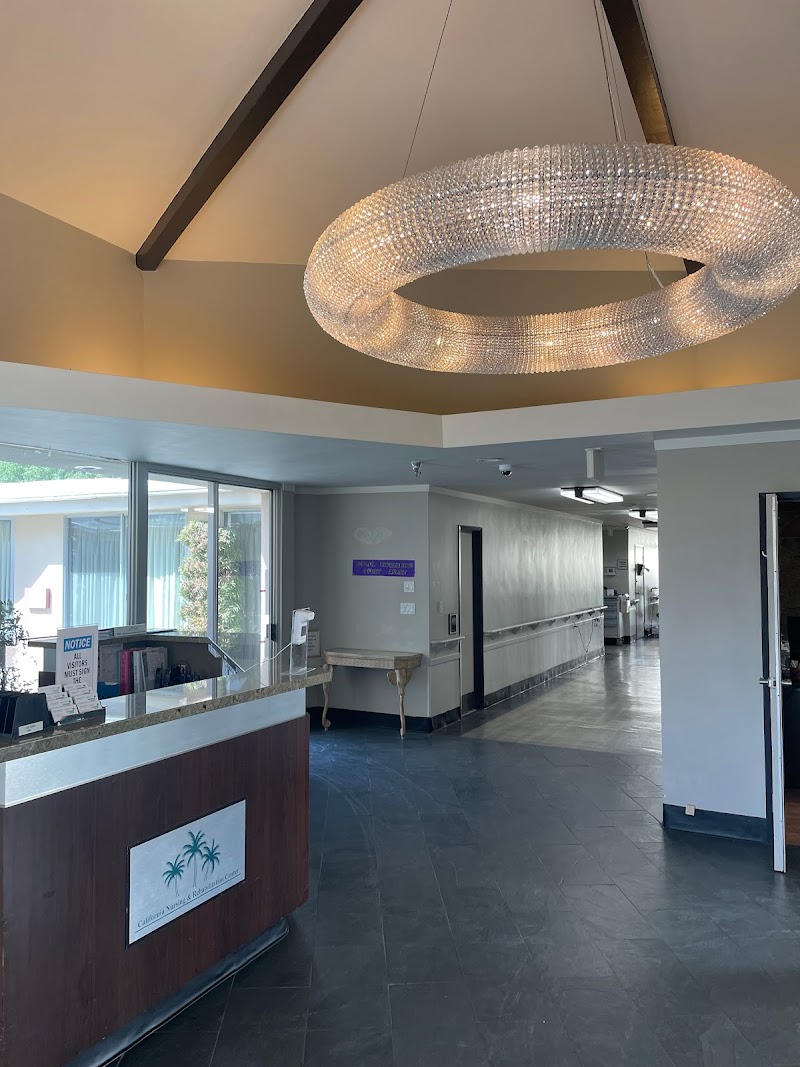
Who Owns and Operates California Nursing & Rehabilitation Center?

CALIFORNIA NURSING & REHABILITATION CENTER is owned by a for-profit company. For-profit facilities operate as businesses with obligations to shareholders or private owners. The facility is operated by PACIFIC HEALTHCARE HOLDINGS, a chain that manages multiple nursing homes. With 80 certified beds and approximately 70 residents (about 88% occupancy), it is a smaller facility located in PALM SPRINGS, California.
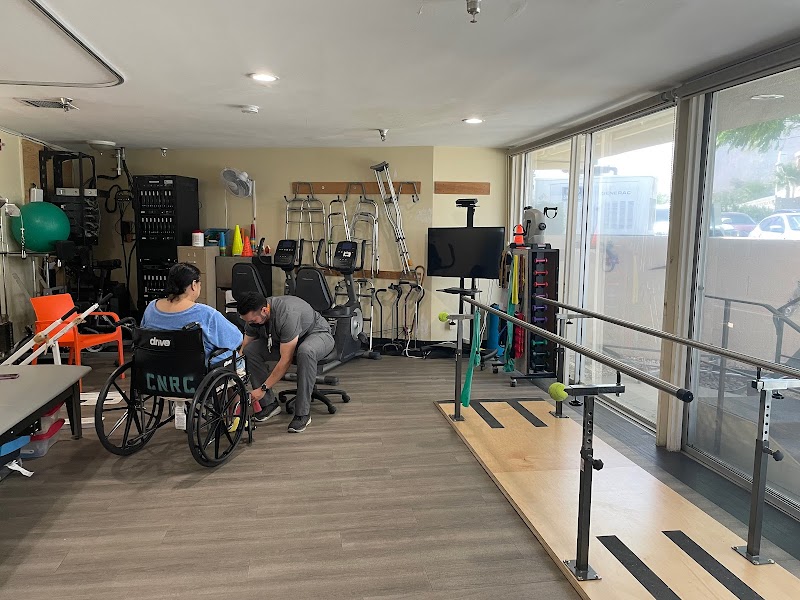
How Does California Nursing & Rehabilitation Center Compare to Other California Nursing Homes?

Compared to the 100 nursing homes in California, CALIFORNIA NURSING & REHABILITATION CENTER's overall rating (1 stars) is below the state average of 3.1, staff turnover (41%) is near the state average of 46%, and health inspection rating (1 stars) is much below the national benchmark.

What Should Families Ask When Visiting California Nursing & Rehabilitation Center?

Based on this facility's data, families visiting should ask: "What changes have been made since the serious inspection findings, and how are you preventing similar issues?" "Can I visit during a mealtime to observe dining assistance and food quality?" "How do you handle medical emergencies, and what is your hospital transfer rate?" "Can I speak with family members of current residents about their experience?" These questions are particularly relevant given the facility's Immediate Jeopardy citations.

Is California Nursing & Rehabilitation Center Safe?

Based on CMS inspection data, CALIFORNIA NURSING & REHABILITATION CENTER has documented safety concerns. Inspectors have issued 2 Immediate Jeopardy citations (the most serious violation level indicating risk of serious injury or death). The facility has a 1-star overall rating and ranks #100 of 100 nursing homes in California. Families considering this facility should ask detailed questions about what corrective actions have been taken since these incidents.

Do Nurses at California Nursing & Rehabilitation Center Stick Around?

CALIFORNIA NURSING & REHABILITATION CENTER has a staff turnover rate of 41%, which is about average for California nursing homes (state average: 46%). Moderate turnover is common in nursing homes, but families should still ask about staff tenure and how the facility maintains care continuity when employees leave.

Was California Nursing & Rehabilitation Center Ever Fined?

CALIFORNIA NURSING & REHABILITATION CENTER has been fined $84,534 across 4 penalty actions. This is above the California average of $33,924. Fines in this range indicate compliance issues significant enough for CMS to impose meaningful financial consequences. Common causes include delayed correction of deficiencies, repeat violations, or care failures affecting resident safety. Families should ask facility leadership what changes have been made since these penalties.

Is California Nursing & Rehabilitation Center on Any Federal Watch List?

CALIFORNIA NURSING & REHABILITATION CENTER is not on any federal watch list. The most significant is the Special Focus Facility (SFF) program, which identifies the bottom 1% of nursing homes nationally based on persistent, serious quality problems. Not being on this list means the facility has avoided the pattern of deficiencies that triggers enhanced federal oversight. This is a positive indicator, though families should still review the facility's inspection history directly.