DESERT REGIONAL MEDICAL CENTER D/P SNF

1150 NORTH INDIAN CANYON DRIVE, PALM SPRINGS, CA 92262 (760) 323-6511
For profit - Corporation 32 Beds Independent Data: November 2025 1 Immediate Jeopardy citation
Trust Grade
41/100
#786 of 1155 in CA
Last Inspection: February 2024

Within standard 12-15 month inspection cycle. Federal law requires annual inspections.

Overview

Desert Regional Medical Center D/P SNF in Palm Springs has a Trust Grade of D, indicating below-average quality with several concerns. They rank #786 out of 1155 facilities in California, placing them in the bottom half of the state, and #35 out of 53 in Riverside County, meaning only a few local options are better. The facility is showing an improving trend, decreasing from 8 issues in 2024 to just 1 in 2025, and has excellent staffing with a 5/5 rating and only 22% turnover, which is below the state average. However, they have concerning fines of $14,043, higher than 79% of California facilities, and there were critical issues found, including unsanitary food storage conditions with rodent droppings in the kitchen and failures in pest control that could risk food contamination. While staffing and RN coverage are strong, the facility must address these serious health and safety concerns to better protect its residents.

Trust Score
D
41/100
In California
#786/1155
Bottom 32%
Safety Record
High Risk
Review needed
Inspections
Getting Better
8 → 1 violations
Staff Stability
✓ Good
22% annual turnover. Excellent stability, 26 points below California's 48% average. Staff who stay learn residents' needs.
Penalties
○ Average
$14,043 in fines. Higher than 74% of California facilities. Some compliance issues.
Skilled Nurses
✓ Good
Each resident gets 344 minutes of Registered Nurse (RN) attention daily — more than 97% of California nursing homes. RNs are the most trained staff who catch health problems before they become serious.
Violations
⚠ Watch
22 deficiencies on record. Higher than average. Multiple issues found across inspections.
★★☆☆☆
2.0
Overall Rating
★★★★★
5.0
Staff Levels
★★★☆☆
3.0
Care Quality
★☆☆☆☆
1.0
Inspection Score
Stable
2024: 8 issues
2025: 1 issues

The Good

  • 5-Star Staffing Rating · Excellent nurse staffing levels
  • Low Staff Turnover (22%) · Staff stability means consistent care
  • Full Sprinkler Coverage · Fire safety systems throughout facility
  • No fines on record
  • Staff turnover is low (22%)

    26 points below California average of 48%

Facility shows strength in staffing levels, staff retention, fire safety.

The Bad

2-Star Overall Rating

Below California average (3.1)

Below average - review inspection findings carefully

Federal Fines: $14,043

Below median ($33,413)

Minor penalties assessed

The Ugly 22 deficiencies on record

1 life-threatening
Jan 2025 1 deficiency
CONCERN (D) 📢 Someone Reported This

A family member, employee, or ombudsman was alarmed enough to file a formal complaint

Potential for Harm - no one hurt, but risky conditions existed

Notification of Changes (Tag F0580)

Could have caused harm · This affected 1 resident

**NOTE- TERMS IN BRACKETS HAVE BEEN EDITED TO PROTECT CONFIDENTIALITY** Based on interview and record review, the facility failed to notify the resident ' s representative, of a transfer to the Emerge...

Read full inspector narrative →
**NOTE- TERMS IN BRACKETS HAVE BEEN EDITED TO PROTECT CONFIDENTIALITY** Based on interview and record review, the facility failed to notify the resident ' s representative, of a transfer to the Emergency Department (ED) for further evaluation of agitation for one of three residents (Resident 1). This failure resulted in Resident 1 ' s Representative not being informed of the transfer to the ED, limiting their ability to participate in the resident's medical care decisions to the extent deemed possible. Findings: On January 9, 2025, an unannounced visit was made to the facility for a quality of care issue. A review of Resident 1 ' s, Face Sheet, undated, indicated, resident was admitted to the facility on [DATE], with an admitting diagnosis of a resistive organism fungemia (fungal infection in the blood). On January 9, 2024, at 3:00 p.m., an interview was conducted with the Director of Nursing (DON). The DON stated, the document, Appointment of Personal Representative (APR), is part of the admission packet. The DON verified, this document allowed the resident to appoint a representative to be notified in case of an emergency or to make healthcare decisions on the resident's behalf if the resident is deemed confused or incapacitated. A review of Resident 1 ' s Appointment of Personal Representative, dated, December 13, 2024, untimed, indicated, . I do wish to appoint a Personal Representative . Further review of the document indicated Representative 1 was listed as resident ' s personal representative. A review of Resident 1 ' s Nursing Narrative, dated December 13, 2024, indicated, . (Resident 1) (transferred to) ED per (Doctor) . (resident) very restless/agitated . multiple attempts to crawl (Out of Bed) . Further review of Resident 1's nursing narrative revealed no documentation indicating that Resident 1's representative was notified of the transfer by RN 1. On January 9, 2025, at 5:15 p.m., a concurrent interview with the DON, and a review of Resident 1 ' s APR, Nursing Narratives, and Notification/Transfers, was conducted. The DON stated, if a resident is deemed too confused to notify their family or representative of a transfer, staff should notify the resident's appointed representative. The DON stated, the staff should document the notification in the resident ' s medical record under the Notification/Transfers section. The DON stated, Resident 1 was transferred to the ED on December 13, 2024, at 6:30 p.m., and notification of the transfer was not documented in Resident 1's medical record. On January 13, 2025, at 1:37 p.m., an interview was conducted with RN 1. RN 1 stated, the staff should notify the resident's appointed representative when the resident is unable to notify their family or representative. RN 1 stated, he would document the notification of the resident's representative in the Nursing Narrative note. RN 1 stated, he was Resident 1 ' s assigned nurse on the day the resident was transferred to the ED (December 13, 2024 at 6:30 p.m.). RN 1 stated, prior to the transfer, Resident 1 was combative, agitated, and confused. RN 1 stated, he received orders to transfer Resident 1 to the ED for further evaluation. RN 1 stated, he forgot to notify Resident 1 ' s Representative about the transfer to the ED. On January 14, 2024, at 10:30 a.m., an interview was conducted with the DON, who stated, RN 1 should have notified Resident 1 ' s Representative because resident was in no condition (restless & agitated) to notify their representative herself. A review of the facilities Policy & Procedure, Resident Rights, approved, April 23, 2021, indicated, . Policy: The patient has a right to . D. A patient who had not been adjudged incompetent by the state court: 1. Has the right to designate a representative, in accordance with State law and any legal surrogate so designated may exercise the patient ' s rights to the extent provided by state law . L. Be notified immediately on changes such as: 4. When there is a decision to transfer or discharge the patient . 7. The facility shall also contact the patient representative if the patient so chooses. If patient is deemed incompetent the representative shall be notified consistent with this or her authority .
Feb 2024 7 deficiencies 1 IJ (1 facility-wide)
CRITICAL (L)

Immediate Jeopardy (IJ) - the most serious Medicare violation

Food Safety (Tag F0812)

Someone could have died · This affected most or all residents

⚠️ Facility-wide issue

Based on observation, interview, and record review, the facility failed to store, prepare, and serve food in a sanitary manner, in accordance with professional standards for food service safety, as ev...

Read full inspector narrative →
Based on observation, interview, and record review, the facility failed to store, prepare, and serve food in a sanitary manner, in accordance with professional standards for food service safety, as evidenced by: 1. Rodent droppings and evidence of nesting (collection of clutter, trash, and debris) was found in the cooking line area of the kitchen, as well as an accumulation of grease and black grime and food, this had the potential to transmit disease to patients by contaminating food and food contact surfaces. In addition, a convection oven (oven that has fans to circulate air around food), a steamer, three ovens, one fryer and a broiler had an accumulation of grease and food grime build-up. This had the potential to attract pests and for microorganism (a microscopic organism, especially a bacterium, virus, or fungus) growth that could be inadvertently transferred to food. 2. The industrial stand mixer had crusted dry substances on the protection grate, the steam jacketed kettles had crusted yellow food inside the kettle, and the convection oven had black and yellow grime build-up and the side of the unit was rusted. This had the potential for microorganism growth and to attract pests. 3. Raw turkey was thawing and the juices were found to be dripping from storage boxes onto raw beef defrosting right next to it in the walk-in refrigerator. This cross contamination (the physical movement or transfer of harmful bacteria from one person, object, or place to another) had the potential to cause foodborne illness (food poisoning-caused by food contaminated with bacteria, viruses, parasites, or toxins). 4. In the walk-in refrigerator designated for dairy, there were plastic risers that food was stacked on top of and underneath there was spilled milk and yellow crusty looking substance on the floor that appeared to be spilled eggs. This had the potential for microorganisms to grow and to attract pests. 5. Multiple drawers were missing under food prep tables, and food crumbs had accumulated in the tracks of the missing drawers. This had the potential for microorganisms to grow and to attract pests. 6. Two frozen vegetable patties were uncovered in the freezer. This had the potential for food to become contaminated and cause food-borne illness. 7. Hand hygiene was not performed by Dietary Aide 2 who was handling ready to eat food. This had the potential to cause food-borne illness. Rats are especially dangerous in healthcare facilities because these pests carry disease and spoil food with the bacteria and viruses they harbor in their saliva and droppings. This failure led to 15 out of 16 medically compromised residents who received food from the kitchen, to be at risk for food-borne illness from contaminated food. Findings: 1. During the initial tour of the kitchen and concurrent interview with the Executive Chef (Chef) on February 26, 2024, at 11:35 a.m., at the cooking line where food was prepared for the residents, there were rodent droppings and evidence of nesting identified under the fryer and oven range. The Chef stated, they had a rat problem and the kitchen is very old, equipment is not working, and it is very hard to clean. The Chef further stated, several failed attempts have been made to scrape off and remove the food and grime buildup. One of the fryers was out of service and had food and grime buildup. Three of the four ovens were out of service and the spaces between the three stoves which housed the gas lines had an accumulation of grease, trash, black food grime and rodent droppings and evidence of nesting. The floor under the equipment also had an accumulation of grease, food grime and trash. There were rat droppings, confirmed by the Chef and evidence of rodent nesting, small pieces of torn papers, and piles of trash under the ovens. A round greyish color food item was pulled out from the oven and the Chef stated, it was a hamburger patty. During a concurrent observation and interview with the Chef, on February 26, 2024, at 11:40 a.m., at the cooking line, the convection oven, the steamer, three ovens, two fryers and a broiler, had an accumulation of grease and food grime buildup. The knobs had a sticky brown residue, the inside of the convection oven had a black build-up, and the door of the oven was crusted with yellow and black grime. The steamer had yellow and black build-up. The non-functioning fryer was covered with a metal plate and underneath the cover there was oil and food grime buildup. The broiler above the stove top was crusted with black food grime and grease. During an interview on February 27, 2024, at 10:54 a.m., with the Service Technician (ST) from [Company Name] pest control company. ST stated rats have been an issue for a while, he was recently at the facility for an infestation. ST stated, he suspects the rats may be using the sewer lines in the kitchen to gain access and can come in through any holes in the kitchen. During an observation in the kitchen, on February 27, 2024, at 11:07 a.m., the back door of the dry storage room that leads to the loading dock had a gap under the door and the gasket (seals the gap between two surfaces) around the door was falling off. During an interview with the Clinical Nutrition Manager (CNM), on February 28, 2024, at 2:39 p.m., CNM stated if a space is accessible, it should be clean and free of rat droppings. During an interview with the Chief Administrative Officer (CAO), on February 29, 2024, at 3:17 p.m., he stated the rodent issue was never brought up in the daily safety huddle meetings. The CAO stated all the hospital upper management team gets together daily to talk about safety issues in the hospital/SNF. He stated that the Food and Nutrition Services Department staff do attend these meetings but never brought up the rat infestation in the kitchen. During a review of the [Company Name] summary of services report, dated February 16, 2024, indicated, Recommendation: Cracks or damage to wall allowing pest access. Please repair to prevent pest entry. A hole in wall in drink cage I (ST) pointed out to the Patient Service Manager (PSM)], Status: PENDING, Date: 11/30/2023. An accumulation of food products from damaged goods noted. Please remove food product to prevent attraction by pests. Main kitchen cooking line. Status: PENDING, Date: 04/06/2023. A review of an email, dated February 16, 2024, at 8:18 a.m., indicated the [Company Name] pest control company the facility's managers were notified regarding Large rat spotted in dish room and roaches spotted in cold production area basement kitchen. A review of the FANS (food and nutrition services) Pest Control Log indicated: -On January 12, 2024, a rodent was seen in the tray line area. -On January 24, 2024, roaches were seen in the tray line area. -On January 27, 2024, roached were seen in the tray line area. -On January 28, 2024, roaches were seen in the cold prep area and in the toaster. -On February 3, 2024, a rodent was seen in the kitchen. -On February 16, 2024, a rodent and roaches were seen in the dish room and cold prep areas. A review of the facilities policy titled Pest Control, dated January 2023, indicated The Food and Nutrition Services Department/Dining Services shall be free of all rodents and insects. Associates are instructed to report pest sightings to management . A review of the company's policy and procedures titled Sanitation and Infection Prevention and Control Program Overview, dated January 2023, indicated .Proper sanitation and infection control practices are observed in all phases of food production and service . During a review of the FDA Federal Food Code, dated 2022, 6-501.111 indicated, The premises shall be maintained free of insects, rodents, and other pests. The presence of insects, rodents, and other pests shall be controlled to eliminate their presence on the premises by: (A) Routinely inspecting incoming shipments of food and supplies; (B) Routinely inspecting the premises for evidence of pests; (C) Using methods, if pests are found, such as trapping devices or other means of pest control as specified under 7-202.12, 7-206.12, and 7-206.13; and (D) Eliminating harborage conditions. In addition, Insects and other pests are capable of transmitting disease to humans by contaminating food and food-contact surfaces. Effective measures must be taken to eliminate their presence in food establishments. During a review of the FDA Federal Food Code, dated 2022, 4-601.11 indicated, (C) Nonfood-contact surfaces of equipment shall be kept free of an accumulation of dust, dirt, food residue, and other debris. In addition, The objective of cleaning focuses on the need to remove organic matter from food-contact surfaces so that sanitization can occur and to remove soil from nonfood contact surfaces so that pathogenic microorganisms will not be allowed to accumulate, and insects and rodents will not be attracted. During a review of the FDA Federal Food Code, dated 2022, 4-602.13 indicated, Nonfood-contact surfaces of equipment shall be cleaned at a frequency necessary to preclude accumulation of soil residues. In addition, The presence of food debris or dirt on nonfood contact surfaces may provide a suitable environment for the growth of microorganisms which employees may inadvertently transfer to food. If these areas are not kept clean, they may also provide harborage for insects, rodents, and other pests. 2. During an observation of the cook's bulk preparation area, and concurrent interview with the Executive Chef (Chef), on February 26, 2024, at 11:19 a.m., there was an industrial stand mixer that had crusted food on the protection grate. Per Chef he agreed it was not from recent use. There was also yellow colored crusted food on the insides of two steam jacket kettles (uses steam heat to cook large amounts of food). The Chef stated the kettles should be cleaned after use and they were not currently in use. Next to the kettle was a convection oven, the side of the oven was a rust color, inside there was black and yellow grime build-up. Chef stated, there is only one oven they can use and do not have time to clean it because of the large volume of meals they have to prepare. During an interview with the Clinical Nutrition Manger (CNM) on February 28, 2024, at 2:39 p.m., the CNM stated that the cook's bulk preparation area equipment should be cleaned after every use and not have any crusted food on it. During a review of the facility policy titled Sanitation and Infection Prevention and Control Program Overview, dated January 2023, indicated Proper sanitation and infection control practices are observed in all phases of food production and service. During a review of the FDA Federal Food Code, dated 2022, 4-601.11 indicated, (C) Nonfood-contact surfaces of equipment shall be kept free of an accumulation of dust, dirt, food residue, and other debris. In addition, The objective of cleaning focuses on the need to remove organic matter from food-contact surfaces so that sanitization can occur and to remove soil from nonfood contact surfaces so that pathogenic microorganisms will not be allowed to accumulate, and insects and rodents will not be attracted. During a review of the FDA Federal Food Code, dated 2022, 4-602.13 indicated, Nonfood-contact surfaces of equipment shall be cleaned at a frequency necessary to preclude accumulation of soil residues. In addition, The presence of food debris or dirt on nonfood contact surfaces may provide a suitable environment for the growth of microorganisms which employees may inadvertently transfer to food. If these areas are not kept clean, they may also provide harborage for insects, rodents, and other pests. 3. During an observation in the walk-in refrigerator and concurrent interview with the Executive Chef (Chef) on February 26, 2024, at 11:01 a.m., there were multiple stacked boxes of raw beef defrosting. Next to the raw beef there were multiple stacked boxes of raw turkey defrosting, the raw turkey boxes were positioned and hung over the raw beef and juices from the turkey were seen dripping onto the boxes of raw beef. Chef stated, the box of turkey should not be defrosting on top of the beef due to possible cross contamination. A review of the facility's policy and procedure titled Food and Supply Storage, dated January 2023, indicated .Refrigerated storage .separate goods by category (meat, fish, poultry .if raw animal products are stored on the same rack, store them in the following order .whole cuts of beef, pork, ground meat and poultry . During a review of the FDA Federal Food Code, dated 2022, 3-302.11 indicated, Except when combined as ingredients, separating types of raw animal foods from each other such as beef, fish, lamb, pork, and poultry during storage, preparation, holding, and display by: (b) Arranging each type of food in equipment so that cross contamination of one type with another is prevented . In addition, It is important to separate foods in a ready-to-eat form from raw animal foods during storage, preparation, holding and display to prevent them from becoming contaminated by pathogens that may be present in or on the raw animal foods. With regard to the storage of different types of raw animal foods as specified under subparagraph 3-302.11(A)(2), it is the intent of this Code to require separation based on anticipated microbial load and raw animal food type (species). Separating different types of raw animal foods from one another during storage, preparation, holding and display will prevent cross-contamination from one to the other. The required separation is based on a succession of cooking temperatures as specified under § 3-401.11 which are based on thermal destruction data and anticipated microbial load. For example, to prevent cross-contamination, fish and pork, which are required to be cooked to an internal temperature of 145°F for 15 seconds, shall be stored above or away from raw poultry, which is required to be cooked to an internal temperature of 165°F (<1 second, instantaneous) due to its considerably higher anticipated microbial load. 4. During the initial tour of the kitchen an observation and concurrent interview was conducted with the Executive Chef (Chef), on February 26, 2024, at 11:12 a.m., in the walk-in refrigerator labeled number 22. There were plastic risers used to store milk and eggs, and under the risers there was spilled milk. In the back corner on the floor there was a yellow crusted looking substance that appeared to be spilled eggs. Chef stated spills should be clean up immediately. During an interview with the Clinical Nutrition Manager (CNM) on February 28, 2024, at 3:30 p.m., the CNM stated, that spills should be cleaned up as they occur. During a review of the FDA Federal Food Code, dated 2022, 4-602.13 indicated, Nonfood-contact surfaces of equipment shall be cleaned at a frequency necessary to preclude accumulation of soil residues. In addition, The presence of food debris or dirt on nonfood contact surfaces may provide a suitable environment for the growth of microorganisms which employees may inadvertently transfer to food. If these areas are not kept clean, they may also provide harborage for insects, rodents, and other pests. 5. During an observation and concurrent interview was conducted with the Executive Chef (Chef), on February 26, 2024, at 11:12 a.m., multiple drawers were missing under food prep tables, in the cook's bulk preparation area, cooking line and cold food preparation area, the tracks used to hold the drawers had an accumulation of yellow food grime. Chef stated, the tracks of the drawer should be kept clean and not have an accumulation of food grime. During an interview with Dietary Aide (DA1), on February 27, 2024, at 10:38 a.m., DA1 stated that the drawers had been missing for years. During an interview with the Clinical Nutrition Manager (CNM), on February 28, 2024, at 2:39 p.m., CNM stated that the drawer tracks should be clean and free of food build-up. During a review of the FDA Federal Food Code, dated 2022, 4-602.13 indicated, Nonfood-contact surfaces of equipment shall be cleaned at a frequency necessary to preclude accumulation of soil residues. In addition, The presence of food debris or dirt on nonfood contact surfaces may provide a suitable environment for the growth of microorganisms which employees may inadvertently transfer to food. If these areas are not kept clean, they may also provide harborage for insects, rodents, and other pests. 6. During the initial tour of the kitchen and concurrent interview with the Executive Chef (Chef) on February 26, 2024, at 10:51 a.m., There were two frozen vegetable patties, out of their packaging, in the freezer. The Chef stated all food should be covered. A review of the facility's policy and procedure titled Food and Supply Storage, dated January 2023, indicated .All food .used in food preparation shall be stored in such a manner as to prevent contamination to maintain the safety and wholesomeness of the food for human consumption .wrap food tightly to prevent cross contamination . During a review of the FDA Federal Food Code, dated 2022, 3-301.11 indicated, (A) FOOD shall be protected from cross contamination by . (4) storing the food in packages, covered containers, or wrappings;. In addition, Food that is inadequately packaged or contained in damaged packaging could become contaminated by microbes, dust, or chemicals introduced by products or equipment stored in close proximity or by persons delivering, stocking, or opening packages or overwraps. Packaging must be appropriate for preventing the entry of microbes and other contaminants such as chemicals. These contaminants may be present on the outside of containers and may contaminate food if the packaging is inadequate or damaged, or when the packaging is opened. The removal of food product overwraps may also damage the package integrity of foods under the overwraps if proper care is not taken. 7. During an observation, on February 27, 2024, at 11:50 a.m., kitchen staff was plating meals for residents. Dietary Aide (DA2) was observed answering his phone, talking on the phone, and clipping the phone back on his pants while wearing gloves. DA2 did not change his gloves or wash his hands and continued to prepare resident meal trays. During an interview, on February 28, 2024, at 3:30 p.m., with the Director of Food and Nutrition Services (DFANS), and the Regional Supervisor (RS), was conducted. The RS stated, DA2 did not follow proper hand hygiene protocol, he should have performed hand hygiene and changed his gloves after answering his cell phone. During a review of the company's policy and procedures titled Sanitation and Infection Prevention and Control Program Overview, dated January 2023, indicated .Proper sanitation and infection control practices are observed in all phases of food production and service .proper hand hygiene .disposable glove use . On February 26, 2024, at 4:10 p.m., an immediate jeopardy (IJ) (immediate corrective action is necessary because the facility's noncompliance with one or more of those requirements has caused, or is likely to cause, serious injury, harm, impairment or death to a resident receiving care in a facility) was called under 483.60(i)(1)-Procure food from sources approved or considered satisfactory by federal, state or local authorities and 483.60(i)(2)-Store, prepare, distribute and serve food in accordance with professional standards for food service safety The facility was notified of the IJ under federal tag 812: The facility did not Store, prepare, distribute, and serve food in accordance with professional standards for food service safety when there was rodent droppings and evidence of nesting identified on the main cooking line in the kitchen, as well as the presence of excessive black grime and grease build-up and old food on the floor and kitchen equipment. A build-up of crumbs and black grime found on and under equipment and proper hand hygiene was not performed by one staff member handing ready to eat food. On February 26, 2024, the facility provided a Corrective Action Plan and indicated the following will be implemented immediately to address the sanitation issues in the kitchen: 1. All surface areas in the kitchen were cleaned. 2. All foods have been removed from the Skilled Nursing Facility (SNF). 3. An emergency request for pest control to come onsite and perform extermination services. 4. A restoration company will be working all night to perform deep cleaning of the kitchen and Evaluate any wall penetrations and perform repairs as needed. 5. All food preparation surfaces will be sanitized immediately before any food preparation. 6. The diet list for the 15 residents have been sent to the dietician. 7. Pre-packaged meals and beverages will be provided to residents on regular diets. 8. For residents on altered texture diets, the diets will be downgraded to pre-packaged purees and the residents will be provided with supplements. 9. After completion of the terminal clean, restoration, and extermination, we will have a third- party environmental company come onsite and perform an inspection. The IJ was lifted on February 29, 2024, at 4:30 p.m., after an acceptable corrective action plan was implemented and carried out, and verified through observation, interview, and record review.
CONCERN (D)

Potential for Harm - no one hurt, but risky conditions existed

Drug Regimen Review (Tag F0756)

Could have caused harm · This affected 1 resident

**NOTE- TERMS IN BRACKETS HAVE BEEN EDITED TO PROTECT CONFIDENTIALITY** Based on interview and record review, the facility failed to ensure the pharmacist recommendation to reduce the number of antico...

Read full inspector narrative →
**NOTE- TERMS IN BRACKETS HAVE BEEN EDITED TO PROTECT CONFIDENTIALITY** Based on interview and record review, the facility failed to ensure the pharmacist recommendation to reduce the number of anticoagulants (medications to reduce or prevent blood from clotting) from two medications to single medication was acted upon by providing a rationale for not reducing the number of anticoagulants (medications that reduce or prevent blood from clotting), for one of five residents reviewed for unnecessary medications (Resident 76). This failure had the potential to result in adverse consequences related to anticoagulant therapy. Findings: During a review of the facility document titled Consultant Pharmacist's Recommendation to Inter-Disciplinary Team (IDT), dated February 25, 2024, indicated, .The resident has orders for Eliquis (Apixaban- anticoagulant) and Aspirin (anticoagulant) .Would monotherapy (single medication to treat a condition) be clinically feasible? . A review of Resident 76's record indicated Resident 76 was admitted to the facility on [DATE], with diagnoses which included peripheral vascular disease (a blood circulation problem) and heart failure (a heart that does not pump well enough). On February 29, 2024, at 10: 50 a.m., during a concurrent interview and review of Resident 76's Consultant Pharmacist's Recommendation with Registered Nurse (RN) 1, RN 1 stated, the physician did not document the reason if monotherapy was feasible. RN 1 stated there was no documented evidence the physician addressed the pharmacy recommendation. On February 29, 2024, at 9:24 a.m., during a concurrent interview and review of Resident 76's Consultant Pharmacist's Recommendation on February 25, 2024, with the Director of Nursing (DON), the DON stated, if there was a pharmacy recommendation, it should be acted upon immediately by the IDT. During a review of the facility policy and procedure titled, DES SNF- MEDICATION REGIMEN, dated April 23, 2021, indicated, .To ensure compliance with regulation surrounding drug therapies in the nursing facility .and to help reduce or potentially eliminate adverse drug reactions .Potential duplicate therapy .PROCEDURE: .Communicating the recommendation to the physician immediately, as soon as possible .the medical record will reflect the communication and the action taken .
CONCERN (D)

Potential for Harm - no one hurt, but risky conditions existed

Deficiency F0801 (Tag F0801)

Could have caused harm · This affected 1 resident

Based on interview and record review, the facility failed to designate a person to serve as the Director of Food and Nutrition Services (DFANS), who meets the State requirements for food service manag...

Read full inspector narrative →
Based on interview and record review, the facility failed to designate a person to serve as the Director of Food and Nutrition Services (DFANS), who meets the State requirements for food service managers or dietary managers. This failure resulted in a lack of oversight in the kitchen which led to unsanitary conditions being present and an Immediate Jeopardy being called because of the presence of evidence of pests (cross reference F812). This facility failure had the potential to affect 15 out of 16 medically compromised residents who receive food from the kitchen. Findings: During an interview on February 26, 2024, at 10:02 a.m., the Clinical Nutrition Manager (CNM) stated, she is a Registered Dietician and the full-time qualified staff member over the kitchen. The Director of Food and Nutrition Services (DFNS) who was also serving as the Environmental Services Director stated, he was not a qualified food service manager. The Executive Chef (Chef) was also present and stated he was not a qualified food service manager and is in the process of becoming a Certified Dietary Manager (CDM). During an interview, on February 28, 2024, at 3:30 p.m., with the CNM, the DFANS, and the Regional Supervisor (RS). The CNM stated, she is the full-time Clinical Nutrition Manager and also manages the kitchen. The RS stated it was not typical for the Clinical Nutrition Manager to also be the full-time staff member overseeing the kitchen. The RS stated the DFANS and Chef are both working on becoming CDMs. The RS stated, there is no one at this time qualified to fulfill the Director of Food and Nutrition Services position. A review of the document titled Healthcare Food Services Job Description Clinical Nutrition Manager, dated January 2019, indicated, Responsible to direct the functions of the clinical nutrition services (such as nutrition assessment, nutritional counseling/consultation, performance improvement), and the management of the clinical nutrition team to ensure high quality nutritional care is provided to patients/residents During a review of document titled [Company Name] Healthcare Food Services Job Description, Director Food and Nutrition, dated March 2006, indicated Qualifications: Education and Experience: Must meet CMS (Center for Medicare and Medicaid Services) and/or state regulations regarding educational qualifications for Food Service Director (e.g. Certified Dietary Manager).
CONCERN (E)

Potential for Harm - no one hurt, but risky conditions existed

Infection Control (Tag F0880)

Could have caused harm · This affected multiple residents

Based on observation, interview, and record review, the facility failed, for two employees observed, to ensure infection control policy and procedures for hand hygiene and personal protective equipmen...

Read full inspector narrative →
Based on observation, interview, and record review, the facility failed, for two employees observed, to ensure infection control policy and procedures for hand hygiene and personal protective equipment (PPE) were implemented when: 1. RN 2 did not perform hand hygiene before donning gloves on two occasions. In addition, RN 2 did not remove gloves after direct patient care and exited the room to enter another resident's room. 2. One Certified Nursing Assistant (CNA 1) did not perform hand hygiene upon entering and exiting a resident's room and after providing direct patient care. These failures had the potential to spread infection and compromise the overall health of residents residing in the facility. Findings: 1. During an observation on February 26, 2024, at 12:30 p.m., in Resident 74's room, RN 2 did not change gloves between providing care for two residents. In addition, RN 2 was observed to answer the telephone with the same gloved hands and entered Resident 77's room without performing hand hygiene. RN 2 entered the hallway and was observed to remove gloves without performing hand hygiene. RN 2 returned to Resident 74's room and donned new gloves without performing hand hygiene. During an observation on February 27, 2024, at 10:33 a.m., in Resident 74's room, RN 2 was observed to not perform hand hygiene or wear gloves while assisting a resident with a breakfast tray. RN 2 exited from the room and did not perform hand hygiene before entering Resident 79's room after obtaining a food item from the nourishment room. During an observation on February 27, 2024, at 10:45 a.m., RN 2 entered Resident 74's room and placed items on A bed and collected B bed's breakfast tray, exited the room, and reentered the room without performing hand hygiene. RN 2 was observed not wearing gloves. During an observation on February 27, 2024, at 11:56 a.m., in Resident 74's room, after a dressing change, RN 2 removed gloves, touched surfaces in the residents' room, exited the room, and touched medical equipment outside of the room. RN 2 did not perform hand hygiene before reentering the room. During an interview on February 27, 2024, at 12:05 p.m. with RN 2, RN 2 stated, she did not perform hand hygiene before entering and exiting resident's room, this morning. RN 2 stated, she should have performed hand hygiene before entering and exiting the residents' room, when collecting the meal tray, prior to handling medications, and when providing care. 2. During an observation on February 27, 2024, at 10:40 a.m., in Resident 77's room, CNA 1 was observed to assist Resident 77 with care without wearing gloves. CNA 1 exited Resident 77's room and entered Resident 78's room without performing hand hygiene. CNA 1 proceeded from Resident 78's room and entered Resident 77's room and did not perform hand hygiene before donning gloves. During an observation on February 27, 2024, at 10:56 a.m., in Resident 77's room, CNA 1 was observed to remove gloves after providing care to Resident 77. CNA 1 touched their face and hair, handled clean linens, and discarded resident's personal items without performing hand hygiene and donning gloves. During an interview on February 27, 2024, at 11:36 a.m. with CNA 1, CNA 1 stated, he should have washed his hands after removing his gloves after providing care to Resident 77. During an interview on February 28, 2024, at 9:35 a.m. with the Infection Preventionist (IP - responsible for dissemination of infection prevention information), the IP stated, staff should be performing hand hygiene by using alcohol-based hand gel (a gel containing alcohol used to kill or minimize many viruses, bacteria, and miccroorganisms on the hands) or washing hands with soap and water according to the facilities policy and procedure. During a review of policy and procedure titled DES IP 599 Hand Hygiene, dated February 16, 2023, indicated .B. Indications for hand hygiene and hand antisepsis .2. Before and after direct contact with patients; blood/body fluids or equipment and environmental items touched by patients, 3. Before entering occupied, clean, or empty rooms, 4. Before and after handling medication or food .7. Prior to donning gloves and after removing gloves .
CONCERN (E)

Potential for Harm - no one hurt, but risky conditions existed

Room Equipment (Tag F0908)

Could have caused harm · This affected multiple residents

Based on observation, interview, and record review, the facility failed to maintain essential kitchen equipment in a safe operating condition, as evidenced by multiple pieces of equipment out of servi...

Read full inspector narrative →
Based on observation, interview, and record review, the facility failed to maintain essential kitchen equipment in a safe operating condition, as evidenced by multiple pieces of equipment out of service and not being clean or maintained. These failures led to harborage conditions in the kitchen that was attracting pest and the potential for cross contamination and foodborne illness in 15 out of 16 medically compromised residents who received food from the kitchen. Findings: During an observation in the bulk food preparation area and concurrent interview with the Executive Chef (Chef), on February 26, 2024, at 11:22 a.m., the double convection oven (oven that has fans to circulate air around food) had rust on the side and the inside had a build-up of food and yellow grime. The Chef stated, that they only have one working oven in the kitchen, all the other ovens are not working, because of the large volume of meals they prepare they do not have time to clean it. During a concurrent observation and interview with the Chef on February 26, 2024, at 11:35 a.m., at the cooking line where food is prepared for the residents, there were rodent droppings and evidence of nesting (collection of clutter, trash, and debris) noted in the compartment between the oven and the fryer. The fryer, 3 ovens and a broiler were not working. The Chef stated, the two steamers are not working, one is out of service and the other one leaks hot water, which leaves standing water in the kitchen. During further observation and a concurrent interview with the Chef on February 26, 2024, at 11:40 a.m. multiple drawers were missing under food prep tables, in the cook's bulk preparation area, cooking line, and cold food preparation area, the tracks used to hold the drawers had an accumulation of yellow food grime. The Chef stated, the tracks of the drawers should be kept clean and not have an accumulation of food grime. During an interview with Dietary Aide (DA1) on February 27, 2024, at 10:38 a.m., DA1 stated, the drawers under the preparation tables have been missing for years. During an interview with the Director of Biomedical Engineering (DBE) on February 27, 2024, at 10:39 a.m., he stated they do not currently have a plan for the broken equipment in the kitchen. A subsequent interview was conducted with the Director of Biomedical Engineering (DBE), on February 29, 2024, at 3:30 p.m., the DBE stated work orders go to the maintenance department, someone was assigned to confirm when the work was completed. The DBE stated, the Biomedical department was primarily responsible for the repairs of the medical equipment, the requested work orders should be completed in approximately 30 days. The DBE further stated, ideally the appropriate departments would be notified and follow up as indicated, but somehow the communication was not occurring, and work orders were not being completed nor followed through. A review of the facility's policy and Procedure titled Equipment Maintenance Program, dated January 2023, indicated .Proper maintenance of the physical plant and all equipment is the responsibility of the Director in cooperation with the Maintenance Department .with the maintenance department, plans in writing a program of preventative maintenance for all Food/Nutrition equipment requiring regular maintenance .Regular inspection/maintenance by maintenance department, periodic servicing by a service company contracted through the maintenance department .for equipment to be maintained by the department, incorporate maintenance tasks into the area and equipment cleaning frequency . During a review of the FDA Federal Food Code, dated 2022, 4-501.11 indicated, (A) EQUIPMENT shall be maintained in a state of repair and condition that meets the requirements specified under Parts 4-1 and 4-2. In addition, Proper maintenance of equipment to manufacturer specifications helps ensure that it will continue to operate as designed. Failure to properly maintain equipment could lead to violations of the associated requirements of the Code that place the health of the consumer at risk.
CONCERN (F)

Potential for Harm - no one hurt, but risky conditions existed

Menu Adequacy (Tag F0803)

Could have caused harm · This affected most or all residents

Based on observation, interview, and record review, the facility failed to ensure the lunch menu served on February 27, 2024, met the nutritional need of 15 out of 16 residents in accordance with esta...

Read full inspector narrative →
Based on observation, interview, and record review, the facility failed to ensure the lunch menu served on February 27, 2024, met the nutritional need of 15 out of 16 residents in accordance with established national guidelines. This failure had the potential for residents not to receive the caloric intake needed, when the established menu was not followed, which could result in poor nutrition and further compromise the residents' medical status. Findings: An observation and concurrent interview were conducted on February 26, 2024, at 12:20 p.m., with Resident 227. Resident 227 stated, he should receive double-portions, and only received one scoop of potatoes today. Resident 227 stated, sometimes the facility messed up the order and he had to wait 45 minutes for the missing food. Resident 227 further stated, how was he supposed to gain weight if the facility kept messing up his food orders. An observation, on February 27, 2024, at 11:30 a.m., was conducted during the tray line. The Associate Patient Dining Staff (APDS) was portioning out food into each resident's styrofoam container. The APDS was serving meatloaf and broccoli, using tongs to pick up the broccoli. A serving of the meatloaf was weighed; it weighed 1.3 ounces, and the broccoli was approximately ¼ of a cup. During a review of the kitchen's document titled Migrated Patient Menu, for lunch, on February 27, 2024, the menu indicated to serve 3 ounces of meatloaf and one cup of broccoli. During an interview on February 28, 2024, at 3:57 p.m., with the Clinical Nutrition Manager (CNM), the CNM stated, the menu should be followed for the serving sizes. A review of the facility's policy and procedure titled Menu Management, dated January 2023, indicated .Menus are managed to ensure patient meal selections are accurate for diet ordered .
CONCERN (F)

Potential for Harm - no one hurt, but risky conditions existed

Deficiency F0925 (Tag F0925)

Could have caused harm · This affected most or all residents

**NOTE- TERMS IN BRACKETS HAVE BEEN EDITED TO PROTECT CONFIDENTIALITY** Based on observation, interview, and record review, the facility failed to maintain an effective pest control program to keep th...

Read full inspector narrative →
**NOTE- TERMS IN BRACKETS HAVE BEEN EDITED TO PROTECT CONFIDENTIALITY** Based on observation, interview, and record review, the facility failed to maintain an effective pest control program to keep the facility free of pests and rodents when: 1. There were rodent droppings and evidence of nesting found in the cooking line; 2. There was not a set schedule for the pest control company to service the kitchen; and 3. Recommendations made by the pest control company were never implemented. These failures created an environment attracting rodents and the potential contamination of food and kitchen equipment used to supply meals to 15 out of 16 vulnerable residents, who are put at risk for food-borne illness (caused by food contaminated with bacteria, viruses, parasites, and toxins). Findings: During the initial tour of the kitchen on February 26, 2024, at 11:35 a.m., at the cooking line where food was prepared for the residents, there were rodent droppings and evidence of nesting (collection of clutter, trash, and debris) identified inside a compartment between the stove and the fryer. The Executive Chef (Chef) stated, they have a rat problem, and staff was able to confirm, there were rat droppings and evidence of nesting. During an interview on February 27, 2024, at 10:54 a.m., with the Service Technician (ST), from [Name] pest control company, the ST stated, approximately three years ago he took over the contract with the facility. The ST stated, the rodents have been an issue for a while, he was out recently for an infestation in the facility. The ST stated, he suspects rats may be using the sewer lines in the kitchen to gain access and can come through any holes in the kitchen. During an observation on February 27, 2024, at 11:07 a.m., with the Director of Food and Nutrition Services (DFANS), in the kitchen, the back door of the dry storage room leads to a loading dock outside, and the door had a noted gap at the bottom and the gasket (seals the gap between two surfaces) around the door is falling off. The DFANS stated, the opening is wide enough for rodents to enter the kitchen. During an observation in the dry storage area of the kitchen, on February 28, 2024, at 11:53 a.m., inside the drink cage, where sodas are stored, there was a large area of damage to a corner wall. The area was covered with tape and plastic. The DFANS stated, it had been covered last night with the plastic and tape. The DFANS stated, the rodents will be able to chew through the plastic and tape, this will not deter the rodents. During an interview with the Food and Nutrition Services Manager (FNSM) on, February 28, 2024, at 3:57 p.m., the FNSM stated, the recommendation by the [Name] pest control company to patch the whole in the drink cage should have been done immediately. He stated that he never read the report from the [Company Name] until we asked for it. He stated a work order was never submitted to patch the whole in the drink cage and the accumulation of food product (that the [Company Name] recommended should be cleaned up) was never addressed. He stated, [Company Name] pest control services the whole hospital and was not routinely scheduled to service the kitchen, they only came when pests were identified. During an interview with the Clinical Nutrition Manager (CNM), on February 28, 2024, at 2:39 p.m., the CNM stated, all areas of the kitchen that are accessible should be cleaned, and free of old food and trash. The CNM stated, the back cook's bulk preparation area equipment should be cleaned after every use and should not have crusted food on it. During a review of the [Company Name] summary of services report, dated February 16, 2024, indicated, Recommendation: Cracks or damage to wall allowing pest access. Please repair to prevent pest entry. A hole in wall in drink cage I (ST) pointed out to the Patient Service Manager (PSM)], Status: PENDING, Date: 11/30/2023. An accumulation of food products from damaged goods noted. Please remove food product to prevent attraction by pests. Main kitchen cooking line. Status: PENDING, Date: 04/06/2023. During a review of the FDA Federal Food Code, dated 2022, 6-501.111 indicated, The premises shall be maintained free of insects, rodents, and other pests. The presence of insects, rodents, and other pests shall be controlled to eliminate their presence on the premises by: (A) Routinely inspecting incoming shipments of food and supplies; (B) Routinely inspecting the premises for evidence of pests; (C) Using methods, if pests are found, such as trapping devices or other means of pest control as specified under 7-202.12, 7-206.12, and 7-206.13; and (D) Eliminating harborage conditions. In addition, Insects and other pests are capable of transmitting disease to humans by contaminating food and food-contact surfaces. Effective measures must be taken to eliminate their presence in food establishments. During a review of the facility's policy and procedure titled Pest Control, dated January 2023, indicated .The physical premises shall be in compliance with local regulations .Ensure that all holes and cracks in walls and floors where pests and rodents could gain entry are repaired/sealed .Ensure the exterior department doors including those leading to outside receiving areas and garbage have less than a ¼ inch gap between the door and floor to prevent pest and rodent entry .Request a copy of the pest control service report; recommendations on the report are followed .
Jan 2024 1 deficiency
CONCERN (D) 📢 Someone Reported This

A family member, employee, or ombudsman was alarmed enough to file a formal complaint

Potential for Harm - no one hurt, but risky conditions existed

Report Alleged Abuse (Tag F0609)

Could have caused harm · This affected 1 resident

**NOTE- TERMS IN BRACKETS HAVE BEEN EDITED TO PROTECT CONFIDENTIALITY** Based on interview and record review, the facility failed to report an allegation of verbal abuse within 2 hours to California D...

Read full inspector narrative →
**NOTE- TERMS IN BRACKETS HAVE BEEN EDITED TO PROTECT CONFIDENTIALITY** Based on interview and record review, the facility failed to report an allegation of verbal abuse within 2 hours to California Department of Public Health (CDPH) after the allegation was made, for one of four residents reviewed (Resident 1). This failure had potential to result in further abuse for Resident 1, affecting the resident's physical, emotional, and psychosocial well-being. Findings: On December 6, 2023, at 10:53 a.m., CDPH received a fax (facsimile - telephonic transmission of scanned-in printed material) report of an allegation of abuse involving a Certified Nurse Assistant (CNA), a License Vocational Nurse (LVN) and a resident. On December 13, 2023, at 9:20 a.m., an unannounced visit to the facility was conducted to investigate an allegation of abuse. A review of Resident 1's record indicated, Resident 1 was admitted to the facility on [DATE], with diagnoses which included blunt head trauma (head injury resulting from contact between the head and another object). A review of Resident 1's History and Physical, dated November 26, 2023, indicated Resident 1 is alert and oriented to name, date of birth and location. A review of Resident 1's Nursing Narrative Note, dated December 6, 2023, at 4:35 a.m., indicated, .Patient requesting a new gown .Writer brought new gown in instead of sending CNA in an effort to diffuse patient agitation .Patient still angry and stated that woman needs to check her attitude .If I were home I ' d get in the shower .this is elder abuse . A review of Resident 1's Nursing Narrative Note, dated December 6, 2023, at 6:03 a.m., indicated, .Writer heard patient struggling with his front wheel walker (a device use to help maintaitain balance while walking) .Entered room to assist .Patient stated get my bag .Writer ask patient to repeat himself .Patient shouted don ' t chastise (criticize) me .This is elder abuse . A review of Resident 1's Nursing Note Form, dated December 6, 2023, at 8:30 a.m., indicated, .Met with patient regarding his allegation of verbal abuse he experience from his interaction with night shift .He reiterated that he felt what was said to him amounted to elder abuse . On December 13, 2023, at 9:58 a.m., during an interview with the Director of Nursing (DON), the DON stated he was notified of the abuse allegation incident on December 6, 2023, at 8:30 a.m. The DON stated he reported the incident to CDPH on December 6, 2023, at 10:00 a.m. On December 13, 2023, at 2:20 p.m., during an interview with LVN 1, she stated, on December 6, 2023, around 4-5 a.m., Resident 1 told her CNA 1 and you need to check your attitude, this is elder abuse. LVN 1 further stated on December 6, 2023, at 6:00 a.m., Resident 1 stated dont touch me, this is elder abuse. LVN 1 stated, any abuse or allegation of abuse needs to be reported immediately within 2 hours after the allegation was made. LVN 1 stated, the incident was reported to CDPH on December 6, 2023 at a later time around 10:00 a.m. (6 hours after the allegation was made). LVN 1 further stated, she should have reported the abuse allegation incident to CDPH within 2 hours. On December 28, 2023, at 1:06 p.m., during an interview with the DON, the DON stated, any abuse allegation must be reported immediately within 2 hours to CDPH to keep the resident safe. The DON further stated, the facility abuse reporting guidelines is based on the Centers for Medicare and Medicaid Services (CMS) State Operations Manual (primary survey and certification rules and guidance). The DON stated, LVN 1 should have reported the abuse allegation immediately within 2 hours after Resident 1 made the allegation. The DON further stated, the abuse allegation was reported to CDPH five to six hours after Resident 1 made the allegation. A review of the facility policy and procedure titled, DES SNF-ABUSE, dated December 17, 2020, indicated, .Investigate and report any such allegation of abuse .pursuant to all federal, state, and local laws .
Dec 2022 9 deficiencies
CONCERN (D)

Potential for Harm - no one hurt, but risky conditions existed

Deficiency F0657 (Tag F0657)

Could have caused harm · This affected 1 resident

Based on interview and record review, the facility failed to develop a care plan to address and/or monitor the low hemoglobin level (hemoglobin- blood component which carries oxygen through the blood)...

Read full inspector narrative →
Based on interview and record review, the facility failed to develop a care plan to address and/or monitor the low hemoglobin level (hemoglobin- blood component which carries oxygen through the blood), for one of two residents reviewed (Resident 264). This failure had the potential for a delay in treatment of low hemoglobin levels which may result in further declining health of Resident 264. Findings: On November 30, 2022, Resident 264's record was reviewed. Resident 264 was admitted to the facility on , November 7, 2022, with a diagnoses of increased white blood cell count (A type of blood cell that help the body fight infection and other diseases). A CBC laboratory result dated November 13, 2022, indicated a hemoglobin level of 6.7 g/L (Grams per liter) (hemoglobin normal range 12.1 to 15.1 /L). The hemoglobin level was re-drawn on the same day and the result indicated 6.8 g/L. A Physician's order, dated November 13, 2022, at 11:49 a.m., indicated, .Transfuse Red Blood Cells Active Bleed-Adult/Adolescent . On November 13, 2022, Resident 264 was transferred off the unit to receive blood transfusion (A procedure in which whole blood or parts of blood are put into a patient's bloodstream through a vein), and returned to the facility on November 14, 2022. The Physician's Order dated 11/14/2022, indicated to monitor Resident 264's Complete Blood Count (CBC - blood test used to evaluate overall health and detect a wide range of disorders) every seven days. There was no documented evidence a care plan was initiated to address Resident 264's low hemoglobin level. On November 30, 2022, at 3:39 p.m., a record review with a concurrent interview was conducted with Registered Nurse (RN 1). RN 1 stated Resident 264 did not have a care plan initiated to address his low hemoglobin level. RN 1 stated It is not there. RN 1 further stated Resident 264's low hemoglobin levels should have been care-planned. The facility's policy and procedure titled, DRMC SED SNF - PATIENT CARE PLAN, dated April 4, 2021, indicated, .It is the policy of the SNF to develop and implement an effective and person-centered care plan that includes instructions needed to meet professional standards of quality care .The plan of care shall include input from all disciplines involved in the care of the patient and shall outline the professional services indicated including interventions, goals and timelines .These services shall be carried out by qualified staff .
CONCERN (D)

Potential for Harm - no one hurt, but risky conditions existed

Deficiency F0685 (Tag F0685)

Could have caused harm · This affected 1 resident

**NOTE- TERMS IN BRACKETS HAVE BEEN EDITED TO PROTECT CONFIDENTIALITY** Based on interview, observation and record review, the facility failed, for one of two residents (Resident 266), to provide a fo...

Read full inspector narrative →
**NOTE- TERMS IN BRACKETS HAVE BEEN EDITED TO PROTECT CONFIDENTIALITY** Based on interview, observation and record review, the facility failed, for one of two residents (Resident 266), to provide a follow-up and/or offer an audiology consult to address his hearing deficit. This failure had the potential to result in psycho social harm related to a delay in treatment to maintain hearing. Findings: On November 28, 2022, at 3:05 p.m., an interview was conducted with the Licensed Vocational Nurse (LVN 2). LVN 2 stated Resident 266, Is easily upset and frustrated with staff because, he is very hard of hearing. On November 29, 2022, at 10:46 a.m., an observation and interview was conducted with Resident 266. Resident 266 stated he had hearing aids and hearing assistive devices at home, but They broke. Resident (266) denied being offered help to obtain hearing assistive devices during his stay at the facility. He stated the facility provided him a note pad, for communication. Resident 266 stated, It's frustrating for me to keep telling staff I can't hear them. On November 29, 2022, a record review for resident 266 indicated he was admitted to the facility on [DATE], with diagnosis which included diabetes (A disease which causes high blood sugar within the blood stream) and hypertension (Elevated blood pressure). The Minimum Data Set (MDS- an assessment tool) dated November 11, 2022, indicated Resident 266 had a moderate hearing difficulty and .speaker has to increase volume and speak distinctly . A review of resident 266 Care Plan dated, November 4, 2022, indicated, .Impaired Communication R/T (Related to) HOH (Hard of Hearing) .Intervention .Allow time to process and respond .Proactively anticipate needs .Provide communication device .Left at home and does not work anyway . On December 1, 2022, at 1:48 p.m., an interview was conducted with the Case Manager, Registered Nurse (CM 1). CM 1 was asked about Resident 266's hearing problem and the facility's process on providing a hearing device. CM 1 stated he would start with an audiology consult. CM 1 stated a hearing aid would help Resident 266, and Resident 266 was not referred to audiology. The facility's policy titled, DES ADM 111 AUXILIARY AIDS AND SERVICES, dated, May 28, 2020, indicated, .Purpose .sensory impaired individuals, including the blind and the hearing impaired, be provided with auxiliary aids at no cost to allow them an equal opportunity to participate in and benefit from healthcare services .The Facility is committed to proactively assessing communication needs as well as providing the highest quality of services to all who use them .The term auxiliary aids and services refers to those auxiliary aids and services that are necessary to ensure (i) effective communication between persons with disabilities and Facility personnel, (ii) that persons with disabilities are not excluded, denied services, segregated, or otherwise treated differently than other persons because of the absence of auxiliary aids and services, unless it would result in an undue burden to the Facility .Auxiliary aids may include: 6. Assistive listening devices .
CONCERN (D)

Potential for Harm - no one hurt, but risky conditions existed

Unnecessary Medications (Tag F0759)

Could have caused harm · This affected 1 resident

**NOTE- TERMS IN BRACKETS HAVE BEEN EDITED TO PROTECT CONFIDENTIALITY** Based on observation, interview, and record review the facility failed to administer medications according physician orders for ...

Read full inspector narrative →
**NOTE- TERMS IN BRACKETS HAVE BEEN EDITED TO PROTECT CONFIDENTIALITY** Based on observation, interview, and record review the facility failed to administer medications according physician orders for 2 of 3 sampled residents (Resident 114 & 116). These failures had the potential to cause harm to Residents 114 & 116. Findings: 1. A review of Resident 116's record indicated the resident was admitted to the facility on [DATE] with diagnoses which included post CVA (cerebral vascular accident- impairment of blood flow to the brain) and right hemiplegia (right-sided weakness). A review of Resident 116's physician's order dated October 29, 2022 indicated an order for Prednisone (an anti-inflammatory drug) 2.5 mg (milligram- a unit of measurement) oral tablet every other day. The order comments indicated to give with food/meals. On November 28, 2022, at 8:13 a.m., Registered Nurse (RN1) stated breakfast trays are delivered prior to day shift's arrival. She stated residents are served breakfast between 6 a.m. and 7 a.m. On November 29, 2022, at 9:20 a.m., during a concurrent observation and interview with Licensed Vocational Nurse (LVN1), she stated Resident 116's prednisone dose was not available for administration. On November 29, 2022, at 1:35 p.m., during a concurrent interview and record review with LVN1, she stated medications given with food means while eating or within 15 minutes of eating. She reviewed Resident 116's record. LVN1 verified Resident 116 consumed her meal at 8:00 a.m. On November 29, 2022, at 1:35 p.m., during a concurrent interview and record review with Certified Nuring Assistant (CNA1), she stated the resident's breakfast trays are distributed by the night shift prior to the day shift's arrival. She stated she collected the breakfast trays and documented the amount eaten in the electronic health record under the section labeled ADL (Activities of Daily Living). Resident 116 record was reviewed indicating the resident ate her breakfast at 8:00 a.m. On November 29, 2022, at 2:42 p.m., during an interview with RN1, she stated with meal means while consuming the meal or with a snack. She stated a resident who ate at 8 AM and received the medication at 10 AM is not in accordance with the physician's order. A review of the facility's policy and procedure titled DES SNF-Medication Administration Times dated April 23, 2021 indicated, .Medications shall be administered within one hour of the prescribed time, unless otherwise indicated by the physician's order . Before meals (AC) .Approximately 30-60 min (minutes) before meals .After meals (PC) .Approximately 30-60 min (minutes) after meals The policy did not define medication administration with meals. A review of the facility's policy and procedure titled DES RX 183 Medication Administration dated September 22, 2022 indicated, All medications .shall be prepared and administered in accordance with Federal and State Laws, under the orders of a licensed practitioner, as per accepted standards of practice. According to Lexicomp (a nationally recognized pharmaceutical drug reference) updated December 3, 2022, indicated prednisone for oral administration is to be administered after meals or with food or milk to decrease stomach upset. 2. A review of Resident 114's record indicated the resident was admitted to the facility on [DATE] with diagnoses which included femur (thigh bone) fracture. A review of Resident 114's physician's orders dated November 21, 2022 indicated an order to start amlodipine (a medication that lowers blood pressure) 5 mg oral tablet daily. The order further indicated under order comments to hold for SBP (systolic blood pressure) less than 100 and heart rate less than 90 ( bpm-beats per minute). During medication administration observation on November 29, 2022 at 9:00 a.m., LVN1, reviewed Resident 114's heart rate was documented at 80 bpm and administered amlodipine 5 mg orally to the resident. On November 29, 2022 at 1:00 p.m., during a concurrent interview and record review with LVN1, she stated the procedure for administering medications included reviewing vital signs as indicated. She further stated she reviewed physician parameters for medications. She reviewed the physician order for Resident 114's amlodipine 5 mg indicating to hold the medication for a heart rate lower than 90 bpm. She reviewed Resident 114's vital signs indicating a heart rate of 84 beats per minute during the administration of the medication amlodipine 5 mg. She stated she should not have given the medication and should have called the physician. A review of the facility's policy and procedure titled DES RX 183 Medication Administration dated September 22, 2022 indicated, All medications .shall be prepared and administered in accordance with Federal and State Laws, under the orders of a licensed practitioner, as per accepted standards of practice.
CONCERN (D)

Potential for Harm - no one hurt, but risky conditions existed

Deficiency F0761 (Tag F0761)

Could have caused harm · This affected 1 resident

**NOTE- TERMS IN BRACKETS HAVE BEEN EDITED TO PROTECT CONFIDENTIALITY** Based on observation, interview, and record review, facility failed to store a medication according to manufacturer's specificat...

Read full inspector narrative →
**NOTE- TERMS IN BRACKETS HAVE BEEN EDITED TO PROTECT CONFIDENTIALITY** Based on observation, interview, and record review, facility failed to store a medication according to manufacturer's specifications for 1 of 3 sampled residents (Resident 217) when the facility failed to date an opened medication with a limited best use date. This failure had the potential to cause the resident to receive an expired medication. Findings: A review of Resident 217's record indicated the resident was admitted to the facility on [DATE] with diagnoses which included sepsis (the body's response to an infection). On [DATE] at 2:52 p.m., during a medication storage observation, observed opened eye drops latanoprost ophthalmic solution .0005% for Resident 217 stored in facility's medication refrigerator. The medication's label indicated good for 6 weeks, no open date noted on the medication. On [DATE], at 2:53 p.m., during a concurrent observation and interview with Registered Nurse (RN1), she stated the facility only dates insulin. No other medications are dated when opened. She reviewed the pharmacy label for Resident 217's latanoprost solution ophthalmic eye drops and acknowledged the use by 6 weeks instructions. The RN could not state when the medication was opened A review of Resident 217's physician order dated [DATE], indicated latanoprost ophthalmic (Xalatan ophthalmic 0.005% solution) 1 drop each eye daily at bedtime with an indication for treatment of glaucoma (a condition resulting from damage to nerves of the eyes). A review of the Medication Administration Record Note dated [DATE] at 12:46 p.m. by Registered Pharmacist (RPh) indicated, Once opened, may be stored at Room Temp for 6 weeks, BUD (best use date): [Blank]. According to Lexicomp (a nationally recognized pharmaceutical drug reference utilized by the facility), Latanoprost ophthalmic solution once opened the container may be stored at room temperature up to 25 degrees Celsius (a unit of measurement) for 6 weeks.
CONCERN (E)

Potential for Harm - no one hurt, but risky conditions existed

Deficiency F0578 (Tag F0578)

Could have caused harm · This affected multiple residents

**NOTE- TERMS IN BRACKETS HAVE BEEN EDITED TO PROTECT CONFIDENTIALITY** Based on interview and record review, the facility failed to ensure information regarding formulating an Advance Directive (AD -...

Read full inspector narrative →
**NOTE- TERMS IN BRACKETS HAVE BEEN EDITED TO PROTECT CONFIDENTIALITY** Based on interview and record review, the facility failed to ensure information regarding formulating an Advance Directive (AD - a written instruction, such as a living will, relating to the provision of treatment and services when the individual is rendered unable to make decisions) was provided to two of four residents reviewed for AD (Residents 4, and 213). This failure had the potential to result in not determining and/or following the residents' wishes related to the provision of medical treatment and health care services when the residents become unable to make decisions for themselves. Findings: 1. On November 30, 2022, Resident 4's record was reviewed. Resident 4 was admitted to the facility on [DATE], with diagnoses which included heat stroke (irregular body temperature and loss of water). The Social Services Assessment and Documentation, dated October 14, 2022, indicated, .advance Directives .No .advance directive additional information .Information requested. The Minimum Data Set (MDS - an assessment tool), dated October 21, 2022, indicated a BIMS (Brief Interview of Mental Status) score of 14 (intact cognitive status). There was no documented evidence information regarding formulating an advance directive was provided to Resident 4. On November 30, 2022, at 11:19 a.m., a concurrent interview and record review was conducted with the Admissions Coordinator (AC). She stated residents are educated about advance directives during the admissions interview and given the freedom to create one. If they are interested she calls social services directly after the conversation and leaves a note about it. She claimed that it is the duty of Social Services (SS) to get in touch with the representative or resident and offer assistance with the creation of the advance directive. She stated SS would conduct a psychosocial assessment and indicate the resident wished to formulate or had an advance directive. During a review of the medical record with the AC there was no indication the psychosocial assessment was conducted. On December 1, 2022, at 10:37 a.m., a concurrent interview and record review was conducted with the Director of Staff Development (DSD). She stated if a resident expressed an interest in formulating an advance directive, then the nursing staff would order a social service consult. A Social work note dated November 17, 2022, was reviewed in the presence of the DSD. The DSD stated the consult was made for homelessness. The DSD stated there was no indication a consult regarding the right to formulate an advance directive was done. 2. On May 20, 2021, Resident 213's record was reviewed. He was admitted to the facility on [DATE], with diagnoses which included generalized weakness and atrial fibrillation (irregular heart rate). The MDS, dated [DATE], indicated a BIMS score of 14 (intact cognitive status). The Social Services Assessment and Documentation, dated November 18, 2022, indicated, .advance Directives .No .advance directive additional information .Information requested. There was no documented evidence information regarding formulating an advance directive was provided to Resident 213. On December 1, 2022, at 12:37 p.m., an interview was conducted with the Social Services Director (SSD). She stated there was no social worker assigned to skilled nursing. She stated if a consult is put in by skilled nursing for a psychosocial assessment, she would not see the request. She could not identify who was responsible for ensuring the psychosocial assessment was performed. The SSD stated if the resident wishes are not being followed and tracked there is a potential for the resident to not have their wishes met. A review of the facility document titled, admission Agreements, dated November 2022, indicated .The resident has the right to accept, request or refuse treatment including .an Advance Directive .State law requires any new Advance Directive in a skilled nursing facility must be witnessed by the Ombudsman. A review of the facility policy and procedure titled, Advance Directive, date January 2021, indicated .It is the policy of the SNF (Skilled Nursing Facility) .to inform and respect the residents rights .to request, refuse, and/or discontinue treatment, to participate in or refuse to formulate an advance directive .all residents shall be provided written information concerning the right to accept or formulate an advance directive .on admission .the social worker shall verify with the resident or resident representative whether he or she has an advance directive and request a copy .the interdisciplinary team on an ongoing basis will assess and incorporate the residents changing preferences .the right to request, refuse, discontinue treatment, the right to establish an advance directive.
CONCERN (E)

Potential for Harm - no one hurt, but risky conditions existed

Pharmacy Services (Tag F0755)

Could have caused harm · This affected multiple residents

Based on observation, interview, and record review the facility failed to accurately track the expiration date of medications stored on the facility's crash cart (a cart containing medications and equ...

Read full inspector narrative →
Based on observation, interview, and record review the facility failed to accurately track the expiration date of medications stored on the facility's crash cart (a cart containing medications and equipment used in an emergency). This failure had the potential for administration of expired medications to a vulnerable population resulting in medication not being effective. Findings: On November 29, 2022, at 2:42 p.m., during a concurrent observation and interview with Registered Nurse (RN1), of the unit's crash cart, the pharmacy label was noted to have the first drug diphenhydramine (an antihistamine- a medication reduce the body's allergic response) documented to expire on February 2023. The crash cart was observed to contain one bag of Lidocaine (an antiarrhythmic- a medication used to regulate heart rhythm) 2 grams (a unit of measurement) in 400 ml (milliliters- a unit of measurement) in D5W (a solution of water and sugar) with an expiration date of January 2023. The RN1 verified the dates on the medications and the expiration label did not match. A review of the medication inventory for the unit's crash cart titled Adult Crash Cart Kit: CRASH 9 dated November 2, 2022 indicated the first medication to expire was diphenhydramine on February 1, 2023. A review of the facility's policy and procedure titled DES RX394 Crash Cart Monitoring Exchange dated March 24, 2022 indicated, .It is the policy of [name of the facility] to assure the readiness and availability of emergency medications and equipment through frequent monitoring, inspection and replacement .It is the responsibility of the pharmacy to assure that all medications are evaluated monthly for expiration .The expiration notice appears at the top of the crash cart listing the first drug to expire and the date .
CONCERN (F)

Potential for Harm - no one hurt, but risky conditions existed

Deficiency F0804 (Tag F0804)

Could have caused harm · This affected most or all residents

Based on observation, interview, and record review, the facility failed to the ensure lunch meal was served at an appetizing temperature. The hot food items (Garlic Herb Pork Loin, Roasted Corn, and M...

Read full inspector narrative →
Based on observation, interview, and record review, the facility failed to the ensure lunch meal was served at an appetizing temperature. The hot food items (Garlic Herb Pork Loin, Roasted Corn, and Mashed Sweet Potato) were not served hot. These failures had the potential for residents not to consume their meals (15 of 16 vulnerable residents on an oral diet). Findings: On November 28, 2022, at 3:45 p.m., during individual resident interviews, one resident (Resident 113) complained of the food's temperature not being appetizing (not hot enough). On November 30, 2022, at 10:15 a.m., the lunch meal preparation was observed. The food items were kept inside the warm box (food cooked early were kept inside the equipment to keep the food warm) prior to placement on the steam table.The food items' temperature on the steam table were checked by the Patient Service Manager (PSM). On November 30, 2022, at 10:45 a.m., the following food items' temperature were as follows: 1. Garlic herb pork loin- 155 ºF (degrees Fahrenheit); 2. Roasted corn- 156 ºF; and 3. Mashed sweet potato- 142 ºF. On November 30, 2022, at 11:27 a.m., the Patient Dining Associate (PDA 1) started putting the residents' meal trays on the cart. On November 30, 2022, at 11:45 a.m., the test tray (regular diet) was placed inside the meal cart. On November 30, 2022, at 11:50 a.m., the meal cart delivered to the skilled nursing unit on the fourth floor of the building at 11:53 a.m. On November 30, 2022, at 11:53 a.m., facility staff distributed the meal trays from the meal cart. On November 30, 2022, at 12:05 p.m., the PSM checked the temperature of the following food items on the test tray: 1. Garlic Herb Pork loin- 123 ºF; 2. Roasted Corn- 132 ºF; and 3. Mashed Sweet Potato- 135 ºF. On November 30, 2022, at 12:08 p.m., a tasting of all the food items were conducted with the PSM. The 3 food items were not appetizing according to measured temperature. On December 1, 2022, at 9:45 a.m., in an interview with the Director of Food Service (DFS), the DFS stated, food served hot should be above 140 ºF. On December 1, 2022, at 10 a.m., in an interview with the Clinical Nutrition Manager (CNM), the CNM stated if the food served falls below 140 ºF, the food should be warmed again. A review of the facility's undated policy and procedure titled HOT HOLDING TEMPERATURES, indicated, .Foods should be held hot for service at a temperature of 140ºF or higher . A review of the facility's undated policy and procedure titled REHEATING, indicated, .If a food that is being held for service falls below 140ºF, corrective action is taken .
CONCERN (F)

Potential for Harm - no one hurt, but risky conditions existed

Food Safety (Tag F0812)

Could have caused harm · This affected most or all residents

Based on observation, interview, and record review, the facility failed to store, prepare, serve and distribute resident's food under sanitary conditions when: Five bags of pancakes were found to be n...

Read full inspector narrative →
Based on observation, interview, and record review, the facility failed to store, prepare, serve and distribute resident's food under sanitary conditions when: Five bags of pancakes were found to be not in the original packaging and not labeled according to the facility policy. This failure had the potential to result in food borne illness in a medically vulnerable resident population (15 of 16). Findings: On November 28, 2022, at 9:25 a.m., a kitchen tour was conducted with the Director of Food Services (DFS). Observed inside the walk-in freezer were five plastic bags-of pancakes (eight pieces pancakes / bag) were not in their original packaging, were not labeled, and were warm (as checked reads a temperature of 90 ºF (degrees Fahrenheit) and were soft. On November 28, 2022, at 9:30 a.m., the Clinical Nutrition Manager (CNM) verified the pancakes found inside the freezer were not in their original packaging and were not labeled. On December 1, 2022, at 9:27 a.m., in an interview with the DFS, she stated the pancakes should have been discarded and not returned to the freezer. On December 1, 2022, at 10 a.m., in an interview with the CNM regarding the pancakes found in the freezer, she stated items found outside of its original packaging, should have been labeled to know when the food item are still good for consumption. A review of the facility document titled, FROZEN STORAGE LIFE OF FOODS, indicated, . Pancakes unopened + 3 months .re-label when product is opened, to use within 3 months .
CONCERN (F)

Potential for Harm - no one hurt, but risky conditions existed

Room Equipment (Tag F0908)

Could have caused harm · This affected most or all residents

Based on observation, interview and record review, the facility failed to ensure the food warm box (food cooked early were kept inside the equipment to keep the food warm) was not maintained regularly...

Read full inspector narrative →
Based on observation, interview and record review, the facility failed to ensure the food warm box (food cooked early were kept inside the equipment to keep the food warm) was not maintained regularly according to facility policy. This failure had the potential for the food warm box not to be in safe operating condition and had the potential to result in food borne illness in a medically vulnerable resident population (15 of 16). Findings: On November 30, 2022, at 10:15 a.m., during tray line observation with the Patient Service Manager (PSM), the PSM stated the foods were cooked earlier and were placed inside a warm box, to maintain temperature prior to being transferred to the steam table during tray line. Food items inside the warm box were checked and the following food items were below 140ºF: 1. Garlic herb pork loin- 135 ºF and 2. Garlic herb pork loin- puree-122 ºF. On November 30, 2022, at 10:55 a.m., the PSM ordered [NAME] 1 to re-heat using the steamer (equipment used to re-heat). On December 1, 2022, at 9:45 a.m., in an interview with the Director of Food Services (DFS), the DFS stated food served hot should be above 140 ºF. The DFS further stated there had been known issue with the warm box and is still unresolved. On December 1, 2022, at 10 a.m., in an interview with the Clinical Nutrition Manager (CNM), the CNM, verified there had been known issue with the warm box and is still unresolved. Copies of the repair order were requested. Repair orders were as follows: On October 21, 2020, indicated, .Hot box for holding food door will not stay closed and door seal needs to be fixed . On December 11, 2020, indicated, .door seals falling apart hot box warmer needs replace . A review of the facility's document do not show evidence of monthly check list of the warm box. A review of the facility policy and procedure titled, EQUIPMENT INSPECTION PROGRAM, Indicated, .To ensure that all equipment is in safe operating condition, an equipment inspection program is followed . PROCEDURES .Director/Designee .Complete the Inspection checklist monthly . According to the 2017 FDA Food Code .Equipment .Good Repair and Proper Adjustment. Equipment shall be maintained in a state of repair and condition that meets the requirement .
Nov 2022 2 deficiencies
CONCERN (D) 📢 Someone Reported This

A family member, employee, or ombudsman was alarmed enough to file a formal complaint

Potential for Harm - no one hurt, but risky conditions existed

Deficiency F0624 (Tag F0624)

Could have caused harm · This affected 1 resident

**NOTE- TERMS IN BRACKETS HAVE BEEN EDITED TO PROTECT CONFIDENTIALITY** Based on interview and record review, the facility failed to provide and document sufficient preparation and orientation to ensu...

Read full inspector narrative →
**NOTE- TERMS IN BRACKETS HAVE BEEN EDITED TO PROTECT CONFIDENTIALITY** Based on interview and record review, the facility failed to provide and document sufficient preparation and orientation to ensure a safe and orderly discharge from the facility for one of three residents reviewed (Resident 1), when Resident 1 was discharged with clothing, food box, a bus voucher, and a list of homeless shelters. This failure resulted in the unsafe discharge for Resident 1 back into the community. Findings: On October 13, 2022, at 11:03 a.m., an unannounced visit to the facility was conducted for the investigation of a complaint. A review of Resident 1's medical records indicated he was admitted to the facility on [DATE], with diagnoses of status post coronary artery bypass graft (CABG - is a surgical procedure used to treat coronary heart disease). The record indicated that Resident 1 was discharged on September 27, 2022. A review of Resident 1's facility History and Physical, dated September 12, 2022, indicated that he was alert and oriented to person, place, and time. On October 13, 2022, at 12:13 p.m., an interview was conducted with the Case Manager (CM). The CM stated that Resident 1 was homeless prior to admission to the facility. The CM stated that Resident 1 was from Texas, and was on a bus to [NAME]. The CM stated while in [NAME], Resident 1 developed chest pain, underwent a CABG at the hospital and was then transferred to the facility. The CM stated that when Resident 1 was discharged from the facility, he was provided with clothing, a box of food, a bus voucher, and list of homeless shelters in the area. A review of Resident 1's Discharge Summary, dated September 27, 2022, at 2:53 p.m., indicated .Discharge Comments: Pt (patient), has been given a list of Homeless resources including Shelter information and transportation voucher . A review of the facility policy titled Des SNF - Discharge, dated April 23, 2021, indicated .It is the policy of the SNF to provide optimal continuity of care and meet the discharge and postdischarge needs of the patient consistent with his or her preferences. Additionally, all patients shall retain the right of access to quality care regardless of source of payment .
CONCERN (D) 📢 Someone Reported This

A family member, employee, or ombudsman was alarmed enough to file a formal complaint

Potential for Harm - no one hurt, but risky conditions existed

Deficiency F0660 (Tag F0660)

Could have caused harm · This affected 1 resident

**NOTE- TERMS IN BRACKETS HAVE BEEN EDITED TO PROTECT CONFIDENTIALITY** Based on interview and record review, the facility failed to implement an effective and safe discharge for one of three resident...

Read full inspector narrative →
**NOTE- TERMS IN BRACKETS HAVE BEEN EDITED TO PROTECT CONFIDENTIALITY** Based on interview and record review, the facility failed to implement an effective and safe discharge for one of three residents reviewed (Resident 1), when Resident 1 was discharged with clothing, food box, a bus voucher, and a list of homeless shelters. This failure resulted in the unsafe discharge for Resident 1 back into the community. Findings: On October 13, 2022, at 11:03 a.m., an unannounced visit to the facility was conducted for the investigation of a complaint. A review of Resident 1's medical records indicated he was admitted to the facility on [DATE], with diagnoses of status post coronary artery bypass graft (CABG - is a surgical procedure used to treat coronary heart disease). The record indicated that Resident 1 was discharged on September 27, 2022. A review of Resident 1's facility History and Physical, dated September 12, 2022, indicated that he was alert and oriented to person, place, and time. On October 13, 2022, at 12:13 p.m., an interview was conducted with the Case Manager (CM). The CM stated that Resident 1 was homeless prior to admission to the facility. The CM stated that Resident 1 was from Texas, and was on a bus to [NAME]. The CM stated while in [NAME], Resident 1 developed chest pain, underwent a CABG at the hospital and was then transferred to the facility. The CM stated that when Resident 1 was discharged from the facility, he was provided with clothing, a box of food, a bus voucher, and list of homeless shelters in the area. A review of Resident 1's Discharge Summary, dated September 27, 2022, at 2:53 p.m., indicated .Discharge Comments: Pt (patient), has been given a list of Homeless resources including Shelter information and transportation voucher . A review of the facility policy titled Des SNF - Discharge, dated April 23, 2021, indicated .It is the policy of the SNF to provide optimal continuity of care and meet the discharge and postdischarge needs of the patient consistent with his or her preferences. Additionally, all patients shall retain the right of access to quality care regardless of source of payment .
Aug 2019 2 deficiencies
CONCERN (D)

Potential for Harm - no one hurt, but risky conditions existed

Tube Feeding (Tag F0693)

Could have caused harm · This affected 1 resident

**NOTE- TERMS IN BRACKETS HAVE BEEN EDITED TO PROTECT CONFIDENTIALITY** Based on observation, interview, and record review, the facility failed to ensure the enteral feeding (intake of food via the ga...

Read full inspector narrative →
**NOTE- TERMS IN BRACKETS HAVE BEEN EDITED TO PROTECT CONFIDENTIALITY** Based on observation, interview, and record review, the facility failed to ensure the enteral feeding (intake of food via the gastrointestinal tract) formula bottle was labeled with the date and time it was opened. In addition, the facility failed to change the enteral feed tubing daily for one of three residents. (Resident 120) This failure had the potential for Resident 120 to experience complications from enteral feeding such as infection. Findings: On August 20, 2019, at 2:48 p.m., Resident 120 was observed in bed. The enteral feeding formula bottle was hanging from the enteral pump and was observed with no open date and time. The enteral feed tubing attached to the formula bottle was labeled with a date of August 16, 2019, (4 days ago) 5:30 p.m., and the initials of the staff who hung it. On August 20, 2019, at 2:48 p.m., during an interview with Licensed Vocational Nurse (LVN) 1, LVN 1 stated she labeled the enteral feed tubing for Resident 120 on August 16, 2019, at 5:30 p.m. LVN 1 stated the enteral tubing was old. She stated the enteral feed tubing should have been changed at the same time the new enteral formula bottle was hung. The enteral feeding bottle should be labeled with a date and time of when it was opened. On August 20, 2019, at 2:55 p.m., during an interview with the Director of Nursing (DON), the DON came in the room of Resident 120, and confirmed the enteral feed bottle was not dated. He stated the enteral feed bottle should have been dated with the date and time it was opened. The DON stated the enteral feed tubing was old and it should have been changed. He stated the process was to change the enteral feed tubing at the same time the enteral feed formula was changed; and label the bottle with the date and time it was opened. Resident 120's record was reviewed. Resident 120 was admitted to the facility on [DATE], with diagnoses which included dysphagia (difficulty swallowing.) Resident 120's physician orders dated August 1, 2019, indicated, .Tube feeding (TF) continuous .Formula jevity (a brand of TF formula) 1.5 at 60 ml (milliliters)/hr (hour,) Route: nasogastric tube (a flexible feeding tube placed through the nose and into the stomach) . On August 20, 2019, at 3:24 p.m., during an interview with the Director of Nursing (DON), the DON stated the facility did not have a specific policy of when the TF tubing should be changed, so the process was to follow the manufacturer's instructions, which specify it should be discarded after 24 hours of initial usage.
CONCERN (D)

Potential for Harm - no one hurt, but risky conditions existed

Infection Control (Tag F0880)

Could have caused harm · This affected 1 resident

**NOTE- TERMS IN BRACKETS HAVE BEEN EDITED TO PROTECT CONFIDENTIALITY** Based on observation, interview, and record review the facility failed to follow infection control measures, when IV (intravenou...

Read full inspector narrative →
**NOTE- TERMS IN BRACKETS HAVE BEEN EDITED TO PROTECT CONFIDENTIALITY** Based on observation, interview, and record review the facility failed to follow infection control measures, when IV (intravenous- within a vein) line dressings were not appropriately labeled, for two of 12 sampled residents (Residents 68 and 71), as indicated in the facility policy. This failure had the potential to result in vascular catheter associated infection. Findings: On August 19, 2019, at 11:55 a.m., Resident 68 was observed awake and lying in bed. Resident 68 had a peripheral intravenous line (a small, short plastic tube that is placed through the skin into the vein) in her right lower arm. Resident 68's dressing over the peripheral IV line was not date labeled. In a concurrent interview with Registered Nurses (RN) 1 and 2 both confirmed the IV dressing should be date labeled. Resident 68's record was reviewed. Resident 68 was admitted to the facility on [DATE], with diagnoses that included acute kidney injury (condition in which the kidneys suddenly can't filter waste from the blood) and diabetes (high blood sugar). The physician's order dated August 17, 2019, indicated, NS (normal saline) 0.9% 250 ml. (mililiters), Rate = TO KEEP VEIN OPEN, IV, TOTAL VOLUME 250, START DATE ) 08/17/19 . 2. On August 19, 2019, at 12:20 p.m., Resident 71 was observed awake and lying in bed. Resident 71 had an IV solution of .9 Normal Saline infusing at 100 ml/hr (mililiter per hour) in her left arm peripheral IV line. There was no written date on the IV dressing of Resident 71. In a concurrent interview with Registered Nurses (RN) 1 and 2, both confirmed there was no written date on the IV dressing. RN 1 stated, There should be a date on the dressing. Resident 71's record was reviewed. Resident 71 was admitted to the facility on [DATE], with diagnoses that included kidney infection. The physician's order dated August 18, 2019, indicated, .Continous Infusions . NaCl (Sodium Chloride) 0.9% 1,000 ml. (mililiters), 1,000 ml, Rate = 100 ml/hr (mililiter per hour), Infuse over 10 hr, IV, Total volume 1000, . Stop date 08/21/19 . A review of the undated facility's policy titled, IV catheter insertion and removal, indicated, . Dressing the site . Label the dressing with the current date or the date the dressing is due to be changed .
Understanding Severity Codes (click to expand)
Life-Threatening (Immediate Jeopardy)
J - Isolated K - Pattern L - Widespread
Actual Harm
G - Isolated H - Pattern I - Widespread
Potential for Harm
D - Isolated E - Pattern F - Widespread
No Harm (Minor)
A - Isolated B - Pattern C - Widespread

Questions to Ask on Your Visit

  • "What changes have you made since the serious inspection findings?"
  • "Can I speak with families of current residents?"
  • "What's your RN coverage like on weekends and overnight?"

Our Honest Assessment

Strengths
  • • 22% annual turnover. Excellent stability, 26 points below California's 48% average. Staff who stay learn residents' needs.
Concerns
  • • Multiple safety concerns identified: 1 life-threatening violation(s), Payment denial on record. Review inspection reports carefully.
  • • 22 deficiencies on record, including 1 critical (life-threatening) violation. These warrant careful review before choosing this facility.
  • • $14,043 in fines. Above average for California. Some compliance problems on record.
  • • Grade D (41/100). Below average facility with significant concerns.
Bottom line: Trust Score of 41/100 indicates significant concerns. Thoroughly evaluate alternatives.

About This Facility

What is Desert Regional Medical Center D/P Snf's CMS Rating?

CMS assigns DESERT REGIONAL MEDICAL CENTER D/P SNF an overall rating of 2 out of 5 stars, which is considered below average nationally. Within California, this rating places the facility higher than 0% of the state's 100 nursing homes. A rating at this level reflects concerns identified through health inspections, staffing assessments, or quality measures that families should carefully consider.

How is Desert Regional Medical Center D/P Snf Staffed?

CMS rates DESERT REGIONAL MEDICAL CENTER D/P SNF's staffing level at 5 out of 5 stars, which is much above average compared to other nursing homes. Staff turnover is 22%, compared to the California average of 46%. This relatively stable workforce can support continuity of care.

What Have Inspectors Found at Desert Regional Medical Center D/P Snf?

State health inspectors documented 22 deficiencies at DESERT REGIONAL MEDICAL CENTER D/P SNF during 2019 to 2025. These included: 1 Immediate Jeopardy (the most serious level, indicating potential for serious harm or death) and 21 with potential for harm. Immediate Jeopardy findings are rare and represent the most serious regulatory concerns. They require immediate corrective action.

Who Owns and Operates Desert Regional Medical Center D/P Snf?

DESERT REGIONAL MEDICAL CENTER D/P SNF is owned by a for-profit company. For-profit facilities operate as businesses with obligations to shareholders or private owners. The facility operates independently rather than as part of a larger chain. With 32 certified beds and approximately 15 residents (about 47% occupancy), it is a smaller facility located in PALM SPRINGS, California.
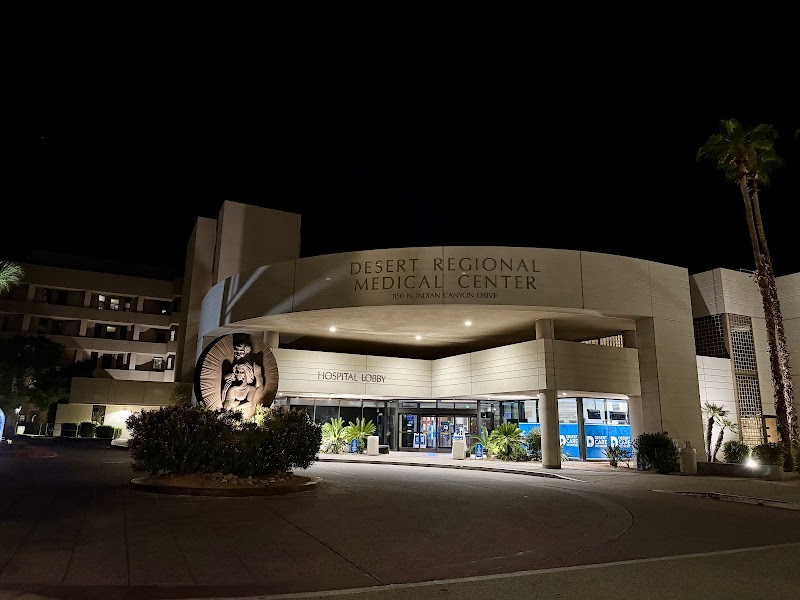
How Does Desert Regional Medical Center D/P Snf Compare to Other California Nursing Homes?

Compared to the 100 nursing homes in California, DESERT REGIONAL MEDICAL CENTER D/P SNF's overall rating (2 stars) is below the state average of 3.1, staff turnover (22%) is significantly lower than the state average of 46%, and health inspection rating (1 stars) is much below the national benchmark.

What Should Families Ask When Visiting Desert Regional Medical Center D/P Snf?

Based on this facility's data, families visiting should ask: "What changes have been made since the serious inspection findings, and how are you preventing similar issues?" "Can I visit during a mealtime to observe dining assistance and food quality?" "How do you handle medical emergencies, and what is your hospital transfer rate?" "Can I speak with family members of current residents about their experience?" These questions are particularly relevant given the facility's Immediate Jeopardy citations.

Is Desert Regional Medical Center D/P Snf Safe?

Based on CMS inspection data, DESERT REGIONAL MEDICAL CENTER D/P SNF has documented safety concerns. Inspectors have issued 1 Immediate Jeopardy citation (the most serious violation level indicating risk of serious injury or death). The facility has a 2-star overall rating and ranks #100 of 100 nursing homes in California. Families considering this facility should ask detailed questions about what corrective actions have been taken since these incidents.

Do Nurses at Desert Regional Medical Center D/P Snf Stick Around?

Staff at DESERT REGIONAL MEDICAL CENTER D/P SNF tend to stick around. With a turnover rate of 22%, the facility is 24 percentage points below the California average of 46%. Low turnover is a positive sign. It means caregivers have time to learn each resident's needs, medications, and personal preferences. Consistent staff also notice subtle changes in a resident's condition more quickly. Registered Nurse turnover is also low at 22%, meaning experienced RNs are available to handle complex medical needs.

Was Desert Regional Medical Center D/P Snf Ever Fined?

DESERT REGIONAL MEDICAL CENTER D/P SNF has been fined $14,043 across 1 penalty action. This is below the California average of $33,219. While any fine indicates a compliance issue, fines under $50,000 are relatively common and typically reflect isolated problems that were subsequently corrected. Families should ask what specific issues led to these fines and confirm they've been resolved.

Is Desert Regional Medical Center D/P Snf on Any Federal Watch List?

DESERT REGIONAL MEDICAL CENTER D/P SNF is not on any federal watch list. The most significant is the Special Focus Facility (SFF) program, which identifies the bottom 1% of nursing homes nationally based on persistent, serious quality problems. Not being on this list means the facility has avoided the pattern of deficiencies that triggers enhanced federal oversight. This is a positive indicator, though families should still review the facility's inspection history directly.