PALM SPRINGS HEALTHCARE & REHABILITATION CENTER
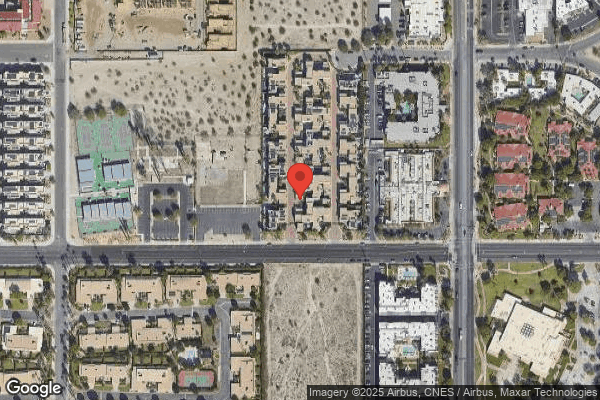
277 S SUNRISE WAY, PALM SPRINGS, CA 92262 (760) 327-8541
For profit - Limited Liability company 99 Beds MARINER HEALTH CARE Data: November 2025
Trust Grade
58/100
#647 of 1155 in CA
Last Inspection: December 2024

Within standard 12-15 month inspection cycle. Federal law requires annual inspections.

Overview

Palm Springs Healthcare & Rehabilitation Center has a Trust Grade of C, which means it is average and sits in the middle of the pack for nursing homes. It ranks #647 out of 1155 facilities in California, placing it in the bottom half, and #25 out of 53 in Riverside County, indicating that only a few local options are better. The facility is improving, with the number of issues decreasing from 9 in 2024 to 5 in 2025. Staffing is rated at 3 out of 5 stars, with a turnover rate of 40%, which is about average for California, and they have more RN coverage than 77% of facilities, helping to ensure better care. However, the facility has faced some concerning incidents, such as failing to service ventilators on time for several residents, which could increase the risk of infection. Additionally, infection control practices were not properly followed for respiratory equipment, and six residents did not have timely health assessments completed, potentially affecting their care needs. Overall, while there are strengths in staffing and improvements in issues, families should be aware of the lapses in care practices.

Trust Score
C
58/100
In California
#647/1155
Bottom 44%
Safety Record
Low Risk
No red flags
Inspections
Getting Better
9 → 5 violations
Staff Stability
○ Average
40% turnover. Near California's 48% average. Typical for the industry.
Penalties
✓ Good
$4,194 in fines. Lower than most California facilities. Relatively clean record.
Skilled Nurses
✓ Good
Each resident gets 47 minutes of Registered Nurse (RN) attention daily — more than average for California. RNs are trained to catch health problems early.
Violations
⚠ Watch
41 deficiencies on record. Higher than average. Multiple issues found across inspections.
★★★☆☆
3.0
Overall Rating
★★★☆☆
3.0
Staff Levels
★★★★☆
4.0
Care Quality
★★★☆☆
3.0
Inspection Score
Stable
2024: 9 issues
2025: 5 issues

The Good

  • 4-Star Quality Measures · Strong clinical quality outcomes
  • Full Sprinkler Coverage · Fire safety systems throughout facility
  • No fines on record
  • Staff turnover below average (40%)

    8 points below California average of 48%

Facility shows strength in quality measures, fire safety.

The Bad

3-Star Overall Rating

Near California average (3.1)

Meets federal standards, typical of most facilities

Staff Turnover: 40%

Near California avg (46%)

Typical for the industry

Federal Fines: $4,194

Below median ($33,413)

Minor penalties assessed

Chain: MARINER HEALTH CARE

Part of a multi-facility chain

Ask about local staffing decisions and management

The Ugly 41 deficiencies on record

Jun 2025 1 deficiency
CONCERN (D) 📢 Someone Reported This

A family member, employee, or ombudsman was alarmed enough to file a formal complaint

Potential for Harm - no one hurt, but risky conditions existed

Accident Prevention (Tag F0689)

Could have caused harm · This affected 1 resident

**NOTE- TERMS IN BRACKETS HAVE BEEN EDITED TO PROTECT CONFIDENTIALITY** Based on interview and record review the facility failed to ensure a safe environment when: 1. Use of siderails were not impleme...

Read full inspector narrative →
**NOTE- TERMS IN BRACKETS HAVE BEEN EDITED TO PROTECT CONFIDENTIALITY** Based on interview and record review the facility failed to ensure a safe environment when: 1. Use of siderails were not implemented in accordance with the siderail evaluation conducted on May 24, 2025, for Resident 2. 2. A physician order was not obtained to implement siderails for one of three sampled residents (Resident 1). These failures had the potential to result in accidents or injury while in bed for Residents 1 and 2. Findings: On June 17, 2025, at 9:35 a.m., an unannounced visit was conducted to investigate a quality care issue. 1. On June 17, 2025, at 9:44 a.m., an interview was conducted with the Administrator (ADM), who stated Resident 2 had an unwitnessed fall out of bed. The ADM stated the following: a. The staff heard a Thump from resident's room, and found resident face down on the floor, next to her bed. b.The nursing staff called 911, and resident was sent to the General Acute Care Hospital (GACH) for evaluation. c. The resident had a history of seizures and was supposed to have siderails on her bed for safety. d. The Unit Manager (UM) assessed Resident 2's bed, after the fall, and stated there were no siderails. On June 17, 2025, at 2:30 p.m., an observation of Resident 2 was conducted. Resident 2 was observed resting in bed, connected to a ventilator, side rails noted on both sides of the bed. Resident 2 opened her eyes to the sound of this writer's voice, but unresponsive to questions. A review of Resident 2's admission record dated, June 18, 2025, indicated resident was admitted to the facility on [DATE], with diagnoses which included respiratory failure with dependance on a ventilator, and epilepsy (A brain disorder that causes seizures). Further review indicated, the resident was discharged from the facility on May 21, 2025, and re-admitted to the facility on [DATE]. A review of Resident 2's, Progress Notes, dated, June 2, 2025, at 3:47 a.m., edited at, 5:52 a.m., by Respiratory Therapist (RT), indicated, . (Resident 2) was found fallen out of bed onto face . Alerted all nearby staff . placed pillow under head as 911 was called. Gave report to (911) . hand off (of Resident 2) to (Emergency Medical Staff) . Further review of Resident 2's, Progress Notes, dated, June 2, 2025, at 5:46 a.m., by Registered Nurse (RN) 2, indicated, . RT heard loud thud . (RT) found (Resident 2) lying on right side next to bed on the floor. (RT) alerted staff and we assessed (resident), (resident) had a red right knee. (Resident 2) was still alert and appeared to have no change in mental status . (Resident in stable condition) . 911 was called at (4:50 a.m.). (Emergency Medical Staff) & (Fire Department) arrived at 4:58 (a.m.) . (Resident 2) was transferred to General Acute Care Hospital {GACH} at 05:07 (a.m.) . On June 17, 2025, at 2:55 p.m., an interview was conducted with Registered Nurse (RN) 1, who stated, residents with a history of seizures and required total care (total dependence on nursing staff for all care) have siderails for safety to help prevent falls out of bed. RN 1 stated, during the admission process, nursing staff would complete a siderail evaluation, and if the evaluation indicated resident required siderails for safety, the nurse would notify the physician, and upon receiving a physician order for siderails, siderails would be placed on the resident's bed. A review of Resident 2's re-admission progress note, dated, May 24, 2025, at 5:42 p.m., indicated, . re-admitted (Resident 2) at . 5:18 p.m., (May 24, 2025) from (GACH) . A review of Resident 2's Side Rail Evaluation, dated, May 24, 2025, at 10:20 p.m., indicated resident did require the use of siderails as a safety precaution. A review of Resident 2's physician dated, May 24, 2025, at 6:44 p.m., indicated resident had a physician order for, . Quarter side rails up . when in bed to minimize risk . On June 17, 2025, at 3:52 a.m., an interview was conducted with the Unit Manager (UM), who stated her expectations are for staff to keep residents safe. The UM further stated side rails were used to keep residents safe from falling out of bed. On June 17, 2025, at 5:35 p.m., an interview was conducted with Licensed Vocational Nurse (LVN) 1, who stated, she was working on (June 2, 2025), when Resident 2 was found on the floor. LVN stated the RT called out for staff to help, and she went to resident's room, she observed Resident 2 face down on the floor next to her bed, and the bed had no side rails. LVN 1 further stated, she was Resident 2's nurse that night, and she did not see physician orders for side rails. Further review of Resident 2's physician orders, indicated resident's side rail orders were discontinued on May 25, 2025, at 6:22 a.m., and not renewed, prior to Resident 2 falling out of bed on June 2, 2025. On June 18, 2025, at 11:58 a.m., a concurrent interview was conducted with the UM, and record review of Resident 2's side rail physician order. The UM verified Resident 2's physician order for the siderails was discontinued on May 25, 2025, and not renewed prior to resident falling out of bed on June 2, 2025. The UM stated, she was not sure why Resident 2's physician order for side rails was discontinued, but the order should have been renewed, as resident's side rail evaluation from May 24, 2025, indicated Resident 2 needed side rails for safety. The UM further stated, her expectations were for nursing staff to check the resident's previous side rail evaluation, physician orders, and should notify the physician if they think a resident is missing side rails on their bed. On June 18,2025, at 12:55 p.m., a concurrent interview with the Director of Nursing (DON), and record review of Resident 2's Side Rail evaluation completed on May 24, 2025, and physician orders was conducted. The DON verified, resident's Side Rail evaluation indicated, resident did require the use of siderails for Safety precaution. The DON further verified, Resident 2's physician order for side rails was discontinued on May 25, 2025, and not renewed, prior to resident's fall out of bed on June 2, 2025. The DON stated, her expectations were for nursing staff to check the last side rail evaluation to ensure residents have side rails if deemed necessary, make sure side rail physician orders were received following the evaluation, and should implement the side rails. A review of the facility policy and procedure( P & P) titled, Side Rails, undated, indicated, . An example of appropriate, medically necessary side rail use for a non-mobile resident might be protection from falls related to strong involuntary spasms or seizures . Nursing completes Side Rail Evaluation form . Obtain MD order, including diagnosis/medical necessity for use of restraint . A review of the facility P&P titled, Fall Management, undated, indicated, . Purpose: Based on previous evaluations and current data, the staff will identify interventions related to the resident's specific risks and causes to try to reduce the risk of the resident falling and to try to minimize complications from falling . The nursing staff, in conjunction with the attending physician . will seek to identify and document resident risk factors for falls and establish a resident-centered falls prevention plan based on relevant assessment information . The nursing staff, with the input of the attending physician, will implement a resident-centered fall prevention plan to reduce the specific risk factor(s) of falls for each resident at risk or with a history of fall . 2. A review of Resident 1's admission record dated June 19, 2025, indicated the resident was admitted to the facility on [DATE], with diagnoses which included chronic respiratory failure and dependence on a ventilator (a mechanical breathing device to assist with inadequate independent breathing). On June 17, 2025, at 2:55 p.m., during an interview, Registered Nurse (RN) 1 stated, residents with history of seizures and need total care (total dependence on nursing staff for all care) have siderails for safety to help prevent falls from bed. RN 1 stated, during the admission process, nursing staff would complete a siderail evaluation, and if the evaluation indicated resident would require siderails for safety, the nurse would notify the physician. RN 1 stated as soon as a physician order for siderails were obtained, then side rails would be implemented and placed on the resident's bed. A review of Resident 1's, Side Rail evaluation, dated, March 13, 2025, at 2:51 a.m., indicated, .Resident (1) require(s) the use of siderails(s) . A review of Resident 1's physician orders did not indicate an order for a side rail until April 8, 2025. On June 17, 2025, at 3:52 a.m., an interview was conducted with the Unit Manager (UM), who stated her expectations were for staff to keep residents safe. The UM further stated side rails are used to keep residents safe from falling out of bed. On June 18, 2025, at 11:58 a.m., during a concurrent interview with UM, and record review of Resident 1's siderail evaluation and physician orders. The UM verified, Resident 1's Side Rail evaluation, indicated resident required the use of siderails, and did not have a physician order for side rails, until April 8, 2025. The UM stated the nursing staff should have obtained a physician order for siderails after the siderail evaluation was completed on March 13, 2025. On June 18,2025, at 12:55 p.m., during a concurrent interview with the Director of Nursing (DON), and record review of Resident 1's siderail evaluation and physician order, the DON verified Resident 1 did require the use of siderails. The DON stated the nursing staff were expected to check the last siderails evaluation to ensure residents would have siderails if deemed necessary, and to make sure a physician order was obtained for the siderails and that it was carried. A review of the policy and procedure (P&P) titled, Side Rails, undated, indicated, . An example of appropriate, medically necessary side rail use for a non-mobile resident might be protection from falls related to strong involuntary spasms or seizures . Nursing completes Side Rail Evaluation form . Obtain MD order, including diagnosis/medical necessity for use of restraint .
May 2025 2 deficiencies
CONCERN (D) 📢 Someone Reported This

A family member, employee, or ombudsman was alarmed enough to file a formal complaint

Potential for Harm - no one hurt, but risky conditions existed

Pharmacy Services (Tag F0755)

Could have caused harm · This affected 1 resident

**NOTE- TERMS IN BRACKETS HAVE BEEN EDITED TO PROTECT CONFIDENTIALITY** Based on interview and record review, the facility failed to maintain an accurate reconciliation of the controlled medication th...

Read full inspector narrative →
**NOTE- TERMS IN BRACKETS HAVE BEEN EDITED TO PROTECT CONFIDENTIALITY** Based on interview and record review, the facility failed to maintain an accurate reconciliation of the controlled medication that had been administered for two of three sampled residents (Residents 2 and 3). This failure increased the risk for medication error, which could negatively impact the residents' health condition. Findings: A review of Resident 2's admission Record, indicated the resident was admitted to the facility on [DATE], with diagnoses which included fracture (break in the bone) of right humerus (upper arm bone). A review of Resident 2 ' s Physician Order Report, for May 2025, indicated, oxycodone (narcotic medication) - Schedule II tablet; 5 mg (milligram-unit of measurement); amt (amount): 1 tab; oral Special Instructions: Dx (diagnosis) Moderate pain 5-6 (pain level), Severe pain 7-10 (pain level) Every 4 (four) Hours - PRN . Further review of the physician order report indicated the medication was ordered on May 2, 2025. On May 29, 2025, at 10:20 a.m., during an interview, Licensed Vocational Nurse (LVN) 1 stated when administering narcotics, the nurses are expected to sign on the narcotic sheet that they removed the medication and then sign the Medication Administration Record (MAR) after administering the medication. During a concurrent review of Resident 2' s narcotic sheet and electronic MAR for May 2025, LVN 1 stated Resident 2' s Oxycodone was removed from the medication cart on the following dates and times: a. May 6, 2025, at 8:39 a.m., and 8:45 p.m.; b. May 7, 2025, at 6:50 a.m. and 11:30 a.m.; c. May 8, 2025, at 9:34 a.m.; and d. May 11, 2025, at 11:54 p.m. LVN 1 stated oxycodone was not documented in the MAR as administered on May 6, May 7, May 8, and May 11, 2025. LVN 1 stated the licensed nurses should sign the MAR that they administered the medication. A review of Resident 3's admission record, indicated the resident was initially admitted to the facility on [DATE], and was re-admitted on [DATE], with diagnoses which included urinary tract infection. A review of Resident 3's Physician Order Report, for May 2025, indicated, acetaminophen-hydrocodone (Norco - narcotic) 325-5 mg tablet; 5/325 MG; amt: 1 tab; oral Special Instructions: PRN Moderate pain (SCALE 5-6) OR Severe pain (SCALE 7-10) .Every 4 Hours - PRN . The physician order report indicated the medication was ordered on April 9, 2025. On May 29, 2025, at 11:07 a.m., during an interview and record review of Resident 3 ' s narcotic sheet and electronic MAR for May 2025, the Infection Preventionist (IP) stated, Resident 3 ' s Norco was removed from the medication cart on May 1, 2025, at 4:35 p.m., on May 13, 2025, at 12:47 p.m., and May 14, 2025, at 8:57 a.m., but was not documented on the MAR as administered. The IP stated the practice was when narcotics were given, the licensed nurses should be signing the MAR. On May 29, 2025, at 2:15 p.m. during an interview, the Director of Nursing (DON) stated the licensed nurses should sign the narcotic sheet and the MAR when they administer narcotic medications. The DON stated the facility policy for Controlled Substances should be followed. On May 29, 2025 at 3:40 p.m., during a concurrent interview with LVN 2 and a record review of Residents 2 and 3's narcotic sheet and MAR, LVN 2 stated he would document narcotics administration on the narcotic sheet and on the MAR. LVN 2 stated he administered Resident 3's Norco on May 1, 2025 and Resident 2's oxycodone on May 6, 2025, but he did not document on the MAR. LVN 2 stated he probably got busy and he should have documented on Residents 2 and 3's MAR. A review of the facility policy and procedure titled, Controlled Substances, dated November 2017, indicated .Controlled Medications are . medications are subject to special handling, storage, disposal, and record keeping at the nursing care center, in accordance with federal and state laws and regulations . When a controlled medication is administered, the licensed nurse administering the medication immediately enters the following information on the accountability record when removing dose from controlled storage .Date and time of administration .Amount administered .Signature of the nurse administering the dose .Administer the controlled medication and document dose administration on the MAR .
CONCERN (D) 📢 Someone Reported This

A family member, employee, or ombudsman was alarmed enough to file a formal complaint

Potential for Harm - no one hurt, but risky conditions existed

Infection Control (Tag F0880)

Could have caused harm · This affected 1 resident

**NOTE- TERMS IN BRACKETS HAVE BEEN EDITED TO PROTECT CONFIDENTIALITY** Based on observation, interview, and record review, the facility failed to implement proper infection control precaution in acco...

Read full inspector narrative →
**NOTE- TERMS IN BRACKETS HAVE BEEN EDITED TO PROTECT CONFIDENTIALITY** Based on observation, interview, and record review, the facility failed to implement proper infection control precaution in accordance with the facility policy and procedure, when one of nine residents (Resident 1) was identified positive of carbapenem-resistant pseudomonas aeruginosa (CRPA - a type of bacteria resistant to a powerful class of antibiotics) on March 28, 2025. This failure had the potential to negatively impact the vulnerable residents in the subacute care (a level of care needed by a resident who does not require hospital acute care but who requires more intensive licensed skilled nursing care than is provided to the majority of patients in a skilled nursing facility) unit. Findings: A review of Resident 1's admission record indicated the resident was initially admitted in the facility on September 28, 2024, and re-admitted on [DATE], with diagnoses which included respiratory failure with tracheostomy (an opening surgically created through the neck into the windpipe to allow air to fill the lungs) and resistance to carbapenems (occurs when bacteria defeat the antibiotic designed to kill them). A review of Resident 1's Sputum Culture, Final Update Result, dated March 28, 2025, indicated there was heavy growth of CRPA. A review of the same document indicated that the medical doctor (MD) was notified and ordered no antibiotics and for the staff to monitor. On May 28, 2025, at 12:15 p.m., during observation, there was contact precaution (used to prevent the spread of infections transmitted through direct or indirect contact with a patient or environment) and droplet precaution (used to prevent the spread of diseases that are transmitted through respiratory droplets generated by an infected individual when coughing and sneezing) signs posted outside the door of Resident 1' s room. Resident 1 was lying in bed, turned to his left side, with tracheostomy connected to oxygen. On May 28, 2025, at 1:20 p.m., during an interview, Registered Nurse (RN) 1 stated on March 16, 2025, the resident had a fever and sputum culture was ordered and an antibiotic therapy was started. RN 1 stated the facility received the final sputum culture result on March 28, 2025, which indicated heavy growth of CRPA. RN 1 stated it was another RN who received the results. RN 1 stated there was no documentation in the progress notes that the RN notified the Infection Preventionist (IP) on Resident 1 ' s sputum culture result. RN 1 stated the IP should be notified when a resident ' s laboratory result indicated CRPA. On May 28, 2025, at 1:35 p.m., during an interview, the IP stated on April 22, 2025, RN 2 reported Resident 2 ' s sputum culture result which came out positive of CRPA on March 28, 2025. The IP stated she moved Resident 1 to a different room and placed the resident on contact and droplet precaution. The IP stated she did not receive any report that Resident 1 had CRPA before April 22, 2025. The IP stated Resident 1 should have been placed on contact isolation immediately on March 28, 2025. The IP stated contact isolation required for the staff to don PPE (Personal Protective Equipment) every time they would enter the residents ' room regardless of what they are going in for and residents have dedicated equipment such as blood pressure machine and stethoscope. The IP stated CRPA required contact isolation. On May 28, 2025, at 4:19 p.m., during an interview, the Director of Nursing (DON) stated the facility received Resident 1's sputum culture result but was not reviewed. The DON stated nothing was implemented until April 22, 2025. The DON stated the RN did not notify the IP when she received Resident 1's sputum culture. In addition, the DON stayed the RN should have reported the culture result to the IP and to the physician and document it. On May 29, 2025, at 11:25 a.m., during an interview, the IP stated Resident 1 was not on contact isolation for a month. A review of the undated facility policy and procedure titled, Carbapenem Resistant Pseudomonas Aeruginosa (CRPA), indicated, .The facility will adhere to the Centers for Disease Control and Prevention (CDC) guidelines for the surveillance, diagnosis, and treatment of Carbapenem-resistant Pseudomonas Aeruginosa (CRPA) . The facility will adhere to the CDC's recommendations to prevent CRPA transmission .Contact Precautions: Place CRPA colonized or infected residents on Contact Precautions (CP) .
Feb 2025 2 deficiencies
CONCERN (E) 📢 Someone Reported This

A family member, employee, or ombudsman was alarmed enough to file a formal complaint

Potential for Harm - no one hurt, but risky conditions existed

Respiratory Care (Tag F0695)

Could have caused harm · This affected multiple residents

**NOTE- TERMS IN BRACKETS HAVE BEEN EDITED TO PROTECT CONFIDENTIALITY** Based on observation, interview, and record review, the facility failed to ensure that the ventilators (vent -a medical device t...

Read full inspector narrative →
**NOTE- TERMS IN BRACKETS HAVE BEEN EDITED TO PROTECT CONFIDENTIALITY** Based on observation, interview, and record review, the facility failed to ensure that the ventilators (vent -a medical device that helps a patient breathe), for eight of 12 residents, Residents 1, 2, 3, 4, 5, 6, 7, and 8, were serviced by the due dates indicated on the label at the back of the vents and according to the manufacturer ' s recommendation. This failure had the potential to result in Residents 1, 2, 3, 4, 5, 6, 7, and 8 ' s increased risk for infection and improper ventilation. Findings: On February 26, 2025, an unannounced visit was conducted at the facility. On February 26, 2025, at 8:36 a.m., during a concurrent observation of Resident 1 with Respiratory Therapist (RT) 1, Resident 1 was lying in bed with eyes closed, with a tracheostomy tube (trach tube - a tube inserted through a surgically created opening in the neck, directly into the windpipe to help a person breathe when their mouth and nose are obstructed or not working properly) connected to a vent. RT 1 stated Resident 1 ' s vent had a label indicating a service due date of March 2, 2024. The RT checked the vent settings and stated the vent had 22,864 blower hours (BH - cumulative runtime of the vent ' s blower or turbine, which is responsible for generating airflow and pressure for patient ventilation). On February 26, 2025, at 9:03 a.m., during a concurrent observation of Resident 2 and an interview with RT 1, Resident 2 was in her room awake, alert and sitting in bed, with a trach tube connected to a vent. RT 1 stated Resident 2 ' s vent had a service due date of March 22, 2024, and had 25,042 BH. On February 26, 2025, at 9:08 a.m., during a concurrent observation of Resident 3 and an interview with RT 1, Resident 3 was in her room, lying in bed with eyes closed, with a trach tube connected to a vent. RT 1 stated Resident 3 ' s vent had a service due date of December 6, 2024, and had 11,645 BH. On February 26, 2025, at 9:12 a.m., during a concurrent observation of Resident 4 and an interview with RT 1, Resident 4 was in his room, lying in bed with eyes closed, with a trach tube connected to a vent. RT 1 stated Resident 4 ' s vent had a service due date of December 6, 2024, and had 7,938 BH. On February 26, 2025, at 9:24 a.m., during a concurrent observation of Resident 5 and an interview with RT 1, Resident 5 was in his room, , awake, alert, lying in bed, watching television, with a trach tube connected to a vent. RT 1 stated Resident 5 ' s vent had a servcice due date of December 6, 2024, and had 10,861 BH. On February 26, 2025, at 9:30 a.m., during a concurrent observation of Resident 6 and an interview with RT 1, Resident 6 was in her room, lying in bed with eyes closed, with a trach tube connected to a vent. RT 1 stated Resident 6 ' s vent had a service due date of July 5, 2023, and had 18,298 BH. On February 26, 2025, at 9:43 a.m., during a concurrent observation of Resident 7 and interview with RT 1, Resident 7 was in his room, lying in bed with eyes closed, with a trach tube connected to a vent. RT 1 stated Resident 7 ' s vent had a service due date of December 6, 2024, and had 13,234 BH. A review of Resident 1 ' s medical record indicated she was admitted to the facility on [DATE], with diagnoses which indicated anoxic brain damage (damage to the brain caused by a complete lack of oxygen), respiratory failure (a serious condition that occurs when your lungs can't get enough oxygen into your blood) with tracheostomy and dependence on vent. A review of Resident 2 ' s medical record indicated she was admitted re-admitted to the facility on [DATE], with diagnoses which indicated respiratory failure with tracheostomy and dependence on vent. A review of Resident 3 ' s medical record indicated she was admitted to the facility on [DATE], with diagnoses which included anoxic brain damage (a condition when the brain is completely deprived of oxygen) and respiratory failure with tracheostomy and dependence on vent. A review of Resident 4 ' s medical record indicated he was re-admitted to the facility on [DATE], with diagnoses which included nontraumatic intracerebral hemorrhage (bleeding within the brain tissue without any head injury) and respiratory failure with tracheostomy and dependence on vent. A review of Resident 5 ' s medical record indicated he was re-admitted to the facility on [DATE], with diagnoses which included respiratory failure with tracheostomy and dependence on vent. A review of Resident 6 ' s medical record indicated she was re-admitted to the facility on [DATE], with diagnoses which included respiratory failure with tracheostomy and dependence on vent. A review of Resident 7 ' s medical record indicated he was re-admitted to the facility on [DATE], with diagnoses which included stroke (a condition when blood flow to the brain is interrupted) with right sided weakness, respiratory failure with tracheostomy and dependence on vent. On February 26, 2025, at 10:59 a.m., during an interview, RT 1 stated the vents should undergo preventative maintenance (PM) yearly, based on the due dates indicated on the labels, to ensure that the vents were functioning properly and for residents ' safety. RT 1 stated he was instructed to focus on the vents ' BH instead. RT 1 stated if the vent had not reached 30,000 BH, it was considered safe to use. RT 1 stated it was his responsibility to ensure that the vents undergo PM, and he requested for the PM of the vents last week to his Supervisor and the owner of (name of respiratory company) over the phone. RT 1 stated once he made the request, it was beyond his control. On February 26, 2025, at 4:45 p.m., during an interview, the ADM stated the RN Sub-acute Coordinator and RT 1 should ensure that all vents are functioning and had undergone PM. The ADM stated she was unaware that the vents had not undergone PM. The ADM stated the vents for Residents 1, 2, 3, 4, 5, 6, 7, and 8 should have undergone PM on the due dates indicated on the label of each vent. A record review of the undated operating manual of the vents titled VIVO 50 Operating Manual indicated .Regular maintenance inspections and controls shall be carried out at least every 12 months .
CONCERN (E) 📢 Someone Reported This

A family member, employee, or ombudsman was alarmed enough to file a formal complaint

Potential for Harm - no one hurt, but risky conditions existed

Infection Control (Tag F0880)

Could have caused harm · This affected multiple residents

**NOTE- TERMS IN BRACKETS HAVE BEEN EDITED TO PROTECT CONFIDENTIALITY** Based on observation, interview, and record review, the facility failed to ensure for 12 of 14 residents, Residents 2, 3, 4, 5, ...

Read full inspector narrative →
**NOTE- TERMS IN BRACKETS HAVE BEEN EDITED TO PROTECT CONFIDENTIALITY** Based on observation, interview, and record review, the facility failed to ensure for 12 of 14 residents, Residents 2, 3, 4, 5, 6, 8, 9, 10, 11, 12, 13 and 14, infection control practices where in place when multiple respiratory equipment was not changed and dated according to the facility ' s policy and procedure. Findings: On February 26, 2025, an unannounced visit was conducted at the facility. On February 26, 2025, at 8:36 a.m., during an interview, Respiratory Therapist (RT) 1 stated respiratory equipment was changed routinely and as needed (PRN). RT 1 stated they have a schedule to follow. RT 1 stated ventilator circuits, bacterial viral filters (BVF) are changed monthly and PRN; the heat moisture exchangers (HME – a miniature artificial nose that warms and moisten the air a person breathes through their tracheostomy) are changed every Monday, Wednesday and Friday; the [NAME] suction catheters (a medical device that allows to safely suction (remove mucus) from a patient's airway (like through a tracheostomy tube) while they are still on a ventilator, without disrupting their ventilation) are changed every Tuesday. The HHNs are changed every Saturday. The oxygen tubing is changed every Thursday. On February 26, 2025, at 9:03 a.m., during a concurrent observation of Resident 2 and interview with RT 1, Resident 2 was in her room awake, alert and sitting in bed, with a tracheostomy tube (trach tube - a tube inserted through a surgically created opening in the neck, directly into the windpipe to help a person breathe when their mouth and nose are obstructed or not working properly) connected to a ventilator (vent -a medical device that helps a patient breathe). RT 1 stated the oxygen tubing was dated January 30, 2025, and should have been changed. On February 26, 2025, at 9:08 a.m., during a concurrent observation of Resident 3 and an interview with RT 1, Resident 3 was in her room, lying in bed with eyes closed, with a trach tube connected to a vent. RT 1 stated the BVF filter was dated January 21, 2025, and should have been changed on February 21, 2025. On February 26, 2025, at 9:12 a.m., during a concurrent observation of Resident 4 and an interview with RT 1, Resident 4 was in his room, lying in bed with eyes closed, with a trach tube connected to a vent. RT 1 stated the HHN and suction tip were undated and should have been dated when changed. On February 26, 2025, at 9:20 a.m., during a concurrent observation of Resident 8 and an interview with RT 1, Resident 8 was in his room, lying in bed with eyes closed, with a trach tube connected to a vent. RT 1 stated the BVF was undated and should have been dated when changed. On February 26, 2025, at 9:22 a.m., during a concurrent observation of Resident 9 and an interview with RT 1, Resident 9 was in her room, lying in bed with eyes closed, with a trach tube connected to a vent. RT 1 stated the BVF and oxygen tubing were undated and should have been dated when changed. On February 26, 2025, at 9:24 a.m., during a concurrent observation of Resident 5 and an interview with RT 1, Resident 5 was in his room, awake, alert, lying in bed, watching television, with a trach tube connected to a vent. RT 1 stated the BVF was dated March 5, 2025. RT 1 stated the RT who changed the BVF may have dated it for when it needs to be change. RT 1 stated the RT should have dated the BVF on the date it was changed. On February 26, 2025, at 9:30 a.m., during a concurrent observation of Resident 6 and an interview with RT 1, Resident 6 was in her room, lying in bed with eyes closed, with a trach tube connected to a vent. RT 1 stated the HHN was undated and should have been dated when changed; the BVF was dated December 6, 2024, and should have been changed on January 6, 2025; the oxygen tubing was dated January 30, 2025, and should have been changed on February 20, 2025. On February 26, 2025, at 9:33 a.m., during a concurrent observation of Resident 10 and an interview with RT 1, Resident 10 was in her room, lying in bed with eyes closed, with a trach tube connected to a vent. RT 1 stated the HHN was not dated and should have been dated when changed; the BVF filter was dated January 9, 2025, and should have been changed on February 9, 2025. On February 26, 2025, at 9:37 a.m., during a concurrent observation of Resident 11, and an interview with RT 1, Resident 11 was in his room, lying in bed with eyes closed, with a trach tube connected to a vent. RT 1 stated the HHN and BVF were not dated and should have been dated when changed. On February 26, 2025, at 9:39 a.m., during a concurrent observation of Resident 12, and an interview with RT 1, Resident 12 was in his room, lying in bed with eyes closed, with a trach tube connected to a vent. RT 1 stated the HHN and BVF were not dated and should have been dated when changed. On February 26, 2025, at 9:43 a.m., during a concurrent observation of Resident 13, and an interview with RT 1, Resident 13 was in his room, lying in bed with eyes closed, with trach connected to a vent. RT 1 stated the BVF was undated and should have been dated when changed; the oxygen tubing was dated January 30, 2025, and should have been changed on February 20, 2025. On February 26, 2025, at 9:46 a.m., during a concurrent observation of Resident 14, and an interview with RT 1, Resident 14 was in his room, lying in bed, alert and awake, with a trach tube connected to an oxygen concentrator (a medical device that gives you extra oxygen). RT 1 stated the oxygen tubing was dated January 30, 2025, and it should have been changed on February 20, 2025. On February 26, 2025, at 10:59 a.m., during an interview, RT 1 stated the RTs should date respiratory equipment when changing it to ensure they follow routine equipment changes as scheduled, prevent the use of outdated respiratory equipment on residents and maintain infection control standards. On February 26, 2025, at 4:15 p.m., during an interview, Registered Nurse (RN) 1, who was also the Sub-acute Coordinator, stated the night shift (6:30 p.m. – 6:30 a.m.) RTs were responsible for changing respiratory equipment and they should be dating and documenting when equipment is changed. RN 1 further stated it was important to date and change respiratory equipment to keep track of when it was changed and to maintain infection control practices. A review of the undated facility document titled, RESPIRATORY EQUIPMENT CHANGE SCHEDULE indicated .NIGHT SHIFT .TUESDAY .BALLARDS . THURSDAY .O2 (OXYGEN) TUBING .SATURDAY .HHNS .CHANGE EQUIPMENT PRN IF NEEDED .VENT CIRCUITS & BAC FILTERS (BVF) ARE TO BE CHANGED EVERY 5TH OF THE MONTH .DATE EQUIPMENT NEATLY AND VISIBLY WITH DAY, MONTH AND YEAR . A review of the facility ' s undated policy and procedure titled, .Changing Disposable Equipment indicated .Disposable equipment is for single patient use only and be change (sic) as regularly scheduled and on a PRN basis .Disposable equipment must be labeled with the patient ' s name and date. Equipment such as (i.e. yankers (sic), suction tubing and HHN) must be bagged individually and label (sic) properly .
Dec 2024 6 deficiencies
CONCERN (D)

Potential for Harm - no one hurt, but risky conditions existed

Deficiency F0699 (Tag F0699)

Could have caused harm · This affected 1 resident

**NOTE- TERMS IN BRACKETS HAVE BEEN EDITED TO PROTECT CONFIDENTIALITY** Based on observation, interview, and record review, the facility failed to ensure a resident with post-traumatic stress disorder...

Read full inspector narrative →
**NOTE- TERMS IN BRACKETS HAVE BEEN EDITED TO PROTECT CONFIDENTIALITY** Based on observation, interview, and record review, the facility failed to ensure a resident with post-traumatic stress disorder (PTSD - a disorder in which a person has difficulty recovering after experiencing or witnessing a terrifying event) was identified timely and the trauma informed practices and care plan were implemented for one of one resident reviewed (Resident 70). This failure resulted in Resident 70's verbalization of feeling sad and resulted in his mental and psychosocial needs not being met by the facility. Findings: On December 9, 2024, at 4 p.m., Resident 70 was observed sitting upright in his bed awake, alert, and able to verbalize his needs. Resident 70 verbalized the past history of trauma in his life. He was asking to talk to someone in regards to his feelings and about his PTSD. On December 10, 2024, Resident 70's record was reviewed. Resident 70 was admitted to the facility on [DATE], with diagnoses which included Chronic Obstructive Pulmonary Disease(COPD- lung disease). The history and physical dated April 20, 2024, indicated Resident 70 had the capacity to make health care decisions. The Minimum Data Set (MDS- an assessment tool) dated October 27, 2024, indicated Resident 70's Brief Interview for Mental Status (BIMS - an assessment tool to screen for cognitive impairment) a score of 13, being cognitively intact. The physician's orders dated April 19, 2024, indicated .May have Psychiatry and Psychology consult as needed . The (name of behavioral group) document dated June 5, 2024, indicated Resident 70 was visited by a psychologist (a mental health professional). The psychologist notes indicated Resident 70 .verbalized sadness, nervousness and depression .a traumatic life-history living with alcoholic mother and seven different abusive step fathers .placed in the foster care system at a young age .described his life as all trauma .heavy tobacco dependence, substance abuse including alcohol .abused by his partner .lost his finances .had severe automobile accident in his early 20's . There was no documented evidence Resident 70's pertinent psychosocial history and evaluation of the psychologist were discussed by the Interdisciplinary Team (IDT - a group of healthcare professionals from different disciplines who coordinates and deliver care to patients). There was no documented evidence a trauma informed care plan for Resident 70's was developed since June 5, 2024, after Resident 70 was evaluated by the psychologist. The document titled,Psychiatric Visit Progress Report, dated December 10, 2024, indicated, .Resident 70 wanted to ask about mental health, had PTSD and wanted therapy .severe depression . The physician's order dated December 10, 2024, indicated Resident 70 was started on Remeron (a medication used for depression) 15 milligram (mg - a unit of measurement) nightly for depression. On December 11, 2024, at 3:59 p.m., a concurrent interview and record review was conducted with the Social Service Director (SSD). The SSD stated Resident 70 did not verbalize any traumatic life history to her when he was admitted . She acknowledged she made a referral to the psychologist on June 5, 2024, when the staff told her Resident 70 was feeling sad and wanted to talk to someone. She stated she should have discussed the result of the psychologist's evaluation on April 5, 2024, with the IDT. She stated a care plan was not developed for Resident 70's PTSD. The facility's undated policy and procedure, titled, Trauma Informed Care, indicated, .To guide staff in appropriate and compassionate care specific to individuals who have experienced trauma .Trauma-informed care is culturally sensitive and person-centered .Caregivers are taught strategies to help eliminate, mitigate or sensitively address a resident's triggers .
CONCERN (D)

Potential for Harm - no one hurt, but risky conditions existed

Deficiency F0757 (Tag F0757)

Could have caused harm · This affected 1 resident

Based on interview and record review, the facility failed to ensure one of five residents reviewed (Resident 196) was free of unnecessary medications when pain assessments were not documented with the...

Read full inspector narrative →
Based on interview and record review, the facility failed to ensure one of five residents reviewed (Resident 196) was free of unnecessary medications when pain assessments were not documented with the administration of pain medications. This failure had the potential for unnecessary or ineffective pain management for Resident 196. Findings: Resident 196 had a physician order, dated December 6, 2024, for hydrocodone with acetaminophen (Norco, a controlled medication for pain) 5-325 milligrams (mg), one tablet by mouth every four hours as needed for Moderate pain 4-6 Severe pain 7-10. A review of Resident 196's December 2024 Medication Administration Record (MAR) indicated Resident 196 received a dose of Norco 5-325 mg on the following dates and times: - December 7, 2024, at 10:12 a.m.; - December 8, 2024, at 10:03 p.m.; - December 10, 2024, at 8:54 p.m.; and - December 11, 2024, at 8:27 a.m. The record did not indicate the pain rating scale (pain score, numerical value between zero and 10, where zero means no pain and 10 means severe pain) and pain assessment before or after the Norco administration. During an interview on December 9, 2024, at 2:53 p.m., Licensed Vocational Nurse (LVN) 2 stated the nurse needs to document the pain assessment, including pain score and pain location, when documenting the administration of the pain medication in the MAR. During an interview on December 11, 2024, at 10:36 a.m., the Director of Nursing (DON) stated the nurse needs to perform a pain assessment before and after administering a pain medication to the resident. The DON stated the nurse needs to correctly document the pain assessment before and after administering pain medication. The DON stated documentation of the pain assessment is important to assess effectiveness of the medication. The DON stated if the pain assessment is not documented, the facility will not know if the resident's pain was managed, improved, or got worse. During a concurrent interview and record review on December 12, 2024, at 11:10 a.m., with the DON, Resident 196's medical record was reviewed. The DON verified Resident 196 received Norco 5-325 mg without documentation of any pain assessment before and after medication administration. The DON stated the pain score before and after the Norco was given should have been documented. During a review of the facility's P&P titled, .Pain Management, undated, the policy indicated, .Document the resident's response to pain management in the Pain Management Flow Sheet .Record pain assessment results .Document in the electronic health records system .
CONCERN (D)

Potential for Harm - no one hurt, but risky conditions existed

Infection Control (Tag F0880)

Could have caused harm · This affected 1 resident

**NOTE- TERMS IN BRACKETS HAVE BEEN EDITED TO PROTECT CONFIDENTIALITY** Based on observation, interview, and record review, the facility failed to ensure infection control practices were implemented w...

Read full inspector narrative →
**NOTE- TERMS IN BRACKETS HAVE BEEN EDITED TO PROTECT CONFIDENTIALITY** Based on observation, interview, and record review, the facility failed to ensure infection control practices were implemented when: 1. Certified Nursing Assistant (CNA) 1 did not wear personal protective equipment (PPE - equipment used to protect against infection or illness) when taking care of a resident (Resident 43) on enhanced barrier precautions (EBP - an infection control intervention designed to reduce transmission of multidrug resistant organisms in nursing homes); 2. The facility failed to place a resident (Resident 50) on EBP who had an indwelling urinary catheter (a tube placed in the body to drain and collect urine from the bladder); and 3. The facility failed to place a resident (Resident 248) on EBP who had a gastrostomy tube (a feeding tube through the skin and the stomach wall). These failures had the potential to increase the spread of multidrug resistant organisms and infections from staff to residents which could lead to illness or death. Findings: 1. On December 9, 2024, at 11:13 a.m., during an observation of the facility, Resident 43's room had a sign posted outside the door that indicated Enhanced Barrier Precuations .Providers and Staff Must .Wear gloves and a gown for the following high-contact resident care activities .any skin opening requiring a dressing . CNA 1 was observed not wearing PPE when providing care to Resident 43. During an interview on December 9, 2024, at 11:33 a.m. CNA 1 stated he forgot to wear PPE. CNA 1 agreed that Resident 43 was on EBP and further stated he should have worn PPE while providing care to prevent the spread of germs and protect the residents from infection. On December 9, 2024, at 12:15 p.m., an interview was conducted with LVN 3. LVN 3 stated that PPE must be worn when providing care to residents who have a gastrostomy tube, tracheostomy (a surgically created hole in the windpipe) or any type of catheter. LVN 3 further stated wearing PPE is important because it is for the resident's protection and staff's protection from micro-organisms, bacteria and secretions. On December 11, 2024, at 12:35 p.m., an interview was conducted with the Director of Nursing (DON). The DON stated it is expected that staff adhere to PPE procedures to prevent spread of multiple organisms such as MRSA (Methicillin Resistant Staphylococcus Aureus - a germ that is resistant to some antibiotics), and other communicable diseases. On December 12, 2024, at 4:27 p.m., a review of Resident 43's admission record indicated he was admitted to the facility on [DATE], and readmitted to the facility on [DATE]. Resident 43's diagnosis included chronic respiratory failure (a condition where there's not enough oxygen or too much carbon dioxide in your body), urinary tract infection and MRSA. A review of Resident 43's History and Physical, dated September 9, 2024, indicated Resident 43 had the capacity to make decisions. A review of Resident 43's Physician Order Report, dated December 12, 2024, indicated, .Enhanced Barrier Precautions .for d/t (due to) indwelling catheter, feeding tube and tracheostomy . A review of the undated facility's policy and procedure (P&P) titled, Personal Protective Equipment Guidelines, the P&P indicated, .All employees using PPE are expected to observe .precautions . 2. On December 9, 2024, at 3:09 p.m., Resident 248 was observed lying in bed. Resident 248 was observed to have a urinary catheter attached to a drainage bag. In a concurrent interview with Resident 248, he stated he came in to the facility with the urinary catheter. On December 11, 2024, Resident 248's record was reviewed. Resident 248 was admitted to the facility on [DATE], with diagnoses which included obstructive and reflux uropathy (a condition where the urine flow is hindered due to a blockage in the urinary tract, with a backflow of urine). 3. On December 9, 2024, at 4:02 p.m., Resident 50 was observed lying in bed. Resident 50 was observed to raise his shirt to show his gastrostomy tube located above the navel (belly button). In a concurrent interview with Resident 50, he stated he was being fed through the tube. He also stated the staff did not use gloves or a gown when they fed him. On December 11, 2024, Resident 50's record was reviewed. Resident 50 was admitted to the facility on [DATE], with diagnoses which included dysphagia (difficulty swallowing foods or liquids). There were no EBP signs posted on the doors of Residents 248 and 50, and no isolation carts with PPE available outside of their rooms. On December 9, 2024, at 3:33 p.m., during an interview with CNA 2, CNA 2 stated the use of PPE (gloves and gowns) is a must when emptying a urinary catheter or rendering care to residents on EBP. She stated there were no EBP signs posted on the door and isolation carts with PPE were not available outside the rooms for Residents 248 and 50. She stated there should have been an EBP sign posted on the doors and an isolation cart outside the rooms of Residents 248 and 50. On December 9, 2024, at 3:49 p.m., during an observation with CNA 3, CNA 3 entered the rooms of Residents 248 and 50. CNA 3 was observed to use alcohol based hand rub but did not use any PPE. In a concurrent interview with CNA 3, she stated she was not sure if an EBP sign should be posted for residents with indwelling catheter and gastrostomy tube. CNA 3 asked another staff member and verified an EBP sign should be posted on the door and an isolation cart with PPE should be available when a resident has a foley catheter or a gastrostomy tube. On December 9, 2024, at 4:01 p.m., during an interview with LVN 4, she stated residents with an indwelling urinary catheter, gastrostomy tube, and IV (intravenous - a thin, flexible tube inserted into a vein to deliver fluids, medications, blood products, or nutrition directly into the bloodstream) should be placed on EBP. She stated Resident 248, who had an indwelling urinary catheter and Resident 50, who had a gastrostomy tube should have an EBP sign posted on the door and an isolation cart with PPE available for use. LVN 4 also stated other staff like the CNAs would not be aware of the precautons if there was no EBP sign posted on the door. On December 10, 2024, at 11:13 a.m., during an interview with the Infection Prevention (IP) nurse, she stated residents with an IV, gastrostomy tube, indwelling urinary catheter, wounds, and ostomies (a surgically created opening in the body) should be placed on EBP. She stated there should be an EBP sign posted on the door and an isolation cart with PPE available outside the room. A review of the undated facility's P&P titled, Enhanced Barrier Precautions (EBP), the P&P indicated, .Infection control intervention designed to reduce transmission of multidrug-resistant organisms (MDROs) by employing targeted gown and glove use during high-contact resident care activities .EBP shall be used in conjunction with standard precautions and expand the use of personal protective equipment (PPE) to donning of gown and gloves during high-contact resident care activities that may result in transfer of MDROs to staff hands and clothing .EBP are indicated for residents with any of the following .Wounds and/or indwelling medical devices even if the resident is not known to ne infected or colonized with an MDRO .
CONCERN (E)

Potential for Harm - no one hurt, but risky conditions existed

Deficiency F0638 (Tag F0638)

Could have caused harm · This affected multiple residents

Based on interview and record review, the facility failed to timely (within three months) complete the quarterly MDS (Minimum Data Set - an assessment tool used to evaluate the health status of nursin...

Read full inspector narrative →
Based on interview and record review, the facility failed to timely (within three months) complete the quarterly MDS (Minimum Data Set - an assessment tool used to evaluate the health status of nursing home residents) assessment for six of 81 residents still in the facility (Residents 57, 14, 38, 28, 30 and 35). This failure had the potential to negatively impact the residents' quality of care and had the potential for staff to not be aware of the residents' care needs and provide appropriate treatment. Findings: On December 11, 2024, at 10:05 a.m., an interview and concurrent record review was conducted with the MDS nurse. The MDS nurse stated Resident 57's MDS quarterly assessment was over three months old. The MDS quarterly assessment was reviewed for all 81 residents in the facility. Five other residents did not have the MDS quarterly assessment completed within three months from the last assessment on August 4, 2024: Resident 14, Resident 38, Resident 28, Resident 30, and Resident 35. The MDS nurse stated the MDS assessments for Residents 57, 14, 38, 28, 30, and 35 should have been completed by November 4, 2024, within three months from the last quarterly assessment, which was August 4, 2024. On December 11, 2024, at 11:54 am, an interview and concurrent record review was conducted with the Director of Nursing (DON). The DON confirmed the quarterly MDS assessments for Residents 57, 14, 38, 28, 30, and 35 was not completed timely, and it should have been done within three months (92 days) from the last quarterly assessment. The facility policy and procedure titled, .Submission and Correction of the MDS Assessments ., revised October 2023, was reviewed. The policy indicated, .Nursing homes are required to submit Omnibus Budget Reconciliation Act (OBRA) required Minimum Data Set (MDS) records for all residents in Medicare- or Medicaid-certified beds regardless of the payer source .An OBRA assessment (comprehensive or Quarterly) is due every quarter unless the resident is no longer in the facility .
CONCERN (E)

Potential for Harm - no one hurt, but risky conditions existed

Pharmacy Services (Tag F0755)

Could have caused harm · This affected multiple residents

Based on observation, interview, and record review, the facility failed to ensure the accountability of controlled medications (those with high potential for abuse and addiction) and the appropriate u...

Read full inspector narrative →
Based on observation, interview, and record review, the facility failed to ensure the accountability of controlled medications (those with high potential for abuse and addiction) and the appropriate use of pain medications when: 1. The Controlled Drug Records (accountability records, an inventory sheet that keeps records of the usage of controlled medications) for five of six residents reviewed (Residents 7, 53, 54, 68, and 70) did not reconcile with the Medication Administration Records (MAR). This failure resulted in inaccurate accountability and the potential for abuse and diversion of controlled medications; and 2. Nursing staff failed to administer one medication as ordered by the prescriber for one of five residents reviewed (Resident 70). This failure resulted in Resident 70 receiving a dose of pain medication without the appropriate indication. Findings: 1a. Resident 7 had a physician order, dated November 20, 2024, for oxycodone (a controlled medication for pain) 5 milligrams (mg), one tablet by mouth every four hours as needed for moderate pain. During a concurrent interview and record review on December 10, 2024, at 11:19 a.m., with Licensed Vocational Nurse (LVN) 1, Resident 7's oxycodone 5 mg Controlled Drug Record (CDR) and November 2024 MAR were reviewed. LVN 1 confirmed the CDR indicated the nursing staff signed out one tablet on the following dates and times but did not document the administration on the MAR (total of two doses) on November 22, 2024, at 8:36 a.m. and November 27, 2024, at 6 p.m. Resident 7 had an additional physician order, dated November 22, 2024, for oxycodone 10 mg, one tablet by mouth every four hours as needed for severe pain. During a concurrent interview and record review on December 10, 2024, at 11:19 a.m., with LVN 1, Resident 7's oxycodone 10 mg CDR and December 2024 MAR were reviewed. LVN 1 confirmed the CDR indicated the nursing staff signed out one tablet on the following dates and times but did not document the administration on the MAR (total of two doses) on December 4, 2024, at 12 a.m. and December 9, 2024, at 6:35 a.m. 1b. Resident 54 had a physician order, dated December 3, 2024, for hydrocodone with acetaminophen (a controlled medication for pain, generic for Norco) 5-325 mg, one tablet by mouth every six hours as needed for moderate and severe pain. During a concurrent interview and record review on December 10, 2024, at 11:40 a.m., with LVN 1, Resident 54's Norco 5-325 mg CDR and December 2024 MAR were reviewed. LVN 1 confirmed the CDR indicated the nursing staff signed out one tablet on the following date and time but did not document the administration on the MAR (total of one dose) on December 10, 2024, at 2 a.m. 1c. Resident 53 had a physician order, dated March 4, 2024, for oxycodone with acetaminophen (a controlled medication for pain, generic for Percocet) 10-325 mg, one tablet by mouth every four hours as needed for severe pain. Resident 53 had an additional physician order, dated May 29, 2024, for Percocet 10-325 mg, one tablet by mouth every six hours routinely for pain. During a concurrent interview and record review on December 10, 2024, at 12:21 p.m., with the Director of Nursing (DON), Resident 53's Percocet 10-325 mg CDR and December 2024 MAR were reviewed. The DON verified there was only one CDR for the two Percocet 10-325 mg orders. The DON confirmed the CDR indicated the nursing staff signed out one tablet on the following dates and times but did not document the administration on the MAR (total of two doses) on December 8, 2024, at 11 p.m., and December 9, 2024, at 11 p.m. 1d. Resident 70 had a physician order, dated August 13, 2024, for Norco 10-325 mg, one tablet by mouth every six hours as needed for moderate to severe right hand/wrist pain. During a concurrent interview and record review on December 10, 2024, at 12:48 p.m., with the DON, Resident 70's Norco 10-325 mg CDR and December 2024 MAR were reviewed. The DON confirmed the CDR indicated the nursing staff signed out one tablet on the following dates and times but did not document the administration on the MAR (total of four doses): - December 8, 2024, at 4 p.m.; - December 8, 2024, at 11:30 p.m.; - December 9, 2024, at 6 p.m.; and - December 9, 2024, at 11:45 p.m. 1e. Resident 68 had a physician order, dated May 2, 2024, for oxycodone 5 mg, one tablet by gastric tube (a tube inserted through the abdomen that delivers nutrition and medications directly to the stomach) every eight hours as needed for moderate to severe pain, discontinued on December 2, 2024. Resident 68 had an additional physician order, dated December 2, 2024, for oxycodone 5 mg, one tablet by gastric tube every eight hours as needed for moderate to severe pain. During a concurrent interview and record review on December 10, 2024, at 3:58 p.m., with the Medical Records Director (MRD), Resident 68's oxycodone 5 mg CDR, November 2024 MAR, and December 2024 MAR were reviewed. The MRD confirmed the CDR indicated the nursing staff signed out one tablet on the following dates and times but did not document the administration on the MAR (total of seven doses): - November 13, 2024, at 12 a.m.; - November 20, 2024, at 1 a.m.; - December 1, 2024, at 5:20 p.m.; - December 3, 2024, at 4:15 a.m.; - December 4, 2024, at 12 a.m.; - December 4, 2024, at 5:25 p.m.; and - December 10, 2024, at 6 a.m. During a concurrent interview and record review on December 11, 2024, at 10:01 a.m., with the DON, the CDR and MAR for Residents 7, 53, 54, 68, and 70 were reviewed. The DON verified the controlled drug discrepancies for the five residents. The DON stated the expectation is for the CDR and the MAR to match. The DON stated timely documentation of medication administration in the MAR is important for resident safety to prevent accidental double dosing of medication. The DON stated the nurse needs to document the administration of the medication at the time it was given. During a phone interview on December 12, 2024, at 1:46 p.m., the Consultant Pharmacist (CP) stated controlled medication administration needs to be documented in the MAR if the resident got the medication. During a review of the facility's policy and procedure (P&P) titled, Medication Administration: Controlled Substances, dated November 2017, the policy indicated, .Administer the controlled medication and document dose administration on the MAR . 2. During a medication pass observation on December 9, 2024, at 12:12 p.m., LVN 2 was observed preparing and administering one medication, Norco 10-325 mg, to Resident 70. Resident 70 stated his pain level was an eight out of 10 and the pain was in his back, neck, and hips. A review of Resident 70's electronic medical record indicated a physician order, dated August 13, 2024, for Norco 10-325 mg, take one tablet by mouth every six hours as needed for RIGHT HAND /WRIST MODERATE PAIN (4-6 SCALE) - SEVERE PAIN ( 7-10 SCALE). During a concurrent interview and record review on December 9, 2024, at 2:53 p.m., with LVN 2, Resident 70's medical record was reviewed. LVN 2 stated she gave Resident 70 the Norco pain medication because Resident 70 said he had lower back pain, neck pain, and lower leg pain. LVN 2 verified the Norco orders indicated to give for right wrist or hand pain. LVN 2 stated Resident 70 did not have an active physician order for generalized moderate or severe pain. During a concurrent interview and record review on December 11, 2024, at 10:41 a.m., with the DON, Resident 70's medical record was reviewed. The DON verified Resident 70's Norco was indicated for right hand and wrist pain. The DON stated the medication needs to be given as indicated in the order. The DON verified Resident 70's Norco should only be given for right hand or wrist pain, not for other types of pain. The DON stated nursing needed to request updated orders to address Resident 70's pain management needs. During a phone interview on December 12, 2024, at 1:46 p.m., the CP stated the Norco order needed to have the correct indication. During a review of the facility's P&P titled, . Pain Management, undated, the policy indicated, .Administer a therapeutic intervention for pain - non-drug interventions or pain medication as ordered by the physician . During a review of the facility's P&P titled, .Medication Pass Guidelines, undated, the policy indicated, .Medications are administered in accordance with written orders of the attending physician .
CONCERN (E)

Potential for Harm - no one hurt, but risky conditions existed

Food Safety (Tag F0812)

Could have caused harm · This affected multiple residents

Based on observation, interview, and record review, the facility failed to ensure safe and sanitary food preparation and storage practices in the kitchen when: 1a. One half gallon carton of Mocha Mix ...

Read full inspector narrative →
Based on observation, interview, and record review, the facility failed to ensure safe and sanitary food preparation and storage practices in the kitchen when: 1a. One half gallon carton of Mocha Mix in the number two reach-in refrigerator did not have a use-by-date and was readily available for use; 1b. One Ziploc bag containing shredded carrots in the number three reach-in refrigerator did not have a use-by-date; and 2. One four ounce orange sherbet container and black residue were observed on the floor behind the freezer racks of the walk-in freezer. These failures had the potential to cause foodborne illness (illness caused by food contaminated with bacteria, viruses, parasites, and toxins) in vulnerable and medically compromised residents. Findings: 1a. On December 9, 2024, at 9:59 a.m. a concurrent observation and interview was conducted with the Food Service Assistant (FSA) in front of the number two reach-in refrigerator. One half gallon carton of Mocha Mix was labeled opened on 11-29-24. The Mocha Mix did not have a use-by-date label. The FSA stated the Mocha Mix should have a use-by-date label. She stated the kitchen staff who opened the Mocha Mix should have placed the use-by-date label. 1b. On December 9, 2024, at 10:20 a.m., a concurrent observation and interview was conducted with the FSA in front of the number three reach-in refrigerator. A Ziploc bag containing shredded carrots was dated 12/7/24. The Ziploc bag containing the shredded carrots did not have a use-by-date label. The FSA stated the date on the Ziploc bag was when the shredded carrots were prepared and stored. She stated there should be a use-by-date label for the shredded carrots. 2. On December 9, 2024, at 10:16 a.m., a concurrent observation and interview was conducted with the FSA inside the walk-in freezer. One small cup of sherbet was observed on the floor and black residue covered the floor and lower part of the wall behind the freezer rack. The FSA stated the cup of sherbet should not be on the floor and the black residue should have been cleaned behind the freezer racks. She stated she was responsible for cleaning the walk-in freezer twice a month. On December 9, 2024, at 11:01 a.m. an interview was conducted with the Food Service Director (FSD). The FSD stated the Mocha Mix and the Ziploc bag containing the shredded carrots should have the name of the food item, the date prepared/stored, and the use-by-date. He stated it was not safe without the use-by-date. He stated there should be a daily visualization of the the floor and cleanliness of the walk-in freezer. A review of the facility's undated policy and procedure titled, FOOD RECEIVING AND STORAGE OF COLD FOODS, indicated, .All perishable food items purchased by the department of food and dining services will be stored properly. Perishable food will be kept refrigerated .All open food items will have an open date and use-by-date per manufacturer's guidelines . A review of the facility's undated policy and procedure titled, SANITATION AND INFECTION CONTROL, indicated, .The Dining Service Director will develop comprehensive cleaning schedules that staff will follow in order to maintain a sanitary department, prevent cross contamination, and meet state/federal requirements .The Director of Food and Nutrition Services should routinely check cleaning schedules and cleanliness of the kitchen .
Sept 2024 2 deficiencies
CONCERN (D) 📢 Someone Reported This

A family member, employee, or ombudsman was alarmed enough to file a formal complaint

Potential for Harm - no one hurt, but risky conditions existed

Deficiency F0558 (Tag F0558)

Could have caused harm · This affected 1 resident

**NOTE- TERMS IN BRACKETS HAVE BEEN EDITED TO PROTECT CONFIDENTIALITY** Based on observation, interview, and record review, the facility failed to accommodate the needs for one of three sampled reside...

Read full inspector narrative →
**NOTE- TERMS IN BRACKETS HAVE BEEN EDITED TO PROTECT CONFIDENTIALITY** Based on observation, interview, and record review, the facility failed to accommodate the needs for one of three sampled residents (Resident 2), when the call light button was observed not within reach. This failure had the potential for Resident 2 not to be able to call staff for assistance which could result in unmet resident's needs. Findings: On September 4, 2024, at 9:45 a.m., during an observation and concurrent interview with Resident 2, the resident's call light button was observed hanging on the wall behind the resident's bed. Resident 2 stated he was not sure where the call light was. On September 4, 2024, at 10:02 a.m., an observation and concurrent interview was conducted with Certified Nursing Assistant (CNA) 1, CNA 1 agreed the resident (Resident 34) was not able to reach the call light, and the call light should be within reach. CNA 1 stated that the call light should not be hanging on the wall behind the bed. CNA 1 further stated Resident 2 can fall or not be able to get assistance and he (Resident 2) would need to use the call light to let us know what he needs. On September 4, 2024, at 10:05 a.m., an observation and concurrent interview was conducted with Licensed Vocational Nurse (LVN) 1, LVN 1 acknowledged that call light should not be hanging on the back of the bed and was not in reach of the resident. LVN 1 stated the risk associated with Resident 2's call light not being within reach increases his risk of fall and injuries. LVN 1 further stated Resident 2 could hurt is arm reaching for it and if there was an emergency, it would take longer for him to get help. Resident 2's record was reviewed. Resident 2 was admitted to the facility on [DATE], with diagnoses that included fracture (a complete or partial break in a bone) of the pelvis and age-related osteoporosis (when bones become weak and brittle). An undated facility policy and procedure, titled Call Lights-Answering Of, undated, indicated .Facility staff will provide an environment that helps meet the Resident's needs. The policy and procedure further indicated .ensure that the call light is placed within the Resident's reach .
CONCERN (D) 📢 Someone Reported This

A family member, employee, or ombudsman was alarmed enough to file a formal complaint

Potential for Harm - no one hurt, but risky conditions existed

Quality of Care (Tag F0684)

Could have caused harm · This affected 1 resident

**NOTE- TERMS IN BRACKETS HAVE BEEN EDITED TO PROTECT CONFIDENTIALITY** Based on interview, and record review, the facility failed to ensure one of three sampled residents (Resident 1) was assessed ti...

Read full inspector narrative →
**NOTE- TERMS IN BRACKETS HAVE BEEN EDITED TO PROTECT CONFIDENTIALITY** Based on interview, and record review, the facility failed to ensure one of three sampled residents (Resident 1) was assessed timely following an unwitnessed fall. The facility also failed to provide notification to the physician following an unwitnessed fall. This failure had the potential for Resident 1 to experience a delay in the provision of care and complications such as, pain, bruising, scratches, lacerations (a deep cut or tear in skin), and fractures (a complete or partial break in a bone). Findings: On September 4, 2024, at 8:45 a.m., an unannounced visit was conducted at the facility to investigate a facility reported incident. Resident 1 was unavailable for an interview or observation due to being transferred out of the facility to a general acute care hospital (GACH) on August 18, 2024. A review of Resident 1's facility medical record indicated she was admitted to the facility on [DATE], with diagnoses that included osteoporosis (causes bones to become weak and brittle), cerebral infarction (stroke) and contracture of muscles (a shortening of muscles, tendons, or skin). On September 4, 2024, at 12:59 p.m., an interview was conducted with the facility's Respiratory Therapist (RTT). The RTT stated on August 15, 2024, at approximately 7:30 p.m., he overheard someone calling out for help. The RTT stated he went to Resident 1's room to investigate and found two Certified Nurse Assistants (CNAs) holding her at ground level attempting to get her back in bed. The RTT stated he entered Resident 1's room to assist the two CNAs. The RTT stated he informed the Licensed Vocational Nurse (LVN) Charge Nurse that there was an incident in Resident 1's room. The RTT stated he was informed by the two CNAs that the resident slid out of bed. The RTT stated he informed the LVN Charge Nurse the area where Resident 1 was located and what happened. On September 4, 2024, at 1:29 p.m., a telephone interview was conducted with CNA 2. CNA 2 stated she did work at the facility on Thursday, August 15, 2024, and was assigned to take care of Resident 1. CNA 2 stated she was providing care to another resident when she heard screaming coming from Resident 1's room. CNA 2 stated she when to Resident 1's room to investigate and found that half of Resident 1's body was on the floor and her head and chest were still on the bed. CNA 2 stated another CNA (CNA 3) came into the room to assist her. CNA 2 stated when the other CNA came in to help, she ran out of the room and told the Licensed Vocational Nurse (LVN) Charge Nurse what she found. CNA 2 stated she heard CNA 3 state to the LVN charge nurse that it was important that she come and see Resident 1. CNA 2 stated it was her understanding that the nurse should come to the room to check the patient if something like that happened. CNA 2 stated that she never saw the nurse enter Resident 1's room. CNA 2 stated the resident did not complain of pain but expressed that she was scared. On September 4, 2024, at 1:41 p.m., a telephone interview was conducted with the LVN Charge Nurse (LVN 2). LVN 2 stated she worked at the facility for approximately one month. LVN 2 stated she received training on resident rights and resident safety upon hire at the facility. LVN 2 further stated she was no longer employed at the facility. LVN 2 stated she was assigned to provide care for Resident 1 on August 15, 2024. LVN 2 stated there was no incident that occurred that was out of the ordinary and there were no incidents that were reported to her on August 15, 2024. LVN 2 denied being told that there were any changes with Resident 1. On September 4, 2024, at 1:41 p.m., a telephone interview was conducted with CNA 3. CNA 3 stated she did work at the facility on August 15, 2024, but was not assigned to take care of Resident 1 that day. CNA 3 stated on August 15, 2024, she was picking up all the trays from dinner and heard the sound of screaming. CNA 3 stated CNA 2 was in Resident 1's room trying to help Resident 1 back in bed. CNA 3 stated she began helping CNA 2, when the RTT entered the room and began to help. CNA 3 stated they called the nurse and informed her of what happened. CNA 3 stated she was not aware if the nurse went to see that resident but the LVN Charge Nurse was told about the incident. On September 4, 2024, at 2:54 p.m., an interview was conducted with Registered Nurse (RN) 2. RN 2 stated she did work at the facility on Thursday, August 15, 2024. RN 2 stated if a CNA or other facility staff reports a fall or unusual occurrence to the LVN charge nurse, an assessment of the resident should be completed immediately. RN 2 further stated that it is the expectation that the LVN charge nurse notify the Nursing Supervisor immediately. RN 2 further stated the risk associated with failing to immediately assess the resident is that an injury or change in the resident's condition could be missed. RN 2 also stated that the physician and resident's family should have been notified when the fall occurred. On September 4, 2024, at 3:11 p.m., an interview was conducted with the facility Administrator (ADM). The ADM stated it is the expectation that the LVN charge nurse complete an assessment and notify the Nursing Supervisor if there is any reported fall or change in the resident's condition. The ADM further stated that Resident 1's physician and family should have been notified of the incident. On September 5, 2024, at 11:08 a.m., a telephone interview was conducted with the facility's Medical Director (MD) who stated he did not receive any notice of Resident 1's fall on August 15, 2024. A review of Resident 1's facility medical record did not indicate any documentation of the incident or notification to the physician on August 15, 2024. A review of the facility's policy and procedure titled Changes in Resident Condition, undated, was reviewed. The policy indicated .the resident, attending Physician and resident representative .are notified when changes in condition or certain events occur. Communication with the interdisciplinary team and direct care staff is also important to ensure that consistency and continuity of care are maintained. The policy and procedure also indicated .The Licensed Nurse will contact the Physician based on the urgency of the situation . The facility policy further indicated .Changes in condition will be documented in the Change of Condition form or Nurses' Progress notes every shift .
May 2024 1 deficiency
CONCERN (D) 📢 Someone Reported This

A family member, employee, or ombudsman was alarmed enough to file a formal complaint

Potential for Harm - no one hurt, but risky conditions existed

Deficiency F0806 (Tag F0806)

Could have caused harm · This affected 1 resident

**NOTE- TERMS IN BRACKETS HAVE BEEN EDITED TO PROTECT CONFIDENTIALITY** Based on interview and record review, the facility failed to provide resident with an alternative meal, consistent with resident...

Read full inspector narrative →
**NOTE- TERMS IN BRACKETS HAVE BEEN EDITED TO PROTECT CONFIDENTIALITY** Based on interview and record review, the facility failed to provide resident with an alternative meal, consistent with resident's identified food allergies, for 1 out of 5 residents (Resident 1). This failure could have negatively impacted Resident 1's health by consuming a food item they had an allergy to. Findings: On May 7, 2024, at 7:55 a.m., an unannounced visit was made to the facility to investigate a quality-of-care issue. On May 7, 2024, at 8:20 a.m., an interview was conducted with Resident 1, who stated, her food allergies are peanuts and tomatoes. Resident further stated, she requested a tuna sandwich from nursing staff, and nursing staff brought her a tuna sandwich with tomatoes on it. Resident 1 informed nursing staff she was allergic to tomatoes, and she could not eat it. Nursing staff returned resident's sandwich and brought her a new tuna sandwich with no tomatoes on it. A review of Resident 1's face sheet, indicated, resident was admitted to the facility on [DATE], with a diagnosis of Pneumonitis (inflammation in the lungs) due to inhalation of food and vomit. Further review, indicated, Resident 1 had food allergies to peanuts and tomatoes. A review of Resident 1's Brief Interview for Mental Status ({BIMS} – an assessment tool used to identify cognitive conditions) indicated a score of 12 (moderate cognitive impairment). On May 7, 2024, at 11:10 a.m., an interview was conducted with Certified Nursing Assistant (CNA) 1, who stated, when a resident requests an alternative food item, such as a sandwich, the CNA will take resident's Diet Card (a card on residents meal trays that contains individualized diet information, including food allergies) off resident's meal tray, check resident's allergies and diet against their food request, give dietary staff residents diet card and food request, dietary staff checks resident's food allergy on diet card, then will give nursing staff resident's food item, if available per diet/food allergies. On May 7, 2024, at 1:00 p.m., an interview was conducted with facility [NAME] 1, who stated, when a resident requests an alternative food item, nursing staff provides resident diet card to dietary staff, dietary staff will check resident's diet card against resident's food allergies and request, if diet card is not available, [NAME] 1 will ask nursing staff to verify residents allergies from their medical records. On May 7, 2024, at 1:23 p.m., and interview was conducted with the facility's Registered Dietician (RD), who stated, when a resident requests an alternative food item, dietary staff will ask nursing staff for the resident's diet card to check the resident's allergies and prescribed diet. If nursing staff is unable to provide the resident's diet card, dietary staff is to call the Dietary Supervisor (DS) to check resident's allergies/prescribed diet. If DS is not available, dietary staff will ask nursing staff to check resident's medical record to verify their allergies. On May 7, 2024, at 1:41 p.m., an interview was conducted with DS, who verified, Resident 1 did receive a tuna sandwich with a tomato in it, although resident is allergic to tomatoes. DS stated, her expectations are for nursing staff to bring the resident's diet card to the kitchen with resident's food request; Dietary staff are to ask for the resident's diet card, and check resident allergies, prior to giving out an alternative meal. If resident's diet card is not available, dietary staff are to contact DS/or nursing staff, to verify resident allergies, prior to providing an alternative meal. A facility Policy & Procedure, titled, Diet (Tray) Card, OP3 0213.02, undated, indicated, .Purpose: The diet cards purpose is to inform the dietary staff how to assemble the resident's meal tray and to provide caregivers with mealtime information . Background: The diet (tray) card contains the resident's name . allergy information . Procedure: 2. Ensure that food items served are consistent with tray card information .
Nov 2023 1 deficiency
CONCERN (E) 📢 Someone Reported This

A family member, employee, or ombudsman was alarmed enough to file a formal complaint

Potential for Harm - no one hurt, but risky conditions existed

Quality of Care (Tag F0684)

Could have caused harm · This affected multiple residents

**NOTE- TERMS IN BRACKETS HAVE BEEN EDITED TO PROTECT CONFIDENTIALITY** Based on observation, interview, and record review, the facility failed to document ventilator alarm checks every 4 hours, on th...

Read full inspector narrative →
**NOTE- TERMS IN BRACKETS HAVE BEEN EDITED TO PROTECT CONFIDENTIALITY** Based on observation, interview, and record review, the facility failed to document ventilator alarm checks every 4 hours, on the ventilator flow sheets, as specified in the facility ' s policy and procedure, Mechanical Ventilation, for 3 out of 3 residents. This failure could have resulted in facility staff to be unaware of a ventilated resident ' s respiratory decline or faulty ventilator setting. Findings: On [DATE], at 12:00 p.m., an unannounced visit was made to the facility for a Quality-of-Care issue. 1) A review of Resident 1 ' s SBAR (Situation, Backround, Assessment, Recommendations), dated, [DATE], at 11:34, by RN 1, stated, . LN (Licensed Nurse) reported to RN (Registered Nurse) that (Resident 1) is unresponsive. Upon assessment, (Resident 1) was unresponsive, blue color, no pulse. Code blue called and CPR (Cardio-Pulmonary Resuscitation, life saving measures) was initiated and called 911 . Review of Resident1 ' s face sheet, indicated, resident was admitted to the facility on [DATE], with a diagnosis of Acute and chronic respiratory failure with hypoxia (Impairment of oxygen exchange between the lungs and blood, causing a decreased amount of oxygen in the blood); Tracheostomy (An opening made in the wind pipe to help air and oxygen reach the lungs); Dependance on respirator [Ventilator] (A machine that can be connected to a tracheostomy to move air in and out of the lungs). Further review of Resident1 ' s medical records indicated, resident could not breath independently, and required the constant assistance of a ventilator machine, connected to his tracheostomy, to breath. On [DATE], at 1:36 p.m., an interview was conducted with RN 1. RN 1 stated, She was giving report to the oncoming nurse at nursing station; rounds were being done by additional staff, and a staff called from (Resident 1 ' s) room that the resident was unreponsive. RN1 was in the nursing station just across from (Resident 1 ' s) room, and she did not remember a ventilator alarm going off at the time of being notified resident was unresponsive. RN1 further stated, the ventilator alarms are Really loud, and they alarm at the nurse ' s station, light up above the resident ' s room, and shows what room the ventilator is alarming down the hall on the screen. On [DATE], at 5:12 p.m., an interview was conducted with RN2, who stated, she was Just coming on to shift, during report, she heard RN1. RN1 stated (Resident1) was unresponsive and called for help, RN2 Called the code blue, (A medical emergency, where a resident requires immediate medical attention, most often the results of a respiratory or heart heart failure) went into (Resident1 ' s) room, she observed RT1 (Respiratory Therapist) Started CPR. RN2 further stated, she was across the hall from Resident1 ' s room, when the Code Blue was called, and Didn ' t hear the ventilator alarm go off, stating, No ventillator Alarms were going off. On [DATE], at 3:10 p.m., an interview was conducted with Respiratory Therapist (RT1), who stated, Resident1 was on full ventilator support (Requires the ventilator to breath). Nursing staff found (Resident1) unresponsive and called a code blue, and RT responded to the code. I was down the hall. The ventilator was not alarming on the monitor or in the room. RT1 Helped with CPR by doing compressions, until (First responders) showed up. RT1 further stated, At the beginning of the RT ' s shifts they do a vent check which includes checking the setting on the alarms, this check is done every 6 hours, and documented in the resident ' s progress notes (Medical records). On [DATE], at 12:55 p.m., an interview was conducted with the facilities Lead RT (LRT). The LRT stated, The (ventilator) alarm link is attatched to the side of the ventilator. I do a check (on ventilator alarms) every Monday for corporate, making sure everthing is plugged in, working properly, etc. Every RT comes on shift and checks their (Resident ' s ventilator) alarms by (visually) checking the parameters of the alarm, then (RT) begins their tracheostomy care, and when the resident is suctioned, the alarm will go off. The alarms are very loud. Ventilator alarm checks are done at the beginnning of shift and every 4 hours. (Alarm check documentation) is on Matrix under progress notes, and pop-ups (Flow sheets). A review of the facility ' s Policy & Procedure, titled, Mechanical Ventilation, undated, reference, RC2 0528.00, indicated, .Producedure . 3. The ventilator flowsheet will be maintained every four hours . 10. Check the ventilator alarms to be sure they are poroperly set before leaving the room and with every vent (ventilator) check (every four hours) . Documentation: On Ventilator Flow Sheet: Record ventilator checks, minimally every four hours . Review of Resident1 ' s RT progress notes, dated [DATE], (The date of the code blue) at 3:51 a.m., indicated, . Received patient . (Ventilator) alarms connected and audible . Review of Resident 1 ' s, Ventilator Flow Sheet, titled, Respiratory Therapy Minutes, dated [DATE], at 2:41 p.m., indicated, no documented ventilation alarm checks, every 4 hours. 2) On [DATE], at 1:45 p.m., an observation of Sub-Acute Unit, and ventilator alarms was conducted with SAC. Observed nursing staff monitoring ventilated residents from their bedside, visually checking their ventilator settings, and assisting residents with tracheostomy care. A ventillator was observed alarming in Resident 2s room. The Alarm was loud, a light lite up above resident ' s doorway, and Resident 2 ' s room number (3) was observed on a screen down in the hallway. SAC responded to the alarm immediately by suctioning resident (Clearing the airway of secretions or mucus), ventilator alarm continued to alert during suctioning, and reset by SAC, after care was performed. A review of Resident 2 ' s clinical records, face sheet was conducted, and indicated, Resident 2 was admitted to the facility on [DATE], with a diagnosis of Acute and chronic respiratory failure; Tracheostomy; On a Ventilator. Review of Resident 2 ' s RT progress notes, dated [DATE], indicated, . Patient received . Vent alarms are connected and audible . A review of Resident 2 ' s, ventilator flow sheet, titled, Respiratory Therapy Minutes, dated, [DATE], at 2:52, indicated, no documented ventilator alarm checks, every 4 hours, on the ventilator flow sheet. A review of the facility ' s Policy & Procedure, titled, Mechanical Ventilation, undated, reference, RC2 0528.00, indicated, .Producedure . 3. The ventilator flowsheet will be maintained every four hours . 10. Check the ventilator alarms to be sure they are poroperly set before leaving the room and with every vent (ventilator) check (every four hours) . Documentation: On Ventilator Flow Sheet: Record ventilator checks, minimally every four hours . 3) On [DATE], at 2:25 p.m., an observation of Resident 3 conducted, which indicated, resident sleeping in bed, with a ventilator connected to his tracheostomy, resident ' s chest observed rising and falling with ventilator assistance. A review of Resident 3 ' s clinical records, face sheet was conduceted, and indicated, Resident 3 was admitted to the facility on [DATE], with a diagnosis of Acute respiratory failure; Dependance on ventilator. Review of Resident 3 ' s RT progress notes, dated, [DATE], at 2:31 a.m., indicated, Patient received . (Plus)5 alarms on and audible . A review of Resident 3 ' s, ventilator flow sheet, titled, Respiratory Therapy Minutes, dated [DATE], at 2:42 p.m., indicated, no documented ventilator alarm checks, every 4 hours. On [DATE], at 10:43 a.m., an interview was conducted with the facility ' s Administrator (Admin). Admin stated, she verified with the Sub-Acute Coordinator (SAC) that visual ventilator alarm checks are being performed by RT ' s every 4 hours, for every resident on a ventilator. Admin further verified, she had Reviewed the (RTs) progress notes, and ventilator alarm checks have been documented at the start of RTs shift, when they receive the residents care, but the alarm ventilator Checks are not being documented consistently (Every 4 hours), per facility policy and procedure (Mechanical Ventilation). A review of the facility ' s Policy & Procedure, titled, Mechanical Ventilation, undated, reference, RC2 0528.00, indicated, .Producedure . 3. The ventilator flowsheet will be maintained every four hours . 10. Check the ventilator alarms to be sure they are poroperly set before leaving the room and with every vent (ventilator) check (every four hours) . Documentation: On Ventilator Flow Sheet: Record ventilator checks, minimally every four hours .
Sept 2023 1 deficiency
CONCERN (D) 📢 Someone Reported This

A family member, employee, or ombudsman was alarmed enough to file a formal complaint

Potential for Harm - no one hurt, but risky conditions existed

Resident Rights (Tag F0550)

Could have caused harm · This affected 1 resident

**NOTE- TERMS IN BRACKETS HAVE BEEN EDITED TO PROTECT CONFIDENTIALITY** Based on observation, interview, and record review, the facility failed to ensure two residents were treated with dignity and re...

Read full inspector narrative →
**NOTE- TERMS IN BRACKETS HAVE BEEN EDITED TO PROTECT CONFIDENTIALITY** Based on observation, interview, and record review, the facility failed to ensure two residents were treated with dignity and respect, when Certified Nursing Assistant (CNA) 1 made disrespectful comments and gestures towards Resident 1 and 2. This failure resulted in not ensuring residents' rights to be treated with dignity and respect and could potentially result in negative psychosocial outcomes, such as changes in mood and/or behavior. Findings: 1. On July 20, 2023, at 10:40 a.m., during an interview, Resident 3 stated she heard the conversation between CNA 1 and Resident 1 on July 11, 2023, while CNA 1 was providing care to Resident 1. Resident 3 stated CNA 1 said look at that fat, referring to her roommates body. Resident 3 stated CNA 1's comments made her uncomfortable. On July 20, 2023, at 12:12 p.m., an interview with CNA 2 was conducted. CNA 2 stated Resident 1 told him CNA 1 made her feel uncomfortable, by making statements that she was too fat. Resident 1 said to CNA 2 that CNA 1 made her feel uncomfortable and insulted her of being fat. CNA 2 stated no facility staff was allowed to make inappropriate comments to any residents and every resident has the right to be treated with dignity and respect by the staff. On July 20, 2023, at 1 p.m., an interview and observation with Resident 1 was conducted. Resident 1 was observed in bed, in her room. Resident 1 was alert and oriented. Resident 1 stated in the morning of July 11, 2023, CNA 1 provided care for her prior to her going to dialysis (a treatment to remove blood toxins when the kidneys are not able to). Resident 1 stated CNA 1 touched her abdomen, pointing a finger to it, and said look at that fat. Resident 1 stated her roommate (Resident 3) was in the room and overheard the conversation between her and CNA 1. Resident 1 stated CNA 1's comment and gesture was disrespectful and made her feel uncomfortable. Resident 1's record was reviewed. Resident 1 was re-admitted to the facility on [DATE], with diagnoses which included end stage renal (kidney) disease, dependence on renal dialysis, diabetes, morbid (severe) obesity, and anxiety disorder. 2. On July 20, 2023, at 11:12 a.m., an interview and observation was conducted with Resident 2. Resident 2 was in the activities room. Resident 2 was alert and oriented. Resident 2 stated CNA 1 provided care for him on July 11, 2023. Resident 2 stated CNA 1 said hermano (brother in Spanish) and Joey. Resident 2 stated CNA 1 kept repeating Joey to confuse him. Resident 2 stated he did not like it and said shut up to CNA 1. Then CNA 1 showed Resident 2 the middle finger (obscene gesture). Resident 2 stated he felt disrespected by the comments and the gesture of CNA 1 towards him. Resident 2's record was reviewed. Resident 2 was admitted to the facility on [DATE], with diagnoses which included cognitive communication deficit and aphasia (difficulty expressing speech) following cerebral infarction (stroke). On July 20, 2023, at 12:28 p.m., in an interview with the Registered Nurse Supervisor (RNS), the RNS stated the facility staff is not allowed to be disrespectful to any resident and all staff must be professional and treat all residents with dignity and respect. On July 20, 2023, at 1:40 p.m., an interview with the Administrator was conducted. The Administrator stated all residents must treated with dignity and respect by the facility staff. The Administrator stated the facility's own investigation validated CNA 1 did not treat Resident 1 and Resident 2 with dignity and respect. The Administrator stated CNA 1 was suspended and will be terminated. On August 18, 2023, at 11:38 a.m., in a phone interview, the Administrator stated CNA 1 was terminated due to his conduct. A review of the policy and procedure titled, Resident Dignity and Personal Privacy, undated, indicated, .The Company provides care for residents in a manner that respects and enhances each resident's dignity, individuality, and right to personal privacy . Dignity means that when interacting with residents, staff carries out activities that assist the resident in maintaining and enhancing his or her self-esteem and self-worth .
Jul 2023 2 deficiencies
CONCERN (D) 📢 Someone Reported This

A family member, employee, or ombudsman was alarmed enough to file a formal complaint

Potential for Harm - no one hurt, but risky conditions existed

Deficiency F0573 (Tag F0573)

Could have caused harm · This affected 1 resident

Based on interview and record review, for one (Resident 1) of five residents, the facility failed to release Resident 1 medical record when requested on November 28, 2022 The facility failure had the ...

Read full inspector narrative →
Based on interview and record review, for one (Resident 1) of five residents, the facility failed to release Resident 1 medical record when requested on November 28, 2022 The facility failure had the potential to delay the requesting party to obtain the records in a timely manner and violating the requesting parties rights. Findings: On July 7, 2023, at 10:00 a.m., an unannounced visit was conducted on behalf of Resident 1 to investigate an allegation of request for medical record copy was not acted on. On July 7, 2023, at 1:22 p.m., Resident 1 ' s Authorization Form for Release of Information, was reviewed and a concurrent interview was conducted with the Medical Record Director (MRD). The record indicated the request for copies of Resident 1 ' s medical record was made on November 28, 2022. MRD stated that they did not provide the copies when it was initially requested. MRD stated she was instructed not to release the copy by their legal office because the Resident Representative ' s (RR) Power of Attorney (POA) no longer apply when the resident passed away. MRD was unable to provide for documented evidence of a facility policy indicating the RR was no longer able to represent the resident after her demise. MRD indicated the RR came back on January 3, 2023, and had supplied the requested death certificate to be able to get a copy of Resident 1 ' s medical record. No record was provided on his second visit. MRD was unable to provide for written documentation when they had eventually released the resident ' s medical record but had verbally indicated it was in part released to RR on January 18, 2023, and the second part of the copy was given on June 23, 2023. Reviewed with MRD their policy for releasing medical record when requested by resident and responsible party. MRD stated the record should have been provided over the 2 days acceptable time frame where record had to be provided to the patient and responsible party. MRD stated, if medical records were released late when requested, the resident or responsible party may not be able to use the records for whatever purposes they intend to when they initially requested for it. On July 7, 2023, at 1:35 p.m., the Regional Director of Clinical Operations (RDCO) was interviewed regarding their policy for Release of Medical Record. The RDCO stated he was covering for the absence of the Administrator and he was not sure about the delay of release of medical record. RCDO stated this was from their privacy officer and their policy should have been followed. A review of the undated facility policy titled, Resident Access to Protected Health Information, indicated, PROCEDURE: 1. Medicare regulations for nursing facilities provide that a current residents or their legal representatives may access the resident ' s designated record set upon written or oral request within 24 hours (excluding holidays and weekends). After receipt of the records for inspection, resident may purchase copies of the records, or any portion of them, at a cost not to exceed the community standard, upon 2 working days notice .
CONCERN (D) 📢 Someone Reported This

A family member, employee, or ombudsman was alarmed enough to file a formal complaint

Potential for Harm - no one hurt, but risky conditions existed

Medical Records (Tag F0842)

Could have caused harm · This affected 1 resident

Based on observation, interview, and record review, for three (Resident 1, 4, and 5)) of five residents, the facility failed to ensure Resident 1, 4, 5 ' s medical records were accurate when services ...

Read full inspector narrative →
Based on observation, interview, and record review, for three (Resident 1, 4, and 5)) of five residents, the facility failed to ensure Resident 1, 4, 5 ' s medical records were accurate when services provided for Physical Therapy (PT) were not documented as they were provided. Furthermore, the facility ' s failure to document on a timely basis limits and delay providers access to the resident ' s records. Findings: On July 7, 2023, at 10:00 a.m., an unannounced visit was conducted on behalf of the facility residents to investigate allegation of inaccurate records. On July 7, 2023, Resident 1, 4, and 5 ' s PT records were reviewed. The PT records indicated late entries were made for services provided as follows: For Resident 1, date of service September 23, 2022, was electronically signed for as completed on September 26, 2022 by Physical Therapist Assistant 1 (PTA); date of service September 22, 2022, was electronically signed for as completed by PTA 1 on September 24, 2022, and revised on September 26, 2022; date of service September 24, 2022, was electronically signed for as completed on September 26, 2022, by PTA 1; date of service September 22, 2022, was electronically signed for as completed on September 24, 2022, by PTA 1; date of service September 21, 2022, was electronically signed for as completed on September 22, 2022, by PTA 1; and date of service September 19, 2022, was electronically signed for as completed on September 20, 2022, by PTA 1; For Resident 4, date of service provided on July 6, 2023, was electronically signed for as completed on July 7, 2023, by PTA 2/Rehab Director (RD); date of service July 5, 2023, was electronically signed for as completed on July 7, 2023, by PTA 2/RD; and date of service July 1, 2023, was electronically signed for as completed on July 3, 2023, by PTA 2/RD; and For Resident 5, date of service provided on July 3, 2023, was electronically signed for as completed on July 5, 2023, by PTA 2/RD; date of service provided on July 7, 2023, was electronically signed for as completed on July 3, 2023, by PTA 2/RD; date of service June 30, 2023, was electronically signed for as completed on July 3, 2023, by PTA 2/RD; date of service June 18, 2023, was electronically signed for as completed on June 19, 2023, by PTA 2/RD; and date of service June 15, 2023, was electronically signed for as completed on June 16, 2023, by PTA 2/RD. On July 7, 2023, at 12:04 p.m., a concurrent record review and interview was conducted with PTA 2/RD. Reviewed with PTA 2/RD resident ' s record for assessments/Evaluation and daily progress for Resident 1, 4, and 5. The record indicated a delay in the daily charting for services provided. Reviewed with PTA 2/RD their medical record policy that stated documentation had to be made in a timely manner for accuracy and completeness. PTA 2/RD verified the late entries made and stated moving forward, he will be documenting right after services were completed in case the physician or other department need to access the record. PTA 2/RD stated recording had to be timely to be accurate. On July 7, 2023, at 12:40 p.m., a concurrent interview and record review was conducted with PT 1. PT 1 was made aware of purpose of visit and reviewed with PT 1 documentations of staff for late entries made for PT services for Resident 1, 4, and 5. PT 1 stated he is a PT and working on his nursing degree and as a nurse, he knows the importance of documenting after services were provided. PT 1 stated it was hard to keep track but stated he had given the PTA 1 (former traveler) the orientation and reminders the best he could. PT 1 stated documentation had to be timely. Document while it is still fresh, accurate recording is timely recording. On July 7, 2023, at 1:35 p.m., a concurrent interview and record review was conducted with the Regional Director of Clinical Operation (RDCO). The RDCO stated he was covering for the absence of the administrator while she was on vacation. Documentations made by staff were reviewed with RDCO. The record indicated they were not documenting a soon as services were provided. Staff were documenting a day or two later and was not immediately accessible by the physician or other departments. RDCO stated documentation should be on time to be considered accurate and complete. A review of the undated facility policy titled, Medical Record Management, indicated, PURPOSE. The company must maintain medical records on each resident, in accordance with accepted professional standards and practice and state and federal law. Medical records must be complete, accurately documented, readily accessible, systematically organized, and maintained in a safe and secure environment .PROCEDURE .6. The HIM/Medical Records practitioner will periodically conduct an in-depth record audit to determine if the record: is written in a timely manner .accurately documents the course and results of services rendered .
Jun 2023 1 deficiency
CONCERN (D) 📢 Someone Reported This

A family member, employee, or ombudsman was alarmed enough to file a formal complaint

Potential for Harm - no one hurt, but risky conditions existed

Quality of Care (Tag F0684)

Could have caused harm · This affected 1 resident

**NOTE- TERMS IN BRACKETS HAVE BEEN EDITED TO PROTECT CONFIDENTIALITY** Based on observation, interview, and record review, the facility failed to ensure foley catheter tubing was secured to stabilize...

Read full inspector narrative →
**NOTE- TERMS IN BRACKETS HAVE BEEN EDITED TO PROTECT CONFIDENTIALITY** Based on observation, interview, and record review, the facility failed to ensure foley catheter tubing was secured to stabilize the catheter and prevent sudden pull for two of three residents reviewed (Residents 1 and 2). This failure had the potential to result in catheter being pulled during repositioning which could cause pain and trauma to the residents. Findings: On May 11, 2023, at 9:50 a.m., an unannounced visit was conducted at the facility to investigate quality-of-care issues. A record review of Resident 1's medical records indicated Resident 1 was admitted to the facility on [DATE], with diagnoses which included prostatic hyperplasia (Overgrowth of prostate, blocking the flow of urine); and lack of physical exercise. A record review of Resident 1's physician order dated February 4, 2013 , indicated, . Indwelling Foley Catheter . connected to drainage bag positioned lower than bladder at all times . On May 11, 2023, at 1:03 p.m., during observation, Resident 1 was observed with a urinary catheter. The foley catheter tubing was observed hanging below bed level, and had a dignity bag. A record review of Resident 2's medical records, indicated, Resident 2 was admitted to the facility on [DATE], with a diagnoses which included anoxic brain damage (Brain damage caused lack of oxygen); persistent vegetative state (Completely unresponsive to psychological and physical stimuli). A record review of Resident 2's physician order dated April 6, 2023, indicated . Indwelling Foley Catheter . connected to drainage bag positioned lower than bladder at all times . On May 11, 2023, at 1:30 p.m., during observation of Resident 2, the resident was observed with a urinary catheter with the tubing hanging below bed level. On May 11, 2023, at 4 p.m., during concurrent observation and an interview with the Registered Nurse (RN 1), she stated the facility was currently using a securement device called Stat Lock, instead of a tape in securing the foley catheter tubing. RN 1 stated this securement device prevent the catheter from being pulled when the staff roll or reposition the resident. During a concurrent observation with RN 1, she verified Resident 1 and Resident 2 did not have a Stat lock securing the residents' foley catheter tubing. She stated the foley catheter tubing should be secured to the residents' inner thigh by a Stat Lock. On May 11, 2023, at 4:30 p.m., during interview with the Administrator, she stated the staff should be using STAT in securing foley catheter tubing. The Administrator stated the staff should follow the facility policy on use of securement device such as STAT lock. A review of the facility Policy and Procedure, titled, Indwelling Catheter Care, undated, indicated, . Procedure . Inspect catheter for any problems. Check urine drainage characteristics .Inspect outside of catheter where it enters urinary meatus and tissue around meatus .Remove any adhesives tape securing catheter to thigh .Use a dry gauze pad to remove encrusted material .Do not pull-on catheter while cleaning it .Remove gloves and retape catheter to other thigh .Attach collection bag, below bladder level, to bed frame .
Jun 2023 5 deficiencies
CONCERN (D)

Potential for Harm - no one hurt, but risky conditions existed

Deficiency F0578 (Tag F0578)

Could have caused harm · This affected 1 resident

**NOTE- TERMS IN BRACKETS HAVE BEEN EDITED TO PROTECT CONFIDENTIALITY** Based on interview and record review, the facility failed to ensure residents' representatives (RR-individual who is responsible...

Read full inspector narrative →
**NOTE- TERMS IN BRACKETS HAVE BEEN EDITED TO PROTECT CONFIDENTIALITY** Based on interview and record review, the facility failed to ensure residents' representatives (RR-individual who is responsible or legally responsible to make decisions for the resident who cannot make their own decisions) were provided with written information and offered assistance in formulating an Advance Directive (AD-written instructions on the provision of medical care and treatment in the event the person was not able to make decisions) for three of 13 residents reviewed (Residents 21, 37, and 57). This failure had the potential for Residents 21, 37, and 57, to receive care, treatment, and services not in accordance with the residents' best interest and wishes. Findings: 1. On June 5, 2023, at 10:10 a.m., Resident 21, was observed awake watching television. Resident 21 was able to respond by nodding his head for approval. Resident 21 had a tracheostomy (an incision in the windpipe to allow air to fill the lungs) tube attached to a ventilator (a machine used to move air in and out of the lungs), a gastrostomy tube (a tube inserted into the stomach for the delivery of nutrition, fluids and medications), and an indwelling Foley catheter (a tube inserted into the bladder to drain urine, held in place by a small balloon). On June 6, 2023, Resident 21's record was reviewed. Resident 21 was admitted to the facility on [DATE], with diagnoses which included anoxic brain damage (complete lack of oxygen to the brain) and respiratory failure (a condition when the lungs could not get enough oxygen into the blood). The physician's history and physical dated February 21, 2023, indicated Resident 21 can not make decisions. The Physician Orders for Life-Sustaining Treatment (POLST- a medical order form used to specify the type of treatment a patient wishes to receive) dated February 14, 2023, indicated Section D for advance directive was blank. There were no boxes checked to show if Resident 21 had an advance directive. The POLST was signed by a family member who was the legally recognized decision maker. The resident progress notes dated February 18, 2023, indicated social service staff called Resident 21's family member who signed the POLST to discuss discharge planning. There was no documented evidence the social service staff had offered information and assistance to the family member in the formulation of an AD. On June 7, 2023, at 12:50 p.m., a concurrent interview and record review was conducted with the Social Service Director (SSD). She stated Resident 21 had no AD on record and she was not able to follow up with the family member after February 18, 2023, to discuss the AD. She further stated she should have contacted the family member and provided information and assistance in formulating the AD. 2. On June 5, 2023, at 11:30 a.m., Resident 37 was observed awake, lying in bed and responded by nodding his head. Resident 37 had a tracheostomy tube attached to a ventilator, and a gastrostomy tube. On June 6, 2023, at 12:17 p.m., Resident 37's record was reviewed. Resident 37 was admitted to the facility on [DATE], with diagnoses which included respiratory failure. The POLST dated January 19, 2023, signed by a family member indicated Resident 37 had no AD on record. The physician's history and physical dated January 18, 2023, indicated Resident 37 cannot make decisions. Resident 37's progress notes indicated the following: - On February 18, 2023, at 2:13 p.m., social service staff contacted Resident 37's family member. The family member told the social service staff another designated family member will make the medical decisions for Resident 37. There was no documented evidence the social service staff had provided information and assistance in the formulation of an AD; and - On May 17, 2023, at 12:57 p.m., the SSD spoke with Resident 37's family member regarding facilities closer to the family member's home. There was no documented evidence the SSD had provided information and offered assistance in the formulation of an AD. On June 7, 2023, at 12:49 p.m., a concurrent interview and record review was conducted with the SSD. The SSD stated she did not provide AD information or assistance to the family member on May 17, 2023. She stated she should have provided the information and assistance to the family member in formulating an AD. 3. On June 5, 2023, at 12:05 p.m., Resident 57 was observed lying in bed on her side, with her eyes closed. Resident 57 had a tracheostomy tube attached to a ventilator, a gastrostomy tube, and an indwelling Foley catheter On June 6, 2023, Resident 57's record was reviewed. Resident 57 was admitted to the facility on [DATE], with diagnoses which included respiratory failure. The POLST dated December 21, 2022, indicated Section D for AD was blank. There were no boxes checked to show if Resident 57 had an AD. The physician's history and physical dated December 23, 2022, indicated Resident 57 did not have the capacity to understand and make decisions. Resident 57's progress notes dated March 13, 2023, indicated the SSD spoke with Resident 57's RR to review the resident's POLST, and asked if resident had an AD. The RR told the SSD Resident 57 had no AD. There was no documented evidence in the progress notes indicating the SSD had provided information or assistance in formulating the AD. On June 7, 2023, at 12:55 p.m., a concurrent interview and record review was conducted with the SSD. The SSD stated Resident 57 had no AD on record. She stated she did not provide information or offer assistance to the RR in formulating the AD. She further stated she should have provided the AD information and assistance to the RR in formulating the AD. The facility's policy and procedure titled, Advance Directive, dated August 16, 2021, was reviewed. The policy indicated, .Upon admission the Company will provide a resident or resident's representative with written information regarding the Company's policies on Advance Directive .If a resident has not executed an Advance Directive and does not have the capacity to do so at the time of admission, the the Company must follow state law to determine who has the authority to make health care decisions on behalf of the resident .
CONCERN (D)

Potential for Harm - no one hurt, but risky conditions existed

Pharmacy Services (Tag F0755)

Could have caused harm · This affected 1 resident

Based on interview, and record review, the facility failed to meet the needs for four of four residents reviewed. (Residents 34, 59, 63, and 280) when: 1. The facility's policies and procedures were n...

Read full inspector narrative →
Based on interview, and record review, the facility failed to meet the needs for four of four residents reviewed. (Residents 34, 59, 63, and 280) when: 1. The facility's policies and procedures were not implemented to accurately account for the doses of controlled substances removed from the medication cart and the doses administered to the residents; 2. One discontinued controlled substance medication was stored in the medication cart along with other active medications; and 3. One medication was administered to the resident from the manufacturer's original bottle that did not have a readable expiration date. These had the potential for drug diversion by staff caring for the residents, and wrong and ineffective medications to be administered to the residents. Findings: 1. On June 6, 2023, at 3:40 p.m., during the medication cart inspection in the Desert Wing Nursing Station with Licensed Vocational Nurse (LVN) 1 , blister cards containing controlled substances (CS's) stored in the cart were audited to determine the accuracy of CS accountability. Two residents CS's that were reviewed had the discrepancies in documentation of CS administration as follows: Resident 280's blister card contained two doses of hydrocodone/acetaminophen (narcotic medication for pain management) 5/325 mg (milligram - unit of measurement); The resident's Controlled Drug Record (CDR) for hydrocodone/acetaminophen 5/325 mg indicated there were two doses remaining, and four doses were removed from the blister card on June 3, 2023, and three doses were removed on June 5, 2023; The resident's electronic medication administration record (EMAR) for the medication indicated three doses were administered on June 3, 2023, and two doses on June 5, 2023. Resident 63's blister card contained three doses of hydrocodone/acetaminophen 5/325 mg; The resident's CDR for hydrocodone/acetaminophen 5/325 mg indicated there were three does remaining, two doses were removed from the blister card on May 31, 2023, and one dose was removed on June 3, 2023; The resident's EMAR for the medication indicated one dose was administered on May 31, 2023, and none on June 3, 2023. In a concurrent interview, LVN 1, agreed there were missing documentation of administration on the EMAR of both residents. LVN 1 stated, they are registry [nurses]. The facility's policy and procedure titled, Medication Administration General Guidelines, dated, 2007, indicated, .The individual who administers the medication dose, records the administration on the resident's MAR immediately following the medication being given .When PRN (as needed) medications are administered, the following documentation is provided .Date and time of administration, dose, route of administration .Complaints or symptoms .Results achieved .Signature or initials of person recording administration . 2. On June 6, 2023, at 4:12 p.m., during the medication cart inspection in the Subacute Unit with LVN 2, there was a blister card containing hydrocodone/acetaminophen 5/325 mg for Resident 34 with the issue date of December 16, 2022. Resident 34's medication record indicated there was a physician order on November 23, 2022, for hydrocodone/acetaminophen 5/325 mg with the direction to give the resident one tablet every 8 hours as needed for pain. There was an order to discontinue this medication on March 23, 2023. In a concurrent interview, LVN 2 stated the medication was no longer active for the resident. LVN 2 stated the blister card needed to be pulled out from the medication cart immediately because it was no longer active. The facility's policy and procedure titled, Discontinued Medications, dated, 2007, indicated, .When medications are discontinued by prescriber order .the medications are marked as discontinued and destroyed or disposed of through an authorized destruction center or licensed reverse distributor as allowed by regulation .If a prescriber discontinues a medication, the medication container is removed from the medication cart immediately .Medications awaiting disposal or destruction are stored in a locked secure area designated for that purpose until destroyed or disposed of . 3. On June 6, 2023, at 9:20 a.m., during a medication pass observation, it was observed LVN 3 prepared the morning medications for Resident 59 including a dose of Senna S (medication to treat constipation). It was observed LVN 3 removed a dose of Senna S from the manufacturer's bottle that did not have a readable expiration date. LVN 3 was observed to administer the morning medications including Senna S to the resident. In a concurrent interview, LVN 3 stated he saw the faded expiration date that was printed on the manufacturer's bottle but was not able to read the expiration date. The facility's policy and procedure titled, Medications and Medication Labels, dated, 2007, indicated, .Floor stock medications kept in the original manufacturer's container must have the expiration date and lot numbers clearly evident. The manufacturer's or pharmacy label shall include the following .Expiration date .
CONCERN (D)

Potential for Harm - no one hurt, but risky conditions existed

Room Equipment (Tag F0908)

Could have caused harm · This affected 1 resident

**NOTE- TERMS IN BRACKETS HAVE BEEN EDITED TO PROTECT CONFIDENTIALITY** Based on observation, interview, and record review, the facility failed to ensure, for one resident reviewed for environment (Re...

Read full inspector narrative →
**NOTE- TERMS IN BRACKETS HAVE BEEN EDITED TO PROTECT CONFIDENTIALITY** Based on observation, interview, and record review, the facility failed to ensure, for one resident reviewed for environment (Resident 4), the bed was in good working condition. This failure had the potential for Resident 4 to not be properly positioned in bed aggravating her discomfort, and could lead to accidental falls from slipping. Findings: On June 6, 2023, at 11:01 a.m., Resident 4 was observed awake, lying supine in bed, slightly turned to her left side, with the head of the bed raised at approximately a 45 degree angle. Resident 4 stated her bottom hurt. Certified Nursing Assistant (CNA) 1 was observed to respond to Resident 4 and attempted to reposition her in bed. CNA 1 attempted to lower the head of the bed, but it would not go down. CNA 1 attempted a few times to adjust the bed but the head of the bed remained in place. CNA 1 stated the bed had not worked since a week ago, had been reported to maintenance to fix, and had been written in the maintenance log at the nurses' station. On June 8, 2023, at 8:35 a.m., Resident 4 was observed lying supine in bed with eyes closed, but responded to the Restorative Nursing Assistant (RNA) when he spoke to her to ask if he could perform range of motion exercises with her. Resident 4 agreed to the exercises and the RNA proceeded to lower the head of the bed but was unable to do so. The RNA stated he noticed the bed was not working when he returned to work on June 6, 2023, and he notified maintenance about it. The RNA further stated maintenance issues for equipment that needed to be fixed were usually logged in the maintenance log at the nurses' station. On June 8, 2023, Resident 4's record was reviewed. Resident 4 was admitted to the facility on [DATE], with diagnoses which included dementia (memory loss), chronic pain, and need for assistance with personal care. The Minimum Data Set (MDS - an assessment tool), indicated Resident 4 required extensive one to two person assistance to total dependence on staff for daily care. On June 8, 2023, at 8:50 a.m., the BACK STATION MAINTENANCE LOG was reviewed. There was no documentation regarding Resident 4's broken bed. On June 8, 2023, at 8:52 a.m., a concurrent interview and review of the BACK STATION MAINTENANCE LOG was conducted with the Maintenance Supervisor (MS). The MS stated Somebody told me just now about Resident 4's broken bed. The MS confirmed there was no documentation regarding Resident 4's bed in the maintenance log. The MS stated if equipment needed to be fixed, staff would tell him but it was better to write it down on the log so he can follow up. The MS further stated, The communication could be better. On June 8, 2023, at 3:40 p.m., the Administrator (Adm) was interviewed. The Adm stated Resident 4's bed should have been fixed as soon as it was reported by staff a week ago, or better yet, the staff who observed that Resident 4's bed was broken could have replaced it with available working beds since the facility was not at full capacity, if the MS was unavailable or unable to repair it immediately. The Administrator further stated communication between the staff and maintenance department could be improved to address patient care needs immediately. The undated facility policy and procedure titled, Preventive Maintenance Program, was reviewed and indicated, .A basic preventive maintenance program results in a cleaner, safer, and more efficient operation with fewer deficiencies and emergency repairs The Company has established the following elements for a successful preventive maintenance program .A Company-wide system to communicate issues or items that need attention, repair, or replacement .
CONCERN (E)

Potential for Harm - no one hurt, but risky conditions existed

Food Safety (Tag F0812)

Could have caused harm · This affected multiple residents

Based on observation, interview, and record review, the facility failed to ensure food was prepared, stored, served, or distributed in accordance with professional standards of food service safety whe...

Read full inspector narrative →
Based on observation, interview, and record review, the facility failed to ensure food was prepared, stored, served, or distributed in accordance with professional standards of food service safety when: 1. Several food items were stored in the refrigerator past their use-by date and readily available for use; 2. Three cans of Vegalene (brand name for vegetable oil spray) oil spray did not have caps and were not labeled with the use-by date and readily available for use; 3. Several fresh fruit and vegetables were stored in zip lock bags which were not properly labeled and readily available for use; 4. The drain pipe behind the ice machine had thick black residue, and the metal back and side panels of the ice machine were dirty and rusty at the bottom. These failures had the potential to cause food-borne illness in a highly susceptible population of 54 out of 82 residents who could consume food. Findings: 1. a. During a concurrent observation of the reach-in refrigerator with Dietary Aide (DA) 1 on June 5, 2023 at 9:45 a.m., one carton of Darigold Fit lactose free, reduced fat, ultra-filtered milk was found with a label which indicated it was received on May 1, 2023, opened on May 25, 2023, was not labeled with a use-by date, and had a best-by date of June 4, 2023. DA 1 was interviewed and stated the milk was past it's best-by date, should not have been in the refrigerator, and should have been discarded. b. During an observation of the walk in refrigerator with DA 1 on June 5, 2023, at 10:43 a.m., one unopened carton of Dairy Pure heavy whipping cream was bulging and had a best by date of May 25, 2023. DA 1 was interviewed and stated the whipping cream was past it's best-by date, should not have been in the refrigerator, and should have been discarded. 2. During a concurrent observation of the kitchen with DA 2 on June 5, 2023, at 10:18 a.m., three Vegalene oil spray cans were observed without caps and were unlabeled. DA 2 was interviewed and stated the oil spray cans should have caps on and should have been properly labeled with the use-by date. 3. During an observation of the walk in refrigerator with DA 1 on June 5, 2023, at 10:45 a.m., several leftover fruit and vegetables were stored in their respective zip lock bags as follows: - peeled and sliced honeydew melon labeled fresh fruit 6/2/23; - cut up loose celery stalks labeled celery 6/2/23; - iceberg lettuce leaves labeled 6/4/23; and - four lemons in a bowl labeled 5/30/23. DA 1 was interviewed and stated she prepared the fruits and vegetables, and the dates indicated when she prepared them. DA 1 further stated the other staff already understood what the date meant, and knew to use them first since leftover food items can only be in the refrigerator for 2-3 days then would have to be discarded. DA 1 stated she was aware the food items should have been labeled with the name of the food item, the date it was prepared and the use-by date. On June 5, 2023, at 11:21 a.m., the Registered Dietitian (RD) was interviewed. The RD stated the milk products were past their use-by dates and should have been discarded, the vegetable oil spray cans should have been covered and labeled properly, and the fruits and vegetables should have been labeled properly. 4. During an observation of the ice machine on June 5, 2023, at 10:59 a.m., the following were observed: - The drain pipe at the back of the ice machine had an accumulation of black residue where the white PVC pipe connected to the machine at the upper stainless steel panel. There was also an accumulation of white grainy material mixed with the black residue; - The seams between the upper and lower metal back panels had an accumulation of the white grainy residue, and the lower back panel had multiple downward streaks of the white grainy residue as well. Along the bottom of the lower back panel was an accumulation of a linear rust-brown colored residue, more pronounced at the left lower corner; - The metal side panels had multiple downward streaks of the white grainy residue; and - The floor behind the ice machine was dirty. On June 5, 2023, at 11:05 a.m., a concurrent observation and interview was conducted with the Maintenance Supervisor (MS). The MS confirmed the back of the ice machine was dirty. The MS stated the exterior of the ice machine was not usually a part of the cleaning checklist. The cleaning log was concurrently reviewed and the MS confirmed he cleaned the ice machine on June 1, 2023, but he forgot to clean the exterior of the ice machine. On June 5, 2023, at 11:21 a.m., a concurrent observation and interview was conducted with the Registered Dietitian (RD). The RD stated the exterior of the ice machine was included in the routine cleaning and sanitation and the drain pipe and exterior body of the ice machine should have been cleaned. The undated facility policy and procedure titled, Infection Control Cleaning & Maintaining Ice Machines, was reviewed and indicated, .Follow manufacturer's guidelines for cleaning . The Manitowoc Indigo Series Ice Machines Installation, Use & Care Manual was reviewed and indicated, .EXTERIOR CLEANING .Clean the areas surrounding the ice machine as often as necessary to maintain cleanliness and efficient operation .
CONCERN (E)

Potential for Harm - no one hurt, but risky conditions existed

Infection Control (Tag F0880)

Could have caused harm · This affected multiple residents

**NOTE- TERMS IN BRACKETS HAVE BEEN EDITED TO PROTECT CONFIDENTIALITY** Based on observation, interview, and record review, the facility failed to maintain and implement infection prevention and contr...

Read full inspector narrative →
**NOTE- TERMS IN BRACKETS HAVE BEEN EDITED TO PROTECT CONFIDENTIALITY** Based on observation, interview, and record review, the facility failed to maintain and implement infection prevention and control practices for seven of 18 residents reviewed (Residents 16, 30, 37, 48, 57, 66, and 281) when: 1. For Residents 16, 30, 37, 48, 57, and 66, the indwelling Foley catheter (a tube inserted into the bladder to drain the urine held in place by a small balloon) bags were observed on the floor; and 2. For Resident 281 the Licensed Vocational Nurse (LVN) 1 did not perform hand hygiene before providing treatment. These failures had the potential to expose the identified vulnerable residents to infection and to the development and transmission of communicable diseases. Findings: 1. a. On June 7, 2023, at 11:12 a.m., Resident 16, was observed awake, nonverbal, with a tracheostomy (an incision in the windpipe to allow air to fill the lungs) tube attached to a ventilator (a machine used to move air in and out of the lung), a gastrostomy tube (a tube inserted into the stomach for the delivery of nutrition, fluids and medications), and an indwelling Foley catheter (a tube inserted into the bladder to drain the urine, held in place by a small balloon). Resident 16's indwelling Foley catheter drainage bag was observed on the floor. On June 7, 2023, Resident 16's record was reviewed. Resident 16 was admitted to the facility on [DATE], with diagnoses which included respiratory failure (a condition when the lungs could not get enough oxygen into the blood) and obstructive uropathy (a condition when the flow of urine is blocked). On June 7, 2023, at 11:30 a.m., Resident 16's indwelling Foley catheter drainage bag was observed to remain on the floor. On June 7, at 11:35 a.m., a concurrent observation and interview was conducted with the Director of Staff Development/Infection Preventionist (DSD/IP). The DSD/IP acknowledged Resident 16's indwelling Foley catheter drainage bag was on the floor. She stated Resident 16's indwelling Foley catheter drainage bag should not be on the floor. b. On June 7, 2023, at 11:15 a.m., Resident 30 was observed awake, nonverbal with a tracheostomy tube attached to a ventilator, a gastrostomy tube, and an indwelling Foley catheter. Resident 30's indwelling Foley catheter drainage bag was observed on the floor. On June 7, 2023, Resident 30's record was reviewed. Resident 30 was admitted to the facility on [DATE], with diagnosis which included respiratory failure and benign prostatic hyperplasia (BPH - a condition in men in which the prostate gland is enlarged). On June 7, 2023, at 11:32 a.m., Resident 30's indwelling Foley catheter drainage bag was observed to remain on the floor. On June 7, 2023, at 11:38 a.m., Resident 30's indwelling Foley catheter drainage bag was observed to remain on the floor. On June 7, 2023, at 11:39 a.m., a concurrent observation and interview was conducted with DSD/IP. The DSD/IP acknowledged Resident 30's indwelling Foley catheter drainage bag was on the floor. She stated Resident 30's indwelling Foley catheter drainage bag should not be touching the floor. c. On June 7, 2023, at 11:20 a.m., Resident 37 was observed awake, nonverbal with a tracheostomy tube attached to a ventilator, a gastrostomy tube and an indwelling Foley catheter. Resident 37's indwelling Foley catheter drainage bag was observed on the floor. Resident 37's record was reviewed. Resident 37 was admitted to the facility on [DATE], with diagnoses which included respiratory failure and stroke. On June 7, 2023, at 11:35 a.m., Resident 37's indwelling Foley catheter drainage bag was observed to remain on the floor. On June 7, 2023, at 11:40 a.m., a concurrent observation and interview was conducted with the DSD/IP. The DSD/IP acknowledged Resident 37's indwelling Foley catheter drainage bag was on the floor. She stated Resident 37's indwelling Foley catheter bag should not be touching the floor. d. On June 7, 2023, at 11:25 a.m., Resident 48 was observed asleep lying on her side with a tracheostomy tube attached to a ventilator, a gastrostomy tube, and an indwelling Foley catheter. Resident 48's indwelling Foley catheter drainage bag was observed on the floor. Resident 48's record was reviewed. Resident was admitted to the facility on [DATE], with diagnoses which included respiratory failure and sepsis (blood infection). On June 7, 2023, at 11:45 a.m., Resident 48's indwelling Foley catheter drainage bag was observed to remain on the floor. On June 7, 2023, at 11:55 a.m., a concurrent observation and interview was conducted with the DSD/IP. She stated the indwelling Foley catheter drainage bag should not be touching the floor. e. On June 7, 2023, at 11:28 a.m., Resident 57 was observed asleep with a tracheostomy tube attached to a ventilator, a gastrostomy tube, and an indwelling Foley catheter. Resident 57's indwelling Foley catheter drainage bag was observed on the floor. Resident 57's record was reviewed. Resident 57 was admitted to the facility on [DATE], with diagnoses which included respiratory failure. On June 7, 2023, at 11:48 a.m., Resident 57's indwelling Foley catheter drainage bag was observed to remain on the floor. On June 7, 2023, at 11:58 a.m., a concurrent observation and interview was conducted with the DSD/IP. The DSD/IP acknowledged Resident 57's indwelling Foley catheter drainage bag was on the floor. She stated Resident 57's indwelling Foley catheter drainage bag should not be touching the floor. f. On June 7, 2023, at 12:05 p.m., Resident 66 was observed asleep lying on his side with a tracheostomy tube attached to a ventilator, a gastrostomy tube, and an indwelling Foley catheter. Resident 66's indwelling Foley catheter drainage bag was observed on the floor. Resident 66' record was reviewed. Resident 66 was admitted to the facility on [DATE], with diagnoses which included respiratory failure. On June 7, 2023, at 12:30 p.m., Resident 66's indwelling Foley catheter drainage bag was observed to remain on the floor. On June 7, 2023, at 12:35 p.m., a concurrent observation and interview was conducted with the DSD/IP. The DSD/IP acknowledged Resident 66's indwelling Foley catheter bag was on the floor. She stated Resident 66's indwelling Foley catheter bag should not be on the floor. The facility's policy and procedure titled, Urinary Catheters, dated April 2000, was reviewed. The policy indicated, .Preventive measures for controlling common infections are a critical component of the overall plan of care for residents with urinary catheter .Do not allow the catheter tubing, bag or spigot (drainage tube) to touch the floor . 2. On June 6, 2023, at 10:05 a.m., during an observation of wound care preparation for Resident 281, the treatment nurse (LVN 4) touched clean gauze (material used to clean or cover a wound) after using the keys to open the treatment cart. LVN 4 did not wash her hands before touching the clean gauze. On June 6, 2023, a review Resident 281's face sheet indicated, Resident 281 was admitted to the facility on [DATE], with the diagnoses of pleural effusion (a buildup of fluid between the tissues that line lungs and the chest) and cellulitis (a bacterial skin infection) of chest wall due to cancerous growth to the left chest area. On June 6, 2023, at 10:35 a.m., LVN 4 was interviewed. LVN 4 stated she should have washed her hands after touching her keys. On June 6, 2023, at 10:58 a.m., the Director of Nursing (DON) was interviewed. The DON stated LVN 4 should have washed her hands after touching her keys and prior to touching treatment supplies. A record review of the policy and procedure titled, Hand Hygiene with the implementation date February 2017, indicated, .This facility considers hand hygiene the primary means to prevent the spread of infections. Use an alcohol-based hand rub .or .soap (antimicrobial or non-antimicrobial) and water for the following situations .Before handling clean or soiled dressings, gauze pads, etc .
May 2023 1 deficiency
CONCERN (D) 📢 Someone Reported This

A family member, employee, or ombudsman was alarmed enough to file a formal complaint

Potential for Harm - no one hurt, but risky conditions existed

Accident Prevention (Tag F0689)

Could have caused harm · This affected 1 resident

**NOTE- TERMS IN BRACKETS HAVE BEEN EDITED TO PROTECT CONFIDENTIALITY** Based on observation, interview, and record review, the facility failed to provide a safe environment free from accident hazards...

Read full inspector narrative →
**NOTE- TERMS IN BRACKETS HAVE BEEN EDITED TO PROTECT CONFIDENTIALITY** Based on observation, interview, and record review, the facility failed to provide a safe environment free from accident hazards, when the toilet extender (a piece of equipment that goes on top of a toilet bowl to increase its height) used for one resident (Resident 1) prevented the bathroom door from closing, which created a narrow passage for the resident to move safely while using the bathroom. This failure resulted in Resident 1 tripping on equipment while using the bathroom, causing the resident to fall and sustain a hip fracture. Findings: On February 6, 2023, an unannounced visit was made to the facility to investigate a fall with injury experienced by Resident 1. A review of Resident 1's medical record conducted on February 6, 2023, indicated Resident 1 was admitted to the facility on [DATE], with diagnoses which included, Parkinson's disease (a brain disorder that causes unintended or uncontrollable movements, such as difficulty with balance and coordination), a history of falling, muscle wasting and atrophy (wasting or thinning of muscle mass) and metabolic encephalopathy (a problem with the brain, caused by a chemical imbalance in the blood). A review of Resident 1's progress notes dated January 22, 2023, indicated Resident 1 experienced a witnessed fall by his visitor at 11:45 a.m., in his bathroom. The documentation indicated, .Resident lost his balance, but (visitor) was unable to reach resident in time to stop the fall. Resident landed on his left side and complained of hip pain 8/10 (on 1-10 pain scale, 10 being the worst pain) . An undated document titled, Observation Detail List Report, indicated, IDT (Interdisciplinary Team) reviewed fall incident that occurred on 1/22/23 .Nursing followed up with hospital to inquire about residents condition, per verbal report, resident sustained a left femoral neck (hip) fracture . During an interview on February 6, 2023, at 1045 a.m., Resident 1 stated he fell in the bathroom, landed on his left side and hit his head because he got his walker caught on the toilet extender. During an interview on February 6, 2023, at 1055 a.m., Resident 1's visitor stated he witnessed Resident's 1 fall. The visitor stated, (Resident 1) had a toilet extender over the toilet in his bathroom. The toilet extender made it a very tight space in the bathroom's doorway, and (Resident 1) tripped over it . Resident 1's care plan, dated November 28, 2022, titled, Falls, indicated Resident 1 had an .Increased susceptibility to falling that may cause physical harm due to 1. History of falls; 2. Balance problems .Interventions include . Keep environment free of hazards, clutter free . During an observation on February 15, 2023, at 3:39 p.m., of the bathroom where Resident 1's fall occurred, the door, which closed from the inside of the bathroom, could not clear the toilet or close when a toilet extender was present over the toilet. A concurrent observation and interview was conducted with the Administrator (Admin) on February 15, 2023, at 3:39 p.m. The entry of the bathroom, where Resident 1's fall occurred, was observed with the toilet extender present. The Admin stated the bathroom door could not close if the toilet extender was present because the clearance was too narrow and, The narrow passage is a safety hazard for trips and falls. A concurrent observation and interview was conducted on February 22, 2023, with the Director of Nursing (DON) and Maintenance Care Staff (MCS) at 3:01 p.m. Three rooms (42, 16, & 15), with similar bathrooms as Resident 1's, entry ways were measured from the doors to the toilet. The MCS stated all the bathroom entry's observed had similar measurements to Resident 1's bathroom, as all the doors closed from the inside, and could not clear the toilet when the toilet extender was present. The DON stated the bathrooms observed in Resident 1's room, and rooms 42, 16 & 15, are a safety hazard if a toilet extender is used because the bathroom entry's are too narrow.
May 2023 1 deficiency
CONCERN (E) 📢 Someone Reported This

A family member, employee, or ombudsman was alarmed enough to file a formal complaint

Potential for Harm - no one hurt, but risky conditions existed

Accident Prevention (Tag F0689)

Could have caused harm · This affected multiple residents

**NOTE- TERMS IN BRACKETS HAVE BEEN EDITED TO PROTECT CONFIDENTIALITY** Based on observation, interview, and record review, the facility failed to provide a secure environment, and provide adequate su...

Read full inspector narrative →
**NOTE- TERMS IN BRACKETS HAVE BEEN EDITED TO PROTECT CONFIDENTIALITY** Based on observation, interview, and record review, the facility failed to provide a secure environment, and provide adequate supervision to prevent two residents (Resident 1 and Resident 2) from leaving the facility without staff knowledge (elopement). This failure resulted in the elopement of Residents 1 and 2 from the facility which put the residents at risk for serious injury or death. Findings: 1. On March 13, 2023, at 12:50 p.m, an unannounced visit to the facility was made to investigate a facility reported incident of a resident elopement. During an interview on March 13, 2023, at 12:58 p.m., the facility Administrator (Admin) stated Resident 1 was admitted on Friday, February 24, 2023. On Monday, February 27, 2023, at approximately 5:00 a.m., Resident 1 kept asking staff for a cigarette. Certified Nurses Assistant (CNA) 1 offered to get Resident 1 a cigarette. When CNA 1 returned with the cigarette, Resident 1 was gone. On March 13, 2023, Resident 1's record was reviewed. Resident 1 was admitted to the facility on [DATE], with a diagnosis which included sepsis (the presence of harmful bacteria in the blood), stimulant abuse (the continued use of stimulants, such as cocaine and amphetamines, despite harm to the user), and bipolar disorder (a mental condition marked by episodes of happiness and depression). During an interview on March 13, 2023, at 2:16 p.m., with the Registered Nurse Supervisor (RNS), the RNS stated during the admission process, each resident is assessed for risk of elopement. The document titled, Elopement Risk Assessment, dated February 24, 2023, indicated Resident 1 was .Considered .At risk .for elopement . (Due to) a history of substance abuse/Psychiatric History . A care plan for Resident 1 titled, Elopement Risk, was initiated on February 24, 2023. During an interview on March 13, 2023, at 1:29 p.m., the Front Desk Receptionist (FDR) stated the lobby doors are unlocked and monitored between the hours of 7:30 a.m. to 7:00 p.m., seven days a week by the FDR. The FDR will report to the charge nurses who work the units located next to the front lobby because there are windows at the nurse's station which allows the nurses to monitor the front door. During an interview on March 15, 2023, at 4:37 p.m., Certified Nursing Assistant (CNA) 1 stated the front door is the way to get out of the facility. The lobby doors are not locked from the inside, only the outside. There is no alarm on the front door, and there is nobody up front to watch the door at night. CNA 1 stated, I don't know who's supposed to watch the front doors at night, nobody's ever told me. During an interview on March 13, 2023, at 3:23 p.m., the Admin stated the lobby door is always unlocked from the inside of the facility. It's only locked from the outside after business hours. Business hours are from 7:30 a.m. to 7:00 p.m., daily. 2. On March 21, 2023, at 5:00 a.m, an unannounced visit to the facility was performed, to investigate a facility reported incident of an elopement by Resident 2. On March 21, 2023, Resident 2's record was reviewed. Resident 2 was admitted to the facility on [DATE]. Resident 2's diagnosis included Parkinson's disease (a brain disorder that causes unintended tremors, movements, and difficulty with balance and coordination), major depressive disorder (a mental condition characterized by loss of pleasure and depressed mood), psychotic disorder (mental disorders that cause abnormalities in thinking and perception), muscle wasting and atrophy (shorting of the muscles with overall loss of muscle mass). A progress note dated, March 18, 2023, at 2:08 a.m., indicated, .Resident on monitoring for new admit with (a diagnosis) of history of falls and elopement . A progress note dated March 20, 2023, at 2:54 p.m., titled, Risk Meeting Notes, indicated on admission Resident 2 was deemed at risk for elopement due to wanting to go home. Staff attempted to place a wander guard (a type of monitoring device) on Resident 2, but he became agitated. During an interview on March 21, 2023, at 5:06 a.m., CNA 2 stated at approximately 5:00 a.m., on March 20, 2023, when she returned to Resident 2's room during rounds, Resident 2 was not in bed and the sliding glass door in his room was open. During a concurrent observation and interview on March 21, 2023, at 5:46 a.m., with Licensed Vocational Nurse (LVN) 1, it was observed the facility's front door had no alarm when opened from the inside. LVN 1 stated she didn't hear an alarm when the front door was opened. During an interview on March 21, 2023, at 6:03 a.m., LVN 2 stated there was no alarm on the facility's front door. LVN 2 stated if the resident was wearing a wander guard bracelet, then the wander guard alarm would go off. LVN 2 stated if an elopement risk resident is not wearing a wander guard staff should check on the resident every 30 minutes and document where they are. LVN 2 also stated, The front door is not assigned to a particular staff member. During an interview on March 21, 2023, at 6:30 a.m., the Director of Nursing (DON) stated when staff checked on Resident 2 on March 20, 2023, at 5:00 a.m., Resident 2 was gone. The DON stated the sliding glass door was just open to the locking point and it was possible Resident 2 eloped through the lobby's front door. The DON stated if a resident pushed the front door from the inside, there is no alarm. The DON stated there were no staff specifically assigned to monitor the front door at night. The DON also stated Resident 2 refused to wear a wander guard so staff should have been doing 30 minute elopement rounds (checking on the resident every 30 minutes), but staff were not. During an interview on March 21, 2023, at 11:07 a.m., the Admin stated, no other interventions were implemented by the staff after Resident 2 was deemed and elopement risk and refused to wear a wander guard bracelet. The Admin stated the staff should have informed her, or the DON after the wander guard was refused by Resident 2. The Admin stated extra staffing and additional interventions could have been tried to help prevent Resident 2 from eloping from the facility. During a review of the undated facility's policy and procedure (P&P) titled, Resident Elopement, the P&P indicated, .The company will provide a safe environment and preventive measures for elopement with the aim to monitor and document patients at Risk for Elopement .
May 2023 1 deficiency
CONCERN (D) 📢 Someone Reported This

A family member, employee, or ombudsman was alarmed enough to file a formal complaint

Potential for Harm - no one hurt, but risky conditions existed

Report Alleged Abuse (Tag F0609)

Could have caused harm · This affected 1 resident

**NOTE- TERMS IN BRACKETS HAVE BEEN EDITED TO PROTECT CONFIDENTIALITY** Based on observation, interview, and record review, the facility failed to ensure an allegation of abuse was reported within two...

Read full inspector narrative →
**NOTE- TERMS IN BRACKETS HAVE BEEN EDITED TO PROTECT CONFIDENTIALITY** Based on observation, interview, and record review, the facility failed to ensure an allegation of abuse was reported within two hours to California Department of Public Health (CDPH) for two of three residents reviewed (Residents 1 and 2). This failure had the potential to result in a delay of investigation and reporting of further allegations of abuse. Findings: On May 8, 2023, at 10:05 a.m., an unannounced visit to the facility was conducted to investigate the facility reported incident. On May 8, 2023, at 10:35 a.m., The Administrator (ADM) was interviewed. The ADM stated the incident occurred between Residents 1 and 2 on April 28, 2023, during night shift. The ADM stated Resident 1 used foul language towards Resident 2, and Resident 2 was hit by the privacy curtain, but was not reported to her until April 30, 2023, at around 2:00 p.m., by Registered Nurse (RN) 2. The ADM stated the incident was reported to the California Department of Public Health (CDPH) on April 30, 2023, at 2:38 p.m., and stated the facility failed to report the allegation within the required time frame. The ADM stated the incident between Residents 1 and 2 should have been reported on April 29, 2023. On May 8, 2023, at 10:50 a.m., an observation with concurrent interview was conducted with Resident 2. Resident 2 was in her room calm, and interviewable. Resident 2 stated her roommate (Resident 1) hit her with the curtain because she was calling her nurse for pain medication. Resident 2 did not recall when the incident occurred. On May 8, 2023, at 11:17 a.m., an observation with concurrent interview was conducted with Resident 1. Resident 1 was sitting in her wheelchair in her room. Resident 1 was interviewed regarding the incident with Resident 2. She stated, What incident I don ' t know anything. On May 8, 2023, Resident 1 ' s record was reviewed. Resident 1 was admitted to the facility on [DATE], with a diagnosis which included dementia (memory loss). On May 8, 2023, Resident 2 ' s record was reviewed. Resident 2 was admitted to the facility on [DATE], with a diagnosis of Open reduction and internal fixation (ORIF) right hip. On May 8, 2023, at 11:41 a.m., Registered Nurse (RN) 1 was interviewed. RN 1 stated Resident 2 ' s family member informed him on April 29, 2023, at 2:00 p.m., that Resident 1 yelled foul language and shook the curtain. He stated he did not report the incident to the administrator. On May 8, 2023, at 12:50 p.m., Licensed Vocational Nurse (LVN) 1 was interviewed. LVN 1 stated on April 29, 2023, at 8:30 p.m., Resident 2's FM reported to her that Resident 1 hit Resident 2. LVN 1 further stated the incident occurred on April 28, 2023, during the night shift. LVN 1 stated she did not report the incident to the administrator, and stated RN 1 told her he took care of it. The facility's undated policy and procedure titled, Abuse Investigation and Reporting, was reviewed. The policy indicated, .an alleged violation of abuse, neglect, exploitation or mistreatment (including injuries of unknown source and misappropriation of resident property) will be reported immediately, but not later than: a. two .hours if the alleged violation involves abuse OR has resulted in serious bodily injury; or b. twenty-four .hours if the alleged violation does not involve abuse AND has not resulted in serious bodily injury .
Apr 2023 1 deficiency
CONCERN (D) 📢 Someone Reported This

A family member, employee, or ombudsman was alarmed enough to file a formal complaint

Potential for Harm - no one hurt, but risky conditions existed

Medical Records (Tag F0842)

Could have caused harm · This affected 1 resident

Based on interview, and record review, the facility failed to ensure a physician's order was transcribed to reflect one of three sampled residents' (Resident 1) transfer to the General Acute Care Hosp...

Read full inspector narrative →
Based on interview, and record review, the facility failed to ensure a physician's order was transcribed to reflect one of three sampled residents' (Resident 1) transfer to the General Acute Care Hospital (GACH), due to an increased wrist pain. In addition, the facility failed to ensure Resident 1's medical record reflects the resident's refusal to be transferred to the acute care hospital. These failures had resulted for the medical record not to accurately reflects the circumstances which occurred after the incident of fall and prior to the resident's transfer to the GACH. Findings: On February 22, 2023, at 11: 40 a.m., an unannounced visit to the facility was conducted to investigate a quality care issue. On February 22, 2023, at 11:52 AM, during an interview, Resident 1 stated he fell at 4:30 p.m., on Friday, February 17, 2023, and I didn't get transported to the (GACH) until 04:30 AM Saturday morning (February 18, 2023). A record review of Resident 1's medical record indicated the following: a. On January 24, 2023, Resident 1 was admitted to the facility with diagnoses which included, unspecified fracture (a break in the continuity) of sternum and orthopedic (is a specialized medical field with a primary focus on the musculoskeletal system)aftercare. b. On February 17, 2023, at 10:41 p.m.; Situation/Background/Assessment/ Recommendation (SBAR-Post Fall document), written by CNA 1 . (Resident 1) experienced an unwitnessed fall at 3:10 PM . (Resident 1) ambulating with wheelchair to the bathroom without asking (for) help, fell outside the door of the bathroom . c. On February 17, 2023, a Physician's order was received for Resident 1 .Radiology: RT (Right) wrist 3 View; Once A Day; 03:00 PM- 11:00 PM . d. On 02/17/2023 at 7:32 PM, the progress notes written by RN Supervisor (RNS), .MD notified about x-ray that can't possibly (Be) done tonight. Reported resident unable to move wrist joint with swelling and increased pain to wrist. MD made aware. (Physician) ordered to send patient to (ACH) ER (Emergency room) for (Evaluation) resident made aware . There was no documented evidence that the Physician's order to transfer Resident 1 to the GACH, indicated in the progress note on February 17, 2023, at 7:32 p.m.; was transcribed. On March 24, 2023, at 10:25 a.m.; during an interview, the RNS stated 911 was not called, when Resident 1's transportation to the acute care hospital was delayed, because Resident 1 Did not want to go to the GACH, and the RNS Had to convince him to go. We put ice on his wrist, and the resident (Resident 1) stated, No I can wait till tomorrow. The RNS stated, We (Resident 1 and RNS) went back and forth, and the resident (Resident 1) finally agreed, to be transferred to the (GACH). There was no documentation indicating Resident 1 had initially refused to go to the acute care hospital. On February 18, 2023, at 7:46 AM progress notes in Resident 1's chart, written by LVN 1 reads: .At around 3 a.m. resident was picked up by (Transportation) with 2 attendants on a gurney going to (ACH) for further evaluation and TX d/t S/P fall . A telephone interview was conducted on March 16, 2023, at 3:35 PM with RNS. RNS stated on February 17, 2023, she was the person who scheduled Resident 1's transportation pick-up to the hospital. RNS stated that on the night of February 17, 2023, the transportation company called, and notified her, that Resident 1's pick-up would be delayed. RNS then rescheduled Resident 1's pick-up for, Around the time, her shift ended at 11:30 PM. RNS stated the resident (Resident 1) was still on the unit, when she left to go home that night. The communication between RNS and the transportation company related to the delay in pick-up was not documented in Resident 1's progress notes. A as review of the facilities policy and procedure, titled Health information/Record manual dated, 2015; Revised 09/2021, indicated, 1. A clinical/health record shall be maintained for each resident admitted to the nursing facility . . c. Provides a picture of the resident's progress, including response to treatment, change in condition, and changes in treatment . . 2. The clinical/health record shall be accurate, timely and authenticated either manually or via the computer system to include at least the following . .Licensed nurses notes: Written by licensed staff shall include progress notes, written as the resident's condition warrants .The notes(s) must be specific to the resident's needs and shall address progress towards goals and response to plans/interventions . .Physician's Orders: There must be a discharge order - either transfer to another facility, discharge to home or release the body to the mortuary .
Apr 2023 1 deficiency
CONCERN (D) 📢 Someone Reported This

A family member, employee, or ombudsman was alarmed enough to file a formal complaint

Potential for Harm - no one hurt, but risky conditions existed

Deficiency F0825 (Tag F0825)

Could have caused harm · This affected 1 resident

**NOTE- TERMS IN BRACKETS HAVE BEEN EDITED TO PROTECT CONFIDENTIALITY** Based on interview and record review, for one of three residents (Resident 1), the facility failed to ensure necessary services ...

Read full inspector narrative →
**NOTE- TERMS IN BRACKETS HAVE BEEN EDITED TO PROTECT CONFIDENTIALITY** Based on interview and record review, for one of three residents (Resident 1), the facility failed to ensure necessary services to promote Resident 1's physical function was provided as soon as he was admitted on [DATE]. The facility failure had resulted in 18 days of missed opportunity to receive rehabilitative therapies necessary to promote Resident 1's physical, mental, and psychosocial well-being. Findings: On February 2, 2023, a report was received on behalf of Resident 1 that he was wrongfully identified and was filed under somebody else insurance coverage (Insurance Provider 1) that limited the services he received from the facility. On February 16, 2023, at 10:00 a.m., the facility was visited for complaint investigation. On February 16, 2023, Resident 1's record was reviewed. Resident 1's record indicated he was admitted to the facility on [DATE]. The hospital referral record indicated Resident 1 had been on rehabilitative services such as Physical Therapy (PT), Occupational Therapy (OT), and Speech Therapy (ST) that indicated, Discharge Needs: Professional Skilled Services, Anticipated. On February 16, 2023, at 11:35 p.m., the Director of Rehabilitation (DR) was interviewed. The DR stated that there was a delay to start Resident 1's therapy because of insurance issue. The DR stated that Resident 1 could have benefited better if there was no delay in the therapy service because of insurance issues. The DR stated Resident 1 would have benefited if they started early on time of admission. The DR stated, Usually, services is provided within 48 hours . The DR stated whenever a patient is admitted , immediately they need to be mobilized otherwise their joints could stiffen and get tight. The DR explained this will affect the care the staff will have to provide the patient when their joints are tight, and there is also the risk of patient further declining if therapy is not provided early. On February 16, 2023, at 1:53 p.m., the Marketing Personnel (MP) was interviewed. The MP stated that Resident 1's family member (FM) came to the facility and was informed by one of the nurses that Resident 1 had an Insurance Provider (1) that provides limited benefits. The FM provided the facility the correct birth name of Resident 1 that had coverage under Insurance Provider (2). The MP stated Insurance Provider (2) provides better benefits that covers rehabilitation therapies, transportation, and access to specialist. The MP stated Resident 1's delay in his rehabilitative therapy was because Insurance Provider (1) does not pay for it. The MP stated PT and OT was usually provided within 24 hours after the resident arrives in the facility. On February 16, 2023, at 2:47 p.m., the Administrator (ADM) was interviewed regarding the facility's failure to ensure Resident 1 received rehabilitation therapies early on admission. The ADM stated that this had occurred prior to her work start in the facility. The ADM stated that PT and OT usually had to see the resident within 24-48 hours and regardless of what insurance coverage they have, services had to be provided. A review of the facility provided document titled, Services Provided of Skilled Nursing Facility Guidelines , dated February 1, 2023, indicated, PURPOSE: A nursing facility participating in (name of health care insurance providers) must provide, or arrange for, nursing or related services and specialized rehabilitative services to attain or maintain the highest practicable physical, mental, and psychosocial well-being of each resident .
Jan 2023 1 deficiency
CONCERN (D) 📢 Someone Reported This

A family member, employee, or ombudsman was alarmed enough to file a formal complaint

Potential for Harm - no one hurt, but risky conditions existed

Quality of Care (Tag F0684)

Could have caused harm · This affected 1 resident

**NOTE- TERMS IN BRACKETS HAVE BEEN EDITED TO PROTECT CONFIDENTIALITY** Based on observation, interview, and record review, the facility failed to assess the resident and notify the physician, for one...

Read full inspector narrative →
**NOTE- TERMS IN BRACKETS HAVE BEEN EDITED TO PROTECT CONFIDENTIALITY** Based on observation, interview, and record review, the facility failed to assess the resident and notify the physician, for one of three residents reviewed (Resident 1), when Resident 1 returned to the facility after being sent to the hospital emergency room (ER) for evaluation and treatment of a laceration (a deep cut or tear in skin) to the right ear. This failure had the potential to result in a delay in treatment and for Resident 1 to experience bleeding, pain, or infection to his right ear. Findings: On December 29, 2022, Resident 1's medical record was reviewed. Resident 1 was admitted to the facility on [DATE], with diagnoses that included, diffuse traumatic brain injury with loss of consciousness, schizophrenia, anxiety disorder, seizures and alcohol dependence with intoxication. A review of Resident 1's resident progress note dated December 28, 2022, at 2:03 a.m., indicated Resident 1 had excessive bleeding noted from an ear laceration. Licensed Vocational Nurse (LVN) 1 had Resident 1 transported via medical transport to the hospital for further evaluation. On December 29, 2022, at 12:17 p.m., an interview with the Director of Nursing (DON) was conducted. The DON stated Resident 1 had a fall on December 27, 2022, and obtained a right ear laceration. On December 29, 2022, at 12:37 p.m., an interview and concurrent record review was conducted with the DON. The DON reviewed Resident 1's progress note dated December 28, 2022, at 2:03 a.m. The resident progress note indicated Resident 1 had been transported to the hospital ER due to excessive bleeding from an ear laceration. The DON stated, I did not know (name of Resident 1) had been transferred to the hospital. On December 29, 2022, at 1:15 p.m., an interview was conducted with the Treatment Nurse (TN). The TN stated she was never told about Resident 1's transfer to the hospital ER due to bleeding from his ear laceration. The TN stated, I will assess (name of Resident 1) at the end of my shift prior to leaving the facility due to him being in the Red Zone (an area for those residents that are COVID-19 positive). A review of the Emergency Department Screening Report dated December 28, 2022, at 2:48 a.m., indicated Resident 1 was assessed by a physician and the right ear laceration was treated. A review of the Emergency Department Discharge Report dated December 28, 2022, at 5:50 a.m., indicated Resident 1 was discharged to Skilled Nursing Facility (SNF), suture done by Medical Doctor (MD) and dressing applied after cleaning, vitals are stable. Emergency Medical Technician (EMT) came with gurney and transported (Resident 1) to SNF. On December 29, 2022, at 2:00 p.m., an interview was conducted with the DON. The DON stated no one had contacted her regarding Resident 1's transfer to the hospital. The DON stated the only documentation related to Resident 1's hospitalization was from December 28, 2022, at 7:06 p.m., which indicated Resident 1 had a laceration to the right ear and to monitor for signs and symptoms of infection. The DON stated, There should be documentation showing the time he returned back to the facility and if the physician was notified. They are supposed to let me know. There was no documentation indicating Resident 1 was assessed upon return to the facility, no documentation the physician had been notified, or orders received for treatment of Resident 1's ear laceration. On December 29, 2022, at 3:00 p.m., an observation of Resident 1's ear laceration and a concurrent interview was conducted with the TN. No bleeding was noted from the ear laceration. The TN stated she would have to contact Resident 1's physician for orders to treat Resident 1's right ear laceration and when to take the suture out. On January 17, 2023, at 11: 46 a.m., an interview via phone was conducted with LVN 2. LVN 2 stated she worked the PM shift (3pm-11pm) on December 28, 2022. LVN 2 stated at every shift change report is provided and the previous shift should endorse if there has been a change in condition so the resident can be monitored properly.
Jan 2023 2 deficiencies
CONCERN (E) 📢 Someone Reported This

A family member, employee, or ombudsman was alarmed enough to file a formal complaint

Potential for Harm - no one hurt, but risky conditions existed

Pharmacy Services (Tag F0755)

Could have caused harm · This affected multiple residents

**NOTE- TERMS IN BRACKETS HAVE BEEN EDITED TO PROTECT CONFIDENTIALITY** Based on interview and record review, the facility failed to provide routine medications on multiple days, for one of three resi...

Read full inspector narrative →
**NOTE- TERMS IN BRACKETS HAVE BEEN EDITED TO PROTECT CONFIDENTIALITY** Based on interview and record review, the facility failed to provide routine medications on multiple days, for one of three residents reviewed (Resident A), when the resident did not receive medications indicated for hypertension (high blood pressure), atrial fibrillation (irregular heart rate), edema (swelling), diabetes mellitus (high blood sugar), polymyalgia rheumatica (an inflammatory disorder causing muscle pain and stiffness), and hyperlipidemia (abnormal high concentration of fats in the blood). This delayed acquisition of medications had the potential to impede the timely administration and adversely affect Resident A's condition. Findings: On December 12, 2022, an unannounced visit was conducted at the facility for the investigation of one complaint. On December 12, 2022, Resident A's clinical record was reviewed. Resident A was admitted to the facility on [DATE], at around 2:15 p.m., with diagnoses that included cerebral infarction (stroke), arthritis (joint inflammation), edema, hyperlipidemia, atrial fibrillation, diabetes mellitus, major depressive disorder (depressed mood), and essential hypertension. Resident A was alert and oriented, with episode of forgetfulness. Resident A's minimum data set (MDS- a comprehensive assessment tool), dated November 26, 2022, was reviewed. Resident A had a BIMS (Brief Interview of Mental Status- a screening tool to assess a resident's cognition [the process of acquiring knowledge and understanding through thought, experience, and the senses]) Score of 06 (impaired cognition). Resident A's functional status indicated she required extensive assistance with one to two persons assist in most of his activities of daily living (ADLs). The Physician Order Report for November 2022, was reviewed. The physician's order, dated November 24, 2022, indicated: - .amlodipine (medication used to treat high blood pressure) tablet; 5 mg (milligram- a unit of measurement); amt (amount): 1 tablet; oral .Dx (diagnosis): Hypertension. Hold if SBP (systemic blood pressure) < (less than) 110. Once A Day; 09:00 AM; -digoxin (medication used to manage and treat heart failure) tablet; 250 mcg (microgram- a unit of measurement) (0.25 mg); amt: 0.5 tablet= (equal to) 0.125 mg; oral .Dx: atrial fibrillation. Hold if HR <60. Once A Day; 09:00 AM; -Eliquis (apixaban-medication used to treat and prevent blood clots and to prevent stroke ) tablet; 5 mg; amt: 1 tablet; oral .Dx: atrial fibrillation. Hold medication if there is an active bleeding. Notify MD. Twice A Day; 09:00 AM, 05:00 PM; -furosemide (medication to treat fluid retention) tablet; 40 mg; amt: 1 tablet; oral .Dx: Edema, Hold if SBP <110. Once A Day; 09:00 AM; -glipizide (medication used to treat high blood sugar) tablet; 5 mg; amt: 0.5 tablet=2.5 mg; oral .Dx: Diabetes. Administer before breakfast and before dinner. Twice A Day; 06:30 AM, 04:30 PM; -losartan (medication used to treat high blood pressure) tablet; 50 mg; amt: 2 tablets= 100 mg; oral .Dx: hypertension. Hold if SBP< 110. Once A Day; 09:00 AM; -metformin (medication used to treat high blood sugar) tablet; 500 mg; amt: 1 tablet; oral .Dx: Diabetes. Take with meals. Twice A Day; 09:00 AM, 05:00 PM; -metoprolol succinate (medications to treat high blood pressure) tablet extended release 24 hr (hour); 200 mg; amt: 1 tablet; oral .Dx: atrial fibrillation/irregular heartbeat. Hold if SBP < 110 and HR (heart rate) <60. Once A Day; 09:00 AM; -prednisone (used to treat inflammation or immune-mediated reactions) tablet; 1 mg; amt: 4 tablets= 4 mg; oral .Dx: polymyalgia rheumatica. Once A Day; 09:00 AM; -rosuvastatin (used to treat high cholesterol and prevent heart attacks and strokes) tablet; 20 mg; amt: 1 tablet; oral .Dx: Hyperlipidemia. At Bedtime; 09:00 PM; and -sertraline (anti-depressant medication) tablet; 25 mg; amt: 1 tablet; oral .Dx: mood disturbance. Once A Day; 09:00 AM . The Medications Administration Record (MAR) for November 2022, was reviewed. The MAR documented multiple medications that were not administered on November 24, 2022: -Eliquis (apixaban) tablet, 5 mg, 5:00 PM dose, pending delivery from pharmacy; -glipizide tablet 5 mg, 4:30 PM dose, awaiting delivery from pharmacy; -metformin tablet 500 mg, 5:00 PM dose, awaiting delivery from pharmacy; and -rosuvastatin tablet 20 mg, 9:00 PM dose, awaiting delivery from pharmacy. The MAR documented multiple medications that were not administered on November 25, 2022: -amlodipine tablet 5 mg, 9:00 AM dose, pending delivery from pharmacy; -digoxin tablet, 250 mcg, 9:00 AM dose, pending delivery from pharmacy; - Eliquis (apixaban) tablet, 5 mg, 9:00 AM dose and 5:00 PM dose, pending delivery from pharmacy; -furosemide tablet, 40 mg, 9:00 AM dose, pending delivery from pharmacy; - glipizide tablet 5 mg, 6:30 AM dose and 4:30 PM dose, awaiting delivery from pharmacy; -losartan tablet 50 mg (administer 2 tablets= 100 mg), 9:00 AM dose, pending delivery from pharmacy; - metformin tablet 500 mg, 9:00 AM dose and 5:00 PM dose, awaiting delivery from pharmacy; -metoprolol tablet 200 mg, 9:00 AM dose, pending delivery from pharmacy; -prednisone tablet 1 mg (administer 4 tablets= 4 mg), 9:00 AM dose, pending delivery from pharmacy; -rosuvastatin tablet 20 mg, 9:00 PM dose, awaiting delivery from pharmacy; and -sertraline tablet 25 mg, 9: AM dose, pending delivery from pharmacy. There was no documented evidence Resident A's medications scheduled for the 6:30 AM dose and for the 9:00 AM dose, were administered on November 26, 2022. The Resident Progress Notes' dated November 24, and November 25, 2022, were reviewed. There was no documented evidence a follow-up call was made with the facility's provider pharmacy regarding the status of the delivery of Resident A's medications. There was no documented evidence the attending physician was notified that Resident A's medications were not administered due to the delayed delivery of medications from the pharmacy. The (name of pharmacy) Oral Emergency Kit (E-Kit) was reviewed. The E-Kit list indicated the medication Furosemide 40 mg, Qty (quantity): 8, was available to be administered to Resident A. The (name of pharmacy) Electronic Shipping Manifest, (delivery receipt) dated November 25, 2022, was reviewed. The delivery receipt indicated Resident A's medications were received by a staff at the facility on November 25, 2022, at 4:59 p.m. The Resident Progress Notes, dated November 26, 2022, at 11:35 AM, indicated, Resident c/o (complained of) chest pain and difficulty breathing and is requesting to go to (name of hospital) instead of (name of hospital). Called 911 (universal emergency number) at 1118 (11:18 a.m.). (Family member) is at bedside .MD (physician) made aware. Resident left the facility at 11:25 am. Another entry in the Resident Progress Notes, dated November 26, 2022, at 5:41 PM, indicated, Called (name of hospital) ER (emergency room) to follow up, pt (patient) will be admitted for Dx: dysrhythmia (abnormal heartbeat), a-fib (atrial fibrillation) and elevated troponin (troponin- a type of protein found in the muscles of the heart; elevated troponin- a sign that heart attack has occurred). On January 24, 2023, at 1:35 p.m., a telephone interview was conducted with the Director of Nursing (DON). Resident A's multiple doses of missed medication administration were discussed with the DON. The DON acknowledged the provider pharmacy was unable to deliver Resident A's medications within a timely manner, resulting to multiple missed medication doses. The DON stated if Resident A's medications were available in the E-Kit (emergency kit of medications), the medication should have been taken from the E-Kit. The DON stated a follow-up call should have been made by the licensed nurses and should have contacted the on-call pharmacist for the timely delivery of the medications. The DON stated the licensed nurses should have notified Resident A's attending physician regarding the multiple missed medication doses. On January 24, 2023, at 2:15 p.m., a telephone interview was conducted with Licensed Vocational Nurse (LVN) 1. LVN 1 stated he was one of the licensed nurses assigned to Resident A. LVN 1 stated Resident A had multiple missed medication doses because the provider pharmacy was not able to deliver Resident A's medications within a timely manner. LVN 1 stated there was no documented evidence a follow-up call was made to the pharmacy when Resident A's medications were not delivered timely. LVN 1 stated there was no documented evidence the attending physician was notified regarding Resident A's missed medication doses. The facility policy and procedure, titled Ordering and Receiving Non-Controlled Medications, dated January 2020, was reviewed. The policy indicated, Medications and related products are received from the provider pharmacy on a timely basis. The nursing care center maintains accurate records of medication order and receipts .All new medication orders are transmitted to the pharmacy .New medications .If the first dose of medications is scheduled to be given before the next regular delivery, phone or transmit the medication orders to the pharmacy immediately upon receipt. Inform the pharmacy of the need for prompt delivery. Timely delivery of new orders is required so that medication administration is not delayed. If available, the emergency kit is used when the resident needs a non-controlled medication prior to pharmacy delivery. Emergency/STAT (STAT- without delay) medication order when medication is not available in the emergency kit. An emergency/STAT order is placed with the provider pharmacy and the pharmacy is called by the nursing staff to request the STAT, and the medication is scheduled to be given within one hour of the time ordered if during normal pharmacy business hours. If pharmacy is closed, the medication will be delivered and administered within two hours of the time ordered .
CONCERN (E) 📢 Someone Reported This

A family member, employee, or ombudsman was alarmed enough to file a formal complaint

Potential for Harm - no one hurt, but risky conditions existed

Deficiency F0760 (Tag F0760)

Could have caused harm · This affected multiple residents

**NOTE- TERMS IN BRACKETS HAVE BEEN EDITED TO PROTECT CONFIDENTIALITY** Based on interview and record review, the facility failed to ensure, that a resident is free of any significant medication error...

Read full inspector narrative →
**NOTE- TERMS IN BRACKETS HAVE BEEN EDITED TO PROTECT CONFIDENTIALITY** Based on interview and record review, the facility failed to ensure, that a resident is free of any significant medication errors, when multiple medications indicated for hypertension (high blood pressure), atrial fibrillation (irregular heart rate), edema (swelling), diabetes mellitus (high blood sugar), polymyalgia rheumatica (an inflammatory disorder causing muscle pain and stiffness), and hyperlipidemia (abnormal high concentration of fats in the blood), were not administered as ordered by the physician, for one of three residents reviewed (Resident A). This failure had the potential to cause discomfort or jeopardize the health and safety to Resident A. Findings: On December 12, 2022, an unannounced visit was conducted at the facility for the investigation of one complaint. On December 12, 2022, Resident A's clinical record was reviewed. Resident A was admitted to the facility on [DATE], at around 2:15 p.m., with diagnoses that included cerebral infarction (stroke), arthritis (joint inflammation), edema, hyperlipidemia, atrial fibrillation, diabetes mellitus, major depressive disorder (depressed mood), and essential hypertension. Resident A was alert and oriented, with episode of forgetfulness. Resident A's minimum data set (MDS- a comprehensive assessment tool), dated November 26, 2022, was reviewed. Resident A had a BIMS (Brief Interview of Mental Status- a screening tool to assess a resident's cognition [the process of acquiring knowledge and understanding through thought, experience, and the senses]) Score of 06 (impaired cognition). Resident A's functional status indicated she required extensive assistance with one to two persons assist in most of his activities of daily living (ADLs). The Physician Order Report for November 2022, was reviewed. The physician's order, dated November 24, 2022, indicated: - .amlodipine (medication used to treat high blood pressure)tablet; 5 mg (milligram- a unit of measurement); amt (amount): 1 tablet; oral .Dx (diagnosis): Hypertension. Hold if SBP (systemic blood pressure) < (less than) 110. Once A Day; 09:00 AM; -digoxin (medication used to manage and treat heart failure) tablet; 250 mcg (microgram- a unit of measurement) (0.25 mg); amt: 0.5 tablet= (equal to) 0.125 mg; oral .Dx: atrial fibrillation. Hold if HR <60. Once A Day; 09:00 AM; -Eliquis (apixaban-medication used to treat and prevent blood clots and to prevent stroke) tablet; 5 mg; amt: 1 tablet; oral .Dx: atrial fibrillation. Hold medication if there is an active bleeding. Notify MD. Twice A Day; 09:00 AM, 05:00 PM; -furosemide (medication to treat fluid retention) tablet; 40 mg; amt: 1 tablet; oral .Dx: Edema, Hold if SBP <110. Once A Day; 09:00 AM; -glipizide (medication used to treat high blood sugar)tablet; 5 mg; amt: 0.5 tablet=2.5 mg; oral .Dx: Diabetes. Administer before breakfast and before dinner. Twice A Day; 06:30 AM, 04:30 PM; -losartan (medication used to treat high blood pressure) tablet; 50 mg; amt: 2 tablets= 100 mg; oral .Dx: hypertension. Hold if SBP< 110. Once A Day; 09:00 AM; -metformin (medication used to treat high blood sugar) tablet; 500 mg; amt: 1 tablet; oral .Dx: Diabetes. Take with meals. Twice A Day; 09:00 AM, 05:00 PM; -metoprolol (medications to treat high blood pressure) succinate tablet extended release 24 hr (hour); 200 mg; amt: 1 tablet; oral .Dx: atrial fibrillation/irregular heartbeat. Hold if SBP < 110 and HR (heart rate) <60. Once A Day; 09:00 AM; -prednisone (used to treat inflammation or immune-mediated reactions) tablet; 1 mg; amt: 4 tablets= 4 mg; oral .Dx: polymyalgia rheumatica. Once A Day; 09:00 AM; -rosuvastatin (used to treat high cholesterol and prevent heart attacks and strokes) tablet; 20 mg; amt: 1 tablet; oral .Dx: Hyperlipidemia. At Bedtime; 09:00 PM; and -sertraline (anti-depressant medication)tablet; 25 mg; amt: 1 tablet; oral .Dx: mood disturbance. Once A Day; 09:00 AM . The Medications Administration Record (MAR) for November 2022, was reviewed. The MAR documented multiple medications that were not administered on November 24, 2022: -Eliquis (apixaban) tablet, 5 mg, 5:00 PM dose, pending delivery from pharmacy; -glipizide tablet 5 mg, 4:30 PM dose, awaiting delivery from pharmacy; -metformin tablet 500 mg, 5:00 PM dose, awaiting delivery from pharmacy; and -rosuvastatin tablet 20 mg, 9:00 PM dose, awaiting delivery from pharmacy. The MAR documented multiple medications that were not administered on November 25, 2022: -amlodipine tablet 5 mg, 9:00 AM dose, pending delivery from pharmacy; -digoxin tablet, 250 mcg, 9:00 AM dose, pending delivery from pharmacy; - Eliquis (apixaban) tablet, 5 mg, 9:00 AM dose and 5:00 PM dose, pending delivery from pharmacy; -furosemide tablet, 40 mg, 9:00 AM dose, pending delivery from pharmacy; - glipizide tablet 5 mg, 6:30 AM dose and 4:30 PM dose, awaiting delivery from pharmacy; -losartan tablet 50 mg (administer 2 tablets= 100 mg), 9:00 AM dose, pending delivery from pharmacy; - metformin tablet 500 mg, 9:00 AM dose and 5:00 PM dose, awaiting delivery from pharmacy; -metoprolol tablet 200 mg, 9:00 AM dose, pending delivery from pharmacy; -prednisone tablet 1 mg (administer 4 tablets= 4 mg), 9:00 AM dose, pending delivery from pharmacy; -rosuvastatin tablet 20 mg, 9:00 PM dose, awaiting delivery from pharmacy; and -sertraline tablet 25 mg, 9: AM dose, pending delivery from pharmacy. There was no documented evidence Resident A's medications scheduled for the 6:30 AM dose and for the 9:00 AM dose, were administered on November 26, 2022. The Resident Progress Notes, dated November 24 and November 25, 2022, were reviewed. There was no documented evidence a follow-up call was made with the facility's provider pharmacy regarding the status of the delivery of Resident A's medications. There was no documented evidence the attending physician was notified that Resident A's medications were not administered due to the delayed delivery of medications from the pharmacy. The (name of pharmacy) Oral Emergency Kit (E-Kit) was reviewed. The E-Kit list indicated the medication Furosemide 40 mg, Qty (quantity): 8, was available to be administered to Resident A. The (name of pharmacy) Electronic Shipping Manifest, (delivery receipt) dated November 25, 2022, was reviewed. The delivery receipt indicated Resident A's medications were received by a staff at the facility on November 25, 2022, at 4:59 p.m. The Resident Progress Notes, dated November 26, 2022, at 11:35 AM, indicated, Resident c/o (complained of) chest pain and difficulty breathing and is requesting to go to (name of hospital) instead of (name of hospital). Called 911 (universal emergency number) at 1118 (11:18 a.m.). (Family member) is at bedside .MD (physician) made aware. Resident left the facility at 11:25 am. Another entry in the Resident Progress Notes, dated November 26, 2022, at 5:41 PM, indicated, Called (name of hospital) ER (emergency room) to follow up, pt (patient) will be admitted for Dx: dysrhythmia (abnormal heartbeat), a-fib (atrial fibrillation) and elevated troponin (troponin- a type of protein found in the muscles of the heart; elevated troponin- a sign that heart attack has occurred). On January 24, 2023, at 1:35 p.m., a telephone interview was conducted with the Director of Nursing (DON). Resident A's multiple doses of missed medication administration were discussed with the DON. The DON acknowledged the provider pharmacy was unable to deliver Resident A's medications within a timely manner, resulting to multiple missed medication doses. The DON stated if Resident A's medications were available in the E-Kit (emergency kit of medications), the medication should have been taken from the E-Kit. The DON stated a follow-up call should have been made by the licensed nurses and should have contacted the on-call pharmacist for the timely delivery of the medications. The DON stated the licensed nurses should have notified Resident A's attending physician regarding the multiple missed medication doses. On January 24, 2023, at 2:15 p.m., a telephone interview was conducted with Licensed Vocational Nurse (LVN) 1. LVN 1 stated he was one of the licensed nurses assigned to Resident A. LVN 1 stated Resident A had multiple missed medication doses because the provider pharmacy was not able to deliver Resident A's medications within a timely manner. LVN 1 stated there was no documented evidence a follow-up call was made to the pharmacy when Resident A's medications were not delivered timely. LVN 1 stated there was no documented evidence the attending physician was notified regarding Resident A's missed medication doses. The facility policy and procedure titled, Medication Administration, dated January 2021, was reviewed. The policy indicated, Medications are administered in accordance with manufacturers' specifications, good nursing principles and practices and only by persons legally authorized to do so .Medications are administered in accordance with written orders of the prescriber .Medications are administered within 60 minutes of scheduled time, except before or after meal orders, which are administered based on mealtimes. Unless otherwise specified by the prescriber, routine medications are administered according to the established medication administration schedule for the nursing care center .
Jan 2023 1 deficiency
CONCERN (D) 📢 Someone Reported This

A family member, employee, or ombudsman was alarmed enough to file a formal complaint

Potential for Harm - no one hurt, but risky conditions existed

Report Alleged Abuse (Tag F0609)

Could have caused harm · This affected 1 resident

**NOTE- TERMS IN BRACKETS HAVE BEEN EDITED TO PROTECT CONFIDENTIALITY** Based on interview and record review, the facility failed to report an allegation of sexual abuse involving Resident 1, to the S...

Read full inspector narrative →
**NOTE- TERMS IN BRACKETS HAVE BEEN EDITED TO PROTECT CONFIDENTIALITY** Based on interview and record review, the facility failed to report an allegation of sexual abuse involving Resident 1, to the State Survey Agency immediately, but not later than two hours after the allegation was made. The allegation of sexual abuse involving Resident 1 occurred on November 26, 2022. This failure had the potential to result in potential harm due to delayed notification to respond and advocate on behalf of Resident 1. Findings: A review of the report received by the Department from the facility on November 28, 2022, indicated Resident 1's family member alleged that the resident was sexually abused by a staff member on November 26, 2022. On November 29, 2022, at 10:00 a.m., an onsite visit to the facility was conducted to investigate an allegation of sexual abuse. During the onsite visit, Resident 1's record was reviewed. Resident 1 was admitted to the facility on [DATE], with diagnoses which included status post (S/P) hospitalization for treatment and management of sepsis (life threatening illness caused by your body's response to an infection), dementia (condition characterized by impairment of at least two brain function, such as memory loss and judgement), and psychotic disorder (mental disorder characterized by a disconnection from reality). On November 29, 2022, at 10:22 a.m., Director of Nursing (DON) 1 and the Minimum Data Set (MDS- an assessment tool) Coordinator were interviewed. DON 1 stated that on November 26, 2022, at 8:38 p.m., Resident 1's family member visited and approached the nurse stating the resident (Resident 1) was raped the night before by the nurse and a couple of nights before Thanksgiving. DON 1 stated the family member reported that the resident was raped twice. The DON (DON 1) and the MDS Coordinator stated Resident 1 refused body check even in the presence of the police and was too confused to give details. A review of Resident 1's progress notes dated November 26, 2022, indicated, At around 8:38 p.m., the (relation of the family member to Resident 1), (name of the family member) approached the nurse in the station and reported/stated My (Resident 1) was raped lastnight (sic) by the nurse and a couple of nights before Thanksgiving. As per the (family member), the resident (Resident 1) was raped 2x . On December 27, 2022, at 10:33 a.m., during an interview, the Registered Nurse Supervisor (RNS) stated that an allegation of abuse should be reported immediately or within 2 hours. The RNS further stated that if not reported on time, the State will not be able to advocate for the resident on a timely manner. On December 27, 2022, at 10:39 a.m., DON 2 was interviewed. DON 2 stated reporting should be done as soon as possible or within 2 hours because the State had to advocate for the resident. DON 2 further stated, if not reported early, there could be a discrepancy with the time frame of the investigation which could result in resident harm. A review of the facility's policy titled, Abuse Investigation and Reporting , dated May 28, 2019, indicated, Policy: All reports of resident abuse, neglect, exploitation, misappropriation of resident property, mistreatment and/or injuries of unknown source (abuse ) shall be promptly reported to local, state and federal agencies (as defined by current regulations) and thoroughly investigated by facility management. Findings of abuse investigations will also be reported .Reporting .2. An alleged violation of abuse, neglect, exploitation or mistreatment (including injuries of unknown source and misappropriation of resident property) will be reported immediately, but not later than: a. Two (2) hours if the alleged violation involves abuse OR has resulted in serious bodily injury .
Nov 2022 1 deficiency
CONCERN (D) 📢 Someone Reported This

A family member, employee, or ombudsman was alarmed enough to file a formal complaint

Potential for Harm - no one hurt, but risky conditions existed

Accident Prevention (Tag F0689)

Could have caused harm · This affected 1 resident

**NOTE- TERMS IN BRACKETS HAVE BEEN EDITED TO PROTECT CONFIDENTIALITY** Based on interview and record review, for one of three residents reviewed (Resident 1), the facility failed to ensure frequent m...

Read full inspector narrative →
**NOTE- TERMS IN BRACKETS HAVE BEEN EDITED TO PROTECT CONFIDENTIALITY** Based on interview and record review, for one of three residents reviewed (Resident 1), the facility failed to ensure frequent monitoring and neurological (Neuro Check) assessments were conducted after a fall, as indicated on the facility's Neurological Assessment Record, on September 10, 2022, at 12 midnight and 1:00 a.m., followed by every 4 hours as scheduled at 5 a.m., on September 10, 2022. This facility failure resulted in the delayed identification of neurological changes that indicated a potential injury sustained from a fall an hour after Resident 1 was admitted to the facility on [DATE], at 6:31 p.m. Findings: On September 30, 2022, at 9:40 a.m., an unannounced visit was conducted at the facility for the investigation of a complaint. On September 30, 2022, Resident 1's record was reviewed. Resident 1 was 73 years-old, and was admitted to the facility on [DATE], with diagnoses that included recent treatment and management for pneumonia, shortness of breath, and acute respiratory failure with hypoxia (the absence of enough oxygen in the tissue to sustain bodily function), diabetes mellitus (DM- a chronic condition that affects how the body processes blood sugar), hypertension (high blood pressure), anxiety disorder (mental disorder characterized by feelings of worry, fear that are strong enough to interfere with one's daily activities), history of falling, and end stage renal disease (kidneys cease functioning on a permanent basis), dependence to dialysis (procedure to remove waste products and excess fluid from the blood when the kidneys stop working properly). On September 30, 2022, at 10:02 a.m., the Minimum Data Set Coordinator (MDS- a resident assessment tool) was interviewed. The MDS Coordinator stated that for residents that are newly admitted to the facility, it was important to identify if the residents were a fall risk. The MDS Coordinator stated that with this information the nurses would know what to do or what necessary interventions to implement to prevent a fall and injury. The MDS Coordinator stated, usually the first night, You have to like monitor the new admit because sometimes the cognition or safety awareness of the patient is not known yet. On September 30, 2022, at 12:41 p.m., the Licensed Vocational Nurse 1 (LVN) was interviewed. LVN 1 stated that she was the charge nurse who took care of Resident 1. LVN 1 stated that Resident 1 was restless and that the certified nursing assistant (CNA) had found him on the floor. LVN 1 stated that Resident 1 had severe pneumonia and had been coughing. LVN 1 stated that Resident 1 was not settled yet nor was he aware of his environment. LVN 1 stated Resident 1's daughter had visited and left late, and had informed her that her father had a lot of falls at home. LVN 1 further stated that the facility had done a 24 hour change of condition that included monitoring and that she had endorsed to LVN 2 that Resident 1 needed to be closely monitored because he was restless and had just had a fall. LVN 1 stated that it was important to do Neuro Checks. LVN 1 stated that it was the number one thing to do so as to monitor for changes if something should go wrong. LVN 1 stated that if a resident was not monitored after a fall, something might happen such as a change in the level of consciousness or they could become unresponsive, she stated anything could happen. LVN 1 stated that if the resident was monitored, this could be prevented. LVN 1 stated that she had emphasized to watch the resident and had told the staff that Resident 1's daughter would be coming in early the next morning as soon as the doors opened. On September 30, 2022, at 12:58 p.m., the Registered Nurse Supervisor (RNS) was interviewed. The RNS stated that once a resident was identified as a fall risk, fall precautions would be implemented and the CNA would be informed to assist in supervising the resident. On September 30, 2022, at 1:44 p.m., a concurrent interview and record review were conducted with the Director of Nursing (DON). Resident 1's facility Neurological Assessment, form was reviewed with the DON. The DON verified that the form was incomplete and had no entries documented after 11 p.m., on September 9, 2022. The DON stated, Neuro Checks, were done to check the Vital Status (V/S), and responsiveness of the patient, and Yes, it would help to identify and monitor changes in the resident's condition if Neuro Check were completed. A review of the facility's policy titled, Fall Prevention, dated May 2011, indicated, PURPOSE: To reduce the number of fall incidents and help minimize the risk of injuries from falls. POLICY: A fall prevention program will be developed for each patient that will provide patient care staff with creative functional strategies to minimize falls and undue injuries from such incidents, while recognizing the patient's rights and their need to maintain the highest level of functioning .
Nov 2022 1 deficiency
CONCERN (D) 📢 Someone Reported This

A family member, employee, or ombudsman was alarmed enough to file a formal complaint

Potential for Harm - no one hurt, but risky conditions existed

Quality of Care (Tag F0684)

Could have caused harm · This affected 1 resident

**NOTE- TERMS IN BRACKETS HAVE BEEN EDITED TO PROTECT CONFIDENTIALITY** Based on interview and record review, for one of three residents reviewed (Resident 1), the facility failed to ensure services w...

Read full inspector narrative →
**NOTE- TERMS IN BRACKETS HAVE BEEN EDITED TO PROTECT CONFIDENTIALITY** Based on interview and record review, for one of three residents reviewed (Resident 1), the facility failed to ensure services were provided that meet standards of care when: - Resident 1's aftercare follow up appointments for a hip surgery performed on November 3, 2021, were cancelled multiple times and rescheduled. This facility failure resulted in approximately a month delay in Resident 1's surgical staples being removed. - Resident 1's continued use of Eliquis (blood thinner medication that reduces blood clotting) was not referred for physician review and consideration. This facility failure had the potential to contribute to the progressive drop in the resident's red blood cell count values. - Resident 1's weight on November 5, 2021, the date of his admission to the facility was not taken nor monitored as part of a baseline assessment for adequacy of the resident's nutritional status. This facility failure resulted in the delay of instituting dietary interventions necessary to prevent dehydration and weight loss. - Resident 1's critical lab values and changes in physical presentation (dehydration, weight loss, weakness, and lethargy) failed to be identified and addressed. This facility failure resulted in Resident 1's family member to remove him from the facility against medical advice (AMA) due to concerns over his care. Findings: On September 8, 2022, at 10:00 a.m., an unannounced visit was conducted at the facility for the investigation of a complaint. On September 8, 2022, Resident 1's facility record was reviewed. Resident 1 was [AGE] years old and was admitted to the facility on [DATE], for treatment and management of an injury after a fall, and required surgical aftercare for left hip arthroplasty, left hip/femur open reduction internal fixation (surgical procedure to restore the function of a joint) and rehabilitation. Diagnoses included: history of falling, chronic pains, chronic embolism, and thrombosis (blood clot) of unspecified DVT (Deep Vein Thrombosis) of left lower extremity, muscle wasting and atrophy, and essential hypertension (HTN- high blood pressure). On October 19, 2022, at 12:25 p.m., the Registered Nurse (RN) 1 was interviewed. RN 1 stated that the laboratory values dated December 10, 2022, were considered critical values. Resident 1's record had no documented evidence that the elevated white blood cell count was addressed. Resident 1's weight and over-all mentation was reviewed with RN 1. RN 1 stated that Resident 1 had an approximately four-pound weight loss and stated that the resident was weak and lethargic during that period of time. RN 1 stated that a resident can decline pretty quickly if the resident's condition was not addressed appropriately. It was recapped with RN 1 that Resident 1 was discharged home AMA (against medical advice) on December 17, 2021, and had a laboratory result pending. RN 1 stated that Resident 1 was not ready to be discharged at all. RN 1 explained that the resident's family should have been informed that the resident was not safe to be discharged . He stated that the family should have been told about the critical lab values. On October 19, 2022, at 1:30 p.m., an interview was conducted with the Social Service Assistant (SSA). The SSA stated, Now knowing that the lab values were critical, this should have been brought out in the discussion before discharge home was considered. (Name of state) from the facility was about six hours away. The SSA stated that she would have tried to advise the family that it was not safe to travel that far. The SSA stated that she could not call the police on them, they had a right to leave. The SSA stated that she could have ordered a medical transportation for a safe and orderly discharge. On October 19, 2022, at 1:42 p.m., an interview was conducted with the Treatment Nurse/Licensed Vocational Nurse (TX/LVN 1). The TX/LVN 1 was questioned regarding Resident 1's multiple orthopedic appointments being cancelled and asked about the documentation that indicated it was due to COVID-19 and lockdowns. The TX/LVN 1 was asked the importance of follow up appointments and asked when the surgical staples should be removed. The TX/LVN 1 stated that the appointments were for the surgeon to see the patient's progress after surgery, and to identify if the patient was developing any complications. The TX/LVN 1 stated, follow up care is a key part of treatment and safety. The TX/LVN 1 further stated that the staples should be removed 10-14 days after surgery. If not removed, infection could develop. The TX/LVN 1 stated a delay in their removal could also make it harder to remove the staple because they would stick to the skin and the skin could grow over it. In a concurrent interview and record review with the TX/LVN 1 of Resident 1's record, the record indicated the facility had continued to administer the Eliquis 5 mg twice a day from November 6, 2022, through December 17, 2022, despite the drop in Resident 1's blood count values on December 10, 2022, with his Hemoglobin 7.9 (HGB- average range: 13.7 - 17.5) (Decreased number may signify potential bleeding), and Hematocrit 23.1 (HCT- average range: 40.1 - 51.0) (Decreased number may signify potential bleeding). The follow up lab values drawn on December 17, 2022, showed a critically low values HGB 4.7 and HCT 13.5. The TX/LVN 1 was asked if the continuation of the medication had been addressed with the physician due to the critical lab values. The TX/LVN 1 stated that if it were for her to decide, she would have discussed with the doctor if the drop in HGB had something to do with the use of Eliquis and if it need to be discontinued. On October 19, 2022, at 1:45 p.m., in an interview with the Dietary Manager (DM), the DM addressed why Resident 1's weight had not been taken and monitored. The DM stated weights were not being taken because of the COVID-19 pandemic. The DM was not able to provide a reasonable explanation why weights, an assessment tool had not been monitored. On October 24, 2022, at 11:04 a.m., correspondence was received and reviewed from the facility of written responses from the facility's former Director of Nursing (DON) regarding questions about Resident 1's care. The former DON indicated that Resident 1 left the facility AMA and was allowed to travel to another state. The DON indicated Resident 1 was not provided recommendations for a safe and orderly discharge with medical transport or instructed to seek medical intervention upon arrival to his destination. The DON indicated that the critical lab results received on December 10, 2021, that were not addressed, could be for him still under (sic) antibiotic. There was no documented evidence that the resident was on an antibiotic when Resident 1's medication administration record and physician's orders for November and December 2021, were reviewed. A review of the facility's policy titled, Changes in Resident Condition, dated October 2017, indicated, POLICY: The resident, attending Physician and legal representative or designated family member are notified when changes in condition or certain events occur. Communication with the interdisciplinary team and direct care staff is also important to ensure that consistency and continuity of care are maintained .PROCEDURES: Responsible Party: Licensed Nurse 1. The resident, attending Physician and legal representative or designated family member are notified when there is .b. a significant change in the resident's physical, metal or psychosocial status .c. a need to alter treatment significantly (i.e., a need to discontinue an existing form of treatment due to adverse consequences, or to commence a new form of treatment) .
Sept 2019 6 deficiencies
CONCERN (D)

Potential for Harm - no one hurt, but risky conditions existed

Deficiency F0557 (Tag F0557)

Could have caused harm · This affected 1 resident

**NOTE- TERMS IN BRACKETS HAVE BEEN EDITED TO PROTECT CONFIDENTIALITY** Based on observation, interview, and record review, for one of 21 residents (Resident 85) the facility failed to provide assista...

Read full inspector narrative →
**NOTE- TERMS IN BRACKETS HAVE BEEN EDITED TO PROTECT CONFIDENTIALITY** Based on observation, interview, and record review, for one of 21 residents (Resident 85) the facility failed to provide assistance to feed resident the breakfast meal in a timely manner. Resident 85 waited approximately one hour to be fed. This failure had the potential to result in Resident 85 having feelings of not being cared for with dignity and respect when other residents were eating. Findings: On September 9, 2019, at 08:44 a.m., an observation and interview was conducted with the Minimum Data Set (MDS)-Licensed Vocational (LVN). Resident 85's breakfast tray was observed on top of the bedside table. There was no facility staff observed providing feeding assistance to Resident 85. The MDS-LVN stated Resident 85 was not assisted to eat her breakfast meal. The MDS-LVN stated breakfast trays were brought out and served approximately 8 a.m., in Resident 85 hallway. A concurrent interview was conducted with Resident 85. Resident 85 was asked if she was hungry and wanted to eat breakfast, Resident 85 noded her head. On September 9, 2019, at 3:51 p.m., an interview was conducted with the Director of Staff Development (DSD). The DSD stated Resident 85's breakfast tray should not have been left on top of the bedside table. The DSD further stated Resident 85 should have been assisted and fed in a timely manner. On September 10, 2019, at 10:23 a.m., a record review and interview was conducted with MDS-LVN. Resident 85 was admitted to the facility on [DATE], with diagnoses that included rheumatoid myopathy with rheumatoid arthritis (a form of arthritis that causes pain, swelling, stiffness and loss of function in muscles and joints ). The Minimum Data Set (MDS - an assessment tool) dated August 15, 2019, was reviewed. The MDS indicated, Resident 85 required total dependence, with one-person physical assist in mobility, and extensive assist in eating. The facility's policy and procedure titled,Assisting the Resident to Eat, dated March 2000, was reviewed. The policy indicated, PURPOSE .To assist the resident to eat. To provide nutrition for residents needing assistance to eat .over bed table for in room dining .Inform the resident that it is mealtime, prepare the resident and the environment for mealtime .adjust tray to a comfortable eating position .Remove the items from the tray and arrange them on the over bed table in the resident's room .Remove food covers, prepare and arrange the food, as necessary for the resident. Make sure that the consistency and temperature of foods and fluids as appropriate .Assist the resident as necessary .
CONCERN (D)

Potential for Harm - no one hurt, but risky conditions existed

Deficiency F0658 (Tag F0658)

Could have caused harm · This affected 1 resident

**NOTE- TERMS IN BRACKETS HAVE BEEN EDITED TO PROTECT CONFIDENTIALITY** Based on observation, interview, and record review, the facility failed for one of 21 residents reviewed (Resident 9) to ensure ...

Read full inspector narrative →
**NOTE- TERMS IN BRACKETS HAVE BEEN EDITED TO PROTECT CONFIDENTIALITY** Based on observation, interview, and record review, the facility failed for one of 21 residents reviewed (Resident 9) to ensure the two eyedrop solution bottles were not left on the bedside table. This failure had the potential to unsafe administration of the medication. Findings: On September 8, 2019, at 9:04 a.m., an observation and a concurrent interview was conducted with Resident 9 and Registered Nurse (RN) 1. Resident 9 was alert and standing by her bedside. Two eye drop solution bottles labeled as, Brimondine opthalmic 0.2% drops (eye drop medication to treat cataracts), and Dorsolamide ophthalmic drops 2 % (treat glaucoma) were observed on her bedside table. Resident 9 then took the two bottles of eye drop solution bottles and stated, these eyedrop bottles are mine. A concurrent interview was conducted with RN 1. RN 1 verified Resident 9 had two eyedrop solution bottles at bedside. RN 1 further stated there should be no medications left at the resident's bedside table. On September 9, 2019, Resident 9's records were reviewed. Resident 9 was admitted to the facility on [DATE], with the diagnoses that including Glaucoma (type of eye disease that build up pressure inside eyes) and bilateral cataract (clouding of the lenses the eye). The physician orders dated June 15, 2018, indicated, BRIMONDINE TARTRATE drops; 0.2%; amount: 1 drop; ophthalmic .instill one drop in both eyes twice a day .dorzolamide drops; 2% .one drop eye UNCONTROLLED GLAUCOMA twice a day . On September 10, 2019, at 12:37 p.m., an interview was conducted with Licensed Vocational Nurse (LVN) 2. LVN 2 stated she left the two bottles of eye drop solution on top of the bedside table. LVN 2 further stated she should have put the two bottles of eyedrops solution inside the medications cart and not leave them on Resident 85's bedside table. The facility's policy and procedure titled, Storage and Expiration of Medications .revised January 1, 2013, was reviewed. The policy indicated, .Facility should ensure that all medications .are securely stored in a locked cabinet/cart or locked medication room that is inaccessible to residents and visitors .
CONCERN (D)

Potential for Harm - no one hurt, but risky conditions existed

Quality of Care (Tag F0684)

Could have caused harm · This affected 1 resident

**NOTE- TERMS IN BRACKETS HAVE BEEN EDITED TO PROTECT CONFIDENTIALITY** Based on observation, interview, and record review, the facility failed, for one of 21 residents reviewed (Residents 58), to ens...

Read full inspector narrative →
**NOTE- TERMS IN BRACKETS HAVE BEEN EDITED TO PROTECT CONFIDENTIALITY** Based on observation, interview, and record review, the facility failed, for one of 21 residents reviewed (Residents 58), to ensure the licensed nurses assessed, monitored, and referred to the physician the multiple bluish and reddish skin discoloration identified on the resident's bilateral arms on September 8, 2019. This failure had the potential for the resident to not be monitored for complications related to the multiple skin discolorations such as bleeding, skin tears, and infection. Findings: On September 8, 2019, at 9:54 a.m., an observation was conducted with Resident 58. Multiple bluish and reddish skin discolorations observed on the resident's bilateral arms. In a concurrent interview, Resident 58 stated she did not remember when she had the skin discolorations on her bilateral forearm. Resident 58 further stated the nurses were aware of it. On September 8, 2019, at 10:15 a.m., an interview was conducted with Licensed Vocational Nurse (LVN) 3. LVN 3 stated due to Resident 58 old age in her 90's, resident had a sensitive, fragile skin, and easily sustain bruises. On September 9, 2019, at 9:40 a.m., Resident 58's record was reviewed with Minimum Data Set (MDS)-Licensed Vocational Nurse (LVN). Resident 58 was admitted to the facility on [DATE], with diagnoses that included anemia (type of blood disorder). In a concurrent interview, MDS-LVN stated if a skin discoloration, skin trauma, or injury was identified on a resident, the resident should be assessed and the physician should be notified for treatment orders. MDS-LVN further stated a care plan should be developed and initiated to prevent complications related to the skin injury. MDS-LVN stated there was no documented evidence the multiple skin discolorations on Resident 58's bilateral arms were addressed and identified by the facility. On September 10, 2019, at 3:32 p.m., an interview was conducted with the Acting Director of Nurses (ADON). The ADON stated the discolorations on Resident 58 bilateral arms should have been identified, assessed, and care planned by the licensed nurses. The ADON further stated Resident 58's physician and responsible party should have also been notified by the licensed nurses. The facility's policy and procedure titled, Changes in Resident Condition, dated February 4, 2008, was reviewed. The policy indicated, .The resident attending Physician and legal representative or designated family member are notified when changes in condition or certain events occur. Communication with the interdisciplinary team and direct care staff is also important to ensure that consistenncy and continuity of care are maintained .Changes in the resident status are documented in the nurses' notes, care plan .Plan of care will be communicated with the interdisciplinary staff.
CONCERN (D)

Potential for Harm - no one hurt, but risky conditions existed

Incontinence Care (Tag F0690)

Could have caused harm · This affected 1 resident

**NOTE- TERMS IN BRACKETS HAVE BEEN EDITED TO PROTECT CONFIDENTIALITY** Based on observation, interview and record review, the facility failed for one of one resident (Resident 189) reviewed for bowel...

Read full inspector narrative →
**NOTE- TERMS IN BRACKETS HAVE BEEN EDITED TO PROTECT CONFIDENTIALITY** Based on observation, interview and record review, the facility failed for one of one resident (Resident 189) reviewed for bowel and bladder (B&B) continence (ability to control movements of bowel and urine), to ensure the resident was monitored and evaluated 72 hours upon admission if the resident was a possible candidate for B&B individualized training or scheduled voiding (toileting schedule in which the nurse bring the resident to the bathroom at a certain time for toileting purpose to help prevent incontinence {inability to control movement of bowel and urine}), and restore the highest B&B functioning level. This failure had the potential for a decline in Resident 189's bowel and bladder function. Findings: On September 8, 2019, at 10:16 a.m., an observation with a concurrent interview was conducted with Resident 189. Resident 189 was in bed, alert, and conversant. Resident 189 stated she wore diapers (incontinence pads) and she did not use the bathroom for her B&B needs. Resident 189 further stated she cannot tell when she needed to urinate but she was able to tell when she needed to do a bowel movement. Resident 189 was asked if the nurses assisted her to the bathroom when she needed to do her bowel movement. Resident 189 stated they did not offer assistance to use the bathroom so she just did her bowel movement in her diapers. On September 8, 2019, Resident 189's record was reviewed. Resident 189 was admitted to the facility on [DATE], with diagnoses that included generalized muscle weakness and overactive bladder. Resident 189 was self-responsible and had the capacity to understand and make decisions for herself. The facility document titled, Point of Care History .Bowel and Bladder . dated August 29, 2019 to September 9, 2019, indicated Resident 189 had more episodes of incontinence than continence in her B&B. The facility document titled, Nursing admission Assessment/Evaluation- BOWEL AND BLADDER ASSESSMENT, dated August 28, 2019, indicated Resident 189 was alert, oriented, and usually continent of her bowel and bladder. The B&B assessment score was 11 which indicated resident was a good candidate for individualized B&B training. There was no documented evidence the facility conducted an individualized B&B training for Resident 189 as indicated in the B&B assessment on August 29, 2019. On September 10, 2019, at 3:27 p.m., Resident 189's record was reviewed with Registered Nurse (RN) 2. RN 2 stated she was the licensed nurse who conducted and completed the B&B assessment on Resident 189 on August 29, 2019. RN 2 stated Resident 189 was alert and oriented and she had stated she was continent of her B&B. RN 2 stated even if Resident 189 scored an 11 on the B&B assessment she did not initiate an individualized B&B retraining because Resident 189 was alert and continent according to her interview. On September 10, 2019, at 4:04 p.m., Resident 189's record was reviewed with the Minimum Data Set (MDS- an assessment tool) Licensed Vocational Nurse (LVN). MDS-LVN verified Resident 189 scored an 11 on the B&B assessment on August 29, 2019. MDS-LVN stated Resident 189 was a good candidate for B&B retraining. MDS-LVN stated even if Resident 189 had verbalized to RN 2 that she was continent of B&B, the licensed nurse should still have conducted the B&B pattern observation for three days then re-evaluated if Resident 189 was a good candidate for a B&B retraining. After a review of the bowel and bladder pattern record from August 29, 2019 to September 9, 2019, MDS-LVN stated Resident 189 may have benefited from the individualized B&B retraining if it was implemented on the resident. The facility's policy and procedure titled, Bowel and Bladder Assessment, dated January 2009, was reviewed. The policy indicated, PURPOSE .To identify the causes of incontinence, to reduce the number of incontinent episodes, assist a resident in becoming continent and independent in toileting, to promote self-esteem and dignity, and to assist in maintaining skin integrity . PROCEDURE .The Bowel and Bladder Training form will be completed upon admission .The Bowel and Bladder pattern Record will be completed for three days for residents who are able to participate cognitively and physically . The resident will be evaluated to determine the type of toileting program or B&B retraining . The resident's plan of care will be developed to address the type of toileting program or retraining program the resident is appropriate for .
CONCERN (D)

Potential for Harm - no one hurt, but risky conditions existed

Drug Regimen Review (Tag F0756)

Could have caused harm · This affected 1 resident

**NOTE- TERMS IN BRACKETS HAVE BEEN EDITED TO PROTECT CONFIDENTIALITY** Based on interview and record review, for one of five residents, Resident 76, reviewed for unnecessary medications, the facility...

Read full inspector narrative →
**NOTE- TERMS IN BRACKETS HAVE BEEN EDITED TO PROTECT CONFIDENTIALITY** Based on interview and record review, for one of five residents, Resident 76, reviewed for unnecessary medications, the facility failed to address and clarify the pharmacist's recommendation for the medication Risperidone (a drug used to treat mental, mood disorders). This failure prevented the facility to protect Resident 76 from a potential irregularity in the administration of the drug Risperidone for Resident 76. Findings: On September 11, at 10:10 a.m., Resident 76's record was reviewed. The pharmacist's Monthly Medication Review (MRR) was reviewed with the acting director of nursing (ADON). Resident 76 was admitted to the facility on [DATE], with diagnoses that included schizophrenia (a disorder that affects a person's ability to think, feel and behave clearly), bipolar (a mental disorder with episodes of mood swings), insomnia (inability to sleep), anxiety (excessive and persistent worry and fear about everyday situations) and depression (feelings of sadness and/or a loss of interest in activities). The current physician order dated July 30, 2019, indicated, Risperidone tablet 0.5 mg (milligrams, a unit of measurement) one tablet once a day . On July 25, 2019, the document titled MRR indicated a decrease in the frequency of Risperidone to 0.25 mg once daily. In a concurrent interview, the ADON stated Resident 76's physician's order for Risperidone in the July MRR was not consistent with the current order and not clarified with the pharmacist and the physician. The ADON further stated there was no documented evidence the pharmacist's recommendation for Resident 76 on July 25, 2019, was acted upon. The ADON stated the MRR should have been acted upon within 7 days from the date of the recommendation. The ADON stated the facility failed to act upon the pharmacist's recommendation for Risperidone to decrease it to 0.25 mg once daily. The facility's Policy and Procedure titled,Medication Regimen Review (MRR) dated Decembe 1, 2007, indicated, .Facility should encourage Physician /Prescriber or other Responsible parties receiving the MRR and the Director of Nursing to act upon the recommendations contained in the MRR .
CONCERN (D)

Potential for Harm - no one hurt, but risky conditions existed

Medication Errors (Tag F0758)

Could have caused harm · This affected 1 resident

**NOTE- TERMS IN BRACKETS HAVE BEEN EDITED TO PROTECT CONFIDENTIALITY** Based on interview and record review for two of seven residents reviewed (Residents 190 and 191) for unnecessary use of medicati...

Read full inspector narrative →
**NOTE- TERMS IN BRACKETS HAVE BEEN EDITED TO PROTECT CONFIDENTIALITY** Based on interview and record review for two of seven residents reviewed (Residents 190 and 191) for unnecessary use of medications, the facility failed to ensure: 1.a For Resident 190, an assessment upon admission was conducted to evaluate the need for the continued use of Seroquel (medication used to treat behavioral problem), buspirone (medication used to treat anxiety), and sertraline (medication used to treat depression); and 1b. Resident 190 was monitored for the effectiveness of Seroquel and the adverse side effects of buspirone upon admission; and 2. For Resident 191, an assessment upon admission was conducted to evaluate the need for the continued use of Ativan (medication used to treat anxiety) and escitalopram (medication used to treat depression). These failures had the potential for the residents to use unnecessary medications. Findings: 1a. On September 9, 2019, at 2:59 p.m., Resident 190's record was reviewed with Acting Director of Nursing (ADON). Resident 190 was admitted to the facility on [DATE], with diagnoses that included major depressive disorder, anxiety, and mood affective disorder (type of behavioral disorder). The physican's orders with start date of August 27, 2019, indicated: - quetiapine (generic name for Seroquel) tablet ; 100 mg (milligrams .1 tablet; oral .for mood affective disorder manifested by episodes of angry outburst .at bedtime . - Buspirone tablet; 5 mg .1 tablet; oral .for anxiety manifested by verbalization of stressing out on everyday happening .three times a day . - Sertraline tablet; 50 mg .2 tablets; oral .FOR DEPRESSION MANIFESTED BY FEELING SAD .Once A Day . There was no documented evidence an assessment upon admission was conducted to evaluate the need to continue the medications Seroquel, buspirone, and sertraline from admisison. In a concurrent interview, the ADON verified there was no documented evidence an assessment was conducted to justify the need to continue the medications Seroquel, buspirone, and sertraline upon admission. The ADON further stated the admitting licensed nurse should have conducted the assessment to evaluate the need to continue the resident's psychoactive medication (medications used to treat behavioral disorders) use upon admission and/or at least within 24 hours upon admission. The ADON stated this was not done. 1b. On September 10, 2019, Resident 190's record was reviewed. Resident 190 was admitted to the facility on [DATE], with diagnoses that included major depressive disorder, anxiety, and mood affective disorder (type of behavioral disorder). A physician's orders with a start date of August 27, 2019, indicated, quetiapine (generic name for Seroquel) tablet ; 100 mg (milligrams .1 tablet; oral .for mood affective disorder manifested by episodes of angry outburst .at bedtime . There was no documented evidence Resident 190 was monitored for the target behavior of episodes of angry outburst related to quetiapine use since ordered on admission. A physician's order with a start date of August 27, 2019, indicated, Buspirone tablet; 5 mg .1 tablet; oral .for anxiety manifested by verbalization of stressing out on everyday happening .three times a day . The care plan dated August 27, 2019, indicated, .Problem .Category: Antianxiety .Resident with Emotional and Psychological deficit due to: Anxiety disorder Manifested by .Verbalization of feeling anxious .Approach .Administer medication as ordered: Buspirone 5 mg PO TID (three times a day) PO (by mouth) Monitor possible S/S (signs and symptoms) of side effects from the anti-anxiety and report to MD (medical doctor) . There was no documented evidence Resident 190 was monitored for the adverse side effects of the medication buspirone since ordered on admission. On September 10, 2019, at 2:53 p.m., Resident 190's record was reviewed with Registered Nurse (RN) 1. RN 1 stated Resident 190 had a physician's order for quetiapine and buspirone upon admission on [DATE]. RN 1 stated Resident 190 should have been monitored for episodes of angry outburst related to the quetiapine use and he should have also been monitored for the adverse effects of buspirone. RN 1 stated these should have been done when the medications quetiapine and buspirone were ordered for the resident on admission. RN 1 verified there was no documented evidence Resident 190 was monitored for the episodes of angry outburst related to the quetiapine use and the adverse effects of buspirone since admission. The facility's policy and procedure titled, Psychotropic (medication used to treat behavioral problems) Medication Use, date November 28, 2016, was reviewed. The policy indicated, .All medications used to treat behaviors must have a clinical indication and be used in the lowest possible dose to achieve the desired therapeutic effect. All residents receiving medications used to treat behaviors should be monitored for .Efficacy .Risks .Benefits, and .Harm or adverse consequences . 2. On September 9, 2019, at 2:17 p.m., Resident 191's record was reviewed with the Acting Director of Nursing (ADON). Resident 191 was admitted to the facility on [DATE], with diagnoses that included major depressive disorder and anxiety. The physician's orders with a start date of August 26, 2019, indicated to give escitalopram 10 millligrams (mg) two tablets equal to 20 mg once a day for depression manifested by sad facial expression and lorazepam (generic name of Ativan) 0.5 mg by mouth twice a day as needed for anxiety manifested by verbalization of anxiety. The electronic Medication Administration Record (eMAR) dated August 26, 2019 to September 9, 2019, indicated Resident 191 had only one episode of depression manifested by sad facial expression and six episodes of anxiety manifested verbalization of anxiety. There was no documented evidence an assessment upon admission was conducted by the licensed nurses to evaluate the need for the continued use of Ativan and escitalopram upon admission. In a concurrent interview, the ADON verified Resident 191 had a current physician's order for escitalopram and Ativan. The ADON verified there was no documented evidence an assessment was conducted to evaluate the need to continue these medications from admission. The ADON stated this should have been done by the licensed nurse upon admission.
Understanding Severity Codes (click to expand)
Life-Threatening (Immediate Jeopardy)
J - Isolated K - Pattern L - Widespread
Actual Harm
G - Isolated H - Pattern I - Widespread
Potential for Harm
D - Isolated E - Pattern F - Widespread
No Harm (Minor)
A - Isolated B - Pattern C - Widespread

Questions to Ask on Your Visit

  • "Can I speak with families of current residents?"
  • "What's your RN coverage like on weekends and overnight?"

Our Honest Assessment

Strengths
  • • No major safety red flags. No abuse findings, life-threatening violations, or SFF status.
  • • $4,194 in fines. Lower than most California facilities. Relatively clean record.
  • • 40% turnover. Below California's 48% average. Good staff retention means consistent care.
Concerns
  • • 41 deficiencies on record. Higher than average. Multiple issues found across inspections.
  • • Grade C (58/100). Below average facility with significant concerns.
Bottom line: Mixed indicators with Trust Score of 58/100. Visit in person and ask pointed questions.

About This Facility

What is Palm Springs Healthcare & Rehabilitation Center's CMS Rating?

CMS assigns PALM SPRINGS HEALTHCARE & REHABILITATION CENTER an overall rating of 3 out of 5 stars, which is considered average nationally. Within California, this rating places the facility higher than 0% of the state's 100 nursing homes. This mid-range rating indicates the facility meets federal standards but may have areas for improvement.
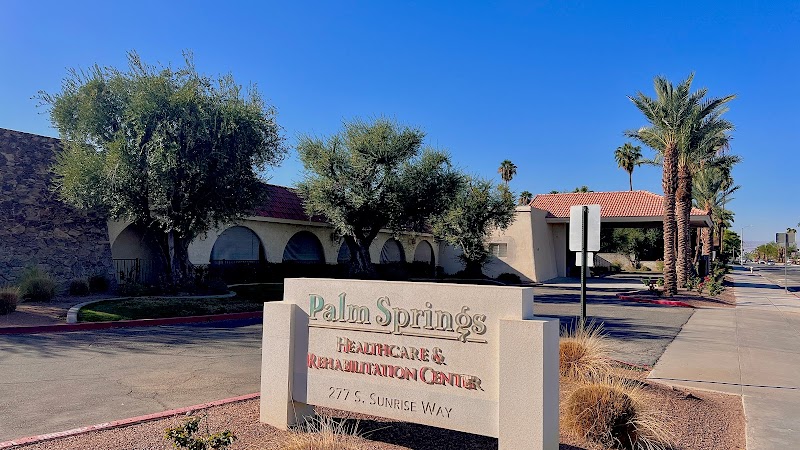
How is Palm Springs Healthcare & Rehabilitation Center Staffed?

CMS rates PALM SPRINGS HEALTHCARE & REHABILITATION CENTER's staffing level at 3 out of 5 stars, which is average compared to other nursing homes. Staff turnover is 40%, compared to the California average of 46%. This relatively stable workforce can support continuity of care. RN turnover specifically is 57%, which is notably high. RNs provide skilled clinical oversight, so turnover in this role can affect medical care quality.

What Have Inspectors Found at Palm Springs Healthcare & Rehabilitation Center?

State health inspectors documented 41 deficiencies at PALM SPRINGS HEALTHCARE & REHABILITATION CENTER during 2019 to 2025. These included: 41 with potential for harm.
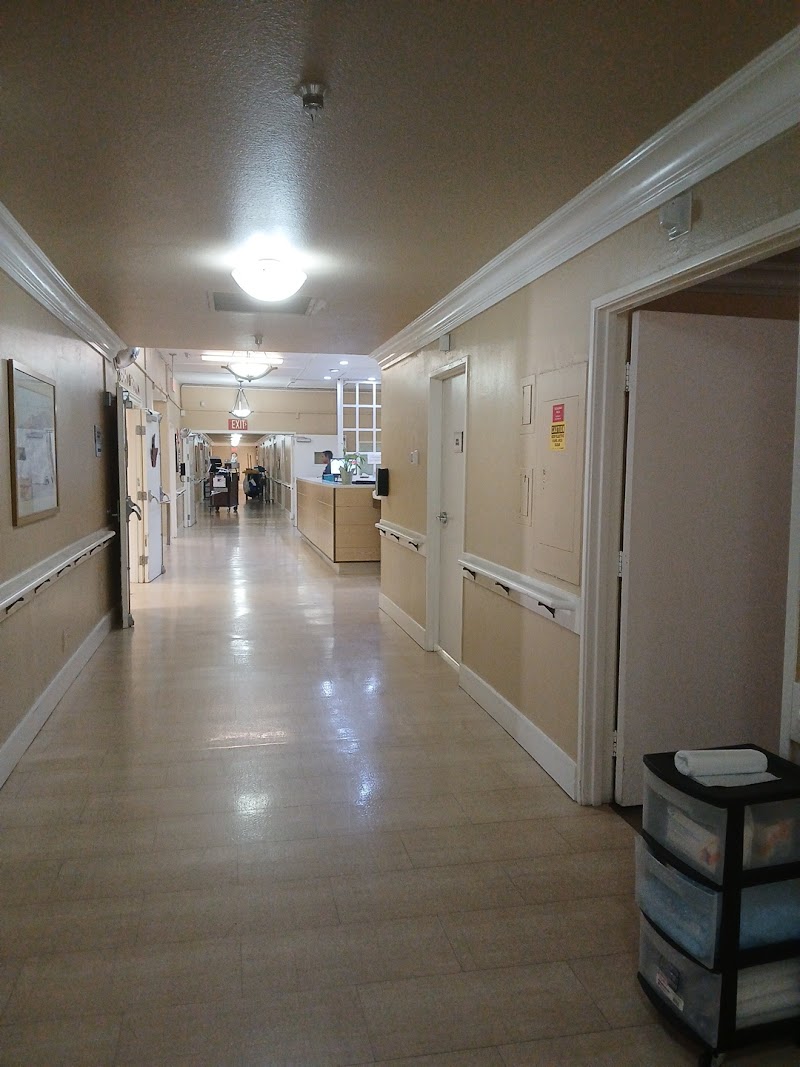
Who Owns and Operates Palm Springs Healthcare & Rehabilitation Center?

PALM SPRINGS HEALTHCARE & REHABILITATION CENTER is owned by a for-profit company. For-profit facilities operate as businesses with obligations to shareholders or private owners. The facility is operated by MARINER HEALTH CARE, a chain that manages multiple nursing homes. With 99 certified beds and approximately 83 residents (about 84% occupancy), it is a smaller facility located in PALM SPRINGS, California.
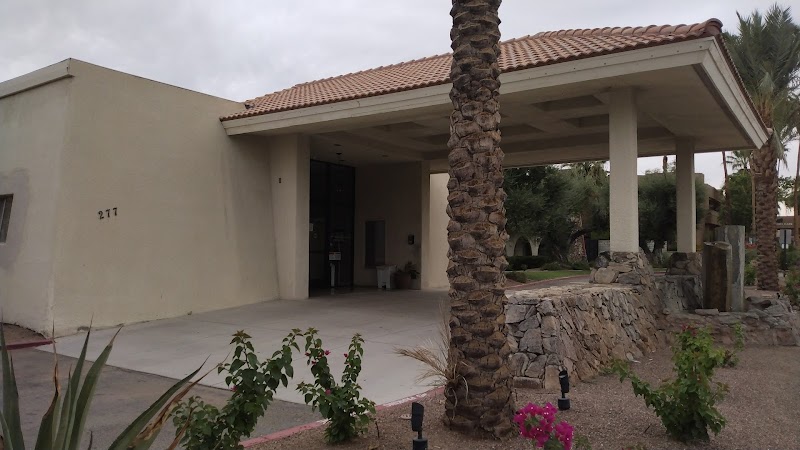
How Does Palm Springs Healthcare & Rehabilitation Center Compare to Other California Nursing Homes?

Compared to the 100 nursing homes in California, PALM SPRINGS HEALTHCARE & REHABILITATION CENTER's overall rating (3 stars) is below the state average of 3.1, staff turnover (40%) is near the state average of 46%, and health inspection rating (3 stars) is at the national benchmark.

What Should Families Ask When Visiting Palm Springs Healthcare & Rehabilitation Center?

Based on this facility's data, families visiting should ask: "Can I visit during a mealtime to observe dining assistance and food quality?" "How do you handle medical emergencies, and what is your hospital transfer rate?" "Can I speak with family members of current residents about their experience?"

Is Palm Springs Healthcare & Rehabilitation Center Safe?

Based on CMS inspection data, PALM SPRINGS HEALTHCARE & REHABILITATION CENTER has a clean safety record: no substantiated abuse findings (meaning no confirmed cases of resident harm), no Immediate Jeopardy citations (the most serious violation level indicating risk of serious injury or death), and is not on the Special Focus Facility watch list (a federal program monitoring the lowest-performing 1% of nursing homes). The facility has a 3-star overall rating and ranks #100 of 100 nursing homes in California. While no facility is perfect, families should still ask about staff-to-resident ratios and recent inspection results during their visit.

Do Nurses at Palm Springs Healthcare & Rehabilitation Center Stick Around?

PALM SPRINGS HEALTHCARE & REHABILITATION CENTER has a staff turnover rate of 40%, which is about average for California nursing homes (state average: 46%). Moderate turnover is common in nursing homes, but families should still ask about staff tenure and how the facility maintains care continuity when employees leave.

Was Palm Springs Healthcare & Rehabilitation Center Ever Fined?

PALM SPRINGS HEALTHCARE & REHABILITATION CENTER has been fined $4,194 across 1 penalty action. This is below the California average of $33,121. While any fine indicates a compliance issue, fines under $50,000 are relatively common and typically reflect isolated problems that were subsequently corrected. Families should ask what specific issues led to these fines and confirm they've been resolved.

Is Palm Springs Healthcare & Rehabilitation Center on Any Federal Watch List?

PALM SPRINGS HEALTHCARE & REHABILITATION CENTER is not on any federal watch list. The most significant is the Special Focus Facility (SFF) program, which identifies the bottom 1% of nursing homes nationally based on persistent, serious quality problems. Not being on this list means the facility has avoided the pattern of deficiencies that triggers enhanced federal oversight. This is a positive indicator, though families should still review the facility's inspection history directly.