PREMIER CARE CENTER FOR PALM SPRINGS
2990 EAST RAMON ROAD, PALM SPRINGS, CA 92264 (760) 323-2638
For profit - Limited Liability company 99 Beds THE ENSIGN GROUP Data: November 2025
Trust Grade
48/100
#883 of 1155 in CA
Last Inspection: November 2024

Within standard 12-15 month inspection cycle. Federal law requires annual inspections.

Overview

Premier Care Center for Palm Springs has a Trust Grade of D, which means it is below average and raises some concerns about the quality of care provided. It ranks #883 out of 1155 nursing homes in California, placing it in the bottom half, and #40 out of 53 in Riverside County, indicating that there are better local options available. Although the facility has shown improvement in its issues, decreasing from 24 in 2024 to 6 in 2025, it still has significant areas of concern, including failures to administer medications on time for multiple residents and inadequate RN coverage, with less than 13% of California facilities offering more. Staffing is somewhat stable with a 3/5 rating, but the 42% turnover rate is average, and the $3,250 in fines suggests compliance issues that families may want to consider. Overall, while the facility has some strengths like good quality measures, the weaknesses highlighted by recent inspections should be carefully weighed by families considering this option for their loved ones.

Trust Score
D
48/100
In California
#883/1155
Bottom 24%
Safety Record
Low Risk
No red flags
Inspections
Getting Better
24 → 6 violations
Staff Stability
○ Average
42% turnover. Near California's 48% average. Typical for the industry.
Penalties
✓ Good
$3,250 in fines. Lower than most California facilities. Relatively clean record.
Skilled Nurses
⚠ Watch
Each resident gets only 17 minutes of Registered Nurse (RN) attention daily — below average for California. Fewer RN minutes means fewer trained eyes watching for problems.
Violations
⚠ Watch
69 deficiencies on record. Higher than average. Multiple issues found across inspections.
★★☆☆☆
2.0
Overall Rating
★★★☆☆
3.0
Staff Levels
★★★★☆
4.0
Care Quality
★★☆☆☆
2.0
Inspection Score
Stable
2024: 24 issues
2025: 6 issues

The Good

  • 4-Star Quality Measures · Strong clinical quality outcomes
  • Full Sprinkler Coverage · Fire safety systems throughout facility
  • No fines on record
  • Staff turnover below average (42%)

    6 points below California average of 48%

Facility shows strength in quality measures, fire safety.

The Bad

2-Star Overall Rating

Below California average (3.1)

Below average - review inspection findings carefully

Staff Turnover: 42%

Near California avg (46%)

Typical for the industry

Federal Fines: $3,250

Below median ($33,413)

Minor penalties assessed

Chain: THE ENSIGN GROUP

Part of a multi-facility chain

Ask about local staffing decisions and management

The Ugly 69 deficiencies on record

Aug 2025 3 deficiencies
CONCERN (D) 📢 Someone Reported This

A family member, employee, or ombudsman was alarmed enough to file a formal complaint

Potential for Harm - no one hurt, but risky conditions existed

Quality of Care (Tag F0684)

Could have caused harm · This affected 1 resident

**NOTE- TERMS IN BRACKETS HAVE BEEN EDITED TO PROTECT CONFIDENTIALITY** Based on observation, interview, and record review, the facility failed to ensure an evaluation of elevated blood pressure and n...

Read full inspector narrative →
**NOTE- TERMS IN BRACKETS HAVE BEEN EDITED TO PROTECT CONFIDENTIALITY** Based on observation, interview, and record review, the facility failed to ensure an evaluation of elevated blood pressure and notification to the physician was conducted, for one of three residents reviewed (Resident 1). This failure had the potential for a delay in the care and treatment of Resident 1's uncontrolled hypertension (high blood pressure) and had the potential to experience complications related to high blood pressure. Findings:On July 22, 2025, at 8:25 a.m., during observation of medication pass conducted by Licensed Vocational Nurse (LVN) 1, LVN 1 was preparing medications for Resident 1. LVN 1 stated she checked Resident 1's blood pressure and was 171/70 mm HG (millimeters of mercury - a unit used to measure pressure, specifically blood pressure; normal blood pressure is 120/80). LVN 1 stated Resident 1 had a PRN (as needed) Clonidine (medication to treat high blood pressure) every eight (8) hours if more than 160. LVN 1 was observed to explain to Resident 1 the medications she prepared to be administered including the resident's blood pressure medication. LVN 1 was observed to tell Resident 1 that she will come back later to check her blood pressure again later as she administer the medications as the BP was high. On July 22, 2025, at 9:17 a.m., an interview was conducted with Resident 1. Resident 1 stated her BP went up and she was transferred to the acute hospital.On July 22, 2025, at 9:35 a.m., LVN 1 was observed to rechecked Resident 1's BP and it was 190/82. LVN 1 was observed to explain to Resident 1 she would prepare to give her PRN BP medication. On July 22, 2025, at 9:42 a.m., LVN 1 was observed to administer to Resident 1 PRN Clonidine and explained to the resident she will recheck her BP in a little while. On July 22, 2025, at 11;56 a.m., a follow up interview was conducted with Resident 1. Resident 1 stated her BP was rechecked and was still a little high at 170 over something (unable to recall). Resident 1 stated she would feel her eyes get wavy when her BP was high, and stated it felt less now. A review of Resident 1's record indicated Resident 1 was admitted to the facility on [DATE], with diagnoses which included heart failure and hypertension (high blood pressure).A review of Resident 1's History and Physical Examination, dated June 10, 2025, indicated Resident 1 had the capacity to understand and make decisions. A review of Resident 1's, care plan (Plan of care specific to a health condition, with interventions, and time framed goals), titled, .Altered Cardiovascular status (related to) . (HTN) ., initiated June 10, 2025, indicated, resident's care plan was not re-evaluated, or updated, after Resident 1's return from GACH on July 6, 2025.A review of Resident 1's Order Summary Report, included the following medications to address hypertension:- Losartan Potassium, 50 MG (milligram - a unit of measure) one time a day for HTN, Hold if SBP < (less than)110 or (Heartrate {HR}) <60, date ordered June 9, 2025;- Hydralazine 25 MG , two times a day (BID) for HTN, hold if SBP is under 110, date ordered June 24, 2025, - Clonidine 0.1 MG, every 8 hours, as needed for HTN. Give if SBP (Systolic BP - top number of BP) is 160 or higher, date ordered June 26, 2025; and- Metoprolol ER (Dose changed to) 50 MG, Daily, Hold if SBP <110 or HR <60; date ordered June 26, 2025.A review of Resident 1's Medication Administration Record (MAR), for the month of July 2025, indicated PRN Clonidine was administered to Resident 1 13 times from July 1, 2025 to July 23, 2025, when the resident's BP was above 160. Further review of Resident 1's MAR indicated BP being checked twice daily and Resident 1's BP was above 160 almost daily. - A review of Resident 1's Progress Notes, dated, July 6, 2025, at 5:37 p.m., by Registered Nurse (RN) 1, indicated, .(Resident 1) had a Hypertensive episode. BP of 223/111. Nurse Administered Clonidine.and Hydralazine (Both medications to control HTN).(Resident 1's) BP went down to 183/79.(Resident's representative) (notified) and requested (resident) be sent. (to GACH) for HTN. (Resident 1) sent to (GACH).for further evaluation . A review of Resident 1's Progress Notes, dated July 7, 2025, at 7:28 a.m., indicated (Resident 1) back from (GACH) at (7:20 a.m.). returned in stable condition. No new orders for HTN noted.A review of Resident 1's Progress Notes, dated July 23, 2025, at 6:42 a.m., indicated, .At 0600 (6 a.m.) BP was 198/95 gave patient evaluated BP medication PRN as ordered 15 mins (minutes) later recheck BP was 205/95 called 911. Patient was sent out to (name of acute hospital) due to hypertension .Further review of Resident 1's record indicated there was no evaluation conducted or referral to the physician of Resident 1's elevated BP after readmitted from GACH on July 7, 2025, despite Resident 1's BP still above 160 almost daily. On July 24, 2025, at 2:03 p.m., an interview was conducted with the DON. The DON stated the process to treat uncontrolled HTN included documenting a change of condition (COC), notification to the physician of COC, and follow-up monitoring of the resident's BP, documented every shift, for 72 hours. The DON stated if a resident was transferred to GACH due to uncontrolled BP, he would expect the desk nurse to follow-up with the physician and communicate the resident's readmission, so the physician could re-evaluate the resident's HTN plan of care, and make adjustments as needed, including possible new medications and/or additional monitoring orders. In a concurrent review of Resident 1's record, the DON verified Resident 1 transferred to GACH for uncontrolled HTN, on July 6, 2025, and returned to the facility on July 7, 2025, at 7:28 a.m. The DON verified he did not see documentation by the desk nurse that the physician was notified of resident's return from GACH on July 7, 2025. The DON further stated the physician should have re-evaluated Resident 1 within a couple of days, of resident's return from GACH. The DON stated if blood pressure medications were not effective, and the systolic blood pressure (top BP value) was still high, the resident had an increased risk of stroke.A review of the facility's policy and procedure titled, Significant Change in Condition, Response, revised January 2022, indicated, .It is the policy of this facility to ensure each resident receives quality of care and service to attain and maintain the highest practicable physical mental and psychosocial well-being .If, at any time, it is recognized by any one of the team members that the condition or care needs of the resident have changed, the License Nurse or Nurse Supervisor should be made aware. Examples would be.Change or trending change in vital signs, to include.blood pressure.The Nurse will perform and document an assessment of the resident and identify need (sic) for additional interventions, considering implementation of existing orders or nursing interventions or through communication with the resident's provider (DR) using SBAR (COC) or similar process to obtain new orders or interventions.Nursing will provide no less than three (3) days of observation, documentation, and response to any interventions. An attempt to identify the cause for decline, when it occurs.nursing will be responsible for notifying the appropriate department for evaluation. The nurse shall use his/her clinical judgment and shall contact the (DR) based on the urgent of the situation. The Medical Director shall be notified in the event that the Attending Physician or on-call Physician cannot be reached. The interdisciplinary team (IDT - a group of healthcare professionals) shall collaborate with the attending physician, resident, and/or resident representative to review risk indicators and the plan of care. The IDT will document this collaboration.in the next scheduled Comprehensive Care Plan Meeting or sooner if deemed necessary by the IDT.
CONCERN (D) 📢 Someone Reported This

A family member, employee, or ombudsman was alarmed enough to file a formal complaint

Potential for Harm - no one hurt, but risky conditions existed

Incontinence Care (Tag F0690)

Could have caused harm · This affected 1 resident

**NOTE- TERMS IN BRACKETS HAVE BEEN EDITED TO PROTECT CONFIDENTIALITY** Based on interview and record review, for one of three residents reviewed (Resident 1), the facility failed to ensure:1. A physi...

Read full inspector narrative →
**NOTE- TERMS IN BRACKETS HAVE BEEN EDITED TO PROTECT CONFIDENTIALITY** Based on interview and record review, for one of three residents reviewed (Resident 1), the facility failed to ensure:1. A physician's order was obtained to discontinue or remove a urinary catheter prior to removal of the catheter; and 2. Monitoring and documentation of the resident's urine output, any signs and symptoms of pain and/or bladder distention, after the urinary catheter was removed. These failures had the potential for a delay in the care and treatment to address possible adverse effects from removal of the catheter. Findings: On July 22, 2025, at 8:22 a.m., an unannounced visit was conducted at the facility to investigate a quality-of-care issue. On July 22, 2025, at 8:32 a.m., Resident 1 was observed alert, oriented, and was lying in bed. In a concurrent interview, Resident 1 stated she had a urinary catheter (a flexible tube inserted into the bladder to drain urine) and the facility staff recently pulled it out. Resident 1 stated she had burning sensation when she urinated and was being given medication to help her urine to come out. On July 22, 2205, at 9:35 a.m., a follow up interview was conducted with Resident 1, who stated she was having symptoms of painful urination and was sent to the General Acute Care Hospital (GACH) for an unrelated health concern, and returned to the facility diagnosed with a Urinary Tract Infection (UTI - a bacterial infection of the bladder, which can cause a sense of unrelieved urination, burning and/or painful urination). A review of Resident 1's, Resident Information, indicated Resident 1 was admitted to the facility on [DATE], with a diagnosis of heart failure, and hypertension (elevated blood pressure). A review of Resident 1's Minimum Data Set (MDS - a resident assessment tool), Brief Interview for Mental Status (BIMS}-A cognitive assessment), indicated a score of 13 (cognitively intact). A review of Resident 1's Progress Notes, dated July 7, 2025, at 10:02 p.m., indicated, .DURING PM (3 p.m. to 11 p.m.) SHIFT PATIENT REPORTED THE URGE TO VOID WITHOUT ANY URINARY RELIEF. PATIENT BECAME DISTENDED (sic) AND EXPRESSED PAIN. PATIENT WAS STRAIGHT CATHETED (a procedure where a thin, flexible tube (a straight catheter) is inserted into the urethra to drain urine from the bladder and then removed) WITH A review of Resident 1's Order Summary Report, indicated Resident 1 had a physician's order, dated July 7, 2025, which indicated, .INDWELLING CATHETER .DX (diagnosis) TO SUPPORT USE; urinary retention (refers to the condition where there is an inadequate amount of urine produced and excreted, leading to a buildup of urine in the bladder) . A review of Resident 1's Progress Notes, dated, July 7, 2025, at 7:28 a.m., indicated, (Resident 1) back from (GACH) at 7:20 a.m.in stable condition with new order for Bactrim (a medication to treat UTI's).two times a day for 7 (seven) days. A review of Resident 1's care plans indicated there was no care plan initiated for UTI after Resident 1 was readmitted from GACH on July 7, 2025, with diagnosis and treatment for UTI. On July 22, 2025, at 3:27 p.m., an interview was conducted with Registered Nurse (RN) 1, who stated Resident 1 had a foley catheter inserted on July 7, 2025. RN 1 stated Resident 1 had completed her antibiotics, and requested to have the catheter be removed. RN 1 stated Resident 1's catheter was then removed by Licensed Vocational Nurse (LVN) 1. RN verified, there was no physician's order to remove Resident 1's urinary catheter. RN 1 further stated she could not recall the exact date Resident 1's urinary catheter was removed, as there was no documentation the urinary catheter was removed. RN 1 stated there should be a physician's order before removing a urinary catheter and documentation when the procedure of removal was conducted and monitoring of the resident's response after the urinary catheter was removed. RN 1 stated there should be documentation of monitoring of any signs and symptoms after the urinary catheter was removed. RN 1 further stated, a care plan should be initiated with any new diagnosis or change of condition. RN 1 verified there was no care plan initiated when Resident 1 returned from GACH on July 7, 2025, with a new diagnosis of a UTI. On July 22, 2025, at 4:42 p.m., an interview was conducted with LVN 2, who stated Resident 1's urinary catheter was removed on July 19, 2025, at 8:50 p.m., after RN 1 asked her to remove the urinary catheter. LVN 2 stated she did not check if there was a physician's order to remove or discontinue the urinary catheter. LVN 2 stated there should be a physician's order to remove an urinary catheter before removing the catheter, document the procedure conducted, and monitor the resident's urine output, presence of pain, or distention, after the urinary catheter was removed. On July 22, 2025, at 4:55 p.m., an interview was conducted with the DON, who stated he would expect the nurse who removed Resident 1's foley catheter to document the procedure, including, results, such as, any trauma and/or blood in urine. The DON verified there was no physician's orders to remove Resident 1's urinary catheter. The DON stated he confirmed LVN 1 removed Resident 1's urinary catheter, and LVN 1 stated she did not document the removal of the resident's urinary catheter. The DON stated staff are required to document every procedure. On July 24, 2025, at 2:03 p.m., a concurrent interview with the Director of Nursing (DON), and review of Resident 1's July Medication Administration Record (MAR), COC's, and monitoring notes was conducted. The DON verified Resident 1 returned from GACH on July 7, 2025, with new orders from the physician for a bladder infection (UTI) and new medication orders were also written on July 11, 2025 for Rocephin (a medication to treat UTI). The DON verified a COC and care plan for a UTI was not completed by nursing staff at the time, and should have been completed. The DON stated, when a resident receives a foley catheter due to complaints of urinary retention, it was his expectations that nursing staff complete a COC and monitor the resident for signs and symptoms of adverse effects from the catheter, including urinary output, pain/discomfort & bladder distention, every shift for 72 hours. The DON further stated, urinary output should be documented in the MAR, while other signs and symptoms of adverse effects from the catheter, should be documented in a monitoring note, each shift. The DON stated he would expect a care plan to be developed for urinary retention and/or foley catheter to be initiated at the time of the complaint, or placement of the catheter. The DON verified a care plan for Urinary Retention was not completed and should have been. A review of the facility's policy and procedure titled, Significant Change of Condition, revised January 2022, indicated, .If, at any time, it is recognized by any one of the team members that the condition or care needs of the resident have changed, the Licensed Nurse or Nurse Supervisor should bed made aware.The nurse will perform and document an assessment of the resident and identify need for additional interventions, considering implementation of existing orders or nursing interventions.Nursing will provide no less than three (3) days of observation, documentation, and response to any interventions . A review of the facility's policy and procedure, Catheter, Indwelling Removal of, revised February 2025, indicated, .It is the policy of the facility that indwelling Foley catheters will be removed per (Dr's) order.PROCEDURES.Document all appropriate information in medical record.Document Procedure.
CONCERN (D) 📢 Someone Reported This

A family member, employee, or ombudsman was alarmed enough to file a formal complaint

Potential for Harm - no one hurt, but risky conditions existed

Deficiency F0697 (Tag F0697)

Could have caused harm · This affected 1 resident

**NOTE- TERMS IN BRACKETS HAVE BEEN EDITED TO PROTECT CONFIDENTIALITY** Based on observation, interview and record review, the facility failed to ensure a complete pain assessment was conducted, which...

Read full inspector narrative →
**NOTE- TERMS IN BRACKETS HAVE BEEN EDITED TO PROTECT CONFIDENTIALITY** Based on observation, interview and record review, the facility failed to ensure a complete pain assessment was conducted, which included the location of pain, for one out of three residents (Resident 1).This failure had the potential for Resident 1's pain not to be managed effectively. Findings:On July 22, 2025, at 8:22 a.m., an unannounced visit to the facility was conducted to investigate a quality-of-care issue.On July 22, at 8:32 a.m., an interview was conducted with Resident 1, who stated she had a urinary catheter (a long tube insert into the bladder to drain urine) and the licensed nurse pulled it out (removed/discontinued it). Resident 1 stated she still had burning sensation when she urinated. Resident 1 stated Tylenol (acetaminophen - a non-steroidal anti-inflammatory medication to relieve pain) helps the irritation and discomfort (resident pointed towards her bladder). Concurrently, Licensed Vocational Nurse (LVN) 1, asked Resident 1 what her pain rate was (on a scale from 1-10, 10 being the worst), and resident responded, 6 or 7.On July 22, 2025, at 8:47 a.m., an observation was made of LVN 1, returning to Resident 1's bedroom to administer Tylenol for bladder discomfort.A review of Resident 1's record indicated Resident 1 was admitted to the facility on [DATE], with diagnoses of Urinary Tract Infection (UTI - a bladder infection). A review of Resident 1's care plan (an individualized plan of care specific to a related problem, including time framed goals, and nursing interventions), initiated on June 9, 2025, which indicated, .Has acute pain (related to) disease process .Intervention to help relieve resident's pain .Monitor/document for probable cause of each pain episode.A review of Resident 1's physician's orders, dated June 22, 2025, indicated, . Acetaminophen Extra Strength 500 mg (milligrams - a unit of measure), Give 2 (two) tablet (sic) by mouth every 4 (four) hours as needed for Severe Pain 7-10 (on pain scale) .A review of Resident 1's Medication Administration Record (MAR), for July 2025, indicated, Acetaminophen was administered to Resident 1 on July 22, 2025, at 8:45 a.m.A review of Resident 1's Progress Notes, dated July 22, 2025, at 8:45 a.m., by LVN 1, indicated Tylenol was administered to Resident 1 for a pain scale between 7-10. There was no documentation of the location of the pain. A review of Resident 1's Progress Notes, dated, July 22, 2025, at 1:25 p.m., by LVN 2, indicated, . PRN Administration was: Effective. Follow-up Pain Scale was: 5 . Location of the pain not documented.On July 23, 2025, at 8:47 a.m., an interview was conducted with Registered Nurse (RN) 2, who stated the process to document administration of pain medications, includes documenting the medication administered, location of the pain, and effectiveness of the medication.On July 23, 2025, at 1:42 p.m., an interview was conducted, with LVN 1, who verified, on July 22, 2025, (at 8:45 a.m.) she administered acetaminophen to Resident 1 for discomfort from her urinary tract infection. LVN 1 further stated, when she monitors and documents administration of pain medications, she would include documenting the resident's pain rating on a scale of 1-10, the time the medication was given, and the location of the pain. LVN 1 stated when she administers a PRN pain medication, and she did not document the location in the progress notes, she would sometimes document under Condition Monitoring.A review of Resident 1's, Condition Monitoring, dated July 22, 2025, indicated there was no documentation of the pain location from LVN 1.On August 4, 2025, at 4:20 p.m., an interview was conducted with the Director of Nursing (DON), who stated he expected the nursing staff to assess a resident for pain, including the location prior to administration of the pain medication, and document the location in the progress note or condition monitoring.A review of the facility's policy and procedures titled, Medication Administration, revised December 2019, indicated, .When PRN (as needed) medications are administered, the following documentation is provided .Complaints or symptoms for which the medication was given .
Jun 2025 1 deficiency
CONCERN (D) 📢 Someone Reported This

A family member, employee, or ombudsman was alarmed enough to file a formal complaint

Potential for Harm - no one hurt, but risky conditions existed

Quality of Care (Tag F0684)

Could have caused harm · This affected 1 resident

**NOTE- TERMS IN BRACKETS HAVE BEEN EDITED TO PROTECT CONFIDENTIALITY** Based on interview and record review, the facility failed to ensure proper monitoring and neurological assessments (used to moni...

Read full inspector narrative →
**NOTE- TERMS IN BRACKETS HAVE BEEN EDITED TO PROTECT CONFIDENTIALITY** Based on interview and record review, the facility failed to ensure proper monitoring and neurological assessments (used to monitor patients, checking mental status, nerves, reflexes and motor function) were completed, for one of three residents (Resident A). This failure had the potential to cause delay in care and treatment for Resident A following an unwitnessed fall. Findings: On May 5, 2025, at 9:15 a.m., an unannounced visit was made to the facility for the investigation of a complaint regarding quality of care. On May 5, 2025, at 10:30 a.m., a review of Resident A's medical record was conducted. Resident A was admitted to the facility on [DATE], with diagnoses which included cerebral infarction (an ischemic stroke-a condition where blood flow to the brain is interrupted, causing brain damage) and encephalopathy (brain disease which alters brain function or structure). Resident A had a change in condition, dated April 11, 2025, at 10:33 p.m., which indicated, .falls .monitor . A review of Resident A's Progress Notes, dated April 12, 2025, at 3:44 a.m., indicated, .per RN (registered nurse) [name] patient fell during pm shift (2:30 p.m. until 11:00 p.m.) in hallway. Patient assessed and vitals (temperature, blood pressure, pulse, respiration rate, and oxygen saturation) taken. No visible injuries noted. Patient C/O (complain of) discomfort to left hip/outer thigh .patient given Tylenol and xray ordered .patient to start on neuro checks, MD and [family] aware . A review of Resident A's Neurological Assessment, dated April 11, no year indicated, first set of vital signs were timed for 11:10 p.m., followed by April 12, at 12:00 a.m., 12:30 a.m., and 1:30 a.m. Respirations were normal, no assessment of pupils or extremities documented, oriented and name documented twice, the neurological assessment was not complete. The Falls Checklist, was reviewed, no date or signature by the licensed nurse or Certified Nursing Assistant (CNA) were documented, and the CNA Post Fall Assessment, was not completed. A review of Resident A's Progress Notes, dated Aril 18, 2025, at 1:08 p.m., indicated, .Patient had a fall today at 1305 (1:05 p.m.). Pt (patient) was ambulating with walker and attempted to walk with a food tray. Patient stated he slipped .Vital signs and neuro check within normal limits . A review of Resident A's POST FALL - Neurological Check, indicated Resident A's date and time of fall was April 18, 2025, at 1:05 p.m. The document indicated neurological checks should be completed at the following intervals for follow up for all falls that are unwitnessed, or suspicion of head trauma: - Every 15 minutes x (times) 4 = 1 hour; - Every 30 minutes x 4 = 2 hours; - Every hour x 5 = 5 hours; - Every 4 hours x 4 = 16 hours; and - Every shift x 6 = 48 hours. The document indicated Resident A's neurological status were not documented as completed on the following dates and times: - April 18, 2025, at 3:05 p.m.; - April 18, 2025, at 3:35 p.m.; - April 18, 2025, at 4:35 p.m.; - April 18, 2025, at 5:35 p.m.; - April 18, 2025, at 6:35 p.m.; - April 18, 2025, at 7:35 p.m.; - April 18, 2025, at 8:35 p.m.; - April 19, 2025, at 12 a.m. (not complete assessment); - April 19, 2025, at 4 a.m. (not complete assessment); - April 19, 2025, at 8 a.m. (not complete assessment); - April 19, 2025, at 12 p.m. (not complete assessment); - April 20, 2025, at AM (7 a.m. to 3 p.m.) shift; - April 20, 2025, at PM (3 P.m. to 11 p.m.) shift; - April 20, 2025, at NOC (11 p.m. to 7 a.m.) shift; and - April 21, 2025, at AM (7 a.m. to 3 p.m.) shift; On May 5, 2025, at 2:10 p.m., an interview was conducted with the Licensed Vocational Nurse (LVN). The LVN stated after an unwitnessed fall we should monitor the residents and perform neuro checks, as well as document on them for three days or 72 hours. On May 5, 2025, at 2:30 p.m., an interview was conducted with the RN. The RN stated she performed the initial head to toe assessment on Resident A, with another nurse. The RN stated Resident A's fall was unwitnessed and fell on his left hip. The RN stated they initiated neuro checks every 15 minutes, and if there were any changes we would report and intervene as needed. The RN stated, after a fall we put the incident in the communication section of the electronic medical record, place a note in the progress notes, write a change in condition note, which can be found on the assessment tab, and fill out an SBAR (situation, background, assessment, recommendation-a communication tool used by healthcare workers when there is a change in condition among the residents) Communication Form. On May 6, 2025, at 12:20 p.m., an interview was conducted with the Director of Nursing (DON). The DON stated he was aware of the numerous blanks, and uncompleted neurological onitoring for Resident A, after his unwitnessed fall on April 11 and 18, 2025. The DON stated protocol after a witnessed fall, in which a resident does not hit their head, the facility will monitor every shift and document in the progress notes, if a resident is found on the floor, or a fall is unwitnessed, the facility will begin neuro checks per facility policy. The DON stated he there was not enough monitoring when neuro checks were indicated for Resident A's episodes of fall on April 11 and 18, 2025. A review of the facility's policy and procedure titled Fall Management System, no date, indicated, .provide each resident with appropriate assessment and interventions to prevent falls and to minimize complications if a fall occurs .when a resident sustains a fall, a physical assessment will be completed by a licensed nurse, with results documented in the medical record. Neurological assessments will be completed by a licensed nurse when the resident has hit their head .neuro checks will be completed on all non-witnessed falls and falls involving head trauma .
Mar 2025 1 deficiency
CONCERN (E) 📢 Someone Reported This

A family member, employee, or ombudsman was alarmed enough to file a formal complaint

Potential for Harm - no one hurt, but risky conditions existed

Quality of Care (Tag F0684)

Could have caused harm · This affected multiple residents

Based on observation, interview, and record review, the facility failed to ensure, for five of five residents reviewed (Residents 1, 4, 5, 6, and 7) received medications timely, when Residents 1, 4, 5...

Read full inspector narrative →
Based on observation, interview, and record review, the facility failed to ensure, for five of five residents reviewed (Residents 1, 4, 5, 6, and 7) received medications timely, when Residents 1, 4, 5, 6, and 7 ' s scheduled 9 a.m. medications were administered to the residents passed the required timeframe. This failure had the potential for the residents to experience discomfort, and a delay in the intended therapeutic effect of the medications. Findings: On February 25, 2025, at 9:25 a.m., an unannounced visit was conducted at the facility to investigate a complaint regarding quality of care. On February 25, 2025, at 11 a.m., Resident 1 was observed sitting up on the edge of bed. In a concurrent interview, Resident 1 stated she had some missed medications in the past. Resident 1 further stated the main medication she cared about was her Ritalin (methylphenidate - medication to treat used to treat attention deficit hyperactivity disorder). On February 25, 2025, at 1:30 pm, a concurrent interview and record review was conducted with the Director of Staff Development (DSD), and Licensed Vocational Nurse (LVN) 1. LVN 1 stated Resident 1 ' s Medication Administration Record, indicated the following medications scheduled at 9 a.m., on February 8, 2025, were administered to Resident 1 at 1:15 pm p.m. by LVN 2: - Amlodipine (medication to treat high blood pressure) 5 mg (milligram - unit of measurement); - Ascorbic acid 500 mg; - Cardizem (LA - long acting) (medication to treat high blood pressure) 300 mg; - Docusate sodium (medication to treat constipation)100 mg; - Duloxetine HCL (medication to treat nerve pain) 30 mg; - Famotidine 20 (medication to treat excess stomach acid) mg; - Ferrous sulfate (medication to treat anemia [a condition in which the body does not have enough healthy red blood cells or hemoglobin]) 325 mg; - Methylphenidate HCL (medication to treat attention deficit disorder) 20 mg; - Multivitamin (vitamin supplement); - Oxybutynin chloride (medication to treat loss of bladder control) 5 mg; - Pro-stat (protein liquid supplement) oral liquid; - Sertraline HCl (medication to treat depression) 50 mg; and - Apixaban (medication to help prevent stroke or blood clots) 5 mg. In a concurrent interview, the DSD stated Resident 1 ' s medications scheduled at 9 a.m. should have been administered within one hour of the scheduled time frame. The DSD further stated delayed medication administration could cause a disruption in the intended therapeutic effects of the medication. On February 25, 2025, at 2;30 p.m., during an interview with LVN 2, LVN 2 stated she administered Resident 1 and other resident ' s 9 a.m. medications on February 8, 2025, at around 1 p.m. LVN 2 stated she got busy and was not able to ask for assistance from her co-workers. LVN 2 stated she should have prioritized her tasks better so she could administer the residents ' medications on time. On February 25, 2025, at 4:00 pm a concurrent interview and record review was conducted with the Director of Nursing (DON). The DON stated LVN 2 was assigned to Residents 1, 4, 5, 6, and 7 on February 8, 2025. The DON stated LVN 2 administered Resident 1 ' s 9 a.m. medications on February 8, 2025, at 1:15 p.m. The DON stated Resident 4 ' s Depakote DR (delayed release [medication to treat seizures]) scheduled at 9 a.m., on February 8, 2025, was administered to Resident 4 at 1:44 p.m. The DON stated Resident 5 ' s following medications scheduled at 9 a.m., on February 8, 2025, were administered at 1:43 p.m.: - Amlodipine besylate (medication to treat high blood pressure); - Docusate sodium 100 mg; - Levetiracetam (medication to treat seizures) Oral 500 mg; and - Memantine (medication used for dementia [memory loss]). The DON stated Resident 6 ' s following medications scheduled at 9 a.m., on February 8, 2025, were administered at 10:37 a.m.: - Amlodipine 10 mg; - Aricept 5 mg (medication used for dementia); - Buspirone HCl 5 mg (medication to treat anxiety); - Escitalopram Oxalate (medication to treat depression) 20 mg; - Folic Acid (medication to treat anemia) 1 mg; - Gabapentin (medication to treat nerve pain) 100 mg; - Isosorbide Monotitrate (medication to treat high blood pressure) 30 mg; - Keppra (medication to treat seizure) 500 mg; and - Metoprolol 25 mg (medication to treat high blood pressure) 25 mg. The DON stated Resident 7 ' s following medications scheduled at 9 a.m., on February 8, 2025, were administered at 1:53 p.m.: - Ascorbic Acid (vitamin supplement) 500 mg; - Aspirin (medication to treat fever, pain, and prevent stroke) 81 mg; - Docusate Sodium (stool softener) 100 mg; - Furosemide (diuretic) 20 mg; - Levetiracetam 500 mg; The DON stated Residents 1, 4, 5, 6, and 7 ' s medications scheduled at 9 a.m. on February 8, 2025, should have been administered within one hour of the scheduled time frame. A review of the facility ' s undated policy and procedure titled Premier Care Center Policy/Procedure-Nursing Clinical, indicated, .It is the policy of this facility to accurately prepare, administer and document oral medications .
Jan 2025 1 deficiency
CONCERN (E) 📢 Someone Reported This

A family member, employee, or ombudsman was alarmed enough to file a formal complaint

Potential for Harm - no one hurt, but risky conditions existed

Deficiency F0727 (Tag F0727)

Could have caused harm · This affected multiple residents

Based on interview and record review, the facility failed to ensure a registered nurse (RN) was scheduled for eight consecutive hours in a 24-hour period for November 3, 10, 16, 23, 24, 30, 2024 and D...

Read full inspector narrative →
Based on interview and record review, the facility failed to ensure a registered nurse (RN) was scheduled for eight consecutive hours in a 24-hour period for November 3, 10, 16, 23, 24, 30, 2024 and December 7, 8, 15, 21, 22, 29, 2024. This facility failure had the potential to result in delayed identification and treatment of life-threatening medical conditions thus compromising the health and safety of the vulnerable population in the facility. Findings: On January 27, 2025, at 8:53 a.m., an unannounced visit to the facility was conducted to investigate nursing services complain. On January 27, 2025, at 11:15 a.m., an interview ws conducted with the Director of Staff Development (DSD). The DSD stated there was an RN who worked during weekends and would be in the facility from 5 a.m. to 7 a.m, and would come back at around 3 p.m. (would work for about three hours). The DSD stated licensed vocational nurses (LVN) would handle issues in the facility while the RN was out, and would notify the Director of Nursing via telephone and would give instructions. The DSD was not aware the facility requires an RN to be in the facility for eight (8) consecutive hours. A concurrent interview and record review was conducted with the DSD. A review of the facility's document titled Daily Assignment and Census Sheet, staffing sign-in log sheet and time card record indicated the following: - November 3, 2024 (Sunday), RN worked 6.1 hours; - November 10, 2024 (Sunday), RN worked 6.0 hours; - November 16, 2024 (Saturday), RN worked 6.0 hours; - November 23, 2024 (Saturday), RN worked 6.0 hours; - November 24, 2024 (Sunday), RN worked 6.0 hours; - November 30, 2024 (Saturday), RN worked 6.0 hours; - December 7, 2024 (Saturday), RN worked 6.0 hours; - December 8, 2024 (Sunday), RN worked 6.0 hours; - December 15, 2024 (Sunday), RN worked 6.0 hours; - December 21, 2024 (Saturday), RN worked 6.0 hours; - December 22, 2024 (Sunday), RN worked 6.0 hours; and; - December 29, 2024 (Sunday), RN worked 6.0 hours. In a concurrent interview with the DSD, she stated the RN worked only six (6) hours a day during the dates mentioned above. The DSD stated the facility was not compliant with the requirement of having the RN in the facility for eight (8) consecutive hours. On January 27, 2025, at 11:25 a.m., an interview was conducted with the DON. The DON stated there was not enough RN hours to supervise the facility on the dates mentioned above. The DON stated the LVNs who worked on the weekends would call him when there was a need of RN taska and he will assist by giving instructions. The DON stated if the LVNs would not be able to do it, he would travel for about one (1) hour from home to the facility. The DON stated if there were no sufficient RN hours implemented in the facility, there would be a delay of care and would compromise the health and safety of the residents. On January 27, 2025, at 12:20 p.m., an interview was conducted with the LVN. The LVN stated he worked on weekends and if facility needed an RN task, he would call the Director of Nursing (DON). The LVN stated he could not perform interventions that an RN could do so he would wait for an RN to come to the facility. The LVN further stated if there was no RN in the facility, it would cause a delay of identification and treatment of potential life-threatening conditions and could compromise the health and safety of the residents. A review of the facility ' s policy and procedure titled Staffing, Adequate, dated October 2025 (sic), indicated, .It is the policy of this facility to provide adequate staffing to meet the needs of the resident population .The facility maintains adequate staff on each shift to assure that the resident ' s needs are met . A review of the facility ' s job description titled Registered Nurse, indicated, .The primary purpose of your job position is to .meet the physical and psychosocial needs of the resident, in accordance with established medical practices and the requirements of the state and the policies and goals of this facility .This position consistently supports and promotes compliance with the Code of Conduct .adhering to applicable Federal, State, and local laws and regulations, accreditation and licensure requirements .and all policies and procedures .
Dec 2024 6 deficiencies
CONCERN (D) 📢 Someone Reported This

A family member, employee, or ombudsman was alarmed enough to file a formal complaint

Potential for Harm - no one hurt, but risky conditions existed

Resident Rights (Tag F0550)

Could have caused harm · This affected 1 resident

**NOTE- TERMS IN BRACKETS HAVE BEEN EDITED TO PROTECT CONFIDENTIALITY** Based on observation, interview, and record review, the facility failed to treat resident with respect and dignity when the staf...

Read full inspector narrative →
**NOTE- TERMS IN BRACKETS HAVE BEEN EDITED TO PROTECT CONFIDENTIALITY** Based on observation, interview, and record review, the facility failed to treat resident with respect and dignity when the staff failed to cover the urinary bag, for one of one resident reviewed (Resident 2). This failure increased the potential to negatively affect Resident 2's psychosocial wellbeing. Findings: On December 23, 2024, at 8:52 a.m., during a concurrent observation and interview with Resident 2 in his room, Resident 2's urinary catheter drainage bag was observed to be not covered with a dignity bag (used to cover urine collection bag) and was hanging below the level of bed. Resident 2 stated he was not comfortable if someone would see his pee. On December 23, 2024, at 8:54 a.m., during a concurrent observation and interview with the Licensed Vocational Nurse (LVN). The LVN stated the urinary bag was exposed and was not covered with a privacy bag. The LVN further stated, he will feel not comfortable if that was his bag and was not covered, It should have been covered. On December 23, 2024, Resident 2's record was reviewed. Resident 2 was admitted to the facility on [DATE], with diagnoses which included neuromuscular dysfunction of bladder (lack of bladder control). A review of Resident 2's Minimum Data Set (MDS - a tool for assessment), dated November 1, 2024, indicated Resident 2 had a BIMS (Brief Interview for Mental Status - a tool used to assess cognition) of cognitively intact. A review of Resident 2's Order Summary, dated December 4, 2024, indicated, .SUPRA PUBIC CATHETER CARE (tube that is used to drain urine from the bladder) Q SHIFT . A review of Resident 2 ' s care plan, dated December 4, 2024, indicated, .Has Suprapubic Catheter related to Neurogenic Bladder (lack of bladder control) .Agreed to place catheter bag inside a basin . On December 23, 2024, at 1:30 p.m., during an interview with the Director of Nursing (DON), the DON stated residents should be treated with respect and dignity. The DON further stated the urinary bag uncovered will cause psychosocial effect to resident and it should have been covered with dignity bag. A review of the facility's policy and procedure titled, Resident Rights, dated October 2024, indicated, .It is the policy of this facility that all residents be treated with kindness, dignity and respect .The staff shall display respect for Resident ' s when .caring for .as constant affirmation of their individually and dignity as human beings . A review of the facility's policy and procedure titled, Indwelling Urinary Catheter Care, dated October 2024, indicated, .It is the policy of this facility that each resident with an indwelling catheter will receive catheter care daily and as needed (PRN) to promote hygiene, comfort, and decrease the risk of infection .Cover the drainage bag with privacy bag to maintain dignity .
CONCERN (D) 📢 Someone Reported This

A family member, employee, or ombudsman was alarmed enough to file a formal complaint

Potential for Harm - no one hurt, but risky conditions existed

Deficiency F0558 (Tag F0558)

Could have caused harm · This affected 1 resident

Based on observation, interview, and record review, the facility failed to ensure the call light (device that produce a tone and light) was available for the resident to use and call for assistance, f...

Read full inspector narrative →
Based on observation, interview, and record review, the facility failed to ensure the call light (device that produce a tone and light) was available for the resident to use and call for assistance, for one of two residents reviewed (Resident 2). This failure had the potential to result in the resident being unable to call for staff assistance when needed. Findings: On December 23, 2024, at 8:20 a.m., an unannounced visit was conducted at the facility for the investigation of a complaint. On December 23, 2024, at 8:48 a.m., during a concurrent observation and interview with Resident 2 in his room, Resident 2 was observed with a metallic silver portable call bell on top of his overbed table. There was no call light wiring attached to the socket on the wall and there was no push button wire connected to it. In a concurrent interview, Resident 2 stated the call light system was broken and staff gave him a call bell and was placed on top of his over bed table. Resident 2 further stated he cannot press the bell because his arms were unable to move, I yelled if I need help, It so frustrating. On December 23, 2024, at 8:50 p.m., an interview with the Licensed Vocational Nurse (LVN) was conducted. The LVN stated a portable call bell was given to Resident 2 because the call light system was broken. The LVN stated Resident 2 had a condition of paralysis (loss of muscle function) and used sensor pads to call for assistance. The LVN stated Resident 2 could not move and he could not use the bell to call for assistance. The LVN further stated if the call light system would not be fixed, the resident's needs would not be met. On December 23, 2024, Resident 2's record was reviewed. Resident 2 was admitted to facility on December 4, 2024, with diagnoses which included quadriplegia (a condition where all four limbs arms and legs are paralyzed). A review of Resident 2's Minimum Data Set (MDS - a tool for assessment), dated November 1, 2024, indicated Resident 2 had a BIMS (Brief Interview for Mental Status - a tool used to assess cognition) of cognitively intact. On December 23, 2024, at 8:57 a.m., an interview with the Maintenance Assistant (MA) was conducted. The MA stated the call light system was broken. The MA further stated, it should have been fixed and repaired. On December 23, 2024, at 9 a.m., during an interview with the Administrator (ADM), the ADM stated, he expected to all maintenance staff that anything in repair should had been addressed immediately. The ADM further stated, the call light system should had been fixed and repaired to accommodate the needs of the resident. A review of the facility's policy and procedure titled, Equipment Maintenance, dated October 2024, indicated, .It is the policy of this facility to establish procedures for routine and non-routine care of equipment and to ensure that equipment remains in good working order for resident and staff safety .Electrical and hydraulic equipment will be inspected by the Maintenance Supervisor or Designee to ensure that equipment is working properly . A review of the facility's policy and procedure titled, Accommodation of Needs, dated October 2024, indicated, .It is the policy of this facility to be aware of the importance of awareness of accommodation of needs for each resident as individual Nursing staff will communicate with Don/Designee and/or Administrator after assessing residents if there is any specific accommodation for a particular resident .Examples of accommodation of needs .Call lights . A review of the undated facility's policy and procedure titled, Resident ' s Rights, indicated, .It is the policy of this facility to provide accommodation of reasonable needs to the residents while in the facility .Staff will Review resident ' s preference and accommodate their needs as soon as possible .If the request or need cannot be met, another intervention will be in place to ensure resident is comfortable .Examples of accommodation of needs, but not limited to .Devices to use .call lights .
CONCERN (D) 📢 Someone Reported This

A family member, employee, or ombudsman was alarmed enough to file a formal complaint

Potential for Harm - no one hurt, but risky conditions existed

Free from Abuse/Neglect (Tag F0600)

Could have caused harm · This affected 1 resident

**NOTE- TERMS IN BRACKETS HAVE BEEN EDITED TO PROTECT CONFIDENTIALITY** Based on interview and record review, the facility failed to ensure residents was free from verbal abuse, for one of five reside...

Read full inspector narrative →
**NOTE- TERMS IN BRACKETS HAVE BEEN EDITED TO PROTECT CONFIDENTIALITY** Based on interview and record review, the facility failed to ensure residents was free from verbal abuse, for one of five residents reviewed (Resident 5), when the Certified Nurse Assistant Student (CNAS) called Resident 5 an inappropriate word. This failure had the potential for Resident 5 to experience emotional distress. Findings: On December 23, 2024, at 8:20 a.m., an unannounced visit was made to the facility to investigate one facility reported incident. On December 23, 2024, Resident 5's record was reviewed. Resident 5 was admitted to the facility on [DATE], with diagnoses which included hemiplegia and hemiparesis following cerebral infarction affecting left non-dominant side (both medical conditions that cause weakness or paralysis on one side of the body). A review of Resident 5's History and Physical, dated December 5, 2024, indicated Resident 5 was mentally capable of understanding. A review of Resident 5 ' s eInteract Change in Condition Evaluation, dated December 19, 2024, indicated, .VERBAL ALTERCATION . A review of Resident 5 ' s care plan, dated December 19, 2024, indicated, .Potential for a psychosocial well-being problem r/t (related to) verbal altercation with staff .When conflict arises, remove residents to a calm safe environment and allow to vent/share feelings . A review of Resident 5 ' s progress notes IDT, dated December 23, 2024, indicated, .IDT met to review allegation of verbal altercation with staff .With this incident resident was cussing and threatening staff and appears staff responded inappropriately . On December 23, 2024, at 10:10 a.m., an interview was conducted with Resident 5. Resident 5 stated the Certified Nursing Assistant (CNA) assigned to him requested a CNA Student (CNAS) to assists in providing care. Resident 5 stated during the start of care he mentioned to both staff that the care for him was useless due to his body condition was not capable to improve. Resident 5 stated the CNAS told him Resident 5 should have been cooperative with care, so he would be better. Resident 5 stated he did not understand what the CNAS meant, so he asked to clarify it from the CNAS and then they started exchanging inappropriate words. Resident 5 further stated, the CNAS told him f____ off and gave him the middle finger. Resident 5 further stated, I felt disrespected. On December 23, 2024, at 10:35 a.m., an interview was conducted with the CNA. The CNA stated she was standing on the right side of Resident 5 ' s bed when she heard the CNAS stated inappropriate words to Resident 5. The CNA further stated, I was shocked. On December 23, 2024, at 11:01 a.m., an interview was conducted with the Licensed Vocational Nurse (LVN). The LVN stated the CNA reported Resident 5 and the CNAS had a verbal altercation on December 17, 2024. The LVN stated the CNAS should have not been engaged in verbal altercation with Resident 5. The LVN further stated, its verbal abuse. On December 23, 2024, at 1:55 a.m., an interview was conducted with the Administrator (ADM). The ADM stated he expected to all staff to maintain the facility free from any types of abuse. The ADM further stated the verbal altercation should have been prevented if the CNAS did not mentioned inappropriate words towards Resident 5. A review of the facility ' s policy and procedure titled, Abuse: Prevention of and Prohibition Against, dated October 2024, indicated, .It is the policy of this facility that each resident has the right to be free from abuse, neglect, misappropriation of resident property and exploitation .This policy applies to all Facility staff including, but not limited to, employees .students and other caregivers who provide care and services to residents on behalf of the Facility .Residents also have the right to be free from verbal, sexual, physical, and mental abuse .Verbal abuse includes the use of oral, written, or gestured language that willfully includes disparaging and derogatory terms to residents or their representatives, or within the hearing distance, regardless of their age, ability to comprehend or disability .
CONCERN (D) 📢 Someone Reported This

A family member, employee, or ombudsman was alarmed enough to file a formal complaint

Potential for Harm - no one hurt, but risky conditions existed

Report Alleged Abuse (Tag F0609)

Could have caused harm · This affected 1 resident

**NOTE- TERMS IN BRACKETS HAVE BEEN EDITED TO PROTECT CONFIDENTIALITY** Based on interview and record review, the facility failed to report an allegation of verbal abuse by a Certified Nursing Assista...

Read full inspector narrative →
**NOTE- TERMS IN BRACKETS HAVE BEEN EDITED TO PROTECT CONFIDENTIALITY** Based on interview and record review, the facility failed to report an allegation of verbal abuse by a Certified Nursing Assistant Student (CNAS) towards a resident to the California Department of Public Health (CDPH) immediately or within 2 hours after the allegation was made, for one of five residents (Resident 5). This failure had the potential to result in further abuse for Resident 5, affecting the resident's emotional, and psychosocial well-being. Findings: On December 23, 2024, at 8:20 a.m., an unannounced visit to the facility was conducted to investigate an allegation of abuse. A review of Resident 5's record indicated, Resident 5 was admitted to the facility on [DATE], with diagnoses which included hemiplegia and hemiparesis following cerebral infarction affecting left non-dominant side (both medical conditions that cause weakness or paralysis on one side of the body). A review of Resident 5's History and Physical, dated December 5, 2024, indicated Resident 5 was mentally capable of understanding. A review of Resident 5 ' s eInteract Change in Condition Evaluation, dated December 19, 2024, indicated, .VERBAL ALTERCATION . A review of Resident 5 ' s care plan, dated December 19, 2024, indicated, .Potential for a psychosocial well-being problem r/t (related to) verbal altercation with staff .When conflict arises, remove residents to a calm safe environment and allow to vent/share feelings . A review of Resident 5 ' s LN-(Licensed Nurse) Condition Monitoring, dated December 23, 2024, indicated, .PSYCHOSOCIAL MONITORING DUE TO VERBAL ALTERCATION WITH STAFF . On December 23, 2024, at 10:10 a.m., an interview was conducted with Resident 5. Resident 5 stated the Certified Nursing Assistant (CNA) assigned to him requested a CNA Student (CNAS) to assists in providing care. Resident 5 stated during the start of care he mentioned to both staff that the care for him was useless due to his body condition was not capable to improve. Resident 5 stated the CNAS told him Resident 5 should have been cooperative with care, so he would be better. Resident 5 stated he did not understand what the CNAS meant, so he asked to clarify it from the CNAS and then they started exchanging inappropriate words. Resident 5 further stated, the CNAS told him f____ off and gave him the middle finger. Resident 5 further stated, I felt disrespected and was verbally abused. On December 23, 2024, at 10:35 a.m., an interview was conducted with the CNA. The CNA stated she was standing on the right side of Resident 5 ' s bed when she heard the CNAS stated inappropriate words to Resident 5. The CNA further stated, I was shocked. The CNA stated she reported the altercation incident to the Licensed Vocational Nurse and was told that the LVN would report it. The CNA stated the Director of Nursing (DON) talked to her after her lunch break and was told not to worry about it as Resident 5 would do that a lot. The CNA stated she was not asked by the DON of the details of the incident, and she assumed the LVN had already discussed it to the DON. On December 23, 2024, at 11:35 a.m., during an interview with the Social Service Director (SSD), the SSD stated the Ombudsman came in the facility on December 19, 2024, and was notified of the abuse allegation incident on December 17, 2024. The SSD stated, any allegation of abuse should be reported immediately within 2 hours. The SSD stated the Administrator reported the incident to CDPH on December 19, 2024, (2 days from when the allegation was reported). The SSD further stated, the staff should have been reported the incident within 2 hours. On December 23, 2024, at 1:30 p.m., during an interview with the DON, the DON stated he received a report from the Licensed Vocational Nurse (LVN) that Resident 5 had cussed and yelled with a staff. The DON stated he did not investigate further and did not report to CDPH. The DON further stated he should have reported the alleged abuse to CDPH for resident safety. A review of the facility ' s policy and procedure titled, Reporting Alleged Violation of Abuse, Neglect, Exploitation or Mistreatment, dated October 2024, indicated, .In response to allegations of abuse .the Facility will .Ensure that all alleged violations involving abuse .are reported immediately .Not later than two (2) hours after the allegation is made if the events that cause the allegation involves abuse .Ensure that all alleged violations involving abuse .are reported to .The administrator of the Facility .The state Survey Agency .Adult Protective Services .
CONCERN (D) 📢 Someone Reported This

A family member, employee, or ombudsman was alarmed enough to file a formal complaint

Potential for Harm - no one hurt, but risky conditions existed

Investigate Abuse (Tag F0610)

Could have caused harm · This affected 1 resident

**NOTE- TERMS IN BRACKETS HAVE BEEN EDITED TO PROTECT CONFIDENTIALITY** Based on interview and record review, the facility failed to report an allegation of verbal abuse by a Certified Nursing Assista...

Read full inspector narrative →
**NOTE- TERMS IN BRACKETS HAVE BEEN EDITED TO PROTECT CONFIDENTIALITY** Based on interview and record review, the facility failed to report an allegation of verbal abuse by a Certified Nursing Assistant Student (CNAS) towards a resident to the California Department of Public Health (CDPH) immediately or within 2 hours after the allegation was made, for one of five residents (Resident 5). This failure had the potential to result in further abuse for Resident 5, affecting the resident's emotional, and psychosocial well-being. Findings: On December 23, 2024, at 8:20 a.m., an unannounced visit to the facility was conducted to investigate an allegation of abuse. A review of Resident 5's record indicated, Resident 5 was admitted to the facility on [DATE], with diagnoses which included hemiplegia and hemiparesis following cerebral infarction affecting left non-dominant side (both medical conditions that cause weakness or paralysis on one side of the body). A review of Resident 5's History and Physical, dated December 5, 2024, indicated Resident 5 was mentally capable of understanding. A review of Resident 5 ' s eInteract Change in Condition Evaluation, dated December 19, 2024, indicated, .VERBAL ALTERCATION . A review of Resident 5 ' s care plan, dated December 19, 2024, indicated, .Potential for a psychosocial well-being problem r/t (related to) verbal altercation with staff .When conflict arises, remove residents to a calm safe environment and allow to vent/share feelings . A review of Resident 5 ' s LN-(Licensed Nurse) Condition Monitoring, dated December 23, 2024, indicated, .PSYCHOSOCIAL MONITORING DUE TO VERBAL ALTERCATION WITH STAFF . On December 23, 2024, at 10:10 a.m., an interview was conducted with Resident 5. Resident 5 stated the Certified Nursing Assistant (CNA) assigned to him requested a CNA Student (CNAS) to assists in providing care. Resident 5 stated during the start of care he mentioned to both staff that the care for him was useless due to his body condition was not capable to improve. Resident 5 stated the CNAS told him Resident 5 should have been cooperative with care, so he would be better. Resident 5 stated he did not understand what the CNAS meant, so he asked to clarify it from the CNAS and then they started exchanging inappropriate words. Resident 5 further stated, the CNAS told him f____ off and gave him the middle finger. Resident 5 further stated, I felt disrespected and was verbally abused. On December 23, 2024, at 10:35 a.m., an interview was conducted with the CNA. The CNA stated she was standing on the right side of Resident 5 ' s bed when she heard the CNAS stated inappropriate words to Resident 5. The CNA further stated, I was shocked. The CNA stated she reported the altercation incident to the Licensed Vocational Nurse and was told that the LVN would report it. The CNA stated the Director of Nursing (DON) talked to her after her lunch break and was told not to worry about it as Resident 5 would do that a lot. The CNA stated she was not asked by the DON of the details of the incident, and she assumed the LVN had already discussed it to the DON. On December 23, 2024, at 11:35 a.m., during an interview with the Social Service Director (SSD), the SSD stated the Ombudsman came in the facility on December 19, 2024, and was notified of the abuse allegation incident on December 17, 2024. The SSD stated, any allegation of abuse should be reported immediately within 2 hours. The SSD stated the Administrator reported the incident to CDPH on December 19, 2024, (2 days from when the allegation was reported). The SSD further stated, the staff should have been reported the incident within 2 hours. On December 23, 2024, at 1:30 p.m., during an interview with the DON, the DON stated he received a report from the Licensed Vocational Nurse (LVN) that Resident 5 had cussed and yelled with a staff. The DON stated he did not investigate further and did not report to CDPH. The DON further stated he should have reported the alleged abuse to CDPH for resident safety. A review of the facility ' s policy and procedure titled, Reporting Alleged Violation of Abuse, Neglect, Exploitation or Mistreatment, dated October 2024, indicated, .In response to allegations of abuse .the Facility will .Ensure that all alleged violations involving abuse .are reported immediately .Not later than two (2) hours after the allegation is made if the events that cause the allegation involves abuse .Ensure that all alleged violations involving abuse .are reported to .The administrator of the Facility .The state Survey Agency .Adult Protective Services .
CONCERN (D) 📢 Someone Reported This

A family member, employee, or ombudsman was alarmed enough to file a formal complaint

Potential for Harm - no one hurt, but risky conditions existed

Deficiency F0692 (Tag F0692)

Could have caused harm · This affected 1 resident

**NOTE- TERMS IN BRACKETS HAVE BEEN EDITED TO PROTECT CONFIDENTIALITY** Based on observation, interview, and record review, the facility failed to ensure nutritional care and services were provided, f...

Read full inspector narrative →
**NOTE- TERMS IN BRACKETS HAVE BEEN EDITED TO PROTECT CONFIDENTIALITY** Based on observation, interview, and record review, the facility failed to ensure nutritional care and services were provided, for one of three sampled residents reviewed (Resident 7), when the nutritional recommendations of the Registered Dietitian (RD) to address Resident 7's significant weight loss were not followed. This failure resulted to Resident 7 not receiving the interventions to address resident's weight loss. In addition, this failure had the potential to result for further weight loss on Resident 7. Findings: On December 23, 2024, at 8:20 a.m., an unannounced visit was conducted to investigate a complaint on quality of care concerns. On December 23, 2024, at 2:20 p.m., during a concurrent observation and interview with Resident 7 in her room, Resident 7 was observed lying in bed and was wearing a loose-fitting white shirt. Resident 7 stated she use to wear the same clothes and it was well fit before but now the shirt was loose a little bit. Resident 7 further stated, This shirt started to loosen up. On December 23, 2024, Resident 7's record was reviewed. Resident 7 was admitted to the facility on [DATE], with diagnoses which included diabetes mellitus (abnormal blood sugar level in the body). A review of Resident 7 ' s record, Initial admission Record, dated August 26, 2024, indicated that Resident 7 was alert oriented to person, place, time and able to follow simple commands. A review of Resident 7 ' s record care plan, dated September 5, 2024, indicated, At risk for wt (weight) loss and dehydration due to Poor food intake .Monitor and evaluate any weight loss . A review of Resident 7's Weights and Vitals Summary, indicated the following weights of Resident 7: - August 27, 2024 (admission weight); 156 pounds (lbs); - September 4, 2024; 143 lbs (weight loss of 13 lbs/8.3% in a week); - October 7, 2024; 139 lbs (weight loss of 4 lbs in a month; 17 lbs since admission); - November 5, 2024; 129 lbs (weight loss of 10 lbs/-7.2 % in a month); - November 12, 2024; 130 lbs (weight loss of nine lbs/-6.5 % in a month); - December 5, 2024; 130 lbs (weight loss of 13 lbs/9 % in 3 months); last weight obtained-refusal; and - December 18, 2024; 114 lbs (weight loss of 16 lbs in 2 weeks and in a month) A review of Resident 7 ' s record, LN-(Licensed Nurse) Nutrition Interdisciplinary Team (IDT - a group of healthcare professionals) UPDATE, dated November 6, 2024, indicated, Resident 7 had weight loss of 10 pounds at 7 percent in 30 days with IDT recommendations of continue weekly weights for four weeks then monthly when stable. There was no documented evidence of weekly weights after November 12, 2024, to address the IDT recommendation to Resident 7 ' s significant weight loss. A review of Resident 7's care plan, revised December 23, 2024, indicated, .At risk for wt loss and dehydration due to Poor food intake .11/06/24 (November 6, 2024) weight loss of -10# (lbs)/7% x (times) 30 days .Interventions .Monitor and evaluate any weight loss . On December 23, 2024, at 3:50 p.m., a follow up interview was conducted with Resident 7. Resident 7 stated she notice she lost some weight and her clothes are bigger than she used it. Resident 7 stated she was being weighed weekly when she was first admitted and had stop for a few weeks. On December 23, 2024, at 4 p.m., a concurrent interview and record review was conducted with the Director of Nursing (DON). The DON stated there was no documentation Resident 7 was weighed on November 19 and 26, 2024. The DON stated the weight that was used for December 5, 2024, was the weight on November 12, 2024, which was 130 lbs. The DON stated the Registered Dietitian (RD) recommended to weigh Resident 7 weekly times four weeks and it was not followed. The DON stated Resident 7 should have been weighed on November 19 and 26, 2024 and supposedly on December 5, 2024 (monthly weight). On December 26, 2024, at 9:16 a.m., the Dietary Supervisor (DS) was interviewed. The DS stated the facility did not follow recommendations to weigh Resident 7 on the third and fourth weeks of November 2024 and there was no evidence of documentation for the reason of not weighing Resident 7. The DS further stated Resident 7 should have been weighed and evaluated to further monitor the effectiveness of the IDT interventions. On December 26, 2024, at 9:32 a.m., an interview was conducted with the RD, the RD stated it was important to follow IDT recommendations to weigh the residents who had unexpected significant weight loss. The RD further stated if facility staff will not follow IDT recommendations, Resident 7 would not receive appropriate interventions and may lead to unidentified further weight loss. The RD stated Resident 7 was not weighed on November 19 and 26, 2024 and on December 5, 2024. The RD stated if the resident refused to be weighed, the staff should have notified the RD so further recommendations could have been initiated and identify if the resident had weight loss or gain. A review of the undated facility ' s policy and procedure titled, Dietary Services, indicated, .It is the policy of the facility to obtain an accurate weight as part of the residence assessment upon admission and at least monthly thereafter .The facility is responsible for obtaining correct weights on a regular basis, and for keeping accurate records .Reweighs may be requested if a discrepancy is presumed or a significant weight change is noted to assure accuracy of the weight. All reweighs should be obtained within 24 hours if being requested .Individuals with unplanned significant/severe weight loss will receive nutrition interventions to prevent further weight loss, stabilize weight .Weekly weights may be necessary to monitor for changes and effectiveness of interventions .Resident identified with unplanned, significant weight loss will have an IDT note completed & weighed for additional 4 weeks. IDT to review weights weekly & do follow-up notes if indicated .Weight Monitoring IDT .Residents necessitating closer weight observation/weekly weights as determined by IDT will be provided to RNAs weekly by IDT .
Dec 2024 2 deficiencies
CONCERN (E) 📢 Someone Reported This

A family member, employee, or ombudsman was alarmed enough to file a formal complaint

Potential for Harm - no one hurt, but risky conditions existed

Comprehensive Care Plan (Tag F0656)

Could have caused harm · This affected multiple residents

**NOTE- TERMS IN BRACKETS HAVE BEEN EDITED TO PROTECT CONFIDENTIALITY** Based on interview and record review, the facility failed to address or update care plans with measurable goals and intervention...

Read full inspector narrative →
**NOTE- TERMS IN BRACKETS HAVE BEEN EDITED TO PROTECT CONFIDENTIALITY** Based on interview and record review, the facility failed to address or update care plans with measurable goals and interventions to address gastrointestinal (GI) symptoms (nausea, vomiting, and diarrhea), for four of nine residents (Resident 1, 2, 6, 21). This failure had the potential for the staff not to be aware of the interventions implemented to address the residents' GI symptoms. Findings: On December 6, 2024, at 9:45 a.m., an unannounced visit was conducted at the facility for the investigation of a facility reported incident regarding infection control. 1. On December 9, 2024, a review of Resident 1 ' s medical record was conducted. Resident 1 was admitted to the facility on [DATE], with diagnoses which included nutritional deficiency and anemia (low blood cell count). A review of Resident 1 ' s Progress Notes, dated November 21, 2024, at 2:35 p.m., indicated, .Patient noted to have 3 (three) episodes of vomiting and C/O (complaint of) nausea .new orders for Zofran (medication to treat nausea and vomiting) 4 mg (milligram - unit of measurement) and IV (intravenous - through the vein) NS (Normal Saline - types of fluid) x (times) 2 (two) days . A review of Resident 1 ' s care plans, initiated on November 21, 2024, indicated, .Potential Fluid Deficit related to nausea and vomiting . The care plan did not include interventions of IV hydration and Zofran. 2. A review of Resident 2 ' s medical record indicated Resident 2 was admitted to the facility on [DATE], with diagnoses which included heart failure. A review of Resident 2's Progress Notes, dated November 21, 2024, at 3:08 p.m., indicated the resident had diarrhea and the physician ordered for Resident 2 to be transferred to the acute hospital for further evaluation and treatment. A review of Resident 2 ' s hospital records, indicated on November 22, 2024, at 1:40 p.m., lab results for Norovirus were detected, primary diagnosis was abdominal pain with colitis (colon swelling), and vomiting. A review of Resident 2 ' s care plans, indicated there was no care plan to address episodes of diarrhea. 3. On December 9, 2024, a review of Resident 6 ' s medical record was conducted. Resident 6 was admitted to the facility on [DATE], with diagnoses which included nutritional deficiency and Type 2 diabetes mellitus (a condition with too much sugar in the blood). A review of Resident 6's Progress Notes, dated November 23, 2024, at 4:18 p.m., indicated Resident 6 had diarrhea and was ordered to give Immodium (medication to treat diarrhea) and IV hydration. Further review of Resident 6's record did not indicate a care plan to address episodes of diarrhea on November 23, 2024, was initiated, not until December 3, 2024. 4. On December 9, 2024, a review of Resident 21 ' s medical record was conducted. Resident 21 was admitted to the facility on [DATE], with diagnoses which included spinal stenosis (spinal pressure causing pain, numbness or weakness in the arms or legs) and an elevate white blood cell count. A review of Resident 21 ' s Progress Notes, dated December 1, 2024, at 7:03 p.m., indicated, .Resident reported nausea and was provided with new order of zofran which was effective however patient was more lethargic than usual .MD (physician) ordered UA & CS (urinalysis with culture and sensitivity - a laboratory test to check for urine infection), CBC (complete blood count) & BMP (Basic Metabolic Panel - a laboratory test to check electrolyte level) . A review of Resident 21's care plan, indicated a care plan to address episode of nausea and vomiting was initiated on December 3, 2024 (two days after initial onset of change of condition on December 1, 2024). The care plan did not indicate physician's order for zofran and laboratory test. On December 9, 2024, at 4:30 p.m., an interview was conducted with the DON. The DON stated the residents who have had symptoms or tested positive for norovirus, several of the care plans did not indicate the resident has symptoms and what interventions were put in place to help treat the resident. The DON stated yes several of the care plans were not updated in a timely manner and he is aware that many still need to be reviewed and updated. A review of the facility ' s policy and procedure titled Care Planning, dated October 2024, indicated, .the interdisciplinary team (IDT) shall develop and implement comprehensive person-centered care plans for each resident .that include measurable objectives and timeframes to meet a resident ' s medical .needs that are identified .A summary of the IDT Care Plan review shall be documented . A review of the facility ' s policy and procedure titled Change of Condition Reporting, dated October 2024, indicated, .Any change in the resident ' s condition manifested by a marked change in physical or mental behavior will be communicated to the physician .Document resident change of condition and response .in nursing progress notes, and update the resident care plan .
CONCERN (E) 📢 Someone Reported This

A family member, employee, or ombudsman was alarmed enough to file a formal complaint

Potential for Harm - no one hurt, but risky conditions existed

Infection Control (Tag F0880)

Could have caused harm · This affected multiple residents

**NOTE- TERMS IN BRACKETS HAVE BEEN EDITED TO PROTECT CONFIDENTIALITY** Based on observation, interview, and record review the facility failed to ensure infection control practices to control and mana...

Read full inspector narrative →
**NOTE- TERMS IN BRACKETS HAVE BEEN EDITED TO PROTECT CONFIDENTIALITY** Based on observation, interview, and record review the facility failed to ensure infection control practices to control and manage gastrointestinal outbreak (GI outbreak - occurs when there are more cases of vomiting or diarrhea than expected in a given place or time) according to the facility's policy and procedure and CDC (Centers for Disease Prevention and Control) guidelines were implemented, when: 1. The facility staff did not perform hand hygiene after having contact with high-touch areas; 2. The facility staff did not wear the appropriate PPE (personal protective equipment - protective clothing or equipment designed to protect the wearer's body from infection) while providing care to a resident requiring Enhanced Barrier Precautions (EBP - a set of infection control measures that use of PPE to reduce the spread of infections); and 3. The facility did not monitor residents with GI symptoms and conduct surveillance tracking of the residents with GI symptoms. As a result, the facility failed to identify a GI outbreak among residents and staff and appropriate isolation precautions were not provided timely to prevent the spread of infection. In addition, the facility did not report to the California Department of Public Health (CDPH) a GI outbreak in the facility timely. These failures resulted to 30 out of 90 residents and seven (7) staff to be afflicted with the GI symptoms. Three residents were tested positive for Norovirus (a very contagious virus that causes vomiting and diarrhea). In addition, the facility failures had the potential for the spread and transmission of gastrointestinal infection. Findings: On December 3, 2024, at 4;52 p.m., CDPH received a report from the facility regarding a GI outbreak with multiple residents affected with symptoms of nausea, vomiting, and diarrhea. On December 4, 2024, at 10:48 a.m., a telephone call to the facility was conducted. The Infection Preventionist (IP) stated one resident developed excessive diarrhea and lethargy on November 21, 2024, and was sent out to the acute hospital. The IP stated the resident came back to the facility on November 27, 2024, and had a diagnoses of Norovirus. The IP stated she reviewed other residents/staff that had GI symptoms from November 22, 2024 to November 28, 2024, and came out with five residents and five staff had GI symptoms. The IP stated the five residents with GI symptoms were not placed on isolation precautions at the time symptoms were present. The IP stated additional 15 residents and 2 staff developed GI symptoms from November 29, 2024, to December 3, 2024. On December 5, 2024, at 1:43 p.m., a follow up call to the facility was conducted. The IP stated laboratory testings for norovirus was conducted for affected residents and two came out positive for Norovirus. On December 6, 2024, at 9:45 a.m., an unannounced visit was conducted at the facility for the investigation of an facility reported incident regarding infection control. 1. On December 6, 2024, at 11:20 a.m., five staff members were observed to use the electronic time clock to check in and out by using their fingers for identification. The five staff members were observed not to perform hand hygiene (use of ABHR [alcohol based hand rub] or hand hygiene) before or after using the electronic time clock. In a concurrent interview with the Director of Nursing (DON), he stated the electronic time clock was considered a high touch area and the staff should be using an ABHR or wash their hands before and after touching the time clock. 2. On December 6, 2024, at 11:30 a.m., an observation and concurrent interview was conducted with the IP. Certified Nursing Assistant (CNA) was observed in Resident 31 ' s room, assisting the resident from the wheelchair to the bed. Resident 31's door was observed to have a signage indicating he was to receive EBP and a cart with PPE was outside of the room, next to the door. The CNA was observed touching the floor mat to the right of Resident 31 ' s bed, then going to the left side of the bed and moved the floor mat, as well as adjusted the bed height, without wearing appropriate PPE (gloves or gown). The CNA was observed to walk out of Resident 31 ' s room, holding a used basin, with her bare hands, and continued toward the nurse ' s station, she stopped and applied ABHR to one hand. The IP stated the CNA should not be performing patient care without gloves and a gown as Resident 31 was on EBP for the use of indwelling urinary catheter. On December 6, 2024, at 11:55 a.m., an interview was conducted with the CNA. The CNA stated she was in the room assisting Resident 31 get into bed. The CNA stated she did not wear the appropriate PPE and she should used gown and gloves, and should not have been touching the floor without gloves on. The CNA stated she had brought the basin out of the room to throw it away as it was used to place the resident ' s indwelling urinary catheter bag in so it did not touch the floor. The CNA stated she did not throw it away in the room, because it would have filled the entire trash can. The CNA stated she was aware she did not follow proper infection control practice and exposed both herself and Resident 31 to potential infections. On December 9, 2024, a review of Resident 31 ' s medical record was conducted. Resident 31 was admitted to the facility on [DATE], with diagnoses which included cognitive communication deficit (difficulty communicating due to a mental process impairment) and a urinary tract infection (UTI-infection in the bladder/urine). Resident 31 ' s order summary report indicated, Resident 31 was placed on enhanced barrier precautions due to an indwelling urinary catheter on October 10, 2024. 3. On December 6, 2024, at 10:00 a.m., an interview was conducted with the IP. The IP stated Resident 2 developed GI symptoms on November 21, 2024, and went to the hospital on the same day. The IP stated Resident 2 returned to the facility on November 27, 2024, and the hospital notes indicated Resident 2 was tested positive for Norovirus on November 22, 2024. The IP stated all communal dining and activities were stopped on November 27, 2024, and she notified the local public health of the outbreak on December 2, 2024, and the California Department of Public Health (CDPH) on December 3, 2024. On December 6, 2024, at 2:30 p.m., a a follow up interview was conducted with the IP. The IP the facility implemented infection control measures such as placing residents with GI symptoms in contact isolation (a precaution used when a person has a type of bacteria or virus that can be transmitted to someone else if that person touches the infected individual or contaminated surfaces near the infected person), stopped all group activities, and sent an email to all the residents and/or their families alerting them about the outbreak after they were notified of becoming aware of the norovirus for Resident 2 on November 27, 2024. The IP stated the facility began a surveillance line list for residents and staff with GI symptoms. On December 6, 2024, at 3:00 p.m., an interview was conducted with the DON. The DON stated the cases of residents with GI symptoms were discussed during their staff meeting but the facility determined the facility had a GI outbreak on November 27, 2024. The DON stated the facility initiated infection control measures related to the GI symptoms after they determined that it was a GI outbreak on November 27, 2024. The DON stated they did not implement infection control measures timely. The DON stated they did not report the GI outbreak to local and state agencies timely. On December 6, 2024, the facility document of infection surveillance for the GI outbreak for residents and staff was reviewed. The document indicated the following: - Five residents developed GI symptoms on different onset dates starting November 21, 2024 to November 22, 2024; - 24 residents developed GI symptoms on different onset dates starting November 26, 2024 to December 8, 2024; and - Five staff developed GI symptoms on different onset dates starting November 21, 2024 to November 27, 2024, and two additional staff on December 1, 2024 and December 4, 2024. A review of a webarticle published by Centers for Disease Prevention and Control (CDC) titled Guideline for the Prevention and Control of Norovirus Gastroenteritis Outbreaks in Healthcare Settings, last updated February 15, 2017, indicated, .Isolation Precautions .During outbreaks, place patients with norovirus gastroenteritis on Contact Precautions for a minimum of 48 hours after the resolution of symptoms to prevent further exposure of susceptible patients .Consider suspending group activities for the duration of norovirus outbreak .Actively promote adherence to hand hygiene among healthcare personnel, patients, and visitors in patient care areas affected by the outbreaks of norovirus gastroenterities .During outbreaks, use soap and water for hand hygiene after providing care or having contact with patients suspected or confirmed with norovirus gastroenteritis .consider submitting stool specimens as early as possible during a suspected norovirus gastroenteritis outbreak .If norovirus infection is suspected, adherence to PPE use according to Contact and Standard Precautions is recommended for individual entering the patient care area to reduce the likelihood of exposure to infectious vomitus or fecal material AS with all outbreaks, notify appropriate local and state health departments, as required by state and local public health regulations, if an outbreak of norovirus gastroenteritis is suspected . A review of the California Department of Health Services, Division of Communicable Disease Control, titled Recommendations for the Prevention and Control of Viral Gastroenteritis Outbreaks in California Long-Term Care Facilities, dated October 2006, indicated .Outbreaks of gastroenteritis in long-term care facilities (LTCFs) are not uncommon .Viruses (norovirus specifically) cause most of these outbreaks .transmitted from person-to-person .contamination of the environment plays a key role in transmission .norovirus infection .can be severe in the elderly, particularly those with underlying medical problems .Norovirus outbreaks can be detected early by recognizing the typical symptoms of illness, and can be controlled by promptly taking specific steps to prevent the virus from being transmitted from person-to-person. When appropriate infection prevention and control measures are not implemented immediately, outbreaks can continue for weeks with many residents becoming ill resulting in some hospitalizations and occasionally death from dehydration and other complications of vomiting and diarrhea .The main symptoms of viral gastroenteritis are sudden onset of vomiting and diarrhea .affected person may also have headache, fever (usually low-grade), chills and abdominal cramps .illness begins between one to two days following exposure to the virus .Norovirus is extremely contagious and is primarily spread when microscopic viral particles are transferred from contaminated hands to the mouth and ingested .persons who have been exposed but do not develop symptoms may also transmit the virus .the virus is spread primarily when ill persons (residents, healthcare workers, visitors) contaminate their hands with feces or vomitus containing the viral particles .decisions to institute control measures should not be delayed while waiting for results .an outbreak of viral gastroenteritis should be suspected when two or more residents and/or staff develop a new onset of vomiting or diarrhea within one to two days .symptoms may include nausea with or without vomiting and low grade fever .LTCFs that are aware of outbreaks in the community should be extremely vigilant of the development of acute viral gastrointestinal illness occurring in their facilities .transmission prevention precautions are implemented when the first two to three cases are suspected .Notification .new cases should be recorded daily, using a case log .notify the medical director immediately .notify the local health department and the licensing and certification district office with jurisdiction over your facility .confine symptomatic residents to their rooms until 48 hours after symptoms cease. Exclude non-essential staff from entering the room. Request symptomatic staff, visitors and volunteers to stay home until symptom-free for at least 24 hours. Discontinue ' floating ' staff from the affected unit to non-effected units .Institute control measures when a viral gastroenteritis outbreak is suspected without waiting for diagnostic confirmation .Cancel or postpone group activities until at least 48 hours after the last identified case .limit new admissions until the incidence of new cases have reached zero for at least 48 hours .wear gloves, gown and a surgical or procedure mask when in contact with the symptomatic resident .A log should be maintained to record ill staff symptoms, the date when they became ill, and when they returned to work .educate staff about the need to maintain strict hand hygiene .increase the frequency of routine environmental cleaning .particular attention should be given to cleaning objects that are frequently touched .visits to symptomatic residents should be discouraged . A review of the facility ' s policy titled Infection Prevention and Control Program, revised July 31, 2024, indicated .the infection prevention and control program consist of coordination/oversight, surveillance, data analysis .outbreak management, prevention of infection, and employee health and safety .will be carried out by the infection preventionist .policy of this facility to provide the necessary supplies, education, and oversight to ensure healthcare workers perform hand hygiene based on accepted standards .Goals. Decrease the risk of infection to residents and personnel. Recognize infection control practices while providing care .ensure compliance with state and federal regulations related to infection control .Surveillance tools are used to recognize the occurrence of infections .detect outbreaks and epidemics .reporting of communicable diseases per Centers for Disease Control (CDC) guidelines .the infection control program .investigate, control and prevent infections in the facility. Decide what measures/Interventions should be applied .Maintain a record of incidence of infection and corrective action taken .personnel will conduct themselves and provide care in a way that minimizes the spread of infection .personnel will wash their hands after each direct resident contact for which hand washing is indicated by acceptable professional practice .effective cleaning and disinfecting equipment as needed, to include bathing areas between each resident use. Chemicals and equipment for cleaning and disinfection will be used in accordance with manufacturer ' s directions and recommendations. The facility will conduct an annual review of the Infection Prevention and Control Program and .updated as necessary .facility uses McGeer criteria as the nationally recognized surveillance criteria to define infections . A review of the facility ' s policy titled IPCP Standard and Transmission-Based Precautions, revised July 31, 2024, indicated .policy of this facility to implement infection control measures to prevent the spread of communicable diseases and conditions .standard precautions are infection prevention practices .use and type of PPE is based on the predicted staff interaction with residents and the potential for exposure .hand hygiene .environmental cleaning and disinfection .Contact precautions .are used with a known infection .acute diarrhea, or ongoing transmission within the unit or facility .wear a gown and gloves for all interactions that may involve contact with the patient or the patient ' s environment .Enhanced Barrier Protection (EBP) .the use of gown and gloves during high-contact resident care activities .residents with wounds and indwelling medical devices are at especially high risk .activities requiring gown and glove use for Enhanced Barrier Precautions include .transferring .device care or use .facility will implement a system to alert staff, residents and visitors that a resident is on TBP (Transmission-Based Precautions). Post clear signage on the door or wall outside or the resident room indicating the type of precautions and required PPE .make PPE .available immediately outside of the resident room. Ensure access to alcohol-based hand rub .provide education .as needed . A review of the facility ' s policy titled Infection Control Prevention and Control Program, revised July 31, 2024, indicated .The infection prevention and control program is a facility-wide effort involving all disciplines and individuals and is an integral part of the quality assurance and performance improvement program .elements of the Infection Prevention and Control Program consist of .outbreak management, prevention of infection .Goals .are to .decreased the risk of infection to resident and personnel .Recognize infection control practices while providing care .identify and correct problem relating to infection control practices .insure compliance with state and federal regulations relating to infection control .Surveillance tools are used to recognize the occurrence of infections .detect outbreaks .monitor employee infections .also includes reporting of communicable diseases per CDC guidelines .prevention of spread of infections is accomplished by the sue of standard precautions and/or other transmission based precautions, appropriate treatment and follow-up, and employee work restrictions for illness .The hand hygiene procedures will be followed by staff involved in direct resident contact .Infection Preventionist (IP) .to carry out the daily functions of the Infection Prevention and Control Program .physician management of infections is optimal .information about culture results .is transmitted accurately and in a timely fashion .appropriate follow-up of acute infections
Nov 2024 12 deficiencies
CONCERN (D)

Potential for Harm - no one hurt, but risky conditions existed

Deficiency F0558 (Tag F0558)

Could have caused harm · This affected 1 resident

**NOTE- TERMS IN BRACKETS HAVE BEEN EDITED TO PROTECT CONFIDENTIALITY** Based on observation, interview, and record review, the facility failed to ensure the call light (device that produce a tone and...

Read full inspector narrative →
**NOTE- TERMS IN BRACKETS HAVE BEEN EDITED TO PROTECT CONFIDENTIALITY** Based on observation, interview, and record review, the facility failed to ensure the call light (device that produce a tone and light up indicating the location of the call, used by the residents to signal a need for assistance from facility staff) was answered promptly, for one of 93 sampled residents (Resident 9). This failure increased the potential for delayed nursing and medical management, as well as actual unmet care needs. Findings: On November 12, 2024, at 10:20 a.m., an observation with a concurrent interview was conducted with Resident 9 in his room. Resident 9's call light button was turned on because he wanted to request a refill his pitcher of fruit juice. Resident 9 stated he was not able to get assistance for 30 minutes, and usually happened during the morning shift. On November 12, 2024, at 10:25 a.m., Resident 9 was observed to press his call light and waited a staff to come to his room. There were two licensed nurses sitting at the nurse's station, talking while in front of the computer and did not answer Resident 9's call light. On November 12, 2024, at 10:40 a.m., Certified Nursing Assistant (CNA) 1 entered the room and asked Resident 9 what his request and proceeded to assist Resident 9 in refilling his ptcher of juice. CNA 1 stated she was not able to get to Resident 9 quicker this morning because it was not her assigned resident and the person assigned was busy. CNA 1 stated it was not acceptable for Resident 9's call light to be answered after a 15-minute wait. She further stated the expectation was, if the assigned CNA was busy with another resident, any staff available should have helped Resident 9. CNA 1 stated the Licensed Nurses who were in the station should answer the call lights as well. Resident 9 had to wait for assistance from his CNA from 10:25 a.m. to 10:40 a.m. On November 13, 2024, at 1:58 p.m., Registered Nurse (RN) 1 was interviewed. RN 1 stated the staff should answer the call lights timely. RN 1 stated the staff could see in the front TV monitor in the nurses station if the residents call light was turned on. RN 1 stated the nurses in the station should also respond to the call lights to meet resident's need. RN 1 stated responding to the call light timely could lead to responding to emergency as needed and accommodate the resident's needs. On November 13, 2024, at 2:23 p.m., an interview was conducted with the Director of Nursing (DON). The DON stated it was not acceptable for the staff to respond to Resident 9's call light after a 15-minute wait. The DON further stated he expected everyone was responsible to answer and respond to the residents' call light timely, at least five (5) seconds or as soon as possible. On November 14, 2024, Resident 9's record was reviewed. Resident 9 was admitted on [DATE], with diagnoses which included muscle weakness and nutritional deficiency. A review of Resident 9's History and Physical, dated September 19, 2024, indicated Resident 9 was mentally capable of understanding. A review of the facility's undated policy and procedure titled, Call Light, indicated, .It is the policy of this facility to provide the resident a means of communication with nursing staff .Answer the light/bell within a reasonable time .Respond to the request .If the item is not available or you are unable to assist, explain to the resident and notify the charge nurse for further instructions . A review of the facility's undated policy and procedure titled, ADL care, indicated, .It is the policy for this facility that residents are given treatment and services to maintain or improve his/her abilities .Residents who are unable to carry out activities of daily living (ADL) will receive assistance as needed .
CONCERN (D)

Potential for Harm - no one hurt, but risky conditions existed

Deficiency F0578 (Tag F0578)

Could have caused harm · This affected 1 resident

**NOTE- TERMS IN BRACKETS HAVE BEEN EDITED TO PROTECT CONFIDENTIALITY** Based on interview and record review, the facility failed to ensure a copy of the Advance Directive (AD - a written instruction,...

Read full inspector narrative →
**NOTE- TERMS IN BRACKETS HAVE BEEN EDITED TO PROTECT CONFIDENTIALITY** Based on interview and record review, the facility failed to ensure a copy of the Advance Directive (AD - a written instruction, such as a living will, relating to the provision of treatment and services when the individual becomes unable to decide) was available in the medical record, for one of seven residents reviewed for Advance Directives (Resident 11). This failure had the potential to result in Resident 11's wishes related to the provision of medical treatment and services to not be followed, if Resident 11 became unable to make decisions for himself. Findings: On November 14, 2024, Resident 11's record was reviewed. Resident 11 was admitted to the facility on [DATE], with diagnoses which included sepsis (a life-threatening condition that occurs when the body's immune system has an extreme response to an infection) and diabetes (abnormal blood sugars). A review of Resident 11's undated History and Physical indicated Resident 11 had the capacity to understand and make decisions. A review Resident 11's Social Services Assessment/Evaluation, dated September 13, 2024, indicated Resident 11 had an AD and a copy was requested from Resident 11 and his family member (FM). However, further review of Resident 11's record indicated there was no copy of the AD in the record. On November 14, 2024, at 4:01 p.m., the Social Service Director (SSD) and Social Services Assistant (SSA) were concurrently interviewed. When asked when the latest follow up was conducted with Resident 11's FM regarding the AD, the SSA stated the FM came to the facility every other day and was here the previous day. The SSD stated he was planning to follow up with the FM but saw that both were having a conversation at the dining area and did not bother them. The SSD stated they should have followed up regarding the AD sooner and the AD should have already been in Resident 11's chart. On November 18, 2024 at 5:48 p.m., The Administrator (ADM) was interviewed. The ADM stated if a resident had an AD, he expected the AD to be readily available in the chart. A review of the undated facility's policy and procedure titled, Advance Directives, indicated, .It is the policy of this facility that a resident's choice about advance directives will be recognized and respected .The facility recognizes and respects the resident's right to choose his/her treatment and make decisions about care to be received at the end of his/her life .Should the resident indicate that he or she has issued advance directives about his/her care and treatment, the facility will require that (sic) a copy of such directives .Once the advance directive .is received by the facility, it will be communicated to the members of the care plan team .will also notify the physician .so that, if necessary, the appropriate orders can be documented in the resident's medical record and plan of care .
CONCERN (D)

Potential for Harm - no one hurt, but risky conditions existed

Safe Environment (Tag F0584)

Could have caused harm · This affected 1 resident

**NOTE- TERMS IN BRACKETS HAVE BEEN EDITED TO PROTECT CONFIDENTIALITY** Based on observation, interview, and record review, the facility failed to provide a safe and comfortable homelike environment, ...

Read full inspector narrative →
**NOTE- TERMS IN BRACKETS HAVE BEEN EDITED TO PROTECT CONFIDENTIALITY** Based on observation, interview, and record review, the facility failed to provide a safe and comfortable homelike environment, for one of six residents reviewed for environment (Resident 86) when the chair rail molding above the resident's bed was detached and damaged from the wall. This failure had the potential for Resident 86 to experience lack of sleep, discomfort, and irritability, which could affect the resident's overall health and well-being. Findings: On November 12, 2024, at 9:45 a.m., during a concurrent observation and interview with Resident 86 in his room, Resident 86 was observed sitting on his bed looking at the wall. Resident 86 stated he woke up early because he was not comfortable sleeping while a broken piece of wood was hanging above his head. Resident 86 further stated he was worried that if he raised up from the bed, he might hit his head to the wood. On November 13, 2024, at 11 a.m., Registered Nurse (RN) 1 was interviewed. RN 1 stted the broken chair molding should be reported to the maintenance staff so it could be fixed. RN 1 stated she would feel uncomfortable sleeping and it was not safe for the resident as they could bump on his head and hurt the resident. On November 13, 2024, at 11:10 a.m., during an interview with the Maintenance Supervisor (MS), the MS stated the chair rail molding was not properly attached to the wall and was hanging above the residnet's head board. The MS further stated, it should have been fixed and repaired. On November 14, 2024, Resident 86's record was reviewed. Resident 86 was admitted to the facility on [DATE], with diagnoses which included hypertension (high blood pressure). A review of Resident 86's History and Physical, dated October 17, 2024, indicated Resident 86 was mentally capable of understanding. On November 15, 2024, at 8:22 a.m., during an interview with the Administrator (ADM), the ADM stated he expected to the maintenance staff adderessed anything that needed. The ADM further stated, chair rail molding should had been fixed and repaired to prevent any accidents and a provide comfortable and homelike environment for the resident. A review of the facility's policy and procedure titled, Equipment Maintenance, dated May 2021, indicated, .It is the policy of this facility to establish procedures for routine and non-routine care of equipment and to ensure that equipment remains in good working order for resident and staff safety .Routine inspections and maintenance will be recorded in the Preventive Maintenance Log .In the event that equipment maintenance or servicing is required between scheduled checks, alert maintenance supervisor about the issue . A review of the facility's undated policy and procedure titled, Homelike Environment, indicated, .It is the policy of this facility to encourage and provide opportunities for each resident to occupy an area reflecting his/her interests, family, or is made homelike .To provide a homelike environment for residents . A review of the facility's undated policy and procedure titled, Quality of Life, indicated, .It is the policy of the facility to identify and provide reasonable accommodation of resident needs and preferences .The facility will provide safe, clean, comfortable, and homelike environment .
CONCERN (D)

Potential for Harm - no one hurt, but risky conditions existed

ADL Care (Tag F0677)

Could have caused harm · This affected 1 resident

**NOTE- TERMS IN BRACKETS HAVE BEEN EDITED TO PROTECT CONFIDENTIALITY** Based on observation, interview, and record review, the facility failed to ensure, for one of one resident reviewed for ADL (Act...

Read full inspector narrative →
**NOTE- TERMS IN BRACKETS HAVE BEEN EDITED TO PROTECT CONFIDENTIALITY** Based on observation, interview, and record review, the facility failed to ensure, for one of one resident reviewed for ADL (Activities of Daily Living) was provided nail care (Resident 9). This failure prevented the resident from receiving maintaining proper grooming and personal hygiene. Findings: On November 12, 2024, at 9:46 a.m., Resident 9 was observed in his room with long yellowish, rough edged toenails growing outwards and were hypertrophied (thick). In a concurrent interview with Resident 9, he stated he asked the staff to trim his toenails and his request was ignored. Resident 9 stated he was not seen by the nail doctor to evaluate and trim his toe nails. He further stated, it looks like hawk nails. On November 12, 2024, at 10:51 a.m., Certified Nurse Assistant (CNA) 1 was interviewed. CNA 1 stated Resident 9 required total care and she had to do everything for him. CNA 1 stated she did not see Resident 9's long toe nals as she was in a hurry providing care to all the residents. She stated she would inform the charge nurse if a resident needed his toenails trimmed. CNA 1 stated she did not trim Resident 9's toenails. CNA 1 further stated any staff could cut the resident's toenails. She stated if the resident was diabetic (person with abnormal blood sugar level), the licensed nurse would cut the toenails of the residents. On November 13, 2024, Resident 9's records was reviewed. Resident 9 was admitted on [DATE], with diagnoses which included diabetes mellitus (abnormal blood sugar). A review of Resident 9's History and Physical, dated September 19, 2024, indicated Resident 9 was mentally capable of understanding. A review of Resident 9's care plan, dated September 27, 2024, indicated, .At risk for ADL Self Care Deficit as exhibited by .needs assistance with ADL tasks .at risk for developing complications associated with decreased ADL self performance .Will safely perform .Personal Hygiene with either supervision, independence, and or modified independence through the review date . On November 13, 2024, at 2 p.m., a concurrent observation and interview was conducted with Registered Nurse (RN) 1. RN 1 stated Resident 9's toenails were too long, and CNAs could cut residents' toenails. RN 1 was observed to measure Resident 9's toenails, approximately 5.0 mm (millimeter, a unit of measurement) long from the toenail tips. RN 1 further stated Resident 9's toenails should have been trimmed and cleaned to prevent infection and injury. A review of the facility's undated policy and procedure titled, Foot Care, indicated, .It is the policy of this facility to clean feet and identify foot concerns .Clean and trim nails accordingly .Only licensed nurses perform Nail Care orFoot Care on residents with Diabetes .
CONCERN (D)

Potential for Harm - no one hurt, but risky conditions existed

Deficiency F0761 (Tag F0761)

Could have caused harm · This affected 1 resident

Based on observation, interview, and record review, the facility failed to ensure proper storage of medications did not include unusable, expired medications when: 1. There were two expired daptomycin...

Read full inspector narrative →
Based on observation, interview, and record review, the facility failed to ensure proper storage of medications did not include unusable, expired medications when: 1. There were two expired daptomycin (antibiotic) IVPB (intravenous piggyback; a method of administering IV antibiotics by piggybacking it to a primary IV fluids) stored in the medication refrigerator for Resident 82; 2. There was one discontinued medication for Resident 35 in the medication cart along with other active medications; and 3. There was one injectable insulin (medication to control blood sugar) pen without an open date or expiration date in the medication cart. These failures had the potential for residents to receive expired and ineffective medications. Findings: 1. On November 12, 2024, at 11:30 a.m., during an inspection of the Medication Room with Registered Nurse (RN) 2, there were two IVPB daptomycin (antibiotic) 450 mg (milligram; unit of measurement) in normal saline 50 ml (milliliter; unit of measurement) bags labeled with, Discard after 11/9/24 (November 9, 2024), stored inside the medication refrigerator with other in-date medications for Resident 82. In a concurrent interview, RN 2 acknowledged the medication was expired and confirmed the medication was discontinued by the physician. RN 2 stated, when medications were expired, they would get destroyed in the blue pharmaceutical waste bin located in the Medication Room. 2. On November 12, 2024, at 12:30 p.m., during an inspection of the E Wing Medication Cart with Licensed Vocational Nurse (LVN) 6, there was a blister pack containing benzonatate (cough medication) 200 mg with the dispensed date of May 2, 2024 for Resident 35. On November 12, 2024, Resident 35's medical record indicated the physician order for benzonatate 200 mg, started on May 2, 2024, was discontinued on September 27, 2024. On November 12, 2024, at 12:30 p.m., during an interview, LVN 6 stated there was no current order for benzonatate 200 mg for Resident 35. LVN 6 stated expired, discontinued medications needed to be disposed the same day they expired. The facility's policy and procedure titled, Storage of Medications, last updated, August 2019, indicated, .Outdated, contaminated, or deteriorated medications and those in containers that are cracked, soiled, or without secure closures are immediately removed from stock, disposed of according to procedures for medications . 3. On November 13, 2024, at 2:25 p.m. during an inspection of Medication Cart B with LVN 5, there was one used 3-ml Insulin Lispro Qwickpen, labeled with no open date or expiration date, stored in the medication cart at room temperature. In a concurrent interview, LVN 5 agreed there was no open date on the used insulin pen. The Dailymed, which provides the most recent drug monographs submitted to the Food and Drug Administration (FDA) by companies and currently in use, indicated, for Insulin Lispro Qwikpen, . When stored at room temperature, Insulin Lispro can only be used for a total of 28 days, including both not in-use (unopened) and in-use (opened) storage time . The facility's policy and procedure titled, Vials and Ampules of Injectable medications, dated, May 2022, indicated, .Medication in multidose vials may be used [until the manufacturer's expiration date/for the length of time allowed by state law/according to facility policy/for thirty days] if inspection reveals no problems during that time. USP <797> guidelines recommend discarding multidose vials .at 28 days after opened. The date opened and the triggered expiration date should be recorded on a label for such purpose affixed to the vial. Expiration dates triggered by opening should be available either in the manufacturer's labeling or package insert, on a chart provided by the pharmacy, or from the pharmacist .
CONCERN (D)

Potential for Harm - no one hurt, but risky conditions existed

Safe Environment (Tag F0921)

Could have caused harm · This affected 1 resident

Based on observation, interview, and record review, the facility failed to provide a comfortable environment, for one of four residents (Resident 38) when water was leaking from the pipe under the sin...

Read full inspector narrative →
Based on observation, interview, and record review, the facility failed to provide a comfortable environment, for one of four residents (Resident 38) when water was leaking from the pipe under the sink, forming a puddle of water on the floor. This failure resulted in the resident feeling uncomfortable and disrupted the resident's daily living needs and environment. Findings: On November 13, 2024, at 9:10 a.m., during a concurrent observation and interview with Resident 38 in his room, a puddle of water was observed under the sink. Resident 38 stated the puddle of water came from the leaking pipe under the sink. Resident 38 stated he requested the staff to fix the pipe long time ago and until now it has not been resolved. Resident 38 further stated it was nasty every time the staff would use the sink, the water drips to the floor. On November 13, 2024, at 9:38 a.m., during an interview with the Maintenance Supervisor (MS), the MS stated he was not aware of the water leak in Resident 38's room. The MS stated if there was water on the floor, staff and residents might step on the wet surface and cause accidents. The MS further stated, the pipe needed to be repaired and tightly sealed. On November 15, 2024, at 8:15 a.m., during an interview with the Administrator (ADM), the ADM stated he was aware that the pipe under the sink needed to be repaired. The ADM further stated, the pipe should have been replaced or repaired to provide a safe, comfortable and functional environment for the residents. A review of the facility's policy and procedure titled, Equipment Maintenance, dated May 2021, indicated, .It is the policy of this facility to establish procedures for routine and non-routine care of equipment and to ensure that equipment remains in good working order for resident and staff safety .Routine inspections and maintenance will be recorded in the Preventive Maintenance Log .In the event that equipment maintenance or servicing is required between scheduled checks, alert maintenance supervisor about the issue . A review of the facility's undated policy and procedure titled, Homelike Environment, indicated, .It is the policy of this facility to encourage and provide opportunities for each resident to occupy an area reflecting his/her interests, family, or is made homelike .To provide a homelike environment for residents .
CONCERN (E)

Potential for Harm - no one hurt, but risky conditions existed

Deficiency F0554 (Tag F0554)

Could have caused harm · This affected multiple residents

**NOTE- TERMS IN BRACKETS HAVE BEEN EDITED TO PROTECT CONFIDENTIALITY** Based on observation, interview, and record review, the facility failed to ensure an assessment for safe self administration of ...

Read full inspector narrative →
**NOTE- TERMS IN BRACKETS HAVE BEEN EDITED TO PROTECT CONFIDENTIALITY** Based on observation, interview, and record review, the facility failed to ensure an assessment for safe self administration of medication was conducted, for three of 21 residents (Residents 38, 42, and 77) when: 1. One opened bottle of 15 ml (milliliter - unit of measurement) eyedrops (medication that relieves eye irritation) was found on the overbed table of Resident 38; 2. One opened respiratory inhaler medication (a handheld device that delivers medication directly to the lungs through breathing) of albuterol HFA (brand name) 108 mcg/act (microgram/actuation - unit of measurement) was found on the overbed table of Resident 42; and 3. One opened glass container of Muscle Balm pain relieving ointment (brand of ointment) 18 g (gram-unit of measurement) was found on the overbed table of Resident 77. These failures had the potential for Residents 38, 42, and 77 to receive multiple doses of medication without proper monitoring, which could lead to harmful effects. Findings: 1. On November 12, 2024, at 9:36 a.m., during a concurrent observation and interview with Resident 38 in his room, one opened bottle of 15 ml eyedrops was found on the overbed table. In a concurrent interview with Resident 38, he stated he administered the medication himself when he wanted relief from his eye irritation and redness. On November 14, 2024, Resident 38's record was reviewed. Resident 38 was admitted on [DATE], with diagnoses which included hypertension (elevated blood pressure). A review of Resident 38's History and Physical, dated February 28, 2024, indicated Resident 38 was mentally capable of understanding. Further review of Resident 38's medical record indicated there was no documented evidence that a self-administration assessment was conducted for the use of eye drops. On November 13, 2024, at 9:58 a.m., during a concurrent interview and review of Resident 38's medical records with Registered Nurse (RN) 1, she stated Resident 38 did not have a physician's order for the eyedrop solution. RN 1 further stated the eyedrop solution should have had a physician's order, and a self-administration assessment should have been completed for the usse of eye drop solution. 2. On November 12, 2024, at 10:45 a.m., during a concurrent observation and interview with Resident 42 in his room, one opened respiratory inhaler medication of albuterol HFA aerosol solution 108 mcg/act was observed on the overbed table. In a concurrent interview with Resident 42, he stated he administered the medication himself when he wanted to be relieved from shortness of breath and he was not aware of how often he supposed to take the inhaler medication. Resident 42 further stated, the nurse put it on my table so I can take it later. On November 14, 2024, Resident 42's records was reviewed. Resident 42 was admitted on [DATE], with diagnoses which included chronic obstructive pulmonary disease (lung disease) and respiratory failure (lungs have difficulty getting enough oxygen into the blood). A review of Resident 42's Order Summary, dated October 8, 2024, included a physician's order which indicated, Albuterol Sulfate HFA Aerosol Solution 108 (90 Base) MCG/ACT, 2 (two) puff inhale orally every 6 (six) hours as needed for SOB (shortness of breath) and or wheezing (whistling sound when airways in the narrowed lungs). A review of Resident 42's History and Physical, dated November 8, 2024, indicated Resident 42 was mentally capable of understanding. Further review of Resident 42's medical record indicated there was no documented evidence that a self medication administration assessment was conducted. On November 12, 2024, at 11:03 a.m., during a concurrent observation and interview with Licensed Vocational Nurse (LVN) 1, he stated the respiratory inhaler medication was Albuterol Sulfate HFA Aerosol Solution and stated, it should not be left on resident's overbed table. LVN 1 further stated Resident 42 should have had an assessment for self-administration of Albuterol Sulfate HFA Aerosol Solution. On November 13, 2024, at 1:57 p.m., Registered Nurse (RN) 1 was interviewed. RN 1 stated there was no assessment for self-administration of medications for Resident 42. RN 1 stated there was no physician order for Resident 42 to self-administer medications. RN 1 further stated if Resident 42 continued to self-medicate, then it could lead to further issues like palpitation (increase heart beat), chest pain or adverse effect from the medication. 3. On November 12, 2024, at 4 p.m., during a concurrent observation and interview with Resident 77 in his room, one opened glass container of muscle balm pain relieving ointment 18 g was on the overbed table. In a concurrent interview with Resident 77, he stated he administered the medication himself when he wanted to be relieved from pain.Resident 77 stated he would apply the ointment more if he wanted to. On November 12, 2024, Resident 77's records was reviewed. Resident 77 was admitted on [DATE], with diagnoses which included polyneuropathy (damaged nerves [fibers that transmits electrical impulses throughout the body] that cause pain). A review of Resident 77's History and Physical, dated September 9, 2024, indicated Resident 77 was mentally capable of understanding. Further review of Resident 77's medical record indicated there was no documented evidence that a self medication administration assessment was conducted. In addition, there was no physician order for the use of the muscle balm pain relieving ointment. On November 12, 2024, at 4:16 p.m., during a concurrent interview and review of Resident 77's medical records with LVN 2, she stated Resident 77 had one opened glass container of muscle balm pain relieving ointment 18 gram at the overbed table without a physician's order. LVN 2 stated medication should not be kept at the bedside. LVN 2 further stated the muscle balm pain relieving ointment should not be applied without a physician's order and a self-medication administration assessment should have been made. On November 13, 2024, at 2:49 p.m., during an interview with the Director of Nursing (DON), he stated he expected licensed nurses to follow the policy and procedure regarding self medication administration assessment and administration of medications for all residents. The DON further stated if the policy and procedures were not followed, there was a potential for residents to not receive medications according to the physician's order, and to not be monitored for any adverse (negative) effects. A review of the facility's undated policy and procedure titled, Self Administration of Medication, indicated, .It is the policy of this facility to respect the wishes of alert, competent residents to self-administer prescribed medication choosing to and capable of self-administration .If a resident desire to participate in self-administration, the interdisciplinary team will assess and periodically re-evaluate .The residents cognitive, communication, visual and physical ability to carry out this responsibility will be evaluated . A review of the facility's undated policy and procedure titled, Medication Administration, indicated, .It is the policy of this facility to accurately prepare, administer and document oral medications .No medication is to be administered without a physician's written order .
CONCERN (E)

Potential for Harm - no one hurt, but risky conditions existed

Quality of Care (Tag F0684)

Could have caused harm · This affected multiple residents

**NOTE- TERMS IN BRACKETS HAVE BEEN EDITED TO PROTECT CONFIDENTIALITY** 2. On November 13, 2024, at 2:06 p.m., a concurrent observation and interview was conducted with Resident 33. Resident 33 was ob...

Read full inspector narrative →
**NOTE- TERMS IN BRACKETS HAVE BEEN EDITED TO PROTECT CONFIDENTIALITY** 2. On November 13, 2024, at 2:06 p.m., a concurrent observation and interview was conducted with Resident 33. Resident 33 was observed to have multiple purple, red, and green discolorations on her bilateral (both) forearms. Resident 33 stated she did not know what happened to her arms, and she did not take any anticoagulants (blood thinners). A review of Resident 33's record indicated Resident 33 was admitted to the facility on [DATE], with diagnoses which included traumatic subdural hemorrhage (blood leaking out of a torn blood vessel below the membrane covering the brain) and diabetes mellitus (abnormal blood sugar). A review of Resident 33's Skin Evaluation, dated November 13, 2024, indicated Resident 33 had MASD (moisture associated skin damage) to perineal (groin) area. The document did not indicate presence of multiple discolorations on the forearms. A review of Residents 33's Medication Administration Record (MAR) for the month of November 2024, indicated Resident 33 had been prescribed aspirin (medication used to lower risk of heart attack) 81 milligrams (mg - unit measurement) oral (by mouth) tablet one time a day, and ibuprofen (medication used to treat pain) 600 mg oral tablet every 24 hours as needed. On November 15, 2024, at 3 p.m., a concurrent observation and interview was conducted with Resident 33. Resident's 33's forearm discolorations appeared lighter in color. Resident 33 continued to state she was unaware where the discolorations came from. A review of Resident 33's Skin Evaluation, dated November 15, 2024, indicated Resident 33 had redness to the groin and bilateral buttock area (new area of skin affected), as well as scabs to both lower legs, but no documentation of the multiple discolorations on both forearms. On November 15, 2024, at 3:08 p.m., a concurrent observation and interview was conducted with LVN 4. LVN 4 stated there were discolorations to Resident 33's forearms, and she did not notice the discolorations prior to today. LVN 4 was observed reviewing Resident 33's record and stated there was no documentation regarding Resident 33's discolorations. LVN 4 further stated there should have a skin evaluation done and this should have been documented in the change of condition form. On November 15, 2024, at 3:15 p.m., an interview was conducted with Registered Nurse (RN) 1. RN 1 was observed reviewing Resident 33's record and stated there was no documentation regarding Residents 33's skin discolorations. RN 1 stated we are supposed to document any changes. RN 1 stated there should have been a change in condition initiated regarding the skin discolorations, and this should have been documented. On November 15, 2024, at 3:16 p.m., a concurrent interview and review of Resident 33's record was conducted with the DON. The DON stated he did not see any kind of information regarding Resident 33's skin discolorations documented at this time. The DON further stated there should have been documentation of Resident 33's skin discolorations in the change in condition form or the skin assessment/evaluation form. A review of the facility's policy and procedure titled, Significant Change in Condition, Response, revised January 2022, indicated, .The nurse will perform and document an assessment of the resident and identify need for additional interventions, considering implementation of existing orders or nursing interventions .each department notified will perform their own evaluation and assessment to determine if the change requires further intervention and implementation actions accordingly. The nurse will transcribe the treatment and plan of care relative to the change of condition on the resident Electronic Medical Record-EMR . 3. On November 14, 2024, Resident 88's medical record was reviewed. Resident 88 was admitted to facility on October 2, 2024, with diagnoses that included muscle weakness, syncope (sudden loss of consciousness) and collapse (to fall with loss of consciousness) and a history of falling. A review of the Order Summary Report, for October 2024, included a physician's order, dated October 3, 2024, which indicated an appointment on October 8, 2024, at 2:45 p.m .(name of medical transport) to provide transportation to be arranged. The appointment was about 50 miles from the facility. A review of the Change of Condition (COC), form on October 7, 2024, at 2:25 p.m., indicated Resident 88 had symptoms and signs of lethargy. Resident 88's COC was reported to the primary care physician and the physician ordered blood draw and was unable to obtain blood sample. A review of the Condition Follow-up Notes, for October 7, 2024, at 10:43 p.m., indicates Resident 88 was lethargic during the shift . A review of the Progress Notes for October 8, 2024, at 1:30 p.m., indicated Resident 88 was very lethargic. Noted resident was able to answer yes or no to questions. Resident 88 left for appointment by (name of transportation). A review of the Progress Note, for October 9, 2024, at 9:39 a.m., indicated Resident 88 was sent to appointment to (name of city) gurney transportation was provided by the facility. The DON was in communication with the family for past two days. Family stated that they were taking resident to the (name of hospital) . Further review of Resident 88's record indicated no documentation of notification to primary clinical physician of continued declining change of condition nor was resident medically cleared for travel to his appointment via transport. On November 15, 2024, at 4 p.m., the DON was interviewed. The DON stated with a change of condition of that severity of Resident 88, the transport to resident's appointment should have been cleared by the primary clinical physician. A review of the facility's policy and procedure titled Significant Change of Condition, Response dated January 2022, indicated, .if, at any time, it is recognized by anyone of the team members that the condition or care needs of the resident has changed .change in mental status .change of behavior .the supervisor or nurse should be made aware .the nurse will perform and document an assessment of the resident and identify need for additional interventions .through communication with residents' provider using SBAR or similar process to obtain new orders or intervention . Based on observation, interview, and record review, the facility failed to ensure, for three of 21 residents reviewed (Residents 28, 33, and 88): 1a. For Resident 28, the medication Lisinopril and Metoprolol (medications to treat high blood pressure) was not held according to the physician's order. In addition, the medication Midodrine (medication to treat low blood pressure) was not administered according to the physician's order. This failure had a potential for Resident 28 to have low blood pressure and could affect overall health condition; 1b. For Resident 28, there was no follow up assessment and monitoring after the resident was readmitted from the hospital on July 23, 29, and August 6, 2024. This failure had the potential for any changes in Resident 28's condition to be unidentified and could have a delay in the care and treatment; 2. For Resident 33, the discolorations on the forearms were not identified and monitored. This failure had the potential for Resident 33 to have complications related to the discolorations on the forearms; and 3. For Resident 88, the physician was not notified of a change in condition prior to transport to an appointment. This failure resulted to a delay in the care and treatment for Resident 88 and was brought to the hospital by the family member while at the appointment. Findings: 1a. On November 14, 2024, Resident 28's record was reviewed. Resident 28 was admitted to the facility on [DATE], with diagnoses which included hypertension (elevated blood pressure) and hemoptysis (coughing out of blood). A review of Resident 28's Order Summary Report, included the following physician's order: - dated August 6, 2024, Metoprolol Tartrate Oral Tablet 25 MG (milligram - unit of measurement) .Give 0.5 tablet by mouth two times a day for HTN (hypertension) HOLD IF SBP (systolic blood pressure - maximum pressure in the aorta when the heart contracts and pumps blood into the body's arteries) < (less than) 110 OR HR (heart rate) < 60 .; -dated October 10, 2024, Lisinopril Oral Tablet 5 MG .Give 1 (one) tablet by mouth one time a day for HTN; HOLD IF SBP < 110 or HR < 60 .; and -dated October 6, 2024, Midodrine HCl Tablet 10 MG Give 1 (one) tablet by mouth every 12 hours as needed for HYPOTENSION (low blood pressure) for sbp <90 . A review of Resident 28's Medication Administration Record (MAR), indicated the Lisinopril and Metoprolol were administered with an SBP < 110 on the following dates and times: - November 2, 2024, at 9 a.m.; SBP 103; - November 11, 2024, at 5 p.m.; SBP 106; - November 12, 2024, at 9 a.m.; SBP 107; A review of Resident 28's November 2024 MAR indicated Midodrine was not administered on the following dates and times when the SBP was below 90: - November 5, 2024, at 9 a.m.; SBP 82; and - November 11, 2024, at 9 a.m.; SBP 89 A review of Resident 28's MAR indicated Lisinopril and Metoprolol were held but no documentation of SBP on the following dates and times: - October 3, 2024, at 5 p.m.; - October 6, 2024, at 5 p.m.; - October 7, 2024, at 5 p.m.; - October 9, 10, 11, 2024, at 5 p.m.; - October 24 and 25, 2024, at 5 p.m.; - October 27, 2024, at 5 p.m.; - October 30, 2024, at 5 p.m.; - October 31, 2024, at 9 a.m.; - November 1, 2024, at 5 p.m.; -November 2, 2024, at 9 a.m. and 5 p.m.; On November 14, 2024, at 3:18 p.m., a concurrent interview and record review was conducted with Licensed Vocational Nurse (LVN) 3. LVN 3 stated there was no Midodrine administered to Resident 28 when the SBP was below 90. LVN 3 stated there were no blood pressure readings documented in Resident 28's MAR for October and November 2024. LVN 3 stated the blood pressure reading should be documented to evaluate if the SBP was below the parameters and if Midodrine should have been given. On November 14, 2024, at 3:46 p.m., a concurrent interview and record review was conducted with the Director of Nursing (DON). The DON stated Lisinopril and Metoprolol should have been held if the SBP is below the parameters according to the physician's order. The DON stated Midodrine should have been given if the SBP was below 90. The DON stated blood pressure readings should have been documented to better evaluate the blood pressure of Resident 28 and effectiveness of the medications prescribed. A review of the facility's policy and procedure titled Medication Administration, dated August 2021, indicated, .It is the policy of this facility that medications shall be administered as prescribed by the attending physician .Medications must be administered in accordance witht he written orders of the attending physician .Should a drug be withheld .should be appropriately documented on the MAR . 1b. On November 14, 2024, at 3:46 p.m., a concurrent interview and record review was conducted with the DON. The DON stated Resident 28 was sent out to the hospital and readmitted back to the facility on the following dates due to hemoptysis: - July 20, 2024 (hospital); July 23, 2024 (readmit); - July 26, 2024 (hospital); July 29, 2024 (readmit); and - August 3, 2024 (hospital); August 6, 2024 (readmit). The DON stated there was no documentation follow up assessment and monitoring was conducted after Resident 28 was readmitted to the facility from the hospital due to hemoptysis on July 23, 28, and August 6, 2024. The DON stated there should be follow up assessment and monitoring of Resident 28 after each readmission back to the facility to ensure effectiveness of care and treatment to address the resident's condition and identify other changes in health condition. A review of Resident 28's Progress Notes, indicated the following: - July 20, 2024, at 12:46 p.m., .Sent to (name of hospital) for evaluation and treatment due to coughing up blood . - July 23, 2024, at 10:16 p.m., .Patients (sic) presented to ER (emergency room) due to coughing blood with diagnosis of Hemoptysis. No coughing of blood upon admission, nonproductive cough noted . - July 26, 2024, at 7 p.m., .Resident was sent out d/t (due to) coughing out blood continuously . - July 29, 2024, at 9:51p.m., .Patients (sic) presented to ER due to Coughing blood and SOB (shortness of breath) with diagnosis of Hemoptysis .No coughing of blood upon admission . - August 3, 2024, at 6:30 a.m., .Patient on toilet and mentioned that he is bleeding after he had BM (bowel movement). Checked toilet and patient has bright red blood in toilet . -August 3, 2024, at 9:19 a.m., .Spoke to (name of hospital nurse) to give report on patients (sic) COC (change of condition) and recommendations from (name of physician) about sending patient out to hospital due to GI (gastrointestinal) bleed and coughing blood for further evaluation . -August 6, 2024, at 10:43 p.m., .Patients (sic) presented to ER due to Blood in the stool with diagnosis of colitis (inflammation of the large intestine) . A review of the facility's undated policy and procedure titled, Change of Condition, indicated, .The initial change of condition must be documented completely and accurately. Be certain to include a complete description of the assessment and any information used to determine that the change of condition occurred .Documentation of the resident's status should continue each shift for a minimum of 72 hours or until the condition is resolved. Include vital signs and any pertinent signs and symptoms relating to the change of condition .Resident on antibiotic therapy should be documented on q (every) shift for the duration of the ABT (antibiotic) and 72 hours beyond. Include vital signs and any pertinent signs or symptoms relating to the condition being treated .
CONCERN (E)

Potential for Harm - no one hurt, but risky conditions existed

Pharmacy Services (Tag F0755)

Could have caused harm · This affected multiple residents

**NOTE- TERMS IN BRACKETS HAVE BEEN EDITED TO PROTECT CONFIDENTIALITY** Based on observation, interview, and record review, the facility failed to ensure medications were administered as prescribed by...

Read full inspector narrative →
**NOTE- TERMS IN BRACKETS HAVE BEEN EDITED TO PROTECT CONFIDENTIALITY** Based on observation, interview, and record review, the facility failed to ensure medications were administered as prescribed by the physician to meet the needs of the residents, when: 1. During a medication pass observation, a wrong dose of fluticasone (medication used for nasal congestion) nasal spray was administered, for one of five residents observed (Resident 65); 2. Four doses of an IV (intravenous; into vein) antibiotic medication was not administered in November 2024 without a reason documented in the medical record, for one of five residents reviewed (Resident 191); 3. For one of five residents reviewed (Resident 11), one blood pressure medication was held without properly documenting the reason for not administering the dose in accordance with the parameters ordered by the physician; 4. For one of five residents reviewed (Resident 3), two tablets of oxycodone (controlled substance for pain) were administered instead of one tablet for severe pain as ordered by the physician. These failures had the potential for residents not receiving effective medication treatments. Findings: 1. On November 13, 2024, at 8:40 a.m., during a medication pass observation, Licensed Vocational Nurse (LVN) 5 was observed to administer four medications to Resident 65, which included, fluticasone nasal spray, two sprays in each nostril. On November 13, 2024, during a review of Resident 65's medical record, Resident 65 was admitted to the facility on [DATE], with diagnoses which included allergic rhinitis (allergic reaction that causes sneezing, congestion, and sore throat). A review of Resident 65's physician order for fluticasone, started on August 23, 2024, indicated one spray to each nostril be administered to the resident one time a day for allergic rhinitis; and A review of Resident 65's Medication Administration Record, indicated one spray of fluticasone was administered to each nostril on November 13, 2024, at 9 a.m. On November 13, 2024, at 2:15 p.m., during an interview with LVN 5, she acknowledged Resident 65 received two sprays in each nostril and agreed the fluticasone dose should have been one spray in each nostril, not two. 2. On November 14, 2024, during a review of Resident 191's medical record, indicated Resident 191 was admitted to the facility on [DATE], with diagnoses which included, encounter for other orthopedic (includes bones, ligaments, tendons, and muscles) aftercare, other specified disorders of muscle, infection, and inflammatory reaction due to internal right hip prosthesis (artificial replacement body part); Resident 191's Order Summary Report, indicated a physician's order for cefazolin (IV antibiotic) 3 grams, started on October 26, 2024, indicated one dose to be administered to the resident intravenously two times a day for right hip joint prosthetic infection until November 19, 2024. Resident 191's Medication Administration Record (MAR), indicated, in November, two evening doses were not documented as administered with no reason given on the 11th and 12th, and two doses were documented as not given with the reason code 7, See Nursing Notes, on the 9th and 10th. On November 15, 2024, at 8:50 a.m., during an interview with the Director of Nursing (DON), he stated the administering nurse should have signed off and administered the IV medication. The DON acknowledged missing documentation on the MAR on November 11 and 12. The DON also confirmed there was no nursing notes entered in Resident 191's medical record for not administering the doses of IV cefazolin on November 9 and 10. 3. On November 14, 2024, during a review of Resident 11's medical record, indicated Resident 11 was admitted to the facility on [DATE], with diagnoses which included primary hypertension (high blood pressure); Resident 11's physician order for lisinopril (medication for high blood pressure) 10 mg (milligram; unit of measurement), started on September 26, 2024, indicated one tablet to be administered to the resident one time a day with the parameter to hold the dose if SBP (systolic blood pressure; top number in a blood pressure reading) less than 110 and pulse less than 60. Resident 11's Medication Administration Record (MAR), indicated ten doses of lisinopril 10 mg were held in November 2024 without SBP and pulse documented. On November 15, 2024, at 8:54 a.m., during an interview the DON, he stated the physician's order for lisinopril was transcribed incorrectly in the electronic health record by the nurse. The DON stated the order should have had the means to document SBP and pulse in the resident's record. The DON stated there was no way to verify the SBP and the pulse because they were not documented in the record and to tell if the doses were appropriately held according to the physician order. 4. On November 14, 2024, during a review of Resident 3's medical record, indicated Resident 3 was admitted to the facility on [DATE], with diagnoses which included, unspecified fracture of shaft of right tibia (shin bone), primary osteoarthritis (painful movement in joint) and palliative (providing relief from pain) care; Resident 3's physician order for oxycodone (controlled substance for pain) 5 mg (milligram; unit of measurement), started on September 15, 2024, indicated one tablet to be administered to the resident every 4 hours as needed for moderate pain between 4 and 6 (on a scale of 1 to 10, with 10 being the most painful), and two tablets every 4 hours as needed for severe pain between 7 and 10; and Resident 3's Medication Administration Record (MAR), indicated one tab of oxycodone 5 mg was administered to Resident 3 when the pain scale was between 7 and 10 on the following dates: - October 23, 2024, pain level = 7; - October 29, 2024, pain level = 8; - November 9, 2024, pain level = 9; - November 10, 2024, pain level = 8; and - November 12, 2024, pain level = 8. On November 15, 2024, at 9:10 a.m., during an interview with the DON, he stated oxycodone was given in error because the physician order was not followed according to the pain scale. The facility's policy and procedure titled, Medication Administration, revised, August 2021, indicated, .It is the policy of this facility that medications shall be administered as prescribed by the attending physician .Medications must be administered in accordance with the written orders of the attending physician .
CONCERN (E)

Potential for Harm - no one hurt, but risky conditions existed

Deficiency F0800 (Tag F0800)

Could have caused harm · This affected multiple residents

Based on observation, interview, and record review, the facility failed to ensure special dietary needs were provided, for three residents reviewed during the lunch meal preparation on November 15, 20...

Read full inspector narrative →
Based on observation, interview, and record review, the facility failed to ensure special dietary needs were provided, for three residents reviewed during the lunch meal preparation on November 15, 2024, (Residents 46, 76, and 192) . This failure had the potential to place residents at risk of not having their nutritional and dietary needs met. Findings: On November 15, 2024, beginning at 12:10 p.m., an observation of the lunch meal preparation was conducted. The steam table (a table having openings to hold containers of cooked food over steam or hot water circulating beneath them) was observed to have a 1/6 size 6-inch deep stainless steel pan containing pureed regular chili. Beside it was another 1/6 size 6-inch deep stainless steel pan containing pureed cornbread. On the right side, above the steam table, was a ¼ size 6-inch deep stainless steel pan containing pureed salad on ice. Behind the steam table, on the stove, was a 1/6 size 6-inch deep stainless steel pan containing pureed fortified chili. 1. The [NAME] placed one serving of pureed (food prepared in a blender to attain a consistency of food that it is smooth with no lumps and has a texture like pudding) regular chili in a bowl for Resident 46 and placed the bowl on a plate. The [NAME] proceeded to place one serving of pureed salad and pureed cornbread on the plate and handed the plate to the Dietary supervisor (DS), who placed the plate on the tray then placed the tray on the meal cart. Resident 46's meal ticket was concurrently reviewed and indicated Diet Order: Puree - Level 4, Fortified (foods that have had extra nutrients added to them to improve their nutritional value, goal of fortification is to prevent or correct nutritional deficiencies in the population) . 2. The [NAME] placed one serving of pureed regular chili in a bowl for Resident 76 and placed the bowl on a plate. The [NAME] proceeded to place one serving of pureed salad and pureed cornbread on the plate and handed the plate to the Dietary Supervisor (DS), who placed the plate on the tray then placed the tray on the meal cart. Resident 76's meal ticket was concurrently reviewed and indicated Diet Order: Puree - Level 4, Fortified . The diet orders were verified with the [NAME] and the [NAME] stated the chili for Residents 46 and 76 should have been fortified, and proceeded to provide fortified chili in bowls and handed them to another dietary staff to replace the ones on the residents' plates. On November 18, 2024, at 4:06 p.m., the Registered Dietitian (RD) was interviewed. The RD stated Residents 46 and 76 should have received fortified chili to ensure they received the proper nutrients they needed. 3. The [NAME] placed one serving of pureed regular chili in a bowl for Resident 192 and put in on a plate. The [NAME] then placed one serving of pureed salad directly on the plate beside the bowl of pureed regular chili, handed the plate to the DS, who covered the plate and placed the plate on Resident 192's meal tray. Resident 192's meal ticket was concurrently reviewed with the DS and the meal ticket indicated, .Diet Order: Dysphagia (difficulty swallowing) Mechanical Soft (a diet of soft, moist foods that are easy to chew and swallow) .dislikes .toast .bread .rice . When asked why the plate did not contain any starch (carbohydrate) component on the plate, the DS stated it was because resident 192 did not like any bread or rice, so it was not served. The DS further stated Resident 192 usually finished the meal contents on his plate even without the starch component and his tray included other food items like yogurt and milk to supplement his intake. After observation of the lunch meal preparation, the DS approached the Surveyor and stated there should have been a starch component on Resident 192's plate and the dietary staff were now preparing mashed potatoes for the resident. On November 18, 2024, at 4:06 p.m., the RD was interviewed, the RD stated Resident 192 should have received an alternative starch component on his plate. A review of the facility policy and procedure titled, Menus, dated August 2024, indicated, .It is the policy of this facility to assure that menus are developed and prepared to meet the nutritional needs of the residents .while using established national guidelines .
CONCERN (E)

Potential for Harm - no one hurt, but risky conditions existed

Food Safety (Tag F0812)

Could have caused harm · This affected multiple residents

**NOTE- TERMS IN BRACKETS HAVE BEEN EDITED TO PROTECT CONFIDENTIALITY** Based on observation, interview and record review, the facility failed to store food in accordance with professional standards f...

Read full inspector narrative →
**NOTE- TERMS IN BRACKETS HAVE BEEN EDITED TO PROTECT CONFIDENTIALITY** Based on observation, interview and record review, the facility failed to store food in accordance with professional standards for food service safety, when multiple residents' food items were stored in the nurses' station refrigerator undated and out of date. This failure had the potential to cause foodborne illnesses in a medically vulnerable resident population who consumed these foods in the facility. Findings: On November 15, 2024, beginning at 3:30 p.m., the nurse's station refrigerator, which contained residents' food, was inspected with the Director of Nursing (DON). The following were observed: - One opened 24 oz (ounce- unit of measurement) tub of plain original yogurt was labeled with room [ROOM NUMBER]-B, and undated. In a concurrent interview, the DON stated the food item should have been dated when it was received, should not have been in the fridge anymore, and should be taken out; - One opened 500 ml (milliliter - unit of measurement) bottle of Coffeemate original creamer, was labeled with room [ROOM NUMBER]-C, the resident's last name, and dated 11/11-11/14 (November 11 - November 14). In a concurrent interview, the DON stated the creamer was past its storage date and should have been taken out of the fridge; - One opened 240 ml bottle of Mott's apple juice was labeled with room [ROOM NUMBER]-B, the resident's first name, and undated. In a concurrent interview, the DON stated the bottle was open and undated, and should have been taken out of the fridge. The DON further stated that for open food items, they can be stored in the fridge for 72 hours, after which they were supposed to be discarded; - One plastic take out box with transparent lid containing leftover food was labeled with room [ROOM NUMBER]-B, the resident's first name, and dated 11/14/24 (November 14, 2024). In a concurrent interview, the DON stated it was unclear if the date on the box was a received date or use by date, so this should have also been discarded; - One plastic transparent take out box containing pancakes, was labeled with room [ROOM NUMBER]-C, and dated 11/11/24, UB 11/13/24 8:06. In a concurrent interview, the DON stated the food item was received on November 11, 2024 and was good until November 13, 2024 which was the use by (UB) date, and should have been discarded; and - Half a peanut butter and jelly sandwich was labeled with room [ROOM NUMBER]-A, the resident's first name, and undated. In a concurrent interview, the DON stated the sandwich was undated and should have already been discarded; The DON further stated the facility's storage guideline for resident food indicated food could be stored for 72 hours in the fridge. The DON stated food items were received by nursing staff, and were labeled and dated on the day they were received before storing them in the fridge, so they can be monitored. The DON stated opened food packages were good for 72 hours in the fridge, and discarded after that time frame and unopened food packages were good until the manufacturer's expiration dates, use by dates, or best by dates. A review of the facility's policy and procedure titled, Foods Brought by Family or Visitor, July 21, 2021, indicated, .It is the policy of the facility that food(s) brought to a resident by family/visitors must be accepted by the resident; inspected before facility storage; and stored and served in accordance with food safety professional standards .Resident food shall be stored in the facility in the following location(s): Nurses Station Fridge. All foods shall be labeled with the resident identifier and date .Perishable prepared foods will be discarded after 72 hours of storage. Perishable manufactured foods stored in the manufacturer packaging will be discarded as per the best by or use by date. If no date, follow the facility refrigerated storage guidelines .
CONCERN (E)

Potential for Harm - no one hurt, but risky conditions existed

Infection Control (Tag F0880)

Could have caused harm · This affected multiple residents

**NOTE- TERMS IN BRACKETS HAVE BEEN EDITED TO PROTECT CONFIDENTIALITY** Based on observation, interview, and facility record review, the facility failed to maintain infection control practices when: 1...

Read full inspector narrative →
**NOTE- TERMS IN BRACKETS HAVE BEEN EDITED TO PROTECT CONFIDENTIALITY** Based on observation, interview, and facility record review, the facility failed to maintain infection control practices when: 1. Resident 65 was observed in the dining room with his urinal hanging from the back of his wheelchair; and 2. One staff was observed not wearing the appropriate N95 respirator mask (disposable filtering device respirator) when providing care to COVID-19 (corona virus - a contagious respiratory disease) positive residents. These failures had the potential to spread infectious disease to other residents and staff in the facility. Findings: 1. On November 12, 2024, at 12:23 p.m., an observation was conducted in the dining room during lunchtime. Resident 65's urinal was observed hanging from the back of his wheelchair. A review of Resident 65's record indicated Resident 65 was admitted to the facility on [DATE] with diagnoses which included fracture (a break in the bone) of left foot and chronic kidney disease (long-term disease where kidneys are damaged and cannot filter properly). On November 12, 2024, at 12:25 p.m., an interview was conducted with Licensed Vocational Nurse (LVN) 7. LVN 7 stated the urinal should not have been there, adding Definitely infection control. On November 12, 2024, at 12:35 p.m., an interview was conducted with the Director of Nursing (DON). The DON stated, The urinal should never be hanging on the back of a wheelchair, this is an infection control issue. A review of the facility's undated policy and procedure titled, Infection Prevention and Control Precautions, indicated, .Waste Disposal - Proper containment of waste can minimize the transmission of infection. Waste must be placed in appropriate containers at the point-of-care/use and stored in a designated enclosed room . 2. On November 18, 2024, at 9:53 a.m., Certified Nursing Assistant (CNA) 2 was observed wearing N95 while providing care to the resident in room [ROOM NUMBER]. In a concurrent interview with CNA 2, she stated she was wearing the N95 since the beginning of her shift and just grabbed it from the lobby where the masks were available. CNA 2 stated she was not aware of the N95 brand she was supposed to use so she just grabbed the Honeywell mask (brand of N95 mask). CNA 2 stated she was not fit tested with the Honeywell N95 mask. CNA 2 further stated, she should have used the N95 she was fit tested of. On November 18, 2024, at 9:55 a.m., LVN 8 was observed wearing N95 when doing medication administration in Residents 48 and Resident 86's room, which was an isolation room. LVN 8 was observed to be using Honeywell N95 mask. In a concurrent interview with LVN 8, he stated he was wearing a N95 respirator mask with a brand name Honeywell DC365N95HC NIOSHN95 (serial number) when providing care to both residents in room [ROOM NUMBER] who were recently diagnosed with COVID 19. LVN 8 stated he just grabbed the N95 respirator mask from the reception area and did not know what type of N95 he was supposed to use. LVN 8 further stated he was not fit tested for this brand of N95 mask. LVN 8 stated he could get infected with COVID 19 and could spread the infection as well if he was not wearing the appropriate N95 mask. On November 18, 2024, at 10:32 a.m., during a concurrent interview and record review with the Infection Preventionist (IP), the IP stated Residents 48 and 86 were both tested positive for Covid 19 on November 15, 2024, and were currently on transmission-based droplet precaution (set of measures used to prevent the spread of infectious diseases). The IP stated LVN 8 and CNA 2 who were assigned to room [ROOM NUMBER], should have followed the policy and procedure of wearing appropriate N95 fit tested respirator mask. The IP stated it defeats the purpose of N95 fit testing if staff will just used any kind of mask. The IP further stated if staff not fit tested, there would increase staff and resident exposure to the Covid-19 virus. A review of the document titled, Respirator Fit Test and Education Acknowledgement Form, dated February 19, 2024, for LVN 8 indicated, LVN 8 passed fit testing for the BYD N95 (brand of N95). A review of Resident 48 and 86's Order Summary, dated November 15, 2024, indicated, .Isolation (contact/Droplet Precautions): PPE (PPE: personal protective equipment - used to protect against infection or illness) including N95 mask, gown, eye protection, gloves every shift for POSITIVE COVID 19 . On November 18, 2024, at 10:10 a.m., during an interview with the DON, he stated he expected the staff to follow the facility's infection control policy and procedure. The DON further stated LVN 8 and CNA 2 should have worn the appropriate fit tested N95 respirator mask to prevent the spread of infection to the facility's staff and residents. A review of the facility's undated policy and procedure titled, Fit Testing Employees, indicated, .It is the policy of this facility to enforce all required Federal and State requirements to ensure the fit testing requirements are adhered to .Fit test each employee to be assigned a respirator . A review of the facility's policy and procedure titled, Infection Control, dated June 2021, indicated, .It is the policy of this facility to implement infection control measures to prevent the spread of communicable diseases and conditions .Standard precautions include .proper selection and use of PPE, such as gowns, gloves, facemasks, respirators and eye protection .
Mar 2024 1 deficiency
CONCERN (D) 📢 Someone Reported This

A family member, employee, or ombudsman was alarmed enough to file a formal complaint

Potential for Harm - no one hurt, but risky conditions existed

Deficiency F0692 (Tag F0692)

Could have caused harm · This affected 1 resident

**NOTE- TERMS IN BRACKETS HAVE BEEN EDITED TO PROTECT CONFIDENTIALITY** Based on interview and record review, the facility failed to ensure the resident's meal intake was accurately documented, for on...

Read full inspector narrative →
**NOTE- TERMS IN BRACKETS HAVE BEEN EDITED TO PROTECT CONFIDENTIALITY** Based on interview and record review, the facility failed to ensure the resident's meal intake was accurately documented, for one of three residents reviewed (Resident 1), when the facility did not document Resident 1's meal intake for multiple days. This failure had the potential to result in inaccurate nutrition assessments and a delay in the care and services to address nutrition issues for Resident 1. Findings: On March 1, 2024, at 11:30 a.m., an unannounced visit was conducted at the facility to investigate a quality of care issues. On March 1, 2024, Resident 1's records were reviewed. A review of Resident 1's admission record indicated the resident was admitted to the facility on [DATE], with diagnoses which included chronic systolic heart failure (heat disease) and nutritional deficiency. A review of Resident 1's Interdisciplinary Team Nutrition Updated, dated October 3, 2023, indicated the resident sustained a 6-pound weight loss or 4.6% weight loss in one week . A review of Resident 1's percent of meal consumed documentation for October 2023, indicated Resident 1 consumed 76 - 100% for 53 meals and 51% to 75% of 9 of the meals . The record further indicated there was no documentation for the resident's meal on the following days: - On October 16, 23, & 25, 2024, no documentation for the 7:30 a.m. meal; - On October 7, 16, 23, & 25, 2024, no documentation for the 12 p.m. meal; and - On October 22, 2023, no documentation for the 5;30 p.m. meal. A review of Resident 1's nursing progress notes indicated no evidence of the resident not in the facility on during October 2023 prior to October 28, 2023 (date of demise). On March 20, 2024, at 11:29 a.m., during an interview with Licensed Vocational Nurse (LVN) 1, she stated the facility's practice for documentation in medical record was to do documentation as soon as possible, if not the facility should have staff follow up as soon as possible to get documentation done. She stated her practice was to make sure her documentation was accurate and on the right patient. She made sure documentation was complete on her shift. She stated medical records would ensure CNA (Certified Nursing Assistant) documentation was complete daily. On March 20, 2024, at 11:37 a.m., during an interview with the Director of Nursing (DON), he stated his expectation for documentation was that it should be thorough and done the same day. He stated if not done on the same day, make sure it should be done on the next shift. He stated medical records reviews documentation to ensure documentation was done and would inform him if it is not so he can follow up. He would expect charting to be done on each meal if the resident was eating in the facility. If it was missed, he would expect the staff to document on the next shift. On March 20, 2023, at 1:20 p.m., during an interview with the Registered Dietitian (RD), she stated she reviews meal consumption documentation while assessing residents. She stated she reviews the documentation and takes an average. She state she will also conduct an observation of the resident to see if the documentation is accurate. The RD provided an example of how the information was applied to her interventions. She stated if a resident was consuming 100% of their breakfast, but only 50% of their dinner she will inquire as to why the discrepancy. She stated if the resident was more of a breakfast person versus a dinner person, she may recommend a p.m. (afternoon) snack. She stated it is especially important for diabetic residents to protect glucose levels. She stated inaccurate documentation indicating less intake than was consumed may result in under counted calories and may result in weight loss for the resident. A review of email correspondence from the facility's Medical Records Director (MRD), dated March 20, 2024, indicated the facility did not have a policy and procedure for documentation/charting.
Mar 2024 1 deficiency
CONCERN (D) 📢 Someone Reported This

A family member, employee, or ombudsman was alarmed enough to file a formal complaint

Potential for Harm - no one hurt, but risky conditions existed

Deficiency F0849 (Tag F0849)

Could have caused harm · This affected 1 resident

**NOTE- TERMS IN BRACKETS HAVE BEEN EDITED TO PROTECT CONFIDENTIALITY** Based on observation, interview and record review, the facility failed to ensure changes in the residents's medication by hospic...

Read full inspector narrative →
**NOTE- TERMS IN BRACKETS HAVE BEEN EDITED TO PROTECT CONFIDENTIALITY** Based on observation, interview and record review, the facility failed to ensure changes in the residents's medication by hospice (a type of care that focuses on the palliation of a terminally ill patient's pain and symptoms and attending to their emotional spiritual needs at the end of life) was communicated to the facility for implementation, for one out of three sampled residents, when the order for albuterol sulfate inhalation (medication used to prevent and treat wheezing and shortness of breath caused by breathing problems) to be given every four hours routine was not carried out as ordered. This failure resulted to the resident not receiving the medication to aid in treating breathing problems and had the potential for the resident to not receive the full treatment to relieve him from breathing difficulty. Findings: On January 30, 2024, at 9:30 a.m., an unannounced visit was conducted at the facility to investigate two complaints on quality of care/treatment. On January 30, at 10:15 a.m., Licensed Vocational Nurse (LVN) 1 was interviewed. She stated hospice patients receive orders from the hospice doctor and/or the hospice nurse practitioners, and they communicate the order with the facility charge nurse and then it would be entered as a physician's orders in the resident's medical record. On January 30, at 3:15 a.m., the Director of Nursing (DON) was interviewed. He stated the care of hospice residents could be challenging at times including assuring proper communication between the hospice physician and hospice nurses with the facility staff to ensure the hospice resident receives the appropriate care and treatment. On January 30, 2024, Resident 1's was reviewied. Resident 1 was admitted to the facility on [DATE], with diagnoses which included respiratory failure (a serious condition that makes it difficult to breathe on residents own) with hypoxia (low oxygen blood levels) and need for palliative care (specialized medical care that focuses on providing relief from pain and other symptoms of serious illness). A review of Resident 1's physician orders, dated January 18, 2024, indicated, Ipratropium- Albuterol Solution 0.5 - 2.5mg (milligram - unit of measurement)/3ml (milliliter - unit of measurement) inhale orally every 6 (six) hours as needed for SOB (shortness of breath) or wheezing via nebulizer. A review of Resident 1's record indicated the resident was admitted to hospice care on January 26, 2024, with orders for Albuterol Sulfate 0.083% solution mixed with Ipratropium Bromide 0.02% solution every 4 (four) hours routine. There was no documented evidence the hospice physician order for Albuterol Sulfate 0.083% solution mixed with Ipratropium Bromide 0.02% solution to be administered to Resident 1 every 4 hours routine was communicated to the facility staff and implemented to be administered to Resident 1. On March 20, 2024, at 10:02 a.m., an interview was conducted with the Director of Nursing (DON). The DON stated the facility's process when a resident was under hospice services, the hospice staff would fill out a form and ensure the hospice orders match up with the facility's orders. He stated Resident 1's hospice order for albuterol/ipratropium medication to be administered every four (4) hours routine was not carried out by the facility staff, and was not administered to the resident as ordered routinely. He further stated the hospice order for the breathing treatment should have been carried out and administered to Resident 1 by the facility staff. A review of the undated facility's policy and procedure titled, Quality of Care; Administration End of Life; Hospice, indicated, .to provide end of life care for dying residents that emphasizes prevention and relief of symptoms .or change of .prognosis indicates a terminal condition, a discussion/ assessment will be conducted by the Interdisciplinary Team .and continues .will include determination of .Current medication regimen .need for adjustments or changes .collaboration with hospice will include processes of orienting staff to the policies and procedures which may include residents' rights, documentation and record keeping requirements .
Feb 2024 2 deficiencies
CONCERN (D) 📢 Someone Reported This

A family member, employee, or ombudsman was alarmed enough to file a formal complaint

Potential for Harm - no one hurt, but risky conditions existed

Deficiency F0624 (Tag F0624)

Could have caused harm · This affected 1 resident

**NOTE- TERMS IN BRACKETS HAVE BEEN EDITED TO PROTECT CONFIDENTIALITY** Based on interview and record review, the facility failed to provide sufficient preparation for a safe orderly discharge on [DAT...

Read full inspector narrative →
**NOTE- TERMS IN BRACKETS HAVE BEEN EDITED TO PROTECT CONFIDENTIALITY** Based on interview and record review, the facility failed to provide sufficient preparation for a safe orderly discharge on [DATE], for one (Resident 3) of five sampled residents. This failure increased the risk for Resident 3 not to receive the needed care and could result in rehospitalization. Findings: On January 8, 2024, at 10:00 a.m., an unannounced visit was conducted to investigate an Admission, Transfer and Discharge Right violation. On January 8, 2024, at 1:14 p.m., Licensed Vocational Nurse 2 (LVN) was interviewed regarding a resident who had recently been discharge from the facility. LVN 2 stated they have different department that should be handling the discharge planning so Resident 3 can be discharged safely, not alone. LVN 2 stated Resident 3 should have a support person available when she gets home. LVN 2 stated Case Manager (CM) and Social Services Director (SSD) should be the one following-up all the discharge plans and making preparation. On January 8, 2024, at 1:51 p.m., The SSD was interviewed regarding the concerns and issues identified that need to be addressed prior to Resident 3 ' s discharge home on December 30, 2023. The SSD stated facility was aware Resident 3 lives by herself and that she has a family member that has the POA (Power of Attorney). A review of Resident 3's admission record indicated the resident was admitted to the facility on [DATE], with diagnoses which included muscle weakness, history of falling, and underwent ORIF( open reduction and internal fixation). A review of Resident 3 ' s record, Nursing Progress Note, dated December 19, 2023, written by the SSD, indicated, IDT (Interdisciplinary Team) members SSD, CM, Therapy have met with (name of resident) to discuss POC (Plan of Care), medications, activities, diet, and d/c (discharge) plans. Per (name of resident) at this time (sic) the plan is to return home with the help HH (Home Health) services and friend support. The SSD was unable to provide for documented evidence the facility had reached out to Resident 3 ' s friend, nor invited the family member (POA), to attend the IDT meeting to facilitate a safe orderly discharge. A review of Resident 3's PT (physical therapy) Discharge summary dated [DATE], indicated Resident 3's functional skills assessment was stand by assist for bed mobility, transfer, and ambulation on level surfaces, and that the discharge recommendations was home health services. A review of Resident 3's OT (occupational therapy) Discharge summary dated [DATE], indicated Resident 3's functional skills was set-up need for self-feeding, set up for hygiene and grooming; and stand by assist for bathing, toileting, and dressing. On January 8, 2024, at 2:02 p.m., the CM was interviewed in the presence of the SSD. When CM was asked about Resident 3 ' s discharge planning, the CM stated the family member is the responsible party but stated it is up to the resident if she wants the POA to be at the IDT conference. The CM stated that they are aware the resident lives alone but was not able to provide for documented evidence Resident 3 ' s need for a support person when the resident who had right hip surgery was taken into consideration. The CM acknowledged the issue but stated, they left it off at the arrangement that the resident herself will call the caregiver when she gets home. When CM was asked if resident should have an available support person and should the POA be involved for a safe orderly discharge, CM stated, resident has friends and neighbors available. On January 8, 2024, at 2:59 p.m., the Director of Nursing (DON) was interviewed, and reviewed with the DON statements made by LVN 2, the SSD, and the CM. The DON stated there should be a plan is in place for a safe discharge and to minimize chances of rehospitalization. A review of the facility policy titled, Policy/Procedure – Nursing Administration: Section: Continuum of Care. Subject: Discharge/Transfer POLICY: It shall be the policy of this Facility to provide the Resident with a safe organize structured transfer or discharge from the Facility to include but not limited to hospital, another healthcare facility or home that will meet their highest practical level of medical, physical, and psychosocial wellbeing .C. Transfer/discharge: Home .2. Keep Resident/Family involved with discharge planning .
CONCERN (D) 📢 Someone Reported This

A family member, employee, or ombudsman was alarmed enough to file a formal complaint

Potential for Harm - no one hurt, but risky conditions existed

Quality of Care (Tag F0684)

Could have caused harm · This affected 1 resident

**NOTE- TERMS IN BRACKETS HAVE BEEN EDITED TO PROTECT CONFIDENTIALITY** Based on interview and record review, the facility failed to ensure: 1. Resident 1 was given pain medication (Norco/Hydrocodone ...

Read full inspector narrative →
**NOTE- TERMS IN BRACKETS HAVE BEEN EDITED TO PROTECT CONFIDENTIALITY** Based on interview and record review, the facility failed to ensure: 1. Resident 1 was given pain medication (Norco/Hydrocodone Acetaminophen [combination medication is used to relieve moderate to severe pain]) in accordance with the physician order on December 19, 2023. This failure could have contributed to the resident being sedated which resulted in the resident's transfer to the general acute care hospital. 2. Resident 2 was given insulin in accordance with the physician order. In addition, the facility did not ensure a clear hypoglycemia management protocol was in place to address Resident 2's hypoglycemic episode on December 15, 2023. These failures have the potential to result in complication which can further worsen Resident 2's already compromised health condition. Findings: 1. On January 4, 2024, at 7:30 a.m., an unannounced visit was conducted to investigate allegations of quality care and treatment issues. A review of Resident 1's admission record indicated the resident was admitted to the facility on [DATE], with diagnoses which included unspecified cirrhosis of liver and diabetes mellitus. A review of Resident 1's Medication Administration Record (MAR) for December 1 to 19, 2023, indicated, a. Hydrocodone Acetaminophen Oral tablet 10-325 mg . Give 1 tablet by mouth every 4 hours as needed for severe pain 7-10 (pain scale). Order Date: 11/01/2023 . The MAR indicated the resident was given Hydrocodone Acetaminophen 10-325 mg. on December 19, 2023, at 1:11 a.m. b. Hydrocodone-Acetaminophen Oral Tablet 5-325 mg . Give 1 tablet by mouth every 4 hours as needed for moderate pain 4-6. Order Date- 11/01/2023 . The MAR did not indicate the resident was given Hydrocodone Acetaminophen 5-325 mg. on December 19, 2023, at 1:11 a.m. A review of the nursing progress notes, dated December 19, 2023, at 8:20 a.m., indicated, .Change of condition .ALOC (altered level of consciousness) . A review of the nursing progress notes, dated December 19, 2023, at 17:36 (5:36 p.m.), indicated Resident 1 was hospitalized . On January 4, 2024, at 11:05 a.m., a concurrent record review and interview with the Director of Nursing (DON) was conducted. The DON verified Resident 1 ' s Controlled Drug Record Form indicated Norco medication was signed as taken from the bubble pack (form of tamper-evident packaging pill sealed container) on December 19, 2023, at 1:11 a.m. On January 5, 2024, at 1:44 p.m., a concurrent interview and record review was conducted with the DON. The DON disclosed that the controlled disposition form indicated both Norco 10-325 mg and Norco 5-325 mg tablets were signed off for administration on December 19, 2023, at 1:11 a.m. The DON stated the Licensed Vocational Nurse (LVN 4) confirmed giving both Norco 10-325 mg and Norco 5-325 mg medication to Resident 1, but only documented administering the Norco 10-325 mg in the Medication Administration Record (MAR), and not the Norco 5-325 mg. The DON stated he did not expect the nurse to give Norco 10-325 mg and Norco 5-325 mg., at the same time. The DON stated the nurse should have used the pain scale and administered the Norco in accordance with the physician order. The DON stated this could have resulted to resident being over sedated on December 19, 2023. On January 8, 2024, at 10:00 a.m., the facility was revisited for follow-up investigation. On January 8, 2024, at 10:34 a.m., LVN 4 was interviewed. LVN 4 stated that on December 19, 2023, at 1:11 a.m., Resident 1 had an excruciating pain of 10, and had complained of stomach pain. LVN 4 stated she gave Norco 10-325 mg and Norco 5-325 mg., at the same time. The LVN stated resident was found responsive but groggy, and LVN 4 stated she believed it was from the medication she administered because the resident has liver disease, and the medication was supposed to be metabolized and excreted by the liver. LVN 4 stated that next time, for severe pain, she would only administer what was ordered, to prevent complication such as over-sedation especially for a resident with diseased liver function. A review Resident 1's GACH record titled, admission H & P (History and Physical), dated December 19, 2023, at 13:11 (1:11 p.m.), indicated, .altered mental status s/p (status post) receiving prescribed Norco earlier this AM (morning). No apparent signs of trauma noted . A review of the facility policy titled, Pain Recognition and Management, dated January 2022, indicated, It is the policy of this facility to ensure that pain management is provided to residents who require such services consistent with professional standards of practice, the comprehensive person-centered care plan, and the residents ' goals and preferences. Purpose. The facility assists each resident with pain management to maintain or achieve the highest practicable level of well-being and functioning by .Procedure .Pain will be documented in the electronic health record (EHR) using scale of 1 - 10 .Management .Medication(s) received, refused and responses to medication will be documented on the Electronic Medication Administration Record (e-MAR) .Monitoring. Consult physician for additional intervention if pain is not relieved by current orders . 2. On January 4, 2024, at 7:30 a.m., an unannounced visit was conducted to investigate allegations of quality care and treatment issues. A review of Resident 2's record indicated the resident was admitted to the facility on [DATE], with diagnoses which included diabetes mellitus. A review of Resident 2's physician orders, indicated the following: a. On November 29, 2023, Insulin Aspart Injection Solution 100 unit/ml (milliliter) (insulin Aspart) Inject as per sliding scale: if 100-150= 10 units; 151-200= 12 units; 201-250=14 units; 251-300= 16 units; 301-350= 18 units; > (more than) 350 Give 20 units and notify MD (medical doctor), subcutaneously before meals for DM. b. On November 29, 2023, Insulin Glargine .Subcutaneous Solution 100 units/ML . Inject 12 units subcutaneously two times a day for DM. c. On December 1, 2023, Metformin HCL Oral tablet 500 mg . Give two tablets by mouth two times a day for DM. The physician orders did not include orders on what should the resident get when blood sugar result is low what is considered low BS to prompt treatments. A review of Resident 2's medication administration record (MAR) for December 2023, indicated, a. Insulin Aspart Injection Solution 100 unit/ml (milliliter) (insulin Aspart) Inject as per sliding scale: if 100-150= 10 units; 151-200= 12 units; 201-250=14 units; 251-300= 16 units; 301-350= 18 units; > (more than) 350 Give 20 units and notify MD (medical doctor), subcutaneously before meals for DM. The MAR indicated that on December 5, 2023, at 11:30 a.m., Resident 2's blood sugar was 105, and an entry of 14 (meant no insulin required). The MAR indicated that on December 15, 2023, at 5:30 p.m., Resident 2's blood sugar was 130, and the resident was given 10 units. On January 4, 2024, Resident 2 ' s record was reviewed. The Nursing Progress Note, dated December 15, 2023, at 11:46 p.m., written by LVN 5, indicated, Resident being monitored for Hypoglycemic episode , Resident BS check 1630 (4:30 p.m.) BS 130 , followed MD order, Resident C/O (complain of) discomfort rechecked V/s Approx. 1800 (6:00 p.m.) 108/67 p (pulse)101 R (respiration) 22 Sat (oxygen saturation) 93% BS 34 , Hypoglycemic measures Carried out while continuing to monitor resident ,RN notified and (sic) bedside to continue to monitor, Resident BS Increasing BS 1945 (7:45 p.m.) BS 144 resident is comfortable and tolerating hydration , MD aware and resident Wife (sic) bedside Further review of Resident 2 ' s record, Speech Therapy SLP (Speech Language Pathology) Evaluation and Plan of Treatment document, electronically signed for by (name of physician) on December 18, 2023, indicated, Resident 2 had a Dysphagia, oropharyngeal phase, (swallowing problems occurring in the mouth and/or the throat .most commonly result from impaired muscle function, sensory changes, or growths and obstruction in the mouth or throat) .Assessment Summary .Given his previous hx (history) of pneumonia, the patient is at high aspiration risk . On January 4, 2024, at 1:49 p.m., Registered Nurse 1 (RN) was interviewed. RN 1 stated LVN 5 who took care of Resident 1 when his BS dropped to 34 was a Registry Nurse (Temporary Agency Nurse) RN 1 stated that if a resident had a BS of 34, the nurse should evaluate if it is safe to give an orange juice. RN 1 stated the nurse should assess if the resident is able to swallow. RN 1 stated that LVN 5 was new and not aware of the facility protocol for hypoglycemia but as a nurse she had to initiate safety precaution. On January 4, 2024, at 1:55 p.m., LVN 2 was interviewed. LVN 2 stated she had previously seen an order for protocol for hypoglycemia. LVN 2 stated that if resident is non-verbal, non-alert, non-responsive. Do not give anything by mouth because they could aspirate. Give nothing by mouth. LVN 2 stated that residents with BS of 30 ' s would have an altered mentation. LVN 2 stated she would get instead an order for Glucagon (injectable medication to treat hypoglycemia) to address hypoglycemia. LVN 2 stated it is better to have a protocol in place. On January 4, 2024, at 2:09 p.m., LVN 3 was interviewed. LVN 3 stated that resident with BS on the 30 ' s would have altered mentation. LVN 3 stated that there should be an order for glucagon. LVN 3 stated it the effect would be faster than an orange juice. LVN 3 stated she remembered Resident 1 had history of dysphagia and they had instruction to supervise him when drinking thin liquids. LVN 3 stated there should have been an order on how to address hypoglycemia and a follow up BS monitoring at bedtime. LVN 3 stated with BS of 34, there would be a change in mentation, and it would not be safe to give orange juice or oral intake. On January 4, 2024, at 3:20 p.m., the DON was interviewed. The DON stated the facility practice is to use their nursing judgement to address hypoglycemia. The DON stated for hypoglycemia under 60, the nurse should check the diet and if able to tolerate po (per orem/oral) intake, then call the doctor. The DON stated the nurse should give sugar or orange juice, if able to swallow. If unable, give glucagon. Once they are able to bounce back, get them something from the kitchen. The DON stated it would be beneficial to establish a guideline to address hypoglycemia. A review of website article from Center for Disease Control (CDC) and Prevention titled, Low Blood Sugar (Hypoglycemia), dated December 30, 2022, indicated, .Blood sugar levels change often during the day. When they drop below 70 mg/dL, this is called having low blood sugar. At this level, you need to take action to bring it back up. Low blood sugar is especially common in people with type 1 diabetes .Severe low blood sugar is below 54 mg/dL. Blood sugar this low may make you faint (pass out). Often, you ' ll need someone to help you treat severe low blood sugar .Injectable glucagon is the best way to treat severely low blood sugar. A glucagon kit is available by prescription. Speak with your doctor to see if you should have a kit. Be sure to learn how and when to use it. Let family members and others close to you know where you keep the glucagon kit and make sure they ' ve been trained in how to use it too
Dec 2023 2 deficiencies
CONCERN (D) 📢 Someone Reported This

A family member, employee, or ombudsman was alarmed enough to file a formal complaint

Potential for Harm - no one hurt, but risky conditions existed

Accident Prevention (Tag F0689)

Could have caused harm · This affected 1 resident

**NOTE- TERMS IN BRACKETS HAVE BEEN EDITED TO PROTECT CONFIDENTIALITY** Based on interview and record review, the facility failed to reduce the risk of falls for one of three sampled residents (Reside...

Read full inspector narrative →
**NOTE- TERMS IN BRACKETS HAVE BEEN EDITED TO PROTECT CONFIDENTIALITY** Based on interview and record review, the facility failed to reduce the risk of falls for one of three sampled residents (Resident 1) when the facility did not accurately assess the resident's risk of falls. This failure placed Resident 1 at risk for falls and jeopardized the health and safety of Resident 1. Findings: A review of Resident 1's admission record indicated the resident was admitted to the facility on [DATE], with diagnoses which included atherosclerotic heart disease, legal blindness, and history of falling. The record further indicated the resident was his own representative. The record indicated the resident was discharged on October 16, 2023. A review of Resident 1's fall risk evaluation dated October 5, 2023, indicated the resident was at low risk for falls. The evaluation indicated the resident had no falls within the past 3 months and the resident's vision was adequate. A review of Resident 1's Nursing note dated October 5, 2023, at 12:00 p.m. by Registered Nurse (RN1) indicated, This patient is [AGE] year-old male .Patient is admitted to [facility] for PT (physical therapy)/OT (occupational therapy) .Glasses present upon admission, HOH (hard of hearing), had hearing aids both ears, pacemaker note to left side. A review of Resident 1's Daily Skilled Note dated October 7, 2023, by Licensed Vocational Nurse (LVN3) indicated, Active SX (symptom): blurred vision .Observation of ROM (Range of Motion), ADL (Activities of Daily Living) care, Locomotion, Assistive device use are active ROM assistance needed when ambulating due to vision loss . A review of Resident 1's Medication Administration Note dated October 7, 2023, at 6:14 a.m. by LVN4 indicated, patient is alert, but needs to reorient to room. Patient found wandering in the hallway looking for the bathroom around 0300 hrs. Took patient back to room and brought to the restroom. A review of Resident 1's nursing note dated October 10, 2023, at 2:28 pm by Licensed Vocational Nurse (LVN1), indicated, S/P (status post) Fall, VS BP:126/64 Temp: 97.2 Pulse: 68 Resp: 18 O2: 97% on room air. Approximately 1400, nurse was doing her last round when she found the patient on the floor. When entering the room, patient was sitting on the floor leaning against the foot board of [roommate's] bed facing towards the sink .Asked what the patient was trying to do and according to him, ' I was done brushing my teeth, and trying to sit but missed my wheelchair.' Prior to the fall, patient was standing in front of the sink brushing his teeth. The environment was assessed, patient was wearing his socks and shoes. His wheelchair was also not locked. Patient denies pain at this time. He said ' I don't have any pain. I'm okay.' Patient did not sustain any injuries. Denies hitting his head. Call light was not on. On October 27, 2023, at 3:50 p.m., during a concurrent interview and record review with the Director of Nursing in Training (DIT), she stated residents receive a fall risk assessment at admission. She stated if the resident is high risk the facility will attempt to place the resident near the nursing station, develop an at-risk care plan, and alert staff during change of shift report huddle. She reviewed Resident 1's initial fall risk assessment dated [DATE], and stated the assessment is not correct. A review of the facility's policy and procedure titled Fall Management System revised June 2020 indicated, It is the policy of this facility to provide each resident with appropriate assessment and interventions to prevent falls and to minimize complications. On admission, the Fall Risk Evaluation will be completed to determine his/her risk of sustaining a fall.
CONCERN (D) 📢 Someone Reported This

A family member, employee, or ombudsman was alarmed enough to file a formal complaint

Potential for Harm - no one hurt, but risky conditions existed

Deficiency F0825 (Tag F0825)

Could have caused harm · This affected 1 resident

**NOTE- TERMS IN BRACKETS HAVE BEEN EDITED TO PROTECT CONFIDENTIALITY** Based on interview and record review the facility failed to provide rehabilitation services per physician order for one of three...

Read full inspector narrative →
**NOTE- TERMS IN BRACKETS HAVE BEEN EDITED TO PROTECT CONFIDENTIALITY** Based on interview and record review the facility failed to provide rehabilitation services per physician order for one of three sampled residents (Resident 1) when the facility did not provide skilled therapy evaluations as ordered. This failure had the potential to result in Resident 1 to not maintain his highest level of function. Findings: A review of Resident 1's admission record indicated the resident was admitted to the facility on [DATE], with diagnoses which included atherosclerotic heart disease (narrow blood vessels), legal blindness, and history of falling. The record further indicated the resident was his own representative. A review of Resident 1's clinic records dated May 31, 2023, by [Physician] indicated on exam the resident was alert. No other reference to orientation. A review of Resident 1's nursing note dated October 5, 2023, at 12:00 p.m. by Registered Nurse (RN1) indicated, This patient is [AGE] year-old male .Patient admitted to [facility] for PT (physical therapy)/OT (occupational therapy) .Physician notified of this admission and all medication reviewed and orders carried out. On October 27, 2023, at 2:10 p.m., during an interview with Licensed Vocational Nurse (LVN2), she stated the facility's practice for residents at risk for falls is to have the resident evaluated by physical therapy on admission, conduct a fall risk assessment and maybe place the resident close to the nursing station. A review of Resident 1's Daily Skilled Note dated October 7,2023, at 8:19 p.m. by LVN3 indicated, pt (physical therapy x 6 days a week, ot (occupational therapy) x 5 days a week, Active sx: unsteady balance/gait. Skilled rehab services: Physical Therapy Skilled rehab services: Occupational Therapy Other observations and interventions include pt x6 days a week. A review of Resident 1's physician orders indicated orders for the following: Admit to Skilled Services dated October 5, 2023 PT TO EVAL (evaluation) AND TX (treatment) AS INDICATED every day shift for 3 Days dated October 5, 2023 OT TO EVAL AND TX AS INDICATED every day shift for 3 Days dated October 5, 2023 No order for RNA services noted on the physician orders. On November 6, 2023, at 11:25 a.m., during an interview with the Medical Records Director (MRD), she stated there are no therapy records for Resident 1. A review of Resident 1's progress notes indicated no communication to the physician regarding Resident 1's therapy orders and restorative nursing services. A review of Resident 1's IDT (Interdisciplinary) Care Plan Review dated October 5, 2023, indicated the review was attended by the Director of Rehabilitation and the Social Services Supervisor. No representative of nursing noted in the review. The review further indicated under disease diagnosis History of Falling. Therapy Services Plan of Care indicated, Patient will receive RNA (Restorative Nursing Assistant) Services while under Respite Care at this LTC (long-term care) facility. To include PROM (passive range of motion) to UE/LE (upper extremities/lower extremities), transfer training and/or ambulation per current MD order. On November 8, 2023, at 3:40 p.m., during a concurrent interview and record review with the Director of Rehabilitation (DoR), he stated he stated the Resident 1 did not receive a therapy evaluation due to respite stay. He acknowledged the presence of the physician for therapy evaluation. He stated the resident did not receive RNA services. He could not provide an explanation for the lack of follow up on the recommendation. He stated the Resident 1 was in the facility for respite care. He stated therapy would not be provided for a respite stay. He stated he is not sure who put the orders in for the therapy evaluation. He stated for respite the resident would be assessed and assigned to RNA services as indicated. He stated the facility failed to follow through with Resident 1's RNA referral. He confirmed the resident did not receive RNA services. On November 9, 2023, at 10:30 a.m., during a concurrent interview and record review with Administrator (ADM), he stated the facility practice for physician orders is once received, enter the orders into the electronic health record and carry out the orders. He stated if an order needs clarification, the facility will contact the physician to clarify. He stated the new order would be entered the record. He stated if there is an order for therapy, the facility will start therapy based on the physician's order. He stated if the DoR stated therapy was not provided then it was not provided. He stated the order for therapy evaluation should have been carried out as ordered or clarified. He reviewed Resident 1's care plan review dated October 5, 2023, and confirmed the presence of the resident's therapy plan of care indicating RNA services. He confirmed there was not a physician's order for RNA services. On November 29, 2023, at 12:07 a.m., during an interview with LVN2, she stated the facility's process for providing RNA services is to have an order for the service. She stated nursing communicates verbally to the RNAs about new orders. She stated the order is put into the computer. RNAs will carry out the order. She further stated RNAs are informed of new orders during the facility staff huddle. She stated for therapy there is a standing order for residents admitted under skilled services. She stated therapy is notified when the information is put into a communication section tab in the computer. She stated therapy would evaluate the resident and treat as indicated. She stated the staff check the communication section each morning. She stated therapy is also present during the facility staff huddles and are informed. She stated any new orders or changes are communicated to staff during the huddle. She stated she knows because she leads the staff huddles. She stated if there is no order for RNA services, then no RNA services will be provided. A review of the facility's policy and procedure titled Physician's orders, telephone orders and recapitulation process dated January 2023 indicated, When ' noting' orders, if the licensed staff member is not able to implement the order (i.e. physician needs to be contacted for clarification, authorization needs to be obtained, scheduling and transportation needs to be arranged or other reasons) then the following procedure is followed to ensure follow-up and timely implementation of the order. The time frame cannot exceed 48 hours for the physician to respond. The physician does not respond within 48 hours, the physician is contacted by telephone or fax indicating he/she has 24 hours to respond. If the physician does not respond within 24 hours, the license staff will notify the Director of Nursing who will involve the Administrator and/or Medical Director to ensure a response from the physician .Physician orders are in effect for 45 days from the date of the physician's signature unless otherwise specified.
Oct 2023 1 deficiency
CONCERN (D) 📢 Someone Reported This

A family member, employee, or ombudsman was alarmed enough to file a formal complaint

Potential for Harm - no one hurt, but risky conditions existed

Deficiency F0551 (Tag F0551)

Could have caused harm · This affected 1 resident

**NOTE- TERMS IN BRACKETS HAVE BEEN EDITED TO PROTECT CONFIDENTIALITY** Based on interview and record review the facility failed to follow an advanced health care directive (ACHD) for one of three sam...

Read full inspector narrative →
**NOTE- TERMS IN BRACKETS HAVE BEEN EDITED TO PROTECT CONFIDENTIALITY** Based on interview and record review the facility failed to follow an advanced health care directive (ACHD) for one of three sampled residents when the facility allowed a resident, who had a healthcare agent, to self-discharge from the facility. This failure violated the rights of Resident 1's representative and had the potential to endanger the health and safety of Resident 1. Findings: A review of Resident 1's admission record indicated the resident was admitted to the facility on [DATE], and discharged on September 1, 2023, with diagnoses which included urinary tract infection, major depressive disorder, and hypertension. The record further indicated the resident was self-responsible. The record further listed the resident and her daughter as the resident's only contacts. On September 18, 2023, at 10:27 a.m., during an interview with the Director of Staff Development (DSD), she stated she has worked at the facility for 3.5 years. She stated family members or representatives are known by staff because they visit the resident. She stated if the resident is alert, the facility will take the resident's statement that the receiving person is family. She stated if the resident is not alert, the facility will ask the person's name and compare it to the resident's contact list. On September 18, 2023, at 1:18 p.m., during a concurrent interview and record review with the Administrator (ADM), He stated the process for discharging a resident is to review the medication list, personal inventory, general instructions such as provider contacts. The resident is wheeled to lobby for discharge. He stated if not self-responsible, the facility will release to the representative. He reviewed the Resident 1's ACHD. He interpreted the AHCD to mean it takes effect when the resident becomes incapable of making decisions. Resident 1's ACHD form noted to have a sectioned initialed by the resident indicated the resident's healthcare agent's assumed care decisions immediately. On October 17, 2023, at 11:00 a.m., during an interview with the Social Services Director (SSD), he stated the facility's practice for advance health care directives is to ask about the existence of one at admission. He stated if the resident has a copy, the facility requests a copy of the advance health care directive (AHCD). He stated if the resident does not have an AHCD, the facility provides information regarding the development of a AHCD and will offer to help formulate one in the facility by contacting the ombudsman. He stated if the resident refuses to develop one, the fact is documented in the resident's record. He stated copies of AHCD are uploaded into the facility's electronic health record and a copy is placed in the resident's physical chart. He stated the facility's practice is to follow the AHCD. He acknowledged it is a legal document. He stated if the resident is alert and oriented, based on the physician's history and physical, the facility has to respect the resident's rights. He stated if a AHCD indicates the AHCD does not take effect until the resident is unable to make decisions. He stated if the AHCD indicates the AHCD is to take effect immediately, but the resident is alert, the facility respects the resident's decisions. A review of Resident 1's Notice of proposed transfer/discharge date d September 1, 2023, indicated the resident left against medical advice and a copy was mailed to the RP. A review of Resident 1's nursing note dated September 1, 2023, at 7:05 pm by Licensed Vocational Nurse (LVN1) indicated, @7:05 pm Patient chose to go AMA (against medical advice). Patient contacted daughter [PD] to pick up patient from facility. Patient stated, 'I just want to go home'. Daughter [PD] stated 'I will be responsible party to take care of her at home' .Patient left via wheelchair with daughter in personal vehicle. A review of Resident 1's acute care emergency room report dated August 31, 2023, indicated, Patient has fallen 3 times over the past 48 hours. She states her legs are very shaky and unsteady .We will get physical therapy and possibly discharge her to a skilled nursing facility since she lives alone. She will need PT for assistance in ambulation. The report further indicated, Spoke to daughter, (RP), with pt's permission. Daughter verbalizes that pt had multiple falls and attempted to encourage pt to obtain help .Daughter requested nurse to note that patient had history of going to rehab facility but checked self out and also states, 'my mom has been talking backwards'. A review of Resident 1's Leaving Hospital Against Advice form dated September 1, 2023, indicated the form was signed by the resident and [PD] as the resident's daughter. A review of Resident 1's Advance Health Care Directive indicated the resident's son as primary care agent and the resident's daughter, (RP), as her second care agent. The document further indicated, My agent's authority to make health care decisions for me takes effect immediately. and initialed by the resident. The directive noted to be notarized. A review of the facility's policy and procedure titled, Advance Directives revised November 2021 indicated, It is the policy of this facility that a resident's choice about advance directives will be recognized and respected .once the advance directive or information regarding resident preferences regarding treatment options is received by the facility, it will be confirmed in the resident medical record and communicated to members of the care plan team .Changes or revocations of a directive must be submitted to the facility, in writing.
Sept 2023 1 deficiency
CONCERN (D) 📢 Someone Reported This

A family member, employee, or ombudsman was alarmed enough to file a formal complaint

Potential for Harm - no one hurt, but risky conditions existed

Report Alleged Abuse (Tag F0609)

Could have caused harm · This affected 1 resident

**NOTE- TERMS IN BRACKETS HAVE BEEN EDITED TO PROTECT CONFIDENTIALITY** Based on observation, interview, and record review, the facility failed to ensure an allegation of sexual abuse involving a resi...

Read full inspector narrative →
**NOTE- TERMS IN BRACKETS HAVE BEEN EDITED TO PROTECT CONFIDENTIALITY** Based on observation, interview, and record review, the facility failed to ensure an allegation of sexual abuse involving a resident (unknown) towards Resident A was reported to the California Department of Public Health (CDPH) immediately, or not later than two hours after the allegation was made. This failure had the potential to result in the delay in implementation of appropriate action and provision of protection to the resident and placed the resident at risk for further abuse. Findings: On July 28, 2023, at 9:45 a.m., an unannounced visit to the facility was conducted to investigate a facility reported incident regarding an allegation of sexual abuse. On July 28, 2023, at 9:55 a.m., an interview was conducted with the Administrator. The ADM stated he received report from Registered Nurse (RN) 1 via text message on July 27, 2023, at 5:42 a.m., indicating Resident A's report of another resident had touched his phone and blanket sometime on July 26, 2023. He stated on the morning of July 27, 2023, the Director of Staff Development (DSD) did a follow up interview with Resident A and confirmed resident complained the other resident had touched him inappropriately on his private area on the night of the incident (July 26, 2023). The ADM stated he reported the incident of sexual abuse for Resident A to CDPH on July 27, 2023, at around 7:42 a.m. On July 28, 2023, at 10:56 a.m., an observation and concurrent interview was conducted with Resident A. Resident A was observed lying in bed, awake and alert. Resident A stated a male resident had touched his private area in the middle of the night. However, he was not able to provide further detail on the incident nor identify the exact description of the alleged abuser. On July 28, 2023, Resident A's record was reviewed. Resident A was admitted to the facility on [DATE], with diagnoses which included face fracture, laceration of other part of the head, and history of falling. A review of the Incident Note, dated July 27, 2023, at 8:20 a.m., indicated, .At 0645 (6:45 a.m.) during morning rounds resident was interviewed .Resident stated .last night he was touched inappropriately by another resident .resident came to him and touched him inappropriately in his private parts but he was not able to describe what the alleged abuser looked like or even confirm if it was actually a roommate .CDPH notified @ (at) 0741 (7:41 a.m.) . There was no documented evidence an alleged sexual abuse involving Resident A was documented in Resident A's record and/or reported to CDPH on July 26, 2023 (night of incident). On July 28, 2023, at 3:18 p.m., an interview was conducted with RN 1. He stated on July 26, 2023, around midnight, resident complained that another resident had touched his phone and blanket on July 26, 2023. He stated Resident A further stated that resident had touched him inappropriately and was afraid of being raped. He stated he did not report it to ADM immediately until the following day on July 27, 2023, at around 5:24 a.m via text message. He stated he should have reported the allegation of sexual abuse for Resident A within 2 hours from the time the allegation was known. On July 31, 2023, at 1:45 p.m., an interview was conducted with the ADM. He stated when he received the text message from RN 1 on July 27, 2023, sometime in the morning, he was not aware of any allegation of sexual abuse from Resident A. He stated RN 1 reported to him that Resident A claimed that he did not like anyone touching his personal belonging and no mentioned of anyone touching him inappropriately. He stated he was made aware of the sexual abuse after getting a report from the DSD in the morning who further interviewed resident regarding the incident that happened on July 26, 2023. He stated he was not aware RN 1 received a statement from Resident A that he was afraid of getting raped on the night of the alleged incident. The ADM further stated based on the claimed from Resident A that was reported to RN 1 that this was clearly a sexual abuse case and should have been reported to CDPH within 2 hours the time alleged abuse was known, per facility's abuse protocol. The facility's policy and procedure titled, Reporting Alleged Violations of Abuse, Neglect, Exploitation or Mistreatment, dated January 2022, was reviewed. The policy indicated, . Abuse willful infliction of injury, unreasonable confinement, intimidation, or punishment with resulting harm, pain, or mental anguish .It includes .sexual abuse .In response to allegations of abuse .Ensure that all alleged violations involving abuse .are reported immediately but: Not later than two (2) hours after the allegation is made .Ensure that all alleged violations involving abuse .are reported to: The State Survey Agency .
Jul 2023 2 deficiencies
CONCERN (D) 📢 Someone Reported This

A family member, employee, or ombudsman was alarmed enough to file a formal complaint

Potential for Harm - no one hurt, but risky conditions existed

Notification of Changes (Tag F0580)

Could have caused harm · This affected 1 resident

**NOTE- TERMS IN BRACKETS HAVE BEEN EDITED TO PROTECT CONFIDENTIALITY** Based on interview and record review the facility failed to notify the physician for one of three sampled residents (Resident 1)...

Read full inspector narrative →
**NOTE- TERMS IN BRACKETS HAVE BEEN EDITED TO PROTECT CONFIDENTIALITY** Based on interview and record review the facility failed to notify the physician for one of three sampled residents (Resident 1) when Resident 1 had a change of condition. This failure resulted in Resident 1 experiencing anxiety and insomnia. Findings: During an interview with Resident 1 on May 30, 2023, at 11:15 a.m., Resident 1 stated when he arrived at the facility around 3 p.m., the facility did not have his Trazadone medication. He stated at midnight he asked for his trazadone again and it was not available. He stated he was informed the medication would be delivered in the am around 5 a.m. He stated he could not sleep, and he has taken the medication for some time. A review of Resident 1's admission record indicated the resident was admitted to the facility on [DATE], with diagnoses which included osteoarthritis left hip, polyneuropathy (dysfunction of multiple nerves), and spondylosis (abnormal wear on the bones of the neck). A review of Resident 1's nursing progress note dated May 24, 2023, at 12:21 a.m., by Registered Nurse (RN1), indicated, pt (patient) stating he cannot breath. oxygen saturation is 100% on room air. hr (heart rate) is 81. pt made aware. pt complaining now of gas pain and generalized pain saying he want to be sent out to the hospital because he cannot be left alone in the room. pt demanded that I not leave the room and stay with him. Explained that the author of this note has other patients to tend to and cannot stay in the room with him. provided pt with gown and prn pain medication as prescribed. will continue to monitor. Further review of the progress notes did not indicate documentation of the physician notification. On July 5, 2023, at 4:40 p.m., during an interview with RN 1, he stated he thought Resident 1 was having an episode of anxiety. He stated his interventions would be to be present for the resident and the use non-pharmacological techniques such as imagery to alleviate the resident's anxiety and to give medication if available. The RN 1 stated he attempted to notify the physician; however, RN1 could not provide documentation of notification to the physician, use of non-pharmacological interventions, nor evidence of an assessment for Resident 1's condition. On July 6, 2023, at 12:00 pm, during an interview, the Director of Nursing (DON) stated she reviewed the nursing progress note for Resident 1 by RN 1 dated March 24, 2023, at 12:21 a.m. She stated the resident appeared anxious or was experiencing anxiety. The DON stated the RN should have assessed the resident, attempted to provide another intervention, and notify the physician. A review of the facility policy and procedure titled, Change of Condition Reporting, dated May 2019 indicated, Any change in a resident's condition manifested by a marked change in physical or mental behavior will be communicated to the physician .Document resident change of condition and response in eInteract Change of Condition UDA and in nursing progress notes, and update resident care plan, as indicated. All attempts to reach the physician and responsible party will be documented in the nursing progress notes. Documentation will include time and response.
CONCERN (D) 📢 Someone Reported This

A family member, employee, or ombudsman was alarmed enough to file a formal complaint

Potential for Harm - no one hurt, but risky conditions existed

Quality of Care (Tag F0684)

Could have caused harm · This affected 1 resident

Based on interview and record review the facility failed to follow the facility policy and procedure for one of three sampled residents (Resident 1), when Resident 1 did not receive his prescribed med...

Read full inspector narrative →
Based on interview and record review the facility failed to follow the facility policy and procedure for one of three sampled residents (Resident 1), when Resident 1 did not receive his prescribed medication and had experienced a change in his condition. This failure resulted in insomnia (inability to sleep) and increased anxiety (intense persistent fear or worry) for Resident 1. Findings: During an interview with Resident 1 on May 30, 2023, at 11:15 a.m., Resident 1 stated when he arrived at the facility around 3 p.m., the facility did not have his trazadone (an antidepressant) medication. He stated at midnight he asked for his trazadone again and it was not available. He stated he was informed the medication would be delivered around 5 a.m. He stated he could not sleep, and he has taken the medication for some time. A review of Resident 1's physician orders dated May 23, 2023, at 11:46 a.m., indicated an order for trazodone HCL oral tablet 100 mg (milligrams- a unit of measurement), give 2 tablets by mouth at bedtime for sleep. A review of Resident 1's May 2023 Medication Administration Record (MAR) indicated the resident did not receive trazodone oral tablet 100 mg on May 23, 2023. The MAR indicated the medication was administered on May 24, 2023. A review of Resident 1's nursing progress note dated May 24, 2023, at 12:21 a.m., by Registered Nurse (RN1), indicated, pt (patient) stating he cannot breath. oxygen saturation is 100% on room air. hr (heart rate) is 81. pt made aware. pt complaining now of gas pain and generalized pain saying he want to be sent out to the hospital because he cannot be left alone in the room. pt demanded that I not leave the room and stay with him. Explained that the author of this note has other patients to tend to and cannot stay in the room with him. provided pt with gown and prn pain medication as prescribed. will continue to monitor. On July 5, 2023, at 4:40 p.m., during an interview with RN 1, he stated he thought Resident 1 was having an episode of anxiety. He stated his interventions would be to be present for the resident and the use non-pharmacological techniques such as imagery to alleviate the resident's anxiety and to give medication if available. RN1 stated he attempted to notify the physician; however, RN1 could not provide documentation of notification to the physician, of non-pharmacological interventions, nor evidence of an assessment for Resident 1's condition. On July 5, 2023, at 9:35 a.m., during an interview with the pharmacist, she stated the pharmacy received Resident 1's medication order via fax at 9:18 p.m. She further stated the medication was delivered to the facility at 6:06 a.m. A review of Resident 1's care plan entry titled, resident has depression manifested by inability to sleep dated May 30, 2023, included interventions such as administer medications as ordered . On July 6, 2023, at 12:00 pm, during an interview with the Director of Nursing (DON), she reviewed the nursing progress note for Resident 1 by RN1 dated March 24, 2023, at 12:21 a.m. She stated the resident appeared anxious or was experiencing anxiety from the text of the noted. She stated the RN should have assessed the resident, attempted to provide another intervention, and notify the physician. A review of the facility's policy and procedure titled, Change of Condition Reporting dated May 2019 indicated, Any change in a resident's condition manifested by a marked change in physical or mental behavior will be communicated to the physician .Document resident change of condition and response in eInteract Change of Condition UDA and in nursing progress notes, and update resident care plan, as indicated. All attempts to reach the physician and responsible party will be documented in the nursing progress notes. Documentation will include time and response.
Jul 2023 2 deficiencies
CONCERN (D) 📢 Someone Reported This

A family member, employee, or ombudsman was alarmed enough to file a formal complaint

Potential for Harm - no one hurt, but risky conditions existed

Accident Prevention (Tag F0689)

Could have caused harm · This affected 1 resident

**NOTE- TERMS IN BRACKETS HAVE BEEN EDITED TO PROTECT CONFIDENTIALITY** Based on interview and record review, the facility failed to follow their policy and procedure for falls for one of three sample...

Read full inspector narrative →
**NOTE- TERMS IN BRACKETS HAVE BEEN EDITED TO PROTECT CONFIDENTIALITY** Based on interview and record review, the facility failed to follow their policy and procedure for falls for one of three sampled residents (Resident 1) when: 1. The facility failed to conduct a comprehensive assessment after Resident 1 sustained a fall. 2. The facility failed to update Resident 1's care plan after the resident sustained two additional falls in the facility. Findings: 1. A review of Resident 1's admission record indicated the resident was admitted to the facility on [DATE], with diagnoses which included nutritional deficiency, sepsis, dementia, and pneumonia. The record indicated the resident was self-responsible for financial matters. A review of Resident 1's Brief Interview for Mental Status (BIMS) dated March 22, 2023, indicated the test could not be completed. The section further indicated the resident had memory problems and was moderately impaired. A review of Resident 1's care plan entry titled At risk for falls/injuries dated March 3, 2023, with interventions including bed lowest and floor mats at bedside. A review of Resident 1's Change in Condition note, dated March 3, 2023, indicated the resident experienced a fall. The note further indicated the physician and representative were notified. A review of Resident 1's Change in Condition Evaluation dated March 3, 2023, indicated the resident was assessed post fall for injuries. A review of Resident 1's Change in Condition note dated March 12, 2023, at 11:30 a.m., indicated the resident sustained a fall. The note further indicated the physician and representative were notified. A review of Resident 1's Nursing note dated March 12, 2023, indicated Resident 1 was assessed for injury post fall for injuries. A review of Resident 1's physician orders indicated an order for bilateral floor mats dated March 13, 2023. A review of Resident 1's Change in Condition note dated March 16, 2023, at 9:30 a.m., indicated the resident sustained a fall. The note further indicated the representative and physician were notified. Upon review of Resident 1's medical record indicated no body assessment noted for Resident 1 after the resident's fall on March 16, 2023. On July 5, 2023, at 1:15 p.m., during a concurrent interview and record review with the Director of Nursing (DON), she reviewed Resident 1's records and confirmed the lack of an assessment after Resident 1's fall on March 16, 2023. 2. A review of Resident 1's admission record indicated the resident was admitted to the facility on [DATE], with diagnoses which included nutritional deficiency, sepsis, dementia, and pneumonia. The record indicated the resident was self-responsible for financial matters. A review of Resident 1's Brief Interview for Mental Status (BIMS) dated March 22, 2023, indicated the test could not be completed. The section further indicated the resident had memory problems and was moderately impaired. A review of Resident 1's Change in Condition note, dated March 3, 2023, indicated the resident experienced a fall. The note further the physician and representative were notified. A review of Resident 1's Change in Condition note dated March 12, 2023, at 11:30 a.m., indicated the resident sustained a fall. The note further indicated the physician and representative were notified. A review of Resident 1's Change in Condition note dated March 16, 2023, at 9:30 a.m., indicated the resident sustained a fall. The note further indicated the representative and physician were notified. A review of Resident 1's care plan entry titled At risk for falls/injuries dated March 3, 2023, indicated interventions including bed lowest and floor mats at bedside. No interventions noted addressing Resident 1's fall on March 13 & 16, 2023. On July 10, 2023, at 4:22 p.m., during an interview with the Clinical Resource (CR), he stated the facility's process for fall is to conduct a change of condition assessment and then continue to do change of condition follow ups for 71 hours. He stated another fall risk assessment and a pain assessment are done. He further stated an IDT (interdisciplinary team) meeting is conducted related to the fall. He stated the physician and resident representative is notified of falls. He stated treatment is applied if there are injuries. He stated the resident's fall care plan is updated with meaningful interventions. He reviewed the fall care plan for Resident 1. He stated Resident 1's care plan had not been updated and it should have been updated. A review of the facility's policy and procedure titled, Fall Management System dated June 2020 indicated, On admission, the Fall Risk Evaluation will be completed to determine his/her risk for sustaining a fall. Residents with high risk factors on the Fall Risk Evaluation will have an individualized care plan developed .The care plan interventions will be developed to prevent falls by addressing the risk factors .When a resident sustains a fall, a physical assessment will be completed by a licensed nurse, with results documented in the medical record .Resident's care plan will be updated.
CONCERN (D) 📢 Someone Reported This

A family member, employee, or ombudsman was alarmed enough to file a formal complaint

Potential for Harm - no one hurt, but risky conditions existed

Deficiency F0807 (Tag F0807)

Could have caused harm · This affected 1 resident

**NOTE- TERMS IN BRACKETS HAVE BEEN EDITED TO PROTECT CONFIDENTIALITY** Based on interview and record review the facility failed to provide adequate hydration for one of three sampled residents (Resid...

Read full inspector narrative →
**NOTE- TERMS IN BRACKETS HAVE BEEN EDITED TO PROTECT CONFIDENTIALITY** Based on interview and record review the facility failed to provide adequate hydration for one of three sampled residents (Resident 1). This failure resulted in Resident 1 experiencing dehydration. Findings: A review of Resident 1's admission record indicated the resident was admitted to the facility on [DATE], with diagnoses which included nutritional deficiency, sepsis, dementia, and pneumonia. The record indicated the resident was self-responsible for financial matters. A review of Resident 1's Brief Interview for Mental Status (BIMS) dated March 22, 2023, indicated the test could not be completed. The section further indicated the resident had memory problems and was moderately impaired. A review of Resident 1's Nutrition Evaluation and RDN (Registered Dietitian Nutrition) Review dated March 5, 2023, by Registered Dietitian (RD) indicated the resident required assistance with eating, the resident consumed about 50% of meals, the resident weighed 164 pounds with a desirable body weight of 159 to 169 pounds. The evaluation further indicated the resident was consuming about 50% of his caloric needs and less than 50% of his protein needs, the resident consumed [PHONE NUMBER] ml (milliliters- a unit of measure) of fluids w/ a water pitcher at this bedside. The assessment indicated under hydration needs, Resident 1 required increased fluids of 1670-2050 ml and indicated the needs were met. The RD review indicated under malnutrition criteria: the resident experienced 5% weight loss in a month. The RD's recommendations were healthshake TID w/ med pass, 30 ml ProStat w/ med pass, and fortify the diet. The RD Plan of Care consisted of: EVALUATION: Diet as ordered is appropriate considering medical condition. Avg meal po is not always adequate to meet est (estimated) needs. Interviewed pt daughter to obtain information. Reports pt w/ good appetite at home and very poor intake here even when favorite foods brought in. Notes poor appetite started in hospital. Denies N/V/C/D (nausea, vomiting, constipation, diarrhea). Reports UBW (usual body weight) is 173# and notes wt (weight) loss since hospitalization. Agreeable to Healthshake TID and prostat . COMMENTS: Weight fluctuation anticipated due to Lasix and congestive heart failure RD to follow-up prn. On July 5, 2023, at 3:15 p.m., during an interview with the RD, she stated on her initial assessment she felt Resident 1's hydration needs were adequate based on documentation from the facility's staff and the presence of the resident's water pitcher at the resident's bedside. She stated she recommended health shakes, Prostat (a dietary supplement), and to fortify Resident 1's diet. She stated the facility conducted an Interdisciplinary Team meeting (IDT), which she attended, about Resident 1's weight loss. She stated she would have been concerned about Resident 1's fluid intake based off the resident's intake. She stated she could have recommended extra fluids, but she recommended the Restorative Nursing Assistant (RNA) program. She stated the RNA program promotes fluid intake and the resident was consuming his supplement shakes. She stated she relies on nursing to help inform her about the resident's intake. She stated skin turgor is a good tool to assess dehydration, but she did not do it. A review of Resident 1's Nutrition Interdisciplinary Team (IDT) Review dated March 15, 2023 indicated the meeting was conducted to address Resident 1's weight loss of 9 pounds (5.5%) since admission. The review indicated Resident 1 consumed 0-100% of meal with 8 refusals to eat. The document further indicated the RD recommended an appetite stimulant, RNA feeding program, and laboratory tests. The IDT document indicated the resident was expected to have some weight fluctuations due to Lasix (a diuretic), congestive heart failure, and the resident was covid positive on March 9, 2023. The document further indicated Resident 1 was experiencing more confusion than usual the MD was made aware. A review of Resident 1's care plan entry titled At risk for dry mouth sunken eyes, low skin turgor, and low urine output r/t dehydration dated March 13, 2023, with interventions including lab work as ordered and monitor and document intake and output. A review of Resident 1's fluid intake indicated the following: March 3, 2023- 980 ml March 4, 2023- 900 ml March 5, 2023- 820 ml March 6, 2023-1400 ml March 7, 2023- 1220 ml March 8, 2023-980 ml March 9, 2023-1350 ml March 10, 2023-1000 ml March 11, 2023- No fluid intake documented March 12, 2023-700 ml March 13, 2023- 1600 ml March 14, 2023- 920 ml March 15, 2023- 1020 ml March 16, 2023- 960 ml March 17, 2023- 980 ml A review of Resident 1's fluid intake indicated the resident did not receive the 1670-2050 ml of fluids recommended on Resident 1's Nutrition Evaluation and RDN Review dated March 5, 2023. A review of Resident 1's Change in Condition note dated March 13, 2023, at 4:00 p.m., by Licensed Vocational Nurse (LVN1) indicated the resident had decreased food and/or fluid intake. The note indicated the resident was assessed and the physician and representative were notified. A review of Resident 1's nursing progress note dated March 16, 2023, at 9:17 pm by LVN2 indicated, Resident is being monitored for weight loss of 9 lbs. within 1 week .resident is in new order for Megace one time a day every day for appetite stimulant. Resident refused to eat today. Family was here and aware. Resident refusing to drink fluid. New order receives IV (intravenous- into the vein) hydration for 3 days. Will continue to monitor. A review of Resident 1's physician orders indicated orders for: D5/0.45% NS (5% Dextrose and 0.45% Sodium Chloride- intravenous fluids) at 100 ml/hr (milliliters per hour- unit of measure) dated March 16, 2023 due to poor PO (by mouth) intake D5/0.45% NS at 100 ml/hr dated March 17, 2023, due to poor PO intake Furosemide (Lasix) Oral Tablet 40 mg (milligrams- a unit of measure) dated March 2, 2023, give 1 tablet by mouth every 24 hours as needed for htn (hypertension- high blood pressure) as needed only fluid retention/htn. A review of Resident 1's Medication Administration Record (MAR) indicated the resident was never administered Lasix during his stay. A review of Resident 1's March 2023 IV MAR indicated the resident received IV fluids at 100ml/hr on the afternoon and night of March 16, 2023. The IV MAR further indicated the resident received the IV fluids on the day and evening shift of March 17, 2023, at 100 ml/hr. The IV MAR indicated the Resident 1 did not receive IV fluids during the night shift of March 17, 2023. A review of Resident 1's nursing progress note dated March 17, 2023, at 11:11 p.m. by LVN3, indicated, Pt (patient) pulled out his iv line to left wrist, this nurse attempted to start a new line but pt was refusing, daughter [NAME] is aware will try to start a new line when pt becomes calmer. No documentation indicating the physician was notified. A review of Resident 1's nursing progress notes dated March 18, 2023, at 11:07 a.m. by the DON indicated, Lab results received .[physician] made aware of critical level of Na (sodium) at 170 and WBC (white blood cells) 21.7. Resident is already on IV hydration D5 ½ NS but patient had pulled his IV line. He has episode of desaturation (decreased oxygen levels) and had congestion .New order received from [physician] to transfer patient to nearest ED (emergency department) for further eval and tx (treatment). On July 6, 2023, at 12:00 p.m., during a concurrent interview and record review with the Director of Nursing (DON), she confirmed her signature on Resident 1's IV MAR on March 17, 2023, during the night shift. She stated Resident 1 pulled out his IV. She stated the facility attempted to restart the IV but could not. She stated the family and physician were made aware. She stated the resident was transferred out of the facility the next day before the IV could be addressed further. A review of the facility's policy and procedure titled Weights [undated] indicated, it is the policy of this facility to ensure that all residents maintain acceptable parameters of nutritional status such as .electrolyte balance, unless the resident's clinical condition demonstrates that this is not possible .The registered dietitian (RD) will review all significant/severe weight losses monthly or as needed. As part of this review, nutrition status will be assessed. The RD or designee will document the specific interventions used to determine a monitoring system to evaluate the success of the interventions initiated.
Feb 2023 1 deficiency
CONCERN (D) 📢 Someone Reported This

A family member, employee, or ombudsman was alarmed enough to file a formal complaint

Potential for Harm - no one hurt, but risky conditions existed

Infection Control (Tag F0880)

Could have caused harm · This affected 1 resident

**NOTE- TERMS IN BRACKETS HAVE BEEN EDITED TO PROTECT CONFIDENTIALITY** Based on observation, interview, and record review, the facility failed to establish an infection control program which investig...

Read full inspector narrative →
**NOTE- TERMS IN BRACKETS HAVE BEEN EDITED TO PROTECT CONFIDENTIALITY** Based on observation, interview, and record review, the facility failed to establish an infection control program which investigate, control and prevent infection in the facility, when diagnostic skin scraping was not conducted even when three residents continued to have skin rashes even with skin ointments being provided. The facility did not conduct contact tracing to investigate and control transmission of possible scabies infestation. This failure had the potential to result in exposure to communicable skin infestation of the vulnerable residents in the facility. Findings: On November 22, 2022, at 10:15 a.m., an unannounced visit was conducted at the facility to investigate an infection control issue. On November 22, 2022, at 11:30 a.m., during an interview, Resident 3 stated that six to nine months ago he had seen the dermatologist, was tested and was treated for scabies. Resident 3 stated he had informed the Administrator about it. At the time, Resident 3 stated he had scabies in his arms, legs, and back. A review of Resident 3's record, Skin Assessment, dated March 31, 2022, indicated Resident 3 was treated for Permethrin Cream (a medication to treat scabies). The progress notes further indicated, Resident 3 was, Treated with Permethrin cream today as ordered. Will continue with POC (Plan of Care) . A review of the Dermatology Progress Note, dated July 6, 2022, indicated, Impression: Scabies resolved . There was no documented evidence the facility had isolated the resident, conducted contact tracing of other residents and staff exposed, nor treatment provided prophylactically to control and prevent potential spread of skin infestation on March 31, 2022. A review of Resident 3's most recent Weekly Skin Evaluation, dated November 3, 2022, indicated, noted the ff (following): generalized multiple red/raised areas to neck, back, abdomen, R/L arms/legs (Tx/treatment currently in place). There was no documented evidence confirmation using diagnostic scraping were conducted to rule out scabies. A review of Resident 1's Care Plan record initiated on August 6, 2022, with revision date of November 08, 2022, indicated, Focus: general body lesion with itching .Interventions .Monitor skin rashes for increased spread or signs of infections .Seek medical attention if skin becomes bloody or infection . A review of Resident 1's physician order indicated the resident was treated with Permethrin Cream 5 % on 08/20/2022, prophylactically. There was no documented evidence of the facility monitoring whether Resident 1's skin rash was increasing or worsening, nor a diagnostic skin scraping was conducted to identify and rule out suspicious infestation of scabies to prevent possible spread and transmission. On November 22, 2022, at 2:25 p.m., Resident 2 was visited in her room with the Treatment Nurse (TN). Resident 2 was unable to make her needs known but was quiet and cooperative when request was made for skin to be inspected. Resident 2 was observed covered with rashes from bilateral arms, back, down to her thighs and legs. A review of Resident 2's record indicated that the resident was admitted on [DATE], with diagnoses which included dementia and hypertension. Further review of Resident 2's record indicated the resident had history of being treated with scabies in 2021, while at the facility. A review of Resident 2's Care Plan record indicated the rashes had been identified on August 7, 2022. Concurrently, the TN was unable to provide documented evidence that Resident 2's rashes had a diagnostic scraping conducted to identify and rule out suspicious infestation for scabies to control possible spread and transmission. A review of Resident 2's physician order indicated that the resident was treated with Betamethasone Dipropionate for generalized rash for 21 Days on August 3, 2022, August 24, 2022, September 28, 2022, and on October 20, 2022. On November 22, 2022, at 1:03 p.m., the Treatment Nurse (TN) was interviewed. The TN had verified a resident on hospice care (resident with terminal diagnosis and is on palliative-supportive measure) (Resident 1) had developed itching and rashes suspicious of scabies infestation. On February 6, 2023, at 9:45 a.m., during interview with the Infection Preventionist (IP) Nurse, she stated if the current treatment is ineffective, then the nurse would have to request for a dermatology consult. A review of the facility policy and procedure titled, Scabies - Prevention and Control in TLC , dated September 2007, indicated, Introduction .if a long-term care facility has continuing problems with endemic scabies, these recommendations may be helpful in the development of policies and procedures to prevent and control scabies outbreaks .Confirmation of Symptomatic Case(s) .Skin scraping, when performed properly, will almost always be positive in persons suspected of having atypical or crusted scabies .it is recommended that this procedure be performed on at least one (1) symptomatic case (resident or health care worker) .a positive skin scraping should assist physicians in the development of appropriate therapeutic and prophylactic treatment plans .Long-term care facilities should have a scabies prevention program. This program should include an assessment of the skin, hair and nails beds .Pruritus, rashes and skin lesions should be documented and brought to the attention of the nursing supervisor and the attending physician. A skin assessment should be repeated at least every 4 weeks and any signs or symptoms suggestive of infestation should be documented and communicated to the infection control practitioner. When scabies is suspected, an immediate search for additional cases should be initiated .
Feb 2023 1 deficiency
CONCERN (D) 📢 Someone Reported This

A family member, employee, or ombudsman was alarmed enough to file a formal complaint

Potential for Harm - no one hurt, but risky conditions existed

Quality of Care (Tag F0684)

Could have caused harm · This affected 1 resident

**NOTE- TERMS IN BRACKETS HAVE BEEN EDITED TO PROTECT CONFIDENTIALITY** Based on interview and record review, the facility failed to implement interventions in accordance with the care plan addressing...

Read full inspector narrative →
**NOTE- TERMS IN BRACKETS HAVE BEEN EDITED TO PROTECT CONFIDENTIALITY** Based on interview and record review, the facility failed to implement interventions in accordance with the care plan addressing the poor intake of one of three residents (Resident 1) reviewed. The facility failed to ensure the physician was made aware of the changes in Resident 1's nutritional status. Resident 1 had been eating less than 25% of his meal from November 4 to November 7, 2022, and had lost nine pounds from October 24 to November 4, 2022. This failure resulted for the physician not to be aware of Resident 1's nutritional status, subsequently causing a delay in provision of appropriate interventions for Resident 1. Findings: On November 30, 2022, at 12:30 p.m., an unannounced visit to the facility was conducted to investigate a quality care issue. A review of Resident 1 ' s records indicated the resident was admitted on [DATE], with diagnoses which included protein-calorie malnutrition (PCM - nutritional status in which reduced availability of nutrients leads to changes in body composition and function), gastro-esophageal reflux disease (GERD- occurs when stomach acid frequently flows back into the tube connecting the mouth and stomach), and major depressive disorder ( mood disorder that causes a persistent feeling of sadness and loss of interest). A review of Resident 1's History and Physical, dated October 24, 2022, indicated he has the capacity to understand and make decisions. A review of Resident 1 ' s Care Plan initiated on October 21, 2022, indicated At risk for nutritional problem r/t (related to), variable oral intake .Interventions included Monitor and report to MD as needed for any s/s, (signs and symptoms), of: decreased appetite, N/V, unexpected weight loss, c/o stomach pain .RD (Registered Dietitian) to evaluate and make diet change recommendations . A review of Resident 1 ' s Documentation Survey Report, for the month of November 2022, indicated the following: Legend for meal intakes: 1- What percentage of the meal was eaten: 0=0%-25%; 1=26%-50%; 2=51%-75%; 3=76%-100%; and 4= Resident unavailable 2-Percent of alternate meal consumed: 0=0%; 2=25%; 4=50%; 6=75%; 8=100% Meal intakes information: a. November 4, 2022, at 730 a.m. (breakfast): 1,4 (meant 26% -50% meal consumed, and 50% of alternate meal consumed); at 12 p.m. (lunch): 0, 2 (meant 0% of meal consumed and 25 % of alternative meal consumed); at 1730 (5:30 p.m.- dinner): 0, RR (meant 0 % of meal consumed and resident refused alternate meal); b. November 5, 2022, at 7:30 a.m. (breakfast) intake 0, 2 (meant 0 % of meal consumed and 25% of the alternate meal consumed); at 12 p.m. (lunch) 0,0 (meant 0 % of meal consumed and 0 % of the alternate meal consumed); at dinner (5:30 p.m.): 0, RR (meant 0 % of meal consumed and refused the alternate meal); c. November 6, 2022, at 7:30 a.m. (breakfast): 0, RR (meant 0 % of meal consumed and refused the alternate meal); at 12 p.m. (lunch) 0, RR (meant 0 % of meal consumed and refused the alternate meal); at 5:30 p.m. (dinner) 0, RR (meant 0 % of meal consumed and refused the alternate meal); d. November 7, 2022, at 7:30 a.m. (breakfast): 0, 2(meant 0% of meal consumed and 25 % alternative meal consumed); at 12 p.m. (lunch): RR (refused); at 5:30 p.m.(dinner): 0, RR (meant 0 % of meal consumed and refused the alternate meal). There was no documented evidence that the MD was notified when Resident 1 had been consistently having poor intake from November 4 to 7, 2022. A review of Resident 1 ' s weights indicated the following: On October 24, 2022, 205 pounds. October 28, 2022, 198 pounds. November 1, 2022, 198 pounds. November 4, 2022, 196 pounds. On November 30, 2022, at 2:31 p.m., an interview was conducted with the Certified Nursing Assistant (CNA). The CNA stated if a resident consumed less than 25% of the main meal, she would offer an alternative meal, and if the resident eats less than 25% of the alternative meal, she would report it to the Licensed Vocational Nurse, (LVN). On November 30, 2022, at 2:41 p.m., an interview was conducted with the Licensed Vocational Nurse (LVN). The LVN stated if a CNA notified her of a resident eating less than 25% of the meal on multiple occasions, she would notify the doctor, and the Registered Dietician. On November 30, 2022, at 2:46 p.m., an interview was conducted with the Registered Dietician (RD). The RD stated that Resident 1 ' s weight loss from 205 pounds to 198 pounds should have triggered an assessment by the RD but did not. The RD stated that the nurse should have reported the decreased meal intakes to the RD. On February 7, 2023, at 12:58 p.m., a telephone interview was conducted with the Director of Nursing, (DON). The DON stated that when RR was documented on Resident 1 ' s Meal Intake Task it meant resident refused. The DON stated If residents have poor intake, and the resident refused alternative meals, the staff should let the dietary supervisor interview the resident, and encourage family to bring in food they like. The DON further stated, the resident would be visited by the RD, and would be given a list of alternative foods. A review of Resident 1 ' s medical record indicated there was no evidence that the physician was notified when Resident 1 lost nine pounds from October 24, 2022, to November 4, 2022, and ate less than 25% of his meal and alternative meal from November 4th to November 7th, 2022. A review of the facility ' s clinical practice guidelines, titled Nutrition reviewed January 2022, indicated .To provide care and services including . Defining and implementing interventions for maintaining or improving nutritional status that are consistent with resident needs, goals, and recognized standards of practice .Monitoring and evaluating the resident's response or lack of response to the interventions . unplanned weight loss that occurs over time that does not meet the guidelines for significant weight loss and does not trigger review of the Nutritional Status RAP, should be addressed in the care plan . The resident's physician will be notified when there is a weight variance of 5 pounds in 1 month .
Jan 2023 9 deficiencies
CONCERN (D)

Potential for Harm - no one hurt, but risky conditions existed

Deficiency F0658 (Tag F0658)

Could have caused harm · This affected 1 resident

**NOTE- TERMS IN BRACKETS HAVE BEEN EDITED TO PROTECT CONFIDENTIALITY** Based on observation, interview, and record review, the facility failed to ensure a medication was received with a physician's o...

Read full inspector narrative →
**NOTE- TERMS IN BRACKETS HAVE BEEN EDITED TO PROTECT CONFIDENTIALITY** Based on observation, interview, and record review, the facility failed to ensure a medication was received with a physician's order, for one of 18 sampled residents (Resident 63). This failure had the potential for Resident 63 to receive medication with no appropriate monitoring for medication effectiveness and side effects. Findings: On January 9, 2023, at 10:10 a.m., an observation with a concurrent interview was conducted with Resident 63. Resident 63 was observed sitting in bed, alert, and interviewable. Resident 63 was observed to have a bottle of PSYLLIUM Sugar-Free Powder Fiber (soluble fiber to ease constipation) 36.8 oz (ounce- unit of measurement) at her left bedside table. Resident 63 stated she had problems with constipation and the fiber supplement was brought by her family member before Christmas. Resident 63 stated the bottle of fiber powder was opened and she used it daily. Resident 63 stated she had asked the nurses to mix it with her water and she took it with Miralax (medication to treat constipation). On January 9, 2023, Resident 63's records were reviewed. Resident 63 was admitted to the facility on [DATE], with diagnoses which included cerebrovascular disease (stroke - a loss of blood flow to a part of the brain) with left sided weakness. The History and Physical, dated October 29, 2022, indicated Resident 63 had the capacity to understand and make decisions. There was no documented evidence a physician's order was placed for Resident 63 to take the PSYLLIUM Sugar Free Powder Fiber. The care plan, dated September 29, 2022, indicated, .At risk for alteration in bowel movement pattern and constipation related to decreased mobility, use of pain medication, drug adverse side effects .Interventions .Follow facility bowel protocol for bowel management .Monitor medications for side effects of constipation . On January 9, 2023, at 10:40 a.m., Resident 63's room was observed with Licensed Vocational Nurse (LVN) 1. The bottle of fiber supplement was observed at Resident 63's bedside table. In a concurrent interview with LVN 1, he stated the bottle of fiber supplement was not supposed to be there. Resident 63's record was concurrently reviewed with LVN 1. LVN 1 stated there was no current physician's order for the PSYLLIUM Sugar-Free Powder Fiber in Resident 63's record. LVN 1 stated the fiber supplement should have a physician's order prior to administration and it should not be kept or stored at Resident 63's bedside. The facility's policy and procedure titled, Nursing Clinical, dated October 2012, was reviewed. The policy indicated, .Medication and Treatment Orders .It is the policy of this facility that medications and treatments are administered only upon the clear, complete, and signed order of a person lawfully authorized to prescribe . The facility's policy and procedure titled, Bedside Medication Storage, dated January 23, 2021, was reviewed. The policy indicated, .Bedside medication storage is permitted for residents who are able to self-administer medication, upon the written order of the prescriber .A written order for the bedside storage of medication is present in the resident's medical record .Bedside storage of medication is indicated on the resident medication administration record (MAR) and the medication label for the appropriate medications .All nurses and aides are required to report to the charge nurse on duty any medications found at the bedside not authorize for bedside storage and to give unauthorized medications to the charge nurse .
CONCERN (D)

Potential for Harm - no one hurt, but risky conditions existed

Deficiency F0685 (Tag F0685)

Could have caused harm · This affected 1 resident

**NOTE- TERMS IN BRACKETS HAVE BEEN EDITED TO PROTECT CONFIDENTIALITY** Based on observation, interview, and record review, the facility failed to ensure an eye consultation and/or referral to eye spe...

Read full inspector narrative →
**NOTE- TERMS IN BRACKETS HAVE BEEN EDITED TO PROTECT CONFIDENTIALITY** Based on observation, interview, and record review, the facility failed to ensure an eye consultation and/or referral to eye specialist was arranged and provided, for two of two residents reviewed for vision (Residents 62 and 28). This failure had the potential for the residents to experience a delay of treatment which may result in the decline of their eyesight. Findings: 1. On January 10, 2023, at 11:49 a.m., an observation with a concurrent interview was conducted with Resident 62. Resident 62 was observed in bed, alert, and interviewable. Resident 62 stated she needed eye glasses because she could not see clearly. On January 11, 2023, at 11:51 a.m., a concurrent interview and record review was conducted with the Minimum Data Set (MDS - an assessment tool) Nurse. The MDS Nurse stated Resident 62 was admitted to the facility on [DATE], with diagnoses which included hypertension (high blood pressure). The History and Physical, dated December 15, 2022, indicated Resident 62 did not have the capacity to understand and make medical decisions but could make her needs known. The MDS, dated December 20, 2022, indicated Resident 62 had impaired vision (could see large print, but not regular print in newspapers/books). The MDS Nurse stated the facility process was to refer to the Social Service Director (SSD) for their appropriate vision referral if a resident was assessed to have impaired vision. The MDS Nurse stated there was no documentation in Resident 62's record that the facility arranged a vision consultation or an evaluation by an eye doctor after the MDS assessment was conducted on December 20, 2022. On January 11, 2023, at 12:06 p.m., a concurrent interview and record review was conducted with the SSD. The SSD stated he did not know Resident 62 needed eyeglasses. The SSD stated he did not review Resident 62's MDS assessment dated [DATE]. The SSD stated the process was for the nursing department to notify him if a resident needed a vision consult and he would arrange and/or coordinate the referral to the appropriate eye doctor. The SSD stated he did not arrange and/or coordinate a vision referral for eyeglasses for Resident 62. The SSD stated the resident's vision may decline if the resident was not referred to the appropriate eye doctor. 2. On January 9, 2023, at 3:40 p.m., an observation with a concurrent interview was conducted with Resident 28. Resident 28 was observed in bed, alert, and interviewable. A pair of eyeglasses was observed at Resident 28's bedside table. Resident 28 stated she had needed new eyeglasses for a long time. Resident 28 further stated she was unable to remember if the staff had asked her if she needed new eyeglasses during admission. On January 11, 2023, at 11:32 a.m., a concurrent interview and record review was conducted with the MDS Nurse. The MDS Nurse stated Resident 28 was admitted to the facility on [DATE], with diagnoses which included diabetes mellitus (abnormal blood sugar). The History and Physical, dated October 29, 2022, indicated Resident 28 had the capacity to understand and make decisions. The MDS Assessment, dated November 6, 2022, indicated Resident 28's vision was adequate but she needed corrective lenses. The Inventory of Personal Effects, dated October 28, 2022, did not indicate Resident 28's eyeglasses were present upon admission to the facility. The document did not include an eyeglasses was acquired after admission. The physician's order, dated October 28, 2022, indicated, .Eye-Health and Vision Consult with Follow-Up Treatment as indicated . The MDS Nurse stated Resident 28's vision was adequate but she needed corrective lenses. The MDS Nurse stated she did not know Resident 28 had her eyeglasses with her and that she needed a follow-up vision consult. The MDS Nurse stated Resident 28 should have been referred to SSD for the appropriate eye doctor referral if the resident needed a new pair of eyeglasses. The MDS Nurse stated there was no documented evidence this process was followed for Resident 28. On January 11, 2023, at 1:53 p.m., a concurrent interview and record review was conducted with the SSD. The SSD stated he was not notified Resident 28 needed a vision consult follow up, or that she needed a new pair of eyeglasses. The SSD stated he was not aware Resident 28 wore eyeglasses and he did not review Resident 28's MDS vision assessment, which was done on November 6, 2022. The SSD stated Resident 28's eyeglasses should have been indicated in her inventory of personal effects upon admission, but he did not check it. The SSD stated Resident 28's need for a new pair of eyeglasses should have been followed through, at least within a week, from the time it was identified in the MDS assessment. The facility's policy and procedure titled,Social Services, dated January 2022, was reviewed. The policy indicated, .It is the policy of this facility to provide medically related social services to attain or maintain the highest practicable physical, mental, or psychosocial well-being of each resident .The facility will provide medically related social services to attain or maintain each resident ability to meet every day physical need (adaptive equipment) . based on the comprehensive assessment of the resident .Making referrals and obtaining needed services from outside entities .assistance with vision, dental and hearing needs based on assessment .
CONCERN (D)

Potential for Harm - no one hurt, but risky conditions existed

Medication Errors (Tag F0758)

Could have caused harm · This affected 1 resident

**NOTE- TERMS IN BRACKETS HAVE BEEN EDITED TO PROTECT CONFIDENTIALITY** Based on interview and record review, the facility failed to ensure the psychotropic medication had an appropriate indication fo...

Read full inspector narrative →
**NOTE- TERMS IN BRACKETS HAVE BEEN EDITED TO PROTECT CONFIDENTIALITY** Based on interview and record review, the facility failed to ensure the psychotropic medication had an appropriate indication for use, for one out of five residents reviewed for unnecessary medications (Resident 14). In addition, the facility failed to monitor a specific behavior related to the use of the psychotropic medication for Resident 14. This failure had the potential for Resident 14 to receive unnecessary medication. Findings: On January 12, 2023, Resident 14's record was reviewed. Resident 14 was admitted on [DATE], with diagnoses which included psychosis (a mental disorder) and bipolar disorder (a mood disorder). The care plan, dated October 11, 2022, indicated, .Psychotropic (medications to treat mental disorders) medications use r/t (related to) PSYCHOSIS M/B (manifested by) MOOD DISORDER .Interventions .Monitor/record occurrence of for (sic) target behavior symptoms: pacing, wandering, disrobing, inappropriate response to verbal communication, violence/aggression towards staff/others .and document per facility protocol . The physician's order, dated January 7, 2023, indicated, .Risperdal (medication to treat mental disorder) Oral Tablet 3 MG (milligram - unit of measurement) (Risperidone) Give 1 (one) tablet by mouth one time a day for PSYCHOSIS MANIFESTED BY MOOD DISORDER . The Medication Administration Record (MAR), for the month of January 2023, indicated .Risperdal, monitor resident for episodes of psychosis manifested by mood disorder . On January 11, 2023, at 2:53 p.m., Licensed Vocational Nurse (LVN) 6 was interviewed. She stated Resident 14 was being monitored for mood disorder related to the use of Risperdal. She stated the risperdal order did not indicate what specific behavior needed to be monitored. She stated the order should be clarified with the physician. On January 11, 2023, at 2:57 p.m., LVN 4 was interviewed. He stated that he monitored Resident 14's behavior but was not able to determine the specific behavior needed to be monitored. He stated the specific behavior should be included in the physician's order. On January 11, 2023, at 3:12 p.m., LVN 7 was interviewed. She stated the order for Risperdal for Resident 14 was not clear as it did not indicate the specific behavior to be monitored. She stated the order should have been clarified with the physician. On January 11, 2023, at 4:12 p.m., the Director of Nursing (DON) was interviewed. She stated the order should be more specific indicating the appropriate behavior being monitored for the use Risperdal for Resident 14. She stated the order should have been clarified with the physician. On January 12, 2023, at 11:51 a.m., the Consultant Pharmacist (CP) was interviewed. He stated the order for Risperdal for Resident 14 should indicate the specific behavior to be monitored. He stated he did not provide any recommendation related to the Risperdal use on the last medication regimen review he conducted. The facility's policy and procedure titled, Psychotropic Drug Use, dated August 2017, was reviewed. The policy indicated, .The Licensed Nurses shall review the classification of the drug, the appropriateness of the diagnosis, its indication/behavior monitors and related adverse effects .The SSD (Social Services Director) and/or nursing designee will be responsible for initiating the resident's individualized, person-centered psychosocial plan of care, based on their comprehensive assessment .Upon initial comprehensive assessment, the Social Services designee shall review new admissions for any psychiatric, mood or behavior disorders, mental and psychosocial difficulties, and/or physician's orders for psychotropic medications. These residents will be referred to the facility's Psychotropic Drug Review Committee and/or the Psychiatrist to ensure .monitoring for adverse consequences and effectiveness of medication are in place .
CONCERN (D)

Potential for Harm - no one hurt, but risky conditions existed

Deficiency F0761 (Tag F0761)

Could have caused harm · This affected 1 resident

**NOTE- TERMS IN BRACKETS HAVE BEEN EDITED TO PROTECT CONFIDENTIALITY** Based on observation, interview, and record review, the facility failed to ensure medication was stored according to the facilit...

Read full inspector narrative →
**NOTE- TERMS IN BRACKETS HAVE BEEN EDITED TO PROTECT CONFIDENTIALITY** Based on observation, interview, and record review, the facility failed to ensure medication was stored according to the facility's policy and procedure, for one of 70 residents (Resident 377), when one packet of Thera Body Calazinc Body cream (medicated cream used to treat skin irritations, also used as a skin protectant) was found unsecured on top of the resident's overbed table. This failure increased the possibility for Resident 377 to receive medication unsafely and had the potential for other residents to have access to the medication and administer it unsafely. Findings: On January 9, 2023, at 4:07 p.m., Resident 377 was observed lying in bed with eyes closed. On top of his overbed table was one packet of Thera Calazinc Body Shield cream beside an empty medicine cup. On January 9, 2023, at 4:13 p.m., Resident 377 was observed with Licensed Vocational Nurse (LVN) 2. LVN 2 confirmed the presence of the Calazinc packet on Resident 377's overbed table. LVN 2 stated Resident 377 had an order for the Calazinc cream to be applied to the redness on his buttocks. LVN 2 stated the medicated cream should be in the treatment cart and not on the resident's overbed table. On January 9, 2023, Resident 377's records were reviewed. Resident 377 was admitted to the facility on [DATE], with diagnoses which included neurogenic bowel (loss of normal bowel functions caused by a nerve problem). The physician's order, dated December 29, 2022, indicated, . BILATERAL BUTTOCK BLANCHABLE (skin turns white when pressed with a fingertip, and then immediately turns red again when pressure is removed) REDNESS: Apply calmoseptine (Calazinc) cream to clean skin .every day shift for 14 Days until finished . On January 11, 2023, at 4:18 p.m., the Director of Nursing (DON) was interviewed. The DON stated the Calazinc cream should not have been left at Resident 377's bedside. The facility's policy and procedure titled, .Bedside Medication Storage ., dated January 23, 2021, indicated, .Bedside medication storage is permitted for residents who are able to self-administer medication, upon the written order of the prescriber .A written order for the bedside storage of medication is present in the resident's medical record .Bedside storage of medication is indicated on the resident medication administration record (MAR) and the medication label for the appropriate medications .For residents who self-administer medications .the following conditions are met for bedside storage to occur .The manner of storage prevents access by other residents . The facility's policy and procedure titled, Self Administration of Medications, reviewed January 2022, was reviewed. The policy indicated, .Storage and location of drug administration (e.g., resident's rooms, nurses' station, or activities room) will comply with state and federal requirements for medication storage .
CONCERN (D)

Potential for Harm - no one hurt, but risky conditions existed

Deficiency F0802 (Tag F0802)

Could have caused harm · This affected 1 resident

Based on observation, interview, and record review, the facility failed to ensure the food service personnel safely and effectively carried out the functions of food and nutrition service, when the Di...

Read full inspector narrative →
Based on observation, interview, and record review, the facility failed to ensure the food service personnel safely and effectively carried out the functions of food and nutrition service, when the Dietary Aide (DA) did not follow the manufacturer's recommended timeframe for testing the Quaternary ammonium (Quat) sanitizer solution (sanitizer solution used for removing bacteria and viruses in the kitchen). This failure had the potential for the Quat solution to not be tested within the right concentration level and could cause foodborne illness (stomach illness acquired from ingesting contaminated food), for 66 out of 70 sampled residents who received food from the kitchen. Findings: On January 9, 2023, at 11:44 a.m., a concurrent observation and interview with the Dietetic Service Supervisor (DSS) and Dietary Aide (DA) were conducted. The DA was observed to perform testing of the Quat solution twice by dipping the Quat test strip into the red bucket containing Quat solution. The DA dipped the Quat test strip in the Quat solution for four (4) seconds on the first attempt and five (5) seconds on the second attempt. The DSS stated the DA should have dipped the Quat test strip in the Quat solution for 10 seconds. The DSS stated the results for the proper concentration level of the Quat solution could be altered if the Quat test strip was not dipped in the Quat solution for 10 seconds. The DSS further stated if the Quat solution was not within the proper concentration level, it could possibly cause foodborne illnesses to the residents since the Quat solution was used to sanitize the kitchen. On January 11, 2023, at 2:22 p.m., an interview with Registered Dietitian (RD) 1 and RD 2 were conducted. RD 1 stated the Quat test strip should be dipped into the Quat solution for 10 seconds per the manufacturer's recommendation in order to identify the proper concentration level of the Quat solution to be effective. RD 1 and RD 2 acknowledged the DA did not follow the manufacturer recommended length of time when testing the Quat solution. The facility's policy and procedure titled, Quaternary Ammonium Log Policy, was reviewed. The policy indicated, .The concentration of the ammonium in the quaternary sanitizer will be tested to ensure the effectiveness of the solution .The quaternary solution, used for sanitizing clean work surfaces in the kitchen, will be made according to the instructions on the product container or dispensing device set up for the specific quat product. The food & (and) nutrition worker will place the solution in the appropriate bucket labeled for its contents and will test* the concentration of the sanitation solution .Read instructions on the quaternary container and the test strips for proper concentration, length of time the strip needs to be in contact with the solution . During a review of the Quat test strip container's instructions indicated, .IMMERSE (dip in liquid) FOR 10 SECONDS .
CONCERN (D)

Potential for Harm - no one hurt, but risky conditions existed

Deficiency F0806 (Tag F0806)

Could have caused harm · This affected 1 resident

Based on observation, interview, and record review, the facility failed to ensure the residents' food preferences were honored, for two of 66 sampled residents (Residents 275 and 70), when: 1. Reside...

Read full inspector narrative →
Based on observation, interview, and record review, the facility failed to ensure the residents' food preferences were honored, for two of 66 sampled residents (Residents 275 and 70), when: 1. Resident 275 was served milk despite the meal tray ticket indicating no milk to drink; and 2. Resident 70 was not served double portion of vegetables as requested. These failures had the potential to result in decreased food intake, and further compromising Resident 70 and 275's nutritional and medical status. Findings: 1. On January 9, 2023, at 12:20 p.m., a concurrent dining observation and interview was conducted with Resident 275 and Resident 275's family member (FM) in the dining room. Resident 275's meal tray was observed to have milk on it. The meal ticket was observed on the meal tray which indicated, Standing Orders .4 (four) fl oz (fluid ounces - unit of measurement) Milk Whole .Dislike .No milk to drink . Resident 275's FM stated, My husband is somewhat lactose intolerant. He absolutely could not drink milk and eat ice cream. I already told the dietitian. I do not know why they keep serving him milk. On January 9, 2023, at 12:22 p.m., an interview with Licensed Vocational Nurse (LVN) 2 was conducted. LVN 2 acknowledged Resident 275's meal tray indicated, Dislike: No milk to drink, and milk was served to Resident 275. On January 11, 2023, at 02:22 p.m., Registered Dietitians (RD) 1 and 2, and the Dietetic Service Supervisor (DSS) were interviewed. The DSS stated she obtained the resident's food preference information upon admission, quarterly, annually, and as needed. She would update the food preference information into the resident's dietary profile, which would then be transferred to the meal tray ticket. RD 1 stated food preference information was also obtained when performing a nutrition assessment. RD 2 stated residents would be dissatisfied with their meals, and have the potential for decreased food intake if the resident's food preferences were not honored. RD 2 further stated the dietary staff should follow the meal tray tickets to honor the residents' food preferences. On January 12, 2023, Resident 275's record was reviewed. The Nutrition Evaluation and RDN (Registered Dietitian) Review, dated December 24, 2022, indicated, .FOOD ALLERGY/INTOLERANCE .Patient with lactose intolerance to milk and ice cream . The care plan, initiated on December 24, 2022, indicated, Focus .refuses milk type products .DISLIKE MILK .Interventions .Omit food allergies from meals/snacks .Prefers no milk products .Honor resident rights to make personal dietary choices (intervention initiated on December 28, 2022) . 2. On January 10, 2023, at 12:15 p.m., trayline (process of food plating) observation was conducted in the kitchen. Resident 70's meal tray ticket indicated, send double portion vegetables. Resident 70's meal tray was observed to not have double portion vegetables on it. On January 10, 2023, at 12:41 p.m., Resident 70 was observed eating lunch in his room and there was no double portion vegetables on the meal tray. In a concurrent interview with Resident 70, he stated I wish to have double portion vegetables with every meal. On January 10, 2023, at 12:45 p.m., a concurrent observation and interview was conducted with Certified Nurse Assistant (CNA) 2. CNA 2 stated Resident 70's lunch meal ticket indicated double portion vegetables and he did not receive it. On January 11, 2023, at 02:22 p.m., RD 1, RD 2, and the DSS were interviewed. The DSS stated she obtained the resident's food preference information upon admission, quarterly, annually, and as needed. She would update the food preference information into the resident's dietary profile, which would then be transferred to the meal tray ticket. RD 1 stated food preference information was also obtained when performing a nutrition assessment. RD 2 stated residents would be dissatisfied with their meals, and have the potential for decreased food intake if the resident's food preferences were not honored. RD 2 further stated the dietary staff should follow meal tray tickets to honor the residents' food preferences. On January 12, 2023, Resident 70's record was reviewed. The Nutrition Evaluation and RDN (Registered Dietitian) Review, dated December 16, 2022, indicated, .double portion vegetables at meals per pt (patient) request . The care plan, initiated on December 16, 2022, indicated, .at risk for malnutrition .Interventions .Diet as ordered .double portion vegetables .Honor resident right to make personal dietary choices . A review of the facility's undated policy and procedure titled, THE DIETARY PROFILE indicated, PROCEDURE: The dietary profile will be completed by the Food and Nutrition Service Director (Dietetic Service Supervisor) .Dietary profiles (nutritional profile) are used for recording information on individual residents .Generally, a nutritional profile will include the items listed below .Resident's name, room and bed number .Food and beverage preferences .Food dislikes .
CONCERN (E)

Potential for Harm - no one hurt, but risky conditions existed

Quality of Care (Tag F0684)

Could have caused harm · This affected multiple residents

**NOTE- TERMS IN BRACKETS HAVE BEEN EDITED TO PROTECT CONFIDENTIALITY** 2. On January 10, 2023, at 11:28 a.m., an observation with a concurrent interview was conducted with Resident 34. Resident 34 wa...

Read full inspector narrative →
**NOTE- TERMS IN BRACKETS HAVE BEEN EDITED TO PROTECT CONFIDENTIALITY** 2. On January 10, 2023, at 11:28 a.m., an observation with a concurrent interview was conducted with Resident 34. Resident 34 was observed in bed, alert, and interviewable. Resident 34 was observed to have a band-aid dressing applied on his left middle finger. Resident 34 stated his left middle finger was infected, it hurt, and it stings. He stated he had it for a while, approximately about 2 weeks, and did not know where he got it or what happened. Resident 34 stated the nurse gave him a band aid for it. On January 10, 2023, Resident 34's record was reviewed. Resident 34 was admitted to the facility on [DATE], with diagnoses which included leukemia (cancer of the blood cells). The History and Physical, dated September 17, 2022, indicated Resident 34 had the capacity to understand and make decisions. The care plan, dated September 27, 2022, indicated, .At risk for alteration in skin integrity .Goal .Will have intact skin, free of redness, blisters, or discolorations .Interventions .Daily body checks .Monitor/document/report to MD (physician) PRN (as needed) changes in skin status, appearance, color .Notify nurse immediately of any new areas of skin breakdown: Redness, Blisters, Bruises, discoloration noted during bath or daily care . The facility document titled, CNA (Certified Nursing Assistant) Skin Observation, dated January 5, 2023, did not indicate Resident 34 had an infected left middle finger wound. There was no documented evidence the infected left middle finger of Resident 34 was identified by the staff and treatment provided. On January 10, 2023, at 11:32 a.m., an observation with a concurrent interview, and record review was conducted with LVN 2. LVN 2 was observed to assess Resident 34's left middle finger. LVN 2 stated Resident 34's left middle finger was red, swollen with yellow drainage, and painful to touch. LVN 2 further stated Resident 34's middle finger looked infected. LVN 2 stated there was no documentation an assessment was conducted, and no referral was made to the physician for treatment orders for Resident 34's infected left middle finger wound. On January 11, 2023, at 2:33 p.m., a concurrent interview and record review was conducted with LVN 4. LVN 4 stated he was the regular licensed nurse assigned to Resident 34. LVN 4 stated he was not aware of Resident 34's infected left middle finger nor was there an assessment. LVN 4 stated the infected left middle finger should have been identified, assessed, care plan initiated, and referred to the physician for treatment orders. On January 12, 2023, at 12:05 p.m., an interview was conducted with CNA 1. CNA 1 stated she worked and was assigned to provide care to Resident 34 on January 9, 2023. CNA 1 stated she gave the band-aid to Resident 34's family member on January 9, 2023, but did not ask what the band-aid was for. CNA 1 stated she did not know Resident 34 had a left middle finger wound. The facility's policy and procedure titled, Quality of Care .Skin and Wound Assessment ., dated January 2022, was reviewed. The policy indicated, .Assessment of wounds identified after admission .A licensed nurse .must assess/evaluate a resident's skin condition at least weekly. All areas of skin breakdown, excoriation, or discoloration, or other unusual findings must be documented on the Nurses' Narrative Notes .Non-Pressure Ulcer Site Sheets . 3. On January 9, 2023, at 11:25 a.m., an observation with a concurrent interview was conducted with Resident 175. Resident 175 was observed in bed, alert, and interviewable. Resident 175 stated she had mouth pain due to mouth sores. Resident 175 stated the food tasted nasty, and it was hard to chew because of the sores in her mouth. Resident 175 further stated she told the nurses about it, and nothing had been done. On January 9, 2023, at 11:25 a.m., a concurrent interview and record review was conducted with the Registered Nurse (RN). The RN stated Resident 175 was admitted to the facility on [DATE], with diagnoses which included gastro esophageal reflux disease (a backward flow of stomach acid into the tube that connects the throat to the stomach). The History and Physical, dated December 25, 2022, indicated Resident 175 had the capacity to understand and make decisions. The LN (Licensed Nurse) - Initial admission Record, dated December 23, 2022, indicated Resident 175 had mouth canker sores (painful sores inside the mouth). The physician's order, dated December 25, 2022, indicated, .Nystatin Suspension 100000 UNIT/ML (milliliter- unit of measurement) Give 5 ml by mouth four times a day for canker sore for 5 days swish and swallow . There was no documented evidence a care plan was initiated to address Resident 175's mouth canker sores which were identified upon admission to the facility. The Medication Administration Record (MAR), dated December 1 - 31, 2022, indicated oral Nystatin treatment was administered to Resident 175 from December 26 - 31, 2022. There was no documented evidence Resident 175's mouth canker sores were re-assessed or re-evaluated after she had completed Oral Nystatin treatment on December 31, 2022. The RN stated Resident 175's mouth sores should have been re-assessed, re-evaluated, and a care plan initiated after the oral Nystatin treatment was completed on December 31, 2022. On January 10, 2023, at 2:58 p.m., an observation with a concurrent interview and record review was conducted with LVN 1. LVN 1 was observed conducting assessment of Resident 175's mouth with a pen light. LVN 1 stated Resident 175 had right corner lip white line spot, left and right lower tongue white spots, right lower tongue open skin, and Resident 175 complained of discomfort on these affected areas. LVN 1 stated there was no documented evidence Resident 175's mouth sores were re-assessed nor a follow up was conducted after completion of Nystatin treatment, The facility's policy and procedure titled, Change of Condition Reporting, dated January 2022, was reviewed. The policy indicated, .It is the policy of this facility that all changes in resident condition will be communicated to the physician .The licensed nurse responsible for the Resident will continue assessment and documentation every shift for at least seventy-two (72) hours or until condition has stabled . Based on observation, interview, and record review, the facility failed to ensure care and treatment was provided, for three of 18 residents reviewed (Residents 28, 34, and 175), when: 1. For Resident 28, the dark purple skin discoloration on the resident's left upper inner arm measuring approximately 6.8 centimeters (cm - unit of measurement) by (x) 9.5 cm in size was not identified and addressed; 2. For Resident 34, a skin infection on the resident's left middle finger was not identified and addressed; and 3. For Resident 175, there was no assessment conducted to evaluate the effectiveness of the Nystatin Suspension (medication used to treat oral thrush {fungal infection of the mouth}) after the treatment was completed on December 31, 2022. In addition, there was no care plan initiated to address the oral thrush. These failures have the potential to place these vulnerable residents at high risk for complications due to the delay of provision of care and treatment. Findings: 1. On January 9, 2023, at 3:40 p.m., an observation with a concurrent interview was conducted with Resident 28. Resident 28 was observed in bed, alert, and interviewable. Resident 28 was observed to have a dark purple skin discoloration located on her left upper inner arm, next to the dialysis (procedure to remove waste products and excess fluids from the blood when the kidney stopped working properly) access area. Resident 28 stated she used a blood thinning medication and she had sensitive skin. Resident 28 further stated the staff knew about the skin discoloration and she probably got it during her last dialysis on January 7, 2023. On January 10, 2023, at 9:20 a.m., Resident 28 was observed with Licensed Vocational Nurse LVN 2. In a concurrent interview with LVN 2, she stated the resident's skin assessment was being done on admission and weekly thereafter. LVN 2 stated Resident 28 had a bruise on her left upper inner arm. LVN 2 was observed to measure the dark purple skin discoloration and she stated the dark purple discoloration on Resident 28's left upper arm measured approximately 6.8 cm x 9.5 cm. LVN 2 reviewed Resident 28's medical record and stated there was no documentation the dark purple skin discoloration on Resident 28's left upper inner arm was identified and addressed. On January 10, 2023, at 10:26 a.m., an interview with a concurrent record review was conducted with the Director of Nursing (DON). Resident 28 was admitted to the facility on [DATE], with diagnoses including end stage renal disease (ESRD - last stage of long-term kidney disease wherein the kidneys can no longer support the body's needs); anemia (type of blood disorder), and atrial fibrillation (irregular and rapid heart rhythm). The History and Physical, dated October 29, 2022, indicated Resident 28 had the capacity to understand and make decisions. The physician's order, dated October 28, 2022, indicated to give Resident 28 apixaban (anti-coagulant {medication that prevents blood clots}) 2.5 milligrams by mouth twice a day for atrial fibrillation. The physician's order, dated October 29, 2022, indicated, .Anti-Coagulant-Monitor/document/report to MD (physician) s/sx (signs and symptoms) of anticoagulant complications .bruising . The care plan, dated October 29, 2022, indicated, .At risk for alteration in skin integrity .related to .Anemia .ESRD .At risk for compromised, slow, poor wound healing .Goal .Will have intact skin, free of redness, blisters or discolorations .Interventions .Daily body checks .Monitor/document/report to MD PRN changes in skin status, appearance, color .Notify nurse immediately of any new areas of skin breakdown: Redness, Blisters, Bruises, discoloration noted during bath or daily care . The care plan, dated November 4, 2022, indicated, .At risk for drug adverse effects which may include .unusual bleeding or bruising .related to use of .Apixaban .Goal .Will be free from discomfort or adverse reactions related to anticoagulant use .Interventions .Daily skin inspection. Report abnormalities to the nurse .Monitor/document/report to MD PRN (as needed) s/sx of anticoagulant complications .bruising . The Medication Administration Record (MAR), dated January 1 through 31, 2023, indicated Resident 28 was monitored for the anticoagulant side effects which included bruising, from January 1 to 10, 2023. The MAR indicated Resident 28 did not have a bruise identified on her left upper inner arm. The facility document titled, CNA (Certified Nursing Assistant) Skin Observation, form dated January 6, 2023, did not indicate Resident 28 had the dark purple skin discoloration on her left upper inner arm. There was no documentation a skin assessment was conducted on Resident 28 when she went out and returned to the facility for her dialysis treatment on January 7, 2023. In a concurrent interview, the DON stated the dark purple skin discoloration on Resident 28's left upper inner arm was not identified by the licensed nurses (LN) and CNA's. The DON stated there was no documentation Resident 28's dark purple discoloration on the left upper arm was identified and addressed. The DON stated it should have been identified by the LN when they monitored Resident 28 for the adverse effects of apixaban use. She further stated a skin assessment should have been conducted and documented when Resident 28 went out and returned to the facility for dialysis treatment last January 7, 2023. The DON stated the dark purple skin discoloration on Resident 28's left upper inner arm was considered a change of condition. The DON stated if there was a new skin condition identified on the resident, the CNA should notify the LN, the LN would assess the resident, notify the physician for orders, initiate a care plan, and monitor the resident. The DON stated the dark purple skin discoloration on Resident 28's left upper arm should have been identified and addressed. The facility's policy and procedure titled, .Care and Treatment .Change of Condition Reporting ., dated January 2022, was reviewed. The policy indicated, .It is the policy of this facility that all changes in resident condition will be communicated to the physician .any change in a resident's skin condition manifested by a marked change in physical or mental behavior will be communicated to the physician . The facility's policy and procedure titled, .Quality of Care .Skin and Wound Assessment ., dated January 2022 was reviewed. The policy indicated, .Assessment of wounds identified after admission .A licensed nurse .must assess/evaluate a resident's skin condition at least weekly. All areas of skin breakdown, excoriation, or discoloration, or other unusual findings must be documented on the Nurses' Narrative Notes .Non-Pressure Ulcer Site Sheets .
CONCERN (E)

Potential for Harm - no one hurt, but risky conditions existed

Pharmacy Services (Tag F0755)

Could have caused harm · This affected multiple residents

**NOTE- TERMS IN BRACKETS HAVE BEEN EDITED TO PROTECT CONFIDENTIALITY** Based on interview and record review, the facility failed to ensure medications were administered as prescribed by the physician...

Read full inspector narrative →
**NOTE- TERMS IN BRACKETS HAVE BEEN EDITED TO PROTECT CONFIDENTIALITY** Based on interview and record review, the facility failed to ensure medications were administered as prescribed by the physician, for two of 18 residents reviewed (Residents 14 and 60), when: 1. For Resident 14, Midodrine (a medication used to increase blood pressure) was not held according to the physician's order; and 2. For Resident 60, pain medication was not administered according to the physician's order. These failures resulted to Residents 14 and 60 to receive medications inappropriately and had the potential for them to experience adverse effects. Findings: 1. On January 12, 2023, Resident 14's record was reviewed. Resident 14 was admitted to the facility on [DATE], with diagnoses which included seizures. The Medication Administration Record (MAR), for the months of December 2022 and January 2023, included a physician's order, dated October 2, 2022, which indicated, .Midodrine HCL Tablet 5 MG (milligram-a unit of measurement) Give 1 (one) tablet by mouth before meals for hypotension (low blood pressure) HOLD (do not give) if SBP (systolic blood pressure) > (greater than) 120 . The MAR indicated Midodrine was administered to Resident 14 when the systolic blood pressures were above 120 on the following dates: - December 10, 2022, at 6:30 a.m.; SBP 122; - December 11, 2022, at 11:30 a.m.; SBP 127; - December 20, 2022, at 11:30 a.m.; SBP 122; - December 26, 2022, at 6:30 a.m.; SBP 126; - January 11, 2023, at 6:30 a.m.; SBP 124; and - January 11, 2023, at 4:30 p.m.; SBP 122. On January 12, 2023, 9:22 a.m., Licensed Vocational Nurse (LVN) 5 was interviewed. She stated Resident 14's Midodrine should have been held when the systolic blood pressure was above 120. On January 12, 2023, 9:27 a.m., LVN 4, was interviewed. He stated Resident 14's Midodrine should have been held when the systolic blood pressure was above 120. On January 12, 2023, at 9:55 a.m., the Director of Nursing (DON) was interviewed. She stated the staff did not follow the facility policy to follow the physician's order of holding the medication if outside the parameters. She stated Midodrine should have not been administered to Resident 14 when his systolic blood pressure was above 120 according to the physician's order. 2. On January 12, 2023, Resident 60's record was reviewed. Resident 60 was admitted to the facility on February, 22, 2022, with diagnoses which included osteomyelitis of vertebra (infection of the bones of the spine), diabetic neuropathy (nerve pain), and osteoarthritis (inflammation of the bone joint). The Medication Administration Record (MAR), for the months of December 2022 and January 2023, included the following physician's orders: - Oxycodone-Acetaminophen (narcotic pain medication) tablet 5-325 MG Give 1 (one) tablet by mouth every 4 (four) hours as needed for MODERATE PAIN 4-7 (pain scale), date ordered October 14, 2022; and - Oxycodone-Acetaminophen 10-325 MG Give 1 tablet by mouth every 4 hours as needed for SEVERE PAIN (8-10 [pain scale]), date ordered October 14, 2022. The MAR indicated oxycodone-acetaminophen 10-325 mg was administered to Resident 60 with a pain level of 0-7 (mild to moderate pain), on the following dates: - December 3, 2022, at 9 a.m.; pain level of 7; - December 6, 2022, at 10 a.m.; pain level 2; - December 9, 2022, at 12:05 a.m.; pain level 7; - December 11, 2022, at 8:45 a.m.; pain level 6; - December 15, 2022, at 2:15 a.m.; pain level 6; - December 22, 2022, at 12:17 a.m.; pain level 0; - December 23, 2022, at 4:24 p.m.; pain level 6; - December 30, 2022, at 8:52 p.m.; pain level 0; - January 1, 2023 at 9:39 a.m.; pain level 7; - January 5, 2023, at 8:07 a.m.; pain level 7; - January 5, 2023, at 2:10 p.m.; pain level 6; - January 6, 2023, at 8:18 p.m.; pain level 7; - January 7, 2023, 5:35 a.m.; pain level 7; - January 8, 2023, at 7:15 a.m.; pain level 7; - January 9, 2023, at 6:43 p.m.; pain level 7; - January 10, 2023, 7:24 a.m.; pain level 7; - January 10, 2023, at 3:08 p.m.; pain level 7; - January 11, 2023, at 5:52 a.m.; pain level 6; and - January 11, 2023, at 10 a.m.; pain level 7. On January 12, 2023, 9:22 a.m., LVN 5 was interviewed. She stated Resident 60 should have received oxycodone-acetaminophen 5-325 mg when her pain level was less than 8, instead of oxycodone-acetaminophen 10-325 mg. On January 12, 2023, 9:27 a.m., LVN 4 was interviewed. He stated that Resident 60 should have received oxycodone-acetaminophen 5-325 mg when the resident's pain level was less than 8. On January 12, 2023, at 10 a.m., the DON was interviewed. She stated the staff did not follow the physician's order to administer oxycodone-acetaminophen 10-325 mg for pain level of 8-10. She stated the Licensed Nurses should have followed the physician's orders. A review of the facility policy titled, Administration of Medication, dated January 2022, indicated, .Medications must be administered in accordance with the written orders of the attending physician .Prior to administering the resident's medication, the nurse should compare the drug and dosage scheduled on the resident's MAR with the drug label .
CONCERN (E)

Potential for Harm - no one hurt, but risky conditions existed

Food Safety (Tag F0812)

Could have caused harm · This affected multiple residents

Based on observation, interview, and record review, the facility failed to ensure storage, preparation, and distribution of food were in accordance with professional standards for food service safety,...

Read full inspector narrative →
Based on observation, interview, and record review, the facility failed to ensure storage, preparation, and distribution of food were in accordance with professional standards for food service safety, when: 1. Kitchen areas, storages, and equipments were found with debris, discolorations, and residue; one storage room found with trash and one dead cock roach; and cooking utensils were found to have cracks and chips. 2. Resident's refrigerator was found to have food item and beverages that were not labeled accordingly. 3. A dietary staff was observed not practicing proper infection control when preparing food. These failures had the potential to result in cross contamination and foodborne illness (stomach illness acquired from ingesting contaminated food) in a medically vulnerable population of 66 residents who consumed food from the kitchen and the nourishment rooms out of a facility census of 70 residents. Findings: 1. On January 9, 2023, starting at 9:30 a.m., an observation of the facility kitchen and concurrent interview with the Dietetic Service Supervisor (DSS) was conducted. The following were observed: a. The ventilator fan located above the exit door near the hand washing station was noted with thick black debris. In a concurrent interview, the DSS stated the thick black debris on the ventilator fan was due to accumulation of dust overtime and should have been cleaned. She stated the black debris or dust could cause cross-contamination (the physical movement or transfer of harmful bacteria from one person, object or place to another) of food items in the kitchen. b. On January 9, 2023, at 9:47 a.m., the chemical storage room floor was found to have trash (red straw, parts of spray bottle, pieces of plastics and cardboards). The storage room floor was observed to have a yellowish-brown discoloration and one dead cockroach. In a concurrent interview, the DS stated the chemical storage room floor should be free from trash and/or any discoloration. She further added the floor had not been swept or mopped in a while. She also stated the floor should be clean and free from any trash as it could attract more pest and eventually cause cross contamination of food items in the kitchen. According to the Federal Food and Drug Administration (FDA) 2017 Food Code, indicated, .Cleanliness of the food establishment is important to minimize attractants for insects and rodents, aid in preventing the contamination of food and equipment, and prevent nuisance conditions . The facility's policy and procedure titled, General Appearance of Food & (and) Nutrition Department, dated 2018, was reviewed. The policy indicated, .Floors, floor mats, and walls must be schedule for routine cleaning and maintained in good condition .Wipe up all spills as they occur . c. On January 9, 2023, at 10:04 a.m., during the inspection of the walk-in refrigerator, the following were observed: - Two ventilator fans attached to the ceiling were found to have dirty grey substances; - Three metal shelves were found to have brownish discoloration. One of the metal shelves (at the bottom) had grey substances which was directly above a bowl of ready-to-eat pudding. In a concurrent interview, the DSS stated the grey substances on the two ventilator fans appeared to be dust. The DSS stated the brownish discoloration on the three metal shelves were rusts. She also acknowledged the grey substances on one of the metal shelves and stated it looked like mold. She stated the ventilator fans and or the metal shelves in the walk-in refrigerator should be free from dust, rust or molds to prevent cross-contamination of food items in the kitchen. d. On January 9, 2023, at 10:58 a.m., scattered white residues and reddish-brown discolorations were observed underneath the top shelves of the steam table (holding spot for food containers before food is serve). There were multiple cups, trays, and domes (a piece of kitchen equipment used as a cover to keep food hot) stored at the bottom shelves (underneath the top shelves where residues and discolorations were found) of the steam table. In a concurrent interview, the DSS stated the white residues found at the bottom of the steam table were calcium build up and the reddish-brown discolorations were rust. She stated the bottom of the steam table should be free from calcium build up and rust in order to prevent cross contamination of food items in the kitchen. She stated the cups, trays and domes stored at the bottom shelves of the steam table were clean and ready for use. She stated these items should not have been stored at the bottom shelves since there were calcium build up and rust right on top of it. e. On January 9, 2023, at 11:08 a.m., a dietary staff was observed cooking food at the stove. Three fire sprinkler pipes located above the kitchen stove were found to have dirty grey substances. In a concurrent interview, the DSS stated the grey substances on the three fire sprinkler pipes appeared to be dust. The DSS acknowledged the three fire sprinkler pipes above the stove should be free from dust. She stated dust could potentially come in contact with the food being cooked at the stove. f. On January 9, 2023, at 11:20 a.m., the bottom of the two drawers containing servings scoops were observed with reddish-brown discolorations. Also, the bottom of one of the drawers had sticky brown substances. In addition, one rubber spatula had the sticky brown substances and two rubber spatulas had cracks and chips that were stored in the drawers. In a concurrent interview, the DSS stated the reddish-brown discolorations on the bottom of the drawers were rust. She stated the drawers should be free from rust and all serving scoops stored in the drawers should be clean and the two rubber spatulas should be free from cracks or chips. g. On January 9, 2023, at 11:38 a.m., the inside of the microwave was found to have scattered orange/yellow residue with food particles. In a concurrent interview, the DSS stated the scattered orange/yellow residue was from food splashes. She stated the microwave should be free from any debris. She further stated the microwave should be cleaned daily and deep cleaned twice a week to prevent cross-contamination of food items in the kitchen. The facility's policy and procedure titled, Sanitation, dated 2018, was reviewed. The policy indicated, .All utensils, counters, shelves and equipment shall be kept clean, maintained in good repair and shall be free from breaks, corrosions, open seam, cracks and chipped areas .The kitchen staff is responsible for all the cleaning with the exception of ceiling vents, light fixtures and the hood over stove, which will be cleaned by the maintenance staff . h. On January 9, 2023, at 3:17 p.m., an inspection of the ice machine and concurrent interview with the Maintenance Director (MD) was conducted. The ice chute (at top of the ice storage bin where ice drops through to the bin) area was found to have white residue and the baffle (a piece of ice machine equipment usually detachable to prevent harvested ice from filling up the front of the storage bin) had black discoloration when wiped with a white paper towel. In concurrent interview, the MD stated the white residue found on the ice chute where calcium build up and the baffle was dirty. He stated the ice chute should be free from calcium build up and the baffle free from any debris. He further stated he cleaned and sanitized the ice machine monthly in which it was last conducted on January 7, 2023. MD stated he missed to clean the baffle on January 7, 2023. He admitted that he should have cleaned and sanitized the ice machine more thoroughly in order to prevent cross-contamination of the ice. The facility's policy and procedure titled, Ice Machine Cleaning Procedures, dated 2018, was reviewed. The policy indicated, The ice machine (bin and internal components), needs to be cleaned monthly .Clean inside of ice machine with a sanitizing agent .Be sure special attention is paid to cleaning the door molding and the lid of the machine . i. On January 9, 2023, at 3:21 p.m., multiple cups were observed drying on a tray in the dry storage area. The tray was observed to have dust on it. In a concurrent interview, the DSS stated there should be no dust on the tray in the drying area. j. On January 9, 2023, at 3:32 p.m., the can opener holder on the preparation table was found to have dark brown residue. In a concurrent interview, the DSS stated the can opener holder should be clean and free from any residue in order to prevent contamination of food items in the kitchen. 2. On January 9, 2023, at 3:46 p.m., an observation of the resident's refrigerator (located at the Nurse Station) and concurrent interview with Licensed Vocational Nurse (LVN) 6 were conducted. One pickle jar, one liter of soda, and four bottles of 12 ounces of soda were found inside the refrigerator with no names and date. In a concurrent interview with LVN 6, she stated all food items and/or beverages stored in the refrigerator must be dated and labeled with the resident's name. The facility's policy and procedure titled, Residents use of Facility Refrigerators, dated January 2022, was reviewed. The policy indicated, .if food are retained in the refrigerator, they shall be covered, dated, and have the resident's name on them . 3. On January 10, 2023, at 12:30 p.m., during tray line plating, [NAME] 1 was observed wearing loose-fitting shirt with sleeves covering approximately three-fourth of her arms. [NAME] 1's sleeves were observed to have touched several food items while she was plating food items for residents. On January 11, 2023, at 2:22 p.m., an interview with Registered Dietitian (RD) 1 and RD 2 were conducted. RD 1 and RD 2 stated all dietary staff should not wear any loose-fitting clothing while working in the kitchen, in order to prevent clothing from touching food items. RD 1 and RD 2 stated all kitchen areas, storages, and equipment's should be free from any dust, rust, debris, residue and or calcium deposits. Also, RD 1 and RD 2 stated all cooking utensils should be free from cracks or chips. In addition, RD 1 and RD 2 stated all food items and beverages stored in the resident's refrigerator at the nursing station should be properly labeled according to the facility's policy. According to the 2022 Federal Food Code, food-contact surfaces are to be smooth, free of breaks, open seems, cracks, inclusions and are to be clean to sight and touch. Also, nonfood-contact surfaces of equipment that require frequent cleaning are to be constructed of corrosion-resistant, smooth material. Nonfood-contact surfaces are to be kept free of food residue and other debris and are to be cleaned at a frequency necessary to preclude the accumulation of residue. The facility's policy and procedure titled, Sanitation, dated 2018, was reviewed. The document indicated, .Food & (and) Nutrition Service employees are to employ the following methods in handling dishes and utensils .Hands must not contact the food surface .
Nov 2022 3 deficiencies
CONCERN (D) 📢 Someone Reported This

A family member, employee, or ombudsman was alarmed enough to file a formal complaint

Potential for Harm - no one hurt, but risky conditions existed

Comprehensive Care Plan (Tag F0656)

Could have caused harm · This affected 1 resident

**NOTE- TERMS IN BRACKETS HAVE BEEN EDITED TO PROTECT CONFIDENTIALITY** Based on observation, interview, and record review, the facility failed to implement a plan of care (POC) for one of four reside...

Read full inspector narrative →
**NOTE- TERMS IN BRACKETS HAVE BEEN EDITED TO PROTECT CONFIDENTIALITY** Based on observation, interview, and record review, the facility failed to implement a plan of care (POC) for one of four residents reviewed (Resident 4), when Resident 4 was not repositioned every two hours to prevent pressure wounds from developing. This failure placed Resident 4 at increased risk for skin breakdown. Findings: On August 26, 2022, at 12:15 p.m., an unannounced visit was conducted at the facility for the investigation of a complaint. On August 26, 2022, at 1:22 p.m., Resident 4 was observed in bed positioned on her back with the head of the bed (HOB) elevated at a 45-degree angle. On August 26, 2022, at 2:15 p.m., an interview was conducted with Certified Nursing Assistant (CNA 1). CNA 1 stated that residents are repositioned every two hours to assist with preventing pressure ulcers. On August 26, 2022, at 3:18 p.m., an interview was conducted with the Licensed Vocational Nurse (LVN). The LVN stated that a resident with a potential for developing pressure injuries should have a care plan implemented with interventions such as turning and repositioning the resident every two hours. On August 26, 2022, at 3:28 p.m., observed Resident 4 in the same position on her back with the HOB elevated at a 45-degree angle. On August 26, 2022, at 3:30 p.m., an interview was conducted with CNA 2. CNA 2 stated he planned on turning Resident 4 at 5 p.m. He stated that Resident 4 should be turned every two hours. On August 26, 2022, at 3:31 p.m., an interview was conducted with Resident 4. Resident 4 stated that she could not turn on her own and required the nursing staff to assist her to turn. On August 26, 2022, a review of Resident 4's facility record was conducted. Resident 4's was admitted to the facility on [DATE], with diagnoses of major depressive disorder, and dementia. A review of her History and Physical dated May 22, 2022, indicated she could make her needs known. A review of Resident 4's Care Plan, dated June 28, 2022, indicated Resident 4 was at risk for pressure ulcer development and skin breakdown related to fragile skin and decreased mobility. Interventions included encourage to turn and reposition, provide assistance as needed. A review of Resident 4's Weekly Skin Assessment, dated August 5, 2022, at 2:43 p.m., indicated a stage 2 pressure injury (partial thickness skin loss involving epidermis or both), on the left buttock was noted on August 1, 2022. The wound was not present on admission to the facility. A review of the Journal for Tissue Viability article titled Evidence Supporting the Use of Two-hourly Turning for Pressure Ulcer Prevention, dated August 2008, indicated .Pressure relief is essential for pressure ulcer prevention .two-hourly turning is routinely recommended in nursing textbooks and is widely accepted in clinical practice setting .
CONCERN (D) 📢 Someone Reported This

A family member, employee, or ombudsman was alarmed enough to file a formal complaint

Potential for Harm - no one hurt, but risky conditions existed

Deficiency F0658 (Tag F0658)

Could have caused harm · This affected 1 resident

**NOTE- TERMS IN BRACKETS HAVE BEEN EDITED TO PROTECT CONFIDENTIALITY** Based on observation, interview, and record review, the facility failed to ensure it followed professional standards to reduce t...

Read full inspector narrative →
**NOTE- TERMS IN BRACKETS HAVE BEEN EDITED TO PROTECT CONFIDENTIALITY** Based on observation, interview, and record review, the facility failed to ensure it followed professional standards to reduce the risk for pressure ulcer development for one of four residents reviewed (Resident 4), when Resident 4 was not repositioned from 1:22 p.m. to 3:28 p.m. This failure had the potential for Resident 4 to develop pressure ulcers. Findings: On August 26, 2022, at 12:15 p.m., an unannounced visit was conducted at the facility for the investigation of a complaint. On August 26, 2022, at 1:22 p.m., Resident 4 was observed in bed positioned on her back with the head of the bed (HOB) elevated at a 45-degree angle. On August 26, 2022, at 2:15 p.m., an interview was conducted with Certified Nursing Assistant (CNA 1). CNA 1 stated that residents are repositioned every two hours to assist with preventing pressure ulcers. On August 26, 2022, at 3:18 p.m., an interview was conducted with the Licensed Vocational Nurse, (LVN). The LVN stated that a resident with a potential for developing pressure injuries should have a care plan implemented with interventions such as turning and repositioning the resident every two hours. On August 26, 2022, at 3:28 p.m., Resident 4 was observed in the same position on her back with the HOB elevated at a 45-degree angle. On August 26, 2022, at 3:30 p.m., an interview was conducted with CNA 2. CNA 2 stated that he had planned on turning Resident 4 at 5 p.m. He stated that Resident 4 should be turned every two hours. On August 26, 2022, at 3:31 p.m., an interview was conducted with Resident 4. Resident 4 stated that she could not turn on her own and required the nursing staff to assist her to turn. On August 26, 2022, a review of Resident 4's medical record was conducted. The record indicated she was admitted to the facility on [DATE], with diagnoses of major depressive disorder, and dementia. A review of her History and Physical dated May 22, 2022, indicated she could make her needs known. A review of Resident 4's Care Plan, dated June 28, 2022, indicated that Resident 4 was at risk for pressure ulcer development and skin breakdown related to fragile skin and decreased mobility. Interventions included encourage to turn and reposition, provide assistance as needed. A review of Resident 4's Weekly Skin Assessment, dated August 5, 2022, at 2:43 p.m., indicated a stage 2 pressure injury (partial thickness skin loss involving epidermis or both), on the left buttock was noted on August 1, 2022. The wound was not present on admission. A review of the Journal for Tissue Viability article titled Evidence Supporting the Use of Two-hourly Turning for Pressure Ulcer Prevention, dated August 2008, indicated .Pressure relief is essential for pressure ulcer prevention .two-hourly turning is routinely recommended in nursing textbooks and is widely accepted in clinical practice setting . A review of the Vocational Nursing Practice Act, dated July 31, 2015, indicated, Scope of Vocational Nursing Practice: The licensed vocational nurse performs services requiring technical and manual skills which include the following: (a) Uses and practices basic assessment (data collection), participates in planning, executes interventions in accordance with the care plan or treatment plan, and contributes to evaluation of individualized interventions related to the care plan or treatment plan. (b) Provides direct patient/client care by which the licensee: (1) Performs basic nursing services as defined in subdivision (a); (2) Administers medications; (3) Applies communication skills for the purpose of patient/client care and education; and (4) Contributes to the development and implementation of a teaching plan related to self-care for the patient/client It further indicated, .Performance Standards: (a) A licensed vocational nurse shall safeguard patients'/clients' health and safety by actions that include but are not limited to the following: .(2) Documenting patient/client care in accordance with standards of the profession .
CONCERN (D) 📢 Someone Reported This

A family member, employee, or ombudsman was alarmed enough to file a formal complaint

Potential for Harm - no one hurt, but risky conditions existed

Pressure Ulcer Prevention (Tag F0686)

Could have caused harm · This affected 1 resident

**NOTE- TERMS IN BRACKETS HAVE BEEN EDITED TO PROTECT CONFIDENTIALITY** Based on observation, interview and record review, the facility failed to ensure that a resident received care and services cons...

Read full inspector narrative →
**NOTE- TERMS IN BRACKETS HAVE BEEN EDITED TO PROTECT CONFIDENTIALITY** Based on observation, interview and record review, the facility failed to ensure that a resident received care and services consistent with professional standards of practice, to prevent the development of a pressure ulcer/injury (injury to skin and underlying tissue resulting from prolonged pressure on the skin) for one of four residents reviewed (Resident 4). This failure occurred when Resident 4 was observed on her back for from 1:22 p.m. to 3:28 p.m. Findings: On August 26, 2022, at 12:15 p.m., an unannounced visit was conducted at the facility for the investigation of a complaint. On August 26, 2022, at 1:22 p.m., Resident 4 was observed in bed positioned on her back with the head of the bed (HOB) elevated at a 45-degree angle. On August 26, 2022, at 2:15 p.m., an interview was conducted with Certified Nursing Assistant (CNA 1). CNA 1 stated that residents are repositioned every two hours to assist with preventing pressure ulcers. On August 26, 2022, at 3:18 p.m., an interview was conducted with the Licensed Vocational Nurse, (LVN). The LVN stated that a resident with a potential for developing pressure injuries should have a care plan implemented with interventions such as turning and repositioning the resident every two hours. On August 26, 2022, at 3:28 p.m., Resident 4 was observed in the same position on her back with the HOB elevated at a 45-degree angle. On August 26, 2022, at 3:30 p.m., an interview was conducted with CNA 2. CNA 2 stated that he had planned on turning Resident 4 at 5 p.m. He stated that Resident 4 should be turned every two hours. On August 26, 2022, at 3:31 p.m., an interview was conducted with Resident 4. Resident 4 stated that she could not turn on her own and required the nursing staff to assist her to turn. On August 26, 2022, a review of Resident 4's medical record was conducted. The record indicated she was admitted to the facility on [DATE], with diagnoses of major depressive disorder, and dementia. A review of her History and Physical dated May 22, 2022, indicated she could make her needs known. A review of Resident 4's Care Plan, dated June 28, 2022, indicated that Resident 4 was at risk for pressure ulcer development and skin breakdown related to fragile skin and decreased mobility. Interventions included encourage to turn and reposition, provide assistance as needed. A review of Resident 4's Weekly Skin Assessment, dated August 5, 2022, at 2:43 p.m., indicated a stage 2 pressure injury (partial thickness skin loss involving epidermis or both), on the left buttock was noted on August 1, 2022. The wound was not present on admission. A review of the Journal for Tissue Viability article titled Evidence Supporting the Use of Two-hourly Turning for Pressure Ulcer Prevention, dated August 2008, indicated .Pressure relief is essential for pressure ulcer prevention .two-hourly turning is routinely recommended in nursing textbooks and is widely accepted in clinical practice setting .
Nov 2022 1 deficiency
CONCERN (E)

Potential for Harm - no one hurt, but risky conditions existed

Infection Control (Tag F0880)

Could have caused harm · This affected multiple residents

**NOTE- TERMS IN BRACKETS HAVE BEEN EDITED TO PROTECT CONFIDENTIALITY** Based on observation, interview, and record review, the facility failed to ensure infection control practices were implemented w...

Read full inspector narrative →
**NOTE- TERMS IN BRACKETS HAVE BEEN EDITED TO PROTECT CONFIDENTIALITY** Based on observation, interview, and record review, the facility failed to ensure infection control practices were implemented when multiple facility staff did not perform hand hygiene before donning (putting on) the appropriate PPE (Personal Protective Equipment - used to protect the healthcare personnel from communicable disease) while providing care to the residents in the COVID-19 (coronavirus - an illness caused by a virus that can spread from person to person) unit. This failure increased the potential for cross-contamination and the spread of infection for the vulnerable residents in the facility. Findings: On November 8, 2022, at 9:10 a.m., an unannounced visit was conducted at the facility to conduct a COVID-19 Focused Infection Control survey. On November 8, 2022, beginning at 10:50 a.m. to 11:10 a.m., the following were observed in the COVID-19 unit: 1. On November 8, 2022, at 10:50 a.m., Certified Nursing Assistants (CNA) 1 and 2 were observed coming out from room [ROOM NUMBER] wearing an N95 (a mask to filter airborne particles) and a face shield. CNAs 1 and 2 were holding a used isolation gown and walked toward the end of the hallway and placed the used isolation gown inside the hamper. CNAs 1 and 2 then walked towards room [ROOM NUMBER] and started to to put on a new isolation gown and gloves. Both CNAs were not observed to perform hand hygiene before donning a new isolation gown and gloves. The CNAs then entered the residents' room and provided care to the residents in room [ROOM NUMBER]. In a concurrent interview with CNAs 1 and 2, they confirmed they did not perform hand hygiene before putting on the isolation gown and gloves. CNA 1 stated she should have performed hand hygiene before donning the new isolation gown. 2. CNA 3 was observed to walk in the hallway and proceeded toward room [ROOM NUMBER]. She started to put on a PPE (gown and gloves) without performing hand hygiene before donning (putting on) the isolation gown and gloves. The isolation gown was also observed to be untied on the back of CNA 3 exposing the back area of her clothes. In a concurrent interview with CNA 3. CNA 3 stated she should have performed hand hygiene before putting on an isolation gown and gloves. 3. On November 8, 2022, at 11 a.m., Licensed Vocational Nurse (LVN) 1 was observed coming from the documentation area and proceeded to the hallway and started to put on a PPE (gown and gloves) without performing hand hygiene before donning (putting on) an isolation gown and gloves. LVN 1 started to prepare medications for the resident. In a concurrent interview with LVN 1, he stated he should have performed hand hygiene prior to putting on isolation gown and gloves. On November 8, 2022, at 1:20 p.m., the Infection Preventionist (IP) and Resource Nurse was interviewed. The IP and Resource Nurse stated CNAs 1, 2, 3, and LVN 1 should have performed hand hygiene before donning and doffing of PPE inside the Covid Unit. The Administrator also agreed with the IP and Resource Nurse. The facility's updated policy and procedure titled, Hand Hygiene, was reviewed. The policy indicated, .The Facility considers hand hygiene the primary means to prevent the spread of infections .Use of alcohol based hand rub containing at least 62% of alcohol .Before preparing or handling medications .Before donning sterile gloves .Before and after entering isolation precaution settings .The use of gloves does not replace hand washing/hand hygiene . According to guidance by the U.S. Department of Health and Human Services Centers for Disease Control and Prevention (CDC) dated June 3, 2020, titled, Use of Personal Protective Equipment (PPE) When Caring for Patients with Confirmed or Suspected COVID-19, .Donning (putting on the gear) .Perform hand hygiene using hand sanitizer .Put on isolation gown .Put on gloves .Doffing (taking off the gear) .Remove gloves .perform hand hygiene .
May 2019 16 deficiencies
CONCERN (D)

Potential for Harm - no one hurt, but risky conditions existed

Notification of Changes (Tag F0580)

Could have caused harm · This affected 1 resident

**NOTE- TERMS IN BRACKETS HAVE BEEN EDITED TO PROTECT CONFIDENTIALITY** Based on observation, interview, and record review, the facility failed to ensure the physician was notified of a change of cond...

Read full inspector narrative →
**NOTE- TERMS IN BRACKETS HAVE BEEN EDITED TO PROTECT CONFIDENTIALITY** Based on observation, interview, and record review, the facility failed to ensure the physician was notified of a change of condition, for one of two residents reviewed for infections (Resident 38), when Resident 38 developed eye redness and discharge on both eyes. This failure had a potential to result in the delay of care and treatment for Resident 38's eye redness and discharge, and put the other vunerable resident in the facility at risk for cross-contamination. Findings: On May 13, 2019, at 10:46 a.m., Resident 38 was lying in his bed and was observed to have redness and yellowish discharge on both eyes. In a concurrent interview, Resident 38 stated his eyes were blurry. Resident 38 stated both of his eyes had the discharge for a few days. On May 14, 2019, at 9:07 a.m., Resident 38 was lying in his bed and observed to have redness and yellow discharge on both eyes. In a concurrent interview, Resident 38 stated his eyes felt sore and blurry. On May 14, 2019, at 9:15 a.m., Certified Nursing Assistant (CNA) 2 was observed providing care to Resident 38. CNA 2 was observed to clean Resident 38's eyes with a wet wash cloth. Resident 38's eyes were still observed to have redness. On May 15, 2019, at 11:16 a.m., an observation of Resident 38 and a review of Resident 38's record were conducted with the Quality Assurance Nurse (QAN) . The QAN confirmed Resident 38 had redness and yellowish discharge on both eyes. Resident 38's record indicated Resident 38 was admitted to the facility on [DATE], with diagnoses which included Parkinsons disease (a progressive disease of the nervous system marked by tremor and muscular rigidity) and dementia (memory loss). There was no documented evidence the physician was notified of the redness and yellowish discharge on both eyes of Resident 38. In a concurrent inteview with the QAN, the QAN stated there was no documentation the redness and yellow discharge for Resident 38 was reported to the charge nurse and the physician. The QAN stated the redness and yellowish discharge on Resident 38's eyes were considered a change of condition and the physician should have been notified about it. On May 15, 2019, at 12:03 p.m., CNA 2 was interviewed. CNA 2 stated she took care of Resident 38 on May 11, 2019. CNA 2 stated Resident 38 did not have redness and yellowish discharge on both of his eyes on May 11, 2019. CNA 2 stated she noticed the redness and yellowish discharge on Resident 38's eyes on May 14, 2019 and cleaned it. CNA 2 stated she forgot to notify the licensed nurse and document in Resident 38's record. CNA 2 stated she should have reported Resident 38's eye redness and discharge to the licensed nurse. The facility policy and procedure titled, Change of Condition Reporting, revised September 2018, was reviewed. The policy indicated, .It is the policy of this facility that all changes in resident condition will be communicated to the physician .All symptoms and unusual signs will be communicated to the physician promptly .
CONCERN (D)

Potential for Harm - no one hurt, but risky conditions existed

Transfer Notice (Tag F0623)

Could have caused harm · This affected 1 resident

**NOTE- TERMS IN BRACKETS HAVE BEEN EDITED TO PROTECT CONFIDENTIALITY** Based on observation, interview, and record review, the facility failed to ensure a written notification of transfer was provide...

Read full inspector narrative →
**NOTE- TERMS IN BRACKETS HAVE BEEN EDITED TO PROTECT CONFIDENTIALITY** Based on observation, interview, and record review, the facility failed to ensure a written notification of transfer was provided to the resident or to the resident's representative for one of three residents (Resident 280) reviewed for hospitalization. This failure caused Resident 280 or Resident 280's representative to not be aware of the circumstances related to the transfer, the information about the appeal process, and the appeal rights. Findings: On May 13, 2019, at 3:34 p.m., Resident 280 was observed lying in the bed, asleep. Resident 280's family member (FM) was observed at Resident 280's bed side. The FM stated he was not Resident 280's representative (RP). The FM was observed calling Resident 280's representative using his cellular phone. The FM stated he called Resident 280's representative on the phone to be interviewed. During a concurrent telephone interview with Resident 280's RP, the RP stated Resident 280 was discharged to the hospital in April 2019, and returned to the facility on May 1, 2019. Resident 280's RP stated he was notified by phone about Resident 280's transfer to the acute hospital but did not receive a written notice of transfer. On May 15, 2019, Resident 280's record was reviewed. Resident 280 was initially admitted on [DATE], and re-admitted to the facility on [DATE], with diagnoses which included respiratory failure (impaired lung function leading to decreased oxygen in the body) with hypoxia (low oxygen level). Resident 280's History and Physical, dated May 2, 2019, indicated, .This resident does NOT have the capacity to understand and make decisions. The physician's order, dated April 23, 2019, at 8:02 p.m., indicated, .MAY SEND OUT TO ER (Emergency Room/name of the general acute care hospital) FOR FURTHER EVALUATION AND TREATMENT . The Progress Notes, dated April 23, 2019, at 7:59 p.m., indicated, .RESIDENT SEND OUT TO ER/(name of the acute hospital) D/T (due to) HYPOXIA AND CONGESTION .P/U (pick up) .with (name of transportation service) AT 1950 (7:50 p.m.) . There was no documented evidence a written notice of transfer, and information about the appeal process and the resident's rights to appeal were provided to Resident 280 or to Resident 280's representative. On May 15, 2019, at 12:30 p.m., the Social Service Director (SSD) was interviewed. The SSD confirmed there was no written notice of transfer provided to Resident 280 and or to her representative when Resident 280 was transferred to the acute hospital on April 23, 2019. The SSD stated if the residents' representatives were here in the facility, the staff should provide the written notice of transfer. The SSD stated if residents' representatives were not in the facility, the facility should mail the notice of transfer to the residents' representative. The SSD was asked if the written notice of transfer was mailed to Resident 280's representative. The SSD stated, No, it was not mailed. The SSD further stated the facility should have mailed the written notice of transfer to Resident 280's representative. On May 16, 2019, at 4 p.m., the Administrator (ADM) was interviewed. The ADM stated the facility should have provided a written notice of transfer to Resident 280's representative. The facility policy and procedure titled, Admission, Transfer and Discharge, revised November 2016, was reviewed. The policy did not include the provision of a written notice of transfer, information on the appeal process and the resident or resident's representative's appeal rights to the resident or to the resident's representative.
CONCERN (D)

Potential for Harm - no one hurt, but risky conditions existed

Comprehensive Assessments (Tag F0636)

Could have caused harm · This affected 1 resident

**NOTE- TERMS IN BRACKETS HAVE BEEN EDITED TO PROTECT CONFIDENTIALITY** Based on observation, interview, and record review, the facility failed to ensure the Minimum Data Set (MDS-an assessment tool) ...

Read full inspector narrative →
**NOTE- TERMS IN BRACKETS HAVE BEEN EDITED TO PROTECT CONFIDENTIALITY** Based on observation, interview, and record review, the facility failed to ensure the Minimum Data Set (MDS-an assessment tool) accurately reflected the resident's status for one of 18 residents reviewed (Resident 62), when Resident 62's fractured (broken bone) right elbow was not accurately coded in the MDS. This failure had the potential for a delay in treatment and services needed by Resident 62. Findings: According to the Resident Assessment Instrument Manual, Version 3.0, .One of the most important functions of the MDS assessment is to generate an updated, accurate picture of the resident's current health status . On May 14, 2019, at 8:30 a.m., Resident 62 was observed lying in bed. There was no sling noted on Resident 62's right arm. On May 14, 2019, at 11 a.m., Resident 62 was observed in bed. There was no sling noted on Resident 62's right arm. On May 15, 2019, Resident 62's record was reviewed. Resident 62 was admitted to the facility on [DATE], with a diagnosis that included displaced fracture of the medial epicondyle of right humerus (elbow). The History and Physical, dated April 8, 2019, indicated, RUE (right upper extremity) in sling. The Physical Therapy Progress Report, dated April 6, 2019, indicated, .right elbow fx (fracture) .posterior sling 4-6 wks (four to six weeks) . There was no documented evidence the MDS on admission, dated April 12, 2019, indicated Resident 62 had an elbow fracture. On May 16, 2019, at 10:29 a.m., a record review and concurrent interview were conducted with MDS Nurse (MDSN) 2. MDSN 2 stated the fracture was present during Resident 62's admission on [DATE]. MDSN 2 stated Resident 62's elbow fracture should have been coded on the admission MDS. The facility policy and procedure titled, Resident Assessment .Resident Assessment Instrument (RAI) Completion, dated September 2018, was reviewed. The policy indicated, .The Licensed Nurse is responsible for compiling all Resident information and ensuring all information is entered accurately into each Residents (sic) database .
CONCERN (D)

Potential for Harm - no one hurt, but risky conditions existed

Deficiency F0657 (Tag F0657)

Could have caused harm · This affected 1 resident

**NOTE- TERMS IN BRACKETS HAVE BEEN EDITED TO PROTECT CONFIDENTIALITY** Based on observation, interview, and record review, the facility failed to update the plan of care (POC) for pressure ulcer (bed...

Read full inspector narrative →
**NOTE- TERMS IN BRACKETS HAVE BEEN EDITED TO PROTECT CONFIDENTIALITY** Based on observation, interview, and record review, the facility failed to update the plan of care (POC) for pressure ulcer (bed sore) management for one of five residents reviewed for pressure ulcer (Resident 41) when Resident 41 was non-complaint with turning and repositioning. This failure had the potential for Resident 41 to not receive the necessary treatment and care. Findings: On May 13, 2019, at 10:34 a.m., Resident 41 was observed sitting in a geri-chair (a medical padded reclining chair). In a concurrent interview with Resident 41, Resident 41 stated she had wounds on her back and tail bone. On May 14, 2019, Resident 41's record was reviewed. The face sheet Resident 41 was admitted to the facility on [DATE], with diagnoses which included generalized muscle weakness and a displaced fracture of medial malleolus of right tibia and fibula (broken bones of the right lower leg). Resident 41's untitled POC, dated March 26, 2019, indicated, .has potential for pressure ulcer development r/t (related to) Immobility .Has pressure ulcer to right hip and coccyx . The POC was updated on April 24, 2019, when Resident 41 developed a left hip pressure ulcer to include the folleoing intervention: .Educate resident .importance of .frequent repositioning . There was no documented evidence a POC for Resident 41's refusal of being turned or repositioned was developed. On May 15, 2019, at 11:56 a.m., the treatment nurse (TN) was interviewed. The TN stated Resident 41 preferred to lie on her back and on her left side. The TN stated Resident 41 refused to be turned and repositioned. On May 15, 2019, at 12:05 p.m., the Certified Nursing Assistant (CNA) 1 was interviewed. CNA 1 stated Resident 41 had episodes of refusal of being turned and repositioned. On May 16, 2019, at 4:10 p.m., Resident 41's record was reviewed with the Minimum Data Set (a standardized assessment tool) Nurse (MDSN) 2. In a concurrent interview with MDSN 2, MDSN 2 stated the POC for Resident 41's pressure ulcer related to Resident 41's refusal to be turned or repositioned was not developed. The MDSN 2 stated the POC for Resident 41's pressure ulcer related to her refusal to be turned or repositioned should have been developed. The facility policy and procedure titled, Comprehensive Person-Centered Care Planning, revised August 2017, was reviewed. The policy indicated, .The resident has the right to refuse or discontinue treatment. In the event that a resident refuses certain services posing a risk to resident's health and safety, the comprehensive care plan will identify care or service declined, the associated risks, IDT's (Interdisciplinary Team) effort to educate the resident and resident representative and any alternate means to address risk .The resident's comprehensive plan of care will be reviewed and/or revised by the IDT after each assessment .
CONCERN (D)

Potential for Harm - no one hurt, but risky conditions existed

ADL Care (Tag F0677)

Could have caused harm · This affected 1 resident

**NOTE- TERMS IN BRACKETS HAVE BEEN EDITED TO PROTECT CONFIDENTIALITY** Based on observation, interview, and record review, the facility failed to ensure dependent residents received personal hygiene ...

Read full inspector narrative →
**NOTE- TERMS IN BRACKETS HAVE BEEN EDITED TO PROTECT CONFIDENTIALITY** Based on observation, interview, and record review, the facility failed to ensure dependent residents received personal hygiene services for two of four residents (Residents 7 and 57) reviewed for activities of daily living (ADL), when: 1. Resident 7 was not provided a full shower; and 2. Resident 57 was not provided nail care as needed. These failures had the potential for Residents 7 and 57 to not receive the care and services needed to maintain good health and hygiene. Findings: 1. On May 13, 2019, at 4:04 p.m., Resident 7 was observed awake and lying in bed. During a concurrent interview with Resident 7, she stated she had not received a shower for a long time. Resident 7 stated she could not tolerate sitting on a shower chair. Resident 7 stated she preferred to have a shower than a bed bath. When asked if Resident 7 was offered to use a shower bed, Resident 7 stated, No, I do not think they have that. On May 16, 2019, at 10:13 a.m., the Director of Staff Development (DSD) was interviewed. The DSD stated the facility did not have a shower bed available for residents who could not tolerate sitting on a shower chair. On May 16, 2019, at 11:34 a.m., Resident 7 was interviewed. Resident 7 stated she was scheduled to have showers every Monday, Wednesday, and Friday evenings. Resident 7 stated she did not refuse showers, but staff did not give her a shower or full bed bath. On May 16, 2019, the record of Resident 7 was reviewed. Resident 7 was admitted to the facility on [DATE], with diagnoses which included morbid obesity (overweight). There was no documentated evidence the facility addressed the shower preference of Resident 7. On May 16, 2019, at 11:45 a.m., the record of Resident 7 was reviewed with the Quality Assurance Nurse (QAN). In a concurrent interview with the QAN, the QAN confirmed Resident 7's should have received showers according to her preference. 2. On May 13, 2019, at 11:53 a.m., Resident 57 was observed awake and lying in bed. Resident 57's fingernails on both hands were observed to be long, with blackish and brownish color under the resident's fingernails. In a concurrent interview with Resident 57, he stated he could trim his own fingernails or the facility staff provided the nail care for him. On May 16, 2019, at 2:20 p.m., the Certified Nursing Assistant (CNA) 2 was interviewed. CNA 2 stated Resident 57 had episodes of refusing nail care. CNA 2 stated, I know his nails are long but if the resident refused nail care then we can't provide nail care. CNA 2 stated the licensed nurses were aware Resident 57 had episodes of refusing nail care. On May 16, 2019, the record of Resident 57 was reviewed. Resident 57 was admitted to the facility on [DATE], with diagnoses which included cerebral infarction (stroke). There was no documentated evidence Resident 57 had been refusing nail care. On May 16, 2019, at 4 p.m., the record of Resident 57 was reviewed with the Quality Assurance Nurse (QAN). QAN confirmed there was no documented evidence Resident 57 had been refusing nail care. The facility policy titled, .ADL, Services to carry out, dated October 2016, was reviewed. The policy indicated, .Residents who are unable to carry out activities of daily living (ADL) will receive necessary services, on a daily and on as needed basis, to maintain .Grooming, Personal hygiene .Grooming and Personal Hygiene include Nail Care .Bathing, Showering .
CONCERN (D)

Potential for Harm - no one hurt, but risky conditions existed

Quality of Care (Tag F0684)

Could have caused harm · This affected 1 resident

**NOTE- TERMS IN BRACKETS HAVE BEEN EDITED TO PROTECT CONFIDENTIALITY** Based on observation, interview, and record review, the facility failed to assess and provide treatment for two of 18 residents ...

Read full inspector narrative →
**NOTE- TERMS IN BRACKETS HAVE BEEN EDITED TO PROTECT CONFIDENTIALITY** Based on observation, interview, and record review, the facility failed to assess and provide treatment for two of 18 residents (Resident 41 and 23) reviewed for quality of care, when: 1. Resident 41 had edema (swelling) on her hands, left lower leg, and left foot; and 2. Resident 23 had multiple bruises on both lower arms. These failures had the potential to result in delayed provision of care and treatment for Residents 41 and 23. Findings: 1. On May 13, 2019, at 10:34 a.m., Resident 41 was observed sitting in her geri chair (a medical padded reclining chair). Resident 41's hands, left lower leg, and left foot were observed with edema (swelling). In a concurrent interview with Resident 41. Resident 41 stated she did not know when the swelling of her hands, left lower leg, and left foot started. On May 15, 2019, Resident 41's record was reviewed. Resident 41 was admitted to the facility on [DATE], with diagnoses which included generalized muscle weakness and displaced fracture of medial malleolus of right tibia and fibula (broken bones of the right lower leg). There was no documented evidence Resident 41's edema on the hands, left lower leg, and left foot were identified and treated. On May 15, 2019, at 3:10 p.m., Resident 41's record was reviewed with Minimum Data Set (a standardized assessment tool) Nurse (MDSN)1. During a concurrent interview, MDSN 1 stated she could not find documentation related to the edema of Resident 41's hands, left lower leg, and left foot. On May 15, 2019, at 4 p.m., Resident 41's hands, left lower leg, and left foot were assessed with MDSN 1 and the Treatment Nurse (TN). During a concurrent interview, MDSN1 and the TN confirmed Resident 41's hands, left lower leg and left foot were swollen. On May 15, 2019, at 4:05 p.m., Resident 41 stated, in the presence of MDSN1 and the TN, I've been telling you guys. Resident 41 further stated she told the staff before about the edema on her hands, left lower leg, and left foot. 2. On May 14, 2019, at 9:01 a.m., Resident 23 was observed sitting at the edge of bed. Resident 23 was observed to have multiple bruises on both lower arms. A hospice aide was observed assisting Resident 23 for shower. On May 16, 2019, the record of Resident 23 was reviewed. Resident 23 was admitted to the facility on [DATE], with diagnoses which included dementia (memory loss). There was no documented evidence a change of condition assessment was completed, and treatment were provided, if necessary, for Resident 23 when the resident developed multiple bruises of both lower arms. On May 16, 2019, at 8:55 a.m., the record of Resident 23 was reviewed with the Registered Nurse (RN)1. In a concurrent interview with RN 1, she confirmed there was no change of condition assessment completed for Resident 23's multiple bruises on both lower arms. On May 16, 2019, at 9:23 a.m., the record of Resident 23 was reviewed with the Director of Nursing (DON). In a concurrent interview with the DON, the DON stated the multiple bruises on Resident 23's lower arms were not identified. The facility's policy and procedure titled, Quality of Care .Services to carry out, revised October 2016, was reviewed. The policy indicated, .It is the policy of this facility that residents are given the appropriate treatment and services to maintain or improve his/her abilities .
CONCERN (D)

Potential for Harm - no one hurt, but risky conditions existed

Incontinence Care (Tag F0690)

Could have caused harm · This affected 1 resident

**NOTE- TERMS IN BRACKETS HAVE BEEN EDITED TO PROTECT CONFIDENTIALITY** Based on observation, interview, and record review, for two of five residents (Resident 62 and 38) reviewed for bladder incontin...

Read full inspector narrative →
**NOTE- TERMS IN BRACKETS HAVE BEEN EDITED TO PROTECT CONFIDENTIALITY** Based on observation, interview, and record review, for two of five residents (Resident 62 and 38) reviewed for bladder incontinence (inability to hold the urine), the facility failed to ensure: 1. For Resident 62, a toileting program (an individualized program to help detect voiding patterns and reduce frequency of incontinence) was developed. This failure had the potential to result in a delay in the care and treatment to restore or maintain Resident 62's bladder function; and 2. A change in the urine characteristics was identified and reported to the physician while Resident 38 had an indwelling catheter (tubing connected to the bladder to collect the urine). This failure had the potential for the delay in the care and treatment for Residents 62 and 38. Findings: 1. On May 14, 2019, at 8:40 a.m., Resident 62 was observed lying in bed. In a concurrent interview, Resident 62 stated that he was aware of the need to void sometimes, but used the incontinent (the involuntary loss of urine) brief. Resident 62 stated that he did not have a urinal to use. On May 14, 2019, Resident 62's record was reviewed. The face sheet indicated Resident 62 was admitted to the facility on [DATE], with diagnoses that included chronic kidney disease (a loss of kidney function) and benign prostatic hyperplasia (enlargement of the prostate [a gland]). The History and Physical Examination, dated April 8, 2019, indicated the resident had the capacity to understand and make decisions. The initial Minimum Data Set (MDS- a standardized assessment tool), dated April 16, 2019, indicated Resident 62 as .frequently incontinent . There was no documented evidence a toileting program was developed for Resident 62. On May 15, 2019, at 10:09 a.m., an interview was conducted with Licensed Vocational Nurse (LVN) 1. LVN 1 stated the bladder training had not been initiated for Resident 62. On May 15, 2019, at 10:16 a.m., an interview was conducted with MDS Nurse (MDSN) 1. MDSN 1 stated she was not sure why the bladder training was not developed for Resident 62. On May 15, 2019, at 10:24 a.m., an interview was conducted with the Quality Assurance Nurse (QAN). The QAN stated the bladder training program should have been developed and initiated for REsident 62. The facility policy and procedure titled, .Toileting Schedule, revised September 2019, indicated, .It is the policy of this facility that all residents will be assessed by a licensed nurse to determine if a toileting plan would an appropriate intervention in their plan of care .Following a toileting assessment, if a resident is determined to be an appropriate candidate, a toileting schedule will be added to their .care plan . 2. On May 13, 2019, at 10:44 a.m., Resident 38 was observed to have an indwelling catheter connected to a urine collection bag covered with a privacy bag , hanging at the bedside. The tubing of the indwelling catheter was observed to contain dark orange to brownish urine. On May 14, 2019, at 9:15 a.m., Certified Nursing Assistant (CNA) 2 was observed providing care to Resident 38. CNA 2 was asked to remove the privacy bag from the urine collection bag. The urine collection bag was observed to contain dark orange to brownish urine. On May 15, 2019, at 11:16 a.m., Resident 38's indwelling catheter was observed with the Quality Assurance Nurse (QAN). Resident 38's indwelling catheter bag was observed to contain a dark orange to brownish urine. The QAN stated the dark orange to brownish urine color in the urine collection bag of Resident 38 was not normal. The QAN stated there was no report from the nursing staff about the change in the color of Resident 38's urine. On May 15, 2019, at 11:20 a.m., a review of Resident 38's record was conducted with the QAN. The face sheet indicated Resident 38 was admitted to the facility on [DATE], with diagnoses that included chronic kidney disease (loss of kidney function). The facility document titled, Order Summary Report, included a physician order, dated March 30, 2019, for an indwelling catheter for obstructive uropathy (a condition in which the flow of urine is blocked). The undated care plan titled, (Resident's name) has Indwelling Catheter: obstructive uropathy, indicated, .Interventions .report to MD for .deepening of urine color . In a concurrent interview, the QAN stated there was no documentation the dark orange to brownish urine in Resident 38's indwelling catheter bag was reported to the physician. The QAN stated the licensed nurse should have reported the change in the color of the urine to the physician. On May 15, 2019, at 12:03 p.m., CNA 2 was interviewed. CNA 2 stated she took care of Resident 38 on May 11, 2019. CNA 2 stated Resident 38's urine color in the catheter bag on May 11, 2019, was dark yellow. CNA 2 stated she noticed the change in the color of the urine from dark yellow to dark orange to brownish on May 14, 2019. CNA 2 stated she forgot to notify the licensed nurse of the change in the color of urine of Resident 38. On May 15, 2019, at 12:12 p.m., the Director of Staff Development (DSD) was interviewed. The DSD stated the change in Resident 38's urine color should have been reported. The DSD stated Resident 38's urine characteristic should have been assessed every shift and the physician should have been notified accordingly. The DSD stated there was no documentation the change in Resident 38's urine characteristic was assessed. The DSD stated there was no documentation the physician was notified of the change in Resident 38's urine characteristic. The facility policy and procedure titled, Change of Condition Reporting, revised September 2018, was reviewed. The policy indicated, .It is the pollicy of this facility that all changes in resident condition will be communicated to the physician .All symptoms and unusual signs will be communicated to the physician promptly .
CONCERN (D)

Potential for Harm - no one hurt, but risky conditions existed

Respiratory Care (Tag F0695)

Could have caused harm · This affected 1 resident

**NOTE- TERMS IN BRACKETS HAVE BEEN EDITED TO PROTECT CONFIDENTIALITY** Based on observation, interview, and record review, the facility failed to ensure the resident received oxygen (air supplement a...

Read full inspector narrative →
**NOTE- TERMS IN BRACKETS HAVE BEEN EDITED TO PROTECT CONFIDENTIALITY** Based on observation, interview, and record review, the facility failed to ensure the resident received oxygen (air supplement administered through the nose) as ordered by the physician for one of three residents (Resident 39) reviewed for oxygen use. This failure had the potential for the resident to experience increased shortness of breath which could lead to respiratory failure. Findings: On May 13, 2019, at 11:03 a.m., Resident 39 was observed awake and lying in bed. The oxygen concentrator (machine that delivered oxygen) was observed to be turned on at Resident 39's bedside. The oxygen tubing (tubing connected from the oxygen concentrator to the patient) was observed to be not connected to Resident 39. The oxygen tubing was observed dangling at Resident 39's bed. On May 13, 2019, at 11:06 a.m., Licensed Vocational Nurse (LVN) 2 was interviewed. LVN 2 stated the oxygen should have been connected to Resident 39. LVN 2 stated Resident 39 had an order for continuous administration of oxygen. On May 15, 2019, the record of Resident 39 was reviewed. The face sheet indicated Resident 39 was admitted to the facility on [DATE], with diagnoses which included shortness of breath. The facility document titled, Order Summary Report , included a physician's order, dated March 16, 2019, which indicated, Oxygen at 2 (two) LPM (liters per minute) via N/C (nasal cannula- tubing used to administer supplemental oxygen) continuous for shortness of breath . The facility policy for the administration of oxygen according to the physician's order was requested from the DON. The DON stated there was no policy which included administration of oxygen as ordered by the physician.
CONCERN (D)

Potential for Harm - no one hurt, but risky conditions existed

Deficiency F0696 (Tag F0696)

Could have caused harm · This affected 1 resident

**NOTE- TERMS IN BRACKETS HAVE BEEN EDITED TO PROTECT CONFIDENTIALITY** Based on observation, interview, and record review, the facility failed to ensure follow up care and assistance with the return ...

Read full inspector narrative →
**NOTE- TERMS IN BRACKETS HAVE BEEN EDITED TO PROTECT CONFIDENTIALITY** Based on observation, interview, and record review, the facility failed to ensure follow up care and assistance with the return of the leg prosthesis (an artificial device to replace a missing body part) to the resident was provided, for one of seven residents reviewed for limited range of motion (Resident 55). This failure had the potential for Resident 55 to not meet her goal and care preference to wear and use the leg prostheses. Findings: On May 13, 2019, at 9:53 a.m., Resident 55 was observed in her room sitting in the wheelchair. Resident 55 was observed to have both lower extremities amputated (cut off by surgical procedure) above the knee. In a concurrent interview with Resident 55, she stated both of her lower extremities were amputated a couple of years ago. Resident 55 stated she had prostheses for both lower extremities and was able to use the prostheses for ambulation. Resident 55 stated she had pain on the left limb after a few months of use of the prostheses. Resident 55 stated she contacted the prosthetic company for the adjustment of her left leg prosthesis. Resident 55 stated she did not know the status of the adjustment of the left leg prosthesis. Resident 55 stated she would like to be able to walk again with the prostheses. On May 15, 2019, Resident 55's record was reviewed. Resident 55 was admitted to the facility on [DATE], with diagnoses that included bilateral above-knee amputation (surgical removal of both lower legs). The facility document titled, History and Physical Examination, dated April 22, 2019, indicated Resident 55 had the capacity to understand and make decisions. On May 16, 2019, at 2:17 p.m., a review of REsident 55's record was conducted with the Rehabilitation Director (RD). The RD stated Resident 55 received physical therapy (PT - treatment of disease, injury, or deformity by physical methods) from November 11, 2016, to February 15, 2017, with PT focused on ambulation program with the use of bilateral prosthetic legs. The PT Discharge Summary, dated March 13, 2017, indicated Resident 55 was discharged from PT services on February 15, 2017. The PT discharge summary indicated Resident 55 was able to ambulate 50 feet with the use of the bilateral prosthetic leg (both legs) with stand-by assistance. The PT recommended for Resident 55 to continue with ambulation program with the restorative nurse assistant (RNA). In a concurrent interview with the RD, the RD stated about a year ago (2018), the Rehabilitation Department was notified by Resident 55 the left prosthesis was picked up by the prosthetic company for adjustment. The RD stated the Rehabilitation Department attempted to contact the prosthetic company for about a year since the prosthesis was picked up and had not received response from the prosthetic company. The RD stated there was no documentation of any follow up communication made by the Rehabilitation Department with the prosthetic company. On May 16, 2019, at 3:43 p.m., a follow up interview with the RD was conducted. The RD stated he was not able to find documentation from the Rehabilitation, Nursing, or Social Services Departments, regarding the follow up on the adjustment and returning of Resident 55's left leg prosthesis. The RD stated Resident 55 verbalized she wanted to walk again. The facility policy and procedure titled, Prostheses, revised September 2018, was reviewed. The policy indicated, .Assisting the resident to use all needed prostheses on a daily basis is part of standard care and shall be encouraged .Referrals to outside services or in-house therapy departments for repair, maintenance, replacement are to be made through the nurse and/or Social Services Department, and/or resident and/or family member .
CONCERN (D)

Potential for Harm - no one hurt, but risky conditions existed

Deficiency F0700 (Tag F0700)

Could have caused harm · This affected 1 resident

**NOTE- TERMS IN BRACKETS HAVE BEEN EDITED TO PROTECT CONFIDENTIALITY** Based on observation, interview, and record review, the facility failed to ensure the bed rail entrapment assessment was complet...

Read full inspector narrative →
**NOTE- TERMS IN BRACKETS HAVE BEEN EDITED TO PROTECT CONFIDENTIALITY** Based on observation, interview, and record review, the facility failed to ensure the bed rail entrapment assessment was completed and an informed consent was obtained prior to the use of the bed rail for one of 18 residents reviewed (Resident 39) for bed rail use. These failures had the potential for the resident to be at risk for injury and entrapment. In addition, the resident or the resident's representative may not become aware of the risks and benefits of using a bed rail. Findings: On May 13, 2019, at 10:58 a.m., Resident 39 was observed to be awake and lying in bed. Resident 39 was observed to have two quarter size bed rails raised on both sides of the bed. In a concurrent interview with Resident 39, he stated he did not remember if he gave a consent for the use of bed the rails. On May 15, 2019, at 8:40 a.m., a telephone interview was conducted with Resident 39's family member (FM) who was the legally appointed representative of Resident 39. The FM stated that she did not give a consent for the use of the bed rails. On May 15, 2019, the record for Resident 39 was reviewed. Resident 39 was admitted to the facility on [DATE], with diagnoses which included spondylosis with myelopathy of the cervical region (impairment of the spinal cord at the area of the neck) and cerebral infarction (stroke). There was no documented evidence an informed consent was obtained and the bed rail safety evaluation was completed for Resident 39. On May 15, 2019, at 10:24 a.m., the record for Resident 39 was reviewed with the Minimum Data Set (MDS- standardized assessment tool) Nurse (MDSN) 1. The facility document titled, Bed Rail Safety Evaluation, (entrapment assessment was part of the bed rail safety evaluation) was not completed. In a concurrent interview with MDSN 1, MDSN 1 stated the bed rail safety evaluation should have completed and an informed consent should have been obtained prior to the use of bed rails. The facility policy titled, Bedrail Assessment, dated August 2017, was reviewed. The policy indicated, .After the facility has attempted alternatives to bed rails and determined that these alternatives failed to meet the residents' assessed needs, the facility IDT will assess the resident for risks of entrapment and possible benefits of using the bed rail . .If the use of bedrail is recommended by the IDT (interdisciplinary team), the facility must obtain informed consent from the resident or if applicable, the resident representative for the use of bed rails prior to installation. .The facility should maintain evidence that it has provided sufficient information so that the resident or resident representative could make an informed decision .
CONCERN (D)

Potential for Harm - no one hurt, but risky conditions existed

Deficiency F0773 (Tag F0773)

Could have caused harm · This affected 1 resident

**NOTE- TERMS IN BRACKETS HAVE BEEN EDITED TO PROTECT CONFIDENTIALITY** Based on observation, interview and record review, the facility failed to ensure the physician was notified of the abnormal urin...

Read full inspector narrative →
**NOTE- TERMS IN BRACKETS HAVE BEEN EDITED TO PROTECT CONFIDENTIALITY** Based on observation, interview and record review, the facility failed to ensure the physician was notified of the abnormal urine culture and sensitivity (C & S - a laboratory test to check bacteria in the urine) result, for one of 18 residents reviewed (Resident 38). This failure had the potential for a delay in the care and treatment for Resident 38. Findings: On May 13, 2019, at 10:44 a.m., Resident 38 was observed lying in bed. Resident 38 was observed to have an indwelling catheter (device used to collect urine) attached to a urine collection bag covered by a privacy bag, hanging at the side of the bed. The indwelling catheter tubing was observed to contain a dark orange to brownish urine. On May 14, 2019, at 9:15 a.m, Certified Nurse Assistant (CNA) 2 was asked to remove the privacy bag from the foley bag. The urine collection bag was observed to contain dark orange to brownish urine. On May 15, 2019, Resident 38's record was reviewed. Resident 38 was admitted to the facility on [DATE], with diagnoses that included obstructive uropathy (a condition in which the flow of urine is blocked). Resident 38's record included a physician order, dated April 12, 2019, which indicated an order for urinalysis (urine laboratory test) with C & S on April 23, 2019. The Lab (laboratory) Results Report, dated April 27, 2019, indicated, Pseudomonas auruginosa (a type of bacteria) > (more than) 100,000 COLONIES/ML(per milliliter) . There was no documented evidence the physician was notified of the result of Resident 38's urine C & S completed on April 27, 2019. On May 15, 2019, at 11:16 a.m., a concurrent interview and record review with the Quality Assurance Nurse (QAN) were conducted. The QAN stated the result of the urine C & S laboratory test was received by the licensed nurse on April 27, 2019. The QAN stated the result of the urine C & S laboratory test was abnormal. The QAN stated there was no documentation the physician was notified of the abnormal laboratory test results result of the urine C & S. The QAN further stated the physician should have been notified of the abnormal laboratory test result of the urine C & S. The facility policy and procedure titled, Physician Order, Transcribing and Notification, revised January 2018, was reviewed. The policy indicated, .All lab orders will be verified and physician will be notify (sic) of results of the laboratory work up .
CONCERN (E)

Potential for Harm - no one hurt, but risky conditions existed

Comprehensive Care Plan (Tag F0656)

Could have caused harm · This affected multiple residents

**NOTE- TERMS IN BRACKETS HAVE BEEN EDITED TO PROTECT CONFIDENTIALITY** 3. On May 14, 2019, at 8:30 a.m., Resident 62 was observed lying in bed. There was no sling noted on Resident 62's right arm. O...

Read full inspector narrative →
**NOTE- TERMS IN BRACKETS HAVE BEEN EDITED TO PROTECT CONFIDENTIALITY** 3. On May 14, 2019, at 8:30 a.m., Resident 62 was observed lying in bed. There was no sling noted on Resident 62's right arm. On May 14, 2019, at 11 a.m., Resident 62 was observed in bed. There was no sling noted on Resident 62's right arm. On May 15, 2019, Resident 62's record was reviewed. The face sheet indicated Resident 62 was admitted to the facility on [DATE], with a diagnosis that included displaced fracture of the medial epicondyle of right humerus (elbow). The History and Physical, dated, April 8, 2019, indicated, RUE (right upper extremity) in sling. The Physical Therapy Progress Report, dated April 6, 2019, indicated, .right elbow fx (fracture) .posterior sling 4-6 wks (four to six weeks) . There was no documented evidence the MDS on admission, dated April 12, 2019, indicated Resident 62 had an elbow fracture. There was no documented evidence a POC was developed for Resident 62's fractured right elbow. On May 15, 2019, at 12 p.m., an interview was conducted with the MDS Nurse (MDSN)1. MDSN 1 stated she was unaware why Resident 62 needed to wear a sling to his right arm. On May 15, 2019 at 12:19 p.m., a concurrent interview and record review were conducted with Licensed Vocational Nurse (LVN)1. LVN 1 stated there was no documentation a care plan for Resident 62's right elbow fracture was developed. LVN 1 stated she was unsure why Resident 62 needed to wear a sling to his right arm. On May 16, 2019, at 10:29 a.m., an interview and concurrent record review was conducted with MDSN 2. MDSN 2 stated Resident 62's fracture was present on admission on [DATE]. MDSN 2 stated Resident 62's fracture was not coded in the MDS and a POC was not developed for Resident 62's elbow fracture. MDSN 2 further stated by Resident 62s use of a right arm sling, the sling affected his functioning and should have been care planned. The facility policy and procedure titled, Care and Treatment .Comprehensive Person-Centered Care Planning, revised August 2017, was reviewed. The policy indicated, .It is the policy of this facility that the interdisciplinary team (IDT) shall develop a comprehensive person-centered care plan for each resident that includes measureable objectives and timeframes to meet a resident's medical, nursing, mental and psychosocial needs that are identified in the comprehensive assessment . 2b. On May 13, 2019, at 10:34 a.m., Resident 41 was observed sitting in her geri chair (a medical padded reclining chair). Resident 41 was observed not moving her arms and legs. During a concurrent interview, Resident 41 stated she can only move her fingers. On May 15, 2019, Resident 41's record was reviewed. The face sheet indicated Resident 41 was admitted to the facility on [DATE], with diagnoses which included generalized muscle weakness, difficulty in walking, and displaced fracture of medial malleolus of right tibia and fibula (broken bones of the right lower leg). The Minimum Data Set (MDS - a standardized assessment tool) Comprehensive Assessment Section G0400 (for Functional Limitation in Range of Motion), dated March 24, 2019, indicated, Resident 41 had impairments to both upper extremities (shoulder, elbow, wrist, and hand) and impairments to both lower extremities (hip, knee, ankle, and foot). There was no documented evidence a comprehensive POC for joint mobility impairment or limited range of motion was developed for Resident 41. On May 16, 2019, at 2:36 p.m., Resident 41's record was reviewed with the QAN and with the Rehabilitation Director (RD). During a concurrent interview, the QAN confirmed there was no documentation a POC for limited range of motion was initiated or developed. The RD stated he completed an assessment for joint mobility but the POC for joint mobility or for limited range of motion was not developed. The RD further stated there should have been a POC for joint mobility or for limited range of motion. Based on observation, interview, and record review, the facility failed to ensure a plan of care (POC) was developed and implemented for four of 18 residents (Residents 7, 39, 41, and 62 ) reviewed for plan of care, when: 1. Resident 7's preference for shower was not provided; 2. Residents 39 and 41 had range of motion limitations of the extremities (arms, legs, feet, hands, and fingers); and 3. Resident 62 had a fracture (broken bone) on the right elbow. These failures had the potential for Residents 7, 39, 41, and 62, to not receive the needed care and treatment. Findings: 1. On May 13, 2019, at 4:04 p.m., Resident 7 was observed awake and lying in bed. During a concurrent interview with Resident 7, Resident 7 stated she had not received a shower for a long time. Resident 7 stated she could not tolerate sitting on a shower chair. Resident 7 stated she preferred to have a shower than a bed bath. When asked if Resident 7 was offered the use of a shower bed, Resident 7 stated, No, I do not think they have that. On May 16, 2019, at 10:13 a.m., the Director of Staff Development (DSD) was interviewed. The DSD stated the facility did not have a shower bed available for residents who could not tolerate sitting on a shower chair. On May 16, 2019, at 11:34 a.m., Resident 7 was interviewed. Resident 7 stated she was scheduled to have showers every Monday, Wednesday, and Friday evenings. Resident 7 stated she did not refuse showers, but staff did not give her a shower or full bed bath. On May 16, 2019, the record of Resident 7 was reviewed. The face sheet indicated Resident 7 was admitted to the facility on [DATE], with diagnoses which included morbid obesity (overweight). The History and Physical Examination, dated October 23, 2015, indicated Resident 7 had a diagnosis of unsteady gait. The document also indicated, .Physical Examination .Neuromuscular .weak . The facility form titled, Task: Bathing, dated from April 17, 2019, through May 15, 2019, indicated Resident 7 received one full body bath between April 17, 2019, through May 15, 2019 (on April 24, 2019). There was no documented evidence the facility developed a POC to address the shower preference of Resident 7. On May 16, 2019, at 11:45 a.m., the record of Resident 7 was reviewed with the Quality Assurance Nurse (QAN). In a concurrent interview with the QAN, he confirmed Resident 7 was given a full bed bath once between April 17, 2019, through May 15, 2019, on April 24, 2019. The QAN stated a POC should have been developed to address Resident 7's shower preference. 2a. On May 13, 2019, at 10:58 a.m., Resident 39 was observed awake and lying in bed. Resident 39 was observed to have contractures on both arms, the fingers, and both shoulders. In a concurrent interview with Resident 39, he stated he could not move his arms, legs, fingers, and shoulders. On May 15, 2019, the record of Resident 39 was reviewed. The face sheet indicated Resident 39 was admitted to the facility on [DATE]. The Order Summary Report, dated May 15, 2019, indicated Resident 39 had diagnoses which included cerebral infarction (stroke). There was no documented evidence a comprehensive POC was developed to address Resident 39's joint mobility limitations on the arms, fingers, legs, and shoulders. On May 15, 2019, at 11:49 a.m., the Joint Mobility Assessment, of Resident 39 was reviewed with the Rehabilitation Director (RD). During a concurrent interview, the RD confirmed Resident 39 had joint mobility limitations of the legs, the arms, the fingers, and both shoulders. On May 15, 2019, at 3:19 p.m., the POC of Resident 39, was reviewed with the QAN. In a concurrent interview with the QAN, he confirmed there was no comprehensive POC developed to address Resident 39's joint mobility limitations of both arms, fingers, legs, and both shoulders.
CONCERN (E)

Potential for Harm - no one hurt, but risky conditions existed

Deficiency F0688 (Tag F0688)

Could have caused harm · This affected multiple residents

**NOTE- TERMS IN BRACKETS HAVE BEEN EDITED TO PROTECT CONFIDENTIALITY** Based on observation, interview, and record review, the facility failed to ensure treatment and services to maintain or improve ...

Read full inspector narrative →
**NOTE- TERMS IN BRACKETS HAVE BEEN EDITED TO PROTECT CONFIDENTIALITY** Based on observation, interview, and record review, the facility failed to ensure treatment and services to maintain or improve range of motion (ROM - the full movement potential of a joint) and mobility was provided, for two of seven residents reviewed for limited range of motion (Residents 38 and 39). This failure had the potential to result in the decline in Residents 38 and 39's functional abilities and the development of contractures (a condition of shortening and hardening of muscles, tendons, or other tissue, often leading to deformity and rigidity of joints). Findings: 1. On May 13, 2019, at 10:51 a.m., Resident 38 was observed to have the left hand fingers flexed towards the palm of the hand. Resident 38's left thumb was observed to be in between the second and middle fingers. On May 15, 2019, Resident 38's record was reviewed. Resident 38 was admitted to the facility on [DATE], with diagnoses that included Parkinson's disease (a progressive disease with symptoms of tremors, stiffness, and slowing of movements). The initial Minimum Data Set (MDS - a standardized assessment tool), dated March 22, 2019, indicated Resident 38 had impairment on both upper extremities. There was no documented evidence ROM exercises to be continued by the restorative nurse assistant (RNA) were recommended for Resident 38. On March 15, 2019, at 3:19 p.m., a concurrent interview and record review with the Rehabilitation Director (RD) were conducted. The RD stated Resident 38 received occupational therapy (OT - therapy used to develop, recover, or maintain meaningful activities of daily living) from March 19, 2019, to April 15, 2019. The RD stated the OT evaluated Resident 38 on March 19, 2019 as being able to move his upper extremities. The RD stated there was no contractures present on the initial OT assessment on March 19, 2019. The RD stated Resident 38 was discharged from OT services on April 15, 2019, with no recommendations for ROM exercises to be continued by the RNA. On May 16, 2019, at 11:37 a.m., a follow up interview with the RD was conducted. The RD stated Resident 38's upper extremities were reevaluated by the OT on May 15, 2019. The RD stated the OT's evaluation indicated Resident 38's left hand and fingers were flexed due to posturing (involuntary flexion or extension of the arms and legs). The RD stated the OT'S evaluation of Resident 38's left hand did not present with contractures as facility staff was able to open the left hand. The RD stated the OT recommended on May 15, 2019 (Day 3 of survey), for Resident 38 to receive gentle passive ROM exercises to both upper extremities to prevent or slow down development of contractures. 2. On May 13, 2019, at 10:58 a.m., Resident 39 was observed awake and lying in bed. Resident 39 was observed to have contractures on both arms, fingers, and both shoulders. In a concurrent interview with Resident 39, he stated he could not move his arms, legs, fingers, and shoulders. On May 15, 2019, the record of Resident 39 was reviewed. The face sheet indicated Resident 39 was admitted to the facility on [DATE], with diagnoses which included cerebral infarction (stroke). The Joint Mobility Assessment, dated March 15, 2019, indicated the Resident 39 had the following limitations: - Right and left hips with moderate limitations; - Right and left knees with moderate limitations; - Right and left ankles with severe limitations; - Right and left elbows with severe limitations; - Right and left wrists with severe limitations; - Right and left fingers with severe limitations; and - Right and left shoulders abduction (moving body part away from the body) and flexion (bending) with moderate limitations. There was no documented evidence treatment recommendations were made for Resident 39's joint mobility limitations. On May 15, 2019, at 11:49 a.m., the Joint Mobility Assessment of Resident 39, dated March 15, 2019, was reviewed with the Rehabilitation Director (RD). The RD confirmed Resident 39 had joint mobility limitations of legs, arms, fingers, and shoulders. The RD stated there were no recommendations made for Resident 39's joint mobility limitations. On May 15, 2019, at 3:19 p.m., the record of Resident 39 was reviewed with the Quality Assurance Nurse (QAN). In a concurrent interview with the QAN, the QAN stated there was no documentation treatment was recommended for Resident 39's joint mobility limitations. On May 15, 2019, at 3:30 p.m., the MDS comprehensive assessment, dated March 14, 2019, Section G0400 (joint mobility limitations) for Resident 39 was reviewed with MDS Nurse (MDSN) 1. The MDS comprehensive assessment Section G0400 indicated, Not assessed. In a concurrent interview with MDSN 1, she stated the MDS section G0400 was not completed accurately. MDSN 1 stated Resident 39 have joint mobility limitations of all extremities and there should be a treatment and plan of care. The facility policy and procedure titled, Contracture Documentation/Assessment, revised September 2018 was reviewed. The policy indicated, .A resident with a limited range of motion or contracture shall receive appropriate treatment and services, based on the comprehensive assessment of the resident, to increase range of motion and/or to prevent further decrease .
CONCERN (E)

Potential for Harm - no one hurt, but risky conditions existed

Deficiency F0761 (Tag F0761)

Could have caused harm · This affected multiple residents

2 On May 16, 2019, at 3:30 p.m., during a medication storage room inspection with Registered Nurse (RN) 2, two specimen containers were observed to have an expiration date of February 2018. Three spec...

Read full inspector narrative →
2 On May 16, 2019, at 3:30 p.m., during a medication storage room inspection with Registered Nurse (RN) 2, two specimen containers were observed to have an expiration date of February 2018. Three specimen containers were observed to have an expiration date of February 2019. In a concurrent interview with RN 2, RN 2 confirmed the two specimen containers were dated February 2018, and the three specimen containers were dated February 2019. RN 2 stated that the specimen containers were outdated and should have been removed from the medication storage room. The policy for expired specimen containers was requested from the Quality Assurance Nurse (QAN). The QAN was not able to provide the policy. Based on observation, interview, and record review, the facility failed to ensure expired supplements and specimen containers were not readily available for use when: 1. One bottle of Vitamin C and five packets of Prostat sugar free (protein supplement) were expired and readily available for use. This failure had the potential for the residents to receive nutritional supplements with decreased efficacy; and 2. Five specimen containers were expired and readily available for use. This failure had the potential for the laboratory result to be inaccurate. Findings: 1. On May 16, 2019, at 11:26 a.m., the medication cart in the D Wing was inspected with Licensed Vocational Nurse (LVN) 3. The following supplements were found in the medication cart readily available for use: - One bottle of Vitamin C 250 milligrams (mg), with an expiration date of February 2019; and - Five packets of Prostat sugar free, with an expiration date of April 24, 2019. In a concurrent interview with LVN 3, she stated the bottle of Vitamin C and the packets of Prostat sugar free were expired and should not be in the medication cart. The undated facility policy and procedure titled, FACILITY AUDITING & (and) REMOVAL OF EXPIRED AND DISCONTINUED MEDICATIONS, was reviewed. The policy indicated, .The medication nurse will remove expired medications from the drug storage areas so that they are not administered to residents .
CONCERN (E)

Potential for Harm - no one hurt, but risky conditions existed

Food Safety (Tag F0812)

Could have caused harm · This affected multiple residents

**NOTE- TERMS IN BRACKETS HAVE BEEN EDITED TO PROTECT CONFIDENTIALITY** Based on observation, interview, and record review, the facility failed to ensure proper food handling and storage practices wer...

Read full inspector narrative →
**NOTE- TERMS IN BRACKETS HAVE BEEN EDITED TO PROTECT CONFIDENTIALITY** Based on observation, interview, and record review, the facility failed to ensure proper food handling and storage practices were followed when: 1. The walk-in refrigerator had a temperature of 77 degrees Fahrenheit (F-temperature measurement scale); 2. Multiple food items past their storage dates were found in several refrigerators; and 3. Multiple staff food items were in the kitchen refrigerator and were not labeled as staff food. These failures had the potential to result in food borne illnesses in the vulnerable residents of the facility. Findings: 1. During the initial kitchen inspection on May 13, 2019, at 9:20 a.m., conducted with the Dietary Director (DD), the walk-in refrigerator was observed to have a temperature of 77 degrees F. Inside the walk-in refrigerator the following food items were observed: - Several heads of green cabbage in a cardboard produce box; - Several stalks of celery in a cardboard produce box; - Several green chili peppers in a cardboard produce box; and - 2 green bell peppers on the metal shelf. On May 13, 2019, at 9:35 a.m., during a concurrent interview with the DD, the DD stated the refrigerator stopped working on Saturday, May 11, 2019, at 8:30 a.m. The DD confirmed there were vegetables in the refrigerator. The DD stated the vegetables should have been removed from the refrigerator. The facility policy and procedure titled, Producedure for Refrigerated Storage, dated 2018, was reviewed. The policy indicated, .Refrigerator - 41 F or lower .To keep at a specific temperature, the air temperature in the refrigerator usually must be 2 F lower . 2. During the initial kitchen inspection on May 13, 2019, at 9:50 a.m., Refrigerator 1 was inspected with the DD. The following items were observed: - Three plastic bowls of tapioca labeled with a date of May 9, 2019; and - Several cook slices of ham, in a plastic bag, dated, May 6, 2019. On May 13, 2019, at 10 a.m., during a concurrent interview with the DD, the DD confirmed the tapioca, and the ham were past the storage dates. The facility policy and procedure titled, Refrigerated Storage Guide, dated 2018, was reviewed. The policy indicated, .Maximum Refrigeration Time .Other processed meats .5 days .Desserts, prepared, including puddings .3 days 3. During the initial kitchen inspection on May 13, 2019, at 10:05 a.m., Refrigerator 2 was inspected with the DD. The following items were observed: - Five fresh fruit salad plates labeled with a date of May 4, 2019; - Multiple four ounce containers with salad dressings labeled with a date of May 4, 2019; and - Two four ounce plastic bowls of prunes with syrup labeled with a date of May 8, 2019. On May 13, 2019, at 10:10 a.m., during a concurrent interview with the DD, the DD stated the fresh fruit plates, salad dressings, and the prunes were past their storage dates and should have been discarded. The DD stated the facility did not have a policy for the refrigerator storage of fresh fruit plates, salad dressing, or prunes. The DD stated it was the facility's practice to discard these food items after being stored for three days. 4. During the initial kitchen inspection on May 13, 2019, at 10:15 a.m., Refrigerator 3 was inspected with the DD. The following items were observed: - A plastic bag with multiple celery sticks with peanut butter; - A half full bottle of ginger lemon drink; and - A whole avocado in a [NAME] jar. On May 13, 2019, at 10:20 a.m., during a concurrent interview with the DD, the DD stated the plastic bag with celery sticks and peanut butter, a half full bottle of ginger lemon drink, and an avocado in a [NAME] jar were staff food and were not labeled as such. The DD also stated the food should have been labeled as staff food or should have been removed from the kitchen refrigerator. The DD stated that the facility did not have a policy for storing staff food in the kitchen refrigerator.
CONCERN (E)

Potential for Harm - no one hurt, but risky conditions existed

Infection Control (Tag F0880)

Could have caused harm · This affected multiple residents

**NOTE- TERMS IN BRACKETS HAVE BEEN EDITED TO PROTECT CONFIDENTIALITY** 3. On May 15, 2019, at 9 a.m., Certified Nursing Assistant (CNA) 3, was observed wearing gold colored acrylic fingernails (a typ...

Read full inspector narrative →
**NOTE- TERMS IN BRACKETS HAVE BEEN EDITED TO PROTECT CONFIDENTIALITY** 3. On May 15, 2019, at 9 a.m., Certified Nursing Assistant (CNA) 3, was observed wearing gold colored acrylic fingernails (a type of artificial fingernail) with glitter and embedded crystals on fourth fingers, and darker red acrylic fingernails with embedded crystals on third fingers. The acrylic fingernails were observed to be approximately half an inch over CNA 3's fingertips on both hands. In a concurrent interview, CNA 3 stated staff should not be wearing acrylic fingernails because according to facility policy, staff should have nails that are short and have no nail polish. CNA 3 stated the charge nurse was aware she had acrylic fingernails on. On May 15, 2019, at 9:33 a.m., Certified Nursing Assistant (CNA) 4 was observed wearing acrylic fingernails, approximately half an inch over her fingertips. In a concurrent interview, CNA 4 stated according to facility policy, staff should have short nails and only clear nail polish were allowed. CNA 4 did not think any charge nurse or supervisor noticed that she had them. CNA 4 stated fingernails have to be short and clean for cleanliness purposes, to avoid scratching residents during provision of care, and for infection control. On May 15, 2019, at 10:40 a.m., LVN 4 was interviewed. LVN 4 stated he was aware CNA 3 had acrylic fingernails. LVN 4 stated he was not aware if the facility had a policy on acrylic fingernails. On May 15, 2019, at 3:25 p.m., the Infection Preventionist (IP) was interviewed. The IP stated she was aware there were two CNAs with acrylic fingernails. The IP stated fingernails should be trimmed. The IP stated the facility did not have official guidance on the use of acrylic nails for direct care staff. According to the article titled, Guideline for Hand Hygiene in Health-care Settings (MMWR 2002, volume 51) from the Centers for Disease Control and Prevention (CDC - a leading national public health institute in the United States) website, .Nail length is important because even after careful handwashing, HCWs (health care workers) often harbor substantial numbers of potential pathogens (disease causing viruses, fungi, and bacteria) in the subungual (under the nails) spaces .A growing body of evidence suggests that wearing artificial nails may contribute to transmission of certain healthcare-associated pathogens. Healthcare workers who wear artificial nails are more likely to harbor gram-negative pathogens on their fingertips that those who have natural nails, both before and after handwashing. Therefore, artificial nails ahould not be worn when having direct contact with high risk patients. The facility policy titled, Facility Appearance and Dress Policy Number: 403, revised August 2017, was reviewed. The policy indicated, .For safety and infection control, dietary employees, and those who provide direct resident/patient care must keep their fingernails clean and trimmed . Based on observation, interview, and record review, the facility failed to ensure the infection control program was implemented when: 1. For Resident 34, the Yankauer suction tip (a tool used to suction oral secretions) was stored in a storage bag and not mixed with personal hygiene items; 2. For Resident 39, the oxygen tubing (tubing used to deliver oxygen) and the oxygen tubing storage bag were changed and labeled according to facility policy and procedure; and 3. Two facility staff members had artificial fingernails while providing care for the residents. These failures had the potential for the vulnerable residents to be exposed to bacterial cross-contamination and the development of infection. Findings: 1. On May 13, 2019, at 9:14 a.m., Resident 34's bedside table drawer was observed open. The bedside table drawer contained an unlabeled plastic storage bag with white residue observed inside. The plastic storage bag contained a Yankauer suction tip connected to the suction machine, a container of mouthwash, a container of toothpaste, and a lip balm. On May 13, 2019, at 9:37 a.m., Minimum Data Set (MDS - a standardized assessment tool) Nurse (MDSN) 1 was interviewed. MDSN 1 stated the Yankauer suction tip was stored in a dirty storage bag together with other personal hygiene items. MDSN 1 stated the Yankauer suction tip should be stored in storage bag by itself, labeled with the date it was changed. On May 15, 2019, Resident 34's record was reviewed. Resident 34 was admitted to the facility on [DATE], with diagnoses which included dysphagia (difficulty swallowing). The facility document titled, Order Summary Report, included a physician order, dated January 31, 2019, which indicated to suction oral cavity every shift. On May 15, 2019, at 3 p.m., the Infection Preventionist (IP) was interviewed. The IP stated the Yankauer suction tip should have been placed in a storage bag by itself and not mixed with other personal items. The IP further stated the storage bag should have been labeled and dated with the resident's name and date it was changed. The facility policy and procedure titled, Suction Machine, Cleaning of, revised May 2016, was reviewed. The policy indicated, .It is the policy of this facility to handle all equipment in such a manner as to eliminate or reduce to a minimum the spread of disease .Reassemble with clean tubing and cover with clean plastic bag .While in use, reusable suction catheter shall be stored inside a plastic set-up bag. Suction canister and catheter will (sic) replaced weekly. 2. On May 13, 2019, at 11:03 a.m., Resident 39 was observed awake and lying in bed. The oxygen tubing storage bag was observed hanging on the oxygen concentrator (machine that delivered supplemental oxygen) at Resident 39's bedside. The storage bag was labeled with a date of April 11, 2019. The oxygen tubing was observed dangling from Resident 39's bed and was not labeled with a date. On May 13, 2019, at 11:06 a.m., Licensed Vocational Nurse (LVN) 2 was interviewed. LVN 2 stated the oxygen tubing should have been labeled with a date when it was changed. LVN 2 stated the oxygen tubing and the oxygen tubing storage bag should have been changed weekly. On May 15, 2019 , at 11:25 a.m., the Director of Nursing (DON) was interviewed. The DON stated the oxygen tubing and oxygen tubing storage bag should be changed weekly. On May 15, 2019, the record for Resident 39 was reviewed. Resident 39 was admitted to the facility on [DATE], with diagnoses which included shortness of breath. The facility document titled, Order Summary Report, included a physician's order, dated March 16, 2019, which indicated, Oxygen at 2 (two) LPM (liters per minute) via N/C (nasal cannula- tubing used to administer supplemental air) continuous for shortness of breath . The facility policy titled, Oxygen Equipment, dated January 2017, was reviewed. The policy indicated, .It is the policy of this facility to maintain all oxygen therapy equipment in a clean and sanitary manner .tubing, masks and cannula (tubing to administer supplemental oxygen) for residents receiving oxygen .Tubing should be replaced weekly .Cannulas should be replaced weekly .
Understanding Severity Codes (click to expand)
Life-Threatening (Immediate Jeopardy)
J - Isolated K - Pattern L - Widespread
Actual Harm
G - Isolated H - Pattern I - Widespread
Potential for Harm
D - Isolated E - Pattern F - Widespread
No Harm (Minor)
A - Isolated B - Pattern C - Widespread

Questions to Ask on Your Visit

  • "Can I speak with families of current residents?"
  • "What's your RN coverage like on weekends and overnight?"

Our Honest Assessment

Strengths
  • • No major safety red flags. No abuse findings, life-threatening violations, or SFF status.
  • • $3,250 in fines. Lower than most California facilities. Relatively clean record.
  • • 42% turnover. Below California's 48% average. Good staff retention means consistent care.
Concerns
  • • 69 deficiencies on record. Higher than average. Multiple issues found across inspections.
  • • Grade D (48/100). Below average facility with significant concerns.
Bottom line: Trust Score of 48/100 indicates significant concerns. Thoroughly evaluate alternatives.

About This Facility

What is Premier For Palm Springs's CMS Rating?

CMS assigns PREMIER CARE CENTER FOR PALM SPRINGS an overall rating of 2 out of 5 stars, which is considered below average nationally. Within California, this rating places the facility higher than 0% of the state's 100 nursing homes. A rating at this level reflects concerns identified through health inspections, staffing assessments, or quality measures that families should carefully consider.

How is Premier For Palm Springs Staffed?

CMS rates PREMIER CARE CENTER FOR PALM SPRINGS's staffing level at 3 out of 5 stars, which is average compared to other nursing homes. Staff turnover is 42%, compared to the California average of 46%. This relatively stable workforce can support continuity of care. RN turnover specifically is 60%, which is notably high. RNs provide skilled clinical oversight, so turnover in this role can affect medical care quality.

What Have Inspectors Found at Premier For Palm Springs?

State health inspectors documented 69 deficiencies at PREMIER CARE CENTER FOR PALM SPRINGS during 2019 to 2025. These included: 69 with potential for harm. While no single deficiency reached the most serious levels, the total volume warrants attention from prospective families.
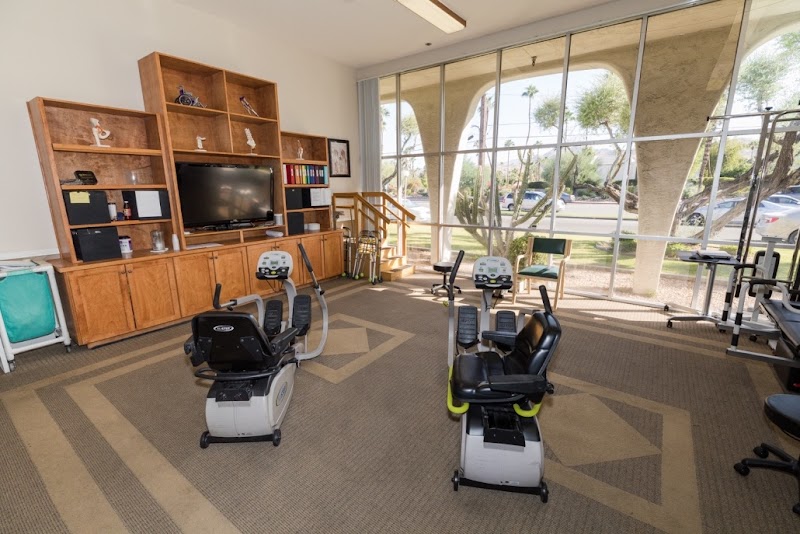
Who Owns and Operates Premier For Palm Springs?

PREMIER CARE CENTER FOR PALM SPRINGS is owned by a for-profit company. For-profit facilities operate as businesses with obligations to shareholders or private owners. The facility is operated by THE ENSIGN GROUP, a chain that manages multiple nursing homes. With 99 certified beds and approximately 89 residents (about 90% occupancy), it is a smaller facility located in PALM SPRINGS, California.
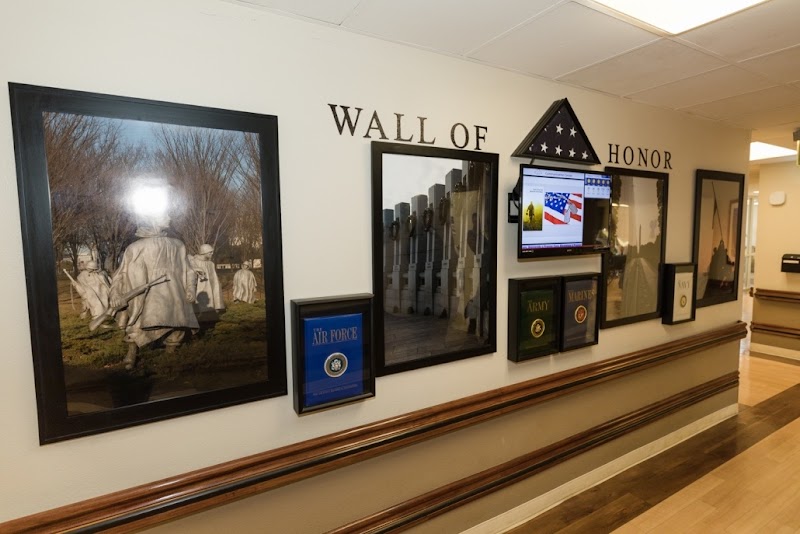
How Does Premier For Palm Springs Compare to Other California Nursing Homes?

Compared to the 100 nursing homes in California, PREMIER CARE CENTER FOR PALM SPRINGS's overall rating (2 stars) is below the state average of 3.1, staff turnover (42%) is near the state average of 46%, and health inspection rating (2 stars) is below the national benchmark.

What Should Families Ask When Visiting Premier For Palm Springs?

Based on this facility's data, families visiting should ask: "Can I visit during a mealtime to observe dining assistance and food quality?" "How do you handle medical emergencies, and what is your hospital transfer rate?" "Can I speak with family members of current residents about their experience?"

Is Premier For Palm Springs Safe?

Based on CMS inspection data, PREMIER CARE CENTER FOR PALM SPRINGS has a clean safety record: no substantiated abuse findings (meaning no confirmed cases of resident harm), no Immediate Jeopardy citations (the most serious violation level indicating risk of serious injury or death), and is not on the Special Focus Facility watch list (a federal program monitoring the lowest-performing 1% of nursing homes). The facility has a 2-star overall rating and ranks #100 of 100 nursing homes in California. While no facility is perfect, families should still ask about staff-to-resident ratios and recent inspection results during their visit.

Do Nurses at Premier For Palm Springs Stick Around?

PREMIER CARE CENTER FOR PALM SPRINGS has a staff turnover rate of 42%, which is about average for California nursing homes (state average: 46%). Moderate turnover is common in nursing homes, but families should still ask about staff tenure and how the facility maintains care continuity when employees leave.

Was Premier For Palm Springs Ever Fined?

PREMIER CARE CENTER FOR PALM SPRINGS has been fined $3,250 across 1 penalty action. This is below the California average of $33,111. While any fine indicates a compliance issue, fines under $50,000 are relatively common and typically reflect isolated problems that were subsequently corrected. Families should ask what specific issues led to these fines and confirm they've been resolved.

Is Premier For Palm Springs on Any Federal Watch List?

PREMIER CARE CENTER FOR PALM SPRINGS is not on any federal watch list. The most significant is the Special Focus Facility (SFF) program, which identifies the bottom 1% of nursing homes nationally based on persistent, serious quality problems. Not being on this list means the facility has avoided the pattern of deficiencies that triggers enhanced federal oversight. This is a positive indicator, though families should still review the facility's inspection history directly.