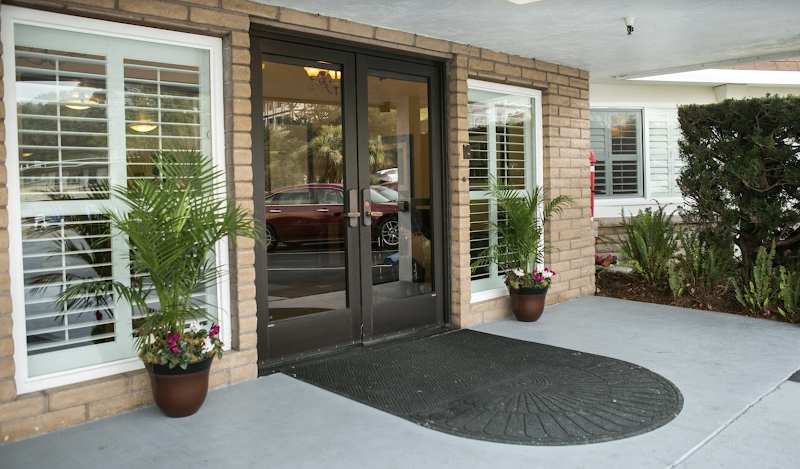
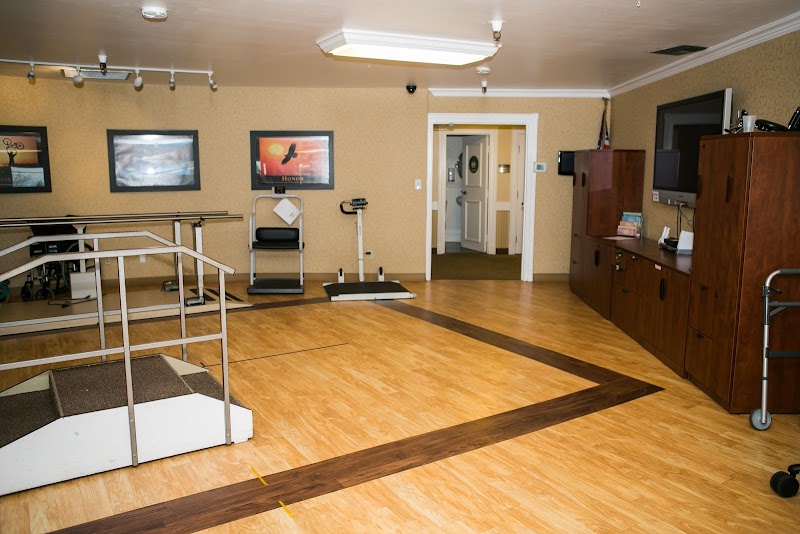
PETALUMA POST-ACUTE REHABILITATION

1115 B STREET, PETALUMA, CA 94952 (707) 765-3030
For profit - Limited Liability company 90 Beds ASPEN SKILLED HEALTHCARE Data: November 2025
Trust Grade
80/100
#163 of 1155 in CA
Last Inspection: December 2024

Within standard 12-15 month inspection cycle. Federal law requires annual inspections.

Overview

Petaluma Post-Acute Rehabilitation has a Trust Grade of B+, which means it is above average and recommended for families considering care options. It ranks #163 out of 1155 facilities in California, placing it in the top half, and #4 out of 18 in Sonoma County, indicating that only three local facilities are rated higher. The facility is improving, with issues decreasing from two in 2024 to one in 2025. Staffing is a significant strength, receiving a 5/5 star rating and having a turnover rate of 33%, which is below the California average, suggesting that staff are experienced and familiar with the residents. Additionally, the facility has no fines on record, which is encouraging, and offers more RN coverage than 92% of state facilities, ensuring better oversight of resident care. However, there are some weaknesses. Recent inspections found concerns such as inadequate food safety practices, which could potentially lead to foodborne illnesses, and restrictions on visitation hours that may negatively impact residents’ mental well-being. Additionally, there were failures to provide individualized activities for some residents, raising concerns about their quality of life and cognitive engagement.

Trust Score
B+
80/100
In California
#163/1155
Top 14%
Safety Record
Low Risk
No red flags
Inspections
Getting Better
2 → 1 violations
Staff Stability
○ Average
33% turnover. Near California's 48% average. Typical for the industry.
Penalties
✓ Good
No fines on record. Clean compliance history, better than most California facilities.
Skilled Nurses
✓ Good
Each resident gets 58 minutes of Registered Nurse (RN) attention daily — more than average for California. RNs are trained to catch health problems early.
Violations
⚠ Watch
24 deficiencies on record. Higher than average. Multiple issues found across inspections.
★★★★★
5.0
Overall Rating
★★★★★
5.0
Staff Levels
★★★★★
5.0
Care Quality
★★★★★
5.0
Inspection Score
Stable
2024: 2 issues
2025: 1 issues

The Good

  • 5-Star Staffing Rating · Excellent nurse staffing levels
  • 5-Star Quality Measures · Strong clinical quality outcomes
  • Full Sprinkler Coverage · Fire safety systems throughout facility
  • No fines on record
  • Staff turnover below average (33%)

    15 points below California average of 48%

Facility shows strength in staffing levels, quality measures, fire safety.

The Bad

Staff Turnover: 33%

13pts below California avg (46%)

Typical for the industry

Chain: ASPEN SKILLED HEALTHCARE

Part of a multi-facility chain

Ask about local staffing decisions and management

The Ugly 24 deficiencies on record

Mar 2025 1 deficiency
CONCERN (D) 📢 Someone Reported This

A family member, employee, or ombudsman was alarmed enough to file a formal complaint

Potential for Harm - no one hurt, but risky conditions existed

Deficiency F0660 (Tag F0660)

Could have caused harm · This affected 1 resident

**NOTE- TERMS IN BRACKETS HAVE BEEN EDITED TO PROTECT CONFIDENTIALITY** Based on interviews and record reviews, the facility failed to implement an effective discharge planning process for one residen...

Read full inspector narrative →
**NOTE- TERMS IN BRACKETS HAVE BEEN EDITED TO PROTECT CONFIDENTIALITY** Based on interviews and record reviews, the facility failed to implement an effective discharge planning process for one resident (Resident 1) of three sampled residents when Resident 1 and his family member were not trained on how to administer Resident 1's enteral nutrition formula (liquid nutrition) using Resident 1's gastrostomy tube (G-tube, a surgical opening fitted with a device to allow feedings to be administered directly to the stomach common for people with swallowing problems) and Resident 1's feeding pump (used to deliver the enteral nutrition) had not been delivered to Resident 1's residence upon his discharge. These failures resulted in Resident 1 not having received any nutrition for over 30 hours after his discharge from the facility, his transfer to the Emergency Department (ED) to be evaluated because of the potentially negative effect to his health and well-being, and his readmission to the facility one day after discharge. Findings: A review of Resident 1's admission record indicated he was admitted to the facility on [DATE] with diagnoses which included pneumonitis (the inflammation of lung tissue) due to the inhalation of food and vomit, severe protein-calorie malnutrition, dysphagia (difficulty swallowing food or liquid by mouth), and dyskinesia of the esophagus (when the muscular tube that carries food from the throat to the stomach moves abnormally). A review of Resident 1's transfer/discharge note dated 2/27/24 at 12:24 p.m., indicated, Patient [Resident 1] discharged to home at [11:45 a.m.] per MD [physician] orders .Demonstration on G-tube care provided . During an interview on 3/12/25 at 12:50 p.m., Licensed Nurse A (LN A) stated she was the nurse assigned to Resident 1 on 2/27/25. LN A stated she provided Resident 1 and his family with the enteral feeding formula, tubing, and syringes. The LN A confirmed Resident 1 was not provided with a feeding pump upon discharge because it was her understanding the social services department had arranged for the feeding pump to be delivered to Resident 1's house. The LN A stated she provided Resident 1's family member with discharge instructions which included the medication list. A review of Resident 1's Discharge Instruction , dated 2/24/25 at 3:55 p.m., indicated the following: -discharge date : [DATE]. -Discharge To: Home. -Diet: NPO (Nothing by mouth). -G-Tube Feeding: Isosource 1.5 at 65 ml (milliliters)/ hr per hour). - Resident 1's Cognition (ability to think and understand) /Psychosocial (the relationship between a person's social factors and behavior) Status: Alert, Confused and times, and Cooperative. -Resident 1's Rehab/Discharge Potential: Motivated to Self-Care and Follows Instructions. -Activities of Daily Living (basic tasks people perform to maintain their daily life and well-being): Resident 1 was dependent on others to eat. -Resident 1 was scheduled to receive services at home for physical, occupational, and speech therapy and nursing services for the administration of his medications and management of his G-tube feedings. -Medical Equipment Arrangements were made to be delivered. -Medication Education was provided by the facility's nurse. -Special Trainings/Instructions specifically for the Tube Feeding/Administration was not indicated as completed by any licensed staff at the facility prior to or upon Resident 1's discharge. During an interview on 3/13/25 at 1:25 p.m., Resident 1's family member stated when Resident 1 was discharged on 2/27/25, he was under the impression the facility would order the tube feeding formula and feeding pump for Resident 1's use at home. The family member denied having been trained before on how to start the tube feeding using the feeding pump prior to or upon Resident 1's discharge on [DATE]. The family member stated the home health nurse came to Resident 1's home 2/28/25 at approximately 11:30 a.m. At the time, Resident 1 had not received any nutrition for approximately 24 hours. The family member stated the home health nurse called the facility to inquire about the tube feeding formula and the feeding pump. Then the home health nurse advised the family member to take his Resident 1 to the hospital if the facility was not readmitting him. A review of Resident 1's hospital emergency provider note dated 2/28/25 at 2:35 p.m., indicated, .The patient has not been fed since yesterday at 10am .The patient was discharged from post-acute care yesterday .Weight .90 lb [pounds] Height .5' [feet] 8 [inches] .This is a .male who presents to the ED for feeding. The patient does not know how to do this at home and so was brought in for some education and some sustenance .The post-acute care facility will take this patient back and so he will be discharged to their care today. A review of Resident 1's care plan focused on his discharge home initiated on 1/28/25 indicated, The resident's goal is to return home .Goal .The resident will demonstrate correct administration of medications/treatments through the next review date .[Interventions for staff to implement to assist Resident 1 to achieve his goal of returning home included] Evaluate/record the resident's abilities and strengths, with resident's family and IDT [Interdisciplinary Team, a group of professionals from different disciplines who work together collaboratively to achieve a common goal]. Address gaps by referral to appropriate home health disciplines, assessment and education of additional caregivers with resources provided, facilitation of DME [Durable Medical Equipment, such as a feeding pump]. During an interview on 3/14/25 at 10:20 a.m., Management Staff C denied she had verified Resident 1's enteral feeding formula and feeding pump were to be delivered to the facility or Resident 1's home prior to Resident 1's discharge. Management Staff C acknowledged she had only provided Resident 1 with the name of the medical supply company, the name of the home health company, and their phone numbers. During an interview on 3/14/25 at 11:05 a.m., Management Staff D acknowledged it was her responsibility to order DME for residents but at times would share the load. For Resident 1's discharge, Management Staff C ordered the feeding pump for Resident 1. Management Staff D stated she found out after Resident 1's discharge the medical supply company scheduled to deliver Resident 1's tube feeding supplies did not deliver to resident homes. A review of Resident 1's facility document titled History and Physical dated 2/28/25, indicated, readmission due to nutrition supply delay. A review of the facility's policy and procedure (P&P) titled Social Services dated 3/2022, Our facility provides medically related social services to assure that each resident can attain or maintain his/her highest practicable physical, mental, or psychosocial . well-being . The Director of Social Services is a qualified social worker and is responsible for . Submitting nursing, therapy, and DME orders upon discharge to appropriate agencies. A review of the facility's P&P titled Discharge Summary and Plan dated 10/2022, indicated, When a resident's discharged is anticipated, a discharge summary and post discharge plan will be developed to assist the resident to adjust to his/her new living environment . The post-discharge plan will be developed by the care planning/interdisciplinary team with the assistance of the resident and his or her family and will include .What factors may make the resident vulnerable to preventable readmissions.
Dec 2024 2 deficiencies
CONCERN (D)

Potential for Harm - no one hurt, but risky conditions existed

Deficiency F0554 (Tag F0554)

Could have caused harm · This affected 1 resident

Based on observation, interview, record review, facility policy review, the facility failed to complete an assessment to determine if a resident was able to self-administer their medication(s) for 1 (...

Read full inspector narrative →
Based on observation, interview, record review, facility policy review, the facility failed to complete an assessment to determine if a resident was able to self-administer their medication(s) for 1 (Resident #52) of 18 sampled residents. Findings included: A facility policy titled, Self-Administration of Medications, revised 12/2022, indicated, 1. As part of their overall evaluation, the staff will assess each resident's mental and physical abilities to determine whether self-administering medications is clinically appropriate for the resident. 2. In addition to general evaluation of decision-making capacity, the staff will perform a more specific skill assessment, including (but not limited to) the residents a. Ability to read and understand medication labels; b. Comprehension of the purpose and proper dosage and administration time for his or her medications; c. Ability to remove medications from a container and to ingest and swallow (or otherwise administer) the medication; and d. Ability to recognize risks and major adverse consequences of his or her medications. An admission Record revealed the facility admitted Resident # 52 on 11/13/2024. According to the admission Record, the resident had a medical history that included a diagnosis of intracapsular fracture of the right femur. An admission Minimum Data Set (MDS), with an Assessment Reference Date (ARD) of 11/19/2024, revealed Resident #52 had a Brief Interview for Mental Status (BIMS) score of 15, which indicated the resident had intact cognition. Resident #52's care plan included a focus area initiated 11/13/2024, that indicated the resident had alteration in comfort due to pain. Interventions directed staff to administer prescribed pain medication. Resident #52's admission / readmission Screen and Baseline Care Plan, dated 11/13/2024, indicated the resident did not request to self-administer medication(s). Resident #52's Medication Review Report, for the timeframe 12/13/2024 - 01/13/2025, revealed an order dated 12/12/2024, for Biofreeze professional external gel 5%, apply to neck topically every six hours as needed for pain management. During a concurrent observation and interview on 12/16/2024 at 2:06 PM, Resident #52 removed Biofreeze (a pain relief gel) from their bedside table and stated they spoke with someone who agreed to allow them to keep the medication at their bedside. Resident #52 stated the medication was used for their neck pain. During an interview on 12/18/2024 at 8:04 AM, Registered Nurse (RN) #2 acknowledged Resident #52 kept Biofreeze medication at their bedside. RN #2 stated she did not know if a self-administration of medication assessment had been completed. During an interview on 12/18/2024 at 1:37 PM, the Director of Nursing (DON) stated she was not aware Resident #52 had medication at their bedside. The DON stated Resident #52 had not been assessed to keep the Biofreeze at their bedside. According to the DON, the nurse should not have given the medication to the resident to keep at their bedside as the interdisciplinary team had not met to discuss if the resident was safe and able to self-administer the medication.
CONCERN (D)

Potential for Harm - no one hurt, but risky conditions existed

Infection Control (Tag F0880)

Could have caused harm · This affected 1 resident

2. An admission Record revealed the facility admitted Resident #34 on 02/25/2019. According to the admission Record, the resident had a medical history that included diagnoses of chronic kidney diseas...

Read full inspector narrative →
2. An admission Record revealed the facility admitted Resident #34 on 02/25/2019. According to the admission Record, the resident had a medical history that included diagnoses of chronic kidney disease and retention of urine. A Minimum Data Set (MDS), with an Assessment Reference Date (ARD) of 11/19/2024, revealed Resident #34 had a Brief Interview for Mental Status (BIMS) score of 15, which indicated the resident had intact cognition. The MDS indicated the resident required substantial/maximal assistance with toileting hygiene, was frequently incontinent of bowel, and had an indwelling catheter. Resident #34's care plan included a focus area initiated 11/14/2024, that indicated the resident was at high risk for developing complications to include a urinary tract infection due to the presence of a catheter related to obstructive uropathy. During an observation on 12/17/2024 at 2:22 PM, Certified Nurse Aide #5 did not wear a gown when she provided incontinence care to Resident #34. During an interview on 12/18/2024 at 8:20 AM, the Infection Preventionist stated staff should use personal protective equipment for high contact activities for residents on enhanced barrier precautions. Based on observation, interview, record review, and facility policy review, the facility failed to ensure staff wore a gown and gloves when they provided incontinence care to 2 (Resident #34 and Resident #66) of 18 sampled residents. Findings included: A facility policy titled Enhanced Barrier Precautions, effective 08/06/2024, revealed, Enhanced Barrier Precautions (EBP) - used in conjunction with the standard precautions and expand the use of PPE [personal protective equipment] to donning of gown and gloves during high-contact resident care activities and in situations of expected exposure to blood, body fluids, skin breakdown, or mucous membranes that provide opportunities for transfer of MDROs [multidrug-resistant organisms] to staff hands and clothing to reduce transmission. The policy specified, 4. Facility staff shall perform hand hygiene and in cases when standard precautions may not be sufficient, will don gown and gloves before performing high-contact resident care activities. The list below is not all-inclusive, and activities requiring EBP are on a case by case basis as determined by the facility * Device care or use: PICC/MID [peripherally inserted central catheter/midline] line, urinary catheter, feeding tube, tracheostomy/ventilator * Wound care on chronic wounds requiring a dressing * Bathing/showering * Dressing and/or Transferring where contact with bodily fluids is likely * Providing hygiene where standard precautions may not be sufficient * Changing soiled linens * Changing briefs or assisting with toileting. 1. An admission Record revealed the facility admitted Resident #66 on 11/07/2024.According to the admission Record, the resident had a medical history that included a diagnosis of retention of urine. An admission Minimum Data Set (MDS), with an Assessment Reference Date (ARD) of 11/25/2024, revealed Resident #66 had a Brief Interview for Mental Status (BIMS) score of 12, which indicated the resident had moderate cognitive impairment. Resident #66 was dependent on staff for lower and upper body dressing. The MDS indicated the resident was dependent on staff for toileting hygiene and had an indwelling catheter. Resident #66's care plan included a focus area initiated 12/02/2024, that indicated the resident had an activity of daily living self-care performance deficient related to impaired mobility, weakness, deconditioned, and multiple medical problems. During an observation on 12/17/2024 at 2:01 PM, Certified Nurse Aide (CNA) #3 and CNA #4 assisted Resident #66 with repositioning. CNA #3 and CNA #4 wore gloves and no gowns. CNA #3 handed CNA #4 the resident's urinary catheter bag and assisted the resident to turn in bed. CNA #3 was also noted to hold the resident's urinary catheter bag and adjusted the resident's catheter tubing. During an interview on 12/17/2024 at 2:02 PM, CNA #3 stated she did not wear a gown because she did not empty the resident's urinary catheter bag. According to CNA #3, she only needed to wear a gown when she emptied the resident's urinary catheter bag. During an interview on 12/17/2024 at 2:13 PM, CNA #4 stated she did not wear a gown when she assisted CNA #3 to reposition Resident #66. Per CNA #4, she only needed to wear a gown when she emptied the resident's urinary catheter bag. During an interview on 12/18/2024 at 8:20 AM, the Infection Preventionist stated staff should use personal protective equipment for high contact activities for residents on enhanced barrier precautions.
Mar 2022 9 deficiencies
CONCERN (D)

Potential for Harm - no one hurt, but risky conditions existed

Comprehensive Care Plan (Tag F0656)

Could have caused harm · This affected 1 resident

Based on observation, interview and record review the facility failed to care plan (care plans provide communication among nurses, their residents and other healthcare providers to achieve health care...

Read full inspector narrative →
Based on observation, interview and record review the facility failed to care plan (care plans provide communication among nurses, their residents and other healthcare providers to achieve health care outcomes) its continued use of a position change alarm (an audible alarm that alerts staff the resident is getting up, and that should be used only when medically necessary and with intermittent reevaluation for continued use) for for 1 of 17 sampled residents (Resident 28). Resident 28 was known to remove the clip connected to the alarm. The failure to care plan resulted in the position change alarm constantly in use, and had the potential to diminish Resident 28's psychosocial well-being. Findings: During an observation on 3/7/22 at 11:10 a.m., Resident 28 was sleeping in her bed. A position change alarm device was visible at the head of her bed. During an observation and concurrent interview on 3/8/22 at 10:25 a.m., Resident 28 was resting in bed. Staff L stated Resident 28 prefers to get up after lunch. We get her up into a wheelchair and she moves herself around the facility. Staff L stated we use the position change alarm every time Resident 28 is in her wheelchair and added, Resident 28 can remove the clip and string attached to the position change alarm. During an observation and concurrent interview on 3/10/22 at 10:25 a.m., Resident 28 was in her wheelchair at the doorway to her room and the position change alarm was in place. Staff L stated we always use the alarm, and the use of the alarm should be a part of the care plan. During an observation and concurrent interview on 3/11/22 at 9:20 a.m., Resident 28 was seen in the hall, a few doors from her bedroom. Staff N stated we use the position change alarm while Resident 28 is in bed and when she is in the wheelchair. Staff N stated we use the alarm because she is a fall risk and an elopement risk. Staff N stated, Resident 28 can propel herself all around the facility and likes to go to the doors to look outside. Staff N stated Resident 28 knows how to remove the clip and string attached to the alarm and will hide the clip. Staff N stated Everyone (staff) is to lookout for her and to respond when the alarm sounds. During a record review of Resident 28's Medication Review Report (recap of Physician orders) March 2022, revealed that a position change alarm was not ordered by an MD. During a record review of Resident 28's care plan, (printed 3/11/22) The care plan included a focus for Risk for Wandering or Elopement. The interventions listed were offering to walk with Resident 28, redirecting her when seen going toward door, offering structured activities, food, conversations, television and reading materials and providing her with a consistent routine. During a record review of Resident 28's care plan, (printed 3/11/22) The care plan included a focus for Risk of Falls. The interventions listed were anticipate and meet Resident 28's needs, make sure call light is within reach and respond promptly, ensure Resident 28 has appropriate footwear and provide Resident 28 a safe environment such as clean, clutter free floors, good lighting and a working call light. The facilities policy Care Planning Interdisciplinary Team, dated 1/2022, indicated Our facility's Care Planning/Interdisciplinary Team is responsible for the development of an individualized comprehensive care plan for each resident.
CONCERN (D)

Potential for Harm - no one hurt, but risky conditions existed

Deficiency F0657 (Tag F0657)

Could have caused harm · This affected 1 resident

**NOTE- TERMS IN BRACKETS HAVE BEEN EDITED TO PROTECT CONFIDENTIALITY** Based on interview and record review the facility failed to revise a care plan with updated interventions for one (Resident 64) ...

Read full inspector narrative →
**NOTE- TERMS IN BRACKETS HAVE BEEN EDITED TO PROTECT CONFIDENTIALITY** Based on interview and record review the facility failed to revise a care plan with updated interventions for one (Resident 64) of 17 sampled residents, when facility staff reviewed the nutritional care plan but did not document new interventions to manage resident 64's continued weight loss. This failure resulted in Resident 64 suffering significant weight loss within one month. Findings: During a review of Resident 64's, admission Record she had been admitted to the facility on [DATE], with a history of bleeding between the brain and tissue covering the brain, high blood pressure, insulin dependent diabetes and generalized muscle weakness. During a review of Resident 64's, Dietary Progress Notes, dated 2/15/22, the Dietary Progress Note indicated Resident 64 was admitted to the facility with a weight of 44.8 kilograms or 98.56 pounds. Resident 64 has been prescribed a tube feeding (nutrients are supplied through a tube for people who cannot get enough nutrients through eating) formula to be infuse 55 milliliters (ml) an hour (hr.) for 20 hours and to stop the feeding from 10:00 a.m. until 2:00 p.m., so Resident 64 could participate in therapy. Additional water had been added to meet 100% of her estimated nutritional needs. During a review of Resident 64's, Nursing Progress Notes dated 2/17/22, indicated the tube feeding hourly rate was going at a rate of 45 ml/hr. on 2/17/22, Dietary Progress Note, indicated the rate for the tube feeding was changed to 55 ml/hr per the doctor's order. Resident 64's weight was measured and indicated to be 94 lbs. During a review of Resident 64's, Dietary Progress Notes, dated 2/25/22 indicated Resident 64's weight had been measured at 90.8 lbs. The rate of tube feeding was recommended to be increased to 65 ml/hr. due to weight loss and additional water was added to meet nutritional needs. Blood sugar ranged from 117 to 390 with an average of 230 indicted in the dietary note. During a review of Resident 64's, Dietary Progress Notes dated 3/4/22 indicated Resident 64's weight had been measured at 89.4 lbs. Blood sugar levels were indicated to range from 90 to 389 with an average of 242. The dietary noted indicated Resident 64 had an unintended weight loss of 4.6 lbs. or 4.9% of total body weight. Dietary noted indicated Resident 64 remained on appropriate tube feed formula and she was meeting 100% or greater of her estimated needs. During an observation on 3/7/22 at 12:38 p.m., in Resident 64's room, she was observed sleeping in her bed not opening her eyes or responding to name by voice. Resident 64 could not be interviewed as she would not wake up and respond. During an interview on 3/10/22 at 3: 55 p.m. with RD J, she stated Resident 64 had high blood sugar levels and with those levels being so high, she would be unable to absorb the tube feeding formula and gain weight without additional insulin to lower the blood sugar levels and bring that sugar or energy back into the cells. RD J stated that more insulin would help Resident 64's body absorb the formula better and might allow her to gain weight. RD J stated she thought she should have followed up with the doctor regarding the consistently high blood sugar levels. RD J stated she had not spoken with the nursing staff to ask if Resident 64 had been getting all the formula being prescribed and if there were any challenges like the therapy schedule which might have interfered with her getting all the formula prescribed. RD J stated Resident 64's was considered significant and of concern since it had been going downward and not stabilizing or remaining the same. During a review of Resident 64's, Plan of Care dated 2/16/22 indicated Resident 64 would achieve a goal of tolerating her tube feedings. On 2/18/22, Resident 64's, Plan of Care had been updated on 3/4/22 to achieve a goal of maintaining her weight plus or minus four pounds with a set point of 89 pounds, indicating she had continued to lose weight since 2/17/22 (admission weight was 94 pounds). Resident 64's, Plan of Care was reviewed for updated interventions to stabilize or encourage weight gain but no updated interventions beyond 2/18/22 were observed. During a review of the facility's policy and procedure (P&P) titled, Care Planning- Interdisciplinary Team dated, 2022, the P&P indicated, 2. The care plan is based on the resident's comprehensive assessment and is developed by a Care Planning/Interdisciplinary Team .5. The mechanics of how the Interdisciplinary Team meets its responsibilities in the development of the interdisciplinary care plan (e.g., face to face, teleconferences, written communications, etc.) is a the discretion of the Care Planning Committee.
CONCERN (D)

Potential for Harm - no one hurt, but risky conditions existed

Deficiency F0660 (Tag F0660)

Could have caused harm · This affected 1 resident

**NOTE- TERMS IN BRACKETS HAVE BEEN EDITED TO PROTECT CONFIDENTIALITY** Based on interview and record review, the facility failed to adopt a discharge care plan that identified nutritional needs for o...

Read full inspector narrative →
**NOTE- TERMS IN BRACKETS HAVE BEEN EDITED TO PROTECT CONFIDENTIALITY** Based on interview and record review, the facility failed to adopt a discharge care plan that identified nutritional needs for one (Resident 64) of 17 sampled residents, when the facility's discharge plan for Resident 64 did not address weight loss and how to stabilize or gain weight. This failure had the potential to cause Resident 64 further weight loss and fatigue. Findings: During a review of Resident 64's, Nursing Progress Notes, dated 11/11/21, indicated Resident 64 had been admitted to the facility with a diagnosis of acute renal failure (a condition which the kidneys suddenly cannot filter waste from the blood), requiring dialysis (a process of removing excess water and toxins from the blood in people whose kidneys can no longer perform these functions) and surgery. During a review of Resident 64's, Nursing Progress Notes, dated 11/16/21, indicated Resident 64 had discontinued dialysis. During a review of Resident 64's, Dietary Progress Notes, dated 11/19/21, indicated Resident 64 had lost 5.2 pounds, or 4.3% of her total body weight, and weighed 121 pounds. The Dietary Progress note indicated Resident 64 had been eating approximately 41% of her meals. Resident 64's diet preferences had been changed to add sherbet for a snack and continue to monitor weights and follow-up. The Dietary Progress Note indicated Resident 64 had her own supply of a protein supplement drink. During a review of Resident 64's, Dietary Progress Notes, dated 11/26/21 indicated Resident 64 had lot a total weight of 5.6 pounds or 4.8% of her body weight within one week and her weight was measured at 110.8 pounds. Resident 64 had been consuming approximately 54% of her meals, plus the snack and protein supplemental drink, no new recommendations were included in the plan of care. The goal weight had been adjusted to stay within plus or minus four pounds of 110 pounds. During a review of Resident 64's, Dietary Progress Notes, dated 12/7/21, indicated Resident 64 had lost 13.6 pounds since admission [DATE]) or 11% of her total body weight and had a body weight measured at 108 pounds. The goal weight had been adjusted to stay within plus or minus four pounds of 110-pound body weight. The Dietary Progress Note indicated Resident 64 had met the goal weight range. The note indicated a recommended change to discontinue regular sherbet and add sugar free sherbet to her diet. During an interview on 3/10/22, at 3:55 p.m., Registered Dietician J (RD J) stated Resident 64 was admitted to the facility on dialysis, due to a condition that caused fluid build-up. RD J stated that fluid build-up caused a resident to gain weight, not lose weight. RD J stated she did not contact the dialysis center to learn Resident 64's dry weight (the resident's weight without the excess fluid that builds up between dialysis treatments). RD J stated Resident 64 indicated her desired weight was around 110 pounds, and the Resident 64's initial weight loss had been acceptable. RD J stated Resident 64 stopped dialysis while receiving care at the facility. RD J verbalized agreement that when a resident usually would gain weight rather than lose weight after stopping dialysis. RD J did not know the reason why Resident 64 continued to lose weight through her stay at the facility stay. RD J did not know why Resident 64's discharge plan did not include recommendations to ensure weight stability or to increase weight from 98.2 pounds, at discharge. When asked how Resident 64's protein shakes were calculated into the resident's dietary plan, RD J was unable to vocalize a process. RD J stated staff did not measure each drink container to determine how much was consumed each day. RD J stated Resident 64 lost a total of 13 pounds of body weight during the facility stay, and RD J considered a significant weight loss and concerning. RD J stated she provided no recommendations for managing Resident 64's weight loss. During a review of Resident 64's, Nursing Progress Note, dated 12/13/21 indicated she would be discharged on 12/14/21 to home with follow up appointments, equipment needs addressed and referrals for Home Health services made. During a review of Resident 64's, Plan of Care, dated 11/11/21 had a discharge plan to follow up with kidney specialist, outlined medical devices she used but did not indicate any dietary changes to stabilize or gain weight. During a review of Resident 64's, Discharge Order, dated 12/13/21 or Resident 64's, Discharge Instructions dated 12/9/21 did not indicate a plan for Resident 64's weight loss or recommendations to stabilize or gain weight for Resident 64. Resident 64's Discharge Instructions indicated she had a documented weight of 98.2 pounds measured on 12/10/21. During a review of the facility's policy and procedure titled, RD (Registered Dietician) FOR HEALTHCARE, INC WEIGHT CHANGE PROTOCOL, dated 2018, the P&P indicated, Identify reasons for the weight loss, .Consider possible health effects from the weight change .Suggest interventions to correct the identified problem, diet supplementation, appetite stimulation .The evaluation process is done again if there is another significant weight change .The following criteria defined significant .Unplanned weight loss trend that has occurred 2 times or more. This can refer to weekly or monthly weights. 5% weight loss in one month .
CONCERN (D)

Potential for Harm - no one hurt, but risky conditions existed

Deficiency F0692 (Tag F0692)

Could have caused harm · This affected 1 resident

**NOTE- TERMS IN BRACKETS HAVE BEEN EDITED TO PROTECT CONFIDENTIALITY** Based on observation, interview and record review the facility failed maintain acceptable nutrition for one (Resident 64) of 17 ...

Read full inspector narrative →
**NOTE- TERMS IN BRACKETS HAVE BEEN EDITED TO PROTECT CONFIDENTIALITY** Based on observation, interview and record review the facility failed maintain acceptable nutrition for one (Resident 64) of 17 sampled residents. This resulted in Resident 64 suffering a significant weight loss within one month of admission, which effected her overall health and well-being. Findings: During a review of Resident 64's, admission Record she had been admitted to the facility on [DATE], with a history of bleeding between the brain and tissue covering the brain, high blood pressure, insulin dependent diabetes and generalized muscle weakness. During a review of Resident 64's, Dietary Progress Notes, dated [DATE], the Dietary Progress Note indicated Resident 64 was admitted to the facility with a weight of 44.8 kilograms or 98.56 pounds. Resident 64 has been prescribed a tube feeding (nutrients are supplied through a tube for people who cannot get enough nutrients through eating) formula to be infuse 55 milliliters (ml) an hour (hr.) for 20 hours and to stop the feeding from 10:00 a.m. until 2:00 p.m., so Resident 64 could participate in therapy. Additional water had been added to meet 100% of her estimated nutritional needs. During a review of Resident 64's, Nursing Progress Notes dated [DATE], indicated the tube feeding hourly rate was going at a rate of 45 ml/hr. on [DATE], Dietary Progress Note, indicated the rate for the tube feeding was changed to 55 ml/hr per the doctor's order. Resident 64's weight was measured and indicated to be 94 lbs. During a review of Resident 64's, Nursing Progress Notes dated [DATE], indicated Resident had a change in condition by appearing less responsive, very sleep and had a blood sugar level of 577 (per MedicineNet/WebMD, normal blood sugar for an adult with diabetes should be less than 180). The medical doctor was notified, and insulin (a hormone that controls the amount of sugar in the bloodstream and helps the body store glucose (simple sugar) in the liver, fat and muscles) medication had been prescribed. During a review of Resident 64's, Dietary Progress Notes, dated [DATE] indicated Resident 64's weight had been measured at 90.8 lbs. The rate of tube feeding was recommended to be increased to 65 ml/hr. due to weight loss and additional water was added to meet nutritional needs. Blood sugar ranged from 117 to 390 with an average of 230 indicted in the dietary note. During a review of Resident 64's, Dietary Progress Notes dated [DATE] indicated Resident 64's weight had been measured at 89.4 lbs. Blood sugar levels were indicated to range from 90 to 389 with an average of 242. The dietary noted indicated Resident 64 had an unintended weight loss of 4.6 lbs. or 4.9% of total body weight. Dietary noted indicated Resident 64 remained on appropriate tube feed formula and she was meeting 100% or greater of her estimated needs. During an observation on [DATE] at 12:38 p.m., in Resident 64's room, she was observed sleeping in her bed not opening her eyes or responding to name by voice. Resident 64 could not be interviewed as she would not wake up and respond. During a concurrent interview and observation on [DATE] at 2:32 p.m., with Licensed Staff O at Resident 64's bedside, she stated the tube feeding at the bedside was turned off and disconnected so Resident 64 could attend physical therapy. Licensed Staff O stated she had previously requested from the Rehabilitative Therapy Department to work with her during 10:00 a.m. and 2:00 p.m. while the feeding was scheduled to be turned off. Licensed Staff O then left the room to demonstrate physical therapy was working with Resident 64 in the hallway just outside of her room. Licensed Staff O stated Resident 64 was tolerating her tube feedings as nursing would check if the formula was not being absorbed by the stomach. At 2:45 p.m., Resident 64 was working with physical therapy and the tube feeding continued to be turned off. During an interview on [DATE] at 3: 55 p.m. with RD J, she stated she was aware of Resident 64's wieght loss and stated each time she was weighed there were new calculations regarinding required nutritional needs. RD J stated she was aware the current tube feeding regime had not been assisting Resident 64 in stablizing if not gaining weight but stated the calculation were based on evidence based practice for dieticians. RD J stated, Resident 64 had high blood sugar levels and with those levels being so high, she would be unable to absorb the tube feeding formula and gain weight without additional insulin to lower the blood sugar levels. RD J stated that more insulin would help Resident 64's body absorb the formula better and might allow her to gain weight. RD J stated she thought she should have followed up with the doctor regarding the consistently high blood sugar levels. RD J stated she had not spoken with the nursing staff to ask if Resident 64 had been getting all the formula being prescribed and if there were any challenges like the therapy schedule which might have interfered with her getting all the formula prescribed. RD J stated Resident 64's was considered significant and of concern since it had been going downward and not stabilizing or remaining the same. During a concurrent interview and observation with Licensed Staff P, on [DATE] at 9:32 a.m. at Resident 64's bedside, she stated there was approximated 300 milliliters of formula left in the tube feeding bag and the tube feeding would be stopped at 10:00 a.m., per the doctor's order. Licensed Staff P stated the tube feeding bag might be used for the tube feeding when it would be started back up at 2:00 p.m., since the bag would not have expired. Licensed Staff P stated for charting purposes she would document when she turned off the feeding and when it was turned back on, and on a separate piece of paper she would document the water given to Resident 64 and how many millileters of the feeding was infused during the shift. Licensed Staff P demonstrated where then tube feeding milliliter numbers were documented. A review of Resident 64's, Intake and Output Record indicated for the month of March, the following days did not indicate 24-hour totals were calculated, [DATE], [DATE], [DATE], [DATE], [DATE] and [DATE]. During an interview on [DATE] at 11:43 with DON, she stated there is no weight loss committee, but the Department managers discussed what was going on with residents daily. DON stated she was not aware that physical therapy was working with Resident 64 outside of the times set aside for therapy (10:00 a.m. to 2:00 p.m.). During a review of the facility's policy and procedure titled, RD (Registered Dietician) FOR HEALTHCARE, INC WEIGHT CHANGE PROTOCOL, dated 2018, the P&P indicated, Identify reasons for the weight loss, .Consider possible health effects from the weight change .Suggest interventions to correct the identified problem, diet supplementation, appetite stimulation .The evaluation process is done again if there is another significant weight change .The following criteria defined significant .Unplanned weight loss trend that has occurred 2 times or more. This can refer to weekly or monthly weights. 5% weight loss in one month .
CONCERN (D)

Potential for Harm - no one hurt, but risky conditions existed

Deficiency F0740 (Tag F0740)

Could have caused harm · This affected 1 resident

Based on observation, interview and record review, the facility failed to provide necessary behavioral health care and services for 1 out of 17 residents (Resident 50), when facility staff failed to f...

Read full inspector narrative →
Based on observation, interview and record review, the facility failed to provide necessary behavioral health care and services for 1 out of 17 residents (Resident 50), when facility staff failed to facilitate the resident's referral for psychological services and evaluation. This failure resulted on Resident 50 showing increased anxious behavior and receiving a new medication to address her anxiety, and did not ensure services to attain or maintain the highest practicable physical, mental, and psychosocial well-being, Findings: During an observation, interview and record review with Resident 50 on 3/7/22 at 3:00 p.m., Resident 50 was crying. Resident 50 stated she's sad and anxious but refused to discuss the matters further. Review of admission Minimum Data Set (an assessment tool) dated, 2/09/22, the facility admitted Resident 50 on 2/07/22 with a diagnosis of Bipolar disorder (a disorder associated with episodes of mood swings ranging from depressive lows to manic highs) and a Brief Interview for Mental Status (BIMS, a brief test is used to learn how well a person functions cognitively; a score of 13 to 15 suggests the patient is cognitively intact, 8 to 12 suggests moderately impaired and 0 to 7 suggests severe impairment) score of 9 out 15. During an interview and concurrent record review with Staff H on 3/09/22 11:11 a.m., Staff H verified Resident 50 had a Physician standing order for Psychologist Referral. The order, dated 2/7/22, indicated the facility would contact a psychologist (a professional who practices psychology and studies normal and abnormal mental states, emotional and social processes and behavior). Staff H stated the facility's process required Social Services to review the order and secure the referral with a psychologist. Staff H stated Resident 50 was started on a medication as needed (PRN) on 3/06/22 for anxiety. Staff H stated Resident 50 had not received any medication for anxiety until 3/05/22. During concurrent interview and record review with Management (Mgt) B on 3/09/22 at 11:27 a.m., Mgt B stated she made the referral with Psychologist K on 2/11/22. Mgt B stated Resident 50 had not been evaluated by Psychologist K. Mgt B stated she thought there was a barrier with Resident 50's insurance or payment source, which resulted in no evaluation. Mgt B stated she contacted Resident 50's insurance company on 2/14/22, and learned Psychologist K was listed on the insurace company's approved clinician list. Mgt B confirmed she had no documentation indicating she notified Psychologist K of the insurance's approval for Resident 50's services. During an interview and concurrent record review with Staff H on 3/09/22 at 3:47 p.m. Staff H stated Resident 50 received a medication on 3/5/22 for expressing feeling down due to resident 50 not having a husband, episodes of crying, and wanting to go home. Staff H confirmed Resident 50 having episodes of crying on 3/01/22 and 3/02/22. Upon review of the Medication Administration Record (MAR) of Resident 50, Staff H verified Resident 50 was not on any medication to address anxious behavior until 3/05/22. During interview with DON on 3/10/22 at 10:38 a.m., DON confirmed Resident 50 had not been seen by Psychologist K. DON stated Resident 50 needed to be seen by Psychologist K because her mood changes so fast. DON stated there was a small risk of Resident 50's anxiety increasing if she was not seen by Psychologist K. The facility's Policy and Procedure titled Referrals, Social Services indicated Social Services shall coordinate resident referrals with outside agencies.
CONCERN (D)

Potential for Harm - no one hurt, but risky conditions existed

Deficiency F0757 (Tag F0757)

Could have caused harm · This affected 1 resident

**NOTE- TERMS IN BRACKETS HAVE BEEN EDITED TO PROTECT CONFIDENTIALITY** Based on observation, interview, and record review, the facility failed to ensure the drug regimen for one of 17 residents (Resi...

Read full inspector narrative →
**NOTE- TERMS IN BRACKETS HAVE BEEN EDITED TO PROTECT CONFIDENTIALITY** Based on observation, interview, and record review, the facility failed to ensure the drug regimen for one of 17 residents (Resident 33) was free from unnecessary drugs, when facility staff administered laxitive medication to Resident 33 when the resident had loose bowel movements, contrary to physician order. This failure resulted in Resident 33 receiving medication that was not clinically indicated, which had the potential to cause unnecessary discomfort and stress to the gastrointestinal (GI) tract, and delay diagnosis for the cause of the GI resident's distress. Findings: During a review of Resident 33's Discharge summary, dated [DATE], this document indicated Resident 33 was in the hospital 11/16/21 to 11/21/21 for epididymitis/orchitis (inflammation and infection of the scrotum and testicles). The summary indicated Resident 33 was started on antibiotics in the hospital and continued taking them at the facility, until the end date of 12/1/21. During a review of Resident 33's Bowel Elimination task report for 12/2021 documented Resident 33 was having large loose/diarrhea stools. On 12/1/21 and 12/3/21 Resident 33 had 1 normal and 1 large loose stool. On 12/4/21 Resident 33 had 2 large loose stools. On 12/8/21 Resident 33 had 1 large loose stool. On 12/9/21 Resident 33 had 1 normal stool and 1 large loose stool. On 12 /10/21 Resident 33 had 2 large loose stools and 1 large putty like stool. On 12/11/21 Resident 33 had 1 normal stool and 2 loose stools. On 12/12/21 Resident 33 had 2 large loose stools. During a review of Resident 33's Medication Administration Record (MAR), dated 12/2021, the MAR revealed that Resident 33 had been on 2 antibiotics for cellulitis that was started 11/22/21. The last dose of antibiotics was scheduled for 12/1/21 and administered. In addition to antibiotics, the MAR indicated Resident 33 was on Senna (a laxative to prevent constipation), 1 tablet to be given twice-a-day (morning and evening). The MAR indicated to hold (e.g., not administer) the Senna if Resident 33 had loose stools. Resident 33's MAR indicated Senna was administered everyday, twice-a-day, from 12/1/21 to 12/10/21. The Senna was not administered on 12/11/21. On 12/12/13, the MAR indicated the morning dose was given, but the evening dose was held. In addition to Senna, the MAR indicated Resident 33 also received MiraLAX (a laxative used to treat occasional constipation), for administered once everyday, but held if the resident exhibited diarrhea. Similarly to Senna, MiraLAX was administered to Resident 33 from 12/1/21 to 12/10/21, held on 12/11/21, but administered on 12/12/21 and 12/13/21. During a review of Resident 33's Progress Notes, on 12/10/21 at 1:15 p.m., Staff L documented Resident 33 had a bout of diarrhea before lunch, and staff would continue to monitor. During a review of Resident 33's Progress Notes, on 12/12/21 at 7:53 p.m., Staff M documented that the physician was notified that Resident 33 had a change of condition, a fever of 101.3 degrees Fahrenheit. Recommendations by the physician were to get urine and blood work done if fever recurs. During an interview on 3/11/21 at 10:30 a.m., DON stated that it was known that Resident 33 had some diarrhea, and they held his laxatives. DON stated Resident 33 normally had one large normal stool every day. DON stated that the bout of diarrhea that she knew of did not appear to be a stool infected with Clostridioides difficile (C. Diff., a germ that causes severe diarrhea and inflammation of the colon, presents in most cases when an individual is taking antibiotics). DON stated they did not investigate further, did not start an infection surveillance check list, and did not notify the physician. During an interview and concurrent record review on 3/11/21 at 10:30 a.m., DON stated they had documented Resident 33's infection on the Infection Prevention and Control Surveillance Log . Review of the Infection Prevention and Control Surveillance Log for 12/2021 showed that Resident 33 was on the log for C Diff. due to antibiotic use, and listed the onset date as 12/19/21. During a review of Resident 33's Discharge summary, dated [DATE], the record indicated Resident 33 visited an [Emergency Department] for further evaluation of fevers, nausea, abdominal pain and diarrhea. Resident 33 was found to have C Diff Positive. Illness from Clostridioides difficile typically occurs after use of antibiotic medications. It most commonly affects older adults in hospitals or in long-term care facilities. The most common signs and symptoms of mild to moderate C. difficile infection are watery diarrhea three or more times a day for more than one day and mild abdominal cramping and tenderness. Signs and symptoms of severe infection include: Watery diarrhea as often as 10 to 15 times a day abdominal cramping and pain which may be severe, fever and nausea. This information is from the CDC webpage: CDC Healthcare-associated Infections (HAI) Diseases and Organisms. The facilities policy Surveillance for Infections, dated 2/2022, instructed the IP or DON will conduct ongoing surveillance for Healthcare-Associated Infections and other epidemiological significant infections that have substantial impact on potential resident outcome and that may require transmission-based precaution . Infections that should be included were pneumonia, urinary tract infections and Clostridioides difficile.
CONCERN (E)

Potential for Harm - no one hurt, but risky conditions existed

Deficiency F0563 (Tag F0563)

Could have caused harm · This affected multiple residents

**NOTE- TERMS IN BRACKETS HAVE BEEN EDITED TO PROTECT CONFIDENTIALITY** Based on observation, interview and record review, the facility failed to ensure residents could receive visitors outside of reg...

Read full inspector narrative →
**NOTE- TERMS IN BRACKETS HAVE BEEN EDITED TO PROTECT CONFIDENTIALITY** Based on observation, interview and record review, the facility failed to ensure residents could receive visitors outside of regular working hours for one (Resident 64) of 17 sampled residents. This failure did not ensure Resident 64's rights, and had the potential to negatively affect residents' psychosocial outcomes due to restricted visitation of families and friends who may want to visit and cheer-up residents in the morning or evening, outside of business hours. Findings: A review of Resident 64's admission Record indicated she was admitted to the facility on [DATE], with a history of bleeding between the brain and tissue covering the brain, high blood pressure, insulin dependent diabetes and generalized muscle weakness. During an observation on 3/7/22 at 12:38 p.m., in Resident 64's room, she was observed sleeping in her bed not opening her eyes or responding to name by voice. Resident 64 could not be interviewed as she would not wake up, become alert and respond to requests for interview. During an interview on 3/9/22 at 1:43 p.m., with Resident 64's Responsible Party (RP), the RP stated she could come and visit Resident 64 from 1 p.m. to 5 p.m. and that those were the facility's visiting hours, posted on the door coming into the facility. Resident 64's RP stated she would not ask to visit outside of these posted visiting hours since those were the rules, and she would follow the rules. During an interview on 3/10/22 at 3:11 p.m., with Director of Staff Development (DSD), the DSD stated as part of her role as infection preventionist she did not participate in determining visiting hours. During an interview on 3/10/22 at 3:26 p.m., with Direct of Nursing Services (DON), the DON stated she had participated in determining visiting hours and the recommended visiting hours were from 1 p.m. to 5 p.m. The DON stated the time frame had been determined to not conflict with resident care. During an interview on 3/10/22 at 3:36 p.m., with the Administrator (Admin), the Admin stated the posting on the door for visiting hours were from 1 p.m. to 5 p.m. but visitors could arrive at the facility outside of those hours and still be allowed to visit. Admin stated she would not know if visitors wanted to come to the facility outside of the posted hours unless someone approached her to request a different visiting time. During a review of the facility's policy and procedure (P&P) titled, General Visitation Policy: dated 2/21/22, the P&P indicated, Our recommended visitation hours are 1p.m.-5p.m. in order to not interfere with resident ADL (activity of daily living) care and scheduled meals.
CONCERN (E)

Potential for Harm - no one hurt, but risky conditions existed

Deficiency F0679 (Tag F0679)

Could have caused harm · This affected multiple residents

**NOTE- TERMS IN BRACKETS HAVE BEEN EDITED TO PROTECT CONFIDENTIALITY** Based upon observation, interview and record review the facility failed to provide individualized activities for three of 17 sam...

Read full inspector narrative →
**NOTE- TERMS IN BRACKETS HAVE BEEN EDITED TO PROTECT CONFIDENTIALITY** Based upon observation, interview and record review the facility failed to provide individualized activities for three of 17 sampled residents (Resident 43, 58, and 64). This deficient practice had the potential to affect the quality of life of residents by placing them at risk of sensory deprivation and decreased cognitive functioning. Findings: 1. During a review of Resident 43's, admission Record, dated 2/10/22, indicated she had been admitted to the facility on [DATE] following a hip replacement surgery (surgery to implant an artificial hip joint), muscle weakness and low blood pressure when standing or sitting. A review of Resident 43's Minimum Data Set (MDS, a standardized assessment and screening tool), dated 1/31/22, indicated the resident exhibited no cognitive deficits. During a concurrent observation an interview on 3/7/22, at 3:28 p.m., Resident 43 stated that no one had come to her bedside to offer books or or provide other activities to complete at the bedside. Resident 43 was asked if she attended activities that were schedule at the facility, she stated, No, I do not know anything about activities, what would that be? Resident 43's attention was directed to a calendar indicating March, posted on the resident's wall. The calendar indicated activites scheduled each day of the month, at various times. Resident 43 stated she could not read the activity calendar from her bed because it was too small to read. Resident 43 was asked if she might enjoy listening to New [NAME] music. The resident answered affirmatively and wanted to know when that had been scheduled. When Resident 43 was informed the activity had already taken place, the resident exhibited an expression of disappointment. During a review of Resident 43's, Plan of Care, dated 2/23/22, indicated staff would provide one-to-one visits for social interactions and to provide accommodations, such as discussing about Daily News/World News for leisure activities. During a review of Resident 43's, Activity Assessment Form, dated 2/23/22 indicated the resident liked to listen to music, keep up with the news and do things with people as very important. During a review of Resident 43's, Activity Attendance Record, for the month of March 2022 indicated the resident had not attended any activities outside of her room but was provided three in-room visits (3/1/22, 3/8/22 and 3/10/22) where conversation had taken place. A request had been made for, Activity Attendance Record for the month of February and the facility could not produce documentation. 2. During a review of Resident 58's, admission Record, dated 2/8/22, indicated Resident 58 had been admitted to the facility on [DATE] with a history of Diabetes (a group of diseases that result in too much sugar in the blood), chronic obstructive pulmonary disease (a group of lung disease that block air flow and make it difficult to breathe) and high blood pressure. A review of Minimum Data Set (MDS), a standardized cognitive assessment dated [DATE], indicated she had minimal cognitive deficits. During an interview, on 3/8/22 at 10:04 a.m., Resident 58 stated no one had offered her engagement with activities while she was in bed. Resident 58 was asked if she was aware of the activity calendar for March 2022 posted on the wall in her room, and the resident stated, No. Resident 58 stated she was unable to view the calendar because of the effect diabetes had on her eyes. Resident 58 stated she was bored and thought it was very boring here. During a review of Resident 58's, Plan of Care, dated 2/9/22 indicated the staff would provide one to one visit for social interaction and to provide accommodations such as outdoor leisure time activities. During a review of Resident 58's, Activity Assessment Record, dated 2/9/22, indicated listening to music, being with groups of people and doing her favorite activities were somewhat important. Resident 58 indicated the only activity as very important was going outside and getting fresh air. During a review of Resident 58's, Activity Attendance Record, dated the month of February 2022 indicated she had not attended any activities outside of her room and she had seven room visits (2/9/22, 2/10/22, 2/11/22, 2/15/22, 2/21/22, 2/24/22 and 2/28/22), during which conversation and social interaction had taken place. 3. During a review of Resident 64's, admission Record, the record indicated Resident 64 was admitted to the facility on [DATE], with a history of bleeding between the brain and tissue covering the brain, high blood pressure, insulin dependent diabetes and generalized muscle weakness. A review of Minimum Data Set (MDS), a standardize cognitive assessment dated [DATE], indicated she had moderate cognitive deficits. During an observation on 3/7/22 at 12:38 p.m., in Resident 64's room, she was observed sleeping in her bed not opening her eyes or responding to name by voice. Resident 64 could not be interviewed as she would not wake up and respond. During a review of Resident 64's, Plan of Care dated 2/17/22 indicated she liked to listen to music and for staff to be aware of resident's preferences and to provide care in a timely manner. During a review of Resident 64's, Activity Assessment Form dated 2/17/22, indicated her family provided the answers to the form. Listening to music was indicated to be somewhat important to Resident 64 per her family. During an observation on 3/9/22 at 9:57 a.m., in the hallway outside of room [ROOM NUMBER], MTG E was observed going into room [ROOM NUMBER] with no supplies and stayed in the room for a few minutes and then exited the room to go into another resident room. During an interview on 3/9/22 at 4:29 p.m., with MTG E, she stated she had no other staff to carry out activities as she was the sole employee for the Activity Department. MTG E stated she did not have a list of residents that require one to one time in their rooms. MTG E stated she would visit each resident every morning to do a check in on how everyone was feeling. MTG E stated she did not like bringing a cart to check-in on residents and if a resident requested materials like coloring pages, she could then go back to the activity room and bring a binder full of various coloring pages. MTG E stated she did not think it was a problem to conduct daily visits then head back to her activity room which was located at the end of a resident hallway to provide supplies and then start activities per the March calendar by 10:30 a.m., Monday through Friday. MTG E stated she did not work on the weekends. MTG stated there were 80 residents in the building and she would visit each resident from one minute to 15 minutes if they wanted to speak with her. MTG E stated she arrived at the facility at usually 8:00 a.m. to start visiting residents. MTG E could not explain when she had time to document if residents were attending activities or how often room visits were conducted. MTG E stated for Resident 64 as an example, she would provide the room visit documentation for the month of February. MTG E could not produce documentation regarding room visits for February 2022. MTG E stated she had March 2022 documentation and by observing the document, Resident 64 had two room visits (3/2/22 and 3/7/22 where sensory touch stimulation had been done. MTG E stated that meant she had stroked Resident's hands or face. During a review of the facility's policy and procedure (P&P) titled, Activity Programs, dated 2022, the P&P indicated, Activities are scheduled 7 (seven) days a week .All activities are documented in the medical record .b. Are offered at hours convenient to the residents, including evenings, holiday and weekends: .
CONCERN (E)

Potential for Harm - no one hurt, but risky conditions existed

Infection Control (Tag F0880)

Could have caused harm · This affected multiple residents

**NOTE- TERMS IN BRACKETS HAVE BEEN EDITED TO PROTECT CONFIDENTIALITY** Based on observation, interview and record review, the facility failed to follow the Infection Control Policy for 2 of 17 reside...

Read full inspector narrative →
**NOTE- TERMS IN BRACKETS HAVE BEEN EDITED TO PROTECT CONFIDENTIALITY** Based on observation, interview and record review, the facility failed to follow the Infection Control Policy for 2 of 17 residents (Residents 14 and 33) when: 1. The Infection Preventionist (IP) did not perform hand hygiene between concluding a wound care and treatment for one resident (Resident 14) and touching doorknobs inside the resident's room. In 7/2021, Resident 14's wound became colonized with an infection caused Methicillin-resistant Staphylococcus aureus (MRSA, a strain of bacteria resistant to certain antibiotics and spread by contact with infected people, surfaces, or things that carry the bacteria); 2. Resident 33 exhibited potential symptoms of C. Diff. (a healthcare-associated infection causing loose stools) but the facility delayed implementation of its infection surveillance policy. These failures delayed monitoring and treatment for Resident 33's infection, and had the potential to spread MRSA and C. Diff infections among residents in the facility. Findings: 1) During an observation on 03/09/22 10:00 a.m., in Resident 14's room, the IP prepared sterile liquid to wash and clean the wound/pressure ulcer in right hip and applied wound gel then covered the wound with sterile bandage. IP removed the dirty gloves and placed them inside the dirty plastic bag and sealed the bag with her bare hands. IP handed the dirty plastic bag to Certified Nursing Assistant to put in garbage. IP opened the resident's bathroom door using her bare hands, but the bathroom was occupied by a resident. IP then opened the other exit door with her bare hands. During an interview on 3/9/22 at 10:15 a.m., with IP stated the hand sanitizers were located outside resident's rooms in the hallway. During an interview on 03/10/22 09:27 a.m., with IP stated, Resident 14 was colonized (MRSA was present but not causing illness) with MRSA. IP stated Resident 14's condition only required standard precautions (e.g., universal precautions used fo avoiding contact with patients' bodily fluids, by means of the wearing of nonporous articles such as medical gloves, goggles, and face shields). IP stated she did not clean the doorknobs after she touched it with her dirty hands. IP stated the Primary Medical Doctor (PMD) did not order isolation precaution for Resident 14. During an interview on 3/10/22 at 9:29 a.m., the Director of Nursing (DON) stated IP's dirty hands touched dirty doorknobs, what's the difference, both were dirty? During an interview on 03/10/22, at 10:13 a.m., the Director of Staff Development (DSD) stated staff must use contact precaution when faced with the potential exposure of body fluids, to prevent the spread of an infection to other resident, staff, and visitors. The DSD stated, all surfaces needed to be clean and disinfect with bleach. During a telephone interview on 03/11/22, at 09:44 a.m., the Primary Medical Doctor (PMD) for Resident 14 stated the resident's wound was colonized with MRSA. A review of medical records for Resident 14 titled Nursing Care plan dated 1/13/22, indicated the wound was reinfected with green purulent drainage. A review of the facility Policy & Procedure (P&P) titled Handwashing/Hand hygiene dated 1/2019 revealed, The facility considers hand hygiene the primary means to prevent the spread of infections., #2 All personnel shall follow the handwashing/hand hygiene procedures to help prevent the spread of infections to other personnel, residents, and visitors. #3 Hand hygiene products and supplies (sinks, soap, towels, alcohol-based hand rub, etc.) shall be readily accessible and convenient for staff use to encourage compliance with hand hygiene policies. #7j After handling used bandages, contaminated equipment, etc. #7 m. after removing gloves. #8 Hand hygiene is the final step after removing and disposing of personal protective equipment. A review of facility (P&P) titled Isolation-categories of Transmission-based Precautions dated 12/2020, indicated: It is the intent of this facility that all resident blood body fluids, excretions and secretions other than sweat will be considered potentially infectious so standard precautions will be used for all residents. Contact Precautions 1) Contact Precautions may be implemented for residents known or suspected to be infected with microorganisms (germs) that can be transmitted by direct contact with the resident. 4) Staff . will wear gloves (clean, non-sterile) when entering the room. When caring for a resident, staff will change gloves after having contact with infective material (for example, fecal material and wound drainage). Gloves will be removed, and hand hygiene performed before leaving the room. 2. During a review of Resident 33's Discharge summary, dated [DATE], this document indicated Resident 33 was admitted to a hospital from [DATE] to 11/21/21, for epididymitis/orchitis (inflammation and infection of the scrotum and testicles). Resident 33 was started on antibiotics in the hospital and continued taking them at the skilled nursing facility until the end date of 12/1/21. During a review of Resident 33's Bowel Elimination task report for 12/2021 documented Resident 33 was having large loose/diarrhea stools. On 12/1/21 and 12/3/21 Resident 33 had 1 normal and 1 large loose stool. On 12/4/21 Resident 33 had 2 large loose stools. On 12/8/21 Resident 33 had 1 large loose stool. On 12/9/21 Resident 33 had 1 normal stool and 1 large loose stool. On 12/10/21 Resident 33 had 2 large loose stools and 1 large putty like stool. On 12/11/21 Resident 33 had 1 normal stool and 2 loose stools. On 12/12/21 Resident 33 had 2 large loose stools. During a review of Resident 33's Medication Administration Record for 12/2021, this revealed that Resident 33 had been on 2 antibiotics for cellulitis that was started 11/22/21. The last dose was for 12/1/21 and this was documented as given. Resident 33 was on Senna ( a laxative to prevent constipation,) 1 tablet to be given twice a day (morning and evening,) and to be held if resident had loose stools. Resident 33's MAR shows that this medication was given everyday as ordered, that is for 12/1/21 to 12/10/21. The Senna was not given on 12/11/21. On 12/12/13 the morning dose was given, and the evening dose was not given. Resident 33 was also on MiraLAX (a laxative used to treat occasional constipation) ordered to be given once a day and held if resident had diarrhea. This medication was given to Resident 33 on 12/1/21 to 12/10/2 and not given 12/11/21, then given 12/12/21 and 12/13/21 in the morning. During a review of Resident 33's Progress Notes, on 12/10/21 at 1:15 p.m., Staff L documented Resident 33 had a bout of diarrhea before lunch, and staff would continue to monitor. During a review of Resident 33's Progress Notes, on 12/12/21 at 7:53 p.m., Staff M documented that the physician was notified that Resident 33 had a change of condition, related to a fever of 101.3 degrees Fahrenheit. the physician recommended to obtain urine and blood work done if the fever recurred. During a review of Resident 33's Progress Notes, on 12/13/21 at 2:30 p.m., Staff N documented that on the way to a physician's appointment Resident 33 vomited. The physician advised the transport team to send Resident 33 to the Emergency Department. During an interview on 3/11/21 at 10:30 a.m., DON stated that it was known that Resident 33 had some diarrhea, and they held his laxatives. DON stated Resident 33 normally had one large normal stool every day. DON stated that the bout of diarrhea that she knew of did not appear to be a stool that would have been infected with Clostridioides difficile. DON stated they did not investigate further, did not start an infection surveillance check list, and did not notify the physician. During an interview and concurrent record review on 3/11/21 at 10:30 a.m., DON stated facility staff had documented Resident 33's infection on the Infection Prevention and Control Surveillance Log for 12/2021. Review of the Infection Prevention and Control Surveillance Log indicated the facility documented on 12/19/21 that Resident 33 had C. Diff. due to antibiotic use. The Log indicated the onset date as 12/19/21. The Log indicated no record of infection surveillance of Resident 33 during the first two weeks of December 2021, the time when the resident had loose bowel movements and immediately after the resident completing concurrent courses of antibiotics. During a review of Resident 33's Discharge summary dated [DATE] indicated Resident 33 presents back to the ED for further evaluation of fevers, nausea, abdominal pain and diarrhea. Resident 33 was found to have C Diff Positive which is Clostridioides difficile. Illness from Clostridioides difficile typically occurs after one's use of antibiotic medications. The germ most commonly affects older adults in hospitals or in long-term care facilities. The most common signs and symptoms of mild-to-moderate C. difficile infection are watery diarrhea three or more times a day for more than one day, and mild abdominal cramping and tenderness. Signs and symptoms of severe infection include: Watery diarrhea as often as 10 to 15 times a day abdominal cramping and pain which may be severe, fever and nausea. This information is from the CDC webpage: CDC Healthcare-associated Infections (HAI) Diseases and Organisms. The facilities policy Surveillance for Infections, dated 2/2022, instructed the IP or DON will conduct ongoing surveillance for Healthcare-Associated Infections and other epidemiological significant infections that have substantial impact on potential resident outcome and that may require transmission-based precaution . Infections that should be included were pneumonia, urinary tract infections and Clostridioides difficile.
Apr 2019 12 deficiencies
CONCERN (D)

Potential for Harm - no one hurt, but risky conditions existed

Deficiency F0558 (Tag F0558)

Could have caused harm · This affected 1 resident

Based on observation, resident and staff interviews, the facility failed to have an over the commode chair/shower chair that met one of 18 residents needs, Resident 48. This failure resulted in Reside...

Read full inspector narrative →
Based on observation, resident and staff interviews, the facility failed to have an over the commode chair/shower chair that met one of 18 residents needs, Resident 48. This failure resulted in Resident 48 expressing frustration when staff had the resident sit on a commode chair that did not fit over Resident 48's toilet and resulted in Resident 48 expressing frustration of having to wait to be toileted when staff attempted to find a commode chair that fit over the toilet. Findings: During an interview on 4/22/19 at 10:47 a.m., Resident 48 stated that the over the commode/shower chair that fit over his bathroom toilet, and that he needed, was not always available and he had to wait for staff to find it, which he stated frustrated him. Resident 48 stated staff often used a different over the commode/shower chair that did not fit completely over the toilet and that made him uncomfortable. During an observation and interview on 4/23/19 at 11:21 a.m., Unlicensed Staff B stated that there was only one over the commode chair that fit over Resident 48's toilet properly, but was not always available. During a comparison of commode chairs, there was one commode chair without the stabilizing bar across the back of the lower legs of the chair and which fit over the resident's bathroom toilet. The other type of commode chair, had the stabilizing bar across the back of the lower legs which prevented the commode chair to be pushed all the way back over a bathroom toilet. During an interview on 4/23/19 at 11:57 a.m., the Director of Staff Development (DSD) acknowledged that unlicensed staff knew about Resident 48's issue with the commode/shower chairs. The DSD stated that none of the staff had told her that there was a problem regarding Resident 48 feeling uncomfortable or frustrated regarding the over the commode/shower chairs. The DSD stated she was not aware that the commode chair that fit over Resident 48's toilet was unavailable and that the other type of commode chair did not completely fit over the resident's bathroom toilet. During the same interview and observation, the DSD stated she was putting a label on the commode/shower chair on the chair that fit over Resident 48's toilet. The DSD stated it was her expectation that the unlicensed staff should have brought this issue up to her and she would now have an-in-service training.
CONCERN (D)

Potential for Harm - no one hurt, but risky conditions existed

Deficiency F0561 (Tag F0561)

Could have caused harm · This affected 1 resident

**NOTE- TERMS IN BRACKETS HAVE BEEN EDITED TO PROTECT CONFIDENTIALITY** Based on observation, interview, and record review, the facility failed to accommodate a resident's request to assign Spanish-sp...

Read full inspector narrative →
**NOTE- TERMS IN BRACKETS HAVE BEEN EDITED TO PROTECT CONFIDENTIALITY** Based on observation, interview, and record review, the facility failed to accommodate a resident's request to assign Spanish-speaking Nursing Assistants to her care when the facility had several Spanish-speaking Nursing Assistants on duty. The facility continued assigning non-Spanish Speaking Nursing Assistants to Resident 32, who was unable to understand English, creating feelings of frustration and discomfort. Findings: Resident 32 was admitted to the facility on [DATE] with Medical Diagnoses including Fracture of Left Tibia (The inner and larger of the two long bones of the lower leg), Fracture of Upper and Lower End of Left Fibula (The outer and thinner of the two bones of the lower leg, extending from the knee to the ankle) and Type 2 Diabetes Mellitus, according to the facility's Face Sheet. Resident 32's MDS (U.S. federally mandated process for clinical assessment of all residents in Medicare or Medicaid certified nursing homes) dated 4/24/19, indicated Resident 32's BIMS (Brief Interview for Mental Status-a structured evaluation aimed at evaluating aspects of cognition in residents in Medicare or Medicaid certified nursing homes) score was 15, which indicated Resident 32's cognition was intact. Resident 32's MDS dated [DATE], indicated she required extensive assistant with bed mobility, transfers, locomotion on and off the unit, dressing, toilet use and personal hygiene. These tasks were routinely performed by Certified Nursing Assistants. Resident 32's MDS also indicated her preferred language was Spanish. During an interview on 4/22/19 at 9:44 a.m. with Resident 32's daughter, the daughter stated that a request had been made to the facility's DON (Director of Nursing) on 4/19/19 to assign Spanish-speaking Nursing Assistants to her mother's care, and yet, Resident 32 continued to be assigned to non-Spanish-speaking Nursing Assistants. During an interview on 4/24/19 at 8:29 a.m., the DON confirmed having spoken to Resident 32's daughter on 4/19/19 about Resident 32's preferences for Spanish-speaking Nursing Assistants. The DON stated that they had tried to accommodate Resident 32's needs as much as possible, and that Resident 32 was no longer being assigned to non-Spanish-speaking Nursing Assistants. During a concurrent interview and record review on 4/24/19 at 9:29 a.m., it was noted that Resident 32 had been assigned to a non-Spanish-speaking Nursing Assistant on 4/20/19, 4/21/19 and 4/22/19 for PM (evening) shift. This was confirmed by Medical Records during the interview. During a concurrent interview and record review on 4/24/19 at 9:38 a.m., the Certified Nursing Assistant work schedules for PM shift, indicated the facility had four Spanish-speaking Nursing Assistants on duty on 4/20/19, 4/21/19 and 4/22/19. One of these Spanish-speaking Nursing Assistants had worked in the same wing where Resident 32 lived, but had not assigned to her care. This was confirmed by the DON. The DON stated that she could not assign a Spanish-speaking Nursing Assistant to Resident 32 all the time, because some Nursing Assistants were not familiar with the residents on Wing A, where Resident 32 lived. She stated that she did not know why Resident 32 was assigned to a non-Spanish-speaking Nursing Assistant on 4/20, 4/21 and 4/22 for PM shift. During a second interview on 4/24/19 at 10:15 a.m., the DON stated that the Spanish-speaking Nursing Assistant and the non-Spanish-speaking Nursing Assistant on duty on 4/20/19, 4/21/19 and 4/22/19, worked together as a team for PM shift, therefore she believed it was okay to assign Resident 32 to the non-Spanish-speaking Nursing Assistant. During an interview on 4/24/19 at 10:23 a.m., with Resident 32 and her daughter, the daughter stated that when she spoke to the DON to request Spanish-speaking Nursing Assistants for her mother's care, the DON told her that she would try, but did not guarantee anything. Resident 32 stated that it took time for a non-Spanish-speaking Nursing Assistant to find a Spanish speaking staff member to come and translate so she could be assisted to the bathroom. During an interview on 4/24/19 at 10:23 a.m., Resident 32 stated that she remembered the non-Spanish-speaking Nursing Assistant assigned to her care on 4/20/19, 4/21/19 and 4/22/19 for PM shift. Resident 32 stated that this Nursing Assistant always worked alone, and never brought a Spanish speaking staff member while providing care to her. She stated feeling frustrated that the Nursing Assistant assigned to her from 4/20/19 through 4/22/19 for evening shift could not understand her, and made her feel uncomfortable to have to use hand gestures to communicate. Resident 32 stated that facility staff were nice to her, but it was frustrating to not be able to communicate. The daughter stated that family members were always at the facility because they were afraid that Resident 32 would get non-Spanish speaking staff assigned to her care, and she would not be able to understand them. The facility policy titled, Resident Rights last revised in December of 2016, indicated, Federal and state laws guarantee certain basic rights to all residents of this facility. These rights include the resident's right to e. self-determination; f. communication with and access to people and services .h. be supported by the facility in exercising his or her rights .p. be informed of, and participate in, his or her care planning and treatment.
CONCERN (D)

Potential for Harm - no one hurt, but risky conditions existed

Comprehensive Care Plan (Tag F0656)

Could have caused harm · This affected 1 resident

Based on staff and resident interview and record review, the facility failed to develop an incontinence care plan for Resident 15, a resident centered bowel incontinence care plan for Resident 22, and...

Read full inspector narrative →
Based on staff and resident interview and record review, the facility failed to develop an incontinence care plan for Resident 15, a resident centered bowel incontinence care plan for Resident 22, and a communication care plan for Resident 48. Failure to develop a bowel incontinence care plan or provide a resident-centered bowel incontinence care plan resulted in Resident 15 and Resident 22 having accidents and had the potential that the residents would develop increased feelings of dependency, increased risk for falls from attempts to reach the toilet unassisted, and increased risk of skin breakdown. Failure to develop a communication care plan for Resident 48, who only spoke and understood Spanish, resulted in Resident 48 verbalizing his frustration with delays in care and had the potential that Resident 48 would be at an increased risk for depression and have unmet health care and psychosocial needs. Findings: 1) During an interview on 4/22/19 at 9:35 a.m. , Resident 15 stated he needed assistance with the bed pan and the urinal. Resident 15 stated he had an incontinence episode in the nighttime after having had to wait for over 40 minutes for help and stated it was all over, before he got help. When asked how it made him feel, Resident 15 stated he did not feel embarrassed because he was used to the exposure when staff assisted him, but stated he felt frustrated. During an interview on 4/25/19 at 10:07 a.m., Unlicensed Staff L stated Resident 15 used a bed pan for bowel movements. Unlicensed Staff L stated the resident was continent of bowel. A review of Resident 15's Minimum Data Set - MDS, a resident assessment tool, Section H, indicated the resident was frequently incontinent of bowel when assessed 1/22/19 and occasionally (1 or more episodes,) incontinent of bowel 4/2/19. A review of Resident 15's care plans indicated no care plan for the problem of bowel incontinence. A review of Resident 15's Bowel and Bladder report from 4/1/19 through 4/24/19 indicated the resident had seven instances of bowel incontinence. A review of Resident 15's care plans indicated there was no care plan for bowel incontinence. During a concurrent review of Resident 15's Bowel Report and an interview on 4/25/19 at 1:54 p.m., the Director of Nursing (DON) acknowledged Resident 15 had multiple bowel incontinence episodes. The DON stated that Resident 15 should have had a incontinence of bowel care plan. 2) A review of Resident 22's MDS, Section H, indicated Resident 22 was frequently incontinent of bowel. During an interview on 4/22/19 at 3:42 p.m., Resident 22 stated that he had trouble with bowel incontinence and stated there were times when the staff did not answer the call bells promptly and he had an accident. During an interview on 4/26/17 at 12:15 p.m., Unlicensed Staff M stated Resident 22 was incontinent. Unlicensed Staff M stated he was incontinent of bowel twice and once of urine today. Unlicensed Staff M stated that she checked the resident before and after meals. During an interview and concurrent review of Resident 22's care plan Altered bladder and/or bowel elimination, revised 2/12/19, included a resident goal: Resident will be maintained with pads/briefs through the next review. The goal was not measurable, and was not a resident goal but a staff goal. A review of Resident 22's care plan interventions included answering the call bell promptly and checking the resident every four hours for incontinence. When asked, the DON stated that Resident 22's care plan did not have an intervention to check the resident before and after meals and stated the intervention to check the resident every four hours needed to be revised because the frequency was not adequate. 3) During an interview on 4/23/19 at 11:26 a.m., Resident 48 stated he spoke Spanish, did not speak English, and did not understand English. Resident 48 stated he was frustrated because there could be a delay in care or in being understood when staff had to find other staff to interpret for him. During an interview on 4/23/19 at 11:35 a.m., Licensed Staff A stated that if Resident 48 spoke to her and she did not understand, she would get a bilingual staff such as a bilingual certified nurse assistant to help in communicating. During an interview on 4/25/19 at 3:02 p.m., the MDS assessment nurse stated that Resident 48's 12/21/18 Quarterly assessment, Section A indicated Resident 48 answered yes to wanting or needed an interpreter and Resident 48's preferred language was Spanish. The MDS review indicated that Resident 48's 3/18/19 Annual assessment indicated he did not want or need an interpreter. The MDS nurse stated that the Assessments indicated that Resident 48 makes self understood and understands in Spanish, his primary language. A review of Resident 48's care plans indicated there was no Communication Care Plan. During an interview on 4/25/19 at 2:36 p.m., the Director of Staff Development stated that when a resident's primary language was not English and the resident/staff had a language barrier there should be a communication care plan. The DSD stated that with Resident 48, it was important.
CONCERN (D)

Potential for Harm - no one hurt, but risky conditions existed

Medication Errors (Tag F0758)

Could have caused harm · This affected 1 resident

Based on observation, interview, and record review, the facility failed to ensure an antipsychotic medication, that was ordered to be given as needed (PRN), was discontinued after 14 days when one of ...

Read full inspector narrative →
Based on observation, interview, and record review, the facility failed to ensure an antipsychotic medication, that was ordered to be given as needed (PRN), was discontinued after 14 days when one of five residents reviewed for unnecessary medications (Resident 43) had Seroquel (an antipsychotic medication) ordered for 45 days without re-evaluation by the prescriber. This failure had the potential for Resident 43 to receive an unnecessary medication when the Seroquel order remained active after the medication may have been no longer needed. Findings: During a review of Resident 43's medical record, Resident 43's face sheet revealed an admit date of 1/5/17 and multiple diagnoses including Alzheimer's disease (a progressive disease that destroys memory and other mental functions), Encephalopathy (a disease of the brain that alters brain function), and Dementia in other diseases classified elsewhere with behavioral disturbance. Resident 43's physician orders indicated Seroquel 12.5 mg (milligrams, a unit of measure) every 12 hours as needed for cont. making statement of his dying putting self on the floor. The order was dated 3/10/19 and had a stop date of 4/24/19. Resident 43's medication administration record indicated Seroquel was not administered to Resident 43 between 3/10/19 and 4/24/19. Resident 43's most recent annual exam note, dated 3/18/19, indicated, Main problem now is Dementia [with] Behavior issues. Behavior issues - controlled with Seroquel. The note did not indicate that the Seroquel was ordered PRN or that the order should be extended. Resident 43's most recent physician progress note, dated 11/28/18, indicated No new concerns from staff. Resident 43's most recent psychiatry follow up note, dated 3/8/19, indicated Resident 43's current dose of Seroquel as 12.5 mg twice daily, with a start date of 7/25/18. Section titled Plan and recommendations, indicated Continue current plan of care, continue current medications. Review of Resident 43's document titled Psychotherapeutic Drug Summary Sheet for Seroquel revealed under section Number of behavior episodes/shift, nurses wrote the number zero under each shift for the months of November 2018, December 2018, January 2019, February 2019, and March 2019. During an observation on 4/24/19 at 3 p.m., Resident 43 ambulated independently out of his room into the hallway. This surveyor greeted Resident 43. He looked confused and stated, Really? and then continued down the hall. During an observation and concurrent interview on 4/25/19 at 1:56 p.m., Director of Nursing (DON) stated PRN antipsychotic orders should have a stop date of 14 days on the order, and a note added to the order that the physician will re-evaluate the resident before extending the order. Documentation that Resident 43 had been re-evaluated by his physician for the continuation of his PRN Seroquel order was requested but not provided. During the interview in DON's office, Resident 43 came to the door, greeted DON and had a brief, pleasant conversation with her, then continued down the hall. During an interview on 4/26/19 at 9:38 a.m., DON confirmed the Seroquel was ordered PRN from 3/10/19 until 4/24/19. DON stated their system for ensuring a PRN antipsychotic medication order does not go beyond 14 days was the stop date of 14 days on the order. During an interview on 4/26/19 at 12:20 p.m., when queried, DON stated the reason the PRN Seroquel order had gone beyond 14 days was when medical records discovered the order, they told Resident 43's nurse, but the nurse did not follow through. Review of facility policy Antipsychotic Medication Use, dated 12/2016, revealed, 14. The need to continue PRN orders for psychotropic medications beyond 14 days requires that the practitioner document the rationale for the extended order. The duration of the PRN order will be indicated in the order. 15. PRN orders for antipsychotic medications will not be renewed beyond 14 days unless the healthcare practitioner has evaluated the resident for the appropriateness of that medication.
CONCERN (D)

Potential for Harm - no one hurt, but risky conditions existed

Deficiency F0761 (Tag F0761)

Could have caused harm · This affected 1 resident

Based on observation, interview, and record review, the facility failed to remove an expired and discontinued medication from one of five medication carts inspected for medication storage. This had th...

Read full inspector narrative →
Based on observation, interview, and record review, the facility failed to remove an expired and discontinued medication from one of five medication carts inspected for medication storage. This had the potential for a resident to have an expired medication administered to them. Findings: During an observation and concurrent interview on 4/26/19 at 2:10 p.m., the medication cart for A Hall contained a clear plastic bag with foil packs of promethazine (a medication for nausea and vomiting) 25 mg (milligrams, a unit of measure) for Resident 41. The promethazine had an expiration date of 2/2019. Director of Staff Development (DSD) confirmed the promethazine was expired. DSD stated nurses were expected to remove expired medications from the medication cart and take them to the director of nursing (DON). DON stated the nurses are expected to check the carts for outdates and then the pharmacist checks the carts once a month. During a review of Resident 41's medical record, Resident 41's physician orders revealed the order for promethazine was discontinued on 12/21/18. Review of facility policy Disposal of Medications, dated 12/12, revealed, Discontinued medications . are identified and removed from current medication supply in a timely manner for disposition.
CONCERN (D)

Potential for Harm - no one hurt, but risky conditions existed

Deficiency F0808 (Tag F0808)

Could have caused harm · This affected 1 resident

**NOTE- TERMS IN BRACKETS HAVE BEEN EDITED TO PROTECT CONFIDENTIALITY** Based on observation, interview, and record review, the facility failed to ensure the diet order was followed for 1 of 18 sample...

Read full inspector narrative →
**NOTE- TERMS IN BRACKETS HAVE BEEN EDITED TO PROTECT CONFIDENTIALITY** Based on observation, interview, and record review, the facility failed to ensure the diet order was followed for 1 of 18 sample residents, Resident 15, when Resident 15 was ordered a NAS (no added salt) but the resident added salt on his foods. This failure resulted in Resident 15 putting an unknown amount of salt on his foods and resulted in Resident 15's with his physician uniformed. This failure had the potential that Resident 15's health could be negatively effected. Findings: A review of Resident 15's medical record indicated the resident was admitted on [DATE] with diagnoses which included Osteomyelitis (infection of bone), Peripheral Vascular Disease (which causes restricted blood flow to the arms, legs, or other body parts), and Atrial fibrillation (irregular heart beat). A review of Resident 15's diet orders indicated the resident was prescribed a low fat, low cholesterol, NAS diet on 12/20/18. During an observation on 04/22/19 at 12:27 p.m., Resident 15 was in the C - dining room eating lunch. A review of the meal ticket on his food tray indicated Resident 15 was on a NAS diet. Resident 15 had a salt and pepper shaker at the table. There was a unlicensed staff in the C - dining room supervising the residents during the meal. During an interview on 4/22/19 at 12:27 p.m., the wife of Resident 15 stated that Resident 15 kept his salt and pepper shakers in his room when he was not in the dining room. Resident 15 stated he did not like the salt substitute and liked to put salt and pepper on his food. During an observation on 04/23/19 at 1:19 p.m., Resident 15 had a salt and pepper shaker on the over bed table in his room. A review of Resident 15's Dietary Profile, dated 4/10/19, time stamped 5:00 a.m., which was done by the Dietary Supervisor, indicated, in addition to the above prescribed diet, that Resident want [sic] to have diet change to regular with no restrictions. Res [resident] has salt shaker at bedside. Resident 15's Dietary Profile indicated will refer to RD [Registered Dietician] for possible diet change. During an interview on 4/24/19 at 9:58 a.m. the Registered Dietician (RD) stated that she saw Resident 15 the same week he was admitted and stated she had seen him frequently since that time. During a concurrent review of Resident 15's dietary notes, the RD stated that on 4/10/19 she spoke to Resident 15 about his low fat, low cholesterol, NAS diet and recommended he kept the NAS diet because of his heart condition and at that time he agreed. The RD stated she did not see a salt shaker although she had talked with him frequently. When asked if she had checked Resident 15's Dietary Profile that the Dietary Supervisor submitted, the RD stated she did check the Dietary profile but must of missed the fact he had been adding salt during meals. The RD stated Resident 15 was not following the dietary orders prescribed by the physician. The RD stated that yes, the MD would not know he was not following the diet.
CONCERN (D)

Potential for Harm - no one hurt, but risky conditions existed

Medical Records (Tag F0842)

Could have caused harm · This affected 1 resident

**NOTE- TERMS IN BRACKETS HAVE BEEN EDITED TO PROTECT CONFIDENTIALITY** Based on observation, interview, and record review, the facility failed to ensure that oxygen equipment changes were documented ...

Read full inspector narrative →
**NOTE- TERMS IN BRACKETS HAVE BEEN EDITED TO PROTECT CONFIDENTIALITY** Based on observation, interview, and record review, the facility failed to ensure that oxygen equipment changes were documented for 1 of 6 sampled residents. This lack of documentation could have prevented a comprehensive review of the Resident 53 oxygen equipment changes, making it difficult to track if infection control principles were followed. Findings: Resident 53 was admitted to the facility on [DATE] with Medical Diagnoses including Chronic Respiratory Failure (An ongoing condition that gradually develops over time and requires long-term treatment which may include oxygen therapy) and Obstructive Sleep Apnea (A potentially serious sleep disorder that causes breathing to repeatedly stop and start during sleep) according to the facility's Face Sheet. A physician's order dated 3/23/19, indicated, Oxygen, 2 LPM [liters per minute] via nasal cannula as needed. During an observation on 4/24/19 at 8:36 a.m., Resident 53 was observed using supplemental oxygen via nasal cannula (A device consisting of a lightweight tube used to deliver supplemental oxygen or increased airflow to a patient in need of respiratory help) from an oxygen concentrator (An electronic device that removes nitrogen from room air, thus increasing the oxygen concentration; commonly used by patients who require long-term oxygen administration at home). Resident 53 was also using an oxygen humidifier (A medical device used to humidify supplemental oxygen which provides long-lasting moisture for patient comfort during oxygen therapy) labeled with the date 4/21/19, which indicated it was last changed on Sunday 4/21/19. Resident 53's nasal cannula was not labeled with the date it was last changed During record review on 4/25/19 at 1:30 p.m., it was noted that Resident 53 did not have documentation of her humidifier or oxygen tubing changes. During an interview on 4/25/19 at 2:19 p.m., the DON stated that oxygen tubing and humidifier bottles were changed every Sunday, and while the humidifier bottle was expected to be labeled with the date it was changed, the tubing did not have to be labeled. She also stated that oxygen tubing/nasal cannula tubing did not have to be changed unless visibly soiled. The DON confirmed that there was no documentation that Resident 53's humidifier bottles and tubing were being changed every Sunday. The DON stated that other residents on oxygen delivery systems did have a place in the Treatment Administration Record to document humidifier/tubing changes but not Resident 53. The DON stated that she thought it was a requirement to have the tubing/humidifier changes documented. During an interview on 4/25/19 at 4:12 p.m., the Administrator confirmed that tubing/humidifier changes had not been documented for Resident 53. During an interview on 4/25/19 at 4:14 p.m., Licensed Staff E stated the weekend treatment nurse was responsible for changing the humidifier/oxygen tubing every Sunday and that the weekend treatment nurse was responsible for changing the humidifier/oxygen tubing every Sunday. During an interview on 4/26/19 at 10:23 a.m. Physician I stated that staff was expected to document tubing and humidifier changes. The facility policy titled, Charting and Documentation last revised in July of 2017 indicated, The following information is to be documented in the resident medical record: c. Treatments or services performed .Documentation of procedures and treatments will include care-specific details, including: a. The date and time the procedure/treatment was provided. Review of the American Nurses Association (a professional organization for nurses) document titled Principles for Nursing Documentation, dated 2010, revealed, Clear, accurate, and accessible documentation is an essential element of safe, quality, evidence-based nursing practice. Nurses practice across settings at position levels from the bedside to the administrative office; the registered nurse . [is] responsible and accountable for the nursing documentation that is used throughout the organization.
CONCERN (E)

Potential for Harm - no one hurt, but risky conditions existed

Deficiency F0658 (Tag F0658)

Could have caused harm · This affected multiple residents

**NOTE- TERMS IN BRACKETS HAVE BEEN EDITED TO PROTECT CONFIDENTIALITY** Based on observation, interview, and record review, facility licensed staff failed to meet professional standards or follow poli...

Read full inspector narrative →
**NOTE- TERMS IN BRACKETS HAVE BEEN EDITED TO PROTECT CONFIDENTIALITY** Based on observation, interview, and record review, facility licensed staff failed to meet professional standards or follow policy/manufacturer guidelines when: 1. A Licensed Nurse administered rapid acting insulin to a resident more than half-an hour before a meal without a snack, potentially causing the resident's blood sugar to fall below normal levels;and, 2. Licensed Nurses did not document administration of narcotic medications in the Medication Administration Record (MAR). This lack of documentation had the potential to cause a medication error in a vulnerable population which could lead to over-sedation, respiratory depression, or hospitalization and had the potential that a staff could divert the narcotic for their own use. Findings: 1. Resident 34 was admitted to the facility on [DATE] with Medical Diagnoses including Presence of Right Artificial Knee Joint (Man-made artificial joint), Scoliosis (A condition characterized by sideways curvature of the spine or back bone) and Type 2 Diabetes Mellitus, according to the facility's Face Sheet. Resident 34's MDS (U.S. federally mandated process for clinical assessment of all residents in Medicare or Medicaid certified nursing homes) dated 4/12/19 indicated Resident 34's BIMS (Brief Interview for Mental Status-a structured evaluation aimed at evaluating aspects of cognition in residents in Medicare or Medicaid certified nursing homes) score was 15, which indicated her cognition was intact. During an observation on 4/23/19, facility staff delivered Resident 34's lunch tray at 1:22 p.m. During an interview on 4/23/19 at 1:28 p.m., Resident 34 stated that she had just had her lunch tray delivered, and was concerned because she received her scheduled noon insulin (a hormone produced in the pancreas which regulates the amount of glucose in the blood) 45 minutes earlier. She stated feeling fine, but indicated she would have liked to have received her lunch tray closer to her insulin administration time. During an interview on 4/23/19 at 1:34 p.m., Resident 34's visitors stated that Resident 34 was not offered a snack with her insulin administration. They had been visiting with Resident 34 for several hours. The visitors stated that Resident 34 did have a cup of yogurt sitting at her table since that morning, but was not reminded by the assigned Licensed Nurse to ingest it after her insulin administration. During an interview on 4/23/19 at 1:39 p.m., Licensed Staff D, who was assigned to Resident 34 for AM (morning) shift, stated that she administered Resident 34's noon insulin with some food, and documented the administration at 12:30 p.m. After being told that Resident 34's visitors stated she had not received any snacks with her insulin, Licensed Nurse D stated that she knew that a snack had been offered to Resident 34 earlier, but did not know if Resident 34 had eaten it or not. Licensed Staff D stated she did not see the resident eating the snack (yogurt). During an interview on 4/23/19 at 2:04 p.m., Unlicensed Staff K stated that lunch trays were usually delivered between 12:40 p.m. and 12:50 p.m., and approximately once a week, they were delivered after 12:50 p.m., in Wing A of the facility (where Resident 34 lived). During record review on 4/23/19 at 2:35 p.m., the Medication Administration Record indicated that Licensed Nurse D administered 6 units of Novolog (Insulin Aspart, a rapid acting insulin usually taken just before or with a meal that acts very quickly to minimize the rise in blood sugar which follows eating) Solution 100 unit/ml at 12:29 p.m. on 4/23/19, per sliding scale. Resident 34's blood sugar was recorded as 258 mg/dl (milligrams per deciliter) at 11:30 a.m. that same day. The medication order stated, subcutaneously before meals. The administration of Novolog insulin was documented 53 minutes before the delivery of Resident 34's lunch tray on 4/23/19. During an interview on 4/24/19 at 1:59 p.m. Resident 34 stated that somebody had left a cup of yogurt on top of her bedside table on 4/23/19 while she was in her morning Physical Therapy session, therefore she did not know it was there. Licensed Nurse D who administered her noon insulin on 4/23/19 did not remind her about her snack, and she could not see it because it was hiding behind other things on her bedside table. Resident 34 stated that when the nurse reminded her about the snack, she had already received her lunch tray. During an interview on 4/24/19 at 10:20 a.m., the DM (Dietary Manager) stated that they first delivered the meal trays to the residents in the dining room. Then they delivered the trays to the residents on wing C, then D, then B, and lastly on wing A (where Resident 34 lived). During an interview on 4/24/19 at 10:20 a.m., the DON stated that insulin Novolog ordered to be given before meals should be administered within half an hour of a meal or a snack. The facility provided manufacturer's guidelines for Novolog insulin 100 Units/mL indicated, NOVOLOG is rapid acting human insulin analog indicated to improve glycemic (glucose) control in adults and children with diabetes mellitus .Inject NOVOLOG subcutaneously within 5-10 minutes before a meal into the abdominal area, thigh, buttocks or upper arm .Novolog starts acting fast. You should eat a meal within 5 to 10 minutes after you take your dose of Novolog .Novolog may cause serious side effects that can lead to death, including: Low blood sugar (hypoglycemia). During an interview on 4/26/19 at 10:23 a.m., Physician I stated that Novolog sliding scale before meals should be given 15-30 minutes before a meal. If the meal did not arrive within 15 to 30 minutes of the insulin administration, Licensed staff were expected to offer a snack. The facility policy titled, Medication Administration Subcutaneous Insulin last revised in 2007, indicated, POLICY To administer subcutaneous insulin as ordered and in a safe, accurate and effective manner .Check prescriber's order for insulin. The facility policy titled, Medication Administration General Guidelines last revised in 2007 indicated, Medications are administered in accordance with written orders of the prescriber .Medications to be given with meals are to be scheduled for administration at the resident's meal times. 2. During a record review and concurrent interview on 4/26/19 at 10:38 a.m., the controlled medications on the fifth medication cart were reviewed for accuracy of count and documentation. Review of Resident 32's hydromorphone (a narcotic pain medication) count sheet revealed three doses were documented as removed from the bubble pack on 4/25/19. Review of Resident 32's medication administration record (MAR) revealed licensed nurses had documented giving two doses of hydromorphone on 4/25/19. Director of Staff Development (DSD) and Licensed Nurse C confirmed Resident 32's MAR indicated two doses of hydromorphone had been documented as given on 4/25/19, and the count sheet for Resident 32's hydromorphone indicated three doses had been removed on 4/25/19. Review of Resident 57's morphine (a narcotic pain medication) count sheet revealed two doses had been removed on 1/22/19. Review of Resident 57's MAR revealed licensed nurses had documented giving one dose of morphine on 1/22/19. The DSD and Licensed Nurse C confirmed Resident 57's MAR indicated one dose of morphine had been documented as given on 1/22/19, and the count sheet for Resident 57's morphine indicated two doses had been removed on 1/22/19. Review of Resident 32's Tramadol (a narcotic pain medication) count sheet revealed she had doses removed on 4/6/19 at 4:10 p.m., 4/12/19 at 8:30 p.m., 4/13/19 at 9:30 a.m., 4/15/19 at 8:15 a.m., 4/15/19 at 4 p.m., 4/17/19 at 7:45 a.m., and 4/25/19 at 2:30 p.m. DSD confirmed the nurses did not document administration of these seven doses on Resident 32's MAR. During a record review and concurrent interview on 4/26/19 at 11:35 a.m., the controlled medications on the medication cart for Hall C were reviewed with Licensed Staff O. Review of Resident 20's Tylenol with codeine (a narcotic pain medication) count sheet revealed the nurse removed a dose on 4/1/19. Review of Resident 20's MAR revealed no doses documented for 4/1/19. Licensed Staff O confirmed the nurse did not document on Resident 20's MAR the dose of Tylenol with codeine removed on 4/1/19. Review of Resident 277's Norco count sheet revealed the nurse removed two doses on 4/2/19 and one dose on 4/9/19. Review of Resident 277's MAR revealed the nurse did not document administration of Norco on 4/2/19 or 4/9/19. Licensed Staff O confirmed the nurse did not document giving Resident 277 the doses removed on 4/2/19 or 4/9/19. Review of Resident 7's Norco count sheet revealed the nurse removed two doses on 4/11/19 and two doses on 4/14/19. Review of Resident 7's MAR revealed, and Licensed Nurse O confirmed, the nurse documented giving one dose on 4/11/19 and one dose on 4/14/19. During a record review and concurrent interview on 4/26/19 at 11:30 a.m., the controlled medications on the medication cart for Hall B were reviewed with Licensed Staff D. Review of Resident 49's Norco (a narcotic pain medication) count sheet revealed one dose removed on 4/17/19. Director of Nursing confirmed Resident 49's MAR indicated the nurse did not document giving the dose of Norco removed on 4/17/19. Review of Resident 31's Tylenol with codeine count sheet revealed doses were removed on 4/21/19 at 3 p.m. and 7 p.m. Licensed Staff D confirmed Resident 31's MAR indicated the nurse did not document giving the doses of Tylenol with codeine that were removed on 4/21/19. Review of Resident 130's Percocet (a narcotic pain medication) count sheet revealed the nurse removed a dose on 4/20/19 at 1:30 a.m. Licensed Staff D confirmed the nurse did not document on Resident 130's MAR administration of the dose removed on 4/20/19 at 1:30 a.m. During a record review and concurrent interview on 4/26/19 at 11:35 a.m., the controlled medications on the medication cart for Hall D were reviewed with Licensed Staff P. Review of Resident 228's oxycodone (a narcotic medication) count sheet revealed the nurse removed a dose on 4/24/19. Review of Resident 228's MAR revealed the nurse did not document giving any doses on 4/24/19. Licensed Nurse P confirmed the nurse did not document on Resident 228's MAR the dose removed on 4/24/19. Review of Resident 6's Norco count sheet revealed the nurse removed one dose on 4/4/19, 4/13/19, and 4/14/19. Review of Resident 6's MAR revealed, and Licensed Nurse P confirmed, the nurse did not document administration of the doses removed on 4/4/19, 4/13/19, and 4/14/19. During a record review and concurrent interview on 4/26/19 at 2:10 p.m., the controlled medications on the medication cart for Hall A were reviewed with DSD. Review of Resident 177's Norco count sheet revealed the nurse removed a dose on 4/15/19 at 8 p.m. DSD confirmed Resident 177's MAR revealed the nurse did not document administration of this dose. During an interview on 1/26/19 at 12:20 p.m., Director of Nursing (DON) stated her expectation was that the nurses document on the count sheet and sign on the MAR that the medication was given. DON stated the count sheet should match the MAR. Review of facility policy Medication Administration, dated 9/18, revealed under section titled Documentation, 1. The individual who administers the medication dose, records the administration on the resident's MAR immediately following the medication being given. In no case should the individual who administered the medications report off-duty without first recording the administration of any medications. Review of the American Nurses Association (a professional organization for nurses) document titled Principles for Nursing Documentation, dated 2010, revealed, Clear, accurate, and accessible documentation is an essential element of safe, quality, evidence-based nursing practice. Nurses practice across settings at position levels from the bedside to the administrative office; the registered nurse . [is] responsible and accountable for the nursing documentation that is used throughout the organization.
CONCERN (E)

Potential for Harm - no one hurt, but risky conditions existed

Deficiency F0725 (Tag F0725)

Could have caused harm · This affected multiple residents

**NOTE- TERMS IN BRACKETS HAVE BEEN EDITED TO PROTECT CONFIDENTIALITY** Resident 19 Resident 19 was admitted to the facility on [DATE] with medical diagnoses including Fracture of Lumbar Vertebra (The...

Read full inspector narrative →
**NOTE- TERMS IN BRACKETS HAVE BEEN EDITED TO PROTECT CONFIDENTIALITY** Resident 19 Resident 19 was admitted to the facility on [DATE] with medical diagnoses including Fracture of Lumbar Vertebra (The five vertebrae between the rib cage and the pelvis) and Difficulty Walking, according to the facility Face Sheet. Resident 19's MDS, dated [DATE], indicated Resident 19's BIMS score was 15, cognition intact. During an interview on 4/22/19 at 8:36 a.m., Resident 19 complained about the call light response time. Resident 19 stated that it could take from minutes to half-an-hour or more for staff to respond to call lights at night. He stated that this was very frustrating for him. Resident 19 also stated that the facility seemed to be short-staffed during the night. Resident 73 Resident 73 was admitted to the facility on [DATE] with Medical Diagnoses including Muscle Weakness, Difficulty in Walking and Severe Protein-Calorie Malnutrition, according to the facility Face Sheet. Resident 73's MDS dated [DATE] indicated Resident 73's BIMS score was 14, which indicated her cognition was intact. During an interview on 4/22/19 at 8:39 a.m., Resident 73 stated that the call light took up to 30 minutes to be answered at night, when she needed to use the restroom. Resident 73 stated being concerned about the call light response time at night. Resident 2 Resident 2 was admitted to the facility on [DATE] with Medical Diagnoses including Arteriosclerotic Heart Disease (The progressive narrowing and hardening of coronary arteries), Difficulty in Walking and Type 2 Diabetes Mellitus, according to the facility's Face Sheet. Resident 2's MDS dated [DATE] indicated Resident 2's BIMS score was 12, which indicated her cognition was intact. During an interview on 4/22/19 at 10:29 a.m., Resident 34 (Resident 2's roommate) stated that Resident 2 waited an hour the night of 4/21/19 to have her call light answered. Resident 34 stated that this had happened more than once, and that call light response time was worst after dinner time and before midnight. Resident 34's BIMS score dated 4/12/19 was 15, which indicated her cognition was intact. During an interview on 4/24/19 at 2:03 p.m., Resident 2 stated that it took staff half-an-hour to respond to her call light on the night of 4/21/19. She stated that she needed to use the restroom and was not allowed to walk without assistance. During an interview on 4/25/19 at 2:19 p.m., the Director of Staff Development stated that an appropriate response time for call lights was 5 minutes, but the goal was to respond as soon as possible. The facility policy titled, CALL SYSTEM, undated, indicated, Instruct each resident in the use of the call bell system upon their admission to the facility .Answer call bells promptly .Listen to resident's request. Do not make him/her feel that you are too busy to help .Respond to request. If item is requested that is not available or request is questionable, get assistance from Charge Nurse. Based on resident interview and policy review, the facility evening/night shift staff failed to answer the call bells promptly. This failure resulted in two of 18 sample residents (Resident 22, Resident 15) and three non-sample residents (Resident 2, Resident 19, Resident 73) having to wait for assistance from thirty minutes or longer for obtaining assistance in toileting. Findings: Resident 22 A review of Resident 22's MDS (Minimum Data Set - a resident assessment tool,) dated 2/18/19, indicated the resident's diagnoses included Metabolic Encephalopathy (altered brain function caused by chemical imbalance in the blood), Sick Sinus Syndrome (an abnormal heart rhythm), a History of strokes, Type 2 Diabetes, and Unspecified Dementia without Behavioral Disturbance. Resident 22's BIMS (Brief Interview for Mental Status - an assessment of reasoning and understanding) indicated a score of 6, which indicated he was cognitively impaired. During an interview on 4/22/19 at 8:42 a.m., Resident 22 stated at night he had to wait for a long time for assistance after using the call bell. Resident 22 stated he needed help getting out of bed and into the wheel chair. During an interview on 04/22/19 at 3:42 p.m., with Resident 22 and a Family Member, Resident 22 talked again about the call bells not being answered during the nighttime. Resident 22 stated he recalled that he had an incontinence episode because he had to wait. The Family Member confirmed that Resident 22 had talked to him about the issue. The Family Member stated that last night (4/21/19) they were understaffed. When asked how he knew this, the Family Member stated that the evening nurse told him she had both wings (hallways) that evening. Resident 15 A review of Resident 15's Quarterly MDS dated [DATE], indicated the resident's diagnoses included Osteomyelitis (a bone infection,) Peripheral Vascular Disease (restricted blood flow to the arms, legs, or other body parts,) Atrial Fibrillation (irregular heartbeat,) and Malignant Neoplasm of the Bladder ( a tumor in the lining of the bladder). Resident 15's BIMS indicated a score of 14, cognitively intact. During an interview on 4/22/19 at 9:35 a.m., Resident 15 stated he needed assistance with the bed pan and the urinal. Resident 15 stated he had an incontinence episode, in the nighttime after having had to wait for over 40 minutes, and stated it was all over, before he got help. Resident 15 could not remember the date but stated he has had to wait a long time for assistance during the nighttime. A review of Resident 15's Bowel and Bladder report from 4/1/19 through 4/24/19 indicated the resident had seven instances of bowel incontinence. The review indicated that during this time, three of the incontinence episodes were on the night shift. During an Interview and concurrent review of Resident 15's care plan, on 4/25/19; Licensed Staff N stated she made a care plan for the problem of answering call bells promptly because Resident 15 complained to her that staff was not answering his call bell as fast as he needed them to. The care plan, initiated 4/17/19, indicated staff were to keep the call bell within reach and to answer promptly. When asked if there was a specific incident which prompted her to write a care plan, Licensed Staff N stated No.
CONCERN (E)

Potential for Harm - no one hurt, but risky conditions existed

Pharmacy Services (Tag F0755)

Could have caused harm · This affected multiple residents

2. During a record review on 4/24/19, the intake information sheet dated 3/6/19, inidcated the facility reported an incident of alleged event dated 3/5/19 in which the facility discovered that RN (reg...

Read full inspector narrative →
2. During a record review on 4/24/19, the intake information sheet dated 3/6/19, inidcated the facility reported an incident of alleged event dated 3/5/19 in which the facility discovered that RN (registered nurse) wasted two pills with no co-signature. It was also discovered that RN signed out two doses of Oxycodone (narcotic pain medication) prior to the time it was due. RN was inconsistent with her explanation of what happened with the pills and could not give an accurate accounting for the medication. During a record review on 4/24/19, the following documentation was noted: 1) discharged Resident 78's Controlled Drug Record showed Licensed staff F signed out Hydrocodone-Acetamin 5-325 mg (narcotic pain mediation) at 0900 am on 3/5/19 and circled dose as not given, with no explanation. 2) discharged Resident 79's Controlled Drug Record showed Licensed staff F signed out Oxycodone HCL 10mg tablet at 0700, on 3/5/19 resident dropped on ground, 0700, 1000, 1300, and 1430 (total of 5 doses). 3) discharged Resident 80 Controlled Drug Record showed Licensed staff F signed out Tramadol HCL 50mg tablet on 2/27/19 at 11:40 am and wasted with another nurse. Licensed staff F signed out another Tramadol HCL 50mg tablet on 2/27/19 at 11:40 a.m. and circled as not given with no explanation. Licensed staff F also signed out Tramadol HCL 50 mg tablet on 2/28/19 at 08:34 a.m. and circled as not given, with no explanation. During an interview on 04/24/19 at 8:45 a.m. with the Director of Nurses (DON) she stated the night nurse, Licensed staff C reported to DON that one resident, Resident 78, was signed out for getting narcotics. Licensed staff C knew this Resident never requested narcotics her whole stay. The DON stated she checked the narcotic sheets, she was looking at noon on 3/5/2019. The DON stated, I got the narcotic card out and the medications were missing. I looked back at all of the residents who were in house at the time. She stated Resident 79 was a drug seeker and wouldn't miss a dose During further interview with D.O.N on 4/24/19 at 3:10 p.m., she stated Licensed staff C is on the night shift, Licensed staff C notified D.O.N. She knew the resident never requested narcotics, when she was doing the count. She came to me questioning because she saw the narcotics were signed out, she knew the resident never complained of pain. I looked at all assigned Residents, later, she said this makes me uncomfortable. Licensed staff F took longer breaks and didn't show up for work a couple of times. I did not document all of the times, just the last time when I had to go to her house to get her up because she said she overslept. When she came in to get her final check, she said I'm getting help. An interview was conducted on 4/26/19 at 12:32 p.m., with Director of Staff Development (DSD) related to in-service of Licensed Nurses on 4/17/19. The in service included topics: critical pathways on medication administration, and pain management medication. DSD stated: The D.O.N did the in-service. No, it is not all of the nurses. The DSD provided a copy of class attendance roster and typed list of nurses who did not attend in-service. The attendance roster and the list of nurses indicated 17/30 nurses did not receive the in-service. Based on interview and record review, the facility failed to adequately monitor residents' controlled medications from being diverted for staff use or personal gain. This failure potentially resulted in drug diversion by one nurse, and had the potential to prevent detection with prompt follow-up if there were repeated episodes of diversion. This failure also had the potential for residents' pain not being managed. Findings: 1. During a record review and concurrent interview on 4/26/19 at 10:38 a.m., the controlled medications on the fifth medication cart were reviewed for accuracy of count and documentation. Review of Resident 32's hydromorphone (a narcotic pain medication) count sheet revealed three doses were documented as removed from the bubble pack on 4/25/19. Review of Resident 32's medication administration record (MAR) revealed licensed nurses had documented giving two doses of hydromorphone on 4/25/19. Director of Staff Development (DSD) and Licensed Nurse C confirmed Resident 32's MAR indicated two doses of hydromorphone had been documented as given on 4/25/19, and the count sheet for Resident 32's hydromorphone indicated three doses had been removed on 4/25/19. Review of Resident 57's morphine (a narcotic pain medication) count sheet revealed two doses had been removed on 1/22/19. Review of Resident 57's MAR revealed licensed nurses had documented giving one dose of morphine on 1/22/19. DSD and Licensed Nurse C confirmed Resident 57's MAR indicated one dose of morphine had been documented as given on 1/22/19, and the count sheet for Resident 57's morphine indicated two doses had been removed on 1/22/19. Review of Resident 32's Tramadol (a narcotic pain medication) count sheet revealed she had doses removed on 4/6/19 at 4:10 p.m., 4/12/19 at 8:30 p.m., 4/13/19 at 9:30 a.m., 4/15/19 at 8:15 a.m., 4/15/19 at 4 p.m., 4/17/19 at 7:45 a.m., and 4/25/19 at 2:30 p.m. DSD confirmed the nurses did not document administration of these seven doses on Resident 32's MAR. Nine doses of narcotic pain medications on the fifth medication cart were documented as removed from the cart, but not documented as given to residents. During a record review and concurrent interview on 4/26/19 at 11:35 a.m., the controlled medications on the medication cart for Hall C were reviewed with Licensed Staff L. Review of Resident 20's Tylenol with codeine (a narcotic pain medication) count sheet revealed the nurse removed a dose on 4/1/19. Review of Resident 20's MAR revealed no doses documented for 4/1/19. Licensed Staff L confirmed the nurse did not document on Resident 20's MAR the dose of Tylenol with codeine removed on 4/1/19. Review of Resident 277's Norco count sheet revealed the nurse removed two doses on 4/2/19 and one dose on 4/9/19. Review of Resident 277's MAR revealed the nurse did not document administration of Norco on 4/2/19 or 4/9/19. Licensed Staff L confirmed the nurse did not document giving Resident 277 the doses removed on 4/2/19 or 4/9/19. Review of Resident 7's Norco count sheet revealed the nurse removed two doses on 4/11/19 and two doses on 4/14/19. Review of Resident 7's MAR revealed, and Licensed Nurse L confirmed, the nurse documented giving one dose on 4/11/19 and one dose on 4/14/19. Six doses of narcotic pain medications on the medication cart for Hall C were documented as removed from the cart, but not documented as given to residents. During a record review and concurrent interview on 4/26/19 at 11:30 a.m., the controlled medications on the medication cart for Hall B were reviewed with Licensed Staff D. Review of Resident 49's Norco (a narcotic pain medication) count sheet revealed one dose removed on 4/17/19. Director of Nursing confirmed Resident 49's MAR indicated the nurse did not document giving the dose of Norco removed on 4/17/19. Review of Resident 31's Tylenol with codeine count sheet revealed doses were removed on 4/21/19 at 3 p.m. and 7 p.m. Licensed Staff D confirmed Resident 31's MAR indicated the nurse did not document giving the doses of Tylenol with codeine that were removed on 4/21/19. Review of Resident 130's Percocet (a narcotic pain medication) count sheet revealed the nurse removed a dose on 4/20/19 at 1:30 a.m. Licensed Staff D confirmed the nurse did not document on Resident 130's MAR administration of the dose removed on 4/20/19 at 1:30 a.m. Four doses of narcotic pain medications on the medication cart for Hall B were documented as removed from the cart, but not documented as given to residents. During a record review and concurrent interview on 4/26/19 at 11:35 a.m., the controlled medications on the medication cart for Hall D were reviewed with Licensed Staff M. Review of Resident 228's oxycodone (a narcotic medication) count sheet revealed the nurse removed a dose on 4/24/19. Review of Resident 228's MAR revealed the nurse did not document giving any doses on 4/24/19. Licensed Nurse M confirmed the nurse did not document on Resident 228's MAR the dose removed on 4/24/19. Review of Resident 6's Norco count sheet revealed the nurse removed one dose on 4/4/19, 4/13/19, and 4/14/19. Review of Resident 6's MAR revealed, and Licensed Nurse M confirmed, the nurse did not document administration of the doses removed on 4/4/19, 4/13/19, and 4/14/19. Four doses of narcotic pain medications on the medication cart for Hall D were documented as removed from the cart, but not documented as given to residents. During a record review and concurrent interview on 4/26/19 at 2:10 p.m., the controlled medications on the medication cart for Hall A were reviewed with DSD. Review of Resident 177's Norco count sheet revealed the nurse removed a dose on 4/15/19 at 8 p.m. DSD confirmed Resident 177's MAR revealed the nurse did not document administration of this dose. During an interview on 4/26/19 at 12:20 p.m., Director of Nursing (DON) stated she had in-serviced the nurses about the importance of documentation of controlled medications on the MAR. DON stated both she and the pharmacist did regular audits of controlled medications. DON stated when she did audits she did not compare the count sheets to the MAR, she only verified the count sheets reflected a correct count by the nurses of the medication on hand. Review of facility policy Controlled Substances, dated 11/17, revealed, 'Controlled Medications' are substances that have an accepted medical use ., have potential for abuse, ranging from low to high, and may also lead to physical or psychological dependence. These medications are subject to special handling, storage, disposal, and record keeping at the nursing care center . Under section titled Procedures, 5. Administer the controlled medication and document dose administration on the MAR.
CONCERN (E)

Potential for Harm - no one hurt, but risky conditions existed

Infection Control (Tag F0880)

Could have caused harm · This affected multiple residents

**NOTE- TERMS IN BRACKETS HAVE BEEN EDITED TO PROTECT CONFIDENTIALITY** Based on observation, interview and record review, the facility failed to ensure that infection control principles were followed...

Read full inspector narrative →
**NOTE- TERMS IN BRACKETS HAVE BEEN EDITED TO PROTECT CONFIDENTIALITY** Based on observation, interview and record review, the facility failed to ensure that infection control principles were followed when: 1) A clean linen cart was observed partially uncovered right next to the kitchen's door; and 2)The facility policy on oxygen administration was not consistent with the current practice on oxygen tubing changes, potentially introducing infectious microorganisms into residents' airways; and, 3) A Licensed Nurse failed to wash her hands prior to medication administration; and 4)The facility failed to have an adequate surveillance program for emerging infections. These failures had the potential to place vulnerable residents at risk from infectious diseases from contamination of clean linens and and inadequate hand washing. Failure to have an adequate surveillance program had the potential that the facility would not recognize potential patterns of infectious disease within the facility and take immediate corrective actions. Findings: 1) During a concurrent observation and interview on 4/25/19 at 11:24 a.m., a partially uncovered clean linen cart was observed by the facility's kitchen door, in one of the resident accessible hallways. The clean linen cart was partially covered by a fabric, but had two uncovered areas approximately six inches wide running vertically on each side of the cart. The fabric covering the clean linen cart had Velcro strips on the side, which were left unattached, allowing for the cart to be partially uncovered. This was confirmed by Unlicensed Staff J, who also observed the partially uncovered clean linen cart. He stated it should be closed, and went ahead and closed it. A resident was observed walking approximately 5 feet away from the partially uncovered clean linen cart. The partially uncovered clean linen cart was located approximately twelve inches away from the kitchen door. During an interview on 4/25/19 at 11:30 a.m., the Dietary Manager stated it was common for residents to ring the kitchen's doorbell to request food items. The kitchen's doorbell was next to the door, approximately twelve inches away from the clean linen cart. A resident standing in front of the kitchen door ringing the bell could potentially touch the clean linens, since it was at arm's length. Several residents were observed wheeling themselves around independently around the facility's hallways. During an interview on 4/25/19 at 11:36 a.m., Medical Records stated that the facility had five residents able to ambulate independently. There was the potential for the partially uncovered clean linen cart to be accessed by the residents able to ambulate independently, or the residents with independent wheelchair locomotion. During an interview on 4/25/19 at 2:19 p.m., the DSD (Director of Staff Development) stated that all clean linen carts were supposed to be closed all the way. The facility policy titled LAUNDRY SERVICES, last revised in 2009, indicated, All clean linens should be stored and transported in carts used exclusively for this purpose or in linen carts that have been decontaminated after being used for soiled laundry. Clean linen is NOT to come in contact with dirty linen. 2) Resident 53 was admitted to the facility on [DATE] with Medical Diagnoses including Chronic Respiratory Failure (An ongoing condition that gradually develops over time and requires long-term treatment which may include oxygen therapy) and Obstructive Sleep Apnea (a potentially serious sleep disorder that causes breathing to repeatedly stop and start during sleep) according to the facility's Face Sheet. A physician's order dated 3/23/19, indicated, Oxygen, 2 LPM (Liters per minute) via nasal cannula as needed. During an observation on 4/24/19 at 8:36 a.m., Resident 53 was observed using supplemental oxygen via nasal cannula (A device consisting of a lightweight tube used to deliver supplemental oxygen or increased airflow to a patient in need of respiratory help) from an oxygen concentrator (An electronic device that removes nitrogen from room air, thus increasing the oxygen concentration; commonly used by patients who require long-term oxygen administration at home). Resident 53 was also using an oxygen humidifier (A medical device used to humidify supplemental oxygen which provides long-lasting moisture for patient comfort during oxygen therapy), which was labeled with the date 4/21/19, which indicated it was last changed on Sunday 4/21/19. Resident 53's nasal cannula was not labeled with the date it was last changed. During a record review on 4/25/19 at 1:30 p.m., it was noted that Resident 53 did not have documentation of her humidifier or oxygen tubing changes. During an interview on 4/25/19 at 2:19 p.m., the DON stated that oxygen tubing did not have to be changed regularly unless it was soiled. She also stated that oxygen tubing did not have to be labeled with the date it was changed. She stated that oxygen tubing and humidifier bottles were changed every Sunday but confirmed that there was no documentation of these changes for Resident 53. The facility policy titled, USE OF OXYGEN last revised in 2009, indicated, The O2 cannula or mask does not require scheduled changing when used on one resident. It should be changed when soiled or dirty .Routine equipment inspection and maintenance should be performed based on manufacturer's recommendations. The policy used as a reference, the 2003 publication titled, CDC Guidelines for Preventing Healthcare-Associated Pneumonia: Recommendations of CDC and the Healthcare Infection Prevention Practices Advisory Committee (HICPAC). During a concurrent interview and record review on 4/26/19 at 9:45 a.m., the Administrator provided the 2003 publication titled, CDC Guidelines for Preventing Healthcare-Associated Pneumonia: Recommendations of CDC and the Healthcare Infection Prevention Practices Advisory Committee (HICPAC). This publication was cited as the reference for the facility policy titled, USE OF OXYGEN. The 2003 CDC publication indicated, Change the humidifier-tubing (including any nasal prongs or mask) that is in use on one patient when it malfunctions or becomes visibly contaminated. An undated article by UCSF Medical Center titled, Your Oxygen Equipment, reviewed by health care specialists at UCSF Medical Center indicated, The nasal cannula should be changed every week. During an interview on 4/26/19 at 10:23 a.m. Physician I stated that the nasal cannulas should be changed once a week. She also stated that humidifier/oxygen tubing changes needed to be documented. 3) During an observation and concurrent interview on 4/24/19 at 8:46 a.m., Licensed Staff A opened and closed the drawers of the medication cart in the B wing hallway, removed medications and put them in a pill cup. Licensed Staff A stated she needed to get bottles of Vitamin B12 and Fish Oil from the medication room. She locked the pill cup in the medication cart and went to the medication room behind the nurses station to retrieve the Vitamin B12 and Fish Oil. Licensed Staff A returned to the medication cart, unlocked it, removed the pill cup and poured the Vitamin B12 and Fish Oil tablets into the cup. She opened the medication cart drawers, placed the pill bottles in the drawers, removed two inhalers from another drawer, and locked the cart. Licensed Staff A entered a resident's room and administered the medications. No hand hygiene was performed. When queried, Licensed Staff A stated she had performed hand hygiene in the medication room, but she would be sure to do it more often. Review of facility policy Medication Administration, dated 9/18, revealed, Hands are washed with soap and water and gloves applied before administration of . enteral (administration by way of esophagus, stomach, or intestines) . medications. 4) During an interview on 4/22/19 at 7:53 a.m., Licensed Nurse P stated Resident 23 had been in the hospital for one week. Licensed Nurse P stated Resident 23 had been sent there because she was having difficulty breathing. During an observation on 4/22/19 at 8:04 a.m., in the room across the hall from Resident 23's room, Resident 69 was lying in bed with eyes closed. During an observation on 4/22/19 at 8:34 a.m., in the room next to Resident 23's room, Resident 13 was lying in bed with eyes closed. During an observation on 4/22/19 at 10:19 a.m., Resident 23's roommate, Resident 63 was asleep in bed. During an observation on 4/22/19 at 11:02 a.m., Resident 63 and Resident 69 were asleep in bed. During an observation on 4/22/19 at 12:10 p.m., Resident 63 was asleep in bed. During an observation on 4/22/19 at 12:16 p.m., Resident 69 was asleep in bed. During an observation on 4/22/19 at 2:48 p.m., Resident 13 and Resident 63 were asleep in bed. During an observation on 4/22/19 at 3:01 p.m., Resident 69 was asleep in bed. During an observation on 4/23/19 at 8:23 a.m., Resident 13 was lying in bed with eyes closed. Resident 69 was in bed watching TV. During an observation on 4/23/19 at 10:43 a.m., Resident 63 was in her pajamas, getting up to the bathroom with assistance from a staff member. Resident 69 was in bed watching TV. Resident 13 was in bed asleep. During an observation on 4/23/19 at 11:24 a.m., Resident 63 and Resident 13 were asleep in bed. During an observation on 4/23/19 at 1:28 p.m., Resident 13 was asleep. Resident 69 was in bed watching TV. During an observation and concurrent interview on 4/23/19 at 1:40 p.m., Resident 69 stated he had a cough. During the interview, Resident 69 had a wet-sounding, intermittent cough. During an observation on 4/23/19 at 2:41 p.m., Resident 63 was up in her wheelchair asleep. Resident 13 was in bed asleep. Resident 69 was in bed watching TV. During a medical record review, Resident 13's facesheet indicated she was admitted [DATE], her room was on D wing. Resident 13's nurses note, dated 4/19/19, indicated, pt (patient) is on PO (oral) abx (antibiotics) for URI (upper respiratory infection) . pt noted with moist productive cough. Nurses note, dated 4/22/19, indicated, monitoring for wet cough and abx for upper respiratory infection. however pt seems to be with poor energy level, pt decided to stay in bed on day shift. Resident 13's medication administration record (MAR) indicated she received Augmentin (antibiotic) twice daily starting 4/18/19 for Acute upper respiratory infection. During a medical record review, Resident 63's facesheet indicated she was admitted on [DATE], her room was on D wing. Review of document titled Change in Condition Evaluation, dated 4/17/19, indicated Resident 63 had a fever of 102.2, cough with yellowish sputum, runny nose, and sore throat. Further review of the document indicated the nurse had notified the physician of her symptoms and received orders for diagnostic tests including chest X-ray, throat culture, flu swab and to start Tamiflu and antibiotics. Resident 63's nurses note dated 4/20/19 indicated, Pt is on PO abx for [Pneumonia] and also on Tamiflu for flu like sx (symptoms). Review of Resident 63's MAR revealed she received Levaquin (antibiotic) daily starting 4/18/19 until 4/23/19 for Pneumonia, and Tamiflu twice daily starting 4/17/19 until 4/22/19 for flu like symptoms. During a medical record review, Resident 69's facesheet indicated he was admitted on [DATE], his room was on D wing. Review of resident 69's nurses note, dated 4/22/19, indicated, today pt noted with increased confusion, elevated blood pressure and productive cough with clear sputum. crackles to bilateral lung sound (crackling noises heard with a stethoscope made in the lungs when a patient inhales, indicates lung disease) and upper chest. md (medical doctor) and family was notified of pt status, pt is on abx [related to diagnosis] of Pneumonia. Review of Resident 69's MAR revealed he received one dose of Moxifloxacin on 4/23/19 related to Pneumonia. During an observation and interview on 4/24/19 3:33 p.m., Resident 23 was in her room lying in bed. Resident 23 stated she just got back from the hospital. She stated she was there for Pneumonia. She stated she was treated with antibiotics at the hospital and feels a little better now. During a review of Resident 23's medical record, the discharge summary from the local acute care hospital, dated 4/24/19, indicated Resident 23 was in the hospital from [DATE] to 4/24/19. Resident 23's primary diagnosis was RSV (respiratory syncytial virus, a common respiratory virus that causes cold-like symptoms in most people) Bronchopneumonia (a type of respiratory infection). Resident 23's lab results, dated 4/17/19 at 12 a.m., indicated her swab for RSV tested positive, and her BNP level in her blood (brain naturietic peptide, an indicator of heart failure, which can cause shortness of breath) was within normal range. Resident 23 received Levoquin and Aztreonam (antibiotic), on 4/16/19 and doxycycline (antibiotic) twice daily between 4/18/19 and 4/22/19. During an interview on 4/25/19 at 11:15 a.m., Director of Nursing (DON) stated Resident 23 was back from the hospital, and Licensed Staff G would have been the nurse to receive report (a verbal exchange between nurses to provide continuity of care for a patient) from the hospital nurse. During an interview on 4/25/19 at 11:17 a.m., Licensed Staff G stated she did not receive report when Resident 23 returned from the hospital because she already knew why Resident 23 was there, so she did not think it was necessary. When queried, Licensed Staff G stated she knew Resident 23 had RSV from reading it in the paperwork that came from the hospital with her. Licensed Staff G stated she did not inform Director of Staff Development (DSD, the facility Infection Preventionist) that Resident 23 had RSV. Licensed Staff G stated she should have given that information to DSD. During an interview on 4/25/19 at 11:20 a.m., DSD stated she maps healthcare acquired infections twice a month to see if there are any trends in any areas. When queried, DSD stated she was currently monitoring urinary tract infections for a pattern. DSD defined a pattern as a cluster in one area of the building, or residents who have all been cared for by the same staff member. DSD stated regarding residents coming back from the hospital, if a resident had been diagnosed with something contagious, she would expect the nurse who received report from the hospital to inform her of this. DSD stated she would then call the hospital to confirm the lab results and get more information about their course of treatment so she could make any necessary preparations for their return. When asked what precautions would need to be taken for a resident with RSV, DSD stated she would need to come back later with her answer. When queried, DSD stated she did not know Resident 23 had tested positive for RSV in the hospital and that Licensed Staff G should have informed her. DSD confirmed Residents 13, 63, and 69 all had cold or flu-like symptoms, and she would consider four residents with respiratory infections on D wing a cluster. Review of facility policy Infection Prevention and Control Program, dated 8/2016, revealed, The infection prevention and control program is a facility-wide effort involving all disciplines and individuals and is an integral part of the quality assurance and performance improvement program. Surveillance tools are used for recognizing the occurrence of infections, recording their number and frequency, detecting outbreaks and epidemics, monitoring employee infections, and detecting unusual pathogens with infection control implications. Review of the Centers for Disease Control and Prevention (CDC) website revealed, Older children and adults who get infected with RSV usually have mild or no symptoms. Some adults, however, may have more severe symptoms consistent with a lower respiratory tract infection, such as Pneumonia. Those at high risk for severe illness from RSV include older adults, especially those 65 years and older; adults with chronic lung or heart disease; adults with weakened immune systems. RSV can sometimes also lead to exacerbation (worsening of symptoms) of serious conditions such as Asthma, Chronic Obstructive Pulmonary Disease (COPD), Congestive Heart Failure.
CONCERN (F)

Potential for Harm - no one hurt, but risky conditions existed

Food Safety (Tag F0812)

Could have caused harm · This affected most or all residents

Based on observation, interview and record review, the facility failed to ensure: 1. One cook was able to describe the cool down process for food, and 2. Spoiled fruits were discarded from the dry sto...

Read full inspector narrative →
Based on observation, interview and record review, the facility failed to ensure: 1. One cook was able to describe the cool down process for food, and 2. Spoiled fruits were discarded from the dry storage and tray line of the kitchen. This failure could potentially lead to food borne illness in a vulnerable population. Findings: Food Cool Down Process During an interview on 4/22/19 at 3:36 p.m., Dietary Staff H, who identified herself as a cook, described the cooling process for food. She stated that the process started at 165 degrees Fahrenheit. According to her, in 2 hours the food had to reach 140 degrees Fahrenheit, and in 2 more hours, it had to reach 68 degrees Fahrenheit. Another dietary staff member interrupted the interview, attempting to describe the cool down process herself. She was asked to let Dietary Staff H describe the cool down process. Dietary Staff H stated that she rarely performed the cool down process, as another dietary services staff almost always did it. Spoiled Fruit During a concurrent observation and interview on 4/22/19 at 8:05 a.m., a spoiled banana was observed in the dry storage of the kitchen, labeled with a resident's name, stored with other bananas in good condition. The banana had soft, mushy and brown areas. In addition, the banana was partially cut in half with the skin open, therefore, the pulp of the fruit was exposed to air. A second spoiled banana was observed in a kitchen counter right on top of the tray line, labeled with a resident's name. This banana had soft, mushy and brown areas. The DM (Dietary Manager) stated that the bananas were not supposed to be served like that, and proceeded to throw them away. The facility policy titled, COOLING AND REHEATING POTENTIALLY HAZARDOUS FOODS (PHF) also called Time/Temperature Control for Safety (TCS) last revised in 2018, indicated, Cooked potentially hazardous foods shall be cooled and reheated in a method to ensure food safety .The method is: THE TWO-STAGE METHOD Cool cooked food from 140° F to 70° F within two hours. Then cool from 70° F to 41° F or less in an additional four hours for a total cooling time of six hours. The facility policy titled, STORING PRODUCE last revised in 2018, indicated, Check boxes of fruit and vegetables for rotten, spoiled items. One rotten tomato, apple or potato in a box can cause the rest of the produce to spoil faster. Throw away all spoiled items .Bananas should be stored at room temperature. When fully ripe, bananas may be stored in the refrigerator for five days, as long as they have no open skin.
Understanding Severity Codes (click to expand)
Life-Threatening (Immediate Jeopardy)
J - Isolated K - Pattern L - Widespread
Actual Harm
G - Isolated H - Pattern I - Widespread
Potential for Harm
D - Isolated E - Pattern F - Widespread
No Harm (Minor)
A - Isolated B - Pattern C - Widespread

Questions to Ask on Your Visit

  • "Can I speak with families of current residents?"
  • "What's your RN coverage like on weekends and overnight?"

Our Honest Assessment

Strengths
  • • Grade B+ (80/100). Above average facility, better than most options in California.
  • • No major safety red flags. No abuse findings, life-threatening violations, or SFF status.
  • • No fines on record. Clean compliance history, better than most California facilities.
  • • 33% turnover. Below California's 48% average. Good staff retention means consistent care.
Concerns
  • • 24 deficiencies on record. Higher than average. Multiple issues found across inspections.
Bottom line: Generally positive indicators. Standard due diligence and a personal visit recommended.

About This Facility

What is Petaluma Post-Acute Rehabilitation's CMS Rating?

CMS assigns PETALUMA POST-ACUTE REHABILITATION an overall rating of 5 out of 5 stars, which is considered much above average nationally. Within California, this rating places the facility higher than 99% of the state's 100 nursing homes. This rating reflects solid performance across the metrics CMS uses to evaluate nursing home quality.

How is Petaluma Post-Acute Rehabilitation Staffed?

CMS rates PETALUMA POST-ACUTE REHABILITATION's staffing level at 5 out of 5 stars, which is much above average compared to other nursing homes. Staff turnover is 33%, compared to the California average of 46%. This relatively stable workforce can support continuity of care.

What Have Inspectors Found at Petaluma Post-Acute Rehabilitation?

State health inspectors documented 24 deficiencies at PETALUMA POST-ACUTE REHABILITATION during 2019 to 2025. These included: 24 with potential for harm.

Who Owns and Operates Petaluma Post-Acute Rehabilitation?

PETALUMA POST-ACUTE REHABILITATION is owned by a for-profit company. For-profit facilities operate as businesses with obligations to shareholders or private owners. The facility is operated by ASPEN SKILLED HEALTHCARE, a chain that manages multiple nursing homes. With 90 certified beds and approximately 79 residents (about 88% occupancy), it is a smaller facility located in PETALUMA, California.

How Does Petaluma Post-Acute Rehabilitation Compare to Other California Nursing Homes?

Compared to the 100 nursing homes in California, PETALUMA POST-ACUTE REHABILITATION's overall rating (5 stars) is above the state average of 3.2, staff turnover (33%) is significantly lower than the state average of 46%, and health inspection rating (5 stars) is much above the national benchmark.

What Should Families Ask When Visiting Petaluma Post-Acute Rehabilitation?

Based on this facility's data, families visiting should ask: "Can I visit during a mealtime to observe dining assistance and food quality?" "How do you handle medical emergencies, and what is your hospital transfer rate?" "Can I speak with family members of current residents about their experience?"

Is Petaluma Post-Acute Rehabilitation Safe?

Based on CMS inspection data, PETALUMA POST-ACUTE REHABILITATION has a clean safety record: no substantiated abuse findings (meaning no confirmed cases of resident harm), no Immediate Jeopardy citations (the most serious violation level indicating risk of serious injury or death), and is not on the Special Focus Facility watch list (a federal program monitoring the lowest-performing 1% of nursing homes). The facility has a 5-star overall rating and ranks #1 of 100 nursing homes in California. While no facility is perfect, families should still ask about staff-to-resident ratios and recent inspection results during their visit.

Do Nurses at Petaluma Post-Acute Rehabilitation Stick Around?

PETALUMA POST-ACUTE REHABILITATION has a staff turnover rate of 33%, which is about average for California nursing homes (state average: 46%). Moderate turnover is common in nursing homes, but families should still ask about staff tenure and how the facility maintains care continuity when employees leave.

Was Petaluma Post-Acute Rehabilitation Ever Fined?

PETALUMA POST-ACUTE REHABILITATION has no federal fines on record. CMS issues fines when nursing homes fail to meet care standards or don't correct problems found during inspections. The absence of fines suggests the facility has either maintained compliance or corrected any issues before penalties were assessed. This is a positive indicator, though families should still review recent inspection reports for the full picture.

Is Petaluma Post-Acute Rehabilitation on Any Federal Watch List?

PETALUMA POST-ACUTE REHABILITATION is not on any federal watch list. The most significant is the Special Focus Facility (SFF) program, which identifies the bottom 1% of nursing homes nationally based on persistent, serious quality problems. Not being on this list means the facility has avoided the pattern of deficiencies that triggers enhanced federal oversight. This is a positive indicator, though families should still review the facility's inspection history directly.