BOULDER CREEK POST ACUTE
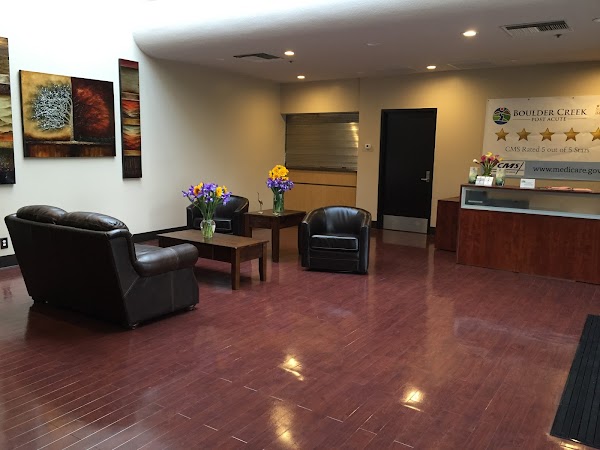
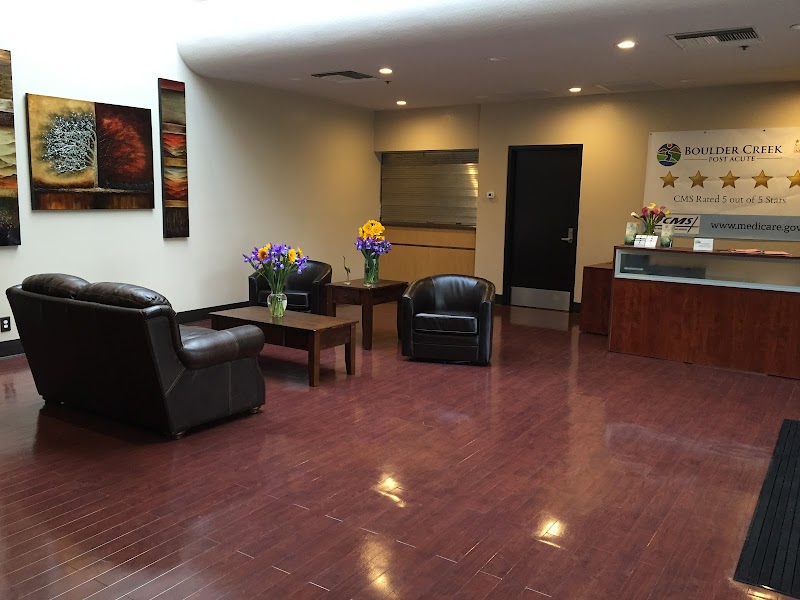
12696 MONTE VISTA ROAD, POWAY, CA 92064 (858) 487-6242
For profit - Limited Liability company 149 Beds MADISON CREEK PARTNERS Data: November 2025
Trust Grade
71/100
#299 of 1155 in CA
Last Inspection: February 2025

Within standard 12-15 month inspection cycle. Federal law requires annual inspections.

Overview

Boulder Creek Post Acute in Poway, California has a Trust Grade of B, indicating it is a good choice among nursing homes, but not without its issues. It ranks #299 out of 1,155 facilities in California, placing it in the top half, and #38 out of 81 in San Diego County, meaning there are only a few local options that perform better. However, the facility's trend is worsening, with the number of reported issues rising dramatically from 2 in 2024 to 15 in 2025. Staffing is a strength, rated at 4 out of 5 stars with a turnover rate of 29%, which is lower than the state average, suggesting staff stability. On the downside, there were concerning incidents, such as residents waiting for extended periods for assistance due to a faulty call bell system and the presence of sharp screws on handrails that could cause injury. Additionally, food safety practices were criticized for inadequate maintenance and sanitation, which could pose health risks to residents.

Trust Score
B
71/100
In California
#299/1155
Top 25%
Safety Record
Low Risk
No red flags
Inspections
Getting Worse
2 → 15 violations
Staff Stability
✓ Good
29% annual turnover. Excellent stability, 19 points below California's 48% average. Staff who stay learn residents' needs.
Penalties
○ Average
$7,397 in fines. Higher than 64% of California facilities. Some compliance issues.
Skilled Nurses
⚠ Watch
Each resident gets only 26 minutes of Registered Nurse (RN) attention daily — below average for California. Fewer RN minutes means fewer trained eyes watching for problems.
Violations
⚠ Watch
60 deficiencies on record. Higher than average. Multiple issues found across inspections.
★★★★☆
4.0
Overall Rating
★★★★☆
4.0
Staff Levels
★★★★★
5.0
Care Quality
★★★☆☆
3.0
Inspection Score
Stable
2024: 2 issues
2025: 15 issues

The Good

  • 4-Star Staffing Rating · Above-average nurse staffing levels
  • 5-Star Quality Measures · Strong clinical quality outcomes
  • Low Staff Turnover (29%) · Staff stability means consistent care
  • Full Sprinkler Coverage · Fire safety systems throughout facility
  • No fines on record
  • Staff turnover is low (29%)

    19 points below California average of 48%

Facility shows strength in staffing levels, quality measures, staff retention, fire safety.

The Bad

Federal Fines: $7,397

Below median ($33,413)

Minor penalties assessed

Chain: MADISON CREEK PARTNERS

Part of a multi-facility chain

Ask about local staffing decisions and management

The Ugly 60 deficiencies on record

Feb 2025 14 deficiencies
CONCERN (D)

Potential for Harm - no one hurt, but risky conditions existed

Transfer Notice (Tag F0623)

Could have caused harm · This affected 1 resident

**NOTE- TERMS IN BRACKETS HAVE BEEN EDITED TO PROTECT CONFIDENTIALITY** Based on interview and record review, the facility failed to send a copy of the transfer/discharge notice to the ombudsman's off...

Read full inspector narrative →
**NOTE- TERMS IN BRACKETS HAVE BEEN EDITED TO PROTECT CONFIDENTIALITY** Based on interview and record review, the facility failed to send a copy of the transfer/discharge notice to the ombudsman's office when one of three reviewed discharged residents (Resident 139) required immediate transfer to an acute care hospital for urgent needs. This failure resulted in a lack of resident discharge notification to the State Long Term Care (LTC) Ombudsman representative and the potential advocate, to assist the resident with appeal rights. Findings: Resident 139 was admitted to the facility on [DATE] with diagnoses which included a history of atrial fibrillation (irregular and often very rapid heart rhythm), per the admission Record. On 2/13/25 at 4:09 P.M., a review of Resident 139's clinical record was conducted. Resident 139's progress note indicated Resident 139 was transferred to an acute care hospital on [DATE] at 18:15 [6:15 P.M.] for positive norovirus (a contagious virus that causes vomiting and diarrhea). On 2/13/25 at 4:20 P.M., an interview was conducted with the Medical Records Director (MRD). The MRD stated she was not responsible to notify the ombudsman regarding hospital transfers, and further stated that the Case Manager and the Social Services Director (SSD) may be the ones who contacted the ombudsman for hospital transfers. On 2/13/25 at 4:23 P.M., an interview was conducted with the SSD. The SSD stated that he does not contact the ombudsman regarding hospital transfers. The SSD further stated, I would think it's the nurses that would do that. The SSD stated it was important to contact the ombudsman regarding hospital transfers because they were advocates for residents and can help with appeals as needed. On 2/14/25 at 7:40 A.M., an interview and record review with licensed nurse (LN) 1 was conducted, at nursing station three. LN 1 stated she did not think that the nursing staff was responsible for contacting the ombudsman regarding hospital transfers. LN 1 stated Resident 139's clinical record did not indicate if the ombudsman was notified. LN 1 stated that Resident 139's son and physician were the only ones notified during the hospital transfer. LN 1 stated it was important to notify the ombudsman of Resident 139's transfer to the hospital so that the ombudsman would know where Resident 139 was, and to advocate for the resident for any appeals and/or concerns. On 2/14/25 at 9:18 A.M., an interview and record review was conducted with the Admission's Coordinator (AC), in the AC's office. The AC stated she was unable to find documentation in Resident 139's clinical record that indicated if the ombudsman was notified. The AC stated she was not aware that she had to fax the ombudsman a Transfer/Discharge Notification and stated it was important to notify the ombudsman of Resident 139's hospital transfer in order for the ombudsman to know where Resident 139 was and to help advocate for any concerns and/or appeals. On 2/14/25 at 10:02 A.M., an interview with the Director of Nursing (DON) was conducted, in the DON's office. The DON stated that the case manager was involved with discharges to home. The DON stated that she planned on having the MRD and the AC work together to make sure that the Transfer/Discharge Notification form was faxed to the ombudsman for hospital transfers. The DON further stated it was important for the ombudsman to be notified about hospital transfers to help with concerns and appeals. A review of the facility's undated policy and procedure titled, TRANSFER or DISCHARGE NOTICE, indicated .A copy of the notice is sent to the Office of the State Long-Term Care Ombudsman at the same time the notice of transfer or discharge is provided to the resident and representative .
CONCERN (D)

Potential for Harm - no one hurt, but risky conditions existed

Deficiency F0625 (Tag F0625)

Could have caused harm · This affected 1 resident

**NOTE- TERMS IN BRACKETS HAVE BEEN EDITED TO PROTECT CONFIDENTIALITY** Based on interview, and record review, the facility failed to ensure one of three reviewed discharged resident's (Resident 139) ...

Read full inspector narrative →
**NOTE- TERMS IN BRACKETS HAVE BEEN EDITED TO PROTECT CONFIDENTIALITY** Based on interview, and record review, the facility failed to ensure one of three reviewed discharged resident's (Resident 139) or his family member received a notice to request a bed hold when the resident was transferred to the acute care hospital. As a result, Resident 139 and/or his family member did not receive a written notice from the facility at the time of transfer, about the option to pay to hold the resident's bed. Findings: A review of Resident 139's admission Record indicated Resident 139 was admitted to the facility on [DATE] with diagnoses which included a history of atrial fibrillation (irregular and often very rapid heart rhythm). On 2/13/25 at 4:09 P.M., a review of Resident 139's clinical record was conducted. Resident 139's progress note indicated Resident 139 was transferred to an acute care hospital on [DATE] at 18:15 PM [6:15 P.M ] for positive norovirus (a contagious virus that causes vomiting and diarrhea). On 2/14/25 at 7:40 A.M., an interview and record review with licensed nurse (LN) 1 was conducted, at nursing station three. LN 1 stated Resident 139's clinical record did not indicate if Resident 139 and/or his responsible party (RP) were notified of the facility's bed hold policy. LN 1 further stated that it was important to notify Resident 139, and his RP of a bed hold policy as an option for Resident 139 to return to the facility (within seven days) without penalty, or to be notified about out-of-pocket payments that could occur. On 2/14/25 at 9:18 A.M., an interview and record review was conducted with the Admission's Coordinator (AC), in the AC's office. The AC stated she was unable to find documentation in Resident 139's clinical record that indicated if the facility's bed hold policy was provided to Resident 139 or Resident 139's family member. The AC further stated that Resident 139 and/or family should have been notified of the bed hold policy within 24 hours in order for Resident 139 and his family to be aware of a reserved bed for him at the facility, along with out-of-pocket expenses that may have been needed after the seven-day bed hold policy. On 2/14/25, a review of Resident 139's bed hold consent form was conducted. The bed hold consent form sections for confirmation of transfer & bed hold provision and the 24 hour notification were not completed. On 2/14/25 at 10:02 A.M., an interview with the Director of Nursing (DON) was conducted, in the DON's office. The DON stated that the case manager was involved with discharges to home. The DON stated that the nurses were responsible to inform the residents on admission, of the facility's seven-day bed hold policy. The DON stated, it was important to give Resident 139 and his family the opportunity that they can come back here and were explained non-coverage expenses. The facility did not provide a bed hold policy and procedure.
CONCERN (D)

Potential for Harm - no one hurt, but risky conditions existed

PASARR Coordination (Tag F0644)

Could have caused harm · This affected 1 resident

**NOTE- TERMS IN BRACKETS HAVE BEEN EDITED TO PROTECT CONFIDENTIALITY** Based on interview and record review, the facility failed to reevaluate two of 30 sampled residents (2, 57) reviewed for mental ...

Read full inspector narrative →
**NOTE- TERMS IN BRACKETS HAVE BEEN EDITED TO PROTECT CONFIDENTIALITY** Based on interview and record review, the facility failed to reevaluate two of 30 sampled residents (2, 57) reviewed for mental health services. As a result, residents may have had unmet mental health needs. Findings: 1. Per the facility's admission Record, Resident 2 was admitted to the facility on [DATE]. Per the admission Record, Resident 2 was diagnosed with major depressive disorder (a depressed mood impairing daily function) and schizoaffective disorder (a mental disconnection from reality) on 6/25/24. On 2/11/25 a review was conducted of Resident 2's electronic medical record. There was no documentation that a Level II Mental Health Evaluation (an evaluation for additional services for residents with mental illness) was conducted for Resident 2. On 2/13/25 at 1:30 P.M., an interview was conducted with the Minimum Data set (MDS, a federally mandated resident assessment tool) nurse. The MDS nurse stated, Resident 2 should have been reviewed for a Level II Mental Health Evaluation when she was diagnosed with major depressive disorder and schizoaffective disorder. 2. Per the facility's admission Record, Resident 57 was admitted to the facility on [DATE] with diagnoses of post-traumatic stress disorder (PTSD, a mental health condition caused by a traumatic event) and bipolar disorder (a mental health condition with significant shifts in mood). Per the admission Record, Resident 57 had a new diagnosis of major depressive disorder on 2/27/21. On 2/11/25 a review was conducted of Resident 57's electronic medical record. There was no documentation that a Level II Mental Health Evaluation was conducted for Resident 57. On 2/13/25 at 1:30 P.M., an interview was conducted with the MDS nurse. The MDS nurse stated, Resident 57 should have been reviewed for a Level II Mental Health Evaluation when she was diagnosed with major depressive disorder. The facility's undated policy, titled PASRR (Patient Assessment and Resident Review) Completion Policy did not direct staff to reevaluate residents with a new diagnosis of a mental illness.
CONCERN (D)

Potential for Harm - no one hurt, but risky conditions existed

Comprehensive Care Plan (Tag F0656)

Could have caused harm · This affected 1 resident

**NOTE- TERMS IN BRACKETS HAVE BEEN EDITED TO PROTECT CONFIDENTIALITY** Based on interview and record review, the facility failed to notify the physician of a high blood sugar reading for one of 30 sa...

Read full inspector narrative →
**NOTE- TERMS IN BRACKETS HAVE BEEN EDITED TO PROTECT CONFIDENTIALITY** Based on interview and record review, the facility failed to notify the physician of a high blood sugar reading for one of 30 sampled residents (23). As a result, Resident 23 had an increased risk of untreated symptoms of high blood sugar. Findings: Per the facility's admission Record, Resident 23 was admitted to the facility on [DATE] with diagnoses to include, type 2 diabetes mellitus (unstable blood sugars). Per the facility's Medication Administration Record (MAR), dated 1/1/25 through 1/31/25, Resident 23 had an order for the physician to be notified of blood sugar readings greater than 290. Per the MAR, the following blood sugar readings were greater than 290. On 1/5/25 at 11:30 A.M., Resident 23's blood sugar was 322. On 1/8/25 at 4:30 P.M., Resident 23's blood sugar was 293. On 1/10/25 at 11:30 A.M., Resident 23's blood sugar was 337. On 1/11/25 at 11:30 A.M., Resident 23's blood sugar was 313. On 1/11/25 at 4:30 P.M., Resident 23's blood sugar was 294. On 1/19/25 at 11:30 A.M., Resident 23's blood sugar was 305. On 2/13/25, Resident 23's electronic medical record was reviewed. There were no progress notes on 1/5/25, 1/8/25, 1/10/25, 1/11/25, and 1/19/25 that indicated the physician was notified of Resident 23's high blood sugar readings. On 2/14/25 at 8:41 A.M., an interview was conducted with the Director of Staff Development (DSD). The DSD stated, when he notified the physician of a high blood sugar reading he documented it in the progress notes. The DSD further stated, he should have documented in the progress notes if he called the physician. On 2/14/25 at 12:45 P.M., an interview was conducted with the Director of Nursing (DON). The DON stated, the nurses who took the high blood sugar readings should have notified the physician and documented it in the progress notes. Per the facility's undated policy, titled Guidelines for Notifying Physicians of Clinical Problems, .The floor nurse .should contact the attending physician at any time if they feel a clinical situation requires immediate discussion and management .
CONCERN (D)

Potential for Harm - no one hurt, but risky conditions existed

Deficiency F0694 (Tag F0694)

Could have caused harm · This affected 1 resident

**NOTE- TERMS IN BRACKETS HAVE BEEN EDITED TO PROTECT CONFIDENTIALITY** Based on observation, interview, and record review, the facility failed to implement professional standards of care for a periph...

Read full inspector narrative →
**NOTE- TERMS IN BRACKETS HAVE BEEN EDITED TO PROTECT CONFIDENTIALITY** Based on observation, interview, and record review, the facility failed to implement professional standards of care for a peripherally inserted central catheter (PICC: catheter [flexible plastic tubing] that is inserted into a vein in either arm and extends all the way to a location near the heart, where medication is delivered) dressing for one of seven sampled residents (Resident 340) receiving intravenous (IV: into the vein) medications, according to the facility's policies and procedures. This failure had the potential to expose Resident 340's PICC site to infections and lead to complications that may negatively impact the resident's health and well-being. Findings: A review of Resident 340's admission Record indicated Resident 340 was admitted to the facility on [DATE] with diagnoses which included a history of osteomyelitis (inflammation of bone or bone marrow, usually due to infection). A record review of Resident 340's minimum data set (MDS - a federally mandated resident assessment tool) dated 2/7/25 indicated, a Brief Interview for Mental Status (BIMS- developed by reviewing the resident's status during the prior seven-day period) score of 15 points out of 15 possible points which indicated Resident 340 did not have cognitive (pertaining to memory, judgement and reasoning ability) deficits. A record review of Resident 340's care plan dated 2/6/25 indicated, .IV DRESSING: (RUA [right upper arm]). Observe dressing Q [every] shift. Change dressing and record observations of site . On 2/11/25 at 10:13 A.M., an observation and interview was conducted with Resident 340, in Resident 340's room. Resident 340 had a RUA PICC line that was dated 1/31/25. Resident 340 stated the nursing staff did not perform any PICC line dressing changes since her admission to the facility. Resident 340 stated she was on an IV antibiotic (medications used for infections) due to her middle toe amputation for osteomyelitis. On 2/11/25 at 10:30 A.M., an interview was conducted with licensed nurse (LN) 2. LN 2 stated PICC line dressings should be changed on a weekly basis to prevent infection and PICC line complications. On 2/12/25 at 2:27 P.M., an interview and record review was conducted with LN 1. LN 1 was shown a picture that was taken on 2/11/25 at 10:15 A.M. of Resident 340's PICC dressing that was dated 1/31/25. LN 1 stated that Resident 340 was admitted to the facility on [DATE] and stated that Resident 340's PICC line dressing should have been changed on 2/7/25. LN 1 stated PICC line dressings should have been changed every week to prevent infection and IV complications. LN 1 stated there was no documentation to support that a dressing change to the PICC site was done within the weekly time frame. On 2/14/25 at 10:10 A.M., an interview with the Director of Nursing (DON) was conducted, in the DON's office. The DON stated that her expectations were for the admission nurses to assess any residents with an IV site to check the dressing, and change the dressing according to the facility's policy's and procedure for IV dressing changes within seven days. The DON stated that it was important to provide IV site care and dressing changes to prevent IV site complications and infection. According to Centers for Disease Control (CDC) https://www.cdc.gov/mmwr/preview/mmwrhtml/rr5110a3.htm .Central venous catheters including peripherally inserted central catheters and hemodialysis catheters .Replace gauze dressings every 2 days and transparent dressings every 7 days on short-term catheters . A review of the facility's policy and procedure titled Peripheral IV Dressing Changes undated, indicated .Change the dressing if it becomes damp, loosened or visibly soiled and at least every 5-7 days .
CONCERN (D)

Potential for Harm - no one hurt, but risky conditions existed

Respiratory Care (Tag F0695)

Could have caused harm · This affected 1 resident

**NOTE- TERMS IN BRACKETS HAVE BEEN EDITED TO PROTECT CONFIDENTIALITY** Based on observation, interview, and record review, the facility failed to provide respiratory care according to standards of pr...

Read full inspector narrative →
**NOTE- TERMS IN BRACKETS HAVE BEEN EDITED TO PROTECT CONFIDENTIALITY** Based on observation, interview, and record review, the facility failed to provide respiratory care according to standards of practice for one of eight reviewed residents (Resident 38) on a nebulizer (a device that turns the liquid medicine into a mist which is then inhaled through a mouthpiece or a mask) treatment. As a result, Resident 38 was not properly monitored before and after nebulizer treatments were provided, and had the potential for ineffective nebulizer administration, respiratory complications, and infections that increased the risk of negative health outcomes. Findings: A review of Resident 38's admission Record indicated Resident 38 was re-admitted to the facility on [DATE] with diagnoses which included a history of chronic obstructive pulmonary disease (COPD; chronic lung disease causing difficulty in breathing). A record review of Resident 38's Minimum data set (MDS; nursing facility assessment tool) dated 12/23/24 indicated that Resident 38 was rarely or never understood with severe cognitive (the mental processes that take place in the brain, including thinking, attention, language, learning, memory, and perception) deficits to understand and make decisions. On 2/11/25 at 8:30 A.M., an observation was conducted with Resident 38, in Resident 38's room. Resident 38 was asleep and lying on her bed covered with blankets. Resident 38's side table by the left wall had a nebulizer machine placed on top of the table with a mask and tubes placed on the nebulizer machine. The nebulizer mask had scattered condensation of clear liquid on the mask along with a nebulizer chamber that had a heavy amount of condensation (mist-like moisture) throughout the chamber. On 2/11/25 at 3:36 P.M., an interview and clinical chart review for Resident 38 was conducted with licensed nurse (LN) 1, at nursing station three. LN 1 stated that Respiratory Therapy (RT) provided nebulizer treatments to Resident 38. LN 1 stated the treatment administration record (TAR) did not record a post respiratory vital signs (lung sounds, heart rate, respiratory rate, oxygen saturation [below 90% means low oxygen levels]) and was not certain if the vital signs documented on the TAR at 7 A.M. were taken before or during the respiratory treatment. On 2/12/25 at 2:49 P.M., an interview and clinical chart review for Resident 38 was conducted with RT 1. RT 1 stated that Resident 38 was scheduled to receive DuoNeb (a combined respiratory therapy medication to treat COPD) via nebulizer at 7 A.M. and 7 P.M. On 2/14/25 at 7:56 A.M., an interview and clinical chart review for Resident 38 was conducted with RT 2, outside of Resident 38's room. RT 2 stated she gave Resident 38 a nebulizer treatment at 7 A.M. and stated during nebulizer treatments they [RTs] stay with the residents and the treatments lasted approximately 8-10 minutes. RT 1 stated there was no record of a pre (before) and post (after) documentation. RT 2 stated there is no before and after documentation for respiratory vital signs and further stated we only do it [vital signs] one time during the procedure. On 2/14/25 at 8:26 A.M., an interview and clinical chart review for Resident 38 was conducted with RT 1, at nursing station two. RT 1 stated that it was important to take pre and post respiratory vital signs for nebulizer treatments to know Resident 38's baseline and monitor for effectiveness and/or complications from the nebulizer treatment. RT 1 stated respiratory vital signs should not have been recorded and documented during or in the middle of the nebulizer treatment. On 2/14/24 at 9:51 A.M., an interview was conducted with the Director of Nursing (DON), in the DON's office. The DON stated her expectations were for the RTs to monitor Resident 38's respiratory vital signs before and after performing a nebulizer treatment and not during to get a baseline comparison and to monitor for respiratory complications after the nebulizer treatment. The DON acknowledged that ongoing monitoring for respiratory distress symptoms should have been monitored throughout the nebulizer treatment to prevent respiratory complications. A review of the facility's policy and procedure titled ADMINISTERING MEDICATIONS THROUGH a SMALL VOLUME (HANDHELD) NEBULIZER, indicated .26. Obtain post-treatment, pulse, respiratory rate and lung sounds .
CONCERN (D)

Potential for Harm - no one hurt, but risky conditions existed

Drug Regimen Review (Tag F0756)

Could have caused harm · This affected 1 resident

**NOTE- TERMS IN BRACKETS HAVE BEEN EDITED TO PROTECT CONFIDENTIALITY** Based on interview and record review, the facility failed to respond to a pharmacist recommendation related to high levels of fa...

Read full inspector narrative →
**NOTE- TERMS IN BRACKETS HAVE BEEN EDITED TO PROTECT CONFIDENTIALITY** Based on interview and record review, the facility failed to respond to a pharmacist recommendation related to high levels of fat in the blood, for one of 30 sampled residents (23). This failure had the potential to affect Resident 23's health and well-being. Findings: Per the facility's admission Record, Resident 23 was admitted to the facility on [DATE] with diagnoses of hyperlipidemia (high levels of fat in the blood). On 2/14/25 a review of the facility's Consultant Pharmacist's Medication Regimen Review, dated 12/5/24, was conducted. This record included a recommendation for the facility to provide a lipid panel (check the level of fat in the blood) for Resident 23. There was no documentation that the facility responded to the pharmacists's recommendation. On 2/14/25 a review of Resident 23's electronic medical record was conducted. There was no evidence that a lipid panel was completed for Resident 23. On 2/14/25 at 1:20 P.M., an interview was conducted with the Director of Nursing (DON). The DON stated, the facility should have responded to the pharmacist recommendation. Per the facility's undated policy, titled Pharmacist Monthly Medication Regiment Review Reporting and Responses, .The nursing staff will document in response to the pharmacist's recommendation in the resident's medical record .
CONCERN (D)

Potential for Harm - no one hurt, but risky conditions existed

Medical Records (Tag F0842)

Could have caused harm · This affected 1 resident

**NOTE- TERMS IN BRACKETS HAVE BEEN EDITED TO PROTECT CONFIDENTIALITY** Based on interview and record review, the facility failed to accurately document a resident's medications on the weekly summary ...

Read full inspector narrative →
**NOTE- TERMS IN BRACKETS HAVE BEEN EDITED TO PROTECT CONFIDENTIALITY** Based on interview and record review, the facility failed to accurately document a resident's medications on the weekly summary for one of 30 sampled residents (2). This failure had the potential to miscommunicate Resident 2's status, care, and treatment. Findings: Per the facility's admission Record, Resident 2 was admitted to the facility on [DATE] with diagnoses to include schizoaffective disorder (a mental disconnection from reality). On 2/14/25 a review of Resident 2's electronic medical record was conducted. Licensed nurse (LN) 21 completed the weekly summary for Resident 2 on 1/12/25, 1/19/25, 1/26/25, and 2/9/25. On all of the listed weekly summaries, LN 21 documented that Resident 2 had not been using antipsychotic (medication to treat a disconnection from reality) medication over the last seven days. Per the facility's Orders, there was an order dated 6/20/24 for Resident 2 to take risperidone (an antipsychotic medication) for schizoaffective disorder. On 2/14/25 at 10:17 A.M., an interview was conducted with LN 21. LN 21 stated, she must have overlooked the risperidone when completing the weekly summaries for Resident 2. On 2/14/25 at 10:56 A.M., an interview was conducted with the Director of Nursing (DON). The DON stated that the LN should have checked the (resident's) orders when completing the weekly summaries and acknowledged that the resident's weekly summaries should have been accurately completed. Per the facility's undated policy, titled Charting and Documentation, .Documentation in the medical record will be .complete, and accurate .
CONCERN (D)

Potential for Harm - no one hurt, but risky conditions existed

Infection Control (Tag F0880)

Could have caused harm · This affected 1 resident

**NOTE- TERMS IN BRACKETS HAVE BEEN EDITED TO PROTECT CONFIDENTIALITY** Based on observation, interview, and record review, the facility failed to promote infection control practices according to stan...

Read full inspector narrative →
**NOTE- TERMS IN BRACKETS HAVE BEEN EDITED TO PROTECT CONFIDENTIALITY** Based on observation, interview, and record review, the facility failed to promote infection control practices according to standards of practice for one or 30 sampled residents (Resident 38) to prevent respiratory illnesses and infection. This failure had the potential for Resident 38 to experience respiratory complications and infections from improper maintenance and storage of their nebulizer treatment equipment. Findings: A review of Resident 38's admission Record indicated Resident 38 was re-admitted to the facility on [DATE] with diagnoses which included a history of chronic obstructive pulmonary disease (COPD; chronic lung disease causing difficulty in breathing). A record review of Resident 38's minimum data set (MDS; nursing facility assessment tool) dated 12/23/24 indicated that Resident 38 was rarely or never understood with severe cognitive (the mental processes that take place in the brain, including thinking, attention, language, learning, memory, and perception) deficits to understand and make decisions. On 2/11/25 at 8:30 A.M., an observation was conducted with Resident 38, in Resident 38's room. Resident 38 was asleep and lying on her bed covered with blankets. Resident 38's side table by the left wall had a nebulizer machine placed on top of the table with a mask and tubes placed on the nebulizer machine. The nebulizer mask had scattered condensation of clear liquid on the mask, along with a nebulizer chamber that had a heavy amount of condensation (mist-like moisture) throughout the chamber. On 2/12/25 at 2:49 P.M., an interview and clinical chart review for Resident 38 was conducted with respiratory therapist (RT) 1. RT 1 stated that Resident 38 was scheduled to receive DuoNeb (a combined respiratory therapy medication to treat COPD) via nebulizer at 7 A.M. and 7 P.M. RT 1 was shown Resident 38's nebulizer treatment picture, taken on 2/11/25 at 8:32 A.M. RT 1 stated that the mask looked used and not cleaned. RT 1 stated that Resident 38's nebulizer left on the table would be an infection control issue because it was not cleaned properly and placed to air dry on clean paper towels. RT 1 further stated once the nebulizer was clean and dry it should have been stored in a clear plastic bag to prevent contamination and germs. On 2/14/25 at 7:56 A.M., an interview and clinical chart review for Resident 38 was conducted with RT 2, outside of Resident 38's room. RT 2 stated the way she cleaned nebulizer treatment equipment was to rinse it [nebulizer mask, chamber and tubing] with water, air dry, and put back in the bag. RT 2 stated that she used sink water for rinsing and used sani-wipes (sanitizer wipes used to clean) for the masks. On 2/14/25 at 8:26 A.M., an interview and clinical chart review for Resident 38 was conducted with RT 1, at nursing station two. RT 1 stated it was important to use sterile water (water is free from bacteria and minerals) with nebulizers during the cleaning process to prevent contamination and infection in the lungs. On 2/14/24 at 9:51 A.M., an interview was conducted with the Director of Nursing (DON), in the DON's office. The DON stated it was important to follow cleaning procedures by using sterile water to clean nebulizers according to the facility's policies and procedures to prevent contamination and respiratory illnesses and infections. A review of the facility's policy and procedure titled CLEANING and DISINFECTION of RESIDENT-CARE ITEMS and EQUIPMENT, indicated .Semi-critical items consist of items that may come in contact with mucous membranes or non-intact skin (e.g. respiratory therapy equipment). Such devices should be free from all microorganisms .
CONCERN (D)

Potential for Harm - no one hurt, but risky conditions existed

Deficiency F0924 (Tag F0924)

Could have caused harm · This affected 1 resident

Based on observation, interview, and record review, the facility failed to ensure handrails were appropriately secured. This failure had the potential to cause injury to all facility residents. Findin...

Read full inspector narrative →
Based on observation, interview, and record review, the facility failed to ensure handrails were appropriately secured. This failure had the potential to cause injury to all facility residents. Findings: On 2/13/25 and 2/14/25, observations were made of the handrails inside of the facility. One loose handrail was observed. The ends of the handrail moved in both directions from level. During an interview on 2/13/25 at 9:38 A.M. with certified nursing assistant (CNA) 11, CNA 11 stated the handrails should not move like that. CNA 11 further stated a resident could get really hurt if it tilted while they were holding it. During an interview on 2/14/25 at 9:40 A.M. with licensed nurse (LN) 11, LN 11 stated that the residents used the handrails for support. LN 11 further stated, not being secured could cause a major injury. During a review of the facility's policy titled Maintenance Service, the policy indicated .2. Functions of Maintenance personnel include .b. Maintaining the building in good repair and free from hazards .
CONCERN (E)

Potential for Harm - no one hurt, but risky conditions existed

Accident Prevention (Tag F0689)

Could have caused harm · This affected multiple residents

Based on observation, interview, and record review, the facility failed to provide an environment free from accident hazards for 28 of 28 sampled residents, when screws were observed protruding from h...

Read full inspector narrative →
Based on observation, interview, and record review, the facility failed to provide an environment free from accident hazards for 28 of 28 sampled residents, when screws were observed protruding from handrails inside the facility. This failure had the potential to cause injury to all facility residents. Findings: On 2/13/25 and 2/14/25, observations were made of the handrails inside of the facility. A total of eight handrails were observed to have screws protruding through the interior aspect of the handrail. These screws were found to be at a height where an individual's hand grasping the handrail would contact the sharp end of the screw. During an interview on 2/13/25 at 3:36 P.M. with Certified Nursing Assistant 12 (CNA 12), CNA 12, upon touching the object, stated it was sharp, like a nail or screw. CNA 12 further stated it would definitely hurt someone. It should not be like that. During an interview on 2/13/24 at 3:40 P.M. with the Maintenance Director (MD), the MD stated That is probably a screw. That could hurt somebody. During an interview on 2/13/25 at 3:42 P.M. with the Director of Nursing (DON), the DON stated If a resident grabbed it, it would cut them. It should not be like that. During a review of the facility's policy titled Maintenance Service, the policy indicated .2. Functions of Maintenance personnel include .b. Maintaining the building in good repair and free from hazards .
CONCERN (E)

Potential for Harm - no one hurt, but risky conditions existed

Food Safety (Tag F0812)

Could have caused harm · This affected multiple residents

Based on observation, interview, and record review, the facility failed to ensure food safety and sanitation practices in dietary services were maintained with food storage, sanitation, and equipment ...

Read full inspector narrative →
Based on observation, interview, and record review, the facility failed to ensure food safety and sanitation practices in dietary services were maintained with food storage, sanitation, and equipment maintenance according to standards of practice when: 1. One dented large can and two rusted large cans were found in the dry storage pantry. 2. A sink garbage disposal was not functioning and/or maintained in good working condition. 3. A frosting mix with a use by (U/B) date of 1/20/25 was found in the dry storage pantry. 4. Low-temperature dishwashing machine temperature did not reach sanitary temperature levels. These failures had the potential to cause widespread food borne illness among the 143 residents who received food from the kitchen. Findings: 1. On 2/11/25 at 7:51 A.M., an initial kitchen tour was conducted with the Dietary Supervisor (DS). In the dry storage pantry area was a shelf of canned goods that displayed a dented, 10 ounce (oz) can of diced peaches stored alongside canned goods that were in good condition. On the back canned shelf area, there were two cans, each containing seven pounds of pie filling, that had scattered rust shown on the upper side of each can's sides, and top area. One of the canned pie fillings had a splash-like calcium deposit white spot on the top of the can. The DS stated that the dented can and rusted cans should not have been displayed on the canned goods shelf and should have been removed to avoid using the product. The DS stated that cans that were expired, dented, broken, or rusted were put in a discard cardboard box to be thrown away. The DS further stated it was important to discard the dented can and the two rusted cans to prevent botulism (an infection caused by improperly canned food) that could have caused food-borne complications. On 2/14/25 at 10:16 A.M., an interview with the Director of Nursing (DON) was conducted, in the DON's office. The DON stated that her expectation was for the kitchen to be sanitary with clean and working equipment, along with (identified) food items to be discarded, such as cans (of food items) that were expired, dented, or rusted. The DON stated it was important to discard food items that may cause food-borne illnesses by checking to make sure they were safe to consume. Lastly, the DON stated it was important that the kitchen promoted environments with routine cleaning and maintenance along with equipment that were safe and functional for food preparation. A review of the facility's policy and procedure titled FOOD STORAGE-DENTED CANS dated 2023, indicated .All dented cans (defined as side seam, or rim dents) and rusty cans are to be separated from the remaining stock . 2. On 2/11/25 at 8:14 A.M., an observation and interview was conducted with the Dietary Supervisor (DS) and Dietary Aide (DA) 1. Next to the low temperature dishwasher area was a sink with a garbage disposal, with a controller attached under the sink table, which had a missing red stop button, and a missing bolt on the controller. There was no posted sign that indicated that it was a broken garbage disposal. The garbage disposal was directly attached to a sink and was heavily coated with white calcium-deposit-like film and scattered rust on the top side of the garbage disposal cutting chamber. The garbage disposal controller was also covered with white calcium-deposit-like film. The DS stated that they had not used the garbage disposal or maintained it because it had been broken for over a year. DA 1 stated it [garbage disposal] should be cleaned daily to prevent contamination of foods that are prepped in the kitchen. On 2/14/25 at 10:16 A.M., an interview with the Director of Nursing (DON) was conducted, in the DON's office. The DON stated that her expectation was for the kitchen to be sanitary with clean and working equipment, along with (identified) food items to be discarded, such as cans (of food items) that were expired, dented, or rusted. The DON stated it was important to discard food items that may cause food-borne illnesses by checking to make sure they were safe to consume. Lastly, the DON stated it was important that the kitchen promoted environments with routine cleaning and maintenance along with equipment that were safe and functional for food preparation. A review of the facility's policy and procedure titled SANITATION dated 2023, indicated .equipment shall be kept clean, maintained in good repair and shall be free from breaks, corrosions . 3. On 2/12/25 at 8:33 A.M., a kitchen tour was conducted with the Dietary Supervisor (DS). A gallon-sized open bag of dried frosting mix, contained in a clear plastic wrap, was stored on top of a tray labeled with an O for opened and a U/B 1/20/25. The DS stated the frosting mix needed to be discarded and should not have been left on the shelf of the dry storage pantry. On 2/12/25 at 10:36 A.M., an interview was conducted with Dietary Aide (DA) 1, outside of the dry storage pantry. DA 1 stated that the frosting mix should not have been used because they [facility residents] might get sick if an expired ingredient was used. On 2/12/25 at 10:37 A.M., an interview was conducted with the DS. The DS stated, the frosting mix was expired and can make someone sick. On 2/14/25 at 10:16 A.M., an interview with the Director of Nursing (DON) was conducted, in the DON's office. The DON stated that her expectation was for the kitchen to be sanitary with clean and working equipment, along with (identified) food items to be discarded, such as cans (of food items) that were expired, dented, or rusted. The DON stated it was important to discard food items that may cause food-borne illnesses by checking to make sure they were safe to consume. Lastly, the DON stated it was important that the kitchen promoted environments with routine cleaning and maintenance along with equipment that were safe and functional for food preparation. A review of the facility's guidelines titled DRY FOOD STORAGE GUIDELINES undated, indicated .The storage length is to be followed .Frosting mix .unopened 6 months opened on shelf 3 months . 4. On 2/11/25 at 8:06 A.M., a kitchen tour was conducted with the Dietary Supervisor (DS), by the low-temperature dishwashing machine. The DS demonstrated use of the dishwashing machine with a crate that went through the dishwashing machine. The temperature gauge indicated a temperature of 109 F (degrees Fahrenheit). A sign on the low-temperature dishwashing machine stated, LOW TEMPERATURE DISH MACHINE 120-140 DEGREES. On 2/11/25 at 8:10 A.M., an observation and interview was conducted with the DS and Dietary Aide (DA) 1. DA 1 demonstrated use of the dishwashing machine twice with the temperature gauge set at 118 F on both attempts. DA 1 stated the temperature should have been at 120 F because it's needed to kill the germs. The DS stated the low temperature dishwasher had to reach 120 F and agreed with DA 1 that it (120 F) was the temperature to sanitize dishware, utensils, and cookware items used in the kitchen. On 2/14/25 at 10:16 A.M., an interview with the Director of Nursing (DON) was conducted, in the DON's office. The DON stated that her expectation was for the kitchen to be sanitary with clean and working equipment along with (identified) food items to be discarded such as cans (of food items) that were expired, dented, or rusted. The DON stated it was important to discard food items that may cause food-borne illnesses by checking to make sure they were safe to consume. Lastly, the DON stated it was important that the kitchen promoted environments with routine cleaning and maintenance along with equipment that were safe and functional for food preparation. A review of the facility's policy and procedure titled DISHWASHING undated, indicated .Low-temperature machine .use the machine at a range of 120F to 140F .
CONCERN (E)

Potential for Harm - no one hurt, but risky conditions existed

Garbage Disposal (Tag F0814)

Could have caused harm · This affected multiple residents

Based on observation, interview, and record review, the facility failed to ensure outdoor facility garbage and refuse (recyclable and non-recyclable trash) was not overflowing, and was secure with the...

Read full inspector narrative →
Based on observation, interview, and record review, the facility failed to ensure outdoor facility garbage and refuse (recyclable and non-recyclable trash) was not overflowing, and was secure with the dumpster's lids closed, for two facility dumpsters located outside the loading dock area near the kitchen hall exit. This failure had the potential for an unsafe environment for the residents and visitors due to possible pest infestation and spread of diseases in the facility. Findings: On 2/11/25 at 8:21 A.M., an observation and interview was conducted with the Dietary Supervisor (DS), outside the back kitchen hallway exit. There were two dumpsters outside the loading dock area with overfilled trash containing clear plastic trash bags with miscellaneous items, mixed with brown cardboard/packing boxes, filled to the top with a fully opened lid for both dumpsters. In addition, two wet, clear plastic bags were on the floor by dumpster two. The DS stated that the dumpsters were used for all facility trash that included the kitchen and resident and facility use. The DS stated that the dumpster should not have been overfilled, and that trash should have been contained in the dumpsters with closed lids to prevent pests (unwanted animals, insects, or other organisms that can cause damage, spread disease, harmful to humans) from getting inside the dumpsters, which could have spread germs and contaminated the facility. A review of the facility's pest control service report identified: - 12/18/24 .Reported 11/22/24 .Trash Can or Bin Not properly Covered-Heavy rodent activity observed at night time near dumpsters .Action: Cover, Close, Repair or replace trash can . - 1/27/25 .Reported 11/22/24 .Trash Can or Bin Not properly Covered-Heavy rodent activity observed at night time near dumpsters .Action: Cover, Close, Repair or replace trash can . On 2/14/25 at 10:16 A.M., an interview with the Director of Nursing (DON) was conducted, in the DON's office. The DON stated that her expectation was for the dumpsters and trash bins to be securely closed with a lid to prevent pest infestation. A review of the facility's policy and procedure titled SANITATION dated 2023, indicated .Kitchen wastes which are not disposed of by garbage disposal units shall be kept in leak-proof, non-absorbent and tightly closed containers . A review of the facility's policy and procedure titled PEST CONTROL undated, indicated .Garbage and trash are not permitted to accumulate and are removed from the facility . The facility did not provide a DISPOSAL of GARBAGE and REFUSE policy and procedure.
CONCERN (E)

Potential for Harm - no one hurt, but risky conditions existed

Deficiency F0925 (Tag F0925)

Could have caused harm · This affected multiple residents

Based on observation, interview, and record review, the facility failed to maintain an effective pest control environment when the kitchen floor drain with food particles was observed infested with an...

Read full inspector narrative →
Based on observation, interview, and record review, the facility failed to maintain an effective pest control environment when the kitchen floor drain with food particles was observed infested with ants. This failure had the potential for ants to contaminate food and spread food-borne illnesses to all residents receiving food from the kitchen. The facility census was 143. Findings: According to the 2019 Centers for Disease Control, PEST CONTROL https://www.cdc.gov/infection-control/media/pdfs/Guideline-Environmental-H.pdf, stated .Cockroaches, flies and maggots, ants, mosquitoes, spiders, mites, midges [small fly-like insects], and mice are among the typical arthropod [insects with hard bodies like a shell] and vertebrate [back bones] pest populations found in health-care facilities. Insects can serve as agents for the mechanical transmission of microorganisms [tiny living organisms that are harmful to humans such as bacteria, germs, or virus], or as active participants in the disease transmission process by serving as a vector [living organisms that can transmit infectious disease] .Ants will often find their way into sterile packs of items as they forage in a warm, moist environment . On 2/11/25 at 8:08 A.M., an initial kitchen tour was conducted with the Dietary Supervisor (DS). The kitchen floor drain by the low-temperature dishwashing machine had a black polyvinyl chloride (PVC: made of plastic) pipe with no air gap space that lead into the floor drain. The floor drain surface sides were surrounded by a brownish/black, mud-like substance with mixed food particles on the bottom strainer, and was infested by ants. The DS stated there were ants around the drainage pipes because of the food accumulation coming out from the drainage pipes that attracted the ants. On 2/12/25 at 7:58 A.M., an observation and interview was conducted with the DS. The DS stated that the floor drains and drainage outlets should have been cleaned on a daily basis. The DS stated, if it's not clean this could attract ants and other pests. The DS stated that the ants could contaminate the food in the kitchen with germs that could potentially spread food-borne illnesses. The DS stated that the floor drains were supposed to be cleaned routinely during the evening shift. On 2/14/25 at 10:16 A.M., an interview with the Director of Nursing (DON) was conducted, in the DON's office. The DON stated that her expectation was for the floor drains to be cleaned daily to prevent the attraction of pests and to prevent infestations that could contaminate foods and food-borne illness from spreading. A review of the kitchen's routine cleaning titled [Facility name] CLEANING SCHEDULES from December 2024 thru February 2025, indicated no record of routine cleaning for floor drains. A review of the facility's policy and procedure titled PEST CONTROL, indicated .This facility maintains an on-going pest control program to ensure that the building is kept free of insects and rodents .
Jan 2025 1 deficiency
CONCERN (D) 📢 Someone Reported This

A family member, employee, or ombudsman was alarmed enough to file a formal complaint

Potential for Harm - no one hurt, but risky conditions existed

Deficiency F0554 (Tag F0554)

Could have caused harm · This affected 1 resident

**NOTE- TERMS IN BRACKETS HAVE BEEN EDITED TO PROTECT CONFIDENTIALITY** Based on observation, interview and record review, the facility failed to implement a self administration recommendation for one...

Read full inspector narrative →
**NOTE- TERMS IN BRACKETS HAVE BEEN EDITED TO PROTECT CONFIDENTIALITY** Based on observation, interview and record review, the facility failed to implement a self administration recommendation for one resident (Resident 3) when a licensed nurse (LN 1) left medications which were not approve for self medication administration on Resident 3' s bedside table. As a result, the unattended medications on Resident 3's bedside table were not witnessed as administered as ordered. Findings: Resident 3 was admitted to the facility on [DATE] per the facility admission Record. A review of the admission orders dated 8/6/24 indicated Resident 3 was approved to self administer the following medications: topical diclofenac pain gel and cyclosporine eye drops for dry eyes. On 1/13/25 at 4:39 P.M. an interview and review of Resident 3's medication orders was conducted with LN 1 and the Assistant Director of Nursing (ADON). LN 1 stated on 12/31/24, she left the following medications aspirin, furosemide and two vitamins on Resident 3's bedside table. LN 1 stated after she left the unattended medications in Resident 3's room, a Certified Nursing Assistant (CNA) approached her and informed her Resident 3 was looking for her medications. Furthermore during the interview, LN 1 stated she knew she was not supposed to leave the medications at bedside however, she was giving Resident 3 a favor so she left the unattended medications of Resident 3's bedside table.
Jul 2024 2 deficiencies
CONCERN (D) 📢 Someone Reported This

A family member, employee, or ombudsman was alarmed enough to file a formal complaint

Potential for Harm - no one hurt, but risky conditions existed

Deficiency F0655 (Tag F0655)

Could have caused harm · This affected 1 resident

**NOTE- TERMS IN BRACKETS HAVE BEEN EDITED TO PROTECT CONFIDENTIALITY** Based on observation, interview and record review, the facility failed to develop a resident's (Resident 4) baseline care plan (...

Read full inspector narrative →
**NOTE- TERMS IN BRACKETS HAVE BEEN EDITED TO PROTECT CONFIDENTIALITY** Based on observation, interview and record review, the facility failed to develop a resident's (Resident 4) baseline care plan (detailed plan with information about a patient's treatment, goal, and interventions) for one of one resident reviewed, related to the placement of a used urinal on top of the meal tray table. As a result, the lack of resident centered care plan with specific interventions to prevent contamination of the surface and the lack of education to Resident 4 had the potential for Resident 4 to acquire an infection. Findings: An unannounced onsite to the facility was conducted on 7/9/24 related to a complaint on physical environment and infection control. Resident 4 was admitted to the facility on [DATE], with diagnoses which included diabetes (high blood sugar), per the facility's admission Record. On 7/9/24, Resident 4's clinical record was reviewed. Resident 4's history and physical dated 5/18/24 indicated Resident 1 had the capacity to understand and make decisions. Resident 4's minimum data set (MDS, an assessment tool) dated 4/29/24 indicated Resident 1 had a brief interview for mental status (BIMS, ability to recall) score of 10/15 (A score of 13 to 15 suggests the patient is cognitively intact, 8 to 12 suggests moderately impaired and 0 to 7 suggests severe impairment) which meant Resident 4 had a moderately impaired cognition. During an observation and an interview of Resident 4 in his room on 7/9/24 at 11:21 A.M., Resident 4 laid in bed watching a television show. There was a urinal with a third of yellow urine output on top of the meal tray table. Beside the urinal was a cup with a straw. Resident 4 stated the staff placed the used urinal on top of the meal tray table. Resident 4 stated he used the same table for meals. During a joint observation and an interview with a certified nursing assistant (CNA) 1 on 7/9/24 at 11:35 A.M., CNA 1 stated Resident 4 placed the used urinal on top of the meal tray table. During a joint interview and record review with Infection Preventionist (IP) on 7/9/24 at 12:14 P.M., the IP stated the urinals should not have been on top of the bedside tables. The IP stated it was important to prevent spread of infection. The IP stated if the resident preferred to place the urinal on top of the meal tray table, the resident should have been educated related to infection prevention and a care plan should have been developed to indicate education was provided to the resident. The IP stated there was no care plan developed for Resident 4 about his preference to place the used urinal on the meal tray table. During an interview with the Assistant Director of Nursing (ADON) on 7/9/24 at 12:52 P.M., the ADON stated the urinals should not have been in the bedside table for infection control practices. The ADON stated the staff should have communicated what the resident preferred and there should be a care plan for Resident 4 about his preferences. Per the facility's policy titled Care Plans, Comprehensive Person-Centered, revised March 2022, A comprehensive, person-centered care plan that includes measurable objectives and timetables to meet the resident's physical, psychosocial and functional needs is developed and implemented for each resident . 7. The comprehensive, person-centered care plan . b. describes the services that are to be furnished to attain or maintain the resident's highest practicable physical, mental, and psychosocial well-being, including: 1. services that would otherwise be provided for the above, but are not provided due to the resident exercising his or her rights .
CONCERN (D) 📢 Someone Reported This

A family member, employee, or ombudsman was alarmed enough to file a formal complaint

Potential for Harm - no one hurt, but risky conditions existed

Infection Control (Tag F0880)

Could have caused harm · This affected 1 resident

**NOTE- TERMS IN BRACKETS HAVE BEEN EDITED TO PROTECT CONFIDENTIALITY** Based on observation, interview and record review, the facility failed to implement their infection control program when a used ...

Read full inspector narrative →
**NOTE- TERMS IN BRACKETS HAVE BEEN EDITED TO PROTECT CONFIDENTIALITY** Based on observation, interview and record review, the facility failed to implement their infection control program when a used urinal was placed on top of the resident's meal tray table for one of four sampled residents (Resident 1). This failure had the potential for contamination of the surface and could cause an infection to Resident 1. Findings: An unannounced onsite to the facility was conducted on 7/9/24 related to a complaint on physical environment and infection control. Resident 1 was readmitted to the facility on [DATE] with diagnoses which included aftercare following a surgery and diabetes (high blood sugar), per the facility's admission Record. On 7/9/24, Resident 1's clinical record was reviewed. Resident 1's history and physical dated 5/18/24 indicated Resident 1 had the capacity to understand and make decisions. Resident 1's minimum data set (MDS, an assessment tool) dated 5/28/24 indicated Resident 1 had a brief interview for mental status (BIMS, ability to recall) score was 15/15 (a score of 13 to 15 suggests the patient is cognitively intact, 8 to 12 suggests moderately impaired and 0 to 7 suggests severe impairment) which meant Resident 1 had an intact cognition. During an observation and an interview of Resident 1 in his room on 7/9/24 at 11:09 A.M., Resident 1 was sitting up in a wheelchair. There was a used urinal on top of the meal tray table where a jar of olives laid. Resident 1 stated the staff from the previous shift placed the used urinal on top of the meal tray table. Resident 1 stated he used the same table for meals. Resident 1 stated That is where I eat. It was unsanitary. During a joint observation and an interview with rehabilitative nursing assistant (RNA) 1 on 7/9/24 at 11:12 A.M., RNA 1 stated, I just came in with bad situation. That is not what we usually do, I don't know what to say. It is for infection control. During an interview with Infection Preventionist (IP) on 7/9/24 at 12:14 P.M., the IP stated the urinals should not have been on top of the meal tray tables. The IP stated it was important to prevent spread of infection. During an interview with the Assistant Director of Nursing (ADON) on 7/9/24 at 12:52 P.M., the ADON stated the urinals should not have been in the meal tray table for infection control practices. Per the facility's policy titled Infection Prevention and Control, revised December 2023, The facility adopted infection prevention and control policies and procedures are intended to help maintain a safe, sanitary, and comfortable environment and to help prevent and manage transmission of diseases and infections .
Dec 2023 1 deficiency
CONCERN (D) 📢 Someone Reported This

A family member, employee, or ombudsman was alarmed enough to file a formal complaint

Potential for Harm - no one hurt, but risky conditions existed

Accident Prevention (Tag F0689)

Could have caused harm · This affected 1 resident

**NOTE- TERMS IN BRACKETS HAVE BEEN EDITED TO PROTECT CONFIDENTIALITY** Based on observation, interview and record review, the facility failed to fully implement their post fall protocol for a residen...

Read full inspector narrative →
**NOTE- TERMS IN BRACKETS HAVE BEEN EDITED TO PROTECT CONFIDENTIALITY** Based on observation, interview and record review, the facility failed to fully implement their post fall protocol for a resident who self -reported a fall. This had the potential to compromise the safety and well-being of Resident 1. Findings: On 11/03/23 the Department of Public Health received a complaint of a fall for Resident 1 on 11/03/23. On 11/15/23, Resident 1 ' s records were reviewed. Resident 1 was admitted to the facility on [DATE] with diagnoses to include osteoarthritis of knee (swelling of knee joints), syncope (passing out) and collapse, opioid dependence (drug for pain relief and causing sleepiness) per the facility admission Record. A review of Resident 1 ' s facility record indicated on 11/3/23 at 1:00 A.M., .Resident came down to nurses station mobile wheelchair stating he fell on his buttocks in his room at his bedside no c/o[sic] pain/discomfort v/s[sic] wnl[sic] breathing even and unlabored neurochecks initiated RN/MD[sic] made aware . Fall risk evaluation on 3/2/21 was 19, high risk for fall. Fall risk evaluation on 9/7/23 was 15, high risk for fall. There was no documented evidence of fall risk evaluation was done after Resident 1 ' s reported 11/3/23 fall. There was no documented evidence a pain assessment was performed after the fall. after Resident 1 ' s reported 11/3/23 fall. There was no documented evidence of an interdisciplinary team (IDT-health care team that included the nurse, social service, rehabilitation and activities) meeting to determine Resident ' s 1 incident of fall on 11/3/23 was done. On 11/15/2023 at 1:51 P.M., an interview with Resident 1 stated he had a fall four nights ago in the middle of the night. Resident 1 stated he used the power wheelchair and ended up on the floor. Resident 1 stated he then used the call light but nobody came. Resident 1 stated he went to the nurse station later on and informed the nurse of his fall. On 11/15/2023 at 1:55 P.M., and interview was conducted with the resident roommate. Resident roommate stated around four nights ago midnight, he heard Resident 1 fooling around and heard a thud. Resident roommate then heard Resident 1 yelling. Resident roommate stated no employee came to our room. Resident roommate stated Resident 1 fell asleep and resident roommate fell asleep too. On 11/15/23 at 2:19 P.M., A concurrent interview and record review with Licensed Nurse (LN) 1. LN 1 stated when there was an incident of fall, IDT for fall, fall risk assessment, pain evaluation and risk management for internal investigation and performed. LN 1 stated before, facility documented incidence of fall on _e-interact and now, facility documented on IDT. LN 1 stated there was no fall risk evaluation after the fall, no IDT and no pain evaluation was performed for Resident 1 ' s fall. On 11/03/23 at 3:33 P.M., a concurrent interview and record review was conducted with the Director of Nursing (DON). The DON stated when there was a claimed fall, the licensed nurse should have documented the fall, notify the doctor and go from there. The DON stated she just found out Resident 1 had a fall, the licensed nurse documented on a different form and that was why the facility did not catch the incident. The DON stated when a licensed nurse document an incident of fall, we could catch it when she run the report for all residents fall incidents. The DON stated then once we know the residents with fall, we do our IDT for fall. The DON stated this was missed because the licensed nurse used a different form to document resident 1 ' s incident of fall.
Mar 2023 1 deficiency
CONCERN (D) 📢 Someone Reported This

A family member, employee, or ombudsman was alarmed enough to file a formal complaint

Potential for Harm - no one hurt, but risky conditions existed

Comprehensive Care Plan (Tag F0656)

Could have caused harm · This affected 1 resident

**NOTE- TERMS IN BRACKETS HAVE BEEN EDITED TO PROTECT CONFIDENTIALITY** Based on observation, interview and record review, the facility failed to develop and implement a person-centered care plan rela...

Read full inspector narrative →
**NOTE- TERMS IN BRACKETS HAVE BEEN EDITED TO PROTECT CONFIDENTIALITY** Based on observation, interview and record review, the facility failed to develop and implement a person-centered care plan related to repeated refusals of showers, dental examines, podiatry care, and eye exams, for one of two residents, (Resident 1), reviewed for Quality of Care. As a result, Resident 1 did not receive the necessary services to maintain the highest quality of care. Findings: Resident 1 was admitted to the facility on [DATE], with diagnoses which included dementia (progressive memory loss), and diabetes (abnormal sugar levels in the blood), per the facility's admission Record. On 2/22/23, at 10:12 A.M., an observation and interview was conducted of Resident 1 as she laid on top of her bed. Resident 1 had on mismatched socks, and the bottom of the socks were dark and soiled from walking. Resident 1's hair looked unwashed. Resident 1 stated she did not like to take showers because she believed the sewer run-off came out of the shower. On 2/23/23 the facility's shower book was reviewed from 1/5/23 through 2/20/23. Resident 1 was schedule to have showers during the day every Monday and Thursday. Resident 1 refused shower six of the eight times offered by staff, according to the handwritten shower sheets. On 1/12/23 it was documented Resident 1 received a partial bath and a shower was provided on 1/30/23. According to the eight shower sheets, the area where it indicated Resident 1's nails were cleaned was blank six of the eight times. On 1/23/23, the staff documented N/A for nails being cleaned and refused on the 1/30/23 shower sheet. On 2/28/23, Resident 1's clinical record was reviewed: According to the Minimal Data Set (MDS-a clinical assessment tool), dated 2/2/23, Resident 1's cognitive assessment score was 13, indicating an intact cognition. The functional status indicated one person staff assist with activities of daily living. According to the physician's order, dated 10/18/21, .ophthalmology (eye doctor) consult and treatment as indicated .podiatry (foot doctor) q (every) 2 months prn (as needed) for nail/foot care .Dental evaluation and treatment as indicated . Per the Eye Doctor Consultation forms, dated 4/12/22 and 7/5/22, Resident 1 refused eye exams. There wase no other documented evidence Resident 1 had been assessed or examined for an eye evaluation. Per the Podiatric Evaluation and treatment forms, dated 11/12/21, 8/22/22, 12/28/22, and 1/30/23, Resident 1 refused eye examinations. Per the Dental Hygiene Progress Notes, dated 2/12/22, 4/26/44, and 8/23/22, Resident 1 refused dental services. According to the facility's care plan, titled Impaired cognitive function/dementia, dated 12/10/21, interventions were listed such as Cue, reorient and supervise, Monitor/document/report any changes in cognitive function, specifically changes in: decisions making ability, memory, recall and general awareness. According to the facility's care plan, titled ADL (activities of daily living) self-care performance deficit, dated 10/18/21, interventions were listed such as Bathing/Showering: Check nail length and trim. The resident requires limited assistance by (1) staff 2x a week and as necessary. On 2/22/23 at 11:30 A.M., an interview was conducted with Licensed Nurse 1 (LN 1). LN 1 stated Resident 1 was repeatedly resistant to care, it should be care planed by the LNs. LN 1 stated if it was not care planned, staff would be unaware of the behavior and there would be no consistent approaches to resolve the issue. On 2/22/23 at 11:41 A.M., an interview was conducted with LN 2. LN 2 stated refusals of care should always be care planed. LN 2 stated care plans were important to provide interventions consistently, so staff were all aware of things that worked and did not work. On 2/22/23 at 11:44 A.M., an interview was conducted with LN 3. LN 3 stated refusal of care should be monitored, and care planned. LN 3 stated if the behavior of refusals was not care planned the problem could not be assessed and resolved. On 2/22/23 at 11:49 A.M., an interview and record review was conducted with the Social Services Director (SSD). The SSD stated Resident 1 did refuse the eye doctor, dentist and podiatrist several times. The SSD stated he should have completed a care plan for the refusal of those services, and he did not. The SSD stated the staff should have completed the refusal for showers. The SSD stated with the resident refusing these services, her basic needs were not being met and a care plan should have been developed so interventions could have been attempted for compliance. The SSD stated he did discuss the refusal with the case manager during a care conference, but after reviewing the care conference notes, the SSD acknowledged it was never documented as being recognized or discussed. On 2/22/23 at 12 P.M., an interview was conducted with the Director of Nursing (DON). The DON stated Resident 1 should have had a care plan for refusing showers, dental, vision and podiatry exams. The DON stated Resident 1 was not having her needs met and there were no coordinated interventions put in place to address the refusals of care. According to the facility's policy, titled Requesting, Refusing and/or Discontinuing Care or Treatment, undated, .5. If a resident/representative .refuses care or treatment, an appropriate member of the interdisciplinary team (IDT) will meet with the resident/representative to: a. Determine why he or she is .refusing .7. If the decision to refuse .results in a significant change of condition .changes will be made to the resident's care plan . According to the facility's policy, titled Goals and Objective, Care Plans, dated April 2009, .Care plans goals and objectives are defined as the desired outcome for a specific problem .
May 2022 20 deficiencies
CONCERN (D)

Potential for Harm - no one hurt, but risky conditions existed

Resident Rights (Tag F0550)

Could have caused harm · This affected 1 resident

**NOTE- TERMS IN BRACKETS HAVE BEEN EDITED TO PROTECT CONFIDENTIALITY** Based on observation, interview, and record review, the facility failed to ensure dignity and respect was provided for two of tw...

Read full inspector narrative →
**NOTE- TERMS IN BRACKETS HAVE BEEN EDITED TO PROTECT CONFIDENTIALITY** Based on observation, interview, and record review, the facility failed to ensure dignity and respect was provided for two of two sampled residents ( 50 &110) when staff was standing over, while assisting and feeding the residents (50 &110). This failure had the potential to affect the resident's self-esteem, self-worth, and quality of care. Findings: 1. Resident 50 was admitted to the facility on [DATE] with diagnoses which included dysphasia (difficulty swallowing), per the facility's admission Record. On 5/18/22 at 12:35 P.M., a lunch observation was conducted in front of Resident 50's room. Resident 50 was observed sitting in a wheelchair in the room. Certified Nursing Assistant (CNA) 30 was standing over while assisting and feeding Resident 50. On 5/18/22 at 12:40 P.M., an interview with CNA 30 was conducted. CNA 30 stated she was standing over while feeding Resident 50 because there was no chair in the room. She stated the expectation was to sit while assisting the residents with meals. 2. Resident 110 was admitted to the facility on [DATE] with diagnoses which included dysphasia (difficulty swallowing), per the facility's admission Record. On 5/19/22 at 8:06 A.M., a breakfast observation was conducted in front of Resident 110's room. Resident 110 was observed lying in bed with head of the bed elevated. CNA 31 was standing over while assisting and feeding Resident 110. On 5/19/22 at 8:22 A.M., an interview with CNA 31 was conducted. CNA 31 stated her expectation was to bring a chair to sit and assist the resident with meals. On 5/19/22 at 10:14 A.M., an interview with the Director of Staff Development (DSD) was conducted. The DSD stated it was important for the CNAs to sit and assist the residents with meals. His expectation was the CNAs to be at eye level with the residents while assisting with meals. On 5/20/22 at 9:20 A.M., an interview with the Director of Nursing (DON) was conducted. The DON stated the CNAs should have sat down while assisting and feeding the residents because it was an dignity issue. According to the facility's policy titled, Assistance with Meals, revised July 2017, .3. Residents who cannot feed themselves will be fed with attention to safety, comfort, and dignity, for example: 1. Not standing over residents while assisting them with meals .
CONCERN (D)

Potential for Harm - no one hurt, but risky conditions existed

Deficiency F0552 (Tag F0552)

Could have caused harm · This affected 1 resident

**NOTE- TERMS IN BRACKETS HAVE BEEN EDITED TO PROTECT CONFIDENTIALITY** Based on interview and record review, the facility failed to obtain informed consent from a physician prior to administering psy...

Read full inspector narrative →
**NOTE- TERMS IN BRACKETS HAVE BEEN EDITED TO PROTECT CONFIDENTIALITY** Based on interview and record review, the facility failed to obtain informed consent from a physician prior to administering psychotropic medications (a medication which affects the mind) and did not obtain a consent from responsible party prior to applying restraints (a measure that keeps resident within limits) for two of two sampled residents (126 & 54 ). As a result, the residents may not have been fully informed of the risks and benefits of the psychotropic medications and restraints. Findings: 1. Resident 126 was admitted to the facility on [DATE] with diagnoses which included schizoaffective disorder (mental health disorder) and anxiety (a mental disorder characterized by excessive worrisome), per the facility's admission Record. Per facility's Physician Order, the physician wrote an order for Resident 126 for venlafaxine (medication for depression) for depression and lorazepam (medication for anxiety) for anxiety. On 5/19/22 at 3:43 P.M., a concurrent interview and record review with LN 31 was conducted. The informed consent for venlafaxine and lorazepam did not have a date, physician and resident's signatures. LN 31 stated two nurses verbally obtained the informed consents for venlafaxine and lorazepam from Resident 126. On 5/20/22 at 9:23 A.M., an interview with the DON was conducted. The DON stated the physicians were responsible for obtaining the informed consent. The DON stated the Resident 126's informed consents for lorazepam and venlafaxine were not acceptable, and she expected the nurses to only verify if the physician obtained the consents or not. On 5/19/22 at 9:44 A.M., Resident 54, was observed awake in bed with mittens on both hands. Resident 54 was constantly moving his hands in an attempt to remove the mittens and trying to scratch. On. 5/19/22 at 3:29 P.M., the DON was interviewed. The DON stated Resident 54's mittens were assessed and determine not to be a restraint and the responsible party had given consent. After a review of the record, the DON admitted Resident 54's responsible party did not sign the informed consent. According to the facility's policy titled, Informed Consent revised 2021, .It is the policy of this facility that the resident has the right to be fully informed by a physician of his or her total health status and to be 3. the facility will verify that the resident or their authorized representative has given informed consent .5. The facility will verify informed consent prior to the administration of psychotherapeutic drug .
CONCERN (D)

Potential for Harm - no one hurt, but risky conditions existed

Safe Environment (Tag F0584)

Could have caused harm · This affected 1 resident

Based on observation, interview, and record review the facility failed to provide a homelike environment for two of two sampled residents (63& 90). As a result the residents did not feel comfortable i...

Read full inspector narrative →
Based on observation, interview, and record review the facility failed to provide a homelike environment for two of two sampled residents (63& 90). As a result the residents did not feel comfortable in their room. Findings: On 5/17/22 at 12:58 P.M., a concurrent interview and observation of Resident 90 in his room was conducted. Resident 90 stated that the NOC shift staff often threw dirty linen and diapers on the floor when cleaning them. Grime and dirt were noted around the floor at the edges of the bed, by bed wheels and also by the residents' drawers. It was noted that the walls had torn drywall and scraped paint in many areas behind his bed. Resident 90 stated that the wall had been damaged by the bed and mechanical lift (resident lifting device) going into the wall. He stated he had not seen anyone clean the room in a while. On 5/17/22 at 2 P.M., a concurrent interview and observation of Resident 63 in his room was conducted. Resident 63 was Resident 90's roommate. Resident 63 stated the only problem he had with the facility was that his room was dirty and there was often feces on the floor. A smeared brown material was observed in the middle of Resident 63's floor. On 5/17/22 at 2:25P.M., a concurrent observation and interview with the Infection Preventionist, ( IP) was conducted. IP inspected the smeared brown material on Resident 63's floor. She stated that the expectation was that feces should be cleaned off the floor as soon as it was seen by staff. She stated that by not cleaning the floors, there could be a spread of infection. On 5/18/22 at 8:30 A.M., a followup observation of Resident 63 and 90's room was conducted. The room was observed to have been spot cleaned, the smeared brown material had been removed, however nothing else had been addressed. On 5/19/22 at 9:45 A.M., a concurrent interview and observation of Resident 63 and 90's room was conducted with the Maintenance Supervisor (MS). MS stated that they had just stopped using their cleaning vendor on 5/15/22 and assumed responsibility for cleaning, laundry, and linen on 5/16/22. He stated he did not know about the condition of the room; he had not been able to make rounds on the rooms since taking over the cleaning services. He stated the grime and disrepair were not homelike for the residents. His expectation was that every room would be cleaned once a day. A record review of facility's police titled, Quality of Life-Homelike Environment was conducted. This policy indicated, .2. The facility staff and management shall maximize, to the extent possible, the characteristics of the facility that reflect a personalized, homelike setting. These characteristics include: a. Clean, sanitary, and orderly environment .
CONCERN (D)

Potential for Harm - no one hurt, but risky conditions existed

Deficiency F0604 (Tag F0604)

Could have caused harm · This affected 1 resident

Based on observation interview and record review, the facility failed to ensure one of 26 sampled residents (54) was free from restraints that the restraint was the least restrictive, used for the lea...

Read full inspector narrative →
Based on observation interview and record review, the facility failed to ensure one of 26 sampled residents (54) was free from restraints that the restraint was the least restrictive, used for the least amount of time, and was re-evaluated when they repeatedly applied mittens to both hands. As a result, resident 54 was subject to an unnecessary restraint. Findings: On 5/19/22, at 9:44 A.M., Resident 54, was observed awake in bed with mittens on both hands. Resident 54 was constantly moving his hands in an attempt to remove the mittens and trying to scratch. Resident 54's clinical record was reviewed on 5/19/22, there was a note from the dermatologist dated 4/27/22, to keep mittens on bilateral hands to prevent patient from scratching. There was a single care plan developed for the use of the mittens. The care plan only directed staff to monitor every shift for breakdown and placement. There was no care plan or assessment or consent or orders found in the record for the mittens as a restraint. On 5/19/22 at 3:04 P.M., the MDS Coordinator was interviewed. The MDS coordinator stated the mittens were not a restraint, and they were to stop him from scratching. There was an order from the dermatologist to apply mittens to both hands to prevent scratching. The MDS coordinator felt the mittens were for safety, not a restraint. The mittens were not coded on the MDS as a restraint or for safety. The MDS coordinator stated Resident 54's Responsible Party had signed consent for the mittens. On 5/19/22 at 3:29 P.M., the DON was interviewed. The DON stated Resident 54's mittens were assessed and determine not to be a restraint and the responsible party had given consent. After a review of the record, the DON admitted there was no assessment for the mittens as a restraint or safety device. And there was no informed consent for the mitten signed by Resident 54's responsible party.
CONCERN (D)

Potential for Harm - no one hurt, but risky conditions existed

Comprehensive Assessments (Tag F0636)

Could have caused harm · This affected 1 resident

Based on observation interview and record review, the facility failed to ensure one of 26 sampled residents (54) was free from restraints. In addition, the facility did not ensure a resident's restrai...

Read full inspector narrative →
Based on observation interview and record review, the facility failed to ensure one of 26 sampled residents (54) was free from restraints. In addition, the facility did not ensure a resident's restraint was least restricted alternative for the least amount of time and re-evaluated, when they repeatedly applied mittens to both hands. As a result, resident 54 was subject to an unnecessary restraint. Findings: On 5/19/22, At 9:44 A.M., Resident 54, was observed awake in bed with mittens on both hands. Resident 54 was constantly moving his hands in an attempt to remove the mittens and trying to scratch. Resident 54's clinical record was reviewed on 5/19/22, there was a note from the dermatologist dated 4/27/22 to keep mittens on bilateral hands to prevent patient from scratching. There was a single care plan developed for the use of the mittens the care plan only directed staff to monitor every shift for breakdown and placement. There was no care plan or assessment or consent or orders found in the record for the mittens as a restraint. On 5/19/22 at 3:04 P.M., the MDS Coordinator was interviewed. The MD's coordinator stated the mittens are not a restraint they were to stop him from scratching, there was an order from the dermatologist. Apply mittens to both hands to prevent scratching. The MDS coordinator felt the mittens were for safety, not a restraint. The mittens were not coded on the MDS as a restraint of for safety. The MDS coordinator stated Resident 54's Responsible Party had signed consent for the mittens. On 5/19/22 at 3:29 P.M., the DON was interviewed. The DON stated Resident 54's mittens were assessed and determine not to be a restraint and the responsible party had given consent. After a review of the record, the DON admitted there was no consent signed by Resident 54's responsible party.
CONCERN (D)

Potential for Harm - no one hurt, but risky conditions existed

Assessment Accuracy (Tag F0641)

Could have caused harm · This affected 1 resident

Based on observation interview and record review, the facility failed to ensure one of 26 sampled residents (54) restraint use was documented on the MDS (assessment tool that directs resident care). ...

Read full inspector narrative →
Based on observation interview and record review, the facility failed to ensure one of 26 sampled residents (54) restraint use was documented on the MDS (assessment tool that directs resident care). As result, Resident 54's mittens were not correctly identified. Findings: On 5/19/22, At 9:44 A.M., Resident 54, was observed awake in bed with mittens on both hands. Resident 54 was constantly moving his hands in an attempt to remove the mittens and trying to scratch. Resident 54's clinical record was reviewed on 5/19/22. A note from the dermatologist, dated 4/27/22, indicated to keep mittens on bilateral hands to prevent patient from scratching. There was a single care plan developed for the use of the mittens the care plan only directed staff to monitor every shift for breakdown and placement. There was nothing on the most recent MDS to indicate Resident 54 had mittens. On 5/19/22 at 3:04 P.M., the MDS Coordinator was interviewed. The MDS coordinator stated the mittens were not a restraint, they were to stop him from scratching. The MDS coordinator felt the mittens were for safety, not a restraint. The mittens were not coded on the MDS as a restraint or for safety.
CONCERN (D)

Potential for Harm - no one hurt, but risky conditions existed

Comprehensive Care Plan (Tag F0656)

Could have caused harm · This affected 1 resident

**NOTE- TERMS IN BRACKETS HAVE BEEN EDITED TO PROTECT CONFIDENTIALITY** Based on observation, interview and record review, the facility failed to ensure a comprehensive person-centered care plan was p...

Read full inspector narrative →
**NOTE- TERMS IN BRACKETS HAVE BEEN EDITED TO PROTECT CONFIDENTIALITY** Based on observation, interview and record review, the facility failed to ensure a comprehensive person-centered care plan was provided for one of 26 sampled residents (Resident 104). As a result, Resident 104's hearing loss was not addressed. Findings: Per the admission record, Resident 104 was admitted on [DATE] with diagnoses including hemiplegia (paralysis of one side of the body) following cerebral infarction (damage to tissues in the brain due to a loss of oxygen to the area). Resident 104 had a BIMS (Brief Interview of mental status, mental status assessment; score 8-12, moderately impaired cognition, 13-15 intact cognition) of 10. On 5/17/22 at 8:45 A.M., Resident 104 was observed in her room laying in bed. Resident 104 was interviewed at this time. Resident 104 stated, I can't hear you. Come closer. My ears are plugged. I can't hear you. On 5/17/22 at 8:50 A.M, the CNA 21 who was assigned to Resident 104 was interviewed. CNA 21 stated, You have to talk loud. She's hard of hearing. On 5/18/22 at 8 A.M., the Nurses Progress notes were reviewed. Resident 104's Nurses admission notes dated 6/25/2020 indicated, .admission note: .Sensory .We need to speak loudly. On 5/18/22 at 9 A.M., The SSD was interviewed. The SSD stated, The nurses identify when a resident needs to see a specialist. Social services would arrange the appointment and transportation. Furthermore, the SSD stated, (Resident 104) has not seen an audiologist (Ear doctor) since she was admitted . On 5/18/22 at 9:10 A.M., a concurrent interview and record review with the LN 22 was conducted. LN 22 stated, I do not see a care plan for (Resident 104)'s hearing loss. LN 22 stated, An RN usually looks over the admission assessment and creates a careplan. The resident's hearing loss should have had a care plan.
CONCERN (D)

Potential for Harm - no one hurt, but risky conditions existed

Deficiency F0658 (Tag F0658)

Could have caused harm · This affected 1 resident

**NOTE- TERMS IN BRACKETS HAVE BEEN EDITED TO PROTECT CONFIDENTIALITY** Based on interview and record review, the facility failed to follow a physician's order for a Restorative Nursing Assistant (RNA...

Read full inspector narrative →
**NOTE- TERMS IN BRACKETS HAVE BEEN EDITED TO PROTECT CONFIDENTIALITY** Based on interview and record review, the facility failed to follow a physician's order for a Restorative Nursing Assistant (RNA) dining program as ordered for one of one sampled resident (102). This failure had the potential to result in Resident 102 to lose more weight. Findings: Resident 102 was admitted to the facility on [DATE] with diagnoses which included cerebral infarction (damage to the brain), dysphasia (difficulty swallowing), and adult failure to thrive (poor nutrition and weight loss) per the facility's admission Record. Per Resident 1's Physician Order Summary Report, dated 5/19/22, the physician wrote an order for RNA RDP [restorative dining program] for all meals on 4/8/22. On 5/18/22 at 8:30 A.M., Resident 102's breakfast observation was conducted in the room. There was a breakfast tray with slightly eaten pureed pancake on the bedside table in front of Resident 102. No staff was observed during breakfast in the room. On 5/18/22 at 1:03 P.M., a concurrent observation and interview of Resident 102's lunch was conducted with Rehabilitation (Rehab) 30. Rehab 30 was observed sitting next to Resident 102 assisting with meal. Rehab 30 stated Resident 102 was not able to eat by herself and needed assistance. No other staff was observed during lunch in the room. On 5/19/22 at 10:20 A.M., an interview with Certified Nurse assistant (CNA) 32 was conducted. CNA 32 stated Resident 102 refused to eat meal and required assistance with eating. 5/19/22 at 10:38 A.M., a concurrent interview and record review of Resident 102 was conducted with Licensed Nurse (LN) 31. LN 31 stated Resident 102 had an order for an RNA to assist all meals. LN 31 stated her expectation was the RNA to assist the resident to eat for all meals. On 5/19/22 at 11:02 A.M., an interview with RNA 30 was conducted. RNA 30 stated RNAs did not assist Resident 102's meal because she was not on the RNA feeding program. RNA 30 stated he was not informed that Resident 102 had the order for an RNA dining program. On 5/20/22 at 9:40 A.M., an interview with the Director of Nursing (DON) was conducted. The DON stated the RNA should have assisted Resident 102's meals according to the physician's order. The DON stated her expectation was the staff to follow the physician's order. According to the Scope of Regulations excerpt for the Business and Professions Code Division 2, Chapter 6. Article 2, Section 2725, Legislative Intent: Practice of Nursing Defined of the California Nursing Practice Act, dated 2012, . (b) The Practice of nursing . including all of the following . (2) direct and indirect patient care services . necessary to implement a treatment, disease preventing or rehabilitative regime ordered by and within the scope of licensure of a physician.
CONCERN (D)

Potential for Harm - no one hurt, but risky conditions existed

Deficiency F0675 (Tag F0675)

Could have caused harm · This affected 1 resident

**NOTE- TERMS IN BRACKETS HAVE BEEN EDITED TO PROTECT CONFIDENTIALITY** Based on observation, interview and record review, the facility failed to safely position one of two sampled resident (Resident ...

Read full inspector narrative →
**NOTE- TERMS IN BRACKETS HAVE BEEN EDITED TO PROTECT CONFIDENTIALITY** Based on observation, interview and record review, the facility failed to safely position one of two sampled resident (Resident 104) during a meal. This deficient practice put Resident 104 at risk for choking and aspiration. Findings: Per the admission Record, Resident 104 was admitted on [DATE] with diagnoses including hemiplegia (paralysis of one side of the body) following cerebral infarction (disrupted blood flow to the brain tissues which cause parts of the brain to die off) affecting left non-dominant side. On 05/17/22 at 8:45 A.M., during a meal observation, Resident 104 was observed in her room. Resident 104 was awake, on her right side with the head of her bed at a 20 degree angle. Resident 104 was observed using her right hand to attempt to feed herself as she slowly reached for the food on her tray. On 05/17/22 at 8:50 A.M., CNA 21 was interviewed. CNA 21 stated, The head of the bed should be higher and she should be closer to her tray. On 05/17/22 at 9 A.M., the activities assistant (AA) was interviewed. The AA stated, the head of her bed should have been higher to prevent aspiration. On 5/18/22 at 11 A.M., the RD was interviewed. The RD stated, The resident's head of bed should have been at least 45 degrees to avoid aspiration. Review of a policy titled, Activties of Daily Living (ADL) Supporting . 2. Appropriate care and services will be provided to residents who are unable to carry out ADLs independently with the consent of the resident and in accordance with the plan of care including appropriate support and assistance with .d. Dining (meals).
CONCERN (D)

Potential for Harm - no one hurt, but risky conditions existed

Deficiency F0676 (Tag F0676)

Could have caused harm · This affected 1 resident

Based on observation, interview, and record review the facility failed to provide one of 26 sampled resident (33) who was non-English speaking resident with a communication board. As a result, the re...

Read full inspector narrative →
Based on observation, interview, and record review the facility failed to provide one of 26 sampled resident (33) who was non-English speaking resident with a communication board. As a result, the resident had difficulty communicating with staff. Findings: Resident 33 was admitted to facility with diagnoses including Respiratory Failure ( a condition in which your blood doesn't have enough oxygen or has too much carbon dioxide), Chronic Obstructive Pulmonary Disease (a group of diseases that cause airflow blockage and breathing-related problems), and Dysphagia (difficulty swallowing) per facility's admission record. Record review of MDS Section C, Cognitive Patterns was conducted. Resident 33 had a BIMS score(Brief Interview of mental status, mental status assessment; score 8-12, moderately impaired cognition, 13-15 intact cognition) of 10. On 5/18/22 at 12:48 P.M., an interview and observation of Resident 33 was conducted. Resident 33 stated he preferred to speak Spanish, but understood a lot of English. He was able to respond in single word responses in Spanish, but some garbling of speech. Resident 33's room had no visible signs that resident spoke Spanish and no communication board in room. On 5/20/22 at 9 A.M., an interview and observation with LN 1 as translator for Resident 33 was conducted. Per LN 1's translation, Resident 33 stated that he did not get help immediately if there was no Spanish speaking staff working. Resident 33 stated he never had a communication board since he had been at the facility. On 5/20/22 at 9:18 A.M., an interview with LN 4 was conducted. LN 4 stated she had taken care of Resident 33 in the past, and was usually able to communicate with him in her broken Spanish. She stated he would benefit from a translation board with simple phrases, like hungry,thirsty or pain, for those times when Spanish speaking staff were not available. LN 4 stated the expectation was the resident should have a basic way to communicate with staff at all times. On 5/20/22 at 2:34 P.M., an interview with the DON was conducted. The DON stated the resident would have benefited from the communication board in times when Spanish speaking staff was not available to translate. She stated that without a communication board, Resident 33 might not be able to communicate clearly with staff who didn't speak Spanish. A record review of facility policy titled, Translation and/or Interpretation of Facility Services, was conducted. This Policy indicated, This facility's language access program will ensure that individuals with limited English proficiency have meaningful access to information and services provided by the facility.
CONCERN (D)

Potential for Harm - no one hurt, but risky conditions existed

Deficiency F0694 (Tag F0694)

Could have caused harm · This affected 1 resident

**NOTE- TERMS IN BRACKETS HAVE BEEN EDITED TO PROTECT CONFIDENTIALITY** Based on observation, interview and record review, the facility failed to ensure midline catheter (a catheter placed into a vein...

Read full inspector narrative →
**NOTE- TERMS IN BRACKETS HAVE BEEN EDITED TO PROTECT CONFIDENTIALITY** Based on observation, interview and record review, the facility failed to ensure midline catheter (a catheter placed into a vein in the upper arm) dressing was changed accordance to the facility's policy for one of 26 sampled resident (55). As a result, Resident 55 was placed at risk for infection. Findings: Resident 55 was admitted on [DATE] with diagnoses that included Type 2 Diabetes (illness with high blood sugar level), per the facility's admission Record. Per facility's progress note, dated 5/4/22, Resident 55 had a midline on the left upper arm upon admission to the facility. On 5/17/22 at 3:55 P.M., an observation and interview were conducted with Resident 55. Resident 55 was observed in bed with a dressing dated 5/3, covering a vascular access device on the left upper arm. Resident 55 stated the dressing had never been changed since she arrived at the facility. On 5/18/22 at 10:08 A.M., a concurrent observation and interview of Resident 55's midline dressing was conducted with LN 30. LN 30 stated the dressing was dated 5/3 and the dressing did not look clean. LN 30 stated the midline dressing needed to be changed every seven days. On 5/18/22 at 10:15 A.M., an interview with the Director of Staff Development (DSD) was conducted. The DSD stated the midline dressing needed to be changed every seven days. On 5/20/22 at 9:31 A.M., an interview with the Director of Nursing (DON) was conducted. The DON stated her expectation was the nurse to change the midline dressing every 7 days per facility's policy. The DON further stated it was important to change the dressing per protocol because the resident could have developed an infection. According to the facility's policy, titled Midline Dressing changes, revised April 2016, .1. Change midline dressing 24 hours after catheter insertion, every 5-7 days, or if it is wet, dirty, not intact, or compromised in any way .
CONCERN (D)

Potential for Harm - no one hurt, but risky conditions existed

Staffing Information (Tag F0732)

Could have caused harm · This affected 1 resident

Based on interview and record review, the facility failed to post their actual staffing hours when they only posted projected staffing for the day. As a result, due to changes in staffing these number...

Read full inspector narrative →
Based on interview and record review, the facility failed to post their actual staffing hours when they only posted projected staffing for the day. As a result, due to changes in staffing these numbers may have been incorrect. Findings: On 5/18/22 at 10:30 A. M., the facility Administrator was asked for posted staffing information for the last 2 weeks including today. The DON presented posted staffing information for 5/1/22 to 5/14/22, at that time the DON was asked for actual staffing hours as the information provided was only the projected staffing. The DON provided the Census and Direct Care Service Hours Per Patient Day, for this period. This form contained the actual staffing for each day. On 5/10/22, the Projected Boulder Creek Post Acute Care, documented the total staff hours as 476.5, the Census and Direct Care Service Hours Per Patient Day documented the actual hours as 448.57, a difference of 29 staffing hours. On 5/11/22, the Projected Boulder Creek Post Acute Care, documented the total staff hours as 468, the Census and Direct Care Service Hours Per Patient Day documented the actual hours as 463.9, a difference of 4 staffing hours. On 5/12/22, the Projected Boulder Creek Post Acute Care, documented the total staff hours as 484.5, the Census and Direct Care Service Hours Per Patient Day documented the actual hours as 452.96, a difference of 31 staffing hours. On 5/19/22 at 10 A.M., the DON confirmed they only post the projected staffing hours, they do not adjust the Projected Boulder Creek Post Acute Care form to reflect any changes in staffing for the day.
CONCERN (D)

Potential for Harm - no one hurt, but risky conditions existed

Menu Adequacy (Tag F0803)

Could have caused harm · This affected 1 resident

Based on observation, interview and record review, the facility failed to use the correct scoop size for vegetables during tray line. As a result, the residents did not receive the appropriate amount...

Read full inspector narrative →
Based on observation, interview and record review, the facility failed to use the correct scoop size for vegetables during tray line. As a result, the residents did not receive the appropriate amount of vegetables served. Findings: On 5/18/22 at 11:45 A.M., the CK was observed placing scoops with different colored handles next to the food inserts on the steam table. CK was interviewed at this time. CK stated, The gray scoop, #8 will be used for the (starch), the green scoop, #12 will be used for the vegetables, a gray scoop, #8 will be used for pureed meat. Tray line started production at 11:50 A.M., and ended at 12:58 P.M. On 5/18/22 at 1:30 P.M., the CK was interviewed. The CK stated, The gray scoops are equal to 4 ounces, the green scoops are equal to 3 ounces. On 5/18/22 at 3 P.M., a concurrent record review and interview was conducted with the DS. The DS stated, The cook's spreadsheet indicates, the vegetables should have been served with a gray scoop which is equal to 4 ounces. The cook used a green scoop which is 3 ounces. We should have used a 4 ounce scoop. On 5/19/22 at 1:30 P.M., the RD was interviewed. The RD stated, Proper measurement of food is important. 4 ounces is the regular serving and 3 ounces is equal to a small serving of vegetables. The document titled, Cooks spreadsheet , dated 5/18/22, was reviewed. This document indicated, (Vegetable): . Regular- 1/2 cup (#8 scoop/4 ounces). Per the Policy titled, Meal Service, dated 2018, Meals that meet the nutritional needs of the resident will be served in an accurate and efficient manner
CONCERN (D)

Potential for Harm - no one hurt, but risky conditions existed

Deficiency F0804 (Tag F0804)

Could have caused harm · This affected 1 resident

Based on observation, interview and record review, the facility failed to provide food that was palatable. As a result the residents did not enjoy their food and had the potential to skip meals. Find...

Read full inspector narrative →
Based on observation, interview and record review, the facility failed to provide food that was palatable. As a result the residents did not enjoy their food and had the potential to skip meals. Findings: On 5/18/22 at 10:30 A.M., during the resident council meeting, 12 of 12 residents complained about the food. On 5/18/22 at 11:45 A.M., trayline was observed. At 12:58 P.M., the last tray on the trayline was taken to station one. A test tray was requested and tasted by the survey team and DS. The menu included Garden Fresh Meatloaf and gravy, mashed potatoes, Spinach AuGratin, garlic bread and chocolate peanut butter bars. The potatoes, spinach, bread and dessert were found to be palatable. The tasters found the meatloaf and gravy to have an unusually sweet taste. On 5/18/22 at 2:30 P.M., Resident 39 stated, The gravy had an off taste. It did not taste like gravy, I didn't like it. On 5/19/22 at 2:30 P.M., the DS was interviewed. The DS stated, The gravy was a little sweet. The DS further stated, I interviewed the cook. He said he added a little brown sugar to the gravy to take away the acidity. On 5/19/22 the meatloaf recipe was reviewed. The meatloaf ingredients were, margarine or oil, onions, carrots, celery, bell peppers, Italian seasoning, ground beef, rolled oats or bread crumbs, milk, pasteurized eggs, salt and pepper. The Gravy recipe was reviewed. The gravy ingredients were, melted margarine or pan drippings, all-purpose flour, onion powder, salt, black pepper, low-sodium soup broth. On 5/19/22 at 2:45 P.M., the RD was interviewed. The RD stated, The main ingredients for gravy are flour, butter and stock. A little sugar to take away acidity is ok but sugar is not in the recipe. The recipe should be followed. Per the policy titled, Food Preparation, dated 2018, .PROCEDURE: .2. Recipes are specific as to portion yield, method of preparation, amounts of ingredients, and time and temperature guide.
CONCERN (D)

Potential for Harm - no one hurt, but risky conditions existed

Room Equipment (Tag F0908)

Could have caused harm · This affected 1 resident

Based on observation, interview and record review, the facility failed to prevent residents from using multiple power strips plugged directly into each other. As a result, the facility had increased ...

Read full inspector narrative →
Based on observation, interview and record review, the facility failed to prevent residents from using multiple power strips plugged directly into each other. As a result, the facility had increased potential risk for electrical fire. Findings: On 5/17/22 at 9:50 A.M., a concurrent interview and observation was conducted of Resident 90's room. It was observed that Resident 90 had at least 3 power strips plugged into each other from one wall outlet. Resident 90 stated he had a lot of electronics that he liked to keep plugged in to charge. Resident 90 stated that the facility was aware that he used multiple power strips in this manner. On 5/18/22 at 9:45 A.M., a concurrent observation and interview of Resident 44's room was conducted with the MS. Five medical equipments were all plugged into one power strips. The MS stated Resident 44's power strip was non-medical grade power strip and should not had been any medical equipments plugged in. On 5/19/22 at 9:45 A.M., a concurrent interview and observation was done of Resident 90's power strip setup with the MS. The MS stated that connecting multiple power strips into each other was not allowed because it was a fire hazard. He stated that he had discussed this with the resident before, but the MS had not been in Resident 90's room to inspect power strips. The MS stated the expectation was to not plug power strips into one another, as it can be a fire hazard, and is against facility policy. The MS stated the expectation in the future would be to inspect rooms on his regular rounds in the future for this type of power strip setup. A record review of facility policy titled, Electrical safety for Residents dated January 2011, was conducted. This policy indicated, . 2. Inspect electrical outlets, extension cords, power strips, and electrical devices as part of routine fire safety and maintenance inspections .6. Power strips shall not be used as substitute for adequate electrical outlets in facility. A record review of facility policy titled, Power Strip Waiver dated 2022, was conducted. This policy indicated, Maintenance: The electrical equipment that uses power strips must be inspected within regular maintenance program for electrical/mechanical integrity (e.g the casing, power cords, safety covers, and circuit breakers, etc.)
CONCERN (D)

Potential for Harm - no one hurt, but risky conditions existed

Safe Environment (Tag F0921)

Could have caused harm · This affected 1 resident

**NOTE- TERMS IN BRACKETS HAVE BEEN EDITED TO PROTECT CONFIDENTIALITY** Based on observation, interview, and record review, the facility failed to ensure the handrails in the hallway was safe for the ...

Read full inspector narrative →
**NOTE- TERMS IN BRACKETS HAVE BEEN EDITED TO PROTECT CONFIDENTIALITY** Based on observation, interview, and record review, the facility failed to ensure the handrails in the hallway was safe for the residents, staff, and visitors. This failure had the potential for all residents using the handrails to be at risk for injuries. Findings: On 5/18/22 at 12:26 P.M., a handrail on the hallway in station 1 across from room [ROOM NUMBER] was observed to have a square shaped plastic patched on the original handrail. The edges of the plastic patch had rough and sharp edges upon touch. On 5/19/22 at 11:20 A.M., a concurrent observation and interview with MS was conducted. The MS stated the handrail across from room [ROOM NUMBER] was patched up with rough edges and it was not safe for the residents. The MS stated this needed to be taped until the new parts came in. He further stated the maintenance did environmental rounds on each station but was not aware of this handrail's condition. On 5/20/22 at 9:48 A.M., an interview with the Director of Nursing (DON) was conducted. The DON stated the handrails in the hallway should not have any rough edges and was not safe for the residents. The DON stated it was a safety issue because anyone touching the handrail could have gotten hurt. According to the facility's policy titled, Maintenance Service, revised December 2009, .b. Maintaining the building in good repair and free from hazards .
CONCERN (E)

Potential for Harm - no one hurt, but risky conditions existed

Deficiency F0565 (Tag F0565)

Could have caused harm · This affected multiple residents

Based on interview and record review, the facility failed to allow the resident council to meet without staff. As a result, the residents were not able have a confidential meeting. Finding: On 5/18/22...

Read full inspector narrative →
Based on interview and record review, the facility failed to allow the resident council to meet without staff. As a result, the residents were not able have a confidential meeting. Finding: On 5/18/22 at 10:30 A.M., a resident council meeting was held. During the meeting, a majority consensus of confidential residents attending stated that they could not meet without a staff member present. Residents stated Activity Director (AD) insisted to attend all meetings. On 5/18/22 at 12:04 P.M., an interview was conducted with the Activity Director (AD). The AD stated that she needed to attend resident council meetings to take the meeting minutes. She stated that a staff present at the meeting might make the residents uncomfortable with expressing their concerns openly. The AD's expectation was that the residents had the right to run the meeting themselves without staff present. On 5/20/22 at 2:28 P.M., an interview with the ADM was conducted. ADM stated that staff present at all the meetings could make the residents uncomfortable speaking honestly about the facility. He stated the expectation should be that the residents should be able to meet without staff, and staff would have to be invited to meetings by the council president and other members.
CONCERN (E)

Potential for Harm - no one hurt, but risky conditions existed

Grievances (Tag F0585)

Could have caused harm · This affected multiple residents

Based on observation, interview and record review, the facility failed to inform the residents and staff on how to file a grievance. As a result, residents were not able to exercise their rights to fi...

Read full inspector narrative →
Based on observation, interview and record review, the facility failed to inform the residents and staff on how to file a grievance. As a result, residents were not able to exercise their rights to file a grievance. Findings: On 5/18/22 at 10:30 A.M., a resident council meeting was conducted. The following statements about grievances were made: 1. The majority of residents attending stated that they did not know how to file a grievance or were unable to file a grievance. 2. CR 1 stated that they could not get a grievance form when she asked the nurses for one. She went to every nurses' station and was unable to get a form. She wrote a grievance on a blank sheet of paper and handed that to the staff, but she was afraid that the staff would read her paper. 3. CR 2 stated that they were afraid of speaking up or writing a grievance out of fear of retribution by the facility. 4. CR 3 stated they thought the Social Services director was too busy to respond to grievances, so they didn't bother writing them. 5. CR 4 stated that they had made grievances but had never received rationale back after it was filed. On 5/20/22 at 10:13 A.M., a follow-up interview with CR 1 was conducted. She stated that she had checked in at every nurses' station and the nurses were unable to find the grievance form. Instead, she wrote her grievance on blank piece of paper, but she felt some remorse doing this, as she felt it lacked confidentiality. She stated that they were able to resolve the grievance once it reached Social Services, but the whole process was intimidating. On 5/20/22 at 10:20 A.M., a concurrent interview, observation and record review was conducted with LN 1 . LN 1 stated that she was unable to find the grievance forms in nursing station 2. On 5/20/22 at 10:24 A.M., a concurrent interview, observation and record review with LN 2 was conducted. LN 2 stated that she was unable to find the forms in nursing station 3. She stated she was unsure where to find the grievance forms. On 5/20/22 at 10:40 A.M., a concurrent interview, observation and record review with LN 30 was conducted. LN 30 stated that she was unable to find the grievance forms in nursing station 1. On 5/20/22 at 10:53 A.M., a concurrent interview, observation and record review with the Social Services Director (SSD) was conducted. She stated the current process was not working, and staff needed in-servicing. On 5/20/22 at 2:28 P.M., an interview with the ADM was conducted. ADM stated that not having the grievance forms readily available for residents might prevent them from filing grievances. He stated that the expectation for the future would to be educate the residents and staff about filing grievances. A record review of the facility policy titled, Grievances/Complaint, Filing, dated 4/2017, was conducted. This policy indicated, Residents and their representatives have the right to file grievances, either orally or in writing, to the facility staff or to the agency designated to hear grievances(e.g. the State Ombudsman).
CONCERN (E)

Potential for Harm - no one hurt, but risky conditions existed

Infection Control (Tag F0880)

Could have caused harm · This affected multiple residents

Based on observation, interview and record review, the facility did not ensure infection prevention in facility when: 1. The facility did not clean up feces on residents' floor. 2. The facility did ...

Read full inspector narrative →
Based on observation, interview and record review, the facility did not ensure infection prevention in facility when: 1. The facility did not clean up feces on residents' floor. 2. The facility did not ensure unvaccinated staff wore proper PPE in a transmission-based precaution room. 3. The facility did not ensure screeners performed Covid screening on vendors and doctors. These failures had the potential for infection to spread in the facility. Findings: 1. On 5/17/22 at 2 P.M., a concurrent interview with Resident 63 and observation of his room was conducted. He stated that there was often feces on the floor, and under closer inspection it was determined that at time of observation, it was observed there was smeared brown material in the middle of the floor. On 5/17/22 at 2:25 P.M., a concurrent interview and observation with the IP was conducted. The IP observed smeared brown material. She stated that the expectation was that feces should cleaned off the floor as soon as it was seen by staff. She stated that by not cleaning the floors of feces, there could be a spread of infection. On 5/2022 at 2:22 P.M., an interview was conducted with the DON. She stated that the residents' floor should be cleaned of feces immediately, otherwise it could increase spread fecal infections. 2. On 5/18/22 at 3:50 P.M., LN 6 was observed going into a transmission base (disease that can spread) precaution room with only a surgical mask. A sign by resident's doorway was observed with requirements for entering room which included: N95 (more efficient type of mask), eye protection, gown, and gloves to enter. On interview, LN 6 stated, she knew she was not wearing the correct PPE for transmission based precautions per the sign. She stated by not following the policy, she may put herself and others at risk of Covid infection. A record review of facility document titled, Covid-19 Vaccine-Staff 2022, was conducted. It indicated that LN 6 was unvaccinated with exempted status for Covid vaccine. On 5/20/22 at 2:22 P.M., an interview the DON was conducted. The DON stated the expectation was that staff should use correct PPE based on their vaccination status, as well as the Covid status of the residents in their assignment. She stated for an unvaccinated staff providing care on the unit, LN 6 needed to wear N95 and face shield while in facility. She stated that the consequence of not using the correct PPE increased possibility of spreading Covid in the facility. A record review of facility policy titled, Coronavirus Disease (Covid 19) Mitigation Plan for Skilled Nursing Facility, dated April 2022 was conducted. This policy indicated, .Staff have been trained on selecting, donning, and doffing appropriate PPE and demonstrate competency of such skills during resident care . Signs are posted immediately outside of resident rooms indicating appropriate infection control and prevention precautions and required PPE in accordance with CDPH guidance. 3. On 5/19/22 at 7:30 A.M., a concurrent interview, observation and record review was conducted with Screener 10 at front desk of facility. Screener 10 stated she checked temperature, proof of vaccination, and symptoms of Covid for all visitors and staff entering. It was observed that an ambulance company came in to pick up a resident, they signed a different log other than staff and other visitors, entitled Contractor Sign In/Out. On review of document with Screener 10, it was noted that there was no Covid Screening on the document. Screener 10 stated that the ambulance staff were frequent visitors, so she didn't screen them again, because she knew them. She stated this may be a problem in that without screening the vendors and doctors, she might allow an infected person into the facility. She stated the expectation should be to do Covid screening for everyone who enters the facility. On 5/19/22 at 1:30 P.M., a concurrent interview and record review of Contractor Sign In/Out was conducted with the IP. She stated, the expectation was the vendor sheet should include symptoms, temperature, and vaccination status. She stated that having no screening on the Contractor Sign In/Out, that infected contractors might be overlooked, and possibly spread infection. On 5/20/22 at 2:22 P.M., a concurrent interview and record review was conducted with the DON. The DON stated that the screening paperwork for vendors and doctors did not have Covid Screening. She stated the consequence of not having Covid screening might allow infected vendors and doctors to spread the infection in the facility. A record review of policy titled, Coronavirus Disease (Covid 19) Plan for Boulder Creek Post Acute, dated September 2021, was conducted. This policy indicated, .The facility screens, including temperature checks, and documents every individual entering the facility (including staff) for Covid 19 symptoms .
CONCERN (F)

Potential for Harm - no one hurt, but risky conditions existed

Deficiency F0919 (Tag F0919)

Could have caused harm · This affected most or all residents

**NOTE- TERMS IN BRACKETS HAVE BEEN EDITED TO PROTECT CONFIDENTIALITY** Based on observation and interview, the facility failed to ensure the call bell system alerted staff to a resident requesting an...

Read full inspector narrative →
**NOTE- TERMS IN BRACKETS HAVE BEEN EDITED TO PROTECT CONFIDENTIALITY** Based on observation and interview, the facility failed to ensure the call bell system alerted staff to a resident requesting an assistant when the call bell system only lighted up. As a result, call light may not have been answered in a timely manner. Findings: On 5/17/22 at 8:55 A.M., Resident 12 was interviewed. Resident 12 stated, I had to wait 2 hours to be changed after pressing the call light. On 5/17/22 at 9:535 A.M., Resident 46 was interviewed. Resident 46 stated, I waited 1 hour for the call bell to be answered. On 5/17/22 at 9:50 A.M., Resident 90 was interviewed. Resident 90 stated that his roommate waited 3 hours for someone to answer the call light. On 5/17/22 at 9:18 A.M., room [ROOM NUMBER] was toured. The resident in room [ROOM NUMBER] required assistance and the in room call bell was activated. There was no audible alert to the call bell, and the call light outside of room did not light up. The Social Services Director was just outside the room, and she stated the call bell had no audible alarm just the light at the door. The Social Services Director stated the staff help residents after identifying the call bell light is on during rounds. She was unaware the call bell light outside room [ROOM NUMBER] did not light up. On 5/18/22 at 10:30 A.M., a resident council meeting was held. Majority of the residents in the meeting voiced a concern regarding long call bell response time throughout the facility. On 5/20/22 at 8:42 A.M., at Station 1. The call bell light was on in room [ROOM NUMBER]. Two staff were sitting at the nurse's station. The call panel at the station, had a light on, but the phone was placed in front of it to block anyone seeing that light. The light was on but there was no sound at all, to indicate a resident used a call bell to summon help. A few minutes later, on Station 2, again a light was on outside of a resident's room, the call bell panel was lit up. There was barely a beeping sound at the control panel. If you were more than a few feet away from the desk, you would not have heard the sound. The facility provided their Answering the Call Light policy, last revised in October 2010. The policies general guidelines 7. Report all defective call lights to the nurse supervisor promptly. 8. Answer the residents call as soon as possible. 9. Be courteous in answering the resident's call. Steps in the procedure. 1. Turn off the signal light. 2. Identify yourself and call the resident by his/her name . The policy did not address how the call bell summons help. Whether it is audible or visual, or how staff are to monitor the residents rooms to ensure they identify a call light has been activated promptly.
Oct 2019 21 deficiencies
CONCERN (D)

Potential for Harm - no one hurt, but risky conditions existed

Resident Rights (Tag F0550)

Could have caused harm · This affected 1 resident

**NOTE- TERMS IN BRACKETS HAVE BEEN EDITED TO PROTECT CONFIDENTIALITY** 2a. Resident 28's was admitted on [DATE] with diagnoses that include weakness per the facility's admission Record. On 10/31/19,...

Read full inspector narrative →
**NOTE- TERMS IN BRACKETS HAVE BEEN EDITED TO PROTECT CONFIDENTIALITY** 2a. Resident 28's was admitted on [DATE] with diagnoses that include weakness per the facility's admission Record. On 10/31/19, a review of Resident 28's MDS (health status screening and assessment tool), Section C, dated 8/1/19, indicated Resident 28's BIMS Summary Score (test for cognitive function) was 8 out of 15 (moderate cognitive impairment). On 10/30/19 at 9:38 A.M., an interview with Resident 28 was conducted. Resident 28 stated she had two incidents with CNA 24 at the facility. Resident 28 stated a few weeks ago, CNA 24 came into the bathroom after she turned on the call light, and he just stood there without helping her, and it made her feel awful. Resident 28 further stated recently, CNA 24 got smart with her. Resident 28 stated CNA 24's attitude made her mad and she told him to leave and not take care of her anymore. On 10/31/19, a confidential staff interview was conducted. The CS stated a month ago, Resident 28 told the CS about the incident involving CNA 24. The CS stated Resident 28 was sitting on the toilet waiting for help, when CNA 24 came into the bathroom, did not acknowledge Resident 28, and started to fix his hair in the mirror. The CS further stated Resident 28 asked him for help to change her brief and CNA 24 placed the brief on the bathroom's sink and left Resident 28's bathroom. The CS stated Resident 28 had another incident with CNA 24 one week ago where Resident 28 stated CNA 24 could not take care of her anymore. The CS stated she had not reported these incidences to the charge nurse or the DON. The CS stated the charge nurse and the DON should have been made aware because CNA 24 was not respectful to Resident 28 when he provided care. On 10/31/19 at 6:46 A.M., an interview with LN 23 was conducted. LN 23 stated she was the night shift charge nurse and worked with CNA 24. LN 23 stated she had not heard any complaints from residents regarding CNA 24's behavior. LN 23 stated when a CNA heard a resident's complaint regarding a staff member being disrespectful, staff should tell her and the DON. LN 23 further stated it was not fair for residents to be treated disrespectfully. On 10/31/19 at 12:59 P.M., an interview with the DON was conducted. The DON stated staff were expected to treat residents with respect while providing care. The DON further stated she had not been notified of the two incidences between CNA 24 and Resident 28 and staff were expected to report any concerns with staff to her. According to the facility's policy, titled Quality of Life-Dignity, Revised August 2009, .Each resident shall be cared for in a manner that promotes and enhances quality of life, dignity, respect, and individuality . 2b. A confidential interview with CRP was conducted. CRP stated when care was being provided to CR 6, staff talked in different languages, other than English. CRP stated she did not understand what staff were saying and felt staff may have been talking about her and found it to be disrespectful. CRP further stated the issue had been brought up in resident council, but she had not seen any changes with staff. A confidential interview with CR 1 was conducted. CR 1 stated he had experienced staff speak in different languages, other than English, when providing care, and found it to be disrespectful. A confidential interview with CR 2 was conducted. CR 2 stated staff speak in different languages, other than English all the time and found it to be rude. A confidential interview with CR 3 was conducted. CR 3 stated she had experienced staff speak in different languages, other than English, when providing care, and found it to be disrespectful. A confidential interview with CR 4 was conducted. CR 4 stated she had experienced staff speak in different languages, other than English, when providing care, and found it to be disrespectful. A confidential interview with CR 5 was conducted. CR 5 stated she had brought the issue of staff speaking in different languages, other than English, to administration. CR 5 stated it continues to happen, and found it to be rude. CR 5 further stated she experienced staff speaking non-English in the dining room at mealtimes as well. A confidential interview with CR 7 was conducted. CR 7 stated he had experienced staff speak in different languages, other than English, when providing care, and found it to be disrespectful. A confidential interview with CR 8 was conducted. CR 8 stated he had experienced staff speak in different languages, other than English, all the time including in physical therapy. CR 8 stated he found it to be very rude. On 10/28/19, a review of the facility's Resident Council Minutes, dated 7/10/2019, 8/14/19, and 9/11/19, indicated the concern of staff continuing to speak foreign language was discussed and brought to the attention of the facility. On 10/31/19 at 11:30 A.M., an interview with CNA 22 was conducted. CNA 22 stated only English could be spoken while providing care to residents because if a resident could not understand what was being said, it was disrespectful. On 10/31/19 at 11:40 A.M., an interview with LN 24 was conducted. LN 24 stated the policy of the facility was to not speak a foreign language to other staff in front of the residents. On 10/31/19 at 12:59 P.M., an interview with the DON was conducted. The DON stated staff were expected to speak English in resident care areas, and was a dignity issue for the residents when staff spoke non-English in front of them. According to the facility's policy, titled Quality of Life-Dignity, Revised August 2009, .Each resident shall be cared for in a manner that promotes and enhances quality of life, dignity, respect, and individuality . Based on observation, interview, and record review the facility did not display respect for residents when: 1. Staff did not announce themselves for one of 31 residents when entering one resident's room; (77) 2. Staff were rude and disrespectful to Resident 28 and staff spoke non-English in the presence of eight of eight CR residents. (28, CR 1, CR 2, CR 3, CR 4, CR 5, CR 6, CR 7, CR 8) These failures had the potential to devalue the residents' self-esteem and self-worth. Findings: 1. Per the facility's policy, titled Quality of Life-Dignity, dated August 2009, . 11.Staff shall promote dignity and assist residents as needed by: .b. Promptly responding to the resident's request for toileting assistance . On 10/31/19 11:29 A.M. an observation was conducted with LN 3. LN 3 was followed into Resident 77's room, to examine a wound. LN 3 entered Resident 77's room without knocking or asking permission to enter. On 10/31/19 at 11:31 A.M., an interview was conducted with LN 3 outside Resident 77's room. LN 3 stated she should have knocked first to alert the resident and then she should have asked permission to enter the room. LN 3 stated announcing yourself and asking permission shows respect to the resident and she did not do that. On 10/31/19 at 12:31 P.M., an interview was conducted with the DON. The DON stated she expected all staff to knock and announce themselves when entering a resident's room. Per the facility's policy, titled Quality of Life-Dignity, dated August 2009, . 6. Residents' private space and property shall be respected at all times . A. Staff will knock and request permission before entering a resident's room .
CONCERN (D)

Potential for Harm - no one hurt, but risky conditions existed

Deficiency F0578 (Tag F0578)

Could have caused harm · This affected 1 resident

**NOTE- TERMS IN BRACKETS HAVE BEEN EDITED TO PROTECT CONFIDENTIALITY** Based on interview and record review, the facility failed to update a Physician Order for Life-Sustaining Treatment (POLST) for ...

Read full inspector narrative →
**NOTE- TERMS IN BRACKETS HAVE BEEN EDITED TO PROTECT CONFIDENTIALITY** Based on interview and record review, the facility failed to update a Physician Order for Life-Sustaining Treatment (POLST) for one of two residents (50) reviewed for advanced directives. This failure had the potential for Resident 50 to not get her wishes met when receiving life-sustaining treatment. Findings: Resident 50 was admitted to the facility on [DATE] with diagnoses which included heart failure (a chronic condition in which the heart does not pump blood as well as it should) per the facility's admission Record. On 10/30/19, a review of Resident 50's paper chart was conducted. Resident 50's POLST, dated 11/25/15, indicated selective treatment, goal of treating medical conditions while voiding burdensome measures, was selected and signed by the physician on 11/25/15. On 10/30/19, a review of Resident 50's hospice documents, located in a separate binder, was conducted. Resident 50's POLST, dated 11/25/15, indicated revised as of 8/13/19-new one to be signed by the MD. Selective treatment was crossed out, and initialed. Comfort-focused treatment, primary goal of maximizing comfort, was selected. This POLST was signed by the physician on 11/25/15. On 10/30/19 at 8:04 A.M., an interview and record review was conducted with LN 21. LN 21 stated in an emergency, staff would look at the POLST in Resident 50's paper chart. LN 21 reviewed Resident 50's paper chart and hospice documents, and stated the POLST in the paper chart did not match the hospice's revised POLST. LN 21 stated Resident 50's POLST should have been updated and signed by the physician, because in an emergency Resident 50 could have received the wrong treatment. On 10/30/19 at 9:48 A.M., an interview and record review was conducted with LN 21. LN 21 stated she received the updated POLST from hospice. The POLST, dated 8/13/19, indicated Comfort-Focused treatment and was signed by the physician on 8/14/19. LN 21 stated it should have been placed in Resident 50's paper chart when it was updated. On 10/31/19 at 12:59 P.M., an interview with the DON was conducted. The DON stated Resident 50 should have had the updated POLST in her paper chart because in an emergency, the POLST would guide staff on Resident 50's wishes for life-sustaining treatment. According to the facility's policy, titled Physician Orders for Life Sustaining Treatment, dated November 2014, .The POLST .is designed to be a statewide mechanism for an individual to communicate his or her wishes about a range of life-sustaining and resuscitative measures.
CONCERN (D)

Potential for Harm - no one hurt, but risky conditions existed

Deficiency F0676 (Tag F0676)

Could have caused harm · This affected 1 resident

**NOTE- TERMS IN BRACKETS HAVE BEEN EDITED TO PROTECT CONFIDENTIALITY** Based on observation, interview, and record review, the facility failed to provide meal assistance to one of five residents (17)...

Read full inspector narrative →
**NOTE- TERMS IN BRACKETS HAVE BEEN EDITED TO PROTECT CONFIDENTIALITY** Based on observation, interview, and record review, the facility failed to provide meal assistance to one of five residents (17) reviewed for ADLs. This failure had the potential to result in Resident 17 to experience a decrease in ADLs and weight loss. Findings: Resident 17 was admitted on [DATE], with diagnoses which included dysphagia (difficulty swallowing food or liquids) and muscle weakness per the facility's admission Record. On 10/30/19, a review of Resident 17's MDS (an assessment tool) Section C, dated 10/14/19, indicated Resident 17's BIMS Summary Score (test for cognitive function) was 2 out of 15 indicating severe cognitive impairment. On 10/28/19 at 8:26 A.M., an observation and interview with Resident 17 was conducted. Resident 17 was lying in her bed, with a breakfast tray on her bedside table. The bedside table was angled away from Resident 17. The food on the tray was uncovered, and two drinks on the tray had plastic covering the tops of them. Resident 17 stated she could not eat on her own and someone needed to help her eat. On 10/28/19 at 8:30 A.M., an observation and interview with CNA 25 was conducted. CNA 25 entered Resident 17's room, removed the plastic covering from the two drinks, and began feeding Resident 17. CNA 25 stated Resident 17 received her tray earlier, around 7:15 A.M. or 7:30 A.M., but she could not feed her at that time because she had other residents to help. CNA 25 stated she came in to check Resident 17 and noticed no one had assisted Resident 17 with her breakfast. CNA 25 stated Resident 17 should have been fed right away when her tray arrived, because she could not feed herself. On 10/28/19, a review of Resident 17's care plan was conducted. A care plan, revised 2/28/19, indicated Resident 17 had an ADL self-care performance deficit and was a total assist with eating. On 10/30/19 at 1:56 P.M., an interview with LN 5 was conducted. LN 5 stated residents who need assistance with their meals should be assisted within 15 minutes of getting their tray. LN 5 stated all nursing staff were expected to assist residents with meals if it were needed. On 10/31/19 at 12:59 P.M., an interview with the DON was conducted. The DON stated residents that need assistance with meals, she expected nursing staff to assist residents right when staff drop off the tray. The DON further stated Resident 17 should have been assisted and should not have waited an hour for assistance. According to the facility's policy, titled Activities of Daily Living (ADLs), Supporting, Revised March 2018, .Resident will be provided with care, treatment and services as appropriate to maintain or improve their ability to carry out activities of daily living (ADLs) .Appropriate care and services will be provided for residents who are unable to carry out ADLs independently .including appropriate support and assistance with: .d. Dining (meals and snacks) .
CONCERN (D)

Potential for Harm - no one hurt, but risky conditions existed

Deficiency F0685 (Tag F0685)

Could have caused harm · This affected 1 resident

**NOTE- TERMS IN BRACKETS HAVE BEEN EDITED TO PROTECT CONFIDENTIALITY** Based on interview and record review, the facility did not implement a physician's order for an ophthalmology (a doctor with spe...

Read full inspector narrative →
**NOTE- TERMS IN BRACKETS HAVE BEEN EDITED TO PROTECT CONFIDENTIALITY** Based on interview and record review, the facility did not implement a physician's order for an ophthalmology (a doctor with specialization of eye treatment including surgery) referral for one of three residents reviewed for vision (59). As a result, Resident 59 had the potential for low vision or decreased vision. Findings: Resident 59 was admitted to the facility on [DATE] per the facility's admission Record. On 10/28/19 at 1:01 P.M., an interview with Resident 59 was conducted. Resident 59 stated she had been asking staff about her eye appointment, but had not received any response. On 10/29/19 at 4:07 P.M., an interview with the SSD was conducted. The SSD stated she had to check the Optometrist (provides eye health/ may provide glasses) book. The SSD stated she did not make ophthalmology appointments for residents. On 10/30/19 at 11:30 A.M., an interview with the SSD was conducted. The SSD stated she had not followed up on the appointment for Resident 59 because she had another priority to deal with first. The SSD also stated she thought it was the optometrist's fault there was no referral. The SSD further stated she did not document phone calls made for residents' appointments and did not maintain a log. On 10/30/19 at 2:04 P.M., a joint interview and record review with LN 5 was conducted. An active physician's order, dated 8/24/19, indicated ophthalmology consult and treatment as indicated. LN 5 stated she was unable to locate an appointment arrangement, for Resident 59's ophthalmology referral dated 8/24/19. An additional physician's order was reviewed with LN 5 for Resident 59, dated 9/30/19, Ophthalmologist consult, Right eye impaired vision. LN 5 stated she was unable to locate an appointment arrangement for Resident 59's, ophthalmology referral dated 9/30/19. LN 5 reviewed the SSD notes and was unable to locate any documentation regarding Resident 59's requests for eye appointments. On 10/30/19 at 2:55 P.M., a joint interview and record review with the CM was conducted. The CM stated Resident 59 had physicians' orders for eye referrals on 8/24/19 and 9/30/19. The CM further stated she was unable to locate any appointment arrangements made for Resident 59 in regards to the physicians' orders for eye referrals. On 10/30/19 at 2:16 P.M., an interview with Resident 59 was conducted. Resident 59 stated she still wanted an eye appointment. Resident 59 stated she only saw gray colors and thought she might have a cataract (a cloudy lens). Resident 59 stated she and her daughter both asked the SSD eight times for help to make the eye appointment. Per the facility Job Description of the SSD, with date of hire 3/18/19, .Record and maintain regular Social Service progress notes indicating response to treatment plan and/or adjustment to institutional life .Assist in making appointments for the resident/family as requested or appropriate.
CONCERN (D)

Potential for Harm - no one hurt, but risky conditions existed

Deficiency F0688 (Tag F0688)

Could have caused harm · This affected 1 resident

**NOTE- TERMS IN BRACKETS HAVE BEEN EDITED TO PROTECT CONFIDENTIALITY** Based on observation, interview, and record review the facility failed to provide Restorative Nursing Services (RNA-CNAs with sp...

Read full inspector narrative →
**NOTE- TERMS IN BRACKETS HAVE BEEN EDITED TO PROTECT CONFIDENTIALITY** Based on observation, interview, and record review the facility failed to provide Restorative Nursing Services (RNA-CNAs with specialized training to help improve residents' strength and mobility), as ordered by their physician for one of five residents reviewed for Activities of Daily Living. (20) This failure had the potential to affect Resident 20's highest level of function and possible result in avoidable decline of Range of Motion (ROM). Findings: Resident 20 was admitted to the facility on [DATE], with diagnoses, which included heart failure (heart can't pump blood to the rest of the body with enough force), per the facility's admission record. On 10/28/19 at 8:19 A.M., Resident 20 was observed and interviewed. Resident 20 was in bed eating breakfast. Resident 20 stated she preferred to stay in bed, because she did not feel strong enough to get out of bed. On 10/28/19. Resident 20's clinical record was reviewed. The quarterly MDS (an assessment tool), dated 7/22/19, indicated a BIMS (a cognitive assessment) score of 14 (13-15 indicates the resident is cognitively intact. Resident 20's functional status for Activities of Daily Living indicated two-person assist with bed mobility and assistance to the bathroom. Resident 20's physician orders, dated 10/12/19, indicated RNA three times a week to all planes (Movement of joints, top to bottom, front to back, and side to side). On 10/30/19 a subsequent record review was conducted for Resident 20. No documented evidence could be located of RNA being initiated or performed. On 10/30/19 at 7:45 A.M., an interview and record review was conducted with RNA 3 in the physical therapy room. RNA 3 stated when a physician made a RNA order, the RNA staff received a printed form with the order from the LNs or else from the PTD. RNA 3 stated the RNA order would also be added to the Resident 20's MAR. RNA 3 further stated the RNAs documented the treatment in the MAR, as soon as the treatment was performed. RNA 3 reviewed the RNA binder book and stated he could not find a physician's order or a MAR for Resident 20 to receive RNA services. On 10/30/19 at 7:49 A.M., an interview and record review was conducted with the ADON. The ADON confirmed the physician's order, dated 10/12/19, was for Resident 20 to receive RNA three times a week. The ADON stated the order was entered by the PTD at 3:49 P.M. on 10/12/19. The ADON stated the PTD should have printed out the order for RNA staff and then a MAR would have been generated. The ADON reviewed Resident 20's MAR for October 2019, and could not find any evidence RNA treatments were documented on the MAR. The ADON stated if RNA was not entered into the MAR, then staff were never informed, which meant RNA therapy was never initiated by staff. On 10/30/19 at 8:04 A.M., and interview and record review was conducted with the PTD. The PTD stated she received the physician's order for Resident 20 to begin RNA therapy three times a week. The PTD stated since Resident 20's RNA order was not in the RNA book; she assumed she had never printed out the order to inform the staff of Resident 20's RNA treatment plan. The PTD stated the purpose of RNA and ROM was to maintain or improve a resident's flexibility and strength. The PTD stated Resident 20 missed out on two weeks of RNA therapy, because RNA staff were never informed of the order. On 10/30/19 at 9:05 A.M., an interview was conducted with the DON. The DON stated Resident 20's need to receive RNA services did not occur, based on poor communication. The DON stated Resident 20 could have experienced a decline in her ROM. Per the facility's policy, titles Restorative Nursing Services, dated July 2017, Resident will receive restorative nursing care as needed to promote optimal safety and independence. Per the facility's policy, titled Range of motion Exercises, dated October 2010, . 1. Verify that there is a physician's order for this procedure .Documentation .record in the resident's medical record . 1. The date and time the exercises were performed .
CONCERN (D)

Potential for Harm - no one hurt, but risky conditions existed

Accident Prevention (Tag F0689)

Could have caused harm · This affected 1 resident

**NOTE- TERMS IN BRACKETS HAVE BEEN EDITED TO PROTECT CONFIDENTIALITY** Based on observation, interview, and record review, the facility failed asess two of three residents reviewed for accident hazar...

Read full inspector narrative →
**NOTE- TERMS IN BRACKETS HAVE BEEN EDITED TO PROTECT CONFIDENTIALITY** Based on observation, interview, and record review, the facility failed asess two of three residents reviewed for accident hazards (51, ) when: 1. Resident 51 had not documentation or assessment for a safety device and, These failures had the potential to result in physical harm. Findings: Resident 51 was admitted to the facility on [DATE] with diagnoses that included Parkinson's Disease (a disorder that affects movement) and dementia (decline in memory, language, and other thinking skills) per the facility's admission Record. On 10/30/19, a review of Resident 51's MDS (health status screening and assessment tool) Section C, dated 8/16/19, indicated Resident 51 had severe cognitive impairment for daily decision making. On 10/28/19 at 8:58 A.M., an observation of Resident 51 was conducted in his room. Resident 51 was sitting in his wheelchair and a two-point seatbelt was observed buckled across his hips. On 10/29/19 at 8:11 A.M., an observation of Resident 51 was conducted in his room. Resident 51 was sitting in his wheelchair and a two-point seatbelt was observed buckled across his hips. On 10/29/19 at 8:17 A.M., an observation and interview with CNA 21 was conducted. CNA 21 observed Resident 51's seatbelt. CNA 21 stated to unlatch the seatbelt, someone would need to press the release button. CNA 21 further stated Resident 51 could not remove the seatbelt on his own. On 10/30/19 at 8:55 A.M., an observation of Resident 51 was conducted in his room. Resident 51 was sitting in his wheelchair and a two-point seatbelt was observed buckled across his hips. On 10/30/19 at 10:13 A.M., a joint observation and interview with LN 21 and Resident 51 was conducted. Resident 51 was sitting in his wheelchair and a two-point seatbelt was observed buckled across his hips. LN 21 asked Resident 51 in his native language if he could remove the lab belt. Resident 51 replied no per LN 21's translation. On 10/30/19 at 10:20 A.M., an interview and record review with LN 21 was conducted. LN 21 reviewed Resident 51's medical record and could not find any orders, assessments, care plans, or monitoring documentation related to Resident 51's seatbelt. LN 21 stated there should be an order, assessments, care plans for Resident 51's seatbelt. LN 21 stated the seatbelt should be because the seatbelt restricted Resident 51's movement. LN 12 further stated Resident 51 was at risk for an injury if he were to fall forward. On 10/30/19 at 10:57 A.M., an interview with the DON was conducted. The DON stated Resident 51 had used the wheelchair with the seatbelt for one year. The DON stated there should be an assessment of the seatbelt because the seatbelt put Resident 51 at risk for injury. According to the facility's policy, titled Safety and Supervision of Residents, Revised July 2107, .Resident safety .and assistance to prevent accidents are facility-wide priorities . 2. The interdisciplinary care team shall analyze informatoin obtained from assessments adn observations to identify any specific accident hazars or risks for individual residents .
CONCERN (D)

Potential for Harm - no one hurt, but risky conditions existed

Incontinence Care (Tag F0690)

Could have caused harm · This affected 1 resident

**NOTE- TERMS IN BRACKETS HAVE BEEN EDITED TO PROTECT CONFIDENTIALITY** 2. Resident 6 was admitted on [DATE], with diagnoses that included congenital malformations of skin (skin disorder present since...

Read full inspector narrative →
**NOTE- TERMS IN BRACKETS HAVE BEEN EDITED TO PROTECT CONFIDENTIALITY** 2. Resident 6 was admitted on [DATE], with diagnoses that included congenital malformations of skin (skin disorder present since birth) per the facility's admission Record. On 10/29/19 at 8:48 A.M., an observation and interview with Resident 6's RP was conducted. Resident 6 was lying in bed, with a brief (underwear for incontinence) on. The RP stated Resident 6 had a disease on his skin that created sores, and Resident 6 was confused at times. The RP stated Resident 6 could use the bedside urinal when it was offered. The RP stated she did not know why staff had been placing Resident 6 in a brief for the last two weeks. The RP stated the brief was making Resident 6's skin sores irritated. On 10/30/19 at 7:51 A.M., a subsequent observation and interview with Resident 6's RP was conducted. Resident 6 was lying in bed, with a brief on. The RP stated when she comes to visit Resident 6, if a urinal is present it was usually was out of reach for Resident 6 to use. The RP stated Resident 6 would use the bedside urinal, if it were offered and reachable, but staff did not offer the urinal consistently. On 10/31/19 at 7:55 A.M., an interview with CNA 26 was conducted. CNA 26 stated Resident 6 could use the bedside urinal and the bathroom. CNA 26 stated when she started her shift, Resident 6 would have a brief on, but she would remove it after Resident 6 received a shower, and not place another a brief on for the rest of her shift. CNA 26 further stated she had a hard time removing his brief in the mornings because it would get stuck to Resident 6's skin sores. CNA 26 stated if staff were to offer Resident 6 his bedside urinal or the bathroom every two hours he would not need a brief. On 10/31/19 at 8:09 A.M., an interview and record review with LN 5 was conducted. LN 5 stated Resident 6 was continent of urine on admission, and would use his bedside urinal and the toilet when it was offered. LN 5 further stated she did not know if Resident 6 was always continent or why other shifts placed Resident 6 in a brief. LN 5 reviewed Resident 6's Bladder and Bowel assessment, dated 9/27/18, and stated Resident 6 voids without incontinence always, and incontinent of stool never. LN 5 stated Resident 6 should be offered the bedside urinal or the toilet every two hours to promote Resident 6's independence and to help his skin. On 10/31/19 at 12:59 P.M., an interview with the DON was conducted. The DON stated Resident 6 was continent and staff should be offering the bedside urinal or the toilet so he could use it to promote his independence. The DON stated if staff did see a decline, and Resident 6 was no longer continent, he should be on a bowel and bladder program for scheduled toileting to help with continence. According to the facility's policy, titled Urinary Incontinence-Clinical Protocol, Revised April 2018, .3. The staff will identify environmental interventions and assistive devices (e.g.urinals .) that facilitate toileting .4. As appropriate, based on assessment .the staff will provide scheduled toileting, prompted voiding, or other interventions to try to improve the individual's continence status . Based on observation, interview, and record review, the facility failed to ensure three of four residents reviewed for urinary catheters and urinary infections had: 1. Secured urinary catheters (a device inserted into the bladder to drain urine) drainage tubes for Residents 45 and 279, 2. A urinal (a plastic container used to collect urine) provided to Resident 6 to promote independence. These failure had the potential for the urinary catheters to be pulled out of the urinary canal which would cause pain. There was the potential for Resident 65 to have a urinary infection that went untreated, and for Resident 6 to not achieve their highest practicability of independence when a urinal was not routinely provided. Findings: 1a. Resident 45 was re-admitted to the facility on [DATE] with diagnoses which included obstructive uropathy (urine can't be expelled from the urinary system due to some type of obstruction), per the facility's admission Record. A review of Resident 45's clinical record was conducted on 10/30/19. The Order Summary report, dated 10/30/19, indicated Resident 45 had a physician's order for a urinary catheter and catheter care, initiated 8/20/19. On 10/28/19 at 9:18 A.M., a joint interview and observation was conducted with Resident 45. Resident 45 stated his catheter had pulled out twice and most of the time staff did not secure it to his leg. The catheter was observed to not be secured to Resident 45's leg. On 10/28/19 at 9:21 A.M., an interview and concurrent observation of Resident 45 was conducted with LN 31. LN 31 acknowledged the catheter was not secured to a leg band. LN 31 asked Resident 45 if he would like the catheter secured to his leg and he replied, Yes, if it would help me not pull it out. 1b. Resident 279 was admitted to the facility on [DATE] with diagnoses which included chronic kidney disease, per the facility's admission Record. A review of Resident 279's clinical record was conducted on 10/29/19. The Order Summary Report, dated 10/31/19, indicated Resident 279 had a physician's order for a urinary catheter and catheter care initiated on 10/9/19. On 10/28/19 at 10:59 A.M., a joint observation of Resident 279 and interview with LN 31 was conducted. LN 31 observed Resident 279 had a leg band device for his urinary catheter, but the catheter was not attached to the leg band clip. LN 31 tried to attach the catheter but the clip did not work. On 10/28/19 at 11:05 A.M., a concurrent observation of Resident 279 and interview with CNA 32 was conducted. CNA 32 acknowledged the leg band clip was broken. CNA 32 stated, Something should have been said to the nurse. On 10/31/19 at 9:40 A.M., an interview was conducted with the DON. The DON stated it was the facility's policy to secure catheter tubes to leg bands to prevent them from being pulled out. Per the facility's policy titled, Catheter Care, Urinary, revised September 2014, .Secure catheter utilizing a leg band .
CONCERN (D)

Potential for Harm - no one hurt, but risky conditions existed

Deficiency F0692 (Tag F0692)

Could have caused harm · This affected 1 resident

Based on interview and record review, the facility failed to monitor one of five residents reviewed for nutrition (78). As a result Resident 78 experienced altered nutrition and experienced a signific...

Read full inspector narrative →
Based on interview and record review, the facility failed to monitor one of five residents reviewed for nutrition (78). As a result Resident 78 experienced altered nutrition and experienced a significant weight loss. Findings: On 10/28/19 at 9:52 A.M., an interview was conducted with Resident 78. Resident 78 stated although he had a gastrostomy tube (feeding tube) in place, recently the tube was no longer used to provide nutrition to his body since he started eating by mouth. Resident 78 stated the facility had not weighed him since the beginning of the month. On 10/30/19 at 1:21 P.M., LN 13 was interviewed. LN 13 stated his appetite was coming back now that he was eating by mouth. Resident 78's record was reviewed: Per the Weights and Vitals Summary document dated 10/31/19. Resident weights were as follows: 8/1/19 174 lbs 9/1/19 172 lbs 10/01/19 159 lbs Resident 78's weight from 9/1/19 to 10/1/19 was not recorded on the summary document. Per Resident 78's care plan dated 2/26/19: Focus: At risk for losing weight .Goal: minimize any unplanned weight changes daily, Interventions: monitor weights as ordered, RD to follow up as indicated. Interventions: Report significant weight loss to MD and family. Resident 78's progress notes were reviewed. Per the late entry dated 10/3/19, RD 1 documented a IDT Weight Committee Note. Per the note, Resident 78 had a weight loss of 7.6% of his total body weight in one month. Per the document, RD and IDT were to monitor resident weights, labs, and intake closely. Resident 78's Progress notes, titled Change of Condition Note dated 10/4/19 , LN 2 documented Resident 78 to have lost 13 lbs in one month and a requested for a dietary consult was written by LN 2. On 10/31/19 at 7:58 A.M., a joint interview and record review was conducted with RD 2. RD 2 stated based on Resident 78's recorded weights, Resident 78 had experienced a severe weight loss. RD 2 stated Resident 78 should have been placed on weekly weights and more weight loss interventions should have been put in place after the significant weight loss was noticed on 10/3/19. RD 2 stated more interventions such as tracking Resident 78's intake, meal preferences, and follow up regarding change of condition should have occurred. RD 2 stated the weight loss team did not follow up and discuss Resident 78's significant weight loss for the rest of the month (October 2019). On 10/31/19 at 12:51 P.M., an interview was conducted with the DON. The DON stated Resident 78 should have been monitored and provided additional interventions to address the weight loss and to ensure Resident 78's did not continue to lose weight. According to the facility's policy, titled Weight Assessment and Intervention, revised September 2008: .The multidisciplinary team will strive to prevent, monitor, and intervene for undesirable weight loss for our residents.
CONCERN (D)

Potential for Harm - no one hurt, but risky conditions existed

Respiratory Care (Tag F0695)

Could have caused harm · This affected 1 resident

**NOTE- TERMS IN BRACKETS HAVE BEEN EDITED TO PROTECT CONFIDENTIALITY** Based on observation, interview, and record review, the facility failed to ensure professional standards of practice were implem...

Read full inspector narrative →
**NOTE- TERMS IN BRACKETS HAVE BEEN EDITED TO PROTECT CONFIDENTIALITY** Based on observation, interview, and record review, the facility failed to ensure professional standards of practice were implemented when a physician's order was not followed for the use of a humidifier (moisturized oxygen) with oxygen for one of three residents (62) reviewed for respiratory care. This failure caused Resident 62 to have an dry throat. Findings: Resident 62 was re-admitted to the facility on [DATE] with diagnoses which included chronic obstructive pulmonary disease (COPD - a progressive lung disease characterized by shortness of breath, wheezing, or a chronic cough), and the need for supplemental oxygen per the facility's admission Record. Resident 62's clinical record was reviewed on 10/31/19. The Order Summary Report, dated 10/31/19, indicated an order was initiated on 7/9/19 for Humidified oxygen at 2 LPM (liters per minute) via Nasal Cannula (device to deliver oxygen directly into the nostrils) every shift for COPD. On 10/28/19 at 8:30 A.M., a joint observation and interview was conducted with Resident 62. Resident 62 was observed wearing a nasal cannula providing supplemental oxygen via an oxygen concentrator (turns room air into highly concentrated oxygen). The concentrator did not have a humidifier bottle attached. Resident 62 stated, I should have a humidifier on my oxygen. I woke up this morning and my throat was so dry I could hardly talk. On 10/28/19 at 8:35 A.M., a joint observation of Resident 62, and interview with LN 31 was conducted. LN 31 acknowledged there was no humidifier attached to Resident 62's concentrator. On 10/28/19 at 8:49 A.M., an interview was conducted with LN 31. LN 31 confirmed there was an order for a humidifier and it had been missed. On 10/28/19 at 8:55 A.M., an interview was conducted with the DON. The DON confirmed there was an order for a humidifier for Resident 62 and stated not having the humidifier could dry out Resident 62's nasal passage and throat. Per the facility's policy, titled Oxygen Administration, revised October 2010, .guidelines for safe oxygen administration .the following equipment and supplies will be necessary .humidifier bottle .
CONCERN (D)

Potential for Harm - no one hurt, but risky conditions existed

Deficiency F0697 (Tag F0697)

Could have caused harm · This affected 1 resident

**NOTE- TERMS IN BRACKETS HAVE BEEN EDITED TO PROTECT CONFIDENTIALITY** Based on observation, interview, and record review, the facility failed to ensure two of two residents (16, 49) reviewed for pai...

Read full inspector narrative →
**NOTE- TERMS IN BRACKETS HAVE BEEN EDITED TO PROTECT CONFIDENTIALITY** Based on observation, interview, and record review, the facility failed to ensure two of two residents (16, 49) reviewed for pain were administered adequate pain medication when: 1. Resident 16 did not receive a physician ordered Lidocaine (slowly released pain medication) patch as scheduled five times in October 2019 and, 2. Resident 49 did not receive adequate pain medication for scheduled pressure ulcer and range of motion (ROM - exercises to decrease contractures, defined as shortening and hardening of muscles, tendons, or other tissue, often leading to deformity) treatments. These failures placed both Residents' 16 and 49 at risk for unnecessary pain. Findings: 1. Resident 16 was re-admitted to the facility on [DATE] with diagnoses which included fibromyalgia (causes aching and deep stabbing pain) per the facility's admission Record. Resident 16's clinical record was reviewed on 10/29/19. The Order Summary Sheet, dated 10/31/19, indicated an order was initiated on 10/8/19 for a Lidocaine patch 5%, Apply to affected area topically in the morning for PAIN . Progress Notes for the month of October 2019 were reviewed. The notes indicated that on three occasions (10/4/19, 10/9/19, and 10/10/19) the Lidocaine patch was not available for administration. On 10/4/19 and 10/10/19 the progress notes indicated Awaiting for [pharmacy name] delivery. The note on 10/9/19 indicated Requested refill from [pharmacy name]. The MAR for October 2019 indicated that Resident 16 was in 6 out of 10 pain (0-10 pain scale: 1-4 indicates mild pain, 5-7 indicates moderate pain, 8-10 indicates severe pain) the evening of 10/9/19 and 7 out of 10 pain the morning of 10/10/19. On 10/29/19 at 9 A.M., an interview was conducted with Resident 16. Resident 16 stated she used a Lidocaine patch daily and they had been running out of the medication. Resident 16 stated it usually takes a day to get a new one when they run out. Resident 16 stated, I have been taking this patch for a long time and they should not be running out. On 10/31/19 at 8:30 A.M., an interview was conducted with the CM. The CM stated it takes the pharmacy one to two days to get medicines to us. We do not have to wait for a physician's signature to get additional Lidocaine. The CM stated, Nurses aren't ordering it quick enough. On 10/31/19 at 8:35 A.M., an interview was conducted with LN 2. LN 2 stated Resident 16 was in her section and she took care of her regularly. LN 2 stated, It is the nurse's job to put in an order when we are running low. LN 2 stated it takes about one or two days to get Lidocaine patches from the pharmacy. LN 2 stated Resident 16 got a new patch every 24 hours, so an order should be faxed to the pharmacy at least three days before running out. LN 2 acknowledged nurses were not ordering the patches quick enough. On 10/31/19 at 9:47 A.M., a joint interview and record review was conducted with the DON. The DON acknowledged that on several occasions in October, Resident 16 had not received her scheduled Lidocaine patch. The DON stated this could cause Resident 16 unnecessary pain. 2. Resident 49 was re-admitted to the facility on [DATE] with diagnoses which included dementia (memory loss) and a stage 4 pressure ulcer (bed sore with severe tissue damage that extends into muscle and bone) per the facility's admission Record. Resident 49's clinical record was reviewed on 10/30/19. The Order Summary Report, dated 10/31/19, indicated an order was initiated on 7/20/19, to provide ROM three times per week to the upper body and five times per week to the lower body. The Order Summary Report, dated 10/31/19, indicated Resident 49 was admitted to hospice care on 8/23/19 (supportive care given to people in the final phase of a terminal illness to make them comfortable and free of pain). The Order Summary Report, dated 10/31/19, indicated a new order was initiated on 10/24/19 to treat Resident 49's existing pressure ulcer wound every day during the day shift, 7 A.M. to 3:30 P.M., for 21 days. Resident 49's care plans indicated the following focus areas/interventions were identified: 1. Resident was non-verbal related to dementia, revised 8/29/19, with an intervention to Monitor/document for physical/non-verbal indicators of discomfort or distress, and follow-up as needed. 2. Resident was at risk for pain when wound care was rendered, and was initiated on 7/19/19, with an intervention to Give adequate analgesia (pain medication) half hour prior to wound care/dressing change . An additional intervention was Licensed Nurse/Treatment nurse to monitor for non-verbal (facial grimacing, guarding) S/S (signs and symptoms) of pain and discomfort during wound treatment and medicate as needed. 3. Resident was at risk for alteration in musculoskeletal status related to contractures, revised 7/29/19, with an intervention to Give analgesia as ordered by the physician . The Order Summary Report, dated 10/31/19, indicated orders were started on 7/13/19 to: 1. Monitor for pain before treatments rendered every day shift. 2. Monitor for pain post treatment rendered every day shift. 3. Norco Tablet (hydrocodone/acetaminophen - an opioid pain reliever), 5-325 MG, give one tablet by mouth every day shift for wound management prior to treatment rendered. 3. Norco Tablet, 5-325 MG, give one tablet by mouth every six hours as needed for mild to moderate pain. 4. Norco Tablet, 5-325 MG, give two tablets by mouth every six hours as needed for severe pain. The Order Summary Report, dated 10/31/19, indicated additional pain medications were started on 9/14/19 as needed for: 1. Morphine Sulfate (an opioid pain reliever) .give 0.25 ml every four hours as needed for mild pain . 2. Morphine Sulfate .give 0.5 ml every four hours as needed for moderate pain . 3. Morphine Sulfate .give 1.0 ml every four hours as needed for severe pain . The Restorative Nursing Weekly Summary (documentation of Resident 49's ROM treatments) indicated on 9/20/19: 1. Did the resident tolerate the treatment well? NO 2. Did the resident complain of pain? YES Summary/Conclusion - Resident shows refusal with her RNA (specialized training to perform ROM) program by grimacing and pushing me away from her, charge nurse is notified. The Restorative Nursing Weekly Summary indicated on 10/4/19, 10/11/19, 10/18/19, and 10/25/19 Resident 49 exhibited pain. The 10/11/19 report summary/conclusion indicated resident is very contracted .it's hard for her to move . In each case documentation indicated the nurse was made aware. The MAR for the months of September 2019 and October 2019, indicated that none of the as needed pain medications available had been administered to Resident 49. On 10/28/19 at 9:50 A.M., an observation was conducted of Resident 49. Resident 49 was observed to be in bed and was grimacing. On 10/28/19 at 1:05 P.M., another observation was conducted of Resident 49. Resident 49 looked uncomfortable and was grimacing. On 10/29/19 at 1:30 P.M., a joint observation of Resident 49, and an interview with LN 33 was conducted. LN 33 was observed helping the NP perform a treatment on Resident 49's pressure ulcer. Resident 49 was observed flinching, moaning, and grimacing. LN 33 acknowledged Resident 49 appeared to be in pain. On 10/29/19 at 1:40 P.M., an interview was conducted with LN 42. LN 42 stated Resident 49 gets a Norco daily for treatment, but she stated I never know when to give it, the treatment nurses are not very good at communicating to me when they are going to be doing the treatment. On 10/29/19 at 3:09 P.M., a joint interview and record review was conducted with LN 33. LN 33 stated she told the nurse when she was going to do the treatment today but then the NP showed up and we did some other residents first. LN 33 again stated the resident looked like she was in pain during the treatment. LN 33 stated, I will tell the nurse to consider using a stronger pain medicine. I know there is one available. A record review was conducted on 10/30/19. The record indicated no stronger pain medicine was given to Resident 49 on 10/29/19. On 10/30/19 at 9:01 A.M., an interview was conducted with RNA 3. RNA 3 stated he did ROM on Resident 49. RNA 3 stated, We try to tell nurses when we are going to do ROM. It's up to them to give pain meds if they want. On 10/30/19 at 11:10 A.M., a joint observation of Resident 49's ROM treatment, and interview with RNA 34 was conducted. Resident 49 grimaced and moaned in pain as RNA 34 performed ROM movements on both the upper body and lower body. RNA 34 stated she told the nurse if the resident was in pain. On 10/30/19 at 11:25 A.M., a joint interview and record review was conducted with LN 42. LN 42 stated communication was a problem in that she does not always hear when a resident was in pain. LN 42 stated, The treatment nurse and the RNA don't always tell me. LN 42 acknowledged none of the PRN pain medications had been given to Resident 49 during the months of September or October. On 10/31/19 at 9:48 A.M., an interview was conducted with the DON. The DON acknowledged there was a communication problem and Resident 49 may have been in unnecessary pain. Per the facility's policy titled, Pain Assessment and Management, revised March 2015, .Observe the resident (during rest and movement) for physiologic and behavioral (non-verbal) signs of pain .review the resident's treatment record or recent nurses' notes to identify any situation or interventions where an increase in the resident's pain may be anticipated .implement the medication regimen as ordered .
CONCERN (D)

Potential for Harm - no one hurt, but risky conditions existed

Pharmacy Services (Tag F0755)

Could have caused harm · This affected 1 resident

Based on interview and record review the facility failed to ensure the narcotic count inventory sheet (CDR) reflected the medications administered to residents as documented on the Medication Administ...

Read full inspector narrative →
Based on interview and record review the facility failed to ensure the narcotic count inventory sheet (CDR) reflected the medications administered to residents as documented on the Medication Administration Record (MAR), for one of two residents (20) reviewed for medication storage. This deficient practice had the potential to cause the facility to not be able to readily identify loss and drug diversion (illegal distribution or abuse of prescription drugs as their use for unintended purposes) of controlled medication. Findings: On 10/29/19 at 10:41 A.M., an observation and interview was conducted with LN 1 during inspection of medication cart #2, located at Station One. A random narcotic bubble pack card (a method of packaging medications, where each dose is enclosed in a clear plastic bubble, on a cardboard sheet) was removed for inspection. The narcotic bubble back was assigned to Resident 110, and labeled Percocet 10-325 milligrams tablets. LN 1 stated 36 tablets remained sealed in the bubble pack card. On 10/29/19 at 11:23 A.M., Resident 110's CDR for October 2019, was compared to the October 2019 MAR. Four of the 21 entries on Resident 110's CDR, were not documented on the MAR. On 10/30/19 at 8:57 A.M., an interview was conducted with LN 2. LN 2 stated the CDR and MAR always needed to be identical for accountability of narcotic medications. LN 2 stated if a CDR and MAR did not match, a narcotic could be given more frequently than it was intended and the resident might be over-medicated. On 10/30/19 at 9:05 A.M., an interview was conducted with the DON. The DON stated CDR's and MAR's needed to be identical for clarification of the administration and to verify the medication was actually administered and not diverted. The facility could not provide a policy for the documentation of narcotics administeredrelated on the CDR and MAR.
CONCERN (D)

Potential for Harm - no one hurt, but risky conditions existed

Medication Errors (Tag F0758)

Could have caused harm · This affected 1 resident

**NOTE- TERMS IN BRACKETS HAVE BEEN EDITED TO PROTECT CONFIDENTIALITY** Based on interview and record review, the facility failed to ensure PRN (as needed) psychotropic (mind altering) medications wer...

Read full inspector narrative →
**NOTE- TERMS IN BRACKETS HAVE BEEN EDITED TO PROTECT CONFIDENTIALITY** Based on interview and record review, the facility failed to ensure PRN (as needed) psychotropic (mind altering) medications were limited to 14 days (unless documentation of a physician's order to extend the medication), for one of five residents (15) reviewed for unnecessary medications. This failure put Resident 15 at risk for complications resulting from potentially unnecessary medications. Findings: Resident 15 was admitted to the facility on [DATE], with diagnoses which included dementia (memory loss) with behavioral disturbances, per the facility's admission record. On 10/31/19, Resident 15's clinical record was reviewed. The physician order, dated 8/3/19, indicated, Lorazepam (antipsychotic medication used to treat anxiety) be administered as needed for anxiety. The physician's order included behavior monitoring every shift, for episodes of agitation manifested by chasing and hitting staff. Resident 15's MAR was reviewed from 8/3/19 through 10/31/19. Lorazepam was administered three times, with documented behaviors twice. The physician progress notes contained no rationale for the continued use of prn Lorazepam, pass the 14-day limit. On 10/31/19 at 9:55 A.M., an interview and record review was conducted with the QAN. The QAN stated she was responsible for conducting bi-monthly psychotropic committee reviews for all residents receiving psychotropic medications. The QAN stated prn mediations had a 14-day limit and then the medication needed to be re-evaluated to determine the necessity of the medication. The QAN stated if a physician or nurse practitioner, wanted to continue the prn medication, a rationale was required to be documented in the physician progress notes. The QAN stated when determining the necessity of the medication, physician's reviewed the number of behaviors documented and determine if the benefits outweighed the risks. The QAN reviewed Resident 15's MAR from 8/3/19 through 10/31/19, to compare behavior frequency with how often the medication was administered. The QAN stated the prn medication review was missed by the psychotropic review committee and the medication should have been stopped after 14 days. The QAN stated Resident 15's physician never documented a rationale for the continued use and there was never a stop date when the medication was initially ordered. The QAN stated this error should have been caught by her or the committee during their bi-monthly review, and it was missed. On 10/31/19 at 12:31 P.M., an interview was conducted with the DON. The DON stated she expected behaviors to be documented when staff were administering a prn psychotropic medication. The DON stated prn medications should not extend the 14-day limited unless the physician documented the necessity. Per the facility's policy, titled Antipsychotropic Medication Use, dated December 2016, . 14. The need to continue PRN orders for psychotropic medications beyond 14 days requires that the practitioner document the rationale for the extended order. The duration of the PRN order will be indicated in the order .
CONCERN (D)

Potential for Harm - no one hurt, but risky conditions existed

Deficiency F0761 (Tag F0761)

Could have caused harm · This affected 1 resident

**NOTE- TERMS IN BRACKETS HAVE BEEN EDITED TO PROTECT CONFIDENTIALITY** Based on observation, interview and record review, the facility failed to secure medications when: 1. Medications were left unat...

Read full inspector narrative →
**NOTE- TERMS IN BRACKETS HAVE BEEN EDITED TO PROTECT CONFIDENTIALITY** Based on observation, interview and record review, the facility failed to secure medications when: 1. Medications were left unattended at the beside for one of 31 sampled residents (20); and 2. One of three treatment carts was left unlocked and unattended. These failures had the potential for staff, residents, or visitors to have access to medication not attended for them. 1. On 10/28/19 at 8:19 A.M., an observation and interview was conducted with Resident 20. Resident 20 was sitting up in bed, eating breakfast. A small clear medication cup was on the bedside table, which contained a small oval yellow pill and a small oval pink pill. Resident 20 stated she was supposed to take the pills. No staff were in the room and a medication cart was not visible outside the resident's room. On 10/28/19 at 8:22 A.M., LN 3 was observed entering Resident 20's room. On 10/28/19 at 8:24 A.M., a subsequent observation and interview was conducted with Resident 20. Resident 20 was sitting up in bed and her breakfast tray was gone. The clear plastic medication cup was gone from the bedside table. Resident 20 stated she swallowed her pills. On 10/28/19 at 9:57 A.M., an interview was conducted with LN 3. LN 3 stated she went into Resident 20's room to check on her and noticed medications were left unattended at the bedside. LN 3 stated medication should never be left unattended, because you could not be sure if the resident took the medication. On 10/30/19 at 8:57 A.M., an interview was conducted with LN 2. LN 2 stated medication should never be left unattended, especially at the bedside. LN 2 stated a confused resident could wander into that room and accidentally take the medication, which could be harmful. On 10/30/19 at 9:05 A.M., an interview was conducted with the DON. The DON stated the medication nurse should always watch resident's taking their medication and it should never be left unattended at a bedside. Per the facility's policy, titled Administering Medications, dated December 2012, . 17.Medications will not be left at the resident's bedside . 2. On 10/30/19 at 9:28 A.M., an observation was conducted near room [ROOM NUMBER]. A treatment cart was left unlocked and out of view from the nurses' station. One resident was sitting in a wheelchair across the hall from the treatment cart. The second drawer was observed to have contained an estimated 15-18 tubes of prescription ointments and creams. On 10/30/19 at 9:28 A.M., the ADON approached and stated treatment carts should never be left unlocked and unattended. The ADON stated leaving a cart unlocked, could cause harm, because anyone could have access to medications stored inside. On 10/31/19 at 12:31 P.M., an interview was conducted with the DON. The DON stated treatment carts should always be kept locked when not in use, because anyone passing by could have access to medications. Per the facility policy, titled Storage of Medications, dated April 2019, . 1. Drugs and biologicals used in the facility are stored in locked compartments . 9. Unlocked medications carts are not left unattended .
CONCERN (D)

Potential for Harm - no one hurt, but risky conditions existed

Deficiency F0790 (Tag F0790)

Could have caused harm · This affected 1 resident

**NOTE- TERMS IN BRACKETS HAVE BEEN EDITED TO PROTECT CONFIDENTIALITY** Based on observation, interview, and record review, the facility failed to ensure one of 31 sampled residents (65), reviewed for...

Read full inspector narrative →
**NOTE- TERMS IN BRACKETS HAVE BEEN EDITED TO PROTECT CONFIDENTIALITY** Based on observation, interview, and record review, the facility failed to ensure one of 31 sampled residents (65), reviewed for dental needs, was provided dental services to meet the resident's needs. This deficient practice had a potential for Resident 65 to experience difficulty chewing and weight loss, due to not having any teeth or dentures. Findings: Resident 65 was admitted on [DATE], with diagnoses which included difficulty walking and lack of coordination, per the facility's admission Record. On 10/28/19 at 8:54 A.M., an observation and interview was conducted with Resident 65, while he sat in a wheel chair beside his bed. Resident 65 had no teeth or dentures in his mouth. A partially consumed breakfast tray sat on a near-by table. Resident 65 stated he had been without teeth for over a year. Resident 65 stated when he arrived, they said they would try to get him dentures. Resident 65 stated he had not seen a dentist since he arrived. On 10/30/19, a record review was conducted for Resident 65: Resident 65's admission MDS (an assessment tool) dated 9/7/19, indicated Resident 65 had a BIMS (a cognitive assessment) score of 13, (score 13-15, indicates cognitively intact). The facility's admission Assessment, dated 8/31/19, indicated Resident 65 had no teeth or dentures, and his dentures were previously lost. The facility's admission Baseline Care Plan, dated 8/31/19, indicated Resident 65 was edentulous (without teeth), on a controlled carbohydrate diet, and there were dietary risk of weight loss and chewing problems. No goals or interventions were listed. The facility's Care Plan Conference Review, dated 9/2/19, indicating Resident 65 was edentulous and he did not have dentures. The facility's Social Services Assessment-Discharge Planning, dated 9/5/19, indicating Resident 65 had no issues related to dental issues or needs. On 10/30/19 at 8:23 A.M., an interview was conducted with CNA 1. CNA 1 stated if a resident requested dental services, it would verbally reported to the charge nurse. CNA 1 stated the charge nurse would then report it to the SSD, so the SSD could schedule a dental exam. On 10/30/19 at 8:25 A.M., an interview was conducted with the CN. The CN stated if a resident had dental issues or requested to see a dentist, it should be documented in a nurse's progress note. The CN stated she would also verbally inform the SSD or send a note to the SSD in a next day communication document. On 10/30/19 at 8:29 A.M., an interview and record review was conducted with the SSD. The SSD stated she received dental request from staff via the home page in their computer documentation system. The SSD stated she would also ask residents about their dental needs during a care conference. The SSD stated she would make a dental referral and add the resident's name to a monthly dental exam list. The SSD stated the dentist came to the facility once a month to perform dental exams for residents on the dental list. The SSDs monthly dental referral lists were reviewed. Resident 65 was not on the dental list for September or October 2019. The SSD stated Resident 65 had a care conference performed on 9/2/19 with the CM and a social service assessment on 9/5/19 by the SSA. On 10/30/19 at 8:45 A.M., an interview was conducted with the SSA. The SSA stated she interviewed Resident 65 and completed the social service assessment on 9/3/19. The SSA stated she did not inquire if Resident 65 had or needed dentures. The SSA stated she did not adequately assess Resident 65's dental needs if she documented nothing noted. The SSA stated she did not make a referral for a dental examine since Resident 65's name could not be located on the monthly dental examine list. On 10/30/19 at 8:50 A.M., an interview was conducted with the CM. The CM stated during the 9/2/19 care conference, Resident 65 was identified as having no dentures. The CM stated she should have put Resident 65 on the dental referral list for evaluation, and she did not. On 10/30/19 at 9:36 A.M., an interview was conducted with the DON. The DON stated Resident 65 did not receive a thorough assessment of his dental needs and a dental referral should have been made. According to the facility's policy, titled Dental Services, dated December 2016, Routine and emergency dental services are available to meet the resident's oral health services in
CONCERN (D)

Potential for Harm - no one hurt, but risky conditions existed

Food Safety (Tag F0812)

Could have caused harm · This affected 1 resident

Based on observation, interview, and record review the facility failed to ensure food safety requirements were followed when: 1. Dented cans were not removed from stock, 2. Juices were not labeled o...

Read full inspector narrative →
Based on observation, interview, and record review the facility failed to ensure food safety requirements were followed when: 1. Dented cans were not removed from stock, 2. Juices were not labeled or dated and, 3. Staff did not wear a beard restraint in the kitchen. As a result, residents were subject to bacterial illness and foodborne illnesses from dented cans, undated juices, and potential hair falling into residents' food. Findings: 1. On 10/28/19 at 7:50 A.M., the dry storage area of the kitchen was inspected. One can of peaches had an indentation in the middle of the can. One can of tuna had two accordion dents in the can. On 10/28/19 at 7:51 A.M., an interview with the DNS was conducted. The DNS stated all dented cans must be removed and placed in the bin for return to the supplier. Per the facility policy, Food Storage-Dented Cans, dated 2018, .All dented cans (defined as side seam or or rim dents) and rusty can are to be separated from remaining stock and placed in a specified labeled area for return to purveyor for refund . 2. On 10/29/19 at 8:10 A.M., a joint observation of the resident refrigerator in Nursing station 1 and interview with the DON was conducted. Three, four ounce cartons of orange juice and one, four ounce carton of pineapple juice were undated and unlabeled. The DON stated these juices were supplied by the kitchen. The DON confirmed there was no date on the five juices. The DON stated everything needed to be dated and labeled. A sign on the front of the refrigerator was as follows: Resident Refrigerator Date and Label any refrigerator items Any resident items will be disposed of it [sic] the following is not met: No date or label Older than 3 days 3. During an observation in the kitchen on 10/28/19 at 3:07 P.M., DA 1 wore a beard restraint around his neck. The beard guard did not cover any part of his face, only the front of his neck where there was no hair growth. On 10/28/19 at 3:08 P.M., an interview with DA 1 was conducted. DA 1 stated, he was supposed to wear the beard guard all the time when he was in the kitchen but he had removed it from his face and his beard was not covered. Per the facility policy, Preventing Foodborne Illness-Employee Hygiene and Sanitary Practice, dated October 2017, .10. Hair nets or caps and/or beard restraints must be worn to keep hair from contacting exposed food, clean equipment, utensils and linens.
CONCERN (D)

Potential for Harm - no one hurt, but risky conditions existed

Deficiency F0839 (Tag F0839)

Could have caused harm · This affected 1 resident

**NOTE- TERMS IN BRACKETS HAVE BEEN EDITED TO PROTECT CONFIDENTIALITY** Based on interview and record review, the facility failed to ensure CNA 31 had a current professional license. This failure crea...

Read full inspector narrative →
**NOTE- TERMS IN BRACKETS HAVE BEEN EDITED TO PROTECT CONFIDENTIALITY** Based on interview and record review, the facility failed to ensure CNA 31 had a current professional license. This failure created the potential for the facility to be unaware of an active disciplinary action against CNA 31. Findings: On [DATE], a record review was conducted of CNA 31's employee file. CNA 31's date of hire with the facility was [DATE]. The California Department of Public Health L&C (Licensing and Certification) Verification Detail Page, dated [DATE], indicated CNA 31's license was effective on [DATE], had a criminal record clearance, and CNA 31 was deemed employable. The Verification Detail page indicated CNA 31's license expired on [DATE]. A review of the Daily Staffing Assignments which included the employee's sign in with signatures that indicated CNA 31 had signed in and worked 19 shifts since [DATE]. On [DATE] at 11:38 A.M., a joint interview was conducted with the ADM and the DSD. The ADM confirmed CNA 31 was employed by the facility and was working shifts. The ADM acknowledged CNA 31's license was expired. The DSD stated license status was reviewed periodically but it was ultimately the staff member's responsibility to apply for a timely license renewal.The ADM stated CNA 31 would be suspended from working until her license was renewed. Per the State of California Health and Safety Code, Division 2, Chapter 2, Health Facilities, Article 9, titled Training Programs in Skilled Nursing and Intermediate Care Facilities, .requirement that certified nurse assistants obtain a criminal record clearance upon certification and biannually thereafter . The facility did not provide a policy related to CNA license renewal.
CONCERN (D)

Potential for Harm - no one hurt, but risky conditions existed

Medical Records (Tag F0842)

Could have caused harm · This affected 1 resident

**NOTE- TERMS IN BRACKETS HAVE BEEN EDITED TO PROTECT CONFIDENTIALITY** 2. A review of the clinical record for Resident 429 was conducted. The admission Record, dated 10/10/19, indicated Resident 429 ...

Read full inspector narrative →
**NOTE- TERMS IN BRACKETS HAVE BEEN EDITED TO PROTECT CONFIDENTIALITY** 2. A review of the clinical record for Resident 429 was conducted. The admission Record, dated 10/10/19, indicated Resident 429 was admitted to the facility with diagnoses of Parkinson's Disease (a disorder of the central nervous system that affects movement), Alzheimer's disease (a disease that destroys memory and other mental function), and a history of repeated falls. A review of the clinical record for Resident 429 was conducted on 10/29/19. Resident 429's record contained a progress note, dated 10/20/19 at 10:53 A.M. LN 13 documented in the progress note that Resident 429 had sustained an unwitnessed fall. During this clinical record review, Resident 429 was noted to have two fall risk assessments documented. One was documented on the date of Resident 429's admission, 10/10/19. Per this fall risk assessment, Resident 429 had score of 21, which meant he was at a high risk for falls level. The second fall risk assessment was documented on 10/20/19, following his unwitnessed fall. This fall risk assessment gave Resident 429 a fall risk score of 9, which did not put him at a high risk for falls level. This second fall risk assessment was completed by LN 13. The second fall risk assessment documented Resident 439 had no history of falls. In addition, it did not record any of the gait/balance challenges Resident 439 dealt with. A joint interview and record review with the ADON was conducted on 10/31/19 at 9:46 A.M. The ADON stated the expectation is that fall risk assessments of residents should be accurate. The ADON stated that based on his history, the fall risk score for Resident 429 dated 10/20/19 was not accurately documented. A joint interview and record review with LN 13 was conducted on 10/31/19 at 11:18 A.M. LN 13 stated she had only worked in the facility for about one month. She stated she was new to working in a SNF (skilled nursing facility). She stated she had made mistakes while documenting Resident 429's fall risk assessment. LN 13 stated she had not been trained at all to fill out the assessment. She stated, It was my first time doing one. LN 13 went on to say that it is important for residents to have accurate fall risk assessments documented, because care of the resident is based on these evaluations. An interview with the DON was conducted on 10/31/19 at 12:45 P.M. The DON stated documentation should be accurate and that all nurses should be trained to document assessments correctly prior to doing them. According to the facility's policy, titled Charting and Documentation and revised July 2017: .3. Documentation in the medical record will be .complete and accurate . Based on interview and record review, the facility failed to accurately document two of two residents reviewed for resident documentation when: 1. Resident 77's toenail treatment was documented as being performed according to the physician's order; and, 2. Resident 429's did not have an accurate fall assessment completed, after a recent fall. As a result, Resident 77 and Resident 429 were at risk of not receiving the appropriate care and treatment. Findings: 1. Resident 77 was admitted to the facility on [DATE], per the facility's admission Records. On 10/28/19 at 10:27 A.M., an interview was conducted with Resident 77, while he laid in bed. Resident 77 stated a podiatrist (foot doctor) came to see him last week for a toe issue. Resident 77 stated the podiatrist ordered a treatment, saying he needed to soak the toe every other day, or else he would lose his toenail, due to an infection. Resident 77 stated the staff had not yet soaked his toe and he was afraid his toe infection would get worse. On 10/29/19, Resident 77's clinical record was reviewed. The physician's order, dated 10/24/19, indicated. Soak Right great toe in warm water with Epsom salts for ten minutes, pat dry, apply triple ointment cover with Band-Aid. One time a day every Mon. Wed. Fri. for ingrown toenail for two weeks, Start 10/25/19. On 10/30/19 a subsequent interview was conducted with Resident 77. Resident 77 stated staff soaked his toe for the first time today. On 10/31/19, Resident 77's Treatment Administration Record (TAR) was review. The TAR had LN initials for toenail treatments provided on 10/25/19 and 10/28/19. On 10/31/19 at 11:27 A.M., an interview and record review was conducted with LN 3. LN 3 confirmed she performed the toenail treatments for Resident 77 on 10/25/19 and 10/28/19. LN 3 stated on 10/25/19, the facility did not have Epsom salt, so she cleaned the toenail area with normal saline. LN 3 stated on 10/28/19, the soaking salt had arrived, but the resident was sleeping when she went in the room. LN 3 stated she endorsed the treatment to the next shift, and she signed off the TAR, as if she had done the treatment. LN 3 stated she should not have documented the treatment as being performed, when it was not. LN 3 stated if the endorsed shift did not do the treatment as she asked, then Resident 77 missed a treatment. On 10/31/19 at 12:51 P.M., an interview was conducted with the DON. The DON stated resident 77's nail treatment should have been performed as ordered by the physician. The DON stated the resident had a delay in treatment and his toe infection could have worsened. Per the facility's policy, titled Medication Orders, dated November 2014, .Recording Orders . 6. Treatment Orders-When recording treatment orders, specify the treatment, frequency and duration of the treatment. Per the facility's policy, titled Charting and Documentation, dated July 2017, . 3. Documentation in the medical record .will be complete and accurate .
CONCERN (D)

Potential for Harm - no one hurt, but risky conditions existed

Infection Control (Tag F0880)

Could have caused harm · This affected 1 resident

**NOTE- TERMS IN BRACKETS HAVE BEEN EDITED TO PROTECT CONFIDENTIALITY** 2. Resident 62 was re-admitted to the facility on [DATE] with diagnoses which included chronic obstructive pulmonary disease (CO...

Read full inspector narrative →
**NOTE- TERMS IN BRACKETS HAVE BEEN EDITED TO PROTECT CONFIDENTIALITY** 2. Resident 62 was re-admitted to the facility on [DATE] with diagnoses which included chronic obstructive pulmonary disease (COPD - a progressive lung disease characterized by shortness of breath, wheezing, or a chronic cough), and need for supplemental oxygen per the facility's admission Record. Resident 62's clinical record was reviewed on 10/31/19. The Order Summary Report, dated 10/31/19, indicated an order was initiated on 5/27/19 for LN to ensure CPAP on .at bedtime. On 10/28/19 at 8:30 A.M., an observation was made of Resident 62's CPAP apparatus. The face mask used by Resident 62 to obtain positive pressure airflow was lying on the bedside table with the portion of the mask that touches the face in contact with the table. On 10/28/19 at 8:35 A.M., a joint observation and interview was conducted with LN 31. LN 31 confirmed the mask was left lying on the table and should have been put in the protective plastic bag hanging on the CPAP device when not in use. LN 31 stated it was an infection control issue. On 10/28/19 at 8:55 A.M., an interview was conducted with the DON. The DON acknowledged the CPAP mask should have been put in a protective bag when not in use, and could potentially cause an infection. The facility was unable to provide a policy on CPAP mask storage. Based on observation, interview, and record review, the facility did not ensure infection control practices were followed when: 1. Hand hygiene was not performed by 2 of 6 CNAs ( CNA 8, CNA 35) during a meal service when passing meal trays to residents in the dining room and, 2. A CPAP mask (continuous positive air pressure - provides air pressure to keep lung airways open) was left lying on the bedside table open to potential infection for one of two residents reviewed for respiratory care (62). As a result, there was a potential to transmit infectious agents between residents during food service and the potential for the CPAP mask to pick up germs from the bedside table potentially causing Resident 62 to become sick when using the mask. Findings: 1. On 10/28/19 at 12 P.M., a lunch observation was conducted in the residents' dining room. There was one hand wash sink and only one bottle of hand sanitizer observed in the dining room, during the meal service. The one bottle of hand sanitizer observed was on the soup/coffee cart table. Six staff members passed trays to residents from the meal carts, to the tables for each resident. On 10/28/19 at 12:13 P.M., CNA 8 served a tray to the first resident, opened the food packages on the tray, and touched the resident's utensils. CNA 8 did not wash or sanitize his hands. CNA 8 then served a tray to a second resident. CNA 8 followed the same procedure when he opened the food packages, and touched the resident's utensils. CNA 8 did not wash or sanitize his hands after he served the second tray. CNA 8 scratched his head with his hand, and did not wash or sanitize his hands. CNA 8 served a third tray to a different resident. CNA 8 followed the same procedure when he opened the food packages, and touched the resident's utensils. While CNA 8 waited for the next food cart to arrive, he touched a resident, then moved a different resident in a wheelchair up to the table. CNA 8 did not wash or sanitize his hands. CNA 8 served additional two food trays, removed dirty dishes, and was not observed to wash his hands. On 10/28/19 at 12:18 P.M., an observation of CNA 35 was conducted in the dining room. CNA 35 did not sanitize her hands after she removed the the clothing protector from a resident at table 7. On 10/28/19 at 12:19 P.M., an interview with the CM was conducted. The CM stated we must sanitize our hands after we take off dirty clothing protectors. The CM further stated we should sanitize our hands before we touch a resident and after we touch a resident. On 10/28/19 at 12:21 P.M., an observation of staff and an interview with the CM was conducted in the dining room. Five staff members were in a line in front of the dining room sink while they waited to wash their hands. The CM stated, We used to have sanitizers on the wall, but they were never working. On 10/31/19 at 1:20 P.M., an interview with RD 2 was conducted. RD 2 stated she expected good hand hygiene when food was delivered. On 10/31/19 at 1:28 P.M., an interview with CNA 8 was conducted. CNA 8 stated he had been a staff member for 8 years. CNA 8 stated he was not supposed to touch his hair when he served food. CNA 8 stated hand hygiene was important for infection control. CNA 8 stated he usually washed his hands after every third tray, if he did not touch the food or the residents. Per the facility policy titled, Handwashing/Hand Hygiene, revised August 2015, .6. Use an alcohol-based hand rub containing at least 62% alcohol; or alternatively, soap (antimicrobial or non-antimicrobial) and water for the following situation: .b. Before and after direct contact with resident; .p. Before and after assisting a resident with meal .
CONCERN (E)

Potential for Harm - no one hurt, but risky conditions existed

Comprehensive Care Plan (Tag F0656)

Could have caused harm · This affected multiple residents

**NOTE- TERMS IN BRACKETS HAVE BEEN EDITED TO PROTECT CONFIDENTIALITY** 4. Resident 51 was admitted to the facility on [DATE] with diagnoses that include Parkinson's Disease (a disorder that affects m...

Read full inspector narrative →
**NOTE- TERMS IN BRACKETS HAVE BEEN EDITED TO PROTECT CONFIDENTIALITY** 4. Resident 51 was admitted to the facility on [DATE] with diagnoses that include Parkinson's Disease (a disorder that affects movement) and dementia (decline in memory, language, and other thinking skills) per the facility's admission Record. On 10/30/19, a review of Resident 51's MDS (health status screening and assessment tool) Section C, dated 8/16/19, indicated Resident 51 had severe cognitive impairment for daily decision making. On 10/28/19 at 8:58 A.M., an observation of Resident 51 was conducted in his room. Resident 51 was sitting in his wheelchair and a two-point seatbelt was observed buckled across his hips. On 10/29/19 at 8:11 A.M., an observation of Resident 51 was conducted in his room. Resident 51 was sitting in his wheelchair and a two-point seatbelt was observed buckled across his hips. On 10/29/19 at 8:17 A.M., an observation and interview with CNA 21 was conducted. CNA 21 observed Resident 51's seatbelt. CNA 21 stated to unlatch the seatbelt, someone would need to press the release button. CNA 21 further stated Resident 51 could not remove the seatbelt on his own. On 10/30/19 at 8:55 A.M., an observation of Resident 51 was conducted in his room. Resident 51 was sitting in his wheelchair and a two-point seatbelt was observed buckled across his hips. On 10/30/19 at 10:13 A.M., a joint observation and interview with LN 21 and Resident 51 was conducted. Resident 51 was sitting in his wheelchair and a two-point seatbelt was observed buckled across his hips. LN 21 asked Resident 51 in his native language if he could remove the lab belt. Resident 51 replied no per LN 21' s translation. On 10/30/19 at 10:20 A.M., an interview and record review with LN 21 was conducted. LN 21 reviewed Resident 51's medical record and could not find any care plans or documentation related to the seatbelt. On 10/30/19 at 10:57 A.M., an interview with the DON was conducted. The DON stated Resident 51 had used the wheelchair with the seatbelt for one year. The DON stated there should be a care plan so staff were aware of the seatbelt. According to the facility's policy, titled Care Plans, Comprehensive Person-Centered, Revised December 2016, .A comprehensive, person-centered care plan that includes measurable objectives and timetables to meet the resident ' s psychosocial and functional needs is developed and implemented for each resident . Based on interview and records review, the facility failed to develop and implement comprehensive person-center care plans to reflect four of 31 residents individual needs related to: 1. Resident 20's need for Range of Motion (ROM-staff assisted movement of the joints); 2. Resident 77's podiatry care and treatment; 3. Resident 65's dental needs; and, 4. Resident 51's use of a seat belt, when sitting up in his wheelchair. As a result, there was the potential for residents to receive inconsistent care due staff being unaware of the residents specific needs and the interventions required to meet those needs. Findings: 1. Resident 20 was admitted to the facility on [DATE], per the facility's admission Record. On 10/28/19 at 8:19 A.M., an observation and interview was conducted of Resident 20. Resident 20 was in bed eating breakfast, with a fall mat on the floor. Resident 20 stated she preferred to stay in bed, because she did not feel strong enough to get out of bed. On 10/28/19, a record review was conducted for Resident 20: Resident 20's quarterly MDS (an assessment tool), dated 7/22/19, indicated a BIMS (a cognitive assessment) score of 14 (13-15 indicates the resident is cognitively intact). Resident 20's functional status for Activities of Daily Living indicated two-person assist with bed mobility and assistance to the bathroom. Resident 20's physician orders, dated 10/12/19, indicated RNA three times a week to all planes (Movement of joints, top to bottom, front to back, and side to side). On 10/30/19 at 7:49 A.M., an interview and record review was conducted with the ADON. The ADON confirmed the physician's order, dated 10/12/19, was for Resident 20 to receive RNA three times a week. The ADON could not locate documented evidence a plan of care for Resident 20's ROM was developed. The ADON stated care plans were important to staff, so everyone provided consistent care. The ADON stated staff should have created a ROM plan of care for Resident 20, when the physician's order was received. 2. Resident 77 was admitted to the facility on [DATE], per the facility's admission Record On 10/28/19 at 10:27 A.M., an interview was conducted with Resident 77. Resident 77 stated a podiatrist (foot doctor) came to see him last week for a toe issue. Resident 77 stated the podiatrist ordered a treatment, saying staff were to soak his toe and apply medication or else he would lose his toenail, due to the infection. Resident 77 stated the staff had not yet soaked his toe and he was afraid his toe infection would get worse. On 10/29/19 a record review was conducted for Resident 77: The physician's order, dated 10/24/19, indicated. Soak Right great toe in warm water with Epsom salts for ten minutes, pat dry, apply triple ointment cover with bandaid. One time a day every Mon. Wed. Fri. for ingrown toenail for two weeks, Start 10/25/19. A plan of care could not be located for Resident 77's right in-grown great toenail. On 10/31/19 at 11:27 A.M., an interview and record review was conducted with LN 3. LN 3 stated a person-centered plan of care should have been developed for Resident 77, when the nail infection was identified. LN 3 stated a plan of care was important for communication among staff, so the care provided was consistent. 3. Resident 65 was admitted on [DATE], per the facility's admission Records. On 10/28/19 at 8:54 A.M., an observation and interview was conducted with Resident 65, while he sat in a wheel chair beside his bed. Resident 65 had no teeth or dentures in his mouth. A partially consumed breakfast tray sat on a near-by table. Resident 65 stated he had been without teeth for over a year. Resident 65 stated when he arrived, they said they would try to get him dentures. Resident 65 stated he had not seen a dentist since he arrived. On 10/30/19, Resident 65's clinical record was reviewed: Resident 65's admission MDS (an assessment tool) dated 9/7/19, indicated Resident 65 had a BIMS (a cognitive assessment) score of 13, (score 13-15, indicates cognitively intact). The Facility's admission Assessment, dated, 8/31/19, indicated Resident 65 had no teeth or dentures, and his dentures were previously lost. The facility's admission Base Line Care Plan, dated 8/31/19, indicated Resident 65 was edentulous (without teeth). No goals or interventions were listed for potential chewing problems. The facility's Care Plan Conference Review, dated 9/2/19, indicating Resident 65 was edentulous and he did not have dentures. Resident 65's clinical record contained no documented evidence a long-term dental care plan had been initiated or developed. On 10/30/19 at 11:19 A.M., an interview was conducted with the ADON. The ADON stated Resident 65 should have had a care plan for dental issues, due to not having teeth and wanting dentures. The ADON stated a baseline care plan was for the initial admission assessment, so resident's immediate needs could be met. A person-centered plan of care would have addressed potential chewing problem and the need for a dental referral. On 10/31/19 at 12:31 P.M., an interview was conducted with the DON. The DON stated individualized care plans were important so residents received consistent care. The DON stated she expected care plans to be developed for any issues that had the potential to cause harm, or for current issues identified. Per the facility's policy, titled Care Planning-Interdisciplinary Team, dated December 2016, .8. The comprehensive, person-centered care plan will: .b. Describe the services that are to be furnished to attain or maintain the resident's highest practicable physical, mental, and psychosocial well-being; . g. Incorporate identified problem area .k. Reflect treatment goals .
CONCERN (E)

Potential for Harm - no one hurt, but risky conditions existed

Menu Adequacy (Tag F0803)

Could have caused harm · This affected multiple residents

Based on observation, interview, and record review, the facility failed to follow the pureed recipe for fried rice for 22 of 22 residents reviewed for pureed diet. As a result, the nutrition of the pu...

Read full inspector narrative →
Based on observation, interview, and record review, the facility failed to follow the pureed recipe for fried rice for 22 of 22 residents reviewed for pureed diet. As a result, the nutrition of the pureed diets was compromised potentially affecting residents' health. Findings: On 10/28/19, the weekly menu was obtained from the facility. The menu for 10/29/19 was listed with the following starch: Fried Rice. On 10/29/19 at 11:40 A.M., the pureed starch had already been prepared, and was on the tray line for plating. The pureed fried rice appeared to be a bright white color. The regular fried rice appeared brownish with green peas. Near the end of tray line, a test tray ( a sample tray) was requested for both a regular diet and a pureed diet. After the final tray was served to a resident in unit 3, the test tray was removed from the transport cart. The RD 1, DNS, and this writer sampled the starch on the sample tray. The pureed starch had a thick white appearance and did not have the same flavor as the fried rice from the regular diet. On 10/29/19 at 1:55 P.M., an interview with CK 1 and CK 2 was conducted. CK 1 and CK 2 stated they prepared the meal together. CK 1 and CK 2 stated they did not puree the fried rice per the recipe, instead they used creamy white rice in place of the fried rice. On 10/29/19 at 2 P.M., an interview with the DNS was conducted. The DNS stated the pureed menu was supposed to be the same as the regular menu, except the pureed texture. DNS stated, We use the spreadsheet to make the menu, the pureed and regular should be the same diet. The ingredients on the spreadsheet for fried rice were brown rice, peas, eggs, and onions. When the fried rice nutrient value and calorie value were compared, the fried rice had 177 calories per serving, with 4.9 grams of protein, and 29 grams of carbohydrate. The cream of rice (per the box name) white rice had 160 calories, 2 grams of protein, and 36 grams of carbohydrate. On 10/29/19 at 2:10 P.M., an interview with the DNS was conducted. The DNS stated creamy rice and fried rice were not the same, and we are supposed to follow the recipes. RD 1 was not available on 10/30/19 or 10/31/19 for interview. The facility could not provide a policy regarding following kitchen menus.
CONCERN (E)

Potential for Harm - no one hurt, but risky conditions existed

Deficiency F0804 (Tag F0804)

Could have caused harm · This affected multiple residents

Based on observation, interview and record review, the facility did not follow the recipe for pureed fried rice or for pureed carrots for 22 of 22 residents reviewed for pureed diet. As a result, 22 r...

Read full inspector narrative →
Based on observation, interview and record review, the facility did not follow the recipe for pureed fried rice or for pureed carrots for 22 of 22 residents reviewed for pureed diet. As a result, 22 residents were served rice which was bland and carrots which were not seasoned per the recipes. Findings: On 10/28/19, the weekly menu was obtained from the facility. The lunch menu for 10/29/19 was listed with the following starch: Fried Rice. On 10/29/19 at 11:40 A.M., the pureed starch had already been prepared, and was on the tray line for plating. The pureed fried rice appeared to be a bright white color. The fried rice appeared brownish with green peas. Near the end of tray line, a test tray (a sample tray) was requested for both a regular diet and a pureed diet. After the final tray was served to a resident in unit 3, the test tray was removed from the transport cart. RD 1, DNS, and this writer sampled the starch from the test tray. The pureed starch had a thick white appearance and did not have the same flavor as the fried rice from the sampled regular diet. RD 1 and the DNS stated the pureed rice and regular rice did not taste the same. RD 1 and the DNS stated the pureed rice lacked flavor and the pureed carrots were not seasoned the same as the regular carrots. On 10/29/19 at 1:55 P.M., an interview with CK 1 and CK 2 was conducted. CK 1 and CK 2 stated they prepared the meal together. CK 1 and CK 2 stated they did not puree the fried rice per the recipe, instead they used creamy white rice, with no seasoning, in place of the fried rice. CK 1 and CK 2 stated they did not put any parsley seasoning in the pureed carrots, even though the recipe required parsley. The fried rice ingredient spreadsheet instructions were brown rice, peas, eggs, salt, oil, onions, and lite soy sauce. The carrot ingredient spreadsheet instructions were carrots, margarine, salt, and chopped parsley. On 10/29/19 at 2 P.M., an interview with the DNS was conducted. The DNS stated the pureed menu was supposed to be the same as the regular menu, except the pureed texture. The DNS stated, We use the spreadsheet to make the menu, the pureed and regular should be the same diet. The facility could not provide a policy regarding following diet menus.
Understanding Severity Codes (click to expand)
Life-Threatening (Immediate Jeopardy)
J - Isolated K - Pattern L - Widespread
Actual Harm
G - Isolated H - Pattern I - Widespread
Potential for Harm
D - Isolated E - Pattern F - Widespread
No Harm (Minor)
A - Isolated B - Pattern C - Widespread

Questions to Ask on Your Visit

  • "Can I speak with families of current residents?"
  • "What's your RN coverage like on weekends and overnight?"

Our Honest Assessment

Strengths
  • • No major safety red flags. No abuse findings, life-threatening violations, or SFF status.
  • • 29% annual turnover. Excellent stability, 19 points below California's 48% average. Staff who stay learn residents' needs.
Concerns
  • • 60 deficiencies on record. Higher than average. Multiple issues found across inspections.
Bottom line: Mixed indicators with Trust Score of 71/100. Visit in person and ask pointed questions.

About This Facility

What is Boulder Creek Post Acute's CMS Rating?

CMS assigns BOULDER CREEK POST ACUTE an overall rating of 4 out of 5 stars, which is considered above average nationally. Within California, this rating places the facility higher than 99% of the state's 100 nursing homes. This rating reflects solid performance across the metrics CMS uses to evaluate nursing home quality.
How is Boulder Creek Post Acute Staffed?

CMS rates BOULDER CREEK POST ACUTE's staffing level at 4 out of 5 stars, which is above average compared to other nursing homes. Staff turnover is 29%, compared to the California average of 46%. This relatively stable workforce can support continuity of care.

What Have Inspectors Found at Boulder Creek Post Acute?

State health inspectors documented 60 deficiencies at BOULDER CREEK POST ACUTE during 2019 to 2025. These included: 60 with potential for harm. While no single deficiency reached the most serious levels, the total volume warrants attention from prospective families.
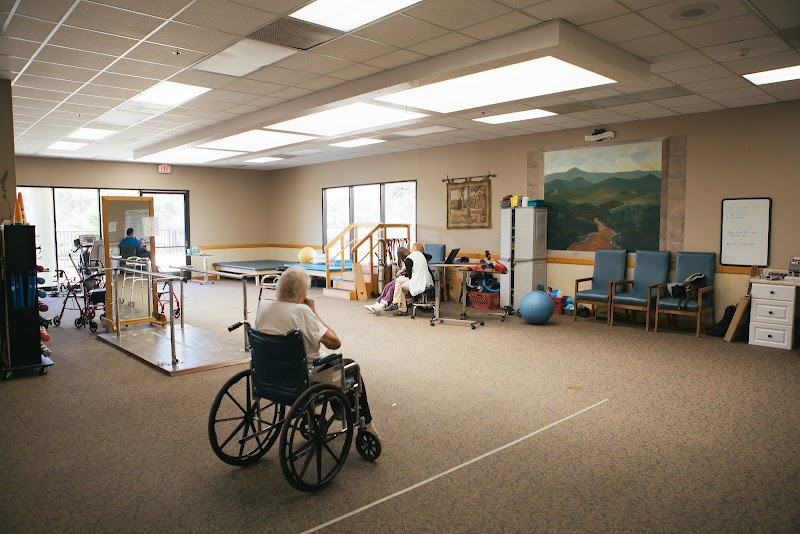
Who Owns and Operates Boulder Creek Post Acute?

BOULDER CREEK POST ACUTE is owned by a for-profit company. For-profit facilities operate as businesses with obligations to shareholders or private owners. The facility is operated by MADISON CREEK PARTNERS, a chain that manages multiple nursing homes. With 149 certified beds and approximately 139 residents (about 93% occupancy), it is a mid-sized facility located in POWAY, California.
How Does Boulder Creek Post Acute Compare to Other California Nursing Homes?

Compared to the 100 nursing homes in California, BOULDER CREEK POST ACUTE's overall rating (4 stars) is above the state average of 3.2, staff turnover (29%) is significantly lower than the state average of 46%, and health inspection rating (3 stars) is at the national benchmark.

What Should Families Ask When Visiting Boulder Creek Post Acute?

Based on this facility's data, families visiting should ask: "Can I visit during a mealtime to observe dining assistance and food quality?" "How do you handle medical emergencies, and what is your hospital transfer rate?" "Can I speak with family members of current residents about their experience?"

Is Boulder Creek Post Acute Safe?

Based on CMS inspection data, BOULDER CREEK POST ACUTE has a clean safety record: no substantiated abuse findings (meaning no confirmed cases of resident harm), no Immediate Jeopardy citations (the most serious violation level indicating risk of serious injury or death), and is not on the Special Focus Facility watch list (a federal program monitoring the lowest-performing 1% of nursing homes). The facility has a 4-star overall rating and ranks #1 of 100 nursing homes in California. While no facility is perfect, families should still ask about staff-to-resident ratios and recent inspection results during their visit.

Do Nurses at Boulder Creek Post Acute Stick Around?

Staff at BOULDER CREEK POST ACUTE tend to stick around. With a turnover rate of 29%, the facility is 17 percentage points below the California average of 46%. Low turnover is a positive sign. It means caregivers have time to learn each resident's needs, medications, and personal preferences. Consistent staff also notice subtle changes in a resident's condition more quickly.

Was Boulder Creek Post Acute Ever Fined?

BOULDER CREEK POST ACUTE has been fined $7,397 across 1 penalty action. This is below the California average of $33,153. While any fine indicates a compliance issue, fines under $50,000 are relatively common and typically reflect isolated problems that were subsequently corrected. Families should ask what specific issues led to these fines and confirm they've been resolved.

Is Boulder Creek Post Acute on Any Federal Watch List?

BOULDER CREEK POST ACUTE is not on any federal watch list. The most significant is the Special Focus Facility (SFF) program, which identifies the bottom 1% of nursing homes nationally based on persistent, serious quality problems. Not being on this list means the facility has avoided the pattern of deficiencies that triggers enhanced federal oversight. This is a positive indicator, though families should still review the facility's inspection history directly.