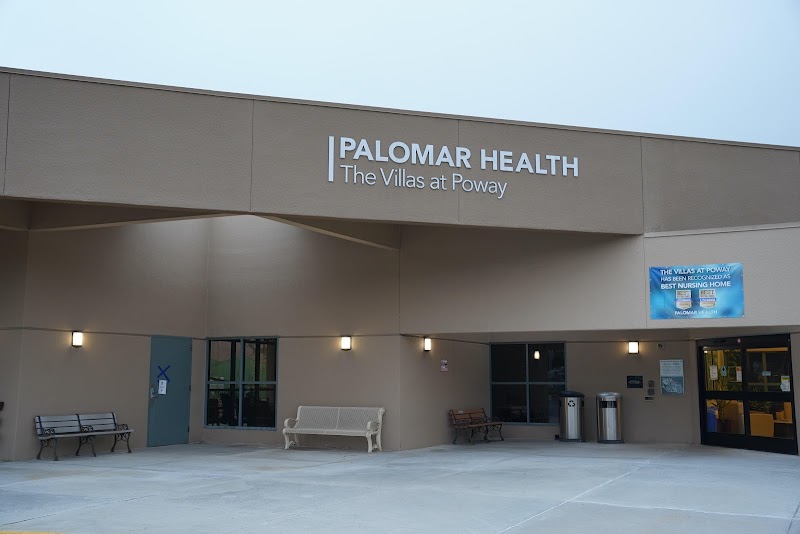
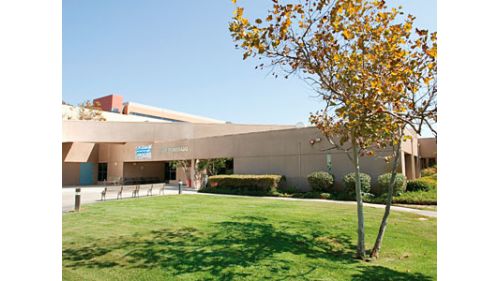
THE VILLAS AT POWAY

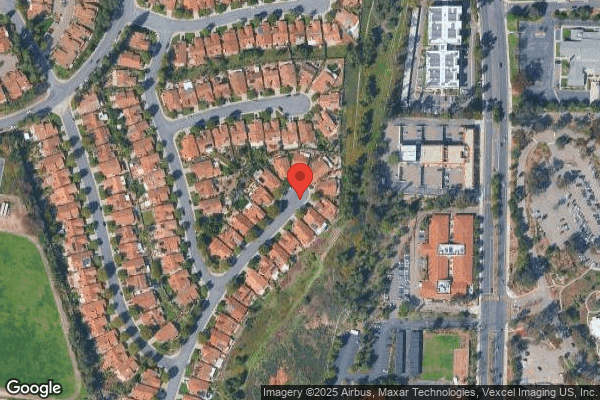
15615 POMERADO RD, POWAY, CA 92064 (858) 613-4545
Government - Hospital district 129 Beds Independent Data: November 2025
Trust Grade
70/100
#230 of 1155 in CA
Last Inspection: May 2025

Inspected within the last 6 months. Data reflects current conditions.

Overview

The Villas at Poway has a Trust Grade of B, which indicates it is a good facility, representing a solid choice for families. It ranks #230 out of 1,155 nursing homes in California, placing it in the top half of facilities statewide, and #30 out of 81 in San Diego County, showing that only a few local options are better. However, the facility is currently worsening, with the number of reported issues increasing from 4 to 11 in the past year. Staffing is a strength, with a 5/5 star rating and a low turnover rate of 15%, well below the state average of 38%, meaning staff are likely to stay and build relationships with residents. On the downside, the facility has faced $57,124 in fines, which is higher than 80% of California facilities, suggesting ongoing compliance issues. Additionally, a serious incident of abuse was reported involving two staff members and one resident, and there were concerns regarding the adequacy of the menu for residents on pureed diets and food safety practices in the kitchen. Overall, while there are strengths in staffing and rankings, families should be aware of the recent troubling incidents and compliance challenges.

Trust Score
B
70/100
In California
#230/1155
Top 19%
Safety Record
Moderate
Needs review
Inspections
Getting Worse
4 → 11 violations
Staff Stability
✓ Good
15% annual turnover. Excellent stability, 33 points below California's 48% average. Staff who stay learn residents' needs.
Penalties
○ Average
$57,124 in fines. Higher than 69% of California facilities. Some compliance issues.
Skilled Nurses
✓ Good
Each resident gets 139 minutes of Registered Nurse (RN) attention daily — more than 97% of California nursing homes. RNs are the most trained staff who catch health problems before they become serious.
Violations
⚠ Watch
40 deficiencies on record. Higher than average. Multiple issues found across inspections.
★★★★★
5.0
Overall Rating
★★★★★
5.0
Staff Levels
★★★★★
5.0
Care Quality
★★★☆☆
3.0
Inspection Score
Stable
2024: 4 issues
2025: 11 issues

The Good

  • 5-Star Staffing Rating · Excellent nurse staffing levels
  • 5-Star Quality Measures · Strong clinical quality outcomes
  • Low Staff Turnover (15%) · Staff stability means consistent care
  • Full Sprinkler Coverage · Fire safety systems throughout facility
  • No fines on record
  • Staff turnover is low (15%)

    33 points below California average of 48%

Facility shows strength in staffing levels, quality measures, staff retention, fire safety.

The Bad

Federal Fines: $57,124

Above median ($33,413)

Moderate penalties - review what triggered them

The Ugly 40 deficiencies on record

1 actual harm
May 2025 11 deficiencies
CONCERN (D)

Potential for Harm - no one hurt, but risky conditions existed

Resident Rights (Tag F0550)

Could have caused harm · This affected 1 resident

**NOTE- TERMS IN BRACKETS HAVE BEEN EDITED TO PROTECT CONFIDENTIALITY** Based on observation, interview, and record review, the facility failed to treat one of seven residents reviewed for resident ri...

Read full inspector narrative →
**NOTE- TERMS IN BRACKETS HAVE BEEN EDITED TO PROTECT CONFIDENTIALITY** Based on observation, interview, and record review, the facility failed to treat one of seven residents reviewed for resident rights, in a dignified manner when one resident (Resident 47) waited for 30 minutes to be served her meal while the other residents ate their meals. This deficient practice had the potential for Resident 47's self-esteem and self-worth to be devalued. Findings: According to the facility's Patient Information, Resident 47 was admitted to the facility on [DATE] with diagnoses that included hypertension (high blood pressure). On 5/19/25, at 11:30 A.M., an observation was conducted of dining room lunch service. On 5/19/25. at 12:03 P.M., lunch meal trays were passed out to the seven residents in the dining room. On 5/19/25, at 12:07 P.M., all but one meal tray were served. Resident 47's tray was not served. On 5/19/25, at 12:30 P.M., an interview was conducted with Resident 47. Resident 47 stated she does not know why it is taking so long for her lunch tray. She stated it made her feel frustrated that everyone was already eating and that she's waited almost 30 minutes for her tray and now, almost everyone was finished eating their lunch. On 5/19/25, at 12:37 P.M., Resident 47's meal tray was served by the Restorative Nursing Assistant (RNA 11). On 5/19/25, at 12:40 P.M., an interview was conducted with RNA 11. RNA 11 stated after the RN checked the tray for Resident 47, she delivered the tray to the wrong resident. She stated that she should have doubled checked the meal ticket and stated that it is important for residents to receive the correct meal tray for dignity and safety. On 5/22/25, at 2:30 P.M., an interview was conducted with the Director of Nursing (DON). The DON stated that all residents should be served in a timely manner. A review of the facility policy titled Procedure: Villa Meal Service- Meal Tray Delivery and Pick-Up, dated 2/5/24, indicated .4. Trays are delivered within the scheduled meal times for each unit .
CONCERN (D)

Potential for Harm - no one hurt, but risky conditions existed

Deficiency F0578 (Tag F0578)

Could have caused harm · This affected 1 resident

**NOTE- TERMS IN BRACKETS HAVE BEEN EDITED TO PROTECT CONFIDENTIALITY** Based on interview and record review the facility failed to ensure Advance Directive information was provided to a resident (Res...

Read full inspector narrative →
**NOTE- TERMS IN BRACKETS HAVE BEEN EDITED TO PROTECT CONFIDENTIALITY** Based on interview and record review the facility failed to ensure Advance Directive information was provided to a resident (Resident 10). This failure had the result for Resident 10 to not have the opportunity to express wishes for care if capacity for decision making was lost. Findings: On 5/19/25 Resident 10's clinical record was reviewed. Resident 10 was re-admitted to the facility on [DATE] per the facility's Patient Information. A document titled Advance Directive Acknowledgment dated 2/19/19, 4/19/19, and 2/13/24 indicated, I do not have an Advance Directive, however, I am interested in receiving an Advance Directive Brochure . which was initialed by Resident 10 and Resident 10's family member. There was no notation on either of the forms of whether the brochure was given to the resident or family member. On 05/21/25 at 08:29 A.M., a joint review of Resident 10's record was conducted with the Patient Financial Advocate (PFA). The PFA stated there was no documentation of whether Resident 10 received the Advance Directive brochure. The PFA stated Business Office staff should have documented on the Advance Directive Acknowledgment form if the brochure was provided. On 05/21/25 at 10:28 A.M., Resident 10 was interviewed in her room. Resident 10 stated she had been at facility for six years. Resident 10 stated she did not know what an Advance Directive was and did not receive a brochure or information from the facility about it. On 05/21/25 at 02:21 P.M., a joint review of Resident 10's chart was conducted with Licensed Nurse (LN) 23. LN 23 stated Resident 10 did not have an Advance Directive on the chart. LN 23 stated if there was an Advance Directive it should have been on the physical paper chart. On 05/21/25 at 2:32 P.M., a joint review of Resident 10's record was conducted with the Administrator (ADM). The ADM stated if there was an Advance Directive, it should have been on the physical paper chart. On 05/22/25 at 08:48 A.M., a joint review of Resident 10's record was conducted with the Health Information Services Coordinator (HISC). The HISC stated if a resident had an Advance Directive, the HISC scanned it into the electronic record, and then placed the hard copy on the physical paper chart. The HISC verified there was not an Advanced Directive on the chart for Resident 10. On 05/22/25 at 09:05 A.M., the ADM was interviewed. The ADM stated it was a duplicative process to have the Advance Directives Acknowledgment form handled by the Business Office in addition to the Social Services Evaluation Form. The ADM stated there was no Advanced Directive available for Resident 10. Per facility procedure Advance Directives, revised 5/13/24, .Inquiry and documentation regarding advance directive should occur as soon as reasonably possible during the admission process on all patients. At the time of admission, the patient .should be asked about and provided with, if requested, written information about the advance health care directive .the patient .who does not have an advance directive should be offered Your Right to Make Decisions about Medical Care .should make every effort to obtain the patient's Advance Directive .a copy should be placed in the patient's medical record .
CONCERN (D)

Potential for Harm - no one hurt, but risky conditions existed

Deficiency F0583 (Tag F0583)

Could have caused harm · This affected 1 resident

**NOTE- TERMS IN BRACKETS HAVE BEEN EDITED TO PROTECT CONFIDENTIALITY** Based on observation, interview, and record review, the facility failed to protect confidential information for one unsampled re...

Read full inspector narrative →
**NOTE- TERMS IN BRACKETS HAVE BEEN EDITED TO PROTECT CONFIDENTIALITY** Based on observation, interview, and record review, the facility failed to protect confidential information for one unsampled resident (Resident 15). This failure had the potential for Resident 15's confidential health information to be accessed by unauthorized individuals. Findings: On 5/19/25 Resident 15's clinical record was reviewed. Resident 15 was admitted to the facility on [DATE] per the facility's Patient Information with a diagnosis of Respiratory Failure (when the lungs cant properly exchange oxygen). On 5/21/25 at 8:37 A.M., an observation and interview was conducted with LN 1 during preparation for medication administration for Resident 15. LN 1 was observed putting the packaging for Prosource no carb 102 (a supplement used to increase protein intake) into the medication cart trash. The identification label attached to the Prosource packaging had Resident 15's first and last name on it. LN 1 stated she should have put Resident 15's identification label into the confidential bin. On 5/21/25 at 3:38 P.M., an interview was conducted with Unit Manager (UM) 11. UM 11 stated labels with a resident name on it should have been put in the confidential bin and not into the trash. On 5/22/25 at 2:05 P.M., an interview was conducted with the Director of Nursing (DON). The DON stated any resident identification label would need to go in the confidential shred machine and should not be present on packaging placed in the trash can. A review of the facility's policy titled Procedure: Privacy- Confidentiality and Access to Patient Information revised 12/31/2021, indicated .1. Protected Health Information or PHI is any individually identifiable health information .Individually identifiable means that the health or medical information includes or contains any element of personal identifying information sufficient to allow identification of the individual such as a patient's name .10. All hospital personnel are responsible for controlling and enforcing the principle of confidentiality, .Each department is responsible for providing a secure location for patient identifiable information, and will take reasonable measures to ensure the security of the information against unauthorized access
CONCERN (D)

Potential for Harm - no one hurt, but risky conditions existed

Deficiency F0698 (Tag F0698)

Could have caused harm · This affected 1 resident

**NOTE- TERMS IN BRACKETS HAVE BEEN EDITED TO PROTECT CONFIDENTIALITY** Based on observation, interview, and record review, the facility failed to ensure dialysis (the process of cleaning the blood th...

Read full inspector narrative →
**NOTE- TERMS IN BRACKETS HAVE BEEN EDITED TO PROTECT CONFIDENTIALITY** Based on observation, interview, and record review, the facility failed to ensure dialysis (the process of cleaning the blood through a machine) access site was properly cared for one of one resident reviewed for dialysis (Resident 19). This deficient practice had the potential for Resident 19's dialysis access to clot. Findings: Resident 19 was admitted to the facility on [DATE], with diagnoses which included End Stage Renal Disease (ESRD - kidney failure), per the facility's Patient Information. On 5/19/25 at 11:03 A.M., an interview was conducted with Resident 19 in her room. Resident 19 stated she was a dialysis resident and scheduled for dialysis on Tuesday, Thursday, and Saturday. Resident 19 showed her right arm dialysis access site. On 5/20/25 at 4 P.M., an observation and an interview were conducted with Resident 19 in her room. Resident 19 was up in her wheelchair. Resident 19 stated she came back from her dialysis at 1 P.M. and showed a dressing on her right upper arm dialysis access site. Resident 19 stated the facility nurse will remove the dressing after 24 hours. On 5/21/25 at 8:07 A.M., an observation and an interview were conducted with Resident 19 in her room. Resident 19 was seated in bed for breakfast. Dressing noted in her right arm dialysis access site. On 5/21/25 at 8:25 A.M., an interview was conducted with Licensed Nurse (LN) 21. LN 21 stated, Resident 19 went to dialysis yesterday and came back with a dressing on her dialysis access site. LN 21 stated she did not know when to remove the dressing in Resident 19 dialysis access site. On 5/21/25 at 11:30 A.M., a concurrent record review and an interview were conducted with LN 23. Resident 19 dialysis communication record was reviewed. There was no documentation indicated when to remove the dressing. LN 23 stated dressing on Resident 19's access site would be removed 24 hours after dialysis. On 5/21/25 at 4:20 P.M., an interview and an observation were conducted with Resident 19 in her room. Resident 19 was seated in her wheelchair and noted that there was no dressing on her right upper arm. Resident 19 stated the dressing was removed by the staff around 12 noon. On 5/22/25 at 4:32 P.M., an interview was conducted with LN 22. LN 22 stated Resident 19 access site dressing should be removed 24 hours after dialysis. On 5/22/25 at 8:06 A.M., a phone interview was conducted with the Hemo Dialysis Nurse (HDN). The HDN stated she was one of Resident 19's dialysis nurses and very familiar with her care. The HDN stated Resident 19 went to dialysis on Tuesday, Thursday, and Saturday. The HDN stated dressing on Resident 19's access site should be removed at the end of the day or between 4 - 6 hours after dialysis. The HDN stated the dressing should not be left on for 24 hours due to increased risk of clotting. On 5/22/25 at 8:42 A.M., an interview was conducted with the Director of Nursing (DON). The DON stated the dressing for the dialysis access site should be removed 24 hours after the dialysis. The facility did not have a Dialysis Care policy and procedure upon request. -
CONCERN (D)

Potential for Harm - no one hurt, but risky conditions existed

Deficiency F0726 (Tag F0726)

Could have caused harm · This affected 1 resident

**NOTE- TERMS IN BRACKETS HAVE BEEN EDITED TO PROTECT CONFIDENTIALITY** Based on observation, interview, and record review, the facility failed to ensure four of four license nurses were knowledgeable...

Read full inspector narrative →
**NOTE- TERMS IN BRACKETS HAVE BEEN EDITED TO PROTECT CONFIDENTIALITY** Based on observation, interview, and record review, the facility failed to ensure four of four license nurses were knowledgeable in assessing the thrill and bruit (thrills are palpable, vibratory sensations felt on the skin, while bruits are abnormal, audible sounds heard through a stethoscope) related to dialysis (the process of cleaning the blood through a machine) access. This failure had the potential for dialysis access to develop complications that may not be identified timely and addressed. Findings: Resident 19 was admitted to the facility on [DATE], with diagnoses which included End Stage Renal Disease (ESRD - kidney failure), per the facility's, Patient Information. On 5/19/25 at 11:03 A.M., an interview was conducted with Resident 19 in her room. Resident 19 stated she was a dialysis resident and scheduled for dialysis on Tuesday, Thursday, and Saturday. Resident 19 showed her right arm dialysis access site. On 5/20/25 at 4 P.M., an observation and an interview were conducted with Resident 19 in her room. Resident 19 was up in her wheelchair. Resident 19 stated she came back from her dialysis at 1 P.M. and showed the dressing on her right upper arm dialysis access site. Resident 19 stated the facility nurse will remove the dressing after 24 hours. On 5/21/25 at 4:32 P.M., an interview was conducted with LN 22. LN 22 was unable to described how to check Resident 19's dialysis access site's bruit and thrill. On 5/22/25 at 7:25 A.M., an interview was conducted with Resident 19 in her room. Resident 19 was seated in her wheelchair. She stated that she was waiting for her transportation for dialysis. Resident 19 stated staff checked her dialysis access site every shift. Resident 19 described how the LNs checked if her dialysis access was working. Resident 19 stated the LNs placed their hands on the dialysis access and felt it. Resident 19 stated the LNs did not use a stethoscope in checking her dialysis access. On 5/22/25 at 7:36 A.M., an interview was conducted with LN 25. LN 25 stated she checked Resident 19's bruits and thrills by placing her hand over the dialysis access. LN 25 stated she did not receive training on how to take care of dialysis residents. On 5/22/25 at 9:32 A.M., an interview was conducted with LN 23. LN 23 stated she placed her hand over Resident 19's dialysis access to check the bruit and thrill. On 5/22/25 at 2:07 P.M., an interview was conducted with LN 11. LN 11 described how she checked the bruit and thrill of the dialysis access. She stated she placed her hand over the dialysis access and felt it. On 5/22/25 at 2:12 P.M., an interview was conducted with Unit Manager (UM) 11. UM 11 stated she did not receive educational training on how to take care of dialysis residents. On 5/22/25 at 2:29 P.M., an interview was conducted with LN 27. LN 27 stated she did not receive educational training on how to take care of dialysis residents. On 5/22/25 at 1:41 P.M., an interview was conducted with the Director of Staff Development (DSD). The DSD stated she was not able to find evidence of training provided to staff related to dialysis care. On 5/22/25 at 1:50 P.M., an interview was conducted with the Director of Nursing (DON). The DON stated she expected her staff to know how to properly check the bruit and thrill for a dialysis resident by using their stethoscope in listening to the bruit and palpating to feel the thrill. The DON further stated that she was not able to find evidence that staff were provided training on how to take care of dialysis residents. A review of the facility's Policy and Procedure(P&P) titled, Competency Evaluation, revision date 7/30/21, indicated .to identify the processes by which individual competence is evaluated and documented initially and on an ongoing basis to ensure employees at [name of the organization] can provide safe and effective quality care, treatment, and services .III .2. Competency evaluation focuses on key safety content such as specific processes and procedures related to the provision of care; conditions or diseases treated; services provided; the environment of care; infection control and equipment .
CONCERN (D)

Potential for Harm - no one hurt, but risky conditions existed

Pharmacy Services (Tag F0755)

Could have caused harm · This affected 1 resident

**NOTE- TERMS IN BRACKETS HAVE BEEN EDITED TO PROTECT CONFIDENTIALITY** Based on interview and record review, the facility failed to ensure the controlled drug record (CDR- an accounting of controlled...

Read full inspector narrative →
**NOTE- TERMS IN BRACKETS HAVE BEEN EDITED TO PROTECT CONFIDENTIALITY** Based on interview and record review, the facility failed to ensure the controlled drug record (CDR- an accounting of controlled medications, drugs with a high abuse potential) reconciled with the medication administration record (MAR- documentation that a resident received a medication) for one of three residents (Resident 3 ). As a result, this failure had the potential for the facility to be unable to readily identify drug diversion (illegal distribution or abuse of prescription drugs) of controlled medications. Findings: Resident 3 was admitted to the facility on [DATE] per the facility's Patient Information sheet. A record review of Resident 3's physician's order, CDR, and MAR was performed. Resident 3's physician's order dated 3/19/24, indicated the Resident was to receive oxycodone 5 milligrams (medication used to relieve pain) one tab every six hours as needed for moderate to severe pain. A review of Resident 3's CDR indicated 3 doses of the resident's oxycodone 5 milligrams was removed from the locked supply on 3/10/2025, 3/12/25, and 3/18/25. Resident 3's MAR for oxycodone 5 milligrams had blank entries on 3/10/2025, 3/12/25, and 3/18/25 and it could not be determined if the medication had been given to the resident. During an interview on 5/22/25 at 10:53 A.M., Unit Manager (UM)11 stated the Licensed Nurse (LN) had to sign controlled medications out on the CDR and document on the MAR when the medication was given to the resident. UM 11 stated that it was important to keep track of controlled medications so that other LNs knew when the medication was given. During a concurrent interview and record review on 5/22/25 at 11:07 A.M., the Director of Staff Development (DSD) reviewed the resident's CDR and MAR. The DSD stated Resident 3's oxycodone 5 milligrams tablet was removed and was not documented as administered on Resident 3's MAR on 3/10/25, 3/12/25, and 3/18/25. The DSD stated her expectation was for the LN to sign the CDR when controlled medications were removed from the locked drawer and then for the LN to document on the resident's MAR once the medication was given to the resident. During an interview on 5/22/25 at 2:15 P.M., the Director of Nursing (DON) stated Resident 3's oxycodone 5 milligram tablet was removed on 3/10/25, 3/12/25 and 3/18/25 but was not documented as given to the resident on the MAR. The DON stated there was currently no audit of controlled medications being done. The DON stated that the significance of doing an audit was to make sure there was no diversion. A review of the facility's policy and procedure titled Procedure: Controlled Drugs revised 9/12/2019, did not provide guidance related to reconciling and accounting for controlled medications.
CONCERN (D)

Potential for Harm - no one hurt, but risky conditions existed

Deficiency F0761 (Tag F0761)

Could have caused harm · This affected 1 resident

**NOTE- TERMS IN BRACKETS HAVE BEEN EDITED TO PROTECT CONFIDENTIALITY** Based on observation, interview, and record review, the facility failed to ensure medications in carts were properly stored and ...

Read full inspector narrative →
**NOTE- TERMS IN BRACKETS HAVE BEEN EDITED TO PROTECT CONFIDENTIALITY** Based on observation, interview, and record review, the facility failed to ensure medications in carts were properly stored and labeled when the following was found in two of twenty medication carts: 1. An expired insulin pen. 2. A use by sticker on a medication bottle was illegible. 3. There was a white pill in an unlabeled medication cup. As a result, medications had the potential to be improperly administered. Findings: On [DATE] at 3:39 P.M., an observation and interview was conducted with Licensed Nurse (LN) 2 during a review of a medication cart. Lantus 100 units/mL (milliliter) pen (a medication given to lower blood sugar), was found in the top drawer of the medication cart labeled with an orange sticker: do not use after [DATE]. LN 2 stated when insulin was opened the nurse put an orange sticker with the use by date on the insulin pen. LN 2 stated insulin once opened was good for 28 days. LN 2 stated nurses were supposed to check the date and double check the time to discard since the insulin is not potent after expiration. In the bottom drawer of the medication cart, a bottle of Constulose 10 g/15 mL (a medication to treat constipation) had an illegible date written on the use by sticker. LN 2 stated labeling should be legible to make sure it was not expired. On [DATE] at 11:36 A.M., an observation and interview was conducted with LN 3. One white pill in an unlabeled medication cup was found in the top drawer of a medication cart. LN 3 stated it should have had the resident's name and name of medication written on the cup. On [DATE] at 3:38 P.M., an interview was conducted with the Unit Manager (UM) 1. UM 1 stated open insulin should have been discarded within 28 days per their pharmacy's guidance. UM 1 stated use by labels on medications should be legible. On [DATE] at 2:05 P.M., an interview was conducted with the Director of Nursing (DON). The DON stated the orange use by label lets the facility know when the medication would expire. The DON stated open Lantus with a use by date of [DATE] should not have been stored and ready for use in the medication cart. The DON stated labeling on medications should be legible. DON stated all medications needed to be dated and labeled with the resident name. A review of the facility's policy titled Medications and Medication Labels dated 5/16, indicated, .1. Each prescription medication will be labeled to include: .f. Date medication is dispensed .h. Expiration or end-of-use date, if not dispensed in original manufacturer packaging .End-of-use dating, which only includes the month and year (01/2017), falls to the last day of that month (expires [DATE]) 8. Medication containers having soiled, damaged, incomplete, illegible or makeshift labels are returned to pharmacy for re-labeling or destroyed in accordance with the medication destruction policy A review of the facility's undated document provided by their pharmacy titled Abridged List of Medications with Shortened Expiration Dates indicated, .Insulins .Long Acting . Brand name Lantus . Beyond Use Date (BUD) Notes After Accessing Insulin for First Use .pen - 28 days .
CONCERN (D)

Potential for Harm - no one hurt, but risky conditions existed

Deficiency F0841 (Tag F0841)

Could have caused harm · This affected 1 resident

Based on interview and record review the facility failed to ensure the Medical Director (MD) participated in the development and implementation of written policies and procedures, related to the care ...

Read full inspector narrative →
Based on interview and record review the facility failed to ensure the Medical Director (MD) participated in the development and implementation of written policies and procedures, related to the care of residents receiving dialysis services. This had the potential to affect the effectiveness and quality of care delivered to residents on dialysis. (Cross reference to F698 and F726) Findings: On 5/22/25 at 4:15 P.M., a telephone interview was conducted with the MD. The MD stated part of his role was to participate and attend the QAPI (Quality Assessment and Improvement Plan) meeting. Participate in the development and implementation of written policies governing the medical, nursing and related health care services provided in the facility, and oversight with the physician provider. The MD stated he was not aware there was no written policy and procedure for nursing care of dialysis residents and no inservice training provided to the licensed nurses (LN) in assessing dialysis access. The MD stated that there should have been a policy and procedure for nursing to follow standard care practice for dialysis residents. The MD stated LNs should have been educated and trained on how to take care of dialysis residents including the assessment of bruit and thrill (thrills are palpable, vibratory sensations felt on the skin, while bruits are abnormal, audible sounds heard through a stethoscope). On 5/22/25 at 4:40 P.M., an interview was conducted with the Administrator (ADM) and the Director of Nursing (DON). The ADM and the DON stated that in coordination with the MD, the facility would develop and implement policy and procedures for resident receiving dialysis services. A review of the facility's assessment, dated 9/18/17, indicated the facility provided dialysis services to residents. A review of a procedure for the Medical Director dated 2/16/11, indicated, .the standard of practice performed by the Medical Director included .plays a pivotal role in provision of clinical leadership regarding application of current standards of practice for resident care, new or proposed treatments, practices and resident outcomes. Knowledgeable regarding regulatory issues and the manner in which they may affect care practices. Provides input and approval for resident care policies and practices .
CONCERN (D)

Potential for Harm - no one hurt, but risky conditions existed

Medical Records (Tag F0842)

Could have caused harm · This affected 1 resident

**NOTE- TERMS IN BRACKETS HAVE BEEN EDITED TO PROTECT CONFIDENTIALITY** Based on interview and record review the facility failed to ensure accurate documentation related to: 1. Advance Directives for ...

Read full inspector narrative →
**NOTE- TERMS IN BRACKETS HAVE BEEN EDITED TO PROTECT CONFIDENTIALITY** Based on interview and record review the facility failed to ensure accurate documentation related to: 1. Advance Directives for two residents (10, 131). 2. A documentation for a resident's capacity to understand and make decisions was missing for one resident (40) 3. Resident's consent for treatment was incomplete (40). This failure resulted in conflicting records regarding the presence of Advance Directives (10, 31) and did not provide an accurate representation of the care provided and had the potential to cause confusion amongst care providers (40). Findings: 1a. On 5/19/25 Resident 10's clinical record was reviewed. Resident 10 was admitted to the facility on [DATE] per the facility's Patient Information. A document titled Advance Directive Acknowledgment dated 2/19/19, 4/19/19, and 2/13/24 indicated, I do not have an Advance Directive, however, I am interested in receiving an Advance Directive Brochure . and was initialed by Resident 10 and Resident 10's family member. On 05/21/25 at 10:57 A.M., a joint review of Resident 10's record was conducted with Social Services (SS). The SS stated when residents were admitted Social Services assessed and documented the status of Advance Directives. Resident 10's Social Services Evaluation dated 11/20/19 indicated, Advance Directive: Yes/copy obtained and on chart. The SS stated the Advance Directive should have been on the chart. On 05/21/25 at 02:21 P.M., a joint review of Resident 10's chart was conducted with Licensed Nurse (LN) 23. LN 23 stated Resident 10 did not have an Advance Directive the on chart. LN 23 stated if there was an Advance Directive it should have been on the physical paper chart. On 05/21/25 at 2:32 P.M., a joint review of Resident 10's record was conducted with the Administrator (ADM). The ADM stated if there was an Advanced Directive, it should have been on the physical paper chart. The ADM acknowledged the documentation discrepancy regarding the presence of an Advanced Directive. On 05/22/25 at 08:48 A.M., a joint review of Resident 10's record was conducted with the Health Information Services Coordinator (HISC). The HISC stated if a resident had an Advanced Directive, HISC scanned it into the electronic record, and then placed the hard copy on the physical paper chart. The HISC verified there was not an Advanced Directive on the chart for Resident 10. On 05/22/25 at 09:05 A.M., the Administrator (ADM) was interviewed. The ADM stated it was a duplicative process to have the Advance Directives Acknowledgment form handled by the Business Office in addition to the Social Services Evaluation Form. The ADM stated the documentation had a discrepancy regarding if Resident 10 had an Advanced Directive. The ADM stated there was no Advanced Directive available for Resident 10. Per facility procedure Advance Directives, revised 5/13/24, .should make every effort to obtain the patient's Advance Directive .a copy should be placed in the patient's medical record . 1b. On 5/19/25 Resident 131's clinical record was reviewed. Resident 131 was admitted to the facility on [DATE] per the facility's Resident Information. A document titled Advance Directive Acknowledgment dated 5/3/25 indicated; I do not have an Advanced Directive, however, I am interested in receiving an Advanced Directive Brochure. was initialed by Resident 131. On 05/21/25 at 10:59 A.M., a joint review of Resident 131's clinical record was conducted with Social Services (SS). The SS stated upon admission Social Services did an assessment which included Advanced Directive status. Resident 131's assessment indicated, Reg Adv Dir Info: Yes/copy requested. The SS stated the Advance Directive should have been on the chart. On 05/21/25 at 02:21 P.M., a joint review of Resident 131's chart was conducted with Licensed Nurse (LN) 23. LN 23 stated Resident 131 did not have an Advance Directive the on chart. LN 23 stated if there was an Advance Directive it should have been on the physical paper chart. On 05/22/25 at 08:48 A.M., a joint review of Resident 131's record was conducted with the Health Information Services Coordinator (HISC). The HISC stated if a resident had an Advance Directive, HISC scanned it into the electronic record, and then placed the hard copy on the physical paper chart. The HISC verified there was not an Advanced Directive on the chart for Resident 131. On 05/22/25 at 09:05 A.M., the Administrator (ADM) was interviewed. The ADM stated it was a duplicative process to have the Advance Directives Acknowledgment form handled by the Business Office in addition to the Social Services Evaluation Form. The ADM stated the documentation had a discrepancy regarding if Resident 131 had an Advance Directive. The ADM stated there was no Advanced Directive available for Resident 131. Per facility procedure Advance Directives, revised 5/13/24, .should make every effort to obtain the patient's Advance Directive .a copy should be placed in the patient's medical record . 2. Resident 40 was re-admitted to the facility on [DATE] at 1:41 P.M. according to the facility's Patient Information. A review of Resident 40's physician progress notes dated 11/7/24 at 1:27 P.M., indicated diagnoses which included cognitive developmental delay with left cerebral hydrocephalus (fluid buildup causing increase pressure in the brain) and dependence on a ventilator (a medical device that helps a patient breathe by delivering oxygen). On 5/22/25 at 8:35 A.M., an interview and record review were conducted with licensed nurse (LN) 41. LN 41 stated residents' capacity to understand and make decisions were documented in the physician orders during each admission and re-admission. LN 41 stated re-admission on [DATE] documentation indicated Resident 40 did not have capacity to understand and make decisions. LN 41 stated Resident 40 was re-admitted to the facility on [DATE] but Resident 40's capacity to understand and make decision was not documented. On 5/22/2025 at 9:37 A.M., an interview was conducted with the Director of Staff Development (DSD). The DSD stated the physician determined resident's capacity to understand and make decisions and should have been documented in the history and physical examination (H&P). The DSD stated a physician determination of resident's capacity to understand and make decision should have been completed upon admission and on readmission. On 5/22/2025 at 10:22 A.M., an interview and record review were conducted with the Director of Nursing (DON). The DON stated physician the H&P did not mention Resident 40's capacity. The DON stated the physician determines a resident's capacity to understand and make decisions. The DON stated during readmission, LNs would ask the physician to resume a physician order including a resident's capacity to understand and make decisions. The DON stated physician should resume all orders including the resident's capacity to understand and make decisions. According to the facility policy entitled Policy: Capacity to Make Health Care Decisions, revised date 1/8/2025, indicated .III .B. Determination of Capacity .1. The primary physician is responsible for determining the patient's capacity to make health care decisions. 2. If there are indications that the patient lacks the capacity to make health care decisions, the primary physician should evaluate the patient .C. Documentation and Communication .1. The determination that a patient lacks or has a recovered capacity should promptly recorded in the patient's medical record . According to the facility policy entitled Procedure: Documentation Schedule, revised date 9/20/2019, indicated .IV. STEPS OF PROCEDURE: C. admission documentation is completed within 24 hours of the admission . 3. A review of Resident 40's facility [name of facility] Consent to Treatment did not indicate two witnesses for Resident 40's responsible party's (RP) verbal consent on 11/7/24 and was incomplete. On 5/22/25 at 9:03 A.M., an interview and record review were conducted with LN 41. LN 41 stated two licensed nurses should witness a verbal or telephone consent. LN 41 stated Resident 40's Consent to Treatment did not indicate two witnesses and was incomplete. On 5/22/25 at 10:40 A.M., an interview was conducted with the DON. The DON stated two licensed nurses should have witnessed verbal consent. On 5/22/25 at 10:56 A.M., an interview and record review were conducted with the administrator (ADM) and the DON. The DON stated the facility should complete Resident 40's Consent to Treatment because the facility was not authorized to do anything for her. The ADM stated the licensed nurses should complete the Consent to Treatment. The ADM stated two witnesses were required to verify verbal consent. According to the facility policy entitled Procedure: Documentation Schedule, revised date 9/20/2019, indicated .IV. STEPS OF PROCEDURE: C. admission documentation is completed within 24 hours of the admission . According to the facility policy entitled Policy: Conditions of Admission, revised date 2/14/25, indicated .5. If the patient or legal representative verbally consents to the CoA, two hospital employees should witness the verbal consent .
CONCERN (E)

Potential for Harm - no one hurt, but risky conditions existed

Deficiency F0692 (Tag F0692)

Could have caused harm · This affected multiple residents

**NOTE- TERMS IN BRACKETS HAVE BEEN EDITED TO PROTECT CONFIDENTIALITY** Based on interview and record review, the facility failed to obtain residents' weight upon admission for seven of 18 sampled res...

Read full inspector narrative →
**NOTE- TERMS IN BRACKETS HAVE BEEN EDITED TO PROTECT CONFIDENTIALITY** Based on interview and record review, the facility failed to obtain residents' weight upon admission for seven of 18 sampled residents (36, 280, 282, 430, 19, 9, 3). In addition, the facility did not ensure input and outputs (I & Os) were documented accurately for one sampled resident (Resident 73) on intravenous (IV - giving medications, fluids, or nutrients directly into the bloodstream through a needle or tube inserted into a vein) medications. These failures had the potential to delay identification of risk factors related to nutrition and hydration for Resident 2, 36, 280, 282, 430, 19, 9, 3, and 73. Findings: 1. Resident 36 was admitted to the facility on [DATE] with diagnoses which included Congestive Heart Failure (CHF-a heart disorder which causes the heart to not pump the blood efficiently, sometimes resulting in leg swelling), per the facility's Patient Information. 2. Resident 280 was admitted to the facility on [DATE] with diagnoses which included hypertension (high blood pressure), per the facility's Patient Information. 3. Resident 282 was admitted to the facility on [DATE] with diagnoses which included hypertension, per the facility's Patient Information. 4. Resident 430 was admitted to the facility on [DATE] with diagnoses which included pneumonia (an infection/inflammation in the lungs), per the facility's Patient Information. On 5/21/25 at 9:41 A.M., a joint review of Resident 36, Resident 280, and Resident 282's clinical record and an interview was conducted with Licensed Nurse (LN) 11. Clinical record review as follows: - Resident 36 was admitted on [DATE]. Resident 36's weight was taken/ documented on 5/11/25. - Resident 280 was admitted on [DATE]. Resident 280's weight was taken/ documented on 5/18/25. - Resident 282 was admitted on [DATE]. Resident 282's weight was taken/ documented on 5/11/25. LN 11 stated residents' weights should have been taken upon admission for a baseline to ensure the residents were not losing weight or developing edema (swelling). On 5/21/25 at 10:19 A.M., an interview was conducted with Restorative Nursing Assistant (RNA) 11. RNA 11 stated the RNAs were responsible for weighing the residents on Saturdays and Sundays. RNA 11 stated when residents were admitted to the facility on weekdays, the Certified Nursing Assistants (CNAs) were responsible to weigh the residents upon admission. RNA 11 stated when the staff were not able to obtain the residents weights on the day of admission, the staff were supposed to weigh the residents the following day within a 24-hour period. On 5/21/25 at 3:58 P.M., a joint review of Resident 36, Resident 280, Resident 282 and Resident 430's clinical record and an interview was conducted with the Unit Manager (UM) 11. Clinical record review as follows: - Resident 36 was admitted on [DATE]. Resident 36's weight was taken/ documented on 5/11/25. - Resident 280 was admitted on [DATE]. Resident 280's weight was taken/ documented on 5/18/25. - Resident 282 was admitted on [DATE]. Resident 282's weight was taken/ documented on 5/11/25. - Resident 430 was admitted on [DATE]. Resident 430's weight was taken/ documented on 5/7/25. UM 11 stated residents' weights should have been taken upon admission and readmission unless contraindicated like orthopedic procedures. UM 11 stated the residents' weights as zero indicated, Someone was trying to bypass the assessment. UM 11 stated the resident's weight should have been accurate. UM 11 stated the residents should have been weighed within 24 hours upon admission for baseline to check if a resident was gaining or losing weight. UM 11 stated per the regulation the residents should be weighed upon admission or within 24 hours. On 5/22/25 at 11:07 A.M., an interview was conducted with the Director of Nursing (DON). The DON stated the facility's policy was to weigh the residents within 72 hours on admission. The DON stated, Even so with our policy, we are not abiding with our policy. A review of the facility's policy titled, Weighing Residents, revised 8/29/23, indicated, Residents are weighed to determine nutritional status and evaluation of overall health . A review of the facility's policy titled, Documentation Schedule, revised 9/20/19, indicated, .To provide guidelines for documentation which will provide a pertinent and timely clinical or behavioral picture of the patient .C. admission documentation is completed within 24 hours of the admission . 5. Resident 19 was admitted to the facility on [DATE], with diagnoses which included End Stage Renal Disease (ESRD - kidney failure), per the facility's, Patient Information. On 5/22/25 at 10:19 A.M., a joint record review and an interview were conducted with LN 23. LN 23 described the facility's process on weighing residents. LN 23 stated the residents would be weigh upon admission, then every week for 4 weeks and then every month or if there was an order that weighing was contraindicated. Resident 19's Weight Detail Report indicated Resident 19 admission weight was taken on 3/14/24. LN 23 stated that Resident 19 should have been weighed on 3/4/24 and not 10 days later. 6. Resident 9 was re- admitted to the facility on [DATE], with diagnoses which included pyelonephritis (kidney infection), per the facility's, Patient Information. On 5/22/25 at 10:20 A.M., a joint record review and an interview were conducted with LN 23. A review of Resident 9's Weights Detailed Entry Report indicated Resident 9's admission weight was taken on 1/5/25. LN 23 stated Resident 9 should have been weighed on 12/24/25 upon admission and should not have waited 12 days later. 7. Resident 3 was admitted to the facility on [DATE], with diagnoses which included Liver abscess (pus filled pocket caused by infection), per the facility's, Patient Information. On 5/22/25 at 10:22 A.M., a joint record review and an interview were conducted with LN 23. A review of Resident 3's Weights Detailed Entry Report indicated Resident 3's admission weight was taken on 1/28/24. LN 23 stated Resident 3 should have been weighed on 1/11/24 upon admission and should not have waited 17 days later. On 5/22/25 at 11:37 A.M., an interview was conducted with the Director of Nursing (DON). The DON stated staff should have followed the policy and procedure for weighing residents. The DON stated she expected staff to weigh residents on admission. A review of the facility's policy titled, Weighing Residents, revised 8/29/23, indicated, Residents are weighed to determine nutritional status and evaluation of overall health . A review of the facility's policy titled, Documentation Schedule, revised 9/20/19, indicated, .To provide guidelines for documentation which will provide a pertinent and timely clinical or behavioral picture of the patient .C. admission documentation is completed within 24 hours of the admission . 8. According to the facility's Patient Information record, Resident 73 was admitted on [DATE] with diagnoses that included congestive heart failure (CHF - condition when the heart isn't pumping blood as efficiently as it should, leading to fluid buildup in the body, especially the lungs). A record review of Resident 73's physician's orders indicated on 5/7/25, Resident 73 was started on Zosyn (antibiotic) 3.375 grams IV every 6 hours x 10 days for pneumonia (PNA - lung infection). A record review of Resident 73's I&Os for the month of May 2025 indicated that recorded input did not include the IV fluid amount Resident 73 received from the IV antibiotics. On 5/20/25, at 3:30 P.M., an interview was conducted with the licensed nurse (LN 1). LN 1 stated IV fluids and IV medication amounts are not recorded or documented. LN 1 stated they stopped recording IV intake amounts when the electronic medical records (EMR) system was changed. On 5/21/25, at 3:00 P.M., an interview was conducted with the Director of Nursing (DON). The DON stated that all fluids, including IV medications, need to be recorded in the residents' I&Os. A review of the facility policy titled Procedure: Intake and Output, dated 1/31/04, indicated .3. Licensed nurse records fluids administered by intravenous lines as intake .
CONCERN (E)

Potential for Harm - no one hurt, but risky conditions existed

Infection Control (Tag F0880)

Could have caused harm · This affected multiple residents

**NOTE- TERMS IN BRACKETS HAVE BEEN EDITED TO PROTECT CONFIDENTIALITY** Based on observations, interview, and record review the facility failed to ensure infection control procedures were followed whe...

Read full inspector narrative →
**NOTE- TERMS IN BRACKETS HAVE BEEN EDITED TO PROTECT CONFIDENTIALITY** Based on observations, interview, and record review the facility failed to ensure infection control procedures were followed when: A. Resident 36 and Resident 282 were not identified and placed on enhanced barrier precautions (EBP - involves gown and glove use during high-contact resident care activities for residents [example: residents with medical devices]), and licensed staff did not wear a gown when providing care to Resident 36 and Resident 282. B. Licensed Nurses (LN) did not perform hand hygiene (a process of washing hands or using a hand sanitizer) while dispensing medications, when changing gloves in a contact precaution room, and did not sanitize stethoscope and pulse oximeter after resident use. C. A bottle of body spray was found in the drawer of respiratory cart. These failures had the potential for cross contamination and spread of infection between residents, visitors and staff. Findings: A 1.Resident 36's Information Record indicated Resident 36 was admitted to the facility on [DATE], with diagnoses which included Methicillin Resistant Staphylococcus Aureus (MRSA - a type of organism that was resistant to several antibiotics [anti-infective] medications) and had a peripherally inserted central catheter (PICC, is a medical device with a tube that's inserted through a vein in the arm and passed through to the larger veins near the heart) for antibiotics. On 5/19/25 at 9:02 A.M., an observation and an interview of Resident 36 was conducted in her room. Resident 36 laid in bed, with PICC line on her right upper arm. Resident 36 stated she was receiving antibiotics through the PICC line due to an infection to her knee. Resident 36 stated she had the PICC line inserted prior to facility admission. There was no EBP sign noted prior to coming to Resident 36's room. On 5/20/25 at 3:37 P.M., a follow up observation and an interview of Resident 36 was conducted in her room. Resident 36 laid in bed, with PICC line on her right upper arm. There was no EBP sign noted prior to coming to Resident 36's room. On 5/20/25 at 3:52 P.M., an interview was conducted with Certified Nursing Assistant (CNA) 12. CNA 12 stated Resident 36 was incontinent on her bowel and bladder and needed assistance. CNA 12 stated Resident 36 was not on isolation and no reported isolation precautions for the resident. CNA 12 stated the CNAs did not have to wear a gown when providing care to Resident 36 since she was not on isolation. On 5/21/25 at 8:29 A.M., an interview was conducted with CNA 14. CNA 14 stated Resident 36 was not on isolation and PPE were not needed when providing care to the resident. On 5/21/25 at 11:40 A.M., an observation and an interview was conducted with CNA 14. CNA 14 changed Resident 36's incontinence brief. CNA 14 was not wearing a gown while providing care to Resident 36. CNA 14 stated Resident 36 was not on isolation and no gown was required when changing her incontinence brief. On 5/21/25 at 11:50 A.M., an interview was conducted with Licensed Nurse (LN) 11. LN 11 stated Resident 36 was not on isolation precautions and did not require PPE when providing care to Resident 36. LN 11 stated there was no sign which indicated the staff had to wear PPE when providing care to Resident 36. On 5/21/25 at 3:23 P.M., a joint review of Resident 36's clinical record and an interview was conducted with Infection Preventionist (IP). The IP stated Resident 36 had history of MRSA and had a PICC line. The IP stated residents with history of MRSA and with medical devices, the expectation was for the staff to wear PPE which consisted of mask, gown and gloves when providing care to residents with medical devices. The IP stated it was important for the staff to wear PPE when they were in contact with the residents like providing care, accessing the resident's medical device, and transferring the resident when they had long contact time with the resident. The IP further stated this was to prevent increase of acquiring organisms and infection and transmitting them to other residents. On 5/22/25 at 11:07 A.M., an interview was conducted with the Director of Nursing (DON). The DON stated the expectation was for the staff to follow EBP protocol. The DON stated it was important since the residents were vulnerable and were high risk of developing an infection. A review of the facility's policy titled, Enhanced Barrier Precautions, revised 11/20/24, indicated, In conjunction with other infection control measures, Enhanced barrier precautions (EBP) will be used to maintain a safe, sanitary and comfortable environment. The targeted use of proper personal protective equipment (PPE) along with the use of standard precautions during high-contact resident care activities will help prevent the transmission of communicable diseases and infections . A2. Resident 282's Information Record indicated Resident 282 was admitted to the facility on [DATE], with diagnoses which included bacteremia (presence of bacteria in the blood stream), had a peripherally inserted central catheter (PICC, is a medical device with a tube that's inserted through a vein in your arm and passed through to the larger veins near the heart) for antibiotics and a gastrostomy tube (g-tube, a surgical opening fitted with a device to allow feedings and medications to be administered directly to the stomach). On 5/19/25 at 9:23 A.M., an observation and an interview were conducted with Resident 282 in her room. Resident 282 had a right upper arm PICC line, and a g-tube. Resident 282 laid in bed and stated she received antibiotics in her PICC line and received nutrition via her g-tube. There was no EBP sign noted prior to coming to Resident 282's room. On 5/20/25 at 4:03 P.M., an interview was conducted with CNA 12. CNA 12 stated Resident 282 had a g-tube and was not on isolation. CNA 12 stated the staff only have to wear PPE when providing care to resident with a sign that indicated the resident was on isolation. CNA 12 stated she did not have to wear a gown when providing care to Resident 282. On 5/21/25 at 8:35 A.M., an interview was conducted with CNA 15. CNA 15 stated Resident 282 had a g-tube. CNA 15 stated since Resident 282 was not on isolation, staff were not to wear a gown. On 5/21/25 at 11:50 A.M., an interview was conducted with Licensed Nurse (LN) 11. LN 11 stated Resident 282 was not on isolation precautions and did not require PPE when providing care to Resident 282. LN 11 stated there was no sign which indicated the staff had to wear PPE when providing care to Resident 282. On 5/21/25 at 3:23 P.M., a joint review of Resident 282's clinical record and an interview was conducted with Infection Preventionist (IP). The IP stated Resident 282 had bacteremia, a g-tube and a PICC line. The IP stated residents with medical devices, the expectation was for the staff to wear PPE which consisted of mask, gown and gloves when providing care to residents with medical devices. The IP stated it was important for the staff to wear PPE when they were in contact with the residents like providing care, accessing the resident's medical device, and transferring the resident when they had long contact time with the resident. The IP further stated this was to prevent increase of acquiring organisms and infection and transmitting them to other residents. On 5/22/25 at 11:07 A.M., an interview was conducted with the Director of Nursing (DON). The DON stated the expectation was for the staff to follow EBP protocol. The DON stated it was important since the residents were vulnerable and were high risk of developing an infection. A review of the facility's policy titled, Enhanced Barrier Precautions, revised 11/20/24, indicated, In conjunction with other infection control measures, Enhanced barrier precautions (EBP) will be used to maintain a safe, sanitary and comfortable environment. The targeted use of proper personal protective equipment (PPE) along with the use of standard precautions during high-contact resident care activities will help prevent the transmission of communicable diseases and infections . B. On 5/21/25 at 8:49 A.M., an observation and interview was conducted with LN 1 during Resident 15's medication administration. LN 1 had administered medications via feeding tube (a tube inserted into the stomach to give nutrition) to Resident 15. Resident 15 was in a contact precaution room (a room with a resident who has an infectious disease). LN 1 took off used gloves and applied a new pair of gloves without performing hand hygiene. LN 1 used a stethoscope (a medical device used to listen to the heart and lungs) and pulse oximeter (a medical device used to monitor heart rate and oxygen levels) on Resident 15. LN 1 then put the pulse oximeter into her pocket and placed the stethoscope around her neck without disinfecting them. LN 1 stated she removed her gloves in Resident 15's room and did not perform hand hygiene and she should have done so in a contact precaution room. LN 1 stated she also had not disinfected the stethoscope and pulse oximeter before exiting Resident 15's room and she should have. On 5/21/25 at 9:36 A.M., an observation and interview was conducted with LN 4 during Resident 20's medication administration. Resident 20 was on enhanced barrier precautions (use of PPE to prevent spreading infection to vulnerable residents during care). LN 4 was observed touching his face mask several times. LN 4 was observed dispensing medications and did not perform hand hygiene. LN 4 then applied a pair of gloves, carried Resident 20's medication tray, and set it down on a cabinet. LN 4 applied a PPE gown and then doubled gloved (applying another pair of gloves over the first pair of gloves). LN 4 entered Resident 20's room. LN 4 gave Resident 20 his oral medications and then removed the outer pair of gloves. LN 4 administered eye drops to Resident 20. LN 4 stated he did not perform hand hygiene after touching his mask and prior to dispensing Resident 20's medications. LN 4 stated he should not have been wearing double gloves during medication administration. C. On 5/21/25 at 11:14 A.M., an observation and interview was conducted with Respiratory Therapist (RT) 1. A bottle of (brand name) body spray gingham love was found in the right upper drawer of a respiratory medication cart. RT 1 stated he was not sure who it belonged to and it May be a co-worker's. RT 1 stated the body spray should not have been stored in the respiratory medication cart. On 5/21/25 at 3:38 P.M., an interview was conducted with Infection Preventionist (IP). The IP stated hand hygiene was to be performed before changing gloves. The IP stated staff should have disinfected the stethoscope and pulse oximeter prior to exiting a contact precaution room to decrease the spread of infections. The IP also stated alcohol-based rub or handwashing should have been performed before dispensing or administering medications to residents. The IP further stated body spray should not have been in a respiratory medication cart, and it was an infection control risk. On 5/22/25 at 2:05 P.M., an interview was conducted with the Director of Nursing (DON). The DON stated staff would need to change gloves and perform hand hygiene within a patient room when changing care tasks, or if soiled. The DON further stated items like a stethoscope and pulse oximeter should not leave a contact precaution room without being disinfected. The DON stated LNs should perform hand hygiene prior to dispensing and administering medications and LNs should not be double gloving. The DON stated, Perfume should be not allowed in any medication cart. The DON further stated this was a potential for contamination and an infection control issue and Residents could be put at risk. A review of the facility's policy titled Procedure: Standard Precautions revised 11/01/2024, indicated, .3. Hand Hygiene .c. If hands are not visibly soiled, use alcohol gel routinely for decontaminating hands: .ii. before donning sterile gloves .vii. after removing gloves .d. Remove gloves promptly after use and immediately perform hand hygiene 7. Cleaning and Disinfecting Patient Care Equipment a. Shared equipment must be cleaned and disinfected before use on another patient by the immediate user . A review of the facility's policy titled Procedure: Cleaning and Disinfection of Equipment revised 06/10/2024, indicated, .10. Cleaning and disinfection of movable medical equipment will be done regularly and after equipment is taken into an isolation room .
Oct 2024 3 deficiencies 1 Harm
SERIOUS (G) 📢 Someone Reported This

A family member, employee, or ombudsman was alarmed enough to file a formal complaint

Actual Harm - a resident was hurt due to facility failures

Free from Abuse/Neglect (Tag F0600)

A resident was harmed · This affected 1 resident

**NOTE- TERMS IN BRACKETS HAVE BEEN EDITED TO PROTECT CONFIDENTIALITY** Based on observation, interview, and record review, the facility failed to ensure Resident 7 was not abused. As a result, Reside...

Read full inspector narrative →
**NOTE- TERMS IN BRACKETS HAVE BEEN EDITED TO PROTECT CONFIDENTIALITY** Based on observation, interview, and record review, the facility failed to ensure Resident 7 was not abused. As a result, Resident 7 experienced abuse from two staff members. In addition, other residents who were cognitively impaired (problem with the ability to think, learn, remember, use judgement, and make decisions) had the potential to suffer abuse from the two staff members. Findings: On 9/4/24 at 9:50 A.M., an unannounced visit was made to the facility in response to a reported abuse incident. An observation was conducted on 9/4/24 at 12:49 P.M. Resident 7 was sitting in a wheelchair in the hallway with other residents. Resident 7 had a frown on her face and was hugging a doll. A review of Resident 7 ' s record was conducted. Per the facility ' s face sheet, Resident 7 was admitted to the facility on [DATE]. The Physician Progress Note, dated 8/8/24 indicated Resident 7 ' s diagnoses including senile dementia (a progressive decline leading to loss of memory, language, problem solving, other thinking abilities and loss of independence in daily activities). Resident 7 ' s Minimum Data Set (MDS- a federally mandated resident assessment tool) dated 7/31/24, section C0700 through section C1000 indicated Resident 7 had short and long-term memory problem, memory/recall problem and had severely impaired daily decision making. On 9/4/24 at 12:07 P.M., an interview was conducted with the Director of Nursing (DON), with the Administrator present in the facility ' s conference room. The DON stated that on 1/26/24, she and the administrator received a video call from an attorney who represented Resident 7 ' s family. The DON stated that the attorney informed the DON and the Administrator that Resident 7 ' s family placed a hidden camera in Resident 7 ' s room from 11/29/23 through 1/26/24, which showed assaultive behavior by staff, evidence of shoving and hitting Resident 7, and lack of compassion by staff. The DON stated that she ended the call and directed the issue to the facility ' s risk management (department; the facility ' s process of identifying and controlling threats to an organization). The DON stated that on 8/22/24, she was notified by the [health care system ' s] Chief Nursing Officer (CNO) of videos that involved Resident 7. The DON stated she first viewed the video footage on 8/22/24. The DON stated that she and the Administrator identified two CNAs (CNA 1 and CNA 2) in the video footage. The DON stated that in one video, a third staff member was observing (the abusive behavior toward Resident 7) in the room. The DON stated she was able to identify the third staff member as LN 3 and confirmed all three staff members were employed by the facility in November 2023. A review of the videos from Resident 7 ' s room was conducted on 9/25/24 at 8:56 a.m. in the facility ' s conference room with the Administrator. The Administrator provided a laptop computer to view the eleven recorded videos. All eleven video footages were not identified with a date and/or time that indicated when the videos of the abuse incidents were taken/recorded. The Administrator identified CNA 1, CNA 2, and LN 3 on the videos. The undated video number one showed Resident 7 lying in bed wearing only a bra. Resident 7 was speaking in Spanish (unable to understand what the resident was saying in the video), and CNA 1 placed her right hand over Resident 7 ' s mouth and told Resident 7, Shh. CNA 1 then turned/positioned Resident 7 on the right side in a rough manner, pulled out Resident 7 ' s brief from underneath Resident 7, wiped Resident 7 ' s perineum (peri; area of skin between the anus and genitals; private area between the thighs), then turned Resident 7 in a rough manner on to the left side after putting a new brief on Resident 7. Resident 7 was frowning and was communicating to CNA 1 in Spanish (unable to determine what the resident was saying), but CNA 1 was not responding. Video number one lasted one minute. The undated video number two showed Resident 7 lying in bed. CNA 1 was standing near Resident 7 ' s left side with a vital sign machine (machine that takes temperature, heart rate, blood pressure and oxygen saturation [(oxygen level]). The blood pressure cuff was fastened on Resident 7 ' s left upper arm. CNA 1 placed a thermometer under Resident 7 ' s left underarm and the pulse oximeter (device to take oxygen level) on Resident 7 ' s left finger. Resident 7 moved her left arm and CNA 1 held Resident 7 ' s left arm down and tapped (to strike lightly, usually repeatedly) Resident 7 ' s right side of face with CNA 1 ' s right hand. CNA 1 told Resident 7, Calmate [calm down], do not move, while holding the resident ' s left arm down, Calmate, I told you. Video number two lasted two minutes and 47 seconds. The undated video number three showed Resident 7 lying in bed and CNA 1 was putting a shirt on Resident 7. CNA 1 put Resident 7 ' s left arm through the sleeve, then resident ' s head. While Resident 7 ' s head was up, CNA 1 hit Resident 7 with an open hand at the back of Resident 7 ' s head. Video number three lasted 22 seconds. The undated video number four showed Resident 7 lying in bed. CNA 1 was standing near Resident 7 ' s left side. CNA 1 took a pillow and a doll from Resident 7 ' s right side and threw the pillow and doll on to the overbed table next to the right side of the bed. CNA 1 pulled down the white top sheet, exposed Resident 7 ' s legs, took the pillow from Resident 7 ' s right side, and hit resident on the face with the pillow. CNA 1 then threw the pillow at the foot of the bed. Resident 7 spoke to CNA 1 in Spanish (unable to determine what the resident was saying) and pulled the bottom of her hospital gown and covered her face. CNA 1 took the pillow from under Resident 7 ' s head and threw it at the foot of the bed. Video number four lasted 41 seconds. The undated video number five showed Resident 7 sitting in a wheelchair positioned at the left side of the bed, facing the head of the bed. CNA 1 stood in front of Resident 7 and lifted Resident 7 to a standing position by holding on to Resident 7 ' s left arm. Resident 7 wore a long sleeve shirt and a brief. As CNA 1 lifted Resident 7 off from the wheelchair and almost to a sitting position on the bed, CNA 1 unfastened the tape on the left side of Resident 7 ' s brief. CNA 1 sat resident on the bed, then hit Resident 7 with an open hand on the back of the head with her right hand and placed both hands on Resident 7 ' s head while CNA 1 forcefully pushed Resident 7 ' s head down to lay on Resident 7 ' s left side in bed. Resident 7 was frowning and speaking (unable to determine what the resident was saying) in Spanish. Video number five lasted 26 seconds. The undated video number six showed Resident 7 lying in bed exposed, wearing a long sleeve shirt and brief. CNA 1 was standing at the left side of the bed. CNA 1 pulled off Resident 7 ' s blanket and the pillow from Resident 7 ' s right side and threw the pillow toward the foot of the bed. Resident 7 grabbed a hospital gown, which was on the right side of bed, and CNA 1 grabbed it from Resident 7 and threw it on the floor. CNA 1 raised the height of the bed, pulled the pillow from Resident 7 ' s left side, and threw it on the overbed table on the right side of bed. CNA 1 unfastened Resident 7 ' s brief and stated to resident, Open your legs. Resident 7 was saying something in Spanish (unable to determine what the resident was saying) and tried to hold on to her brief with her right hand. CNA 1 slapped (contact with an open hand) Resident 7 ' s right hand that was holding on to the brief. Resident 7 was speaking in Spanish (unable to determine what the resident was saying), frowning, and crying. Video number six lasted 40 seconds. The undated video number seven showed Resident 7 lying in bed wearing only a brief. CNA 1 was changing Resident 7 ' s brief and was positioned standing at the left side of the bed. CNA 1 walked to the right side of the bed and pushed Resident 7 on the hip to turn the resident on to the left side. Resident 7 held on to the left bedrail and CNA 1 pushed Resident 7 ' s legs, which caused Resident 7 to sit up halfway, at the edge of the bed. CNA 1 pushed on resident ' s right shoulder as she pulled off a gray gown, then a blue gown from under Resident 7. CNA 1 grabbed Resident 7 ' s right arm and pushed Resident 7 to lay back down in bed and pulled Resident 7 ' s legs from a dangling position back to the center of the bed. CNA 1 threw the gowns on the floor and turned Resident 7 ' s body on to the left side. CNA 1 wiped Resident 7 ' s back and buttocks and removed the pad from under Resident 7 while pushing Resident 7 ' s right leg. CNA 1 then pushed Resident 7 ' s right leg again with CNA 1 ' s right hand while CNA 1 ' s left hand held on to Resident 7 ' s right arm. CNA 1 slapped Resident 7 ' s right upper thigh with her right hand. Video number seven lasted one minute. The undated video number eight showed Resident 7 lying in bed wearing a long sleeve shirt and purple pants that were pulled up to Resident 7 ' s thigh. CNA 1 put pants on Resident 7, turned Resident 7 towards her, then grabbed and pulled Resident 7 ' s long hair up to elevate Resident 7 ' s head, and pulled Resident 7 ' s hair and head towards her (CNA 1). LN 3 entered Resident 7 ' s room and was talking (unable to determine what LN 3 was saying) to CNA 1. LN 3 was facing CNA 1 and Resident 7. The video showed LN 3 ' s back and part of the left side of LN 3 ' s face. As LN 3 was speaking with CNA 1 (unable to determine what LN 3 was saying), Resident 7 ' s head was still being pulled with resident ' s head raised up to CNA 1 ' s upper body. CNA 1 quickly lowered Resident 7 ' s head and fixed (straightened/smoothed over) Resident 7 ' s clothing. Resident 7 was frowning and speaking in Spanish during this video footage (unable to determine what the resident was saying). Video number eight lasted one minute. The undated video number nine showed Resident 7 lying in bed. CNA 1 walked to Resident 7 ' s right side of the bed and pulled the pad under Resident 7 towards her. CNA 1 took a brief from the foot of the bed and walked to Resident 7 ' s right side of the bed. Resident 7 sat up at the side of the bed and CNA 1 pushed Resident 7 ' s head back down in bed, in a rough manner with CNA 1 ' s left hand, then lifted Resident 7 ' s legs from dangling at the edge of the bed and placed them in bed. Video number nine lasted one minute. The undated video number 10 included a title which indicated Shaving cream was applied to Resident 7. Video number ten showed Resident 7 lying on her right side in bed without clothes or a brief. CNA 1 wiped Resident 7 ' s back, back of thighs, and buttock with a white cream. CNA 1 opened a blue pad and white pad, rolled them together and placed them under Resident 7. Video number 10 lasted one minute. The undated video number 11 showed Resident 7 lying in bed, positioned on her left side, facing towards CNA 2, who was standing next to the bed. CNA 2 replaced the pad and brief from under Resident 7. Resident 7 ' s right leg was crossed over the left leg and CNA 2 separated Resident 7 ' s legs open in a forceful manner and pushed Resident 7 ' s right leg with (CNA 2 ' s) right hand to keep Resident 7 ' s legs open. Resident 7 screamed Ahhhh and was crying out loud. Video number 11 lasted 39 seconds. A review of Resident 7 ' s care plans were conducted. Resident 7 ' s care plan for Activities of Daily Living (ADLs- routine tasks/activities such as bathing, dressing and toileting a person performs daily to care for themselves) indicated .LTC [Long-term Care] ADL Function Rehab .Last Updated on 2/22/24 .Interventions .Provide Assistance to Support Level of Need .Assist With Oral Care/Grooming .Assist With Toileting/Peri Care .Assist With Dressing in Appropriate Clothes .Assist With Bathing to include Shower per Schedule . The care plan regarding Resident 7 ' s behavior indicated .LTC Behavioral Symptoms .Last Updated 9/30/22 .Interventions .Provide Care With Smile, Gentle Touch, Soft Reassuring Voice . During an interview on 9/25/24 at 10:12 A.M. with the DON, the DON acknowledged the abuse of Resident 7, and stated that the videos were devastating and shocking. The DON stated that Resident 7 .looked terrified and experienced pain as it was heard on the video. The DON further stated that CNA 1 and CNA 2 ' s employment at the facility were terminated on 9/18/24. During an interview on 10/1/24 at 12:52 P.M. with the DON, the DON stated LN 3 ' s employment at the facility had been terminated but did not recall exact date. Interviews of CNA 1, CNA 2 and LN 3 were not conducted due to CNA 1, CNA 2 and LN 3 were no longer employed at the facility. A review of facility records for CNA 1 titled, Evaluation Report, signed by CNA 1 and the DON on 10/21/23 was conducted. The evaluation report indicated, .Join Date: 1/5/2004 .Status .Active Full-Time . A facility letter addressed to CNA 1 dated 9/18/24 indicated, . After review and consideration of the information, it remains the decision . to terminate your employment effective, 9/18/24 . A review of facility records for CNA 2 titled, Evaluation Report, signed by CNA 2 and the DON on 11/13/23 was conducted. The evaluation report indicated, .Join Date: 9/8/2014 .Status .Active Full-Time . A facility letter addressed to CNA 2 dated 9/18/24 indicated, . After review and consideration of the information, it remains the decision . to terminate your employment effective, 9/18/24 . A review of facility records for LN 3 titled, Evaluation Report, signed by LN 3 and the DON on 11/17/23 was conducted. The evaluation report indicated, .Join Date: 8/30/2004 .Status .Active Full-Time . A facility letter addressed to LN 3 dated 9/5/24 indicated, .This letter is to notify you .to terminate employment .effective, 9/5/24 . A review of the facility ' s policy and procedure (P&P) titled, Abuse Prohibition - Alleged, revised on 10/22/22 was conducted. The P&P indicated, .to protect residents as dependent adults from abuse, neglect, involuntary seclusion, and misappropriation of property for all residents .Physical abuse includes .Assault, battery . Assault with . force likely to produce great bodily injury .Psychological/mental abuse includes fear, agitation .and other forms of serious emotional distress . If a photograph or recordin [sic] of a resident . that it is used demeans or humiliates a resident (s) . regardless of the residents [sic] cognitive status will be considered abuse .
CONCERN (D) 📢 Someone Reported This

A family member, employee, or ombudsman was alarmed enough to file a formal complaint

Potential for Harm - no one hurt, but risky conditions existed

Abuse Prevention Policies (Tag F0607)

Could have caused harm · This affected 1 resident

**NOTE- TERMS IN BRACKETS HAVE BEEN EDITED TO PROTECT CONFIDENTIALITY** Based on observation, interview and record review, the facility failed to implement policies and procedures for abuse when: a li...

Read full inspector narrative →
**NOTE- TERMS IN BRACKETS HAVE BEEN EDITED TO PROTECT CONFIDENTIALITY** Based on observation, interview and record review, the facility failed to implement policies and procedures for abuse when: a licensed nurse (LN) did not report a witnessed abuse of one resident. (Resident 7). This failure resulted in an incomplete investigation and protection of residents from the perpetrators. Findings: Resident 7 was admitted to the facility on [DATE], per Resident 7 ' s face sheet. The Physician Progress Note, dated 8/8/24, indicated Resident 7 ' s diagnoses included senile dementia (a progressive decline leading to loss of memory, language, problem solving, other thinking abilities and loss of independence in daily activities). Resident 7 ' s Minimum Data Set (MDS- a federally mandated resident assessment tool) dated 7/31/24, section C0700 through section C1000, indicated that Resident 7 had short and long-term memory problem, memory/recall problem, and had severely impaired daily decision making. An interview with certified nursing assistant (CNA) 5 was conducted on 9/4/24 at 10:50 A.M. CNA 5 stated that a witnessed physical abuse of a resident should be reported to the Director of Nursing (DON) and the Administrator right away. During an interview on 9/4/24 at 11:15 A.M. with licensed nurse (LN) 1, LN 1 stated that any physical abuse should be reported to the DON and the Administrator as soon as possible. On 9/4/24 at 12:07 P.M., an interview was conducted with the DON in the facility ' s conference room. The Administrator was present during this interview. The DON stated that on 1/26/24 she received a call from an attorney who represented Resident 7 ' s family. The DON stated that the attorney informed the DON and Administrator that Resident 7 ' s family had placed a hidden camera in Resident 7 ' s room from 11/29/23 through 1/26/24. The DON stated the attorney informed her that there were videos which showed staff ' s lack of compassionate care and abusive behavior. A review of the videos from Resident 7 ' s room was conducted on 9/25/24 at 8:56 a.m. in the facility ' s conference room with the Administrator. The Administrator provided a laptop computer to view the 11 recorded videos. The video footage did not include dates or times that indicated when the abuse incidents occurred. One undated video showed Resident 7 lying in bed wearing a long sleeve shirt and purple pants that were pulled up to Resident 7 ' s thigh. CNA 1 put pants on Resident 7, turned Resident 7 towards her, then grabbed and pulled Resident 7 ' s long hair up to elevate Resident 7 ' s head, and pulled Resident 7 ' s hair and head towards her (CNA 1). LN 3 entered Resident 7 ' s room and was talking (unable to determine what LN 3 was saying) to CNA 1. LN 3 was facing CNA 1 and Resident 7. The video only showed LN 3 ' s back and part of the left side of LN 3 ' s face. As LN 3 was speaking with CNA 1, Resident 7 ' s head was still being pulled with resident ' s head raised up to CNA 1 ' s upper body. CNA 1 quickly lowered Resident 7 ' s head and fixed (straightened/smoothed over) Resident 7 ' s clothing. Resident 7 was frowning and speaking in Spanish during this video footage (unable to determine what the resident was saying). A telephone interview was conducted on 10/1/24 at 12:52 P.M. with the DON. The DON acknowledged that LN 3 witnessed abuse of Resident 7, as shown in the video. The DON stated LN 3 was a mandated reporter and expected LN 3 to have reported the incident to her, the supervisor, or to the compliance hotline immediately. The DON further stated she expected all staff to report abuse immediately, per the facility ' s abuse policy. A review of the facility ' s policy and procedure (P&P) titled, Abuse Prohibition - Alleged, revised on 10/22/22 was conducted. The P&P indicated, . SUMMARY/INTENT .to protect residents as dependent adults from abuse . [Mandated Reporter] Any person who has assumed full or intermittent responsibility for care or custody of an elder or dependent adult . including administrators, supervisors, and any licensed staff .that provides care or services for elder or dependent adults . Reports can be made by anyone having knowledge of abuse or information regarding a resident ' s safety and/or well-being. An employee who has knowledge of resident abuse shall report this to their immediate supervisor .If the . abuse occurs within the facility, the facility will contact the California Department of Public Health within 24 hours .
CONCERN (D) 📢 Someone Reported This

A family member, employee, or ombudsman was alarmed enough to file a formal complaint

Potential for Harm - no one hurt, but risky conditions existed

Report Alleged Abuse (Tag F0609)

Could have caused harm · This affected 1 resident

**NOTE- TERMS IN BRACKETS HAVE BEEN EDITED TO PROTECT CONFIDENTIALITY** Based on observation, interview, and record review, the facility failed to ensure staff reported a witnessed physical abuse of a...

Read full inspector narrative →
**NOTE- TERMS IN BRACKETS HAVE BEEN EDITED TO PROTECT CONFIDENTIALITY** Based on observation, interview, and record review, the facility failed to ensure staff reported a witnessed physical abuse of a resident (Resident 7) who was cognitively impaired (problem with the ability to think, learn, remember, use judgement, and make decisions) to the facility's administration. This deficient practice had the potential for actual and/or alleged abuse incidents to be unreported and not investigated. In addition, this failure had the potential for residents to be unprotected from abuse. Findings: A review of Resident 7 ' s clinical record was conducted. Resident 7 was admitted to the facility on [DATE], per Resident 7 ' s face sheet. The Physician Progress Note, dated 8/8/24, indicated Resident 7 ' s diagnoses included senile dementia (a progressive decline leading to loss of memory, language, problem solving, other thinking abilities and loss of independence in daily activities). Resident 7 ' s Minimum Data Set (MDS- a federally mandated resident assessment tool) dated 7/31/24, section C0700 through section C1000, indicated that Resident 7 had short and long-term memory problem, memory/recall problem, and had severely impaired daily decision making. An interview with certified nursing assistant (CNA) 5 was conducted on 9/4/24 at 10:50 A.M. CNA 5 stated that a witnessed physical abuse of a resident should be reported to the Director of Nursing (DON) and the Administrator right away. An interview with licensed nurse (LN) 1 was conducted on 9/4/24 at 11:15 A.M. LN 1 stated that any physical abuse should be reported to the DON and the Administrator as soon as possible. On 9/4/24 at 12:07 P.M., an interview was conducted with the DON in the facility ' s conference room. The Administrator was present during this interview. The DON stated that on 1/26/24 she received a call from an attorney who represented Resident 7 ' s family. The DON stated that the attorney informed the DON and Administrator that Resident 7 ' s family had placed a hidden camera in Resident 7 ' s room from 11/29/23 through 1/26/24. The DON stated the attorney informed her that there were videos which showed staff ' s lack of compassionate care and abusive behavior. The DON stated that she ended the call and directed the issue to the facility ' s risk management (department; the facility ' s process of identifying and controlling threats to an organization). The DON stated that on 8/22/24, the Chief Nursing Officer (CNO) notified her of videos that included Resident 7. The DON stated she first viewed the video footage on 8/22/24. The DON stated that she and the Administrator identified two CNAs in the video footage. The DON stated that in one video, a third staff member was observing (the abusive behavior toward Resident 7) in the room. The DON identified the third staff member as LN 3. A review of the videos from Resident 7 ' s room was conducted on 9/25/24 at 8:56 a.m. in the facility ' s conference room with the Administrator. The Administrator provided a laptop computer to view the 11 recorded videos. The video footage did not include dates or times that indicated when the abuse incidents occurred. One undated video showed Resident 7 lying in bed wearing a long sleeve shirt and purple pants that were pulled up to Resident 7 ' s thigh. CNA 1 put pants on Resident 7, turned Resident 7 towards her, then grabbed and pulled Resident 7 ' s long hair up to elevate Resident 7 ' s head, and pulled Resident 7 ' s hair and head towards her (CNA 1). LN 3 entered Resident 7 ' s room and was talking (unable to determine what LN 3 was saying) to CNA 1. LN 3 was facing CNA 1 and Resident 7. The video only showed LN 3 ' s back and part of the left side of LN 3 ' s face. As LN 3 was speaking with CNA 1, Resident 7 ' s head was still being pulled with resident ' s head raised up to CNA 1 ' s upper body. CNA 1 quickly lowered Resident 7 ' s head and fixed (straightened/smoothed over) Resident 7 ' s clothing. Resident 7 was frowning and speaking in Spanish during this video footage (unable to determine what the resident was saying). A telephone interview was conducted on 10/1/24 at 12:52 P.M. with the DON. The DON acknowledged that LN 3 witnessed Resident 7 being abused, as shown in the video. The DON stated that LN 3 was a mandated reporter and expected LN 3 to have reported the incident to her, the supervisor, or to the compliance hotline immediately. The DON further stated she expected all staff to report abuse immediately. A review of the facility ' s policy and procedure (P&P) titled, Abuse Prohibition - Alleged, revised on 10/22/22 was conducted. The P&P indicated, .Reports can be made by anyone having knowledge of abuse or information regarding a resident ' s safety and/or well-being. An employee who has knowledge of resident abuse shall report this to their immediate supervisor .If the . abuse occurs within the facility, the facility will contact the California Department of Public Health within 24 hours .
Feb 2024 1 deficiency
CONCERN (D) 📢 Someone Reported This

A family member, employee, or ombudsman was alarmed enough to file a formal complaint

Potential for Harm - no one hurt, but risky conditions existed

Quality of Care (Tag F0684)

Could have caused harm · This affected 1 resident

**NOTE- TERMS IN BRACKETS HAVE BEEN EDITED TO PROTECT CONFIDENTIALITY** Based on interview and record review, the facility failed to ensure a person-centered care plan was updated for one of three res...

Read full inspector narrative →
**NOTE- TERMS IN BRACKETS HAVE BEEN EDITED TO PROTECT CONFIDENTIALITY** Based on interview and record review, the facility failed to ensure a person-centered care plan was updated for one of three residents (Resident 1) reviewed with osteoporosis (bone disease; weak, brittle bones). This failure had the potential to miscommunicate care related to Resident 1 ' s health and safety when providing care, assistance, and repositioning for Resident 1. Findings: A record review of Resident 1's face sheet (contains demographic information) indicated Resident 1 was admitted to the facility on [DATE] with diagnoses that included respiratory failure (a serious health condition; difficulty breathing). A record review of Resident 1's Minimum Data Set (MDS; nursing assessment tool), section B0100, dated 11/14/23, indicated .comatose . persistent vegetative state /no discernible consciousness (individual does not show signs of awareness). This section was coded as yes. A record review of Resident 1's portable chest x-ray, signed by the medical doctor (MD), dated 1/5/23, indicated .Probable small bilateral pleural effusions (build-up of fluid in the tissues that line the lungs and chest). Bones are osteopenia (condition that occurs when the body does not make new bone) . A record review of Resident 1's x-ray of the left toe, signed by the MD, dated 8/3/23, indicated .osteopenia and flexion deformity of the toes . A record review of Resident 1's document titled Physician Progress Note, dated 1/15/24, indicated .The patient's left humerus fracture was most likely related [to] staff moving his left arm while turning, dressing, shifting in bed in combination with osteoporosis . An interview was conducted on 1/22/24 at 11:59 A.M. with CNA (certified nursing assistant) 3, in the conference room. CNA 3 stated that he worked with Resident 1 on 1/15/24, the morning of when the fracture was first discovered. CNA 3 stated that Resident 1 required two-person assistance with transfers, repositioning, and all care. CNA 3 stated Resident 1 was bed-bound (no longer able to move easily; confined to a bed). An interview was conducted on 1/22/24 at 12:21 P.M. with CNA 4, in the conference room. CNA 4 stated that Resident 1 used to transfer to a wheelchair with a Hoyer lift (mechanical lift that assisted with resident transfers) but stated that he has not seen Resident 1 out of bed, as of date. CNA 4 stated that after the incident with Resident 1's left arm fracture, that an in-service (education/training) was conducted by the rehabilitation (rehab) team. CNA 4 stated that if he was not familiar with Resident 1's care, that he would seek the information from the licensed nurses (LN) to provide safe care. A concurrent interview and record review of Resident 1's medical record was conducted on 1/22/24 at 2:10 P.M., with the MDS nurse (MDS). The MDS nurse confirmed Resident 1 ' s chest x-ray with noted osteopenia by the MD on 1/5/23. The MDS nurse stated that Resident 1 was at risk for fractures and injuries due to brittle bones associated with osteopenia. The MDS nurse stated that Resident 1's care plan did not address the risks for injuries or fractures when assisting the resident with activities of daily living (ADL) care, and did not reflect rehab recommendations from the in-service. The MDS nurse stated that Resident 1's care plan should have been updated when there was a medical change, as noted in the chest x-ray dated 1/5/23, to ensure safety precautions were in place, due to osteoporosis risk factors. An interview was conducted on 1/22/24 at 2:59 P.M. with LN 1, in station C. LN 1 stated that it was important to include any new diagnosis such as osteoporosis, in a care plan. LN 1 stated that the care plan was important because it helped to communicate risk factors related to preventing injury of fragile bones and ensure safe care practices for the residents. An interview was conducted on 1/22/24 at 3:12 P.M. with LN 2, in the hallway outside of Resident 1's room. LN 2 stated it was important to know resident ' s change of conditions to help prevent injuries and provide safe care. LN 2 stated that risk factors should be personalized for Resident 1, due to Resident 1 ' s risk factors associated with osteoporosis, so that gentle care may be provided during ADL care. An interview was conducted on 1/22/24 at 4:30 P.M. with the DON, in the conference room. The DON stated it was her expectation that care plans were updated and personalized to provide a safe plan of care for Resident 1, and to help prevent future fracture injuries. Per the facility policy and procedure titled, Procedure: Care Planning and Assessment, revised 10/24/18 Rev 4 indicated .IV. Steps of procedure . F. The plan of care will be kept current during the patients stay and will be updated . if there is a medical change of condition, the members of the IDT will update and modify interventions .
Dec 2023 1 deficiency
CONCERN (D) 📢 Someone Reported This

A family member, employee, or ombudsman was alarmed enough to file a formal complaint

Potential for Harm - no one hurt, but risky conditions existed

Infection Control (Tag F0880)

Could have caused harm · This affected 1 resident

**NOTE- TERMS IN BRACKETS HAVE BEEN EDITED TO PROTECT CONFIDENTIALITY** Based on observation, interview and record review the facility failed to implement transmission based infection control measures...

Read full inspector narrative →
**NOTE- TERMS IN BRACKETS HAVE BEEN EDITED TO PROTECT CONFIDENTIALITY** Based on observation, interview and record review the facility failed to implement transmission based infection control measures when Licensed Nurse (LN) 2 entered the room of a resident (Resident 1) who tested positive for COVID-19 (an infectious disease caused by the SARS-CoV-2 virus) without the required personal protective equipment (PPE, equipment worn to minimize exposure to infection and injury in the workplace). This failure had the potential to increase the risk of COVID-19 transmission to all residents, staff, and visitors at the facility. Findings Include: Resident 1 was admitted to the facility on [DATE] with a diagnosis of respiratory failure, per the residents admission record. On 12/5/23 at 11:31 AM an interview was conducted with LN 1 in the hallway outside Resident 1's room. LN 1 stated Resident 1 had tested positive on the routine rapid antigen test for COVID-19 this morning. On 12/5/23 at 11:53 AM an observation and interview were conducted with LN 2 outside of Resident 1's room. LN 2 was observed entering Resident 1's room wearing a gown, gloves, N95 respirator (a respiratory protection device worn over the mouth and nose that filters viruses and particles). LN 2 was not observed wearing a face shield or eye protection upon entering Resident 1's room. LN 2 was observed exiting Resident 1's room at 11:59 AM. LN 2 stated she should have worn eye protection or a face shield in Resident 1's room because Resident 1 tested positive for COVID-19 and had been placed on enhanced droplet precautions (PPE that includes a mask, gown, gloves, eye protection). LN 2 stated not wearing the required PPE while providing care for a COVID-19 positive resident was a problem because it increased the risk of transmission to others. On 12/5/23 at 12:53 PM an interview was conducted with Infection Preventionist (IP) 1 and IP 2. IP 1 stated anyone entering a resident room with COVID-19 was expected to wear goggles, a face shield, gown, gloves and an N95. Stated if staff are observed not wearing the required PPE when entering a COVID-19 positive patient room they increased the risk of COVID-19 transmission to other residents in the facility. On 12/28/23 at 12:57 an interview was conducted with the Director of Nursing (DON). The DON stated staff were expected to wear a gown, gloves, N95 mask, face shield or goggles when caring for COVID-19 positive residents. The DON stated the goal of wear the proper PPE is to prevent COVID-19 positive transmission to other coworkers and susceptible residents. A review of Resident 1's orders, dated 12/5/23 at 11:43 AM, indicated, .Patient Isolation: Enhanced Droplet, Resident is Covid Positive by Antigen Test . A review of the facility document titled, The [NAME] at Poway COVID-19 Surveillance Plan, undated, indicated, I. SUMMARY/INTENT All long term care residents are considered high risk of severe illness, hospitalization and death from COVID-19 infection . C. Care for Residents with Suspected or Confirmed COVID-19 Infection . 4. Staff caring for residents with confirmed or suspected COVID-19 infection should use an N95/PAPR respirator wherever available (if unavailable, a facemask), eye protection (face shield or goggles), gloves, and gown .
Sept 2023 1 deficiency
CONCERN (D) 📢 Someone Reported This

A family member, employee, or ombudsman was alarmed enough to file a formal complaint

Potential for Harm - no one hurt, but risky conditions existed

Deficiency F0625 (Tag F0625)

Could have caused harm · This affected 1 resident

**NOTE- TERMS IN BRACKETS HAVE BEEN EDITED TO PROTECT CONFIDENTIALITY** Based on interview and record review the facility failed to offer bed hold for two residents who were transferred to the acute h...

Read full inspector narrative →
**NOTE- TERMS IN BRACKETS HAVE BEEN EDITED TO PROTECT CONFIDENTIALITY** Based on interview and record review the facility failed to offer bed hold for two residents who were transferred to the acute hospital. (Resident 5 and Resident 6) This failure had the potential for the residents to not be aware of their choice to hold a bed at the facility when transferred to the hospital. Findings: Resident 5 was admitted to the facility on [DATE] with diagnoses including wound care, leaking colostomy (an opening for the colon or large intestine through the abdomen) according to the facility ' s Patient Information. On 9/14/23, at 11:36 A.M., a concurrent review of Resident 5 ' s nursing note with the Director of Nursing (DON) was conducted. The DON stated Resident 5 was transferred to the hospital on 3/23/23 due to shortness of breath, with cold and clammy skin. During an interview and concurrent record review on 9/14/23, at 12:10 P.M., with the nursing supervisor (NS), the NS stated if a resident was transferred to the hospital, the nursing staff called the resident or the responsible party to inquire if a bed hold was requested. The NS stated the form titled, Notice of Resident Transfer and Discharge, was used for bed holds. The NS reviewed the form from Resident 5 ' s chart and stated she did not know why the form was blank. The NS further stated she was not sure if bed hold was offered. Resident 6 was admitted to the facility on [DATE] with diagnoses including congestive heart failure (a condition in which the heart does not pump or fill blood as well as it should) according to the facility ' s Patient Information. On 9/14/23, at 11:36 A.M., a concurrent review of Resident 6 ' s nursing note with the Director of Nursing (DON) was conducted. The DON stated Resident 6 was transferred to the hospital on 3/22/23 due to chest pain. Further concurrent review of Resident 6 ' s records was conducted with the DON on 9/14/23, at 12:15 P.M. A form titled, Notice of Resident Transfer and Discharge was in Resident 6 ' s chart. The DON confirmed that the form was blank. The DON stated she was unsure what the facility policy was regarding bed hold. An interview was conducted on 9/14/23 at 1:41 P.M. with the DON. The DON state she checked with the business office if they kept bed hold forms for residents who were transferred to the hospital. The DON stated if the resident had Medi-Cal insurance, a bed hold form would not be completed. The DON stated if the resident had other insurances, the staff would notify the business office to hold a bed. The DON further stated the facility practice did not follow their policy and procedure which needed updating. A review of the facility ' s policy and procedure (P&P) titled, Procedure: Bed Hold Policy (7 day), dated 5/4/23 was conducted. The P&P indicated, .Any resident that is transferred to the emergency room or Acute Hospital will be asked whether they would like a bed to be held .
Mar 2023 17 deficiencies
CONCERN (D)

Potential for Harm - no one hurt, but risky conditions existed

Deficiency F0558 (Tag F0558)

Could have caused harm · This affected 1 resident

**NOTE- TERMS IN BRACKETS HAVE BEEN EDITED TO PROTECT CONFIDENTIALITY** Based on observation and interview, the facility failed to ensure a sensitive (touch pad) call light was available for one of on...

Read full inspector narrative →
**NOTE- TERMS IN BRACKETS HAVE BEEN EDITED TO PROTECT CONFIDENTIALITY** Based on observation and interview, the facility failed to ensure a sensitive (touch pad) call light was available for one of one resident, (Resident 13) reviewed for accommodation of needs. This failure resulted in Resident 13 not getting his needs met. Findings: Resident 13 was admitted to the facility on [DATE], with diagnoses that included Quadriplegia (paralysis of arms, legs, and body from the neck down), per facility's Patient Information record. During an observation and interview on 3/20/23, at 11:09 A.M., with Resident 13, Resident 13 was in bed sitting upright. Resident 13 stated, he had to yell out for help, because he could not use the push button call light. Resident13 was observed with upper & lower extremity contractures (a stiffening of the muscles). A push button call light was clipped on Resident 13's bed and the resident could not reach for it. During a review of Resident 13's MDS (a assessment tool), dated 2/21/23, the MDS indicated, a cognitive score of 15, indicating he was cognitively intact. An interview was conducted on 3/21/23, at 3:15 P.M., with CNA 2. CNA 2 stated Resident 13 would yell out for coffee and for food. CNA 2 stated Resident 13 was totally dependent and could not use a standard call light, so he would yell out for help. During an interview on 3/22/23, at 7:50 A.M., with CNA 3, CNA 3 stated stated residents who were not able to speak or could not move their hands were provided a sensitive call light. CNA 3 stated the sensitive call light was important staff to provide for resident needs. An interview was conducted with LN 1 on 3/22/23 8 A.M., LN 1 stated Resident 13 yelled for everything, even for small requests. LN 1 stated Resident 13 yelled out for assistance. LN 1 stated Resident 13 had a sensitive call light in a previous room. LN 1 stated when Resident 13 was moved to his current room, the sensitive call light was not transferred with him. During an interview on 3/22/23, at 9:55 A.M., with LN 2, LN 2 stated Resident 13 had a sensitive call light when he was in a different room. LN 2 stated she was not aware Resident 13 did not currently have a sensitive call light. LN 2 stated Resident 13 should have the sensitive call light to prevent from yelling out. An interview was conducted on 3/23/23, at 8:15 A.M., with the I-DON. The I-DON stated if a resident was not able to press a call light for assistance, the resident should have a head touch/sensitive call light. The I-DON stated a resident should be able to call for assistance without yelling out for staff. The I-DON stated a sensitive call light gave more independence and control for the resident. The I-DON stated without access to a call light, the resident may feel scared or out of control. The facility could not provide a policy regarding call lights.
CONCERN (D)

Potential for Harm - no one hurt, but risky conditions existed

Deficiency F0638 (Tag F0638)

Could have caused harm · This affected 1 resident

**NOTE- TERMS IN BRACKETS HAVE BEEN EDITED TO PROTECT CONFIDENTIALITY** Based on interview and record review, the facility failed to conduct a quarterly (every three months) MDS assessment (a clinical...

Read full inspector narrative →
**NOTE- TERMS IN BRACKETS HAVE BEEN EDITED TO PROTECT CONFIDENTIALITY** Based on interview and record review, the facility failed to conduct a quarterly (every three months) MDS assessment (a clinical tool which is submitted to Centers for Medicare & Medicaid Services [CMS]) and submit it to CMS in a timely manner for one of four residents (Resident 74) reviewed for Resident Assessments. As a result, the facility and CMS were delayed in knowing Resident 74's current health status. Findings: Resident 74 was admitted to the facility on [DATE], per the facility's Patient Information record. On 3/22/23 at 7:57 A.M., an interview and record review was conducted with the MDSN. The MDSN stated Resident 74 was originally admitted to the sub-acute unit (medically fragile residents who require special services, such as inhalation therapy), and then transferred to Station C on 12/29/21, where she has remained since. The MDSN reviewed Resident 74's MDS assessments and CMS submissions. Resident 74 had a quarterly assessment completed on 10/6/22, and another quarterly assessment should have been completed in 1/8/23, but it was missed. The MDSN stated the computer system should have generated a notice, indicating the quarterly MDS was due, but it did not generate. The MDSN stated she caught the error on 2/6/23 and immediately completed an assessment and submitted it to CMS, after the due date. The MDSN stated quarterly MDS assessments were mandatory because it was important for CMS to know how the resident was doing, and if any decline in the resident's health had occurred. On 3/23/23 at 11:10 A.M., an interview was conducted with the I-DON. The I-DON stated she expected all residents' quarterly MDS assessments to be completed and submitted in a timely manner. According to the Resident Assessment Instrument, Version 3.0 [NAME], dated October 2019, .5. Quarterly Assessment (A0310A = 02): The Quarterly assessment is a .non-comprehensive assessment for a resident that must be completed at least every 92 days following the previous .assessment of any type. It is used to track a resident's status between comprehensive assessments to ensure critical indicators of gradual change in a resident's status are monitored .must be not more than 92 days after the most recent .assessment of any type .
CONCERN (D)

Potential for Harm - no one hurt, but risky conditions existed

Pressure Ulcer Prevention (Tag F0686)

Could have caused harm · This affected 1 resident

**NOTE- TERMS IN BRACKETS HAVE BEEN EDITED TO PROTECT CONFIDENTIALITY** Based on observation, interview, and record review, the facility failed to follow the manufacture's guidelines for low air loss ...

Read full inspector narrative →
**NOTE- TERMS IN BRACKETS HAVE BEEN EDITED TO PROTECT CONFIDENTIALITY** Based on observation, interview, and record review, the facility failed to follow the manufacture's guidelines for low air loss (LAL- a special mattress that provides alternating airflow within the mattress, to relieve pressure), to maintain skin integrity for three of five residents, (Resident 64, 80, 83) reviewed for pressure ulcers. As a result, Residents 64, 80 and 83, had the potential to develop pressure ulcers from incorrect mattress settings. Findings: 1. Resident 64 was admitted to the facility on [DATE] with diagnoses which included respiratory failure, per the facility's Patient Information record. On 3/20/23 at 2:09 P.M., an observation was conducted of Resident 64 as she laid in bed. Resident 64's LAL mattress was set for a weight of 175-200, with 15-minute intervals of inflation/deflation. Resident 64's weight appeared under 175 pounds. On 3/21/23 at 3:23 P.M., an interview was conducted with CNA 11. CNA 11 stated only the LNs or NP changed the settings on the LAL mattresses, and CNAs did not touch them. CNA 11 stated if something was wrong with the LAL mattress, like an alarm going off, he would notify the charge nurse. On 3/22/23 at 8:32 A.M., an observation of Resident 64's LAL mattress was conducted as she laid in bed. The LAL mattress was set for a weight of 175-200 with 15-minute intervals of pressure. On 3/22/23 at 8:42 A.M., an interview was conducted with LN 12. LN 12 stated if a LAL mattress was needed, she would call the company to come and set it up. LN 12 stated all LNs were trained by the mattress company, in case the mattresses needed to be adjusted or there was a problem. LN 12 stated the LAL mattresses were set according to the resident's weight, which was indicated on the box at the foot of the bed. LN 12 said an example would be if the resident weight 150 pounds, the LAL mattress would be set for the 150 range. On 3/22/23 at 8:55 A.M., an observation and interview was conducted with LN 15, of Resident 64 as she laid in bed. LN 15 stated LAL beds were used for residents who did not get out of bed, in order to prevent skin breakdown. LN 15 stated the LAL mattresses needed to be set according to the resident's weight, because if too firm or too soft, it could be irritating to the skin. LN 15 stated the intervals were set by the company and the LNs had nothing to do with that. LN 15 stated Resident 64's LAL mattress was set for a weight of 175 to 200. On 3/22/23 at 9:04 A.M., a record review was conducted with LN 15 of Resident 64's weight. LN 15 stated Resident 64 had a recorded weight of 152 pounds on 3/14/23. Resident 64's previous weight on 2/28/23 was 154 pounds. LN 15 stated since the LAL mattress was set for 175-20, it was set too high for the resident's weight. 2. Resident 80 was admitted to the facility on [DATE], with diagnoses which included respiratory failure, per the facility's Patient Information record. On 3/20/23 at 2:04 P.M., an observation was conducted of Resident 80, as she laid in bed. Resident 80's LAL mattress was set for a weight of 145-175 with intervals at 5-minutes. Resident 80's weight appeared under 145 pounds. On 3/22/23 at 9:02 A.M., an observation and interview was conducted with LN 15 of Resident 80 as she laid in bed. Resident 80's LAL mattress was set for a weight of 145-175 at 5-minute intervals On 3/22/23 at 9:09 A.M., a record review was conducted with LN 15 of Resident 80's weight. LN 15 stated Resident 80 weighed 139.6 on 3/14/23. LN stated she needed to adjust Resident 80's LAL bed, because it was set too firm. On 3/22/23 at 11:35 A.M., an interview was conducted with NP of the sub-acute unit (residents who require a higher level of care) where Resident 64 and 80 resided. The NP stated residents in this unit do not get up, out of bed, so most resident had LAL mattresses. The NP stated LAL mattresses should be set according to the resident's weight. The NP stated the facility currently had no process for monitoring the LAL mattress settings. On 3/22/23 at 3:26 P.M., an interview was conducted with the DSD. The DSD stated LAL mattresses were important to to prevent pressure ulcers. The DSD stated if a LAL mattress was too firm, it could cause increased pressure to a bony prominence resulting injury and if too soft, the resident would sink down into the bed frame from no support. The DSD stated LAL mattresses needed to be set according to the resident's weight and adjusted as needed. On 3/23/23 at 8:43 A.M., an interview was conducted with the I-DON. The I-DON stated LAL mattresses were put on as a preventative measure for skin issues. The I-DON stated she expected the LAL mattresses to be set according to the resident's weight. 3. Resident 83 was admitted to the facility on [DATE] with diagnoses which included right hip fracture, with surgical repair, per the facility's Patient On 3/20/23 at 10:21 A.M., an observation was conducted of Resident 83 as she laid in bed. Resident 83's LAL mattress was set for a weight of 120-145. Resident 83's weight appeared under 100 pounds. On 3/22/23 at 4:01 P.M., a record review was conducted for Resident 83. Resident 83's weigh was recorded as 33.8 kilograms equal to 75 pounds on 3/15/23. On 3/22/23 at 4:33 P.M., an observation and interview was conducted with LN 14, after a dressing change on Resident 83's heels. LN 14 viewed the setting for Resident 83's LAL mattresses, which read 120-145 at 15-minute intervals. LN 14 stated Resident 83 appeared to be around 100 pounds and the mattress was set too high for her. LN 14 was informed of Resident 83's most recent weight of 75 pounds. LN 14 programmed Resident 83's mattress to setting of 75-100 pounds. According to the manufacturers quideline, Blue Chip, undated, Table 1 Weight and Comfort Level Reference, listed a graph indicating mattress level setting related to resident weight. According to the facility's policy, titled Procedure: Pressure Injury Prevention, dated August 2018,1. Propose: To prevent occurrence of pressure injury .identify individuals at risk .A .assess risk .1. Impaired ability to transfer. 2. Impaired for bed mobility .6. Friction and shearing .
CONCERN (D)

Potential for Harm - no one hurt, but risky conditions existed

Deficiency F0692 (Tag F0692)

Could have caused harm · This affected 1 resident

**NOTE- TERMS IN BRACKETS HAVE BEEN EDITED TO PROTECT CONFIDENTIALITY** Based on observation, interview and record review, the facility failed to ensure a resident with very low body weight and severe...

Read full inspector narrative →
**NOTE- TERMS IN BRACKETS HAVE BEEN EDITED TO PROTECT CONFIDENTIALITY** Based on observation, interview and record review, the facility failed to ensure a resident with very low body weight and severe malnutrition risk was assessed according to the facility policy and standards of practice. This failure had the potential to cause additional weight loss and further compromise the one of 22 sampled residents (Resident 85) nutrition and health status. Cross reference F803, F804, F867 Findings: Per a review of Resident 85's admission Record dated 3/22/23, Resident 85 was admitted on [DATE] with diagnoses of Acute hypoxemic respiratory failure (impaired air exchange between the lungs and blood), and prior medical history of high blood pressure and chronic obstructive pulmonary disease (COPD-diseases of the lung that block airflow and makes it difficult to breathe). A review of Resident 85's LTC Nutritional Status document dated 2/3/23 completed by RD 3, indicated .Nutrition Risk Symptoms LTC: Diagnosed Malnutrition .Nutritional Intake Meets Needs (GOAL)= Not Met .decreased appetite; Weight Gain (Range) 1-2#(pounds) per month to approach 170 pounds (GOAL) . A review of Resident 85's Nutrition assessment dated [DATE] completed by RD 3, indicated, .Ideal body weight: 91.8 kg (202 pounds) .usual weight: 77.2 kg(169.8 pounds) .Appetite: Poor .Nutrition Plans: Encourage adequate intake .Clinical nutrition assessment to follow . A review of Resident 85's Nutrition assessment dated [DATE] completed by RD 3, indicated .Diet tolerance: Good, Recent oral intake: 46% average/week, Abnormal lab: 2/27/23-BUN (blood urea nitrogen): 31 (high) .Body Mass Index (BMI): 17.2 (underweight) .Adequacy of Intake: Not meeting needs .Nutritional Goals: .PO Intake 50-75% . A review of Resident 85's meal intake report dated 3/23/23 from 3/16/23-3/22/23, indicated daily average breakfast intake was 32.14%, lunch was 35.71%, and dinner was 34.52%. During an observation and interview on 3/22/23 at 11:44 A.M. with Resident 85, the resident was lying in bed awake with an oxygen tank next to the bed. Resident 85 had visible difficulty and labored breathing. Resident 85 stated that he was tired and unable to eat much. There was a pink sheet posted on the wall with the words in bold Diet, chopped, honeythick, puree 1:1 supervisor. Resident 85 stated he ate mixed fruit, French toast, and a milkshake supplement for breakfast this morning. The resident further stated he eats about 1/3 of the food he gets because of my stomach. Resident 85 stated he Liked the Milkshakes. On 3/23/23 at 9:10 A.M., a joint observation and interview was conducted with Resident 85. Resident 85 was alone in his room, lying slightly lower in the bed than the prior day, and trying to feed himself breakfast. His meal tray had scrambled eggs, chopped potatoes, a bowl of oatmeal, a cup of mixed fruit, and supplement milkshake. Resident 85 stated he won't eat everything he has on his plate. The resident was observed trying to feed himself and struggled bringing the spoon to his mouth with each time he scooped food from his plate. A review of the facility's Resident Diet Order list dated 3/21/23, indicated Resident 85 was on a Regular, Honeythick liquids, Ice chips, and no fluid milk. A review of the facility's Nourishment Delivery Report dated 3/22/23, indicated Resident 85 was to receive one 8oz. milkshake supplement at Breakfast, one 11 oz. milkshake supplement at Lunch, and one 4 oz. supplement milkshake at Dinner. A review of Resident 85's weight history as of 3/22/23 indicated the admit weight on 2/4/23 was 153.7 pounds and on 3/4/23 was 156.6 pounds. On 3/23/23 at 9:37 A.M., an interview was conducted with RD 2. RD 2 stated the process for conducting an initial nutrition assessment is to check for new admits from the census, then schedule to complete the nutrition screening is completed within 3 days of admission. The screening included determining the resident's food allergens, weight history, food preferences, feeding abilities (assistance or self), medical history, diet orders, and supplements. The nutrition assessment is completed within 7 days of resident's admission, which included a review of the resident's blood labs values, medications, meal intake percentages for breakfast, lunch, and dinner, and oral supplement intake. RD 2 further stated the facility did not have a different screening or completing nutrition assessments process for residents with severe malnutrition or not eating well. RD 2 stated Resident 85 should have been re-evaluated more frequently to assess his poor meal intake in order to modify the interventions. During an interview and record review of Resident 85's medical records, RD 3 stated Resident 85 was screened as malnourished, and assessed as having moderate-severe nutrition risk. RD 3 stated Resident 85 looked malnourished, had lost weight, and had decreased albumin lab value (protein in the blood). RD 3 stated because the Resident complained of abdominal pain, was not eating much food, was underweight and assessed as Severe nutrition risk, then he should have been seen again for a follow up assessment on 2/13/23. But the next nutrition assessment was on 3/6/23. During an interview and record review on 3/23/23 at 1:40 P.M., the CNM stated her expectation for taking residents' weekly weights was it should be taken monthly if the weights were stable for the first 4 weeks. The CNM stated the follow up process for Resident 85's could have been improved by reassessing the resident's weight and meal intake weekly or more frequently, in order to modify interventions to improve his nutrition status. According to authors [NAME] and [NAME] (2009) of the Journal of Healthy Aging .25% of residents experienced weight loss when research staff conducted standardized weighing procedures over time. The Academy of Nutrition and Dietetics (AND) reported that under-nutrition from low food intake adversely affects the quality and length of life, and therefore, has aroused the concern of geriatric health professionals . A review of the facility procedure document dated 9/20/19, titled Weighing Residents, indicated .Residents are weighed to determine nutritional status and evaluation of overall health .C. Residents are weighed monthly, may be weighed more frequently by physician or by dietary staff for residents determined to be at significant nutritional risk . A review of the facility procedure document dated 1/9/22, titled Nutritional Screening/Assessment/Documentation- Long term Care and Sub Acute, indicated .4.A patient with significant nutritional change may be reassessed by the Registered Dietitian (RD) at any time.The Dietitian will be monitoring .b. Monitoring Weight status: Residents will be weighed upon admission, then weekly times four weeks .as deemed necessary by the IDT (interdisciplinary team) .
CONCERN (D)

Potential for Harm - no one hurt, but risky conditions existed

Deficiency F0757 (Tag F0757)

Could have caused harm · This affected 1 resident

**NOTE- TERMS IN BRACKETS HAVE BEEN EDITED TO PROTECT CONFIDENTIALITY** Based on interview and medical record review, the facility failed to ensure two of five residents (Resident 46 and 92) were moni...

Read full inspector narrative →
**NOTE- TERMS IN BRACKETS HAVE BEEN EDITED TO PROTECT CONFIDENTIALITY** Based on interview and medical record review, the facility failed to ensure two of five residents (Resident 46 and 92) were monitored for side effects of unnecessary drugs. These failures had the potential for Resident 46 and 92 to have side effects that went undetected by staff. Findings: 1. Resident 46's admitted to the facility on [DATE]. According to the physician's history and physical, dated 5/30/22, Resident 46 diagnoses included traumatic brain injury (TBI) and neurocognitive impairment (decreased mental ability) with behavioral problems. A review of Resident 46's initial psychiatric consultation, dated 1/8/20, indicated Resident 46, .has been resistant, easily agitated, and aggressive. He strikes out at caregivers and is refusing all care. A review of physician medication orders for Resident 46, indicated Seroquel (an antipsychotic; class of psychotropic medication used to treat mental/mood disorders), 50 mg (milligram) tablet once a day at bedtime (HS) was started on 12/27/22. The orders indicated Ativan (an antianxiety; class of psychotropic medication used to treat anxiety), 1mg tablet as needed (PRN) every 4 hours (q4) was started on 12/26/22. A record review of physician progress note, titled psychoactive med review, dated 1/20/23, The progress note indicated the continuation of the prescribed psychotropic medications (a group of medications that affect mental function, behavior and mood) was needed because Resident 46 continued to be combative, refuse treatment and pose a danger to self and others. The progress note indicated side effects for both psychotropic medications were to be monitored. A review of Resident 46's MDS assessment, dated 1/11/23, indicated the facility was unable to conduct a BIMS, (a test that assesses mental function) on Resident 46 because the resident was rarely/never understood. On 3/22/23 at 4:06 P.M., an interview and concurrent record review of Resident 46's electronic health record (EHR) was conducted with LN 11. LN 11 stated Resident 46 was prescribed and had been receiving Seroquel 50mg, nightly at 9:00 P.M., since 12/27/22 . LN 11 reviewed Resident 46's physician orders and stated there was no order to monitor Resident 46 for side effects of the prescribed antipsychotic, Seroquel, or the prescribed antianxiety, Ativan. LN 11 stated there should be a task ordered in point click care (PCC-software used to document medication and treatment administration) and to monitor for side effects when a resident was on psychotropic medications. LN 11 reviewed PCC and stated there was no indication Resident 46 had been monitored for side effects Seroquel or Ativan since they had been prescribed. On 3/23/23 at 9:26 A.M., an interview and concurrent record review of Resident 46's TAR record was conducted with LN 32. LN 32 stated no monitoring of side effects for Seroquel and Ativan had been documented in the medical record for Resident 46. LN 32 stated Resident 46 should have been monitored for side effects of prescribed psychotropic medications to ensure safe care is being provided. On 3/23/23 at 1:39 P.M., a telephone interview was conducted with the PC. The PC stated nurses were expected to monitor for side effects and adverse reactions of antipsychotic and antianxiety medications every shift. The PC stated nurses were to document monitoring of these medications every shift. On 3/23/23 at 2 P.M., an interview was conducted with the I-DON. The I-DON stated nurses were expected to document the monitoring of side effects and findings every shift in PCC for all psychotropic medications. A review of the facility policy, titled Antipsychotic Review Guidelines, dated 1/4/20, indicated Purpose: to ensure psychotropic medications are monitored for effectiveness and signs of side effects .IV. Steps of Procedure: A. Performed by: The Interdisciplinary Team (IDT) who will review .5. Any evidence of side effects. A review of the facility policy, titled Documentation Schedule, dated 9/20/19, indicated, Purpose: To provide guidelines for documentation which will provide a pertinent and timely clinical or behavioral picture of the patient .IV. Steps of Procedure .J. Medications and treatments are documented in the EZ-MAR according to the established practice. 2. A review of Resident 92's record of admission, indicated Resident 92 was admitted to the facility on [DATE]. per the facility's Patient Information record. According to the physician's history and physical, dated 1/10/23, Resident 92 was diagnosed with incomplete quadriplegia (loss of ability to move from the neck down) and a history of arrhythmia (when the heart beats with an abnormal rhythm). A review of Resident 92's MDS assessment for hearing, speech, and vision; and cognitive patterns, dated 2/19/23, indicated Resident 92 was unable to speak and had severely impaired cognitive status. A review of physician's orders and the MAR indicated Resident 92 was started on Eliquis (an anticoagulant; medication used to prevent blood clots), 2.5 mg two times a day, on 2/20/23, for atrial fibrillation (an arrythmia; an irregular rapid heartbeat). On 3/23/23 at 11:15 A.M., a interview and concurrent record review of Resident 92's EHR was conducted with LN 32. LN 32 stated there was no order to monitor for side effects of Eliquis for Resident 92. LN 32 stated residents on anticoagulants are at risk of bleeding and should be monitored for bleeding gums, hematuria, and bruising. LN 32 stated it was standard practice to document side effects of an anticoagulant in the MAR every shift. LN 32 reviewed the MAR and stated there was no documentation that monitoring occurred for side effects of the prescribed Eliquis for Resident 92 since it was started on 2/20/23. On 3/23/23 at 11:22 A.M., an interview and concurrent record of review of Resident 92's physician orders was conducted with NP. NP stated there was no order to monitor Resident 92 for side effects of Eliquis. On 3/23/23 at 1:39 P.M., a telephone interview was conducted with the PC. The PC stated nurses administering anticoagulants were expected to monitor for side effects, such as bruising or bleeding. The PC stated monitoring of side effects for administered medications were expected to be documented in the MAR every shift. On 3/23/23 at 2:00 P.M., an interview was conducted with the I-DON. The I-DON stated nurses were expected to observe all precautions regarding the use of anticoagulants for residents; including documenting the monitoring of side effects and findings every shift. The facility was unable to provide a policy & procedure for monitoring side effects for anticoagulants upon request. A review of the facility policy, titled Documentation Schedule, dated 9/20/19, indicated, Purpose: To provide guidelines for documentation which will provide a pertinent and timely clinical or behavioral picture of the patient .IV. Steps of Procedure .J. Medications and treatments are documented in the EZ-MAR according to the established practice.
CONCERN (D)

Potential for Harm - no one hurt, but risky conditions existed

Deficiency F0804 (Tag F0804)

Could have caused harm · This affected 1 resident

**NOTE- TERMS IN BRACKETS HAVE BEEN EDITED TO PROTECT CONFIDENTIALITY** Based on observation, resident and staff interviews and review of facility documents, the facility failed to ensure that residen...

Read full inspector narrative →
**NOTE- TERMS IN BRACKETS HAVE BEEN EDITED TO PROTECT CONFIDENTIALITY** Based on observation, resident and staff interviews and review of facility documents, the facility failed to ensure that residents meals were served at a palatable and appetizing temperature. This finding had the potential to cause reduced food intake and affect nutrition status among medically vulnerable residents on therapeutic diets. The facility census was 109. Cross reference F803 Finding: During a concurrent interview and document review of the lunch menu on 3/21/23 at 10:03 A.M., the [NAME] 1, (CK1) stated lunch menu for that day consisted of oven fried chicken, mashed potato with gravy, and green beans. CK1 further stated the puree menu consisted of roast turkey with green beans, and corn; the puree were bought pre made frozen in individual molds. On 3/21/23 at 11:50 A.M., an interview with Resident 403 was conducted. Resident 403 stated that, .the veggies were not cooked well enough .and the oatmeal is always cold . Resident 403 further stated his food was not chopped like it was at his previous facility. On 3/21/23, an observation of the lunch meal tray distribution from tray line to Unit D was conducted. The observation was between 12:50 P.M. to 1:15 P.M., timer started as the last tray, (the test tray) went on cart, until last tray was passed out on Unit D, and all residents were set up to eat. During a concurrent observation of the test tray and interview with FSM on 3/21/23 at 1:15 P.M., the FSM took the temperatures of each meal item for the regular and pureed diet with the facility's thermometer and compared them with the surveyor's thermometer. The FSM also tasted each food item with the surveyors. The Regular diet meal temperatures included: Mashed Potatoes: 129.4 degrees Fahrenheit (F); Breaded Chicken: 125.0 degrees F; [NAME] Beans: 107. 0 degrees F; Milk: 54.6 degrees F; and Creamy lentil Soup: 105.3 degrees F. The puree diet temperatures were as follows: Corn: 126.0 degrees F; Turkey: 122.0 degrees F; and [NAME] Beans: 119.0 degrees F. The FSM stated that all the food was lukewarm and could use additional seasoning to improve flavor. The FSM further stated the breadcrumb chicken tasted rubbery, not crisp and the pureed turkey tasted like stuffing or dressing and not like turkey. On 3/23/23 at 9:13 A.M., a follow up interview with Resident 403 was conducted. Patient 403 stated the breakfast .was terrible .his eggs tasted like gravel .and were cold. During an interview with the FSM on 3/23/23 at 10:56 A.M., the FSM stated the expectation for residents' food was that they should get food they want to eat, and it should be at a palatable temperature, texture, and taste. The FSM stated it was important for residents to have palatable food because it could affect their food intake. The FSM further stated, and if residents do not eat the food, they will not get the nutrition they need for better health outcomes. According to the 2022 Food and Drug Administration (FDA) Food Code, Section 3-501.16, titled Time/Temperature Control for Safety Food, Hot and Cold Holding, TIME/TEMPERATURE CONTROL FOR SAFETY FOOD shall be maintained: (1) .135 degrees F or above .or .may be held at a temperature of .130 degrees F or above; .(2) At .41ºF or less. According to the 2022 FDA Food Code, Section 3-403.11, titled Reheating for Hot Holding, .If food is held at improper temperatures for enough time, pathogens have the opportunity to multiply to dangerous numbers. Proper reheating provides a major degree of assurance that pathogens will be eliminated . A review of facility procedure dated 1/11/23 titled Transportation of the [NAME] at Poway Food - FANS, indicated .Meals will be produced at [NAME] Health Poway kitchen, transported to the [NAME] at Poway to ensure that food is maintained at safe temperatures and in a sanitary manner .; C. The temperature of food .will be monitored on a regular basis through the use of test trays .
CONCERN (D)

Potential for Harm - no one hurt, but risky conditions existed

Deficiency F0882 (Tag F0882)

Could have caused harm · This affected 1 resident

Based on interview and record review, the facility failed to ensure to have a full-time, certified infection control nurse (ICN-a professional who ensures healthcare workers and patients are doing all...

Read full inspector narrative →
Based on interview and record review, the facility failed to ensure to have a full-time, certified infection control nurse (ICN-a professional who ensures healthcare workers and patients are doing all the things they should be doing to prevent infections and the spread of infections), who provides assessment, monitoring, development, implementation and management of the facility's infection prevention and control program. This failure had the potential of negatively affecting the quality of care provided to all residents. Findings: On 3/22/23 at 3:40 P.M., an interview was conducted with the facility's ICN. The ICN stated she worked as the ICN for four hours a day and was fully certified as a ICN. The ICN stated she shared the infection prevention duties with the DSD, who provided education, monitoring, and teaching to residents and staff members. On 3/22/23, at 3:40 p.m., an interview was conducted with the DSD. The DSD stated she was currently in training for certification as an ICN, an was not yet certified. The DSD stated she assisted with infection control training to staff members. During an interview on 3/23/23, at 8:15 a.m., with the I-DON, the I-DON stated a full time ICN was needed. The I-DON stated it was important to clearly delineate the role on an ICN. The I-DON stated since the start of COVID, there were many things impacted with infection control. The I-DON stated their resident population had important pieces of care provided to prevent infections. A review of the All Facilities letter (AFL 21-51), dated December 13, 2021, titled Assembly [NAME] (AB) 1585 - Expansion of SNF (skilled nursing facility) Infection Preventionist (IP) Minimum Qualifications, indicated, SNFs continue to be required to employ a full-time, dedicated IP .
CONCERN (E)

Potential for Harm - no one hurt, but risky conditions existed

Deficiency F0557 (Tag F0557)

Could have caused harm · This affected multiple residents

**NOTE- TERMS IN BRACKETS HAVE BEEN EDITED TO PROTECT CONFIDENTIALITY** 6. Resident 85 was admitted on [DATE], with diagnoses of Acute Hypoxemic (a low level of oxygen in the blood), Respiratory Failu...

Read full inspector narrative →
**NOTE- TERMS IN BRACKETS HAVE BEEN EDITED TO PROTECT CONFIDENTIALITY** 6. Resident 85 was admitted on [DATE], with diagnoses of Acute Hypoxemic (a low level of oxygen in the blood), Respiratory Failure (inadequate gas exchange by the respiratory system), per the facility's Patient Information record. During an observation on 3/21/23, at 9:18 A.M., Resident was awake, seated upright in bed. CNA 1 was observed feeding Resident 85 with breakfast. CNA 1 was standing while assisting with feeding. An interview was conducted with CNA 1 on 3/21/23, at 10:16 A.M. CNA1 stated she was standing while feeding Resident 85, because it was easier for her. CNA 1 stated she was taught to either stand or sit while assisting residents with meals. During an interview with LN 1 on 3/22/23, at 8:00 A.M., LN 1 stated staff should not stand while feeding residents. LN 1 stated staff should be at eye level, not higher than residents. LN 1 stated being at eye level made residents more comfortable, relaxed and provided staff the opportunity to communicate with residents. During an interview with the I-DON on 3/23/23, at 8:15 A.M., the I-DON stated her expectation was for staff to sit with the resident while feeding. The I-DON stated sitting, rather than standing while feeding provided a comfortable environment for the resident and promoted dignity. The facility did not provide a Policy and Procedure (P&P) regarding feeding residents. Based on observation, interview, and record review the facility failed to provide dignity and privacy to six of seven (Residents 2, 39, 85, 86, 71, and 94) , reviewed for Dignity. As a result, there was the potential for residents to experience a decline in self-esteem. Findings: 1. Resident 2 was admitted to the facility on [DATE], with diagnoses that include paraplegia (an inability to voluntarily move the lower parts of the body), per the facility's Patient Information record. On 3/20/23, a review of Resident 2's MDS (a clinical assessment tool), dated 2/10/23, indicated a BIMS (test for cognitive function) was 14 out of 15, indicating cognition was intact. On 3/21/23 at 10:08 A.M., a concurrent observation and interview was conducted with CNA 21. Resident 2 was observed sitting up in bed, a Foley catheter bag was hanging off the right side of the bed draining yellow colored urine into a catheter bag. CNA 21 stated, the resident urine bag did not have a cover on it and was visible from the hallway. CNA 21 further stated, the urine bag should have a cover bag over it to provide the resident with dignity, and it did not. 2. Resident 71 was admitted to the facility on [DATE], with diagnoses that include prostate cancer (a disease affecting the male reproductive gland), per the facility's Patient Information record. On 3/21/23, a review of Resident 71's MDS, dated [DATE], indicated a BIMS score of 15 out of 15, indicating cognition was intact. On 3/21/23 at 10:38 A.M., a concurrent observation and interview was conducted with CNA 22. Resident 71 was observed sitting up in bed with a Foley catheter to the right side of the bed with yellow colored urine was draining into the urine bag. CNA 22 stated, the resident urine bag did not have a cover on it and that the bag was visible to all. CNA 22 stated, he knew that the facility had cover bags for the urine bags but was not sure where they were kept. CNA 22 further stated, the urine bag should have a cover bag over it to provide the resident with dignity and privacy. 3. Resident 86 was admitted to the facility on [DATE], with diagnoses that include asthma (a condition affecting breathing patterns), per the facility's Patient Information record. On 3/21/23, a review of Resident 86's MDS, dated [DATE], indicated a BIMS score of 13 out of 15, indicating cognition was intact. On 3/21/23 at 11:27 A.M., a concurrent interview and observation was conducted with the CNA 21. Resident 86 was observed sitting up in bed with a Foley catheter bag on the left side of the bed draining yellow colored urine into the drainage bag. CNA 21 stated, the resident's urine bag did not have a cover on it and was visible from the hallway. CNA 21 further stated, the urine bag should have a cover bag over it to provide the resident with dignity, and it did not. On 3/23/23 at 1:17 P.M., an interview was conducted with the ICN. The ICN stated, the catheter drainage bags should have had dignity cover bags over them to provide the resident's with dignity and privacy. The ICN further stated, it was an expectation that all residents were to be treated with dignity. On 3/23/23 at 2:37 P.M., an interview was conducted with the I-DON. The I-DON stated, it is the expectation that all residents are treated with dignity. The I-DON further stated, the resident catheter drainage bags should have had dignity cover bags over them to provide the residents with dignity and privacy. 4. Resident 39 was admitted to the facility on [DATE], with diagnoses which included respiratory failure, per the facility's Patient Information record. On 3/20/23 at 1:53 P.M., and 3/21/23 at 8:26 A.M., an observation was conducted of Resident 39 as she laid in bed. A urinary catheter bag was attached to the right side of the bed frame. The urinary catheter drainage bag contained pale yellow urine and was visible from the hallway. A dignity bag (a dark colored bag, used to promote dignity of catheterized patients by concealing urinary drainage bags from public view) was not present. On 3/20/23, Resident 39's clinical record was reviewed: According to the physician's order, dated 7/20/22, .Foley (brand name) Catheter FR #16 (size) monitor every shift . According to the quarterly MDS, (a clinical assessment tool), dated 1/6/23, the cognitive assessment, section C1000, was listed as moderately impaired cognition. Section H0100, indicated the resident had an indwelling urinary catheter. Per the care plan, titled Indwelling urinary device, dated 1/8/20, an intervention was listed, .Maintain Dignity . On 3/21/23 at 2:46 P.M., an observation was conducted of Resident 39 as she laid in bed. The urinary catheter drainage bag was attached to the left side of the bed frame, away from the door entrance. A dignity bag was not present. On 3/21/23 at 2:48 P.M., an observation and interview was conducted with CNA 11. CNA 11 observed Resident 39's uncovered urinary catheter drainage bag. CNA 11 stated dignity bags were not used on the sub-acute unit (medically fragile residents who require special services, such as inhalation therapy), because most residents did not get up, out of bed. CNA 11 stated if the residents or their roommates had visitors, the visitors would be able to see the urine in the drainage bags, and that could be an issue. CNA 11 stated because others could possibly see urine in the drainage bags, the collection bags should be covered with a dignity bag, for the resident's privacy and dignity. On 3/21/23 at 3:55 P.M., and on 3/22/23 at 8:42 A.M., an observation was conducted of Resident 39, as she laid in bed. The urinary catheter was attached to the left side of the bed, with yellow urine visible in the drainage bag. On 3/22/23 at 8:49 A.M., an observation and interview was conducted with LN 12. LN 12 observed Resident 39's urine catheter drainage bag attached to the left side of the bed, with urine visible in the drainage bag. LN 12 stated Resident 39 did not have a dignity bag and there should be one for the residents' dignity and privacy. LN 12 stated CNA 11 should have put one on yesterday, when it was pointed out to him. 5. Resident 94 was admitted to the facility on [DATE], with diagnoses which included respiratory failure, per the facility's Patient Information record. On 3/20/23 at 10:18 A.M., an observation was conducted of Resident 94 as she sat in a wheelchair in her room, with a family member standing beside her. A urinary catheter bag was attached to the side of the wheelchair. The urinary catheter drainage bag contained yellow urine and no dignity bag present. On 3/20/23, Resident 94's clinical record was reviewed: According to the physician's order, dated 3/8/23, .Foley catheter care every shift . According to the quarterly MDS, dated [DATE], the cognitive assessment, section C1000, was listed as moderately impaired cognition. Section H0100, indicated the resident had an indwelling urinary catheter. Per the care plan, titled Indwelling urinary device, dated 2/10/23, an intervention was listed, .Maintain Dignity . On 3/21/23 at 8:17 A.M., an observation was conducted of Resident 94 as she sat up in bed. A urinary drainage bag was attached to the bed frame and urine was visible in the drainage bag. No dignity bag was present. On 3/21/23 at 3 P.M., an interview was conducted with CNA 12. CNA 12 stated all residents with urinary catheter bags, should have dignity bags to provide privacy and dignity, no matter if they got out of bed or not. On 3/21/23 at 3:46 P.M., an interview was conducted with LN 11. LN 11 stated every resident with a urinary catheter needed to have a dignity bag, and it did not matter if they got out of bed or not. LN 11 stated dignity bags were important to protect the resident's privacy and dignity from others seeing what was in the collection bag. On 3/21/23 at 3:55 P.M., an observation was conducted of Resident 94 as she sat up in bed. A family member was standing next to the bed, visiting. Resident 94's urinary catheter drainage bag with yellow urine was attached to the bed frame and visible from the hallway. No dignity bag was present. On 3/22/23 at 2:50 P.M., an interview was conducted with the DSD. The DSD stated urinary drainage bags should only be covered if the resident was out of the room. The DSD stated it was possible for visitor to see the uncovered drainage bags from the hallway or when they entered a room. The DSD stated since other non-staff persons could see the urinary drainage bags, they should be covered with a dignity bag. The DSD stated the dignity bags were important to protect resident's privacy and dignity. On 3/23/23 at 8:43 A.M., an interview was conducted with the I-DON. The I-DON stated urinary drainage collection bags should be covered with a dignity bag, since they had visitors and other non-staff persons in the building. The I-DON stated if a resident did not have a dignity bag covering the urine drainage bag, there was a potential for the residents' dignity to be affected. According to the I-DON, the facility did not have a policy for urinary catheters. According to the policy titled Patient Rights, dated November 2019, .B. It is the standard of practice at Villa Pomerado to protect and promote the rights of each resident, in particular, the right to a dignified existence . According to the facility's Resident [NAME] of Rights, dated December 2012, .12. To be treated with consideration, respect and full recognition of dignity, and individuality, including privacy in treatment and in care of personal needs .
CONCERN (E)

Potential for Harm - no one hurt, but risky conditions existed

Deficiency F0655 (Tag F0655)

Could have caused harm · This affected multiple residents

**NOTE- TERMS IN BRACKETS HAVE BEEN EDITED TO PROTECT CONFIDENTIALITY** Based on interview and record review, the facility failed to provide a written summary of the baseline care plans for three of f...

Read full inspector narrative →
**NOTE- TERMS IN BRACKETS HAVE BEEN EDITED TO PROTECT CONFIDENTIALITY** Based on interview and record review, the facility failed to provide a written summary of the baseline care plans for three of five residents and/or their representatives (Resident 58, 85 and 402), reviewed for comprehensive care plans. This failure had the potential for residents and/or their representatives of not being informed of the resident's initial plan of care and services. Findings: 1. Resident 58 was admitted to the facility on [DATE]. According to the physician's History and Physical, dated 3/6/23, the admitting diagnoses included pelvic (hip bone) fracture (a break in the bone). During a review of Resident 58's MDS (a clinical assessment tool), dated 3/11/23, the MDS indicated, a cognitive score of 13, indicating cognition was intact. During observation and interview on 3/20/23, at 9:55 A.M., Resident 58 was lying in bed with oxygen being administered. Resident 58 stated she had a fall and was receiving therapy at the facility. Resident 58 stated she did not require oxygen before the fall. An alarm monitoring device was on top of the bedside table (a device that alarms, to alert staff if pressure is remove from the bed) and was connected to a pad under Resident 58's bed sheet. Resident 58 stated she did not know why she had an alarm and was not informed of why she required an alarm. There was no documented evidence a written copy of the baseline care plans and summary of service were provided to the resident or the resident representatives. 2. Resident 85 was admitted to the facility on [DATE], with diagnoses according to the face sheet with diagnosis of hypoxemia (a low level of oxygen in the blood) and respiratory failure (inadequate gas exchange by the respiratory system)., per the facility's Patient Information record. During an observation on 3/20/23, at 9:09 a.m., Resident 85 was in bed, eating breakfast. There was no documented evidence a written copy of the baseline care plans and summary of service were provided to the resident or the resident representatives. 3. Resident 402 was admitted to the facility on [DATE]. According to the physician's History and Physical, dated 3/17/23, the admitting diagnoses included right hip pain and neuropathy (nerve disorder). During observation and interview on 3/20/23, at 11 A.M., Resident 402 stated she was admitted to the facility because of extreme pain to the right hip. Resident 402 stated the pain medications were not working and the nurses could not give her anything stronger. Resident 402 stated she had not had a care conference meeting, regarding her care. During an interview and concurrent record review of Resident 402's pain levels on 3/21/23, at 1:15 p.m., with LN 1, LN 1 stated Resident 402's pain levels indicated pain level ranged 6 to 8, with 10 being the worst pain and zero being no pain at all. During an interview with Resident 402 on 3/22/23, at 10:30 A.M., Resident 402 stated after an increase with the pain medication, her pain level did not go down to a 6. Resident 402 stated after three hours, the pain was up, high again. During interview on 3/22/23, at 8:23 a.m., with the SS 1, the SS 1 stated she and SS 2 visited newly admitted residents within 48 hours of admission. SS 1 stated the charting was completed MDSN scheduled the care conferences. An interview was conducted on 3/22/23, at 9:01 A.M., with the MDSN nurse. The MDS nurse stated she scheduled the comprehensive Interdisciplinary team (IDT- team members from different disciplines) meetings within 2-3 weeks of resident's admission to the facility. The MDSN stated Social Services were responsible for initiating the baseline care plans. There was no documented evidence a written copy of the baseline care plans and summary of service were provided to the resident or the resident representatives. During an interview on 3/22/23, at 10:50 A.M., with SS 1 and SS 2, SS 1 stated Social Services completed the baseline care plans electronically. SS1 stated a copy of baseline care plans were not provided to residents or their representatives and they were unaware they should be. During an interview on 3/23/23, at 8:15 A.M., with the I-DON, the I-DON stated the baseline care plan helped with continuity of care and communication between staff and residents, or the resident representatives. The I-DON stated it was important to provide a copy of baseline care plan to residents or family for them to be involved with care. During a review of the facility's policy, titled Procedure: Care Planning and Assessment, dated 10/24/18, indicated, .IV. A. Upon completion of the baseline care plan, the patient or representative will be given a copy of the plan .
CONCERN (E)

Potential for Harm - no one hurt, but risky conditions existed

Deficiency F0657 (Tag F0657)

Could have caused harm · This affected multiple residents

**NOTE- TERMS IN BRACKETS HAVE BEEN EDITED TO PROTECT CONFIDENTIALITY** Based on observation, interview and record review, the facility failed to ensure comprehensive care plans were revised and/or up...

Read full inspector narrative →
**NOTE- TERMS IN BRACKETS HAVE BEEN EDITED TO PROTECT CONFIDENTIALITY** Based on observation, interview and record review, the facility failed to ensure comprehensive care plans were revised and/or updated for three of five residents (Resident 58, 87 and Resident 402), reviewed for comprehensive care plans when: 1. Resident 58's care plan was not developed for the use of oxygen. 2. Resident 87's care plan for skin integrity did not indicate the current pressure ulcer status, and the use of Negative Wound Pressure Therapy (NWPT- wound vac-suction tubing, and wound dressing to remove excess fluid and any infectious material present in the wound), and Resident 87's wound center follow up appointments. 3. Resident 402's care plan was not updated when Resident 402's current pain medication was ineffective. Failure to revised and/or update the care plans had the potential for delayed care, miscommunication among caregivers, and decreased physical well-being. Findings: 1. Resident 58 was admitted to the facility on [DATE]. According to the physician's History and Physical, dated 3/2/23, diagnoses included pelvic (the basin-shaped bone connecting the trunk and legs) fracture (a break in a bone). During observation and interview on 3/20/23, at 9:55 A.M., Resident 58 was in bed with oxygen being administered. Resident 58 stated she had a fall and started receiving oxygen while at the facility. A review of Resident 58's Physician's Orders, dated 3/6/23, indicated, oxygen at 2 liters per minute via nasal cannula (oxygen delivers through the nostrils)as needed for shortness of breath. During an interview on 3/21/23, at 4 P.M., with CNA 2, CNA 2 stated Resident 58's oxygen was continuous, but it was just discontinued today, (3/21/23). During interview and concurrent record review with LN 2 on 3/22/23, 10 A.M., LN 2 stated Resident 58 started receiving oxygen on 3/6/23. LN 2 could not locate a care plan for oxygen administration. LN 2 stated it was important to have a care plan, so staff knew what intervention were in place, so consistent care could be provided. 2. Resident 87 was admitted to the facility on [DATE]. According to the physician's History and Physical, dated 3/8/23, diagnoses included unstageable sacral (bottom of the spine) region pressure ulcer. During an interview on 3/20/23, at 11:57 A.M., with Resident 87, Resident 87 stated she was admitted in November 2022 with a pressure ulcer and then the wound vac was started after admission. The wound vac was observed to be inside a black bag hanging at side to bed and the clear tubing had light red fluid draining inside of it. During a review of Resident 87's physician's orders, dated 2/19/23 indicated, Vashe (brand name) Wound Therapy External Solution (Wound Cleansers). Apply to sacral/coccyx topically every day shift every Tue, Thu, Sun for Wound. Cleanse open area on sacrum/coccyx with Vashe. Apply NPWT with black foam continuous negative pressure of 125 mm Hg (millimeters of mercury.) During a wound treatment observation on 3/21/23, at 2:43 P.M., with LN 3, LN 3 stated Resident 87's wound was unstageable upon admission and was currently at a stage 4 (a deep wound reaching the muscles, ligaments, or bones) wound. LN 3 stated the wound treatment would be continue according to physician's orders, and she was unsure how long the wound would take to heal. During an interview and joint record review or the wound center appointments. LN 2 stated the care plan should have been updated to list these things, because it was important to know the plan of care and what was being done for the resident. should be listed and updated regularly. During a review of the facility's policy, titled Procedure: Care Planning and Assessment, revised on 10/24/18, .D. The care plan is reviewed and updated regularly by members of the IDT or when a conflict or change occurs involving care deliver.
CONCERN (E)

Potential for Harm - no one hurt, but risky conditions existed

QAPI Program (Tag F0867)

Could have caused harm · This affected multiple residents

Based on observation, interview, and record review, the Quality Assessment and Improvement Plan (QAPI-a plan to improve the overall quality of life and quality of care and services delivered to nursin...

Read full inspector narrative →
Based on observation, interview, and record review, the Quality Assessment and Improvement Plan (QAPI-a plan to improve the overall quality of life and quality of care and services delivered to nursing home residents), failed to identify areas of improvement related to: 1. Weight loss (F-692) 2. Kitchen (F-803, F-812, F-814, F-908, F-925 3. Infection control (F-880) As a result, there was the potential to affect the safety and quality of care for residents. Findings: 1. On 3/23/23 at 2:43 P.M., an interview was conducted with the ADM, I-DON, RD 1 and RD 2. The department heads were informed the Centers for Medicare and Medicaid Services (CMS) had not reported any weight loss, according to the last MDS submission. The facility also reported to the survey team via their current Matrix Rooster (a list of residents used by the facility to identify pertinent care areas), dated 3/20/23, there were no residents reported with weight lost. The survey team later identified a resident with significant weight loss. According to RD 2, there was no current QAPI plan identifying issues with weight loss. RD 2 stated the RDs used a system called Care Tracker for reviewing residents' weight, and the facility used a program called Cerner. RD 2 stated the two different computer system did not interface with each other. RD 2 stated admission weights were the only weights entered into Cerner. The facility did not say how the MDSNs were capturing any resident with weight loss for reporting to CMS and for listing on the Matrix Rooster. RD 2 stated resident with weight loss were identified and discuss in their weekly meeting, she they were being identified, just not reported to CMS or the MDSN. The RDs stated they could access both Care Tracker and Cerner, but LNs only had access to Cerner. 2. During an interview with the CNM and FSM on 3/23/23 at 2:30 P.M., the CNM stated the facility did not have a QAPI plan to track residents' weight loss or follow up nutrition assessments. The CNM stated the facility used two computer data tracking systems for monitoring weight loss but they do not interface, so that's where things fell off for monitoring the residents' weight loss. The CNM and FSM stated there should be a clearer system to monitor the resident's weight loss using one or both computer systems. On 3/23/23 at 2:43 P.M., an interview was conducted with the ADM, I-DON, RD 1 and RD 2. The ADM and I-DON stated they have no authority or kitchen oversight, which was located in the hospital, adjacent to the skilled nursing facility. 3. On 3/23/23 at 2:43 P.M., an interview was conducted with the ADM and I-DON. The ADM stated the only infection control issue they currently had in their QAPI was antibiotic stewardship (the effort to improve how antibiotics are prescribed by clinicians and used by residents). The ADM and I-DON were unaware syringes were being reused in the sub-acute unit (a unit which provides a higher level of care) for liquid medication administration. The ADM stated she was unaware they needed a fulltime credentialed ICN or two part time ICN with Infection Control credentials and stated the DSD did not have infection control credentials. The ADM stated she was unaware there was a requirement for annual review of the infection control policy. According to the facility's Policy, titled Procedure: Quality Assessment and Improvement Plan, dated November 2020, .Quality Assurance (QA) is the process of meeting and maintaining established quality standards such as CMS quality indicators .C. The QAPI committee will review the information provided by various sources and assist with prioritization of problem prone areas .
CONCERN (E)

Potential for Harm - no one hurt, but risky conditions existed

Infection Control (Tag F0880)

Could have caused harm · This affected multiple residents

**NOTE- TERMS IN BRACKETS HAVE BEEN EDITED TO PROTECT CONFIDENTIALITY** 3. On 3/23/23 the facility's policy, titled Procedure: Enhanced Standard Precautions-Infection Control, dated 10/11/13, was revi...

Read full inspector narrative →
**NOTE- TERMS IN BRACKETS HAVE BEEN EDITED TO PROTECT CONFIDENTIALITY** 3. On 3/23/23 the facility's policy, titled Procedure: Enhanced Standard Precautions-Infection Control, dated 10/11/13, was reviewed and had not been updated for the past 10 years. According to Code of Federal Regulations, §483.80 Infection Control . F-880 .section §483.80(f) Annual review: The facility will conduct an annual review of its IPCP and update their program. An interview and concurrent record review were conducted on 3/22/23, at 3:40 p.m., with the ICN. The ICN stated she performed duties of the infection control nurse for 4 hours, and the DSD also performed the duties for four hours a day. The ICN reviewed the infection control policy and stated the policy was not currently updated and the hospital committee was the one who approved policies. During an interview on 3/23/23, at 8:15 a.m., with the I-DON, the I-DON stated the Infection Control policy had not been reviewed annually. The ICN stated it was important to have an updated policy because infection control issues change constantly and they needed to stay know the latest information available. Based on observation, interview, and record review the facility failed to ensure infection control practice where followed when: 1. Staff were reusing the one-time-use syringes in the sub-acute (a specialized unit with higher acuity resident) unit; on two of four medication (Cart 1 and Cart 2) carts. 2. Oxygen equipment was not being dated or changed routinely, for two of five residents (Resident 83 and 206). 3. The infection prevention and control policy was not reviewed annually As a result, residents had the potential to be exposed to infections. Findings: 1. On 3/22/23, at 9:11 A.M., a concurrent observation and interview with LN 21 of unit B station. LN 21 stated she was responsible for checking the medication cart. The following were observed: Medication Cart #1 Fourth Drawer: *Levocarnitine Solution (medication to prevent low carnitine in dialysis patients) 200mls bottle with a 10ml syringe in a plastic wrap taped to the bottle. *Levetiracetam Solution (medication to prevent seizures) 300mls bottle with a 10ml syringe in a plastic wrap taped to the bottle. LN 21 validated above listed items found on Cart 1. LN 21 stated, these syringes were in the cart when she started her shift and was not sure how long they had been in use. LN 21 further state, she did not know the facility policy. On 3/22/23, at 10:38 A.M., a concurrent observation and interview with LN 22 of the second of four medication carts, Cart 2. LN 22 stated, she was responsible for checking the medication cart at the start of her shift. The following were observed: Medication Cart #2 Third Drawer: *Felbatol Suspension (Medication to prevent seizures) 200mls with a 10ml syringe in a plastic wrap taped to the bottle. *Levocarnitine Solution (medication to prevent low carnitine in dialysis patients) 200mls bottle with a 10ml syringe in a plastic wrap taped to the bottle. LN 22 validated above listed items. LN 22 stated these syringes were in the cart when she started her shift and was not sure how long they had been in use. LN 22 stated that the nurses use the syringe to get the medications out of the bottles and did not know the syringe could not be reused. LN 22 further stated, she was not sure of the facility policy. ON 3/22/23 at 11:22 A.M., an observation a of a 10ml syringe in a plastic wrap taped to a medication bottle in Medication Cart #2 was noted to have visible residual medication debris on it. On 3/23/23 at 1:01 P.M., a telephone interview with the PC was conducted. The PC stated, medication soluble's sent to the facility do not come with a syringe. The PC further stated it is the expectation for the LN staff to use designated measured medication cups for all soluble medications. On 3/23/23, at 1:33 P.M., an interview with the ICN nurse was conducted. The ICN nurse stated, the expectation is for the staff to utilize good infection control practices. The ICN nurse stated, the syringes were a one-time use item and should not have been reused. The ICN nurse further stated, the staff need to observe good infection control practices to infections to residents. On 3/23/23, at 2:03 P.M., an interview with the I-DON was conducted. The I-DON stated the expectation is for the LN staff to perform good infection control practices. The I-DON further stated, the LN staff should have thrown out the syringe after each use. A review of the manufacturers' packaging stated, their syringes were a single use item. 2a. Resident 83 was admitted to the facility on [DATE], with diagnoses which included right hip fracture with surgical repair, per the facility's Patient Information record. On 3/20/23 at 10:20 A.M., and on 3/21/23 at 8:11 A.M., an observation was conducted of Resident 83 as she laid in bed. Resident 83 was receiving oxygen at 2 liters (Al) via nasal annular, (NC-a flexible plastic tube that delivers oxygen via the nasal cavities). The oxygen tubing had a handwritten label, dated 3/5/23. On 3/20/23, Resident 83's clinical record was reviewed: According to the physician orders, dated 3/4/23, .O 2 at 2 LP (liters per minute) via NC . There was no physician's order of when to change the oxygen tubing and there was documented evidence on Resident 83's MAR or TAR that oxygen tubing had been changed. On 3/21/23 at 12:03 P.M., an interview was conducted with the ICN. The ICN stated oxygen tubing was changed every Sunday night on the P.M. shift (3 P.M. - 11:30 P.M.), for every resident receiving oxygen therapy. The ICN stated if oxygen tubing was not changed routinely, bacteria could accumulate in tubing and cause harm to the resident. The ICN stated moisture and condensation could also be in the tubing, which would enhance bacteria growth. On 3/21/23 at 12:13 P.M., an observation and interview was conducted with LN 13 of Resident 83 as she laid in bed. LN 13 observed Resident 83's oxygen tubing dated 3/5/23. LN 13 stated the oxygen tubing should have been changed on 3/19/23, according to the facility's policy, and this was not okay. LN 13 stated the resident was at risk of respiratory infection from possible bacteria build up in the oxygen tubing. 2. Resident 206 was admitted to the facility on [DATE] with diagnoses which included metabolic encephalon (a brain disfunction caused from, impaired metabolism), per the facility's Patient Information record. On 3/20/23 at 9:32 A.M., and at 2:47 P.M., an observation was conducted of Resident 206 as she laid in bed. Resident 206 was receiving 2 liters of oxygen via nasal cannula. The oxygen tubing was not dated. The humidifier had 1/8 clear fluid remaining in the plastic bottle and the bottle was undated. On 3/20/23, Resident 206's clinical record was reviewed. According to the physician's order, dated 3/17/23, .admin O2 at 2 LMP (liter per minute) via NC .Change .tubing weekly every evening shift every Sunday, start 3/19/23 . According to the TAR, the oxygen tubing was changed on the evening of 3/19/23, but the tubing was never dated, indicating it had not been changed. On 3/21/23 at 11:44 A.M., an interview was conducted with LN 14. LN 14 stated LNs change all oxygen tubing and humidifiers every Sunday night on the P.M., shift. LN 14 stated it was important to change the oxygen devices weekly to prevent infection from occurring within then oxygen set up. On 03/21/23 12:06 P.M., an observation and interview was conducted with the ICN of Resident 206 as she laid in bed. The ICN stated Resident 206 should have her oxygen tubing dated, along with humidifier and they were not. The ICN stated it was important to consistently change the tubing and humidifier to prevent bacteria from growing, which would result in an infection. On 3/22/23 at 2:50 P.M., an interview was conducted with the DSD. The DSD stated all tubing and humidifiers should be dated of when they were changed. The DSD stated it was important to routinely change oxygen equipment to prevent infection from occurring. On 3/23/23 at 8:43 A.M., an interview was conducted with the I-DON. The I-DON stated oxygen tubing and humidifiers were changed every Sunday evening by then LNs on the P.M. shift. The I-DON stated LNs should request an order from the physician to change all oxygen equipment once a week, and then the order would appear on the TAR. The I-DON stated if oxygen equipment was not routinely changed, bacteria could grow and residents would be at risk of infection. The I-DON stated all oxygen equipment should be changed at the same time, not just the tubing. On 3/23/23 at 9 A.M., the I-DON reviewed the facility's policy, titled Procedure: Supply-Equipment changes for Infection Control, dated November 2019, .IV. Steps of Procedure: A. Change items according to the following schedule: .3. Nebulizer circuit: weekly, 4. Oxygen tubing: monthly . The I-DON stated she believed all oxygen set-up equipment should be changed weekly, which included the oxygen tubing, to prevent infection.
CONCERN (F)

Potential for Harm - no one hurt, but risky conditions existed

Menu Adequacy (Tag F0803)

Could have caused harm · This affected most or all residents

Based on observations, interviews, and document reviews, the facility failed to ensure the menu was designed to meet the nutritional needs of the residents on pureed diets. This failure led to twelve...

Read full inspector narrative →
Based on observations, interviews, and document reviews, the facility failed to ensure the menu was designed to meet the nutritional needs of the residents on pureed diets. This failure led to twelve (12) residents on pureed diets to receive fewer calories and nutrients which had the potential to further impair their nutrition and health status. Cross reference F804 Findings: During a review of the facility's undated therapeutic menu spreadsheet titled Week 2, Tuesday, 3/21/23, the Regular Diet lunch meal was 3 ounces (oz.) oven fried chicken breast, ½ cup mashed potatoes, ½ cup sauteed green beans and cherry tomatoes, 8 ounces (oz.) 1% milk, 6 oz. creamy lentil soup, 2 saltine crackers, and 1 iced brownie. The Dysphagia Pureed Diet lunch meal included a 3 oz. turkey puree with 1 oz. chicken gravy, 3 oz. corn puree, 3 oz. green beans puree, 8 oz. 1% milk, and 1 orange jello gelatin cup. During an observation and interview on 3/21/23 at 10:03 A.M. of the lunch meal food production in the main kitchen, the A.M. [NAME] (CK) 1 prepared 15 pre-packaged pureed food items, entrées, and side item each, and placed them in the steamer oven. CK 1 was asked did he prepare any pureed meals, and CK 1 stated No because we use prepacked pureed foods for the pureed diets. CK 1 further stated he did not prepare soup for the pureed diets. The FSM acknowledged CK 1 did not prepare soup for the pureed diets and stated, the pureed don't get soups according to therapeutic menu spreadsheet. During a review of the facility's undated therapeutic menu spreadsheet titled Week 2 Wednesday, 3/22/23, the Regular Diet indicated the lunch meal was 3 ounces (oz.) braised pork loin with 1 oz. brown sauce, ½ cup mashed potatoes, ½ cup steamed broccoli, 1 bread roll, 1 slice butter, 8 ounces (oz.) 1% milk, 6 oz. cream of mushroom soup, 2 saltine crackers, and 1 blondie bar. The Dysphagia Pureed Diet lunch meal included 4 oz. pork puree mold with 1 oz. brown sauce, 3 oz. mashed sweet potatoes puree, 3 oz. broccoli puree, 8 oz. 1% milk, and 1 tapioca pudding cup. During an interview on 3/22/23 at 4:15 P.M. with the FSM, the FSM stated the pureed diet included prepackaged foods because it was easier preparation for the Cooks because they are pre- portioned with adequate nutrition. The FSM acknowledged the therapeutic menu for Dysphagia Puree did not include pureed soups and bread rolls. The FSM stated the pureed diet should get soups and bread if it is tolerable for the puree diet. During an interview on 3/23/23 at 10:56 A.M. with the FSM, the FSM stated her expectation was for the puree diets to meet the same nutritional standards as the regular diet. The FSM acknowledged the weekly average nutrient analysis of the pureed diet had less calories and protein than the regular diet but stated they should be closer to equal because fewer nutrients could impair the resident's nutrition and health status. The FSM further stated the weekly menu should have been posted in the dining room and provided to the residents so they know what meals will be served. Review of facility undated document titled Nutritional Analysis: Average for Week 2 Cycle, indicated the Regular diet provided 2810 calories, 123 grams of protein, and 28 grams of fiber. The Pureed diet provided 2415 calories, 122 grams of protein, and 17 grams of fiber. Review of facility's Diet Manual document titled Pureed Diet page A-39 indicated .Soups .FOODS ALLOWED .All smooth cream soups or broth type soups with pureed . ingredients . Review of the facility's procedure dated 1/11/23 titled Menu Planning and Nutritional Standards indicated, .A. 90% of RDAs and DRIs will be provided daily .2. The 7 day .menu cycle is submitted for nutritional analysis. 3. Based on the results of the nutritional analysis, recipes, or products are adjusted or substituted to ensure nutrients meet standards . Review of the facility's policy dated 7/14/21, titled Food and Nutrition Services (FANS) indicated, .B. All patient meals are produced according to standardized recipes and are analyzed to the meet RDAs of the base population and approved by a Registered Dietitian .C. The primary goals of the Food and Nutrition Services .necessary to: 1. Prepare and serve attractive, satisfying .meals under high standards .2. Contribute significantly .by planning menus that meet the nutritional and therapeutic needs of patients in accordance with physicians' orders .
CONCERN (F)

Potential for Harm - no one hurt, but risky conditions existed

Food Safety (Tag F0812)

Could have caused harm · This affected most or all residents

**NOTE- TERMS IN BRACKETS HAVE BEEN EDITED TO PROTECT CONFIDENTIALITY** Based on observation, interview, and record review, the facility failed to ensure food safety and sanitation protocols were main...

Read full inspector narrative →
**NOTE- TERMS IN BRACKETS HAVE BEEN EDITED TO PROTECT CONFIDENTIALITY** Based on observation, interview, and record review, the facility failed to ensure food safety and sanitation protocols were maintained in the kitchen according to standards of practice and facility policy when: 1. Loading dock area, dumpster cart, and area in front of the dumpster were not free of kitchen waste. 2. Ten (10) kitchen floor sink drains were dirty and filled with food waste. 3. An Ice Machine was not properly maintained and cleaned per manufacturer guidelines. 4. An expired supplement was found in a nourishment room refrigerator in the facility nursing station. These failures exposed residents to unsanitary practices in the kitchen, which had the potential to contaminate the food and place residents at risk of developing a foodborne illness. Cross reference F814, F908, and F925 Findings: 1. During a concurrent observation and interview on 03/20/23 at 2:34 P.M. with Food Service Worker 1 (FSW1), FSW 1 demonstrated how he removed trash from the kitchen. There were several foul soiled kitchen wastes observed at base of the dumpster lift area where the trash from the large trash cart was dumped. FSW1 stated he was not sure who was responsible for cleaning up the area. Dumpster cart was observed to have residual wastes inside it. The Foodservice Manager (FSM) and Foodservice Director (FSD) acknowledged the wastes outside the garbage disposal area and stated it should be cleaner. According to the 2022 FDA Federal Food Code, section 4-601.11, It is the standard of practice to ensure non-food contact surfaces of equipment shall be kept free of an accumulation of dust, dirt, food residue, and other debris (FDA Food Code, 2022). Additionally, the presence of food debris or dirt on nonfood contact surfaces may provide a suitable environment for the growth of microorganisms which employees may inadvertently transfer to food. If these areas are not kept clean, they may also provide harborage for insects, rodents, and other pests (FDA Food Code Annex 4-602.13). A review of facility procedure dated 11/28/19 titled FANS Environmental Sanitation, indicated, the purpose of the procedure is to .maintain a clean environment, which is essential for food safety .a. Daily: i. Clean and sanitize waste bins .d. Three times weekly: .ix. Clean and sanitize main entrance door and surrounding wall . 2. During the initial kitchen tour, an observation of three (3) of the kitchen's floor sink drains was conducted. On 3/21/23 at 9:10 A.M., an observation of seven (7) kitchen sink drains was conducted. Food and kitchen waste was observed in 6 of 7 drains. Some items observed in drains included: used tea bags, small individual ice cream containers, and pasta. Mold and food debris were observed in the 7 sink drains. The Cook's food prep sink labeled Food Prep Only in the center of the main kitchen had a mound of rotted food scraps collected on top of the drain. On 3/21/23 at 10:14 A.M., an interview with [NAME] 3 (CK3) was conducted. CK3 stated his cleaning process in the cooking area was to first use soap and water to clean area, then sanitize with sanitizer after every time they were done cooking in the areas, and this included mopping floor area. CK3 stated he also cleaned food prep sink basin but did not clean floor sink drains. On 3/21/23 at 4:07 P.M., an interview with FSW2 was conducted. FSW2 stated she was designated to clean area 41 which was the area around tray line. She stated her daily cleaning process was to sweeps floors, mop the area, then clean the steam table with soap then sanitize it. FSW2 stated she does clean food prep sink basins but does not clean the floor sink drains. On 3/21/23 at 4:15 P.M., an interview was conducted with Executive Chef (EXC). EXC stated in regard to cleaning the kitchen .Each person is responsible for their area. On 3/22/23 at 10:53 P.M., a concurrent interview with the FSM, FSD, and Environmental Services Director (EVD), observation of kitchen floor sink drains, and record review of pest control invoices was conducted. EVD stated that his staff doesn't clean the kitchen except for the restroom in the kitchen. The FSM, FSD, and EVD stated they were unaware of the dirty condition the floor sink drains were in inside the kitchen. The FSD and FSM stated the drains were unacceptably dirty. The FSD, FSM, and EVD stated their expectation was for the kitchen and SNF to have clean drains on a regular basis in the kitchen to prevent contamination of food and possible pest infestation. According to the 2022 FDA Federal Food Code, section 4-602.13, Nonfood-contact surfaces of equipment shall be cleaned at a frequency necessary to preclude accumulation of soil residues. A review of the facility's policy titled Procedure: FANS Environmental Sanitation dated 12/05/22, indicated .2. Cleaning responsibilities .a. Daily .i. Clean and sanitize trash and waste bins .xi. High power spray and dry large and small trash bins/lids .xiii. Clean and sanitize hand sinks throughout kitchen . 3. On 3/20/23 at 10:48 A.M., an interview with Maintenance Director (MND) was conducted. The MND stated that skilled nursing facility (SNF) ice machine was cleaned 3 times a year by vendor and he and his staff performed weekly and monthly cleanings. MND stated that his staff emptied the ice bin out and cleaned the interior and exterior of machine with half to half household bleach and water diluted solution. On 3/20/23 at 11:50 A.M., a concurrent observation of the SNF Ice machine and interview with FSD, FSM, and MND was conducted. The MND opened ice machine and removed door to access the ice chute. A surveyor wiped a white paper towel along the interior areas of the bin door and along the bottom of the ice chute. The white paper towel was soiled with brown grainy dirt substances. MND was not familiar with how to remove the ice curtain of the machine. The MND, FSM, and FSD acknowledged the soiled white paper towel with the dark brown grainy substances on it. During a concurrent observation, interview, and record review with the MND on 3/21/23 at 9:32 A.M., the MND showed the surveyors the cleaning chemicals his staff used to clean the SNF ice machine. The cleaning chemicals were Super Sani Cloth, Zep Stainless Steel Cleaner, and household Clorox Bleach. A review of the Super Sani Cloth directions indicated, .May be harmful if swallowed .; the Zep Stainless Steel Cleaner directions indicated, .Do not take internally . and the Clorox Bleach bottle stated, .Harmful if swallowed . On 3/22/23 at 8:15 A.M., a concurrent observation of SNF Ice Machine and interview with the ice machine cleaning vendor Technician (VT), FSM, FSD, and MND were conducted. VT described his cleaning process as follows: 1. Open ice machine cover, 2. Remove top of machine, 3. Remove the curtain in front of ice grid, 4. Turn ice evaporator off, 5. Put descaler into reservoir, 6. Circulate the descaler, 7. Clean the internal pipes and tubes individually, disconnecting them and submerging them in separate buckets of descaler, water, and sanitizer and scrubbing them with pipe cleaners. VT stated he used CLR Descaler every 4 months, and Scotsman brand cleaner to clean internal components. VT removed the curtain covering the ice grid, and a brownish gray substance resembling mold was observed on the interior of the curtain. A Surveyor took a white paper towel and wiped the inside area of the ice chute and tray attached to the ice grid. The paper towel had dark brown crusty, semi-grimy pink substances on it resembling mold. The MND stated the ice machine cleaning done by his staff did not entail cleaning the ice machine curtain. The VT, FSM, FSD, and MND acknowledged the dirt and grime substances on the paper towel. VT, FSM, FSD, and MND stated it should not be there and the machine should be visibly clean. The MND stated the staff should use cleaning chemicals recommended by the manufacturer's guidelines in the future. During an interview with the FSM on 3/23/23 at 10:56 A.M., the FSM stated that the expectation for the facility's ice machines was that they should be operational and cleaned on a regular schedule using cleaning chemicals that follow the manufacturer's guidelines. The FSM further stated ice is food and should not be contaminated with mold or harmful chemicals because it could affect the health of the facility residents. According to the 2022 US FDA Food Code, Section 4-501.17, titled Warewashing Equipment, Cleaning Agents; Failure to use detergents or cleaners in accordance with the manufacturer's label instructions could create safety concerns for the employee and consumer .chemical residues could find their way into food if detergents or cleaners are used carelessly. Equipment .may not be cleaned if inappropriate or insufficient amounts of cleaners or detergents are used. According to the 2022 US FDA Food Code, Section 3-303.11, titled Ice Used as Exterior Coolant, Prohibited as Ingredient, Ice that has been in contact with un-sanitized surfaces .may contain pathogens and other contaminants if this ice is then used as a food ingredient, it could be contaminated . According to the 2022 US FDA Food Code, Section 4-204.17, titled Ice Units, Separation of Drains, Liquid waste drain lines passing through ice machines and storage bins present a risk of contamination due to potential leakage of the waste lines and the possibility that contaminants will gain access to the ice through condensate migrating along the exterior of the lines .The potential for mold and algal growth in this area is very likely due to the high moisture environment. Molds and algae that form on the drain lines are difficult to remove and present a risk of contamination to the ice stored in the bin. A review of the facility's undated policy titled Palomar Hospital-Poway Ice Machine Operations and Maintenance Program indicated, .Scotsman Weekly Ice maker Cleaning and Sanitation, the cleaning and sanitizing solution to be used per this policy is '200 ppm chlorine solution' and 'Cleaning solution A' . A review of the ice machine's manufacturer's guidelines, dated March 2021, located on the inside door of the ice machine in the SNF, indicated .sanitizer to be used for this machine is Nucalgon IMS and Scotsman Clear One for cleaning internal parts . A review of facility policy 11/28/19, titled Procedure: FANS Environmental Sanitation indicated, .G. All sanitizing agents used in accordance with the manufacturer's recommendation. 4. On 3/20/23 at 3:15 P.M. an observation of Nourishment room [ROOM NUMBER] was conducted. One container of Med Pass 2.0 was passed the expiration date 2/13/23. The FSM, FSD, and Clinical Nutrition Manager (CNM) were present and acknowledged the expired supplement on the shelf. The FSM and FSD stated there should not be any expired supplements in the nourishment rooms because it could be given to residents, and this may increase their chance of getting a foodborne illness. According to the 2022 Federal FDA Food Code, section 3-602.11, titled Food Labels .(A) Food packaged .shall be labeled as specified in LAW, including 21 CFR 101 - Food labeling .(B) Label information shall include: (1) The common name of the FOOD, or absent a common name, an adequately descriptive identity statement . Review of facility policy entitled Procedure: Patient Nourishment Rooms indicates, .I. Discarding of expired items is the responsibility of Nutrition Services and is done according to established guidelines .
CONCERN (F)

Potential for Harm - no one hurt, but risky conditions existed

Garbage Disposal (Tag F0814)

Could have caused harm · This affected most or all residents

Based on observation, interview and record review, the facility failed to ensure: 1. Loading dock, dumpster cart, and area in front of the dumpster were free of kitchen waste. 2. Food and Nutrition de...

Read full inspector narrative →
Based on observation, interview and record review, the facility failed to ensure: 1. Loading dock, dumpster cart, and area in front of the dumpster were free of kitchen waste. 2. Food and Nutrition department floor sink drains were free from food waste. These failures provided an unsanitary environment in the kitchen that harbored pests and had the potential to contaminate resident food. The nursing home census was 109 residents. Cross reference F812, F925 Findings: 1. During a kitchen observation of the garbage disposal and concurrent interview on 03/20/23 at 2:34 P.M., Food Service Worker 1 (FSW1) demonstrated the trash removal process from the kitchen. FSW1 brought trash bags in garbage can to dock. FSW1 went down service lift to get dumpster cart. Food debris and garbage from kitchen was observed between lift and dock. FSW1 put the trash bags in the trash cart from the dock. FSW1 then climbed down from the loading dock and then he pushed trash cart to dumpster lift, which put the cart contents into dumpster and compressed contents. Foul smelling kitchen waste was observed at base of the lift where the cart was dumped. FSW1 stated he was not sure who was responsible for cleaning up the area. Dumpster cart was observed to have waste residue inside it. FSW1 returned the cart to storage area on the dock and walked to back kitchen door entrance. On the wall next to the back kitchen door entrance, there was a large electronic bug zapper neon light with dozens of dead flies, spider webs, and other insects. There were noticeable flies and gnats that flew inside the kitchen after FSW 1 entered the back door. The Food Service Director (FSD) and Food Service Manager (FSM) acknowledged the bug zapper light device was dirty with dead insects and spider webs and both stated it should be clean. 2. During the initial kitchen tour on 3/20/23 8:32 A.M., an observation of three floor sink drains was conducted. The one under a hand wash sink had pasta noodles and other debris inside, and the other two drains had visible food debris in them. On 3/21/23 at 9:10 A.M., during a kitchen observation there were seven (7) additional floor sink drains found with large amounts of kitchen waste inside them including food scraps, mildew, trash, and other debris. Some drains contained used tea bags, smashed individual ice cream containers, and substances that resembled mold. One floor sink drain in the cooking area under a food prep sink sign that read Food Prep Only had a mound of indistinguishable rotting food scraps filled to the top of the drain. On 3/21/23 at 10:14 A.M., an interview with [NAME] 3 (CK3) was conducted. CK3 stated his process for cleaning cooking area after cooking was complete was as follows: use soap and water to clean area first, sanitize with sanitizer after every time they were done cooking in the areas, including mopping the floor of that area. CK3 stated that he cleaned under the cook's prep counter table every day. CK3 further stated he cleaned the food prep sink basin but did not clean sink the floor sink drains. On 3/21/23 at 4:07 P.M., an interview with Food Service Worker 2 (FSW2) was conducted. The FSW2 stated she was designated to clean area 41 which was the area around tray line. FSW2 stated her cleaning process was to first sweep the floors, then mop, next clean the steam table with soap first, then sanitizes it with sanitizer. FSW2 stated she does clean food prep sink basins but not the floor sink drains. On 3/21/23 at 4:15 P.M., an interview was conducted with Executive Chef (EXC). EXC stated that with regards to cleaning the kitchen Each person is responsible for their area. On 3/22/23 at 10:53 A.M., a concurrent interview with the FSM, FSD, and Environmental Services Director (EVD), observation of the sink drains, and record review of facility's pest control maintenance invoices, was conducted. The EVD stated that his staff doesn't clean the kitchen floor sink drains, they only clean the kitchen restroom. EVD stated his team is responsible for overseeing the pest control in the facility. FSM, FSD, and EVD stated they were unaware of how dirty the floor sink drains were in the kitchen. The FSD and FSM acknowledged the kitchen floor sink drains were unacceptably dirty. During a review of the pest control invoices on 3/23/23 from January 2023- March 7, 2023, the invoice dated March 7, 2023, indicated, 5/19/2019 .Accumulated debris in floor drain .Clean and remove debris in or around drains to prevent possible pest infestation The FSD, FSM, and EVD all stated their expectation was for the kitchen and nursing home to be pest free and to have the kitchen floor sink drains cleaned regularly to prevent a potential pest infestation, and contamination of the food. According to the 2022 FDA Federal Food Code, section 4-601.11, It is the standard of practice to ensure non-food contact surfaces of equipment shall be kept free of an accumulation of dust, dirt, food residue, and other debris (FDA Food Code, 2022). Additionally, the presence of food debris or dirt on nonfood contact surfaces may provide a suitable environment for the growth of microorganisms which employees may inadvertently transfer to food. If these areas are not kept clean, they may also provide harborage for insects, rodents, and other pests (FDA Food Code Annex 4-602.13). According to the 2022 FDA Federal Food Code, section 4-602.13, Nonfood-contact surfaces of equipment shall be cleaned at a frequency necessary to preclude accumulation of soil residues. A review of the facility's policy titled Procedure: FANS Environmental Sanitation dated 12/05/22, indicated .2. Cleaning responsibilities .a. Daily .i. Clean and sanitize trash and waste bins .xi. High power spray and dry large and small trash bins/lids .xiii. Clean and sanitize hand sinks throughout kitchen .
CONCERN (F)

Potential for Harm - no one hurt, but risky conditions existed

Room Equipment (Tag F0908)

Could have caused harm · This affected most or all residents

Based on observations, interviews, and document reviews the facility failed to ensure: 1. One ice machine in the main kitchen was maintained in a safe operating condition. 2. One ice machine in the sk...

Read full inspector narrative →
Based on observations, interviews, and document reviews the facility failed to ensure: 1. One ice machine in the main kitchen was maintained in a safe operating condition. 2. One ice machine in the skilled nursing facility (SNF) was maintained and cleaned according to manufacturer's guidelines and standards of practice. This failure created the potential for residents to receive and consume ice from machines that were contaminated with substances resembling mold and other hazardous chemicals, that could lead to foodborne illness and impair health status. The facility census was 109. Cross reference F812 Findings: 1. On 3/20/23 at 8:40 A.M., during the initial kitchen tour, a concurrent observation and interview was conducted with the Patient Service Supervisor (PSS). Ice machine #15 was observed to be empty, no ice in bin. Machine log read machine was cleaned on 3/19/23. No signs indicating the ice machine was out of service were present on the machine. PSS stated she believed the Ice machine #15 in the main kitchen, stopped working on 3/19/23 during the night shift. The ice bin was empty, and the front panel red light was blinking. On 3/20/23 at 8:58 A.M., a concurrent interview and observation of the ice machine was done with Food Service Manager (FSM). FSM stated a vendor comes in to clean and maintain Ice Machine #15, but she was unaware how long it was not working or out of service. On 3/20/23 at 10:30 A.M., during an interview with the Food Service Director (FSD) in the kitchen, the FSD stated the facility maintenance departments takes care of cleaning and maintaining ice machine #15 and a vendor maintains the ice machine in the SNF. The FSD stated she believed the ice machine #15 recently went out of service but did not know when it occurred. On 3/21/23 at 9:00 A.M. an observation of ice machine # 15 was conducted. An Out of service sign was placed on the front of the machine. FSM stated there was no functional ice machine in the main kitchen, to use, and only in the SNF ice machine worked. 2. On 3/20/23 at 10:48 A.M., an interview with Maintenance Director (MND) was conducted. MND stated the SNF ice machine cleaning was done 3 times a year by a vendor, and the maintenance department staff conducted weekly and monthly cleanings. The MND stated when his staff cleaned the ice machine monthly, they would empty the ice bin out and clean the interior and exterior of machine with a half to half diluted solution of household bleach and water. On 3/20/23 at 11:50 A.M., a concurrent observation of the SNF Ice machine and interview with the MND, FSD and FSM was conducted. MND opened the ice machine and removed the access door to the chute area. A surveyor wiped a clean paper towel along the interior areas of bin doorway, and along the bottom of the ice chute. The white paper towel was soiled with brown grainy residue substances. MND was not familiar with how to remove the ice machine curtain inside the machine. The MND, FSM, and FSD all acknowledged the soiled residue on the paper towel from the ice machine. On 3/21/23 at 9:32 A.M., a concurrent interview with MS, observation of ice machine cleaning chemicals, and record review of ICE MACHINE OPERATIONS AND MAINTENANCE MANAGEMENT was conducted. MND stated cleaning chemicals he used for cleaning Villa's ice machine were the following: 1. Super Sani Cloth, 2. Zep Stainless Steel Cleaner, 3. Clorox Bleach. MND brought samples of the chemicals that were used. Record review of Super Sani Cloth directions on container states, .May be harmful if swallowed . Record review of Zep Stainless Steel Cleaner directions on bottle states, .Do not take internally . Record review of directions on Clorox Bleach bottle states, .Harmful if swallowed . On 3/22/23 at 8:15 A.M., a concurrent observation of the ice machine and interview with the vendor technician (VT), FSM, FSD, and MND was conducted. The VT described his cleaning process as follows: 1. Open ice machine cover, 2. Remove top of machine, 3. Remove the curtain in front of ice grid, 4. Turn ice evaporator off, 5. Put descaler into reservoir, 6. Circulate the descaler, 7. Clean the internal pipes and tubes individually, disconnecting them and submerging them in separate buckets of descaler, water, and sanitizer and scrubbing them with pipe cleaners. VT stated he used CLR Descaler every 4 months, and Scotsman brand cleaner to clean internal components. VT removed the curtain covering the ice grid, mold was observed on interior of the curtain. MND stated his staff did not remove or clean the ice machine curtain when they did their cleaning. A Surveyor took a white paper towel and wiped the inside area of the ice chute and ice tray attached to the ice grid. The paper towel had dark brown crusty, semi-grimy particles and a pink substance resembling mold on it. The VT, FSM, FSD, and MND all acknowledged the brown and pink grime substances on the paper towel. The VT, FSM, FSD, and MND stated it should not be there and the machine should be visibly clean. The MND stated the staff should use the cleaning chemicals recommended by the manufacturer's guidelines to clean the ice machine in the SNF. On 3/23/23 at 10:56 A.M., an interview was conducted with FSM. The FSM stated the expectation for the ice machine cleaning was that they should be operational and cleaned on a regular schedule with chemical solutions that follow manufacturer's guidelines. The FSM stated ice is food and should not be contaminated with mold or harmful chemicals because it could affect the health of the SNF residents. A review of facility's undated policy, titled Palomar Hospital-Poway Ice Machine Operations and Maintenance Program, indicated .Scotsman Weekly Ice maker Cleaning and Sanitation, the cleaning and sanitizing solution to be used per this policy is '200 ppm chlorine solution and Cleaning solution A' . A review of the manufacturer's guidelines, dated March 2021, found inside the SNF Ice machine cover door panel indicated .sanitizer to be used for this machine is Nucalgon IMS and Scotsman Clear One for cleaning internal parts . According to the 2022 US FDA Food Code, Section 4-501.17, titled Warewashing Equipment, Cleaning Agents; Failure to use detergents or cleaners in accordance with the manufacturer's label instructions could create safety concerns for the employee and consumer .chemical residues could find their way into food if detergents or cleaners are used carelessly. Equipment or utensils may not be cleaned if inappropriate or insufficient amounts of cleaners or detergents are used. According to the 2022 US FDA Food Code, Section 4-501.11, titled Good Repair and Proper Adjustment. (Equipment) Proper maintenance of equipment to manufacturer specifications helps ensure that it will continue to operate as designed. Failure to properly maintain equipment could lead to violations of the associated requirements of the Code that place the health of the consumer at risk . According to the 2022 US FDA Food Code, Section 3-303.11, titled Ice Used as Exterior Coolant, Prohibited as Ingredient, Ice that has been in contact with un-sanitized surfaces .may contain pathogens and other contaminants if this ice is then used as a food ingredient, it could be contaminated . According to the 2022 US FDA Food Code, Section 4-204.17, titled Ice Units, Separation of Drains, Liquid waste drain lines passing through ice machines and storage bins present a risk of contamination due to potential leakage of the waste lines and the possibility that contaminants will gain access to the ice through condensate migrating along the exterior of the lines .The potential for mold and algal growth in this area is very likely due to the high moisture environment. Molds and algae that form on the drain lines are difficult to remove and present a risk of contamination to the ice stored in the bin. A review of facility policy dated 12/05/22, titled Procedure: FANS Environmental Sanitation was conducted. Policy states, .G. All sanitizing agents used in accordance with the manufacturer's recommendation.
CONCERN (F)

Potential for Harm - no one hurt, but risky conditions existed

Deficiency F0925 (Tag F0925)

Could have caused harm · This affected most or all residents

Based on observation, interview, and record review, the facility failed to ensure the main kitchen area and the skilled nursing home (SNF) were free of pests. This failure had the potential to contam...

Read full inspector narrative →
Based on observation, interview, and record review, the facility failed to ensure the main kitchen area and the skilled nursing home (SNF) were free of pests. This failure had the potential to contaminate food prepared, stored and served to facility residents, which could lead to widespread foodborne illness. The facility census was 109. Cross reference F812, F814 Findings: During the initial kitchen tour on 3/20/23 at 8:45 A.M., multiple fruit flies were observed flying around hand washing sinks and food prep sinks. On 3/20/23 at 2:35 P.M., an observation of exterior loading dock was conducted enroute to trash disposal area. A large electronic bug zapper light was on the outside wall at the back exit door entrance exit to kitchen with dozens of dead flies, other insects, and spider webs. The Foodservice Manager (FSM) and Foodservice Director (FSD) acknowledged the dirty electronic bug light with dead insect carcasses and spider webs and stated it should be clean. During an observation on 3/21/23 at 8:05 A.M. of the SNF's Education Room there were multiple dead pest carcasses including cockroaches, crickets, and rodents found on the floors on glue sticky insect pads and mouse traps. Specifically, there were four (4) metal box mouse traps and 6 glue rodent/pest traps in the main room and around room the kitchenette. The glue sticky traps had dead roach and cricket carcasses stuck to it. A one-inch gap under the sliding door leading to the outside courtyard was identified while the survey team occupied the room during the recertification survey period from 3/20/23-3/23/23. On 3/22/23 at 10:53 A.M., an observation, interview with the Environmental Services Director (EVD), and record review of the facility's pest control vendor's Service Inspection Reports was conducted. The EVD stated he and his team were responsible for overseeing the pest control in the hospital and SNF. The EVD was shown the mousetraps and glue traps in the SNF's Education Room. He stated he was unaware of the mousetraps and insect filled glue traps in the Education room and they should have been changed out because the pest control vendor was recently at the facility. A review of the Service Inspection Report invoices from January 2023 through March 7, 2023, indicated the pest control company had not documented any activity under Conditions/Observations since 12/7/21. Review of the entry from 4/13/21 indicated .Sliding door entry has gaps on bottom which creates a possible entry point . The EVD stated the Education room had a problem earlier in the year with pests, but he thought it was resolved. The EVD stated his expectation was that the facility would be pest free. On 3/22/23 at 3:04 P.M. a concurrent interview with Environmental Services Supervisor (EVS) and observation of pest traps was conducted. The EVS supervisor stated she oversaw the pest control vendor visits in the SNF. The EVS stated that pest control company comes weekly, and on-call as needed. The EVS stated she goes with the vendor when they do their service and reviews what they did afterwards. EVS stated the vendor was here Tuesday 3/21/23 in the evening but was told to not come to this room. The EVS stated each time the vendor changes the rodent trap or glue sticker, they are supposed to replace with new ones and date the back of the trap. The EVS did not know the Education room traps and sticky pads were filled with insects and had not been changed. The EVS also stated she did not know the vendor was not documenting on invoices what services were performed at the visits. The EVS stated her expectation was the facility would be free of pests and the vendor would document the services performed during visits. During an interview with the FSM on 3/23/23 at 10:56 A.M. the FSM stated her expectation was for the kitchen and SNF to be pest free. The FSM stated the importance of having a pest free kitchen and facility was to prevent contamination of the food, so residents don't get sick. On 3/23/23 at 1:30 P.M. an observation and interview with Resident 213 was conducted. Review of MDS section C assessed Resident 213's BIMs to be 14, meaning patient has intact cognition. Resident 213 was observed sitting up in the wheelchair with the bedside table in front of her and lunch meal tray on the table. A banana was on her plate. Resident 213 stated, I don't want to eat this banana, there's flies all over it, see there's one right there . Resident 213 then stated, Can I get another banana that's not bruised and doesn't have flies on it? Two gnats were observed flying near lunch tray. The tray was removed by staff. The ADM was present during the observation and interview and stated the flies should not be on the resident's food, so she requested another banana from the kitchen. According to the 2017 Federal Food Code, section 6-501.111, stated .Controlling Pests .The premises shall be maintained free of insects, rodents, and other pests .by .routinely inspecting the premises for evidence of pests . A review of facility policy dated 8/23/16, titled Procedure: Pest Elimination Contracted Services indicated, .1. Observance to ensure a pest free facility is the joint responsibility of all hospital employees and the Environmental services personnel assigned to perform cleaning services in a particular department
Jan 2020 6 deficiencies
CONCERN (D)

Potential for Harm - no one hurt, but risky conditions existed

Resident Rights (Tag F0550)

Could have caused harm · This affected 1 resident

**NOTE- TERMS IN BRACKETS HAVE BEEN EDITED TO PROTECT CONFIDENTIALITY** Based on observation, interview, and record review, the facility failed to ensure one of two residents reviewed for dignity, was...

Read full inspector narrative →
**NOTE- TERMS IN BRACKETS HAVE BEEN EDITED TO PROTECT CONFIDENTIALITY** Based on observation, interview, and record review, the facility failed to ensure one of two residents reviewed for dignity, was assisted with meal service in a respectful, and dignified manner (87). As a result, there was the potential for Resident 87 to experience decreased self-worth and self-esteem. Findings: Resident 87 was admitted to the facility on [DATE], with diagnoses which included cerebrovascular accident (stroke), per the facility's History and Physical. On 1/29/20 at 12:19 P.M., an observation was conducted during lunch meal service in the dining room. Resident 87 was observed in a wheelchair with a table in front of him. Fourteen other resident's were present, seated around tables. A female staff member (LN 11) stood next to Resident 87's left side, holding a soup bowl in the left hand and a spoon in her right hand. The female staff member looked down at Resident 87 while she assisted the resident with eating. On 1/29/20 at 12:22 P.M., an interview was conducted with LN 11. LN 11 stated she should not have been standing while assisting Resident 87 with his meal. LN 11 stated she should have been sitting while she assisted the resident, in order to maintain eye contact and to show respect. On 1/29/20 at 12:35 P.M., an interview was conducted with LN 12. LN 12 stated when assisting residents with meals, staff should always be seated at eye level. LN 12 stated sitting at eye level with residents promotes communication and displays dignity. On 1/30/20 at 9:58 A.M., an interview was conducted with the DSD. The DSD stated the facility's policy was for all staff to sit while feeding residents, in order to maintain eye contact. The DSD stated maintaining eye level with residents increased social interaction and promoted dignity. The DSD stated all staff have been reminded of this policy and expectation throughout the year. According to the facility's policy, titled Patient Rights: Resident's at the SNF, dated November 2019, .to protect and promote the rights of each resident, in particular, the right to a dignified existence, self-determination, and communication .
CONCERN (D)

Potential for Harm - no one hurt, but risky conditions existed

Comprehensive Care Plan (Tag F0656)

Could have caused harm · This affected 1 resident

**NOTE- TERMS IN BRACKETS HAVE BEEN EDITED TO PROTECT CONFIDENTIALITY** Based on observation, interview, and record review, the facility failed to develop a care plan for one of three residents (78), ...

Read full inspector narrative →
**NOTE- TERMS IN BRACKETS HAVE BEEN EDITED TO PROTECT CONFIDENTIALITY** Based on observation, interview, and record review, the facility failed to develop a care plan for one of three residents (78), reviewed for hearing needs. As a result, there was a potential for Resident 78 to experience decreased socialization and isolation. Findings: On 1/27/20 at 11:16 A.M., an observation was conducted with Resident 78, in her room. Resident 78 did not communicate when asked questions and repeatedly pointed to her left ear. On 1/29/20 at 7:52 A.M., an interview was conducted with CNA 14. CNA 14 stated Resident 78 spoke some English and pointed at things in order to make her needs known. CNA 14 stated he was unaware if Resident 78 had any hearing issues and he had not noticed any hearing assistive devices in her room. On 1/29/20 at 8:02 A.M., an interview and record review was conducted with LN 13, regarding Resident 78. LN 13 stated Resident 78 could not hear very well and she did not have hearing aids. LN 13 could not locate a plan of care for Resident 78's impaired hearing. LN 13 stated there should have been a hearing care plan, so staff would know how to better communicate with Resident 78. On 1/29/20 at 8:49 A.M., an interview was conducted with the AD. The AD stated Resident 78 did not attend group activities, because she spoke limited English and could not hear very well. The AD stated Resident 78's family provided her with an ear amplifier to assist with hearing, which Resident 78 used often. On 1/29/20 at 9:06 A.M., an interview and record review was conducted with the MDSN. The MDSN stated Resident 78's last annual MDS (an assessment tool), dated 11/30/19, indicated the resident had moderate hearing impairment and used an amplifier as an assistive device. On 1/29/20 at 9:33 A.M., an interview and record review was conducted with SSW 1. SSW 1 stated Resident 78 was able to express her basic needs in English. SSW 1 stated Resident 78 was hard of hearing and used no hearing aids, because her family declined those auxiliary services. SSW 1 reviewed Resident 78's last care conference meeting held on 12/12/19. The care conference meeting did not address Resident 78's hearing needs. SSW 1 could not locate a hearing impaired care plan for Resident 78. SSW 1 stated if Resident 78's hearing issues had been discussed in the care conference meeting, a care plan for hearing impairment would have been developed, so staff could be informed of the resident's needs. SSW 1 reviewed Resident 78's last quarterly social service assessment dated [DATE]. The assessment indicated Resident 78's hearing needs were discussed with the family and they declined exploring any hearing assistive devices. SSW 1 stated this information should have been shared with other staff members and a care plan developed, so everyone was informed of the resident's needs and deficits. On 1/29/20 at 11:03 A.M., an interview was conducted with the NS. The NS stated Resident 78 should have a care plan for hearing impairment and her amplifier should have been listed on the care plan interventions. The NS stated care plans were important for staff communication, and in order to provide consistency of care. According to the facility's policy, titled Care Planning and Assessment, dated October 2018, . D. The care plan is reviewed and updated regularly by members of the IDT or when a conflict of change occurs involving care delivery . F. The plan of care will be kept current during the patients stay .
CONCERN (D)

Potential for Harm - no one hurt, but risky conditions existed

Medication Errors (Tag F0758)

Could have caused harm · This affected 1 resident

**NOTE- TERMS IN BRACKETS HAVE BEEN EDITED TO PROTECT CONFIDENTIALITY** 2. Resident 54 was admitted to the facility on [DATE], with diagnoses which included Amyotrophic Lateral Sclerosis (ALS a deteri...

Read full inspector narrative →
**NOTE- TERMS IN BRACKETS HAVE BEEN EDITED TO PROTECT CONFIDENTIALITY** 2. Resident 54 was admitted to the facility on [DATE], with diagnoses which included Amyotrophic Lateral Sclerosis (ALS a deteriorating neuro-muscular disease that causes muscle weakness, paralysis, respiratory failure) per the facility's History & Physical. Resident 54 was observed on 1/28/20 at 9:24 A.M., sitting up in bed awake, with eyes open and tracking movement with his eyes. CNA 16 entered Resident 54's room and Resident 54 communicated with CNA 16 by blinking while using an alphabet and picture board. CNA16 stated that Resident 54 was very alert and was able to make his needs known via the alphabet and picture board. On 1/29/20 a record review, was conducted for Resident 54; The Physician Order dated 11/28/18, indicated, Ativan 1mg tablet via G-tube as needed every four (4) hours for anxiety as evidenced by shortness of breath. The order failed to include a time-frame limit of 14 days. Resident 54's MAR was reviewed from 1/1/20 to 1/29/20. The MAR indicated Resident 54 received 40 doses of Ativan. An interview and record review was conducted on 1/30/20, at 12:39 P.M., with the DON. The Ativan order was jointly reviewed and the DON stated, Ativan did not have a timeframe limit documented. An interview was conducted on 1/30/20, at 10:12 A.M., with MD 17. MD 17 stated, the medical staff were aware of the 14 day Ativan review. MD 17 stated all reviews should have a documented rational for indication and duration of PRN Ativan use in the medical records. Per the facility's policy titled, Medication Monitoring Medication Management, dated 11/17, .Based on a comprehensive assessment of a resident, the facility must insure: PRN orders for psychotropic drugs are limited to 14 days. Exception: If the attending physician or prescribing practitioner believes that it is appropriate for the PRN order to be extended beyond 14 days, he or she should document their rationale in the resident's medical record. Based on interview and record review, the facility failed to review, evaluate and document Ativan (a medication to treat anxiety) prn (as needed) in the 14 day time frame for continued usage for three of 13 residents reviewed for psychotropic (mind altering) medications (37,54,57). This failure had the potential for residents to receive unnecessary medication. Findings: 1. Resident 37 was admitted to the facility on [DATE] with diagnoses that included vascular dementia (brain damage caused by multiple strokes) and depressive disorder (depressed mood) per the facility's Patient Information sheet. A review of Resident 37's medical record indicated a physician's order, dated 12/5/19, . Ativan 0.5 mg PO (by mouth) q (every) 6 hours prn for anxiety x 2 months until 2/5/20 . An interview and record review was conducted with LN 6 on 1/30/20 at 10:01 A.M. LN 6 stated that Resident 37 had episodes of anxiety and had received Ativan 0.5 mg 8 times between 12/5/19 and 1/30/20 per the eMar. An interview was conducted on 1/30/20, at 10:12 A.M. with MD 17. MD 17 stated, The medical staff are aware of the 14 day review, we need to do 14 day reviews and document rationale, indication and duration for the PRN medications in the medical record. An interview was conducted via telephone on 1/30/20, at 12:52 P.M., with the PC. The PC stated, The use of prn medication orders with the timeframe limit of 14 day review will need to be done. A review of the facility's policy, dated 11/2017, titled, Medication Monitoring Medication Management, indicated, . based on a comprehensive assessment of a resident, the facility must insure: PRN orders for psychotropic drugs are limited to 14 days. Exception: If the attending physician or prescribing practitioner believes that it is appropriate for the PRN order to be extended beyond 14 days, he or she should document their rationale in the resident's medical record and indicate the duration for the PRN order . 3. Resident 57 was admitted to the facility on [DATE] per the facility's Patient Information sheet. Per the IDT meeting notes dated 1/17/20, Resident 57 was diagnosed with multisystem organ failure which included respiratory failure with ventilator dependence. Per Resident 57's Physician Order sheet, dated 1/9/20, the NP ordered, Ativan .25 mg q 6 hrs prn, pulling at life sustaining tubes, indefinitely. On 1/29/20 at 8:45 A.M., the NP was interviewed. The NP stated, she was told by the PC if she wrote an order for Ativan indefinitely, it was adequate and no review was required. The NP stated she was unaware there was a 14 day review, or evaluation necessary to continue Ativan. During a concurrent review of the MAR with the DON on 1/29/20 at 11 A.M., there were 19 doses of Ativan administered during the month of January 2020 for Resident 57. On 1/29/20 at 11:20 A.M., the PC was interviewed in person with the DON. The PC manager joined the interview on speaker phone. The Ativan order and administration was reviewed, for Resident 57. The Ativan was administered to Resident 57 past the 14 day limit without a provider evaluation or any documentation in regards to the need for continued use. The PC stated, The 14 day rule fits with Psychotropic use, normally the initial dose should be 14 days. If the resident was able to go to a routine dose we follow the provider order. In some cases, such as Resident 57, routine may be too much. The PC manager stated, It is a lot to evaluate residents every 14 days, however routine might compromise quality of life. The PC manager further stated, If the condition (diagnosis) does not change, a patient/resident should be on the medication indefinitely, the subacute residents have a chronic illness. If there is a chronic condition, nothing is going to change. The PC manager also stated, the regulation was not meant to include all patients/residents and they (residents) should not need to be evaluated every 14 days. During the QAPI review on 1/30/20 at 9:35 A.M., MD 17 discussed Ativan use. MD 17 stated, they (the facility) tried to reduce medication by GDR (Gradual Dose Reduction), but he wanted to continue to allow residents to improve to their optimal level. MD 17 stated the providers were expected to document the use of Ativan every 14 days, but had not been documenting the need consistently. Per the facility's policy and procedure titled, Medication Monitoring Medication Management, dated, 11/17, .Based on a comprehensive assessment of a resident, the facility must insure: .PRN orders for psychotropic drugs are limited to 14 days. Exception: if the attending physician or prescribing practioner believes that it is appropriate for the PRN order to be extended beyond 14 days, he or she should document their rationale in the resident's medical record.
CONCERN (D)

Potential for Harm - no one hurt, but risky conditions existed

Deficiency F0800 (Tag F0800)

Could have caused harm · This affected 1 resident

**NOTE- TERMS IN BRACKETS HAVE BEEN EDITED TO PROTECT CONFIDENTIALITY** Based on observation, interview and record review, the facility failed to honor one of two residents meal preferences for a cola...

Read full inspector narrative →
**NOTE- TERMS IN BRACKETS HAVE BEEN EDITED TO PROTECT CONFIDENTIALITY** Based on observation, interview and record review, the facility failed to honor one of two residents meal preferences for a cola beverage (70). This failure had the potential to decrease fluid intake by not honoring resident's preferences. Findings: Resident 70 was admitted to the facility on [DATE] with diagnoses that included abdominal pain per the facility's Patient Information sheet. An observation was conducted in the facility's dining room on 1/27/20 at 12 P.M. Resident 70's tray had an 8 ounce can of Sprite ( a citrus-flavored soda). Resident 70's meal ticket indicated a request for Coke (a cola-flavored beverage). A concurrent interview and review of Resident 70's lunch ticket was conducted on 1/28/20 at 1:36 P.M. with the DOO/FSN and the FSN Manager. The DOO/FSN stated, He (Resident 70) requested coke, but was served Sprite yesterday (1/27/20). We ran out of coke, because our stock levels were short, and gave Sprite, we should have told the resident; it was a preference issue. A review of the facility's policy, dated 12/11/19, titled, Menu Selections-Food Preference indicated, .E. Villa Pom 1 .preferred food items will be honored with regard to individual preferences .
CONCERN (D)

Potential for Harm - no one hurt, but risky conditions existed

Menu Adequacy (Tag F0803)

Could have caused harm · This affected 1 resident

Based on observation, interview and record review, the facility failed to follow the menu related to Tuscan vegetables and 2% milk. This failure had the potential to not meet the nutritional needs of ...

Read full inspector narrative →
Based on observation, interview and record review, the facility failed to follow the menu related to Tuscan vegetables and 2% milk. This failure had the potential to not meet the nutritional needs of residents. Findings: During a dining observations in the facility's dining room on 1/27/20 at 12 P.M., and 1/28/20 at 8:20 A.M., the following were noted: 1. Resident 7 received green beans instead of the Tuscan vegetables that were selected on the luncheon menu; 2. All residents who were supposed to receive 2% milk for breakfast received 1% milk. 1. An interview was conducted with Resident 7 on 1/27/20 at 12:15 P.M. Resident 70 stated, Hey, where are the Tuscan vegetables? Everyone else has them! A review of Resident 7's meal ticket indicated that Tuscan vegetables were selected by Resident 7. An interview and menu review was conducted on 1/28/20 at 1:36 P.M., with the DOO/FNS and the FNS Manager. Resident 7's lunch ticket indicated that he was on a dysphagia chopped diet and that Tuscan vegetables were a choice on the select menu. A review of the facility's dysphagia chopped menu indicated that chopped green beans were the vegetable to be served for dysphagia diets. The DOO/FNS stated, The menu ticket had been printed wrong and the resident was not informed of this, he should have been. 2. Residents who were supposed to receive 2% milk received 1% milk instead. On their breakfast trays, there was a card indicating that 1% milk was substituted for 2% milk because the facility ran out of 2% milk. An interview and menu review was conducted on 1/28/20 at 1:36 P.M., with the DOO/FNS and the FNS Manager. The DOO/FNS and the FNS Manager stated that the stock level for 2% milk was too low and the substitution of 1% milk was not appropriate. A review of the facility's policy, dated 12/11/19, titled, Menu Selections-Food Preferences, indicated, .III. Standard of Practice .to review for accuracy resident menu selections .to ensure that the nutritional needs are meet and/or menu substitutions are appropriate .
CONCERN (D)

Potential for Harm - no one hurt, but risky conditions existed

Food Safety (Tag F0812)

Could have caused harm · This affected 1 resident

Based on observation, interview and record review, the facility failed to remove expired food from one of three refrigerators, and there was no process in place to determine freshness of produce. This...

Read full inspector narrative →
Based on observation, interview and record review, the facility failed to remove expired food from one of three refrigerators, and there was no process in place to determine freshness of produce. This failure had the potential to expose residents to foodborne illness. Findings: A tour of the facility's kitchen was conducted on 1/27/20 at 8 A.M., with the FNS Manager. In one refrigerator, there were 1/2 gallons of 2% milk (x 2) that had expiration dates of 1/26/20. The FNS Manager stated, Those are expired, they should not be in here. In addition, there were 4 boxes of portobello mushrooms, five pounds each, in the refrigerator. There was no use by date on the boxes. The mushrooms were inspected and found to be either dried out or covered with a wet, opaque substance. The FNS Manager stated that the mushrooms did not look fresh. The FNS Manager stated, Fresh produce doesn't have a use by date, we look at it to see if it is fresh. An interview was conducted with the DHR on 1/29/20 at 9:47 A.M. The DHR stated, Just looking at produce to see if it is fresh is subjective; a more specific policy is needed. A group interview was conducted on 1/30/20 at 10:40 A.M., with the DON, RD, DHR, FNS Manager, and the FNS supervisor. The RD and DON stated, expired food should not be in the refrigerator. The DHR stated, Just looking at produce is subjective and not reliable. A review of the facility's policy, dated 12/17/19, titled, Food Storage, indicated, .IV Steps of the Procedure: A. most foods contain an expiration date . I. discard food past the use-by date . A review of the facility's document, dated 3/14/14, titled Produce Shelf Life, indicated, . 4-6 days mushrooms . discard when spoiled .
Understanding Severity Codes (click to expand)
Life-Threatening (Immediate Jeopardy)
J - Isolated K - Pattern L - Widespread
Actual Harm
G - Isolated H - Pattern I - Widespread
Potential for Harm
D - Isolated E - Pattern F - Widespread
No Harm (Minor)
A - Isolated B - Pattern C - Widespread

Questions to Ask on Your Visit

  • "Can I speak with families of current residents?"
  • "What's your RN coverage like on weekends and overnight?"

Our Honest Assessment

Strengths
  • • 15% annual turnover. Excellent stability, 33 points below California's 48% average. Staff who stay learn residents' needs.
Concerns
  • • 40 deficiencies on record, including 1 serious (caused harm) violation. Ask about corrective actions taken.
  • • $57,124 in fines. Extremely high, among the most fined facilities in California. Major compliance failures.
Bottom line: Mixed indicators with Trust Score of 70/100. Visit in person and ask pointed questions.

About This Facility

What is The Villas At Poway's CMS Rating?

CMS assigns THE VILLAS AT POWAY an overall rating of 5 out of 5 stars, which is considered much above average nationally. Within California, this rating places the facility higher than 99% of the state's 100 nursing homes. This rating reflects solid performance across the metrics CMS uses to evaluate nursing home quality.

How is The Villas At Poway Staffed?

CMS rates THE VILLAS AT POWAY's staffing level at 5 out of 5 stars, which is much above average compared to other nursing homes. Staff turnover is 15%, compared to the California average of 46%. This relatively stable workforce can support continuity of care.

What Have Inspectors Found at The Villas At Poway?

State health inspectors documented 40 deficiencies at THE VILLAS AT POWAY during 2020 to 2025. These included: 1 that caused actual resident harm and 39 with potential for harm. Deficiencies causing actual harm indicate documented cases where residents experienced negative health consequences.

Who Owns and Operates The Villas At Poway?

THE VILLAS AT POWAY is owned by a government entity. Government-operated facilities are typically run by state, county, or municipal agencies. The facility operates independently rather than as part of a larger chain. With 129 certified beds and approximately 83 residents (about 64% occupancy), it is a mid-sized facility located in POWAY, California.

How Does The Villas At Poway Compare to Other California Nursing Homes?

Compared to the 100 nursing homes in California, THE VILLAS AT POWAY's overall rating (5 stars) is above the state average of 3.2, staff turnover (15%) is significantly lower than the state average of 46%, and health inspection rating (3 stars) is at the national benchmark.

What Should Families Ask When Visiting The Villas At Poway?

Based on this facility's data, families visiting should ask: "Can I visit during a mealtime to observe dining assistance and food quality?" "How do you handle medical emergencies, and what is your hospital transfer rate?" "Can I speak with family members of current residents about their experience?"

Is The Villas At Poway Safe?

Based on CMS inspection data, THE VILLAS AT POWAY has a clean safety record: no substantiated abuse findings (meaning no confirmed cases of resident harm), no Immediate Jeopardy citations (the most serious violation level indicating risk of serious injury or death), and is not on the Special Focus Facility watch list (a federal program monitoring the lowest-performing 1% of nursing homes). The facility has a 5-star overall rating and ranks #1 of 100 nursing homes in California. While no facility is perfect, families should still ask about staff-to-resident ratios and recent inspection results during their visit.

Do Nurses at The Villas At Poway Stick Around?

Staff at THE VILLAS AT POWAY tend to stick around. With a turnover rate of 15%, the facility is 31 percentage points below the California average of 46%. Low turnover is a positive sign. It means caregivers have time to learn each resident's needs, medications, and personal preferences. Consistent staff also notice subtle changes in a resident's condition more quickly. Registered Nurse turnover is also low at 19%, meaning experienced RNs are available to handle complex medical needs.

Was The Villas At Poway Ever Fined?

THE VILLAS AT POWAY has been fined $57,124 across 10 penalty actions. This is above the California average of $33,650. Fines in this range indicate compliance issues significant enough for CMS to impose meaningful financial consequences. Common causes include delayed correction of deficiencies, repeat violations, or care failures affecting resident safety. Families should ask facility leadership what changes have been made since these penalties.

Is The Villas At Poway on Any Federal Watch List?

THE VILLAS AT POWAY is not on any federal watch list. The most significant is the Special Focus Facility (SFF) program, which identifies the bottom 1% of nursing homes nationally based on persistent, serious quality problems. Not being on this list means the facility has avoided the pattern of deficiencies that triggers enhanced federal oversight. This is a positive indicator, though families should still review the facility's inspection history directly.