RANCHO MIRAGE HEALTH AND REHABILITATION CENTER
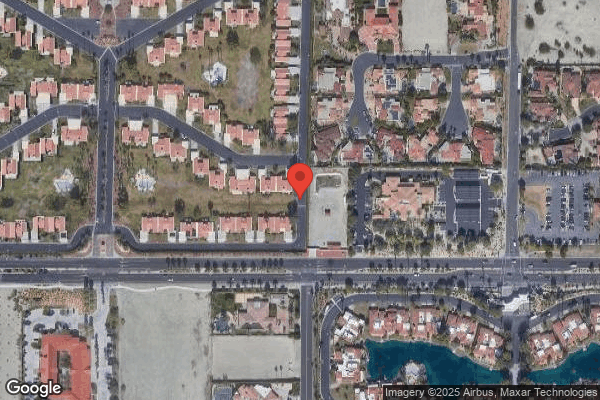

39950 VISTA DEL SOL, RANCHO MIRAGE, CA 92270 (760) 340-0053
For profit - Limited Liability company 99 Beds CAMBRIDGE HEALTHCARE SERVICES Data: November 2025
Trust Grade
60/100
#663 of 1155 in CA
Last Inspection: February 2025

Within standard 12-15 month inspection cycle. Federal law requires annual inspections.

Overview

Rancho Mirage Health and Rehabilitation Center has a Trust Grade of C+, indicating it is slightly above average but not a standout option. It ranks #663 out of 1155 facilities in California, placing it in the bottom half, and #27 out of 53 in Riverside County, meaning there are better local choices available. Unfortunately, the facility's performance is worsening, with issues increasing from 4 in 2024 to 13 in 2025. Staffing is relatively stable with a turnover rate of 33%, which is better than the state average, but the center has concerning RN coverage, falling below 81% of other California facilities. While there have been no fines, there are serious concerns regarding food safety and medication storage, including improperly labeled food and medications, which could lead to health risks for residents. Overall, the facility shows a mix of strengths and weaknesses, making it crucial for families to weigh their options carefully.

Trust Score
C+
60/100
In California
#663/1155
Bottom 43%
Safety Record
Low Risk
No red flags
Inspections
Getting Worse
4 → 13 violations
Staff Stability
○ Average
33% turnover. Near California's 48% average. Typical for the industry.
Penalties
✓ Good
No fines on record. Clean compliance history, better than most California facilities.
Skilled Nurses
⚠ Watch
Each resident gets only 18 minutes of Registered Nurse (RN) attention daily — below average for California. Fewer RN minutes means fewer trained eyes watching for problems.
Violations
⚠ Watch
46 deficiencies on record. Higher than average. Multiple issues found across inspections.
★★★☆☆
3.0
Overall Rating
★★★☆☆
3.0
Staff Levels
★★★★☆
4.0
Care Quality
★★★☆☆
3.0
Inspection Score
Stable
2024: 4 issues
2025: 13 issues

The Good

  • 4-Star Quality Measures · Strong clinical quality outcomes
  • Full Sprinkler Coverage · Fire safety systems throughout facility
  • No fines on record
  • Staff turnover below average (33%)

    15 points below California average of 48%

Facility shows strength in quality measures, fire safety.

The Bad

3-Star Overall Rating

Near California average (3.1)

Meets federal standards, typical of most facilities

Staff Turnover: 33%

13pts below California avg (46%)

Typical for the industry

Chain: CAMBRIDGE HEALTHCARE SERVICES

Part of a multi-facility chain

Ask about local staffing decisions and management

The Ugly 46 deficiencies on record

Aug 2025 1 deficiency
CONCERN (D) 📢 Someone Reported This

A family member, employee, or ombudsman was alarmed enough to file a formal complaint

Potential for Harm - no one hurt, but risky conditions existed

Resident Rights (Tag F0550)

Could have caused harm · This affected 1 resident

**NOTE- TERMS IN BRACKETS HAVE BEEN EDITED TO PROTECT CONFIDENTIALITY** Based on interview and record review, the facility failed to ensure that residents were treated with dignity and respect when st...

Read full inspector narrative →
**NOTE- TERMS IN BRACKETS HAVE BEEN EDITED TO PROTECT CONFIDENTIALITY** Based on interview and record review, the facility failed to ensure that residents were treated with dignity and respect when staff awakened one resident in the middle of the night to ask if she wanted to be moved to another room, for one of three sampled residents (Resident A).This failure had the potential to cause unnecessary disruption, discomfort, and interfere with the resident's ability to attain her highest practicable physical, mental, and psychosocial well-being.On July 8, 2025 @ 11:09 a.m., an unannounced visit to the facility was conducted to investigate an allegation of resident rights issue.A review of Resident A's admission Record, indicated Resident A was admitted on [DATE], with diagnoses which included osteoarthritis (a chronic joint disease characterized by the breakdown of cartilage, the protective tissue that cushions the ends of bones in joints), and aftercare following joint replacement surgery.A review of facility document titled Notification of Room/Roommate Change Form, dated June 18, 2025, indicated, .Reason for Room Change .Resident Request-Prefers other room .Patient (Resident A) requested a room move on 6/18/25. She was offered a room on station 2 but declined at that time. She was then again offered that evening and stated she will move in the morning .On July 8, 2025, at 4:39 p.m., during an interview with the Certified Nurse Assistant (CNA), the CNA stated he worked night shift from 10:30 p.m. to 6:30 a.m. The CNA stated on June 18, 2025, earlier in the shift, the outgoing Registered Nurse (RN) instructed him to ask Resident A if she wanted to have room change to occur that night or the following day. The CNA stated he went to Resident A's room, around 11 p.m. to 11:15 p.m., and asked if she wanted to move that night or tomorrow.On July 8, 2025, at 4:55 p.m., during an interview with the Director of Nursing (DON), the DON stated the facility's practice is to discuss room changes with residents when they are awake and not to disturb them during sleep to ask such questions. A review of the facility's undated document titled Resident ‘s [NAME] of Rights , indicated .Resident has to be treated with consideration, respect and full recognition of dignity and individuality.A review of the facility's undated policy and procedure titled Transfer, Room To Room, indicated, .Unless Medically necessary or for the safety and wellbeing of the resident(s), a resident will be provided with an advance notice of the room transfer.
Feb 2025 1 deficiency
CONCERN (D) 📢 Someone Reported This

A family member, employee, or ombudsman was alarmed enough to file a formal complaint

Potential for Harm - no one hurt, but risky conditions existed

Accident Prevention (Tag F0689)

Could have caused harm · This affected 1 resident

**NOTE- TERMS IN BRACKETS HAVE BEEN EDITED TO PROTECT CONFIDENTIALITY** Based on observation, interview, and record review, the facility failed to implement a fall prevention intervention for one of t...

Read full inspector narrative →
**NOTE- TERMS IN BRACKETS HAVE BEEN EDITED TO PROTECT CONFIDENTIALITY** Based on observation, interview, and record review, the facility failed to implement a fall prevention intervention for one of three sampled residents (Resident 1), by not ensuring the tab monitor was attached while the resident was in a wheelchair, as sspecified in the resident's care plan. This failure had the potential to place Resident 1 at risk for further falls and potential injury. Findings: A review of Resident 1's medical record titled, Personal Information, indicated, the resident was admitted to the facility on [DATE], with a diagnosis of a fracture (broken bone) to lower back, and muscle weakness. A review of Resident 1's care plan dated February 8, 2025, indicated, .Resident is at risk for falls r/t (related to) impaired mobility, hx (history) of falls .Intervention .apply tabs monitor in w/c (wheelchair) to remind resident to get assistance for ambulation (walking) and transfers . A review of Resident 1's, Brief Interview of Mental Status (a cognitive assessment), dated February 11, 2025, indicated a score of 14 (cognitively intact). A review of Resident 1's Progress Notes, dated February 22, 2025, at 2:00 p.m., indicated, . Resident had an unwitnessed fall . found resident sitting on the floor . (resident reported they) stood up and took unassisted steps . became unsteady . fell back and landed on her (butt). On February 25, 2025, at 1:39 p.m., a concurrent observation and interview with Resident 1 was conducted. Resident 1 was observed sitting in a wheelchair beside her bed, watching television. A tab monitor was observed hanging from the right side of the resident's bed rail, unattached to the resident. Resident 1 stated she had weakness and unsteady on her feet. Resident 1 further stated that she had a fall on February 22, 2025, because she did not use her call light to request for assistance before getting out of the wheelchair. On February 25, 2025, at 2:24 p.m., a concurrent interview and observation of Resident 1 with Certified Nursing Assistant (CNA1), CNA1 stated as part of her routine process, she checked to ensure residents are attached to their tab monitor and that the devices were functioning properly. CNA1 stated during the shift report, she was informed that Resident 1 had fallen over the weekend (February 22, 2025) and the fall intervention of a tab monitor was added to the resident's care plan for safety. CNA1 stated the tab monitor was not attached to Resident 1 while she was sitting in the wheelchair. CNA1 stated she should have checked that the tab monitor was attached to Resident 1. On February 25, 2025, at 4:10 p.m., an interview was conducted with RN 1, who stated, after a resident fall, the interdisciplinary team ({IDT}-Nursing, social services & department managers) would meet to identify the root cause of the fall and implement interventions to prevent further falls. RN1 stated after Resident 1's fall on February 22, 2025, the intervention of a tab monitor while sitting in a wheelchair was added to the resident's care plan for safety. On February 25, 2025, at 5:05 p.m., an interview was conducted with the Director of Nursing (DON), who stated a tab monitor was added to Resident 1's care plan after the resident's fall on February 22, 2025. The DON stated the tab monitor should have been attached to Resident 1 while she was sitting in her wheelchair. The DON stated, she expected Resident 1 to have the tab monitor attached while sitting in the wheelchair to ensure implementation of the care plan. A review of the facility Policy & Procedure (P&P), titled, Tab Alarms, Bed Alarms, Wanderguard System, undated, indicated, . Tab alarms . may be used on a resident who is deemed unsafe through the nursing assessment and documented on the resident's care plan that the resident is at risk for falls . Policy Interpretation and Implementation . 2. A plan of care must be formulated with the Interdisciplinary Team ({IDT}-Nursing, Physical Therapy, Occupational Therapy, dietary, Activities, Social Worker, and Resident/Family) . to determine the need for tab . alarms . and documented in the Care Plan . 3. The tab alarm will be utilized on the resident when they are out of bed in a wheelchair or chair . 4. After applying the tab alarm . in place, a safety check to make sure they are in proper working condition must be done before leaving the resident. a) Documentation of the tab . alarm checks will be made in the resident record each shift daily. b) Before application of tab . alarms, they are dated on the date of application and documented in the resident record .
Feb 2025 8 deficiencies
CONCERN (D) 📢 Someone Reported This

A family member, employee, or ombudsman was alarmed enough to file a formal complaint

Potential for Harm - no one hurt, but risky conditions existed

Safe Environment (Tag F0584)

Could have caused harm · This affected 1 resident

Based on observation, interview, and record review, the facility failed to ensure for one of one resident reviewed (Resident 71), the resident's bathroom had a functioning paper towel dispenser. This ...

Read full inspector narrative →
Based on observation, interview, and record review, the facility failed to ensure for one of one resident reviewed (Resident 71), the resident's bathroom had a functioning paper towel dispenser. This failure had the potential to prevent Resident 71 from performing proper hand hygiene, increasing the risk of infection. Findings: On February 6, 2025, at 9:52 a.m., during a concurrent observation and interview inside Resident 71's bathroom with the Maintenance Supervisor (MS) and Resident 71, the MS stated the paper towel dispenser was not dispensing paper towels. Resident 71 stated she had reported the non-functioning towel dispenser to the Case Manager (CM) and the Infection Preventionist (IP) nurse. On February 6, 2025, at 10:01 a.m., during an interview with the IP nurse, the IP nurse stated Resident 71 had informed him on February 4, 2025, about the paper towel dispenser issue. The IP further stated he informed the MS but did not follow up to ensure the issue was resolved. On February 6, 2025, at 10:04 a.m., during an interview with the CM, she stated Resident 71 informed her last week and a while back that the paper towel dispenser in her bathroom was not functioning. The CM further stated she notified the front desk to inform Maintenance. On February 6, 2025, at 10:07 a.m., during an interview with the front desk staff (FDS), the FDS stated she did not inform the MS about the non-functioning paper towel dispenser. On February 6, 2025, at 10:11 a.m., during an interview with the MS, he stated the facility process requires staff to fill out a maintenance request form. The MS further stated he never received a maintenance request form regarding Resident 71's paper towel dispenser from anyone. On February 6, 2025, at 3:25 p.m., during an interview with the Director of Nursing (DON), the DON stated, the towel dispenser should be functioning so that Resident 71 could properly dry her hands after washing them. The DON stated, hand hygiene is essential in preventing the spread of infection. A review of facility's policy and procedure titled Homelike Environment, dated February 2021, indicated, .the facility staff and management maximizes, to the extent possible, the characteristics of the facility that reflect a personalized, homelike setting. These characteristics include clean, sanitary and orderly environment .
CONCERN (D) 📢 Someone Reported This

A family member, employee, or ombudsman was alarmed enough to file a formal complaint

Potential for Harm - no one hurt, but risky conditions existed

Transfer Notice (Tag F0623)

Could have caused harm · This affected 1 resident

**NOTE- TERMS IN BRACKETS HAVE BEEN EDITED TO PROTECT CONFIDENTIALITY** Based on interview and record review, the facility failed to provide a copy of the discharge notice to the Office of the State L...

Read full inspector narrative →
**NOTE- TERMS IN BRACKETS HAVE BEEN EDITED TO PROTECT CONFIDENTIALITY** Based on interview and record review, the facility failed to provide a copy of the discharge notice to the Office of the State Long-Term Care Ombudsman (LTC Ombudsman - an advocate for residents of nursing homes to protect residents' rights and ensure quality care) at the same time the discharge notice was given to the resident, for one of three residents reviewed for closed records (Resident 88). This failure had the potential to delay advocacy and oversight of Resident 88's discharge plan, impacting continuity of care and resident rights. Findings: A review of Resident 88's admission Record, indicated Resident 88 was admitted to the facility on [DATE], with a diagnoses which included fatty liver (a condition that can cause jaundice [yellowing of the skin and eyes]). A review of Resident 88's Minimum Data Set (an assessment tool), dated October 31, 2024, indicated, Resident 88 had Brief Interview of Mental Status (use to assess cognition), score of 15 (cognitively intact). A review of Resident 88's eINTERACT Change in Condition Evaluation, dated November 5, 2024, indicated, .Changes in skin color .Resident was assessed and noticed to be very jaundice .MD (medical doctor) made aware and said to send to ED (emergency department) for further evaluation . A review of Resident 88's Physician Discharge Summary Report, dated November 10, 2024, indicated, .discharged Date .November 5, 2024 .Disposition .Hospital (name of hospital) . A review of Resident 88's Notice of Transfer or Discharge, dated November 5, 2024, indicated a copy of the notice was hand delivered to Resident 88 upon discharge from the facility. A further review of Resident 88's medical records indicated there was no documented evidence the facility mailed or faxed the letter of transfer or discharge notice to the LTC Ombudsman at the same time Resident 88 received the notice upon discharge from the facility on November 5, 2024. On February 5, 2025 at 3:07 p.m., during a concurrent interview and review of Resident 88's notice of transfer or discharge record with the Social Service Director (SSD), she stated when residents are transferred or discharged from the facility, the LTC Ombudsman should be notified the same day or the next business day. The SSD stated Resident 88 was discharged on November 5, 2024, and was provided the discharge notice upon leaving the facility. The SSD stated, the discharge notice was not sent to the LTC Ombudsman until December 2, 2024 (27 days later). The SSD further stated the Case Manager (CM) is responsible for sending the notice and did not do so. On February 5, 2025, at 3:29 p.m., during a concurrent interview and review of Resident 88's notice of transfer or discharge record with the CM, the CM stated, she did not send the notification letter regarding Resident 88's discharge to the LTC Ombudsman. The CM further stated, she should have sent the notice to ensure the LTC Ombudsman was made aware and able to advocate for Resident 88's care. A review of the facility policy and procedure titled, Transfer or Discharge, Facility-Initiated dated October 2022, indicated, .If discharge is initiated by the facility after .transfer to the hospital .The facility will send a copy of the discharge notice to a representative of the Office of the State LTC Ombudsman .Notice to the Office of the State LTC Ombudsman will occur at the same time the notice of discharge is provided to the resident .
CONCERN (D) 📢 Someone Reported This

A family member, employee, or ombudsman was alarmed enough to file a formal complaint

Potential for Harm - no one hurt, but risky conditions existed

Pharmacy Services (Tag F0755)

Could have caused harm · This affected 1 resident

Based on observation, interview, and document review, the facility failed to ensure expired medications were not available for use by residents. This failure had the potential for residents to receive...

Read full inspector narrative →
Based on observation, interview, and document review, the facility failed to ensure expired medications were not available for use by residents. This failure had the potential for residents to received ineffective medication therapy. Findings: 1. During an inspection of the 8400 Floor Medication Cart located in Nursing Station 3 on February 3, 2025, at 12:10 p.m. with LVN 3, there was one discontinued bubble pack containing hydroxyzine (medication to treat itching) for Resident 3 in the cart along with active medications. In a concurrent interview, LVN 5 stated the medication was discontinued and was change from as needed to routine. LVN 5 stated the bubble pack should have been removed from the cart. In a concurrent interview, LVN 3 also stated the bubble pack should have been removed from the card and placed in the discontinued box in the medication room. 2. During an inspection of Medication Cart 3A located in Nursing Station 3 on February 3, 2025, at 3:20 p.m. with LVN 3, there was one used Humalog (fast-acting insulin to control blood sugar in diabetics) Qwikpen 100 units per milliliter with an open date of December 1, 2024, in the cart. In a concurrent interview, LVN 3 stated it had been more than 28 days based on the open date written on the pen. The facility's policy and procedure titled, Medication Labeling and Storage, revised, February 2023, was reviewed, and it indicated: .Multi-dose vials that have been opened or accessed .are dated and discarded within 28 days unless the manufacturer specifies a shorter or longer date for the open vial .
CONCERN (D) 📢 Someone Reported This

A family member, employee, or ombudsman was alarmed enough to file a formal complaint

Potential for Harm - no one hurt, but risky conditions existed

Medical Records (Tag F0842)

Could have caused harm · This affected 1 resident

**NOTE- TERMS IN BRACKETS HAVE BEEN EDITED TO PROTECT CONFIDENTIALITY** Based on observation, interview, and record review, the facility failed to ensure the physician's order for oxygen was transcrib...

Read full inspector narrative →
**NOTE- TERMS IN BRACKETS HAVE BEEN EDITED TO PROTECT CONFIDENTIALITY** Based on observation, interview, and record review, the facility failed to ensure the physician's order for oxygen was transcribed into the electronic medical record after the order was received. This failure resulted in an incomplete and inaccurate medical record, which could have led to miscommunication among staff regarding Resident 189's prescribed oxygen therapy, potentially affecting the resident's respiratory care. Findings: On February 3, 2025, at 9:58 a.m., Resident 189 was observed lying in bed receiving oxygen at 2 liters per minute via nasal cannula (a medical device used to deliver supplemental oxygen to resident who has difficulty breathing or require oxygen therapy). A review of Resident 189's admission Record indicated Resident 189 was admitted to the facility on [DATE], with diagnoses which included pneumonia (lung infection) and dementia (memory loss). Resident 189 was under hospice care. A further review of Resident 189's record indicated Resident 189 did not have a physician order for the oxygen therapy in the electronic medical record. On February 6, 2025, at 1:35 p.m., during a concurrent interview and record review of the electronic physician order with Licensed Vocational Nurse (LVN) 1, she stated the oxygen order was placed on January 21, 2025 in Resident 189's physical chart by the hospice nurse upon admission and it was not transcribed into the electronic medical record. She further stated all physician orders should be transcribed at the time of admission to make sure all staff are aware of the prescribed treatment. On February 6, 2025, at 1: 56 p. m., during an interview with the Medical Records Director (MRD), she stated that the licensed nurse who received the physician's order was responsible for transcribing it into the electronic medical record. On February 6, 2025, at 3 p.m., in an interview with the Director of Nursing (DON), she stated the physician order should have been transcribed as soon as the nurse received it. The DON further stated all physician orders must be transcribed into the electronic medical record to ensure staff are aware of the prescribed treatment. The DON stated, the hospice nurse received the order and communicated it to the facility's licensed nurse. The DON stated, the facility licensed nurse forgot to transcribe the order into the electronic medical record.
CONCERN (D) 📢 Someone Reported This

A family member, employee, or ombudsman was alarmed enough to file a formal complaint

Potential for Harm - no one hurt, but risky conditions existed

Deficiency F0887 (Tag F0887)

Could have caused harm · This affected 1 resident

Based on interview, and record review the facility failed to ensure one of three staff reviewed for immunization (process of developing immunity [the ability to resist diseases]) (Certified Nurse Assi...

Read full inspector narrative →
Based on interview, and record review the facility failed to ensure one of three staff reviewed for immunization (process of developing immunity [the ability to resist diseases]) (Certified Nurse Assistant [CNA] 1) was provided education regarding the risk and benefits of the COVID-19 vaccine (a medication that helps the body fight diseases caused by COVID-19 [a respiratory illness caused by a virus ). This failure had the potential to leave staff without proper guidance and information regarding the COVID-19 vaccine, potentially affecting their decision-making and increasing the risk of infection transmission within the facility. Findings: A review of Certified Nurse Assistant (CNA) 1 Consent for 2023/2024 updated COVID-19 Vaccine Additional Dose indicated no documented evidence CNA 1 was provided with education and information about COVID-19 immunization. On February 6, 2025, at 2:05 p.m., during a concurrent interview and review of CNA 1's vaccine consent record for 2023/2024 with the Director of Staff Development (DSD), he stated CNA 1's last COVID-19 vaccination (act of receiving a vaccine) was on February 25, 2022 (approximately three years prior). The DSD stated, the Infection Preventionist (IP) had been responsible for providing COVID-19 immunization education. The DSD further stated, there was no documentation CNA 1 was provided COVID-19 immunization education and information. On February 6, 2025, at 2:10 p.m., during a concurrent interview and review of CNA 1 vaccine consent record for 2023/2024 with the IP, he stated, he did not provide COVID-19 immunization education to CNA 1. The IP further stated, he had been responsible for making sure all facility staff received education on COVID-19 during their scheduled vaccination. The IP stated, he should have provided CNA 1 with education on the risk and benefits of COVID-19 vaccine. The IP further stated, staff education had been essential to inform them of the vaccine risk and benefits, protect vulnerable residents, and prevent the spread of infections. A review of the facility's policy and procedure titled, Coronavirus Disease (COVID-19) - Vaccination of Staff, dated June 2023, indicated, .Staff are educated about benefits and risk .of COVID-19 vaccine .Each staff member is provided with education regarding the benefits and risks .If the vaccination requires multiple doses of vaccine, staff are again provided with education regarding the benefits .
CONCERN (E) 📢 Someone Reported This

A family member, employee, or ombudsman was alarmed enough to file a formal complaint

Potential for Harm - no one hurt, but risky conditions existed

Deficiency F0761 (Tag F0761)

Could have caused harm · This affected multiple residents

Based on observation, interview, and document review, the facility failed to ensure medications were properly labeled consistent with the policies and procedures and stored at appropriate temperature ...

Read full inspector narrative →
Based on observation, interview, and document review, the facility failed to ensure medications were properly labeled consistent with the policies and procedures and stored at appropriate temperature consistent with the drug manufacturer's instructions when: 1. Bisacodyl (medication to relieve constipation) 10 mg (milligram; unit of measurement) suppositories were stored in the medication room and the medication cart without proper pharmacy labels; 2. Multi-dose medications were not properly labeled with open dates; 3. One liquid medication bottle did not have a legible expiration date on the manufacturer's label; and 4. The room temperature in the Nursing Station 2 Medication Room was not maintained below the drug manufacturer's instruction for storage at room temperature. These failures had the potential for residents to received ineffective medication treatment. Findings: 1. During an inspection of the medication room located in Nursing Station 3 on February 3, 2025, at 11:30 a.m. with LVN 3, there were 13 bisacodyl 10 mg suppositories inside a plastic bag that did not have a pharmacy label to indicate who they belonged to. The plastic bag also contained smaller plastic bags containing bisacodyl suppositories that had resident-specific pharmacy labels. In a concurrent interview, LVN 3 was not able to tell who the suppositories belonged to. LVN 3 stated the facility usually kept them as house supply medications. LVN 3 acknowledged the plastic bag did not indicate they were house supply medications. During an inspection of Medication Cart 2A located in Nursing Station 2 with LVN 4, there were seven bisacodyl 10 mg suppositories in a plastic bag without a pharmacy label for specific residents In a concurrent interview, LVN 4 stated the plastic bag should have a label. LVN 4 acknowledged the plastic bag did not indicate it was a house supply medication or resident specific medications labeled by the pharmacy. The facility's policy and procedure titled, House-Supplied (Floor Stock) Medications, with the effective date, April 2008, was reviewed, and it indicated: .Floor stock medications are labeled as floor stock or house supply and kept in the original manufacturer's container. The manufacturer's or pharmacy's label should include the following: 1) Medication name 2) Medication strength 3) quantity 4) Accessory instructions 5) Lot number 6) Expiration date . The facility's policy and procedure titled, Medication Labeling and Storage, revised, February 2023, was reviewed, and it indicated: .Labeling of medications and biologicals dispensed by the pharmacy is consistent with applicable fedreal and state requirements and currently accepted pharmaceutical practices . The medication label includes, at a minimum: a. medication name .b. prescribed dose; c. strength; d. expiration date .e. resident's name; f. route of administration; and g. appropriate instructions and precautions . 2. During an inspection of the 8400 Floor Medication Cart located in Nursing Station 3 on February 3, 2025, at 12:10 p.m. with LVN 3, there were two medications in the cart with no open date as follows: One latanoprost (medication for treat increased pressure in the eye leading to vision loss) 0.005% eye drop that had a label that indicated: Discard unused portion after 28 days and was stored at room temperature; and One vial of cyanocobalamin (injectable vitamin B12 supplement) 1000 mcg/ml (microgram per milliliter; unit of measurement) 1 ml with the plastic cap removed and no open date on the vial. In a concurrent interview, LVN 3 agreed there was no open date on either medication. The facility's policy and procedure titled, Medication Labeling and Storage, revised, February 2023, was reviewed, and it indicated: .Multi-dose vials that have been opened or accessed .are dated and discarded within 28 days unless the manufacturer specifies a shorter or longer date for the open vial . According to the prescribing information for latanoprost eye drop, .Once a bottle is opened for use, it may be stored at room temperature up to 25°C (77°F) for 6 weeks . 3. During an inspection of the 8400 Floor Medication Cart located in Nursing Station 3 on February 3, 2025, at 12:10 p.m. with LVN 100, there was a 16-ounce bottle of ferrous sulfate (iron supplement) 220 mg/5 ml (milligram per milliliter; unit of measurement) solution with the smudged manufacturer's expiration date. In a concurrent interview, LVN 3 stated the expiration date was faded and LVN 3 was not able to tell the expiration date of the ferrous sulfate solution. The facility's policy and procedure titled, Medication Labeling and Storage, revised, February 2023, was reviewed, and it indicated: .If medication containers have missing, incomplete, improper or incorrect labels, contact the dispensing pharmacy for instructions regarding returning or destroying these items . 4. During an inspection of the medication room located in Nursing Station 2 on February 3, 2025, at 2:40 p.m. with LVN 4, it was noted the temperature of the room was 82 degree Fahrenheit (F) according to the room thermometer. It was also noted the medication room stored residents' medications brought into the facility. In a concurrent interview, LVN 4 confirmed the room temperature was 82 F according to the thermometer. The United States Pharmacopeia (USP) is an independent organization that sets standards for the quality of medicines and drug manufacturers must comply with the USP standards. According to USP Chapter <659>: .Controlled room temperature: The temperature maintained thermostatically that encompasses the usual and customary working environment of 20°-25° (68°-77° F). The following conditions also apply. Mean kinetic temperature not to exceed 25° . The facility's policy and procedure titled, Medication Labeling and Storage, revised, February 2023, was reviewed, and it indicated: .The facility stores all medications and biologicals in locked compartments under proper temperature .
CONCERN (E) 📢 Someone Reported This

A family member, employee, or ombudsman was alarmed enough to file a formal complaint

Potential for Harm - no one hurt, but risky conditions existed

Food Safety (Tag F0812)

Could have caused harm · This affected multiple residents

Based on observation, interview and record review, the facility failed to ensure safe and sanitary food preparation and storage practices in the kitchen when: 1. Food resident was found on the puree b...

Read full inspector narrative →
Based on observation, interview and record review, the facility failed to ensure safe and sanitary food preparation and storage practices in the kitchen when: 1. Food resident was found on the puree blender. 2. Spilled dry oatmeal was observed on the floor inside the dry storage room. 3. Two ovens had grime buildup and food residue. 4. A dietary staff's plastic cup was found on the bottom shelf of the tray line table. 5. The cook's beard and mustache were not covered with a beard net. These failures had the potential to cause foodborne illness (stomach illness acquired from ingesting contaminated food) among a vulnerable population of 86 out of 92 residents who received food prepared in the facility's kitchen. Findings: 1. On February 3, 2025, at 9:10 a.m., a concurrent observation and interview inside the walk-in preparation room were conducted with the Dietary Supervisor (DS). The puree blender was found with white and yellow food residue. The DS stated the puree blender had white and yellow food residue and it should be cleaned after each use to prevent cross-contamination. During a record review of the Food Code, 2022, the Food Code indicated, 4-601.11 Equipment, Food-Contact Surfaces, Nonfood-Contact Surfaces, and Utensils. (C) Nonfood-Contact Surfaces of Equipment shall be kept free of an accumulation of dust, dirt, food residue, and other debris and the Equipment is cleaned at a frequency necessary to preclude accumulation of soil residues. In addition, The objective of cleaning focuses on the need to remove organic matter from food-contact surfaces so that sanitization can occur and to remove soil from nonfood contact surfaces so that pathogenic microorganisms will not be allowed to accumulate, and insects and rodents will not be attracted. 2. On February 3, 2025, at 9:15 a.m., a concurrent observation and interview inside the dry storage room were conducted with the DS. Spilled dry oatmeal was observed on the floor. The DS stated the floor should be kept clean and free from any food residue to prevent pest infestation. During a review of the facility policy's titled Sanitation, revised October 2008, indicated Policy statement: The food service area shall be maintained in a clean and sanitary manner .1. All kitchens, kitchen areas and dining areas shall be kept clean, free from litter and rubbish and protected from rodents, roaches, flies and other insects .2. All utensils, counters, shelves and equipment shall be kept clean, maintained in good repair and shall be free from breaks, corrosions, open seams, cracks and chipped areas that may affect their use or proper cleaning. Seals, hinges and fasteners will be kept in good repair .3. All equipment, food contact surfaces and utensils shall be washed to remove or completely loosen soils . 3. On February 3, 2025, at 9:20 a.m., a concurrent observation and interview were conducted with the DS. Two ovens had food crumbs, grease, yellow grime, and streaks of dark brown residue. The DS stated it is dirty and should be kept clean and sanitary to prevent food borne illness. During a review of the facility policy's titled Sanitation, revised October 2008, indicated Policy statement: The food service area shall be maintained in a clean and sanitary manner .1. All kitchens, kitchen areas and dining areas shall be kept clean, free from litter and rubbish and protected from rodents, roaches, flies and other insects .2. All utensils, counters, shelves and equipment shall be kept clean, maintained in good repair and shall be free from breaks, corrosions, open seams, cracks and chipped areas that may affect their use or proper cleaning. Seals, hinges and fasteners will be kept in good repair .3. All equipment, food contact surfaces and utensils shall be washed to remove or completely loosen soils . 4. On February 3, 2025, at 9:25 a.m., a concurrent observation and interview were conducted with the DS. A dietary staff's plastic cup, dated January 29, 2025, was on the bottom shelf of the tray line table. The DS stated employee belongings should not be stored in the kitchen area to prevent cross-contamination. During a review of the facility policy's titled Sanitation, revised October 2008, indicated Policy statement: The food service area shall be maintained in a clean and sanitary manner .1. All kitchens, kitchen areas and dining areas shall be kept clean, free from litter and rubbish and protected from rodents, roaches, flies and other insects .2. All utensils, counters, shelves and equipment shall be kept clean, maintained in good repair and shall be free from breaks, corrosions, open seams, cracks and chipped areas that may affect their use or proper cleaning. Seals, hinges and fasteners will be kept in good repair .3. All equipment, food contact surfaces and utensils shall be washed to remove or completely loosen soils . 5. On February 4, 2025, at 10:00 a.m., a concurrent observation and interview inside the kitchen were conducted with the DS. A cook was observed with an uncovered beard and mustache while preparing puree carrots. The DS stated the cook should cover his beard and mustache to prevent hair from falling into the pureed food. A review of the facility policy and procedure, titled, Preventing Foodborne Illness- Employee Hygiene and Sanitary Practices, revised October 2017, indicated, .Food and nutrition services employees will follow appropriate hygiene and sanitary procedures to prevent the spread of foodborne illness .hair nets or caps and/or beard restraints must be worn to keep hair from contacting exposed food . During a record review of the Food Code, 2022, the Food Code indicated, 4-601.11 Equipment, Food-Contact Surfaces, Nonfood-Contact Surfaces, and Utensils. (C) Nonfood-Contact Surfaces of Equipment shall be kept free of an accumulation of dust, dirt, food residue, and other debris and the Equipment is cleaned at a frequency necessary to preclude accumulation of soil residues. In addition, The objective of cleaning focuses on the need to remove organic matter from food-contact surfaces so that sanitization can occur and to remove soil from nonfood contact surfaces so that pathogenic microorganisms will not be allowed to accumulate, and insects and rodents will not be attracted.
CONCERN (F) 📢 Someone Reported This

A family member, employee, or ombudsman was alarmed enough to file a formal complaint

Potential for Harm - no one hurt, but risky conditions existed

Garbage Disposal (Tag F0814)

Could have caused harm · This affected most or all residents

Based on observation, interview, and record review, the facility failed to ensure proper disposal of garbage when three dumpsters' lids were not closed, and the surrounding area was littered with tras...

Read full inspector narrative →
Based on observation, interview, and record review, the facility failed to ensure proper disposal of garbage when three dumpsters' lids were not closed, and the surrounding area was littered with trash. This failure had the potential to attract pests and rodents which could lead to contamination and food borne illness among residents. Findings: On February 3, 2025, at 9:40 a.m., during an observation of the dumpster storage outside the facility, three out of three dumpster lids were not closed, and trash was scattered around the dumpsters. On February 3, 2025, at 10:50 a.m., during a concurrent observation and interview with the Dietary Supervisor (DS) regarding the three dumpsters, the DS stated, the lids were open and trash was surrounding the area. The DS stated, the dumpsters should have been closed and free of trash to prevent pest infestations. On February 5, 2025, at 10:15 a.m., during a concurrent observation and interview with the Maintenance Supervisor (MS), he stated he was responsible for keeping the dumpster lids closed and making sure the surrounding area was clean. The MS further stated, the dumpster should have been closed and that the surrounding area should have been free from trash to prevent rodent infestation, which could result in infection control problems. A review of the facility policy and procedure titled Food-Related Garbage and Refuse Disposal, dated October 2017, indicated, .Garbage and refuse containing food wastes shall be stored in a manner that is inaccessible to pests .outside dumpsters provided by garbage pickup services will be kept closed and free from surrounding litter .
Jan 2025 3 deficiencies
CONCERN (D) 📢 Someone Reported This

A family member, employee, or ombudsman was alarmed enough to file a formal complaint

Potential for Harm - no one hurt, but risky conditions existed

Deficiency F0558 (Tag F0558)

Could have caused harm · This affected 1 resident

Based on observation & interviews, the facility failed to ensure resident's call light was within reach for one out of three residents (Resident 1). This failure had the potential to result in Residen...

Read full inspector narrative →
Based on observation & interviews, the facility failed to ensure resident's call light was within reach for one out of three residents (Resident 1). This failure had the potential to result in Resident 1 unable to call nursing staff for assistance. Findings: On December 24, 2024, at 8:30 a.m., an unannounced visit was made to the facility, for a quality of care issue. On December 26, 2024, at 1:10 p.m., a concurrent observation of Resident 1 lying in bed, and interview with resident, was conducted. Resident observed with a contracted right hand, and left hand under the covers. Observed resident's call light out of reach, as it was tied around the bed rail, hanging down the right side of the bed, towards the floor. Resident 1 asked by this writer, How do you call the nurses for help? Resident stated, I usually can't reach my call light, I'll ask my roommate to call the nurses. Resident 1 observed unsuccessfully trying to reach her call light with her right contracted hand. A review of Resident 1's medical records, titled, Resident Information, dated, January 2, 2025, 2:02 p.m., indicated, resident was admitted to the facility on , November 4, 2022, with a diagnosis of, cerebral infarction (Stroke), and multiple sclerosis (a disease which causes nerve damage, and impaired coordination). A review of Resident 1's, Brief Interview for Mental Status ({BIMS}-a cognitive assessment), indicated a score of 12, (moderately cognitively impaired). A review of Resident 1's, care plan, titled, Resident at risk for unavoidable falls with injury (related to) limited mobility, initiated, January 13, 2023, indicated an intervention of, . Be sure the resident's call light is within reach . On December 26, 2024, at 1:20 p.m., a concurrent observation, and interview was conducted with Resident 1's roommate. Roommate was observed sitting on the left side of her bed, reading, call light within her reach. Resident 1's roommate stated, she calls the nurses for Resident 1, because resident can't find her call light. On December 26, 2024, at 1:25 p.m., a concurrent interview with Certified Nursing Assistant (CNA) 1, and observation of Resident 1's call light, was conducted. CNA 1 stated, she was assigned to care for Resident 1. CNA stated, residents use their call lights to notify nursing staff help is needed. CNA 1 stated, the call light should be within the resident's, reach at all times. CNA stated, Resident 1's call light stays within reach by Clipping, the call light, via a small metal clip, to resident's clothing on their right side. Resident 1 was observed lying in bed, with her call light hanging off the right side of her bed, not clipped to resident's clothes. CNA 1 verified, resident call light was out of Resident 1's reach, as the call light was not clipped to resident's clothing and hanging down the right side of resident's bed. On December 26, 2024, at 1:35 p.m., a concurrent interview with Licensed Vocational Nursing (LVN) 1, and observation, of Resident 1 lying in bed and placement of call light was conducted. LVN stated, residents are to use their call lights to call the nurse (for assistance), and the call lights, should always be within the resident's reach. LVN 1 further stated, Resident 1's call light is to be clipped to her (clothes) at chest level. LVN observed resident 1 lying in bed, with resident's call light hanging off the right side of resident's bed, toward the floor. LVN 1 stated, Oh (Resident 1's) call light is not clipped to her. LVN verified, Resident 1's call light was out of reach of resident. On December 26, 2024, at 2:17 p.m., an interview was conducted with the Director of Nursing (DON), who stated, her expectations, are for call lights to always be within the resident's reach, to call for assistance. A facility policy, titled, Answering the Call Light, revised, September 2022, indicated, .Purpose: The purpose of this procedure is to ensure timely responses to the resident's requests and needs . General Guidelines . 5. Ensure that the call light is accessible to the resident when in bed .
CONCERN (D) 📢 Someone Reported This

A family member, employee, or ombudsman was alarmed enough to file a formal complaint

Potential for Harm - no one hurt, but risky conditions existed

Comprehensive Care Plan (Tag F0656)

Could have caused harm · This affected 1 resident

**NOTE- TERMS IN BRACKETS HAVE BEEN EDITED TO PROTECT CONFIDENTIALITY** Based on observation, interview, and record review, the facility failed to initiate a care plan (an individualized, plan of care...

Read full inspector narrative →
**NOTE- TERMS IN BRACKETS HAVE BEEN EDITED TO PROTECT CONFIDENTIALITY** Based on observation, interview, and record review, the facility failed to initiate a care plan (an individualized, plan of care, specific to resident's healthcare needs) for hard of hearing for one of three residents (Resident 3). This failure had the potential to negatively impact the resident's quality of life, as well as the quality of care and services received for Resident 3. Findings: On December 24, 2024, at 9:10 a.m., during a concurrent observation and interview with Resident 3, Resident 3 stated she was hard of hearing and had to get close to her ear or speak louder. Resident 3 was observed wearing hearing aids. Resident 3 stated she still could not hear well even she had the hearing aids. A review of Resident 3's medical record, titled, Resident Information, dated, December 31, 2024, at 10:25 (a.m.), indicated, resident was admitted to the facility on [DATE], with a diagnosis of, Hemorrhage of Cerebrum (Brain bleed). A review of Resident 3's Brief Interview of Mental Status ({BIMS}-a cognitive assessment), dated, December 09, 2024, indicated a score of 12 (mildly cognitively impaired). A review of Resident 3's admission Data Tool, dated, December 7, 2024, at 5:06 p.m., indicated, . B. Hearing 1. Ability to hear (with hearing aid or hearing appliances if normally used) 2. Resident (3) wears hearing aids in both ears . A review of Resident 3's Baseline Care Plans (Developed within 48 hours of admission), dated, December 08, 2024, untimed, indicated, section, 2. Hearing, assessment was not completed. Further review indicated, . (Baseline Care Plan) summary . (Resident 3) wears hearing aids . A review of Resident 3's Minimum Data Set ({MDS}-Comprehensive Assessment of resident's functional capabilities, and healthcare issues), dated, December 19, 2024, was conducted. Section B, indicated, resident had adequate hearing, and did not wear hearing aids. A review of Resident 3's Comprehensive Care Plans (developed from the comprehensive assessment), indicated, there was no care plan initiated for Resident 3's hard of hearing. On December 26, 2024, at 12:02, Licensed Vocational Nurse (LVN) 4 was interviewed. LVN 4 stated, she put in her hearing aids this morning and had replaced the batteries on couple of other occasions. LVN 3 stated she did not inform Social Services, the DON, the doctor, and the family member about the resident's issue about her hearing. On December 30, 2024, at 3:21 p.m., the Minimum Data Set Nurse (MDSN) was interviewed. The MDSN stated Resident 3's admission data indicated that the resident was hard of hearing and wore hearing aids, but the resident's comprehensive assessment did not reflect the information.The MDSN further stated that the information about the resident being hard of hearing and wearing hearing aids would have triggered the initiation of a care plan, but no care plan was initiated because the information was not included in the resident's comprehensive assessment. On December 31, 2024, at 11:47 a.m., a concurrent record review of Resident 3's Care Plans, admission Data Tool (dated, December 7, 2024), Comprehensive Assessment (dated, December 19, 2024), and Drs orders (dated, December 7, 2024), and an interview with the Director of Nursing (DON) was conducted. The DON stated, the night-shift nurses review resident information, and initiate the baseline care plans, while the MDS nurses initiate comprehensive care plans after completing the resident's comprehensive assessment. The DON verified Resident 3 was hard of hearing and wore hearing aids. The DON stated Resident 3 did not have a care plan addressing hard of hearing. The DON stated, a care plan for hard of hearing should have been initiated for Resident 3. The DON stated, it was her expectation that staff initiate care plans at the time a healthcare issue is identified. The DON stated, the care plan should have included interventions for the resident's hard of hearing and the use of hearing aids, as well as instructions on what should be done if the hearing aids were not functioning properly. A review of the facilities P&P, titled, Care Plans, Comprehensive Person-Centered, revised, December 2016, indicated, .A comprehensive, person-centered care plan that includes measurable objectives and timetables to meet the resident's physical, psychosocial and functional needs is developed and implemented for each resident . 1. The interdisciplinary Team (IDT), in conjunction with the resident and his/her family or legal representative, develops and implements a comprehensive, person-centered care plan for each resident. 2. The care plan interventions are derived from a thorough analysis of the information gathered as part of the comprehensive assessment . 8. The comprehensive, person-centered care plan will: g. Incorporate identified problem areas; . k. Reflect treatment goals, timetables, and objectives in measurable outcomes; L. Identify the professional services that are responsible for each element of care; m. Aid in preventing or reducing decline in the resident's functional status and/or functional levels; n. Enhance the optimal functioning of the resident by focusing on a rehabilitative program . 12. The comprehensive, person-centered care plan is developed within seven (7) days of the completion of the required comprehensive assessment .
CONCERN (D) 📢 Someone Reported This

A family member, employee, or ombudsman was alarmed enough to file a formal complaint

Potential for Harm - no one hurt, but risky conditions existed

Accident Prevention (Tag F0689)

Could have caused harm · This affected 1 resident

**NOTE- TERMS IN BRACKETS HAVE BEEN EDITED TO PROTECT CONFIDENTIALITY** Based on interview and record review, the facility failed to: 1. Provide fall prevention interventions for a resident assessed a...

Read full inspector narrative →
**NOTE- TERMS IN BRACKETS HAVE BEEN EDITED TO PROTECT CONFIDENTIALITY** Based on interview and record review, the facility failed to: 1. Provide fall prevention interventions for a resident assessed as a fall risk, for one out of three residents (Resident 3). This failure resulted for Resident 3 falling and sustaining a scalp hematoma (localized collection of blood that forms beneath the skin of the scalp due to trauma). 2. Ensure that the bed alarm (a device used as a fall precaution intervention to alert staff when a resident attempts to get out of bed) was properly attached to the resident, for one out of two residents (Resident 2). This failure had the potential to result in injury to Resident 2 if the resident attempted to get out of bed without staff knowledge. Findings: A review of Resident 3 ' s, medical record, titled, Resident Information, dated, December 31, 2024, at 10:25 (a.m.), indicated, resident was admitted to the facility on [DATE], with diagnosis ' which include, fracture of the second cervical vertebra (neck fracture) and muscle weakness. A review of Resident 3 ' s, Brief Interview of Mental Status ({BIMS}-a cognitive assessment), dated, December 09, 2024, indicated a score of 12 (mildly cognitively impaired). A review of Resident 3 ' s, admission Fall Risk Assessment, dated, December 7, 2025, at 5:06 p.m., indicated, resident was assessed as a fall risk. A review of Resident 3 ' s, Care Plans, indicated, a falls risk care plan (An individualized plan of care for specific healthcare needs) with safety interventions was not initiated. On December 26, 2024, at 4:40 p.m., a concurrent record review of Resident 3 ' s admission Fall Risk Assessment, dated, December 7, 2024, care plans and an interview with the Director of Nursing (DON) were conducted. The DON stated when a resident is assessed as a fall risk, fall precaution interventions are initiated to help prevent falls. The DON stated that fall precaution interventions are individualized and may include keeping the resident's door open, performing frequent checks, ensuring the call lgiht is always within reach, keeping the bed in the lowest position, placing floor mats on both sides of the bed , and/or using bed alarms. The DON further stated, Resident 3 was assessed as a fall risk during admission to the facility, but a fall risk care plan or additional interventions to prevent falls were not initiated. A review of Resident 3 ' s, Doctor ' s (Drs) orders, indicated, - December 7, 2024, at 9:45 p.m., Wear C-collar (Neck Brace) at all times . for (neck fracture) ., - December 7, 2024, at 11:31 a.m., . PT (Physical Therapy) eval (Evaluation) . A review of Resident 3 ' s PT Evaluation, dated December 9, 2024, untimed, indicated, . Current Referral . (Resident 3 referred to PT in order to address unsteadiness on feet, weakness, difficulty walking, decline in functional mobility . impaired balance and safety . Risk Factors: Due to documented physical impairments and associated functional deficits (Resident 3) is at risk for: . falls . A review of Resident 3 ' s, Change of Condition ({COC}-deviation from resident ' s baseline health conditions), by Registered Nurse (RN) 1, dated, December 17, 2024, at 11:55 p.m., indicated, . (Resident 3) was found sitting down on the floor in her room, she states she got up to (turn) off the light and saw something on the floor she reached down to pick (up item) and when she stood up lost her balance fell (to the) floor on her buttock then she fell backwards and hit her head . back of (Resident 3) head has a lump and some scant bleeding . A review of Resident 3 ' s, Progress Notes, dated, December 18, 2025, indicated, .Pt (Resident 3) was transferred out via 911 .pt found sitting on the flood .When she (Resident 3) stood up she lost her balance and fell back on the floor, she states she hit her head .911 was called she was transferred out at 2340 (11:40 p.m. December 17, 2024)) .(Resident Representative) states she asked 2 (two) nurses, to put an alarm on the patient (Resident 3) because she (Resident Representative) noticed pt (Resident 3) had started to become more active within the room . A review of GACH, CT ({Computed Tomography}-detailed images) (of) Head, dated December 18, 2024, at 1:37 a.m., indicated, . Impressions: 1. Small right posterior parietal-occipital scalp hematoma (collection of blood located in the middle of the back of the brain) . On December 30, 2024, at 7:32 a.m., an interview was conducted with RN 1. RN 1 stated, when a resident is identified a fall risk, individualized fall precaution interventions are initiated, such as, keeping the resident ' s door open, positioning the bed close to the floor, placing landing pads (floor mats) on both side of the bed, and/or using bed alarms. RN 1 stated, she was the assigned nurse to Resident 3, on the night the resident fell, December 17, 2024. RN 1 stated, during shift report, nurses communicate which residents are considered fall risks. RN 1 stated, she was not informed by the off going nurse that Resident 3 was a fall risk. RN 1 stated, Resident 3 did not have fall risk interventions in place to help prevent resident from falling. RN 1 stated, she found Resident 3 ' s bed not in the low position, no landing pads, and no bed alarm. RN 1 further stated, after the fall, she contacted Resident 3 ' s representative, who informed her they (resident ' s representative) had previously requested the Licensed Vocational Nurse (LVN) 3, to place a bed alarm on Resident 3 ' s bed because the resident had been moving around more. On December 30, 2024, at 2:14 p.m., an interview was conducted with LVN 3, who stated, bed alarms are used for resident ' s who are fall risks. LVN 3 stated, bed alarm sounds an alert if the resident is trying to get out of bed without assistance. LVN 3 stated, if a resident representative requested a bed alarm for the resident ' s safety, she would contact the resident ' s doctor to get an order, notify the resident and/or representative. LVN 3 stated, Resident 3 ' s representative had requested a bed alarm for the resident ' s bed prior to the fall on December 17, 2024. LVN 3 stated, she did not inform the physician to request a bed alarm, nor did she place a bed alarm on Resident 3 ' s bed for safety. LVN 3 further stated, she should have asked the doctor, and it could have avoided Resident 3 ' s fall. A review of Resident 3 ' s, Post-Fall Review, by the Interdisciplinary Team ({IDT}-Department heads), dated, December 20, 2024, untimed, indicated, . Immediate Action taken (Fall risk intervention implemented): Bed Alarm/pressure alarm in place (placed on Resident 3 ' s bed) . On December 30, 2024, at 4:15 p.m., an interview was conducted with the DON, who stated, bed alarms are used for the safety of resident ' s who are fall risks, unsteady on their feet, have difficulties using call lights, or may require additional nursing assistance. The DON stated, she had learned about the conversation between LVN 3 and Resident 3 ' s representative, who had requested a bed alarm for the resident as the resident was not using the call light. DON stated, LVN 3 did not handle the situation correctly, as LVN 3 should have notified Resident 3 ' s doctor of the resident representative ' s request for a bed alarm as a fall precaution intervention. A facility Policy & Procedure (P&P), titled, Fall Risk Assessment, undated, indicated, . 6. Assessment data shall be used to identify underlying medical conditions that may increase the risk of injury from falls . 7. The staff with the support of the attending physician, will evaluate functional and psychological factors that may increase fall risk, including ambulation, mobility, gait, balance, excessive motor activity, activities of daily living (ADL) capabilities, activity tolerance, continence, and cognition . 9. The staff and attending physician will collaborate to identify and address modifiable fall risk factors and interventions to try to minimize the consequences of risk factors that are not modifiable . 2. A review of Resident 2 ' s medical records titled, Resident information, dated, January 2, 2025, indicated, resident was admitted to the facility on [DATE], with a diagnosis of hemiplegia and hemiparesis (weakness or paralysis on one side of the body), and a BIMS score of 00 (Severe cognitive impairment). A review of Resident 2 ' s, care plan dated April 4, 2019, indicated, .Resident is High risk for falls (related to) . incontinence . poor safety .Interventions . resident uses chair/bed electric alarm. Ensure the (alarm) is in place as needed . On December 30, 2024, at 4:15 p.m., an interview was conducted with the DON, who stated, bed alarms were used as a fall risk intervention to ensure safety of residents who had difficulty using the call light. The DON stated, the bed alarm alerted staff when a resident was attempting to get out of bed. On December 30, 2024, at 4:40 p.m., a concurrent observation of Resident 2, and interviews with LVN 2 and the Director of Nursing (DON) were conducted. LVN 2 stated, his process when checking on assigned residents was to ensure the bed alarm was in place, turned on, and properly attached to the resident. LVN 2 stated that bed alarms were attached to a resident's clothing via a small metal clip on a string. LVN 2 stated, when a bed alarm was in use, if the resident attempted to get out of bed, the string would detach from the alarm, causing it to sound. During the observation, Resident 2 was lying in bed on her back, with her eyes closed, and did not respond to verbal cues or conversation. A bed alarm was observed attached to the upper right bed rail via a Velcro strap. A string extended from the alarm under the right side of Resident 2 ' s pillow. LVN 2 followed the alarm string, and pulled it out from under the resident ' s pillow, revealing the alarm was not attached to the resident. LVN 2 verified, the bed alarm was not attached to the resident. LVN 2 stated, the bed alarm should be attached to Resident 2. LVN 2 further stated, Sometimes the CNA forgets to re-attach (the alarm to the resident). During a concurrent interview with the DON, the DON verified, Resident 2 ' s bed alarm string was under the right side of resident ' s pillow, and not attached to the resident. DON stated, the alarm should be attached to Resident 2. On December 30, 2024, at 4:55 p.m., an interview was conducted with CNA 2, who stated, her process to ensure the alarm was on and attached to the resident was to check the alarm and its placement before leaving the resident ' s room. CNA 2 stated, she was in Resident 2 ' s room, not too long ago and had changed the resident ' s shirt. CNA 2 further stated, she saw the bed alarm to the right of the resident ' s head and thought it was connected but did not confirm. CNA verified, she did not check Resident 2 ' s bed alarm to ensure it was on and properly attached before leaving the room. On December 30, 2024, at 5:05 p.m., an interview was conducted with the DON, who stated, she was disappointed Resident 2 ' s bed alarm was not attached to the resident. The DON stated, her expectation was for staff to check and ensure resident's bed alarms were attached and turned on when entering and exiting resident rooms. On January 3, 2025, at 1:33 p.m., an interview was conducted with the Administrator, who stated, the facility does not have a policy & procedure in place for the use of bed alarms. A facility Policy & Procedure (P&P), titled, Fall Risk Assessment, undated, indicated, . 6. Assessment data shall be used to identify underlying medical conditions that may increase the risk of injury from falls . 7. The staff with the support of the attending physician, will evaluate functional and psychological factors that may increase fall risk, including ambulation, mobility, gait, balance, excessive motor activity, activities of daily living (ADL) capabilities, activity tolerance, continence, and cognition . 9. The staff and attending physician will collaborate to identify and address modifiable fall risk factors and interventions to try to minimize the consequences of risk factors that are not modifiable .
Oct 2024 1 deficiency
CONCERN (D) 📢 Someone Reported This

A family member, employee, or ombudsman was alarmed enough to file a formal complaint

Potential for Harm - no one hurt, but risky conditions existed

Quality of Care (Tag F0684)

Could have caused harm · This affected 1 resident

**NOTE- TERMS IN BRACKETS HAVE BEEN EDITED TO PROTECT CONFIDENTIALITY** Based on interview and record review, the facility failed to follow up with the physician regarding the Registered Dietitian's (...

Read full inspector narrative →
**NOTE- TERMS IN BRACKETS HAVE BEEN EDITED TO PROTECT CONFIDENTIALITY** Based on interview and record review, the facility failed to follow up with the physician regarding the Registered Dietitian's (RD) recommendation to discontinue the resident 's high protein nourishment (HPN) for one of three sampled residents (Resident 1). This failure had the potential to contribute to the resident's significant weight gain of 29 pound (lbs) (26.6 percent) over 6 months. Findings: On October 3, 2024, an unannounced visit was made to the facility for a quality-of-care issue. A review of Resident 1 ' s medical records titled Face Sheet, indicated, Resident 1 was admitted to the facility on [DATE], with a diagnosis of cerebral infarction ({stroke}-Lack of oxygen to the brain, causing a decrease in brain function). A review of Resident 1's Minimum Data Set (an assessment tool) dated July 7, 2024, indicated, Resident 1 had a Brief Interview for Mental Status (cognitive/memory assessment) score of 15 (cognitively intact). A review of Resident 1 ' s physician orders, dated January 3, 2024, indicated . HPN with meals for Hx (History) (of) weight loss . A review of Resident 1 ' s weight trends, from January 2024 to October 2024, indicated the following: January 11, 2024, 110 lbs. February 11, 2024, 112 lbs. March 10, 2024, 118 lbs. April 12, 2024, 124 lbs. May 12, 2024, 128 lbs. June 9, 2024, 132 lbs. July 4, 2024, 136 lbs. August 3, 2024, 138 lbs. September 3, 2024, 142 lbs. October 3, 2024, 143 lbs. On October 7, 2024, at 12:09 p.m., an interview was conducted with Resident 1. Resident 1 stated, I ' m eating better now, I ' ve gained weight and don ' t need to gain anymore. A review of Resident 1 ' s care plan, dated August 15, 2024, indicated .High Nutritional risk . Significant weight gain of 29 lbs. (related to) increased appetite .Interventions . Diet as ordered . Monitor/report significant weight changes per month to (the) RD . RD to assess nutritional and hydration needs . A review of Resident 1 ' s IDT (Interdisciplinary Team) Weight Management Update, dated, August 15, 2024, at 1:14 a.m., indicated, IDT recommendations to, . change HPN to breakfast only . Further review of Resident 1's Medication Administration Record, for the months of August, September, and October 2024, and Resident 1's progress notes, indicated that the RD's recommendation to discontinue HPN with meals and reduce it to breakfast only was not followed up with the physician. In addition, Resident 1 continued receiving HPN with meals until October 9, 2024. On October 9, 2024, at 12:55 p.m., a concurrent interview and review of Resident 1 ' s weights, physician orders, and IDT Weight Management Updates were conducted with the Registered Dietitian (RD). The RD stated, she monitored and managed weight variance of residents by conducting weekly IDT Weight Management Update meetings with the Director of Nursing (DON), and the Director of Staff Services (DSS). The RD stated, if she made a dietary recommendation, the recommendation was given to the DON, DSS and licensed nurses. The RD stated, nursing staff reviewed the recommendations with the physician, and transcribed it into an order within 72 hours, if the physician agreed. The RD stated, she closely monitored Resident 1 ' s weight increase by reviewing resident ' s weekly to monthly weights, and reevaluating the resident ' s interventions, including diet orders. The RD stated, on August 15, 2024, Resident 1 ' s weight was 138 lbs., which was a 29 lb., 26.6% increase. The RD stated she recommended decreasing the resident ' s HPN to with breakfast, as, HPN is used to increase caloric intake and contributes to weight gain. The RD stated, her recommendation made on August 15, 2024, to decrease Resident 1 ' s HPN was not carried out by nursing, as resident continued to have current orders for HPN with all meals. The RD stated, this could have contributed to resident ' s continued weight gain. On October 10, 2024, at, 1:14 p.m., a concurrent interview and review of Resident 1 ' s IDT Weight Management Updates, dated August 15, 2024, and physician orders were conducted with the DON. The DON stated, during the IDT weight management meetings, they tried to find the root cause of the resident ' s weight gain or loss. The DON stated, the RD would make recommendations, provided a copy to the DON, DSS, and the licensed nurses. The DON stated, the licensed nurse would call the physician for the RD's recommendations. The DON stated if the physician would agree, the order would be transcribed into an order. The DON stated if the physician disagreed with the recommendation, the reason would be documented. The DON verified Resident 1 ' s HPN recommendations from RD on August 15, 2024, and stated, a physician order was not written to decrease resident ' s HPN to breakfast only. The DON stated, the RD ' s recommendations for Resident 1 was not carried out by the licensed nurses. A review of the facilities Policy & Procedure (P&P), titled, Dietician, revised, October 2017, indicated, . A qualified, competent, and skilled Dietitian will help oversee the food and nutrition services in the facility . 1. A qualified Dietitian . will help oversee food and nutrition services provided to the residents . 9. Our facility ' s Dietitian is responsible for, but not necessarily limited to: a. assessing nutritional needs of resident; b. Developing and evaluating regular and therapeutic diets . A review of the facilities P&P, titled, Medication and Treatment Orders, revised, July 2016, indicated, . 7. Verbal orders must be recorded immediately in the resident ' s chart by the person receiving the order and must include prescriber ' s last name, credentials, the date and the time of the order .
Sept 2024 1 deficiency
CONCERN (D) 📢 Someone Reported This

A family member, employee, or ombudsman was alarmed enough to file a formal complaint

Potential for Harm - no one hurt, but risky conditions existed

Quality of Care (Tag F0684)

Could have caused harm · This affected 1 resident

**NOTE- TERMS IN BRACKETS HAVE BEEN EDITED TO PROTECT CONFIDENTIALITY** Based on interview and record review, the facility failed to ensure that one of three residents (Resident 1) was monitored follo...

Read full inspector narrative →
**NOTE- TERMS IN BRACKETS HAVE BEEN EDITED TO PROTECT CONFIDENTIALITY** Based on interview and record review, the facility failed to ensure that one of three residents (Resident 1) was monitored following an allegation of physical abuse. This failure had the potential to affect Resident 1 ' s emotional and psychosocial wellbeing. Findings: On September 10, 2024 at 9:00 a.m., an unannounced visit to the facility was conducted to investigate an allegation of physical abuse. On September 10, 2024, Resident 1 ' s medical record was reviewed. Resident 1 was admitted to the facility on [DATE], with diagnoses which included left shoulder osteoarthritis (a disease where the tissues [a group of cells] of the joints break down overtime.) A review of Resident 1 ' s History and Physical, dated August 22, 2024, indicated, Resident 1 had mental capacity. A review of Resident 1 ' s Minimum Data Set (MDS - an assessment tool), dated August 26, 2024, indicated Resident 1 had a Brief Interview for Mental Status (tool used to assess a resident's cognitive function) score of 15 (cognitively intact). A review of Resident 1 ' s eINTERACT Change of Condition Evaluation, dated August 26, 2024, indicated, .Caregiver .alleged CNA handled resident roughly during transfer causing moderate to severe pain in the left shoulder . Further review of Resident 1's progress notes from August 26 to August 29, 2024, indicated there was no documented evidence Resident 1 was monitored after the physical abuse allegation. On September 10, 2024, at 10:10 a.m., during a concurrent interview and review of Resident 1 ' s progress notes with License Vocational Nurse (LVN) 1, he stated, Resident 1 ' s caregiver alleged CNA 1 was rough and caused pain to resident during a transfer on August 26, 2024. LVN 1 further stated the process for abuse monitoring requires that the resident involved be monitored for 72 hours after the abuse incident or allegation to observe for any psychosocial effect, emotional distress, behavioral changes , or delayed physical injuries. LVN 1 stated, Resident 1 was not monitored for 72 hours after the alleged physical abuse. LVN 1 further stated, Resident 1 should have been monitored for any emotional distress or any behavior changes. On September 10, 2024, at 10:45 a.m., during a concurrent interview and review of Resident 1 ' s progress notes with the Director of Nursing (DON), she stated, Resident 1 was not monitored after the alleged physical abuse incident on August 26, 2024. The DON stated a resident involved in an abuse allegation needs to be monitored for 72 hours to detect any negative effects on the resident. The DON further stated, it is important to monitor the resident after an abuse allegation to assess for any emotional or psychosocial effects and latent physical injuries. The DON stated her expectation is for nursing to conduct 72-hour monitoring and documentation of the resident involved after an abuse incident or allegation. The DON further stated, Resident 1 should have been monitored for any emotional distress, and or latent bodily injuries. On September 10, 2024, at 1:20 p.m., during an interview with the DON, she stated the facility does not have a specific policy related to 72-hour monitoring. The DON further stated it is the facility ' s standard practice to monitor residents every shift for 72 hours after any abuse allegations, and the monitoring is documented in the resident ' s medical records.
Mar 2024 1 deficiency
CONCERN (D) 📢 Someone Reported This

A family member, employee, or ombudsman was alarmed enough to file a formal complaint

Potential for Harm - no one hurt, but risky conditions existed

Deficiency F0760 (Tag F0760)

Could have caused harm · This affected 1 resident

**NOTE- TERMS IN BRACKETS HAVE BEEN EDITED TO PROTECT CONFIDENTIALITY** Based on interview and record review, the facility failed to ensure the correct insulin (medication use to lower blood sugar lev...

Read full inspector narrative →
**NOTE- TERMS IN BRACKETS HAVE BEEN EDITED TO PROTECT CONFIDENTIALITY** Based on interview and record review, the facility failed to ensure the correct insulin (medication use to lower blood sugar levels) dose was administered as prescribed by the physician, for one of three residents (Resident 3). This failure has the potential risk of dangerously low blood sugar level for Resident 3, leading to harm and or death. Findings: On [DATE] at 9:30 a.m., an unannounced visit to the facility was conducted to investigate quality care issues. A review of Resident 3's admission RECORD, indicated, Resident 3 was admitted to the facility on [DATE], with diagnoses which included diabetes mellitus (abnormal blood sugar levels). A review of Resident 3's Minimum data Set (an assessment tool), dated [DATE], indicated a Brief Interview for Mental Status (brief cognitive screening measure that focused on orientation and short-term word recall) score of 14 (intact cognition). A review of Resident 3's Order Summary Report, dated [DATE], indicated, .Lantus (a type of Insulin) Subcutaneous (beneath or under, all the layers of the skin) Solution .Inject 10 unit (sic) (unit of measurement) subcutaneously at bedtime . A review of Resident 3's Medication Administration Note, dated February 26, 2024, at 8:00 p.m., indicated, .Realized I had administered the wrong dose of 100u (units) of Lantus into her left arm . A review of Resident 3's eINTERACT Change in Condition Evaluation, dated February 26, 2024, at 8:41 p.m., indicated, .Wrong dosage of insulin Lantus was given. 100 units .pt (patient) sent to Hospital .Recommendation of Primary Clinician .he ordered to transfer pt to the hospital . A review of Resident 3's Post-Event Review, dated February 27, 2024, at 1:47 p.m., indicated, . IDT (Interdisciplinary Team - team members from different discipline working collaboratively) Review .the IDT met to review the reported incidents of the incorrect dose of insulin that was administered to resident .License nurse .inadvertently administered the incorrect dose of Lantus . On [DATE], at 11:53 a.m., during a concurrent interview and review of Resident 3's Progress Notes, with Licensed Vocational Nurse (LVN) 2, she stated, Resident 3 was transferred to the hospital on February 26, 2024 for blood sugar monitoring. LVN 2 further stated, on February 26, 2024, at 8 p.m. LVN 3 administered the wrong dose of Lantus, 100 units compared to physician order of Lantus 10 units. LVN 2 stated, Lantus 100 units is questionable, uncommon, and a very high dose. LVN 2 further stated, LVN 3 should have cross checked the dose with the physician order and or another nurse to make sure the dosage was correct before administering to Resident 3. LVN 2 stated, if the wrong dose of insulin was administered, Resident 3's blood sugar levels could drop and Resident 3 could be unresponsive and die. On [DATE], at 1:18 p.m., during an interview with the Director of Nursing (DON), she stated, Resident 3 was transferred to the hospital on February 26, 2024, on the evening shift due to LVN 3 administered the incorrect dose of insulin. The DON further stated, LVN 3 administered Lantus 100 units instead of 10 units as ordered by the physician. The DON stated, for any unusually high doses of insulin, the licensed nurse should have questioned the dose. The DON stated, Lantus 100 units was an unusually very high dose and LVN 3 should have cross-checked with another nurse. The DON stated, the licensed nurse should have double or triple check the physician order and the MAR for correct dose before administering the insulin to Resident 3. The DON further stated, due to incorrect insulin dosage, Resident 3 could have become hypoglycemic (low blood sugar level) and died. A review of the facility policy and procedure titled, Administering Medications indicated, .Medications shall be administered in a safe and timely manner and as prescribed .Medication must be administered in accordance with the orders .The individual administering the medication must check .to verify the right resident .right medication .right dosage .before giving the medication . A review of the facility policy and procedure titled, Subcutaneous Injections indicated, .The purpose of this procedure is to provide guideline for the administration of subcutaneous injection .Verify .Physician medication order .Verify dose .
Mar 2024 1 deficiency
CONCERN (D) 📢 Someone Reported This

A family member, employee, or ombudsman was alarmed enough to file a formal complaint

Potential for Harm - no one hurt, but risky conditions existed

Report Alleged Abuse (Tag F0609)

Could have caused harm · This affected 1 resident

**NOTE- TERMS IN BRACKETS HAVE BEEN EDITED TO PROTECT CONFIDENTIALITY** Based on interview and record review, the facility failed to report allegations of sexual abuse to the California Department of ...

Read full inspector narrative →
**NOTE- TERMS IN BRACKETS HAVE BEEN EDITED TO PROTECT CONFIDENTIALITY** Based on interview and record review, the facility failed to report allegations of sexual abuse to the California Department of Public Health (CDPH) within two hours after the allegation was made for one of three sampled residents (Residents 1). This failure could have resulted in an unsafe living environment for Res 1. Findings: On February 14, 2024, an unannounced visit was made to the facility to investigate an allegation of sexual abuse. A review of Resident 1's admission RECORD, dated February 14, 2024, indicated, Resident 1 was admitted to the facility on [DATE], with a diagnosis of right sided weakness/paralysis, due to a history of stroke. A review of Resident 1's Brief Interview for Mental Status (BIMS- test for cognitive functioning), dated February 3, 2024, indicated, the resident had a score of 7 (Severe cognitive impairment). A review of Resident 1's Progress Notes, dated February 3, 2024, at 2:43 p.m., indicated, .Called and notified pt's (patient's) daughter .from early incident .nurse witnessed . in dining room .she observed during shift that another pt (Resident 2) had inappropriately touched pt (name of Resident 1) . A review of Resident 2's admission RECORD, dated February 14, 2024, indicated, Resident 2 was admitted to the facility on [DATE], with a diagnosis of congestive heart failure (heart doesn't pump blood well enough for the body's needs). A review of Resident 2's BIMS, dated December 20, 2023, indicated, the resident had a score of 12 (moderate cognitive impairment). On February 14, 2024, at 12:30 p.m., an interview was conducted with the facility Administrator (Admin). The Admin stated, Resident 1's family member stormed into his office on February 9, 2024, and stated why didn't you tell me (Res 1) was sexually abused. The Admin stated, Resident 1's family member told him that an incident happened in the dining room, when Residents 1 & 2 were observed holding hands, by LVN 1. The Admin stated, Resident 1 had her hand on top of Resident 2's hand. The Admin stated, both Residents 1 & 2's hands were placed on Resident 1's right thigh. The Admin stated, LVN 1 separated both residents and informed the charge nurse (LVN 2). Admin further stated, he was not notified of the incident between Residents 1 and 2 and neither was the DON (Director of Nursing) on February 3, 2024. The Admin further stated, he should have reported to CDPH when Resident 1's family member brought up the allegation. The Admin stated, any type of abuse or allegation should be reported within two hours. On February 14, 2024, at 12:47 p.m., LVN 1 was interviewed. LVN 1 stated, on February 3, 2024, approximately at 12 p.m., she observed Resident 1 was sitting really close to her, side by side and Resident 2 had his hand between Resident 1's legs. LVN 1 stated, it seemed the position of Resident 2's hand was inappropriate. LVN 1 stated, I don't think she (Resident 1) knew what was going on. LVN 1 stated, she informed her charge nurse (LVN 2). On February 14, 2024, at 2 p.m., LVN 2 was interviewed. LVN 2 stated, the incident happened on February 3, 2024, between 11-12 p.m. LVN 2 stated, she heard a conversation, voice getting louder in the dining room. LVN 2 stated, LVN 1 came out of the dining room upset. LVN 2 stated, LVN 1 told her Resident 2's hand was in between Resident 1's legs. LVN 2 stated, she told LVN 1 to inform the charge nurse of the incident (between Residents 1 and 2). LVN 2 stated, the person who witnessed the incident should report to the state (CDPH). On February 14, 2024, at 4 p.m., an interview was conducted with Social Services Director (SSD), who stated, she found out on February 5, 2024, through the communication board (communication via electronic charting to department heads and nursing staff). The SSD stated, Residents 1 and 2 were holding hands and their hands were in Resident 1's lap. The SSD stated, she did not report (to the authorities), because she wanted to investigate to see if it was reportable. SSD further stated, she did not report the incident to Admin or DON, until February 9, 2024. The SSD stated, she would report abuse right away to abuse coordinator, DON, or file the report herself with authorities CDPH, ombudsman, APS (Adult Protective Services) if needed. On February 14, 2024, at 4:35 p.m., an interview was conducted with the Director of Nursing (DON), who stated, we are all mandated reporters and if she saw or heard something that was reportable, she would report it immediately. On March 1, 2024, at 9:22 a.m., an interview was conducted with Resident 1's Family Member (FM), who stated, on February 3, 2024, LVN 1 informed her, she saw Resident 2's hands in-between Resident 1's legs in the dining room. The FM further stated, I kinda let it go (Residents 1 & 2's hands in Resident 1's lap), because I thought it was reported by the facility to CDPH. The FM stated, until February 9, 2024, when she asked the Admin of what happened with Resident 1's sexual abuse. The FM stated, the Admin said, What abuse? The FM stated, she realized, the sexual abuse allegation was not reported to authorities by the Admin and or facility. The FM stated, she reported the sexual abuse allegation on February 13, 2024 (10 days after she was made aware of the incident). A review of the facility's Policy & Procedure, titled, Abuse Prevention and Mandated Reporting, revised, August 2021, indicated, .Purpose: To ensure that resident's rights are protected by providing a method for the prevention of any type of resident abuse . Policy .Each resident has the right to be free from . reasonably (sic) suspicion of abuse . Reporting .Facility staff members are required to report incidents of known or suspected abuse as follows .Suspected abuse, neglect, exploitation or mistreatment (including injuries of unknown source and misappropriation of resident property) will be reported within two hours .If events that cause the allegation do not involve abuse or not resulted in serious bodily injury, the report must be made within twenty-four hours .
Nov 2023 1 deficiency
CONCERN (D) 📢 Someone Reported This

A family member, employee, or ombudsman was alarmed enough to file a formal complaint

Potential for Harm - no one hurt, but risky conditions existed

Infection Control (Tag F0880)

Could have caused harm · This affected 1 resident

Based on observation, interview, and record review, the facility failed, for two of three employees reviewed, to ensure the infection control policy and procedures were followed when Certified Nursing...

Read full inspector narrative →
Based on observation, interview, and record review, the facility failed, for two of three employees reviewed, to ensure the infection control policy and procedures were followed when Certified Nursing Assistant (CNA) 1 and Physical Therapist (PT) failed to wear an eye protection (goggles or a face shield that covers the front and sides of the face) as required while entering and providing care for a resident who was infected with the Covid-19 virus (a highly infectious respiratory virus). This failure had the potential to increase staff and resident exposure and transmission of Covid-19 virus resulting in illness. Findings 1. On October 31, 2023, at 12:50 p.m., an observation with a concurrent interview was conducted with CNA 1. CNA 1 was observed exiting the room of a Covid (+ positive Covid test) resident without an eye protection. An isolation sign was observed outside the room which stated, STOP- Everyone must clean their hands, including before entering and when leaving the room, make sure their eyes, nose, mouth are fully covered before room entry. In a concurrent interview, CNA 1 stated, she helped another CNA reposition a Covid (+) resident. CNA 1 stated, she should wear eye protection in Covid isolation rooms, however she left her eye protection at the nurses' station. On October 31, 2023, at 10:30 a.m., an interview was conducted with the Infection Preventionist (IP). The IP stated, that staff were in-serviced on precaution isolation signs, infection control procedures, and were instructed to follow the droplet precautions (type of isolation) which included wearing an eye protection when entering the room of a Covid (+) residents. On October 31, 2023, at 1:15 p.m., an interview was conducted with the Director of Nursing (DON). The DON stated, the expectation was for staff to wear an eye protection in Covid (+) rooms in which residents are on droplet precautions. 2. During an observation on October 31, 2023, at 11:10 a.m., inside Resident 3's room, an isolation room (resident was Covid 19 positive), the Physical Therapist (PT) was observed doing therapeutic exercises, the PT was wearing N95, gloves, and gown. The PT was not observed wearing a face shield or goggles. On October 31, 2023, at 1:15 p.m., the DON was interviewed. The DON stated, the staff should wear an N95, face shield or goggles, gown, and gloves when entering an isolation room. During an interview on October 31, 2023, at 4:20 p.m., with the PT, the PT stated, he did not wear his goggles inside Resident 3's room. The PT further stated he could get COVID-19 infection by not wearing eye protector. The facility's policy and procedure, titled, Coronavirus Disease (COVID-19) - Identification and Management of Ill Residents, dated January 2023 was reviewed. The policy indicated, .Personal Protective Equipment .Staff who enter the room of a resident with suspected or confirmed SARS-CoV-2 infection will adhere to standard precautions and use of a NIOSH-approved particulate respirator with N95 filters or higher, gown, gloves, and eye protection (i.e., goggles or a face shield that covers the front and sides of the face) . According to the CDC's (Center for Disease Control) Interim Infection Prevention and Control Recommendations for Healthcare Personnel During the Coronavirus Disease 2019 (COVID-19) Pandemic, dated May 8, 2023, .Recommended infection prevention and control (IPC) practices when caring for a patient with suspected or confirmed SARS-CoV-2 infection .Personal Protective Equipment, Health Care Providers (HCP) who enter the room of a patient with suspected or confirmed SARS-CoV-2 infection should adhere to Standard Precautions and use a NIOSH Approved particulate respirator with N95filters or higher , gown, gloves, and eye protection (i.e., goggles or a face shield that covers the front and sides of the face) .Eye protection (i.e., goggles or a face shield that covers the front and sides of the face) worn during all patient care encounters .
Nov 2023 9 deficiencies
CONCERN (D)

Potential for Harm - no one hurt, but risky conditions existed

Deficiency F0604 (Tag F0604)

Could have caused harm · This affected 1 resident

Based on observation, interviews, record review, and facility policy review, the facility failed to ensure an assessment was conducted prior to bolster mattress use for 1 (Resident #15) of 1 sampled r...

Read full inspector narrative →
Based on observation, interviews, record review, and facility policy review, the facility failed to ensure an assessment was conducted prior to bolster mattress use for 1 (Resident #15) of 1 sampled resident reviewed for physical restraints. Findings included: Review of a facility policy titled, Bed Safety and Bed Rails, revised in August 2022, revealed, 2. Physical restraints are any manual method or physical or mechanical device, material, or equipment attached or adjacent to the resident's body that the individual cannot remove easily which restricts freedom of movement or normal access to one's body. a. The definition of restraints is based on the functional status of the resident and not on the device, therefore any device that has the effect on the resident of restricting freedom of movement or normal access to one's body could be considered a restraint. A review of Resident #15's admission Record revealed the facility admitted the resident on 04/07/2016, with diagnoses that included Alzheimer's disease and polyneuropathy. Review of Resident #15's quarterly Minimum Data Set (MDS), with an Assessment Reference Date (ARD) of 10/19/2023, revealed Resident #15 had a Brief Interview for Mental Status (BIMS) score of 4, which indicated the resident had severe cognitive impairment. The MDS revealed the resident was dependent on staff for mobility. Review of Resident #15's care plan, initiated on 02/15/2017 and revised on 11/15/2017, revealed the resident had limited physical mobility related to weakness. There was no care plan intervention for the use of a bolster mattress. Review of Resident #15's care plan, initiated on 02/15/2017 and revised on 11/06/2023, revealed the resident was at high risk for falls. Interventions added on 06/13/2023 directed the staff to keep the resident's bed in the lowest position and landing floor mats to both side of the resident's bed. There was no care plan intervention for the use of a bolster mattress. During an observation on 11/06/2023 at 11:57 AM, the surveyor observed Resident #15 seated in a wheelchair in their room. There was a bolstered mattress noted on the resident's bed. During an interview on 11/07/2023 at 9:27 AM, the Director of Nursing (DON) indicated there was not a bolster mattress assessment or consent to use a bolster mattress because the facility did not consider the bolster mattress a restraint. During an interview on 11/08/2023 at 9:31 AM, Licensed Vocational Nurse (LVN) #2 indicated a bolster mattress required a physician order and an assessment to determine if it would be a restraint or not. LVN #2 indicated if a resident could move and get out of bed then the bolster mattress would be a restraint. LVN #2 indicated Resident #15 did not move much in bed, and the doctor ordered the bolster because the resident had a fall. During an interview on 11/08/2023 at 10:04 AM, Certified Nursing Assistant #3 indicated Resident #15 did not move much when in bed. During an interview on 11/08/2023 at 10:37 AM, LVN #4 indicated the bolster mattress in use for Resident #15 was to prevent the resident from falls. LVN #4 indicated she did not assess the resident for the bolster mattress because the DON completed the assessment. During an interview on 11/08/2023 at 12:09 PM, the DON indicated she expected for bolster mattresses to be assessed before use because different residents might have had different outcomes. During an interview on 11/08/2023 at 1:16 PM, the Executive Director stated he thought every resident needed to be assessed for safety of the bolster mattress.
CONCERN (D)

Potential for Harm - no one hurt, but risky conditions existed

Assessment Accuracy (Tag F0641)

Could have caused harm · This affected 1 resident

**NOTE- TERMS IN BRACKETS HAVE BEEN EDITED TO PROTECT CONFIDENTIALITY** Based on interviews, record reviews, and facility policy review, the facility failed to ensure the Minimum Data Set (MDS) assess...

Read full inspector narrative →
**NOTE- TERMS IN BRACKETS HAVE BEEN EDITED TO PROTECT CONFIDENTIALITY** Based on interviews, record reviews, and facility policy review, the facility failed to ensure the Minimum Data Set (MDS) assessment was accurate for 3 (Residents #53, #63, and #88) of 19 sampled residents. Findings included: Review of a facility policy titled, Resident Assessment, revised in March 2022, revealed, 8. All persons who have completed any portion of the MDS [Minimum Data Set] resident assessment form must sign the document attesting to the accuracy of such information. 1. A review of Resident #53's admission Record revealed the facility admitted Resident #53 on 10/06/2023 with diagnoses that chronic obstructive pulmonary disease, muscle weakness, and need for assistance with personal care. A review of Resident #53's annual Minimum Data Set (MDS), with an Assessment Reference Date (ARD) of 01/11/2023, revealed Resident #53 did not use tobacco. A review of Resident #53's care plan initiated on 05/05/2023 and revised on 11/05/2023, revealed Resident #53 preferred to keep their cigarettes in their room and was non-compliant with the facility's smoking policy. On 11/08/2023 at 4:07 PM, the surveyor observed Resident #53 smoking. During an interview on 11/08/2023 at 8:57 AM, MDS Coordinator #8 confirmed Resident #53 was a smoker. During an interview on 11/08/2023 at 12:10 PM, the Director of Nursing confirmed Resident #53 was a smoker and this should be accurately indicated on the MDS. During an interview on 11/08/2023 at 12:56 PM, the Executive Director confirmed Resident #53 was a smoker and it should be accurate on the MDS. 2. A review of Resident #88's admission Record revealed the facility admitted the resident on 09/15/2023 with diagnoses that included chronic obstructive pulmonary disease, chronic respiratory failure, and type 2 diabetes mellitus. Per the admission Record, Resident #88 discharged home on [DATE]. A review of Resident #88's discharge Minimum Data Set (MDS), with an Assessment Reference Date (ARD) of 10/11/2023, revealed Resident #88 discharged to a short-term general hospital. A review of Resident #88's care plan initiated on 09/18/2023, revealed the resident and/or their family anticipated a short term stay after completion of therapy and would be discharged home. A review of Resident #88's Progress Notes dated 10/11/2023 at 3:33 PM, revealed the resident discharged home on [DATE] at 2:08 PM. A review of Resident #88's Discharge Instruction Form/Recapitulation of Stay, dated 10/11/2023, revealed Resident #88 discharged to a private residence. During an interview on 11/08/2023 at 12:10 PM, the Director of Nursing confirmed the discharge should be accurately indicated on the MDS. During an interview on 11/08/2023 at 12:56 PM, the Executive Director confirmed Resident #88's discharge placement should be accurate on the MDS. 3. A review of Resident #63's admission Record revealed the facility admitted Resident #63 on 01/09/2023 with diagnoses that included dementia and heart failure. A review of Resident #63's significant change in status Minimum Data Set (MDS), with an Assessment Reference Date (ARD) of 10/19/2023, revealed Resident #63 did not use oxygen therapy while a resident. A review of Resident #63's care plan initiated 10/19/2023, indicated the resident had oxygen therapy related to respiratory illness and end stage heart failure. The care plan interventions indicated the resident had oxygen therapy by way of nasal cannula at two liters continuously due to end stage heart disease. A review of Resident #63's Order Summary Report with active orders as of 11/08/2023, revealed an order dated 10/19/2023, for oxygen at two liters a minute by way of nasal cannula continuously. On 11/07/2023 at 9:19 AM, Resident #63 was observed lying in bed with oxygen on by way of a nasal cannula. During an interview on 11/08/2023 at 12:10 PM, the Director of Nursing confirmed the MDS should be accurate. During an interview on 11/08/2023 at 12:56 PM, the Executive Director confirmed the MDS should be accurate.
CONCERN (D)

Potential for Harm - no one hurt, but risky conditions existed

PASARR Coordination (Tag F0644)

Could have caused harm · This affected 1 resident

Based on interviews, record review, and facility policy review, the facility failed to refer 1 (Resident #26) of 6 sampled residents to the appropriate state-designated authority for Level II Preadmis...

Read full inspector narrative →
Based on interviews, record review, and facility policy review, the facility failed to refer 1 (Resident #26) of 6 sampled residents to the appropriate state-designated authority for Level II Preadmission Screening and Resident Review (PASARR) evaluation and determination after the resident received a new mental illness diagnosis. Findings included: A review of an undated document provided by the facility titled, PASRR [preadmission screening resident review] General Overview, revealed, PASRR ensures that individuals being admitted to, or residing in a NF [nursing facility], receive services or supports that address their PASRR condition, including services linked to that condition, i.e. [a Latin term that meant in other words], specialized services. A review of Resident #26's admission Record, indicated the facility admitted Resident #26 on 06/15/2016, with diagnoses that included mental disorder. Per the admission Record, on 02/09/2022, the resident received a diagnosis of unspecified psychosis. A review of Resident #26's quarterly Minimum Data Set (MDS), with an Assessment Reference Date (ARD) of 09/04/2023, revealed Resident #26 had active diagnoses that included psychotic disorder and mental disorder. A review of Resident #26's care plan initiated on 12/19/2022, revealed the resident had a history of being socially inappropriate related to their diagnosis of mental disorder. A review of Resident #26's medical record, revealed no evidence a Level II PASARR evaluation was completed after the resident was diagnosed with unspecified psychosis on 02/09/2022. During an interview on 11/08/2023 at 8:57 AM, MDS Coordinator #8 stated the case manager reviewed PASARRs and she was not sure who updated the PASARRs. MDS Coordinator #8 stated she assumed the case manager ensured the PASARRs were accurate. During an interview on 11/08/2023 at 12:10 PM, the Director of Nursing stated a new PASARR should be submitted when the resident had a significant change or a new mental illness diagnosis. Per the DON, the case manager and MDS Coordinator should ensure a resident's PASARR was accurate and up to date. During an interview on 11/08/2023 at 12:56 PM, the Executive Director stated Resident #26's PASARR should have been updated when the resident received a new mental illness diagnosis.
CONCERN (D)

Potential for Harm - no one hurt, but risky conditions existed

Comprehensive Care Plan (Tag F0656)

Could have caused harm · This affected 1 resident

Based on interviews, record review, and facility policy review, the facility failed to include a resident's ability to perform their activity of daily living (ADL) and the assistance required on the c...

Read full inspector narrative →
Based on interviews, record review, and facility policy review, the facility failed to include a resident's ability to perform their activity of daily living (ADL) and the assistance required on the comprehensive care plan for 1 (Resident #39) of 24 sampled residents. Findings included: A review of the facility policy titled, Care Plans, Comprehensive Person-Centered, revised March 2022, revealed, 7. The comprehensive, person-centered care plan: a. includes measurable objectives and timeframes; b. describes the services that are to be furnished to attain or maintain the resident's highest practicable physical, mental, psychosocial well-being, including: (1) services that would otherwise be provided for the above, but are not provided due to the resident exercising his or her rights, including the right to refuse treatment. A review of Resident #39's admission Record revealed the facility admitted Resident #39 on 05/05/2022 with diagnoses that included heart failure, polyneuropathy, dementia, and compression fracture of the first lumbar vertebrae. A review of Resident #39's quarterly Minimum Data Set (MDS), with an Assessment Reference Date (ARD) of 08/11/2023, revealed Resident #39 had a Brief Interview for Mental Status (BIMS) score of 5, indicating the resident has severe cognitive impairment. The MDS indicated the resident required extensive assistance for bed mobility, dressing, toilet use, and personal hygiene. A review of Resident #39's comprehensive care plan revealed no documentation of the resident's ADL status to indicate what type of assistance the resident required and no goals or interventions to instruct staff on how to care for the resident. During an interview on 11/08/2023 at 10:58 AM, Licensed Vocational Nurse (LVN) #9 stated a resident's ADL status should be included on their care plan. During an interview on 11/08/2023 at 12:10 PM the Director of Nursing stated a resident's ADL status should be included on their care plan to indicate what type of assistance the resident required so the staff would know how to care for the resident. During an interview on 11/08/2023 at 1:16 PM the Executive Director stated a resident's ADL status and what type of assistance the resident required should be on their care plan.
CONCERN (D)

Potential for Harm - no one hurt, but risky conditions existed

Accident Prevention (Tag F0689)

Could have caused harm · This affected 1 resident

Based on interviews, record review, and facility policy review, the facility failed to ensure a root cause analysis of a fall was conducted for 1 (Resident #15) of 5 sampled residents reviewed for acc...

Read full inspector narrative →
Based on interviews, record review, and facility policy review, the facility failed to ensure a root cause analysis of a fall was conducted for 1 (Resident #15) of 5 sampled residents reviewed for accidents. Findings included: Review of a facility policy titled, Accidents and Incidents - Investigating and Reporting, revised in July 2017, revealed, All accidents or incidents involving residents, employees, visitors, vendors, etc., occurring on our premises shall be investigated and reported to the administrator. The policy specified, 7. Incident/accident reports will be reviewed by the safety committee for trends related to accident or safety hazards in the facility and to analyze any individual resident vulnerabilities. A review of Resident #15's admission Record revealed the facility admitted the resident on 04/07/2016, with diagnoses that included Alzheimer's disease and polyneuropathy. Review of Resident #15's quarterly Minimum Data Set (MDS), with an Assessment Reference Date (ARD) of 10/19/2023, revealed Resident #15 had a Brief Interview for Mental Status (BIMS) score of 4, which indicated the resident had severe cognitive impairment. The MDS revealed the resident was dependent on staff for mobility. Review of Resident #15's care plan, initiated on 02/15/2017 and revised on 11/06/2023, revealed the resident was at high risk for falls. Per the care plan, the resident fell on 06/042023. Review of Resident #15's Post-Fall Review, dated 06/06/2023, revealed on 06/04/2023 at 8:00 AM, Resident #15 was discovered on the floor of their room face down with their face next to the foot of their roommate's bed. The Post-Fall Review revealed, Resident #15 did not remember what caused their fall. During an interview on 11/07/2023 at 11:38 AM, MDS Coordinator #1 reviewed Resident #15's Post-Fall Review dated 06/06/2023 and reported there was no root cause for the resident's fall that occurred on 06/04/2023. During an interview on 11/08/2023 at 9:31 AM, Licensed Vocational Nurse (LVN) #2 indicated she was not familiar with a root cause analysis but would assess the environment and surroundings to see what might have caused the fall. During an interview on 11/08/2023 at 12:09 PM, the Director of Nursing (DON) indicated she expected the nurse to gather as much information as possible after a fall before the interdisciplinary team met to determine the root cause of the fall. Per the DON, if a root cause was found then it would be documented. During a telephone interview on 11/08/2023 at 12:55 PM, LVN #5 confirmed she worked on 06/04/2023 when Resident #15 fell. LVN #5 explained the resident liked to color on their overbed table and to her it looked as though the resident fell forward out of their wheelchair. According to LVN #5, Resident #15 was not the type to try and get up and move in their wheelchair y themselves. LVN #5 indicated the DON investigated resident falls. During an interview on 11/08/2023 at 1:16 PM, the Executive Director indicated he expected for a root cause analysis to be completed and documented after an incident.
CONCERN (D)

Potential for Harm - no one hurt, but risky conditions existed

Respiratory Care (Tag F0695)

Could have caused harm · This affected 1 resident

Based on observations, record reviews, interviews, and facility policy review, the facility failed to ensure oxygen was administered as ordered by the physician for 2 (Resident #63 and Resident #243) ...

Read full inspector narrative →
Based on observations, record reviews, interviews, and facility policy review, the facility failed to ensure oxygen was administered as ordered by the physician for 2 (Resident #63 and Resident #243) of 2 sampled residents reviewed for respiratory care. Findings included: A review of the facility policy titled, Oxygen Administration, revised in October 2010, revealed The purpose of this procedure is to provide guidelines for safe oxygen administration. Preparation: 1. Verify that there is a physician's order for this procedure. Review the physician's orders or facility protocol for oxygen administration. 1. A review of Resident #63's admission Record revealed the facility admitted Resident #63 on 01/09/2023 with diagnoses that included dementia and heart failure. A review of Resident #63's significant change in status Minimum Data Set (MDS), with an Assessment Reference Date (ARD) of 10/19/2023, revealed Resident #63 was severely impaired in cognitive skills for daily decision making with long and short-term memory problems. A review of Resident #63's care plan initiated 10/19/2023, indicated the resident had oxygen therapy related to respiratory illness and end stage heart failure. The care plan interventions indicated the resident had oxygen therapy by way of nasal cannula at two liters continuously due to end stage heart disease. A review of Resident #63's Order Summary Report with active orders as of 11/08/2023, revealed an order dated 10/19/2023, for oxygen at two liters a minute by way of a nasal cannula continuously. On 11/05/2023 at 1:19 PM, 11/06/2023 at 2:12 PM, and 11/07/2023 at 9:19 AM, the surveyor observed Resident #63 with their on, by way of a nasal canula. The resident's oxygen concentrator was set at one liter per minute. During an interview on 11/07/2023 at 11:46 AM, Licensed Vocational Nurse (LVN) #12 confirmed Resident #63's oxygen concentrator was set at one liter per minute. LVN #2 stated the physician ordered at the request of the family for the resident to receive oxygen at one liter per minute. After review of Resident #63's physician orders, LVN #12 acknowledged the resident's oxygen should be set at two liters per minute. LVN #12 went back into Resident #63's room and increased the resident's oxygen concentrator to two liters per minute. LVN #12 stated it was the nurse's responsibility to ensure the oxygen was set at the correct setting every shift. During an interview on 11/08/2023 at 12:10 PM, the Director of Nursing (DON) stated checking a resident's oxygen was part of medication and treatment administration. The DON stated the nurse should check the order for the oxygen during medication administrator to ensure the resident's oxygen was set at the rate ordered. During an interview on 11/08/2023 at 1:16 PM, the Executive Director stated the nurse should verify a resident's oxygen rate was set at the rate ordered by the physician. 2. A review of Resident #243's admission Record revealed the facility admitted Resident #243 on 11/03/2023 with diagnoses that included chronic obstructive pulmonary disease, asthma, and centrilobular emphysema. A review of Resident #243's Baseline Care Plan, dated 11/04/2023, revealed the resident was cognitively intact and received oxygen therapy. A review of Resident #243's Order Summary Report, with active orders as of 11/08/2023, revealed an order dated 11/03/2023, for continuous oxygen at two liters per minute (lpm) by way of a nasal cannula. During an observation and interview on 11/05/2023 at 11:12 AM, Resident #243's oxygen flow rate was set at three liters per minute. The resident indicated their oxygen flow rate was supposed to be on two liters per minute. During an observation on 11/06/2023 at 3:38 PM, Resident #243 was in bed watching television. The resident's oxygen flow rate was set at three liters per minute. During an interview on 11/08/2023 at 12:09 PM, the Director of Nursing (DON) indicated oxygen administration was part of medication pass. The DON stated she expected the nurses to check the resident's oxygen flow rate to ensure the physician-ordered flow rate during medication pass. During an interview on 11/08/2023 at 1:16 PM, the Executive Director indicated he expected for the oxygen flow rate to be administered as the physician ordered.
CONCERN (D)

Potential for Harm - no one hurt, but risky conditions existed

Unnecessary Medications (Tag F0759)

Could have caused harm · This affected 1 resident

Based on observations, record reviews, interviews, and facility policy review, the facility failed to ensure their medication error rate less was than 5%. The facility had two medication errors out of...

Read full inspector narrative →
Based on observations, record reviews, interviews, and facility policy review, the facility failed to ensure their medication error rate less was than 5%. The facility had two medication errors out of 28 opportunities, which yielded a medication error rate of 7.14% for 2 (Resident #10 and Resident #16) of 4 residents observed for medication administration. Findings included: A review of the facility policy titled, Administering Medications, revised in April 2019 revealed, Medications are administered in a safe and timely manner, and as prescribed. The policy indicated, 10. The individual administering the medication checks the label THREE (3) times to verify the right resident, right medication, right dosage, right time, and right method (route) of administration before giving the medication. 1. A review of Resident #10's Order Summary Report, with active orders as of 11/08/2023, revealed an order dated 11/07/2023, for folic acid 400 micrograms (mcg) give two tablets by mouth one time a day. During medication administration observation on 11/07/2023 at 8:46 AM, Licensed Vocational Nurse (LVN) #5 prepared and administered medications for Resident #10 that included one tablet of folic acid 400 mcg. During an interview on 11/07/2023 at 2:03 PM, LVN #5 confirmed she gave Resident #10 only one tablet of the folic acid, which was 0.4 mg. LVN #5 stated she should have given two tablets. Per LVN #5, she should have identified the right resident, right medication, right dose, right route, and right time before giving the medication. 2. A review of Resident #16's Order Summary Report for active orders as of 11/08/2023, revealed an order dated 11/07/2023, for fish oil oral capsule 500 milligram (mg), give two capsules by mouth one time a day. During medication administration observation on 11/07/2023 at 9:23 AM, Licensed Vocational Nurse (LVN) #7 prepared and administered medications for Resident #16 that included fish oil 500 mg one capsule. During an interview on 11/07/2023 at 2:27 PM, LVN #7 confirmed she gave only one capsule of the fish oil, which was 500 mg to Resident #16. After LPN #7 checked the resident's orders, she stated the order was for 1,000 mg and she should have given two capsules. LPN #7 stated she should have double checked the orders during preparation of the medications before she administered them to the resident. During an interview on 11/08/2023 at 12:10 PM, the Director of Nursing (DON) stated that when nurses administered medications, they should read the order on the Medication Administrator Record (MAR) and match the medication with it, by comparison of the label with the MAR. The DON stated the nurse needed to follow the order as it was written by the physician, and if it was inconsistent, then the nurse should get a clarification order. During an interview on 11/08/2023 at 1:16 PM, the Executive Director stated medications should be administered according to the physician orders.
CONCERN (D)

Potential for Harm - no one hurt, but risky conditions existed

Deficiency F0761 (Tag F0761)

Could have caused harm · This affected 1 resident

Based on observation, interviews, and facility policy review, the facility failed to ensure medication labels on 1 (3A medication cart) of 4 medication carts were legible. Findings included: A review...

Read full inspector narrative →
Based on observation, interviews, and facility policy review, the facility failed to ensure medication labels on 1 (3A medication cart) of 4 medication carts were legible. Findings included: A review of the facility policy titled, Medication Labeling and Storage, revised February 2023, revealed, If the facility has discontinued, outdated or deteriorated medications or biologicals, the dispensing pharmacy is contacted for instructions regarding returning or destroying these items. Per the policy, If medication containers have missing, incomplete, improper or incorrect labels, contact the dispensing pharmacy for instructions regarding returning or destroying these items. During an inspection of the 3A medication cart with Licensed Vocational Nurse (LVN) #7 on 11/07/2023 at 2:23 PM, the surveyor observed a bottle of fluticasone. The label on the bottle of fluticasone that contained the resident's name, date filled, and opened date was unable to be read. LVN #7 stated new bottles of medications were ordered the previous day, but someone forgot to remove the old bottles. She stated it was the responsibility of all the nurses that worked on the cart to ensure expired medications were removed from the cart. During an interview on 11/08/2023 at 12:10 PM, the Director of Nursing stated if the label on a medication was not legible, the nurse should contact the pharmacy and get a new label. During an interview on 11/08/2023 at 1:16 PM, the Executive Director stated if a label was worn or not legible, the medications should be discarded and a new one received.
CONCERN (F)

Potential for Harm - no one hurt, but risky conditions existed

Food Safety (Tag F0812)

Could have caused harm · This affected most or all residents

**NOTE- TERMS IN BRACKETS HAVE BEEN EDITED TO PROTECT CONFIDENTIALITY** Based on observations, interviews, and facility policy review, the facility failed to ensure food was labeled, dated, and stored...

Read full inspector narrative →
**NOTE- TERMS IN BRACKETS HAVE BEEN EDITED TO PROTECT CONFIDENTIALITY** Based on observations, interviews, and facility policy review, the facility failed to ensure food was labeled, dated, and stored properly for 75 of 77 residents who received food from the kitchen. The facility further failed to ensure all food transported from the kitchen to residents' rooms was covered the entire time for residents who resided on two (200 Hall and 300 Hall) of 3 halls in the facility. Findings included: 1. Review of facility a policy titled, Food Receiving and Storage, revised in July 2014, revealed Policy Statement Foods shall be received and stored in a manner that complies with safe food handling practices. Per the policy, 6. Food in designated dry storage areas shall be kept off the floor and clear of sprinkler heads, sewage/waste disposal pipes and vents. The policy indicated, 8. All foods stored in the refrigerator or freezer will be covered, labeled, and dated (use by date). The policy revealed, 10. Refrigerated food will be stored in such a way that promotes adequate air circulation around food storage containers. Refrigerators/walk-in will not be overcrowded. A review of the 2022 Food Code U.S. [United States] Food and Drug Administration 01/18/2023 version, revealed 4-602.12 Cooking and Baking Equipment. Food-contact surfaces of cooking equipment must be cleaned to prevent encrustations that may impede heat transfer necessary to adequately cook food. Encrusted equipment may also serve as an insect attractant when not in use. Because of the nature of the equipment, it may not be necessary to clean cooking equipment as frequently as the equipment specified in § [section sign, a typographical character used to reference individually numbered sections of a document] 4-602.11. Section 4-602.11 titled Equipment Food-Contact Surfaces and Utensils, revealed Refrigeration temperatures slow down the generation time of bacterial pathogens, making it unnecessary to clean every four hours. However, the time period between cleaning equipment and utensils may not exceed 24 hours. During the initial tour of the kitchen on 11/05/2023 at 9:34 AM, the following were observed: - Two sealed boxes of meat in the walk-in freezer, were on the floor. - A sealed box in the walk-in refrigerator of iceberg lettuce was on the floor. - A box of canned pineapples on the floor in the dry goods storage room. - Two sandwiches, covered in plastic wrap on a plate were without a label or date in the refrigerator. - Nine individually prepared 5.5-ounce cups of yogurt were without a label or date in the refrigerator. - An opened carton of milk whose date was smeared and not legible in the refrigerator. - A container of prepared potato salad without a date or label in the refrigerator. - The stove had approximately 12 inches of liquid drip marks down the left and right side of the stove. - The oven located next to the fryer had waxy, white splatter marks on the right side next to the fryer. In an observation of the kitchen on 11/06/2023 at 9:13 AM, the stove had approximately 12 inches of liquid drip marks down the side of the left and right side of the stove; the oven located next to the fryer had waxy, white splatter marks on the rights side next to the fryer; and in the walk-in refrigerator, there was a sealed box of iceberg lettuce on the floor. In an interview on 11/07/2023 at 12:06 PM, the Dietary Supervisor (DS) stated she expected everything to be dated and labeled, for nothing to be stored on the floor, and for appliances to be cleaned thoroughly. 2. During lunch meal service observation on 11/06/2023 at 12:39 PM, uncovered containers of French fries, fruit, and applesauce were transported from the food tray cart to the residents' rooms on the 300 Hall, up to approximately 40 to 50 feet. The food tray cart was placed right before room [ROOM NUMBER], and staff walked resident meal trays to Rooms 314, 319, 320, 321, and 324. In an interview on 11/06/2023 at 12:27 PM, Licensed Vocational Nurse (LVN) #16 confirmed the side items were usually not covered with plastic wrap when staff transported the meal trays to the residents. During lunch meal service observation on 11/07/2023 at 12:19 PM, uncovered containers of fruit, French fries, and deserts were delivered from the food tray cart to the rooms on the 200 Hall, up to approximately 40 to 50 feet. The food tray cart was parked before room [ROOM NUMBER], and staff walked resident meal trays to Rooms 223, 225, 224, and 228. During an interview on 11/07/2023 at 12:27 PM, Certified Nursing Assistant (CNA) #3, CNA #13, and CNA #14, all revealed all food items should be covered with plastic wrap. Per the CNAs, if the meal tray was taken out of the food tray cart and walked to the resident's room, it was an infection control issue. CNA #14 added the fruit, French fries, and deserts were not always covered on the tray. During an interview on 11/07/2023 at 12:36 PM, CNA #15 confirmed everything on the tray should be covered with plastic wrap until it reached the resident if the tray was taken out of the food tray cart and walked down the hall. She added if they were not covered, they should be taken back to the kitchen. In an interview on 11/07/2023 at 12:10 PM, the Director of Nursing (DON) stated the kitchen appliances should be cleaned; there should be no food residue left on the stove or oven. The DON reported, nothing should be stored on the floor in the walk-in freezer or refrigerator. Per the DON, when food was transported from the kitchen it should remain covered until it reached the resident. The DON stated all items should be labeled and dated. In an interview on 11/07/2023 at 12:56 PM, the Executive Director (ED) stated all food should be labeled and dated. Per the ED, there should be no boxes of food stored on the floor anywhere in the kitchen. The ED revealed, the stove and oven should be cleaned and free from food residue. Additionally, the ED reported food should be covered until it reached the resident. During an interview on 11/07/2023 at 1:41 PM, the Dietary Supervisor stated everything on the resident's meal tray should be covered until the meal tray was presented to the resident.
Oct 2023 1 deficiency
CONCERN (D) 📢 Someone Reported This

A family member, employee, or ombudsman was alarmed enough to file a formal complaint

Potential for Harm - no one hurt, but risky conditions existed

Quality of Care (Tag F0684)

Could have caused harm · This affected 1 resident

Based on interview and record review the facility failed to administer medications according to the facility's policy and procedure for one of three sampled residents (Resident 1) when the facility le...

Read full inspector narrative →
Based on interview and record review the facility failed to administer medications according to the facility's policy and procedure for one of three sampled residents (Resident 1) when the facility left the wrong medication unattended for Resident 1. This failure had the potential cause Resident 1 to consume the wrong medication and experiencing an adverse effect. Findings: A review of Resident Resident 1's admission record indicated the resident was admitted to the facility August 1, 2019, with diagnoses which included Bechet's disease (an auto-inflammatory systemic inflammation of the blood vessels of unknown etiology), post-traumatic stress disorder (an anxiety disorder caused by very stressful, frightening or distressing events), and sleep terrors (episodes of screaming, intense fear and flailing while still asleep). The record further indicated the resident was self-responsible. A review of Resident 1's Brief Interview for Mental Status (BIMS) dated August 5, 2023, indicated the resident had a score of 15 (no cognitive impairment). On October 2, 2023, at 1:39 p.m., during an interview with the Director of Nursing (DON), she stated approximately 3 weeks ago, a resident reported a med nurse, because the med nurse left her meds bedside, as the res requested, because they were showering. Nurse left the meds at bedside and left. The res waited to report the incident to staff, till after the nurse went home, out of fear of retaliation from staff; res then took the meds up to the nursing station, and reported to 2 other nurses, that the nurse left the Wrong, meds at their bedside, as they know their meds very well, and did not recognize them, or take them. Nurses reported to DON, DON check the meds against the record, and found the meds were indeed the wrong meds. The DON further stated the resident's name is [Resident 1]. On October 13, 2023, at 11:38 a.m., during an interview with Resident 1, she stated she was fearful of retaliation from the facility. Informed resident her identity is protected. She only stated the nurse who she had the issue medication issue with was moved to another nursing station in the building. On October 13, 2023, at 11:50 a.m., during an interview with Licensed Vocational Nurse (LVN2), she stated she has worked at the facility for 7 years. She stated her process for administering medications includes reviewing the resident medication administration record and physician orders prior to administration. She stated she withdraws the medication from the medication cart and places it in the medicine cup. She stated she will inform the resident about the medications. She stated she sees the same residents. She stated she stays with the resident until they take their medications. She stated, you don't know what the resident will do with the medication. A review of the [Facility] counseling/disciplinary notice dated August 28, 2023, signed by the DON, indicated LVN1 received a written warning for violation of company policy, carelessness/lack of safety, and substandard performance. The disciplinary notice further indicated the licensed nurse failed to perform proper procedure during medication pass with corrective actions of medication pass competency observation time two and can't or should not work on station 3 (same nursing station for Resident 1). A review of the facility's policy and procedure titled, Administering Medications revised December 2012 indicated, Medications shall be administered in a safe and timely manner, and as prescribed .Medications must be administered in accordance with the orders, including any required time frame . The individual administering the medication must check the label THREE (3) times to verify the right resident, right medication, right dosage, right time and right method (route) of administration before giving the medication .Residents may self-administer their own medications only if the Attending Physician, in conjunction with the Interdisciplinary Care Planning Team, has determined that they have the decision-making capacity to do so safely.
Jan 2023 1 deficiency
CONCERN (D) 📢 Someone Reported This

A family member, employee, or ombudsman was alarmed enough to file a formal complaint

Potential for Harm - no one hurt, but risky conditions existed

Deficiency F0563 (Tag F0563)

Could have caused harm · This affected 1 resident

**NOTE- TERMS IN BRACKETS HAVE BEEN EDITED TO PROTECT CONFIDENTIALITY** Based on observation, interview, and record review, the facility failed to ensure the residents rights to receive visitors at a ...

Read full inspector narrative →
**NOTE- TERMS IN BRACKETS HAVE BEEN EDITED TO PROTECT CONFIDENTIALITY** Based on observation, interview, and record review, the facility failed to ensure the residents rights to receive visitors at a time of their choosing, for one of five resident reviewed (Resident 1), when Resident 1's visitor was asked to leave due to visiting hours. This failure resulted in Resident 1 to be denied a visit at the time of her choosing, which could adversely affect the psychosocial well-being of the residents and their loved ones. Findings: On December 5, 2022, at 10:30 a.m., an unannounced visit was conducted at the facility for a complaint investigation. Upon entering the facility a sign was observed posted on the front entrance door which indicated, .Visiting hours 9 a.m.- 6:30 p.m. Unless you have been instructed otherwise . On December 5, 2022, at 11:17 a.m., Resident 1 was observed lying on her bed. During a concurrent interview, Resident 1 stated a few weeks ago she had a visitor (Visitor 1) who was asked to leave by Licensed Vocational Nurse (LVN) 1. Resident 1 stated Visitor 1 was a friend who happened to be visiting another resident at the facility and stopped in to visit her as well. Resident 1 stated the LVN (LVN 1) told Visitor 1 she was not allowed to visit with Resident 1 and was only to visit Visitor 1's family member since it was after visiting hours. She stated LVN 1 told her visitors had to ask to come after 6 pm. On December 5, 2022, at 11:28 a.m., an interview was conducted with LVN 1. LVN 1 stated Visitor 1 came frequently to visit a family member who was on Hospice (health care that focuses on the terminally ill). She stated about 1-2 weeks ago while passing medication, Visitor 1 was observed in Resident 1's room after visiting hours. LVN 1 stated she informed Visitor 1 that she should not be visiting other residents after visiting hours and needed to ask permission first. LVN 1 stated Resident 1 and the visitor (Visitor 1) appeared upset that Visitor 1 was asked to leave. LVN 1 stated Resident 1 did not have many visitors. On December 5, 2022, Resident 1's record was reviewed. Resident 1 was admitted to the facility on [DATE], with diagnoses which included Behcet's disease (a rare disorder causing inflammation in the blood vessels), and post-traumatic stress disorder. Resident 1's physician history and physical indicated Resident 1 had capacity to understand and make decisions. On December 5, 2022, at 12:51 p.m., a telephone interview was conducted with Visitor 1. Visitor 1 stated while visiting a family member, she saw Resident 1 and stopped to visit her. Visitor 1 stated she was told by the staff that visiting hours were over and she needed to go to her family member's room and stop her visit with Resident 1. On December 5, 2022, at 1:18 p.m., an interview was conducted with the Social Service Director (SSD). The SSD stated visiting hours had been restricted due to Covid-19. She stated visiting hours should not be restricted now. The SSD stated she was unaware the facility had restricted hours of visiting after 6:30 p.m. The SSD stated residents have a right to see visitors no matter what time of day. On December 5, 2022, at 1:36 p.m., an interview was conducted with the Administrator (Adm). The Adm stated residents had the right to have visitors, and staff should not have asked Resident 1's visitor to leave. The Adm stated staff should have asked Resident 1 if she wanted a visitor after hours, and if Resident 1 said yes, Visitor 1 should have been allowed to stay. Review of the facility policy titled, Resident Rights revised December 2016, indicated, .Employees shall treat all residents with kindness, respect, and dignity .Federal and state laws guarantee certain basic rights to all residents of this facility. These rights include .communication with and access to people and services, both inside and outside the facility .be informed of safety or clinical restriction or limitations of visitation .
Jan 2023 3 deficiencies
CONCERN (D) 📢 Someone Reported This

A family member, employee, or ombudsman was alarmed enough to file a formal complaint

Potential for Harm - no one hurt, but risky conditions existed

Quality of Care (Tag F0684)

Could have caused harm · This affected 1 resident

**NOTE- TERMS IN BRACKETS HAVE BEEN EDITED TO PROTECT CONFIDENTIALITY** Based on interview, and record review, the facility failed to administer the correct dose of nicotine patch for one of three res...

Read full inspector narrative →
**NOTE- TERMS IN BRACKETS HAVE BEEN EDITED TO PROTECT CONFIDENTIALITY** Based on interview, and record review, the facility failed to administer the correct dose of nicotine patch for one of three residents reviewed, (Resident 1). Resident 1 was administered two Nicotine 14 mg patch instead of one patch. This deficient practice had the potential to result in adverse effects from the nicotine patches for Resident 1. Findings: On October 17, 2022, at 11:44 a.m., an unannounced visit to the facility was initiated for a complaint investigation. A review of Resident 1 ' s medical record indicated she was admitted on [DATE], with diagnoses of Behcet's disease, (a rare disorder that causes blood vessel inflammation throughout the body), post-traumatic stress disorder (PTSD - a condition of persistent mental and emotional stress occurring as a result of injury or severe psychological shock, typically involving disturbance of sleep and constant vivid recall of the experience, with dulled responses to others and to the outside world), and major depressive disorder, (a mood disorder that causes a persistent feeling of sadness and loss of interest). Resident 1's history and physical dated June 17, 2022, indicated she has the capacity to understand and make decisions. On October 17, 2022, at 12:32 p.m., an interview was conducted with Resident 1. Resident 1 stated that she wears a nicotine patch, and the LVN accidently placed two patches instead of one. On December 28, 2022, at 12:41 p.m., a telephone interview was conducted with Licensed Vocational Nurse (LVN 1). LVN 1 stated on October 17, 2022, she administered two 14 mg nicotine patches to Resident 1 when she should have administered one 14 mg nicotine patch. LVN 1 stated she thought they were 7 MG., and she should have checked the dosage prior to administering topically. A record review of Resident 1 ' s Order Summary dated October 6, 2022, indicated .Nicotine Patch 24 Hour Apply 14 MG transdermally one time a day for smoking cessation for 2 Weeks and remove per schedule . A record review of Resident 1 ' s SBAR Communication Form dated October 17, 2022, at 7:37 a.m., indicated .Noted 2 nicotine patches on of 14 MG on arm left deltoid . A review of the facility ' s policy titled Administering Medications revised April 2019, indicated .10. The individual administering the medication checks the label THREE (3) times to verify the right resident, right medication, right dosage, right time, and right method (route) of administration before giving the medication .
CONCERN (D) 📢 Someone Reported This

A family member, employee, or ombudsman was alarmed enough to file a formal complaint

Potential for Harm - no one hurt, but risky conditions existed

Pharmacy Services (Tag F0755)

Could have caused harm · This affected 1 resident

**NOTE- TERMS IN BRACKETS HAVE BEEN EDITED TO PROTECT CONFIDENTIALITY** Based on observation, interview, and record review, the facility failed to ensure a topical medicated shampoo (Ketokonozole 1%) ...

Read full inspector narrative →
**NOTE- TERMS IN BRACKETS HAVE BEEN EDITED TO PROTECT CONFIDENTIALITY** Based on observation, interview, and record review, the facility failed to ensure a topical medicated shampoo (Ketokonozole 1%) was provided for one of two residents reviewed (Resident 1), as prescribed by the physician. This failure had the potential for Resident 1 to suffer severe itching of the scalp. Findings: On October 17, 2022, at 11:44 a.m., an unannounced visit to the facility was conducted to investigate quality care issues. A review of Resident 1 ' s medical record indicated she was admitted on [DATE], with diagnoses of Behcet's disease, (a rare disorder that causes blood vessel inflammation throughout the body), post-traumatic stress disorder (PTSD - a condition of persistent mental and emotional stress occurring as a result of injury or severe psychological shock, typically involving disturbance of sleep and constant vivid recall of the experience, with dulled responses to others and to the outside world), and major depressive disorder, (a mood disorder that causes a persistent feeling of sadness and loss of interest). Resident 1's History and Physical dated June 17, 2022, indicated she had the capacity to understand and make decisions. On October 17, 2022, at 12:32 p.m., an interview was conducted with Resident 1. Resident 1 stated that on October 10, 2022, an order for Keteoconazole shampoo 1% every Tuesday, Thursday, and Saturday was prescribed. She stated she has not receive the shampoo from the facility. On October 17, 2022, at 2:05 p.m., a concurrent observation and interview was conducted with the Licensed Vocational Nurse, (LVN). The LVN stated that Resident 1 has a physician order for Ketoconazole Shampoo 1 %. The LVN was observed opening the medication cart and Resident 1 ' s Ketoconazole Shampoo 1 % was not in the cart. The LVN stated the medication was not delivered yet, and she would follow up with the pharmacy. A review of Resident 1 ' s Physician Orders dated October 10, 2022, at 9:05 a.m., indicated Ketoconazole Shampoo 1 %, Apply to head topically in the afternoon every Tue, Thu, Sat for seborrheic condition apply shampoo to head and rise well . A review of the facility ' s policy and procedure titled Medication Administration revised April 2019, indicated .Medications are administered in accordance with prescriber order including any required time frame .
CONCERN (D) 📢 Someone Reported This

A family member, employee, or ombudsman was alarmed enough to file a formal complaint

Potential for Harm - no one hurt, but risky conditions existed

Deficiency F0806 (Tag F0806)

Could have caused harm · This affected 1 resident

**NOTE- TERMS IN BRACKETS HAVE BEEN EDITED TO PROTECT CONFIDENTIALITY** Based on observation, interview, and record review, the facility failed to ensure one of two residents' (Resident 1) dietary pre...

Read full inspector narrative →
**NOTE- TERMS IN BRACKETS HAVE BEEN EDITED TO PROTECT CONFIDENTIALITY** Based on observation, interview, and record review, the facility failed to ensure one of two residents' (Resident 1) dietary preferences were followed, when Resident 1 was served meatloaf and mashed potatoes with gravy. Resident 1 dislikes gravy. This failure caused Resident 1 to not eat her meal and had the potential for decreased nutritional intake. Findings: On October 17, 2022, at 11:44 a.m., an unannounced visit to the facility was conducted to investigate a quality care issue. A review of Resident 1 ' s medical record indicated she was admitted on [DATE], with diagnoses of Behcet's disease, (a rare disorder that causes blood vessel inflammation throughout the body), post-traumatic stress disorder (PTSD - a condition of persistent mental and emotional stress occurring as a result of injury or severe psychological shock, typically involving disturbance of sleep and constant vivid recall of the experience, with dulled responses to others and to the outside world), and major depressive disorder, (a mood disorder that causes a persistent feeling of sadness and loss of interest). The History and Physical dated June 17, 2022, indicated she had the capacity to understand and make decisions. On October 17, 2022, at 12:32 p.m., a review of Resident 1 ' s Dietary Card dated October 17, 2022, indicated .Feed Instructions: .NOGRAVY . A review of Resident 1 ' s Dietary Assessment dated August 4, 2022, at 1:46 p.m., indicated .dislikes .gravy . On October 17, 2022, at 12:32 p.m., Resident 1 was observed sitting on the side of the bed with her lunch tray on the over-bed table. Her lunch tray had a bowl of chicken noodle soup, a bowl of brussel sprouts, herbal green tea, mashed potatoes with gravy, and meatloaf with gravy. On October 17, 2022, at 12:32 p.m., an interview was conducted with Resident 1. Resident 1 stated she disliked gravy, and had requested no gravy for three years, but continued to be served gravy. Resident 1 stated she won ' t eat the gravy and sends her tray back. On October 17, 2022, at 1:49 p.m., an interview was conducted with the Certified Nursing Assistant, (CNA). The CNA stated that she assisted with passing out meal trays. The CNA stated Resident 1 ' s tray should not have been served with gravy. On October 17, 2022, at 2:18 p.m., an interview was conducted with the Dietary Aid, (DA). The DA stated that when he prepared the lunch trays, he checked the dietary preferences. The DA stated if Resident 1 had stated no gravy, then gravy should not have been served on her tray.
May 2021 14 deficiencies
CONCERN (D)

Potential for Harm - no one hurt, but risky conditions existed

Deficiency F0554 (Tag F0554)

Could have caused harm · This affected 1 resident

**NOTE- TERMS IN BRACKETS HAVE BEEN EDITED TO PROTECT CONFIDENTIALITY** Based on observation, interview, and record review, the facility failed to re-assess one of four residents' (Resident 59) self-a...

Read full inspector narrative →
**NOTE- TERMS IN BRACKETS HAVE BEEN EDITED TO PROTECT CONFIDENTIALITY** Based on observation, interview, and record review, the facility failed to re-assess one of four residents' (Resident 59) self-administration capability prior to being allowed to self-administer a nasal spray medication. This failure has the potential for the resident to self-administer the medication unsafely and ineffectively. Findings: On May 19, 2021, at 9:46 a.m., during observation of medication pass with Licensed Vocational Nurse (LVN) 1 for Resident 59, the LVN was observed giving the Fluticasone nasal spray (treat nasal symptoms of non-allergic rhinitis) to the resident for self-administration. A review of Resident 59's record indicated that the resident was admitted to the facility on [DATE], with diagnoses which included chronic rhinitis (nasal inflammation that had persist for months). Resident 59's Order Summary Report, for the month of May 2021, indicated, .Fluticasone Propionate Suspension 50 MCG (microgram)/ACT (per actuation) 1 spray in both nostrils two times a day for allergic rhinitis .Order Date .June 23, 2019 . Resident 59's Admission/readmission Nursing Data Tool, dated June 23, 2019, indicated, .Self-Administration of Medication Evaluation .Resident .Wants to self-administer medications .No . On May 19, 2021, at 2:13 p.m., during the interview with LVN 1, she verified allowing Resident 59 to self-administer the nasal spray. LVN 1 stated Resident 59 should have been reassessed for self-administration of medication, prior to being allowed to administer medications on her own. In a concurrent review of Resident 59's record, LVN 1 stated Resident 59 had an assessment completed for self-administration of medication, and the assessment indicated Resident 59 did not want to self-administer her medications. LVN 1 stated Resident 59's self-administration capability should have been reassessed. On May 20, 2021, at 7:53 a.m., during the interview with the Director of Nursing (DON), she stated an assessment had to be completed before allowing a resident to self-administer medication. She stated the licensed nurse had to educate the resident on how to administer the medication and had to assess if the resident was able to demonstrate medication administration correctly. The DON stated self-administration of medication should have a care plan and a physician order. A review of the policy and procedure titled Administering Medications, dated April 2019, indicated, .Medications are administered in a safe and timely manner, and as prescribed .Residents may self-administer their own medications only if the attending physician, in conjunction with the interdisciplinary care planning team, had determined that they have the decision-making capacity to do so safely .
CONCERN (D)

Potential for Harm - no one hurt, but risky conditions existed

Deficiency F0578 (Tag F0578)

Could have caused harm · This affected 1 resident

**NOTE- TERMS IN BRACKETS HAVE BEEN EDITED TO PROTECT CONFIDENTIALITY** Based on interview and record review, the facility failed to provide assistance in formulating an Advance Directive (AD-written ...

Read full inspector narrative →
**NOTE- TERMS IN BRACKETS HAVE BEEN EDITED TO PROTECT CONFIDENTIALITY** Based on interview and record review, the facility failed to provide assistance in formulating an Advance Directive (AD-written instruction, such as a living will, relating to the provision of treatment and services when the individual was unable to decide) for one of eight residents reviewed for AD (Resident 388). This failure had the potential to result in Resident 388's wishes related to the provision of medical treatment and services to not be followed if Resident 388 was unable to make decisions for himself. Findings: A review of Resident 388's record indicated that the resident was admitted to the facility on [DATE], with diagnoses which included chronic obstructive pulmonary disease (chronic difficulty breathing). Resident 388's Physician Orders for Life-Sustaining Treatment (POLST), dated May 12, 2021, did not indicate that the AD was discussed with the resident. On May 19, 2021, at 2:31 p.m., during the interview with Social Services Director (SSD), she stated the AD should have been discussed on admission. She stated, I missed that one.' A review of the facility policy titled, Advance Directives, dated December 2016, indicated, 1. Upon admission, the resident will be provided with written information concerning the right to refuse or accept medical or surgical treatment and to formulate an advance directive if he or she chooses to do so .8. If the resident indicates that he or she has not established advance directives, the facility staff will offer assistance in establishing advance directives. b. Nursing staff will document in the medical record the offer to assist and the resident's decision to accept or decline assistance .11 .A resident will not be treated against his or her own wishes .18. The Interdisciplinary Team will review annually with the resident his or her advance directive to ensure that such directive are still the wishes of the resident .
CONCERN (D)

Potential for Harm - no one hurt, but risky conditions existed

Deficiency F0625 (Tag F0625)

Could have caused harm · This affected 1 resident

**NOTE- TERMS IN BRACKETS HAVE BEEN EDITED TO PROTECT CONFIDENTIALITY** Based on interview and record review, the facility failed to ensure the resident or the resident's representative was provided i...

Read full inspector narrative →
**NOTE- TERMS IN BRACKETS HAVE BEEN EDITED TO PROTECT CONFIDENTIALITY** Based on interview and record review, the facility failed to ensure the resident or the resident's representative was provided information on bed hold (holding or reserving a resident's bed while the resident was absent from the facility during hospitalization or therapeutic leave) opportunity for one of three residents reviewed for closed records (Resident 68). This failure had the potential to result in the family member not to be given the opportunity to ensure a facility bed would remain available for Resident 68's return to receive services needed. Findings: A review of Resident 68's record indicated that the resident was admitted to the facility on [DATE], with diagnoses which included urinary tract infection (kidney infection); and diabetes (difficulty in processing sugar). The history and physical indicated she has the capacity to understand and make decisions. Resident 68's record, Nursing Home to Hospital Transfer Form, dated April 28, 2021, indicated that the resident was transferred to the acute care hospital due to a change in condition. There was no documentation indicating Resident 68's family member was provided notification on bed-hold opportunity when the resident was transferred to the acute care hospital. On May 20, 2021, at 7:34 a.m., during an interview, the Director of Nursing (DON) stated the admission personnel notifies the representative about the bed hold when the resident was transferred out to the acute care hospital. On May 20, 2021, at 9:27 a.m., during an interview, the Admissions Manager (AM) stated he only does the initial bed hold notification on admission; however, he does not notify the resident's representative on bed hold when the resident was transferred out. A review of the facility document titled, Bed-Holds and Returns, dated March 2017, indicated, .Prior to transfer, written information will be given to the residents and the resident representatives that explains in detail: a. the rights and limitations of the resident regarding bed-holds .
CONCERN (D)

Potential for Harm - no one hurt, but risky conditions existed

Comprehensive Care Plan (Tag F0656)

Could have caused harm · This affected 1 resident

**NOTE- TERMS IN BRACKETS HAVE BEEN EDITED TO PROTECT CONFIDENTIALITY** Based on observation, interview, and record review, the facility failed to: 1. Ensure the care plan to address impairment in com...

Read full inspector narrative →
**NOTE- TERMS IN BRACKETS HAVE BEEN EDITED TO PROTECT CONFIDENTIALITY** Based on observation, interview, and record review, the facility failed to: 1. Ensure the care plan to address impairment in communication was implemented for one of 19 residents (Resident 44) reviewed, when the language communication binder was not accessible for the staff to use when providing care to Resident 44. This failure has the potential for the resident not to be able to effectively communicate her needs to the staff which could result in unmet needs. 2. Ensure a care plan was developed to address chronic cough and allergic rhinitis (reaction to airborne allergens) for one of 19 sampled residents reviewed (Resident 34). This failure had the potential to result in the delay in addressing resident's medical needs. Findings: 1. On May 17, 2021, at 3:04 p.m., Resident 44 was observed lying on her bed. Resident 44 was non-verbal and was observed making hand gestures. On May 18, 2021, at 3:56 p.m., Licensed Vocational Nurse (LVN) 4 was observed having a hard time communicating with Resident 44. A review of Resident 44's record indicated that the resident was admitted to the facility on [DATE], with diagnoses which included aphasia (loss of ability to understand or express speech) and cognitive communication deficit (difficulty in thinking and how someone uses language). A review of the facility document titled Social Service Review, dated April 6, 2021, indicated, .Communication/Speech .unclear speech .language spoken .Bosnian . A review of Resident 44's Minimum Data Set (MDS- an assessment tool) dated April 6, 2021, indicated Section B .Makes Self Understood .Rarely/never understood .Ability to Understand Others .Rarely/never understands . A review of the care plan dated July 13, 2017, indicated, .Able to communicate freely through hand gestures .Interventions .Monitor effectiveness of communication strategies and assistive devices Bosnian translation binder .Has a pictorial communication book which may help but is not always able to point at appropriate picture . On May 18, 2021, at 3:39 p.m., during an interview, Certified Nursing Assistant (CNA) 1 stated Resident 44 communicates with her hand movement. She stated she used the resident's communication binder to understand the resident's hand gestures. CNA 1 stated she could not find the communication binder for Resident 44. She stated the Bosnian translator binder should be in the resident's room and accessible to the staff. On May 20, 2021, 7:53 a.m., during an interview, the Director of Nursing (DON) stated the communication pictures and translator binders should be at the resident's bedside, for easy access by the staff when needed during care for Resident 44. A review of facility's policy and procedure titled, Care Plans, Comprehensive (complete) Person-Centered, dated December 2016, indicated, .A comprehensive, person centered care plan that includes measurable objectives and timetables to meet the resident's physical, psychosocial and functional (individual services and support) needs is developed and implemented for each resident . 2. On May 17, 2021, at 10:50 a.m., during the interview, Resident 34 was observed coughing. She stated her coughing was due to her allergies. A review of Resident 34's record indicated that the resident was admitted to the facility on [DATE], with diagnoses which included allergic rhinitis (inflammation in the nose that occurs when the immune system overreacts to allergens in the air). The document titled Order Summary Report, for the month of May 2021, indicated the following: a. Dymista Suspension (relieve symptoms of allergies) 137-50 MCG/ACT (microgram per actuation) (Azelastine-Fluticasone) 1 spray in both nostrils two times a day for Seasonal Allergis (sic) . b. Robitussin Cough+Chest Cong DM (relieves frequent cough) Liquid 20-200 MG (milligram)/(per) 20ML (milliter) (Dextromethorphan-guaiFENesin) Give 10 ml by mouth every 6 hours as needed for productive cough . The Medication Administration Record for May 1 to May 31, 2021, indicated Resident 34 was given Robitussin on May 1, 3, 4, 9, 10, 11, 15, 17, 18, and 19, 2021. There was no care plan for Resident 34's cough and seasonal allergies. On May 20, 2021, at 7:53 a.m., during an interview, the Director of Nursing (DON) stated if it was a chronic condition, it would not be considered a change of condition. She stated there would be a plan of care if it was a chronic condition. In a concurrent review of Resident 34's record, the DON stated there was no care plan initiated for Resident 34's productive cough and seasonal allergies. A review of the facility policy and procedure titled, Care Plans, Comprehensive Person-Centered, dated December 2016, indicated, .A comprehensive, person-centered care plan that included measurable objectives and timetables to meet the resident's physical, psychosocial and functional needs is developed and implemented for each resident .The interdisciplinary team (IDT), in conjunction with the resident and his/her family or legal representative, develops and implement a comprehensive, person-centered care plan for each resident .Assessments of residents are ongoing and care plans are revised as information about the residents and the residents' condition change .
CONCERN (D)

Potential for Harm - no one hurt, but risky conditions existed

Deficiency F0679 (Tag F0679)

Could have caused harm · This affected 1 resident

**NOTE- TERMS IN BRACKETS HAVE BEEN EDITED TO PROTECT CONFIDENTIALITY** Based on observation, interview, and record review, the facility failed to provide the activity that meet the interest for one o...

Read full inspector narrative →
**NOTE- TERMS IN BRACKETS HAVE BEEN EDITED TO PROTECT CONFIDENTIALITY** Based on observation, interview, and record review, the facility failed to provide the activity that meet the interest for one of three residents reviewed for activities (Resident 64). This failure had the potential to result in a decline in the physical, and emotional well-being of Resident 64. Findings: On May 17, 2021, at 11:35 a.m., during an interview, Resident 64 was observed in bed watching TV. Resident 64 stated, when asked further what activities she prefers, she requested a word puzzle from activity assistant in April; however, she has not received one. On May 19, 2021, at 9:32 a.m., during an interview, Resident 64 was in bed watching TV, she stated she still did not receive the word puzzle. She stated a staff member came to assess what activity she liked. In addition, the resident stated that she enjoys word puzzled to stimulate her mind. On May 19, 2021, at 9:50 a.m., during an interview, the AA stated the facility's goal was to ensure the resident maintain her sociability and not just staying in her room. She stated she missed giving the coloring book and word puzzle the resident (Resident 64) had requested. A review of Resident 64's record indicated that the resident was admitted to the facility on [DATE], with diagnoses that included muscle weakness and history of cerebral infarction (stroke). Resident 64's history and physical indicated she has the capacity to understand and make decisions. Resident 64's Minimum Data Set assessment (MDS- an assessment tool), dated, April 18, 2021, indicated, . Section F . Interview for Activity Preference .How important is it to you to have books, newspaper, magazines to read: 1-Very important . how important is it to do your favorite activities: 1- Very important . A review of Resident 64's Activity Assessment on April 15, 2021, indicated, . Describe the resident's attendance preferences and participation level with activities: Word Search (puzzle) . Resident 64's care plan, dated April 15, 2021, indicated, Focus: Resident prefers in room self-directed activities . Intervention. Furnished with a word search (puzzle) book . A review of the undated facility's policy titled, ROOM VISIT PROGRAM INDEPENDENT ACTIVITIES, indicated, .It is the policy of this facility to provide activity involvement for those resident who are unable to leave or who choose to pursue activity interests in their own rooms .follow -up progress notes and the resident's interdisciplinary care plan as well as their requests .current events/word games (puzzle) .
CONCERN (D)

Potential for Harm - no one hurt, but risky conditions existed

Quality of Care (Tag F0684)

Could have caused harm · This affected 1 resident

**NOTE- TERMS IN BRACKETS HAVE BEEN EDITED TO PROTECT CONFIDENTIALITY** Based on observation, interview, and record review, the facility failed to ensure skin condition was consistently monitored for ...

Read full inspector narrative →
**NOTE- TERMS IN BRACKETS HAVE BEEN EDITED TO PROTECT CONFIDENTIALITY** Based on observation, interview, and record review, the facility failed to ensure skin condition was consistently monitored for one of five residents reviewed (Resident 44). The resident has history of basal cell carcinoma (type of skin cancer that most often develops on areas of skin exposed to the sun). This failure had the potential to result in delayed treatment which could cause worsening of Resident 44's skin condition. Findings: On May 17, 2021, at 10:09 a.m., Resident 44 was observed lying in bed, with dry black scab on the tip of her nose. A review of Resident 44's record indicated that the resident was admitted to the facility on [DATE], with diagnoses which included history of basal cell carcinoma. A review of the care plan dated September 21, 2018, indicated, .Hx. (history) of basal cell carcinoma .Follow treatment as ordered .report new changes to MD (Medical Doctor) . A review of the document titled, Weekly Progress Notes, indicated the following: a. On May 6, 2021, .Skin Condition Comments .No changes to skin at this time .; and b. On May 13, 2021, Resident 44 did not have any skin changes. A review of the facility document titled Progress Notes, dated May 11, 2021, Indicated, .Resident removed dry scab to tip of her nose .No bleeding noted . There was no documented evidence Resident 44's skin condition was assessed and monitored after May 11, 2021. On May 18, 2021, at 3:39 p.m., during an interview with Certified Nursing Assistant (CNA 1) stated there was a black crust on Resident 44's nose. CNA 1 stated it was not noticeable a year ago and her skin condition got worse. On May 18, at 3:56 p.m., a concurrent interview and record review was conducted with Licensed Vocational Nurse (LVN) 4. LVN 4 stated Resident 44 has skin cancer and she would try to pick her skin on the nose which made the skin condition worse. LVN 4 stated there was no documentation indicating Resident 44's skin condition was re-evaluated. On May 20, 2021, at 7:53 a.m., during an interview, the Director of Nursing (DON) stated the staff should have re-assessed and re-evaluated the Resident 44's skin condition. She stated the staff should have been monitoring Resident 44's skin condition. The DON stated if there was worsening of resident's skin condition, the physician should be notified. A review of facility policy and procedure titled, Pressure Ulcer/Skin Breakdown-Clinical Protocol, dated April 2018, indicated, .the physician will evaluate and document the progress of wound healing-especially for those with complicated, extensive, or poorly healing wounds .The physician will guide the care plan as appropriate, especially when wounds are not healing as anticipated or new wounds develop despite existing interventions .
CONCERN (D)

Potential for Harm - no one hurt, but risky conditions existed

Deficiency F0688 (Tag F0688)

Could have caused harm · This affected 1 resident

**NOTE- TERMS IN BRACKETS HAVE BEEN EDITED TO PROTECT CONFIDENTIALITY** Based on observation, interview, and record review, the facility failed to ensure the resident received appropriate treatment an...

Read full inspector narrative →
**NOTE- TERMS IN BRACKETS HAVE BEEN EDITED TO PROTECT CONFIDENTIALITY** Based on observation, interview, and record review, the facility failed to ensure the resident received appropriate treatment and services when a reassessment was not conducted prior to discontinuation of the restorative range of motion exercises under the RNA (Restorative Nurse Assistant) program for one of seven residents (Resident 44) reviewed for limited range of motion (ROM). This failure had the potential to result in the decline in Resident 44's range of motion which could lead to further deterioration in the resident's physical well- being. Findings: A review of Resident 44's record indicated that the resident was admitted to the facility on [DATE], with diagnoses which included hemiplegia (severe or complete loss of strength on one side of the body). A review of Resident 44's quarterly Minimum Data Set (MDS-an assessment tool), dated April 6, 2021, indicated Resident 44 had impairment on both sides of the body for upper extremities and impairment on one side of the body for lower extremity. A review of the facility document titled Physician order, dated February 12, 2021, indicated, .RNA for AAROM (Active Assisted Range of Motion) to all extremities 5X(times)/(every) week every day shift .Discontinue .02/12/2021 ( February 12, 2021) .Reason .Completed . There was no documentation indicating a follow up assessment was completed prior to discontinuation of the RNA program for Resident 44. On May 19, 2021, at 9:15 a.m., during an interview the RNA stated the RNA program for Resident 44 was discontinued. On May 19, 2021, at 10:39 a.m., during an interview, the Infection Preventionist (IP) stated she was part of the RNA meeting. She stated Resident 44 was taken off the RNA program. However, she did not know why RNA program for Resident 44 was discontinued. On May 19, 2021, at 03:45 p.m., during an interview, the Director of Nursing (DON) stated there should be an assessment prior to the discontinuation of the RNA program. In a concurrent review of Resident 44's record, the DON stated there was no documentation indicating an assessment was completed prior to discontinuation of Resident 44's RNA program. A review of facility policy and procedure titled, Restorative Nursing Services dated July 2017, indicated, .Residents will receive restorative nursing care as needed to help promote optimal safety and independence .
CONCERN (D)

Potential for Harm - no one hurt, but risky conditions existed

Accident Prevention (Tag F0689)

Could have caused harm · This affected 1 resident

**NOTE- TERMS IN BRACKETS HAVE BEEN EDITED TO PROTECT CONFIDENTIALITY** Based on observation, interview, and record review, the facility failed to implement the care plan for falls for one of three re...

Read full inspector narrative →
**NOTE- TERMS IN BRACKETS HAVE BEEN EDITED TO PROTECT CONFIDENTIALITY** Based on observation, interview, and record review, the facility failed to implement the care plan for falls for one of three residents reviewed for falls (Resident 33), when the resident's items were not placed within reach. This failure had the potential to result in further falls and injuries. Findings: On May 18, 2021, at 8:38 a.m., Resident 33 was observed in bed. Resident 33's water pitcher was on the far left side of the over bed table at the foot of the bed, far from the resident's reach. Resident 33's eyeglasses were observed on the night stand behind the privacy curtain out of his reach. On May 20, 2021, at 8:38 a.m., Resident 33 was observed in bed. Resident 33's overbed table with the water pitcher was observed at the foot of the resident's bed. On May 20, 2021, at 8:43 a.m., during an interview, Certified Nursing Assistant (CNA) 2 stated Resident 33's water pitcher was not within reach. CNA 2 stated the over bed table should be beside the resident. On May 20, 2021, at 2:53 p.m., during an interview, Licensed Vocational Nurse (LVN) 5 stated she was familiar with Resident 33. She stated Resident 33 was a fall risk, and the interventions for falls should be implemented. A review of Resident 33's record indicated that the resident was admitted to the facility on [DATE], with diagnoses which included unsteadiness on feet and muscle weakness. A review of the document titled Change in Condition Evaluation, dated May 10, 2021, indicated Resident 33 had a fall. A review of the document titled Progress Notes, dated May 11, 2021, indicated, IDT (Interdisciplinary Team) Review .Description of Event: Patient seen lying on the floor on his left side with his left arm support the body . A review of the care plan indicated the following: a. Initiated on January 16, 2021, Focus: The resident has an ADL (Activities of Daily Living) Self Care Performance Deficit r/t (related to) .Dementia (memory loss), Limited Mobility .Interventions .Transfer: The resident has requires extensive assist 1-2 staff participation with transfers .; and b. Revised on March 24, 2021, Focus: Resident is at risk for falls r/t: Medical Diagnosis/Physical Impairment .History of multiple falls at home .Cognitive impairment .Interventions .Keep frequently used items within reach . A review of the policy and procedure titled, Falls and Fall Risk, Managing, dated March 2018, indicated, .Based on previous evaluations and current date, the staff will identify interventions related to the resident's specific risks and causes to try to prevent the resident from falling and to try to minimize complications from falling .Resident-Centered Approaches to Managing Falls and Fall Risk .The staff, with the input of the attending physician, will implement a resident-centered fall prevention plan to reduce the specific risk factor(s) of falls for each resident at risk or with a history of falls .Monitoring Subsequent Falls and Fall Risk .The staff will monitor and document each resident's response to interventions intended to reduce falling or the risks of falling .
CONCERN (D)

Potential for Harm - no one hurt, but risky conditions existed

Tube Feeding (Tag F0693)

Could have caused harm · This affected 1 resident

**NOTE- TERMS IN BRACKETS HAVE BEEN EDITED TO PROTECT CONFIDENTIALITY** Based on observation, interview, and record review, the facility failed to ensure the gastrostomy tube (GT- tube inserted surgic...

Read full inspector narrative →
**NOTE- TERMS IN BRACKETS HAVE BEEN EDITED TO PROTECT CONFIDENTIALITY** Based on observation, interview, and record review, the facility failed to ensure the gastrostomy tube (GT- tube inserted surgically into the abdominal wall and into the stomach) feeding bag formula was completely labeled, for one of two residents reviewed for gastrostomy tube feedings (Resident 382). This failure increased the risk for the resident to be given the wrong enteral feeding formula which could result in adverse side effects causing a decline in the health condition of Resident 382. Findings: On May 17, 2021, at 10:51 a.m., during the initial tour, Resident 382's enteral feeding solution was observed infusing at 70/ccs (cubic centimeters) per hour and there was no name on the bag to identify the formula. A review of Resident 382's record indicated that the resident was admitted to the facility on [DATE], with a diagnosis of dysphagia (difficulty in swallowing). A review of Resident 382's physician order indicated, . Diabetasource (formula feeding for diabetic individuals) via (by) G-tube for a total of 1260 cc/1512 Kcal @ (rate) of 70/ml ( milliliters-unit of measurement) X(times) 18 hours, or until dose is met. To start at 16:00 and end 10:00 a.m. On May 17, 2021, at 11 a.m., during an interview, Licensed Vocational Nurse (LVN) 6 stated the facility ran out of the enteral feeding bag with name of the formula label. She stated the staff had been using an enteral feeding formula from a can poured into a feeding bag. LVN 6 confirmed the enteral feeding bag was unlabeled and should have been labeled with the name of the formula being given to the resident. A review of the facility policy titled, Enteral Tube Feeding via Continuous Pump, dated 2016, indicated the following: Check the enteral nutrition label against the order before administration. Check the following information: Type of formula . Steps in the Procedure .Check the label on the enteral formula against the physician order. Initiate Feeding .On the formula label document initials, date and time the formula was hung/administered, and initial that the label was checked against the order .Documentation . Amount and type of enteral feeding.
CONCERN (D)

Potential for Harm - no one hurt, but risky conditions existed

Respiratory Care (Tag F0695)

Could have caused harm · This affected 1 resident

**NOTE- TERMS IN BRACKETS HAVE BEEN EDITED TO PROTECT CONFIDENTIALITY** Based on observation, interview, and record review, the facility failed to ensure the nasal cannula (a tube used to deliver oxyg...

Read full inspector narrative →
**NOTE- TERMS IN BRACKETS HAVE BEEN EDITED TO PROTECT CONFIDENTIALITY** Based on observation, interview, and record review, the facility failed to ensure the nasal cannula (a tube used to deliver oxygen through the nose) was replaced after seven days, in accordance with the physician's order, for one of two residents reviewed for oxygen use (Resident 13). This failure had the potential to result in deterioration of the nasal cannula, which would allow infectious organisms to grow, causing an infection to Resident 13. Findings: On May 17, 2021, at 8:30 a.m., Resident 13 was observed in bed, using a nasal cannula (NC) for oxygen. The nasal cannula had a date label of 5/10/21 NOC (Night Shift), indicating when it was last changed. Resident 13 stated she uses NC for oxygen at all times, and stated she did not remember when it was last changed. On May 17, 2021, at 8:30 a.m., during an interview, Licensed Vocational Nurse (LVN) 5 confirmed the NC was changed on May 10, 2021, as indicated by the label on the NC. LVN 5 stated Resident 13's NC was old, and it should have been changed every seven days. On May 17, 2021, at 8:48 a.m., during an interview, the Director of Nursing (DON) confirmed the NC in use for Resident 13 was old. She stated the NC for Resident 13 should have been changed every seven days, and it should have been labeled with the date when it was last changed. On May 19, 2021, at 9:29 a.m., during an interview, LVN 1 stated it was the facility's policy and practice to change NC for oxygen every seven days on Sunday, on night shift. A review of Resident 13's indicated the resident was admitted to the facility on [DATE], with diagnoses which included chronic obstructive pulmonary disease (a lung disease that causes obstructed airflow from the lungs). Resident 13's Order Summary Report, indicated a physician order, dated February 8, 2021, .Change Oxygen Nasal Cannula Q Wk (every week) on Sunday and PRN (as needed) (w-with-/name &date label) every night shift every Sun (Sunday) .
CONCERN (D)

Potential for Harm - no one hurt, but risky conditions existed

Deficiency F0760 (Tag F0760)

Could have caused harm · This affected 1 resident

Based on observation, interview, and record review, the facility failed to ensure: 1. The licensed nurse provided instruction on nasal spray administration prior to allowing the resident to self-admin...

Read full inspector narrative →
Based on observation, interview, and record review, the facility failed to ensure: 1. The licensed nurse provided instruction on nasal spray administration prior to allowing the resident to self-administer for one of five residents (Resident 59) observed for medication administration. This failure had the potential to result in ineffective delivery of the medication which could cause further decline in the resident's health condition. 2. The licensed nurse did not properly inform the resident on the medications being administered for one of five residents observed for medication administration. This failure had the potential for the resident not to have a knowledge of the medications she was taking. Findings: 1. On May 19, 2021, at 9:46 a.m., during medication pass observation, Licensed Vocational Nurse (LVN) 1 gave the Fluticasone nasal spray (treat nasal symptoms for non-allergic rhinitis) to the resident for self-administration. The licensed nurse did not give instructions on how the resident should self-administer the fluticasone nasal spray. Resident 59 was observed squeezing the nasal spray to both nostrils without closing each nostril with each spray. The resident was not performing the following while self-administering the nasal spray: blow her nose to clear her nostrils; close one nostril, tilting her head forward while spraying the nasal spray; breathe inwards through the nostrils; and breathe out through her mouth after the spray. On May 19, 2021, at 2:13 p.m., during the interview, LVN 1 stated she allowed Resident 59 to self-administer the Fluticasone nasal spray. She stated she did not provide the resident instructions on how to administer the medication prior to self-administration. LVN 1 stated she should have given the resident instructions prior to administration of the medication, and that Resident 59 did not administer the nasal spray correctly. A review of the drug literature of Fluticasone Propionate spray, indicated, .USING FLUTICASONE PROPIONATE NASAL SPRAY . Step 1. Blow your nose to clear your nostrils Step 2. Close one nostril. Tilt your head forward slightly . Step 3. Start to breathe in through your nose, and WHILE BREATHING IN press firmly and quickly down once on the applicator to release the spray . Step 4. Breathe out through your mouth . 2. On May 19, 2021, at 9:35 a.m., during a medication pass observation, LVN 1 prepared six medications: Amlodipine (medication for high blood pressure) 81 mg. (milligram) one tablet, Aspirin (blood thinner) 81 mg one tablet, Benazepril (medication for high blood pressure) 10 mg. one tablet, Farxiga ( medicine that helps control blood sugar levels) 10 mg. one tablet, Metoprolol (medication for high blood pressure) 50 mg one tablet, and Vitamin D3 (supplement) 25 mcg (microgram) two tablets. The licensed nurse (LVN 1) was observed administering the medications to Resident 131. LVN 1 did not inform the resident on what medications were given to her. On May 19, 2021, at 10:08 a.m., during an interview, Resident 131 stated she got one pill for bowel movement and one pill for her heart; however, she did not know what the other pills were for. A review of the physician records indicated that Resident 131 did not have any prescribed medication for bowel movement. On May 19, 2021, at 2:13 p.m., during an interview, LVN 1 stated residents knew their medications. She stated she would inform the residents their medications if the residents would ask. LVN 1 stated the practice for medication administration was to inform and explain to the resident their medications prior to administering their medications.
CONCERN (D)

Potential for Harm - no one hurt, but risky conditions existed

Deficiency F0825 (Tag F0825)

Could have caused harm · This affected 1 resident

**NOTE- TERMS IN BRACKETS HAVE BEEN EDITED TO PROTECT CONFIDENTIALITY** Based on observation, interview, and record review, the facility failed to provide specialized rehabilitative (rehab) services, ...

Read full inspector narrative →
**NOTE- TERMS IN BRACKETS HAVE BEEN EDITED TO PROTECT CONFIDENTIALITY** Based on observation, interview, and record review, the facility failed to provide specialized rehabilitative (rehab) services, when the facility did not evaluate and provide treatment for PT (physical therapy) and OT (occupational therapy), in accordance to the physician order, for one of four residents (Resident 66) reviewed for rehab. This failure had the potential to result in Resident 66's difficulty in attaining and maintaining her highest practicable level of physical, mental, functional, and psycho-social well-being which could further cause a decline in the resident's condition and physical function. Findings: On May 17, 2021, at 2:58 p.m., during an interview, Resident 66 stated she was admitted to the facility for rheumatoid arthritis (an autoimmune disease that causes joints pain and damage), and was supposed to get rehabilitative services (PT and OT). However, she did not receive PT and OT evaluation or treatment. Resident 66 was observed with deformities of joints to both hands. On May 19, 2021, at 2:40 p.m., during a concurrent interview and records review with Licensed Vocational Nurse (LVN) 3, she could not find documentation indicating that the physician's order from April 14, 2021, for PT and OT eval (evaluation) and treat (treatment) was followed. On May 19, 2021, at 3:01 p.m., in a concurrent interview and records review with the Director of Rehab (DOR), the DOR stated there was no documentation that a PT and OT evaluation had been completed or that a PT and OT treatment had been started. On May 19, 2021, at 3:05 p.m., in a concurrent interview and records review with the Director of Nursing (DON), the DON stated there was no documentation that a PT and OT evaluation had been completed or that a PT and OT treatment had been started, as ordered by the physician. The DON stated the physician's order was not followed, and it should have been followed. On May 19, 2021, at 3:34 p.m., during an interview, the OT stated no OT evaluation or treatment had been performed for Resident 66, as ordered by the physician. Resident 66's clinical record was reviewed. Resident 66 was admitted to the facility on [DATE], with diagnoses which included rheumatoid arthritis. Resident 66's Nursing Progress Notes, dated April 14, 2021, indicated, .admitted this morning with diagnosis of RA .contractures to bilateral hands and bilateral feet's toes . Resident 66's Order Summary Report, with an active order date of May 19, 2021, indicated, .OT eval and treat as indicated .order date: 4/14/2021 .PT eval and treat as indicated .order date 4/14//2021 . A review of Resident 66's care plan indicated, .The resident has an ADL (Activities of Daily Living) Self-Care Performance Deficit r/t (related to) Limited Mobility, RA (Rheumatoid Arthritis) .PT/OT evaluation and treatment as per MD orders .
CONCERN (D)

Potential for Harm - no one hurt, but risky conditions existed

Infection Control (Tag F0880)

Could have caused harm · This affected 1 resident

2. On May 17, 2021, at 12:22 p.m., a Certified Nursing Assistant (CNA 4) was observed touching a resident's shoes with her bare hands, then she (CNA 4) don (put on) a pair of gloves prior to assisting...

Read full inspector narrative →
2. On May 17, 2021, at 12:22 p.m., a Certified Nursing Assistant (CNA 4) was observed touching a resident's shoes with her bare hands, then she (CNA 4) don (put on) a pair of gloves prior to assisting the resident. The CNA after assisting the resident, went to another room, removed her gloves, then touched her mask and goggles. CNA 4 did not perform hand hygiene before and after removing her gloves. On May 17, 2021, at 12:29 p.m., during an interview, CNA 4 stated she would perform hand hygiene or use a hand sanitizer before and after removing her gloves. CNA 4 stated she could not remember if she performed hand hygiene before and after use of gloves. On May 20, 2021, at 10:45 a.m., during an interview, the Director of Nursing (DON) stated the staff should be performing hand hygiene before and after removing gloves. A review of the facility policy and procedure titled, Handwashing/Hand Hygiene, dated August 2015, indicated, .All personnel shall be trained and regularly in-serviced on the importance of hand hygiene in preventing the transmission of healthcare-associated infection .All personnel shall follow the handwashing/hand hygiene procedure to help prevent the spread of infections to other personnel, residents, and visitors .Use an alcohol-based hand rub containing at least 62% alcohol; or alternatively, soap (antimicrobial or non-antimicrobial) and water for the following situations .before donning sterile gloves .after removing gloves . Based on observation, interview, and record review, the facility failed to ensure proper infection control measures were implemented when: 1. Resident 381 was allowed to sit in his wheelchair outside of his room in the yellow zone (designated unit for resident suspected of having or exposed to COVID-19 infection [coronavirus-illness caused by a virus that can be transmitted from person to person]), with his face mask under his chin; and 2. A facility staff (Certified Nursing Assistant/CNA 4) did not perform hand hygiene before and after use of gloves. These failures had the potential to result in the transmission of infection to a vulnerable population of residents in the facility. Findings: 1. On May 17, 2021, at 9:30 a.m., during observation in the hallway of the facility yellow zone, a resident (Resident 381) was observed sitting in his wheelchair wearing a surgical mask under his chin. At 3 p.m., Resident 381 was observed in his wheelchair at the nursing station, with his mask under his chin. On May 17, 2021, at 11 a.m., during an interview, the Licensed Vocational Nurse (LVN) 6 stated the resident was a fall risk and they needed to monitor the resident. LVN 6 stated the resident would not wear his mask properly, and that they kept the resident in the hallway to keep an eye on him. On May 19, 2021, at 2:57 p.m., an interview was conducted with the Infection Preventionist (IP). The IP was interviewed about why Resident 381 was allowed to sit in the hallway without a mask on properly and where should he have been, and the IP confirmed the resident should not have been in the hallway and should have been in his room. A review of the facility policy and procedure titled, Designation of Space During COVID-19 Policy for (name of facility), revised June 15, 2020, indicated, .Yellow zone: designated for asymptomatic patients that have been exposed to unknown COVID positive or symptomatic resident and new/readmission patients that are asymptomatic .Patients/residents are to be kept in room as much as possible .In the event the patients/residents need to come out of their room, they will be required to wear a facemask . A review of the facility policy and procedure titled, Coronavirus Disease (COVID-19) - Infection Prevention and Control Measures, revised July 2020, indicated, .Asymptomatic residents are provided cloth face covering .Residents are asked to wear face covering or masks when they leave their rooms or are around others . A review of the Centers for Disease Control and Prevention (CDC) guidance titled, Interim Infection Prevention and Control Recommendations for Healthcare Personnel During the Coronavirus Disease 2019 (COVID-19) pandemic, updated February 23, 2021, indicated, .Implement Universal Source Control Measures .Patients may remove their source control when in their rooms but should put back it back on when around others .or leaving their room .
CONCERN (E)

Potential for Harm - no one hurt, but risky conditions existed

Food Safety (Tag F0812)

Could have caused harm · This affected multiple residents

Based on observation, interview, and record review, the facility failed to ensure undated/unlabeled food items were not stored in the refrigerator, readily available for use. This failure could allow ...

Read full inspector narrative →
Based on observation, interview, and record review, the facility failed to ensure undated/unlabeled food items were not stored in the refrigerator, readily available for use. This failure could allow the use of unsafe food, which had the potential to result in foodborne illness to an already vulnerable facility population. Findings: On May 17, 2021, at 9:15 a.m., during the initial tour of the kitchen with the Dietary Supervisor (DS) and the Registered Dietician (RD), several items were found in the walk-in refrigerator, with no indication of when they were prepared or when to use by (no label with preparation date or expiration date) three glasses of milk (4 ounces each) and four cups of cut fruits (two with cut cantaloupes, one with cut apples, and one with grapes). In a concurrent interview, the DS and the RD were unable to indicate when the items were prepared and stated the unlabeled/undated items should not be in the refrigerator readily available for use and should be discarded. The facility policy and procedure, titled, Food Storage, revised February 4, 2020, was reviewed. The policy and procedure indicated, .Food Storage .Refrigerated .Label all .open items with 'open' and 'used by' dates .
Understanding Severity Codes (click to expand)
Life-Threatening (Immediate Jeopardy)
J - Isolated K - Pattern L - Widespread
Actual Harm
G - Isolated H - Pattern I - Widespread
Potential for Harm
D - Isolated E - Pattern F - Widespread
No Harm (Minor)
A - Isolated B - Pattern C - Widespread

Questions to Ask on Your Visit

  • "Can I speak with families of current residents?"
  • "What's your RN coverage like on weekends and overnight?"

Our Honest Assessment

Strengths
  • • No major safety red flags. No abuse findings, life-threatening violations, or SFF status.
  • • No fines on record. Clean compliance history, better than most California facilities.
  • • 33% turnover. Below California's 48% average. Good staff retention means consistent care.
Concerns
  • • 46 deficiencies on record. Higher than average. Multiple issues found across inspections.
Bottom line: Mixed indicators with Trust Score of 60/100. Visit in person and ask pointed questions.

About This Facility

What is Rancho Mirage Center's CMS Rating?

CMS assigns RANCHO MIRAGE HEALTH AND REHABILITATION CENTER an overall rating of 3 out of 5 stars, which is considered average nationally. Within California, this rating places the facility higher than 0% of the state's 100 nursing homes. This mid-range rating indicates the facility meets federal standards but may have areas for improvement.
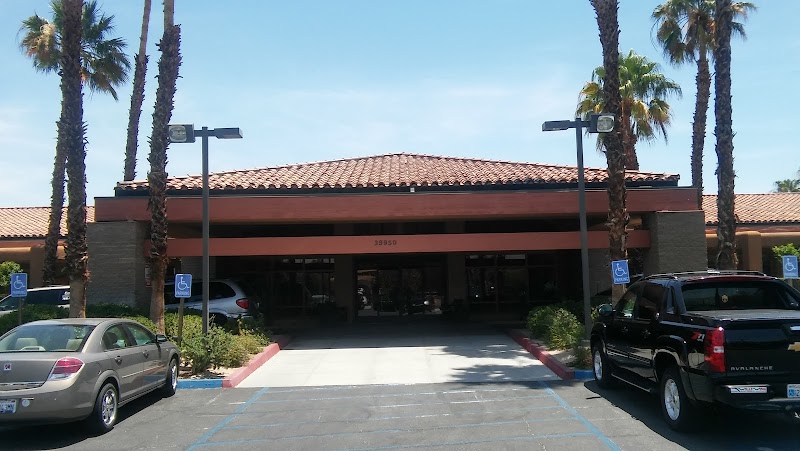
How is Rancho Mirage Center Staffed?

CMS rates RANCHO MIRAGE HEALTH AND REHABILITATION CENTER's staffing level at 3 out of 5 stars, which is average compared to other nursing homes. Staff turnover is 33%, compared to the California average of 46%. This relatively stable workforce can support continuity of care. RN turnover specifically is 58%, which is notably high. RNs provide skilled clinical oversight, so turnover in this role can affect medical care quality.

What Have Inspectors Found at Rancho Mirage Center?

State health inspectors documented 46 deficiencies at RANCHO MIRAGE HEALTH AND REHABILITATION CENTER during 2021 to 2025. These included: 46 with potential for harm.

Who Owns and Operates Rancho Mirage Center?

RANCHO MIRAGE HEALTH AND REHABILITATION CENTER is owned by a for-profit company. For-profit facilities operate as businesses with obligations to shareholders or private owners. The facility is operated by CAMBRIDGE HEALTHCARE SERVICES, a chain that manages multiple nursing homes. With 99 certified beds and approximately 96 residents (about 97% occupancy), it is a smaller facility located in RANCHO MIRAGE, California.
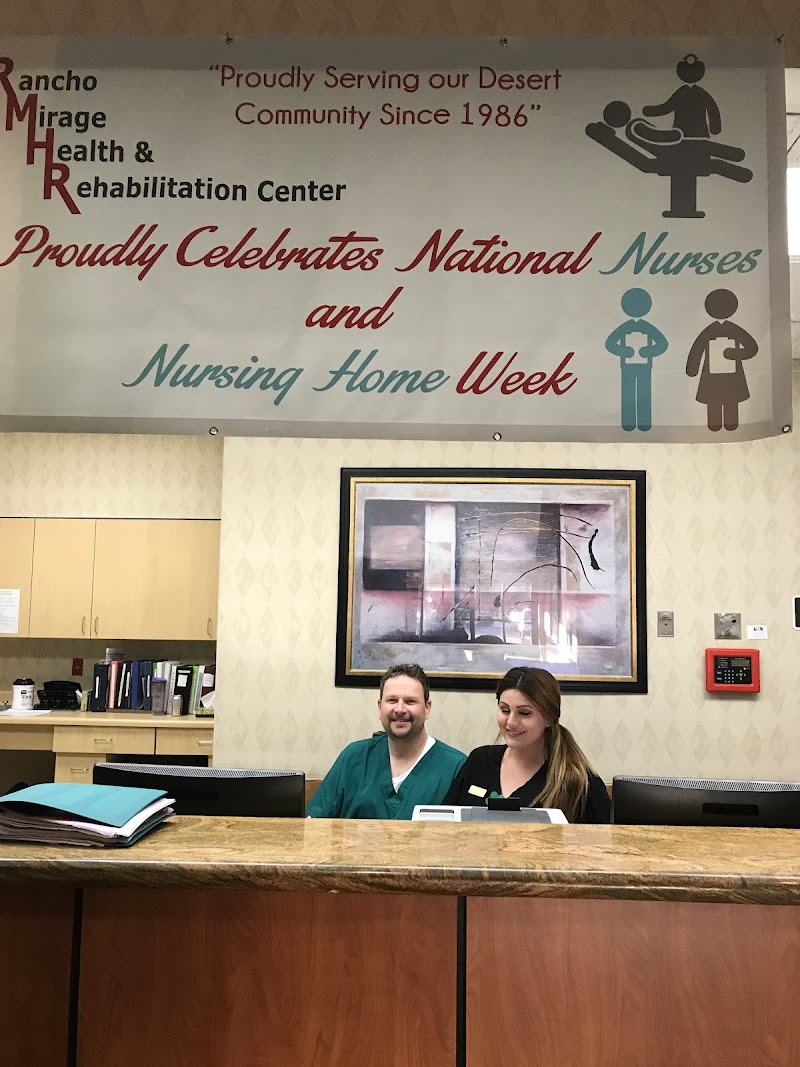
How Does Rancho Mirage Center Compare to Other California Nursing Homes?

Compared to the 100 nursing homes in California, RANCHO MIRAGE HEALTH AND REHABILITATION CENTER's overall rating (3 stars) is below the state average of 3.1, staff turnover (33%) is significantly lower than the state average of 46%, and health inspection rating (3 stars) is at the national benchmark.

What Should Families Ask When Visiting Rancho Mirage Center?

Based on this facility's data, families visiting should ask: "Can I visit during a mealtime to observe dining assistance and food quality?" "How do you handle medical emergencies, and what is your hospital transfer rate?" "Can I speak with family members of current residents about their experience?"

Is Rancho Mirage Center Safe?

Based on CMS inspection data, RANCHO MIRAGE HEALTH AND REHABILITATION CENTER has a clean safety record: no substantiated abuse findings (meaning no confirmed cases of resident harm), no Immediate Jeopardy citations (the most serious violation level indicating risk of serious injury or death), and is not on the Special Focus Facility watch list (a federal program monitoring the lowest-performing 1% of nursing homes). The facility has a 3-star overall rating and ranks #100 of 100 nursing homes in California. While no facility is perfect, families should still ask about staff-to-resident ratios and recent inspection results during their visit.

Do Nurses at Rancho Mirage Center Stick Around?

RANCHO MIRAGE HEALTH AND REHABILITATION CENTER has a staff turnover rate of 33%, which is about average for California nursing homes (state average: 46%). Moderate turnover is common in nursing homes, but families should still ask about staff tenure and how the facility maintains care continuity when employees leave.

Was Rancho Mirage Center Ever Fined?

RANCHO MIRAGE HEALTH AND REHABILITATION CENTER has no federal fines on record. CMS issues fines when nursing homes fail to meet care standards or don't correct problems found during inspections. The absence of fines suggests the facility has either maintained compliance or corrected any issues before penalties were assessed. This is a positive indicator, though families should still review recent inspection reports for the full picture.

Is Rancho Mirage Center on Any Federal Watch List?

RANCHO MIRAGE HEALTH AND REHABILITATION CENTER is not on any federal watch list. The most significant is the Special Focus Facility (SFF) program, which identifies the bottom 1% of nursing homes nationally based on persistent, serious quality problems. Not being on this list means the facility has avoided the pattern of deficiencies that triggers enhanced federal oversight. This is a positive indicator, though families should still review the facility's inspection history directly.