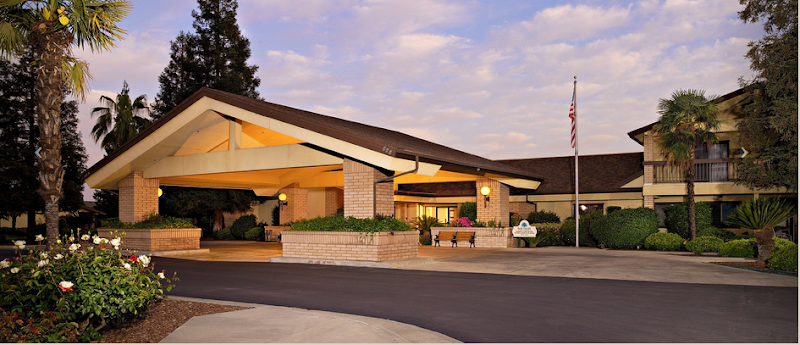
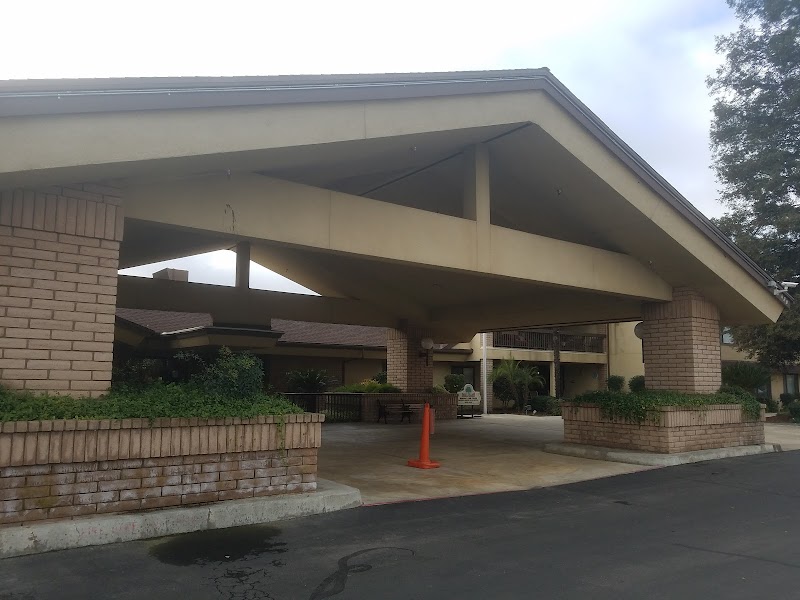
PALM VILLAGE RETIREMENT COMM.

703 W HERBERT AVE, REEDLEY, CA 93654 (559) 638-6933
Non profit - Church related 120 Beds Independent Data: November 2025
Trust Grade
55/100
#648 of 1155 in CA
Last Inspection: July 2025

Inspected within the last 6 months. Data reflects current conditions.

Overview

Palm Village Retirement Community has a Trust Grade of C, which means it is average and ranks in the middle of the pack among nursing homes. It is ranked #648 out of 1,155 facilities in California, placing it in the bottom half, and #18 out of 30 in Fresno County, indicating that there are better local options available. The facility's trend is worsening, with issues increasing from 3 in 2024 to 15 in 2025. Staffing is rated 4 out of 5 stars, which is good, with a turnover rate of 32%, lower than the state average, indicating that staff tend to stay longer and know the residents well. However, the RN coverage is concerning, as it is lower than 99% of California facilities, which could affect the quality of care. Specific incidents include a serious failure to provide adequate supervision for a resident at high risk for falls, resulting in a head injury and a fractured collarbone. There were also concerns about expired medications found in the facility's medication carts, which could compromise treatment effectiveness. Additionally, kitchen staff did not use proper portioning utensils, potentially impacting residents' nutritional intake. Overall, while there are strengths in staffing and a lack of fines, the facility does have significant weaknesses that families should consider.

Trust Score
C
55/100
In California
#648/1155
Bottom 44%
Safety Record
Moderate
Needs review
Inspections
Getting Worse
3 → 15 violations
Staff Stability
○ Average
32% turnover. Near California's 48% average. Typical for the industry.
Penalties
✓ Good
No fines on record. Clean compliance history, better than most California facilities.
Skilled Nurses
⚠ Watch
Each resident gets only 7 minutes of Registered Nurse (RN) attention daily — below average for California. Fewer RN minutes means fewer trained eyes watching for problems.
Violations
⚠ Watch
34 deficiencies on record. Higher than average. Multiple issues found across inspections.
★★★☆☆
3.0
Overall Rating
★★★★☆
4.0
Staff Levels
★★★★★
5.0
Care Quality
★★☆☆☆
2.0
Inspection Score
Stable
2024: 3 issues
2025: 15 issues

The Good

  • 4-Star Staffing Rating · Above-average nurse staffing levels
  • 5-Star Quality Measures · Strong clinical quality outcomes
  • Full Sprinkler Coverage · Fire safety systems throughout facility
  • No fines on record
  • Staff turnover below average (32%)

    16 points below California average of 48%

Facility shows strength in staffing levels, quality measures, fire safety.

The Bad

3-Star Overall Rating

Near California average (3.1)

Meets federal standards, typical of most facilities

Staff Turnover: 32%

13pts below California avg (46%)

Typical for the industry

The Ugly 34 deficiencies on record

1 actual harm
Jul 2025 14 deficiencies
CONCERN (D)

Potential for Harm - no one hurt, but risky conditions existed

Resident Rights (Tag F0550)

Could have caused harm · This affected 1 resident

**NOTE- TERMS IN BRACKETS HAVE BEEN EDITED TO PROTECT CONFIDENTIALITY** Based on observation, interview, and record review, the facility failed to provide care in a manner that maintained dignity and ...

Read full inspector narrative →
**NOTE- TERMS IN BRACKETS HAVE BEEN EDITED TO PROTECT CONFIDENTIALITY** Based on observation, interview, and record review, the facility failed to provide care in a manner that maintained dignity and respect for one of three sampled residents (Resident 8) when Resident 8's urinary catheter (flexible tube inserted into bladder to drain urine) bag was uncovered and visible to other residents and visitors.This failure had the potential to compromise Resident 8's dignity and privacy by exposing their foley catheter bag, leading to embarrassment or psychosocial harm. During a review of Resident 8's admission Record (AR) dated 7/25/25, the AR indicated, Resident 8 was initially admitted to the facility on [DATE] with diagnoses of Parkinson's disease ( a progressive disease of the nervous system marked by tremor, muscular rigidity, and slow movements), diabetes mellitus (condition that happens when your blood sugar is too high), obstructive and reflux uropathy (obstructive and reflux uropathy), and malignant neoplasm of the prostate (a cancerous tumor in the prostate gland).During a review of Resident 8's Order Summary Report (OSR) dated 7/17/25, the OSR indicated, .foley catheter 20F.to gravity drainage. Change PRN (as needed or requested) for plugging/leaking/dislodging as needed.During a review of Resident 8's Minimum Data Set (MDS - a resident assessment tool used to identify cognitive [mental processes] and physical functional level assessment), dated 7/21/25, the MDS section C indicated Resident 8 had a Brief Interview for Mental Status (BIMS - a test given by medical professionals to determine cognitive understanding on a scale of 1-15 ) score of 15 (a score of 0-7 suggests severe cognitive impairment, 8-12 suggests moderately impaired, 13-15 suggests cognitively intact), which suggested Resident 8 was cognitively intact.During an observation on 7/22/25 at 9:58 a.m. in Resident 8's room, Resident 8's foley catheter was not covered by a dignity bag (a bag used to the cover and hold the catheter drainage/collection bag, so it is not visible).During a concurrent observation and interview on 7/24/25 at 1:44 p.m. with Licensed Vocational Nurse (LVN) 1, a photograph taken on 7/22/25 showing the uncovered Foley catheter bag of Resident 8, was shown to LVN 1. Upon review, LVN 1 confirmed the foley catheter bag was not covered with a dignity bag. LVN 1 stated, the foley catheter drainage bag should have been covered.During an interview on 7/29/25 at 9:10 a.m. with the Director of Nursing (DON), the DON stated, she expected Resident 8's foley catheter bag to be covered with a dignity bag. The DON stated, a dignity bag always needed to cover the foley catheter bag. The DON stated, not having a dignity bag violated Resident 8's dignity, and privacy regulation. The DON stated, the dignity bag needed to be provided so other residents would not know Resident 8's condition.During a review of the facility's policy and procedure (P&P) titled, Quality of Life-Dignity, dated 08/19, the P&P indicated, .Residents are treated with dignity and respect at all times.Staff shall promote dignity.Helping the residents to keep urinary catheter bags covered.
CONCERN (D)

Potential for Harm - no one hurt, but risky conditions existed

PASARR Coordination (Tag F0644)

Could have caused harm · This affected 1 resident

**NOTE- TERMS IN BRACKETS HAVE BEEN EDITED TO PROTECT CONFIDENTIALITY** Based on interview and record review, the facility failed to complete a new Preadmission screening and Resident Review (PASARR- ...

Read full inspector narrative →
**NOTE- TERMS IN BRACKETS HAVE BEEN EDITED TO PROTECT CONFIDENTIALITY** Based on interview and record review, the facility failed to complete a new Preadmission screening and Resident Review (PASARR- a federal requirement to ensure residents with mental disorder or intellectual disorder or intellectual disabilities are not inappropriately placed in a nursing home) level 1 screening for one of five sampled residents (Resident 2) when Resident 2's PASARR level 1 dated 5/14/25 completed prior to admission to the facility did not include diagnosis of anxiety (mental health disorder characterized by feelings of worry or fear that are strong enough to interfere with daily activities) and use of psychotropic medications (drugs that affect the mind, emotions, and behavior). This failure had the potential for Resident 2 to not receive the appropriate services related to her diagnosis and medication used. Findings: During a concurrent observation and interview on 7/23/25 at 8:35 a.m. in Resident 2's room, Resident 2 was observed sitting up in wheelchair at bedside eating breakfast with staff assistance. Resident 2 stated he had been in the facility for almost a year because his wife was also in the facility as a resident. During a review Resident 2's admission Record (AR-a document containing resident profile information), dated 7/25/25, the AR indicated Resident 2 was admitted to the facility on [DATE] with diagnoses which included anxiety, dementia (a progressive state of decline in mental abilities) and Alzheimer's disease (disease characterized by a progressive decline in mental abilities). During a review of Resident 2's Order Summary Report [OSR], dated 7/29/25, the OSR indicated, . Lorazepam [medication used to treat anxiety] Oral Tablet one [1] milligram [MG- unit of measurement] . Quetiapine Fumarate [medication used to treat dementia] Oral Tablet 50 MG . Give 1 tablet by mouth at bedtime . During a concurrent interview and record review on 7/25/25 at 10:47 a.m. with admission Coordinator/Minimum Data Set Nurse (AC/MDSN), the AC/MDSN reviewed Resident 2's PASARR level I assessment dated [DATE]. The AC/MDSN stated the level I PASARR assessment was completed in general acute care hospital (GACH) prior to Resident 2's admission to the facility on 5/25/25. The AC/MDSN stated Resident 2 was admitted with a diagnosis of anxiety and was prescribed psychotropic medication. The AC/MDSN stated the level I PASARR was not accurate and the facility should have completed another PASARR assessment. The AC/MDSN stated she was responsible in making sure there was a PASARR assessment for new admissions and to review for accuracy. The AC/MDSN stated she did not review Resident 2's level I PASARR assessment and she should have. During an interview on 7/28/25 at 11:40 a.m. with the Director of Nursing (DON), the DON stated the AC/MDSN was responsible in making sure there was a completed PASARR assessment for all new admissions. The DON stated GACH are completing the PASARR assessments and send a copy to the facility prior to resident being discharged . The DON stated her expectation was for the AC/MDSN to review PASARR assessment for accuracy and completed another assessment if PASARR assessment was not accurate. During a review of facility's policy and procedure (P&P) titled, Preadmission SCREENING and RESIDENT REVIEW [PASRR], dated 11/17, the P&P indicated, . each resident admitted to the facility, regardless of payer source, should have a PASRR level I screening completed . Identify residents with mental illness [MI] and/or intellectual disability [ID] . Complete the On-line . Level I screen and submit electronically to Department of Health Care Services [DHCS] . When there is Significant Change in resident's physical or mental condition .
CONCERN (D)

Potential for Harm - no one hurt, but risky conditions existed

Deficiency F0646 (Tag F0646)

Could have caused harm · This affected 1 resident

**NOTE- TERMS IN BRACKETS HAVE BEEN EDITED TO PROTECT CONFIDENTIALITY** Based on interviews and record review, the facility failed twice to complete a level 1 Preadmission Screening and Resident Revie...

Read full inspector narrative →
**NOTE- TERMS IN BRACKETS HAVE BEEN EDITED TO PROTECT CONFIDENTIALITY** Based on interviews and record review, the facility failed twice to complete a level 1 Preadmission Screening and Resident Review (PASARR), (a Federal requirement to ensure residents with mental disorder or intellectual disorder or intellectual disabilities are not inappropriately placed in a nursing home) screening notifying the state mental health authority or state intellectual disability authority promptly after a significant change for one of three sampled residents (Resident 4). This failure had the potential for Resident 4 to not receive the appropriate services related to her mental disorder.Findings: During a record review of Resident 4's admission Record (AR) (a summary of important information regarding a resident which includes resident identification, past medical history insurance status, care providers, family contact information and other pertinent information), dated 7/25/25, the AR indicated, Resident 4, a [AGE] year-old female was admitted to the facility on [DATE] from another nursing home, and prior to that an acute care hospital, with diagnoses which included: Alzheimer's disease (a condition that affects the brain that makes it hard for people to remember things, think clearly, and do everyday activities), Encounter for palliative care (a type of medical care that helps people who have serious illnesses feel better; it focuses on relieving symptoms like pain, stress, and other problems, rather than trying to cure the illness), Unspecified psychosis (a condition where a person experiences a loss of contact with reality, leading to distorted perceptions and thoughts), Major depressive disorder (persistent sadness, loss of interest in activities and difficulty with relationships impacting a person's thinking and behavior), Other mixed anxiety disorders (a group of conditions characterized by excessive fear, worry, and anxiety that significantly interfere with daily life), . During a record review of Resident 4's Minimum Data Set (MDS) (a federally mandated resident assessment tool), dated 3/25/25, the MDS section C - Cognitive patterns, indicated a Brief Interview for Mental Status (BIMS) (an assessment tool used by facilities to screen and identify memory, orientation, and judgement status of the resident) could not be conducted for Resident 4 as Resident is rarely/never understood. During a record review of Resident 4's PASARR Level l Screening Report dated 6/21/23, the PASARR indicated .that a Level II Mental Health Evaluation was not scheduled for the following reason: The individual has no serious mental illness (SMI).the case is now closed. During a concurrent interview and record review on 7/24/25 with the admission Coordinator/MDS Coordinator (AC/MDSN), the AC/MDSN stated that when a resident comes from a hospital or another skilled nursing facility, they use the PASARR that is done at hospital. If the admission comes directly from home, the AC/MDSN completes the PASARR. On every admission the AC/MDSN states that she reviews the diagnosis on the PASARRs for consistency. If inconsistencies are identified the AC/MDSN informs the Director of Nurses (DON) and another PASARR is completed. AC/MDSN stated that any significant change of condition triggers a PASARR level l to be completed. AC/MDSN stated that a change of condition can include a significant medication change, illness, hospitalization, and hospice admission. Record review indicated that Resident 4 was admitted [DATE]. PASARR was completed 6/21/23 at the acute care hospital. The PASARR indicated, The individual has no serious mental illness (SMI). Resident 4's diagnosis once admitted to the facility was Alzheimer's, Unspecified psychosis, Depression, History of falls. AC/MDSN stated that a PASARR level l should have been completed. AC/MDSN stated that when Resident 4 was admitted to Hospice on 2/24/25 a PASARR level l should have been completed. AC/MDSN stated that completing a PASARR is important to determine if the resident's needs can continue to be met at the facility. During a concurrent interview and record review on 7/29/25 at 9:06 a.m. with the Director of Nurses (DON) the DON stated there should have been a PASSAR completed when Resident 4 arrived as the initial PASSAR for [Name of acute care Hospital] stated, The individual has no serious mental illness (SMI), the DON stated that when Resident 4 arrived, resident had multiple behavior issues and a bi-polar diagnosis. DON stated that another PASSAR should have been completed. DON also stated that an additional PASSAR should have been done when Resident 4 was moved to Hospice. DON stated that it is important to complete PASSARs to make sure that residents are getting their needs met, that they are on the appropriate medications and that are in the correct facility. During a record review of the facility's policy and procedure titled, Preadmission Screening and Resident Review (PASRR) dated 11/2017, the document indicated the guidelines for Level l PASSR to be completed, .when there is Significant Change in resident's physical or mental condition. During a record review of the MDS Coordinator's job description dated 2/2016, the job description indicated that purpose of the MDS Coordinator's role included that, .the MDS Coordinator is to conduct and coordinate the development and completion of the resident assessment in accordance with State and Federal guidelines, policies, and regulations that govern the facility.report problem areas to the Administrator. During a record review of the DON's job description dated 4/2004, the job description indicated, that the Primary job duties included, .plans, develops, organizes, implements, evaluates, and directs the day-to-day functions of the nursing department. During a review of professional reference from the California Department of Health Care Services (DHCS), (a government agency that provides healthcare services to low-income and disabled Californians) titled, Preadmission Screening and Resident Review (n.d.), the PASARR Policy Manual indicated, facilities must ensure that PASARR evaluations are updated when clinically indicated, including after significant changes in condition.
CONCERN (D)

Potential for Harm - no one hurt, but risky conditions existed

Deficiency F0757 (Tag F0757)

Could have caused harm · This affected 1 resident

**NOTE- TERMS IN BRACKETS HAVE BEEN EDITED TO PROTECT CONFIDENTIALITY** Based on observation, interview, and record review, the facility failed to ensure two of eleven sampled residents' (Resident 12 ...

Read full inspector narrative →
**NOTE- TERMS IN BRACKETS HAVE BEEN EDITED TO PROTECT CONFIDENTIALITY** Based on observation, interview, and record review, the facility failed to ensure two of eleven sampled residents' (Resident 12 and Resident 79) drug regimen was free from unnecessary drugs when: Resident 79 received acetaminophen-codeine (opioid and nonopioid combination prescription medication used to treat pain) tablet prescribed for severe pain, despite reporting moderate pain on 7/19/25, 7/20/25, 7/21/25, 7/22/25, 7/23/25, and 7/24/25. This failure resulted in over-medication and inadequate pain management practices of Resident 79 which had the potential to result in adverse consequences and complications which could lead to serious medical condition. 2. Licensed Nurses did not follow physician ordered acetaminophen medication when Resident 12 was administered acetaminophen for complaints of pain, the acetaminophen was ordered for temperatures above 101 degrees Fahrenheit. This failure had the potential for Resident 12 to not receive adequate pain relief . Findings: 1.During a review of Resident 79’s “admission Record (AR - a summary of information regarding a patient which includes patient identification, past medical history, insurance status, care providers, family contact information and other pertinent information)”, dated 7/24/25, the “AR” indicated Resident 79 was admitted to the facility on [DATE] with diagnoses of muscle weakness, intervertebral disc degeneration in the lumbar region with discogenic back pain (breakdown and wear of the spinal discs in the lower back, causing pain ), lumbar region radiculopathy (condition where nerve root in the lower back is compressed, causing pain), osseous and subluxation stenosis of lumbar region (condition where bones in the spine are misaligned, causing pain). During a review of Resident 79’s “Minimum Data Set” (MDS - a resident assessment tool used to identify cognitive [mental processes] and physical functional level assessment), dated 4/8/25, the “MDS” indicated Resident 79 had a Brief Interview for Mental Status (BIMS - a test given by medical professionals to determine cognitive (involving the process of thinking, learning and understanding) understanding on a scale of 1-15 ) score of 15 (a score of 0-7 suggests severe cognitive impairment, 8-12 suggests moderately impaired, 13-15 suggests cognitively intact), which suggested Resident 79 was cognitively intact. During an observation on 7/24/25 at 11:33 a.m. in Resident 79’s room, Licensed Vocational Nurse (LVN) 1 was observed during medication pass. LVN 1 asked Resident 79 to rate her pain on a scale of 0-10, Resident 79 stated her pain was a 5 out of 10. LVN 1 administered, “…acetaminophen-codeine (opioid and nonopioid combination prescription medication used to treat pain) oral tablet 300-30 MG (milligram- a unit of measurement to determine medication dosage) for severe pain…” During a review of Resident 79’s “Order Summary Report,” dated 7/24/25, and Resident 79’s “ Medication Administration Record (MAR),” dated 7/24/25, the “Order Summary Report” indicated, Resident 79 had an order for “…acetaminophen-codeine oral tablet 300-30 MG (acetaminophen with codeine) give 1 tablet by mouth every 6 hours for severe pain .start date 7/18/25….[discontinued] date 7/23/25…” The “Order Summary Report” indicated, Resident 79 had a renewed active order for “…acetaminophen-codeine oral tablet 300-30 MG (acetaminophen with codeine) give 1 tablet by mouth every 6 hours for severe pain .start date 7/23/25…” Resident 79’s “MAR” indicated, “…1-10 pain scale…0- no [signs and symptoms] of pain…1-2 least pain…3-4 mild pain…5-6 moderate pain…. 7-8 severe…9-10 excruciating…” Resident 79’s “MAR” indicated, LVN 1 recorded a pain assessment of 5 out of 10 prior to the administration of “…acetaminophen-codeine 300-30 MG…for severe pain…” on 7/24/25 at 11:33 a.m. Resident 79’s “MAR” indicated, acetaminophen-codeine oral tablet 300-30 MG was administered 21 times between 7/19/25- 7/24/25 with documented pain ratings between 0-6 out of 10, which indicated no pain to moderate pain. During a concurrent interview and record review on 7/24/25 at 2:03 p.m. with LVN 1, Resident 79’s “MAR,” dated 7/24/25 was reviewed. LVN 1 stated she administered acetaminophen-codeine oral tablet 300-30 MG to Resident 79 for a reported pain of 5 out of 10 on the pain scale, which indicated moderate pain. LVN 1 stated Resident 79’s orders indicated acetaminophen-codeine oral tablet 300-30 MG was to be administered for severe pain. LVN 1 stated the incorrect pain medication was administered to treat Resident 79’s moderate pain. LVN 1 stated Resident 79’s order for “…acetaminophen-codeine oral tablet 300-30 MG (acetaminophen with codeine) give 1 tablet by mouth every 6 hours for severe pain…” should only be administered for a pain rating of 7-8 out of 10 on the pain scale, which indicated severe pain. LVN 1 stated Resident 79’s order for, “…acetaminophen-codeine oral tablet 300-30 MG (acetaminophen with codeine) give 1 tablet by mouth every 6 hours for severe pain…” should not have been administered for a pain rating of 5 out of 10 on the pain scale. LVN 1 stated, per Resident 79’s “MAR,” the order for “…acetaminophen-codeine oral tablet 300-30 MG (acetaminophen with codeine) give 1 tablet by mouth every 6 hours for severe pain…” was incorrectly administered 21 times between 7/19/25 and 7/24/25 when the medication was administered for pain levels of 0-6 out of 10 on the pain scale. LVN 1 stated it was important to determine pain ratings on the pain scale prior to the administration of pain medication to ensure residents’ pain was managed appropriately. LVN 1 stated Resident 79 was at risk of being overmedicated which could lead to drowsiness and negative outcomes. LVN 1 stated it was important to administer the lowest dose possible of pain medication to manage symptoms to prevent the development of tolerance to pain medication. LVN 1 stated it was important to adhere to medication administration instructions to ensure the most appropriate mediation was administered. During an interview on 7/25/25 at 2:08 p.m. with the Pharmacist Consultant (PC), the PC stated licensed nursing staff were expected to review administration instructions before administering medications. The PC stated she was responsible for reviewing drug medication regimens once a month to ensure medication administration instructions were appropriate and medications were being administered appropriately per the administration instructions. The PC stated Resident 79’s order for “…acetaminophen-codeine oral tablet 300-30 MG (acetaminophen with codeine) give 1 tablet by mouth every 6 hours for severe pain…” was not appropriate to administer based on a pain scale rating of 0-6 out of 10. The PC stated a pain rating of 0-6 out of 10 was considered mild to moderate pain. The PC stated Resident 79’s order for “…acetaminophen-codeine oral tablet 300-30 MG (acetaminophen with codeine) give 1 tablet by mouth every 6 hours for severe pain…” needed an associated pain scale rating of 0-10 within the administration instructions to ensure the most appropriate medication was administered for Resident 79’s pain rating. During a concurrent interview and record review on 7/29/25 at 9:10 a.m. with the Director of Nursing (DON), Resident 79’s “MAR,” dated 7/29/25 was reviewed. The DON stated Resident 79 had previous and current orders for “…acetaminophen-codeine oral tablet 300-30 MG (acetaminophen with codeine) give 1 tablet by mouth every 6 hours for severe pain…” which was administered 21 times between 7/19/25 and 7/24/25 for pain ratings of 0-6 out of 10. The DON stated a pain rating of 0-6 out of 10 was considered mild to moderate pain and not severe pain. The DON stated Resident 79’s order for “…acetaminophen-codeine oral tablet 300-30 MG (acetaminophen with codeine) give 1 tablet by mouth every 6 hours for severe pain…” had not been administered appropriately per administration instructions. The DON stated Resident 79 was at risk for not having her pain managed effectively. The DON stated it was important to administer the lowest dose possible of pain medication to treat pain to prevent overmedication. During a review of the facility’s policy and procedure (P&P) titled, “Administering Pain Medications,” dated 2001, the P&P indicated, “…The purpose of this procedure is to provide guidelines assessing the resident’s level of pain prior to administering analgesic pain medication…the pain management program is based on a facility-wide commitment to appropriate assessment and treatment of pain, based on professional standards of practice…any resident who uses opioids for long-term management of chronic pain is at risk for opioid overdose…conduct a pain assessment as indicated…administer pain medications…” During a review of the facility’s P&P titled, “Pain Protocol and Management,” 4/2025, the P&P indicated, “…the licensed nurse will identify individuals who have pain or who are at risk of having pain…the nurses will use a numerical and PAINAID scale that is appropriate to the residents cognitive level…” 2. During a concurrent observation and interview on 7/22/25 at 10:50 a.m. outside of Resident 12's room, Resident 12 was up in his wheelchair inside the room and was being helped by nursing staff. Resident 12's Responsible Party (R/P) was standing outside of the room. The R/P stated Resident 12 had a fall a few weeks ago but did not sustain major injury. The R/P stated she was not sure if Resident 12 complained of pain and what medication was available for pain. During a review of Resident 12’s eMAR (Electronic Medical Administration Record) dated 6/1/25-6/30/25, the eMAR indicated, “(Tylenol brand name) Oral Tablet… Give 2 tablets by mouth… for temp. over 101 F…” on 6/19/25. During a review of Resident 12’s eMAR dated 7/1/25-7/31/25, the eMAR indicated “(Acetaminophen brand name) Oral Tablet … Give 2 tablets by mouth … for temp. over 101F…” on 7/23/25. During a concurrent interview and record review on 7/24/25 at 1:55 p.m. with Licensed Vocational Nurse (LVN) 2, LVN 2 stated Resident 12 was alert with confusion and responded to verbal stimuli. Resident 12's clinical record was reviewed and LVN 2 stated Resident 12's Acetaminophen order was PRN (as needed) and had a direction to give for temperature over 101 degrees Fahrenheit. LVN 2 stated on 7/23/25, Resident 12 complained of pain to his right lower quadrant (RLQ- region below the belly button, extending from midline to the right, and down to the groin area) and was administered acetaminophen medication. LVN 2 stated on 6/19/25 Resident 12 complained of headache and acetaminophen medication was administered. LVN 2 stated Resident 12 should not have been administered acetaminophen because the medication order was not followed During a phone interview on 7/29/25 at 10:55 a.m. with Pharmacy Consultant (PC), the PC stated acetaminophen medication should not have been administered to Resident 12 when he complained of pain. The PC stated the physician order was not followed when Resident 12 was administered acetaminophen for complaint of pain. The PC stated the acetaminophen was only ordered for temperatures above 101 degrees Fahrenheit and should not have been administered for pain. During an interview on 7/29/25 at 12:05 p.m. with the Director of Nursing (DON), the DON stated Resident 12's acetaminophen order was not followed when he was administered the medication for complaint of pain. The DON stated the licensed nurses did not follow the physician order direction for acetaminophen and they should have. The DON stated licensed nurses should have called the medical doctor and got an order for pain medication when Resident 12 complained of pain. The DON stated her expectation was for staff to always follow physician order and double check medication direction. During a review of facility document titled, Pain Protocol and Management, dated 4/25, the document indicated, . The nursing staff will assess each resident for pain upon admission/readmission to the facility and at the quarterly review . The nursing staff will assess residents for pain every shift and document . Nursing will review pain medication regimen with quarterly assessment/PRN (as needed) . During a review of facility policy and procedure (P&P) titled, Administering Medication, dated 4/19, the P&P indicated, .Only persons licensed or permitted by this state to prepare, administer and document the administration of medication . Medications as administered in accordance with prescriber orders . The individual administering the medication checks the label THREE (3) times to verify the right resident, right medication, right dosage .
CONCERN (E)

Potential for Harm - no one hurt, but risky conditions existed

Grievances (Tag F0585)

Could have caused harm · This affected multiple residents

**NOTE- TERMS IN BRACKETS HAVE BEEN EDITED TO PROTECT CONFIDENTIALITY** Based on observation, and interview, the facility failed to provide residents with accessibility to file anonymous grievances or...

Read full inspector narrative →
**NOTE- TERMS IN BRACKETS HAVE BEEN EDITED TO PROTECT CONFIDENTIALITY** Based on observation, and interview, the facility failed to provide residents with accessibility to file anonymous grievances or complaints and did not update the grievance policy to ensure the prompt resolution of grievances for three out of 12 sampled residents (Resident 41, Resident 100, and Resident 112) when:1. Resident 41, Resident 100, and Resident 112 did not know how to file a grievance anonymously.2. The facility's policy and procedure (P&P) titled Palm Village Health Care Center Grievances Policy was not updated to ensure the residents were informed of their right to submit grievances anonymously.This failure placed residents at risk of deterrence from reporting concerns, limited access to grievance resolution, and infringement upon their rights to concerns without fear of identification or reprisal.Findings:1. During a concurrent observation and interview on 7/24/25 at 3:00 p.m. with Resident 41, Resident 100 and Resident 112 in Resident Council meeting, Resident 41 stated he did not know how to file a grievance anonymously. Resident 100 and Resident 112 also stated they did not know how to file a grievance anonymously, while the remaining members of the Resident Council remained silent.During an interview on 7/24/25 at 3:00 p.m. with Resident 41, in Resident council meeting, Resident 41 stated the Grievance Official was Social Service Director (SSD) personnel. Resident 41 stated SSD would give them the form to fill out and it was to be returned to SSD. During a review of Resident 41's admission Record (AR) dated 7/25/25, the AR indicated, Resident 41 was initially admitted to the facility on [DATE].During a review of Resident 41's Minimum Data Set (MDS - a resident assessment tool used to identify cognitive [mental processes] and physical functional level assessment), dated 6/24/25, the MDS section C indicated Resident 41 had a Brief Interview for Mental Status (BIMS - a test given by medical professionals to determine cognitive understanding on a scale of 1-15 ) score of 15 (a score of 0-7 suggests severe cognitive impairment, 8-12 suggests moderately impaired, 13-15 suggests cognitively intact), which suggested Resident 41 was cognitively intact.During a review of Resident 100's AR dated, the AR indicated, . Resident 100 was admitted to the facility on [DATE] .During a review of Resident 100's MDS Assessment, dated 7/17/2025, the MDS Assessment indicated Resident 100's BIMS score of 15 indicating Resident 100 was cognitively intact.During a review of Resident 112's AR dated, the AR indicated, . Resident 112 was admitted to the facility on [DATE] .During a review of Resident 112's MDS Assessment, dated 6/25/2025, the MDS Assessment indicated Resident 112's BIMS score of 15 indicating Resident 112 was cognitively intact.During a concurrent observation and interview on 7/24/25 at 3:30 p.m. with the SSD, in the SSD office located at the front entrance across the hall from the receptionist front desk, the SSD stated he was also the grievance coordinator. The SSD stated residents can request a grievance form from staff, the forms were in the social services office as well as each of the nurses' stations. The SSD stated once completed, the residents were required to return the form to the staff. The SSD acknowledged there was no drop box available and no system in place to allow residents to submit grievances anonymously. The SSD stated if a resident did not want anyone to know, the residents could speak with him privately in the office. The SSD added once a grievance was received, they addressed the issue, such as talking to the involved staff, but without telling them who submitted the grievance. The SSD acknowledged that was not an adequate submission of an anonymous grievance, and stated No, that is not anonymous, and I can see how it could make someone feel uncomfortable. During a concurrent observation and interview 7/24/25 at 3:35 p.m. with Medical Records (MR), outside of the medical records office located at nurses' station in [NAME] wing, MR stated the residents are required to request the grievance form. MR was unable to find the grievance form in the [NAME] wing nurses' station. MR stated the forms should be in the file cabinet at the nurses' station.During an interview on 7/29/25 at 9:10 a.m. with the Director of Nursing (DON), the DON stated residents could request and complete grievance forms and submit them to social services or the administration. The DON stated although concerns could be addressed during resident council, there was no established way to follow up anonymously, and the facility did not have a consistent process without staff knowing who submitted them. The DON acknowledged there was no formal system to support anonymous reporting.2. During an interview on 7/24/25 at 3:30 p.m. with the SSD, the SSD provided the facility policy titled, Palm Village Healthcare Center Grievance Policy. The SSD stated he also served as the facility's grievance official. The policy was reviewed and did not include procedure to inform residents of their right to submit grievances anonymously. The policy did not include language describing how anonymous grievances could be submitted or protected.During a review of the facility's P&P titled, Palm Village Healthcare Center Grievance Policy, dated 6/2025 was reviewed. The P&P indicated, . Grievance forms shall be made available to the residents upon request and will be available in the Social Services Office and at each Nurses' Station. 3. The facility shall post the grievance policy on the consumer board and shall make available to residents or their designated surrogates upon request. 4. Residents and/or their surrogates shall be notified.of their right to file a grievance . 5. Any grievance, either submitted orally or in writing, shall be recorded on the Grievance Log. 7. Grievances shall be reported at standup meetings by the Grievance Officer. 8. Any grievance reported to the facility staff, other than the grievance officer, shall be submitted orally or in writing by the staff to the grievance officer.During a review of the facility's job description titled Job Description Director of Nursing, dated 4/2004, the job description indicated, .Develops, maintains and updates written policies and procedures that govern the day-to-day functions.that the policies and procedures are followed.
CONCERN (E)

Potential for Harm - no one hurt, but risky conditions existed

Assessment Accuracy (Tag F0641)

Could have caused harm · This affected multiple residents

**NOTE- TERMS IN BRACKETS HAVE BEEN EDITED TO PROTECT CONFIDENTIALITY** Based on observation, interview and record review, the facility failed to ensure the Minimum Data Set Assessment (MDS- MDS-asses...

Read full inspector narrative →
**NOTE- TERMS IN BRACKETS HAVE BEEN EDITED TO PROTECT CONFIDENTIALITY** Based on observation, interview and record review, the facility failed to ensure the Minimum Data Set Assessment (MDS- MDS-assessment of physical and psychological functions and needs) accurately reflected resident's health and functional status for three of eight sampled residents (Resident 1, Resident 10, and Resident 73) when: 1.Resident 1's fall and surgery was inaccurately coded in MDS assessment. This failure had the potential to result in Resident care needs not met and the potential for additional fall and injury. 2.Resident 10's restraints were inaccurately coded in the quarterly MDS assessment. This failure had the potential to result in incorrect treatments provided to Resident 10 due to inaccurate assessments.3.Resident 73's restraints were inaccurately coded in the quarterly MDS assessment. This failure had the potential to result in incorrect treatments provided to Resident 73 due to inaccurate assessments.Findings: 1. During a concurrent observation and interview on 7/22/25 at 9:30 a.m. in Resident 1's room, Resident 1 was observed sitting at bedside with spouse. Resident 1 was appropriately dressed and stated she was not sure when she was admitted to the facility. Resident 1 stated she had a fall and had broken her hip and was working with therapy but developed respiratory complications and had to return to the hospital. During a review of Resident 1's admission Record (AR-a document containing resident profile information), dated 7/25/25, the AR indicated, Resident 1 was admitted to the facility on [DATE] with diagnoses which included Fracture of Unspecified part of neck of left femur ( break in the upper part of the thigh bone near the hip joint) and pneumonia (inflammation in the lungs). During a concurrent interview and record review on 7/25/25 at 11:05 a.m. with admission Coordinator/Minimum Data Set Nurse (AC/MDSN), the AC/MDSN reviewed Resident 1's five day MDS assessment dated [DATE] section J (Health Conditions), Resident 1's history of fall and surgery was not coded in the MDS assessment. The AC/MDSN stated the assessment in Section J Fall History and Prior Surgery was not coded accurately. The AC/MDSN stated Resident 1's original admission was on 5/6/25 due to a fall with fracture and was admitted in general acute care hospital (GACH) to repair the fracture. The AC/MDSN stated she did not code Resident 1 as having history of fall and surgery. The AC/MDSN stated she should have coded Resident 1 had a history of fall and had surgery. The AC/MDSN stated it was her responsibility to ensure MDS assessments were accurate. During an interview on 7/29/25 at 11:56 a.m. with the Director of Nursing (DON), the DON stated she had the oversight of the MDSN. The DON stated her expectation was to ensure resident records are reviewed, interview staff and residents and complete their assessments in MDS. The DON stated her expectation was for each staff completing MDS assessment including the AC/MDSN to ensure accuracy of their assessments. During an interview on 7/29/25 at 2:45 p.m. with the Administrator (ADM), the ADM stated her expectation was for the MDS assessments to be completed and accurately coded. The ADM stated each staff completing the MDS assessments are responsible in ensuring accurate assessments when completing the MDS. During a review of facility's policy and Procedure (P&P) titled, Resident Assessment Instrument [RAI] dated 10/19, the P&P indicated, .Providing care to residents with post-hospital and long-term care needs is complex and challenging work. Clinical competence, observational, interviewing and critical thinking skills, and assessment expertise from all disciplines are required to develop individualized care plans . The RAI helps nursing home staff look at residents holistically--as individuals for whom quality of life and quality of care are mutually significant and necessary . During a review of professional reference titled, Long-Term Care Facility Resident Assessment Instrument 3.0 User's Manual version 1.19.1 10/24, indicated. Definitions .Fall unintentional change in position coming to rest on the ground, floor or onto the next lowest surface [e.g., onto a bed, chair, or bedside mat]. The fall may be witnessed, reported by the resident or an observer or identified when a resident is found on the floor or ground . Steps for Assessment. The period of review is 180 days [6 months] prior to admission . Code 1, yes if resident or family report or transfer records and medical records document a fall in the 2-6 months prior to the resident entry date . Steps for Assessment: 1. Ask the resident and their family member or significant other about any surgical procedures in the 100 days prior to admission. 2. Review the resident's medical record to determine whether the resident had major surgery during the 100 days prior to admission . Code 1, Yes: if the resident had major surgery during the 100 days prior to admission . 2. During a review of Resident 10's “admission Record (AR- a document that provides resident contact details, a brief medical history, level of functioning, preferences, and wishes),” dated 7/24/25, the “AR” indicated, Resident 10, was admitted to the facility on [DATE] with diagnoses which included: “Unspecified dementia (a progressive state of decline in mental abilities), history of falling, other reduced mobility, depression (persistent sadness, loss of interest in activities and difficulty with relationships impacting a person’s thinking and behavior), muscle weakness generalized…”. During a concurrent observation and interview on 7/24/25 at 8:30 a.m. with Resident 10 in the dining room, Resident 10 was sitting in his wheelchair having breakfast. Resident 10 was unable to respond to any questions asked. There were no restraints or alarms noted on Resident 10. During a concurrent interview and record review on 7/24/25 at 10:15 a.m. with admission Coordinator/Minimum Data Set Nurse (AC/MDSN), Resident 10’s “Minimum Data Set” (MDS- resident assessment tool which indicated physical and cognitive abilities), dated 4/30/25 was reviewed, the “MDS” section P indicated, Resident 10's Restraints and Alarm status under “used in chair or out of bed was Other- 1” (0 indicates not used, 1 indicates used less than daily, 2 indicates used daily). The AC/MDSN stated Resident 10 did not use any restraints or alarms. The AC/MDSN stated it was an error and that it would need to be removed. During a concurrent interview and record review on 7/25/25 at 10:47 a.m. with the Director of Staff Development (DSD), Resident 10’s “MDS” dated 4/30/25 was reviewed. The DSD stated Resident 10 was not on any restraints or alarms. The DSD stated the MDSN was responsible for the accuracy of assessment on residents. During a concurrent interview and record review on 7/29/25 at 11:05 a.m. with the Director of Nursing (DON), Resident 10’s “MDS” dated 4/30/25 was reviewed. The DON stated Resident 10 was not on any restraints or alarms. The DON stated it was a mistake. The DON stated the MDSN needed to code correctly. The DON stated the MDSN coordinator is expected to assess the resident, review the resident condition accurately, then document accurately. The DON stated documenting accurately is important because it reflects the resident condition. The DON stated that when assessments are not documented accurately it suggests residents are receiving treatments that differ from prescribed orders. During a review of the facility's document titled, “Job Description, MDS Coordinator,” dated 2/2016, the document indicated “ .Purpose: The primary purpose of the MDS Coordinator is to conduct and coordinate the development and completion of the resident assessment in accordance with State and Federal guidelines, policies, and regulations that govern this facility .” During a review of professional reference titled, CMS’s RAI Version 3.0 Manual dated 10/19, the reference indicated. Chapter 1: Resident Assessment Instrument (RAI)…1.1 Overview. The purpose of this manual is to offer clear guidance about how to use the Resident Assessment Instrument (RAI) correctly and effectively to help provide appropriate care…1.2 Content of the RAI for Nursing Homes…The RAI process has multiple regulatory requirements. Federal regulations at 42 CFR 483.20 (b)(1)(xviii), (g), and (h) require that (1) the assessment accurately reflects the resident’s status 3. During observation on 7/23/25 at 8:50 a.m. Resident 73’s room was observed to be well organized, and a green bed sensor alarm was clearly observed from the doorway. During a review of Resident 73s “admission Record (AR)” dated 7/25/25, the “AR” indicated, Resident 73 was initially admitted to the facility on [DATE] with a diagnosis of Alzheimer’s disease (a disease characterized by a progressive decline in mental abilities), Exudative age-related macular degeneration [AMD], is a severe form of AMD characterized by the growth of abnormal blood vessels under the retina, which can leak fluid and blood, leading to vision loss), and sensorineural hearing loss (a type of hearing loss that occurs when there is damage to the inner ear or the auditory nerve, which carries sound signals to the brain, most common type of permanent hearing loss.) During a review of Resident 73’s “Minimum Data Set (MDS - a resident assessment tool used to identify cognitive [mental processes] and physical functional level assessment), dated 7/9/25, the “MDS” section C indicated Resident 73 had a Brief Interview for Mental Status (BIMS - a test given by medical professionals to determine cognitive understanding on a scale of 1-15 ) score of 12 (a score of 0-7 suggests severe cognitive impairment, 8-12 suggests moderately impaired, 13-15 suggests cognitively intact), which suggested Resident 73 was moderately impaired. During a concurrent interview and record review on 7/24/25 at 1:44 p.m. with Licensed Vocational Nurse (LVN) 1, Resident 73’s “Care Plan (CP)” and “Order Summary Report (OSR)” dated 7/24/25 was reviewed. LVN 1 validated the OSR indicated bed sensor alarm was active and was placed on 11/12/24. LVN 1 confirmed the CP was in place and dated 11/12/24. LVN 1 stated Resident 73 did have a bed sensor alarm on. During a concurrent interview and record review on 7/24/25 at 4:11 p.m. with the Minimum Data Set Nurse (MDSN), Resident 73’s Minimum Data Set (MDS) section P on restraints and alarms, dated 1/8/25, was reviewed. The MDS section P indicated that bed alarms were not used. The MDSN stated that she was responsible for completing the MDS assessment and validated that Resident 73’s MDS section P did not accurately reflect Resident 73’s active orders and care plan (CP) to have used a bed sensor alarm. The MDSN mentioned that she was supposed to review Resident 73’s CP and provider's orders during a quarterly assessment. She emphasized the importance of reviewing and communicating with the floor nurses to ensure an accurate assessment of the residents and to document the correct code for the residents. The MDSN confirmed that Resident 73’s MDS section P - Bed alarm was modified on 7/23/25 to reflect that it was used daily. During an interview on 7/29/25 at 9:10 a.m. with the Director of Nursing (DON) the DON stated it was the expectation the MDSN ensured the MDS reflected Resident 73’s current care needs. The DON stated she expected the MDSN to conduct the assessments timely and to have followed the calendar due date. The DON stated it was the Responsibility of the MDSN to have confirmed the accuracy of section P for Resident 73. The DON stated the code on the MDS should have reflected the use of the bed alarm. During a review of the facility's document titled, “Job Description, MDS Coordinator,” dated 2/2016, the document indicated “ .Purpose: The primary purpose of the MDS Coordinator is to conduct and coordinate the development and completion of the resident assessment in accordance with State and Federal guidelines, policies, and regulations that govern this facility .” During a review of professional reference titled, CMS’s RAI Version 3.0 Manual dated 10/19, the reference indicated. Chapter 1: Resident Assessment Instrument (RAI)…1.1 Overview. The purpose of this manual is to offer clear guidance about how to use the Resident Assessment Instrument (RAI) correctly and effectively to help provide appropriate care…1.2 Content of the RAI for Nursing Homes…The RAI process has multiple regulatory requirements. Federal regulations at 42 CFR 483.20 (b)(1)(xviii), (g), and (h) require that (1) the assessment accurately reflects the resident’s status
CONCERN (E)

Potential for Harm - no one hurt, but risky conditions existed

Deficiency F0655 (Tag F0655)

Could have caused harm · This affected multiple residents

**NOTE- TERMS IN BRACKETS HAVE BEEN EDITED TO PROTECT CONFIDENTIALITY** Based on observation, interview, and record review, the facility failed to develop and implement a baseline care plan (a plan th...

Read full inspector narrative →
**NOTE- TERMS IN BRACKETS HAVE BEEN EDITED TO PROTECT CONFIDENTIALITY** Based on observation, interview, and record review, the facility failed to develop and implement a baseline care plan (a plan that provides direction for individualized care of the resident) within 48 hours of resident's admission for one of four sampled residents (Resident 12) when Resident 12's care plan was not created for the use of antibiotic (medication used to treat infection) from 6/25/25-6/30/25. This failure had the potential for Resident 12 to experience side effects of antibiotic medication like diarrhea, nausea or vomiting and headache and for resident to not receive the therapeutic effects of the medication if staff was not monitoring the effectiveness of antibiotic therapy. Findings:During concurrent observation and interview on 7/22/25 at 10:50 a.m. during the initial tour in Resident 12's room, Resident 12 was sitting up in his wheelchair at bedside watching TV and did not answer questions asked. Resident 12's Responsible Party/Spouse (R/P) was standing outside of the door while nursing staff was providing care to Resident 12. R/P stated Resident 12 had a decline in his activities of daily living (ADL-routine task/activities such as bathing, dressing and toileting a person performs daily to care for themselves), developed respiratory problem and was coughing and was prescribed antibiotic and has now improved. During a review of Resident 12's admission Record [AR-s document containing resident profile information], dated 7/25/25, the AR indicated Resident 12 was admitted to the facility on [DATE] with diagnoses which included dementia (a progressive state of decline in mental abilities), history of falling and hypertension (HTN- high blood pressure). During a review of Resident 12's Order Summary Report [OSR], dated 7/25/25, the OSR indicated, .(brand name)[antibiotic medication used to treat infection]) Oral Tablet 500 MG [milligram-unit of measurement] Give one (1) tablet by mouth one time only for cough for 1 day . Order Date: 6/25/25, Start Date: 6/25/25 . (brand name) Oral tablet 250 MG . for four (4) days . Start Date: 6/6/25 . During a concurrent interview and record review on 7/25/26 at 9:23 a.m. with Licensed Vocational Nurse (LVN) 2, Resident 12's clinical record was reviewed. LVN 2 stated Resident 12 started on antibiotic on 6/25/25 for cough and it was given for five days. LVN 2 stated there was no care plan found for the antibiotic. LVN 2 stated care plan should have been initiated right away to monitor side effects and progress of medication. LVN 2 stated it was the responsibility of the licensed nurses who entered the order to ensure a care plan was initiated . During an interview on 7/29/25 at 11:45 a.m. with the Director of Nursing (DON), the DON stated baseline care plans are the responsibility of all licensed nurses and the expectation was to initiate and complete within 48 hours. The DON stated the licensed nurse who entered the order should have initiated the care plan. The DON stated care plans are important to direct staff on the care of residents and monitor for any side effects of medications and to monitor progress. During a review of facility's document titled, Job Description: Director of Nursing, dated 4/04, the Job Description indicated, .Ensures that required documentations concerning care plans, treatment plans, nurses notes, physician's orders, accident/incident reports, discharges, transfers . are properly charted and transcribed, have required approvals and are entered in the resident's medical records . During a review of facility's policy and procedure (P&P) titled, Policy and Procedure for Baseline Care Plans, undated, the P&P indicated, .The baseline care plan will ensure that the resident's immediate needs are being addressed and will be used to promote the continuity of care . The baseline care plan needs to address resident specific health and safety concerns, the need for supervision, behavioral interventions .
CONCERN (E)

Potential for Harm - no one hurt, but risky conditions existed

Comprehensive Care Plan (Tag F0656)

Could have caused harm · This affected multiple residents

**NOTE- TERMS IN BRACKETS HAVE BEEN EDITED TO PROTECT CONFIDENTIALITY** Based on observation, interview, and record review, the facility failed to develop a comprehensive resident-centered care plan f...

Read full inspector narrative →
**NOTE- TERMS IN BRACKETS HAVE BEEN EDITED TO PROTECT CONFIDENTIALITY** Based on observation, interview, and record review, the facility failed to develop a comprehensive resident-centered care plan for two of five sample residents (Resident 60 and Resident 1) when:1. Resident 60's care plans did not include the physician prescribed oxygen (O2- a colorless, odorless and tasteless gas essential for life) therapy.This failure had the potential for Resident 60 to experience shortness of breath, respiratory distress, decrease oxygen saturation, confusion, loss of consciousness and respiratory failure (a condition where there is not enough oxygen or too much carbon dioxide in your body).2. Resident 1 did not have a care plan developed for anticoagulant (medication used to prevent blood clots) use, Physical Therapy (PT) and Occupational therapy (OT) treatments.These failures had the potential for side effects of anticoagulant therapy, such as excessive bleeding and blood loss, to go unrecognized by staff, which could result in an emergency medical condition. These failures also had the potential for progress or decline in Resident 1's physical abilities to go unnoticed and for PT/OT to not be adjusted to achieve maximum therapeutic results. Findings:1. During a review of Resident 60's admission Record (AR -a summary of information regarding a patient which includes patient identification, past medical history, insurance status, care providers, family contact information and other pertinent information), dated 7/28/25, the AR indicated, Resident 60, was admitted to the facility on [DATE], was sent out to the hospital and returned to the facility on [DATE]. Resident 60's diagnoses included .congestive heart failure ( CHF-a heart disorder which causes the heart to not pump the blood efficiently, sometimes resulting in leg swelling), chronic obstructive pulmonary disease (COPD-a chronic lung disease causing difficulty in breathing), hypertensive (high blood pressure) heart disease with heart failure, gastroesophageal reflux disease (GERD- is a digestive disorder where stomach acid frequently flows back into the esophagus, causing heartburn and other symptoms), insomnia (trouble falling asleep or staying asleep), unspecified dementia (a progressive state of decline in mental abilities).During a review of Resident 60's Minimum Data Set (MDS- a resident assessment tool used to identify resident cognitive (mental) and physical functional level) assessment, dated 6/9/25, the MDS section C indicated, Resident 60's Brief Interview for Mental Status (BIMS) assessment score was 6 out of 15 (0-6 severe cognitive (pertaining to reasoning memory and judgement) deficit, 7-12 moderate cognitive deficit, 13-15 cognitively intact). The BIMS scores indicated Resident 60 had severe cognitive deficit.During a concurrent observation and interview on 7/22/25 at 9:31 a.m. with Resident 60 during the initial tour in Resident 60's Room, Resident 60 was lying in bed with eyes closed and a nasal cannula (NC- thin plastic tube that delivers oxygen directly into the nose through two small prongs) in her nose, connected to a working oxygen concentrator (device that produces oxygen for breathing) and was set to 2 LPM (liter per minute- a unit of measurement for the flow rate of oxygen). During a concurrent interview and record review on 7/25/25 at 10:47 a.m. with Director of Staff Development (DSD), Resident 60's care plans and Order Summary Report (OSR) dated 6/2/25 were reviewed. The OSR indicated .oxygen 2L/Min (LPM-liters per minute-unit of measurement) via NC continuous every shift on 6/2/25. The review of Resident 60 care plans indicated there was no O2 care plan for Resident 60. The DSD stated the care plan should have been initiated within 24 hours of the O2 order. The DSD stated there should have been an O2 care plan for Resident 60 since she had orders for O2. The DSD stated the importance of the care plan is to ensure oncoming staff and other staff can plan and know the plan-of- care for Resident 60. The DSD stated it was also important because if any changes needed to be made, then it could have been updated and if new interventions needed to be done, it could have been done. The DSD stated not having a care plan for Resident 60 could have potentially resulted in an error in Resident 60's care.During an interview on 7/25/25 at 3:12 p.m. with admission Coordinator/ Minimum Data Set Nurse (AC/MDSN), the AC/MDSN stated it is the responsibility of the LNs and MDSN to complete the care plan. The AC/MDSN stated when a resident is admitted , the facility has 21 days to complete the resident's care plan. The AC/MDSN stated the care plan is important because it gives an overall picture of the residents' condition so that their plan-of-care can be completed.During a concurrent interview and record review on 7/29/25 at 11:05 a.m. with the Director of Nursing (DON), Resident 60's care plans and Order Summary Report (OSR) dated 6/2/25 were reviewed. The DON validated Resident 60 had an O2 order on 6/2/25. The DON validated there was no O2 care plan for Resident 60. The DON stated the expectation was once there is an O2 order, a care plan should have been completed within 24 hrs. The DON stated a care plan that addressed the O2 needs of Resident 60 should have been created on 6/2/25. The DON stated the care plan should have been completed right away when Resident 60 had the order. The DON stated it was important that Resident 60 had an O2 care plan because it was part of her plan-of-care when she came back on 6/2/25. The DON stated a care plan is important for the accuracy of assessment and plan of care. The DON stated the care plan policy was not followed by the LNs. The DON stated the LNs failed to implement the care plan within the expected timeframe. During a review of the facility's policy and procedure (P&P) titled, Care Plans, Comprehensive Person centered, dated 3/2022, the P&P indicated, Policy Statement: A comprehensive, person-centered care plan that includes measurable objectives and timetables to meet the resident's physical, psychosocial and functional needs is developed and implemented for each resident.2.care plan is developed within seven (7) days of the completion of the required MDS assessment (Admission, Annual or Significant change in status), no more than 21 days after admission.11. Assessments of residents are ongoing, and care plans are revised as information about the residents and the residents' conditions change.During a review of the facility's policy and procedure (P&P) titled, Oxygen Administration, dated 10/2010, the P&P indicated, .Purpose.is to provide guidelines for safe oxygen administration.verify that there is a physician's order for this procedure. Review the physician's orders or facility protocol for oxygen administration.2. Review the resident's care plan to assess for any special needs of the resident .During a review of the facility's document titled, Job Description, Staff Nurse/Charge Nurse (LVN), dated 9/2017, the document indicated . Primary Job Duties .16. Participates in overall plan-of-care for each resident. Other requirements .6. Must be knowledgeable of nursing and medical practices and procedures, as well as laws, regulations, and guidelines that pertain to long term care.During a review of the facility's document titled, Job Description, Staff Nurse/Charge Nurse (RN), dated 8/2017, the document indicated .Primary Job Duties.17. Participates in overall plan-of-care for each resident. Other requirements .6. Must be knowledgeable of nursing and medical practices and procedures, as well as laws, regulations, and guidelines that pertain to long term care.During a review of the facility's document titled, Job Description, Director of Nursing, dated 4/2004, the document indicated .2. ensures that the policies and procedures are followed.7. ensures that required documentation concerning care plans, treatment plans, nurses' notes, physician's orders.etc. are properly charted .and are entered in the resident's medical record in accordance with established procedures . During a review of National Library of Medicine.org Professional Reference titled, Nursing Process, dated 4/10/23, (found at https://www.ncbi.nlm.nih.gov/books/NBK499937/) the reference indicated, . Planning: The planning stage is where goals and outcomes are formulated that directly impact patient care based on guidelines. These patient-specific goals and the attainment [the level of knowledge, skills, or qualifications a learner has acquired at a specific point in time] of such assist in ensuring a positive outcome. Nursing care plans are essential in this phase of goal setting. Care plans provide a course of direction for personalized care tailored to an individual's unique needs. Overall condition and comorbid conditions play a role in the construction of a care plan. Care plans enhance communication, documentation, reimbursement, and continuity of care across the healthcare continuum. vital to positive patient outcomes. the nursing process to guide care is clinically significant going forward in this dynamic, complex world of patient care. Aging populations carry with them a multitude of health problems and inherent risks of missed opportunities to spot a life-altering condition. 2. During a concurrent observation and interview on 7/22/25 at 9:27 a.m. during initial tour in Resident 1's room. Resident 1 was observed sitting up in wheelchair at bedside with spouse. Resident 1 stated she could not remember when she was admitted to the facility. Resident 1 stated she had a fall and was working with therapy but she developed respiratory complications and had to return to the hospital. During a review of Resident 1's admission Record (AR-a document containing resident profile information), dated 7/25/25, the AR indicated, Resident 1 was admitted to the facility on [DATE] with diagnoses which included Fracture of Unspecified part of neck of left femur ( break in the upper part of the thigh bone near the hip joint) and pneumonia (inflammation in the lungs). During a concurrent interview and record review on 7/25/25 at 8:54 a.m. with the Director of Staff Development (DSD), the DSD stated she worked as a direct caregiver sometimes. Resident 1's clinical record was reviewed and DSD stated Resident 1 was admitted to the facility with a diagnosis of acute embolism (blockage in a blood vessel, usually caused by a blood clot) and deep vein thrombosis (DVT-a blood clot in a deep vein, usually in the legs). The DSD stated Resident 1's Apixaban (anticoagulant medication) was ordered on 6/29/25 and no care plan was found in Resident 1's record. The DSD stated an anticoagulant care plan should have been initiated to monitor any side effects of the medication like bleeding. The DSD stated Resident 1 was working with PT and OT when re-admitted from the hospital. The DSD stated she did not find a care plan for PT and OT. LVN 2 stated it was the responsibility of licensed nurses to initiate care plans. The DSD stated PT and OT communicates with licensed nurses about the type of therapy residents are receiving licensed nurses input the orders and create care plan. The DSD stated there should have been a care plan initiated when PT and OT started working with Resident 1 to monitor Resident 1's progress. The DSD stated care plans are important to direct staff how to care for residents. During a concurrent interview and record review on 7/25/25 at 9:30 a.m. with Licensed Vocational Nurse (LVN) 2, LVN 2 stated she was familiar with Resident 1's care. LVN 2 stated Resident 1 was readmitted to the facility on [DATE] with anticoagulant medication. LVN 2 stated Resident 1 was added to the OT and PT case load when re-admitted to the facility. LVN 2 reviewed Resident 1's clinical record and stated she did not find a care plan for anticoagulant medication use or PT and OT, and there should have been care plans for both LVN 2 stated it was the responsibility of the licensed nurses to initiate care plan, and it has to be done within 24 hours. During a concurrent interview and record review on 7/25/25 at 10:54 a.m. with the admission Coordinator/Minimum Data Set Nurse (AC/MDSN), the AC/MDSN reviewed Resident 1's clinical record and stated she did not find a care plan for anticoagulant use, OT and PT. The AC/MDSN stated it was the responsibility of licensed nurses to ensure the care plan was initiated and completed for anticoagulant use and for OT and PT working with Resident 1. During an interview on 7/29/25 at 11:55 a.m. with the Director of Nursing (DON), the DON stated comprehensive care plans are completed within 14 days. The DON stated the practice was for care plans to be started on admission by licensed nurses and Minimum Data Set Nurse (MDSN). The DON stated her expectation was, Licensed nurse should have initiated and completed care plans as soon as they entered the order. During a review of facility's policy and procedure (P&P) titled, Care Plans, Comprehensive Person-Centered, dated 3/22, the P&P indicated, .The comprehensive, person-centered care plan is developed within seven (7) days of the completion of the required MDS assessment . The comprehensive, person-centered care plan: a. includes measurable objective and timeframes; b. describes the services that are to be furnished to attain or maintain the resident's highest practicable physical, mental, and psychosocial well-being, including: [1] services that would otherwise be provided . [2] any specialized services to be provided . [3] which professional services are responsible .
CONCERN (E)

Potential for Harm - no one hurt, but risky conditions existed

Deficiency F0658 (Tag F0658)

Could have caused harm · This affected multiple residents

**NOTE- TERMS IN BRACKETS HAVE BEEN EDITED TO PROTECT CONFIDENTIALITY** Based on observation, interview, and record review, the facility failed to meet professional standards of quality for five of fo...

Read full inspector narrative →
**NOTE- TERMS IN BRACKETS HAVE BEEN EDITED TO PROTECT CONFIDENTIALITY** Based on observation, interview, and record review, the facility failed to meet professional standards of quality for five of fourteen sampled residents (Resident 60, Resident 87, Resident 32, Resident 2 and Resident 79) when:1.The Licensed nurse (LN) did not accurately assess and document Resident 60's change in skin condition on the weekly assessment.This failure had the potential for Resident 60 to experience worsening skin conditions, declining health status, hospitalization and or death.2.Resident 87 did not receive oxygen (O2- a colorless, odorless and tasteless gas essential for life) therapy as ordered by the physician on 7/1/25.This failure placed Resident 87 at risk for experiencing shortness of breath (SOB) and respiratory distress (difficulty breathing).3. Resident 32's Oxygen therapy (a colorless, odorless, tasteless gas essential to living organisms) was not administered per the physician order. This failure resulted in Resident 32 not receiving her oxygen therapy as ordered which had the potential to result in nasal dryness, shortness of breath, oxygen toxicity (lung damage that happens from breathing in too much extra Oxygen therapy), and serious medical condition.4. Resident 2's order for Trazodone hydrochloride from [name of hospice company] dated 7/3/25 was filed in Resident 2's chart and was not carried out. This failure had the potential for Resident 2's health to decline due to not receiving the medication ordered.5. Resident 79's oxygen flow rate was set to three liters (L- units of measurement) not the order of 2L.This failure has the potential to result in respiratory distress (difficulty breathing) for Resident 79.Findings: 1. During a review of Resident 60's “admission Record (AR - a summary of information regarding a patient which includes patient identification, past medical history, insurance status, care providers, family contact information and other pertinent information)”, dated 7/28/25, the “AR” indicated, Resident 60, was admitted to the facility on [DATE] from acute care hospital and had diagnoses that included “… fracture of lower end of left femur, subsequent encounter for closed fracture with routine healing, muscle weakness, unspecified dementia (a progressive state of decline in mental abilities)…” During a review of Resident 60's Minimum Data Set (MDS- a resident assessment tool used to identify resident cognitive (mental) and physical functional level) assessment, dated 6/9/25, the “MDS” section C indicated, Resident 60's Brief Interview for Mental Status (BIMS) assessment score was 6 out of 15 (0-6 severe cognitive (pertaining to reasoning memory and judgement) deficit, 7-12 moderate cognitive deficit, 13-15 cognitively intact). The BIMS scores indicated Resident 60 had severe cognitive deficit. During a concurrent observation and interview on 7/22/25 at 9:31 a.m. with Resident 60 during the initial tour in Resident 60’s Room, Resident 60 was lying in bed with eyes closed and a nasal cannula (NC- thin plastic tube that delivers oxygen directly into the nose through two small prongs) in her nose, connected to a working oxygen concentrator (device that produces oxygen for breathing) and was set to 2 LPM (liter per minute- a unit of measurement for the flow rate of oxygen). During a concurrent interview and record review on 7/23/25 at 10:55 a.m. with Licensed Vocational Nurse (LVN) 3, Resident 60’s records titled Skin check” dated 7/22/25 at 3:36 p.m. and “Weekly Assessment 2” (WA2) dated 7/22/25 at 11:22 p.m. were reviewed. The “Skin check” indicated Resident had a deep tissue Injury (DTI- damage to underlying soft tissue, often muscle, caused by prolonged pressure or shear forces, which can lead to cell death and tissue damage) to coccyx area(small triangular bone at the base of the spinal column in humans), it has purple discoloration to area, 3x3cm, skin intact. The “WA2” indicated there was no documentation of Resident 60’s DTI. LVN 3 confirmed that Resident 60’s skin assessment was not documented in the weekly assessment. LVN 3 stated Certified Nursing Assistant (CNA) examine residents’ skin during bathing and report findings, while LNs assess residents’ skin during weekly assessment. LVN 3 stated the LN should have documented the DTI in the weekly assessment. LVN 3 stated proper skin assessment ensures skin integrity is maintained. LVN 3 stated documenting skin assessments was important as it formed part of the care intervention. During a concurrent interview and record review on 7/23/25 at 3:48 p.m. with Licensed Vocational Nurse (LVN) 6 Resident 60’s Resident 60’s records titled Skin check” dated 7/22/25 at 3:36 p.m. and (WA2) dated 7/22/25 at 11:22 p.m. were reviewed. LVN 6 stated she did not conduct a comprehensive body assessment. LVN 6 stated that conducting a complete body assessment was important for identifying any new skin conditions and changes that needed to be reported. LVN 6 stated she had been unaware Resident 60 had a DTI. LVN 6 stated if she had completed the assessment, she would not have missed the DTI. LVN 6 stated the potential outcome for not assessing Resident 60 was that the wound could have gone undetected with no corrective action taken, which could have led to additional skin breakdown, wound deterioration and decline in Resident 60’s overall health. During a concurrent interview and record review on 7/25/25 at 10:47 a.m. with Director of Staff Development (DSD), Resident 60’s “Skin check” and “WA2” were reviewed. The DSD stated weekly assessments included head to toe assessments, weekly checkups, medication changes, and skin checks. The DSD stated the LN should have completed a skin assessment. The DSD stated the importance of completing a skin assessment was to find any new skin changes and provide appropriate treatment or care. The DSD stated not conducting assessments could have resulted in potential outcomes where the wound could have gotten bigger, remained undetected and gone untreated. During an interview on 7/29/25 at 11:05 a.m. with the Director of Nursing (DON), the DON stated the weekly assessments help LNs track what occurred during the week including medication changes, skin changes, falls and any condition changes in residents. The DON stated when weekly assessments are conducted, the expectation is that LNs complete and accurately input their assessments. The DON stated the weekly assessment ensures the facility can plan appropriate treatment and address any ongoing resident conditions. During a review of the facility’s policy and procedure (P&P) titled, Prevention of Pressure Injuries dated 2001, the “P&P” indicated, 3. Inspect skin on a daily basis…Monitoring 1. Evaluate, report and document potential changes in the skin…” During a review of the facility’s policy and procedure (P&P) titled, Pressure Injury Risk Assessment revised 9/2024, the “P&P” indicated, 4. Conduct a comprehensive skin assessment…b. once inspection of skin is completed document the findings on a facility approved skin assessment tool…Documentation. The following information should be recorded in the resident’s medical record…5. The condition of the resident’s skin (i.e., the size and location of any red or tender areas) ….” During a review of the facility's document titled, Job Description, Staff Nurse/Charge Nurse (LVN), dated 9/2017, the document indicated .7. receives and follows up on resident report from nurse on previous shift… 6. Must be knowledgeable of nursing and medical practices and procedures, as well as laws, regulations, and guidelines that pertain to long term care…” During a review of the facility's document titled, Job Description, Director of Nursing, dated 4/2004, the document indicated .7. ensures that required documentation concerning care plans, treatment plans, nurses’ notes, …accident/incident reports…etc. are properly charted …and are entered in the resident’s medical record in accordance with established procedures…” During a review of Nursing World.org Professional Reference titled, “The American Nurses Association- Nursing: Scope and Standards of Practice, Third Edition”, dated July 2015, (found at https://www.nursingworld.org/~4af71a/globalassets/catalog/book-toc/nssp3e-sample-chapter.pdf) the reference indicated, “…The Standards of Practice describe a competent level of nursing care as demonstrated by the critical thinking model known as the nursing process. The nursing process includes the components of assessment, diagnosis, outcomes identification, planning, implementation, and evaluation. Accordingly, the nursing process encompasses significant actions taken by registered nurses and forms the foundation of the nurse’s decision-making… Standard 1. Assessment The registered nurse collects pertinent data and information relative to the healthcare consumer’s health or the situation…” 2. During a review of Resident 87's “AR” dated 7/28/25, the “AR” indicated, Resident 87, was admitted to the facility on [DATE] from acute care hospital and had diagnoses that included “…dependence on supplemental oxygen, congestive heart failure, acute respiratory failure with hypoxia, dyspnea, altered mental status…” During a review of Resident 87's MDS assessment, dated 7/3/25, the “MDS” section C indicated, Resident 87's “BIMS” assessment score was 3 out of 15. The BIMS scores indicated Resident 87 had severe cognitive deficit. During a review of Resident 87's MDS assessment, dated 7/3/25, the “MDS” section O indicated, Resident 87's “Special Treatment, Procedures, and Programs” indicated Resident 87 was on continuous oxygen therapy on admission and while as a resident. During concurrent observation and interview on 7/22/25 at 10:28 a.m. at Resident 87's room, the doorway had a posted Oxygen in Use/No Smoking sign. CNA 4 and CNA 5 were seen transferring Resident 87 from her highchair to her bed. Resident 87’s highchair had a portable oxygen cylinder strapped to the stand behind the highchair. There was no nasal cannula (NC- a tube that directs oxygen into the nose) or bag to store the NC seen attached to O2 cylinder behind Resident 87’s highchair. There was no O2 concentrator by Resident 87’s bedside. Resident 87 was lying in bed and did not have any O2 tubing attached to her nose. CNA 4 stated Resident 87 was not on O2 therapy. Resident 87 stated “I don’t use O2”. During an observation on 07/23/2025 at 8:31 a.m. in Resident 87’s room, Resident 87 was sitting in her highchair, dressed in own clothes, there was no O2 concentrator by Resident 87’s bedside. There was an O2 cylinder behind the highchair. There was no NC seen attached to the O2 cylinder or connected to Resident 87’s nose. During a concurrent interview and record review on 7/24/25 at 10:55 a.m. with Licensed Vocational Nurse (LVN) 3, Resident 87’s Order Summary Report (OSR) dated 7/1/25 at 1:49 p.m. was reviewed. The OSR indicated “ .Oxygen at 1 L/Min (LPM-liters per minute-unit of measurement) via NC continuous every shift.” LVN 3 stated Resident 87 was not on O2 at that time but was on O2 when she was first admitted to the facility. LVN 3 stated Resident 87 had provider’s order for O2 on 7/1/25. LVN 3 stated there was no O2 concentrator in Resident 87’s room. During a concurrent interview and record review on 7/25/25 at 10:47 a.m. with the Director of Staff Development (DSD), Resident 87’s “OSR” dated 7/1/25 at 1:49 p.m. was reviewed. The DSD stated an O2 order will require the use of O2, an O2 cylinder on the resident’s wheelchair, a NC and a bag to store the NC. The DSD validated the provider’s order was O2 at 1LPM via NC continuous every shift. The DSD stated Resident 87 should have had a concentrator. The DSD stated the provider’s order for O2 therapy was not followed. During a concurrent interview and record review on 7/29/25 at 11:05 a.m. with Director of Nursing (DON), a photo of Resident 87’s O2 cylinder with no NC and Resident 87’s “OSR” dated 7/1/25 at 1:49 p.m. were reviewed. The DON stated LNs were expected to follow the provider’s orders. The DON stated the LNs had not followed the provider’s O2 orders for Resident 87. The DON stated the importance of following the provider's orders was to ensure effective treatment and residents’ safety. The DON stated the expectation from LNs was that the NC tubing should have been kept in a storage bag attached to the O2 cylinder. The DON stated the NC tubing attached to the O2 cylinder was for immediate use in case Resident 87 had experienced SOB. The DON stated Resident 87 should have had an O2 concentrator in the room. The DON stated it was important that an O2 concentrator was available in the room in case Resident 87 had experienced SOB and to ensure Resident 87 did not go into respiratory distress. During a review of the facility’s policy and procedure (P&P) titled, “Administering Medications,” dated 4/2019, the P&P indicated, “Policy Statement: Medications are administered in a safe and timely manner, and as prescribed. 2. The Director of nursing services supervises and directs all personnel who administer medications and /or have related functions…4…medications are administered in accordance with prescriber orders…” During a review of the facility’s policy and procedure (P&P) titled, “Oxygen Administration,” dated 10/2010, the P&P indicated, “…Purpose…is to provide guidelines for safe oxygen administration. …verify that there is a physician’s order for this procedure. Review the physician’s orders or facility protocol for oxygen administration…Equipment and Supplies. The following equipment and supplies will be necessary when performing this procedure. 1. Portable oxygen cylinder (strapped to the stand); 2. Nasal cannula, nasal catheter, mask (as ordered) …” During a review of the facility's document titled, Job Description, Staff Nurse/Charge Nurse (LVN), dated 9/2017, the document indicated . Primary Job Duties 3. receives doctors’ orders…4. Reviews medication orders…8. Administers prescribed medication and treatments as ordered by the physician. Charts same and notes all effects….6. Must be knowledgeable of nursing and medical practices and procedures, as well as laws, regulations, and guidelines that pertain to long term care…” During a review of the facility's document titled, “Job Description, Staff Nurse/Charge Nurse (RN),” dated 8/2017, the document indicated .Primary Job Duties: 3. Administers medications, receives doctors’ orders, …8. Administers prescribed medication and treatments as ordered by the physician. Charts same and notes all effects….6. Must be knowledgeable of nursing and medical practices and procedures, as well as laws, regulations, and guidelines that pertain to long term care…” During a review of the facility's document titled, Job Description, Director of Nursing, dated 4/2004, the document indicated .7. ensures that required documentation concerning care plans, treatment plans, nurses’ notes, physician’s orders…etc. are properly charted …and are entered in the resident’s medical record in accordance with established procedures…9. …Makes periodic all shifts to assure that prescribed treatments and services are properly administered…” During a professional reference review retrieved from https://pubmed.ncbi.nlm.nih.gov/19377391/ titled, The use of medical orders in acute care oxygen therapy, dated 2009, the professional reference review indicated, . Oxygen is considered to be a drug requiring a medical prescription and is subject to any law that covers its use and prescription . authorized by a physician following legal written instruction to a qualified nurse . 3. During a review of Resident 32’s “admission Record (AR - a summary of information regarding a patient which includes patient identification, past medical history, insurance status, care providers, family contact information and other pertinent information)”, dated 7/24/25, the “AR” indicated Resident 32 was admitted to the facility on [DATE] with diagnoses of congestive heart failure (chronic condition where the heart muscle cannot pump enough blood to meet the body’s need), shortness of breath, chronic respiratory failure with hypoxia (condition where the lungs cannot adequately oxygenate the blood resulting in low blood oxygen levels) and dyspnea (feeling of shortness of breath or difficulty breathing). During a review of Resident 32’s “Minimum Data Set” (MDS - a resident assessment tool used to identify cognitive [mental processes] and physical functional level assessment), dated 7/15/25, the “MDS” indicated Resident 32 had a Brief Interview for Mental Status (BIMS - a test given by medical professionals to determine cognitive (involving the process of thinking, learning and understanding) understanding on a scale of 1-15 ) score of 5 (a score of 0-7 suggests severe cognitive impairment, 8-12 suggests moderately impaired, 13-15 suggests cognitively intact), which suggested Resident 32 was severely cognitively impaired. During an observation on 7/22/25 at 9:59 a.m. in Resident 32’s room, Resident 32 was observed lying in bed, eyes closed with her nasal cannula (a thin, flexible tube with two prongs that fit into the nostrils and deliver oxygen) in her nose. Resident 32’s nasal cannula was observed connected to the oxygen concentrator (medical device that helps residents breathe). The oxygen concentrator was observed on the left side of the bed turned on at 3 LPM (liter per minute- a unit of measurement for the flow rate of oxygen). During a concurrent interview and record review on 7/25/25 at 1:21 p.m. with Licensed Vocational Nurse (LVN) 1, a photo of Resident 32’s oxygen concentrator, dated 7/22/25 and “Order Summary Report,” dated 7/25/25 was reviewed. LVN 1 stated Resident 32 had an active order for oxygen 2 LPM via nasal cannula continuous. LVN 1 stated oxygen was a medication and was to be administered per the provider order. LVN 1 stated LVNs were responsible to ensure oxygen was administered per the provider order. LVN 1 stated Resident 32 received the incorrect administration of oxygen on 7/22/25 when the oxygen concentrator was set on 3 LPM. LVN 1 stated Resident 32 had diagnoses of acute respiratory failure and congestive heart failure, which placed her at risk for increased work of breathing and oxygen toxicity with the administration of excessive oxygen therapy. During an interview on 7/25/25 at 1:32 p.m. with LVN 5, LVN 5 stated he was the charge nurse of the unit. LVN 5 stated oxygen was a medication and LVN’s were responsible to administer oxygen per provider orders. LVN 5 stated it was important to administer oxygen as ordered to ensure the full benefit of oxygen therapy was received and monitored accurately for effectiveness. During a concurrent interview and record review on 7/29/25 at 9:10 a.m. with the Director of Nursing (DON), a photo of Resident 32’s oxygen concentrator, dated 7/22/25 and “Order Summary Report,” dated 7/29/25 was reviewed. The DON stated Resident 32 had an active order for oxygen therapy at 2 LPM via nasal cannula continuously. The DON stated Resident 32 received 3 LPM oxygen via nasal cannula on 7/22/25 and provider orders were not followed. The DON stated oxygen was a medication and she expected all licensed staff to administer medication per the provider order. The DON stated it was important to administer oxygen as ordered to ensure Resident 32’s diagnoses were treated and maintained. The DON stated Resident 32 was at risk for oxygen toxicity and serious medical condition which could be detrimental to her care when the incorrect amount of oxygen was administered. The DON stated professional standards of practice, facility policy and procedure, and expectations were not followed when Resident 32 received the incorrect administration of 3 LPM oxygen therapy on 7/22/25. During a review of the facility’s policy and procedure (P&P) titled, “Oxygen Administration,” dated 10/2010, the P&P indicated, “…verify that there is a physician’s order for this procedure. Review the physician’s orders or facility protocol for oxygen administration…” During a review of the facility’s P&P titled, “Administering Medications,” dated 4/2019, the P&P indicated, “…medications are administered in accordance with prescriber orders…” During a professional reference review retrieved from https://pubmed.ncbi.nlm.nih.gov/19377391/ titled, The use of medical orders in acute care oxygen therapy, dated 2009, the professional reference review indicated, . Oxygen is considered to be a drug requiring a medical prescription and is subject to any law that covers its use and prescription . authorized by a physician following legal written instruction to a qualified nurse . 4. During a review of Resident 2's admission Record [AR- a document containing resident profile information), dated 7/25/25, the AR indicated, Resident 2 was admitted to the facility on [DATE] with diagnoses which included heart failure, palliative care (care focused on improving the quality of life for individuals and families facing serious, life-threatening illness by relieving suffering and providing support) and Alzheimer's disease ( a disease characterized by a progressive decline in mental abilities). During a concurrent interview and record review on 7/25/25 at 3:05 p.m. with Medical Records (MR), the MR reviewed Resident 2's clinical records titled Physicians Order Sheet dated 7/3/25 the medication order from hospice was reviewed. MR stated, It does not look like it was carried out. The MR stated the licensed nurse receiving the order was supposed to have reached out to the primary doctor to clarify the order and entered the order in Resident 2's order summary sheet but it was not done. The MR stated the practice was for licensed nurses to date and sign the order once it was carried out and then file in resident chart. The MR stated it was the responsibility of licensed nurses to ensure all orders are carried out. During a concurrent interview and record review on 7/25/25 at 3:30 p.m. with Licensed Vocational Nurse (LVN) 2, LVN 2 reviewed Resident 2's clinical document in the chart titled Physician's Order Sheet dated 7/3/25. LVN 2 stated the medication order from hospice was filed in Resident 2's chart but was not carried out. LVN 2 stated the process when receiving an order from hospice was to notify the primary doctor of resident, call family then enter the order if both the primary doctor and family agreed. LVN 2 stated the primary doctor and family should have been notified and entered the medication order in Resident 2's clinical record in order to administer medication to Resident 2. LVN 2 stated it was the responsibility of all licensed nurses to ensure all medication orders are carried out. LVN 2 stated Resident 2's health status could be affected because the medication was not carried out and administered. During an interview on 7/29/25 at 12:05 p.m. with the Director of Nursing (DON), the DON stated she did not know who pulled out the document and filed in Resident 2's chart without reviewing and carrying out the order. The DON stated she talked to LVN 2 who stated she did not remember calling hospice and requesting to increase Resident 2's medication. The DON stated, My expectation was for all licensed nurses to ensure all orders are carried out. The DON stated licensed nurses should have reached out to the primary doctor, verified the order then notified family and carried out the order. During a review of Facility's policy and procedure (P&P) titled, Psychotropic Medication Use, dated 7/22, the P&P indicated, . When determining whether to initiate, modify, or discontinue medication therapy, the Interdisciplinary Team (IDT- group of healthcare professionals from different fields who collaborate to provide comprehensive care for patients) conducts an evaluation of the resident. The evaluation will attempt to clarify whether: a. other causes for symptoms (including symptoms that mimic a psychotic disorder) have been ruled out; . d. the actual or intended benefit of the medication is understood by the resident/representative . The staff and physician will review with the resident/representative the risk related to not taking the medication as well as appropriate alternatives. During a professional reference review retrieved from https://www.ncbi.nlm.nih.gov/books/NBK43696/, undated the professional indicated, .Whether they are printed on paper or available for electronic access, development and implementation of well designed , preprinted physician orders requires engineering, education, and enforcement . Orders are the initial means that enable physicians to communicate with a variety of interdisciplinary hospital caregivers, and they represent the starting point for action and care. In the healthcare environment, nothing goes forward without calling on the assistance of and providing direction through physician orders . 5. During observation on 7/22/25 at 9:25 a.m. with Resident 79 in Resident 79’s room, observed Resident 79 in bed, the Nasal Cannula (NC the tube that delivers oxygen through the nose to people who have low oxygen levels) on and set to 3L. During a review of Resident 79s “admission Record (AR)” dated 7/25/25, the “AR” indicated, Resident 79 was initially admitted to the facility on [DATE] with diagnoses of Morbid Obesity (a severe form of obesity characterized by an extremely high body mass index [BMI]), hypertension (HTN- high blood pressure) and gastroesophageal reflux disease ([GERD] is a digestive disorder where stomach acid frequently flows back into the esophagus, causing heartburn and other symptoms). During a review of Resident 79’s “Order Summary Report (OSR)” dated 7/17/25, the “OSR” indicated, “…Oxygen- At 2 liters (unit of measurement) per/minute via Nasal cannula prn (as needed) shortness of breath . During a review of Resident 79’s “Minimum Data Set (MDS - a resident assessment tool used to identify cognitive [mental processes] and physical functional level assessment), dated 7/8/25, the “MDS” section C indicated Resident 79 had a Brief Interview for Mental Status (BIMS - a test given by medical professionals to determine cognitive understanding on a scale of 1-15 ) score of 15 (a score of 0-7 suggests severe cognitive impairment, 8-12 suggests moderately impaired, 13-15 suggests cognitively intact), which suggested Resident 79 was cognitively intact. During a concurrent interview and record review on 7/24/25 at 1:44 p.m. with Licensed Vocational Nurse (LVN) 1, a photo of Resident 79’s oxygen concentrator, dated 7/22/25 and “Order Summary Report,” dated 7/16/25 was reviewed. LVN 1 stated Resident 79 had an active order for oxygen 2 LPM via nasal cannula continuous. LVN 1 stated oxygen should be administered per the provider order. LVN 1 stated LVNs were responsible to ensure oxygen was administered per the provider order. LVN 1 stated Resident 79 received the incorrect administration of oxygen on 7/22/25 when the oxygen concentrator was set on 3 LP. During an interview on 7/25/25 at 2:30 p.m. with LVN 2, LVN 2 stated oxygen was a medication and LVN’s were responsible to administer oxygen per provider orders. LVN 2 stated it was important to follow the order directly as written. LVN 2 stated staff and residents were educated on oxygen use and not to increase or decrease the oxygen flow rate without provider orders. During a concurrent interview and record review on 7/29/25 at 9:10 a.m. with the Director of Nursing (DON), a photo of Resident 79’s oxygen concentrator, dated 7/22/25 and “Order Summary Report,” dated 7/16/25 was reviewed. The DON stated Resident 79 had an active order for oxygen therapy at 2 LPM via nasal cannula continuously. The DON stated Resident 79 received 3 LPM oxygen via nasal cannula on 7/22/25 and provider orders were not followed. The DON stated it was important to administer oxygen as ordered because oxygen is a medication. The DON stated professional standards of practice, facility policy and procedure, and expectations were not followed when Resident 79 received the incorrect administration of 3 LPM oxygen therapy on 7/22/25. During a review of the facility’s policy and procedure (P&P) titled, “Oxygen Administration,” dated 10/2010, the P&P indicated, “…verify that there is a physician’s order for this procedure. Review the physician’s orders or facility protocol for oxygen administration…” During a review of the facility’s P&P titled, “Administering Medications,” dated 4/2019, the P&P indicated, “…medications are administered in accordance with prescriber orders…”
CONCERN (E)

Potential for Harm - no one hurt, but risky conditions existed

Unnecessary Medications (Tag F0759)

Could have caused harm · This affected multiple residents

Based on observation, interview, and record review, the facility failed to ensure the medication error rate was less than five percent when the facility's medication error rate was 12 percent. There w...

Read full inspector narrative →
Based on observation, interview, and record review, the facility failed to ensure the medication error rate was less than five percent when the facility's medication error rate was 12 percent. There were 25 opportunities for errors and three medication errors occurred for three of thirteen sampled residents (Resident 26, Resident 65 and Resident 79) when:1. Resident 26 was administered a chewable aspirin tablet with oral medications and swallowed whole.2. Resident 65 was administered a chewable aspirin tablet with oral medications and swallowed whole.3. Resident 79 was administered pain medication prescribed for severe pain, despite reporting moderate pain.These failures resulted in the incorrect administration of medication which could lead to a reduction of medication effectiveness, under medication or overmedication and negative outcomes.Findings:1. During a medication pass observation on 7/23/25 at 8:54 a.m., Resident 26 was observed in the hallway seated in her wheelchair. Resident 26 was observed to be wheeled into her room by Licensed Vocational Nurse (LVN) 3. LVN 3 was observed preparing and administering aspirin 81 MG (milligrams- a unit of measurement to determine medication dosage) with additional medication into a cup. Resident 26 was observed swallowing all her medication whole from the cup.During a record review of Resident 26's Order Summary Report, dated 7/23/25, the Order Summary Report indicated, Resident 26 had an active order for .aspirin 81 MG oral tablet chewable.give 1 tablet by mouth one time a day for CVA (cerebrovascular accident-condition where blood flow to the brain is interrupted and leads to a stroke) [prophylaxis-preventative treatment].order start date 7/15/23. 2. During a medication pass observation on 7/23/25 at 8:04 a.m. Resident 65 was observed seated in his room. LVN 3 was observed preparing and administering aspirin 81 MG with additional medication into a cup. Resident 26 was observed swallowing all his medication whole from the cup.During a record review of Resident 65's Order Summary Report, dated 7/23/25 , the Order Summary Report, indicated, Resident 65 had an active order for .aspirin 81 MG oral tablet chewable. give 1 tablet by mouth one time a day related to atherosclerotic heart disease of native coronary artery without angina pectoris [plaque buildup in the heart's major arteries without chest pain].order start date 6/25/24. During a concurrent interview and record review on 7/23/25 at 2:08 p.m. with LVN 3, Resident 26's and Resident 65's Order Summary Report, dated 7/23/25 was reviewed. LVN 3 stated Resident 26 and Resident 65 had an active order for .aspirin 81 MG oral tablet chewable. LVN 3 stated Resident 26's and Resident 65's aspirin should have been separated from other medication to ensure Resident 26 and Resident 65 chewed the aspirin, per administration instructions. LVN 3 stated it was important to administer medications as per the medication instructions to ensure each Resident received the full effect of the medication.3. During a medication pass observation on 7/24/25 at 11:33 a.m. Resident 79 was observed lying in bed. LVN 1 was observed asking Resident 79 to rate her pain on a scale of 0-10, Resident 79 stated her pain was a 5 out of 10. LVN 1administered acetaminophen-codeine (opioid and nonopioid combination prescription medication used to treat pain) oral tablet 300-30 MG. Resident 79 was observed swallowing the medication. During a record review of Resident 79's Order Summary Report, and Medication Administration Record (MAR), dated 7/24/25 the Order Summary Report indicated, Resident 79 had an active order for .acetaminophen-codeine oral tablet 300-30 MG (acetaminophen with codeine) give 1 tablet by mouth every 6 hours for severe pain .start date 7/23/25. Resident 79's MAR indicated, .1-10 pain scale.0- no [signs and symptoms] of pain.1-2 least pain.3-4 mild pain.5-6 moderate pain. 7-8 severe.9-10 excruciating. Resident 79's MAR indicated, LVN 1 recorded a pain assessment of 5 out of 10 prior to the administration of .acetaminophen-codeine 300-30 MG.for severe pain. on 7/24/25 at 11:33 a.m.During a concurrent interview and record review on 7/24/25 at 2:03 p.m. with LVN 1, Resident 79's MAR, dated 7/24/25 was reviewed. LVN 1 stated she administered acetaminophen-codeine oral tablet 300-30 MG to Resident 79 for a reported pain of 5 out of 10 on the pain scale, which indicated moderate pain. LVN 1 stated Resident 79's orders indicated acetaminophen-codeine oral tablet 300-30 MG was to be administered for severe pain. LVN 1 stated the incorrect pain medication was administered to treat Resident 79's moderate pain. LVN 1 stated Resident 79's order for .acetaminophen-codeine oral tablet 300-30 MG (acetaminophen with codeine) give 1 tablet by mouth every 6 hours for severe pain. should only be administered for a pain rating of 7-8 out of 10 on the pain scale, which indicated severe pain. LVN 1 stated Resident 79's order for, .acetaminophen-codeine oral tablet 300-30 MG (acetaminophen with codeine) give 1 tablet by mouth every 6 hours for severe pain. should not have been administered for a pain rating of 5 out of 10 on the pain scale. LVN 1 stated it was important to determine pain ratings on the pain scale prior to the administration of pain medication to ensure residents' pain was managed appropriately. LVN 1 stated Resident 79 was at risk of being overmedicated which could lead to drowsiness and negative outcomes. LVN 1 stated it was important to administer the lowest dose possible of pain medication to manage symptoms to prevent the development of tolerance to pain medication. LVN 1 stated it was important to adhere to medication administration instructions to ensure the most appropriate medication was administered.During an interview on 7/25/25 at 2:08 p.m. with the Pharmacist Consultant (PC), the PC stated aspirin 81 MG oral chewable tablet needed to be chewed to activate the mechanism of the drug and not swallowed. The PC stated chewable medication was activated by chewing and allowed the medication to begin working once it entered the stomach. The PC stated by swallowing and not chewing aspirin 81 MG oral chewable tablet Resident 26 and Resident 65 would not receive immediate medication effects. The PC stated Resident 79's order for .acetaminophen-codeine oral tablet 300-30 MG (acetaminophen with codeine) give 1 tablet by mouth every 6 hours for severe pain. was not appropriate to administer based on a pain scale rating of 5 out of 10. The PC stated a pain rating of 0-6 out of 10 was considered mild to moderate pain. The PC stated Resident 79 was at risk for not receiving appropriate pain management.During a concurrent interview and record review on 7/29/25 at 9:10 a.m. with the Director of Nursing (DON), Resident 26's, Resident 65's and Resident 79's Order Summary Report, dated 7/29/25 were reviewed. The DON stated Resident 26 and Resident 65 had an order for aspirin 81 MG oral chewable tablet. The DON stated it was important to read administration instructions to ensure medication was administered by the correct route, which included chewing. The DON stated chewable medication was expected to be given separate from other medications to ensure it could be chewed and not swallowed. The DON stated by not chewing aspirin 81 MG oral chewable tablet it delayed the initiation of the medications effects for Resident 26 and Resident 65. Resident 79 had an order for .acetaminophen-codeine oral tablet 300-30 MG (acetaminophen with codeine) give 1 tablet by mouth every 6 hours for severe pain. The DON stated a pain rating of 5 out of 10 was considered mild to moderate pain and not severe pain. The DON stated Resident 79's order for .acetaminophen-codeine oral tablet 300-30 MG (acetaminophen with codeine) give 1 tablet by mouth every 6 hours for severe pain. had not been administered appropriately per administration instructions. The DON stated Resident 79 was at risk for not having her pain managed effectively. The DON stated it was important to administer the lowest dose possible of pain medication to treat pain to prevent overmedication.During a review of facility policy and procedure (P&P) titled, Administering Medications, dated 4/2019, the P&P indicated, .medications are administered in accordance with prescriber orders.the individual administering the medication checks the label three (3) times to verify the right resident, right medication, right dosage, right time and right method (route) of administration before giving the medication.
CONCERN (E)

Potential for Harm - no one hurt, but risky conditions existed

Infection Control (Tag F0880)

Could have caused harm · This affected multiple residents

**NOTE- TERMS IN BRACKETS HAVE BEEN EDITED TO PROTECT CONFIDENTIALITY** Based on observation, interview and record review, the facility failed to observe infection control measures for two of seven sa...

Read full inspector narrative →
**NOTE- TERMS IN BRACKETS HAVE BEEN EDITED TO PROTECT CONFIDENTIALITY** Based on observation, interview and record review, the facility failed to observe infection control measures for two of seven sampled residents (Resident 60 and Resident 79) when:1. The Licensed Vocational Nurse (LVN) did not perform hand hygiene after disposing of soiled wound dressing during Resident 60's wound dressing change observation.This failure had the potential to result in cross contamination (bacteria or other microorganisms are unintentionally transferred from one substance or object to another, with harmful effect) and transmission of infection between residents, staff and visitors.2. There was no storage bag for Resident 60's nasal cannula (NC- a tube that directs oxygen into the nose).This failure had the potential to result in Resident 60 becoming infected with a virus or bacteria from contaminated (having been made impure by exposure to a substance) oxygen tubing.3. Resident 79's oxygen (O2) NC was found unbagged on top of the resident's bedside table lying next to used tissues, and trash can. This failure had the potential to result in the spread of germs and bacteria that could result in infection and illness.Findings: 1. During a review of Resident 60's “admission Record (AR - a summary of information regarding a patient which includes patient identification, past medical history, insurance status, care providers, family contact information and other pertinent information)”, dated 7/28/25, the “AR” indicated, Resident 60, was admitted to the facility on [DATE] from acute care hospital and had diagnoses that included “…other fracture of lower end of left femur, subsequent encounter for closed fracture with routine healing, muscle weakness, unspecified dementia (a progressive state of decline in mental abilities)…” During a review of Resident 60's Minimum Data Set (MDS- a resident assessment tool used to identify resident cognitive (mental) and physical functional level) assessment, dated 6/9/25, the “MDS” section C indicated, Resident 60's Brief Interview for Mental Status (BIMS) assessment score was 6 out of 15 (0-6 severe cognitive (pertaining to reasoning memory and judgement) deficit, 7-12 moderate cognitive deficit, 13-15 cognitively intact). The BIMS scores indicated Resident 60 had severe cognitive deficit. During a concurrent observation and interview on 7/23/25 at 10:53 a.m. outside Resident 60’s room, LVN 3 was observed exiting Resident 60’s room with soiled dressing in her bare hands after completing a wound dressing change on Resident 60. LVN 3 disposed of the soiled dressing into the trash can at the side of the wound cart and proceeded to move the wound cart without performing hand hygiene. LVN 3 stated “I washed my hands in the bathroom and picked up the soiled dressing.” LVN 3 stated “I should have cleaned my hands after throwing the soiled dressing away.” LVN 3 stated “I could have infected everyone I came in contact with including myself.” LVN 3 stated the importance of maintaining proper hand hygiene is to keep infection under control and ensure there is no cross contamination. During an interview on 7/25/25 at 9:48 a.m. with the Director of Nursing (DON), the DON stated the LVN needed to perform hand hygiene after handling the soiled dressing. The DON stated the importance of performing hand hygiene after handling the soiled dressing would be to prevent infection to others. The DON stated the LVN not performing hand hygiene had the potential to transmit infection to other residents. During an interview on 7/25/25 at 10:47 a.m. with the Director of Staff Development (DSD), the DSD stated the expectation would be the LVN should have washed her hands, put gloves on and picked up the soiled dressing, then removed the gloves and performed hand hygiene. The DSD stated hand hygiene was important because someone else would be touching the cart and working with other residents. The DSD stated there could have been transmission of infection to other people. During an interview on 7/25/25 at 1:28 p.m. with the Infection Preventionist (IP), the IP stated the dirty soiled dressing should not have left Resident 60’s room. The IP stated the LVN should have put the soiled dressing in the soiled bag before exiting Resident 60’s room, then the LVN should have sanitized her hands. The IP stated the LVN’s hand was contaminated when she used bare hands to touch the soiled dressing. The IP stated the LVN did not follow the infection control and hand hygiene policies. The IP stated the importance of performing hand hygiene was to prevent spreading infection from resident to resident. The IP stated the actions of the LVN could have resulted in the spread of infections During a review of the facility's document titled, Job Description, Staff Nurse/Charge Nurse (LVN), dated 9/2017, the document indicated . Primary Job Duties …13. Perform all duties in a safe manner and insures that staff follows infection control procedures and universal precautions in accordance with facility procedures… Other requirements ….6. Must be knowledgeable of nursing and medical practices and procedures, as well as laws, regulations, and guidelines that pertain to long term care…” During a review of the facility's document titled, Job Description, Staff Nurse/Charge Nurse (RN), dated 8/2017, the document indicated .Primary Job Duties…13. Perform all duties in a safe manner and insures that staff follows infection control procedures and universal precautions in accordance with facility procedures. Other requirements …Other requirements ….6. Must be knowledgeable of nursing and medical practices and procedures, as well as laws, regulations, and guidelines that pertain to long term care…” During a review of the facility's document titled, Job Description, Director of Nursing, dated 4/2004, the document indicated .2. … ensures that the policies and procedures are followed…19. Ensures that nursing staff performs their duties in a safe manner, and follows established isolation, infection control, and universal precautions procedures as instructed…” During a review of the facility's document titled, Job Description, Infection Preventionist, dated 4/2025, the document indicated Purpose: The Infection Preventionist, is responsible for the facility infection prevention and control program (IPCP), which is designed to provide a safe, sanitary, and comfortable environment and to help prevent the development and transmission of communicable diseases and infections…. 1. Oversight of the IPCP, which includes, at a minimum…the hand hygiene procedures to be followed by staff involved in direct resident contact…10. Assess the need for, develop, and present IPCP in-service education for individual departments, … as needed. During a review of the facility’s policy and procedure (P&P) titled, “Dressings, Dry/Clean” dated 2001, the “P&P” indicated, “Purpose: The purpose of this procedure is to provide guidelines for the application of dry, clean dressings….7. Pull glove over dressing and discard into plastic or biohazard bag …” During a review of the facility’s policy and procedure (P&P) titled, “Hand washing/ Hand Hygiene” revised 8/2015, the “P&P” indicated, “Policy statement: this facility considers hand hygiene the primary means to prevent the spread of infection. Policy interpretation and implementation . One. All personnel shall be trained and regularly in-serviced on the importance of iron hygiene in preventing the transmission of healthcare associated infections. 2. All personnel shall follow the hand washing/ hand hygiene procedure to help prevent the spread of infection to other personnel, residents, and visitors… 7. Use an alcohol-based hand rub containing at least 62% alcohol: or, alternatively, soap (antimicrobial or non-antimicrobial) and water for the following situations: . g. Before handling cleaning or soiled dressing, gauze pads, etc k. After handling used dressing, contaminated equipment etc…” 2. During a review of Resident 60's “admission Record (AR - a summary of information regarding a patient which includes patient identification, past medical history, insurance status, care providers, family contact information and other pertinent information)”, dated 7/28/25, the “AR” indicated, Resident 60, was admitted to the facility on [DATE], was sent out to the hospital and returned to the facility on [DATE]. Resident 60’s diagnoses included “…congestive heart failure ( CHF-a heart disorder which causes the heart to not pump the blood efficiently, sometimes resulting in leg swelling), chronic obstructive pulmonary disease (COPD-a chronic lung disease causing difficulty in breathing), hypertensive (high blood pressure) heart disease with heart failure, gastroesophageal reflux disease (GERD- is a digestive disorder where stomach acid frequently flows back into the esophagus, causing heartburn and other symptoms), insomnia (trouble falling asleep or staying asleep), unspecified dementia (a progressive state of decline in mental abilities)…” During a review of Resident 60's Minimum Data Set (MDS- a resident assessment tool used to identify resident cognitive (mental) and physical functional level) assessment, dated 6/9/25, the “MDS” section C indicated, Resident 60's Brief Interview for Mental Status (BIMS) assessment score was 6 out of 15 (0-6 severe cognitive (pertaining to reasoning memory and judgement) deficit, 7-12 moderate cognitive deficit, 13-15 cognitively intact). The BIMS scores indicated Resident 60 had severe cognitive deficit. During a concurrent observation and interview on 7/22/25 at 9:31 a.m. with Resident 60 during the initial tour in Resident 60’s Room, Resident 60 was lying in bed with eyes closed and a nasal cannula (NC- thin plastic tube that delivers oxygen directly into the nose through two small prongs) in her nose, connected to a working oxygen concentrator (device that produces oxygen for breathing) and was set to 2 LPM (liter per minute- a unit of measurement for the flow rate of oxygen). There was no bag to store the NC on the O2 concentrator, wheelchair, bedside table or Resident 60’s room. During a concurrent interview and record review on 7/25/25 at 9:48 a.m. with the Director of Nursing (DON), a photo of Resident 60’s O2 concentrator and room was reviewed. The DON stated a storage bag is used to store residents’ NC tubing. The DON stated every resident on O2 should have a bag to store the O2 mask or NC. The DON validated there was no bag to store NC in Resident 60’s room. The DON stated there should have been a bag to store the NC when the NC was not in use. The DON stated the importance of using the bag was to ensure the NC was not hanging on unclean surfaces because of infection control. During a concurrent interview and record review on 7/25/25 at 10:47 a.m. with Director of Staff Development (DSD), a photo of Resident 60’s O2 concentrator and room was reviewed. The DSD stated there should be a bag that has a sticky strip that is used to attach the bag to the O2 concentrator or the back of the residents’ chair. The DSD stated the NC should be in the bag when not in use. The DSD validated there was no bag on Resident 60’s O2 concentrator. During an interview on 7/25/25 at 1:28 p.m. with the Infection Preventionist (IP), the IP stated the expectation would be that all residents on O2 have a bag for storage of the NC when not in use. The IP stated the bag has a sticky strip that goes on the O2 concentrator. The IP stated the importance of having the bag was to prevent the contamination of the tubing and the spread of infection. During a review of the facility's document titled, Job Description, Staff Nurse/Charge Nurse (LVN), dated 9/2017, the document indicated . Primary Job Duties …16. Participates in overall plan-of-care for each resident. Other requirements ….6. Must be knowledgeable of nursing and medical practices and procedures, as well as laws, regulations, and guidelines that pertain to long term care…” During a review of the facility's document titled, Job Description, Staff Nurse/Charge Nurse (RN), dated 8/2017, the document indicated .Primary Job Duties…17. Participates in overall plan-of-care for each resident… Other requirements ….6. Must be knowledgeable of nursing and medical practices and procedures, as well as laws, regulations, and guidelines that pertain to long term care…” During a review of the facility's document titled, Job Description, Director of Nursing, dated 4/2004, the document indicated .2. … ensures that the policies and procedures are followed…21. Ensures nursing services and supplies are available and used in an efficient manner …” During a review of the manufacturer’s recommended usage for the Wikipouch, the manufacturer indicated, “…2. The Wikipouch is to be secured in close proximity for easy access. 3. The Wikipouch can be adhered to oxygen concentrators, wheelchairs and bedside tables…4. To protect the patients, staff and the facility from cross contamination, always store Nasal Cannulas… inside the WikiPouch when not in use. During a review of a professional reference from https://www.homecaremag.com/february-2020/dont-let-oxygen-concentrator-lead-infection titled Don't Let an Oxygen Concentrator Lead to Infection, Dated 1/2020, the professional reference indicated, .2 In Use Nasal Cannula . For patients switching to portable oxygen or pro re nata home oxygen administration, nasal cannula storage can be problematic. The nasal cannula prongs often become contaminated when patients don't properly protect the cannula between uses (i.e., leaving the nasal cannula on the floor, furniture, bed linens, etc.). Then the patient puts the contaminated nasal cannula back in their nostrils and directly transfers potentially pathogenic organisms from these surfaces onto the mucous membranes inside their nasal passages, putting them at risk of developing a respiratory infection. Educate the patient on how to store the nasal cannula between uses in a manner that does not allow it to have direct contact with potentially contaminated surfaces. Either keep the in-use nasal cannula somewhere that does not allow contact with a surface or place it on a clean surface, inside an open clean container, or in an open plastic bag . 3. During observation of Resident 79 in Resident 79’s room on 7/22/25 at 4:20 p.m. O2 NC tubing was seen not in use and not in bag the tubing was laying on top of the bedside table agents used tissue and trash can. During a review of Resident 79’s “AR” dated 7/25/25, the “AR” indicated, Resident 79 was initially admitted to the facility on [DATE] with diagnoses of Morbid Obesity (a severe form of obesity characterized by an extremely high body mass index [BMI]), hypertension (HTN- high blood pressure) and gastroesophageal reflux disease ([GERD] is a digestive disorder where stomach acid frequently flows back into the esophagus, causing heartburn and other symptoms). During a review of Resident 79’s “Order Summary Report (OSR)” dated 7/17/25, the “OSR” indicated, “…Oxygen- At 2 liters (unit of measurement) per/minute via Nasal cannula prn (as needed) shortness of breath . During a review of Resident 79’s “MDS, dated [DATE], the “MDS” section C indicated Resident 79 had a Brief Interview for Mental Status (BIMS - a test given by medical professionals to determine cognitive understanding on a scale of 1-15 ) score of 15 (a score of 0-7 suggests severe cognitive impairment, 8-12 suggests moderately impaired, 13-15 suggests cognitively intact), which suggested Resident 79 was cognitively intact. During a concurrent observation and interview on 7/23/25 at 9:29 a.m. with Certified Nursing Assistant (CNA) 6 stated when tubing is not in use the tubing is placed in a bag to keep clean. CNA 6 stated that nurses and or CNAs can take the NC off the resident and place in the bag, this is done for infection control. During an interview on 7/24/25 at 1:44 p.m. with LVN 1, LVN 1 stated the O2 tubing should not have been left out on top of the bedside table. LVN 1 stated the tubing is changed out weekly and should have been labeled with a date. LVN 1 stated the O2 tubing should have been placed into the bag when not in use. LVN 1 stated cross contamination could have occurred and by having it dated to indicate the NC was changed. During an interview on 7/25/25 at 10:29 a.m., with the Infection Preventionist (IP), the IP stated the NC are stored in the central supply, and a labeled bag is provided for the NC storage when not in use. The IP stated staff are to store the NC in the (Wiki pouch) bag with a sicker indicating the date changed. The IP stated the NC is changed weekly by the night shift, and the staff are educated not to leave it out when not in use. The IP reviewed a photo of Resident 79’s NC lying on the bedside table and stated the NC was resting on a high touch surface and the tubing would need to be replaced. The IP stated leaving the NC exposed and not properly stored poses a risk of contamination and infection. The IP stated this was not consistent with the facility’s policy for oxygen administration. During an interview on 7/29/25 at 9:10 a.m. the DON, the DON stated it was the expectation of the facility to store the NC in the designed storage bag when not in use. The DON stated the tube must be changed weekly. The [NAME] stated failure to store respiratory equipment properly could result in contamination and did not align with facility expectation. The DON stated staff were trained in proper storage procedures to prevent infection. During a review of the facility’s policy and procedure (P&P) titled, “Infection Control-Respiratory Care,” undated, the P&P indicated, “…Changes are to be documented in the patient’s chart …O2 set up is to be labeled with date and time…”. During a review of the manufacturer’s recommended usage for the Wikipouch, the manufacturer indicated, “…to protect the patients, staff and the facility from cross contamination, always store Nasal Cannulas inside the WikiPouch when not in use. During a review of a professional reference from https://www.homecaremag.com/february-2020/dont-let-oxygen-concentrator-lead-infection titled Don't Let an Oxygen Concentrator Lead to Infection, Dated 1/2020, the professional reference indicated, .2 In Use Nasal Cannula . For patients switching to portable oxygen or pro re nata home oxygen administration, nasal cannula storage can be problematic. The nasal cannula prongs often become contaminated when patients don't properly protect the cannula between uses (i.e., leaving the nasal cannula on the floor, furniture, bed linens, etc.). Then the patient puts the contaminated nasal cannula back in their nostrils and directly transfers potentially pathogenic organisms from these surfaces onto the mucous membranes inside their nasal passages, putting them at risk of developing a respiratory infection. Educate the patient on how to store the nasal cannula between uses in a manner that does not allow it to have direct contact with potentially contaminated surfaces. Either keep the in-use nasal cannula somewhere that does not allow contact with a surface or place it on a clean surface, inside an open clean container, or in an open plastic bag .
CONCERN (F)

Potential for Harm - no one hurt, but risky conditions existed

Deficiency F0761 (Tag F0761)

Could have caused harm · This affected most or all residents

Based on observation, interview, and record review, the facility failed to properly store medications in two of three medication carts when: 1. Medication cart, referred to as, 900-WB, contained three...

Read full inspector narrative →
Based on observation, interview, and record review, the facility failed to properly store medications in two of three medication carts when: 1. Medication cart, referred to as, 900-WB, contained three expired prescription medications for two residents (Resident 59 and Resident 90). 2. Medication cart, referred to as, 300-600, contained one expired prescription medication for one resident (Resident 11) and one expired over-the-counter medication. This failure had the potential to decrease medication potency that could compromise the therapeutic effectiveness of stored medications.Findings: 1. During a concurrent observation and interview on 7/23/25 at 2:08 p.m. with Licensed Vocational Nurse (LVN) 3, at medication cart 900-WB, Resident 59's travoprost 0.004% eye drops (prescription eye drop medication that helps lower pressure in the eye) were observed with an expiration date of 7/18/25. Resident 90's lorazepam (prescription oral medication used to treat anxiety) 0.5 MG (milligram- unit of measurement to determine strength of medication) tablets were observed with an expiration date of 7/23/25 and morphine sulfate (prescription oral medication used to treat pain) 15 MG tablets were observed with an expiration date of 3/29/25. LVN 3 stated Resident 59's and Resident 90's medications were expired and were expected to have been removed from the medication cart on or before the date of expiration. LVN 3 stated medications were considered expired on the date of expiration. LVN 3 stated it was important to remove expired medication from the medication cart to prevent the accidental administration of expired medication to residents. LVN 3 stated there was a potential risk for medication error if expired medications were administered to Resident 59 or Resident 90. 2. During a concurrent observation and interview on 7/24/25 at 3:27 p.m. with LVN 4, at medication cart 300-600, Resident 11's acetaminophen 650 MG suppository was observed with an expiration date of 8/30/24. The over-the-counter medication, glucosamine hydrochloride and chondroitin sulfate 500-400 MG dietary supplemental (medication used to support joint health), was observed with an expiration date of 5/2025. LVN 4 stated Resident 11's acetaminophen 650 MG suppository and the over-the-counter glucosamine hydrochloride and chondroitin sulfate 500-400 MG dietary supplemental medication was expired. LVN 4 stated the medication should have been removed from the medication cart before or on the expiration dates. LVN 4 stated licensed nursing staff were responsible to check medication carts each shift for expired medications and before administration of medication. LVN 4 stated the Director of Nursing (DON) completed periodic audits of medication carts to ensure expired medications were removed from medication carts. LVN 4 stated Resident 11 and any resident who received the over-the-counter medication, glucosamine hydrochloride and chondroitin sulfate 500-400 MG dietary supplemental were at risk of adverse reactions if they were administered expired medications. During an interview on 7/25/25 at 2:08 p.m. with the Pharmacist Consultant (PC), the PC stated licensed nursing staff completed daily checks of medication carts and removed expired and discontinued medications. The PC stated she completed monthly audits of medication carts to ensure expired and discontinued medications were removed from medication carts. The PC stated the DON completed periodic audits of the medication carts to ensure expired and discontinued medications were removed from medication carts. The PC stated all expired and discontinued medications were expected to be removed from the medication carts, per facility policy and procedure, to ensure expired medications were not administered to residents. The PC stated the strength and potency of medication could not be guaranteed in expired medication. The PC stated if expired medications were left in medication carts, residents were at risk of receiving expired medications which could lead to improper dosing, medication errors, and negative outcomes. During an interview on 7/29/25 at 9:10 a.m. with the Director of Nursing (DON), the DON stated she expected all expired medication to be removed from medication carts on or before the date of expiration, per standards of practice and policy and procedure. The DON stated licensed nurses were responsible to check medication carts each shift and remove expired and discontinued medications. The DON stated the PC was responsible to check medication carts each month and remove expired and discontinued medications. The DON stated she was responsible to perform periodic audits of medication carts to ensure expired and discontinued medications were removed from medication carts. The DON stated it was the responsibility of the facility to maintain a safe medication cart. The DON stated expired medications were not to be left in medication carts as it increased the risk of administering an expired medication to residents, which could cause adverse consequences. The DON stated the potency of medication could not be guaranteed in an expired medication and was unsafe to administer to residents. During a review of the facility's policy and procedure (P&P) titled, Administering Medications, dated 4/2019, the P&P indicated, .the expiration/beyond use date of the medication label is checked prior to administering.During a review of the facility's P&P titled, Storage of Medications, dated 2023, the P&P indicated, .medications and biologicals are stored safely, and properly, following manufacturer's recommendations or those of the supplier. outdated, contaminated, or deteriorated medications and those in containers that are cracked, soiled, or without secure closures are immediately removed from stock,[BB1] disposed of according to procedures for medication disposal.medication storage conditions are monitored on a monthly basis and corrective action taken if problems are identified. During a review of the facility's P&P titled, Medication Labeling and Storage, dated 2001, the P&P indicated, .the nursing staff is responsible for maintaining medication storage and preparation areas in a clean, safe, and sanitary manner. During a professional reference review retrieved from https://www.fda.gov/drugs/pharmaceutical-quality-resources/expiration-dates-questions-and-answers titled, Expiration Dates- Questions and Answers, dated 1/21/25 the professional reference review indicated, .Drug expiration dates reflect the time period during which the product is known to remain stable, which means it retains its strength, quality, and purity when it is stored according to its labeled storage conditions. It's important to be aware that there are several potential harms that may occur from taking an expired medicine or one that may have degraded because it was not stored according to the labeled conditions. If a drug has degraded, it might not provide the patient with the intended benefit because it has a lower strength than intended. In addition, when a drug degrades it may yield toxic compounds that could cause consumers to experience unintended side effects. Patients with serious and life-threatening diseases may be particularly vulnerable to potential risks from drugs that have not been stored properly.
CONCERN (F)

Potential for Harm - no one hurt, but risky conditions existed

Deficiency F0802 (Tag F0802)

Could have caused harm · This affected most or all residents

**NOTE- TERMS IN BRACKETS HAVE BEEN EDITED TO PROTECT CONFIDENTIALITY** Based on observation, interview, and record review, the facility failed to ensure kitchen staff used appropriate portioning uten...

Read full inspector narrative →
**NOTE- TERMS IN BRACKETS HAVE BEEN EDITED TO PROTECT CONFIDENTIALITY** Based on observation, interview, and record review, the facility failed to ensure kitchen staff used appropriate portioning utensils for food service, which is necessary to provide accurate and consistent meal portions to residents (Resident 12), when one staff member was observed using a regular metal teaspoon instead of standardized portioning utensil to serve cottage cheese during meal preparation.This failure had the potential to result in inconsistent portion sizes and negatively impact residents' nutritional intake and dietary orders. Findings:During an observation on 7/22/25 at 9:32 a.m. with Kitchen Staff (KS) 1, KS 1, was observed preparing cottage cheese and strawberry salads for lunch. KS 1 stated the salads were being prepared to accommodate resident special requests. KS 1 used a small, regular metal spoon to scoop and portion two scoops of cottage cheese into each container, followed by placing approximately 4 to 5 chopped strawberry slices on top. KS 1 then placed the resident label to the top of each container and placed the complete salads on ice for service.During a review of Resident 12's admission Record (a summary of important information regarding a patient which include patient identification, past medical history, insurance status, care providers, family contact information and other pertinent information), the admission Record indicated, Resident 12 was admitted to the facility on [DATE] with diagnoses including dementia (a progressive state of decline in mental abilities), and Hypertension (high blood pressure).During a review of Resident 12's Minimum Data Set (MDS-resident assessment tool which indicates physical and cognitive abilities), dated 7/24/25, the MDS indicated a Brief Interview for Mental Status (BIMS-an assessment of cognitive function) score of 13 (0-7 severe cognitive impairment, 8-12 moderate cognitive impairment, 13-15 no cognitive impairment) indicating Resident 13 had no cognitive impairment.During a review of Resident 12's Diet Order dated 7/18/25, the Diet Order indicated Resident 12 was to receive cottage cheese with fruit daily as a morning snack. The order specified this was to support stable weight trends.During a review of Resident special request labels, dated 7/23/25, Resident 12's label indicated he was to receive 8 ounces of cottage cheese and fruit for the morning snack.During an interview on 7/23/25 at 8:33 a.m. with KS 2, KS 2 stated the kitchen has measuring cups, scoops and spoodles (a portion control scoop used for serving and portioning food with accuracy) available for portioning food. KS 2 stated regular spoons should not be used for measuring or serving portions. KS 2 explained it is important to ensure residents receive accurate amounts of certain ingredients, such as salt and protein, to avoid providing too much or too little based on their dietary needs.During an interview on 7/23/25 at 11:40 a.m. with the Registered Dietitian (RD), the RD stated recipes are developed to create a balanced meal and that all ingredients are necessary to maintain nutritional adequacy. The RD stated staff were to use the correct measuring scoop, not a regular spoon, when preparing food. The RD explained using the appropriate portioning tools helps ensure meals remain balanced and residents receive the correct, ordered amounts as specified in their dietary plans.During an interview on 7/23/25 at 3:49 p.m. with KS 3, KS 3 stated she was portioning an ambrosia salad for dinner. KS 3 stated she follows the recipe when portioning food items and that the recipe for ambrosia specified the use of a #8 scoop, which she was using. KS 3 stated staff were not allowed to use a regular spoon when serving and must use the scoop specified in the recipe. KS 3 explained that a #8 scoop is equivalent to 8 ounces or half cup, and that the kitchen maintains a spread sheet that provides the ounces equivalent for each scoop size. KS 3 stated it was important to ensure everyone receives the same portion or the specifically ordered amount to provide correct nutrients.During an interview on 7/23/25 at 4:09 p.m. with the Certified Dietary Manager (CDM), the CDM stated it was his expectation that staff follow recipes as written. The CDM stated KS 1 should have used a #8 scoop twice, equivalent to 8 ounces, when preparing Resident 12's cottage cheese salad.During a review of the facility's policy and procedure (P&P) titled, Food Preparation subject: Standardized Recipes, dated 2023, the P&P indicated, standardized recipes will be used for each item prepared as indicated on the menu.recipes should include b. number and size of portions.During a review of the facility's policy and procedure (P&P) titled, Food Preparation subject: Portion Control, dated 2023, the P&P indicated, Portions served are those listed on the menu for each food item.standard tools are utilized to assure portion control, I.E. scoops, measuring cups, ladles, measuring spoons, standardized recipes and food scale.scoop are sized according to the number of scoops needed to equal one quart.scoop size #8 equals 1/2c.
CONCERN (F)

Potential for Harm - no one hurt, but risky conditions existed

Food Safety (Tag F0812)

Could have caused harm · This affected most or all residents

Based on observation, interview, and record review the facility failed to ensure food was stored, prepared and distributed in accordance with professional standards when:1. Four kitchen staff (KS) emp...

Read full inspector narrative →
Based on observation, interview, and record review the facility failed to ensure food was stored, prepared and distributed in accordance with professional standards when:1. Four kitchen staff (KS) employees (KS 4,5,6 and 7) and the Certified Dietary Manager (CDM) were observed working in the kitchen without wearing beard nets, despite having facial hair.2. Reach in refrigerator was not maintained at 40 degrees Fahrenheit (a way to measure temperature) or below.3. Clean souffle bowls were stored with visible food crumbs and debris on them.4. The stove had visible grease and grime on its surface and behind the unit. The adjacent wire rack, which held bottles of cooking oils and vinegars, had visible grease and food spillage on both the bottles and shelving.5. The chute of the East Wing ice machine, where ice is dispensed, was observed to be soiled with an orange and black substance.The facility's failure to maintain professional standards for food service safety had the potential to expose highly susceptible residents who received food from the kitchen to foodborne illness (an illness that occurs when you eat or drink something contaminated with harmful bacteria, viruses, toxins, or chemicals) due to cross-contamination (bacteria unintentionally transferred from one substance or object to another, with harmful effect).Findings:1. During an observation on 7/22/25 at 9:30 a.m., KS 4 was in the dishwashing area of the kitchen and placed soiled dishes into the high-temperature dishwasher. KS 4 had a goatee and was not wearing a beard net during the observation.During an observation on 7/22/25 at 11:18 a.m., KS 5 was observed in the kitchen checking food temperatures for tray line. KS 5 had a beard and was not wearing a beard net.During an observation on 7/22/25 at 11:25 a.m. KS 4 was observed in the kitchen measuring the temperature of coffee. KS 4 was not wearing a beard net. KS 6 was also observed sweeping the kitchen floor and was not wearing a beard net. KS 6 had a beard and mustache. At the same time, the CDM, who had a goatee, was observing the tray line process and was not wearing a beard net.During an observation on 7/22/25 at 11:39 a.m. hairnets were observed to be stored outside the CDM's office; however, the beard covers were not observed in the same location.During an observation on 7/22/25 at 3:20p.m., KS 7, who had a beard, was observed portioning crab cakes onto baking sheets for dinner meal and was not wearing a beard net. At the same time, KS 6 was observed plating coconut cake for dessert and was also not wearing a beard net.During an interview on 7/22/25 at 3:38 p.m. with Kitchen Lead Supervisor (KLS) 1 and the CDM, KLS 1 stated that it was the expectation for staff with facial hair to wear a beard covering. KLS 1 also stated beard covers were not available in the kitchen at that time. The CDM stated all facial hair should be covered and reported that all kitchen staff with facial hair (including himself) were instructed to leave the kitchen and apply beard nets.During a review of the facility's policy and procedure (P&P) titled, Sanitation and Infection Control subject: Personal Hygiene, dated 2023, indicated Beards and/or mustaches should be covered during meal preparation and service.2. During an observation on 7/22/25 at 9:30, the reach in refrigerator containing apple sauce, mandarin oranges, salads and juices was observed to be 45 degrees.During an observation on 7/22/25 at 11:20 a.m., the reach in fridge was observed to be 46 degrees.During a concurrent observation and interview on 7/22/25 at 11:25 a.m. with the CDM and KLS 2, the CDM and KLS 2 were observed checking the temperature of the reach in refrigerator, removing items from it and placing them into the sliding door refrigerator, which was 40 degrees. The refrigerator was removed from service. The CDM stated refrigerators needed to maintain a temperature of 40 degrees or below.During an interview on 7/22/25 at 3:27 p.m. with the CDM, the CDM stated they were arranging for someone to assess the reach in refrigerator, as the unit was unable to maintain the required temperature when the door was opened. The CDM noted that the door was frequently opened during food service and tray line, which contributed to the issue.During an interview on 7/23/25 at 9:16 a.m. with the CDM, the CDM stated the facility-maintained maintenance request logs for equipment and that staff completed these logs when equipment was not functioning properly.During a review of the Dessert/Salad Reach-In #2 Refrigerator Temperature log dated for the month of July 2025, the Temperature log indicated staff were to check and record the refrigerator temperature at 7:30 a.m., 11:30 a.m., and 4:30 p.m. daily. The review revealed that only on July 13 had the refrigerator temperature recorded at 40 degrees Fahrenheit or below for all three checks. For all other dates through July 22, the temperature was documented above 40 degrees at least one of the three scheduled checks. On July 1, the temperature was recorded 50 degrees for all three checks, and it was noted that the issue had been reported to maintenance.During a review of the Maintenance Log dated 6/24/25 through 7/20/25, the Maintenance Log indicated the only reported kitchen issues were rust in a sink documented on 6/25/25, and a leaky faucet documented on 7/17/25. No temperature concerns or issues related to the reach in refrigerator were documented in the maintenance log.During an interview on 7/23/25 at 4:00p.m. with the CDM, the CDM stated the expectation, and the process was for staff to report refrigerator temperatures above 40 degrees to either himself or the lead supervisor on shift, as well as to document the issue in the maintenance log. The CDM acknowledged, We dropped the ball on maintaining this fridge, and stated he could not verify if or when maintenance had been notified of the issue, as there was not documentation in the maintenance log. The CDM added that at times he would send a text message to maintenance, but did not retain those messages.During a review of the facility's Food Service Director Job Description, dated 2/2004, the document indicated conducts routine daily inspections to maintain a safe and sanitary kitchen environment, proper infection control procedures.During a review of the facility's policy and procedure (P&P) titled, Sanitation and Infection Control subject: Refrigerated Storage, dated 2023, indicated perishable foods should be stored less than or equal to 41 degrees.3. During a concurrent observation and interview on 7/23/25 at 9:08 a.m. with KS 2, KS 2 stated the dishes on the wire racks, including the souffle bowls, were considered clean and ready for use. KS 2 explained the bowls were supposed to be stored upside down to prevent debris from falling inside. Upon closer inspection of the bowls, KS 2 stated they were not clean, noting there were crumbs inside them. KS 2 then removed the storage container holding the bowls and placed it on the dishwashing counter to be rewashed.During a concurrent observation and interview on 7/23/25 at 9:27 with the CDM, the CDM stated the dishes stored on the wire racks, including the bowls, were considered clean. The CDM stated the bowls should not contain crumbs and be stored upside down. Upon observing the bowls, the CDM stated the bowls were dirty and expressed concern, stating he hoped no staff member would use them. The CDM identified the potential risk to residents as cross-contamination and compromised food safety. The CDM acknowledged, We need a better system-I can see that being a problem.During a review of professional reference titled, Food and Drug Administration (FDA) Food Code 2022, section 4-902. indicated, equipment must be reassembled in a way that food-contact surfaces are not contaminated .During a review of professional reference titled, Food and Drug Administration (FDA) Food Code 2022, section 4-904.11-13 indicated, the presentation or setting of single service and single use articles and cleaned and sanitized utensils shall be done in a manner designed to prevent the contamination of food.4. During an observation on 7/22/25 at 3:37 p.m. in the kitchen, the stove was noted to be dirty and not in use at the time. There was a significant amount of grease, grime and food spills on the stove surface. The back of the unit and the shelf above the stove had visible grease and dust accumulation. The wire rack next to the stove, which held bottles of oil and vinegar, were also observed to be soiled with grease and food spills.During an interview on 7/23/25 at 8:28 a.m. with KS 2, KS 2 stated the cooks and dietary aids had their own checklists outlining daily cleaning expectations, including the practice of cleaning as they go. KS 2 explained the deep cleaning was typically assigned to a mid-shift employee, who was responsible for cleaning the hoods, ovens, warmers, fryer, steamers, and the stainless-steel wall behind the cooking units. KS 2 emphasized the importance of thorough cleaning, stating that lack of proper cleaning could affect food quality and pose a safety hazard.During a concurrent observation and interview on 7/23/25 at 9:15a.m. at the kitchen stove with the CDM, the CDM stated he conducted spot checks to ensure cleaning tasks were completed. He explained the cleaning process for the oven included removing all racks, scrubbing the interior, removing and cleaning hood filters and cleaning the wall behind the unit. The CDM stated that the back of the oven should be cleaned as part of this process. He acknowledged there was a buildup of grease and grime on the stove and confirmed that the stove was dirty. The CDM further stated the bottles of vinegar and oils should be wiped clean and free of food spillage, and the wire rack should not have visible grease or residue. The CDM stated it was not good practice to leave the stove in the condition it was observed, and all surfaces of the stove and wire rack should have been properly wiped down and cleaned. The CDM identified the potential risk to residents as cross-contamination and compromised food safety.During an interview on 7/23/25 at 9:37 a.m. with the CDM, the CDM stated not all cleaning tasks were listed on a check list and much of the staff training was conducted in the moment. The CDM stated staff were expected to have an awareness of when something needed to be cleaned. The CDM stated he was primarily responsible for providing education while the supervisors were responsible for follow-up and reinforcement.During a review of Special Cleaning Schedule dated 6/29/25 through 7/19/25, indicated the last recorded date the ovens were marked as cleaned was 6/30/25. The schedule indicated the ovens were to be cleaned on Monday July 7 and July 14th; however, the task was not initialed as completed on either date. The walls and hood filters were assigned to be cleaned on Thursday July 10 and 17th, but there were no initials indicating the tasks had been completed. Additionally, the stove tops, oven and stove top burners were scheduled to be cleaned on Friday July 11 and 18th, and those tasks were also not initialed as completed.During a review of Staff Development Inservice Attendance Record dated 6/6/25, the employee in-service indicated the topics of discussion included the difference between cleaning and sanitizing, and the importance of using degreasers, detergents and appropriate cleaners for effective soil removal.During a review of Staff Development Inservice Attendance Record dated 6/26/25, the employee in-service indicated the topics of discussion included infection control policies and the importance of proper cleaning and disinfection and how it can lead to food borne illness.During a review of Staff Development Inservice Attendance Record dated 6/27/25, the employee in-service indicated the cleaning and sanitation needed improvement, employees were given a demonstration on proper sweeping.During a review of the facility's policy and procedure (P&P) titled, Sanitation and Infection Control subject: sanitizing equipment, food and utility carts, dated 2023, indicated all equipment should be sanitized to prevent the spread of disease and infection.all kitchen equipment and surfaces which come in contact with food will be cleaned and sanitized after each use.5. During an interview on 7/23/25 at 2:13p.m. with the Maintenance Lead (ML), The ML stated the manufacturer's guidelines and recommended cleaning the ice machine every six months. However, the facility cleaned the machines every four months to be on the safe side. The ML stated the machines were cleaned in accordance with the manufacture's guidelines. The ML stated all four ice machines in the facility had been replaced within the last year.During a concurrent observation and interview on 7/23/25 at 2:18 p.m. with the ML, the East Wing ice machine was inspected. A white paper towel was inserted into the chute where ice is dispensed; the paper towel came out with an orange substance on it. Upon visual inspection, the chute was observed to have an orange and black substance present. The ML stated the chute was not clean and acknowledged that the paper towel should not have come out dirty. The ML emphasized cleaning is important to ensure the machine is operating correctly and stated the presence of mold in the ice could pose a health risk to residents, including the potential to cause illness.During a review of the facility's policy and procedure (P&P) titled, Sanitation and Infection Control subject: cleaning ice machine, dated 2018, indicated, ice bin and ice dispensing parts will be cleaned and sanitized twice a month by dietary staff. Maintenance will perform deep cleaning of ice making mechanical components according to manufacturer's recommendations. using a soapy cleaning solution and a washcloth or brush ice chute parts. deep cleaning of ice chute parts will be done according to manufacturer recommendations.
May 2025 1 deficiency
CONCERN (D) 📢 Someone Reported This

A family member, employee, or ombudsman was alarmed enough to file a formal complaint

Potential for Harm - no one hurt, but risky conditions existed

Comprehensive Care Plan (Tag F0656)

Could have caused harm · This affected 1 resident

**NOTE- TERMS IN BRACKETS HAVE BEEN EDITED TO PROTECT CONFIDENTIALITY** Based on observation, interview, and record review, the facility failed to ensure one of three residents (Resident 1) had a non-...

Read full inspector narrative →
**NOTE- TERMS IN BRACKETS HAVE BEEN EDITED TO PROTECT CONFIDENTIALITY** Based on observation, interview, and record review, the facility failed to ensure one of three residents (Resident 1) had a non-slip mat on her wheelchair as a care plan intervention to reduce the risk of a fall. This failure had the potential for Resident 1 to have an increased risk of falls, potentially leading to injury including bone fracture, pain, and loss of function. Findings: During a review of Resident 1 ' s admission Record (AR), dated 5/23/25, the AR indicated she was a [AGE] year-old female with diagnoses that included dementia (a progressive disease of the brain that affects memory, judgment, and mood), psychosis (a person ' s thoughts and perceptions are disrupted and they may have difficulty recognizing what is real and what is not), and osteoporosis (a condition where the bones become thin and weak, and more likely to break). During a review of Resident 1 ' s Minimum Data Sheet (MDS, a comprehensive, standardized assessment tool), dated 3/14/25, the MDS indicated at Question GG0170, E, a score of 2, which indicated Resident 1 required substantial/maximal assistance – Helper does MORE THAN HALF the effort for The ability to transfer to and from a bed to a chair (or wheelchair). During a review of Resident 1 ' s Fall Risk Evaluation (FRE), dated 3/14/25, the FRE indicated Resident 1 was a Risk for Falls. During a review of Resident 1 ' s Care Plan (CP) dated 4/5/23, the CP indicated Resident 1 was at risk for injuries related to falls secondary to impaired mobility requiring assistance with ADLs [Activities of Daily Living, such as transfers from bed to chair or wheelchair and/or back again]. One of the Interventions/Tasks listed on the CP was to provide Resident 1 with a Non skid mat provided for w/c [wheelchair] seat. This intervention was dated 4/3/25. During a concurrent record review and interview on 5/22/25, at 1:05 p.m., with Licensed Vocational Nurse (LVN) 1, Resident 1 ' s CP was reviewed. LVN 1 stated Resident 1 ' s CP indicated she was to have a non-skid mat placed on her wheelchair. During a concurrent observation and interview on 5/22/25, at 1:09 p.m., with LVN 1, LVN 1 produced an example of a non-skid mat from near the nursing station. The non-skid mat was a thin, green, textured mat. LVN 1 stated a mat such as this was to be placed under Resident 1 ' s wheelchair seat cushion to prevent slipping. An observation of Resident 1 ' s wheelchair, with LVN 1, indicated no non-skid mat present. LVN 1 stated Resident 1 was to have a non-skid mat located under the seat cushion of her wheelchair, and none was found. During a review of the facility ' s Policy and Procedure (P&P) titled, Fall Precautions Policy, undated, the P&P indicated, It is the policy of this facility to maximize resident safety through the use of fall prevention procedures. Evaluate for possible therapeutic interventions. Ensure assistive devices and/or equipment is used appropriately.
Aug 2024 3 deficiencies
CONCERN (F)

Potential for Harm - no one hurt, but risky conditions existed

Transfer Notice (Tag F0623)

Could have caused harm · This affected most or all residents

**NOTE- TERMS IN BRACKETS HAVE BEEN EDITED TO PROTECT CONFIDENTIALITY** Based on interview, record review, and facility policy review, the facility failed to provide one of one resident (Resident (R)1...

Read full inspector narrative →
**NOTE- TERMS IN BRACKETS HAVE BEEN EDITED TO PROTECT CONFIDENTIALITY** Based on interview, record review, and facility policy review, the facility failed to provide one of one resident (Resident (R)118) reviewed for hospital transfers out of a total sample of 33 residents a written transfer notice when R118 was transferred to the hospital. This failure placed all residents and their representatives at risk of having incomplete information, misunderstand the reason of transfer/discharge, and the discharge appeal process. Findings include: Review of the facility's policy titled Transfer and Discharge Notice dated 06/2017 read in part 1. The resident and, if known, a family member or resident representative shall be notified in writing and in a language and manner they understand, of the transfer or discharge and the reason for the move before a transfer or discharge takes place. Review of R118's undated Facesheet located in the resident's electronic medical record (EMR) under the Profile tab revealed the resident was admitted to the facility on [DATE]. Review of R118's Notice of Transfer/Discharge, revealed R118 was transferred to hospital on [DATE]. Notice of Transfer/Discharge was not signed by R118 or R118's representative. The facility lacked evidence that written notice was given to R118 or the representative for R118. During an interview on 08/01/24 at 11:13 AM, the Social Worker (SW) confirmed the facility failed to provide the written notice of transfer/discharge form to R118 or the representative for R118 upon or soon thereafter the resident's transfer to the hospital. The SW confirmed the facility generated the form themselves and sent it to the ombudsman; however, residents nor their representatives were provided the written notice of transfer/discharge form.
CONCERN (F)

Potential for Harm - no one hurt, but risky conditions existed

Deficiency F0625 (Tag F0625)

Could have caused harm · This affected most or all residents

**NOTE- TERMS IN BRACKETS HAVE BEEN EDITED TO PROTECT CONFIDENTIALITY** Based on interview, record review, and facility policy review, the facility failed to provide one of one residents (Resident (R)...

Read full inspector narrative →
**NOTE- TERMS IN BRACKETS HAVE BEEN EDITED TO PROTECT CONFIDENTIALITY** Based on interview, record review, and facility policy review, the facility failed to provide one of one residents (Resident (R) 118) reviewed for hospital transfers out of a total sample of 33 residents a written bed hold when R118 was transferred to the hospital. This failure This failure placed all residents of the facility at risk for the resident and/or responsible parties to not have the information needed to safeguard their return to the facility. Findings include: Review of the facility's policy titled Bed-Hold Notification dated 01/2017 read in part .Inform the resident or resident's representative, in writing, of their right to exercise the bed hold provision and the state bed-hold policy of seven (7) days, which will permit the resident to return and resume .provide written information at the time of admission and transfer to general acute care hospital or for a therapeutic leave. Review of R118's undated Facesheet located in the resident's electronic medical record (EMR) under the Profile tab revealed the resident was admitted to the facility on [DATE]. Review R118's Progress Note dated 05/09/24 and located in the resident's EMR under the Progress Notes tab, revealed R118 was ordered to the hospital by their physician on 05/09/24. the Progress Note stated R118 had a bed hold for 7 days. Review of R118's EMR revealed no documented evidence the facility provided R118 or R118's representative a copy of the facility's bed hold notice at the time of transfer to the hospital. During an interview on 08/01/24 at 2:33 PM, the admission Director (AD) confirmed the facility failed to provide the facility's bed hold notices to R118 upon transfer to the hospital. The AD confirmed the facility was not aware they were supposed to be doing bed hold notices upon a resident's transfer to the hospital. During an interview on 08/02/24 at 11:03 AM, the Administrator stated it was their expectation for bed holds to be done upon admission and upon a resident's transfer or discharge from the facility. The Administrator confirmed the facility failed to provide written bed hold notices and stated they were only doing them verbally.
CONCERN (F)

Potential for Harm - no one hurt, but risky conditions existed

Deficiency F0727 (Tag F0727)

Could have caused harm · This affected most or all residents

Based on interview, record review, and review of the facility's policy, the facility failed to ensure a Registered Nurse (RN) was on duty eight consecutive hours in a 24 hour period, seven days a week...

Read full inspector narrative →
Based on interview, record review, and review of the facility's policy, the facility failed to ensure a Registered Nurse (RN) was on duty eight consecutive hours in a 24 hour period, seven days a week. This placed all residents of the facility at risk for unmet clinical needs either directly by the lack of RN coverage or indirectly by the Licensed Practical Nurses (LPNs) or the Certified Nurse Aides (CNAs) for whom the RN was responsible for overseeing resident care. Findings include: Review of a facility's policy titled Departmental Supervision, Nursing, revised 08/2022 revealed .2. A registered nurse provides services at least eight (8) consecutive hours every 24 hours, seven (7) days a week. RNs may be scheduled more than eight hours depending on the acuity needs of the resident . Review of the facility's Nursing Schedules, dated 12/24/23 through 08/02/24, provided by the Administrator indicated no documented evidence a RN worked eight consecutive hours in a 24 hour period on 01/01/24, 01/06/24, 01/07/24, 01/01/24, 01/19/24, 01/20/24, 01/28/24, 02/03/24, 02/04/24, 02/10/24, 02/18/24, 03/02/24, 03/09/24, 03/16/24, 03/29/24, 03/30/24, 04/13/24, 04/26/24, 04/27/24, 05/10/24, 05/11/24, 05/18/24, 05/25/24, 06/02/24, 06/08/24, 06/09/24, 06/15/24, 06/22/24 and 06/30/24. During an interview on 08/02/24 at 10:58 AM, the Administrator confirmed the facility did not have RN coverage eight consecutive hours seven days a week for the dates listed above. The Administrator also stated the facility had been actively searching for RNs to hire. The Administrator further stated the facility had supported several of their LPNs in transitioning to RNs; however, they do not stay with the company.
Jul 2019 16 deficiencies 1 Harm
SERIOUS (G)

Actual Harm - a resident was hurt due to facility failures

Accident Prevention (Tag F0689)

A resident was harmed · This affected 1 resident

**NOTE- TERMS IN BRACKETS HAVE BEEN EDITED TO PROTECT CONFIDENTIALITY** Based on observation, interview and record review the facility failed to ensure residents received adequate supervision and assi...

Read full inspector narrative →
**NOTE- TERMS IN BRACKETS HAVE BEEN EDITED TO PROTECT CONFIDENTIALITY** Based on observation, interview and record review the facility failed to ensure residents received adequate supervision and assistance based on the admission/fall risk assessment and care plan to prevent falls for one of four sampled residents (Resident 97) when Resident 97 with known history of falls, assessed as high risk for falls on 6/27/19 and required supervision while ambulating, was ambulating in his room unsupervised, fell and sustained injuries to his head and shoulder. This failure resulted in Resident 97's fall on 6/28/19, a head injury, a fracture (broken bone) of the left clavicle (collarbone), pain and suffering as a result of the injuries. Findings: During a concurrent interview with the Assistant Director of Nursing (ADON) and clinical record review for Resident 97, on 7/15/19, at 11:38 a.m., the ADON reviewed Resident 97's clinical record and stated Resident 97 was admitted to the facility on [DATE] with a known history of falls. The ADON stated Resident 97 was admitted to the facility after a recent diagnosis of a stroke for rehabilitation therapy services to assist with strengthening, balance, and independence with performing activities of daily living (ADLs). The ADON stated Resident 97 had dementia (a chronic or persistent disorder of the mental processes caused by brain disease or injury and marked by memory disorders, personality changes, and impaired reasoning), was confused and forgetful. She stated Resident 97 was able to walk on his own with a walker (walking device with four wheels used for balance) but required staff supervision. The ADON stated Resident 97 fell on 6/28/17 in the evening shift (4:30 p.m.,) in his room the day after his admission. She stated Resident 97 was sent to the hospital after the fall and the emergency room doctor diagnosed him with a left clavicle fracture and a hematoma (clotted blood collecting in the tissue) on the back of his head as a result of the fall. During an interview with Licensed Vocational Nurse (LVN) 5, on 7/16/19, at 8:46 a.m., she stated Resident 97 fell on 6/28/19. LVN 5 stated she was at the end of the hallway when she heard Resident 97 yelling. When she turned around she saw Resident 97 fall to the floor and hit his head. LVN 5 stated Resident 97 tends to walk by himself a lot and forgets to call for help due to his confusion. She stated Resident 97 was assessed as a high risk for fall on 6/27/19 and needed one-person physical assistance with dressing, toileting and ambulation. LVN 5 stated Resident 97 had weakness to the left side of his body as a result of his stroke and was unsteady on his feet. LVN 5 stated Resident 97 should have been supervised by a staff member at all times but especially during ambulation with his walker. LVN 5 reviewed Resident 97's care plans and was unable to find stated a fall high risk care plan prior to the fall. LVN 5 stated a fall risk care plan should have been completed on the day Resident 97 was assessed as a high risk for fall with resident-centered approaches to address specific interventions for fall preventions such as, ensuring staff provided supervision during ambulation. LVN 5 stated a fall risk care plan was not developed prior to the fall on 6/28/19 and if a fall risk care plan would have been developed Certified Nursing Assistants (CNAs) would have been aware of the need for one-person supervision during ambulation and the fall could have been prevented. During an interview with the Activities Aide (AA) and concurrent record review for Resident 97, at 7/16/19, on 8:50 a.m., the AA stated Resident 97 was admitted to the facility after he had a stroke at his assisted living facility. AA stated Resident 97 was admitted with a known history of a fall. The AA reviewed Resident 97's Physical Therapist (PT) notes dated 6/20/19 and stated PT informed her that a therapy evaluation was conducted on 6/20/19 and Resident 97 required the assistance of one staff person to be by his side during transfers and ambulation because Resident 97 was unsteady on his feet which placed him at a high risk for falls. During a concurrent observation and interview with Resident 97, on 7/16/19, at 3:06 p.m., in the East Wing hallway, he sat in his wheelchair with a sling present on his left shoulder. When asked about the fall incident, he stated, I used my walker and I wanted to go out the door and halfway through the door I fell. It happened so quick. I did not see anybody. During a review of Resident 97's face sheet (a document with demographic, personal and medical information) undated, indicated Resident 97 was admitted to the facility on [DATE]. Resident 97's diagnoses included cerebral infarction (the arteries not supplying blood and oxygen to the brain also called a stroke), altered mental status, hemiplegia (paralysis that affects one side of the body), hemiparesis (weakness one half of the body), and a displaced fracture shaft (long narrow section) of the left clavicle. During a review of the clinical record for Resident 97, the Minimum Data Set (MDS) (assessment of healthcare and functional needs and abilities) assessment section GG (functional abilities and Goals- admission), dated 6/27/19, indicated, [Resident 97 required] supervision or touching assistance .Helper provides verbal cues and/or touching/staying and/or contact guard assistance as resident [97] completes [waking] activity . During a review of the clinical record for Resident 97, the MDS assessment, dated 7/4/19, indicated Resident 97's Brief Interview for Mental Status (BIMS) (an assessment of a resident's cognitive status) scored 7 of 15 possible points which indicated the resident was severely impaired in decision making and never or rarely made decisions on his own. During a review of the acute care hospital (ACH) clinical record for Resident 97, the Discharge Summary Report dated 6/27/19, indicated . admit date : [DATE] . admission diagnosis of Transient Ischemic Attack (TIA- brief interruption of blood supply to the brain) . Patient was admitted with left sided weakness . PT [Physical Therapy] Notes. Requires 1 person assist at all times when OOB [out of bed] due to high risk of falls given observation of movement patterns, difficulty with obstacle avoidance, poor safety awareness, and balance deficits .Disposition SNF [skilled nursing facility] with Rehabilitation. During a review of the ACH clinical record for Resident 97, the After Visit Summary dated 6/28/19, indicated a diagnoses of fall, hematoma [a solid swelling of clotted blood within the tissues] of left parietal [behind the ear] scalp and traumatic closed fracture of the left distal [away from the center] clavicle with minimal displacement. Reason for visit: fall. The ACH Imaging Results indicated, X Ray, Impression: Acute non displaced fracture [bone cracks either part or all of the way through, but maintains its proper alignment] involving the distal left clavicle. Reason: Pain. [Head] CT (Computerized Tomography- a computerized form of imaging). Reason: Pain from trauma, fell on buttocks and hematoma to occipital [back of the head] part of head. CT results were not included in the copy of the record provided. During a review of the clinical record for Resident 97, the fall risk evaluation dated 6/27/19, indicated a fall total score was 22 (a scored 10 or higher was at high risk for falls). Resident 97's clinical record did not contain a fall risk care plan for 6/27/19 after the evaluation identified Resident 97 as a high risk for fall. During a review of the clinical record for Resident 97, the daily skilled nurses' notes dated 6/28/19, at 4:50 p.m., indicated, Resident was noted by writer to fall and hit his [Resident 97] head in his room near entry way. [Resident 97] fell from standing to supinated [flat on back] on the floor. On assessment, [Resident 97] was noted with diminished ROM [range of motion] to LUE [left upper extremities] and laceration to back of head with moderate bleeding . When asked how he [Resident 97] fell, resident stated that he was startled when he heard his roommate exiting the bathroom . During an interview with Physical Therapist (PT) 1, on 7/16/19, at 3:09 p.m., she stated Resident 97 was screened and evaluated by the PT department on admission 6/27/18. PT 1 stated Resident 97 was evaluated as high fall risk and needed a one-person standby assistance with his ambulation. She stated Resident 97 was able to ambulate, perform sit to stand, transfers from bed to chair and stand and pivot with a one person contact guard assistance. During a review of the clinical record for Resident 97, the Plan of Treatment for Rehabilitation dated 6/28/19, indicated Resident 97 was on fall precautions due to decreased strength, endurance, mobility, and impaired safety awareness. Resident 97 required a standby assist (staff needed to be next to resident for safety in case of loss of balance) with sit to stand during transfers. He could ambulate with a four wheeled walker with contact guard assist (needs one or two hands of staff member on resident to help with steadiness and balance). During a concurrent interview and record review with the Director of Nursing (DON), on 7/17/19, at 11:49 a.m., the DON reviewed Resident 97's clinical record and stated Resident 97 was assessed as a high fall risk resident on admission 6/27/19 and the licensed nurses did not initiate a fall risk care plan on 6/27/19 that indicate specific care interventions to address the safety prevention of falls. The DON stated Resident 97's fall care plans should have been reviewed and discussed in the Interdisciplinary Team (a group of nurses, therapist, social worker and dietary meet to discuss residents' care planning) meeting to communicate resident's needs and safety, but that did not occur. The DON stated Resident 97 was screened and evaluated by PT and Resident 97's plan of treatment should have been followed by the licensed nurses and CNAs to prevent Resident 97's fall. The DON stated, Somebody [licensed nurses and CNAs] needs to be there to assist him [Resident 97] with ambulation and transfers. During an interview with Certified Nursing Assistant (CNA) 7, on 7/17/19, at 3:30 p.m., CNA 7 stated she was at the nurses' station when she heard a bang on the floor. She saw Resident 97 laying on his back on the floor and half of his body was inside his room with his head sticking out of the doorway into the hallway. CNA 7 assisted Resident 97 to sit up and noticed a moderate amount of bleeding on his head. CNA 7 stated, We [staff] did not see him fall. CNA 7 stated his front wheel walker was facing toward the bed. She stated Resident 97 needed staff next to him during ambulation but when Resident fell no one was with him. CNA 7 stated Resident 97 was not compliant with call light use because he would forget. CNA 7 stated, There should have been someone [staff] checking on him at all times. During a concurrent interview and record review with the Director of Staff Development (DSD), on 7/18/19, at 9:13 a.m., she reviewed Resident 97's clinical record and was unable to locate the ADL Transfer Report (a guide report for CNAs regarding residents' functional abilities, specific to transfers - one person or two person assist, use of side rails, tab alarm, wheelchair pad, floor mat) on 6/27/19 (date of Resident 27's admission) and 6/28/19 (date of Resident 27's fall). The DSD stated, I don't have it [ADL Transfer Report] on the day he [Resident 97] fell. The DSD stated CNAs were made aware of each residents' functional abilities through the ADL Transfer Report which should have been located at the nurses' station. During a concurrent interview and record review with the DSD, on 7/18/19, at 9:15 a.m., she reviewed the PT evaluation and stated PT had evaluated Resident 97's functional abilities and should have communicated that evaluation to the licensed nurses through the plan of treatment for rehabilitation. The DSD stated, I am not sure if the licensed nurses had communicated the transfer abilities of Resident 97 to the assigned CNA. During a concurrent interview and record review with the DSD, on 7/18/19, at 9:18 a.m., the DSD reviewed Resident 97's care plans and stated, We see him [Resident 97] around with his front wheel walker. He [Resident 97] likes to be independent. The DSD stated Resident 97's care plan should have reflected his ADL interventions for transfers and ambulation to prevent him from falling. During a concurrent interview and record review with the DSD, on 7/18/19, at 11:16 a.m., she reviewed Resident 97's clinical record and stated there was no documentation of licensed nurses' progress notes to show there was communication of the ADL transfer abilities of Resident 97 to the assigned CNAs on 6/27/19 and 6/28/19. The facility policy and procedure titled, Comprehensive Assessment and the Care Delivery Process dated 12/16, indicated, . b. define conditions and problems that are causing, could cause, other problems. (1) identify potential causes or contributing factors of problems and symptoms, including . (d) Functional . c. defines current treatments and services; link with problems/diagnoses. (1) Identify the current interventions and treatments; and (2) Link these to problems and diagnoses they are supposed to be treating . 4. Decision making leading to a person-centered plan of care includes: a. Selecting and implementing interventions . The facility policy and procedure titled, Fall Precautions Policy undated, indicated . 14. Follow safe techniques. 15. Evaluate for possible therapeutic interventions. 16. Ensure assistive devices and/or equipment is used appropriately. 17. Assess for confusion and frequently orient resident to surroundings. 18. If resident has confusion provide visual checks every two hours, or more frequently as determined by care team. Review of a professional reference titled, Nursing Care Plans (NCP): Ultimate Guide and Database dated 1/19, (found at https://nurseslabs.com/nursing-care-plans/#Step-4-Setting-Priorities), indicated, . A Nursing care plan (NCP) is a formal process that includes correctly identifying existing needs, as well recognizing potential needs or risks . Without the nursing care planning process, quality and consistency in patient care would be lost . Provides direction for individualized care of the client . the nurse and the client begin planning which nursing diagnosis requires attention first .
CONCERN (D)

Potential for Harm - no one hurt, but risky conditions existed

Deficiency F0604 (Tag F0604)

Could have caused harm · This affected 1 resident

**NOTE- TERMS IN BRACKETS HAVE BEEN EDITED TO PROTECT CONFIDENTIALITY** Based on observation, interview, and record review, the facility failed to use the least restrictive alternative for the least a...

Read full inspector narrative →
**NOTE- TERMS IN BRACKETS HAVE BEEN EDITED TO PROTECT CONFIDENTIALITY** Based on observation, interview, and record review, the facility failed to use the least restrictive alternative for the least amount of time and to assess and document ongoing re-evaluation of the need for restraints in accordance with the facility's policy and procedure for one of three sampled residents when Resident 520 was prescribed a tab alarm on admission without using a less restrictive alternative and was not assessed or re-evaluated for 14 days. This deficient practice unnecessarily restrained Resident 520 and kept her from freely moving and reaching for items for fear of setting off the alarm. Findings: During a concurrent observation and interview with Resident 520, on 7/15/19, at 11:31 a.m., in the resident's room, she was sitting up in her wheelchair watching television. Resident 520 had a tab alarm device attached to her wheelchair and the alarm cord clipped to the back of her shirt. Resident 520 stated the facility had alarms attached to her while she was in her wheelchair and when she was in bed. Resident 520 stated she did not like them, did not need them, and they prevented her from reaching for items she wanted. Resident 520 demonstrated the restriction of movement by leaning forward four inches to reach a book on her over bed table. The cord for the tab alarm pulled on her shirt and the resident stopped short of reaching her book. Resident 520 stated if she leaned forward any further the alarm would go off and she didn't want to make the alarm go off. Resident 520 stated the noise made her nervous and she did not like the noise. Resident 520 stated she had a call light and knew how to use it to call for help. During a review of the clinical record for Resident 520, the admission assessment dated [DATE], indicated she was admitted on [DATE] with an active diagnosis of sepsis (bacterial infection in the blood), a urinary tract infection, confusion, and a history of a fall at home. During a review of the clinical record for Resident 520, the Minimum Data Set (MDS) assessment (an evaluation of a resident's cognitive, functional, behavioral, and care needs) dated 7/11/19, indicated Resident 520 did not have any significant issues with hearing, vision, speech, or comprehension that would prevent her from understanding instructions or increase her risk for falls. Resident 520's Brief Interview for Mental Status (assessment of cognitive status-memory function) score of 14 out of 15 indicated no cognitive impairment. During a review of the clinical record for Resident 520, the MDS assessment dated [DATE], indicated there was no use of restraints for Resident 529, and she was using a bed alarm and a chair alarm. Resident 520's MDS indicated the plan was for her to be independent on all activities and to be discharged back to the community after occupational and physical therapy. During a review of the clinical record for Resident 520, the Fall Risk Evaluation dated 7/5/19, indicated a risk score of 22 and a resident who scores a 10 or higher is at a high risk [for falls]. During a review of the clinical record for Resident 520, the physician's orders dated 7/5/19, indicated an order for tab alarm when in wheelchair and when in bed. During a review of the clinical record for Resident 520, the consent for devices dated 7/5/19, indicated the reason for use of the tab alarm [for wheelchair and bed], was the probable degree and duration, and the reasonable alternative interventions were discussed with Resident 520's son who signed the consent. The document indicated the consent, use, probable degree and duration, and reasonable alternative interventions were not discussed with Resident 520. During a concurrent interview and record review with Licensed Vocational Nurse (LVN) 1, on 7/17/19, at 9:31 a.m., she reviewed Resident 520's clinical chart and verified there was no care plan and no reassessment for the use of the tab alarm or restraints. LVN 1 stated Resident 520 was confused and at risk for falls when she was admitted . She stated the tab alarm was ordered to keep Resident 520 from getting up on her own and falling before staff could attend to her. During a concurrent interview and record review with Director of Nursing (DON), on 7/17/19, at 10:34 a.m., she reviewed Resident 520's clinical chart and verified there was no care plan and no re-assessment for the use of the tab alarm. DON stated the base line care plan indicated Resident 520 had a history of falls and the tab alarm was an intervention for the falls. DON validated there were no interventions or goals for the reduction plan for the tab alarms on the base line care plan. During an interview with Physical Therapist (PT), on 7/18/19, at 9:09 a.m., she stated the tab alarm was a restraint if it was limiting the resident's movement. PT stated the goal of physical therapy was to increase Resident 520's strength to decrease her risk for falling so she could be discharged back to her home. PT stated she was not aware the tab alarm was limiting Resident 520's movement. During an interview with Certified Nursing Assistant (CNA) 3, on 7/18/19, at 9:22 a.m., she stated Resident 520 had asked her if she could remove the alarm tag and she told her No, it was for her safety. CNA 3 stated Resident 520 was able to use her call light and use it when she needed help. She stated Resident 520 had never tried to get up by herself and had not set off her tab alarm that she knew of. CNA 3 stated Resident 520 had transferred herself to the bathroom earlier that day with CNA 3 only standing by for assistance. During a concurrent interview and record review with LVN 6, on 7/18/19, at 10:10 a.m., she reviewed Resident 520's clinical chart and verified there was no care plan and no reassessment for the use of the tab alarm. LVN 6 stated the tab alarm was initiated for Resident 520 on admission because she was confused and was a fall risk. LVN 6 stated least restrictive measures were not attempted prior to implementing the use of the alarms. LVN 6 stated the distance from the resident's room to the nurses' station was far and the resident did not always call for assistance after she was admitted . LVN 6 stated the facility had not tried any less restrictive methods and she would consider the tab alarm a restraint if it prevented the resident from moving. LVN 6 confirmed Resident 520's tab alarm had been triggered by Resident 520 reaching for an item before and not for getting up on her own. She stated she did not know if the tab alarm could be discontinued for Resident 520, the facility would need to discuss that with the family, the resident, and PT would need to evaluate her. During a concurrent interview with Assistant Director of Nursing (ADON), on 7/19/19, at 11:35 a.m., and record review of Resident 520's newly created care plan for tab alarms, dated 7/18/19, ADON validated there was no intervention on the care plan to reassess for the need of tab alarm. ADON stated Resident 520 was reassessed for the tab alarm that morning (14 days after the use of the alarm was initiated) and the resident would be taken off the tab alarm and given a pad char alarm for 72 hours and then reassessed. During a concurrent observation and interview with Resident 520, on 7/19/19, 11:35 a.m., she had the tab alarm device attached to her wheelchair and the alarm cord clipped to the back of her shirt. Resident 520 stated her FM had not told her he signed a consent for the tab alarm and the facility had not told her why she was given the alarms. She stated the tab alarm still restricted her movement when she tried to reach for things. Resident 520 stated she needed a little help with transfers still and was able to use the call light for help but was frustrated with the tab alarm still being used on her. The facility's policy and procedure titled Policy and Procedure for the use of Safety Devices, undated, indicated 1. Prior to the application of a safety device (including tab alarm .) that has the potential to impend the activity of the resident, the resident shall be assessed by a Licensed Nurse. 2. When a Licensed Nurse assesses the resident for a safety device, they shall have attempted less restrictive devices prior to the application of a safety device. 3. The IDT shall review the use of all safety devices. 4. If it is determined that the safety device is considered a restraint, the MDS shall be coded accordingly and the physician shall obtain informed consent prior to the device's usage. 5. The care plan will be updated as indicated to reflect any changes.
CONCERN (D)

Potential for Harm - no one hurt, but risky conditions existed

Deficiency F0655 (Tag F0655)

Could have caused harm · This affected 1 resident

**NOTE- TERMS IN BRACKETS HAVE BEEN EDITED TO PROTECT CONFIDENTIALITY** 2. During a concurrent observation and interview with Resident 520, on 7/15/19, at 11:31 a.m., in the resident's room, she sat i...

Read full inspector narrative →
**NOTE- TERMS IN BRACKETS HAVE BEEN EDITED TO PROTECT CONFIDENTIALITY** 2. During a concurrent observation and interview with Resident 520, on 7/15/19, at 11:31 a.m., in the resident's room, she sat in her wheelchair watching television. Resident 520 had a tab alarm device attached to her wheelchair and the alarm cord clipped to the back of her shirt. Resident 520 stated the facility had alarms attached to her while she was in her wheelchair and when she was in bed. Resident 520 stated she did not like the tab alarm, did not need them, and they prevented her from reaching for items she wanted to reach. Resident 520 demonstrated the restrictions of movement by leaning forward four inches to reach a book on her over bed table. The cord for the tab alarm pulled on her shirt and the resident stopped short of reaching her book. Resident 520 stated if she leaned forward any further, the alarm would go off and she didn't want to make the alarm go off because the noise made her nervous and she did not like the noise. During a record review of Resident 520's MDS assessment, dated 7/11/19, indicated there was no use of restraints for Resident 520. During a concurrent interview and record review with LVN 1, on 7/17/19, at 9:31 a.m., she reviewed Resident 520's clinical record and was unable to find a baseline care plan for the use of the tab alarm and restraints. LVN 1 stated Resident 520 was confused and was identified as a risk for falls when she was admitted on [DATE]. LVN 1 stated the tab alarm was ordered to keep Resident 520 from getting up on her own and falling before staff could attend to her. During a concurrent interview and record review with DON, on 7/17/19, at 10:34 a.m., she reviewed Resident 520's clinical record and stated there was a check mark next to tab alarms on the baseline care plan interventions and no baseline care plan for restraints. The DON stated a Tab alarm was not considered to be a restraint. The DON stated the baseline care plan indicated Resident 520 had a history of falls and the tab alarm was an intervention to prevent falls. The DON stated the care plan did not have interventions or goals listed for the tab alarms. DON stated a resident should have a care plan for the use of a tab alarm and restraints. During an interview with Physical Therapist (PT) 1, on 7/18/19, at 9:09 a.m., she stated the tab alarm was a restraint if it was limiting the resident's movement. During an interview with Certified Nursing Assistant (CNA) 3, on 7//18/19, at 9:22 a.m., CNA 3 stated Resident 520 had never tried to get up by herself and had not set off her tab alarm during any of the days CNA 3 had been on shift. CNA 3 stated she would consider the tab alarm a restraint if the resident was afraid to set off the alarm. CNA 3 stated, [Resident 520] must not move very much because she had never set off the alarm. During a concurrent interview and record review with LVN 6, on 7/18/19, at 10:10 a.m., she reviewed Resident 520's care plans and verified there was no care plan, no reassessment for the use of the tab alarm and no care plan for the use of restraints. LVN 6 stated Resident 520 had set off her tab alarm by reaching for an item before and not for getting up on her own. The facility policy and procedure titled Policy and Procedure for the use of Safety Devices undated, indicated 1. Prior to the application of a safety device (including tab alarm .) that has the potential to impend the activity of the resident, the resident shall be assessed by a Licensed Nurse. 2. When a Licensed Nurse assesses the resident for a safety device, they shall have attempted less restrictive devices prior to the application of a safety device. 3. The IDT shall review the use of all safety devices. 4. If it is determined that the safety device is considered a restraint, the MDS shall be coded accordingly and the physician shall obtain informed consent prior to the device's usage. 5. The care plan will be updated as indicated to reflect any changes. The facility policy and procedure titled BASELINE CARE PLANS undated, indicated, . 1. Baseline care plans will be initiated on admission and completed within 48 hours 2. Baseline care plans shall contain, but not be limited to, initial goals based on admission orders, physician orders, dietary orders, therapy services, social service . applicable. Based on observation, interview, and record review, the facility failed to ensure a baseline resident centered care plans (a plan that provides direction for individualized care of the resident) were developed and implemented to meet the identified needs of two of four sampled residents (Resident 60 and 520) when: 1. Resident 60 did not have a fall risk care plan with interventions to address Resident 60's safety risks to prevent fall. 2. Resident 520's tab alarm care plan did not include interventions and goals. 2b. Resident 520 did not have a tab alarm restraint care plan. These failures affected Resident 60 and 520's quality of care and needs not being addressed and resulted in Resident 60's fall and contributed to Resident 520's unnecessary restraints. Findings: 1. During an interview with Resident 60, on 7/17/19, at 10:19 a.m., Resident 60 stated she had another fall on 7/8/19 when she got up from her wheelchair and tried to transfer herself to her bed and fell down on the floor. During an interview with Certified Nursing Assistant (CNA) 12, on 7/17/19, at 11 a.m., she stated, [Resident 60] had poor safety awareness and needed to be encouraged to use her call light. During a review of the clinical record for Resident 60, the face sheet (a document with personal identifiable and medical information), indicated Resident 60 was admitted to the facility on [DATE] with diagnoses which included; aftercare following joint replacement surgery (a procedure of dysfunctional joint replaced with prosthesis) on right femur fracture due to fall from bed, vitamin D deficiency (cause your bones to become thin and brittle). During a review of the clinical record for Resident 60, the MDS assessment dated [DATE] indicated Resident 60 required support of two staff members for physical assistance during transfers. The Minimum Data Set (MDS) (evaluation of a resident's cognitive, functional, behavioral, and care needs) document indicated Resident 60 was unsteady and was only able to stabilize with staff assistance in balance during transitions (moving and turning around) and moving from seated to standing position. During a review of the clinical records for Resident 60, the Fall Risk Evaluation (a health assessment by licensed nurses to evaluate risk of fall) dated 4/25/19, indicated the fall total score was 22 (a resident who scored 10 or higher was at a high risk for falls). During a review of the clinical records of Resident 60, the Acute Care Physical Therapy Initial Assessment dated 4/22/19, indicated, . History of Present Illness/Hospital Course . Resident 60 . with displaced R [Right] intertrochanteric (thigh bone) fracture after falling out of bed at home. During a concurrent interview and record review with Licensed Vocational Nurse (LVN) 5, on 7/17/19, at 10:29 a.m., she stated Resident 60 was assessed as a high risk for fall on admission. LVN 5 reviewed the clinical record and stated she was not able to locate Resident 60's baseline care plan for fall. LVN 5 stated Resident 60's baseline care plan should have been initiated on admission by the licensed nurses to address Resident 60's immediate safety needs and that did not occur. During an interview with the Director of Nursing (DON), on 7/17/19, at 12:16 p.m., she stated, I did not see a care plan for Resident 60 specific for fall risk. The DON stated Resident 60's baseline care plan should have been completed by the licensed nurses on admission to meet the resident's immediate risk and to evaluate the resident's condition but that did not occur. During a concurrent interview with the Director of Staff Development (DSD) and record review, on 7/18/19, at 9:13 a.m., she reviewed Resident 60's care plans and sated a baseline care plan should have been initiated on admission and completed within 48 hours to implement effective care interventions for the identified fall risk. The DSD stated a fall risk care plan was not developed and it should have.
CONCERN (D)

Potential for Harm - no one hurt, but risky conditions existed

Deficiency F0657 (Tag F0657)

Could have caused harm · This affected 1 resident

**NOTE- TERMS IN BRACKETS HAVE BEEN EDITED TO PROTECT CONFIDENTIALITY** Based on interview and record review, the facility failed to timely revise and implement a person-centered comprehensive care pl...

Read full inspector narrative →
**NOTE- TERMS IN BRACKETS HAVE BEEN EDITED TO PROTECT CONFIDENTIALITY** Based on interview and record review, the facility failed to timely revise and implement a person-centered comprehensive care plans for one of three sampled residents (Resident 2) when Resident 2's refusals of physician ordered weights was not reviewed and revised by the interdisciplinary team (IDT - A coordinated group of experts from several different healthcare fields who work together toward an identified resident goal). These failures directly contributed to a severe weight gain of 92 pounds within 11 months and placed Resident 2 at an increased risk for health related complications. Findings: During a concurrent interview and record review with Licensed Vocational Nurse (LVN) 2, on 7/17/19, at 3:29 a.m., he reviewed Resident 2's weight log and stated Resident 2 had been refusing her physician ordered weekly weights and had gained a lot of weight in the last year. LVN 2 stated Resident 2's weekly weight log indicated Resident 2 began refusing weekly weights on 1/14/18 and refused all weekly weights from 7/1/18 through 1/17/19. LVN 2 stated the weight log dated 7/1/18 indicated Resident 2 weighed 230 pounds and on 1/17/19 she weighed 284 pounds indicating a 54-pound weight gain within six months. LVN 2 stated Resident 2 was not weighed again until 4/12/19 when she weighed 317 pounds indicating an additional 33-pound weight gain. LVN 2 stated Resident 2 was weighed on 5/28/19 and weighed 322 pounds, indicating an additional 5-pound weight gain for a total of 92 pounds within 11 months. LVN stated Resident 2 refused all weekly weights since 5/28/19. LVN 2 reviewed Resident 2's clinical record and was unable to find a care plan addressing the refusal of weights and ongoing weight gain. During a concurrent observation and interview with Resident 2, on 7/17/19, at 3:44 p.m., Resident 2 was lying in her bed in her room. Resident 2 stated she refused her weights because she had severe pain every time the staff would try to get her out of bed. She stated the, Sling [a cloth support devise used with a mechanical lift to transfer residents that are unable to stand] the staff used to get her out of bed hurts her. Resident 2 stated she knew she had gained a lot of weight in the last year and did not want to know what her weight was. During a review of the clinical record for Resident 2, the Face Sheet (a document with resident demographic and medical diagnosis information) undated, indicated Resident 2 was admitted to the facility on [DATE]. Resident 2's diagnoses included hypertension (high blood pressure), diabetes mellitus (a disease that causes elevated levels of sugar in the blood and urine), Parkinson's Disease (a progressive disease of the nervous system involving shaking, tensing of muscles, and slow movement), anxiety disorder, depression, low back pain, chronic (constant) pain, insomnia (inability or difficulty falling asleep), constipation, fibromyalgia (a disorder characterized by widespread muscle and skeletal pain and fatigue), and obesity. During a review of the clinical record for Resident 2, the Minimum Data Set (MDS) assessment (an evaluation of a resident's cognitive and functional status) dated 7/6/19, indicated Resident 2's Brief Interview for Mental Status (assessment of cognitive status-memory function) score was 15 out of 15, indicating Resident 2 did not have cognitive impairment. During an interview with Certified Nursing Assistant (CNA) 3, on 7/18/19, at 9:13 a.m., CNA 3 stated she took care of Resident 2 multiple days a week. CNA 3 stated Resident 2 always refused to be weighed because she didn't want to know her weight. CNA 3 stated the Sling used to move her from the bed to the chair hurt her. CNA 3 stated she had reported Resident 2's weight refusals to the licensed nurse on staff at the time of each refusal. During a concurrent interview and record review with LVN 1, on 7/18/19, at 9:34 a.m., LVN 1 stated she took care of Resident 2 multiple days a week. LVN 1 stated Resident 2 had refused weekly weights because she was gaining a lot of weight and didn't want to know what her weight was. LVN 1 stated she was aware Resident 2 had been gaining a significant amount of weight. LVN 1 stated she recognized the importance of knowing Resident 2's accurate weight to ensure the physician has the correct information for appropriate medication dosing. LVN 1 stated Resident 2's significant weight gain could cause medical problems and increase the severity of medical problems like high blood pressure and her Diabetes. LVN 1 stated the complications of Resident 2 gaining 92 pounds within 11 months would increase her pain, decreased mobility, increased depression, decreased activity level, and worsen the symptoms of her Parkinson's Disease and fibromyalgia. LVN 1 reviewed Resident 2's care plans and was unable to find a weight refusal care plan or an ongoing weight gain care plan. LVN 2 stated she was not sure if she was supposed to care plan refusals of physician ordered weights so she did not care plan the weight refusals or ongoing weight gain as a problem for Resident 2. During a concurrent interview and record review with Director of Nursing (DON), on 7/18/19, at 11:49 a.m., the DON stated she expected the licensed nurses to notify the prescribing doctor and create a care plan if a resident was refusing doctors' orders for weekly weights. The DON reviewed the overflow clinical record and found a care plan for refusals of weights dated 1/5/19 (almost one year after her first weight refusal and after six months of continuous refusals to be weighed). The DON stated the care plan dated 1/5/19 was found in the record room, not in the clinical record and the interventions were, 1. [physicians name] is aware via fax, 2. contacted [resident's family member's name] by phone informed resident been refusing weekly weights, she is aware, 3. Copy given to [Registered Dietitian]. The DON stated Resident 2's care plan for refusal of weights did not have measurable, patient centered, interventions. DON stated Resident 2's clinical record had been thinned out and this was an old care plan that was no longer in use. DON stated Resident 2 did not have a current care plan for refusal of weights and ongoing weight gain. During a concurrent interview and record review with DON, on 7/22/19, at 11:02 a.m., DON reviewed Resident 2's IDT notes dated 4/5/19 and stated the IDT did not review Resident 2's care plan on refusals of weights and/or weight gain. The DON stated Resident 2 should have a resident centered care plan to identify the risk of weight refusals and ongoing weight gain. The facility's policy and procedure titled Interdisciplinary Team undated, indicated It is the policy of [Facility Name] that the Interdisciplinary Team is responsible for the development of an individualized, resident centered plan of care for each resident.
CONCERN (D)

Potential for Harm - no one hurt, but risky conditions existed

ADL Care (Tag F0677)

Could have caused harm · This affected 1 resident

**NOTE- TERMS IN BRACKETS HAVE BEEN EDITED TO PROTECT CONFIDENTIALITY** Based on observation, interview and record review, the facility failed to ensure activities of daily living (ADL) were provided ...

Read full inspector narrative →
**NOTE- TERMS IN BRACKETS HAVE BEEN EDITED TO PROTECT CONFIDENTIALITY** Based on observation, interview and record review, the facility failed to ensure activities of daily living (ADL) were provided to maintain good grooming for one of 57 sampled residents (Resident 42) when Resident 42's finger nails were long and contained a black substance under the nail beds. This failure resulted in Resident 42's nails not being well groomed and the potential for harboring microorganisms (bacteria, virus, or fungus) or infection. Findings: During a concurrent observation and interview with Resident 42, on 7/15/19, at 10:20 a.m., outside of his room, Resident 42 sat in his wheelchair alone putting a puzzle together. Resident 42 had long fingernails approximately 0.5 cm (centimeter - a unit of measurement) with a black substances underneath the nail beds. Resident 42 stated I want my nails to be cut and I was just waiting for the staff to cut and trim my nails. During a concurrent observation and interview with the Certified Nursing Assistant (CNA) 13, on 7/15/19, at 10:25 a.m., she stated Resident 42's fingernails were not clean, there was black dirt under the nail beds, and they were about one cm long. She stated the right thumb had an orange color under the nail bed that looked like a food particle. CNA 13 stated It should have been cleaned and trimmed by the licensed nurses because Resident 42 was a diabetic resident. CNA 13 stated CNAs would clean and trim the residents' fingernails, but if a resident was a diabetic, the licensed nurses were the ones who cut and trim the residents' nails. CNA 13 stated the CNA assigned to Resident 42 should have reported to the licensed nurse that Resident 42 needed his fingernails trimmed. During a concurrent observation and interview with Licensed Vocational Nurse (LVN) 12, on 7/15/19, at 10:30 a.m., LVN 12 assessed Resident 42's fingernails and the nails measured 0.5 cm. She stated the nail beds were soiled with a black substance under the nail beds. LVN 12 stated Resident 42 is a diabetic patient who needs appropriate nail care. LVN 12 stated Resident 42 wants his nails neat and clean at all times. During a review of the clinical record for Resident 42, the face sheet [document which contains resident specific information] undated, indicated Resident 42 was admitted to the facility on [DATE]. Resident 42's diagnoses included Parkinson's disease (a progressive nervous system disorder that affects movement), embolism (obstruction of an artery by a clot of blood) and thrombosis (blood clot) of the lower extremities. During a review of the clinical record for Resident 42, the Minimum Data Set (MDS) assessment (an evaluation of cognitive function, behavioral and care needs) dated 5/28/19, indicated Resident 42 was cognitively intact with a BIMS (Brief Interview for Mental Status) score of 15 of 15. Resident 42's activities of daily living requires extensive assistance for personal hygiene. The facility policy and procedure titled Quality of Life- Dignity, dated 8/09, indicated Policy Statement Each resident shall be cared for in a manner that promotes and enhances quality of life, dignity, respect and individuality. Policy interpretation and Implementation 1. Residents shall be treated with dignity and respect at all times. 2. Treated with dignity means the residents will be assisted in maintaining and enhancing his or her self-esteem and self-worth. 3. Residents shall be groomed as they wish to be groomed (hair styles, nails, facial hair . The facility policy and procedure titled Activities of Daily Living dated 8/2009, indicated, Policy: The ability to meet the demands of daily living is assessed by a registered nurse. A program of assistance and instruction in ADL skills is implemented. Procedure 1. Hygiene a. Resident self-image is maintained .
CONCERN (E)

Potential for Harm - no one hurt, but risky conditions existed

Resident Rights (Tag F0550)

Could have caused harm · This affected multiple residents

Based on observation, interview and record review, the facility failed to ensure residents were treated with respect and dignity for meals served in the East Wing dining room for 7 of 16 sampled resid...

Read full inspector narrative →
Based on observation, interview and record review, the facility failed to ensure residents were treated with respect and dignity for meals served in the East Wing dining room for 7 of 16 sampled residents (Resident's 17, 31, 46, 53, 65, 99 and 108) when: 1. Certified Nursing Assistant (CNA) 4 stopped assisting Resident 17 and Resident 53 during lunch and Resident 17 and Resident 53 were kept waiting to be fed while CNA 4 assisted other residents (Residents 5 and 63) on different occasions. 2. CNA 5 stopped assisting Resident 65 and Resident 108 during lunch and Resident 65 and Resident 108 were kept waiting to be fed while CNA 5 assisted other residents (Residents 46 and 63) on different occasions. 3. Resident 31's, Resident 86's, Resident 53's and Resident 66's right to be served meals in an area designated for dining was not done. Instead the meals were served in the hallway by CNA 6. 4. CNA 11 was in the standing position and stood over Resident 17 and Resident 53 to assist during breakfast. These failures violated the rights of Residents 17, 31, 46, 53, 65, 99 to be treated with respect and dignity while getting assistance with meals. Findings: 1. During an observation on 7/15/19 at 12:20 p.m., in the dining room, CNA 4 sat in between the wheelchairs of Resident 17 and Resident 53 while there were two other residents in the half moon dining table who were getting assistance with their meals by another staff member. During a lunch dining observation, on 7/15/19, at 12:30 p.m., CNA 4 stopped assisting Resident 17 and Resident 53 and assisted Resident 5 who sat on the far corner of the dining room. Resident 5 stood up from her chair and tried to pick up the utensil that fell while eating. CNA 4 took the utensil that fell and gave it back to Resident 5. During an observation on 7/15/19 at 12:31 p.m. in the dining room, Resident 17 sat in her wheelchair, stared at other residents on the dining table who were getting assistance with their meals by another staff member while Resident 53 had her eyes closed and started to fall asleep. Meal assistance for Resident 17 and Resident 53 did not occur while other residents were being assisted. During a concurrent lunch dining observation and interview with CNA 4, on 7/15/19, at 12:44 p.m., CNA 4 went back to resume feeding Resident 17 and Resident 53 who were waiting for meal assistance. CNA 4 tried to wake up Resident 53 who fell asleep at the table. CNA 4 stated I know it's not right to stop feeding [Resident 17 and Resident 53] especially her [Resident 53], who tends to fall asleep. CNA 4 stated that other staff members in the dining room should have helped but there was no staff around at that time. CNA 4 stated It's a dignity issue. I know it's not right. If we stop helping them eat, they might lose their appetite. There should be continued feeding to assist residents. CNA 4 stated Our goal is to assist and feed all residents during meal times so that they will not feel hungry until dinner time. I just do the best I can to help all the residents. During an interview with CNA 12, on 7/15/19 at 3:19 p.m., She stated It was a dignity issue if you leave a resident who has not completed her meal. CNA 12 stated it was the resident's right for a continuous and uninterrupted meals without delay during assistance with meals. During an interview with Licensed Vocational Nurse (LVN) 6, on 7/15/19 at 3:52 p.m., she stated Residents' (Residents 17, 31, 46, 53, 65, 99 and 108) rights and dignity were violated due to delays in assisting with meals. Residents were waiting for their turn to be fed because CNA's were busy assisting other residents in the room. During an interview with Assistant Director of Nursing (ADON), on 7/17/19, at 9:00 a.m., the ADON stated residents' (Resident's 17,31, 46, 53, 65, 99 and 108) rights and dignity were violated in the dining room due to the delayed assistance with meals. 2. During a concurrent observation and interview with Certified Nursing Assistant (CNA) 5 on 7/15/19 at 12:14 p.m., in the dining room, CNA 5 sat in a folding chair in between the wheelchair of Resident 65 and Resident 108 while providing meal assistance. There were two other residents in the half moon dining table who were getting assistance with their meals by another staff member. During a concurrent observation and interview with CNA 5, on 7/15/19 at 12:45 p.m., in the dining room, CNA 5 stood up and stopped assisting Resident 65 and Resident 108 and went to Resident 46 who was on the other table located on the left side corner of the dining room. CNA 5 stated she went to assist Resident 46 because she was not eating her food and needed assistance. During an observation, on 7/15/19 at 12:47 p.m. in the dining room, Resident 65 and Resident 108 sat in their wheelchairs and stared at other residents on the dining table while their food was before them. Resident 65 and Resident 108 were not being assisted with their meals. During an observation, on 7/15/19, at 12:48 p.m., in the dining room CNA 5 stood up and stopped meal assistance to Resident 46 and moved to Resident 99 whose bib fell and had to be fixed. CNA 5 went back to Resident 65 and Resident 108 to resume their meal feeding. During a concurrent observation and interview with Resident 63, on 7/15/19 at 12:54 p.m. in the dining room, Resident 63 stated I cannot walk today, I have a sore hip. CNA 5 stood up and stopped feeding Resident 46 and proceeded to Resident 63 because she wanted to go back to her room. CNA 5 wheeled Resident 63 back to her room and meal assistance for Resident 46 stopped. During an interview with Licensed Vocational Nurse (LVN) 6, on 7/15/19 at 3:52 p.m., she stated Residents (Resident's 17,31, 46, 53, 65, 99 and 108) right and dignity were violated due to the delays in feeding. Residents were waiting for their turn to be fed because CNA's were busy assisting other residents in the room. During an interview with CNA 5, on 7/16/19, at 12:07 p.m., CNA 5 stated staff in the East Wing dining room usually assisted two residents during meals at the same time. CNA 5 stated that most of the time staff had to can stop assisting one resident to assist another. CNA 5 stated it was not a good practice, not sanitary, interrupted meals and lessened the appetite due to cold food and can cause weight loss. CNA 5 stated the practice violated resident's respect and dignity by not providing continuous meal feeding during dining. During an interview with Assistant Director of Nursing (ADON), on 7/17/19, at 9:00 a.m., the ADON stated residents' (Resident's 17,31, 46, 53, 65, 99 and 108) rights and dignity were violated in the dining room due to the delayed feeding during meals. 3. During a concurrent observation and interview on 7/15/19 at 12:30 p.m., in the hallway of East Wing, Resident 31 and Resident 86 were seated in wheelchairs eating lunch in the hallway in front of dining room and exit door. CNA 6 sat in between wheelchairs of Resident 31 and Resident 86. Each resident had an over-the-bed table positioned in front of them. Lunch trays were placed on the over-the-bed tables. CNA 6 sat next to Resident 31 and Resident 86 and began to assist them with their lunchin the hallway. CNA 6 stated Resident 31 and Resident 86 were fed in the hallway since there were not enough space in the dining room. During an interview with Licensed Vocational Nurse (LVN) 6, on 7/15/19 at 3:52 p.m., she stated Residents' (Resident's 17,31, 46, 53, 65, 99 and 108) rights and dignity were violated due to the delays in assisting with meals and serving meals in the hallway. During an interview with CNA 10, on 7/16/19, at 9:01 a.m., she stated Resident 31 and Resident 86 were assisted with their meal outside the dining room in the hallway because the dining room was too small to accommodate all the residents assigned to East Wing dining room. CNA 10 stated it's undignified for Residents 31 and 86 to be seen eating in the hallway by visitors. During an interview with Assistant Director of Nursing (ADON), on 7/17/19, at 9:00 a.m., the ADON stated residents' (Resident's 17,31, 46, 53, 65, 99 and 108) dining room rights and dignity were violated due to the delayed assistance with meals. During a concurrent observation and interview with CNA 4, 7/19/19, at 12:15 p.m., in the hallway of East Wing, Resident 53 and Resident 66 were seated in wheelchairs eating lunch in the hallway in front of dining room and exit door in the east wing. Resident 53 and Resident 66 had an over-the-bed table positioned in front of them. Lunch trays were placed on the over-the-bed tables. Resident 66 began to eat lunch without supervision while in the hallway. CNA 4 stated Resident 53's and Resident 66's respect and dignity were violated because of having to eat their meals in the hallway and being able to be seen by family and visitors. 4. During an observation on 7/19/19, at 9:31 a.m., in the dining room, CNA 11 was in the standing position and stood over Resident 17 and Resident 53 while assisting with the meal. CNA 11 stood next to Resident 17 and 53. During an interview with CNA 11, on 7/19/19, at 9:33 a.m., she stated she was standing while feeding Resident 17 and Resident 53. CNA 11 stated I forgot, I should have sat on the chair while feeding to maintain eye level to [Resident 17 and Resident 53]. CNA 11 stated I should have provided respect and dignity by sitting next to them [Resident 17 and Resident 53]. The facility policy and procedure titled Assistance with Meals, dated 7/2017, indicated Policy Statement Residents shall receive assistance with meals in a manner that meets the individual needs of each resident. Policy interpretation and Implementation Dining Room Residents: 1. All residents will be encouraged to eat in the dining room. 2. Facility Staff will serve resident trays and will help residents who requires assistance with eating. 3. Residents who cannot feed themselves will be fed with attention to safety, comfort and dignity, for example: a. not standing while assisting them with meals; b. Keeping interaction with other staff to a minimum while assisting residents with meals; . The facility policy and procedure titled Quality of Life- Dignity, dated 8/2009, indicated Policy Statement - Each resident shall be cared for in a manner that promotes and enhances quality of life, dignity, respect and individuality. Policy interpretation and Implementation 1. Residents shall be treated with dignity and respect at all times.2. Treated with dignity means the residents will be assisted in maintaining and enhancing his or her self-esteem and self-worth .
CONCERN (E)

Potential for Harm - no one hurt, but risky conditions existed

Deficiency F0583 (Tag F0583)

Could have caused harm · This affected multiple residents

Based on observation, interview, and record review, the facility failed to ensure the residents right to privacy during care for two of two sampled residents (Resident 23 and 89) when Licensed Vocatio...

Read full inspector narrative →
Based on observation, interview, and record review, the facility failed to ensure the residents right to privacy during care for two of two sampled residents (Resident 23 and 89) when Licensed Vocational Nurses (LVN 3 and LVN 4) provided care to Resident 23 and 89 without closing privacy curtains during medication administration observation. This deficient practice resulted in Resident 23's and 89's right to privacy during the delivery of care. Findings: During a medication administration observation, on 7/16/19, at 7:45 a.m., LVN 4 entered Resident 89's room and took the resident's apical pulse (heart rate) in view of other staff providing care to other residents, and a visiting family member. LVN 4 did not close the privacy curtain to offer Resident 89 privacy. During an interview with LVN 4, on 7/16/19, at 7:50 a.m., she stated she should have closed the privacy curtain around Resident 89's bed to ensure her privacy was protected from others not involved in her care. During a medication administration observation, on 7/16/19, at 8:35 a.m., LVN 3 entered Resident 23's room and administered an eye drop and inhaler in view of other staff not involved in the resident's care and visitors. LVN 3 did not close the privacy curtain to offer Resident 23 privacy. During an interview with LVN 3, on 7/16/19, at 8:45 a.m., LVN 3 stated she should have closed the privacy curtain around Resident 23's bed to provide the resident privacy during medication administration. During an interview with the Director of Nursing (DON), on 7/18/19, at 10:36 a.m., she stated the residents' rights to privacy should always be maintained while performing care and procedures. The facility policy and procedure titled, Resident Rights dated 8/09, indicated Employees shall treat all residents with kindness, respect and dignity . d. privacy and confidentiality . 3. Our facility will make every effort to assist each resident in exercising his/her rights to assure that the resident is always treated with respect, kindness and dignity .
CONCERN (E)

Potential for Harm - no one hurt, but risky conditions existed

Assessment Accuracy (Tag F0641)

Could have caused harm · This affected multiple residents

**NOTE- TERMS IN BRACKETS HAVE BEEN EDITED TO PROTECT CONFIDENTIALITY** Based on interview and record review, the facility failed to ensure the Minimum Data Set (MDS- assessment of healthcare and func...

Read full inspector narrative →
**NOTE- TERMS IN BRACKETS HAVE BEEN EDITED TO PROTECT CONFIDENTIALITY** Based on interview and record review, the facility failed to ensure the Minimum Data Set (MDS- assessment of healthcare and functional needs) assessment accurately reflected the resident's status for three of three sampled residents (Resident 2, Resident 15, and Resident 61) when: 1. Rejection of care was incorrectly coded in Section E (behavior) in four of five of Resident 2's MDS assessments. 2. Pressure ulcer was incorrectly coded in Section M (skin condition) of Resident 15's annual assessment. 3. Pain was incorrectly coded in Section J (health condition) of Resident 61's 5-day assessment. These failures resulted in an inaccurate assessments of Resident 2, 15 and 61's MDS assessment, resulted in care plans for refusal of weights to not be addressed and updated in IDT meetings for Resident 2, and had the potential to result in Resident 15 and 61's care needs going unmet. Findings: 1. During a concurrent interview and record review with Licensed Vocational Nurse (LVN) 2, on 7/17/19, at 3:29 a.m., he reviewed Resident 2's weight log and stated Resident 2 had been refusing her physician ordered weekly weights and had gained a lot of weight in the last year. LVN 2 stated Resident 2's weekly weight log indicated Resident 2 began refusing weekly weights on 1/14/18 and refused all weekly weights from 7/1/18 through 1/17/19. LVN 2 stated the weight log dated 7/1/18 indicated Resident 2 weighed 230 pounds and on 1/17/19 she weighed 284 pounds indicating a 54-pound weight gain within six months. LVN 2 stated Resident 2 was not weighed again until 4/12/19 when she weighed 317 pounds indicating an additional 33-pound weight gain. LVN 2 stated Resident 2 was weighed on 5/28/19 and weighed 322 pounds, indicating an additional 5-pound weight gain for a total of 92 pounds within 11 months. LVN stated Resident 2 refused all weekly weights since 5/28/19. LVN 2 reviewed Resident 2's clinical record and was unable to find a care plan addressing the refusal of weights and ongoing weight gain. During a concurrent observation and interview with Resident 2, on 7/17/19, at 3:44 p.m., Resident 2 was lying in her bed in her room. Resident 2 stated she refused her weights because she had severe pain every time the staff would try to get her out of bed. She stated the, Sling [a cloth support devise used with a mechanical lift to transfer residents that are unable to stand] the staff used to get her out of bed hurts her. Resident 2 stated she knew she had gained a lot of weight in the last year and did not want to know what her weight was. During a review of the clinical record for Resident 2, the Face Sheet (a document with resident demographic and medical diagnosis information) undated, indicated Resident 2 was admitted to the facility on [DATE]. Resident 2's diagnoses included hypertension (high blood pressure), diabetes mellitus (a disease that causes elevated levels of sugar in the blood and urine), Parkinson's Disease (a progressive disease of the nervous system involving shaking, tensing of muscles, and slow movement), anxiety disorder, depression, low back pain, chronic (constant) pain, insomnia (inability or difficulty falling asleep), constipation, fibromyalgia (a disorder characterized by widespread muscle and skeletal pain and fatigue), and obesity. During a review of Resident 2's clinical record, the Minimum Data Set (MDS) assessment (an evaluation of a resident's cognitive and functional status), dated 7/6/19, indicated her Brief Interview for Mental Status (assessment of cognitive status-memory function) score was 15 out of 15 indicating no cognitive impairment. The MDS indicated Resident 2 had a score of 0 out of 2 for rejection of care, which indicated she did not reject evaluation or care weights that was necessary to achieve the resident's goals for health and well-being. During a concurrent interview and record review with Social Services Director (SSD), on 7/22/19, at 11:38 a.m., she stated she completed section E in the MDS for the residents of the facility. SSD stated she relied on the system to pull information from care tracker (an electronic documentation system where Certified Nurses Aids (CNA) document activities of daily living for the residents) to fill out the section on rejection of evaluation or care. She stated she had the ability to verify the information by checking care tracker, talking to nurses, and looking at the resident's chart, and would verify the information at times. SSD reviewed Resident 2's MDS section E assessments dated 7/6/19, 3/29/19, 12/28/19, 7/27/18, and 6/26/18 and verified Resident 2 had a score of 0 for rejection of care on MDS's dated 7/6/19, 3/29/19, 12/28/19, and 7/27/18. SSD verified Resident 2 had a score of 1 for rejection of care, which indicated the resident had rejected care one to three of the seven days, on the MDS dated [DATE] but stated she did not know why. SSD reviewed Resident 2's weight log and Medication Administration Record (MAR) (where refusals of weights were tracked) and verified the resident had been continuously refusing weights during the lookback period for all five MDS assessments. SSD stated she was unsure if refusing weekly weights or physician appointments fell under rejection of evaluation or care that was necessary to achieve the resident's goals for health and well-being and stated I don't tend to think of residents weights or physician appointments as part of her goals if she's refusing it. During a concurrent interview and record review with Director of Nursing (DON), on 7/22/19, at 12:33 p.m., the DON stated the Certified Nursing Assistant (CNA)s performed resident weights and would inform the LVN if the resident refused. The DON stated the LVN would document the weight refusal in the Medication Administration Record (MAR). The DON stated the MAR information will transfer over to the MDS section E because it was not part of the CNA documentation. The DON stated the staff member responsible for documenting each section is responsible for the accuracy of that section. DON reviewed Resident 2's MDS section E dated 7/6/19, 3/29/19, 12/28/19, and 7/27/18 and confirmed rejection of care was inaccurately coded. 2. During an interview and record review with MDS 2, on 7/17/19, at 10:31 a.m., MDS 2 reviewed Resident 15's MDS annual assessment section M, current number of stage 2 pressure ulcer; the coding box was coded 2, indicated there were 2 stage 2 pressure ulcers present at the time of assessment. MDS 2 reviewed Resident 15's weekly pressure ulcer record which indicated, one stage 2 pressure ulcer. MDS 2 stated, there was only one pressure ulcer at the time of assessment. MDS 2 stated, The assessment is inaccurate. MDS 2 stated the assessment did not accurately reflect the number of Stage 2 pressure ulcer on Resident 15. Review of facility record titled Resident care plan undated, indicated . date 3/14/19, Resident status: Reopened area Right inner buttock . 3. During a concurrent observation and interview with Resident 61, on 7/15/19, at 10:25 a.m., in Resident's room, Resident 61 was sitting at bedside, she was wearing cam boot (Orthopedic boots protect broken bones and other injuries of the lower leg, ankle, or foot) to right foot. Resident 61 stated she had a fall and had broken her right foot. Resident 61 stated she was not in pain and not taking pain medication. During an interview and record review with MDS 3, on 7/17/19, at 8:51 a.m., MDS 3 reviewed Resident 61's MDS dated [DATE] and stated, The assessment for pain on J section is inaccurate. MDS 3 stated the resident did not received routine and as needed pain medication during the look back period of 5 days. MDS 3 reviewed the Medication administration record (MAR) for June and July 2019, she stated the last as needed pain medication was given 6/11/19 and no record of resident receiving routine pain medication. During an interview and record review with MDS 2 on 7/17/19 at 11:00 a.m., MDS 2 reviewed Resident 61's clinical record titled MAR for the month of 6/19 and 7/19. MDS 2 stated the MAR indicated as needed pain medication was last given 6/11/19. MDS 2 stated there was no order for a routine pain medication. MDS 2 stated, The MDS assessment section J for pain is inaccurate. During a review of the clinical record for Resident 61, the eMAR dated 06/2019, indicated .Hydrocodone 5 mg-acetaminophen 325 mg (unit of measurement) .signed on 6/2/19, 6/4/19, 6/5/19, 6/6/19, 6/7/19, 6/9/19, 6/10/19 and 6/11/19. During an interview with the DON on 7/18/19, at 10:36 a.m., DON stated there are three MDS personnel and they are responsible for their own assessments and that includes the accuracy of the assessments. The facility policy and procedure titled Resident Participation-Assessment/Care Plans dated 9/10, indicated, . 1. The Assessment Coordinator is responsible for ensuring that the Interdisciplinary Assessment Team conduct timely resident assessments and reviews . 7. All persons who have completed any portion of the MDS Resident Assessment Form MUST sign such document attesting to the accuracy of such information.
CONCERN (E)

Potential for Harm - no one hurt, but risky conditions existed

Deficiency F0658 (Tag F0658)

Could have caused harm · This affected multiple residents

1. During a medication administration observation with LVN 4, on 7/16/19, at 7:45 a.m., in [NAME] Wing, LVN 4 prepared the scheduled morning medications for Resident 89. LVN 4 was observed clicking th...

Read full inspector narrative →
1. During a medication administration observation with LVN 4, on 7/16/19, at 7:45 a.m., in [NAME] Wing, LVN 4 prepared the scheduled morning medications for Resident 89. LVN 4 was observed clicking the box next to the medication on the Electronic Medication Administration Record (EMAR) (a software designed for medication administration) as she dispensed the medication into the medication cup prior to the administration of medications to Resident 89. During a concurrent observation and interview with LVN 4, on 7/16/19, at 8:10 a.m., in the [NAME] Wing, LVN 4 prepared the scheduled morning medications for Resident 47. LVN 4 was observed clicking the box next to each medication as she dispensed the medication into the medication cup prior to administration of the medications to Resident 47. LVN 4 stated clicking the box on the EMAR next to the medication means the medication was already administered. LVN 4 stated she only edited the EMAR if a resident refused the medication. LVN 4 stated, I should have given the medication first then signed the EMAR. During a concurrent observation and interview with LVN 3, on 7/16/19, at 8:35 a.m., in the [NAME] Wing, LVN 3 prepared the scheduled morning medications for Resident 23. LVN 3 was observed clicking the box on the EMAR next to the medication after she dispensed the medication into the medication cup prior to administration of the medications to Resident 23. LVN 3 stated, I only go back and edit the EMAR when a resident refuses their medication. LVN 3 stated she clicked the box on the EMAR as she dispensed the medication to keep track of the medication. LVN 3 stated, When the box is clicked it means you are signing it. 2. During a concurrent observation and interview with LVN 3, on 7/16/19, at 8:35 a.m., LVN 3 prepared Resident 23's medication [brand name] mixed in four ounces of water and administered it to Resident 23. LVN 3 stated the order was to mix the medication with eight ounces (oz) of water or juice. LVN 3 stated, The resident does not like to drink all of the medication so I mixed it with the small cup of water. LVN 3 stated the cup she used was four oz. During a review of the clinical record for Resident 23, the physician's order dated 7/1/19, indicated, [Name brand medication] 17 gm [gram-unit of measurement] By mouth every day for constipation mix with 8 oz of water or juice (hold for loose stools) . During an interview with the DON, on 7/18/19, at 10:36 a.m., she stated LVN 3 should have signed the EMAR after the medication was administered to Resident 23. The facility's policy and procedure titled ADMINISTERING MEDICATIONS POLICY undated, indicated . 3. Medications must be administered in accordance with the orders, including any required frames . 14. The individual administering the medication must initial the resident's E-MAR on the appropriate line after giving each medication . Review of the professional reference titled, Clinical Procedures for safer Patient Care dated 4/4/19 indicated, 6.2 Safe Medication Administration . Medication errors are the number -one error in health care (Center for Disease Control[CDC], 2013) . NEVER document that you have given a medication until you have actually administered it . Based on observation, interview, and record review, the facility failed to provide care and services in accordance with professional standards of quality for three of five sampled residents (Residents 23, 47, and 89) when: 1. Licensed Vocational Nurse (LVN) 3 and LVN 4 signed the medication administration record (MAR) prior to the administration of medications to Resident 23, 47, and 89. These failures had the potential to place Resident 23, 47, and 89 at risk for medication errors. 2. LVN 3 did not follow the directions of use for Resident 23's medication order for stool softener. This failure had the potential to place Resident 23 at risk for developing bowel complications. Findings:
CONCERN (E)

Potential for Harm - no one hurt, but risky conditions existed

Deficiency F0725 (Tag F0725)

Could have caused harm · This affected multiple residents

**NOTE- TERMS IN BRACKETS HAVE BEEN EDITED TO PROTECT CONFIDENTIALITY** Based on observation, interview, and record review, the facility failed to provide sufficient staffing to provide care and servi...

Read full inspector narrative →
**NOTE- TERMS IN BRACKETS HAVE BEEN EDITED TO PROTECT CONFIDENTIALITY** Based on observation, interview, and record review, the facility failed to provide sufficient staffing to provide care and services to ensure residents received the needed care to attain and maintain their highest practicable physical, mental and psychosocial well-being for the eight of 16 sampled residents (Resident's 17, 31, 46, 53, 65, 86, 99, and 108) when three Certified Nursing Assistants (CNA) were unable to provide residents with full attention, continuous and uninterrupted feeding assistance during meal service. These failures had the potential to result in Resident's 17, 31, 46, 53, 65, 86, 99, and 108 not meeting their daily nutritional needs and could lead to unplanned weight loss. Findings: During a lunch meal dining observation, on 7/15/19, at 11:42 p.m., in the East wing dining room, 14 residents were seated to eat their meal inside the dining area and two residents out in the hallway. Three CNAs working in the morning shift (7am to 3:30 pm) attempted to provide meal assistance to eight residents requiring feeding, in addition to helping other residents by toileting, picking up utensils from the floor and readjusting clothing protectors during meal, readjusting tight fitting clothing, transporting residents back to their room and attempting to re-direct a confused resident propelled her wheelchair in and out of the dining room. All of these dining activities were being attended by three CNA's. During a lunch meal dining observation, on 7/15/19, at 12:20 p.m., in East wing dining room, CNA 4 sat in between Resident 17 and Resident 53 while two other residents in the half moon dining table were waiting for feeding assistance. During a lunch meal dining observation, on 7/15/19, at 12:30 p.m., CNA 4 stopped feeding Resident 17 and Resident 53. CAN 4 stood up when she saw Resident 5 who sat on the far corner of the dining room stand up from her chair and tried to pick up the utensil that fell on the floor while eating. CNA 4 took the utensil off the floor and gave it back to Resident 5 without washing the utensil that was on the floor. Resident 5 continued to use the utensil that was on the floor to finish eating her meal. During a lunch meal dining observation, on 7/15/19, at 12:31 p.m., Resident 17 sat on her wheelchair and stared at other residents at her dining table who were receiving assistance eating. Resident 53 began to close her eyes and started to fall asleep. Resident 17 and Resident 53 were waiting for feeding assistance at their dining table with their meals served and staff were occupied with other residents and were unavailable to provide residents 17 and 53 assisted with their meals. During a review of the clinical record for Resident 17, the face sheet indicated Resident 17 was admitted to the facility on [DATE] which included diagnoses of dementia (gradual loss of memory and decision making capacity), anxiety and moderate depression (a mood disorder that causes a persistent feeling of sadness and loss of interest and can interfere with daily functioning) disorder. Review of Resident 17's clinical record, the MDS dated [DATE], indicated Resident 17 had severe cognitive impairment with a BIMS score of 0 (0-7: severe impairment). Resident 17's activities of daily living need limited assistance on walking in the room, in the corridor and while eating with one-person physical assist. Resident 17 used walker and wheelchair for mobility. Review of Resident 53's clinical record, the face sheet indicated Resident 53 was admitted to the facility on [DATE]. Resident 53's diagnoses included dementia, and depression with anxiety disorder. During a dining observation, on 7/15/19, at 12:32 p.m., Resident 63 stated It's too tight, somebody needs to fix it [Resident 63 pointing to her brassiere]. CNA 4 proceeded to Resident 63 to unfasten her brassiere. During a concurrent lunch meal dining observation and interview with CNA 4, on 7/15/19, at 12:44 p.m., CNA 4 began feeding Resident 17 and Resident 53 who were just waiting for assistance. Resident 53 was sleeping and CNA 4 began to woke up Resident 53 who fall asleep while waiting for help. CNA 4 stated I know it's not right to stop feeding [Resident 17 and Resident 53] especially her [Resident 53], she tends to fall asleep. Other staff should have helped but there was no staff around at that time. It's not our right to leave a resident while they're eating. I know it's not right. If we stop helping them eat, they might lose their appetite, the food will get cold and they will stop eating. We should not stop and continued feeding the residents. CNA 4 stated Our goal is to assist and feed them during meals so that they will not feel hungry until dinner time. I just do the best I can to help all the residents in here but we can't do it all. During an interview with CNA 12, on 7/15/19 at 3:19 p.m., she stated CNAs should have provided uninterrupted meal assistance to residents. CNA 12 stated It's not a good practice if you leave a resident and go help another resident who has not completed her meal. CNA 12 stated it was the resident's right for a continuous meal without delay during meal and dining assistance. During an interview with Licensed Vocational Nurse (LVN) 6, on 7/15/19 at 3:52 p.m., she stated they were short-staff and were unable to provide assistance to all eight Residents (Resident's 17,31, 46, 53, 65, 99, and 108) in the East Wing dining room at the same time. LVN 6 stated I came to help [Resident 46]. I saw her food was untouched and I tried to feed her, but there was a door alarm in the East wing which I needed to check. We can't do it all. We need more help. LVN 6 stated residents were not provided with full attention during meal service and residents were waiting for their turn to be fed too long because CNA's were busy assisting other residents in the room. LVN 6 stated there should be extra staff to help in assisting other residents during meals in the East Wing. During a concurrent observation and interview, with CNA 5, on 7/15/19 at 12:45 p.m., in the dining room, CNA 5 stood up and stopped feeding Resident 65 and Resident 108 and walked to Resident 46 who was on the other table located on the left side corner of the dining room. CNA 5 stated Resident 46 was just staring at her food and had not eaten. CNA 5 stated Resident 46 needed meal assistance to eat. During a lunch meal dining observation, on 7/15/19, at 12:48 p.m., CNA 5 stood up and stopped providing meal assistance to Resident 46 and moved to Resident 99 whose clothing protector fell on the floor. CNA 5 readjusted the clothing protector and returned to Resident 65 and Resident 108 to resume their meal feeding. During a lunch meal dining observation, on 7/15/19, at 12:51 p.m., in the dining room, Resident 46 was not eating and staring at her food. CNA 4 sat and started to feed Resident 46. During a concurrent observation and interview with Resident 63, on 7/15/19 at 12:54 p.m. in the dining room, Resident 63 asked for help to be taken back to her room. CNA 5 stood up and stopped feeding Resident 46 and proceeded to Resident 63. Resident 63 stated I cannot walk today. I have a sore hip. CNA 5 wheeled Resident 63 back to her room. During a concurrent observation and interview with CNA 5, on 7/15/19 at 12:57 p.m. in the dining room, CNA 5 stated Resident 99 needs to be fed. Resident 99 was waiting for help with her meal. CNA 5 began feeding Resident 99. During a concurrent observation and interview with CNA 6, on 7/15/19, at 12:30 p.m., in the hallway of East Wing, Resident 31 and Resident 86 were seated in wheelchairs eating lunch in the hallway in front of dining room and exit door in the east wing. CNA 6 sat in between Resident 31 and Resident 86 and began to feed the residents out in the hallway while visitors and other residents passed by. CNA 6 stood up and stopped feeding Resident 31 and Resident 86 and walked inside the dining room to assist Resident 63 back to her room to fix her tight brassiere. CNA 6 stated she needed to stop feeding Resident 31 and Resident 86 because Resident 63 needed help to go back to her room. CNA 6 stated There's no other staff to help her [Resident 63]. The other two CNAs in the dining room are busy helping other residents. CNA 6 stated, I don't know how much staff is needed here to make sure all the residents get the help they need but some days they need more help. We [CNA's] need extra staff to assist all their [residents] needs during dining . During an interview with CNA 5, on 7/16/19, at 12:07 p.m., CNA 5 stated a staff can feed 2 residents at the same time and can stop feeding and assist another resident in the dining room. CNA 5 stated, It was not a good practice . CNA 5 stated interrupting meals lessen resident's appetite due to cold food and can cause weight loss. CNA 5 stated it violated resident's respect and dignity by not providing a continuous meal feeding during dining. During an interview with Assistant Director of Nursing (ADON), on 7/17/19, at 9:00 a.m., the ADON stated the residents (Resident's 17, 31, 46, 53, 65, 99,108) needing assistance did not happen every day. She stated, Some days, residents fed themselves or need to use bathroom in the middle of dining. Others [Residents] just needed more attention during meal assistance, other days not. It happens on the decline in health conditions specially for dementia (cognitive impairment) residents. We could try two meals schedule for breakfast, lunch and dinner to accommodate residents and their needs. During an interview with the Administrator (ADM), on 7/17/19, at 3:19 p.m., she stated, The East Wing dining had the most CNA's in this facility. The ADM stated CNA's should have called and used their walkie-talkie (hand-held portable, two-way radio transceiver) and ask for help and assistance if they were in need of extra staff. ADM stated the two meal service option would not be a good idea because it will jeopardize the whole system from the kitchen schedule to meal time, and staffing. The facility policy and procedure titled Assistance with Meals, dated 7/2017, indicated Policy Statement Residents shall receive assistance with meals in a manner that meets the individual needs of each resident. Policy interpretation and Implementation Dining Room Residents: 1. All residents will be encouraged to eat in the dining room. 2. Facility Staff will serve resident trays and will help residents who requires assistance with eating. 3. Residents who cannot feed themselves will be fed with attention to safety, comfort and dignity, for example: a. not standing while assisting them with meals; b. Keeping interaction with other staff to a minimum while assisting residents with meals .Residents Requiring full assistance .2. Residents who cannot feed themselves will be fed with attention to safety, comfort and dignity .b. Keeping interactions with other staff to a minimum while assisting residents with meals . The facility policy and procedure titled Quality of Life- Dignity, dated 8/2009, indicated . Policy Statement Each resident shall be cared for in a manner that promotes and enhances quality of life, dignity, respect and individuality. Policy interpretation and Implementation 1. Residents shall be treated with dignity and respect at all times.2. Treated with dignity means the residents will be assisted in maintaining and enhancing his or her self-esteem and self-worth .
CONCERN (E)

Potential for Harm - no one hurt, but risky conditions existed

Deficiency F0761 (Tag F0761)

Could have caused harm · This affected multiple residents

**NOTE- TERMS IN BRACKETS HAVE BEEN EDITED TO PROTECT CONFIDENTIALITY** Based on observation, interview and record review, the facility failed to ensure two of four medication carts were locked and me...

Read full inspector narrative →
**NOTE- TERMS IN BRACKETS HAVE BEEN EDITED TO PROTECT CONFIDENTIALITY** Based on observation, interview and record review, the facility failed to ensure two of four medication carts were locked and medications were securely stored when: 1. Licensed Vocational Nurse (LVN) 3 left the medication cart unlocked and unattended. 2. LVN 11 left the medication unlocked and left Resident 91's medications on top of the medication cart, unattended and accessible to residents, staff and visitors passing by in the East Wing hallway. These failures placed residents at risk of actual or potential for harm. Findings: 1. During a medication pass observation and interview with LVN 3, on 7/16/19, at 8:35 a.m., LVN 3 left the medication cart unlocked and out of sight in front of room [ROOM NUMBER] while she was inside the restroom of room [ROOM NUMBER] washing her hand with door closed. LN 3 stated she was unable to see the unlocked medication cart behind the closed restroom door. LVN 3 stated the medication cart should have been locked. During interview with LVN 8, on 7/17/19, at 3:41 p.m., LVN 8 stated the medication cart should be kept locked when the nurse turned their back from the medication cart. LVN 8 stated, The practice is to locked the medication cart whenever you turned your back from it. LVN 8 stated residents might get into the medication cart and pull out medications and ingest the medications without the nurse noticing. During an interview with LVN 9, on 7/17/19, at 4 p.m., LVN 9 stated, The medication cart must be kept locked when charge nurse turned their back from the med cart. LVN 9 stated the medication cart should never be left unlocked and unattended. During an interview with the Director of Nursing (DON), on 7/18/19, at 10:36 a.m., the DON stated the medication cart should never have been left unlocked and unattended to prevent unauthorized access to the medications. 2. During a concurrent observation and interview with LVN 11, on 7/18/1,9 at 5:29 p.m., in the East Wing hallway, a small white medicine cup filled with four pills and a transdermal patch (a medicated adhesive patch that is placed on the skin to deliver a specific dose of medication through the skin and into the bloodstream) were observed to be on top of the medication cart unattended. Resident 98 was observed sitting in her wheelchair about five feet away from the medication cart. LVN 11 was observed walking out of room [ROOM NUMBER]. LVN 11 approached the medication cart and saw the cup of medications and patch left on top of the medicating cart. LVN 11 stated the medications belonged to Resident 91. He stated the cup contained Metoprolol (medication to treat chest pain and high blood pressure) 50 milligrams (mg-a unit of measurement), Ranitidine (medication to reduce the amount of acid the stomach) 150 mg, Calcium D3 (to treat low blood calcium levels) 400 mg, multivitamin (a dietary supplement), and Rivastigmine (to treat mild to moderate dementia) transdermal patch 9.5 mg. LVN 11 stated he should not have left the medications unattended because it wasn't safe. LVN 11 stated, Anyone can walk up [to the cart] and take it [medications]. LVN 11 confirmed the medication cart was left unlocked and unattended. LVN 11 stated the facility policy and procedure was to store and secure the medications in the medication and lock the cart and he did not follow the policy. The facility policy and procedure titled Administering Medications Policy undated, indicated 12. During administration of medications, the medication cart will be kept closed and locked when out of sight . No medications are kept on top of the card [cart].
CONCERN (E)

Potential for Harm - no one hurt, but risky conditions existed

Menu Adequacy (Tag F0803)

Could have caused harm · This affected multiple residents

**NOTE- TERMS IN BRACKETS HAVE BEEN EDITED TO PROTECT CONFIDENTIALITY** Based on observation, interview, and record review, the facility failed to ensure 13 of 13 sampled residents (Resident 29, 33, 3...

Read full inspector narrative →
**NOTE- TERMS IN BRACKETS HAVE BEEN EDITED TO PROTECT CONFIDENTIALITY** Based on observation, interview, and record review, the facility failed to ensure 13 of 13 sampled residents (Resident 29, 33, 37, 43, 47, 63, 66, 69, 71, 89, 94, 112, and 118) received the menu as planned during a dining observation when: 1. One of one Dietary Aides (DA 1) did not adjust the pureed recipe menu for pasta to account for the number of servings she was pureeing (a paste or thick liquid suspension usually made from cooked food ground finely). 2. The therapeutic diet menu portion sizes for small portion, mechanical (ground) diets was not followed for 13 of 13 sampled residents (Resident 29, 33, 37, 43, 47, 63, 66, 69, 71, 89, 94, 112, and 118) These failures had the potential to result in residents on pureed diets to choke on their food and for residents on small portion diets to be overwhelmed by the amount of food they were served and placed resident at risk of unplanned weight loss. Findings: 1. During a concurrent observation in the kitchen and interview with DA 1, on 7/15/19, at 10:19 a.m., DA 1 stated she used the standard recipe for pureed meats for pureed pasta. DA 1 stated she was making 12 servings of pureed pasta for lunch service. DA 1 measured out, and added 12 servings of pasta, one quarter cup of thickener, and three and a half cups of half and half to the blender and pureed the pasta. DA 1 stated it was a little thin (puree constancy) and she might need to add more thickener ([NAME]). During a concurrent interview with DA 1 and Dietary Manager (DM), and record review of the facility's standard recipe for pureed meats, dated 12/11/13, on 7/15/19, at 10:29 a.m., the recipe indicated For each five servings add: one quarter cup thickener, three and a half cups half and half. DA 1 stated she should have used one half cup of thickener and seven cups of half and half for her 12 servings. DA 1 stated the incorrect amount of thickener was used in the pureed food, residents on pureed diets could choke. DM stated the dietary staff was expected to adjust the recipe according to how many servings they are making. The DM stated DA 1 should have used more than one half cup of thickener and seven cups of half and half for 12 servings of pureed pasta. 2. During a review of the facility's therapeutic menu dated 7/16/19 titled Tuesday #10, undated, the menu indicated the regular portion sizes for the lunch meal were, Broccoli stir fry, three ounces [oz]; chow mien noodles, #10 scoop [equal to three o]; stir fry vegetables, one half cup; and snickerdoodle cookies, two. For small portion sizes, the menu indicated: broccoli stir fry, two oz; chow mien noodles, #16 scoop [equal to two oz]; stir fry vegetables, one half cup [the regular portion size]; and snickerdoodle cookies, one. During an observation of lunch meal food service in the kitchen, on 7/16/19, at 11:46 a.m., [NAME] 1 served the lunch trays for residents on small portion, mechanical diets, [NAME] 1 served three ounces of chow mien (the regular portion size), two ounces of chow mien (the small portion size), one quarter cup of stir fry vegetables (less than the indicated small portion size of one half cup), and two cookies (the regular portion size). During an observation of lunch meal service in the dining room kitchen, on 7/16/19, at 12:15 p.m., DA 2 served the lunch trays for residents on small portion, mechanical diets, DA 2 served two oz of chow mien (the small portion size), two oz of chow mien (the small portion size), one quarter cup of stir fry vegetables (less than the indicated small portion size of one half cup), and two cookies (the regular portion size). During a concurrent interview with [NAME] 1 and DM, and record review of the facility's therapeutic menu for 7/16/19 titled Tuesday #10, undated, on 7/16/19, at 12:20 p.m., [NAME] 1 stated she tried to follow the therapeutic menu guide for all diets and portion sizes. [NAME] 1 stated she gave all residents on small portion, mechanical diets three oz of broccoli stir fry, two oz of chow mien, one quarter cup stir fry vegetables, and they each received two cookies. [NAME] 1 reviewed the therapeutic menu for small portions and mechanical diets and stated she should have given residents on small portion, mechanical diets three oz of broccoli stir fry, one half cup of stir fry vegetables, and one cookie. DM reviewed the therapeutic menu for small portions and mechanical diets and verified [NAME] 1 had not served residents on small portion, mechanical diets the correct portions. During a concurrent interview with DA 2 and record review of the facility's therapeutic menu, titled Tuesday #10, undated, on 7/16/19, at 12:25 p.m., DA 2 stated she used a one quarter cup scoop (equal to two oz) to serve broccoli stir fry, chow mien, and stir fry vegetables for all residents on a small portion mechanical diet portions and all residents not on a carbohydrate restricted diet received two cookies. DA 2 reviewed the therapeutic menu for small portions and mechanical diets and stated the residents on small portion mechanical diets should have received one half cup portion of vegetables and only one cookie. During a review of the facility's diet roster titled Master Resident, dated 7/16/19, indicated 13 residents (Resident 29, 33, 37, 43, 47, 63, 66, 69, 71, 89, 94, 112, and 118) in the facility had a physician ordered small portion, mechanical diets. During a concurrent observation and interview with Resident 69, on 7/16/19 at 12:29 p.m., she had only taken a few bites of her lunch. Resident 69 stated she had too much food on her plate and she couldn't eat it all. During a review of the clinical record for Resident 69, the Brief Interview for Mental Status (BIMS) (assessment of cognitive status-memory function), dated 5/30/19, indicated Resident 69 had a BIMS score of 14 out of 15 possible points which indicated Resident 69 had no cognitive impairment. Resident 69's physician orders dated 7/2019, indicated Resident 69 had a current order for house fine chopped diet, small portions. During an interview with Registered Dietitian (RD), on 7/16/19, at 2:59 p.m., he stated most of the resident on the small portion diets had poor appetites and were overwhelmed by the amount of food on a regular portion diet. RD stated the intent of putting those residents on small portioned diets was to encourage them to eat without overwhelming them. He stated the expectations was for dietary staff to follow the small portion sizes indicated on the therapeutic menus for residents on small portion diets. The facility's policy and procedure titled Food Preparation, Subject: Portion Control, dated 2018, listed the conversions between cups, scoop sizes, and ounces. It indicated Small portions may be given to resident/patients per physician order. Unless otherwise stated on the menu, food items should be reduced by ¼ cup increments for entrees, starch, and vegetables. The facility's policy and procedure titled Portion Control, undated, indicated 2. The menu should list the specific portion size for each food item. Menus should be posted at the tray line for staff to refer to for proper portioning of servings for each diet .4. Serving too large of portions .gives the residents more food than they need or are allowed to have .5. Dietary staff will be in serviced by the dietary manager on portion sizes at regular intervals. Meal observations for quality control of portion sizes should be conducted by the dietary manager or dietetics professional on a routine basis.
CONCERN (E)

Potential for Harm - no one hurt, but risky conditions existed

Food Safety (Tag F0812)

Could have caused harm · This affected multiple residents

Based on observation, interview, and record review, the facility failed to store food in accordance with professional standards for food service safety in the kitchen when: 1. One dented can of puree ...

Read full inspector narrative →
Based on observation, interview, and record review, the facility failed to store food in accordance with professional standards for food service safety in the kitchen when: 1. One dented can of puree pumpkin was stored with the undented canned food and was available for use in residents food. 2. One can of tomato base bullion with an expiration date of 2/20/19 (five months prior) was stored on a kitchen shelf and available for use in residents food. 3. Six open bags of bread were stored in the kitchen and available for use in residents food were not labeled with opened dates. 4. One unlabeled and undated, plastic container of a white powdered substance (food and liquid thickener) was stored in the kitchen and available for use in residents' pureed food. These findings had the potential to result in contaminated, expired, and non-palatable foods being served to the residents of the facility which could further result in food borne illnesses, decreased food consumption, and potential weight loss. Findings: 1. During a concurrent observation in the kitchen pantry and interview with Dietary Manager (DM), on 7/15/19, at 10:13 a.m., one, six pound, ten ounce dented can of puree pumpkin was stored on a shelf with the undented cans of food. DM stated the can should have been stored on a separate shelf with the other dented cans to be returned to the food distribution company. He stated dented cans could contain bacteria that could cause harm to residents. The facility's policy and procedure titled Dietary Policy; Food storage and labeling guidelines dated 2018, indicated, This policy has been written in effort to ensure safety and quality of the food we serve to our residents .Food will be stored and stocked on designated food shelves or racks .Food will be refused for any of the following reasons; a. Dented and damaged cans. 2. During a concurrent observation in the kitchen and interview with DM, on 7/15/19, at 9:54 a.m., one can of tomato base bullion was stored on the kitchen shelf with an expiration date of 2/20/19. DM stated the tomato base bullion should have been thrown away on or before the expiration date. He stated it was the responsibility of the facility's cooks to check all food expiration dates daily. DM stated he did not know if the tomato base bullion had been used in resident's food since the expiration. The facility's policy and procedure titled Dietary Policy; Food storage and labeling guidelines, dated 2018, indicated, This policy has been written in effort to ensure safety and quality of the food we serve to our residents .Therefor dietary supervisor will do frequent inspections to ensure the guidelines stated on this policy are being met .1. All foods will be consumed within the Expiration Date or Best by Date. No foods will be used after expiration dates or past their recommenced used dates. 3. During a concurrent observation in the kitchen and interview with DM, on 7/15/19, at 9:39 a.m., two opened loafs of wheat bread, one opened bag of large flat bread, one opened bag of small flat bread, one opened loaf of raisin cinnamon bread, one opened bag of oil top hamburger buns, and one opened bag of regular hamburger buns were stored without an opened date written on them. DM stated all opened food items should have the date they were opened written on the item. He stated the dietary staff were supposed to write the date they opened the bread bags. The facility's policy and procedure titled Dietary Policy; Food storage and labeling guidelines, dated 2018, indicated, This policy has been written in effort to ensure safety and quality of the food we serve to our residents .Food Storage Methods .d. All food must be dated and labeled .e. Designated labels and Permanent markers .will be used to date foods .17. Fresh Bakery/Bread will be stored in the original package and used within 7 days 4. During a concurrent observation in the kitchen and interview with DM, on 7/15/19, at 9:50 a.m., one, one gallon, plastic container of a white powdered substance was stored, unlabeled and undated on the kitchen counter. DM stated it was thickener for pureed foods. DM was unable to state how he knew it was thickener for pureed foods and stated it should be labeled and dated. The facility's policy and procedure titled Dietary Policy; Food storage and labeling guidelines, dated 2018, indicated, This policy has been written in effort to ensure safety and quality of the food we serve to our residents .All food will be kept in its original package that clearly identifies the product .Food Storage Methods .d. All food must be dated and labeled .e. Designated labels and Permanent markers .will be used to date foods.
CONCERN (E)

Potential for Harm - no one hurt, but risky conditions existed

Medical Records (Tag F0842)

Could have caused harm · This affected multiple residents

**NOTE- TERMS IN BRACKETS HAVE BEEN EDITED TO PROTECT CONFIDENTIALITY** Based on interview and record review, the facility failed to maintain medical records on each resident that are complete, accura...

Read full inspector narrative →
**NOTE- TERMS IN BRACKETS HAVE BEEN EDITED TO PROTECT CONFIDENTIALITY** Based on interview and record review, the facility failed to maintain medical records on each resident that are complete, accurately documented and readily accessible for two of six sampled residents (Resident 61 and Resident 83) when a copy of Physician Orders for Life-Sustaining Treatment (POLST) form (a legal document that specifies the type of care a resident's treatment and services would like in an emergency life threatening medical situation) was not readily available as part of Resident 61 and Resident 83's current medical records. This failure had the potential risk for Resident 61 and Resident 83's decisions regarding their healthcare and treatment options not being honored. Findings: 1. During a concurrent interview with medical records (MR) 1 and record review, on 7/15/19, at 11:23 a.m., MR 1 reviewed Resident 61's clinical record and was unable to find the POLST form. MR 1 stated Resident 61's clinical record should had had a POLST form. MR 1 stated the POLST form should have been completed on admission. MR 1 stated if POLST form was not completed on admission it should had been done on the initial care conference meeting with the resident and the family member. The MR 1 stated the admission coordinator and nurses were responsible for completing the POLST form. During an interview with Licensed Vocational Nurse (LVN) 3, on 7/17/19, at 3:07 a.m., LVN 3 stated The POLST form is very important because in emergency situations LVN 3 stated the decisions documented on the POLST form would direct the nurse on what life saving measures to take when a resident's heart was to stop. LVN 3 stated if the POLST form was not completed or missing from the residents clinical record the wishes of the resident would not be respected. LVN stated, We could get in a lot of trouble. LVN 3 stated, We don't have time to look in the chart [clinical record] and read the progress notes if we have an emergency. LVN 3 stated the admission coordinator was the person responsible for completing the form with the family or responsible party on admission. During an interview with LVN 8, on 7/17/19, at 3:41 p.m., LVN 8 stated, The POLST form is a way to know what to do to a resident in emergency situations. LVN 8 stated if the POLST form was not completed the resident would be treated as a full code [provide full life sustaining measures]. During an interview with Social Service Designee (SSD) 2, on 07/18/19, at 08:45 a.m., she stated the POLST form should be completed on admission and discussed during the initial care conference meeting with the family and resident. SSD 2 stated, The POLST form is very important because if something happens [life threatening emergency] it is their wishes that we should follow. During an interview with the admission Coordinator (AC), on 7/18/19, at 9 a.m., The AC stated POLST form should have been completed on admission by the AC or the charge nurse and that did not occur. The AC stated she did not have documentation the POLST form was discussed with the resident or the resident representative. During a review of the clinical record for Resident 61, the PROFILE FACE SHEET (a document that contains resident medical history, level of functioning, resident preferences and wishes) undated, indicated, . Current [second] admit date [DATE] . Original [first] admit date [DATE] . During an interview with the Director of Nursing (DON), on 7/18/19, at 10:45 a.m., she stated the AC was responsible to complete POLST forms on admission and the charge nurses should have followed up to ensure the POLST form was in Resident 61's medical records and easily accessible. The DON stated the POLST form was an important document to guide the staff on life threatening emergency wishes of resident. 2. During a concurrent interview and record review with LVN 4, on 7/17/19, at 9:07 a.m., she reviewed Resident 83's clinical record and was unable to find a POLST form. LVN 4 stated the POLST should have been kept in Resident 83's medical record to facilitate communication in an event of a life threatening medical emergency. During a review of the clinical record for Resident 83, the profile face sheet, indicated Resident 83 was admitted to the facility on [DATE] with diagnoses which included emphysema (a chronic respiratory disease where there is over-inflation of the air sacs (alveoli) in the lungs, causing breathlessness), dementia (gradual loss of memory and decision making capacity), and altered mental status. During an interview with MR 1, on 7/17/19 at 9:37 a.m., MR 1 stated reviewed the clinical record and was unable to find the POLST form and stated there should be a POLST form in Resident 83's clinical record. During an interview with AC, on 7/17/19 at 9:42 a.m., AC stated the POLST advance directive form should have been offered on resident's admission date and discussed in care plan conference with resident and family representative. AC stated Resident 83's POLST had been refused to signed by responsible party. AC stated, It [POLST] is an optional document and not required in order to receive care whether the POLST was declined or signed. The AC stated if there was no POLST form in resident's clinical record the facility staff assumed Resident 83's advance directive was a full code [provide full life saving measures in case of an emergency]. The AC reviewed Resident 83's clinical record and was unable to find documentation indicating Resident 83's legal representative had been offered to complete a POLST advance directive and refused. During an interview with DON, on 7/17/19, at 11:38 a.m., she stated the POLST form or any form of documentation in resident's clinical record was a physicians' order and used to communicate with licensed nurses to ensure residents received appropriate care in an event of an emergency situation. During an interview with AC, on 7/18/19, at 7:48 a.m., she stated she cannot locate any documentation in care conference meeting notes or nurses' progress notes on Resident 83's family representative refusal to sing the POLST form. The facility policy and procedure titled: POLICY AND PROCEDURE FOR ADVANCED DIRECTIVES dated 10/18 indicated, . 1. Upon admission, the resident will be provided with written information concerning the right to refuse or accept medical treatment and to formulate an advance directive [POLST] if he or she chooses to do so 4. Prior to or upon admission of a resident, the admissions coordinator or designee will . about the existence of any written advance directives . 5. Information about whether or to the resident has executed an advance directive shall be kept in the medical record.
CONCERN (E)

Potential for Harm - no one hurt, but risky conditions existed

Infection Control (Tag F0880)

Could have caused harm · This affected multiple residents

2. During a medication pass observation with LVN 4, on 7/16/19, at 7:45 a.m., in [NAME] wing, LVN 4 was observed taking Resident 89's apical pulse (listening for heart rate over the chest area) using ...

Read full inspector narrative →
2. During a medication pass observation with LVN 4, on 7/16/19, at 7:45 a.m., in [NAME] wing, LVN 4 was observed taking Resident 89's apical pulse (listening for heart rate over the chest area) using her stethoscope. LVN 4 did not disinfect her stethoscope after listening to Resident 89 apical pulse. During a medication pass observation with LVN 4, on 7/16/19, at 8:10 a.m., LVN 4 placed the same stethoscope on Resident 47's arm and checked resident 47's blood pressure using the stethoscope that was not disinfected. During an interview with LVN 4, on 7/16/19, at 8:25 a.m., LVN 4 stated she did not realize she had used the stethoscope on Resident 47 without disinfecting it after using the stethoscope to check Resident 89's apical pulse and before using it to check Resident 47's blood pressure. LVN 4 stated, The practice is to disinfect equipment [stethoscope] after each resident use to prevent the spread of infection. During an interview with LVN 8, on 7/17/19, at 3:41 p.m., LVN 8 stated the facility practice when using stethoscope was to disinfect the stethoscope after each resident use. LVN 8 stated, The stethoscope touched residents and had to be sanitize after each resident use. During an interview with the Director of Nursing (DON), on 7/18/19, at 10:36 a.m., the DON stated all equipment should be disinfected after each resident use. DON stated, the nurse should have disinfected the stethoscope after she took the Resident 89's apical pulse. The facility policy and procedure titled, Infection Control Guidelines for all Nursing Procedures dated 8/12, indicated . Purpose: To provide guidelines for general infection control while caring for residents. General Guidelines . equipment must be disinfected before and after direct contact with residents . Based on observation, interview and record review the facility failed to maintain an infection prevention and control program when: 1. Five Certified Nursing assistant (CNA's 4, 5, 6, 10, and 11) and one Licensed Vocational Nurse (LVN) 6 did not perform hand hygiene before, between and after physical contact with 11 of 22 sampled residents (Resident 5, 17, 31, 46, 53, 63, 65, 72, 86, 99, and 108) during lunch meal service in the dining room. 2. License Vocational nurse (LVN) 4 did not disinfect her stethoscope (medical instrument for listening to heart or breathing sounds) after each resident use. These deficient practices had the potential to result in cross contamination and placed residents at risk for infection. Findings: 1. During a Lunch meal dining observation on 7/15/19, at 12:30 p.m., in the East wing, CNA 4 was providing feeding assistance to Resident 17 and Resident 53. CNA 4 stopped feeding Resident 17, and 53 when she saw Resident 5 who was sitting at a corner of the dining room, stand up from her chair and tried to pick up the utensil that fell on the floor. CNA 4 took the utensil from the floor and gave it back to Resident 5 without washing the utensil. CNA 4 then returned to feeding Residents 17 and 53 without performing hand washing. During a Lunch meal dining observation on 7/15/19, at 12:32 p.m., Resident 63 stated It's too tight, somebody needs to fix it [Resident 63 pointing to her bra]. CNA 4 stopped feeding Resident 17, and 53 and walked to Resident 63. CNA 4 unfasten Resident 63's brassiere and went back to feeding Resident 17 and 63 without performing hand hygiene. During a concurrent lunch meal dining observation and interview with CNA 4, on 7/15/19, at 12:38 p.m., CNA 4 stated she should have washed her hands before and after she had contact with Resident 5, Resident 63 and before feeding Resident 17 and Resident 53 to prevent cross contamination. CNA 4 stated she should have given Resident 5 a clean utensil because the utensil that was on the floor could cause Resident 5 to get infections. During a concurrent lunch meal observation and interview CNA 6, on 7/15/19, at 12:40 p.m., in East Wing hallway, Resident 31 and Resident 86 were seated in wheelchairs eating lunch out in the hallway. CNA 6 sat in between Resident 31 and Resident 86. CNA 6 began to fed Resident 31 and Resident 86. CNA 6 stood up and stopped feeding Resident 31 and 86. CNA 6 walked inside the dining room to provide Resident 63 assistance. CNA 6 placed her hand on Resident 63 lower back and right arm. CNA 6 walked Resident 63 back to her room to fix her brassiere. CNA 6 returned and resumed feeding Resident 31 and Resident 86 without performing hand hygiene. CNA 6 stated she should have washed her hands prior to resuming feeding Resident 31 and Resident 46 to prevent infection. During a lunch meal observation, on 7/15/19, at 12:41 p.m., in East wing dining room, Resident 46 sat in her wheelchair with two other residents in the dining table who were eating without assistance. Resident 46 was not eating her meal and LVN 6 sat next to Resident 46 and began to feed her lunch. LVN 6 heard a door alarm sounding in the East Wing. LVN 6 stood up and stopped assisting Resident 46. LVN 6 left the room to attend to the door alarm. At 12:44 p.m., LVN 6 returned to Resident 46 and resumed feeding her lunch without performing hand hygiene. LVN 6 stated she should have washed her hands after she had contact with other residents and prior to feeding Resident 46 to prevent cross contamination. During a concurrent lunch meal observation and interview with CNA 5, on 7/15/19 at 12:45 p.m., in East wing dining room, CNA 5 was providing feeding assistance to Resident 65 and Resident 108 and saw Resident 99's clothing protector fall onto the floor. CNA 5 stood up and stopped feeding Resident 65 and Resident 108 and took the clothing protector off the floor and placed it on Resident 99 then walked back to feeding Resident 65 and 108. CNA 5 stated she should have washed her hands and she should have given Resident 99 a clean clothing protector. CNA 5 stated It was not a good practice, not sanitary and could cause cross-contamination. During a concurrent observation and interview with CNA10, on 7/16/19, at 9:01 a.m., CNA 10 was serving breakfast meals to residents in the East wing, then took the folding chair, sat beside Resident 99 and began feeding Resident 99 without performing hand washing. CNA 10 stood up, stopped feeding Resident 99 and walked out of the dining room to get cereal from the facility kitchen for Resident 72. CNA 10 returned and resumed feeding Resident 99 without performing hand washing. CNA 10 finished feeding Resident 99 and sat next to Resident 72 and began feeding Resident 72 without performing hand hygiene. CNA 10 stated she should have washed her hands before and after having contact with residents to prevent infection. During a concurrent observation and interview with CNA 11, on 7/18/19, at 8:24 a.m., CNA 11 was assisting Resident 63 to the bathroom and then wheeled Resident 63 back into the dining room. CNA 11 began to fed Resident 65 and Resident 17 without performing hand washing. CNA 11 stated I did not wash my hands because the room with a sink was locked. I am waiting for maintenance to unlock the door. CNA 11 stated I should have washed my hands prior to feeding Resident 17 and Resident 65 and every time I touch other residents to prevent infections. The facility policy and procedure titled, Infection Control Guidelines for all Nursing Procedures dated 8/12, indicated . Purpose: To provide guidelines for general infection control while caring for residents. General Guidelines . 3. Employees must wash their hands for 10 to 20 seconds using antimicrobial or non- antimicrobial soap and water under the following conditions: a. Before and after direct contact with residents; . f. before eating and using a restroom.
CONCERN (E)

Potential for Harm - no one hurt, but risky conditions existed

Deficiency F0920 (Tag F0920)

Could have caused harm · This affected multiple residents

Based on observation, interview, and record review, the facility failed to provide sufficient space in the East Wing dining room (the smaller of two facility dining rooms) to safely and comfortably ac...

Read full inspector narrative →
Based on observation, interview, and record review, the facility failed to provide sufficient space in the East Wing dining room (the smaller of two facility dining rooms) to safely and comfortably accommodate 16 of 16 (Residents 5, 17, 26, 30, 31, 46, 53, 63, 65, 66, 72, 78, 81, 86, 99, and 108) sampled residents who ambulate (walk), use walkers and wheelchairs (mobility devices). During meal times (breakfast, lunch and dinner); tables, chairs and mobility devices blocked the entrances and exits of the dining room and did not provide comfortable spacing between residents. Facility staff did not develop and implement a plan to maintain safe passage in and out of the dining room. These failures placed residents in the Alzheimer's (a decline in memory or other thinking skills severe enough to reduce a person's ability to perform everyday activities safely) unit who used the East Wing dining room at risk for potential harm and injury due to crowded or blocked entrances and/or exits. Findings: During a lunch meal observation, on 7/15/19, at 11:35 a.m., in the East Wing dining room, there were 14 Residents (5, 17, 26, 30, 46, 53, 63, 65, 66, 72, 78, 81, 99, and 108) seated for lunch. Residents 31 and 86 were being assisted with their meal by Certified Nursing Assistant (CNA) 6 outside of the dining room in the hallway, blocking the exit door (for evacuation out of the building) for all the residents in the dining room. Residents 17, 53, 65, and Resident 108 sat in their wheelchairs in front of the large half-moon dining table (a table designed for residents to sit around the half circle and a CNA to sit on the opposite side to assist with the meal) near the doorway entrance to the dining room. The half-moon table was positioned up against the south wall of the dining room with two of the residents facing the wall and two residents at each end of the table. CNA 4 sat in between Residents 17 and 53 while she assisted them with their meal. CNA 5 sat in between Residents 65 and 108. Four residents and two staff sat in front of the large half-moon dining table. Resident 65 sat in her wheelchair partially blocking the South end of the dining room entrance door (the only dining room entrance and exit door). In the middle of the room was a square table which accommodated Residents 66, 81, and 99. Resident 66 and 53 were seated back to back in their wheelchairs. The passageway between residents at the half-moon table and the middle table was narrow and not sufficient space for wheelchairs to pass through. Residents 66, 81, and 99 were seated in standard size manual wheelchairs (the basic chair, two small front wheels and two large back wheels) and Resident 63 was seated on a large heavy duty manual wheelchair (greater weight and size capacity than a standard wheelchair). Three residents (Residents 5, 26, and 78) sat at the corner table in the northeast side of the room next to the middle dining table. Resident 26 and Resident 81's wheelchairs were back to back blocking the passageway between the two tables. Resident 78 was cornered at the back end of the wall without his walker and no open path to the dining room exit door. Resident 78 had placed his walker outside of the dining room because there was no room to store the walker in the dining room. Residents 30, 46, and 72 were seated in their wheelchairs at the table located on the northwest corner of the dining room next to the doorway. The table was pushed up against the west wall to accommodate the three residents. During a concurrent dining room observation and interview with CNA 6, on 7/15/19, at 11:42 a.m., Resident 63 told CNA 6 she wanted to go back to her room. CNA 6 assisted Resident 63 by maneuvering Resident 63's wheelchair between residents. CNA 6 moved Resident 30's wheelchair backwards away from the table, interrupting Resident 30's meal to make room for Resident 63's wheelchair to get to the exit door. Resident 30 told CNA 6, Hey don't move my wheelchair. CNA 6 stated, the dining room space was too small for residents in wheelchairs and commented that perhaps the dining room was made for ambulatory residents. During an interview with Licensed Vocational Nurse (LVN) 6, on 7/15/19, at 3:52 p.m., she stated she was aware of the dining room overcrowding and stated the East Wing dining room was too small and not enough space to accommodate 16 residents who use wheelchairs and walkers. During a concurrent breakfast dining observation and interview with Resident 78, on 7/16/19, at 8:05 a.m., Resident 78 walked towards the East Wing dining room and placed his walker in front of the exit door. Resident 78 stated That's the way I do it; I do what I am told to do. During an interview with CNA 10, on 7/16/19, at 8:58 a.m., Resident 5 walked to the East Wing dining room (assigned to seat at the northeast table) while CNA 9 moved Resident 63's wheelchair (away from the middle table) out of Resident 5's way. CNA 10 stated it was a safety issue because Resident 5 and Resident 78 used walkers and did not have sufficient space to use the walkers. CNA 10 stated, the residents couldn't get to their assigned seats with the walkers due to the residents sitting in their wheelchairs blocking the path. During a concurrent breakfast dining observation and interview with CNA 6, on 7/16/19, at 9:01 a.m., in the hallway in front of the dining room, Resident 31 was observed in a wheelchair with a breakfast tray on top of the bedside table. CNA 6 stated Resident 31 was being assisted with his meal in the hallway (in front of exit door) because the (East Wing) dining room was too small to accommodate all the residents. CNA 6 stated six months ago that she had notified the ADON about the insufficient space in the East Wing dining room to accommodate all of the residents. During an interview with CNA 5, on 7/16/19, at 12:07 p.m., she stated Resident 31 and Resident 86 were eating in the East Wing dining room hallway. CNA 5 stated, there was no available seating in the dining room to accommodate Resident 31 and Resident 86. During a concurrent observation and interview with Resident 5, on 7/17/19, at 8:15 a.m., in the East Wing dining room, Resident 5 walked out of the dining room with her walker. Resident 5 stated, Too crowded [dining room], I feel it's not safe to pass through. During a concurrent observation and interview with Resident 63, on 7/17/19, at 8:23 a.m., in the East Wing dining room, Resident 63 sat in a large wheelchair while eating her breakfast. Resident 63 stated If I move, I am afraid I might hit the other [residents] wheelchair. During a concurrent breakfast dining observation and interview with the ADON, on 7/17/19, at 9:00 a.m., in the East Wing dining room, Resident 78 was observed attempting to leave the East Wing dining room after breakfast. Resident 78 was observed leaning side to side and walking sideways as he walked between the wheelchairs of Residents 30 and 99. The ADON stated there was a potential for accidents during emergency situations. The ADON stated Resident 78 needed to leave his walker outside of the dining room, and that it was unsafe for him to use his walker in the occupied dining room. The ADON stated about 6 months ago a CNA had reported to her the dining room space was too crowded. During a concurrent breakfast observation and interview with CNA 11, on 7/18/19, at 8:25 a.m., in the East Wing dining room, Resident 63 requested assistance to go to the bathroom. CNA 11 pushed Resident 63's wheelchair and bumped into Resident 65's wheelchair on the way out of the dining room because the path was not sufficient to move freely. CNA 11 stated the dining room did not have enough space to freely maneuver residents' wheelchairs to exit the dining room. During a breakfast dining observation, on 7/19/19, at 7:30 a.m., in the East wing dining room, 13 residents were observed (ten residents sat in their wheelchairs, two residents were using walkers and one resident was ambulatory) having breakfast. Two residents were eating in their rooms. CNAs were observed moving residents in their wheelchairs to allow other residents to enter the dining room. There was a bedside table and a walker positioned in front of the exit (building evacuation) door. Resident 81 was sitting next to the entrance door to the dining room. Her wheelchair was positioned against the door preventing it from closing. Residents 17, 46 and 108's wheelchairs were positioned between the table and the wall. During a concurrent breakfast dining observation, and an interview with the ADON on 7/19/19, at 7:50 a.m., in the dining room, CNA 11 was bringing Resident 108 into the dining room. She bumped and moved the middle table as she pushed Resident 108 in the dining room. CNA 11 was observed bumping Resident 11's wheelchair with Resident 81's wheelchair as he was brought into the dining room. The ADON stated, It's still too crowded, we are going to have to take them to the Quiet Room [multipurpose room with a table and chairs] in the East Wing [outside of the Alzheimer's unit]. Residents 53 and 65 were taken to the Quiet Room for breakfast. During a concurrent interview and record review with the Dietary Manager (DM), on 7/19/19, at 9:12 a.m., he stated sometimes they assist the residents with their meals in the hallway because the East Wing dining room gets crowded. The DM stated the residents get overwhelmed because the dining room gets so crowded. Some residents eat in their room. The DM reviewed the East Wing Dining Room Seating Chart and stated, I didn't know it was so crowded. During an interview with the Maintenance Director on 7/19/19 at 9:25 a.m., in the East Wing dining room, he stated the dining room measured 286.76 square feet. During a phone interview with the Office of Statewide Health Planning and Development (OSHPD) Compliance Officer on 7/19/19 at 11:02 a.m., he stated the facility must maintain a free access to get to the door in an event of an emergency. He stated the facility needed to move the half-moon table or move the other square tables for easy maneuvering of residents and staff inside the dining room in the East Wing. During an observation, on 7/19/19, at 12:16 p.m., in the East Wing dining room, Resident 66, was sitting on her wheelchair and eating her lunch meal on a bedside table in the hallway between the dining room exit door and the evacuation exit door blocking the egress. During an observation on 7/19/19, at 12:16 p.m., in the East Wing common area, Resident 53 was sitting in her wheelchair eating her lunch meal in front of the exit door of the South side of the East Wing. During a dinner dining observation, on 7/19/19, at 4:45 p.m., in the East wing dining room, three CNAs brought residents in their wheelchairs in to the dining room for dinner. CNAs moved wheelchairs and dining tables to make room for other residents to enter and bumped residents' wheelchairs. During an observation, on 7/19/19, at 4:50 p.m., in the office, a facility document was posted on the door. The document indicated, Attention: Family Members and Visitors. Because of limited space in the dining room, you must wait in the hallway until meal is done. This will allow our residents to eat without distraction, alleviate overcrowding and allow our staff to serve the residents . During an interview with the ADON, on 7/20/19, at 7:30 a.m., in East wing dining room, she stated, The dining room is still crowded on the left side. The ADON told two CNAs to move two residents (Residents 65 and 53) into the quiet room. The ADON took Resident 78's walker and placed it outside of the dining room in the hallway. Resident 78 asked the ADON, Where are you taking my walker. The ADON replied, I am just placing it outside and it will be given to you when you are done eating. During an interview with the DON on 7/21/19 at 5:10 p.m., in the conference room, the DON was informed by the surveyor of the dinner observations in the East Wing dining room regarding the moving of tables, residents, bumping of wheelchairs and the blocking of exits. The DON was made aware of the seating of residents in the front first and moving those residents to seat residents in the back. The DON stated the residents in the back should be seated first and the residents in the front should be seated last. She stated, staff should be trained to exit the room by assisting the residents in the front first and then the residents in the back to keep it orderly during an emergency evacuation. The facility policy and procedure titled, . Center Dining undated, indicated . Policy: .will have sufficient space to accommodate all activities; these spaces shall be adaptable to a variety of uses and residents' needs . and mobility . Procedures: 2. Ensures clear egress and paths of movements .4. Residents' walkers will not block the egress or exits .
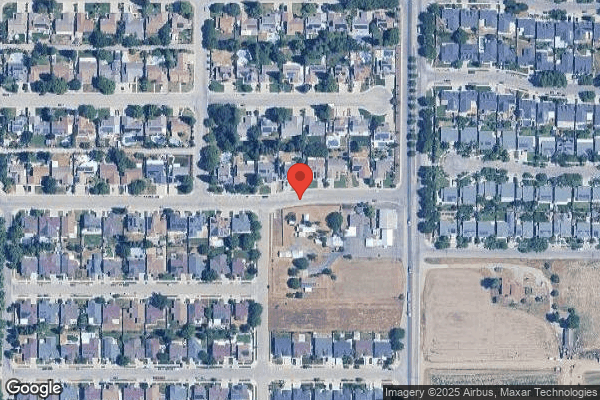
Understanding Severity Codes (click to expand)
Life-Threatening (Immediate Jeopardy)
J - Isolated K - Pattern L - Widespread
Actual Harm
G - Isolated H - Pattern I - Widespread
Potential for Harm
D - Isolated E - Pattern F - Widespread
No Harm (Minor)
A - Isolated B - Pattern C - Widespread

Questions to Ask on Your Visit

  • "Can I speak with families of current residents?"
  • "What's your RN coverage like on weekends and overnight?"

Our Honest Assessment

Strengths
  • • No fines on record. Clean compliance history, better than most California facilities.
  • • 32% turnover. Below California's 48% average. Good staff retention means consistent care.
Concerns
  • • 34 deficiencies on record, including 1 serious (caused harm) violation. Ask about corrective actions taken.
  • • Grade C (55/100). Below average facility with significant concerns.
Bottom line: Mixed indicators with Trust Score of 55/100. Visit in person and ask pointed questions.

About This Facility

What is Palm Village Retirement Comm.'s CMS Rating?

CMS assigns PALM VILLAGE RETIREMENT COMM. an overall rating of 3 out of 5 stars, which is considered average nationally. Within California, this rating places the facility higher than 0% of the state's 100 nursing homes. This mid-range rating indicates the facility meets federal standards but may have areas for improvement.

How is Palm Village Retirement Comm. Staffed?

CMS rates PALM VILLAGE RETIREMENT COMM.'s staffing level at 4 out of 5 stars, which is above average compared to other nursing homes. Staff turnover is 32%, compared to the California average of 46%. This relatively stable workforce can support continuity of care.

What Have Inspectors Found at Palm Village Retirement Comm.?

State health inspectors documented 34 deficiencies at PALM VILLAGE RETIREMENT COMM. during 2019 to 2025. These included: 1 that caused actual resident harm and 33 with potential for harm. Deficiencies causing actual harm indicate documented cases where residents experienced negative health consequences.

Who Owns and Operates Palm Village Retirement Comm.?

PALM VILLAGE RETIREMENT COMM. is owned by a non-profit organization. Non-profit facilities reinvest revenue into operations rather than distributing to shareholders. The facility operates independently rather than as part of a larger chain. With 120 certified beds and approximately 117 residents (about 98% occupancy), it is a mid-sized facility located in REEDLEY, California.

How Does Palm Village Retirement Comm. Compare to Other California Nursing Homes?

Compared to the 100 nursing homes in California, PALM VILLAGE RETIREMENT COMM.'s overall rating (3 stars) is below the state average of 3.1, staff turnover (32%) is significantly lower than the state average of 46%, and health inspection rating (2 stars) is below the national benchmark.

What Should Families Ask When Visiting Palm Village Retirement Comm.?

Based on this facility's data, families visiting should ask: "Can I visit during a mealtime to observe dining assistance and food quality?" "How do you handle medical emergencies, and what is your hospital transfer rate?" "Can I speak with family members of current residents about their experience?"

Is Palm Village Retirement Comm. Safe?

Based on CMS inspection data, PALM VILLAGE RETIREMENT COMM. has a clean safety record: no substantiated abuse findings (meaning no confirmed cases of resident harm), no Immediate Jeopardy citations (the most serious violation level indicating risk of serious injury or death), and is not on the Special Focus Facility watch list (a federal program monitoring the lowest-performing 1% of nursing homes). The facility has a 3-star overall rating and ranks #100 of 100 nursing homes in California. While no facility is perfect, families should still ask about staff-to-resident ratios and recent inspection results during their visit.

Do Nurses at Palm Village Retirement Comm. Stick Around?

PALM VILLAGE RETIREMENT COMM. has a staff turnover rate of 32%, which is about average for California nursing homes (state average: 46%). Moderate turnover is common in nursing homes, but families should still ask about staff tenure and how the facility maintains care continuity when employees leave.

Was Palm Village Retirement Comm. Ever Fined?

PALM VILLAGE RETIREMENT COMM. has no federal fines on record. CMS issues fines when nursing homes fail to meet care standards or don't correct problems found during inspections. The absence of fines suggests the facility has either maintained compliance or corrected any issues before penalties were assessed. This is a positive indicator, though families should still review recent inspection reports for the full picture.

Is Palm Village Retirement Comm. on Any Federal Watch List?

PALM VILLAGE RETIREMENT COMM. is not on any federal watch list. The most significant is the Special Focus Facility (SFF) program, which identifies the bottom 1% of nursing homes nationally based on persistent, serious quality problems. Not being on this list means the facility has avoided the pattern of deficiencies that triggers enhanced federal oversight. This is a positive indicator, though families should still review the facility's inspection history directly.