RICHMOND POST ACUTE CARE
955 23RD STREET, RICHMOND, CA 94804 (510) 237-5182
For profit - Limited Liability company 35 Beds Independent Data: November 2025
Trust Grade
80/100
#178 of 1155 in CA
Last Inspection: January 2025

Within standard 12-15 month inspection cycle. Federal law requires annual inspections.

Overview

Richmond Post Acute Care has a Trust Grade of B+, meaning it is recommended and above average among nursing homes. It ranks #178 out of 1,155 facilities in California, placing it in the top half, and #7 out of 30 in Contra Costa County, indicating that only six other local options are better. However, the facility is trending negatively, with the number of issues reported rising from 5 in 2023 to 7 in 2025. Staffing is a strong point, with a 5-star rating and a turnover rate of 24%, which is significantly lower than the state average. On the downside, the facility has accumulated $36,343 in fines, which is concerning and higher than 91% of California facilities. Additionally, while the facility has good RN coverage, there have been specific incidents that raise concerns. For example, the facility failed to ensure that food was stored properly, with unlabeled and undated items found in the freezer, potentially risking food-borne illnesses for all residents. Furthermore, there was a failure to have a full-time dietician, which could lead to nutritional risks for residents. Overall, while there are strengths in staffing and care ratings, families should be aware of these troubling deficiencies.

Trust Score
B+
80/100
In California
#178/1155
Top 15%
Safety Record
Low Risk
No red flags
Inspections
Getting Worse
5 → 7 violations
Staff Stability
✓ Good
24% annual turnover. Excellent stability, 24 points below California's 48% average. Staff who stay learn residents' needs.
Penalties
⚠ Watch
$36,343 in fines. Higher than 87% of California facilities, suggesting repeated compliance issues.
Skilled Nurses
✓ Good
Each resident gets 88 minutes of Registered Nurse (RN) attention daily — more than 97% of California nursing homes. RNs are the most trained staff who catch health problems before they become serious.
Violations
⚠ Watch
22 deficiencies on record. Higher than average. Multiple issues found across inspections.
★★★★★
5.0
Overall Rating
★★★★★
5.0
Staff Levels
★★★★★
5.0
Care Quality
★★★★☆
4.0
Inspection Score
Stable
2023: 5 issues
2025: 7 issues

The Good

  • 5-Star Staffing Rating · Excellent nurse staffing levels
  • 5-Star Quality Measures · Strong clinical quality outcomes
  • Low Staff Turnover (24%) · Staff stability means consistent care
  • Full Sprinkler Coverage · Fire safety systems throughout facility
  • No fines on record
  • Staff turnover is low (24%)

    24 points below California average of 48%

Facility shows strength in staffing levels, quality measures, staff retention, fire safety.

The Bad

Federal Fines: $36,343

Above median ($33,413)

Moderate penalties - review what triggered them

The Ugly 22 deficiencies on record

Jan 2025 7 deficiencies
CONCERN (E)

Potential for Harm - no one hurt, but risky conditions existed

Deficiency F0561 (Tag F0561)

Could have caused harm · This affected multiple residents

Based on observation, interview, and record review, the facility failed to allow four residents (Residents 15, 5, 9, and 13) to exercise their rights to self-determination when: 1. One out of 27 resid...

Read full inspector narrative →
Based on observation, interview, and record review, the facility failed to allow four residents (Residents 15, 5, 9, and 13) to exercise their rights to self-determination when: 1. One out of 27 residents (Resident 15) was not provided nutrition in accordance with their preferences. 2. Three of six residents (Resident 5, 9, and 13) who followed the facility's smoking policy were not allowed to continue from smoking. These failures had the potential to result in Residents 15, 5, 9 and 13 feeling upset and disrespected. Findings: 1.During a review of Resident 15's admission Record, printed 1/16/25, the record indicated Resident 15 was admitted to the facility in January 2024 with a diagnosis of difficulty in walking. During a review of Resident 15's Brief Interview for Mental Status (BIMS, is a scoring system used to determine the resident's cognitive status regarding attention, orientation, and ability to register and recall information. A BIMS score of thirteen to fifteen is an indication of intact cognitive status.), dated 1/10/25, the record indicated Resident 15's BIMS score was 15. During an observation on 1/13/25, at 12:35 p.m. Resident 15's lunch tray was observed with chicken parmesan as the main entree. The chicken entrée was not eaten. During a review of Resident 15's Lunch Meal Ticket, dated 1/13/25, the Meal Ticket indicated, Resident 15's Dislikes: . No Chicken. During an interview on 1/13/25, at 12:42 p.m. with Resident 15, Resident 15 stated Resident 15 did not like chicken, did not eat any of the chicken served for lunch and was hungry. During an interview on 1/13/25, at 12:50 p.m. with [NAME] 1 (CK 1), CK 1 stated Resident 15 should not have been given chicken for lunch and it was a mistake. During an interview on 1/15/25, at 9:25 a.m. with Registered Dietician (RD), RD stated their policy was to honor resident food choices, likes and dislikes. RD stated staff should have given Resident 15 an alternative to chicken. RD stated it was important to follow resident's food choices because they may not have eaten food they didn't like and to maximize their nutrition. During an interview on 1/15/25, at 9:55 a.m. with Infection Preventionist (IP), IP stated it was important to follow resident food choices otherwise residents may have eaten less, or they could have been upset. During a review of the facility's policy and procedure (P&P) titled, Food Preferences, dated 2018, the P&P indicated, Resident's food preferences will be adhered to within reason. Substitutes for all foods disliked will be given from the appropriate food group. 2. During a review of Resident 13's admission Record, printed on 1/16/25, the record indicated, Resident 13 as admitted to the facility in December 2024 with diagnosis of Atrial fibrillation (an irregular and often very rapid heart rhythm). During a review of Resident 13's Smoking Assessment record, dated 1/6/25, the record indicated Resident 13 was Safe to smoke with supervision and Resident's smoking privileges will be suspended if she violates the safety protocol. During an interview on 1/14/25 at 1:19 p.m. with Resident 13, Resident 13 stated she had been a long-time smoker. Resident 13 stated the facility previously allowed them to smoke with staff's supervision. Resident 13 stated they followed all the smoking rules including the smoking schedules. Resident 13 stated the facility informed all smoking residents that they were not allowed to smoke anymore because one resident violated the smoking protocols. Resident 13 stated the facility should have not punished other smoking residents who followed all the smoking protocols. Resident 13 stated the facility did not respect their rights when they were informed, they could not smoke anymore. During a review of Resident 5's admission Record, printed on 1/16/25, the record indicated, Resident 5 was admitted to the facility in June 2024 with diagnosis of peripheral vascular disease (a disorder caused by narrowing, blockage, or spasm in a blood vessel). During a review of Resident 5's Smoking Assessment record, dated 1/7/25, the record indicated Resident 5 was Safe to smoke with supervision and Resident's smoking privileges will be suspended if he violates the safety protocol. During an interview on 1/15/25 at 8:29 am with Resident 5, Resident 5 stated, when they were informed about the changes to the facility's smoking policy, Resident 5 stated it was not fair for the facility to stop other residents from smoking if they followed all the smoking protocols. Resident 5 stated some residents who smoked together during smoking schedule could have had an impact with their social skills since the facility had banned smoking. During a review of Resident 9's admission Record, printed on 1/16/25, the record indicated, Resident 9 was admitted to the facility in January 2024 with diagnosis of Cellulitis (bacterial skin infection). During a review of Resident 9's Smoking Assessment record, dated 1/7/25, the record indicated Resident 9 was Safe to smoke with supervision and Resident's smoking privileges will be suspended if she violates the safety protocol. During an interview on 1/15/25 at 10:04 a.m. with Resident 9, Resident 9 stated it was brought to their attention that one resident was caught smoking inside the facility. Resident 9 stated after the incident, the facility did not allow them to smoke anymore. Resident 9 stated the facility should not have banned the others from smoking because they were following the smoking protocols. Resident 9 stated most of them have smoked most of their lives and stopping them from smoking abruptly was going to be hard for them. Resident 9 stated they felt it was not right that they had to suffer from another resident's mistake. During an interview on 1/15/25 at 11:11 a.m. with Social Worker (SW), SW stated the facility allowed smoking residents to smoke in the designated area with a staff's supervision. SW stated one resident was not compliant with the smoking protocols and the facility decided to discontinue all smoking privileges for all residents who smoked. SW stated she was sure that Resident 13 and Resident 9 followed all smoking protocols and had not broken any of them. SW stated the Resident 13, Resident 5 and Resident 9 might have felt bad because of the changes in their smoking policy. SW stated she did not have documentations that she assessed Residents 13, 5, and 9's psychosocial well-being after they were not allowed to smoke anymore. During an interview on 1/15/25 at 2:59 p.m. with the Director of Nursing (DON), the DON stated the facility decided to discontinue smoking privileges on 1/11/25. The DON stated Residents 13, 5, and 9 must have felt upset about not being able to smoke because smoking had been part of their lifestyle. The DON stated there were also no documentations of monitoring for any physical and psychosocial side effects for Residents 13, 5, and 9 after they were not allowed to smoke. During an interview on 1/16/25 at 10:10 a.m. with the Administrator (ADM), ADM stated they discontinued the smoking privileges because one resident violated the smoking protocols, and the facility did not have enough staff to supervise this non-compliant resident. ADM stated the rest of the residents who smoked followed the facility's smoking protocols. ADM stated the facility implemented the no smoking policy for safety concerns but did not consider the resident's dignity. ADM stated the facility had a safe designated area where the residents smoked with supervision from staff. During a review of the facility's policy and procedure (P&P), titled, Smoking Policy - Residents, revised in July 2017, the P&P indicated, 1. Prior to, and upon admission, residents shall be informed of the facility smoking policy, including designated smoking areas, and to which the facility can accommodate their smoking or non-smoking preferences .10. The facility may impose smoking restrictions on a resident at any time if it is determined that the resident cannot smoke safely with the available levels of support and supervision. During a review of the facility's policy and procedure (P&P) titled, Resident Rights, revised December 2016, the P&P indicated, Federal and state laws guarantee certain basic rights to all residents of this facility. These rights include the resident's right to: . self-determination.
CONCERN (E)

Potential for Harm - no one hurt, but risky conditions existed

Deficiency F0657 (Tag F0657)

Could have caused harm · This affected multiple residents

Based on interview and record review, the facility failed to ensure two out of three sampled residents (Resident 22 and Resident 77), participated in their care planning process. This failure had the...

Read full inspector narrative →
Based on interview and record review, the facility failed to ensure two out of three sampled residents (Resident 22 and Resident 77), participated in their care planning process. This failure had the potential for Residents 22 and 77 to receive inappropriate interventions and care that was not aligned with their choices. Findings: During a review of Resident 22's admission Record, printed on 1/16/25, the record indicated, Resident 22 was admitted to the facility in December 2024 with a diagnosis of muscle weakness. During a review of Resident 22's Brief Interview for Mental Status (BIMS, is a scoring system used to determine the resident's cognitive status in regard to attention, orientation, and ability to register and recall information., dated 12/10/24, the record indicated, Resident 22's BIMS score was 15.( A BIMS score of thirteen to fifteen is an indication of intact cognitive status). During an interview on 1/16/25, at 11:21 a.m., with Resident 22, Resident 22 stated they have not had a care conference or had a chance to participate in their care planning. Resident 22 stated they would have liked to have a care conference so they could have discussed their plan of care. During a review of Resident 77's admission Record, printed 1/16/24, the record indicated, Resident 77 was admitted to the facility in December 2024 with a diagnosis of difficulty in walking. During a review of Resident 77's BIMS, dated 1/2/25, the record indicated Resident 77's BIMS score was 15. During an interview on 1/13/25, at 12:19 a.m., with Resident 77, Resident 77 stated they have not had a care conference or had a chance to participate in their care planning. Resident 77 stated they were frustrated and felt like they did not know what was going on with their plan of care. During a concurrent interview and record review on 1/15/25, at 3:32 p.m., with Medical Records (MR), Resident 22's and 77's medical charts were reviewed. MR stated Residents 22 and 77 have not had a care conference. During an interview on 1/16/25, at 10:15 a.m., with Director of Nursing (DON), DON stated Care Conferences were important because it was where they discussed as a team residents' plan of care, care plans, progress, condition, and discharge plan. DON stated Care Conferences should be done as a team and should have included nurses, nursing assistants, social services, residents, responsible parties, and doctors or the doctors stand in. DON stated Care Conferences should have been on admission, quarterly, after any significant change, and as needed. During a review of the facility's policy and procedure (P&P) titled, Care Planning - Interdisciplinary Team, revised September 2013, the P&P indicated, The resident, the resident's family and/or the residents legal representative/ guardian or surrogate are encouraged to participate in the development of and revisions to the resident's care plan.
CONCERN (E)

Potential for Harm - no one hurt, but risky conditions existed

Deficiency F0757 (Tag F0757)

Could have caused harm · This affected multiple residents

Based on interview and record review, the facility failed to ensure two of two sampled residents (Resident 4 and Resident 22), were free from unnecessary medications when: 1. Resident 4's antibiotic (...

Read full inspector narrative →
Based on interview and record review, the facility failed to ensure two of two sampled residents (Resident 4 and Resident 22), were free from unnecessary medications when: 1. Resident 4's antibiotic (treats bacterial infection) order of Levaquin oral tablet 250 milligrams (mg) did not have an adequate indication for use. 2. Resident 22's antibiotic order of Ciprofloxacin oral tablet 500mg did not have an adequate indication for use and a stop date. These failures had the potential to result in unnecessary and prolonged use of antibiotic medications, placing Resident 4 and Resident 22 at risk for adverse side effects and health safety issues. Findings: 1. During a record review of Resident 4's admission Record, printed on 1/16/25, the record indicated Resident 4 was admitted to the facility in October 2024 with diagnosis of congested heart failure (a chronic condition in which the heart doesn't pump blood efficiently). During a record review of Resident 4's Order Summary, dated 10/30/24-1/16/25, the record indicated, Resident 4 had a doctor's order of Levaquin oral tablet 250mg, Give 2 tablets by mouth one time a day for congested cough for 7 days with a start date of 12/31/24 and an end date of 1/8/25. 2. During a record review of Resident 22's admission Record, printed on 1/16/25, the record indicated Resident 22 was admitted to the facility in December 2024 with diagnosis of cirrhosis of liver (chronic liver damage). During a record review of Resident 22's Order Summary, printed on 1/16/25, the record indicated, Resident 22 had a doctor's order of Ciprofloxacin oral tablet 500mg, Give 1 tablet by mouth in the morning for Peritonitis (inflammation of the inner lining of the abdomen) with a start date of 12/6/24 and had no end date. During a concurrent interview and record review on 1/15/25 at 11:15 a.m. with the Infection Preventionist (IP), the facility's record of Antibiotic Surveillance, dated 1/14/25, was reviewed. IP stated congested cough was not a correct indication of antibiotic use. IP stated the indication should have been more specific of what type of infection Resident 4 was being treated for. IP stated the correct indication use for antibiotic should have been entered accurately to determine the effectiveness of the antibiotic medication for Resident 4. IP further stated Resident 22's Ciprofloxacin antibiotic did not have an end date because the hospital order indicated indefinitely. IP stated on 12/24/24, the Medical Director (MD) ordered to continue the antibiotic for Resident 22. IP stated there was no clear indication for the continued use of antibiotic for Resident 22. IP stated Resident 22 was still taking the antibiotic even though Resident 22 did not have any more symptoms of Peritonitis. IP stated Resident 22's antibiotic should have had a stop date or a clear indication for the continued use to monitor the effectiveness of the antibiotic. During a concurrent interview and record review on 1/15/25 at 2:35 p.m. with the Director of Nursing (DON), Resident 4 and Resident 22's electronic health record (EHR) were reviewed. The DON stated Resident 4's congestive cough indication for the antibiotic use was not correct. The DON stated the licensed nurse who entered the order probably did not know that it should have included the correct indication for the antibiotic use. The DON further stated Resident 22's antibiotic should have had a clear indication why it was given with no stop date. The DON stated the use of antibiotics should have had correct indications and stop date for effective antibiotic treatment. During a concurrent follow up interview and record review on 1/16/25 at 12:51 p.m. with the DON, Resident 22's MD's note, dated 12/24/24, was reviewed. MD's note indicated Peritonitis resolved. The DON stated there were no other documentations from the MD with clear indications and rationale for Resident 22's indefinite use of antibiotic. During a concurrent phone interview on 1/16/25 at 11:11 a.m. with the Consultant Pharmacist (CP), CP stated she had made a recommendation last December 2024 to MD to re-assess the duration of the antibiotic use for Resident 22. CP stated MD's response to her recommendation was still pending. CP further stated she had not reviewed the Drug Regimen Review (DRR) for the month of January and had not seen Resident 4's antibiotic order. During a record review of the facility's undated policy and procedure (P&P), titled, Unnecessary Medications, the P&P indicated, Each resident's drug regimen must be free from unnecessary drugs. All unnecessary drugs are any drug used .2. For excessive duration .5. Without adequate indication for use. During a record review of the facility's undated P&P, titled, Antibiotic Stewardship, the P&P indicated, Keep in contact with MD in regards to antibiotic orders .Monitor antibiotic prescribed .look for indications; if it does not meet the criteria, communicate with MD to make changes .Follow up with the patient when they come with antibiotic; look for diagnosis, what it justifies .Ensure the antibiotic meets diagnosis/indication, if not clarify with MD .Check patient; duration of prophylaxis or no stop date, clarify with MD regarding indefinite order.
CONCERN (E)

Potential for Harm - no one hurt, but risky conditions existed

Deficiency F0761 (Tag F0761)

Could have caused harm · This affected multiple residents

**NOTE- TERMS IN BRACKETS HAVE BEEN EDITED TO PROTECT CONFIDENTIALITY** Based on observation, interview, and record review, the facility failed to ensure safe medication storage and labeling practices...

Read full inspector narrative →
**NOTE- TERMS IN BRACKETS HAVE BEEN EDITED TO PROTECT CONFIDENTIALITY** Based on observation, interview, and record review, the facility failed to ensure safe medication storage and labeling practices for a census of 28 when: 1. The medication refrigerator contained five bags of Resident 9's expired and discontinued intravenous (IV, administered directly into the vein) medications. 2. An unlabeled, undated, and unsecured prefilled pen (an injection device that delivers preloaded medication) of Ozempic (Diabetes medicine) was stored in the refrigerator. 3. An expired insulin pen (Diabetes medicine) was stored in an active storage area of the medication cart. 4) An unopened insulin pen with pharmacy label of refrigerate until opened was stored at room temperature in the medication cart. 5) The medication cart contained a discharged resident's bottle of Nitroglycerin medication (medicine to treat and prevent chest pain). 6) Resident 127's Triamcinolone ointment (treats skin conditions such as eczema, rash, allergies, etc.) and Resident 13's Terbinafine hydrochloride cream (treats fungus infection of scalp, groin, feet, nails, etc.) were stored with oral and inhalation medications and a body lotion was stored with oral inhalation medications. 7) Narcotic (controlled substance) medications were stored with residents' personal belongings. These failed practices had the potential for causing medication error and contribute to unsafe use of medications. Findings: 1) During a concurrent observation and interview on [DATE] at 12:20 p.m. with Infection Preventionist (IP), the medication refrigerator was observed. The medication refrigerator contained five bags of Resident 9's IV medication called Cefepime 2 grams (treats bacterial infections) 1000 milliliter (ml, a unit of volume) that had a use by date of [DATE]. IP stated Resident 9 was not taking the IV medication anymore. IP stated the Resident 9's expired and discontinued IV medications should have been discarded for patient safety. 2) During a concurrent observation and interview on [DATE] at 12:23 p.m. with IP, the medication refrigerator contained an unlabeled, undated, and unsecured Ozempic pen. The Ozempic pen did not have a resident's name and date it was opened. The Ozempic pen was also not in a box or a zip lock bag and was stored in one of the medication refrigerator shelves with other refrigerated medications. IP stated she could not identify who it belonged to. IP stated the Ozempic pen should have been labeled and stored properly. IP stated it was important to label a medication correctly to prevent medication errors. 3) During a concurrent observation and interview on [DATE] at 11:03 a.m. with Registered Nurse (RN) 1, Resident 21's insulin Lispro 100 unit/1ml with an open date of [DATE] was stored in an active storage of the medication cart. RN 1 stated, the insulin Lispro expired on [DATE]. RN 1 stated, the insulin Lispro should have been discarded after 28 days from opening. RN 1also stated storing expired insulin could have caused medication errors and risk for less effective potency. 4) During a concurrent observation and interview on [DATE] at 11:05 a.m. with RN 1, the medication cart contained Resident 21's unopened insulin Glargine 100 unit/1ml that had a pharmacy label of refrigerate until opened. Resident 21's insulin Glargine's zip lock bag did not have open and discard after dates. RN 1 stated Resident 21's insulin Glargine was unopened and had not been used. RN 1 further stated he was not sure how long the insulin Glargine had been stored in the medication cart and in room temperature. RN 1 stated Resident 21's insulin Glargine should have been refrigerated because it was never opened, and it was at risk for less effective potency and efficacy. 5) During a concurrent observation and interview on [DATE] at 11:08 a.m. with RN 1, a small bottle of Nitroglycerin was stored in an active storage area of the medication cart. RN 1 stated the Nitroglycerin belonged to a discharged resident. RN 1 stated discharged medications should have not been stored in the medication cart to prevent medication error. 6) During a concurrent observation and interview on [DATE] at 11:15 a.m. with RN 1, Resident 127's Triamcinolone ointment and Resident 13's Terbinafine hydrochloride cream were stored together with oral tablets, liquid, powder and inhalation medications. A small bottle of body lotion was also stored in a compartment with two inhalers. RN 1 stated every licensed nurse should have been responsible in maintaining the medication cart. RN 1 stated the medications should have been separated and stored by administration route to prevent medication error and contamination. 7) During a concurrent observation and interview on [DATE] at 11:24 a.m. with RN 1, the narcotic medications were stored with multiple items such as pack of cigarettes, cables, loose paper money, discharged resident's wallet, charger, cellphone, a zip lock with money, etc. RN 1 stated a zip lock bag containing a wallet and a cellphone charger belonged to a discharged resident. RN 1 stated residents' personal items had been stored in the narcotic box ever since he started working in the facility. RN 1 stated they did not give the residents' personal items to the social worker. RN 1 stated he was not sure what the policy was for storing residents' personal items. During an interview on [DATE] at 12:04 p.m. with the IP, IP stated all nurses were responsible in maintaining the medication cart. IP stated medications should have been stored by administration route. IP stated the treatments or ointments should have been stored in the treatment cart and not with the oral medications. IP further stated the residents' personal belongings should not have been stored together with the oral narcotic medications. IP stated these practices could have caused contamination of the medications and spread of infection because those items were considered dirty. During an interview on [DATE] at 2:24 p.m. with the Director of Nursing (DON), the DON stated, the medication refrigerator and medication carts should have been free from expired and unlabeled medications. The DON stated Resident 9's IV medication should have been discarded when Resident 9 was transferred to the hospital and the medication was discontinued. The DON stated storing unlabeled, expired, discontinued, and discharged resident's medications could have caused medication errors and drug diversion. The DON stated the medications should have been stored by route to prevent cross contamination of the medications. The DON further stated resident's personal belongings should have been given to the social worker for safe keeping and not stored with the narcotics medications. The DON stated keeping personal items in the medication cart could have caused cross contamination. During an interview on [DATE] at 11:11 a.m. with the Consultant Pharmacist (CP), CP stated maintaining proper storage of the medication carts and medication refrigerators should have been done by nursing. The CP stated unlabeled medications should have been discarded and reordered by the facility if they were not able to identify who the medication belonged to. The CP stated medications should have been stored by route of administration because it was the regulation. During a review of the facility's policy and procedure (P&P), titled, Storage of Medications, revised in [DATE], the P&P indicated, The facility stores all drugs and biologicals in a safe, secure, and orderly manner .3. The nursing staff is responsible for maintaining medication storage and preparation areas in a clean, safe, and sanitary manner .4. Drug containers that have missing, incomplete, improper, or incorrect labels are returned to the pharmacy for proper labeling before storing .5. Discontinued, outdated, or deteriorated drugs or biologicals are returned to dispensing pharmacy or destroyed. 10. Resident medications are stored separately from each other to prevent possibility of mixing medications between residents .11. Medications requiring refrigeration are stored in a refrigerator located in the drug room at the nurses' station or other secured location. During a record review of the facility's P&P, titled, Labeling of Medication Containers, revised in [DATE], the P&P indicated, All medications maintained in the facility are properly labeled in accordance with current state and federal guidelines and regulations .2. Any medication packaging or containers that are adequately or improperly labeled are returned to the issuing pharmacy Labels for individual resident medications include all necessary information, such as: a. The resident's name b. The prescribing physician's name c. The name, address, and telephone number of the issuing pharmacy d. The name, strength, and quantity of drug .
CONCERN (E)

Potential for Harm - no one hurt, but risky conditions existed

Food Safety (Tag F0812)

Could have caused harm · This affected multiple residents

Based on observation, interview, and record review, the facility failed to ensure food was stored under safe and sanitary conditions when: 1. Refrigerated and frozen food items were stored beyond thei...

Read full inspector narrative →
Based on observation, interview, and record review, the facility failed to ensure food was stored under safe and sanitary conditions when: 1. Refrigerated and frozen food items were stored beyond their use by date. 2. Refrigerated and frozen resident food items were unlabeled and undated. 3. Staff food items were stored in the Resident refrigerator with resident food items. These failures had the potential to put 27 residents residing at the facility at risk for food borne illness and cross-contamination (transfer of bacteria or other microorganisms from one substance to another) that could have resulted in infection or spread of infection. Findings: During a concurrent observation and interview on 1/13/25 at 9:43 a.m. with cook 1, (CK 1), the refrigerator and freezer were observed. The refrigerator had a container of olives with a use by date of 1/7/25 and a container of sweet potatoes with a use by date 1/12/25. The freezer had a pack of garden burgers with a use by date of 1/11/25. CK 1 stated their policy was to throw out any food that was beyond their use by date because they could have caused residents to get sick. During a concurrent observation and interview on 1/13/25 at 2:08 p.m. with infection preventionist (IP), the resident refrigerator and freezer were observed. The refrigerator had one bag of ready to eat salad, one bottle of coffee creamer, and two opened water bottles that were not labeled with resident names or dates and three staff lunch bags. The freezer had one sandwich labeled Resident 8 that was undated and three pieces of candies and one opened water bottle that were not labeled with resident names or dates. IP stated staff should not have stored their food with resident food because it was a risk for cross contamination. IP stated food should be labeled with resident name and date to know who owned it and to know how old it was. IP stated undated food was a risk for food born illness because it could have been old. During an interview on 1/15/25 at 9:49 a.m. with Registered Dietician (RD), RD stated it was important to throw out food that was beyond their use by date because it may have been less nutritious, and they may have gone bad. RD stated it was important to separate resident food brought from outside and staff food because it was a potential risk for cross contamination and food borne illness. RD stated it was important to label residents' food with date otherwise they may they would not know how old it was, and it could have gone bad. During a review of the facility's policy and procedure (P&P) titled, Food For Residents From Outside Sources, dated 2018, the P&P indicated, Prepared foods, beverages, or perishable food that requires refrigeration, can be stored for the resident in the nurse's station refrigerator . If opened, the food must be sealed, dated to the date opened and disposed of in 3 days after opening. During a review of the facility's policy and procedure (P&P) titled, Food Receiving and Storage, revised 2014, the P&P indicated, Food shall be received and stored in a manner that complies with safe food handling practices . All foods stored in the refrigerator or freezer will be covered, labeled and dated (use by date).
CONCERN (E)

Potential for Harm - no one hurt, but risky conditions existed

Infection Control (Tag F0880)

Could have caused harm · This affected multiple residents

Based on observation, interview, and record review, the facility failed to implement infection control practices for four of four sampled residents (Resident 9, 3, 129, and 22) when the blood pressure...

Read full inspector narrative →
Based on observation, interview, and record review, the facility failed to implement infection control practices for four of four sampled residents (Resident 9, 3, 129, and 22) when the blood pressure (BP) cuff and medication tray were not cleaned and sanitized after each use. These deficient practices had the potential spread of infection among residents at the facility. Findings: During a medication pass observation on 1/14/25 at 7:23 a.m. with Registered Nurse (RN) 2, RN 2 was observed passing Resident 9's medications using the medication tray. RN 2 placed the medication tray on top of Resident 9's tray table. RN 2 was then observed checking Resident 9's BP on the left wrist using an automatic BP cuff. After RN 2 checked Resident 9's BP and administered the medications, RN 2 returned to the medication cart. RN 2 did not disinfect the medication tray and the BP cuff she used for Resident 9. RN 2 placed the BP cuff inside the drawer and the medication tray on top of the medication cart. During a subsequent medication pass observation on 1/14/25 at 8:04 a.m. with RN 2, RN 2 was observed preparing Resident 3's medication. RN 2 placed Resident 3's medications on the medication tray she previously used for Resident 9. After RN 2 administered Resident 3's medications, RN 2 returned to cart and placed the medication tray on top of the medication cart without disinfecting it. During a subsequent medication pass observation on 1/14/25 at 8:10 a.m. with RN 2, RN 2 prepared Resident 129's medication using the same medication tray she previously used for Resident 9 and Resident 3. RN 2 entered Resident 129's room placed the medication tray on top of Resident 129's bed. RN 2 then proceeded to check Resident 129's BP on the left wrist using the same BP cuff she previously used for Resident 9. RN 2 did not disinfect the medication tray and the BP cuff after she administered Resident 129's medications. RN 2 returned the BP cuff inside the drawer and the medication tray on top of the medication cart. During a subsequent medication pass observation on 1/14/25 at 8:29 a.m. with RN 2, RN 2 prepared Resident 22's medications using the same medication tray she previously used for Residents 9, 3, and 129 without disinfecting. RN 2 entered Resident 22's room and placed the medication tray on top of Resident 22's tray table. RN 2 returned to the medication cart after she administered Resident 22's medications. RN 2 did not clean and sanitize the medication tray after using it with Residents 9, 3, 129 and 33. During a follow up interview on 1/14/25 at 8:40 a.m. with RN 2, RN 2 stated she did not clean and sanitize the medication tray and BP cuff after each use because she was going to do it all at once after she was done using them. RN 2 stated the BP cuff, and the medication tray should have been cleaned and sanitized after each use to prevent infection. During an interview on 1/15/25 at 12:01 p.m. with the Infection Preventionist (IP), IP stated all reusable items should be disinfected with their facility's approved disinfectant. IP stated the BP cuff, and the medication tray should have been disinfected to prevent cross contamination. During a review of the facility's undated policy and procedure (P&P), titled, Sanitizing/Cleaning Equipments , the P&P indicated Immediately cleaning all reusable equipment with a designated solution after each use .Adhering to standard infection control practices.
CONCERN (E)

Potential for Harm - no one hurt, but risky conditions existed

Deficiency F0912 (Tag F0912)

Could have caused harm · This affected multiple residents

**NOTE- TERMS IN BRACKETS HAVE BEEN EDITED TO PROTECT CONFIDENTIALITY** Based on observation and record review, the facility had seven resident rooms (Rooms 3, 4, 5, 6, 7, 8, and 9) with multiple beds...

Read full inspector narrative →
**NOTE- TERMS IN BRACKETS HAVE BEEN EDITED TO PROTECT CONFIDENTIALITY** Based on observation and record review, the facility had seven resident rooms (Rooms 3, 4, 5, 6, 7, 8, and 9) with multiple beds that provided less than 80 square feet (sq. ft.) per resident. This deficient practice had the potential to result in inadequate space for the delivery of care to each of the residents in each room and for storage of the residents' belongings. Findings: During random observations of care and services from 1/13/25 to 1/16/25, there was sufficient space for the provision of care for the residents in all rooms. There was no heavy equipment kept in the rooms that might interfere with resident's care, and each resident had adequate personal space and privacy. There were no complaints from residents regarding insufficient space for their belongings. There were no negative consequences attributed to the decreased space and/or safety concerns in the seven identified rooms. During a record review of the Client Accommodations Analysis, dated 1/14/25, the following resident rooms and corresponding square footage were identified: 1. room [ROOM NUMBER] was a total of 154 sq. ft. and had two beds providing 77 sq. ft. of space per resident; 2. room [ROOM NUMBER] was a total of 154 sq. ft. and had two beds providing 77 sq. ft. of space per resident; 3. room [ROOM NUMBER] was a total of 154 sq. ft. and had two beds providing 77 sq. ft. of space per resident; 4. room [ROOM NUMBER] was a total of 220 sq. ft. and had three beds providing 73 sq. ft. of space per resident; 5. room [ROOM NUMBER] was a total of 220 sq. ft. and had three beds providing 73 sq. ft. of space per resident; 6. room [ROOM NUMBER] was a total of 220 sq. ft. and had three beds providing 73 sq. ft. of space per resident; and 7. room [ROOM NUMBER] was a total of 220 sq. ft. and had three beds providing 73 sq. ft. of space per resident.
Nov 2023 5 deficiencies
CONCERN (D)

Potential for Harm - no one hurt, but risky conditions existed

Deficiency F0883 (Tag F0883)

Could have caused harm · This affected 1 resident

**NOTE- TERMS IN BRACKETS HAVE BEEN EDITED TO PROTECT CONFIDENTIALITY** Based on interview and record review, the facility failed to educate and offer a pneumococcal vaccine (an injection to reduce th...

Read full inspector narrative →
**NOTE- TERMS IN BRACKETS HAVE BEEN EDITED TO PROTECT CONFIDENTIALITY** Based on interview and record review, the facility failed to educate and offer a pneumococcal vaccine (an injection to reduce the risk of getting pneumonia; an infection of the lungs) to one resident (Resident 2) out of five sampled residents. This failure had the potential for increased risk to residents eligible for pneumococcal vaccines to contract pneumonia which is preventable through vaccination. Findings: During a review of Resident 2's Health Record, the record indicated Resident 2 was admitted in May 2018. The immunizations tab indicated Resident 2 received a dose of Pneumovax (a type of pneumococcal vaccine, type unspecified) on 10/10/2022. No other type of pneumococcal vaccines were noted. During a concurrent interview and record review on 11/28/23 at 10:37 a.m., with Infection Preventionist (IP), Resident 2's Immunization Record, undated, was reviewed. The Immunization Record indicated Resident 2 was given Pneumovax Dose 1 on 10/10/22. IP stated that she offered pneumococcal vaccines to all residents upon admission or within 30 days. IP stated she verified immunization status either with acute care hospitals upon admission to the facility, or with resident family members. She further stated she will clarify with doctors on which pneumococcal vaccine to give or call pharmacy to get recommendations, as well as keeping in touch with the California Department of Public Health consultant for recommendations. IP was unable to state current Centers for Disease Control and Prevention (CDC) pneumococcal vaccination schedule. During a review of CDC current recommendations titled Pneumococcal Vaccines Timing for Adults, dated 2022, the current CDC Pneumococcal Vaccine Timing for Adults indicated, For adults 65 years or older who have only received PPSV-23 at any age, CDC recommends A) After 1 year, give 1 dose of PCV 15 or B) After 1 year, give 1 dose of PCV20. The CDC pneumococcal timing also indicated For adults 65 year or older who have only received PCV13 only at any age, the CDC recommends that after 1 year, receiving PCV20 or PPSV23. It further indicated adults who completed the PCV13 at any age and PPSV23 series when they are older than [AGE] years of age, CDC recommends receiving PCV20 after 5 years. During a review of facility's policy and procedure (P&P) titled, Pneumococcal Vaccine, dated August 2016, the P&P indicated 7. Administration of the pneumococcal vaccines are made in accordance with current Centers for Disease Control and Prevention recommendations .
CONCERN (D)

Potential for Harm - no one hurt, but risky conditions existed

Safe Environment (Tag F0921)

Could have caused harm · This affected 1 resident

**NOTE- TERMS IN BRACKETS HAVE BEEN EDITED TO PROTECT CONFIDENTIALITY** Based on observation, interview, and record review, the facility failed to ensure one resident room's water temperature was in t...

Read full inspector narrative →
**NOTE- TERMS IN BRACKETS HAVE BEEN EDITED TO PROTECT CONFIDENTIALITY** Based on observation, interview, and record review, the facility failed to ensure one resident room's water temperature was in the proper range. This failure resulted in the hot water in room [ROOM NUMBER] being too hot at 138 degrees Fahrenheit. Findings: During a concurrent observation and interview on 11/27/23 at 10:22 a.m. with Infection Preventionist (IP) in room [ROOM NUMBER], the hot water in the bathroom sink measured 138 degrees Fahrenheit. IP stated the water temperature would be lowered to under 120 degrees Fahrenheit. During a concurrent observation and interview on 11/27/23 at 12:30 p.m. with IP in room [ROOM NUMBER], IP stated the hot water temperature in the bathroom sink had been lowered. IP measured the hot water temperature, which was 138 degrees Fahrenheit. IP stated the water temperature would be lowered further to under 120 degrees Fahrenheit. During a concurrent observation and interview on 11/29/23 at 8:39 a.m. with Maintenance Director (Maint) in room [ROOM NUMBER], Maint stated the hot water temperature in the bathroom sink had been lowered. Maint measured the hot water temperature, which was 115 degrees Fahrenheit. Maint stated the water temperature should be between 105 and 120 degrees Fahrenheit. Maint stated water temperature of 138 degrees Fahrenheit could harm a resident's skin and/or be uncomfortable for a resident. During a review of facility's policy and procedure (P&P) titled, Hot Water, undated, the P&P indicated, The acceptable temperature for the hot water temps will be between 105 degrees F and 120 degrees F.
CONCERN (F)

Potential for Harm - no one hurt, but risky conditions existed

Deficiency F0801 (Tag F0801)

Could have caused harm · This affected most or all residents

Based on interview and record review, the facility failed to ensure there was a full time dietician or certified dietary manager. This failure had the potential to put 32 out of 32 residents at risk f...

Read full inspector narrative →
Based on interview and record review, the facility failed to ensure there was a full time dietician or certified dietary manager. This failure had the potential to put 32 out of 32 residents at risk for food-borne illnesses (illnesses caused by food contaminated with bacteria, viruses, parasites, and toxins) and/or malnutrition. Findings: During an interview on 11/29/23 at 11:27 a.m., with Registered Dietician (RD), RD stated she works at the facility 30 hours, which is full time. RD stated she is at the facility four days for 8 hours a day. During a record review of Richmond Post-Acute Dietary Work Schedule (undated), the work schedule indicated RD's schedule was Monday through Thursday, from 10 a.m. until 6:30 p.m., a total of 34 scheduled hours. During a review of facility policy and procedure titled Dietary Manager, (undated), indicated that the facility will have an approved CDM, dietary manager, or registered dietician .the position requires full time status. According to the California Code, Health, and Safety Code - HSC § 1265.4: A licensed health facility, shall employ a full-time, part-time, or consulting dietitian. A health facility that employs a registered dietitian less than full time, shall also employ a qualified full-time dietetic services supervisor to supervise dietetic service operations.
CONCERN (F)

Potential for Harm - no one hurt, but risky conditions existed

Food Safety (Tag F0812)

Could have caused harm · This affected most or all residents

Based on observation, interview, and record review, the facility failed to ensure food was stored in accordance with professional standard for food service when five packages of frozen pancakes, four ...

Read full inspector narrative →
Based on observation, interview, and record review, the facility failed to ensure food was stored in accordance with professional standard for food service when five packages of frozen pancakes, four packages of frozen waffles, one large sheet tray of frozen meat, and one tray of pre-poured beverages were unlabeled and undated. This failure had the potential to put 32 out of 32 residents at risk for food-borne illnesses leading to hospitalization. Findings: During a concurrent observation and interview on 11/27/23 at 9:07 a.m., in the freezer, with [NAME] 1, five packages of frozen pancakes, four packages of frozen waffles were unlabeled, and one large sheet tray of meat product was unlabeled and undated. During the same concurrent observation and interview, in Refrigerator 1, one tray of pre-poured beverages (22 cups) was unlabeled and undated. [NAME] 1 stated that food needs label and date so staff can use old items first. During an interview on 11/29/23 at 11:27 a.m., with Registered Dietician (RD), RD stated all food should have label and date. During a review of facility's policy and procedure titled Labeling and Dating of Foods, dated 2020, the policy and procedure indicated All foods in the storeroom, refrigerator, and freezer need to be labeled and dated.
MINOR (B)

Minor Issue - procedural, no safety impact

Deficiency F0912 (Tag F0912)

Minor procedural issue · This affected multiple residents

**NOTE- TERMS IN BRACKETS HAVE BEEN EDITED TO PROTECT CONFIDENTIALITY** Based on observation and interview, the facility had five resident rooms (Rooms 4, 5, 8, 9 and 10) with multiple beds that provi...

Read full inspector narrative →
**NOTE- TERMS IN BRACKETS HAVE BEEN EDITED TO PROTECT CONFIDENTIALITY** Based on observation and interview, the facility had five resident rooms (Rooms 4, 5, 8, 9 and 10) with multiple beds that provided less than 80 square feet (sq ft) per resident. This deficient practice had the potential to result in inadequate space for the delivery of care to each of the residents in each room and for storage of the residents' belongings. Findings: During an interview on 11/30/23 at 8:34 a.m. with Maintenance Director (Maint), Maint stated the following rooms and corresponding square footage per bed were identified: 1. room [ROOM NUMBER] had two beds and it measured 154 sq ft, providing 77 sq ft per resident; 2. room [ROOM NUMBER] had two beds and it measured 154 sq ft, providing 77 sq ft per resident; 3. room [ROOM NUMBER] had three beds and it measured 220 sq ft, providing 73.33 sq ft per resident; 4. room [ROOM NUMBER] had three beds and it measured 220 sq ft, providing 73.33 sq ft per resident; and 5. room [ROOM NUMBER] had three beds and it measured 220 sq ft, providing 73.33 sq ft per resident. During random observations of care and services from 11/27/23 through 11/30/23, there was sufficient space for provision of care for the residents in all rooms. There was no heavy equipment kept in the rooms that might interfere with resident's care and each resident had adequate personal space and privacy. There were no complaints from the residents regarding insufficient space for their belongings. There were no negative consequences attributed to the decreased space and/or safety concerns in the five rooms.
Jun 2022 10 deficiencies
CONCERN (D)

Potential for Harm - no one hurt, but risky conditions existed

Deficiency F0801 (Tag F0801)

Could have caused harm · This affected 1 resident

Based on observation, interview, and facility document review, the facility failed to ensure the competency of the Certified Dietary Manager (CDM) when pureed food was prepared to a consistency too th...

Read full inspector narrative →
Based on observation, interview, and facility document review, the facility failed to ensure the competency of the Certified Dietary Manager (CDM) when pureed food was prepared to a consistency too thin to hold it's shape. This failure had the potential for one resident who received a pureed diet, out of 28 residents who ate food by mouth, to aspirate (to breath fluid or food into the lungs) when eating the pureed food and/or to eat less due to an undesirable consistency of food. Findings: During a review of the Diet Manual for long Term Care and Residential Facilities dated 2020, showed Nectar Thick consistency flows off a spoon but pours slower than thin drinks. The description for a Pureed Diet showed it was for residents who had difficulty chewing and/or swallowing. The texture of the food should be able to hold its shape. During a review of the Policy and Procedure titled Self Feeding Devices dated 2018, policy indicated, a self-feeding device such as a divided plate, was used by a resident to maintain or improve their ability to eat or drink. A physical therapist, occupational therapist, or speech therapist and/or designated person would evaluate the resident for the need of a self-feeding device. In addition, tray cards would indicate if a device was needed. During an observation on 6/27/22 at 11:35 a.m., showed [NAME] 1 pureeing food in a food processor for the lunch meal. [NAME] 1 placed cooked Salisbury steak patties into the food processor and added gravy, then pureed the food. When [NAME] 1 transferred the pureed meat into a container to serve on trayline, the meat was thin enough so it was pourable. [NAME] 1 then added cooked diced, fried potatoes into the food processor and added milk. [NAME] 1 did not measure the milk added. She blended the mixture and poured the pureed potato into a container for trayline. Then [NAME] 1 added cooked corn kernels and gravy to the food processor. She blended the ingredients and poured the mixture into a container for trayline. During an observation and interview with CDM on 6/27/22 at 12 p.m., showed [NAME] 1 plated food for the lunch trayline. An observation of Resident 4's tray ticket showed the resident was on a Pureed diet and did not indicate a divided plate. When [NAME] 1 plated the pureed food for Resident 4 she used a divided plate (a plate that is divided into sections and has high sides which keeps food separated and can make it easier to place food on an eating utensil using the sides of the plate to push food onto the utensil) to plate the pureed food. CDM confirmed a divided plate was not indicated on Resident 4's tray card and stated the divided plate was used so the pureed food did not run together. She stated the consistency of the pureed food should be nectar thick. She said it was okay if the food did not hold it's shape. She said she did not think pureed meat should be as thick as pudding. During an interview on 6/28/22 at 12 p.m., with the Physical Therapist (PT), PT stated, there was no record that resident 4 was seen by a therapist to be evaluated for the need of an assistive device for eating such as a divided plate.
CONCERN (D)

Potential for Harm - no one hurt, but risky conditions existed

Deficiency F0805 (Tag F0805)

Could have caused harm · This affected 1 resident

Based on observation, interview, and facility document review, the facility failed to prepare food to meet the needs of residents when the texture of corn served to residents receiving a mechanical so...

Read full inspector narrative →
Based on observation, interview, and facility document review, the facility failed to prepare food to meet the needs of residents when the texture of corn served to residents receiving a mechanical soft diet was not the texture indicated on the menu, recipe, and the diet manual. This failure had the potential for two residents who received a mechanical soft diet to choke out of 30 residents who received food from the kitchen. Findings: Review of the menu cooks spreadsheet titled Summer Menus dated 6/27/22, the menu indicated, regular textured diets received corn with green peppers and mechanical soft diets received creamed corn. Review of the recipe titled Corn with [NAME] Peppers dated Week 4 Monday the recipe indicated, one of the ingredients was frozen corn. The recipe also indicated, for mechanical soft diets to substitute creamed corned for regular corn and to add cooked green peppers. Review of the Diet Manual for long Term Care and Residential Facilities dated 2020, the diet manual indicated, the Mechanical Soft diet was designed for residents who experienced chewing or swallowing limitations. For cooked vegetables, the diet manual indicated corn was to be creamed corn or could be whole if in mixed vegetables or soups. An observation and interview with the CDM and [NAME] 1 on 6/27/22, [NAME] 1 placed a scoop of regular corn on the trays that indicated a Mechanical Soft diet. When the surveyor asked the CDM if the corn served was the appropriate texture according to the menu, she stated, the corn should be creamed corned. When the CDM instructed [NAME] 1 to make creamed corn, [NAME] 1 asked the CDM how to make creamed corn. CDM told [NAME] 1 to blend the corn with milk. A recipe for creamed corn was not available.
CONCERN (E)

Potential for Harm - no one hurt, but risky conditions existed

Pharmacy Services (Tag F0755)

Could have caused harm · This affected multiple residents

Based on observation, interview, and record review, the facility failed to ensure accurate accountability and effective storage of controlled medications (those with high potential for abuse or addict...

Read full inspector narrative →
Based on observation, interview, and record review, the facility failed to ensure accurate accountability and effective storage of controlled medications (those with high potential for abuse or addiction) when random controlled medication use audits two out of 4 residents (Residents 13 and 128) did not reconcile. The medications were signed out of the Controlled Drug Record (CDR, an inventory sheet that keeps record of the usage of controlled medications) but not documented on the Medication Administration Record (MAR) to indicate they were given to the residents. This failure resulted in the facility not having accurate accountability of controlled medications and potential for abuse or misuse of these medications. Findings: The controlled medication CDR for four random residents receiving as-needed controlled medications were requested for review during the survey. During an interview on 6/28/22, at 1:20 p.m., with the Director of Nursing (DON), DON confirmed the expectation was that anytime a nurse needed to administer a controlled medication, they were expected to sign it out of the CDR and document on the MAR. 1. Resident 13 had a physician's order for oxycodone 5 milligram (mg) (a pain medication), 1 tablet every 4 hours as needed for moderate pain and take 2 tablets every 6 hours as needed for severe pain, dated 10/13/21. During a concurrent interview and record review on 6/28/22, at 1:10 p.m., with Medical Records (MR), a review of Resident 13's CDR for oxycodone and 3/2022 MAR indicated the nursing staff removed the following from the medication cart without their administration on the MAR: 1 tablet on 3/24/22 at 5 a.m. and 3/26/22 at 4 a.m. MR verified this finding and confirmed they should have been documented in the MAR. During a concurrent interview and record review on 6/29/22, at 9:08 a.m., with Licensed Vocational Nurse 1 (LVN 1), a review of Resident 13's CDR for oxycodone and 3/2022 MAR indicated, the nursing staff removed the above indicated doses and were not accounted for in the MAR. LVN 1 acknowledged and confirmed the doses should have been documented in the MAR. She stated that the expectation was that when a dose of a controlled medication was removed from the medication cart it was to be documented in the CDR as well as the MAR. During a concurrent interview and record review on 6/29/22 at 12:06 p.m. with DON, a review of Resident 13's CDR for oxycodone and 3/2022 MAR confirmed the 2 oxycodone tablets were not accounted for in the MAR. DON confirmed that each time the oxycodone was administered, it should have been documented in the MAR. 2. Resident 128 had a physician's order for Percocet 5/325 mg (a pain medication), 1 tablet every 6 hours as needed for pain, dated 6/20/22. During a concurrent interview and record review on 6/28/22, at 1:10 p.m., with MR, a review of Resident 128's CDR for Percocet and 6/2022 MAR reflected the nursing staff removed 1 tablet on 6/27/22 at 1 p.m. from the medication cart and documented on the CDR without documenting the respective administration on the MAR. MR verified this finding and stated that the tablet removed from the medication cart should have been documented in the MAR. During a concurrent interview and record review on 6/29/22, at 9:08 a.m., with LVN 1, a review of Resident 128's CDR for Percocet and 6/2022 MAR indicated the nursing staff removed the above indicated dose and it was not accounted for in the MAR. LVN 1 agreed and confirmed the dose should have been documented in the MAR. During a concurrent interview and record review on 6/29/22, at 12:06 p.m., with the DON, a review of Resident 128's CDR for Percocet and 6/2022 MAR confirmed the 1 tablet removed from the medication cart on 6/27/22 at 1 p.m. was documented on the CDR and not on the MAR. DON confirmed the Percocet tablet removed on 6/27/22 at 1 p.m. from the medication cart should have been documented in the MAR and verified that it was unaccounted for. A review of the facility policy titled Medication Administration, dated (undated), indicated, After the resident has taken the medication, immediately initial its square in the MAR. Never delay this action.
CONCERN (E)

Potential for Harm - no one hurt, but risky conditions existed

Deficiency F0761 (Tag F0761)

Could have caused harm · This affected multiple residents

**NOTE- TERMS IN BRACKETS HAVE BEEN EDITED TO PROTECT CONFIDENTIALITY** Based on observation, interview, and record review, the facility failed to ensure: - Seven bottles of methadone (a controlled su...

Read full inspector narrative →
**NOTE- TERMS IN BRACKETS HAVE BEEN EDITED TO PROTECT CONFIDENTIALITY** Based on observation, interview, and record review, the facility failed to ensure: - Seven bottles of methadone (a controlled substance; medication with a high potential for abuse or addiction) were labeled properly with a pharmacy label identifying the contents inside the bottles so they could be verified prior to administration; - Nine bottles of methadone were securely stored; - Eight opened inhalers and biologicals were dated with an open and discard date, to make sure they were not used beyond the discard date; - Nine expired medications were not available for resident use; and - A manufacturer's blister pack of tablets and a vial of insulin (medication used to lower blood sugar level) were labeled properly with a pharmacy label to ensure it was used for the right resident This failure had the potential for diversion (transfer of a medication from a legal to an illegal use from the individual for whom it was prescribed, to another person for illicit use) of controlled medications, and the potential for residents to receive medications with unsafe and reduced potency from being used past their discard date. Findings: 1. On 6/28/22 at 10:32 a.m., an inspection of the Medication Storage Room refrigerator with Licensed Vocational Nurse 1 (LVN 1) identified two unlocked storage boxes. The first storage box contained two bottles of pink liquid methadone. The second storage box contained seven identical plastic bottles containing the same pink liquid medication and the key to the box. The bottles in the second storage box had a patient label on them that did not identify the medication contained inside. LVN 1 confirmed the bottles contained liquid methadone. During an interview on 6/28/22, at 10:42 a.m., with LVN 1, LVN 1 confirmed the refrigerator did not have a lock to secure the methadone inside. She stated that the storage boxes inside the refrigerator were normally kept unlocked. When asked if the storage boxes should have been locked in order to securely store the controlled substances inside, LVN 1 stated, I guess it's supposed to be locked. LVN 1 confirmed and agreed the storage boxes should be kept locked. During an interview on 6/28/22, at 11:11 a.m., with LVN 3, LVN 3 verified that the methadone in the Medication Storage Room refrigerator should have been stored locked inside the storage boxes. She confirmed the storage boxes should not have been kept unlocked. During an interview on 6/28/22, at 1:22 p.m., with Director of Nursing (DON), DON stated, the storage boxes containing methadone should have been locked at all times unless removing a dose. He confirmed that seven bottles of liquid methadone were missing the name of the drug on the patient label, which was necessary for the nurse to verify the medication prior to administration. DON confirmed the bottles should have been labeled with the name of the drug contained inside of them. During an interview on 6/30/22, at 12:02 p.m., with Pharmacist 1, when asked if it was appropriate for bottles of methadone to be stored in unlocked storage boxes, Pharmacist 1 stated, I believe the regulation says narcotics should be double locked. He agreed that the boxes should have been stored locked. During a review of the facility's policy and procedure titled, Medication Storage, dated (undated), policy indicated, Narcotics must always be stored under a double locking system: They must be kept in the locked box in the unit's locked medication room . During a review of the facility's policy and procedure titled, Storage and Expiration of Medications, Biologicals, Syringes and Needles, dated 12/1/07, policy indicated, Facility should destroy and reorder medications and biologicals with . incomplete . labels. 2. On 6/28/22 at 11:19 a.m., a concurrent interview and inspection of Medication Cart 2 with LVN 1 identified and confirmed the following opened and undated biologicals and inhalers used to treat asthma and chronic obstructive pulmonary disease: - 2 Breo Ellipta 200/25 microgram/microgram (mcg/mcg) inhalers - 3 Breo Ellipta 100/25 mcg/mcg inhalers - 1 Combivent Respimat inhaler - 1 Symbicort 160/4.5 mcg inhaler - Assure Platinum blood glucose test strips (test strips used to test blood sugar levels) During an interview on 6/28/22, at 11:25 a.m., with LVN 1, LVN 1 acknowledged and agreed that the inhalers should have been labeled with an open date and without it, it was not possible to know when they expire once in use. LVN 1 verified the Assure Platinum blood glucose test strips should have been dated once opened and confirmed they expire 3 months after opened. During an interview on 6/30/22, at 12 p.m., with Pharmacist 1, when asked about inhalers and test strips with shortened expiration dates after first use, [NAME] stated, The recommendation is to date when opened so that you know when it expires or calculate it [the date] out to whenever it expires and put it on [the medication]. During a review of the facility's policy and procedure titled, Storage and Expiration of Medications, Biologicals, Syringes and Needles, dated 12/1/07, policy indicated indicated, Once any medication or biological package is opened, Facility should follow manufacturer/supplier guidelines with respect to expiration dates for opened medications. Facility staff should record the date opened on the medication container when the medication has a shortened expiration date once opened. A review of the manufacturer's labeling for Breo Ellipta, labeling indicated, Discard 6 weeks after opening the foil tray or after the labeled number of inhalations have been used, whichever comes first. A review of the labeling from the manufacturer for Combivent Respimat, labeling indicated, Discard 3 months after first actuation (inhalation) or after labeled number of actuations has been reached and locking mechanism is engaged, whichever comes first. A review of the manufacturer's labeling for Symbicort, labeling indicated, Discard inhaler after the labeled number of inhalations have been used (the dose counter will read 0) or within 3 months after removal from foil pouch. A review of the manufacturer's labeling for Assure Platinum blood glucose test strips, labeling indicated, When you first open the vial, write the date on the vial label. Use the test strips within 3 months of first opening the vial. 3. On 6/28/22 at 10:32 a.m., a concurrent interview and inspection of the Medication Storage Room with LVN 1 identified the following expired medications: - Ceftriaxone IV (intravenous) 2 gm (an antibiotic), expired 6/23/22 - Levemir FlexTouch insulin pen (a long-acting insulin), opened 3/27/22 - Firvanq 50mg/ml (an antibiotic), expired 5/14/22 - 6 tubes Insta-Glucose (used to rapidly raise low blood sugar), expired 4/2022 During an interview on 6/28/22, at 10:59 a.m., with LVN 1, LVN 1 confirmed expiration of the above items and confirmed that they should have been removed from stock and disposed of. A review of the manufacturer's labeling for Levemir FlexTouch insulin pen, labeling indicated, Cartridges and prefilled pens that have been punctured (in use) should be . used within 42 days. During a review of the facility's policy and procedure titled, Disposal/Destruction of Expired or Discontinued Medications, dated 12/1/07, policy indicated, Facility should place all discontinued medications or outdated medications in a designated, secure location which is solely for discontinued medications or marked to identify the medications are discontinued and subject to destruction. 4. On 6/28/22 at 11:19 a.m., a concurrent interview and inspection of Medication Cart 2 with LVN 1, LVN 1 identified 1 vial Humulin R (a short-acting insulin) was unlabeled with a patient label. LVN 1 acknowledged and agreed that the vial should have had a label on it to identify which resident it was for. On 6/28/22 at 12:06 p.m., an inspection of Medication Cart 1 alongside LVN 3 identified one manufacturer's blister pack of Verzenio (medication used to treat breast cancer) without a patient label. LVN 3 confirmed and agreed the medication should have had a label on it but did not. During a review of the facility's policy and procedure titled, Medication Administration, dated (undated), policy indicated, Check the label of the medication against the order on the resident's MAR, making sure everything matches including the: a. Name of the medication b. Dose c. Route d. Times to be given. During a review of the facility's policy and procedure titled, Storage and Expiration of Medications, Biologicals, Syringes and Needles, dated 12/1/07, policy indicated, Facility should destroy and reorder medications and biologicals with . missing labels.
CONCERN (E)

Potential for Harm - no one hurt, but risky conditions existed

Deficiency F0802 (Tag F0802)

Could have caused harm · This affected multiple residents

Based on observation, interview and record review, the facility failed to ensure dietary staff competency when: 1. There was not enough Salisbury Steak to be served for lunch on 6/27/22 for three res...

Read full inspector narrative →
Based on observation, interview and record review, the facility failed to ensure dietary staff competency when: 1. There was not enough Salisbury Steak to be served for lunch on 6/27/22 for three residents. 2. [NAME] 1 did not prepare a pureed vegetable salad to be served. These deficient practices had the potential for four residents out of 30 to not get the type and amount of food as indicated on the planned menu which could compromise their nutritional status. Findings: 1. Review of the cook spreadsheet menu titled Summer Menu dated 6/27/22, showed all diets served received Salisbury Steak for lunch on 6/27/22. During a concurrent observation and interview on 6/27/22, with [NAME] 1, at 12:00 p.m., in the kitchen, during trayline, observed that there were still 3 food trays with regular diet orders that needed to be made but there were no Salisbury Steak in the holding tray. [NAME] 1 stated, they are missing 3 Salisbury Steak and need to cook a substitute for it. During a concurrent interview on 6/28/22, at 9:32 a.m., with [NAME] 1and [NAME] 2, [NAME] 1 and [NAME] 2 stated, they followed the Salisbury Steak recipe to make enough for 32 residents. She said she combining the recipe that serves 8 which called for 2 pounds of meat and recipe that serves 24 which called for 6 pounds of meat, so she used 8 pounds of meat total. During an interview on 6/28/27 at 9:57 a.m., with the Dietary Manager (CDM), CDM stated, the [NAME] should have used 9 pounds of meat to have at least 4 extra servings in case there's a new admit or extra is needed for some reason. 2. During a review of the cook spreadsheet titled Summer Menus dated 6/27/22, the menu indicated, a pureed diet receive a pureed fresh green salad. During an observation on 6/27/22, at 11:40 a.m., in the kitchen, during trayline, the tray ticket for Resident 4 indicated, resident was on a Pureed diet. [NAME] 2 did not put a pureed fresh green salad on Resident 4's tray. The tray was then delivered to the resident without the pureed salad. During an interview on 6/27/22, at 1:51 p.m., with [NAME] 2, [NAME] 2 stated, she did not put a pureed fresh green salad on Resident 4's tray because the blender was being used and the food cart needed to be sent out already. [NAME] 2 stated, Resident 4 should have the pureed fresh green salad on the tray. During an interview on 6/28/22, at 11:35 a.m., with CDM, CDM stated, the cook should have made the pureed fresh green salad and delivered it to the resident separately after the lunch tray was served.
CONCERN (E)

Potential for Harm - no one hurt, but risky conditions existed

Menu Adequacy (Tag F0803)

Could have caused harm · This affected multiple residents

Based on observation, interview and record review, the facility failed to ensure that the physician ordered diets were followed when: 1. Incorrect portion sizes for the diced fried potatoes were serve...

Read full inspector narrative →
Based on observation, interview and record review, the facility failed to ensure that the physician ordered diets were followed when: 1. Incorrect portion sizes for the diced fried potatoes were served for 11 residents with CCHO (Consistent Carbohydrate Diet for Diabetes) diet orders. 2. Incorrect portion size of corn with green peppers was served for four residents with small portion diet orders. 3. Butter/Margarine was not served for 2 out of 5 fortified diet orders These deficient practices had the potential for residents not receive the nutrients calculated for the menu and potentially lead to nutrition related health issues for 17 residents out of a facility census of 30. Findings: 1. During a concurrent observation and interview on 6/27/22, at 12:00 p.m., in the kitchen, with CDM, observed #8 (1/2 cup) scoop was used to serve the diced fried potatoes on all the trays with CCHO diet orders during trayline. CDM stated, CCHO diet orders should have received #16 (1/4 cup) scoop for the diced fried potatoes. During a review of the meal tickets for lunch on 6/27/22, meal tickets indicated that 11 out of the 30 meal tickets had a CCHO diet order. During a review of the facility's Summer Menu Cook's Spreadsheet for Week 4 Monday (6/27/22, 7/25/22, 8/22/22), Cook's Spreadsheet indicated, the serving for diced fried potatoes for CCHO diet is #16 (1/4 cup.) During a review of the facility's Diet Manual for Long Term Care (LTC) and Residential Facilities, dated 2020, the diet manual indicated, CCHO diet: Instead of counting calories; the carbohydrates are evenly, systematically and consistently distributed through three meals and H.S. (Bedtime) snack in an effort to maintain a stable blood sugar level throughout the day. The diet manual also indicated, The carbohydrates are controlled through portion control 2. During a concurrent observation, interview and record review on 6/27/22, at 12:00 p.m., in the kitchen, with CDM, observed that the #8 (1/2 cup) scoop was used to serve corn with green peppers on all the trays during trayline. CMD stated, the small portion orders should have received the #16 (1/4 cup) scoop. During a review of the Summer Menu Cook's Spreadsheet for Week 4, the cook's spreadsheet indicated, corn with green peppers serving size is ¼ cup for a regular small portion diet. 3. During an observation on 6/27/22, at 11:40 a.m., in the kitchen, observed 2 trays had a fortified diet on the meal ticket and no butter on the tray. During an interview on 6/27/22, at 1:48 p.m., with [NAME] 1, [NAME] 1 stated, fortifying a meal would mean adding 1 tablespoon of melted butter on the meat and the vegetable in a meal tray. [NAME] 1 stated, she did 3 fortified meal trays today. During a review of the meal tickets for lunch, meal tickets indicated that five out of 30 meal tickets had fortified diet order. During a review of the facility's Diet Manual for Long Term Care (LTC) and Residential Facilities, dated 2020, the diet manual indicated, The fortified diet is designed for residents who cannot consume adequate amounts of calories and/or protein to maintain their weight or nutritional status. The diet manual also indicated, Examples of adding calories may include: Extra margarine or butter to food items such as vegetable, potatoes, hot cereal, bread, toast, pancakes, waffles, rice, pasta, etc.
CONCERN (F)

Potential for Harm - no one hurt, but risky conditions existed

Food Safety (Tag F0812)

Could have caused harm · This affected most or all residents

**NOTE- TERMS IN BRACKETS HAVE BEEN EDITED TO PROTECT CONFIDENTIALITY** Based on observation, interview and facility document review, the facility failed to store, prepare, and distribute food safely ...

Read full inspector narrative →
**NOTE- TERMS IN BRACKETS HAVE BEEN EDITED TO PROTECT CONFIDENTIALITY** Based on observation, interview and facility document review, the facility failed to store, prepare, and distribute food safely when: 1. [NAME] 1 was placing lids on cups touching the drinking surface of the cups with no gloves. 2. The can opener had residue and paper from the can label sticking on the blade and the holder. 3. The 3-compartent dishwashing sink had no airgap (a gap of air between the floor a drainpipe.) 4. The refrigerator that stored food for the residents that are brought in by the family did not have a thermometer and was not clean. These deficient practices placed the residents at risk for contamination of food and equipment resulting in food borne illnesses for 28 residents who received food from the kitchen out of a facility census of 30. Findings: 1. During a concurrent observation and interview on 6/28/22, at 9:11 a.m., with Certified Dietary Manager (CDM) in the kitchen, [NAME] 1 was observed to be placing lids on drinking cups that had milk and juice to serve for resident lunches, touching the drinking surface of the cup with no gloves. CDM stated, that gloves need to be worn when placing lids on drinking cups because the hand would be touching the top of the cup where the residents' drinks from. During an interview on 6/28/22, at 12:45 p.m., with CDM, CDM stated, there was no policy and procedure for handling cups, but it was their policy not to touch the top of the cups with no gloves. According to the 2017 Federal Food Code, tableware which includes cups are to be handled so that contamination of [NAME]-and lip-contact surfaces are prevented. 2. During a concurrent observation and interview on 6/27/22, at 10:22 a.m., with [NAME] 1, observed that the industrial can opener was stored in a holder attached to the steam table. The can opener blade had black and brown residue and paper from the can label sticking on its blade. The can opener holder attached to the table also had brown and black residue and label paper stuck to the surface. [NAME] 1 stated, the can opener was last used in the earlier in the morning. [NAME] 1 stated,the can opener and the base are dirty, and it should be cleaned after each use. During an interview on 6/27/22, at 11:30 a.m., with CDM, CDM stated, can opener should be cleaned after each use. During a review of the policy and procedure titled Can Opener and Base dated 2018, the policy indicated can opener must be cleaned after each shift and more frequently when necessary. During a review of the facility's policy and procedure (P&P) titled, Cleaning and Sanitizing Dishes, Utensils, Pots and Pans, (undated), the P&P indicated, everything in the operation was to be kept clean. Any surface that comes into contact with food must be washed, rinsed and sanitized after each use . According to the 2017 Federal Food Code, food-contact surfaces and utensils are to be clean to sight and tough Also nonfood-contact surfaces of equipment are to be kept free of an accumulation of food residue and other debris. 3. During a concurrent observation and interview on 6/28/22, at 9:16 a.m., with DM, in the kitchen, observed there was a 3-compartment warewashing sink that was directly plumbed into the wall with no airgap. DM confirmed that there was no airgap for the 3-compartment sink. During an interview on 6/29/22, at 10:30 a.m., with Administrator (ADM), ADM stated, the 3-compartment sink was installed about 2 and a half years ago after the county inspection required the installation of it upon the change of ownership. During a review of the facility's P&P titled, Accident Prevention-Safety Precaution, , dated 2018, the P&P indicated, An air gap is the most reliable backflow prevention device. It is the physical separation of the potable and non-potable water supply systems by an air space. All steam tables, ice machines and bins, food preparation sinks, display cases, soda fountains, espresso machines and other equipment that discharge liquid waste or condensate shall be drained thorough an air gap into an open floor sink. According to the 2017 Federal Food Code, a direct connection may not exist between the sewage system and a drain originating from equipment in which food, portable equipment, or utensils are placed. 4. During an interview on 6/29/22, at 10:45 a.m., with Director of Nursing (DON), DON stated, food brought in by visitors for the residents are stored in the refrigerator in the employee's lounge. During a concurrent observation and interview on 6/29/22, at 10:53 a.m., with Maintenance Director (MD), , there was one refrigerator/freezer located in the staff lounge. MD stated, resident food was stored in the freezer/refrigerator with the staff food if food was brought into residents by family or visitors. Observed the freezer had brown and yellow dried matter on its inside surface. Also, the refrigerator did not have a thermometer inside. MD confirmed that there was no thermometer in the refrigerator and stated the freezer was dirty. During a review of the facility's P&P titled, Procedure for Refrigerated Storage, dated 2018, the P&P indicated, Two thermometers, placed to be easily visible for checking, should be inside all walk-in, reach in-refrigerators. The P&P also indicated, Refrigeration equipment should be routinely cleaned. According to the 2017 Federal Food Code, food-contact surfaces of equipment are to be clean to sight and touch. In addition, nonfood-contact surfaces of equipment are to be kept free of an accumulation of food residue and other debris.
CONCERN (F)

Potential for Harm - no one hurt, but risky conditions existed

Deficiency F0813 (Tag F0813)

Could have caused harm · This affected most or all residents

Based on observation, interview, and facility document review, the facility failed to ensure staff followed the policy and procedure for food brought into residents by family and other visitors. This ...

Read full inspector narrative →
Based on observation, interview, and facility document review, the facility failed to ensure staff followed the policy and procedure for food brought into residents by family and other visitors. This failure had the potential for decreased consumption of food preferred by 28 residents who ate food by mouth out of a facility census of 30. Findings: A review of the policy and procedure titled Food for Residents from Outside Sources dated 2018, policy indicated, food brought into the facility from outside sources would be monitored in order to measure the effectiveness of this intervention in residents with low food intake. Nursing and/or Admissions would provide the family of new admits with the information sheet Bringing in food for our residents. The procedures for this policy included Prepared food brought in for the resident must be consumed within (1) hour of receiving it in an effort to prevent food borne illness. Unused food will be disposed of immediately thereafter. The procedures also included Prepared foods, beverages, or perishable food that requires refrigeration, can be stored for the resident in the facility kitchen, nursing station's refrigerator or in the residents' personal refrigerator. In the food service department, the policy on food storage will apply. Otherwise, if unopened, refrigerator or frozen items will be disposed of by the expiration date on the container. If opened, the food must be sealed, dated to the date opened and disposed of in 2 days after opening. Frozen items, such as ice cream, will be disposed of in 30 days. A review of the document titled Bringing in Food for a Resident dated 2018, document indicated, Foods or beverages that are past the manufacturer's expiration date will be thrown away. Foods in unmarked or unlabeled containers will be marked with the current date and the resident's name . Prepared foods, beverages, or perishable foods that require refrigeration will be marked with the date food was opened and resident's name. Refrigeration can occur in a personal room refrigerator, nurses station food refrigerator, or food and nutrition services refrigerator. Unused food will be discarded within 2 days and if kept frozen, 30 days. During an interview on 6/29/22 at 10:20 a.m., with Licensed Vocational Nurse 1 (LVN 1), LVN 1 stated, food brought in by family or visitors was not allowed to be stored. She said they can eat food brought in, but it was never stored for them. She also stated unopened packaged food such as bottled drinks could not be stored for the residents. During an interview on 6/29/22 at 10:45 a.m., with the Director of Nursing (DON), DON stated, food brought in by family or visitors could be stored in the refrigerator for residents located in the staff lounge. He stated there were two refrigerators, 1 for staff, and 1 for residents. He said the food for the residents had to be labeled and dated and how long it could be stored depended on the type of food. When the DON reviewed the policy, he stated it was contradictory when it read perishable food brought it had to be discarded if the resident did not eat it and that perishable food could be stored for 2 days in the refrigerator. During an observation and interview with the Assistant Administrator (AADM) on 6/29/22, AADM showed 1 refrigerator in the staff lounge. The AADM stated, food brought into residents by family and visitors could be stored in the staff refrigerator for up to 24 hours. During an interview on 6/29/22 at 11:15 a.m., with the CDM, CDM stated, resident food could be stored in the staff refrigerator for up to 2 days if it was sealed and covered. She said sealed container was one that had a lid that was closed. She said if the food was not covered it would be discarded. She stated resident food brought in from outside never entered the kitchen. She agreed that the current policy was contradictory when it read perishable food brought it had to be discarded if the resident did not eat it and that perishable food could be stored for 2 days in the refrigerator, and that the policy should reflect what the facility was actually allowing.
CONCERN (F)

Potential for Harm - no one hurt, but risky conditions existed

Garbage Disposal (Tag F0814)

Could have caused harm · This affected most or all residents

Based on observation, interview, and record review, the facility failed to ensure the proper disposal of refuse and garbage when: 1. One of the two trash bins outside the facility was overfilled and ...

Read full inspector narrative →
Based on observation, interview, and record review, the facility failed to ensure the proper disposal of refuse and garbage when: 1. One of the two trash bins outside the facility was overfilled and did not have the lid closed completely. This deficient practice had the potential to attract rodents and insects resulting in pest related illness for all 30 residents residing in the facility. Findings: During a concurrent observation and interview on 6/28/22, at 11:45 a.m.,with Maintenance Director (MD), outside the facility, observed a trash bin overflowing with black and white trash bags. The trash bin had two lids and one lid was open over 1.5 feet and the other lid was open 1 foot with trashbags that did not allow the lids to close completely. MD confirmed this was the only trash bin for the facility. During an interview on 6/29/30, at 6:35 a.m., with MD, MD stated, they would usually call the garbage disposal company if garbage bins were full, but they did not attempt to call them yesterday. During a review of the facility's policy and procedure (P&P) (untitled and undated), the P&P indicated, The EVS shall call should there be a need for extra garbage pickup. According to the 2017 Federal Food Code, receptacles and waste handling units for refuse with materials containing food residue and used outside are to have tight-fittings lids, doors, or covers.
MINOR (B)

Minor Issue - procedural, no safety impact

Deficiency F0912 (Tag F0912)

Minor procedural issue · This affected multiple residents

**NOTE- TERMS IN BRACKETS HAVE BEEN EDITED TO PROTECT CONFIDENTIALITY** Based on observation and interview, the facility had five resident rooms (Rooms 4, 5, 8, 9 and 10) with multiple beds that provi...

Read full inspector narrative →
**NOTE- TERMS IN BRACKETS HAVE BEEN EDITED TO PROTECT CONFIDENTIALITY** Based on observation and interview, the facility had five resident rooms (Rooms 4, 5, 8, 9 and 10) with multiple beds that provided less than 80 square (sq. ft) per resident. This deficient practice had the potential to result in inadequate space for the delivery of care to each of the residents in each room, or for storage of the residents' belongings. Findings: During an interview with the Assistant Administrator (AADM) on 06/29/2022 at 11:18 am, the following rooms and corresponding square footage per bed were identified: 1. room [ROOM NUMBER] had two beds and it measured 154 sq ft, providing 77 sq ft per resident 2. room [ROOM NUMBER] had two beds and it measured 154 sq ft, providing 77 sq ft per resident 3. room [ROOM NUMBER] had three beds and it measured 220 sq ft, providing 73.33 sq ft per resident 4. room [ROOM NUMBER] had three beds and it measured 220 sq ft, providing 73.33 sq ft per resident 5. room [ROOM NUMBER] had three beds and it measured 220 sq ft, providing 73.33 sq ft per resident During random observations of care and services from 06/27/2022 through 06/30/2022, there was sufficient space for the provision of care for the residents in all rooms. There was no heavy equipment kept in the rooms that might interfere with residents care and each resident had adequate personal space and privacy. There were no complaints from the residents regarding insufficient space for their belongings. There were no negative consequences attributed the decreased space and/or safety concerns in the five rooms.
Understanding Severity Codes (click to expand)
Life-Threatening (Immediate Jeopardy)
J - Isolated K - Pattern L - Widespread
Actual Harm
G - Isolated H - Pattern I - Widespread
Potential for Harm
D - Isolated E - Pattern F - Widespread
No Harm (Minor)
A - Isolated B - Pattern C - Widespread

Questions to Ask on Your Visit

  • "Can I speak with families of current residents?"
  • "What's your RN coverage like on weekends and overnight?"

Our Honest Assessment

Strengths
  • • Grade B+ (80/100). Above average facility, better than most options in California.
  • • No major safety red flags. No abuse findings, life-threatening violations, or SFF status.
  • • 24% annual turnover. Excellent stability, 24 points below California's 48% average. Staff who stay learn residents' needs.
Concerns
  • • 22 deficiencies on record. Higher than average. Multiple issues found across inspections.
  • • $36,343 in fines. Higher than 94% of California facilities, suggesting repeated compliance issues.
Bottom line: Generally positive indicators. Standard due diligence and a personal visit recommended.

About This Facility

What is Richmond Post Acute Care's CMS Rating?

CMS assigns RICHMOND POST ACUTE CARE an overall rating of 5 out of 5 stars, which is considered much above average nationally. Within California, this rating places the facility higher than 99% of the state's 100 nursing homes. This rating reflects solid performance across the metrics CMS uses to evaluate nursing home quality.
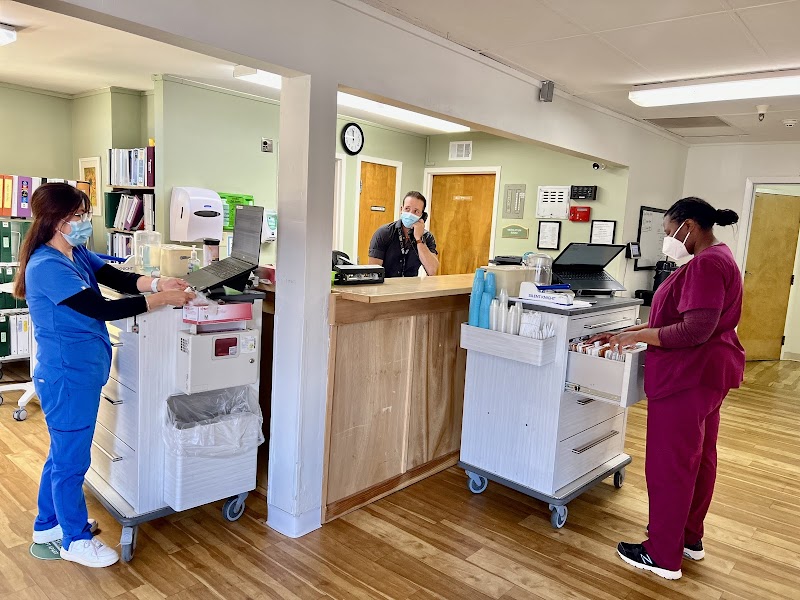
How is Richmond Post Acute Care Staffed?

CMS rates RICHMOND POST ACUTE CARE's staffing level at 5 out of 5 stars, which is much above average compared to other nursing homes. Staff turnover is 24%, compared to the California average of 46%. This relatively stable workforce can support continuity of care.

What Have Inspectors Found at Richmond Post Acute Care?

State health inspectors documented 22 deficiencies at RICHMOND POST ACUTE CARE during 2022 to 2025. These included: 20 with potential for harm and 2 minor or isolated issues.

Who Owns and Operates Richmond Post Acute Care?

RICHMOND POST ACUTE CARE is owned by a for-profit company. For-profit facilities operate as businesses with obligations to shareholders or private owners. The facility operates independently rather than as part of a larger chain. With 35 certified beds and approximately 28 residents (about 80% occupancy), it is a smaller facility located in RICHMOND, California.
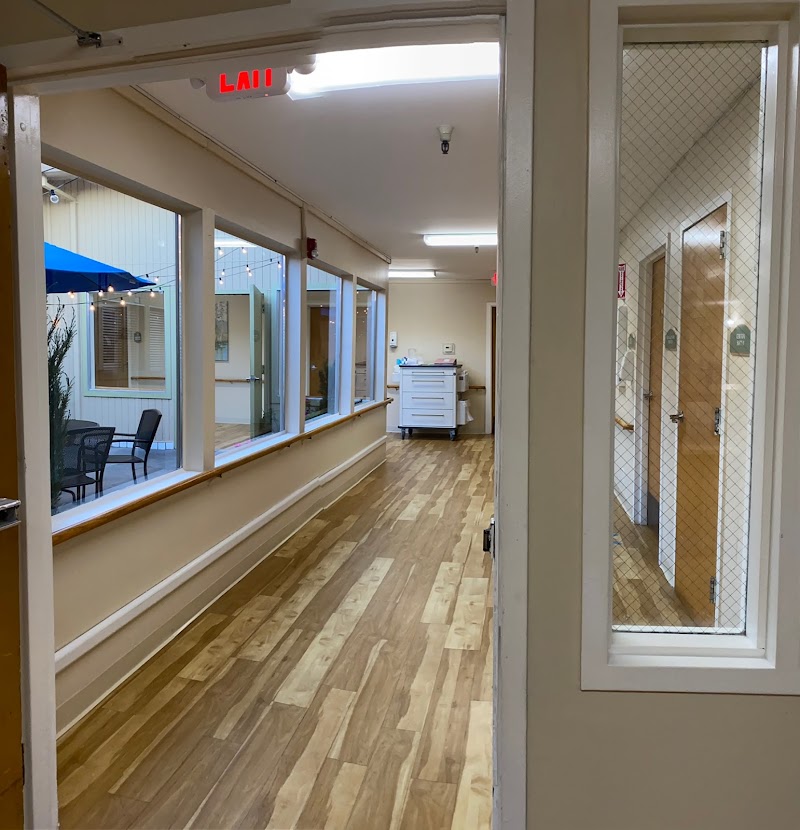
How Does Richmond Post Acute Care Compare to Other California Nursing Homes?

Compared to the 100 nursing homes in California, RICHMOND POST ACUTE CARE's overall rating (5 stars) is above the state average of 3.2, staff turnover (24%) is significantly lower than the state average of 46%, and health inspection rating (4 stars) is above the national benchmark.

What Should Families Ask When Visiting Richmond Post Acute Care?

Based on this facility's data, families visiting should ask: "Can I visit during a mealtime to observe dining assistance and food quality?" "How do you handle medical emergencies, and what is your hospital transfer rate?" "Can I speak with family members of current residents about their experience?"

Is Richmond Post Acute Care Safe?

Based on CMS inspection data, RICHMOND POST ACUTE CARE has a clean safety record: no substantiated abuse findings (meaning no confirmed cases of resident harm), no Immediate Jeopardy citations (the most serious violation level indicating risk of serious injury or death), and is not on the Special Focus Facility watch list (a federal program monitoring the lowest-performing 1% of nursing homes). The facility has a 5-star overall rating and ranks #1 of 100 nursing homes in California. While no facility is perfect, families should still ask about staff-to-resident ratios and recent inspection results during their visit.

Do Nurses at Richmond Post Acute Care Stick Around?

Staff at RICHMOND POST ACUTE CARE tend to stick around. With a turnover rate of 24%, the facility is 21 percentage points below the California average of 46%. Low turnover is a positive sign. It means caregivers have time to learn each resident's needs, medications, and personal preferences. Consistent staff also notice subtle changes in a resident's condition more quickly.

Was Richmond Post Acute Care Ever Fined?

RICHMOND POST ACUTE CARE has been fined $36,343 across 9 penalty actions. The California average is $33,442. While any fine indicates a compliance issue, fines under $50,000 are relatively common and typically reflect isolated problems that were subsequently corrected. Families should ask what specific issues led to these fines and confirm they've been resolved.

Is Richmond Post Acute Care on Any Federal Watch List?

RICHMOND POST ACUTE CARE is not on any federal watch list. The most significant is the Special Focus Facility (SFF) program, which identifies the bottom 1% of nursing homes nationally based on persistent, serious quality problems. Not being on this list means the facility has avoided the pattern of deficiencies that triggers enhanced federal oversight. This is a positive indicator, though families should still review the facility's inspection history directly.