RIVERBANK POST-ACUTE
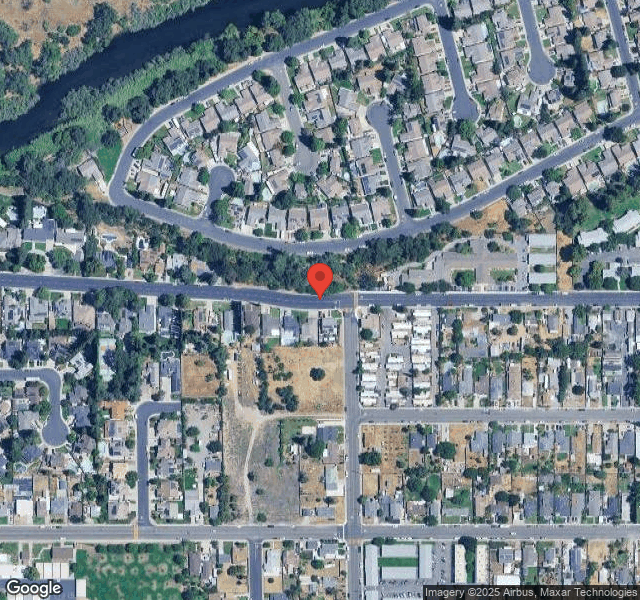
2649 TOPEKA STREET, RIVERBANK, CA 95367 (209) 869-2568
For profit - Limited Liability company 99 Beds LINKS HEALTHCARE GROUP Data: November 2025 1 Immediate Jeopardy citation
Trust Grade
8/100
#1094 of 1155 in CA
Last Inspection: March 2025

Within standard 12-15 month inspection cycle. Federal law requires annual inspections.

Overview

Riverbank Post-Acute has a Trust Grade of F, indicating significant concerns about the quality of care and safety, which means it is considered poor. The facility ranks #1094 out of 1155 in California and #17 out of 17 in Stanislaus County, placing it in the bottom half of both state and local rankings. Unfortunately, the facility is worsening, with the number of reported issues increasing from 10 in 2024 to 11 in 2025. Staffing is a significant issue, with a low rating of 1 out of 5 stars and a concerning turnover rate of 56%, which is higher than the California average of 38%. Additionally, the facility has incurred $72,095 in fines, which is higher than 86% of California facilities, indicating repeated compliance problems. RN coverage is also a concern, as it is lower than 88% of state facilities. Specific incidents raise alarms, such as a resident being allowed to smoke despite a smoking cessation plan and a lack of a care plan that ultimately led to a choking incident resulting in a resident's death. Overall, while there may be some average quality measures, the weaknesses in safety, staffing, and compliance make this facility a worrying option for families considering care for their loved ones.

Trust Score
F
8/100
In California
#1094/1155
Bottom 6%
Safety Record
High Risk
Review needed
Inspections
Getting Worse
10 → 11 violations
Staff Stability
⚠ Watch
56% turnover. Above average. Higher turnover means staff may not know residents' routines.
Penalties
✓ Good
$72,095 in fines. Lower than most California facilities. Relatively clean record.
Skilled Nurses
⚠ Watch
Each resident gets only 16 minutes of Registered Nurse (RN) attention daily — below average for California. Fewer RN minutes means fewer trained eyes watching for problems.
Violations
⚠ Watch
59 deficiencies on record. Higher than average. Multiple issues found across inspections.
★☆☆☆☆
1.0
Overall Rating
★☆☆☆☆
1.0
Staff Levels
★★★☆☆
3.0
Care Quality
★☆☆☆☆
1.0
Inspection Score
Stable
2024: 10 issues
2025: 11 issues

The Good

  • Full Sprinkler Coverage · Fire safety systems throughout facility
  • No fines on record

Facility shows strength in fire safety.

The Bad

1-Star Overall Rating

Below California average (3.1)

Significant quality concerns identified by CMS

Staff Turnover: 56%

Near California avg (46%)

Frequent staff changes - ask about care continuity

Federal Fines: $72,095

Well above median ($33,413)

Moderate penalties - review what triggered them

Chain: LINKS HEALTHCARE GROUP

Part of a multi-facility chain

Ask about local staffing decisions and management

Staff turnover is elevated (56%)

8 points above California average of 48%

The Ugly 59 deficiencies on record

1 life-threatening 1 actual harm
Sept 2025 3 deficiencies
CONCERN (E) 📢 Someone Reported This

A family member, employee, or ombudsman was alarmed enough to file a formal complaint

Potential for Harm - no one hurt, but risky conditions existed

Comprehensive Care Plan (Tag F0656)

Could have caused harm · This affected multiple residents

**NOTE- TERMS IN BRACKETS HAVE BEEN EDITED TO PROTECT CONFIDENTIALITY** Based on observation, interview and record review, the facility failed to ensure a comprehensive person-centered care plan (CP -...

Read full inspector narrative →
**NOTE- TERMS IN BRACKETS HAVE BEEN EDITED TO PROTECT CONFIDENTIALITY** Based on observation, interview and record review, the facility failed to ensure a comprehensive person-centered care plan (CP - a detailed approach to care customized to an individual resident's needs) was developed and implemented for two of five residents (Resident 1 and Resident 4) when:1. Resident 1's care plan was not implemented for refusal of care and notification of Resident 1's Responsible Party (RP) and physician.2. Resident 4's care plan was not developed and implemented for refusal of care.These failures had the potential to result in Resident 1 and Resident 4 receiving inadequate person-centered care and put Resident 1 and Resident 4 at risk of not having their needs met.Findings:1. During a concurrent observation and interview on 9/10/25 at 11:40 a.m. with Resident (R) 1 in the hallway outside Resident 1's room. R 1 was observed at the end of the hallway in a geriatric chair (Geri-chair - a semi-specialized seating for older adults that achieves a reclined position and elevated leg rest) covered with a sheet, wearing a gown with both hands contracted (a permanent tightening of the muscles, tendons, skin, and nearby tissues that causes the joints to shorten and become very stiff). R 1 was observed moving his left leg and kicked off his sheet. R 1's fingernails and toenails were observed to be long with jagged edges. R 1 stated the podiatrist trimmed his nails and he had his nails trimmed last week. R 1 stated the nurse trimmed his fingernails and the podiatrist trimmed his fingernails.During a review of R 1's admission Record (AR - a summary of information regarding a patient which includes patient identification, past medical history, insurance status, care providers, family contact information and other pertinent information), dated 9/10/25, the AR indicated R 1 was admitted to the facility from a nursing home on 3/25/22 with diagnoses of schizophrenia (a disorder that affects a person's ability to think, feel, and behave clearly), pain, muscle weakness, anxiety disorder (a mental health disorder characterized by feelings of worry, anxiety, or fear that are strong enough to interfere with one's daily activities), and depression (persistent feelings of sadness, despair, loss of energy, and difficulty dealing with normal daily life).During a review of R 1's Minimum Data Set (MDS - a resident assessment tool used to identify cognitive [mental processes] and physical functional level assessment), dated 7/25/2, the MDS section C indicated R 1 had a Brief Interview for Mental Status (BIMS - a test given by medical professionals to determine cognitive (involving the process of thinking, learning and understanding) understanding on a scale of 1-15 ) score of 15 (a score of 0-7 suggests severe cognitive impairment, 8-12 suggests moderately impaired, 13-15 suggests cognitively intact), which suggested R 1 was cognitively intact.During a concurrent interview and record review on 9/10/25 at 12:12 p.m. with Licensed Vocational Nurse (LVN) 1, R 1's Care Plan (CP), undated was reviewed. The CP indicated, . (Resident 1 Name) is non-compliant with care manifested by (m/b) refusing fingernail trimming, check and change medication, Activities of Daily Living (ADL) care, as manifested by refusal of the following . date initiated; 3/10/2025 . interventions . notify physician (MD) of their non-compliance . date initiated: 3/10/25 . notify resident representative . date initiated 3/10/2025 . LVN 1 stated R 1 had a lot of refusals of care and the nurse had notified R 1's physician and R 1's Responsible Party (RP) of incidents. LVN 1 was unable to find documentation of notification of RP or physician notification of Resident 1's refusal of nail care.During an interview on 9/10/25 at 4:20 p.m. with Registered Nurse (RN) 1, RN 1 stated if a resident was diabetic (when the blood sugar levels in the body are too high), the licensed nurse only trimmed the resident's fingernails. RN 1 stated if there was too much nail or disease, or if the resident was a diabetic, the resident needed to see the podiatrist for nail care. RN 1 stated R 1's nails should have been addressed. RN 1 stated if a resident refused care, staff had to respect the resident's rights, and should have notified the RP and physician, and initiate a care plan for the residents' refusal of nail care.During an interview on 9/12/25 at 11:30 with the Interim Director of Nursing (IDON), the IDON stated R 1 had a CP entered on 3/10/25 for non-compliance with interventions for RP notification and physician notification. The IDON stated the only documented RP notification attempt was on 3/25/22, and there was no documentation of physician notification. The IDON stated there was no current documentation of attempts to call R 1's RP or physician for refusal of care. The IDON stated R 1's refusals and RP and physician notifications should have been documented and followed up on. The IDON stated if it was not documented, then it was not done. The IDON stated if a resident was refusing care, nurses should have called the RP if they had time. The IDON stated if the refusal was not emergent, the nurse should have called the next morning.2. During a concurrent observation and interview on 9/10/25 at 11:26 a.m. with Certified Nursing Assistant (CNA) 1 in the hallway outside R 4's room, Resident 4 was non-verbal and observed wearing a gown, laying in a Geri-chair in the hallway with his feet uncovered. Resident 4's left foot toenails were observed to be long, yellow, thick and jagged with dark crusted substance under his left big toenail. CNA 1 stated if a resident was not diabetic, the nurses trimmed the resident's nails. CNA 1 stated the CNAs filled out the resident's shower sheet (SS), which indicated areas of concern for the nurse to review, and marked if the resident's toenails needed to be trimmed. CNA 1 stated R 4's toenails needed to be trimmed.During a review of Resident 4's AR dated 9/10/25, the AR indicated Resident 4 was admitted to the facility from an acute care hospital on [DATE] with diagnoses of traumatic brain injury (a brain dysfunction caused by an outside force, usually a violent blow to the head), seizure (a burst of uncontrolled electrical activity between brain cells that causes temporary abnormalities in muscle tone or movements, behaviors, sensations, or states of awareness), dysphagia (difficulty swallowing), dystonia (a movement disorder that causes the muscles to contract), acquired absence of right leg above the knee, and major depressive disorder (a mental health disorder characterized by persistently depressed mood or loss of interest in activities).During a review of Resident 4's MDS, dated 6/30/25, the MDS indicated Resident 4 had a BIMS score of 00, which indicated Resident 4 was severely cognitively impaired.During an interview on 9/10/25 at 4:20 p.m. with RN 1, RN 1 stated if a resident was diabetic, the licensed nurse only trimmed the resident's fingernails. RN 1 stated if there was too much nail or disease, or if the resident was a diabetic, the resident needed to see the podiatrist for nail care. RN 1 stated R 4's nails should have been addressed. RN 1 stated if a resident refused care, staff had to respect the resident's rights, and should have notified the RP and physician, and initiate a care plan for the residents' refusal of nail care.During an interview on 9/12/25 at 11:35 a.m. with the IDON, the IDON stated R 4 had a CP initiated on 9/10/25 for non-compliance with care. The IDON stated R 4 should have had a CP for non-compliance when he first refused care. The IDON stated a CP was important so everyone understood what R 4's behavior was and would have been able to communicate with each other about R 4's behavior. The IDON stated the CP indicated what actions and interventions to try to provide the best interventions for the residents. The IDON stated the CP allowed staff to see what worked and what didn't work, so the interventions could have been revised. The IDON stated she expected staff to follow resident care plans and interventions. The IDON stated if staff did not follow the CPs, there was a risk the staff would not have provided patient centered care, which included what the resident wanted and allowed family to be involved in the resident's care.During a review of the facility policy and procedure titled, Care Plans, Comprehensive Person-Centered, dated3/2022, indicated, . a comprehensive, person-centered care plan that includes measurable objectives and timetables to meet the resident's physical, psychosocial and functional needs is developed and implemented for each resident . the comprehensive, person-centered care plan . describes the services that are to be furnished . care plan interventions are chosen only after data gathering, proper sequencing of events, careful consideration of the relationship between the resident's problem areas and their causes, and relevant clinical decision making . assessments of residents are ongoing and care plans are revised as information about the residents and residents' conditions change . the resident has the right to refuse . medical and nursing treatments. Such refusals are documented in the resident's clinical record in accordance with established policies .
CONCERN (E) 📢 Someone Reported This

A family member, employee, or ombudsman was alarmed enough to file a formal complaint

Potential for Harm - no one hurt, but risky conditions existed

Deficiency F0658 (Tag F0658)

Could have caused harm · This affected multiple residents

**NOTE- TERMS IN BRACKETS HAVE BEEN EDITED TO PROTECT CONFIDENTIALITY** Based on observation, interview and record review, the facility failed to meet professional standards of practice for two of fiv...

Read full inspector narrative →
**NOTE- TERMS IN BRACKETS HAVE BEEN EDITED TO PROTECT CONFIDENTIALITY** Based on observation, interview and record review, the facility failed to meet professional standards of practice for two of five sampled residents (Resident 1 and Resident 4) when the physician and Resident Responsible Party (RP) were not notified of Resident 1 and Resident 4's refusal of care with having their nails trimmed. Findings:During a concurrent observation and interview on 9/10/25 at 11:26 a.m. with Certified Nursing Assistant (CNA) 1 in the hallway outside Resident (R) 4's room, R 4 was non-verbal and observed wearing a gown, laying in a geriatric chair (Geri-chair - a semi-specialized seating for older adults that achieves a reclined position and elevated leg rest) in the hallway with his left foot uncovered. R 4's left foot toenails were observed to be long, yellow, thick and jagged with dark crusted substance under his left big toenail. CNA 1 stated if a resident was not diabetic (when the blood sugar levels in the body are too high), the nurses trimmed the resident's nails. CNA 1 stated the CNAs filled out the resident's shower sheet, which indicated areas of concern for the nurse to review, and marked if the resident's toenails needed to be trimmed. CNA 1 stated if a resident refused a shower staff encouraged the resident, and if the resident still refused, staff left the resident and went back after a while and asked the resident again. CNA 1 stated if residents refused a bath or care, the charge nurse was informed, and she asked the residents the reason for the refusal. CNA 1 stated R 4's toenails needed to be trimmed.During a review of R 4's admission Record (AR - a summary of information regarding a patient which includes patient identification, past medical history, insurance status, care providers, family contact information and other pertinent information, dated 9/10/25, the AR indicated R 4 was admitted to the facility from an acute care hospital on [DATE] with diagnoses of traumatic brain injury (a brain dysfunction caused by an outside force, usually a violent blow to the head), seizure (a burst of uncontrolled electrical activity between brain cells that causes temporary abnormalities in muscle tone or movements, behaviors, sensations, or states of awareness), dysphagia (difficulty swallowing), dystonia (a movement disorder that causes the muscles to contract), acquired absence of right leg above the knee, and major depressive disorder (a mental health disorder characterized by persistently depressed mood or loss of interest in activities).During a review of R 4's Minimum Data Set (MDS - a resident assessment tool used to identify cognitive [mental processes] and physical functional level assessment), dated 6/30/25, the MDS indicated R 4 had a Brief Interview for Mental Status (BIMS - a test given by medical professionals to determine cognitive (involving the process of thinking, learning and understanding) understanding on a scale of 1-15 ) score of 00 (a score of 0-7 suggests severe cognitive impairment, 8-12 suggests moderately impaired, 13-15 suggests cognitively intact), which indicated R 4 was severely cognitively impaired.During a concurrent interview and record review on 9/10/25 at 12:25 p.m. with the Director of Staff Development (DSD), pictures of R 4's toenails dated 9/10/25 were reviewed. The DSD stated R 4 needed his toenails trimmed. The DSD stated R 4 should have had nail care marked yes on his 9/9/25 shower sheet (SS) and should have been put on the list for nail care. The DSD stated there were no refusals for care from R 4 this month in system.During an interview on 9/10/25 at 12:35 p.m. with the Infection Preventionist (IP), the IP stated proper nail care was important for the residents' comfort and to prevent the residents from scratching themselves. The IP stated the facility's resident population was at a higher risk of infection due to the residents had a low immune system. The IP stated bacteria can stay under the resident's nails and be a risk for infection for the resident. During a concurrent interview and record review on 9/10/25 at 12:43 a.m. with the Social Services Director (SSD), R 4's record was reviewed. The SSD stated on 4/14/25 R 4 refused nail care, so the podiatrist would not have seen him for six months. The SSD stated R 4 was also not diabetic, so nursing should have provided nail care. The SSD stated if a resident was refusing care, nursing should have let her know and she would have sent out a request to the podiatrist office if it was urgent. The SSD reviewed R 4's picture of his toenails dated 9/10/25 and the SSD stated she felt R 4's left toenail looked like it needed urgent care. During a concurrent interview and record review on 9/10/25 at 4:20 p.m. with Registered Nurse (RN) 1, Resident 4's picture of his toenails was reviewed. RN 1 stated R 4's nail care should have been completed right away once the nurse was notified. RN 1 stated R 4's nail care should have been documented in the nurses' tasks or nurses' notes that a resident requiring nail care was reported to the social worker or noted on the resident's shower sheet. RN 1 stated R 4's nails should have been addressed. RN 1 stated if a resident refused care, staff had to respect the resident's rights, and should have notified the RP and physician, and initiate a care plan for the residents' refusal of nail care.During an interview on 9/12/25 at 11:30 a.m. with the Interim Director of Nursing (IDON), the IDON stated R 4 was non-communicative. The IDON stated R 4 had a care plan initiated on 9/10/25 for non-compliance with care. The IDON stated R 4 should have had a care plan initiated for non-compliance when he first refused care. The IDON stated there was no documentation that R 4's RP or the physician was notified of R 4's refusal of care. The IDON stated there was no documentation for notification, and no nursing documentation for any change of conditions (COC) in R 4's record. The IDON stated staff should have called R 4's RP and the physician of R 4's refusal of care and the refusal of care and notifications should have been documented in R 4's record. The IDON stated it was important to notify R 4's RP to help staff see why R 4 was refusing care and the RP might have been able to convince R 4 to allow care. The IDON stated it was important staff notified the physician to see if R 4 needed to be treated and to receive an order to treat. The IDON stated if the RP and physician were not notified of R 4's refusal of treatment, it was a risk for R 4 to obtain an infection or break down of his toes.During a concurrent observation and interview on 9/10/25 at 11:40 a.m. with Resident (R) 1 in the hallway outside R 1's room. R 1 was observed at the end of the hallway in a Geri-chair covered with a sheet, wearing a gown with both hands contracted (a permanent tightening of the muscles, tendons, skin, and nearby tissues that causes the joints to shorten and become very stiff). R 1 was observed moving his left leg and kicked off his sheet. R 1's fingernails and toenails were observed to be long with jagged edges. R 1 stated the podiatrist trimmed his nails and he had his nails trimmed last week. R 1 stated the nurse trimmed his fingernails and the podiatrist trimmed his fingernails.During a review of R 1's AR, dated 9/10/25, the AR indicated R 1 was admitted to the facility from a nursing home on 3/25/22 with diagnoses of schizophrenia (a disorder that affects a person's ability to think, feel, and behave clearly), pain, muscle weakness, anxiety disorder (a mental health disorder characterized by feelings of worry, anxiety, or fear that are strong enough to interfere with one's daily activities), and depression (persistent feelings of sadness, despair, loss of energy, and difficulty dealing with normal daily life).During a review of R 1's MDS, dated [DATE], the MDS section C indicated R 1 had a BIMS score of 15, which suggested R 1 was cognitively intact.During a concurrent interview and record review on 9/10/25 at 12:12 p.m. with Licensed Vocational Nurse (LVN) 1, R 1's Care Plan (CP), undated was reviewed. The CP indicated, . (Resident 1 Name) is non-compliant with care manifested by (m/b) refusing fingernail trimming, check and change medication, Activities of Daily Living (ADL) care, as manifested by refusal of the following . date initiated; 3/10/2025 . interventions . notify physician (MD) of their non-compliance . date initiated: 3/10/25 . notify resident representative . date initiated 3/10/2025 . LVN 1 stated R 1 had a lot of refusals of care and the nurse had notified R 1's physician and R 1's Responsible Party (RP) of incidents. LVN 1 was unable to find documentation of notification of RP or physician notification of Resident 1's refusal of nail care.During an interview on 9/10/25 at 4:20 p.m. with RN 1, RN 1 stated if a resident was diabetic, the licensed nurse only trimmed the resident's fingernails. RN 1 stated if there was too much nail or disease, or if the resident was a diabetic, the resident needed to see the podiatrist for nail care. RN 1 stated R 1's nails should have been addressed. RN 1 stated if a resident refused care, staff had to respect the resident's rights, and should have notified the RP and physician, and initiate a care plan for the residents' refusal of nail care.During an interview on 9/12/25 at 11:35 a.m. with the IDON, the IDON stated R 1 had a CP entered on 3/10/25 for non-compliance, with interventions for RP notification and physician notification. The IDON stated the only documented RP notification attempt was on 3/25/22, and no documentation was found for physician notification. The IDON stated there was no current documentation of attempts to call R 1's RP or physician for refusal of care. The IDON stated R 1's refusals and RP and physician notifications should have been documented and followed up on. The IDON stated if it was not documented, then it was not done. The IDON stated if a resident was refusing care, nurses should have called the RP if they had time. The IDON stated if the refusal was not emergent, the nurse should have called the next morning. The IDON stated if the RP and physician were not notified of R 1's refusal of treatment, it was a risk for R 1 to obtain an infection or break down of his toes.During a review of professional reference titled, Improving Communication Among Attending Physicians, Long-Term Care Facilities, Residents, and Residents' Families, dated March-April, 2024, obtained from https://www.jamda.com/article/S1525-8610(04)70066-3/abstract, indicated, . effective bidirectional communication between attending physicians and long-term care facilities is of critical importance to ensure timely, appropriate, and high-quality care that is responsive to resident's needs, values, and preferences . ongoing communication with residents and resident's families is essential to the establishment of mutual trust and respect .
CONCERN (E) 📢 Someone Reported This

A family member, employee, or ombudsman was alarmed enough to file a formal complaint

Potential for Harm - no one hurt, but risky conditions existed

Deficiency F0687 (Tag F0687)

Could have caused harm · This affected multiple residents

**NOTE- TERMS IN BRACKETS HAVE BEEN EDITED TO PROTECT CONFIDENTIALITY** Based on observation, interview, and record review the facility failed to provide foot care and treatment, in accordance with pr...

Read full inspector narrative →
**NOTE- TERMS IN BRACKETS HAVE BEEN EDITED TO PROTECT CONFIDENTIALITY** Based on observation, interview, and record review the facility failed to provide foot care and treatment, in accordance with professional standards of practice for two of four sampled residents (Resident 1 and Resident 4) when Resident 1 and Resident 4 had long, overgrown toenails. This failure had the potential to result in Resident 1 and Resident 4 cutting their skin with their long toenails, leading to poor wound healing, infection, and hospitalization. Findings:During a concurrent observation and interview on 9/10/25 at 11:26 a.m. with Certified Nursing Assistant (CNA) 1 in the hallway outside Resident (R) 4's room, R 4 was non-verbal and observed wearing a gown, laying in a geriatric chair (Geri-chair - a semi-specialized seating for older adults that achieves a reclined position and elevated leg rest) in the hallway with his left foot uncovered. R 4's left foot toenails were observed to be long, yellow, thick and jagged with dark crusted substance under his left big toenail. CNA 1 stated if a resident was not diabetic (when the blood sugar levels in the body are too high), the nurses trimmed the resident's nails. CNA 1 stated the CNAs filled out the resident's shower sheet, which indicated areas of concern for the nurse to review, and marked if the resident's toenails needed to be trimmed. CNA 1 stated R 4's toenails needed to be trimmed.During a review of R 4's admission Record (AR - a summary of information regarding a patient which includes patient identification, past medical history, insurance status, care providers, family contact information and other pertinent information, dated 9/10/25, the AR indicated R 4 was admitted to the facility from an acute care hospital on [DATE] with diagnoses of traumatic brain injury (a brain dysfunction caused by an outside force, usually a violent blow to the head), seizure (a burst of uncontrolled electrical activity between brain cells that causes temporary abnormalities in muscle tone or movements, behaviors, sensations, or states of awareness), dysphagia (difficulty swallowing), dystonia (a movement disorder that causes the muscles to contract), acquired absence of right leg above the knee, and major depressive disorder (a mental health disorder characterized by persistently depressed mood or loss of interest in activities).During a review of R 4's Minimum Data Set (MDS - a resident assessment tool used to identify cognitive [mental processes] and physical functional level assessment), dated 6/30/25, the MDS indicated R 4 had a Brief Interview for Mental Status (BIMS - a test given by medical professionals to determine cognitive (involving the process of thinking, learning and understanding) understanding on a scale of 1-15 ) score of 00 (a score of 0-7 suggests severe cognitive impairment, 8-12 suggests moderately impaired, 13-15 suggests cognitively intact), which indicated R 4 was severely cognitively impaired.During a concurrent observation and interview on 9/10/25 at 11:40 a.m. with Resident (R) 1 in the hallway outside R 1's room. R 1 was observed at the end of the hallway in a Geri-chair covered with a sheet, wearing a gown with both hands contracted (a permanent tightening of the muscles, tendons, skin, and nearby tissues that causes the joints to shorten and become very stiff). R 1 was observed moving his left leg and kicked off his sheet. R 1's fingernails and toenails were observed to be long with jagged edges. R 1 stated the podiatrist trimmed his nails and he had his nails trimmed last week. R 1 stated the nurse trimmed his fingernails and the podiatrist trimmed his fingernails.During a review of R 1's AR, dated 9/10/25, the AR indicated R 1 was admitted to the facility from a nursing home on 3/25/22 with diagnoses of schizophrenia (a disorder that affects a person's ability to think, feel, and behave clearly), pain, muscle weakness, anxiety disorder (a mental health disorder characterized by feelings of worry, anxiety, or fear that are strong enough to interfere with one's daily activities), and depression (persistent feelings of sadness, despair, loss of energy, and difficulty dealing with normal daily life).During a review of R 1's MDS, dated [DATE], the MDS section C indicated R 1 had a BIMS score of 15, which suggested R 1 was cognitively intact.During a concurrent observation and interview on 9/10/25 at 12:07 p.m. with Licensed Vocational Nurse (LVN) 1 in the hallway near R 1's room, R 1 was observed at the end of his hallway in a Geri-chair wearing a gown, covered with a sheet with his feet uncovered exposing R 1's toenails. LVN 1 stated she had been at the facility for two years and was familiar with R 1. LVN 1 stated the nurses trimmed the residents' nails. LVN 1 stated the CNAs reported if the resident's nails were long. LVN 1 stated the podiatrist came out when called, otherwise LVN 1 thought he came to the facility once a month. LVN 1 stated R 1's nails needed to be trimmed.During a concurrent interview and record review on 9/10/25 at 12:25 p.m. with the Director of Staff Development (DSD), Resident 1's Skin Monitoring: Comprehensive CNA Shower Review (SS), dated 9/9/25 was reviewed. The SS indicated, . does the resident need his/her toenails cut? . No . Resident 1's SS, dated 9/5/25 was reviewed. The SS indicated, . does the resident need his/her toenails cut? . Yes . Resident 1's SS, dated 9/2/25 was reviewed. The SS indicated, . does the resident need his/her toenails cut? . Yes. Resident 4's SS, dated 9/2/25 was reviewed. The SS indicated, date 9/2/25. does the resident need his/her toenails cut? . Yes. Resident 4's SS, dated 9/5/25 was reviewed. The SS indicated, . does the resident need his/her toenails cut? . Yes. Resident 4's SS, dated 9/9/25 was reviewed. The SS indicated, . does the resident need his/her toenails cut? . No. The DSD stated if the CNAs felt a resident's nails were long, the CNA would have informed the nurse, and the nurse would have logged the resident's name in a binder for the Social Services Director (SSD) to review and schedule a podiatrist appointment for the resident. The SSD binder was reviewed, which indicated the last log for a resident was on 2/24/25. The DSD stated R 1 and R 4 were not listed on the log for the SSD to schedule a podiatry visit. Pictures of R 1's and R 4's toenails dated 9/10/25 were reviewed. The DSD stated R 1 and R 4 needed their toenails trimmed. The DSD stated R 1 and R 4 should have had nail care marked yes on their 9/9/25 shower sheets (SS) and should have been put on the list for nail care. The DSD stated there were no refusals for care from R 4 this month in system.During an interview on 9/10/25 at 12:35 p.m. with the Infection Preventionist (IP), the IP stated proper nail care was important for the residents' comfort and to prevent the residents from scratching themselves. The IP stated the facility's resident population was at a higher risk of infection due to the residents had a low immune system. The IP stated bacteria can stay under the resident's nails and be a risk for infection for the resident. During a concurrent interview and record review on 9/10/25 at 4:20 p.m. with Registered Nurse (RN) 1, Resident 1 and Resident 4's pictures of their nails were reviewed. RN 1 stated if a resident was diabetic, the licensed nurse only trimmed the resident's fingernails. RN 1 stated if there was too much nail or disease, or if the resident was a diabetic, the resident needed to see the podiatrist for nail care. RN 1 stated the nurse filled out a form and gave it to the SSD to give to the podiatrist. RN 1 stated the charge nurse signed the resident's shower sheet and filled out the SSD form or gave the form to the DSD to notify the SSD of nail care needed. RN 1 stated the nurse followed up with the shower log to trim resident's nails if marked. RN 1 stated if the form was marked on a Wednesday, then on Friday if the resident's nails were not trimmed the Charge Nurse should have asked why it had not been completed. RN 1 stated R 1 and R 4's nail care should have been completed right away once the nurse was notified. RN 1 stated R 1 and R 4's nail care should have been documented in the nurses' tasks or nurses' notes that a resident requiring nail care was reported to the social worker or noted on the resident's shower sheet. RN 1 stated R 1 and R 4's nails should have been addressed. RN 1 stated if a resident refused care, staff had to respect the resident's rights, and should have notified the RP and physician, and initiate a care plan for the residents' refusal of nail care.During an interview on 9/10/25 at 4:28 p.m. with the Interim Director of Nursing (IDON), the IDON stated her expectation was for the resident's shower sheets to be completed correctly and for the nurse to follow up on the marked areas to be reviewed. The IDON stated it was not acceptable to mark the shower sheets dated 9/9/25 no nail care was needed for R 1 and R 4. The IDON stated the charge nurse signed off on the shower sheets and the IDON's expectation was for the nurse to immediately do something about the concern that same day. The IDON stated if a resident did not have their nails trimmed, it was an infection risk for the resident.During a review of the facility P&P titled, Fingernails/Toenails, Care of, dated 2/2018 indicated, . the purposes of this procedure are to clean the nail bed, to keep nails trimmed, and to prevent infections .nail care includes daily cleaning and regular trimming .proper nail care can aid in the prevention of skin problems around the nail bed . trimmed and smooth nails prevent the resident from accidentally scratching and injuring his or her skin .watch for and report any changes in the color of the skin around the nail bed . cracking of the skin between the toes . stop and report to the nurse supervisor if there is evidence of ingrown nails, infections, pain, or if nails are too hard or too thick to cut with ease .documentation . any difficulties in cutting the resident's nails . if the resident refused the treatment, the reasons why and the intervention taken .notify the supervisor if the resident refuses the care .
Mar 2025 8 deficiencies 1 IJ
CRITICAL (J)

Immediate Jeopardy (IJ) - the most serious Medicare violation

Accident Prevention (Tag F0689)

Someone could have died · This affected 1 resident

Based on observation, interview, record review, and facility policy review, the facility failed to ensure the safety and well-being for 1 (Resident #37) of 1 sampled resident reviewed for smoking. Spe...

Read full inspector narrative →
Based on observation, interview, record review, and facility policy review, the facility failed to ensure the safety and well-being for 1 (Resident #37) of 1 sampled resident reviewed for smoking. Specifically, the facility failed to failed to implement further interventions to ensure the safety of the resident and others when the resident continued to smoke after there was indication that the resident agreed to smoking cessation and failed to implement interventions when the resident refused to turn in their lighter. It was determined the provider's non-compliance with one or more requirements of participation had caused, or was likely to cause, serious injury, harm, impairment or death to residents. The Immediate Jeopardy was related to State Operations Manual, Appendix PP, 483.25 (d) Accidents, at a scope and severity of J. On 03/12/2025 at 4:38 P.M. the Administrator and the Director of Nursing (DON) were informed of the Immediate Jeopardy situation. Findings included: A facility policy titled, Smoking Policy- Residents, revised 08/2022, revealed, This facility has established and maintains safe resident smoking practices. Policy Interpretation and Implementation 1. Prior to, and upon admission, residents are informed of the facility smoking policy, including designated smoking areas, and the extent to which the facility can accommodate their smoking or non-smoking preferences. 2. Smoking is only permitted in designated resident smoking areas, which are located outside of the building. The policy specified, 6. Resident smoking status is evaluated upon admission. If a smoker, the evaluation includes: a. current level of tobacco consumption; b. method of tobacco consumption (traditional cigarettes; electronic cigarettes; pipe, etc. [et cetera, and other similar things]); c. desire to quit smoking; and d. ability to smoke safely with or without supervision (per a completed Safe Smoking Evaluation). 7. The staff consults with the attending physician and the director of nursing services (DNS) to determine if safety restrictions need to be placed on a resident's smoking privileges based on the Safe Smoking Evaluation. 8. A resident's ability to smoke safely is re-evaluated quarterly, upon a significant change (physical or cognitive) and as determined by staff. 9. Any smoking-related privileges, restrictions, and concerns (for example, need for close monitoring) are noted on the care plan, and all personnel caring for the resident shall be alerted to these issues. 10. The facility may impose smoking restrictions on a resident at any time if it is determined that the resident cannot smoke safely with the available levels of support and supervision. 11. Any resident with smoking privileges requiring monitoring shall have the direct supervision of a staff member, family member, visitor or volunteer worker at all times while smoking. 12. Residents who have independent smoking privileges are permitted to keep cigarettes, electronic-cigarettes, pipes, tobacco, and other smoking items in their possession. Only disposable safety lighters are permitted. All other forms of lighters, including matches, are prohibited. 13. Residents are not permitted to give smoking items to other residents. 14. Residents without independent smoking privileges may not have or keep any smoking items, including cigarettes, tobacco, etc., except under direct supervision. An admission Record revealed the facility admitted Resident #37 on 12/12/2024. According to the admission Record, the resident had a medical history that included diagnoses of dementia, delirium due to known physiological condition, and nicotine dependence. An admission Minimum Data Set (MDS), with an Assessment Reference Date (ARD) of 12/19/2024, revealed Resident #37 had a Brief Interview for Mental Status (BIMS) score of 0, which indicated the resident had severe cognitive impairment. An admission Nursing Assessment, dated 12/12/2024, revealed Resident #37 was a current smoker and the assessment directed staff to complete a smoking assessment. Resident #37's Care Plan Report included a focus area initiated 12/13/2024, that indicated the resident had a heightened safety risk related to confusion and a personal desire to smoke. Interventions directed staff to apply protective non-flammable apron or cover/barrier during smoking activity (initiated 12/13/2024), keep the resident's cigarettes (initiated 12/13/2024), and keep the resident's lighter(s) (initiated 12/13/2024). Further review of the Care Plan Report included a focus area initiated 01/31/2025, that indicated the resident was noted to smoke used cigarettes found on the ground. Interventions directed staff to post cigarette times in the resident's room (initiated 01/31/2025); explain the risks and benefits to the resident, including the risk of infection (initiated 01/31/2025); and indicated that the resident refused to give staff their lighter (initiated 02/10/2025). Resident #37's Medical Professional Note, dated 12/13/2024, indicated for the resident's diagnosis of tobacco abuse, the resident was counseled and advised to quit and the impact of smoking cessation was discussed in detail. Per the Medical Professional Note, several options, to include patches and gums, medication management, relaxation techniques, and to avoid the company of other smokers were discussed with resident. Resident #37's Smoking - Initial Assessment, dated 01/31/2025, indicated the resident was a smoker with cognitive loss, who smoked two to five times per day. Per the Smoking - Initial Assessment, the resident required a smoking apron and supervision. The Smoking - Initial Assessment indicated the facility stored the resident's smoking materials and a plan of care was used to ensure the resident was safe while smoking. During an interview on 03/14/2025 at 1:09 PM, the MDS Coordinator stated she completed the initial smoking assessment for Resident #37 on 01/31/2025 and verbally communicated with the staff about the care plan interventions on that day, but the communication was not documented anywhere. During an interview on 03/11/2025 at 8:52 AM, the DON stated residents had an initial assessment completed, a smoking safety assessment, an evaluation of whether the resident smoked or not, and a care plan would be completed if the resident smoked. She stated the assessments were completed by the charge nurse The DON stated from what she remembered, Resident #37 was not a smoker initially. She stated that around January 2025, staff observed the resident gathering cigarette butts and trying to smoke them and that was when staff realized the resident smoked, so staff assessed the resident as a smoker at that time. Resident #37's Activities-Progress Notes, dated 03/03/2025 at 10:30 AM, revealed activities staff witnessed Resident #37 smoking on the back patio during a non-smoking time. The note indicated the resident had a lighter, and the activities staff member notified the resident of the designated smoking times and asked the resident to turn in their lighter. The note indicated the resident refused to turn their lighter in to the activities staff member. Resident #37's Activities-Progress Notes, dated 03/04/2025 at 11:30 AM, revealed an activities staff member spoke with Resident #37 and notified them of the facility's smoking policy. According to the note, the resident refused to sign a copy of the smoking policy that was discussed with them. Resident #37's Administrator Notes, dated 03/04/2025 at 4:11 PM, revealed the Administrator contacted the Ombudsman regarding Resident #37's noncompliance with care and smoking. The note indicated the facility received verbal consent to the facility's admission agreement, which included the smoking policy, from Resident #37's family. According to the note, the Administrator informed the resident if they wanted to smoke, they must follow the facility's smoking policy. The note indicated the Administrator informed the resident that if they desired unlimited smoking freedom, then a discharge to another location may be best for the resident. According to the note, the Administrator informed the Ombudsman that Resident #37 was a potential risk to themself or other residents if their noncompliance continued. Per the note, at the recommendation of the Ombudsman, the Administrator agreed to seek discharge for the resident. Resident #37's Activities-Progress Notes, dated 03/05/2025 at 10:36 AM, revealed an activities staff member witnessed Resident #37 smoking outside of the door which led to the back patio. The note indicated the staff member advised the resident they could not smoke outside of the designated times and asked the resident to extinguish their cigarette, but the resident refused and continued smoking until the resident was finished. Resident #37's Activities Progress Note, dated 03/10/2025 at 6:33 PM, indicated the Activity Supervisor was outside sweeping the designated smoking area when Resident #37 came outside looking for cigarette butts. According to the note, the Activity Supervisor explained the facility's smoking policy to the resident and informed the resident they could not pick up cigarette butts from the ground. The note indicated Resident #37 became agitated and attempted to swing at the staff member, then cursed and walked back into the building. Per the note, the Administrator and DON were notified. During a concurrent observation and interview on 03/10/2025 at 3:27 PM, Resident #37 removed a butane cigarette lighter out of their jacket. Resident #37 stated they went outside to smoke by their self whenever they wanted to. During a concurrent observation and interview on 03/10/2025 at 3:43 PM, the surveyor noted Resident #37 wore a gray hospital gown that had multiple brown holes visible through the fabric. There were two small holes near the mid chest area on the left side, one small hole on the left upper chest area, and one dime size hole near the resident's right leg. Resident #37 stated the holes in their gown was from cigarette ashes but was unable to remember when the holes occurred. The resident stated they did not use a smoking apron. During an interview on 03/10/2025 at 3:53 PM, Certified Nursing Assistant (CNA) #5 stated Resident #37 was independent and refused care. CNA #5 stated the resident went outside with activities staff when they wanted to smoke. She stated that she believed staff knew that the resident smoked, but the resident wandered around and went by their self. During an interview on 03/10/2025 at 4:17 PM, Licensed Vocational Nurse (LVN) #6 stated she had no idea how the resident got the burn holes on their gown. LVN #6 stated she was unsure if the resident smoked. During an interview on 03/11/2025 at 2:24 PM, Activity Staff (AS) #1 stated she witnessed Resident #37 go smoke a couple of times and she tried to get them to sign a smoking policy, but the resident refused. She stated she told the resident that smoking could not be done outside of designated smoking times. AS #1 stated the resident had their own lighter, and the cigarettes were obtained from the ash tray or off the ground on the back patio, where everyone smoked. She stated the resident refused to give her their lighter and then she reported it to the Administrator. She stated that the incident occurred at the end of February 2025 or the beginning of March 2025 and that she had not seen the resident smoke prior to that incident. During an interview on 03/11/2025 at 8:52 AM, the DON stated that once a resident was identified as a smoker, the resident was not to have their cigarettes or lighter because it was a safety issue. She stated if they were found with a cigarette or a lighter, then it would be removed, and education provided. The DON stated if a resident refused to follow the policy, then a discharge notice would be provided to the resident. During an interview on 03/15/2025 at 1:36 PM, the DON stated there should have been additional interventions implemented at the time Resident #6 had a lighter on 02/10/2025, to include removal of the lighter, education to the resident, and supervision of the resident. During an interview on 03/11/2025 at 9:13 AM, the Administrator stated residents were assessed by nursing staff at admission to determine their desire to smoke. He stated there was a smoking area with designated times, and the activities staff took the residents who smoked to the designated area. The Administrator stated he was not aware that Resident #37 had burn areas on their gown. The Administrator stated the Ombudsman was contacted regarding the resident's smoking. During an interview on 03/13/2025 at 4:06 PM, the Administrator stated a discharge notice had not been issued to Resident #37 yet, as a safe placement had to be identified before the resident could be discharged . During an interview on 03/14/2025 at 8:58 AM, the Administrator stated that prior to Monday, 03/10/2025, the interventions staff implemented was that a smoking assessment was completed for Resident #6, monitoring was completed by nursing staff each shift, the facility attempted to get the resident to sign the smoking agreement a few times, and discharge had been discussed with the Ombudsman in February 2025 and on 03/04/2025. On 03/14/2025 at 10:08 AM, a Removal Plan was submitted by the facility and accepted by the State Agency. It read as follows: 1. Immediate Smoking Assessments: a. As of 03/12/2025, all five identified residents who smoke were immediately assessed for safety risks, including cognitive impairment and ability to handle smoking materials safely. Residents were identified based on their current desire to smoke. The resident smoking assessment titled, Resident Smoking Initial Assessment, was completed by the Director of Nursing on 03/12/2025 for the five residents identified. The assessments were completed, and the residents' care plans were updated accordingly on 03/12/2025 by the Director of Nursing. b. The active smoker list was updated on 03/12/2025 to included Resident #37. c. All residents were previously assessed on admission for a desire to smoke. All new residents will be assessed on admission if they have a desire to smoke. This will be completed by admitting nurse. d. All five identified residents were re-educated by the Director of Nursing on the risk vs benefit of following the smoking policy on 3/12/25. e. All other necessary interventions including supervised smoking, appropriate storage of smoking materials, smoking in designated areas, and offering of aprons were implemented immediately on 3/12/25. 2. Immediate Supervision Implementation: a. The smoking program was reviewed on 03/12/2025 for resident safety by the interdisciplinary team including the Administrator, Activities Director, Director of Nursing, Medical Records Director, Director of Staff Development, Social Services, and the Medical Director. b. Staff were educated on 03/12/2025 by the Director of Staff Development. Staff education included nurses, nurse assistants, activity assistants, department heads, dietary, administration, and housekeeping. Education included how to ensure smoking activities occur in designated, supervised areas to prevent unsupervised smoking and reduce fire hazards. Additionally, staff were trained on the importance of supervision and monitoring of smoking residents, including the prevention of unsafe practices. Education will be ongoing with an expected completion of all staff by 03/14/2025. Education will be conducted by the Director of Staff Development or designee. Any additional staff or new staff will be given a one on one education prior to start of shift. c. Training on the importance of supervision and monitoring of smoking residents, including the prevention of unsafe practices will be provided for all new hires by Director of Staff Development as part of the orientation process. 3. Restriction of Smoking Materials: a. Any potentially dangerous items, including lighters or cigarettes, have been removed from residents' rooms. This was completed on 03/12/25 by Activity Director b. A lighter was removed from Resident #37's room on 03/10/2025 at 5 :00 PM by CNA. c. On 03/12/2025, all rooms were visually inspected, and residents were asked for any smoking paraphernalia. There was no additional smoking paraphernalia. This was completed on 3/12/25 by Activity Director d. The Activities Director will conduct a monthly sweep visually inspecting all resident rooms and asking for smoking paraphernalia. The Activity Director was educated to this responsibility on 03/13/2025 by the Administrator and Director of Nursing e. All Staff including nurses, nurse assistants, activity assistants, department heads, dietary, administration, and housekeeping educated by the Director of Staff Development on 03/13/2025 that staff who identify smoking paraphernalia should report it to Administrator or designee. All staff off site were educated via phone by department heads, administrator or designee on 3/13/25 and 3/14/25. 4. Revised Smoking Policy and Agreement Enforcement: a. A smoking agreement has been reintroduced and enforced for all residents who smoke, with clear guidelines about safe smoking practices, supervision, and the need to follow all facility policies. The smoking agreement was revised to better match the facility's smoking policy and procedure. A revision was made indicating that aprons are offered and strongly encouraged based on assessment, instead of requiring an apron to be eligible for the smoking program. b. Residents have the right to refuse smoking apron. Staff will continue to offer and encourage the apron. In the event of a refusal, the resident will be educated on the risk vs. benefit of the apron use. The resident will be provided supervision during smoking by Activity aide or designee during smoke break. Fire blanket and fire extinguisher are available in smoking area. c. Staff assisting residents who refuse to wear apron will notify the Activity Director or designee. Activity aides were trained on 3/13/25 by Activity Director. The Activity Director or designee will bring this to the attention to the interdisciplinary team during the interdisciplinary team meeting. This will then be care planned by nursing during the interdisciplinary team meeting. d. Residents who refuse to sign the agreement will have their smoking materials stored securely and will only be allowed to smoke under direct supervision. Residents who refuse to sign will be asked to turn in any smoking paraphernalia. If resident refuses to voluntarily give up paraphernalia the interdisciplinary team including the administrator, director of nursing, activity director, medical record director, director of staff development, infection preventionist, social services or other designee, will confiscate smoking materials as per our policy or discharge the resident. e. Residents who refuse to sign will be placed on every shift visual monitoring for smoking paraphernalia. Monitoring will be done by licensed nurses. Licensed nurses were trained by Director of Staff Development and Director of Nursing on 3/13/25. 5. Staff Education and Training: a. On 03/12/2025, facility staff, including nurses, nurse assistants, activity assistants, department heads, dietary, administration and housekeeping, have been immediately educated on the updated smoking policy, the importance of smoking assessments, and how to ensure that all smoking activities are managed safely. The education was conducted by the Director of Staff Development. 6. Environmental Safety Measures: a. Fire safety training was given on 12/11/2024 and 02/20/2025 by fire training vendor. b. Additionally, fire safety training was done by the Director of Staff Development on 03/14/2025. Staff educated included nurses, nurse assistants, activity assistants, department heads, dietary, administration and housekeeping. Training was completed, and additional fire safety measures, such as fire extinguishers and fire blankets near designated smoking areas, have been implemented. Staff not currently in facility were called and educated by the Director of Staff Development via phone on 3/13/25 and 3/14/25. c. Safe smoking area training was done for the Activities Director and activity assistants on 03/11/2025. Training was done by the Director of Staff Development and Administrator. d. Activities and or designee will do a check after each smoke break to ensure that smoking areas are safe and free from hazards such as loose smoke buds. Aides will verify receptacle is in working order, fire extinguisher is in place and fire blanket is in present. Activity aides were trained on 3/11/25 by activity director and administrator on 3/11/25. e. Activity aides will supervise that all cigarettes will be extinguished and disposed in proper receptacle of after each smoking break. Activity aides were trained by activity director and administrator on 3/11/25. f. A weekly scheduled audit conducted by the Medical Records Director or designee to review and monitor compliance with safety procedures. g. Compliance of audits conducted by the Medical Records Director will be monitored for three months and will be added to the Medical Record Director's portion (or designee) for our [quality assurance performance improvement] QAPI meeting, quarterly thereafter. Corrective Action Completion Date: The Immediate Jeopardy removal actions have been completed as of 03/14/2025, and the facility will continue to monitor compliance on an ongoing basis. X. All corrections were completed on 3/14/25. X. The immediacy of the IJ was removed on 3/14/25. Onsite Verification: The IJ was removed on 03/14/2025 at 3:40 PM after the survey team verified the implementation of the facility's Removal Plan as follows: 1. The survey team reviewed and verified the facility completed smoking assessments for the five residents who smoked in the facility, their care plans were updated, and verified the Active Smokers list had been updated to include Resident #37. The survey team also reviewed and verified the facility reviewed the smoking policy with the five residents. Interviews on 03/14/2025 with the five residents verified facility staff discussed the smoking policy and procedures with the residents. 2. The survey team conducted interviews with the Administrator, the Activity Supervisor, the DON, the Medical Records Staff, the Director of Staff Development, Social Services Supervisor, and the Medical Director to discuss their understanding of the facility's smoking program. The survey team reviewed and verified the facility provided staff training on 03/13/2025 at 4:00 PM through a review of a facility document titled, [the facility's name] Lesson Plan. Per the document, the training was related to smoke breaks, observing smoke breaks, ensuring smoking occurred in designated areas, smoking assessments, fire safety, providing a smoking apron, reporting finding smoking paraphernalia to the Administrator or designated supervisor, and understanding how to extinguish residents in case of an emergency. The team conducted interviews with staff, including CNAs, LVNs, registered nurses (RNs), housekeeping staff, and activities staff to verify training was provided. 3. The survey team reviewed a facility document titled, Secure Smoking Paraphernalia, that indicated that each of the five smoker's rooms were inspected on 03/10/2025. The document indicated that a lighter was confiscated from Resident #37's room on 03/10/2025. The documented indicated that the remainder of the rooms were inspected on 03/12/2025. The survey team confirmed with the Activity Supervisor that room inspections would be continued on a monthly basis and confirmed that a lighter was removed from Resident #37's room. During an interview on 03/11/2025 at 1:34 PM, Resident #37 stated that someone took their lighter on 03/10/2025. 4. The survey team reviewed an undated facility policy titled, Smoking Policy that indicated that the smoking policy would be reviewed with the residents or their legal representative and a signed copy of acknowledgement would be maintained in the resident's health record. The policy indicated that residents would not be able to keep smoking items in their possession, and indicated the smoking aprons would be offered and encouraged to all residents based on assessment. The policy included lines where the resident or their representative as well as a witness could sign. The survey team confirmed through interviews with staff what to do if residents refused to sign the smoking agreement, if they refused to wear a smoking apron, or if they refused to turn in their smoking paraphernalia. An observation of a smoke break on 03/14/2025 at 1:56 PM revealed multiple smoking aprons hung in the area. Two residents were offered a smoking apron and both residents refused. The Activity Supervisor witnessed the refusals. 5. The survey team reviewed and verified the facility provided staff training on 03/13/2025 at 4:00 PM through a review of a facility document titled, [the facility's name] Lesson Plan. Per the document, the training was related to smoke breaks, observing smoke breaks, ensuring smoking occurred in designated areas, smoking assessments, fire safety, providing a smoking apron, reporting finding smoking paraphernalia to the Administrator or designated supervisor, and understanding how to extinguish residents in case of an emergency. The team conducted interviews with staff, including CNAs, LVNs, RNs, housekeeping staff, and activities staff to verify training was provided. 6. The survey team reviewed facility documents titled, Fire Drill Report dated 12/11/2024 and 02/20/2025 that indicated fire drills were conducted on those days. An observation of a smoke break on 03/14/2025 at 1:56 PM revealed a fire blanket and fire extinguisher on the exterior wall of the facility in the area. A facility document titled, Safe smoking Activity Assistant Training log indicated that AS #1, AS #9, and AS #10 were trained related to a safe smoking area. The survey team reviewed a facility document titled, Smoking Area Safety Check, that indicated staff checked the smoke areas five times per day. The survey team reviewed a facility document titled, Performance Improvement Project (PIP) Guide, dated 03/12/2025, that indicated the facility initiated a PIP related to smoking practices at the facility. The survey team conducted interviews with activities staff, the Medical Records Staff, and the Administrator to confirm training was provided and a system to monitor for compliance was established.
CONCERN (D)

Potential for Harm - no one hurt, but risky conditions existed

Notification of Changes (Tag F0580)

Could have caused harm · This affected 1 resident

Based on interview and record review, the facility failed to notify the physician that 1 (Resident #6) of 1 sampled resident reviewed for dialysis did not receive their ordered medications when they w...

Read full inspector narrative →
Based on interview and record review, the facility failed to notify the physician that 1 (Resident #6) of 1 sampled resident reviewed for dialysis did not receive their ordered medications when they were out of the facility at dialysis three days each week. Findings included: An admission Record revealed the facility admitted Resident #6 on 04/06/2024. According to the admission Record, the resident had a medical history to include diagnoses of acute pulmonary embolism, dependence of renal dialysis, major depressive disorder, hypotension, chronic embolism and thrombosis of left lower extremity, and chronic kidney disease. A quarterly Minimum Data Set (MDS), with an Assessment Reference Date (ARD) of 12/30/2024, revealed Resident #6 had a Brief Interview for Mental Status (BIMS) score of 15, which indicated the resident had intact cognition. Resident #6's Care Plan Report included a focus area initiated 12/29/2023, that indicated the resident needed dialysis related to a diagnosis of end stage renal disease. Interventions indicated the resident's dialysis days were Mondays, Wednesdays, and Fridays, with a chair time of 6:30 AM on each day. Resident #6's Medication Administration Record [MAR] for the timeframe 03/01/2025 - 03/31/2025, revealed the transcription of the following orders: - an order with a start date of 06/30/2024 and a discontinue date of 03/13/2025, for fluoxetine hydrochloride (HCL) (an antidepressant medication) oral capsule 10 milligram (mg), give one capsule by mouth one time a day for crying spells and irritability. - an order with a start date of 04/07/2024 and a discontinue date of 03/13/2025, for Lasix (a diuretic medication) oral tablet 20 mg, give one tablet by mouth one time a day for pulmonary edema. - an order with a start date of 04/06/2024, for Eliquis (an anticoagulant medication) oral tablet 5 mg, give 5 mg by mouth two times a day for chronic embolism. - an order with a start date of 06/20/2024 and a discontinue date of 03/13/2025, for metoprolol tartrate (a blood pressure medication) oral tablet 25 mg, give one tablet by mouth every 12 hours and hold for a systolic blood pressure of less than 100 millimeters of mercury a heart rate less than 60 beats per minute. According to the MAR, there was no evidence to indicate fluoxetine HCL, Lasix, Eliquis, or metoprolol tartrate were administered to the resident on 03/03/2025 (Monday), 03/05/2025 (Wednesday), 03/07/2025 (Friday), 03/10/2025 (Monday), and 03/12/2025 (Wednesday). During an interview on 03/13/2025 at 2:15 PM, Licensed Vocational Nurse (LVN) #7 reviewed Resident #6's MAR for the timeframe 03/01/2025 - 03/31/2025 and stated the resident did not receive those medications (fluoxetine, Lasix, Eliquis, and metoprolol) because the resident was at dialysis. According to LVN #7, this was something the physician should have been notified of. During an interview on 03/13/2025 at 3:52 PM, LVN #2 reviewed Resident #6's MAR for the timeframe 03/01/2025 - 03/31/2025 and stated she notified the physician of the resident missing those medications ((fluoxetine, Lasix, Eliquis, and metoprolol) three times each week, but could not find any documentation to show evidence the physician had been notified. During an interview on 03/14/2025 at 4:00 PM, Medical Doctor #3 stated he would like to be notified when the resident missed medications three times each week. During an interview on 03/14/2025 at 4:14 PM, the Assistant Director of Nursing stated it would be expected of the staff to notify the physician if medications were not administered as ordered. During an interview on 03/15/2025 at 9:45 AM, the Director of Nursing (DON) stated the expectation was that staff notify the physician when a resident missed their medications. Per the DON, the staff should have notified the physician when Resident #6 missed their medications three times each week. During an interview on 03/15/2025 at 9:56 AM, the Administrator stated he deferred all questions related to notification of the physician to nursing. During a follow-up interview on 03/15/2025 at 1:57 PM, the DON stated she was unable to find a policy related to notification of the physician.
CONCERN (D)

Potential for Harm - no one hurt, but risky conditions existed

Deficiency F0645 (Tag F0645)

Could have caused harm · This affected 1 resident

Based on interview, record review, and facility policy review, the facility failed to ensure a new level I preadmission screening and resident review (PASARR) was completed for 2 (Resident #53 and Res...

Read full inspector narrative →
Based on interview, record review, and facility policy review, the facility failed to ensure a new level I preadmission screening and resident review (PASARR) was completed for 2 (Resident #53 and Resident #75) of 2 sampled residents reviewed for PASARR, who remained in the facility after 30 days. Findings included: A facility policy, titled, admission Criteria, revised 03/2019, indicated, 9. All new admissions and readmissions are screened for mental disorders (MD), intellectual disabilities (ID) or related disorders (RD) per the Medicaid Pre-admission Screening and Resident Review (PASARR) process. 1. An admission Record indicated the facility admitted Resident #53 on 09/12/2024. According to the admission Record, the resident had a medical history that included diagnoses of borderline personality disorder and bipolar disorder. A quarterly Minimum Data Set (MDS), with an Assessment Reference Date (ARD) of 02/04/2025, revealed Resident #53 had a Brief Interview for Mental Status (BIMS) score of 12, which indicated the resident had moderate cognitive impairment. Resident #53's Care Plan Report, included a focus area initiated 01/21/2025, that indicated the resident used psychotropic medications related to anxiety. A typed document from the California Department of Health Care Services dated 09/10/2024, revealed Resident #53's level I screening indicated a level II mental health evaluation was not required. The document indicated, If the Individual [Resident #53] remains in the NF [nursing facility] longer than 30 days, the facility must submit a new Level I Screening as a Resident Review on the 31st day. During an interview on 03/14/2025 at 4:09 PM, the MDS Coordinator stated Resident #53 was a 30-day hospital exempt resident but had been in the facility for more than 30 days. Per the MDS Coordinator, another level I PASARR should have been completed prior to the resident being in the facility for a month, but it was an oversight on her part because it was not done. During an interview on 03/15/2025 at 9:38 AM, the Director of Nursing (DON) stated if a resident was going to be in the facility longer than 30 days, the facility needed to do another level I PASARR. The DON stated Resident #53 should have had a second level I PASARR completed because they were in the facility longer than 30 days. During an interview on 03/15/2025 at 9:54 AM, the Administrator stated he was not really involved in the PASARR process, was not sure of the process, and deferred to nursing. 2. An admission Record revealed the facility admitted Resident #75 on 08/15/2024. According to the admission Record, the resident had a medical history that included diagnoses of post-traumatic stress disorder, bipolar disorder, and anxiety disorder. A quarterly Minimum Data Set (MDS), with an Assessment Reference Date (ARD) of 02/20/2025, revealed Resident #75 had a Brief Interview for Mental Status (BIMS) score of 11, which indicated the resident had moderate cognitive impairment. Resident #75's Care Plan Report, included a focus area initiated 09/11/2024, that indicated the resident used psychotropic medications related to diagnoses of depression and bipolar disorder. A typed document from the California Department of Health Care Services dated 08/15/2024, revealed Resident #75's level I screening indicated a level II mental health evaluation was not required. The document indicated, If the Individual [Resident #53] remains in the NF [nursing facility] longer than 30 days, the facility must submit a new Level I Screening as a Resident Review on the 31st day. During an interview on 03/13/2025 at 2:49 PM, the MDS Coordinator stated another level I screening should have been done for Resident #75 on the resident's 31st day of admission to the facility. During a follow-up interview on 03/13/2025 at 3:50 PM, the MDS Coordinator stated another level I screening for Resident #75 was not done on the 31st day of the resident's admission to the facility as it was an oversight. During an interview on 03/15/2025 at 9:38 AM, the Director of Nursing (DON) stated if a resident was going to be in the facility longer than 30 days, the facility needed to do another level I PASARR. The DON stated Resident #53 should have had a second level I PASARR completed because they were in the facility longer than 30 days. During an interview on 03/15/2025 at 9:54 AM, the Administrator stated he was not really involved in the PASARR process, was not sure of the process, and deferred to nursing.
CONCERN (D)

Potential for Harm - no one hurt, but risky conditions existed

Comprehensive Care Plan (Tag F0656)

Could have caused harm · This affected 1 resident

Based on interview, record review, and facility policy review, the facility failed to ensure a resident's care plan reflected the resident's refusal to sign the smoking policy and interventions for st...

Read full inspector narrative →
Based on interview, record review, and facility policy review, the facility failed to ensure a resident's care plan reflected the resident's refusal to sign the smoking policy and interventions for staff to obtain a cigarette lighter from the resident for 1 (Resident #37) of 1 sampled resident reviewed for smoking. Findings included: A facility policy titled, Care Plans, Comprehensive Person-Centered, revised 03/2022, indicated, A comprehensive, person-centered care plan that includes measurable objectives and timetables to meet the resident's physical, psychosocial and functional needs is developed and implemented for each resident. The policy specified, 9. Care plan interventions are chosen only after data gathering, proper sequencing of events, careful consideration of the relationship between the resident's problem areas and their causes, and relevant clinical decision making. 10. When possible, interventions address the underlying source(s) of the problem area(s), not just symptoms or triggers. 11. Assessments of residents are ongoing and care plans are revised as information about the residents and the residents' conditions change. 12. The interdisciplinary team reviews and updates the care plan: a. when there has been a significant change in the resident's condition; b. when the desired outcome is not met; c. when the resident has been readmitted to the facility from a hospital stay; and d. at least quarterly, in conjunction with the required quarterly MDS [Minimum Data Set] assessment. A facility policy titled, Smoking Policy- Residents, revised 08/2022, revealed, 9. Any smoking-related privileges, restrictions, and concerns (for example, need for close monitoring) are noted on the care plan, and all personnel caring for the resident shall be alerted to these issues. An admission Record revealed the facility admitted Resident #37 on 12/12/2024. According to the admission Record, the resident had a medical history that included diagnoses of dementia, delirium due to known physiological condition, and nicotine dependence. An admission Nursing Assessment, dated 12/12/2024, revealed Resident #37 was a current smoker and the assessment directed staff to complete a smoking assessment. An admission Minimum Data Set (MDS), with an Assessment Reference Date (ARD) of 12/19/2024, revealed Resident #37 had a Brief Interview for Mental Status (BIMS) score of 0, which indicated the resident had severe cognitive impairment. Resident #37's Care Plan Report included a focus area initiated 12/13/2024, that indicated the resident had a heightened safety risk related to confusion and a personal desire to smoke. Interventions directed staff to apply protective non-flammable apron or cover/barrier during smoking activity (initiated 12/13/2024), keep the resident's cigarettes (initiated 12/13/2024), and keep the resident's lighter(s) (initiated 12/13/2024). Further review of the Care Plan Report included a focus area initiated 01/31/2025, that indicated the resident was noted to smoke used cigarettes found on the ground. Interventions directed staff to post cigarette times in the resident's room (initiated 01/31/2025); explain the risks and benefits to the resident, including the risk of infection (initiated 01/31/2025); and indicated that the resident refused to give staff their lighter (initiated 02/10/2025). Resident #37's Activities-Progress Notes, dated 03/04/2025 at 11:30 AM, revealed an activities staff member spoke with Resident #37 and notified them of the facility's smoking policy. According to the note, the resident refused to sign a copy of the smoking policy that was discussed with them. During an interview on 03/11/2025 at 8:52 AM, the Director of Nursing stated Resident #37 refused to sign the facility's smoking policy. During an interview on 03/11/2025 at 9:13 AM, the Administrator stated he was aware of Resident #37's desire to smoke but not sign the policy. He stated residents were required to sign the smoking policy at admission, but if they refused, a meeting was held with the resident, and they were told that they were not allowed to have a cigarette lighter or cigarettes in their possession. He stated if a resident refused to sign the policy, the information was documented on the smoking policy and the resident's care plan. During an interview on 03/14/2025 at 1:09 PM, the MDS Coordinator stated she had never personally seen Resident #37 with a lighter. She stated interventions should have been added to the care plan to address how staff could obtain the resident's cigarette lighter from the resident. She stated how staff could do that would have been determined by the interdisciplinary team (IDT), which consisted of social services staff, nursing, MDS staff, dietary staff, activities staff, and sometimes administration. She stated that she did not know why there were not additional revisions made to the care plan once it was discovered that the resident had a cigarette lighter.
CONCERN (D)

Potential for Harm - no one hurt, but risky conditions existed

Deficiency F0658 (Tag F0658)

Could have caused harm · This affected 1 resident

**NOTE- TERMS IN BRACKETS HAVE BEEN EDITED TO PROTECT CONFIDENTIALITY** Based on interview and record review, the facility failed to ensure services provided met professional standards of quality for ...

Read full inspector narrative →
**NOTE- TERMS IN BRACKETS HAVE BEEN EDITED TO PROTECT CONFIDENTIALITY** Based on interview and record review, the facility failed to ensure services provided met professional standards of quality for one of 15 sampled residents' (Resident 8) when Resident 8's Albuterol Sulfate inhaler (medication for shortness of breath or wheezing) was not accounted for as active medication and kept by Resident 8 on her overbed table from 3/17/25 to 4/10/25. This failure had the potential to result in Resident 8 to use the inhaler without proper staff supervision and placed Resident 8 at an increased risk for adverse side effects, such as nervousness, shakiness, fast or irregular heart rate, chest pain, headache, and throat irritation. Findings: During a review of Resident 8's admission Record (AR- a document that provides resident contact details, a brief medical history, level of functioning, preferences, and wishes), dated 4/10/25, the AR indicated, Resident 8 was admitted from an acute care hospital on 3/17/25 to the facility, with diagnoses that included Fracture of Left Tibia (the large bone in the lower leg), Hypertension (high blood pressure), Congestive Heart Failure (CHF- weakness in the heart where fluid accumulates in the lungs), Coronary Artery Bypass Graft (CABG- a surgical procedure used to improve blood flow to the heart), Major Depressive Disorder (a mood disorder that causes a persistent feeling of sadness and loss of interest), and Anxiety Disorder (a mental health illness characterized by a sudden feeling of panic and fear, restlessness, and uneasiness). During a review of Resident 8's Minimum Data Set (MDS- a resident assessment tool used to identify resident cognitive and physical function) assessment dated [DATE], indicated Resident 8's Brief Interview of Mental status assessment (BIMS - assessment of cognitive status for memory and judgement) scored 15 of 15 (a score of 13-15 indicates cognitively intact, 08-12 indicates moderately impaired, and 00-07 indicates severe impairment). The BIMS assessment indicated Resident 8 had no cognitive impairment. During a concurrent observation and interview on 4/10/25 at 1:54 p.m., with Resident 8, inside Resident 8's room, a canister (container, containing the medication) with actuator (a plastic piece that releases the medication) of Albuterol Sulfate inhaler was observed inside a plastic cup on Resident 8's overbed table. Resident 8 stated she uses the Albuterol inhaler daily for her shortness of breath. Resident 8 stated her Albuterol inhaler was always on her overbed table and no staff told her that she cannot keep and use her inhaler from home. During a concurrent observation and interview on 4/10/25 at 1:56 p.m., with Registered Nurse Supervisor (RNS), inside Resident 8's room. RNS looked at Resident 8's overbed table and stated a partially used Albuterol inhaler was inside a clear plastic cup. RNS stated Resident 8's albuterol inhaler was not prescribed by the facility's attending physician and no record of monitoring for potential side effects. RNS stated self-administration of medications requires a physician order and a nursing care plan, and it was not done. During an interview on 4/10/25 at 5:04 p.m., with the Director of Nursing (DON), the DON stated her expectation was for the licensed nurses to query alert Residents about their current medications during admission and to check Residents' room for home medications brought to the facility. The DON stated Resident 8's use of Albuterol inhaler without the facility's knowledge could result to a negative outcome, including drug interactions with her current medications. The DON stated other residents could potentially access and use Resident 8's Albuterol inhaler. During a review of the facility's Policy and Procedure (P&P) titled, Medication and Treatment Orders, dated 7/16, the P&P indicated, . Orders for medications and treatments will be consistent with principles of safe and effective order writing . 1. Medications shall be administered only upon the written order of a person duly licensed and authorized to prescribe such medications . During a review of the facility's document titled, Job Description: Licensed Vocational Nurse, undated, the document indicated, . Duties and Responsibilities . Conducts initial and ongoing assessments of residents' health status . Administers medications as prescribed by the healthcare provider . Ensures accurate dosage, proper route, and timely administration . Monitors and records resident's responses to medications . During a review of the facility's document titled, Job Description: Registered Nurse (RN), undated, the document indicated, . Supervises and coordinates the efforts of nursing staff and provides total nursing care for residents . Specific Duties . Monitors nursing care for residents throughout the shift . Obtains medications, supplies, and medical records needed to provide safe, efficient, and therapeutic care to residents on a continuing basis . During a review of a professional reference Food and Drug Administration (FDA), dated 6/2016, the manufacturer's instructions for Albuterol Sulfate indicated, . Indications and Usage . Treatment or prevention of bronchospasm (narrowing of airways, causing wheezing, coughing, and difficulty breathing) . Excessive use may be fatal . Most common adverse reactions . headache, tachycardia (fast heartbeat), pain, dizziness .
CONCERN (D)

Potential for Harm - no one hurt, but risky conditions existed

Unnecessary Medications (Tag F0759)

Could have caused harm · This affected 1 resident

Based on observation, interview, record review, and facility policy review, the facility failed to maintain a medication error rate of 5 percent (%) or less. There were 2 errors out of 26 opportunitie...

Read full inspector narrative →
Based on observation, interview, record review, and facility policy review, the facility failed to maintain a medication error rate of 5 percent (%) or less. There were 2 errors out of 26 opportunities, which resulted in a medication error rate of 7.69% for 1 (Resident #12) of 8 residents observed for medication administration. Findings included: A facility policy, titled, Administering Medications, revised 04/2019, indicated, 4. Medications are administered in accordance with prescriber orders, including any required time frame. An admission Record indicated the facility admitted Resident #12 on 11/19/2024. According to the admission Record, the resident had a medical history that included diagnoses of muscle weakness and age-related osteoporosis. An annual Minimum Data Set (MDS), with an Assessment Reference Date (ARD) of 02/05/2025, revealed Resident #12 had a Brief Interview for Mental Status (BIMS) of 9, which indicated the resident had moderate cognitive impairment. Resident #12's Order Summary Report for active orders as of 03/13/2025, revealed an order dated 11/19/2024, for calcium 600 +D plus minerals oral tablet 600-400 milligrams (mg), give one tablet by mouth two times a day for supplement and an order dated 11/19/2024, for cranberry oral capsule, give 425 mg by mouth one time a day for preventive for urinary tract infection. During medication administration observation on 03/12/2025 at 7:17 AM, Licensed Vocational (LVN) #2 administered medications to Resident #12 to include one cranberry 450 mg tablet and one Oyster Shell Calcium 500 mg tablet. During an interview on 03/13/2025 at 10:05 AM, LVN #2 stated she been trained and was expected to administer the right medication to the residents. According to LVN #2, if the facility did not have the correct medication, she would notify the physician to see if they wanted to change, hold, or provide an alternative medication. LVN #2 stated the Oyster Shell Calcium 500 mg tablet and the cranberry 450 mg tablets were the only ones the facility had in-house as stock medications. During an interview on 03/13/2025 at 10:18 AM, the Director of Nursing (DON) stated staff were trained and expected to administer medications based upon the resident medication rights. The DON stated if a medication was not available, then the physician would be notified, and a follow-up with pharmacy would occur. During an interview on 03/13/2025 at 10:27 AM, the Administrator stated he expected staff to administer medications correctly.
CONCERN (D)

Potential for Harm - no one hurt, but risky conditions existed

Deficiency F0760 (Tag F0760)

Could have caused harm · This affected 1 resident

Based on interview, record review, and facility policy review, the facility failed to ensure 1 (Resident #6) of 19 sampled residents did not experience significant medication errors. Specifically, Res...

Read full inspector narrative →
Based on interview, record review, and facility policy review, the facility failed to ensure 1 (Resident #6) of 19 sampled residents did not experience significant medication errors. Specifically, Resident #6 did not receive their antidepressant, diuretic, anticoagulant, and blood pressure medications as ordered by the physician three days each week when the resident was out of the facility at dialysis. Findings included: A facility policy, titled, Administering Medications, revised 04/2019, indicated, 4. Medications are administered in accordance with prescriber orders, including any required time frame. An admission Record revealed the facility admitted Resident #6 on 04/06/2024. According to the admission Record, the resident had a medical history to include diagnoses of acute pulmonary embolism, dependence of renal dialysis, major depressive disorder, hypotension, chronic embolism and thrombosis of left lower extremity, and chronic kidney disease. A quarterly Minimum Data Set (MDS), with an Assessment Reference Date (ARD) of 12/30/2024, revealed Resident #6 had a Brief Interview for Mental Status (BIMS) score of 15, which indicated the resident had intact cognition. Resident #6's Care Plan Report included a focus area initiated 12/29/2023, that indicated the resident needed dialysis related to a diagnosis of end stage renal disease. Interventions indicated the resident's dialysis days were Mondays, Wednesdays, and Fridays, with a chair time of 6:30 AM on each day. Resident #6's Medication Administration Record [MAR] for the timeframe 03/01/2025 - 03/31/2025, revealed the transcription of the following orders: - an order with a start date of 06/30/2024 and a discontinue date of 03/13/2025, for fluoxetine hydrochloride (HCL) (an antidepressant medication) oral capsule 10 milligram (mg), give one capsule by mouth one time a day for crying spells and irritability. - an order with a start date of 04/07/2024 and a discontinue date of 03/13/2025, for Lasix (a diuretic medication) oral tablet 20 mg, give one tablet by mouth one time a day for pulmonary edema. - an order with a start date of 04/06/2024, for Eliquis (an anticoagulant medication) oral tablet 5 mg, give 5 mg by mouth two times a day for chronic embolism. - an order with a start date of 06/20/2024 and a discontinue date of 03/13/2025, for metoprolol tartrate (a blood pressure medication) oral tablet 25 mg, give one tablet by mouth every 12 hours and hold for a systolic blood pressure of less than 100 millimeters of mercury a heart rate less than 60 beats per minute. According to the MAR, there was no evidence to indicate fluoxetine HCL, Lasix, Eliquis, or metoprolol tartrate were administered to the resident on 03/03/2025 (Monday), 03/05/2025 (Wednesday), 03/07/2025 (Friday), 03/10/2025 (Monday), and 03/12/2025 (Wednesday). During an interview on 03/13/2025 at 2:15 PM, Licensed Vocational Nurse (LVN) #7 reviewed Resident #6's MAR for the timeframe 03/01/2025 - 03/31/2025 and stated the resident did not receive those medications (fluoxetine, Lasix, Eliquis, and metoprolol) because the resident was at dialysis. LVN #7 stated she did not think about the resident missing those medications three times each week because they were at dialysis. According to LVN #7, this was something the physician should have been notified of. During an interview on 03/13/2025 at 3:52 PM, LVN #2 reviewed Resident #6's MAR for the timeframe 03/01/2025 - 03/31/2025 and stated she notified the physician of the resident missing those medications ((fluoxetine, Lasix, Eliquis, and metoprolol) three times each week, but could not find any documentation to show evidence the physician had been notified. During an interview on 03/14/2025 at 4:00 PM, Medical Doctor (MD) #3 stated he would like to be notified when the resident missed medications three times each week. MD #3 stated the resident's medications could be adjusted so that they would receive their medications as ordered. According to MD #3, he had not heard of any changes in the resident's mood as the result of the fluoxetine not being administered; the Eliquis was ordered twice a day and it was better to give the medication as ordered; and since the resident was compliant with their dialysis treatment, there was no negative effect of the resident not receiving Lasix as ordered. During an interview on 03/15/2025 at 9:45 AM, the Director of Nursing (DON) stated residents who went out to dialysis should receive their medications before they leave the facility, if there were no contraindications. The DON stated staff were expected to administer medications as ordered by the physician. During an interview on 03/15/2025 at 9:56 AM, the Administrator stated he deferred all questions related to medications being administered prior to dialysis to nursing; however, staff were expected to follow the physician's order. During an interview on 03/15/2025 at 1:28 PM, the Pharmacist stated he thought it would significantly impact the health of Resident #6 to miss medications three times each week. According to the Pharmacist, if the resident did not receive fluoxetine as ordered, the resident could experience depressive symptoms; not being administered Eliquis, could cause a blood clot to form and place the resident at risk for a stroke; and if Lasix was not taken, the resident's lungs could fill with fluid, which could cause shortness of breath and/or fluid overload, which could place the resident at risk for bacterial pneumonia.
CONCERN (D)

Potential for Harm - no one hurt, but risky conditions existed

Infection Control (Tag F0880)

Could have caused harm · This affected 1 resident

Based on observation, interview, and record review, the facility failed to maintain an effective infection control program when one of nine sampled residents' (Resident 9) oxygen concentrator (a devic...

Read full inspector narrative →
Based on observation, interview, and record review, the facility failed to maintain an effective infection control program when one of nine sampled residents' (Resident 9) oxygen concentrator (a device that concentrates the oxygen from the ambient air) filter was found covered with dust and lint. This failure placed Resident 9 at an increased risk to develop respiratory and healthcare-associated infections. Findings: During a review of Resident 9's admission Record (AR, a document that provides resident contact details, a brief medical history, level of functioning, preferences, and wishes), dated 4/10/25, the AR indicated, Resident 9 was admitted from an acute care hospital on 2/22/24 to the facility, with diagnoses that included End Stage Renal Disease (ESRD- a medical condition in which a person's kidneys cease functioning on a permanent basis leading to the need for a regular course of long-term dialysis or a kidney transplant to maintain life), Congestive Heart Failure (CHF- weakness in the heart where fluid accumulates in the lungs), Type 2 Diabetes Mellitus (DM2- abnormal levels of blood sugar), and Chronic Obstructive Pulmonary Disease (COPD- is a chronic inflammatory lung disease that causes obstructed airflow of the lungs). During a review of Resident 9's Order Summary Report (OSR), dated 4/10/25, the OSR indicated, . Order Summary . Oxygen at 2L/MIN [liter/minute, unit of measurement) via Nasal Cannula (a device used to deliver supplemental oxygen) for WHEEZING/SOB [shortness of breath]. During a concurrent observation and interview, on 4/10/25, at 1:45 p.m., in Resident 9's room, with the Registered Nurse Supervisor (RNS), the RNS looked at Resident 9's oxygen concentrator and stated the oxygen concentrator filter was covered with dust and lint. The RNS stated using a dirty oxygen concentrator was not acceptable. RNS stated Resident 9's was not getting the full benefit of supplemental oxygen and his shortness of breath could worsen. The RNS stated maintaining the cleanliness of an oxygen concentrator was the responsibility of the licensed nurses. During an interview on 4/10/25, at 4:58 p.m., with the Director of Nursing (DON) and the Director of Staff Development (DSD), the DON stated the purpose of the oxygen concentrator was to improve resident's oxygen level. The DON stated using a dirty oxygen concentrator was not acceptable and could potentially cause residents to become ill. The DON stated residents using a dirty oxygen concentrator could have respiratory infection. The DON stated she expects the oxygen concentrator to be cleaned weekly and as needed by the licensed nurses for the safety and well-being of all residents receiving oxygen. During a review of the facility ' s document titled, Job Description: Licensed Vocational Nurse, undated, the document indicated, . Safety and Sanitation . Adheres to all relevant healthcare regulations and facility policies . Ensures a safe and clean environment for residents and staff . During a review of the facility ' s document titled, Job Description: Registered Nurse, undated, the document indicated, . the incumbent shall meet and fulfill all applicable requirements as outline in California Code of Regulations Title 22 . as well as the Health and Safety Code for the State of California . During a review of the facility's policy and procedure (P&P) titled, Infection Prevention and Control, dated 10/18, the P&P indicated, . An infection prevention control program (IPCP) is established and maintained to provide a safe, sanitary and comfortable environment and to help prevent the development and transmission of communicable diseases and infections . During a review of the facility's P&P titled, Departmental (Respiratory Therapy) - Prevention of Infection, dated 11/11, the P&P stated, . The purpose of this procedure is to guide prevention of infection . Steps in the Procedure . Related to Oxygen Administration . 9. Wash filters from oxygen concentrators every seven days with soap and water. Rinse and squeeze dry . During a review of the oxygen concentrator manual titled, [Brand X] Oxygen Concentrator User Manual, dated 11/09, the manual indicated, . Cleaning the Cabinet Filter . 1. Remove the filter and clean at least once a week depending on environmental conditions. 2. Clean the cabinet filter with a vacuum cleaner or wash in warm soapy water and rinse thoroughly. 3. Dry the filter thoroughly before reinstallation .
Jul 2024 3 deficiencies
CONCERN (D) 📢 Someone Reported This

A family member, employee, or ombudsman was alarmed enough to file a formal complaint

Potential for Harm - no one hurt, but risky conditions existed

Free from Abuse/Neglect (Tag F0600)

Could have caused harm · This affected 1 resident

**NOTE- TERMS IN BRACKETS HAVE BEEN EDITED TO PROTECT CONFIDENTIALITY** Based on interview and record review, the facility failed to ensure one of six sampled residents (Resident 1), was free from ver...

Read full inspector narrative →
**NOTE- TERMS IN BRACKETS HAVE BEEN EDITED TO PROTECT CONFIDENTIALITY** Based on interview and record review, the facility failed to ensure one of six sampled residents (Resident 1), was free from verbal abuse when his roommate Resident 2, verbally assaulted him with a racial epithet on multiple occasions. This failure resulted in Resident 1 being a victim of continued racially based verbal abuse. Findings: During an interview on 6/20/24, at 3 PM, with Resident 1, Resident 1 stated his roommate (Resident 2) was continuously cussing at me and using vulgar language. Resident 1 stated he had recently informed the facility's Social Services Department of this, and they told him Resident 2 would be moved to a different room on 6/17/24. Resident 1 stated that his roommate had yet not been moved as of 6/20/24 and was given no explanation why. During an interview on 6/21/24, at 4 PM, with Resident 1, Resident 1 stated Resident 2 had still not been moved out to a different room. Resident 1 stated nobody had come to him to address the situation despite his complaints. Resident 1 stated Resident 2 calls him [n-word]. Resident 1 stated that for one example, when Resident 2 turned his music on at 4 AM, he asked Resident 2 to turn it down and Resident 2 responded by saying, Shut up, [n-word]. Resident 1 stated, That's not OK. I pay money to be here, I should not be spoken to like that. During a concurrent observation and interview on 6/28/24, at 11:40 AM, with Resident 1, his room was observed. The room was noted to be under isolation precautions due to CRAB [Carbapenem-resistant Acinetobacter baumannii, an infectious disease that requires special isolation precautions]. There were 3 residents in the room: Resident 1, Resident 2, and Resident 3. Resident 1 stated Resident 2 verbally insults him with a racial epithet almost every day and Resident 2 only insults him, never Resident 3. Resident 2 was observed to be sleeping in his bed. Resident 3's bed was between Residents 1 and 2. During a review of Resident 1's Minimum Data Set (MDS, a comprehensive, standardized assessment tool) dated, 6/7/24, the MDS indicated at question C500 - Brief Interview for Mental Status a score of 15 out of a possible 15, which indicated Resident 1 was cognitively intact. During an interview on 6/28/24, at 11:43 AM, with Resident 3, Resident 3 stated, I've seen [Resident 2] call [Resident 1] the n-word all the time. He spits all the time, he cusses at [Resident 1] constantly. During a review of Resident 3's MDS dated, 4/5/24, the MDS indicated at question C500 - Brief Interview for Mental Status a score of 15 out of a possible 15, which indicated Resident 3 was cognitively intact. During an interview with Certified Nursing Assistant (CNA) 1, on 6/28/24, at 11:45 AM, CNA 1 stated she was caring for Resident 1, Resident 2, and Resident 3. CNA 1 stated Resident 2 can be super mean. He's awful with his roommate, he calls [Resident 1] the n-word, spits at him [but doesn't make contact]. I'm here three days a week, and he does this every day I'm here. I guarantee you it happens every day, even on the days I'm not here. A multitude of us CNAs got together and requested a room change. We told the charge nurse [Licensed Vocational Nurse 1, or LVN 1] about this a couple of weeks ago. We told the Social Services lady, the [Social Services Assistant, or SSA]. We said we know he has CRAB but there's an empty bed in [Room XX], and the other resident in there has CRAB also, so why don't we move [Resident 2] there? CNA 1 stated the resident in [Room XX] is of the same ethnicity as Resident 2, and by placing Resident 2 there, I don't think [Resident 2] will be doing that social thing. During an observation on 6/28/24, at 11:50 AM, [Room XX] was observed. Inside there were two beds, the A bed was unoccupied, the B bed was occupied by a male resident. [Room XX] was under CRAB isolation precautions. During a concurrent record review and interview on 6/28/24, at 12:15 PM, with the Social Services Director (SSD), Resident 1's Progress Notes (PN) were reviewed. There were no entries in the PN or elsewhere in Resident 1's clinical record regarding the allegations of verbal abuse made by Resident 1. The SSD stated her assistant, the SSA, was not on duty today. The SSD stated she is the SSA's supervisor, and the SSA reports to her. The SSD stated Resident 2 likes to spit at people, spitting in their direction, no contact. Other from that, he's pretty good, he's quiet. I've not gotten any complaints about him, just the spitting. I've not heard of any complaints about him using the n-word toward other residents. This is the first I've heard about it. Now that I know about it, we will do a room change immediately. During an interview on 6/28/24, at 12:30 PM, with the Administrator, the Administrator was informed of Resident 1's complaint of verbal abuse, and Resident 2 repeatedly calling him the n-word. The Administrator stated, I'm not aware of [Resident 2] using the n-word toward another resident. When asked if the Administrator considered this verbal abuse, the Administrator stated, That would be unwelcome language. We will work on a room change today. The Administrator stated the facility is licensed for 99 beds, and the current census is 93, and there was an available bed in [Room XX] that was also on CRAB precautions. During an interview on 6/28/24, at 2 PM, with the Director of Nursing (DON), the DON was informed of Resident 1's allegation of verbal abuse from Resident 2. The DON stated she was not aware of Resident 2 calling Resident 1 the ' n-word.' The DON stated, First I've heard of it. The DON stated LVN 1 is not on duty today. During an interview on 7/1/24, at 1:45 PM, with the DON, the DON stated Resident 2 had been moved to [Room XX] on 6/28/24, after the 2 PM interview on that day. During an interview on 7/1/24, at 2:45 PM, with the SSA, the SSA stated, We were told about [Resident 2] calling [Resident 1] the n-word on Monday, 6/24/24. It had happened on 6/22/24. [Resident 1] was really upset about it. That's when I got [the facility's Infection Prevention Nurse, or IPN] involved [due to the CRAB precautions]. The SSA stated the IPN was going to check and get approval for a room change and was told this room change was denied on 6/25/24. The SSA stated she considered the behavior from Resident 2 towards Resident 1 to be verbal abuse and stated, Yeah, that was verbal abuse, absolutely. We had a team meeting about it. We talked to our Administrator about it, of course. The SSA stated the SSD was aware, I had told her. The SSD stated this incident was not reported to the Department and, I think the priority was to get him moved out of that room. I heard he got moved [on 6/28/24]. During an interview on 7/1/24, at 4:35 PM, with LVN 1, LVN 1 stated she works with Resident 1 and Resident 2 three days a week. LVN 1 stated Resident 1 and Resident 2 do not get along. [Resident 2] can become really angry sometimes. He yells at his roommate [Resident 1], makes racial comments. The things that are said are just inappropriate. [Resident 3] is in the middle, this involves him too. All the men in that room are non-ambulatory, and no one should have to listen to that. [Resident 2] is smart enough to stop whenever I enter the room. I spoke to SSA and brought it to their attention on 6/24/24. She was walking down the hallway to their morning meeting. They said they were aware. I assumed it was to be discussed in that meeting. I understand [Resident 2] has been moved, I think the delay was because both [Resident 2] and his new roommate have CRAB, that's what took so long. During a concurrent observation and interview on 7/10/24, at 1:10 PM, in Resident 1's room, with Resident 1, Resident 2 was noted to no longer residing in the room. Resident 1 stated, It's much better now, thank you. During an observation on 7/10/24, at 1:15 PM, Resident 2 was noted to be residing in [Room XX]. During an interview on 7/16/24, at 2:20 PM, with the RN Consultant (RNC), the RNC stated, There was no altercation between [Resident 1 and Resident 2]. Both men are bed bound, and there was no altercation. We did a room change [for Resident 2] because [Resident 1] complained of [Resident 2]'s behavior. I don't remember what it was about, I'm not sure. The RNC stated she was in the facility when the room change was done on 6/28/24. During an interview with the Administrator, on 7/16/24, at 3:05 PM, the Administrator stated Resident 2 was moved to [Room XX] on 6/28/24. The Administrator stated the room change was done because Resident 1 and Resident 2 were not happy with each other. We knew [Resident 1] was unhappy with his roommate. I am uncertain why. I couldn't say what the disagreement was about. The Administrator was reminded that the HFEN personally told him on 6/28/24 (the date of the room change), that Resident 1 had stated Resident 2 called him the n-word on multiple occasions, and facility staff interviews had confirmed this. The Administrator stated the report of abuse from Resident 1 was not reported to the Department, and an investigation of the abuse was not done. The Administrator stated, We knew that they disagreed. We don't report disagreements. During a review of the facility policy and procedure (P&P) titled Abuse, Neglect, Exploitation and Misappropriation Prevention Program , dated 4/21, the P&P indicated, in part: Residents have the right to be free from abuse, neglect, misappropriation of resident property and exploitation. This includes but is not limited to freedom from. verbal, mental, sexual or physical abuse. The resident abuse, neglect and exploitation prevention program consists of a facility-wide commitment and resource allocation to support the following objectives: 1. Protect residents from abuse. by anyone including, but not necessarily limited to: b. other residents 2. Develop and implement policies and protocols to prevent and identify: a. abuse or mistreatment of residents 7. Implement measures to address factors that may lead to abusive situations, for example: c. instruct staff regarding appropriate ways to address interpersonal conflicts; and d. help staff understand how cultural, religious and ethnic differences can lead to misunderstanding and conflicts. 8. Identify and investigate all possible incidents of abuse, neglect, mistreatment. 10. Protect residents from any further harm during investigations.
CONCERN (D) 📢 Someone Reported This

A family member, employee, or ombudsman was alarmed enough to file a formal complaint

Potential for Harm - no one hurt, but risky conditions existed

Abuse Prevention Policies (Tag F0607)

Could have caused harm · This affected 1 resident

**NOTE- TERMS IN BRACKETS HAVE BEEN EDITED TO PROTECT CONFIDENTIALITY** Based on interview and record review, the facility failed to investigate an allegation of verbal abuse for one of six sampled re...

Read full inspector narrative →
**NOTE- TERMS IN BRACKETS HAVE BEEN EDITED TO PROTECT CONFIDENTIALITY** Based on interview and record review, the facility failed to investigate an allegation of verbal abuse for one of six sampled residents (Resident 1), when Resident 1 had complained to facility staff that his roommate, Resident 2, was continuously calling him a racial epithet. This failure resulted in Resident 1 being subjected to further verbal abuse from Resident 1. [Cross Reference F600]. Findings: During an interview on 6/20/24, at 3 PM, with Resident 1, Resident 1 stated his roommate (Resident 2) was continuously cussing at me and using vulgar language. Resident 1 stated he had recently informed the facility's Social Services Department of this. During an interview on 6/21/24, at 4 PM, with Resident 1, Resident 1 stated Resident 2 calls him [n-word]. Resident 1 stated that for one example, when Resident 2 turned his music on at 4 AM, he asked Resident 2 to turn it down and Resident 2 responded by saying, Shut up, [n-word]. Resident 1 stated, That's not OK. I pay money to be here, I should not be spoken to like that. During a concurrent observation and interview on 6/28/24, at 11:40 AM, with Resident 1, his room was observed. There were 3 residents in the room: Resident 1, Resident 2, and Resident 3. Resident 1 stated Resident 2 verbally insults him with racial epithets almost every day and Resident 2 only insults him, never Resident 3. Resident 2 was observed to be sleeping. Resident 3's bed was between Residents 1 and 2. During a review of Resident 1's Minimum Data Set (MDS, a comprehensive, standardized assessment tool) dated, 6/7/24, the MDS indicated at question C500 - Brief Interview for Mental Status a score of 15 out of a possible 15, which indicated Resident 1 was cognitively intact. During an interview on 6/28/24, at 11:43 AM, with Resident 3, Resident 3 stated, I've seen [Resident 2] call [Resident 1] the n-word all the time. He spits all the time, he cusses at [Resident 1] constantly. During a review of Resident 3's MDS, dated, 4/5/24, the MDS indicated at question C500 - Brief Interview for Mental Status a score of 15 out of a possible 15, which indicated Resident 3 was cognitively intact. During an interview with Certified Nursing Assistant (CNA) 1, on 6/28/24, at 11:45 AM, CNA 1 stated she was caring for Resident 1, Resident 2, and Resident 3. CNA 1 stated Resident 2 is can be super mean. He's awful with his roommate, he calls [Resident 1] the n-word, spits at him [but doesn't make contact]. I'm here three days a week, and he does this every day I'm here. I guarantee you it happens every day, even on the days I'm not here. A multitude of us CNAs got together and requested a room change. We told the charge nurse [Licensed Vocational Nurse 1, or LVN 1] about this a couple of weeks ago. We told the Social Services lady, the [Social Services Assistant, or SSA]. During a concurrent record review and interview on 6/28/24, at 12:15 PM, with the Social Services Director (SSD), Resident 1's Progress Notes (PN) were reviewed. There were no entries in the PN or elsewhere in the clinical record regarding the allegations of verbal abuse made by Resident 1. The SSD stated her assistant, the SSA, was not in today. The SSD stated she is the SSA's supervisor, and the SSA reports to her. The SSD stated Resident 2 likes to spit at people, spitting in their direction, no contact. Other from that, he's pretty good, he's quiet. I've not gotten any complaints about him, just the spitting. I've not heard of any complaints about him using the n-word toward other residents. This is the first I've heard about it. Now that I know about it, we will do a room change immediately. During an interview on 6/28/24, at 12:30 PM, with the Administrator, the Administrator was informed of Resident 1's complaint of verbal abuse, and Resident 2 repeatedly calling him the n-word. The Administrator stated, I'm not aware of [Resident 2] using the n-word toward another resident. When asked if the Administrator considered this verbal abuse, the Administrator stated, That would be unwelcome language. We will work on a room change today. The Administrator stated the facility is licensed for 99 beds, and the current census is 93, and there was an available empty bed for a room change. During an interview on 6/28/24, at 2 PM, with the Director of Nursing (DON), the DON was informed of Resident 1's allegation of verbal abuse from Resident 2. The DON stated she was not aware of Resident 2 calling Resident 1 the n-word. The DON stated, First I've heard of it. During an interview on 7/1/24, at 1:45 PM, with the DON, the DON stated Resident 2 had been moved to [Room XX] on 6/28/24. During an interview on 7/1/24, at 2:45 PM, with the SSA, the SSA stated, We were told about [Resident 2] calling [Resident 1] the n-word on Monday, 6/24/24. It had happened on 6/22/24. [Resident 1] was really upset about it. The SSA stated she considered the behavior from Resident 2 towards Resident 1 to be verbal abuse and stated, Yeah, that was verbal abuse, absolutely. We had a team meeting about it. We talked to our Administrator about it, of course. The SSA stated the SSD was also aware, and stated, I had told her. The SSD stated this incident was not reported to the Department and, I think the priority was to get him moved out of that room. I heard he got moved [on 6/28/24]. During an interview on 7/1/24, at 4:35 PM, with LVN 1, LVN 1 stated she works with Resident 1 and Resident 2 three days a week. LVN 1 stated Resident 1 and Resident 2 do not get along. [Resident 2] can become really angry sometimes. He yells at his roommate [Resident 1], makes racial comments. The things that are said are just inappropriate. [Resident 3] is in the middle, this involves him too. All the men in that room are non-ambulatory, and no one should have to listen to that. [Resident 2] is smart enough to stop whenever I enter the room. I spoke to SSA and brought it to their attention on 6/24/24. She was walking down the hallway to their morning meeting. They said they were aware. I assumed it was to be discussed in that meeting. During a concurrent observation and interview on 7/10/24, at 1:10 PM, in Resident 1's room, with Resident 1, Resident 2 was noted to no longer residing in the room. Resident 1 stated, It's much better now, thank you. During an observation on 7/10/24, at 1:15 PM, Resident 2 was noted to be residing in [Room XX]. During an interview on 7/16/24, at 2:20 PM, with the RN Consultant (RNC), the RNC stated, There was no altercation between [Resident 1 and Resident 2]. Both men are bed bound, and there was no altercation. We did a room change [for Resident 2] because [Resident 1] complained of [Resident 2]'s behavior. I don't remember what it was about, I'm not sure. The RNC stated she was in the facility when the room change was done on 6/28/24. During an interview with the Administrator, on 7/16/24, at 3:05 PM, the Administrator stated Resident 2 was moved to [Room XX] on 6/28/24. The Administrator stated the room change was done because Resident 1 and Resident 2 were not happy with each other. We knew [Resident 1] was unhappy with his roommate. I am uncertain why. I couldn't say what the disagreement was about. The Administrator was reminded that the HFEN personally told him on 6/28/24 (the date of the room change), that Resident 1 had stated Resident 2 called him the n-word on multiple occasions, and facility staff interviews had confirmed this. The Administrator stated, We knew that they disagreed. We don't report disagreements. The Administrator stated the report of abuse from Resident 1 was not reported to the Department, and an investigation of the abuse allegation was also not conducted. During a review of the facility policy and procedure (P&P) titled Abuse, Neglect, Exploitation and Misappropriation Prevention Program , dated 4/21, the P&P indicated, in part: Residents have the right to be free from abuse, neglect, misappropriation of resident property and exploitation. This includes but is not limited to freedom from. verbal, mental, sexual or physical abuse. The resident abuse, neglect and exploitation prevention program consists of a facility-wide commitment and resource allocation to support the following objectives: 8. Identify and investigate all possible incidents of abuse, neglect, mistreatment. 9. Investigate and report any allegations within timeframes required by federal requirements. 10. Protect residents from any further harm during investigations. During a review of the facility policy and procedure (P&P) titled Abuse, Neglect, Exploitation or Misappropriation – Reporting and Investigating, dated 9/22, the P&P indicated, in part: Policy Statement - All reports of resident abuse (including injuries of unknown origin), neglect, exploitation, or theft/misappropriation of resident property are. thoroughly investigated by facility management. Findings of all investigations are documented and reported. Reporting Allegations to the Administrator and Authorities – 6. Upon receiving any allegations of abuse, neglect, exploitation, misappropriation of resident property or injury of unknown source, the administrator is responsible for determining what actions (if any) are needed for the protection of residents. Investigating Allegations - 1. All allegations are thoroughly investigated. The administrator initiates investigations. 4. The administrator is responsible for keeping the resident and his/her representative (sponsor) informed of the progress of the investigation. 9. The investigator notifies the ombudsman that an abuse investigation is being conducted. The ombudsman is invited to participate in the review process. b. The ombudsman is notified of the results of the investigation as well as any corrective measures taken. Follow-Up Report - 1. Within five (5) business days of the incident, the administrator will provide a follow-up investigation report.
CONCERN (D) 📢 Someone Reported This

A family member, employee, or ombudsman was alarmed enough to file a formal complaint

Potential for Harm - no one hurt, but risky conditions existed

Report Alleged Abuse (Tag F0609)

Could have caused harm · This affected 1 resident

**NOTE- TERMS IN BRACKETS HAVE BEEN EDITED TO PROTECT CONFIDENTIALITY** Based on interview and record review, the facility failed to: 1. Report an allegation of verbal abuse to the California Departme...

Read full inspector narrative →
**NOTE- TERMS IN BRACKETS HAVE BEEN EDITED TO PROTECT CONFIDENTIALITY** Based on interview and record review, the facility failed to: 1. Report an allegation of verbal abuse to the California Department of Public Health for one of six sampled residents (Resident 1) when Resident 2 called him a racial epithet on multiple occasions, and 2. The facility did not report the results of the abuse investigation to the California Department of Public Health within five days. These failures resulted in the verbal abuse of Resident 1 to go uninvestigated, subjecting Resident 1 to continued verbal abuse. Findings: During an interview on 6/20/24, at 3 PM, with Resident 1, Resident 1 stated his roommate (Resident 2) was continuously cussing at me and using vulgar language. Resident 1 stated he had recently informed the facility's Social Services Department of this. During an interview on 6/21/24, at 4 PM, with Resident 1, Resident 1 stated Resident 2 calls him [n-word]. Resident 1 stated that for one example, when Resident 2 turned his music on at 4 AM, he asked Resident 2 to turn it down and Resident 2 responded by saying, Shut up, [n-word]. Resident 1 stated, That's not OK. I pay money to be here, I should not be spoken to like that. During a concurrent observation and interview on 6/28/24, at 11:40 AM, with Resident 1, his room was observed. There were 3 residents in the room: Resident 1, Resident 2, and Resident 3. Resident 1 stated Resident 2 verbally insults him with racial epithets almost every day and Resident 2 only insults him, never Resident 3. Resident 2 was observed to be sleeping. Resident 3's bed was between Residents 1 and 2. During a review of Resident 1's Minimum Data Set (MDS, a comprehensive, standardized assessment tool) dated, 6/7/24, the MDS indicated at question C500 - Brief Interview for Mental Status a score of 15 out of a possible 15, which indicated Resident 1 was cognitively intact. During an interview on 6/28/24, at 11:43 AM, with Resident 3, Resident 3 stated, I've seen [Resident 2] call [Resident 1] the n-word all the time. He spits all the time, he cusses at [Resident 1] constantly. During a review of Resident 3's MDS dated, 4/5/24, the MDS indicated at question C500 - Brief Interview for Mental Status a score of 15 out of a possible 15, which indicated Resident 3 was cognitively intact. During an interview with Certified Nursing Assistant (CNA) 1, on 6/28/24, at 11:45 AM, CNA 1 stated she was caring for Resident 1, Resident 2, and Resident 3. CNA 1 stated Resident 2 is can be super mean. He's awful with his roommate, he calls [Resident 1] the n-word, spits at him [but doesn't make contact]. I'm here three days a week, and he does this every day I'm here. I guarantee you it happens every day, even on the days I'm not here. A multitude of us CNAs got together and requested a room change. We told the charge nurse [Licensed Vocational Nurse 1, or LVN 1] about this a couple of weeks ago. We told the Social Services lady, the [Social Services Assistant, or SSA]. During a concurrent record review and interview on 6/28/24, at 12:15 PM, with the Social Services Director (SSD), Resident 1's Progress Notes (PN) were reviewed. There were no entries in the PN or elsewhere in the clinical record regarding the allegations of verbal abuse made by Resident 1.The SSD stated her assistant, the SSA, was not in today. The SSD stated she is the SSA's supervisor, and the SSA reports to her. The SSD stated Resident 2 likes to spit at people, spitting in their direction, no contact. Other from that, he's pretty good, he's quiet. I've not gotten any complaints about him, just the spitting. I've not heard of any complaints about him using the n-word toward other residents. This is the first I've heard about it. Now that I know about it, we will do a room change immediately. During an interview on 6/28/24, at 12:30 PM, with the Administrator, the Administrator was informed of Resident 1's complaint of verbal abuse, and Resident 2 repeatedly calling him the n-word. The Administrator stated, I'm not aware of [Resident 2] using the n-word toward another resident. When asked if the Administrator considered this verbal abuse, the Administrator stated, That would be unwelcome language. We will work on a room change today. The Administrator stated the facility is licensed for 99 beds, and the current census is 93, and there was an available empty bed for a room change. During an interview on 6/28/24, at 2 PM, with the Director of Nursing (DON), the DON was informed of Resident 1's allegation of verbal abuse from Resident 2. The DON stated she was not aware of Resident 2 calling Resident 1 the ' n-word'. The DON stated, First I've heard of it. During an interview on 7/1/24, at 1:45 PM, with the DON, the DON stated Resident 2 had been moved to [Room XX] on 6/28/24. During an interview on 7/1/24, at 2:45 PM, with the SSA, the SSA stated, We were told about [Resident 2] calling [Resident 1] the n-word on Monday, 6/24/24. It had happened on 6/22/24. [Resident 1] was really upset about it. The SSA stated she considered the behavior from Resident 2 towards Resident 1 to be verbal abuse and stated, Yeah, that was verbal abuse, absolutely. We had a team meeting about it. We talked to our Administrator about it, of course. The SSA stated the SSD was aware, and stated, I had told her. The SSD stated this incident was not reported to the Department and, I think the priority was to get him moved out of that room. I heard he got moved [on 6/28/24]. During an interview on 7/1/24, at 4:35 PM, with LVN 1, LVN 1 stated she works with Resident 1 and Resident 2 three days a week. LVN 1 stated Resident 1 and Resident 2 do not get along. [Resident 2] can become really angry sometimes. He yells at his roommate [Resident 1], makes racial comments. The things that are said are just inappropriate. [Resident 3] is in the middle, this involves him too. All the men in that room are non-ambulatory, and no one should have to listen to that. [Resident 2] is smart enough to stop whenever I enter the room. I spoke to SSA and brought it to their attention on 6/24/24. She was walking down the hallway to their morning meeting. They said they were aware. I assumed it was to be discussed in that meeting. During a concurrent observation and interview on 7/10/24, at 1:10 PM, in Resident 1's room, with Resident 1, Resident 2 was noted to no longer be in the room. Resident 1 stated, It's much better now, thank you. During an observation on 7/10/24, at 1:15 PM, Resident 2 was noted to be residing in [Room XX]. During an interview on 7/16/24, at 2:20 PM, with the RN Consultant (RNC), the RNC stated, There was no altercation between [Resident 1 and Resident 2]. Both men are bed bound, and there was no altercation. We did a room change [for Resident 2] because [Resident 1] complained of [Resident 2]'s behavior. I don't remember what it was about, I'm not sure. The RNC stated she was in the facility when the room change was done on 6/28/24. During an interview with the Administrator, on 7/16/24, at 3:05 PM, the Administrator stated Resident 2 was moved to [Room XX] on 6/28/24. The Administrator stated the room change was done because Resident 1 and Resident 2 were not happy with each other. We knew [Resident 1] was unhappy with his roommate. I am uncertain why. I couldn't say what the disagreement was about. The Administrator was reminded that the HFEN personally told him on 6/28/24, the date of the room change, that Resident 1 had stated Resident 2 called him the ' n-word' on multiple occasions, and facility staff interviews had confirmed this. The Administrator stated, We knew that they disagreed. We don't report disagreements. The Administrator stated the report of abuse from Resident 1 was not reported to the Department, and an investigation of the abuse allegation was also not conducted. During a review of the facility policy and procedure (P&P) titled Abuse, Neglect, Exploitation and Misappropriation Prevention Program , dated 4/21, the P&P indicated, in part: Residents have the right to be free from abuse, neglect, misappropriation of resident property and exploitation. This includes but is not limited to freedom from. verbal, mental, sexual or physical abuse. The resident abuse, neglect and exploitation prevention program consists of a facility-wide commitment and resource allocation to support the following objectives: 1. Protect residents from abuse. by anyone including, but not necessarily limited to: b. other residents 2. Develop and implement policies and protocols to prevent and identify: a. abuse or mistreatment of residents 8. Identify and investigate all possible incidents of abuse, neglect, mistreatment. 9. Investigate and report any allegations within timeframes required by federal requirements. 10. Protect residents from any further harm during investigations. During a review of the facility policy and procedure (P&P) titled Abuse, Neglect, Exploitation or Misappropriation – Reporting and Investigating, dated 9/22, the P&P indicated, in part: Policy Statement - All reports of resident abuse (including injuries of unknown origin), neglect, exploitation, or theft/misappropriation of resident property are reported to local, state and federal agencies (as required by current regulations) and thoroughly investigated by facility management. Findings of all investigations are documented and reported. Reporting Allegations to the Administrator and Authorities - 1. If resident abuse, neglect, exploitation, misappropriation of resident property or injury of unknown source is suspected, the suspicion must be reported immediately to the administrator and to other officials according to state law. 2. The administrator or the individual making the allegation immediately reports his or her suspicion to the following persons or agencies: a. The state licensing/certification agency responsible for surveying/licensing the facility; b. The local/state ombudsman; c. The resident's representative; e. Law enforcement officials; f. The resident's attending physician; and g. The facility medical director. 3.Immediately is defined as: a. within two hours of an allegation involving abuse or result in serious bodily injury; or b. within 24 hours of an allegation that does not involve abuse or result in serious bodily injury. 6. Upon receiving any allegations of abuse, neglect, exploitation, misappropriation of resident property or injury of unknown source, the administrator is responsible for determining what actions (if any) are needed for the protection of residents. Follow-Up Report - 1. Within five (5) business days of the incident, the administrator will provide a follow-up investigation report.
Jun 2024 1 deficiency
CONCERN (D) 📢 Someone Reported This

A family member, employee, or ombudsman was alarmed enough to file a formal complaint

Potential for Harm - no one hurt, but risky conditions existed

Deficiency F0660 (Tag F0660)

Could have caused harm · This affected 1 resident

**NOTE- TERMS IN BRACKETS HAVE BEEN EDITED TO PROTECT CONFIDENTIALITY** Based on interview and record review the facility failed to develop a safe and effective discharge plan for one of three sampled...

Read full inspector narrative →
**NOTE- TERMS IN BRACKETS HAVE BEEN EDITED TO PROTECT CONFIDENTIALITY** Based on interview and record review the facility failed to develop a safe and effective discharge plan for one of three sampled residents (Resident 1) when Resident 1 was discharged to an assisted living facility (ALF-type of residence for older adults who need daily care) without an interdisciplinary team (IDT-variety of medical professionals who plan and coordinate patient care) meeting to develop discharge goals and post discharge care needs involving the resident's Public Guardian Conservator (PGC-a resident representative responsible for managing financial and medical decisions for a person who is incapacitated [physically or mentally unable to manage one's affairs]), and did not review a post discharge plan with the PGC prior to discharge according to the facility's policy and procedure. This failure placed Resident 1 at risk for his medical needs to go unmet after discharge. Findings: During a review of Resident 1's Order Summary Report, (OSR) dated 12/6/2023, the OSR indicated, . order to d/c [discharge] patient on 11/29/2023 with all medications to [Name of ALF] . During a review of Resident 1's admission Record, undated, the admission record indicated, Resident 1 was admitted to the facility on [DATE]. Resident 1's diagnosis included difficulty in walking, hypertensive heart disease (heart disease caused by high blood pressure), diabetes mellitus (high blood sugar) with diabetic neuropathy (nerve damage caused by diabetes), dementia (loss of memory, language, and other thinking abilities) with agitation (state of anxiety or nervousness), Alzheimer's Disease (progressive disease where dementia symptoms worsen), and hyperglycemia (high blood sugar). During a review of Residents 1's Minimum Data Set (MDS- a resident assessment tool used to identify resident cognitive and physical function) assessment dated [DATE], indicated Resident 1's Brief Interview of Mental status assessment (BIMS – assessment of cognitive status for memory and judgement) scored 12 of 15 (a score of 13-15 indicates cognitively intact, 08-12 indicates moderately impaired, and 00-07 indicates severe impairment). The BIMS assessment indicated Resident 1's cognition was moderately impaired. During an interview on 6/20/24 at 10:46 a.m. with LVN 1, LVN 1 stated social services would initiate resident discharges and notified the nurses of the date so the nurses could perform any resident education needed. During a concurrent interview and record review on 6/20/24 at 10:56 a.m. with the Supervising Registered Nurse (SRN), the SRN stated the discharge process was initiated by social services (SS). The SRN stated SS would contact the resident's physician and request the discharge orders. The SRN stated the nurses were responsible to provide education on disease processes, medication and any procedures needed. Resident 1's Physician's Report for Residential Care Facilities for the Elderly, dated 11/27/23 was reviewed. The form indicated, . NOTE TO PHYSICIAN . The license requires the facility to provide primarily non-medical care and supervision . THESE FACILITIES DO NOT PROVIDE SKILLED NURSING CARE . Primary diagnosis . Type 2 diabetes mellitus with hyperglycemia . Diabetes mellitus with diabetic neuropathy . Can patient manage own treatment/medication/equipment . No . Able to Administer Own Prescription Medications . No . The SRN stated Resident 1 required insulin and fingerstick blood sugars and would need the capability of learning to administer them to himself if he were to be discharged to an ALF. The SRN stated Resident 1 would need a caregiver involved to assist with the medication and fingerstick blood sugars after discharge. During a concurrent interview and record review on 6/20/24 at 12:15 p.m. with Social Services Director (SSD) and Social Services Assistant (SSA) Resident 1's Electronic Medical Record (EMR) was reviewed. The SSA stated the owner of Redwood Village Assisted Living had visited the facility in 11/2023 and requested to speak to residents who might be interested in moving into his facility. The SSA stated she and the SSD asked Resident 1 if he was interested in possibly moving and he said yes, so the owner of the assisted living spoke with Resident 1. The SSA stated Resident 1 wanted to be discharged to the ALF and they were aware he was not safe to discharge to the community without assistance. The SSA stated she contacted Resident 1's Public Guardian to notify him Resident 1 wanted to be discharged to the ALF. The SSA stated the normal discharge process was for the IDT to meet every Friday and discuss potential discharges including the post discharge care needed for a safe discharge. The SSD stated she or the SSA would prepare the residents discharge, set up any aftercare needed, including medications, home health or durable medical equipment. The SSA was unable to provide any documentation to indicate Resident 1's discharge had been discussed by the IDT. The SSA stated the resident representative would need to be included in the discharge planning process to ensure the resident received appropriate care after discharge. The SSA stated Resident 1 had a PGC who was notified the facility was planning to discharge the resident but was unable to provide any documentation which indicated the PGC was included in the discharge planning. The SSA stated Resident 1 had diabetes mellitus and received insulin and fingerstick blood sugar checks while in the facility. The SSA stated the ALF was unable to administer insulin and Resident 1 had dementia, so she contacted the physician to discuss the insulin and the physician discontinued the insulin and continued the oral (by mouth) medication. The SSA reviewed Resident 1's EMR and was unable to provide documentation the PGC had been notified the insulin was discontinued for discharge to the ALF. The SSD stated Resident 1's discharge order was on 11/29/24, but he did not discharge from the facility until 12/6/24. The SSD was unable to provide documentation to indicate if the PGC was notified of the final discharge plan or when the resident left the building. The SSA and SSD were unable to provide a discharge plan care plan indicating Resident 1's goals and interventions for discharge. During a review of Resident 1's Nurses Notes, dated 12/6/23 at 8:41 a.m., the note indicated, . Resident discharge to [NAME] Village Facility. All order current medicines and belongings are with resident. VSS [vital signs stable]. Lung sounds clear no distress noted no pain. Pt [patient] leftg [sic] building with [NAME] [owner of the ALF]. 0840 [8:40 a.m.] . During a telephone interview on 7/17/24 at 9:56 a.m. with the PGC, the PGC stated Resident 1 had been under conservatorship of the Public Guardian's Office since 2015 and he had been Resident 1's conservator for a few years. The PGC stated Resident 1 was diabetic, and his blood sugar was difficult to control because the resident liked to snack. The PGC stated the facility contacted him on 11/29/23 and informed him they were looking to move him [Resident 1] out [of the facility]. The PGC stated social services told him a representative of an ALF had met with Resident 1 and Resident 1 wanted to move to the ALF. The PGC stated, they told us they could no longer provide for his needs. The PGC stated he was assured Resident 1 would receive the same level of care at the ALF which included the resident's insulin and fingerstick blood sugar tests. The PGC stated he would not have agreed to Resident 1's if he had been notified the resident would not receive his insulin or blood sugar checks. The PGC stated his office believed the level of care would not change. The PGC stated the facility had initiated the discharge because the Public Guardian's Office was called and requested to allow for the discharge to the ALF. The PGC stated he was not contacted by the facility to participate in the actual discharge planning and was not notified by the facility when Resident 1 was discharged . The PGC stated Resident 1 had dementia and Alzheimer's Disease and would not be able to retain discharge instructions or education provided for any length of time. During a telephone interview on 7/17/24 at 10:31 a.m. with physician (PHY) 1, PHY 1 stated Resident 1 was contacted by the SNF and notified Resident 1 wanted to discharge to the ALF. PHY 1 stated he was told the ALF could not administer insulin, so he discontinued it because Resident 1 did not want to be poked any longer. PHY 1 stated Resident 1 was supposed to find a new primary care provider and have an appointment within 1-2 weeks. When asked if PHY 1 had discussed Resident 1's discharge with his PGC, PHY 1 stated he had not and the SNF was handling the discharge. During a review of an e-mail sent by the facility's administrator (ADM) on 7/18/24 at 4:39 p.m., the ADM indicated the facility did not have Resident 1 social services notes related to discharge or copies of the discharge paperwork. During a review of the facility's policy and procedure (P&P) titled Transfer or Discharge, Facility-Initiated, dated 10/2022, indicated, . Once admitted to the facility, residents have the right to remain in the facility. Facility-initiated transfers and discharges, when necessary, must meet specific criteria and require resident/representative notification and orientation, and documentation as specified in this policy . discharge refers to the movement of a resident from a bed in one certified facility to a bed in another certified facility or other location in the community, when return to the original facility is not expected . Facility-initiated transfer or discharge means a transfer or discharge . did not originate through a resident's verbal or written request, and/or is not in alignment with the resident's stated goals for care . Orientation for Transfer or Discharge (Planned) . A post-discharge plan is developed for each resident prior to his or her transfer or discharge. This plan will be reviewed with the resident, and/or his or her family, at least twenty-four (24) hours before the resident's discharge or transfer from the facility . During a review of the facility's policy and procedure (P&P) titled Transfer or Discharge, Resident-Initiated , dated 10/2022, indicated, . Residents may initiated a transfer or discharge from the facility . Discharge refers to the movement of a resident from a bed in one certified facility to a bed in another certified facility or other location in the community, when return to the original facility is not expected . Resident-initiated transfer or discharge means the resident or, if appropriate, the resident representative has provided verbal or written notice of intent to leave the facility . For resident- initiated discharges, the medical record contains . documentation or evidence of the resident' or resident representative's verbal or written notice of intent to leave the facility . a discharge plan . documented discussions with the resident or, if appropriate, his/her representative, containing details of discharge planning and arrangements for discharge care .
Jun 2024 2 deficiencies
CONCERN (D) 📢 Someone Reported This

A family member, employee, or ombudsman was alarmed enough to file a formal complaint

Potential for Harm - no one hurt, but risky conditions existed

Accident Prevention (Tag F0689)

Could have caused harm · This affected 1 resident

**NOTE- TERMS IN BRACKETS HAVE BEEN EDITED TO PROTECT CONFIDENTIALITY** Based on observation, interview, and record review, the facility failed to maintain a safe environment for two of six sampled re...

Read full inspector narrative →
**NOTE- TERMS IN BRACKETS HAVE BEEN EDITED TO PROTECT CONFIDENTIALITY** Based on observation, interview, and record review, the facility failed to maintain a safe environment for two of six sampled residents (Residents 1 and 2) with a Wander guard bracelet (system which triggers an alarm to alert staff when a resident at high risk for elopement [when a person leaves a safe area unattended and unsupervised] is close to an exit door) when Residents 1 and 2 did not have a Wander guard bracelet on and the Licensed Nurses (LN) failed to check the Wander guard for placement and functionality every shift according to the physician ' s order. This failure resulted in Resident 1 leaving the facility in his wheelchair, crossing a busy highway unattended and without staff knowledge on 4/28/24, which placed him at risk for serious injury and Resident 2 was at risk for elopement. (cross reference F921) Findings: During a review of Resident 1 ' s Nurses Notes, dated 4/28/24 at 7:14 a.m., the notes indicated, . 0635 [6:35 a.m.] Patient was seen wheeling himself down the street away from the facility. CN [charge nurse] informed and found patient down the street from the facility at 0645 [6:45 a.m.] . CN and another staff member were able to redirect the pt [patient] back to the facility at 0717 [7:17 a.m.] . During a review of Resident 1's admission Record (AR-a document containing resident demographic information and medical diagnosis), undated, the AR indicated Resident 1 was admitted to the facility on [DATE]. Resident 1's diagnosis included palliative care (specialized medical care for people with a serious illness), hemiplegia (paralysis on one side of body) and hemiparesis (weakness on one side of body) following cerebral infarction (disrupted blood flow to the brain), chronic subdural hemorrhage (blood slowly leaking in the brain beneath the outermost layer), and cachexia (weakness and wasting of the body due to chronic illness). During a review of Resident 1's Minimum Data Set (MDS - a resident assessment tool used to identify resident cognitive (mental processes such as thinking, reasoning or remembering) and physical function) Assessment dated 3/1/24, indicated Resident 1's Brief Interview for Mental Status (BIMS -assessment of memory and judgment) assessment score was 06 (a score of 13-15 indicates cognitively intact, 08-12 indicates moderately impaired, 00-07 indicates severe impairment). The BIMS assessment indicated Resident 1 had a severe cognitive impairment. During a review of Resident 2 ' s AR, undated, the AR indicated Resident 2 was admitted to the facility on [DATE]. Resident 2 ' s diagnosis included Parkinsonism (progressive disorder that affects the nervous system [brain, spinal cord and nerves]), dementia (impaired ability to remember, think or make decisions), reduced mobility (move joints and muscles easily), and difficulty in walking. During a review of Resident 2 ' s MDS dated [DATE], indicated the BIMS assessment score was 05. The BIMS assessment indicated Resident 2 had a severe cognitive impairment. During a concurrent observation and interview on 5/15/24 at 12:22 p.m. with Resident 1, Resident 1 was lying in bed dressed. Resident 1 was alert with confusion but was able to answer questions. When asked about the elopement incident, Resident 1 stated he left the facility, and someone had brought him back. Resident 1 pulled up his pant leg showing a Wander guard bracelet on his right ankle and stated it was placed on his leg after the incident. During an interview 5/15/24 at 1:06 p.m. with Certified Nursing Assistant (CNA) 1, CNA 1 stated Resident 1 was alert with confusion. CNA 1 stated Resident 1 had a Wander guard placed on his right leg after the elopement. CNA 1 stated she was unsure if Resident 1 had a Wander guard on prior to his elopement on 4/28/24. During a concurrent interview and record review on 5/15/24 at 1:15 p.m. with Licensed Vocational Nurse (LVN) 1, Resident 1 ' s Order Summary Report, (OSR) dated 5/2024 was reviewed. The OSR indicated, . Monitor Placement and Function of SMART Wander-Guard to W/C [wheelchair] Qshift [every shift] . Order date 5/21/2023 . LVN 1 stated It [Resident 1 ' s Wander guard] was not on when he eloped according to report. LVN 1 stated she had placed a Wander guard bracelet on his right leg the day after the elopement. Resident 1 ' s Medication Administration Record, (MAR) dated 4/2024 and 5/2024 were reviewed, the MAR indicated, . Monitor Placement and Function of SMART Wander-Guard to W/C [wheelchair] Qshift every day and night shift . the MAR had a checkmark and initials every day and night shift in April and May. LVN 1 stated the checkmark and initials indicated the nurse had checked the Wander guard for placement and function. LVN 1 stated the residents Wander guards were supposed to be checked every shift. Resident 1 ' s elopement risk assessments were reviewed, the assessment dated [DATE] indicated Resident 1 was a low risk for elopement. LVN 1 stated Resident 1 had a Wander guard ordered and exit seeking behaviors, so she was not sure why the assessment indicated he was at low risk. Resident 1 ' s elopement risk assessment done on 4/28/24 after the incident indicated Resident 1 was at high risk for elopement. Resident 1 ' s elopement risk care plan dated 5/21/23 was reviewed, the care plan indicated, . [Resident 1 ' s name] is an Elopement risk/Wanderer R/T [related to] Disoriented to place, behaviors disturbance, Impaired safety awareness . Goal . Resident will have a reduced risk for elopement/wandering . Interventions . Check Placement and Function of SMART Wander-Guard on W/C Qshift . Monitor for behaviors of Wandering/Elopement Qshift . Re-Direct from wandering by offering pleasant diversions . During a concurrent observation, interview, and record review, on 5/15/24 at 1:35 p.m. with LVN 1, Resident 2 ' s OSR, dated 5/2024 was reviewed, the OSR indicated, . WANDERGUARD-APPLY WANDERGUARD TO (RIGHT WRIST0 AND CHECK PLACEMENT &FUNCTIONING QS [every shift] AS A MONITORING DEVICE DUE TO EPISODES OF GOING OUT OF THE FACILITY UNASSISTED . Order Date . 8/9/2023 . Resident 2 ' s MAR dated 5/2024 was reviewed, the MAR was signed indicating the Wander guard had been checked for placement and function every shift. Resident 2 was observed lying in bed, dressed, with his eyes closed. LVN 1 asked Resident 2 to show his arms and legs, the Resident did not have a Wander guard on. LVN 1 stated she did not know how long Resident 2 had not been wearing a Wander guard. LVN 1 stated Resident 2 ' s physician ' s order to check for placement was not followed because the resident did not have a Wander guard on, and the MAR had been signed every shift to indicate it was checked. During a concurrent observation and interview on 5/15/24 at 3:21 p.m. with the Director of Maintenance (DOM), the Wander guard and exit door alarms were tested for function. The exit door next to room [ROOM NUMBER], which was on the same hallway as Resident 1 ' s room, was observed. The door was glass and lead to the parking area at the front of the building. The DOM stated the door does not have a Wander guard alarm on it. A red octagon (shape with eight sides) shaped box with the writing, stop alarm will sound hung at the top of the glass door. There was a keyhole towards the bottom of the alarm. The DOM stated a key was used to arm and disarm the alarm. The DOM stated the red alarm was an exit door alarm and would alert staff when opened. The DOM pushed the door open, and the alarm did not sound. The DOM stated the alarm should make a loud noise when the door was opened. The DOM opened the door again and there was no sound from the alarm. When asked if the exit alarm was functioning, the DOM stated, the alarm is not working if I open the door at this moment. The DOM opened the door a third time and the door alarm did not sound. The DOM pulled the front plate off the alarm and attempted to fix it, then removed it from the door and took it to the maintenance office. During a concurrent interview on 5/15/24 at 3:32 p.m. with the Administrator (ADM) and Director of Nursing (DON) at the exit door by room [ROOM NUMBER], the DON stated the exit door needed to have a functioning alarm on it for resident safety. Resident 1 ' s door could be observed from the exit door by room [ROOM NUMBER]. The DON stated she unsure which exit door Resident 1 used to elope. The ADM stated he did not know if the door alarm had been checked for function after Resident 1 ' s elopement. During a telephone interview on 5/16/24 at 6:31 a.m. with LVN 4, LVN 4 stated he arrived at work on 4/28/24 and received report from the previous shift. LVN 4 stated after report, he was notified Resident 1 was outside the facility. LVN 4 stated he was told by the staff to take his car because Resident 1 was far down the street. LVN 4 stated it took him a few minutes to find Resident 1 because he went across the highway in his wheelchair and was in a church parking lot. LVN 4 stated nobody heard a door alarm go off when Resident 1 eloped, so they did not know which door the resident left from. LVN 4 stated Wander guards were supposed to be checked for placement and function every shift. LVN 4 stated he thought there was a scanner to test the Wander guard somewhere in the facility, but he had never used it. LVN 4 stated Resident 1 did not have a Wander guard on when he found him, so he assumed the resident had cut it off. LVN 4 stated he never found Resident 1 ' s Wander guard in his room and was not sure where it was. During a telephone interview on 5/16/24 at 6:58 a.m. with CNA 5, CNA 5 stated when he arrived at work on 4/28/24 he was told to go down the street to the church and help LVN 4 bring Resident 1 back into the building. CNA 5 stated Resident 1 had crossed a busy highway to get to the church. CNA 5 stated he did not know how long Resident 1 had been out of the building. During a record review of Resident 1 ' s IDT (Interdisciplinary Team) note titled, IDT-Change of Condition/Incident, dated 4/29/24, the IDT note indicated, . INCIDENTS . Resident left facility unattended on 4/28/24 . INVESTIGATION . resident was noted wheeling himself down the street at approximately 0645 [6:45 a.m.]. Resident was directed back to the facility . During an interview on 6/5/24 at 11:58 a.m. with the DON, the DON stated her expectation was for the Licensed Nurses to check Wander guards for placement and function every shift. The DON stated there was a tester on every station to test the function of the Wander guard. The DON stated the staff was unable to figure out how Resident 1 eloped from the building. The DON stated Resident 1 did not have a Wander guard on when he eloped because he had removed if and the staff never found it. The DON stated the facility did not have a policy and procedure (P&P) for Wander guards or for testing the door alarms. During a review of the facility ' s policy and procedure (P&P) titled Elopements, dated 12/2007, the P&P indicated, . Staff shall investigate and report all cases of missing residents . Staff shall promptly report any resident who tries to leave the previses . If an employee observes a resident leaving the premises he/she should . Attempt to prevent the departure . Get help from other staff members in the immediate vicinity . When the resident returns to the facility . Examine the resident for injuries . Contact the Attending Physician . Notify the resident ' s legal representative . Complete and file an incident report . Document relevan information in the resident ' s medical record . During a review of the manufacturer ' s guidelines provided by the facility titled Anti-Wandering Door System, undated, the guidelines indicated, . We recommend that all caregivers receive periodic training in the operation of these systems and that the devices are tested daily . the system is not designed to replace good caregiving practices including, but not limited to . Direct patient supervision . Adequate training for staff personnel for fall prevention and elopement . This device is not a substitute for visual monitoring by a caregiver . To meet industry standards, door bars and wristbands should be tested at regular intervals to assure proper functionality. Daily testing recommended .
CONCERN (D) 📢 Someone Reported This

A family member, employee, or ombudsman was alarmed enough to file a formal complaint

Potential for Harm - no one hurt, but risky conditions existed

Safe Environment (Tag F0921)

Could have caused harm · This affected 1 resident

**NOTE- TERMS IN BRACKETS HAVE BEEN EDITED TO PROTECT CONFIDENTIALITY** Based on observation, interview, and record review, the facility failed to provide a safe and functional environment when one of...

Read full inspector narrative →
**NOTE- TERMS IN BRACKETS HAVE BEEN EDITED TO PROTECT CONFIDENTIALITY** Based on observation, interview, and record review, the facility failed to provide a safe and functional environment when one of four exit door alarms tested did not function (to alert staff) properly. This failure had the potential for residents to leave the facility undetected by staff, which placed residents at risk for serious injury, accidents and/or death. (cross reference F689) Findings: During a concurrent interview and record review on 5/15/24 at 1:15 p.m. with Licensed Vocational Nurse (LVN) 1, Resident 1's Order Summary Report, (OSR) dated 5/2024 was reviewed. The OSR indicated, . Monitor Placement and Function of SMART Wander-Guard to W/C [wheelchair] Qshift [every shift] . Order date 5/21/2023 . LVN 1 stated Resident 1 had eloped (left the facility without staff knowledge or supervision) from the facility on 4/28/24. LVN 1 stated Resident 1 was known to have exit seeking (wandering and intentionally looking for a way out) behaviors but the Wander guard or exit door alarms should have alerted staff when Resident 1 had eloped. During a review of Resident 1's admission Record (AR-a document containing resident demographic information and medical diagnosis), undated, the AR indicated Resident 1 was admitted to the facility on [DATE]. Resident 1's diagnosis included palliative care (specialized medical care for people with a serious illness), hemiplegia (paralysis on one side of body) and hemiparesis (weakness on one side of body) following cerebral infarction (disrupted blood flow to the brain), chronic subdural hemorrhage (blood slowly leaking in the brain beneath the outermost layer), and cachexia (weakness and wasting of the body due to chronic illness). During a review of Resident 1's Minimum Data Set (MDS - a resident assessment tool used to identify resident cognitive (mental processes such as thinking, reasoning or remembering) and physical function) Assessment dated 3/1/24, indicated Resident 1's Brief Interview for Mental Status (BIMS -assessment of memory and judgment) assessment score was 06 (a score of 13-15 indicates cognitively intact, 08-12 indicates moderately impaired, 00-07 indicates severe impairment). The BIMS assessment indicated Resident 1 had a severe cognitive impairment. During a review of Resident 1's Nurses Notes, dated 4/28/24 at 7:14 a.m., the notes indicated, . 0635 [6:35 a.m.] Patient was seen wheeling himself down the street away from the facility. CN [charge nurse] informed and found patient down the street from the facility at 0645 [6:45 a.m.] . CN and another staff member were able to redirect the pt [patient] back to the facility at 0717 [7:17 a.m.] . During a concurrent observation and interview on 5/15/24 at 3:21 p.m. with the Director of Maintenance (DOM), the Wander guard (system which triggers an alarm to alert staff when a resident at high risk for elopement [when a person leaves a safe area unsupervised] is close to an exit door) and exit door alarms were tested for function. The DOM stated he had worked for the facility for approximately one month and checked all exit door alarms for function weekly. The DOM took a Wander guard monitor to the front door, the alarm sounded when the Wander guard monitor approached the door. The DOM walked to the exit door next to room [ROOM NUMBER] and stated the door did not have a Wander guard alarm on the door. The DOM stated the door had an exit door alarm which would alert staff when the door was opened. The DOM opened the door and the alarm sounded. The exit door next to room [ROOM NUMBER], which was on the same hallway as Resident 1's room, was observed. The door was glass and lead to the parking area at the front of the building. The DOM stated the door does not have a Wander guard alarm on it. A red octagon (shape with eight sides) shaped box with the writing, stop alarm will sound hung at the top of the glass door. There was a keyhole towards the bottom of the alarm. The DOM stated a key was used to arm and disarm the alarm. The DOM stated the red alarm was an exit door alarm and would alert staff when opened. The DOM pushed the door open, and the alarm did not sound. The DOM stated the alarm should make a loud noise when the door was opened. The DOM opened the door again and there was no sound from the alarm. When asked if the exit alarm was functioning, the DOM stated, the alarm is not working if I open the door at this moment. The DOM opened the door a third time and the door alarm did not sound. The DOM pulled the front plate off the alarm and attempted to fix it, then removed it from the door and took it to the maintenance office. During a concurrent interview on 5/15/24 at 3:32 p.m. with the Administrator (ADM) and Director of Nursing (DON) at the exit door by room [ROOM NUMBER], the DON stated the exit door needed to have a functioning alarm on it for resident safety. Resident 1's door could be observed from the exit door by room [ROOM NUMBER]. The DON stated she unsure which exit door Resident 1 used to elope. The ADM stated he did not know if the door alarm had been checked for function after Resident 1's elopement. During a concurrent observation and interview on 5/15/24 at 3:50 p.m. the DOM returned and placed the red door alarm onto the exit door next to room [ROOM NUMBER]. The DOM opened the door, and the alarm sounded a loud, high-pitched sound. The Medical Records Director (MRD) stepped out of her office next door and stated, I do not remember the last time I heard the alarm go off. During a concurrent observation and interview on 5/15/24 at 3:55 p.m. with the DOM, the DOM took a Wander guard and tested the exit door near room [ROOM NUMBER], as the DOM walked towards the end of the hallway the Wander guard alarm sounded. During a concurrent interview and record review on 5/15/24 at 4:00 p.m. with the DOM, the door alarm testing documentation was reviewed and indicated he had last tested the doors on 5/7/24. The DOM stated the previous DOM tested the doors monthly, but he checked them weekly. During an interview on 5/15/24 at 4:15 p.m. with Certified Nursing Assistant (CNA) 4, CNA 4 stated she did not remember the last time she had heard the door alarm go off next to room [ROOM NUMBER]. CNA 4 stated she would normally hear the alarm throughout her shift because it was very sensitive and would go off whether the door was touched or not. CNA 4 stated she had not heard the alarm for a while and was not sure if it was working. During an interview on 5/15/24 at 4:20 p.m. with LVN 1, LVN 1 stated the exit door alarm next to room [ROOM NUMBER] was very sensitive and would sound even if the door was bumped. LVN 1 stated she did not remember the last time she had heard the door alarm. During an observation on 5/15/24 at 4:45 p.m. with LVN 1, LVN 1 opened the exit door next to room [ROOM NUMBER] to test the alarm and the alarm did trigger when the door was opened. During a concurrent observation and interview on 5/15/24 at 5:00 p.m. with the ADM and DON, the ADM stated the exit door alarm did not sound because it had not been activated with a key after the DOM fixed it. The DON stated a resident could have eloped from the door if the alarm was not working or if it was not activated properly. During a telephone interview on 5/16/24 at 6:31 a.m. with LVN 4, LVN 4 stated he was the nurse who had found Resident 1 after he eloped. LVN 4 stated on 4/28/24 he had arrived at work, received report from the previous charge nurse and was told Resident 1 had left the facility. LVN 4 stated he was told by a staff member Resident 1 was seen far down the street and he should take his car to find him. LVN 4 stated it took him a few minutes to find Resident 1 because he had gotten across the highway and was in a church parking lot. LVN 4 stated he did not know which door Resident 1 had used to leave the facility. LVN 4 stated the staff did not hear the exit door alarm go off. LVN 4 stated the red exit door alarm next to room [ROOM NUMBER] was sensitive and would frequently sound by itself. LVN 4 stated it had been a while since he had heard the alarm sound. During an interview on 6/5/24 at 11:58 a.m. with the DON, the DON stated she was unable to locate a policy and procedure regarding the use and testing of exit door alarms and Wander guard door alarms.
Mar 2024 3 deficiencies
CONCERN (D) 📢 Someone Reported This

A family member, employee, or ombudsman was alarmed enough to file a formal complaint

Potential for Harm - no one hurt, but risky conditions existed

Comprehensive Care Plan (Tag F0656)

Could have caused harm · This affected 1 resident

**NOTE- TERMS IN BRACKETS HAVE BEEN EDITED TO PROTECT CONFIDENTIALITY** Based on interview and record review, the facility failed to develop and implement a person-centered comprehensive care plan for...

Read full inspector narrative →
**NOTE- TERMS IN BRACKETS HAVE BEEN EDITED TO PROTECT CONFIDENTIALITY** Based on interview and record review, the facility failed to develop and implement a person-centered comprehensive care plan for one of six sampled residents (Resident 1) when Resident 1 did not have a care plan with measurable goals and interventions after testing positive for Coronavirus disease 2019 (COVID-19-a highly contagious infectious disease caused by a virus from respiratory droplets that can spread from person to person) on 11/10/23 and Licensed Nurses did not develop a care plan for oxygen therapy since her admission to the facility on [DATE]. These failures had the potential for Resident 1's COVID-19 and oxygen therapy care needs to go unmet. Findings: During a review of Resident 1's admission Record (AR-document containing resident demographic information and medical diagnosis) undated, the admission record indicated Resident 1 was admitted to the facility on [DATE]. Resident 1's diagnosis included type 2 diabetes mellitus (high levels of sugar in the blood), atrial fibrillation (a fib-type of abnormal heartbeat), history of pulmonary embolism (a blood clot travels through the bloodstream to the lungs), weakness, and difficulty in walking. During a review of Resident 1's Minimum Data Set (MDS - a resident assessment tool used to identify resident cognitive (mental process) and physical function) Assessment dated 11/10/23, indicated Resident 1's Brief Interview for Mental Status (BIMS -assessment of memory and judgment) assessment score was 15 (a score of 13-15 indicates cognitively intact, 08-12 indicates moderately impaired, 00-07 indicates severe impairment). The BIMS assessment indicated Resident 1 was cognitively intact. During a concurrent interview and record review on 3/27/24 at 12:00 p.m. with Licensed Vocational Nurse (LVN) 1, Resident 1's care plans were reviewed. LVN 1 stated she was unable to locate a COVID-19 care plan initiated on 11/10/23. LVN 1 stated Resident 1 had a change of condition when she tested positive for COVID-19 and a care plan should have been initiated. LVN 1 stated Resident 1's care plans should have included specific interventions to guide the care for treating COVID-19 and preventing complications. During an interview on 3/27/24 at 1:35 p.m. with the Infection Preventionist (IP), the IP stated Resident 1 tested positive for COVID-19 on 11/10/23. During a concurrent interview and record review on 4/24/23 at 2:37 p.m. with LVN 1, Resident 1's COVID-19 care plan dated 11/13/23 was reviewed, the care plan indicated, . Resident has DIAGNOSIS OF COVID-19 and is experiencing respiratory complications, and flu like symptoms . cough . Goal . Resident will maintain airway and oxygen exchange as evidence [evidenced] by normal O2 [oxygen] saturation and respiratory rate x 30 days . Will be able to initiate interventions timely and appropriately once s/s of respiratory illness such SOB, cough, elevated temp etc [et cetera-abbreviation for other similar things] is/are identified daily . Apply surgical mask to resident and isolate in a single room . contact county public health . diagnostic testing . place sign on door identifying PPE [personal protective equipment-equipment worn to minimize exposure to hazards] requirements . Staff to observe contact [prevent spread of diseases by touch] and droplet precautions [prevent spread of diseases by air] . LVN 1 stated she was unsure why the COVID-19 care plan was entered three days after the COVID-19 diagnosis. LVN 1 stated the interventions would not be effective in meeting the goal of maintaining Residents 1's airway and oxygen exchange. LVN 1 stated the interventions were not personalized to meet Resident 1's needs. LVN 1 stated the goal which indicated normal O2 saturation was not appropriate because normal was different for everyone. Resident 1's physician orders dated November 2023 were reviewed. The orders indicated, . Oxygen 3 liters / min [LPM] or to keep O2 above 92 % . via Nasal Cannula [a device that delivers oxygen through a small tube into the nose], Humidification [addition of heat or moisture to a gas] . Continuously via concentrator [medical device that provides extra oxygen] . LVN 1 stated Resident 1 received supplemental oxygen at 3 LPM via nasal cannula since admission to the facility on [DATE]. LVN 1 stated she was unable to locate a care plan for oxygen use and the licensed nurses should have initiated on upon admission. During a concurrent telephone interview and record review on 4/24/24 at 4:24 p.m. with the infection preventionist (IP), Resident 1's Infection Note, dated 11/10/23, at 10:04 p.m., was reviewed. The IP stated she had received a phone call from the charge nurse on 11/10/23 notifying her Resident 1 had tested positive for COVID-19. The IP stated the process when a resident tested positive for COVID-19 was the charge nurse to complete an assessment, SBAR and change of condition note, notify the physician, obtain orders if appropriate, notify the family and initiate a care plan. The IP stated she was unable to locate a care plan initiated before 11/13/23. During a concurrent interview and record review on 4/25/24 at 3:56 p.m. with the Director of Nursing (DON), Resident 1's care plans were reviewed. The DON stated she was unable locate a COVID-19 care plan initiated on 11/10/23. The DON stated a COVID-19 care plan should have been initiated within one day of the positive test result. The DON reviewed Resident 1's COVID-19 care plan dated 11/13/23. The DON stated Resident 1's care plan goal indicated, . Resident will maintain airway and oxygen exchange as evidence [evidenced] by normal O2 saturation and respiratory rate . The DON stated when the care plan was developed, Resident 1's medical history and baseline status should have been considered in determining person-centered goals. The DON stated Resident 1's COVID-19 care plan was generic, not personalized and did not include specific care needs such as supplemental oxygen, vital signs, or symptom management. The DON stated care plans were important because they directed the plan of care provided to the residents. The DON reviewed Resident 1's care plans in the EMR and stated she was unable to locate a care plan for oxygen therapy. The DON stated when Resident 1 was admitted to the facility, an oxygen care plan should have been initiated and included individualized goals and interventions. During a review of the facility's policy and procedure (P&P) titled Care Plans, Comprehensive Person-Centered, dated 3/2022, the P&P indicated, . A comprehensive, person-centered care plan that includes measurable objectives and timetables to meet the resident's physical, psychosocial and functional needs is developed and implemented for each resident . The comprehensive, person-centered care plan Includes measurable objectives and timeframes describes the services that are to be furnished to attain or maintain the resident's highest practicable physical, mental, and psychosocial well-being . Care plan interventions are chosen only after data gathering, proper sequencing of events, careful consideration of the relationship between the resident's problem areas and their causes, and relevant clinical decision making . Assessments of residents are ongoing and care plans are revised as information about the residents and the residents; conditions change . the interdisciplinary team reviews and updates the care plan . when there has been a significant change in the resident's condition . During a review of the facility's P&P titled Oxygen Administration, dated 10/2010, . purpose of this procedure is to provide guidelines for safe oxygen administration . Verify that there is a physician's order for this procedure. Review the physician's orders or facility protocol for oxygen administration . Review the resident's care plan to assess for any special needs of the resident . After completing the oxygen setup or adjustment, the following information should be recorded . rate of oxygen flow, route, and rationale . All assessment data obtained before, during and after the procedure . How the resident tolerated the procedure . During a review of the facility's P&P titled Change in a Resident's Condition or Status, dated 2/2021, the P&P indicated, . Our facility promptly notifies the resident, his or her attending physician . the nurse will notify the resident's attending physician or physician on call when there has been . need to alter the resident' medical treatment significantly . A significant change of condition is a major decline . in the resident's status that . will not normally resolve itself without intervention by staff or by implementing standard disease-related clinical interventions . requires interdisciplinary review and/or revision to the care plan . The nurse will record in the resident's medical record information relative to changes in the resident's medical/mental condition or status .
CONCERN (D) 📢 Someone Reported This

A family member, employee, or ombudsman was alarmed enough to file a formal complaint

Potential for Harm - no one hurt, but risky conditions existed

Deficiency F0658 (Tag F0658)

Could have caused harm · This affected 1 resident

**NOTE- TERMS IN BRACKETS HAVE BEEN EDITED TO PROTECT CONFIDENTIALITY** Based on interview and record review, the facility failed to meet professional standards of practice for one of six sampled resi...

Read full inspector narrative →
**NOTE- TERMS IN BRACKETS HAVE BEEN EDITED TO PROTECT CONFIDENTIALITY** Based on interview and record review, the facility failed to meet professional standards of practice for one of six sampled residents (Resident 1) when Licensed Vocational Nurse (LVN) 2 did not follow professional standards for the administration of oxygen (O2- an odorless gas that is present in the air and necessary to maintain life) on 11/14/23 when she administered oxygen to Resident 1 with a non-rebreather mask (a special mask placed over the nose and mouth to provide oxygen in emergencies) without a physician's order. This failure placed Resident 1 at risk for suffocation (die from being unable to breathe) from improper usage of a non-rebreather mask. Findings: During a review of Resident 1's admission Record (AR-document containing resident demographic information and medical diagnosis) undated, the admission record indicated Resident 1 was admitted to the facility on [DATE]. Resident 1's diagnosis included type 2 diabetes mellitus (high levels of sugar in the blood), atrial fibrillation (a fib-type of abnormal heartbeat), history of pulmonary embolism (a blood clot travels through the bloodstream to the lungs), weakness, and difficulty in walking. During a review of Resident 1's Minimum Data Set (MDS - a resident assessment tool used to identify resident cognitive (mental process) and physical function) Assessment dated 11/10/23, indicated Resident 1's Brief Interview for Mental Status (BIMS -assessment of memory and judgment) assessment score was 15 (a score of 13-15 indicates cognitively intact, 08-12 indicates moderately impaired, 00-07 indicates severe impairment). The BIMS assessment indicated Resident 1 was cognitively intact. During an interview on 3/27/24 at 1:35 p.m. with the Infection Preventionist (IP), the IP stated Resident 1 had tested positive for COVID-19 on 11/10/23. The IP stated when a resident tests positive for COVID-19, their vital signs with oxygen (O2) saturation were checked every 2 hours. During a concurrent interview and record review on 4/24/23 at 2:37 p.m. with LVN 1, Resident 1's physician orders dated November 2023 were reviewed. The orders indicated, . Oxygen 3 liters / min [LPM-the flow of oxygen received from the oxygen delivery system] or to keep O2 above 92 % . via Nasal Cannula [a device that delivers oxygen through a small tube into the nose], Humidification [addition of heat or moisture to a gas] . Continuously via concentrator [medical device that provides extra oxygen] . LVN 1 stated Resident 1 was on oxygen at 3 LPM via nasal cannula when she was admitted to the facility on [DATE]. LVN 1 stated Resident 1 tested positive for COVID-19 on 11/10/23. Resident 1's Nurses Note, dated 11/14/23, at 5:03 a.m., written by LVN 2 was reviewed. The note indicated, resident is noted to remove nasal cannula. Education provided. Non Rebreather Mask provided. O2 [saturation- amount of oxygen circulating in the blood] is at 93% . Resident 1's Nurses Note, dated 11/14/23, at 10:58 p.m., was reviewed. The note indicated, resident is noted to remove nasal cannula. Education provided. Non Rebreather Mask provided. O2 [saturation] is at 94% . Resident 1's physician orders titled Medication Review Report, dated November 2023, were reviewed. The orders indicated, . Oxygen 3 liters / min or to keep O2 above 92 % . via Nasal Cannula, Humidification . Continuously via concentrator . Start Date . 10/31/23 . LVN 1 stated Resident 1 did not have an order for a non-rebreather mask. Resident 1's nurses notes were reviewed, LVN 1 stated she was unable to locate a note to indicate LVN 2 had contacted Resident 1's physician to request an order for a non-rebreather mask. LVN 1 stated LVN 2 should have contacted the physician for an order if Resident 1 required a non-rebreather mask. During a review of a professional reference retrieved from https://www.ncbi.nlm.nih.gov/books/NBK593208/#:~:text=Oxygen%20is%20considered%20a%20medication,its%20safe%20and%20effective%20use. Titled Chapter 11 Oxygen Therapy, dated 2021, the reference indicated, . Oxygen Therapy . Oxygen is considered a medication and, therefore, requires a prescription and continuous monitoring by the nurse to ensure its safe and effective use . nasal cannula is the simplest oxygenation device . a non-rebreather mask consists of a mask attached to a reservoir bag that is attached with tubing to flow meter . The flow rate for a non-rebreather mask should be set to deliver a minimum of 10 to 15 L/minute . Disadvantages . there is a high risk of suffocation if the gas flow is interrupted . During a concurrent interview and record review on 4/25/24 at 3:56 p.m. with the Director of Nursing (DON), Resident 1's nurse's notes dated 11/14/23, at 5:03 a.m. and 10:58 p.m., written by LVN 2, were reviewed. The DON stated the notes indicated Resident 1 had removed her nasal cannula and LVN 2 placed a non-rebreather mask on the resident. The DON stated a non-rebreather mask was usually used if a resident was in respiratory distress (a condition where the body needs more oxygen) and LVN 2's notes did not indicate the resident was in distress. The DON stated if a resident needed a non-rebreather, it was usually an emergency, and the physician should have been notified after the mask was applied. The DON stated an order was needed for a non-rebreather mask but in case of an emergency, the nurse could apply the mask and call the physician as soon as possible. The DON stated LVN 2's notes indicated the non-rebreather mask was used because Resident 1 was removing her nasal cannula. The DON reviewed LVN 2's documentation and stated she was unable to determine if a non-rebreather mask was necessary. During a professional reference review of Lippincott Manual of Nursing Practice 10th Edition, dated 2014, pages 16-17, indicated, .Standards of Practice .General Principles .Common Departures from the Standards of Nursing Care .Legal claims most commonly made against professional nurses include the following departures from appropriate care .failure to .follow physician orders .adhere to facility policy or procedure .administer medications as ordered . During a review of the facility's policy and procedure (P&P) titled Coronavirus Disease (COVID-19)-Identification and Management of Ill Residents, dated 9/2022, the P&P indicated, . Residents with signs and/or symptoms of COVID-19 (SARS-COV-COV-2 infection) are identified and isolated to help control the spread of infection . Clinical Care . Clinical monitoring of residents with suspected or confirmed SARS-CoV-2 infection is increased including assessment of symptoms, vital signs, oxygen saturation via pulse oximetry, and respiratory exam, to identify and quickly manage serious infection . During a review of the facility's P&P titled, Oxygen Administration, dated 10/2010, . purpose of this procedure is to provide guidelines for safe oxygen administration . Verify that there is a physician's order for this procedure. Review the physician's orders or facility protocol for oxygen administration . Review the resident's care plan to assess for any special needs of the resident . After completing the oxygen setup or adjustment, the following information should be recorded . rate of oxygen flow, route, and rationale . All assessment data obtained before, during and after the procedure . How the resident tolerated the procedure . During a review of the facility's P&P titled Change in a Resident's Condition or Status, dated 2/2021, the P&P indicated, . Our facility promptly notifies the resident, his or her attending physician . the nurse will notify the resident's attending physician or physician on call when there has been . need to alter the resident' medical treatment significantly . A significant change of condition is a major decline . in the resident's status that . will not normally resolve itself without intervention by staff or by implementing standard disease-related clinical interventions . requires interdisciplinary review and/or revision to the care plan . The nurse will record in the resident's medical record information relative to changes in the resident's medical/mental condition or status .
CONCERN (E) 📢 Someone Reported This

A family member, employee, or ombudsman was alarmed enough to file a formal complaint

Potential for Harm - no one hurt, but risky conditions existed

Infection Control (Tag F0880)

Could have caused harm · This affected multiple residents

**NOTE- TERMS IN BRACKETS HAVE BEEN EDITED TO PROTECT CONFIDENTIALITY** Based on observation, interview, and record review, the facility failed to maintain an effective infection control program for t...

Read full inspector narrative →
**NOTE- TERMS IN BRACKETS HAVE BEEN EDITED TO PROTECT CONFIDENTIALITY** Based on observation, interview, and record review, the facility failed to maintain an effective infection control program for two of six sampled residents (Residents 4 and 6) when the Treatment Nurse (TN) failed to follow infection control precautions during wound care. These failures placed Residents 4 and 6 at risk for wound infections. Findings: During a review of Resident 4 ' s admission Record (AR-a document with person identifiable and medical information), undated, the AR indicated, Resident 4 was admitted to the facility on [DATE] with diagnoses which included neuromuscular dysfunction of bladder (lack of bladder control caused by nervous system condition), pressure ulcer (injury to the skin and tissue below the skin due to long periods of pressure) of sacral region (bottom of the spine) stage 4 (full thickness tissue loss with exposed bone, tendon, or muscle), pressure ulcer of left hip stage 3 (full thickness tissue loss without exposed bone, tendon, or muscle) and paraplegia (paralysis of the legs). During a review of Residents 4 ' s Minimum Data Set (MDS- a resident assessment tool used to identify resident cognitive and physical function) assessment dated [DATE], indicated Resident 4 ' s Brief Interview of Mental status assessment (BIMS – assessment of cognitive status for memory and judgement) scored 15 of 15 (a score of 13-15 indicates cognitively intact, 08-12 indicates moderately impaired, and 00-07 indicates severe impairment). The BIMS assessment indicated Resident 4 was cognitively intact. During a concurrent observation and interview on 3/27/24 at 10:09 a.m. with the TN, the TN prepared Resident 4 ' s wound care supplies on top of the treatment cart. The TN had a blue plastic basket on top of the cart and placed the wound care supplies into the basket. The TN took the blue basket into Resident 4 ' s room and placed it onto the bedside table without a barrier in between the table and basket. The TN donned (put on) gloves without sanitizing her hands and removed the soiled dressing. The TN placed the soiled dressing and gloves into a plastic bag and donned a new pair of gloves without performing hand hygiene. The TN cleaned the wound with a moist gauze (a fabric bandage to dress wounds), patted it dry and doffed (took off) the gloves. The TN did not perform hand hygiene, donned new gloves, and applied the cover dressing. The TN stated she was not aware she should sanitize her hands in between glove changes. The TN stated the purpose of hand hygiene was to make sure nothing dirty gets into the wound. During a review of Resident 6 ' s AR, undated, the AR indicated, Resident 6 was admitted to the facility on [DATE] with diagnoses which included non-pressure chronic ulcer (wound caused by poor circulation) of left lower leg, infection of amputation (partial or total loss of the limbs) stump (part of a limb left following amputation), and type 2 diabetes mellitus (disease that occurs when your blood sugar is too high). During a review of Residents 6 ' s Minimum Data Set (MDS- a resident assessment tool used to identify resident cognitive and physical function) assessment dated [DATE], indicated Resident 6 ' s Brief Interview of Mental status assessment (BIMS – assessment of cognitive status for memory and judgement) scored 15 of 15 (a score of 13-15 indicates cognitively intact, 08-12 indicates moderately impaired, and 00-07 indicates severe impairment). The BIMS assessment indicated Resident 6 was cognitively intact. During a concurrent observation and interview on 3/27/24 at 10:50 a.m. with the TN and Resident 6, Resident 6 was sitting up in bed, his right leg was missing from the mid-thigh down. The TN prepared the wound care supplies and placed them into the blue basket. The TN took the basket, a bottle of hand sanitizer and a box of gloves into the room and placed them directly onto Resident 6 ' s bed. The TN sanitized her hands with hand gel, donned gloves, removed the soiled dressing, and discarded the gloves and dressing into a plastic bag. The TN sanitized her hands and donned new gloves and performed the wound care. The TN discarded her gloves and sanitized her hands. The TN took the basket, hand sanitizer and box of gloves off Resident 6 ' s bed and placed them on top of the treatment cart without sanitizing the items. The TN stated the cardboard box of gloves could not be properly sanitized and should not have been placed on Resident 6 ' s bed. The TN stated she should have placed the items on a barrier and not directly on the bed because it could spread an infection to the other residents. During an interview on 3/27/24 at 1:35 p.m. with the Infection Preventionist (IP), the IP stated her expectation when the nurses provide wound care was for hands to be washed before and after wound care, the nurse should don gloves, remove the dirty dressing, and change her gloves. The IP stated wound supplies are single use, should not be taken into a resident ' s room and back to treatment cart. The IP stated If reusable supplies were taken into a room, then a barrier would need to be placed under the items and the items cleaned properly before returning to the treatment cart. The IP stated if a box of gloves were taken into a resident room, the box should be left in the room. The IP stated a resident ' s bed was not a clean area and wound care supplies should never be placed on the bed. The IP stated the treatment nurse should always place the wound care supplies on a barrier on top of the bedside table for infection control. The IP stated she was unsure if the nurse ' s hands needed to be sanitized in between glove changes while providing wound care. The IP stated it was important for staff to follow the infection control guidelines during wound care to prevent infections and cross contamination. During an interview on 3/27/24 at 1:58 p.m. with the Director of Nursing (DON). The DON stated gloves should be changed after a dirty dressing is removed, during wound care, and prior to applying a clean dressing. The DON stated her expectation for hand hygiene was for hands to be washed with soap and water or use hand sanitizer. The DON stated if proper hand hygiene was not performed during wound care, it could introduce bacteria into the wound. The DON stated if wound supplies were taken into a resident room, there should be a barrier between the bedding and the basket with the wound supplies. The DON stated the basket would need to be cleaned thoroughly after being in the resident room. The DON stated if infection control procedures were not followed it could spread infections to other residents. During a review of a professional reference retrieved from https://www.cdc.gov/infectioncontrol/guidelines/core-practices/index.html?CDC_AA_refVal=https%3A%2F%2Fwww.cdc.gov%2Fhicpac%2Frecommendations%2Fcore-practices.html CDC ' s Core Infection Prevention and Control Practices for Safe Healthcare Delivery in All Settings, undated, . Adherence to infection prevention and control practices is essential to providing safe and high quality patient care across all settings . Hand Hygiene . Use an alcohol-based hand rub or wash with soap and water for the following clinical indications . Immediately before touching a patient . Before moving from work on a soiled body site to a clean body site . After touching a patient or the patient ' s environment . After contact with . contaminated surfaces . Immediately after glove removal . During a review of the facility ' s policy and procedure (P&P) titled Wound Care, dated 10/2010, the P&P indicated, . purpose of this procedure is to provide guidelines for the care of wounds to promote healing . Steps in the Procedure . Use disposable cloth (paper towel is adequate) to establish clean field on resident ' s overbed table. Place all items to be used during procedure on the clean field . Wash and dry your hands thoroughly . put on exam glove . remove dressing . pull the glove over dressing and discard . Wash and dry your hands thoroughly . Put on gloves . Use no-touch technique . Wear exam gloves for holding gauze to catch irrigation solutions that are poured directly over the wound . Dress wound . Be certain all clean items are on clean field . Wipe reusable supplies with alcohol as indicated . Return reusable supplies to resident ' s drawer in treatment cart . Take only the disposable supplies that are necessary for the treatment into the rooms . Disposable supplies cannot be returned to the cart . wash and dry your hands thoroughly .
Jan 2024 1 deficiency 1 Harm
SERIOUS (G) 📢 Someone Reported This

A family member, employee, or ombudsman was alarmed enough to file a formal complaint

Actual Harm - a resident was hurt due to facility failures

Comprehensive Care Plan (Tag F0656)

A resident was harmed · This affected 1 resident

Based on interview and record review, the facility failed to develop and implement a person-centered care plan that included interventions for one of four sampled residents (Resident 1) to prevent cho...

Read full inspector narrative →
Based on interview and record review, the facility failed to develop and implement a person-centered care plan that included interventions for one of four sampled residents (Resident 1) to prevent choking. There was no care plan developed or implemented for Resident 1's known behavior of rapidly stuffing food in her mouth. On 11/19/23, Resident 1 had a choking incident and was hospitalized . This failure resulted in an avoidable second choking incident resulting in Resident 1 expiring on 12/02/2023. Findings: During a review of Resident 1's admission Face Sheet (FS), dated 10/5/23, the document indicated Resident 1 had diagnoses of bipolar disorder (shifts in a person's mood, energy, activity levels, and concentration), and anxiety (worry or nervousness) disorder. During a review of Resident 1's Acute Care Final Report document, dated 7/26/23 at 3:28 p.m., indicated Resident 1 was first admitted to the hospital for a history of cerebral vascular accident (CVA- an interruption in the flow of blood to cells in the brain), failed multiple swallow evaluations (test determining swallowing abilities), and aphasia (inability to speak). The report indicated Resident 1 needs assistance with meals . initial [swallow evaluation] . indicated aphasia present. MD (medical doctor) and PT (physical therapy)/OT (occupational therapy) notes indicate . impulsivity with need for sitter . During a review of Resident 1's Acute Care Discharge Summary dated 11/19/23 at 12:50 p.m., indicated .CVA w/[with]R[right] residual weakness, dysphagia (difficulty swallowing) . Patient presents on 11/19/23 complaining of choking on food. Per notes, patient was eating a chicken sandwich when she choked on a piece of chicken. They were able to remove some of the chicken from her mouth, but she became hypoxic [decreased oxygen] and with respiratory distress prompted her to come to the ED [Emergency Department] . [Resident 1 was] . high risk for aspiration as she is supposed to be on a[n] aspiration safe diet . During a review of Progress Notes (PN), dated 12/2/23 at 3:39 p.m., the PN indicated At approximately 1245 this CN [charge nurse] was notified by CNA [Certified Nursing Assistant] that pt [patient] had stuffed food into her mouth and would not open her mouth, upon observation of pt she was sitting in her wheelchair pointing to her mouth, this CN immediately started performing the Heimlich maneuver (a procedure to force food out of someone throat). Two CNAs also attempted the Heimlich maneuver unsuccessfully. Alternate nurse called 911 for AMR [ambulance] support Pt was assisted back into her bed to try and obtain VS [vital signs heart pulse rate, temperature, respiration rate, and blood pressure], no reading obtained from BP [blood pressure] cuff, no pulse, no chest rise. AMR arrived at approximately 1310. TOD [time of death] pronounced by paramedics x2 from AMR @ 1314. Pt DNR [Do Not Resuscitate], comfort measures. This CN asked CNA what occurred, she stated that she placed meal tray on patients table, was attempting to set up her tray when pt grabbed a handful of food and stuffed it into her mouth and would not open her mouth despite several attempts of CNA asking her to open her mouth, pt then started choking . During an interview on 1/4/2024 at 2:17 p.m., with Licensed Vocational Nurse (LVN) 1, LVN 1 stated Resident 1 tended to eat her food quickly. LVN 1 stated Resident 1 had an episode of aspiration a month before she died due to eating her food too fast. During an interview 1/5/2024 at 10:19 a.m., with CNA 1, CNA 1 stated Resident 1 would grab whatever food was presented in front of her and Resident 1 would eat very fast and overstuff her mouth. CNA 1 stated Resident 1 had a history of eating fast and overfilling her mouth and staff were aware of these eating behaviors. CNA 1 stated Resident 1 was sent out to the hospital in the past because she choked. CNA 1 stated she did not receive specific instructions on how to monitor Resident 1 during meals. CNA 1 stated Resident 1 could have been considered a choking risk due to her behaviors. CNA 1 stated Resident 1 ate this way from the time of her admission, 10/5/23. During an interview on 1/5/2024 at 10:57 a.m., with the registered dietician (RD), the RD stated she was aware Resident 1 was sent out in the past for aspiration, based on reviewing previous hospitalization documents. The RD stated she was not aware of any feeding behaviors Resident 1 had because she never saw her eat and no one communicated any resident eating concerns to her. The RD stated if she knew about Resident 1's eating behaviors she would have put in a referral for Resident 1 to be seen by the speech pathologist to assess for a possible choking risk. The RD stated she was unaware if Resident 1 was ever seen by a speech pathologist. During an interview on 1/5/2024 at 11:08 a.m., with CNA 2, CNA 2 stated [Resident 1] would grab the trays and shove the food in her mouth, she likes to stuff her mouth. CNA 2 stated Resident 1 would eat very fast and insert large amounts of food into her mouth and staff was aware of her eating behaviors since admission. CNA 2 stated, I thought she would eventually choke one day . CNA 2 stated Resident 1 was a high risk for choking due to her behaviors and being sent out to the hospital for a previous choking incident. CNA 2 stated no specific orders or directions were ever communicated to staff on how to monitor Resident 1's feeding behaviors. CNA 2 stated staff were alerted on Resident 1's eating behavior but the only intervention present was to ensure Resident 1 received the right tray. During an interview on 1/5/2024 at 12:11 p.m., with the director of staff development (DSD), the DSD stated staff did not communicate with her regarding Resident 1's eating behavior. The DSD stated if she had knowledge of these behaviors, she would have created specific training for Resident 1's meals. The DSD stated, I would definitely do a lot of in-service and be hands on with my staff if this was brought to my attention. The DSD stated training would have been important to prevent any incidents of choking. During a concurrent interview and record review on 1/5/2024 at 12:48 p.m., with LVN 1, LVN 1 stated, the choking incident could have been anticipated and avoided. LVN 1 stated Resident 1 went out to the hospital for choking in the past due to eating behaviors. LVN 1 stated Resident 1's eating behaviors were known by the staff. LVN 1 stated due to Resident 1's eating behavior she could have benefited from having a feeder (a staff member who helps resident with all meals) or have had someone monitor her while she ate. LVN 1 stated after Resident 1 returned from the hospital, she had a diagnosis of dysphagia. LVN 1 stated this diagnosis put her at high risk for choking. LVN 1 stated Resident 1 had no interventions in place to deal with her eating behavior. LVN 1 stated all staff knew about Resident 1's eating behavior. LVN 1 stated she would have considered Resident 1 a high risk for choking due to the way she ate, and her past hospitalization related to choking. LVN 1 concurred there was no documented evidence of a care plan to address her behavior and no interventions in place to deal with her eating behavior. During an interview on 1/5/2024 at 2:13 p.m., with LVN 2, LVN 2 stated before Resident 1 died, she had a previous choking incident in which she was transferred to the acute hospital. LVN 2 stated Resident 1 ate very quickly and fit large portions of food into her mouth. LVN 2 stated staff knew about these eating behaviors because Resident 1 did them every day. LVN 2 stated she was not surprised Resident 1 expired due to choking because she had a previous incident where she choked and was sent out to the hospital. LVN 2 stated Resident 1's dysphagia put her at risk for choking and aspiration. LVN 2 stated a diagnosis of dysphagia means staff should closely monitor consumption of liquids and food. During an interview on 1/5/2024 at 3:30 p.m., with the director of nurses (DON), the DON stated the facility did not think Resident 1's death from choking was an unusual occurrence. The DON stated due to Resident 1's history of CVA and dysphagia the Interdisciplinary Team (IDT – a group of health care professionals with various areas of expertise who work together toward the goals of their residents) and the administrator (ADM) did not consider the incident an unusual occurrence due to Resident 1's known behaviors of trying to consume foods too quickly. The DON stated staff not familiar with Resident 1's behavior would not be aware of her risk for choking. The DON stated there was no choking assessment done and no care plan detailing her risk for choking or aspiration for Resident 1. The DON stated Resident 1 needed a care plan in place regarding aspiration and choking. The DON agreed Resident 1 needed a care plan. The DON stated a care plan is important to make all nurses aware of Resident 1's behaviors. The DON stated Resident 1 was at a high risk for aspiration and a speech therapist should have been involved in her care. The DON stated no speech therapist assessed Resident 1 in the facility. The DON stated the Registered Dietician (RD) was not aware of Resident 1's eating behaviors and since she was not aware, it could have led to negative outcomes for Resident 1. The DON stated staff should have informed the RD about Resident 1's eating behavior if they were aware of it. During an interview on 1/5/2024 at 4:20 p.m., with the ADM, the ADM stated Resident 1's death was not reported because they did not think it was an unusual occurrence. The ADM stated it was not uncommon to have residents die in facilities. During a review of Resident 1's Order Details dated 10/12/2023 at 4:12 p.m., the document indicated Resident 1 had an order for a swallow evaluation with a speech therapist. During a review of Resident 1's Order Details dated 11/29/2023 at 9:03 a.m., the document indicated Resident 1 had a speech therapy evaluation ordered due to swallowing difficulties. During an interview on 1/10/2024 at 10:41 a.m., with the speech pathologist (SP), the SP stated she did not receive any communication regarding Resident 1. The SP stated Resident 1 should have been seen by a speech pathologist. The SP stated there was a failure to communicate regarding Resident 1's speech pathology order which is why it was missed. The SP stated a resident assessment normally occurred within 48 hours of an order. The SP stated Resident 1's first speech therapy consult was ordered on 10/12/23. The SP stated if she had been aware of Resident 1's required speech therapy assessment, the SP would have done it. During a concurrent interview and record review, on 1/10/2024 at 4:52 p.m., with the social services director (SSD), the SSD stated she attended IDT meetings and did not recall Resident 1's eating behaviors being discussed. The SSD stated she heard Resident 1 would try to fit a lot of food in her mouth and Resident 1 once had her whole fist in her mouth to prevent staff from removing the food. The SSD stated a speech therapy evaluation was ordered for Resident 1, but she was unsure if it was done. The SSD stated staff may have forgotten about Resident 1's speech therapy appointment or staff may not have realized she had an appointment. The SD concurred there was no documented evidence of a speech evaluation completed. During an interview on 1/11/24 at 4:30 p.m., with a family member (FM), the FM stated Resident 1 had a diagnosis of bipolar disorder her whole life. The FM stated Resident 1 had trouble speaking and had right sided weakness due to a stroke. The FM stated Resident 1 had a feeding tube due to her inability to swallow at the hospital. The FM stated the facility staff said Resident 1 would receive a swallow evaluation by a speech therapist, but they never told him this was not done. The FM stated Resident 1 tended to eat quickly and he told her [Resident 1] she might choke again due to this behavior. The FM stated he visited Resident 1 regularly and did not observe a feeder or staff member monitoring her while she ate. During a concurrent interview and record review, on 1/5/2024 at 12:48 p.m., with LVN 1, Resident 1's admission nursing assessment, dated 11/23/2023 was reviewed. The readmission form indicated, Resident 1 was readmitted to the facility with a diagnosis of dysphagia. Resident 1 returned after being hospitalized for a choking incident at the facility. LVN 1 stated due to Resident 1's diagnosis and hospitalization, her death from choking could have been anticipated. LVN 1 stated Resident 1's diagnosis of dysphagia means Resident 1 had difficulty swallowing and speaking and the facility should have better monitored her to prevent any future choking incidents. During a review of the facility's policy and procedure (P&P) titled, Care Plans, Comprehensive Person-Centered , dated March 2023, the document indicated, . 11. Assessments of residents are ongoing and care plans are revisedas information about the residents and the residents' condition change. 12. The interdisciplinary team reviewsand updates the care plan: a. when there had been a significant change in the resident's condition . c. when the resident has been readmitted to the facility from a hospital stay . During a review of the facility's policy and procedure titled, Dysphagia -Clinical Protocol , dated September 2017, the document indicated, 1. the staff and physician will identify individuals with a history of swallowing or related diagnosis such as dysphagia, as well as individuals who currently have difficulty chewing or swallowing food . 2. Based on information collected and correlated by various disciplines, the staff and practitioner, in conjunction with the SLP, will define the situation carefully . and whether the situation needs additional evaluation and clarification . Cause Identification 1. It is important to clarify the symptoms and the history in detail to help identify causes, since symptoms related to chewing or swallowing may have modifiable causes . 4. medical and other causes of dysphagia can include the following . f. psychiatric disorders (anxiety, depression, and various personality disorders) . 5 . b (1) examples of situations in which speech therapy interventions may be helpful include individuals who have had a recent stroke with subsequent impaired chewing and swallowing During a review of Resident 1's Certification of Death dated 12/2/23, the Certification of Death indicated, . 107. CAUSE OF DEATH . (A) IMMEDIATE CAUSE . ACUTE RESPIRATORY FAILURE . sequentially, list conditions, if any, leading to cause . ENTER UNDERLYING CAUSE (disease or injury that initiated the events resulting in death) LAST . (B) ASPHYXIA (C) ASPIRATION (D) STROKE WITH DYSPHAGIA . 123. PLACE OF INJURY OTHER: NURSING HOME .124. DESCRIBE HOW INJURY OCCURRED: CHOKED ON FOOD BOLUS .
Nov 2023 1 deficiency
CONCERN (E) 📢 Someone Reported This

A family member, employee, or ombudsman was alarmed enough to file a formal complaint

Potential for Harm - no one hurt, but risky conditions existed

Room Equipment (Tag F0908)

Could have caused harm · This affected multiple residents

Based on observation, interview and record review, the facility failed to maintain patient care equipment in safe operating condition when: 1. Shower room was not functional for over a month, for resi...

Read full inspector narrative →
Based on observation, interview and record review, the facility failed to maintain patient care equipment in safe operating condition when: 1. Shower room was not functional for over a month, for residents requiring a shower gurney (shower bed) for three of three sampled residents (Resident 1, 2 and 3) This failure resulted in Residents 1, 2, and 3 not receiving a shower for over a month. 2. Call lights were not operational for two of three sampled residents (Resident 2 and 3). This failure resulteds in Resident 2 and 3 not being able to use the call light to ask for assistance when needed and in the event of an emergent situation. Findings: 1. During an interview on 11/29/23 at 10:14 a.m. with Resident 1, Resident 1 stated she was receiving bed baths for a month. Resident 1 stated she wanted to take a shower because she enjoyed when the warm water ran down her body. Resident 1 stated she liked showers because it made her feel clean. During a review of Resident 1 ' s Minimum Data Set Assessment (MDS - a resident assessment tool used to identify resident cognitive and physical function), dated 10/17/23, the MDS indicated, Resident 1's Brief Interview for Mental Status, (BIMS -assessment of cognitive status for memory and judgment) assessment score was 15 out of 15 (a score of 13-15 indicates cognitively intact, 08-12 indicates moderately impaired, and 00-07 indicates severe impairment). The BIMS assessment indicated; Resident 1 was cognitively intact. During an interview on 11/29/23 at 10:20 a.m. with Certified Nursing Assistant (CNA) 1, CNA 1 stated the shower room that the gurney fit into was being remodeled. CNA 1 stated the residents requiring a gurney for showers were unable to get a shower and were receiving bed baths. CNA 1 stated it has been over a month that the shower were unavailable. During a concurrent observation and interview on 11/29/23 at 10/37 a.m. with CNA 2, the shower room in hall B had three trash bins and two shower chairs stored inside. CNA 2 stated the shower room was unavailable for over a month because of remodeling. During an interview on 11/29/23 at 10:42 a.m. with Resident 2, Resident 2 stated it has been more than a month that he had not showered. Resident 2 stated he prefers a shower over bed bath because showers made him feel clean and rejuvenated. Resident 2 stated he required a gurney for showers. During a review of Resident 2 ' s Minimum Data Set Assessment dated 9/6/23, the MDS indicated, Resident 2's Brief Interview for Mental Status, assessment score was 15 out of 15. The BIMS assessment indicated; Resident 2 was cognitively intact. During an interview on 11/29/23 at 10:47 a.m. with Resident 3, Resident 3 stated, I love showers . Resident 3 stated he did not feel clean when having a bed bath and prefers showering. Resident 3 stated he has not showered in over a month and requires a gurney for shower. During a review of Resident 3 ' s Minimum Data Set Assessment, dated 7/4/23, the MDS indicated, Resident 3's Brief Interview for Mental Status, assessment score was 15 out of 15. The BIMS assessment indicated; Resident 3 was cognitively intact. During a concurrent observation and interview on 11/29/23 at 11:24 a.m. with Registered Nurse (RN) 1, in the hall A shower room, the shower room had a sink and pole that separated the shower area and the sink. RN 1 stated Hall A was the only shower room that was currently working and that the gurney would not fit in the shower room in the hall A. During an interview on 11/29/23 at 11:32 a.m. with Maintenance (MN), MN stated the shower room was completed but had a drainage issue. MN stated the only shower available was in hall A, which would not fit a gurney. MN stated the shower room that would fit a gurney has been unavailable since remodeling started in the facility. During a concurrent interview and record review on 11/29/23, at 12:00 a.m., with the Director of Nursing (DON), the facility policy and procedure titled Activities of Daily Living (ADL) dated 3/2018 was reviewed. The policy indicated .Residents who are unable to carry out activities of daily living independently will receive the services necessary to maintain .grooming and personal .hygiene .Interventions to improve or minimize a resident's functional abilities will be in accordance with the resident's assessed needs, preferences . The DON stated the showers have been unavailable since the end of September. The DON stated the shower room should be available for residents requiring a shower gurney. 2. During a concurrent observation and interview on 11/29/23 at 10:42 a.m. with Resident 2 in Resident 2's room, Resident 2 had a bell on his bedside table. Resident 2 stated he used the bell to call for assistance because his call light was not working for over a month. Resident 2 stated he liked his room door closed and there were times when staff did not hear the bell when he rang it. Resident 2 stated his call light should be functional for use in an event of an emergency. Resident 2 stated he would have to use his cell phone to call the front desk when staff did not hear the bell. Resident 2 stated staff would tell him that they didn't hear the bell because they were in another room when he would call them with the cell phone. During a review of Resident 2 ' s admission Record (document containing resident demographic information and medical diagnosis), undated, the admission Record indicated, Resident 2 was admitted to the facility with diagnoses which included paraplegia (inability to control or move muscles) that affects the legs. During a review of Resident 2 ' s Minimum Data Set Assessment (MDS - a resident assessment tool used to identify resident cognitive and physical function), dated 9/6/23, the MDS indicated, Resident 2's Brief Interview for Mental Status, (BIMS -assessment of cognitive status for memory and judgment) assessment score was 15 out of 15 (a score of 13-15 indicates cognitively intact, 08-12 indicates moderately impaired, and 00-07 indicates severe impairment). The BIMS assessment indicated; Resident 2 was cognitively intact. During a concurrent observation and interview on 11/29/23 at 10:47 a.m. with Resident 3 in Resident 3's room, Resident 3 had a bell on his bedside table. Resident 3 stated the call light has not worked for over a month. Resident 3 stated it was unfair that he had to call with his cell phone at times instead of pressing the button for the call light. During a review of Resident 3 ' s admission Record undated, the admission Record indicated, Resident 3 was admitted to the facility with diagnoses which included muscle weakness and hemiplegia (severe or complete loss of strength). During a review of Resident 3 ' s Minimum Data Set Assessment, dated 7/4/23, the MDS indicated, Resident 3's Brief Interview for Mental Status, assessment score was 15 out of 15. The BIMS assessment indicated; Resident 3 was cognitively intact. During an interview on 11/29/23 at 10:55 a.m. with Licensed Vocational Nurse (LVN) 1, LVN 1 stated the call light in Resident 2 and 3's room has not worked for more than a month. LVN 1 stated staff did their best to hear the bell but did not always hear it. LVN 1 stated if they don't hear the bell the residents would call the front desk with their cell phone. During an interview on 11/29/23 at 11:32 a.m. with Maintenance (MN), MN stated Resident 2 and 3's call light was not working because the light outside the room was not illuminating. MN stated the call light has not been working for a month. MN stated it was important for the call light to work so residents could call for assistance when needed. MN stated he did not have a work order or parts ordered for the call light system. During a concurrent interview and record review on 11/29/23, at 12:00 a.m., with the Director of Nursing (DON), the facility policy and procedure titled Call System dated 9/2022 was reviewed. The policy indicated .Residents are provided with a means to call staff for assistance through a communication system that directly calls a staff member or a centralized work station .Each resident is provided with a means to call staff directly for assistance from his/her bed .The resident call system remains functional at al times .The resident call system is routinely maintained and tested by the maintenance department . The DON stated the call light should be functional at all times so residents could push the button for assistance. During an interview on 11/29/23 at 12:07 with Certified Nursing Assistant (CNA) 2, CNA 2 stated when she was caring for another resident with the room door closed, she would not be able to hear Resident 2 and 3's bell. CNA 2 stated Resident 3 would call the front desk with his personal cell phone for assistance when we didn't hear the bell.
Sept 2023 15 deficiencies
CONCERN (D)

Potential for Harm - no one hurt, but risky conditions existed

Deficiency F0583 (Tag F0583)

Could have caused harm · This affected 1 resident

**NOTE- TERMS IN BRACKETS HAVE BEEN EDITED TO PROTECT CONFIDENTIALITY** Based on observation, interview, and record review, the facility failed to protect the personal privacy for one of 21 sampled re...

Read full inspector narrative →
**NOTE- TERMS IN BRACKETS HAVE BEEN EDITED TO PROTECT CONFIDENTIALITY** Based on observation, interview, and record review, the facility failed to protect the personal privacy for one of 21 sampled residents (Resident 244) when the window in Resident 244's room overlooked the common smoking area and was not covered with a curtain or blinds. This failure violated Resident 244's right to privacy and confidentiality. Findings: During a record review of Resident 244's admission Record (AR-a document with personal identifiable and medical information), dated September 2023, the AR indicated Resident 244 was admitted to the facility on [DATE] diagnoses which included diabetes mellitus (a disease of inadequate control of blood levels of sugar), osteomyelitis (a serious infection of the bone) of the right ankle/foot, and heart disease. During a review of Resident 244's Minimum Data Set (MDS-a resident assessment tool used to identify resident cognitive [pertaining to reasoning memory and judgement] and physical functional level) assessment, dated 9/27/23, the MDS indicated Resident 244's Brief Interview for Mental Status (BIMS- screening tool used in nursing home to assess cognition) assessment score was 15 out of 15 (0-15 scale [0-6 severe cognitive deficit, 7-12 moderate cognitive deficit, 13-15 no cognitive deficit]) which indicated Resident 244 had no cognitive deficit. During a concurrent observation and interview on 9/20/23, at 10:20 a.m., with Resident 244, in the resident's room (32A), Resident 244 stated, he told someone three days ago about the lack of blinds for his window but nothing had been done. Resident 244 stated, anybody can look into his room and see him as he has no privacy. Resident 244 stated, he gets up to use the bathroom in his room and can use the urinal (container used to collect urine). Window observed with no blind, curtain or sheet to cover it. Looking out through window, smoking shelter with three other residents observed looking into the room. During a concurrent observation and interview on 9/20/23, at 10:44 a.m., with the Director of Nursing (DON), in the smoking area, looking into the room of Resident 244, the DON observed waving at Resident 244. DON stated, it is unacceptable for Resident 244 to not have privacy and she immediately went to talk to Resident 244 and correct the window covering. During an interview on 9/20/23, at 11:04 a.m., with CNA 3, CNA 3 stated, the staff write in the maintenance log any broken items for the Maintenance Supervisor to review and fix. CNA 3 stated, she was not aware Resident 244's rooms did not have a window covering but the window should be covered. CNA 3 stated, without the window covering, the staff are not protecting the privacy of Resident 244. During a concurrent interview and record review on 9/22/23, at 11:20 a.m., with the Maintenance Supervisor (MAINS), the records titled, Maintenance Log, no date, and facility's policy and procedure (P&P) titled, Maintenance Service, dated 2009, were reviewed. The MAINS stated, the maintenance log did not indicate a request for the window covering but staff often tell him about a needed repair instead of writing on the log. The MAINS stated, the window should have a covering, a curtain or blind. The MAINS stated, residents have the right to privacy and dignity and the resident did not have privacy with no covering for the window. During a concurrent interview and record review on 9/22/23, at 1:28 p.m., with the Administrator (ADM), the records titled, Maintenance Log, no date, and facility's policy and procedure (P&P) titled, Maintenance Service, dated 2009, were reviewed. The ADM stated, the MAINS had moved the blinds to another room prior to Resident 244 being admitted to the room. The ADM stated, the had failed to return blinds to Resident 244's room. The ADM stated, they had failed to ensure the dignity and privacy of Resident 244. During a review of the facility's P&P, titled, Maintenance Service, dated 2009, the P&P indicated, . 1. The maintenance department is responsible for maintaining the buildings, grounds, and equipment in a safe and operable manner at all times. 2. Functions of maintenance personnel include, but are not limited to: . a. maintaining the building in compliance with current federal, state, and local laws, regulations, and guidelines During a review of the facility's P&P, titled, Resident Rights, dated 2021, the P&P indicated, . Employees shall treat all residents with kindness, respect, and dignity . 1. Federal and state laws guarantee certain basic rights to all residents of this facility. These rights include the resident's right to: . a. a dignified existence; b. be treated with respect, kindness, and dignity; . t. privacy and confidentiality . During a review of the facility's record titled, Certified Nursing Assistant Job Description, undated, indicated, . UPHOLDS ALL SERVICE STANDARDS . Protect the privacy of patients .
CONCERN (D)

Potential for Harm - no one hurt, but risky conditions existed

Deficiency F0658 (Tag F0658)

Could have caused harm · This affected 1 resident

**NOTE- TERMS IN BRACKETS HAVE BEEN EDITED TO PROTECT CONFIDENTIALITY** Based on observation, interview, and record review, the facility failed to ensure services provided meet professional standards ...

Read full inspector narrative →
**NOTE- TERMS IN BRACKETS HAVE BEEN EDITED TO PROTECT CONFIDENTIALITY** Based on observation, interview, and record review, the facility failed to ensure services provided meet professional standards of practice for one of 32 sampled residents (Resident 294) when the facility failed to obtain a physician's order to remove the eight surgical staples (used to close incisions after surgery) on Resident 294's left forehead surgical incision (a cut made through the skin and soft tissue). This failure placed Resident 294 at high risk for infection and complications from a delay in suture removal. Findings: During a review of Resident 294's admission Record (AR, a document that provides resident contact details, a brief medical history, level of functioning, preferences, and wishes), dated 9/20/23, the AR indicated, Resident 294 was admitted from an acute care hospital on 9/15/23 to the facility, whose diagnoses included Intracerebral Hemorrhage (stroke, bleeding between the brain tissue and skull), Respiratory Failure (a serious condition that makes it difficult to breathe), Dysphagia (difficulty in swallowing), Generalized Muscle Weakness, and Type 2 Diabetes Mellitus (elevated blood sugar) and Hypertension (elevated blood pressure). During a review of Resident 294's General Acute Care Hospital (GACH) document titled, Procedure Note, dated 8/25/23, the document indicated, Procedure: External Ventricular Drain Placement . Using the cranial access kit, a [NAME] hole was drilled . The incision site was closed with staples sutures . During a concurrent interview and record review on 9/20/23, at 10:08 a.m., with Registered Nurse Supervisor (RNS), Resident 294's admission Assessment and Nursing Progress Note (APN), dated 9/16/23 was reviewed. The APN indicated, . 9/16/23 . Resident has staples to the left scalp . RNS stated the admission assessment documentation was incomplete. RNS stated the LVN failed to document the description of the surgical site and the number of staples on Resident 294's left scalp and the surgical staples removal date. During a concurrent interview and record review on 9/20/23, at 10:08 a.m., with RNS, Resident 294's Order Summary Report (OSR), dated 9/22/23 was reviewed. The OSR indicated, . 9/16/23 . Left anterior skull: monitor residents surgical incision site (with staples) every shift. Notify MD if any signs and symptoms of infection. RNS stated the physician order was incomplete. RNS stated admission nurses are expected to conduct a head to toe assessment and document the findings in the progress note. RNS stated admission nurses are expected to call the Attending Physician and obtain an order to remove the surgical staples and it was not done. RNS stated the surgical staples could get embedded [deeply ingrown and difficult to remove] under the skin if they are removed after 14 days and could cause infection and discomfort to Resident 294. During an interview on 9/20/23, at 10:15 a.m., with the Director of Nursing (DON), the DON stated, My expectation is that when a resident returns from the hospital after a surgical procedure, the nurses should conduct a head to toe assessment, document their findings in the admission assessment or progress note. If an order for discontinuing surgical staples is missing, I expect the nurse to obtain an order from the doctor. If the surgical staples are not removed, they could get embedded under the skin and cause unnecessary pain to Resident 294. The surgical site could get infected too. During a review of the facility document titled, Licensed Vocational/Practical Nurse Job Description dated 7/2016, the Job Description indicated, . POSITION SUMMARY . the Licensed Vocational/Practical Nurse provides prescribed medical treatment and personal care services to ill, injures, convalescent, and disable persons in a skilled nursing facility setting . be dedicated to the provision of quality patient care, and use sound judgement in decision-making . During a review of the facility policy and procedure (P&P) titled Charting and Documentation, dated 7/2017, the P&P indicated, . All services provided to the resident, progress toward the care plan goals, or any changes in the resident's medical, physical, functional or psychosocial condition, shall be documented in the resident's medical record . 3. Documentation in the medical record will be objective, complete, and accurate .
CONCERN (D)

Potential for Harm - no one hurt, but risky conditions existed

Deficiency F0761 (Tag F0761)

Could have caused harm · This affected 1 resident

**NOTE- TERMS IN BRACKETS HAVE BEEN EDITED TO PROTECT CONFIDENTIALITY** Based on observation, interview, and record review, the facility failed to ensure medications were stored and labeled in accorda...

Read full inspector narrative →
**NOTE- TERMS IN BRACKETS HAVE BEEN EDITED TO PROTECT CONFIDENTIALITY** Based on observation, interview, and record review, the facility failed to ensure medications were stored and labeled in accordance with acceptable professional standards of practice for one of four sampled medication carts (Station B medication cart) when Resident 89's tiotropium bromide inhaler (a medication which is inhaled through the mouth to help people with damaged lungs breath better) did not have a resident identifier or label. This failure had the potential for the medication to be given to the incorrect resident which could cause adverse reactions (harmful unintended result caused by a medication) and or cross contamination (the physical movement or transfer of harmful bacteria from one person, object or place to another). Findings: During a record review of Resident 89's admission Record (AR-a document with personal identifiable and medical information), dated September 2023, the AR indicated Resident 89 was admitted to the facility on [DATE] diagnoses which included Chronic Obstructive Pulmonary disease (COPD) ( a common lung disease causing restricted airflow and breathing problems), diabetes mellitus (a disease of inadequate control of blood levels of sugar), muscle weakness, depression (a mental disorder with loss of pleasure or interest in activities for long periods of time), altered mental status (a disruption in how your brain works that causes a change in behavior), chronic kidney disease (a condition in which the kidneys are damaged and cannot filter blood as well as they should), and pneumonia (lung inflammation caused by bacterial or viral infection). During record review of Resident 89's Medication Review Report (MRR), dated September 2023, the MRR indicated, on 7/13/23, Resident 89 had orders for Tiotropium Bromide Monhydrate (medication for the treatment of COPD) 2 puffs, inhale (breath in) orally (by mouth) one time a day for COPD. During a concurrent observation and interview on 9/20/23, at 8:40 a.m., with LVN 2 in Hallway B, the medication cart contained four inhalers with one inhaler that did not have the resident identifier on the physical inhaler. LVN 2 stated, there should be resident label on the inhaler. LVN 2 stated, she would not be able to differentiate the inhaler if the inhaler fell out of the original packaging because the inhalers did not have a resident label. LVN 2 stated the lack of resident identifier on the inhaler could cause cross contamination and residents who used the inhalers were at risk for adverse reactions if they were administered an inhaler that was not ordered for them. During an interview on 9/21/23, at 11:15 a.m., with the DON, the DON stated, her expectations for labeling of inhalers should include the resident's name, date of birth (DOB), when it was initially opened, the manufacturers expiration date, and then use the opened date to determine the discard date. The DON stated, her expectations were to have the inhalers held in the box, but labeling should be on the inhaler itself. The DON stated, the unlabeled inhaler could be misplaced or administered to another resident and cause cross contamination. The DON stated, the importance of labeling an inhaler was to ensure the right medication, right dose, accurate date opened and discard date, and the licensed nurse (LN) could identify which inhaler belonged to which resident. During a review of the facility's policy and procedure (P&P) titled, Medication Labeling and Storage, dated February 2023, the P&P indicated, .Labeling of medications .dispensed by the pharmacy is consistent with applicable federal and state requirements and currently accepted pharmaceutical practices .The medication label includes, at a minimum: . medication name .prescribed dose .strength .expiration date .resident's name .route of administrations .appropriate instructions and precautions .If medication containers are missing, incomplete, improper or incorrect labels, contact the dispensing pharmacy for instructions regarding returning or destroying these items .
CONCERN (E)

Potential for Harm - no one hurt, but risky conditions existed

Resident Rights (Tag F0550)

Could have caused harm · This affected multiple residents

**NOTE- TERMS IN BRACKETS HAVE BEEN EDITED TO PROTECT CONFIDENTIALITY** Based on observation, interview, and record review, the facility failed to ensure residents were treated with respect and dignit...

Read full inspector narrative →
**NOTE- TERMS IN BRACKETS HAVE BEEN EDITED TO PROTECT CONFIDENTIALITY** Based on observation, interview, and record review, the facility failed to ensure residents were treated with respect and dignity consistent with enhancing each resident's quality of life and recognizing each resident's individuality for three of 10 sampled residents (Residents 52, 59 and 64) when the facility failed to provide group activities and communal dining for 18 days. This failure resulted in the facility not promoting the rights of Residents 52, 59 and 64 to a dignified and respectful existence and had the potential to compromise their health and well-being. Findings: During an observation on 9/19/23, at 9:40 a.m., in the facility dining room, two male construction workers were observed moving lumber materials and construction tools from the east side to the west side of the dining room area. New wood framed walls with taped dry wall and Light Emitting Diode (LED - a type of light that is more efficient than incandescent light bulbs) lighting being installed were observed. A sign was posted outside the dining room indicating the dining room was closed and undergoing renovation. During a concurrent observation and interview on 9/21/23, at 10:15 a.m., with Resident 52, in Resident 52's room. Resident 52 was observed sitting in the middle of her bed and watching television (TV). Resident 52 stated, We haven't had group activities and communal dining for more than two weeks now. Our dining room is under renovation (construction). Watching TV all day is not good. I'm bored. During a concurrent observation and interview on 9/21/23, at 10:30 a.m., with Resident 64, near the dining room entrance door. Resident 64 was observed talking to a female nurse and asking for a cup of coffee for herself and her friend, Resident 59. Resident 64 stated the dining room was closed for several weeks and she and her friends don't have a place to play bingo and an area to eat as a group. Resident 64 stated, Smoking is the only activity we have for now. During a concurrent observation and interview on 9/21/23, at 10:36 a.m., with Resident 59, near the dining room entrance door. Resident 59 was observed opening the dining room door with his one hand. Resident 59 stated, I want a cup of coffee. On previous facility visits, HFEN observed Resident 59 and Resident 64 having lunch together and attending group activities in the dining room. During a concurrent interview and record review on 9/21/23, at 10:59 a.m., with the Activity Director (AD), the facility's September 2023 Activity Calendar, undated was reviewed. The Activity Calendar indicated, . 9/21/23 10:00 a.m. Music Therapy . 1:00 p.m. [NAME] Bingo . 2:30 p.m. Arts and Crafts . The AD stated the calendar was not updated and there was no Music Therapy and [NAME] Bingo due to dining room's renovation. The AD stated residents emotional and psychosocial needs were not met due to the closure of the dining room and lack of an alternative activities for affected residents. During an interview on 9/22/23, at 11:00 a.m., with Certified Nurse Assistant (CNA) 4, CNA 4 stated the dining room prior to the construction two weeks ago was utilized for both dining and group activities. CNA 4 stated residents are receiving and eating their meals in their room for more than two weeks and she was not aware of any group activities occurring in other parts of the building. CNA 4 stated the lack of group activities could cause boredom, agitation and restlessness to facility residents. CNA 4 stated residents' psychosocial and emotional needs were not met for the past two weeks. CNA 4 stated, We have had several resident to resident altercations this month and that could be due to lack of social activities. During an interview on 9/22/23, at 2:00 p.m., with the Director of Nursing (DON), the DON stated Resident 52, 59 and 64's physical and psychosocial needs were not met for the past two weeks due to dining room renovation. The DON stated the facility failed to develop and implement an alternative communal dining area and group activities for residents affected by the renovation. The DON stated the lack of socialization among facility residents could cause boredom, isolation, increased agitation, and restlessness. During a review of Resident 52's admission Record (AR - a document that provides resident contact details, a brief medical history, level of functioning, preferences, and wishes), dated 9/21/23, the AR indicated, Resident 52 was admitted from an acute care hospital on 7/24/23 to the facility, with diagnoses which included Oculomotor Nerve Palsy (a nerve disorder affecting the eyes), Difficulty Walking, Traumatic Brain Injury (an injury affecting the brain and its functions), Chronic Pain (pain lasting more than six months), Insomnia (unable to sleep), Restlessness, and Agitation. During a review of Resident 52's Minimum Data Set (MDS, an assessment tool which indicates physical, medical, and cognitive abilities), dated 8/5/23, the MDS indicated Resident 52's Brief Interview for Mental Status (BIMS) score was 15 out of 15 (0-7 indicated severe cognitive impairment - [memory loss, poor decision making-skills], 8-12 moderate cognitive impairment, 13-15 cognitively intact). During a review of Resident 59's AR, dated 9/21/23, the AR indicated, Resident 59 was admitted from an acute care hospital on [DATE] to the facility with diagnoses which included Cerebral Infarction (stroke), Dementia (a chronic or persistent disorder of the mental processes marked by memory disorder, personality changes, and impaired reasoning) and Bipolar disorder (a mental condition marked by alternating periods of elation and depression). During a review of Resident 59's MDS, dated [DATE], the MDS indicated Resident 59's BIMS score was 8 out of 15. During a review of Resident 64's AR, dated 9/21/23, the AR indicated, Resident 64 was re-admitted from an acute care hospital on 4/17/23 to the facility with diagnoses which included Cerebral Infarction, Alcohol Abuse, Heart Failure (weakness in the heart where fluid accumulates in the lungs), and Major Depressive Disorder (a mood disorder that causes a persistent feeling of sadness and loss of interest). During a review of Resident 64's MDS, dated [DATE], the MDS indicated Resident 59's BIMS score was 6 out of 15. During a review of the facility's policy and procedure (P&P) titled, Resident Rights, dated 2/2021, the P&P indicated, . Employees shall treat all residents with kindness, respect, and dignity . Federal and state laws guarantee certain basic rights to all residents of this facility. These rights include the resident's right to: a. a dignified existence; b. be treated with respect, kindness, and dignity . e. self-determination . During a review of the facility's P&P titled, Quality of Life - Homelike Environment, dated 4/2014, the P&P indicated, . 1. Staff shall provide person-centered care that emphasizes the residents' comfort, independence and personal needs and preferences .
CONCERN (E)

Potential for Harm - no one hurt, but risky conditions existed

Deficiency F0679 (Tag F0679)

Could have caused harm · This affected multiple residents

**NOTE- TERMS IN BRACKETS HAVE BEEN EDITED TO PROTECT CONFIDENTIALITY** Based on observation, interview, and record review, the facility failed to provide an ongoing activity program to meet the needs...

Read full inspector narrative →
**NOTE- TERMS IN BRACKETS HAVE BEEN EDITED TO PROTECT CONFIDENTIALITY** Based on observation, interview, and record review, the facility failed to provide an ongoing activity program to meet the needs and interests for three of 10 sampled residents (Residents 52, 59 and 64) when Residents 52, 59 and 64 were not provided their activities of interests and had no communal dining for 18 days due to the ongoing construction in the facility's dining room. This failure resulted in Residents 52, 59 and 64's activities needs to go unmet. Findings: During an observation on 9/19/23, at 9:40 a.m., in the facility dining room, two male construction workers were observed moving lumber materials and construction tools from the east side to the west side of the dining room area. New wood framed walls with taped dry wall and Light Emitting Diode (LED - a type of light that is more efficient than incandescent light bulbs) lighting being installed were observed. A sign was posted outside the dining room indicating the dining room was closed and undergoing renovation. During a concurrent observation and interview on 9/21/23, at 10:15 a.m., with Resident 52, in Resident 52's room. Resident 52 was observed sitting in the middle of her bed and watching TV. Resident 52 stated, We haven't had group activities and communal dining for more than two weeks now. Our dining room is under renovation. Watching TV all day is not good. I'm bored. During a concurrent observation and interview on 9/21/23, at 10:30 a.m., with Resident 64, near the dining room entrance door. Resident 64 was observed talking to a female nurse and asking for a cup of coffee for herself and her friend, Resident 59. Resident 64 stated the dining room was closed for several weeks and she and her friends don't have a place to play bingo and an area to eat as a group. Resident 64 stated, Smoking is the only activity we have for now. During a concurrent observation and interview on 9/21/23, at 10:36 a.m., with Resident 59, near the dining room entrance door. Resident 59 was observed opening the dining room door with his one hand. Resident 59 stated, I want a cup of coffee. On previous facility visits, HFEN observed Resident 59 and Resident 64 having lunch together and attending group activities in the dining room. During a concurrent interview and record review on 9/21/23, at 10:59 a.m., with the Activity Director (AD), the facility's September 2023 Activity Calendar, undated was reviewed. The Activity Calendar indicated, . 9/21/23 10:00 a.m. Music Therapy . 1:00 p.m. [NAME] Bingo . 2:30 p.m. Arts and Crafts . The AD stated the calendar was not updated and there was no Music Therapy and [NAME] Bingo due to dining room's renovation. The AD stated residents emotional and psychosocial needs were not met due to the closure of the dining room and lack of an alternative activities for affected residents. During an interview on 9/22/23, at 11:00 a.m., with Certified Nurse Assistant (CNA) 4, CNA 4 stated the dining room prior to the construction two weeks ago was utilized for both dining and group activities. CNA 4 stated residents are receiving and eating their meals in their room for more than two weeks and she was not aware of any group activities occurring in other parts of the building. CNA 4 stated the lack of group activities could cause boredom, agitation and restlessness to facility residents. CNA 4 stated residents' psychosocial and emotional needs were not met for the past two weeks. CNA 4 stated, We have had several resident to resident altercations this month and that could be due to lack of social activities. During an interview on 9/22/23, at 2:00 p.m., with the Director of Nursing (DON), the DON stated Resident 52, 59 and 64's physical and psychosocial needs were not met for the past two weeks due to dining room renovation. The DON stated the facility failed to develop and implement an alternative communal dining area and group activities for residents affected by the renovation. The DON stated the lack of socialization among facility residents could cause boredom, isolation, increased agitation, and restlessness. During a review of Resident 52's admission Record (AR - a document that provides resident contact details, a brief medical history, level of functioning, preferences, and wishes), dated 9/21/23, the AR indicated, Resident 52 was admitted from an acute care hospital on 7/24/23 to the facility, with diagnoses which included Oculomotor Nerve Palsy (a nerve disorder affecting the eyes), Difficulty Walking, Traumatic Brain Injury (an injury affecting the brain and its functions), Chronic Pain (pain lasting more than six months), Insomnia (unable to sleep), Restlessness, and Agitation. During a review of Resident 52's Minimum Data Set (MDS, an assessment tool which indicates physical, medical, and cognitive abilities), dated 8/5/23, the MDS indicated Resident 52's Brief Interview for Mental Status (BIMS) score was 15 out of 15 (0-7 indicated severe cognitive impairment - [memory loss, poor decision making-skills], 8-12 moderate cognitive impairment, 13-15 cognitively intact). During a review of Resident 59's AR, dated 9/21/23, the AR indicated, Resident 59 was admitted from an acute care hospital on [DATE] to the facility with diagnoses which included Cerebral Infarction (stroke), Dementia (a chronic or persistent disorder of the mental processes marked by memory disorder, personality changes, and impaired reasoning) and Bipolar disorder (a mental condition marked by alternating periods of elation and depression). During a review of Resident 59's MDS, dated [DATE], the MDS indicated Resident 59's BIMS score was 8 out of 15. During a review of Resident 64's AR, dated 9/21/23, the AR indicated, Resident 64 was re-admitted from an acute care hospital on 4/17/23 to the facility with diagnoses which included Cerebral Infarction, Alcohol Abuse, Heart Failure (weakness in the heart where fluid accumulates in the lungs), and Major Depressive Disorder (a mood disorder that causes a persistent feeling of sadness and loss of interest). During a review of Resident 64's MDS, dated [DATE], the MDS indicated Resident 59's BIMS score was 6 out of 15. During a review of the facility's document titled, Activity Coordinator Job Description, dated 8/2016, the document indicated, . The Activity Coordinator is responsible for the implementation of the Activity Program. The programs shall be scheduled on a daily basis and shall make every effort to meet the comprehensive needs and interests of all the Residents . Programs are to include activities for ambulatory, non-ambulatory, and bed-fast Residents, and the activities are to be implemented for both group and individual participation . During a review of the facility's policy and procedure (P&P) titled, Resident Rights, dated 2/2021, the P&P indicated, . Employees shall treat all residents with kindness, respect, and dignity . Federal and state laws guarantee certain basic rights to all residents of this facility. These rights include the resident's right to: a. a dignified existence; b. be treated with respect, kindness, and dignity . e. self-determination .
CONCERN (E)

Potential for Harm - no one hurt, but risky conditions existed

Menu Adequacy (Tag F0803)

Could have caused harm · This affected multiple residents

Based on observation, staff interview, and record review, the facility failed to ensure menus were followed by [NAME] 2 (CK) 2 during the lunch meal preparation on 9/20/23 for 83 of 91 residents who r...

Read full inspector narrative →
Based on observation, staff interview, and record review, the facility failed to ensure menus were followed by [NAME] 2 (CK) 2 during the lunch meal preparation on 9/20/23 for 83 of 91 residents who received food from the kitchen when the lunch menu had an unplanned vegetable substitute. This failure had the potential for residents to receive inadequate nutrients in their meals. Findings: During an observation and record review, of the lunch meal on 9/20/23, a cooked vegetable mixture of cauliflower, carrots, and zucchini was served instead of the planned vegetable mixture on the menu. The menu for the noon indicated, Tandoori Chicken, [NAME] Rice, Stir Fried Vegetables, Frosted Pumpkin Cake. Vegetables, Stir Fry were to be used. The recipe for Vegetables, Stir Fry indicated, Carrots, fresh pepper, green fresh, celery, fresh onions, fresh, mushrooms, fresh, oil, vegetable. The recipe for the sauce indicated, Soy sauce, low sodium, garlic powder, ginger, ground, water, cornstarch. During a concurrent interview and record review, on 9/21/23 at 10:45 a.m., with CK 2, CK 2 reviewed the menu for the lunch meal served on 9/20/23. CK 2 stated they did not have the ingredients to make stir fry vegetables and the sauce was not made. CK 2 stated she discussed a substitution with the Dietetic Services Supervisor (DSS) and the Certified Dietary Manager (CDM) and did not know if the Registered Dietitian (RD) needed to be contacted. CK 2 stated this was a new menu for the fall cycle and was her first time to see stir fry vegetables on the menu. During a concurrent interview and record review, on 9/21/23 at 1:37 p.m., with the DSS, the DSS reviewed the menu for the lunch meal on 9/20/23. The DSS stated CK 2 had not informed her the stir fry vegetables was not available or that a substitution was needed. The DSS stated she was not aware of the change in the menu item and the RD should be notified about the substitution at the time of meal preparation. The DSS stated, We have menus we need to be following because the residents want to know. The DSS indicated the RD had not been called or notified about the unplanned change in the menu. During a concurrent interview and record review, on 9/21/23 at 2:17 p.m., with the CDM, the CDM reviewed the lunch meal menu for 9/20/23 which indicated stir fry vegetables. The CDM stated, The RD will touch base at the end of week .[she] sees the menu and signs for any changes. The substitutions are put on the menu to track what has been done. The CDM indicated the RD had not been notified about this change and should have been notified for any changes or substitutes to the menu. During a telephone interview on 9/22/23 at 1:41 p.m. with the RD, the RD stated, My expectation is that the staff contact me before [they decide on] a substitution. I evaluate if it is appropriate to swap out an item. I hope they contact me immediately. The RD indicated the substitution could affect the calorie and nutritional value to the resident. During a review of Cook Job Description, dated 7/2016, the document indicated, .ESSENTIAL DUTIES AND RESPONSIBILITIES .Reads menu to estimate food requirements and orders from supplier or procures food from storage .Measures and mixes ingredients according to recipe to prepare soups, salads, gravies, desserts, sauces, and casseroles . During a review of Dietary Supervisor Job Description, dated 8/5/2016, the document indicated, DUTIES AND RESPONSIBILITIES .The supervisor will confer regularly with the RD .and Director of Nursing .Is responsible for the preparation and service of all food and ensures that approved menus and accompanying recipes are followed .Make menu adjustments as needed according to food costs .resident request, with final approval of the RD.
CONCERN (E)

Potential for Harm - no one hurt, but risky conditions existed

Deficiency F0804 (Tag F0804)

Could have caused harm · This affected multiple residents

Based on observation, interview and record review, the facility failed to ensure eight of 45 sampled residents (Residents 9, 16, 46, 70, 2, 27, 51 and 66) received pureed foods that were prepared by m...

Read full inspector narrative →
Based on observation, interview and record review, the facility failed to ensure eight of 45 sampled residents (Residents 9, 16, 46, 70, 2, 27, 51 and 66) received pureed foods that were prepared by methods to conserve the nutritive value of food when on 9/20/2023, [NAME] 2 (CK) 2 did not follow the pureed consistency for the preparation of lunch meal in accordance with the pureed policies and procedures. This failure placed residents receiving a pureed diet at risk for compromised nutritional status. Findings: During a concurrent food preparation observation and interview, on 9/20/23 at 9:25 a.m., with [NAME] CK 2, Certified Dietary Manager (CDM) and the Dietetic Services Supervisor (DSS), CK 2 placed several pieces of baked chicken in a large blender. A two-quart saucepan filled with gravy had been prepared prior to this observation and appeared of thin consistency. CK 2 stated she had made gravy and did not measure the water or chicken gravy mix powder. CK 2 stated she thought she used eight ounces of water and about half of the gravy mix. CK 2 stated, The whole bag has to be for 32 ounces [of water].CK 2 poured an unmeasured amount of gravy into the blender which resulted in pureed chicken of a runny consistency. CK 2 added a granulated-like product known as a thickener and blended it with the chicken puree. CK 2 then poured the chicken into a serving pan and whipped in more thickener. CK 2 stated, I added maybe three teaspoons of thickener. I don't measure, I don't know how. I just know it should not be too thin. The DSS stated, I'd say add thickener, after the chicken puree was poured into serving pan. The CDM stated, The consistency should be like mashed potatoes without the lumps. During a concurrent food preparation observation and interview, on 9/20/23 at 10:35 a.m. with CK 2, CK 2 continued preparation of puree for the cooked mixed vegetables. The vegetables were nearly covered with water in the serving pan and was cooked on the stove. CK 2 poured all of contents of the pan into the blender and placed two scoops (later measured four tablespoons) of thickener in the blender. After it was blended/pureed, the contents were poured out into the serving pan, and was of runny soup-like consistency. CK 2 stated, I'll add a little more [thickener]. CK 2 added 2 more tablespoons of thickener and stated it was ready. During a test tray taste on 9/20/23 at 12:20 p.m. in the presence the DSS, the puree of pumpkin cake with frosting was tasted. The puree contained pieces of chewable substance. The DSS stated she could not confirm what the pieces were. The DSS stated, They should be blending it smooth without the pieces. The DSS stated that CK 3 had pureed the cake the night before and was not available for interview. During a concurrent interview and record review, on 9/21/23 at 10:45 a.m., with CK 2, CK 2 reviewed the recipes for pureed chicken and pureed vegetables for the lunch meal on 9/20/23. CK 2 stated she had not used the recipes during preparation of the puree items. CK 2 stated eight residents [ Residents 9, 16, 46, 70, 2, 27, 51 and 66] would be served the puree diet and to have plenty, she placed 11 pieces of chicken in the blender. CK 2 stated she then added gravy to the blender and did not know how much gravy and thickener should have been added to make the chicken puree. CK 2 stated she did not know how much water was in the pan of cooked vegetables or how much thickener should have been used. CK 2 stated, If there is too much liquid added, [the residents] will not get nutrition they need .It's my job to puree the food because they can't swallow regular food .they can choke on pieces of food and aspirate [when food or liquid enters a person's airway and into the lungs] and get sick. CK 2 stated she had been taught how to puree foods by a previous manager no longer employed at the facility. CK 2 stated she had not had training for puree from the current DSS or CDM. During a concurrent interview and record review, on 9/21/23 on 1:37 p.m., with the DSS, the DSS reviewed the recipes for chicken and vegetables. The DSS stated CK 2 should have measured 11 tablespoons of gravy to be blended with the amount of chicken that was put in the blender. The DSS stated CK 2 was trained how to puree by the previous kitchen manager. The DSS stated the puree recipes should be followed and ingredients should be measured. The DSS stated puree consistency was important to prevent the hazard of choking and aspiration that would cause residents to become ill with infection. During a telephone interview on 9/22/23, at 1:41 p.m., with the RD, the RD stated it was her expectation for the cook to follow the recipe for puree food items. The RD stated, We don't want it unsafe or any issues with palatability or affect the caloric value. There may be 10% less nutritional value if the pureed food is too runny. The RD stated she did not know who was responsible for training of the puree preparation and would have to find out. The RD viewed a video texted to her of the pureed vegetables being poured out and stated, It looks more like soup. During a review of Cook Job Description, dated 7/2016, the document indicated, .ESSENTIAL DUTIES AND RESPONSIBILITIES .Reads menu to estimate food requirements and orders from supplier or procures food from storage .Measures and mixes ingredients according to recipe to prepare soups, salads, gravies, desserts, sauces, and casseroles . During a review of Dietary Supervisor Job Description, dated 8/5/2016, the document indicated, DUTIES AND RESPONSIBILITIES .The supervisor will confer regularly with the RD .and Director of Nursing .Is responsible for the preparation and service of all food and ensures that approved menus and accompanying recipes are followed .Make menu adjustments as needed according to food costs .resident request, with final approval of the RD. During a review of the facility policy and procedure (P&P), titled, Standardized Recipes, dated 4/2007, the P&P indicated, Standardized recipes shall be developed and used in the preparation of foods .Recipes are periodically reviewed for revisions and updating. During a review of the facility document titled The Meal Manager STANDARD FALL 2023, dated 8/23/2023, the recipe to puree chicken tandoori (a spicy sauce baked on the chicken) indicated, PUREED: PLACE NUMBER NEEDED OF PREPARED PRODUCT IN BLENDER OR FOOD PROCESSOR. ADD 1 TBSP [TABLESPOON] BROTH, GRAVY, OR SAUCE FOR EACH PORTION .ADD ADDITIONAL BROTH, GRAVY OR SAUCE AS NEEDED. CONTINUE BLENDING UNTIL PUDDING-LIKE CONSISTENCY IS REACHED . The recipe to puree VEGETABLES, STIR FRY indicated, PUREED: PLACE NUMBER OF PORTIONS NEEDED OF PREPARED PRODUCT IN BLENDER/FOOD PROCESSOR. GRADUALLY ADD 1 TSP THICKENER FOR EACH PORTION. BLEND UNTIL SMOOTH .CONTINUE BLENDING UNTIL PUDDING-LIKE CONSISTENCY IS REACHED . During a review of the facility policy and procedure (P&P), titled REGULAR PUREED DIET, dated 2020, the P&P indicated, DESCRIPTION: The Pureed Diet is a regular diet that has been designed for residents who have difficulty chewing and/or swallowing. The texture of the food should be of a smooth and moist consistency and able to hold its shape. During a review of the package instructions for Chicken Gravy Mix, that contained 14 ounces of contents, the instructions indicated, REQUIRED FOR PREPARATION: Water- 4 quarts, Chicken Gravy Mix- 14 ounces .FOR SMALLER QUANTITY PREPARATION: Substitute these quantities and follow the same instructions. Rapidly Boiling Water- 1 ½ cups, Cool Tap Water- ½ cup, Chicken Gravy Mix- 1/3 cup .
CONCERN (E)

Potential for Harm - no one hurt, but risky conditions existed

Food Safety (Tag F0812)

Could have caused harm · This affected multiple residents

Based on observation, interview, and record review, the facility failed to store food in accordance with professional standards for food safety when: 1. Food particles that were brownish in color lay ...

Read full inspector narrative →
Based on observation, interview, and record review, the facility failed to store food in accordance with professional standards for food safety when: 1. Food particles that were brownish in color lay on the bottom shelf of the stand-up freezer and two open, uncovered plastic bins which held serving/cooking utensils were under the sink area by the stove. 2. A scoop was left inside the flour bin. 3. Two-five-pound bags of cake mix had sticky substance in between the bags. 4. A soiled blanket with black and brown discoloration was on the floor at the storage room where the emergency water supplies were located. 5. Water pitchers were stacked and stored in a cupboard and there was moisture in between the water pitchers. 6. Two green buckets with gray colored water and had soiled cleaning cloths with brownish discoloration sat on the floor under the dishwasher. 7. Three frying pans which hung on the steam table had chips and scratches on its non-stick coating. These failures placed residents at risk for foodborne illnesses (illness caused by consuming contaminated food). Findings: 1. During an observation on 9/19/23 at 9:35 a.m., there were two plastic bins that were uncovered on a cart under a sink area by the stove with a variety of cooking and serving utensils. There were brown food crumb particles which lay on the bottom of both bins. There were also food crumb particles which were brownish in color on the bottom shelf of the stand-up freezer. During a concurrent observation and interview, at the food preparation sink on 9/19/23 at 4:30 p.m. with the Dietary Service Supervisor (DSS), the DSS observed the plastic bins on the kitchen cart. The DSS stated, These crumbs are from today and utensils should be clean and covered. The plastic bin should have been washed. There should be no particles in these bins. During a concurrent observation and interview on 9/19/23 at 4:32 p.m. with Dietary Aide (DA) 2, DA 2 looked at the bottom shelf of the freezer where the crumbs were present. DA 2 stated, It's all crusty from food in the bags when it is not stored properly. DA 2 stated, the kitchen staff were responsible to clean according to the cleaning chart and it was not done. DA 2 stated this practice could cause contamination of food contents in the freezer. During an interview on 9/22/23, at 10:35 a.m. with the DSS, the DSS stated the kitchen staff was supposed to wipe down and clean the freezer and other kitchen equipment as they work during their shift every day. The DSS stated there should be no food particles in the freezer as it had the potential to cause cross contamination of the food. 2. During an observation on 9/19/23 at 9:35 a.m. there was a scoop left inside the flour bin. During an interview on 9/19/23 at 4:30 p.m. with the DSS, the DSS confirmed there was a scoop left inside the flour bin. The DSS stated, We will get in trouble because bacteria contaminated hands would cause cross contamination when staff touch a scoop left in the bin. The DSS stated cross contamination had the potential to place residents at risk for food borne illness. 3. During a concurrent observation and interview, in the basement food storage area on 9/19/23 at 9:50 a.m. with the DSS, there were two-five-pound bags of cake mix with sticky substance in between the bags. The DSS stated, Those bags should not be there. This will cause contamination and attract insects. 4. During a concurrent observation and interview at the basement storage room on 9/19/23 at 10:05 a.m. with the Maintenance Supervisor (Mains), a blanket was on the floor of the storage room which contained ten drums of emergency water supply. The blanket was soiled with black and brown discoloration. The [NAME] stated there had been water dripping from the air conditioner at the ceiling during the past weeks and he did not know what the blanket was soiled with. The [NAME] stated the blanket should not be there as it collects more moisture and was an infection control risk. During an interview on 9/22/23 at 9:46 a.m. with the Infection Preventionist (IP), the IP was shown a photo of the blanket at the opening of the storage room. The IP stated, [the blanket] is very soiled and should have been picked up and thrown away. The IP stated she did not know the storage area contained the emergency water supply and did not know why the blanket would have been left there. The IP stated the area should have been an investigation if there had been a leak on the storage room which can cause moisture to collect and contamination to spread. 5. During a concurrent observation and interview, on 9/19/23 at 11:10 a.m., with the DA 1, there were several water pitchers stacked upside down on the steel drainboard. DA 1 stated the pitchers had just come out of the dishwasher and there was no room on the shelf above to allow the pitchers to air dry. During a concurrent observation and interview, outside the kitchen door on 9/20/23 at 9:45 a.m. with the DSS, a cart with three shelves contained water pitchers laying stacked on top of each other. The DSS stated, These water pitchers are dirty waiting to be washed. When they are dry, they go to the cupboard out there [by nurses' station] for CNAs [certified nurse assistants] to prepare the ice waters. During a concurrent observation and interview, in the hallway on 9/20/23, at 9:50 a.m. with DA 3, DA 3 observed the cupboard near nurse station where multiple stacks of water pitchers for the residents were stored upside down on the wood surface. DA 3 stated, These [pitchers] are here for the CNAs to fill for the residents. The water pitchers were randomly lifted apart and drops of water were seen. DA 3 stated, They are dirty. They are wet, not dry. They are supposed to be dry. The person responsible was the person last night who put these out here. It's cross-contamination with moisture in there. [The pitchers] could get moldy and residents could get sick. DA 3 stated the pitchers should be upside down on some netting inside the cupboard to keep off the wood surface. During a concurrent observation and interview 9/20/23 at 10:10 a.m. with the Quality Nurse Consultant (QNC), there were multiple stacks of water pitchers with moisture in between. The QNC stated, They should allow it to dry before putting in the cupboard. The [Residents] could get ill. There are a lot of systems that need to be changed since the new ownership. 6. During an observation on 9/19/23 at 11:20 a.m., two green buckets with gray colored water and had soiled cleaning cloths with brownish discoloration sat on the floor under the dishwasher. During an observation and interview on 9/19/23 at 4:15 p.m. with the Certified Dietary Manager (CDM), the CDM stated there were two green buckets on the floor under the dishwasher, one with dirty gray liquid and solids and the other with soiled cleaning cloths. The CDM stated it was unacceptable and she did not know why they were there or how long they had been there. The CDM placed the green bucket with dirty gray water in the trash barrel and the dirty rags into the soiled linen bag. The CDM stated this was a sanitation issue and could result in contamination and had the potential for residents to get sick and end up in the hospital with illness or even death. 7. During an observation during tour of kitchen, on 9/19/23 at 9:47 a.m. three frying pans which hung on the steam table had chips and scratches on its non-stick coating. During a concurrent observation and interview on 9/21/23 at 1:37 p.m. with the DSS in the kitchen, the three chipped and scratched frying pans were noted to hang above the steam table. The DSS stated, These pans should not be used. They could contaminate the food eaten by the residents. I don't know how long they have been there. They were here when I was hired [three months ago]. The DSS stated the pans had to be ordered and did not know if they had to be of a certain quality. During a concurrent observation and interview, in the kitchen on 9/21/23 at 4:27 p.m. with the Administrator (ADM), three frying pans were observed chipped and scratched. The ADM stated, I expect [the staff] to clean them and use according to how they need to fix the food. If it is clean, it is ready to use .they give us lists to replace .we replace as we can .we can't change things all at once. During a concurrent observation and interview, on 9/22/23 at 9:40 a.m., with the DSS and the ADM, three frying pans were identified with the chips and scratches. The DSS stated she wanted to verify with the ADM they were okay to use. The ADM confirmed he had told the DSS, If they are clean, they are ready to use. I'm not changing my story. During a telephone interview on 9/22/23, at 1:41 p.m. with the Registered Dietician (RD), the RD was sent a phone on text of the frying pans. The RD stated she had not seen the pans during her inspection of the kitchen. The RD stated there was a concern with the buildup of charred substance and micro-plastics from the chipped non-stick surface that could get into the food and could potentially make the residents sick. The RD stated, They need to replace [the pans]. Pots and pans have a life expectancy .I would not know how long the pans have been here. During a review of the facility policy and procedure (P&P), titled, Sanitation, dated 11/2022, the P&P indicated, .1. All kitchens, kitchen areas and dining areas are kept clean, free from garbage and debris, and protected from rodents and insects. 2. All utensils, counters, shelves, and equipment are kept clean, maintained in good repair and are free from breaks, corrosions, open seams, cracks, and chipped areas that may affect their use or proper cleaning .9. Service area wiping cloths are cleaned and dried or placed in a chemical sanitizing solution of appropriate concentration. During a review of the facility policy and procedure (P&P), titled, Food Preparation and Service, dated 11/2022, the P&P indicated, .Identification of potential hazards in the food preparation press and adhering to critical control points can reduce the risk of food contamination and thereby minimize the risk of foodborne illness. 6. Cross-contamination can occur when harmful substances, i.e., chemical or disease-causing microorganisms are transferred to food by hands (including gloved hands), food contact surfaces, sponges, cloth towels, or utensils that are not adequately cleaned .Food Preparation Area .10. Areas for cleaning dishes and utensils are located in a separate area from the food service line to assure that a sanitary environment is maintained . During a review of the facility policy and procedure (P&P), titled, Food Receiving and Storage, dated 11/2022, the P&P indicated, .Foods shall be received and stored in a manner that complies with safe food handling practices .Dry Food Storage .Non-refrigerated foods, disposable dishware and napkins are stored in a designated dry storage unit which is temperature and humidity controlled, free of insects and rodents and kept clean .Dry foods and goods are handled and stored in a manner that maintains the integrity of the packaging until they are ready to use . During a review of https://sfenvironment.org/solution/should-i-be-concerned-about-using-nonstick-pans#:~:text=Yes%2C%20you%20should%20be%20concerned,stain%2Dresistant%2C%20and%20waterproof , undated, retrieved 9/27/23, titled, Should I be concerned about using non-stick cookware? The article indicated, Per- and polyfluorinated compounds (PFAS) are a class of chemicals used to make things non-stick, stain-resistant, and waterproof. Some microwave popcorn bags, fast-food wrappers, rain jackets and other consumer products use these chemicals' slippery properties. Unfortunately, PFAS and their breakdown products?accumulate in the environment and may harm human health, potentially causing abnormal thyroid hormone levels, reduced immune system response and cancer
CONCERN (E)

Potential for Harm - no one hurt, but risky conditions existed

Garbage Disposal (Tag F0814)

Could have caused harm · This affected multiple residents

Based on observation, interview, and record review, the facility failed to dispose garbage under sanitary conditions when one of three garbage containers in the kitchen was uncovered. This failure had...

Read full inspector narrative →
Based on observation, interview, and record review, the facility failed to dispose garbage under sanitary conditions when one of three garbage containers in the kitchen was uncovered. This failure had the potential to attract rodents, insects and flies and spread infection which place residents at risk of foodborne illness. Findings: During an observation on 9/21/23 at 1:20 p.m., there were three large dumpsters at the back side of the facility. One of three large dumpsters was open without the lids to cover its contents. During a concurrent observation and interview, on 9/22/23 at 9: 40 a.m. with the Dietetic Services Supervisor (DSS), on tour outside to the trash collection area, it was noted that one of the three large trash dumpsters was open with a lid flopped over the side. The DSS stated, Everybody goes out there. [My staff] close it up but anyone else can access these dumpsters. We are not the only staff using the dumpsters for trash. The DSS stated if the lids were not closed, it could attract pests and flies and potentially cause cross-contamination with the spread of bacteria causing disease. During an interview on 9/22/23 at 11:40 a.m., with the Maintenance Supervisor (Mains), the [NAME] stated the trash dumpsters were supposed to be closed. The [NAME] stated, Flies and other critters will get in .all department staff is responsible to shut the lid after they use it. They should know that. They are told all the time .it's an infection control issue. They could spread infection everywhere by anyone going in there and it stinks. The [NAME] stated the contamination could spread and make others sick. During an interview on 9/22/23 at 1:40 p.m., with the Director of Nursing (DON), the DON stated she was not aware the garbage dumpster lids had been left open. The DON stated they should be kept closed because it was an infection control issue and could sickness from the spread of contamination especially the diseases brought by flies and other pests. During an interview on 9/22/23 at 2:11 p.m., with the Administrator (ADM), the ADM stated his expectation was that the garbage dumpster lids were to be closed by anyone who placed bags in the dumpsters. The ADM stated garbage lids that were open and uncovered was an infection control risk and would be potential for infestation of pests which could lead to food borne illness. During a review of the facility policy and procedure (P&P), titled, Sanitation, dated 11/2022, the P&P indicated, .1. All kitchens, kitchen areas and dining areas are kept clean, free from garbage and debris, and protected from rodents and insects .14. Garbage and refuse containers are in good condition, without leaks, and waste is properly contained in dumpsters/compactors with lids (or otherwise covered). 15. Areas used for garbage disposal are free from odors and waste fats, and maintained to prevent pests . During a review of the facility policy and procedure (P&P), titled, Maintenance Service, dated 12/2009, the P&P indicated, .The maintenance department is responsible for maintaining the buildings, grounds, and equipment in a safe and operable manner at all times .2. Functions of maintenance personnel include, but are not limited to: a. maintaining the building in compliance with current federal, state, and local laws, regulations, and guidelines .maintaining the grounds, sidewalks, parking lots, etc., in good order .
CONCERN (E)

Potential for Harm - no one hurt, but risky conditions existed

Deficiency F0849 (Tag F0849)

Could have caused harm · This affected multiple residents

**NOTE- TERMS IN BRACKETS HAVE BEEN EDITED TO PROTECT CONFIDENTIALITY** Based on interview and record review, the facility failed to follow its Hospice (care that focuses on the quality of life for pe...

Read full inspector narrative →
**NOTE- TERMS IN BRACKETS HAVE BEEN EDITED TO PROTECT CONFIDENTIALITY** Based on interview and record review, the facility failed to follow its Hospice (care that focuses on the quality of life for people who are experiencing an advanced, life-limiting illness) policy and procedures for five of five sampled residents (Residents 9, 29, 34, 72, and 87) when the facility failed to ensure that Hospice personnel caring for residents under Hospice services were provided orientation to the facility's policies and procedures (P&P). This failure had the potential to place Residents 9, 29, 34, 72, and 87 at risk of not receiving appropriate medical, physical, psychosocial, and spiritual support to manage symptoms associated with terminal illness. Findings: During an interview on 9/19/23, at 11:38 a.m., with Hospice Licensed Vocational Nurse (HLVN), in Station A hallway, HLVN stated she was the assigned Hospice Nurse for two hospice residents, Resident 72 and Resident 87. HLVN stated she visited the facility multiple times for the current month and conducted Resident 72 and Resident 87's assessment and coordinated Hospice care with facility staff. HLVN stated she does not recall having an orientation on the facility's policy and procedures or meeting the facility's Hospice Coordinator. During an interview on 9/20/23, at 2:45 p.m., with Hospice Aide (HHA) 1, in Station B hallway, HHA 1 stated she was the assigned Hospice Aide for Resident 34 for over three months. HHA 1 stated she provides bed bath and personal care once a week to Resident 34. HHA 1 stated she does not recall having an orientation on the facility's policy and procedures or meeting the facility's Hospice Coordinator. During a concurrent interview and record review, on 9/20/23, at 2:50 p.m., with the Social Services Director (SSD) and the Director of Nursing (DON), the facility's Hospice Program Policy and Procedure (P&P), dated 7/2017 was reviewed. The P&P indicated, . 12. Our facility has designated [name and title, blank] to coordinate care provided to the resident by our facility staff and the hospice staff .e. Ensuring that our facility staff provides orientation on the P&P of the facility, including resident rights, appropriate forms, and record keeping requirements, to hospice staff furnishing care to the residents . The DSS stated, Our Hospice Coordinator is the Medical Director. The DON stated the facility does not have a designated individual as a Hospice Coordinator and the facility failed to follow its own Hospice policy. The DON stated she does not have any record or proof that an orientation on the P&P of the facility to Hospice staff caring for facility residents was done. DON stated the lack of orientation to the facility's policy and procedure to hospice personnel could potentially result to not meeting the medical, physical, psychosocial, and spiritual needs of Residents 9, 29, 34, 72, and 87. During a review of Resident 9's admission Record (AR- a document that provides resident contact details, a brief medical history, level of functioning, preferences, and wishes), dated 9/21/23, the AR indicated, Resident 9 was admitted from an acute care hospital on [DATE] to the facility, with diagnoses which included Palliative Care (specialized medical care to ease symptoms without curing the underlying disease for people living with a serious illness), Dysphagia (difficulty swallowing), Generalized Weakness, and Hypertensive Heart Disease (weakness in the heart due to chronic elevated blood pressure). During a review of Resident 9's Order Summary Report (OSR), dated 9/21/23, the OSR indicated, . Admit resident to [Name of Hospice Agency] on 3/16/23 for diagnosis of Right Hemiparesis . During a review of Resident 29's AR, dated 9/21/23, the AR indicated, Resident 29 was admitted from an acute care hospital on 5/18/23 to the facility, with diagnoses which included Palliative Care, Cerebral Infarction (stroke), and Hypotension (low blood pressure). During a review of Resident 29's OSR, dated 9/21/23, the OSR indicated, . Admit Resident with [Name of Hospice Agency] on 5/18/23 with diagnosis of Cerebral Infarction . During a review of Resident 34's AR, dated 9/21/23, the AR indicated, Resident 34 was admitted from an acute care hospital on 7/28/22 to the facility, with diagnoses which included Palliative Care, Chronic Obstructive Pulmonary Disease (COPD - is a chronic inflammatory lung disease that causes obstructed airflow of the lungs), and Heart Failure (weakness in the heart where fluid accumulates in the lungs). During a review of Resident 34's OSR, dated 9/21/23, the OSR indicated, . Admit to [Name of Hospice Agency] on 5/14/23 with diagnosis of Cerebral Infarction . During a review of Resident 72's AR, dated 9/21/23, the AR indicated, Resident 72 was admitted from an acute care hospital on 5/5/23 to the facility, with diagnoses which included Palliative Care, Heart Failure, Chronic Obstructive Pulmonary Disease, and Diabetes Mellitus (elevated blood sugar). During a review of Resident 72's OSR, dated 9/21/23, the OSR indicated, . Admit resident to [Name of Hospice Agency] on 5/5/23 with diagnosis of Heart Failure . During a review of Resident 87's AR, dated 9/21/23, the AR indicated, Resident 87 was admitted from an acute care hospital on 5/5/23 to the facility, with diagnoses which included Palliative Care, Cerebral infarction, Dementia (a chronic or persistent disorder of the mental processes marked by memory disorder, personality changes, and impaired reasoning), and Hypertension (elevated blood pressure). During a review of Resident 87's OSR, dated 9/21/23, the OSR indicated, . Admit resident with [Name of Hospice Agency] on 5/5/23 with diagnosis of Cerebrovascular Disease . During a review of the facility's P&P titled, Hospice Program, dated 7/2017, the P&P indicated, . 12. Our facility has designated [name] RN/DON to coordinate care provided to the resident by our facility staff and the hospice staff .e. Ensuring that our facility staff provides orientation on the P&P of the facility, including resident rights, appropriate forms, and record keeping requirements, to hospice staff furnishing care to the residents . 13. Coordinated care plans for residents receiving hospice services . in order to maintain the resident's highest practicable physical, mental and psychosocial well-being .
CONCERN (E)

Potential for Harm - no one hurt, but risky conditions existed

Infection Control (Tag F0880)

Could have caused harm · This affected multiple residents

**NOTE- TERMS IN BRACKETS HAVE BEEN EDITED TO PROTECT CONFIDENTIALITY** 2. During a review of Resident 3's admission record, the admission record indicated Resident 3 was admitted to the facility on [...

Read full inspector narrative →
**NOTE- TERMS IN BRACKETS HAVE BEEN EDITED TO PROTECT CONFIDENTIALITY** 2. During a review of Resident 3's admission record, the admission record indicated Resident 3 was admitted to the facility on [DATE] with diagnoses which included Chronic Obstructive Pulmonary Disease (COPD- lung diseases that make it hard to breathe and get worse over time). During a concurrent observation and interview, on 9/19/23 at 10:25 a.m. with Certified Nursing Assistant (CNA) 1 in Resident 3's room, Resident 3's foley catheter bag was placed inside a privacy cover (a bag which discreetly conceals a urine drainage bag from public view) and was observed on the floor underneath Resident 3's bed. CNA 1 stated, .Yes, it [foley catheter bag] is on the floor . and stated the foley catheter bag should not be on the floor. During an interview on 9/21/23 at 9:49 a.m. with the Infection Preventionist (IP), the IP stated, the foley catheter bag should not be on the floor to prevent possible infections to Resident 3. The IP stated the expectation was not to have the foley catheter bag dragging or just on the floor. The IP states, if there's no way to keep the foley bag off the floor, the bag will then be placed inside a wash basin bucket and labeled with a patient identifier. During an interview on 9/22/23 at 2:08 p.m. with the Administrator (ADM), the ADM stated, No, that's not appropriate [the foley catheter bag being on the floor], the expectation was, that it's [the foley catheter bag being on the floor], not on the ground . The ADM stated, if the foley catheter bag was on the floor, Resident 3 could be at risk for infection. During a review of the facility's policy and procedure (P&P) titled, Catheter Care, Urinary, dated September 2014, the P&P indicated, .be sure the catheter tubing and drainage bag are kept off the floor . During a review of the facility's P&P titled, Policies and Practices-Infection Control, dated October 2018, the P&P indicated, .the objectives of our infection control policies and practices are to maintain a sanitary environment for .residents . Based on observation, interview and record review, the facility failed to maintain an effective infection control and prevention program when: 1. Licensed Vocational Nurse (LVN) 2 did not take off her Personal Protective Equipment (PPE- items worn to minimize exposure to hazards that cause serious illnesses) upon exiting the isolation room (a separate room to prevent the spread of an infectious disease). This failure had the potential to result in the spread and transmission of infection to all residents in the B wing. 2. Resident 3's foley catheter (is a hollow tube which drains urine from the bladder into an attached drainage bag) bag was observed laying on the floor on 9/19/23. This failure had the potential to result in cross contamination and placed Resident 3 at risk to develop a Urinary Tract Infection (UTI- is an infection in your urinary system, which may include your kidneys, ureters, bladder, or urethra). Findings 1. During a record review of Resident 7's admission Record (AR-a document with personal identifiable and medical information), dated September 2023, the AR indicated Resident 7 was admitted to the facility on [DATE] with diagnoses which included diabetes mellitus (a disease of inadequate control of blood levels of sugar), difficulty in walking, fibromyalgia (a chronic (long-lasting) disorder that causes pain and tenderness throughout the body, as well as fatigue and trouble sleeping), COVID-19 (an infectious disease caused by a virus), lyme disease (a bacterial infection spread to humans by infected ticks), anxiety disorder (a mental condition characterized by excessive apprehensiveness about real or perceived threats), and chronic kidney disease (a condition in which the kidneys are damaged and cannot filter blood as well as they should). During a concurrent observation and interview, on 9/20/23, at 11:35 a.m., with LVN 2, in Hallway B, LVN 2 walked into room [ROOM NUMBER] with a signage on the door which indicated contact precautions. LVN 2 was observed putting on Protective Protection Equipment (PPE), including gown and gloves. LVN 2 was observed obtaining Resident 7's glucose readings. LVN 2 was observed walking to medication cart outside of room and did not remove PPE prior to obtaining medications to administer to Resident 7. LVN 2 stated she should have taken off her gown prior to touching the medication cart as this could contaminate the medication cart and medications. LVN 2 stated she could spread Resident 7's infection to other residents without removing PPE. During an interview on 9/21/2023, at 9:50 a.m., with the Infection Preventionist (IP), the IP stated staff need to don all the PPE prior to entering an isolation room and the discard the PPE after caring for the resident. The IP stated the staff could spread infections to other residents, staff and family when PPE is worn when contacting when contacting the medication cart. The facility policy and procedure titled Policies and Practices-Infection Control dated October 2018, indicated .This facility's infection control policies and practices are intended to facilitate maintaining a safe, sanitary and comfortable environment and to help prevent and manage transmission of diseases and infections . During a review of a professional reference retrieved from https://www.cdc.gov/hai/containment/PPE-Nursing-Homes.html#anchor_1656012044243 titled, Implementation of Personal Protective Equipment (PPE) Use in Nursing Homes to Prevent Spread of Multidrug-resistant Organisms (MDROs) indicated, Contact Precautions . All residents infected or colonized with a MDRO . Any room entry . Gloves and gown . (Don before room entry, doff before room exit; change before caring for another resident).
CONCERN (E)

Potential for Harm - no one hurt, but risky conditions existed

Room Equipment (Tag F0908)

Could have caused harm · This affected multiple residents

Based on observation, interview, and record review, the facility failed to properly maintain the ice machine in safe operating condition when the ice machine had been out of service multiple times sin...

Read full inspector narrative →
Based on observation, interview, and record review, the facility failed to properly maintain the ice machine in safe operating condition when the ice machine had been out of service multiple times since May 2023 and had been shut down for use beginning the week of 9/10/2023 due to the ongoing construction project in the dining room. This failure placed residents at risk of developing food borne illness (illness caused by consuming contaminated food) and had the potential to compromise availability of ice for residents. Findings: During a concurrent observation and interview, on 9/20/23 at 8:55 a.m. with the Certified Dietary Manager (CDM) and the Dietetic Services Supervisor (DSS), the ice machine in the corner of the large room next to the kitchen was marked with red tape and a sign which read Not working. The CDM stated the ice machine had been shut down last week due to the re-construction project in that room to prevent dust and contamination from getting into the machine. The DSS stated the staff had been buying bagged ice and stored it in the freezer downstairs. During an interview on 9/20/23 at 9:20 a.m. with the Administrator (ADM), the ADM stated the ice machine worked on and off since 5/2023 and he was going to replace it with a new one. The ADM stated the size of a new ice machine was undetermined because a location in which to install it had not yet been determined due to the re-modeling projects that were in the process of being done. During an interview on 9/22/23 at 1:40 p.m. with the Director of Nursing (DON), the DON stated the ice machine had not worked for several weeks. The DON stated, We need ice available to meet the resident's needs, to keep the supplemental shakes and snacks at the proper temperature, and to provide cool water at bedside, especially in the hot weather. The DON stated the facility needed ice to provide for the quality of life and safety of the residents. During an interview on 9/22/23 at 11:40 a.m., with the Maintenance Supervisor (Mains), the [NAME] stated the ice machine had broken in the past and was repaired and broke again about a week ago. The [NAME] stated he was not able to repair the ice machine because it took a specialty trained technician to repair it. The [NAME] stated the ADM would be purchasing a new ice machine and did not know at what location it would be installed in the facility. The [NAME] stated another staff member had been buying ice and transporting it to the facility for use. During a review of the facility policy and procedure (P&P), titled, Maintenance Service, dated 12/2009, the P&P indicated, The maintenance department is responsible for maintaining the buildings, grounds, and equipment in a safe and operable manner at all times.
CONCERN (E)

Potential for Harm - no one hurt, but risky conditions existed

Deficiency F0920 (Tag F0920)

Could have caused harm · This affected multiple residents

**NOTE- TERMS IN BRACKETS HAVE BEEN EDITED TO PROTECT CONFIDENTIALITY** Based on observation, interview, and record review, the facility failed to ensure there was sufficient space to accommodate grou...

Read full inspector narrative →
**NOTE- TERMS IN BRACKETS HAVE BEEN EDITED TO PROTECT CONFIDENTIALITY** Based on observation, interview, and record review, the facility failed to ensure there was sufficient space to accommodate group activities and communal dining for five of 12 sampled residents (Residents 32, 43, 52, 59 and 64) when the facility's dining room/activities room was under renovation since September 5, 2023 to present. This failure resulted in Residents 32, 43, 52, 59 and 64 to not participate in group activities and communal dining for two weeks and placed residents at risk to feel isolated and depressed. Findings: During an observation on 9/19/23, at 9:40 a.m., in the facility dining room, two male construction workers were observed moving lumber materials and construction tools from the east side to the west side of the dining room area. New wood framed walls with taped dry wall and Light Emitting Diode (LED - a type of light that is more efficient than incandescent light bulbs) lighting being installed were observed. A sign was posted outside the dining room indicating the dining room was closed and undergoing renovation. During a phone interview on 9/20/22, at 4:00 p.m., with Office of Statewide Health Planning and Development Compliance Officer (HCAI-CO), the HCAI-CO stated the facility did not notify HCAI about the dining room renovation and the facility did not apply for an alteration permit. HCAI-CO stated the facility did not follow the Safety Standards for Health Care Facility when the work was performed without a permit from HCAI. During a concurrent observation and interview on 9/21/23, at 10:15 a.m., with Resident 52, in Resident 52's room. Resident 52 was observed sitting in the middle of her bed and watching TV. Resident 52 stated, We haven't had group activities and communal dining for more than two weeks now. Our dining room is under renovation. Watching TV all day is not good. I'm bored. During a concurrent observation and interview on 9/21/23, at 10:30 a.m., with Resident 64, near the dining room entrance door. Resident 64 was observed talking to a female nurse and asking for a cup of coffee for herself and her friend, Resident 59. Resident 64 stated the dining room was closed for several weeks and she and her friends don't have a place to play bingo and an area to eat as a group. Resident 64 stated, Smoking is the only activity we have for now. During a concurrent observation and interview on 9/21/23, at 10:36 a.m., with Resident 59, near the dining room entrance door. Resident 59 was observed opening the dining room door with his one hand. Resident 59 stated, I want a cup of coffee. On previous facility visits, HFEN observed Resident 59 and Resident 64 having lunch together and attending group activities in the dining room. During a resident council meeting on 9/21/23, at 2:30 p.m., attended by six residents, in the rehab room (proposed new dining/activity room). Both Resident 32 and Resident 43 stated the dining room/activity room was closed for more than two weeks and no group activities were held due to renovation. Resident 43 stated she attended a small group activity making bracelet outside the building yesterday but she misses playing board games with other residents. During a concurrent interview and record review on 9/21/23, at 10:59 a.m., with the Activity Director (AD), the facility's September 2023 Activity Calendar, undated was reviewed. The Activity Calendar indicated, . 9/21/23 10:00 a.m. Music Therapy . 1:00 p.m. [NAME] Bingo . 2:30 p.m. Arts and Crafts . The AD stated the calendar was not updated and there was no Music Therapy and [NAME] Bingo due to dining room's renovation. The AD stated residents emotional and psychosocial needs were not met due to the closure of the dining room and lack of an alternative activities for affected residents. During an interview on 9/22/23, at 11:00 a.m., with Certified Nurse Assistant (CNA) 4, CNA 4 stated the dining room prior to the construction two weeks ago was utilized for both dining and group activities. CNA 4 stated residents are receiving and eating their meals in their room for more than two weeks and she was not aware of any group activities occurring in other parts of the building. CNA 4 stated they usually have 10 to 15 residents who goes to the dining room for communal dining and attend group activities. CNA 4 stated the lack of group activities could cause boredom, agitation and restlessness to facility residents. CNA 4 stated residents' psychosocial and emotional needs were not met for the past two weeks. CNA 4 stated, We have had several resident to resident altercations this month and that could be due to lack of social activities. During an interview on 9/22/23, at 2:00 p.m., with the Director of Nursing (DON), the DON stated Resident 32, 43, 52, 59 and 64's physical and psychosocial needs were not met for the past two weeks due to dining room renovation. The DON stated the facility failed to develop and implement an alternative communal dining area and group activities for residents affected by the renovation. The DON stated the lack of socialization among facility residents could cause boredom, isolation, increased agitation, and restlessness. During a review of Resident 52's admission Record (AR - a document that provides resident contact details, a brief medical history, level of functioning, preferences, and wishes), dated 9/21/23, the AR indicated, Resident 52 was admitted from an acute care hospital on 7/24/23 to the facility, with diagnoses which included Oculomotor Nerve Palsy (a nerve disorder affecting the eyes), Difficulty Walking, Traumatic Brain Injury (an injury affecting the brain and its functions), Chronic Pain (pain lasting more than six months), Insomnia (unable to sleep), Restlessness, and Agitation. During a review of Resident 52's Minimum Data Set (MDS, an assessment tool which indicates physical, medical, and cognitive abilities), dated 8/5/23, the MDS indicated Resident 52's Brief Interview for Mental Status (BIMS) score was 15 out of 15 (0-7 indicated severe cognitive impairment - [memory loss, poor decision making-skills], 8-12 moderate cognitive impairment, 13-15 cognitively intact). During a review of Resident 59's AR, dated 9/21/23, the AR indicated, Resident 59 was admitted from an acute care hospital on 3/14/23 to the facility with diagnoses which included Cerebral Infarction (stroke), Dysphagia (swallowing difficulty), and Anxiety Disorder (a mental health illness characterized by a sudden feeling of panic and fear, restlessness, and uneasiness). During a review of Resident 59's MDS, dated [DATE], the MDS indicated Resident 59's BIMS score was 8 out of 15. During a review of Resident 64's AR, dated 9/21/23, the AR indicated, Resident 64 was re-admitted from an acute care hospital on 4/17/23 to the facility with diagnoses which included Cerebral Infarction, Alcohol Abuse, Heart Failure (weakness in the heart where fluid accumulates in the lungs), and Major Depressive Disorder (a mood disorder that causes a persistent feeling of sadness and loss of interest). During a review of Resident 64's MDS, dated [DATE], the MDS indicated Resident 59's BIMS score was 6 out of 15. During a review of Resident 43's AR, dated 9/22/23, the AR indicated, Resident 43 was admitted from an acute care hospital on [DATE] to the facility with diagnoses which included Muscle Weakness, Difficulty Walking, Pressure Ulcer of sacral region (wound to coccyx area), Major Depressive Disorder and Anxiety. During a review of Resident 43's MDS, dated [DATE], the MDS indicated Resident 43's BIMS score was 15 out of 15. During a review of Resident 32's AR, dated 9/20/23, the AR indicated, Resident 32 was admitted from an acute care hospital on [DATE] to the facility with diagnoses which included Chronic Obstructive Pulmonary Disease (COPD - is a chronic inflammatory lung disease that causes obstructed airflow of the lungs), Heart Failure, Paraplegia (paralysis of the legs and lower body, typically caused by spinal injury or disease), and Muscle Weakness. During a review of Resident 32's MDS, dated [DATE], the MDS indicated Resident 32's BIMS score was 15 out of 15. During a review of HCAI Construction Advisory Report, dated 9/25/23, the report indicated . [Facility Name and Address] . Investigation Title: Therapy Room Renovation . Unauthorized Construction Investigation - Pursuant to California Administrative Code Section 7-128, an investigation of reported unauthorized construction was conducted at the above named facility on 9/22/2023 and the following was noted . Field Staff [HCAI-CO] observed new wood framed walls with taped gypsum board wall finish. New walls were located at the entry of the space, adjacent to the kitchen, to create alcove areas for kitchen equipment. Facility indicated two portions of a wall were removed to eliminate the break room, providing more space for the future therapy room. All walls were covered and construction connections were not able to be viewed . Field staff observed LED lighting being installed. Facility indicated they are new fixtures, replacing existing fixtures . Facility indicated there were no additional fixtures added . Field Staff observed current Therapy Room. Facility indicated they planned to use this space as a new dining room . Field staff indicated that construction must stop due to the lack of permit, approved drawings, and inspector of record . Field staff indicated it is unknown what the impact would be for patient safety, mechanical systems, electrical systems, etc. to change the use of a space. Facility indicated that the space used to be a Therapy Room many years ago, but did not have access to documents to confirm . During a review of the facility's document titled, Activity Coordinator Job Description, dated 8/2016, the document indicated, . The Activity Coordinator is responsible for the implementation of the Activity Program. The programs shall be scheduled on a daily basis and shall make every effort to meet the comprehensive needs and interests of all the Residents . Programs are to include activities for ambulatory, non-ambulatory, and bed-fast Residents, and the activities are to be implemented for both group and individual participation . During a review of the facility's policy and procedure (P&P) titled, Resident Rights, dated 2/2021, the P&P indicated, . Employees shall treat all residents with kindness, respect, and dignity . Federal and state laws guarantee certain basic rights to all residents of this facility. These rights include the resident's right to: a. a dignified existence; b. be treated with respect, kindness, and dignity . e. self-determination . During a review of the facility's P&P titled, Quality of Life - Homelike Environment, dated 4/2014, the P&P indicated, . 1. Staff shall provide person-centered care that emphasizes the residents' comfort, independence and personal needs and preferences .
CONCERN (E)

Potential for Harm - no one hurt, but risky conditions existed

Safe Environment (Tag F0921)

Could have caused harm · This affected multiple residents

**NOTE- TERMS IN BRACKETS HAVE BEEN EDITED TO PROTECT CONFIDENTIALITY** Based on observation, interview and record review, the facility failed to provide a safe, functional, sanitary, and comfortable ...

Read full inspector narrative →
**NOTE- TERMS IN BRACKETS HAVE BEEN EDITED TO PROTECT CONFIDENTIALITY** Based on observation, interview and record review, the facility failed to provide a safe, functional, sanitary, and comfortable environment when: 1. The facility dining room was renovated without first notifying the California Department of Healthcare Access and Information (HCAI, a government agency for the State of California in charge of safety regulations for health care facilities, financial assistance to health care institutions, collecting healthcare data and more) and the California Department of Public Health (CDPH, a government agency for the State of California in charge of protecting the public's health and helps shape positive health outcomes for individuals, families and communities) and the facility did not obtain an alteration permit from HCAI. This failure placed residents and staff safety at risk for an unsafe and unsanitary environment which had the potential to result in electrocution, skin burns, ceiling and wall collapse. 2. Residents 3 and Resident 7's toilet was clogged and filled with brown matter and brown liquid. This failure had the potential for cross contamination, disease, and violated Residents 3 and 7's right to have a functional and working toilet. Findings: 1. During an observation on 9/19/23, at 9:40 a.m., in the facility dining room, two male construction workers were observed moving lumber materials and construction tools from the east side to the west side of the dining room area. New wood framed walls with taped dry wall and Light Emitting Diode (LED - a type of light that is more efficient than incandescent light bulbs) lighting being installed were observed. During an interview on 9/19/23, at 10:15 a.m., with the Administrator (ADM), the ADM stated the dining room renovation started two weeks ago and they have the appropriate permit from HCAI. ADM was unable to confirm or provide documentation of CDPH notification related to the dining room renovation. The ADM stated the dining room will be converted to a therapy room and vice versa. HFEN requested the ADM to provide alteration permit from HCAI, and the ADM was unable to provide documentation on 9/20/23. During a phone interview on 9/20/22, at 4:00 p.m., with Office of Statewide Health Planning and Development Compliance Officer (HCAI-CO), the HCAI-CO stated the facility did not notify HCAI about the dining room renovation and the facility did not apply for an alteration permit. HCAI-CO stated the facility did not follow the Safety Standards for Health Care Facility when the work was performed without a permit from HCAI. During an interview on 9/22/23, at 11:20 a.m., with the Maintenance Supervisor (MAINS), the MAINS stated the dining room renovation started the day after Labor Day (September 4, 2023) and is expected to be completed by the end of September 2023. MAINS stated he was not aware that CDPH and HCAI were not notified about the dining room renovation. MAINS stated he was not part of the renovation planning team. MAINS stated without proper oversight from HCAI, the building might be out of compliance and potentially placed residents' safety at risk, such as electrocution or injury from sharp objects or construction debris. During an interview on 9/22/23, at 2:16 p.m., with the ADM, the ADM stated the facility did not inform HCAI and CDPH prior to the renovation of the dining renovation. ADM stated without the proper permit the building might be out of compliance and potentially place residents' safety at risk. During a review of 2019 California Administrative Code Section 7-128, dated 2019, the document indicated . Compliance examination. Construction or alteration of any health facility, governed under these regulations, performed without the benefit of review, permitting, and/or observation by the Office when review, permitting and/or observation is required, and without the exemption by the Office provided for in Section 7-127, shall be subject to examination by the Office to assess relevant code compliance . During a review of 2023 Field Review Projects, Excluded from OSHPD Plan Review and Expedited Review ([NAME] Manual, a guide for understanding and obtaining necessary clearances, plan approvals and building permits from HCAI), dated 2023, the manual indicated . To begin a [NAME] project, the following steps are required: a. Determine the scope of the project . Local government entity approvals or clearances shall be furnished to HCAI, when applicable, prior to approval of the construction documents . A29 WALLS . Addition or removal of non-loadbearing partitions or non-fire related partitions . [requires] Field Review . P-4 PLUMBING FIXTURES . Replacing or adding new water closets, lavatories, service, sinks, clinic sinks, janitor sinks, or faucets . [requires] Field Review . During a review of HCAI Construction Advisory Report, dated 9/25/23, the report indicated . [Facility Name and Address] . Investigation Title: Therapy Room Renovation . Unauthorized Construction Investigation - Pursuant to California Administrative Code Section 7-128, an investigation of reported unauthorized construction was conducted at the above named facility on 9/22/2023 and the following was noted . Field Staff [HCAI-CO] observed new wood framed walls with taped gypsum board wall finish. New walls were located at the entry of the space, adjacent to the kitchen, to create alcove areas for kitchen equipment. Facility indicated two portions of a wall were removed to eliminate the break room, providing more space for the future therapy room. All walls were covered and construction connections were not able to be viewed . Field staff observed LED lighting being installed. Facility indicated they are new fixtures, replacing existing fixtures . Facility indicated there were no additional fixtures added . Field Staff observed current Therapy Room. Facility indicated they planned to use this space as a new dining room . Field staff indicated that construction must stop due to the lack of permit, approved drawings, and inspector of record . Field staff indicated it is unknown what the impact would be for patient safety, mechanical systems, electrical systems, etc. to change the use of a space. Facility indicated that the space used to be a Therapy Room many years ago, but did not have access to documents to confirm . During a review of the facility document titled, Building Maintenance Supervisor Job Description dated 7/2016, the Job Description indicated, . POSITION SUMMARY . Engages in maintaining and repairing physical structures of the buildings and grounds by performing the following duties personally or through subordinate employees . During a review of the facility's policy and procedure (P&P) titled, Maintenance Service, dated 2009, the P&P indicated . Maintenance service shall be provided to all areas of the building, grounds, and equipment . 2. Functions of maintenance personnel include . Maintaining the building in good repair and free from hazards . 2. During a concurrent observation and interview, on 9/19/23 at 11:20 a.m., with Certified Nursing Assistant (CNA) 2 in Resident 3 and Resident 7's bathroom, the toilet bowl was unflushed and had brown matter, liquid, and other debris. CNA 2 stated, .Paper towels were not supposed to be thrown in toilets. CNA 2 stated the bathrooms were supposed to be cleaned daily. During a concurrent observation and interview, on 9/19/23 at 11:45 a.m., with the Housekeeper (HK), outside the bathroom, the HK stated the toilet was clogged. The HK stated they notified the Maintenance Supervisor (MAINS) the day prior on 9/18/23 about the clogged toilet. The HK stated the MAINS fixed the toilet on 9/18/23 but the toilet became clogged again today [9/19/23]. During an observation on 9/20/23, at 10:58 a.m., in Resident 3 and Resident 7's bathroom, the toilet was clogged and had waste matter inside the bowl. During a concurrent observation and interview, on 9/20/23 at 11 a.m., with CNA 1, inside the bathroom, the toilet was observed to have brown colored water and matter and brown paper towels. CNA 1 stated, .A lot of water with bm (bowel movement) possibly, there's toilet paper at the bottom [of the bowl] that shouldn't be in there, the water looks like bm water .I talked to maintenance about it yesterday [9/19/23]. Maintenance logs should be in the nurses' station and it's to be filled out by whomever finds an issue. Maintenance is supposed to check it daily. During a concurrent interview and record review on 9/20/23 at 11:05 a.m., with Licensed Vocational Nurse (LVN) 2, the Maintenance Log (ML) (undated) was reviewed. LVN 2 stated, there was no documentation on the log to indicate the toilet in Resident 3 and Resident 7's bathroom was clogged. LVN 2 stated, It's not written, the last one [work order (formal request for maintenance, repair, or operations to be done)] written is in August [8/27], but I'll write it in. During an interview on 9/22/23 at 11:30 a.m., with the MAINS, the MAINS stated, .they [nursing staff] need to pay attention to write it [maintenance needs] down, sometimes they don't and just tell me. The MAINS stated he told the staff to write work orders in the maintenance log. The MAINS stated once it was written, he checked it daily or multiple times a day. The MAINS stated once the issue had been repaired, he would put his initials next to the work order. The MAINS stated if the maintenance log had missing initials, it was because, I get busy. During an interview on 9/22/23 at 11:45 a.m., with the MAINS, the MAINS stated toilets should be cleaned and working properly. The MAINS stated dirty and clogged toilets should not be acceptable. The MAINS stated it was a dignity issue, privacy issue and an infection control issue, everything is an infection control issue. During an interview on 9/22/23 at 2:04 p.m., with the Administrator (ADM), the ADM stated, I don't know what the policy is regarding the proper response time to fixing an issue. The ADM stated, he did not know how often the maintenance supervisor would check the maintenance logs, I don't have an answer. The ADM stated the clogged and soiled toilet is potentially an infection control issue. During a review of the facility's policy and procedure (P&P) titled, Maintenance Service, dated December 2009, the P&P indicated, .the maintenance department is responsible for maintaining .equipment in a safe and operable manner at all times .the maintenance director is responsible for developing and maintaining a schedule of maintenance service to assure that the building .and equipment are maintained in a safe and operable manner. During a review of the facility's P&P titled, Work Orders, Maintenance, dated April 2010, the P&P indicated, .work orders are picked up daily. During a review of the facility's P&P titled, Bathrooms, dated February 2020, the P&P indicated, .Residents who can independently use the toilet (including chair-bound residents) are ensured .to a safe, clean, sanitary, and accessible toileting facility.
MINOR (C)

Minor Issue - procedural, no safety impact

Deficiency F0912 (Tag F0912)

Minor procedural issue · This affected most or all residents

**NOTE- TERMS IN BRACKETS HAVE BEEN EDITED TO PROTECT CONFIDENTIALITY** Based on observation during the survey period of 9/19/23 to 9/22/23, the facility failed to provide and maintain a minimum of at...

Read full inspector narrative →
**NOTE- TERMS IN BRACKETS HAVE BEEN EDITED TO PROTECT CONFIDENTIALITY** Based on observation during the survey period of 9/19/23 to 9/22/23, the facility failed to provide and maintain a minimum of at least 80 square feet of space per resident in 6 resident rooms (Rooms 7, 9, 11, 19, 21 and 23). This failure had the potential for residents to not have reasonable privacy or adequate space. Findings: During an environment tour with the Maintenance Supervisor on 9/22/23 at 11:45 a.m., the inspection indicated the following rooms did not meet the minimum square footage as required by regulation. These rooms were as follows: Rm # SQ. FT # of Residents 7 230 3 9 230 3 11 230 3 19 230 3 21 230 3 23 230 3 However, variations were in accordance with the needs of the residents. The residents had a reasonable amount of privacy. Closets and storage space were adequate. Bedside stands were available. There was sufficient room for nursing care and for residents to ambulate. Wheelchairs and toilet facilities were accessible. The waiver will not adversely affect the health and safety of residents. Recommend waiver. [NAME], HFEIIS, 10.2.2023 Health Facilities Evaluator Supervisor Signature Request waiver. ____________________________ Administrator Signature Date
Jul 2023 1 deficiency
CONCERN (D) 📢 Someone Reported This

A family member, employee, or ombudsman was alarmed enough to file a formal complaint

Potential for Harm - no one hurt, but risky conditions existed

Comprehensive Care Plan (Tag F0656)

Could have caused harm · This affected 1 resident

**NOTE- TERMS IN BRACKETS HAVE BEEN EDITED TO PROTECT CONFIDENTIALITY** Based on interview, and record review, the facility failed to develop and implement a comprehensive person-centered care plan fo...

Read full inspector narrative →
**NOTE- TERMS IN BRACKETS HAVE BEEN EDITED TO PROTECT CONFIDENTIALITY** Based on interview, and record review, the facility failed to develop and implement a comprehensive person-centered care plan for one of three sampled residents (Resident 1) when: 1.A fall risk care plan was not developed upon admission to prevent a fall that occurred on 3/19/23. 2.A pressure injury care plan was not developed upon Resident 1's re-admission back to the facility for new wounds. These failures had the potential to result for Resident 1 to sustain re-occurring falls and placed Resident 1 at risk for not having his care needs met. Findings: 1. During a review of the clinical record for Resident 1 titled, admission Record (a document with personal and medical information) dated 6/21/23, indicated Resident 1 was admitted to the facility on [DATE] with a diagnosis which included, respiratory failure (difficulty breathing), type 2 diabetes mellitus (high levels of sugar in the blood), end stage renal disease (kidney failure), muscle weakness (lack of strength in muscles) and unspecified dementia (thinking and social symptoms that interfere with daily functioning). During a review of Resident 1's Morse Fall Scale (MFS-tool used to assess fall risk factors and target interventions to reduce risks), dated 3/17/23, MFS indicated Resident 1 MFS assessment score was 30 (High risk 45 and higher, Moderate risk 25-44, and Low risk 0-24), indicating Resident 1 had a moderate risk for falls. During a concurrent interview and record review, on 6/20/23, at 12:43 p.m., with Registered Nurse Supervisor (RNS), Care Plan for Falls, dated 3/20/23 was reviewed. RNS stated she is unable to find a Care Plan for Resident 1's actual fall. RNS was unable to locate any documentation regarding Resident 1's fall. During a concurrent interview and record review, on 6/20/23, at 1:45 p.m., with Assistant Director of Nursing (ADON), Nursing note (NN), dated 3/19/23 was reviewed. The NN indicated, Patient (Pt) [Resident 1] had an unwitnessed fall, found on floor bedside. Pt is awake, no bleeding noted. Being sent to ER for further evaluation due to height that pt fell from and pt inability to verbalize. 911 contacted and enroute. During a concurrent interview and record review, on 6/20/23, at 1:50 p.m., with ADON, Resident 1's Care Plan (CPF) for Falls, dated 3/20/23 was reviewed. The CPF indicated, The resident is moderate risk for falls .date initiated 3/20/23 .follow facility fall protocol date initiated 3/20/23 .Record possible root causes .date initiated 3/20/23. ADON stated the CPF was initiated after Resident 1 had a fall on 3/19/23. ADON stated there should have been a care plan prior to Resident 1's fall to prevent falls. ADON stated it is important to have a care plan for moderate fall risk Resident's for resident safety and to prevent falls. ADON stated the care plan was not updated to indicate Resident 1 had an actual fall on 3/20/23. During an interview on 6/20/23, at 4:58 p.m., with Director of Nursing (DON), the DON stated, it is the expectation for nursing staff to initiate a change in condition, assessment SBAR (Situation, Background, Assessment and Recommendation), document fall, notify Medical Doctor (MD), Responsible Party (RP) and update fall care plan for resident's who have a fall. DON stated it is the expectation that nursing staff will initiate treatment, monitor pain, assess patient safety, complete 72-hour monitoring for possible delayed injuries. DON stated it is important for patient safety to make sure they get the care needed and to monitor for any delayed injury. During an interview on 6/22/23, at 8:58 a.m., with Licensed Vocational Nurse (LVN 3), LVN 3 stated, it is the standard of practice for falls to notify the MD, RP, complete an SBAR, progress note, assess neurological (brain and nerve activity) checks, every shift charting for 72-hours, skin assessment, fall assessment and pain scale. LVN 3 stated nursing staff will monitor for delayed injury to keep resident safe. LVN 3 stated the risk for not assessing is increased anxiety, loss of consciousness, increased pain that goes unrecognized. LVN 3 stated if the resident is a risk for falls it should be care planned. LVN 3 stated if a resident has a fall, the care plan should be updated. During a review of the facility's policy and procedure (P&P) titled, Goals and Objectives, Care Plans , dated 4/2009, the P&P indicated, Care plans shall incorporate goals and objectives that lead to the resident's highest obtainable level of independence .1. Care plan goals and objectives are defined as the desired outcome for a specific resident problem .2. When goals and objectives are not achieved, the resident's clinical record will be documented as to why the results were not achieved and what new goals and objectives have been established. Care plans will be modified accordingly .4 Goals and objectives are entered on the resident's care plan so that all disciplines have access to such information and are able to report whether or not the desired outcomes are being achieved . 2. During a concurrent interview and record review, on 6/20/23, at 11:58 a.m., with Licensed Vocational Nurse Wound Nurse (WLVN), Resident 1's Admit Skin Assessment (ASA) dated 3/17/23, was reviewed, The ASA indicated, Identity All Skin Abnormalities .right ankle (outer) .pressure .length (l) 2cm (centimeters-unit of measurement) .width (w) 1 cm Sacrum .pressure .l 4cm .w 3cm . WLVN stated Resident 1 came to the facility with a pressure injury to her Sacrum and right ankle. During a concurrent interview and record review, on 6/20/23, at 12:00 p.m., with WLVN, Resident 1's Wound Weekly Observation (WWO), dated 4/26/23 was reviewed, the WWO indicated, Wound #1 (Right Lateral Malleolus-outer ankle) .presented on admission .stage III .improving 2.0 cm by 2.0 cm .Wound #2 (Right Lateral Foot-right side of foot) .presented on admission .stage III .improving 6.0 cm by 4.0 cm .Wound #3 (Right heel) .present on admission .stage III .improving 1.0 cm by 1.0 cm .Wound #4 (Right Medial Malleolus (inner ankle) .present on admission .stage III .improving 1.0 cm by 1.0 cm .Wound #5 (Sacrum-top of bottom area) present on admission .stage IV .improving 6.5 cm by 6.5 cm . WLVN stated Resident 1 was transferred out of the facility on 4/14/23 and when she returned she had new wounds noted. During a concurrent interview and record review, on 6/20/23, at 1:50 p.m., with Assistant Director of Nursing (ADON), Resident 1's Physician Orders (PO) dated 5/16/23 was reviewed. PO indicated .Right 1st malleolus: cleans with wound cleaner and pat dry. Apply Santyl and calcium alginate. Cover with foam dressing .order date 5/2/23 .Right heel: cleans with wound cleaner and pat dry. Apply medi-honey and calcium alginate. Cover with foam dressing .order date 5/9/23 .Right Lateral Foot: Cleans with wound cleanser and pat dry. Apply medi-honey and calcium alginate. Cover with foam dressing .order date 5/9/23 .Right medial Malleolus: Clean with wound cleanser and pat dry. Apply medi-honey and calcium alginate. Cover with foam dressing .order date 5/9/23 .Sacrum: Clean with wound cleanser and pat dry. Apply Santyl and calcium alginate. Cover with foam dressing .order date 5/2/23 . During a concurrent interview and record review, on 6/20/23, at 2:05 p.m., with ADON, Resident's Care Plan (CP), dated 6/21/23 was reviewed. The CP indicated, Resident with pressure injury to the sacrum .date initiated 3/20/23 .Resident with pressure injury to the right outer ankle .date initiated 3/20/23 .The resident has potential for pressure ulcer development r/t (related to) .immobility .date initiated 3/24/23 .The resident has potential impaired to skin integrity r/t fragile skin and immobility .date initiated 3/20/23 . ADON stated there were no CP initiated for pressure injuries located on right inner ankle, right heel, or right lateral foot. ADON stated there are treatment orders being done; however, no Care Plans. ADON stated each wound should have its own care plan in order to monitor for process of healing. ADON stated the risk for each wound not being care planned would be a possible miss in treatment. During an interview on 6/20/23. At 5:10 p.m., with Director of Nursing (DON), DON stated each skin issue should have its own separate care plan. DON stated it is important to care plan each wound to monitor resident response to interventions and the condition of each wound. DON stated depending on if the wound gets worse or is healing, staff can either update the care plan or resolve the skin issue. During a review of the facility's policy and procedure (P&) titled, Pressure Ulcers/Skin Breakdown-Clinical Protocols , dated 4/2018, indicated, Monitoring .2. The Physician will guide the care plan as appropriate, especially when wounds are not healing as anticipated or new wounds develop despite existing interventions .b. Current approaches should be reviewed for whether they remain pertinent to the resident medical conditions, are affected by factors influencing wound development .
Sept 2019 21 deficiencies
CONCERN (D)

Potential for Harm - no one hurt, but risky conditions existed

Resident Rights (Tag F0550)

Could have caused harm · This affected 1 resident

Based on interview and record review, the facility failed to ensure one of three sampled residents (Resident 39) were treated with respect and dignity when: Certified Nusing Assistant (CNA 2) did not ...

Read full inspector narrative →
Based on interview and record review, the facility failed to ensure one of three sampled residents (Resident 39) were treated with respect and dignity when: Certified Nusing Assistant (CNA 2) did not provide Resident 39 with adequate incontinent care and left Resident 39 with dry smeared stool in her perineal (peri) area (diamond-shaped area that includes the anus and, in females, the vagina). This failure resulted in Resident 39 feeling embarrassed and humiliated. Findings: During an interview with Resident 39, on 8/23/19, at 11:35 a.m., Resident 39 stated she was not provided with adequate incontinent care on 8/7/19 and was left with dry stool on her peri- area. Resident 39 stated a CNA found the dry smear of bowel movement in her peri-area the following day. Resident 39 stated, I did not like the feeling of being left dirty. [It] did not feel good [to have dry smeared bowel movement (BM) on me]. It made me feel dirty. I felt so embarrassed and humiliated. I was so ashamed there was [BM] in my private area. During a review of Resident 39's clinical record, the facility document titled, Interdisciplinary Team (IDT-a group made up of a physician, nurse, social worker, activity staff, dietician, and other appointed staff) dated 8/9/19, indicated, . [Resident 39] reported that two days prior [8/7/19] while having brief changed, she requested the staff member to clean peri-area. Staff member allegedly told resident she could clean herself just as well. [Resident 39] also reported the following day while a different staff member [CNA 1] was providing care, BM was noted to her peri-area despite not having a [BM] that day . Report was made of alleged neglect of care . During a review of Resident 39's clinical record, the face sheet (a document containing personal and medical information) undated indicated Resident 39 was admitted to the facility with diagnoses which included major depressive disorder (feelings of persistent sadness and worry over a prolonged period of time). During a review of Resident 39's Minimum Data Set (evaluation of cognition, care needs and functional abilities) dated 6/9/19, indicated Resident 39's Brief Interview for Mental Status (BIMS- assessment of cognitive status) score was 14 of 15 points which indicated Resident 39 had no cognitive impairment. The MDS assessment indicated Resident 39 required extensive assistance of two staff members for toilet use. During an interview with CNA 1, on 8/23/19, at 11:51 a.m., she stated, [Resident 39] is total assist with [Activities of Daily Living- toileting, personal hygiene]. When I [provided peri-care] on [8/8/19], there was a stool in her peri-area by her vagina but there was no stool in the briefs. [Resident 39] mentioned to me a CNA did not clean her in her peri-area but she did not remember the name of the CNA. I took a couple of wipes to wipe it off. It was dry [stool] in the hair area. [Facility Management] tracked down the shift when [Resident 39] had a bowel movement (BM) which was on [8/7/19]. [CNA 2] was assigned and took care of her. I did not report to our [Director of Nursing-DON] she had a bowel movement [on the skin] in her peri-area on 8/8/19. I failed in that part. I should have reported it. Residents should not be left with dry bowel movement on their peri-areas because it is a dignity issue and [Resident 39] could develop a rash in her peri-area or develop a [Urinary Tract Infection (UTI)- infection of the kidneys, bladder and ureter]. During an interview with the Activity Director (AD), on 8/23/19, at 12:12 p.m., she stated Resident 39 spoke to her on 8/9/19 after the resident council meeting about the concern she had regarding the care she received in the facility. The AD stated Resident 39 informed her a CNA did not clean her peri-area after she had a bowel movement on 8/7/19 and was left with dried smear BM found on her briefs the following day on 8/8/19. The AD stated Resident 39 was upset and felt she was not provided with good care by staff members. During an interview with CNA 2, on 8/23/19, at 12:18 p.m., she stated she was familiar with Resident 39's care. She stated, [Resident 39] always has a lot of bowel movements every day. She had a bowel movement on 8/7/19 and I cleaned her. CNA 2 stated she knew she cleaned Resident 39's peri-area and Resident 39 should not have been left with dry smeared BM in her peri-area. CNA 2 stated she should have made sure Resident 39 did not have any smear of bowel movement in her briefs because it was undignified and could cause an infection. During an interview with the DON, on 8/23/19, at 1:22 p.m., the DON stated she reviewed Resident 39's last bowel movement and it was on 8/7/19. The DON stated the CNA 2 was assigned to Resident 39 on 8/7/19. The DON stated CNA 2 should have made sure Resident 39 was not left with dry stool. The DON stated being left with dry stool was considered a dignity issue because Resident 39 felt upset from being left with dry stool. The facility policy and procedure titled, Quality of Life- Dignity dated 8/09, indicated, Policy Statement: Each resident shall be cared for in a manner that promotes and enhances quality of life, dignity, respect and individuality . 1. Residents shall be treated with dignity and respect at all times. 2. Treated with dignity means the resident will be assisted in maintaining and enhancing his or her self-esteem and self-worth . The facility policy and procedure titled, Perineal Care dated 10/10, indicated, Purpose: The purposes of this procedure are to provide cleanliness and comfort to the resident, to prevent infections and skin irritation, and to observe the resident's skin condition . 9. For a female resident . e. Wash the rectal area thoroughly .
CONCERN (D)

Potential for Harm - no one hurt, but risky conditions existed

Assessment Accuracy (Tag F0641)

Could have caused harm · This affected 1 resident

**NOTE- TERMS IN BRACKETS HAVE BEEN EDITED TO PROTECT CONFIDENTIALITY** Based on observation, interview, and record review, the facility failed to accurately reflect the status for one of three sample...

Read full inspector narrative →
**NOTE- TERMS IN BRACKETS HAVE BEEN EDITED TO PROTECT CONFIDENTIALITY** Based on observation, interview, and record review, the facility failed to accurately reflect the status for one of three sampled residents (Resident 14) when Resident 14's vision impairment was not accurately coded on the Minimum Data Set (MDS) assessment (evaluation of care and functional needs). This failure resulted in an inaccurate vision assessment for Resident 14 which placed Resident 14's vision needs unmet. Findings: During a concurrent observation and interview with Resident 14, on 9/8/19, at 11:23 a.m., Resident 14 pointed to his right eye and stated, I have a bad right eye and it has gotten worse now. Resident 14 stated he did not use eyeglasses. During a review of Resident MDS assessment dated [DATE], indicated, Resident 14's vision was Adequate and did not use eye glasses. During a concurrent interview and record review of Resident 14's clinical record with the Social Service Director (SSD), on 9/11/19, at 11 a.m., Resident 14 was seen by an eye provider on 3/7/19 with a recommendation for new bifocal eyeglasses and a referral to an ophthalmologist (specialist on disorders and diseases of the eye) due to cataracts (clouding of the lens in the eye that affects vision) and age-related macular degeneration (deterioration of the central area of the retina that controls visual acuity) and reduced vision of the right eye. The SSD stated the MDS portion of the vision assessment dated [DATE], was not coded correctly. During an interview with Minimum Data Set Coordinator (MDSC), on 9/11/19, at 11:20 a.m., she stated Resident 14's vision assessment was not accurate and was not reflective of Resident 14's visual status. During review of facility reference titled, CMS's RAI Version 3.0 Manual Chapter 2; Assessments for the [Resident Assessment Instrument] RAI dated 10/2017, indicated Page 2-1 .The OBRA (Omnibus Budget Reconciliation Act) regulations require nursing homes that are Medicare certified, Medicaid certified or both, to conduct initial and periodic assessments for all their residents. The Resident Assessment Instrument process is the basis for the accurate assessment of each resident.
CONCERN (D)

Potential for Harm - no one hurt, but risky conditions existed

ADL Care (Tag F0677)

Could have caused harm · This affected 1 resident

**NOTE- TERMS IN BRACKETS HAVE BEEN EDITED TO PROTECT CONFIDENTIALITY** Based on observation, interview and record review, the facility failed to ensure one of one sampled resident (Resident 28) recei...

Read full inspector narrative →
**NOTE- TERMS IN BRACKETS HAVE BEEN EDITED TO PROTECT CONFIDENTIALITY** Based on observation, interview and record review, the facility failed to ensure one of one sampled resident (Resident 28) receive the necessary services when staff did not provide a urinal for Resident 28's use after he requested. This failure resulted in Resident 28's urine incontinent spells on the night shift of 9/6/19 and 9/8/19. Findings: During a concurrent observation and interview with Resident 28 on 9/8/19, at 9:10 a.m. in his room, Resident 28 stated he had bad knees and he could not get out of bed and walk to the bathroom. Resident 28 stated he requested a urinal several times to multiple staff. Resident 28 stated he wanted the urinal for use during the night time. During a review of Resident 28's Minimum Data Set (MDS- assessment of cognitive status and functional needs) assessment dated [DATE], indicated Resident 28 had no memory impairment with a Brief Interview for Mental Status (BIMS- assessment for cognitive status) score of 15 out of 15 points. Resident 28's MDS Bladder and Bowel section H indicated, Resident 28 was continent of bladder . During a concurrent observation and interview with Certified Nurse Assistant (CNA) 3, on 9/8/19, at 9:20 a.m., CNA 3 validated there was no urinal in Resident 28''s bedside for the resident's use. CNA 3 stated the urinal should have been provided when Resident 28 requested it. During a concurrent interview and record review with the Director of Nursing (DON), the DON stated Resident 28's Bladder and Bowel (B&B) elimination documentation dated 8/11/19 to 9/9/19 indicated Resident 28 had bladder incontinence on 9/6/19 at 9:38 p.m., during the night shift and on 9/8/19 at 1:21 a.m. during the night shift. During a telephone interview with CNA 9, on 9/9/19, at 1:40 p.m., CNA 9 stated she was assigned to Resident 28 on 9/6/19 and 9/8/19. She stated Resident 28 was unable to walk to the bathroom and needed a urinal. She stated Resident 28 was incontinent of urine because he she did not provide him with a urinal after he requested one. During an interview with the DON, on 9/11/19, at 4:10 p.m., the DON stated Resident 28's call for assistance for toileting should have been met promptly to prevent Resident 28 incontinence. The DON stated a urinal should have been provided for Resident 28's use. During a review of the facility policy and procedure titled, Bedpan/Urinal. Offering/Removing dated 5/13, indicated, Purpose: The purpose of this procedure to provide the resident who is unable to ambulate an opportunity to urinate and/or defecate. Preparation: 1. Review the resident's care plan to assess for any special needs of the resident.
CONCERN (D)

Potential for Harm - no one hurt, but risky conditions existed

Quality of Care (Tag F0684)

Could have caused harm · This affected 1 resident

**NOTE- TERMS IN BRACKETS HAVE BEEN EDITED TO PROTECT CONFIDENTIALITY** Based on observation, interview and record review, the facility failed to implement care and services in accordance with the fac...

Read full inspector narrative →
**NOTE- TERMS IN BRACKETS HAVE BEEN EDITED TO PROTECT CONFIDENTIALITY** Based on observation, interview and record review, the facility failed to implement care and services in accordance with the facility policy and procedures for one of 33 sampled residents (Resident 63) when: the interdisciplinary team (IDT- members of the care team made up of nurses, social workers, doctors, dieticians and other appointed staff) did not implement or revise interventions to prevent Resident 63's significant weight loss. The Certified Dietary Manager (CDM) and the nursing staff failed to accurately document and monitor the consumption of nutritional supplements ordered for Resident 63 unintended weight loss. This practice potentially compromised Resident 63's nutritional status by failing to establish meaningful interventions that addressed Resident 63 nutritional risks and resulted in his 49 pound (lbs.-unit of measurement) unintended weight loss over a period of three months and placed him at risk for decline in overall health. Findings: During an observation and interview in Resident 63's room on 9/8/19, at 11:19 a.m., Resident 63 was in bed awake and watching television. Resident 63 stated he did not care for the food served in the facility. Resident 63 stated the facility offered alternate foods but he preferred to eat the food his daughter brought to him from outside of the facility. Resident 63 stated his daughter brought him one meal from outside the facility at least two to three times per week. Resident 63 stated he consumed 100 percent of the food brought in to him by his daughter. During review of Resident 63's face sheet (a document containing resident profile information) undated, indicated Resident 63 was admitted to the facility on [DATE], for a planned short rehabilitation stay to recover from a urinary tract infection (UTI- bladder infection). Resident 63 was admitted with diagnoses which included Transient Ischemic Attack (TIA- a stroke that lasts only a few minutes, occurring when the blood supply to part of the brain is briefly blocked), and diabetes (high blood sugar levels). During a review of the clinical record for Resident 63, the Minimum Data Set (MDS) assessment (functional and cognitive abilities assessed) dated 7/1/19, indicated Resident 63 had no cognitive impairment with a Brief Interview for Mental Status (BIMS) score of 15 of 15 possible points. During an interview with Certified Nurse Assistant (CNA) 11, on 9/8/19, at 1:40 p.m., CNA 11 stated Resident 63 was able to feed himself independently and required assistance with tray set up only. CNA 11 stated Resident 63 rarely ate food prepared by the facility and would eat better when his daughter brought him food from outside of the facility. CNA 11 stated she did not see the daughter visit every day to bring food and did not know how often she came to visit. CNA 11 stated she offered Resident 63 alternates when he did not like the food served by the facility, but he seldom agreed to order the alternate and would prefer not to eat. CNA 11 stated Resident 63 did not like to eat in the dining room and preferred to eat in his room alone. During an interview with Licensed Vocational Nurse (LVN) 6, on 9/8/19, at 2:40 p.m., LVN 6 stated Resident 63 did not have a good appetite. LVN 6 stated Resident 63 preferred to eat in his room alone. LVN 6 stated the CNA's would communicate to the nurses when Resident 63 did not eat the meal served by the facility, but did not recall how often this happened. LVN 6 stated an alternate was offered each time any meal was refused. LVN 6 stated Resident 63 did not accept the alternative food choices. LVN 6 stated Resident 63's daughter brought him food from outside the facility but did not know how often she did this. LVN 6 stated she did not communicate Resident 63's lack of appetite to his Primary Medical Doctor (PMD) and should have. During a concurrent interview and record review with RN 2, on 9/9/19, at 3:17 p.m., RN 2 stated Resident 63 was sent out to the general acute care hospital (GACH) on the morning of 9/9/19 for an evaluation. RN 2 stated, Resident 63 refused his breakfast and his morning medications and complained he did not feel good that morning. RN 2 stated she did not know if Resident 63 was offered an alternate food choice when he refused breakfast in the morning. RN 2 stated she was aware of his significant weight loss. RN 2 stated she did not remember discussing Resident 63's weight loss with his PMD, but was aware one of the nurses notified the PMD of Resident 63's initial weight loss thru a communication form on 6/6/19. RN 2 reviewed Resident 63's weight loss log dated 9/9/19, and stated Resident 63 had a weight loss of 3 lbs. in a seven-day period from 6/8/19 to 6/16/19 . RN 2 stated the PMD ordered on 6/18/19 to, [Check] labs [test to measure different substances in the blood]. RN 2 stated the labs were not drawn and Resident 63 continued experiencing weight loss on a weekly basis. RN 2 stated the second communication about Resident 63's 8 lb. weight loss was reported to the PMD on 6/23/19. The PMD ordered to, [Check] labs. RN 2 stated labs were taken which indicated Resident 63's pre-albumin [protein level produced by the vital organ-liver] was 14.0 [normal value 17- 40]. RN 2 stated the PMD signed he reviewed labs on 6/24/19 without any recommendations or orders to follow. RN 2 stated the PMD gave an order for a liquid nutritional supplement fortified with vitamins and minerals on 7/3/19. The supplement was ordered to be given 120 milliliters (ml-unit of measurement) twice per day. RN 2 stated Resident 63's PMD gave an order for an additional liquid nutritional supplement for diabetic patients on 7/24/19. The diabetic nutritional supplement was for 237 ml to be given once per day. RN 2 stated she documented Resident 63 consumed 237 ml without verifying the actual amount consumed by Resident 63. RN 2 stated the accurate amount was not verified any time the shake was given. RN 2 stated CNA's picked up the meal trays after each meal and documented meal percentage consumption. RN 2 stated she did not verify the accuracy of the meal intake consumption for Resident 63. RN 2 stated she did not verify the CNA documentation with Resident 63's meal intake percentage. RN 2 stated Resident 63 continued with a progressive unplanned weight loss throughout his stay in the facility [from 6/3/19 to 9/9/17] and lost a total of 49 lbs. During a review of Resident 63's physician orders dated 7/3/19, indicated, [nutritional supplement] twice per day give 120 ml. During a review of physician orders dated 7/24/19, indicated, [diabetic nutritional supplement] 1 can [by mouth] at lunch. During a concurrent interview and record review with the Certified Dietary Manager (CDM), on 9/10/19, at 7:49 a.m., the CDM reviewed the clinical record of Resident 63 titled, Weights and Vitals Summary, undated. The CDM stated Resident 63's weight was 198 pounds (lbs.) on admission [DATE]]. The CDM stated Resident 63's ideal body weight was between 139 to 169 lbs. The CDM stated Resident 63's first weight loss did not trigger a review to be completed by the IDT weight management committee on 6/8/19. The CDM stated on 6/16/19, Resident 63 had lost an additional 5 lbs. within a 14 day time frame. The CDM stated the 5 lb. weight loss was not a significant weight loss. The CDM stated the weight loss was not a planned weight loss and was considered a non-intended weight loss. The CDM stated Resident 63 had orders to receive mechanical soft carbohydrate controlled (CCHO) diet. The CDM stated the IDT weight loss committee did not update or make recommendations for changes after the weight losses were identified because they believed Resident 63 was overweight and would benefit from a weight loss. The CDM stated the IDT did not verify with Resident 63's PMD if the weight loss was beneficial. The CDM stated the IDT did not document the beneficial weight loss in Resident 63's plan of care. The CDM stated Resident 63 dropped an additional 8 lbs. from 6/16/19 to 6/24/19. Resident 63 lost 4.3 percent in one week and weighed 185 lbs. The CDM stated the IDT weight loss committee met on 6/25/19. The CDM stated the IDT recommended for snacks such as sugar free pudding to be added to Resident 63's diet. The CDM stated Resident 63 did not like the pudding and was switched to sandwiches. The CDM stated the recommendations for snacks to be offered were not documented on the IDT weight management committee form. The CDM stated the CNAs were responsible for monitoring if Resident 63 ate the sandwiches. The CDM stated staff did not tell him when Resident 63 refused the sandwiches. The CDM stated he did not follow-up with the CNAs or the nurses regarding Resident 63's nutritional intake. During review of Resident 63's IDT weight management update dated 6/25/19, indicated, . [Resident 63] above IBW, no adverse reaction to weight loss. Gradual [weight] reduction beneficial and encouraged .Current Plan of Care remains appropriate, no changes needed at this time .Continue to monitor [weekly weight]. During a review of Resident 63's untitled short term care plan dated 6/7/19, indicated, Focus RD recommendations .Goal [Resident 63] weight will remain stable until review date .target date 9/25/19 .Interventions monitor [oral] intake in all meals. offer alternate meal when intake is [less than] 50 percent. monitor weights [weekly for 4 weeks] then monthly when stable .snacks [three times per day]. During a review of Resident 63's untitled short term care plan dated 6/16/19, indicated, [Resident 63] had an unexpected wight loss of 3 lbs. in 7 days .Goal .[Resident 63] will maintain good nutritional status despite weight loss .Interventions .Check labs per protocol .Monitor for [signs and symptoms] of dehydration per protocol .notify [responsible party and PMD]. During a review of Resident 63's untitled short term care plan dated 6/30/19, indicated, [Resident 63] had an unexpected wight loss of 3 lbs. in 7 days .Goal [Resident 63] will maintain adequate nutritional status .Interventions .Monitor for [signs and symptoms] of dehydration .monitor labs per protocol .monitor meal intake . During a review of Resident 63's untitled short term care plan dated 7/7/19, indicated, [Resident 63] had a weight loss of 18 lbs. in 30 days .Goal [Resident 63] will maintain adequate nutritional status [related to] weight loss .Interventions .Monitor labs per facility protocol .Monitor weight .Notify MD of lab values once obtained. During a review of Resident 63's untitled short term care plan dated 7/20/19, indicated, [Resident 63] has unplanned/unexpected weight loss of 8 lbs. in seven days [related to] poor food intake .Goal The resident will consume 76 to 100 percent of two of three meals per day .Interventions .Alert dietician if consumption is poor for more than 48 hours .Monitor and evaluate any weight loss. Determine percentage lost and follow facility protocol for weight loss .Monitor and record food intake at each meal . During a review of Resident 63's untitled short term care plan dated 7/21/19, indicated, [Resident 63] is receiving [liquid nutritional shack twice per day by mouth] .Goal [Resident 63] wight will be stable .Administer liquid nutritional shake as ordered .document percentage of consumption . During a concurrent interview and record review with the CDM, on 9/10/19, at 7:55 a.m., the CDM reviewed Resident 63's weight log and stated Resident 63 dropped an additional 3 lbs. from 6/24/19 and 6/30/19 and Resident 63's weight was 182 lbs., which represented a 1.6 percent weight loss in one week. The CDM stated an order for liquid nutritional supplement was ordered on 7/3/19. The CDM stated the liquid supplement would provide 200 calories per serving of 120 ml. The CDM stated Resident 63 remained above his ideal body weight despite the progressive unintentional weight loss. During a concurrent interview and record review with the CDM, on 9/10/19, at 7:58 a.m., the CDM reviewed Resident 63's weight log and stated Resident 63's weight was calculated on 7/6/19 which indicated Resident 63 experienced a 9.1 percent significant weight loss in one month. The CDM stated Resident 63 weighed 180 lbs. on 7/6/19. The CDM stated there were no new interventions to address the progressive unintentional weight loss on 7/6/19. The CDM reviewed the IDT management assessment dated [DATE], which indicated, [Weight loss of 18 lbs .Current [weight] 180 lbs .Family brings outside food including fast food. States he does not like facility food .add [nutritional supplement 120 ml [twice per day .weekly weights]. The CDM stated Resident 63's weight remained at 180 lbs. from 7/6/19 to 7/13/19. During a concurrent interview and record review with the CDM, on 9/10/19, at 8:07 a.m., the CDM stated, between 7/13/19 and 7/20/19, Resident 63's weight dropped an additional 8 lbs., and weighed 172 lbs. The CDM stated the weight loss represented a weight loss of 4.7 percent loss in one week. The CDM stated he provided Resident 63 with an alternate menu selection which consisted of a cheeseburger, chicken nuggets, and grilled cheese sandwich. The CDM stated a diabetic shake was added on 7/24/19 and served with lunch. The CDM stated the diabetic shake had a total of 220 calories per serving. The CDM stated, [Resident 63's] weight loss was not acceptable. The CDM stated he thought the IDT did everything they could to prevent Resident 63's weight loss. The CDM reviewed Resident 63's clinical record and stated Resident 63 was evaluated by a Registered Dietitian (RD) on 6/5/19. The initial RD assessment indicated, Caloric Needs 1875-2250 kilograms/calories/day (kcal/day) Adjusted Body weight is used to estimate calorie and protein needs [due to] obesity [as evidence by] BMI of 30 kg/m2 (body mass divided by the square of the body height). He is on CCHO diet prescription that provide 1900-2200 calories. The CDM stated the RD documented Resident 63's progressive weight loss on 6/28/19 which indicated, Weight loss may possibly due to fluid shift (water balance in tissue) .He will actually benefit in gradual weight loss due to obesity. Recent lab dated 6/23 suggest protein deficiency. Will consider recommending double protein portions in his meals .Continue to monitor. The CDM stated there was no additional follow up made by a RD for Resident 63's weight loss. During a concurrent interview and record review with the CDM on 9/10/19, at 8:15 a.m., the CDM stated Resident 63's experienced a weight loss of 7 lbs. from 7/20/19 to 8/5/19. The CDM stated Resident experienced a 4.1 percent weight loss in two weeks. The CDM stated Resident 63 disliked the facility food. The CDM stated, I told him a new [fall] menu was starting and [Resident 63] said he might order from it. The CDM stated the fall menu would have different selections of food but did not say what types of food they would serve or offer. The CDM stated Resident 63's weight loss was communicated to the PMD on 8/5/19. The CDM stated the PMD gave a new order to increase the diabetic liquid supplement to 1 can twice per day. The CDM stated Resident 63's diet was downgraded to a mechanical soft on 8/6/19 due to difficulty in chewing and referred to Speech Therapy (ST). The CDM stated the CNA's were responsible for the electronic documentation of all residents' meal intake. The CDM stated he did not verify Resident 63's nutritional intake with the CNA's or with Resident 63. The CDM stated Resident 63 was still within his ideal body weight of 139 to 169 lbs. on 8/5/19. The CDM stated he waited for residents' weight to reach the middle range of their IBW to intervene. The CDM stated he did not talk to the MD about the weight loss Resident 63 experienced. The CDM stated Resident 63 did not plan the weight loss. The CDM stated from 8/5/19 to 8/11/19 Resident 63 had a 3 lb. weight loss with no additional interventions. The CDM stated Resident 63 had 1 lb. weight loss from 8/11/19 to 8/17/19 with no additional interventions made by the CDM, the CDM stated ST evaluated Resident 63 on 8/13/19. The CDM stated Resident 63 experienced a 2 lb. weight loss from 8/17/19 to 8/25/19 with no additional interventions.The CDM stated Resident 63's care plan should have been evaluated to determine the if the interventions were being implemented and whether they were effective in meeting Resident 63's nutritional needs. During a concurrent interview and record review with CDM, on 9/10/19, at 8:30 a.m., the CDM reviewed Resident 63's weight loss log dated 9/9/19 and stated Resident 63 weighed 156 lbs. on 9/1/19 which was a 3 lb. weight loss in one week. The CDM stated he did not follow up with the nurses to verify if the MD and family were notified of Resident 63's weight loss. The CDM stated if Resident 63 was drinking all the supplements that were given daily, which is a total of 820 kcal/day, Resident 63 should not have continued to lose weight. The CDM stated the interventions were not effective to stop Resident 63's weight loss. During a concurrent interview and record review with LVN 4, on 9/10/19, at 9:35 a.m., she reviewed the Medication Administration Record (MAR) for Resident 63. LVN 4 stated the MD and the RD should have been notified of Resident 63's refusal to drink the ordered supplements. LVN 4 stated, I do not recall the CNAs telling me that [Resident 63] refused to eat [or that his] appetite was poor. LVN 4 stated she did not check on Resident 63's meal consumption. LVN 4 stated she was aware of Resident 63's weight loss but did not compute the amount of weight loss he experienced. LVN 4 stated she did not verify the accuracy of the CNA's documentation in relation to Resident 63's meal intake. LVN 4 stated it was the responsibility of the Director of Staff Development (DSD) to make sure the CNA's were documenting resident meal intakes accurately. During an interview with CNA 7 on 9/10/19, at 10:29 a.m., she stated Resident 63 had a poor appetite. CNA 7 stated Resident 63 liked to eat the food his daughter brought in. CNA 7 stated she was not sure if Resident 63's daughter came in everyday to bring food. CNA 7 stated she usually let her nurse know if residents ate 50% or less and offered them alternate foods. CNA 7 stated she offered snacks to Resident 63 every day when she was assigned to him because of his poor appetite. CNA 7 stated she documented the meal intake and snacks consumed in in the electronic record. During a review of Resident 63's meal intake log from 8/13/19 to 9/9/19, indicated Resident 63 refused 43 meals. Resident 63 consumed 19 meals that ranged from 0 to 25 percent. Resident 63 consumed 10 meals that ranged from 26 to 50 percent. Resident 63 consumed 5 meals that ranged from 51 to 75 percent. Resident 63 consumed 6 meals that ranged from 76 to 100 percent. During an interview with the Social Service Designee (SSD), on 9/10/19, at 11:26 a.m., the SSD stated she was part of the IDT weight management team, and discussed the weight loss or gain of all residents. The SSD stated she remembered the group discussing Resident 63's weight loss and did not really participate. The SSD stated, I thought it was not within my scope of duty, I did not know anything about diets. During an interview and record review with the Registered Dietitian (RD), on 9/9/19, at 1:52 p.m., the RD stated she was not the RD who completed the initial nutritional assessment for Resident 63 on 6/5/19. The RD stated RD 2 was no longer employed by the facility. The RD stated the facility gave her an update of Resident 63's weight loss the week of 9/10/19. The RD stated based on the information from her review of Resident 63's nutritional information, Resident 63's intake was not enough to support his weight. The RD stated Resident 63 had an order for a liquid nutritional supplement and a diabetic shake twice per day for a total amount of 840 kcal/day in addition to calories taken in from food brought in from home. The RD stated Resident 63's weight loss was not justified in his clinical record. The RD stated there were no orders for multi vitamins, mineral supplements or a consideration made by the PMD to start Resident 63 on an appetite stimulant. The RD stated the facility should have communicated to the PMD, the CDM and the RD when resident was refusing the ordered supplements and nourishments. The RD stated the weight loss was not a healthy weight loss. The RD stated based on her review of Resident 63's clinical record, the weight loss was preventable. The RD stated the IDT did not have documentation the PMD nor the family were notified of the progressive weight loss Resident 63 experienced. During a concurrent interview and record review with the Director of Nursing (DON), the SSD and the CDM, on 9/11/19, at 8:08 a.m., the clinical document titled, Weights and Vitals Summary was discussed. The DON, CDM and SSD stated Resident 63's admission weight was 198 lbs. on 6/4/19. The DON reviewed the nutritional assessment dated [DATE], which indicated to continue to monitor intake and offer alternate meals when intake was less than 50 percent. The DON stated the nurses signed the administration of supplements and milk shakes but did not document the amount consumed. The DON reviewed Resident 63's care plan for weight loss and stated there was no long term care plan for Resident 63's nutritional status. The DON stated there should have been a long term care plan to address the continued and progressive weight loss. The DON reviewed Resident 63's short care plan for weight loss and stated the interventions were not resident centered and did not address the long term goals for Resident 63 to prevent weight loss. The DON stated nurses were responsible to communicate weight loss to the PMD and implement new interventions to prevent weight loss in a long term care plan. The DON stated the RD was not present during the IDT weight management meetings and did not care plan Resident 63's nutritional needs and should have done so. The DON stated she thought the nurses were notifying Resident 63's PMD of his progressive weight loss and did not. The DON reviewed IDT weight management update meeting notes dated 6/17/19, 6/25/19, 7/2/19, 7/23/19 and 7/30/19 which indicated Resident 63's progressive weight loss and stated the interventions were not appropriate or individualized to meet Resident 63's weight management. The DON reviewed Resident 63's care plan dated 7/7/19 and stated the goal was to maintain adequate nutritional status. The DON stated the interventions did not address how the facility was going to prevent Resident 63's weight loss and how they would maintain adequate nutritional status. The DON and the CDM stated they did not know how often the family brought in food to Resident 63 and whether they brought enough food for three meals a day. During a concurrent interview and record review with the DON, CDM and SSD, on 9/11/19 at 9:19 a.m., the DON stated there was no method of tracking the intake of a nutritional supplement. The DON stated Resident 63 interventions for weight loss consisted of adding a nutritional supplement twice a day, a diabetic shake twice a day, a diet downgrade for a mechanical soft diet and an ST evaluation. The DON stated the interventions were not sufficient to prevent Resident 63's weight loss. The CDM stated Resident remained within his ideal body weight despite of the progressive weight loss. The CDM stated his practice was to use the ideal body weight if it was preferred by the resident. The CDM stated, I just assumed [Resident 63] wanted to go back to his ideal body weight, I should have asked. During a review the facility policy and procedure titled, Nutritional Assessment dated 9/2011 indicated, .2. The nutritional assessment will be a systematic, multidisciplinary process that includes gathering and interpreting data and using that data to help define meaningful interventions for the resident at risk for or with impaired nutrition . 4. Nursing: a. Usual body weight .j. Food preferences and dislikes . 10. Sources of information for the resident nutritional assessment may include the following: e. Resident and family interviews . 11. Once current condition and risk factors for impaired nutrition are assessed and analyzed, individual care plans will be developed that address or minimize to the extent possible . During review of the facility policy and procedure titled, Nutrition (Impaired) Unplanned Weight Loss-Clinical Protocol dated 9/2011 indicated, . Cause Identification 1. The Physician will review possible causes of anorexia or weight loss with the nursing staff and/or Dietitian before ordering interventions . Monitoring 1. The Physician and staff will closely monitor residents who have been identified as having impaired nutrition or risk factors for developing impaired nutrition . a. Evaluating the care plan to determine if the interventions are being implemented and whether they are effective in attaining the established nutritional weight goals.
CONCERN (D)

Potential for Harm - no one hurt, but risky conditions existed

Medication Errors (Tag F0758)

Could have caused harm · This affected 1 resident

**NOTE- TERMS IN BRACKETS HAVE BEEN EDITED TO PROTECT CONFIDENTIALITY** Based on interview and record review, the facility failed to ensure a psychotropic medication (used to affect the mind, emotions...

Read full inspector narrative →
**NOTE- TERMS IN BRACKETS HAVE BEEN EDITED TO PROTECT CONFIDENTIALITY** Based on interview and record review, the facility failed to ensure a psychotropic medication (used to affect the mind, emotions, and behavior) for one of one sampled resident's (Resident 68) was not administered beyond a fourteen day period when ordered on a PRN (Whenever needed) basis without a documented rationale by the physician. This failure placed Resident 68's health and safety at risk due to the continuous administration of the unnecessary psychotropic medications. Findings: During a review of the clinical record for Resident 68, the admission Record (document with resident demographic information) dated 2/21/19 indicated Resident 68 was readmitted to the facility on [DATE]. Resident 68 was admitted with a medical diagnosis which included Major Depressive Disorder (a mood disorder that causes a persistent feeling of sadness and loss of interest), recurrent and unspecified. A review of Resident 68's physician's order dated 9/8/19 indicated a medication order dated 7/22/19 for Temazepam capsule 7.5 milligrams (mg-unit of measure) 1 capsule by mouth as needed for inability to sleep was to be given at bedtime no earlier than 10 p.m. Review of Resident 68's Medication Regimen Review (MRR) dated 6/28/19 indicated a recommendation from the consultant pharmacist (CP) to change the routinely ordered medication to a PRN at bedtime as manifested by sleeplessness. The CP commented the prn basis could be tried for a one week period, but if the resident needed it nightly they could revert back to administering it every night. The physician/ Prescriber Response dated 7/22/19 indicated, Agree. During a concurrent interview and clinical record review with the Director of Nursing (DON) on 9/11/19 at 10:30 a.m., Resident 68's Medication Administration Record (MAR) dated 7/20/19 indicated, Temazepam capsule 7.5 mg 1 capsule by mouth as needed was started on 7/25/19. The MAR indicated Resident 68 was administered Temazepam every night from 7/25/19 to 8/17/19; from 8/25/19 to 9/1/19, then 9/3/19 and also 9/5/19 to 9/9/19. Resident 68 was administered Temazepam 7.5 mg as a PRN order from 7/25/19 to 9/9/19 40 times instead of a trial for one week. During an interview, the DON stated when the CP recommended to try the medication on a PRN basis for one week she expected the evening shift Licensed Nurse (LN) would monitor the frequency given. The DON stated since Resident 68 asked for Temazepam every night for one week, the evening LN should have notified the prescribing physician, which the licensed nurse did not do. The DON stated Resident 68 had received Temazepam beyond the limit of 14 days. The facility's policy and procedure titled, Antipsychotic Medication Use dated 12/16 indicated, Policy Statement: . Antipsychotic medications will be prescribed at the lowest possible dosage for the shortest period of time and are subject to gradual dose reduction and re-review. Policy Interpretation and Implementation: . 14. The need to continue PRN orders for psychotropic medication beyond 14 days requires that the practitioner document the rationale for the extended period. The duration of the PRN order will be indicated in the order.
CONCERN (D)

Potential for Harm - no one hurt, but risky conditions existed

Deficiency F0790 (Tag F0790)

Could have caused harm · This affected 1 resident

**NOTE- TERMS IN BRACKETS HAVE BEEN EDITED TO PROTECT CONFIDENTIALITY** Based on observation, interview, and record review, the facility failed to provide timely dental services to one of one sampled ...

Read full inspector narrative →
**NOTE- TERMS IN BRACKETS HAVE BEEN EDITED TO PROTECT CONFIDENTIALITY** Based on observation, interview, and record review, the facility failed to provide timely dental services to one of one sampled resident's (Resident 36) when the Social Service Director (SSD) did not follow up Resident 36's dental recommendation. This failure resulted in the delayed meeting of the ongoing dental needs of Resident 36. Findings: During a review of the clinical record for Resident 36, the admission Record (document with resident demographic information) indicated Resident 36 was admitted to the facility on [DATE]. Resident 36's Minimum Data Set (MDS-a required assessment of physical and cognitive abilities) dated 6/4/18, indicated Resident 28's Brief Interview for Mental Status (BIMS- assessment for cognitive status) score was 15 of 15 points which indicated Resident 28 was cognitively intact. The MDS Section L (Oral/Dental Status) indicated, No natural teeth or tooth fragments . During a concurrent observation and interview with Resident 36 in his room, Resident 36 had his upper and lower teeth missing and his speech was unclear. Resident 36 stated, I had never had dentures before but I was seen by the dentist at the facility for two times but nothing happened up to now. During a review of the clinical record for Resident 36 and interview with the SSD on 9/9/19, at 8:30 a.m., Resident 36's Dental Notes dated 3/22/19 indicated, Eval (Evaluation) done. Pt (Patient] needs OS (Oral Surgery) Teeth have Root Canal TX (treatment) Teeth are not usable in the mouth Recommend . Imp ( Impression) After OS. Review of the Dental Notes dated 7/19/19 indicated, FMX (a full mouth series- a complete set of intraoral X-rays taken of a patients' teeth and adjacent hard tissue) & Treatment Plan. During an interview with the SSD she stated she did not know the meaning of OS but she sent the referral to the oral surgeon who requested more x-rays. The SSD stated she did not follow up on the additional ordered x-rays for Resident 36. The SSD was unable to explain why Resident 36's dental recommendations had not been followed through within the six month period following Resident 36's dental consult. During a review of the clinical record for Resident 36's. the care plan dated 6/11/18, indicated, [Resident 68] had oral/dental health problems edentulous [without teeth]. Interventions: Coordinate arrangements for dental care, transportation as needed/as ordered . The facilities policy and procedure titled, Dental Services12/16, indicated,Policy Statement: Routine and emergency dental services are available to meet the resident's oral health services in accordance with the resident's assessment and plan of care.
CONCERN (D)

Potential for Harm - no one hurt, but risky conditions existed

Food Safety (Tag F0812)

Could have caused harm · This affected 1 resident

Based on observation, interview, and record review, the facility failed to safely store food in accordance with professional standards for food service safety when an opened rectangle block of butter ...

Read full inspector narrative →
Based on observation, interview, and record review, the facility failed to safely store food in accordance with professional standards for food service safety when an opened rectangle block of butter was not dated. This failure to ensure safety in food service placed the residents at risk for food borne illness and the growth of microorganisms. Findings: During a concurrent observation and interview with [NAME] 1 on 9/8/19 at 9 a.m., [NAME] 1 opened the freezer and found a rectangle block of butter that was opened and undated. [NAME] 1 stated all items in the kitchen that were opened needed to be dated. During an interview with the Certified Dietary Manager (CDM), on 9/8/19, at 2:22 p.m., he stated all food items in the kitchen that were opened needs to be dated and the butter should have been when first opened. The facility policy and procedure titled, Labeling and Dating of Foods dated 2018, indicated, Policy: All food items in the . refrigerator, and freezer need to be labeled and dated .
CONCERN (E)

Potential for Harm - no one hurt, but risky conditions existed

Safe Environment (Tag F0584)

Could have caused harm · This affected multiple residents

**NOTE- TERMS IN BRACKETS HAVE BEEN EDITED TO PROTECT CONFIDENTIALITY** Based on observation, interview, and record review, the facility failed to maintain a comfortable and homelike environment for t...

Read full inspector narrative →
**NOTE- TERMS IN BRACKETS HAVE BEEN EDITED TO PROTECT CONFIDENTIALITY** Based on observation, interview, and record review, the facility failed to maintain a comfortable and homelike environment for two of three sampled residents (Resident 66 and Resident 20) when: 1. The bottom part of the door had crusted and peeled paints. 2. There were eight holes in the wall near the television that was approximately one millimeter (mm- a unit of dry measurement) in length in Resident 66 and Resident 20's room. 3. The bathroom sink was loose and approximately 2.5 centimeters in length off the wall. These failures resulted in an environment which is not homelike for Resident 66 and Resident 20. Findings: During a concurrent observation and interview, on 9/8/19, at 10:37 a.m., in Resident 66 and Resident 20's room, the bottom part of the door had crusted and peeled paints. There were eight holes in the wall near the television and the bathroom sink was loose and not securely attached to the wall. Resident 66 stated, The door had crusted and peeled paints since I got here. The sink is coming off the wall again and there are holes in the wall. I don't like it. It's not homelike. If I were living in my own house, it would not be like these. It makes me feel like the facility does not care about us [residents]. Resident 20 stated, [The facility] should fix the sink. It's loose and it's not safe. They just keep on patching it. It does not solve anything. During a review of the clinical for Resident 66, the Minimum Data Set (MDS- assessment of healthcare and functional needs) assessment dated [DATE] indicated Resident 66's Brief Interview for Mental Status (BIMS- assessment of cognitive status) score was 14 of 15 points which indicated Resident 66 was cognitively intact (pertains to memory, reason and judgement). During a review of the clinical record for Resident 20, the MDS assessment dated [DATE] indicated Resident 20's BIMS score was 14 which indicated Resident 20 was cognitively intact. During a concurrent observation and interview with Licensed Vocational Nurse (LVN) 1, on 9/8/19, at 10:40 a.m., she stated Resident 66 and Resident 20's bottom door had crusted and peeled paints. The walls near the television had eight holes and the bathroom sink was loose and was coming off the wall. LVN 1 stated staff members should have reported to the Maintenance Director (MDR) maintenance issues or items that needed to be repaired and it was not done. During a concurrent observation and interview with the MDR, on 9/8/19, at 10:45 a.m., he stated the bottom part of the door had crusted and peeled paints. There were eight holes in the wall near the television and the bathroom sink was loose and not securely attached to the wall. The MDR stated staff members should have filled out a maintenance log form so he could repair it and it was not communicated by staff members to him so he was not aware. The MDR stated it was important to maintain a homelike environment for the residents in the facility. During an interview with the Administrator (ADM), on 9/8/19, at 11:30 a.m., he stated he was not aware of the maintenance issues that needed to be fixed on Resident 66 and Resident 20's room. The ADM stated it was important to ensure residents' environment are homelike and to promote residents' rights. The facility policy and procedure titled, Quality of Life- Homelike Environment dated 4/14, indicated, Residents are provided with a safe, clean, comfortable and homelike environment . 2. The facility staff and management shall maximize, to the extent possible, the characteristics of the facility that reflect a personalized, homelike setting. These characteristics include . a. Cleanliness and order . d. Personalized furniture and room arrangements .
CONCERN (E)

Potential for Harm - no one hurt, but risky conditions existed

Transfer Notice (Tag F0623)

Could have caused harm · This affected multiple residents

Based on interview and record review, the facility failed to send a copy of the resident's transfer or discharge notification to the state long term care Ombudsman office for two of seven sampled resi...

Read full inspector narrative →
Based on interview and record review, the facility failed to send a copy of the resident's transfer or discharge notification to the state long term care Ombudsman office for two of seven sampled residents (Resident 445 and Resident 2) when Resident 445 and Resident 2 were transferred to the General Acute Care Hospital (GACH). These failures resulted in the long term care Ombudsman not being aware of Resident 445 and Resident 2's transfer and discharge circumstances should appeals be filed by the residents or their representative. Findings: During a concurrent interview and record review with the Social Services Director (SSD), and the Administrator (ADM), on 9/10/19, at 8:18 a.m., the SSD reviewed Resident 445's clinical record dated 5/26/19, which indicated Resident 445 fell and was transferred to GACH. The SSD stated she did not send a copy of the transfer and discharge notification to the state long term care Ombudsman. The SSD stated she was not aware she needed to notify the ombudsman when a resident was transferred to the GACH. The SSD stated Resident 445 was transferred to GACH on 5/26/19 and never came back to the facility. The ADM stated he was aware of the new requirement which required notification of discharges and transfers to the ombudsman office. The ADM stated the SSD did not notify the Ombudsman when Resident 445 was transferred to the GACH and should have been notified. During a review of Resident 445's clinical record, the face sheet (a document which contains personal and medical information) dated 5/9/19, indicated Resident 445 was admitted to the facility with diagnoses which included muscle weakness, difficulty in walking and meningitis (acute inflammation of the protective membranes covering the brain and spinal cord). During a concurrent interview and record review with the SSD, and the ADM, on 9/10/19, at 8:25 a.m., the SSD reviewed Resident 2's clinical record dated 6/29/19, indicated Resident 2 was transferred to the GACH for episodes of emesis (vomiting). The SSD stated she did not notify the Ombudsman office of Resident 2's transfer to the GACH. The ADM stated he was aware of the new requirement which required notification of discharges and transfers to the ombudsman office. The ADM stated the SSD did not notify the Ombudsman when Resident 2 was transferred to the GACH and should have been notified. During a review of Resident 2's clinical record, the face sheet dated 1/5/19, indicated Resident 2 was admitted to the facility with diagnoses which included hypertension (high blood pressure), urinary tract infection (UTI- infection of the kidney, bladder and ureter) and type 2 diabetes mellitus (high blood sugar). Review of the facility policy and procedure titled, Transfer or Discharge Notice dated 12/16, indicated, . 2. Under the following circumstances, the notice will be given as soon as it is practicable . A copy of the notice will be sent to the Office of the State Long-Term Care Ombudsman . Professional reference titled, CMS Issues Clarification of Notice Requirements to Long-Term Care Ombudsman when Resident is transferred or discharged from Long-Term Care Facility dated 7/24/17, (found at https://www.hallrender.com/2017/07/24/cms-issues-clarification-of notice requirements) indicated . On May 12, 2017, the Survey and Certification Group at Centers for Medicare and Medicaid Services (CMS) issued a memorandum, Implementation Issues, Long-Term Care Regulatory Changes . Clarification of Notice before Transfer or Discharge Requirements clarifying the requirements of the Final Rule regarding the timing for providing notice to the State Long-Term Care Ombudsman in the event a resident is transferred or discharged from the long term care facility. Facilities must immediately review and revise their discharge and transfer notice practices, policies and procedures . Emergency Transfers, when a resident is temporarily transferred on an emergency basis to an acute care facility, notice of the transfer may be provided to the resident and resident representative as soon as practicable . Copies of notices for emergency transfers must also still be sent to the Ombudsman .
CONCERN (E)

Potential for Harm - no one hurt, but risky conditions existed

Deficiency F0638 (Tag F0638)

Could have caused harm · This affected multiple residents

**NOTE- TERMS IN BRACKETS HAVE BEEN EDITED TO PROTECT CONFIDENTIALITY** Based on interview and record review, the facility failed to complete a quarterly Minimum Data Set (MDS) assessment (an evaluati...

Read full inspector narrative →
**NOTE- TERMS IN BRACKETS HAVE BEEN EDITED TO PROTECT CONFIDENTIALITY** Based on interview and record review, the facility failed to complete a quarterly Minimum Data Set (MDS) assessment (an evaluation of a resident's cognitive and functional status) every 3 months for one of two sampled residents (Resident 29). This failure had the potential to delay the review and revision of the ongoing comprehensive care plan necessary to provide individualized care and services to Resident 29. Findings: During a concurrent interview and record review with the Minimum Data Set Coordinator (MDSC) 2, on 9/9/19, at 8.20 a.m., Resident 29's MDS most current assessment was dated 5/25/19. MDSC 2 stated Resident 29's quarterly MDS assessment dated [DATE] was the last MDS completed for Resident 29. MDSC 2 stated Resident 29's quarterly MDS assessment should have been completed every three months. MDCS 2 stated the quarterly MDS for Resident 29 was overdue and should have been completed by 9/8/19. Review of professional reference from the Centers for Medicare and Medicaid Services (CMS's) RAI [Resident Assessment Instrument] Version 3.0 Manual dated October 2019, CH 2, Quarterly Assessment indicated, . OBRA (Omnibus Budget Reconciliation Act of 1987) - Required Tracking Records and Assessments are Federally mandated, and therefore, must be performed for all residents of Medicare and/or Medicaid certified nursing homes . They include . Assessments, Quarterly . Review of the facility's MDS Completion and Submission Timeframes dated 9/10, indicated, Policy Statement: Our facility will conduct and submit resident assessment in accordance with the current federal and state submission timeframe's. Policy Interpretation . 2 The following Timeframes will be observed by this facility . Quarterly (Non-comprehensive), Assessment Reference Date (ARD), MDS Completion Date -ARD + 14 days, MDS Completion Date +14 Calendar days .
CONCERN (E)

Potential for Harm - no one hurt, but risky conditions existed

MDS Data Transmission (Tag F0640)

Could have caused harm · This affected multiple residents

Based on interview and record review, the facility failed to meet the required timelines for encoding, completion and transmission of Minimum Data Set (MDS) assessments (evaluation of cognition, care ...

Read full inspector narrative →
Based on interview and record review, the facility failed to meet the required timelines for encoding, completion and transmission of Minimum Data Set (MDS) assessments (evaluation of cognition, care needs and functional abilities) for six of six sampled residents (Resident 66, Resident 17, Resident 15, Resident 12, Resident 18 and Resident 79). This practice resulted in not placing the most up to date MDS assessment information in the residents' clinical record and not communicating to CMS required quality data. Findings: During an interview with the MDS Coordinator, on 9/9/19, at 9 a.m., she stated there were some MDS assessments that were not transmitted into the MDS software. The MDS Coordinator stated the previous MDS Coordinator did not complete the MDS assessments for the facility residents. The MDS Coordinator stated the facility did not have the most recent MDS assessment inside the residents' clinical record. During an interview with the Administrator (ADM), on 9/9/19, at 9:15 a.m., he stated he was aware the MDS submission was late but he was not aware of how late the MDS assessments were. The ADM stated the previous MDS Coordinator resigned sometime before July 2019. During a concurrent interview and record review with the MDS Coordinator on 9/9/19, at 9:30 a.m., she reviewed and provided the MDS assessment transmittal for Residents' 66, 17, 15, 12, 18 and 79. Resident 66's MDS assessment with an assessment reference date (ARD) of 8/8/19 was not submitted timely to the MDS software. Resident 17's MDS assessment with an ARD of 8/7/19 was not submitted timely to the MDS software. Resident 15's MDS assessment with an ARD of 8/3/19 was not submitted timely to the MDS software. Resident 12's MDS assessment with an ARD of 8/4/19 was not submitted timely to the MDS software. Resident 18's MDS assessment with an ARD of 8/17/19 was not submitted timely to the MDS software. Resident 79's MDS assessment with an ARD of 8/14/19 was not submitted timely to the MDS software. During an interview with the MDS Coordinator on 9/9/19, at 10 a.m., she stated MDS assessments should have been completed and submitted timely and this was not done. During an interview with the Director of Nursing (DON), on 9/9/19, at 10:15 a.m., she stated MDS assessments should be completed and submitted timely to ensure residents needs were met and it was not done. During review of the facility document titled, MDS Completion and Submission Timeframes dated 9/10, indicated, Policy Statement: Our facility will conduct and submit resident assessments in accordance with current federal and state submission timeframes . 1. The Assessment Coordinator or designee shall be responsible for ensuring that resident assessments are submitted to CMS' . system in accordance with current federal and state guidelines. 2. The following timeframes will be observed by this facility . admission Comprehensive ARD admission date + 13 calendar days . Annual (Comprehensive) ARD + 14 Calendar days . Significant Change in Status 14'th calendar day after determination of significant change in status . Quarterly ARD + 14 calendar days .
CONCERN (E)

Potential for Harm - no one hurt, but risky conditions existed

Deficiency F0655 (Tag F0655)

Could have caused harm · This affected multiple residents

**NOTE- TERMS IN BRACKETS HAVE BEEN EDITED TO PROTECT CONFIDENTIALITY** Based on interview and record review, the facility failed to ensure one of three sampled residents (Resident 92) baseline care p...

Read full inspector narrative →
**NOTE- TERMS IN BRACKETS HAVE BEEN EDITED TO PROTECT CONFIDENTIALITY** Based on interview and record review, the facility failed to ensure one of three sampled residents (Resident 92) baseline care plans were developed within 48 hours of admission to facility when: Resident 92's use of hypnotic medication (medication used to sleep) was care planed eight days following admission to facility. This failure placed Resident 92 at risk to experience difficulty with sleep during the initial nights following his admission to the facility. Findings: During a review of Resident 92's face sheet (document with personal identifiable information) dated 9/8/19, indicated Resident 92 was admitted to the facility on [DATE]. Resident 92's diagnosis included of Bipolar Disorder (mental illness that causes dramatic shifts in a person's mood, energy and ability to think clearly). During a concurrent interview and record review with the Minimum Data Set Coordinator (MDS) 2, on 9/10/19 at 3 p.m., Resident 92 physician orders dated 9/8/19, indicated, Temazepam Capsule 7.5 milligram [mg] .for inability to sleep. Start date 8/17/19. During a concurrent interview and record review with the MDSC 2, on 9/10/19, at 3:10 p.m., MDS 2 stated Resident 92's care plan for the use of Temazepam was started on 8/25/19. MDS 2 stated the admitting Licensed Nurse (LN) should have developed a baseline care plan for Resident 92's use of Temazepam within 48 hours of the resident's admission to the facility. The facility's policy and procedure titled, Care Plans- Baseline dated 12/16 indicated, Policy Statement: a baseline plan of care to meet the resident's immediate needs shall be developed for each resident within 48 hours of admission.
CONCERN (E)

Potential for Harm - no one hurt, but risky conditions existed

Deficiency F0676 (Tag F0676)

Could have caused harm · This affected multiple residents

**NOTE- TERMS IN BRACKETS HAVE BEEN EDITED TO PROTECT CONFIDENTIALITY** Based on observation, interview and record review, the facility failed to provide toenail and foot care for one of three sampled...

Read full inspector narrative →
**NOTE- TERMS IN BRACKETS HAVE BEEN EDITED TO PROTECT CONFIDENTIALITY** Based on observation, interview and record review, the facility failed to provide toenail and foot care for one of three sampled residents (Resident 20), when Resident 20's toenails were untrimmed and curled over her ten toes. This failure resulted in Resident 20's care needs going unmet and placed Resident 20 at risk for developing injury and or infections to her feet. Findings: During a concurrent observation and interview with Resident 20, on 9/8/19, at 10:50 a.m., Resident 20's toenails on both feet were long, untrimmed, curled over the toes and was approximately 1.5 centimeters (cm- a unit of measurement) in length. Resident 20 stated she staff had not trimmed her toenails for several months. Resident 20 stated she could not reach her toenails and trim them herself. Resident 20 stated she could not understand why staff could not help her cut her toe nails. Resident 20 stated she did not like to have long toenails. During a concurrent observation and interview with Certified Nursing Assistant (CNA) 3, on 9/8/19, at 11:02 a.m., she stated Resident 20's toenails on both feet were long, untrimmed and curled over Resident 20's ten toes. CNA 3 stated Resident 20's toenails were approximately 1.5 cm in length. CNA 3 stated it was the responsibility of the Licensed Nurse's (LN's) to trim Resident 20's toenails. CNA 3 stated she was not sure if Resident 20 was a diabetic and required nail care to be performed by LN's. During a concurrent observation and interview with Licensed Vocational Nurse (LVN) 1, on 9/8/19, at 11:10 a.m., she stated Resident 20's toenails on both feet were long, untrimmed and curled over her ten toes. LVN 1 stated Resident 20 did not have diabetes and could have her toenails trimmed by LN's. LVN 1 stated Resident 20's toenails were long and would require a referral to the podiatrist (foot specialist) because her toenails looked thick and long. LVN 1 stated the podiatry referral would have to be communicated to the Social Service Designee (SSD). LVN 1 stated she should have communicated to the SSD that Resident 20 required a referral to the podiatrist and had not done so. During a concurrent interview and record review with LVN 1, on 9/8/19, at 11:20 a.m., she reviewed Resident 20's clinical record and was unable to find documented assessment Resident 20 was referred to a podiatrist since admission on [DATE]. During a review of Resident 20's face sheet (a document containing personal identifiable information) indicated Resident 20 was admitted to the facility on [DATE] with diagnoses which included severe morbid obesity. During a review of Resident 20's Minimum Data Set (MDS-evaluation of cognition, care needs and functional abilities) assessment dated [DATE], indicated Resident 20 had no cognitive impairment with a Brief Interview for Mental Status (BIMS- assessment of memory and recall) score of 15 out of 15 points. The MDS assessment indicated Resident 20 required limited assistance (guided maneuvering) of one staff member to assist in personal hygiene. During a concurrent interview and record review with the SSD, on 9/9/19, at 1:45 p.m., she reviewed the facility podiatry agreement dated 6/26/19 and 7/22/19, and stated Resident 20 was not on the facility's podiatry referral list. The SSD stated LN's did not communicate to her about Resident 20's need to be seen by a podiatrist. The SSD stated it was important for Resident 20 to be seen by a podiatrist and trim her long toenails. During an interview with the Administrator (ADM), on 9/9/19, at 2 p.m., he stated it was the facility's responsibility to refer Resident 20 to a podiatrist to meet her care needs and it was not done. During an interview with the Director of Nursing (DON), on 9/11/19, at 11:02 a.m., she stated there was no method to document when resident referrals were made to the podiatrist by the LN's to the SSD. The DON stated, Licensed Nurses verbally notify the SSD if a resident needs to be referred to a podiatrist and sometimes if they will not communicate it verbally then it will not get done. The DON stated Resident 20 should have been referred to a podiatrist because she could not trim her own toenails by herself. During review of the facility policy and procedure titled, Care of Fingernails/Toenails dated 10/10, indicated, Purpose: The purposes of this procedure are to clean the nail bed, to keep nails trimmed, and to prevent infections . 1. Nail care includes daily cleaning and regular trimming., 2. Proper nail care can aid in the prevention of skin problems around the nail bed . 4. Trimmed and smooth nails prevent the resident from accidentally scratching and injuring his or her skin . 6. Stop and report to the nurse supervisor if there is evidence of ingrown nails . or if nails are too hard or too thick to cut with ease .
CONCERN (E)

Potential for Harm - no one hurt, but risky conditions existed

Deficiency F0685 (Tag F0685)

Could have caused harm · This affected multiple residents

**NOTE- TERMS IN BRACKETS HAVE BEEN EDITED TO PROTECT CONFIDENTIALITY** Based on observation, interview, and record review, the facility failed to ensure residents receive services to maintain vision ...

Read full inspector narrative →
**NOTE- TERMS IN BRACKETS HAVE BEEN EDITED TO PROTECT CONFIDENTIALITY** Based on observation, interview, and record review, the facility failed to ensure residents receive services to maintain vision for one of one sampled resident (Resident 14) when: The Social Service Director (SSD) did follow up with recommendation for Resident 14 to be seen by an ophthalmologist (specialist in the treatment of disorders and diseases of the eye) referral. This practice resulted in Resident 14's visual needs to go unmet and a potential to affect Resident quality of life. Findings: During a concurrent observation and interview with Resident 14, on 9/8/19, at 11:23 a.m., Resident 14 pointed to his right eye and stated, I have a bad right eye and it has gotten worse now. Resident 14 stated he did not use eyeglasses. During a review of Resident MDS assessment dated [DATE], indicated, Resident 14's vision was Adequate and did not use eye glasses. During a concurrent interview and record review of Resident 14's clinical record with the Social Service Director (SSD), on 9/11/19, at 11 a.m., Resident 14 was seen by an eye provider on 3/7/19 with a recommendation for new bifocal eyeglasses and a referral to an ophthalmologist (specialist on disorders and diseases of the eye) due to cataracts (clouding of the lens in the eye that affects vision) and age-related macular degeneration (deterioration of the central area of the retina that controls visual acuity) and reduced vision of the right eye. The SSD stated the MDS portion of the vision assessment dated [DATE], was not coded correctly. The SSD stated the vision clinic forwarded Resident 14 to the ophthalmology clinic on 3/7/19. The SSD called up the ophthalmology clinic who informed the SSD that there was no referral received by the clinic for Resident 14's ophthalmology referral. The SSD stated she should have followed up with the eye clinic's recommendations for Resident 14 need to receive new bifocal eyeglasses and to be seen by an ophthalmologist. The facility's policy and procedure titled Care of the Visually Impaired Resident dated 10/10 indicated, Purpose: The purpose of this procedure is to provide guidelines when providing care to the visually impaired resident. Preparation: Review the resident's care plan to assess for any special needs of the resident .
CONCERN (E)

Potential for Harm - no one hurt, but risky conditions existed

Deficiency F0726 (Tag F0726)

Could have caused harm · This affected multiple residents

Based on interview and record review, the facility failed to provide sufficient staff with the appropriate competencies and skill sets to provide nursing services to assure residents receive services ...

Read full inspector narrative →
Based on interview and record review, the facility failed to provide sufficient staff with the appropriate competencies and skill sets to provide nursing services to assure residents receive services to maintain their highest practicable physical, mental, and psychosocial well-being when: 1. Three of five nursing staff (Licensed Vocational Nurse [LVN 2], LVN 3 and the Registered Nurse [RN]) did not receive a competency skills check after being hired. 2. LVN 4 did not receive competency training on the completion of Dialysis [a process that removes waste products from the blood when the kidneys do not function] Communication document. These failures had the potential for the needs of the elderly and dementia residents going unmet. Findings 1. During a concurrent interview and record review with the DSD, on 9/10/19, at 2:18 p.m, she reviewed LVN 2, LVN 3, and RN employee record. The DSD stated LVN 2 did not receive a competency skills check after being hired for medication administration. The DSD stated LVN 3 did not receive a medication competency skills check after being hired. The DSD reviewed RN employee record and stated RN was hired and did not receive a medication administration competency skills check after being hired. The DSD stated LVN 2, LVN 3 and RN should have all received a medication competency skills check and did not. During an interview with the Director of Nursing (DON), on 9/11/19 at 10:53 a.m., the DON stated it was important for all staff to receive training upon hire in order to ensure staff were competent in all levels of care provided to the residents of the facility. 2. During a review of the clinical record for Resident 29, the admission Record (document with resident personal and identifiable information) indicated Resident 29 was admitted to the facility with a diagnosis which included End Stage Renal [kidney-a vital organ] Disease. Review of Resident 29's physician's order dated 9/8/19 indicated, Dialysis time schedule at 11:30 a.m., on Tuesday, Thursday and Saturday. During a concurrent interview and record review with Licensed Vocational Nurse (LVN 4), on 9/10/19, at 9:20 a.m., LVN 4 stated Resident 29's Dialysis Communication document dated 9/5/19, indicated she was responsible to complete a portion of the dialysis communication form and did not do so. LVN 4 stated the dialysis communication form required to have information on the medications given within the last six hours prior to sending the resident to the dialysis appointment. LVN 4 stated the form indicated Resident 29's vascular access site (surgical created vein used for dialysis) was not assessed for bruit (swishing sound) or thrill (vibration). LVN 4 stated Resident 29's vascular site was not assessed for signs of infection and it did not address if the dressing was dry or intact. LVN 4 stated she did not know how to complete communication form. During an interview of the Director for Staff Development (DSD), on 9/11/19, at 11:20 a.m., the DSD stated the DON and the assistant DON were responsible for the skill competencies of the LVNs. During a review of employee file for LVN 4 with the Director of Nursing (DON), on 9/11/19, at 11:30 a.m., The DON stated LVN 4 was not oriented and given a competency check for the completion of dialysis communication forms. The DON stated it was the responsibility of the DSD to ensure newly hired LVNs received all the necessary competencies. Review of the facility's LN Core Competency Checklist - Core Skills Knowledge- Based Competency Review indicated, Dialysis Management: Evaluation & Documentation (Policy Review and Validation of Assessment Skills). Review of the facility's policy and procedure titled Hemodialysis (is a process of purifying the blood of a person whose kidneys are not working normally), Pre-Post Care dated 7/1/16, indicated, Rationale: To assist resident in maintaining homeostasis (define) and to assess and maintain patency of the hemodialysis access. Procedure: Pre-Dialysis Care 1. 1. Hold blood pressure medication per physician's order. 2. Weigh daily. 3. Assess access site for patency before transport to dialysis facility and Q (very) shift: *Auscultating bruit * Palpating site for thrill 4. Notify dialysis unit and physician if thrill and bruit are absent. 5. Report any medication, behavior and condition changes to the dialysis unit and physician if indicated via Dialysis Communication Form .
CONCERN (E)

Potential for Harm - no one hurt, but risky conditions existed

Deficiency F0800 (Tag F0800)

Could have caused harm · This affected multiple residents

Based on observation, interview, and record review, the facility failed to ensure food met the nutritional needs of the residents taking into consideration the resident's preferences when: 1. Resident...

Read full inspector narrative →
Based on observation, interview, and record review, the facility failed to ensure food met the nutritional needs of the residents taking into consideration the resident's preferences when: 1. Resident 49 was not served 4 ounces (oz) of juice according to the resident's meal ticket. 2. Resident 24 was not served 4 oz of juice according to the resident's meal ticket . These failures had the potential to result in residents not receiving their dietary needs when the residents' beverage preferences were not provided which can further compromise their medical status. Findings: 1. Resident 49's meal ticket dated 9/8/19 indicated,8 oz NT (Nectar Thick) Fortified Milk, 4 oz (ounces) NT Juice. During a lunch observation in the assisted dining room on 9/8/19, at 11:53 a.m. Resident 49 was served his lunch tray. Resident 49's lunch tray included an 8 oz thickened milk and an 8 oz of thickened water in nosey cups. There was no thickened 4 oz juice served to Resident 49. During a concurrent interview with the Registered Nurse (RN) 2 and the Restorative Nurse Assistant (RNA) 2 both validated Resident 49 was not served 4 oz of thickened juice and instead was served 8 oz of thickened water during the lunch service. RN 2 stated the resident's preference for the juice should have been honored and served to Resident 49. 2. Resident 24's meal ticket dated 9/8/19 indicated,8 oz NT Fortified Milk, 4 oz NT Juice. During a lunch observation in the assisted dining hall, on 9/8/19, at 1:55 a.m., Resident 24 was served his lunch tray. Resident 24's lunch tray included an 8 oz glass of thickened milk and an 8 oz glass of thickened water. There was no thickened 4 oz juice served to Resident 24. RN 2 stated the resident's preference for the juice should have been honored and served to Resident 24. During a concurrent interview with RN 2 and Certified Nurse Assistant (CNA) 10 both validated Resident 24 was not served a 4 oz of thickened juice and instead was served an 8 oz of thickened water during lunch service. RN 2 stated the resident's preference for the juice should have been honored and served to Resident 24. During an interview with RN 2 on 9/8/19, at 12:45 p.m., RN 2 stated when she checked the meal tray, she did not check if the two residents received the beverages included in the resident's meal tickets, which she should. During an interview with the Certified Dietary Manager (CDM) on 9/8/19, at 2:25 p.m., the CDM stated the beverages specified in the residents' meal tickets should have been honored and served to the residents.
CONCERN (E)

Potential for Harm - no one hurt, but risky conditions existed

Deficiency F0802 (Tag F0802)

Could have caused harm · This affected multiple residents

Based on observation, interview and record review, the facility failed to ensure the chemical sanitizing solution used for dishes, utensils and kitchen working surfaces met the recommended sanitation ...

Read full inspector narrative →
Based on observation, interview and record review, the facility failed to ensure the chemical sanitizing solution used for dishes, utensils and kitchen working surfaces met the recommended sanitation concentration when expired chemical test strips were used. This practice failed to ensure the required level of sanitation was followed and placed the residents and staff of the facility at risk for food borne illness. Findings: During a concurrent observation and interview with Dietary Aide (DA) 1, on 9/8/19, at 8:56 a.m., DA 1 took a test strip to test the sanitizing solution in a red bucket. DA 1 stated the solution in the red bucket was used to sanitize the countertops of the kitchen. The Quaternary Sanitizer (a form of disinfectant) (QT) test strip used by DA 1 indicated an expiration date of 11/30/18. DA 1 stated the test strips were expired and should not have been used. DA 1 stated he did not know the test strips had an expiration date. DA 1 stated the expiration date should be checked prior to using. During an interview with the Certified Dietary Manager (CDM), on 9/8/19, at 2:22 p.m., he stated he was not aware the test strips used to test the sanitation concentration had an expiration date and he should have been aware. The CDM stated dietary staff does not keep a log of the test strips for the red sanitizer bucket because he did not know the test strips had an expiration date. During an interview with the Registered Dietician (RD), on 9/9/19, at 11:45 a.m., she stated the test strips used to verify the chemical concentration would not be accurate when used after their expiration date and dietary staff should be aware test strips have an expiration date and documentation should be kept to the ensure test strips used were not expired and it was not done. During a review of the professional reference retrieved from https://www.microessentiallab.com/help.aspx dated 6/11/19, indicated, The shelf life of Hydrion pH (chemistry) paper is 3 years from the date of manufacture. The color chart is marked with the expiration and lot number for that specific roll. Our ph paper will remain accurate until the expiration date listed.
CONCERN (E)

Potential for Harm - no one hurt, but risky conditions existed

Deficiency F0805 (Tag F0805)

Could have caused harm · This affected multiple residents

Based on observation, interview, and record review, the facility failed to provide two of two sampled residents (Resident 24 and 49) beverages appropriate to meet the residents' needs when: 1. Residen...

Read full inspector narrative →
Based on observation, interview, and record review, the facility failed to provide two of two sampled residents (Resident 24 and 49) beverages appropriate to meet the residents' needs when: 1. Resident 49 was served a glass of water not thickened according to the physician's orders. 2. Resident 24 was not served glass of water not thickened according to the physician's orders. These failures placed Residents 24 and 49 at risk of choking (liquid that could be caught in the throat blocking airway and making it difficult or impossible to breathe). Findings: 1. Resident 49's physician's order dated 9/8/19 indicated, Dietary- Diet- . Pureed texture, Nectar Thick Liquids consistency . NOSEY CUP. Resident 49's meal ticket dated 9/8/19 indicated,8 ounces (oz) NT (Nectar Thick) Fortified Milk, 4 oz NT Juice. During a lunch observation in the Assisted Dining room on 9/8/19, at 11:53 a.m. Resident 49 was served his lunch tray. Resident 49's milk and water were in nosey cups. Certified Nurse Assistant (CNA) 10 showed Restorative Nurse Assistant (RNA) 2 Resident 49's water not thickened to a nectar thick consistency. Immediately, RNA 2 went to the kitchen and came back with a glass of thickened water. Both RNA 2 and CNA 10 compared the thickened water in a nosey cup and the thickened water in an 8 oz glass and both stated Resident 49's thickened water in the nosey cup and in the 8 oz glass were not thickened to a nectar thick consistency. During an interview with RN 2 on 9/8/19, at 12:45 p.m., RN 2 stated when she checked the meal tray she had compared the residents' diet consistency order by the physician if it matched the meals on the residents' trays. She stated she had not checked if the thickened liquid was thickened to nectar thick consistency as ordered by the physician for Residents 49 and 24. RN 2 stated she should have checked the liquid consistency and if it was not thickened according to the physician's order it should not have been served to the residents because of the risk for choking. 2. Resident 24's physician's order dated 9/8/19 indicated, Dietary- Diet- .Pureed texture, Nectar Thick Liquids consistency. Resident 24's meal ticket dated 9/8/19 indicated, 8 oz NT (Nectar Thick) Fortified Milk, 4 oz NT Juice. During a lunch observation in the Assisted Dining room, on 9/8/19, at 1: 55 p.m., Resident 24 was served his lunch tray. Resident 24's thickened milk and water (not nectar-thickened) were served in 8 oz glasses. CNA 10 started feeding Resident 24 with a spoon of pureed food and a spoon of not nectar-thickened water alternately. Resident 24 was observed coughing and CNA 10 stopped giving Resident 24 the water which had not been served nectar thick. CNA 10 stated Resident 24 could have choked from the thickened water not thickened to nectar thick consistency. During an interview with RN 2 on 9/8/19, at 12:45 p.m., RN 2 stated when she checked the meal tray she compared the residents' diet consistency order by the physician if it matched the meals on the residents' trays. She stated she had not checked if the thickened liquid was thickened to nectar thick consistency as ordered by the physician for Residents 49 and 24. RN 2 stated she should have checked the liquid consistency and if it was not thickened according to the physician's order it should not have been served to the residents because of the risk for choking. During an interview with the Certified Dietary Manager (CDM) on 9/8/19, at 2:25 p.m., the CD stated the nectar thickened water should have looked like a thin honey consistency but if it was watery in consistency it was not nectar thickened. The CDM stated he should have ensured the fluids served to the residents were nectar thick as prescribed by the physician. The facility's policy and procedure titled, Thickened Liquids dated 2018 indicated, POLICY: Thickened liquids will be served at the appropriate consistency as ordered by the physician .
CONCERN (E)

Potential for Harm - no one hurt, but risky conditions existed

Medical Records (Tag F0842)

Could have caused harm · This affected multiple residents

Based on interview and record review, the facility failed to maintain an accurate medical record consistent with professional standards and practices for two of seven sampled residents (Resident 66 an...

Read full inspector narrative →
Based on interview and record review, the facility failed to maintain an accurate medical record consistent with professional standards and practices for two of seven sampled residents (Resident 66 and Resident 29) when: 1. Resident 66's comprehensive care plan on anticoagulant therapy did not address the anticoagulant medication she was prescribed. 2. Resident 29's Dialysis (process of removing waste from the kidney artificially)Communication document did not contain Pre-dialysis assessments. These failures resulted in a medical records that did not reflect the resident's condition and treatments of the care and services required by the resident's and their care needs. Findings: 1. During a concurrent interview and record review with the Minimum Data Set (MDS- assessment of healthcare and functional needs) Coordinator on 9/9/19, at 9 a.m., she reviewed Resident 66's clinical record and stated Resident 66 was on Apixaban (anticoagulant medication to prevent blood clots from sticking). The MDS Coordinator reviewed Resident 66's care plan dated 7/27/19 which indicated, . [Resident 66] is on anticoagulant therapy [Lamotrigine- a medication to treat seizure] . The MDS Coordinator stated the licensed nurse did not document the medication accurately. During a concurrent interview and record review with the Director of Nursing (DON), 9/9/19, at 9:36 a.m., the DON reviewed Resident 66's clinical record and stated Resident 66 had a diagnosis of chronic pulmonary embolism (a condition in which one or more arteries in the lungs become blocked by a blood clot) and was prescribed Apixaban. The DON reviewed Resident 66's care plan dated 7/27/19 which indicated, .[Resident 66] is on anticoagulant therapy [Lamotrigine] . The DON stated the care plan was not accurately documented because Lamotrigine was a medication to treat seizures and not an anticoagulant medication. 2. During a review of the clinical record for Resident 29 with the licensed vocational nurse (LVN) 4 on 9/10/19, at 9:20 a.m., Resident 29's Dialysis Communication form dated 9/5/19 indicated the portion to be completed by LVN 4 was not filled in. The Dialysis Communication form required information on the medications given within the last six hours prior to sending the resident for dialysis treatment. Resident 29's vascular access site ( made by joining an artery and vein used to remove the patient's blood so that it can be filtered through the dialyzer- an apparatus in which dialysis is carried out ) was not assessed for the the presence of a Bruit (swishing sound), thrill (vibration), Signs of Infection, status of the dressing covering the site, and any bleeding present after the last treatment. The dialysis communication was not filled in as to the time of the last meal, the last weight at the nursing center, date of last weight, changes in residents condition. The dialysis communication form had no information on resident's compliance with fluid and diet restriction. During an interview, LVN 4 stated she should have completed Resident 29's pre-dialysis assessment form before Resident 29 was picked by the transportation staff on 9/5/19 at 11 a.m. During an interview with the Director of Nursing on 9/11/19, at 11:30 a.m., she stated the Dialysis Communication form for the dialysis center should have been completed to provide the dialysis center documentation of the resident's condition in the pre-dialysis assessment. Review of the facility policy and procedure titled, Hemodialysis (is a process of purifying the blood of a person whose kidneys are not working normally), Pre-Post Care dated 7/1/16, indicated, Documentation Guidelines: 1. Date, time and condition of the dialysis site. 2. Resident's response, as related to the procedure. 3. Adverse effects noted, as well as: Date and time of physician's notification, Physician's orders and Nursing interventions 4. Notification of family member/ responsible party of the adverse effects noted. 5. Update care plan as needed 6. Signature and title.
CONCERN (E)

Potential for Harm - no one hurt, but risky conditions existed

Infection Control (Tag F0880)

Could have caused harm · This affected multiple residents

Based on interview and record review, the facility failed to maintain an effective infection control program when: 1. Tuberculosis (TB) (a contagious infection of the lungs) skin test was not provided...

Read full inspector narrative →
Based on interview and record review, the facility failed to maintain an effective infection control program when: 1. Tuberculosis (TB) (a contagious infection of the lungs) skin test was not provided on an annual basis for three of three sampled residents (Resident 20, Resident 4, Resident 3). 2. Staff did not perform hand hygiene during the lunch observation conducted on 9/8/19 for 2 residents in the assisted dining room (Resident 49 and Resident 24) when: a. Restorative Nursing Assistant (RNA) 2 and Certified Nurse Assistant (CNA) 10 failed to provide Resident 49 and Resident 24 wet hand towels to clean the residents' hands before meals. b. CNA 10 did not wash or sanitize hands before meal set up for Resident 49 and before providing feeding assistance to Resident 24. c. RNA 2 did not wash or sanitize hands before providing feeding assistance to Resident 49. These failures placed the resident's health and safety at risk for contraction and spread of unidentified Tuberculosis to other residents and the potential harbor of organisms (germs)and spread of infection. Findings: 1. During a concurrent interview and record review with the Director of Staff Development (DSD), on 9/10/19, at 4:18 p.m., she reviewed Resident 20's physician's order dated 9/19 and was unable to find a physician's order for an annual TB skin test. The DSD stated, It's usually Medical Records who put the annual TB order but it is my responsibility to ensure residents are receiving their TB test on admission and annually. The DSD stated Resident 20 received her last TB test on 9/1/18 and was due to be given an annual TB test and this was not done. During a concurrent interview and record review with the DSD, on 9/10/19, at 4:24 p.m., she reviewed Resident 4's physician's order dated 9/19 and was unable to find a physician's order for an annual TB test. The DSD stated, It's usually Medical Records [staff] who put the annual TB order but it is my responsibility to ensure residents are receiving their TB test on admission and annually. The DSD stated Resident 4 received her last TB test on 7/10/18 and was due to be given an annual TB test on 7/10/19 and this was not done. During a concurrent interview and record review with the DSD, on 9/10/19, at 4:26 p.m., she reviewed Resident 3's physician's order dated 9/19 and was unable to find a physician's order for an annual TB test. The DSD stated, It's usually Medical Records [staff] who put the annual TB order [in] but it is my responsibility to ensure residents are receiving their TB test on admission and annually. The DSD stated Resident 3 received her last TB test on 6/18/18 and was due to be given an annual TB test on 6/18/19 and was not done. [Facility] wants to make sure no staff member has an active TB so it does not spread to residents and the staff. During an interview with the Director of Nursing (DON), on 9/11/19 at 10:50 a.m., she stated it was the DSD's responsibility to ensure residents' in the facility received their annual TB testing to ensure no residents' in the facility were exposed to TB and prevent the spread of TB infection. Review of professional reference titled, Guidelines for Prevention and Control of Tuberculosis in California Long Term Health Care Facilities dated 5/13, (source code: https://ctca.org/wp-content/uploads/2018/11/file_490.pdf) indicated, . A two-step tuberculosis skin test (TST) should be administered to . residents . if more than 12 months have elapsed since the last documented negative TST. This requires that the first TST, if interpreted as negative, be followed by a second TST administered one to three weeks after the first . Persons who have documentation of a single negative TST within the previous 12 months only need a single TST . 2a. During a lunch observation in the assisted dining room on 9/8/19, at 11:49 a.m., two residents waiting at the dining table were provided with wet hand towels and the residents cleaned their hands. CNA 10 wheeled in Resident 49 and Resident 24 into the dining room and both Resident 49 and 24 were not provided with a wet towel to clean their hands. During a concurrent interview with RNA 2 and CNA 10 on 9/8/19 at 12:26 p.m., RNA 2 stated she did not know Resident 49 and 24 were not provided with wet towels to clean their hands. RNA 2 stated she should have ensured CNA 10 had provided Resident's 49 and 24 with wet hand towels to clean their hands before meals. CNA 10 stated she should have provided Resident 49 and 24 wet towels to clean their hands before meals. 2b. During a lunch observation in in the assisted dining room on 9/8/19 at 12 p.m., CNA 10 repositioned Resident 49's wheelchair closer to the dining table and used her bare right hand to put the wheelchair brake on. Without washing hands first, CNA 10 did meal set up for Resident 49. CNA 10 then grabbed with her bare hands a chair and positioned the chair near Resident 24's table. CNA 10 without first washing hands provided feeding assistance to Resident 24. During an interview with CNA 10 on 9/8/19 at 12:20 p.m., she stated she should have sanitized her hands after handling resident's devices and chair and before providing assistance to Resident 24. 2c. During a lunch observation in the assisted dining room on 9/8/19, at 12:05 p.m., RNA 2 grabbed with her bare hands a chair and positioned the chair near Resident 49. RNA 2 without sanitizing her hands first provided feeding assistance to Resident 49. During an interview with RNA 2 on 8/9/19, at 12:27 p.m., she stated she should have sanitized her hands after grabbing a chair and before providing feeding assistance to Resident 49. During an interview with the Director of Nursing (DON) on 9/9/19, at 5:50 p.m., the DON stated the staff should have sanitized their hands after handling residents' devices and equipment before providing meal set-ups and feeding assistance to resident's during meals. The facility's policy and procedure titled, Handwashing/Hand Hygiene dated 8/2015 indicated, This facility considers hand hygiene the primary means to prevent the spread of infections. Policy Interpretation and Implementation 1. All personnel shall be trained and regularly in-serviced on the importance of hand hygiene in preventing the transmission of healthcare- associated infections . Use an alcohol rub containing at least 62% alcohol; or, alternatively, soap (antimicrobial or non-antimicrobial) and water from the following situations; . b. Before and after direct contact with residents . l. After contact with objects (medical equipment) in the immediate vicinity of the resident; o. Before and after eating or handling food; p. before and after assisting a resident with meals .
MINOR (B)

Minor Issue - procedural, no safety impact

Deficiency F0912 (Tag F0912)

Minor procedural issue · This affected multiple residents

Based on observation during the survey period of 9/8/19 to 9/11/19, the facility failed to provide and maintain a minimum of at least 80 square feet per resident in multiple resident rooms. This failu...

Read full inspector narrative →
Based on observation during the survey period of 9/8/19 to 9/11/19, the facility failed to provide and maintain a minimum of at least 80 square feet per resident in multiple resident rooms. This failure had the potential for residents to not have reasonable privacy or adequate space. Findings: During an observation on 9/10/19, the following rooms did not provide the minimum square footage in Rooms 7, 9, 11, 19, 21 and 23. The residents had a reasonable amount of privacy. Closets and storage spaces were adequate. Bedside stands were available. There was sufficient room for nursing care and for residents to ambulate. Wheelchairs and toilet facilities were accessible. The waiver will not adversely affect the health and safety of residents. Recommend room waiver. Room # Square Feet Number of Residents 7 230 3 9 230 3 11 230 3 19 230 3 21 230 3 23 230 3 Recommend continued room waiver. __________________________________ Health Facilities Evaluator Supervisor Signature & Date Request waiver. ________________________________ Administrator Signature & Date
Understanding Severity Codes (click to expand)
Life-Threatening (Immediate Jeopardy)
J - Isolated K - Pattern L - Widespread
Actual Harm
G - Isolated H - Pattern I - Widespread
Potential for Harm
D - Isolated E - Pattern F - Widespread
No Harm (Minor)
A - Isolated B - Pattern C - Widespread

Questions to Ask on Your Visit

  • "What changes have you made since the serious inspection findings?"
  • "Why is there high staff turnover? How do you retain staff?"
  • "Can I speak with families of current residents?"
  • "What's your RN coverage like on weekends and overnight?"

Our Honest Assessment

Strengths
  • • Licensed and certified facility. Meets minimum state requirements.
Concerns
  • • Multiple safety concerns identified: 1 life-threatening violation(s), 1 harm violation(s), $72,095 in fines, Payment denial on record. Review inspection reports carefully.
  • • 59 deficiencies on record, including 1 critical (life-threatening) violation. These warrant careful review before choosing this facility.
  • • $72,095 in fines. Extremely high, among the most fined facilities in California. Major compliance failures.
  • • Grade F (8/100). Below average facility with significant concerns.
Bottom line: Trust Score of 8/100 indicates significant concerns. Thoroughly evaluate alternatives.

About This Facility

What is Riverbank Post-Acute's CMS Rating?

CMS assigns RIVERBANK POST-ACUTE an overall rating of 1 out of 5 stars, which is considered much below average nationally. Within California, this rating places the facility higher than 0% of the state's 100 nursing homes. A rating at this level reflects concerns identified through health inspections, staffing assessments, or quality measures that families should carefully consider.

How is Riverbank Post-Acute Staffed?

CMS rates RIVERBANK POST-ACUTE's staffing level at 1 out of 5 stars, which is much below average compared to other nursing homes. Staff turnover is 56%, which is 10 percentage points above the California average of 46%. High turnover can affect care consistency as new staff learn residents' individual needs. RN turnover specifically is 86%, which is notably high. RNs provide skilled clinical oversight, so turnover in this role can affect medical care quality.

What Have Inspectors Found at Riverbank Post-Acute?

State health inspectors documented 59 deficiencies at RIVERBANK POST-ACUTE during 2019 to 2025. These included: 1 Immediate Jeopardy (the most serious level, indicating potential for serious harm or death), 1 that caused actual resident harm, 55 with potential for harm, and 2 minor or isolated issues. Immediate Jeopardy findings are rare and represent the most serious regulatory concerns. They require immediate corrective action.

Who Owns and Operates Riverbank Post-Acute?

RIVERBANK POST-ACUTE is owned by a for-profit company. For-profit facilities operate as businesses with obligations to shareholders or private owners. The facility is operated by LINKS HEALTHCARE GROUP, a chain that manages multiple nursing homes. With 99 certified beds and approximately 93 residents (about 94% occupancy), it is a smaller facility located in RIVERBANK, California.

How Does Riverbank Post-Acute Compare to Other California Nursing Homes?

Compared to the 100 nursing homes in California, RIVERBANK POST-ACUTE's overall rating (1 stars) is below the state average of 3.1, staff turnover (56%) is near the state average of 46%, and health inspection rating (1 stars) is much below the national benchmark.

What Should Families Ask When Visiting Riverbank Post-Acute?

Based on this facility's data, families visiting should ask: "What changes have been made since the serious inspection findings, and how are you preventing similar issues?" "How do you ensure continuity of care given staff turnover, and what is your staff retention strategy?" "Can you walk me through typical staffing levels on day, evening, and night shifts?" "Can I visit during a mealtime to observe dining assistance and food quality?" These questions are particularly relevant given the facility's Immediate Jeopardy citations, the facility's high staff turnover rate, and the below-average staffing rating.

Is Riverbank Post-Acute Safe?

Based on CMS inspection data, RIVERBANK POST-ACUTE has documented safety concerns. Inspectors have issued 1 Immediate Jeopardy citation (the most serious violation level indicating risk of serious injury or death). The facility has a 1-star overall rating and ranks #100 of 100 nursing homes in California. Families considering this facility should ask detailed questions about what corrective actions have been taken since these incidents.

Do Nurses at Riverbank Post-Acute Stick Around?

Staff turnover at RIVERBANK POST-ACUTE is high. At 56%, the facility is 10 percentage points above the California average of 46%. Registered Nurse turnover is particularly concerning at 86%. RNs handle complex medical decisions and coordinate care — frequent RN changes can directly impact care quality. High turnover means new staff may not know residents' individual needs, medications, or preferences. It can also be disorienting for residents, especially those with dementia who rely on familiar faces. Families should ask: What is causing the turnover? What retention programs are in place? How do you ensure care continuity during staff transitions?

Was Riverbank Post-Acute Ever Fined?

RIVERBANK POST-ACUTE has been fined $72,095 across 2 penalty actions. This is above the California average of $33,800. Fines in this range indicate compliance issues significant enough for CMS to impose meaningful financial consequences. Common causes include delayed correction of deficiencies, repeat violations, or care failures affecting resident safety. Families should ask facility leadership what changes have been made since these penalties.

Is Riverbank Post-Acute on Any Federal Watch List?

RIVERBANK POST-ACUTE is not on any federal watch list. The most significant is the Special Focus Facility (SFF) program, which identifies the bottom 1% of nursing homes nationally based on persistent, serious quality problems. Not being on this list means the facility has avoided the pattern of deficiencies that triggers enhanced federal oversight. This is a positive indicator, though families should still review the facility's inspection history directly.