ARLINGTON GARDENS CARE CENTER
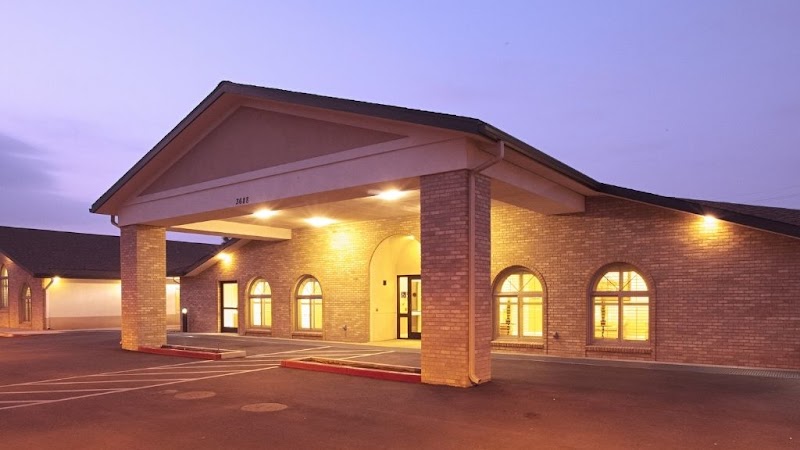
3688 NYE AVENUE, RIVERSIDE, CA 92505 (951) 351-2800
For profit - Limited Liability company 99 Beds PACS GROUP Data: November 2025
Trust Grade
60/100
#525 of 1155 in CA
Last Inspection: July 2024

Within standard 12-15 month inspection cycle. Federal law requires annual inspections.

Overview

Arlington Gardens Care Center has a Trust Grade of C+, indicating it is slightly above average but not exceptional. It ranks #525 out of 1,155 facilities in California, placing it in the top half, and #20 out of 53 in Riverside County, meaning only 19 local options are better. The facility has shown improvement, reducing issues from 22 in 2024 to just 4 in 2025, but it has a concerning staffing rating of just 1 out of 5 stars, with a high turnover rate of 49%, which is above the state average. On the positive side, there are no fines on record, and it has excellent quality measures, but the RN coverage is lower than 77% of other facilities, which could impact care. Specific concerns include delays in responding to call lights, where residents reported waiting up to 45 minutes for help, and failures to notify residents about transfers, which may affect their ability to advocate for themselves.

Trust Score
C+
60/100
In California
#525/1155
Top 45%
Safety Record
Low Risk
No red flags
Inspections
Getting Better
22 → 4 violations
Staff Stability
⚠ Watch
49% turnover. Above average. Higher turnover means staff may not know residents' routines.
Penalties
✓ Good
No fines on record. Clean compliance history, better than most California facilities.
Skilled Nurses
⚠ Watch
Each resident gets only 19 minutes of Registered Nurse (RN) attention daily — below average for California. Fewer RN minutes means fewer trained eyes watching for problems.
Violations
⚠ Watch
61 deficiencies on record. Higher than average. Multiple issues found across inspections.
★★★☆☆
3.0
Overall Rating
★☆☆☆☆
1.0
Staff Levels
★★★★★
5.0
Care Quality
★★★☆☆
3.0
Inspection Score
Stable
2024: 22 issues
2025: 4 issues

The Good

  • 5-Star Quality Measures · Strong clinical quality outcomes
  • Full Sprinkler Coverage · Fire safety systems throughout facility
  • No fines on record

Facility shows strength in quality measures, fire safety.

The Bad

3-Star Overall Rating

Near California average (3.1)

Meets federal standards, typical of most facilities

Staff Turnover: 49%

Near California avg (46%)

Higher turnover may affect care consistency

Chain: PACS GROUP

Part of a multi-facility chain

Ask about local staffing decisions and management

The Ugly 61 deficiencies on record

Aug 2025 3 deficiencies
CONCERN (D) 📢 Someone Reported This

A family member, employee, or ombudsman was alarmed enough to file a formal complaint

Potential for Harm - no one hurt, but risky conditions existed

ADL Care (Tag F0677)

Could have caused harm · This affected 1 resident

**NOTE- TERMS IN BRACKETS HAVE BEEN EDITED TO PROTECT CONFIDENTIALITY** Based on observation, interview, and record review, the facility failed to ensure grooming was provided when one resident (Resid...

Read full inspector narrative →
**NOTE- TERMS IN BRACKETS HAVE BEEN EDITED TO PROTECT CONFIDENTIALITY** Based on observation, interview, and record review, the facility failed to ensure grooming was provided when one resident (Resident 1) who was observed with long fingernails did not receive on-going grooming services.This failure had the potential for Resident 1 to be at risk for avoidable skin injuries.Findings:On August 25, 2025, an announced visit was conducted at the facility to investigate a complaint.On August 25, 2025, at 2:33 p.m., Resident 1 was interviewed. Resident 1 was alert, oriented, and well-dressed. Resident 1 was observed with long fingernails on her right hand and stated she would like to have her fingernails cut.On August 25, 2025, at 2:38 p.m., a concurrent observation, interview and record review was conducted with the treatment nurse. The Treatment Nurse (TN) was observed measuring Resident 1's fingernails on her right hand. The following measurements were observed, right index fingernail 1.6 cm (cm- centimeters a unit of measurement), right middle fingernail 1.8 cm, right ring fingernail 1.9 cm, and right pinky fingernail 1.6 cm.The TN stated it is the responsibility of the TN and the certified nurse assistant (CNA) to care for residents' fingernails. The TN further stated Resident 1's long fingernails should have been addressed by the TN and/or the CNA.On August 25, 2025, Resident 1's medical record was reviewed.The admission record indicated Resident 1 was admitted to the facility on [DATE], with diagnoses which included dementia (loss of intellectual functioning), hypertension (high blood pressure), acute kidney failure (decline if kidney function).The history and physical completed on January 31, 2025, indicated Resident 1 had no decision-making capacity.On August 27, 2025, at 2:11 p.m., a concurrent interview and record review was conducted with the Director of Nursing (DON). The DON stated the facility policy on nail care is for the CNA, TN, and/or licensed nurses (LN) to conduct nailcare on a resident's fingernails during resident's care. The DON stated the CNA, TN, and/or LN should have addressed Resident 1's nails during resident's routine care.A review of the facility policy and procedure titled Fingernails/Toenails, Care of, dated 2001, indicated .nail care includes daily cleaning and regular trimming.proper nail care can aid in the prevention of skin problems around the nail bed.trimmed and smooth nails prevent the resident from accidentally scratching and injuring his or her skin. Stop and report to the nurse supervisor.evidence of ingrown nails.pain.nails are too hard or too thick to cut with ease.
CONCERN (D) 📢 Someone Reported This

A family member, employee, or ombudsman was alarmed enough to file a formal complaint

Potential for Harm - no one hurt, but risky conditions existed

Deficiency F0687 (Tag F0687)

Could have caused harm · This affected 1 resident

**NOTE- TERMS IN BRACKETS HAVE BEEN EDITED TO PROTECT CONFIDENTIALITY** Based on observation, interview, and record review, the facility failed to ensure foot care was provided when one resident (Resi...

Read full inspector narrative →
**NOTE- TERMS IN BRACKETS HAVE BEEN EDITED TO PROTECT CONFIDENTIALITY** Based on observation, interview, and record review, the facility failed to ensure foot care was provided when one resident (Resident 1) who was observed with long toenails and did not receive on-going podiatry (foot care provided by a specialty doctor) care.This failure had the potential for Resident 1 to be at risk for avoidable skin injuries.Findings:On August 25, 2025, an announced visit was conducted at the facility to investigate a complaint.On August 25, 2025, at 2:33 p.m., Resident 1 was interviewed. Resident 1 was alert, oriented, and well-dressed. Resident 1 stated she had painful toenails.On August 25, 2025, at 2:38 p.m., a concurrent observation, interview and record review was conducted with the Treatment Nurse (TN). Resident 1 was observed with long curved toenails on both feet. The TN was observed measuring Resident 1's toenails on her left foot. The following measurements were observed, left great toenail 2.0 cm (centimeters-a unit of measurement), left second toenail 0.7 cm, left third toenail 1.0 cm. Left fourth toenail 1.0 cm, and left pinky toenail 0.5 cm.The TN was further observed measuring Resident 1's toenails on her right foot. The following measurements were observed, right great toenail 2.5 cm, right second toenail 1.1 cm, right third toenail 1.0 cm, right fourth toenail 0.9 cm, and right pinky toenail 1.0 cm.The TN stated it is the responsibility of the TN and the certified nurse assistant (CNA) to care for residents' toenails. The TN further stated the nursing staff should have informed podiatry of Resident 1's long toenails.On August 25, 2025, Resident 1's medical record was reviewed.The admission record indicated Resident 1 was admitted to the facility on [DATE], with diagnoses which included dementia (loss of intellectual functioning), hypertension (high blood pressure), acute kidney failure (decline if kidney function).The history and physical completed on January 31, 2025, indicated Resident 1 had no decision-making capacity.The podiatry note dated April 10, 2025, indicated .Resident 1.onychomycosis (fungal infection toenails).dystrophic nails (abnormal nail shape, color, texture, or growth).paronychia (inflammation of skin surrounding toenail).with painful nail boarders.There was no documented evidence Resident 2 was seen by a podiatrist after April 10, 2025.On August 27, 2025, at 2:11 p.m., a concurrent interview and record review was conducted with the Director of Nursing (DON). The DON stated the facility policy on nail care is for the CNA, TN, and/or licensed nurses (LN) to conduct nailcare on a resident during resident's routine care. The DON stated the CNA, TN, and/or LN should have scheduled podiatry services for Resident 1's toenails.A review of the facility policy and procedure titled Fingernails/Toenails, Care of, dated 2001, indicated .nail care includes daily cleaning and regular trimming.proper nail care can aid in the prevention of skin problems around the nail bed.trimmed and smooth nails prevent the resident from accidentally scratching and injuring his or her skin. Stop and report to the nurse supervisor.evidence of ingrown nails.pain.nails are too hard or too thick to cut with ease.
CONCERN (D) 📢 Someone Reported This

A family member, employee, or ombudsman was alarmed enough to file a formal complaint

Potential for Harm - no one hurt, but risky conditions existed

Accident Prevention (Tag F0689)

Could have caused harm · This affected 1 resident

**NOTE- TERMS IN BRACKETS HAVE BEEN EDITED TO PROTECT CONFIDENTIALITY** Based on observation, interview, and record review, the facility failed to ensure supervision and monitoring was provided for on...

Read full inspector narrative →
**NOTE- TERMS IN BRACKETS HAVE BEEN EDITED TO PROTECT CONFIDENTIALITY** Based on observation, interview, and record review, the facility failed to ensure supervision and monitoring was provided for one resident (Resident 3) when Resident 3 fell on four separate occasions within seven days.This failure had the potential for Resident 3 to experience avoidable accidental injuries. Findings:On August 25, 2025, an announced visit was conducted at the facility to investigate a complaint.On August 25, 2025, at 2:26 p.m., Resident 3 was interviewed. Resident 3 was alert and oriented. Resident 3 was observed in bed dressed and well groomed. Resident 3 stated he was unsure how many times he fell at the facility, but he remembers going to the hospital for a fall.On August 25, 2025, Resident 3's medical records were reviewed.The admission record indicated Resident 3 was admitted to the facility on [DATE], with the diagnoses which included hemiplegia (paralysis affecting one side of the body), hemipheresis (brain injury affecting one side of the brain), diabetes mellitus (high blood sugar), and Parkinsons (progressive brain disorder).The history and physical completed on August 4, 2025, indicated Resident 3 had limited capacity to make decisions.The Situation Background Assessment Recommendation (SBAR) Notes for Resident 3 indicated the following:On August 11, 2025, at 9:15 p.m., .unwitnessed fall.on anticoagulants.LVN (Licensed Vocational Nurse) entered patients' room.patient lying on the floor next to bed.patient stated hit their head.no laceration or bump.c/o mild pain.Registered Nurse notified.neuro checks.transferred to hospital.On August 17, 2025, at 8:00 p.m., .unwitnessed fall.around 8:00 pm patient found on the floor in sitting position.patient stated did not hit his head slide off bed.no bruises or skin tears.pain 0/10.care plan completed.medical doctor and family made aware.no new orders.The care plan for Resident 3 indicated the following:On August 4, 2025, .Resident is at risk for falls.Intervention. maintain keep bed low position.side rails. keep bed in low position with brakes locked. Side rails up while in bed to aid in bed mobility and repositioning.maintain safe hazard free environment.On August 11, 2025, .unwitnessed fall.Discharge/Transfer Acute Hospital: Resident requires transfer to an acute hospital due to: Fall beside the bed, pt alert x 4, using blood Thinner medication. Intervention.communicate condition/transfer to the responsible party/POA/legal guardian.On August 12, 2025, .Resident had unwitnessed fall.goal. Will be compliant with fall interventions to reduce risk for additional falls.Will minimize risk for additional falls to the extent possible.Intervention.transfer to emergency room for evaluation of fall.keep bed in low position with brakes locked. Monitor for complications related to the fall.On August 18, 2025, .Resident had an unwitnessed fall.goal same as August 12, 2025. Intervention.1:1 Sitter provided.Continue use of low bed and bilateral floor mats.On August 27, 2025, at 1:47 p.m., a concurrent interview and record review was conducted with the Director of Nursing (DON). The DON stated Resident 3 had four falls. The DON stated Resident 3's first fall was on August 11, his second fall was on August 12, his third fall was on August 15, and the fourth fall was on August 17, 2025.The DON reviewed Resident 3's care plan and verified the following interventions were implemented after Resident 3's first and second fall dated August 11 and August 12, 2025, .transfer to acute care hospital .resident was educated to call for assistance.low bed.floor mats on both sides of bed.bed alarm.wheelchair alarm.every two-hour monitoring.continue antibiotic therapy for urinary tract infection.The DON reviewed Resident 3's care plan and verified the following interventions were implemented after Resident 3's third fall on August 15, 2025, .continue interventions from previous fall.change antibiotic therapy.The DON reviewed Resident 3's care plan and verified the following interventions were implemented after Resident 3's fourth fall on August 18, 2025, .continue lowbed.bed alarm.floor mats.implement 1:1 sitter.The DON stated after Resident 3's second fall the family requested a sitter for the resident and for the resident to be moved closer to the nursing station. The DON stated there were no rooms closer to the nurses' station and they did not assign a sitter because the facility wanted to be less restrictive. The DON further stated that all residents are monitored every two hours, so this would not be considered an intervention to prevent Resident 3's falls. The DON stated Resident 3 should have been rounded (monitored) more frequently and should have had a sitter assigned prior to his fourth fall. The DON stated possible outcomes of Resident 3's continued falls could have been a fracture or serious injury due to Resident 3 being on blood thinner medication.A review of the facility policy and procedure titled Falls Clinical Protocol, dated 2001, indicated .as part of the initial assessment.the physician will help identify.history of falls and risk factors.staff will evaluate and document fall that occur while individual is in the facility.staff and physician will identify pertinent interventions to try to prevent subsequent falls.
Jun 2025 1 deficiency
CONCERN (D) 📢 Someone Reported This

A family member, employee, or ombudsman was alarmed enough to file a formal complaint

Potential for Harm - no one hurt, but risky conditions existed

Deficiency F0628 (Tag F0628)

Could have caused harm · This affected 1 resident

**NOTE- TERMS IN BRACKETS HAVE BEEN EDITED TO PROTECT CONFIDENTIALITY** Based on interview and record review, the facility failed to provide the proposed transfer and discharge notice to the Office of...

Read full inspector narrative →
**NOTE- TERMS IN BRACKETS HAVE BEEN EDITED TO PROTECT CONFIDENTIALITY** Based on interview and record review, the facility failed to provide the proposed transfer and discharge notice to the Office of the State Long-Term Care (LTC) Ombudsman at the same time the notice was provided to the resident and/or resident's representative in accordance with the policy and procedure for two of 23 sampled residents (Residents 3 and 8). This failure resulted in missed opportunity for the LTC Ombudsman to advocate for the residents to ensure a safe and appropriate discharge. Findings: On May 22, 2025, at 10:15 a.m., an unannounced visit was conducted to the facility to investigate one complaint related to transfer and discharge Process. A review of Resident 3's record indicated the resident was admitted to the facility on [DATE], and re-admitted on [DATE], with diagnoses which included fracture of the pelvis (hip bones fracture). A review of Resident 3's physician's order dated May 14, 2025, indicated, DC (discharge) to board and care on hospice Wednesday 5/14/2025 . A review of the Social Service notes dated May 13, 2025, indicated, .DC to board and care on hospice Wednesday 5/14/2025 . A review of Resident 3's proposed discharge/transfer notice indicated the resident signed the notice on May 13, 2025. A review of the fax document sent to the Ombudsman on May 14, 2025, indicated Resident 3's proposed discharge/transfer notice was sent to the Ombudsman on May 14, 2025, (1 day after the notice was given to the family member). A review of Resident 8's record indicated Resident 8 was admitted to the facility on [DATE], with diagnoses which included coronary artery disease and had coronary artery bypass grafting (CABG - a heart procedure that reroutes blood around blocked arteries to improve the blood flow). A review of the physician's order dated May 16, 2025, indicated .Pt (patient) will dc home Friday 5/16/25 . A review of Resident 8's proposed discharge/transfer notice was received by the resident's representative on May 14, 2025. A review of the Notice of Proposed Transfer/Discharge document indicated the notice was faxed to the Ombudsman on May 15, 2025 (1 day after the notice of proposed discharged was given to the resident's representative). On May 22, 2025, at 1:30 p.m., during interview, the Director of Social Services (DSS) stated a copy of the proposed transfer/discharge notice was usually sent via fax to the Ombudsman on the day of discharge. She stated the proposed transfer/discharge notice was not provided to the resident or resident representative when the notice of Medicare Non-Coverage was signed by the resident's representative or acknowledged by telephone. She stated she should have given the Notice of Proposed Transfer/Discharge earlier. A review of the facility's policy and procedure titled, Transfer or Discharge, Facility-Initiated, dated October 2022, indicated, .Notice of Transfer or Discharge (Planned) .the resident and his or her representative are given a thirty (30) -day-advance written notice of an impending transfer or discharge from the facility .A copy of the notice is sent to the Office of the State Long -Term Care Ombudsman at the same time the notice of transfer or discharge is provided to the resident and representative .
Aug 2024 1 deficiency
CONCERN (D) 📢 Someone Reported This

A family member, employee, or ombudsman was alarmed enough to file a formal complaint

Potential for Harm - no one hurt, but risky conditions existed

Infection Control (Tag F0880)

Could have caused harm · This affected 1 resident

Based on observation, interview, and record review, the facility failed to ensure the infection control policy and procedure for masking was followed when: 1. Two Certified Nursing Assistants (CNA) us...

Read full inspector narrative →
Based on observation, interview, and record review, the facility failed to ensure the infection control policy and procedure for masking was followed when: 1. Two Certified Nursing Assistants (CNA) used an N95 mask (a protective device used to achieve a very close facial fit and very efficient filtration of airborne particles) over a surgical mask (face mask); and 2. One CNA used an N95 mask while caring for a Covid 19 (a highly infections respiratory virus) positive resident without a fit test(specialized test to determine the proper fit of a specific N95 for an individual). These failures had the potential to increase staff and resident exposure and transmission of the Covid 19 virus resulting in illness. Findings: 1. During a concurrent observation and interview on August 22, 2024, at 3:05 p.m., CNA 1, was observed wearing an N95 mask over a surgical mask. CNA 1 stated she would lower the N95 mask when was not inside the isolation room and use the surgical mask and vice versa. CNA 1 stated she would lower the surgical mask when she was inside the isolation room. CNA 1 stated she should have not worn the N95 mask over the surgical mask. 2. During an observation on August 22, 2024, at 3:20 p.m., CNA 2 was observed inside the room of a Covid positive resident. CNA 2 was wearing an N95 mask over a surgical mask and did not have an isolation gown on. CNA 2 was talking to the resident. During an interview on August 22, 2024, at 3:33 p.m., with CNA 2, CNA 2 stated he was not a regular staff at the facility. CNA stated he worked for an agency and was assigned to be a sitter (companion assigned to a resident requiring constant monitoring). He stated he was informed the resident had Covid and was given an N95 mask. CNA 2 did not have any knowledge of N95 mask fit testing. CNA 2 stated he was instructed to put on an N95 mask by a facility staff. CNA 2 stated he was not fit tested for the N95 mask by the agency or the facility. He stated he had the N95 mask over the surgical mask for better protection. During an interview on August 22, 2024, at 3:41 p.m., with the Director of Nursing (DON), the DON stated no staff should be double masking. The DON stated the staff should not wear an N95 mask over a surgical mask. The DON stated the surgical mask will create a gap and would break the seal on the face. The DON also stated the facility should have verified with the agency if the staff had been fit tested for an N95 mask before he was assigned to a Covid positive resident. During an interview on August 22, 2024, at 4:40 p.m., with the Infection Control Nurse (ICN), the ICN stated she called the agency and verified CNA 2 did not have a fit test for an N95 mask. She stated the agency discontinued N95 fit testing after the pandemic. She stated the facility should have checked with the agency before CNA 2 was assigned to a Covid positive resident. During a review of the facility ' s policy and procedure titled, Respiratory Protection Program, revised July 16, 2020, the policy indicated .To ensure appropriate use of respirators in accordance with the federal and state regulations .Fit Testing .Prior to using a respirator, each employee will be fit tested .will be provided at the time of initial assignment .Training .on appropriate respirator use will occur at least at the time of initial assignment, prior to actual respirator use . According to the CDC (Center for Disease Control) Guidelines, titled, How to Use Your N95 Respirator, dated May 16, 2023, .N95 respirators must form a seal to the face to work properly .Keep Your N95 Respirator Snug .Your N95 respirator must form a seal to your face to work properly .
Jul 2024 8 deficiencies
CONCERN (D) 📢 Someone Reported This

A family member, employee, or ombudsman was alarmed enough to file a formal complaint

Potential for Harm - no one hurt, but risky conditions existed

MDS Data Transmission (Tag F0640)

Could have caused harm · This affected 1 resident

Based on interview, record review, facility policy review, and review of the Centers for Medicare and Medicaid Services (CMS) Long-Term Care Facility Resident Assessment Instrument 3.0 User's Manual, ...

Read full inspector narrative →
Based on interview, record review, facility policy review, and review of the Centers for Medicare and Medicaid Services (CMS) Long-Term Care Facility Resident Assessment Instrument 3.0 User's Manual, the facility failed to ensure a quarterly Minimum Data Set (MDS) assessment was completed timely for 1 (Resident #37) of 19 resident MDS assessments reviewed. Findings included: A facility policy titled, Resident Assessments, revised 10/2023, specified, 4. Non-Comprehensive MDS assessments include a select number of items from the MDS used to track the resident's status between comprehensive assessments and to ensure monitoring of critical indicators of the gradual onset of significant changes in resident status. The policy revealed, Non-comprehensive assessments include Quarterly assessments and SCQAs [significant correction to prior quarterly assessment]. The policy revealed, 5. The RAI [Resident Assessment Instrument] User's Manual (Chapter 2) provides detailed information on timing and submission of assessments. The Centers for Medicare and Medicaid Services (CMS) Long-Term Care Facility Resident Assessment Instrument 3.0 User's Manual, dated October 2023, revealed under 05. Quarterly Assessment The MDS completion date (item Z0500B) must be no later than 14 days after the ARD [Assessment Reference Date] (ARD + 14 calendar days). An admission Record revealed the facility admitted Resident #37 on 10/31/2022. According to the admission Record, the resident had a medical history that included a diagnosis of encephalopathy (degenerative brain disease). A quarterly MDS, with an ARD of 06/14/2024, revealed the section for the Signature of RN [registered nurse] Assessment Coordinator Verifying Assessment Completion was blank, indicating the assessment had not been completed. During an interview on 07/11/2024 at 3:56 PM, the Administrator stated information for the MDS assessment was pulled from many different sources like charting and what was happening in the facility. The Administrator stated he expected for MDS assessments to be completed timely. During an interview on 07/12/2024 at 10:36 AM, MDS Nurse #3 stated that for timeliness the MDS was typically started based on the ARD. MDS Nurse #3 stated the facility had 14 days from the ARD to complete the assessment then the RN signed the MDS. MDS Nurse #3 stated when signed, the MDS was considered complete, and the 14 days started to get the MDS transmitted. MDS Nurse #3 stated the RNs were supposed to check the MDS list and sign them daily. MDS Nurse #3 stated Resident #37's quarterly MDS should have been completed 14 days from the ARD. MDS Nurse #3 stated she had signed Resident #37's MDS on 06/27/2024, and the RN signed it on 07/10/2024. MDS Nurse #3 stated Resident #37's quarterly MDS was not completed timely. During an interview on 07/12/2024 at 11:08 AM, the Director of Nursing (DON) stated she was not sure of the exact timeline for MDS completion, but she expected the MDS Nurse to know and get everything submitted on time. The DON stated the MDS Nurse reminded the RNs to sign the MDS and once the MDS was signed then it was considered completed.
CONCERN (D) 📢 Someone Reported This

A family member, employee, or ombudsman was alarmed enough to file a formal complaint

Potential for Harm - no one hurt, but risky conditions existed

Assessment Accuracy (Tag F0641)

Could have caused harm · This affected 1 resident

Based on interview, record review, facility document review, and facility policy review, the facility failed to ensure the Minimum Data Set (MDS) was accurate for 1 (Residents #103) of 19 residents re...

Read full inspector narrative →
Based on interview, record review, facility document review, and facility policy review, the facility failed to ensure the Minimum Data Set (MDS) was accurate for 1 (Residents #103) of 19 residents reviewed for accurate assessments. Findings included: A facility policy titled, Resident Assessment, revised 10/2023, revealed, 11. All persons who have completed any portion of the MDS resident assessment form must sign the document attesting to the accuracy of such information. 12. Information in the MDS assessments will consistently reflect information in the progress notes, plans of care and resident observations/interviews. An admission Record revealed the facility originally admitted Resident #103 on 01/12/2024 and readmitted the resident on 03/29/2024. The admission Record revealed Resident #103 was discharged from the facility on 04/09/2024. A discharge MDS, with an Assessment Reference Date (ARD) of 04/09/2024, revealed Resident #103 had discharged to a short-term general hospital. The MDS revealed the resident had discharged on 04/09/2024. Resident #103's Discharge Summary - [Facility Name] V2.1 dated 04/09/2024 revealed the reason for discharge was the resident progressed with therapy and was able to discharge back home safely per the medical doctor and the resident's request. The summary revealed the resident's discharged location was home. Resident #103's Progress Notes dated 04/09/2024, revealed the resident had discharged home with a family member. During an interview on 07/11/2024 at 3:56 PM, the Administrator revealed he expected the MDS to be accurate. During an interview on 07/12/2024 at 10:35 AM, MDS Nurse #3 stated when a resident discharged home the MDS should reflect the resident went home and not to the hospital. She stated it was a mistake to document Resident #103 had gone to the hospital. During an interview on 07/12/2024 at 11:02 AM, the Director of Nursing (DON) stated she expected the MDS to be accurate. The DON stated the MDS Nurse should have reviewed the progress notes.
CONCERN (D) 📢 Someone Reported This

A family member, employee, or ombudsman was alarmed enough to file a formal complaint

Potential for Harm - no one hurt, but risky conditions existed

Quality of Care (Tag F0684)

Could have caused harm · This affected 1 resident

Based on interview, record review, facility document review, and facility policy review, the facility failed to ensure a medication allergy was documented for 1 (Resident #256) of 5 residents reviewed...

Read full inspector narrative →
Based on interview, record review, facility document review, and facility policy review, the facility failed to ensure a medication allergy was documented for 1 (Resident #256) of 5 residents reviewed for unnecessary medications. Findings included: A facility policy titled, admission Assessment, revised 09/2012, specified, The purpose of this procedure is to gather information about the resident's physical, emotional, cognitive, and psychosocial condition upon admission for the purposes of managing the resident, initiating the care plan, and completing required assessment instruments, including the MDS [Minimum Data Set]. An admission Record revealed the facility admitted Resident #256 on 06/30/2024. According to the admission Record, the resident had a medical history that included diagnoses of fracture of the left femur, aftercare following joint replacement surgery, pain due to internal orthopedic prosthetic devices, implants and grafts, dementia, and major depressive disorder. Resident #256's Care Plan included a focus area initiated 07/01/2024, that indicated the resident was at risk for pain or discomfort due to arthritis, depression, fractures, recent falls, recent injury, recent surgery, and wounds. Resident #256's History and Physical Reports, dated 06/26/2024, revealed an allergy to hydrocodone; the severity of the allergy was unknown. The report revealed Resident #256's reactions to hydrocodone included the resident would become angry very easily and displayed uncooperative behavior. Resident #256's Order Summary Report with active orders as of 07/10/2024 revealed an order dated 07/03/2024 for Norco (hydrocodone/acetaminophen; a pain reliever) 5-325 milligrams (mg), with instructions to give one tablet by mouth every six hours as needed for moderate to severe pain. The Order Summary Report revealed the resident had no known allergies. Resident #256's Medication Administration Record [MAR] for the timeframe from 07/01/2024 through 07/08/2024 revealed Resident #256 received Norco 5-325 mg on 07/04/2024, 07/05/2024, 07/06/2024, 07/07/2024, and 07/08/2024. During an interview on 07/08/2024 at 2:05 PM, Resident #256's Family Member (FM) #6, stated Resident #256 had gotten mean and aggressive since their admission to the facility and had been saying words they have never heard the resident say. During an interview on 07/12/2024 at 9:50 AM, Registered Nurse (RN) #7 stated medication allergies were entered into the resident's chart by the unit supervisor on duty when the resident got admitted . During an interview on 07/12/2024 at 11:08 AM, the Director of Nursing (DON) stated the RN supervisor received the information from the hospital and was to enter it in the resident's chart. The DON stated Resident #256's allergy did get missed but was not sure how it was missed.
CONCERN (D) 📢 Someone Reported This

A family member, employee, or ombudsman was alarmed enough to file a formal complaint

Potential for Harm - no one hurt, but risky conditions existed

Accident Prevention (Tag F0689)

Could have caused harm · This affected 1 resident

Based on interview, record review, facility document review, and facility policy review, the facility failed to ensure a resident was safe from eloping from the facility for 1 (Resident #91) of 3 resi...

Read full inspector narrative →
Based on interview, record review, facility document review, and facility policy review, the facility failed to ensure a resident was safe from eloping from the facility for 1 (Resident #91) of 3 residents reviewed for elopements. The failure resulted in Resident #91 leaving the facility during an excessive heat wave, leading to a visit to the emergency room. Findings included: A facility policy titled, Elopements, revised on 12/2007, indicated, Staff shall investigate and report all cases of missing residents. The policy revealed, 1. Staff shall promptly report any resident who tries to leave the premises or is suspected of being missing to the Charge Nurse or Director of Nursing. An admission Record revealed the facility admitted Resident #91 on 06/11/2024. According to the admission Record, the resident had a medical history that included diagnoses of cerebral infarction (stoke), muscle weakness, and difficulty in walking. An admission Minimum Data Set (MDS) with an Assessment Reference Date (ARD) of 06/18/2024, revealed Resident #91 had a Brief Interview for Mental Status (BIMS) score of 3, which indicated the resident had severe cognitive impairment. The MDS indicated Resident #91 had not exhibited wandering behaviors during the assessment period. The MDS indicated the resident's family wanted the goal for Resident #91 to be discharged to the community. A review of Resident #91's Care Plan included a focus area initiated on 06/12/2024 that indicated Resident #91 was admitted for short-term care. The focus area revealed the resident would discharge home versus placement at another facility when able. The Care Plan included a focus area initiated 07/09/2024, that indicated Resident #91 was an elopement risk; the resident had a history of attempting to walk outside. An intervention, initiated 07/09/2024, indicated Resident #91 would have a one-on-one sitter. Further review revealed interventions that directed staff to document the resident's wandering behavior and attempted diversional interventions in the behavior log. Resident #91's Baseline Care plan Person-Centered Care Planning - V3.1 form dated 06/12/2024, indicated Resident #91 was not an elopement risk. Resident #91's 06. Nursing- Elopement Risk Observation/Assessment - V 3.1 form dated 06/11/2024, revealed Resident #91 had an Elopement Risk Score of 2, which indicated Resident #91 was not an elopement risk. Resident #91's hospital ED [emergency department] Provider Note dated 07/08/2024, revealed the resident's case was discussed with the facility. The note revealed Resident #91 escaped from the facility and was wandering in the street when they were found by a police officer. The Medical Decision Making section of the ED Provider Note, revealed, while in the ED, Resident #91 appeared to have stable vital signs and was not immediately compromised or in distress. Further review revealed Resident #91 was stable and able to return to the facility for rehab from their stroke and memory care. Resident #91's SBAR [situation, background, appearance, review and notify] Communication Form and Progress Notes for RNs [registered nurse]/LPN [licensed practical nurse]/LVN [licensed vocational nurse], dated 07/08/2024, revealed that according to the charge nurse's report, the residents spouse came looking for the resident around 11:50 AM. The SBAR notes revealed the charge nurse checked the resident's room and they were not there. According to the SBAR notes, Resident #91 was last seen at 8:50 AM the same morning at the gym and then approximately 10:30 AM in the television room near the nurse's station. The SBAR notes revealed the RN announced that a resident was missing from their room and facility staff were given the resident's identification and that staff were extensively searching the facility and surroundings. Resident #91's Progress Notes *NEW*, dated 07/09/2024, revealed at 12:16 PM the local Police Department called informing the Director of Nursing (DON) that Resident #91 had been found nearby. The notes revealed the officer stated Resident #91 was complaining of being dizzy and thirsty. The notes revealed the officer informed the DON the resident was being transferred to a nearby hospital for an evaluation. The notes revealed the physician was informed. The notes revealed the resident returned to the facility at approximately 3:00 PM with no other findings reported with instructions to resume the resident's current orders. The notes revealed a skin assessment was conducted upon return and revealed no signs of injury, bruising or skin breakdown. The notes revealed there was no pain or discomfort mentioned and the care plan was updated. The notes revealed under Nursing Intervention that the facility provided a 24-hour one-on-one sitter. Resident #91's eINTERACT Change in Condition Evaluation- V 5.1, dated 07/08/2024, completed by Registered Nurse (RN) #15, revealed Resident 91 was reported to have been walking in sunny hot weather outside the facility. The evaluation revealed Resident #91 complained of thirst, dizziness, and headache. The evaluation revealed Resident #91 was sent to the ED for further evaluation and treatment. The evaluation revealed the weather outside was 95 degrees with an excessive heat warning. The evaluation revealed Resident #91's family was notified. Resident #91's Order Summary Report with active orders as of 07/11/2024 revealed an order dated 07/10/2024, that stated Effective 7/8/2024 [07/08/2024] 1:1 sitter 24 hours every shift for elopement risk. An alert charting Progress Note *NEW*, dated 07/09/2024, revealed after Resident #91's return from the ED orders were received for 1:1 sitter for resident safety. During an interview on 07/10/2024 at 9:55 AM, Family Member (FM) #14, Resident #91's family member, stated that when family arrived at the facility to visit with Resident #91, the resident could not be found. FM #14 stated after a call to the DON, they were told of the situation and was informed they last saw the resident at 8:15 AM. FM #14 stated they called the DON back and was informed Resident #91 was found by a Police Officer and taken to the hospital by ambulance. FM #14 stated the resident was a walker and had always taken walks; when they walked, they picked up cans to recycle. During an interview on 07/10/2024 at 10:49 AM, the Social Services Director stated she was not told by the family that Resident #91 wandered and could be an elopement risk. During an interview on 07/10/2024 at 10:57 AM, Certified Nursing Aide (CNA) #9 stated Resident #91 always liked to walk around the building, but they would just go up and down the halls. She stated she had never seen Resident #91 attempt to leave. During an interview on 07/10/2024 at 11:14 AM, CNA #10 stated Resident #91 was confused and liked to walk around the halls of the building and liked to keep busy. CNA #10 stated she had seen Resident #91 on 07/08/2024 in the television room around 10:30 AM. She stated they are told during report to keep an eye out for residents if they like to wander and are told by the nurse if a resident was a wander risk. During an interview on 07/10/2024 at 11:16 AM, CNA #11 stated Resident #91 liked to walk up and down the hallways and usually walked with their spouse. CNA #11 stated staff would walk with the resident as well. She stated she never saw or heard of the resident trying to leave the building. She stated if a resident was a wander/elopement risk they were told by the nurses. During an interview on 07/10/2024 at 11:23 AM, LVN #5 stated she would see Resident #91 walking around the building and their family would take them outside to walk outside when they visited. LVN #5 stated the last time she saw Resident #91 on 07/08/2024 was in the television area near their room around 10:30 AM. During an interview on 07/10/2024 at 11:59 AM, CNA #12 stated Resident #91 would go outside with their family and walk around. CNA #12 said the last time she saw Resident #91 on 07/08/2024 was near their room in the television area between 10:00 AM and 11:00 AM. During an interview on 07/10/2024 at 1:06 PM, the DON stated she was told Resident #91 was unable to be located by their spouse a little before 12:00 PM on 07/08/2024. The DON stated staff were directed to look for Resident #91. The DON stated they were about to call the police when the police called them. The DON stated she asked the Police Officer to bring the resident back to the facility, but they informed her that the resident was being sent to the hospital. The DON stated she informed the residents spouse and FM #14. The DON stated she did speak with staff to determine when and how Resident #91 was able to leave the facility. According to the DON, she incorporated all of her interviews into her narrative in Resident #91's progress notes. She stated the interviews revealed Resident #91 was last seen near Station 2 around 10:00 AM on 07/08/2024. The DON stated that had never happened before; Resident #91 never tried to leave the building. She stated family did not inform the facility Resident #91 was a wander/elopement risk when they were admitted . The DON stated all the door alarms were checked; however, they had no idea what door the resident eloped from. During an interview on 07/10/2024 at 3:18 PM, RN #13 stated Resident #91 could be fidgety, and they would walk around a lot, but they had never tried to exit the facility. During an interview on 07/11/2024 at 8:56 AM, the Administrator stated there was never an issue with Resident #91 exiting the building. He stated he was never told Resident #91 was wandering and there was a risk of them eloping. He stated the security cameras were reviewed and it was discovered Resident #91 left the building twice the morning of 07/08/2024. He stated there was no camera footage of the doors Resident #91 left and entered from. On 07/11/2024 at 9:28 AM, a review of the facility security camera footage revealed Resident #91 walking around the exterior of the facility at approximately 8:25 AM on 07/08/2024, they exited out of an unknown door. Resident #91 then re-entered at an unknown time through an unknown door. Resident #91 was then seen walking around outside the facility at approximately 8:50 AM on 07/08/2024. They were not seen back in the facility until they were transferred back from their visit to the emergency room.
CONCERN (D) 📢 Someone Reported This

A family member, employee, or ombudsman was alarmed enough to file a formal complaint

Potential for Harm - no one hurt, but risky conditions existed

Unnecessary Medications (Tag F0759)

Could have caused harm · This affected 1 resident

Based on observation, interview, record review, and facility policy review, the facility failed to maintain a medication error rate less than 5 percent (%) with a medication error rate of 7.69%. The f...

Read full inspector narrative →
Based on observation, interview, record review, and facility policy review, the facility failed to maintain a medication error rate less than 5 percent (%) with a medication error rate of 7.69%. The facility had two medication errors out of 26 opportunities which affected 1 (Resident #29) of 4 residents observed for the medication administration task. Findings included: A facility policy titled, Administering Medications, revised 04/2019, indicated, Medications are administered in a safe and timely manner, and as prescribed. The policy revealed, 4. Medications are administered in accordance with prescriber orders, including any required time frame. An admission Record indicated the facility admitted Resident #29 on 03/18/2019. According to the admission Record, the resident had a medical history that included diagnoses of multiple sclerosis and immunodeficiency. Resident #29's Care Plan included a focus area initiated on 05/20/2024 that indicated the resident had a risk for constipation. Interventions directed staff to administer medications per physician order (initiated 05/20/2024). The Care Plan included a focus area initiated on 05/20/2024 that indicated the resident had a risk for malnutrition. Interventions directed staff to administer vitamin/minerals as ordered (initiated 05/20/2024). Resident #29's Order Summary Report with active orders as of 07/10/2024 revealed an order dated 05/19/2024 for Centrum (multiple vitamins with minerals) one tablet a day for supplement. The Order Summary Report revealed an order dated 05/19/2024 for docusate sodium 200 milligrams (mg) two times a day for bowel management. During an observation of medication pass on 07/10/2024 at 8:44 AM with Licensed Vocational Nurse (LVN) #5 revealed she prepared Resident #29's medications, including docusate sodium 100 mg and one multivitamin without minerals. During an interview on 07/10/2024 at 11:09 AM, LVN #5 retrieved a bottle of multivitamins without minerals with an expiration date of 08/2025 from the top drawer of the medication cart and stated it was the generic for a name brand vitamin. LVN #5 checked the physician order and indicated the order was for multivitamins with minerals. LVN #5 stated she administered the wrong medication, and Resident #29 should have received the multivitamin with minerals. During a follow-up interview on 07/10/2024 at 11:12 AM, LVN #5 checked the physician order for docusate sodium and stated she only gave 100 mg. LVN #5 stated she was nervous and did not give Resident #29 the right dose of docusate sodium. During an interview on 07/10/2024 at 3:59 PM, the Director of Nursing (DON) stated the process was to check the five rights for administering medication, which were verify the physician order for the medication and the dose, identification of the resident, and right route and right time. The DON stated she expected the correct dosage of medication to be administered and the correct multivitamin with minerals to be administered as ordered for Resident #29. During an interview on 07/11/2024 at 3:56 PM, the Administrator stated he expected medications to be administered as the physician ordered.
CONCERN (E) 📢 Someone Reported This

A family member, employee, or ombudsman was alarmed enough to file a formal complaint

Potential for Harm - no one hurt, but risky conditions existed

Deficiency F0645 (Tag F0645)

Could have caused harm · This affected multiple residents

3. An admission Record revealed the facility admitted Resident #59 on 12/07/2022. According to the admission Record, the resident had a medical history that included diagnoses of anxiety disorder, and...

Read full inspector narrative →
3. An admission Record revealed the facility admitted Resident #59 on 12/07/2022. According to the admission Record, the resident had a medical history that included diagnoses of anxiety disorder, and major depressive disorder. A quarterly MDS, with an Assessment Reference Date (ARD) of 06/04/2024, revealed Resident #59 had a Brief Interview for Mental Status (BIMS) score of 12, which indicated the resident had moderate cognitive impairment. The MDS indicated Resident #59 had a diagnoses of anxiety disorder, depression, and schizophrenia. Resident #256's Care Plan included a focus area initiated 02/15/2024, that revealed Resident #59 was at risk for decreased psychosocial well-being, adjustment issues, emotional distress and ineffective coping skills, poor impulse control, adverse effects on function, mental, physical, social or spiritual well-being related to being in a skilled nursing facility and a diagnosis of depression. The Care Plan also included a focus, initiated 06/25/2024, that indicated Resident #59 required anti-anxiety medication related to an anxiety disorder as evidenced by verbalization of feelings of nervousness and anxiety. Resident #256's Preadmission Screening and Resident Review (PASRR) Level I Screening, dated 01/27/2024, revealed a negative Level I outcome due to a 30-day exempted hospital discharge. Resident #256's State of California - Health and Human Services Agency Department of Health Care Services letter, dated 01/27/2024, specified, If the individual remains in the NF [nursing facility] longer than 30 days, the facility should resubmit a new Level 1 Screening as a Resident Review on the 31st day. During an interview on 07/11/2024 at 3:56 PM, the Administrator stated the DON was responsible for completing in-house Level I PASARR screenings. The Administrator stated the DON was responsible for ensuring they were up to date and were accurate. During an interview on 07/12/2024 at 11:08 AM, the DON stated that the facility received the Level I PASARR from the hospital before the resident arrived. The DON stated the admission staff reviewed the PASARRs. The DON stated the facility ensured that each resident had a Level I completed. The DON stated if the PASARR were not accurate, she was responsible for completing another Level I screening. Based on interview, record review, facility document review, and facility policy review, the facility failed to ensure Preadmission Screening and Resident Review (PASRR; PASARR) Level I screenings were accurate for 3 (Residents #3, #18, and #59) of 3 residents reviewed for PASRR. Findings included: A facility policy titled, admission Criteria PASARR, revised 03/2019, indicated, 9. All new admissions and readmissions are screened for mental disorders (MD), intellectual disabilities (ID) or related disorders (RD) per the Medicaid Pre-admission Screening and Resident Review (PASARR) process. A. The facility conducts a Level I PASARR screen for all potential admissions, regardless of payer source. to [sic] determine if the individual meets the criteria for a MD, ID, or RD. b. If the level I screen indicates that the individual may meet the criteria for a MD, ID, or RD, he or she is referred to the state PASARR representative for the Level II (evaluation and determination) screening process. (1) The admitting nurse notifies the social services department when a resident is identified as having a possible (or evident) MD, ID, or RD. The policy revealed, 11. The State may choose not to apply the preadmission screening requirement if: c. the Attending Physician has certified (prior to admission) that the individual will likely need less than 30 days of care at the facility. 1. An admission Record revealed the facility admitted Resident #3 on 01/19/2024. According to the admission Record, the resident had a medical history that included diagnoses of dementia, bipolar disorder, major depressive disorder, and schizophrenia. An admission Minimum Data Set (MDS), with an Assessment Reference Date (ARD) of 01/26/2024, revealed Resident #3 had a Brief Interview for Mental Status (BIMS) score of 7, which indicated the resident had severe cognitive impairment. The MDS revealed the resident had diagnoses of depression and bipolar disorder. Resident #3's Level I PASRR letter dated 01/19/2024 specified the Level I PASRR was exempt. The letter specified if the individual remained in the nursing facility longer than 30 days, the facility should resubmit a new Level I screening on the 31st day. During an interview on 07/11/2024 at 3:58 PM, the Administrator reviewed Resident #3's Level I PASRR screening and indicated it should have been resubmitted after the 30 days, on the 31st day. The Administrator stated he expected the Level I PASRR to be resubmitted timely. During an interview on 07/12/2024 at 11:14 AM, the Director of Nursing (DON) stated Resident #3's Level I PASRR screening should have been resubmitted. 2. An admission Record revealed the facility admitted Resident #18 on 01/01/2024. According to the admission Record, the resident had a medical history that included diagnoses of unspecified psychosis not due to a substance and major depressive disorder. A quarterly Minimum Data Set (MDS), with an Assessment Reference Date (ARD) of 04/09/2024, revealed Resident #18 had a Brief Interview for Mental Status (BIMS) score of 9, which indicated the resident had moderate cognitive impairment. The MDS indicated the resident had diagnoses of depression (other than bipolar) and psychotic disorder (other than schizophrenia). Resident #18's Preadmission Screening and Resident Review (PASRR) Level I Screening dated 01/01/2024, revealed the resident did not have a serious diagnosed mental disorder such as depression or symptoms of psychosis. The screening revealed the results of the Level I screening were negative. A letter from the Department of Health Care Services dated 01/01//2024 revealed Resident #18' Level I screening was negative, the resident did not have a mental illness, and a Level II evaluation was not required. During an interview on 07/09/2024 at 1:45 PM, MDS Nurse #3 stated she had not been involved in the PASARR process; they were completed by the hospital. She stated the Director of Nursing (DON) completed any revisions to the Level I screening and communicated with PASARR services if a new Level I was required. During an interview on 07/11/2024 at 3:56 PM, the Administrator stated the DON was responsible for completing in-house Level I PASARR screenings. The Administrator stated the DON was responsible for ensuring they were up to date and were accurate. During an interview on 07/12/2024 at 11:08 AM, the DON stated that the facility received the Level I PASARR from the hospital before the resident arrived. The DON stated the admission staff reviewed the PASARRs. The DON stated the facility ensured that each resident had a Level I completed. The DON stated if the PASARR were not accurate, she was responsible for completing another Level I screening. The DON stated Resident #18's Level I screen was missed; it should have included the resident's diagnoses.
MINOR (C) 📢 Someone Reported This

A family member, employee, or ombudsman was alarmed enough to file a formal complaint

Minor Issue - procedural, no safety impact

Deficiency F0577 (Tag F0577)

Minor procedural issue · This affected most or all residents

Based on observation, interview, facility document review, and facility policy review, the facility failed to ensure the survey results were accessible to residents and family members. This had the po...

Read full inspector narrative →
Based on observation, interview, facility document review, and facility policy review, the facility failed to ensure the survey results were accessible to residents and family members. This had the potential to affect all 98 residents that resided in the facility. Findings included: A facility policy titled, Examination of Survey Results, dated 03/2017, revealed, Survey reports and plan of corrections are readily available to the resident, family members, representatives and to the public. The policy revealed, 2. A copy of the most recent survey report and any plans of correction are kept in a binder in the resident's day room. An admission Record indicated the facility admitted Resident #29 on 03/18/2019. According to the admission Record, Resident #29 was their own responsible party. During an interview on 07/10/2024 at 10:31 AM, Resident #29 revealed the survey binder had been available at the front entrance previously. Resident #29 stated the facility had moved the binder and had not provided the previous survey results for them to review. Resident #29 stated they had reviewed the binder two years ago and found the findings interesting and had not seen the binder again. An observation of an enclosed bulletin board on 07/11/2024 at 2:13 PM revealed signage that stated, Survey Binder is located by the front entrance near the receptionist desk. An observation and concurrent interview on 07/11/2024 at 2:15 PM of the receptionist desk revealed no evidence of the survey results. The Receptionist stated she had worked at the facility as the receptionist for one year. She revealed the survey results binder was not located at the desk. She stated she had never seen a survey binder at the desk. She searched all locations in her area and revealed no survey results. An interview with Human Resources (HR) Payroll on 07/11/2024 at 2:23 PM revealed he had an office across from the receptionist desk. He revealed he was not aware of the location of the survey results. He revealed he asked the Administrator about the survey results binder and the Administrator did not know the location of the survey results. He completed a search of the receptionist area and could not locate the survey results. During an interview on 07/11/2024 at 2:26 PM, the Director of Nursing (DON) revealed she was unable to locate the survey results binder. During a follow-up interview on 07/11/2024 at 2:42 PM, HR Payroll revealed the facility was able to locate the survey results binder. He revealed the survey results binder had been in the DON's office. He stated it was not located where the posting had suggested. During an interview on 07/11/2024 at 4:40 PM, the Administrator revealed the survey binder was removed from the receptionist area after an incident. He stated that he expected the survey results to be accessible to residents and family members. During a follow-up interview on 07/12/2024 at 11:25 AM, the DON revealed the survey results binder should be at the receptionist desk as the posting reflected. She stated she was not aware the results were not available and located in her office.
MINOR (C) 📢 Someone Reported This

A family member, employee, or ombudsman was alarmed enough to file a formal complaint

Minor Issue - procedural, no safety impact

Staffing Information (Tag F0732)

Minor procedural issue · This affected most or all residents

Based on observation, interview, and facility policy review, the facility failed to ensure the daily direct care staffing was posted. This had the potential to affect all 98 residents that resided in ...

Read full inspector narrative →
Based on observation, interview, and facility policy review, the facility failed to ensure the daily direct care staffing was posted. This had the potential to affect all 98 residents that resided in the facility. Findings included: A facility policy titled, Posting Direct Care Daily Staffing Numbers, revised 07/2016, specified, Our facility will post, on a daily basis for each shift, the number of nursing personnel responsible for providing direct care to residents. During an observation on 07/11/2024 at 12:29 PM, the surveyor was unable to locate the daily direct care staff posting. During an interview on 07/11/2024 at 1:53 PM, Certified Nurse Aide (CNA) #4 questioned what a daily direct care staff posting was and indicated the facility did not have a staff posting. During an interview on 07/11/2024 at 3:56 PM, the Administrator indicated he did not know the daily direct care staff posting was required to be posted. During an interview on 07/12/2024 at 11:08 AM, the Director of Nursing (DON) stated she realized the previous day that the daily direct care staffing was not posted, and it should have been posted. The DON stated CNA #4 did not know the staffing information should have been posted. The DON stated she expected the staff posting to be posted daily.
Jun 2024 1 deficiency
CONCERN (D) 📢 Someone Reported This

A family member, employee, or ombudsman was alarmed enough to file a formal complaint

Potential for Harm - no one hurt, but risky conditions existed

Deficiency F0624 (Tag F0624)

Could have caused harm · This affected 1 resident

**NOTE- TERMS IN BRACKETS HAVE BEEN EDITED TO PROTECT CONFIDENTIALITY** Based on interview and record review, the facility failed to ensure a safe and orderly discharge was provided for one of three s...

Read full inspector narrative →
**NOTE- TERMS IN BRACKETS HAVE BEEN EDITED TO PROTECT CONFIDENTIALITY** Based on interview and record review, the facility failed to ensure a safe and orderly discharge was provided for one of three sampled residents (Resident 1), when the discharge location was not confirmed with family before transferring the resident. This failure had the potential for Resident 1 to be discharged to the wrong address which could cause anxiety to the family and to the resident. Findings: On June 6, 2024, an unannounced visit was conducted at the facility to investigate a complaint on admission, transfer, and discharge rights issue. A review of Resident 1's admission record indicated Resident 1 was admitted to the facility on [DATE]. Resident 1's diagnoses which included acute respiratory failure (when lungs cannot release enough oxygen into the blood), Type 2 diabetes (long-term condition in which body has trouble controlling blood sugar), chronic kidney disease (long standing disease of the kidneys leading to renal failure) and hypertension (force of the blood against the artery walls is too high). A review of Resident 1's history and physical dated February 28, 2024, indicated resident did not have the capacity to understand and make decisions. A review of Resident 1's Minimum Data Set (MDS- a standardized comprehensive assessment and care planning tool) section GG (which indicates functional abilities and goals) dated March 11, 2024, indicated Resident 1 needed maximum assistance with ADLs (Activities of daily living). A review of Resident 1's physician orders dated May 28, 2024, indicated .discharge 5/29/2024 home with (family member) . A review of Resident 1's Progress Notes dated May 29, 2024, by the Social Service Director (SSD) indicated, received a call from transportation regarding insufficient address for pt (patient). The SSD called a family member to confirm the correct address. Per family member, he requested for the pt be sent back to skilled nursing facility until the following day and he will pick her up. The family member expressed some concerns and will address them I the morning. Pt will return to ag (skilled nursing facility) for the night and dc (discharge) home safely tomorrow. On May 6, 2024, during an interview, Registered Nurse (RN) stated, during a discharge the SSD and the Case Manager (CM) would confirm if the resident's address was right. On May 6, 2024, during a concurrent interview and record review, the SSD stated a resident's address was confirmed by the admissions and then confirmed by the SSD and the CM.The SSD stated on May 22, 2024, during an Interdisciplinary team (IDT) meeting, Resident 1's family did not state the address on the Notice of Proposed Discharge (NOPD) form was incorrect. The SSD stated the address was not confirmed between the dates May 22nd and May 29, 2024, the day Resident 1 was discharged . The SSD also stated the address Resident 1 was sent to, was a facility and not the family member's home. The SSD stated the address was confirmed with Resident 1's family member after transportation took resident to the wrong address. On May 6, 2024, during an interview, the Social Service Assistant (SSA) stated Resident 1 was taken to the address provided and it was a facility and not a home. The SSA stated the SSD instructed the transporation company to bring back the resident to the facility. On May 6, 2024, during an interview the receptionist stated the address on Resident 1's insurance was different from the address on the face sheet (document that contains a summary of patient's personal and demographic information). A review of the facility's policy and procedure titled Transfer or Discharge Notice revised March 2021 indicated .the resident and representative are notified in writing of the following information: the specific reason for transfer or discharge; the effective date of the transfer or discharge; the location to which the resident is being transferred or discharged .
Apr 2024 2 deficiencies
CONCERN (D) 📢 Someone Reported This

A family member, employee, or ombudsman was alarmed enough to file a formal complaint

Potential for Harm - no one hurt, but risky conditions existed

Transfer Notice (Tag F0623)

Could have caused harm · This affected 1 resident

**NOTE- TERMS IN BRACKETS HAVE BEEN EDITED TO PROTECT CONFIDENTIALITY** Based on interview, and record review, the facility failed to provide an updated notice of transfer and discharge for one of thr...

Read full inspector narrative →
**NOTE- TERMS IN BRACKETS HAVE BEEN EDITED TO PROTECT CONFIDENTIALITY** Based on interview, and record review, the facility failed to provide an updated notice of transfer and discharge for one of three residents' (Resident 2) responsible party (RP) and the Long-term Care Ombudsman office to indicate the changes to the discharge location for Resident 2. This failure had the potential for Resident 2's RP and the Ombudsman not to be aware and be able to advocate for Resident 2's safe discharge. Findings: On March 27, 2024, at 10:43 a.m., an unannounced visit to the facility on a complaint investigation was initiated. A review of Resident 2's History and Physical dated December 22, 2023, indicated he had the capacity to understand and make decisions. On March 27, 2024, at 2:17 p.m., an interview was conducted with the Social Service Director (SSD). The SSD stated that Resident 2 was discharged to a board and care on March 25, 2024. The SSD stated that on March 25, 2024, she received a call from the transporter, informing her that the board and care (Board and Care 1) refused to accept the resident because he was male. The SSD stated that she called other board and care in the area to find placement for Resident 2. The SSD stated that she spoke with an employee at a board and care facility (Board and care 2), and they agreed to admit Resident 2 over the phone. The SSD stated that she emailed the paperwork to the new board and care (Board and Care 2)and provided the new address to the transporter. The SSD stated on March 26, 2024, she received a call from the social worker (SW) at the hospital, who informed her that Resident 2 was at their facility. The SSD stated that she was informed by the SW that the resident was found outside of the new board and care (Board and Care 2), and the board and care staff called 911. The SSD stated that they should have taken the resident back to the facility instead of finding another board and care. The SSD stated that Resident 2's family member and Ombudsman were not notified of the new location. On March 27, 2024, at 4:48 p.m., an interview was conducted with the facility administrator (ADMIN). The ADMIN stated that he was aware of Resident 2's discharge. The ADMIN stated that Resident 2's discharge was not the normal protocol that they follow. On March 28, 2024, at 8:37 a.m., a telephone interview was conducted with the hospital's Social Worker (SW). The SW stated they received Resident 2 into the emergency room on March 25, 2024. The SW stated that the hospital staff called Resident 2's family member to find out where Resident 2 had been, prior to being found outside the board and care (Board and Care 2). On April 4, 2024, at 4:31 p.m., a telephone interview was conducted with [name of board and care 2] House Manager (HM). The HM stated that on March 25, 2024, at approximately 12:30 p.m., Resident 2 was found sitting outside of the residence. The HM stated that he was blind and hard of hearing, and was by himself. The HM stated that she had no idea where the resident came from and called 911 to assist him. The HM stated that she had not spoken to the SSD from the facility, nor did they accept to admit Resident 2. The HM stated that they have a resident named [name] who must have spoken to the SSD on the phone. A review of Resident 2's Notice of Proposed transfer/Discharge dated March 21, 2024, indicated, Notice of Proposed Transfer/Discharge . Resident/Resident Representative:[name and phone number] . D. Name of Resident: [Resident 2's name] . E. Date of discharge: [DATE] . F. Disposition/Location:[address and name of Board and Care 1] .II. Ombudsman Services .Ombudsman Notified Of Transfer/Discharge Via: A. Fax .V. Verification of Receipt of Notice .This acknowledges that I have received a copy of this Notice of Proposed Transfer/ Discharge form .A. Printed Name of Resident or Resident Representative:[name of Resident Representative] . B. Resident/Resident Representative Signature: via telephone . C. Resident/Resident Representative Signature Date: 3/21/2024 . A review of Resident 2's 72-hour Charting dated March 25, 2024, indicated patient (sic) discharged .via gurney with the help of two [name] transport attendants on 3/25/24 at 10:46 . patient meds and belongings sent with transportation and patient.son (sic) .and MD notified A review of Resident 2's Social Service Note dated March 25, 2024, at 12:35 p.m., indicated Late Entry: received a call from transportation and they expressed that board and care would not accept pt [patient] due to he was a male .ssd (sic) called board and cares around the area and [name] from [name] board and care agreed for pt to admit .ssd (sic) gave new address to transport . A review of the facility's policy and procedure titled Transfer or Discharge Notice revised March 2021, indicated .5. The resident and representative are notified in writing of the following information .The location to which the resident is being transferred or discharged ; . 6. A copy of the notice is sent to the Office of the State Long-Term Care Ombudsman at the same time the notice of transfer or discharge is provided to the resident and representative .If the information in the notice changes prior to the transfer or discharge, the recipients of the notice are updated as soon as practicable .
CONCERN (D) 📢 Someone Reported This

A family member, employee, or ombudsman was alarmed enough to file a formal complaint

Potential for Harm - no one hurt, but risky conditions existed

Deficiency F0624 (Tag F0624)

Could have caused harm · This affected 1 resident

**NOTE- TERMS IN BRACKETS HAVE BEEN EDITED TO PROTECT CONFIDENTIALITY** Based on interview and record review, the facility failed to ensure a safe and orderly discharge for one of three residents (Res...

Read full inspector narrative →
**NOTE- TERMS IN BRACKETS HAVE BEEN EDITED TO PROTECT CONFIDENTIALITY** Based on interview and record review, the facility failed to ensure a safe and orderly discharge for one of three residents (Resident 2), when Resident 2 was discharged to a Board and Care that had not accepted the resident for admission, then was transferred to another Board and Care that was unaware of the resident going to their facility. This failure caused Resident 2 to have unnecessary transfer to the general acute care hospital. Findings: On March 27, 2024, at 10:43 a.m., an unannounced visit to the facility on a complaint investigation was initiated. A review of Resident 2's medical records indicated the resident was admitted on [DATE], and discharged on March 25, 2024, with diagnoses of left shoulder osteoarthritis, (a progressive disorder of the joints caused by gradual loss of cartilage and resulting in the development of bony spurs and cysts at the margins of the joints), dehydration, (a harmful loss of the amount of water in the body), colitis, (a chronic inflammation of the inner lining of the colon), legal blindness, and dementia, (a chronic or persistent disorder of the mental processes caused by brain disease or injury and marked by memory disorders, personality changes, and impaired reasoning). A review of Resident 2's History and Physical dated December 22, 2023, indicated he had the capacity to understand and make decisions. On March 27, 2024, at 2:17 p.m., an interview was conducted with the Social Service Director, (SSD). The SSD stated that Resident 2 was discharged to a board and care on March 25, 2024. The SSD stated that on March 25, 2024, she received a call from the transporter, informing her that the board and care (Board and Care 1) refused to accept the resident because he was male. The SSD stated that she called other board and cares in the area to find placement for Resident 2. The SSD stated that she spoke with an employee at a board and care facility (Board and Care 2), and they agreed to admit Resident 2 over the phone. The SSD stated that she emailed paperwork to the board and care (Board and Care 2) and provided the new address to the transporter. The SSD stated on March 26, 2024, she received a call from the social worker (SW) at the hospital, who informed her Resident 2 was at their facility. The SSD stated that she was informed by the SW that the resident was found outside of the board and care (Board and Care 2), and the board and care staff called 911. The SSD stated that they should have taken the resident back to the facility instead of finding another board and care. The SSD stated that Resident 2's family member and the Ombudsman were not notified of the new location. On March 27, 2024, at 4:48 p.m., an interview was conducted with the facility administrator (ADMIN). The ADMIN stated that he was aware of Resident 2's discharge. The ADMIN stated that Resident 2's discharge was not the normal protocol that they follow. On March 28, 2024, at 8:37 a.m., a telephone interview was conducted with the hospital's SW. The SW stated they received Resident 2 into the emergency room on March 25, 2024. The SW stated that the hospital staff called Resident 2's family member to find out where Resident 2 had been prior to being found outside the board and care. On April 4, 2024, at 4:31 p.m., a telephone interview was conducted with [name of board and care 2] House Manager (HM). The HM stated that on March 25, 2024, at approximately 12:30 p.m., Resident 2 was located sitting outside of the residence. The HM stated that he was blind and hard of hearing, and was by himself. The HM stated that she had no idea where he came from and called 911 to assist him. The HM stated that she had not spoken to the SSD from the facility, nor did they accept to admit Resident 2. The HM stated that they have a resident named [name] who must have spoken to the SSD on the phone. A review of Resident 2's Discharge Summary dated March 21, 2024, indicated .DC plan for 3/25/24 accepted at [name] board and care [name] transport .[name] home health .PT [Physical therapy]/ OT [occupational therapy]/RN [registered nurse] .DME [durable medical equipment] hospital bed . A review of Resident 2's 72-hour Charting dated March 25, 2024, indicated patient (sic) discharged .via gurney with the help of two [name] transport attendants on 3/25/24 at 10:46 . patient meds and belongings sent with transportation and patient.son (sic) .and MD notified A review of Resident 2's Social Service Note dated March 25, 2024, at 12:35 p.m., indicated Late Entry: received a call from transportation and they expressed that board and care would not accept pt [patient] due to he was a male .ssd (sic) called board and cares around the area and [name] from [name] board and care agreed for pt to admit .ssd (sic) gave new address to transport . A review of Resident 2's Social Service Note dated March 26, 2024, at 12:39 p.m., indicated received a call from [name of hospital]. per (sic) social worker, pt [patient] was admitted to the ER yesterday. Per social worker (at the hospital), pt showed up on their (board and care)'s door step and the facility had no idea that pt would be admitted . A review of the facility's policy and procedure titled Discharge Summary and Plan revised December 2016, indicated When a resident's discharge is anticipated, a discharge summary and post-discharge plan will be developed to assist the resident to adjust to his/her new living environment .5. The post-discharge plan will be developed by the Care Planning/Interdisciplinary Team with the assistance of the resident and his or her family and will include: a. Where the individual plans to reside; b. Arrangements that have been made for follow-up care and services . 7. The resident/representative will be involved in the post-discharge planning process and informed of the final post-discharge plan .10. Residents transferring to another skilled nursing facility or who are discharged to a home health agency, long-term care hospital or inpatient rehabilitation facility will be assisted in selecting a post-acute care provider that is relevant and applicable to the resident's goals of care and treatment preferences. Data used in helping the resident select an appropriate facility includes the receiving facility's: a. standardized patient assessment data; b. quality measure data; and c. data on resource use .A member of the IDT will review the final post-discharge plan with the resident and family at least twenty-four (24) hours before the discharge is to take place .
Apr 2024 1 deficiency
CONCERN (D) 📢 Someone Reported This

A family member, employee, or ombudsman was alarmed enough to file a formal complaint

Potential for Harm - no one hurt, but risky conditions existed

Grievances (Tag F0585)

Could have caused harm · This affected 1 resident

**NOTE- TERMS IN BRACKETS HAVE BEEN EDITED TO PROTECT CONFIDENTIALITY** Based on interview, and record review, the facility failed to ensure Resident 1's representative was informed of the findings of...

Read full inspector narrative →
**NOTE- TERMS IN BRACKETS HAVE BEEN EDITED TO PROTECT CONFIDENTIALITY** Based on interview, and record review, the facility failed to ensure Resident 1's representative was informed of the findings of the investigation related to the incident which occurred while the resident was at a doctor's appointment. Resident 1 had a change of condition while at the doctor's office and had to be transferred to the acute care hospital. This failure had the potential for the family member or representative not to be aware of the circumstances surrounding the concern they had and to have unresolved issues. Findings: On March 5, 2024, at 10:22 a.m., an unannounced visit to the facility was conducted to re-investigate a quality care concern. A review of Resident 1's medical record indicated he was admitted on [DATE], and discharged on October 9, 2023, with diagnoses of hemiplegia, (paralysis of one side of the body), and hemiparesis (weakness of one side of the body), following cerebral infarction (stroke), affecting right dominant side, atrial fibrillation (irregular heart beat), benign prostatic hyperplasia (BPH - enlargement of the prostate), urinary tract infection (infection in the bladder), encounter for surgical aftercare following surgery on the genitourinary system, obstructive and reflux uropathy (a disorder of the urinary tract that occurs due to obstructed urinary flow). A review of Resident 1 ' s History and Physical dated October 4, 2023, indicated he had decision making capacity. A review of Resident 1 ' s Nurses Notes dated October 9, 2023, at 10:08 a.m., indicated Pt, [patient] out to a Dr' appointment @1005 with[name of] transportation. Pt is alert and oriented x4 and able to make needs known. V/S [vital signs] stable. Pt has no c/o [complaint of] pain or discomfort at this time. All needs met at this time. On March 5, 2024, at 2:09 p.m., an interview was conducted with the Director of Nursing (DON). The DON stated that on October 9, 2023, Resident 1 ' s family member (FM), called and informed her of what had occurred with Resident 1 while at the doctor ' s office, and that he was in the intensive care unit. The DON stated that she investigated the incident, she checked the vital signs of Resident 1 and they were stable. The DON stated she called and spoke with the transporter and called the doctor ' s office, but unable to get a statement. The DON stated she did not recall if she called the FM back with results from her investigation. The DON stated that a grievance would be taken by the director of the department. On March 18, 2024, at 1:30 p.m., a telephone interview was conducted with the DON. The DON stated that a grievance can be reported by telephone or filed with the department director. The DON stated that an investigation would be conducted into the matter. The DON stated that results would be provided to the reporting party and filed with social services. A review of the facility policy titled Grievances/Complaints, Recording and Investigating revised April 2017, indicated .All grievances and complaints filed with the facility will be investigated and corrective actions will be taken to resolve the grievance(s). 3. The department director(s) of any named employee(s) will be notified of the nature of the complaint and that an investigation is underway. 4. The investigation and report will include, as applicable: the date and time of the alleged incident; the circumstances surrounding the alleged incident; the location of the alleged incident; the names of any witnesses and their accounts of the alleged incident; the resident ' s account of the alleged incident; the employee ' s account of the alleged incident;accounts of any other individuals involved (i.e., employee ' s supervisor, etc.); and recommendations for corrective action .7. The resident, or person acting on behalf of the resident, will be informed of the findings of the investigation, as well as any corrective actions recommended, within 5 working days of the filing of the grievance or complaint .
Apr 2024 3 deficiencies
CONCERN (D) 📢 Someone Reported This

A family member, employee, or ombudsman was alarmed enough to file a formal complaint

Potential for Harm - no one hurt, but risky conditions existed

Resident Rights (Tag F0550)

Could have caused harm · This affected 1 resident

**NOTE- TERMS IN BRACKETS HAVE BEEN EDITED TO PROTECT CONFIDENTIALITY** Based on observation, interview and record review, the facility failed to ensure for one of four residents, Resident 9, had the ...

Read full inspector narrative →
**NOTE- TERMS IN BRACKETS HAVE BEEN EDITED TO PROTECT CONFIDENTIALITY** Based on observation, interview and record review, the facility failed to ensure for one of four residents, Resident 9, had the call light button within his reach. This failure had the potential to result in Resident 9 not being able to call for help. Findings: On April 17, 2024, at 9:15 a.m., an unannounced visit was conducted at the facility to investigate a complaint allegation. On April 17, 2024, at 9:56 a.m., an observation with a concurrent interview was conducted with Resident 9. Resident 9 was lying in bed, alert and conversant. Resident 9's call light button was observed on the floor on the right side of the bed. Resident 9's call light button was not within his reach. Resident 9 stated his call light was usually near him. On April 17, 2024, at 10:01 a.m., an observation with a concurrent interview was conducted with the Licensed Vocational Nurse (LVN). The LVN stated Resident 9's call light button was on the floor. The LVN stated, the call light button should be within Resident 9's reach. The LVN further stated, Resident 9 will not be able to ask for help if his call light was on the floor. A review of Resident 9's records was conducted. Resident 9 was admitted to the facility on [DATE], with diagnoses which included dementia (a set of symptoms that can affect memory, language, and behavior), hypertension (high blood pressure), diabetes mellitus (high blood sugar level) and muscle weakness. The Minimum Data Set (MDS - an assessment tool) dated April 13, 2024, indicated Resident 9 had severe cognitive impairment. The care plan dated April 9, 2024, indicated Resident 9 had alteration in musculoskeletal (muscles and bones) status related to muscle weakness and abnormalities of gait (manner of walking) and mobility (ability to move). The care plan further indicated . be sure call light is within reach . On April 17, 2024, an interview was conducted with the Director of Nursing (DON). The DON stated Resident 9 would not be able to ask for help when his call light was on the floor. A review of the facility's policy and procedure titled, Answering the Call Light, dated October 2010 was reviewed. The facility indicated .when the resident is in bed or confined to a chair be sure call light is within easy reach of the resident .
CONCERN (D) 📢 Someone Reported This

A family member, employee, or ombudsman was alarmed enough to file a formal complaint

Potential for Harm - no one hurt, but risky conditions existed

Quality of Care (Tag F0684)

Could have caused harm · This affected 1 resident

**NOTE- TERMS IN BRACKETS HAVE BEEN EDITED TO PROTECT CONFIDENTIALITY** Based on interview and record review, the facility failed to ensure that, for one of two residents, Resident 8, follow-up appoin...

Read full inspector narrative →
**NOTE- TERMS IN BRACKETS HAVE BEEN EDITED TO PROTECT CONFIDENTIALITY** Based on interview and record review, the facility failed to ensure that, for one of two residents, Resident 8, follow-up appointments with a cardiologist (a physician who is an expert in the care of the heart) and pulmonologist (a physician who is an expert in the care of the lungs) were scheduled. This failure had the potential to result in Resident 8 to have delayed treatments and additional increased risk of health complications. Findings: On April 17, 2024, at 9:15 a.m., an unannounced visit was conducted at the facility for an investigation of a complaint allegation. On April 17, 2024, at 9:40 a.m., an observation with a concurrent interview was conducted with Resident 8. Resident 8 was lying in bed, alert and conversant. Resident 8 stated she was concerned about her cardiology (study of the heart) appointment. Resident 8 stated she, her brother and sister-in-law had reached out to the Social Service Designee (SSD) about the status of her cardiology appointment. Resident 8 stated, she nor her brother had not heard from the SSD. Resident 8 stated she had a very low blood pressure a few days ago and staff informed her physician. Resident 8 further stated, she was newly diagnosed with atrial fibrillation (irregular and rapid heart rhythm), and she was now required to wear a (cardiac) life vest (a wearable electric shock machine that can stop an abnormal heart rhythm). A review of Resident 8's records were reviewed. Resident 8 was admitted to the facility on [DATE], with diagnoses which included myocardial infarction (heart attack), heart failure (heart muscle does not pump blood as well as it should), atrial fibrillation and acute respiratory failure (lungs cannot release enough oxygen into your blood). The Order Summary Report, dated April 17, 2024, indicated the following: . F/U (follow up) with (name of doctor) / Cardiology # (phone number) .Order Date 3/30/2024 (March 30, 2024) . .F/U with (name of doctor) in 1-2 (one to two) weeks # (phone number) .Order Date 03/30/2024 . On April 17, 2024, at 11:25 a.m., an interview with a concurrent record review of Resident 8's physician's orders were conducted with the Licensed Vocational Nurse (LVN). The LVN stated Resident 8 had a physician's order on March 30, 2024, to follow up with (name of doctor) and (name of doctor). The LVN stated it had been more than two weeks since these were ordered. The LVN stated she was not aware if these had been scheduled. The LVN stated she was not aware if Resident 8 had gone for any doctor's appointments. The LVN further stated it was the responsibility of the SSD and Case Manager (CM) to schedule residents' appointments. On April 17, 2024, at 11: 56 a.m., an interview was conducted with the SSD. The SSD stated, she and the CM were responsible for scheduling doctors' appointments including transportation. The SSD stated nurses will leave a note for her when there are physician's orders to follow up with another doctor. The SSD also stated she and CM sent referrals and requested for authorizations if needed. The SSD stated Resident 8 had a physician;s order to follow up with cardiology for her (cardiac) life vest. The SSD stated she had sent referrals and was still waiting for a call. The SSD stated Resident 8 had a physcian's order to follow up with another doctor which was a pulmonologist. The SSD stated Resident 8's follow-up appointments had not been scheduled. The SSD stated There was no urgency to schedule the cardiology appointment. The pulmonology (study of the lungs) appointment should have been scheduled in one to two weeks from when it was ordered. The SSD further stated she should have sent more referrals and made multiple phone calls to get appointments for Resident 8. On April 9, 2024, at 12:30 p.m., an interview with the CM was conducted. The CM stated she scheduled some doctor's appointments for the residents in the facility. The CM stated she was aware Resident 8 needed cardiology and pulmonology appointments. The CM stated she was assigned to schedule the pulmonology appointment. The CM stated she had called the pulmonologist's phone number, but she did not have a clinic, that Resident 8 can be redirected to another pulmonologist, and she was asked to send a referral. The CM stated she was still waiting on a response. The CM stated she did not document when she reached out to the pulmonologist. The CM further stated, There was no urgency to schedule the pulmonology appointment. On April 9, 2024, at 2:05 p.m., an interview with the Director of Nursing (DON) with a concurrent record review of Resident 8's physician's orders were conducted. The DON stated, the SSD and CM scheduled the residents' appointments including transportation. The DON stated it had been 17 days since Resident 8 had the physician orders to follow up with a cardiologist and a pulmonologist. The DON stated Resident 8 was on (cardiac) life vest and it was important for her to be seen by a cardiologist. On April 9, 2024, at 3:42 p.m., a follow up interview with the DON was conducted. The DON stated the facility's policy did not indicate a timeframe for scheduling residents' doctor's appointments. The DON further stated, There was no urgency to schedule the appointments for Resident 8. On April 9, 2024, at 4:40 p.m., a follow up interview with the CM and record review of Resident 8's progress notes were conducted. The CM stated there was no documented evidence that Resident 8's physician was notified when they were having difficulty in scheduling her cardiology and pulmonology appointments. A review of the facility's policy and procedure titled, Referrals, Consults, dated December 2008 was reviewed. The policy indicated .social services or designee shall coordinate resident referrals .referrals for medical services must be based on physician evaluation of resident need and a related physician order .social services or designee will collaborate with the nursing staff or other pertinent disciplines to arrange for services that have been ordered by the physician .staff will document the referral in the resident's medical record .
CONCERN (E) 📢 Someone Reported This

A family member, employee, or ombudsman was alarmed enough to file a formal complaint

Potential for Harm - no one hurt, but risky conditions existed

Transfer Notice (Tag F0623)

Could have caused harm · This affected multiple residents

**NOTE- TERMS IN BRACKETS HAVE BEEN EDITED TO PROTECT CONFIDENTIALITY** Based on interview and record review, the facility failed to initiate and provide notices of proposed transfer/discharge (NOPD- ...

Read full inspector narrative →
**NOTE- TERMS IN BRACKETS HAVE BEEN EDITED TO PROTECT CONFIDENTIALITY** Based on interview and record review, the facility failed to initiate and provide notices of proposed transfer/discharge (NOPD- a form that will indicate the notification of resident and reason for transfer/discharge) to three out of 4 residents, Resident 4, 5, and 7 and/or their responsible parties. In addition, the facility failed to notify the Long-Term Care Ombudsman (an advocate for residents and families in long-term care facilities) of Residents 4, 5, and 7's transfer/discharge from the facility. These failures had the potential for Residents 4, 5, and 7 to be unable to reach the Ombudsman. In addition, these failures caused the Ombudsman the inability to ensure Residents 4, 5 and 7 rights were protected. Findings: On April 15, 2024, at 9:55 a.m., an unannounced visit was conducted at the facility. A record review of Resident 4's record was conducted. Resident 4 was admitted to the facility on [DATE], with the diagnoses which included stroke (a loss of blood flow to part of the brain), diabetes mellitus type 2 (high blood sugar) and heart failure (heart muscle doesn't pump blood as well as it should). Resident 4 was transferred out to the hospital on March 22, 2024, for shortness of breath. There was no documented evidence that an NOPD was initiated, and that the Ombudsman was notified of Resident 4's transfer to the hospital. A record review of Resident 5's record was conducted. Resident 5 was admitted to the facility on [DATE], with diagnoses which included heart failure, atrial fibrillation (rapid and irregular heart rhythm) and hyperlipidemia (high cholesterol level). Resident 5 was discharged home on March 29, 2024. The NOPD was initiated but was incomplete. There was no documented evidence that the Ombudsman was notified of Resident 5's discharge to home. A record review of Resident 7's record was conducted. Resident 7 was admitted to the facility on [DATE], with diagnoses which included epilepsy (a brain condition that causes recurring seizures - uncontrolled electrical activity), hypertension (high blood pressure), and osteoporosis (bones become fragile and more likely to break). Resident 5 was discharged to home on April 12, 2024. There was no documented evidence that an NOPD was initiated, and that the Ombudsman was notified. On April 15, 2024, at 12:22 p.m., an interview with the Social Service and record review of Residents 4, 5, and 7's records were conducted. Resident 4's records were reviewed. The SSD stated Resident 4 was transferred out to the hospital on March 22, 2024, for shortness of breath. The SSD stated the NOPD was not initiated and provided to the resident. The SSD further stated that the Ombudsman was not notified as well because the NOPD was not initiated. Resident 5's records were reviewed. The SSD stated Resident 5 was discharged to home on March 29, 2024. The SSD stated the facility initiated Resident 5's discharge. The SSD stated the NOPD was incomplete, and she was not sure what was given to Resident 5. The SSD further stated the NOPD should have been completed. In addition, the SSD stated the Ombudsman was not notified of Resident 5's discharge. Resident 7's records were reviewed. The SSD stated Resident 7 was discharged to home on April 12, 2024. The SSD stated the NOPD was not initiated and provided to the resident. The SSD stated the Ombudsman was not notified because the NOPD was never initiated. The SSD further stated, she sent the NOPDs to the Ombudsman weekly, on Fridays, via fax (facsimile, a form of electronic communication). On April 15, 2024, at 2:12 p.m., a concurrent interview with the Director of Nursing and record review of Resident 4, 5 and 7's records were conducted. A review of Resident 4's records were reviewed. The DON stated there should have been an NOPD and the SSD should have followed up. The NOPD should have been sent right after Resident 4 left the facility. A review of Resident 5's records were conducted. The DON stated the facility initiated Resident 5's discharge. The DON stated the SSD should have completed the NOPD. A review of Resident 7's records were conducted. The DON stated the facility initiated Resident 7's discharge. The DON stated the NOPD should have been initiated and provided to the resident/ responsible party on April 11, 2024. The DON further stated, it was important to send the NOPDs to the Ombudsman so that the Ombudsman will be able to follow up with them. On April 15, 2024, at 3:46 p.m., a follow up interview was conducted with the SSD. The SSD stated she did not send any NOPDs to the Ombudsman on April 12, 2024, because she had sent some on April 9, 2024. The SSD stated she waits until there were sufficient discharges before sending the NOPDs to the Ombudsman. The SSD stated NOPDs should be provided to the resident or responsible party as soon as a discharge date has been established. A review of the facility document titled, Notice of Proposed Discharge Log, dated April 9, 2024, indicated there was a total of 18 residents discharged from the facility between March 19, 2024, and April 9, 2024. Residents 4 and 5 were not included on the facility document. The facility document further indicated that NOPDs were faxed to the Ombudsman on April 9, 2024. A review of the facility's policy and procedure titled Transfer or Discharge Notice, dated March 2021, was reviewed. The policy indicated .the resident and representative are notified in writing of the following information: a. the specific reason for the transfer or discharge; b. the effective date of the transfer or discharge; c. the location to which the resident is being transferred or discharged .a copy of the notice is sent to the Office of the State-Long Term Care Ombudsman at the same time the notice of transfer or discharge is provided to the resident and representative .
Mar 2024 1 deficiency
CONCERN (D) 📢 Someone Reported This

A family member, employee, or ombudsman was alarmed enough to file a formal complaint

Potential for Harm - no one hurt, but risky conditions existed

Deficiency F0658 (Tag F0658)

Could have caused harm · This affected 1 resident

**NOTE- TERMS IN BRACKETS HAVE BEEN EDITED TO PROTECT CONFIDENTIALITY** Based on interview and record review the facility failed to document the time, date, medication name and dosage of a medication ...

Read full inspector narrative →
**NOTE- TERMS IN BRACKETS HAVE BEEN EDITED TO PROTECT CONFIDENTIALITY** Based on interview and record review the facility failed to document the time, date, medication name and dosage of a medication on the Medication Administration Record (MAR) and monitor for pain relief for one of three sampled residents (Resident 2). This failure had the potential for Resident 2 to receive extra doses of pain medication or no medication, resulting in increased pain. Findings: On February 28, 2024, at 8:40 a.m., an unannounced visit was conducted at the facility to investigate a complaint for quality-of-care issue. A review of Resident 2's admission record indicated Resident 2 was admitted to the facility on [DATE]. Resident 2's diagnosis included status post right total knee replacement (is asurgical procedure to replace the weight-bearing surface of knee joint), Type 2 diabetes (condition in which body has trouble controlling blood sugar), hyperlipidemia (imbalance of cholesterol) and hypertension (force of blood against the artery wall is too high). A review of Resident 2's medical record titled, Medication Administration Record (MAR) dated October 8, 2022, did not indicate pain medication was documented on the MAR as per physician's order. A review of Resident 2's document titled, Progress Notes dated October 8, 2022, at 22:33 (10:33 p.m.,) by Licensed Vocational Nurse (LVN 1) indicated pt (patient) complained of pain. Painmedication was given . A review of Resident 2's medical record document titled, Medication Administration Record dated October 8, 2022, did not indicate pain medication was administered. A review of Resident 2's medical record document titled, Medication Administration Record dated October 8, 2022, under Pain-Monitor for Presence of pain Every Shift using scale of 0-10 (numeric rating scale 0 to 10. Zero means no pain and 10 means the worst possible pain). Resident 2 reported a pain scale of 8 (severe pain). According to Progress Notes dated October 8, 2022, at 22:33 (10:33 p.m.,) LVN 1 indicated pain medication was administered but no monitoring for relief of pain was documented. On February 28, 2024, at 11:03 a.m., during an interview with LVN 2 stated once medication was administered, it had to be documented in resident's medication administration record. On February 28, 2024, at 2:28 p.m., during a concurrent interview and record review with Director of Nursing (DON) stated, if a nurse administered a medication, it should be documented in resident's medication administration record (MAR) for the safety of the resident. DON confirmed LVN 1 had not documented in MAR. A review of the facility policy and procedure titled, Documentation of Medication Administration revised November 2022, indicated A medication administration record is used to document all medication administered .a nurse or certified medication aide .documents all medications administered to each resident on the resident's medication administration record (MAR). Administration of medication is documented immediately after it is given . Based on interview and record review the facility failed to document the time, date, medication name and dosage of a medication on the Medication Administration Record (MAR) and monitor for pain relief for one of three sampled residents (Resident 2). This failure had the potential for Resident 2 to receive extra doses of pain medication or no medication, resulting in increased pain. Findings: On February 28, 2024, at 8:40 a.m., an unannounced visit was conducted at the facility to investigate a complaint for quality-of-care issue. A review of Resident 2's admission record indicated Resident 2 was admitted to the facility on [DATE]. Resident 2's diagnosis included status post right total knee replacement (is a surgical procedure to replace the weight-bearing surface of knee joint), Type 2 diabetes (condition in which body has trouble controlling blood sugar), hyperlipidemia (imbalance of cholesterol) and hypertension (force of blood against the artery wall is too high). A review of Resident 2's medical record titled, Medication Administration Record (MAR) dated October 8, 2022, did not indicate pain medication was documented on the MAR as per physician's order. A review of Resident 2's document titled, Progress Notes dated October 8, 2022, at 22:33 (10:33 p.m.,) by Licensed Vocational Nurse (LVN 1) indicated pt (patient) complained of pain. Pain medication was given . A review of Resident 2's medical record document titled, Medication Administration Record dated October 8, 2022, did not indicate pain medication was administered. A review of Resident 2's medical record document titled, Medication Administration Record dated October 8, 2022, under Pain-Monitor for Presence of pain Every Shift using scale of 0-10 (numeric rating scale 0 to 10. Zero means no pain and 10 means the worst possible pain). Resident 2 reported a pain scale of 8 (severe pain). According to Progress Notes dated October 8, 2022, at 22:33 (10:33 p.m.,) LVN 1 indicated pain medication was administered but no monitoring for relief of pain was documented. On February 28, 2024, at 11:03 a.m., during an interview with LVN 2 stated once medication was administered, it had to be documented in resident's medication administration record. On February 28, 2024, at 2:28 p.m., during a concurrent interview and record review with Director of Nursing (DON) stated, if a nurse administered a medication, it should be documented in resident's medication administration record (MAR) for the safety of the resident. DON confirmed LVN 1 had not documented in MAR. A review of the facility policy and procedure titled, Documentation of Medication Administration revised November 2022, indicated A medication administration record is used to document all medication administered .a nurse or certified medication aide .documents all medications administered to each resident on the resident's medication administration record (MAR). Administration of medication is documented immediately after it is given .
Feb 2024 5 deficiencies
CONCERN (D) 📢 Someone Reported This

A family member, employee, or ombudsman was alarmed enough to file a formal complaint

Potential for Harm - no one hurt, but risky conditions existed

Notification of Changes (Tag F0580)

Could have caused harm · This affected 1 resident

**NOTE- TERMS IN BRACKETS HAVE BEEN EDITED TO PROTECT CONFIDENTIALITY** Based on observation, interview, and record review, the facility failed to ensure the physician was notified of the presence a w...

Read full inspector narrative →
**NOTE- TERMS IN BRACKETS HAVE BEEN EDITED TO PROTECT CONFIDENTIALITY** Based on observation, interview, and record review, the facility failed to ensure the physician was notified of the presence a wound on the left shin for one of three sampled residents (Resident 2). This failure had the potential to result in delayed provision of treatment resulting in worsening of Resident 2's left shin wound. Findings: On December 21, 2023, at 9:15 a.m., an unannounced visit was conducted at the facility to investigate a quality care issue. On December 21, 2023, at 10:10 a.m., an observation was conducted with Resident 2. Resident was in his room, lying in bed, alert and oriented. On December 21, 2023, at 10:28 a.m., a concurrent observation, interview, and record review was conducted with Treatment Nurse (TXN) 1. TXN 1 was observed providing wound care to Resident 2. Resident 2 was observed with a wound on his left shin. TXN 1 stated the wound on Resident 2 ' s left shin is a scab, and she has not seen it before. TXN 1 stated Resident 2 ' s scab on the left shin was not documented in Resident 2 ' s record. A review of Resident 2's medical record indicated the resident was admitted to the facility on [DATE], with diagnoses which included end stage renal disease (a medical condition in which a person's kidneys cease functioning on a permanent basis leading to the need for a regular course of long-term dialysis or a kidney transplant to maintain life.), diabetes mellitus Type 2 (A long-term condition in which the body has trouble controlling blood sugar and using it for energy.), and peripheral vascular disease (circulatory condition in which narrowed blood vessels reduce blood flow to the limbs.). A review of Nurse's Progress Notes, indicated there was no documented evidence that the scab on Resident 2 ' s left shin was communicated to the physician. On December 21, 2023, at 1:30 p.m., an interview with Certified Nurse Assistant (CNA) 1 was conducted. CNA 1 stated there was a skin sheet that each CNAs fill up every shift. CNA 1 stated the skin sheet is given to the charge nurse to be checked and signed. A review of the facility document titled, Q-SHIFT (every shift) C.N.A'S (Certified Nurse Assistant) SKIN SHEET, dated December 18, 2023, indicated that a CNA noted a wound on (L) (left) shin and it was signed by the charge nurse. On December 21, 2023, at 2:21 p.m., a concurrent interview and record review of Resident 2 ' s medical records were conducted with the Director of Nursing (DON). The DON stated when the charge nurse signs the skin sheet, the charge nurse is acknowledging the skin issue and should have documented. In addition, the DON stated Resident 2 ' s scab on the left shin should have been communicated to Resident 2 ' s physician. The facility policy and procedure titled, ' Skin Integrity, dated September 2012 was reviewed. The policy indicated, .staff will inspect skin during care and notify physician for new skin integrity issue .notify the responsible family member .notify the physician of any abnormalities
CONCERN (D) 📢 Someone Reported This

A family member, employee, or ombudsman was alarmed enough to file a formal complaint

Potential for Harm - no one hurt, but risky conditions existed

Quality of Care (Tag F0684)

Could have caused harm · This affected 1 resident

**NOTE- TERMS IN BRACKETS HAVE BEEN EDITED TO PROTECT CONFIDENTIALITY** Based on observation, interview, and record review, the facility failed to ensure one of three sampled residents' (Resident 2) l...

Read full inspector narrative →
**NOTE- TERMS IN BRACKETS HAVE BEEN EDITED TO PROTECT CONFIDENTIALITY** Based on observation, interview, and record review, the facility failed to ensure one of three sampled residents' (Resident 2) left shin wound was assessed and monitored. This failure had the potential to result in worsening of Resident 2 ' s wound on the left shin. Findings: On December 21, 2023, at 9:15 a.m., an unannounced visit was conducted to the facility for an investigation of complaints. On December 21, 2023, at 10:10 a.m., an observation was conducted with Resident 2. Resident was in his room, lying in bed, alert and oriented. On December 21, 2023, at 10:28 a.m., a concurrent observation, interview, and record review was conducted with Treatment Nurse (TXN) 1. TXN 1 was observed providing wound care to Resident 2. Resident 2 was observed with a wound on his left shin. TXN 1 stated the wound on Resident 2 ' s left shin is a scab, and she has not seen it before. A review of Resident 2's record indicated the resident was admitted to the facility on [DATE], with diagnoses that included End Stage Renal Disease (a medical condition that occurs when the kidneys are no longer able to adequately remove waste from the blood), Diabetes Mellitus Type 2 (high blood sugar levels), and Peripheral Vascular Disease (reduced circulation of blood to a body part). On December 21, 2023, at 1:30 p.m., an interview with Certified Nurse Assistant (CNA) 1 was conducted. CNA 1 stated there was a skin sheet that each CNAs fill up every shift. CNA 1 stated the skin sheet is given to charge nurse to be checked and signed. A review of the facility's document titled, Q-SHIFT (every shift) C.N.A'S (Certified Nurse Assistant) SKIN SHEET, dated December 18, 2023, indicated that a CNA noted a wound on (L) (left) shin and it was signed by the charge nurse. A review of Skin and Wound Evaluations, Nurse's Progress Notes and Care Plans, indicated there was no documented evidence that the scab on Resident 2 ' s left shin was assessed, documented, monitored and care planned. On December 21, 2023, at 2:21 p.m., a concurrent interview and record review of Resident 2 ' s medical records were conducted with the Director of Nursing (DON). The DON stated that Resident 2 ' s scab on the left shin should have been assessed, documented, monitored and care planned. The facility policy and procedure titled, ' Skin Integrity, dated September 2012 was reviewed. The policy indicated, .staff will inspect skin during care and notify physician for new skin integrity issue .notify the responsible family member .notify the physician of any abnormalities document physician and family notification .
CONCERN (D) 📢 Someone Reported This

A family member, employee, or ombudsman was alarmed enough to file a formal complaint

Potential for Harm - no one hurt, but risky conditions existed

Deficiency F0685 (Tag F0685)

Could have caused harm · This affected 1 resident

**NOTE- TERMS IN BRACKETS HAVE BEEN EDITED TO PROTECT CONFIDENTIALITY** Based on interview and record review, the facility failed to ensure one of three sampled residents (Resident 1), was able to go ...

Read full inspector narrative →
**NOTE- TERMS IN BRACKETS HAVE BEEN EDITED TO PROTECT CONFIDENTIALITY** Based on interview and record review, the facility failed to ensure one of three sampled residents (Resident 1), was able to go to her scheduled eye surgery. This failure caused Resident 1 experiencing delayed eye surgery and feel anxious and upset. Findings: On January 22, 2024, at 1:00 p.m., an unannounced visit to the facility was conducted for an investigation of complaints. On January 22, 2024, at 3:15 p.m., a concurrent observation and interview was conducted with Resident 1 in her room. Resident 1 was lying in bed, alert and oriented. Resident 1 stated she had to cancel her cataract (cloudy area in the lens of the eye) surgery because transportation was not scheduled. In addition, Resident 1 stated it made her feel anxious and upset. On January 23, 2024, Resident 1 ' s record was reviewed. Resident 1 was admitted to the facility on [DATE], with diagnoses that included Multiple Sclerosis (a condition that affects the brain and spinal cord), Type 2 Diabetes Mellitus (high blood sugar level) and Polyneuropathy (damage to multiple peripheral nerves). A review of Order Review History Report, for October 2023, indicated a physician's order Cataract Extraction with IOL (intracocular lens) Left eye on 10/5/2023 (October 5, 2023) @ (at) 8:30am (8:30 a.m.) . was ordered on October 3, 2023. On January 23, 2024, at 3:09 p.m., a concurrent interview and record review was conducted with the Social Service Director (SSD). The CM stated she did not know Resident 1 had to cancel her cataract surgery. The facility ' s electronic appointment calendar was reviewed and indicated Resident 1 had an eye appointment on October 5, 2023, and transportation was arranged. The CM verified there was no documented evidence Resident 1 went to the appointment on October 5, 2023. On January 23, 2024,4:01 p.m., a concurrent interview and record review was conducted with the Director of Nursing (DON). The DON stated there was no documentation from the licensed nurses and the SSD about Resident 1 ' s eye appointment on October 5, 2023, and that was unacceptable. The DON stated if there was no documentation then it did not occur. The DON further stated the licensed nurses, or the SSD should have followed up and documented. The facility policy and procedure titled, Referrals, Consults, dated December 2008, was reviewed. The policy indicated . social service or designee will collaborate with the nursing staff or other pertinent disciplines to arrange for services that have been ordered by the physician . social services will assist in arranging transportation to outside agencies, clinic appointments, etc., as appropriate .
CONCERN (D) 📢 Someone Reported This

A family member, employee, or ombudsman was alarmed enough to file a formal complaint

Potential for Harm - no one hurt, but risky conditions existed

Pressure Ulcer Prevention (Tag F0686)

Could have caused harm · This affected 1 resident

**NOTE- TERMS IN BRACKETS HAVE BEEN EDITED TO PROTECT CONFIDENTIALITY** Based on observation, interview and record review, the facility failed to document the reason for the change of treatment, modif...

Read full inspector narrative →
**NOTE- TERMS IN BRACKETS HAVE BEEN EDITED TO PROTECT CONFIDENTIALITY** Based on observation, interview and record review, the facility failed to document the reason for the change of treatment, modify the care plan and perform weekly evaluations of a pressure injury (breakdown of skin integrity due to pressure) for one of three sample residents (Resident 2). These failures had the potential to result in worsening of Resident 2 ' s pressure injury. Findings: On December 21, 2023, at 9:15 a.m., an unannounced visit was conducted to the facility for an investigation of complaints. On December 21, 2023, at 10:10 a.m., an observation was conducted with Resident 2. Resident was in his room, lying in bed, alert and oriented. On December 21, 2023, at 10:28 a.m., a concurrent observation, and interview was conducted with Treatment Nurse (TXN) 1. TXN 1 was observed providing wound care to Resident ' s 2 left heel. TXN 1 stated that Resident 2 has a deep tissue pressure injury (DTPI) to his left heel. A review of Resident 2's medical record indicated Resident 2 was admitted to the facility on [DATE], with diagnoses that included End Stage Renal Disease (a medical condition that occurs when the kidneys are no longer able to adequately remove waste from the blood), Diabetes Mellitus Type 2 (high blood sugar levels), and Peripheral Vascular Disease (reduced circulation of blood to a body part). A review of Resident 2's physician ' s order, dated December 1, 2023, indicated, Treatment to DTPI left heel. Cleanse with normal saline (mixture of water and salt), pat dry. Swab with skin prep (protective skin barrier wipe). Place abdominal pad (extra thick wound dressing) under and wrap with kerlix (bandage roll) every day (everyday) shift for 21 days. There was no documented evidence that a nurse ' s note and care plan was initiated to address the order and treatment for Resident 2 ' s left heel DTPI. There was no documented evidence that a weekly skin and wound evaluation was conducted for Resident 2 ' s left heel DTPI. On December 21, 2023, at 2:21 p.m., a concurrent interview and record review of Resident 2 ' s medical records were conducted with the Director of Nursing (DON). The DON stated Resident 2 ' s treatment order for the left heel DTPI should have been documented on the nurses ' progress notes and the care plan should have been updated. On December 27, 2023, at 10:30 a.m., a concurrent interview and record review was conducted with the DON. The DON stated there should have been a weekly skin evaluation for Resident 2 ' s left heel DTPI. The facility policy and procedure titled, Pressure Injury Risk Assessment, dated March 2020 was reviewed. The policy indicated, . initiate a (pressure or non-pressure) form related to the type of alteration in skin . the care plan must be modified as the resident ' s conditions changes .
CONCERN (D) 📢 Someone Reported This

A family member, employee, or ombudsman was alarmed enough to file a formal complaint

Potential for Harm - no one hurt, but risky conditions existed

Pharmacy Services (Tag F0755)

Could have caused harm · This affected 1 resident

**NOTE- TERMS IN BRACKETS HAVE BEEN EDITED TO PROTECT CONFIDENTIALITY** Based on interview and record review, the facility failed to ensure an adequate supply of pain medication was available for one ...

Read full inspector narrative →
**NOTE- TERMS IN BRACKETS HAVE BEEN EDITED TO PROTECT CONFIDENTIALITY** Based on interview and record review, the facility failed to ensure an adequate supply of pain medication was available for one of three sampled residents (Resident 1) reviewed. This failure had the potential to result in Resident 1 to have unrelieved pain. Findings: On January 22, 2024, an announced visit was conducted to the facility for an investigation of complaints. On January 22, 2024, a record review of Resident 1 ' s record was conducted. Resident 1 was admitted to the facility on [DATE], with diagnoses that included Multiple Sclerosis (an auto immune disorders that affects the nerves) and Polyneuropathy. On January 22, 2023, at 3:15 p.m., a concurrent observation and interview was conducted with Resident 1. Resident 1 was in her room, lying in bed, alert and oriented. Resident 1 stated she received Norco (pain medication) as needed (PRN) every 4 hours for pain. Resident 1 stated Norco was not available for her to use from January 18, 2024, to January 20, 2024. On January 23, 2024, at 11:49 a.m., a concurrent interview and record review was conducted with Licensed Vocational Nurse (LVN) 1. LVN 1 stated that Resident 1 had a doctor ' s order of Norco 10-325 mg give 1 tablet by mouth every 4 (four) hours as needed for moderate to severe pain ., LVN 1 stated Resident 1 received Norco on January 18, 2024, at 1200 (12:00 p.m.) and on January 20, 2024, at 1530 (3:30 p.m.) and 2123 (9:23 p.m.). LVN 1 stated Resident 1 did not receive Norco on January 19, 2024. LVN 1 stated that a request for a refill of Resident 1 ' s Norco was sent to the pharmacy on January 15, 2024. LVN 1 stated Resident 1 ' s Physician Assistant (PA) was also aware that Resident 1 needed a refill of Norco on January 15, 2024, and January 18, 2024. LVN 1 also stated that she followed up with the pharmacy for the Norco refill. LVN also stated there was an eKit (emergency kit with medications provided by the pharmacy to the facility) available in the facility, but the pharmacy could not provide them a code. In addition, LVN 1 stated that Resident 1 did not have Norco available for her for 48 hours if she had complained of moderate pain. There was no documented evidence that Resident 1 ' s PA was notified and that LVN 1 followed up with the pharmacy. On January 23, 2024, at 4:01 p.m., a concurrent interview and record review was conducted with the Director of Nursing (DON). The DON stated it was unacceptable when Resident 1 did not have the PRN Norco available for 48 hours. The DON further stated the licensed nurses should have reached out to Resident 1 ' s Attending Physician (AP) or the facility ' s Medical Director to sign the refill for Resident 1 ' s Norco. On January 24, 2024, at 10:34 a.m., an interview was conducted with the Pharmacist (Pharm). The Pharm stated a signed prescription was needed to refill Resident 1 ' s Norco and for the facility to open the eKit. The Pharmacist stated Resident 1 ' s AP was notified via fax. The Pharm stated the signed prescription for Resident 1 ' s Norco was received on January 19, 2024. The Pharm stated Resident 1 ' s Norco refill was dispensed on January 20, 2024. In addition, the Pharmacist stated the facility should have followed up with Resident 1 ' s AP to sign the prescription. The facility policy and procedure, titled Pharmacy Services - Role of the Provider Pharmacy, dated April 2029 was reviewed. The policy indicated . the provider pharmacy shall agree to provide services . including the following . help the facility comply with its legal and regulatory requirements to medications and medication management . establish a reliable way to notify the facility in a timely fashion of issues and concerns related to medications and prescriptions .
Nov 2023 1 deficiency
CONCERN (D) 📢 Someone Reported This

A family member, employee, or ombudsman was alarmed enough to file a formal complaint

Potential for Harm - no one hurt, but risky conditions existed

Free from Abuse/Neglect (Tag F0600)

Could have caused harm · This affected 1 resident

**NOTE- TERMS IN BRACKETS HAVE BEEN EDITED TO PROTECT CONFIDENTIALITY** Based on observation, interview, and record review, the facility failed to ensure one of five residents (Resident 1) was free fr...

Read full inspector narrative →
**NOTE- TERMS IN BRACKETS HAVE BEEN EDITED TO PROTECT CONFIDENTIALITY** Based on observation, interview, and record review, the facility failed to ensure one of five residents (Resident 1) was free from abuse when Resident 2 attempted to kiss Resident 1. This failure had the potential for Resident 1 to experience emotional distress due to inappropriate sexual behavior of Resident 2. Findings: On November 22, 2023, an unannounced visit was conducted to investigate a facility reported incident. During a concurrent observation and interview, on November 22, 2023, at 9:17 a.m., with Resident 1, in her room, Resident 1 stated, on November 21, 2023, at around 3 a.m., Resident 2 entered her room. Resident 1 stated Resident 2 was naked. Resident 1 stated Resident 2 sat on the left side of her bed, held her face and tried to kiss her. Resident 1 stated Resident 2 attempted to kiss her three times. Resident 1 stated she tried stay calm to not agitate (to get excited and upset) Resident 2. Resident 1 stated staff came and took Resident 2 out of her room. During a telephone interview on November 22, 2023, at 10:06 a.m., with the Certified Nursing Assistant (CNA), the CNA stated while she made rounds with another CNA, they noticed Resident 2 was not in his room. The CNA stated Resident 2 was found in Resident 1's room, naked, and was caressing Resident 1's face. The CNA stated they took Resident 2 out of Resident 1's room and sat Resident 2 in a Geri chair (geriatric chair - used for patients with mobility problems) and stayed with Resident 2. The CNA stated Resident 1 told her she was a little bit shaken. During an observation on November 22, 2023, at 10:35 a.m., Resident 2 was calm, while seated in a Geri chair. Resident 2 attempted to remove the blankets and tried to get out of the Geri chair when talked to. Resident 2 was not able to answer questions when asked. During an interview on November 22, 2023, at 10:44 a.m., with the Social Service Director (SSD), the SSD stated Resident 2 had a sitter (a companion to watch the resident) for wandering. The SSD stated Resident 2 was sent to the hospital on November 20, 2023, and the sitter was sent home. The SSD stated the staff did not expect Resident 2 to return to the facility the same night on November 20, 2023. During an interview on November 22, 2023, at 12:23 p.m., with the Staffer (a person responsible for providing/scheduling the staff), the Staffer stated on November 20, 2023, from 3 p.m. to 11 p.m., a sitter was assigned to Resident 2. The Staffer stated Resident 2 was sent to the hospital and the sitter was sent home. The Staffer stated the night shift staff should have pulled out a CNA from the assignment and assign to Resident 2 to sit when Resident 2 returned from the hospital, which could have prevented the incident. During an interview on November 22, 2023, at 12:45 p.m., with the Director of Nursing (DON), the DON stated Resident 2 had a sitter for wandering behavior. The DON stated on November 20, 2023, at 6:30 p.m., Resident 2 was sent to the hospital for increasing confusion and the sitter was sent home. The DON stated a sitter was not provided to Resident 2 when he returned from the hospital on November 20, 2023, at 11:45 p.m. The DON stated the night shift should have provided a sitter to Resident 2, which could have prevented the incident. During a review of Resident 1's admission Record (AR), the AR indicated, Resident 1 was admitted to the facility on [DATE], with diagnoses which included hypertension (high blood pressure) and major depressive disorder. During a review of Resident 1's History and Physical (H&P), dated October 6, 2023, the H&P indicated, Resident 1 had the capacity to make decisions. During a review of Resident 2's AR, the AR indicated Resident 2 was admitted to the facility on [DATE], with diagnoses which included hypertension and dementia (memory loss). During a review of Resident 2's Brief Interview of Mental Status (BIMS - an assessment tool), dated September 25, 2023, the BIMS indicated Resident 2 had a score of 4 (severely impaired cognition). During a review of Resident 2's 2023 Calendar Schedule (2023 CS), the 2023 CS indicated Resident 2 had a sitter since September 25, 2023. During a review of the facility's policy and procedure titled, Safety and Supervision of Residents, dated July 2017, the P&P indicated, .Systems Approach to Safety .Resident supervision is a core component of the systems approach to safety. The type and frequency of resident supervision is determined by the individual resident's assessed needs .
Nov 2023 2 deficiencies
CONCERN (D) 📢 Someone Reported This

A family member, employee, or ombudsman was alarmed enough to file a formal complaint

Potential for Harm - no one hurt, but risky conditions existed

Deficiency F0625 (Tag F0625)

Could have caused harm · This affected 1 resident

**NOTE- TERMS IN BRACKETS HAVE BEEN EDITED TO PROTECT CONFIDENTIALITY** Based on interview and record review, the facility failed to ensure a written notice of bed-hold policy (reserving a resident's ...

Read full inspector narrative →
**NOTE- TERMS IN BRACKETS HAVE BEEN EDITED TO PROTECT CONFIDENTIALITY** Based on interview and record review, the facility failed to ensure a written notice of bed-hold policy (reserving a resident's bed while resident is out of the facility for therapeutic leave or hospitalization) was provided to the resident/and or resident representative, for one of three residents reviewed (Resident A) when Resident A was transferred to the acute hospital. This failure had the potential for the resident or resident representative not to be informed of their right to hold the bed while out of the facility and the right to be readmitted back to the facility. Findings: On October 10, 2023, at 9:35 a.m., an unannounced visit to the facility was conducted to investigate a complaint regarding resident's rights. On October 10, 2023, Resident A's record was reviewed. Resident A was admitted to the facility on [DATE], with diagnoses which included cerebral infarction (blockage of blood supply in the brain), metabolic encephalopathy (mental impairment), and gastrostomy status (presence of a tube placed through the stomach for medication and food). A review of Resident A's Progress Notes, indicated the following: - September 3, 2023, at 11:06 a.m., .Patient left facility and went to (name of hospital) for reinsertion of g-tube and evaluation at 11AM (sic) via .ambulance ; and - September 6, 2023, at 3:15 p.m., .admitted to (name of facility) .at 1515 (3:15 p.m.) .Pt (patient) admitted from (name of acute hospital) for G-tube (gastrostomy tube) dislodged . In further review of Resident A's record, there was no documented evidence Resident A and or resident representative was provided information of the facility's bed hold policy at the time of the transfer and or when resident return to the facility from the hospital. On October 20, 2023, at 9:55 a.m., an interview was conducted with the Director of Nursing (DON). She stated when a resident was to be transferred to the hospital, a bed hold notice should be provided to the resident and/or resident representative. The DON stated she was not able to provide documentation a written notice of the bed hold was provided to Resident A or resident representative when Resident A was transferred to the hospital on September 3, 2023, or when she returned to the facility on September 6, 2023. The facility's policy and procedure titled, Bed-Holds and Returns, dated March 2017, was reviewed. The document indicated, .Prior to transfers and therapeutic leaves, residents or resident representatives will be informed in writing of the bed-hold and return policy .Prior to transfer, written information will be given to the residents and the resident representatives that explain in details .The rights and limitations of the resident regarding bed holds .The details of the transfer (per the Notice of Transfer) .
CONCERN (D) 📢 Someone Reported This

A family member, employee, or ombudsman was alarmed enough to file a formal complaint

Potential for Harm - no one hurt, but risky conditions existed

Quality of Care (Tag F0684)

Could have caused harm · This affected 1 resident

**NOTE- TERMS IN BRACKETS HAVE BEEN EDITED TO PROTECT CONFIDENTIALITY** Based on interview and record review, the facility failed to ensure interventions were put in place to prevent dislodgement of a...

Read full inspector narrative →
**NOTE- TERMS IN BRACKETS HAVE BEEN EDITED TO PROTECT CONFIDENTIALITY** Based on interview and record review, the facility failed to ensure interventions were put in place to prevent dislodgement of a gastrostomy tube (GT - a tube inserted through the stomach to provide food and medications), for one of three residents reviewed (Resident A) when the resident had behavior of grabbing onto her gastrostomy tube. This failure resulted in Resident A having her GT pulled out and sent to the hospital for reinsertion. Findings: On October 10, 2023, at 9:35 a.m., an unannounced visit to the facility was conducted to investigate a complaint regarding resident's rights. On October 10, 2023, at 10:55 a.m., Resident A was observed lying in bed, awake and alert. She stated she remembers the incident when her GT was pulled out but could not recall the exact date and time it happened. She further stated she could not remember why her GT was pulled out. She stated she was sent to the hospital to have her GT reinserted. On October 10, 2023, Resident A's record was reviewed. Resident A was admitted to the facility on [DATE], with diagnoses which included cerebral infarction (blockage of blood supply in the brain), metabolic encephalopathy (mental impairment), and gastrostomy status. A review of Resident A's History and Physical, dated August 6, 2023, indicated, .admitted due to worsened lethargy and weakness. admitted to SNF (Skilled Nursing Facility) for ongoing management of problems .G-tube dependency . A review of Resident A's Progress Notes, indicated the following: - September 3, 2023, at 8:32 a.m., .Charge nurse endorsed that resident g-tube was pulled-out within their shift. Went to assess patient, and observes alert, oriented x 1/2 (cognitively impaired) . Pressurized dressing was applied in the g-tube site- clean and intact . orders to send patient out to (name of hospital) for reinsertion and evaluation .; - September 3, 2023, at 11:06 a.m., .Patient left facility and went to (name of hospital) for reinsertion of g-tube and evaluation at 11AM (sic) via .ambulance ; and - September 6, 2023, at 3:15 p.m., .Pt (patient) admitted from (name of acute hospital) for G-tube dislodged .G-tuibe noted to abdomen w/ (with) abdominalbinder in place . On October 20, 2023, at 2:12 p.m., an interview with Registered Nurse (RN) 1 was conducted. She stated on the morning of September 3, 2023, at approximately 7 a.m., the NOC (late night to early morning) shift nurse informed her that Resident A was found to have her G-tube pulled out. She stated the NOC shift nurse told her that she observed Resident A grabbing onto her G-tube prior to the night of the incident. She further stated Resident A was very confused and requires assistance with care. On October 20, 2023, at 2:27 p.m., an interview with Licensed Vocational Nurse (LVN) was conducted. She stated on the morning of September 3, 2023, she went into Resident A's room to check on her and noticed her g-tube was loose. She stated she uncovered Resident A's blanket and observed her g-tube to be dislodged. She stated she has observed Resident A with behavior of playing and grabbing her g-tube prior to September 3, 2023. She stated she did not document the behavior for Resident A but did report it to the charge nurse. In further review of Resident A's record, there was no documented evidence Resident A was noted to have a behavior of playing or grabbing onto her G-tube prior to September 3, 2023. In review of Resident A's care plan, there was no documented evidence a care plan to monitor Resident A behavior of grabbing her g-tube was initiated. On October 23, 2023, at 11:50 a.m., an interview with the Director of Nursing (DON) was conducted. She stated if Resident A had a behavior of playing and grabbing onto her GT, it should have been documented and reported. She stated a care plan to address Resident A's behavior of grabbing the GT should have been initiated prior and after incident on September 3, 2023. She stated it was possible Resident A pulled it out since she was confused. She further stated if Resident A's behavior was monitored and care planned, it could have lessened the chance of the GT being removed and prevent Resident A from being sent to the hospital for reinsertion. A review of the facility's policy and procedure titled Care Plans, Comprehensive Person-Centered, dated December 2016, indicated, .A comprehensive, person centered care plan that includes measurable objectives and timetables to meet the resident's physical, psychosocial and functional needs is developed and implemented for each resident .The Interdisciplinary Team (IDT), in conjunction with the resident and his/her family or legal representative, develops and implements a comprehensive, person-centered care plan for each resident .The comprehensive, person centered care plan will .incorporate identified problem areas .incorporate risk factors associated with identified problems .The Interdisciplinary Team must review and update the care plan .when there has been a significant change in the resident's condition .when the resident has been readmitted to the facility from a hospital stay . A review of the facility's policy and procedure titled Enteral Nutrition, dated November 2018, indicated, .Staff caring for residents with feeding tubes are trained on how to recognize and report complications associated with the insertion and/or use of a feeding tube, such as .tube misplacement or migration .Resident receiving enteral nutrition are periodically reassessed for the continued appropriateness and necessity of feeding tube. Results of these assessments are documented and any changes are made to the care plan .
Nov 2023 3 deficiencies
CONCERN (D) 📢 Someone Reported This

A family member, employee, or ombudsman was alarmed enough to file a formal complaint

Potential for Harm - no one hurt, but risky conditions existed

Resident Rights (Tag F0550)

Could have caused harm · This affected 1 resident

**NOTE- TERMS IN BRACKETS HAVE BEEN EDITED TO PROTECT CONFIDENTIALITY** Based on interview and record review, the facility failed to honor resident's request to go Out on Pass (leaving a nursing home ...

Read full inspector narrative →
**NOTE- TERMS IN BRACKETS HAVE BEEN EDITED TO PROTECT CONFIDENTIALITY** Based on interview and record review, the facility failed to honor resident's request to go Out on Pass (leaving a nursing home or skilled nursing facility (SNF) for non-medical reasons is usually referred to as therapeutic leave [defined as a home or family visit to enhance psychosocial interaction]), for one of three residents (Resident A) reviewed. This failure resulted in Resident A's rights not being honored and the resident left the facility AMA (Against Medical Advice). Findings: On October 10, 2023, at 9:35 a.m., an unannounced visit to the facility was conducted to investigate complaints regarding resident's rights and discharge rights. On October 10, 2023, at 2:10 p.m., Resident A was interviewed. She stated she was told by the facility staff she needed a physician's order to go out on pass and could not leave the facility. She stated she just wanted to see her dying cat. On October 10, 2023, at 5 p.m., a follow up interview with Resident A was conducted. Resident A stated that she had gone out of the facility on pass before. She stated however, she was denied of her rights by facility staff to go out on pass recently and was not given any reason as to why she was denied. She stated she had requested to go out on pass to see her dying cat but the facility staff would not allow her to go without an order from the doctor. She further stated she felt the facility was retaliating against her since she had been refusing care. She also was informed by the facility staff that if she would leave the facility without a physician order, she would be considered AMA. On October 10, 2023, Resident A's record was reviewed. Resident A was admitted to the facility on [DATE], with diagnoses which included Charcot's joint (nerve damage to the limbs, commonly cause by diabetes [abnormal blood sugar]) of the right and left ankle and foot, and Diabetes Mellitus (abnormal blood sugar). A review of Resident A's History and Physical, indicated Resident A has the capacity to understand and make decision. A review of Resident A's Order Summary, included the following physician's orders: - .May go out on pass Monday, Wednesday and Friday .only until 9/29/2023 (September 29, 2023) ., date ordered on September 18, 2023; - .OOP (out on pass) on Monday, Saturday, Sunday up to 4 hours one time only for 1 day ., date ordered on October 5, 2023; and - .Patient may go OOP up to 4 hours ., date ordered on October 9, 2023. A review of Resident A's Progress Notes, indicated the following: - October 9, 2023, at 12:34 a.m., .Pt (patient/resident) out on pass at 1200 (12 p.m.) with a friend via wheelchair via personal vehicle. Pt is alert . - October 10, 2023, at 9:39 a.m., (documented by the SSD), .spoke to pt (patient) .regarding pts request to go out on pass to see her sick cat5 (sic) again today. SSD explained to pt, the doctor will no longer give pt out on pass due to pt is independent with everything and refusing therapy and wound tx (treatment) and no longer has antibiotic and does not qualify to be in snf (Skilled Nursing Facility) explained that if pt goes out on pass today it will be ama (AMA) .; and - October 13, 2023, at 1:50 p.m. (documented by the Licensed Nurse), .Pt wanted to go out on pass by her self no order given by (name of doctor). Pt left AMA, with her belongings. Pt refused to sign the paperwork . There was no documented evidence an appropriate reason for the denial for Resident A to go OOP was explained to the Resident A other than Resident A was refusing and was independent with care. On October 24, 2023, at 12:12 p.m., a follow up interview with Resident was conducted. She stated she requested to go out on pass to see her dying cat on October 13, 2023, but was informed she couldn't because there was no physician's order. She further stated the facility staff informed her all her personal belongings will be left outside of the facility if she would leave AMA. She stated she left the facility AMA because she felt threatened. On October 24, 2023, at 2:57 p.m., an interview with the SSD was conducted. She stated Resident A informed her that she wanted to go out on pass to see her dying cat on October 13, 2023. She stated she informed Resident A that she could not go out on pass because the doctor did not authorize it due to her being independent and refusing care and treatment. She stated Resident left AMA on October 13, 2023, after she had requested to go out on pass. She stated Resident A have the right to go out on pass and should not be denied of her rights simply because she was non-complaint with care. She stated it sould have been documented the reason why there were no physician's order to get OOP or attempts to get order for OOP on October 13, 2023. On October 24, 2023, at 4:27 p.m., an interview with the Director of Nursing (DON) was conducted. She stated Resident A had the right to go out on pass but must receive an order from the doctor. She stated the doctor no longer authorized Resident A to go out on pass because she was independent and non-complaint with care and treatment. She stated this was not a valid reason to deny Resident A's rights to go out on pass. She stated an IDT meeting should have been conducted to further discuss with the team the risk and benefits for Resident A not being allowed to go out on pass. She stated Resident A should have been allowed to go out on pass on October 10 and 13, 2023, when she had requested it. The facility was not able to provide policy and procedure related to resident's right to go out on pass.
CONCERN (D) 📢 Someone Reported This

A family member, employee, or ombudsman was alarmed enough to file a formal complaint

Potential for Harm - no one hurt, but risky conditions existed

Deficiency F0554 (Tag F0554)

Could have caused harm · This affected 1 resident

**NOTE- TERMS IN BRACKETS HAVE BEEN EDITED TO PROTECT CONFIDENTIALITY** Based on observation, interview, and record review, the facility failed to ensure an assessment and evaluation for self-administ...

Read full inspector narrative →
**NOTE- TERMS IN BRACKETS HAVE BEEN EDITED TO PROTECT CONFIDENTIALITY** Based on observation, interview, and record review, the facility failed to ensure an assessment and evaluation for self-administration of medications was conducted, for one of three residents reviewed (Resident A). This failure had the potential to result in an unsafe administration of medications for Resident A. Findings: On October 10, 2023, at 9:35 a.m., an unannounced visit to the facility was conducted to investigate complaints regarding resident's rights. On October 10, 2023, at 2:10 p.m., a concurrent observation and interview was conducted with Resident A. Resident A was noted with a clean and dry bandage dressing on her feet. Resident A stated she had been taking her own medication, including administration of her insulin injections, and doing treatment for her foot wound. She further stated the facility staff allows her to self-administer her own medications and treatment since she was admitted in the facility. On October 10, 2023, at 2:50 a.m., an interview was conducted with the Treatment Nurse (TN) . She stated Resident A had a history of refusing care and treatment to be provided by staff. She stated Resident A would take all her medications on her own, including self-administration of her insulin and treatment for her wound. She stated a resident should be assessed and evaluated by the IDT (interdisciplinary Team - a group of healthcare professionals) in order to determine if resident is able to safely self -administer her medication or treatment. She stated the facility should obtain a phsyician's order for self-administration of medications and treatment after an appropriate evaluation was conducted on a resident. On October 10, 2023, Resident A's record was reviewed. Resident A was admitted to the facility on [DATE], with diagnoses which included Charcot's joint (nerve damage to the limbs, commonly cause by diabetes [abnormal blood sugar]) of the right and left ankle and foot, and diabetes mellitus (abnormal blood sugar). A review of Reisdent A's History and Physical, indicated Resident A has the capacity to understand and make decision. A review of Resident A's Physician Orders, indicated the following: - .Humalog (medication to control blood sugar) Injection (administering a liquid, especially a drug, into a person's body using a needle and a syringe) 100 UNIT/ML (unit per millimeters [unit of measurement]) .inject .subcutaneously (injection through the muscle) before meals and at bedtime ., date ordered July 20, 2023; - .Novolog Injection Solution 100 UNIT/ML .inject 8 units subcutaneously before meals ., date orderd July 21, 2023; and - .Dakins (medication to cleanse wounds in order to prevent infection External Solution .Apply to Rt (right) foot wound topically every day shift for DM (Diabetes Mellites) foot ulcer (open sore) ., date ordered July 20, 2023. There was no documented evidence a physician order for self-administration of medications was obtained for Resident A. In further review of Resident A's record, there was no documented evidence an assessment or evaluation for self-administration of medications was conducted for Resident A since the resident had been self-administering her medications and wound treatments. On October 23, 2023, at 2:49 p.m., an interview with the Director of Nursing (DON) was conducted. She stated Resident A refused to have staff administer her medications, including her insulin injections, and wound treatment on her foot. She stated Resident A was independent and wished to take her medications on her own and do her own wound treatment. She stated Resident A has been self-administering all her medications and treatment since admission. She stated resident who wishes to self-administer medications, they should be assessed and evaluated by the IDT members and obtain a physician order to determine if resident is able to safely administer her own medications and treatment. The DON stated she was not able to provide documentation a self-administration of medication assessment and evaluation was conducted for Resident A prior to onsite visit on October 10, 2023. She stated an evaluation and assessment should have been completed on admission and or from the time Resident A initially requested to administer her own medications and treatment. The facility's policy and procedure titled, Administering Medication, dated April 2019, was reviewed. The policy indicated, .Medication are administered or permitted by this state to prepare, administer and document the administration of medication may do so .Residents may self-administer their own medications only if the Attending Physician, in conjunction with the Interdisciplinary Care Planning Team, has determined that they have decision-making capacity to do so safely .
CONCERN (D) 📢 Someone Reported This

A family member, employee, or ombudsman was alarmed enough to file a formal complaint

Potential for Harm - no one hurt, but risky conditions existed

Transfer Requirements (Tag F0622)

Could have caused harm · This affected 1 resident

**NOTE- TERMS IN BRACKETS HAVE BEEN EDITED TO PROTECT CONFIDENTIALITY** Based on interview and record review, the facility failed to ensure appropriate documentations to support discharge plan to incl...

Read full inspector narrative →
**NOTE- TERMS IN BRACKETS HAVE BEEN EDITED TO PROTECT CONFIDENTIALITY** Based on interview and record review, the facility failed to ensure appropriate documentations to support discharge plan to include preparation for safe discharge, continuity of care, and post discharge follow-up were documented in the resident's clinical record, for one of three residents reviewed (Resident A). This failure has the potential for Resident A's post-discharge care needs not to be met. Findings: On October 10, 2023, at 9:35 a.m., an unannounced visit to the facility was conducted to investigate complaints regarding discharge rights. On October 10, 2023, Resident A's record was reviewed. Resident A was admitted to the facility on [DATE], with diagnoses which included Charcot's joint (nerve damage to the limbs, commonly cause by diabetes [abnormal blood sugar]) of the right and left ankle and foot, and diabetes mellitus (abnormal blood sugar). A review of Resident A's History and Physical, indicated Resident A had the capacity to understand and make decision. A review of Resident A's Progress Notes, indicated the following: - July 26, 2023, indicated, .SSD (Social Service Director) interviewed resident .review discharge planning .Prior to hospitalization resident lived in her van alone and goal is to return home once medically stable .; - September 29, 2023, indicated, .Patient allowed this TX (treatment) nurse to visibly assess wound, but refuses to allow treatment to be provided. Unable to measure, patient refusing. Site presents as approx. (approximately) quarter size skin tear to tip of (R)(right) great toe with small amount of bleeding. Unable to assess wound bed quality. Observed patient touch wound with bare hand, refuses to wear gloves . A review of Resident A's Physician History and Physical, dated October 5, 2023, indicated, .On WC (wheelchair) with b/l (bilateral) feet wound self wrapped (she declines wound RN [Registered Nurse] to touch her wounds, prefers to do herself .plan .PT, OT to follow .fall precaution .monitor kidney functions .monitor CMP (type of blood test) .monitor labs .cont (continue) wound care .follow up with ortho (orthopedic- bone doctor) service . In further review of Resident A's Progress Notes, indicated the following: - October 10, 2023, at 9:39 a.m., indicated, .pt is independent with everything and refusing therapy and wound tx and no longer has antibiotic and does not qualify to be in snf (skilled nursing facility) . - On October 10, 2023, at 11:42 a.m., indicated, .issued nomnoc (Notice of Medicare None overage) .to pt for lcd (last covered days) 10/12/2023 dc (discharge)10/13/2023 .SSD continued to try to provide pt will resources and pt refuses . There was no documented evidence recent discharge planning was conducted with Resident A prior to October 10, 2023 (three days prior to scheduled discharge date ). There was no documented evidence to indicate Resident A no longer required skilled level services either from the physician or the Interdisciplinary Team (IDT - a group of healthcare professionals). In addition, there was no documented evidence to show facility provided resources on how Resident A's open wound to her right toe would be followed up for care after discharge. On October 24, 2023, at 2:57 p.m., an interview with the Social Services Director (SSD) was conducted. She stated she provided Resident A with the Nomnoc on October 10, 2023, and resident was scheduled to be discharge on [DATE]. However, she stated Resident A refused to sign any documents. She stated Resident A had history of non-complaint with care since admission. She stated Resident A was independent with all her care including her treatment and no longer required skilled level services from the facility. The SSD was not able to provide documentation Resident A no longer requiring skilled level services either from the physician or the IDT team members. She also was not able to provide further detail on the options provided to Resident A for additional coverage and/or assistance with post discharge care regarding the wound to her right foot. On October 24, 2023, at 4:27 p.m., an interview with the Director of Nursing (DON) was conducted. She stated Resident has history of refusing care. She stated there should have been documentation in Resident A's record to show that she no longer required skilled level care. She also stated further documentation on what resources in detail were provided to Resident A regarding additional coverage that she may have qualified for, despite her refusal. Lastly, she stated there should have been documentation to show Resident A was offered with resources regarding post-discharge care follow up for her wound to her right foot. The facility's policy and procedure titled, Discharge Summary and Plan, dated December 2016, was reviewed. The policy indicated, .When a resident's discharge is anticipated, a discharge summary and post-discharge plan will be developed to assist the resident to adjust to his/her new living environment .The post-discharge plan will be developed by the Care Planning/Interdisciplinary Team with the assistance of the resident and his or her family and will include .arrangements that have been made for follow-up care and services .The degree of caregiver/support person availability, capacity and capability to perform required care .How the IDT will support the resident or representative in the transition to post-discharge care .What factors may make the resident vulnerable to preventable readmission .The discharge plan will be re-evaluated based on changes in the resident's condition or needs prior to discharge .
Oct 2023 2 deficiencies
CONCERN (D) 📢 Someone Reported This

A family member, employee, or ombudsman was alarmed enough to file a formal complaint

Potential for Harm - no one hurt, but risky conditions existed

Deficiency F0573 (Tag F0573)

Could have caused harm · This affected 1 resident

Based on interview and record review, the facility failed to ensure the copy of requested records was provided timely for one of four sampled residents (Resident 2). This failure had resulted in the d...

Read full inspector narrative →
Based on interview and record review, the facility failed to ensure the copy of requested records was provided timely for one of four sampled residents (Resident 2). This failure had resulted in the delay to utilize the record in whatever purposes they meant to use the record for. Findings. On September 5, 2023, at 11:00 a.m., an unannounced facility visit was conducted to investigate a resident's rights issue. A review of medical record calendar received from the Medical Record personnel (MR) indicated that on June 20, 2023, an entry was made that indicated, (Name of Resident 2 and Room Number), MR (Medical Record) REQUEST FROM 4/23 – 6/23 .(family member)– ASAP (as soon as possible)/ HER REQUEST The MR further provided a document that indicated Resident 2 ' s Resident Representative (RR) paid for and received 300 pages of Resident 2 ' s records on July 10, 2023, 20 days after they requested for the copy. On October 10, 2023, at 11:37 a.m., the MR was interviewed. The MR stated that per facility policy, medical records should be released within 1-3 business days to the resident or the responsible party when requested. MR stated the resident or responsible party need the record for different purposes and reasons, and it should be provided as soon as possible when requested. On October 11, 2023, at 8:55 a.m. the Director of Nursing (DON) was interviewed regarding the delay in releasing Resident 2 ' s records. The DON was not able to provide documented evidence they have attempted to release the records on a timely basis. The DON stated their policy was to release requested records within 72 hours. A review of the facility policy titled, Released of Information, dated April 2020, indicated, Policy Statement. Our facility maintains the confidentiality of each resident ' s personal and protected health information. Policy Interpretation and Implementation .9. A resident may obtain photocopies of his or her records by providing the facility with at least a forty-eight (48) hour (excluding weekends and holidays) advance notice of such request.
CONCERN (D) 📢 Someone Reported This

A family member, employee, or ombudsman was alarmed enough to file a formal complaint

Potential for Harm - no one hurt, but risky conditions existed

Quality of Care (Tag F0684)

Could have caused harm · This affected 1 resident

**NOTE- TERMS IN BRACKETS HAVE BEEN EDITED TO PROTECT CONFIDENTIALITY** Based on interview and record review, the facility failed to implement standard of care for management of diabetes mellitus (DM-...

Read full inspector narrative →
**NOTE- TERMS IN BRACKETS HAVE BEEN EDITED TO PROTECT CONFIDENTIALITY** Based on interview and record review, the facility failed to implement standard of care for management of diabetes mellitus (DM- a condition that affects the way the body processes blood sugar) for one of four sampled residents (Resident 1); when blood sugar was not consistently monitored and there were multiple different orders for blood sugar monitoring and physician ordered insulin injections. These failures had the potential to result in confusion causing medication errors subsequently causing a negative effect on the resident's medical condition. Findings: On September 5, 2023, at 11:00 a.m., an unannounced visit was conducted to investigate a quality care issue. On September 5, 2023, Resident 1 ' s record was reviewed. Resident 1 was re-admitted on [DATE], with diagnoses which included urinary tract infection (UTI), neurogenic bladder (lack of bladder control due to a brain, spinal cord, or nerve problem) with suprapubic catheter in place (hollow flexible tube that is used to drain urine from the bladder), epilepsy (disorder in which nerve cell activity in the brain is disturbed causing seizures), multiple sclerosis (nerve damage that disrupt communication between the brain and the body), and diabetes mellitus. A review of Resident 1's physician orders for July 9, 2023, to August 10, 2023, indicated the following: a. On July 9, 2023, Insulin glargine Solution 100 unit/ml Inject 20 units subcutaneously one time a day for diabetes. This order was discontinued on July 23, 2023, at 9:41 p.m., order was clarified by the Nurse Practitioner (NP). b. On July 10, 2023, Humalog Injection Solution (Insulin Lispro) Inject 5 units subcutaneously three times a day for DM 2 Give with meals, hold if patient refuses meals. Give in addition to sliding scale. This order was discontinued on July 23, 2023, by the nurse practitioner. c. On July 23, 2023, Humalog Injection (Insulin Lispro) inject 6 units subcutaneously three times a day for DM 2 unsupervised self- administration. Give with meals, hold if patient refuses meals. Give in addition to sliding scale. This order was discontinued on July 23, 2023, by the physician, clarifying the order for with meals. d. On July 23, 2023, Humalog Injection (Insulin Lispro) inject 6 units subcutaneously with meals for DM 2 unsupervised self- administration. Give with meals, hold if patient refuses meals. Give in addition to sliding scale. This order was discontinued on July 28, 2023, for clarification. e. On July 23, 2023, Insulin glargine Solution 100 unit/ml Inject 28 units subcutaneously one time a day for diabetes. This order was discontinued on August 7, 2023, for clarification of orders. f. On July 28, 2023, Humalog Injection)100 Unit/ml (Insulin Lispro) inject 6 units subcutaneously with meals for DM, hold if patient refuses meals. Give in addition to sliding scale. This order was discontinued on August 2, 2023, for clarification. g. On August 2, 2023, Humalog Injection)100 Unit/ml (Insulin Lispro) inject 9 units subcutaneously with meals for DM, hold if patient refuses meals. Give in addition to sliding scale. This order was discontinued on August 6, 2023, for clarification of order. h. On August 6, 2023, Humalog Injection Solution 100 Unit/ml (Insulin Lispro) Inject as per sliding scale: If 0-150= 0 units; 151-200= 2 units; 201-250= 4 units; 251-300=6 units; 301-350= 8 units; 35-400= 10 units, subcutaneously before meals and at bedtime for DM BS < 70 give orange juice 4-6 oz and repeat blood sugar; notify provider. This order was discontinued on August 8, 2023. i. On August 6, 2023, Humalog Injection)100 Unit/ml (Insulin Lispro) inject 6 units subcutaneously with meals for DM, hold if patient refuses meals. Give in addition to sliding scale. This order was discontinued on August 10, 2023, resident was discharged on hospice. j. August 7, 2023, Blood sugar check at 1430 (2:30 p.m.) x 1 only, and repeat sliding scale, insulin dosing according to blood sugar dx (diagnosis) DM. k. On August 7, 2023, Blood sugar sugar check at 1430 (2:30 p.m.) x 1 only, and repeat sliding scale, insulin dosing according to blood sugar dx DM one time only until 8/07/2023. l. On August 8, 2023, Humalog Injection Solution 100 unit/ml (insulin Lispro) Inject as per sliding scale: if 70-150= 0 units for BS less than 70 give OJ and notify MD; 151-200= 1 unit; 201-250= 2 units; 251-300 = 3 units; 301=350= 4 units; 351-400 = 5 units BS greater than 400 give 5 units and notify MD, subcutaneously before meals and at bedtime for DM. This order was discontinued on August 8, 2023, at 11:12 a.m. m. On August 8, 2023, Insulin glargine Solution 100 unit/ml Inject 38 units subcutaneously one time a day for diabetes. This order was discontinued on August 10, 2023, resident was discharged on hospice. On September 5, 2023, Resident 1 ' s Medication Administration Record (MAR) was reviewed. The MAR for August 2023 indicated multiple order changes were made for Resident 1 ' s insulin medications. The record further indicated the BS monitoring was discontinued on August 8, 2023. Further review of August 2023, MAR indicated the following: a. For Humalog Injection Solution 100 Unit/ml (Insulin Lispro) Inject as per sliding scale: If 0-150= 0 units; 151-200= 2 units; 201-250= 4 units; 251-300=6 units; 301-350= 8 units; 35-400= 10 units, subcutaneously before meals and at bedtime for DM BS < 70 give orange juice 4-6 oz and repeat blood sugar; notify provide. with the start date of August 6, 2023, and stop date of August 8, 2023. > On August 6, 2023, there was no documented BS at 4 p.m. and 9 p.m. > On August 7, 2023, there was no documented BS at 4 p.m. b. For Humalog Injection Solution 100 unit/ml (insulin lispro) Inject as per sliding scale: if 70-150= 0 units for BS less than 70 give OJ and notify MD; 151-200= 1 unit; 201-250= 2 units; 251-300 = 3 units; 301=350= 4 units; 351-400 = 5 units BS greater than 400 give 5 units and notify MD, subcutaneously before meals and at bedtime for DM. With the start date of July 09, 2023, and stop date of August 8, 2023. > On August 6, 2023, there was no documented BS at 4:30 and 9 p.m. On August 7, 2023, there was no documented BS at 9 p.m. The MAR indicated there were two different orders for sliding scale, being used by the licensed nurses, and had times with no entries of the resident's BS. On September 6, 2023, at 4:05 p.m., a concurrent record review and interview was conducted with the Licensed Vocational Nurse 1 (LVN) regarding the August 2023 MAR where Resident 1 ' s BS was not monitored, and insulin was not administered. LVN 1 stated she worked August 8 and 9, 2023, when Resident 1 had refused BS check, insulin was not administered, and admitted physician was not notified of the problem. LVN 1 stated physician should have been notified that the BS was not checked and insulin coverage not given. LVN 1 stated, depending on BS, resident when not given insulin coverage could experience hypo/hyperglycemia (critical low or high blood sugar). LVN 1 stated these are complications that can occur for not checking the BS and administering insulin coverage. On September 6, 2023, at 4:18 p.m., the Director of Nursing (DON) was interviewed regarding potential complications for failure to check Resident 1 ' s BS and not administering insulin coverage for Resident 1 ' s diabetes. The DON verbalized Resident 1 had BS over 400 and 600 and these are critical result that could result to complication and harm to the resident when BS was not monitored, and insulin not administered. The DON was unable to provide reasonable explanation for the failure to monitor Resident 1 ' s BS. The DON stated that the BS monitoring had been discontinued and MAR indicated that Lispro 6 units was being signed for as administered without the nurses checking the BS. The DON stated that it is not safe to administer insulin without checking the BS. Insulin administered on August 8 and 9, 2023, when BS was not checked and monitored could result to complication like hypoglycemia and worst death. A review of the facility ' s policy titled, Diabetes – Clinical Protocol, dated, November 2020, indicated, Treatment /Management: 1. Based on the preceding assessment, including causes and complications, the physician will order appropriate interventions, which may include .d. Insulin. 2. These treatments should be consistent with applicable guidelines .Monitoring and Follow-Up: .As indicated, the Physician will order appropriate lab tests (for example, periodic finger sticks or A1C) and adjust treatments based on these results .For the resident receiving insulin .monitor 3 to 4 times a day if on intensive insulin therapy or sliding-scale insulin .The Physician will order desired parameters for monitoring and reporting information related to blood sugar management .The staff will incorporate such parameters into the Medication Administration Record and care plan.
Oct 2023 1 deficiency
CONCERN (D) 📢 Someone Reported This

A family member, employee, or ombudsman was alarmed enough to file a formal complaint

Potential for Harm - no one hurt, but risky conditions existed

Quality of Care (Tag F0684)

Could have caused harm · This affected 1 resident

**NOTE- TERMS IN BRACKETS HAVE BEEN EDITED TO PROTECT CONFIDENTIALITY** Based on interview, and record review, the facility failed to transport one of four residents, (Resident 1) in a timely manner f...

Read full inspector narrative →
**NOTE- TERMS IN BRACKETS HAVE BEEN EDITED TO PROTECT CONFIDENTIALITY** Based on interview, and record review, the facility failed to transport one of four residents, (Resident 1) in a timely manner for a surgical procedure to place a dialysis, (a type of treatment that helps the body remove extra fluid and waste products from the blood when the kidneys are not able to), fistula, (a surgical connection between an artery and a vein for dialysis). This failure caused the resident to have dialysis through a tunneled central venous catheter (CVC - a type of access used for hemodialysis. are placed under the skin and into a large central vein, preferably the internal jugular veins. CVCs are meant to be used for a short period of time until a more permanent type of dialysis access has been established), which had a potential for infection. Findings: On September 20, 2023, at 8 a.m., a telephone interview was conducted with the complainant. The complainant stated that Resident 1 was scheduled for surgery for a fistula on September 20, 2023, with a check in time of 10 a.m. The complainant stated she faxed the pre-operative instructions to the facility on August 8, 2023. The complainant stated On September 7, 2023, the facility transported Resident 1 too late and the surgery needed to be rescheduled. The complainant stated Resident 1 was at an increased risk of infection. On September 20, 2023, 20, at 11:15 a.m., an unannounced visit to the facility was initiated for a complaint investigation. A review of Resident 1's medical record indicated he was originally admitted to the facility on [DATE], and readmitted on [DATE], with diagnoses of chronic obstructive pulmonary disease, (COPD - a chronic inflammatory lung disease that causes obstructed airflow from the lungs), chronic kidney disease, (the gradual loss of kidney's ability to filter wastes and excess fluids from the blood), and major depressive disorder, , (a mood disorder that causes a persistent feeling of sadness and loss of interest). Resident 1's History and Physical dated April 5, 2023, at 12:35 p.m., indicated he was alert and oriented x 3, (refers to a person's level of awareness of self, place, time, and situation). A review of Resident 1's fax report from the surgery center indicated the fax was sent on August 8, 2023, at 1:14 p.m. and was ok. The fax report included Pre Operative Orders that indicated the date of surgery was September 7, 2023, and check in time was 10 a.m. On September 20, 2023, at 3:05 p.m., an interview was conducted with the Social Services Director, (SSD). The SSD stated that Resident 1 cancelled his transportation to surgery on September 7, 2023, because he wanted to go by wheelchair not a gurney. On September 22, 2023, at 10:50 a.m., a telephone interview was conducted with the Director of Nursing, (DON). The DON stated that on September 7, 2023, they were running late, and they called the hospital, and the hospital informed them that it was fine. The DON stated Resident 1 was transported to the hospital, and Resident 1 refused the surgery. On October 6, 2023, at 3:22 p.m., a telephone interview was conducted with the complainant. The complainant stated that the facility sent Resident 1 late for the procedure, and they could not do the surgery. The complainant stated that surgery schedules cannot be changed or late. The complainant stated that Resident 1 did not refuse the surgery. On October 6, 2023, at 4:48 p.m., a telephone interview was conducted with Resident 1. Resident 1 denied that he had refused surgery on September 7, 2023. A review of Resident 1's Nurse's Note dated September 7, 2023, at 11:32 a.m., indicated At around 11:10, resident left for surgery appointment, picked up by 1 male (name of transport company) driver via wheelchair . A review of Resident 1's Nurse's Note dated September 7, 2023, at 12:35 p.m., indicated At around 12:30 (name of hospital) called informing us that resident refused to have the .surgery. No further arrangement received . A review of Resident 1's Nurse's Note dated September 7, 2023, at 1:45 p.m., indicated At around 13:40 resident came back from (name of hospital) and delivered by 1 male (name of transport company) Transport driver via wheel chair . A review of the Center for Disease Control and Prevention, (CDC) guidelines titled Guidelines for the Prevention of Intravascular Catheter-Related Infections, 2011 revised October 2017, indicated .Use a fistula or graft in patients with chronic renal failure instead of a CVC for permanent access for dialysis .
Jul 2023 1 deficiency
CONCERN (D) 📢 Someone Reported This

A family member, employee, or ombudsman was alarmed enough to file a formal complaint

Potential for Harm - no one hurt, but risky conditions existed

Pressure Ulcer Prevention (Tag F0686)

Could have caused harm · This affected 1 resident

**NOTE- TERMS IN BRACKETS HAVE BEEN EDITED TO PROTECT CONFIDENTIALITY** Based on interview and record review, the facility failed to implement interventions which resulted in, and/or contributed to, t...

Read full inspector narrative →
**NOTE- TERMS IN BRACKETS HAVE BEEN EDITED TO PROTECT CONFIDENTIALITY** Based on interview and record review, the facility failed to implement interventions which resulted in, and/or contributed to, the development of a pressure injury/ulcer (injury to skin and underlying tissue resulting from prolonged pressure on the skin) for one of three residents (Resident 1), when Resident 1 was admitted to the facility with no pressure ulcer wound or injury on his buttocks and acquired a Stage 3 (skin breaks open, wears away, or forms an ulcer, which is usually tender and painful, and involves full-thickness of the skin) wound between May 1-May 31, 2023. This failure placed the resident at an increased risk for pain and infection. Findings: On June 22, 2023, at 10:10 a.m., an unannounced visit was conducted at the facility for a quality-of-care complaint. On June 22, 2023, Resident 1's record was reviewed. Resident 1 was admitted to the facility on [DATE], with diagnoses which included Parkinson's disease (a disorder of the nervous system that affects movement), diabetes mellitus (DM- abnormal sugar in the blood), and adult failure to thrive. Review of Resident 1's Minimum Data Set (MDS-a standardized assessment tool used to communicate resident functional capabilities and health care needs) Section M-Skin Conditions dated May 5, 2023, indicated, .Risk of Pressure Ulcers/Injuries .Is this resident at risk .Yes .Unhealed Pressure Ulcers/Injuries .Does this resident have one or more unhealed pressure ulcer/injuries .No . Review of Resident 1's Braden Scale for Predicting Pressure Sore Risk dated May 1, 2023, indicated, .Score: 12 .SCORING .HIGH RISK 10-12 . Review of Resident 1's Admission/readmission Evaluation/Assessment dated May 1, 2023, indicated, .Received .Resident skin assessment performed and noted with .Perineal (small area of skin between the anus and penis) and Buttocks Area Redness . Review of Resident 1's Comprehensive Skin Evaluation/Assessment dated May 2, 2023, indicated, .Assessment Type .admission .Resident has .Buttocks .Redness . Review of Resident 1's SBAR (situation-background-assessment-recommendation, tool used to communicate with other health care team members a change in the residents' condition) Communication Form dated May 19, 2023, indicated, .Change in skin color or condition .During skin assessment, noted a skin shearing (tear in the skin due to pressure and friction) to left buttock, small bleeding .MD (medical doctor) made aware . Review of Resident 1's SBAR Communication Form dated May 31, 2023, indicated, .During wound dressing noted wound to be worsening . Review of the IDT (interdisciplinary team- a group of healthcare workers who meet to discuss resident care and goals) Conference Summary dated June 2, 2023, indicated, .Significant change .IDT met today regarding Pressure Injury to sacrum. On 5/31/23 .resident has Stage 3 to sacrum L: (length) 10.0, W: (width) 6.0, D: (depth) 0.3 .requires extensive assistance with bed mobility and limited assistance with transfer .Wound Care Specialist Consult . Review of the Skin & Wound Evaluation dated June 7, 2023, indicated, .Pressure .Stage 3 .In-House Acquired .Seen by the wound care specialist .Stage 3 to sacrum, reclassified as UTD (unable to determine) . There were no documented skin evaluation/assessments after Resident 1 was identified with a skin shear on May 19, 2023, until June 7, 2023. (18 days later) Review of the Wound Healing Care Specialists, Inc dated June 7, 2023, indicated, .Sacrum pressure .consulted for evaluation .unavoidable . On June 22, 2023, at 12:27 p.m., an interview was conducted with Treatment Nurse (TxN) 1. TxN 1 stated wound care was provided daily, with a skin assessment. TxN 1 stated skin shear was caused from friction usually when moving a resident up in bed. TxN 1 stated skin shear was different from a pressure injury. TxN 1 stated when doing daily wound care the wound should be evaluated. TxN 1 stated when the wound was not healing/improving and appeared to worsen the wound care specialist should be consulted. TxN 1 stated a weekly skin assessment/evaluation should be done on all residents with identified wounds. TxN 1 stated when a wound was identified on May 19, there should be a documented skin assessment/evaluation done the next week, and weekly thereafter. On June 22, 2023, at 1:25 p.m., an interview was conducted with TxN 2. TxN 2 stated skin assessments were done weekly, and a skin sweep was done daily by the certified nursing assistants (CNAs). TxN 2 stated the TxN should be notified with a new identified skin condition for further assessment. TxN 2 stated the wound should be assessed with daily treatment. TxN 2 stated when a wound was not improving with the ordered wound care, the physician should be notified, and a referral made to the wound care specialist. TxN 2 stated when a wound was identified a weekly skin assessment/evaluation should be done and documented. During a concurrent record review, TxN 2 stated she was notified regarding Resident 1's skin shear on May 19. TxN 2 stated she assessed the wound, created a change of condition for the wound, and received orders for wound care from the primary physician. TxN 2 stated she provided wound care to Resident 1 on May 31, after being off from work. TxN 2 stated Resident 1's wound had progressed to a Stage 3 pressure injury. TxN 2 stated she contacted the physician and Resident 1's wound care order was changed. TxN 2 stated there was no documentation the physician was notified Resident 1's wound had not improved and worsened. TxN 2 stated there was no documented skin assessment/evaluation after Resident 1's skin shear was identified on May 19, until June 7. TxN 2 stated there should have been weekly documented skin assessment/evaluations for Resident 1's wound, and the physician should have been notified when Resident 1's wound was not improving and appeared to worsen. On June 22, 2023, at 2 p.m., an interview was conducted with Director of Nursing (DON). The DON stated when skin conditions were identified the TxN would assess and notify the physician for treatment orders. The DON stated after the wound was identified a daily assessment was done with treatment and weekly skin assessment/evaluation should be documented. The DON stated the wound needed to be monitored for changes, improvement/worsening, and the physician contacted. The DON stated when the wound was not healing and appeared to worsen the physician should be notified immediately for intervention. During a concurrent record review, the DON stated Resident 1 had an identified skin shear on May 19, a change of condition was created, and orders were received from the physician for daily wound care. The DON stated there should be a documented skin assessment/evaluation for Resident 1 weekly after Resident 1's wound was identified and there was not. The DON stated Resident 1's wound progressed to a Stage 3 pressure injury. The DON stated the wound care specialist should have been contacted when Resident 1's skin shear did not appear to be healing and was getting worse. The DON stated there should have been documentation regarding Resident 1's wound and there was not. The DON stated the wound care specialist indicated the wound was ' unavoidable' but the physician should have been notified sooner, interventions, and documentation done to indicate the wound was not improving. Review of the facility document titled, Pressure Injury Risk Assessment revised March 2020, indicated, .The purpose of this procedure is to provide guidelines for the structed assessment and identification of residents at risk of developing new pressure injuries or worsening of existing pressure injuries .Once inspection of skin is completed document the findings on a facility-approved skin assessment .Documentation .The condition of the resident's skin ( .the size and location of any red or tender areas) .Observations of anything unusual .Documentation in medical record addressing MD notifications if new skin alteration noted with change of plan of care . Review of the facility document titled, Skin Integrity revised September 2013, indicated, .The purpose of this procedure is to guide prevention and treatment of abrasions .skin tears and other skin integrity issues .Staff will inspect skin during care and notify Physician for new skin integrity issue .
Jul 2023 1 deficiency
CONCERN (D) 📢 Someone Reported This

A family member, employee, or ombudsman was alarmed enough to file a formal complaint

Potential for Harm - no one hurt, but risky conditions existed

Quality of Care (Tag F0684)

Could have caused harm · This affected 1 resident

**NOTE- TERMS IN BRACKETS HAVE BEEN EDITED TO PROTECT CONFIDENTIALITY** Based on observation, interview, and record review, the facility failed to ensure one resident reviewed for elopement (Resident ...

Read full inspector narrative →
**NOTE- TERMS IN BRACKETS HAVE BEEN EDITED TO PROTECT CONFIDENTIALITY** Based on observation, interview, and record review, the facility failed to ensure one resident reviewed for elopement (Resident A), was assessed and monitored prior to reducing the number of hours provided by a sitter (a companion to watch the resident) during the night shift, from 10 p.m. to 6 a.m. This failure resulted to Resident A eloping (leaving the facility without permission) and had the potential to cause injury and harm to the resident. Findings: On May 3, 2023, and May 11, 2023, unannounced visits were made to the facility to investigate a facility reported incident involving an elopement. On May 3, 2023, Resident A's record was reviewed. Resident A was admitted to the facility on [DATE], with a diagnosis which included dementia (loss of memory). The facility document titled, Physician's Progress Note, dated April 17, 2023, indicated Resident A was alert, awake and oriented times one (oriented to self) and with a 1:1 sitter. Resident A had a Brief Interview for Mental Status (BIMS -an assessment tool) score of 3 (severely impaired cognition). The facility document titled, Care Plan, dated April 5, 2023, indicated, .Elopement risk - The resident is an elopement risk/wandered AEB (as evidenced by) previous history of attempts to leave facility unattended .Goal .Reevaluate X (in) 90 days .The resident's safety will be maintained through the review date .Interventions/Tasks .Observe for/document wandering behavior .Provide 1:1 sitter . On May 3, 2023, at 3:40 p.m., the Licensed Vocational Nurse (LVN) was interviewed. She stated on May 2, 2023, the sitter for Resident A told her she was leaving. The LVN stated she gave Resident A coffee and Resident A stayed by the nurse's station. At 10:20 p.m., the LVN took Resident A to his room. She said Resident A verbalized he wanted to go to bed. The LVN stated she did not find Resident A in his room. The LVN stated staff started the search but were not able to locate Resident A. On May 3, 2023, at 4:15 p.m., the Registered Nurse (RN) was interviewed. The RN stated Resident A had a sitter from 6 a.m. to 10 p.m. She stated on May 2, 2023, at 10 p.m., the sitter informed the LVN she was leaving. A few minutes later the LVN escorted Resident A to his room. The RN stated after a short while the LVN checked on Resident A, and he was not in his room. On May 3, 2023, at 4:34 p.m., Resident A was brought back to the facility by the police. On May 11, 2023, at 2:25 p.m., the Infection Preventionist (IP) was interviewed. She stated on April 17, 2023, Resident A was placed on a 1:1 sitter, 24 hours a day. She stated staff observed Resident A wandered on April 16, 2023. She stated on April 20, 2023, the sitter hours were reduced from 24 hours a day to 16 hours a day, from 6 a.m. to 10 p.m., due to the resident sleeping well. A concurrent record review was conducted with the IP. She stated there was no documented evidence Resident A was monitored for wandering behavior or Resident A's risk for elopement was re-assessed prior to reducing the sitter's hours. The IP stated Resident A should have been re-assessed before the sitter hours were reduced. On May 11, 2023, at 2:43 p.m., Resident A was observed in his room, alert and awake. A 1:1 sitter was observed at bedside. Resident A had no recollection he left the facility without permission. On May 11, 2023, at 3:33 p.m., a concurrent interview and record review was conducted with the Director for Staff Development (DSD). She stated there was no documentation Resident A was monitored for wandering behavior from April 20, 2023 to May 1, 2023, during the night shift. The facility policy and procedure titled, Safety and Supervision of Residents, revised July 2017, indicated, .Individualized, Resident-Centered Approach to Safety .Monitoring the effectiveness of interventions shall include the following .evaluating the effectiveness of new or revised interventions .Resident supervision is a core component of the systems approach to safety. The type and frequency of resident supervision is determined by the individual resident's assessed needs .The type and frequency of resident supervision may vary among residents and over time for the same resident .
Jul 2023 2 deficiencies
CONCERN (E) 📢 Someone Reported This

A family member, employee, or ombudsman was alarmed enough to file a formal complaint

Potential for Harm - no one hurt, but risky conditions existed

Deficiency F0558 (Tag F0558)

Could have caused harm · This affected multiple residents

**NOTE- TERMS IN BRACKETS HAVE BEEN EDITED TO PROTECT CONFIDENTIALITY** Based on interview, and record review, the facility failed to ensure the call lights (devices that emit a tone and light up indi...

Read full inspector narrative →
**NOTE- TERMS IN BRACKETS HAVE BEEN EDITED TO PROTECT CONFIDENTIALITY** Based on interview, and record review, the facility failed to ensure the call lights (devices that emit a tone and light up indicating the location of the call, used by the residents to signal a need for assistance from facility staff) were promptly answered for three of five residents (Residents 1, 4, and 5), who required assistance from staff with activities of daily living (ADLs). This failure had the potential for delayed medical management and unmet care needs. Findings: On May 25, 2023, at 10:25 a.m., an unannounced visit was conducted at the facility to investigate staffing concerns. On May 25, 2023, at 10:47 a.m., Resident 1 was observed lying on the bed, using a cell phone. During a concurrent interview, Resident 1 stated she had been at the facility since January 2023. Resident 1 stated call light response times varied and could take up to 45 minutes before they were answered. Resident 1 stated since she had transferred rooms, the delay in call light response was worse. On May 25, 2023, at 11:04 a.m., Resident 4 was observed lying on his bed. During a concurrent interview, Resident 4 stated he had been at the facility for about 1 week. Resident 4 stated call light response time varied. Resident 4 stated after he was admitted he had pushed the call light for assistance to go to the bathroom. Resident 4 stated he waited for a long time. Resident 4 stated when no staff came to assist him, he got up to the bathroom unassisted. Resident 4 stated while he was in the bathroom, two Certified Nursing Assistants (CNAs) finally came to assist him. Resident 4 stated the two CNAs assisted him back to bed. Resident 4 stated he should not have gotten up unassisted but could not wait for help anymore. On May 25, 2023, Resident 5 was observed dressed sitting in a wheelchair in the hall. During a concurrent interview, Resident 5 stated she had been at the facility since March 2023. Resident 5 stated call light response time varied and that she had waited over an hour sometimes to have the call light answered. Resident 5 stated she spoke to the CNAs who told her other residents were being assisted, but she stated an hour was a long time to wait. Resident 5 stated call light response was over 30 minutes at least 1-2 times a week. On May 25, 2023, Resident 1 ' s record was reviewed. Resident 1 was admitted to the facility on [DATE], and readmitted on [DATE], with diagnoses which included orthopedic aftercare following surgical amputation (removal of a limb), right leg below the knee, and severe sepsis (blood infection). Review of Resident 1 ' s Minimum Data Set (MDS-a tool used by staff for facilitating care/needs) section G Functional Status indicated, .Activities of Daily Living (ADL) Assistance .Bed mobility .3 (Extensive Assist) .Support .3 (Two+ persons physical assist) .Transfer .3 .Support .3 .Toilet use .3 . On May 25, 2023, Resident 4 ' s record was reviewed. Resident 4 was admitted to the facility on [DATE], with diagnoses which included fracture of the left lower leg, fracture of the right fibula (right lower leg bone), and history of falling. Resident 4 ' s MDS section G Functional Status was in progress. A review of Resident 4 ' s nursing progress note dated May 19, 2023, at 3:50 a.m., indicated, .Staff went into resident room to check call light. Resident was in restroom. Staff assited (sic) resident back to bed . On May 25, 2023, Resident 5 ' s record was reviewed. Resident 5 was admitted to the facility on [DATE], with diagnoses which included aftercare following joint replacement left knee, and difficulty walking. Review of Resident 5 ' s MDS section G Functional Status indicated, .Activities of Daily Living (ADL) Assistance .Bed mobility .3 (Extensive Assist) .Support .3 (Two+ persons physical assist) .Transfer .3 .Support .3 .Toilet use .3 . On May 25, 2023, at 12:56 p.m., an interview was conducted with CNA 1. CNA 1 stated call lights should be answered before 10 minutes. CNA 1 stated call lights should never take longer than 20 minutes to answer. CNA 1 stated the facility used a walkie talkie system to notify staff when a resident needed assistance. She stated when staff were busy, they could call other staff to assist so residents could helped. CNA 1 stated all staff should respond to the call lights. On May 25, 2023, at 1:05 p.m., an interview was conducted with CNA 2. CNA 2 stated call lights should be answered right away and should not go unanswered for more than 15 minutes. CNA 2 stated when staff were busy, they should let other staff know so they would be aware to answer the resident ' s call light. CNA 2 stated call lights should be answered timely so residents do not get up unassisted, which could lead to falls. On May 25, 2023, at 1:15 p.m., an interview was conducted with CNA 3. CNA 3 stated call lights should be answered within five minutes. CNA 3 stated when staff were busy assisting other residents they could radio to other staff for assistance. CNA 3 stated residents should not have to get up without assistance when the call light was pushed. On May 25, 2023, at 1:23 p.m., an interview was conducted with Licensed Vocational Nurse (LVN) 1. LVN 1 stated all staff were responsible to answer the call lights. She stated call lights should be answered within 10 minutes. LVN 1 stated when staff were unable to answer the call light promptly, they should radio for assistance. LVN 1 stated residents should not get up unassisted when the call light had been activated. During a concurrent record review, LVN 1 stated Resident 4 ' s progress note on May 19, 2023, at 3:50 a.m., indicated Resident 4 ' s call light was on when staff found him in the bathroom. LVN 1 stated Resident 4 ' s call light should have been answered before he got up to the bathroom unassisted. On May 25, 2023, at 1:55 p.m., an interview was conducted with the Director of Staff Development (DSD). The DSD stated call lights should be answered within 5-10 minutes and should never be left unanswered for over 20 minutes. The DSD stated residents should not get up without assistance. During a concurrent record review, the DSD stated Resident 4 was found in the bathroom when staff answered the call light. The DSD stated staff should have answered the call light before Resident 4 got up unassisted. The DSD stated Resident was a fall risk and should have been assisted to prevent a fall. A review of the facility document titled, Answering the Call Light revised October 2010, indicated, .The purpose of this procedure is to respond to the resident ' s requests and needs .Answer the resident ' s call as soon as possible .
CONCERN (E) 📢 Someone Reported This

A family member, employee, or ombudsman was alarmed enough to file a formal complaint

Potential for Harm - no one hurt, but risky conditions existed

Deficiency F0676 (Tag F0676)

Could have caused harm · This affected multiple residents

**NOTE- TERMS IN BRACKETS HAVE BEEN EDITED TO PROTECT CONFIDENTIALITY** Based on interview and record review, the facility failed to provide care and services for activities of daily living (ADLs) for...

Read full inspector narrative →
**NOTE- TERMS IN BRACKETS HAVE BEEN EDITED TO PROTECT CONFIDENTIALITY** Based on interview and record review, the facility failed to provide care and services for activities of daily living (ADLs) for four of five sampled residents (Resident 1, 2, 3, and 4), when the residents failed to receive showers and/or baths as scheduled. This failure had the potential to negatively affect the resident's physical and psychosocial well-being. Findings: On May 25, 2023, at 10:25 a.m., an unannounced visit was conducted at the facility to investigate for staffing concerns. On May 25, 2023, at 10:47 a.m., Resident 1 was observed lying in bed on the cell phone. During a concurrent interview, Resident 1 stated her bed baths were not consistent. On May 25, 2023, at 11:04 a.m., Resident 4 was observed lying in bed. During a concurrent interview Resident 4 stated he had been at the facility for about one week. Resident 4 stated he had not received shower or bed bath since admission but was scheduled to get one today. On May 25, 2023, Resident 1 ' s record was reviewed. Resident 1 was admitted to the facility on [DATE], and readmitted on [DATE], with diagnoses which included orthopedic aftercare following surgical amputation (removal of a limb), right leg below the knee, and severe sepsis (blood infection). A review of Resident 1 ' s Minimum Data Set (MDS-a tool used by staff for facilitating care/needs) Section G Functional Status indicated, .Activities of Daily Living (ADL) Assistance .Bathing .Total Dependence . A review of Resident 1 ' s Care Plan indicated, .Focus .Resident is at risk for Altered ADLs R/T (related to): Decline in functional ADL activity such as .Personal Hygiene & Bathing .Goal .Resident will be neat and clean .Interventions .Shower/Bathing Schedule Week as Indicated . A review of Resident 1 ' s bath/shower schedule indicated Resident 1 should receive a bath/shower on Wednesday and Saturday mornings. A review of the untitled facility document which included Resident 1 ' s shower/bed baths indicated: -May 2 .Bed Bath; -May 4 .Bed Bath; -May 6 .Bed Bath; -May 12 .Bed Bath (6 days since last documented bath); -May 17 .Bed Bath (5 days since last documented bath); May 20 .Refused; and May 24 .Bed Bath (7 days since last documented bath). There was no documented evidence Resident 1 was offered and/or had refused bed baths between May 6-12, May 12-17, and after Resident 1 refused her bed bath on May 20th until her next bed bath on May 24, 2023. There was no documented evidence the charge nurse was notified regarding Resident 1 ' s lack of bathing. On May 25, 2023, Resident 2 ' s record was reviewed. Resident 2 was admitted to the facility on [DATE], and readmitted on [DATE], with diagnoses which included aftercare following joint replacement right neck of femur (right hip), asthma (respiratory disease which can make breathing difficult), and difficulty in walking. Review of Resident 2 ' s MDS Section G Functional Status indicated, .Activities of Daily Living (ADL) Assistance .Bathing .Total Dependence . A review of Resident 2 ' s Care Plan indicated, .Focus .Requires assist .Personal Hygiene .Bathing .Goal .Will be clean, dry and odor free daily .Interventions .good hygiene and shower .Shower as scheduled . A review of Resident 2 ' s bath/shower schedule indicated Resident 2 was to receive a bath/shower on Monday and Thursday mornings. A review of the untitled facility document which included Resident 2 ' s shower/bed baths indicated: -May 1 .Shower; -May 11 .Refused (10 days since last documented bath/shower); -May 14 .Shower (13 days since last documented bath/shower); -May 18 .Bed Bath; -May 22 .Shower; and -May 25 .Shower. There was no documented evidence Resident 2 was offered and/or refused bed baths between May 1-11. Resident 2 ' s first bed bath since May 1st was documented on May 14, 2023. There was no documented evidence the charge nurse was notified regarding Resident 2 ' s lack of bathing. On May 25, 2023, Resident 3 ' s record was reviewed. Resident 3 was admitted to the facility on [DATE], and readmitted on [DATE], with diagnoses which included bilateral osteoarthritis (degenerative joint disease) knees and hips, and difficulty walking. Review of Resident 3 ' s MDS Section G Functional Status indicated, .Activities of Daily Living (ADL) Assistance .Bathing .Total Dependence . A review of Resident 3 ' s Care Plan indicated, .Focus .Resident is at risk for Altered ADLs R/T: Decline in functional ADL activity such as .Personal Hygiene & Bathing .Goal .Resident will be neat and clean .Interventions .Shower/Bathing Schedule Week as Indicated . A review of Resident 3 ' s bath/shower schedule indicated Resident 3 was to receive a bath/shower on Wednesday and Saturday evenings. A review of the untitled facility document which included Resident 3 ' s shower/bed baths indicated: -May 3 .Bed Bath; -May 6 .Bed Bath; -May 10 .No documentation to indicate Resident 3 received a bed bath or shower, form was left blank; -May 13 .Refused; -May 17 .Shower (11 days since last bed bath/shower documented); -May 20 .Refused; -May 24 .Bed Bath (7 days since last bed bath/shower documented). There was no documented evidence Resident 3 was offered and/or refused bed baths between May 6-13. Resident 3 ' s next bed bath was documented on May 17, 2023. There was no documented evidence Resident 3 was offered bed baths and/or refused between May 21-24, 2023, after the refusal on May 20, 2023. There was no documented evidence the charge nurse was notified regarding Resident 3 ' s lack of bathing. On May 25, 2023, Resident 4 ' s record was reviewed. Resident 4 was admitted to the facility on [DATE], with diagnoses which included fracture of the left lower leg, fracture of the right fibula (right lower leg bone), and history of falling. Review of Resident 4 ' s MDS section G Functional Status indicated, in progress. A review of Resident 4 ' s Care Plan indicated, .Focus .Requires assist .Personal Hygiene .Bathing .Goal .Will be clean, dry and odor free daily .Interventions .Assist as needed with showers as scheduled . A review of Resident 4 ' s bath/shower schedule indicated Resident 4 was to receive a bath/shower on Monday and Thursday mornings. A review of the untitled facility document which included Resident 4 ' s shower/bed bath indicated Resident 4 was offered a shower/bed bath on May 22, 2023, which was refused. There was no documented evidence Resident 4 was offered and/or refused bed baths and/or showers since his admission on [DATE], until May 22, which was refused. There was no documented evidence Resident 4 had a bed bath or shower since his admission on [DATE] (1 week). On May 25, 2023, at 12:56 p.m., an interview was conducted with Certified Nursing Assistant (CNA) 1. CNA 1 stated residents were offered baths/showers according to their schedule two times a week. CNA 1 stated when the resident refused, the charge nurse should be notified, and the bath/shower offered again later. CNA 1 stated the charge nurse would also talk with the resident to encourage them and offer another time if desired. CNA 1 stated all refusals of bath/showers needed to be documented and the charge nurse notified. CNA 1 stated residents should not go more than 5 days without a bath/shower. On May 25, 2023, at 1:05 p.m., an interview was conducted with CNA 2. CNA 2 stated residents were to have baths/showers twice a week. CNA 2 stated when the resident refused to bathe the charge nurse was notified and the resident was offered another time. CNA 2 stated the residents should have a bath/shower at least every 2-3 days, if not, the charge nurse needed to be notified. CNA 2 stated resident refusals for baths/showers should be documented. On May 25, 2023, at 1:15 p.m., an interview was conducted with CNA 3. CNA 3 stated baths/showers were offered twice a week. CNA 3 stated baths were documented as well as resident refusals. CNA 3 stated when a resident refused to bathe the charge nurse was notified and the resident was encouraged to bathe later. CNA 3 stated some residents may refuse a shower but would accept a bed bath, and both should be offered. CNA 3 stated residents should not go more than 5 days without a bath. CNA 3 stated when the resident continued to refuse, family could be notified to help encourage the resident. On May 25, 2023, at 1:23 p.m., an interview was conducted with Licensed Vocational Nurse (LVN) 1. LVN 1 stated residents were scheduled for baths/showers twice a week. LVN 1 stated when a resident refused the CNA should notify the charge nurses and document the refusal. LVN 1 stated the residents were encouraged to bathe and should not go more than 3 days without bathing. LVN 1 stated when a resident refused to bathe other times should be offered. During a concurrent record review, LVN 1 stated Resident 1 had periods of 5-8 days between bathing. LVN stated Resident 2 had periods of 6-7 days, without documentation of bathing. LVN 1 stated Resident 3 had periods of 6 days, without documented baths. LVN 1 stated there was no documentation Resident 4 received a bath and/or shower since his admission. LVN 1 stated the residents should have had bed baths and/or showers and the periods of not bathing were too long. On May 25, 2023, at 1:55 p.m., the Director of Staff Development (DSD) was interviewed. The DSD stated residents were to receive bed baths/showers twice a week as scheduled, and the CNAs were to document. The DSD stated when a resident refused to bathe, the charge nurse should be notified and there should be documentation. The DSD stated the charge nurse should speak with the resident to encourage bathing and offer alternate times, and document. During a concurrent record review, the DSD stated Resident 1 did not have documented baths/showers for 5-8 days. The DSD stated Resident 2 ' s bath sheets indicated Resident 2 did not have documented baths/showers for 6-10 days. The DSD stated Resident 3 had up to 6 days without a documented bed bath/shower. The DSD stated Resident 4 had not received any bed baths/showers since admission, the DSD stated Resident 4 did refuse a shower but stated Resident 4 should have had a bath/shower since he was admitted on e week ago. A review of the facility document titled, Bath, Shower revised February 2018, indicated, .The purposes of this procedure are to promote cleanliness, provide comfort to the resident and to observe the condition of the resident ' s skin .If the resident refused the shower/tub bath, the reason(s) why and the intervention taken .Notify the supervisor if the resident refuses the shower .
Apr 2023 2 deficiencies
CONCERN (D) 📢 Someone Reported This

A family member, employee, or ombudsman was alarmed enough to file a formal complaint

Potential for Harm - no one hurt, but risky conditions existed

Transfer Requirements (Tag F0622)

Could have caused harm · This affected 1 resident

**NOTE- TERMS IN BRACKETS HAVE BEEN EDITED TO PROTECT CONFIDENTIALITY** Based on interview and record review, the facility failed to ensure, for one of three residents (Resident A), a safe and orderly...

Read full inspector narrative →
**NOTE- TERMS IN BRACKETS HAVE BEEN EDITED TO PROTECT CONFIDENTIALITY** Based on interview and record review, the facility failed to ensure, for one of three residents (Resident A), a safe and orderly discharge was provided when the facility did not document and communicate to the general acute care hospital (GACH) the reason for discharge. This failure had the potential to result in emotional distress to occur to Resident A. In addition, this failure had resulted in a difficult discharge from the GACH for Resident A. Findings: On [DATE], at 9:15 a.m., an unannounced visit to the facility was conducted to investigate a complaint. Resident A's record was reviewed. Resident A was admitted to the facility on [DATE], with diagnoses which included fracture of the lumbar vertebra (lower backbone), glaucoma (eye condition that caused blindness), and depressive disorder (feeling of sadness or loss of interest). The history and physical dated [DATE], indicated the resident was agitated and blind. Resident A's Brief Interview for Mental Status (BIMS - an assessment tool) score was 13, which indicated the resident was cognitively intact. Resident A's notes, dated [DATE], indicated, .Resident complain (sic) of breakthrough pain .Demands to be sent out to hospital .refuses assessment or treatment, refuses medication .non cooperative and non receptive (sic) .MD orders given to transfer to ER (Emergency Room) for evaluation and treatment. Resident picked up for transfer at approximately 1830 PM (6:30 p.m.) . On [DATE], at 12:06 p.m., the Marketing Director (MD) was interviewed. She stated she was in-charge of new admissions and transfers of residents. The MD stated the case manager from the GACH called her after the 7-day bed hold for Resident A had expired. She said the facility did not have a bed available after Resident A's 7-day bed hold expired. She stated she was communicating with the GACH via the telephone but did not document or write notes when she communicated with the hospital. On [DATE], at 9:40 a.m., the Administrator (ADM) was interviewed. He stated when a resident was sent to the GACH for further evaluation, the resident was placed on a 7-day bed hold or longer depending on bed availability. He stated the resident would be admitted back unless the facility would not be able to care for them. The ADM stated Resident A had a sitter while admitted in the GACH. He stated usually, a resident would have a sitter for safety. The ADM stated resident A was blind and had behavioral problems while in the facility. He said Resident A would not comply with safety and was non-compliant with his care and medications. He said Resident A was combative and would be difficult for the staff to manage his behavior and would endanger himself and others. The ADM stated he talked to the GACH's case management and discussed Resident A's care. He stated there was no written documentation of his conversation with the GACH's case management. Further review of Resident A's record was conducted. The facility document titled, PHYSICIAN DISCHARGE SUMMARY, dated [DATE], indicated Resident A was discharged on [DATE], at 6:30 p.m. The document also indicated, .Resident complain of breakthrough pain, refusing all medication and and (sic) being aggressive . The facility initiated the discharge on [DATE], for Resident A while the 7-day hold was still in effect. The facility's medical record did not contain documentation of the specific resident needs that could not be met and any attempt to meet those needs. The facility policy and procedure, titled, Transfer or Discharge Notice, revised [DATE], indicated, .Residents are permitted to stay in the facility and not be transferred or discharged unless .the transfer is necessary for the resident's welfare and the resident's needs cannot be met in the facility .
CONCERN (D) 📢 Someone Reported This

A family member, employee, or ombudsman was alarmed enough to file a formal complaint

Potential for Harm - no one hurt, but risky conditions existed

Deficiency F0625 (Tag F0625)

Could have caused harm · This affected 1 resident

**NOTE- TERMS IN BRACKETS HAVE BEEN EDITED TO PROTECT CONFIDENTIALITY** Based on interview and record review, the facility failed to provide documented evidence the resident or the responsible party, ...

Read full inspector narrative →
**NOTE- TERMS IN BRACKETS HAVE BEEN EDITED TO PROTECT CONFIDENTIALITY** Based on interview and record review, the facility failed to provide documented evidence the resident or the responsible party, received a written notice, which specified the duration of the bed-hold policy (reserving the resident's bed while the resident is out of the facility for hospitalization or therapeutic leave) upon transfer of Resident A to the hospital. This failure had the potential to result in the resident losing the opportunity to secure his rights to reside in the facility past his bed-hold duration policy. Findings: On January 18, 2023, at 9:15 a.m., an unannounced visit to the facility was conducted to investigate a complaint. Resident A's record was reviewed. Resident A was admitted to the facility on [DATE], with diagnoses which included fracture of the lumbar vertebra (lower backbone), glaucoma (eye condition that caused blindness), and depressive disorder (feeling of sadness or loss of interest). The history and physical dated November 23, 2022, indicated the resident was agitated, blind and used methamphetamine for over forty years. Resident A's Brief Interview for Mental Status (BIMS - an assessment tool) score was 13, which indicated the resident was cognitively intact. On December 16, 2022, Resident A was transferred to general acute care hospital (GACH) for medical evaluation of breakthrough pain. On January 18, 2022, at 12:06 p.m., the Marketing Director (MD) was interviewed. The MD stated she did not document or write notes when she communicated with the GACH. She stated she would call the resident, the responsible party or the parties involved from the GACH when the resident was ready for transfer back to the facility. On January 19, 2023, at 2:59 p.m., the Social Service Director (SSD) was interviewed. The SSD stated the notice of bed-hold was given on admission. She stated there was no written notice of bed-hold given to the resident or the responsible party upon transfer of Resident A to the GACH on December 16, 2022. The facility policy and procedure titled, Bed-Holds and Returns, revised March 2017, indicated, .The current bed-hold and return policy established by the state (if applicable) will apply to Medicaid residents in the facility . According to the State Operations Manual, revised October 2022, under section 483.15(d)(2) .Bed-hold notice upon transfer .At the time of transfer of a resident for hospitalization or therapeutic leave, a nursing facility must provide the resident and the resident representative written notice which specifies the duration of the bed-hold policy .
Mar 2023 1 deficiency
CONCERN (D) 📢 Someone Reported This

A family member, employee, or ombudsman was alarmed enough to file a formal complaint

Potential for Harm - no one hurt, but risky conditions existed

Notification of Changes (Tag F0580)

Could have caused harm · This affected 1 resident

**NOTE- TERMS IN BRACKETS HAVE BEEN EDITED TO PROTECT CONFIDENTIALITY** Based on interview and record review, the facility failed to ensure the physician was notified for a change of condition, on mul...

Read full inspector narrative →
**NOTE- TERMS IN BRACKETS HAVE BEEN EDITED TO PROTECT CONFIDENTIALITY** Based on interview and record review, the facility failed to ensure the physician was notified for a change of condition, on multiple occasions, for one of three residents (Resident 1) when Resident 1 had low blood pressure (BP) readings. This failure had the potential to result in hypotension (low BP) that could cause dizziness and fainting, or be life-threatening for Resident 1. Findings: On January 19, 2023, at 8:03 a.m., an unannounced visit was conducted at the facility for the investigation of a complaint. On January 19, 2023, Resident 1's record was reviewed. Resident 1 was admitted to the facility on [DATE], with diagnoses which included pneumonia (infection of the lungs), sepsis (a life-threatening complication of an infection), Down's syndrome (a genetic disorder causing intellectual and developmental delays) and anxiety disorder (a mental health disorder characterized by feelings of worry or fear). A review of Resident 1's Vital Signs Summary, indicated the following blood pressure readings: - January 3, 2023, at 4:24 p.m., BP of 81/49 - January 6, 2023, at 9:32 a.m., BP of 85/54 - January 13, 2023, at 1:03 a.m., BP of 69/53 Resident 1's record did not indicate the physician was notified of the low BP's. On January 19, 2023, at 2:59 p.m., a telephone interview was conducted with Licensed Vocational Nurse (LVN) 1. She stated Resident 1 was alert and oriented. She stated she did not see any changes with Resident 1's condition when she made her rounds every two hours. LVN 1 stated she did not check the documentation of the vital signs (measurements of BP, heart rate, temperature, and respirations, indicating the resident's essential body functions). She also stated she could not remember if the Certified Nurse Assistant (CNA) informed her about the low BP. On January 19, 2023, at 3:15 p.m., LVN 2 was interviewed. She stated vital signs were a part of resident assessment. She stated any abnormal vital signs should be rechecked. LVN 2 stated the Registered Nurse (RN) should be informed, and the physician should be notified of abnormal vital signs. LVN 2 stated the vital signs should be found in the home page of the resident electronic medical record (EMR). She said if the vital signs were abnormal, it will be in red, and a yellow-colored triangular warning sign would appear. On January 19, 2023, at 3:37 p.m., LVN 3 was interviewed. He said the vital signs could be seen in 3 different areas of the resident's electronic medical record (EMR). He said the licensed staff should be able to see the current vital signs from the home page of the resident's EMR. He stated the vitals signs could also be seen from the Medication Administration Record (MAR) and from the vital signs summary. LVN 3 stated the abnormal vitals signs will be in color red and a yellow-colored triangular warning sign would appear in the upper right-hand corner of the home page of the resident's EMR. On January 19, 2023, at 3:49 p.m., LVN 4 was interviewed. During a concurrent record review, LVN 3 stated a BP of 85/54 was low. He stated he should have rechecked the BP, and if it was still low, he should have notified the physician. He said he did not see the BP of 85/54. On January 19, 2023, at 4:01 p.m., LVN 5 was interviewed. He stated a BP of 81/49 was low and should have been rechecked and reported to the physician. LVN 5 stated he did not see the low blood pressure. On January 19, 2023, at 4:16 p.m., the Director of Nursing (DON) was interviewed. She stated the facility practice was to recheck any abnormal vital signs, assess the resident, notify the physician and document. The DON stated Resident 1's BP's of 81/49, 85/54 and 69/53 were abnormal. She stated the licensed nurses assigned to Resident 1 should have rechecked the BP, informed the RN supervisor, notified the physician, and documented the incident. The DON stated there was no documented evidence the low BP readings of 81/49, 85/54 and 69/53 were documented and reported to the physician. The facility policy and procedure titled, Resident Examination and Assessment, revised February 2014, indicated, .The purpose of this procedure is to examine the resident for any abnormalities in health status .Vital signs .blood pressure .Reporting .Notify the physician of any abnormalities such as, but not limited to .abnormal vital signs .Report other information in accordance with facility policy and professional standards of practice .
Feb 2023 1 deficiency
CONCERN (D) 📢 Someone Reported This

A family member, employee, or ombudsman was alarmed enough to file a formal complaint

Potential for Harm - no one hurt, but risky conditions existed

Respiratory Care (Tag F0695)

Could have caused harm · This affected 1 resident

**NOTE- TERMS IN BRACKETS HAVE BEEN EDITED TO PROTECT CONFIDENTIALITY** Based on observation, interview, and record review, the facility failed to ensure the respiratory tubing used to administer resp...

Read full inspector narrative →
**NOTE- TERMS IN BRACKETS HAVE BEEN EDITED TO PROTECT CONFIDENTIALITY** Based on observation, interview, and record review, the facility failed to ensure the respiratory tubing used to administer respiratory treatment was replaced after seven days, in accordance with the facility policy and procedure, for one of two residents reviewed for oxygen use (Resident 1). This failure had the potential to result bacterial growth that could affect the health of the vulnerable resident population. Findings: On January 18, 2023, at 10:23 a.m., Resident 1 was observed sitting in the wheelchair, alert and oriented. Respiratory equipment was observed at the bedside with the tubing labeled and dated 12/22/22, indicating when it was last changed. On January 18, 2023, at 10:35 a.m., the Registered Nurse (RN) and the Licensed Vocational Nurse (LVN) were interviewed. The RN and the LVN both stated the respiratory equipment tubing should be changed every seven days and as needed. On January 18, 2023, at 11:12 a.m., Resident 1 was observed sitting in the wheelchair, receiving a respiratory treatment. The respiratory equipment tubing had a date label of 12/22/22. On January 18, 2023, at 11:20 a.m., the LVN was interviewed. The LVN stated she used the respiratory equipment tubing dated 12/22/22. She stated she did not check the date on the respiratory equipment tubing. The LVN stated the respiratory equipment tubing dated 12/22/22, should not have been used and should have been replaced every seven days and as needed. She stated she should have changed the respiratory equipment tubing before administering the respiratory treatment to Resident 1. On January 18, 2022, at 4:45 p.m., the Director of Nursing (DON) was interviewed. The DON stated facility ' s policy and procedure was to change the respiratory equipment tubing every seven days and as needed. She stated the respiratory equipment tubing should have been changed after seven days. She also stated the licensed nurse should have inspected the date on the respiratory equipment tubing and changed it before administering the respiratory treatment. Resident 1 ' s record was reviewed. Resident 1 was admitted to the facility on [DATE], with diagnoses which included chronic obstructive pulmonary disease (COPD – a lung disease that causes obstructed airflow from the lungs). The facility policy and procedure, titled Prevention of Infection Respiratory Equipment, revised November 2011, indicated.Infection Control Considerations Related to Medication Nebulizers/Continuous Aerosol .Store the circuit in plastic bag, marked with date and resident ' s name and replace tubing and plastic bag once a week .
Jan 2023 1 deficiency
CONCERN (D) 📢 Someone Reported This

A family member, employee, or ombudsman was alarmed enough to file a formal complaint

Potential for Harm - no one hurt, but risky conditions existed

Accident Prevention (Tag F0689)

Could have caused harm · This affected 1 resident

Based on interview and record review, the facility failed to monitor and document the functionality and efficacy of the bed pressure pad alarm (a device that contain sensors that detects movement and ...

Read full inspector narrative →
Based on interview and record review, the facility failed to monitor and document the functionality and efficacy of the bed pressure pad alarm (a device that contain sensors that detects movement and triggers an alarm when a resident attempts to get unassisted), for one of three residents reviewed (Resident A). This failure had the potential for the staff not to be aware if the bed pressure pad alarm for Resident A was not functioning properly, and may not trigger an immediate alarm, for the staff to respond within a timely manner when the resident tries to get up unassisted. Findings: On November 2, 2022, at 1:56 p.m., an unannounced visit was conducted at the facility to investigate one complaint allegation. On November 2, 2022, Resident A's record was reviewed. Resident A was admitted at the facility on September 29, 2022, with a diagnosis that included metabolic encephalopathy (a problem in the brain caused by chemical imbalance in the blood), dementia (impairment of memory), generalized muscle weakness and difficulty in walking. A review of Resident A's NURSING – FALL RISK OBSERVATION/ASSESSMENT, dated September 29, 2022, indicated a score of 24 (High Risk: Score of 16-42). Resident A's history and physical, dated September 30, 2022, indicated Resident A was alert, awake, but disoriented, and fall precautions with a room close to the nursing station. Resident A's minimum data set (an assessment tool), dated September 30, 2022, indicated Resident A has a BIMS Score (Brief Interview of Mental Status- an assessment for cognition [thinking process]) of 02 (severely impaired cognition). Resident A requires extensive assist with one to two person physical assist in most of her activities of daily living (ADLs). The physician's order dated September 30, 2022, indicated, .Bed pressure pad alarm when in bed to alert staff of resident's attempts to rise unassisted . The Medication Administration Record (MAR) and Treatment Administration Record (TAR) for September and October 2022, were reviewed. There was no documented evidence the functionality or efficacy of the bed pressure pad alarm was monitored. The Care Plan titled FALLS: Resident at high risk for fall and injuries .Date initiated: 09/30/2022 ., was reviewed. There was no documented evidence for the monitoring of the functionality of the bed pressure pad alarm as an intervention. The Progress Notes was reviewed. The SBAR (Situation, Background, Assessment, and Recommendation- a communication tool between nurses and providers) dated October 10, 2022, indicated, Situation: The Change in Condition/s reported .Falls .Patient noted lying in bathroom, noted skin tear 4.5x4.0 to forehead .swollen to forehead, laceration noted to nose bridge . On November 2, 2022, at 3:30 p.m., a telephone interview was conducted with Licensed Vocational Nurse (LVN) 1. LVN 1 stated she was the licensed nurse who took care of Resident A on October 10, 2022, PM-Shift. LVN 1 stated she was at the nurse station when she heard an alarm. LVN 1 stated she did not know whose alarm went off since there were other residents with bed pressure pad alarm. LVN 1 stated a physical therapy staff informed her that Resident A was on the floor in the resident's bathroom. On November 2, 2022, at 3:50 p.m., the Physical Therapy Assistant (PTA) was interviewed. The PTA stated he was walking in the hallway on October 10, 2022, and as he was approaching the nurse station, he heard an alarm. The PTA stated he went past the nurse station and as he was at the vicinity of Resident A's room, which is just close to the nurse station across the hallway, he observed the bed pressure pad alarm was on but did not see Resident A in the bed. The PTA stated he went inside Resident A's room and checked the bathroom. The PTA stated he saw Resident A with face down on the bathroom floor. The PTA stated he immediately notified LVN 1 who was at the nurse station. On January 17, 2023, at 9:35 a.m., a telephone interview was conducted with the Director of Nursing (DON). The DON acknowledged there was a physician's order for the use of bed pressure pad alarm when Resident A was in bed to alert staff of the resident's attempts to rise unassisted. The DON stated since it was written as a physician's order, the bed pressure pad alarm should have been a part of the nursing interventions for Resident A, who was assessed as high risk for fall. The DON stated there is no documented evidence that the functionality and efficacy of the bed pressure pad alarm had been monitored. The DON stated the functionality of the bed pressure pad alarm should have been monitored and documented every shift in the MAR or TAR, to make sure it is working properly. The facility policy and procedure titled, Falls, dated March 2018, was reviewed. The policy indicated, Based on previous evaluations and current data, the staff will identify interventions related to the resident's specific risks and causes to try to prevent the resident from falling and to try to minimize complications from falling .The staff, with the input of the attending physician, will implement a resident-centered fall prevention plan to reduce the specific risk factor(s) of falls for each resident at risk or with a history of falls .Position-change alarms will not be used as the primary or sole intervention to prevent falls, but rather to assist the staff in identifying patterns and routines of the resident. The use of alarms will be monitored for efficacy and staff will respond to alarms in a timely manner.
Nov 2022 1 deficiency
CONCERN (D) 📢 Someone Reported This

A family member, employee, or ombudsman was alarmed enough to file a formal complaint

Potential for Harm - no one hurt, but risky conditions existed

Deficiency F0559 (Tag F0559)

Could have caused harm · This affected 1 resident

**NOTE- TERMS IN BRACKETS HAVE BEEN EDITED TO PROTECT CONFIDENTIALITY** Based on interview, and record review, the facility failed to notify and provide a written notification of a room change to the ...

Read full inspector narrative →
**NOTE- TERMS IN BRACKETS HAVE BEEN EDITED TO PROTECT CONFIDENTIALITY** Based on interview, and record review, the facility failed to notify and provide a written notification of a room change to the resident's representative (RR) for one of 4 four residents reviewed (Resident 1). This failure resulted in Resident 1's representative to not be aware of the room transfer to offer the resident support and comfort. Findings: On October 18, 2022, at 10:25 a.m., an unannounced visit was conducted at the facility for a quality of care complaint. On October 18, 2022, Resident 1's record was reviewed. Resident 1 was admitted to the facility on [DATE], with diagnoses which included dementia (memory loss), hypomagnesemia (low magnesium levels-an electrolyte in the blood that affects nerve conduction) and hypokalemia (low potassium levels-an electrolyte in the blood that affects muscle movement). A review of Resident 1's physician history and physical indicated Resident 1 did not have capacity to understand or make decisions. A review of Resident 1's facility document titled, Notice of Room Change, dated July 13, 2022, indicated, .This notice is to inform you that a room change is being considered .Date of room change .07/13/2022 .Notifications .Name(s) of Responsible Party Notified/POA .self . A review of Resident 1's facility document titled, Notice of Room Change, dated July 20, 2022, indicated, .This notice is to inform you that a room change is being considered .Date of room change .07/20/2022 .Notifications .Name(s) of Responsible Party Notified/POA .self . A review of Resident 1's nursing progress note dated July 14, 2022, at 8:54 a.m., indicated, .discussed room change with pt. (patient). pt satisfied . A review of Resident 1's nursing progress note dated July 21, 2022, at 9:27 a.m., indicated, .discussed room change with pt. pt satisfied . There was no documented evidence Resident 1's RR was notified of Resident 1's room changes. On October 18, 2022, at 12:57 p.m., an interview was conducted with Licensed Vocational Nurse (LVN) 1. LVN 1 stated that when residents were moved to new rooms, the facility notified the resident and notified the families and/or RR as well. During a concurrent record review, LVN 1 stated Resident 1 was not competent to make decisions. He stated Resident 1's RR should have been notified of Resident 1's room change. LVN 1 stated that there was no documentation Resident 1's RR was notified of the two room changes. LVN 1 stated the family and/or RR should be notified even when the resident was competent. He stated Resident 1's RR was not notified and they should have been. On October 18, 2022, at 1:13 p.m., an interview was conducted with the Social Services (SS). The SS stated that when a resident had a room change, the resident was notified. She stated when a resident was not competent the family and/or RR would be notified. During a concurrent record review, the SS stated Resident 1 was not competent. She stated there was no documentation Resident 1's RR was notified regarding the room changes. The SS stated Resident 1's RR was not notified and she should have been. On October 18, 2022, at 1:50 p.m., an interview was conducted with the Director of Nursing (DON). The DON stated that when a resident had a room change at the facility, the resident along with their family and/or RR were notified. During a concurrent record review, the DON stated Resident 1 was not competent and her RR should have been notified with each room change, and she was not. A review of the facility document titled, Room Change/Roommate Assignment, revised May 2017, indicated, .Prior to changing a room or roommate assignment all parties involved in the change/assignment (e.g., residents and their representatives (sponsors)) will be given notice of such change .
May 2022 8 deficiencies
CONCERN (D)

Potential for Harm - no one hurt, but risky conditions existed

Comprehensive Care Plan (Tag F0656)

Could have caused harm · This affected 1 resident

**NOTE- TERMS IN BRACKETS HAVE BEEN EDITED TO PROTECT CONFIDENTIALITY** Based on observation, interview, and record review, the facility failed to develop a person centered care plan specific to the c...

Read full inspector narrative →
**NOTE- TERMS IN BRACKETS HAVE BEEN EDITED TO PROTECT CONFIDENTIALITY** Based on observation, interview, and record review, the facility failed to develop a person centered care plan specific to the care and treatment of the intravenous (IV - a tubing placed in the vein to deliver fluids or medications) catheter site for one of five residents reviewed (Residents 36). This failure had the potential to place Resident 36 at risk for the development of infection and complications when measurable goals and desired outcomes were not achieved towards the proper care and services for the IV catheter site. Findings: On May 18, 2022, at 9:30 a.m., Resident 36 was observed lying in bed awake, alert, and able to verbalize her needs. Resident 36 was observed with an IV catheter on her left upper chest covered with a transparent dressing and a dressing on her right upper chest. Resident 36 stated she went for her dialysis (a procedure to remove waste products from the blood when the kidney stop working using a special machine) yesterday. When she was asked where her site for dialysis was located, she pointed to her right upper chest. On May 18, 2022, Resident 36's record was reviewed. Resident 36 was admitted to the facility on [DATE], with diagnoses which included End Stage Renal Disease (ESRD- kidney failure). Resident 36's Brief Interview of Mental Status (BIMS - a screening tool in detecting cognitive status) dated March 23, 2022, indicated the score of 13. The score of 13-15 indicated intact cognition. The admission progress notes dated December 23, 2021, indicated Resident 36 was admitted with the dialysis port on the right upper chest and left chest central line. The care plans dated December 23, 2021, and December 24, 2021, were reviewed. There was no documented evidence a comprehensive care plan for Resident 36's left upper chest central IV catheter site was developed. The current care plans for Resident 36 dated March and April 2022, were reviewed. There was no documented evidence a comprehensive care plan for Resident 36's left upper chest central IV catheter site was developed. On May 19, 2022, at 9:35 a.m., a concurrent record review and interview was conducted with the Director of Nursing (DON). The DON was not able to locate documented evidence the comprehensive care plan was developed for Resident 36's left upper chest central IV catheter site since admission on [DATE]. The DON stated the comprehensive care plan should have been developed on admission. The facility's policy and procedure titled, Care Plans, Comprehensive Person-Centered, dated December 2016, was reviewed. The care plan indicated, .A comprehensive, person-centered care plan that includes measurable objectives and timetables to meet resident's physical, psychosocial and functional needs is developed and implemented for each resident .
CONCERN (D)

Potential for Harm - no one hurt, but risky conditions existed

Quality of Care (Tag F0684)

Could have caused harm · This affected 1 resident

**NOTE- TERMS IN BRACKETS HAVE BEEN EDITED TO PROTECT CONFIDENTIALITY** Based on observation, interview, and record review, the facility failed to ensure daily monitoring of resident's bowel movement ...

Read full inspector narrative →
**NOTE- TERMS IN BRACKETS HAVE BEEN EDITED TO PROTECT CONFIDENTIALITY** Based on observation, interview, and record review, the facility failed to ensure daily monitoring of resident's bowel movement was implemented for one resident reviewed (Resident 296). This failure resulted in Resident 296 having discomfort and feeling bloated when she did not have a bowel movement for two days. Findings: On May 16, 2022, at 4:03 p.m., Resident 296 was observed awake, alert and able to verbalize her needs. Resident was observed with an external fixator (a device used to keep fractured bones stabilized) on her right lower leg. Resident 296 stated she had surgery on her right ankle and the external fixator was for the broken bones on her right lower leg. She stated she stayed in bed all the time because of the external fixator. She stated she did not have a bowel movement for a few days, felt uncomfortable and bloated. She stated she normally had a bowel movement daily. On May 16, 2022, at 4:15 p.m., record review and a concurrent interview was conducted with Licensed Vocational Nurse (LVN) 1. LVN 1 stated Resident 296's last bowel movement was on May 13, 2022. She stated she was not aware Resident 296 did not have a bowel movement since May 13, 2022. On May 17, 2022, at 9:20 a.m., the Director of Nursing (DON) was interviewed. The DON stated the Certified Nursing Assistant (CNA) and Licensed Nurses were responsible for monitoring Resident 296's daily bowel movement. On May 17, 2022, Resident 296's record was reviewed. Resident 296 was admitted to the facility on [DATE], with diagnoses which included fracture of the right ankle due to a fall at home. Resident 296 had surgery of her ankle on April 4, 2022, with external fixation on the right lower leg. Resident 296's history and physical dated April 27, 2022, indicated she has the capacity to understand and make decisions. The physician's orders dated May 2022, indicated the following: - Milk of Magnesia (MOM-a laxative) Suspension 400 MG/5ML (milligram/milliliter-units of measurement)). Give 30 ml by mouth for no bowel movement in 2 days Administer 30 ml daily as needed if no BM (bowel movement) in 24 hours; - Dulcolax Suppository 10 MG (Bisacodyl-used to treat constipation) Insert 1 suppository daily as needed if MOM is ineffective; and - Fleet Enema 7-19 GM/118ML (Sodium Phosphates). Insert one dose rectally as needed for constipation . Administer 1 unit dose per rectum daily as needed if MOM and Dulcolax are ineffective and no bm in 8 hours. The Medication Administration Record (MAR) dated May 2022, was reviewed. The MAR indicated Resident 296 had not received any prn (as needed) medications for constipation after her last bowel movement on May 13, 2022. The facility's undated policy and procedure titled, Bowel Management Protocol, was reviewed. The policy indicated, .It is the policy of this facility to ensure that residents are free from complications secondary to constipation . This will be accomplished through adequate assessment, tracking and treatment as indicated .CNA's to document each shift the number of bowel movements and size of bowel movements on the resident's flow record. Charge Nurse on shift will review the resident flow record daily .The Charge Nurse on shift will provide medications as ordered by the physician .
CONCERN (D)

Potential for Harm - no one hurt, but risky conditions existed

Respiratory Care (Tag F0695)

Could have caused harm · This affected 1 resident

**NOTE- TERMS IN BRACKETS HAVE BEEN EDITED TO PROTECT CONFIDENTIALITY** 3. On May 17, 2022, at 9:53 a.m., Resident 198 was observed asleep in bed, receiving oxygen via a nasal cannula from a wall appa...

Read full inspector narrative →
**NOTE- TERMS IN BRACKETS HAVE BEEN EDITED TO PROTECT CONFIDENTIALITY** 3. On May 17, 2022, at 9:53 a.m., Resident 198 was observed asleep in bed, receiving oxygen via a nasal cannula from a wall apparatus at two liters per minute. The oxygen tubing did not have a label indicating the date it was last changed. On May 18, 2022, at 8:38 a.m., an observation and interview was concurrently conducted with Resident 198. Resident 198 was in bed, awake, receiving oxygen via a nasal cannula from a wall apparatus at two liters per minute. The oxygen tubing did not have a label indicating the date it was last changed. Resident 198 stated she needed oxygen all of the time. On May 18, 2022, at 9:09 a.m., a concurrent interview and record review was conducted with Licensed Vocational Nurse (LVN) 4 . LVN 4 stated Resident 198 did not have a physician's order for oxygen. LVN 4 stated Resident 198 should have had a physician's order for oxygen to be administered. LVN 4 stated that if a resident had an order for oxygen, a care plan for oxygen use should also be in place. Resident 198 was observed with LVN 4. LVN 4 confirmed Resident 198 was receiving oxygen via a nasal cannula at two liters per minute. LVN 4 confirmed the oxygen tubing did not have a label indicating the date the tubing was changed. LVN 4 stated the oxygen tubing should have had a label indicating the date when it was last changed. Resident 198's record was reviewed. Resident 198 was admitted to the facility on [DATE]. The History and Physical, dated May 18, 2022, indicated Resident 198 had a history of craniotomy (surgical opening into the skull), seizures (sudden, uncontrolled electrical disturbance in the brain), and obstructive sleep apnea (relaxation of the throat muscles causing the airway to narrow or close and breathing is cut off momentarily). The Order Summary Report, dated May 18, 2022, was reviewed. The physician's order did not indicate an order for oxygen prior to May 18, 2022. There was no documented evidence a care plan was developed for oxygen use. On May 19, 2022, a concurrent interview and record review was conducted with the Director of Nursing (DON). The DON stated there should have been a physician's order for Resident 198's oxygen use, the tubing should have been labeled to indicate the date it was changed, and a care plan should have been developed. The facility policy and procedure titled, Oxygen Administration, revised October 2010, was reviewed. The policy indicated, .The purpose of this procedure is to provide guidelines for safe oxygen administration .Verify that there is a physician's order for this procedure. Review the physician's order or facility protocol for oxygen administration .Review the resident's care plan to assess for any special needs of the resident . The facility policy and procedure titled, Prevention of Infection Respiratory Equipment, revised November 2011, was reviewed. The policy indicated, .The purpose of this procedure is to guide prevention of infection associated with respiratory therapy tasks and equipment .Change the oxygen cannula and tubing every seven (7) days, or as needed . Based on observation, interview, and record review, the facility failed to provide respiratory care and treatment for three of three residents reviewed for oxygen use (Residents 25, 97, and 198) when: 1. For Resident 25, the nasal cannula (a tube used to deliver oxygen through the nose) was not replaced after seven days, and the humidifier (provides moisture for resident comfort during oxygen therapy) was empty; 2. For Resident 97, the humidifier mask was left exposed on top of the humidifier machine; and 3. For Resident 198, oxygen was administered without a physician's order, oxygen tubing was unlabeled, and there was no care plan for oxygen use. These failures had the potential to result in ineffective oxygen therapy, respiratory distress, and decline in the residents' health condition. Findings: 1. On May 16, 2022, at 11:30 a.m., Resident 25 was observed in bed, using a nasal cannula (NC) for oxygen. The NC did not have a label to indicate the date when it was last changed. The humidifier was observed empty. In a concurrent interview, Resident 25 stated she did not know when the NC was last changed. Resident 25 further stated her nose was dry and she was not aware her oxygen humidifier was empty. On May 16, 2022, at 11:38 a.m., Licensed Vocational Nurse (LVN) 2 was interviewed. LVN 2 confirmed the NC did not have a label with the date when it was last changed, and stated Resident 25's NC should have had a label with a date when it was last changed. LVN 2 stated the NC should be changed every seven days. LVN 2 confirmed the humidifier was empty, and stated it should have been replaced with a full, prefilled humidifier. On May 16, 2022, at 12:03 p.m., the Infection Prevention nurse (IP) was interviewed. The IP stated the date on the nasal cannula represents the date it was last changed, and the nasal cannula should be changed every seven days, as per facility policy. The IP stated not placing a date on the NC represents an infection control issue. The IP also stated the empty humidifier should have been replaced with a new, prefilled humidifier. Resident 25's clinical record was reviewed. Resident 25 was admitted to the facility on [DATE], with diagnoses which included severe anemia (lack of red blood cells to carry enough oxygen in the blood). Resident 25's Order Summary Report, was reviewed. The physician order, dated March 15, 2022, indicated, .Oxygen - @ (at) 2 Liters/Min (minute) Via (through) Nasal Cannula .(Medical DX (diagnosis): Anemia .Oxygen - Change Nasal Cannula Every Week And Also PRN (as needed) . The facility policy and procedure titled, Prevention of Infection Respiratory Equipment, revised November 2011, was reviewed. The policy indicated, .The purpose of this procedure is to guide prevention of infection associated with respiratory therapy tasks and equipment .Change pre-filled humidifier when the water level becomes low .Change the oxygen cannula and tubing every seven (7) days, or as needed . 2. On May 16, 2022, at 12:31 p.m., Resident 97 was observed awake, alert, and able to verbalize his needs. Resident 97 was using oxygen at 2 liters (a unit of measurement) per minute through a nasal cannula (a device used to deliver oxygen through the nose). A nebulizer mask (a type of face mask used to deliver liquid medicine into mist form) was observed on top of the nebulizer machine (a small machine that turns liquid medicine into a mist). The nebulizer mask was left exposed. On May 16, 2022, at 12:35 p.m., a concurrent observation and interview was conducted with the Director of Nursing (DON). The DON acknowledged the nebulizer mask was lying exposed on top of the nebulizer machine. The DON stated the nebulizer mask should be kept inside the plastic bag after use. On May 16, 2022, at 12:42 p.m., LVN 3 was interviewed. LVN 3 stated the last nebulizer treatment was given by her at 8 a.m. LVN 3 stated there was a lot going on and she was not able to clean and put the nebulizer mask inside the plastic bag. LVN 3 stated the nebulizer mask should have been kept inside the plastic bag after use. Resident 97's record was reviewed. Resident 97 was admitted to the facility on [DATE], with diagnoses which included pneumonia (lung infection) and Chronic Obstructive Pulmonary Disease (COPD-lung disease). The physician's history and physical dated May 8, 2022, indicated Resident 97 had the capacity to understand and make decisions. The physician's order dated May 8, 2022, indicated Acetylcysteine Solution (medication used to loosen thick mucus in the lungs) 20% (percent) 0.5 ml (milliliter- a unit of measurement) inhale orally every 4 hours for SHORTNESS OF BREATH. The Medication Administration Record (MAR) indicated the breathing treatment was given at 8 a.m., on May 16, 2022. The policy and procedure titled, Prevention of Infection Respiratory Equipment, was reviewed. The policy indicated, .Store the circuit in plastic bag, marked with date and resident's name and replace tubing and plastic bag once a week .
CONCERN (D)

Potential for Harm - no one hurt, but risky conditions existed

Deficiency F0757 (Tag F0757)

Could have caused harm · This affected 1 resident

Based on interview and record review, the facility failed to ensure the residents were free from unnecessary medications when an anticoagulant, warfarin (a blood thinner), was administered to Resident...

Read full inspector narrative →
Based on interview and record review, the facility failed to ensure the residents were free from unnecessary medications when an anticoagulant, warfarin (a blood thinner), was administered to Resident 50 without adequately monitoring for signs and symptoms of bleeding. This had the potential for the resident to experience fatal bleeding. Findings: A review of Resident 50's medical record on May 18, 2022, indicated the resident's warfarin therapy was managed by the (Name of the Hospital) Anticoagulation Service. The warfarin management record received from the facility dating back to February 14, 2022, indicated the warfarin order to take 4 mg daily except 3 mg daily on Mondays, Wednesdays, and Fridays was continued as of the present day. A review of the resident's electronic medication record (eMAR) indicated the facility staff were monitoring for signs and symptoms of bleeding due to warfarin every shift since the evening of May 17, 2022. However, there was no monitoring documented before this date and as far back as the beginning of April 2022. A review of Resident 50's care plan with the initiation date of April, 5, 2022, for Coumadin/Warfarin indicated intervention/tasks would include, Observe for adverse effect/s .of drug therapy .bleeding risk, fatal or major bleeding more likely to occur during the starting period and with a higher INR . In an interview on May 19, 2022, at 5:28 p.m., the Director of Nursing (DON) stated the facility was monitoring for the signs and symptoms of bleeding prior to the changeover from the previous electronic medical record system to the current system in March 2022. The DON stated the care plan for monitoring on the eMAR did not translate over to the new medical record system. The facility's policy and procedure titled, Care Plans, Comprehensive Person-Centered, dated December 2016, was reviewed. The care plan indicated, .A comprehensive, person-centered care plan that includes measurable objectives and timetables to meet resident's physical, psychosocial and functional needs is developed and implemented for each resident .
CONCERN (D)

Potential for Harm - no one hurt, but risky conditions existed

Deficiency F0761 (Tag F0761)

Could have caused harm · This affected 1 resident

Based on observation, interview, and record review, the facility failed to ensure storage and labeling of medications conformed to national standards and the facility's policy and procedure when: 1. O...

Read full inspector narrative →
Based on observation, interview, and record review, the facility failed to ensure storage and labeling of medications conformed to national standards and the facility's policy and procedure when: 1. One open acetylcysteine (medication used to loosen thick mucus) 20% vial did not have an open date; 2. One intact, unopened vial of Humulin R (insulin; medication used to control blood sugar) was stored not in the medication refrigerator but at room temperature in the drawer of the medication cart; and 3. Six vials of injectable lorazepam (medication used for anxiety) 2 mg/ml (milligram per milliliter; unit of measurement) for Resident 19 was kept in the medication refrigerator for residents' use. The medication order was discontinued on March 30, 2022. These failures could potentially result in residents receiving ineffective medication therapy from sub-potent medications. Findings: 1. On May 17, 2022, at 2:15 p.m., during a medication pass observation, Licensed Vocational Nurse (LVN) 6 was observed to take out the box containing vials acetylcysteine 20% from the medication refrigerator. One of the vials LVN 6 was going to use appeared to be open without an open date on the vial. The vial had a label to indicate the vial was to be discarded after 4 days from the date it was opened. In a concurrent interview, LVN 6 inspected the vial and agreed there was no open date on the vial. The facility's policy and procedure titled, Storage of Medications, last revised, February 2020, indicated, .Acetylcystine [sic.] may be stored out of the refrigerator until opened. Once opened it must be dated & stored in the refrigerator and discarded 96 hours after opening . 2. On May 18, 2022, at 11:10 a.m., during the inspection of the medication cart located in Archway 5 with LVN 5, it was noted there was an unopened injectable vial of Humulin R 100 units per milliliter (U/ml) stored in the top drawer of the medication cart. In a concurrent interview, LVN 5 acknowledged the medication was not stored in the medication refrigerator but at room temperature instead. The facility's policy and procedure titled, Storage of Medications, last revised, February 2020, indicated, .Medications requiring refrigeration are kept in a refrigerator at temperature between 2°C (36°F) and 8°C (46°F) .Insulin - Once opened should be kept outside of refrigerator .All insulin except for those listed in 2 shall be discarded 28 days after opening . The manufacturer of Humulin R prescribing information indicated unopened vial at room temperature could only be stored for maximum of 31 days. 3. On May 18, 2022, 9:12 a.m., the medication refrigerator in the Nursing Station 2 Medication Room was inspected and it was noted there were six vials of lorazepam 2 mg/ml for Resident 19 inside the medication refrigerator. A review of the resident's medical record indicated there was an order on March 16, 2022, for Ativan (lorazepam) 1 ml to be administered to the resident via injection under the skin every 6 hours as needed for agitation manifested by behavioral instability until March 30, 2022. On May 18, 2022, at 10:30 a.m., in an interview, LVN 7 stated the vials should not have been in the medication refrigerator. The facility's policy and procedure titled, Discontinued Medications, last revised, October 2017, indicated, .Medications are removed from the medication cart or active supply immediately upon receipt of an order to discontinue (to avoid inadvertent administration). Medications awaiting disposal or return are stored in a locked secure area designated for that purpose until destroyed . The Association for Professionals in Infection Control and Epidemiology (APIC) is the leading professional association for infection preventionists (IPs) with more than 15,000 members with a mission to create a safer world through the prevention of infection. According to APIC Position Paper: Safe Injection, Infusion and Medication Vial Practices in Healthcare (2016), .Label a multidose vial with a beyond-use-date when first accessing it. The beyond-use-date after initially entering a multidose vial is 28 days, unless otherwise specified by the manufacturer. The beyond-use date must never be after the manufacturer specified expiration date .
CONCERN (D)

Potential for Harm - no one hurt, but risky conditions existed

Infection Control (Tag F0880)

Could have caused harm · This affected 1 resident

**NOTE- TERMS IN BRACKETS HAVE BEEN EDITED TO PROTECT CONFIDENTIALITY** Based on observation, interview, and record review, the facility failed to ensure resident's Intravenous (IV) catheter site dres...

Read full inspector narrative →
**NOTE- TERMS IN BRACKETS HAVE BEEN EDITED TO PROTECT CONFIDENTIALITY** Based on observation, interview, and record review, the facility failed to ensure resident's Intravenous (IV) catheter site dressing was changed according to the facility's professional standard of infection control practices for one of five residents reviewed (Resident 91). This failure resulted in Resident 91's right upper arm Peripherally Inserted Catheter (PICC) site dressing not being changed for 13 days. In addition this failed practice placed Resident 91 at risk for infection and other complications. Findings: On May 16, 2022, at 12:54 p.m., Resident 91 was observed sitting in bed awake, alert, and able to verbalize his needs. Resident 91 stated he had a bad infection in his left foot that affected the bone. He stated his left foot looks better after he was given an Intravenous (IV - administration of antibiotic or fluids through the vein) antibiotic (medication for infection). Resident 91 was observed with right upper arm PICC line. The dressing was labeled with the date of May 3, 2022. Resident 91 stated the nurses had not changed the dressing of his IV for a while. On May 16, 2022, at 1:17 p.m., a concurrent observation and interview was conducted with the Registered Nurse (RN). She acknowledged the IV site dressing of the PICC line was dated May 3, 2022. She stated the IV dressing was supposed to be changed every seven days. stated It was my mistake, I should be more observant. On May 17, 2022, at 9:35 a.m., a concurrent interview and record review was conducted with the Director of Nursing (DON). The DON stated Resident 91's IV site dressing should have been changed every seven days. The DON acknowledged Resident 91's IV site dressing was not changed for 13 days. On May 18, 2022, Resident 91's record was reviewed. Resident 91 was admitted to the facility on [DATE], with diagnoses which included osteomyelitis (bone infection) on the left ankle and foot. Resident 91's BIMS (Brief Interview for Mental Status) indicated the score of 15 (cognitively intact). The Physician's order for the month of May 2022, was reviewed. The order indicated .IV- Change (PICC/Midline Central) Dressing Site: RUA (right upper arm) .every week every night shift every 7 days . The IV Medication Administration Record (MAR) for the month of May 2022, indicated the dressing was changed on May 3, 2022. There was no further documented evidence the IV site dressing was changed after May 3, 2022. The facility's policy and procedure titled, Catheter Insertion And Care, dated July 2013, was reviewed. The policy indicated, .Central venous catheter dressings will be changed at specific intervals or when needed, to prevent catheter-related infections that are associated with contaminated, loosed, soiled or wet dressings .Change transparent semi-permeable membrane .5 to 7 days and PRN (as needed) .
CONCERN (E)

Potential for Harm - no one hurt, but risky conditions existed

Pharmacy Services (Tag F0755)

Could have caused harm · This affected multiple residents

Based on observation, interview, and record review, the facility failed to provide pharmacy services to meet the needs of the residents by not ensuring: 1. The nursing staff administering medications ...

Read full inspector narrative →
Based on observation, interview, and record review, the facility failed to provide pharmacy services to meet the needs of the residents by not ensuring: 1. The nursing staff administering medications to have complete accountability of the movement of controlled substances (CS; medications that are tightly controlled by the government due to abuse and addiction) from accessing from the locked medication carts to the administration to residents and/or disposition of CS. The nursing staff failed to document the administration of medications on the electronic medication administration record (eMAR) for five of five residents' records reviewed (Residents 199, 200, 15, 11, and 58); This failure had the potential for drug diversion. 2. The nursing staff notified the physician of the high blood sugar measurement as ordered by the physician. Resident 198's order for Regular Insulin (medication to control blood sugar) per sliding scale did not have the insulin dose to be given to the resident associated with the high blood sugar measurements. This had the potential for complications from poor management of the resident's diabetes (a medical condition in which a person is unable to control blood sugar due to inefficient or lack of production of insulin from pancreas); and 3. Accurate processing of the physician order in the electronic medical record for Resident 24's Lidoderm (external patch for pain control) 5% patch resulting in the resident receiving more than manufacturer's dosing recommendations and dose ordered by the physician. Findings: 1. On May 17, 2022, at 3:30 p.m., during the medication cart inspection in Archway 1, blister cards containing controlled substances (CS) stored in the cart were audited to determine the accuracy of CS accountability with Licensed Vocational Nurse (LVN) 4. Three residents' CS were reviewed and the discrepancies in documentation were noted as follows: Resident 199's blister card contained hydrocodone/APAP (narcotic medication for pain management) 5/325 mg (milligram; unit of measure) with the direction to take one tablet by mouth every four hours as needed for moderate pain. The documentation on the form, Drug Control Receipt/Record/Disposition Form, indicated 14 doses of the resident's CS, between May 1, 2022 and May 12, 2022, were accessed from the blister card. The resident's eMAR indicated nursing staff documented 10 doses of the resident's CS as administered during the above period, a discrepancy of 4 doses; Resident 200's blister card contained tramadol (narcotic medication for pain management) 50 mg with the direction to take one tablet by mouth every six hours as needed for moderate pain. The documentation on the form, Drug Control Receipt/Record/Disposition Form, indicated 28 doses of the resident's CS, between May 2, 2022, and May 15, 2022 were accessed from the blister card. The resident's eMAR indicated nursing staff documented 16 doses of the resident's CS as administered during the above time period, a discrepancy of 12 doses; and Resident 15's blister card contained hydrocodone/APAP 5/325 mg with the direction to take one tablet by mouth every six hours as needed for moderate-severe pain. The documentation on the form, Drug Control Receipt/Record/Disposition Form, indicated 8 doses of the resident's CS, between May 1, 2022, and May 15, 2022, were accessed from the blister card. The resident's eMAR indicated nursing staff documented seven doses of the resident's CS as administered during the above period, a discrepancy of 1 dose. In a concurrent interview, LVN 4 confirmed above discrepancies in the number of doses of CS accessed from the cart and doses of CS administered to the residents. On May 18, 2022, at 11:10 a.m., during the medication cart inspection in Archway 5, blister cards containing controlled substances (CS) stored in the cart were audited to determine the accuracy of CS accountability with LVN 5. Two residents' CS were reviewed and the discrepancies in documentation were noted as follows: Resident 11's blister card contained hydrocodone/APAP 10/325 mg with the direction to take one tablet by mouth every six hours as needed for breakthrough pain. The documentation on the form, Drug Control Receipt/Record/Disposition Form, indicated three doses of the resident's CS were accessed from the blister card in May and five in April 2022. The resident's eMAR indicated nursing staff documented zero doses of the resident's CS as administered in May, and 4 in April, a discrepancy of 4 doses; and Resident 58's blister card contained hydrocodone/APAP 10/325 mg labeled with the direction to take one tablet by mouth every six hours as needed for severe pain. The documentation on the form, Drug Control Receipt/Record/Disposition Form, indicated 32 doses of the resident's CS, between May 1, 2022 and May 17, 2022, were accessed from the blister card. The resident's eMAR indicated nursing staff documented 18 doses of the resident's CS as administered during the above time period, a discrepancy of 14 doses. In a concurrent interview, LVN 5 confirmed above discrepancies in the number of doses of CS accessed from the cart and doses of CS administered to the residents. In an interview on May 19, 2022, at 10:25 a.m., LVN 3 stated the residents' CS doses taken from the medication cart drawer would need to be documented on the narcotic count sheet (the form) and on the eMAR. In an interview on May 19, 2022, at 3:30 p.m., the Consultant Pharmacist (CP) stated he would pay more attention to high frequency use of CS ordered to be administered to residents on an as needed basis and indicated he was aware of the facility staff not documenting the administration of the residents' CS. The CP stated he did not make recommendations with regard to the inconsistencies in eMAR documentation of administration. The facility's policy and procedure titled, Controlled Substances, last revised, February 2020, indicated, Accurate accountability of the inventory of all controlled drugs is maintained at all times. When controlled substances is administered, the licensed nurse administering the medication immediately enters the following information on the accountability record and the medication administration record (MAR) .Date and time of administration .Amount administered .Remaining quantity .Initials of the nurse administering the dose, completed after the medication is actually administered . The facility's policy and procedure titled, Medication Administration - General Guidelines, last revised February 2020, indicated, .When PRN (as needed) medications are administered, the following documentation is provided .Date and time of administration, dose, route of administration .Signature or initials of person recording administration . 2. On May 17, 2022, Resident 198's medical record was reviewed and the following was noted: There was a physician order on May 12, 2022 for Insulin Regular Human Solution (medication to control blood sugar) 100 units per milliliter (U/ml) to be administered by injection under the skin before meals and at bedtime per sliding scale for diabetes mellitus (condition that affects the way the body processes blood sugar); If the blood sugar (BS) measurement (measured in milligrams per deciliter) is 201-250, administer 2 units; 251-300, 4 units; 301-350, 6 units; 351-399, 8 units; if less than 70 or greater than or equal to 400, notify the physician or the nurse practitioner; No amount of insulin dose to be administered was included in the physician order for BS greater than or equal to 400; The resident's eMAR documentation indicated an insulin dose was administered on May 15, 2022, at 4:30 p.m. for BS, 439; and The resident's medical record did not have documentation the physician or the nurse practitioner was notified of the high BS measurement. In an interview on May 19, 2022, at 3:30 p.m., the Consultant Pharmacist (CP) agreed it was unusual to have BS as high as or above 400 and not have any insulin coverage prior to notifying the physician. In an interview on May 19, 2022, at 5:30 p.m., the Director of Nursing (DON) confirmed there was no documentation nursing staff contacted the physician or the nurse practitioner. The facility's policy and procedure titled, Medication Administration - General Guidelines, last revised, February 2020, indicated, .Medications are administered in accordance with written orders of the prescriber . 3. On May 18, 2022, Resident 24's medical record was reviewed and it indicated there was a physician order on March 16, 2022, for Lidoderm Patch 5% to apply topically in the morning for pain management to right chest wall on for 12 hours AND apply to right chest wall topically at bedtime for pain management, remove from right chest wall off for 12 hours. The electronic medication administration record (eMAR) for April and May 2022 included the following two rows to document Lidoderm administration: Lidoderm Patch 5% Apply to per additional directions topically in the morning for pain management. Apply to right chest wall. On for 12 hours; and Lidoderm Patch 5%. Apply to right chest wall topically at bedtime for pain management. Remove from right chest wall. Off for 12 hours. The eMAR indicated, in April 2022, the topical patch was documented as applied twice, 10 days out of 30 days. The eMAR indicated, in May 2022, the topical patch was documented as applied twice, one day out of 18 days. In an interview on May 19, 2022, at 10:40 a.m., the DON stated the staff processed the order into the electronic medical record incorrectly and processed the order to appear twice daily administration of Lidoderm instead of one row in the eMAR for administration of the medication daily in the morning and another row for the removal of the patch at bedtime after 12 hours. The DON stated the Lidoderm order was confusing and needed to be fixed to indicate the patch to be applied once a day in the morning and removed at night after 12 hours. The facility's policy and procedure titled, Medication Administration - General Guidelines, last revised, February 2020, indicated, .Medications are administered in accordance with written orders of the prescriber . According to the manufacturer's prescribing information, .Apply LIDODERM to intact skin to cover the most painful area. Apply the prescribed number of patches (maximum of 3), only once for up to 12 hours within a 24 hour period .
CONCERN (E)

Potential for Harm - no one hurt, but risky conditions existed

Food Safety (Tag F0812)

Could have caused harm · This affected multiple residents

Based on observation, interview, and record review, the facility failed to maintain an environment that meets professional standards for food service safety when: 1. Multiple bottles of thickened dair...

Read full inspector narrative →
Based on observation, interview, and record review, the facility failed to maintain an environment that meets professional standards for food service safety when: 1. Multiple bottles of thickened dairy drink stored in the kitchen refrigerator were found expired; and 2. Multiple food items stored in the two refrigerators, dedicated for the facility residents at the nurse stations, were found expired. These failures had the potential to result in food-borne illness in a highly susceptible resident population. Findings: 1. On May 16, 2022, beginning at 9 a.m., during the initial kitchen tour with the Dietary Supervisor (DS), the following items were found expired in the refrigerator: - six bottles of eight ounces thickened dairy drink beyond the use by date, April 18, 2022; and - 17 bottles of eight ounces of thickened dairy drink beyond the use by date, February 10, 2022. A concurrent interview was conducted with the DS. The DS stated there should not have been expired food items in the refrigerator. The DS stated the expired dairy drinks should have been discarded. The DS confirmed 23 bottles of eight ounces thickened dairy drink beyond the use by date were expired and needed to be discarded. On May 16, 2022, at 9:45 a.m., an interview was conducted with the Registered Dietitian (RD). The RD stated the kitchen staff were expected to check the food in the refrigerator daily and discard the expired items. 2. On May 17, 2022, at 9:32 a.m., a concurrent observation and interview was conducted with Licensed Vocational Nurse (LVN) 5 during the inspection of the refrigerator dedicated for residents' food at nurse station 2. Two items were found expired in the refrigerator as follows: - one bottle of 250 ml (milliliter - a unit of measurement) of Glytrol (supplemental drinks for diabetic patients) for an assigned resident, beyond the use by date, October 24, 2021; and - one pack of Lunchable for an assigned resident, beyond the use by date, May 16, 2022. LVN 5 stated the licensed nurses checked the refrigerator in the morning and evening. LVN 5 stated there should not be any expired food items in the refrigerator. On May 17, at 9:40 a.m., a concurrent observation and interview was conducted with LVN 8 during the inspection of the refrigerator dedicated for residents' food at nurse station 1. A loaf of wheat bread was found stored beyond the use by date of April 8, 2022, for a resident who was already discharged from the facility. LVN 8 stated the loaf of wheat bread should have been discarded. LVN 8 stated there should not be any expired food items in the refrigerator. A review of the facility's document titled, Refrigerated Storage Guide, dated 2018, indicated, .Dairy products .Milk, fluid .Maximum Refrigeration .Time follow expiration date .
Feb 2020 8 deficiencies
CONCERN (D)

Potential for Harm - no one hurt, but risky conditions existed

Resident Rights (Tag F0550)

Could have caused harm · This affected 1 resident

Based on observation, interview, and record review, the facility failed to ensure a resident was treated with respect and dignity when assistance with toileting was not provided within a reasonable am...

Read full inspector narrative →
Based on observation, interview, and record review, the facility failed to ensure a resident was treated with respect and dignity when assistance with toileting was not provided within a reasonable amount of time for one of 27 residents reviewed (Resident 155). This failure resulted in Resident 155 to be incontinent (lacking control of bladder or bowels) of stool and sat in a soiled brief for a period of time. Findings: On February 27, 2020, at 3:33 p.m., Resident 155 was interviewed. Resident 155 stated on February 24, 2020, at approximately 8 a.m., she needed to use the restroom. She stated she pushed the call light button for assistance and two staff members came to her room at two different times. The two staff members asked her to wait for 20 minutes until they could return to help her. Resident 155 stated no one came to offer assistance and she had a bowel movement in her brief. After soiling her brief, Resident 155 pushed the call light button again for assistance to be cleaned from the soiled brief. Resident 155 stated she left the call light button on and at approximately 12 p.m., the Director of Staff Development (DSD) answered her call light. The DSD brought her an incontinence brief and gown and Resident 155 had to clean herself at the sink. Resident 155 stated the incident made her upset because she had to wait for a long period of time to get assistance and she felt she was not a high priority to them. On February 28, 2020, Resident 155's record was reviewed. The history and physical dated February 14, 2020, indicated Resident 155 had the capacity to understand and make decisions. The Minimum Data Set (MDS- an assessment tool) dated February 18, 2020, indicated Resident 155 required extensive assistance with one person physical assist for transfers and toilet use. The MDS further indicated Resident 155 is always continent (having control of bladder and bowels). The incontinence care plan for Resident 155 dated February 21, 2020, indicated staff was to offer assistance to the resident for toileting every 2-4 hours while awake. On February 28, 2020, at 9:44 a.m., the Administrator was interviewed. The Administrator stated he was unaware of the incident with Resident 155 and stated Resident 155's long wait for assistance was unfortuate. The facility's policy and procedure titled, Activities of Daily Living (ADL's-daily self-care activites), Supporting, dated March 2018, was reviewed. The policy indicated .Residents will be provided with care, treatment, and services to ensure that their activities of daily living (ADLs) do not diminish unless the circumstances of their clinical condition(s) demonstrate that diminishing ADLs are unavoidable . The facility's policy and procedure titled, Answering the Call Light, indicated, .Answer the resident's call light as soon as possible .
CONCERN (D)

Potential for Harm - no one hurt, but risky conditions existed

Deficiency F0558 (Tag F0558)

Could have caused harm · This affected 1 resident

**NOTE- TERMS IN BRACKETS HAVE BEEN EDITED TO PROTECT CONFIDENTIALITY** Based on observation, interview, and record review, the facility failed, for three of 27 residents reviewed (Residents 254, 252,...

Read full inspector narrative →
**NOTE- TERMS IN BRACKETS HAVE BEEN EDITED TO PROTECT CONFIDENTIALITY** Based on observation, interview, and record review, the facility failed, for three of 27 residents reviewed (Residents 254, 252, and 201), to ensure the call light buttons were within the residents reach. This failure had the potential for the residents not being able to call for asistance when needed. Findings: 1a. On February 25, 2020, at 10:52 a.m., an observation with a concurrent interview was conducted with Resident 254. Resident 254 was observed in his wheelchair beside his bed in his room. Resident 254 had a sling on his right arm and his bed was located on his right side. Resident 254 stated he cannot reach his call light button which was observed to be hanging by the headboard of his bed. Resident 254 stated the staff did not place the call light button within his reach which happened all the time. Resident 254 stated his right arm was the bad arm. He further stated the staff should have placed the call light button within his reach on his good side, pointing to the left side of his body. When asked how did he call for asisstance when needed, Resident 254 stated he will just have to wait for a staff member to pass by his room so he could call their attention. On February 25, 2020, at 10:55 a.m., an observation with a concurrent interview was conducted with Certified Nursing Assistant (CNA) 1 and Resident 254. CNA 1 was asked if the call light button was within Resident 254's reach, CNA 1 stated it was not. CNA 1 stated she had changed the bed sheets earlier and she had forgotten to place the call light within the resident's reach after finishing the task. CNA 1 stated she should have placed the call light button within the resident's reach. CNA 1 stated she did not recall what time she had changed Resident 254's sheets. She further stated the call light button should have been checked every hour for proper placement. After placing the call light button within Resident 254's reach, CNA 1 was observed to have left the room without checking to see if the call light button of Resident 254's roommate was within reach. On February 25, 2020, Resident 254's record was reviewed. Resident 254 was admitted to the facility on [DATE], with diagnoses that included muscle weakness and right shoulder joint pain. The history and physical dated February 24, 2020, indicated Resident 254 had the capacity to understand and make decisions. The care plan dated February 22, 2020, indicated, .Problem .At risk for falls r/t (related to) visual impairment without eyeglasses, unsteady gait .decrease muscular coordination .Approach .Keep call light within reach . 1b. On February 25, 2020, at 11:15 a.m., a concurrent observation and interview was conducted with Resident 254's roommate, Resident 252. Resident 252 was observed in bed, alert, and conversant. Resident 252 stated he wanted coffee and he was waiting for the staff to come in so he can request for it. Resident 252 stated he did not know where his call light button was. Resident 252's call light button was observed on the right side of the bed, wedged underneath the bed rail. Resident 252 tried to feel and reach for the call button, but was not able to. Resident 252 stated he cannot reach it. On February 25, 2020, at 11:20 a.m., an observation with a concurrent interview was conducted with Licensed Vocational Nurse (LVN) 1 and Resident 252. LVN 1 verified Resident 252's call light button was not within his reach. LVN 1 stated his call light button should have been placed within his reach at all times. On February 25, 2020, Resident 252's record was reviewed. Resident 252 was admitted to the facility on [DATE]. The history and physical dated February 24, 2020, indicated Resident 252 had the capacity to understand and make and decisions. 2. On February 25, 2020, at 9 a.m., Resident 201 was observed in bed alert and verbally responsive. Family member was at the bedside. Resident 201's call light button was observed wrapped around on the right side of the bedrails and not within reach. A concurrent interview was conducted with the family member. The family member stated Resident 201 wanted to call for assistance to drink water, but he was unable to reach the call light button. On February 25, 2020, at 9:10 a.m., an observation and interview was conducted with the Director of Staff Development (DSD). The DSD acknowledged the call light button of Resident 201 was not within reach. The DSD stated call light buttons were supposed to be within the residents' reach at all times. The facility's policy and procedure dated 2001, titled, Answering the Call Lights, indicated, .The purpose of this procedure is to respond to the resident's request and needs .When the resident is in bed or confined to a chair be sure the cal light is within easy reach of the resident .
CONCERN (D)

Potential for Harm - no one hurt, but risky conditions existed

Quality of Care (Tag F0684)

Could have caused harm · This affected 1 resident

**NOTE- TERMS IN BRACKETS HAVE BEEN EDITED TO PROTECT CONFIDENTIALITY** Based on interview and record review, the facility failed to ensure for one of three residents reviewed (Resident 21) was monito...

Read full inspector narrative →
**NOTE- TERMS IN BRACKETS HAVE BEEN EDITED TO PROTECT CONFIDENTIALITY** Based on interview and record review, the facility failed to ensure for one of three residents reviewed (Resident 21) was monitored for complication related to cardiac pacemaker (an electrical device implanted under the skin to manage irregular heartbeats) used such as pacemaker malfunction. This failure had the potential to delay the identification of pacemaker malfunction for Resident 21. Findings: On February 26, 2020, Resident 21's record was reviewed. Resident 21 was admitted to the facility on [DATE], and readmitted on [DATE], with diagnoses which included coronary artery disease (type of artery disease) and hypertension (high blood pressure) with the presence of a cardiac pacemaker. The Care Plan indicated, Problem start date: February 3, 2017, Resident has a Pacemaker to left upper chest .Long Term Goal: Resident will not experience sign of pacemaker failure .Approach .Observe for sign of pacemaker failure (pulse of below 60 or below 5 of pacemaker rate, dizziness, faintness, palpitations, hiccups, chest pain . There was no documented evidence the facility monitored Resident 21 for pacemaker failure since readmission on [DATE]. There was no documented evidence of pacemaker information such as the name, address and telephone number of the cardiologist, typy of pacemaker, type of leads, manufacturer and model, serial number, date of implant, and paced rate. On February 26, 2020, at 3:02 p.m., Resident 21's record was reviewed with Registered Nurse (RN) 1. RN 1 confirmed Resident 21 had a cardiac pacemaker. RN 1 confirmed there was no documented evidence the facility monitored Resident 21's pacemaker failure. RN 1 stated Resident 21's should had been monitor for pacemaker failure. The facility's policy and procedure dated December 2015, titled, Pacemaker, Care of a Resident with a, indicated, .Monitor the resident for pacemaker failure by monitoring for sign and symptoms of bradyarrhythmias-slow heart rate less than 60 beats per minute .Symptoms associated with bradyarrhythmias may include .Syncope (fainting) .Shortness of breath .Dizziness .Fatigue .Confusion .For each resident with a pacemaker, document the following in the medical record and on a pacemaker identification card upon admission .The name, address and telephone number of the cardiologist .type of pacemaker .Type of leads .Manufacturer and model .Serial number .Date of implant .and Paced rate .
CONCERN (D)

Potential for Harm - no one hurt, but risky conditions existed

Deficiency F0760 (Tag F0760)

Could have caused harm · This affected 1 resident

**NOTE- TERMS IN BRACKETS HAVE BEEN EDITED TO PROTECT CONFIDENTIALITY** Based on observation, interview, and record review, the facility failed to ensure a resident was administered lidocaine 5% medic...

Read full inspector narrative →
**NOTE- TERMS IN BRACKETS HAVE BEEN EDITED TO PROTECT CONFIDENTIALITY** Based on observation, interview, and record review, the facility failed to ensure a resident was administered lidocaine 5% medicated patch (topical patch used for nerve pain) with a physician's order from February 10 through February 26, 2020, for one of three residents reviewed (Resident 7). This failure resulted in Resident 7 receiving the lidocaine 5% patch every 12 hours without a physician's order. Findings: On February 27, 2020, at 10:15 a.m., a medication pass observation was conducted with Licensed Vocational Nurse (LVN) 1 for Resident 7. LVN 1 asked Resident 7 about her current pain level. Resident 7 responded her pain was 7 out of 10. Resident 7 asked LVN 1 for the lidocaine patch for her left knee. LVN 1 checked Resident 7's e-MAR (electronic Medication Administration Record). LVN 1 stated the Lidocaine 5% patch was not listed in the current e-MAR of Resident 7. LVN 1 further stated Resident 7 had no active order for the lidocaine patch and the lidocaine patch was discontinued on February 9, 2020. LVN 1 checked the medication cart drawer where Resident 7's patches were kept. LVN 1 found a plastic Ziploc bag labeled with Resident 7's name containing three lidocaine 5% patches. The label further indicated an open date of 2/10/20 with a quantity of 14 patches. LVN 1 stated Resident 7's remaining lidocaine 5% patches with a quantity of 14 patches should have been taken to the medication room and labeled discontinued on February 9, 2020. LVN 1 acknowledged 11 out of 14 lidocaine 5% patches had been used. On February 27, 2020, at 10:23 a.m., LVN 1 returned to Resident 7's room and informed the resident the order for lidocaine 5% patch was discontinued on February 9, 2020. Resident 7 stated a licensed nurse applied the lidocaine patch to her left knee on February 26, 2020. On February 27, 2020, at 10:56 a.m., a concurrent record review and interview was conducted with LVN 2. LVN 2 stated Resident 7 had an order for lidocaine 5% patch on January 25, 2020, and was discontinued on February 9, 2020. LVN 2 stated Resident 7 was transferred out to the acute facility on February 6, 2020, and readmitted on [DATE]. LVN 2 further stated Resident 7 had no active physician's order for lidocaine 5% patch when she was readmitted on [DATE]. LVN 2 acknowledged she administered the lidocaine 5% patch to Resident 7 on February 24, 25, and 26, 2020, without physician's order. LVN 2 stated its my mistake. LVN 2 stated she should not have administered the lidocaine 5% patch to Resident 7 without physician's order. LVN 2 further stated she should have notified and obtained a physician's order for the lidocaine 5% patch. On February 28, 2020, at 8:49 a.m., Resident 7 was interviewed. Resident 7 stated licensed nurses had been applying the lidocaine 5% patch for her left knee daily. She further stated yesterday (February 27, 2020) was the only day I did not receive the patch. On February 27, 2020, Resident 7's record was reviewed. Resident 7 was admitted to the facility on [DATE], with diagnoses including status post surgery of fractured femur (thigh bone, upper bone of the leg) and left knee pain. Resident 7 was transferred out to the acute facility on February 6, 2020, and readmitted on [DATE], with diagnoses including high potassium (one of the minerals in the body that helps muscle contraction and nerve signals). The history and physical dated February 11, 2020, indicated Resident 7 has the capacity to understand and make decisions. The physician's order dated February 9 to February 29, 2020, indicated lidocaine adhesive patch, medicated; 5% topical. Special instructions: Left Knee Pain. On at 0900 / Off at 2100 every 12 hours . with a start date of January 25, 2020, and a discontinued date of February 9, 2020. There was no documented evidence the lidocaine 5% patch was reordered by the physician after February 9, 2020. The facility's policy and procedure titled, Administering Medications, dated April 2019, was reviewed. The policy indicated, .Medications are administered in accordance with prescriber orders, including any require time frame .
CONCERN (D)

Potential for Harm - no one hurt, but risky conditions existed

Medical Records (Tag F0842)

Could have caused harm · This affected 1 resident

**NOTE- TERMS IN BRACKETS HAVE BEEN EDITED TO PROTECT CONFIDENTIALITY** Based on observation, interview, and record review, the facility failed to maintain an accurate clinical record for one of the 2...

Read full inspector narrative →
**NOTE- TERMS IN BRACKETS HAVE BEEN EDITED TO PROTECT CONFIDENTIALITY** Based on observation, interview, and record review, the facility failed to maintain an accurate clinical record for one of the 27 residents reviewed (Resident 31) when the resident had a Peripheral Inserted Center Catheter (PICC- used to give medicines and fluids via vein) line to Left Upper Arm (LUA), but was documented resident has a PICC line to Right Upper Arm (RUA). This failure resulted in an inaccurate record of treatment provided for Resident 31. Findings: On February 25, 2020, at 10:52 a.m., an observation was conducted with Resident 31. Resident 31 had a PICC line on her LUA. On February 26, 2020, Resident 31's medical record was reviewed. Resident 31 was admitted to the facility on [DATE] and readmitted [DATE]. The history and physical dated November 27, 2019, indicated Resident 31 had the capacity to understand and make decisions. The physician's order dated December 23, 2019, indicated, .Change (PICC) Dressing site: RUA Cleanse with PICC Dressing Kit Transparent Dressing . The Intravenous (IV- delivers medication or fluid directly to the vein) electronic Medication Administration Record (eMAR) dated February 1, 2020 through February 25, 2020, indicated the PICC line dressing IV site RUA was cleansed every week, once a day on Saturday February 1, 8, 15, and 22, 2020. In addition, the IV eMAR indicated the licensed nurses signed the treatment was done on the RUA for Resident 31. On February 25, 2020, at 3:09 p.m., an observation, interview and record review was conducted with Registered Nurse (RN) 1. RN 1 confirmed Resident 31 had a PICC Line site on her LUA. RN 1 stated the physician order for PICC line treatment should have been on the LUA instead of the RUA. On February 27, 2020, at 2:55 p.m., an interview and record review was conducted with the Director of Nurses (DON). The DON confirmed the documentation of the PICC line site for Resident 31's PICC line site was inaccurate. The DON stated the licensed nurses should have check the physician's order and assessed the resident's PICC line site for accurate documentation. The DON further stated the licensed nurses should have documented the PICC line site to be the LUA not RUA for Resident 31. A review of the facility's policy and procedure dated November 2017, titled, Charting and Documentation indicated.All services provided to the resident .shall be documented in the resident's medical record .The following information is to be documented in the resident medical record .Objective observations .Medications administered .Treatment or services performed .
CONCERN (D)

Potential for Harm - no one hurt, but risky conditions existed

Infection Control (Tag F0880)

Could have caused harm · This affected 1 resident

**NOTE- TERMS IN BRACKETS HAVE BEEN EDITED TO PROTECT CONFIDENTIALITY** Based on observation, interview, and record review, the facility failed to ensure infection control and prevention practices wer...

Read full inspector narrative →
**NOTE- TERMS IN BRACKETS HAVE BEEN EDITED TO PROTECT CONFIDENTIALITY** Based on observation, interview, and record review, the facility failed to ensure infection control and prevention practices were followed for three of 27 residents reviewed (Resident 201, 21, and 152) when: 1. For Resident 201 the Nasal Cannula Tubing (NCT- plastic tube used to deliver oxygen via nostrils) was hanging on the wall exposed and uncovered; 2. For Resident 21, the Hand Held Nebulizer Tubing (HHNT- equipment used to deliver breathing treatment medication) and mouth piece was observed on the top of bedside drawer exposed and uncovered; and 3. For Resident 152, the facility failed to ensure hand hygiene was observed by a visitors prior to entering the isolation room. These failures increased the risk of infection to vulnerable residents. Findings: 1. On February 25, 2020, at 9 a.m., an observation was conducted with Resident 201. A NCT was observed hanging on the wall near Resident 201 bed. The NCT was uncovered and exposed. On February 25, 2020, at 9:10 a.m., an observation and interview was conducted with the Director of Staff Development (DSD). The DSD acknowledged the NCT of Resident 201 was hanging on the wall near Resident 201's bed. The DSD stated the NCT should be stored in a plastic bag when not in use. On February 26, 2020, at 10:50 a.m., Resident 201's record was reviewed. Resident 201 was admitted to the facility on [DATE]. The physician order dated February 20, 2020, indicated, .Oxygen-Goal: Maintain oxygen (02) saturation (Sats - measures how much oxygen on the blood) above 90% (percent) per MD (medical doctor) .during activity and/or therapy (if greater than five Liters of oxygen Needed call MD) Every Shift . On February 27, 2020, at 9:51 a.m., an interview was conducted with the Infection Prevention (IP). The IP stated there should be a designated plastic bag with a label and date for the NCT when not in use for infection prevention. A review of the facility's policy and procedure dated November 2011, titled, Department (Respiratory Therapy) - Prevention of Infection, indicated, .Keep the oxygen cannulae and tubing used PRN (as needed) in a plastic bag when not in use . 2. On February 25, 2020, at 9: 45 a.m., an observation was conducted with Resident 21. A HHNT and mouth piece was observed on top of the bedside drawer exposed and uncovered. On February 25, 2020, at 9:50 a.m., an observation and interview was conducted with the Licensed Vocational Nurse (LVN) 4. LVN 4 acknowledged the HHNT and mouth piece of Resident 201 was on top of the bedside drawer uncovered and exposed. LVN 4 stated the HHNT and mouth piece should have been stored in the designated plastic bag with label and date when not in use for prevention of infection. On February 26, 2020, at 9:50 a.m., Resident 21's record was reviewed. Resident 21 was admitted to the facility on [DATE], and readmitted on [DATE], with diagnoses which included chronic obstructive pulmonary disease (COPD - a lung disease). The physician order dated September 29, 2019, indicated, .ipratropium-albuterol solution for nebulization; 0.5 milligram (mg)-3 mg (2.5 mg base)/3 milliliter (ml); Inhalation Special Instruction: COPD/shortness of breath (SOB) *WHILE AWAKE* Every 4 hours . On February 27, 2020, at 9:51 a.m., an interview was conducted with the Infection Prevention (IP). The IP stated there should be a designated plastic bag with a label and date for Resident 21's HHNT and mouth piece when not in use for infection prevention. A review of the facility's policy and procedure, dated November 2011, titled, Department (Respiratory Therapy) - Prevention of Infection, indicated, .After completion of therapy .Remove the nebulizer container .Rinse the container with fresh tap water . Dry on a clean paper towel or gauze sponge .Take care not to contaminate internal nebulizer tubes .Store the circuit in plastic bag, Marked with date and resident's name, between uses . 3. On February 25, 2020, at 10:40 a.m., an observation was conducted on Resident 152. Resident 152's door was open with a sign for isolation precautions (used to protect patients, families, visitors, and healthcare workers from the spread of germs). The personal protective equipment (PPE - is a protective clothing / gown or other equipment to protect the wearer's body from infection) was observed hanging on the door. On February 25, 2020, at 10:45 a.m., a family member (FM) had asked how to put on the personal protective equipment (PPE). The FM was interviewed regarding the use of PPE. The FM stated he had not received instructions on how to use the PPE. The FM further stated this was his first visit. The FM recognized the sign posted outside Resident 152's room Check with the nurse before entering the room. On February 25, 2020, at 10:48 a.m., Licensed Vocational Nurse (LVN) 2 was observed with the FM in the hallway. The FM was observed putting on the PPE and entered the room without performing hand hygiene (a way of cleaning one's hands that helps prevent and control the spread of many illnesses that includes hand washing using soap and water or the use of alcohol-based hand rubs containing alcohol). LVN 2 did not assist the FM in putting on the PPE. The FM did not perform hand hygiene before and after leaving the room of Resident 152. On February 25, 2020, at 11:46 a.m., LVN 2 was interviewed regarding the process of putting on and removing the PPE for contact isolation (a type of isolation). LVN 2 was able to state how to put on and remove the PPE, but failed to mention the appropriate use of hand hygiene before and after removing of PPE. On February 25, 2020, at 11:51 a.m., the DON was interviewed. The DON stated hand hygiene should be followed in contact isolation. On February 25, 2020, at 12:01 p.m., Resident 152 was interviewed. Resident 152 stated she had not seen anybody washing their hands before and after leaving her room. On February 26, 2020, Resident 152's record was reviewed. Resident 152 was admitted to the facility on [DATE], with diagnoses including Methicillin-Resistant Staphylococcus Aureus (MRSA - a bacteria that causes infection in different parts of the body resistant to commonly used antibiotic) in urine. The recapitulated (summary) physician's orders for the month of February 2020, indicated Contact Enhanced Precautions .dx (diagnoses); MDRO (multi drug resistant organism - bacteria resistant to common antibiotics) in urine . The care plan dated February 24, 2020, indicated Isolation precautions as ordered by MD, education provided to patient/family/visitors of isolation precautions . The facility's policy and procedure titled, Handwashing/Hand Hygiene, dated August 2015, was reviewed. The policy indicated, Residents, family members and or visitors will be encouraged to practice hand hygiene .Wash hands with soap .and water .Use an alcohol-based hand rub .before and after entering isolation precaution setting . Hand hygiene is the final step after removing and disposing of personal protective equipment .The use of gloves does not replace hand washing/hand hygiene .
CONCERN (E)

Potential for Harm - no one hurt, but risky conditions existed

MDS Data Transmission (Tag F0640)

Could have caused harm · This affected multiple residents

**NOTE- TERMS IN BRACKETS HAVE BEEN EDITED TO PROTECT CONFIDENTIALITY** Based on interview and record review, the facility failed for five of five residents reviewed (Residents 5, 6, 3, 7, and 4), to ...

Read full inspector narrative →
**NOTE- TERMS IN BRACKETS HAVE BEEN EDITED TO PROTECT CONFIDENTIALITY** Based on interview and record review, the facility failed for five of five residents reviewed (Residents 5, 6, 3, 7, and 4), to ensure the Minimum Data Set (MDS- an assessment tool) assessments were transmitted to CMS (Centers for Medicare and Medicaid Services) System when: The following residents had MDS assessment that were not completed and transmitted in a timely manner: 1. Resident 5 - MDS assessment due on December 30, 2019; 2. Resident 6 - MDS assessment due on December 23, 2019; 3. Resident 3 - MDS assessment due on December 23, 2019; 4. Resident 7 - MDS assessment due on December 24, 2019; and 5. Resident 4 - MDS assessment due on December 29, 2019. These failures resulted in the facility not to be able to be in compliance with federal regulations. Findings: On February 27, 2020, at 11:13 a.m., a concurrent interview and record review was conducted the MDS (RN 1). 1. Resident 5 was admitted to the facility on [DATE]. An MDS assessment due on December 30, 2019, was not transmitted until March 7, 2020; 2. Resident 6 was admitted to the facility on [DATE]. An MDS assessment due on December 23, 2019, was not transmitted until February 7, 2020; 3. Resident 3 was admitted to the facility on [DATE]. An MDS assessment due on December 23, 2019 was not transmitted until February 7, 2020; 4. Resident 7 was admitted to the facility on [DATE]. An MDS assessment due on December 24,2019, was not transmitted until February 7, 2020; and 5. Resident 4 was admitted to the facility on [DATE]. An MDS assessment due on December 29, 2019, was not transmitted to CMS on February 7, 2010. The CMS Submission Report indicated the MDS assessments for residents 5, 6, 3, 7, and 4 were completed more than 14 days late. In a concurrent interview with MDS Nurse 1, he stated he was aware the MDS assessments for Residents 5, 6, 3, 7, and 4 were not completed timely and the transmissions were late. The MDS Nurse 1 further stated late transmission of the MDS assessments could result in CMS not having accurate and current information regarding residents' medical condition. On February 27, 2020 at 1:52 p.m., the Administrator was interviewed. The Administrator stated he was aware the MDS assessments for Residents 5, 6, 3, 7, and 4 were not submitted within 14 days as required by CMS. The Administrator further stated failure to submit MDS assessments on time could result in being out of compliance with federal regulations. The facility policy and procedure, dated July 2017, titled, MDS Completion and Submission Timeframes, indicated, .The Assessment Coordinator or designee is responsible for ensuring that the resident assessments are submitted to CMS' QIES (Quality Improvement Evaluation System) Assessment Submission and Processing (ASAP) system in accordance with current federal and state guidelines .
CONCERN (E)

Potential for Harm - no one hurt, but risky conditions existed

Deficiency F0761 (Tag F0761)

Could have caused harm · This affected multiple residents

**NOTE- TERMS IN BRACKETS HAVE BEEN EDITED TO PROTECT CONFIDENTIALITY** Based on observation, interview, and record review, the facility failed to ensure: 1. Two bags of IV solutions (intravenous flui...

Read full inspector narrative →
**NOTE- TERMS IN BRACKETS HAVE BEEN EDITED TO PROTECT CONFIDENTIALITY** Based on observation, interview, and record review, the facility failed to ensure: 1. Two bags of IV solutions (intravenous fluid - medication used for hydration and administered through the vein), not labeled as discontinued or for a resident's use, were stored in an unlocked cabinet for IV medical supplies (medical equipments such as IV start kits). This failure had the potential for non-licensed staff to access the medication; In addition, a personal food item was stored inside the cabinet together with the IV supplies that were readily available for use; 2. Internal medications (medications administered by mouth such as oral supplements) and external medications (medications applied topically such as, skin creams/ointments, skin disinfecting agents, and eye drops) were stored separately. This failure resulted in the facility not to be in compliance with applicable state and federal laws; and 3. For one of three residents observed for medication pass observation (Resident 7), the instructions for the use of gabapentin (medication used to nerve pain) on the bubble pack, was inconsistent with the physician's orders. This failure had the potential for medication errors. Findings: 1. On February 27, 2020, at 9:10 a.m. an observation with a concurrent interview was conducted with Licensed Vocational Nurse (LVN) 3. The IV medical supplies, were stored in an unlocked cabinet labeled as IV Supplies located in a room by Nurse Station 2, accessible by non-licensed staff. The following were observed stored inside the cabinet labeled as IV Supplies: - One bag 0.9 % Sodium Chloride (type of IV medication used for hydration) 1000 milliliters (ml - unit of measurement), unlabeled as discontinued or for a resident's use; - One bag of 0.9% Sodium Chloride 500 ml, unlabeled as discontinued or for a resident use; and - A sandwich wrapped in a paper towel, unlabeled or dated for a resident or staff consumption. In a concurrent interview, LVN 3 stated the personal food item (sandwich) was trash and it should not have been stored in the cabinet together with the IV supplies. LVN 3 stated she did not know why the two IV bags of sodium chloride were unlabeled and stored inside the unlocked IV supplies cabinet. On February 27, 2020, at 9:23 a.m. Registered Nurse (RN) 2 was interviewed. RN 2 stated she was the nurse in charge of giving IV medications to the residents. RN 2 stated she did not know if the two IV bags of sodium chloride were discontinued or if it was being used on a resident. RN 2 further stated if the IV medications were discontinued, they should have been stored in the medication room and not in the unlocked cabinet of IV supplies. She further stated she did not know if the IV medications were being used on a resident because they were not labeled. RN 2 stated the IV medications should have been labeled and stored in the medication room accessible only to the licensed nurses. The facility's undated policy and procedure titled, DISPOSAL OF MEDICATIONS AND MEDICATION-RELATED SUPPLIES, was reviewed. The policy indicated, .When medications are discontinued by the prescriber or the resident is discharged and medications are not sent with the resident, the medications are marked as discontinued and stored in a secure and separate area from the active supply, marked as discontinued and securely stored until destroyed . 2. On February 27, 2020, at 9:23 a.m., an inspection of the medication room inside Nurse Station 2 was conducted with Licensed Vocational Nurse (LVN) 3. Stored together inside the cabinets were the following: - Cabinet 1 (top shelf) - bottles of Artificial Tears; Nicotine Patchs (three boxes) and Ear Wax Drops were stored together with three tubes of Insta Glucose (medication used to treat low blood sugar); and one bottle of Align Probiotic capsules (supplement); and - Cabinet 2 (top shelf) - bottles of guaiffenesin expectorant (cough medicine); liquid Iron supplement; and docusate sodium liquid (stool softener) were stored together with multiple bottles of fleet enema (external medication - medication used to treat constipation and is administered through the rectum); and - Cabinet 2 (bottom shelf) - one opened box of Bisacodyl suppositories (medication used to treat constipation and administered via rectum) was stored together with Milk of Magnesia (oral liquid medication used to treat constipation); Magnesium Citrate (oral liquid medication used to treat constipation); Polythelyne Glycol (oral fiber supplement) and Mylanta suspension liquid (oral medication used to treat stomach upset). In a concurrent interview, LVN 3 was asked if it was okay to store internal medications together with the external medications. LVN 3 stated she will find out if it was okay since the medications were unopened anyway. The facility's policy and procedure titled, Storage of Medications, dated November 2017, was reviewed. The policy indicated, .The facility shall store all drugs and biologicals in a safe, secure, and orderly manner .Drugs for external use, as well as poisons, shall be clearly marked as such, and shall be stored separately from other medications . 3. On February 27, 2020, at 9:47 a.m., a medication pass observation was conducted with Licensed Vocational Nurse (LVN) 1. During the medication pass for Resident 7 the following were observed: - The medication Gabapentin 600 milligram (mg - a unit of measurement) one tablet by mouth for neuropathy (a condition of weakness, numbness, and pain from nerve damage) was administered by LVN 1. - The bubble pack (a multi-dose pill packets prepackaged medication) containing the Gabapentin 600 mg tablet was labeled, Gabapentin 600 mg tablet. Take 1 tablet by mouth 3 times a day for neuropathy. with refill date of February 4, 2020; - The electronic Medication Administration Record (e-MAR) for Resident 7 indicated, Gabapentin tablet 600 mg oral (by mouth) twice a day for neuropathy.; and - Two unopened bubble packs containing Gabapentin 600 mg tablets 14 tablets each pack were pulled out by LVN 1 from Resident 7's medication drawer were labeled, Gabapentin 600 mg tablet. Take 1 tablet by mouth 2 times a day for neuropathy. dated February 9, 2020. On February 27, 2020, at 10:30 a.m., a concurrent interview and e-MAR review was conducted with LVN 1. LVN 1 acknowledged the current physician's order in Resident 7's e-MAR indicated Gabapentin 600 mg tablet by mouth two times a day. LVN 1 stated she used the bubble pack of Gabapentin 600 mg tablet with description instruction Take 1 tablet by mouth 3 times a day . because the dose was not changed. On February 27, 2020, at 10:42 a.m., an observation and interview was conducted with the Director of Nursing (DON) for the opened and unopened bubble packs containing the Gabapentin medication. The DON acknowledged the licensed nurses had been using the bubble pack containing the medication Gabapentin tablet with a wrong label for use. The DON stated if there was a change in resident's frequency of medication, but not the dosage the licensed nurses should use the change of direction sticker. The DON further stated the licensed nurses should have used the change of direction sticker for Resident 7's Gabapentin medication. On February 27, 2020, at 10:47 a.m., LVN 1 was interviewed. LVN 1 stated she heard about the change of direction sticker, but she did not know how to use it or where to find the stickers. On February 27, 2020, Resident 7's record was reviewed. Resident 7 was admitted to the facility on [DATE], with diagnoses including status post surgery for fractured femur (thigh bone, upper bone of the leg) and left knee pain. Resident 7 was transferred out to the acute facility on February 6, 2020, and readmitted on [DATE], with diagnoses including hyperkalemia (high potassium - a mineral in the body that helps muscle contraction and nerve signals). The physician's order dated February 26, 2017, indicated, Neurontin (Gabapentin) 600 mg tablet oral three times a day for neuropathy with the start date of February 26, 2017 and discontinued date of February 9, 2020. The physician's order dated dated February 9, 2020, was reviewed. The order indicated, Gabapentin tablet 600 mg oral twice a day for neuropathy . The facility's undated policy and procedure titled, Medication Ordering And Receiving From Pharmacy .Medication Labels, was reviewed. The policy indicated, .If the physician's direction for use is inaccurate, the nurse may place a change of order-check chart label on the container indicating there is a change in directions for use, taking care not to cover important label information .When such a label appears on the container, the medication nurse checks the resident's medication administration record (MAR) or the physician's order for current information .Medications dispensed by physicians must conform to the above labeling requirements .
Understanding Severity Codes (click to expand)
Life-Threatening (Immediate Jeopardy)
J - Isolated K - Pattern L - Widespread
Actual Harm
G - Isolated H - Pattern I - Widespread
Potential for Harm
D - Isolated E - Pattern F - Widespread
No Harm (Minor)
A - Isolated B - Pattern C - Widespread

Questions to Ask on Your Visit

  • "Can I speak with families of current residents?"
  • "What's your RN coverage like on weekends and overnight?"

Our Honest Assessment

Strengths
  • • No major safety red flags. No abuse findings, life-threatening violations, or SFF status.
  • • No fines on record. Clean compliance history, better than most California facilities.
Concerns
  • • 61 deficiencies on record. Higher than average. Multiple issues found across inspections.
Bottom line: Mixed indicators with Trust Score of 60/100. Visit in person and ask pointed questions.

About This Facility

What is Arlington Gardens's CMS Rating?

CMS assigns ARLINGTON GARDENS CARE CENTER an overall rating of 3 out of 5 stars, which is considered average nationally. Within California, this rating places the facility higher than 0% of the state's 100 nursing homes. This mid-range rating indicates the facility meets federal standards but may have areas for improvement.
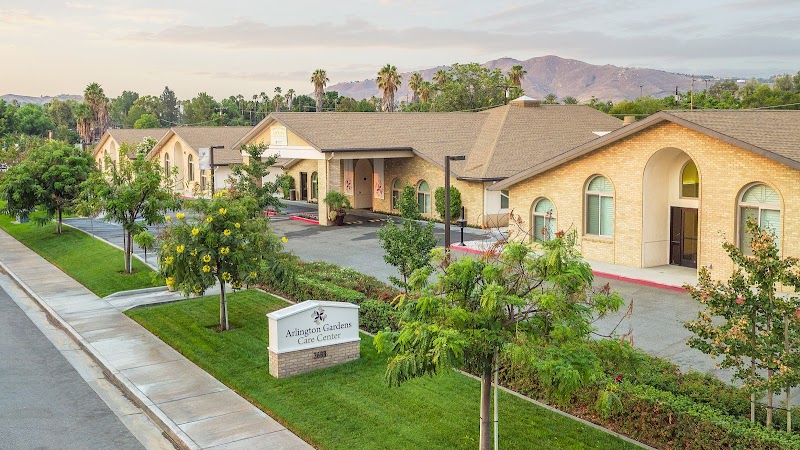
How is Arlington Gardens Staffed?

CMS rates ARLINGTON GARDENS CARE CENTER's staffing level at 1 out of 5 stars, which is much below average compared to other nursing homes. Staff turnover is 49%, compared to the California average of 46%. RN turnover specifically is 64%, which is notably high. RNs provide skilled clinical oversight, so turnover in this role can affect medical care quality.

What Have Inspectors Found at Arlington Gardens?

State health inspectors documented 61 deficiencies at ARLINGTON GARDENS CARE CENTER during 2020 to 2025. These included: 59 with potential for harm and 2 minor or isolated issues. While no single deficiency reached the most serious levels, the total volume warrants attention from prospective families.

Who Owns and Operates Arlington Gardens?

ARLINGTON GARDENS CARE CENTER is owned by a for-profit company. For-profit facilities operate as businesses with obligations to shareholders or private owners. The facility is operated by PACS GROUP, a chain that manages multiple nursing homes. With 99 certified beds and approximately 94 residents (about 95% occupancy), it is a smaller facility located in RIVERSIDE, California.
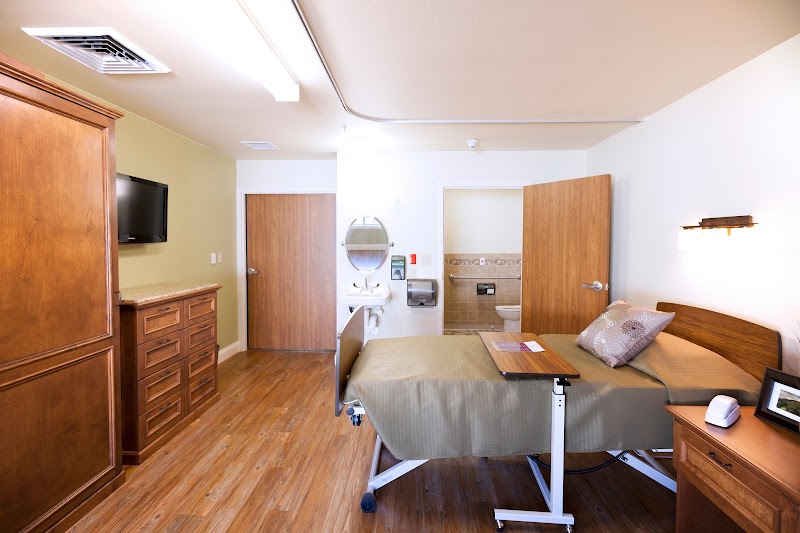
How Does Arlington Gardens Compare to Other California Nursing Homes?

Compared to the 100 nursing homes in California, ARLINGTON GARDENS CARE CENTER's overall rating (3 stars) is below the state average of 3.1, staff turnover (49%) is near the state average of 46%, and health inspection rating (3 stars) is at the national benchmark.

What Should Families Ask When Visiting Arlington Gardens?

Based on this facility's data, families visiting should ask: "Can you walk me through typical staffing levels on day, evening, and night shifts?" "Can I visit during a mealtime to observe dining assistance and food quality?" "How do you handle medical emergencies, and what is your hospital transfer rate?" "Can I speak with family members of current residents about their experience?" These questions are particularly relevant given the below-average staffing rating.

Is Arlington Gardens Safe?

Based on CMS inspection data, ARLINGTON GARDENS CARE CENTER has a clean safety record: no substantiated abuse findings (meaning no confirmed cases of resident harm), no Immediate Jeopardy citations (the most serious violation level indicating risk of serious injury or death), and is not on the Special Focus Facility watch list (a federal program monitoring the lowest-performing 1% of nursing homes). The facility has a 3-star overall rating and ranks #100 of 100 nursing homes in California. While no facility is perfect, families should still ask about staff-to-resident ratios and recent inspection results during their visit.

Do Nurses at Arlington Gardens Stick Around?

ARLINGTON GARDENS CARE CENTER has a staff turnover rate of 49%, which is about average for California nursing homes (state average: 46%). Moderate turnover is common in nursing homes, but families should still ask about staff tenure and how the facility maintains care continuity when employees leave.

Was Arlington Gardens Ever Fined?

ARLINGTON GARDENS CARE CENTER has no federal fines on record. CMS issues fines when nursing homes fail to meet care standards or don't correct problems found during inspections. The absence of fines suggests the facility has either maintained compliance or corrected any issues before penalties were assessed. This is a positive indicator, though families should still review recent inspection reports for the full picture.

Is Arlington Gardens on Any Federal Watch List?

ARLINGTON GARDENS CARE CENTER is not on any federal watch list. The most significant is the Special Focus Facility (SFF) program, which identifies the bottom 1% of nursing homes nationally based on persistent, serious quality problems. Not being on this list means the facility has avoided the pattern of deficiencies that triggers enhanced federal oversight. This is a positive indicator, though families should still review the facility's inspection history directly.