JURUPA HILLS POST ACUTE

6401 33RD STREET., RIVERSIDE, CA 92509 (951) 681-2200
For profit - Limited Liability company 143 Beds PACS GROUP Data: November 2025 1 Immediate Jeopardy citation
Trust Grade
18/100
#828 of 1155 in CA
Last Inspection: March 2025

Within standard 12-15 month inspection cycle. Federal law requires annual inspections.

Overview

Jurupa Hills Post Acute in Riverside, California, has received a Trust Grade of F, indicating significant concerns about the facility’s quality of care. It ranks #828 out of 1,155 nursing homes in California, placing it in the bottom half of facilities statewide, and #37 out of 53 in Riverside County, meaning only 16 local options are worse. While the facility is showing some improvement, with issues decreasing from 17 in 2024 to 14 in 2025, it still faces serious challenges, including a concerning staffing situation with less RN coverage than 89% of state facilities and a 46% turnover rate. Notably, there have been critical incidents, such as a resident receiving CPR against their advance directive, resulting in painful procedures and eventual hospitalization. Additionally, another resident choked on a packet of hydrocortisone due to inadequate supervision, and one resident experienced multiple falls without proper intervention, leading to serious injuries. Families should weigh these serious concerns against the facility's recent trend of improvement.

Trust Score
F
18/100
In California
#828/1155
Bottom 29%
Safety Record
High Risk
Review needed
Inspections
Getting Better
17 → 14 violations
Staff Stability
⚠ Watch
46% turnover. Above average. Higher turnover means staff may not know residents' routines.
Penalties
✓ Good
$26,813 in fines. Lower than most California facilities. Relatively clean record.
Skilled Nurses
⚠ Watch
Each resident gets only 16 minutes of Registered Nurse (RN) attention daily — below average for California. Fewer RN minutes means fewer trained eyes watching for problems.
Violations
⚠ Watch
59 deficiencies on record. Higher than average. Multiple issues found across inspections.
★★☆☆☆
2.0
Overall Rating
★★☆☆☆
2.0
Staff Levels
★★★★☆
4.0
Care Quality
★★☆☆☆
2.0
Inspection Score
Stable
2024: 17 issues
2025: 14 issues

The Good

  • 4-Star Quality Measures · Strong clinical quality outcomes
  • Full Sprinkler Coverage · Fire safety systems throughout facility
  • No fines on record

Facility shows strength in quality measures, fire safety.

The Bad

2-Star Overall Rating

Below California average (3.1)

Below average - review inspection findings carefully

Staff Turnover: 46%

Near California avg (46%)

Higher turnover may affect care consistency

Federal Fines: $26,813

Below median ($33,413)

Moderate penalties - review what triggered them

Chain: PACS GROUP

Part of a multi-facility chain

Ask about local staffing decisions and management

The Ugly 59 deficiencies on record

1 life-threatening 3 actual harm
Aug 2025 2 deficiencies 1 Harm
SERIOUS (G) 📢 Someone Reported This

A family member, employee, or ombudsman was alarmed enough to file a formal complaint

Actual Harm - a resident was hurt due to facility failures

Accident Prevention (Tag F0689)

A resident was harmed · This affected 1 resident

**NOTE- TERMS IN BRACKETS HAVE BEEN EDITED TO PROTECT CONFIDENTIALITY** Based on observation, interview, and record review, the facility failed to ensure, for one of three residents (Resident 1):1. An...

Read full inspector narrative →
**NOTE- TERMS IN BRACKETS HAVE BEEN EDITED TO PROTECT CONFIDENTIALITY** Based on observation, interview, and record review, the facility failed to ensure, for one of three residents (Resident 1):1. An environment free from accident hazards, when a resident (Resident 1) was able to gain access and ingest a packet of hydrocortisone (steroid ointment) without the staff knowledge. This failure resulted in the hydrocortisone packet getting lodged to the resident's throat causing the resident to choke while eating, which could subsequently obstruct the resident's airway leading to a loss of consciousness and death. Resident 1 was transferred to the general acute hospital (GACH), for evaluation and treatment; and2. The incident related to finding the hydrocortisone packet lodged in the resident's throat was thoroughly investigated. This failure placed the resident at risk of recurrence and further harm. Findings:On August 7, 2025, at 9:28 a.m., an observation was conducted with Resident 1. Resident 1 was observed sitting in a wheelchair in the dining room. Resident 1 was alert but not responding to interviews.On August 7, 2025, Resident 1's admission Record, indicated Resident 1 was admitted to the facility on [DATE], with diagnoses which included right side hemiplegia (paralysis on one side of the body) and hemiparesis (weakness on one side of body), and dementia (memory loss).A review of Resident 1's Progress Notes, dated July 30, 2025, indicated Resident 1 did not have the capacity to understand and make decisions.A review of Resident 1's Minimum Data Set (MDS - an assessment tool), dated May 11, 2025, indicated Resident 1 had a BIM (Brief Interview for Mental Status) Score of 3 (meant severe cognitive impairment). The MDS data further indicated Resident 1 was non-ambulatory and needed .substantial/maximal assistance. on eating and oral hygiene.A review of Resident 1's Care Plan Report, indicated the following:- On July 2, 2023, .Focus.Resident 1 at risk for aspiration (breathing in a foreign object) r/t (related to) difficulty in swallowing.Goal.Utilize aspiration precautions and swallow safely. The care plan indicated this Focus was resolved on August 26, 2024;- On August 7, 2025, Resident 1 had .history of putting uneatable items in mouth and choking.episode 7/2/2023 (July 2, 2023).episode 7/31/2025 (July 31, 2025). The care plan was initiated and created on August 7, 2025.Further review of Resident 1's care plan indicated there was no active care plan addressing aspiration or history of putting uneatable items in mouth before the episode on July 31, 2025. A review of Resident 1's, .Change in Condition Evaluation. dated July 31, 2025, at 10:18 a.m., indicated, .Signs & (and) Symptoms Identified.other change in condition.unknown substance lodged in throat.Functional Status Evaluation.Swallowing Difficulty.Describe the swallowing difficulty.Associated with new onset or progressive choking, aspiration.A review of Resident 1's, Progress Notes, dated July 31, 2025, indicated the Resident 1 was transferred to the GACH by the paramedics (a person trained to give emergency medical care to people who are injured or ill, typically in a setting outside of a hospital ) on July 31, 2025, at 10:41 a.m. A review of Resident 1's GACH emergency room progress notes, dated July 31, 2025, indicated, .Patient Visit Information.You were seen today for.H/O (history of) swallowed foreign body.FOREIGN BODY REMOVAL FROM BACK OF THROAT.WE REMOVED A HYDROCORTISONE PACKET FROM THE BACK OF PATIENT'S THROAT.Foreign Object in Throat, Removed.Objects that are swallowed can get stuck in the throat.A stuck object can cause coughing, choking, pain when swallowing, or trouble swallowing.A review of Resident 1's GACH document titled, .HPI (history of present illness) - General Illness, dated July 31, 2025, at 11:22 a.m., indicated:- .Chief Complaint Swallowed a foreign body, possibly a packet of sugar.The patient has some kind of foreign body located in the posterior pharynx (cavity behind nose and mouth) it is unclear what it is at this time. Because the patient's dementia, he is unable to follow directions I am unable to remove it at this time without sedation (administer sedative drug to produce sleep or state of calm).Procedural Sedation Note.Once the patient was adequately sedated, I was able to open the patient's mouth and pulled out a small medication packet from the back of his throat. It was a packet of hydrocortisone.A review of Resident 1's Progress Notes, at the Skilled Nursing Facility (SNF), dated July 31, 2025, at 3:50 p.m., indicated Resident 1 returned to the facility from the GACH.A review of Resident 1's Order Summary Report, at the SNF, for the month of August 2025, indicated Resident 1 did not have a current order for a hydrocortisone treatment.Further review of Resident 1's record indicated there was no documented evidence of an investigation conducted to determine the cause of the incident resulting in finding a foreign object (hydrocortisone packet) in Resident 1's mouth on July 31, 2025. In addition, there was no documented evidence that the facility initiated or developed a care plan to address or prevent the incident from re-occurring since July 31, 2025.On August 7, 2025, at 10:36 a.m., Licensed Vocational Nurse (LVN) 1 was interviewed. LVN 1 stated the following:- On July 31, 2025, he saw Resident 1 in bed at around 7 a.m., and he did not notice anything unusual;- While he was passing medications on July 31, 2025, Certified Nursing Assistant (CNA) 1 alerted him that there was something lodged in Resident 1's throat while she was trying to feed him;- He could not tell what it was and tried to suction (a procedure of mechanically removing secretions, like mucus or other fluids, from a patient's airway) and get it out of Resident 1's mouth; - He called (name of an ambulance company) to send Resident 1 out to the hospital. LVN 1 stated the hospital later informed the facility it was a hydrocortisone packet lodged in Resident 1's throat; - Resident 1 did not have a current order for hydrocortisone treatment; - Resident 1 did not have a behavior of putting things into his mouth. LVN 1 stated Resident 1 can grab things, but he was wheelchair bound (non-ambulatory) and bed bound (confined in bed due to disability making it difficult or impossible to move around or leave bed);- It was not acceptable that a hydrocortisone packet was found lodged in Resident 1's throat;- The hydrocortisone packet lodged in Resident 1's throat could impact his breathing and could cause discomfort, and placed the resident's life in danger; - The incident could have been prevented by making sure Resident 1's environment was clear of choking hazards; and- Maintaining Resident 1 on close monitoring.On August 7, 2025, at 10:55 a.m., an interview was conducted with CNA 1 and she stated the following: - She was the CNA assigned to render care to Resident 1 on July 31, 2025. Resident 1 was a feeder (someone that requires assistance with being fed during meals); - She was assisting Resident 1 to eat when observed Resident 1 choking. Resident 1 was typically able to clear out his airway and cough;- She informed LVN 1 of the resident's situation and Resident 1 was transferred to the GACH; and - Resident 1 did not have a behavior of putting things in his mouth and it was not acceptable for Resident 1 to have something lodged in his throat. On August 8, 2025, at 1 p.m., a concurrent interview and record review was conducted with Treatment Nurse (TN) 1. TN 1 stated that she was the Licensed Nurses (LN) providing skin and wound treatment at Resident 1's station. TN 1 stated that the hydrocortisone medication was stored in a locked cart and at the central supply room, and there was no possibility a CNA or resident would have access to the hydrocortisone packet. On August 7, 2025, at 4:30 p.m., an interview was conducted with the Director of Nursing (DON). The DON stated the following: - Resident 1 had a change of condition on July 31, 2025, when Resident 1 was kinda choking. There was something in Resident 1's throat and staff thought it was a piece of paper and could not remove it; - She was not aware it was a hydrocortisone packet lodged in Resident 1's throat, and she thought it was a sugar packet; - Resident 1 was transferred to the GACH on the morning of July 31, 2025 and returned in the afternoon the same day; - Resident 1 had a history of grabbing and shoving uneatable items in his mouth and the staff were not aware of this behavior. This behavior history was not relayed to the staff;- She did not investigate to determine the cause of Resident 1's ingesting a hydrocortisone packet when it happened on July 31, 2025. The facility should have investigated the incident for Resident 1's sake and the sake of others. The DON stated regardless of what it was, the facility should have figured out why the incident happened. The DON stated the consequence of not investigating the cause of the incident in a timely manner had the potential for a re-occurrence and may cause an ill effect on Resident 1. The DON stated she should have investigated the cause of the incident the next day (August 1, 2025); - There had been no changes in Resident 1's care plan since the incident on July 31, 2025. There was no care plan addressing the incident of a hydrocortisone packet found lodged in Resident 1's throat, on July 31, 2025. There should be a care plan to address the incident to prevent recurrence. The facility's policy and procedure titled, Accidents and Incidents - Investigating and Reporting, dated July 2017, was reviewed. The policy indicated, .The nurse supervisor/charge nurse and/or the department director or supervisor shall promptly initiate and document investigation of the accident or incident.The nurse supervisor/charge nurse and/or department director or supervisor shall complete a Report of Incident/Accident form and submit the original to the director of nursing services within 24 hours of the incident or accident.Incident/accident reports will be reviewed by the safety committee for trends related to accident or safety hazards in the facility and to analyze any individual resident vulnerabilities .A review of the facility's policy and procedure titled, Medication Labeling and Storage, revised February 2023, indicated, .The facility stores all medications.in locked compartment.Only authorized personnel have access to keys.The nursing staff is responsible for maintaining medication storage and preparation areas in a clean, safe, and sanitary manner.Compartments (including, but not limited to, drawers, cabinets, rooms, refrigerators, carts, and boxes) containing medications.are locked when not in use, and trays or carts used to transport such items are not left unattended if open or otherwise potentially available to others.
CONCERN (D) 📢 Someone Reported This

A family member, employee, or ombudsman was alarmed enough to file a formal complaint

Potential for Harm - no one hurt, but risky conditions existed

Quality of Care (Tag F0684)

Could have caused harm · This affected 1 resident

**NOTE- TERMS IN BRACKETS HAVE BEEN EDITED TO PROTECT CONFIDENTIALITY** Based on interview and record review, the facility did not ensure that new medical orders were implemented in a timely manner af...

Read full inspector narrative →
**NOTE- TERMS IN BRACKETS HAVE BEEN EDITED TO PROTECT CONFIDENTIALITY** Based on interview and record review, the facility did not ensure that new medical orders were implemented in a timely manner after an orthopedic (specialty focusing on musculoskeletal system) consultation for one of one resident (Resident 2) reviewed. This failure caused a delay in treatment and services for Resident 2.Findings:On August 6, 2025, at 9:50 a.m., Resident 2 was interviewed. Resident 2 stated that his right arm was broken. Resident 2 stated that he needed to have an order from the Medical Doctor (MD) to start therapy exercises on his right arm. Resident 2 further stated that he has not had any physical therapy (PT) on his right arm since he was admitted to the facility.On August 6, 2025, at 9:45 a.m., Resident 2's medical record was reviewed. Resident 2 was admitted on [DATE], with a primary diagnosis of unspecified displaced fracture of surgical neck of right humerus (fractured upper arm bone).A review of Resident 2's, History and Physical, dated June 7, 2025, indicated Resident 2 had the capacity to understand and make decisions.A review of Resident 2's, Order Summary Report, as of August 6, 2025, indicated Resident 2 had a follow up orthopedic consult on July 30, 2025, at 11 a.m. In addition, Resident 2 had a physician's order, dated June 8, 2025, to have an arm sling to right arm to immobilize and support the arm in a comfortable position to reduce movement at the fracture site of humeral (upper arm bone).Resident 2 did not have a current active order for therapy exercises on his right arm.A review of Resident 2's, Progress Notes, dated July 30, 2025, indicated Resident 2 went out for orthopedic appointment at approximately 10 a.m. and returned to the facility at approximately 1 p.m. the same day.There was no documentation of evidence that the facility had followed up with the orthopedic doctor for new orders or recommendations that had been given for Resident 2 when he went out for his appointment with the orthopedic doctor on July 30, 2025.On August 6, 2025, at 11:05 a.m., Occupational Therapist Assistant (OTA) 1 was interviewed. OTA 1 stated Resident 2's arm had a sling, so she did arm exercises to his left arm only. OTA 1 further stated Resident 2 was admitted with a broken right arm and he should be reassessed if he needed an exercise therapy to his right arm.On August 6, 2025, at 3:30 p.m. an interview was conducted with Social Service Assistant (SSA) 1. SSA 1 stated Resident 2 had an orthopedic appointment on July 30, 2025, but there was no documentation pertaining to the visit. The SSA 1 further stated if there was no documentation of the visit, it could lead to complications and cause delays in the care or attention that Resident 2 needed. On August 7, 2025, at 2:49 p.m., an interview with a concurrent record review was conducted with SSA 1. A review of Resident 2's, Referral Letter, dated and signed by the Medical Doctor (MD) on August 7, 2025, indicated, .Reason for Referral.physical therapy for elbow and wrist 12 session.Start Date.07/31/2025.In a concurrent interview, SSA 1 stated the Physical Therapy (PT) orders (referring to the Referral Letter) from the orthopedic consultation on July 30, 2025, for the right arm were received on August 7, 2025. SSA 1 stated when a resident was sent out for an appointment, they were supposed to come back with an AVS (After Visit Summary). SSA 1 stated Resident 2 did not have an AVS when he came back from his appointment on July 30, 2025.On August 7, 2025, at 4:30 p.m., an interview with a concurrent record review was conducted with the Director of Nursing (DON). The DON stated the following:- The facility staff expects an AVS when a resident returns from an appointment and the social services and nursing were expected to follow up on the results from the consultation; - Resident 2 went out for a follow up appointment with the orthopedic doctor on July 30, 2025. The SSD did not document anything about the following up on the orthopedic doctor recommendation for Resident 2 up until August 6, 2025;- The orthopedic doctor's new orders for exercises to the right arm was ordered on July 31, 2025, and there was a seven-day delay in implementing this new order; and- The lack of follow-up on new recommendations from the doctor resulted in a delay in services for the resident and it was not acceptable.A review of Resident 2's (name of orthopedic office) consultation notes, dated July 30, 2025, indicated, .Chief Complaint.Right shoulder.Impression.IMPACTED RIGHT PROXIMAL HUMERAL NECK FRACTURE.Treatment.Referral To: Physical Therapist.Reason: physical therapy for elbow and wrist 12 sessions.Follow up.2 Weeks (Reason: repeat x-rays elbow and wrist.The facility was not able to provide their policy and procedure on following up new orders or recommendations from a consulting doctor for residents who went out for a specialty doctor appointment.
Aug 2025 1 deficiency
CONCERN (F) 📢 Someone Reported This

A family member, employee, or ombudsman was alarmed enough to file a formal complaint

Potential for Harm - no one hurt, but risky conditions existed

Food Safety (Tag F0812)

Could have caused harm · This affected most or all residents

Based on observation, interview, and record review, the facility failed to ensure professional standards for food safety were upheld when:1. Several kitchen staff did not wear hairnets properly; and2....

Read full inspector narrative →
Based on observation, interview, and record review, the facility failed to ensure professional standards for food safety were upheld when:1. Several kitchen staff did not wear hairnets properly; and2. The Dishwasher did not change gloves after touching dirty kitchenware and before touching the clean and sanitized large SS pans coming from the dishwashing machine. In addition, during the dishwashing process, multiple kitchenware which had crusted food residue on them, were rinsed above and beside beverage cups and glasses.This failure had the potential to cause food-borne illness in a highly susceptible population of residents who could consume food.Findings:On June 30, 2025, at 3:05 p.m., an unannounced visit was conducted at the facility to investigate complaints regarding dietary services and infection control.On July 1, 2025, at 10:50 a.m., a concurrent kitchen observation was conducted with the Dietary Supervisor (DS). The following were observed:1. The Dietary Supervisor, Dietary Aide (DA) 1, and DA 2 were wearing hairnets that did not fully contain or cover the hair at the top and sides of their heads, as well as the nape of their necks. Hair was observed escaping the hairnets.In a concurrent interview, the DS stated she expected the kitchen staff's hair should be tucked in the hairnets, and that hairspray was suggested during training to make sure that hair stayed in place while using the hairnets.A review of the facility's undated policy and procedure titled, DRESS CODE, from Healthcare Menus Direct, LLC 20123, indicated, Hat for hair, if hair is short, which completely covers the hair.Hair net for hair, if hair is long (over the ears or longer).2a. During the dishwashing process, the DA 3, who was the dishwasher, was observed rinsing various dirty kitchenware and dishware with his gloved hand at the dirty side of the dishwashing station. The dishwashing machine to his left finished a washing cycle and 2 large stainless pans emerged from the farther side of the dishwashing machine towards the clean side of the dishwashing station. DA 3 proceeded to touch the clean and sanitized stainless steel pans without removing his dirty gloves and changing into clean ones.In a concurrent interview, DA 3 confirmed he touched the clean and sanitized kitchenware with his dirty gloves, and stated he should have changed his gloves.The DS, who witnessed the event and was concurrently interviewed, stated DA 3 should have removed his dirty gloves, washed his hands and donned new gloves before touching or handing the cleaned and sanitized stainless steel pans to avoid cross-contamination.2b. During the dishwashing process, DA 3 was observed rinsing multiple kitchenware which had crusted food residue on them using the sprayer, above and beside beverage cups and glasses which were placed upside down on the compartment glass racks/trays.In a concurrent interview, the DS stated she expected kitchen staff to scrape off the food debris from kitchenware used during the meal preparation process and soak them prior to trayline (food assembly process), and before the dishwasher came in, to make the dishwashing process easier and more efficient. In addition, the DS stated she expected the DA 3 to wash the kitchenware used for meal preparation first before washing the beverage cups and other dishware that came in from the patient care areas, to ensure dishware were not soiled with food debris from the meal preparation process.A review of the facility's undated policy and procedure titled, Dishwashing, from Healthcare Menus Direct, LLC 20123, did not indicate the procedure for transitioning from dirty to clean or clean to dirty tasks.
Jun 2025 1 deficiency
CONCERN (D) 📢 Someone Reported This

A family member, employee, or ombudsman was alarmed enough to file a formal complaint

Potential for Harm - no one hurt, but risky conditions existed

Deficiency F0628 (Tag F0628)

Could have caused harm · This affected 1 resident

**NOTE- TERMS IN BRACKETS HAVE BEEN EDITED TO PROTECT CONFIDENTIALITY** Based on interview and record review, the facility failed to ensure a copy of the notice of transfer/discharge was provided to t...

Read full inspector narrative →
**NOTE- TERMS IN BRACKETS HAVE BEEN EDITED TO PROTECT CONFIDENTIALITY** Based on interview and record review, the facility failed to ensure a copy of the notice of transfer/discharge was provided to the State Long-Term Care Ombudsman (assists with conflict resolution and protection of resident rights) prior to the planned discharge date , for two of two sampled residents (Residents 1 and 2). This failure had the potential to violate the resident's rights to appeal their discharge. Findings: On June 3, 2025, at 10:05 a.m., an unannounced visit was conducted at the facility to investigate a complaint on discharges. On June 4, 2025, at 1:50 p.m., during a concurrent interview and record review with the Social Services Director (SSD), the SSD stated the following information for Residents 1 and 2: 1. Resident 1 was admitted to the facility on [DATE], with diagnoses which included pneumonia (lung infection) and sepsis (a systemic infection that triggers a dysregulated host response, leading to life-threatening organ dysfunction). Resident 1 was planned for discharge to home on April 30, 2025. The Notice of Proposed Transfer/Discharge, was provided and acknowledged by Resident 1 on April 29, 2025. A copy of the Notice of Proposed Transfer/Discharge, was sent to the Ombudsman on April 30, 2025, after Resident 1 was discharged from the facility; and 2. Resident 2 was admitted to the facility on [DATE], with diagnoses which included heart failure. Resident 2 was planned for discharge to home on April 30, 2025. The Notice of Proposed Transfer/Discharge, was provided and acknowledged by Resident 2 on April 28, 2025. A copy of the Notice of Proposed Transfer/Discharge, was sent to the Ombudsman on April 30, 2025, after Resident 2 was discharged from the facility. The SSD further stated a copy of the Notice of Proposed Transfer/Discharge, for Residents 1 and 2 should have been provided to the Ombudsman prior to the discharge date of April 30, 2025, to ensure the Ombudsman had an opportunity to discuss with the residents to be discharged of any concerns they have. On June 4, 2025, at 3:32 p.m., during an interview with the Director of Nursing (DON), the DON stated the Case Manager (CM) coordinated all the discharge process. The DON stated the CM should have notified the Ombudsman before the resident leaves the facility. On June 4, 2025, at 3:50 p.m., during an interview with the Administrator (ADM), the ADM stated discharge documents were not provided to the Ombudsman for Residents 1 and 2. The ADM stated the CM should have provided discharge documents to Ombudsmman within the time required. A review of the facility's policy and procedure titled, Transfer or Discharge Notices, dated March 2025, indicated, .Residents )or resident representatives) are notified of an impending transfer or discharge and the reasons for the move in writing and in a language and manner they understand. A copy of the notice is sent to the Office of the State Long-Term Ombudsman.
Jun 2025 1 deficiency
CONCERN (E) 📢 Someone Reported This

A family member, employee, or ombudsman was alarmed enough to file a formal complaint

Potential for Harm - no one hurt, but risky conditions existed

Deficiency F0697 (Tag F0697)

Could have caused harm · This affected multiple residents

**NOTE- TERMS IN BRACKETS HAVE BEEN EDITED TO PROTECT CONFIDENTIALITY** Based on interview and record review, the facility failed to ensure pain management was provided according to the physician's or...

Read full inspector narrative →
**NOTE- TERMS IN BRACKETS HAVE BEEN EDITED TO PROTECT CONFIDENTIALITY** Based on interview and record review, the facility failed to ensure pain management was provided according to the physician's order and plan of care, for one of ten (Resident A). This failure had the potential to result in Residents A's pain to not be managed. Findings: On May 9, 2025, at 10:45 a.m., an unannounced visit was made to the facility for the investigation of a complaint regarding quality of care. On May 9, 2025, a review of Resident A ' s medical record was conducted. Resident A was admitted to the facility on [DATE], with diagnoses which included morbid obesity (a body mass index [BMI] of 40 or higher, or a BMI of 35 or higher with obesity-related health problems). Resident A's Order Summary Report, included the following orders for pain medication and management: - .MONITOR PAIN EVERY SHIFT: DOCUMENT PAIN LEVEL: 0= no pain, 1-3=mild pain, 4-5= moderate pain, 6-9= severe pain 10=excruciating pain ., date ordered January 3, 2022; - .Percocet (a pain medication) 10-325mg (milligram-a type of measurement) .give one tablet every eight hours as needed for severe pain level of 7-10 ., date ordered January 3, 2024; - .Hydrocodone (a pain medication used to treat moderate to severe pain) 10-325 mg .give one tablet every six hours as needed for pain for 30 days ., date ordered on April 29, 2025, and re-ordered on May 29, 2025; Resident A ' s care plan, dated January 3, 2022, indicated, .Alteration in comfort related to pain .Administer pain medication as ordered . Resident A ' s IDT (Interdisciplinary team) Conference Summary, dated April 16, 2025, at 2:53 p.m., indicated, .pain medication management reviewed . Resident A's Medication Administration Record (MAR), for the month of March 2025, indicated Hydrocodone-Acetaminophen 10-325 mg one table every six hours as needed for moderate pain (4-6) was given for pain scale of 7 and above multiple times on the following months: - March 2025; four (4) times; - April 2025; 29 times; and - May 2025; 25 times. On May14, 2025, at 12:10 p.m., an interview was conducted with Resident A. Resident A stated he gets pain medications for his knees and back, he gets Norco (Hydrocodone) in the morning and the afternoon, and the Percocet about 6 a.m. and 10 p.m. Resident A stated he was getting pain medication about four times a day and the medication would help. On May 14, 2025, at 4:45 p.m., an interview and concurrent record review was conducted with the Director of Nursing (DON). The DON stated the physician ' s orders were not being followed as written, the pain scale number should match with the medication to be given. The DON stated Resident A was taking PRN pain medications multiple times each day, and the nurses should have called the physician and asked for one of his pain medications to be changed from as needed to scheduled and the other pain medication to be used as needed for breakthrough pain. A review of the facility ' s procedure titled Pain Assessment and Management, dated October 2022 , indicated, .help the staff identify pain in the resident, and to develop interventions that are consistent with the resident ' s goals and needs and that address the underlying causes of pain .pain management program .appropriate assessment and treatment of pain, based on professional standards of practice, the comprehensive care plan, and the resident ' s choices .chronic pain the resident ' s pain and consequences of pain are assessed at least weekly .review the medication administration record to determine how often the individual requests and receives PRN (as needed) pain medication, and to what extent the administered medications relieve the resident ' s pain .when opioids are used for pain management, the resident is monitored for medication effectiveness, adverse effects, and potential overdose .
Mar 2025 9 deficiencies
CONCERN (D)

Potential for Harm - no one hurt, but risky conditions existed

Deficiency F0554 (Tag F0554)

Could have caused harm · This affected 1 resident

**NOTE- TERMS IN BRACKETS HAVE BEEN EDITED TO PROTECT CONFIDENTIALITY** Based on observation, interview, and record review, the facility failed to ensure an assessment and evaluation for self-administ...

Read full inspector narrative →
**NOTE- TERMS IN BRACKETS HAVE BEEN EDITED TO PROTECT CONFIDENTIALITY** Based on observation, interview, and record review, the facility failed to ensure an assessment and evaluation for self-administration (taking medication or substance by oneself, rather than by a healthcare professional) of medication albuterol inhaler (used to prevent and treat wheezing, difficulty breathing, chest tightness, and coughing caused by lung disease such as asthma) was completed, for one of 27 residents reviewed (Resident 180). In addition, the facility failed to ensure the medication was stored safely and securely. This failure increased the potential for unsafe self-administration and duplication of administered medication for Resident 180, and potential for visitors, and other residents to have access to the medication at bedside. Findings: On March 25, 2025, at 4:30 p.m a concurrent observation and interview was conducted with Resident 180. Resident 180 was observed awake, alert, sitting up on his bed and was able to verbalize his needs. Resident 180 was observed to reach into his pant's pocket and removed an albuterol inhaler. Resident 180 stated he had asthma, and had used the albuterol inhaler for a long time, paid his own prescription, and got it from his own doctor. Resident 180 stated he wanted to have the albuterol inhaler handy in case he had an asthma attack. Resident 180 was observed talking in fast tone, raising his voice, jitters with sudden movements scratching his left arm, and placed the inhaler back into his pant's pocket. Resident 180 did not want to talk about his albuterol inhaler. A review of Resident 180's admission Record, indicated Resident 180 was admitted to the facility on [DATE], with diagnoses which included asthma and cellulitis (a bacterial skin infection). Resident 180 was alert, and oriented to time, place, person, and situation. A review of Resident 180's Medication Administration Record (MAR), dated March 26, 2025, included a physician's order, dated March 13, 2025, which indicated, Albuterol Sulfate Inhalation Aerosol Solution, 2 puffs inhale orally two times a day for asthma. A review of Resident 180's Self -Administration Of Medication Observation, dated March 13, 2025, indicated Resident 180 did not want to self-administer medication, electronically signed by the Registered Nurse (RN) when Resident 180 was admitted to the facility. On March 26, 2025, at 11:51 a.m., a concurrent observation and interview was conducted with Resident 180. Resident 180 was observed sitting upright on his bed. The medication albuterol inhaler was observed on top of Resident 180's bedside table. In a concurrent interview with Resident 180, he stated the nurse gave the albuterol inhaler for him to keep. On March 26, 2025, at 12:15 p.m. a concurrent interview and review of Resident 180's MAR was conducted with Licensed Vocational Nurse (LVN) 1. LVN 1 confirmed Resident 180 had an order for the albuterol inhaler. LVN 1 stated he administered the albuterol inhaler to Resident 180 at 9 a.m. LVN 1 stated he was not aware the albuterol inhaler was at the bedside. On March 26, 2025, at 2:20 p.m., a concurrent interview and record review was conducted with the MDS (Minimum Data Set - an assessment tool) Coordinator. The MDS Coordinator stated the facility's document titled,Self- Administration Of Medication Observation, dated March 13, 2025, indicated Resident 180 did not want to self-administer his medication. The MDS stated Resident 180 should not be administering his own albuterol inhaler. On March 26, 2025, at 3:35 p.m., an interview was conducted with the Registered Nurse Supervisor (RNS). The RNS stated she was not aware Resident 180 had the albuterol inhaler with him. The RNS stated when Resident 180 was admitted on [DATE], she conducted his assessment and completed the self- administration of medication form for Resident 180. However,the RNS stated there was no albuterol inhaler with Resident 180 at the time he was admitted to the facility. On March 26, 2025, at 4:05 p.m., the Director of Nursing (DON) was interviewed. The DON stated Resident 180 should not have self-administered his albuterol inhaler without the licensed staff assessment and physician's order. A review of the facility's policy and procedure titled, Self-Administration of Medications, dated February 2021, indicated, .Resident have the right to self-administer medications if the interdisciplinary team has determined that it is clinically appropriate and safe for the resident to do so .Self-administered medications are stored in a safe and secure place,which is not accessible by other residents .Any medications found at the bedside that are not authorized for self-administration are turned over to the nurse in charge for return to the family or responsible party .
CONCERN (D)

Potential for Harm - no one hurt, but risky conditions existed

Deficiency F0558 (Tag F0558)

Could have caused harm · This affected 1 resident

**NOTE- TERMS IN BRACKETS HAVE BEEN EDITED TO PROTECT CONFIDENTIALITY** Based on observation, interview, and record review, the facility failed to accommodate the needs, for one of two residents revie...

Read full inspector narrative →
**NOTE- TERMS IN BRACKETS HAVE BEEN EDITED TO PROTECT CONFIDENTIALITY** Based on observation, interview, and record review, the facility failed to accommodate the needs, for one of two residents reviewed (Resident 56), when Resident 56 was not provided appropriate bed for the resident's height. This failure resulted in Resident 56 not to have his preference to use a bed tall enough to accommodate his height and had discomfort when lying in bed. Findings: On March 23, 2025, at 4:18 p.m., a concurrent observation and interview was conducted with Resident 56. Resident 56 was observed in bed, awake and alert. Resident 56 was observed with a bed footrest made out of cardboard from a carton box. In a concurrent interview, Resident 56 stated he was about 6'7 - 6'8 tall (79 to 80 inches), and his current bed was too small. Resident 56 stated he asked a few months ago for a tall bed to accommodate his height, but it was not provided to him. On March 26, 2025, at 9:26 a.m., a concurrent observation and interview was conducted with Resident 56. Resident 56 was observed again, lying in bed, with the same cardboard at the foot of the bed. Resident 56 was observed keeping his feet on each side of the bed's footrest. In a concurrent interview, Resident 56 stated otherwise his feet would reach the foot of the bed and he had to bend his legs while lying in bed. Resident 56 stated because the bed was a regular bed and he was tall guy, it was very uncomfortable for him while lying in bed. Resident 56 stated he told staff about the short bed a few months ago. Resident 56 stated the maintenance supervisor put the cardboard at the foot of bed a few months ago. On March 26, 2025, at 9:34 a.m., a concurrent observation and interview was conducted with Certified Nursing Assistant (CNA) 1. CNA 1 stated she took care of Resident 56 and was familiar with him. CNA 1 observed the bed with the cardboard and stated, he needs a longer bed. CNA 1 confirmed Resident 56 kept his feet on each side of footrest, and if he fully extended his legs, he would hit the footrest and had to bend his knees. On March 26, 2025, at 9:44 a.m., a concurrent observation and interview was conducted with the Maintenance Director (MD) and the Central Supplies Director (CSD). The MD confirmed he was the one who put the cardboard box at the foot of the bed at the request of the resident. The MD confirmed the cardboard box was a make-shift set-up that should not be there. The CSD stated the current bed had a small extension at the head of the bed and a small extension at foot of bed. The CSD stated the extensions were still not enough, and Resident 56 needed a bed that would accommodate his height. On March 26, 2025, at 9:47 a.m., a concurrent observation and interview was conducted with the Assistant Director of Nursing (ADON). The ADON stated the cardboard footrest should not be at the foot of the bed, in place of the footrest. The ADON confirmed Resident 56 kept his feet on each side of the footrest and stated he needed a bed tall enough to accommodate his height. Resident 56's record was reviewed. Resident 56 was admitted to the facility on [DATE], with diagnoses which included cervical disc degeneration (a condition where the intervertebral discs in the neck [cervical spine] deteriorate over time), inclusion body myositis (a rare condition that causes muscle weakness and damage), polyneuropathy (peripheral nerves become damaged, creating problems with sensation, coordination, or other body functions), and difficulty in walking. A review of Resident 56's Weights and Vitals Summary, indicated Resident 56 was 80 inches tall (6 feet and 8 inches). A review of Resident 56's care plan, dated April 3, 2024, indicated, .Resident has actual for ADL (Activities of Daily Living)/mobility decline and requires assistance related to weakness, impaired mobility, Cervical disc degeneration .Will have needs anticipated and met by staff .Will have no complications of immobility .At risk for pain or discomfort due to .general body weakness with lack of coordination .Inclusion body myositis .Polyneuropathy .cervical disc degeneration .lower extremity with episodes of sliding out at the edge of the bed uncontrolled .position for comfort . A review of the facility's policy and procedure titled, Accommodation of Needs, revised March 2021, indicated, .The resident's individual needs and preferences are accommodated to the extent possible .including the need for adaptive devices and modifications to the physical environment .To accommodate individual needs and preferences, adaptations may be made to the physical environment, including the resident's bedroom .Examples of such adaptations may include .providing a variety of types .sizes (height and depth) .of furniture in rooms .
CONCERN (D)

Potential for Harm - no one hurt, but risky conditions existed

ADL Care (Tag F0677)

Could have caused harm · This affected 1 resident

**NOTE- TERMS IN BRACKETS HAVE BEEN EDITED TO PROTECT CONFIDENTIALITY** Based on observation, interview, and record review, the facility failed to provide the necessary care and services to maintain c...

Read full inspector narrative →
**NOTE- TERMS IN BRACKETS HAVE BEEN EDITED TO PROTECT CONFIDENTIALITY** Based on observation, interview, and record review, the facility failed to provide the necessary care and services to maintain cleanliness and proper hygiene of resident's fingernails, for one of 27 residents reviewed (Resident 115). This failure had the potential to negatively impact the physiological and psychological well-being of Resident 115. In addition this failure had the potential to result in cross contamination of bacteria underneath the dirty fingernails to Resident 115's food during meals. Findings: On March 23, 2025, at 11:04 a.m., Resident 115 was observed sitting at the edge of the bed alert, oriented, and able to verbalize his needs. Resident 115 was observed with blackish materials underneath all his long fingernails. Resident 115 stated it had been a month since his nails were cleaned. Resident 115 stated he would not mind if staff would clean his nails. On March 23, 2025, at 12:06 p.m., Certified Nursing Assistant (CNA) 3 was interviewed. CNA 3 stated she took care of Resident 115 on March 22, 2025, today, and two weeks ago. CNA 3 stated she did not notice Resident 115's fingernails were dirty. CNA 3 stated the dirty fingernails could be a source of bacteria if not cleaned. On March 23, 2025, at 12:15 p.m., a concurrent observation of Resident 115 and interview with the Infection Preventionist (IP) was conducted. The IP stated Resident 115's fingernails were dirty. The IP stated the CNAs were responsible of providing skin, and nail care daily. The IP stated the dirty fingernails could be a source of infection. On March 23, 2025, at 4:06 p.m., the Director of Nursing (DON) and the Assistant Director of Nursing (ADON) were interviewed. The DON stated the CNAs were responsible in giving daily hygiene to the residents including the cleaning of resident's fingernails. A review of Resident 115's record indicated, Resident 115 was admitted to the facility on [DATE], with diagnoses which included peripheral arterial disease (a circulatory condition in which narrowed blood vessels reduce blood flow to the limbs). A review of Resident 115's care plan, initiated on January 9, 2025, indicated, .Activities of daily living (ADL)/Mobility: Resident had actual risk for ADL/Mobility decline and requires assistance .Goal .Will have needs anticipated and met by staff . A review of the facility's policy and procedure titled, Activities of Daily Living (ADL) , dated March 2018, indicated, .Residents will be provided with care, treatment and services as appropriate to maintain or improve their ability to carry out activities of daily living .Residents who are unable to carry out activities of daily living independently will receive the services necessary to maintain good nutrition, grooming, and personal .hygiene .
CONCERN (D)

Potential for Harm - no one hurt, but risky conditions existed

Quality of Care (Tag F0684)

Could have caused harm · This affected 1 resident

**NOTE- TERMS IN BRACKETS HAVE BEEN EDITED TO PROTECT CONFIDENTIALITY** Based on interview and record review, the facility failed to ensure care and treatment according to the professional standards o...

Read full inspector narrative →
**NOTE- TERMS IN BRACKETS HAVE BEEN EDITED TO PROTECT CONFIDENTIALITY** Based on interview and record review, the facility failed to ensure care and treatment according to the professional standards of practice and physician's order was provided, for one of 24 residents (Resident 105) when Insulin Lispro (a type of insulin medication) was administered to Resident 105 when the blood sugar level was below below the hold parameter). This failure had the potential for Resident 105 to experience hypoglycemia (a condition in which the body's blood sugar level goes below the standard range). Findings: On March 23, 2025, at 12:54 p.m., during a concurrent observation and interview with Resident 105, Resident 105 was observed lying in bed, awake and alert. Resident 105 stated a nurse gave him insulin when his blood sugar was low. Resident 105 stated he was half asleep when his blood sugar was taken and when he was given the insulin, he did not feel good and knew his blood sugar was low. Resident 105 stated he asked the nurse to check his blood sugar, and it was 32. Resident 105 stated the incident happened a month ago, during the day shift. On March 25, 2025, Resident 105's record was reviewed. Resident 105 was admitted to the facility on [DATE], with diagnoses which included diabetes mellitus (DM - a disorder characterized by poor blood sugar control). A review of Resident 105's history and physical, dated March 6, 2025, indicated Resident 105's decision making capacity was intact. A review of Resident 105's Minimum Data Set (MDS - a federally mandated resident assessment tool), dated March 3, 2025, indicated Resident 105 had a BIMS (Brief Interview for Mental Status - an assessment tool used by facilities to screen and identify memory, orientation, and judgement status of the resident) score of 15 (cognitively intact). A review of Resident 105's Order Summary Report, included a physician's order, dated February 18, 2025, which indicated, .HumaLOG Solution 100 UNIT/ML (a unit of measurement) (Insulin Lispro (Human) Inject 3 (three) unit (sic) subcutaneously (under the skin) before meals for diabetes HOLD if BS Blood sugar) < (less than) 90 . A review of Resident 105's Medication Administration Record (MAR), for the month of February 2025, indicated, Resident 105 received 3 (three) units of Insulin Lispro subcutaneously for BS of 89 which was below the hold parameter of 90, on February 21, 2025, at 6:30 a.m. On March 26, 2025, at 2:43 p.m., in a concurrent interview and record review with the Director of Nursing (DON), she stated Resident 105's blood sugar was 89 on February 21, 2025, at 6:30 a.m. The DON stated Resident 105 received 3 (three) units of Insulin Lispro subcutaneously for a blood sugar of 89, which was below the parameter of 90. The DON stated the Licensed Vocational Nurse (LVN) should have held the insulin and should have documented the reason for not giving the insulin. The DON stated the LVN did not follow the physician's order. A review of the facility's policy and procedure titled, Administering Medications, revised April 2019, indicated, .Medications are administered in a safe .manner .and as prescribed .Medications are administered in accordance with prescriber orders .
CONCERN (D)

Potential for Harm - no one hurt, but risky conditions existed

Tube Feeding (Tag F0693)

Could have caused harm · This affected 1 resident

**NOTE- TERMS IN BRACKETS HAVE BEEN EDITED TO PROTECT CONFIDENTIALITY** Based on observation, interview, and record review, the facility failed to ensure a resident who is fed by enteral means (direct...

Read full inspector narrative →
**NOTE- TERMS IN BRACKETS HAVE BEEN EDITED TO PROTECT CONFIDENTIALITY** Based on observation, interview, and record review, the facility failed to ensure a resident who is fed by enteral means (directly to the gastrointestinal system or stomach) receives the appropriate care to prevent complications of enteral feeding when, one of one resident reviewed for tube feeding (Resident 122), was positioned with the head of the bed (HOB) not elevated 30-45 degrees while receiving tube feeding (nutrition provided through a tube inserted into the stomach). This failure had the potential for Resident 122 to experience complications from tube feeding, such as aspiration (when food or liquid or other materials enters the airway and lungs instead of being swallowed) , nausea, vomiting, or abdominal pain. Findings: On March 24, 2025, at 8:57 a.m., Resident 122 was observed laying flat on the bed and was receiving tube feeding nutrition. On March 25, 2025, at 9:11 a.m., during a concurrent observation of Resident 122 and interview with Licensed Vocational Nurse (LVN) 3, Resident 122 was observed lying on bed with the head of bed (HOB) flat, and the tube feeding was running. In a concurrent interview with LVN 3, she stated Resident 122's head of bed was too low and should be elevated at least 45 degrees. On March 27, 2025, at 9:50 a.m. an interview with the Director of Nursing (DON) was conducted. The DON stated Resident 122's HOB during tube feeding and 30 minutes after should be elevated at 30 - 45 degrees. A review Resident 122's admission Record, indicated, Resident 122 was admitted to the facility on [DATE], with diagnoses which included dysphagia (condition that affects your ability to swallow) following cerebral infarction (stroke). A review of Resident 122's care plan, dated February 8, 2025, indicated, .Risk for aspiration as resident on tube feeding .Patient will have no aspiration and complication from feeding tube .Keep HOB elevated during feedings . A review Resident 122's Order Summary Report, included the following physician orders: - .HOB elevated to tolerance or 30 degrees during and 30 mins (minutes) after feeding, date ordered February 9, 2025; and - .every shift Formula Jevity 1.2 via G tube (gastrostomy tube, type of tube feeding method) method of administration via epump (electronic pump for delivering the feeding formula) .@ (at) rate of 65cc (milliliter -unit of measurement)/hr (hour) x (times) 20 hours or until dose met. Start at 2pm (p.m.), stop at 10am (a.m.) or until dose met . A facility policy titled, Enteral Nutrition, dated November 2018, stated .The provider will consider the need for supplemental orders, including .Head of bed elevation .Risk of aspiration is assessed by the nurse and provider and addressed .Improper positioning of the resident during feeding .
CONCERN (D)

Potential for Harm - no one hurt, but risky conditions existed

Respiratory Care (Tag F0695)

Could have caused harm · This affected 1 resident

**NOTE- TERMS IN BRACKETS HAVE BEEN EDITED TO PROTECT CONFIDENTIALITY** Based on observation, interview, and record review, the facility failed to provide respiratory care and treatment, for one of tw...

Read full inspector narrative →
**NOTE- TERMS IN BRACKETS HAVE BEEN EDITED TO PROTECT CONFIDENTIALITY** Based on observation, interview, and record review, the facility failed to provide respiratory care and treatment, for one of two residents reviewed for oxygen administration (Resident 101), when the physician's order for oxygen administration was not followed. This failure had the potential to result in ineffective oxygen therapy, respiratory distress, and decline in the resident's health condition. Findings: On March 23, 2025, at 3:53 p.m., Resident 101 was observed in bed with oxygen (O2) via nasal cannula (NC - a tube used to deliver oxygen through the nose). Resident 101's oxygen administration was observed at 3.5 liters per minute (LPM). On March 26, 2025, at 10:50 a.m., Resident 101 was observed in bed with O2 via NC at 4 LPM. On March 26, 2025, at 10:52 a.m., a concurrent observation of Resident 101, interview, and record review was conducted with Licensed Vocational Nurse (LVN) 3. LVN 3 confirmed Resident 101 was receiving 4 LPM of oxygen. LVN 3 verified Resident 101's physician order for oxygen should be at 2 LPM. LVN 3 stated the physician's order for oxygen was not followed. On March 26, 2025, at 11:03 a.m., a concurrent interview and record review was conducted with the Assistant Director of Nursing (ADON). The ADON confirmed the O2 order should be at 2 LPM, as per physician's order. The ADON stated the physician's order was not followed. A review of Resident 101's admission Record, indicated Resident 101 was admitted to the facility on [DATE], with diagnoses which included heart failure (a condition when the heart does not pump enough blood), chronic pulmonary edema (fluid accumulates in the lungs over an extended period, leading to difficulty breathing), acute respiratory failure with hypoxia (low oxygen in the blood), pleural effusion (buildup of excess fluid in the pleural space, the area between the lungs and chest wall, which can make it harder to breathe), pneumonia (an infection/inflammation in the lungs), and anemia (a condition where the body does not have enough healthy red blood cells that carry oxygen). A review of Resident 101's physician's order, dated January 6, 2025, indicated, .O2 @ (at) 2 LPM via nasal cannula . A review of the facility's policy and procedure titled, Oxygen Administration, revised October 2010, indicated, .The purpose of this procedure is to provide guidelines for safe oxygen administration .Verify that there is a physician's order for this procedure. Review the physician's orders or facility protocol for oxygen administration .
CONCERN (D)

Potential for Harm - no one hurt, but risky conditions existed

Drug Regimen Review (Tag F0756)

Could have caused harm · This affected 1 resident

**NOTE- TERMS IN BRACKETS HAVE BEEN EDITED TO PROTECT CONFIDENTIALITY** Based on interview and record review, the facility failed to request a medication regimen review (MRR) following changes in cond...

Read full inspector narrative →
**NOTE- TERMS IN BRACKETS HAVE BEEN EDITED TO PROTECT CONFIDENTIALITY** Based on interview and record review, the facility failed to request a medication regimen review (MRR) following changes in condition (worsening of an existing problem or the emergence of new signs or symptoms, such as falls), and failed to ensure the consultant pharmacist (CP) identified potential medications contributing to falls and make recommendations to the facility for reduction or discontinuation of the medications during the monthly MRRs for one out of five sampled residents (Resident 35). This failure had the potential for medications not being optimized for best possible health outcome, and unnecessary or prolonged use of medications which could lead to medication adverse effects (such as falls) for the resident. Findings: A review of Resident 35's admission Record, indicated Resident 35 was admitted to the facility on [DATE], with diagnoses including contracture (a permanent shortening or tightening of muscles that restricts movement) of right upper arm muscle, spastic (uncontrolled muscle movements) hemiplegia (weakness on one side of the body) cerebral palsy (disorder that affects movement and posture of the body), dementia, major depressive disorder, anxiety, and psychosis. A review of Resident 35's Minimum Data Set (MDS, a care area assessment and screening tool), dated June 18, 2024, indicated the following: - Resident 35 had Brief Interview of Mental Status (BIMS - a tool to assess cognitive function of an individual) score of 9 (moderate cognitive impairment); - No exhibition of hallucinations/delusions and no physical/verbal behavioral symptoms, required substantial/maximal assistance for mobility (helper does more than half the effort, lifts or holds trunk or limbs); and - Had no active psychiatric/mood disorder diagnoses, and had not received antipsychotic/antidepressant medications. A review of Resident 35's MDS, dated March 18, 2025, indicated the following: - Resident 35 had BIMS score of 9; - No exhibition of hallucinations/delusions and no physical/verbal behavioral symptoms; - Required supervision or touching assistance for mobility (helper provides verbal cues and/or touching/steadying and/or contact guard assistance as resident completes activity); - Had active psychiatric/mood disorder diagnoses, and had received antidepressant/anticonvulsant medications. A review of Resident 35's Order Summary Report, dated March 26, 2025, indicated the following physician's orders: - Prozac (brand name for fluoxetine, used for depression, which has sedating effects) 10 mg (milligrams, unit of measurement) one capsule by mouth one time a day for depression m/b (manifested by) crying/angry outbursts, started September 23, 2024; and - Valproic Acid (an anticonvulsant used for seizures or as a mood stabilizer, which has sedating effects) oral solution 250 mg per 5 ml (milliliter, unit of measurement) 5 ml (250 mg) two times a day for dementia m/b mood swings, started September 23, 2024. A further review of Resident 35's Order Summery Report, dated March 26, 2025, indicated on November 20, 2024, the provider increased the dose of Valproic Acid to 250 mg three times a day for dementia m/b mood swings; and two weeks later, on December 4, 2024, the provider ordered a new medication, Risperdal (brand name for risperidone, an antipsychotic medication for bipolar disorder and schizophrenia, which has sedating effects) 0.5 mg one tablet by mouth twice a day for psychosis m/b delusions. A review of the Change of Condition Evaluation, dated December 8, 2024, at 10:12 a.m., indicated, [Resident 35] was found on the floor of her room. When [Resident 35] was asked what happened [Resident 35] stated that she attempted to transfer herself onto her wheelchair. A further review of Resident 35's clinical records titled, Change in Condition Evaluation, indicated she sustained four additional unwitnessed falls on the following dates: - On December 29, 2024; - On January 13, 2025; - On January 24, 2025; and - On February 15, 2025. Additionally, a review of the nurse's progress notes dated January 13, 2025, at 9:15 p.m., indicated Resident 35 was transferred from the facility to the hospital on January 13, 2025, at 4:45 p.m. for evaluation after the fall. A review of the nurse's progress notes, dated January 13, 2025, at 10:23 p.m., indicated Resident 35 returned to the facility from the hospital on January 13, 2025, with a right knee abrasion (a scrape or rubbing away of the skin's surface). A review of the Prescribing Information (PI, detailed description of a drug's uses, dosage range, side effects, drug-drug interactions, and contraindications that is available to clinicians) for Prozac (fluoxetine) tablets, dated August 2023, retrieved from DailyMed (The contents of DailyMed is provided and updated daily by the U.S. Food and Drug Administration) indicated, Warnings and Precautions .Potential for Cognitive (the mental processes involved in thinking, learning, understanding, and remembering) and Motor Impairment: Has potential to impair judgment, thinking, and motor skills .Adverse Reactions .somnolence (drowsiness) .Drug Interactions .CNS (Central Nervous System) Acting Drugs: Caution should be used when taken in combination with other centrally acting drugs . A review of PI for Risperdal (risperidone) tablets, dated June 2010, retrieved from DailyMed, indicated, Warnings and Precautions .Potential for cognitive and motor impairment .Adverse Reactions .somnolence .fatigue .dizziness .Drug Interactions .Fluoxetine increase plasma concentrations (amount of drug in the blood) of risperidone . A review of PI for Valproic Acid oral solution, dated January 2025, retrieved from DailyMed, indicated, Somnolence in the elderly can occur. Valproic acid dosage should be increased slowly . On March 26, 2025, the facility document titled Pharmacist Medication Regimen Reviews, for the months of December 2024, January 2025, and February 2025, indicated there were no recommendations from the Consultant Pharmacist (CP) for consideration of changes to Prozac, valproic acid, and/or Risperdal as they had the potential to increase the risk of sedations/falls. On March 26, 2025, at 2:11 p.m., during an observation of activities in the dining room, Resident 35 was sitting in a wheelchair at the table with other residents, talking to the staff, and laughing. On March 26, 2025, at 2:15 p.m., during an interview with Licensed Vocational Nurse (LVN) 4, LVN 4 stated she had cared for Resident 35 for a few months. LVN 4 stated the resident was a fall risk, used a wheelchair, and could not walk or transfer without assistance. LVN 4 stated she was aware Resident 35 had fallen in the past and stated she had not witnessed the falls. On March 26, 2025, at 2:20 p.m., during an interview with the Social Services Director (SSD), the SSD stated she participated in Resident 35's Interdisciplinary Team (IDT) quarterly meetings related to behavior management since January 2024 (over one year). The SSD stated Resident 35 used a wheelchair. The SSD stated she was aware the resident had sustained falls at the facility but was unsure regarding the number of falls. On March 26, 2025, at 2:32 p.m., during an interview with the Director of Nursing (DON), the DON stated the CP provided the facility a monthly report called medication regimen review (MRR) regarding medication related irregularities including potential adverse drug reactions or potential drug interactions. The DON stated, in addition to the scheduled monthly MRR, if a resident had a fall, the facility could have requested an additional medication review to see if any medications could have contributed to the fall. On March 26, 2025, at 2:48 p.m., during a group interview and record review with the DON and the Assistant Director of Nursing (ADON), Resident 35's clinical record was reviewed, including Resident 35's psychotropic/antipsychotic medications (Prozac, Valproic Acid, and Risperdal) and Change of Condition Evaluation notes for the five (5) falls dated December 8, 2024, December 29, 2024, January 13, 2025, January 24, 2025, and February 15, 2025. The DON and ADON stated the CP was not notified after resident 35 sustained falls on the above dates when asked whether the facility requested the pharmacist to review Resident 35's medication regimen to see if the falls could have been attributed to any of Resident 35's medications. The DON and the ADON stated the CP should have been notified and a medication review should have been requested after Resident 35 fell multiple times. On March 26, 2025, at 4:45 p.m., during an interview with the DON, the DON acknowledged the CP's MRRs for Resident 35, dated December 2024, January 2025, and February 2025 did not identify the combination of medications (Prozac, Valproic Acid, and Risperdal) having the potential to increase the risk of sedation/falls or recommend dose adjustments or further evaluation of the above medications. The DON stated the pharmacist should have identified and reported during the monthly MRRs for Resident 35. A review of the facility's policy and procedure titled, Medication Regimen Review and Reporting, dated May 2019, indicated, .The Consultant Pharmacist Reviews the medication regimen of each resident at least monthly .The goal of the MRR is to promote positive outcomes while minimizing adverse consequences and potential risks associated with medication .The MRR involves a thorough review of the resident's medical record to prevent, identify, report and resolve medication related problems .and other irregularities, for example .potentially significant medication-related adverse consequences or actual signs and symptoms that could represent consequences .An acute change of condition may prompt a request for a MRR. The staff member who identifies the change of condition follows reporting procedures to notify the physician. The physician may request a MRR be conducted within a specific timeframe (e.g. [example] within 24 hours) .
CONCERN (D)

Potential for Harm - no one hurt, but risky conditions existed

Medication Errors (Tag F0758)

Could have caused harm · This affected 1 resident

**NOTE- TERMS IN BRACKETS HAVE BEEN EDITED TO PROTECT CONFIDENTIALITY** Based on interview and record review, the facility failed to ensure one of five sampled residents (Resident 74) was free from un...

Read full inspector narrative →
**NOTE- TERMS IN BRACKETS HAVE BEEN EDITED TO PROTECT CONFIDENTIALITY** Based on interview and record review, the facility failed to ensure one of five sampled residents (Resident 74) was free from unnecessary psychotropic (drugs that affects brain activities associated with mental processes and behavior) medications when administered buspirone (used to treat anxiety) without behavioral monitoring. This failure had the potential to result in unnecessary use of medications for Resident 74 which increased the potential for medication interactions, adverse reactions, and unidentified risks associated with the use of psychotropic medications that included but not limited to dizziness, nausea, headache, and nervousness. Findings: On March 26, 2025, at 2:32 p.m., during an interview with the Director of Nursing (DON), the DON described the facility's psychotropic medication management process as follows: - All residents admitted with or started on psychotropic medication were assessed for the diagnosis and the corresponding behavioral manifestation; - Nursing staff verified the prescriber's orders had an accurate indication and behavioral manifestation; - Consent was obtained from the resident (or their responsible party if applicable); and - Nursing staff needed to monitor the resident's behavioral manifestations and potential side effects during psychotropic medication use. A review of Resident 74's admission Record, dated March 27, 2025, indicated Resident 74 was admitted to the facility on [DATE], with diagnoses which included anxiety. A review of Resident 74's Order Summary Report, included a physician's order, dated February 9, 2025, which indicated, .Buspirone 10 mg (milligram, unit of measurement) by mouth two times a day for anxiety m/b (manifested by) fidgeting . A review of Resident 74's care plan, dated January 25, 2025, indicated, .Medication - Anti-Anxiety: Resident requires anti-anxiety medication related to diagnosis of anxiety disorder as evidenced by fidgeting and yelling out .Interventions .Observe and record effectiveness of medication .Observe the resident's mood and response to medication . Further review of Resident 74's record indicated there was no documented evidence Resident 74 was monitored for the behavioral manifestation fidgeting by the nursing staff for the use of buspirone. On March 27, 2025, at 10:22 a.m., during a concurrent interview and record review with the DON, the DON acknowledged Resident 74 was not monitored for the behavioral manifestation fidgeting for the use of Buspirone and stated it should have been monitored. The DON stated monitoring for the specific behavioral manifestation as ordered by the prescriber was important to determine if the medication was effective and to justify the use or to determine if a gradual dose reduction was needed. A review of the facility's policy and procedure titled, Psychotropic/Anti-Psychotic Medication Use/PASRR [Pre-admission Screening and Resident Review], dated December 2016, indicated, .Residents will only receive antipsychotic [or psychotropic] medications when necessary to treat specific conditions for which they are indicated and effective .The staff will observe, document, and report to the Attending Physician information regarding the effectiveness of any interventions, including antipsychotic [or psychotropic] medications .
CONCERN (E)

Potential for Harm - no one hurt, but risky conditions existed

Infection Control (Tag F0880)

Could have caused harm · This affected multiple residents

**NOTE- TERMS IN BRACKETS HAVE BEEN EDITED TO PROTECT CONFIDENTIALITY** 2. On March 23, 2025, at 12:22 p.m., Resident 65's room was observed with an EBP sign posted outside the door. Resident 65 was o...

Read full inspector narrative →
**NOTE- TERMS IN BRACKETS HAVE BEEN EDITED TO PROTECT CONFIDENTIALITY** 2. On March 23, 2025, at 12:22 p.m., Resident 65's room was observed with an EBP sign posted outside the door. Resident 65 was observed asleep with the dressing on his head, oxygen at two liters per minute through nasal cannula (a small thin plastic tube with a prong connected to the nose that delivers oxygen), and a urinary indwelling catheter (a thin flexible tube inserted into the bladder to drain urine). A review of Resident 65's admission Record, indicated Resident 65 was readmitted to the facility on [DATE], with diagnoses which included burns involving 20-29 % (percent) third degree of body surface, pressure ulcer of the head, and post colostomy (an opening in the abdominal wall to divert the stool from the colon directly to the outside of the body). A review of Resident 65's Order Summary Report, included a physician's order, dated February 12, 2025, which indicated, .Enhanced barrier precautions during high contact resident care activities secondary to (Chronic Wound/Colostomy/Foley), every shift . A review of Resident 65's care plan, dated June 14, 2024, indicated, .Enhanced Barrier Precautions: Resident requires enhanced barrier precautions during high-contact resident care activities .Interventions .Utilize .gown and gloves .as indicated .during high-contact resident care activities (e.g. dressing, bathing/showering, transferring, hygiene, linen changes, brief changes, toileting assistance, device care, wound care . On March 24, 2025, at 11:46 a.m. Resident 65 was observed lying in bed with his eyes closed, with oxygen on at two liters per minute through nasal cannula, head wound dressing intact, and a urinary indwelling catheter. CNA 2 was observed providing care to Resident 65 without a disposable gown. On March 24, 2025, at 11:58 a.m., CNA 2 was interviewed. CNA 2 stated she was aware Resident 65 was on EBP, as indicated for Resident 65's wounds, colostomy, and urinary indwelling catheter. CNA 2 stated she forgot to wear the disposable gown before providing care for Resident 65. On March 24, 2025, at 12:06 a.m , the IP was interviewed in front of Resident 65's room. The IP stated Resident 65 was on EBP. The IP stated CNA 2 should have used the disposable gown during direct care of Resident 65, to prevent cross contamination between resident's care. A review of the facility's policy and procedure titled, Enhanced Barrier Precautions, dated March 2024, indicated, .Enhanced Barrier Precautions (EBPs) are utilized to reduce the transmission of multi-drug resistant organisms (MDROs) to residents .EBPs employ targeted gown and glove use in addition to standard precautions during high contact resident care activities .Gloves and gown are applied prior to performing the high contact resident care activity .EBPs are indicated .for residents with wounds and/or indwelling medical devices regardless of MDRO colonization . Based on observation, interview, and record review, the facility failed to ensure infection control practices were implemented when: 1. For Residents 57 and 48, the nursing staff failed to properly clean and disinfect the shared blood pressure (BP-pressure of blood in blood vessels) cuffs and stethoscope according to the disposable wipe manufacturer's specified contact time (the time the resident equipment was to be in contact with the disposable wipes to kill micro-organisms), for two of four residents observed during medication administration observation; and 2. For Resident 65, Certified Nursing Assistant (CNA) 2 failed to use the disposable gown while providing high contact resident care activities, for one of 51 residents requiring Enhanced Barrier Precautions (EBP - an infection prevention practices using gowns and gloves during high-contact resident care activities to reduce the spread of multidrug-resistant organism). This failure had the potential for vulnerable residents to be exposed to cross-contamination and development of infections. Findings: 1. On March 24, 2025, at 9:01 a.m., during a medication pass observation, Licensed Vocational Nurse (LVN) 1 was observed wiping the shared automatic wrist BP cuff with a Micro-Kill One disposable wipe. LVN 1 stated he needed to wait for one minute for the BP cuff to dry. After one minute, LVN 1 applied the automatic BP cuff to Resident 57's left wrist. After obtaining Resident 57's BP reading, LVN 1 removed the automatic BP cuff from Resident 57's left wrist. LVN 1 did not disinfect the shared automatic wrist blood pressure cuff according to the manufacturer's specified contact time. On March 24, 2025, at 9:40 a.m., during a medication pass observation, LVN 4 was observed using a shared manual BP cuff and stethoscope to measure Resident 48's BP. LVN 4 was observed wiping the shared manual BP cuff and stethoscope with a Micro-Kill Bleach disposable wipe and stated, It takes three (3) minutes for the disinfectant to dry. LVN 4 did not disinfect the shared manual blood pressure cuff and stethoscope according to the manufacturer's specified contact time. On March 24, 2025, at 11:21 a.m., during an interview with the Infection Preventionist (IP), the IP stated the expectation was for nursing staff to disinfect all shared resident care equipment, such as blood pressure cuffs and stethoscopes, before and after use. The IP stated nursing staff should have looked on the disposable wipe container for the manufacturer's instructions regarding how long to let it sit. The IP stated the manufacturer instructions for Micro-Kill Bleach wipes indicated the shared resident care equipment needed to sit for three (3) minutes and the Micro-Kill One wipes needed one (1) minute. When asked to define needs to sit, the IP stated it meant the shared resident care equipment needed to air dry for one (1) or three (3) minutes depending on the manufacturer's instructions. During the same interview, the IP reviewed the manufacturer's labeled instructions on the disposable wipe bottles and acknowledged nursing staff should have been instructed to keep the shared resident care equipment wet for one (1) minute when using the Micro-Kill One wipes or three (3) minutes when using the Micro-Kill Bleach wipes to achieve contact time when they wiped shared resident care equipment according to the manufacturer's instructions. The IP stated it was important to follow the manufacturer's instructions to prevent the spread of infection. On March 24, 2025, at 4:17 p.m., during an interview with the Director of Nursing (DON), the DON stated the expectation was for nursing staff to disinfect shared resident care equipment according to the disposable wipe manufacturer's instructions. The DON stated the nursing staff needed to let the equipment stay wet according to the manufacturer's instructions. The DON stated it was important to follow the manufacturer's instructions to kill germs and prevent further spread of infection. A review of the facility's policy and procedure titled, Assistive Devices and Equipment, dated January 2020, indicated, .equipment that is designated as reusable or shared is used by more than one resident .Durable medical equipment (DME) is cleaned and disinfected before being reused by another resident and decontaminated according to manufacturer's instructions . A review of the manufacturer's instructions for contact time for the Micro-Kill One disposable wipes provided by the facility, the manufacturer's instructions indicated, .Contact time: Allow surface to remain wet for 1 full minute . A review of the manufacturer's instructions for contact time for the Micro-Kill Bleach disposable wipes provided by the facility, the manufacturer's instructions indicated, .Contact time: Allow surface(s) to remain visibly wet for 30 seconds to kill the bacteria and viruses on the label .
Dec 2024 1 deficiency
CONCERN (D) 📢 Someone Reported This

A family member, employee, or ombudsman was alarmed enough to file a formal complaint

Potential for Harm - no one hurt, but risky conditions existed

Room Equipment (Tag F0908)

Could have caused harm · This affected 1 resident

**NOTE- TERMS IN BRACKETS HAVE BEEN EDITED TO PROTECT CONFIDENTIALITY** Based on observation, interview, and record review, the facility failed to ensure one (Resident A) of four sampled residents' wh...

Read full inspector narrative →
**NOTE- TERMS IN BRACKETS HAVE BEEN EDITED TO PROTECT CONFIDENTIALITY** Based on observation, interview, and record review, the facility failed to ensure one (Resident A) of four sampled residents' wheelchair was maintained in a safe and operable condition. This failure had the potential to cause injury to Resident A when he is using a wheelchair with two broken wheel brakes. Findings: On November 15, 2024, at 5:30 p.m., an unannounced visit to the facility was conducted to investigate three complaints. On November 18, 2024, at 12:30 p.m., a review of Resident A's medical record was conducted. Resident A was admitted to the facility on [DATE], with diagnoses which included Hemiplegia and Hemiparesis (muscle weakness or partial paralysis on one side of the body). Resident A's care plan, dated July 9, 2024, indicated Resident A had .decreased functional mobility . On November 18, 2024, at 1:37 p.m., an observation and concurrent interview was conducted with Resident A. Resident A stated he was admitted to the facility after he had a stroke. Resident A stated the locks on his wheelchair are not working, and the wheelchair is a little small for him. Observed Resident A attempt to apply the brakes on his wheelchair, he was unable to lock the wheels in place, both brakes were broken. Observed Resident A in his wheelchair, Resident A's hips were pushed against the sides of the wheelchair seat, unable to move around and reposition himself. On November 18, 2024, at 1:50 p.m., and interview was conducted with the Director of Rehabilitation Services (DRS). The DRS stated all residents should be using a wheelchair in working order, and the brakes should work. The DRS stated Resident A will need a wheelchair with brakes that are operatable, this is a safety concern, especially if Resident A is transferring from bed to the wheelchair, or the other way around. The DRS noted Resident A's wheelchair seat was small for Resident A's size, we will get Resident A a new chair that is larger and has working brakes, his current wheelchair is safety concern. A review of the facility's policy titled Maintenance Service , dated December 2009, indicated .Maintenance service shall be provided to .equipment .maintenance department is responsible for maintaining the .equipment in a safe and operable manner at all times .Maintenance personnel shall follow established safety regulations to ensure safety and well-being of all .
Nov 2024 1 deficiency
CONCERN (D) 📢 Someone Reported This

A family member, employee, or ombudsman was alarmed enough to file a formal complaint

Potential for Harm - no one hurt, but risky conditions existed

Grievances (Tag F0585)

Could have caused harm · This affected 1 resident

**NOTE- TERMS IN BRACKETS HAVE BEEN EDITED TO PROTECT CONFIDENTIALITY** Based on interview and record review, the facility failed to follow their grievance policy and procedure for one resident, (Resi...

Read full inspector narrative →
**NOTE- TERMS IN BRACKETS HAVE BEEN EDITED TO PROTECT CONFIDENTIALITY** Based on interview and record review, the facility failed to follow their grievance policy and procedure for one resident, (Resident 1) when the family representative (FR) expressed concerns about Resident 1 ' s care. This failure may have contributed to a delay in response to verbal concerns submitted on behalf of Resident 1. Findings: On October 9, 2024, a review of Resident 1 ' s Electronic Records (ER-systematized collection of patient and population electronically stored health information in digital format) was conducted. Resident 1 was admitted on [DATE], with diagnoses including major depressive disorder (common mental health condition that impacts how a person feels and thinks), Parkinsonism (general term for a group of brain conditions, causes stiffness and slowed movement), and dementia (a group of disease characterized by memory loss). Resident 1 ' s history and physical, dated August 27, 2024, indicated Resident 1 did not have capacity to make decisions. A review of Resident 1's Order Summary Report, included a physician's order, dated October 1, 2024, which indicated an order for wound treatment to the right forearm to cleanse with NS (normal saline- sterile solution of water and salt), pat dry, apply triple antibiotic (combination of antibiotics to treat and prevent minor bacterial skin infections) every day shift for 14 days. On October 9, 2024, at 9:50 a.m., an observation and interview with Resident 1 was conducted. Resident 1 was observed lying in bed clothed and agreed to interview. Resident 1 was observed to have bilateral arms with old scabs and multiple discoloration. Resident 1 had his left forearm with bandage wrapped. In a concurrent Interview with Resident 1, he stated two people were holding him and he thought they were mad at him. Resident 1 stated he could not remember the day it happened and he stated he did not feel safe because he did not know why they held him and hurt him at that time. On October 9, 2024, at 11:47 a.m. an interview with the Family Representative (FR) was conducted. The FR stated another family member received a call on October 1, 2024, from a Licensed Vocational Nurse (LVN) stating that Resident 1 sustained a wound on his right arm while struggling and hit his arm with the staff arm. The FR stated she was told the injury was from an arm-to-arm contact. She stated she got concern when she saw all the steri-strips (thin strips of tape put across an incision or minor cut) on the wound. She stated she spoke with the (DON) and called her attention to Resident 1 ' s injury. The FR stated the DON stated she was not fully aware of the situation and the DON spoke to LVN 1 on the phone and LVN 1 stated the resident was struggling and his arm hit the staff's arm. The FR stated she emailed the DON and carbon copied (CC ' d – sending a copy of an email to another recipient) the Social Service Worker, and other family members to request corrective action, a copy of the incident report, and follow up action for individuals involved and was the incident reported. The FR stated she got two different reports of what happened to Resident 1 ' s arm. She further stated she was told that it was an arm-to-arm incident and then told Resident 1 hit his arm on the side rail. On October 9, 2024, at 2:17 p.m. an interview with the (DON) conducted. Stated she was made aware of the skin tear on 10/2/2024 by a change of condition discussion with the Interdisciplinary Team (IDT). Stated she reviewed what the root cause was based on CNA 4 ' s statement. Stated that CNA 4 was not assigned to Resident 1 but heard his alarm ringing and went to assist the resident. Stated while CNA 4 was trying to put the alarm back the resident got aggressive and started swing his arm and hit CNA 4 ' s left arm. On November 4, 2024, at 1:31 p.m., a telephone interview with the (FR) was conducted. The FR stated Resident 1's arm was injured on October 1, 2024, and the facility called the family to inform them of the incident. The FR stated she visited on the next day and removed the dressing to look at the injury and was shocked at how bad the injury looked. The FR stated she spoke to the DON and showed Resident 1's injury. She stated she told the DON she could not believe this happened to Resident 1 and the family was concerned about his care. The FR stated she told the DON the wound did not looked good, and at that moment the DON called LVN 1 to ask what happened. The FR stated after the DON spoke with LVN 1, she explained that according to LVN 1, Resident 1 hit the CNA's arm. The FR stated she told the DON there was no way that this type of wound could be caused by a skin-to-skin impact. The FR stated she and the DON proceeded to the resident's room and the DON looked at the wound, cleansed and changed the dressing, and stated it was not as bad as it looked. The FR stated while the DON was in the room Resident 1 stated they grabbed me, they grabbed me while trying to explain what happened to his arm. The FR stated she did not discuss anything else with the DON because she was expecting her to do the proper procedure. The FR stated she sent an email to the DON, the Social Service Director and the Social Services Director for Care Planning on October 4, 2024, regarding the family concerns about Resident 1's injury and the facility had not responded. On November 4, 2024, at 2:03 p.m. a follow up interview with the DON was conducted. The DON stated she was made aware of the skin tear to Resident 1 on October 1, 2024. The DON stated she spoke with the FR to the resident ' s room and cleaned the wound site and applied dressing. The DON stated the FR stated she just wanted to know what happened to Resident 1 and she explained to the FR that the resident was removing the tab alert alarm and while the CNA was assisting him the resident got agitated and swung his arm and it hit the CNA ' s arm. A review of the facility ' s policy and procedures titled Grievances/Complaints-Staff Responsibility, dated 2001, indicated, .Staff members are encouraged to guide residents about where and how to file a grievance and/or complaint when the resident believes that his/her rights have been violated. The policy further indicated, .Should staff member overhear or be the recipient of a complaint voiced by a resident, a resident ' s representative (sponsor), .concerning the resident ' s medical care, treatment etc .the staff member is encouraged to guide the resident, or person acting on the resident ' s behalf, as to how to file a written complaint with the facility .
Sept 2024 1 deficiency 1 Harm
SERIOUS (G) 📢 Someone Reported This

A family member, employee, or ombudsman was alarmed enough to file a formal complaint

Actual Harm - a resident was hurt due to facility failures

Accident Prevention (Tag F0689)

A resident was harmed · This affected 1 resident

**NOTE- TERMS IN BRACKETS HAVE BEEN EDITED TO PROTECT CONFIDENTIALITY** Based on interview and record review, for one of three residents reviewed (Resident A), the facility failed to ensure the effect...

Read full inspector narrative →
**NOTE- TERMS IN BRACKETS HAVE BEEN EDITED TO PROTECT CONFIDENTIALITY** Based on interview and record review, for one of three residents reviewed (Resident A), the facility failed to ensure the effectiveness of the interventions to prevent falls were evaluated, and new interventions were implemented to address Resident A ' s repeated falls due to behavior of getting up unassisted and prevent further falls. These failures resulted in Resident A to have 16 falls from October 16, 2023, to February 13, 2024, while at the facility. Resident A ' s fifth (5th) fall resulted to the resident to sustain a laceration (cut) on the back of his head and was treated in the emergency room (ER) with two staples (used to close wounds) placed on the laceration. Resident A ' s ninth (9th) fall resulted to the resident to sustain a skin tear on the right elbow. Resident A ' s 15th fall resulted to the resident to be transferred to the acute hospital and sustained multiple left rib fractures (broken bone) and thoracic compression fractures (a break in a bone in the middle section of the spine). Findings: On August 5, 2024, at 8:54 a.m., an unannounced visit was conducted at the facility to investigate a complaint regarding quality of care and accidents. A review of Resident A's admission Record, indicated Resident A was initially admitted to the facility on [DATE], with diagnoses which included spinal stenosis (spaces inside the bones of the spine get too small), chronic atrial fibrillation (irregular heart beat that causes poor blood flow), emphysema (lung disease), history of falling, difficulty walking, and alcohol dependence. A review of Resident A's Fall Risk Observation/Assessment, dated October 12, 2023, indicated a score of 26 (high risk for falls score of 16-42). A review of Resident A's care plan, developed on October 12, 2023, indicated, .Falls: Resident is at risk for falls with or without injury related to impaired safety awareness due to episodes of confusion and forgetfulness, history of falls, hx (history) of alcohol dependence, anxiety, multiple medications, and hx of vertigo (a sensation in which you feel as though you are moving, spinning, or off balance) .Goal .Will have no serious injury til (sic) next review .Interventions/Tasks .Anticipate and meet needs .Educate/remind resident to call for assistance with all transfers .keep call light within reach and reorient during routine care .keep bed to lower position .keep personal items within reach .PT/OT (physical therapy/occupational therapy) eval (evaluation) as indicated . A review of Resident A's Minimum Data Set (MDS- a standardized comprehensive assessment and care planning tool), dated February 29, 2024, indicated the following: - Resident A had a Brief interview for Mental Status (BIMS -a tool used to screen and identify cognitive [process of thinking] condition of residents) score of 3 (severe cognitive impairment); and - Resident A required moderate to maximum assistance with ADL ' s (activities of daily living includes bathing or showering, dressing, getting in and out of bed or a chair, walking, using the toilet and eating). Further review of Resident A's documents indicated the resident had multiple falls during his stay at the facility as follows: 1. A review of Resident A's Change of Condition Evaluation, dated October 16, 2023, at 1:26 p.m., indicated, .resident found on floor near bed on both knees @ (at) 0930 (9:30 a.m.). pt (patient) awake and alert c/o (complain of) left rib pain. no redness or any discoloration noted to site. denies pain to touch. fall matts beside bed and call light noted within reach. MD (doctor) notified . A review of Resident A's Post Fall Review, dated October 16, 2023, indicated, Unable to independently come to a standing position, exhibits loss of balance while standing, Strays off the straight path of walking, requires hands-on assistance to move from place to place, uses short discontinuous steps and/or shuffling steps, Changes gait pattern when walking through doorways, has lurching, swaying, or slapping gait . A review of Resident A's care plan, dated October 17, 2023, included additional interventions which indicated, .encourage and assist to activity to keep self-occupied .move to room closer to nursing station . A review of Resident A's Interdisciplinary Team (IDT-staff from different health care disciplines discuss to help people receive the care they need) Notes, dated October 17, 2023, indicated, .resident was not able to explain what happened not explained what he was trying to do due to resident with episodes of confusion and forgetfulness . 2. A review of Resident A's Change of Condition Evaluation, dated November 10, 2023, at 6:54 p.m., indicated, .Resident was in hallway trying to sit in his wheelchair when the wheelchair rolled away and resident fell and landed on buttock. He did not hit his head and does not c/o any pain or discomfort at this time. MD notified and his order was to monitor patient for now . A review of Resident A's Post Fall Review, dated November 10, 2023, indicated, .Exhibits loss of balance while standing, requires hands-on assistance to move from place to place, uses as assistive device, e.g. (example) cane, walker, etc. A review of Resident A's care plan, dated November 10, 2023, included additional interventions which indicated, .PT/OT (physical therapy/occupational therapy) focusing on wheelchair mobility, application of brakes, redirection, assist with verbal cues Further review of Resident A's medical record did not indicate IDT notes after the Resident A's fall on November 10, 2023. 3. A review of Resident A's Progress Notes, dated November 14, 2023, at 7:35 p.m., indicated, .At 1530 (3:30 p.m.), Resident had an unwitnessed fall in the unit hallway. Resident stated he was attempting to get up to get coffee and forgot to lock his wheelchair. Resident stated he hit his head and complained of pain 7/10 (severe pain). Resident was assisted by 2 person back into wheelchair and educated on risks and benefits of noncompliance with ADLs. MD was notified, RP (responsible party) notified. MD (doctor) recommended to send to hospital due to patient being on blood thinner . Further review of Resident A's medical record did not indicate a Post Fall Review and IDT notes were completed after Resident A had a fall on November 14, 2023. 4. A review of Resident A's Progress Notes, dated November 20, 2023, at 9:15 p.m., indicated, Staff reported res (resident) fell on the hallway. Res attempting to sit down without locking the wheelchair first. Res fell back and hit the head. Res is awake, alert with confusion as res baseline .Staff assisted res to bed. Body assessment no injury noted. Res denies any headache or dizziness. No redness or swelling. Denies any pain or discomfort . Educated res to call nurse for assistance and remind res to lock the wheelchair prior sitting on the w/c (wheelchair) . A review of Resident A's Change of Condition Evaluation, dated November 20, 2024, at 9:27 p.m., indicated, .resident is noncompliant with asking for help and insist on ambulating on his own . Further review of Resident A's medical record did not indicate a Post Fall Review and IDT notes were completed to reflect new interventions after Resident A had a fall on November 20, 2023. 5. A review of Resident A's Change of Condition Evaluation, dated November 28, 2023, at 7:32 a.m., indicated, .Resident was on the floor at the foot of the bed holding on to the back of his head. Upon assessing resident, he had a minor cut on the back of his head that was bleeding . A review of Resident A's Progress Notes, dated November 28, 2023, at 7:35 p.m., indicated, .At 19:20 (7:20 p.m.,), resident returned from (name of hospital) after being treated for laceration (cut) to scalp, had 2 (two) staples inserted to be removed in 7-10 days, keep dry for first 2 (two) days. Resident appears drowsy with slurred (not clear) speech .bed at lowest position, call light within easy reach . A review of Resident A's Change of Condition Evaluation, dated November 28, 2023, at 11:38 p.m., indicated, .patient is noncompliant with asking staff for help. Resident has been educated multiple times. He understands and still chooses to walk without assistance . A review of Resident A's Progress Notes, dated November 28, 2023, at 11:38 p.m., indicated, .Resident found on floor by staff. Resident refused help from staff, attempting to strike nurses. Resident was assisted back to bed, MD, DON (Director of Nursing), and RN (Registered Nurse) notified immediately . Further review of Resident A's medical record did not indicate a Post Fall Review and IDT notes were completed after Resident A fell on November 28, 2023. A review of Resident A's care plan, dated November 28, 2023, included additional interventions which indicated, .move to room closer to nursing station with minimal stimulation due to noise on the surrounding area and made him restless and agitated when being redirected for safety . 6. A review of Resident A's Change of Condition Evaluation, dated December 5, 2023, at 12:15 a.m., indicated, .resident found sitting on floor at bedside, leaning on right side against his bed, body assessment and neuro checks (to check mental status and speech) performed .no visible injuries at time .he stated that he was trying to go to the bathroom and he fell down .Noncompliant with fall prevention, not utilizing call light, constantly attempts to get off bed unaided . A review of Resident A's Post Fall Review, dated December 6, 2023, indicated, .Exhibits loss of balance while standing, strays off the straight path of walking, requires hands-on assistance to move from place to place, uses an assistive device, e.g. cane, walker, etc . Further review of Resident A's medical record did not indicate IDT notes and new interventions were placed after resident had a fall on December 5, 2023. 7. A review of Resident A's Change of Condition Evaluation, dated December 9, 2023, at 6:30 p.m., indicated, .CNA (certified nursing assistant) was helping resident to use restroom. while getting resident back on wheelchair resident lost balance and fell on his right side. CNA and resident denied hitting head. resident c/o pain to right side of hip resident encouraged to stay in w/c and ask for assistance when needed . A review of Resident A's hip x-ray, dated December 12, 2023, indicated bilateral hips no fractures .minor degenerative changes (a progressive loss of structure or function in tissues or organs identified . Further review of Resident A's medical record did not indicate a Post Fall Review and IDT notes were completed and no new interventions were implemented after resident had a fall on December 9, 2023. . A review of Resident A' s Change of Condition Evaluation, dated December 14, 2024, at 10:45 p.m., indicated, .Resident stated he attempted to go to the restroom and fell. Resident verbalized pain to buttocks and head. RN assessed resident and no apparent dislocation (a separation of two ends of the bones where they meet at a joint). or visible injuries. Resident was assisted to the wheelchair and then back to the bed .resident noted to have pain to buttocks and head . A review of Resident A's Post Fall Review, indicated, .Exhibits loss of balance while standing, strays off the straight path of walking, requires hands-on assistance to move from place to place, uses an assistive device, e.g. cane, walker, etc . Further review of Resident A's medical record did not indicate IDT notes and new interventions were placed after resident had a fall on December 14, 2023. 9. A review of Resident A's Change of Condition Evaluation, dated December 20, 2023, at 3:31 p.m., indicated, .Resident attempted to stand on his own, upon standing resident witnessed to have tripped over footrest and land on right side next to wheelchair. Head to toe assessment rendered, small skin tear 1.5x1.2cm (centimeters - unit of measurement) to right elbow noted. MD made aware .72-hour neurochecks . A review of Resident A's care plan, dated December 20, 2023, included additional intervention to remove wheelchair footrest. Further review of Resident A's medical record did not indicate a Post Fall Review and IDT notes were completed after Resident A fell on December 20, 2023. 10. A review of Resident A's Change of Condition Evaluation, dated December 23, 2023, at 7:30 p.m., indicated, .Resident observed trying to sit in wheelchair when he tripped on sneaker. He is alert, able to move all limbs, denies any pain, did not hit head, fell on right shoulder . A review of Resident A's Post Fall Review, dated December 23, 2023, indicated, .Exhibits loss of balance while standing, requires hands-on assistance to move from place to place, uses an assistive device, e.g. cane, walker, etc., decrease in muscle coordination . A review of Resident A's care plan, dated December 23, 2023, indicated additional intervention for Resident A to wear proper footwear and provide slip on shoes without string . Further review of Resident A's medical record did not indicate IDT notes was completed after resident had a fall on December 23, 2024. 11. A review of Resident A's Change of Condition Evaluation, dated December 25, 2023, at 1:50 p.m., indicated, .Resident noted to have unwitnessed fall. CNA passing the hallway noted that the resident was on the floor next to his bed laying on his back. Resident noted to have unwitnessed fall wearing nonskid socks. Resident noted to have pull pants down and a recently soiled brief .no complain of pain. Resident denies hitting his head and noted to have a minor scrape to right forearm no bleeding noted. Neuro checks started and patient assisted back to bed . A review of Resident A's Post Fall Review, dated December 25, 2023, indicated, .Unable to independently come to a standing position, exhibits loss of balance while standing, strays off the straight path of walking, requires hands-on assistance to move from place to place, uses short discontinuous steps and/or shuffling steps, has lurching, swaying, or slapping gait, wears poorly fitting shoes . Further review of Resident A's medical record did not indicate IDT notes and no new interventions were implemented after resident had a fall on December 25, 2023. 12. A review of Resident A's Change of Condition Evaluation, dated December 30, 2023, at 4:00 p.m., indicated, .Was called to Nurses station, on assessment, resident seen sitting on floor, stated he was trying to get up and fell to the floor, fall was unwitnessed by staff .Patient is alert, can move all limbs, no visible injuries noted . A review of Resident A's Post Fall Review, dated December 30, 2023, indicated, .Exhibits loss of balance while standing, requires hands-on assistance to move from place to place, decrease in muscle coordination . A review of Resident A's care plan, dated December 31, 2023, indicated additional intervention to apply pad alarm (wireless emergency alert placed on the resident). Further review of Resident A ' s medical record did not indicate IDT notes was completed after the resident had a fall on December 30, 2023. 13. A review of Resident A's Change of Condition Evaluation, dated January 8, 2024, at 6:59 a.m., indicated, .the resident is trying to stand up from the wheelchair. CNA and LVN (Licensed Vocational Nurse) keep telling the resident to stay but he never listen (sic) and he lose (sic) his balance standing up and fell on the floor . A review of Resident A's care plan, dated January 8, 2024, indicated additional intervention to ambulate with handheld assist when trying to get up and not being redirected, and assist up in chair and keep by nursing station for immediate visual monitoring when restless in bed. Further review of Resident A's medical record did not indicate a Post Fall Review and IDT notes were completed after Resident A fell on January 8, 2024. 14. A review of Resident A's Change of Condition Evaluation, dated January 11, 2024, at 4:29 a.m., indicated, .Was called into resident's room re: fall. On assessment resident seen lying on floor out on hallway in supine (lying face upward) position with knees drawn up. CNA verbalized that he was trying to grab a bottle off nurses desk when he stumbled, fell backwards, hitting head against door frame. Neuro checks performed, is able to state name and move all limbs, c/o having headache and back pain . A review of Post Fall Review, dated January 11, 2024, indicated, .Unable to independently come to a standing position, exhibits loss of balance while standing, strays off the straight path of walking, requires hands-on assistance to move from place to place, uses short discontinuous steps and/or shuffling steps, exhibits jerking or instability when making turns . A review of Resident A's care plan, dated January 14, 2024, indicated for resident to be placed in a merry walker (a mobility aid that combines the features of a walker and a wheelchair, allowing users to walk independently and safely) when up and out of bed. Further review of Resident A's medical record did not indicate IDT notes after resident had a fall on January 11, 2024. 15. A review of Resident A's Change of Condition Evaluation, dated February 2, 2024, at 12:44 p.m., indicated, .Loud noise heard down the hallway. Resident was found on floor in room next to bed A. RN notified. Resident assessed by charge nurse and RN resident assisted to side of bed. resident observed to be holding back of head and forehead. Resident unable to state how he fell . A review of Resident A's Post Fall Review, dated February 2, 2024, indicated, .Exhibits loss of balance while standing, strays off the straight path of walking, requires hands-on assistance to move from place to place, uses short discontinuous steps and/or shuffling steps, changes gait pattern when walking through doorways, has lurching, swaying, or slapping gait, exhibits jerking or instability when making turns, wears poorly fitting shoes . A review of the facility document titled, Transfer Form, dated February 2, 2024, at 2:57 p.m., indicated Resident A was transferred to the general acute hospital (GACH). A review of Resident A ' s GACH document titled, History of Present Illness, dated February 2, 2024, indicated, .on Eliqius (medication to thin the blood) presenting from his nursing care facility for ground level fall when he fell off his bed hitting his head . A review of Resident A's radiology report for CT (Computerized Tomography - a medical imaging procedure that uses x-rays to create detailed images of the body) of the Lumbar Spine (lower back region of spine) Region, dated February 2, 2024, indicated, .Subacute (happened about 5 to 14 days) to chronic (old) 6-9 (rib fractures) left lateral fractures .There is 10% superior endplate vertebral (round, thick, weight-bearing bones in the spine) body height loss at T1 and T2 (first two bones in the middle part of the spine) .These may represent acute (new) to subacute compression fractures[EC12] (a break in a bone in the spine that collapses) . A review of Resident A's GACH document, dated February 5, 2024, indicated, .plan .remains at risk to fall again. Would not leave a wheelchair by his bedside with this being his primary mobility prior to his fall and injury . A review of Resident A's IDT Notes, dated February 5, 2024, indicated IDT discussed resident condition and director of nursing assess resident upon returned from hospital and no change in mental status noted, no external trauma including any open skin not discoloration noted, no tenderness no swelling noted. IDT discuss plan of care and to continue currently in place . A review of Resident A's care plan related to the fall incidents from October 16, 2023, to February 5, 2024, included the following interventions: - keep resident clean and dry; - maintain hazard free environment; - proper footwear; - keep frequently use personal items within reach; - assist with needs as anticipated and as needed; - lowest bed position; floor mats when in bed; - assist to activity to keep self-occupied; - room closer to the nursing station for immediate and frequent visual check; and - taken for a walk within the facility and outside patio when restless, provide simple activity book, and other noncomplicated activity when up in the chair to keep self-busy, assist with needs as anticipated and as needed. 16. A review of Resident A's Change of Condition Evaluation, dated February 13, 2024, at 2:26 p.m., .Resident was sitting in wheelchair in front of station. Writer turned away from med (medication) cart. Writer heard loud bang, resident found sitting on floor against the wall in front of station, resident holding back of head. RN made aware and assessed resident . A review of Resident A's Progress Notes, dated February 13, 2024, indicated, .@ (at)approx. (approximately) 1300 (1:00 p.m.) Resident was sitting in wheelchair in front of station. Writer turned away from med cart. Writer heard loud bang, resident found sitting on floor against the wall in front of station, resident holding back of head. RN made aware and assessed resident .Resident assisted back into bed by charge nurse and assigned CNA .MD made aware .orders for CT scan of head and spine. MD made aware that CT are not done in facility. MD agreed .send to (name of GACH) . A review of Resident A's IDT Notes, dated February 14, 2024, at 3:43 p.m., indicated, On 2/13/2024 (February 13, 2024) at approx. (approximately) 1300 (1:00 p.m.,) patient was found sitting on buttock with back facing the wall. Patient was holding back of head, complains of slight pain. Nurse notified MD and patient was sent to acute care hospital for further observation. IDT interviewed nurse that was in care of patient at the time of fall. Nurse stated that patient had been monitored at nursing station majority of the early afternoon, she stated she turned around to print something (still standing at station) and when she turned around patient was sitting on the floor . On August 5, 2024, at 2:16 p.m., during an interview LVN 2, he stated Resident A was alert and oriented to his name and place. LVN 2 stated the staff would assist him in the seat but would get up right away. LVN 2 stated Resident A's mobility was limited and had to keep an eye on him constantly, even if staff turned for a second, Resident A could get up. LVN 2 stated Resident A would take off the alarm from the wheelchair and tried to break the cord because the resident did not like the sound. LVN 2 stated Resident A had multiple falls and a 1:1 (staff assigned only to one resident to prevent falls) sitter was not used all the time. LVN 2 also stated Resident A's falls could have been prevented if he had a 1:1 sitter. On August 5, 2024, at 2:52 p.m., during a concurrent interview and record review of Resident A's therapy notes with the Director of Rehabilitation (DOR) and the Physical Therapist (PT), the PT stated Resident A was not steady on his feet and was high risk for falls, and had no dynamic balance (ability to remain standing and be stable). The DOR stated a reassessment was completed after every fall and if there were no changes, and continued with the therapy goals. On August 5, 2024, at 3:55 p.m., during concurrent interview with the Director of Nursing (DON), the DON stated the residents were being assessed for falls upon admission, quarterly, annually and when the resident had a change of condition. The DON stated Resident A had a history of dementia (cognitive impairment with memory loss) had interventions in place to address risk for falls but Resident A would get up constantly. The DON stated most of Resident A ' s falls were from the edge of the bed and a complete fall risk assessment was done and discussed with the IDT team and interventions to monitor the resident. On August 13, 2024, at 9:26 a.m., during a concurrent interview and record review of Resident A's post fall review with the DON, she stated a Post Fall Review should be completed by nursing after every fall. The DON stated Post Fall Reviews were not completed for the following dates: - November 14, 2023, after the third fall; - November 20, 2023, after the fourth fall; - November 28, 2023, after the fifth fall; - December 9, 2023, after the seventh fall; - December 20, 2023, after the ninth fall; - January 8, 2024, after the 13th fall; and - February 13, 2024, after the 16th fall. The DON stated IDT meetings were to be held to discuss a resident ' s plan of care after a fall incident. The DON stated an IDT meeting was held after each of Resident A's falls and the plan was discussed with the team, but there was no documentation in Resident A ' s medical record. The DON stated the IDT notes were not completed to address each of Resident A's fall incidents on the following dates: - November 10, 2023, after the 2nd fall; - November 14, 2023, after the third fall; - November 20, 2023, after the fourth fall; - November 28, 2023, after the fifth fall; - December 5, 2023, after the sixth fall; - December 9, 2023, after the seventh fall; - December 14, 2023, after the eighth fall; - December 20, 2023, after the ninth fall; - December 23, 2023, after the 10th fall; - December 25, 2023, after the 11th fall; - December 30, 2023, after the 12th fall; - January 8, 2024, after the 13th fall; - January 11, 2024, after the 14th fall; and - February 13, 2024, after the 16th fall. The DON stated they did a trial for Resident A to use the merry walker but was not implemented thereafter as was not working for the resident after the 14th fall. The DON stated the staff on the unit took turns to watch Resident A, but a 1:1 sitter was not assigned to him despite the multiple falls. The DON stated if a 1:1 staff was assigned to Resident A, it could have minimized the repetitive falls because most of the falls were a result of Resident A trying to get up unassisted. The DON stated Resident A's multiple falls were not properly evaluated to address the cause of the fall and implement appropriate interventions to prevent injuries and repeat falls. A review of facility's policy and procedure titled, Falls-Clinical Protocol with a revision date of [DATE], indicated, .physician will help identify individuals with a history of falls and risk factors for subsequent falling .risk factors for subsequent falling include .musculoskeletal (related to muscles and bones) abnormalities .gait and balance disorders, cognitive impairment, weakness .confusion .the physician will identify medical conditions affecting fall risk .and the risk for significant complications of falls .Cause Identification .after a first fall, the staff .should watch the individual rise from a chair without using his or her arms, walk several paces and return not sitting .if the individual has difficulty or is unsteady in performing this test, additional evaluation should occur .Treatment/Management .the staff and physician will identify pertinent interventions to try to prevent subsequent falls and to address risks of serious consequences of falling .Monitoring and Follow-Up the staff, with the physician ' s guidance, will follow up on any fall with associated injury until the resident is stable .the staff and physician will monitor and document the individual ' s response to interventions intended to reduce falling or the consequences of falling .
Jun 2024 4 deficiencies 1 Harm
SERIOUS (G) 📢 Someone Reported This

A family member, employee, or ombudsman was alarmed enough to file a formal complaint

Actual Harm - a resident was hurt due to facility failures

Accident Prevention (Tag F0689)

A resident was harmed · This affected 1 resident

**NOTE- TERMS IN BRACKETS HAVE BEEN EDITED TO PROTECT CONFIDENTIALITY** Based on observation, interview, and record review, the facility failed to provide adequate supervision while smoking, to one of...

Read full inspector narrative →
**NOTE- TERMS IN BRACKETS HAVE BEEN EDITED TO PROTECT CONFIDENTIALITY** Based on observation, interview, and record review, the facility failed to provide adequate supervision while smoking, to one of three sampled residents (Resident C). In addition, the facility failed to ensure smoking paraphernalia was not kept in possession of the residents in accordance with the facility policy and procedure. These failures resulted in Resident C to cause physical harm to Resident A and Resident B. Resident C hit Resident B in the face; and Resident C burnt Resident A's arm with a lit cigarette while at the smoking patio, on June 9, 2024, resulting in Resident A to sustain a cigarette burn on the right arm. Findings: On June 20, 2024, at 8:35 a.m., an unannounced visit to the facility was conducted to investigate a safety concern. On June 20, 2024, at 10:50 a.m., during a concurrent observation and interview conducted with Resident A, Resident A was in his wheelchair, next to his bed, with a blanket covering his lower extremities. Resident A stated he was outside on June 9, 2024, and one of the residents burned him with a cigarette on his right arm. Resident A held out his right forearm (section of the arm from the elbow to the wrist), a circle was noted to his skin, whitish in color with pink edges surrounding the area, the approximate size of a cigarette. Resident A stated, he went to the back patio to get a soda from the vending machine, and Resident C was out on the patio. Resident A stated he said Hi to Resident C, and as he was placing a dollar into the vending machine for a soda, Resident C came over to him, and touched a lit cigarette to his right forearm, and burned him. Resident A stated, he told the charge nurse what happened, and Registered Nurse 1 (RN 1) looked at his arm, took a picture, and did not treat the burn site. On June 20, 2024, at 11:05 a.m., an observation and concurrent interview were conducted with Certified Nursing Assistant 1 (CNA 1). CNA 1 was observed on the back patio with approximately eight residents, most residents were smoking, none of the residents smoking wore a smoking apron (an assistive device used to protect a resident from burning themselves), the smoking aprons were hanging on the corner of the building. CNA 1 stated, when the residents are done with their cigarettes, the butts should be placed in the safety receptacle, pointing to a large stand, with a hole to drop in the used tobacco products. A resident was observed throwing a smoldering (burning slowly with smoke but no flame) cigarette in the grass, and another resident went over and stepped on the cigarette to extinguish it. CNA 1 stated if she sees any cigarettes in the grass area, she will pick them up and throw them in the safety receptacles. CNA 1 stated the residents were allowed to keep their own cigarettes and lighters with them, smoking aprons are only used when a resident need one. On June 20, 2024, at 11:15 a.m. during an interview with Resident F, he stated he was Resident A ' s roommate. He stated when Resident C burned Resident A with a cigarette, Resident A told him what happened. Resident F stated Resident A showed him the burn mark on his right arm. Resident F stated, there was no staff outside on the smoking patio on June 9, 2024. He stated there was never a staff outside to supervise the residents while smoking. On June 20, 2024, at 11:22 a.m., an interview was conducted with Resident F. Resident F stated he was at the patio the day Resident C attacked the two male residents. Resident F stated Resident C came out to the patio, in her sandals, a hospital gown, and a sheet wrapped around her, and was notably upset about something, Resident C walked over to the metal trash can, and kicked it real hard, and made a dent in it (pointed to the metal trash can, noted a small dent). Resident F stated, Resident B had walked over to the soda machine to get their drinks, because his (Resident B) legs work, and the rest of them were in wheelchairs. Resident F stated as Resident B walked up to the soda machine, Resident C was standing in front of it, and as Resident B stated excuse me to Resident C, she punched Resident B in the face with her left hand. Resident F chuckled and stated Resident C ' s hospital gown was falling off and she was trying to hold onto the sheet, Resident C exposed herself a few times, Resident C was definitely having a bad day. Resident F stated, they were allowed to keep their cigarettes and a plastic lighter. On June 20, 2024, at 11:30 a.m., an interview was conducted with Resident B, at the smoking patio. Resident B stated he was trying to get sodas out of the machine for some of the residents, and he noticed Resident C and Resident A were both by the soda machine when he walked up to it. He stated he was kneeling down to read the labels on the machine, and when he stood up Resident C hit him in the face, on his left side. Resident B stated no staff comes to watch them, and he stated staff only come out in the patio if they are looking for a resident. On June 20, 2024, at 3:50 p.m. Resident C ' s medical record was reviewed. Resident C was admitted to the facility initially on December 8, 2023, and readmitted on [DATE], with diagnoses which included COPD (Chronic Obstructive Pulmonary Disease-a group of lung diseases that block airflow and make it difficult to breathe) and bipolar disorder (associated with mood swings ranging from depressive lows to manic highs). A review of Resident C ' s smoking observation assessment, dated June 3, 2024, indicated adaptive equipment needed: Supervision, May smoke with supervision, patient will have supervision during smoke break for safety. A review of Resident C ' s care plan, dated June 4, 2024, indicated Resident C has potential for injury related to smoking with episodes of non-compliance to smoking rules, smoking schedule, smoking supervision, smoking materials to be given and retained by staff. The care plan indicated interventions which included cigarette and lighter will be stored in Nurse ' s station. A review of Resident C ' s nurse ' s note, dated June 9, 2024, indicated the following: - at 12:56 p.m., .Notified [family] .resident has been refusing medication .encouraged resident to take medications but resident refusing . - at 12:59 p.m., .Resident noted to be verbal aggressive towards staff. Resident refused all morning and noon medication. I tried to explain what each medication is for and as well r/b (risks and benefits) of not taking medication and still refused. Resident was [sic] flicked a lit cigarette to staff. RN (Registered Nurse) supervisor spoke with resident as well as [family] was made aware and s/w (spoke with) resident and she still refused to take medication and still noted with verbal aggression. Dr [name] is made aware . A review of Resident C ' s SBAR (type of communication stands for Situation, Background, Assessment, and Recommendation) Summary for Providers, dated June 9, 2024, 3:52 p.m. indicated .fellow resident c/o (complain of) that [Resident C] slapped him 2 X in the face and another c/o being burnt with cigarette on his hand in the arm she was hallucinating (a false sense something is real), threatening student nurse .Physical aggression .verbal aggression .other behavioral symptoms, worse delusions (a false belief of reality, occurs in mental conditions), hallucinations noted . On June 21, 2024, at 11:15 a.m., an interview was conducted with the Director of Staff Development (DSD). The DSD stated they all keep an eye on residents who are smokers. She stated most of them are independent and are able to freely smoke. The DSD stated if there is a smoker who is not independent, that smoker will be supervised by a staff member to ensure their safety, it is important to ensure no resident goes outside to smoke with oxygen on. The DSD stated Resident C would talk with herself, would wear a gown and a sheet, and had her purse with her. The DSD stated, Resident C kept her cigarettes and lighter, in her purse, if Resident C did flick ash or a cigarette at an employee or visitor, she should have had her cigarettes and lighter taken away, Resident C may not be willing to give up those items, when that occurs, the staff have to call the Sheriff. On June 21, 2024, at 12:20 p.m., an interview was conducted with the Activities Director (AD). The (AD) stated between the DSD and activities department, they work together to ensure residents on the smoking patio, have supervision. The AD stated, on Sunday, June 9, 2024, the activity assistant was at the facility from 8:00 a.m.to 4:30 p.m. The AD was told about the incident with Resident C the following day, but the activity assistant was not outside when it occurred and did not witness the incident. The AD stated Resident A and Resident B stated they were fine, felt safe, were not having any distress, Resident A had small red area to his arm but stated it did not hurt. The AD stated there is no formal schedule regarding who would monitor the residents on the patio while smoking, most staff know to watch. The AD stated the activity assistants were trained if they see anyone yelling, they need to intervene quickly, before the situation escalates, step in to remove the resident from the area, and report it immediately. The AD concluded if proper intervention had occurred, the harm to Resident A and Resident B could have been prevented. On June 21, 2024, at 1:25 p.m., a telephone interview was conducted with Licensed Vocational Nurse 1 (LVN 1). LVN 1 stated, she was the charge nurse for Resident C on June 9, 2024, the day the incident occurred. LVN 1 stated it was reported to her that Resident C had flicked a lit cigarette at a student in the front of the facility. LVN 1 stated Resident C was in front of the facility building smoking a cigarette and flicked a lit cigarette at one of the students the day of the incident. LVN 1 stated the residents were not allowed to smoke on the front patio. On June 25, 2024, at 10:30 a.m., an interview was conducted with the DSD Assistant. The DSD Assistant stated she was working at the reception desk on the day shift, on June 9, 2024. The DSD Assistant stated she could see Resident C smoking out front; she seemed a little agitated and went to visit Resident C but kept her distance, Resident C had already yelled at the DSD Assistant and was told to leave her alone, and though the DSD Assistant knew Resident C was not to smoke out front she did not want to agitate her more. The DSD Assistant stated there were staff and students out front, and she saw Resident C, flicked a cigarette at the staff and students, but when she asked the resident about it, the resident stated she was offering a cigarette to them. On June 25, 2024, at 3:35 p.m., Resident B ' s medical record was reviewed. Resident B was admitted to the facility on [DATE], with diagnoses which included spondylosis with radiculopathy (weakness in the bones of the spine). Resident B ' s smoking observation/assessment, dated May 15, 2024, indicated .Resident denies smoking or use of all tobacco products (assessment completed) . Resident B had another smoking observation/assessment, dated June 14, 2024, which indicated .Resident is smoker .adaptive equipment needed: supervision .may smoke with supervision .Resident has potential for injury related to smoking .Resident safety and hygiene will be maintained q (every) shift through review date . Resident B ' s progress notes were reviewed, dated June 9, 2024, at 3:27 p.m., indicated, .change in condition .Resident reported being slapped on the face by another resident .no orders from MD (medical doctor) . Resident B ' s nurse ' s note, dated June 9, 2024, at 8:15 p.m., indicated, .resident came to nurses' station, reported that he was at soda machine when a female approached him and slapped him twice in the face, he seemed alarmed . Resident B ' s nurse ' s note, dated June 10,2024, at 9:00 a.m., indicated, .resident came into office .what part of his face did he get slapped by the other resident .'this one (touching his left side of his face) ' .he said he was by the vending machine helping another patient when resident walked toward him and slapped him on his face . Resident B ' s care plan dated June 14, 2024, indicated, .resident has potential for injury related to smoking with episodes of non-compliant to 1. smoking rules 2. Smoking schedule 3. Smoking supervision 4. Smoking materials to be given and retain by staff . Interventions .cigarettes and lighter will be stored in the nurse ' s station . On June 25, 2024, at 4 p.m., Resident A ' s medical record was reviewed. Resident A was admitted to the facility on [DATE], with diagnoses which included paraplegia (Paralysis that affects the lower portion of the body) and cerebral palsy (an abnormal development in parts of the brain that control movement). Resident A ' s SBAR, dated June 9, 2024, at 4:00 p.m., indicated, .change in condition .Resident reported to charge nurse getting a cigarette burn to R (right) arm by another resident when getting a soda from vending machine .monitor site . Resident A ' s activities note, dated June 10, 2024, at 8:48 a.m., indicated, .Resident is doing fine and commented that he was surprised about the way the other resident acted . and Resident A ' s Interdisciplinary team (IDT) note, at 3:00 p.m., indicated, .Resident reported an allegation that another resident burned his right forearm with cigarette on 06/09/2024 (June 9, 2024) while outside by the smoking area using the vendo [sic] machine .said he is fine and it ' s not a big thing . A review of the facility ' s Smoking Policy/Procedure, dated June 8, 2018, that is read and signed by all residents identified as smokers indicated, .A designated smoking area outside the building is available .No lighting materials (e.g. matches, lighters), tobacco products, or smoking devices will be allowed to be kept in the possession of the residents .residents who desire to smoke will be assessed for their ability to do so safely. The Interdisciplinary Team will assess residents by using the Smoking Assessment form and a review of the resident ' s clinical record .the resident will be offered to smoke .under staff supervision .no lighting materials .tobacco products, or smoking devices will be allowed to be kept in the possession of the resident either on their person or in their room .The frequency of smoking for residents under staff supervision will be: 8:00 am, 11:00 am, 1:30 pm, 4:00 pm, 7:00 pm these times will be no more than twenty (20) minute increments .all smoking materials will be retained by staff . A review of the facility ' s policy titled Smoking Policy-Residents, dated October 2023, indicated, .This facility has established and maintains safe resident smoking practices .smoking is only permitted in designated resident smoking areas .resident smoking status is elevated upon admission .ability to smoke safely with or without supervision .A resident ' s ability to smoke safely is re-evaluated quarterly, upon a significant change (physical or cognitive) .any smoking related privileges, restrictions, and concerns .need for close monitoring .are noted in the care plan .any resident with smoking privileges requiring monitoring shall have the direct supervision of a staff member .or volunteer worker at all times while smoking .Residents without independent smoking privileges may not have or keep any smoking items, including cigarettes, tobacco, etc., except under direct supervision .
CONCERN (D) 📢 Someone Reported This

A family member, employee, or ombudsman was alarmed enough to file a formal complaint

Potential for Harm - no one hurt, but risky conditions existed

Quality of Care (Tag F0684)

Could have caused harm · This affected 1 resident

**NOTE- TERMS IN BRACKETS HAVE BEEN EDITED TO PROTECT CONFIDENTIALITY** Based on interview and record review the facility failed to ensure one of seven sampled residents (Resident D) received treatmen...

Read full inspector narrative →
**NOTE- TERMS IN BRACKETS HAVE BEEN EDITED TO PROTECT CONFIDENTIALITY** Based on interview and record review the facility failed to ensure one of seven sampled residents (Resident D) received treatment and care in accordance with professional standards of practice, when the new physician orders from a consulting physician ' s office were not initiated as soon as the resident came back to the facility. This failure has the potential to result in worsening of Resident D ' s autoimmune disease (when the body ' s immune system attacks itself). Findings: On June 20, 2024, at 8:35 a.m., an unannounced visit to the facility was conducted to investigate issues on quality care. On June 20, 2024, at 9:00 a.m., an interview was conducted with the Director of Nursing (DON). The DON stated the Social Services Department or case management was responsible in arranging appointments for the residents in the facility, and if transportation is needed, they would take care of that as well. The DON stated a resident is allowed to attend an appointment without a staff member if the resident is alert, appropriate, and independent, we encourage the family to attend these appointments with the resident when possible. The DON stated, upon return from an appointment a resident may return with the physician ' s orders and progress notes, the physician ' s orders are reviewed and entered by the charge nurse or RN (Registered Nurse) supervisor, verified with the resident ' s primary physician, to ensure there are appropriate with the resident ' s plan of care. The DON stated, when no orders are sent back with the resident, the licensed nurses, would follow up with the office to verify if there were any orders, and the medical records staff may follow up for required documents. On June 20, 2024, at 4:15 p.m., a telephone interview was conducted with Resident D ' s family member. The family member stated Resident D has a rare skin disease and sees a specialist for it, Resident D was sent to the facility for 24-hour care and rehabilitation needs. The family member stated the facility did not follow up with Resident D ' s provider after the appointment on June 6, 2024, and was trying to get the orders to the facility to start Resident D ' s new medications, the nursing staff were not helpful. The family member concluded Resident D ' s medical care was delayed. On June 21,2024, at 2:10 p.m., an interview was conducted with Licensed Vocational Nurse Two (LVN 2). LVN 2 stated she was the charge nurse for Resident D the day the resident was sent out for her consulting physician appointment. LVN 2 stated when residents are sent out for an appointment, the facility would send them with an appointment packet, which included a face sheet, medication list, labs, a blank progress note, and a telephone order sheet for new physician ' s orders. LVN 2 stated most residents come back with the paperwork, and sometimes different papers from the consulting office. LVN 2 stated she did ask Resident D the morning after her appointment if she had any paperwork, she stated no, then spoke with the Resident D ' s family member about the orders. LVN 2 stated normally the nurses would call and follow up with the consulting physician offce for the paperwork and let the primary provider know what happened at the consultation, and verify any orders received. LVN 2 stated she did try to call the office for orders twice and Resident D ' s family member also tried to contact the office. LVN 2 stated she did let the next shift know Resident D ' s family member was trying to get the orders from the consulting office. LVN 2 stated she has not received the orders before she left on Friday, June 7, 2024 (One day after the resident went to the appointment). LVN 2 stated Resident D has an autoimmune disease and developed painful lesions on her body and is receiving treatment for them. LVN 2 stated Resident D went to the consultant appointment to be re-evaluated. LVN 2 stated, Resident D ' s new orders were not started until June10, 2024 (Four days after the resident's appointment), this could potentially cause harm to the resident, since there was a delay in treatment with the medications and she did not have continuity of care. On June 21,2024, at 3:40 p.m., during an interview with the Registered Nurse (RN), the RN stated the missing paperwork for Resident D was not a regular situation, and they should inform the MD (medical doctor), and if the MD stated it was okay to wait until Monday, then the nurses do. The RN stated there was a delay in the new medications and there should be a progress notes written on Resident D over the weekend, until the new orders were started, and no one wrote notes about the resident ' s care. On June 25, 2024, at 11:00 a.m., an interview was conducted with the Medical Records (MR) staff, the MR staff stated normally a resident would come back from a doctor ' s appointment with orders or progress notes, the Licensed Nurse (LN) would receive and would enter the orders into the system, and the medical records staff would receive, scan, and upload the records to the documents tab. The MR staff stated, for Resident D, the facility received the documents on June 7, 2024, and uploaded the orders and progress notes to Resident D ' s medical record by 4:00 p.m., the nursing staff should be able to view them and verify all information. A review of Resident D ' s medical record was conducted on June 25, 2024, at 12:50 p.m. Resident D was admitted to the facility on [DATE], with diagnoses which included pemphigus vulgaris (a rare skin disease in which blisters develop). Resident D ' s documents from the consulting office were reviewed, the documents were dated June 6, 2024, with a fax verification date of June 7, 2024. Resident D ' s care plans were reviewed, dated June 2, 2024, indicated .Skin: Resident has skin impairment and is at risk for delayed healing and infection related to: generalized open blisters/Lesions to body area .Interventions .administer medications as ordered .administer treatments as ordered and monitor for effectiveness .Dermatology consult . A review of the dermatology totes, dated 06/06/2024, at 3:30 p.m., indicated .blisters all over body .continue prednisone 75mg daily .increase Cellcept .Bactrim DS .obtain DEXA Scan .Bactrim .start 6/7/24 .Cellcept .increase medication from 500mg .to 1000mg .start 6/6/24 . A review of the Order Summary Report indicated the following: -Monitor healed blisters to body generalized areas, every shift, ordered 06/02/2024. -Monitor pain every shift, ordered 06/01/2024. -Bactrim DS tab 800-160mg, give one tab every Mon, Wed, Fri for Pemphigus Vulgaris, ordered 06/10/2024. -CellCept tab give 1500mg BID for immunosuppressant as tolerated, ordered 06/10/2024. Further review of the resident's records indicated the medications ordered during the dermatology consult on June 6, 2024, was not provided to the resident until June 10, 2024. A review of the facility ' s policy titled Administering Medications, dated April 2019, indicated .Medications are administered in a safe and timely manner .medications are administered in accordance with prescribed orders, including any time frame .medication administration times are determined by resident need .
CONCERN (D) 📢 Someone Reported This

A family member, employee, or ombudsman was alarmed enough to file a formal complaint

Potential for Harm - no one hurt, but risky conditions existed

Incontinence Care (Tag F0690)

Could have caused harm · This affected 1 resident

Based on observation, interview, and record review the facility failed to ensure one of seven sampled residents (Resident E) was assessed properly for bladder and bowel control. This failure had the p...

Read full inspector narrative →
Based on observation, interview, and record review the facility failed to ensure one of seven sampled residents (Resident E) was assessed properly for bladder and bowel control. This failure had the potential for Resident E to not be identified, assessed, and provided appropriate treatment and services to achieve as much bladder and bowel function as possible. Findings: On June 25, 2024, at 9:30 a.m., an unannounced visit to the facility was conducted to investigate a complaint for quality of care. Resident E's medical record was reviewed on June 25, 2024, at 10:50 a.m. Resident E was admitted tot the facility on May 22, 2024, with diagnoses which included heart failure. Resident E's Nursing-Bowel and Bladder Observation/Assessment, dated May 22, 2024, indicated new admission, resident has bladder incontinence-yes, resident has bowel incontinence-yes, type of toileting program-check and change every 2 hours. Resident E's Minimum Data Set (MDS-a clinical assessment of a resident), on admission, dated June 4, 2024, indicated in Section H Bladder and Bowel, resident is always continent for urinary and bowel continence (ability to control). On June 25, 2024, at 11:15 a.m., an interview was conducted with Resident E. Resident E stated she would sit in a soiled diaper, for one to two hours and would call for a staff member to change her. Resident E stated, her bottom is clearing up, but has redness in her groin and peri-area from sitting in urine-soaked diapers. Resident E has been wearing a diaper since her admission to the facility, and only gets out of her bed to shower. On June 27, 2024, at 10:00 a.m., an interview was conducted via telephone with the MDS coordinator. The MDS coordinator stated she was able to review Resident E's MDS on admission, and there was a data entry on the facility's part, and it has now been modified to reflect Resident E's bladder and bowel status as always incontinent. The MDS stated they will continue to check on the resident every 2 hours and change her if soiled, assess her skin, monitor for skin breakdown, and reviewed preference with resident about her choice to continue to wear diapers.
CONCERN (E) 📢 Someone Reported This

A family member, employee, or ombudsman was alarmed enough to file a formal complaint

Potential for Harm - no one hurt, but risky conditions existed

Deficiency F0697 (Tag F0697)

Could have caused harm · This affected multiple residents

**NOTE- TERMS IN BRACKETS HAVE BEEN EDITED TO PROTECT CONFIDENTIALITY** Based on interview, and record review, the facility failed to ensure two of seven sampled residents' (Resident D and Resident E)...

Read full inspector narrative →
**NOTE- TERMS IN BRACKETS HAVE BEEN EDITED TO PROTECT CONFIDENTIALITY** Based on interview, and record review, the facility failed to ensure two of seven sampled residents' (Resident D and Resident E) pain were managed consistent with professional standards of practice, and the residents' comprehensive person-centered care plans, when the residents did not receive pain medications in accordance with the physician orders. This failure has the potential to negatively affect the health status of Residents D and E. Findings: On June 20, 2024, at 8:35 a.m., an unannounced visit to the facility was conducted to investigate quality of care issues. On June 20, 2024, at 4:50 p.m., an interview was conducted with Resident D. Resident D stated she was having pain, her lesions on her arms were painful, and her tongue hurts, because her mouth was sore it was difficult for her to eat her food. A review of Resident D's medical record indicated the resident was admitted to the facility on [DATE], with diagnoses which included pemphigus vulgaris (a rare skin disease in which blisters develop). A review of Resident D's order summary report dated June 1, 2024, indicated the following: -Tylenol tab 325 mg, give 2 tabs every 6 hours as needed for pain. -Norco (an opioid) tablet 5-325 mg one tab every 6 hours as needed for moderate pain (4-6). -Norco tablet 10-325 mg one tab every 6 hours as needed for severe pain (7-10). A review of Resident D's Medication Administration Record (MAR), dated June 2024, indicated the following: -Norco tab 5-325 mg, one tab every 6 hours as needed for moderate pain (4-6); and -Norco tablet 10-325 mg, one tab every 6 hours as needed for severe pain (7-10). Further review of the MAR indicated the following: -On 06/02/2024, at 12:23 a.m., a Norco 10 mg tab was given for a pain level of 8, at 09:21 a.m., a 10 mg tab was given for a pain level of 8, at 5:24 p.m., a 5 mg Norco tab was given for a pain of 7, and at 9:25 p.m., (4 hours later) a 10 mg tab was given for a pain level of 8. -On 06/04/2024, at 5:30 a.m. a 10 mg tablet was given for a pain level of 7, and at 10:50 p.m. a 5 mg tablet was given for a pain level of 8. -On 06/07/2024, at 10:17 a.m., a 10 mg tablet was given for pain level of 9, and at 9:19 p.m. a 5 mg tablet was given for a pain level of 9. -On 06/08/2024, at 9:25 a.m. a 10 mg tablet was given for a pain level of 8, and at 9:54 p.m., a 10 mg tablet was given for a pain level of 6. -On 06/09/2024, at 9:59 p.m., a 5 mg tablet was given for pain level of 7. -On 06/10/2024, at 5:15 a.m., a 10 mg tablet was given for a pain level of 8, at 11:47 a.m., a 10 mg tablet was given for a pain level of 8, and at 9:59 p.m., a 5 mg tablet was given for a pain level of 7. -On 06/11/2024, at 8:01 p.m., a 10 mg tablet was given for a pain level of 6, and at 11:41 p.m. (3 hrs. 40 min later), a 5 mg tablet was given for a pain level of 6. -On 06/12/2024, at 8:52 a.m., a 10 mg tablet was given for a pain level of 6, at 5:30 p.m., a 5 mg tablet was given for a pain level of 6, and at 9:32 p.m. (4 hrs. 2 min later) a 10 mg tablet was given for a pain level of 8. -On 06/14/2024, at 4:47 p.m., a 5 mg tablet was given for pain level of 7. -On 06/15/2024, at 9:05 p.m., a 5 mg tablet was given for a pain level of 7. -On 06/16/2024, at 6:10 a.m., a 10 mg tablet was given for a pain level of 8, at 8:46 p.m., a 5 mg tablet was given for pain level of 7, at 11:20 p.m. (2 hrs. 34 min later) a 10 mg tablet was given for a pain level of 7. -On 06/17/2024, at 5:10 a.m., a 5 mg tablet was given for a pain level of 7, at 1:59 p.m., a 10 mg tablet was given for pain level of 8, at 8:50 p.m., a 5 mg tablet was given for a pain level of 8. -On 06/18/2024, at 9:01 p.m., a 10 mg tablet was given for a pain level of 8, at 11:58 p.m. (2 hrs. 57 min later) a 5 mg tablet was given for pain level of 8. -06/20/2024, at 5:02 a.m., a 5 mg tablet was given for a pain level of 7. -On 06/22/2024, at 2:40 a.m., a 5 mg tablet was given for a pain level of 8, at 5:04 a.m. (2 hours 22 min later) a 10 mg tablet was given for a pain level of 7, at 11:12 a.m., a 10 mg tablet was given for a pain level of 8, at 8:22 p.m., a 5 mg tablet was given for a pain level of 7. -on 06/23/2024, at 12:26 a.m. (4 hours 4 minutes later) a 10 mg tablet was given for pain level of 8, at 5:05 a.m. (4 hours 39 min later), a 5 mg tablet was given for a pain level of 7, at 11:24 a.m., a 10 mg tablet was given for a pain level of 8, at 9:25 p.m., a 10 mg tablet was given for a pain level of 7. Resident D received 51 doses of a prescribed pain medication in a 25-day period, dated June 1- June 25, 2024, 24 of those doses were given not in accordance with the physician orders. A review of Resident D' s care plan, dated June 3, 2024, indicated .Pain: at risk for pain or discomfort due to general body, dx (diagnosis) Pemphigus vulgaris .Interventions .administer medication as ordered .Assess pain every shift and as indicated .notify physician if resident experiences unmanageable or intolerable pain .pain consult as ordered . On June 25, 2024, at 11:15 a.m., an interview was conducted with Resident E. Resident E stated she is concerned she is not getting her medications on time, especially her muscle relaxant and pain medication, she is having a difficult time with sleep because of her pain. Resident E stated her medication times vary based on who is passing them out, some shifts are better than others, but the medications she receives for pain management have not been given on time and she is having pain. She stated when she was home, she received her Tramadol twice a day, but now she may only receive one every couple of days, as well as her muscle relaxant, she has a history of pain, and the facility is not managing her pain well. Resident E concluded she would like her medications given at certain times to not have so much pain in her knee. Resident E's medical record was reviewed. Resident E was admitted to the facility on [DATE], with diagnoses which included heart failure. Resident E's order summary report indicated the following: -Acetaminophen (a medicine to treat pain) tablet 500 mg (milligrams-a type of measurement) one tab every 6 hours as needed for mild pain (1-3), ordered May 22, 2024 -Tylenol tablet 325 mg, two tablets every 6 hours as needed for moderate pain (4-6), ordered May 22, 2024. -Tramadol (medication to treat pain-narcotic) tablet 50 mg, one tab every 12 hours as needed for severe pain (7-10), ordered June 14, 2024. Resident E's Medication Administration Record (MAR), dated June 2024, indicated the following: -Acetaminophen 500 mg tab one tab every 6 hours as needed for mild pain (1-3), was given on 06/20/2024, at 5:09 p.m., the medication was given for a pain level of 8. -Tramadol 50 mg tab, one tab every 12 hours as needed for Severe pain (7-10) was given 14 times from 06/03/2024 until 06/24/2024, three times for a pain level of 6. A review of Resident E's care plan, dated May 23, 2024, indicated .Pain: at risk for discomfort .Interventions . Administer medications as ordered .assess pain every shift and as indicated .pain consult ordered . On June 25, 2024, at 12:30 p.m., an interview was conducted with Resident D. Resident D stated, she is not sleeping well, and needs her medication for pain, she has nerve pain on the left side of her head, her pain doses are not managing her pain. On June 25, 2024, at 2:30 p.m., a concurrent interview and record review were conducted with the Director of Nursing (DON). The DON stated we can adjust Resident D and Resident E's medication times to better accommodate their needs, and if the pain levels are not being controlled, are requesting pain medications several times a day, their medications need to be reevaluated. The DON stated a pain level number should always coincide with the medication the physician has ordered, if it does not, the order is not being followed correctly, and medications should be given in the time frame ordered, if the resident needs medication sooner, the physician should be called, and times should be reevaluated. The DON stated Resident D and Resident E may need a pain consult and a review by the interdisciplinary team to ensure their pain is being managed effectively. A review of the facility's policy titled Pain Assessment and Management , dated March 2020, indicated .to help the staff identify pain in the resident, and to develop interventions that are consistent with the resident's goals and needs .The pain management program is based on a facility-wide commitment to appropriate assessment and treatment of pain, based on professional standards of practice, the comprehensive care plan, and the resident's choices .pain management is a multidisciplinary care process .recognizing the presence of pain .developing and implementing approaches to pain management .monitoring for the effectiveness of interventions .significant worsening of chronic pain should be assessed every 30 to 60 minutes after the onset and reassess as indicated .for chronic pain the resident's pain and consequences of pain are assessed at least weekly .behavior signs of pain including .verbal expressions .evidence of depression, anxiety .ask the resident if they are experiencing pain .review the medication administration record to determine how often the individual requests and receives PRN pain medication, and to what extent the administered medications relieve the resident's pain .assess pain using a consistent approach .establish a treatment regimen .administering medications around the clock rather that PRN .implement the medication regimen as ordered .If pain has not been adequately controlled, the multidisciplinary team, including the physician, shall reconsider approaches and make adjustments as indicated .Report .prolonged, unrelieved pain despite care plan interventions . A review of the facility's policy titled Administering Medications , dated 04/2019, indicated .Medications are administered in a safe and timely manner .medications are administered in accordance with prescribed orders, including any time frame .medication administration times are determined by resident need and benefit, not staff convenience .honoring resident choices and preference .if a resident uses PRN medications frequently, the attending physician and Interdisciplinary Care Team with support from the Consultant pharmacist as needed, shall reevaluate the situation .consider whether a standing dose of medication is clinically indicated .
Jun 2024 2 deficiencies
CONCERN (D) 📢 Someone Reported This

A family member, employee, or ombudsman was alarmed enough to file a formal complaint

Potential for Harm - no one hurt, but risky conditions existed

Abuse Prevention Policies (Tag F0607)

Could have caused harm · This affected 1 resident

**NOTE- TERMS IN BRACKETS HAVE BEEN EDITED TO PROTECT CONFIDENTIALITY** Based on interview, and record review, the facility failed to implement their policy and procedure on abuse, for one of three re...

Read full inspector narrative →
**NOTE- TERMS IN BRACKETS HAVE BEEN EDITED TO PROTECT CONFIDENTIALITY** Based on interview, and record review, the facility failed to implement their policy and procedure on abuse, for one of three residents, (Resident 1) when the facility failed to develop a plan of care to ensure safety of the resident including notifying the staff of the incident and interventions to prevent further abuse on Resident 1. This failure resulted in the facility staff to not be informed of necessary information to ensure safety and protection for Resident 1 and further place Resident 1 at risk for further abuse. Findings: On May 16, 2024, 9 a.m., an unannounced visit was conducted at the facility to investigate an allegation of financial abuse. On May 16, 2024, a review of Resident 1's medical record was conducted. Resident 1 was admitted to the facility on [DATE], with diagnoses which included anxiety (a feeling of worry, nervousness, or unease about something with an uncertain outcome), major depressive disorder (a mental health disorder characterized by persistently depressed mood or loss of interest in activities causing significant impairment in daily life), and Alzheimer Disease, (progressive mental deterioration that destroys memory). On May 16, 2024, at 9:20 a.m., an interview was conducted with Resident 1. Resident 1 stated she met the alleged perpetrator who was her caregiver (CG) over five months ago. Resident 1 stated she had given the CG permission to access money to purchase food for her. She stated she went to the bank and was told that 70,000 dollars had been withdrawn from her account. She stated she called the county's police department but was not able to give a report. On May 16, 2024, at 12:20 p. m., in an interview with the Registered Nurse (RN) 1, RN 1 stated she was not aware of the complaint of missing money reported by Resident 1. She stated no one reported to her any missing items or money. On May 16, 2024, at 12:53 p.m., during an interview with Certified Nurse Assistant (CNA 1), CNA 1 stated she was not aware of a report of an allegation of financial abuse from any resident. CNA 1 stated if a resident reported any missing money or items, the facility's process is to inform the immediate supervisor, and the administrator would follow up with an investigation. CNA 1 stated a plan of care should be initiated to indicate the allegation of financial abuse and interventions to protect the resident from further abuse. On May 16, 2024, at 1:25 p.m., in an interview with the DON, she stated there was no documentation regarding the reported allegation of financial abuse The DON stated there was no documentation a plan of care was initiated to address the allegation of financial abuse on Resident 1. The DON stated the facility should have documented the allegation of financial abuse, initiate a plan of care including monitoring Resident 1's visitors, and followed up with outside agencies (police department) to keep Resident 1 safe and prevent further abuse. On May 16, 2024, at 2:17 p.m., a concurrent interview and record review was conducted with License Vocational Nurse (LVN) 2. LVN 2 stated there was no documentation of the allegation of financial abuse reported by Resident 1 against his former CG on the resident's medical record. He stated there was no documentation from the Social Services Designee and the IDT (Interdisciplinary Team - a group of healthcare professionals), and a care plan was initiated to address the allegation of financial abuse. LVN 2 stated he was not given a report of the alleged incident and was not made aware to monitor for visitors for Resident 1. A review of the facility's policy and procedure titled Abuse, Neglect, Exploitation or Misappropriation-Reporting and Investigating, revised September 2022, indicated, .Upon receiving any allegations. of abuse, exploitation, misappropriation of resident property or injury of unknown source, the administrator is responsible for determining what actions, (if any), are needed for the protection of residents .
CONCERN (D) 📢 Someone Reported This

A family member, employee, or ombudsman was alarmed enough to file a formal complaint

Potential for Harm - no one hurt, but risky conditions existed

Report Alleged Abuse (Tag F0609)

Could have caused harm · This affected 1 resident

**NOTE- TERMS IN BRACKETS HAVE BEEN EDITED TO PROTECT CONFIDENTIALITY** Based on interview and record review, the facility failed to ensure an allegation of financial abuse was reported to the Califor...

Read full inspector narrative →
**NOTE- TERMS IN BRACKETS HAVE BEEN EDITED TO PROTECT CONFIDENTIALITY** Based on interview and record review, the facility failed to ensure an allegation of financial abuse was reported to the California of Department of Public Health (CDPH) immediately, or not later than two hours, when the facility received a report of the abuse allegation from the General Acute Hospital (GACH) staff, for one of three residents reviewed (Resident 1). This failure had the potential to result in a delay of the implementation of appropriate action and the provision of protection for Resident 1 and placed other residents at risk for further abuse. Findings: On May 16, 2024, at 9 a.m., an unannounced visit was conducted at the facility to investigate an allegation of financial abuse. On May 16, 2024, a review of Resident 1's medical record was conducted. Resident 1 was admitted to the facility on [DATE], with diagnoses which included anxiety (a feeling of worry, nervousness, or unease about something with an uncertain outcome), major depressive disorder (a mental health disorder characterized by persistently depressed mood or loss of interest in activities causing significant impairment in daily life), and Alzheimer Disease, (progressive mental deterioration that destroys memory). On May 16, 2024, at 9:20 a.m., an interview was conducted with Resident 1. Resident 1 stated she met the alleged perpetrator who was her caregiver (CG) over five months ago. Resident 1 stated she had given the CG permission to access money to purchase food for her. She stated she went to the bank and was told that 70,000 dollars had been withdrawn from her account. She stated she called the county's police department but was not able to give a report. On May 16, 2024, at 1:25 p.m., in an interview with the Director of Nursing, (DON) the DON stated she received report from the Social Services Designee of Resident 1's allegation of financial abuse by the CG on May 13, 2024. The DON stated Registered Nurse (RN) 2 received the call from the General Acute Hospital (GACH) on the evening of May 12, 2024, regarding an allegation of missing money from Resident 1 with the previous CG as the alleged abuser. The DON stated the facility submitted the SOC 341 and spoke to CDPH on May 13, 2024. The DON stated the notification to the CDPH was not made within two hours and stated the notification to CDPH should have been made within the timeframe. A review of the facility's policy and procedure titled Abuse, Neglect, Exploitation or Misappropriation-Reporting and Investigating, revised September 2022, indicated, .All reports of resident abuse, including injuries of unknown origin, neglect, exploitation, or theft/misappropriation of resident property are reported to local, state, and federal agencies (as required by current regulations) and thoroughly investigated by facility management. Findings of all investigations are documented and reported .if resident abuse, neglect, exploitation, misappropriation of resident property, or injury of unknown source is suspected, the suspicion must be reported immediately to the administrator and to other officials according to state law .The administrator or the individual making the allegation immediately reports his or her suspicion to .The state licensing/certification agency responsible for surveying/licensing the facility .Immediately is defined as .within two hours of an allegation involving abuse or result in serious bodily injury .
Mar 2024 8 deficiencies 1 IJ
CRITICAL (J)

Immediate Jeopardy (IJ) - the most serious Medicare violation

Deficiency F0678 (Tag F0678)

Someone could have died · This affected 1 resident

**NOTE- TERMS IN BRACKETS HAVE BEEN EDITED TO PROTECT CONFIDENTIALITY** Based on observations, interviews, record review, and facility document and policy review, the facility failed to implement a sy...

Read full inspector narrative →
**NOTE- TERMS IN BRACKETS HAVE BEEN EDITED TO PROTECT CONFIDENTIALITY** Based on observations, interviews, record review, and facility document and policy review, the facility failed to implement a system that allowed staff to quickly and accurately identify code status (describes the type of interventions to be provided when an individual is found without a pulse or not breathing) in the event of an emergency and failed to honor the advance directive of 1 (Resident #32) of 4 sampled residents reviewed for advance directives. Specifically, on [DATE], staff initiated cardiopulmonary resuscitation (CPR) when Resident #32 was found unresponsive, despite the resident having a signed physician's order for life sustaining treatment (POLST) and an advance directive on file that indicated the resident elected do not resuscitate (DNR) in the event they were found not breathing or without a pulse. Resident #32 received CPR at the facility, endured painful resuscitation procedures, sustained injuries, was hospitalized , and expired in the hospital the following day. It was determined the facility's non-compliance with one or more requirements of participation had caused, or was likely to cause, serious injury, harm, impairment, or death to residents. The Immediate Jeopardy (IJ) was related to State Operations Manual, Appendix PP, 483.24(a)(3) (Quality of Care) at a scope and severity of J. The IJ began on [DATE] when Resident #32 received CPR from staff, dishonoring the resident's advance directive and physician-signed POLST form that specified DNR, resulting in injuries sustained during CPR procedures, hospitalization, and prolonged death until [DATE]. The Administrator and Director of Nursing (DON) were notified of the IJ and provided a copy of the IJ template on [DATE] at 6:43 PM. A removal plan was requested. The Removal Plan was accepted by the state survey agency on [DATE] at 8:49 PM. The IJ was removed on [DATE] at 4:03 PM, after the survey team performed onsite verification that the Removal Plan had been implemented. Noncompliance for F678 remained at the lower scope and severity of G, actual harm. Findings included: A review of a facility policy titled, Advance Directives, revised in [DATE], revealed, Advance directives will be respected in accordance with state law and facility policy. The policy indicated, 9. The plan of care for each resident will be consistent with his or her documented treatment preferences and/or advance directive. The policy further indicated, 14. In accordance with current OBRA [Omnibus Budget Reconciliation Act] definitions and guidelines governing advance directives, our facility has defined advanced [sic] directives as preferences regarding treatment options and include, but are not limited to: a. Advance Directive - a written instruction, such as a living will or durable power of attorney for health care, recognized by State law, relating to the provisions of health care when the individual is incapacitated, e. Do Not Resuscitate - indicates that, in case of respiratory or cardiac failure, the resident, legal guardian, health care proxy, or representative (sponsor) has directed that no cardiopulmonary resuscitation (CPR) or other life-sustaining treatments or methods are to be used, and h. Life-Sustaining Treatment - treatment that, based on reasonable medical judgement, sustains an individual's life and without it the individual will die. This includes medications and interventions that are considered life-sustaining, but not those that are considered palliative or comfort measures. A review of a facility policy titled, Do Not Resuscitate Order, revised in [DATE], revealed, Our facility will not use cardiopulmonary resuscitation and related emergency measures to maintain life functions on a resident when there is a Do Not Resuscitate Order in effect. Policy Interpretation and Implementation 1. Do not resuscitate orders must be signed by the resident's Attending Physician on the physician's order sheet maintained in the resident's medical record. 2. A Do Not Resuscitate (DNR) order form must be completed and signed by the Attending Physician and resident (or resident's legal surrogate, as permitted by State law) and placed in the front of the resident's medical record, 3. In addition to the advance directive and DNR order form, state-specific forms may be used to specify whether to administer CPR in case of a medical emergency. State-specific forms include: a. Physician Orders for Life-Sustaining Treatment (POLST). The policy further specified, 5. Do not resuscitate (DNR) orders will remain in effect until the resident (or legal surrogate) provides the facility with a signed and dated request to end the DNR order. a. Verbal orders to cease the DNR will be permitted when two (2) staff members witness such request. b. Both witnesses must have heard the request, and both individuals must document such information on the physician's order sheet. c. The Attending physician must be informed of the resident's request to cease the DNR order. A review of Resident #32's admission Record revealed the facility admitted the resident on [DATE] and most recently readmitted the resident on [DATE] with diagnoses that included unspecified symptoms and signs involving cognitive functions following a cerebral infarction (stroke), type two diabetes mellitus, essential hypertension, hyperlipidemia (high cholesterol), and unspecified severe protein-calorie malnutrition. The section of the admission Record for Advance Directive information was blank. A review of a POLST form, dated [DATE] and signed by a physician and Resident #32, revealed that at the time of admission, Resident #32's POLST specified, If patient has no pulse and is not breathing, Attempt Resuscitation/CPR. The Form also included, the following guidance, Reviewing POLST: It is recommended that POLST be reviewed periodically. Review is recommended when: -The patient is transferred from one care setting or care level to another, or -There is substantial change in patient's health status, or -The patient's treatment preferences change. Modifying and voiding POLST: -A patient with capacity can, at any time, request alternative treatment or revoke a POLST by any means that indicates intent to revoke it. It is recommended that revocation be documented by drawing a line through Sections A through D, writing VOID in large letters, and signing and dating this line. -A legally recognized decision maker may request to modify orders, in collaboration with the physician/NP [nurse practitioner]/PA [physician's assistant], based on the known desires of the patient, or, if unknown, the patient's best interests. A review of Resident #32's California Advance Health Care Directive, dated [DATE], notarized and signed by the resident and the resident's power of attorney (POA), indicated a Choice NOT To Prolong Life: I do not want my life to be prolonged if (1) I have an incurable and irreversible condition that will result in my death within a relatively short time, (2) I become unconscious and, to a reasonable degree of medical certainty, I will not regain consciousness, or (3) the likely risks and burdens of treatment would outweigh the expected benefits. On [DATE] at 3:50 PM, a review of Station #2 and Station #3's POLST book, revealed a more recent copy of a POLST form for Resident #32, dated [DATE] and signed by a physician and Resident #32's POA. Resident #32's [DATE] POLST indicated, If patient has no pulse and is not breathing, Do Not Attempt Resuscitation/DNR. (Allow Natural Death). A review of a quarterly Minimum Data Set (MDS), with an Assessment Reference Date (ARD) of [DATE], revealed Resident #32 had a Brief Interview of Mental Status (BIMS) score of 3, indicating the resident had severe cognitive impairment. Section S of the MDS, related to POLST and code status, was not completed. A review of Resident #32's comprehensive Care Plan revealed there were no Focus areas or interventions related to the resident's end of life wishes. There was, however, a Focus area, initiated on [DATE], that indicated the resident required transfer to an acute care setting due to being unresponsive, and the resident's condition was unable to be managed in the facility. An intervention directed staff to send a copy of the resident's code status/POLST to the acute care facility. A review of Resident #32's Order Summary Report, listing active orders as of [DATE], revealed an order dated [DATE] for DNR. A review of Resident #32's Progress Notes revealed the following entries: - a Change of Condition note, dated [DATE] at 1:51 PM that indicated Resident #32 yelled Help at 1:20 PM. Per the note, a registered nurse (RN) went in right away and found the resident unresponsive, and a Full code was confirmed and a Code Blue was paged overhead. The note further indicated no respirations or heartrate were found. According to the note, CPR was initiated, the resident's blood sugar was checked, suctioning was performed, and the physician was notified. Per the note, at 1:24 PM, a pulse was felt, but the resident remained unresponsive, and after ongoing CPR, at 1:27 PM, staff were unable to obtain a pulse, respiratory rate, or blood pressure. Intravenous (IV) fluids were given, and paramedics arrived at 1:32 PM and took over CPR. The note indicated that at 1:38 PM, 18 minutes after calling the code, the nurse notified Resident #32's POA, and the POA agreed to Full code CPR. The paramedics and fire department continued CPR and transported Resident #32 to a local hospital at 1:57 PM; and - a Nurse's Note documented by Registered Nurse (RN) #9, dated [DATE] at 2:31 PM, that indicated at 1:20 PM, the resident called out for help, and RN #9 responded and found the resident on the bed with their eyes open and breathing, but unresponsive. Per the note, the resident's pulse was initially 75 beats per minute and their oxygen saturation was 100 percent (%), but the resident suddenly stopped breathing and had no pulse. The note further indicated a code blue was initiated, 911 was called, and CPR was initiated. A review of Resident #32's hospital record revealed an HPI [History of Present Illness]- General Illness note, dated [DATE] at 2:38 PM, that indicated Resident #32 was found unresponsive and pulseless, and CPR was initiated. Per the note, emergency medical services (EMS) reported that upon arrival at the skilled nursing facility, Resident #32 was found to be in ventricular fibrillation (VFib) arrest (when the lower heart chambers contract in a very rapid and uncontrolled manner, resulting in no blood pumped to the rest of the body). The note indicated CPR was performed for around 25 minutes, in conjunction with four rounds of epinephrine and four rounds of shock. The note indicated that on [DATE] at 3:50 PM, upon a Physical Exam, Resident #32 was intubated, pulseless, and on a vent, bilateral breath sounds present. The note further indicated, On arrival [to the hospital], patient lost pulses so CPR was restarted. Patient was intermittently going into Vtach [ventricular tachycardia], therefore patient given one more round of shock. The note also detailed conversations with Resident #32's POA regarding the resident's end of life wishes. The note indicated Resident #32's POA reported to the hospital that the resident told them many times that they wanted to be DNR, but the paperwork was not completed, and the current paperwork reflected the resident was a full code. Per the note, the POA requested the hospital place the resident on hospice care with no further workup or treatment at this time and wants to focus on comfort care. On [DATE] at 9:21 AM, a phone call was placed to Resident #32's POA. A voicemail was left, but no return call was received. A review of computed tomography (CT) results, performed in the hospital on [DATE], revealed the IMPRESSION included, 5. Acute, nondisplaced fracture of right anterolateral 2nd rib. Acute, mildly displaced fractures of the right anterior 2nd-5th ribs at the costochondral junction. 6. Acute, displaced fractures of the left anterior 3rd-6th ribs. 7. Suspected acute nondisplaced sternal fracture. Findings are most likely due to chest compressions. A review of a hospital Multidisciplinary Team Note, dated [DATE] at 4:14 PM, revealed, Patient extubated at 1614 [4:14 PM]. Patient subsequently went agonal and asystole on the monitor. Per the note, asystole and no pulse were verified by two nurses, and a physician was notified. Resident #32's time of death was [DATE] at 4:25 PM. A review of Resident #32's deceased Discharge Summary, dated [DATE] at 4:42 PM, revealed, Preliminary cause of death included VFib cardiac arrest status post ROSC [return of spontaneous circulation] and Acute hypoxic respiratory failure status post intubation on mechanical ventilation. During an interview on [DATE] at 8:35 AM, RN #9 stated she was the nurse that performed CPR on Resident #32. She stated she was sitting at the nurse's station and heard the resident call for help. When she went to the room, the resident's eyes were open, but the resident did not respond. According to RN #9, Licensed Vocational Nurse (LVN) #5 and MDS Nurse #2 were at the nurse's station at the time. RN #9 said she told LVN #5 to call a code blue. Per RN #9, MDS Nurse #2 looked in the POLST book at the nurse's station and could not find Resident #32's POLST, so she used the POLST that was scanned into the resident's electronic health record (EHR), which indicated Resident #32 was a full code. RN #9 stated the paramedics arrived and were given a copy of the POLST printed off the computer that indicated the resident was a full code. RN #9 could not recall the date on the POLST form they pulled from the computer and subsequently provided to the paramedics, but she confirmed the document indicated Resident #32 was to be a full code. During an interview on [DATE] at 12:53 PM, LVN #5 stated she was at the nurse's station and heard Resident #32 scream for help. Per LVN #5, RN #9 went to check on the resident and told LVN #5 to call a code blue and to check the resident's POLST. RN #9 said when she and MDS Nurse #2 located a POLST that indicated full code, CPR was initiated and 911 was contacted. LVN #5 stated she was the one that called Resident #32's POA and informed them facility staff were performing chest compressions, and the POA agreed to continue them. During an interview on [DATE] at 7:41 AM, MDS Nurse #2 stated she was the on-call nurse and was at the nurse's station at the time of Resident #32's code. She stated RN #9 called out for a code blue. According to MDS Nurse #2, Resident #32 had a POLST that reflected full code, so CPR was initiated. MDS Nurse #2 said a copy of the POLST reflecting full code was given to EMS, and they continued the code as the resident was leaving the facility to go to the hospital. During the interview, MDS Nurse #2 was shown a copy of Resident #32's POLST dated [DATE] that reflected the resident was to be DNR. MDS Nurse #2 said she was shocked and did not know what happened. MDS Nurse #2 then looked in the POLST book, which was present in the office at the time of the interview, and verified Resident #32's POLST form was no longer in the book. MDS Nurse #2 then walked with this surveyor to the Medical Records office to see where Resident #32's POLST form was located. During an interview on [DATE] at 8:04 AM, the Medical Records Director (MRD) stated the process for POLST forms was for the admissions department and social services to get a POLST completed and signed upon admission, if the resident did not currently have one in place. The POLST was then given to the physician for signature, and once signed, medical records uploaded the form into the resident's EHR and placed the original in the POLST book. During an interview on [DATE] at 8:08 AM, the Medical Records Assistant (MRA) stated that when a new POLST form was completed and signed, it should be placed in the POLST book, and scanned into the EHR. The MRA provided Resident #32's [DATE] POLST form indicating DNR and stated she pulled it from the POLST book that morning, [DATE], due to the resident no longer being in the facility. During an interview on [DATE] at 7:36 AM, the Director of Nursing (DON) reviewed Resident #32's EHR and said the POLST completed in 2016 (reflecting full code) was the only one available. The surveyor then showed the DON a copy of the [DATE] POLST reflecting the resident had elected DNR and informed her the copy was located in the POLST book at the nurse's station on [DATE]. The DON said that when a POLST form was completed and signed, medical records staff should scan a copy into the EHR and place the form in the POLST book. The DON further stated that a code status order should be transcribed into the EHR so that it would be listed in the EHR in the same area resident allergies were listed. She indicated this allowed for ease of access to that pertinent information. The DON said that if there were residents who did not have a POLST available, then evidently the staff were not following through with the process correctly. A review of Resident #32's EHR revealed no code status was reflected in the area where the resident's allergies were listed, as the DON indicated it should be. During a subsequent interview on [DATE] at 10:26 AM, the DON stated the breakdown in the process for Resident #32's code was that the facility was converting from paper charts to all EHR over the prior weekend. According to the DON, Resident #32's chart was one that still had documents that needed to be scanned. She further stated the resident's POLST dated [DATE] must have been in the resident's old chart and a copy was not placed in the POLST book by medical records staff when it was signed three years ago. The DON said the previous POLST from 2016 that reflected full code was in the POLST book at the time of Resident #32's code. Per the DON, Resident #32's paper chart was disassembled over the prior weekend, and on Monday, [DATE], medical records staff placed the POLST from 2021 that indicated DNR into the POLST book at the nurse's station, which is why the surveyor was able to view it on Tuesday, [DATE]. The DON confirmed that for the past three years, Resident #32 desired to be DNR, but a copy of their prior POLST reflecting full code was in the POLST book instead. During an interview on [DATE] at 9:58 AM, the Administrator stated he understood there were two issues that needed addressed: the POLST process was broken, and the CPR event with Resident #32. The Administrator said at the time of the code, Resident #32's [DATE] POLST that showed the resident was a full code was the one available to staff. The Administrator further stated the resident's current POLST, dated [DATE], that reflected the resident's DNR status was located in a physical chart in medical records in the back of the facility, not readily accessible to staff during the code. The Administrator said the POLST should not have been located in the physical chart because the facility no longer used physical charts and indicated the form should have been in the POLST book instead. The Administrator stated that when staff were looking for a code status, they should first look in the EHR, and secondarily or simultaneously look in the POLST book to identify a resident's code status. During an interview on [DATE] at 1:26 PM, the DON stated her expectations for the POLST and advance directives process was that upon admission the staff would ask the resident or their responsible party what their wishes were. A POLST should then be completed and signed, and a copy scanned into the EHR. The DON said a nurse would then input the code status order into the EHR. The DON said she wanted her end of life wishes to be respected and her decisions to be followed, and she wanted that for others as well. The DON said the failure to honor a resident's advance directive or POLST was not only not honoring their wishes but also a life and death decision. During an interview on [DATE] at 2:17 PM, the Administrator stated he expected staff to implement residents' advance directives and POLSTs in the event of an emergency. He stated he expected staff to be able to locate the POLST and to understand the importance of checking them in the event of an emergency. The Administrator further stated it was important to honor a resident's advance directive because it was their wishes and a resident's right. During an interview on [DATE] at 10:37 AM, the Medical Director stated he expected staff to complete POLSTs and advanced directives thoroughly, obtain the appropriate signatures, and to always honor and follow each resident's wishes. On [DATE] at 8:49 PM, a Removal Plan was submitted by the facility and accepted by the state survey agency. It read as follows: 1. Medical Records on [DATE] will conduct a facility wide audit to determine if all residents have the code status uploaded into the electronic health records of the resident's chart. 2. A list of Residents that are identified by Medical Records as to not having a POLST will be given to Social Services, Case Manager, and Director of Nursing. Social Services will inquire if the residents want to complete a POLST form with the resident's corresponding facility Physician. Residents that refuse to sign a POLST will be considered full code unless their advance directive says otherwise. This will be completed on [DATE]. 3. Medical Records staff will remove the POLST binder from the nursing station and Medical Records will provide each Resident with a physical chart containing the face sheet, the signed POLST, and the personal inventory of the resident. This will be completed on [DATE]. 4. The Director of Nursing (DON) and designee conducted an in-service to Licensed Nurses and Department Heads during their shift on [DATE] and [DATE]. The in-service was about the location of the code status of the resident which is made available on the resident's physical chart as well as on the scanned documents of the resident's electronic health record. Every nurse will be in-serviced in person or through a phone call on [DATE]. DON will check off each nurse to ensure completion. Twenty-Eight licensed vocational nurses (LVNs) and seven registered nurses (RNs) will be in-serviced prior to working their shift. 5. DON and Administrator conducted an in-service with Medical Records Staff on [DATE] on the importance of uploading signed POLST forms in the resident's electronic health record within 72 hours of admission and providing each Resident with a physical chart containing the face sheet, the signed POLST, and the personal inventory of the resident. 6. The DON conducted an in-service with the interdisciplinary team (IDT) on [DATE]. After a care conference with the resident or the responsible party, and when the POLST is confirmed, the IDT will verify if the POLST is available in the resident's electronic health record and will notify Medical Records Staff accordingly. Care conferences are completed within 14 days of admitting to the facility, quarterly, annually, and when there is a significant change of condition. 7. Medical Records Staff will conduct audits for newly admitted and readmitted residents to ensure POLST forms are uploaded in the electronic heath record of the resident's chart and available in the resident's physical chart. This will be done within 72 hours of admission. 8. Medical Records Staff will conduct twice a week audit of all the nursing stations to ensure POLST forms are uploaded in the electronic health record of the resident's chart and available in the resident's physical chart. This will be done twice a week for 3 months, and then weekly after indefinitely. 9. The Administrator notified the facility Medical Director of this recent survey findings, and he will conduct a follow up in-service with the Licensed Nurses (Twenty - Eight licensed vocational nurses (LVNs) and seven registered nurses (RNs)), on [DATE]. All AM/PM shifts will be present. The in-service will be recorded and sent to the nurses that cannot be present. This will be done by [DATE]. 10. Newly hired Licensed Nurses and IDT will be oriented by the Director of Staff Development (DSD) or designee on where to locate the Code Status of the residents which are on the electronic health record or the resident's chart and available in the resident's physical chart. This will be completed on the day of orientation. 11. The DON will conduct monthly in-services to licensed nurses for 3 months on where to locate the code status of the resident which is made available on the resident's physical chart as well as on the scanned documents of the resident's electronic health record. The POLST is located in the documents tab on the electronic health record. 12. Medical Records Director will report during monthly QA meeting the findings of the audits on POLST and Quality Assurance (QA) committee will monitor trends. This will be done for 3 months. 13. An Ad Hoc Quality Assurance and Performance Improvement (QAPI) meeting was conducted on [DATE]. This meeting was to discuss the IJ findings and to develop a plan to get it removed. The Director of Nursing, Administrator, and Medical Records Director attended. Per the facility, all immediate corrective actions would be completed by [DATE]. Onsite Verification: The IJ was removed on [DATE] at 4:03 PM, after the survey team verified the implementation of the Removal Plan as follows: 1. Medical Records audits were reviewed for completion with spot checks done to ensure each resident had a POLST uploaded into their EHR. 2. Review of the residents identified as not having a POLST consisted of one resident, who was not able to make the decision themselves. Multiple calls were placed to their responsible party (RP) without a response. Until a signed POLST is obtained, the resident will remain a full code. Facility staff will continue to reach out to the RP. 3. Nurse's stations were checked with verification of each resident having their own chart containing their POLST, face sheet, and personal inventory. 4. The in-service conducted by the DON was reviewed for content along with the sign in sheet to ensure nurses were being in-serviced prior to their next shift if not in the building during the in-service. Nurses and Department Heads were interviewed to ensure they received the in-service and questions were asked to ensure they understood the processes. 5. Inservice Training Reports were reviewed for content. Interviews with Medical Records staff revealed an understanding of the process and their role in ensuring the POLST is available to staff for review. 6. The Inservice Training Report was reviewed and revealed the interdisciplinary team (IDT) was inserviced on the POLST process. Members of the IDT were interviewed regarding their knowledge of the process and their role in the process. 7. The audit form to be used by Medical Records for admissions going forward was reviewed for content. 8. The audit form to be used for the twice a week audit of the POLST forms was reviewed for content. 9. The Inservice Training Report for the education provided by the Medical Director was reviewed, as well as all the content of the education. Attendance signatures were reviewed. An interview was conducted with the Medical Director on [DATE] at 10:37 AM. The Medical Director confirmed he had educated staff regarding POLSTs, including completing each section thoroughly, ensuring all sections were signed, and his expectations for staff to honor POLST and advance directive wishes. The Medical Director also stated he discussed multiple scenarios with staff while providing the education, and staff interacted and asked pertinent questions. 10. The Inservice Training Report for the education provided to the DSD regarding newly hired nurses was reviewed. The material used to orient new nurses was reviewed with the DSD and an interview was completed to ensure she understood her role in the process of obtaining and honoring POLSTs and advance directives. 11. The in-service to be conducted monthly by the DON was reviewed for content, and the DON was interviewed on her role in the process of ensuring POLSTs and advance directives are honored by staff. Dates for the next three monthly in-services were supplied. 12. The Medical Records Director was interviewed on [DATE] at 8:23 AM regarding her role in the process. She was able to verbalize the process and indicated she would report audit findings during QA meetings each month. 13. The Ad Hoc Quality Assurance and Performance Improvement (QAPI) meeting's signature page was reviewed.
CONCERN (D)

Potential for Harm - no one hurt, but risky conditions existed

PASARR Coordination (Tag F0644)

Could have caused harm · This affected 1 resident

Based on interviews, record review, facility policy review, and review of the California Department of Health Care Services Preadmission Screening and Resident Review (PASRR) Level 1 Assessment Guide,...

Read full inspector narrative →
Based on interviews, record review, facility policy review, and review of the California Department of Health Care Services Preadmission Screening and Resident Review (PASRR) Level 1 Assessment Guide, the facility failed to submit a status change to a level I PASRR following a new mental health diagnosis for 1 (Resident #58) of 5 sampled residents reviewed for PASRR requirements. Specifically, Resident #58 had a prior positive level 1 PASRR but was later diagnosed with a new mental health diagnosis, and the facility failed to submit a status change to the resident's level 1 PASRR evaluation. Findings included: A review of a facility policy titled, admission Criteria PASARR, revised in March 2019, revealed, 9. All new admissions and readmissions are screened for mental disorders [MD], intellectual disabilities [ID] or related disorders [RD] per the Medicaid PASARR process. a. The facility conducts a level I PASARR screen for all potential admissions, regardless of payer source, to determine if the individual meets the criteria for a MD, ID, or RD. A review of the California Department of Health Care Services Preadmission Screening and Resident Review (PASRR) Level 1 Assessment Guide, dated 01/12/2023, revealed, The Level 1 Screening should always reflect the individual's current condition. We recommend checking if a Resident Review is needed during a facility's annual or quarterly MDS reviews. A review of Resident #58's admission Record revealed the facility admitted the resident on 06/18/2021 and most recently readmitted the resident on 10/12/2022. According to the admission Record, the resident had a medical history that included schizophrenia, with an onset date of 06/18/2021, and anxiety, with an onset date of 01/10/2023. A review of a quarterly Minimum Data Set (MDS), with an Assessment Reference Date (ARD) of 01/01/2024, revealed Resident #58 had a Brief Interview for Mental Status (BIMS) score of 15, indicating the resident was cognitively intact. Per the MDS, Resident #58 had active diagnoses that included anxiety disorder and schizophrenia and received antipsychotic and antianxiety medications in the seven days prior to assessment. A review of Resident #58's Care Plan revealed a Focus area, initiated on 01/11/2023, that indicated the resident required an antianxiety medication for verbalized anxiety. Interventions directed staff to provide medication as ordered, to monitor for adverse side effects of the medication, and to promptly notify the physician if adverse side-effects were identified. A review of Resident #58's Order Summary Report, listing active orders as of 03/26/2024, revealed orders for: - buspirone hydrochloride (HCl) oral tablet, give 15 milligrams (mg) by mouth (po) two times a day (BID) for anxiety manifested by (m/b) verbalization of anxiety, started on 01/29/2024; and - lorazepam oral tablet 1 mg, give 1 tablet po every 8 hours (Q8H) as needed (pro re nata, prn) for anxiety m/b verbalization of anxiety, started on 02/08/2024. A review of Resident #58's medical record revealed a level I PASRR was completed on 07/07/2021. This level I PASRR was positive, and a Level II was submitted on 08/26/2021, which resulted in recommendations for specialized services. However, review of the resident's medical record revealed an updated PASRR was not completed after the resident received a new diagnosis of anxiety on 01/10/2023. During an interview on 03/27/2024 at 11:08 AM, MDS Nurse #1 stated she submitted a new PASRR when a resident had a new psychiatric diagnosis and when she completed a significant change MDS. MDS Nurse #1 then stated Resident #58 should have had a new level I PASRR completed when they received the new diagnosis of anxiety on 01/10/2023. During an interview on 03/27/2024 at 11:45 AM, MDS Nurse #2 stated a new level I PASRR was not completed when Resident #58 received a new diagnosis of anxiety on 01/10/2023. During an interview on 03/29/2024 at 1:02 PM, the Director of Nursing (DON) stated she expected a new level I PASRR to be completed when a resident had a new psychiatric diagnosis. During an interview on 03/29/2024 at 1:48 PM, the Administrator stated the level I PASRR was completed at the hospital for new admissions, but he did not know what needed to be done in relation to PASRRs when a resident received a new mental health diagnosis.
CONCERN (D)

Potential for Harm - no one hurt, but risky conditions existed

Medication Errors (Tag F0758)

Could have caused harm · This affected 1 resident

Based on interviews, record review, and facility policy review, the facility failed to ensure the resident's medication regimen was free from unnecessary medications for 1 (Resident #58) of 5 sampled ...

Read full inspector narrative →
Based on interviews, record review, and facility policy review, the facility failed to ensure the resident's medication regimen was free from unnecessary medications for 1 (Resident #58) of 5 sampled residents reviewed for unnecessary medications. Specifically, Resident #58 had an order for lorazepam (a benzodiazepine that may be used to treat anxiety) that was started on 02/08/2024 with no stop date or re-evaluation for continued use. Findings included: A review of a facility policy titled Psychotropic Medication Use, revised in July 2022, revealed, Psychotropic medications will be prescribed at the lowest possible dosage for the shortest period of time and are subject to gradual dose reduction and re-review. The policy revealed 14. PRN [pro re nata; as needed] orders for psychotropic medications will not be renewed beyond 14 days unless the healthcare practitioner has evaluated the resident for the appropriateness of that medication and documented the rationale for continued use. The duration of the PRN order will be indicated in the order. A review of Resident #58's admission Record revealed the facility admitted the resident on 06/18/2021. According to the admission Record, the resident had a medical history that included diagnoses of schizophrenia and anxiety. A review of Resident #58's quarterly Minimum Data Set (MDS), with an Assessment Reference Date (ARD) of 01/01/2024, revealed Resident #58 had a Brief Interview for Mental Status (BIMS) score of 15, which indicated the resident was cognitively intact. Per the MDS, Resident #58 had diagnoses of anxiety and schizophrenia and received an antipsychotic and antianxiety medication in the seven days prior to the assessment. A review of Resident #58's Care Plan revealed a Focus statement initiated on 01/11/2023 that indicated the resident needed antianxiety medication due to anxiety manifested by verbalization of anxiousness. Interventions directed staff to provide medication as ordered, to monitor for adverse side effects of medication, and to promptly notify the physician. A review of Resident #58's Order Summary Report, with active orders as of 03/26/2024, revealed an order with a start date of 02/08/2024 for lorazepam oral tablet 1 mg, give one tablet by mouth every eight hours as needed for anxiety manifested by verbalization of anxiety. Further review revealed there was no stop date or duration included in the order. A review of Resident #58's February 2024 Medication Administration Record [MAR] revealed the transcription of an order started on 02/08/2024 for lorazepam oral tablet 1 mg, give one tablet by mouth every eight hours as needed for anxiety manifested by verbalization of anxiety. Further review revealed the medication was documented as administered on 02/16/2024, 02/20/2024, and 02/24/2024. A review of Resident #58's March 2024 MAR revealed the transcription of an order started on 02/08/2024 for lorazepam oral tablet 1 mg, give one tablet by mouth every eight hours as needed for anxiety manifested by verbalization of anxiety. Further review revealed no documentation that the medication was administered for the timeframe from 03/01/2024 to 03/25/2024. During an interview on 03/27/2024 at 2:18 PM, the Pharmacist stated he expected the facility to follow the Centers for Medicare and Medicaid Services (CMS) requirements for the use of PRN psychotropic medications where residents needed to be re-evaluated after 14 days for the continued use of a PRN psychotropic. During an interview on 03/29/2024 at 1:02 PM, the Director of Nursing (DON) stated that the use of PRN psychotropics had to be re-evaluated after 14 days to prevent unnecessary medications. The DON further stated that a practitioner's re-evaluation was needed to determine if the resident needed the medication administered routinely or if it was not given, to then discontinue the PRN order. During an interview on 03/29/2024 at 1:48 PM, the Administrator stated he expected medications to be administered within the specified time frames, and he was not familiar with any regulations related to the PRN use of psychotropics.
CONCERN (D)

Potential for Harm - no one hurt, but risky conditions existed

Deficiency F0760 (Tag F0760)

Could have caused harm · This affected 1 resident

Based on interviews, record review, and facility policy review, the facility failed to follow vital sign parameters when administering medications for 1 (Resident #58) of 5 sampled residents reviewed ...

Read full inspector narrative →
Based on interviews, record review, and facility policy review, the facility failed to follow vital sign parameters when administering medications for 1 (Resident #58) of 5 sampled residents reviewed for unnecessary medications. Specifically, facility staff failed to hold medications when Resident #58's Systolic Blood Pressure (SBP) was less than (<) 110 millimeters of mercury (mmHg) as outlined in the physician's order. Findings included: A review of a facility policy titled Administering Medications, revised in April 2019, revealed, Medications are administered in a safe and timely manner, and as prescribed. The policy revealed, 4. Medications are administered in accordance with prescriber orders. Further review revealed, 11. The following information is checked/verified for each resident prior to administering medications: b. vital signs, if necessary. A review of Resident #58's admission Record revealed the facility admitted the resident on 06/18/2021. According to the admission Record, the resident had a medical history that included diagnoses of hypertension and heart failure. A review of Resident #58's quarterly Minimum Data Set (MDS), with an Assessment Reference Date (ARD) of 01/01/2024, revealed Resident #58 had a Brief Interview for Mental Status (BIMS) score of 15, which indicated the resident was cognitively intact. Per the MDS, Resident #58 had diagnoses of heart failure and hypertension. A review of Resident #58's Care Plan revealed a Focus statement initiated on 10/19/2022 that indicated the resident had a diagnosis of hypertension. Interventions included to give anti-hypertensive medications as ordered, to monitor for side effects such as orthostatic hypotension, increased heart rate, and effectiveness, and to obtain blood pressure readings under the same conditions each time. Further review revealed a Focus statement initiated on 01/15/2024 that indicated the resident received treatment for cardiac insufficiency related to heart failure. Interventions directed staff to give medication as ordered. A review of Resident #58's Order Summary Report with active orders as of 03/26/2024 revealed an order with a start date of 12/10/2022 for amiodarone hydrochloride (HCl) (an anti-arrhythmic drug used to treat an irregular heartbeat) tablet 200 milligrams (mg), give one tablet by mouth two times a day for atrial flutter, hold if heart rate (HR) < 60 beats per minute (bpm) or SBP < 110 mmHg. A review of Resident #58's February 2024 Medication Administration Record [MAR] revealed the transcription of an order with a start date of 12/10/2022 for amiodarone HCl tablet 200 mg, give one tablet by mouth two times a day for atrial flutter, hold if HR < 60 bpm or SBP < 110 mmHg. The MAR revealed the medication was documented as administered six times in February 2024 when Resident #58's SBP was less than 110 mmHg. A review of Resident #58's March 2024 MAR revealed the transcription of an order with a start date of 12/10/2022 for amiodarone HCl tablet 200 mg, give one tablet by mouth two times a day for atrial flutter, hold if HR < 60 bpm or SBP < 110 mmHg. The MAR revealed that during the timeframe from 03/01/2024 to 03/25/2024, the medication was documented as administered six times when Resident #58's SBP was less than 110 mmHg. During an interview on 03/27/2024 at 9:35 AM, Licensed Vocational Nurse (LVN) #3 stated it was important to hold medication if the resident's vital signs were below the parameters because it would put the resident at risk of hypotension or other issues. LVN #3 confirmed he was one of the nurses who documented on the February 2024 and March 2024 MAR that he had administered amiodarone to Resident #58 when their SBP was less than 110 mmHg. LVN #3 stated it must have been a click error because he would not have administered the medication to Resident #58 if their SBP was less than 110 mmHg. During an interview on 03/27/2024 at 10:02 AM, Physician #4 stated following vital sign parameters was very important because if a resident's blood pressure was already lower than normal and a nurse administered a medication that affected vital signs, the resident could become severely hypotensive, it could cause dizziness, the resident could pass out, and have other issues. Physician #4 further stated amiodarone controlled the heart rhythm, and in looking at Resident #58's vital signs on the days the nursing staff documented they administered the medication, Physician #4 stated he would have expected staff to have held the medication because Resident #58's blood pressure was already within the resident's normal limits. Physician #4 stated administering the amiodarone to Resident #58 with a low SBP could cause the SBP to lower even more and put the resident at risk for adverse events. During an interview on 03/27/2024 at 11:48 AM, LVN #5 stated that when vital sign parameters were included with an order for a heart medication, she held the medication if a resident's SBP was less than 110 mmHg. During the interview, LVN #5 reviewed the February 2024 and March 2024 MAR and stated that she did not know why it was documented that she administered amiodarone to Resident #58 when their SBP was less than 110 mmHg. During an interview on 03/29/2024 at 1:02 PM, the Director of Nursing (DON) stated she expected the nursing staff to take vital signs prior to administering medications and to hold certain medications if it was indicated to do so when their SBP was outside of the indicated parameters. The DON further stated it was important to follow vital sign parameters when administering medications to prevent any negative effects to the resident. During an interview on 03/29/2024 at 1:48 PM, the Administrator stated he expected the nursing staff to administer medications based on the physician's orders, and that it was important to do so to keep the residents safe and comfortable, and to help them get better.
CONCERN (D)

Potential for Harm - no one hurt, but risky conditions existed

Medical Records (Tag F0842)

Could have caused harm · This affected 1 resident

Based on interviews, record review, and facility policy review, the facility failed to maintain medical records that were accurately documented for 1 (Resident #31) of 5 sampled residents reviewed for...

Read full inspector narrative →
Based on interviews, record review, and facility policy review, the facility failed to maintain medical records that were accurately documented for 1 (Resident #31) of 5 sampled residents reviewed for unnecessary medications. Findings included: A review of a facility policy titled Psychotropic Medication Use, revised in July 2022, revealed, 6. Diagnosis of a specific condition for which psychotropic medications are necessary to treat will be based on a comprehensive assessment of the resident. The policy revealed, 8. Resident diagnosis is based on a comprehensive assessment and evidence-based criteria and is consistent with professional standards. A review of Resident #31's admission Record revealed the facility admitted the resident on 07/07/2023. According to the admission Record, Resident # 31 was diagnosed with schizophrenia on 10/23/2023. A review of Resident #31's quarterly Minimum Data Set (MDS), with an Assessment Reference Date (ARD) of 01/20/2024, revealed Resident #31 had a Brief Interview for Mental Status (BIMS) score of 11, which indicated the resident had moderate cognitive impairment. The MDS revealed Resident #31 had no behaviors during the assessment period. Per the MDS, Resident #31 had a diagnosis of schizophrenia. A review of Resident #31's Care Plan revealed a Focus statement initiated on 01/29/2024 that indicated the resident used a psychotropic medication (Seroquel) related to a diagnosis of schizophrenia. Interventions directed staff to administer medications as ordered and consult with the pharmacy and medical doctor to consider dosage reduction when clinically appropriate. A review of an Informed Consent- Psychoactive Medication form dated 03/12/2024 revealed Resident # 31 had been prescribed Seroquel 50 milligram (mg), with schizophrenia being the indication for use. A review of Resident #31's Medication Administration Record [MAR] for the timeframe from 03/01/2024 to 03/36/2024 revealed a transcription of an order with a start date of 10/23/2023 for Seroquel oral tablet 50 mg, give 50 mg by mouth at bedtime for schizophrenia manifested by paranoia and visual hallucinations. A review of the Consultant Pharmacist Recommendations dated 10/24/2023 for Resident #31 revealed, 2. Please contact the physician or psychiatrist to clarify the diagnosis for use of antipsychotic drug Seroquel. Medicare (CMS) [Center for Medicare and Medicaid Services] requires that we identify specific reasons and diagnoses for the use of antipsychotic drugs. Under CMS's regulations, skilled nursing residents may receive antipsychotic drugs only [sic] the following diagnoses: -Schizophrenia -Schizoaffective disorder -Bipolar Disorder -Depression (i.e. [id est, that is] refractory or adjunct therapy) -Post-Traumatic Stress Disorder -Huntington's Disease -Tourette syndrome -Psychosis A review of Resident #31's Psychiatry Follow Up Note dated 10/23/2023 revealed, under the section titled General Comments, Seroquel 25 mg HS [at bedtime] not managing psychosis affecting sleep. The note revealed, under the section titled Plan and Recommendations, Medication Changes: increase Seroquel from 25 to 50 mg HS. Further review revealed no documentation of a diagnosis of schizophrenia. A review of a form titled View Diagnosis for Resident #31 revealed that a diagnosis of schizophrenia dated 10/23/2023 was created on 01/29/2024 by MDS Nurse #1. During an interview on 03/27/2024 at 7:29 AM, MDS Nurse #1 stated that residents with a new diagnosis of schizophrenia were evaluated by a psychologist; the facility did not diagnose the residents, but the psychologist did and placed the diagnosis on the visit notes. MDS Nurse #1 stated she reviewed the orders and ensured the medications matched the diagnosis. During an additional interview with MDS Nurse #1 on 03/27/2024 at 9:07 AM, MDS Nurse #1 stated it was a mistake made by her that the diagnosis of schizophrenia was entered into Resident #31's medical record. She stated the MDS, the resident care plan, and the order for Seroquel had been updated following the surveyor's inquiry. MDS Nurse #1 stated she thought one of Resident #31's psychiatry notes reflected the diagnosis, and after further review, she found out she was wrong. She stated the coding for schizophrenia and psychosis were closely related, and she documented schizophrenia in error. During an interview on 03/27/2024 at 2:18 PM, the Pharmacist Consultant stated he followed CMS and Title 22 (California Code of Regulations) guidelines when reviewing antipsychotic medication use. He stated Resident #31 was placed on Seroquel in September of 2023. He stated that he provided pharmacy recommendations for October of 2023 that reflected there must be a diagnosis for the continued use of the medication. The Pharmacist Consultant stated shortly afterward, the facility provided him with a diagnosis of schizophrenia for Resident #31. He stated that he did not know where the diagnosis came from; he saw the diagnosis on the report and did not question the report. During an interview on 03/28/2024 at 1:08 PM, the Psychiatric Mental Health Nurse Practitioner (PMHNP) stated Resident #31 did not have a diagnosis of schizophrenia. The PMHNP stated Resident #31 had never been diagnosed with schizophrenia; the resident should be taking Seroquel for psychosis related to Parkinson's Disease. During an interview on 03/29/2024 at 1:00 PM, the Director of Nursing (DON) stated the residents must have the appropriate diagnosis. The DON stated for the residents to receive a diagnosis of schizophrenia, they must have the indications, and they must have a psychiatry evaluation completed that reflected that diagnosis. The DON stated the facility should not document a diagnosis in the resident's medical records if a physician had not diagnosed the resident. During an interview on 03/29/2024 at 1:48 PM, the Administrator stated it was his expectation that a resident's diagnosis was accurate.
CONCERN (E)

Potential for Harm - no one hurt, but risky conditions existed

Deficiency F0645 (Tag F0645)

Could have caused harm · This affected multiple residents

Based on interviews, record review, facility policy review, and review of the California Department of Health Care Services Preadmission Screening and Resident Review (PASRR) Level 1 Assessment Guide,...

Read full inspector narrative →
Based on interviews, record review, facility policy review, and review of the California Department of Health Care Services Preadmission Screening and Resident Review (PASRR) Level 1 Assessment Guide, the facility failed to ensure the accuracy of Level I PASRR screenings completed for 2 (Resident #12 and Resident #110) of 5 sampled residents reviewed for PASRR requirements. Findings included: A review of a facility policy titled, admission Criteria PASARR, revised in March 2019, revealed, 9. All new admissions and readmissions are screened for mental disorders [MD], intellectual disabilities [ID] or related disorders [RD] per the Medicaid Pre-admission Screening and Resident Review (PASARR) process. a. The facility conducts a Level I PASARR screen for all potential admissions, regardless of payer source, to determine if the individual meets the criteria for a MD, ID, or RD. A review of the California Department of Health Care Services Preadmission Screening and Resident Review (PASRR) Level 1 Assessment Guide, dated 01/12/2023, revealed, Section III-Serious Mental Illness Questions 10-12 This section helps determine if the individual may have a serious mental illness and benefit from specialized services. Question 10. Diagnosed Mental Illness *Does the individual have a serious diagnosed mental disorder such as Depressive Disorder, Anxiety Disorder, Panic Disorder, Schizophrenia/Schizoaffective Disorder, or symptoms of Psychosis, Delusions, and/or Mood Disturbance? *If yes, there will be a text box question [to] provide the type of mental illness. 1. A review of Resident #12's admission Record revealed the facility admitted the resident on 10/06/2023 with diagnoses that included schizophrenia, major depressive disorder, and bipolar disorder. A review of Resident #12's level I PASRR, dated 10/05/2023, revealed Section III - Serious Mental Illness - Definition, question #10, for whether the resident had a serious diagnosed mental disorder such as depressive disorder, anxiety disorder, panic disorder, schizophrenia/schizoaffective disorder, or symptoms of psychosis, delusions, and/or mood disorder was answered, No. The level I PASRR screening was Negative and indicated a Level II evaluation was not required because the resident did not have a serious mental illness. A review of Resident #12's Care Plan, revealed Focus areas, initiated on 10/06/2023, that indicated the resident used antidepressant medication for depression and antipsychotic medication for bipolar disorder and schizophrenia. A review of an admission Minimum Data Set (MDS), with an Assessment Reference Date (ARD) of 10/11/2023, revealed Resident #12 had a Brief Interview for Mental Status (BIMS) score of 3, indicating the resident had severe cognitive impairment. Per the MDS, Resident #12 had active diagnoses that included schizophrenia, depression, non-Alzheimer's dementia, and bipolar disorder. 2. A review of Resident #110's admission Record revealed the facility admitted the resident on 01/19/2024 with diagnoses that included bipolar disorder, major depressive disorder, and anxiety disorder. A review of Resident #110's level I PASRR, dated 01/19/2024, revealed Section III - Serious Mental Illness - Definition, question #10, for whether the resident had a serious diagnosed mental disorder such as depressive disorder, anxiety disorder, panic disorder, schizophrenia/schizoaffective disorder, or symptoms of psychosis, delusions, and/or mood disorder was answered, No. The level I PASRR screening was Positive due to a suspected mental illness. However, review of a letter from the California Department of Healthcare Services, dated 01/22/2024, revealed they were unable to complete a level II PASRR evaluation, because after reviewing the Level I PASRR screening dated 01/19/2024, the individual has no serious mental illness. A review of an admission Minimum Data Set (MDS), with an Assessment Reference Date (ARD) of 02/01/2024, revealed Resident #110 had a Brief Interview for Mental Status (BIMS) score of 15, indicating the resident was cognitively intact. Per the MDS, Resident #110 had active diagnoses that included anxiety disorder, depression, and bipolar disorder and received antipsychotic and antidepressant medications in the seven days prior to the assessment. According to the MDS, Resident #110 was not considered by the state level II PASRR process to have a serious mental illness and/or ID or a related condition. A review of Resident #110's Care Plan revealed Focus areas, initiated on 02/13/2024, that indicated the residents used psychotropic medications related to bipolar disorder, antianxiety medications related to anxiety disorder, and antidepressant medication related to depression. A review of Resident #110's Order Summary Report, listing active orders as of 03/26/2024, revealed orders for: - Abilify oral tablet, give 5 milligrams (mg) by mouth (po) in the morning for bipolar manifested by (m/b) paranoia, started on 02/06/2024; - lithium carbonate oral capsule 300 mg, give 2 capsules at bedtime (QHS) for bipolar disorder m/b mood swings, started on 01/19/2024; and - trazodone hydrochloride (HCl) oral tablet 100 mg, give 1 tablet po QHS for depression m/b inability to sleep, started on 01/19/2024. During an interview on 03/27/2024 at 11:08 AM, MDS Nurse #1 stated she did not know who checked the level I PASRRs completed at the hospital for accuracy. During an interview on 03/27/2024 at 11:45 AM, MDS Nurse #2 stated no one had been checking level I PASRRs completed at the hospital for accuracy. During an interview on 03/27/2024 at 1:31 PM, Marketer #13 stated she was responsible for ensuring new admissions had a level I PASRR completed. Marketer #13 further stated she looked through the PASRRs, but she was not a clinician, so she did not review them too thoroughly. Marketer #13 said the MDS nurses were responsible for ensuring PASRRs were complete and accurate. During an interview on 03/29/2024 at 1:02 PM, the Director of Nursing (DON) stated hospitals completed level I PASRRs for new admissions, and Marketer #13 was responsible for ensuring the facility obtained a copy of them. The DON then stated she expected facility staff to review clinical records to ensure PASRRs accurately reflected residents' clinical conditions and diagnoses. During an interview on 03/29/2024 at 1:48 PM, the Administrator stated level I PASRRs were completed at the hospital for new admissions, and he expected them to accurately reflect each resident's status.
CONCERN (F)

Potential for Harm - no one hurt, but risky conditions existed

Food Safety (Tag F0812)

Could have caused harm · This affected most or all residents

Based on observations, interviews, and facility policy review, the facility failed to ensure food was prepared and served in a manner to prevent potential cross contamination. Specifically, staff fail...

Read full inspector narrative →
Based on observations, interviews, and facility policy review, the facility failed to ensure food was prepared and served in a manner to prevent potential cross contamination. Specifically, staff failed to utilize a beard restraint while preparing drinks for meal service, and another staff member failed to wash their hands and change gloves when leaving the meal service line to prepare a quesadilla. These failures had the potential to affect 125 of 125 residents who received meals from the dietary department. Findings included: A review of a facility policy titled, Dress Code, dated 2023, revealed PROPER DRESS included, 8. If applicable, beards and mustaches (any facial hair) must wear beard restraint. On 03/26/2024 at 11:19 AM, [NAME] #6 was observed working in the kitchen with a full beard. [NAME] #6 did not wear a beard restraint. [NAME] #6 was observed preparing drinks for the lunch meal service. He completed the lunch meal service without wearing a beard restraint. During an interview on 03/26/2024 at 1:44 PM, [NAME] #6 stated it was the expectation of the facility that dietary staff wore hair restraints before entering the kitchen. He stated not wearing beard restraints could result in cross contamination and hair in residents' food. [NAME] #6 confirmed he did not wear a beard restraint on 03/26/2024 during meal service. [NAME] #6 further stated the Dietary Director told him earlier that morning to wear a beard restraint, but he was busy and forgot to wear one. During an interview on 03/27/2024 at 1:52 PM, the Dietary Director stated she expected staff to restrain all hair before entering the kitchen. The Dietary Director further stated the facility had beard restraints available for staff use and indicated she spoke with [NAME] #6 previously about wearing a beard restraint. A review of a facility policy titled, Food Preparation and Service, revised in November 2022, revealed, Gloves are worn when handling food directly and changed between tasks. Disposable gloves are single use items and are discarded after each use. On 03/26/2024 beginning at 11:43 AM, [NAME] #7 was observed plating food during the lunch meal service. At 11:51 AM, [NAME] #7 turned away from the meal service line and used a spatula to flip a quesadilla on the grill. [NAME] #7 did not wash hands or change gloves between tasks. During an interview on 03/26/2024 at 1:25 PM, with Dietary Aide #8 translating, [NAME] #7 revealed he must change gloves when he changed tasks. During an interview on 03/29/2024 at 1:00 PM, the Director of Nursing (DON) stated when staff were in the kitchen, they must wear hairnets or covers, including beard covers, if applicable. The DON further stated dietary staff should change gloves between tasks. During an interview on 03/29/2024 at 1:48 PM, the Administrator stated staff should wear hair restraints when in the kitchen and change gloves between tasks.
CONCERN (F)

Potential for Harm - no one hurt, but risky conditions existed

Infection Control (Tag F0880)

Could have caused harm · This affected most or all residents

**NOTE- TERMS IN BRACKETS HAVE BEEN EDITED TO PROTECT CONFIDENTIALITY** Based on observations, interviews, record reviews, and facility document and policy review, the facility failed to test staff id...

Read full inspector narrative →
**NOTE- TERMS IN BRACKETS HAVE BEEN EDITED TO PROTECT CONFIDENTIALITY** Based on observations, interviews, record reviews, and facility document and policy review, the facility failed to test staff identified via contact tracing as having a high-risk COVID-19 exposure. This had the potential to affect all residents who resided in the facility. Additionally, the facility failed to ensure that perineal care was performed in a sanitary manner for 1 (Resident #51) of 1 resident observed during perineal care. Findings included: 1. A review of a facility policy titled Coronavirus Disease (COVID-19) Policy on Surveillance, Testing, Reporting, Management and Staffing Guidance, revised in December 2023, revealed, Screening and Monitoring: 1. The Infection Preventionist is responsible for establishing and overseeing the active screening and monitoring efforts. The policy revealed, Surveillance and Reporting: 1. All surveillance findings are collected and reviewed daily by the Infection Preventionist. Further review revealed, Response Driven Testing or Post-Exposure Testing: a) All staff and residents who have had close contact (within 6 feet for a cumulative of 15 minutes over 24 hours), regardless of vaccination status, will be tested promptly (but not earlier than 24 hours after the exposure) and, if negative, again at 3 days and at 5 days after the exposure. During an entrance conference on 03/25/2024 at 10:13 AM, the Administrator and the Director of Nursing (DON) stated that there were five COVID-19 positive residents in the facility. During an interview on 03/28/2024 at 10:38 AM, the Infection Preventionist (IP) stated that COVID-19 testing on residents was conducted on 03/21/2024, and the positive results were received by the facility on 03/22/2024. The IP stated that testing of residents was completed on days one, three, and five, and that staff were provided tests and advised to test themselves on days one, three, and five. The IP advised that no staff member had reported a positive test result or symptoms, but he also had no log or documentation of staff testing performed. During an interview on 03/28/2024 at 12:09 PM, the IP stated that two new residents had tested positive for COVID-19. The IP stated the COVID-19 tests were completed on 03/26/2024, and results were received on 03/27/2024. The IP stated that he had completed contact tracing. During an interview on 03/28/2024 at 12:19 PM with Certified Nurse Aide (CNA) #12 and the IP, CNA #12 stated that she was tested on [DATE] and 03/25/2024 with negative results via a rapid test performed by the IP. The IP stated that he did perform the testing on CNA #12 but failed to document the results. A record review of staff COVID-19 test results on 03/29/2024 at 8:21 AM revealed that CNA #11 tested positive for COVID-19 on 03/29/2024. During an interview on 03/29/2024 at 8:56 AM, the IP stated that he told the staff to be tested for COVID-19 by the lab yesterday (03/28/2024). He stated that he did the tracing to ensure that all the staff were tested, and CNA #11 was not on the list of people tested. The IP stated that he called CNA #11 and advised him that he needed to be tested before his shift. The IP stated that CNA #11 reported having a runny nose. The IP stated that he was unsure of the last time CNA #11 was tested for COVID-19 prior to receiving a positive test result (on 03/29/2024). The IP indicated that he had created a document to log staff COVID-19 test results moving forward. During a phone interview on 03/29/2024 at 10:43 AM, CNA #11 stated that he did not have symptoms of COVID-19 at the time of the positive test result. CNA #11 indicated that he had a runny nose on 03/25/2024 and was advised by the IP to perform a rapid COVID-19 test, but he got sidetracked and didn't complete it. CNA #11 stated that he had tested himself the previous week but failed to report those negative results to the IP. CNA #11 acknowledged that he was required to report test results to the IP if an at-home test was completed by taking a picture and texting the results. CNA #11 stated that the IP again instructed him to perform a rapid test on 03/28/2024, but he got sidetracked and did not complete it until 03/29/2024. A review of CNA #11's timesheet revealed that he worked at the facility on 03/25/2024; the next day he worked was on 03/28/2024. During an interview on 03/29/2024 at 1:22 PM, the DON stated that when there was direct contact/exposure, the staff should be tested for COVID-19 on days one, three, and five. The DON stated it was the expectation that the type of test performed, and the result were documented for staff testing. The DON stated it was the expectation that staff were identified and tested on days one, three, and five, regardless of whether they were scheduled to work. The DON stated if someone came to work and was exhibiting symptoms without exposure, they tested them. The DON stated staff should not be allowed to work without a COVID-19 test performed if they had symptoms. During an interview on 03/29/2024 at 2:13 PM, the Administrator stated that staff should be tested for COVID-19 if they had any symptoms or if they had been exposed. The Administrator stated COVID-19 testing should have been conducted on days one, three, and five. The Administrator stated staff should still test even if they were not working. The Administrator stated if staff acknowledged that they were symptomatic, they should err on the side of caution and test. The Administrator stated it was the expectation that the facility kept documentation of staff testing. 2. A review of a facility policy titled Perineal Care, revised in February 2018, revealed, The purposes of this procedure are to provide cleanliness and comfort to the resident, to prevent infections and skin irritation, and to observe the resident's skin condition. However, this policy failed to provide steps for how perineal care was to be carried out by the staff performing the task. A review of Resident #51's admission Record revealed the facility admitted the resident on 02/12/2024 with diagnoses that included sepsis, stage 4 pressure ulcer of the sacral region, dementia, and local infection of the skin and subcutaneous tissue. A review of Resident #51's admission Minimum Data Set (MDS), with an Assessment Reference Date (ARD) of 02/15/2024, revealed Resident #51 had a Brief Interview for Mental Status (BIMS) score of 3, which indicated the resident had severe cognitive impairment. Per the MDS, Resident #51 had diagnoses of septicemia, wound infection, and non-Alzheimer's dementia. The MDS revealed that Resident #51 was dependent on staff for toileting hygiene and personal hygiene. A review of Resident #51's Care Plan revealed a Focus statement initiated on 02/13/2024 that indicated the resident was at risk for skin breakdown due to incontinence of bowel and bladder. Interventions included to keep skin clean and dry to the extent possible. Further review revealed a Focus statement initiated on 02/12/2024 that indicated the resident had bladder and bowel incontinence. Interventions directed staff to provide adequate skin and peri-care every shift and as needed. An observation of Certified Nurse Aide (CNA) #10 performing perineal care on Resident #51 on 03/27/2024 at 9:22 AM revealed that Resident #51 had a bowel movement. CNA #10 used a clean, wet washcloth to clean bowel movement from Resident #51 and discarded that soiled washcloth in the same bag as the clean ones. CNA #10 then grabbed another unused washcloth from the bag, which now contained both unused and soiled washcloths. This washcloth was used to clean bowel movement from Resident #51 and discarded in the bag. During an interview on 03/27/2024 at 9:45 AM, CNA #10 stated he tried to keep the washcloths separate in the bag and made sure that the washcloth was not soiled before he used it on Resident #51. During an interview on 03/27/2024 at 5:27 PM, the Infection Preventionist (IP) stated that there was no facility policy that detailed the steps of performing perineal care. During an interview on 03/28/2024 at 2:05 PM, the IP stated that clean linen and dirty linen were to be kept in separate bags. The IP stated if a soiled towel was placed with a clean towel, all towels were now considered contaminated and should no longer be used. During an interview on 03/29/2024 at 1:17 PM, the Director of Nursing (DON) stated that clean and soiled towels could not be placed in the same bag. The DON stated once they were in the same bag, they could no longer use the clean towels as the towels were now contaminated. During an interview on 03/29/2024 at 2:05 PM, the Administrator stated that clean should be kept with the clean and dirty with the dirty regarding linen. The Administrator stated they could not use the clean towels after a dirty towel had been placed with them. During an interview on 03/29/2024 at 4:15 PM, the Director of Staff Development (DSD) stated that when a staff member was checked off as being competent in a task, it meant that the DSD followed them on the floor, visualized that task performed on the floor, and felt they were competent. DSD indicated that she saw CNA #10 complete peri care while training with another CNA on the floor. The DSD indicated that there was no set procedure for the facility with steps that were being taught to staff. The DSD indicated that she was teaching information to pass state board exams.
Nov 2023 1 deficiency
CONCERN (D) 📢 Someone Reported This

A family member, employee, or ombudsman was alarmed enough to file a formal complaint

Potential for Harm - no one hurt, but risky conditions existed

Report Alleged Abuse (Tag F0609)

Could have caused harm · This affected 1 resident

**NOTE- TERMS IN BRACKETS HAVE BEEN EDITED TO PROTECT CONFIDENTIALITY** Based on interview and record review, the facility failed to provide the survey agency (CDPH - California Department of Public H...

Read full inspector narrative →
**NOTE- TERMS IN BRACKETS HAVE BEEN EDITED TO PROTECT CONFIDENTIALITY** Based on interview and record review, the facility failed to provide the survey agency (CDPH - California Department of Public Health) a written result of the abuse investigation within five (5) calendar days, for one of three sample residents (Resident A). This facility failure had the potential in a delay in the implementation of the intervention to ensure Resident A's safety and may place the residents at risk for further abuse. Findings: On September 15, 2023, at 1:35 p.m., an unannounced visit to the facility was conducted to investigate an allegation of abuse. On September 15, 2023, at 2:53 p.m., Licensed Vocational Nurse (LVN) 1 was interviewed. LVN 1 stated Resident A ' s Family Member (FM) reported that Resident A was touched inappropriately on her private part by a black staff. On September 15, 2023, at 4 p.m., Resident A was interviewed. Resident A stated she saw a black man inside her room looking at her, and the man then touched her private part, then left when she asked him, What are you doing? about six to seven days ago. On September 15, 2023, Resident A ' record was reviewed. Resident A was admitted to the facility on [DATE], with diagnoses which included septicemia (infection in the blood). A review of Resident A ' s Minimum Data Set (MDS - an assessment tool), dated September 14, 2023, indicated a Brief Interview for Mental Status (BIMS) score of 11(moderately impaired cognition). Resident A's Progress Notes, dated September 14, 2023, at 10:23 p.m., indicated, .at around 715PM (7:15 p.m.), charge nurse and RN (Registered Nurse) supervisor reported that resident's family reported to them regarding resident's allegation of a black male inappropriately touched her vagina (female private area) . On October 26, 2023, at 4:10 p.m., the Director of Nursing (DON) was interviewed. The DON stated the written result of their investigation for the allegation of abuse by Resident A was not submitted to CDPH within five calendar days. The DON stated The 5-day report should have been submitted. The DON further stated, the 5-day report, will give peace of mind & comfort to the resident and the Family Member. On November 27, 2023, at 4:20 p.m., the Administrator (ADM) was interviewed. The ADM stated they failed to fax the 5-day report to us. The ADM stated the only way they will know if the staff had reported to us is thru a copy of the fax transmittal kept on her record. The ADM further stated, the survey agency (California Department of Public Health) will know that we reported to them is through the same copy of the transmittal fax confirmation. The ADM was not able to provide a confirmation of the fax transmittal of the 5-day report of allegation of abuse. During a review of the facility policy and procedure titled, Abuse, Neglect, Exploitation or Misappropriation- Reporting and Investigating, dated, September 2022, indicated, .Findings of all investigations are documented and reported .Within five (5) business days of the incident the administrator will provide a follow-up investigation report .The follow-up investigation report will provide sufficient information to describe the results of the investigation, and indicate any corrective actions .The resident and /or representative are notified of the outcome immediately upon conclusion of the investigation .
Oct 2023 1 deficiency
CONCERN (D) 📢 Someone Reported This

A family member, employee, or ombudsman was alarmed enough to file a formal complaint

Potential for Harm - no one hurt, but risky conditions existed

Transfer Requirements (Tag F0622)

Could have caused harm · This affected 1 resident

**NOTE- TERMS IN BRACKETS HAVE BEEN EDITED TO PROTECT CONFIDENTIALITY** Based on interview and record review the facility failed to demonstrate a rationale for a one of three sampled residents' (Resid...

Read full inspector narrative →
**NOTE- TERMS IN BRACKETS HAVE BEEN EDITED TO PROTECT CONFIDENTIALITY** Based on interview and record review the facility failed to demonstrate a rationale for a one of three sampled residents' (Resident 1) transfer to a board and care. In addition, the facility failed to complete a thorough discharge summary to reflect post-care provider relevant for the continuity of care for Resident 1. These failures had the potential to jeopardize the health and safety of Resident 1. Findings: A review of Resident 1's admission record indicated the resident was admitted to the facility on [DATE], with diagnoses which included brain cancer, lung cancer, diabetes, and anxiety disorder. The record further indicated the resident was her own representative. A review of Resident 1's Brief Interview for Mental Status (BIMS) dated August 4, 2023, indicated the resident had a score of 9 (moderate cognitive impairment). A review of Resident 1's Notice of Proposed Transfer/Discharge dated July 27, 2023, signed by Resident 1, indicated the resident was anticipated to be discharge on [DATE], because the resident's health had improved sufficiently that the resident no longer required the facility's services. A review of Resident 1's physician orders indicated orders for the following: > On July 20, 2023, May transition to custodial. > On July 24, 2023, RNA (Restorative Nursing Assistant) for Transfer Program sit to stand with front wheel walker (FWW) 3 times a week as tolerated, every day shift every Monday, Wednesday, Friday. > On July 27, 2023, to [Receiving facility] with Home Health PT (Physical Therapy), OT (Occupational Therapy), RN (Registered Nurse) hospital bed 30 days medication. On August 8, 2023, at 2:35 p.m., during an interview with the Discharge Planner (DP), she stated she spoke with Resident 1, and she was fine with the transfer to the board and care. She stated she conversed with Resident 1's family member who was fine with the transfer. She acknowledged the resident was her own representative but liked to have the family involved. She stated the reason Resident 1 was being transferred was because the resident had plateaued at the facility and was no longer receiving therapy services. She could not provide an answer as to why the resident could not continue to reside in the facility custodial. On August 8, 2023, at 4:05 p.m., during an interview with the Director of Nursing (DON), she stated for a facility initiated transfer the transfer is discussed with the resident and/or the resident's family. She stated discharge planning begins on admission. A review of Resident 1's care plan entry titled, Resident and/or family anticipate a short-term stay -Resident will be discharged to: Assisted Living dated April 24, 2023, indicated interventions including discuss resident and family expectations and feelings regarding discharge and resident and/or family will be involved in discharge planning. On October 5, 2023, at 1:18 p.m., during an interview with the case manager (CM), she stated there are two portions to the discharge summary. She stated there is a social services portion and a nursing portion. She stated she or the dc planner will fill out the social services portion. She stated she documents the reason for the discharge and any follow-up appointments if the resident allows her to schedule one. She stated some residents like to schedule their own appointments at times convenient for them. She stated she would document if there will be any home health or hospice services, the transportation mode for discharge, the physician and pharmacy information, and any durable medical equipment, if ordered. She stated if there is no primary care physician (pcp) the summary will say follow-up with your primary care physician as soon as possible. She stated a signature from the resident is obtained. She stated the nurse will review the summary with the resident. On October 5, 2023, at 1:26 p.m., during an interview with the Registered Nurse (RN1), she stated she does fill out discharge summaries. She stated she reviews and documents any education provided, follow up appointments, home needs such as activities of daily living (ADLs), dentures and eyeglasses. She reviews and provides education about medications with the resident. She stated she documents the diet and gets a signature for the resident. She stated a check mark on the ADL portion of the summary indicates a need for assistance with the activity. On October 5, 2023, at 3:20 p.m., during a concurrent interview and record review with the DON, she stated Interdisciplinary team meetings (IDTs) are part of the facility's discharge process. Upon record review, the DON could not find any IDT documentation for the resident's discharge. She stated based on the notice of transfer the resident's transfer was facility initiated. She could state why the resident was transferred. She stated there was a group discussion, not necessarily IDT, about the resident's needs for transfer. She stated the discharge planner and social services will look for a facility to address the resident's needs. She stated the discussion of the resident's needs should be documented. She confirmed lack of documentation of IDT discussions about the resident's discharge needs. She stated it should be documented. A review of Resident 1's Discharge summary dated [DATE], signed by Registered Nurse (RN1) indicated under Reason for discharge, resident facility has visiting MD that will visit first week . The document further indicated under the section Primary Care Physician, facility has visiting doctor . The document indicated no physician name nor contact information for follow up appointments. The discharge summary noted to not have a signature from the resident nor representative. A review of the facility's policy and procedure titled, Discharge Summary and Plan revised October 2022 indicated, The discharge summary includes a recapitulation of the resident's stay at the facility and a final summary of the resident's status at the time of discharge .The discharge summary shall include a description of the resident's current diagnosis, medical history, current laboratory, radiology, consultation, and diagnostic test results .Residents transferring to another skilled nursing facility or who are discharged to a home health agency, long-term care hospital, or inpatient rehabilitation facility are assisted in selecting a post-acute care provider that is relevant and applicable to the resident's goals of care and treatment preferences.
Sept 2023 1 deficiency
CONCERN (D) 📢 Someone Reported This

A family member, employee, or ombudsman was alarmed enough to file a formal complaint

Potential for Harm - no one hurt, but risky conditions existed

Safe Environment (Tag F0584)

Could have caused harm · This affected 1 resident

**NOTE- TERMS IN BRACKETS HAVE BEEN EDITED TO PROTECT CONFIDENTIALITY** Based on observation, interview, and record review, the facility failed to ensure reasonable care for the protection of personal...

Read full inspector narrative →
**NOTE- TERMS IN BRACKETS HAVE BEEN EDITED TO PROTECT CONFIDENTIALITY** Based on observation, interview, and record review, the facility failed to ensure reasonable care for the protection of personal property for one of four sampled residents (Resident 1). This failure resulted in the loss or theft of Resident 1's personal property. Findings: A review of Resident 1s face sheet (a document with clinical and demographic data) indicated Resident 1 was admitted to the facility on [DATE], with a diagnosis of hemiparesis (weakness on one side of the body), cerebral infarction (stroke), and thrombosis (a blood clot within blood vessels that limits the flow of blood) of the left extremity. During an interview with Resident 1 on September 20, 2023, at 3:36 p.m., Resident 1 stated he was admitted to the facility with a computer tablet, charger and one water bottle. Resident 1 stated the tablet computer was missing upon his discharge on [DATE]. Resident 1 stated on November 30, 2022, he notified the Social Services Director (SSD) of the missing tablet computer. Resident 1 stated that he was advised SSD would talk with the Administrator (ADM) who could authorize a new tablet computer and it would be sent to him in a couple of weeks. During an interview with Certified Nurse Assistant (CNA) 1 on September 21, 2023, at 11:58 a.m., CNA 1 stated we take count of their belongings and write them down on an inventory sheet. After the inventory sheet is complete, we go thru the items with the patient [resident], have them sign it, then we give it to the charge nurse, and they file it in the chart. CNA 1 stated upon discharge, the facility goes through the items again when the resident is discharged and if there are extra items, we document that and have the resident sign. CNA 1 stated the charge nurse is responsible for giving the resident a copy of the inventory list upon discharge. CNA 1 stated If there is personal property missing, I let the charge nurse know and then they look for it and do an investigation. Social services will get involved. During an interview with Licensed Vocational Nurse (LVN) 1 on September 21, 2023, at 12:36 p.m., LVN 1 stated that upon discharge, the CNA assigned to the resident goes through the inventory again and both the resident and CNA sign the inventory sheet. LVN 1 stated the resident is given a copy when they are discharged . LVN 1 stated if there is something missing, we tell social services right away, they do an investigation of the missing item. During an interview and concurrent record review with the Social Worker (SW) on September 21, 2023, at 1:10 p.m., Resident 1's inventory sheet signed and dated July 12, 2022, was reviewed with the SW. The facility document titled Resident's clothing and Possessions, items acquired after admission indicated iPad, charger, ' Best Dad Ever' water bottle. On discharge portion on the same form signed and dated November 30, 2022, indicated hat, shorts, charger, water bottle. The SW stated, that means he did not get his iPad returned to him or it was lost. During an interview and concurrent record review with the Director of Nursing (DON) September 21, 2023, at 2:06 p.m., Resident 1's inventory sheet signed and dated July 12, 2022, Items Acquired after Admission indicated iPad, charger, ' Best Dad Ever' water bottle. On discharge portion on the same form signed and dated November 30, 2022, indicated hat, shorts, charger, water bottle. The DON stated, based on the inventory sheet, there was no iPad noted on discharge. During an interview and concurrent record review with the facility Administrator (ADM) on September 21, 2023, at 2:10 p.m., after review of the inventory sheet, the ADM stated if an item of personal property was missing, it should have been noted what was missing on the inventory list. A review of the facility policy titled Personal Property, dated August 2022, indicated, Resident belongings are treated with respect by facility staff, regardless of perceived value .Residents are encouraged to use personal belongings to maintain a homelike environment .The facility promptly investigates any complaints of misappropriation or mistreatment of resident property.
Jul 2023 1 deficiency
CONCERN (E) 📢 Someone Reported This

A family member, employee, or ombudsman was alarmed enough to file a formal complaint

Potential for Harm - no one hurt, but risky conditions existed

Pharmacy Services (Tag F0755)

Could have caused harm · This affected multiple residents

**NOTE- TERMS IN BRACKETS HAVE BEEN EDITED TO PROTECT CONFIDENTIALITY** Based on interview, and record review, the facility failed to ensure pharmaceutical services were provided to meet the needs of ...

Read full inspector narrative →
**NOTE- TERMS IN BRACKETS HAVE BEEN EDITED TO PROTECT CONFIDENTIALITY** Based on interview, and record review, the facility failed to ensure pharmaceutical services were provided to meet the needs of a resident when the physician ordered medications were not acquired by the facility timely and available for use, for two of four residents reviewed (Resident 1 and 3). This failure had the potential to result in the delay of treatment and care for the residents. Findings: On June 16, 2023, at 12:25 p.m., an unannounced visit was conducted at the facility for a quality-of-care complaint. On June 16, 2023, at 12:49 p.m., Resident 1 was observed in bed watching TV. During a concurrent interview, Resident 1 stated she was supposed to get a shot two times a day but the facility did not have the medication. Resident 1 stated she missed about 12 shots. Resident 1 stated she got her first dose on medication yesterday evening (June 15). Resident 1 stated she needed the shot to prevent her from getting sick again. On June 16, 2023, Resident 1's record was reviewed. Resident 1 was admitted to the facility on [DATE], and re-admitted on [DATE], with diagnoses which included gastrointestinal hemorrhage (bleeding from the stomach-intestinal tract), and diabetes mellitus (abnormal sugar in the blood). Review of Resident 1's physician history and physical indicated Resident 1 had capacity to understand and make decisions. Review of Resident 1's Physician Order Summary, indicated, .Octreotide Acetate Injection Solution (medication used for intestinal bleeding) 100 MCG/ML (micrograms per milliliter-dosage) .Inject 100mcg subcutaneously (under the skin) two times a day for GI (gastrointestinal) bleeding . dated May 10, 2023. Review of Resident 1's plan of care indicated, .Focus .History of GI bleed .Goal .Resident will express symptoms relief with medication .Interventions .Administer medication as ordered . dated May 10, 2023. Review of Resident 1's electronic medication administration record (eMAR) for June 2023, indicated Resident 1 did not receive the prescribed medication Octreotide Acetate from June 10-15, 2023, as ordered by the physician. The eMAR indicated Resident 1 received the first dosage of Octreotide Acetate on June 15, 2023, at 9 p.m., after missing 11 doses. Review of Resident 1's nursing progress notes dated; -June 10, at 10:30 a.m., .Octreotide Acetate .awaiting from pharmacy . -June 10, at 10 p.m., .Octreotide Acetate .Out to pharmacy . -June 11, at 9:01 a.m., .Octreotide Acetate .pending mediation arrival . -June 12, at 10:16 a.m., .Octreotide Acetate .medication n/a (not available) . -June 12, at 9:12 p.m., .Octreotide Acetate .out to pharmacy . -June 13, at 9:35 a.m., .Octreotide Acetate .waiting for pharmacy refill . June 13, at 9:36 p.m., .Octreotide Acetate .called pharmacy, they stated there was a problem with the RX (prescription) number and would refill it now . -June 14, at 9:51 a.m., .Octreotide Acetate .Contacted pharmacy .submitting order to be processed . -June 14, at 2:08 p.m., .contacted pharmacy .Octreotide Acetate .order is processing and should be here by evening . -June 14, at 8:40 p.m., Octreotide Acetate .awaiting pharmacy . -June 15, at 7:31 a.m., .contacted pharmacy regarding Octreotide Acetate .order is being processed . -June 15, at 9:51 a.m., .Octreotide Acetate .Contacted pharmacy .will have it out to facility on next run . -June 15, at 9:59 a.m., .Contacted pharmacy .regarding Octreotide Acetate .will have it out to facility on next run . and -June 16, at 1:03 p.m., .md (physician) was made aware of pharmacy refill not being received 6/10 for Octreotide Acetate .two times a day. Received order 6/15 afternoon . On June 16, 2023, Resident 3's record was reviewed. Resident 3 was admitted to the facility on [DATE], with diagnoses which included schizophrenia (mental illness that can affect a person's ability to think and behave rationally), bipolar disorder (a mental illness that can affect a person's mood with mood swings that can vary between extreme happiness and sadness), and benign prostatic hyperplasia (BPH-enlarged prostate gland that can cause difficulty with urination). Review of Resident 3's Physician Order Summary indicated, .Flomax Capsule (medication used to treat BPH) 0.4 MG (milligrams-dosage) .Give 1 capsule by mouth one time a day for benign prostatic hyperplasia. Give before dinner . dated June 1, 2023, and .Invega Sustenna (medication used to treat schizophrenia) .Inject 234 mg intramuscularly one time a day every 4 weeks on Sun (Sunday) for Schizophrenia . dated May 4, 2023. Review of Resident 3's plan of care indicated, .Focus .BPH-At risk for Chronic UTI's (urinary tract infections) Slow Urine Stream, Urinary Retention, Pain/Discomfort with Voiding related to benign prostatic hypertrophy .Goal .Will not exhibit signs of urinary tract infection .Interventions .Administer medications: As Ordered . dated May 4, 2023, and .Needs Anti-Psychotic medication due to DX (diagnoses) of: Schizophrenia and Bipolar .Goals .Will have less behavior episode .Interventions .Administer medication as ordered . dated May 4, 2023. Review of Resident 3's eMAR for June 2023, indicated, Flomax was not given between June 1-9, (9 doses) and Invega was not given on Sunday June 4, 2023, as ordered by the physician. Review of Resident 3's progress notes indicated; -June 1, at 5:32 p.m., .Flomax .awaiting medication from pharmacy . -June 2, at 6:08 p.m., .Flomax .awaiting pharmacy . -June 3, at 4:11 p.m., .Flomax .awaiting medication from pharmacy . -June 4, at 11:15 a.m., .Invega Sustenna .waiting on pharmacy . -June 4, at 6:17 p.m., .Flomax .Waiting on pharmacy . -June 6, at 6:31 p.m., .Flomax awaiting pharmacy delivery . -June 7, at 6:08 p.m., .Flomax .awaiting pharmacy . and -June 9, at 5:48 p.m., .Flomax .awaiting medication from pharmacy . On June 16, 2023, at 2:52 p.m., an interview was conducted with Licensed Vocational Nurse (LVN) 1. LVN 1 stated medication should be re-ordered when there was two days left. LVN 1 stated when medication was not delivered timely, staff should call the pharmacy to verify delivery. LVN 1 stated when the medication was not delivered timely the Director of Nursing (DON) should also be notified, so they could contact the pharmacy to track the medication and provide any other needed information. LVN 1 stated when medication was not available the physician should be notified. LVN 1 stated it was not acceptable for medication to not be available for resident use. During a concurrent record review of Resident 1's record, LVN 1 stated Resident 1 had an order for Octreotide Acetate to be given two times a day for GI bleeding. LVN 1 stated it was important for Resident 1 to receive the medication as ordered to prevent future GI bleeding. LVN 1 stated Resident 1 did not have the medication available for use from June 10-15 and missed 11 doses. LVN 1 stated the physician was not notified until June 16, at 1:03 p.m. LVN 1 stated the physician should have been notified sooner and the medication should have been available. During a concurrent record review of Resident 3's record. LVN 1 stated Resident 3 had a physician order for Flomax for BPH, and Invega for schizophrenia. LVN 1 stated Resident 3 did not have the medication available for use. LVN 1 stated it was important for Resident 3 to receive the medications as ordered and he did not. LVN 1 stated staff should have followed up with the pharmacy and notified the physician, and there was no documentation to indicate it was done. On June 16, 2023, at 3:07 p.m., an interview was conducted with LVN 2. LVN 2 stated medication should be re-ordered when there were five doses left. LVN 2 stated medication should arrive from the pharmacy within 24 hours. LVN 2 stated when the medication did not arrive as scheduled, staff should contact the pharmacy to find out where the medication was and why it was delayed. LVN 2 stated when there was a continued delay in receiving medication the DON should be notified. LVN 2 stated the physician should be notified when medication was not available. During a concurrent record review of Resident 1's record, LVN 2 stated Resident 1 went without her medication Octreotide for a long time. LVN 2 stated Resident 1's medication was important for her to receive to prevent future GI bleeding. LVN 2 stated Resident 1 missed 11 doses of the medication before it arrived from the pharmacy yesterday. LVN 2 stated Resident 1's physician was not notified timely of the missing medication doses. During a concurrent record review of Resident 3's record, LVN 2 stated Resident 3 missed the medication Flomax due to waiting pharmacy per the nursing progress notes. LVN 2 stated there was no documentation the pharmacy was called, and the physician notified when Resident 3 missed his medication. LVN 2 stated Resident 3 did not receive his prescribed Invega for schizophrenia as ordered on June 4 due to the medication not being available. LVN 2 stated there was no documentation the physician was notified, pharmacy contacted, and the DON notified. LVN 2 stated Resident 3 did not receive the prescribed medications and he should have. On June 16, 2023, at 3:20 p.m., an interview was conducted with the DON. The DON stated medication should be re-ordered when there was three days left before the medication ran out. The DON stated medication should be available for resident use. The DON stated when there was an issue with medication delivery from the pharmacy the nurses should notify the physician for possible alternative medication options and document the physician's recommendation. The DON stated staff should also notify the DON when there was a delay receiving medication so interventions could be done. During a concurrent record review of Resident 1's record, the DON stated Resident 1 did not have the prescribed medication Octreotide from June 10-15 and missed 11 doses. The DON stated the medication should have been available for Resident 1. The DON stated the physician should have been notified when the medication was not available. The DON stated the pharmacy was not contacted until three days after the missed doses, and the DON was not notified to follow up with the pharmacy. During a concurrent record review of Resident 3's record, the DON stated Resident 3 had an order for Flomax daily and Invega once a month. The DON stated Resident 3 did not have the prescribed medication Flomax for nine doses, due to availability from the pharmacy. The DON stated Resident 3 did not receive the Invega on June 4, due to availability from the pharmacy. The DON stated there was no documentation the physician was notified, and staff followed up with the pharmacy to verify delivery. The DON stated the medications should have been available for Resident 1 and Resident 3's use. Review of the facility document titled, Administering Medications revised April 2019, indicated, .Medications are administered in a safe and timely manner, and as prescribed .Medications are administered in accordance with prescriber orders, including any required time frame . Review of the facility document titled, Pharmacy Services Overview revised April 2019, indicated, .The facility shall accurately and safely provide or obtain pharmaceutical services, including the provision of routine and emergency medications .Pharmaceutical services consists of .Residents have sufficient supply of their prescribed medications and receive medications (routine, emergency or as needed) in a timely manner .Nursing staff communicate prescriber orders to the pharmacy and are responsible for contacting the pharmacy if a resident's medication is not available for administration .
Jun 2023 2 deficiencies
CONCERN (D) 📢 Someone Reported This

A family member, employee, or ombudsman was alarmed enough to file a formal complaint

Potential for Harm - no one hurt, but risky conditions existed

Quality of Care (Tag F0684)

Could have caused harm · This affected 1 resident

**NOTE- TERMS IN BRACKETS HAVE BEEN EDITED TO PROTECT CONFIDENTIALITY** Based on observation, interview, and record review, the facility failed to provide quality of care for two of two residents revi...

Read full inspector narrative →
**NOTE- TERMS IN BRACKETS HAVE BEEN EDITED TO PROTECT CONFIDENTIALITY** Based on observation, interview, and record review, the facility failed to provide quality of care for two of two residents reviewed (Resident 1 and Resident 2), when Resident 1 and Resident 2 had urinary catheters and the urinary output was not measured. This failure had the potential to result in an inaccurate account of output for Residents 1 and 2. Findings: On April 13, 2023, at 5:45 a.m., an unannounced visit to the facility on a complaint investigation was initiated. On April 13, 2023, at 6:46 a.m., observed Resident 1 lying in bed, with a urinary catheter hanging on the right side of the bed frame with 500 ml of clear amber urine. On April 13, 2023, at 9:53 a.m., observed Resident 2 sitting in a wheelchair with a urinary catheter bag hooked on the left side of the wheelchair. On April 13, 2023, at 10:44 a.m., an interview was conducted with the Director of Nursing, (DON). The DON stated that residents with a urinary catheter should have the urine output monitored and documented for 30 days. A review of Resident 1 ' s medical record indicated she was admitted on [DATE], with diagnoses of abdominal abscess, (a collection of pus in any part of the body), pulmonary embolism, (a clump of material, most often a blood clot, gets stuck in an artery in the lungs, blocking the flow of blood), and diabetes mellitus type 2, (a chronic condition that affects the way the body uses sugar. The body either resists the effects of insulin — a hormone that regulates the movement of sugar into the cells — or doesn't produce enough insulin to maintain normal sugar levels). Resident 1 ' s history and Physical dated April 2, 2023, indicated she had the capacity to understand and make decisions. A record review of Resident 1 ' s medical records indicated she had orders for a urinary catheter for wound management. A review of Resident 1 ' s Care Plan dated March 31, 2023, indicated The resident has: Indwelling/Foley Catheter: secondary to Skin Breakdown (groin/pubic surgical wound). at risk for UTI .Implement .Monitor and document intake and output as per facility policy . Resident 1 ' s medical record had no documented evidence of urinary output. A review of Resident 2 ' s medical record indicated he was admitted on [DATE], with diagnoses of pulmonary embolism, and benign prostatic hyperplasia, ((BPH - enlargement of the prostate gland caused by a benign overgrowth of chiefly glandular tissue that occurs especially in some men over [AGE] years old and that tends to obstruct urination by constricting the urethra). His History and Physical dated March 28, 2023, indicated he was alert and oriented. A review of Resident 2 ' s medical records indicated he had an order for urinary catheter for obstruction. A review of Resident 2 ' s Care Plan dated April 11, 2023, indicated Focus . indwelling Urinary Catheter - Requires an indwelling urinary catheter related to: BPH .Interventions . Monitor urine for .amount . A review of Resident 2 ' s records indicated there was no documentation of urinary output. A review of the facility ' s policy and procedure titled Intake, Measuring, and Recording revised October 2010, indicated .The purpose of this procedure is to accurately determine the amount of liquid a resident consumes in a 24-hour period .9. New Foley catheter- monitor intake and output for 14 days and complete weekly assessment on the 7th day .
CONCERN (D) 📢 Someone Reported This

A family member, employee, or ombudsman was alarmed enough to file a formal complaint

Potential for Harm - no one hurt, but risky conditions existed

Deficiency F0761 (Tag F0761)

Could have caused harm · This affected 1 resident

**NOTE- TERMS IN BRACKETS HAVE BEEN EDITED TO PROTECT CONFIDENTIALITY** Based on observation, interview, and record review, the facility failed to ensure one of two residents, (Resident 1) ' s, medica...

Read full inspector narrative →
**NOTE- TERMS IN BRACKETS HAVE BEEN EDITED TO PROTECT CONFIDENTIALITY** Based on observation, interview, and record review, the facility failed to ensure one of two residents, (Resident 1) ' s, medications were stored in a locked and secured storage, when one medication was found on Resident 1's over-bed table. This failure resulted in medications being accessible for unauthorized and unintended use. Findings: On April 13, 2023, at 5:45 a.m., an unannounced visit to the facility was conducted to investigate a quality care issue. A review of Resident 1 ' s medical records indicated she was admitted on [DATE], with diagnoses of abdominal abscess (a collection of pus in any part of the body), pulmonary embolism, (a clump of material, most often a blood clot, gets stuck in an artery in the lungs, blocking the flow of blood), and diabetes mellitus type 2, (a chronic condition that affects the way the body uses sugar. The body either resists the effects of insulin — a hormone that regulates the movement of sugar into the cells — or doesn't produce enough insulin to maintain normal sugar levels). Her history and Physical dated April 2, 2023, indicated she had the capacity to understand and make decisions. On April 13, 2023, at 7:27 a.m., observed an albuterol inhaler on Resident 1 ' s over-bed table in her room. On April 13, 2023, at 10:09 a.m., an interview was conducted with the Licensed Vocational Nurse (LVN). The LVN stated that residents are not allowed to store medications at the bedside. On April 13, 2023, at 10:44 a.m., an interview was conducted with the Director of Nursing, (DON). The DON stated that Resident 1 should not have medications at the bedside. A record review of Resident 1 ' s medical records indicated she had an order dated April 2, 2023, for Albuterol Sulfate HFA Inhalation Aerosol Solution 108 (90 Base) MCG/ACT , two puff inhale orally every four hours as needed for shortness of breath rinse mouth with water and spit after each dose. A review of the Facility ' s policy and procedure titled Self-Administration of Medications revised February 2021, indicated .Self-administered medications are stored in a safe and secure place, which is not accessible by other residents. If safe storage is not possible in the resident's room, the medications of residents permitted to self-administer arc stored on a central medication cart or in the medication room .
Apr 2023 1 deficiency
CONCERN (D) 📢 Someone Reported This

A family member, employee, or ombudsman was alarmed enough to file a formal complaint

Potential for Harm - no one hurt, but risky conditions existed

Deficiency F0624 (Tag F0624)

Could have caused harm · This affected 1 resident

**NOTE- TERMS IN BRACKETS HAVE BEEN EDITED TO PROTECT CONFIDENTIALITY** Based on observation, interview, and record review, the facility failed to provide sufficient preparation and orientation prior ...

Read full inspector narrative →
**NOTE- TERMS IN BRACKETS HAVE BEEN EDITED TO PROTECT CONFIDENTIALITY** Based on observation, interview, and record review, the facility failed to provide sufficient preparation and orientation prior to discharge, when the facility did not provide education on home insulin (a medication that lowers blood sugar) administration for one of three sampled residents (Resident 1). This failure had the potential to jeopardize the health of Resident 1, a compromised insulin-dependent resident. Findings: On January 13, 2023, at 11:00 a.m., during a concurrent observation and interview with Resident 1, the resident was observed to be seated in the facility's lobby with his belongings next to him. He stated he is waiting for his ride to leave the facility. The resident was noted to have an amputation on his left foot. He stated he is diabetic, and he takes insulin. He further stated he needs a chart because he does not know how much insulin to take. A review of Resident 1's admission record indicated the resident was admitted to the facility on [DATE], with diagnoses which included osteomyelitis (Inflammation of bone caused by infection) and diabetes mellitus. The record further indicated the resident is his own representative. A review of Resident 1's Self administration of medication observation dated October 7, 2022, indicated the resident declined to administer his own medications. A review of Resident 1's Brief Interview for Mental Status assessment (BIMS-an initial assessment tool to identify cognitive function) dated October 14, 2022, indicated the resident had a score of 15 (no cognitive impairment). On January 13, 2023, at 11:15 a.m. during an interview with the Discharge Planner (DP), she stated the resident is waiting on transportation from the insurance provider. She stated the resident will be discharged to live with the family member. She further stated the resident is on metformin (medication that lowers blood sugar) and not insulin. She then stated she needed to confirm the resident is on insulin. On January 13, 2023, at 11:25 a.m., during an interview with the DP, in the presence of Resident 1, she confirmed Resident 1 was receiving insulin. She asked Resident 1 if he knew how to administer his insulin with which the resident responded to having the need to contact his doctor about his insulin. The DP stated she spoke to Resident 1 about his insulin pen and that the resident knows how to use it. A review of Resident 1's physician orders indicated the following: -October 7, 2022, Lantus Solution 100 UNIT/ML Inject 35 unit subcutaneously every morning and at bedtime for DM Hold BS<60; -November 18, 2022, Humalog Solution 100 UNIT/ML (milliliters- a unit of measure) (Insulin Lispro) Inject 7 unit subcutaneously (beneath the skin) with meals for DM (diabetes mellitus) hold if bs (blood sugar) < (less than) 60. Taken minutes before meals; and -November 18, 2022, Metformin HCl Tablet 500 MG Give 1 tablet by mouth two times a day for DM Taken with meals. A review of Resident 1's discharge notes dated January 13, 2023, at 12:10 p.m., by the DP indicated, D/C (discharge) planning resident is being trained how to administer is diabetic medication and all medication .resident refusing home health mother would like me to order, and I also explained to resident it is important because he is on insulin .resident discharge time has changed to 2 pm today . On January 13, 2023, at 3:45 p.m., during an interview with Licensed Vocational Nurse (LVN) 1, she stated Resident 1 was supposed to be discharged at approximately 11 a.m., but it was delayed. She stated she provided Resident 1 with education regarding his metformin and insulin after lunch at approximately 2 p.m. She stated she instructed the resident on when to take his insulin and she had the resident perform a return demonstration on drawing up and administering the insulin. On January 13, 2023, at 3:50 p.m., during an interview with the Director of Nursing (DON), she stated based on the interview with LVN1 and the planned discharge time, she would not consider Resident 1's discharge a safe discharge. A review of the facility's policy and procedure titled Discharge Planning, revised October 2022 indicated, The discharge summary shall include a description of the resident's .medication therapy (all prescription and over-the-counter medications taken by the resident including dosage, frequency of administration, and recognition of significant side effects that would be most likely to occur in the resident). As part of the discharge summary, the nurse reconciles all pre-discharge medication with the resident's post-discharge medications. The medication reconciliation is documented .A member of the IDT (Interdisciplinary Team) reviews the final post-discharge plan with the resident and family at least twenty-four (24) hours before the discharge is to take place.
Jan 2023 1 deficiency
CONCERN (D) 📢 Someone Reported This

A family member, employee, or ombudsman was alarmed enough to file a formal complaint

Potential for Harm - no one hurt, but risky conditions existed

Deficiency F0776 (Tag F0776)

Could have caused harm · This affected 1 resident

**NOTE- TERMS IN BRACKETS HAVE BEEN EDITED TO PROTECT CONFIDENTIALITY** Based on interview and record review, the facility failed to ensure a diagnostic procedure was provided in a timely manner, for ...

Read full inspector narrative →
**NOTE- TERMS IN BRACKETS HAVE BEEN EDITED TO PROTECT CONFIDENTIALITY** Based on interview and record review, the facility failed to ensure a diagnostic procedure was provided in a timely manner, for one of four residents reviewed (Resident 1), when an x-ray (procedure used to create images of the structures inside the body, used to assess for broken bones) was not completed as ordered by the physician. This failure had the potential for the delay in the care and treatment for Resident 1. Findings: On December 13, 2022, at 8:35 a.m., an unannounced visit was conducted at the facility for a complaint investigation. On December 13, 2022, Resident 1's record was reviewed. Resident 1 was admitted to the facility on [DATE], with diagnoses which included hemiplegia and hemiparesis (weakness and paralysis on one side of the body), diabetes mellitus (abnormal sugar in the blood), and chronic pain syndrome. Review of Resident 1's facility document titled, eInteract Change of Condition, dated November 8, 2022, at 6:15 p.m., indicated, .Resident stated she went to open the door and slipped .fell on her buttocks .15 minutes post fall she stated that her left hip to her lower back was hurting .MD (name of physician) made aware of situation and order XRay (sic) to left hip and pelvis. Order carried out and communicated . The Progress Notes, dated November 9, 2022, at 7:35 p.m., indicated, .Resident is on monitoring for unwitnessed fall, resident complained of hip pain . Review of Resident 1's Order Summary Report, included the following physician's order: - .May have x-ray to left hip and pelvis ., dated November 8, 2022; and - .May have outside x-ray to left hip and pelvis r/t (related to) fall due to portable X-ray not available on her condition ., dated November 15, 2022. There was no documented evidence the x-ray ordered on November 8, 2022, was completed and the results called to the physician. There was no documentation the portable x-ray was not available and an outside x-ray was ordered not until November 15, 2022 (seven days after Resident 1's fall and complaint of hip and back pain). There was no documented evidence the outside x-ray was completed as ordered on November 15, 2022. On December 13, 2022, at 12:55 p.m., an interview was conducted with Licensed Vocational Nurse (LVN) 1. LVN 1 stated an order for x-ray should be completed as soon as possible. She stated the physician should be notified immediately if the portable x-ray was not available or unable to be done due to the resident's size. She stated an outside x-ray should be done if unable to do the portable x-ray. LVN 1 stated the resident needed to be assessed, and when they complained of pain, an x-ray should be done immediately. During a concurrent record review with LVN 1, she stated Resident 1 had a fall on November 8, 2022, and an x-ray was ordered. She stated there was no documentation the x-ray was completed and the results called to the physician. LVN 1 stated the x-ray ordered for Resident 1 should have been done right away and if it was not able to be done, the physician should have been notified, and an outside x-ray was to be ordered. LVN 1 stated there was no documentation the physician was notified the x-ray ordered on November 8, 2022, was not done. LVN 1 stated an outside x-ray was ordered until November 15, 2022 (one week after Resident 1 fell). She stated Resident 1 should have not waited for one week to get an order for an outside x-ray. LVN 1 stated there was no documentation Resident 1 had the outside x-ray done as ordered on November 15, 2022. She stated Resident 1 should have had the x-rays as ordered. On December 13, 2022, at 1:03 p.m. an interview was conducted with LVN 2. LVN 2 stated when a resident fell and complained of pain, an x-ray should be done as soon as possible. He stated when the portable x-ray was not available an outside x-ray should be ordered. During a concurrent record review, LVN 2 stated Resident 1 had a fall on November 8, 2022, and an x-ray was ordered. He stated there was no documentation the x-ray was completed and/or the physician notified that it was not able to be done. LVN 2 stated there should be documentation the physician was notified and an outside x-ray was ordered. He stated there was no documentation the physician was notified the portable x-ray was not done. LVN 2 stated Resident 1 should have had the x-ray as ordered on November 8, 2022. LVN 2 stated there was no documentation the outside x-ray ordered November 15, 2022, was completed. On December 13, 2022, at 1:17 p.m., an interview was conducted with the Physical Therapy Assistant (PTA). The PTA stated when a resident fell and complained of pain an x-ray should be done to determine injuries immediately. During a concurrent record review, the PTA stated Resident 1 had a fall on November 8, 2022, and complained of pain. He stated the physician ordered an x-ray to be done. The PTA stated if the portable x-ray was unable to be done for Resident 1 an outside x-ray should have been ordered and done as soon as possible orwithin the same day. He stated there was no documentation the x-ray ordered on November 8, 2022, was done. He stated an outside x-ray was ordered on November 15, 2022 (seven days after Resident 1 fell). The PTA stated Resident 1 should have had the x-ray on the day she fell and complained of pain. On December 13, 2022, at 1:45 p.m., an interview was conducted with the Registered Nurse Supervisor (RNS). The RNS stated an x-ray should be done immediately when a resident fell and complained of pain. She stated an outside x-ray should be ordered and completed within the same day if the portable x-ray was not available. During a concurrent record review, the RNS stated Resident 1 had a fall on November 8, 2022, and an x-ray was ordered. She stated there were no documentation the x-ray ordered on November 8, 2022, was completed as ordered by the physician. The RNS stated an outside x-ray was ordered on November 15, 2022. The RNS stated Resident 1 should have had the x-ray on November 8, 2022. She stated there should be documentation the physician was notified the x-ray was not done and an outside x-ray ordered on November 8, 2022. The RNS stated there was no documentation the Resident went out for the x-ray on November 15, 2022, as ordered. She stated Resident 1 should have had the x-rays as ordered by the physician on November 8 and 15, 2022. A review of the facility's policy and procedure titled, Falls-Clinical Protocol, revised March 2018, indicated, .staff, with the physician's guidance, will follow up on any fall with associated injury .delayed complications such as late fractures .may occur hours or days after a fall . A review of the facility's policy and procedure titled, Request for Diagnostic Services, revised April 2007, indicated, .Orders for diagnostic services will be promptly carried out as instructed by the physician's order .
Dec 2022 2 deficiencies
CONCERN (D) 📢 Someone Reported This

A family member, employee, or ombudsman was alarmed enough to file a formal complaint

Potential for Harm - no one hurt, but risky conditions existed

Quality of Care (Tag F0684)

Could have caused harm · This affected 1 resident

**NOTE- TERMS IN BRACKETS HAVE BEEN EDITED TO PROTECT CONFIDENTIALITY** Based on interview, and record review the facility failed to ensure, for one of six residents reviewed (Resident 3), professiona...

Read full inspector narrative →
**NOTE- TERMS IN BRACKETS HAVE BEEN EDITED TO PROTECT CONFIDENTIALITY** Based on interview, and record review the facility failed to ensure, for one of six residents reviewed (Resident 3), professional standards of practice were followed when the physician's verbal order for a dental consult on October 18, 2022, was not transcribed (put into written form) for Social Services to carry out. This failure had the potential for care and services for Resident 3 to be delayed. Findings: On November 4, 2022, at 10:42 a.m., an unannounced visit was conducted at the facility for a complaint investigation. On November 4, 2022, at 11:23 a.m., Resident 3 was observed lying in bed, watching TV. During a concurrent interview Resident 3 stated he had a referral to see the dentist about a month ago, but had not seen one yet. On November 4, 2022, Resident 3's record was reviewed. Resident 3 was admitted to the facility on [DATE], with diagnoses which included diabetes mellitus (abnormal sugar in the blood), hypertension (high blood pressure) and major depression. A review of Resident 3's physician history and physical indicated Resident 3 had capacity to understand and make decisions. A review of Resident 3's eInteract Change of Condition Evaluation dated October 18, 2022, indicated, .left side pain and swelling/tooth infection .started 10/18/2022 .Noted pt (patient) with left side swelling and pt c/o (complained of) pain 7/10. Verbalized pt has tooth ache. Reported to MD, received order .dental consult . A review of Resident 3's physician order summary indicated there was no documented evidence the order for Resident 3's dental consult was transcribed on October 18, 2022. On November 4, 2022, at 2:10 p.m., an interview was conducted with Licensed Vocational Nurse (LVN) 1. LVN 1 stated the dentist comes every month or as needed. He stated when a resident complained of dental issues or pain, staff would notify the physician, transcribe the orders, and contact social services to set up a dental consult. During a concurrent record review, LVN 1 stated Resident 3 complained of dental pain and swelling on October 18, 2022. He stated the physician was notified and a dental consult was ordered. He stated there was no documented order for a dental consult on October 18, 2022. He stated the verbal order given by the physician was not transcribed for Resident 3's dental consult. On November 4, 2022, at 2:53 p.m. an interview was conducted with the Social Service Director (SSD). The SSD stated the dentist comes to the facility twice a month. The SSD stated licensed staff would notify the Social Service Department when a resident needed a dental consult, and then social services would set up the consult. During a concurrent record review, the SSD stated Resident 3's last referral to the dentist was March 28, 2022. The SSD stated Resident 3 complained of dental pain and swelling on October 18, 2022. She stated the licensed nurses should have transcribed the verbal order and notified social services regarding Resident 3's dental consult, and they did not. The SSD stated she was not aware Resident 3 had an order for a dental consult. On November 4, 2022, at 3:15 p.m., an interview was conducted with the Director of Nursing (DON). The DON stated when a resident complained of dental pain, the physician would be notified, verbal orders when received would be transcribed. She stated a referral was then made by Social Services to the dentist for a consult. During a concurrent record review, the DON stated Resident 3 complained of pain and swelling on October 18, 2022, and a verbal order for a dental consult was received. She stated there was no documentation the dental consult order was transcribed for Resident 3 and there should have been. The DON stated Resident 3 had not seen the dentist as ordered on October 18, 2022.
CONCERN (D) 📢 Someone Reported This

A family member, employee, or ombudsman was alarmed enough to file a formal complaint

Potential for Harm - no one hurt, but risky conditions existed

Dental Services (Tag F0791)

Could have caused harm · This affected 1 resident

**NOTE- TERMS IN BRACKETS HAVE BEEN EDITED TO PROTECT CONFIDENTIALITY** Based on interview, and record review, the facility failed to arrange a dental consult to address a complaint of dental pain and...

Read full inspector narrative →
**NOTE- TERMS IN BRACKETS HAVE BEEN EDITED TO PROTECT CONFIDENTIALITY** Based on interview, and record review, the facility failed to arrange a dental consult to address a complaint of dental pain and treatment for one of six residents reviewed (Resident 3). This failure had the potential for the resident to experience dental pain which could lead to difficulty in eating and subsequently affect the nutritional status of Resident 3. Findings: On November 4, 2022, at 10:42 a.m., an unannounced visit was conducted at the facility for a complaint investigation. On November 4, 2022, at 11:23 a.m., Resident 3 was observed lying on his bed watching TV. Resident 3 stated he had a referral to see the dentist about a month ago, but had not seen one yet. On November 4, 2022, Resident 3's record was reviewed. Resident 3 was admitted to the facility on [DATE], with diagnoses which included diabetes mellitus (abnormal sugar in the blood), hypertension (high blood pressure) and major depression. Resident 3's physician history and physical indicated Resident 3 has the capacity to understand and make decisions. A review of Resident 3's physician order summary indicated, .May have dental consult and follow up as needed . dated September 9, 2020. There was no other documented order for a dental consult. A review of Resident 3's eInteract Change of Condition Evaluation dated October 18, 2022, indicated, .left side pain and swelling/tooth infection .started 10/18/2022 .Noted pt (patient) with left side swelling and pt c/o (complained of) pain 7/10. Verbalized pt has tooth ache. Reported to MD, received order .dental consult . There was no documented evidence Resident 3 received the dental consult as ordered on October 18, 2022. On November 4, 2022, at 2:10 p.m., an interview was conducted with Licensed Vocational Nurse (LVN) 1. LVN 1 stated the dentist comes every month or as needed. He stated when a resident complained of dental issues or pain, staff would notify the physician, and contact social services to set up a dental consult. During a concurrent record review, LVN 1 stated Resident 3 complained of dental pain and swelling on October 18, 2022. He stated the physician was notified and a dental consult was ordered. LVN 1 stated Resident 1 should have been seen by the dentist within a few days of the order. He stated there was no documented order for a dental consult on October 18, 2022. He stated there was no documentation Resident 3 had a dental consult as ordered. On November 4, 2022, at 2:53 p.m. an interview was conducted with the Social Service Director (SSD). The SSD stated the dentist comes to the facility twice a month. The SSD stated staff would notify the Social Service Department when a resident needed a dental consult, and then social services would set up the consult. During a concurrent record review, the SSD stated Resident 3's last referral to the dentist was March 28, 2022. The SSD stated Resident 3 complained of dental pain and swelling on October 18, 2022. She stated the licensed nurses should have notified social services regarding the physician order for Resident 3's dental consult, and they did not. The SSD stated she was not aware Resident 3 had an order for a dental consult. She stated Resident 3 should have been seen right away by the dentist and he was not. On November 4, 2022, at 3:15 p.m., an interview was conducted with the Director of Nursing (DON). The DON stated when a resident complains of dental pain, the physician would be notified and if a dental consult was ordered; then a referral would be arranged for a dental consult. The DON stated when a resident had pain and/or swelling a referral should be made immediately to the dentist, for the resident to be seen. During a concurrent record review, the DON stated Resident 3 complained of pain and swelling on October 18, 2022, and a dental consult was ordered. She stated there was no documentation Resident 3 was seen by the dentist as ordered and he should have been. A review of the facility policy titled, Dental Services revised December 2016, indicated, .Routine and emergency dental services are available to meet the resident's oral health services .Routine and 24-hour emergency dental services are provided .All dental services provided are recorded in the resident's medical record .
Dec 2022 1 deficiency
CONCERN (E) 📢 Someone Reported This

A family member, employee, or ombudsman was alarmed enough to file a formal complaint

Potential for Harm - no one hurt, but risky conditions existed

Deficiency F0697 (Tag F0697)

Could have caused harm · This affected multiple residents

**NOTE- TERMS IN BRACKETS HAVE BEEN EDITED TO PROTECT CONFIDENTIALITY** Based on interview, and record review, the facility failed to ensure pain medication was provided for one of six residents revie...

Read full inspector narrative →
**NOTE- TERMS IN BRACKETS HAVE BEEN EDITED TO PROTECT CONFIDENTIALITY** Based on interview, and record review, the facility failed to ensure pain medication was provided for one of six residents reviewed (Resident 1). This failure had the potential for Resident 1 to have increased pain which could impair mobility and function. Findings: On November 4, 2022, at 10:42 a.m., an unannounced investigation was conducted at the facility for a complaint investigation. On November 4, 2022, Resident 1's record was reviewed. Resident 1 was admitted to the facility on [DATE], with diagnoses which included fracture of the mandible (jaw/jawbone), and diabetes mellitus (abnormal sugar in the blood). A review of Resident 1's physician order summary indicated, .oxyCODONE HLC Tablet (an opioid pain medication used to treat moderate to severe pain) 10 MG (milligrams-dosage) Give 10 mg by mouth four times a day for Moderate to Severe pain . dated September 1, 2022. A review of Resident 1's electronic medication administration record (eMAR) for October 2022, indicated .oxyCODONE HCL Tablet 10 MG Give 10 mg by mouth four times a day for Moderate to Severe pain .Hours .0600 (6 a.m.) .1200 (noon) .1700 (5 p.m.) .2100 (9 p.m.) . The eMAR indicated Resident 1 did not receive the oxycodone HCL 10 mg on October 8, 11, 12 and 14, 2022; at 9 p.m. The eMAR further indicated Resident 1 did not receive the oxycodone HCL 10 mg on October 20, 23, 24, and 25, 2022; at 6 a.m. On November 4, 2022, at 2:10 p.m., an interview was conducted with Licensed Vocational Nurse (LVN) 1. LVN 1 stated routine pain medication should be given as ordered. He stated when the medication was running low the medication would be re-ordered, so the facility had medication available for the resident. LVN 1 stated if a resident's medication ran out, the medication could be removed from the Cubex system (an automated medication system that provides emergency medications). LVN 1 stated the Cubex system had oxycodone HCL available for resident use if needed. LVN 1 stated Resident 1 took routine oxycodone pain medication. LVN 1 stated a blank on the eMAR or the code 9, indicated the medication was not given. During a concurrent record review, LVN 1 stated Resident 1's eMAR had blank spaces and the code 9 on several days. He stated Resident 1 should have gotten the pain medication as ordered, and he did not. LVN 1 stated when medication was not given there should be documentation in the nursing progress notes. LVN 1 stated there was no documentation in the nursing progress notes why Resident 1 did not receive the oxycodone pain medication. On November 4, 2022, at 3:15 p.m., an interview was conducted with the Director of Nursing (DON). The DON stated all residents should have a 3-5 day supply of medication at the facility. She stated when the medication was running low, staff should re-order. The DON stated routine pain medication should be given as ordered. During a concurrent record review, the DON stated Resident 1 had an order for oxycodone HCL as a routine pain medication. The DON stated the eMAR indicated Resident 1 did not receive several doses of the oxycodone HCL as ordered, and there was no documentation in the nursing progress notes to indicate why the medication was not given. She stated the medication could have been taken from the Cubex system if Resident 1's routine oxycodone HCL ran out. The DON stated Resident 1 should have received the oxycodone for pain management as ordered and he did not. Review of the facility document titled, Pain Assessment and Management revised March 2020, indicated, .The purposes of this procedure are to help the staff identify pain in the resident, and to develop interventions that are consistent with the resident's goals and needs .The pain management program is based on a facility-wide commitment to appropriate assessment and treatment of pain .The pain management interventions shall be consistent .Strategies that may be employed when establishing the medication regimen include .Administering medications around the clock rather than PRN (as needed) .
Nov 2022 2 deficiencies
CONCERN (D) 📢 Someone Reported This

A family member, employee, or ombudsman was alarmed enough to file a formal complaint

Potential for Harm - no one hurt, but risky conditions existed

Respiratory Care (Tag F0695)

Could have caused harm · This affected 1 resident

**NOTE- TERMS IN BRACKETS HAVE BEEN EDITED TO PROTECT CONFIDENTIALITY** Based on interview, and record review, for one of the three residents reviewed (Resident 1), the facility failed to provide resp...

Read full inspector narrative →
**NOTE- TERMS IN BRACKETS HAVE BEEN EDITED TO PROTECT CONFIDENTIALITY** Based on interview, and record review, for one of the three residents reviewed (Resident 1), the facility failed to provide respiratory services that meet standards of care when Resident 1's daily need for supplemental oxygenation was not identified and addressed. The facility failure resulted in inaccurate documentation and representation of Resident 1's current pulmonary function and did not reflect Resident 1's need for continued use of supplemental oxygenation. Findings: On September 29, 2022, at 9:25 a.m., the facility was visited for complaint investigation. During the visit, Resident 1's record was reviewed. The record indicated, Resident 1 was admitted to the facility on [DATE], with diagnoses which included chronic obstructive pulmonary disease (COPD- disorder in the lungs that blocks airflow and makes it difficult to breathe), diabetes mellitus (DM- the body's inability to produce or respond to insulin/a hormone, resulting in elevated blood sugar in the blood and urine), morbid obesity (excess weight gains from excess calories consumed), and congestive heart failure (heart doesn't pump blood as well as it should). On September 29, 2022, at 11:45 a.m., Resident 1 was interviewed. Resident 1 stated she is on oxygen on a daily basis. Resident 1 stated she get short of breath when she takes her oxygen off for prolonged period of time. Resident 1 further explained she had to take her inhalers to help her breathe better. On September 29, 2022, the Physician's Order and Medication Administration (MAR) for September 2022, were reviewed. The Physician's Order, dated February 6, 2022, indicated, (TX/Treatment) O2 (oxygen) @ (at) 2 l/min (liter/minute) via n/c (nasal cannula- plastic tubing used to administer oxygen) as needed for SOB. The MAR for September 2022 had no documented evidence oxygen was being administered as ordered or as needed by Resident 1. On September 29, 2022, at 2:49 p.m., during an interview and record review of September 2022, MAR with Licensed Vocational Nurse (LVN) 1, LVN 1 stated Resident 1 was on oxygen majority of the time. LVN 1 explained Resident 1 desaturates, drop down to 92% (percent) when not on oxygen. LVN 1 stated O2 is considered a medicine and oxygen requires an order. LVN 1 stated that, Yes O2 needs to be signed for, to be documented as given. LVN 1 stated Resident 1 had COPD and on multiple treatments. The LVN stated the oxygen saturation monitoring was done multiple times a day. LVN 1 stated the order was O2 at 2 liter/min PRN (as needed). LVN 1 verified oxygen order was not being signed for as administered on a daily basis. On November 7, 2022, at 12:47 p.m., the Director of Nursing (DON) was interviewed. The DON verified Resident 1 was on oxygen on a daily basis and stated, Yes oxygen is considered a medicine. The DON explained that even when the order is PRN, it still need to be documented that it was being administered. The DON stated that If there is an order for oxygen, then it had to be documented as given and as administered to accurately reflect what medication the resident is on and if they continue to require the oxygen. A review of the facility policy titled, Oxygen Administration, dated October 2010 indicated, Purpose: The purpose of this procedure is to provide guidelines for safe oxygen administration .Preparation: 1. Verify that there is a physician's order .2. Review the resident's care plan to assess for any special needs of the resident .Documentation: After completing the oxygen setup or adjustment, the following information should be recorded in the resident's medical record: 1. The date and time that the procedure was performed. 2. The name and title of the individual who performed the procedure. 3. The rate of oxygen flow, route, and rationale. 4. The frequency and duration of the treatment. 5. The reason for p.r.n. administration. 6. All assessment data obtained before, during, and after the procedure. 7. How the resident tolerated the procedure. 8. If the resident refused the procedure, the reason(s) why and the intervention taken. 9. The signature and title of the person recording the data.
CONCERN (D) 📢 Someone Reported This

A family member, employee, or ombudsman was alarmed enough to file a formal complaint

Potential for Harm - no one hurt, but risky conditions existed

Deficiency F0745 (Tag F0745)

Could have caused harm · This affected 1 resident

**NOTE- TERMS IN BRACKETS HAVE BEEN EDITED TO PROTECT CONFIDENTIALITY** Based on interview, and record review, the facility failed to provide social services for one of the three residents reviewed (R...

Read full inspector narrative →
**NOTE- TERMS IN BRACKETS HAVE BEEN EDITED TO PROTECT CONFIDENTIALITY** Based on interview, and record review, the facility failed to provide social services for one of the three residents reviewed (Resident 1), when transportation for a medical appointment was not appropriately arranged to ensure resident's need and comfort was maintained. This facility failure had the potential to negatively affect the overall experience of the resident during an out-patient medical appointment. Findings: On September 29, 2022, at 9:25 a.m., an unannounced visit was conducted at the facility for the investigation of a quality care issue. On September 29, 2022, Resident 1's facility record was reviewed. Resident 1 was admitted to the facility on [DATE], with diagnoses which included chronic obstructive pulmonary disease (COPD- disorder in the lungs that blocks airflow and makes it difficult to breathe), diabetes mellitus (DM- the body's inability to produce or respond to insulin/a hormone, resulting in elevated blood sugar in the blood and urine), morbid obesity (excess weight gains from excess calories consumed), and congestive heart failure (heart doesn't pump blood as well as it should). On September 29, 2022, at 9:40 a.m., during an interview with Residents 2 and 3. Resident 2 stated that he leaves the facility for his dialysis treatments. He stated that he had experienced times when his transportation came too early, and that they tend to rush him. He added that this transportation never come on time. Resident 2 stated that they were always late for pick up once at the dialysis center. Resident 3 echoed the same sentiment and stated that there was always a wait time in their doctor's appointments. Resident 2 stated that they waited and did not have the luxury of telling their transportation to pick them up on time. On September 29, 2022, at 9:53 a.m., an interview was conducted with the Director of Nursing (DON). The DON stated that transportation should be arranged for the resident to be picked up an hour before the scheduled appointment. The DON stated that if transportation was arranged too early, the transportation would leave the resident at the appointment location and the resident would end up waiting. The DON stated that with regards to Resident 1 who was on oxygen, delays with the transportation could result in the oxygen tank to run out, and the resident could suffer from complications and breathing problem. On September 29, 2022, at 10:40 a.m., the Social Services Director (SSD) was interviewed. The SSD verified that Resident 1 had an unfortunate experience when transportation had come three hours early for her appointment. The SSD stated, I should have verified the time with the resident first. The SSD stated that if the residents were picked up too early, they usually would end up waiting for their appointment. The SSD was asked what could happen if a resident was on oxygen and they were to be picked up too early. The SSD stated that the oxygen tank could last for three hours, and that the resident could run low on oxygen or could run out of oxygen, which could cause the resident to end up short of breath. A review of the facility policy titled, Transportation, Social Services, dated, December 2008, indicated, Our facility shall help arrange transportation for residents as needed .2. Social services will help the resident as needed to obtain transportation .References: OBRA Regulatory Reference Numbers; 483.40(d) The facility must provide medically related social services to attain or maintain the highest practicable physical, mental and psychosocial well-being of each resident.
Jun 2021 15 deficiencies
CONCERN (D)

Potential for Harm - no one hurt, but risky conditions existed

Deficiency F0558 (Tag F0558)

Could have caused harm · This affected 1 resident

**NOTE- TERMS IN BRACKETS HAVE BEEN EDITED TO PROTECT CONFIDENTIALITY** Based on observation, interview, and record review, the facility failed to accommodate the resident's request for the use of a d...

Read full inspector narrative →
**NOTE- TERMS IN BRACKETS HAVE BEEN EDITED TO PROTECT CONFIDENTIALITY** Based on observation, interview, and record review, the facility failed to accommodate the resident's request for the use of a denture adhesive for one week, for one of one resident reviewed (Resident 173). This failure resulted in Resident 173's frustration of constantly cutting the food served during meals and not using his dentures to chew his food. In addition, this failure had the potential for Resident 173 to not to consume his food and may result in weight loss. Findings: On June 9, 2021, at 2:40 p.m., a concurrent observation and interview was conducted with Resident 173. Resident 173 was observed awake, alert, and sitting on his bed talking to his roommate. Resident 173 was asked about his lunch meal. He stated he ate his lunch without his dentures. Resident stated he ran out of denture adhesive for a week. He stated he told the nursing staff about the need for the adhesive paste for his dentures for a week. Resident 173 stated he had to chop up his food during meals, and further stated, Got tired of it. On June 9, 2021, at 2:55 p.m., an interview was conducted with the Director of Nursing (DON). The DON stated Resident 173 should have been offered denture adhesive by the nursing staff. On June 9, 2021, at 3:45 p.m., Licensed Vocational Nurse (LVN) 1 was interviewed. LVN 1 stated she was not aware Resident 173 needed adhesive for his dentures. On June 10, 2021, Resident 173's record was reviewed. Resident 173 was admitted to the facility on [DATE], with diagnoses including osteomyelitis (bone infection) of the right foot and ankle and diabetes mellitus (abnormal blood sugar in the blood). A physician's order dated June 1, 2021, indicated, .Regular texture . The facility's policy and procedure titled, Accommodation of Needs, dated January 2020, indicated, .Our facility's environment and staff behaviors are directed towards assisting the resident in maintaining and/or achieving .dignity and well-being .The resident's individual needs and preferences will be accommodated to the extent possible .
CONCERN (D)

Potential for Harm - no one hurt, but risky conditions existed

Investigate Abuse (Tag F0610)

Could have caused harm · This affected 1 resident

**NOTE- TERMS IN BRACKETS HAVE BEEN EDITED TO PROTECT CONFIDENTIALITY** Based on interview and record review, the facility failed to conduct a thorough investigation for an allegation of abuse against...

Read full inspector narrative →
**NOTE- TERMS IN BRACKETS HAVE BEEN EDITED TO PROTECT CONFIDENTIALITY** Based on interview and record review, the facility failed to conduct a thorough investigation for an allegation of abuse against a staff member for one of two residents reviewed for abuse (Resident 91). This failure had the potential to put Resident 91 and other vulnerable residents at risk for abuse. Findings: On June 8, 2021, at 3:04 p.m., Resident 91 was observed sitting in bed. In a concurrent interview with Resident 91, she stated there was an incident last week between her and Licensed Vocational Nurse (LVN) 3. She stated while she was sitting in the wheelchair praying for another resident inside the other resident's room, LVN 3 yanked (a sudden hard pull) her wheelchair, she slipped off the wheelchair, and landed on her bottom and hands. She stated LVN 3 told her You did that on purpose, and she walked away. She stated three staff members picked her up from the floor. She stated one of her hands hurt and an x-ray (radiologic procedure) was done. She stated she reported the incident to the Administrator in Training (AIT). On June 9, 2021, Resident 91's record was reviewed. Resident 91 was admitted to the facility on [DATE], with diagnoses which included myalgia (muscle pain) and bipolar disorder (mood disorder). The Minimum Data Set (MDS - an assessment tool), dated May 4, 2021, included a BIMS (Brief Interview for Mental Status) score of 15 (cognitively intact). The Progress Notes, dated May 28, 2021, at 9:25 p.m., indicated, .at 2040 (8:40 p.m.) Pt (patient) in Distress, heard PT (patient) on (sic) 301 (room [ROOM NUMBER]) crying, yelling out in pain, I ask PT to leave so staff can enter room [ROOM NUMBER] to assists (sic) Pt, staff in 301 assessing PT, PT found in room [ROOM NUMBER] again sitting in W/C (wheelchair) next to PT yelling out in pain, 911 here, I ask Pt to leave room, she was backing out and crying, inform Pt 911 here, she stood up out of w/c and turned to yell at staff, then sat on floor, in doorway of room [ROOM NUMBER] . The eINTERACT Change in Condition Evaluation, dated May 30, 2021, indicated, .alleged fall 5/28/2021 (May 28, 2021) .Resident states that while she was leaning over another resident (sic) bed in her wheelchair praying over her a nurse came behind her and stated You're not allowed to be in here in an angry tone of voice and yanked my wheelchair from under me causing me to fall to the ground . The plan of care, revised June 14, 2021, indicated, .false accusations towards staff resident sat herself on the floor and blamed the nurse that she sat herself on the floor . On June 14, 2021, at 10:06 a.m., LVN 4 was interviewed. She stated Resident 91 complained of pain on the left wrist due to a fall that happened on May 28, 2021. She stated Resident 91 she fell off her wheelchair when LVN 3 yanked her wheelchair. She stated she reported to the supervisor at that time and she did not know if it was investigated. On June 14, 2021, at 10:31 a.m., LVN 5 was interviewed. She stated she heard yelling in the hallway and she saw Resident 91 sitting on the floor. She stated Resident 91 told her LVN 3 pulled her wheelchair from behind. She stated LVN 3 was behind Resident 91's wheelchair while the resident was sitting on the floor with her legs facing room [ROOM NUMBER] (other resident's room). On June 14, 2021, at 11:20 a.m., LVN 3 was interviewed. She stated an incident happened when the resident in room [ROOM NUMBER] was crying and complaining of chest pain. She stated after she checked the resident's vital signs, she saw Resident 91 standing by the door asking about the other resident. She stated she told Resident 91 that the other resident was ok. She stated when she came back to the room, she saw Resident 91 crying at the other resident's bedside while sitting in a wheelchair. She stated she told Resident 91 the paramedics were coming so she needed to leave the room. She stated Resident 91 backed up and stood up from the wheelchair and faced her getting mad at her. She stated she told Resident 91 the paramedics were coming and Resident 91 held on the side of the door and sat herself on the floor by the doorway. On June 14, 2021, at 12:09 p.m., the Director of Nursing (DON), the AIT, and the Nursing Consultant (NC) were interviewed. The DON stated Resident 91 had behavior of false accusations against staff. She stated the staff would notify her of any false accusations made by Resident 91 and they would investigate it. She stated the licensed nurse notified the AIT of Resident 91's allegation of a staff that pulled her wheelchair and caused her to fall. The AIT stated he was made aware that Resident 91 needed to talk to him. He stated when he talked to Resident 91, the resident did not mention about the allegation that LVN 3 caused her to fall. He stated he was not aware of the documentation made by LVN 4 that LVN 3 yanked her wheelchair which caused her to fall. He stated the word yanked could be considered an allegation of abuse and should be investigated. He stated he did not investigate the allegation. The DON stated they did not further investigate the allegation of Resident 91 as the resident had behavior of making false accusations and there was documentation from LVN 3 about Resident 91 sitting herself on the floor. The NC was concurrently interviewed. She stated even if the resident had behavior of making false accusations, any allegation should be investigated. The facility's policy and procedure titled Abuse Investigation and Reporting, revised July 2017, was reviewed. The policy indicated, .All reports of resident abuse .shall be promptly .and thoroughly investigated by facility management .If an incident or suspected incident of resident abuse .is reported, the Administrator will assign the investigation to an appropriate individual .The individual conducting the investigation will .Review the completed documentation forms . Review the resident's medical record to determine events leading up to the incident . Interview the person(s) reporting the incident .Interview any witnesses to the incident . Interview staff members (on all shifts) who have had contact with the resident during the period of the alleged incident . Review all events leading up to the alleged incident .
CONCERN (D)

Potential for Harm - no one hurt, but risky conditions existed

Deficiency F0645 (Tag F0645)

Could have caused harm · This affected 1 resident

**NOTE- TERMS IN BRACKETS HAVE BEEN EDITED TO PROTECT CONFIDENTIALITY** Based on interview and record review, the facility failed to ensure accurate screening for PASARR (Preadmission Screening and Re...

Read full inspector narrative →
**NOTE- TERMS IN BRACKETS HAVE BEEN EDITED TO PROTECT CONFIDENTIALITY** Based on interview and record review, the facility failed to ensure accurate screening for PASARR (Preadmission Screening and Resident Review - a federal program to prevent individuals with mental illness, intellectual disability or related conditions from being inappropriately placed in a nursing facility), was conducted for one of one resident reviewed for PASARR. This failure had the potential for Resident 34 to not be properly evaluated and not receive appropriate care and services. Findings: On June 9, 2021, Resident 34's record was reviewed. Resident 34 was admitted to the facility on [DATE], with diagnoses which included schizophrenia (mental illness) and depression (mood disorder). The Preadmission Screening and Resident Review (PASRR) Level I Screening Document, dated September 23, 2020, indicated, .Diagnosed Mental Illness .No . The Minimum Data Set (MDS - an assessment tool), dated October 1, 2020, indicated Resident 34 had an active diagnoses of schizophrenia and depression. On June 14, 2021, at 8:59 a.m., a concurrent interview and record review was conducted with the Director of Nursing (DON). She stated the licensed nurse should complete the PASRR upon admission. She stated the MDS Nurse should submit an updated PASRR when there are changes in the resident's status and if there are new psychotropic medications (medications to treat mental and mood disorders). The DON stated Resident 34 was admitted on [DATE], and had a diagnosis of schizophrenia and depression. She stated the PASRR assessment was completed by the licensed nurse on September 23, 2020, and the document was not completed accurately to indicate the resident's diagnosis of mental illness. She stated the PASRR should have been completed accurately. The facility's policy and procedure titled .PASRR, dated December 2016, was reviewed. The policy indicated, .Residents who are admitted from the community or transferred from a hospital and who are already receiving antipsychotic (medication to treat mental illness) or psychotropic medications will be evaluated for the appropriateness and indications for use. The interdisciplinary team (a group of healthcare professionals who work together for the common goal of the resident) will .Complete PASRR screening .and the facility will see the State program requirements for specific procedures on the completion of the PASRR .
CONCERN (D)

Potential for Harm - no one hurt, but risky conditions existed

Deficiency F0660 (Tag F0660)

Could have caused harm · This affected 1 resident

**NOTE- TERMS IN BRACKETS HAVE BEEN EDITED TO PROTECT CONFIDENTIALITY** Based on observation, interview, and record review, the facility failed to ensure the discharge (D/C) plan was discussed with th...

Read full inspector narrative →
**NOTE- TERMS IN BRACKETS HAVE BEEN EDITED TO PROTECT CONFIDENTIALITY** Based on observation, interview, and record review, the facility failed to ensure the discharge (D/C) plan was discussed with the resident, for one of one resident (Resident 32) reviewed for discharge. This failure had the potential for Resident 32 to not be aware and/or participate with the D/C plan. Findings: On June 8, 2021, at 11:10 a.m., Resident 32 was observed lying in bed, alert and awake. In a concurrent interview with Resident 32, she stated, Nobody came to talk about anything. Resident 32 stated she did not know how long she was going to stay in the facility and that the facility staff did not discuss with her about the D/C plan. She further stated she did not want to stay longer in the facility. On June 14, 2021, the record of Resident 32 was reviewed. Resident 32 was admitted to the facility on [DATE], with diagnoses which included chronic obstructive pulmonary disease (lung disease). The IDT (Interdisciplinary Team) Conference Summary), dated March 25, 2021, was reviewed. There was no documented evidence a D/C plan was discussed with Resident 32. On June 14, 2021, at 10:12 a.m., the Social Service Director (SSD) 2 was interviewed. SSD 2 stated Resident 32 would not be able to return to her previous residence. SSD 2 stated Resident 32 was to possibly discharge to an assisted living (a facility for people needing assistance with activities of daily living). SSD 2 was unable to provide documentation the D/C plan was discussed with Resident 32. SSD 2 stated Resident 32 should be notified of the D/C plan. The facility's policy and procedure titled, Discharge Summary and Plan, revised on December 2016, indicated .When a resident's discharge is anticipated .post discharge plan will be developed to assist the resident to adjust to his/her new living environment .The post-discharge plan will be developed by the Care Planning/Interdisciplinary Team with the assistance of the resident and his or her family and will include .Where the individual plans to reside .The degree of caregiver/support person availability, capacity and capability to perform required care .The resident/representative will be involved in the post-discharge planning process and informed of the final post-discharge plan .Residents will be asked about their interest in returning to the community .
CONCERN (D)

Potential for Harm - no one hurt, but risky conditions existed

ADL Care (Tag F0677)

Could have caused harm · This affected 1 resident

**NOTE- TERMS IN BRACKETS HAVE BEEN EDITED TO PROTECT CONFIDENTIALITY** Based on observation, interview, and record review, the facility failed to ensure assistance during meals was provided, for one ...

Read full inspector narrative →
**NOTE- TERMS IN BRACKETS HAVE BEEN EDITED TO PROTECT CONFIDENTIALITY** Based on observation, interview, and record review, the facility failed to ensure assistance during meals was provided, for one of one resident reviewed (Resident 13), when the resident was eating the pureed food using her hands. This failure had the potential for Resident 13 to not be able to consume the food served and could place the resident at risk for nutritional problems. Findings: On June 7, 2021, at 12:45 p.m., during the lunch meal observation, Resident 13 was observed sitting in bed and her lunch tray was placed on an over bed table in front of her. Resident 13's tray was observed to have pureed food on a plate, a cup of pureed dessert, and four ounces (oz - unit of measurement) of milk. She was observed holding a spoon with her left thumb and pointer finger. She was observed getting the pureed food off the plate and the cup using her fingers from her left hand. Certified Nursing Assistant (CNA) 1 was observed feeding Resident 13's roommate. Resident 13 was not within sight of CNA 1 as the curtain was drawn between the two residents. CNA 1 was observed to check Resident 13 and did not assist her while she was eating. On June 7, 2021, at 1:10 p.m., CNA 1 was interviewed. He stated Resident 13 ate independently and would only require set up help with the food tray. He stated he did not know Resident 13 was using her hands while she was eating. On June 7, 2021, at 1:16 p.m., Licensed Vocational Nurse (LVN) 6 was interviewed. She stated Resident 13 fed herself using the spoon. She stated if Resident 13 used her hands in eating, she should have been provided assistance while she was eating. On June 7, 2021, at 1:35 p.m., the Director of Staff Development (DSD) was interviewed. She stated the residents with pureed food should use a spoon while eating. She stated if a resident was eating pureed food with their hands, the resident should have been provided assistance during meals. On June 7, 2021, Resident 13's record was reviewed. Resident 13 was admitted to the facility on [DATE], with diagnoses which included cerebral aneurysm (a bulge or ballooning in a blood vessel in the brain). The plan of care, revised June 17, 2020, indicated, .Self care deficit related to inability to independently perform ADLs .Assist with ADL as needed . The Minimum Data Set (MDS - an assessment tool), dated March 14, 2021, indicated Resident 13 was moderately impaired in decision making and required extensive assistance with eating. The facility's policy and procedure titled, Assistance with Meals, dated July 2017, was reviewed. The policy indicated, .Residents shall receive assistance with meals in a manner that meets the individual needs of each resident .Facility Staff will service resident trays and will help residents who require assistance with eating .Residents who cannot feed themselves will be fed with attention to safety, comfort and dignity .
CONCERN (D)

Potential for Harm - no one hurt, but risky conditions existed

Accident Prevention (Tag F0689)

Could have caused harm · This affected 1 resident

**NOTE- TERMS IN BRACKETS HAVE BEEN EDITED TO PROTECT CONFIDENTIALITY** Based on observation, interview, and record review, the facility failed to provide bilateral floor mats, as ordered and as indic...

Read full inspector narrative →
**NOTE- TERMS IN BRACKETS HAVE BEEN EDITED TO PROTECT CONFIDENTIALITY** Based on observation, interview, and record review, the facility failed to provide bilateral floor mats, as ordered and as indicated in the care plan to address the resident's fall risk, for one of three residents reviewed (Resident 22). This failure had the potential for Resident 22 to be at risk for injury and accidents. Findings: On June 8, 2021, Resident 22's record was reviewed. Resident 22 was readmitted to the facility on [DATE], with diagnoses including sepsis (a life-threatening complication of an infection) due to bladder infection, and history of thigh bone fracture. The physician's order, dated May 27, 2021, indicated, bilateral floor mat (mattress) for safety . every shift monitoring . Resident 22's care plan, dated March 17, 2021, indicated, AT RISK FOR FALL . Interventions . bilateral fall mat for poor safety awareness . Floor mats were not observed at Resident 22's bedside on the following dates and times: - June 8, 2021, at 2:45 p.m.; - June 9, 2021, at 10 a.m.; - June 10, 2021, at 5 p.m.; and - June 14, 2021, at 9:02 a.m. On June 14, 2021, at 9:21 a.m., a concurrent observation and interview was conducted with Certified Nursing Assistant (CNA) 3. CNA 3 stated she took care of Resident 22 from June 7 to June 10, 2021. She stated she did not observe the bilateral floor mat in Resident 22's bedside. She stated when a physician would order for a floor mat, the licensed staff would notify the CNA. She stated the licensed staff would request the floor mat from the maintenance staff and CNA would place the mat in one side or both sides of the bed. On June 14, 2021, at 9:26 a.m., a concurrent interview and record review was conducted with Licensed Vocational Nurse (LVN) 1. LVN 1 stated there was an order for bilateral floor mats on May 27, 2021 for Resident 22. She stated the licensed staff who carried out the physician's orders was responsible to place the floor mats in Resident 22's bedside. On June 14, 2021, at 9:57 a.m., a concurrent interview and record review was conducted with the Director of Nursing (DON). The DON confirmed there was a physician's order for bilateral floor mat for Resident 22. She stated the licensed nurse who received the physician's order was responsible to carry out the order. She stated the licensed nurses on every shift were responsible in monitoring the floor mat. She stated the bilateral floor mat should have been placed in Resident 22's bedside upon readmission to the facility. The facility's policy and procedure titled, Assistive Devices and Equipment, dated January 2020, was reviewed. The policy indicated, .Our facility maintains and supervises the use of .equipment for residents . Safety devices for the rooms . Fall mats .to decrease the risk of avoidable accidents .
CONCERN (D)

Potential for Harm - no one hurt, but risky conditions existed

Deficiency F0692 (Tag F0692)

Could have caused harm · This affected 1 resident

**NOTE- TERMS IN BRACKETS HAVE BEEN EDITED TO PROTECT CONFIDENTIALITY** 2. On June 7, 2021, at 12:05 p.m., Resident 15 was observed in his room sitting in a wheelchair. Resident 92 stated he had lost ...

Read full inspector narrative →
**NOTE- TERMS IN BRACKETS HAVE BEEN EDITED TO PROTECT CONFIDENTIALITY** 2. On June 7, 2021, at 12:05 p.m., Resident 15 was observed in his room sitting in a wheelchair. Resident 92 stated he had lost weight since returning to the facility. On June 7, 2021, Resident 15's record was reviewed. He was admitted to the facility on [DATE], with diagnoses which included hemiplegia (paralysis of one side of the body) and mild malnutrition (occurs when the body doesn't get enough nutrients). The Weights and Vitals Summary, indicated the following weights of Resident 92: -May 1, 2021, 220 pounds (lbs. - unit of measurement); and -May 10, 2021, 218 lbs. -May 16, 2021, 213 lbs. -May 24, 2021, 210 lbs. -June 6, 2021, 200 lbs. (weight loss of 20 lbs./9.09 % in a month); The Progress Notes, dated May 31, 2021, at 3:40 p.m. indicated, .Situation: The Change of Condition/s reported on this CIC Evaluation are/were: Weight loss . Nursing observations . Weight loss of 10 lbs in 1 week . The Progress Notes, dated June 2, 2021 at 1:31 p.m. indicated, .DSS for food preference update . The Progress Notes, dated June 2, 2021 at 2:41 p.m. indicated, Met with resident by the hallway with some concerns of poor meal intake and weight change . Resident verbalized not having appetite and wants to have a bowl of soup with lunch and dinner . On June 9, 2021 at 3:17 p.m., a concurrent interview and record review with the Dietary Supervisor (DS) was conducted. The DS stated she met with Resident 14 in the hallway a week ago. She stated Resident 14 requested to have additional food (soup) with lunch and dinner trays. She stated she made a note in the progress notes about Resident 14's request. She stated there were no notes on Resident 14's meal ticket dated June 9, 2021 for additional soup to be added to lunch and dinner tray. She stated the request for additional soup should have been added to the notes section of the meal ticket. The facility's policy and procedure titled, Resident Food Preferences, revised July 2017, was reviewed. The policy indicated, .Nursing staff will document the resident's food and eating preferences in the care plan . The facility's policy and procedure titled, Interdepartmental Notification of Diet (Including Changes and Reports), revised October 2017, was reviewed. The policy indicated, .Nursing services shall notify the food and nutrition services department of a resident's diet orders, including any changes in the resident's diet, meal service, and food preferences. Based on observation, interview, and record review, the facility failed to ensure nutritional care and services were provided, for two of four residents reviewed for nutrition (Residents 34 and 15), when: 1. For Resident 34, the physician was not notified in a timely manner of the IDT (Interdisciplinary Team - a group of healthcare professionals who work together for the common goal of the resident) recommendations to address the resident's significant weight loss. Weekly weights were not obtained when Resident 34 had significant weight losses in March, April, and May 2021. In addition, the physician was not notified of Resident 34's refusal for laboratory tests; and 2. For Resident 15, the facility did not provide the resident's meal preference to add soup with lunch and dinner to address the resident's significant weight loss. These failures had the potential for Residents 34 and 15 to have further weight loss and/or compromised nutritional status. Findings: 1. On June 7, 2021, at 12:38 p.m., Resident 34 was observed sleeping in bed. Resident 34's lunch tray was observed in the tray cart with a note on the diet card which indicated refused. Resident 34's lunch meal was observed untouched. On June 7, 2021, at 12:41 p.m., Licensed Vocational Nurse (LVN) 3 was interviewed. She stated Resident 34 would tell the CNA if she did not want to eat when the meal tray was served. LVN 3 was concurrently observed to offer the lunch meal tray to Resident 34. Resident 34 was observed telling LVN 3 she did not want it and refused substitute food as well. On June 9, 2021, Resident 34's record was reviewed. Resident 34 was admitted to the facility on [DATE], with diagnoses which included diabetes mellitus (abnormal blood sugar), anemia (low hemoglobin level), and depression (mood disorder). The Skilled Nursing Facility History and Physical, dated January 19, 2021, indicated, .Patient is able to make needs known and make decisions . The Weights and Vitals Summary, indicated the following weight records: - December 3, 2020; 152 pounds (lbs - unit of measurement); - January 6, 2021; 154 lbs; - February 2, 2021; 158 lbs; - March 5, 2021; 148 lbs (10 lbs / 6.3% weight loss in a month); - April 5, 2021; 140 lbs (eight lbs / five % weight loss in a month; 14 lbs / 9% in three months); - May 6, 2021; 133 lbs (seven lbs / five % weight loss in a month; 25 lbs / 16% in three months); and - June 2, 2021; 130 lbs (18 lbs / 12% weight loss in three months; 22 lbs / 14% in six months). The physician's order, dated March 6, 2021, indicated, .CBC (complete blood count - a laboratory test to measure red blood cells and hemoglobin in the blood) on 3/21/21 (March 21, 2021) . The IDT - Weight Variance Assessment, dated March 15, 2021, indicated, .IDT recommends to continue with follow up CBC ordered by MD (physician), do weekly weights and ask MD for Hgb A1c (hemoglobin A1C - a laboratory test to measure blood sugar control) . There was no documented evidence the IDT recommendation on March 15, 2021, for HgbA1C was referred to the physician. The laboratory requisition, dated March 21, 2021, indicated Resident 34 refused the blood draw three times (three different dates). There was no documented evidence the physician was notified of Resident 34's refusal for blood draw for CBC. The plan of care, dated March 5, 2021, indicated, .labs as ordered, weekly wt (weight) . The Nutritional Risk Review, dated April 4, 2021, indicated, .Meal Intake % .50-100% w/ (with) refusals .rarely accepts snacks . Recommend weekly weights x (time) 4 (four) weeks . The IDT - Weight Variance Assessment, dated May 15, 2021, indicated, .Average % Intake .50% . Interventions/Implementations . refer to MD for CBC and CMP (complete metabolic panel - a laboratory test to measure electrolytes in the blood) .Feso4 (ferrous sulfate - iron supplement) BID (twice a day) .refer to MD for appetite stimulant . The physician's order, dated May 27, 2021, indicated, .A1c on 5/31/2021 (May 31, 2021) . The laboratory requisition, dated May 31, 2021, indicated Resident 34 refused the blood draw for HgbA1C on May 30 and 31, 2021. There was no documented evidence the physician was notified of Resident 34's refusal for blood draw for HgbA1C. The physician's order, dated June 3, 2021 (19 days after the IDT recommendation on May 15, 2021), indicated, .May have CBC, CMP on 06/03/2021 (June 3, 2021) . The physician's order, dated June 3, 2021 (19 days after the IDT recommendation on May 15, 2021), indicated, Iron Tablet 325 .MG (milligram - unit of measurement) (Ferrous Sulfate) Give 1 (one) tablet by mouth two times a day for supplement . The physician's order, dated June 7, 2021 (23 days after the IDT recommendation on May 15, 2021), indicated, Remeron (medication to help increase appetite) Tablet .Give 7.5 mg by mouth at bedtime for depression m/b (manifested by) poor oral intake . On June 10, 2021, at 10:13 a.m., a concurrent interview and record review was conducted with the Director of Nursing (DON). She stated the residents with significant weight loss were discussed by the IDT (DON or designee, Registered Dietitian (RD), and Dietary Supervisor) once a week. She stated the IDT recommendations would be referred to the physician for appropriate action. She stated weekly weights were to be done on residents with significant weight loss and there was no need to obtain a physician's order. The DON stated Resident 34 had a CBC done on March 5, 2021, with a low hemoglobin (red protein in the blood which carries oxygen to the rest of the body) level of 8.2 (normal level of 12 - 15.5 grams per deciliter). She stated the physician ordered a repeat CBC on March 21, 2021. The DON stated Resident 34 had a significant weight loss on March 5, 2021, and the IDT recommended on March 15, 2021, for CBC and HgbA1C tests. The DON stated Resident 34 had a significant weight loss on April 5, 2021, and a nutritional risk assessment was completed by the RD on April 14, 2021. She stated the RD recommended to add Glucerna (protein drink) with lunch and to do weekly weights for four weeks. The DON stated Resident 34 had a significant weight loss on May 6, 2021, and the IDT recommended on May 15, 2021, for CBC, CMP, iron supplement, and appetite stimulant. She stated the IDT recommendations were referred to the physician on June 3 (19 days after the IDT recommendations) and 7, 2021 (23 days after the IDT recommendation on May 15, 2021). She stated she was not sure why the IDT recommendations were referred to the physician late. She stated the IDT recommendations to address Resident 34's significant weight loss should have been referred to the physician within a week for appropriate action. On June 10, 2021, at 3:48 p.m., a follow up interview was conducted with the DON. She stated there was no documentation of weekly weights conducted on Resident 34 in March, April, and May 2021, when the resident had significant weight loss. She stated weekly weights should have been done when Resident 34 had weight loss in March, April, and May 2021. On June 14, 2021, at 11:49 a.m., the DON was interviewed. She stated Resident 34 refused the laboratory blood draws on March 21, 2021, and May 31, 2021. She stated there was no documentation the physician was notified of Resident 34's refusal for blood draw on March 21, 2021 and May 31, 2021. She stated the physician should have been notified of the refusals for blood draw. The facility's policy and procedure titled, Weight Assessment and Intervention, revised September 2008, was reviewed. The policy indicated, .The multidisciplinary team will strive to prevent, monitor, and intervene for undesirable weight loss for our residents .Care planning for weight loss or impaired nutrition will be a multidisciplinary effort and will include the Physician, nursing staff, the Dietitian, the Consultant Pharmacist, and the resident or resident's legal surrogate . Individualized care plans shall address .The identified causes of weight loss .Goals and benchmarks for improvement .Time frames and parameters for monitoring and reassessment . The facility's policy and procedure titled Requesting, Refusing and/or Discontinuing Care or Treatment, revised on May 2017, was reviewed. The policy indicated, .Residents have the right to request, refuse and/or discontinue treatment prescribed by his or her healthcare practitioner, as well as routines outlined on the resident's assessment and plan of care . Treatment is defined as services provided for purposes of maintaining/restoring health, improving functional level, or relieving symptoms . If a resident request, discontinues or refuses care or treatment, the Unit Manager, Charge Nurse, or Director of Nursing Services will meet with the resident . The healthcare practitioner must be notified of refusal of treatment, in a time frame determined by the resident's condition and potential serious consequences of the request .
CONCERN (D)

Potential for Harm - no one hurt, but risky conditions existed

Respiratory Care (Tag F0695)

Could have caused harm · This affected 1 resident

**NOTE- TERMS IN BRACKETS HAVE BEEN EDITED TO PROTECT CONFIDENTIALITY** Based on observation, interview, and record review, the facility failed to ensure a physician's order was obtained for the use o...

Read full inspector narrative →
**NOTE- TERMS IN BRACKETS HAVE BEEN EDITED TO PROTECT CONFIDENTIALITY** Based on observation, interview, and record review, the facility failed to ensure a physician's order was obtained for the use of oxygen, for one of two residents reviewed for oxygen use (Resident 110). This failure resulted in Resident 110's continuous oxygen use without a specific physician's order. This failure had the potential for Resident 110 to receive unnecessary oxygen treatment without proper physician's evaluation. Findings: On June 8, 2021, at 11:33 a.m., Resident 110 was observed sleeping in bed. He was observed to be using oxygen through a nasal cannula (NC - a device used to deliver oxygen using a plastic tubing placed in the nostrils) at four liters per minute (LPM - unit of measurement). The oxygen tubing was observed to have a label dated June 7, 2021. On June 8, 2021, at 4:29 p.m., a concurrent observation and interview was conducted with Resident 110. He was observed sitting in bed and was using oxygen through a nasal cannula at four LPM. In a concurrent interview, Resident 110 stated he had been using the oxygen since he was admitted to the facility. On June 8, 2021, at 4:41 p.m., Licensed Vocational Nurse (LVN) 9 was interviewed. He stated he took care of Resident 110 before and had observed the resident using the oxygen. He stated the tubing was changed on June 7, 2021. On June 8, 2021, Resident 110's record was reviewed. Resident 110 was admitted to the facility on [DATE], with diagnoses which included heart failure and emphysema (a condition in which the air sacs of the lungs are damaged and enlarged causing shortness of breath). The Minimum Data Set (MDS - an assessment tool), dated May 25, 2021, indicated Resident 110 had a BIMS (Brief Interview for Mental Status) score of 15 (cognitively intact). The plan of care, dated May 25, 2021, indicated, .At risk for discomfort, SOB (shortness of breath) and exacerbation secondary to Emphysema (sic) .Oxygen as ordered .Congestive Heart Failure .Oxygen therapy as needed . There was no documented evidence a physician's order for the use of oxygen was obtained prior to the use of oxygen for Resident 110. On June 8, 2021, at 4:45 p.m., a concurrent interview and record review was conducted with Registered Nurse Supervisor (RNS) 1. She stated she was unable to find a current physician's order for the use of oxygen for Resident 110. She stated a physician's order for the use of oxygen for Resident 110 should have been obtained prior to oxygen use. The facility's policy and procedure titled Oxygen Administration, dated October 2010, was reviewed. The policy indicated, .The purpose of this procedure is to provide guidelines for safe oxygen administration . Verify that there is a physician's order for this procedure. Review the physician's orders or facility protocol for oxygen administration .
CONCERN (D)

Potential for Harm - no one hurt, but risky conditions existed

Deficiency F0698 (Tag F0698)

Could have caused harm · This affected 1 resident

**NOTE- TERMS IN BRACKETS HAVE BEEN EDITED TO PROTECT CONFIDENTIALITY** Based on observation, interview, and record review, the facility failed to carry out the physician's order for fluid restriction...

Read full inspector narrative →
**NOTE- TERMS IN BRACKETS HAVE BEEN EDITED TO PROTECT CONFIDENTIALITY** Based on observation, interview, and record review, the facility failed to carry out the physician's order for fluid restriction for one of two residents (Resident 79) reviewed for dialysis (process of removing excess water, solutes and toxins from the blood in people whose kidneys can no longer perform these functions naturally). This failure also had the potential for Resident 79 to have fluid overload (the condition of having too much water in the body) and further compromise his physical health. Findings: On June 7, 2021, at 11:38 a.m., a gray pitcher full of water was observed on the bedside table of Resident 79. In a concurrent interview with Resident 79, he stated he drank water from the pitcher. On June 7, 2021, at 1:04 p.m., certified nursing assistant (CNA) 4 was interviewed. She stated Resident 79 would get a pitcher of water at bedside and was not on any fluid restriction that she knew of. She stated the staff did not document the fluid intake of Resident 79. On June 8, 2021, at 10:11 a.m., Resident 79 was observed with a gray pitcher and a 120 ml (milliliter - unit of measurement) water in a cup at his bedside table. On June 9, 2021, at 8:55 a.m., Resident 79 was observed to have a gray water pitcher filled with water and one cup of coffee cup (240ml) at his bedside table. Resident stated he finished the coffee he was provided and requested for another cup. On June 9, 2021, Resident 79's record was reviewed. Resident 79 was admitted to the facility on [DATE] with a diagnosis of end stage renal disease (ESRD- kidney disease) and congestive heart failure (chronic condition in which the heart does not pump blood as well as it should). The physician's order, dated April 24, 2021, indicated .thin liquids .Nursing total 1500ml/24hr - 600cc 7-3 = 275cc 3-11= 275cc 11-7= 50cc Dietary: 900cc B = 420 L (liter - unit of measurement) = 240cc D= 240cc . A review of the care plan titled, ESRD: Alteration in Renal Function, dated May 11, 2021, indicated, .Fluid restriction as ordered . On June 9, 2021, at 4:54 p.m., an interview was conducted with Licensed Vocational Nurse (LVN) 8. She stated Resident 79 was not on fluid restriction. She stated a resident needed a physician's order for fluid restriction. In a concurrent record review with LVN 8, she stated Resident 79 did have a physician's order for fluid restriction. She stated Resident 79 should have been on fluid restriction. On June 10, 2021 at 9:21, a.m., an interview with the Director of Nursing (DON) was conducted. She stated fluid restriction were in the physician's orders. She stated residents who were on fluid restriction would have a calibrated pitcher. She stated the licensed nurses and restorative nursing assistants would be responsible to fill the pitcher with water based on the order given by the physician. She stated Resident 79 is on fluid restriction. She stated there was an order for fluid limit of 900 ml for dietary and 600 ml for nursing. She stated Resident 79 should have been on fluid restriction. A review of the facility's policy and procedure titled, Encouraging and Restricting Fluids, revised on October 2010, indicated, .purpose of this procedure is to provide the resident with the amount of fluid necessary to maintain optimum health. This may include encouraging or restricting fluids .When a resident has been placed on restricted fluids, remove the water pitcher and cup from the room .
CONCERN (D)

Potential for Harm - no one hurt, but risky conditions existed

Deficiency F0807 (Tag F0807)

Could have caused harm · This affected 1 resident

**NOTE- TERMS IN BRACKETS HAVE BEEN EDITED TO PROTECT CONFIDENTIALITY** Based on observation, interview, and record review, the facility failed to ensure drinks were provided according to the resident...

Read full inspector narrative →
**NOTE- TERMS IN BRACKETS HAVE BEEN EDITED TO PROTECT CONFIDENTIALITY** Based on observation, interview, and record review, the facility failed to ensure drinks were provided according to the residents' needs, for four of four residents reviewed (Residents 13, 113, 4, and 39), when: 1. Residents 13 and 113, who had fortified diet orders, were not provided eight ounces (oz - unit of measurement) of milk as specified in the menu; and 2. Residents 4 and 39, who had renal diet (diet provided to residents with kidney disease) orders, were not provided pineapple juice as specified in the menu. These failures had the potential for Residents 13, 113, 4, and 39 to not receive the appropriate nutrients needed to address their health conditions. Findings: On June 7, 2021, at 12:45 p.m., during the lunch meal observation, Resident 13 was observed sitting up in bed eating her lunch. She was observed to have pureed food, dessert, and four oz of milk on her lunch tray. Resident 13's diet meal ticket indicated .Fortified .8 (eight) fl (fluid) oz Milk 2% . On June 7, 2021, at 1:16 p.m., a concurrent observation and interview was conducted with Licensed Vocational Nurse (LVN) 6. She stated Resident 13 had four oz of milk on the lunch tray. She stated the resident's diet ticket indicated to give eight oz of milk. She stated Resident 13 should have been provided eight oz of milk. On June 7, 2021, at 1:35 p.m., a concurrent observation and interview was conducted with the Director of Staff Development (DSD). She stated the residents' meal trays were to be checked by a licensed nurse in the kitchen according to the diet ticket before the trays would be served to the residents. The DSD stated Resident 13 had four oz of milk on her meal tray. She stated Resident 13 should have been provided eight oz of milk according to the diet ticket. On June 7, 2021, Resident 13's record was reviewed. Resident 13 was admitted to the facility on [DATE], with diagnoses which included diabetes mellitus (abnormal blood sugar). The Order Summary Report, for the month of June 2021, included a physician's order, dated December 19, 2020, indicating, .Fortified diet . On June 10, 2021, at 12:30 p.m., during the trayline observation in the kitchen, the following were observed: a. Resident 113's meal tray included four oz of milk. Resident 113's diet meal ticket indicated fortified diet; b. Residents 4 and 39's meal trays did not have pineapple juice. The facility's Daily Menu, for June 10, 2021 was concurrently reviewed during trayline observation. The document indicated, .renal .4 (four) oz pineapple jc (juice) .Fortified Diets: Serve 8 (eight) oz whole milk with each meal . On June 7, 2021, at 1:40 p.m., Resident 39 was observed eating her lunch. Her lunch meal tray was observed to not have four oz pineapple juice. On June 10, 2021, at 1:58 p.m., the Dietary Supervisor (DS) was interviewed. She stated the residents with fortified diets should have received eight oz of whole milk with all meals. She stated the residents with renal diets should have received four oz of pineapple juice as indicated in the daily menu. On June 14, 2021, at 4:30 p.m., the Registered Dietitian (RD) was interviewed. She stated the residents with fortified diets should have received eight oz whole milk with meals and those with renal diets should have received four oz pineapple juice per the daily menu. The facility's policy and procedure titled, Fortified Foods/Enhanced Diet, dated 2018, was reviewed. The policy indicated, .Fortified/enhanced foods should be used for residents/patients with poor oral intake to provide maximum nutrition support. These procedures increase calories and protein without a significant increase in food volume . This procedure uses regular foods to increase the calories and may be used with all modified diets . It is recommended that one to two food items be fortified/enhanced at each meal . The facility may decide to revise the process by offering a high-calorie hot cereal with breakfast and whole milk three times per day fortified with non-fat milk powder The facility's policy and procedure titled, Menus, dated 2018, was reviewed. The policy indicated, .Menus are planned to meet the guidelines as established by the most current federal/state regulations, and the Dietary Reference Intakes (DRI) from the Food and Nutrition Board of the Institute of Medicine. All menus will provide adequate nutrients to meet the special needs of the residents/patients, including special dietary modifications . Menus are planned to meet the nutritional needs of the residents/patients in accordance with the physician's diet order, the approved diet manual .
CONCERN (D)

Potential for Harm - no one hurt, but risky conditions existed

Infection Control (Tag F0880)

Could have caused harm · This affected 1 resident

**NOTE- TERMS IN BRACKETS HAVE BEEN EDITED TO PROTECT CONFIDENTIALITY** Based on observation, interview, and record review, the facility failed to ensure: 1. The urinal of Resident 2 was labeled with ...

Read full inspector narrative →
**NOTE- TERMS IN BRACKETS HAVE BEEN EDITED TO PROTECT CONFIDENTIALITY** Based on observation, interview, and record review, the facility failed to ensure: 1. The urinal of Resident 2 was labeled with his name. This failure had the potential for cross contamination to occur when used by other residents, which could result for Resident 2 and other residents to develop bladder infection. 2. The medication nebulizer mask with dispenser (medication dispenser attached to a machine used to administer breathing treatment) for Resident 44 was stored inside a bag when not in use; and 3. The oral suction catheter of Resident 96 was stored inside a bag when not in use. These failures had the potential for bacterial growth and increased the risk for Residents 44 and 96 to develop respiratory infection. Findings: 1. On June 7, 2021, at 11:40 a.m., an uncovered and used urinal was observed on top of Resident 2's night stand without a label. Attempted to interview Resident 2 but was unable to answer. On June 7, 2021, at 11:45 a.m., Licensed Vocational Nurse (LVN) 3 was interviewed. She stated the resident uses it sometimes, referring to the urinal. She further stated the urinal should be labeled with the resident's name. On June 10, 2021, at 9:35 a.m., Certified Nursing Assistant (CNA) 5 was interviewed. She stated the urinal should be labeled with the resident's name and bed number. She stated the urinal should be rinsed after use, and stored in the resident's closet. On June 10, 2021, the record of Resident 2 was reviewed. Resident 2 was admitted to the facility on [DATE], with diagnoses which included heart failure. The facility's policy and procedure titled, Bedpan/Urinal, Offering/Removing, dated February 2018, indicated, .Label the .urinal of resident's name when they have rooomates (sic) . 2. On June 7, 2021, at 11:41 a.m., a medicine nebulizer (electric devices that turn liquid medicine into a fine mist) with mask and tubing was observed on top of Resident 44's bedside stand and not being stored inside a bag. In a concurrent interview with Resident 44, he stated the nurse on the night shift provided him the breathing treatment, and the nurse turned off his medication nebulizer machine after the treatment. On June 7, 2021, at 11: 47 a.m., LVN 3 was interviewed. She stated the medicine nebulizer dispenser and mask should be stored inside a bag after it was used. On June 10, 2021, at 11:40 a.m., the Director of Nursing was interviewed. The DON stated the medication dispenser mask should be stored inside a plastic bag after it was used. On June 10, 2021, the record of Resident 44 was reviewed. Resident 44 was admitted to the facility on [DATE], with diagnoses which included chronic obstructive pulmonary disease (lung disease). The Order Summary Report, for Resident 44 included a physician's order dated, April 30, 2021, indicated, Ipratropium-Albuterol Solution (breathing treatment medication) 0.5-2-2.5 (3) MG/3ML(milligrams/millimeter) 1 vial inhale orally every 4 hours as needed for SOB (short of breath) or Wheezing (high-pitched, coarse whistling sound when breathing) via HHN (hand held nebulizer). 3. On June 7, 2021, at 12:58 p.m., a suction tubing was observed hanging on Resident 96's bed rail with no available storage bag at the bedside. In a concurrent interview with Resident 96, he stated he suctioned himself and the staff also suctioned him as needed. On June 7, 2021, at 1:34 p.m., LVN 6 stated the suction tubing should be stored inside a plastic bag if not being used. On June 10, 2021, the record of Resident 96 was reviewed. Resident 96 was admitted to the facility on [DATE], with diagnoses which included malignant neoplasm of the esophagus (throat cancer). The physician's order dated, May 2, 2021, indicated, Suction PRN (as needed) for excessive accumulation of secretions . The facility's policy and procedure titled, Prevention of Infection Respiratory Equipment, revised November 2011, indicated .The purpose of this procedure is to guide prevention of infection associated with respiratory therapy, tasks and equipment among residents and staff . Keep the oxygen cannula, suction yanker (oral suctioning tool used in medical procedures) and tubing used PRN in a plastic bag when not in use . Infection Control Considerations Related to Medication Nebulizers . Store the circuit in plastic bag, marked with date and resident's name and replace tubing and plastic bag once a week .
CONCERN (E)

Potential for Harm - no one hurt, but risky conditions existed

Deficiency F0578 (Tag F0578)

Could have caused harm · This affected multiple residents

**NOTE- TERMS IN BRACKETS HAVE BEEN EDITED TO PROTECT CONFIDENTIALITY** 6. On June 9, 2021, Resident 423's record was reviewed. Resident 423 was admitted to the facility on [DATE], with diagnoses whic...

Read full inspector narrative →
**NOTE- TERMS IN BRACKETS HAVE BEEN EDITED TO PROTECT CONFIDENTIALITY** 6. On June 9, 2021, Resident 423's record was reviewed. Resident 423 was admitted to the facility on [DATE], with diagnoses which included acute osteomyelitis (infection of the bone) of the right ankle and foot. The Social History Assessment,dated June 3, 2021, was reviewed. There was no documented evidence a written information regarding AD was provided to the resident and/or RR. On June 9, 2021, at 2 p.m., a concurrent interview and record review with SSD 2 was conducted. She stated there was no documentation Resident 423 was provided with a written information about AD. The facility's policy and procedure titled, Advance Directives, revised December 2016, was reviewed. The policy indicated, .Advance Directives will be respected in accordance with the state law and facility policy .Residents will be provided with written information concerning the right to refuse or accept medical or surgical treatment and to formulate an advance directive if he or she chooses to do so .Written information will include a description of the facility's policies to implement advance directives and applicable state law . If the resident is incapacitated and unable to receive information about his or her right to formulate an advance directive, the information may be provided to the resident's legal representative . 5. On June 9, 2021, Resident 79's record was reviewed. Resident 79 was admitted to the facility on [DATE], with diagnoses which included congestive heart failure. There was no documented evidence written information about AD was provided to Resident 79 and/or Resident 79's representative. On June 9, 2021, at 2:05 p.m., the record of Resident 79 was reviewed with SSD 1. SSD 1 stated there was no documentation a written information about AD was provided to Resident 79 and/or the RR. 4a. On June 9, 2021, Resident 34's record was reviewed. Resident 34 was admitted to the facility on [DATE], with diagnoses which included schizophrenia (mental illness). The Skilled Nursing Facility History and Physical, dated January 19, 2021, indicated Resident 34 was unable to make needs known and make decisions. The IDT Conference Summary, dated March 31, 2021, indicated Resident 34 and her RR attended the meeting. There was no documented evidence Resident 34 or her RR was provided with a written information regarding formulating an AD. On June 9, 2021, at 1:42 p.m., a concurrent interview and record review was conducted with SSD 1. She stated there was no documentation Resident 34 or her RR was provided with a written information regarding formulating an AD. 4b. On June 8, 2021, at 3:04 p.m., Resident 91 was interviewed. Resident 91 stated information regarding formulating an AD was not provided to her since she was admitted to the facility. She stated she notified the previous SSD of her wish to formulate an AD but the SSD did not push through with it. On June 9, 2021, Resident 91's record was reviewed. Resident 91 was admitted to the facility on [DATE], with diagnoses which included myalgia (muscle pain). The Minimum Data Set (MDS - an assessment tool), dated May 4, 2021, indicated Resident 91 had a BIMS (Brief Interview for Mental Status) score of 15 (cognitively intact). The IDT Conference Summary, dated April 21, 2021, indicated Resident 91 attended the conference. There was no documented evidence Resident 91 was provided with a written information regarding formulating an AD. On June 9, 2021, at 2:46 p.m., a concurrent interview and record review was conducted with SSD 2. She stated there was no documentation Resident 91 was provided with a written information regarding formulating an AD. 4c. On June 9, 2021, Resident 110's record was reviewed. Resident 110 was admitted to the facility on [DATE], with diagnoses which included heart failure. The MDS, dated May 25, 2021, indicated Resident 110 had a BIMS score of 15 (cognitively intact). The IDT Conference Summary, and Social History Assessment, dated May 3, 2021, indicated Resident 110 attended the conference. There was no documented evidence Resident 110 was provided with a written information regarding formulating an AD. On June 9, 2021, at 2:46 p.m., a concurrent interview and record review was conducted with SSD 2. She stated there was no documentation Resident 110 was provided with a written information regarding formulating an AD.Based on interview and record review, the facility failed to ensure written information regarding formulating an Advance Directive (AD - a written instruction such as a living will, relating to the provision of treatment and services when the individual is unable to make decisions) was provided to the residents and/or the resident's representative (RR) for 14 of 20 residents reviewed (Residents 9, 101, 271, 53, 96, 45, 32, 87, 22, 34, 91, 110, 79, and 423). This failure had the potential for the residents to not receive their pre-planned treatment and services in the event the residents are unable to make decisions for themselves. Findings: 1a. On June 9, 2021, the record of Resident 9 was reviewed. Resident 9 was readmitted to the facility on [DATE], with diagnoses which included heart failure. The Interdisciplinary Team (IDT - group of healthcare professionals) notes, dated March 4, 2021, was reviewed. There was no documented evidence a written information regarding formulating AD was provided to Resident 9 and/or the RR. On June 9, 2021, at 1:41 p.m., the record of Resident 9 was reviewed with Social Service Director (SSD) 1. In a concurrent interview with SSD 1, she stated the facility should review the AD with the resident quarterly or whenever the resident or RR was ready to formulate an advance directives. SSD 1 stated there was no documentation a written information regarding formulating an AD was provided to Resident 9 and/or his RR. 1b. On June 9, 2021, the record of Resident 101 was reviewed. Resident 101 was admitted to the facility on [DATE], with diagnoses which included end stage renal disease (kidney disease). There was no documented evidence Resident 101 was provided with a written information regarding formulating an AD. On June 9, 2021, at 1:45 p.m., the record of Resident 101 was reviewed with SSD 1. In a concurrent interview with SSD 1, she stated there was no documentation a written information regarding formulating an AD was provided to Resident 101 and/or RR. 1c. On June 9, 2021, the record of Resident 271 was reviewed. Resident 271 was readmitted to the facility on [DATE], with diagnoses which included developmental disorder. There was no documented evidence a written information regarding formulating an AD was provided to Resident 271 and/or the RR. On June 9, 2021, at 2:04 p.m., the record of Resident 271 was reviewed with SSD 1. SSD 1 stated there was no documentation a written information regarding formulating an AD was provided to Resident 271 and/or the RR. 1d. On June 9, 2021, the record of Resident 53 was reviewed. Resident 53 was readmitted to the facility on [DATE], with diagnoses which included chronic kidney disease. There was no documented evidence a written information regarding formulating an AD was provided to Resident 53 and/or the RR. On June 9, 2021, at 2:35 p.m., the record of Resident 53 was reviewed with SSD 2. In a concurrent interview with SSD 2, she stated there was no documentation a written information regarding AD was provided to Resident 53 and/or the RR. 1e. On June 9, 2021, the record of Resident 96 was reviewed. Resident 96 was admitted to the facility on [DATE], with diagnoses which included malignant neoplasm of the esophagus (throat cancer). There was no documented evidence a written information regarding formulating an AD was provided to Resident 96 and/or the RR. On June 9, 2021, at 2:20 p.m., the record of Resident 96 was reviewed with SSD 1. In a concurrent interview with SSD 1, she stated there was no documentation Resident 96 was provided with a written information regarding formulating an AD. 1f. On June 9, 2021, the record of Resident 45 was reviewed. Resident 45 was admitted to the facility on [DATE], with diagnoses which included dementia (memory loss). There was no documented evidence a written information regarding formulating an AD was provided to Resident 45's representative. On June 9, 2021, at 2:35 p.m., the record of Resident 45 was reviewed with SSD 2. In a concurrent interview with SSD 2, she stated there was no documentation a written information regarding formulating an AD was provided to Resident 45's representative. 1g. On June 9, 2021, the record of Resident 32 was reviewed. Resident 32 was admitted to the facility on [DATE], with diagnoses which included chronic obstructive pulmonary disease (lung disease). There was no documented evidence a written information regarding formulating an AD was provided to Resident 32 and/or the RR. On June 9, 2021, at 2:45 p.m., the record of Resident 32 was reviewed with SSD 2. In a concurrent interview with SSD 2, she stated there was no documentation a written information regarding formulating an AD was provided to Resident 32 and/or the RR.2. On June 9, 2021, Resident 87's record was reviewed. Resident 87 was admitted to the facility on [DATE], with diagnoses which included cervical disc disorder with myelopathy (compression of the spinal cord in the neck) and diabetes mellitus (abnormal blood sugar). The facility document titled, POLST (Physician Order for Life-Sustaining Treatment), dated October 30, 2020, was reviewed. The section of the POLST form indicating the discussion of the advance directives was left blank. There was no documented evidence a written information regarding AD was provided to Resident 87 or the RR. On June 9, 2021, at 10:10 a.m., Resident 87's record was reviewed with Licensed Vocational Nurse (LVN) 2. During a concurrent interview, she stated Resident 87's POLST should indicate a mark on the AD section if the resident had an AD upon admission from the hospital. On June 9, 2021, at 10:14 a.m., Resident 87's record was reviewed with SSD 2. During a concurrent interview with SSD 2, she stated she was attempting to contact family members by telephone currently to determine if Resident 87 or Resident 87's RR had an AD. She stated a written information regarding AD should have been provided to Resident 87 or the RR and completed upon admission.3. On June 9, 2021, Resident 22's record was reviewed. Resident 22 was readmitted to the facility on [DATE], with diagnoses including sepsis (a life-threatening complication of an infection). The Social History Assessment, dated March 10, 2021, indicated Resident 22's family member was contacted but there was no documented evidence a written information or assistance was offered to the family member regarding formulating an advance directive. On June 9, 2021, at 3:25 p.m., a concurrent interview and record review was conducted with SSD 2. SSD 2 stated there was no documentation a written information regarding formulating an AD was provided to Resident 22's RR.
CONCERN (E)

Potential for Harm - no one hurt, but risky conditions existed

Quality of Care (Tag F0684)

Could have caused harm · This affected multiple residents

**NOTE- TERMS IN BRACKETS HAVE BEEN EDITED TO PROTECT CONFIDENTIALITY** 2. On June 8, 2021, at 2:40 p.m., Resident 423 was observed sitting in his bed, awake, and alert. Resident 423 was observed with...

Read full inspector narrative →
**NOTE- TERMS IN BRACKETS HAVE BEEN EDITED TO PROTECT CONFIDENTIALITY** 2. On June 8, 2021, at 2:40 p.m., Resident 423 was observed sitting in his bed, awake, and alert. Resident 423 was observed with an IV access located on the left upper arm. In concurrent interview with Resident 423, he stated he was currently receiving two IV antibiotics for his leg infection. He stated on June 6, 2021, during the night shift, a nurse administered his IV vancomycin late, around 11 p.m., when it was scheduled to be administered at 9 p.m. On June 9, 2021, Resident 423's record was reviewed. Resident 423 was admitted to the facility on [DATE], with diagnoses which included acute osteomyelitis (infection of the bone) of the right ankle and foot. The physician's orders, dated June 6, 2021, indicated the following: -vancomycin hcl (hydrochloric acid) solution use 1250 mg (milligram- unit of measurement) intravenously two times a day for osteomyelitis . The medication administration record (MAR) for the month of June 2021, for IV vancomycin was reviewed and indicated on June 6, 2021, the IV vancomycin was scheduled to be administered at 9 a.m., and 9 p.m. The Medication Admin Audit Report, dated June 6, 2021, indicated the IV vancomycin was administered to Resident 423 on June 7, 2021 at 12:25 a.m. On June 9, 2021, at 3:30 p.m., a concurrent interview and record review with the Director of Nursing (DON) was conducted. The DON stated the IV vancomycin that was scheduled at 9 p.m. on June 6, 2021, was administered to Resident 423 on June 7, 2021, at 12:25 a.m. The DON further stated if a resident who was receiving two different IV antibiotics that were scheduled at the same time, the IV antibiotic may be administered one hour before and or one hour after prior to giving the second IV antibiotic. She stated the IV vancomycin was administered passed the standard timing of the medication administration per facility's policy. She further stated the physician should have been notified regarding the late administration of the IV medication. She further stated there was no documentation the physician was notified when the IV vancomycin was administered past the scheduled time. The undated facility's policy and procedure titled, Pharmaceutical Services Policy and Procedure, was reviewed. The policy indicated, .Timing for Administration . Routinely ordered medications will be administered at the times specified in the Standard Times for Medication Doses . All routinely-scheduled medications should be administered between one hour before and one hour after the facility-defined standard time for administration .3. On June 8, 2021, at 8:55 a.m., a graduated pitcher was observed on top of the bedside table of Resident 14. The pitcher had a label which indicated, 480 cc (cubic centimeters - a unit of measurement) per day allowance 480 cc + 360 cc meds 200 am (morning shift) 200 pm (afternoon shift) 80 NOC (night shift). On June 9, 2021, Resident 14's record was reviewed. Resident 14 was admitted to the facility on [DATE] with diagnoses including chronic pulmonary obstructive disease (lung disease that blocks airflow and makes it difficult to breathe). A review of the discontinued physician's order dated July 21, 2020 indicated, .Order Summary: fluid restriction: Nursing total: 480cc; 7-3 (a.m.) = 200 cc; 3-11 (p.m.) =200cc 11-7 (noc) = 80 cc Dietary 720cc B=240cc L=240cc D=240cc .Discontinue 07/21/2020 . A review of the care plan titled, At risk for dehydration r/t: Taking diuretic medication, revised April 27, 2021, indicated, .encourage to take all fluid on meal tray. Give extra fluid between meal and med pass. Encourage fluid . Monitor for s/s of dehydration . There was no documented evidence Resident 14 was to be placed on fluid restriction. On June 9, 2021, at 4:44 p.m. an interview was conducted with Registered Nurse Supervisor (RNS) 1. She stated residents on fluid restrictions were given a calibrated pitcher (a see-through cup with a standard scale reading to measure amount of water). She stated the pitcher was prepared daily by the kitchen staff or the licensed nurse. She stated there should be an order for fluid restrictions. She stated when fluid restrictions are discontinued by the physician, the RN would be notified of the cancelled order and the resident would no longer be on fluid restriction. On June 9, 2021, at 4:54 p.m., Resident 14's record was concurrently reviewed with LVN 8. She stated she was unable to find a current physician's order for fluid restriction for Resident 14. She stated Resident 14 had a previous order for fluid restriction and was discontinued on July 7, 2020. She stated Resident 14 should not be on fluid restriction. On June 10, 2021 at 9:21 a.m., an interview with the DON was conducted. She stated fluid restrictions were in the physician's orders. She stated if there was no order for fluid restrictions then the resident should not have been on fluid restriction. She stated Resident 14 should not be on fluid restriction. A review of the facility's policy and procedure titled, Encouraging and Restricting Fluids, revised on October 2010, indicated .purpose of this procedure is to provide the resident with the amount of fluid necessary to maintain optimum health. This may include encouraging or restricting fluids .Verify that there is a physician's order for this procedure . Based on observation, interview, and record review, the facility failed to ensure care and treatment were provided for three of 26 residents reviewed (Residents 172, 423, and 14) when: 1. For Resident 172, proper bowel management was not provided to address constipation (difficult bowel movement [BM]). This failure resulted in Resident 172 to experience discomfort and had the potential to result in complications related to constipation. 2. For Resident 423, the intravenous medication (IV - administration of fluids or medication through the vein) vancomycin (an antibiotic to treat infection) was not administered in a timely manner. In addition the physician was not notified when the IV medication was not administered timely. This failure had the potential for a delay of treatment for Resident 423. 3. For Resident 14, the physician's order to discontinue the fluid restriction was not carried out since July 21, 2020. This failure had the potential for Resident 14 to be at risk for dehydration and develop complications. Findings: 1. On June 7, 2021, at 5 p.m., Resident 172 was observed awake, alert, sitting up in bed and was able to verbalize her needs. She stated she usually had BM every three days. She stated she would get milk of magnesia (MOM - medication used for constipation) when she gets constipated. She stated five days was too long for her not to have a BM. She further stated she felt uncomfortable. On June 9, 2021, Resident 172's record was reviewed. Resident 172 was admitted to the facility on [DATE], with diagnoses including metabolic encephalopathy (a condition of chemical imbalance in the blood). The facility's document titled, . NURSING - ADMISSION/readmission ASSESSMENT, dated June 2, 2021, indicated Resident 172's last bowel movement was on June 1, 2021. The physician's admitting orders indicated the following: - .Regular diet Pureed texture. Thin Liquids consistency; - Docusate Sodium Capsule (a stool softener medication) 250 MG (milligram - a unit of measurement) Give one capsule by mouth in the morning for bowel management. Hold for loose stools; - Milk of Magnesia Suspension 1200 MG/15 ML (milliliter - a unit of measurement) .Give 30 cc (cubic centimeter) by mouth as needed for constipation QD (once daily); and - Dulcolax (Bisacodyl) 10 mg suppository as needed (PRN) for constipation unrelieved by MOM QD per rectal. The plan of care initiated on June 2, 2021, which included constipation, indicated the goal of: Resident will have bowel movement at least every 2 to 3 days x 3 months . Assess for S/S (signs and symptoms) constipation . Monitor bowel pattern . Provide laxatives as ordered . The facility's document titled, Documentation Survey Report for ADLs (Activity of Daily Living) . bowel continence, dated from June 3 to June 8, 2021, was reviewed. The form indicated Resident 172 had no BM from June 3 to June 8, 2021, (five days) on all shifts. The facility's document titled, Bowel Continence, dated June 3 to June 9, 2021, indicated Resident 172 had no BM on June 2, 3, and 4, 2021. There was no documented evidence the PRN medications for constipation was given to Resident 172 when she did not have a BM after her last BM on June 1, 2021. On June 5, 2021, Resident 172 had a small BM. The document indicated Resident 172 did not have a bowel movement on June 6, 7, and 8, 2021. The PRN medication administration record (MAR) from June 1 to June 8, was reviewed. The MAR indicated, Resident 172 received the PRN medications for constipation on June 8, 2021, six days after the last bowel movement on June 1, 2021. On June 10, 2021, at 9 a.m., Certified Nursing Assistant (CNA) 2 was interviewed. CNA 2 stated on June 5, 2021, Resident 172 had a small BM in her brief. CNA 2 stated she was not aware Resident 172 had no BM before June 5, 2021 (last BM was June 1, 2021). On June 10, 2021, at 9:07 a.m., a concurrent interview and record review was conducted with Licensed Vocational Nurse (LVN) 7. LVN 7 stated on June 8, 2021, the p.m., (afternoon) shift CNA told her Resident 172 had difficulty moving her bowel. LVN 7 stated she was not aware Resident 172 had no bowel movement for more than three days since June 5, 2021. The undated facility's policy and procedure titled, Bowel Management Protocol, indicated, .It is the policy of this facility to ensure that residents are free from complications secondary to constipation. This will be accomplished through adequate assessment, tracking and treatment as indicated . Normal bowel pattern is once every day up to once every three (3) days or based on individual usual bowel pattern .Medicate with daily stool softener and /or bulk formers as per physician order .Staff to document each shift the number of bowel movements and size of bowel movements on the resident flow record and notify Charge Nurse if resident has no bowel movement in the past 3-4 days or past the usual bowel pattern of the resident .The licensed nurse will provide medication as ordered by the physician or obtain a physician's order as indicated .
CONCERN (E)

Potential for Harm - no one hurt, but risky conditions existed

Menu Adequacy (Tag F0803)

Could have caused harm · This affected multiple residents

Based on observation, interview, and record review, the facility failed to ensure the nutritional needs of the residents (Residents 20, 110, 39, 2, 70, 81, 16, 12, and 47) were met when: 1. The large ...

Read full inspector narrative →
Based on observation, interview, and record review, the facility failed to ensure the nutritional needs of the residents (Residents 20, 110, 39, 2, 70, 81, 16, 12, and 47) were met when: 1. The large portion diet was observed not in accordance with the production/dietary spreadsheet (used to determine the amount of food to serve for menu production), potentially affecting all residents on large portion diet; 2. The renal diet (diet for individuals with kidney disease) for Resident 39 was not served in accordance with the production/dietary spreadsheet; and 3. Multiple residents did not receive the designated vegetables on their food tray when the facility ran out of vegetables. These failures resulted in residents not being served their meals in accordance with the physician's orders and/or the production/dietary spreadsheet, which could potentially lead to health complications related to nutrition. Findings: On June 10, 2021, at 12:30 p.m., the diet menu spreadsheet was reviewed and indicated the following food to be served for lunch: oven baked pork chop with cream gravy, buttered egg noodles, seasoned broccoli, dinner roll with margarine, and pound cake with peaches. During a concurrent observation of the trayline service (the serving of food onto plates) for lunch, the following were observed: a. [NAME] 1 put two pieces of oven baked pork chop on the plate of Resident 20. He used a four oz scoop and estimated half of the four ounces (oz - unit of measurement) scoop to place the broccoli on the plate of Resident 20. Resident 20's diet meal ticket indicated large portion. A review of the facility's menu spreadsheet for lunch on June 10, 2021, titled, Daily Menu Summer 2021, indicated the oven baked pork chop for regular portion was three oz. The menu spreadsheet indicated the oven baked pork chop for large portion was four oz. The menu spreadsheet also indicated six oz of the seasoned broccoli. b. The lunch meal tray of Resident 110 had two oven baked pork chops. Resident 110's diet meal ticket indicated large portion. All residents with large portion diet were observed to receive two oven baked pork chops on their plates. c. At around 1:11 p.m., the trayline was observed to ran out of the mechanical soft meat. The cook was observed to replace the mechanical soft meat with one cheese and bean burrito. The lunch meal tray of Resident 39 included one cheese and bean burrito, broccoli, and carrots. Resident 39's diet meal ticket indicated mechanical soft renal diet. The menu spreadsheet indicated the renal diet was to receive zucchini instead of broccoli. Resident 39 did not receive zucchini on her lunch plate. d. The lunch meal tray of Resident 2 had one cheese and bean burrito and buttered egg noodles. There were no vegetables on the plate of Resident 2. The diet meal ticket of Resident 2 indicated mechanical soft diet and did not indicate dislike of vegetables. e. The lunch meal tray of Resident 70 had one cheese and bean burrito and buttered egg noodles. There were no vegetables on the plate of Resident 70. The diet meal ticket of Resident 70 indicated mechanical soft diet and did not indicate dislike of vegetables. f. The lunch meal tray of Resident 81 had one cheese and beans burrito and buttered egg noodles. There were no vegetables on the plate of Resident 81. The diet meal ticket of Resident 81 indicated mechanical soft diet and did not indicate dislike of vegetables. On June 10, 2021, at 1:31 p.m., a concurrent interview and record review was conducted with [NAME] 1. He stated he placed two oven baked pork chops on the plate of residents with the large portion diet. He stated the diet spreadsheet indicated four oz pork chop for large portion. He stated he should have given one piece of pork chop and additional small cut of the pork chop for large portions diet. Cook 1 stated he just estimated half of the four oz scoop for the broccoli and added it to the four oz scoop of broccoli for large portion diet. He stated he should have used a two-oz scoop plus the four-oz scoop to make six oz of the broccoli for the large portion diet. On June 10, 2021, at 1:40 p.m., a concurrent observation and interview was conducted with Resident 39. Resident 39 was observed eating the burrito, and had carrots and mechanical soft broccoli on her plate. She stated she thought pork chop was to be served for lunch as indicated in the menu, but she got a burrito. She stated she preferred the pork chop but the burrito was ok. On June 10, 2021, at 1:58 p.m., the diet menu spreadsheet was reviewed with the Dietary Supervisor (DS). She stated the cook should follow the spreadsheet for the portion size of the meat or any of the food items in the menu. She stated the regular portion pork chop was about three oz. She stated large portion should have four oz pork chop (about one and a half pieces) or to weigh the pork chop to be more accurate. The DS stated the cook should have used a six oz spoodle for the seasoned broccoli for large portion diet and should not have estimated it using the four oz spoodle. The DS stated if they ran out of food to serve, they should replace it with comparable alternative for protein, starch, and vegetable. She stated the mechanical soft diet could be replaced with the cheese and bean burrito, but still with the noodles and vegetables. She stated the renal diet should have received zucchini instead of the broccoli. On June 10, 2021, the Order Listing Report, dated June 8, 2021, indicated Residents 16, 110, 12, and 47, had an order for regular consistency large portion diet. On June 14, 2021, at 4:30 p.m., the diet menu spreadsheet for June 10, 2021 lunch meal was reviewed with the Registered Dietitian (RD). She stated the diet menu spreadsheet for large portion indicated four oz pork chop. She stated large portion diet should have received one pork chop and additional small cut of the pork chop to make it about four oz. She stated the regular and mechanical soft broccoli should have a six oz spoodle in the trayline and the cook should not have estimated the four oz spoodle. She stated renal diets should have received zucchini instead of broccoli as indicated in the diet menu spreadsheet. The RD stated if the kitchen ran out of the food items to be served for a certain meal, they should replace the meat with the cheese and bean burrito, no more pasta as the tortilla from the burrito was sufficient. She stated the residents should still have vegetables on their plate. The facility's policy and procedure titled, Menus, dated 2018, was reviewed. The policy indicated, .Menus are planned to meet the guidelines as established by the most current federal/state regulations, and the Dietary reference Intakes (DRI) from the Food and Nutrition Board of the Institute of Medicine. All menus will provide adequate nutrients to meet the special needs of the residents/patients, including special dietary modifications . Menus are planned to meet the nutritional needs of the residents/patients in accordance with the physician's diet order, the approved diet manual . Menus will provide a variety of foods and indicate standard portions to be served . The facility's policy and procedure titled, Therapeutic Diet Orders, dated 2018, was reviewed. The policy indicated, .Menus for the most common therapeutic and texture modified diets are written by the consultant dietitian as an extension of the regular menu, and the same foods as the regular menu are used when possible . Therapeutic menus will be written for all diets served in the facility .There will be a therapeutic diet spreadsheet, which specifically lists the food items to be prepared for each diet served by the facility .
CONCERN (E)

Potential for Harm - no one hurt, but risky conditions existed

Food Safety (Tag F0812)

Could have caused harm · This affected multiple residents

Based on observation, interview, and record review, the facility failed to ensure sanitary conditions were maintained in the food and nutrition services and food were stored in accordance with profess...

Read full inspector narrative →
Based on observation, interview, and record review, the facility failed to ensure sanitary conditions were maintained in the food and nutrition services and food were stored in accordance with professional standards for food service safety when: 1. One can of tapioca pudding was observed with a dent on the side of the can; 2. An open box of 25 pounds (lbs) of rice was not placed in a closed container; and 3. Food items were stored past the use-by-date. These failures had the potential for the growth of harmful microorganisms which may result in food-borne illnesses in a medically vulnerable population. Findings: On June 7, 2021, at 9:14 a.m., an initial kitchen tour was conducted with the Dietary Supervisor (DS). One big can of tapioca pudding (six pounds and 12 ounces) was observed in the dry goods storage area. The can of tapioca pudding was observed to have a dent on the side. In a concurrent interview with the DS, she stated dented cans should be discarded and not readily available for use. One open box of 25 lbs of rice was observed with an open date label of June 1, 2021. The box of rice was not observed to be in a closed container. In a concurrent interview with the DS, she stated the open box of rice should be placed in a closed container to prevent any insects to go inside the box and contaminate the food. One container of unshelled hard boiled eggs was observed in the refrigerator with an open date of May 23, 2021, and a use-by-date of May 31, 2021. In a concurrent interview with the DS, she stated once the shell of the hard boiled eggs were removed, it could be stored in the refrigerator for five days. She stated she ordered the eggs pre-boiled and thought it had a longer shelf life as it had a different packaging. On June 9, 2021, at 8:51 a.m., a follow up interview was conducted with the DS. She stated once the food item was taken out of the original packaging, they should follow the use-by-date from the facility's policy and procedure. She stated the hard boiled eggs should have been discarded and not readily available for use. On June 9, 2021, at 3:56 p.m., the Registered Dietitian (RD) was interviewed. She stated the hard boiled eggs should have been discarded after May 31, 2021. The RD was observed to remove the paper label of the can of tapioca pudding and the dent was observed at the side seam of the can. The RD stated the can of tapioca pudding should have been discarded and not available for use. On June 10, 2021, at 11:08 a.m., during a follow up visit in the kitchen, one bottle of ground thyme was observed to have an open date label of April 26, 2020, and use-by-date of April 2021, stored on the shelf, readily available for use. In a concurrent interview with the DS, she stated there was no expiration for the dry ingredients but they based the use-by-date of one year from the open date as the taste could be altered due to prolonged exposure. She stated the bottle of ground thyme should have been discarded and not readily available for use. The facility's policy and procedure titled, Food Storage-Dented Cans, dated 2018, was reviewed. The policy indicated, .All dented cans (defined as side seam or rim dents) and rusty cans are to be separated from remaining stock and placed in a specified labeled area for return to purveyor (person who sells or deals in particular goods) for refund . The facility's policy and procedure titled Refrigerated Storage Guide, dated 2018, was reviewed. The policy indicated, .Hard boiled eggs (peeled or with shells) . Maximum Refrigeration Time .5 (five) days . According to the 2017 Food Code, .FOOD packages shall be in good condition and protect the integrity of the contents so that the FOOD is not exposed to ADULTERATION or potential contaminants .FOOD shall be protected from cross contamination by . storing the FOOD in packages, covered containers, or wrappings . Ready-to-Eat, Time/Temperature Control for Safety Food, Date Marking . refrigerated, READY-TO-EAT . prepared and held in a FOOD ESTABLISHMENT for more than 24 hours shall be clearly marked to indicate the date or day by which the FOOD shall be consumed on the PREMISES, sold, or discarded when held at a temperature of .41 degrees Fahrenheit (F - unit of measurement) or less for a maximum of 7 (seven) days .
Understanding Severity Codes (click to expand)
Life-Threatening (Immediate Jeopardy)
J - Isolated K - Pattern L - Widespread
Actual Harm
G - Isolated H - Pattern I - Widespread
Potential for Harm
D - Isolated E - Pattern F - Widespread
No Harm (Minor)
A - Isolated B - Pattern C - Widespread

Questions to Ask on Your Visit

  • "What changes have you made since the serious inspection findings?"
  • "Can I speak with families of current residents?"
  • "What's your RN coverage like on weekends and overnight?"

Our Honest Assessment

Strengths
  • • Licensed and certified facility. Meets minimum state requirements.
Concerns
  • • Multiple safety concerns identified: 1 life-threatening violation(s), 3 harm violation(s), $26,813 in fines. Review inspection reports carefully.
  • • 59 deficiencies on record, including 1 critical (life-threatening) violation. These warrant careful review before choosing this facility.
  • • $26,813 in fines. Higher than 94% of California facilities, suggesting repeated compliance issues.
  • • Grade F (18/100). Below average facility with significant concerns.
Bottom line: Trust Score of 18/100 indicates significant concerns. Thoroughly evaluate alternatives.

About This Facility

What is Jurupa Hills Post Acute's CMS Rating?

CMS assigns JURUPA HILLS POST ACUTE an overall rating of 2 out of 5 stars, which is considered below average nationally. Within California, this rating places the facility higher than 0% of the state's 100 nursing homes. A rating at this level reflects concerns identified through health inspections, staffing assessments, or quality measures that families should carefully consider.
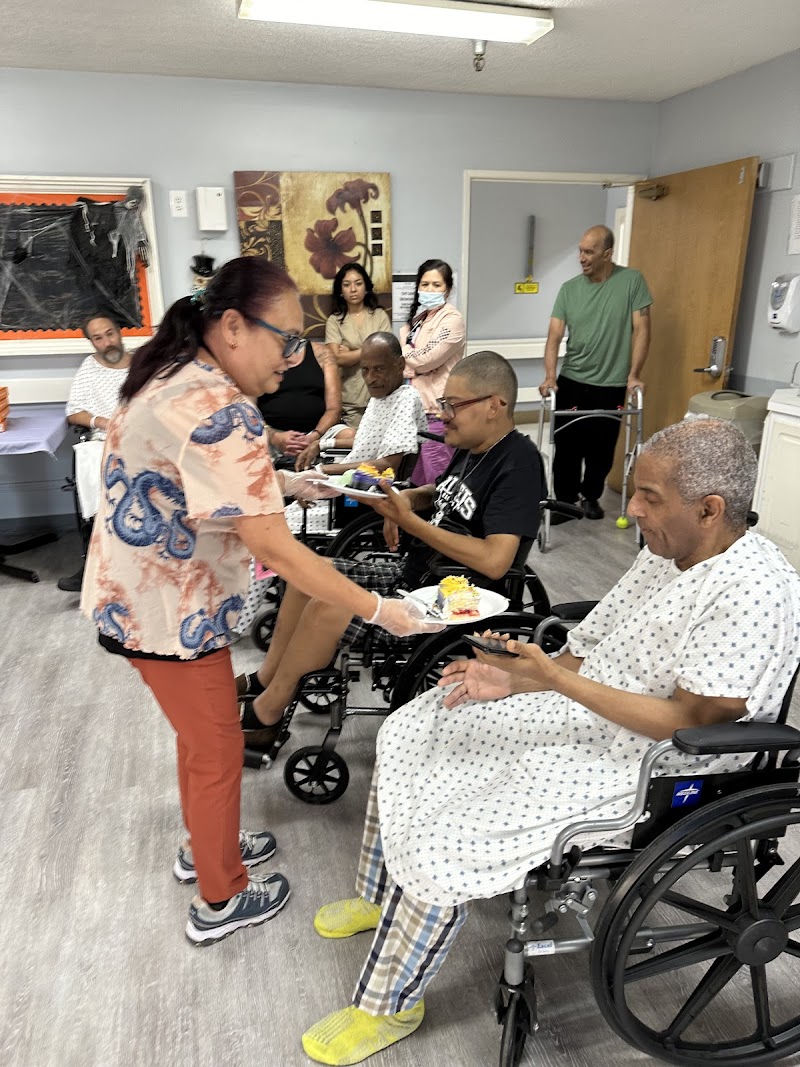
How is Jurupa Hills Post Acute Staffed?

CMS rates JURUPA HILLS POST ACUTE's staffing level at 2 out of 5 stars, which is below average compared to other nursing homes. Staff turnover is 46%, compared to the California average of 46%.

What Have Inspectors Found at Jurupa Hills Post Acute?

State health inspectors documented 59 deficiencies at JURUPA HILLS POST ACUTE during 2021 to 2025. These included: 1 Immediate Jeopardy (the most serious level, indicating potential for serious harm or death), 3 that caused actual resident harm, and 55 with potential for harm. Immediate Jeopardy findings are rare and represent the most serious regulatory concerns. They require immediate corrective action.
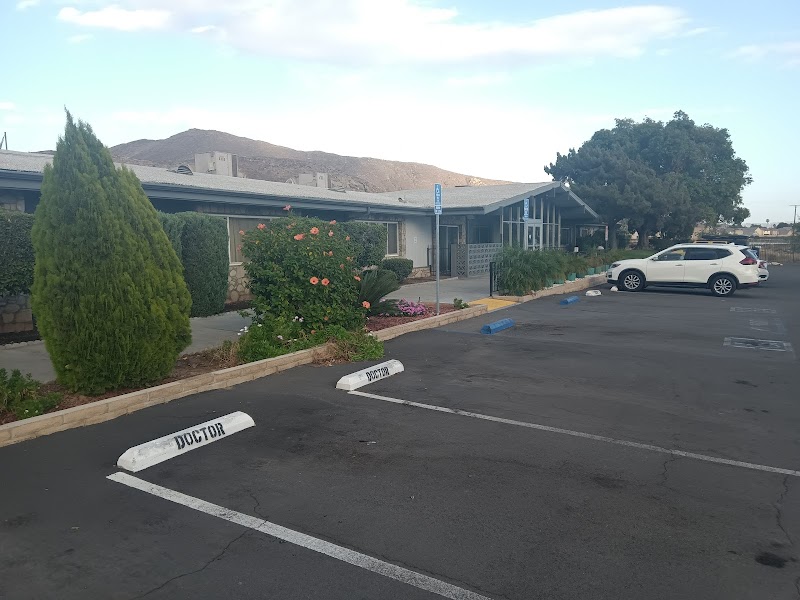
Who Owns and Operates Jurupa Hills Post Acute?

JURUPA HILLS POST ACUTE is owned by a for-profit company. For-profit facilities operate as businesses with obligations to shareholders or private owners. The facility is operated by PACS GROUP, a chain that manages multiple nursing homes. With 143 certified beds and approximately 132 residents (about 92% occupancy), it is a mid-sized facility located in RIVERSIDE, California.
How Does Jurupa Hills Post Acute Compare to Other California Nursing Homes?

Compared to the 100 nursing homes in California, JURUPA HILLS POST ACUTE's overall rating (2 stars) is below the state average of 3.1, staff turnover (46%) is near the state average of 46%, and health inspection rating (2 stars) is below the national benchmark.

What Should Families Ask When Visiting Jurupa Hills Post Acute?

Based on this facility's data, families visiting should ask: "What changes have been made since the serious inspection findings, and how are you preventing similar issues?" "Can you walk me through typical staffing levels on day, evening, and night shifts?" "Can I visit during a mealtime to observe dining assistance and food quality?" "How do you handle medical emergencies, and what is your hospital transfer rate?" These questions are particularly relevant given the facility's Immediate Jeopardy citations and the below-average staffing rating.

Is Jurupa Hills Post Acute Safe?

Based on CMS inspection data, JURUPA HILLS POST ACUTE has documented safety concerns. Inspectors have issued 1 Immediate Jeopardy citation (the most serious violation level indicating risk of serious injury or death). The facility has a 2-star overall rating and ranks #100 of 100 nursing homes in California. Families considering this facility should ask detailed questions about what corrective actions have been taken since these incidents.

Do Nurses at Jurupa Hills Post Acute Stick Around?

JURUPA HILLS POST ACUTE has a staff turnover rate of 46%, which is about average for California nursing homes (state average: 46%). Moderate turnover is common in nursing homes, but families should still ask about staff tenure and how the facility maintains care continuity when employees leave.

Was Jurupa Hills Post Acute Ever Fined?

JURUPA HILLS POST ACUTE has been fined $26,813 across 2 penalty actions. This is below the California average of $33,347. While any fine indicates a compliance issue, fines under $50,000 are relatively common and typically reflect isolated problems that were subsequently corrected. Families should ask what specific issues led to these fines and confirm they've been resolved.

Is Jurupa Hills Post Acute on Any Federal Watch List?

JURUPA HILLS POST ACUTE is not on any federal watch list. The most significant is the Special Focus Facility (SFF) program, which identifies the bottom 1% of nursing homes nationally based on persistent, serious quality problems. Not being on this list means the facility has avoided the pattern of deficiencies that triggers enhanced federal oversight. This is a positive indicator, though families should still review the facility's inspection history directly.