RIVERSIDE HEIGHTS HEALTHCARE CENTER, LLC

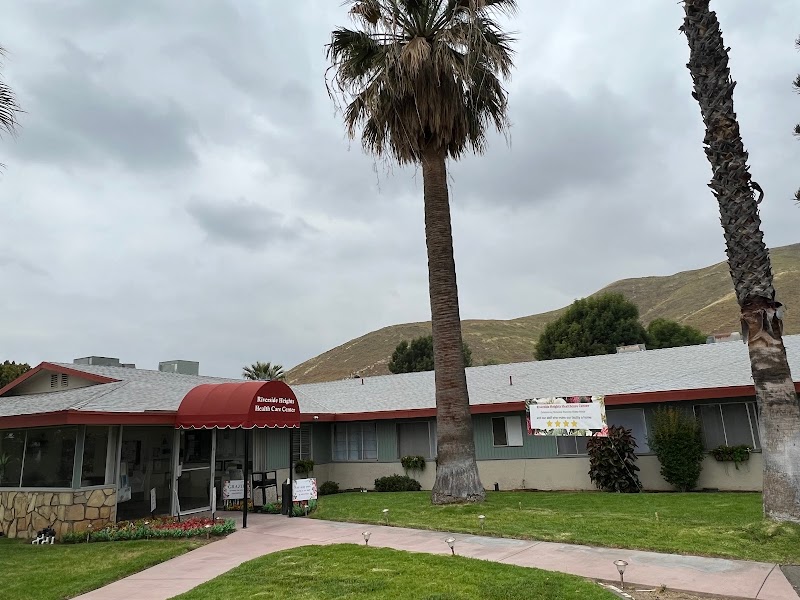
8951 GRANITE HILL DRIVE, RIVERSIDE, CA 92509 (951) 685-7474
For profit - Partnership 70 Beds CRYSTAL SOLORZANO Data: November 2025
Trust Grade
85/100
#181 of 1155 in CA
Last Inspection: June 2025

Inspected within the last 6 months. Data reflects current conditions.

Overview

Riverside Heights Healthcare Center has a Trust Grade of B+, which means it is above average and recommended for families considering care for their loved ones. It ranks #181 out of 1,155 facilities in California, placing it in the top half of all state facilities, and #5 out of 53 in Riverside County, indicating only four other local options are better. However, the facility is experiencing a worsening trend, with the number of issues increasing from 3 in 2024 to 7 in 2025. Staffing is a relative strength with a 4/5 star rating and a turnover rate of 36%, which is lower than the California average. There have been no fines reported, which is a positive sign, but the RN coverage is only average, meaning that while there is some oversight, it may not be as robust as in other facilities. Specific incidents highlighted concerns about food safety, such as wet metal pans being stored improperly and expired medications being available for residents, potentially putting their health at risk. Overall, while there are notable strengths, families should weigh the facility's recent issues against its positive attributes.

Trust Score
B+
85/100
In California
#181/1155
Top 15%
Safety Record
Low Risk
No red flags
Inspections
Getting Worse
3 → 7 violations
Staff Stability
○ Average
36% turnover. Near California's 48% average. Typical for the industry.
Penalties
✓ Good
No fines on record. Clean compliance history, better than most California facilities.
Skilled Nurses
⚠ Watch
Each resident gets only 21 minutes of Registered Nurse (RN) attention daily — below average for California. Fewer RN minutes means fewer trained eyes watching for problems.
Violations
⚠ Watch
17 deficiencies on record. Higher than average. Multiple issues found across inspections.
★★★★★
5.0
Overall Rating
★★★★☆
4.0
Staff Levels
★★★★★
5.0
Care Quality
★★★★★
5.0
Inspection Score
Stable
2024: 3 issues
2025: 7 issues

The Good

  • 4-Star Staffing Rating · Above-average nurse staffing levels
  • 5-Star Quality Measures · Strong clinical quality outcomes
  • Full Sprinkler Coverage · Fire safety systems throughout facility
  • No fines on record
  • Staff turnover below average (36%)

    12 points below California average of 48%

Facility shows strength in staffing levels, quality measures, fire safety.

The Bad

Staff Turnover: 36%

10pts below California avg (46%)

Typical for the industry

Chain: CRYSTAL SOLORZANO

Part of a multi-facility chain

Ask about local staffing decisions and management

The Ugly 17 deficiencies on record

Jun 2025 7 deficiencies
CONCERN (D)

Potential for Harm - no one hurt, but risky conditions existed

Deficiency F0605 (Tag F0605)

Could have caused harm · This affected 1 resident

**NOTE- TERMS IN BRACKETS HAVE BEEN EDITED TO PROTECT CONFIDENTIALITY** Based on observation, interview, and record review, the facility failed to identify adverse effects of psychotropic medications ...

Read full inspector narrative →
**NOTE- TERMS IN BRACKETS HAVE BEEN EDITED TO PROTECT CONFIDENTIALITY** Based on observation, interview, and record review, the facility failed to identify adverse effects of psychotropic medications (drugs that affect brain activities associated with mental processes and behavior) for one of six residents reviewed (Resident 44), when Resident 44 was administered Risperdal (an antispychotic medication) and was observed with a facial chewing motion. This failure had the potential for Resident 44 to have irreversible adverse effects such as extrapyramidal symptoms (EPS, movement disorders caused by certain medications, particulary antipsychotics). Findings: On June 16, 2025, at 12:04 p.m., Resident 44 was observed having a facial chewing motion while sitting at a table in the dining room. On June 18, 2025, at 1:50 p.m., a second observation of Resident 44 was conducted. Resident 44 was observed having a facial chewing motion while sitting in the dining room awaiting the start of an activity. A review of Resident 44's medical record was conducted on June 18, 2025. The medical record indicated Resident 44 was admitted to the facility on [DATE], with diagnoses including schizophrenia (a disorder that affects a person's ability to think, feel, and behave clearly), and depression. Resident 44's medication administration record indicated Risperdal 2mg (mg-milligram a unit of measurement) by mouth at bedtime was started on June 23, 2023. Resident 44's medical record indicated EPS monitoring (an assessment for drug induced movements caused by psychotropic medication) every shift. The following dates for the month of June 2025, indicated zero (0-means no drug induced movements were observed) for every shift June 1, 2025, through June 18, 2025. Resident 44's AIMS (Abnormal Involuntary Movement Scale) dated June 3, 2025, indicated Resident 44 had none of the following AIMS, .Facial and Oral Movement .Lips puckering .smacking .Jaw Movement .chewing . Resident 44's Care Plan indicated .Focus .will be/remain free of psychotropic drug related complications .movement disorder . On June 18, 2025, at 2:16 p.m., a concurrent observation and interview was conducted with the assigned CNA (Certified Nurse Assistant). The CNA verified Resident 44 had facial chewing with no evidence of food or gum in the resident's mouth. The CNA further stated she did not know this was a sign of EPS. On June 18, 2025, at 2:21 p.m., a concurrent observation and interview was conducted with Licensed Vocational Nurse (LVN) 1. LVN 1 verified Resident 44 had facial chewing with no evidence of food or gum in the resident's mouth. LVN 1 further stated she did not know this was a symptom of EPS. On June 18, 2025, at 2:30 p.m., a concurrent observation was conducted with the Director of Nursing (DON). The DON verified Resident 44 had facial chewing with no evidence of food or gum in the resident's mouth. The DON stated Resident 44 was demonstrating EPS. The DON further stated nursing should have been able to assess the signs and symptoms of EPS. A review of the facility's policy and procedure titled, Psychotropic Drugs, revised April 28, 2025, indicated When the interdisciplinary team and the physician agree that a psychotropic drug is indicated, the following documentation shall be included .The resident's care plan with duration and circumstances under which the drug is to be used, appropriateness of the clinical objectives and care plan interventions .data to be collected for use in evaluating the effectiveness of the drugs and the occurrence of adverse reactions .
CONCERN (D)

Potential for Harm - no one hurt, but risky conditions existed

Respiratory Care (Tag F0695)

Could have caused harm · This affected 1 resident

**NOTE- TERMS IN BRACKETS HAVE BEEN EDITED TO PROTECT CONFIDENTIALITY** Based on observation, interview, and record review, the facility failed to provide respiratory care and treatment for one of two...

Read full inspector narrative →
**NOTE- TERMS IN BRACKETS HAVE BEEN EDITED TO PROTECT CONFIDENTIALITY** Based on observation, interview, and record review, the facility failed to provide respiratory care and treatment for one of two residents reviewed for oxygen administration (Resident 20), when the physician's order for oxygen administration was not followed. This failure had the potential to result in respiratory distress and decline in the resident's health condition. Findings: On June 16, 2025, at 10:45 a.m., Resident 20 was observed in his room, in bed, with oxygen (O2) via nasal cannula (NC - a tube used to deliver oxygen through the nose). Resident 20 was unable to communicate. Resident 20's oxygen administration was observed at 2.5 liters per minute (LPM - a unit of measurement). On June 18, 2025, at 9:12 a.m., Resident 20's record was reviewed. Resident 20 was re-admitted to the facility on [DATE], with diagnoses which included seizure (a sudden, uncontrolled electrical disturbance in the brain which can cause uncontrolled jerking, blank stares, and loss of consciousness), Huntington's disease (an inherited disorder that causes nerve cells in parts of the brain to gradually break down and die), chronic respiratory failure (low oxygen in the blood), and dementia (a progressive state of decline in mental abilities). The physician's order dated October 14, 2024, indicated, .May use oxygen @ (at) 2-3L/min (LPM) via nasal cannula or face mask for oxygen saturation (a measure of the percentage of oxygen in the blood, normal range for healthy individuals between 95-100%) below 92% . On June 18, 2025, at 9:20 a.m., Resident 20 was observed in the activity room, without oxygen. Resident 20 was observed restless. Licensed Vocational Nurse (LVN) 1 was asked to check Resident 20's O2 saturation. Resident 20's O2 saturation was 80%. No portable O2 tank was observed available by Resident 20. LVN 1 stated Resident 20's O2 saturation is too low, and he needs O2. LVN 1 took Resident 20 back to his room to administer O2. On June 18, 2025, at 9:30 a.m., a concurrent interview and record review was conducted with LVN 1. LVN 1 reviewed the physician's order for Resident 20 and stated Resident 20 should have been on oxygen if his O2 saturation was below 92%. LVN 1 stated the physician's order was not followed for Resident 20. On June 18, 2025, at 10:20 a.m., an interview was conducted with the Director of Nursing (DON). The DON stated Resident 20 should have been on O2 in the activities room, to maintain his O2 saturation above 92%, as per physician's order. The facility policy and procedure titled, Oxygen Therapy, revised November 2017, was reviewed. The policy indicated, .To deliver supplemental oxygen to aid the relief of tissue hypoxia (low levels of oxygen in the body tissues) or hypoxemia (abnormally low levels of oxygen in the blood) .It is the policy of this facility that oxygen therapy is administered as ordered by the physician or as an emergency measure until a physician order can be obtained .Read physician's orders .Obtain liter flow and mode of administering oxygen .Monitor oxygen usage frequently .Monitor resident for signs of shortness of breath, restlessness or other symptoms of oxygen deprivation .
CONCERN (D)

Potential for Harm - no one hurt, but risky conditions existed

Deficiency F0757 (Tag F0757)

Could have caused harm · This affected 1 resident

**NOTE- TERMS IN BRACKETS HAVE BEEN EDITED TO PROTECT CONFIDENTIALITY** Based on interview and record review, the facility failed to ensure one out of five sampled residents (Resident 18) was free fro...

Read full inspector narrative →
**NOTE- TERMS IN BRACKETS HAVE BEEN EDITED TO PROTECT CONFIDENTIALITY** Based on interview and record review, the facility failed to ensure one out of five sampled residents (Resident 18) was free from unnecessary medications when Resident 18 received an antihypertensive medication (used to manage high blood pressure) outside of the prescribed blood pressure (BP) parameter four times in April 2025. This failure increased the potential for Resident 18 to experience side effects such as low BP, leading to further heart related complications. Finding: A review of Resident 18's admission Record, dated June 19, 2025 indicated the resident was initially admitted to the facility on [DATE] and recently readmitted on [DATE] with diagnoses including hypertension (high blood pressure), heart failure (serious condition when heart does not pump blood to the body efficiently), and cardiomyopathy (disease of the heart muscle), and atrial fibrillation (abnormal heart beat). A review of Resident 18's Care Plan Report, dated May 8, 2025, indicated the resident was at risk for hypotension (low BP) and indicated interventions including, Administer anti-hypertensive medications as ordered -metoprolol .Follow blood pressure parameters as ordered prior to administering medications. The BP is measured in millimeters of mercury (mmHg, unit of measurement) and in two numbers. The upper number is the systolic BP, or SBP, indicating the pressure in the arteries when the heart beats and pumps blood through the body; the lower number is the diastolic BP, or DBP, is the pressure in the arteries when the heart rests between beats. A review of Resident 18's clinical record indicated a physician's order, dated March 19, 2025, for metoprolol succinate ER (extended release, designed to release medication slowly) tablet 25 mg (milligram, unit of measurement), give one tablet one time a day for hypertension hold if SBP is below 110 [mmHg] . A review of Resident 18's Medication Administration Record (MAR), dated April 2025, indicated Resident 18 received metoprolol succinate ER when it should have been held (SBP, upper number, was below 110), on the following dates and times: - On April 3, 2025, at 7:30 a.m. with BP of 101/66; - On April 4, 2025, at 7:30 a.m. with BP of 106/65; - On April 19, 2025, at 7:30 a.m. with BP of 102/62; and - On April 20, 2025, at 7:30 a.m. with BP of 108/63. During a concurrent interview and record review on June 18, 2025, at 3:50 p.m., Resident 18's clinical record, including the MAR dated April 2025 was reviewed with the Director of Nursing (DON). The DON confirmed the above findings and acknowledged nursing staff should not have administered metoprolol succinate ER to Resident 18 when SBP was below 110 on the above dates and times. The DON stated the expectation was for nursing staff to have followed hold parameters as ordered by the physician. During a follow-up interview on June 19, 2025, with the DON, the DON stated it was important to follow the BP medication hold parameters to prevent dropping the resident's BP too low. A review of the Prescribing Information (PI, manufacturer's instructions) for metoprolol succinate extended release tablet, dated January 2025, retrieved from DailyMed (a public website maintained by the U.S. Food and Drug Administration), indicated, Most common adverse reactions: tiredness, dizziness, depression, shortness of breath (difficulty breathing), bradycardia (abnormally slow heart rate), hypotension (abnormally low blood pressure) . During a review of the facility's policy and procedure (P&P) titled, Procedure: Preparation of Doses - General Instructions, dated January 16, 2025, indicated, The nurse shall read and follow precautionary or additional instructions available on the prescription label (i.e. [example] .Parameters).
CONCERN (D)

Potential for Harm - no one hurt, but risky conditions existed

Unnecessary Medications (Tag F0759)

Could have caused harm · This affected 1 resident

Based on observation, interview, and record review, the facility had a medication error rate of 8% when two medication errors occurred out of 25 opportunities during the medication administration for ...

Read full inspector narrative →
Based on observation, interview, and record review, the facility had a medication error rate of 8% when two medication errors occurred out of 25 opportunities during the medication administration for two of four residents (Residents 28 and 52). The facility did not administer the residents' prefilled insulin (medication for diabetes) pen injection according to the manufacturer's instructions. This failure had the potential to result in Residents 28 and 52 not receiving the full therapeutic benefit of their medications. Findings: 1a. During a medication pass observation on June 18, 2025, at 11:35 a.m., Licensed Vocational Nurse (LVN) 2 was observed preparing a prefilled Humalog (insulin lispro, brand name: Humalog KwikPen, medication for diabetes) 100 units/milliliter (ml, unit of measurement) pen for Resident 28. On June 18, 2025, at 11:39 a.m., LVN 2 was observed administering 4 units from the prefilled Humalog pen as a subcutaneous (under the skin) injection in Resident 28's lower right abdomen. LVN 2 pressed and immediately released the prefilled Humalog pen's dose knob without holding it in place for at least 5 seconds. A review of Resident 28's medical record indicated a physician's order, dated April 29, 2025, for Humalog Injection Solution 100 units/ml (Insulin Lispro), inject 4 units subcutaneously before meals. 1b. During another medication pass observation on June 18, 2025, at 11:51 a.m., LVN 2 was observed preparing a prefilled Lispro (insulin lispro, brand name: Lispro Kwikpen, medication for diabetes) 100 units/ml pen for Resident 52. On June 18, 2025, at 11:56 a.m., LVN 2 was observed administering 6 units from the prefilled Lispro pen as a subcutaneous injection in Resident 52's back of the right upper arm. LVN 2 pressed and immediately released the prefilled Lispro pen's dose knob without holding it in place for at least 5 seconds. A review of Resident 52's medical record indicated a physician's order, dated April 30, 2025, for Insulin Lispro Injection Solution 100 units/ml (Insulin Lispro), inject 6 units subcutaneously before meals. During an interview on June 18, 2025, at 12 p.m., LVN 2 acknowledged she did not hold the prefilled Humalog and Lispro pens' dose knob down for at least 5 seconds when administering the medication to Residents 28 and 52. LVN 2 stated she did not know she was supposed to hold the pens' dose knob down for at least 5 seconds. During a concurrent interview and record review on June 18, 2025, at 12:30 p.m. with the Director of Nursing (DON), the DON reviewed the prefilled Humalog and Lispro pens manufacturer's instructions from the manufacturer's website. The prefilled Humalog and Lispro pens manufacturer's instructions indicated, Continue to hold the dose knob in and slowly count to 5 before removing the needle. The DON stated nursing staff should have followed the manufacturer's instructions during the administration of prefilled Humalog pen for Resident 28 and prefilled Lispro pen for Resident 52. During a follow-up interview on June 19, 2025, at 1:06 p.m., the DON stated it was important for nursing staff to administer the prefilled insulin pens according to the manufacturer's instructions to ensure the full dose was administered to the residents. A review of Humalog (Insulin Lispro) KwikPen manufacturer's Instructions for Use, dated May 2025 provided by the facility, indicated, Step 11 .Insert the Needle into your skin .Push the Dose Knob all the way in .Continue to hold the Dose Knob in and slowly count to 5 before removing the Needle. During a review of the facility's policy and procedure (P&P) titled, Subcutaneous medication administration procedures, dated January 16, 2025, indicated, Procedure .inject medication slowly .
CONCERN (D)

Potential for Harm - no one hurt, but risky conditions existed

Deficiency F0761 (Tag F0761)

Could have caused harm · This affected 1 resident

Based on observation, interview, and record review the facility failed to ensure refrigerated medications and biologicals were stored at temperatures in accordance with facility policy and manufacture...

Read full inspector narrative →
Based on observation, interview, and record review the facility failed to ensure refrigerated medications and biologicals were stored at temperatures in accordance with facility policy and manufacturer's specifications when one of two medication refrigerators was identified with documented temperature readings below the normal range on multiple days between January to June 2025. This failure had the potential for residents to receive ineffective medications which could result in the residents not receiving the full benefit of the medications, leading to further health complications. Findings: During a concurrent observation and interview at nursing station 1 on June 16, 2025, at 2:15 p.m. with Registered Nurse (RN) 1, a medication refrigerator was identified. The refrigerator was observed to contain the following medications: - Afluria (flu vaccine) injectable suspension; - Latanoprost (used to lower pressure in the eye) eye drops; - Ozempic (used for diabetes and weight loss) prefilled pen; - Retacrit (used to produce more red blood cells) vial; - various types of insulin (used to treat diabetes) including Semglee (insulin glargine) prefilled pen; and - Tubersol PPD (test agent used in the diagnosis of tuberculosis) vial. During the same concurrent interview and observation on June 16, 2025, at 2:15 p.m., RN 1 stated the medications in the refrigerator should have been stored at 36 degree Fahrenheit (F, a temperature measurement) to 46 degree F. During this interview, the product labeling from the Ozempic carton (dated September 2023), reviewed with RN 1 indicated, .Storage Conditions for the Ozempic Pen .Refrigerated 36 degree F to 46 degree F. Additionally, RN 1 reviewed the medication refrigerator temperature logs dated January to June 2025 and acknowledged the medication refrigerator temperatures were below 36 degree F (out of range) against the manufacturer's instructions, on multiple days. RN 1 stated when the medication refrigerator was out of range, nursing staff needed to adjust the thermostat inside the refrigerator and should have reported to maintenance if temperature had not returned to normal range. RN 1 stated if medications were not stored according to the required temperature they could have been ineffective. During an interview on June 16, 2025, at 3:09 p.m. with Licensed Vocational Nurse (LVN) 3, LVN 3 stated nursing staff needed to document the medication refrigerator temperature on the log at every shift (morning and evening). LVN 3 stated the normal range for the medication refrigerator was between 36 degree F to 46 degree F. LVN 3 stated if the medication refrigerator temperature was out of range, nursing staff should have tried to adjust, rechecked temperature in one to two hours, then should have notified maintenance staff if the temperature was not back in range. A review of the Prescribing Information (PI, manufacturer's instructions) for Afluria (flu vaccine) injectable suspension, dated July 2024, retrieved from DailyMed (a public website maintained by the U.S. Food and Drug Administration), indicated, Store refrigerated at 2-8 degree Celsius [C, a temperature measurement] (36-46 degree F). A review of the PI for Latanoprost eye drops, dated June 2024, retrieved from DailyMed, indicated, Store unopened bottle(s) under refrigeration at 2 degree C to 8 degree C (36 degree F to 46 degree F). A review of the PI for Retacrit, dated September 2024, retrieved from DailyMed, indicated, Store refrigerated at 2 degree C to 8 degree C (36 degree F to 46 degree F). A review of the PI for Semglee (insulin glargine) prefilled pen, dated March 2025, retrieved from DailyMed, indicated, Not in-use (unopened) Refrigerated (2 degree to 8 degree C [36 degree to 46 degree F]). A review of the PI for Tubersol PPD, dated October 2021, retrieved from DailyMed, indicated, Store at 2 to 8 degree C (35 to 46 degree F). During a concurrent interview and record review on June 17, 2025, at 9:45 a.m. the facility's nursing station 1 medication refrigerator temperature logs dated January to June 2025 were reviewed with the Director of Nursing (DON). The DON stated nursing staff were expected to document the medication refrigerator temperature on the log twice a day at the beginning of each shift (morning and night) and the normal temperature range was between 36 degree F to 46 degree F according to the facility's policy. The DON confirmed the nursing station 1 medication refrigerator temperatures were below the normal range as follows: - In January 2025: 34 degree F on 14 days during morning shift; - In February 2025: 34 degree F on 15 days during morning shift, 25 degree F on one day (reported to maintenance by nursing staff) during morning shift, and 34 degree F on 6 days during night shift; - In March 2025: 34 degrees F on 15 days during morning shift, 35 degree F on one day during morning shift, and 34 degrees F on 10 days during night shift; - In April 2025: 34 degree F on 9 days during morning shift; - In May 2025: 34 degree F on 21 days during morning shift, 35 degree F on one day during morning shift, 34 degree F on two days during night shift, and 35 degree F on 5 days during night shift; and - In June 2025: 35 degrees F on one day during morning shift and one day during night shift. During the same concurrent interview and record review on June 17, 2025, at 9:45 a.m., the DON acknowledged in April 2025, three days were missing a temperature recording during night shift and stated it should have been documented. The DON stated when temperatures were out of range, nursing staff were expected to adjust the thermostat inside the refrigerator and recheck in 15 minutes, then if the temperature was not back in range, they should have called maintenance and notify the DON. The DON stated it was important to ensure refrigerated medications were stored at the appropriate temperatures according to the manufacturer's instructions and facility policy because the effectiveness of the medication could have been altered and might not work as intended when administered to residents. During a review of the facility's policy and procedure (P&P) titled, Storage of Medications, dated January 16, 2025, the P&P indicated, Medications requiring 'refrigeration' or 'temperature between 2 degree C (36 degree F) and 8 degree C (46 degree F)' are kept in a refrigerator with a thermostat to allow temperature monitoring.
CONCERN (D)

Potential for Harm - no one hurt, but risky conditions existed

Food Safety (Tag F0812)

Could have caused harm · This affected 1 resident

Based on observation, interview, and record review, the facility failed to provide safe storage, preparation, and distribution of food when the kitchen staff performed the chlorine (a sanitizing solut...

Read full inspector narrative →
Based on observation, interview, and record review, the facility failed to provide safe storage, preparation, and distribution of food when the kitchen staff performed the chlorine (a sanitizing solution) testing of the dishwashing machine with expired test strips. This failure had the potential to result in foodborne illness to a vulnerable facility population. Findings: On June 18, 2025, at 11:26 a.m., a concurrent observation and interview was conducted with the dietary aide (DA). The DA was observed to run the dishwasher and performed the chlorine test strip. The vial containing the test strips was observed with an expiration date of May 1, 2025. The DA stated the chlorine test strips were expired and should not have been used to test the level of the sanitizing solution from the dishwasher. On June 18, 2025, at 11:35 a.m., an interview was conducted with the Dietary Supervisor (DS). The DS stated the chlorine test strips were expired and should not have been used to test the level of the sanitizing solution from the dishwasher. On June 20, 2025, at 11:21 a.m., an interview was conducted with the Registered Dietician (RD). The RD stated if the chlorine test strips were expired, the kitchen staff was unable to tell if the dishwasher sanitizing solution was in the right concentration. The RD stated the kitchen staff should not have used expired test strips. The facility policy and procedure, titled, Dishwashing Machine Use, dated January 16, 2025, was reviewed. The policy and procedure indicated, .Test the sanitizing solution using the manufacturer's suggested test strips to assure appropriate .
CONCERN (D)

Potential for Harm - no one hurt, but risky conditions existed

Infection Control (Tag F0880)

Could have caused harm · This affected 1 resident

**NOTE- TERMS IN BRACKETS HAVE BEEN EDITED TO PROTECT CONFIDENTIALITY** 2. On June 16, 2025, at 9:35 a.m., Resident 18 was observed lying in bed, awake, alert, and able to make his needs known. Reside...

Read full inspector narrative →
**NOTE- TERMS IN BRACKETS HAVE BEEN EDITED TO PROTECT CONFIDENTIALITY** 2. On June 16, 2025, at 9:35 a.m., Resident 18 was observed lying in bed, awake, alert, and able to make his needs known. Resident 18 was receiving oxygen (O2) at 3 LPM (liters per minute - a unit of measurement) via the nasal cannula attached to an O2 concentrator (a machine that supplies oxygen). The nasal cannula was labeled with Resident 1's name, room number and date of 6/6/25. A wheelchair was observed at the foot of Resident 18's bed. Resident 18 stated he was using the wheelchair when he was up. An O2 cannula with no date was observed attached to a portable O2 tank. The O2 cannula was observed hanging on the back of the wheelchair, exposed to the environment. On June 16, 2025, at 9:46 a.m. Registered Nurse (RN) 2 was observed assisting Resident 18 in the room. In a concurrent interview with RN 2, she stated Resident 18's nasal cannula was dated 6/6/25. RN 2 stated she was not sure when the O2 cannula should have been changed. She stated Resident 18 was using the wheelchair located at the foot of the bed. She stated the O2 cannula in the wheelchair attached to the portable O2 tank did not have a date and was not stored in a plastic bag. RN 2 stated the O2 tubing should have been labeled and stored in a plastic bag for infection control. On June 18, 2025, at 11:01 a.m., a concurrent interview and record review was conducted with Licensed Vocational Nurse (LVN) 2. LVN 2 stated Resident 18 had an order for O2 at 3 LPM via NC or face mask continuously. She stated the licensed nurses on the night shift were responsible for changing the NC. She stated the facility practice was to change the respiratory equipment every Sunday night. She also stated the respiratory equipment should be changed at least every seven days, labeled, dated, and stored in a plastic bag when not in use for infection control. On June 18, 2025, at 11:25 a.m., the DON was interviewed. She stated the facility practice was to change the O2 cannula every Sunday night by the charge nurses. She also stated when not in use, the O2 cannula should be stored in a plastic bag, labeled and dated, for infection control. Resident 18's record was reviewed. Resident 18 was admitted to the facility on [DATE], with diagnoses which included pulmonary edema (a condition with excess fluid in the lungs) and pleural effusion (a build up of fluid between the lungs and the chest). Resident 18's Brief Interview of Mental Status (BIMS - an assessment tool), dated May 28, 2025, indicated a score of 14 (cognitively intact). The Physician's Order, dated June 16, 2025, indicated, .Change nasal cannula or face mask and tubing q (every) week on Sundays. Date nasal canula or face mask and tubing when changed. Every night shift every Sunday . The facility policy and procedure titled Oxygen Therapy, reviewed January 6, 2025, indicated, .The cannula should be dated with date set-up and/or changed .A clean bag will be placed at the patient's bedside for cannula storage when not in use. The bag will be labeled with the patient's name and date of set-up/change . Based on observation, interview, and record review, the facility failed to ensure infection control practices were implemented for 3 out of 65 sampled residents when: 1. For Residents 28 and 52, nursing staff failed to properly clean a shared glucometer (blood glucose meter to measure and display the amount of sugar [glucose] in your blood) according to the disposable wipe manufacturer's specified contact time (the time the resident equipment was to be in contact with the disposable wipes to kill micro-organisms); and 2. For Resident 18, the nasal cannula tubing (NC - a tube used to deliver oxygen through the nose) was not changed every seven days and stored in a sanitary plastic bag as per facility policy and procedure. These failures had the potential for Residents 18, 28, and 52 to be exposed to bacterial cross contamination and the development of infection. Findings: 1. During an observation on June 18, 2025, at 11:25 a.m., Licensed Vocational Nurse (LVN) 2 was observed using a shared glucometer to measure Resident 28's concentration of blood glucose. LVN 2 was observed wiping the glucometer with a Sani-Cloth disposable wipe and did not disinfect the glucometer according to the manufacturer specified contact time. During another observation on June 18, 2025, at 11:44 a.m., LVN 2 was observed using the same shared glucometer to measure Resident 52's concentration of blood glucose. LVN 2 was observed wiping the glucometer with a Sani-Cloth disposable wipe and did not disinfect the glucometer according to the manufacturer specified contact time. During an interview on June 18, 2025, at 12 p.m., LVN 2 stated nursing staff needed to wipe all shared resident care equipment, such as glucometers, with Sani-Cloth disposable wipe to disinfect after each use and let the glucometer air dry for two (2) minutes. Additionally, LVN 2 stated she did knot know what contact time meant. LVN read the manufacturer's instructions on the disposable wipe label and acknowledged the instructions indicated, Allow surface to remain wet for two (2) minutes. During an interview on June 18, 2025, at 12:08 p.m. with the Infection Preventionist (IP), the IP stated nursing staff were expected to clean and disinfect all shared resident care equipment after use and before the next resident using Sani-Cloth disposable wipes. The IP stated nursing staff needed to wipe the equipment, put it down, and wait to air dry for two (2) minutes before using on the next resident. The IP stated contact time meant the time required for the equipment become disinfected according to the manufacturer's instructions. The IP read the manufacturer's instructions on the disposable wipe label and acknowledged the instructions indicated, Allow surface to remain wet for two (2) minutes. The IP acknowledged nursing staff should have been instructed to keep the surface wet for two (2) minutes to achieve contact time when disinfecting shared resident care equipment, such as glucometers, according to the manufacturer's instructions. During a concurrent interview and record review on June 18, 2025, at 12:30 p.m. with the Director of Nursing (DON), the DON stated nursing staff were expected to clean and disinfect all shared resident care equipment between every resident after each use and to follow the Sani-Cloth manufacturer's instructions for contact time to achieve proper kill time of organisms. The DON read the manufacturer's instructions on the disposable wipe label and acknowledged the instructions indicated, Allow surface to remain wet for two (2) minutes. The DON acknowledged nursing staff should have been instructed to keep the surface wet for two (2) minutes to achieve contact time when disinfecting shared resident care equipment, such as glucometers, according to the manufacturer's instructions. During a follow-up interview on June 19, 2025, at 1:06 p.m., the DON stated it was important to follow the disposable wipe manufacturer's instructions for contact time when disinfecting shared resident care equipment to ensure the wipe effectively killed organisms to prevent cross contamination. During a review of the facility's policy and procedure (P&P) titled, Blood glucose monitoring with insulin coverage, dated January 16, 2025, the P&P indicated, Procedure .sanitize and disinfect the glucometers machine following manufacturer's recommendations. During a review of the manufacturer's instructions for contact time for the Sani-Wipes provided by the facility, the manufacturer's instructions indicated, Contact time .thoroughly wet surface. Allow surface to remain wet for two (2) minutes. Let air dry.
May 2024 1 deficiency
CONCERN (D) 📢 Someone Reported This

A family member, employee, or ombudsman was alarmed enough to file a formal complaint

Potential for Harm - no one hurt, but risky conditions existed

Respiratory Care (Tag F0695)

Could have caused harm · This affected 1 resident

Based on observation, interview, and record review, the facility failed to provide respiratory care and treatment in accordance with the facilities policy and procedures for two of five residents (Res...

Read full inspector narrative →
Based on observation, interview, and record review, the facility failed to provide respiratory care and treatment in accordance with the facilities policy and procedures for two of five residents (Resident 1 and Resident 4) reviewed for oxygen treatment. This failure had the potential to result in ineffective oxygen therapy, respiratory distress, and decline in the residents ' health condition. Findings: On May 22, 2024, at 7:40 am, an unannounced abbreviated survey was conducted for the investigation of one complaint. A review of Resident 1 ' s History and Physical, dated May 25, 2022, indicated Resident 1 was admitted with a medical history which included chronic obstructive pulmonary disease (COPD, a lung disease causing restricted airflow or breathing problems), anxiety disorder (a disorder caused by excessive anxiety), and paranoid schizophrenia (a serious mental disorder that affects how people interpret reality). A review of Resident 1 ' s Physician ' s Orders, dated January 7, 2024, indicated May use Continuous oxygen @ (at) 2-3 L/min (liters per minute) via nasal cannula or face mask for oxygen saturation below 92%. Every shift related to chronic obstructive pulmonary disease with (acute) exacerbation if oxygen is delivered at 3L/min or above, humidifier must be applied. A review of Resident 1 ' s Vital Signs, for oxygen saturation trends indicated, for the dates of January 10, 2024, January 11, 2024, January 12, 2024, and January 13, 2024, was only documented one time per day, instead of every shift as ordered. During a concurrent observation and interview on May 23, 2024, at 7:55 am, with Resident 4, Resident 4 stated he has lived in the facility for one year and uses oxygen on and off throughout the day and while he sleeps every night because of COPD. The oxygen was set at 3.5 liters per minute with humidifier (a device for increasing the humidity of the air) attached. A review of Resident 4 ' s History and Physical, dated December 20, 2023, indicated Resident 4 was admitted with medical diagnoses which include COPD exacerbation (an increase in the severity of the disease), status asthmaticus (a prolonged and severe asthma attack that does not respond to standard treatment), depression, anxiety, and periodic psychosis (loss of contact with reality). A review of Resident 4 ' s Physician Orders, dated March 21, 2024, indicated May use oxygen @ 2-3 L/min via nasal cannula or face mask for oxygen saturation below 88%. Monitor use q shift. As needed if oxygen is delivered at 3 L/min or above, humidifier must be applied. A review of Resident 4 ' s Vital Signs, for oxygen saturation trends, dated March 28, 2024, April 14, 2024, May 1, 2024, May 7, 2024, May 12, 2024, and May 16, 2024, were the only days oxygen saturations were documented. During an interview on May 23, 2024, at 11:00 am, with Administrator, Administrator stated the staff should be documenting oxygen levels per physician orders. A review of the facility ' s policy and procedure titled, Oxygen Therapy, revised November 2017, indicated, .Document administration in the medication administration record .Document oxygen saturation levels per physician order . Based on observation, interview, and record review, the facility failed to provide respiratory care and treatment in accordance with the facilities policy and procedures for two of five residents (Resident 1 and Resident 4) reviewed for oxygen treatment. This failure had the potential to result in ineffective oxygen therapy, respiratory distress, and decline in the residents' health condition. Findings: On May 22, 2024, at 7:40 am, an unannounced abbreviated survey was conducted for the investigation of one complaint. A review of Resident 1's History and Physical, dated May 25, 2022, indicated Resident 1 was admitted with a medical history which included chronic obstructive pulmonary disease (COPD, a lung disease causing restricted airflow or breathing problems), anxiety disorder (a disorder caused by excessive anxiety), and paranoid schizophrenia (a serious mental disorder that affects how people interpret reality). A review of Resident 1's Physician's Orders, dated January 7, 2024, indicated May use Continuous oxygen @ (at) 2-3 L/min (liters per minute) via nasal cannula or face mask for oxygen saturation below 92%. Every shift related to chronic obstructive pulmonary disease with (acute) exacerbation if oxygen is delivered at 3L/min or above, humidifier must be applied. A review of Resident 1's Vital Signs, for oxygen saturation trends indicated, for the dates of January 10, 2024, January 11, 2024, January 12, 2024, and January 13, 2024, was only documented one time per day, instead of every shift as ordered. During a concurrent observation and interview on May 23, 2024, at 7:55 am, with Resident 4, Resident 4 stated he has lived in the facility for one year and uses oxygen on and off throughout the day and while he sleeps every night because of COPD. The oxygen was set at 3.5 liters per minute with humidifier (a device for increasing the humidity of the air) attached. A review of Resident 4's History and Physical, dated December 20, 2023, indicated Resident 4 was admitted with medical diagnoses which include COPD exacerbation (an increase in the severity of the disease), status asthmaticus (a prolonged and severe asthma attack that does not respond to standard treatment), depression, anxiety, and periodic psychosis (loss of contact with reality). A review of Resident 4's Physician Orders, dated March 21, 2024, indicated May use oxygen @ 2-3 L/min via nasal cannula or face mask for oxygen saturation below 88%. Monitor use q shift. As needed if oxygen is delivered at 3 L/min or above, humidifier must be applied. A review of Resident 4's Vital Signs, for oxygen saturation trends, dated March 28, 2024, April 14, 2024, May 1, 2024, May 7, 2024, May 12, 2024, and May 16, 2024, were the only days oxygen saturations were documented. During an interview on May 23, 2024, at 11:00 am, with Administrator, Administrator stated the staff should be documenting oxygen levels per physician orders. A review of the facility's policy and procedure titled, Oxygen Therapy , revised November 2017, indicated, .Document administration in the medication administration record .Document oxygen saturation levels per physician order .
Apr 2024 2 deficiencies
CONCERN (D)

Potential for Harm - no one hurt, but risky conditions existed

Pressure Ulcer Prevention (Tag F0686)

Could have caused harm · This affected 1 resident

Based on observation, interviews, document review, and record review, the facility failed to ensure they did not place a fitted sheet on the low air loss mattress for 1 (Resident #42) of 1 sampled res...

Read full inspector narrative →
Based on observation, interviews, document review, and record review, the facility failed to ensure they did not place a fitted sheet on the low air loss mattress for 1 (Resident #42) of 1 sampled resident reviewed for pressure ulcer/injury. Findings included: A review of Resident #42's admission Record revealed the facility admitted the resident on 04/08/2020. Per the admission Record, the resident had diagnoses to include pressure-induced deep tissue damage of the left heel and pressure ulcer of the right heel, left heel, right ankle, and left ankle. A record review of Resident #42's admission Minimum Data Set (MDS), with an Assessment Reference Date (ARD) of 01/28/2024, revealed the resident had a Staff Assessment for Mental Status (SAMS) that indicated the resident had severely impaired cognitive skills for daily decision making. The MDS revealed the resident was at risk for pressure ulcer development and had four Stage I pressure ulcers and three unstageable pressure ulcers. A record review of Resident #42's care plan, revised on 10/16/2023, revealed the resident was at risk for pressure ulcers secondary to impaired mobility and incontinence status. There was intervention added on 2/16/2024, that directed staff to provide a low air loss mattress as ordered. A review of Resident #42's Order Summary Report revealed an order dated 02/16/2024, for may use low air loss mattress at air pressure range of 180 to 200 pounds. On 04/02/2024 at 10:56 AM, Resident #42 was observed in bed with a tightly fitted sheet over their low air loss mattress. In an interview on 04/03/2024 at 2:53 PM, the Medical Director stated he preferred to use non-fitted sheets on beds with a low air loss mattress. In an interview on 04/04/2024 at 9:48 AM, Registered Nurse #1 stated it was best practice to not have fitted sheets on beds with a low air loss mattress. In an interview on 04/04/2024 at 1:45 PM, the Administrator stated her opinion was irrelevant. In an interview on 04/04/2024 at 4:21 PM, the Director of Staff Development (DSD) stated fitted sheets were not supposed to be placed on beds with a low air loss mattress. The DSD stated the staff were trained that way, and if sheets were on those beds, it was done by mistake. In an interview on 04/04/2024 at 4:23 PM, the Director of Nursing stated normally beds with a low air loss mattress did not have sheets on them and she was not sure what happened. A review of a document titled, In-Service Sign in Sheet, dated 08/01/2023, revealed Air loss mattress use draw sheet and chux ONLY.
CONCERN (D)

Potential for Harm - no one hurt, but risky conditions existed

Infection Control (Tag F0880)

Could have caused harm · This affected 1 resident

**NOTE- TERMS IN BRACKETS HAVE BEEN EDITED TO PROTECT CONFIDENTIALITY** Based on interviews, record review, document reviews, and facility policy reviews, the facility failed to conduct outbreak testi...

Read full inspector narrative →
**NOTE- TERMS IN BRACKETS HAVE BEEN EDITED TO PROTECT CONFIDENTIALITY** Based on interviews, record review, document reviews, and facility policy reviews, the facility failed to conduct outbreak testing as directed by the Centers for Disease Control and Prevention when 1 (Resident #119) of 15 sampled residents tested positive for COVID-19. Findings included: A review of the facility policy titled, Infection Prevention and Control Program, revised in June 2021, revealed It is the policy of the facility to establish and maintain and Infection Prevention and Control Program to provide a safe, sanitary and comfortable environment and to help prevent the development and transmission of communicable disease and infections. A review of the undated facility policy titled, Resident COVID Testing, revealed It is the policy of this facility to provide testing for the Covid-19 virus to our residents as directed by the Centers for Disease Control and the California Department of Public Health. A review of the undated facility policy titled, Employee Covid Testing, revealed It is the policy of this facility to provide testing for the Covid-19 virus to our employees as directed by the Centers for Disease Control and the California Department of Public Health. A review of the Centers for Disease Control and Prevention (CDC) Interim Infection Prevention and Control Recommendations for Healthcare Personnel During the Coronavirus Disease 2019 (COVID-19) Pandemic, updated 03/18/2024, revealed a section titled Responding to a newly identified SARS-CoV-2 [severe acute respiratory syndrome coronavirus 2] infected HCP [healthcare personnel] or resident that specified, Perform testing for all residents and HCP identified as close contacts or on the affected unit(s) if using a broad-based approach, regardless of vaccination status. Testing is recommended immediately (but not earlier than 24 hours after the exposure) and, if negative, again 48 hours after the first negative test and, if negative, again 48 hours after the second negative test. This will typically be at day 1 (where day of exposure is day 0), day 3, and day 5. A review of Resident #119's significant change in status Minimum Data Set (MDS), with an Assessment Reference Date (ARD) of 11/10/2023, revealed the facility readmitted the resident on 11/03/2023. The MDS revealed the resident had a Brief Interview for Mental Status (BIMS) score of 0, which indicated the resident had severe cognitive impairment. Per the MDS, the resident had active diagnoses to include coronary artery disease, hypertension, peripheral vascular disease, renal insufficiency, dementia, and osteoporosis. A review of a document titled, COVID-19 Log, revealed Resident #119 had no symptoms. Per the COVID-19 Log, the date of the test for Resident #119 was listed on 01/09/2024. During an interview on 04/03/2024 at 11:52 AM, the Infection Preventionist (IP) stated the facility's last COVID-19 outbreak occurred on 01/09/2024. According to the IP, a resident (Resident #119) was sent to the hospital on [DATE], and the hospital staff notified the facility that the resident tested positive for COVID-19. The IP acknowledged all residents and staff were then tested weekly, on 01/09/2024 and again on 01/16/2024. A review of documents titled Testing Record, revealed facility staff and residents were tested for COVID-19 on 01/09/2024, 01/16/2024, and 01/23/2024. During an interview on 04/04/2024 at 10:58 AM, the Director of Nursing stated when the facility had a resident who was positive for COVID-19, the facility tested other residents and staff on the same day as to when the resident was found to be positive for COVID-19 and then weekly thereafter. In an interview on 04/04/24 at 1:37 PM, the Administrator stated she expected the staff to follow the regulations.
May 2021 7 deficiencies
CONCERN (D)

Potential for Harm - no one hurt, but risky conditions existed

Quality of Care (Tag F0684)

Could have caused harm · This affected 1 resident

**NOTE- TERMS IN BRACKETS HAVE BEEN EDITED TO PROTECT CONFIDENTIALITY** Based on observation, interview, and record review, the facility failed to ensure two of 21 residents reviewed for care and trea...

Read full inspector narrative →
**NOTE- TERMS IN BRACKETS HAVE BEEN EDITED TO PROTECT CONFIDENTIALITY** Based on observation, interview, and record review, the facility failed to ensure two of 21 residents reviewed for care and treatment (Residents 4 and 470) maintained their highest practicable physical well-being when: 1. Resident 4's skin injuries on his face and chin areas were not identified, assessed, and referred to the physician. This failure had the potential to delay care and treatment for Resident 4 which could result in skin infections and worsening of the skin injuries. 2. For Resident 470, the facility did not identify and assess a dark bluish discoloration on the left neck and a yellow-greenish fading discoloration on the right jaw timely. This failure had the potential for Resident 470 to not receive care and treatment for the facial discolorations and a delay in an investigation to determine the cause of the discoloration. Findings: 1. On May 17, 2021, at 3:18 p.m., Resident 4 was observed lying in bed, awake, and able to respond to simple questions. Four dry and dark brown scabs were observed on the right side of Resident 4's face. During a concurrent interview with Resident 4, Resident 4 was asked if the scabs on his face were skin injuries from shaving. Resident 4 nodded his head (yes). On May 18, 2021, at 9:30 a.m., Resident 4 was observed awake and sitting in a wheelchair. Four dry and dark brown scabs were observed on the right side of Resident 4's face. On May 19, 2021, at 8:15 a.m., Resident 4 was observed to have four linear cuts on the right side of his face, approximately 0.3 centimeters (cm - a unit of measurement). The four dry and dark brown scabs were no longer present. On May 19, 2021, at 8:20 a.m., the Registered Nurse Supervisor (RNS) was interviewed. The RNS stated the linear cuts on Resident 4's face were skin injuries from shaving. On May 19, 2021, at 8:50 a.m., Certified Nursing Assistant (CNA) 1 was interviewed. CNA 1 stated the linear cuts on Resident 4's face were skin injuries from shaving. On May 19, 2021, at 9:05 a.m., a concurrent interview and record review was conducted with Licensed Vocational Nurse (LVN) 1. LVN 1 reviewed Resident 4's record and stated there was no documentation regarding the resident's skin injuries from shaving. On May 19, 2021, at 10:34 a.m., a concurrent interview and record review was conducted with the Director of Nurses (DON). The DON stated the skin injuries for Resident 4 should have been identified and reported. Resident 4's record was reviewed. Resident 4 was admitted to the facility on [DATE], with diagnoses which included Parkinson's disease (a disorder of the brain that results in uncontrollable shaking). The Minimum Data Set (MDS - an assessment tool), dated April 28, 2021, indicated Resident 4 required one person assistance for his personal hygiene including shaving. A review of the facility policy and procedure titled, CHANGE IN RESIDENT CONDITION, dated November 2017, indicated, .changes in physical .during the care or observation of a resident .All symptoms and unusual signs will be communicated to the physician .promptly . A review of the facility policy and procedure titled, Skin Tears - Abrasions and Minor Breaks, Care of, dated on September 2013, indicated, .Complete in-house investigation of causation . 2. On May 18, 2021, at 10:21 a.m., Resident 470 was observed lying in bed awake and nonverbal. A large dark bluish discoloration on the left neck approximately four by three centimeters and a yellow-greenish fading bruise on the right side of Resident 470's jaw were observed. On May 18, 2021, at 10:26 a.m., Certified Nursing Assistant (CNA) 2 was interviewed. CNA 2 was asked about Resident 470's discoloration on the left neck and right jaw area. CNA 2 stated he noticed Resident 470 had the bruise since last Saturday (May 15, 2021). He stated, I think the charge nurse was aware, regarding Resident 470's bruise. On May 18, 2021, at 10:39 a.m., a concurrent interview and record review was conducted with Licensed Vocational Nurse (LVN) 2. LVN 2 reviewed Resident 470's record from April 2021 to May 2021. LVN 2 stated there was no incident report or change in condition documentation for Resident 470 regarding the bruise on the left neck and right jaw. LVN 2 stated she did not receive reports regarding Resident 470's bruising on the left neck and right jaw. On May 18, 2021, at 10:51 a.m., the Director of Nursing (DON) was interviewed. The DON stated the facility's process when a resident had a bruise or change of condition was as follows: The nurse would report to the charge nurse, assess the resident, and then initiate an incident report. The DON stated the charge nurse would notify the physician, responsible party and also the DON or the Administrator after an incident report had been created. The DON stated there should have been an incident report completed for Resident 470's bruises. On May 18, 2020, Resident 470's record was reviewed. Resident 470 was admitted to the facility on [DATE], with diagnosis which included atrial fibrillation (fast and irregular heart beat), Schizoaffective disorder (a mental illness), dementia (memory loss), muscle wasting and atrophy (thinning or loss of muscle tissue). The Minimum Data Set (MDS, an assessment tool), dated March 16, 2021, indicated Resident 470 had a BIMS (Brief Interview for Mental Status - an assessment for cognitive status) of never understood (severely impaired). The physician order dated March 10, 2021, indicated, Apixaban Tablet (blood thinner medication) 2.5 MG (milligram - unit of measurement) Give 1 tablet via PEG-Tube (percutaneous endoscopic gastrostomy - tube directly inserted through the skin into the stomach for nutrition, hydration, and medication administration purposes) two times a day. The Care Plan dated May 11, 2020, indicated, .at risk for bleeding, bruising, skin tears, and discoloration related to daily use of Apixaban .Interventions .Assess/document/report PRN (as needed) adverse reactions of Apixaban therapy: .bruising . The facility policy and procedure titled, CHANGE IN RESIDENT CONDITION, dated November 2017, was reviewed. The policy indicated, It is the policy of this facility that changes in resident condition will be communicated to the physician, resident, and/or resident representative, appropriate nursing measures and physician orders implemented and documentation requirements completed
CONCERN (D)

Potential for Harm - no one hurt, but risky conditions existed

Respiratory Care (Tag F0695)

Could have caused harm · This affected 1 resident

Based on observation, interview, and record review, the facility failed for one of one resident reviewed for oxygen therapy (Resident 50), to ensure the oxygen nasal cannula tubing (a two-pronged tubi...

Read full inspector narrative →
Based on observation, interview, and record review, the facility failed for one of one resident reviewed for oxygen therapy (Resident 50), to ensure the oxygen nasal cannula tubing (a two-pronged tubing connected to the nose) was labeled indicating the date the nasal cannula tubing was changed. This failure had the potential to result in the nasal cannula tubing to not be changed timely, which could allow infectious organisms to grow causing an infection to Resident 50. Findings: On May 18, 2021, at 11:32 a.m., Resident 50 was observed inside her room, lying in bed, asleep, with a nasal cannula in place, receiving oxygen at 2 LPM (liters per minute- a unit of measurement). The nasal cannula tubing did not have a label indicating the date when the nasal cannula tubing was changed. On May 18, 2021, at 11:35 a.m., Licensed Vocational Nurse (LVN) 1 was interviewed. LVN 1 stated Resident 50's oxygen nasal cannula tubing did not have a label indicating the date when the nasal cannula tubing was changed. LVN 1 stated the licensed nurse on Sunday should have changed the nasal cannula tubing and should have labeled and dated it. On May 18, 2021, at 11:59 a.m., the Registered Nurse Supervisor (RNS) was interviewed. The RNS stated oxygen nasal cannula tubings were changed by the licensed nurses every Sunday and should have a label indicating the date when it was changed. On April 19, 2021, Resident 50's record was reviewed. Resident 50 was admitted under hospice care (care for the sick or terminally ill), on August 29, 2018, with diagnoses that included right breast cancer (abnormal cell growth in the breast). The History and Physical, dated February 8, 2021, indicated Resident 50 did not have the capacity to understand and make decisions. The Order Summary Report dated April 14, 2021, was reviewed. The document indicated .Change and date nasal cannula or face mask and tubing once a week or prn (as needed) when oxygen in use, every night shift every Sun (Sunday) . Resident 50's care plan titled, Chronic Respiratory failure and COPD (chronic obstructive pulmonary disease- a chronic inflammatory lung disease), dated April 14, 2021, indicated, .Change and date nasal cannula or face mask and tubing once a week or prn when oxygen in use . On April 19, 2021, at 9:59 a.m., the Assistant Director of Nursing (ADON) was interviewed. The ADON stated Resident 50's oxygen nasal cannula tubing should have been dated when it was changed. The facility policy and procedure titled, OXYGEN THERAPY, dated November 2017, was reviewed. The policy indicated, .The cannula should be dated with date set-up and/or changed .
CONCERN (D)

Potential for Harm - no one hurt, but risky conditions existed

Infection Control (Tag F0880)

Could have caused harm · This affected 1 resident

**NOTE- TERMS IN BRACKETS HAVE BEEN EDITED TO PROTECT CONFIDENTIALITY** Based on observation, interview, and record review, the facility failed to implement infection control precautions to prevent cr...

Read full inspector narrative →
**NOTE- TERMS IN BRACKETS HAVE BEEN EDITED TO PROTECT CONFIDENTIALITY** Based on observation, interview, and record review, the facility failed to implement infection control precautions to prevent cross-contamination (transfer of bacteria or other contaminants from one surface to another) when: 1. One facility staff was observed wearing artificial fingernails while assisting in feeding Resident 31 ; and 2. One facility staff did not perform hand hygiene and did not disinfect the blood pressure cuff in between uses for Residents 29 and 39. These failures had the potential to increase the risk of cross-contamination which could result in the development and transmission of infection to a vulnerable population of 58 residents in the facility. Findings: 1. On April 17, 2021, at 12:25 p.m., during dining observation in the main dining room, Certified Nursing Assistant (CNA) 3 was observed wearing artificial fingernails while assisting in feeding Resident 31. On April 17, 2021, at 12:28 p.m., the Director of Staff Development (DSD) was interviewed. The DSD stated CNA 3 was wearing artificial fingernails. The DSD stated artificial fingernails were not allowed in the facility. On April 17, 2021, at 12:30 p.m., CNA 3 was interviewed. CNA 3 stated she was wearing artificial fingernails. CNA 3 stated she was aware artificial fingernails were not allowed in the facility. On April 17, 2021, at 12:35 p.m., the Director of Nursing (DON) was interviewed. The DON stated artificial fingernails were not allowed in the facility. The DON stated the DSD and the Infection Preventionist (IP) should have monitored the staff wearing artificial fingernails. On April 20, 2021, Resident 31's record was reviewed. Resident 31 was admitted on [DATE], with diagnoses that included dementia (memory loss) and schizoaffective disorder (a mental disorder). The History and Physical, dated September 16, 2020, indicated Resident 31 did not have the capacity to understand and make decisions. Resident 31's Minimum Data Set (MDS- an assessment tool) dated April 24, 2021, was reviewed. Resident 31's functional status required one person assistance with eating. According to the Centers for Disease Control and Prevention (CDC - a leading national public health institute in the United States) website, .Germs can live under artificial fingernails both before and after using an alcohol-based hand sanitizer and hand washing. It is recommended that healthcare providers do not wear artificial fingernails or extensions when having direct contact with patients . The facility policy and procedure titled, DRESS CODE AND APPEARANCE, dated January 2019, was reviewed. The policy indicated, .(Name of facility) does not allow it's employees to have artificial fingernails . 2. On May 17, 2021, at 12:05 p.m., during an observation of the dining room, while residents were playing bingo, Certified Nursing Assistant (CNA) 4 was observed taking Resident 39's blood pressure. CNA 4 was observed using a blood pressure wrist cuff (machine use to measure the resident's blood pressure via the wrist) on the resident, then CNA 4 proceeded to obtain Resident 29's blood pressure. CNA 4 did not perform hand hygiene and did not disinfect the blood pressure cuff, before, in between, and after using the blood pressure cuff on Residents 39 and 29. On May 20, 2021, at 1:53 p.m., a telephone interview was conducted with CNA 4. CNA 4 stated he did not follow the facility's policy regarding the disinfection of blood pressure wrist cuffs when taking residents blood pressures. CNA 4 stated he should have followed the facility policy. On May 20, 2021, at 2:10 p.m., the Director of Staff Development (DSD) was interviewed. The DSD stated CNA 4 should have disinfected the blood pressure cuff before and after use and between Residents 39 and 29. On May 20, 2021, at 2:30 p.m., the Infection Preventionist (IP) was interviewed. The IP stated the facility policy was to use disinfecting wipes before and after use of the blood pressure cuff. The IP stated CNA 4 should have performed hand hygiene before and after each contact with the residents. The facility policy and procedure titled, POLICY FOR CLEANING & DISINFECTING BLOOD PRESSURE MACHINE AND BLOOD PRESSURE CUFF, dated November 2017, was reviewed. The policy indicated, .The blood pressure cuff and gauge will be cleaned after each use with a disinfectant wipe . The facility policy and procedure titled, HAND HYGIENE PROGRAM, dated November 2017, was reviewed. The policy indicated, .Indications for performing hand hygiene .Before and after contact with resident or the their (sic) environment .After touching items that are likely to be contaminated .
CONCERN (E)

Potential for Harm - no one hurt, but risky conditions existed

Deficiency F0761 (Tag F0761)

Could have caused harm · This affected multiple residents

Based on observation, interview, and record review, the facility failed to ensure expired medications were removed from storage and not readily available for use, when: 1. One unopened bottle of milk ...

Read full inspector narrative →
Based on observation, interview, and record review, the facility failed to ensure expired medications were removed from storage and not readily available for use, when: 1. One unopened bottle of milk of magnesia (MOM - medication to treat constipation) expired on April 2021, and one unopened bottle of an iron supplement syrup (medication to treat low iron) expired on February 2021; and 2. One open bottle of multivitamins expired on February 2021, and the multivitamins from the expired bottle were administered to Residents 1, 9, 475, 476, and 477. These failures increased the possibility for the residents to receive expired medications with decreased efficacy, and for Residents 1, 9, 475, 476, and 477 to receive medications unsafely. Findings: 1. During the medication storage inspection conducted with Licensed Vocational Nurse (LVN) 1 on May 19, 2021, beginning at 11:46 a.m., at the Station 1 medication cabinet, the following medications were found readily available for use: - One unopened bottle of MOM with an expiration date of April 2021; and - One unopened bottle of iron supplement syrup with an expiration date of February 2021. On May 19, 2021, at 12:08 p.m., LVN 1 was interviewed. LVN 1 stated there should be no expired medications readily available for use in the medication cabinet at Station 1. 2. During the medication storage inspection conducted with Licensed Vocational Nurse (LVN) 3 on May 19, 2021, beginning at 1:43 p.m., one open bottle of multivitamins with an expiration date of February 2021, was found in the Station 2 medication cart, readily available for use. On May 19, 2021, at 1:58 p.m., LVN 3 was interviewed. LVN 3 stated there should be no expired medications readily available for use in the medication cart. LVN 3 was asked how many residents had a physician's order for multivitamins. LVN 3 stated Residents 1, 9, 475, 476, and 477, had orders for multivitamins and received the expired medication since February 2021. A review of the residents records indicated the following physician orders: - For Resident 1, Multivitamins give one tablet by mouth one time a day for supplement, order date January 27, 2021; - For Resident 9, Multivitamins give one tablet by mouth one time a day for supplement, order date January 28, 2021; - For Resident 475, Multivitamins give one tablet by mouth one time a day for supplement, order date April 24, 2020; - For Resident 476, Multivitamins give one tablet by mouth one time a day for supplement, order date January 28, 2021; and - For Resident 477, Multivitamins give one tablet by mouth one time a day for supplement, order date February 27, 2021. On May 19, 2021, at 1:58 p.m., the Director of Nursing (DON) was interviewed. The DON stated there should be no expired medications readily available for use in the medication cabinet or the medication cart. The DON stated the licensed nurses should check medication expiration dates before administering any medication. The undated facility policy and procedure titled, STORAGE OF MEDICATIONS, was reviewed. The policy indicated, .Outdated .are immediately removed from inventory, disposed of according to procedures for medication disposal .The nurse will check the expiration date of each medication before administering it .No expired medication will be administered to a resident .All expired medications will be removed from the active supply .
CONCERN (E)

Potential for Harm - no one hurt, but risky conditions existed

Deficiency F0802 (Tag F0802)

Could have caused harm · This affected multiple residents

Based on interview and record review, the facility failed to ensure two food service personnel were able to safely and effectively carry out the functions of the food and nutrition services when one [...

Read full inspector narrative →
Based on interview and record review, the facility failed to ensure two food service personnel were able to safely and effectively carry out the functions of the food and nutrition services when one [NAME] and one Dietary Aide (DA) were unable to demonstrate and verbalize the process of manual dishwashing by using a two-compartment sink. This failure had the potential to place 51 out of 58 highly susceptible residents who received food from the kitchen at risk for food-borne illness. Findings: During an interview on May 17, 2021, at 9:30 a.m., the DA verbalized and demonstrated the process of manual dishwashing with the two-compartment sink. The DA stated usually they used the two-compartment sink for wash and rinse pots and pans only and then would use the dishwashing machine for sanitizing process. The DA stated she was not sure the wash and rinse water temperature for manual dishwashing. She also stated she could not completely demonstrate and verbalized the whole process of manual dishwashing. During an interview on May 17, 2021, at 9:32 a.m., the [NAME] verbalized the process of manual dishwashing with the two-compartment sink. The [NAME] stated the process was washing and rinsing would use the same sink and she would clean and sanitize the sink between washing and rinsing. She stated the water temperature for the wash and rinse would be at least 110 degrees Fahrenheit (F). She stated the sanitizing solution was premixed and load in the sanitizing sink and the sanitizer solution concentration should be 200 parts per million (ppm) by using the quaternary ammonia (quat) test strip. The [NAME] stated she then put the dishes, pots, or pans into the quat solution fully immerse for 10 seconds, and last step was to air dried. During an interview on May 17, 2021, at 9:38 a.m., the Dietary Services Supervisor (DSS) acknowledged the DA did not know the process of manual dishwashing and the [NAME] verbalized the incorrect immersion time of pots, pans, and dishes in the quat solution, and the correct immersion time was at least 60 seconds. She stated her expectation for the dietary aide staff and the Cooks should have the knowledge of manual dishwashing in case the dishwashing machine was not functioning. During an interview on May 19, 2021, at 2:50 p.m., the Registered Dietitian (RD) stated her expectation for the Cooks and dietary aide staff should know the process of manual dishwashing. The RD stated they should know the dishes, pans, and pots needed to be fully immerse into the sanitizing solution for at least one minute (60 seconds) for the sanitation procedure for the manual dishwashing. A review of competency audits of the DA and the [NAME] and a concurrent interview were conducted on May 19, 2021, at 1:48 p.m. The facility documents titled, Food and Nutrition Services Competency Check List, completed on November 10, 2020 for the Cook, and completed on March 11, 2021 for the DA, and both showed that the DA and the [NAME] were competent to demonstrate two- or three-compartment sink dishwashing method and evaluated by the DSS. The DSS stated all dietary aide staff were cross-trained and worked as dishwashers when scheduled. She stated they should know the process of manual and machine dishwashing. The DSS also stated the [NAME] must have the knowledge of everything in the kitchen from food safety, sanitation, and dishwashing because she would be responsible for the kitchen when the DSS was not available. A review of facility policy and procedure titled, Cleaning Dishes - Manual Dishwashing, dated 2008, it indicated wash and rinse water temperature should be a minimum of 110 degrees F, and sanitize dishes by immersion in quaternary ammonium solution for 60 seconds.
CONCERN (E)

Potential for Harm - no one hurt, but risky conditions existed

Menu Adequacy (Tag F0803)

Could have caused harm · This affected multiple residents

Based on observation, interview, and record review, the facility failed to ensure that the menu was being following for the therapeutic diet for lunch on May 18, 2021 when: 1. Two residents (Residen...

Read full inspector narrative →
Based on observation, interview, and record review, the facility failed to ensure that the menu was being following for the therapeutic diet for lunch on May 18, 2021 when: 1. Two residents (Resident 76 and 564) on regular puree (regular diet modifies in texture of a smooth and moist consistency and able to hold its shape. Foods usually in soft and smooth state such as pudding or mashed potatoes) diet did not receive sauce on the puree chicken as indicated on the menu; 2. Two residents (Resident 475 and 469) on regular CCHO (consistent carbohydrate) diet (a diet used in the treatment for diabetes) did not receive diet gelatin dessert as indicated on the menu; and 3. One resident (Resident 53) on CCHO Large portion received extra one and half ounces of regular barbeque (BBQ) chicken. These failures had the potential to result in compromising the medical and nutrition status of those five residents. Findings: 1. During an observation of lunch meal service on May 18, 2021, beginning at 12:00 p.m., it was noted Resident 76 and 564 were on regular puree diet did not receive sauce on the puree chicken. A concurrent review of the undated facility document titled, Spring Cycle Menus: Week 3 Tuesday, showed that puree diet should receive puree BBQ chicken with sauce. During an interview on May 18, 2021, at 1:16 p.m., the Dietary Services Supervisor (DSS) acknowledged both residents with puree diet which not fortified did not receive sauce for the puree chicken. The DSS stated that the puree BBQ chicken should be with sauce per menu and it helped moisturizing the meat and swallowing. 2. During an observation of lunch service on May 18, 2021, beginning at 12:00 p.m., it was noted Resident 475 and 469 were on regular CCHO diet on the meal tickets (a ticket including resident's diet, date, allergies, specific food and beverage items, dislikes, and likes) received regular strawberry gelatin whip as dessert. A concurrent review of undated facility document titled, Spring Cycle Menus: Week 3 Tuesday, indicated regular CCHO diet should receive diet strawberry gelatin whip. During an interview on May 18, 2021, at 1:16 p.m., the DSS stated she was aware that the dietary aide did not provide the diet strawberry gelatin whip dessert to Resident 475 and 469. 3. During an observation of lunch service on May 18, 2021, beginning at 12:00 p.m., it was noted Resident 53 was on CCHO large portion on the meal ticket received one and a half piece (four and a half ounces) of regular BBQ chicken. A concurrent review of undated facility document titled, Spring Cycle Menus: Week 3 Tuesday, indicated CCHO large portion should receive three ounces of BBQ chicken with lite BBQ sauce. During an interview on May 18, 2021, at 1:16 p.m., the DSS acknowledged Resident 53 on CCHO large portion diet received extra portion (one and half ounces) of chicken and the chicken should be with lite BBQ sauce for CCHO. During an interview on May 18, 2021, at 1:25 p.m., the DSS stated her expectation was the Cooks and dietary aide staff should follow the menu to provide adequate nutrition and the right modified and therapeutic diets to the residents. During an interview on May 19, 2021, at 2:50 p.m., the Registered Dietitian (RD) stated the Cooks and the dietary staff should follow the menu during the meal service. The RD stated the puree diet should have received sauce as indicated to moisturize and give better taste of the puree chicken. She stated residents with CCHO diet should have received diet strawberry gelatin whip for dessert to prevent increasing the glucose (blood sugar) level. She also stated the resident with CCHO large portion diet should have received the portion of the chicken as indicated on the menu which it was calculated to help with glucose control and the lite BBQ sauce was less in sugar. A review of facility policy and procedure titled, Standardized Recipes, dated 2008, indicated that Cooks are expected to use and follow the recipes provided. A review of undated facility document titled, Job Description: Cook, showed .the [NAME] should prepare and serve food as directed by the menu .prepare food for meals, including modified foods for restricted and therapeutic diets, in proper quantity and serve in proper portion sizes . A review of undated facility document titled, Job Description: Dietary Aide, showed .prepare hot and cold foods .following recipes and posted menus, for regular, modified and therapeutic diets .serve food for meal delivery by reading tray card .check carefully .correct type of food and texture as ordered by the diet .
CONCERN (F)

Potential for Harm - no one hurt, but risky conditions existed

Food Safety (Tag F0812)

Could have caused harm · This affected most or all residents

Based on observation, interview and record review, the facility failed to store, prepare, and distribute food in accordance with professional standards for food service safety when: 1. Several various...

Read full inspector narrative →
Based on observation, interview and record review, the facility failed to store, prepare, and distribute food in accordance with professional standards for food service safety when: 1. Several various size of metal sheet pans were stacked and stored wet; and 2. The ice machine was not cleaned and sanitized properly per manufacturer's guidance. These failures had the potential to cause foodborne illnesses in a medically vulnerable resident population who consumed food in the facility. The facility census was 58. Findings: 1. During the initial tour in the kitchen, an observation and concurrent interview with the Dietary Services Supervisor (DSS) on May 17, 2021, at 9:10 a.m. was conducted. Two of two-third (2/3) size metal pans, two of one-quarter (1/4) size metal pans, four of full sheet metal pans were observed stacked wet and stored in the clean storage area. The DSS confirmed the mental pans were wet and stacked on top of each other. She stated that all dishes, pots, and pans should be air-dried and completely dried before stored away in the storage area. During an interview on May 19, 2021, at 2:50 p.m., the Registered Dietitian (RD) stated all dishes, pots, pans, and utensils needed to be air-dried before stored away. She stated the moisture environment could induce bacteria or mold growth. During a review of facility policy and procedure titled, Cleaning Dishes - Dishwashing, dated 2008, it indicated after washed, rinsed and sanitized, all dishes should be air-dried, and staff should check all dishes to be sure they are clean and dry prior to storing. During a review of facility document titled, Dietary In-Service Record, Topic: Kitchen Sanitation, completed on January 9, 2020 and February 4, 2021, it showed .To provide safe food, dietary still will follow sanitation guidelines which include .Dishes should be air dried .Inspect for .dryness before putting away . According to FDA Federal Food Code 2017, Section 4-901.11 Equipment and Utensils, Air-Drying Required, after cleaning and sanitizing, equipment, and utensils .shall be air-dried .before contact with food. 2. During an observation on May 17, 2021, at 10:24 a.m., the ice machine had several visible dark brown and black residues on the ice baffle (a panel uses to direct the flow of the ice stored in the ice storage bin) when the Maintenance Supervisor (MS) took it apart from the ice machine. The residues were easily removed with a white paper towel. In addition, there was significant amount of yellow and orange slimy residue around the ice chute (area where the ice is dispensed) and was easily removed with a white paper towel. A concurrent interview with the MS, he confirmed the residues on the ice baffle and ice chute. The MS stated he was responsible for the deep cleaning of the ice machine monthly and the last deep clean was on April 20, 2021. The MS explained the steps of the cleaning of the ice machine. He stated he would empty the ice from the ice storage bin, took off the parts apart, and washed and rinsed the tubing and water reservoir at the top machinery part of the ice machine. Then he would use manufacturer's brand cleaning solution add in the water reservoir per manufacturer's instruction. The MS also stated the next step was to run the cycle with adding the manufacturer's brand sanitizer solution without mixing any water per manufacturer's instruction to the water reservoir. After those cycles were done, he would run two cycles with clean water and drain. The MS explained the step of cleaning and sanitizing the ice storage bin. He stated he would clean and scrub the interior the ice storage bin with the same manufacturer's cleaning solution and then rinse with water. Then he would use the same sanitize solution mix with water in a bucket to sanitize the ice storage bin. He stated he would rinse with water again after sanitizing the ice storage bin. During a review of the manufacturer's brand cleaning solution bottle on May 17, 2021, at 11:40 a.m., the instruction indicated to use of three to six ounces (oz.) of cleaning solution per gallon of circulating water of the ice machine. A concurrent interview with the MS, he stated he did not know the amount of circulating water for the ice-machine. During a review of the manufacturer's brand sanitizing solution bottle on May 17, 2021, at 11:40 a.m., the instruction for the sanitizing solution indicated to use of eight ounces of the sanitizing solution per five gallons of water for food contact sanitizing performance. The other instruction for sanitizing the ice machine indicated that to allow all surface to air dried after sanitizing and do not rinse after sanitized. A concurrent interview with the MS, he stated he was not sure the amount of sanitizing solution put in the circulating water and did not know the amount of gallon of the circulating water for the ice-machine. The MS also acknowledged that he should not rinse with water after sanitizing the ice storage bin after he read the manufacturer's instruction on the sanitizer solution bottle.
Understanding Severity Codes (click to expand)
Life-Threatening (Immediate Jeopardy)
J - Isolated K - Pattern L - Widespread
Actual Harm
G - Isolated H - Pattern I - Widespread
Potential for Harm
D - Isolated E - Pattern F - Widespread
No Harm (Minor)
A - Isolated B - Pattern C - Widespread

Questions to Ask on Your Visit

  • "Can I speak with families of current residents?"
  • "What's your RN coverage like on weekends and overnight?"

Our Honest Assessment

Strengths
  • • Grade B+ (85/100). Above average facility, better than most options in California.
  • • No major safety red flags. No abuse findings, life-threatening violations, or SFF status.
  • • No fines on record. Clean compliance history, better than most California facilities.
  • • 36% turnover. Below California's 48% average. Good staff retention means consistent care.
Concerns
  • • 17 deficiencies on record. Higher than average. Multiple issues found across inspections.
Bottom line: Generally positive indicators. Standard due diligence and a personal visit recommended.

About This Facility

What is Riverside Heights Healthcare Center, Llc's CMS Rating?

CMS assigns RIVERSIDE HEIGHTS HEALTHCARE CENTER, LLC an overall rating of 5 out of 5 stars, which is considered much above average nationally. Within California, this rating places the facility higher than 99% of the state's 100 nursing homes. This rating reflects solid performance across the metrics CMS uses to evaluate nursing home quality.
How is Riverside Heights Healthcare Center, Llc Staffed?

CMS rates RIVERSIDE HEIGHTS HEALTHCARE CENTER, LLC's staffing level at 4 out of 5 stars, which is above average compared to other nursing homes. Staff turnover is 36%, compared to the California average of 46%. This relatively stable workforce can support continuity of care.

What Have Inspectors Found at Riverside Heights Healthcare Center, Llc?

State health inspectors documented 17 deficiencies at RIVERSIDE HEIGHTS HEALTHCARE CENTER, LLC during 2021 to 2025. These included: 17 with potential for harm.

Who Owns and Operates Riverside Heights Healthcare Center, Llc?

RIVERSIDE HEIGHTS HEALTHCARE CENTER, LLC is owned by a for-profit company. For-profit facilities operate as businesses with obligations to shareholders or private owners. The facility is operated by CRYSTAL SOLORZANO, a chain that manages multiple nursing homes. With 70 certified beds and approximately 65 residents (about 93% occupancy), it is a smaller facility located in RIVERSIDE, California.
How Does Riverside Heights Healthcare Center, Llc Compare to Other California Nursing Homes?

Compared to the 100 nursing homes in California, RIVERSIDE HEIGHTS HEALTHCARE CENTER, LLC's overall rating (5 stars) is above the state average of 3.2, staff turnover (36%) is significantly lower than the state average of 46%, and health inspection rating (5 stars) is much above the national benchmark.

What Should Families Ask When Visiting Riverside Heights Healthcare Center, Llc?

Based on this facility's data, families visiting should ask: "Can I visit during a mealtime to observe dining assistance and food quality?" "How do you handle medical emergencies, and what is your hospital transfer rate?" "Can I speak with family members of current residents about their experience?"

Is Riverside Heights Healthcare Center, Llc Safe?

Based on CMS inspection data, RIVERSIDE HEIGHTS HEALTHCARE CENTER, LLC has a clean safety record: no substantiated abuse findings (meaning no confirmed cases of resident harm), no Immediate Jeopardy citations (the most serious violation level indicating risk of serious injury or death), and is not on the Special Focus Facility watch list (a federal program monitoring the lowest-performing 1% of nursing homes). The facility has a 5-star overall rating and ranks #1 of 100 nursing homes in California. While no facility is perfect, families should still ask about staff-to-resident ratios and recent inspection results during their visit.

Do Nurses at Riverside Heights Healthcare Center, Llc Stick Around?

RIVERSIDE HEIGHTS HEALTHCARE CENTER, LLC has a staff turnover rate of 36%, which is about average for California nursing homes (state average: 46%). Moderate turnover is common in nursing homes, but families should still ask about staff tenure and how the facility maintains care continuity when employees leave.

Was Riverside Heights Healthcare Center, Llc Ever Fined?

RIVERSIDE HEIGHTS HEALTHCARE CENTER, LLC has no federal fines on record. CMS issues fines when nursing homes fail to meet care standards or don't correct problems found during inspections. The absence of fines suggests the facility has either maintained compliance or corrected any issues before penalties were assessed. This is a positive indicator, though families should still review recent inspection reports for the full picture.

Is Riverside Heights Healthcare Center, Llc on Any Federal Watch List?

RIVERSIDE HEIGHTS HEALTHCARE CENTER, LLC is not on any federal watch list. The most significant is the Special Focus Facility (SFF) program, which identifies the bottom 1% of nursing homes nationally based on persistent, serious quality problems. Not being on this list means the facility has avoided the pattern of deficiencies that triggers enhanced federal oversight. This is a positive indicator, though families should still review the facility's inspection history directly.