VILLA HEALTH CARE CENTER
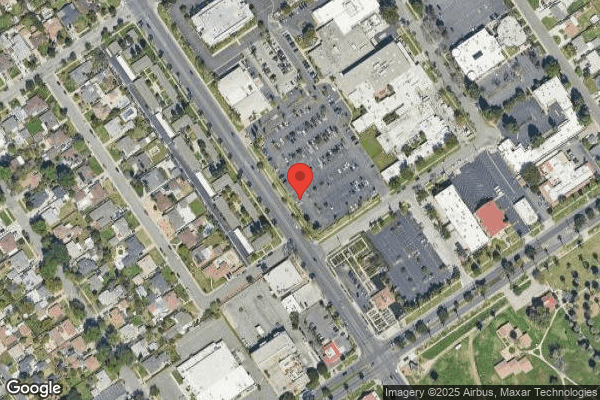
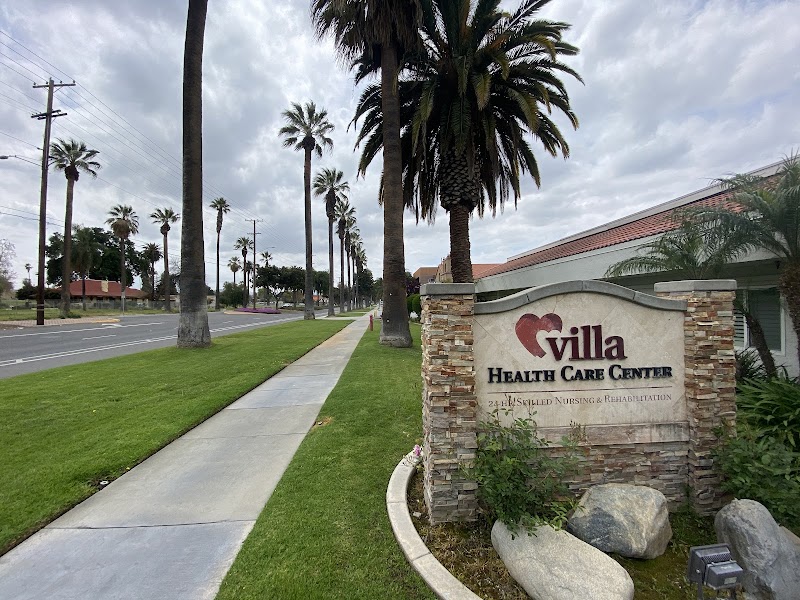
8965 MAGNOLIA AVENUE, RIVERSIDE, CA 92503 (951) 689-5788
For profit - Corporation 59 Beds NAHS Data: November 2025
Trust Grade
80/100
#254 of 1155 in CA
Last Inspection: June 2025

Inspected within the last 6 months. Data reflects current conditions.

Overview

Villa Health Care Center has a trust grade of B+, which means it is recommended and above average compared to other facilities. It ranks #254 out of 1,155 nursing homes in California, placing it in the top half of the state, and #9 out of 53 in Riverside County, indicating that only a few local options are better. The facility is improving, having reduced issues from 13 in 2024 to 7 in 2025. However, staffing is a concern with a 2/5 star rating and a high turnover rate of 55%, significantly above the state average of 38%. While there have been no fines, which is a positive sign, there have been specific incidents, such as failures in infection control practices during a COVID-19 outbreak and improper food safety procedures, which could pose risks to residents. Overall, while Villa Health Care Center shows strengths in its recommendations and improvements, families should be aware of staffing challenges and recent compliance issues.

Trust Score
B+
80/100
In California
#254/1155
Top 21%
Safety Record
Low Risk
No red flags
Inspections
Getting Better
13 → 7 violations
Staff Stability
⚠ Watch
55% turnover. Above average. Higher turnover means staff may not know residents' routines.
Penalties
✓ Good
No fines on record. Clean compliance history, better than most California facilities.
Skilled Nurses
⚠ Watch
Each resident gets only 25 minutes of Registered Nurse (RN) attention daily — below average for California. Fewer RN minutes means fewer trained eyes watching for problems.
Violations
⚠ Watch
36 deficiencies on record. Higher than average. Multiple issues found across inspections.
★★★★★
5.0
Overall Rating
★★☆☆☆
2.0
Staff Levels
★★★★★
5.0
Care Quality
★★★★☆
4.0
Inspection Score
Stable
2024: 13 issues
2025: 7 issues

The Good

  • 5-Star Quality Measures · Strong clinical quality outcomes
  • Full Sprinkler Coverage · Fire safety systems throughout facility
  • No fines on record

Facility shows strength in quality measures, fire safety.

The Bad

Staff Turnover: 55%

Near California avg (46%)

Higher turnover may affect care consistency

Chain: NAHS

Part of a multi-facility chain

Ask about local staffing decisions and management

The Ugly 36 deficiencies on record

Aug 2025 2 deficiencies
CONCERN (D) 📢 Someone Reported This

A family member, employee, or ombudsman was alarmed enough to file a formal complaint

Potential for Harm - no one hurt, but risky conditions existed

Quality of Care (Tag F0684)

Could have caused harm · This affected 1 resident

**NOTE- TERMS IN BRACKETS HAVE BEEN EDITED TO PROTECT CONFIDENTIALITY** Based on interview and record review, the facility failed to ensure for one of seven sampled residents (Resident 1), the medicat...

Read full inspector narrative →
**NOTE- TERMS IN BRACKETS HAVE BEEN EDITED TO PROTECT CONFIDENTIALITY** Based on interview and record review, the facility failed to ensure for one of seven sampled residents (Resident 1), the medication Eliquis (a prescription medication that functions as a blood thinner to prevent and treat various types of blood clots) was reconciled with the physician.This failure resulted in Resident 1 receiving four doses at twice the strength, placing her at risk for bleeding and other adverse effects.Findings: A review of Resident 1's medical records indicated Resident 1 was admitted on [DATE], and discharged on July 10, 2024, with diagnoses of infected amputated stump, renal dialysis, (treatment removes waste products and excess fluids from the bloodstream, while maintaining the proper chemical balance of the blood), diabetes mellitus type 2, (a chronic condition that affects the way the body uses sugar. The body either resists the effects of insulin - a hormone that regulates the movement of sugar into the cells - or doesn't produce enough insulin to maintain normal sugar levels), peripheral vascular disease (PVD - is a slow and progressive circulation disorder), and left and right below the knee amputations.A review of Resident 1's history and Physical dated July 1, 2024, indicated Resident 1 had the capacity to make decisions.On July 15, 2025, at 10:33 a.m., during an interview with the Licensed Vocational Nurse, (LVN), stated that when a resident returns from the General Acute Care Hospital (GACH), the medications list from the GACH is reviewed and sent to the physician for reconciliation. The LVN stated for residents prescribed Eliquis, signs and symptoms for bleeding were assessed and documented every shift. A review of Resident 1's Discharge Medication List from the hospital, dated June 29, 2024, indicated .Medication. Eliquis. 5MG Oral Tablet. How to take. TAKE 2.5 Milligrams ORAL TWICE A DAY. A review of Resident 1's Order Summary dated June 29, 2024, indicated .Eliquis Oral Tablet 5 MG (Apixaban [an anticoagulant]) Give 1 tablet by mouth two times a day for ANTICOAGULANT. and discontinued on July 1, 2024.A review of Resident 1's Order Summary dated July 1, 2024, at 11:53 p.m., indicated Communication Method: Phone.Order Summary: Eliquis Oral Tablet 5 MG (Apixaban) Give 1 tablet by mouth two times a day related to PERIPHERAL VASCULAR DISEASE.A review of Resident 1's Medication Administration Record indicated:-Dated June 2024, indicated Eliquis Oral Tablet 5 MG (Apixaban) Give 1 tablet by mouth two times a day for ANTICOAGULANT . -Dated July 2024, indicated .Eliquis Oral Tablet 5 MG (Apixaban) Give 1 tablet by mouth two times a day for ANTICOAGULANT .Further review of Resident 1's MAR for June and July 2024, indicated that on June 30 and July 1, 2024, Resident 1 received Eliquis 5 mg twice daily, rather than the intended 2.5 mg twice daily. On July 15, 2025, at 1:08 p.m., an interview and record review of Resident 1's Discharge Medication List dated June 29, 2024, MAR, and Order Summary were conducted with the Director of Nursing (DON). The DON stated the correct dose should have been Eliquis 2.5 MG two times a day. The DON stated Resident 1 received Eliquis 5 mg twice daily for a total of four doses before a telephone order confirmed Eliquis at 5 MG. A review of the facility's policy and procedure titled Reconciliation of Medications on Admission revised July 2024, indicated .1. Medication reconciliation is the process of comparing pre-discharge medications to post-discharge medications by creating an accurate list of both prescription and over the counter medications that includes the drug name, dosage, frequency, route, and indication for use for the purpose of preventing unintended changes or omissions at transition points in care. 3. Using an approved medication other, list all medications from the medication history, the discharge summary, and the previous MAR (if applicable) . 4. List the dose, route and frequency for all medications. 5. Review the list carefully to determine if there are discrepancies/conflicts.
CONCERN (D) 📢 Someone Reported This

A family member, employee, or ombudsman was alarmed enough to file a formal complaint

Potential for Harm - no one hurt, but risky conditions existed

Accident Prevention (Tag F0689)

Could have caused harm · This affected 1 resident

**NOTE- TERMS IN BRACKETS HAVE BEEN EDITED TO PROTECT CONFIDENTIALITY** Based on interview, and record review, the facility failed to follow policy and procedure for safe use of the Hoyer lift, (a por...

Read full inspector narrative →
**NOTE- TERMS IN BRACKETS HAVE BEEN EDITED TO PROTECT CONFIDENTIALITY** Based on interview, and record review, the facility failed to follow policy and procedure for safe use of the Hoyer lift, (a portable total patient lifting tool to assist in transferring patients in and out of bed), for one of seven sampled residents, (Resident 2). This failure had the potential to cause injury and resulted in Resident 2 feeling unsafe.Findings:A review of Resident 2's medical records indicated Resident 2 was admitted on [DATE], with diagnoses of orthopedic aftercare, left displaced trimalleolar fracture, (broken ankle bone that the pieces have moved apart, creating a gap), displaced comminuted fracture of shaft of right fibula, (the smaller bone in the lower leg is broken into multiple pieces, and these pieces have moved out of their normal alignment), fracture of manubrium, (broken breastbone), nondisplaced fracture of seventh cervical vertebra, (broken neck bone), multiple left and right rib fractures (broken rib bones), wedge compression fracture of third lumbar vertebra, (broken bone in the lower back), pneumothorax, (a collapsed lung), wedge compression fracture of first thoracic vertebra, (broken upper back bone), and bed sore of the left heel. A review of Resident 2's History and Physical dated July 14, 2025, indicated resident had capacity to make decisions.On July 14, 2025, at 2:48 p.m., an interview was conducted with Resident 2. Resident 2 stated she did not want to discuss the incident with the Hoyer lift again. Resident 2 stated it is in the records. On July 14, 2025, at 3:08 p.m., an interview was conducted with the Physical Therapist, (PT). The PT stated that on July 2, 2025, Resident 2 was non-weight bearing, and the Hoyer lift was required for out of bed transfers. On July 15, 2025, at 10:35 a.m., an interview was conducted with the Registered Nurse. The RN stated that on July 2, 2025, Resident 2 reported that Certified Nursing Assistant (CNA) used the Hoyer lift without a second staff member. The RN stated the strap slipped out of place, and Resident 2 fell onto the bed. The RN stated she assessed Resident 2 for injuries, and found none. The RN confirmed that the Hoyer lift requires at least two people. On July 15, 2025, at 11:12 a.m., an interview was conducted with CNA 1. CNA 1 stated on July 2, 2025, during her morning shift, CNA 2 requested her assistance with using the Hoyer lift for Resident 2's shower. CNA 1 stated that when she entered Resident 2's room, CNA 2 was lifting Resident 2 without assistance. CNA 1 stated, one of the straps snapped loose, and Resident 2 was lowered back onto her bed. CNA 1 stated, Resident 2 requested not to be lifted again, however, she observed CNA 2 lifted Resident 2 with the Hoyer lift again. CNA 1 stated that at least two staff members are required to use the Hoyer lift. On July 15, 2025, at 11:39 a.m., a telephone interview was conducted with CNA 2. CNA 2 stated, she was aware that two staff members are required to use the Hoyer lift. CNA 2 stated she started lifting Resident 2 with the Hoyer lift without CNA 1. CNA 2 stated one of the straps snapped out of place and she lowered Resident 2 onto the bed. On July 15, 2025, at 11:51 a.m., a telephone interview was conducted with the Director of Staff Development, (DSD). The DSD stated, CNA 1 reported the incident on July 2, 2025. The DSD stated, Resident 2 was upset and did not want CNA 2 to assist her in the future. The DSD stated, CNA 1 informed that CNA 2 had used the Hoyer lift by herself and Resident 2 was upset and did not want CNA 2 to assist her. The DSD stated that CNA 2 was given a verbal warning, and provided education that the Hoyer lift required two people to operate. A review of the facility's document titled Performance Improvement Plan dated July 2, 2025, indicated .Employee Name [name of CNA 2].Type of warning.verbal.Performance/Behavior to be Addressed.EMPLOYEE FAILED TO PERFORM 2 PERSON CARE DURING HOYER LIFT TRANSFER.A review of the facility's policy and procedure titled Lifting Machine, Using a Mechanical revised July 2024, indicated The purpose of this procedure is to establish the general principles of safe lifting using a mechanical lifting device.General Guidelines. 1. At least two (2) nursing assistants are needed to safely move a resident with a mechanical lift.2. Mechanical lifts may be used for tasks that require.e. Toileting or bathing.
Jun 2025 5 deficiencies
CONCERN (D)

Potential for Harm - no one hurt, but risky conditions existed

Deficiency F0760 (Tag F0760)

Could have caused harm · This affected 1 resident

Based on observations, interviews, and record review, the facility failed to ensure proper medication administration practices were followed when the licensed nurse did not observe the resident take t...

Read full inspector narrative →
Based on observations, interviews, and record review, the facility failed to ensure proper medication administration practices were followed when the licensed nurse did not observe the resident take the medication and left the medication at bedside for one of five residents (Resident 26). This failure had the potential for the resident to not consume the medication as ordered and experience adverse effects as a result of not consuming the medication. Findings: During a concurrent observation and interview on June 9, 2025, at 9:45 a.m. with Resident 26 in her room, one clear medication cup filled halfway with orange liquid was observed on top of Resident 26's bedside table. Resident 26 acknowledged the liquid was her medication. During a concurrent observation and interview on June 9, 2025, at 9:46 a.m. with Licensed Vocational Nurse (LVN) 1 inside Resident 26's room, LVN 1 verified the orange liquid medication at Resident 26's bedside was potassium chloride which was Resident 26's scheduled 9 a.m. medication. LVN 1 stated the medication should not have been left at the bedside and stated she should have observed Resident 26 take the medication. LVN 1 stated it was important to observe the resident take the medication to ensure the effectiveness of the medication for their health and safety. During an interview on June 12, 2025, at 10:21 a.m. with the Director of Nursing (DON), the DON stated nursing staff were expected to observe residents take their medications and medications should not be left at the bedside. The DON stated it was important to make sure the resident received the medication as ordered and to prevent any adverse effects related to not receiving the medication. A review of the facility's policy and procedure titled, Administering Oral Medications, dated September 2023, indicated, .remain with the resident until all medications have been taken .
CONCERN (D)

Potential for Harm - no one hurt, but risky conditions existed

Infection Control (Tag F0880)

Could have caused harm · This affected 1 resident

Based on observation, interview, and record review, the facility failed to ensure infection control practices were implemented when nursing staff did not clean and disinfect a shared blood pressure cu...

Read full inspector narrative →
Based on observation, interview, and record review, the facility failed to ensure infection control practices were implemented when nursing staff did not clean and disinfect a shared blood pressure cuff and stethoscope according to the disposable wipe manufacturer's specified contact time (the time the resident equipment was to remain wet to kill micro-organisms [germs]) for one of four residents reviewed for medication administration (Resident 31). This failure had the potential to expose vulnerable residents to cross-contamination and increased the risk of infection. Findings: During a medication pass observation on June 11, 2025, at 8:04 a.m., LVN 2 was observed wiping a shared manual blood pressure cuff and stethoscope with a germicidal disposable wipe. LVN 2 did not leave the blood pressure cuff and stethoscope visibly wet for at least two minutes, as required. In a concurrent interview with LVN 2, LVN 2 stated the equipment needed to remain wet for one minute. LVN 2 stated, the manufacturer's instructions from germicidal disposable wipe container indicated to leave wet for two minutes. LVN 2 stated she should have kept the equipment wet for two minutes. LVN 2 stated it was important to follow the manufacturer's instructions to effectively kill bacteria and prevent the spread of infection. During an interview on June 11, 2025, at 12:25 p.m. with the Infection Preventionist (IP), the IP stated the staff are expected to disinfect shared equipment, such as blood pressure cuffs and stethoscopes, after each use. The IP stated nursing staff should have followed the manufacturer's instructions and the resident shared equipment should have remained visibly wet for two minutes. The IP stated it was important to follow manufacturer's instructions to prevent the spread of infection. During an interview on June 12, 2025, at 10:14 a.m. with the Director of Nursing (DON), the DON stated the expectation was for nursing staff to follow the germicidal disposable wipe manufacturer's instructions regarding the recommended contact time. The DON stated it was important to follow the manufacturer's instructions to properly disinfect and prevent the spread of infection. A review of the facility's policy and procedure titled, Cleaning and Disinfection of Resident-Care Items and Equipment, dated September 2024, indicated, .reusable resident care equipment is decontaminated and/or sterilized between residents according to manufacturer's instructions . A review of the manufacturer's instructions for disinfecting time for the [brand name] Germicidal Disposable Wipes provided by the facility, indicated, .to disinfect .thoroughly wet surface .allow surface to remain wet for two (2) minutes .
CONCERN (E)

Potential for Harm - no one hurt, but risky conditions existed

Deficiency F0578 (Tag F0578)

Could have caused harm · This affected multiple residents

**NOTE- TERMS IN BRACKETS HAVE BEEN EDITED TO PROTECT CONFIDENTIALITY** 5. On June 10, 2025, at 11:41 a.m., an interview was conducted with Resident 37. Resident 37 stated she was not sure if she had ...

Read full inspector narrative →
**NOTE- TERMS IN BRACKETS HAVE BEEN EDITED TO PROTECT CONFIDENTIALITY** 5. On June 10, 2025, at 11:41 a.m., an interview was conducted with Resident 37. Resident 37 stated she was not sure if she had an AD and would like more information. A review of Resident 37's admission Record indicated Resident 37 was admitted to the facility on [DATE], with diagnoses which included dysphasia (difficulty to speak or understand speech) following cerebral infarction (stroke). A review of Resident 37's Advance Directive/POLST Acknowledgment Form, dated November 6, 2024, indicated, .I have not executed an Advance Directive for Health Care .I do not wish to do so at this time . A review of Resident 37's POLST, dated November 6, 2024, did not indicate Resident 37 had an AD. A review of the Social Services Assessment, dated May 6, 2025, indicated Resident 37 did not have an AD. A review of Resident 37's IDT Care conference, dated May 9, 2025, indicated Resident 37 did not have an AD. A review of Resident 37's MDS, dated May 12, 2025, indicated Resident 37 had a BIMS score of 13 (intact cognitive response). There was no documented evidence Resident 37 or RP were provided follow up information or education about the right to formulate an AD. On June 12, 2025, at 2:10 p.m., a concurrent interview and record review of Resident 37's Social Services Assessment and Care Conference forms was conducted with the SSD. The SSD stated residents in the facility were provided an acknowledgement form upon admission and if they had an AD, they would request a copy to be available in the facility. The SSD stated if they did not have one, they would provide a handout with information and provide education on how to formulate one. SSD stated if the resident did not wish to have an AD, a follow up with the resident or RP about AD would be conducted quarterly during a resident's care conference. The SSD stated there was no documentation which indicated Resident 37 and/or RP were provided follow up information during the care conference on May 9, 2025. The SSD stated if there was no AD on file there was a potential for the facility to not be able to honor their wishes for care. A review of the facility's policy and procedure titled, Advance Directives, revised January 2023, indicated, .the resident will be provided with written information concerning the right to refuse or accept .and to formulate an advance directive if he or she chooses to do so .prior to or upon admission of a resident, the social services director or designee will inquire of the resident, his/her family members and /or his or her legal representative, about the existence of any written advance directives .information about whether or not the resident has executed an advance directive shall be displayed prominently in the medical record .if the resident indicates that he or she has not established advance directive, the facility will offer assistance in establishing advance directives . Based on interview and record review, the facility failed to ensure, five of seven residents reviewed for Advance Directive (AD - written statement of a person's wishes regarding medical treatment) (Residents 26, 30, 34, 35, and 37) a copy of the AD was available and the resident or their resident representative (RP) had been provided follow up information regarding the formulation of an AD. These failures had the potential to result in the ADs for Residents 26, 30, 34, 35, and 37 not being readily accessible to staff and physicians, which could lead to the residents' wishes regarding medical treatment being unknown and ultimately not honored. Findings: 1. Resident 26's admission record was reviewed. Resident 26 was admitted to the facility on [DATE], with diagnosis which included chronic obstructive pulmonary disease (progressive lung disease that causes obstructed airflow making it hard to breath) and diabetes mellitus (abnormal blood glucose level). A review of the Advance Directive / Physician Orders for Life-Sustaining Treatment (POLST) Acknowledgment Form, dated April 14, 2023, indicated, .I have not executed an Advance Directive for Health Care .I do not wish to do so at this time . A review of Resident 26's Minimum Data Set (MDS - an assessment tool), dated April 26, 2025, indicated Resident 26 had Brief Interview of Mental Status (BIMS - a tool to assess cognitive function of an individual) score of 11 (moderate cognitive response). A review of Resident 26's IDT (Interdisciplinary Team - MDS Licensed Vocational Nurse, Social Service Director, Director of Rehab, Activities Director, and Certified Nurse Assistant) Care Conference, dated April 28, 2025, indicated, Resident 26 did not have an AD. There was no documented evidence Resident 26 or RP were provided follow up on the right to formulate an AD. On June 12, 2025, at 2 p.m., a concurrent interview and record review of Resident 26's IDT Care Conference form was conducted with the Social Services Director (SSD). The SSD stated residents in the facility were provided an acknowledgement form upon admission and if they had an AD, they would request a copy to be available in the facility. The SSD stated if they did not have one, they would provide a handout with information and provide education on how to formulate one. The SSD stated if the resident did not wish to have an AD, a follow up with the resident or RP about AD would be conducted quarterly during a resident's care conference. The SSD stated there was no documentation which indicated Resident 26 and/or RP were provided follow up information during the care conference on April 28, 2025. The SSD stated if there was no AD on file there was a potential for the facility to not be able to honor their wishes for care. 2. On June 9, 2025, at 9:59 a.m., an interview was conducted with Resident 30. Resident 30 stated she was unsure if she has an AD. Resident 30's admission record was reviewed. Resident 30 was admitted to the facility on [DATE], with diagnoses which included cerebral infarction (a type of stroke) without residual effects and dysphagia (difficulty in swallowing). A review of the Advance Directive / POLST Acknowledgment Form, dated October 16, 2024, indicated, .I have not executed an Advance Directive for Health Care .I do not wish to do so at this time . A review of Resident 30's POLST, dated October 16, 2024, did not indicate Resident 30 had an AD. A review of Resident 30's IDT (Interdisciplinary Team - MDS Licensed Vocational Nurse, Social Service Director, Director of Rehab, Activities Director and Certified Nurse Assistant) Care Conference, dated May 9, 2025, indicated, Resident 30 did not have an AD. A review of Resident 30's MDS, dated May 10, 2025, indicated Resident 30 had BIMS score of 11 (moderate cognitive response). There was no documented evidence Resident 30 or RP were provided follow up on the right to formulate an AD. On June 12, 2025, at 2:02 p.m., a concurrent interview and record review of Resident 30's IDT Care Conference form was conducted with the SSD. The SSD stated residents in the facility were provided an acknowledgement form upon admission and if they had an AD, they would request a copy to be available in the facility. The SSD stated if they did not have one, they would provide a handout with information and provide education on how to formulate one. The SSD stated if the resident did not wish to have an AD, a follow up with the resident or RP about AD would be conducted quarterly during a resident's care conference. The SSD stated there was no documentation which indicated Resident 30 and/or RP were provided follow up information during the care conference on May 9, 2025. The SSD stated if there was no AD on file there was a potential for the facility to not be able to honor their wishes for care. 3. On June 9, 2025, at 10:41 a.m., an interview was conducted with Resident 34. Resident 34 stated he was unsure if he has an AD. Resident 34's admission record was reviewed. Resident 34 was admitted to the facility on [DATE], with diagnoses which included hypertensive heart disease (heart problem caused by high blood pressure that's been going on for a long time) and major depressive disorder (persistent and intense feeling of sadness or loss of interest). A review of the Advance Directive / POLST Acknowledgment Form, dated June 30, 2024, indicated, .I have not executed an Advance Directive for Health Care .I would like more information .7/1/24 discussed and resources given . A review of Resident 34's POLST, dated June 30, 2024, did not indicate Resident 34 had an AD. A review of Resident 34's MDS, dated April 13, 2025, indicated Resident 34 had BIMS score of 13 (intact cognitive response). A review of the Social Services Assessment, dated April 14, 2025, indicated Resident 34 did not have an Advance Directive. A review of Resident 34's IDT (Interdisciplinary Team - MDS Licensed Vocational Nurse, Social Service Director, Director of Rehab, activities Director and Certified Nurse Assistant) Care Conference, dated April 15, 2025, indicated, Resident 34 did not have an AD. There was no documented evidence Resident 34 or RP were provided follow up on the right to formulate an AD. On June 12, 2025, at 2:04 p.m., a concurrent interview and record review of Resident 34's IDT Care Conference form was conducted with the SSD. The SSD stated residents in the facility were provided an acknowledgement form upon admission and if they had an AD, they would request a copy to be available in the facility. The SSD stated if they did not have one, they would provide a handout with information and provide education on how to formulate one. The SSD stated if the resident did not wish to have an AD, a follow up with the resident or RP about AD would be conducted quarterly during a resident's care conference. The SSD stated there was no documentation which indicated Resident 34 and/or RP were provided follow up information during the care conference on April 15, 2025. The SSD stated if there was no AD on file there was a potential for the facility to not be able to honor their wishes for care. 4. On June 9, 2025, at 11:10 a.m., an interview was conducted with Resident 35. Resident 35 stated was unsure if he has an AD. Resident 35's admission record was reviewed. Resident 35 was admitted to the facility on [DATE], with diagnoses which included hypertensive chronic kidney disease (high blood pressure has been damaging the kidneys over a long period of time) and moderate protein-calorie malnutrition (the body is not geeing enough protein and calories). A review of the Advance Directive / POLST Acknowledgment Form, dated September 27, 2024, indicated, .I have not executed an Advance Directive for Health Care .I do not wish to do so at this time . A review of Resident 35's POLST, dated November 15, 2024, did not indicate Resident 35 had an AD. A review of Resident 35's IDT (Interdisciplinary Team - MDS Licensed Vocational Nurse, Social Service Director, Director of Rehab, activities Director and Certified Nurse Assistant) Care Conference, dated April 15, 2025, indicated, Resident 35 did not have an AD. A review of Resident 35's MDS, dated April 17, 2025, indicated Resident 35 had BIMS score of 13 (intact cognitive response). A review of the Social Services Assessment, dated May 23, 2025, indicated Resident 35 did not have an Advance Directive. There was no documented evidence Resident 35 or RP were provided follow up on the right to formulate an AD. On June 12, 2025, at 2:06 p.m., a concurrent interview and record review of Resident 35's IDT Care Conference form was conducted with the SSD. The SSD stated residents in the facility were provided an acknowledgement form upon admission and if they had an AD, they would request a copy to be available in the facility. The SSD stated if they did not have one, they would provide a handout with information and provide education on how to formulate one. The SSD stated if the resident did not wish to have an AD, a follow up with the resident or RP about AD would be conducted quarterly during a resident's care conference. The SSD stated there was no documentation which indicated Resident 35 and/or RP were provided follow up information during the care conference on April 15, 2025. The SSD stated if there was no AD on file there was a potential for the facility to not be able to honor their wishes for care.
CONCERN (E)

Potential for Harm - no one hurt, but risky conditions existed

Food Safety (Tag F0812)

Could have caused harm · This affected multiple residents

Based on observation, interview and record review, the facility failed to store, prepare, and distribute food in accordance with professional standards for food service safety when five large plastic ...

Read full inspector narrative →
Based on observation, interview and record review, the facility failed to store, prepare, and distribute food in accordance with professional standards for food service safety when five large plastic basins used for ice and food items were stacked and stored wet. This failure had the potential to cause foodborne illnesses in 52 medically vulnerable resident population who consumed food in the facility. Findings: During the initial tour in the kitchen, an observation and concurrent interview with the Dietary Services Supervisor (DSS) on June 9, 2025, at 9:05 a.m. was conducted. Five large plastic basins were observed stacked wet and stored on a metal storage shelf. The DSS stated the plastic basins were wet and stacked on top of each other. He stated that all dishes, pots, and pans should be air-dried and completely dried before stored away in their designated area. During an interview on June 11, 2021, at 3:15 p.m., the Registered Dietitian (RD) stated all dishes, pots, pans, and utensils needed to be air-dried before stored away. She stated the moisture environment could induce bacteria or mold growth. According to FDA Federal Food Code 2022, Section 4-901.11 Equipment and Utensils, Air-Drying Required, after cleaning and sanitizing, equipment, and utensils .shall be air-dried .before contact with food .
MINOR (B)

Minor Issue - procedural, no safety impact

Deficiency F0912 (Tag F0912)

Minor procedural issue · This affected multiple residents

**NOTE- TERMS IN BRACKETS HAVE BEEN EDITED TO PROTECT CONFIDENTIALITY** Based on observation, interview, and record review, the facility failed to ensure multi-resident bedrooms provided the required ...

Read full inspector narrative →
**NOTE- TERMS IN BRACKETS HAVE BEEN EDITED TO PROTECT CONFIDENTIALITY** Based on observation, interview, and record review, the facility failed to ensure multi-resident bedrooms provided the required minimum of 80 sq ft (square feet - unit of measurement) per resident in 16 out of 22 rooms (Rooms 2, 4, 5, 6, 7, 8, 9, 10, 11, 12, 14, 21, 22, 23, 24, and 25). This failure had the potential to negatively affect the residents' quality of life. Findings: A review of facility document titled, SQUARE FOOTAGE STATISTICS FOR RESIDENT ROOMS, dated July 5, 2012, indicated a list of rooms with less than 80 sq ft per resident. The document indicated the room measurements, square footage, and the approved maximum capacity for each room: - room [ROOM NUMBER] (three-bed) - total of 220 sq ft (73.3 sq ft per resident) - room [ROOM NUMBER] (three-bed) - total of 216 sq ft (72 sq ft per resident) - room [ROOM NUMBER] (three-bed) - total of 218 sq ft (72.7 sq ft per resident) - room [ROOM NUMBER] (three-bed) - total of 218 sq ft (72.7 sq ft per resident) - room [ROOM NUMBER] (three-bed) - total of 216 sq ft (72 sq ft per resident) - room [ROOM NUMBER] (three-bed) - total of 218 sq ft (72.7 sq ft per resident) - room [ROOM NUMBER] (three-bed) - total of 216 sq ft (72 sq ft per resident) - room [ROOM NUMBER] (three-bed) - total of 216 sq ft (72 sq ft per resident) - room [ROOM NUMBER] (three-bed) - total of 218 sq ft (72.7 sq ft per resident) - room [ROOM NUMBER] (two-bed) - total of 144 sq ft (72 sq ft per resident) - room [ROOM NUMBER] (three-bed) - total of 218 sq ft (72.7 sq ft per resident) - room [ROOM NUMBER] (three-bed) - total of 215 sq ft (71.7 sq ft per resident) - room [ROOM NUMBER] (three-bed) - total of 215 sq ft (71.7 sq ft per resident) - room [ROOM NUMBER] (three-bed) - total of 218 sq ft (72.7 sq ft per resident) - room [ROOM NUMBER] (three-bed) - total of 216 sq ft (72 sq ft per resident) - room [ROOM NUMBER] (three-bed) - total of 221 sq ft (73.7 sq ft per resident) During the survey days from June 9, 2025, to June 12, 2025, observations were made of care provided in rooms with less than 80 sq ft per resident. The room sizes did not appear to limit the provision of care. No negative impacts on the health, safety, and comfort of the residents were observed. Residents interviewed stated they were comfortable in their rooms and had no concerns related to space or privacy. On June 12, 2025, at 12:55 p.m., an interview was conducted with the Director of Nursing (DON). The DON stated some facility rooms were smaller than than the required 80 sq ft per resident. The DON stated there have been no complaints or concerns from staff and residents regarding space and privacy. The DON further stated staff kept the rooms clutter free and did not leave any equipment in residents' rooms. On June 12, 2025, at 1:15 p.m., an interview was conducted with the Administrator (ADM). The ADM stated, per policy, the facility was required to provide at least 80 square feet per resident in multi-resident rooms. The ADM stated there had been no complaints regarding room size or barriers to care provision and that the facility was requesting a continued room waiver for Rooms 2, 4, 5, 6, 7, 8, 9, 10, 11, 12, 14, 21, 22, 23, 24, and 25. A review of facility's policy and procedure titled, Room Measurement, dated July 2023, indicated, . it is the policy of this facility to ensure that resident is comfortable with the living space in his/her room .the required room measurement is [sic] least 80 square feet per resident in multiple resident bedrooms and at least 100 square feet in single resident rooms .facility will assess an adverse effect on the resident's health and safety or if it impedes the ability of any resident in that room to attain his or her highest practicable well-being .resident will be offered for [sic] room change if the room size affects resident's comfort level .
Aug 2024 2 deficiencies
CONCERN (D) 📢 Someone Reported This

A family member, employee, or ombudsman was alarmed enough to file a formal complaint

Potential for Harm - no one hurt, but risky conditions existed

Report Alleged Abuse (Tag F0609)

Could have caused harm · This affected 1 resident

**NOTE- TERMS IN BRACKETS HAVE BEEN EDITED TO PROTECT CONFIDENTIALITY** Based on interview and record review, the facility failed to ensure an alleged physical abuse was reported to the California Dep...

Read full inspector narrative →
**NOTE- TERMS IN BRACKETS HAVE BEEN EDITED TO PROTECT CONFIDENTIALITY** Based on interview and record review, the facility failed to ensure an alleged physical abuse was reported to the California Department of Public Health (CDPH) and other officials immediately, but not later than 2 hours after the allegation was made. The facility was made aware of the alleged physical abuse of a facility staff to a resident on August 26, 2024. This failure had the potential to cause a delay in investigation of the alleged abuse and to expose residents in the facility to further abuse. Findings: On August 28, 2024, at 07:05 a.m., an unannounced visit was conducted at the facility to investigate an abuse allegation. On August 28, 2024, Resident 1 ' s record was reviewed. Resident 1 was admitted to the facility on [DATE], with Huntington ' s Disease (a progress disease and results in progressive, involuntary movements, thinking and psychiatric symptoms) and muscular weakness. A review of Resident 1's Minimum Data Set (MDS - an assessment tool) dated July 13,2024, indicated Resident 1 had a Brief Interview for Mental Status (BIMS - a cognitive screening tool) score of 05 (cognitively severely impaired). A review of Resident 1's progress notes dated August 26 and August 27, 2024, indicated no change in physical or behavioral well-being. A review of the progress notes and care plans did not indicate documentation and interventions related to the alleged physical abuse. On August 28, 2024, at 0730 a.m., during a concurrent observation and interview with Certified Nurse (CNA) 3, CNA 3 stated she has not witnessed any verbal or physical abuse of staff or residents in her four years working at the facility. CNA 3 further stated if she did witness any kind of abuse, she would make sure resident is safe and she would report the incident immediately to the licensed nurse. On August 28, 2024, at 07:37 a.m., during a concurrent observation and interview with Resident 2, the roommate of the Resident 1, the resident stated the staff have not verbally or physically mistreated him or any of the roommates. Resident 2 further stated he would have reported immediately because that would be important to him. On August 28, 2024, at 7:50 a.m., during an interview with Resident 1 with a Spanish interpreter, Resident 1 denied being slapped or hit by anyone, by shaking his head. On August 28, 2024, at 8:00 a.m., during a concurrent observation and interview with the RN Supervisor, the RN Supervisor stated she attended several in-services on ABUSE reporting, documentation, and procedures to follow. She stated if there were incidents of a resident to resident or a staff and resident altercations, she would make sure both parties are separated and assessed. In addition, she stated she would immediately notify Administration, the Director of Nursing, physicians, family, the Ombudsman, CDPH and sheriff. The RN Supervisor stated she would document and then update the care plan. On August 28, 2024, at 8:00 a.m., during an interview and concurrent chart review with the Director of Nursing (DON) in the DON ' s office, the DON stated she had the two student nurses and the Director of the Training facility on August 26, 2024, at approximately 1:00 p.m. expressed concerns of a witnessed physical abuse on Resident 1, who was slapped on the leg by CNA 1, when Resident 1 was being transferred to a shower chair. The DON further stated she immediately began an investigation of the alleged abuse, removed the CNA from work and interviewed CNA 1 and CNA 2 (assisting with the resident ' s transfer the time of the incident). The DON stated both the CNAs denied doing or seeing Resident 1 being slapped. CNA 1 explained the method of gentle tapping or patting the extremity to calm the resident ' s chorea movements and when the resident focused on the gentle tapping, the movements lessen. The DON stated CNA 1 was suspended pending investigation. The DON stated that the initial meeting with the students and the staff were also attended by the Social Services Director (SSD) and the Director of Staff Developement (DSD). The DON stated after the investigation of the incident, it was determined that there was a misunderstanding of the calming methods used and CNA 1 was allowed to return to work the next shift, though not to care for Resident 1. The DON further stated the alleged incident was not reported as it was found to be unsubstantiated. On August 28, 2024, at 11:05 a.m., an interview with the SSD to review incident and the meetings that were attended. She stated the student expressed concern of abuse when CNA 1 slapped the leg of Resident 1, and the student explained that Resident 1 was trying to hit and kick the CNA. The SSD stated CNA 2 did not see any slapping and explained the resident has continuous movements because of his disease. The SSD stated CNA 2 further explained CNA 1 was tapping on the resident ' s leg, in a rhythmic way, which usually calms the movements allowing resident to be transferred without injury. The SSD stated the Interdisciplinary Team met after the investigation to review and the team agreed it was unsubstantiated. On August 28, 2024, at 1:15 p.m., an interview with the DON to review and clarify the incident and the outcome of the investigation, the DON stated incident was not sent to CDPH as an investigation was completed in house. The DON stated there was no slapping incident but it was the usual intervention to calm Resident 1, by softly patting or tapping. The DON stated acknowledged the incident should have been reported, even if it was a suspected abuse. The DON also acknowledged even without injury the facility should have reported to CDPH, in accordance with their facility policy, even a suspicion must be reported immediately. A review of the facility ' s policy and procedure titled Abuse, Neglect, Exploitation or Misappropriation – Reporting and Investigating. Dated October 2023, indicated, allegations of abuse .are reported to local, state and federal agencies (as required by current regulations) .abuse, neglect .must be immediately reported .state licensing/certification agency .within two hours of any allegation involving abuse .
CONCERN (D) 📢 Someone Reported This

A family member, employee, or ombudsman was alarmed enough to file a formal complaint

Potential for Harm - no one hurt, but risky conditions existed

Deficiency F0657 (Tag F0657)

Could have caused harm · This affected 1 resident

**NOTE- TERMS IN BRACKETS HAVE BEEN EDITED TO PROTECT CONFIDENTIALITY** Based on interview, and record review, the facility failed to review and revise the care plan for one of five residents reviewed...

Read full inspector narrative →
**NOTE- TERMS IN BRACKETS HAVE BEEN EDITED TO PROTECT CONFIDENTIALITY** Based on interview, and record review, the facility failed to review and revise the care plan for one of five residents reviewed (Residents 1) based on the changing needs of the resident who has involuntary twitching and jerking movement related to a disease process. This failure had the potential to result in increased discomfort and possibility of injury to the resident. Findings: On August 28, 2024, at 7:05 a.m., an unannounced visit was conducted at the facility to investigate an abuse allegation. On August 28, 2024, Resident 1 ' s record was reviewed. Resident 1 was admitted to the facility on [DATE], with Huntington ' s Disease (an incurable neurodegenerative disease that is mostly inherited) and muscular weakness. A review of the Minimum Data Set (MDS - an assessment tool) dated July 13, 2024, indicated Resident 1 had a Brief Interview for Mental Status (BIMS - a cognitive screening tool) score of 05 (cognitively severely impaired). The care plan titled, The resident has an alteration in neurological status INVOLUNTARY TWITCHING/JERKING r/t disease process HUNTINGTON ' S CHOREA DZ(diagnosis) . dated 10/03/2022, was reviewed. The care plan goals and interventions were initiated on 10/03/2022. There was no documented evidence the care plan was periodically reviewed and updated to reflect the goals and objectives were met and interventions were effective addressing interventions to assist control resident ' s involuntary movements, related to Huntington ' s Chorea. On August 28, 2024, at 08:00 a.m., during an interview with Registered Nurse (RN) 1, RN 1 stated she was not aware of Resident 1's care plan being revised recently with new goals and interventions for Resident 1 ' s involuntary twitching and jerking related to Huntington ' s Chorea. On August 28, 2024, at 11:05 a.m., during an interview with the Social Services Director (SSD), the SSD stated CNA 1 had been caring for Resident 1 for long time and the method of rhythmic tapping on Resident 1 ' s extremity, seemed to cause movements to lessen. The SSD further stated CNA 2 explained CNA 1 was tapping on the resident ' s leg, in a rhythmic way which would usually calm the movements allowing resident to be transferred without injury. The SSD stated she was unaware if that intervention had been added to Resident 1 ' s care plan. On August 28, 2024, at 1:15 p.m., during a concurrent interview and record review with the Director of Nursing (DON), the DON stated the tapping and gentle patting was not included in Resident 1 ' s care plan as each nurse has different methods. The DON acknowledged the importance of including effective, safe interventions in care plans to allow for person-centered care.
Aug 2024 1 deficiency
CONCERN (D) 📢 Someone Reported This

A family member, employee, or ombudsman was alarmed enough to file a formal complaint

Potential for Harm - no one hurt, but risky conditions existed

Infection Control (Tag F0880)

Could have caused harm · This affected 1 resident

**NOTE- TERMS IN BRACKETS HAVE BEEN EDITED TO PROTECT CONFIDENTIALITY** Based on observation, interview and record review, the facility failed to ensure, for one of (Resident A) five residents, reside...

Read full inspector narrative →
**NOTE- TERMS IN BRACKETS HAVE BEEN EDITED TO PROTECT CONFIDENTIALITY** Based on observation, interview and record review, the facility failed to ensure, for one of (Resident A) five residents, residents with a multidrug- resistant organism (MDRO-bacteria and other microorganisms that have developed a resistance to one or more classes of antimicrobial drugs) was placed in a single room or cohorted with other residents with the same MDRO infection, according to the facility's policy and procedure. This failure had the potential to exposed Resident A's two susceptible roommates to acquiring an infection. Findings: On August 5, 2024, at 9 a.m., an unannounced visit was conducted at the facility for the investigations of three complaints. On August 5, 2024, at 10 a.m., two Certified Nursing Assistants (CNAs) were observed caring for a resident in bed one, wearing gloves. A sign outside the room, indicated, Contact Isolation (a set of precautions used in healthcare facilities to prevent the spread of germs from patients with illnesses that can be transmitted through direct or indirect contact). A cart was observed outside of the room, next to the doorway, containing personal protective equipments (PPE - equipment worn to minimize exposure to hazards that cause serious workplace injuries and illnesses). On August 5, 2024, at 10:05 a.m., an interview was conducted with the CNA. The CNA stated she did not know why the contact isolation sign was on the door. The CNA stated a contact isolation sign means we are to put on gloves, a gown, and sometimes a mask or shield before caring for a patient. The CNA stated the other staff member said she only needed to wear gloves. The CNA stated only bed three (Resident A) required contact isolation, the residents in bed one and two bed were okay. The CNA stated she did not know why bed three was placed on contact isolation. On August 5, 2024, at 10:10 a.m., an interview was conductedwith the Licensed Vocational Nurse (LVN). The LVN stated she was the charge nurse for Resident A, and Resident A had ESBL(extended spectrum beta-lactamase: a bacteria that is difficult to kill, because it is resistant to many antibiotics) in her urine. The LVN stated it was okay if Resident A stays in the room, Resident A did not need a private room, the ESBL was contained, and Resident A had a catheter (flexible tube inserted into the body) for draining her urine. The LVN stated she did not know when Resident A tested positive for ESBL and did not know if it was an active infection. A review of Resident A's record indicated Resident A was admitted to the facility on [DATE], with diagnoses which included a fractured left femur (broken upper leg), and dementia (a group of thinking and social symptoms, such as memory loss and judgement). Resident A's History and Physical, dated July 10, 2024, indicated Resident A did not have the ability to make decisions. Resident A's urinalysis laboratory result, dated July 30, 2024, indicated positive for ESBL. Resident A's Order Summary Report, included a physician's order, dated August 2, 2024, indicated, Contact Isolation related to ESBL in urine, every shift until August 8, 2024. Resident A's Progress Notes, dated August 3, 2024, at 3:32 a.m., indicated, .continues on contact isolation as ordered . On August 5, 2024, at 6:20 p.m., an interview was conducted with the Director of Nursing (DON). The DON stated Resident A was not provided a single room when the lab results for the urine test showed Resident A had ESBL of urine, because she had a foley catheter that was containing her urine. The DON stated Resident A was placed on contact isolation, and Resident A's roommates stayed in the room with her. The DON stated Resident A was not moved to a single private room. The DON stated Resident A should have been placed in a private room after Resident A's urine test showed she had ESBL. A review of the facility's policy titled Multidrug-Resistant Organisms, dated November 2023, indicated, .Appropriate precautions are taken when caring for individuals known or suspected to have infection with a multidrug-resistant organism .Multidrug-resistant organisms (MDROs) are bacteria and other microorganisms that have developed resistance to one or more classes of antimicrobial drugs. Infection means that the organism is present and is causing illness. Colonization means that the organism is present in or on the body but is not causing illness .strategies are adopted from the Centers for Disease Control and Prevention and provide current recommendations for MDRO prevention and control .recommendations are incorporated into the facility infection prevention and control processes as indicated .Make MDRO prevention/control an organizational priority .implement a multi-disciplinary process to monitor and improve staff adherence to recommended practices for standard and contact precautions .follow standard precautions in all situations .resident's clinical situation and facility resources in deciding whether to implement contact precautions .when single-resident rooms are available, assign priority for these rooms to residents with known or suspected MDRO colonization or infection .when single-resident rooms are not available, cohort residents with the same MDRO in the same room or resident-care area .implement contact precautions routinely for all residents colonized or infected with a target MDRO .
Apr 2024 5 deficiencies
CONCERN (D)

Potential for Harm - no one hurt, but risky conditions existed

Assessment Accuracy (Tag F0641)

Could have caused harm · This affected 1 resident

Based on record reviews, interviews, and facility document and policy review, the facility failed to ensure the accuracy of Minimum Data Set (MDS) assessments for 1 (Residents #37) of 5 sampled reside...

Read full inspector narrative →
Based on record reviews, interviews, and facility document and policy review, the facility failed to ensure the accuracy of Minimum Data Set (MDS) assessments for 1 (Residents #37) of 5 sampled residents reviewed for unnecessary medications and 1 (Resident #17) of 4 sampled residents reviewed for accidents. Specifically, the facility failed to ensure Resident #37's use of psychotropic medications and Resident #17's fall event was accurately coded on their MDS assessments. Findings included: A review of a facility policy titled Resident Assessments, revised in September 2023, revealed, 8. All persons who have completed any portion of the MDS resident assessment form must sign the document attesting to the accuracy of such information. 9. All resident assessments completed within the previous 15 months are maintained in the resident's active clinical record. The results of the assessments are used to develop, review, and revise the resident's comprehensive care plan. 1. A review of Resident #37's admission Record indicated the facility admitted the resident on 10/20/2023 with diagnoses that included alcoholic cirrhosis of the liver with ascites (abnormal fluid buildup in the abdominal cavity), mood disorder due to known physiological condition and anxiety disorder. A review of Resident #37's quarterly MDS, with an Assessment Reference Date (ARD) of 01/26/2024, revealed the resident had a Brief Interview for Mental Status (BIMS) score of 9, which indicated the resident had moderate cognitive impairment. The MDS revealed active diagnoses that included anxiety disorder, mood disorder due to known physiological condition, and alcoholic cirrhosis of the liver with ascites. Further review revealed the MDS was inaccurately coded to indicate the resident had taken an antipsychotic medication during the seven-day assessment period. The MDS did not include Resident #37's use of antianxiety or hypnotic medication. A review of Resident #37's care plan revealed a Focus area, initiated on 10/20/2023, that indicated the resident used antianxiety medications related to the diagnosis of anxiety disorder. The care plan revealed interventions included staff instructions to administer medication, lorazepam (an antianxiety medication), as ordered. Further review of Resident #37's care plan revealed a Focus area, initiated on 12/20/2023, that indicated the resident had a sleep pattern disturbance. The care plan revealed interventions included staff instructions to administer the medication Ambien (a hypnotic medication used for sleep) to promote sleep. A review of Resident #37's Order Summary Report for active orders as of 04/12/2024 revealed an order dated 12/20/2023 for Ambien 10 milligrams (mg) with instructions to give one tablet by mouth at bedtime and an order dated 12/18/2023 for lorazepam 2 mg with instructions to give one tablet by mouth at bedtime. The Order Summary Report revealed it did not include an order for an antipsychotic medication. A review of the January 2024 Medication Administration Record [MAR] for the timeframe from 01/01/2024 through 01/31/2024 revealed staff documented Resident #37 received Ambien 10 mg every night at 8:00 PM and received lorazepam 2 mg every night at 9:00 PM. The MAR revealed the medications were documented as administered during the quarterly MDS assessment period. The MAR revealed it did not include a transcription of an order for an antipsychotic medication. During an interview on 04/12/2024 at 10:17 AM, the MDS Coordinator stated she got the information for the MDS through interviews, record reviews of the MARs, and treatment administration records (TARs). She stated if the resident was taking the medication during the assessment period, then it should be captured on the MDS and if they were not taking the medication, then it should not be coded. During a follow-up interview on 04/12/2024 at 10:32 AM, the MDS Coordinator confirmed that Resident #37's MDS was coded incorrectly. During an interview on 04/12/2024 at 1:09 PM, the Director of Nursing (DON) stated Resident #37 was on an antipsychotic medication when the resident was admitted , but it had been discontinued. 2. A review of Resident #17's admission Record revealed the facility originally admitted the resident on 05/06/2019 and readmitted the resident on 10/03/2022. The admission Record revealed the resident had diagnoses that included hemiplegia (paralysis of one side of the body) and hemiparesis (weakness or partial paralysis of one side of the body) following non-traumatic intracerebral hemorrhage (blood pooling in the tissue of the brain) affecting the right dominant side, Huntington's disease, and cognitive communication deficit. A review of Resident #17's quarterly MDS, with an Assessment Reference Date (ARD) of 01/13/2024, revealed Resident #17 had a Brief Interview for Mental Status (BIMS) score of 5, which indicated the resident had severe cognitive impairment. Per the MDS, Resident #17 had no falls since admission. A review of Resident #17's IDT [Interdisciplinary Team] - Incident Review, dated 11/04/2023, indicated staff found Resident #17 on the floor next to the door of their room, and their bed was in the lowest position at the time. The document indicated that staff assessed the resident and discovered no injuries, assisted the resident back to bed, and applied a bed alarm and bilateral landing pads. During an interview on 04/12/2024 at 10:17 AM, the MDS Coordinator stated she reviewed the resident's medical record over the previous quarter when completing the MDS. The MDS Coordinator further stated that Resident #17's fall in November 2023 should have been captured on the 01/13/2024 assessment, but it was not.
CONCERN (D)

Potential for Harm - no one hurt, but risky conditions existed

Pressure Ulcer Prevention (Tag F0686)

Could have caused harm · This affected 1 resident

Based on observations, interviews, record review, and facility policy review, the facility failed to ensure pressure injury interventions ordered by the physician were implemented for 1 (Resident #12)...

Read full inspector narrative →
Based on observations, interviews, record review, and facility policy review, the facility failed to ensure pressure injury interventions ordered by the physician were implemented for 1 (Resident #12) of 1 sampled resident reviewed for pressure injury prevention. Findings included: A review of a facility policy titled, Prevention of Pressure Injuries, revised in September 2023, revealed, Select appropriate support surfaces based on the resident's risk factors, in accordance with current clinical practice. A review of an admission Record reveled the facility most recently admitted the resident on 06/19/2023 with diagnoses that included type two diabetes mellitus and hemiplegia (paralysis affecting one side of the body) and hemiparesis (weakness affecting one side of the body) following cerebral infarction (stroke). A review of a quarterly Minimum Data Set (MDS), with an Assessment Reference Date (ARD) of 03/23/2024, revealed Resident #12 had a Brief Interview for Mental Status (BIMS) score of 3, which indicated the resident had severe cognitive impairment. According to the MDS, the resident had no pressure ulcers or injuries at the time of the assessment but was at risk for the development of pressure ulcers or injuries, and treatment included a pressure-reducing device for their bed. A review of Resident #12's Care Plan revealed a Focus area, initiated on 06/19/2023, that indicated the resident was at risk for the development of skin breaks/pressure injury related to decreased mobility, poor safety awareness, and incontinence. A review of Resident #12's Order Summary Report, listing active orders as of 04/11/2024, revealed an order dated 06/19/2023 that directed staff to float the resident's heels off the bed with pillows every shift. An observation on 04/10/2024 at 10:43 AM revealed Resident #12 was in bed with the resident's heels lying against the mattress. An observation on 04/10/2024 at 2:17 PM revealed Resident #12 was in bed asleep. The resident's heels were not floated off the bed with pillows. A concurrent interview and observation with the Treatment Nurse on 04/11/2024 at 3:47 PM in Resident #12's room revealed the resident's heels were not being floated with a pillow as ordered. During a search of Resident #12's room, the Treatment Nurse located a pillow behind the resident's bed. Observation of the resident's heels with the Treatment Nurse revealed no skin breakdown. The Treatment Nurse stated she did not know how long the pillow had not been underneath the resident's heels. During an interview on 04/11/2024 at 4:04 PM, Licensed Vocational Nurse (LVN) #7 stated she had seen Resident #12 earlier in the shift; however, she did not know if the pillow was in place as ordered. During an interview on 04/12/2024 at 7:56 AM, Certified Nurse Aide (CNA) #9 stated a pillow should be placed under Resident #12's feet throughout the day. CNA #9 confirmed she had not seen the pillow underneath the heels of Resident #12. During an interview on 04/12/2024 at 1:39 PM, the Director of Nursing (DON) stated Resident #12 should have their heels offloaded, using a pillow and that the nurses should have been checking to ensure the pillow remained in place. During an interview on 04/12/2024 at 2:06 PM, the Administrator stated facility staff should follow the physician's orders.
CONCERN (D)

Potential for Harm - no one hurt, but risky conditions existed

Unnecessary Medications (Tag F0759)

Could have caused harm · This affected 1 resident

Based on observations, interviews, record review, and facility policy review, the facility failed to ensure the medication error rate was less than 5 percent (%). The facility had 2 medication errors ...

Read full inspector narrative →
Based on observations, interviews, record review, and facility policy review, the facility failed to ensure the medication error rate was less than 5 percent (%). The facility had 2 medication errors out of 36 opportunities, affecting 1 (Resident #19) of 9 residents reviewed during the medication administration task, resulting in a medication error rate of 5.56%. Findings included: A review of a facility policy titled, Administering Medications, revised in April 2023, revealed, 4. Medications are administered in accordance with prescriber orders, including any required time frame. The policy further indicated, 11. The following information is checked/verified for each resident prior to administering medications: a. Allergies to medications; and b. Vital signs, if necessary. A review of an admission Record revealed the facility admitted Resident #19 on 03/13/2020 with diagnoses that included hypertension (high blood pressure). A review of Resident #19's Order Summary Report, listing active orders as of 04/12/2024, revealed an order dated 11/29/2022 for amlodipine 5 milligrams (mg) with instructions to administer one tablet by mouth two times a day and to hold the medication if the resident's systolic blood pressure (maximum blood pressure during contraction of heart ventricles, the top number on a blood pressure reading) was less than 110 or their heart rate was less than 60 beats per minute. The Order Summary Report also reflected an order dated 10/30/2023 for MiraLAX powder (laxative) with instructions to give 17 grams by mouth two times a day mixed with 120 milliliters (mL) of water. Observations on 04/11/2024 at 4:21 PM revealed Licensed Vocational Nurse (LVN) #3 entered Resident #19's room and obtained their blood pressure and heart rate. The resident's heart rate was 57 beats per minute. LVN #3 then administered the resident's amlodipine, despite having a physician's order that specified to hold the medication if the resident's heart rate was less than 60 beats per minute. At 4:38 PM, LVN #3 administered the resident's MiraLAX powder with 120 mL of cranberry juice. The MiraLAX powder was not completely dissolved, and after the resident drank the juice, medication remained in the bottom of the cup. During an interview on 04/11/2024 at 4:56 PM, LVN #3 stated she should have held the amlodipine due to the resident's heart rate. LVN #3 stated Resident #19's heart rate was frequently in the 50s, so she thought it would be okay. LVN #3 also stated she should have ensured the MiraLAX powder was completely dissolved before administering it to the resident. LVN #3 said she noticed halfway through the resident drinking the MiraLAX, that it was not all mixed, and she did not know what to do at that point She stated by not mixing it thoroughly, the resident did not get the full dose of the medication. During an interview on 04/12/2024 at 1:09 PM, the Director of Nursing (DON) stated if a resident's vital signs were outside of parameters in which an order specified to hold a medication, then the nurse should hold the medication. During an interview on 04/12/2024 at 1:29 PM, the Administrator stated he expected medications to be given according to physician's orders and professional standards.
CONCERN (D)

Potential for Harm - no one hurt, but risky conditions existed

Deficiency F0760 (Tag F0760)

Could have caused harm · This affected 1 resident

Based on observation, interviews, record review, and facility policy review, the facility failed to ensure no significant medication errors occurred for 1 (Resident #19) of 9 residents reviewed during...

Read full inspector narrative →
Based on observation, interviews, record review, and facility policy review, the facility failed to ensure no significant medication errors occurred for 1 (Resident #19) of 9 residents reviewed during the medication administration task. Specifically, staff failed to hold Resident #19's amlodipine when the resident's heart rate was outside the parameters specified by the physician's order. Findings included: A review of a facility policy titled, Administering Medications, revised in April 2023, revealed, 4. Medications are administered in accordance with prescriber order, including any required time frame. The policy further indicated, 11. The following information is checked/verified for each resident prior to administering medications: a. Allergies to medications; and b. Vital signs, if necessary. A review of an admission Record revealed the facility admitted Resident #19 on 03/13/2020 with diagnoses that included hypertension (high blood pressure). A review of an annual Minimum Data Set (MDS), with an Assessment Reference Date (ARD) of 03/10/2024, revealed Resident #19 had a Brief Interview for Mental Status (BIMS) score of 15, which indicated the resident was cognitively intact. The MDS indicated Resident #19 had active diagnoses that included hypertension. A review of Resident #19's Care Plan revealed a Focus area, initiated on 03/13/2020, that indicated the resident was at risk for decreased cardiac output secondary to hypertension. Interventions directed staff to monitor the resident's blood pressure as ordered and notify the physician if out of designated parameters. A review of Resident #19's Order Summary Report, listing active orders as of 04/12/2024, revealed an order dated 11/29/2022 for amlodipine 5 milligrams (mg) with instructions to administer one tablet by mouth two times a day and to hold the medication if the resident's systolic blood pressure (maximum blood pressure during contraction of heart ventricles, the top number on a blood pressure reading) was less than 110 or their heart rate was less than 60 beats per minute. Observation on 04/11/2024 at 4:21 PM revealed Licensed Vocational Nurse (LVN) #3 entered Resident #19's room and obtained the resident's blood pressure and heart rate. The resident's heart rate was 57 beats per minute. LVN #3 then administered the resident's amlodipine, despite having a physician's order that specified to hold the medication if the resident's heart rate was less than 60 beats per minute. During an interview on 04/11/2024 at 4:56 PM, LVN #3 stated she should have held the amlodipine due to the resident's heart rate. LVN #3 stated Resident #19's heart rate was frequently in the 50s, so she thought it would be okay. A review of Resident #19's February 2024 Medication Administration Record (MAR) revealed documentation that indicated LVN #3 also administered amlodipine to the resident on 02/06/2024 at 5:00 PM with a documented heart rate of 56, on 02/26/2024 at 5:00 PM with a documented heart rate of 56, and on 02/27/2024 at 5:00 PM with a documented heart rate of 56. A review of Resident #19's April 2024 MAR revealed documentation that indicated LVN #3 also administered amlodipine to the resident on 04/03/2024 at 5:00 PM with a documented heart rate of 58. During an interview on 04/12/2024 at 3:48 PM, the Physician Assistant stated if amlodipine were given when the heart rate was less than 60 it could cause the heart rate to drop into the 40s and could be detrimental to the resident. He stated amlodipine was a cardiac medication, not just a blood pressure medication. He stated he had not been notified of the resident's heart rate being low and he stated the medication should not have been given if the heart rate was less than 60. During an interview on 04/12/2024 at 1:09 PM the Director of Nursing (DON) stated if a resident's vital signs were outside of parameters in which an order specified to hold a medication, then the nurse should hold the medication. During an interview on 04/12/2024 at 1:29 PM, the Administrator stated he expected medications to be given according to physician's orders and professional standards.
MINOR (B)

Minor Issue - procedural, no safety impact

Deficiency F0912 (Tag F0912)

Minor procedural issue · This affected multiple residents

**NOTE- TERMS IN BRACKETS HAVE BEEN EDITED TO PROTECT CONFIDENTIALITY** Based on observations, interviews, and facility document and policy review, the facility failed to ensure all multiple-resident ...

Read full inspector narrative →
**NOTE- TERMS IN BRACKETS HAVE BEEN EDITED TO PROTECT CONFIDENTIALITY** Based on observations, interviews, and facility document and policy review, the facility failed to ensure all multiple-resident bedrooms provided at least 80 square feet (sq ft) per resident for 16 (Rooms 2, 4, 5, 6, 7, 8, 9, 10, 11, 12, 14, 21, 22, 23, 24, and 25) of 22 resident rooms observed. Findings included: A review of a facility policy titled, Room measurement, revised in July 2023, revealed, Policy: it is the policy of this facility to ensure that resident is comfortable with the living space in his/her room. - The required room measurement is [sic] least 80 square feet per resident in multiple resident bedrooms, and at least 100 square feet in single resident rooms. The policy further indicated, - Facility will assess an adverse effect on the resident's health and safety or if it impedes the ability of any resident in that room to attain his or her highest practicable well-being. - Resident will be offered for [sic] room change if the room size affects resident's comfort level. A review of a form titled, Client Accommodations Analysis (CDPH 709), dated 04/12/2024, revealed a list of rooms with less than 80 sq ft per resident when at maximum capacity. The form reflected the following room measurements, square footage, and the approved maximum capacity for each room: - room [ROOM NUMBER] (three-bed approved capacity) - 11 ft 7 inches (in) by (X) 19 ft - 220 sq ft - 73.3 sq ft per resident at maximum capacity; - room [ROOM NUMBER] (three-bed approved capacity) - 11 ft 5 in X 19 ft - 216 sq ft - 72 sq ft per resident at maximum capacity; - room [ROOM NUMBER] (three-bed approved capacity) - 11 ft 6 in X 19 ft - 218 sq ft - 72.7 sq ft per resident at maximum capacity; - room [ROOM NUMBER] (three-bed approved capacity) - 11 ft 6 in X 19 ft - 218 sq ft - 72.7 sq ft per resident at maximum capacity; - room [ROOM NUMBER] (three-bed approved capacity) - 11 ft 5 in X 19 ft - 216 sq ft - 72 sq ft per resident at maximum capacity; - room [ROOM NUMBER] (three-bed approved capacity) - 11 ft 6 in X 19 ft - 218 sq ft - 72.7 sq ft per resident at maximum capacity; - room [ROOM NUMBER] (three-bed approved capacity) - 11 ft 5 in X 19 ft - 216 sq ft - 72 sq ft per resident at maximum capacity; - room [ROOM NUMBER] (three-bed approved capacity) - 11 ft 5 in X 19 ft - 216 sq ft - 72 sq ft per resident at maximum capacity; - room [ROOM NUMBER] (three-bed approved capacity) - 11 ft 6 in X 19 ft - 218 sq ft - 72.7 sq ft per resident at maximum capacity; - room [ROOM NUMBER] (two-bed approved capacity) - 11 ft X 13 ft 2 in - 144 sq ft - 72 sq ft per resident at maximum capacity; - room [ROOM NUMBER] (three-bed approved capacity) - 11 ft 6 in X 19 ft - 218 sq ft - 72.7 sq ft per resident at maximum capacity; - room [ROOM NUMBER] (three-bed approved capacity) - 11 ft 4 in X 19 ft - 215 sq ft - 71.7 sq ft per resident at maximum capacity; - room [ROOM NUMBER] (three-bed approved capacity) - 11 ft 4 in X 19 ft - 215 sq ft - 71.7 sq ft per resident at maximum capacity; - room [ROOM NUMBER] (three-bed approved capacity) - 11 ft 6 in X 19 ft - 218 sq ft - 72.7 sq ft per resident at maximum capacity; - room [ROOM NUMBER] (three-bed approved capacity) - 11 ft 5 in X 19 ft - 216 sq ft - 72 sq ft per resident at maximum capacity; and - room [ROOM NUMBER] (three-bed approved capacity) - 11 ft 8 in X 19 ft - 221 sq ft - 73.7 sq ft per resident at maximum capacity. During the recertification survey dated 04/10/2024 through 04/12/2024, the above listed rooms were observed at various times of the day. Observation of the care and services provided to the residents residing in the listed rooms was conducted. The room sizes was not observed to restrict the provision of care to the residents residing in Rooms 2, 4, 5, 6, 7, 8, 9, 10, 11, 12, 14, 21, 22, 23, 24, and 25. During the resident screening process on 04/10/2024 from 9:00 AM to 2:00 PM, the residents residing in Rooms 2, 4, 5, 6, 7, 8, 9, 10, 11, 12, 14, 21, 22, 23, 24, and 25 did not voice any problems or concerns related to their space or room size. There were no adverse effects identified that impacted the quality of life of the residents who resided in these rooms. During an interview on 04/12/2024 at 8:40 AM, Maintenance Staff #12 stated he measured the square footage of the residents' rooms the previous day and the smallest room was room [ROOM NUMBER] but said the room only had one resident assigned to it at the time of survey. During an interview on 04/12/2024 at 9:26 AM, the Director of Nursing (DON) stated the facility had a room size waiver for the rooms that had less than the required square footage. The DON further stated that even with smaller room sizes, she expected staff to respect resident privacy when providing care and to ensure each resident's comfort. During an interview on 04/12/2024 at 12:54 PM, the Administrator stated the facility had a room size waiver for the rooms that had less than the required square footage. The Administrator further stated staff were mindful of equipment needs and the comfort of the residents to ensure the size of their rooms did not impact their quality of life.
Apr 2024 1 deficiency
CONCERN (D) 📢 Someone Reported This

A family member, employee, or ombudsman was alarmed enough to file a formal complaint

Potential for Harm - no one hurt, but risky conditions existed

Transfer Notice (Tag F0623)

Could have caused harm · This affected 1 resident

**NOTE- TERMS IN BRACKETS HAVE BEEN EDITED TO PROTECT CONFIDENTIALITY** Based on interview and record review the facility failed to ensure a written Notice of Discharge (a notice informing the residen...

Read full inspector narrative →
**NOTE- TERMS IN BRACKETS HAVE BEEN EDITED TO PROTECT CONFIDENTIALITY** Based on interview and record review the facility failed to ensure a written Notice of Discharge (a notice informing the resident of their discharge date , and their rights to appeal the discharge) was provided to the resident and/or resident representative prior to the date of discharge from the facility, for two of three residents reviewed (Residents 1 and 2). In addition, the facility failed to ensure the State Long Term Care Ombudsman (Ombudsman) was provided a copy of the written Notice of Discharge for Residents 1 and 2. These failures could have resulted in Residents 1 and 2 not to be aware of their rights to appeal the discharge and the Ombudsman to not be able to inform the residents of their rights and options to appeal prior to the resident being discharged . Findings: On March 13, 2024, at 7:55 a.m., an unannounced visit was conducted with the facility to investigate a quality of care issue. 1. On March 13, 2024, a review of Resident 1's face sheet, indicate the resident was admitted to the facility on [DATE], with a fracture (broken bone) of the right pubis (pelvis). A review of Resident 1's physician's orders, dated December 12, 2023, at 2:41 p.m., indicated, .LCD (Last Covered Day) 12/14 (December 14, 2023), DC (Discharge) 12/15 (December 15, 2023) . A review of Resident 1's Discharge Instruction, effective date December 12, 2023, indicated Resident 1 signed the discharge instructions on December 15, 2023. A review of Resident 1's Notice of Transfer/Discharge, dated December 15, 2023, indicated Resident 1 signed the notice of transfer on December 15, 2023. A review of Resident 1's Transmission Log, dated December 15, 2023, at 11:15 a.m., indicated, a confirmation of resident's notice of discharge was successfully faxed to the Ombudsman's office on December 15, 2023 (the day of the resident's her discharge). 2. On March 13, 2024, a review of Resident 2's face sheet, indicated Resident 2 was admitted to the facility on [DATE], with a fracture of his left Ilium (upper pelvis). A review of Resident 2's physician's orders, dated February 28, 2024, indicated, .LCD 2/29 (February 29, 2024). May discharge 3/1 (March 01, 2024) . A review of Resident 2's Discharge Instructions, effective date February 29, 2024, indicated Resident 2 signed the discharge instructions on March 1, 2024 (date of discharge). A review of Resident 2's Notice of Discharge, dated February 29, 2024, indicated Resident 2 signed the notice of discharge on [DATE]. A review of Resident 2's, Transmission Log, dated, March 1, 2024, at 7:39 a.m., indicated a confirmation of Resident 2's notice of discharge was successfully faxed to the Ombudsman's office on March 1, 2024 (the day of resident's discharge). On March 13, 2024, at 3:27 p.m., an interview was conducted with the Social Services Discharge Planner (SSD). The SSD stated the process for facility-initiated discharges included the SSD presenting the resident with a NOMNC (Notification of Medicare Non-Coverage) informing them of their Last Day of Coverage (LCD), and their discharge date , three days prior to discharge. The SSD stated the resident would sign the discharge paperworks including the Notice of Transfer on the day of discharge. The SSD further stated the Ombudsman was being notified of the resident's discharge on the day of their discharge, after the resident leaves the facility. On March 13, 2024, at 4:19 p.m., an interview was conducted with the Nursing Supervisor (NS), who stated the process to discharge a resident included the NS filling out the notice of discharge, then having the resident sign the notice on the day, and at the time of their discharge. She stated a copy was then given to the resident, and an additional copy was to be faxed to the Ombudsman, after the resident discharges. The NS further stated the fax confirmation of the notice of discharge to the ombudsman would then be filed in the resident's medical records. On March 26, 2024, at 4:40 p.m., an interview was conducted with the Ombudsman, who verified, the facility has been faxing a copy of the resident's Notice of Discharge, on the day the resident was discharged , and not the day the residents were being notified of their discharge. On April 4, 2024, at 9:42 a.m., an interview was conducted with the Director of Nursing (DON). She stated the process for a facility-initiated discharge, included the resident signs, and was given a copy of their notice of discharge on the day they were notified of their pending discharge date by the SSD. The DON further stated a copy of the signed notice of discharge was then to be faxed to the Ombudsman's office that same day to notify the ombudsman. A review of the facility's undated policy and procedure titled, Transfer or Discharge Notice, indicated, .Except as specified below, the resident and his or her representative are given a thirty (30)-day advance written notice of an impending transfer or discharge from this facility. 4. Under the following circumstances, the notice is given as soon as it is practicable: e. The resident has not resided in the facility for thirty (30) days . 6. A copy of the notice is sent to the Office of the State Long-Term Care Ombudsman at the same time the notice of transfer or discharge is provided to the resident and representative .
Feb 2024 3 deficiencies
CONCERN (D) 📢 Someone Reported This

A family member, employee, or ombudsman was alarmed enough to file a formal complaint

Potential for Harm - no one hurt, but risky conditions existed

Laboratory Services (Tag F0770)

Could have caused harm · This affected 1 resident

**NOTE- TERMS IN BRACKETS HAVE BEEN EDITED TO PROTECT CONFIDENTIALITY** Based on interview and record review, the facility failed to ensure laboratory services were provided as ordered by the physicia...

Read full inspector narrative →
**NOTE- TERMS IN BRACKETS HAVE BEEN EDITED TO PROTECT CONFIDENTIALITY** Based on interview and record review, the facility failed to ensure laboratory services were provided as ordered by the physician, for one of three sampled residents (Resident 1). This failure had the potential to delay the care and treatment for Resident 1. Findings: On February 1, 2024, at 11:14 a.m., during an interview with Resident 1's representative (RP), she stated the facility failed to include the resident's laboratory results the physician needed for the appointment. She stated the physician had his office contact the facility and they waited for 20 minutes or so for the results to be faxed over. She stated the facility did not fax the laboratory results, and the physician was upset and told them the visit was a waste because he could not evaluate the effectiveness of the resident's medications on his one kidney. On February 1, 2024, Resident 1's record was reviewed. A review of Resident 1's admission record indicated the resident was admitted to the facility on [DATE], with diagnoses which included congestive heart failure (the heart not able to pump blood efficiently), hypertension (high blood pressure), chronic renal disease (kidney disease), and diabetes (abnormal blood sugar). A review of Resident 1's Progress Notes, dated January 9, 2024, at 1:02 p.m., indicated, .(nephrologist [physician treating kidney diseases] name) called to schedule patient for 1/17 (January 17, 2024) at 1:00pm (p.m.) . labs ordered CMP (complete metabolic panel- measures electrolytes), serum or plasma (blood) (nurse aware) . A review of Resident 1's Progress Notes, dated January 11, 2024, at 6:17 p.m., indicated, .RECEIVED ORDER FOR LABS: CBC (complete blood count- measures number of various blood cells), CMP, and HGBA1C (hemoglobin A1C - measures average blood sugar levels), ON 1/15/2024 (January 15, 2024) . On February 5, 2024, at 11:18 a.m., during an interview with the Laboratory Receptionist (LR), she stated the laboratory was closed on January 15, 2024. She stated the university laboratory recognized all state and national holidays and did not conduct laboratory services or blood draw on the holidays. On February 21, 2024, at 12:18 p.m., during an interview with the Director of Nursing (DON), she stated Resident 1's labs were ordered January 15, 2024, but was not done by the lab. She stated the labs were reordered for January 18, 2024. She stated the lab did not show up to draw the resident's labs. On February 22, 2024, at 9:16 a.m., during a concurrent interview and record review with Licensed Vocational Nurse (LVN) 1, she stated the facility's practice for laboratory orders are to first obtain an order for laboratory draw. She stated the facility puts the orders into the contracted laboratory services portal. She stated the laboratory contractor would come into the facility every Monday through Friday to draw the lab samples. She stated the laboratory results were to be faxed to the facility or the facility can access the results via the laboratory contractor's portal. She stated the facility would communicate the laboratory values to the physician and resident representtive regardless of whether the results are normal or abnormal. She stated a progress note was to be created for the notifications to the physician and resident representative. She stated Resident 1 had a physician order for a laboratory draw on January 15, 2024. She stated the resident's labs were collected and resulted on January 18, 2024. She confirmed the resident had no results for January 15, 2024. She stated the facility would send the most recent lab results with resident's doctor appointments. A review of Resident 1's progress notes indicated there was no documented evidence the physician was notified of the laboratory orders scheduled on January 15, 2024 was not completed as ordered. On February 29, 2024, at 11:35 a.m., during an interview with the DON, she stated Resident 1's laboratory draw was ordered for January 15, 2024, but was not completed on January 15, 2024. She stated the facility was made aware Resident 1's laboratory tests were not done on January 15, 2024, after the physician's office notified the facility during his appointment on January 17, 2024. She stated the facility's practice for ensuring laboratory tests were to print out the list of laboratory tests from the laboratory contractor's portal daily. She stated it will indicate on the portal if the test was not done. She stated the portal was checked prior to the appointment and Resident 1 was not on the list. She stated sometimes the laboratory contractor will discontinue an order without notifying the facility. She could not state why the licensed nurses did not relay to the physician the laboratory tests were not done. She stated the lab was closed for the January 15, 2024 (holiday) and should have informed the facility that the laboratory test could be done the following day. She stated the ordered laboratory test for Resident 1 should have been done the following working day. She stated there was some missed communication between the facility's laboratory contractor and the facility. A review of the facility's policy and procedure titled, Lab order and Diagnostic Test Results, revised November 2022, indicated, .The staff will process test requisitions and arrange for test .
CONCERN (D) 📢 Someone Reported This

A family member, employee, or ombudsman was alarmed enough to file a formal complaint

Potential for Harm - no one hurt, but risky conditions existed

Deficiency F0885 (Tag F0885)

Could have caused harm · This affected 1 resident

**NOTE- TERMS IN BRACKETS HAVE BEEN EDITED TO PROTECT CONFIDENTIALITY** Based on interview and record review, the facility failed to ensure the residents and resident representatives were notified tim...

Read full inspector narrative →
**NOTE- TERMS IN BRACKETS HAVE BEEN EDITED TO PROTECT CONFIDENTIALITY** Based on interview and record review, the facility failed to ensure the residents and resident representatives were notified timely of an outbreak of COVID-19 in the facility in accordance with the facility's policy and procedure. This failure resulted in residents and their representatives not informed of the resident's status and placed the residents and representatives at risk for contracting the communicable diseases. Findings: On January 30, 2024, a review of Resident 1's admission record indicated the resident was admitted to the facility on [DATE], with diagnoses which included congestive heart failure (the heart not able to pump blood efficiently), hypertension, chronic renal disease, and diabetes mellitus (abnormal blood). The record further indicated the resident ' s family member as the resident ' s representative/emergency contact. On January 30, 2024, at 1:55 p.m., during an interview with the Infection Preventionist (IP), she stated the facility had one symptomatic resident tested positive for COVID-19 on January 19, 2024. She further stated an employee of the facility tested positive for COVID-19 on January 20, 2024. A review of the facility's Infection Control Surveillance form for January 2024 indicated Resident 1 tested positive for COVID-19 on January 19, 2024. On February 1, 2024, at 2:47 p.m., during a concurrent interview and record review with the Social Services (SS), she stated the facility notifies resident and resident representatives via telephone. The SS presented a facility census with the date of January 24, 2024 (5 days after the first case was identified) written on it with check marks or notes written next to resident ' s names. She stated she notified the residents and representatives on the list on the date indicated on the census. On February 1, 2024, at 4:03 p.m., during an interview with the Director of Nursing (DON), she stated COVID-19 cases are reported right away, same day if possible. On February 6, 2024, at 10:41 a.m., during an interview with Resident 1's representative, she stated she was not notified about the facility's COVID outbreak. She stated she did not receive a voicemail from the facility. She stated visited her father in the facility and the resident informed her there was no activities being held anymore and residents were to stay in their rooms. She stated her father could not state why the activities were not being held but was told to wear a mask. She confirmed she had received several notifications from the facility previously regarding her father's health status. She stated she called the facility to confirm the COVID-19 outbreak. On February 6, 2024, at 4:30 p.m., during an interview with the DON, she stated resident ' s representative was to be notified as soon as possible within 24 hours when the facility have COVID outbreak. The DON provided a document with a list of notifications to resident ' s representative dated January 21, 2024. The DON stated the notifications to the resident ' s representative regarding COVID outbreak were not done within 24 hours of identification of the outbreak. A review of the facility's COVID-19 Facility Mitigation Management Plan revised October 2023 indicated, Facility designates social service staff to communicate with residents and family members in 24 hours about COVID outbreak in facility.
CONCERN (E) 📢 Someone Reported This

A family member, employee, or ombudsman was alarmed enough to file a formal complaint

Potential for Harm - no one hurt, but risky conditions existed

Infection Control (Tag F0880)

Could have caused harm · This affected multiple residents

**NOTE- TERMS IN BRACKETS HAVE BEEN EDITED TO PROTECT CONFIDENTIALITY** Based on observation, interview, and record review, the facility failed to ensure infection control practices were implemented w...

Read full inspector narrative →
**NOTE- TERMS IN BRACKETS HAVE BEEN EDITED TO PROTECT CONFIDENTIALITY** Based on observation, interview, and record review, the facility failed to ensure infection control practices were implemented when: 1. The facility failed to notify the California Department of Public Health (CDPH) of an outbreak of COVID-19 (a contagious respiratory infection) and respiratory synctial virus infection (RSV - a contagious respiratory infection) according to the facility's policy and procedure and CDPH guidelines; 2. The facility staff failed to wear the appropriate personal protective equipment (PPE - equipment used to prevent or minimize exposure to infections) while providing care to a COVID-19 positive resident, in accordance with the facility's policy and procedure and Centers for Disease Control and Prevention (CDC) guidelines; and 3. A licensed nurse reported to work without testing for COVID-19 after exposure to COVID-19 positive residents. The licensed nurse developed COVID-19 symptoms and was tested positive for COVID-19. In addition, the facility did not conduct active screening for COVID-19 symptoms among facility staff. These failures had a potential for the transmission of COVID-19 and RSV among residents and facility staff. Findings: 1. On January 30, 2024, at 10:35 a.m., during an interview with the Administrator (ADM), she stated the facility had COVID-19 residents in a designated area of the facility. On January 30, 2024, at 10:40 a.m., during a tour of the facility, multiple rooms were observed with droplet precautions signs posted outside rooms. A review of the facility's census, dated January 29, 2024, indicated location of covid positive residents and the last day of transmission-based precautions for the residents. The census indicated 8 residents total noted to be COVID-19 positive during the initial tour. A review of the facility's document titled, [Facility] Infection Control Surveillance indicated the following: - The facility's first positive case of COVID-19 was identified on January 19, 2024, with subsequent cases identified on January 20, 23 & 24, 2024. (a total of 8 cases); and - The facility's first positive case of RSV was identified on January 23, 2024, and subsequent cases were identified on January 26 (72 hour later) & 28, 2024 (a total of 4 cases). On January 30, 2024, at 1:55 p.m., during an interview with the Infection Preventionist (IP), she stated the facility's COVID outbreak occurred on January 19, 2024, when a symptomatic resident tested positive for COVID. On February 1, 2024, at 3:30 p.m., during an interview with the IP, she confirmed the facility had RSV positive residents. She stated the first cases of RSV was on January 23, 2024. She stated the RSV outbreak was reported to CDPH on February 1, 2024 (nine days after the first case of RSV). On February 6, 2024, at 11:50 a.m., during a concurrent interview and record review with the IP, she stated she refers to the state's All Facilities Letter to determine what diseases were reportable to authorities. She could not state what was the facility's policy regarding reporting. She stated the facility's first COVID-19 positive resident was identified on January 19, 2024. She stated the case was reported to CDPH on January 22, 2024. She stated she should report outbreaks within 24 hours or the following business day. On February 7, 2024, at 4:30 p.m., during an interview with the Director of Nursing (DON), She stated the facility would report COVID outbreak to the different agencies within 24 hours from the time an outbreak was determined. The DON stated the facility's first case of COVID-19 occurred on January 19, 2024 and the outbreak was reported to CDPH on January 22, 2024. She stated the facility did not report timely the COVID outbreak. The DON stated the facility would report RSV outbreak when there was three confirmed cases of RSV. Reviewed the facility's line list with the DON indicating the facility's first case of RSV was identified on January 23, 2024, and a second case was identified by line list on January 26, 2024. Confirmed with the DON the RSV cases were reported to the department on February 1, 2024. The DON stated the facility's reporting was not in-line with reporting guidelines. A review of the document titled, Recommendations for Prevention and Control of COVID-19, Influenza, and other Respiratory Viral Infections in California Skilled Nursing Facilities-2023-24, dated December 2023, indicated an outbreak for Other non-influenza, non-COVID-19 respiratory viruses is at least one case of a laboratory-confirmed respiratory pathogen, other than influenza or COVID-19 .As soon as the criteria for an outbreak are met .report to [the department] district office . A review of the facility's policy and procedure titled, Unusual Occurrence Reporting, revised December 2022, indicated, .Our facility will report the following events to appropriate agencies .An outbreak of any communicable disease .Unusual occurrences shall be reported via telephone to appropriate agencies as required by current law and/or regulations within twenty-four (24) hours of such incident or as otherwise required by federal and state regulations . 2. On January 30, 2024, during a review of the facility's census, dated January 29, 2024, indicated eight (8) residents were positive for COVID-19. On January 30, 2024, at 10:49 a.m., rooms [ROOM NUMBER] were observed to have signs outside the rooms which indicated droplet precaution. The sign indicated for the staff to perform hand hygiene, use a gown, wear N95 (a facepiece respirator that filters 95% of airborne particles), gloves, and eye protection. Isolation carts were observed outside of each room fully stocked with masks, face shields, & gowns. On January 30, 2024, at 10:52 a.m., during a concurrent observation and interview with Certified Nursing Assistant (CNA) 1 was observed in room [ROOM NUMBER] wearing an isolation gown and N95 mask without a face shield provided care to the resident. In a concurrent interview with CNA 1, she stated she was not wearing the required PPE when she provided care to the COVID 19 positive resident. She stated she should be wearing a face shield when she provided care to COVID-19 positive resident. On January 30, 2024, at 1:55 p.m., during an interview with the Infection Preventionist (IP), she stated the staff should wear an N95 mask, face shield, gown, and gloves when providing care to COVID-19 residents. She stated the staff working in the COVI-19 positive resident's rooms should wear face shields as part of the required PPE. She stated a staff without a face shield was not compliant with the facility's policy and procedure. On February 7, 2024, at 4:30 p.m., during an interview with the Director of Nursing (DON), she stated the PPE required to be worn in a COVID positive room were N95 masks, gowns, face shields, and gloves. She stated the CNA did not use the required PPE in accordance with the facility's policy and procedure during provision of care of COVID-19 positive residents. A review of the facility's policy and procedure titled, Isolation - Categories of Transmission - Based Precautions, revised September 2023 indicated, .When a resident is placed on transmission-based precautions, appropriate notification is placed on the room entrance door and on the front of the chart .The signage informs the staff of the type of CDC (Centers for Disease Control and Prevention) precaution(s), instructions for PPE, and/or instructions to see a nurse before entering the room .Gloves, gown and goggles should be worn if there is risk of spraying respiratory secretions . According to the web article published by CDC titled, Interim Infection Prevention and Control Recommendations for Healthcare Personnel During the Coronavirus Disease 2019 (COVID - 19) Pandemic, updated May 8, 2023, indicated, .Personal Protective Equipment .HCP (Healthcare Personnel) who enter the room of a patient with suspected or confirmed SARS-CoV-2 infection should adhere to Standard Precautions and use a NIOSH Approved particulate respirator with N95 filters or higher, gown, gloves, and eye protection (i.e. goggles or a face shield that covers the front and sides of the face . 3. On January 30, 2024, at 11:01 a.m., during an interview with Certified Nursing Assistant (CNA) 2, she stated there is no screening for employees reporting to work and the facility does not routinely check the staff's temperature. She stated she has not been at work sick nor became sick at work. She stated if she felt ill, she would call off. On January 30, 2024, at 1:55 p.m., during an interview with the Infection Preventionist (IP), she stated the facility's COVID outbreak occurred on January 19, 2024. She stated a symptomatic resident tested positive for COVID. She stated on January 20, 2024, an employee tested positive. She stated she tested all exposed staff and residents. She stated if an employee was symptomatic with COVID, the staff come to the facility to conduct a COVID test. She stated employees check their temperatures when they arrive to work if exposed or symptomatic. She stated there was not routine screening for employees. She stated if the employee feels ill, the employee will be screened. On January 30, 2024, at 4:40 p.m., during an interview with the IP, she stated the employee who tested positive on January 20, 2024, reported to work and was notified the previous evening of exposure to a COVID positive resident. She stated the employee was supposed to test for COVID prior to starting her shift. She stated the employee developed symptoms into her shift complaining of a sore throat. She stated the employee tested positive on January 20, 2024, at around 1:30 p.m. (seven hours into the shift). She stated the employee was counseled about not testing immediately after exposure. She stated the facility's practice for employees to test on days 1, 3, & 5. She stated staff are not to report to work if ill. On February 7, 2024, at 4:30 p.m., during an interview with the Director of Nursing (DON), she stated the facility's practice was to encourage the employees to stay home if they were sick. She stated she would send the employee home if an employee reported to work ill. She stated the employee should not have come to work sick. A review of the Licensed Nurse's (LVN) 1 COVID test result, dated January 20, 2024, at 1:30 p.m., indicated the employee tested positive for COVID-19. A review of an employee screening form indicated the facility began conducting active screening for employees on January 31, 2024 (11 days after the onset of the facility's COVID outbreak). A review of the document titled, Recommendations for Prevention and Control of COVID-19, Influenza, and other Respiratory Viral Infections in California Skilled Nursing Facilities-2023-24, dated December 2023, indicated, .During periods of increased community transmission of respiratory viruses and in the event of an outbreak, institute active symptom screening for HCP (healthcare personnel) upon reporting to work . A review of the facility's policy and procedure titled, Sick leave policy, revised October 2022, indicated, .Employee who are tested positive for COVID will not allow to work until at least 10 days have passed since symptoms first appeared and symptoms have been resolved without retesting, minimal 5 days have passed with negative testing and employee is asymptomatic . According to the web article published by CDC titled, Interim Infection Prevention and Control Recommendations for Healthcare Personnel During the Coronavirus Disease 2019 (COVID - 19) Pandemic, updated May 8, 2023, indicated, .Perform testing for all residents and HCP identified as close contacts or on the affected unit(s) .Testing is recommended immediately (but not later than 24 hours after exposure) .
Feb 2024 1 deficiency
CONCERN (D) 📢 Someone Reported This

A family member, employee, or ombudsman was alarmed enough to file a formal complaint

Potential for Harm - no one hurt, but risky conditions existed

Deficiency F0624 (Tag F0624)

Could have caused harm · This affected 1 resident

**NOTE- TERMS IN BRACKETS HAVE BEEN EDITED TO PROTECT CONFIDENTIALITY** Based on interview and record review, the facility failed to ensure a safe discharge was provided for one of three sampled resid...

Read full inspector narrative →
**NOTE- TERMS IN BRACKETS HAVE BEEN EDITED TO PROTECT CONFIDENTIALITY** Based on interview and record review, the facility failed to ensure a safe discharge was provided for one of three sampled residents (Resident 1) when, there was no documented evidence that options for alternative living and resources for home care services were provided upon discharge. This failure had the potential for Resident 1 to not have the care and assistance needed at home, (which placed Resident 1 at risk for not doing ADL's (activities of daily living includes bathing or showering, dressing, getting in and out of bed or a chair, walking, using the toilet and eating) and increased the risk for Resident 1 to be transferred to the general acute care hospital. Findings: On January 3, 2024, at 8:18 a.m., an unannounced visit was conducted at the facility to investigate a complaint on admission, transfer, and discharge rights issue. A review of Resident 1's admission record indicated Resident 1 was admitted to the facility on [DATE], with diagnoses which included unspecified fracture (break in continuity) of sacrum (a triangular bone in the lower back), degenerative disease (loss of cushioning between the spine) of nervous system, chronic obstructive pulmonary disease (condition involving airways and difficulty breathing) and difficulty walking. A review of Resident 1's history and physical dated December 1, 2023, indicated resident had the capacity to understand and make decisions. A review of Resident 1's Minimum Data Set (MDS- a standardized comprehensive assessment and care planning tool) section GG (which indicates functional abilities and goals) dated December 19, 2023, indicated Resident 1 needed moderate to maximum assistance to do her ADLs. A review of Resident 1's medical record titled, Physical Therapy Discharge Summary, dates of service November 29, 2023, to December 14, 2023, under Functional Skills Assessment indicated, Resident 1 needed moderate assistance in bed mobility (ability to move around in bed), maximum assistance in transfers (safe movement of a person from one surface to another) and maximum assistance in ambulation at level surfaces. A review of Resident 1's medical record titled, Occupational Therapy (treatment to improve skills needed to live life as independently as possible) Discharge Summary, dates of service November 29, 2023, to December 14, 2023, under Functional Skills/Outcome indicated Resident 1 needed assistance in feeding, hygiene/grooming, moderate assistance in bathing and toileting and maximum assistance in lower body dressing. A review of Resident 1's Discharge Instructions dated December 13, 2023, indicated there was no documented evidence a telephone number was listed and/or provided by the facility to Resident 1 for home health services for the ordered PT and RN services. A review of Resident 1's physician orders dated December 15, 2023, indicated .discharge 12/15 home with home health/rn (Registered Nurse-RN) safety eval (evaluation), pt (Physical Therapy-treatment of disease or injury by physical methods such as massage, exercise and heat treatment) eval and treat as indicated, DME (durable medical equipment): wheelchair. A review of Resident 1's medical record titled, Notice of Transfer/Discharge, dated December 15, 2023, indicated .transfer/discharge to home . On January 3, 2024, at 2:43 p.m., during an interview with the Social Service Designee (SSD) and Case Manager (CM) 1, the SSD stated, it was not necessary for a resident to leave the facility when insurance issued the last covered day for therapy. The SSD stated Resident 1 lived alone. The SSD stated she discussed Board and Care, short term and long-term care, and custodial care with Resident 1. The SSD stated Resident 1 required assistance and was offered options but Resident 1 declined the services. The SSD stated Resident 1 was alert and oriented and could make own decisions. CM 1 stated it would be considered a safe discharge when a resident has support, and resources to access and go home safely. On January 3, 2024, at 3:15 p.m., during a concurrent record review of Resident 1 ' s record, the SSD stated there was no documented evidence in Resident 1 ' s medical record the discharge options were discussed with Resident 1. The SSD stated she did not document the conversation she had with Resident 1 and the resources provided for discharge. On January 3, 2024, at 3:23 p.m., an interview with the Director of Nursing (DON) was conducted, the DON stated for a safe discharge, a resident should be able to do their ADLs or have someone to care for them. The DON further stated the resident should be able to manage everything mentally and be able to call for help. The DON stated Resident 1 was not ready to be discharged . The DON stated Resident 1's family was informed that it was not a safe discharge and Resident 1 needed help. The DON stated there was no documented evidence home health referrals were made and contact numbers given to Resident 1 for a safe discharge home. On January 11, 2024, at 1:43 p.m., Resident 1's family member (FM) was interviewed. The FM stated he was notified by the facility that Resident 1's insurance stopped paying so they had to send the resident home. He told the facility that the resident did not have anyone to take care of her, and that no one from a home health agency came to the resident's home. The FM stated the resident had to be lifted by the transport services staff from wheelchair to the couch because she could walk. The FM stated the resident was found by the manager of the apartment lying in bed, and soiled. The FM stated the resident was transferred back to the hospital. A review of the facility's policy and procedure titled Transfer or Discharge revised December 2022 indicated, when a resident is transferred or discharged , details of the transfer will be documented in the medical record .
Jun 2023 2 deficiencies
CONCERN (D) 📢 Someone Reported This

A family member, employee, or ombudsman was alarmed enough to file a formal complaint

Potential for Harm - no one hurt, but risky conditions existed

Deficiency F0583 (Tag F0583)

Could have caused harm · This affected 1 resident

**NOTE- TERMS IN BRACKETS HAVE BEEN EDITED TO PROTECT CONFIDENTIALITY** Based on interview and record review, the facility failed to ensure the resident's health information was discussed and/or discl...

Read full inspector narrative →
**NOTE- TERMS IN BRACKETS HAVE BEEN EDITED TO PROTECT CONFIDENTIALITY** Based on interview and record review, the facility failed to ensure the resident's health information was discussed and/or disclosed to the authorized resident representative, for one of three sampled residents (Resident 1). This failure had the potential to result in a violation of the resident's rights in maintaining and upholding confidentiality with the resident's protected health information. Findings: On May 31, 2023, at 10:35 a.m., an unannounced visit was conducted at the facility to investigate a resident's rights concern. On May 31, 2023, Resident 1 ' s record was reviewed. Resident 1 was admitted to the facility on [DATE], and re-admitted on [DATE], with diagnoses which included chronic kidney disease (decrease function of the kidneys ability to filter waste), diabetes mellitus (DM-abnormal sugar in the blood), and history of breast cancer. A review of Resident 1 ' s Verbal Authorization Form indicated family member (FM) 1 and FM 2 were authorized to be contacted and receive Resident 1 ' s medical information. On May 31, 2023, at 1:40 p.m., an interview was conducted with the Social Service Director (SSD). The SSD stated resident information should only be shared with authorized people. During a concurrent record review, the SSD stated Resident 1 ' s Verbal Authorization Form indicated FM 1 and 2 were allowed to be contacted by the facility regarding Resident 1. On June 7, 2023, at 3:02 p.m., a telephone interview was conducted with the SSD. The SSD stated the facility had received an email on June 6, 2023, at 9:02 p.m., from FM 1 which indicated FM 1 was revoking FM 2 ' s authorization to Resident 1 ' s medical information. The SSD stated the receptionist had contacted FM 2 earlier (June 7) and notified FM 2 about Resident 1 refusal to go to a medical appointment. The SSD stated she had not notified the receptionist to not contact FM 2. The SSD was asked to forward documentation regarding the receptionist notifying FM 2. On June 7, 2023, a review of the facility documentation indicated, .Left message to (name of family member-FM 1) and (name of family member-FM 2) in regarding pt (patient) refusing to go to the appointment today 06/06 . dated June 6, 2023, at 9:34 a.m. The document also included a note dated June 6, 2023, at 4:54 p.m., which indicated, .As per (name of family member-FM 1) (name of family member-FM 2) was removed from emergency contact/verbal authorization . On June 14, 2023, at 2:15 p.m., a follow up telephone interview was conducted with the SSD. The SSD stated in review of the email correspondence related to Resident 1, the email from May 18, 2023, indicated FM 2 was to be removed as an authorized contact person for Resident 1. The SSD stated FM 2 was contacted regarding Resident 1 on June 6, 2023, after FM 1 expressed his desire to remove FM 2 as an authorized contact person on May 18, 2023. The SSD stated FM 2 should not have been contacted regarding Resident 1 and her care. A review of the facility policy titled, Resident Rights revised December 2020, indicated, .basic rights to all residents .revoke the delegation of a legal representative .privacy and confidentiality .The unauthorized release, access, or disclosure of a resident information is prohibited. All release, access, or disclosure of resident information must be in accordance with current law as governing privacy of information issues .
CONCERN (D) 📢 Someone Reported This

A family member, employee, or ombudsman was alarmed enough to file a formal complaint

Potential for Harm - no one hurt, but risky conditions existed

Deficiency F0657 (Tag F0657)

Could have caused harm · This affected 1 resident

**NOTE- TERMS IN BRACKETS HAVE BEEN EDITED TO PROTECT CONFIDENTIALITY** Based on interview and record review, the facility failed to ensure quarterly care conferences (meeting to update and address ca...

Read full inspector narrative →
**NOTE- TERMS IN BRACKETS HAVE BEEN EDITED TO PROTECT CONFIDENTIALITY** Based on interview and record review, the facility failed to ensure quarterly care conferences (meeting to update and address care concerns with the resident ' s healthcare providers, resident and/or resident family) were conducted to review care plans for one out of three residents reviewed (Resident 1). There were no quartely care conferences conducted with the resident and/or family member on September 26, 2023, and May 2, 2023. This failure had the potential for Resident 1 not to receive the updated care and treatment needed, and for the resident and/or family to have the opportunity to address potential care concerns. Findings: On May 31, 2023, at 10:35 a.m., an unannounced visit was conducted at the facility to investigate a resident's rights concern. On May 31, 2023, Resident 1 ' s record was reviewed. Resident 1 was admitted to the facility on [DATE], and re-admitted on [DATE], with diagnoses which included chronic kidney disease (decrease function of the kidneys ability to filter waste), diabetes mellitus (DM-abnormal sugar in the blood), and history of breast cancer. A review of Resident 1 ' s IDT (interdisciplinary team-a group of healthcare providers) Care Conference, dated July 7, 2022, at 2:16 p.m. indicated, .Admission/Baseline .staff meet with resident .welcomed her to the facility .Goals .to gain strength and independence and return home .Medication reviewed . A review of Resident 1 ' s IDT Care Conference, dated September 26, 2022, at 6:08 p.m., indicated, .Admission/Baseline .VERBALIZATION OF FEELING SADNESS POOR PO (oral) INTAKE .Goals .to gain strength and independence . A review of Resident 1 ' s IDT Care Conference, dated April 27, 2023, at 2:13 p.m., indicated, .Quarterly .Date and Time of Care Conference .05/02/2023 .Goals .Maintain current level of mobility .gain strength and independence . There was no documented evidence a quarterly IDT Care Conference was held between September 2022 and April 2023. On May 31, 2023, at 1:40 p.m., an interview was conducted with the Social Service Director (SSD). The SSD stated the IDT Care Conference was held on admission, quarterly, and with a change of condition. The SSD stated if an IDT Care Conference was held in September the next quarterly IDT Care Conference would be December/January depending on the date. The SSD stated the IDT Care Conferences were held every 3 months. During a concurrent record review, the SSD stated Resident 1 had an admission IDT Care Conference in September and a quarterly Care Conference in April. The SSD stated there was no documented IDT Care Conference for Resident 1 in December or January. The SSD stated there should have been an IDT Care Conference for Resident 1 quarterly and there was not. The SSD stated Resident 1 had a history of poor eating, and kidney failure, and should have had an IDT Care Conference to address her needs and family concerns. On May 31, 2023, at 2 p.m., an interview was conducted with the Director of Nursing (DON). The DON stated the IDT Care Conference was held quarterly, every three months, to address resident concerns and update the care plan. The DON stated when an IDT Care Conference was held in September the next quarterly date would be December/January, depending on the date. During a concurrent record review, the DON stated Resident 1 had an IDT Care Conference in September 2022 and again in April 2023. The DON stated the December/January IDT Care Conference was missed. The DON stated it was important to conduct the meeting and every effort should have been made to coordinate with family to attend. The DON stated Resident 1 should have had an IDT Care Conference in December/January and she did not. A review of the facility document titled, Interdisciplinary Team Care Conference revised March 2020, indicated, .IDT care conference will be held .quarterly . A review of the facility document titled, Care Plans, Comprehensive Person-Centered revised March 2020, indicated, .The interdisciplinary team (IDT), in conjunction with the resident and his/her family or legal representative, develops and implements a comprehensive, person-centered care plan .
Jul 2021 14 deficiencies
CONCERN (D)

Potential for Harm - no one hurt, but risky conditions existed

Comprehensive Assessments (Tag F0636)

Could have caused harm · This affected 1 resident

**NOTE- TERMS IN BRACKETS HAVE BEEN EDITED TO PROTECT CONFIDENTIALITY** Based on interview and record review, the facility failed to ensure the Minimum Data Set (MDS-an assessment tool) accurately ref...

Read full inspector narrative →
**NOTE- TERMS IN BRACKETS HAVE BEEN EDITED TO PROTECT CONFIDENTIALITY** Based on interview and record review, the facility failed to ensure the Minimum Data Set (MDS-an assessment tool) accurately reflected the resident's status, when the order for hemodialysis (process of cleansing the blood of a person whose kidneys are not working normally) was not coded in the MDS, for one of 23 residents reviewed (Resident 37). This failure had the potential to result in delayed care/treatment or unmet needs for Resident 37. Findings: On July 1, 2021, Resident 37's record was reviewed. Resident 37 was admitted to the facility on [DATE], with diagnoses which included end stage renal (kidney) disease. The Order Summary Report, dated June 23, 2021, indicated, Hemodialysis 3x a week on Tuesday-Thursday-Saturday with chair time of 1:45 pm to 5:15 pm . On July 1, 2021, at 2:22 p.m., an interview and concurrent record review was conducted with the MDS Coordinator. She stated Resident 37 was admitted on [DATE], and had an order for hemodialysis. The MDS admission assessment, dated May 29, 2021, indicated Resident 37 was not on hemodialysis. The MDS Coordinator further stated Resident 37 should have been coded for hemodialysis in the MDS assessment. The facility's policy and procedure titled, Long-Term Care Facility Resident Assessment Instrument 3.0 User's Manual, dated October 2019, was reviewed. The policy indicated, .The MDS contains item that reflects the acuity level of the resident, including diagnoses, treatments, and an evaluation of the resident's functional status . the assessment accurately reflects the resident's status .
CONCERN (D)

Potential for Harm - no one hurt, but risky conditions existed

Deficiency F0645 (Tag F0645)

Could have caused harm · This affected 1 resident

**NOTE- TERMS IN BRACKETS HAVE BEEN EDITED TO PROTECT CONFIDENTIALITY** Based on interview and record review, the facility failed to identify and document the mental illness in the Preadmission Screen...

Read full inspector narrative →
**NOTE- TERMS IN BRACKETS HAVE BEEN EDITED TO PROTECT CONFIDENTIALITY** Based on interview and record review, the facility failed to identify and document the mental illness in the Preadmission Screening and Resident Review (PASARR - a federal requirement to ensure individuals are not inappropriately placed in nursing homes for long term care) prior to the resident's admission to the facility, for one of two residents reviewed for PASARR (Resident 26). This failure had the potential for Resident 26 to not receive appropriate care and services in the facility. Findings: On July 2, 2021, Resident 26's record was reviewed. Resident 26 was admitted to the facility on [DATE], with diagnoses which included dementia (memory loss) and major depressive disorder (mood disorder). Resident 26's record indicated a PASARR Level 1 screen was conducted on May 30, 2021. Resident 26's PASARR Level 1 screening Section V did not indicate a diagnosis of mental illness such as depression. Resident 26's Minimum Data Set (MDS- a resident assessment tool), dated June 9, 2021 indicated a diagnosis of depression. On July 2, 2021, at 10:56 a.m., an interview with the Director of Nursing (DON) was conducted. The DON stated the Section V of the PASARR should have been completed to indicate the diagnosis of depression. The facility's policy and procure titled, Preadmission Screening & Resident Review (PASARR), dated December 11, 2017, was reviewed. The policy indicated, .The facility will obtain/complete a Preadmission Screening and Resident review (PASARR) timely . Filed electronic or manual health record according to the time frames required for all recipients initially entering a nursing facility to determine they have mental or intellectual or developmental disability (ID/DD) . Will continue to provide care and services and/or arrange for services to individuals with a mental disorder or intellectual disabilities to support their needs in the most appropriate setting . to help ensure that individuals .be evaluated for serious mental disorder and or intellectual disability . be offered the most appropriate setting for their needs . receive the services they need .
CONCERN (D)

Potential for Harm - no one hurt, but risky conditions existed

Comprehensive Care Plan (Tag F0656)

Could have caused harm · This affected 1 resident

**NOTE- TERMS IN BRACKETS HAVE BEEN EDITED TO PROTECT CONFIDENTIALITY** Based on observation, interview, and record review, the facility failed to develop a plan of care (POC), for one of one resident...

Read full inspector narrative →
**NOTE- TERMS IN BRACKETS HAVE BEEN EDITED TO PROTECT CONFIDENTIALITY** Based on observation, interview, and record review, the facility failed to develop a plan of care (POC), for one of one resident reviewed for respiratory care (Resident 256), when the resident was placed on oxygen (supplemental air administered through a tubing) for shortness of breath (SOB). This failure had the potential for Resident 256 to not receive the appropriate respiratory treatment needed. Findings: On June 28, 2021, at 10:10 a.m., Resident 256 was observed awake and lying in bed, using an oxygen via NC (nasal cannula - device used to administer supplemental air through the nostrils) at two liters per minute. An undated plastic bag was observed hanging on the oxygen concentrator (machine which delivers supplemental air). On June 29, 2021, at 4:50 p.m., Resident 256's record was reviewed with the Licensed Vocational Nurse (LVN) 1. There was no documented evidence a POC was developed for respiratory care and for the use of oxygen for Resident 256. In a concurrent interview with LVN 1, she stated there was no POC developed for Resident 256's use of oxygen. LVN 1 stated the POC should have been developed for Resident 256's SOB and the use of oxygen. On June 30, 2021, the record of Resident 256 was reviewed. Resident 256 was admitted to the facility on [DATE], with diagnoses which included hypertension (high blood pressure). A physician's order, dated June 28, 2021, at 12:26 p.m., indicated, OXYGEN @ (at) 2-4 L(two to four liters) / MIN (minute) VIA NASAL CANNULA AS NEEDED FOR O2 (OXYGEN) SATURATION LESS THAN 92% (percent) AND OR EPISODE OF SOB (shortness of breath) as needed. The facility's policy and procedure titled, Care Plans, Comprehensive Person-Centered, revised on December 2016, indicated, .A comprehensive, person-centered care plan that includes measurable objectives and timetables to meet the resident's physical, psychosocial and functional needs is developed and implemented for each resident . The comprehensive, person-centered care plan will .Describe the services that are to be furnished to attain or maintain the resident's highest practicable physical, mental, and psychosocial well-being . Include the resident's stated goals upon admission and desired outcomes . Incorporate identified problem areas . Incorporate risk factors associated with identified problems .Reflect currently recognized standards of practice for problem areas and conditions .
CONCERN (D)

Potential for Harm - no one hurt, but risky conditions existed

Deficiency F0657 (Tag F0657)

Could have caused harm · This affected 1 resident

**NOTE- TERMS IN BRACKETS HAVE BEEN EDITED TO PROTECT CONFIDENTIALITY** Based on observation, interview, and record review, the facility failed to ensure the plan of care (POC) was updated or revised,...

Read full inspector narrative →
**NOTE- TERMS IN BRACKETS HAVE BEEN EDITED TO PROTECT CONFIDENTIALITY** Based on observation, interview, and record review, the facility failed to ensure the plan of care (POC) was updated or revised, for one of 23 residents reviewed (Resident 32), when the resident required a fall alarm in the wheelchair to prevent falls or injuries. This failure had the potential to result in a delay of the implementation of appropriate interventions to address the care and treatment for Resident 32. In addition, this failure had the potential to place Resident 32 at risk for recurrent falls and/or injuries. Findings: On June 28, 2021, at 3:39 p.m., Resident 32 was observed wheeling inside the facility with a fall alarm placed behind his wheelchair. On July 1, 2021, Resident 32's record was reviewed. Resident 32 was admitted to the facility on [DATE], with diagnoses which included dementia (memory loss). The SBAR (Situation Background Assessment Record) Communication Form and progress note, dated May 18, 2021, indicated, .RESIDENT FELL FROM WHEEL CHAIR . The Progress Notes, dated May 19, 2021, at 12:07 p.m., indicated, .New order for tab alarm and pad alarm noted for fall prevention, to alert staff of pt. (patient) getting up unassisted . The Rehab (rehabilitation) Post Fall Assessment, dated May 19, 2021, indicated, .Recommended alarm when in WC (wheelchair) with supervision . The physician's order, dated May 19, 2021, indicated, .TAB ALARM IN WHEELCHAIR DUE TO POOR SAFETY AWARENESS RELATED TO DX (DIAGNOSIS): DEMENTIA . There was no documented evidence the plan of care was updated to indicate the intervention to place a tab alarm in the wheelchair after Resident 32 fell on May 18, 2021. On July 1, 2021, at 2:56 p.m., a concurrent interview and record review was conducted with the Director of Nursing (DON). She stated when a resident had an episode of fall, the incident would be documented in the resident's record, referred to the physician for appropriate interventions, and the plan of care updated. She stated Resident 32 fell from the wheelchair on May 18, 2021. The DON stated the physician agreed on the recommendation to place a fall alarm in Resident 32's wheelchair. She stated the plan of care was not updated to reflect the intervention to place a fall alarm in Resident 32's wheelchair to prevent further fall or injury. She stated the plan of care should have been updated to include the intervention to provide a fall alarm in Resident 32's wheelchair. The facility's policy and procedure titled, Care Planning - Interdisciplinary Team (a group of healthcare professionals), dated September 2013, was reviewed. The policy indicated, .Our facility's Care Planning/Interdisciplinary Team is responsible for the development of an individualized comprehensive care plan for each resident . Assessments of residents are ongoing and care plans are revised as information about the residents and the residents' conditions change .The Interdisciplinary Team must review and update the care plan .When there has been a significant change in the resident's condition .
CONCERN (D)

Potential for Harm - no one hurt, but risky conditions existed

Deficiency F0658 (Tag F0658)

Could have caused harm · This affected 1 resident

**NOTE- TERMS IN BRACKETS HAVE BEEN EDITED TO PROTECT CONFIDENTIALITY** Based on observation, interview, and record review, the facility failed to ensure metformin (medication used to treat high blood...

Read full inspector narrative →
**NOTE- TERMS IN BRACKETS HAVE BEEN EDITED TO PROTECT CONFIDENTIALITY** Based on observation, interview, and record review, the facility failed to ensure metformin (medication used to treat high blood sugar levels) was administered with food, as ordered by the physician and according to current professional standards of practice, for one of five residents reviewed (Resident 27). This failure had the potential for the resident to experience medication adverse effects. Findings: On July 1, 2021, at 9:28 a.m., a medication administration observation with Licensed Vocational Nurse (LVN) 2 was conducted for Resident 27. Resident 27's medications included one tablet of metformin ER (extended release) 1000 mg (milligram - unit of measurement). LVN 2 was observed to dispense a medication from a bubble pack labeled, Metformin ER .Give with meals. LVN 2 was observed entering Resident 27's room and administered the ordered medications, including metformin, to Resident 27. Resident 27 swallowed all medications individually, taking medications with water. LVN 2 did not administer metformin with meals as ordered by the physician. On July 1, 2021, Resident 27's record was reviewed. Resident 27 was admitted to the facility on [DATE], with diagnoses which included diabetes mellitus (abnormal blood sugar). The physician's order, dated June 2, 2021, indicated, metFORMIN HCl (hydrochloride) ER Tablet Extended Release 24 Hour Give 1000 mg .GIVE WITH MEALS . On July 1, 2021, at 10 a.m., a concurrent interview and record review was conducted with LVN 2. She stated Resident 27 had a physician's order to administer metformin with meals. She stated she did not administer metformin to Resident 27 with meals. She stated metformin should have been administered to Resident 27 with meals. On July 1, 2021, at 10:33 a.m., Certified Nursing Assistant (CNA) 1 was interviewed. She stated Resident 27 had his breakfast at around 7:15 a.m. to 7:50 a.m. Resident 27's metformin was administered about two hours after eating his breakfast. The facility's policy and procedure titled, Medication Administration-General Guidelines, dated January 2017, was reviewed. The policy indicated, .Medications are administered as prescribed in accordance with good nursing principles and practices .Medications are administered in accordance with written orders of the attending physician . According to Lexicomp (drug reference database), dated July 2, 2021, .Metformin .Administer with a meal (to decrease GI [gastrointestinal] upset) .ER tablets . Administer once-daily with the evening meal .
CONCERN (D)

Potential for Harm - no one hurt, but risky conditions existed

Accident Prevention (Tag F0689)

Could have caused harm · This affected 1 resident

**NOTE- TERMS IN BRACKETS HAVE BEEN EDITED TO PROTECT CONFIDENTIALITY** Based on observation, interview, and record review, the facility failed to implement safety interventions in the prevention of f...

Read full inspector narrative →
**NOTE- TERMS IN BRACKETS HAVE BEEN EDITED TO PROTECT CONFIDENTIALITY** Based on observation, interview, and record review, the facility failed to implement safety interventions in the prevention of falls and accidents, for one of five residents reviewed for falls (Resident 32), when a fall alarm was not provided to Resident 32 while in the wheelchair, as ordered by the physician. This failure resulted in the occurrence of another fall incident for Resident 32. In addition, this failure had the potential for Resident 32 to have recurrent falls. Findings: On June 28, 2021, at 3:39 p.m., Resident 32 was observed wheeling inside the facility with a fall alarm placed behind his wheelchair. On June 29, 2021, at 11:11 a.m., Resident 32 was observed standing at the nursing station with the wheelchair against the wall, approximately six to eight feet from the resident. The fall alarm was observed in the wheelchair but did not make an alarm sound. The Administrative Assistant (AA) was observed to redirect Resident 32 back to his wheelchair and attached the fall alarm to him. On July 1, 2021, Resident 32's record was reviewed. Resident 32 was admitted to the facility on [DATE], with diagnoses which included dementia (memory loss). The Minimum Data Set (MDS - an assessment tool), dated May 16, 2021, indicated Resident 32 had a BIMS (Brief Interview of Mental Status) score of four (severely impaired cognitive status). The MDS indicated Resident 32 required extensive assistance with transferring and ambulation. The document indicated Resident 32 was not steady with balance and was only able to stabilize with staff assistance and use of the wheelchair for mobility. The SBAR (Situation Background Assessment Record) Communication Form and Progress Note, dated May 18, 2021, indicated, .RESIDENT FELL FROM WHEEL CHAIR . The physician's order, dated May 19, 2021, indicated, .TAB ALARM IN WHEELCHAIR DUE TO POOR SAFETY AWARENESS RELATED TO DX (DIAGNOSIS): DEMENTIA . The Rehab (rehabilitation) Post Fall Assessment, dated May 19, 2021, indicated, .Recommended alarm when in WC (wheelchair) with supervision . The Progress Notes, dated May 19, 2021, at 12:07 p.m., indicated, .New order for tab alarm and pad alarm noted for fall prevention, to alert staff of pt. (patient) getting up unassisted . The SBAR Communication Form and Progress Note, dated May 29, 2021, indicated, .Pt (patient) found laying on the bathroom floor by assigned CNA (Certified Nursing Assistant) . no visible injuries . On July 1, 2021, at 2:56 p.m., the AA and the Director of Nursing (DON) was concurrently interviewed. The AA stated Resident 32's fall alarm did not work as the string attached to the resident was too long. The DON stated the fall alarm should have been in place and working for Resident 32. On July 2, 2021, at 9:16 a.m., Licensed Vocational Nurse (LVN) 3 was interviewed. She stated Resident 32 was found by the CNA, while she was doing her rounds, lying in the bathroom on May 29, 2021, at around 3 to 4 p.m. She stated the CNA informed her and she went to check Resident 32. She stated Resident 32 was lying on the bathroom floor and the wheelchair was inside the bathroom as well. She stated she and the CNA did not hear the fall alarm come off when Resident 32 got up from the wheelchair unassisted. She stated she did not see a fall alarm attached to the resident nor on the wheelchair. LVN 3 stated Resident 32 had an order for a fall alarm while in wheelchair and should have been in place to prevent further falls or injuries. The facility's policy and procedure titled, Falls and Fall Risk, Managing, dated March 2018, was reviewed. The policy indicated, .Based on previous evaluations and current data, the staff will identify interventions related to the resident's specific risks and causes to try to prevent the resident from falling and to try to minimize complications from falling . The staff, with the input of the attending physician, will implement a resident-centered fall prevention plan to reduce the specific risk factor(s) of falls for each resident at risk or with a history of falls . Position-change alarms will not be used as the primary or sole intervention to prevent falls, but rather will be used to assist the staff in identifying patterns and routines of the resident. The use of alarms will be monitored for efficacy and staff will respond to alarms in a timely manner .
CONCERN (D)

Potential for Harm - no one hurt, but risky conditions existed

Deficiency F0744 (Tag F0744)

Could have caused harm · This affected 1 resident

**NOTE- TERMS IN BRACKETS HAVE BEEN EDITED TO PROTECT CONFIDENTIALITY** 2. On July 2, 2021, Resident 26's record was reviewed. Resident 26 was admitted to the facility on [DATE], with diagnoses which ...

Read full inspector narrative →
**NOTE- TERMS IN BRACKETS HAVE BEEN EDITED TO PROTECT CONFIDENTIALITY** 2. On July 2, 2021, Resident 26's record was reviewed. Resident 26 was admitted to the facility on [DATE], with diagnoses which included dementia. Resident 26's Minimum Data Set (MDS- an assessment tool) dated June 9, 2021, indicated a diagnosis of dementia. There was no documented evidence a care plan to address dementia was developed for Resident 26. On July 2, 2021, at 2:57 p.m., an interview with the MDS Coordinator was conducted. The MDS Coordinator stated there was no documentation of any care plan developed to address Resident 26's diagnosis of dementia. The MDS Coordinator further stated there should have been a care plan to address dementia for Resident 26. The facility's policy and procedure titled, Dementia- Clinical Protocol, dated November 2018, was reviewed. The policy indicated, .As part of the initial assessment, the physician will help identify individuals who have been diagnosed as having dementia and those with otherwise impaired cognition . For the individual with confirmed dementia .will identify a resident-centered care plan to maximize remaining function and quality of life. The physician will order appropriate interventions to address significant behavioral and psychiatric symptoms, based on pertinent clinical guidelines and consistent with regulatory requirements . Medications will be targeted to specific symptoms and will be used in the lowest possible doses for the shortest possible time, unless a clinical rationale for higher doses or longer-term use is documented . If a psychiatric consultant is called to help manage behavioral or psychiatric symptoms in the individual with dementia, the IDT will retain an active role by reviewing and implementing the consultant's recommendations, addressing issues that affect mood, cognition, and function, monitoring for complications related to treatment, evaluating progress . The physician and staff will review the effectiveness and complications of medications used to try to enhance cognition and manage behavioral and psychiatric symptoms and will adjust, stop, or change such medications as indicated . Based on observation, interview, and record review, the facility failed to ensure care and treatment services to manage dementia (memory loss) related mood and behaviors were provided, for two of two residents reviewed (Residents 32 and 26) when: 1. For Resident 32, the psychiatrist's (physician treating mood & mental disorders) order for Depakote (medication to treat mood disorder) was not implemented as ordered. In addition, the Depakote level ordered by the psychiatrist was not referred back to him for appropriate treatment management. This failure had the potential for Resident 32's behavior to not be managed appropriately; and 2. For Resident 26, a plan of care to address dementia was not developed. This failure had the potential for the facility staff to not be aware of interventions to implement in managing behaviors related to dementia. Findings: 1. On June 28, 2021, at 10:36 a.m., Resident 32 was observed sitting in the wheelchair and was trying to exit through the front door. On June 28, 2021, at 3:38 p.m., Resident 32 was observed wheeling in the hallway and went inside another resident's room. On June 29, 2021, at 11:11 a.m., Resident 32 was observed standing at the nursing station with the wheelchair approximaetly six to eight feet away from him. On July 1, 2021, Resident 32's record was reviewed. Resident 32 was admitted to the facility on [DATE], with diagnoses which included dementia. The Minimum Data Set (MDS - an assessment tool), dated May 16, 2021, indicated Resident 32 had a BIMS (Brief Interview for Mental Status) score of four (severely impaired cognitive status). The document indicated Resident 32 had episodes of wandering behavior for one to three days a week. The psychiatrist's progress notes, dated June 10, 2021, indicated, .increase in episodes of aggressive and combative behavior towards staff and other residents. There have been some episodes of hitting, scratching and biting during care. Very confused, restless and constant attempt to get out of bed or w/c (wheelchair) unassisted .continues to be restless, constantly fidgeting and unable to keep still. Constantly seeking exits .residual episodes of disruptive behaviors or behaviors that interfere with ADLs (Activities of Daily Living) . mood is moderately elevated and patient presents as manic .easily distractible because of a short attention span, excited, irritable, labile and angry . Medication . Continue Depakote Sprinkles 250 mg (milligram - unit of measurement) q (every) am (a.m. - morning) . Increase Depakote Sprinkles 500 mg bid (twice a day) (1300 hr [1 p.m.] & hs [bedtime]) . The Physician and Telephone Orders, dated June 10, 2021, indicated, D/C (discontinue) previous Depakote) . Depakote Sprinkles 250 mg q AM + (plus) 500 mg q 1PM (p.m.) + 500 mg q HS for dementia with behavioral disturbances m/b (manifested by) combative and hitting during care . Do valproic acid (Depakote) level on 6/17/21 (June 17, 2021) then q 6 (six) months . The order was signed by the psychiatrist. The total Depakote amount was 1,250 mg / day. The laboratory result of valproic acid level done on June 17, 2021 was 30 (normal range 50 -100). The valproic acid level was referred to the Nurse Practitioner (NP) of the attending physician on June 18, 2021, and ordered to discontinue previous depakote order and changed to Depakote Sprinkles 125 mg two capsules twice a day (total of 500 mg / day). The Medication Administration Record (MAR), for the month of June 2021, indicated the following: - Depakote 250 mg BID; administered on June 11 to 30, 2021; and - Depakote 500 mg BID; administered on June 11 to 17, 2021. The MAR indicated Resident 32 received a total of 1,500 mg of Depakote from June 11 to 17, 2021, and a total of 500 mg of Depakote (1,000 mg less) from June 18 to 30, 2021. The MAR also indicated Resident 32 continued to have behaviors of trying to get out of the facility, hitting staff, and being combative during care after the order of Depakote was decreased on June 18, 2021. There was no documented evidence of the reason why the Depakote order was decreased from 1,250 mg/day (as ordered by the psychiatrist) on June 10, 2021, to 500 mg/day on June 18, 2021 (as ordered by the NP). There was no documented evidence the valproic acid level of 30 (which was low from the normal range) was referred to the prescribing psychiatrist. On July 1, 2021, at 10:08 a.m., a concurrent interview and record review was conducted with the Registered Nurse Supervisor (RNS). She stated the psychiatrist increased the Depakote order on June 10, 2021, because of increasing behaviors of hitting and combativeness of Resident 32. She stated the valproic acid level was referred to the NP of the attending physician and not to the psychiatrist. She stated the NP ordered to decrease the total Depakote order despite the low valproic acid level. She stated the valproic acid level should have been referred to the psychiatrist since he was the one who ordered it. On July 1, 2021, at 12:00 p.m., the NP was interviewed. He stated if the valproic acid level of Resident 32 was low, the Depakote should have not been decreased. He stated the Depakote should have been increased or maintained at the current Depakote order (which was ordered by the psychiatrist), and referred back to the psychiatrist for appropriate action.
CONCERN (D)

Potential for Harm - no one hurt, but risky conditions existed

Pharmacy Services (Tag F0755)

Could have caused harm · This affected 1 resident

**NOTE- TERMS IN BRACKETS HAVE BEEN EDITED TO PROTECT CONFIDENTIALITY** Based on observation, interview, and record review, the facility failed to ensure licensed nurses (LN) implemented the facility'...

Read full inspector narrative →
**NOTE- TERMS IN BRACKETS HAVE BEEN EDITED TO PROTECT CONFIDENTIALITY** Based on observation, interview, and record review, the facility failed to ensure licensed nurses (LN) implemented the facility's policy and procedure on narcotic drug reconciliation and proper documentation in the narcotic count sheet, for one of 23 residents reviewed (Resident 32), when the narcotic count sheet for lorazepam (medication to treat anxiety [mood disorder]) injectable was not countersigned by another licensed nurse each time the medication was wasted. This failure had the potential for narcotic drug diversion (transfer of a controlled substance or other medication from a lawful to an unlawful channel of distribution or use) to occur. Findings: On June 30, 2021, at 3:11 p.m., Medication Cart 1 was inspected with Licensed Vocational Nurse (LVN) 3. The narcotic box was inspected and observed to have four vials of lorazepam injectable with a label which indicated 2 mg (milligram - unit of measurement) / ml (milliliter - unit of measurement) for Resident 32. The LIQUID MEDICATION COUNT SHEET, for Resident 32's lorazepam injectable was concurrently reviewed with LVN 3. Resident 32's lorazepam injectable count sheet indicated, LORAZEPAM 2 MG/ML INJECT 0.25 ML (0.5 MG) INTRAMUSCULARLY (injected through the muscle) EVERY 6 (SIX) HOURS AS NEEDED FOR ANXIETY. LVN 3 stated when a dose of lorazepam was administered to Resident 32, the remaining amount of lorazepam in the vial was to be wasted. She stated once the medication was wasted, another LN should countersign the narcotic count sheet. The lorazepam count sheet indicated the medication was administered on the following dates and times and were not countersigned by another LN: - June 16, 2021, at 1 a.m.; - June 20, 2021, at 6:45 p.m.; - June 22, 2021, at 1:30 p.m.; - June 23, 2021, at 11:33 p.m.; - June 26, 2021, at 2:12 p.m.; and - June 27, 2021, at 8 a.m. LVN 3 stated when the LN administered lorazepam to Resident 32 on June 16, 20, 22, 23, 26, and 27, another LN did not countersign the count sheet when the remaining lorazepam from the vials were wasted. She stated another LN should have countersigned the count sheet of Resident 32's lorazepam each time the medication was wasted. On June 30, 2021, at 4 p.m., the narcotic count sheet of Resident 32's lorazepam was reviewed with LVN 4. She stated she administered lorazepam to Resident 32 on June 26 and 27, 2021. She stated she did not have another LN countersign the count sheet for Resident 32's lorazepam when she wasted the remaining amount of the medication. She stated she should have had another LN countersign the wastage of Resident 32's lorazepam. On June 30, 2021, at 4:08 p.m., the Director of Nursing (DON) was interviewed and stated the narcotic count sheet should have been countersigned by another LN each time a narcotic medication was to be wasted. On June 30, 2021, Resident 32's record was reviewed. Resident 32 was admitted to the facility on [DATE], with diagnoses which included anxiety disorder. The physician's order, dated May 8, 2021, indicated, .Ativan Solution 2 MG/ML (LORazepam) Inject 0.5 mg intramuscularly every 6 (six) hours as needed for m/b (manifested by) trying to get out of facility and hitting staff related to ANXIETY DISORDER . The facility's policy and procedure titled, Controlled Substances, dated April 2019, was reviewed. The policy indicated, .The facility complies with all laws, regulations, and other requirements related to handling, storage, disposal, and documentation of controlled medications . Medications that are opened and subsequently not given (refused or only partly administered) are destroyed. Waste and/or disposal of controlled medication are done in the presence of the nurse and a witness who also signs the disposition sheet .
CONCERN (D)

Potential for Harm - no one hurt, but risky conditions existed

Medication Errors (Tag F0758)

Could have caused harm · This affected 1 resident

**NOTE- TERMS IN BRACKETS HAVE BEEN EDITED TO PROTECT CONFIDENTIALITY** Based on interview and record review, the facility failed to ensure PRN (as needed) orders for psychotropic medications (medicat...

Read full inspector narrative →
**NOTE- TERMS IN BRACKETS HAVE BEEN EDITED TO PROTECT CONFIDENTIALITY** Based on interview and record review, the facility failed to ensure PRN (as needed) orders for psychotropic medications (medications to treat mood and mental disorders) were limited to 14 days, unless the prescribing practitioner provided rationale to extend the medication, for one of two residents reviewed for psychotropic medication use (Resident 32). This failure had the potential to place Resident 32 at risk for receiving unnecessary psychotropic medication. Findings: On June 28, 2021, Resident 32's record was reviewed. Resident 32 was admitted to the facility on [DATE], with diagnoses which included anxiety disorder (mood disorder). The Minimum Data Set (MDS - an assessment tool), dated May 16, 2021, indicated Resident 32 had a BIMS (Brief Interview for Mental Status) score of four (severely impaired cognitive status). The physician's order, dated May 8, 2021, indicated, .Ativan (medication to treat anxiety) Solution (LORazepam) Inject 0.5 mg (milligram - unit of measurement) intramuscularly (injected through the muscle) every 6 (six) hours as needed for m/b (manifested by) trying to get out of facility and hitting staff related to ANXIETY DISORDER .UNTIL FURTHER ORDERS . The psychiatry progress notes, dated June 10, 2021, indicated a recommendation to continue Ativan order for 14 days then re-evaluate. There was no documented evidence the use of Ativan was re-evaluated for its continued use after 14 days from June 10, 2021 (June 24, 2021). The LIQUID MEDICATION COUNT SHEET, indicated Ativan was administered to Resident 32 five times after June 24, 2021, without an appropriate evaluation from the physician or psychiatrist to continue the medication. On July 1, 2021, at 10:37 a.m., a concurrent interview and record review was conducted with the Registered Nurse Supervisor (RNS). She stated PRN psychotropic medications were ordered for 14 days and should be referred to the physician if there is a need for it to be continued after the completion date. She stated the physician or psychiatrist were notified of the need to continue the PRN psychotropic medication either through phone conversation or when the physician would be in the facility. The RNS stated the physician should re-evaluate the resident prior to ordering continued use of the PRN psychotropic medication. She stated Resident 32 had an order for Ativan without a stop date of 14 days. On July 1, 2021, at 3:26 p.m., a concurrent interview and record review was conducted with the Director of Nursing (DON). She stated PRN psychotropic medications should have a stop date of 14 days, unless the physician evaluated the resident and justified for its continued use without a stop date. She stated Resident 32 had a PRN Ativan order without a stop date of 14 days. She stated there was no documentation the physician or psychiatrist evaluated Resident 32 and the Ativan order could be continued without a stop order. She stated Resident 32 should have been re-evaluated by the physician or the psychiatrist prior to continuing the Ativan order. The facility's policy and procedure titled, Antipsychotic Medication Use, dated December 2016, was reviewed. The policy indicated, .Residents will not receive PRN doses of psychotropic medications unless that medication is necessary to treat a specific condition that is documented in the clinical record. The need to continue PRN orders for psychotropic medications beyond 14 days requires that the practitioner document the rationale for the extended order. The duration of the PRN order will be indicated in the order .
CONCERN (E)

Potential for Harm - no one hurt, but risky conditions existed

Quality of Care (Tag F0684)

Could have caused harm · This affected multiple residents

**NOTE- TERMS IN BRACKETS HAVE BEEN EDITED TO PROTECT CONFIDENTIALITY** Based on observation, interview, and record review, the facility failed to ensure necessary care and treatment services were pro...

Read full inspector narrative →
**NOTE- TERMS IN BRACKETS HAVE BEEN EDITED TO PROTECT CONFIDENTIALITY** Based on observation, interview, and record review, the facility failed to ensure necessary care and treatment services were provided, for two of 23 residents reviewed (Residents 32 and 10) when: 1. For Resident 32, the uncontrolled blood sugar levels were not evaluated and referred to the physician for appropriate management. This failure had the potential for Resident 32 to be at risk for complications related to diabetes mellitus (abnormal blood sugar); and 2. For Resident 10, a plan of care was not developed and staff failed to monitor and manage the implantable cardiac defibrillator (ICD - a device placed under the skin to monitor heart rhythm and detect irregular heartbeats). This failure had the potential for Resident 10 to not receive appropriate and timely interventions in the care and management of an ICD. Findings: 1. On June 28, 2021, Resident 32's record was reviewed. Resident 32 was admitted to the facility on [DATE], with diagnoses which included diabetes mellitus. The plan of care, dated November 20, 2020, indicated, .AT RISK FOR HYPER (elevated blood sugar) / HYPOGLYCEMIA (low blood sugar) DUE TO DIAGNOSIS OF DIABETES MELLITUS . Interventions . ADMINISTER INSULIN (medication used to treat high blood sugar levels) AS ORDERED AND EVALUATE EFFECT . Resident 32's diabetes mellitus was managed with the following physician's order: - .glipiZIDE Tablet 10 MG (milligram - unit of measurement) Give 1 tablet by mouth two times a day ., dated November 29, 2020; - .Insulin Glargine Solution (long-acting insulin) .Inject 36 unit subcutaneously (SQ) every 12 hours ., dated March 17, 2021; and - .NovoLOG PenFill Solution (short-acting insulin) . Inject as per sliding scale (amount of insulin given per blood glucose level) .every 4 (four) hours ., dated November 19, 2020. The HgbA1c (a laboratory test to measure the amount of blood sugar attached to hemoglobin [the part of red blood cells that carries oxygen from the lungs to the rest of the body]), dated April 2, 2021, was 11.7 (normal range 4.6 - 5.6). The document indicated, .ADA (American Diabetic Association) recommended HgbA1c goals in treatment of diabetes . Adults: < (less than) 7 % . The Medication Administration Record (MAR), for May 2021, indicated Resident 32's blood sugar (BS) levels ranged from 70 mg/dl (milligrams/deciliter - unit of measurement) to 446 mg/dl. Resident 32 had episodes of BS level of above 400 mg/dl on the following dates: May 7 (two times), 12, 14, 15, 16, 22, 25 (two times), and 31, 2021. The MAR for June 2021, indicated Resident 32's BS levels ranged from 98 mg/dl to 440 mg/dl. Resident 32 had episodes of BS levels above 400 mg/dl on the following dates: June 1, 3, 4, 6 (two times), 7, 9, 14, 17, 20, 24, and 30, 2021. There was no documented evidence Resident 32's consistent elevated blood sugar levels for May and June 2021, were immediately referred to the physician for evaluation and appropriate management. On July 1, 2021, at 3:59 p.m., a concurrent interview and record review was conducted with the Director of Nursing (DON). She stated residents with diabetes were monitored through regular checks of their blood sugar levels, and laboratory tests such as HgbA1c. She stated if a resident would get more sliding scale coverage for insulin, the facility needed to refer it to the physician for appropriate action. The DON stated Resident 32 was receiving insulin coverage almost every four hours for the months of May and June 2021. She stated Resident 32's blood sugar levels were uncontrolled. She stated Resident 32's uncontrolled blood sugar levels should have been referred to the physician for appropriate management. The facility's policy and procedure titled, Diabetes - Clinical Protocol, dated November 2020, was reviewed. The policy indicated, .As part of the initial assessment, the physician will help identify individuals with elevated blood sugar . If short-acting insulin has to be administered frequently, the physician should consider initiating or adjusting the dose of an intermediate- or long-acting insulin . Where insulin is indicated, simplified treatment regimens are preferred, using long-acting insulin and - if necessary - routine supplemental (not sliding scale) intermediate- or shorter-acting insulin . monitor 3 (three) to 4 (four) times a day if on intensive insulin therapy or sliding-scale insulin . Adjust monitoring frequency depending on glucose control . 2. On June 28, 2021, at 10:45 a.m., Resident 10 was observed awake and lying in bed. In a concurrent interview with Resident 10, she stated she had an ICD in her left chest. She stated she had skipped heart beats two weeks ago and the facility staff did not know what to do. On June 30, 2021, Resident 10's record was reviewed. Resident 10 was admitted to the facility on [DATE], with diagnoses which included presence of automatic (implantable) cardiac defibrillator (AICD). The acute hospital records, dated April 7, 2021, indicated Resident 10 had episodes of ventricular tachycardia (abnormal heart rhythm) and cardiology (branch of medicine which specializes on heart disorder) checked her AICD (automatic implantable cardiac defibrillator) while she was in the acute hospital. There was no documented evidence in the facility's records of the information regarding Resident 10's ICD, including the model or type, serial number, date of placement, name of physician, and contact number in case of an emergency. On July 2, 2021, at 3:12 p.m., a concurrent interview and record review was conducted with the Director of Nursing (DON). She stated if a resident had an ICD, the licensed nurses (LN) should monitor the resident for any changes in cardiac status. She stated there should be information on the resident's record about the ICD's model and serial number, and the telephone number where the LN could call in case of an ICD malfunction. She stated there was no documentation in Resident 10's record of the plan of care for the presence of an ICD. She stated a plan of care related to the presence of an ICD for Resident 10 should have been developed. The facility's policy and procedure titled, Pacemaker, Care of a Resident with, dated December 2015, was reviewed. The policy indicated, .The purpose of this procedure is to provide information about and guidance for the care of a resident with a pacemaker .For each resident with a pacemaker, document the following in the medical record and on a pacemaker identification card upon admission . The name, address and telephone number of the cardiologist (physician who specializes in heart disorder) . Type of pacemaker . Manufacturer and model . Serial number . Date of implant .
CONCERN (E)

Potential for Harm - no one hurt, but risky conditions existed

Deficiency F0761 (Tag F0761)

Could have caused harm · This affected multiple residents

**NOTE- TERMS IN BRACKETS HAVE BEEN EDITED TO PROTECT CONFIDENTIALITY** Based on observation, interview, and record review, the facility failed to implement proper storage and timely disposal of medic...

Read full inspector narrative →
**NOTE- TERMS IN BRACKETS HAVE BEEN EDITED TO PROTECT CONFIDENTIALITY** Based on observation, interview, and record review, the facility failed to implement proper storage and timely disposal of medications when: 1. Discontinued medications were stored in the medication cart and readily available for use. This failure had the potential for the resident to receive discontinued medication and/or medication administration error to occur; 2. Medications requiring refrigeration, as per the manufacturer's recommendations, were not stored in the refrigerator. This failure had the potential for the residents to receive medications with decreased efficacy; and 3. Medications of discharged residents were not disposed timely and were still stored in the medication room and readily available for use. This failure had the potential for the medications to be administered to other residents. Findings: On June 30, 2021, at 3:11 p.m., Medication Cart 1 was inspected with Licensed Vocational Nurse (LVN) 3. The following medications were found stored inside the medication cart, readily available for use: 1a. One bubble pack with 18 tablets of ondansetron HCl (medication used to treat nausea and vomiting) four (4) mg (milligram - unit of measurement) labeled for Resident 8, with a delivery date of July 10, 2020. In a concurrent interview and record review with LVN 3, she stated Resident 8's order for ondansetron was discontinued on February 28, 2021. She stated the bubble pack of ondansetron for Resident 8 should have been removed from the medication cart and not readily available for use. On June 30, 2021, Resident 8's record was reviewed. Resident 8 was admitted to the facility on [DATE]. The physician's order, dated February 28, 2021, indicated .Zofran Tablet 4 MG (Ondansetron HCL) Give 4 mg by mouth every 6 hours as needed for NAUSEA AND VOMITING .DISCONTINUE 02/28/2021 (February 28, 2021) .DUE TO NON USE . The facility's policy and procedure titled, Discontinued Medications, dated April 2007, was reviewed. The policy indicated, .Staff shall destroy discontinued medications or shall return them to the dispensing pharmacy in accordance with facility policy . 2a. One unopened vial of Novolog (insulin - medication used to treat diabetes mellitus [DM - abnormal blood sugar]) 100 unit/ml (milliliter - unit of measurement) labeled for Resident 8, with a delivery date of June 28, 2021. The unopened vial of insulin had a label Refrigerate. Resident 8's record was concurrently reviewed with LVN 3. Resident 8 had diagnosis of diabetes mellitus. The physician's order, dated July 28, 2020, indicated, .NovoLog Solution 100 UNIT/ML .Inject as per sliding scale (amount of insulin given per blood sugar level . According to the manufacturer's literature, dated January 14, 2015, .Recommended Storage . Unused NovoLog should be stored in refrigerator between 2 degrees C (Celsius - unit of temperature measurement) and 8 degrees C (36 degrees to 46 degrees F [Fahrenheit - unit of temperature measurement) . 2b. One unopened Basaglar insulin pen (medication to treat DM) labeled for Resident 24, with a delivery date of June 28, 2021. The unopened insulin pen had a label Refrigerate. Resident 24's record was concurrently reviewed with LVN 3. Resident 24 was admitted to the facility on [DATE], with diagnoses which included DM. The physician's order, dated May 31, 2021, indicated, .Basaglar KwikPen Solution .100 UNIT/ML (Insulin Glargine) Inject 20 unit (sic) subcutaneously (SQ) two times a day . In a concurrent interview with LVN 3, she stated the unopened insulin should have been refrigerated prior to opening the medication. On June 30, 2021, at 4:08 p.m., the Director of Nursing (DON) was interviewed. She stated discontinued medications should have been removed from the medication cart and not readily available for use. She stated unopened insulin should be refrigerated prior to opening the medication. According to the manufacturer's literature, dated November 2019, .Store unused Pens in the refrigerator at 36 degrees F to 46 degrees F . The facility's policy and procedure titled, Storage of Medications, dated November 2020, was reviewed. The policy indicated, .The facility stores all drugs and biologicals in a safe, secure, and orderly manner Medications requiring refrigeration are stored in a refrigerator located in the drug room at the nurses' station or other secure location . 3. On June 30, 2021, at 4:22 p.m., the Medication Room was inspected with LVN 1. The following medications of discharged residents were observed stored on the top shelf of the medication room readily available for use: 3a. One box of Narcan (medication to treat narcotic overdose) 4 (four) mg two pack, labeled for Resident 202, with a delivery date of January 21, 2021. Resident 202's record was concurrently reviewed with LVN 1. The physician's order, dated February 2, 2021, indicated, .DC (discharge) .ON 02/02/21 (February 2, 2021) . 3b. One box of Narcan 4 (four) mg two pack, labeled for Resident 203, with a delivery date of October 31, 2020. Resident 203's record was concurrently reviewed with LVN 1. The physician's order, dated December 3, 2020, indicated, .Discharge to home 12/3/20 (December 3, 2020). Continue to take same dose of medications as ordered . 3c. One unopened box of ipratropium-albuterol (medication to treat asthma), labeled for Resident 204, with a delivery date of April 12, 2021, and one unopened box of nicotine patch (medication to assist in smoking cessation) 21 mg, with a delivery date of April 12, 2021. Resident 204's record was reviewed with LVN 1. The physician's order, dated April 24, 2021, indicated, .LEFT THE FACILITY AGAINST MEDICAL ADVICE 4/24/2021 (April 24, 2021) . 3d. Two unopened boxes of ipratropium-albuterol, labeled for Resident 205, with a delivery date of November 24, 2020. Resident 205's record was reviewed with LVN 1. The physician's order, dated November 25, 2020, indicated, .DC (discharge) 11/25 (November 25, 2020) . In a concurrent interview with LVN 1, she stated discontinued medications should be placed on the bottom shelf and disposed weekly by the weekend licensed nurses. She stated the medications of residents who were discharged and not expected to come back to the facility should have been discarded and not readily available for use. The facility's policy and procedure titled, Disposal of Medications and Medication-Related Supplies, dated January 2017, was reviewed. The policy indicated, .When medications are discontinued by a prescriber, a resident is transferred or discharged and does not take medications with him/her .the medications are marked as discontinued and destroyed .
CONCERN (E)

Potential for Harm - no one hurt, but risky conditions existed

Food Safety (Tag F0812)

Could have caused harm · This affected multiple residents

Based on observation, interview, and record review, the facility failed to ensure sanitary conditions were maintained in the food and nutrition services and food were stored in accordance with profess...

Read full inspector narrative →
Based on observation, interview, and record review, the facility failed to ensure sanitary conditions were maintained in the food and nutrition services and food were stored in accordance with professional standards for food service safety when: 1. Two apple sauce cups were stored in the refrigerator past the use-by-date and readily available for use; 2. 12 gelatin cups were stored in the refrigerator past the use-by-date and readily available for use; 3. 36 cans of cranberry cocktail juice were stored past the use-by-date; and 4. One opened container of chlorine water test strips was observed to be expired. These failures had the potential for the growth of harmful microorganisms which may result in food-borne illnesses in a medically-vulnerable population. Findings: On June 28, 2021, at 9 a.m., an initial kitchen tour was conducted with the Dietary [NAME] (DC). Two apple sauce cups and 12 gelatin cups were observed in a plastic bin, in the refrigerator. The two apple sauce cups and the 12 gelatin cups had a use-by-date of June 26, 2021, readily available for use. In a concurrent interview with the DC, she stated the apple sauce and gelatin should have been thrown away and not readily available for use. On June 28, 2021, at 9:24 a.m., during the initial kitchen tour, a container of chlorine test strips was observed on a shelf next to the dishwashing machine. The DC stated the chlorine test strips were used to test the dishwasher machine. An expiration date of February 2021 was observed on the container of the chlorine test strips. In a concurrent interview with the DC, she stated the expired strips should not be used to test the water of the dishwasher machine as it could give a false reading. She stated new strips should have been purchased. On June 30, 2021, at 3:13 p.m., during an observation of the emergency storage area, three boxes of 12 cans each box of cranberry cocktail juice were observed labeled with a use-by-date of June 8, 2021. In a concurrent interview with the Dietary Supervisor (DS), he stated the boxes of cranberry cocktail juice should have been discarded by the use-by-date and not readily available for use. The facility's policy and procedure titled, Storage of Food and Supplies, dated 2020, was reviewed. The policy indicated, .No food will be kept longer than the expiration date on the product . The facility's policy and procedure titled, Emergency and Disaster Procedures, dated 2018, was reviewed. The policy indicated, .Emergency supplies to be used/rotated utilizing recommended food storage guideline charts. ALL items must be dated when received . The facility's policy and procedure titled, Emergency Inventory Guide, dated 2019, was reviewed. The policy indicated, .This storage length is to be followed unless you have manufacturers recommendation showing it can be kept longer . The facility's policy and procedure titled Refrigerated Storage Guide, dated 2020, was reviewed. The policy indicated, .Gelatin, prepared, plain or with fruit . Maximum Refrigeration Time .5 (five) days . The facility's policy and procedure titled Dry Goods Storage Guidelines, dated 2018, was reviewed. The policy indicated, .Applesauce .opened, refrigerated .1 week . The facility's policy and procedure titled Dish Washing, dated 2018, was reviewed. The policy indicated, .Appropriate chemicals will be used to wash, de-stain, and rinse dishes .dish machine is to be serviced on a regular basis . to ensure accurate measurements of sanitizing agents .temperature log (and chlorine log for low-temperature machines) will be kept and maintained by the dish washer to ensure that the dish machine is working correctly .chlorine should read 50-100 ppm on dish surface in final rinse . According to the 2017 Food Code, .storing the FOOD in packages, covered containers, or wrappings .Ready-to-Eat, Time/Temperature Control for Safety Food, Date Marking . refrigerated, READY-TO-EAT .prepared and held in a FOOD ESTABLISHMENT for more than 24 hours shall be clearly marked to indicate the date or day by which the FOOD shall be consumed on the PREMISES, sold, or discarded when held at a temperature of .41 degrees Fahrenheit (F - unit of measurement) or less for a maximum of 7 (seven) days .
CONCERN (E)

Potential for Harm - no one hurt, but risky conditions existed

Infection Control (Tag F0880)

Could have caused harm · This affected multiple residents

**NOTE- TERMS IN BRACKETS HAVE BEEN EDITED TO PROTECT CONFIDENTIALITY** d. On June 29, 2021, at 9:45 a.m., Resident 154 was observed to have a peripheral IV on the left arm. The IV dressing was peelin...

Read full inspector narrative →
**NOTE- TERMS IN BRACKETS HAVE BEEN EDITED TO PROTECT CONFIDENTIALITY** d. On June 29, 2021, at 9:45 a.m., Resident 154 was observed to have a peripheral IV on the left arm. The IV dressing was peeling off, and no date was observed to be on the dressing. In a concurrent interview with Resident 154, he stated he did not know why he still had the IV. He stated he was not receiving any medication through the IV. He stated he had the IV since he came to the facility. On June 29, 2021, at 10:55 a.m., a record review for Resident 154 was conducted. Resident 154 was admitted to the facility on [DATE], with diagnoses which included type 2 diabetes mellitus with hyperglycemia (abnormal blood sugar). There was no documented evidence Resident 154 had current or discontinued orders for IV therapy. On June 29, 2021, at 3:04 p.m., an interview with the Registered Nurse Supervisor (RNS) was conducted. The RNS stated she did not know Resident 154 had an IV in his arm. She stated there was no order for Resident 154 to have an IV since admission. She stated the admission skin assessment indicated he had a left arm peripheral IV on June 13, 2021. She stated there was no other assessment done on the IV since June 13, 2021. She stated when a resident is admitted to the facility with a peripheral IV, and if there is no indication for use or no physician orders to use it, then the IV should be removed. She stated it was important to remove the IV if not in use to avoid any infections. The facility's policy and procedure titled, Removal of a Peripheral IV (Over the Needle, Peripheral Short) Catheter, dated December 2011, was reviewed. The policy indicated, .verify .if a physician's order is required .verify if catheter is to be removed . The facility's policy and procedure titled, Flushing the Peripheral IV (Over the Needle, Peripheral Short) Catheter, dated December 2011, was reviewed. The policy indicated, .Flush catheter at least every 12 hours or per pharmacy protocol . note location of catheter, condition of insertion site, and dressing in nurse's notes . record any complications and/or communications with physician in nurses notes . report any complication to supervisor, oncoming shift and physician . According to the web article titled, Care of peripheral venous cannula sites, by Nursing Times, dated August 17, 2012, .The clinical necessity for PVC (peripheral venous catheter) should be under constant review. Clinical requirement should be considered at least daily and the PVC should be removed as soon as it is deemed necessary . Removal should be considered if the PVC has been in situ (original place or position) for longer than 72 hours .recommended that PVC sites are checked at least on a daily basis . Based on observation, interview, and record review, the facility failed to ensure: a. The oxygen tubing was changed every seven days as per the facility's policy and procedure, for one of one resident reviewed for respiratory care (Resident 256); This failure had the potential for the growth of harmful microorganisms and for the resident to develop respiratory infection. b. The staff was wearing the appropriate personal protective equipment (PPE) when she was in the resident's room (Resident 252), who was on required transmission-based precautions for Covid-19 (contagious respiratory infection); c. The resident (Resident 17) was transferred to a non-isolation room after completing the 14 days of quarantine (practice of separating individuals who have had possible close contact with someone with a contagious disease) and multiple negative test results for Covid 19; These failures had the potential for the spread of Covid infection to residents and staff. d. The peripheral IV (intravenous line - catheter inserted into the vein to administer medication) for Resident 154 was discontinued when not in use for 15 days. This failure had the potential for Resident 154 to develop phlebitis (inflammation of the vein) and/or skin infection. Findings: a. On June 28, 2021, at 10:10 a.m., Resident 256 was observed to be awake and lying in bed. Resident 256 was observed using an oxygen via NC (nasal cannula- tubing used to deliver air into the lungs through the nostrils) at two liters per minute. An undated plastic bag was observed hanging on the oxygen concentrator. The oxygen tubing was observed to have a label dated June 20, 2021. The record of Resident 256 was reviewed. Resident 256 was admitted to the facility on [DATE], with diagnoses which included hypertension (high blood pressure). A physician's order, dated June 28, 2021, indicated, OXYGEN @ (at) 2-4 L (two to four liters) / MIN (minute) VIA NASAL CANNULA AS NEEDED FOR OXYGEN SATURATION LESS THAN 92% (percent) AND OR EPISODE OF SOB (shortness of breath) as needed . On June 29, 2021, at 4:50 p.m., Licensed Vocational Nurse (LVN) 1 was interviewed and stated the oxygen tubing should be changed every Friday. On June 30, 2021, at 4 p.m., the Director of Nursing (DON) was interviewed. She stated the oxygen tubing and the storage bag should be changed weekly. The DON stated the oxygen tubing and the storage bag should be labeled with the date it was changed. The facility's policy and procedure titled, .Prevention of Infection, revised on April 2012, indicated .The purpose of this procedure is to guide prevention of infection associated with respiratory therapy task .and equipment .among residents and staff . Change the oxygen cannulae and tubing every seven (7) days, or as needed . b. On June 28, 2021, at 3:35 p.m., Certified Nursing Assistant (CNA) 2 was observed standing and talking to Resident 252 inside the yellow zone (designated isolation area for resident under observation for Covid-19) room. CNA 2 was observed wearing an N95 mask (type of mask which covers the mouth and nose to prevent inhalation of small particles) and not the other PPE. On June 28, 2021, at 3:40 p.m., CNA 2 was interviewed and stated she was assigned to several residents in the yellow zone. CNA 2 was unable to identify or articulate the complete PPE requirement to wear when entering the yellow zone rooms. On June 28, 2021, at 3:43 p.m., Licensed Vocational Nurse (LVN) 5 was interviewed. LVN 5 stated staff should wear a face shield, gloves, an isolation gown, and an N95 mask when entering the yellow zone rooms. The facility's policy and procedure titled, COVID -19 FACILITY MITIGATION PLAN, dated May 2021, indicated All HCP (Health Care Providers) are required to wear a face mask (N95), face shield, isolation gown and gloves are required (sic) in the resident's room in yellow .zone . c. On June 28, 2021, at 10:55 a.m., Resident 17 was observed in the yellow zone room with two other residents. On June 29, 2021, at 2:50 p.m., the Family Member (FM) of Resident 17 was interviewed. The FM stated she was involved with the care of the resident. The FM stated she was not aware that Resident 17 was placed on isolation. On June 30, 2021, at 10:15 a.m., the Registered Nurse Supervisor (RNS) was interviewed and stated Resident 17 had been in the yellow zone since admission. On June 30, 2021, the record of Resident 17 was reviewed. Resident 17 was admitted to the facility on [DATE], with diagnoses which included dysphasia (speech disorder). The HISTORY AND PHYSICAL, dated April 23, 2021, indicated .does NOT have the capacity to understand and make decisions . The Progress Notes, from April 23, 2021 through June 24, 2021, indicated Resident 17 had weekly negative Covid-19 test results. On June 30, 2021, at 11:35 a.m., the DON was interviewed. She stated the resident should be transferred to the non-isolation zone (facility's green zone) after the completion of 14 days of observation in the yellow zone and with negative Covid-19 test results. There was no documented evidence to justify the prolonged stay of Resident 17 in the yellow zone room after completing 14 days of observation and with weekly negative Covid-19 test results. Resident 17 was placed in the yellow zone since his admission to the facility from April 23, 2021 to June 30, 2021. The facility's policy and procedure titled, Covid-19 Facility Mitigation Management, dated May 2021, was reviewed. It indicated, .Covid-19 Cohorting guidance . Upon admission, new and readmitted residents with unknown COVID-19 status or known negative COVID-19 status are placed in single-occupancy rooms or a separate observation unit or wing (Yellow Zone) for at least 14 days. We will test for unknown COVID status residents on admission ad after the 14 days quarantine unless there are symptoms that arise before the 14 days. Negative result without known exposure within the last 14 days, and recovered residents who have completed their isolation (Green Zone) .
MINOR (B)

Minor Issue - procedural, no safety impact

Deficiency F0912 (Tag F0912)

Minor procedural issue · This affected multiple residents

**NOTE- TERMS IN BRACKETS HAVE BEEN EDITED TO PROTECT CONFIDENTIALITY** Based on observation, interview, and record review, the facility failed to ensure the required 80 square feet (sq ft) per reside...

Read full inspector narrative →
**NOTE- TERMS IN BRACKETS HAVE BEEN EDITED TO PROTECT CONFIDENTIALITY** Based on observation, interview, and record review, the facility failed to ensure the required 80 square feet (sq ft) per resident was met for 16 of 22 resident rooms (rooms 2, 4, 5, 6, 7, 8, 9, 10, 11, 12, 14, 21, 22, 23, 24, and 25). This had the potential to negatively affect the quality of life of the residents. Findings: On June 28, 2021, at 9:44 a.m., an interview with the Administrator was conducted related to the room waiver for rooms with less than 80 sq ft per resident. The Administrator stated the facility will reapply for a room waiver. The facility room waiver request, dated June 28, 2021, was reviewed. The list of room size measurements provided by facility, dated June 28, 2021, was reviewed. The list indicated the following room sizes: - room [ROOM NUMBER] (3-Bed) - Room size - 11'7 X 19'. Floor area - 220 sq. ft.; - room [ROOM NUMBER] (3-Bed) - Room size - 11'5 X 19'. Floor area - 216 sq. ft.; - room [ROOM NUMBER] (3-Bed) - Room size - 11'6 X 19'. Floor area - 218 sq. ft.; - room [ROOM NUMBER] (3-Bed) - Room size - 11'6 X 19'. Floor area - 218 sq. ft.; - room [ROOM NUMBER] (3-Bed) - Room size - 11'5 X 19'. Floor area - 216 sq. ft.; - room [ROOM NUMBER] (3-Bed) - Room size - 11'6 X 19'. Floor area - 218 sq. ft.; - room [ROOM NUMBER] (3-Bed) - Room size - 11' 5 X 19'. Floor area - 216 sq. ft.; - room [ROOM NUMBER] (3-Bed) - Room size - 11'5 X 19'. Floor area - 216 sq. ft;. - room [ROOM NUMBER] (3-Bed) - Room size - 11'6 X 19'. Floor area - 218 sq. ft.; - room [ROOM NUMBER] (2-Bed) - Room size - 11' X 13' 2. Floor area - 144 sq. ft.; - room [ROOM NUMBER] (3-Bed) - Room size - 11'6 X 19'. Floor area - 218 sq. ft.; - room [ROOM NUMBER] (3-Bed) - Room size - 11'4 X 19'. Floor area - 215 sq. ft.; - room [ROOM NUMBER] (3-Bed) - Room size - 11'4 X 19'. Floor area - 215 sq. ft.; - room [ROOM NUMBER] (3-Bed) - Room size - 11'6 X 19'. Floor area - 218 sq. ft.; - room [ROOM NUMBER] (3-Bed) - Room size - 11'5 X 19'. Floor area - 216 sq. ft.; and - room [ROOM NUMBER] (3-Bed) - Room size - 11'8 X 19'. Floor area - 221 sq. ft. During the recertification survey dated, June 28, 2021, through July 2, 2021, the above listed rooms were observed at different times of the day. Observation of the care and services provided to the residents residing in the listed rooms was conducted. The room size was not observed to restrict the provision of care to the residents residing in rooms 2, 4, 5, 6, 7, 8, 9, 10, 11, 12, 14, 21, 22, 23, 24, and 25. Interviews were conducted with alert and oriented residents throughout the survey. The residents residing in rooms 2, 4, 5, 6, 7, 8, 9, 10, 11, 12, 14, 21, 22, 23, 24, and 25 did not complain of any problems or concerns related to their space or room size. There were no adverse effects that impacted the quality of life of the residents who resided in those rooms.
Understanding Severity Codes (click to expand)
Life-Threatening (Immediate Jeopardy)
J - Isolated K - Pattern L - Widespread
Actual Harm
G - Isolated H - Pattern I - Widespread
Potential for Harm
D - Isolated E - Pattern F - Widespread
No Harm (Minor)
A - Isolated B - Pattern C - Widespread

Questions to Ask on Your Visit

  • "Can I speak with families of current residents?"
  • "What's your RN coverage like on weekends and overnight?"

Our Honest Assessment

Strengths
  • • Grade B+ (80/100). Above average facility, better than most options in California.
  • • No major safety red flags. No abuse findings, life-threatening violations, or SFF status.
  • • No fines on record. Clean compliance history, better than most California facilities.
Concerns
  • • 36 deficiencies on record. Higher than average. Multiple issues found across inspections.
Bottom line: Generally positive indicators. Standard due diligence and a personal visit recommended.

About This Facility

What is Villa Health's CMS Rating?

CMS assigns VILLA HEALTH CARE CENTER an overall rating of 5 out of 5 stars, which is considered much above average nationally. Within California, this rating places the facility higher than 99% of the state's 100 nursing homes. This rating reflects solid performance across the metrics CMS uses to evaluate nursing home quality.
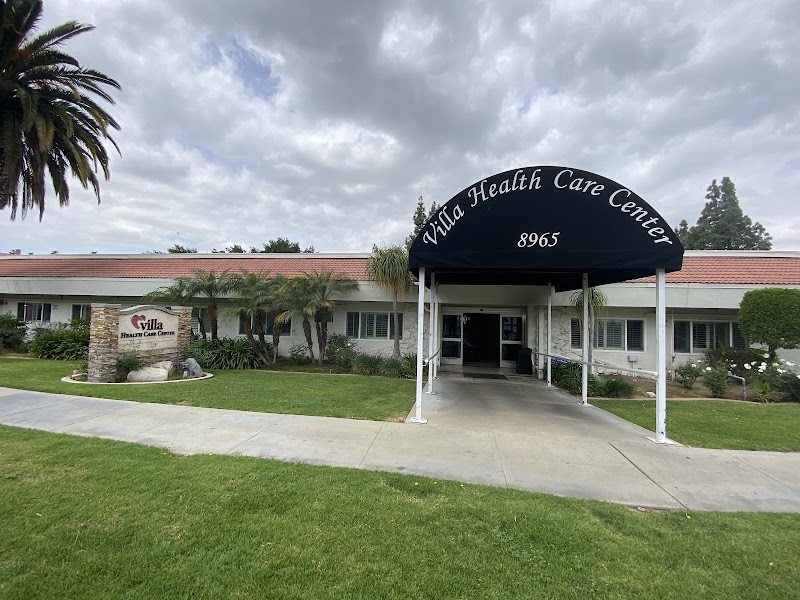
How is Villa Health Staffed?

CMS rates VILLA HEALTH CARE CENTER's staffing level at 2 out of 5 stars, which is below average compared to other nursing homes. Staff turnover is 55%, compared to the California average of 46%. RN turnover specifically is 62%, which is notably high. RNs provide skilled clinical oversight, so turnover in this role can affect medical care quality.

What Have Inspectors Found at Villa Health?

State health inspectors documented 36 deficiencies at VILLA HEALTH CARE CENTER during 2021 to 2025. These included: 33 with potential for harm and 3 minor or isolated issues.
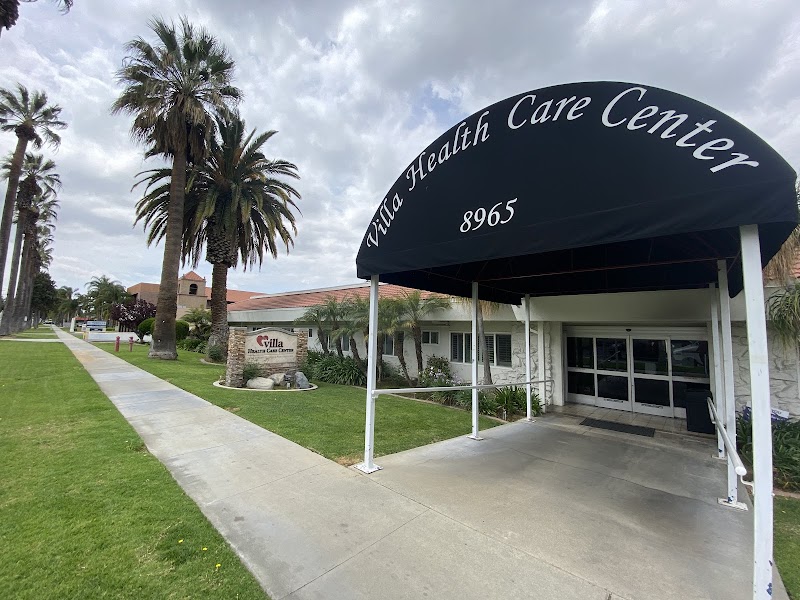
Who Owns and Operates Villa Health?

VILLA HEALTH CARE CENTER is owned by a for-profit company. For-profit facilities operate as businesses with obligations to shareholders or private owners. The facility is operated by NAHS, a chain that manages multiple nursing homes. With 59 certified beds and approximately 51 residents (about 86% occupancy), it is a smaller facility located in RIVERSIDE, California.
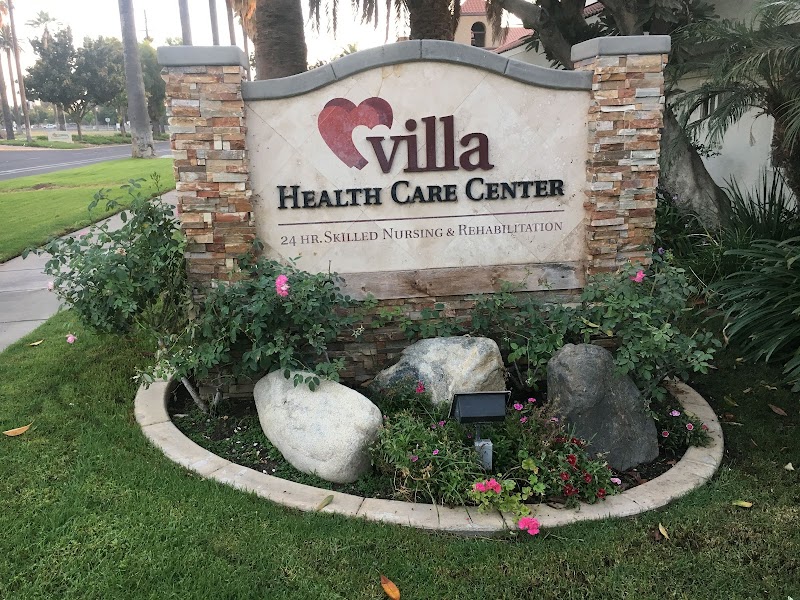
How Does Villa Health Compare to Other California Nursing Homes?

Compared to the 100 nursing homes in California, VILLA HEALTH CARE CENTER's overall rating (5 stars) is above the state average of 3.2, staff turnover (55%) is near the state average of 46%, and health inspection rating (4 stars) is above the national benchmark.

What Should Families Ask When Visiting Villa Health?

Based on this facility's data, families visiting should ask: "Can you walk me through typical staffing levels on day, evening, and night shifts?" "Can I visit during a mealtime to observe dining assistance and food quality?" "How do you handle medical emergencies, and what is your hospital transfer rate?" "Can I speak with family members of current residents about their experience?" These questions are particularly relevant given the below-average staffing rating.

Is Villa Health Safe?

Based on CMS inspection data, VILLA HEALTH CARE CENTER has a clean safety record: no substantiated abuse findings (meaning no confirmed cases of resident harm), no Immediate Jeopardy citations (the most serious violation level indicating risk of serious injury or death), and is not on the Special Focus Facility watch list (a federal program monitoring the lowest-performing 1% of nursing homes). The facility has a 5-star overall rating and ranks #1 of 100 nursing homes in California. While no facility is perfect, families should still ask about staff-to-resident ratios and recent inspection results during their visit.

Do Nurses at Villa Health Stick Around?

VILLA HEALTH CARE CENTER has a staff turnover rate of 55%, which is 9 percentage points above the California average of 46%. Moderate turnover is common in nursing homes, but families should still ask about staff tenure and how the facility maintains care continuity when employees leave.

Was Villa Health Ever Fined?

VILLA HEALTH CARE CENTER has no federal fines on record. CMS issues fines when nursing homes fail to meet care standards or don't correct problems found during inspections. The absence of fines suggests the facility has either maintained compliance or corrected any issues before penalties were assessed. This is a positive indicator, though families should still review recent inspection reports for the full picture.

Is Villa Health on Any Federal Watch List?

VILLA HEALTH CARE CENTER is not on any federal watch list. The most significant is the Special Focus Facility (SFF) program, which identifies the bottom 1% of nursing homes nationally based on persistent, serious quality problems. Not being on this list means the facility has avoided the pattern of deficiencies that triggers enhanced federal oversight. This is a positive indicator, though families should still review the facility's inspection history directly.