REO VISTA HEALTHCARE CENTER
6061 BANBURY ST., SAN DIEGO, CA 92139 (619) 475-2211
For profit - Corporation 162 Beds PACS GROUP Data: November 2025
Trust Grade
58/100
#443 of 1155 in CA
Last Inspection: April 2025

Within standard 12-15 month inspection cycle. Federal law requires annual inspections.

Overview

Reo Vista Healthcare Center has a Trust Grade of C, which means it is average-neither great nor terrible compared to other nursing homes. It ranks #443 out of 1,155 facilities in California, placing it in the top half, and #49 out of 81 in San Diego County, where it is one of the better options available. However, the facility is experiencing a worsening trend, with the number of issues increasing from 6 in 2024 to 12 in 2025. Staffing ratings are below average at 2 out of 5 stars, with a turnover rate of 40%, which is about average for California. On the positive side, the facility has received significant RN coverage, more than most, which helps ensure that serious issues are caught early. Despite these strengths, there are notable weaknesses. Recent inspector findings included serious incidents where residents were not transferred safely, leading to falls and injuries, such as a resident who fell from a wheelchair when left unattended and another who suffered a fracture during a mechanical lift transfer due to improper procedures. Additionally, the facility had issues maintaining accurate care records for multiple residents, which could lead to confusion in their care. Overall, while Reo Vista Healthcare Center has some positive aspects, families should carefully consider the recent incidents and the facility's current challenges.

Trust Score
C
58/100
In California
#443/1155
Top 38%
Safety Record
Moderate
Needs review
Inspections
Getting Worse
6 → 12 violations
Staff Stability
○ Average
40% turnover. Near California's 48% average. Typical for the industry.
Penalties
✓ Good
$11,391 in fines. Lower than most California facilities. Relatively clean record.
Skilled Nurses
⚠ Watch
Each resident gets only 25 minutes of Registered Nurse (RN) attention daily — below average for California. Fewer RN minutes means fewer trained eyes watching for problems.
Violations
⚠ Watch
54 deficiencies on record. Higher than average. Multiple issues found across inspections.
★★★★☆
4.0
Overall Rating
★★☆☆☆
2.0
Staff Levels
★★★★★
5.0
Care Quality
★★★☆☆
3.0
Inspection Score
Stable
2024: 6 issues
2025: 12 issues

The Good

  • 5-Star Quality Measures · Strong clinical quality outcomes
  • Full Sprinkler Coverage · Fire safety systems throughout facility
  • No fines on record
  • Staff turnover below average (40%)

    8 points below California average of 48%

Facility shows strength in quality measures, fire safety.

The Bad

Staff Turnover: 40%

Near California avg (46%)

Typical for the industry

Federal Fines: $11,391

Below median ($33,413)

Minor penalties assessed

Chain: PACS GROUP

Part of a multi-facility chain

Ask about local staffing decisions and management

The Ugly 54 deficiencies on record

2 actual harm
May 2025 1 deficiency
CONCERN (D) 📢 Someone Reported This

A family member, employee, or ombudsman was alarmed enough to file a formal complaint

Potential for Harm - no one hurt, but risky conditions existed

ADL Care (Tag F0677)

Could have caused harm · This affected 1 resident

**NOTE- TERMS IN BRACKETS HAVE BEEN EDITED TO PROTECT CONFIDENTIALITY** Based on observation, interview, and record review, the facility failed to ensure a resident who required assistance with incont...

Read full inspector narrative →
**NOTE- TERMS IN BRACKETS HAVE BEEN EDITED TO PROTECT CONFIDENTIALITY** Based on observation, interview, and record review, the facility failed to ensure a resident who required assistance with incontinent (loss of bowel and bladder control ) care, was provided care in a timely manner for one of four sampled residents (Resident 4) reviewed for ADL (activities of daily living- bathing or showering, dressing, getting in and out of bed or a chair, walking, toileting and eating) care. This failure resulted in not meeting Resident 4 ' s need for comfort and had the potential for further complications such as skin breakdown and infection. Findings: Resident 4 was admitted to the facility on [DATE] with diagnoses including left fibula (the smaller of the two bones in the lower leg) fracture and type 2 diabetes with hyperglycemia (abnormal high blood sugar) according to the facility ' s admission Record. On 5/6/25 at 8:45 A.M. an unannounced onsite visit to the facility was conducted related to a complaint regarding lack of staff assistance with a resident ' s incontinent care. During an interview on 5/6/25 at 9:33 A.M. with CNA 1, CNA 1 stated call lights should be answered within 5 minutes because if a resident was wet, the resident can develop a skin breakdown. CNA 1 further stated if a resident was constantly wet, the resident can get an infection such as a urinary tract infection. During an interview on 5/6/25 at 9:42 A.M. with Resident 4, Resident 4 stated during the first week of her admission she waited one hour before her brief was changed. Resident 4 stated it was very uncomfortable because she had a bowel movement. Resident 4 stated this morning (5/6/25) when her breakfast tray was served, she requested the Certified Nurse Assistant (CNA) to change her brief because it was, Soaking wet. Resident 4 stated the CNA told her that breakfast trays were still being passed and Resident 4 ' s brief will be changed after passing of trays. Resident 4 stated she waited an hour for the CNA to return to change her brief. Resident 4 stated she felt, Uncomfortable because she was wet. A review of Resident 4 ' s bowel and bladder assessment dated [DATE] was conducted. The assessment indicated that Resident 4 had bladder and bowel incontinence with a usual voiding pattern of upon rising and after meals. During a review of Resident 4 ' s care plans, the care plan dated 4/29/25 indicated, .Resident is incontinent of [x] bladder ]x] bowel and is not a candidate for retraining due to long history of incontinence .Provide check and change incontinence management .Provide clean and dry clothes after incontinent episodes . An interview was conducted on 5/6/25 at 11:12 A.M. with Resident 4 ' s assigned CNA (CNA 3). CNA 3 stated she delivered Resident 4 ' s breakfast tray and Resident 4 told her she (Resident 4) needed to be changed because she was soaking wet. CNA 3 stated she explained to Resident 4 that breakfast trays were still being passed and would return after trays were passed. CNA 3 stated she changed Resident 4 ' s brief after breakfast. CNA 3 stated if she was wearing a wet brief, she would feel uncomfortable. An interview on 5/6/25 at 11:19 A.M. was conducted with the Director of Staff Development (DSD- a licensed nurse certified for staff training). The DSD stated she in-serviced the CNAs to check the residents if they needed to be changed prior to meals, especially those residents who were incontinent of their bowel and bladder. The DSD stated she expected the CNAs to change residents' briefs right away if residents were wet or soiled. The DSD stated if a resident sat on feces or urine, the resident would be uncomfortable and may develop a skin breakdown. The DSD stated she would feel uncomfortable if she was left soaking wet. The DSD further stated it was unacceptable for a resident to have to wait and sit on a wet brief. During an interview on 5/9/25 at 12:05 P.M. with the Director of Nursing (DON), the DON stated it was a priority to change the resident ' s brief instead of passing meal trays for the resident ' s comfort and dignity. The DON stated she would not want to eat knowing her brief was wet. During a review of the facility ' s policy and procedure (P&P) titled, Resident Rights, dated February 2021, the P&P indicated, .Federal and state laws guarantee certain basic rights to all residents of this facility. These rights include the resident ' s right to: a. a dignified existence; b. be treated with respect, kindness, and dignity . A review of the facility ' s P&P titled, Answering the Call Light, dated September 2022 was conducted. The P&P indicated, .Answer the resident call system immediately .If you are uncertain as to whether or not a request can be fulfilled, or if you cannot fulfill the resident ' s request, ask the nurse supervisor for assistance .
Apr 2025 1 deficiency
CONCERN (D) 📢 Someone Reported This

A family member, employee, or ombudsman was alarmed enough to file a formal complaint

Potential for Harm - no one hurt, but risky conditions existed

Deficiency F0658 (Tag F0658)

Could have caused harm · This affected 1 resident

**NOTE- TERMS IN BRACKETS HAVE BEEN EDITED TO PROTECT CONFIDENTIALITY** Based on interview and record review, the facility failed to obtain a physician ' s order for a blood sugar fingerstick (a metho...

Read full inspector narrative →
**NOTE- TERMS IN BRACKETS HAVE BEEN EDITED TO PROTECT CONFIDENTIALITY** Based on interview and record review, the facility failed to obtain a physician ' s order for a blood sugar fingerstick (a method of measuring blood sugar levels in the blood) in accordance with the facility's policy and procedure and care plan for one of four sampled residents (Resident 4) reviewed. This failure had the potential to affect the delivery of care provided to Resident 4. Findings: On 4/30/25 at 8:45 A.M, an unannounced onsite visit at the facility was conducted related to the care of a resident with diabetes (too much sugar circulating in the blood). Resident 4 was admitted to the facility on [DATE] with diagnoses including diabetes mellitus with hyperglycemia (high blood sugar) according to the facility ' s admission Record. An interview was conducted with Resident 4 on 4/30/25 at 10:06 a.m. Resident 4 stated she had a diagnosis of diabetes and was checking her blood sugar twice a day when she was at home. Resident 4 stated her blood sugar was also checked when she was at the hospital. Resident 4 stated she got upset with staff because the staff did not know she had diabetes and was not checking her blood sugar. Resident 4 stated the staff started checking her blood sugar before meals after she told them she had diabetes. Resident 4 stated the first time her blood sugar was checked, the result was over 300 (an abnormal high value). A review of Resident 4 ' s physician ' s orders was conducted. The physician ' s orders dated 4/27/25 indicated, .Insulin Lispro [a fast-acting medication that helps regulate blood sugar levels] .inject as per sliding scale .before meals for DM-2 [diabetes mellitus type 2- a long-term condition in which the body has trouble controlling blood sugar] . There was no physician ' s order for checking Resident 4 ' s blood sugar. During a review of Resident 4 ' s care plan dated 4/28/25, the care plan indicated, .Diabetes: Resident has a diagnosis of diabetes and is at risk for complications .Interventions/Tasks .Blood glucose checks as ordered. Report to physician if blood glucose is outside set parameters . A joint record review and interview on 4/30/25 at 12:03 P.M. was conducted with Licensed Nurse (LN) 1. LN 1 reviewed Resident 4 ' s physician ' s orders in the electronic medical record (EMR) and stated Resident 4 was receiving insulin. LN 1 stated there was no order to check Resident 4 ' s blood sugar prior to administering the insulin. LN 1 stated even without a physician ' s order; the medication nurses still checked Resident 4 ' s blood sugar because Resident 4 was on insulin. LN1 further stated, a physician ' s order was needed for resident safety and to provide a reason for the use of the insulin. During an interview on 4/30/35 with a Nurse Practitioner (NP) at the facility, the NP stated it was expected for nursing staff to write a separate order for a blood sugar fingerstick. The NP further stated the EMR should show a separate blood sugar check order. An interview was conducted on 5/1/25 at 2:18 P.M. with LN 2. LN 2 stated if a resident was admitted to the facility with insulin orders but without an order for blood sugar fingerstick, the nursing staff will call the physician to obtain an order. LN 2 stated an order was needed to monitor the resident ' s blood sugar levels. LN 2 stated that a physician ' s order was needed to obtain a resident ' s blood sugar fingerstick. During an interview on 5/1/24 at 3:13 P.M. with the Director of Nursing (DON), the DON stated a blood sugar fingerstick was an invasive procedure and it required a physician ' s order. A review of the facility ' s policy and procedure (P&P) titled, Obtaining a Fingerstick Glucose Level, dated October 2011 was conducted. The P&P indicated, .The purpose of this procedure is to obtain a blood sample to determine the resident ' s blood glucose level .Preparation 1. Verify that there is a physician ' s order for this procedure .
Apr 2025 10 deficiencies
CONCERN (D)

Potential for Harm - no one hurt, but risky conditions existed

Resident Rights (Tag F0550)

Could have caused harm · This affected 1 resident

**NOTE- TERMS IN BRACKETS HAVE BEEN EDITED TO PROTECT CONFIDENTIALITY** Based on observation , interview and record review, the facility failed to ensure one of ten residents (19) observed during lunc...

Read full inspector narrative →
**NOTE- TERMS IN BRACKETS HAVE BEEN EDITED TO PROTECT CONFIDENTIALITY** Based on observation , interview and record review, the facility failed to ensure one of ten residents (19) observed during lunch in the dining room had a meal tray at the same time as the other residents. This failure had the potential to not provide and preserve Resident 19's dignity and respect. Findings. A review of Resident 19's undated admission Record indicated that Resident 19 was admitted to the facility on [DATE] with diagnoses that included Type 2 Diabetes Mellitus (abnormal blood sugar) with Diabetic Neuropathy (a type of nerve damage that occurs with diabetes). During a dining room lunch observation on 4/14/25 at 11:42 A.M., residents were seated in their assigned areas in the dining room. There were three tables assigned for restorative feeding program (aims to help individuals regain or maintain their ability to eat independently). The fourth table was observed with two residents seated. Licensed Nurse 11 checked the meal ticket with the trays and then handed it to the restorative aides and certified nursing assistants to give to the residents. The three tables where residents seated for RNA feeding started eating and were assisted by staff. An observation on 4/14/25 at 12:09 P.M. was conducted. Resident 19 was observed looking around in the dining room while other residents were eating their lunch. Resident 19 stated, I am hungry, but it happens at times when I would have to wait to get served my tray. Everyone had their tray and I don't, I guess it's okay, but I am hungry. Resident 19 was observed to receive her lunch tray 30 minutes after all the other residents' trays were served. An interview on 4/14/25 at 12:15 P.M., with the restorative nursing assistant (RNA) was conducted. The RNA stated every resident in the dining room should have their tray at the same time, to provide and preserve their dignity and ensure respect. An interview on 4/14/25 at 12:25 P.M., in the dining room with Licensed Nurse 13 was conducted. LN 13 stated it was inappropriate for Resident 19 to have waited for her tray while other residents have eaten or started eating. LN 13 stated I would be upset if everyone had their trays, and I didn't. LN 13 stated it was important for all the residents in the dining room to have their trays served at the same time to ensure the facility provided them the dignity and respect. An interview on 4/17/25 at 10:00 A.M., with the Director of Nursing (DON) was conducted. The DON stated it was a dignity issue and that every resident in the dining room should be served their trays at the same time. The DON stated I would feel left out too if I did not get a tray. A review of the facility's policy on Resident Rights dated February 2021 , indicated, Policy statement .Employees shall treat all residents with kindness , respect and dignity. Policy Interpretation and Implementation #1. Federal and state laws guarantee certain basic rights to all residents in the facility. These rights include a. a dignified existence .
CONCERN (D)

Potential for Harm - no one hurt, but risky conditions existed

Assessment Accuracy (Tag F0641)

Could have caused harm · This affected 1 resident

**NOTE- TERMS IN BRACKETS HAVE BEEN EDITED TO PROTECT CONFIDENTIALITY** Based on observation, interview, and record review, the facility failed to accurately code the Minimum Data Set (MDS- a nursing ...

Read full inspector narrative →
**NOTE- TERMS IN BRACKETS HAVE BEEN EDITED TO PROTECT CONFIDENTIALITY** Based on observation, interview, and record review, the facility failed to accurately code the Minimum Data Set (MDS- a nursing assessment tool) for one of seven sampled residents (Resident 134) reviewed for MDS accuracy. This deficient practice resulted in providing inaccurate information to the Federal database (information maintained by the federal government). Findings: Resident 134 was admitted to the facility with diagnoses including cystitis (inflammation of the bladder) according to the facility's admission Record. During a review of Resident 134's MDS dated [DATE], the MDS, section O0100J1 indicated an x for dialysis (procedure done by a trained professional to remove wastes and excess fluids from the body). A review of Resident 134's physician's orders in the electronic medical record (EMR) indicated no orders for dialysis treatments. An interview and observation was conducted with Resident 134 on 4/15/25 at 8:52 A.M. Resident 134 was in bed and stated she had irritation with frequent urination. Resident 134 stated she was starting an antibiotic today (4/15/25). Resident 134 did not have a dialysis graft (a synthetic tube placed in the arm, used to connect an artery or vein used as pathway during dialysis treatments). Resident 134 stated she did not have dialysis treatments. An interview on 4/16/25 at 2:29 P.M. was conducted with licensed nurse (LN) 13. LN 13 stated she was the assigned medication nurse for Resident 134. LN 13 stated Resident 134 did not have dialysis. A concurrent record review and interview was conducted with the MDS nurse (MDSN). The MDSN reviewed Resident 134's diagnoses and MDS in the EMR. The MDSN stated the MDS was marked with an x which meant Resident 134 was on dialysis. The MDSN stated the MDS assessment dated [DATE] was coded inaccurately because Resident 134 was not on dialysis. The MDSN further stated that it was important for the MDS to be accurate because it determined the resident's plan of care and reimbursement for the facility. During an interview on 4/17/25 at 2:34 P.M. with the Director of Nursing (DON), the DON stated the MDS assessment should be accurate because it captured the resident's condition to formulate a care plan. A review of the facility's policy and procedure (P&P) titled, Accuracy of the Resident Assessment, dated December 2023 was conducted. The P&P indicated, .Any person completing a portion of the Minimum Data Set/MDS (Resident Assessment Instrument) must sign and certify the accuracy of that portion of the assessment . A review of the CMS Long-Term Care Facility Resident Assessment Instrument 3.0 User's Manual dated October 2023 was conducted. Chapter 1.2 page seven of the User's Manual indicated the Resident Assessment Instrument (RAI) consisted of the MDS. The User's Manual chapter 1.2, page eight indicated, .The RAI process has multiple regulatory requirement .Federal regulations .require that (1) the assessment accurately reflects the resident's status . Furthermore chapter 5.5, page 668 of the User's Manual indicated, .the MDS must be accurate as of the ARD [Assessment Reference Date] .
CONCERN (D)

Potential for Harm - no one hurt, but risky conditions existed

Deficiency F0658 (Tag F0658)

Could have caused harm · This affected 1 resident

**NOTE- TERMS IN BRACKETS HAVE BEEN EDITED TO PROTECT CONFIDENTIALITY** 2. Resident 2 was re-admitted to the facility on [DATE] with diagnoses including dysphagia (difficulty in swallowing) following ...

Read full inspector narrative →
**NOTE- TERMS IN BRACKETS HAVE BEEN EDITED TO PROTECT CONFIDENTIALITY** 2. Resident 2 was re-admitted to the facility on [DATE] with diagnoses including dysphagia (difficulty in swallowing) following cerebral infarction (disrupted blood flow to the brain) according to the facility's admission Record. On 4/14/25 9:52 A.M. Resident 2 was observed in her bed watching TV. During interview Resident 2 did not respond verbally but nodded that she was okay. Resident 2 did not respond to further questions. During a review of Resident 2's physician's orders in the electronic medical record (EMR), the physician's orders indicated, .RNA dining program daily at lunch .Boost VHC [Very high calorie nutritional supplement] with meal for supplement . During the dining observation on 4/14/25 at 11:42 A.M. Resident 2 was observed being assisted with her meal by the Restorative Nurse Assistant (RNA- a CNA who work alongside rehab staff to provide exercises for residents with limited mobility) 1. The meal tray included a small glass of thickened milk, small glass of thickened water, a small glass of thickened juice, three small cups of puree food, a plate of puree food and a bowl of soup. RNA 1 stated Resident 2 required encouragement to eat and has had weight loss. There was no Boost on resident's tray. On 4/15/25 at 8:41 A.M. Licensed Nurse (LN) 12 was observed encouraging Resident 2 to eat breakfast in Resident 2's room. A concurrent observation of Resident 2's meal tray was conducted. The meal tray included thickened milk, thickened water and thickened juice. There was no Boost with Resident 2's meal. On 4/15/25 at 11:50 A.M. Resident 2 was observed in the dining room. RNA 1 named the beverages served for Resident 2. RNA 1 stated the beverages were: thickened milk, thickened juice and thickened water. There was no Boost served with Resident 2's meal. During an observation on 4/16/25 at 7:53 A.M. Resident 2 was in her room for breakfast. Certified Nurse Assistant (CNA) 13 was assisting Resident 2 to eat. CNA 13 stated Resident 2 had three beverages on the meal tray. CNA 13 stated a thickened juice, water and milk were served with Resident 2's meal. There was no Boost served with the meal. An interview on 4/16/25 at 2:07 P.M. was conducted with Licensed Nurse (LN) 13. LN 13 reviewed the physician's orders for Resident 2. LN 13 stated there was an order for Boost VHC with meals for supplement. LN 13 stated the CNAs were responsible for getting the Boost from the LNs which was kept in the medication cart. LN 13 further stated it was important for Resident 2 to receive the Boost to help with her nutrition. During an interview on 4/16/25 at 2:45 P.M. with the Registered Dietician (RD), the RD stated she expected staff to provide Boost to Resident 2. The RD stated she was not aware that Resident 2 was not receiving the Boost. The RD stated Boost was an intervention to address Resident 2's weight loss and it was specific to be given with meals in case Resident 2 did not eat the food that was served. An interview with the Director of Nursing (DON) on 4/17/25 at 2:34 P.M. was conducted. The DON stated staff should follow physician's order to provide resident's needs. During a review of the facility's policy and procedure (P&P) titled, Physician's Orders, dated June 2013, the P&P indicated, .Physician's orders must be given, managed and carried out in accordance with applicable laws and regulations . Based on observation, interview, and record review, the facility failed to ensure services to meet professional standards for two of 32 sampled residents when: 1. Resident 123's midline catheter (tube inserted in the upper arm with the tip located just below the armpit to allow access to the bloodstream for medications, fluids, blood draws, and other treatments) dressing was not changed and monitored. 2. The facility failed to provide a nutritional supplement in accordance with the resident's physician's orders. (Resident 2) This failure had the potential for complications related to intravenous (IV - method of delivering fluids, medications, or nutrients directly into the bloodstream through a vein) therapy and the potential for not meeting Resident 2's nutritional needs. Findings: 1. Per the facility's admission record, Resident 123 was admitted on [DATE] with diagnoses that included pneumonia (lung infection). A review of Resident 123's physician's orders indicated, on 4/13/25 an order was made for IV-dressing change .upon admission and to change midline dressing every night shift every seven days. On 4/14/25 at 10:45 A.M., an observation and interview were conducted with Resident 123 in his room. Resident 123 had an IV line on the right upper arm. Resident 123 stated a nurse changed the dressing yesterday and could not recall if the nurse measured his arm or the IV catheter. On 4/15/25 at 10:09 A.M., a concurrent interview and record review was conducted with Licensed Nurse (LN) 1. A review of the IV line dressing change documentation dated 4/13/25 in the IV Medication Administration Record (MAR) for Resident 123, measurements of arm circumference and catheter length were not done. LN 1 stated the importance of measuring arm circumference and the catheter length for a midline catheter was to ensure proper placement and prevent complications. On 4/17/25 at 10:51 A.M., an interview with the Director of Nursing (DON) was conducted. The DON stated that measuring arm circumference and the catheter length for a midline catheter during the dressing change was a standard of practice and should have been done. DON stated the importance of the measuring is to make sure it is functional. A review of the facility's policy titled Peripheral and Midline IV Dressing Changes, dated March 2022, indicated .8. For midline catheters, measure arm circumference .
CONCERN (D)

Potential for Harm - no one hurt, but risky conditions existed

Quality of Care (Tag F0684)

Could have caused harm · This affected 1 resident

**NOTE- TERMS IN BRACKETS HAVE BEEN EDITED TO PROTECT CONFIDENTIALITY** Based on observation, interview and record review, the facility failed to monitor and reassess a change in condition (significan...

Read full inspector narrative →
**NOTE- TERMS IN BRACKETS HAVE BEEN EDITED TO PROTECT CONFIDENTIALITY** Based on observation, interview and record review, the facility failed to monitor and reassess a change in condition (significant worsening of a resident's physical or mental health) for one sampled resident (303). This failure had the potential for complications related to Resident 303's health. Findings: Per the facility admission record, Resident 303 was admitted on [DATE] with diagnoses that included chronic kidney disease stage 3 (condition where the kidneys gradually lose their ability to filter waste products from the blood, leading to a buildup of toxins and other substances in the body). Per the facility progress notes, on 4/12/25 at 3:36 P.M., a potassium level of 5.6 (normal levels 3.5 and 5.5) was reported to the physician. The physician ordered to insert a peripheral intravenous (IV) catheter (a small, thin, flexible tube inserted into a vein to deliver fluids, medications, or blood products directly into the bloodstream). The IV was inserted into Resident 303's back of left hand. Per the facility progress notes, on 4/13/25 at 9:14 P.M., Resident 303's IV infiltrated (when the tip of the catheter slips out of the vein and some of the fluid leaks out into the tissues under the skin) which caused swelling and pain. On 4/14/25, at 8:35 A.M., an observation and interview were conducted with Resident 303 in her room. Resident 303 stated she had an IV in her left hand, but it made her left hand and arm swollen with pain last night. When Resident 303 held up both of her hands and arms together, the left hand and arm were visibly swollen compared to her right hand and arm. Resident 303 stated that the nurses have not helped her with the swelling. On 4/15/25 at 10:09 A.M., a concurrent interview and record review was conducted with a licensed nurse (LN 1). LN 1 reviewed Resident 303's medical record and stated there were no documentation for monitoring or reassessing Resident 303's swollen left hand and arm. LN 1 stated it is their process to monitor and reassess the resident's change in conditions every shift for 72 hours. LN 1 stated that the importance of monitoring and reassessing a change in condition is to ensure the resident's health is improving and that there are no complications related to the change. On 4/17/25 at 10:51 A.M., an interview was conducted with the Director of Nursing (DON). The DON stated that for all change in conditions, it is her expectation that nursing are to monitor, reassess and document the identified change in condition every shift. A review of the facility policy titled Change in a Resident's Condition or Status, dated February 2021. indicated that .8. The nurse will record in the resident's medical record information relative to changes in the resident's medical .condition or status.
CONCERN (D)

Potential for Harm - no one hurt, but risky conditions existed

Pressure Ulcer Prevention (Tag F0686)

Could have caused harm · This affected 1 resident

**NOTE- TERMS IN BRACKETS HAVE BEEN EDITED TO PROTECT CONFIDENTIALITY** Based on interview and record review, the facility failed to prevent a stage four (bedsore extended to muscle, tendon or bone) p...

Read full inspector narrative →
**NOTE- TERMS IN BRACKETS HAVE BEEN EDITED TO PROTECT CONFIDENTIALITY** Based on interview and record review, the facility failed to prevent a stage four (bedsore extended to muscle, tendon or bone) pressure injury from developing after admission for one of three residents (Resident 15) reviewed for pressure injuries. This failure had the potential to affect Resident 15's quality of life. Findings: Resident 15 was admitted to the facility on [DATE] with diagnoses including fracture of shaft left femur (long, central part of thigh bone) according to the facility's admission Records. During an observation on 4/14/25 at 9:09 A.M. Resident 15 was in bed with an air mattress and overbed trapeze. Resident 15 stated he was on air mattress due to a bedsore on his buttock. Resident 15 was pointing towards his buttocks area. A review of admission records for Resident 15 titled, 01. NURSING-ADMISSION/readmission EVALUATION/ASSESSMENT, dated 11/20/24 was conducted. The admission record indicated no pressure injuries. During an interview on 4/15/25 at 7:45 A.M. with Resident 15, Resident 15 stated he was admitted to the facility due to a left leg surgery, but he laid in one position and developed a pressure sore on his buttock. A review of Resident 15's BRADEN SCALE FOR PREDICTING PRESSURE SORE RISK, dated 11/20/24 indicated a score of 15 .AT RISK . A review of the skin care plan dated 11/20/24 for Resident 15 was conducted. The skin care plan indicated, .at risk for skin breakdown .assist to turn and reposition as indicated . An interview was conducted on 4/16/25 at 8:58 A.M. with Certified Nurse Assistant (CNA) 12. CNA 12 stated Resident 15 had a bedsore on his buttock due to being up on the wheelchair too long. CNA 12 stated Resident 15 required assistance with repositioning. CNA 12 stated to prevent bedsores, residents should be changed frequently, reposition every two hours and as needed. During an interview on 4/16/25 at 9:11 A.M. with CNA 13, CNA 13 stated residents needed to be repositioned every two hours and checked frequently to prevent developing pressure ulcers. A concurrent record review and interview on 4/16/25 at 10:03 A.M. was conducted with the Treatment Nurse (TN). The TN stated Resident 15 had a stage four pressure ulcer on the sacrum (the triangular shaped bone at the base of the back). The TN showed photos of Resident 15's pressure ulcer. The photo dated 12/10/24 indicated 2.28cm (centimeter) by 1.95 cm, with 80% eschar (black dead tissue) and unstageable (a type of bed sore where the base is covered by dead or yellowish tissue) on the right iliac crest (top of the hip bone). Care plans for Resident 15 were reviewed with the TN. The TN stated the care plans for Resident 15 indicated Resident 15 developed a popped blister on 12/6/24, re-classified as Deep Tissue Injury (DTI-a purple or maroon area of intact skin or blood-filled blister due to damage of soft tissue from pressure or shear) on 12/10/24, re-classified by the wound physician as unstageable (a full thickness tissue loss where the depth of the wound is hidden by a layer of eschar or slough in the wound) on 12/11/24, then re-classified as a stage four on 1/17/25 as the pressure ulcer progressed. The TN stated shearing might have caused Resident 15's pressure ulcer. The TN further stated Resident 15 had developed a blood blister on the coccyx (tailbone) and another DTI on the right buttock as of 4/15/25. During a review of the physician's progress note for Resident 15 dated 12/11/24, the progress note indicated, .Consulted for managing wounds .Patient was > [greater than] 5 hrs [hours] in the wheelchair. advised [sic] to keep sitting in the wheelchair within 1-2 hrs max . An interview on 4/17/25 at 2:34 P.M. was conducted with the Director of Nursing (DON). The DON stated she expected staff to identify residents' comorbidities and be proactive in preventing skin issues. A review was conducted of the facility's policy and procedure (P&P) titled, Prevention of Pressure Injuries, dated April 2020. The P&P indicated, .Reposition all residents with or at risk of pressure injuries on an individualized schedule .Choose a frequency for repositioning based on the resident's risk factors and current clinical practice guidelines .
CONCERN (D)

Potential for Harm - no one hurt, but risky conditions existed

Deficiency F0692 (Tag F0692)

Could have caused harm · This affected 1 resident

**NOTE- TERMS IN BRACKETS HAVE BEEN EDITED TO PROTECT CONFIDENTIALITY** Based on observation, interview and record review, the facility failed to maintain acceptable parameters of nutritional status b...

Read full inspector narrative →
**NOTE- TERMS IN BRACKETS HAVE BEEN EDITED TO PROTECT CONFIDENTIALITY** Based on observation, interview and record review, the facility failed to maintain acceptable parameters of nutritional status by not providing a nutritional supplement for one of four residents (Resident 2) reviewed for nutrition and with a significant weight loss. This failure had the potential to result in Resident 2's unplanned weight loss which could lead to further decline in weight and overall health condition. Findings: Resident 2 was re-admitted to the facility on [DATE] with diagnoses including dysphagia (difficulty in swallowing) following cerebral infarction (disrupted blood flow to the brain) according to the facility's admission Record). On 4/14/25 9:52 A.M. Resident 2 was observed in her bed watching TV. During interview Resident 2 did not respond verbally but nodded that she was okay. Resident 2 did not respond to further questions. During a review of Resident 2's physician's orders in the electronic medical record (EMR), the physician's orders indicated, .RNA dining program daily at lunch .Boost VHC [Very high calorie nutritional supplement] with meal for supplement . During the dining observation on 4/14/25 at 11:42 A.M. Resident 2 was observed being assisted with her meal by the Restorative Nurse Assistant (RNA- a CNA who work alongside rehab staff to provide exercises for residents with limited mobility) 1. The meal tray included a small glass of thickened milk, small glass of thickened water, a small glass of thickened juice, three small cups of puree food, a plate of puree food and a bowl of soup. RNA 1 stated Resident 2 requires encouragement to eat and has had weight loss. There was no Boost on resident's tray. On 4/15/25 at 8:41 A.M. Licensed Nurse (LN) 12 was observed encouraging Resident 2 to eat breakfast in Resident 2's room. A concurrent observation of Resident 2's meal tray was conducted. The meal tray included thickened milk, thickened water and thickened juice. There was no Boost with Resident 2's meal. On 4/15/25 at 11:50 A.M. Resident 2 was observed in the dining room. RNA 1 named the beverages served for Resident 2's. RNA 1 stated the beverages were: thickened milk, thickened juice and thickened water. There was no Boost served with Resident 2's meal. During an observation on 4/16/25 at 7:53 A.M. Resident 2 was in her room for breakfast. Certified Nurse Assistant (CNA) 13 was assisting Resident 2 to eat. CNA 13 stated Resident 2 had three beverages on the meal tray. CNA 13 stated a thickened juice, water and milk were served with Resident 2's meal. There was no Boost served with the meal. A concurrent record review and interview on 4/16/25 at 2:07 P.M. was conducted with Licensed Nurse (LN) 13. LN 13 reviewed the physician's orders for Resident 2. LN 13 stated there was an order for Boost VHC with meals for supplement. LN 13 stated the CNAs was responsible for getting the Boost from the LNs which was kept in the medication cart and Resident 2 did not receive the Boost. LN 3 reviewed Resident 2's weight record. LN 3 stated Resident 2's weight on 3/7/25 was 103 lb. (pounds) and 91 lb. on 4/9/25. LN 3 stated Resident 2 had significant weight loss. LN 13 further stated it was important for Resident 2 to receive the Boost to help with her nutrition. A review of the Registered Dietician's (RD) progress note for Resident 2 dated 4/10/25 was conducted. The progress notes indicated, .- [minus]12# [pounds] x 1 mo [month] 11.6% .underweight status .wt [weight] below goal . A review of Resident 2's weight record in the EMR indicated: 1/4/25 110 lb. 2/3/25 106 lb. 3/1/25 100 lb. 3/7/25 103 lb. 3/17/25 98 lb. 4/3/25 97 lb. 4/9/25 91 lb. During an interview on 4/16/25 at 2:45 P.M. with the Registered Dietician (RD), the RD stated she expected staff to provide Boost to Resident 2. The RD stated she was not aware that Resident 2 was not receiving the Boost. The RD stated Boost was an intervention to address Resident 2's weight loss and it was specific to be given with meals in case Resident 2 did not eat the food that was served. An interview with the Director of Nursing (DON) on 4/17/25 at 2:34 P.M. was conducted. The DON stated staff should follow physician's order to provide resident's needs. The DON further stated if Boost was ordered due to weight loss, staff should provide it to the resident. During a review of the facility's policy and procedure (P&P) titled, Nutritional Assessment, dated October 2017, the P&P indicated, .The nutritional assessment will be conducted .and shall identify at least .an estimate of calorie, protein, nutrient and fluid needs .The multidisciplinary team [team members with various areas of expertise working together towards the goals of the residents] shall identify .Inadequate availability of food or fluids-lack of access to the amount of food or fluids that the resident requires to maintain sufficient nutrition and hydration . During a review of the facility's policy and procedure (P&P) titled, Nutrition (Impaired)/Unplanned Weight Loss-Clinical Protocol, dated September 2012, the P&P indicated, .The nursing staff will monitor and document .dietary intake of residents .Treatment decisions should consider all pertinent evidence and relevant issues .The physician will authorize appropriate interventions .
CONCERN (D)

Potential for Harm - no one hurt, but risky conditions existed

Pharmacy Services (Tag F0755)

Could have caused harm · This affected 1 resident

**NOTE- TERMS IN BRACKETS HAVE BEEN EDITED TO PROTECT CONFIDENTIALITY** Based on observation, interview, and record review, the facility failed to ensure a medication was given as ordered by a physici...

Read full inspector narrative →
**NOTE- TERMS IN BRACKETS HAVE BEEN EDITED TO PROTECT CONFIDENTIALITY** Based on observation, interview, and record review, the facility failed to ensure a medication was given as ordered by a physician for one of three residents (Resident 107) observed for medication administration. This failure had the potential for Resident 107's medical needs to be unmet. Findings: Resident 107 was admitted to the facility on [DATE] with diagnoses including diabetes (high blood sugar), according to the admission Record. Licensed Nurse (LN) 31 was observed preparing and administering medications to Resident 107 on Wednesday, 4/16/25, at 7:55 A.M. Resident 107 was given the following medications: benazepril (a blood pressure medication), empagliflozin (a diabetes medication), apixaban (a blood thinner), gabapentin (a medication to treat nerve pain), arginine (a supplement), ascorbic acid (a vitamin), aspirin (a blood thinner), ferrous sulfate (an iron supplement), multivitamin, and insulin glargine (a diabetes medication). A review of Resident 107's medical record was conducted on 4/16/25. A review of Resident 107's physician's orders included dulaglutide injection (a diabetes medication) every Wednesday. Resident 107 did not receive dulaglutide during the medication administration observation. An interview was conducted with LN 31 on 4/16/25 at 10:10 A.M. LN 31 stated she did not notice that dulaglutide was due because it was on the last part of the medication administration record (a record including a resident's medication orders). LN 31 stated she had not given the medication yet. LN 31 stated dulaglutide was due at 9:00 A.M. A follow-up interview was conducted with LN 31 on 4/16/25 at 10:44 A.M. LN 31 stated dulaglutide was not available when it was due, and the medication needed to be ordered from the pharmacy. An interview with the Director of Nursing (DON) was conducted on 4/17/25 at 10:11 A.M. DON stated medications needed to be available when it was due. DON stated medication nurses were responsible for making sure the medication was available, especially if it was due only once a week. DON stated it was important to give medications on time and to follow physician's orders. A review of the facility's policy titled Administering Medications, revised April 2019, indicated .Medications are administered in accordance with prescriber orders, including any required time frame .Medications are administered within one (1) hour of their prescribed time .
CONCERN (D)

Potential for Harm - no one hurt, but risky conditions existed

Deficiency F0757 (Tag F0757)

Could have caused harm · This affected 1 resident

**NOTE- TERMS IN BRACKETS HAVE BEEN EDITED TO PROTECT CONFIDENTIALITY** Based on interview and record review the facility failed to ensure one of 8 residents (41) reviewed for psychotropics (drugs tha...

Read full inspector narrative →
**NOTE- TERMS IN BRACKETS HAVE BEEN EDITED TO PROTECT CONFIDENTIALITY** Based on interview and record review the facility failed to ensure one of 8 residents (41) reviewed for psychotropics (drugs that affects how the brain works and causes changes in mood, awareness, thoughts, feelings, or behavior) had the proper indication for the use of an anti-anxiety medication (a drug used to treat symptoms of anxiety, such as feelings of fear, dread, uneasiness and muscle tightness that may occur as a reaction to stress). This failure resulted in Resident 41's continued use of an antipsychotic medication without proper indication and possible exposure to the medication's side effects. Findings: A review of Resident 41's undated admission Record indicated that Resident 41 was admitted to the facility on [DATE] with diagnoses that included Anxiety Disorder (feelings of worry, nervousness and fear) and Major Depressive Disorder (persistent feelings of sadness and loss of interest in activities). An interview on 4/16/25 at 8:52 A.M., with Resident 41 was conducted. Resident 41 was seen lying in bed, watching TV in her room. Resident 41 stated she had been taking xanax (medication to treat anxiety) for years for her anxiety. Resident 41 stated she gets panic attacks and would feel her heart beating fast and somehow, she felt like she had to be somewhere but does not know where. Resident 41 stated the facility was giving the medication as needed before, but she had requested it to be administered on a routine basis. Resident 41 stated it usually takes two hours for the medication to work on her before she calmed down or else she is trouble. A review of Resident 41's minimum data set (MDS- a federally mandated assessment tool) dated 3/17/25 indicated Resident 41 had a brief interview for mental status (BIMS) of 15 which meant Resident 41's cognition (thought process) was intact. An interview on 4/16/25 at 8:50 A.M., with certified nursing assistant (CNA) 24 was conducted. CNA 24 stated when Resident 41 started talking about her family issues, Resident 41 gets anxious, and Resident 41 would tell CNA 24 she felt her heart beating fast. An interview on 4/16/25 at 9:10 A.M., with Licensed Nurse (LN) 21 was conducted. LN 21 stated Resident 41 would exhibit anxiety manifested by Resident 41's refusal of care. An interview on 4/17/25 at 8:05 A.M., with LN 22 was conducted. LN 22 stated Resident 41 did not have any episodes of feeling of impending danger, she was alert and oriented enough to let staff know. LN 22 stated the behavior monitoring was not accurate for the use of xanax. LN 22 stated feeling of impending danger was not the same as panic attacks. LN 22 stated it was important to get the right behavior monitoring for the efficacy of the medication and to provide Resident 41's physician adequate information regarding Resident 41's progress. A record review of Resident 41's Physician's orders dated 3/2/25 indicated Alprazolam tablet 0.5 mg, give 1 tablet by mouth every 8 hours for anxiety, as exhibited by: feeling of impending danger. A review of Resident 41's care plan dated 3/18/22 indicated Requires use of xanax for anxiety as evidenced by (AEB): feeling of impending danger. An interview on 4/17/25 at 10:00 A.M., with the Director of Nursing (DON) was conducted. The DON stated it was important to identify the exact behavior to give the proper intervention, and the facility does the gradual dose reduction (GDR) to ensure the medication worked. A review of the facility's policy on Psychotropic Medication Use dated February 2025, indicated Policy Interpretation and Implementation .#3 .c. adequate monitoring for efficacy and adverse consequences. Adequate Indications for Psychotropic Medication Use .#1.Adequate indication for use refers to the identified , documented clinical rationale for administering medication that is based on .a. an assessment of the resident's condition .
CONCERN (D)

Potential for Harm - no one hurt, but risky conditions existed

Infection Control (Tag F0880)

Could have caused harm · This affected 1 resident

Based on observation, interview, and record review, the facility failed to ensure current infection control practices were followed when a facility employee touched the spout of beverage cartons upon ...

Read full inspector narrative →
Based on observation, interview, and record review, the facility failed to ensure current infection control practices were followed when a facility employee touched the spout of beverage cartons upon opening the cartons during mealtime. This failure had the potential for cross contamination (spread of germs and bacteria) and infection. Findings: A dining room observation was conducted on 4/14/25 at 11:34 A.M. at the facility's south dining room. The dining room was observed with four round tables with numbers 1, 2, 3 and 4. The Restorative Nursing Assistants (RNA-a Certified Nurse Assistant who worked alongside rehab staff to provide exercises for residents with limited mobility) were at tables 1, 2 and 3. Table 4 had two residents who were waiting for their trays to be served. On 4/14/25 at 12:05 P.M. meal trays for the residents in table 4 were served by Licensed Nurse (LN) 11. LN 11 opened three small cartons of beverages using her bare forefinger to open the spout on the cartons. LN 11 then proceeded to feed one of the residents in table 4. An observation and interview was conducted on 4/16/25 at 12:15 P.M. with RNA 2. RNA 2 demonstrated how to open a beverage carton. RNA 2 stated after pulling the carton's opening to the sides, the corner of the carton must be squeezed, and the spout will open. RNA 2 stated if the spout will not open, pull the other end of the carton to the sides and the carton will fully open. RNA 2 stated touching the spout was an infection control issue. An observation and interview on 4/16/25 at 12:27 P.M. was conducted with LN 11. LN 11 demonstrated how to open a beverage carton. LN 11 stated after pulling the edges of the carton, the carton should be squeezed at the ends and the spout will open. LN 11 stated she did not follow this procedure and placed her finger on the spout to open it. LN 11 stated using her finger was an infection control issue. During an interview on 4/17/25 at 2:35 P.M. with the Director of Nursing (DON), the DON stated staff should not open beverage cartons by touching the spout because of infection control and spreading of germs. A review of the facility's policy and procedure (P&P) titled, Infection Prevention and Control Program, dated April 2025 was conducted. The P&P indicated, .Prevention of Infection .educating staff and ensuring that they adhere to proper techniques and procedures .communicating the importance of standard precautions . The policy did not define standard precautions to prevent the spread of infection and explain the precautions during resident care activities. During a review of the Centers for Disease Control and Prevention (CDC- the national public health agency that protects the public's health in the United States https://www.cdc.gov/infection-control/hcp/isolation-precautions/summary-recommendations.html) Summary of Recommendations, dated November 27, 2023, the recommendations indicated .Assume that every person is potentially infected or colonized with an organism that could be transmitted in the healthcare setting .
CONCERN (E)

Potential for Harm - no one hurt, but risky conditions existed

Medical Records (Tag F0842)

Could have caused harm · This affected multiple residents

**NOTE- TERMS IN BRACKETS HAVE BEEN EDITED TO PROTECT CONFIDENTIALITY** Based on record review and interview, the facility did not maintain a complete Physician Orders for Life Sustaining Treatment (P...

Read full inspector narrative →
**NOTE- TERMS IN BRACKETS HAVE BEEN EDITED TO PROTECT CONFIDENTIALITY** Based on record review and interview, the facility did not maintain a complete Physician Orders for Life Sustaining Treatment (POLST- a medical form used to communicate a resident's wishes during a life-threatening emergency) for eight of 32 residents reviewed for complete and accurate medical records. (Residents 2,15, 45, 57, 58, 59, 245, 111) This failure did not provide an accurate representation of the care provided and had the potential to cause confusion amongst care providers. Findings: 1. Resident 2 was re-admitted to the facility on [DATE] with diagnoses including hemiplegia (total or partial paralysis of one side of the body) and hemiparesis (muscle weakness on one side of the body) following cerebral infarction ((disrupted blood flow to the brain) according to the facility's admission Record. 2. Resident 15 was admitted to the facility on [DATE] with diagnoses including fracture of shaft left femur (long, central part of thigh bone) according to the facility's admission Records. 3. Resident 45 was admitted to the facility on [DATE] with diagnoses including paroxysmal atrial fibrillation (an irregular, rapid heartbeat causing poor blood flow) according to the facility's admission Records. 4. Resident 57 was admitted to the facility on [DATE] with diagnoses including hemiplegia and hemiparesis following cerebral infarction according to the facility's admission Record. 5. Resident 58 was admitted to the facility on [DATE] with diagnoses including hypertensive heart disease (heart problems that develop due to long term high blood pressure) with heart failure according to the facility's admission Record. A concurrent record review and interview was conducted on [DATE] at 8:12 A.M. with Licensed Nurse (LN) 11. LN 11 reviewed POLST forms in the electronic medical records (EMR) for Resident 2, 15, 45, 57 and 58 at the nurse's station. LN 11 stated POLST forms for Residents 2, 15, 45, 57 and 58 were all incomplete in section D of the form pertaining to information regarding advance directives (a legal document with a person's wishes for medical care when unable to communicate them). The Social Service Director (SSD) was at the nurse's station and stated nurses were responsible for completing the POLST form including section D regarding advance directives. LN 11 stated the admission nurse completed the form during admission of a resident. LN 11 stated she had worked as an admission nurse and have not completed or followed up with section D of the POLST. LN 11 stated it was important to complete section D the advance directive part of the POLST to help determine if a resident can make decisions regarding care. An interview was conducted with the Director of Nursing (DON) on [DATE] at 1:45 P.M. The DON stated POLST for residents should be complete for continuity of care and for staff to be well informed. A review of the facility's policies and procedures (P&P) titled, Charting and Documentation, dated [DATE] indicated, .The medical record should facilitate communication between the interdisciplinary team [IDT- team members with various areas of expertise who work together toward the goals of their residents] regarding the resident's condition and response to care .Documentation in the medical record will be objective .complete, and accurate .Findings. 6. A review of Resident 59's undated admission Record indicated Resident 59 was admitted to the facility on [DATE] with diagnoses that include cancer of the left ear and chronic obstructive pulmonary disease (a chronic lung disease that caused difficulty in breathing). A review of Resident 59's Physician Orders for Life Sustaining Treatment (POLST-a form that contains written medical orders for healthcare professionals regarding specific medical treatments that can and cannot be done at the end of life) dated [DATE] indicated Resident 51 was A. attempt Resuscitation CPR), B. selective treatment C. trial period of artificial means nutrition, including feeding tubes and D. was left blank regarding Advanced Directives, as signed by Resident 59. A review of Resident 59's minimum data set (MDS- a federally mandated assessment tool) dated 3/2025 indicated Resident 59's brief interview for mental status (BIMS) score was 15, which meant Resident 59's cognition (thought process) was intact. 7. A review of Resident 245's undated admission Record indicated Resident 245 was admitted to the facility on [DATE] with diagnoses that include Hypertension (elevated blood pressure ) and Dementia (a progressive state of decline in mental abilities). A review of Resident 245's POLST dated [DATE] indicated Resident 245 was A. attempt CPR, selective treatment C. Trial period of artificial means of nutrition, including feeding tubes D. was left blank regarding Advanced Directives , as signed by Resident 245's family member (FM), Resident 245's daughter. A review of Resident 245's minimum data set (MDS) dated [DATE] , indicated Resident 245's BIMS score was 09 which meant Resident 245's cognition (thought process) was moderately impaired. A review of Resident 245's MDS dated [DATE] indicated Resident BIMS score was 09 which meant Resident 245's cognition ( thought process ) moderately impaired. A review of the facility's policies and procedures (P&P) titled, Charting and Documentation, dated [DATE] indicated, .The medical record should facilitate communication between the interdisciplinary team [IDT- team members with various areas of expertise who work together toward the goals of their residents] regarding the resident's condition and response to care .Documentation in the medical record will be objective .complete, and accurate .8. Resident 111 was admitted to the facility on [DATE] with diagnoses including metabolic encephalopathy (a problem in the brain caused by an illness in the body) and age-related cognitive decline (difficulty thinking and remembering) according to the admission Record. A concurrent interview and record review was conducted with the Director of Nursing (DON) on [DATE] at 10:16 A.M. The DON stated Resident 111's POLST Section D was blank. The DON stated a blank Section D indicated that there was no documentation that someone asked Resident 111 or the responsible party if Resident 111 had an Advance Directive. A review of the facility's policies and procedures (P&P) titled, Charting and Documentation, dated [DATE] indicated, .The medical record should facilitate communication between the interdisciplinary team [IDT- team members with various areas of expertise who work together toward the goals of their residents] regarding the resident's condition and response to care .Documentation in the medical record will be objective .complete, and accurate .
Oct 2024 2 deficiencies
CONCERN (E) 📢 Someone Reported This

A family member, employee, or ombudsman was alarmed enough to file a formal complaint

Potential for Harm - no one hurt, but risky conditions existed

Notification of Changes (Tag F0580)

Could have caused harm · This affected multiple residents

**NOTE- TERMS IN BRACKETS HAVE BEEN EDITED TO PROTECT CONFIDENTIALITY** Based on observation, interview, and record review the facility failed to notify the attending physician and resident representa...

Read full inspector narrative →
**NOTE- TERMS IN BRACKETS HAVE BEEN EDITED TO PROTECT CONFIDENTIALITY** Based on observation, interview, and record review the facility failed to notify the attending physician and resident representative on four of five residents (Resident 2, 3, 5 and 7) reviewed for changes in condition when: 1. Resident 2 ' s representative was not notified of a wound deterioration. 2. Resident 3 ' s attending physician was not notified of a significant weight loss. 3. Resident 5 ' s attending physician was not notified of a significant weight loss. 4. Resident 7 ' s representative was not notified of a wound deterioration. These failures had the potential for a delay in care in treatment. In addition, the residents ' representatives were not aware of the change in condition. 1. Resident 2 was admitted to the facility on [DATE] with diagnoses including dementia (an impairment of brain function, such as memory loss and judgment) and muscle weakness according to the facility ' s admission Record. During an interview on 9/9/24 at 8:48 A.M. with Resident 2 ' s granddaughter, the granddaughter stated Resident 2 was admitted to the facility with a bruise on the tailbone which worsened to a stage four wound (bedsore extended to muscle, tendon, or bone) and the family was not notified. During a review of Resident 2 ' s Minimum Data Set (MDS- a federally mandated resident assessment tool) dated 7/9/24, section GG0170 A through E indicated Resident 2 was dependent with rolling in bed, sit to lying, lying to sitting on side of bed, sit to stand and transfers. During observation on 9/9/24 at 9:41 A.M., Resident 2 was in bed with an air mattress and oxygen via nasal cannula (a small plastic tube, which fits into the person ' s nostrils for providing supplemental oxygen). Resident spoke only Spanish. A review of Resident 2 ' s care plans was conducted. Resident 2 ' s skin care plan initiated on 7/2/24 indicated, .at risk for skin breakdown related to activity intolerance, Braden Risk (a measurement of a resident ' s risk of developing pressure ulcers, or sores) score, Cardiovascular disease .impaired ADL (activities of daily living) ability .Assist to turn and reposition as indicated/tolerated, check skin during daily care provisions . On 9/9/24 at 9:35 A.M. the treatment nurse (TN) was observed entering Resident 2 ' s room. The TN stated she will be providing treatment to Resident 2 ' s pressure ulcer (bedsore) on the sacro-coccyx (the triangular shaped bone at the base of the back area and tailbone) area. The TN was observed during treatment of Resident 2 ' s pressure ulcer. Resident 2 ' s sacro-coccyx area was observed with a large (size of a golf ball), deep pressure ulcer with medium amount of tan/yellow drainage inside the pressure ulcer, yellow tissue and with foul odor. Resident 2 stated, Oww, as the treatment nurse cleaned the pressure ulcer. An interview and joint record review on 9/9/24 at 10:17 A.M. was conducted with the treatment nurse. The TN was not able to find Resident 2 ' s initial skin assessment in the resident ' s electronic medical record (EMR). The TN reviewed Resident 2 ' s progress notes (PN) dated 7/16/24 and stated Resident 2 developed stage two (some of the outer surface or the deeper layer of the skin is damaged) pressure ulcers on Resident 2 ' s medial (middle) buttocks. The TN stated the family was not notified. During a follow up unannounced visit at the facility on 9/23/24 licensed nurse (LN) 1 was interviewed at 10:30 A.M. LN 1 stated resident change in condition was documented in the e-INTERACT (Interventions to Reduce Acute Care Transfers- an electronic communication form about changes in resident status) change in condition form. LN 1 stated the resident ' s physician and family should be notified of any resident change in condition. On 9/23/24 at 12:24 P.M., the assistant director of nursing (ADON) was interviewed. A concurrent record review of Resident 2 ' s progress notes was conducted with the ADON. The progress notes dated 8/15/24 at 3:44 P.M. indicated, .Sacro coccyx stage 4 pressure injury, deteriorating. Measuring 3 cm [centimeter] x 2 cm x 2.5 cm, undermining [a pocket on wound ' s edges] 9-4 o'clock @ 3.5 cm, 70% granulation [process of wound healing] and 30% slough [dead tissue] with large amount of serosanguinous [bloody] drainage). The ADON stated the son was Resident 2 ' s responsible party and was not notified of the wound deterioration. The ADON stated it was important to notify the responsible party to be aware of Resident 2 ' s regression or progress. During an interview on 10/2/24 at 10:49 A.M. with the Director of Nurses (DON), the DON stated it was her expectation for licensed nurses to update the family and the physician for any resident change in condition. DON stated the family and the physician needed to be aware of the change and to discuss the plan of care. 2. Resident 3 was admitted to the facility on [DATE] with diagnoses including protein-calorie malnutrition (reduced nutrients in the body) according to the facility ' s admission Record. During an observation on 9/9/24 at 10:15 A.M., Resident 3 was in bed watching TV. Resident 3 stated she was told she had lost weight. Resident 3 stated her weight loss was due to stomach pain when eating and had decreased meal intake. An interview on 9/23/24 at 10:30 A.M. was conducted with licensed nurse (LN) 1. LN 1 stated for residents with weight loss, the attending physician and dietician will be notified, and the e-INTERACT (Interventions to Reduce Acute Care Transfers- an electronic communication form about changes in resident status) change in condition and progress notes will be completed. LN 1 stated the resident ' s physician should be notified of any resident change in condition. During an interview and concurrent record review on 9/23/24 at 12:06 P.M. with the ADON, the ADON reviewed Resident 3 ' s weight record. The ADON stated Resident 3 ' s weighed 205 lbs.(pounds) on 8/1/24 and 187 lbs. on 9/3/24. The ADON stated the attending physician was notified of significant weight changes. The ADON reviewed the nutrition care plan dated 9/5/24 for Resident 3 which indicated a weight loss of 18 lbs. in one month. The ADON then reviewed progress notes for Resident 3 and stated there was no physician notification regarding the weight loss. During an interview on 10/2/24 at 10:49 A.M. with the Director of Nurses (DON), the DON stated it was her expectation for licensed nurses to update the family and the physician for any resident change in condition. DON stated the family and the physician needed to be aware of the change and discuss the plan of care. 3. Resident 5 was admitted to the facility on [DATE] with diagnoses including encounter for attention to gastrostomy (feeding tube) and quadriplegia (loss of ability to move both arms and legs) according to the facility ' s admission Record. During an observation on 9/23/24 at 9:16 A.M., Resident 5 was in bed with his eyes closed. A tube feeding pump was observed on a pole next to Resident 5 ' s bed and it was turned off. An interview on 9/23/24 at 10:30 A.M. was conducted with licensed nurse (LN) 1. LN 1 stated for residents with weight loss, the attending physician and dietician will be notified, and the e-INTERACT (Interventions to Reduce Acute Care Transfers- an electronic communication form about changes in resident status) change in condition and progress notes will be completed. LN 1 stated the resident ' s physician should be notified of any resident change in condition. During an interview and concurrent record review on 9/23/24 at 12:18 P.M. with the ADON, the ADON reviewed Resident 5 ' s weight record. The ADON stated Resident 5 ' s weights indicated: 139 lbs. on 8/5/24, 133 lbs. on 8/12/24, 136 lbs. on 8/19/24, 135 lbs. on 8/30/24 and 129 lbs. on 9/4/24. The ADON further reviewed progress notes for Resident 5 and stated the attending physician was not informed of the ten-pound weight loss in one month. An interview on 10/2/24 at 10:54 A.M. with the Registered Dietician (RD) was conducted. The RD stated a list of residents who triggered for undesirable weight change was provided to the nursing staff during the skin and weight meetings on Thursdays. The RD stated nursing staff would complete the e-INTERACT change in condition and notify the attending physician for weight changes. 4. Resident 7 was admitted to the facility on [DATE] with diagnoses including unspecified protein-calorie malnutrition (reduced nutrients in the body) and left femur (thigh bone) fracture according to the facility ' s admission Record. The Minimum Data Set (MDS- a federally mandated resident assessment tool) dated 8/824 for Resident 7 indicated a cognitive (thinking, reasoning, or remembering) score of 12, indicating moderate cognitive impairment. During an observation on 9/23/24 at 9:46 A.M., Resident 7 was in bed lying on her left side with her eyes closed. Resident 7 was observed with an air mattress in bed. An interview on 9/23/24 at 9:31 A.M. with certified nurse assistant (CNA) 1 was conducted. CNA 1 stated to prevent pressure ulcers, residents were kept clean and dry, repositioned in bed every two hours, and offered to be out of bed to attend activities. During an interview on 9/23/24 at 10:46 A.M. with licensed nurse (LN) 2, LN 2 stated the change in condition form will be completed if a resident had a new skin issue or if a wound deteriorated. LN 2 further stated the physician and family should be notified to be aware of the resident ' s condition and for the physician to provide orders. A review of Resident 7 ' s care plans was conducted. The skin care plan initiated on 6/28/24 for Resident 7 indicated, .Resident is at risk for skin breakdown related to activity intolerance .impaired ADL ability .Assist to turn and reposition as indicated . An interview and concurrent record review on 9/23/24 at 1:13 P.M. with the assistant director of nurses (ADON) was conducted. The ADON stated Resident 7 ' s admission skin assessment indicated a left hip surgical incision (after surgery wound). The ADON reviewed progress notes for Resident 7. The ADON stated resident developed a stage two (some of the outer surface or the deeper layer of the skin is damaged) on Resident 7 ' s coccyx (tailbone) on 7/8/24. The ADON Resident 7 ' s wound was debrided (surgical procedure to remove dead tissue) by the wound physician and the wound became a stage 4 (Full-thickness skin and tissue loss with exposed muscle, tendon, ligament, cartilage, or bone). The ADON stated Resident 7 ' s family was not notified of Resident 7 ' s wound condition. The ADON stated it was important to notify the resident ' s family to be aware of the resident ' s regression or progress. During an interview on 10/2/24 at 10:49 A.M. with the Director of Nurses (DON), the DON stated it was her expectation for licensed nurses to update the family and the physician for any resident change in condition. DON stated the family and the physician needed to be aware of the change and discuss the plan of care. During a review of the facility ' s policy and procedure (P&P) titled, Change in a Resident ' s Condition or Status, dated February 2021, the P&P indicated, .Our facility promptly notifies the resident, his or her attending physician, and the resident representative of the changes in the resident ' s medical/mental condition and /or status .
CONCERN (E) 📢 Someone Reported This

A family member, employee, or ombudsman was alarmed enough to file a formal complaint

Potential for Harm - no one hurt, but risky conditions existed

Pressure Ulcer Prevention (Tag F0686)

Could have caused harm · This affected multiple residents

**NOTE- TERMS IN BRACKETS HAVE BEEN EDITED TO PROTECT CONFIDENTIALITY** Based on observation, interview, and record review, the facility did not ensure one of three residents (Resident 2) reviewed for...

Read full inspector narrative →
**NOTE- TERMS IN BRACKETS HAVE BEEN EDITED TO PROTECT CONFIDENTIALITY** Based on observation, interview, and record review, the facility did not ensure one of three residents (Resident 2) reviewed for pressure ulcers (bedsore) received the necessary care and services to prevent worsening of the resident ' s pressure ulcer. This failure had the potential for infection and affect the resident ' s overall well-being. Resident 2 was admitted to the facility on [DATE] with diagnoses including dementia (an impairment of brain function, such as memory loss and judgment) and muscle weakness according to the facility ' s admission Record. During a review of Resident 2 ' s Minimum Data Set (MDS- a federally mandated resident assessment tool) dated 7/9/24, section GG0170 A through E indicated Resident 2 was dependent on staff with rolling in bed, sit to lying, lying to sitting on side of bed, sit to stand and transfers. A review of Resident 2 ' s care plans was conducted. Resident 2 ' s skin care plan initiated on 7/2/24 indicated, .at risk for skin breakdown related to activity intolerance, Braden Risk score [a measurement of a resident ' s risk of developing pressure ulcers, or sores], Cardiovascular disease .impaired ADL [(activities of daily living] ability .Assist to turn and reposition as indicated/tolerated, check skin during daily care provisions . During observation on 9/9/24 at 9:41 A.M., Resident 2 was in bed with an air mattress (mattress designed to distribute the resident ' s body weight and help prevent skin breakdown) and oxygen via nasal cannula (a small plastic tube, which fits into the person ' s nostrils for providing supplemental oxygen). Resident spoke only Spanish. On 9/9/24 at 9:35 A.M. the treatment nurse (TN) was observed entering Resident 2 ' s room. The TN stated she will be providing treatment to Resident 2 ' s stage four (bedsore extended to muscle, tendon or bone) pressure ulcer on Resident 2 ' s sacro-coccyx (the triangular shaped bone at the base of the back area and tailbone) area. The TN was observed during treatment of Resident 2 ' s pressure ulcer. Resident 2 ' s sacro-coccyx area was observed with a large (size of a golf ball), deep pressure ulcer with medium amount of tan/yellow drainage inside the pressure ulcer, yellow tissue and with foul odor. Resident 2 stated, Oww, as the treatment nurse cleaned the pressure ulcer. An interview and joint record review on 9/9/24 at 10:17 A.M. was conducted with the TN. The TN reviewed Resident 2 ' s progress notes (PN) dated 7/15/24 and stated Resident 2 developed stage two (some of the outer surface or the deeper layer of the skin is damaged) pressure ulcers on Resident 2 ' s medial (middle) buttock, then on 7/16/24 Resident 2 had stage two pressure ulcers on the left and right medial buttocks. The TN stated she did not know Resident 2 ' s skin condition upon admission and was not able to find Resident 2 ' s initial skin assessment in the Resident 2 ' s electronic medical record (EMR). During a follow up visit at the facility on 9/23/24 at 9:31 A.M., certified nurse assistant (CNA) 1 was interviewed. CNA 1 stated it was the facility ' s policy to prevent pressure ulcers from developing. CNA 1 stated interventions to prevent pressure ulcers were to keep residents ' skin clean, dry, reposition residents every two hours while in bed, offer residents to get up from bed and take them to activities. During an interview on 9/23/24 at 10:30 A.M. with licensed nurse (LN) 1, LN 1 stated to prevent pressure ulcers, residents should be repositioned every two hours and every one hour if a resident already had a pressure ulcer. A telephone interview was conducted on 9/27/24 at 9:39 A.M. with the Quality Assurance nurse (QA-a nurse who monitors and improves nursing practices and patient care). The QA nurse stated she reviewed the progress notes in e-INTERACT (Interventions to Reduce Acute Care Transfers- an electronic quality improvement program designed to improve identification, evaluation, and communication about changes in resident status) change in condition and the wound physician ' s progress notes for Resident 2. The QA nurse stated Resident 2 ' s records indicated: The Admission/readmission Assessment, dated 6/4/24 Resident 2 ' s initial skin assessment on admission indicated Resident 2 had a maceration (a softening and breaking down of skin resulting from prolonged exposure to moisture) on the buttocks. The e-INTERACT Change in Condition Evaluation, dated 7/8/24 indicated Resident 2 had a stage two on the right medial buttock with light drainage. The PN for Resident 2 dated 7/9/24 indicated Resident 2 was sent out to the hospital for low oxygen level. The Admission/readmission Assessment, dated 7/15/24 indicated Resident 2 had a stage two on the right medial buttock. The Skin/Wound note, dated 7/16/24 indicated Resident 2 had a stage two on the left and right medial buttock. The e-INTERACT Change in Condition Evaluation, dated 7/21/24 indicated an unstageable pressure (a full thickness tissue loss where the depth of the wound is hidden by a layer of eschar [scab like dead tissue] or slough [yellow/white material in wound bed, dead tissue] in the wound) ulcer on Resident 2 ' coccyx (tailbone) and with 100% necrotic (scab like dead tissue) tissue. The Skin/Wound note, dated 7/24/24 indicated Resident 2 had a deep tissue injury (DTI-a purple or maroon-colored area of intact skin or blood-filled blister due to damage of soft tissue from pressure or shear) on the Sacro coccyx (the triangular shaped bone at the base of the back extending to the tailbone). The Skin/Wound note, dated 7/31/24 indicated Resident 2 ' s pressure ulcer on the Sacro coccyx was reclassified by the physician as stage three (full thickness skin loss that extends into the subcutaneous [deepest layer of skin] tissue but does not expose muscle, tendon, or bone). The physician ' s Visit Report dated 7/31/24 indicated Resident 2 ' s Sacro coccyx area had a stage four (bedsore extended to muscle, tendon, or bone) pressure ulcer. The facility ' s Skin/Wound Note dated 8/15/24 indicated Resident 2 ' s stage four pressure ulcer was deteriorating, with undermining (a pocket on wound ' s edges), slough (yellow/white material in wound bed, dead tissue) and serosanguinous (bloody) drainage. The facility ' s Skin/Wound Note, 8/28/24 indicated Resident 2 was seen by the wound physician and ordered negative- pressure wound therapy (NWPT-treatment using a device that pulls fluid and bacteria from a wound) for Resident 2 ' pressure ulcer. During an interview on 9/27/24 at 9:49 A.M. the QA nurse acknowledged that Resident 2 ' s skin condition had deteriorated while Resident 2 was in the facility. An interview was conducted on 10/2/24 at 10:49 A.M. with the Director of Nursing (DON). The DON acknowledged that Resident 2 developed a pressure ulcer at the facility and the pressure ulcer had deteriorated. A review of the facility ' s undated policy and procedure(P&P) titled, Pressure Injuries/Skin Breakdown-Clinical Protocol was conducted. The P&P did not provide guidance to staff regarding pressure ulcer prevention and maintenance.
May 2024 1 deficiency
CONCERN (D) 📢 Someone Reported This

A family member, employee, or ombudsman was alarmed enough to file a formal complaint

Potential for Harm - no one hurt, but risky conditions existed

Infection Control (Tag F0880)

Could have caused harm · This affected 1 resident

**NOTE- TERMS IN BRACKETS HAVE BEEN EDITED TO PROTECT CONFIDENTIALITY** Based on observation, interview, and record review the facility failed to implement transmission-based infection control measure...

Read full inspector narrative →
**NOTE- TERMS IN BRACKETS HAVE BEEN EDITED TO PROTECT CONFIDENTIALITY** Based on observation, interview, and record review the facility failed to implement transmission-based infection control measures when personal protective equipment (PPE, protective garments worn to prevent exposure to infection hazards) was not readily available for staff when entering the room of a resident (2) on transmission-based precautions (TBP, control measures put in place to prevent the spread of disease). This failure increased the risk of MRSA transmission to all susceptible residents, staff, and visitors at the facility. Findings: Resident 2 was admitted to the facility on [DATE] with a diagnosis of a sacral pressure ulcer (injury to the skin and tissue at the base of the spine), per the facility's admission Record. A review of Client 2's physician orders, dated 4/18/24, indicated Resident 2 was on enhanced barrier precautions (EBP, intervention to decrease risk of disease transmission during resident contact that requires use of a gown and gloves) for a history of Methicillin-resistant Staphylococcus aureus (MRSA, a bacteria that is resistant to many antibiotics). On 4/18/24 at 12:16 PM, an observation outside of Resident 2's room was conducted. An orange dot was located next to Resident 2's name outside the door to Resident 2's room. There was a sign hanging next to Resident 2's name panel indicating EBP, and gloves and a gown should be worn for high contact activities. There was no PPE available for immediate use outside or inside Resident 2's room. On 4/18/24 at 12:49 PM, a concurrent observation and interview was conducted with licensed nurse (LN) 2 outside of Resident 2's room. LN 2 stated the orange dot and the sign outside Resident 2's room indicated Resident 2 was on EBP and gloves and a gown should be worn if having physical contact with Resident 2. LN 2 stated she did not know why Resident 2 was on EBP and there were no gloves or gowns available outside the room, and that there should be. LN 2 stated not having EBP PPE outside Resident 2's room was an infection control problem. On 4/18/24 at 12:58 PM, a concurrent observation and interview was conducted with medical doctor (MD) outside Resident 2's room. The MD stated she was going to enter Resident 2's room but could not enter because the EBP PPE was not available outside the room. The MD stated Resident 2 was on EBP for a history of MRSA and a lack of PPE for protection at the door of a resident on EBP increased the risk of spreading infection to others. On 4/18/24 at 1:02 PM, an interview was conducted with the infection prevention (IP) nurse. The IP stated when a resident is on EBP there should be a gown and gloves hanging on the door or in a cart outside the room of that resident. Stated staff should not provide care to residents on EBP if PPE is not available because it increases the risk of infection transmission to other residents. On 4/18/24 at 1:23 PM, an interview was conducted with certified nursing assistant (CNA) 1. CNA 1 stated she had contact with Resident 2 this morning while turning resident. CNA stated she was not wearing a gown or gloves when moving Resident 2. A review of the facility policy & procedure, revised 9/2022, titled, Infection Preventionist, did not indicate the policy and procedure for enhanced barrier precautions.
May 2024 1 deficiency
CONCERN (D) 📢 Someone Reported This

A family member, employee, or ombudsman was alarmed enough to file a formal complaint

Potential for Harm - no one hurt, but risky conditions existed

Deficiency F0559 (Tag F0559)

Could have caused harm · This affected 1 resident

Based on interview and record review, the facility failed to notify the responsible party (RP) before changing a resident's room for one of two sampled residents (1). This failure created the risk of ...

Read full inspector narrative →
Based on interview and record review, the facility failed to notify the responsible party (RP) before changing a resident's room for one of two sampled residents (1). This failure created the risk of Resident 1's RP being unaware of Resident 1's location while attempting to visit. Findings: Per the facility's admission Record, Resident 1 was admitted to the agency on 7/13/19 with diagnoses to include Hemiplegia (inability to move one side of the body). On 4/24/24 at 12:15 P.M., an interview was conducted with Resident 1's RP (RP 1). RP 1 stated, the facility had changed Resident 1's room multiple times and they did not always notify RP 1 that the room change had occurred. RP 1 further stated, that the facility did not notify her of Resident 1's latest room change on 4/23/24 until 4/24/24 at 10:23 A.M. On 4/24/24 at 12:35 P.M., an interview was conducted with Social Services (SS). SS stated, the facility notified RP 1 on the morning of 4/24/24 that Resident 1 had a room change the previous day. On 4/30/24 at 1:30 P.M., a telephone interview was conducted with the Director of Staff Development (DSD). The DSD stated, she coordinated Resident 1's room change on 4/23/24, but forgot to notify RP 1. RR Per the facility's policy, titled Room Change/Roommate Assignment, revised May 2017, .Prior to changing a room or roommate assignment all parties involved in the change/assignment (e.g., residents and their representatives (sponsors)) will be given a .advance notice of such change .
Feb 2024 1 deficiency
CONCERN (D) 📢 Someone Reported This

A family member, employee, or ombudsman was alarmed enough to file a formal complaint

Potential for Harm - no one hurt, but risky conditions existed

Assessment Accuracy (Tag F0641)

Could have caused harm · This affected 1 resident

**NOTE- TERMS IN BRACKETS HAVE BEEN EDITED TO PROTECT CONFIDENTIALITY** Based on observation, interview and record review, the facility failed to accurately code activities of daily living (ADL-basic ...

Read full inspector narrative →
**NOTE- TERMS IN BRACKETS HAVE BEEN EDITED TO PROTECT CONFIDENTIALITY** Based on observation, interview and record review, the facility failed to accurately code activities of daily living (ADL-basic daily tasks such as bathing, dressing, getting in and out of bed, walking, eating and toileting) in the MDS assessment (a clinical assessment tool) for one of one resident reviewed for MDS. (Resident 3) This deficient practice had the potential to not meet resident ' s needs for safety and well-being, as well as miscommunication among caregivers regarding Resident 3 ' s ADL plan of care. Findings: Resident 3 was admitted to the facility on [DATE] with diagnoses including paraplegia (inability to voluntarily move the lower parts of the body) and cervical spinal stenosis (narrowing of space inside the backbone putting pressure on the spinal cord and nerves) according to the facility ' s admission Record. Resident 3 was observed lying in bed on 2/20/24, at 10 A.M. with a blanket up to his chest and a call pad (used to call for staff assistance) was on top of the blanket. Resident 3 stated he could not move his arms or his legs. During a concurrent interview and observation on 2/20/24, at 10:03 a.m. with Licensed Nurse (LN) 1, LN 1 asked Resident 3 if he could reach the call pad and Resident 3 stated, No. LN 1 pulled up Resident 3 ' s blanket and Resident 3 ' s arms were flexed (bent at 90 degrees) on top of the chest. LN 3 moved the call pad closer to Resident 3 ' s left hand. Resident 3 ' s left second finger and thumb moved slightly to touch the pad. LN 1 stated Resident 3 required total assistance with ADLs due to contractures and Resident 3's diagnosis of paraplegia. During a review of Resident 3 ' s MDS section GG (items about a resident ' s functional abilities and goals) dated 1/17/24, section GG0130 and GG0170 indicated, .02 Substantial/maximal assistance . with Resident 3 ' s ADLs except for eating and walking. During a review of Resident 3 ' s MDS dated [DATE], section GG0130 and GG0170 indicated, .02 Substantial/maximal assistance . with Resident 3 ' s ADLs except for eating and walking. An interview was conducted with the MDS Nurse (MDSN- a nurse who assessed and evaluated the quality of care being given to long-term care residents) on 2/21/24, at 9:50 A.M. The MDSN stated Resident 3 ' s MDS was coded inaccurately because Resident 3 required 2-person assistance with ADLs. The MDSN stated Resident 3 ' s MDS sections GG0130 and GG0170 should have been coded as 01, dependent, not 02 substantial/maximal assistance. The MDSN further stated MDS completion must be accurate to show the plan of care for the resident. During an interview on 2/21/24, at 9:58 a.m. with the Director of Nurses (DON), the DON stated the MDS should be accurate to provide proper care and safety for the resident. According to the DON, the facility followed the RAI Manual for coding reference and guidance. A review of Centers for Medicare and Medicaid Services (CMS, a federal agency) Resident Assessment Instrument (RAI, a standardized assessment tool for resident) RAI Manual 3.0 October 2023, (Pages GG-17 and GG-45) Sections GG0130 and GG0170 was conducted. The RAI Manual indicated, .GG0130: Self-Care .Coding Instructions .Code 01, Dependent: if the helper does ALL of the effort. Resident does none of the effort to complete the activity; or the assistance of two or more helpers is required for the resident to complete the activity .GG0170: Mobility .Coding Instructions .Code 01, Dependent: if the helper does ALL of the effort. Resident does none of the effort to complete the activity; or the assistance of two or more helpers is required for the resident to complete the activity .
Jan 2024 1 deficiency
CONCERN (D) 📢 Someone Reported This

A family member, employee, or ombudsman was alarmed enough to file a formal complaint

Potential for Harm - no one hurt, but risky conditions existed

Comprehensive Care Plan (Tag F0656)

Could have caused harm · This affected 1 resident

**NOTE- TERMS IN BRACKETS HAVE BEEN EDITED TO PROTECT CONFIDENTIALITY** Based on observation, interview, and record review, the facility failed to ensure comprehensive resident-centered care plans wer...

Read full inspector narrative →
**NOTE- TERMS IN BRACKETS HAVE BEEN EDITED TO PROTECT CONFIDENTIALITY** Based on observation, interview, and record review, the facility failed to ensure comprehensive resident-centered care plans were developed and revised for two residents with stage four pressure ulcers (bedsores extended to muscle, tendon or bone). (Resident 1 and 4) These failures had the potential for these residents ' pressure ulcers to worsen and become infected. Findings: Resident 1 was admitted to the facility on [DATE] with diagnoses including stage four pressure ulcer of sacral region (the triangular shaped bone at the base of the back) according to the facility ' s admission Record. During an observation on 1/11/24, at 9:46 A.M., Resident 1 was in bed with eyes open but with no verbal response upon greeting. Resident 1 was observed on an air mattress with a wound vac (a device that helps heal the wound from the inside using a small pump which removed fluid and germs from the wound) hanging on the right side of the bed. At 11:05 A.M., Resident 1 was observed in a gurney with two Emergency Medical Technicians (EMT- a medical professional who provides emergency medical services and transportation) for transfer to the hospital. During a review of the facility ' s skin list for December 2023, the skin list indicated Resident 1 had a stage four pressure ulcer on the sacro-coccyx (extending to the tailbone). Resident 1 ' s wound evaluations were reviewed. Resident 1 ' s wound evaluation dated 12/13/23 indicated stage four pressure sore on sacro-coccyx with 2.4 cm (centimeter) tunneling (wound that ' s progressed to form passageways underneath the surface of the skin) and 20% slough (dead tissue). The following wound evaluation dated 12/21/23 indicated an increase in tunneling to 4.5 cm, an increase in slough tissue to 60% and malodor (bad odor). Resident 1 ' s wound evaluation dated 1/3/24 indicated a use of wound vac on the sacro-coccyx pressure ulcer. An interview was conducted with Licensed Nurse (LN) 2 on 1/11/24, at 11:10 A.M. LN 2 stated the treatment nurse conducted another skin assessment the following day for all new resident admission. LN 2 further stated progress of a pressure ulcer was completed in the weekly skin evaluation, the resident ' s progress notes and the care plan. A review of Resident 1 ' s care plan dated 12/14/23 was conducted. The care plan indicated Resident 1 had a stage four pressure ulcer on the sacrococcygeal area. The care plan indicated interventions to provide medication, treatment, assess for effectiveness, keep clean and dry, monitor, and assess for pain. There was no care plan regarding the use of wound vac and an update on the condition of the pressure ulcer. Resident 4 was admitted to the facility on [DATE] with the diagnoses including an unstageable pressure ulcer of the right buttock according to the facility ' s admission Record. During a review of Resident 4 ' s progress notes dated 12/21/23, the progress note written by the nurse practitioner indicated Resident 4 had a pressure injury on the sacrum. During a review of Resident 4 ' s progress note dated 12/29/23, the progress note indicated a hospital nurse practitioner called the facility and stated Resident 4 was admitted to the hospital for septic shock (a life-threatening condition when the blood pressure drops to a dangerous level due to an infection) due to Resident 4 ' s sacral abscess (a pocket of pus). A review of Resident 4 ' s wound evaluation was conducted. Resident 4 ' s wound evaluation dated 12/2123 indicated an unstageable 4 cm by 11 cm pressure ulcer on the right buttock. During a review of Resident 4 ' s care plans, Resident 4 ' s care plan dated 12/22/23 indicated Resident 4 had redness on the right buttock and a pressure ulcer on the left buttock. There was no care plan regarding Resident 4 ' s pressure ulcer on the right buttock. During an interview with the Assistant Director of Nursing (ADON) on 1/17/24, at 3:53 P.M., the ADON stated care plans should be developed for care to be more personalized and with interventions specific to the care that was being provided to the residents. A review of the facility ' s policy and procedure (P&P) titled, Care Planning-Interdisciplinary Team (team members with various areas of expertise who work together toward the goals of their residents), dated March 2022, the P&P indicated, .The interdisciplinary team is responsible for the development of resident care plans .Comprehensive, person-centered care plans are based on resident assessments and developed by an interdisciplinary team (IDT).
Oct 2023 2 deficiencies
CONCERN (D) 📢 Someone Reported This

A family member, employee, or ombudsman was alarmed enough to file a formal complaint

Potential for Harm - no one hurt, but risky conditions existed

Comprehensive Care Plan (Tag F0656)

Could have caused harm · This affected 1 resident

**NOTE- TERMS IN BRACKETS HAVE BEEN EDITED TO PROTECT CONFIDENTIALITY** Based on observation, interview and record review, the facility failed to update their care plan for 1 of 1 resident (Resident 1...

Read full inspector narrative →
**NOTE- TERMS IN BRACKETS HAVE BEEN EDITED TO PROTECT CONFIDENTIALITY** Based on observation, interview and record review, the facility failed to update their care plan for 1 of 1 resident (Resident 1) with history of falls. This failure had the potential for Resident 1 ' s current fall prevention interventions to not be communicated to all health care providers. Findings. Resident 1 was admitted from the acute hospital on [DATE] with diagnoses that included unspecified dementia (A group of thinking and social symptoms that interferes with daily functioning) and history of falls. During an interview on 10/25/23 at 10:20 A.M., with restorative nursing aide (RNA) 1, RNA 1 stated she saw Resident 1 on the floor in the dining room. RNA 1 stated Resident 1 tends to stand up and down in his wheelchair. An observation was conducted in the dining room on 10/25/23 at 10:30 A.M. Twelve residents were attending activities with two activity staff present. During an interview on 10/25/23 at 10:30 A.M., with Activity assistant (AA) 1, AA 1 stated she was in the dining room when Resident 1 fell. AA 1 stated she saw Resident 1 get up from his wheelchair and tried to intervene. AA1 stated before she could get to Resident 1, Resident 1 fell to the floor. During an interview on 10/25/23 at 10:36 A.M., with licensed nurse (LN) LN1, LN 1 stated the nurses had been placing Resident 1 in front of the nurse ' s station for close supervision due to Resident 1 ' s episode of trying to get out of the wheelchair unassisted. During a joint interview and record review of Resident 1's care plan on 10/25/23 at 5:00 P.M., with the Quality Assurance nurse (QA nurse) 1, the QA 1 nurse stated that the fall interventions were not documented on Resident 1 ' s care plan. The QA nurse 1 acknowledged that updating Resident 1 ' s care plan was important in order to communicate to all healthcare providers the fall interventions being implemented to help prevent incidents. A record review of the facility ' s policy and procedure titled, Care Plan , Comprehensive Person Centered revised on 3/2022 indicated .#8 The interdisciplinary team should review and updates the care plan .
CONCERN (D) 📢 Someone Reported This

A family member, employee, or ombudsman was alarmed enough to file a formal complaint

Potential for Harm - no one hurt, but risky conditions existed

Medical Records (Tag F0842)

Could have caused harm · This affected 1 resident

**NOTE- TERMS IN BRACKETS HAVE BEEN EDITED TO PROTECT CONFIDENTIALITY** Based on observation, interview and record review, the facility failed to ensure a room change was documented in the medical rec...

Read full inspector narrative →
**NOTE- TERMS IN BRACKETS HAVE BEEN EDITED TO PROTECT CONFIDENTIALITY** Based on observation, interview and record review, the facility failed to ensure a room change was documented in the medical record for 1 of 1 resident (Resident 1) reviewed for complete and accurate medical record. This failure had the potential to cause confusion amongst the healthcare team. Findings. Resident 1 was admitted to the facility on [DATE] with diagnoses that included unspecified dementia (a general term for loss of memory, language , problem solving and other thinking abilities that interfere with daily life) and history of falls , according to the Resident ' s 1 face sheet. During an interview on 10/25/23 at 10: 36 A.M., with licensed nurse (LN ) LN1, LN 1 stated the nurses had been placing Resident 1 in front of the nurse ' s station for close supervision due to Resident 1 ' s episode of trying to get out of the wheelchair unassisted. During an interview and joint record review of Resident 1's care plan on 10/25/23 at 5:00 P.M., with the Quality Assurance nurse (QA) QA nurse 1, QA nurse 1 stated Resident 1 was moved from room [ROOM NUMBER] to room [ROOM NUMBER] on 10/16/23 per Resident 1 ' s family request due to Resident 1 ' s history of falls. A record review of the nursing progress notes did not reflect any documentation of the room change and the staff conversation with Resident 1 ' s family that occurred on 10/16/23. A record review of the facility ' s policy and procedure titled, Room Change / Roommate Assignment indicated, . Documentation of a room change is recorded in the medical record .
Oct 2023 6 deficiencies 1 Harm
SERIOUS (G) 📢 Someone Reported This

A family member, employee, or ombudsman was alarmed enough to file a formal complaint

Actual Harm - a resident was hurt due to facility failures

Accident Prevention (Tag F0689)

A resident was harmed · This affected 1 resident

**NOTE- TERMS IN BRACKETS HAVE BEEN EDITED TO PROTECT CONFIDENTIALITY** Based on observation, interview, and record review, the facility failed to ensure one of three residents (Resident 1), who was f...

Read full inspector narrative →
**NOTE- TERMS IN BRACKETS HAVE BEEN EDITED TO PROTECT CONFIDENTIALITY** Based on observation, interview, and record review, the facility failed to ensure one of three residents (Resident 1), who was frail and had cognitive impairment, was free from an avoidable fall with injury when: 1. Certified nursing assistant (CNA) 2 placed Resident 1 in a wheelchair, who was agitated and was left alone unattended, in the hallway around 2 A.M. 2. Resident 1's written care plan was not followed related to locomotion (how the resident moves between locations including self-sufficiency in a wheelchair) that was required to be provided by at least one staff. As a result, Resident 1 fell out of the wheelchair and hit her head on the floor. Resident 1 sustained a laceration (open wound) to her left forehead that required evaluation at the hospital and sutures (stitches holding the edges of a wound together) to close the laceration. Findings: On 9/26/23 at 8:40 A.M., an onsite investigation was conducted for a complaint that alleged Resident 1 had fallen while unsupervised and sustained a head injury. A review Resident 1's facility admission Record dated 9/26/23, indicated the resident was admitted on [DATE] and readmitted on [DATE] with diagnoses to include Alzheimer's disease (a progressive disease that destroys memory and other important mental functions). A review of Resident 1's facility nursing progress notes indicated the resident had a history of multiple falls: 3/8/22, Resident 1 was found lying on their right side in the southeast hallway. 8/29/22, Resident 1 had an unwitnessed fall around 3:10 P.M. in the dining hallway. Resident 1 was found sitting on the floor by maintenance staff and a restorative nursing assistant (provides rehabilitative care to individuals recovering from illnesses or injuries). 8/29/22, Resident 1 had a witnessed fall around 5:15 P.M. in the hallway in front of the resident's room. Resident 1 hit the left side of their head. 9/21/22, Resident 1 fell while in the shower room.Resident unable to give full description of incident d/t [due to] current mentation .[Resident 1 was] being physically aggressive toward staff, yelling out and scratching staff . resident kept pushing herself backwards . and slid off shower chair . landed on her buttocks A review of Resident 1's Minimum Data Set Assessment (MDS, a comprehensive assessment) dated 6/3/23, indicated the resident scored 02 on the brief interview of mental status (a score of 02 meant the resident had severe cognitive impairment). The same MDS assessment indicated the resident required extensive assistance (staff had to provide weight bearing support) and one-person physical assistance for locomotion in the wheelchair. A review of Resident 1's activity of daily living (ADL, self-care activities like locomotion and getting dressed) care plan dated 1/11/21 and revised 6/8/23, indicated the resident required extensive assistance provided by one staff while the resident did locomotion in her wheelchair. A review of Resident 1's change of condition progress note dated 8/17/23 and documented at 4:33 A.M., indicated, . [Resident 1] found on the floor by staff after unwitnessed fall from wheelchair to floor, with approx [approximate] 2 cm [centimeter] laceration to L [left] eyebrow area. Wound presents with profuse [excessive] bleeding. [Resident 1] currently agitated/confused, and combative [aggressive]with staff . [Resident 1] sent out via ambulance for stitches and follow up A review of Resident 1's nursing progress note dated 8/17/23 and documented at 12:12 P.M., indicated the resident returned to the facility after being treated at the emergency room. Resident 1 was observed to have sutures on the left eyebrow area. A review of Resident 1's physician progress note dated 8/17/23 and documented at 3:19 P.M., indicated the resident was evaluated by the physician due to a fall that occurred at 2 A.M.Patient sustained laceration to left forehead which was sutured in the ER [emergency room] . Per son at bedside, nursing and roommate patient has been experiencing difficulties with sleeping, at most able to sleep two hours at a time, she has uncontrollable impulsive [tendency to act without thinking] behavior attempting to get OOB [out of bed] unassisted The physician's note further indicated Resident 1 had bruising to the eye area and left side of the head, and that the resident was, .confused, frail, [foreign language] speaking, and had generalized weakness. On 9/26/23 at 9:03 A.M., an interview was conducted with Resident 2 (roommate of Resident 1) inside the resident's room. Resident 2 stated Resident 1 was her friend. Resident 2 stated Resident 1 had dementia (cognitive impairment and memory loss) and needed a lot of supervision. Resident 2 stated Resident 1 would go around in her wheelchair, touching everything and put objects into Resident 1's mouth. Resident 2 stated while inside of their shared room a few months ago, Resident 1 got a hold of some paper and started eating it. Resident 2 stated Resident 1 had become physically weaker lately. Resident 2 stated on the night Resident 1 fell, Resident 1 had been restless and was trying to get out of bed which had woken Resident 2 up. Resident 2 stated she used her call light to summon help for Resident 1. Resident 2 stated a CNA (did not identify their name) came and put Resident 1 into her wheelchair and brought the resident into the hallway. Resident 2 stated sometime later, staff brought Resident 1 back into the room and Resident 1 was bleeding from the head. On 9/26/23 at 11:06 A.M., an interview was conducted with the director of staff development (DSD). The DSD stated she had investigated Resident 1's fall incident that occurred on 8/17/23. The DSD stated CNA 2 had placed Resident 1 into their wheelchair when they were in a state of agitation and left the resident unsupervised in the hallway. The DSD stated CNA 2 had been familiar with Resident 1 and knew better. The DSD stated Resident 1 was confused and should not have been left alone in their wheelchair in the middle of the night. The DSD stated CNA 2 had been disciplined with a write up and then CNA 2 quit and no longer worked at the facility. A review of Resident 1's progress note dated 8/17/23 and authored by the DSD indicated, Met and spoke with the resident's son regarding the incident last night . Writer reeducated the CNA about how to handle residents with special needs and how to communicate properly with the licensed nurse and other CNAs On 9/26/23 at 2:25 P.M., an interview was conducted with CNA 3. CNA 3 stated Resident 1 was, Very confused even when speaking [foreign language]. CNA 3 stated Resident 1 required frequent checks because the resident would eat things like paper. CNA 3 stated Resident 1 would become agitated and sometimes scratch staff during care because Resident 1 was confused. CNA 3 stated she would not put Resident 1 into the wheelchair and let the resident do locomotion by themselves even in the daytime. CNA 3 stated when unattended, Resident 1 would try and go out different doors and pulled objects off surfaces. CNA 3 stated Resident 1 leans dangerously forward in the wheelchair and required staff to pull the resident up often while sitting in the wheelchair. CNA 3 stated there was a good chance Resident 1 would fall forward when sitting in the wheelchair. CNA 3 stated Resident 1 required more supervision when agitated and should not be left alone. CNA 3 stated, It's common sense. On 9/27/23 at 7:05 A.M., a telephone interview was conducted with CNA 4. CNA 4 stated she was working on 8/17/23 with CNA 2, but it was CNA 2 who was assigned to provide care to Resident 1. CNA 4 stated Resident 1 was always confused and required extensive supervision due to the resident's wandering into other rooms and putting things into the resident's mouth. CNA 4 stated that night had been busy and she had been providing care to another resident when CNA 2 came and told her they were going to put Resident 1 into their wheelchair. CNA 4 stated, I told [CNA 2] not to do that because I couldn't watch [Resident 1]. CNA 4 stated Resident 1 often put her legs over the bed but was too weak to get out of bed on her own. CNA 4 stated, [Resident 1] was safer in bed until someone could watch her. CNA 4 stated, The next thing I know [CNA 2] tells me, 'Oh hey, I got [Resident 1] up and I'm going on my lunch break.' CNA 4 stated she was still with her resident providing care and again told CNA 2 not to do that. CNA 4 stated when CNA 2 came back, she then went on her own lunch break. CNA 4 stated she got a text message when she was on break that Resident 1 had fallen. CNA 4 stated she came back inside the building and saw Resident 1 on the floor over by Room A on the north side of the building. CNA 4 stated Resident 1 had self-propelled in the wheelchair, Pretty far from her room. CNA 4 stated they were a skeleton crew at night and did not have as many staff present and in the hallways, as during the daytime. CNA 4 stated putting Resident 1 into the wheelchair while agitated and leaving the resident unsupervised was, The worst idea [CNA 2] could have had. On 10/3/23 at 1:01 P.M., a telephone interview was conducted with CNA 2. CNA 2 stated she no longer worked for the facility. CNA 2 stated she had been assigned to provide care to Resident 1 on 8/17/23. CNA 2 stated CNA 4 had been her partner during that time and that CNA 4 had agreed to watch Resident 1 while she went on a lunch break. CNA 2 stated Resident 1 had fallen while she on her lunch break and under the care of CNA 4. CNA 2 stated Resident 1 was confused and would carry around stuffed toys that the resident thought were babies. CNA 2 stated Resident 1 had been agitated and was trying to get out of bed that night. CNA 2 was asked if she had reported Resident 1's agitation to the licensed nurse (LN). CNA 2 stated she, Told [LN 5] who just said 'okay' and didn't really listen. CNA 2 stated she decided to place Resident 1 into her wheelchair and leave the resident unattended in the hallway because she had seen other staff do that on previous occasions. CNA 2 stated, I trusted [CNA 4] to watch [Resident 1] when I went to lunch. CNA 2 then stated when she returned from lunch, she saw Resident 1 sitting in the wheelchair in the hallway. CNA 2 further stated she went into another resident's room to provide care and heard a loud boom, and saw that Resident 1 had fallen in the hallway. CNA 2 was informed this statement was inconsistent with her previous statement. CNA 2 was asked to clarify if Resident 1 fell during her lunch break or while providing care to another resident. CNA 2 did not provide an answer and the interview was ended. On 10/4/23 at 8:58 A.M., a telephone interview was conducted with LN 5. LN 5 stated she was familiar with Resident 1 and that the resident was not confused but was alert and oriented. LN 5 was informed her statement did not match the resident's medical records that indicated Resident 1 had cognitive impairment. LN 5 was asked to clarify. LN 5 then stated Resident 1 was very confused and not very alert. LN 5 was asked about Resident 1's fall incident that occurred on 8/17/23. LN 5 stated they did not recall Resident 1 having any fall during her shift and that she did not think that Resident 1 had been her assigned resident. LN 5 was informed she was on the sign-in sheet and assigned to Resident 1 on 8/17/23. LN 5 stated, Well that's in August and I can't remember that far back. LN 5 was informed that according to Resident 1's medical record the resident had profuse bleeding from the head after the fall and first aid had been rendered. LN 5 then stated she remembered the fall incident and that Resident 1, Wasn't really bleeding. LN 5 stated she had, Performed an operation on [Resident 1's] eye and put stitches. LN 5 was asked to clarify that statement. LN 5 stated, Okay, that was at the hospital. LN 5 then made some incoherent statements. LN 5 was asked if she was able to continue with the interview. LN 5 stated, Yes. LN 5 stated CNA 2 had informed her that Resident 1 was agitated and trying to get out of bed. LN 5 was asked how she responded to CNA 2's concern. LN 5 then stated CNA 2 did not tell her anything that night. LN 5 was asked if she had provided any medications to Resident 1 that night for agitation or sleep. LN 5 stated, I didn't give [Resident 1] anything that night not even Tylenol. LN 5 again stated she could not remember if she had worked that night. On 10/4/23 at 9:12 A.M., an interview was conducted with the director of nursing (DON) related to the telephone interview that was conducted with LN 5. The DON was informed that LN 5 made contradictory and incoherent statements during the interview and the LN was unsure if she had worked the night of 8/17/23. The DON stated LN 5 was the LN responsible for Resident 1 on 8/17/23 and had been present during the resident's fall incident. The DON stated she spoke to LN 5 about Resident 1's fall and, [LN 5] knows about the fall. On 10/4/23 at 9:45 A.M., a continuous observation was conducted beginning in the hallway outside of Resident 1's assigned room (Resident 1 was not currently in the facility). Resident 1's room was located on the south end of the building. Room A (where CNA 4 stated the resident's fall occurred) was observed on the opposite end of the building on the north side (same hallway). In between Resident 1's assigned room to where the fall was reported to have occurred (Room A), there was the kitchen, laundry, dining hall, staff lounge, and other resident rooms. On 10/4/23 at 10:05 A.M., a joint interview and record review was conducted with LN 6. LN 6 stated Resident 1 was confused, frail, and had become weaker over the last several months. LN 6 stated Resident 1 tended to lean forward while in the wheelchair and required supervision when seated in the wheelchair. LN 6 reviewed Resident 1's medication administration record for 8/16/23 at 9 P.M. and stated the resident had received trazodone (medication that can make a person sleepy) and melatonin (a sleep aid). LN 6 stated those medications could have made Resident 1 drowsy and unable to safely sit in her wheelchair. LN 6 reviewed Resident 1's ADL care plan revised 6/8/23 and MDS assessment dated [DATE], and stated the resident required one staff to assist when the resident was in her wheelchair performing locomotion. LN 6 stated Resident 1's MDS assessment and ADL care plan should have been followed. LN 6 further stated Resident 1 should not have been placed in her wheelchair and left unsupervised at night. LN 6 stated Resident 1 should not have been permitted to perform locomotion in her wheelchair alone. On 10/4/23 at 11 A.M., a joint interview and record review was conducted with the minimum data set assessment nurse (MDSN). The MDSN stated Resident 1 had a multiple fall history. The MDSN reviewed Resident 1's MDS assessment dated [DATE], and stated extensive one person assistance for locomotion meant a staff member had to be present and holding the wheelchair handles while guiding the resident in their wheelchair. The MDSN stated the required assistance that was assessed in Resident 1's MDS assessment dated [DATE] and ADL care plan revised after the completion of the MDS on 6/8/23, should have been provided to the resident. The MDSN stated, [Resident 1] shouldn't have been going around [the facility] alone. On 10/4/23 at 12:32 P.M., an interview was conducted with the DON. The DON stated it was her expectation for Resident 1's MDS assessment and ADL care plan to have been followed and fully implemented. The DON stated Resident 1 should not have been placed into her wheelchair and left unsupervised while agitated. The DON stated staff should have been present when Resident 1 was performing locomotion in the wheelchair as this could have prevented the resident from falling. The DON stated Resident 1 was not able to provide feedback related to the fall incident due to the resident's impaired cognition. The DON stated a reasonable and cognitively intact person would consider a fall with an injury that required suturing at the hospital to be painful. On 10/4/23 at 3:50 P.M., an interview was conducted with the administrator (ADM) and quality assurance nurse (QAN). The ADM asked how Resident 1's fall had occurred. The QAN stated CNA 2 had been interviewed and stated that Resident 1 fell out of her wheelchair when CNA 2 had gone to the nurses' station to inform the LN the resident had been placed in her wheelchair. The ADM and QAN were informed CNA 2 had inconsistent statements related to Resident 1's fall incident during a telephone interview conducted on 10/3/23. The ADM stated that they wished the unfortunate incident had not occurred. A review of the facility's policy titled Safety and Supervision of Residents revised July 2017, indicated, .Resident safety and supervision and assistance to prevent accidents are facility-wide priorities . Individualized, Resident-Centered Approach to Safety .3. The care team shall target interventions to reduce individual risks related to hazards in the environment, including adequate supervision and assistive devices. 4. Implementing interventions to reduce accident risks and hazards shall include the following: .d. Ensuring that interventions are implemented A review of the facility's policy titled Dementia- Clinical Protocol revised November 2018, .4. Direct care staff will support the resident in initiating and completing activities and tasks of daily living. a. Bathing, dressing, mealtimes, and therapeutic and recreational activities will be supervised and supported throughout the day as needed
CONCERN (D) 📢 Someone Reported This

A family member, employee, or ombudsman was alarmed enough to file a formal complaint

Potential for Harm - no one hurt, but risky conditions existed

Assessment Accuracy (Tag F0641)

Could have caused harm · This affected 1 resident

**NOTE- TERMS IN BRACKETS HAVE BEEN EDITED TO PROTECT CONFIDENTIALITY** Based on observation, interview, and medical record review, the facility failed to accurately code the Minimum Data Set (MDS is ...

Read full inspector narrative →
**NOTE- TERMS IN BRACKETS HAVE BEEN EDITED TO PROTECT CONFIDENTIALITY** Based on observation, interview, and medical record review, the facility failed to accurately code the Minimum Data Set (MDS is a nursing assessment tool) for one of three sampled residents (Resident 4) reviewed for MDS coding. This deficient practice will result in providing inaccurate information to the Federal database. Findings: Resident 4 was admitted on [DATE] with diagnosis which included Parkinson's disease (a brain disorder that causes uncontrollable movements) per the facility's Face Sheet. Resident 4 was discharged on 7/27/23 per nursing progress note. A review of Resident 4's Progress notes dated, 6/29/23 was conducted. This progress note indicated, .Resident reported fall incident with husband in the bathroom. Per resident report, she attempted to transfer for w/c (wheelchair) to toilet then lost her balance due to her inability to control muscle movement . A review of Resident 4's interdisciplinary team (IDT) progress notes dated, 6/30/23 was conducted. This progress note indicated, On 06/29/2023 at around 10 A.M., patient reported to a staff that she had a fall in the bathroom . Pt [patient] stated she lost balance and was slowly assisted to the floor by her husband. Patient denied pain and discomfort during and after the fall . No visible injuries noted . A concurrent interview and record review was conducted with MDS Nurse (MDSN- assess and evaluate the quality of care being given to long-term care residents) on 10/4/23 at 11:45 A.M. The MDS Nurse stated if there was an incident of fall, the MDS (minimum data set- an assessment tool) section, J 1800 should have been coded yes and J 1900 should have reflected how many falls incident happen with or without injury. The MDS nurse further stated, for Resident 4's fall on 6/29/23 was not captured in the MDS discharge assessment. The MDS nurse also stated, this would have not given an accurate report when transmitting the MDS and it should have been modified. Review of Centers for Medicare and Medicaid Services (CMS, a federal agency) Resident Assessment Instrument (RAI, a standardized assessment tool for resident) RAI Manual3.0 October 2023, (Pages J-35) Section J1800. Any Falls Since Admission/Entry or Reentry or Prior Assessment (OBRA or Scheduled PPS) coded 0 (No) if the resident has not had any fall since the last assessment. Skip to Swallowing Disorder .; Section J1900 (page J-36) Number of falls since admission or Prior assessment- No Injury-no complaints of pain or injury by the resident .
CONCERN (D) 📢 Someone Reported This

A family member, employee, or ombudsman was alarmed enough to file a formal complaint

Potential for Harm - no one hurt, but risky conditions existed

Comprehensive Care Plan (Tag F0656)

Could have caused harm · This affected 1 resident

**NOTE- TERMS IN BRACKETS HAVE BEEN EDITED TO PROTECT CONFIDENTIALITY** Based on interview and record review, the facility failed to develop and implement care plans for one of three sampled residents...

Read full inspector narrative →
**NOTE- TERMS IN BRACKETS HAVE BEEN EDITED TO PROTECT CONFIDENTIALITY** Based on interview and record review, the facility failed to develop and implement care plans for one of three sampled residents (Resident 1) when: 1. Resident 1 did not have a written care plan developed for their indwelling urinary catheter (tube inserted into the body to drain urine). 2. Resident 1's written care plan for activities of daily living (ADL, self-care activities like locomotion and getting dressed) was not implemented. This failure had the potential to result in Resident 1's urinary catheter care to not be provided by staff which could lead to urinary tract infection. In addition, not providing the required level of assistance to Resident 1 during ADL had the potential for accidents to occur. Findings: 1. A review of Resident 1's facesheet and admission record indicated the resident was admitted to the facility on [DATE] with diagnoses that included sepsis (severe complication related to a current infection) and dementia (impaired ability to remember, think, or make decisions that interferes with doing everyday activities). A review of the nursing admission evaluation on 5/3/2, Resident 1 had an indwelling urinary catheter per evaluation. During a review of Resident 1's care plans indicated, that there was no written care plan developed related to Resident 1's urinary catheter. An interview and record review was conducted with the Assistant Director of Nursing (ADON) on 9/26/23 at 4:12P.M. The ADON reviewed Resident 1's clinical record from admission on [DATE] to 9/26/23. The ADON stated she was unable to find any care plans related to urinary catheter. An interview was conducted with the Director of Nursing (DON) on 10/4/23 at 12:45P.M. The DON stated that it was her expectations that the nurses develop care plans for all urinary catheters. A review of the facility policy, Care Plans, Comprehensive Person-Centered dated 3/23, the policy states the comprehensive person-centered care plan should be developed within seven days of the completion of the required MDS assessment (assessment tool that measures health status in nursing home residents). 2. A review Resident 1's facility admission Record indicated the resident was admitted on [DATE] and readmitted on [DATE] with diagnosis to include Alzheimer's disease (a progressive disease that destroys memory and other important mental functions). A review of Resident 1's Minimum Data Set Assessment (MDS, a comprehensive assessment) dated 6/3/23, indicated, the resident scored 02 on the brief interview of mental status (a score of 02 meant the resident had severe cognitive impairment). The same MDS assessment indicated the resident required extensive assistance (staff had to provide weight bearing support) and one person physical assistance for locomotion in the wheelchair. A review of Resident 1's ADL care plan dated 1/11/21 and revised 6/8/23, indicated the resident required extensive assistance provided by one staff while the resident did locomotion in her wheelchair. A review of Resident 1's change of condition progress note dated 8/17/23, and documented at 4:33 A.M., indicated, .[Resident 1] found on the floor by staff after unwitnessed fall from wheelchair to floor, with approx [approximate] 2 cm [centimeter] laceration to L [left] eyebrow area. Wound presents with profuse bleeding. [Resident 1] currently agitated/confused, and combative with staff .[Resident 1] sent out via ambulance for stitches and follow up On 9/26/23 at 11:06 A.M., an interview was conducted with the director of staff development (DSD). The DSD stated she had investigated Resident 1's fall incident that occurred on 8/17/23. The DSD stated CNA 2 had placed Resident 1 into her wheelchair when she was agitated and left the resident alone, and unsupervised, in the hallway. The DSD stated CNA 2 had been familiar with Resident 1 and knew better. The DSD stated Resident 1 was confused and should not have been left alone in her wheelchair in the middle of the night. The DSD stated the CNA quit and no longer worked at the facility. On 10/4/23 at 10:05 A.M., a joint interview and record review was conducted with LN 6. LN 6 stated Resident 1 was confused, frail, and had become weaker over the last several months. LN 6 stated Resident 1 tended to lean forward while in the wheelchair and required supervision when seated in the wheelchair. LN 6 reviewed Resident 1's ADL care plan revised 6/8/23, and MDS assessment dated [DATE], and stated the resident required one staff to assist when the resident was in her wheelchair performing locomotion. LN 6 stated Resident 1's MDS assessment and ADL care plan should have been followed. LN 6 further stated Resident 1 should not have been placed in her wheelchair and left unsupervised at night. LN 6 stated Resident 1 should not have been permitted to perform locomotion in her wheelchair alone. On 10/4/23 at 11 A.M., a joint interview and record review was conducted with the minimum data set assessment nurse. The MDSN stated Resident 1 had a multiple fall history. The MDSN reviewed Resident 1's MDS assessment dated [DATE], and stated extensive one person assistance for locomotion meant a staff member had to be present and holding the wheelchair handles while guiding the resident in their wheelchair. The MDSN stated the required assistance that was assessed in Resident 1's MDS assessment dated [DATE] and ADL careplan revised after the completion of the MDS on 6/8/23, should have been provided. The MDSN stated, [Resident 1] shouldn't have been going around alone. On 10/4/23 at 12:32 P.M., an interview was conducted with the DON. The DON stated it was her expectation for Resident 1's MDS assessment and ADL care plan to have been followed and fully implemented. The DON stated staff should have been present when Resident 1 was performing locomotion in the wheelchair as this could have prevented the resident from falling. A review of the facility's policy titled Care Planning - Interdisciplinary Team revised March 2022, did not provide guidance related to implementing care plans.
CONCERN (D) 📢 Someone Reported This

A family member, employee, or ombudsman was alarmed enough to file a formal complaint

Potential for Harm - no one hurt, but risky conditions existed

Deficiency F0657 (Tag F0657)

Could have caused harm · This affected 1 resident

**NOTE- TERMS IN BRACKETS HAVE BEEN EDITED TO PROTECT CONFIDENTIALITY** Based on interview and record review, the facility failed to revise one of three residents' (Resident 1) written care plan with ...

Read full inspector narrative →
**NOTE- TERMS IN BRACKETS HAVE BEEN EDITED TO PROTECT CONFIDENTIALITY** Based on interview and record review, the facility failed to revise one of three residents' (Resident 1) written care plan with clear, resident-specific interventions after the resident sustained a fall with injury on 8/17/23. In addition, a post fall rehab screening that had been recommended by the interdisciplinary team (IDT, a multi-disciplinary group) was not followed after Resident 1 fell. As a result, there was a potential for Resident 1 to experience more falls. Findings: A review Resident 1's facility admission Record indicated the resident was admitted on [DATE] and readmitted on [DATE] with diagnoses to include Alzheimer's disease (a progressive disease that destroys memory and other important mental functions). A review of Resident 1's Minimum Data Set Assessment (MDS, a comprehensive assessment) dated 6/3/23, indicated the resident scored 02 on the brief interview of mental status (a score of 02 meant the resident had severe cognitive impairment). The same MDS assessment indicated the resident required extensive assistance (staff had to provide weight bearing support) and one person physical assistance for locomotion (how the resident moves between locations including self-sufficiency in a wheelchair). A review of Resident 1's change of condition progress note dated 8/17/23 and documented at 4:33 A.M., indicated, .[Resident 1] found on the floor by staff after unwitnessed fall from wheelchair to floor, with approx [approximate] 2 cm [centimeter] laceration to L [left] eyebrow area. Wound presents with profuse bleeding. [Resident 1] currently agitated/confused, and combative with staff .[Resident 1] sent out via ambulance for stitches and follow up On 9/26/23 at 11:06 A.M., an interview was conducted with the director of staff development (DSD). The DSD stated she had investigated Resident 1's fall incident that occurred on 8/17/23. The DSD stated CNA 2 had placed Resident 1 into their wheelchair when they were in a state of agitation and left the resident unsupervised in the hallway. The DSD stated CNA 2 had been familiar with Resident 1 and knew better. The DSD stated Resident 1 was confused and should not have been left alone in their wheelchair in the middle of the night. On 9/27/23 at 7:05 A.M., a telephone interview was conducted with CNA 4. CNA 4 stated she was working on 8/17/23 with CNA 2, but it was CNA 2 who was assigned to provide care to Resident 1. CNA 4 stated Resident 1 was always confused and required extensive supervision due to wandering into other rooms, and put things into her mouth. CNA 4 stated she got a text message when she was on break that Resident 1 had fallen. CNA 4 stated she came back inside the building and saw Resident 1 on the floor over by Room A on the north side of the building. CNA 4 stated Resident 1 had self-propelled in the wheelchair, Pretty far from her room. CNA 4 stated they were a skeleton crew at night and did not have as many staff present and in the hallways as during the daytime. CNA 4 stated putting Resident 1 into the wheelchair while agitated and leaving her unsupervised was, The worst idea [CNA 2] could have had. On 10/4/23 at 11 A.M., a joint interview and record review was conducted with the minimum data set assessment nurse (MDSN). The MDSN stated Resident 1 had a multiple fall history. The MDSN reviewed Resident 1's MDS assessment dated [DATE], and stated, Resident 1 required extensive one person assistance for locomotion, meant a staff member had to be present and holding the wheelchair handles while guiding the resident in their wheelchair. The MDSN stated, the required assistance that was assessed in Resident 1's MDS assessment dated [DATE] should have been provided to the resident. The MDSN stated, [Resident 1] shouldn't have been going around [the facility] alone. The MDSN reviewed Resident 1's revised fall care plan dated 8/17/23, that indicated, .Interventions/Tasks .Staff to monitor patient closely when up on a wheelchair especially at night and early morning. Rehab to screen patient upon return The MDSN stated Resident 1's revised fall care plan should have been more clear. The MDSN stated monitor closely had different meanings and could mean to check the resident every 15 minutes or every hour. The MDSN stated Resident 1 required a much higher level of supervision while in her wheelchair. The MDSN stated Resident 1's revised fall care plan should have aligned with the resident's recent MDS assessment for locomotion. A review of Resident 1's IDT notes dated 8/17/23, indicated, IDT met to discuss the patient's fall incident at 2am today .IDT recommendations .Rehab to screen patient upon return [from the hospital] On 10/4/23 at 12:32 P.M., an interview was conducted with the director of nursing (DON). The DON stated it was her expectation for Resident 1's MDS assessment for locomotion to have been followed. The DON stated Resident 1 should not have been placed into her wheelchair and left unsupervised while agitated. The DON stated staff should have been present when Resident 1 was performing locomotion in the wheelchair as this could have prevented the resident from falling. The DON stated Resident 1's revised fall care plan dated 8/17/23 should have been more specific. The DON stated Resident 1's post fall rehab screening was not done. The DON stated the rehab screening should have been done when Resident 1 returned from the hospital on 8/17/23. The DON stated a post fall rehab screening was important to make sure the most appropriate interventions could be identified and included in the revised fall care plan. The DON stated the information gathered from the rehab screening would make the resident's revised care plan more individualized to prevent further falls. A review of the facility's policy titled Falls and Fall Risk, Managing revised March 2018, indicated, .1) Resident centered fall prevention plans should be reviewed and revised as appropriate A review of the facility's policy titled Assessing Falls and Their Causes revised March 2018, indicated, .Performing a Post-Fall Evaluation: 1. After a first fall, a nurse and/or physical therapist will watch the resident attempt to rise from a chair without using his or her arms, walk several paces, and return to sitting, and will document the results of this effort . 3. If the individual has difficulty or is unsteady in performing this test, additional evaluation may be initiated as warranted
CONCERN (D) 📢 Someone Reported This

A family member, employee, or ombudsman was alarmed enough to file a formal complaint

Potential for Harm - no one hurt, but risky conditions existed

Incontinence Care (Tag F0690)

Could have caused harm · This affected 1 resident

**NOTE- TERMS IN BRACKETS HAVE BEEN EDITED TO PROTECT CONFIDENTIALITY** Based on interview and record review, the facility failed to provide care and services necessary to ensure that one of three sam...

Read full inspector narrative →
**NOTE- TERMS IN BRACKETS HAVE BEEN EDITED TO PROTECT CONFIDENTIALITY** Based on interview and record review, the facility failed to provide care and services necessary to ensure that one of three sampled residents (Resident 1) with an indwelling urinary catheter (tube inserted into the body to drain urine) had a clinical condition that demonstrated the need for the catheter. These failures had the potential to result in the unnecessary use of an indwelling urinary catheter or urinary tract infection(s). Findings: A review of Resident 1's admission record indicated the resident was admitted to the facility on [DATE] with diagnoses that included sepsis (severe complication related to a current infection During a review of Resident 1's Admission/readmission Evaluation/Assessment dated 5/3/23, the assessment indicated Resident 1 was admitted to the facility with a urinary indwelling catheter. There was no documentation found in Resident 1's medical record that showed the clinical indication or reason for the use of an indwelling urinary catheter. Review of Resident 1's Nurse Practitioner Note dated, 6/2/23 indicated, Foley catheter: Remove for now and start bladder scan .and monitor urination. Review of Resident 1's clinical record showed that this was not done. An interview and record review were conducted with the Assistant Director of Nursing (ADON) on 9/26/23 at 4:12 P.M. The ADON stated any resident who has an indwelling urinary catheter needs to have an appropriate clinical condition for the need of a catheter. The ADON reviewed Resident 1's clinical record from admission on [DATE] to 9/26/23. The ADON stated she was unable to find documentation in Resident 1's medical record that would demonstrate the need for the use of a urinary catheter. The ADON further stated the staff did not initiate the foley catheter removal as indicated in the Nurse Practitioner's Note dated, 6/2/23. An interview was conducted with the Director of Nursing (DON) on 10/4/23 at 12:45 P.M. The DON stated that it was her expectations that the nurses assess and evaluate Resident 1's need for the use of an indwelling urinary catheter. The DON stated the need for catheters should be reassessed at least quarterly. Review of the facility policy titled, Catheter Care, Urinary dated 8/22, indicated .Nursing and the interdisciplinary team should assess and document the ongoing need for a catheter that is in place .
CONCERN (E) 📢 Someone Reported This

A family member, employee, or ombudsman was alarmed enough to file a formal complaint

Potential for Harm - no one hurt, but risky conditions existed

QAPI Program (Tag F0867)

Could have caused harm · This affected multiple residents

Based on interview and record review, the facility's Quality Assurance and Performance Improvement (QAPI- a systematic, interdisciplinary, comprehensive, and data-driven approach to maintaining and im...

Read full inspector narrative →
Based on interview and record review, the facility's Quality Assurance and Performance Improvement (QAPI- a systematic, interdisciplinary, comprehensive, and data-driven approach to maintaining and improving safety and quality in nursing homes)/ Quality Assurance (QA) Committee failed to identify areas of improvement related to resident falls. This failure put residents' safety at risk and increased the potential more falls would occur. Cross reference F689. Findings: On 9/26/23, a facility-provided list of residents who had falls from July 1, 2023 through September 26, 2023 was reviewed. The fall list indicated: July: thirty-two resident falls, two had injuries requiring hospital evaluation and/or treatment. August: twenty resident falls, two had injuries requiring hospital evaluation and/or treatment. September: thirty resident falls. On 10/4/23 at 3:10 P.M., an interview was conducted with the quality assurance nurse (QAN). The QAN stated the facility's QA committee met monthly and the QAPI met quarterly to discuss facility trends as identified through review of resident medical records. The QAN stated the facility met on 9/21/23 to discuss trends from the month prior (August 2023). The QAN stated the following trends were discussed: Elopement, staffing, medication and treatment administration documentation that was unsigned by the nurse, admission assessments that were unsigned by the nurse, nursing progress notes left in a draft status, psychotropic medication, and infection control related to COVID-19. The QAN stated the director of nursing provided additional information related to any worsening wounds, medication errors, and the number of fall incidents. The QAN stated the QA Committee did not discuss falls. The QAN stated there was no data related to falls in the QAPI/QA binder, and she would have to run a report to identify the exact number of falls for August. The QAN stated the data related to number of falls and root causes should have been tracked so trends could be identified and compared month to month. The QAN stated the root causes of falls and interventions to decrease the occurrence of falls should have been discussed in the QA meeting. The QAN stated Resident 1's fall with injury had not been discussed. The QAN stated Resident 1's fall with injury was a resident safety issue that should have been discussed during the 9/21/23 QA meeting. On 10/4/23 at 3:50 P.M., an interview was conducted with the administrator (ADM) and the QAN. The ADM stated falls should have been more thoroughly reviewed by the QA/QAPI Committee. The ADM stated the facility's QA/QAPI Committee should have identified falls as a safety issue, reviewed the data, developed action plans to prevent further falls, monitored and audited the action plans. The ADM stated the facility needed to work on QA/QAPI. A review of the facility's policy titled Quality Assurance and Performance Improvement (QAPI) Program- Analysis and Action dated March 2020, indicated, Quality deficiencies that are identified through feedback and data and will undergo appropriate corrective action. Corrective actions are monitored against established goals and benchmarks by the QAPI committee . 2. The methodology for analysis and action is guided by a written QAPI plan that includes: a. Definition of the problem, based on information obtained through data, self-assessment and feedback systems. b. An analysis of the root cause of the problem from a system perspective. c. Establishing measurable goals or benchmarks for improvement. d. Specific interventions aimed at correcting the problem and achieving the stated goals or benchmarks. e. Methods and frequency of monitoring performance improvement objectives A review of the facility's policy titled Safety and Supervision of Residents revised July 2017, indicated, .2. Safety risks and environmental hazards are identified on an ongoing basis through a combination of .QAPI reviews of safety and incident/accident data . 3. When accident hazards are identified, the QAPI/Safety Committee shall evaluate and analyze the cause(s) of the hazards and develop strategies to mitigate or remove hazards to the extent possible . 5. The QAPI Committee and staff shall monitor interventions to mitigate accident hazards in the facility
Oct 2023 1 deficiency
CONCERN (D) 📢 Someone Reported This

A family member, employee, or ombudsman was alarmed enough to file a formal complaint

Potential for Harm - no one hurt, but risky conditions existed

Accident Prevention (Tag F0689)

Could have caused harm · This affected 1 resident

**NOTE- TERMS IN BRACKETS HAVE BEEN EDITED TO PROTECT CONFIDENTIALITY** Based on interview and record review, the facility failed to ensure safe transport for one of 3 sampled residents (1). As a resu...

Read full inspector narrative →
**NOTE- TERMS IN BRACKETS HAVE BEEN EDITED TO PROTECT CONFIDENTIALITY** Based on interview and record review, the facility failed to ensure safe transport for one of 3 sampled residents (1). As a result, Resident 1 was dropped during transport and had to be evaluated at a hospital for injuries. Findings: During an unannounced visit on 10/11/23, at 9:10 A.M., the Quality Assurance Nurse (QAN) was interviewed. The QAN stated, on 10/4/23 it was reported to the facility that Resident 1 had been dropped during transport to dialysis (a treatment to clean the blood when the kidneys cannot). The QAN stated Resident 1 was evaluated for injury at the hospital after the incident. On 10/22/23, at 10:15 A.M., Resident 1 was interviewed. Resident 1 stated on 10/4 when he went to dialysis, he was dropped while being transferred off the gurney. Resident 1 stated it was because they only had one person transferring him, and it was supposed to be two people. Resident 1 stated he had to go to the hospital afterwards to be checked for injury. On 10/22/23, at 10:30 A.M., the Director of Nursing (DON) was interviewed. The DON stated the facility had a contract with the transport company. The DON stated it was the expectation for the transport company to use two people for Resident 1 during any transfers. The DON stated the transporters should have used 2 people, and acknowledged the facility is responsible for care provided by contracted services. On 10/16/23, Resident 1's clinical records were reviewed. Resident 1 was admitted to the facility on [DATE], with diagnoses which included End Stage Renal Disease (kidneys no longer work, leading to the need for dialysis) per the facility's face sheet. Per Resident 1's MDS (Minimum Data Set- a standardized assessment for facilitating care management) dated 7/26/23, Section G: Functional Status: . Transfer: how a resident moves between surfaces including to and from bed .wheelchair, 2+ person physical assist provided . Per Resident 1's Care Plan, Decline in functional activity, bed mobility, 2 person extensive assist . The Incident Report from the Transportation company indicated, On 10/4/23 at approximately 5am, one of our drivers .was involved in an incident where a patient (Resident 1), experienced a fall while being transferred from a gurney to a dialysis chair . On 10/17/23 at 8:49 A.M., the QAN was interviewed. The QAN stated the facility informed the transport company of Resident 1's assistance needs for his initial transport. The QAN stated the transporters should have known and provided a two person assist when transporting Resident 1 to dialysis. The facility did not have a policy that included ensuring transporters were aware of a resident's need for assistance.
Aug 2023 1 deficiency
CONCERN (D) 📢 Someone Reported This

A family member, employee, or ombudsman was alarmed enough to file a formal complaint

Potential for Harm - no one hurt, but risky conditions existed

Investigate Abuse (Tag F0610)

Could have caused harm · This affected 1 resident

Based on interview and record review, the facility failed to ensure the results of an abuse investigation were sent to the California Department of Public Health (CDPH, department that licenses and re...

Read full inspector narrative →
Based on interview and record review, the facility failed to ensure the results of an abuse investigation were sent to the California Department of Public Health (CDPH, department that licenses and regulates nursing homes) within five business days. This failure resulted in the CDPH not knowing the outcome of the facility's investigation regarding the alleged abuse. Findings: On 8/7/23, CDPH received the facility's faxed Report of Suspected Dependent Adult/Elder Abuse form, dated 8/7/23, which indicated the facility was reporting an allegation of physical abuse that occurred during Resident 1's care. On 8/18/23, an onsite visit was conducted to investigate the facility's report of alleged physical abuse of Resident 1. On 8/18/23 at 9:10 A.M., an interview was conducted with the facility's quality assurance nurse (QAN). The QAN stated the facility had reported an allegation of abuse related to Resident 1 on 8/7/23. The QAN stated the facility investigated the allegation and determined it was unsubstantiated. The QAN stated the facility did not report the results of their investigation to CDPH. On 8/18/23 at 9:55 A.M., a joint interview and record review was conducted with the director of nursing (DON). The QAN was also present. The DON reviewed the facility's Report of Suspected Dependent Adult/Elder Abuse form, dated 8/7/23, and stated she had completed the form. The DON stated the facility had investigated the reported allegation of abuse and determined the allegation was unsubstantiated. The DON further stated she was unaware that the results of the facility's investigation had to be reported to CDPH within five working days when the allegation was determined to be unsubstantiated. On 8/18/23 at 11:10 A.M., an interview was conducted with the QAN. The QAN stated the facility had not completed an investigation summary/report. A review of the facility's policy titled Abuse, Neglect, Exploitation or Misappropriation-Reporting and Investigating, revised September 2022, indicated, .1. Within five (5) business days of the incident, the administrator will provide a follow-up investigation report. 2. The follow-up investigation report will provide sufficient information to describe the results of the investigation
Jun 2023 2 deficiencies
CONCERN (D) 📢 Someone Reported This

A family member, employee, or ombudsman was alarmed enough to file a formal complaint

Potential for Harm - no one hurt, but risky conditions existed

Deficiency F0625 (Tag F0625)

Could have caused harm · This affected 1 resident

**NOTE- TERMS IN BRACKETS HAVE BEEN EDITED TO PROTECT CONFIDENTIALITY** Based on interview and record review, the facility failed to provide a written notice of a seven-day bed hold prior to, or withi...

Read full inspector narrative →
**NOTE- TERMS IN BRACKETS HAVE BEEN EDITED TO PROTECT CONFIDENTIALITY** Based on interview and record review, the facility failed to provide a written notice of a seven-day bed hold prior to, or within 24 hours of, to one of three residents (Resident 1) reviewed for bed hold notices. As a result, there was the potential that the resident was deprived of the right to return to the same bed. Findings: Resident 1 was admitted to the facility on [DATE] with diagnoses that included sepsis (infection), hypertension, and alcohol abuse, per the resident's admission Records. The clinical record was reviewed on 5/10/23. According to a nurses note, dated 5/1/23, Resident 1 had come to the nurse's station and was cussing at staff. Resident kept on screaming angrily and then got a box of intravenous (IV) flushes from the IV cart and threw it towards staff. The note described how the resident started to punch the computers in the hallway and began to make verbal threats to harm staff and residents. Per the note, 911 was called and officers arrived. Resident 1 was then taken to the acute care hospital for evaluation. The Physician's Discharge summary, dated [DATE], indicated a date of discharge of 5/1/23. There was no documentation in the clinical record that Resident 1 was provided written notice of a seven-day bed hold. When interviewed on 6/7/23 at 3:30 P.M., the ADON acknowledged Resident 1 was not provided a seven-day bed hold notice. The ADON stated, The police were here so one wasn't given to him. According to the facility's policy, Bed-Holds and Returns, last revised October 2022, All residents/representatives are provided written information regarding g the facility and state bed-hold policies .Residents, regardless of payer source, are provided written notice about these policies .at the time of transfer (or, if the transfer was an emergency, within 24 hours).
CONCERN (D) 📢 Someone Reported This

A family member, employee, or ombudsman was alarmed enough to file a formal complaint

Potential for Harm - no one hurt, but risky conditions existed

Safe Transfer (Tag F0626)

Could have caused harm · This affected 1 resident

**NOTE- TERMS IN BRACKETS HAVE BEEN EDITED TO PROTECT CONFIDENTIALITY** Based on interview and record review, the facility failed to allow one of three residents (Resident 1), reviewed for discharge, ...

Read full inspector narrative →
**NOTE- TERMS IN BRACKETS HAVE BEEN EDITED TO PROTECT CONFIDENTIALITY** Based on interview and record review, the facility failed to allow one of three residents (Resident 1), reviewed for discharge, to return to the facility after being medically cleared by the hospital. In addition, the facility failed to provide a written notice of transfer or discharge to Resident 1. This resulted in Resident 1's increased length of stay in the hospital and involved an intervention from the Office of Administrative Hearings and Appeals (OAHA). Findings: Resident 1 was admitted to the facility on [DATE] with diagnoses that included sepsis (infection), hypertension, and alcohol abuse, per the resident's admission Records. Resident 1's clinical record was reviewed on 5/10/23. According to a nurses note, dated 5/1/23, Resident 1 had come to the nurse's station and was cussing at staff. Resident kept on screaming angrily and then got a box of intravenous (IV) flushes from the IV cart and threw it towards staff. The resident started to punch the computers in the hallway and began to make verbal threats to harm staff and residents. Per the note, 911 was called and officers arrived. Resident 1 was then taken to the acute care hospital for evaluation. The Physician's Discharge summary, dated [DATE], indicated a date of discharge of 5/1/23. There was no documentation in the clinical record of a discharge plan for Resident 1, and no record that Resident 1 was provided written notice of transfer or discharge. The hospital records were reviewed. Per the physician's History and Physical, Resident 1 was admitted to the hospital on [DATE] on a psychiatric hold for danger to others. The resident was cleared for discharge on [DATE] according to a physician order, which indicated Discharge to Skilled Nursing Facility. According to a Social Work Progress Note, dated 5/3/23, SW consult nursing facility refusing to take patient back. On 5/6/23, a Transition Planning note indicated, Dc [discharge] order to SNF placed 5/3/23 .[SNF] unable to accept. During an interview on 5/10/23 at 11:40 A.M., the Administrator (ADM) acknowledged the facility had not accepted Resident 1 back due to concerns for the resident's assaultive and aggressive behavior. The ADM stated, We want him stable before he comes back. When interviewed on 6/7/23 at 3:30 P.M., the Assistant Director of Nursing (ADON) acknowledged Resident 1 was not provided written notice of transfer or discharge. The ADON stated, We haven't asked him to sign. Not even after he left. A review of an Appeal, Decision and Order statement from the OAHA, dated 6/2/23, was conducted. The Appeal, Decision and Order statement indicated an appeal of the facility's refusal to take back Resident 1 was filed on 5/10/23. The statement indicated Facility did not provide Resident a written Notice of Bed-Hold or Notice of Transfer/Discharge . The statement further indicated, the appeal was granted and the facility was required to .immediately offer to readmit [Resident 1] to the Facility . According to the facility's policy, Bed-Holds and Returns, dated 10/22, The requirement that residents be permitted to return to the facility following hospitalization or therapeutic leave applies to all residents .Residents who seek to return to the facility within the bed-hold period defined in the state plan are allowed to return to their previous room, if available. According to the facility's policy, Transfer or Discharge Notice, dated 12/16, A resident and/or his or her representative (sponsor), will be given a thirty (30) -day advance notice of an impending transfer or discharge from our facility. Under the following circumstances, the notice will be given as soon as it is practicable but before the transfer or discharge: The transfer is necessary for the resident's welfare and the resident's needs cannot be met in the facility .An immediate transfer or discharge is required by the resident's urgent medical needs .
May 2023 2 deficiencies 1 Harm
SERIOUS (G) 📢 Someone Reported This

A family member, employee, or ombudsman was alarmed enough to file a formal complaint

Actual Harm - a resident was hurt due to facility failures

Accident Prevention (Tag F0689)

A resident was harmed · This affected 1 resident

**NOTE- TERMS IN BRACKETS HAVE BEEN EDITED TO PROTECT CONFIDENTIALITY** Based on observation, interview, and record review, the facility failed to ensure three of three residents (Resident 1, 2, and 3...

Read full inspector narrative →
**NOTE- TERMS IN BRACKETS HAVE BEEN EDITED TO PROTECT CONFIDENTIALITY** Based on observation, interview, and record review, the facility failed to ensure three of three residents (Resident 1, 2, and 3) were transferred (how a resident moved from one surface to another) in a safe manner using the mechanical lift, when: 1. Resident 1 and Resident 2 were transferred from the bed with only one certified nursing assistant (CNA) present to operate the mechanical lift. 2. CNAs transferred Resident 3 from the bed manually without using a mechanical lift. In addition, the facility failed to develop and implement a process that ensured slings (devices a resident sits in that attach to the mechanical lift) were verified to support resident ' s weight and maintained in a safe working order. As a result, Resident 1 fell from the mechanical lift when the sling broke while being transferred out of bed by CNA 1. Resident 1 sustained a fracture of her left pinky finger and bruised her left ribs after the fall from the mechanical lift. Resident 1 experienced pain from her injuries and was fearful of being placed in the mechanical lift again. Resident 2 and Resident 3 were at risk for falls and injuries. Findings: A review of Resident 1 ' s admission Record, dated 4/21/23, indicated the resident was admitted to the facility on [DATE] and readmitted on [DATE] with diagnoses to include hemiplegia and hemiparesis (paralysis and weakness on one side of the body) following a stroke and morbid obesity (a disorder involving excessive body fat that increases the risk of health problems). A review of Resident 1 ' s Minimum Data Set Assessment (MDS, an assessment tool), dated 1/13/23, indicated the resident had a score of 14 on the brief interview of mental status (a score of 13-15 meant the resident was cognitively intact). The same MDS assessment further indicated, Resident 1 required extensive assistance (staff to provide weight-bearing support) and two or more staff to assist during transfers. A review of Resident 2 ' s admission Record, dated 4/21/23, indicated the resident was admitted to the facility on [DATE] with diagnoses to include spinal stenosis (narrowing of the spinal canal) and morbid obesity. A review of Resident 2 ' s MDS assessment, dated 3/24/23, indicated the resident had a score of 13 on the brief interview of mental status. The same MDS assessment further indicated Resident 2 required extensive assistance and two or more staff to assist during transfers. A review of Resident 3 ' s admission Record dated, 4/21/23, indicated the resident was admitted to the facility on [DATE] with diagnoses to include muscle weakness and an acquired absence of the left leg below the knee. Resident 3 ' s admission Record further indicated the resident was self-responsible (able to understand and make decisions). A review of Resident 3 ' s MDS assessment, dated 3/29/23, indicated the resident required extensive assistance and two or more staff to assist during transfers. On 4/20/23 at 12 P.M., an observation and interview were conducted with Resident 1 inside the resident ' s room. Resident 1 was in bed with her left hand wrapped with a bandage. Resident 1 ' s left hand had dark, blue bruising visible around the bandaged area. Resident 1 stated she could only get out of bed with a mechanical lift. Resident 1 stated she was on her way to get a shower (on 4/13/23) and certified nursing assistant (CNA) 1 had been assisting her. Resident 1 stated she had purchased her own sling from the facility approximately five years ago so she would have one of her own that fit her size. Resident 1 stated she usually watched the staff to make sure the sling was connected to the lift correctly. Resident 1 stated CNA 1 seemed to be in a hurry, and she did not get a chance to verify the placement of the sling. Resident 1 stated CNA 1 had transferred her alone using the mechanical lift. Resident 1 stated her transfers from bed were usually done with one CNA as, It ' s too hard to get two CNAs. Resident 1 stated while she was in the mechanical lift and hoisted above the floor, she felt her left leg fall from the sling while the rest of her body was still inside the sling. Resident 1 stated CNA 1 tried to lower the lift, but she slid out of the sling and hit the floor before the lift lowered completely. Resident 1 stated she had been naked at the time of the fall and, I was in such terrible pain and my sides are bruised. Resident 1 was asked if she currently had any pain related to the fall from the mechanical lift. Resident 1 stated, Of course I have pain. It ' s in my hand, my finger ' s broken. Resident 1 stated she had a brief look at her sling after the incident and saw the plastic buckle that secured her left leg was cracked. Resident 1 stated it was her shower day today, but she was going to ask for a bed bath because she was afraid to get in the mechanical lift again. Resident 1 stated, I don ' t feel safe. Like I can ' t get out of bed now. Two slings were observed hanging up beside Resident 1 ' s bed, one for a standing mechanical lift, and another for a full body mechanical lift. The sling with the green border had a maximum weight limit on the label of 440 pounds (lbs.). The sling with the orange border had a maximum weight limit of 600 lbs. A review of Resident 1 ' s progress notes titled Incident Note, dated 4/13/23, indicated, CNA alerted writer that pt [patient] is on the floor. Came to check on the pt. Seen pt lying on her left side, screaming for help saying, ' .it hurts, it hurts pls [please] don ' t move me. ' CNA, during transfer for a shower while pt still on [brand name] lift, the sling gave up The Incident Note further indicated the CNA had used the resident ' s personal sling which had been used for approximately seven years. A review of Resident 1 ' s hospital documentation titled Emergency Documentation dated 4/13/23, indicated, .assumed care of patient, here after a fall from a [brand name] lift at SNF [skilled nursing facility]. Pt has a fracture to left pinky and will be getting a finger splint to that finger. Pt had bruising to the left ribs and pain upon palpitation to that area . On 4/20/23 at 12:30 P.M., an interview was conducted with CNA 2. CNA 2 stated she was familiar with Resident 1 and had provided care to the resident many times. CNA 2 stated Resident 1 was very alert and would frequently go around the facility in her wheelchair. CNA 2 stated two staff were required when operating a mechanical lift for the safety of the resident and the staff. CNA 2 stated one staff would operate the lift, while the other staff held the resident and guided the placement of the resident. CNA 2 stated since Resident 1 ' s incident in the lift, the resident seemed more nervous. CNA 2 stated, She doesn ' t want to get up out of bed anymore because she ' s scared to go in the lift. CNA 2 stated she saw some bruising on Resident 1 ' s ribs and the resident was complaining of pain more than usual. On 4/20/23 at 2:20 P.M., an interview was conducted with CNA 1. CNA 1 stated she had assisted Resident 1 on 4/13/23 using the mechanical lift. CNA 1 stated another CNA had been present the entire time to help during the mechanical lift transfer. CNA 1 stated the resident preferred to use her own sling. CNA 1 stated the sling had looked okay but that she did not know, and had not verified, how much weight it could hold. On 4/20/23 at 2:55 P.M., an interview was conducted with CNA 1 with the director of staff development (DSD) present. CNA 1 stated that she had been mistaken in the previous interview conducted at 2:20 P.M. and wanted to clarify. CNA 1 stated she had been alone when she transferred Resident 1 using the mechanical lift. CNA 1 stated she had received training prior to the incident and knew two staff were required to operate the lift while transferring a resident. CNA 1 stated she had assumed everyone was too busy to help, and that she had not asked for staff assistance when transferring Resident 1 on 4/13/23. On 4/20/23 at 3:07 P.M., a joint interview and record review was conducted with the DSD and director of nursing (DON). The in-service training sign-in sheet titled Transfer and Lifting, dated 3/27/23, indicated CNA 1 had attended the in-service. The DON stated the sling involved in the incident had belonged to Resident 1 and had been thrown away. The DON stated Resident 1 ' s sling ' s label had been too faded to verify the weight limit. The DON and DSD both stated the facility did not have a system in place for checking the integrity of the slings or verifying the weight limits with the residents ' current weight. The DON and DSD further stated their expectation was for two staff to participate in all resident transfers using a lift. A review of Resident 1 ' s monthly weights were as followed: 1/4/23 449 lbs. (pounds) 2/4/23 466 lbs. 3/24/23 446 lbs. 4/4/23 442 lbs. 5/1/23 448 lbs. On 4/20/23 at 3:20 P.M., a joint observation and interview was conducted with the DSD. The DSD stated verifying the resident ' s weight was below the maximum weight limit on the sling ' s label was important for resident safety. The DSD stated weight over the limit could cause the equipment to break or fail. The DSD observed Resident 1 ' s sling with the green border hanging up in the resident ' s room and brought the sling out into the hallway for review. Resident 1 ' s name was written on the sling and the label indicated the maximum weight limit was 440 lbs. The DSD stated, This isn ' t the right sling, and that it was not safe for Resident 1 ' s current weight. The DSD stated there needed to be a facility process to check the resident ' s weight after being weighed, since weight could fluctuate, and to then evaluate the weight limit of the sling that was used. On 4/20/23 at 4:55 P.M., an interview was conducted with the physical therapist (PT) 1. PT 1 stated two staff were required when transferring a resident using a lift. PT 1 stated this was for both resident and staff safety. PT 1 stated the purpose of having two staff was for: one of the staff focus on the safe operation of the mechanical lift, while the other staff held onto the resident ' s legs, guiding the positioning of the resident, and monitoring the resident during the transfer. PT 1 stated if the second staff had been present when transferring Resident 1 on 4/13/23, they could have noticed the sling failure and able to hold onto the resident ' s leg and helped ease the resident ' s descent to the floor. On 4/20/23 at 5:10 P.M., an interview was conducted with the quality assurance nurse (QAN). The QAN stated two staff were required during resident transfers using any lift. The QAN stated she had investigated Resident 1 ' s incident on 4/13/23 and determined that there should have been two staff transferring the resident with the lift and that personal slings should not be used. The QAN stated when the facility chose to utilize Resident 1 ' s personal sling, the facility was responsible for ensuring the safety and maintaining the quality of it. The QAN further stated there had been no system or process in place for routinely checking the quality and functionality of the slings or verifying the resident ' s weight with the sling being used after the resident was weighed. A review of the facility provided list titled Resident Response List, dated 4/20/23, indicated thirteen residents required the mechanical lift for transfers. Resident 2 and Resident 3 were identified on the Resident Response List. On 4/20/23 at 5:33 P.M., an interview was conducted with Resident 2 inside the resident ' s room. Resident 2 stated she was transferred by only one staff using the mechanical lift. Resident 2 asked, Are two staff supposed to do it? On 4/20/23 at 5:40 P.M., an interview was conducted with Resident 3 inside the resident ' s room. Resident 3 stated staff did not transfer her with a mechanical lift. Resident 3 stated, CNAs just lift me under my armpits and move me. If there ' s a lift, I want to be using one. On 4/20/23 at 5:43 P.M., an interview was conducted with licensed nurse (LN) 1. LN 1 stated staff should transfer Resident 3 with the mechanical lift. On 4/20/23 at 6:10 P.M., an interview was conducted with the director of nursing (DON). The DON stated two staff were always required while a resident was transferred in a lift because one staff manned the machine while the other staff managed the resident. The DON stated this was done to ensure resident and staff safety while the lift was in use. The DON stated she had responded to Resident 1 ' s room on 4/13/23 and had assessed the resident after the incident. The DON stated she had observed Resident 1 seated on the floor on top of the metal legs of the mechanical lift. The DON stated Resident 1 ' s left hand was underneath the resident ' s buttocks. The DON stated Resident 1 had been upset and in pain. The DON stated Resident 1 had expressed being afraid to use the lift again. A review of the lesson plan titled Transfer and Lifting- Safely moving Residents, dated 3/27/23, indicated, .Use teamwork (2 person assist) by asking your teammates for help and talking with them about what you do as you plan and while doing it A review of the manufacturer ' s guidance for slings used by the facility titled Passive Clip Slings [brand name], revised 4/2022, indicated, .Safe Working Load (SWL) Always follow the lowest SWL of the total system E.g. [brand name] lift spreader bar has a SWL of 160 kg [kilograms] (352 lbs.) and the [brand name] sling has a SWL of 272 kg (600lbs.). This means that the lift spreader bar has the lowest SWL. The patient is not allowed to weigh more than the lowest SWL . The caregiver shall inspect the sling before and after every use. The sling should be checked for all deviations listed below. If any of these deviations are visible, replace the sling immediately . unreadable or damaged label . Service life -Recommended period of use sling models [brand names] 1.5 years . all other slings 2 years A review of the facility ' s policy titled Safe Lifting and Movement of Residents, revised July 2017, indicated, .2. Manual lifting of residents shall be eliminated when feasible . 5. Mechanical lifting devices shall be used for heavy lifting, including lifting and moving residents when necessary A review of the facility ' s policy titled Assistive Devices and Equipment, revised January 2020, indicated, .Our facility maintains and supervises the use of assistive devices and equipment for residents .6. The following factors are addressed to the extent possible to decrease the risk of avoidable accidents associated with devices and equipment . b. Personal fit- the equipment or device is used only according to its intended purpose and is measured to fit the resident ' s size and weight. c. Device condition- devices and equipment are maintained on schedule and according to manufacturer ' s instructions. Defective or worn devices are discarded or repaired
CONCERN (E) 📢 Someone Reported This

A family member, employee, or ombudsman was alarmed enough to file a formal complaint

Potential for Harm - no one hurt, but risky conditions existed

Comprehensive Care Plan (Tag F0656)

Could have caused harm · This affected multiple residents

**NOTE- TERMS IN BRACKETS HAVE BEEN EDITED TO PROTECT CONFIDENTIALITY** Based on interview and record review, the facility failed to ensure activities of daily living (ADL, self-care activities such a...

Read full inspector narrative →
**NOTE- TERMS IN BRACKETS HAVE BEEN EDITED TO PROTECT CONFIDENTIALITY** Based on interview and record review, the facility failed to ensure activities of daily living (ADL, self-care activities such as transferring -how a resident moved from one surface to another) care plans for three of three residents (Resident 1, 2, 3) were individualized and resident specific. The residents ' care plans did not clearly include what level of self-performance or staff performance was required, how many staff were required to assist with the ADL tasks, or if any special equipment was required. As a result of this deficient practice, there was a potential for residents to receive ADL care in an unsafe manner. Cross reference F689. Findings: A review of Resident 1 ' s admission Record, dated 4/21/23, indicated the resident was admitted to the facility on [DATE] and readmitted on [DATE] with diagnoses to include hemiplegia and hemiparesis (paralysis and weakness on one side of the body) following a stroke and morbid obesity. A review of Resident 1 ' s Minimum Data Set Assessment (MDS, an assessment tool), dated 1/13/23, indicated the resident scored 14 on the brief interview of mental status (a score of 13-15 meant the resident was cognitively intact). The same MDS assessment indicated Resident 1 required extensive assistance (staff to provide weight-bearing support) and two or more staff to assist during transfers. A review of Resident 1 ' s written care plan titled ADL Care Plan, dated 1/29/22, indicated, .Provide assistance with ADLS . transfer (e.g. getting in or out of bed) . Requires (Supervision/limited/extensive/total dependence, .) and 1-2 person The written care plan did not include that the resident transferred via mechanical lift. A review of Resident 2 ' s admission Record, dated 4/21/23, indicated the resident was admitted to the facility on [DATE] with diagnoses to include spinal stenosis (narrowing of the spinal canal) and morbid obesity. A review of Resident 2 ' s MDS assessment, dated 3/24/23, indicated the resident scored 13 on the brief interview of mental status. The same MDS assessment indicated Resident 2 required extensive assistance and two or more staff to assist during transfers. A review of Resident 2 ' s written care plan titled Performance Deficit .Requires Assistance with ADLs, revised 4/21/23, indicated blank areas for how much self-performance or staff performance was required. A review of Resident 3 ' s admission Record, dated 4/21/23, indicated the resident was admitted to the facility on [DATE] with diagnoses to include muscle weakness and an acquired absence of the left leg below the knee. The resident ' s admission Record further indicated the resident was self-responsible (able to understand and make decisions). A review of Resident 3 ' s MDS assessment, dated 3/29/23, indicated the resident required extensive assistance and two or more staff to assist during transfers. A review of Resident 3 ' s written care plan titled ADL Self-Care Deficit .Requires Assistance with ADLs, revised 3/27/23, indicated blank areas for how much self-performance or staff performance was required. The care plan did not indicate the resident required a mechanical lift for transfers. A review of the facility provided list titled Resident Response List, dated 4/20/23, indicated thirteen residents required the mechanical lift for transfers. Resident 1, Resident 2, and Resident 3 were identified on the Resident Response List. On 4/20/23 at 12 P.M., an interview was conducted with Resident 1 while inside the resident ' s room. Resident 1 stated she could only get out of bed with a mechanical lift. Resident 1 stated she was on her way to get a shower (on 4/13/23) and certified nursing assistant (CNA) 1 had been assisting her. Resident 1 stated CNA 1 had assisted her during the mechanical lift transfer alone. Resident 1 stated her transfers were usually done with one CNA as, It ' s too hard to get two CNAs. Resident 1 stated while she was in the mechanical lift and hoisted above the floor, she felt her left leg fall from the sling while the rest of her body was still inside the sling. Resident 1 stated CNA 1 tried to lower the lift, but she slid out of the sling and hit the floor before the lift lowered completely. On 4/20/23 at 5:10 P.M., a joint interview and record review was conducted with the quality assurance nurse (QAN). The QAN reviewed Resident 1 ' s clinical record and the resident ' s ADL care plan, dated 1/29/22. The QAN stated the ADL care plan should have specified how many staff were required to assist with the ADL tasks and that the resident required the use of a mechanical lift for transfers. The QAN stated resident care plans should be individualized to match the residents ' ADL needs. The QAN further stated two staff were required to transfer a resident with a mechanical lift. On 4/20/23 at 5:33 P.M., an interview was conducted with Resident 2 while inside the resident ' s room. Resident 2 stated she was transferred using the mechanical lift. Resident 2 stated only one staff was present when the lift was used. Resident 2 asked, Are two staff supposed to do it? On 4/20/23 at 5:40 P.M., an interview was conducted with Resident 3 while inside the resident ' s room. Resident 3 stated staff did not transfer her with a mechanical lift. Resident 3 stated, CNAs just lift me under my armpits and move me. If there ' s a lift, I want to be using one. On 4/20/23 at 5:43 P.M., an interview was conducted with licensed nurse (LN) 1. LN 1 stated staff should transfer Resident 3 with the mechanical lift. On 5/9/23 at 9:28 A.M., a telephone interview was conducted with the director of staff development (DSD). The DSD stated resident ADL care plans should be resident specific as to how many staff were required to perform the task, what level of staff or self-performance was needed, and if equipment was required such as a mechanical lift or gait belt (assistive device). The DSD stated it should also prompt a verification of the appropriate sling to be used with the lift. At 9:33 A.M., the director of nursing (DON) joined the interview. The DON stated she reviewed Resident 1, Resident 2, and Resident 3 ' s written ADL care plans. The DON stated they should have been more personalized to fit the residents ' needs. The DON stated the residents ' written ADL care plans were not resident specific and that they should have been. A review of the facility ' s policy titled Care Plans, Comprehensive Person-Centered, revised March 2022, indicated, 7. The comprehensive person-centered care plan: .describes the services that are to be furnished to attain or maintain the resident ' s highest practicable physical, mental, and psychosocial well-being A review of the facility ' s policy titled Assistive Devices and Equipment, revised January 2020, indicated, . 3. Recommendations for the use of devices and equipment are based on the comprehensive assessment and documented in the resident care plan
May 2023 1 deficiency
CONCERN (D) 📢 Someone Reported This

A family member, employee, or ombudsman was alarmed enough to file a formal complaint

Potential for Harm - no one hurt, but risky conditions existed

Deficiency F0658 (Tag F0658)

Could have caused harm · This affected 1 resident

**NOTE- TERMS IN BRACKETS HAVE BEEN EDITED TO PROTECT CONFIDENTIALITY** Based on interview and record review, the facility failed to ensure an admission assessment was performed according to acceptabl...

Read full inspector narrative →
**NOTE- TERMS IN BRACKETS HAVE BEEN EDITED TO PROTECT CONFIDENTIALITY** Based on interview and record review, the facility failed to ensure an admission assessment was performed according to acceptable standards of nursing practice for one of seven residents (Resident 68) when licensed nurse (LN) 1 documented conducting a comprehensive assessment that had not been done. This deficient practice had the potential to misrepresent the resident ' s actual medical condition upon admission to the facility. Findings: A review of Resident 68 ' s admission Record indicated the resident was admitted to the facility on [DATE]. On 4/20/23 at 8:30 A.M., an onsite visit was conducted in response to an anonymous complaint alleging false assessment documentations were being conducted on new resident admissions to the facility. A review of the facility ' s list of resident admissions from 4/1/23 to 4/20/23 was conducted. Resident 68 was on the list of resident admissions. On 4/20/23 at 9:47 A.M., an interview was conducted with Resident 68 while inside the resident ' s room. Resident 68 stated when she was admitted to the facility in the evening of 4/5/23, she was not assessed by a LN. A review of Resident 68 ' s admission summary dated [DATE] at 9:48 P.M., and authored by LN 1 indicated, the resident had been transported by ambulance to the facility and was accompanied by two emergency medical technicians. The note further indicated, .Pt [patient] is alert and oriented x 4 [is aware of person, place, time, and situation], [foreign language] speaking, speak very little English. Pt is now in bed, asleep. No c/o [complaint of] pain at this time A review of Resident 68 ' s Nursing-Admission/readmission Evaluation/assessment dated [DATE] at 7:10 P.M., indicated LN 1 performed a complete head to toe nursing assessment of the resident. This admission assessments included the auscultation [use of a stethoscope to listen] of the resident ' s: heart, was documented as a regular rate/rhythm, lungs were documented as clear, and bowel sounds were documented as normal, and hypoactive, hyperactive and absent in the upper left quadrant. The assessments further indicated, a determination of capillary refill time (pressure applied to the skin and timed for color change) and the presence of edema. The resident ' s extremities were assessed and documented as having limited range of motion; The assessments included a full skin assessment that described multiple scattered bruises, swollen feet, and moisture associated skin damage. The resident ' s vision, hearing, and dental condition were documented as having been assessed. The resident ' s behavior was documented as calm and cooperative. On 4/20/23 at 10:04 A.M., a joint interview and record review was conducted with LN 1. LN 1 reviewed Resident 68 ' s admission summary dated [DATE] and stated, she had not been physically present during the resident ' s admission to have observed or noted how the resident presented. LN 1 reviewed Resident 68 ' s Nursing-Admission/readmission Evaluation/Assessment, dated 4/5/23, and stated this was not her assessment of the resident and that she had documented someone else ' s assessment of the resident. LN 1 stated she documented Resident 68 ' s admission assessment from home and was not physically in the facility to perform the resident assessment on 4/5/23. LN 1 stated head to toe nursing assessments had to be done in person. LN 1 stated the standard of practice was to physically assess the resident and document your own observations. LN 1 stated admission assessments were important to determine if the resident was okay, stable/appropriate for admission, and to establish the resident ' s baseline condition. LN 1 stated documenting a nursing assessment she did not perform was not a safe practice. LN 1 stated there were too many admissions on 4/5/23 and she had been trying to help out from home. On 4/20/23 at 10:25 A.M., a joint interview and record review was conducted with the director of nursing (DON), quality assurance nurse (QAN), staff 1, and the clinical consultant. The DON stated it was not acceptable for a LN to sign for another nurse ' s observations or assessments. The QAN stated nursing assessments had to be physically conducted in person as soon as the resident was admitted and could not be postponed to the following day. On 4/20/23 at 10:33 A.M., LN 1 joined the interview and verified the statements in her interview that was conducted at 10:04 A.M. LN 1 further stated she had received information about Resident 68 via telephone from another nurse and that she documented the admission assessments based off the phone call. The DON stated this admission assessment had not been done to her expectation. The DON stated head to toe nursing assessments had to be performed in person and documented by the LN who did the assessment. The DON further stated the resident had to be assessed by the LN right away when admitted and that the admission assessment could not be done the next day. The DON stated this was the standard of practice for nursing. The DON stated it was her expectation to be notified when LNs needed help admitting residents. LN 1 ' s time sheet was reviewed and LN 1 verified she had teleworked on 4/5/23 from 7 P.M. to 11 P.M. and had not been physically present in the facility during that timeframe. A review of the facility ' s policy titled admission Assessment and Follow Up: Role of the Nurse, revised September 2021, indicated, The purpose of this procedure is to gather information about the resident ' s physical, emotional, cognitive, and psychosocial condition upon admission for the purposes of managing the resident, initiating the care plan, . 7. Conduct a physical assessment . 12. Contact the attending physician to communicate and review the findings of the initial assessment . The following information should be recorded in the resident ' s medical record: 1. The date and time the assessment was performed. 2. The name and title of the individual(s) who performed the procedure .3. Report other information in accordance with facility policy and professional standards of practice
May 2023 1 deficiency
CONCERN (D) 📢 Someone Reported This

A family member, employee, or ombudsman was alarmed enough to file a formal complaint

Potential for Harm - no one hurt, but risky conditions existed

Deficiency F0624 (Tag F0624)

Could have caused harm · This affected 1 resident

**NOTE- TERMS IN BRACKETS HAVE BEEN EDITED TO PROTECT CONFIDENTIALITY** Based on interview and record review, the facility failed to ensure two of three (Resident 32 and Resident 33) were provided saf...

Read full inspector narrative →
**NOTE- TERMS IN BRACKETS HAVE BEEN EDITED TO PROTECT CONFIDENTIALITY** Based on interview and record review, the facility failed to ensure two of three (Resident 32 and Resident 33) were provided safe discharge from the facility when: 1. Staff did not provide Resident 33 medication administration teaching with return demonstration to ensure the resident could safely administer the medications. In addition, the home health agency that will assist the resident in the independent living facility (ILF) was not finalized before Resident 33 was discharged , which left the resident without durable medical equipment (DME). 2. Resident 32 ' s living arrangement and home set-up were not discussed and evaluated to ensure that the resident was able to manage her daily tasks independently. In addition, the home health agency that was to assist the resident at home was not finalized before Resident 32 was discharged , which left the resident without DME. These failures had the potential to affect Resident 33 and Resident 32 ' s safety due to the lack of services provided to both residents during the discharge process. Findings: 1. Resident 33 was admitted to the facility on [DATE], with diagnosis that included: cerebral infarction (a stroke); hemiplegia and hemiparesis (paralysis and weakness) on the left side; thrombosis and embolism of unspecified artery (a blood clot; and a particle lodged in a blood vessel); and aphasia (trouble speaking or understanding speech after a stroke) per the admission Record. According to the Minimum Data Set (MDS – assessment tool), dated 12/26/22, Resident 33 scored 4 on a BIMS test (a test of mental reasoning and thought processes) and demonstrated severely impaired ability. A review of Resident 33 ' s nursing progress notes, dated 3/16/2023, indicated that Resident 33 was discharged with Home Health for PT (Physical Therapy – for walking and balance and strengthening); OT (Occupational Therapy for bathing, dressing, meal prep and other basic life activities); and RN services (Registered Nursing) for medication oversight or teaching. A review of the Director of Social Services (DSS) Progress Note, dated 3/17/2023, indicated that wheelchair ordered through (name of company) will be delivered to address if approved by insurance. A telephone interview with Resident 33 ' s friend, listed on the admission Record as an emergency contact, was conducted on 4/24/2023 at 5:49 P.M. Resident 33 ' s friend stated that the facility had been notifying her for other things but did not notify her regarding Resident 33 ' s discharge. Resident 33 ' s friend stated Resident 33 could tell who the current president is and where he currently resides but had episodes of confusion and forgetfulness. Resident 33 ' s friend also stated that Resident 33 needed assistance with taking his medications. An interview and concurrent record review was conducted with the QA (Quality Assurance) Nurse on 5/4/2023 at 9:22 A.M for Resident 33. The QA Nurse stated medication assessment and teachings should have been provided to Resident 33 over several days to ensure that Resident 33 knew his medications, their purpose, and when to take the medications. The QA nurse stated the medication assessment and teaching should be documented in the nursing progress notes section of Resident 33 ' s chart. The QA Nurse was unable to find documentation that series of medication teachings were provided to Resident 33. In an interview with Case Manager Assistant (CMA) on 5/4/23 at 9:45 A.M, the CMA stated that once the case managers were informed of a resident discharge, the case managers would make the arrangements for home health services and order any medical equipment the resident would need at their discharged location. The CMA stated the medical equipment could be sent to the facility for the resident to take on discharge or could be sent directly to the resident ' s discharge location to ensure a safe discharge. In an interview with the Director of Nursing (DON) on 5/4/23 at 9:50 A.M., the DON stated that a Board and Care facility or an Assisted Living Facility would have been better suited for Resident 33. An interview and joint record review with the DSS and the DON were conducted on 5/4/23 at 9:57 A.M. The DSS stated that Resident 33 was determined to be appropriate for ILF level of care because the owner of the ILF came, assessed, and accepted Resident 33. The DSS stated Resident 33 was independent with performing his activities of daily living and was able to walk with a walker independently. The DSS stated that medications were discussed with Resident 33 at discharge. The DON stated that her expectation was for the CM (Case Manager) to inform the nurses of the resident ' s discharge date , so the nurse could begin to provide the resident with medication instructions/teachings. When asked if the process mentioned by the DON was followed during Resident 33 ' s discharge, the DSS reviewed Resident 33 ' s medical record and replied, I don ' t know, I can ' t see it. On 5/4/23 at 1:27 P.M., a telephone interview was conducted with the owner of the ILF (OLIF) where Resident 33 was discharged . The OLIF stated she received a request from the facility to assess Resident 33 for ILF placement. The OLIF stated Resident 33 did not get any Home Health visits. The OLIF stated that Resident 33 used a three-wheeled walker that belong to the ILF. The OLIF stated Resident 33 ' s wheelchair was provided by Hospice and that Resident 33 was on Palliative Care (comfort care with or without the intent to cure) because it was the only agency that would accept the resident ' s insurance. An interview with the DSS was conducted on 5/4/23 at 2:15 P.M. The DSS acknowledged that Home Health and the necessary equipment should have been set-up and ready for Resident 33 prior to discharge. The DSS stated that this was important to ensure a safe discharge. A review of the facility ' s policy and procedure titled Discharge Summary and Plan, revised October 2022, was conducted. The policy indicated, . 4. The post-discharge plan is developed by the care planning/interdisciplinary team with the assistance of the resident and his or her family and includes: a. where the individual plans to reside; b. arrangements that have been made for follow-up care and services; .d. the degree of caregiver/support person availability, capacity and capability to perform required care; . 2. A record review of Resident 32 ' s admission Records indicated that Resident 32 was admitted on [DATE] with health diagnosis that included Hereditary Motor and Sensory Neuropathy (an inherited, progressive disease of the nerves with weakness and numbness more pronounced in the legs than the arms); Ataxia (a group of disorders that affect co-ordination, balance, and speech); chronic pain syndrome; Post Traumatic Stress Disorder, Unspecified; Personal history of adult physical and sexual abuse. A review of Resident 32 ' s Physical Therapy service notes, dated 3/23/23, indicated Resident 32 was a fall risk, had history of syncope (fainting), and anxiety. Per the note, Resident 32 was able to tolerate standing activities of (approximately) 30 seconds before requiring to take a seat due to fatigue at BLE (both legs). An interview and concurrent record review of Resident 32 ' s medical record was conducted with the Director of Social Services (DSS). The DSS explained that Resident 32 asked for a discharge date . The DSS stated that the IDT (Interdisciplinary Team – a group of clinical personnel at the facility from different departments and involved in resident care planning) met and set the discharge date . The IDT note was entered by the DSS on 3/17/23 at 10:35 PM as setting the discharge date for the day after the insurance coverage ended. Per the note, Resident 32 was going home alone to new house and was working with the VA (veterans) to get assistance for a few hours a day at home. The DSS stated that the IDT did not look at possible concerns or barriers to Resident 32 ' s discharge. The DSS was unaware if the Therapy Department conducted home visits prior to discharge. On 5/4/23 at 2:49 P.M., in an interview with the Director of Physical Therapy (DPT) and DSS was conducted. The DPT stated she remembered Resident 32 and was involved in her discharge. The DPT stated that the Caregiver Training was done with a group of friends, all in military uniform, who came to pick her up. The DPT stated Resident 32 was independent for basic mobility, with a wheelchair. The DPT stated that if Resident 33 was independent at wheelchair level, Resident 32 was safe to go home. The DPT stated that there have not been home evaluations in over 10 years; and that the therapy personnel already know that Resident 32 was not able to do meal prep based on what Resident 32 was able to do at the facility. The DPT stated the home health agency should evaluate Resident 32 ' s home. The DPT stated that Home Health was set up for the Resident 32. The DPT also stated that they were unaware of where Resident 32 was going – because Resident 32 was vague when asked about the discharge situation. On 4/24/23 at 4:34 P.M., a telephone interview was conducted with the contact person (CP) for the home health agency that was arranged for Resident 32. The CP stated that the home health agency was not able to provide service to Resident 32 because Resident 32 ' s primary physician was not enrolled in the network. On 4/24/23 at 4:50 P.M., a telephone interview with Resident 32 was conducted. Resident 32 stated that the discharge felt rushed. Resident 32 stated she requested a home trial before discharge, but it did not happen because she needed a doctor ' s pass and to arrange for someone to be there with her. Resident 32 stated she was discharged without any equipment, and that she needed a walker, wheelchair, and a shower chair. An interview with the ADM (Administrator) and the QA Nurse was conducted on 5/4/2023 at 3:32 P.M. The ADM stated that the facility was responsible for evaluating the resident, we know them best, not an outside company, and decide on the appropriate and safe level of care for that resident. The ADM stated discharge planning and appropriate referrals should be done and documentation should reflect the process and any obstacles the residents could experience during the discharge process. The ADM stated the discharge process needed to be thorough, appropriate, and safe for each resident. A review of the facility ' s policy and procedure titled Discharge Summary and Plan, revised October 2022, was conducted. The policy indicated, . 4. The post-discharge plan is developed by the care planning/interdisciplinary team with the assistance of the resident and his or her family and includes: a. where the individual plans to reside; b. arrangements that have been made for follow-up care and services; .d. the degree of caregiver/support person availability, capacity and capability to perform required care; .
May 2023 1 deficiency
CONCERN (D) 📢 Someone Reported This

A family member, employee, or ombudsman was alarmed enough to file a formal complaint

Potential for Harm - no one hurt, but risky conditions existed

Safe Transfer (Tag F0626)

Could have caused harm · This affected 1 resident

**NOTE- TERMS IN BRACKETS HAVE BEEN EDITED TO PROTECT CONFIDENTIALITY** Based on interview and record review, the facility failed to ensure one of two residents (Resident 1) was readmitted back to the...

Read full inspector narrative →
**NOTE- TERMS IN BRACKETS HAVE BEEN EDITED TO PROTECT CONFIDENTIALITY** Based on interview and record review, the facility failed to ensure one of two residents (Resident 1) was readmitted back to the facility after hospitalization. This failure resulted in the resident being emotionally upset. Findings: On 4/17/23, a complaint was received by the Department which indicated that Resident 1 was denied to return back to the facility after three days of hospitalization. On 4/19/23 at 10:15 A.M., an unannounced visit to the facility was conducted. A review of Resident 1's clinical record was conducted. Resident 1 was admitted to the facility on [DATE] with diagnoses of hemiplegia (paralysis of one side of the body), congestive heart failure (condition in which the heart does not pump well), cerebral infarction (blockage in the brain), and hypertension (increase in blood pressure) per Resident 1 ' s face sheet . During an interview with Resident 1 on 4/19/23 at 10:40 A.M. inside her room, Resident 1 stated she felt upset that she was sent back to the hospital after she was medically cleared to return to the facility on 4/15/23, because there was no bed available bed for her. An interview and record review was conducted with Licensed Nurse (LN A) on 4/19/23 at 10:55 A.M. LN A stated Resident 1 was transferred to a general acute hospital (GACH) on 4/12/23 at 8:20 P.M. due to shortness of breath and difficulty of breathing. LN A confirmed The Notice of Discharge, Transfer, and Bedhold (reserving the resident ' s bed) authorization form was provided to the resident which indicated, Resident 1 agreed to have a bedhold on 4/12/23 for seven days. A review of the facility ' s daily census dated 4/15/23 indicated Resident 1 was listed as bedhold and there was one vacant bed. An interview was conducted with the admissions coordinator (AC) on 4/19/23 at 11:45 A.M. The AC stated she coordinated with the GACH discharge planner on 4/14/23 and confirmed Resident 1 was returning to the facility on 4/15/23. The AC further stated a bed should have been reserved for Resident 1. The AC also confirmed there was one bed available reserved for COVID 19 (Infectious disease) on 4/15/23. During an interview with the director of nursing (DON) on 4/19/23 at 1:35 P.M., the DON stated the facility should have reserved a bed for Resident 1 to honor the notice of bedhold signed by the resident. A review of the facility ' s policy Bed-holds and Returns revised October 2022 indicated, The requirement that residents be permitted to return to the facility following hospitalization or therapeutic leave applies to all residents regardless of payer source.
Dec 2022 1 deficiency
CONCERN (D) 📢 Someone Reported This

A family member, employee, or ombudsman was alarmed enough to file a formal complaint

Potential for Harm - no one hurt, but risky conditions existed

Comprehensive Care Plan (Tag F0656)

Could have caused harm · This affected 1 resident

**NOTE- TERMS IN BRACKETS HAVE BEEN EDITED TO PROTECT CONFIDENTIALITY** Based on observation, interview, and record review, the facility failed to develop a care plan for one of two sampled residents ...

Read full inspector narrative →
**NOTE- TERMS IN BRACKETS HAVE BEEN EDITED TO PROTECT CONFIDENTIALITY** Based on observation, interview, and record review, the facility failed to develop a care plan for one of two sampled residents (1). This failure had the potential to not meet the needs of Resident 1. Findings: A report was received by the Department on 4/11/22 related to an altercation between two residents. An unannounced visit to the facility was conducted on 4/15/22. 1. Resident 1 was admitted to the facility on [DATE] with diagnoses that included type 2 diabetes mellitus (a chronic condition that affects the way the body processes blood sugar) per facility's Resident Information sheet. Resident 1's minimum data set (MDS- an assessment tool) dated 4/21/22 indicated, the BIMS (brief interview for mental status- a screening used to identify a resident's current cognition) score was 15 (13-15 intact cognition). On 4/15/22 at 3:05 P.M., an observation was conducted with Resident 1. Resident 1 was well-groomed, and sleeping in bed. 2. Resident 2 was admitted to the facility on [DATE] with diagnoses that included unspecified dementia (memory problem) per facility's Resident Information sheet. Resident 2's minimum data set (MDS- an assessment tool) dated 4/28/22 indicated, the BIMS (brief interview for mental status- a screening used to identify a resident's current cognition) score was 4 (0-7- severely impaired). On 4/15/22 at 3:10 P.M., an observation was conducted with Resident 2. Resident 2 was calm, well-groomed, and sleeping in bed. On 4/15/22 a review of Resident 2's care plan was conducted. There was no care plan nor IDT meeting found in Resident 2's electronic records related to recent altercation on 4/11/22. On 11/14/22 at 4:23 P.M., a telephone interview was conducted with the director of nursing (DON). The DON stated, there was no records of IDT meeting nor care plan found in Resident 2's electronic records. The DON stated it was an expectation to have an IDT meeting after an altercation to discuss specific interventions related to Resident 2's needs. In addition, the DON also stated it was expected for the licensed nurses (LNs) that a care plan should have been developed after the incident to prevent another occurrence of altercation. A review of the facility's policy and procedure titled, Care Planning- Interdisciplinary Team (IDT) dated 2022, indicated The Interdisciplinary team is responsible for the development of resident care plans .2. Comprehensive, person-centered care plans are based on resident assessments and developed by an interdisciplinary team (IDT) .
Nov 2022 1 deficiency
CONCERN (D) 📢 Someone Reported This

A family member, employee, or ombudsman was alarmed enough to file a formal complaint

Potential for Harm - no one hurt, but risky conditions existed

Comprehensive Care Plan (Tag F0656)

Could have caused harm · This affected 1 resident

**NOTE- TERMS IN BRACKETS HAVE BEEN EDITED TO PROTECT CONFIDENTIALITY** Based on interview and record review, the facility failed to develop a comprehensive person-centered care plan related to suicid...

Read full inspector narrative →
**NOTE- TERMS IN BRACKETS HAVE BEEN EDITED TO PROTECT CONFIDENTIALITY** Based on interview and record review, the facility failed to develop a comprehensive person-centered care plan related to suicidal ideations (thoughts of self-harm) and discharge planning for one of three residents (Resident 1) reviewed for care plans. As a result, there was a potential for suicide attempts and increased anxiety due to a disorganized discharge. Findings: Resident 1 was admitted to the facility on [DATE], with diagnoses which included second and third-degree burns (partial thickness burns involve the dermis layer of skin and below) of the head, face, and right hand, per the facility's admission Record. On 10/25/22, an unannounced visit was made to the facility. Resident 1's clinical record was reviewed. According to the physicians History and Physical exam, dated 10/3/22, Resident 1 had the capacity to understand and make decisions. According to the admission Interdisciplinary Team notes (IDT- when department heads meet to discuss resident's issues and to modify care plans for identified issues), dated 10/9/22, there was documentation only from the dietary and rehab department, with no nursing or social services involvement. According to the nursing progress notes, dated 10/07/22 at 1:45 P.M., Licensed Nurse 1 (LN 1) documented Resident 1 returned from the burn clinic and the clinic nurse called LN 1 stating, resident is very depressed and has suicidal ideations. Resident verbalized she will starve herself to death or stab herself. Resident is also worried that she has no place to go when discharged from the facility. LN 1 was not available for an interview. There was no documented evidence a suicide ideation or discharge care plan had been developed. According to the Social Services Aide notes (SSA), dated 10/8/22, SSA 1 documented Resident 1 expressed concern as to where she would go after her discharge. According to the Case Manager (CM) notes, dated 10/13/22, at 2:56 P.M., anticipating discharge to Board and Care vs. short term custodial. On 10/19/22 at 4:45 P.M., CM documented in the progress notes, Resident 1 stated she does not want to return to her previous apartment. On 10/20/22 at 1:45 P.M., the CM documented patient will be going back to her apartment. According to the Progress Notes dated 10/20/22 at 2:14 P.M., titled Discharge Summary, Resident 1 noted with suicidal ideations and increased tearfulness prompting a 1:1 sitter with hourly rounds for suicide safety precautions. On 10/25/22 at 1:13 P.M., an interview was conducted with the SSA. The SSA stated Resident 1 was to be discharged on 10/20/22 back to her apartment, however the resident had given her apartment keys away and no one was able to provide access to the apartment. The SSA stated Resident 1 was then changed to custodian care until a safe discharge could be arranged. The SSA stated she was responsible for discharge care plans, but they had not had a chance to get caught up after the previous Social Services Director left. The SSA stated a discharge IDT had not been conducted prior to attempting Resident 1's discharge, and no other department heads were involved in the planning process. On 10/25/22 at 1:24 P.M., an interview was conducted with LN 2. LN 2 stated discharge care plans were important, so all staff were familiar with the resident's goals and discharge plan. LN 2 stated suicide care plans were very important to monitor, support, and evaluate the resident's mood and thoughts. LN 2 stated interventions should be clear and concise, so all staff were consistent in their approach. On 10/25/22 at 1:33 P.M., an interview was conducted with the CM. The CM stated her role for discharges was to ensure axillary services such as home health, medical equipment, and rehab services were orders. The CM stated social service was responsible for discharge planning and making all the arrangements. On 10/25/22 at 1:43 P.M., an interview was conducted with the Director of Nursing. The DON stated care plans were important so staff who were providing consistent care and resident issues could be addressed. The DON stated if a resident expressed suicidal ideations, she expected staff to immediately develop a person-centered care plan, so staff were aware and an IDT meeting to be conducted. The DON stated all residents should have a discharge care plan, so staff were informed of the residents wishes and preparations could be made in advance, to decreased anxiety and apprehension. According to the facility's policy titled Goals and Objectives, Care Plans, dated April 2009, .Care plans and objectives are derived from information contained in the resident's comprehensive assessment .4. Goals and objectives are entered on the resident's care plan so that all disciplines have access to such information and were able to report whether or not the desired outcomes are being achieved . According to the facility's policy, titled Care Planning- Interdisciplinary Team, dated March 20212, .1. Comprehensive, person-centered care plans are based on resident assessments and developed by an interdisciplinary team (IDT).
Jul 2021 11 deficiencies
CONCERN (D)

Potential for Harm - no one hurt, but risky conditions existed

Deficiency F0552 (Tag F0552)

Could have caused harm · This affected 1 resident

**NOTE- TERMS IN BRACKETS HAVE BEEN EDITED TO PROTECT CONFIDENTIALITY** Based on interview and record review, the facility failed to obtain informed consent prior to administering psychotropic medicat...

Read full inspector narrative →
**NOTE- TERMS IN BRACKETS HAVE BEEN EDITED TO PROTECT CONFIDENTIALITY** Based on interview and record review, the facility failed to obtain informed consent prior to administering psychotropic medications (a medication which affects the mind) for two of three sampled residents reviewed for informed consents (54, 72). As a result, the residents may not have been fully informed of the risks and benefits of the psychotropic medications. Findings: 1. Resident 54 was admitted to the facility on [DATE] with diagnoses which included anxiety (a mental disorder characterized by excessive worrisome), per the facility's Resident Face Sheet. Per facility's Physician Order, on 6/8/21 the physician wrote an order for Resident 54 for lorazepam (medication for anxiety) twice a day and every six hours as needed for anxiety and agitation (state of nervous excitement). 2. Resident 72 was re-admitted to the facility on [DATE] with diagnoses which included anxiety (a mental disorder characterized by excessive worrisome), per the facility's Resident Face Sheet. Per facility's Physician Order, on 6/30/21 the physician wrote an order for Resident 72 for lorazepam (medication for anxiety) three times a day for anxiety and agitation. On 7/21/21 at 4:35 P.M., a concurrent interview and record review with LN 1 was conducted. LN 1 stated she was not able to locate Resident 72's informed consent for lorazepam. On 7/22/21 at 12:12 P.M., a concurrent interview and record review with LN 2 was conducted. LN 2 confirmed Resident 54 and 72 did not have informed consent for lorazepam. LN 2 stated informed consent should have been obtained by the resident or the family prior to administering the psychotropic medication. On 07/22/21 at 2 P.M., an interview with the DON was conducted. The DON stated hospice (end of life care) might had Resident 54 and 72's informed consents, but the facility should have the consents in the facility's medical record. The LNs should have verified the informed consents before starting the psychotropic medication. The DON further stated informed consent was important because the resident or family needed to be informed regarding the risks and benefits of the medications. According to the facility's policy, titled Psychotropic Medication Use revised March 2018, . 7. Prior to administration of Psychotropic medication, the prescribing clinician will obtain informed consent from the resident (or as appropriate, the resident representative), and document the consent in the medical record. a. The informed consent obtained by the prescribing clinician is verified by the facility, with verification documented in the medical record .
CONCERN (D)

Potential for Harm - no one hurt, but risky conditions existed

Deficiency F0638 (Tag F0638)

Could have caused harm · This affected 1 resident

**NOTE- TERMS IN BRACKETS HAVE BEEN EDITED TO PROTECT CONFIDENTIALITY** Based on interview and record review, the facility failed to conduct a quarterly (every 92 days) MDS, assessment for one of two...

Read full inspector narrative →
**NOTE- TERMS IN BRACKETS HAVE BEEN EDITED TO PROTECT CONFIDENTIALITY** Based on interview and record review, the facility failed to conduct a quarterly (every 92 days) MDS, assessment for one of two (26), reviewed for Resident Assessment, as required by Federal regulation 42 CFR 483.20 (d). This failure had the potential for Resident 26's ongoing clinical status to go unrecognized and unmonitored. Findings: Resident 26 was admitted to the facility on [DATE], with diagnoses which included wedge compression fracture of the lumbar vertebra (fracture in the lower back), per the facility's annual MDS, dated [DATE]. On 7/21/21 at 3:31 P.M., an interview was conducted with the MDSN, regarding Resident 26's MDS data completion. The MDSN stated she would investigate the missing quarterly assessment and get back to me. On 7/22/21 at 8:35 A.M., the MDSN stated Resident 26's quarterly MDS was supposed to be completed in May 2021, and it was overlooked. The MDSN stated she normally printed out a list of all resident's monthly MDS required assessments and then complete the reports. The MDSN stated she assumed Resident 26 was on her May 2021 list, and she overlooked it. The MDSN stated she realized the error in June 2021, so she completed an annual MDS assessment on 7/16/21, to replace the quarterly that was due in May 2021. The MDSN stated by not conducting a quarterly assessment for Resident 26, the resident's regular assessments were out of sequence and any deteriorations or improvements in resident's status would have gone unrecognized. The MDSN stated all residents should be assessed every three months in order to monitor changes in their condition. On 7/22/21 at 9:07 A.M., an interview was conducted with the DON. The DON stated quarterly assessments were a requirement for CMS (Centers for Medicare and Medicaid Services) reimbursements. The DON stated quarterly assessments were important to recognize any changes in the resident's condition. The DON stated if a quarterly assessment was not completed, there was the potential for resident changes to be missed or overlooked. According to CMS's Resident Assessment Instrument (RAI) 3.0 Manual, dated October 2019, .2.4 Responsibility of Nursing Homes for Reproducing and Maintaining Assessments: The Federal regulatory requirement .at nursing homes to maintain all resident assessments completed . 2.5 .Quarterly Item Set .This item set is used for a standalone [sic] Quarterly assessment .
CONCERN (D)

Potential for Harm - no one hurt, but risky conditions existed

Deficiency F0676 (Tag F0676)

Could have caused harm · This affected 1 resident

**NOTE- TERMS IN BRACKETS HAVE BEEN EDITED TO PROTECT CONFIDENTIALITY** Based on observation, interview, and record review, the facility failed to ensure one of four residents (69), reviewed for showe...

Read full inspector narrative →
**NOTE- TERMS IN BRACKETS HAVE BEEN EDITED TO PROTECT CONFIDENTIALITY** Based on observation, interview, and record review, the facility failed to ensure one of four residents (69), reviewed for shower ADL care. As a result, there a was potential for Resident 69 to feel unclean and to have unidentified skin issues. Findings: Resident 69 was re-admitted to the facility on [DATE] with diagnoses which included idiopathic peripheral autonomic neuropathy (occurs when the nerves that control involuntary bodily functions are damaged), per the facility's Resident Face Sheet. A review of Resident 69's MDS, dated [DATE], had a BIMS (a cognitive assessment) score of 15 (13-15 indicated cognitively intact). The ADL assessment indicated, Resident 69 needed one person assist with bathing. An interview was conducted on 7/20/21 at 10 A.M., Resident 69 stated she did not get her scheduled shower on 7/19/21. Resident 69 stated had scheduled shower with CNA 6. Resident 69 was informed by CNA 6 that she was the only CNA on the floor working and was unable to provide the scheduled shower. Resident 69 stated that CNA 6 returned at 10 P.M., to assist her with the shower and Resident 69 denied because she was tired. A record review of the facility's South Station shower schedule indicated, Resident 69 had scheduled shower on Mondays and Thursdays at PM (3-11) shift. A record review of Resident 69's Point of Care History, dated 7/19/21 through 7/31/21, CNA 6 documented that Resident 69 had a shower on 7/19/21 at 10:54 P.M. On 7/21/21 at 8:23 A.M., a subsequent interview with Resident 69 was conducted. Resident 69 stated she was never offered a shower after she declined on 7/19/21, and she felt sad about not having her scheduled shower. On 7/21/21 at 4:17 P.M., an interview with CNA 6 was conducted. CNA 6 stated the other CNAs were on break therefore was unable to give Resident 69 a shower. CNA 6 further stated that she documented that the shower was provided but was not. On 7/21/21 at 9:11 A.M., an interview with the DON was conducted. The DON stated if a resident requested a shower, one should have been provided. Per the facility's policy and procedure, dated 5/18, titled Shower and Bathing, .1. Staff will honor shower and/or bathing .preferences such as frequency of shower schedule .
CONCERN (D)

Potential for Harm - no one hurt, but risky conditions existed

Quality of Care (Tag F0684)

Could have caused harm · This affected 1 resident

**NOTE- TERMS IN BRACKETS HAVE BEEN EDITED TO PROTECT CONFIDENTIALITY** Based on observation, interview and record review, the facility failed to ensure that one of one sampled resident (211), receive...

Read full inspector narrative →
**NOTE- TERMS IN BRACKETS HAVE BEEN EDITED TO PROTECT CONFIDENTIALITY** Based on observation, interview and record review, the facility failed to ensure that one of one sampled resident (211), received quality of care when the surgical sutures were not removed. This failure had the potential for Resident 211 to develop an infection post operatively due to not receiving continuity of care. Findings: Resident 211 was admitted to the facility on [DATE] with diagnoses that include surgical amputation of the right AKA and diabetes (abnormal blood sugar), per the facility's Resident's Face Sheet. On 7/20/21, a review of Resident 211's MDS, dated [DATE], indicated Resident 211's BIMS Score (test for cognitive function) was 14 out of 15, which indicated cognitively intact. On 7/21/21 at 11:03 A.M., a joint observation and interview with Resident 211 was conducted. Resident 211 was observed to have had a right AKA with seventeen (17) black sutures to the skin surface that were clean and dry without signs of infection. Resident 211 stated he had surgery in the middle of June 2021 and had asked the nursing staff at the facility when would the sutures be removed to his right AKA site. Resident 211 stated he was told by the hospital doctor prior to discharge (7/1/21) that the sutures would be removed in two weeks. Resident 211 stated he had an appointment with the Podiatrist (foot doctor) on 7/13/2021, and was told by the Podiatrist that she would not be the one to take out the sutures to the right AKA site he would have to ask the Orthopedic (bone) doctor. Resident 211 stated, he had been asking the nursing staff when the sutures to his right AKA would be removed, but never received an answer from them to date. A review of Resident 211's Orthopedic Note, dated 6/25/21, indicated Orthopedic plan: .Follow up with Special Care Nurse Clinic in 2 weeks for suture removal. Follow Up Appointments: .1. Special Care Nurses 2 weeks for suture removal. A review of Resident 211's Discharge to SNF Summary and Transfer Orders, dated 7/1/21, indicated .Follow Up appointment: Special Care Nurses Clinic in two (2) weeks for wound check and suture removal On 7/21/21 at 1:22 P.M., a concurrent interview and record review was conducted during Resident 211's wound check with the TN 1. TN 1 stated Resident 211's surgical wound of the right AKA was monitored daily for signs of infection and documented in the treatment flow sheet. TN 1 stated she did not know when the sutures had been placed. TN 1 stated she did not know when the sutures would be removed as there was no physician's order for the removal of the sutures. TN 1 reviewed Resident 211's Discharge to SNF Summary and Transfer Orders, dated 7/1/21, which indicated .Follow Up appointment: Special Care Nurses Clinic in two (2) weeks for wound check and suture removal TN 1 stated, she did not know anything about the follow up appointment with special care nurses clinic for suture removal. TN 1 further stated Resident 211 still had the sutures intact to his right AKA, this should have been taken out already. TN 1 stated I guess we did not set this up, it looks like we missed this follow up for the resident. ON 7/21/21 at 2:31 P.M., a concurrent interview and record review was conducted with LN 11. LN 11 stated she had initiated the admission process for Resident 211 on the day of his admission to the facility on 7/1/21. LN 11 stated, she transcribed all orders for Resident 211 from the transfer orders received. LN 11 reviewed Resident 211's Discharge to SNF Summary and Transfer Orders, dated 7/1/21, which indicated .Follow Up appointment: Special Care Nurses Clinic in two (2) weeks for wound check and suture removal LN 11 stated, she must have missed this order for the follow up appointment and did not set this up, therefore, Resident 211 did not get his sutures removed and he should have. On 7/21/21 at 3:22 P.M., a concurrent interview and record review was conducted with CM. The CM stated she was familiar with Resident 211. The CM stated she was not aware that Resident 211 had an order for a follow up appointment for suture removal as this was not communicated to her by nursing. The CM stated she would assist with facilitating follow up appointments when there was an order, and that nursing would communicate this to her. The CM reviewed the Discharge to SNF Summary and Transfer Orders, dated 7/1/21, which indicated .Follow Up appointment: Special Care Nurses Clinic in two (2) weeks for wound check and suture removal The CM stated, this should have been done for the resident, he did not receive this care for suture removal to his right AKA as far as she knows. On 7/21/21 at 3:55 P.M., a concurrent interview and record review with LN 12 was conducted. LN 12 stated she was familiar with Resident 211 and his care. LN 12 stated, she had made arrangements for a follow up appointment for Resident 211, the most recent was for 7/13/21 with Podiatry for suture removal. LN 12 reviewed the Discharge to SNF Summary and Transfer Orders, dated 7/1/21, which indicated .Follow Up appointment: Special Care Nurses Clinic in two (2) weeks for wound check and suture removal LN 12 stated she was not aware of this order for follow up appointment with the Special Care Nurses Clinic for Resident 211; and stated she did not set this up. LN 12 stated when she had made the appointment for Resident 211 to follow up with Podiatry on 7/13/21, she thought that the Podiatrist would take out the sutures, she did not know that Resident 211 had sutures to both his left toe and right AKA site. LN 12 further stated she did not make arrangements for a follow up appointment with Special Care Nurses Clinic for the suture removal to the right AKA. On 7/22/21 at 10:41 A.M., a concurrent interview and record review was conducted with the NP. The NP stated she was familiar with Resident 211 and was aware that he had a right AKA done but was not sure of the date. The NP stated she was aware that Resident 211 still had the sutures intact. The NP stated, she would not be the one to remove the sutures, Orthopedic had been following Resident 211; they would be the ones to remove the sutures. The NP stated she was not aware of any order for Resident 211 to have the sutures removed. The NP reviewed the Discharge to SNF Summary and Transfer Orders, dated 7/1/21, which indicated .Follow Up appointment: Special Care Nurses Clinic in two (2) weeks for wound check and suture removal The NP stated, nursing would be setting this up, it doesn't look like this was done. On 7/21/21 at 11:21 A.M., an interview was conducted with Resident 211's Physician. The Physician stated he was aware that Resident 211's sutures where still intact to his right AKA site. The Physician further stated Orthopedic would be the one to makes the decision when the sutures would be removed. On 7/22/21 at 2:37 P.M., a concurrent interview and record review with the DON was conducted. The DON stated it was the expectation that the nursing staff follow through with carrying out the transfer orders and communicating to the care team any follow up appointments for the residents. The DON stated, Resident 211 could have potentially develop an infection to the surgical site if the sutures were not removed; Resident 211 was diabetic and at risk for further infection. The DON stated the nursing staff did not read through all the transfer orders to coordinate the residents' care for the follow up appointment and should have. According to the facility's policy, titled admission Assessment and Follow Up: Role of the Nurse, revised 9/12, .#11 .Reconcile .admitting orders .discharge summary from the previous institution, according to established procedures.
CONCERN (D)

Potential for Harm - no one hurt, but risky conditions existed

Pressure Ulcer Prevention (Tag F0686)

Could have caused harm · This affected 1 resident

Based on observation, interview, and record review, the facility failed to ensure a pressure relieving mattress (LAL-low air loss) was programmed based on the resident's weight for one of six resident...

Read full inspector narrative →
Based on observation, interview, and record review, the facility failed to ensure a pressure relieving mattress (LAL-low air loss) was programmed based on the resident's weight for one of six residents reviewed for pressure ulcer (18). This failure had the potential for Resident 18's Stage 3 pressure ulcer (Full thickness tissue loss) on the sacral (in the lower back) region to worsen and develop complications. Findings: Resident 18 was admitted in the facility on 9/16/21, which included Stage 3 pressure ulcer of the sacral region, unspecified severe protein-calorie malnutrition, per the facility's Resident Face Sheet. A review of Resident 18's MDS (an assessment tool), dated 4/27/21, indicated, Resident 18 had a BIMS (cognitive assessment) score of 00 which indicated severe cognitive impairment. Section G (functional status), indicated, Resident 18 was totally dependent on staff for activities of daily living. On 7/19/21 at 9:12 A.M., Resident 18 was observed laying on an LAL mattress. The LAL relieving mattress was set for the body weight of 180 lbs. (pounds). On 7/21/21 at 9:36 A.M., Resident 18 was observed laying on her left side on the LAL mattress. The LAL relieving mattress was set for the body weigh of 120 lbs. Resident 18's medical record was reviewed: Per the Monthly Weight, dated 7/5/21, Resident 18 was 85 lbs. Per the Physician's Order, dated 10/1/21, .LAL mattress for skin integrity maintenance . Per the Skin Care Plan, dated 4/12/21, included Approach .use LAL mattress for pressure reduction .mattress setting based of resident's weight . On 7/21/21 at 9:49 A.M., an interview with LN 7 was conducted. LN 7 stated she never touches the settings on the LAL mattress. LN 7 stated she was not sure if the maintenance staff adjusted the settings. On 7/21/21 at 9:57 A.M., an interview with CN 6 was conducted. CN 6 stated the setting of the LAL mattress depends on the resident's weight. CN 6 stated the RN or the CN were responsible for adjusting the settings on the LAL mattress, and the LNs were responsible for checking the settings daily. CN 6 stated the LAL mattress settings of Resident 18 on 7/19/21 and 7/21/21 was not correct. CN 6 stated the importance of adjusting the LAL mattress according to the resident's weight was to maintain the integrity of the skin and to protect the skin. On 7/21/21 at 2:52 P.M., an interview with TN 2 was conducted. TN 2 stated the LAL mattress was to be adjusted according to the resident's weight and comfort. TN 2 stated she monitored the settings on the LAL mattress and the LN adjust the settings based on the resident's weight. TN 2 stated they did not have a record or a log to monitor the settings of the LAL mattress. TN 2 stated the importance of adjusting the LAL mattress properly was to provide comfort and maintain skin integrity. On 7/22/21 at 9:33 A.M., an interview with the DON was conducted. The DON stated the importance of adjusting the setting of the LAL mattress according to the Resident's weight was to help reduce pressure, provide comfort, maintain the integrity of the skin, and prevention of pressure ulcer from worsening. The DON stated nurses were expected to check the settings frequently and adjust the settings of the LAL mattress according to the resident's weight. A review of the facility's policy, dated 7/17, titled Prevention of Pressure Ulcer/Injuries, .Select appropriate support surfaces based on resident's mobility, continence, skin moisture and perfusion, body size, weight, and overall risk factors .
CONCERN (D)

Potential for Harm - no one hurt, but risky conditions existed

Drug Regimen Review (Tag F0756)

Could have caused harm · This affected 1 resident

**NOTE- TERMS IN BRACKETS HAVE BEEN EDITED TO PROTECT CONFIDENTIALITY** 2. Resident 44 was re-admitted to the facility on [DATE] with diagnoses which included anxiety (a mental disorder characterized ...

Read full inspector narrative →
**NOTE- TERMS IN BRACKETS HAVE BEEN EDITED TO PROTECT CONFIDENTIALITY** 2. Resident 44 was re-admitted to the facility on [DATE] with diagnoses which included anxiety (a mental disorder characterized by excessive worrisome), per the facility's Resident Face Sheet, Per the facility's Physician Order, on 12/11/20 the physician wrote an order for Resident 44 for an as needed (PRN) psychotropic medication to treat anxiety. The end date read, Open Ended. On 7/22/21 at 1:16 P.M , a telephone interview was conducted with the CP. The CP stated he reviewed medications at least every month at the facility. The CP stated he wrote recommendations for Resident 44 and 81's PRN psychotropic medication to the physician multiple times. He further stated, psychotropic medication should not be ordered beyond 14 days. The CP stated the review of psychotropic medications was important to assess the appropriateness of the medications and to ensure minimum effective dose was ordered. Per the Consultant Pharmacist's Recommendation Note for Resident 44 on 12/31/20, 3/31/21, and 6/30/21, the Pharmacist wrote, . Patient has been on Lorazepam 0.5 mg PO BID for Anxiety since 12/11/2020. PRN for psychotropic medications, which are NOT antipsychotic medications, are limited to 14 days. please assess the continued use of this PRN medication. On 7/22/21 at 2 P.M., an interview with the DON was conducted. The DON stated PRN psychotropic medication should not be ordered beyond 14 days. The DON stated PRN orders for psychotropic medications needed an end date for the prescriber to re-evaluate the continued needs of the medications. She further stated residents could have experienced side effects from the psychotropic medications if the prescriber did not assess the resident timely. According to the facility's policy, titled Psychotropic Medication Use revised March 2018, .18. PRN Psychotropic drug orders (other than PRN Antipsychotics) are limited to 14 days, the Attending Physician or prescribing practitioner shall document the rationale in the medical record and indicate a duration for the PRN order.21. The Attending Physician shall respond appropriately by changing or stopping problematic doses or medications . Per the Medication Regimen Reviews, revised 11/16, titled Medication Regimen Reviews, .The irregularity will be acted upon by the responsible person(s) in a timely manner, consistent with the urgency of the irregularity . Based on interview and record review, the facility failed to act upon the pharmacist's recommendation for the use of as needed psychotropic medication (a medication which affects the mind) for two of four sampled residents (44, 81) for unnecessary medication. This failure had the potential for missed opportunities to identify the use of unnecessary psychotropic medication for Resident 44 and 81. Findings: 1. Resident 81 was admitted to the facility on [DATE] with diagnoses which included Anxiety, per the facility's Resident Face Sheet. A review of Resident 81's medical record was conducted. Per the Physician Order Report, dated 6/26/20, Resident 81 may receive Alprazolam (a psychotropic medication used to relieve symptoms of anxiety) 0.5 mg one tablet three times a day PRN. There was no end date per the Federal regulation. Per the Medication Regimen Review Binder, dated 6/20 through 6/21, there was no documented evidence Resident 81's psychotropic medication was reviewed by the CP. On 7/22/21 at 1:16 P.M., a joint interview and record review of the CP's Recommendation Notes was provided by the CP. The CP stated psychotropic medications should not be ordered beyond 14 days. The CP stated he wrote recommendations for Resident 81's Alprazolam PRN to the physician multiple times requesting to document the rationale and determine the duration. Per the Consultant Pharmacist's Recommendation Note for Resident 81, dated 9/30/20, 3/31/21, and 6/30/21, the CP wrote, . Patient has been on Xanax (Alprazolam) 0.5 mg PO TID for Anxiety since 6/26/2020. PRN for psychotropic medications, which are NOT antipsychotic medications are limited to 14 days. please assess the continued use of this PRN medication. On 7/22/21 at 3 P.M., an interview with the DON was conducted. The DON stated the CP comes in to the facility and made recommendation. The MRR was then electronically send to her account and she then address it. The DON stated she was unsure what happened to the MRR that the CP recommended for Resident 81 and why it was not in the binder. The DON further stated the CP recommendation should have been given to the physician to address the issue and it was not.
CONCERN (D)

Potential for Harm - no one hurt, but risky conditions existed

Medication Errors (Tag F0758)

Could have caused harm · This affected 1 resident

**NOTE- TERMS IN BRACKETS HAVE BEEN EDITED TO PROTECT CONFIDENTIALITY** Based on interview and record review, the facility failed to ensure the use of PRN psychotropic medication (a medication which a...

Read full inspector narrative →
**NOTE- TERMS IN BRACKETS HAVE BEEN EDITED TO PROTECT CONFIDENTIALITY** Based on interview and record review, the facility failed to ensure the use of PRN psychotropic medication (a medication which affects the mind) was limited to 14 days for one of four sampled residents (44) reviewed for unnecessary medications. As a result, there was a potential risk for Resident 44 to have received an unnecessary medication. Findings: Resident 44 was re-admitted to the facility on [DATE] with diagnoses which included anxiety, per the facility's Resident Face Sheet, Per the facility's Physician Order, on 12/11/20 the physician wrote an order for Resident 44 for a PRN psychotropic medication to treat anxiety (a mental disorder characterized by excessive worrisome). The end date read, Open Ended. On 7/22/21 at 1:16 P.M., a joint interview and record review of the CP's Recommendation Note was conducted with the CP. The CP stated psychotropic medications should not be ordered beyond 14 days. The CP stated the review of PRN psychotropic medication was important to ensure the medication use was appropriate for the residents. Consultant Pharmacist's Recommendation Note for Resident 44 on 12/31/20, 3/31/21, and 6/30/21, the CP wrote, PRN for psychotropic medications, which are NOT antipsychotic medications (a medication to treat certain mental disorder), are limited to 14 days. On 7/22/21 at 2 P.M., an interview with the DON was conducted. The DON stated PRN psychotropic medication should not be ordered beyond 14 days. The DON further stated PRN psychotropic medication needed to be re-evaluated after 14 days by the prescriber. The expectation was to have a stop date for PRN psychotropic medications. According to the facility's policy, titled Psychotropic Medication Use revised March 2018, . 18. PRN Psychotropic drug orders (other than PRN Antipsychotics) are limited to 14 days .
CONCERN (D)

Potential for Harm - no one hurt, but risky conditions existed

Deficiency F0761 (Tag F0761)

Could have caused harm · This affected 1 resident

**NOTE- TERMS IN BRACKETS HAVE BEEN EDITED TO PROTECT CONFIDENTIALITY** Based on observation, interview, and record review, the facility failed to ensure a medications were secured in a shared bathroo...

Read full inspector narrative →
**NOTE- TERMS IN BRACKETS HAVE BEEN EDITED TO PROTECT CONFIDENTIALITY** Based on observation, interview, and record review, the facility failed to ensure a medications were secured in a shared bathroom when a medications were found in the a bag labeled for Resident's 69. This failure had a potential for other residents, visitors and unauthorized staff to have access to Resident 69's medications. Findings: Resident 69 was readmitted to the facility on [DATE], per the facility's Resident Face Sheet. A review of Resident 69's MDS, dated [DATE], had a BIMS (a cognitive assessment) score of 15 (13-15 indicated cognitively intact). On 7/19/21 at 8:56 A.M., an observation of Resident 69's shared bathroom was conducted. Inside the bathroom there was a blue plastic bag with several medication container labeled with Resident 69's name that were filled with pills. On 7/19/21 at 8:58 A.M., a concurrent observation and interview was conducted with the CM. The CM confirmed the medications found in the shared bathroom belonged to Resident 69. On 7/19/21 at 8:59 A.M., an interview with Resident 69 was conducted. Resident 69 stated the medications were brought in by a friend. An interview with LN 6 was conducted on 7/19/21 at 9 A.M. LN 6 stated the medications were not in the bathroom yesterday. LN 6 stated she did not know who put Resident 69's medications in the bathroom. On 7/22/21 at 9:22 A.M., an interview with the DON was conducted. The DON stated it was important to properly store the medications for the safety of the residents. The DON stated, storing of medications in a shared bathroom was not safe because other residents might take the medications. The DON stated staff were expected to check and secure medications for proper storage and disposal of medications. A review of the facility's undated policy and procedure, titled Medication Storage in the Facility, .Medications and biologicals are stored safely, securely, and properly .the medication supply is accessible only to licensed nursing personnel .
CONCERN (D)

Potential for Harm - no one hurt, but risky conditions existed

Food Safety (Tag F0812)

Could have caused harm · This affected 1 resident

Based on observation, interview, and record review, the facility failed to maintain one of two freezers (stand alone) reviewed for kitchen sanitation. This failure had the potential for cross-contami...

Read full inspector narrative →
Based on observation, interview, and record review, the facility failed to maintain one of two freezers (stand alone) reviewed for kitchen sanitation. This failure had the potential for cross-contamination which could result in food-borne illness. Findings: On 7/19/21 at 8:14 A. M., during initial entrance of the kitchen, an observation was conducted with the RD, the RDC, and the DSSA, of the stand-alone freezer. Ice build-up was observed around the interior circumference of the freezer, from the top to the bottom. The freezer contained individual packaged servings of flavored ice cream. The freezer opened from the top with two doors. Multiple small brown and black particles were observed on top of the freezer door gaskets. Inside the freeze, on the base of the top left rack were dark debris items, estimated to be 1/2 inch in size, along with ice cream containers. The left, rear rack had an orange, gelatin like substance smeared on the back-side of the shelf. On 7/19/21 at 8:15 A.M., the RDC stated the freezer looked dirty and ice was built-up. The RDC used a knife to hit the ice build-up and stated, It's about a quarter inch thick. On 7/19/21 at 8:16 A.M., the DSSA stated the freezer was scheduled to be cleaned every Sunday, (would have been on 7/18/21). The DSSA stated they did not currently have a freezer log to document cleaning. On 7/19/21 at 8:17 A.M., the RD stated the freezer looked dirty and needed to be cleaned regularly, to prevent the risk of cross contamination. On 7/22/21 at 9:07 A.M., an interview was conducted with the DON. The DON stated she expected the kitchen and all of its equipment to be cleaned, maintained and documented on a regular basis to prevent cross contamination. According to the facility's policy, dated 2018, titled Refrigerator and Freezer, .1. Refrigerator and freezer should be cleaned on a weekly cleaning schedule .5. Wipe down gaskets with soapy water. 6. Remove all items and clean shelves. Wipe with sanitizer .
CONCERN (D)

Potential for Harm - no one hurt, but risky conditions existed

Medical Records (Tag F0842)

Could have caused harm · This affected 1 resident

**NOTE- TERMS IN BRACKETS HAVE BEEN EDITED TO PROTECT CONFIDENTIALITY** Based on observation, interview, and record review, the facility failed to accurately document a shower provided for one of 24 s...

Read full inspector narrative →
**NOTE- TERMS IN BRACKETS HAVE BEEN EDITED TO PROTECT CONFIDENTIALITY** Based on observation, interview, and record review, the facility failed to accurately document a shower provided for one of 24 sampled residents (69), reviewed for documentation. As a result, Resident 69's medical record contained inaccurate documentation. Findings: Resident 69 was re-admitted to the facility on [DATE] with diagnoses which included idiopathic peripheral autonomic neuropathy (occurs when the nerves that control involuntary bodily functions are damaged), per the facility's Resident Face Sheet. A review of Resident 69's MDS, dated [DATE], had a BIMS (a cognitive assessment) score of 15 (13-15 indicated cognitively intact). The ADL assessment indicated, Resident 69 needed one person assist with bathing. An interview was conducted on 7/20/21 at 10 A.M., Resident 69 stated she did not get her scheduled shower on 7/19/21. Resident 69 stated she had a scheduled shower with CNA 6. Resident 69 was informed by CNA 6 that she was the only CNA on the floor working and was unable to provide the scheduled shower. Resident 69 stated that CNA 6 returned at 10 P.M., to assist her with the shower and Resident 69 declined shower because she was tired. A record review of the facility's South Station shower schedule indicated, Resident 69 had scheduled shower on Mondays and Thursdays at PM (3-11) shift. A record review of Resident 69's Point of Care History, dated 7/19/21 through 7/31/21, CNA 6 documented that Resident 69 had a shower on 7/19/21 at 10:54 P.M. On 7/21/21 at 8:23 A.M., a subsequent interview with Resident 69 was conducted. Resident 69 stated she was never offered a shower after she declined on 7/19/21, and she felt sad about not having her scheduled shower. On 7/21/21 at 4:17 P.M., an interview with CNA 6 was conducted. CNA 6 stated the other CNAs were on break therefore was unable to give Resident 69 a shower. CNA 6 further stated that she documented that the shower was provided but was not. On 7/22/21 at 9:11 A.M., an interview with the DON was conducted. The DON stated, her expectations for staff was to report or communicate to the incoming staff the care to be provided for the residents. The DON stated it was important to be accurate in documenting the care provided to the residents to avoid miscommunication. A review of the facility's policy, revised 7/17, titled Charting and Documentation, .Documentation in the medical record will be objective (not opinionated or speculative), complete, and accurate .
CONCERN (E)

Potential for Harm - no one hurt, but risky conditions existed

Deficiency F0809 (Tag F0809)

Could have caused harm · This affected multiple residents

**NOTE- TERMS IN BRACKETS HAVE BEEN EDITED TO PROTECT CONFIDENTIALITY** Based on interview and record review, the facility failed to consistently offer evening snacks to seven of 13 residents (Residen...

Read full inspector narrative →
**NOTE- TERMS IN BRACKETS HAVE BEEN EDITED TO PROTECT CONFIDENTIALITY** Based on interview and record review, the facility failed to consistently offer evening snacks to seven of 13 residents (Residents 34, 44, 61, 69, 79, 97, and 111), reviewed for Between Meal Snacks. This failure had the potential for residents to go to bed hungry. Findings: 1. Resident 79 was re-admitted to the facility on [DATE], with diagnoses which included cerebral infarction (stroke), per the facility's Resident Face Sheet. Resident 79's BIMS (a cognitive assessment) score, dated 7/10/21, was 11 (score 8-11 indicates moderate impaired cognition). On 7/21/21 at 9:23 A.M., an interview was conducted with Resident 79 in his room. Resident 79 stated he was not offered any snacks in the evening, but he thought that was a good idea, because he would like to have something before he went to bed. 2. Resident 34 was re-admitted to the facility on [DATE], with diagnoses which included hemiplegia affecting right dominate side (paralysis on one side of the body), per the facility's Resident Face Sheet. Resident 34's BIMS score, dated 5/24/21, was 15 (13-15 indicates intact cognition). On 7/21/21 at 9:26 A.M., an interview was conducted with Resident 34, as he sat in a wheelchair beside his bed. Resident 34 stated one particular CNA routinely offered him evening snacks, but if that CNA was not working, he would have to request a snack and they usually brought him pudding, which he did not like. 3. Resident 111 was re-admitted to the facility on [DATE], with diagnoses which included cerebral ischemic attack (stroke), per the facility's Resident Face Sheet. Resident 111's BIMS score, dated 6/3/21, was 15 (13-15 indicates moderate cognition). On 7/21/21 at 9:34 A.M., an interview was conducted with Resident 111 in her room. Resident 111 stated a particular CNA always provided her with an evening snack when she was working. Resident 111 stated when other staff were working, they did not ask her if she wanted anything to eat in the evening. 4. Resident 69 was re-admitted to the facility on [DATE], with diagnoses which included acute respiratory failure (the lungs inability to provide enough oxygen to the bloodstream), per the facility's Resident Face Sheet. Resident 69's BIMS score, dated 3/17/21, was 15 (13-15 indicates intact cognition). On 7/21/21 at 1:33 P.M., an interview was conducted with Resident 69 in her room. Resident 69 stated, No, staff did not offer her snacks in the evening and she thought that would be a good idea. 5. Resident 61 was admitted to the facility on [DATE], with diagnoses which included congestive heart failure (an inability for the heart to pump effectively), per the facility's Resident Face Sheet. Resident 61's BIMS score, dated 6/4/21, was 10 (8-11 indicates moderately impaired). On 7/21/21 at 1:35 P.M., an interview was conducted with Resident 61 in her room. Resident 61 stated she was never offered an evening snack and she would like to have one. 6. Resident 97 was admitted to the facility on [DATE], with diagnoses which included quadriplegia (inability to move from the neck down), per the facility's Resident Face Sheet. Resident 97's BIMS score, dated 5/18/21, was 15 (13-15 indicates intact cognition). On 07/21/21 at 1:37 P.M., an interview was conducted with Resident 97 in her room. Resident 97 stated, No, I don't get anything in the evening and I would like something to hold me over. 7. Resident 44 was re-admitted to the facility on [DATE], with diagnoses which included hemiplegia following cerebral infarction affecting left side (stroke with left sided weakness), per the facility's Resident Face Sheet. Resident 44's BIMS score, dated 5/6/21, was 14 (13-15 indicates intact cognition). On 7/21/21 at 1:42 P.M., an interview was conducted with Resident 44, as he laid in bed. Resident 44 stated he got a snack in the evening if he ask for one, that they were not routinely offered. On 7/21/21 at 4 P.M., an interview was conducted with CNA 16. CNA 16 stated all evening snacks were delivered on a roll cart and dispersed to residents between 8:30 P.M. and 9 P.M. CNA 16 stated all residents should be offered snacks. If a resident refused a snack, the charge nurse would need to be informed so they could document. On 7/21/21 at 4:05 P.M., an interview was conducted with CNA 6. CNA 6 stated evening snacks were distributed according to the name and room number listed on the snack. CNA 6 stated the CNAs were responsible for charting how much of the snack was consumed. CNA 6 stated if a snack was refused, the charge nurse should be informed and it would be charted. CNA 6 stated their evening snacks consisted of sandwiches, crackers, ice cream, pudding, milk, and juice. CNA 6 stated she only passed out snacks to the residents with their with names and room numbers on the snacks. On 7/21/21 at 4:12 P.M., an interview was conducted with CNA 18. CNA 18 stated evening snacks were brought to them between 7 and 8 P.M., on a push cart. The snacks were labeled for residents with diabetes (abnormal blood sugars) with their names and room numbers. CNA 18 stated if all the snacks were passed out and they had extra, they would offer it to other residents. CNA 18 stated if there were no extra snacks left and other residents wanted something, they would provide them with crackers. On 7/21/21 at 4:16 P.M., an interview was conducted with CNA 19. CNA 19 stated snacks come on a cart from the kitchen and were labeled with resident names and their room numbers. CNA 19 stated the snacks consisted of fruit, sandwiches, jello, pudding and graham crackers. CNA 19 estimated there were 40 snacks on the cart for one unit. On 07/21/21 at 4:23 P.M., an interview was conducted with LN 1. LN 1 stated snacks arrived with the assigned resident names and room numbers on them. LN 1 stated if other residents wanted an evening snack, she would go to the other nurses station to see what they had left on the cart. LN 1 stated the kitchen was closed and she did not have access to get additional snacks if it were requested. LN 1 stated snacks were only provided to those residents that had their names on the specific snacks. On 7/22/21 at 8:40 A.M., an interview was conducted with the RD. The RD stated she expected all residents to be offered snacks. The RD stated if snacks were not offered to all resident's, blood sugars could drop and she did not want any residents to feel hungry, because they did not have access to food. On 7/22/21 at 9:07 A.M., an interview was conducted with the DON. The DON stated she expected all residents to be offered evening snacks. The DON stated if not offered snacks, there was a potential for residents to go too long between meals without eating. According to the facility's policy, titled Snacks (Between Meal and Bedtime), Servings, dated 9/10, Purpose: The purpose of this procedure is to provide the resident with adequate nutrition .Documentation: .1. The date and time the snack was served .3. The amount of snack eaten by the resident .
Mar 2019 6 deficiencies
CONCERN (D)

Potential for Harm - no one hurt, but risky conditions existed

Resident Rights (Tag F0550)

Could have caused harm · This affected 1 resident

**NOTE- TERMS IN BRACKETS HAVE BEEN EDITED TO PROTECT CONFIDENTIALITY** Based on observation, interview, and record review, the facility failed to ensure one of one sampled resident (68) was treated w...

Read full inspector narrative →
**NOTE- TERMS IN BRACKETS HAVE BEEN EDITED TO PROTECT CONFIDENTIALITY** Based on observation, interview, and record review, the facility failed to ensure one of one sampled resident (68) was treated with respect and dignity during meals, when a staff member stood above them while the resident was fed. This failure violated the resident's rights to be treated with respect and dignity. Findings: Resident 68 was re-admitted to the facility on [DATE] with diagnoses, which included gastro-espohageal reflux disease (heartburn) per the facility's Resident Face Sheet. According to Resident 68's Brief Interview for Mental Status (BIMS) the resident's score was 0 (on a scale of 0 to 15, with 15 the most cognitively intact). On 3/6/19 at 8:33 A.M., LN 31 was observed assisting Resident 68 with her meal tray. Resident 68 was seated on her wheelchair and a folded chair was positioned against the wall. LN 31 was standing up and began giving Resident 68 a bite of food and stated, Come on Mama. LN 31 continued to give Resident 68 a bite of food in a standing position. On 3/6/19 at 8:40 A.M., LN 31 was observed standing up with her right leg resting on a chair while assisting Resident 68 to eat. On 3/6/19 at 8:53 A.M., an interview was conducted with LN 32. LN 32 stated staff should have sat down when assisting the resident to eat to show respect. LN 32 further stated staff should be addressing the resident with their first or last name. On 3/6/19 at 8:59 A.M., an interview was conducted with LN 33. LN 33 stated staff should be sitting down when feeding a resident at eye level. On 3/6/19 at 10:53 A.M., an interview was conducted with LN 31. LN 31 stated, I knew I should be sitting down when assisting the resident to eat. LN 31 further stated that she should have called Resident 68 by her name instead of calling her, Mama. On 3/6/19 at 11:05 A.M., an interview was conducted with the DON. The DON stated her expectation for her staff was to sit down when assisting a resident to eat. The DON acknowledged that LN 31 was not treating Resident 68 with respect. Per the facility's policy titled Assistance with Meals, dated 7/17, .3. Residents who cannot feed themselves will be fed with attention to safety, comfort, and dignity .a. Not standing over resident while assisting them with meals . Per the facility's policy titled Quality of Life-Dignity, dated 8/09, .7. Staff shall speak respectfully to resident at all times, including addressing the resident by his or her name of choice .
CONCERN (D)

Potential for Harm - no one hurt, but risky conditions existed

Comprehensive Care Plan (Tag F0656)

Could have caused harm · This affected 1 resident

**NOTE- TERMS IN BRACKETS HAVE BEEN EDITED TO PROTECT CONFIDENTIALITY** Based on observation, interview and record review, the facility failed to ensure 2 of 2 sampled residents (34, 27), were care pl...

Read full inspector narrative →
**NOTE- TERMS IN BRACKETS HAVE BEEN EDITED TO PROTECT CONFIDENTIALITY** Based on observation, interview and record review, the facility failed to ensure 2 of 2 sampled residents (34, 27), were care planned for comfort and proper body alignment in bed. This had the potential to result in discomfort and a decline in range of motion. Findings: 1) Resident 34 was admitted to the facility on [DATE] with diagnoses, which included pressure ulcer (injury to the skin) and diabetes mellitus (abnormal blood sugar in the body), per the facility's Resident Face Sheet. A review of the Minimum Data Set Assessment (standardized assessment of resident function) dated,12/10/2018, related to the resident Ability to Understand Others, was conducted. Resident 34 scored 1, on a 0 to 4 scale. (A score of 1, described a person who understood and comprehended most conversations). On 3/5/18 at 8:10 A.M., a concurrent observation and interview was conducted with Resident 34. Resident 34 was observed in bed resting under a cover, and on top of a specialty low air-loss mattress (air mattress designed for pressure relief in bed). Resident 34 stated, she felt smashed in her mattress. Resident 34 said, she had told the nurses about the mattress problem. On 3/05/19 at 5:22 P.M., an observation and interview was conducted with Resident 34. Resident 34 stated she was sinking into the mattress. An observation of the mattress settings indicated, normal pressure, and 410 lbs. On 3/07/19 at 8:04 A.M., an observation and interview was conducted with Resident 34. Resident 34 was positioned upright for breakfast. Resident 34 stated, the bed made her tired, and she felt smashed in all positions. Resident 34 stated, the bed was worse when she was tired. Resident 34 stated, she had told the nurses about the bed problem. On 3/07/19 at 8:16 A.M., a concurrent observation of Resident 34's mattress and interview with LN 13 was conducted. LN 13 stated, the mattress device was set at, normal pressure, and 410 pounds (lbs.). LN 13, stated, the mattress was set incorrectly for Resident 34's weight. LN 13 reset the mattress dial setting to 178 lbs. On 3/07/19 at 4:45 P.M., Resident 34 was interviewed with an interpreter in a foreign language. A concurrent observation of the mattress device settings and interview was conducted with Resident 34 and LN 13 was conducted. Resident 34 said, now the mattress was too soft. LN 13 touched the mattress and said, the top was very firm and the middle was not inflated at all. Resident 34 said, the bed is too soft I cannot move well. LN13 said the mattress needed to be replaced. On 03/07/19 at 11:28 A.M., an interview was conducted with the DON. The DON stated, the mattress needed to be fixed. Per the facility policy titled, Turning/Repositioning a Resident, dated October 2010, .The purposes of this procedure are to provide comfort to the resident, to prevent skin irritation and breakdown, and to promote good body alignment . 2) Resident 27 was admitted to the facility on [DATE] with diagnoses which included pain, per the facility Resident Face Sheet. A record review of Resident 27's Minimum Data Set Assessment (standardized assessment of resident function), dated, 2/19/2019, related to thinking and recall (BIMS) was conducted. Resident 27 was described as a person who had the ability to think about, repeat and recall information readily. On 3/5/18 at 10 A.M., an observation and interview of Resident 27 was conducted. Resident 27 sat upright in bed, shoulders were hunched forward. Resident 27's upper body leaned and slouched to the left. Resident 27 stated, I had a stroke and the muscles on my left side are weaker, so I lean and fall to the left side all the time. I have been begging for a gel or egg-crate mattress. On 3/05/19 at 3:51 P.M., an interview was conducted with Resident 27. Resident 27 stated, she wanted help with comfort in bed related to a history of a recurring big draining blistering boil on her buttock area. Resident 27 stated, it contributed to her discomfort in the bed when it was inflamed. On 3/05/19 at 3:52 P.M., an observation and interview was conducted with Resident 27. Resident 27 sat upright in bed, shoulders were hunched forward. Resident 27's upper body leaned and slouched to the left. Resident 27 stated, her positioning in the bed was poor. Resident 27 stated, the mattress has a hole and I am slipping into it. Resident 27 stated, she rarely got out of bed. On 3/06/19 at 4:41 P.M., an observation and interview was conducted with Resident 27. Resident 27 was observed for the third time, seated upright in bed, with her upper body leaning and slouching to the left. Resident 27 stated, she had not been out of bed for the past two days. On 3/06/19 at 4:47 P.M., an interview and observation was conducted with CNA 12. CNA 12 stated, she was aware Resident 27 had weak muscles on her left side. CNA 12 stated, she had noted Resident 27's position leaning and slouched to the left in bed. CNA 12 said, she had not notified an LN of a problem with positioning for Resident 27. On 3/06/19 at 5 P.M., Licensed nurse (LN) 12 entered the room during the interview with CNA 12. LN 12 confirmed, Resident 27 leaned and slouched to the left when she sat upright in bed. LN 12 stated, she had not reported a positioning problem for Resident 27. On 3/07/19 at 8:40 A.M., an observation an interview was conducted with Resident 27. Resident 27 sat upright in bed, shoulders were hunched forward. Resident 27's upper body leaned and slouched to the left in bed. Resident 27 stated, her left hip, leg and foot rotated (turned away from the midline of the body) to the left. Resident 27's left hip, leg and foot were observed to be externally rotated to the left and not in alignment. On 3/07/19 at 11:28 A.M., an interview was conducted with the DON. The DON stated, Resident 27 positioning was not comfortable. The DON stated Resident 27 needed a higher level assessment. Per the facility policy titled, Turning/Repositioning a Resident, dated October 2010, .The purposes of this procedure are to provide comfort to the resident, to prevent skin irritation and breakdown, and to promote good body alignment .
CONCERN (D)

Potential for Harm - no one hurt, but risky conditions existed

Pressure Ulcer Prevention (Tag F0686)

Could have caused harm · This affected 1 resident

**NOTE- TERMS IN BRACKETS HAVE BEEN EDITED TO PROTECT CONFIDENTIALITY** Based on observation, interview, and record review the facility failed to ensure interventions were implemented to prevent the d...

Read full inspector narrative →
**NOTE- TERMS IN BRACKETS HAVE BEEN EDITED TO PROTECT CONFIDENTIALITY** Based on observation, interview, and record review the facility failed to ensure interventions were implemented to prevent the development of a pressure ulcer (injury to skin from prolonged pressure) for one of eight (284) sampled residents. This had the potential to contribute to Resident 284's development of pressure ulcers. Findings: Resident 284 was admitted to the facility on [DATE] with diagnoses which included amputation (surgical removal) of right toes, diabetes (blood sugar imbalance that may require medicine to correct) with foot ulcer, and peripheral vascular disease (blood circulation disorder) per the facility's Face Sheet. On 3/5/19 at 10:07 A.M., during an interview Resident 284's family member stated the resident had no skin issues when they left the hospital and arrived at facility, but now had pressure ulcers. The resident's family member stated Resident 284 would be moved to a wheelchair for lunch, stay in the dining room for activities and be left sitting up in the wheelchair for most of the day. On 3/6/19 at 7:35 A.M., Resident 284 was observed to be lying on her back with a slight tilt to her left hip. The resident stated she was able to move a little bit in the bed, but needed assistance to turn. According to Resident 284's Clinical admission Assessment, dated 2/28/19, the resident had blanchable (turns white when pressed) redness on her left heel, but no mention of any redness on her buttocks or coccyx (tail bone). The Braden Scale (risk assessment tool) in this assessment indicated Resident 284 had a mild risk for skin breakdown. According to Resident 284's nursing progress note, dated 3/1/9, the resident required extensive assistance with re-positioning. During a concurrent interview and record review on 3/7/19 at 8:53 A.M., CNA 1 stated skin sheets were completed on residents when any issues were identified, and the LNs were notified. Resident 284's skin sheets indicated her skin was clear 3/1 through 3/3/19. On 3/4/19 the resident's skin sheet identified redness in the area of her buttocks. According to Resident 284's nursing progress notes, dated 3/5/19 at 10 A.M., Noted during care resident left buttock DTI (deep tissue injury) 2.5 cm (centimeters) x (by) 1.5 cm, right buttock 1.2 cm x 1.2 cm, coccyx 0.4 x 0.3 cm . During a concurrent interview and record review on 3/8/19 at 9:03 A.M., the wound treatment nurse (LN 1) stated she did a head-to-toe skin assessment on Resident 284 on 3/1/19. LN 1 stated there were no wounds on the resident's buttocks or coccyx at that time. LN 1 stated there was no documentation the resident had a cushion in her wheelchair before the pressure ulcers developed. LN 1 stated the pressure ulcers could have been prevented if the resident was repositioned more often. During an interview with CNA 2 on 3/8/19 at 9:12 A.M., CNA 2 stated not all residents had cushions in their wheelchairs. CNA 2 stated physical therapy (PT) or the charge nurse would provide the cushion for a resident's wheelchair. CNA 2 stated she could not recall if Resident 284 had a cushion in her wheelchair the first week she was at the facility. During an interview with LN 2 on 3/8/19 at 9:21 A.M., LN 2 stated a cushion for a resident's wheelchair required a physician order. LN 2 stated if the wound treatment nurse, or PT recommended a cushion for a resident's wheelchair, a physician's order was obtained and the cushion was entered into the resident's Treatment Administration Records (TAR). A concurrent interview and record review was conducted with the occupational therapy (therapy to relearn activity of daily living) assistant (OTA) on 3/8/19 at 9:37 A.M. The OTA stated the use of a cushion in Resident 284's wheelchair was not documented in the therapy record. According to Resident 284's TAR, a wheelchair cushion was not implemented until 3/5/19. During an interview with the director of staff development (DSD) on 3/8/19 at 10:26 A.M., the DSD stated she was part of the interdisciplinary team (IDT). The DSD stated part of the role of the IDT was to determine if a pressure ulcer was avoidable and how to resolve the wound. The DSD stated there could have been interventions put in place for Resident 284, to prevent the development of pressure ulcers. During an interview with the director of nursing (DON) on 3/8/19 at 2:33 P.M., the DON state if a resident was admitted with clear skin, she expected the resident's skin to be maintained. The DON stated it was important to implement and document all prevention measures so avoidable pressure ulcers could be prevented. According to the facility's policy titled Prevention of Pressure Ulcers/Injuries, dated 7/17, .Mobility/Repositioning: .2. At least every two hours, reposition residents who are chair-bound or bed-bound . Support Surfaces and Pressure Redistribution: Select appropriate support surfaces based the resident's mobility, continence, skin moisture and perfusion, body size, weight, and overall risk factors .
CONCERN (D)

Potential for Harm - no one hurt, but risky conditions existed

Deficiency F0725 (Tag F0725)

Could have caused harm · This affected 1 resident

Based on interview and record review the facility failed to ensure resident needs were addressed promptly when their call lights were answered for two residents interviewed on initial tour of the faci...

Read full inspector narrative →
Based on interview and record review the facility failed to ensure resident needs were addressed promptly when their call lights were answered for two residents interviewed on initial tour of the facility, and five of 12 residents from the confidential group interview. This failure had the potential to affect the physical and psychosocial well-being of these residents. Findings: Resident A had a Brief Interview for Mental Status (BIMS) score of 14 (on a scale of 0 to 15, with 15 the most cognitively intact), according to the resident's Minimum Data Set (MDS- a resident assessment tool) assessment, dated 2/14/19. This MDS assessment also indicated Resident A was always continent of bowel and bladder, and required extensive assistance with toilet use and personal hygiene. During an interview with Resident A on 3/5/19 at 9:20 A.M., the resident stated it took an hour at times to have her needs met when she used the call light. Resident A stated she drank a lot of water and needed to urinate about three times during an eight-hour shift. Resident A stated, I have been drinking less water because they don't answer the light. Resident A stated they did not take care of her need or request when they turned off the call light, whether she needed to have a brief changed or just needed a blanket. The resident stated it was common to have staff come in five or six times before the reason she called was resolved. The resident stated staff would tell her they would get the CNA, but they did not come in without her using the call light again. Resident A stated, The CNAs tell me they have to turn the call light off right away or they'll get in trouble. Resident B had a BIMS score of 14, according to the resident's MDS assessment, dated 1/21/19. This MDS assessment also indicated Resident B was frequently incontinent of bowel and bladder, and required extensive assistance with toilet use and personal hygiene. During an interview with Resident B on 3/6/19 at 8:45 A.M., the resident stated it could take up to 40 minutes before the staff answered the call lights. Resident B stated it was worse on the evening shift (3 P.M. to 11 P.M.). Resident B stated she wore a brief, but preferred to get up to the bathroom. Resident B stated, I don't like to use the diaper but they don't come in soon enough to get me up to the bathroom. The resident stated someone would come in and turn off the call light but did not help her with her needs. Resident B stated, They say they will send in the CNA but they don't and I have to put the call light on again. During a confidential group interview on 3/6/19 at 10 A.M., five of 12 residents stated at times it took 30 to 40 minutes for their call light to be answered. These residents also stated it was common to have staff come into their rooms numerous times before their needs were met. These residents also stated most of the licensed nurses did not help them with direct care, and when they answered the call light they would turn it off and tell them they would get their CNA. These five residents stated they would have to use their call lights more than once to get the same needs met. Resident C had a BIMS score of 15, according to the resident's MDS assessment, dated 1/16/19. The same MDS assessment also indicated Resident C was frequently incontinent of bowel, and was dependent with toilet use and required extensive assistance with personal hygiene. Resident C stated he had called for assistance after he had a bowel movement (BM) and the call light was answered by the charge nurse, who told him she would get his CNA to help clean him up. The resident stated the LN told him she could not help him because she had to be at the desk to answer the phone. Resident C stated he had to sit in BM for 45 minutes to 1 hour before the CNA came in to clean him up, which was very uncomfortable. During an interview with CNA 1 on 3/7/19 at 8:42 A.M., CNA 1 stated she tried to answer call lights right way and within five minutes. CNA 1 stated when they were busy the LNs would help to answer call lights. CNA 1 stated LNs did not change resident's incontinent briefs when they answered call lights, they would have the resident wait for the CNA. During an interview with CNA 2 on 3/7/19 at 9:10 A.M., CNA 2 stated when the CNAs were on break the LN would answer the call lights. CNA 2 stated the LNs did not provide direct care, like changing briefs or getting a resident up when they answered the resident's call lights. CNA 2 stated the LN would find the CNA to provide resident's with direct care. During an interview with LN 2 on 3/8/19 at 8:08 A.M., LN 2 stated the LNs would answer resident call lights and assist the residents with some care, but for direct care they would get the CNA. During an interview with the DSD on 3/8/19 at 10:17 A.M., the DSD stated they tracked the call lights periodically. The DSD stated there had been resident complaints about call lights for about a month. The DSD stated the CNAs were trained to answer call lights right away and to meet the resident need when they entered the resident's room. The DSD stated the CNAs were instructed to check their residents prior to going on their breaks to ensure their needs were met. The DSD stated LNs should provide direct care when they answere a resident's call light. The DSD stated all staff were told when they answered a call light they needed to follow through until the resident needs were met. During an interview with the DON on 3/8/19 at 2:47 P.M., the DON stated they had been tracking call lights and the staff was aware that answering call lights was everyone's responsibility. The DON stated all staff had been instructed to stay around until the resident's need were met. The DON stated it was important to meet residents needs when call lights were answered because a medical need could be missed by not attending to a resident needs. According to the facility's policy titled Answering the Call Light, dated 2001, .The Purpose of this procedure is to respond to the resident's requests and needs. General Guidelines: .7. Answer the resident's call as soon as possible . Steps in the Procedure: .3. Listen to the resident's request. 4. Do what the resident asks of you, if permitted. If you are uncertain as to whether or not a request can be fulfilled or if you cannot fulfill the resident's request, ask the nurse supervisor for assistance. 5. If you have promised the resident you will return with an item or information, do so promptly . According to the facility's document titled Charge Nurse Job Description, dated 2003, .The primary purpose of your job position is to provide direct nursing care to the residents, and to supervise the day-to-day nursing activities performed by nursing assistants .
CONCERN (D)

Potential for Harm - no one hurt, but risky conditions existed

Food Safety (Tag F0812)

Could have caused harm · This affected 1 resident

Based on observation, interview and record review, the facility failed to follow manufacturer's guidelines for keeping soup bowls hot when serving. As a result of this deficient practice, there was a ...

Read full inspector narrative →
Based on observation, interview and record review, the facility failed to follow manufacturer's guidelines for keeping soup bowls hot when serving. As a result of this deficient practice, there was a potential for the soup bowls to not maintain there insulation properities which could affect the temperature of food placed inside the bowls. Findings: During a confidential group interview on 3/6/19 at 10 A.M., three of 12 residents stated the food was cold. Resident D stated, The food is good if it's not cold. Resident C stated, We get cold food. Especially soups are frequently cold. On 3/7/19 at 11:30 A.M., an observation was made in the facility's kitchen. DA 14 was pouring soup into soup bowls, covering with plastic lids, then placing the covered bowls on a tray. When the tray was full, DA 14 stacked a second layer of covered soup bowls on top. He repeated the procedure until there were 4 layers of soup bowls. DA 14 then took the tray of soup bowls and placed it in oven 1. DA 14 created another tray of soup bowls, this time with only 2 layers of soup bowls and placed them in oven 2. Oven 1 and Oven 2 were set on warm. There was no thermometer in oven 1 or 2. At 11:55 A.M., the MA was asked to measure the temperature of the 2 ovens. Using a laser thermometer, MA measured 140 degrees Fahrenheit for oven 1 and 190 degrees Fahrenheit for oven 2. On 3/7/19 at 12:35 P.M. during an interview with the DD. The DD said there are no thermometers in the ovens. If I need to check the temperature in the oven, I put a thermometer in it. DD said, we've always put soup bowls in the oven to keep them warm. Review of the manufacturers guidelines titled, [Brand name] Item number Dx118661, under Tech Specs, indicated, max temperature 180 degrees Fahrenheit. On 3/8/19 at 2:46 PM, a telephone interview with the customer service representative from [Brand name] was conducted. The customer service representative stated, [Brand name] soup bowls were not recommended for the microwave and should definitely not be put in the oven because they are insulated and putting them in the oven to keep warm could ruin their integrity.
CONCERN (D)

Potential for Harm - no one hurt, but risky conditions existed

Medical Records (Tag F0842)

Could have caused harm · This affected 1 resident

**NOTE- TERMS IN BRACKETS HAVE BEEN EDITED TO PROTECT CONFIDENTIALITY** Based on observation, interview, and record review, the facility failed to correctly label the resident's medical progress recor...

Read full inspector narrative →
**NOTE- TERMS IN BRACKETS HAVE BEEN EDITED TO PROTECT CONFIDENTIALITY** Based on observation, interview, and record review, the facility failed to correctly label the resident's medical progress records for four of four sampled residents of Physician 1 (43, 68, 22, 24). This failure had the potential for the resident's medical information to be misplaced and not accessible to the healthcare providers when needed. Findings: Resident 43 was admitted to the facility on [DATE] with diagnoses that included liver cancer, kidney failure, and dysphagia (difficulty swallowing) per the facility's Resident Face Sheet. On 3/7/19 at 3:17 P.M., Resident 43's medical record was reviewed. The Doctor's Progress Notes dated 12/27/18 had no resident identifier written on the sheet of paper. On 3/7/19 at 3:21 PM, a joint interview and record review was conducted of Resident 43's medical record with the MRD. The MRD stated there should have been a resident identifier on all of the resident's documents in the medical record. The MRD acknowledged there was no resident name on the medical record and was not sure if the progress notes was intended for Resident 43. Subsequently, there were three other resident's chart (68, 22, 24) that had no resident identifier in the Doctor's Progress Notes sheet. On 3/7/18 at 4:10 P.M., an interview was conducted with the DON. The DON stated the doctor's progress notes should have the resident's name on it to prevent from filing the wrong medical record under the wrong resident. The DON stated this was not the current practice of the facility and acknowledged that there were four Doctors Progress Notes that had no resident identifiers on them. Per the facility's policy dated 2/08 titled, Physician Progress Notes, Physician progress notes must be maintained for each residents . Per the facility's policy dated 7/17, titled Charting and Documentation, . The medical record should facilitate communication between the interdisciplinary team regarding the resident's condition and response to care .
Understanding Severity Codes (click to expand)
Life-Threatening (Immediate Jeopardy)
J - Isolated K - Pattern L - Widespread
Actual Harm
G - Isolated H - Pattern I - Widespread
Potential for Harm
D - Isolated E - Pattern F - Widespread
No Harm (Minor)
A - Isolated B - Pattern C - Widespread

Questions to Ask on Your Visit

  • "Can I speak with families of current residents?"
  • "What's your RN coverage like on weekends and overnight?"

Our Honest Assessment

Strengths
  • • 40% turnover. Below California's 48% average. Good staff retention means consistent care.
Concerns
  • • Multiple safety concerns identified: 2 harm violation(s), Payment denial on record. Review inspection reports carefully.
  • • 54 deficiencies on record, including 2 serious (caused harm) violations. Ask about corrective actions taken.
  • • $11,391 in fines. Above average for California. Some compliance problems on record.
  • • Grade C (58/100). Below average facility with significant concerns.
Bottom line: Mixed indicators with Trust Score of 58/100. Visit in person and ask pointed questions.

About This Facility

What is Reo Vista Healthcare Center's CMS Rating?

CMS assigns REO VISTA HEALTHCARE CENTER an overall rating of 4 out of 5 stars, which is considered above average nationally. Within California, this rating places the facility higher than 99% of the state's 100 nursing homes. This rating reflects solid performance across the metrics CMS uses to evaluate nursing home quality.
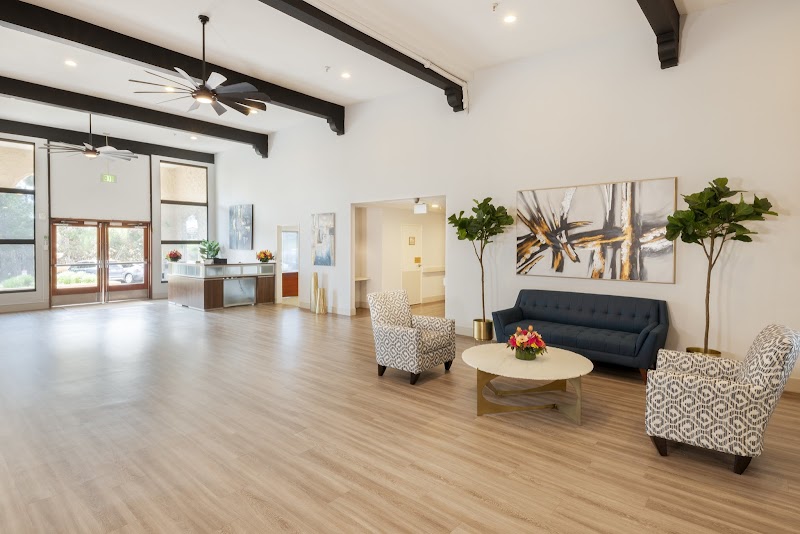
How is Reo Vista Healthcare Center Staffed?

CMS rates REO VISTA HEALTHCARE CENTER's staffing level at 2 out of 5 stars, which is below average compared to other nursing homes. Staff turnover is 40%, compared to the California average of 46%. This relatively stable workforce can support continuity of care.

What Have Inspectors Found at Reo Vista Healthcare Center?

State health inspectors documented 54 deficiencies at REO VISTA HEALTHCARE CENTER during 2019 to 2025. These included: 2 that caused actual resident harm and 52 with potential for harm. Deficiencies causing actual harm indicate documented cases where residents experienced negative health consequences.
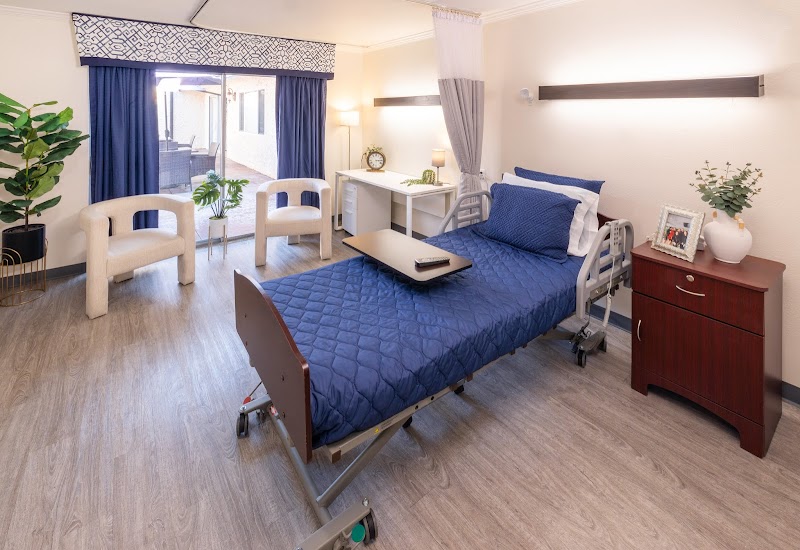
Who Owns and Operates Reo Vista Healthcare Center?

REO VISTA HEALTHCARE CENTER is owned by a for-profit company. For-profit facilities operate as businesses with obligations to shareholders or private owners. The facility is operated by PACS GROUP, a chain that manages multiple nursing homes. With 162 certified beds and approximately 147 residents (about 91% occupancy), it is a mid-sized facility located in SAN DIEGO, California.

How Does Reo Vista Healthcare Center Compare to Other California Nursing Homes?

Compared to the 100 nursing homes in California, REO VISTA HEALTHCARE CENTER's overall rating (4 stars) is above the state average of 3.2, staff turnover (40%) is near the state average of 46%, and health inspection rating (3 stars) is at the national benchmark.

What Should Families Ask When Visiting Reo Vista Healthcare Center?

Based on this facility's data, families visiting should ask: "Can you walk me through typical staffing levels on day, evening, and night shifts?" "Can I visit during a mealtime to observe dining assistance and food quality?" "How do you handle medical emergencies, and what is your hospital transfer rate?" "Can I speak with family members of current residents about their experience?" These questions are particularly relevant given the below-average staffing rating.

Is Reo Vista Healthcare Center Safe?

Based on CMS inspection data, REO VISTA HEALTHCARE CENTER has a clean safety record: no substantiated abuse findings (meaning no confirmed cases of resident harm), no Immediate Jeopardy citations (the most serious violation level indicating risk of serious injury or death), and is not on the Special Focus Facility watch list (a federal program monitoring the lowest-performing 1% of nursing homes). The facility has a 4-star overall rating and ranks #1 of 100 nursing homes in California. While no facility is perfect, families should still ask about staff-to-resident ratios and recent inspection results during their visit.

Do Nurses at Reo Vista Healthcare Center Stick Around?

REO VISTA HEALTHCARE CENTER has a staff turnover rate of 40%, which is about average for California nursing homes (state average: 46%). Moderate turnover is common in nursing homes, but families should still ask about staff tenure and how the facility maintains care continuity when employees leave.

Was Reo Vista Healthcare Center Ever Fined?

REO VISTA HEALTHCARE CENTER has been fined $11,391 across 1 penalty action. This is below the California average of $33,193. While any fine indicates a compliance issue, fines under $50,000 are relatively common and typically reflect isolated problems that were subsequently corrected. Families should ask what specific issues led to these fines and confirm they've been resolved.

Is Reo Vista Healthcare Center on Any Federal Watch List?

REO VISTA HEALTHCARE CENTER is not on any federal watch list. The most significant is the Special Focus Facility (SFF) program, which identifies the bottom 1% of nursing homes nationally based on persistent, serious quality problems. Not being on this list means the facility has avoided the pattern of deficiencies that triggers enhanced federal oversight. This is a positive indicator, though families should still review the facility's inspection history directly.