THE SHORES POST-ACUTE

2828 MEADOWLARK DRIVE, SAN DIEGO, CA 92123 (858) 277-6460
For profit - Corporation 305 Beds LINKS HEALTHCARE GROUP Data: November 2025 1 Immediate Jeopardy citation
Trust Grade
51/100
#700 of 1155 in CA
Last Inspection: December 2024

Within standard 12-15 month inspection cycle. Federal law requires annual inspections.

Overview

The Shores Post-Acute has a Trust Grade of C, which means it is average compared to other facilities, sitting in the middle of the pack. It ranks #700 out of 1155 in California, placing it in the bottom half, and #69 out of 81 in San Diego County, indicating that only a few local options are better. The facility is on an improving trend, having significantly reduced issues from 29 in 2024 to just 2 in 2025. Staffing is rated at 3 out of 5 stars with a low turnover rate of 26%, which is below the state average, suggesting that staff are experienced and familiar with the residents. There have been no fines recorded, which is a positive sign, but there have been serious concerns regarding food safety, including a critical incident where food was prepared during a sewage backflow, risking contamination for many residents. Other findings reveal ongoing issues with food monitoring and kitchen sanitation that could affect residents' health. While there are strengths in staffing stability and a trend of improvement, families should be aware of the serious past deficiencies related to food safety and overall kitchen conditions.

Trust Score
C
51/100
In California
#700/1155
Bottom 40%
Safety Record
High Risk
Review needed
Inspections
Getting Better
29 → 2 violations
Staff Stability
✓ Good
26% annual turnover. Excellent stability, 22 points below California's 48% average. Staff who stay learn residents' needs.
Penalties
✓ Good
No fines on record. Clean compliance history, better than most California facilities.
Skilled Nurses
⚠ Watch
Each resident gets only 18 minutes of Registered Nurse (RN) attention daily — below average for California. Fewer RN minutes means fewer trained eyes watching for problems.
Violations
⚠ Watch
56 deficiencies on record. Higher than average. Multiple issues found across inspections.
★★★☆☆
3.0
Overall Rating
★★★☆☆
3.0
Staff Levels
★★★★☆
4.0
Care Quality
★★★☆☆
3.0
Inspection Score
Stable
2024: 29 issues
2025: 2 issues

The Good

  • 4-Star Quality Measures · Strong clinical quality outcomes
  • Low Staff Turnover (26%) · Staff stability means consistent care
  • Full Sprinkler Coverage · Fire safety systems throughout facility
  • No fines on record
  • Staff turnover is low (26%)

    22 points below California average of 48%

Facility shows strength in quality measures, staff retention, fire safety.

The Bad

3-Star Overall Rating

Near California average (3.1)

Meets federal standards, typical of most facilities

Chain: LINKS HEALTHCARE GROUP

Part of a multi-facility chain

Ask about local staffing decisions and management

The Ugly 56 deficiencies on record

1 life-threatening
Jun 2025 1 deficiency
CONCERN (D) 📢 Someone Reported This

A family member, employee, or ombudsman was alarmed enough to file a formal complaint

Potential for Harm - no one hurt, but risky conditions existed

Medical Records (Tag F0842)

Could have caused harm · This affected 1 resident

**NOTE- TERMS IN BRACKETS HAVE BEEN EDITED TO PROTECT CONFIDENTIALITY** Based on interview and record review, the facility failed to ensure documents were entered into residents' medical records in a ...

Read full inspector narrative →
**NOTE- TERMS IN BRACKETS HAVE BEEN EDITED TO PROTECT CONFIDENTIALITY** Based on interview and record review, the facility failed to ensure documents were entered into residents' medical records in a timely manner when coordination of care was not documented for one of three residents (Resident 1) reviewed for discharge process. These failures had the potential to result in an ineffective transition of care between facilities. Findings: 1. According to the facility's admission Record, Resident 1 was admitted on [DATE] with diagnoses which included Parkinsonism (a condition which results in slowed movements, stiffness, and tremors), and End Stage Renal Disease (a condition in which the kidneys cannot adequately filter waste from the blood) and discharged on 5/15/25. On 6/4/25 at 11:07 A.M., a concurrent interview and record review was conducted with Case Manager (CM) 1. CM 1 stated Resident 1 was discharged to an Assisted Living Facility (ALF-facility that helps residents with Activities of Daily Living such as dressing, grooming) on 5/15/25. CM 1 stated Resident 1 required transportation to dialysis, and this was relayed to the ALF. CM 1 stated she kept records of on her emails and text messages, but did not document any communication with the ALF in Resident 1's chart. CM 1 stated although she had all information of the coordination of care in her emails and text messages, it should have been charted in Resident 1's Electronic Health Record. CM 1 stated it was important to enter information in Resident 1's EHR because it indicated communication was conducted with the receiving facility. During a record review on 6/23/25 at 1:24 P.M., the Case Manager Progress Notes was created on 6/23/25 at 9:57 A.M., and signed on 6/23/25 at 1:06 P.M. During an interview with the Director of Nursing (DON) on 7/1/25 at 9:48 A.M., the DON stated, .[CM 1] is not used to the practice of documenting .moving forward she needs to document no matter what . The DON stated her expectation was for documentation to be entered into residents' medical records. The DON stated although it was a late entry, .if its not documented, its not done. During a record review on 7/1/25, the facility policy titled Transfer or Discharge Documentation revised 12/2016 indicated, When a resident is transferred or discharged , details of the transfer or discharge will be documented in the medical record and appropriate information will be communicated to the receiving health care facility or provider .
Jan 2025 1 deficiency
CONCERN (D) 📢 Someone Reported This

A family member, employee, or ombudsman was alarmed enough to file a formal complaint

Potential for Harm - no one hurt, but risky conditions existed

Deficiency F0660 (Tag F0660)

Could have caused harm · This affected 1 resident

**NOTE- TERMS IN BRACKETS HAVE BEEN EDITED TO PROTECT CONFIDENTIALITY** Based on observation, interview, and record review, the facility failed to develop and implement an effective discharge planning...

Read full inspector narrative →
**NOTE- TERMS IN BRACKETS HAVE BEEN EDITED TO PROTECT CONFIDENTIALITY** Based on observation, interview, and record review, the facility failed to develop and implement an effective discharge planning process for one of three residents (Resident 1) reviewed for discharge. As a result, Resident 1 was re-hospitalized due to ineffective discharge planning and care-giver support related to care. Findings: A review of Resident 1's admission Record indicated Resident 1 was re-admitted to the facility on [DATE] with diagnoses which included a history of cerebral infarction (also known as a stroke; disrupted blood flow to the brain) with left hemiplegia (total paralysis of the arm, leg, and trunk on the same side of the body) and hemiparesis (weakness or the inability to move on one side of the body, making it difficult to perform everyday activities such as eating or dressing) affecting the left side of the body. Resident 1 discharged home on 1/13/25. A record review of Resident 1's minimum data set (MDS - a federally mandated resident assessment tool) dated 12/2/24 indicated, a Brief Interview for Mental Status (BIMS- developed by reviewing the resident's status during the prior seven-day period) score of 15 points out of 15 possible points which indicated Resident 1 did not have cognitive (pertaining to memory, judgement and reasoning ability) deficits. On 1/30/25 at 1:05 P.M., an interview was conducted with the Social Service Director (SSD). The SSD stated that Resident 1 wanted to discharge home, and that she (the SSD) physically visited Resident 1's son in November 2024, to speak with him regarding Resident 1 ' s request to discharge home with him. The SSD stated that the son stated he was fine with Resident 1 returning home, but requested for Resident 1 to have a 24-hour caregiver since he was unable to provide the 24-hour care for his mom due to work and the level of care that she needed. The SSD stated Resident 1 did not qualify for 24-hour caregiver services, and that Resident 1 informed the SSD that Resident 1's former roommate at the facility would live with Resident 1 and be involved with Resident 1 ' s care in exchange for rent assistance at Resident 1 ' s son ' s house. On 1/30/25 at 1:18 P.M., an interview was conducted with Resident 1, in Resident 1 ' s room. Resident 1 stated the facility discharged her to her son ' s home without a care-giver present to assist her. Resident 1 stated the facility did not set me up with a care giver like they told me they would, and when I got home there was nobody to help me, and I need 24-hour care. Resident 1 stated [former roommate name] can ' t help me all on her own. She was not supposed to be my care giver. Resident 1 stated that her son was the one taking care of her but that she returned to the hospital because they (son and son ' s wife) couldn ' t take care of me properly, so I went back to the hospital the next day. On 1/30/25 at 1:43 P.M., a concurrent interview and record review was conducted with the SSD. The SSD stated that she was unable to verbally get confirmation from the son if he would be home on 1/13/25 for when Resident 1 discharged back to his home. The SSD reviewed Resident 1 ' s clinical chart and stated there was no documentation regarding her attempt to reach out to Resident 1 ' s son to confirm if he would be home during Resident 1 ' s discharge date d 1/13/25. The SSD stated Resident 1 required 24-hour care because Resident 1 was not fully independent with care needs, requiring maximal (helper does more than half the effort of lifting) to partial assistance (helper less than half the effort of lifting) with toileting due to incontinence (unable to control urine and feces), and required assistance for incontinent pad changes, transfers, bathing/showers, dressing, and set-up assistance with eating. The SSD stated Resident 1 was unable to walk and required a wheelchair. The SSD stated that prior to discharge, they did not set up any teaching or return demonstration with Resident 1 ' s son or former roommate to assure the safety of Resident 1. The SSD stated she relied on [Care Management Name] to provide the care giver assistance required for Resident 1 ' s care upon discharge. The SSD stated [Care Management Name] would not provide 24-hour care giver services for Resident 1. On 1/30/25 at 3 P.M., an interview was conducted with the Administrator (ADM). The ADM stated it was important for the SSD to ensure that a safe discharge plan was in place and documented to support Resident 1 ' s discharge plan home. On 1/30/25 at 5 P.M., a clinical chart review of Resident 1 ' s discharge care plan was conducted. The discharge care plan initiated 6/12/24, revised 6/12/24 indicated Resident has no plans for discharge. Unable to return home of record. Family unable to care for needs . On 1/31/24 10:06 A.M., a concurrent interview and record review was conducted with the Case Manager (CM) and the SSD. The CM stated that text messages were exchanged between [Care Management Name] for Resident 1 ' s discharge, but was unable to provide clinical documentation to support that Resident 1 would be receiving care giver assistance by [Care Management Name] on the 1/13/25 discharge date home. The SSD stated she was responsible for Resident 1 ' s discharge planning and stated she did not update Resident 1 ' s care plan timely. The SSD stated, it ' s important to update the care plan because it shows that the discharge planning was taking place. The SSD stated that Resident 1 ' s discharge plan did not reflect a safe discharge when [Company Management Name] was not available, because they were not providing 24 hour care-giving assistance. The SSD further stated it was important that the discharge care plan be updated and discussed with those involved with Resident 1 ' s discharge plans to ensure safety, care giver burden, and to prevent re-hospitalizations. On 1/31/25 at 12:06 P.M., an interview was conducted with the Director of Nursing (DON). The DON stated she was unable to find documentation that supported Resident 1 ' s discharge plan of care was updated and planned accordingly by the SSD. The DON stated her expectations for the interdisciplinary team (IDT) discharge process included meeting with Resident 1 and family members involved with Resident 1 ' s discharge care to be thorough and followed up within 24-72 hours. The DON further stated it was important to include care-giver training for Resident 1 as part of the discharge process to make sure Resident 1 ' s care givers can safely provide the necessary care needed for Resident 1 to prevent injuries, re-hospitalizations and care giver burden. A review of the facility's policy and procedure titled DISCHARGING the RESIDENT revised December 2016, indicated .5. If the resident is being discharged home, ensure that resident and/or responsible party receive teaching and discharge instructions . Based on observation, interview, and record review, the facility failed to develop and implement an effective discharge planning process for one of three residents (Resident 1) reviewed for discharge. As a result, Resident 1 was re-hospitalized due to ineffective discharge planning and care-giver support related to care. Findings: A review of Resident 1's admission Record indicated Resident 1 was re-admitted to the facility on [DATE] with diagnoses which included a history of cerebral infarction (also known as a stroke; disrupted blood flow to the brain) with left hemiplegia (total paralysis of the arm, leg, and trunk on the same side of the body) and hemiparesis (weakness or the inability to move on one side of the body, making it difficult to perform everyday activities such as eating or dressing) affecting the left side of the body. Resident 1 discharged home on 1/13/25. A record review of Resident 1's minimum data set (MDS - a federally mandated resident assessment tool) dated 12/2/24 indicated, a Brief Interview for Mental Status (BIMS- developed by reviewing the resident's status during the prior seven-day period) score of 15 points out of 15 possible points which indicated Resident 1 did not have cognitive (pertaining to memory, judgement and reasoning ability) deficits. On 1/30/25 at 1:05 P.M., an interview was conducted with the Social Service Director (SSD). The SSD stated that Resident 1 wanted to discharge home, and that she (the SSD) physically visited Resident 1's son in November 2024, to speak with him regarding Resident 1's request to discharge home with him. The SSD stated that the son stated he was fine with Resident 1 returning home, but requested for Resident 1 to have a 24-hour caregiver since he was unable to provide the 24-hour care for his mom due to work and the level of care that she needed. The SSD stated Resident 1 did not qualify for 24-hour caregiver services, and that Resident 1 informed the SSD that Resident 1's former roommate at the facility would live with Resident 1 and be involved with Resident 1's care in exchange for rent assistance at Resident 1's son's house. On 1/30/25 at 1:18 P.M., an interview was conducted with Resident 1, in Resident 1's room. Resident 1 stated the facility discharged her to her son's home without a care-giver present to assist her. Resident 1 stated the facility did not set me up with a care giver like they told me they would, and when I got home there was nobody to help me, and I need 24-hour care. Resident 1 stated [former roommate name] can't help me all on her own. She was not supposed to be my care giver. Resident 1 stated that her son was the one taking care of her but that she returned to the hospital because they (son and son's wife) couldn't take care of me properly, so I went back to the hospital the next day. On 1/30/25 at 1:43 P.M., a concurrent interview and record review was conducted with the SSD. The SSD stated that she was unable to verbally get confirmation from the son if he would be home on 1/13/25 for when Resident 1 discharged back to his home. The SSD reviewed Resident 1's clinical chart and stated there was no documentation regarding her attempt to reach out to Resident 1's son to confirm if he would be home during Resident 1's discharge date d 1/13/25. The SSD stated Resident 1 required 24-hour care because Resident 1 was not fully independent with care needs, requiring maximal (helper does more than half the effort of lifting) to partial assistance (helper less than half the effort of lifting) with toileting due to incontinence (unable to control urine and feces), and required assistance for incontinent pad changes, transfers, bathing/showers, dressing, and set-up assistance with eating. The SSD stated Resident 1 was unable to walk and required a wheelchair. The SSD stated that prior to discharge, they did not set up any teaching or return demonstration with Resident 1's son or former roommate to assure the safety of Resident 1. The SSD stated she relied on [Care Management Name] to provide the care giver assistance required for Resident 1's care upon discharge. The SSD stated [Care Management Name] would not provide 24-hour care giver services for Resident 1. On 1/30/25 at 3 P.M., an interview was conducted with the Administrator (ADM). The ADM stated it was important for the SSD to ensure that a safe discharge plan was in place and documented to support Resident 1's discharge plan home. On 1/30/25 at 5 P.M., a clinical chart review of Resident 1's discharge care plan was conducted. The discharge care plan initiated 6/12/24, revised 6/12/24 indicated Resident has no plans for discharge. Unable to return home of record. Family unable to care for needs . On 1/31/24 10:06 A.M., a concurrent interview and record review was conducted with the Case Manager (CM) and the SSD. The CM stated that text messages were exchanged between [Care Management Name] for Resident 1's discharge, but was unable to provide clinical documentation to support that Resident 1 would be receiving care giver assistance by [Care Management Name] on the 1/13/25 discharge date home. The SSD stated she was responsible for Resident 1's discharge planning and stated she did not update Resident 1's care plan timely. The SSD stated, it's important to update the care plan because it shows that the discharge planning was taking place. The SSD stated that Resident 1's discharge plan did not reflect a safe discharge when [Company Management Name] was not available, because they were not providing 24 hour care-giving assistance. The SSD further stated it was important that the discharge care plan be updated and discussed with those involved with Resident 1's discharge plans to ensure safety, care giver burden, and to prevent re-hospitalizations. On 1/31/25 at 12:06 P.M., an interview was conducted with the Director of Nursing (DON). The DON stated she was unable to find documentation that supported Resident 1's discharge plan of care was updated and planned accordingly by the SSD. The DON stated her expectations for the interdisciplinary team (IDT) discharge process included meeting with Resident 1 and family members involved with Resident 1's discharge care to be thorough and followed up within 24-72 hours. The DON further stated it was important to include care-giver training for Resident 1 as part of the discharge process to make sure Resident 1's care givers can safely provide the necessary care needed for Resident 1 to prevent injuries, re-hospitalizations and care giver burden. A review of the facility's policy and procedure titled DISCHARGING the RESIDENT revised December 2016, indicated .5. If the resident is being discharged home, ensure that resident and/or responsible party receive teaching and discharge instructions .
Dec 2024 14 deficiencies
CONCERN (D)

Potential for Harm - no one hurt, but risky conditions existed

Resident Rights (Tag F0550)

Could have caused harm · This affected 1 resident

**NOTE- TERMS IN BRACKETS HAVE BEEN EDITED TO PROTECT CONFIDENTIALITY** Based on observation, interview, and record review, the facility failed to ensure dignity related to the use of a urinary cathet...

Read full inspector narrative →
**NOTE- TERMS IN BRACKETS HAVE BEEN EDITED TO PROTECT CONFIDENTIALITY** Based on observation, interview, and record review, the facility failed to ensure dignity related to the use of a urinary catheter bag (a flexible, plastic tube inserted into the body, in order to drain urine to an external collection bag) was maintained for one of three residents' (Resident 218) reviewed for dignity and resident rights. This failure had the potential for Resident 218, to feel embarrassed or humiliated when the draining urine was visible to others. Findings: Resident 218 was readmitted to the facility on [DATE], with diagnoses which included urinary tract infection (infection in the urine), per the facility's admission Record. An observation was conducted on 12/2/24 at 9:23 A.M. Resident 218 was in bed. A urinary catheter bag was clipped to the left side of the bed frame and was visible upon entering the room. The urinary catheter bag was ¼ full of cloudy, pale colored urine. A dignity bag (a dark colored bag which covers the urine collection bag to protect a resident's dignity) was not present. A review of Resident 218's clinical record was conducted on 12/2/24. According to the physician's order, dated 11/18/24, .Catheter: Indwelling urinary (Foley) catheter is in a privacy bag . According to the care plan, dated 11/16/24, titled Indwelling Foley Catheter, listed interventions such as, .cover with dignity bag . An observation and interview was conducted with certified nursing assistant (CNA) 31 on 12/2/24 at 9:25 A.M. CNA 31 observed Resident 218 and stated there was no dignity bag covering the urinary drainage bag, and there should be one. CNA 31 stated Resident 218 returned from the hospital the night before, and someone should have placed a dignity bag when she returned. An interview was conducted with licensed nurse (LN) 32 on 12/2/24 at 9:50 A.M. LN 32 stated that all residents with urinary drainage bags should have the bag covered with a dignity bag to protect the resident's privacy. An interview was conducted with the Director of Nursing (DON) on 12/5/24 at 11:04 A.M. The DON stated that all residents with a urinary catheter should have their bag contained within a dignity bag for the resident's dignity. The DON stated it did not matter if the resident was alert or not, that a resident's dignity should always be protected. According to the facility's policy, titled Quality of Life, dated August 2009, .11. Demeaning practices and standards of care that compromise dignity are prohibited. Staff shall promote dignity and assist residents as needed by: a. Helping the resident to keep urinary catheter bags covered; .
CONCERN (D)

Potential for Harm - no one hurt, but risky conditions existed

Transfer Notice (Tag F0623)

Could have caused harm · This affected 1 resident

**NOTE- TERMS IN BRACKETS HAVE BEEN EDITED TO PROTECT CONFIDENTIALITY** Based on interview and record review, the facility failed to provide a written notice of transfer to a resident's responsible pa...

Read full inspector narrative →
**NOTE- TERMS IN BRACKETS HAVE BEEN EDITED TO PROTECT CONFIDENTIALITY** Based on interview and record review, the facility failed to provide a written notice of transfer to a resident's responsible party (RP) and the Long-Term Care Ombudsman for one of three residents (Resident 296) reviewed for closed records. This deficient practice had the potential for the Resident 296's RP to not be aware of the resident's rights pertaining to transfers. Findings: A review of Resident 296's admission Record indicated the resident was admitted to the facility on [DATE]. A review of Resident 296's Alert Charting dated 9/27/24, indicated the resident was found unconscious and was transferred to the hospital for evaluation. On 12/5/24 at 11:40 A.M., an interview was conducted with the director of nursing (DON). The DON stated she reviewed Resident 296's clinical record and that there was no documentation a written notice of transfer was provided to the resident's RP, nor sent to the Long-Term Care Ombudsman. The DON stated Resident 296's written notice of discharge should have been completed by nursing staff and a copy provided to the resident's RP and the Long-Term Care Ombudsman. A review of the facility's policy titled Transfer or Discharge Notice, revised March 2021, indicated, .4. Under the following circumstances, the notice is given as soon as it is practicable but before the transfer or discharge .d. An immediate transfer or discharge is required by the resident's urgent medical needs .5. The resident and representative are notified in writing of the following information: a. The specific reason for the transfer .b. The effective date of the transfer .c. The location to which the resident is being transferred .d. An explanation of the resident's right to appeal the transfer .6. A copy of the notice is sent to the Office of the State Long-Term Care Ombudsman at the same time the notice of transfer or discharge is provided to the resident and representative .
CONCERN (D)

Potential for Harm - no one hurt, but risky conditions existed

Deficiency F0637 (Tag F0637)

Could have caused harm · This affected 1 resident

**NOTE- TERMS IN BRACKETS HAVE BEEN EDITED TO PROTECT CONFIDENTIALITY** Based on interview and record review, the facility failed to report one of one resident's (Resident 75) sampled for a Significan...

Read full inspector narrative →
**NOTE- TERMS IN BRACKETS HAVE BEEN EDITED TO PROTECT CONFIDENTIALITY** Based on interview and record review, the facility failed to report one of one resident's (Resident 75) sampled for a Significant Change of Condition to the Centers for Medicare and Medicaid Services (CMS, a federal health care agency). This failure had the potential for CMS to not be informed of Resident 75's current health status. Findings: Resident 75 was readmitted to the facility on [DATE], with diagnoses which included sprain to left wrist secondary to fall, per the facility's admission Record. An observation of Resident 75 was conducted on 12/2/24 at 9:42 A.M., in the activity room. Resident 75 was dressed, sitting in a wheelchair, with a plaster-type splint on top and beneath her left wrist. The splint was held in place with a [brand of gauze dressing] wrap near the left forearm. The splint had dark brown/black smudges over the top and bottom areas near the palm of her left hand and wrist. Resident 75's clinical record was reviewed on 12/2/24: According to the SBAR (Situation, Background, Assessment, Recommendation) report, dated 9/26/24, Resident 75 had an unwitnessed fall on 9/26/24 at 7:15 A.M., and complained of left wrist pain. According to the emergency room record, dated 9/26/24, the x-ray indicated soft tissue swelling with severe osteoarthrosis, (degenerative joint disease). According to the physician's order, dated 9/29/24, .Splint to left wrist for support. May remove during ADLs (activities of daily living i.e.[that is/for example], showers, eating, dressing). Check skin integrity for any redness .every shift for sprain . According to the Minimum Data Set (MDS; a clinical assessment tool), dated 10/25/24, titled Significant Change of Condition, the resident was not identified as having any falls. An interview and record review was conducted with the Minimum Data Set Nurse 1 (MDSN 1) on 12/03/24 at 3:59 P.M. MDSN 1 stated Resident 75 had a Significant Change of Condition reported to CMS on 10/25/24, for a G-Tube placement (a small tube that's surgically inserted through the abdomen and into the stomach to provide nutrition, fluids, and medicine). MDSN 1 stated Resident 75's fall should have been captured and reported during the Significant Change of Condition report, but it was missed. The MDSN 1 stated since the fall was missed and not reported, CMS did not have an accurate picture of what was currently going on with the resident. An interview was conducted with the Director of Nursing (DON) on 12/5/24 at 11:04 A.M. The DON stated she expected all MDS data to be accurate, so CMS could be informed of the resident's current status. According to the Resident Assessment Instrument, dated October 2019, Section J1800: any fall since admission with a six month look back period, are required to be reported to CMS. Falls with injury (except major) includes skin tears, abrasions, lacerations, superficial bruises, hematomas, and sprain, any fall-related injury that causes the resident to complain of pain. According to the facility's policy, titled Falls and Fall Risk, Managing, dated March 2018, .definition: According to MDS, a fall is defined as: Unintentionally coming to rest on the ground, floor or lower level .A fall without an injury is still a fall .
CONCERN (D)

Potential for Harm - no one hurt, but risky conditions existed

Deficiency F0657 (Tag F0657)

Could have caused harm · This affected 1 resident

**NOTE- TERMS IN BRACKETS HAVE BEEN EDITED TO PROTECT CONFIDENTIALITY** Based on observation, interview, and record review, the facility failed to update a care plan to include a positioning aide to p...

Read full inspector narrative →
**NOTE- TERMS IN BRACKETS HAVE BEEN EDITED TO PROTECT CONFIDENTIALITY** Based on observation, interview, and record review, the facility failed to update a care plan to include a positioning aide to prevent falls for one of 38 sampled residents (273). As a result, the positioning aide may not have been used consistently among staff caring for Resident 273. Findings: Per the facility's admission record, Resident 273 was admitted to the facility on [DATE] with diagnoses which included dementia (a mental and physical decline), weakness, and repeated falls. On 12/3/24 at 3:50 P.M., an observation of Resident 273 was conducted. Resident 273 was lying in bed. A pillow was under the sheet at the exit of the bed. On 12/4/24 a review of Resident 273's medical record was conducted. There were no orders or care plans that included instructions to place a pillow under the sheet, or for a positioning aide to prevent the resident from falling out of the bed. On 12/4/24 at 10:01 A.M., an interview was conducted with Certified Nursing Assistant (CNA) 3. CNA 3 stated, he often placed a pillow under the sheet. CNA 3 stated, if the pillow were not there, Resident 273 would have gotten out of bed and fallen to the ground. On 12/4/24 at 10:06 A.M., an interview was conducted with Licensed Nurse (LN) 4. LN 4 stated, Resident 273 was at high risk for falls, and placing a pillow under the sheet was necessary to keep him from falling out of bed. On 12/4/24 at 3:52 P.M., an interview was conducted with CNA 22. CNA 22 stated, she did not place a pillow under the sheet when she worked with Resident 273. On 12/5/24 at 1:42 P.M., an interview was conducted with the Director of Nursing (DON). The DON stated, staff were placing a pillow under Resident 273's sheet as a positioning aide to keep him from falling out of bed. The DON further stated, the care plan should have been updated to include the positioning aide. Per the facility's policy, titled Care Plans, Comprehensive Person-Centered, revised March 2022, .The comprehensive, person-centered care plan .describes the services that are to be furnished to attain or maintain the resident's highest .well-being .
CONCERN (D)

Potential for Harm - no one hurt, but risky conditions existed

Pressure Ulcer Prevention (Tag F0686)

Could have caused harm · This affected 1 resident

**NOTE- TERMS IN BRACKETS HAVE BEEN EDITED TO PROTECT CONFIDENTIALITY** Based on observation, interview and record review, the facility failed to provide a low air loss (LAL) mattress (a specialized m...

Read full inspector narrative →
**NOTE- TERMS IN BRACKETS HAVE BEEN EDITED TO PROTECT CONFIDENTIALITY** Based on observation, interview and record review, the facility failed to provide a low air loss (LAL) mattress (a specialized mattress designed to prevent and treat pressure related wounds) for one of two residents (Resident 105) reviewed for pressure injuries (injury to the skin caused by pressure, usually over bony areas). As a result, there was a potential for Resident 105 to develop new wounds and/or for his pressure injuries to become worse. Findings: According to the admission Record, Resident 105 was admitted to the facility on [DATE] with diagnoses which included hemiplegia (weakness on one side of the body) affecting left non-dominant side, pressure ulcer of the back, left upper back, and left hip. On 12/3/24 at 9:35 A.M., Resident 105 was observed laying on his back in bed, on a regular mattress. A review of Resident 105's physician's orders dated 10/22/24 indicated, Apply LAL mattress for wound management/preventive measures. Check placement, settings and functionality QS (every shift). On 12/3/24 at 3:13 P.M., an interview was conducted with the Treatment Nurse (TN). The TN stated Resident 105 needed a low air loss mattress due to multiple pressure injuries. The TN acknowledged Resident 105 did not have a low air loss mattress, but should have had one when he was admitted because it was a physician's order. The TN stated, .It looks like he was overlooked . On 12/4/24 at 11:32 A.M., an interview was conducted with the Wound Nurse Practitioner (WNP). The WNP stated a low air loss mattress was important for Resident 105, .to help distribute the weight and pressure points (bony areas of the body prone to pressure injuries) throughout the body. It would've benefited [Resident 105] to have a low air loss mattress . On 12/5/24 at 10:25 A.M., an interview was conducted with the Director of Nursing (DON). The DON stated her expectation was for the nurses to follow the physician's order for a low air loss mattress. The DON stated, [Resident 105] came in with multiple wounds .if there are wounds present, we don't want the patient to regress (worsen) . A review of Resident 105's care plan dated 10/22/24 indicated, Resident is at risk for pressure injury development and skin breakdown r/t (related to) bony prominences (pressure points) .hx (history) of pressure injury, immobility (difficulty moving) .Apply Low Air Loss Mattress as ordered to relieve pressure points & (and) check placement QS . A review of the facility's policy titled Support Surface Guidelines, revised 9/2013 indicated, .Any individual at risk for developing pressure ulcers should be placed on a redistribution support surface, such as .air-loss .when lying in bed .
CONCERN (D)

Potential for Harm - no one hurt, but risky conditions existed

Accident Prevention (Tag F0689)

Could have caused harm · This affected 1 resident

**NOTE- TERMS IN BRACKETS HAVE BEEN EDITED TO PROTECT CONFIDENTIALITY** 2. Per the facility's admission Record, Resident 259 was admitted to the facility on [DATE] with diagnoses which included mild n...

Read full inspector narrative →
**NOTE- TERMS IN BRACKETS HAVE BEEN EDITED TO PROTECT CONFIDENTIALITY** 2. Per the facility's admission Record, Resident 259 was admitted to the facility on [DATE] with diagnoses which included mild neurocognitive disorder (a decline in mental abilities), malnutrition (a lack of nutrients), and gout (a disorder of joint pain). On 12/2/24 at 8:57 A.M., an observation and interview was conducted with Resident 259. Resident 259 stated that she had problems with her balance. Resident 259 was observed to be standing in her room moving unsteadily from side to side. Certified Nursing Assistant (CNA) 25 came into Resident 259's room and placed a meal tray on the table at the foot of the bed. The table was in the low position and there was no place to sit near the table. CNA 25 left the tray on the table without adjusting the table's position, or asking Resident 259 where she wanted to eat her meal. Resident 259 walked to the table, bent down to reach her plate, and cut and ate her pancakes while standing in a hunched over position. Resident 259 stated that she wished she could sit while eating, but sometimes staff set her meal tray so that she had to stand, bend over her tray, and try to maintain her balance while eating. On 12/2/24 at 9:12 A.M., an interview was conducted with CNA 25. CNA 25 stated, Resident 259 had a problem with her foot which made it difficult for her to walk, and she primarily used a wheelchair when she needed to go somewhere further than across the room. CNA 25 further stated, she thought that Resident 259 would have told her if she wanted to sit while eating. On 12/4/24 at 4:02 P.M., an interview was conducted with CNA 2. CNA 2 stated, Resident 259 ate her meals while sitting in the wheelchair or on the bed, but never standing. CNA 2 further stated, Resident 259 wobbled while standing and had an increased risk for falls. CNA 2 stated, she did not think it was safe for Resident 259 to eat while standing and leaning over the table. On 12/5/24 at 8:48 A.M., an interview was conducted with the Director of Nursing (DON). The DON stated, a resident could eat while standing if they requested it, but otherwise the CNA should have set up Resident 259's meal so that she could safely sit while eating. The facility did not have a policy on setting up resident meal trays. Based on observation, interview, and record review, the facility failed to complete a quarterly safe Smoking Assessment, and ensure a resident's meal was set to ensure safety while eating, for two of 38 sampled resident's (283, 259). As a result, residents were placed at an increased risk of injury. Findings: 1. Resident 283 was admitted to the facility on [DATE], with diagnoses which include chronic kidney disease (when the kidneys are damaged and cannot filter blood toxins properly), per the facility's admission Record. An observation and interview was conducted with Resident 283 in his room on 12/2/24 at 8:29 A.M. Resident 283 was standing up, dressed, and checking his watch, stating I can go and smoke at 9 A.M. Resident 283's clinical record was reviewed on 12/3/24: According to the Minimum Data Set (MDS; a clinical assessment tool) dated 7/29/24, a cognitive score of 14 was listed, indicating cognition was intact. An initial Smoking assessment dated [DATE] was reviewed. The assessment indicated the resident was identified as a smoker and required supervision. There was no documented evidence a quarterly safe Smoking Assessment (due 10/2024) had been conducted after the initial assessment (7/29/24). An interview and record review was conducted with Licensed Nurse (LN) 32, on 12/4/24 at 8:05 A.M., regarding Resident 283's smoking assessment. LN 32 stated she did not see a quarterly smoking assessment, only the initial smoking assessment was completed. LN 32 stated quarterly assessments were important to ensure the resident could smoke safely and to identify any deterioration in their function, such as holding cigarettes. LN 32 stated Minimum Data Set Nurse (MDSN) 1 was responsible for quarterly assessments. An interview and record review was conducted with MDSN 1 on 12/4/24 at 8:57 A.M., regarding smoking assessments. MDSN 1 stated the Activities Director, conducted the quarterly smoking assessments, since they were the ones who monitored the resident who smoked. MDSN 1 stated quarterly smoking assessments needed to be completed because a resident's condition could have deteriorated, which would put them at a higher risk for injury, while smoking. MDSN 1 reviewed Resident 283's assessments and stated a quarterly smoking assessment was due on 10/29/24, and he could not see that one was completed. MDSN 1 stated all residents who smoked should have had quarterly smoking assessments completed. An interview and record review was conducted with the Activities Director (AD) on 12/4/24 at 9:49 A.M. The AD stated she did (completed/conducted) all quarterly smoking assessments for residents who smoked, which was every four months. The AD stated she observed the residents during smoking sessions, noted any changes, and then she discussed the observations with LNs and the social worker. The AD reviewed Resident 283's assessments and stated Resident 283 should have had a quarterly smoking assessment completed in October 2024, and she could not see that one was completed. The AD stated, I missed it. The AD stated Resident 283's health could have declined. The AD stated by not completing the quarterly smoking assessment, Resident 283 could have been harmed. An interview was conducted with the Director of Nursing (DON) on 12/5/24 at 11:04 A.M. The DON stated by not completing a quarterly Smoking Assessment, there could have been a safety issue and potential harm occurring to Resident 283. According to the facility's policy, titled Smoking Policy-Residents, dated August 2022, .8. A resident's ability to smoke safely is re-evaluated quarterly, upon a significant change (Physical or cognitively) and as determined by staff .
CONCERN (D)

Potential for Harm - no one hurt, but risky conditions existed

Pharmacy Services (Tag F0755)

Could have caused harm · This affected 1 resident

**NOTE- TERMS IN BRACKETS HAVE BEEN EDITED TO PROTECT CONFIDENTIALITY** Based on observation, interview, and record review, the facility failed to ensure a physician's order was followed for one of fo...

Read full inspector narrative →
**NOTE- TERMS IN BRACKETS HAVE BEEN EDITED TO PROTECT CONFIDENTIALITY** Based on observation, interview, and record review, the facility failed to ensure a physician's order was followed for one of four residents observed during medication administration, when Resident 58's medication was held (not administered) without an order. This failure had the potential for Resident 58's needs to go unmet. Findings: Resident 58 was admitted to the facility on [DATE] with a diagnosis including hypertensive chronic kidney disease (a cycle where kidney damage leads to high blood pressure and high blood pressure leads to kidney damage) per the admission Record. A medication administration observation was conducted on 12/4/24 at 9:49 A.M. Licensed Nurse (LN) 13 administered medications to Resident 58. However, LN 13 did not administer prazosin (a medication used to treat high blood pressure in patients with kidney disease) to Resident 58. A review of Resident 58's active physician's orders was conducted on 12/4/24, which indicated prazosin was ordered starting on 6/27/24. There were no hold parameters ordered (a physician's order indicating when a licensed nurse would not give the medication). A review of Resident 58's medication administration record indicated the medication was scheduled to be given at 9 A.M. An interview with LN 13 was conducted on 12/4/24 at 11:42 A.M. LN 13 stated that prazosin was held even though there were no hold parameters. LN 13 stated he had not yet notified the physician that prazosin was held. An interview with the Director of Nursing (DON) was conducted on 12/5/24 at 9:20 A.M. The DON stated it was their expectation for the nurse to notify the physician right away if a medication was held and there were no hold parameters, so as not to delay the administration of the medication. A review of the facility's policy, titled Administering Medications, revised 4/2019, indicated .4. Medications are administered in accordance with prescriber orders, including any required time frame .7. Medications are administered within one (1) hour of their prescribed time .
CONCERN (D)

Potential for Harm - no one hurt, but risky conditions existed

Deficiency F0761 (Tag F0761)

Could have caused harm · This affected 1 resident

**NOTE- TERMS IN BRACKETS HAVE BEEN EDITED TO PROTECT CONFIDENTIALITY** Based on observation, interview, and record review, the facility failed to ensure one of 38 sampled residents' (145) medication ...

Read full inspector narrative →
**NOTE- TERMS IN BRACKETS HAVE BEEN EDITED TO PROTECT CONFIDENTIALITY** Based on observation, interview, and record review, the facility failed to ensure one of 38 sampled residents' (145) medication was properly stored when a medication was left unattended at the bedside. This failure had the potential for medication misuse and/or unauthorized person to have access, take/use the medication wrongfully. Findings: Resident 145 was re-admitted to the facility on [DATE] with diagnoses which included a history of atherosclerotic heart disease (a condition that could lead to heart attacks), per the admission Record. On 12/3/24 at 8:04 A.M., an observation and interview was conducted with Licensed Nurse (LN) 56, in Resident 145's room. Resident 145 was asleep with bed linens covering his head. Next to Resident 145's bed was his bedside table, that had two cups containing red juice, and an unlabeled medication cup that contained an oval shaped yellow pill. LN 56 stated that the medication cup with the pill should not have been left unattended because that was not a safe practice. LN 56 stated leaving a medication unattended could also be a safety concern for other residents or anyone visiting Resident 145's room because someone might take the pill without permission and have an allergic reaction. LN 56 stated LN's should not leave the medications unattended because it was their responsibility to make sure that the medications prescribed had been taken according to the five rights (common nursing guidance on how to administer resident medications to match the correct resident, route, dosage, reason, and documentation) of medication administration, and monitored to prevent for any side effects. On 12/5/24 at 8:29 A.M., an interview was conducted with LN 52. LN 52 reviewed a picture of Resident 145's bedside table with an unattended medication. LN 52 stated medications should not have been left unattended for any reason. LN 52 stated it was important to witness Resident 145 take the medication for his safety. LN 52 stated that leaving an unattended medication at the bedside would be a safety concern because someone else could have taken the medication. LN 52 further stated, if the medication was documented as being given but was actually not, staff would not know if they were giving the resident the correct amount of medication. On 12/5/24 at 9:26 A.M., an interview was conducted with the Director of Nursing (DON). The DON stated her expectations for the LN's was to not leave any medications unattended at the bedside and to store medications appropriately for safety. The DON stated medications left unattended caused a safety concern for other residents, visitors or staff. The DON further stated, unattended medication may cause a medication divergence (medication is taken for use by someone other than whom it is prescribed) and/or cause an allergic reaction if someone else took the medication other the prescribed resident. A review of the facility's policy and procedure titled STORAGE OF MEDICATIONS, revised November 2020, indicated .The facility stores all drugs and biologicals in a safe, secure, and orderly manner .
CONCERN (D)

Potential for Harm - no one hurt, but risky conditions existed

Deficiency F0806 (Tag F0806)

Could have caused harm · This affected 1 resident

**NOTE- TERMS IN BRACKETS HAVE BEEN EDITED TO PROTECT CONFIDENTIALITY** Based on observation, interview, and record review, the facility failed to provide food that accommodated resident's preferences...

Read full inspector narrative →
**NOTE- TERMS IN BRACKETS HAVE BEEN EDITED TO PROTECT CONFIDENTIALITY** Based on observation, interview, and record review, the facility failed to provide food that accommodated resident's preferences for one of 38 sampled residents (51). This failure resulted with Resident 51 receiving coffee which was listed as a food the resident disliked. Findings: Resident 51 was re-admitted to the facility on [DATE] with diagnoses which included a history of congestive heart failure (CHF-a heart disorder which causes the heart to not pump the blood efficiently, sometimes resulting in leg swelling), per the admission Record. On 12/2/24 at 11:55 A.M., an interview was conducted with Resident 51, in Resident 51's room. Resident 51 stated that he did not eat his breakfast because he liked to eat pancakes with two butter packets. Resident 51 stated that he preferred to be given two butter packets on his breakfast tray but they [the facility staff] always forget. On 12/2/24 at 1:10 P.M., an observation and interview was conducted with Resident 51, in Resident 51's room. Resident 51 was in bed sitting in an upright position with his food tray on his bedside table. Resident 51 had coffee on his food tray and stated, it says right here on my meal ticket, dislikes coffee, and they still serve it to me. A clinical chart review of Resident 51's nutritional evaluation, dated 10/30/23, titled Food Preference, indicated, Food Intolerances . coffee. On 12/5/24 at 8:35 A.M., an interview was conducted with Certified Nursing Assistant (CNA) 54. CNA 54 stated he was assigned to Resident 51 and stated it was important to double check any facility residents' meal tickets to make sure their preferences were accommodated. CNA 54 stated that the nursing staff were the ones placing coffee on the food trays prior to passing the food trays to the facility residents. CNA 54 reviewed a picture of Resident 51's food tray and meal ticket that was taken on 12/2/24 and stated, it was inappropriate to place coffee on Resident 51's food tray because it was on Resident 51's dislikes list. CNA 54 stated Resident 51 would get mad and that it was common sense to make sure not to place coffee on his food tray because Resident 51 had prior episodes of getting mad when his preferences were not honored. On 12/5/24 at 8:42 A.M., an interview was conducted with CNA 55. CNA 55 stated she was familiar with Resident 51 and stated, he does not like coffee. CNA 55 stated that the CNAs were responsible for pouring out the coffee for residents and that the CNAs should have been looking at the meal tickets to make sure that preferences were accommodated and not served with dislikes. CNA 55 stated coffee should not have been placed on Resident 51's food tray because he would get mad at the staff who gave it to him. On 12/5/24 at 8:47 A.M., an interview was conducted with Licensed Nurse (LN) 52. LN 52 stated it was the CNAs and not the kitchen staff that passed out coffee. LN 52 stated it was important to check Resident 51's meal ticket to make sure they didn't serve him coffee because it was on his dislikes list. LN 52 stated Resident 51 had been assigned to her for a while and she knew that Resident 51 did not like coffee and that he would get upset because he was very particular with his meals. On 12/5/24 at 9:45 A.M., an interview was conducted with the Director of Nursing (DON). The DON reviewed a picture of Resident 51's meal ticket and food tray taken on 12/2/24. The DON stated it was her expectations for the nursing staff to honor Resident 51's food preference and not have the coffee placed on his food tray. The DON stated Resident 51 would get upset and it was understandable that Resident 51 yelled at the nursing staff. A review of the facility's policy and procedure titled MENUS revised October 2017, indicated .Menus are developed and prepared to meet resident choices .Menu items and available snacks reflect the . preferences of the residents .
CONCERN (D)

Potential for Harm - no one hurt, but risky conditions existed

Medical Records (Tag F0842)

Could have caused harm · This affected 1 resident

**NOTE- TERMS IN BRACKETS HAVE BEEN EDITED TO PROTECT CONFIDENTIALITY** 2. According to the admission Record, Resident 105 was admitted to the facility on [DATE] with diagnoses which include hemiplegi...

Read full inspector narrative →
**NOTE- TERMS IN BRACKETS HAVE BEEN EDITED TO PROTECT CONFIDENTIALITY** 2. According to the admission Record, Resident 105 was admitted to the facility on [DATE] with diagnoses which include hemiplegia (weakness on one side of the body) affecting the left non-dominant side, pressure ulcer (wound caused by prolonged pressure) of unspecified part of back, left upper back, and the left hip. On 12/3/24 at 9:35 A.M., Resident 105 was observed laying on his back in bed, on a regular mattress. A review of Resident 105's physician's orders, dated 10/22/24 indicated, Apply LAL (low air loss, pressure relieving) mattress for wound management/preventive measures. Check placement, settings and functionality QS (every shift). On 12/3/24 at 3:13 P.M., a concurrent interview and review of Resident 105's electronic Medication Administration Records (eMAR) dated 10/23/24 to 12/1/24 was conducted with the Treatment Nurse (TN). The eMAR indicated that from 10/23/24 through 12/1/24, licensed nurses on all shifts documented that they verified the function, placement, and settings of Resident 105's low air loss mattress. The TN acknowledged Resident 105 had a physician's order for a low air loss mattress with a start date of 10/22/24, but that the mattress was not provided to the resident until 12/3/24. On 12/5/24 at 8:35 A.M., a concurrent interview and record review was conducted with Licensed Nurse (LN) 42. LN 42 acknowledged she documented the placement, settings, and function of Resident 105's low air loss mattress on the following dates: 10/24/24, 11/11/24, 11/21/24, and 11/29/24. LN 42 stated she documented (about) the low air loss mattress without checking the placement, settings and function. LN 42 stated it was important to document accurately and, .In this case it could've been very bad for him .We could've caused more wounds . LN 42 stated she should not have documented for a low air loss mattress (on 10/24/24, 11/11/24, 11/21/24, and 11/29/24) when the resident was not provided with one until 12/3/24. On 12/5/24 at 10:25 A.M., an interview was conducted with the Director of Nursing (DON). The DON stated her expectation was for nursing documentation to be accurate and to reflect what nursing care/interventions were being provided to the resident. The DON stated, [The licensed nurses] need to verify .they're not documenting the services being provided .it's important to be accurate [when documenting] . A review of the facility policy titled Charting and Documentation, revised July 2017 indicated, All services provided to the resident .shall be documented in the resident's medical record .Documentation in the medical record will be .complete, and accurate . Based on observation, interview, and record review, the facility failed to accurately document a resident's current status for two of 38 sampled residents (183, 105) when: 1. A post (after) dialysis (a procedure that removes toxins from the blood since the kidneys are unable to provide that function) assessment did not accurately reflect Resident 183's access site (a surgically created connection to the blood stream that allowed blood to be cleaned and returned to the body during dialysis), when reviewed for dialysis; 2. A low air loss mattress (pressure relieving mattress) was not accurately documented on the electronic medication administration record (eMAR) (Resident 105); This failure had to potential to not accurately represent the residents' (183, 105) current medical record. Findings: 1. Resident 183 was admitted to the facility on [DATE], with diagnoses which included acute kidney failure (a sudden decline in kidney function), per the facility's admission Record. Resident 183's clinical record was reviewed on 12/4/24: According to the physician's order, dated 5/20/24, ., monitor tunneled access site on right chest wall for sign/symptoms of infection, bleeding, redness, pain, discharge .Dialysis: when patient RETURNS from dialysis check dressing and access site for any bleeding and REINFORCE dressing . The facility's Dialysis Communication sheets were reviewed from 11/1/24 through 12/4/24. On the post (when resident returns from dialysis) Dialysis Communication sheets dated 11/6/24 and 11/20/24, the right chest wall central (an access site that goes directly into a large vein) line, was documented to have a thrill (a buzz-like or vibration feel caused by blood flowing through an artery/vein surgically connected) and bruit (a whooshing sound that indicated the artery/vein connection is working properly). An interview and record review was conducted with Licensed Nurse (LN) 32 on 12/4/24 at 3:33 P.M. LN 32 stated Resident 183 went to dialysis three times a week. LN 32 stated Resident 183 had a central line and did not have a shunt (arterial/vein surgical connection as an access site). LN 32 reviewed the facility's post Dialysis Communication sheets, dated 11/6/24 and 11/20/24. LN 32 stated the access site documentation was inaccurate because Resident 183 did not have a shunt, so it was impossible to feel a thrill or listen to a bruit. LN 32 stated Resident 183 had a central line, which does not produce a thrill or a bruit. LN 32 stated, LN 36 documented the thrill and Bruit on 11/6/24, and she (LN 36) was not available. An interview was conducted with LN 34 on 12/4/24 at 3:43 P.M., regarding post dialysis assessments for central lines versus shunts. LN 34 stated central lines had no bruit or thrill, because they were a central line inserted directly into a vein. LN 34 stated central lines needed to be monitored for infection, bleeding or pain. LN 34 stated shunts had bruit and thrills because it was a pulsing connection between an artery and a vein. LN 34 stated that one would access shunts by feeling for a thrill and listening for a bruit. An interview was conducted with the Director of Staff Development (DSD) on 12/4/24 at 3:47 P.M. The DSD stated since she had been at the facility (2 years) she had not provided any in-services related to dialysis care or post assessments. An interview and record review of Resident 183's post Dialysis Communication sheet, dated 11/20/24, was conducted with LN 37 on 12/4/24 at 4:11 P.M. LN 37 verbalized assessing a shunt for bruit/thrill and a central line for signs of infection/bleeding. LN 37 stated he had cared for Resident 183 several times and was aware the resident had a central line in his chest. LN 37 reviewed the post Dialysis Communication sheet dated 11/20/24, and stated, he must have been in a hurry, because he knew a central line did not have a thrill and bruit. LN 37 stated it was important to accurately document a resident's current condition, and he did not, on that day. An interview was conducted with the Director of Nursing (DON) on 12/5/24 at 11:04 A.M. The DON stated, documentation in a resident's chart needed to be accurate in order to reflect the resident's current assessment. According to the facility's policy, titled Hemodialysis Access Care, dated September 2010, .Documentation: The Licensed Nurse should document in the resident's medical record before and after dialysis treatment as follows: 1. Location of catheter. 2 Condition of dressing .5. Observation post dialysis .
CONCERN (E)

Potential for Harm - no one hurt, but risky conditions existed

Comprehensive Care Plan (Tag F0656)

Could have caused harm · This affected multiple residents

**NOTE- TERMS IN BRACKETS HAVE BEEN EDITED TO PROTECT CONFIDENTIALITY** 5. A review of Resident 145's admission Record indicated Resident 145 was re-admitted to the facility on [DATE] with diagnoses w...

Read full inspector narrative →
**NOTE- TERMS IN BRACKETS HAVE BEEN EDITED TO PROTECT CONFIDENTIALITY** 5. A review of Resident 145's admission Record indicated Resident 145 was re-admitted to the facility on [DATE] with diagnoses which included a history of adult failure to thrive (a gradual decline in overall health caused by illnesses, depression, or social isolation). On 12/2/24 at 10:27 A.M., an interview was conducted with Resident 145, in Resident 145's room. Resident 145 had a lamp table on the right side of his bed that had a compact disc (CD) case and a CD player placed on top of the table. Resident 145 stated he liked to listen to music and chat on the phone with his daughters and walk around outside, but has not done any activities for a while. Resident 145 stated he was unable to enjoy his own music at times, because he would not be able to hear it due to the roommate's music or television noise. Resident 145 stated that the facility did not give him headphones or asked if he wanted to use headphones to enjoy his music and stated that was the reason why he just wanted to lay in bed most of the time. On 12/3/24 at 3:40 P.M., an interview was conducted with Resident 145, in Resident 145's room. Resident 145 was lying in bed resting and stated he did not participate in any activities for the last two days. Resident 145 stated that his roommate's television (TV) had been on most of the day and it was a bit loud but he did not notify the staff about the noise because, no one listens. On 12/3/24 at 3:54 P.M., an interview was conducted with Certified Nurse Assistant (CNA) 53. CNA 53 stated that she had been assigned to Resident 145 on more than one occasion and that Resident 145 also liked to listen to music just like his roommate. CNA 53 stated that Resident 145 did not have headphones. On 12/4/24 at 8:36 A.M., an interview was conducted with Resident 145, in Resident 145's room. Resident 145 denied doing any activities that he enjoyed and stated he had not chatted with his daughters because the facility phone was out of reach and not on top of his lamp table until that day. Resident 145 stated that he really wanted to go outside to enjoy the outdoors instead of being in his room most of the day. On 12/4/24 at 3:31 P.M., a concurrent interview and record review was conducted with the Activities Assistant (AA) and the Activities Director (AD). The AA stated Resident 145 did not participate in any group activities from November to December of this year. The AA stated Resident 145 liked listening to his music CD's but did not have headphones to enjoy them without disturbing his other roommates. The AA stated if she were in Resident 145's shoes (place/situation) and was unable to enjoy the music she wanted, this would make her feel sad. The AD stated that Resident 145's preferred activities should have been incorporated into his care plan for personalization. The AD stated that care plans were revised quarterly and should have been based on the activities that Resident 145 enjoyed. The AD stated that the care plan was last updated on 10/11/24, but was generic and did not include person-centered activities such as music, outdoor, and physical activities that Resident 145 liked to do. On 12/5/24 at 9:31 A.M., an interview was conducted with the Director of Nursing (DON). The DON stated that Resident 145's care plan should have reflected the activities that he enjoyed, such as his music, outdoors activities, telephone/visits with his daughters. The DON stated Resident 145's care plan should have been person-centered and not generic. A review of the facility's policy and procedure, titled CAREPLANS, COMPREHENSIVE PERSON-CENTERED, Revised March 2022, indicated .7. The comprehensive, person-centered care plan .b. describes the services that are to be furnished to attain or maintain the resident's highest practicable physical, mental, and psychosocial well-being . 3. Per the facility's admission Record, Resident 95 was admitted to the facility on [DATE] with diagnoses which included dementia (a mental and physical decline). On 12/2/24 at 9:22 A.M., an observation was conducted. Resident 95 was lying in bed. Two medication patches were adhered on his left shoulder. The patches were both labeled rivastigmine (a medication to treat dementia). One patch was dated 11/30, and the other was dated 12/2. Per the facility's Order Details, there was an order for Resident 95 dated 1/8/24 for, .Rivastigmine transdermal (a medication delivered through the skin) patch 24 hour .Apply 1 patch .one time a day .and remove per schedule . On 12/2/24 at 10:08 A.M., a concurrent observation and interview was conducted with Licensed Nurse (LN) 34. LN 34 stated, he thought he removed the old rivastigmine patch when he applied the new one that morning, but he might have forgotten to remove it. LN 34 further stated, when they applied a new patch of rivastigmine, they should have removed the old one, and he should only have had one patch on at a time. On 12/5/24 at 8:53 A.M., an interview was conducted with the Director of Nursing (DON). The DON stated, when a nurse placed a new medication patch, they should have removed the old one. The DON further stated, it would not have been okay for a resident to have two medication patches on at once. Per the facility's policy, titled Administering Topical Medications, revised October 2010, .b. Remove old patch . 4. Per the facility's admission Record, Resident 95 was admitted to the facility on [DATE] with diagnoses that included dementia (a mental and physical decline) and contracture (a shortened muscle preventing movement of the joint) of the legs. On 12/2/24 at 9:22 A.M., an observation was conducted. Resident 95 was lying on a pressure relieving mattress which was set to 170. Per the facility's Order Details, Resident 95 had an order dated 2/1/24 for, SETTINGS: 150 Apply LAL (low air-loss. Pressure relieving) mattress for wound management/preventive measures. Check placement, settings and functionality QS (every shift). On 12/4/24 at 12:28 P.M., an interview was conducted with Licensed Nurse (LN) 34. LN 34 stated, Resident 95's pressure relieving mattress should have been set to 150. On 12/5/24 at 8:51 P.M., an interview was conducted with the Director of Nursing (DON). The DON stated, pressure relieving mattresses should have been set to the manufacturers guidance, and to the resident's weight. The facility's policy, titled Support Surface Guidelines, revised September 2013 did not have directions on what settings to use for a pressure relieving mattress. Based on observation, interview, and record review, the facility failed to develop and implement care plans for four of 38 sampled residents (264, 283, 95, 145) when: 1. A care plan for potential fluid overload (when a resident has too much fluid in their system) was not developed for a resident who was on fluid restrictions; 2. A care plan for safe smoking was not developed; 3. A medication patch was not removed before applying a new patch; 4. A pressure relieving mattress was not set to the correct setting; and 5. A personalized care plan for activities was not developed. These failures had a potential for inconsistent care, while approaches for interventions were not being conducted by staff. Findings: 1. Resident 264 was readmitted to the facility on [DATE], with diagnoses which include emphysema, (a chronic lung disease that damages the air sacs in your lungs, making it difficult to breathe), and arteriosclerotic heart disease (a condition of reduced blood flow and oxygen to the heart muscle), per the facility's admission Record. Resident 264's clinical record was reviewed on 12/3/24: The Minimum Data Set (a clinical assessment tool), dated 10/28/24, listed a cognitive score of 11, indicating moderate cognitive impairment. According to the physician's order, dated 9/6/24, Fluid restriction 1500 milliliters (ml)/24 hours dietary. The Medication Administration Record (MAR) was reviewed from 11/1/24 through 12/4/24. Three of the 34 days had over the limit of 1500 ml in a 24 hour period. (11/6/24 totaled 1660 ml, 11/28/24 totaled 1600 ml, and 12/2/24 totaled 1560 ml). There was no documented evidence a care plan for fluid overload, or fluid restrictions was developed. An interview and record review was conducted with licensed nurse (LN) 33 on 12/4/24 at 9:03 A.M. regarding Resident 264's fluid restriction. LN 33 stated if a resident went over their fluid limit, the nurse should have contacted the physician and document it in the nurse's notes. LN 33 reviewed Resident 264's nurse's notes for 11/6/24, 11/28/24, and 12/2/24, and stated there were no nurse's notes indicating the physician had been notified. LN 33 stated residents on fluid restrictions were at risk for respiratory problems such as their lungs filling with excess fluid. LN 33 stated the resident could also experience heart problems, and ankle swelling from too much fluid. LN 33 stated this resident did not always comply with the fluid restrictions and there should have been a care plan for non-compliance, along with the risk of fluid overload. An interview and record review of Resident 264's care plans was conducted with LN 32 on 12/04/24 at 9:19 A.M. LN 32 stated Resident 264 was on fluid restrictions and the resident's care plans were reviewed. LN 32 stated she could not locate a care plan related to fluid overload, fluid restrictions, or for non-compliance of fluid restrictions. LN 32 stated care plans were important for goals and consistent interventions. LN 32 stated by not having a care plan, the resident was at risk for respiratory problems, heart problems, and weight gain, which could put him at risk of harm. An interview was conducted with the Director of Nursing (DON) on 12/5/24 at 11:04 A.M. The DON stated care plans needed to be developed and followed for consistent approaches of interventions. According to the facility's policy, titled Care Plans, Comprehensive Person-Centered, dated December 2016, .7. The comprehensive, person-centered care plan will: .g. Incorporate identified problem areas; h. Incorporate risk factors associated with identified problems; .k. reflect treatment goals, timetables and objectives in measurable outcomes; .m. Aid in preventing or reducing decline in the resident's functional status and/or functional levels; . 2. Resident 283 was admitted to the facility on [DATE], with diagnoses which include chronic kidney disease (when the kidneys are damaged and cannot filter blood toxins properly), per the facility's admission Record. An observation and interview was conducted with Resident 283 in his room on 12/2/24 at 8:29 A.M. Resident 283 was standing up, dressed, and checking his watch, stating I can go and smoke at 9 A.M. Resident 283's clinical record was reviewed on 12/03/24: According to the Minimum Data Set (a clinical assessment tool) dated 7/29/24, a cognitive score of 14 was listed, indicating cognition was intact. An initial Smoking assessment dated [DATE] was reviewed. The assessment indicated the resident was identified as a smoker and required supervision. Section 9 of the smoking assessment indicated a Plan of Care was being used to assure Resident 283 was safe while smoking. There was no documented evidence a plan of care for safe smoking had been developed. An interview and record review was conducted with licensed nurse (LN) 32 on 12/4/24 at 8:05 A.M., regarding Resident 283's care plan and smoking assessment. LN 32 stated care plans for smoking were important to identify strengths and weakness, so goals and interventions could be implemented. LN 32 reviewed Resident 283's care plans and stated she could not find any documented evidence a care plan for safe smoking had been developed. An interview and record review was conducted with Minimum Data Set Nurse (MDSN) 1 on 12/4/24 at 8:57 A.M., regarding Resident 283's smoking. MDSN 1 stated all resident's that smoke, should have had a smoking care plan. MDSN 1 reviewed Resident 283's care plans and stated he could not locate a care plan related to smoking. An interview was conducted with the Director of Nursing (DON) on 12/5/24 at 11:04 A.M. The DON stated Resident 283 should have had a care plan for smoking, to ensure his safety needs were being met. According to the facility's policy, titled Care Plans, Comprehensive Person-Centered, dated December 2016, .7. The comprehensive, person-centered care plan will: .g. Incorporate identified problem areas; h. Incorporate risk factors associated with identified problems; .k. reflect treatment goals, timetables and objectives in measurable outcomes; .m. Aid in preventing or reducing decline in the resident's functional status and/or functional levels; . According to the facility's policy, titled Smoking Policy-Residents, dated August 2022, .Any smoking-related privileges, restrictions, and concerns (for example, need for close monitoring) are noted on the care plan, and all personnel caring for the resident shall be alerted to these issues .
CONCERN (E)

Potential for Harm - no one hurt, but risky conditions existed

Food Safety (Tag F0812)

Could have caused harm · This affected multiple residents

**NOTE- TERMS IN BRACKETS HAVE BEEN EDITED TO PROTECT CONFIDENTIALITY** Based on observation, interview, and record review, the facility failed to ensure safe food handling practices when: 1. Fruit w...

Read full inspector narrative →
**NOTE- TERMS IN BRACKETS HAVE BEEN EDITED TO PROTECT CONFIDENTIALITY** Based on observation, interview, and record review, the facility failed to ensure safe food handling practices when: 1. Fruit was not labeled and dated when prepared and placed in one of four refrigerators (reach-in refrigerator #1); 2. Food was not labeled and dated when placed in one of five resident refrigerators (Station 5); 3. A temperature log for one of five resident refrigerators (Station 3) was incomplete; and, 4. Dishwasher (DSWH) 1 and DSWH 2 did not perform hand hygiene after disposing trash. These failures had the potential to cause food-borne illness to residents. Findings: 1. An interview and observation of the kitchen's reach-in refrigerator #1 was conducted with the Registered Dietician (RD) during the initial kitchen tour on 12/2/24 at 7:42 A.M. On the bottom right of the refrigerator were two clean plastic containers with lids. One container contained a ½ cut and peeled cantaloupe. The second larger container contained two large chunks of cut and peeled watermelon. No dates were on either container, indicating when the fruit was received, cut, prepared, and placed in the refrigerator. The RD stated the fruit could have been expired and no one would have known, since it was not dated and labeled. According to the facility's policy, titled Labeling and Dating of Food, dated 2023, .All prepared foods need to be covered, labeled, and dated. Produce is to be dated with received date. Leftovers will be covered, labeled, and dated . 2. An interview and observation of Station 5's refrigerator was conducted with Certified Nursing Assistant (CNA) 32 on 12/2/24 at 3:12 P.M. Inside the resident refrigerator was a glass container, labeled cheese dip. The jar was ¼ consumed and on the outside, written in black felt pen was #5XX, E. BXXX. CNA 32 stated the cheese dip jar was not labeled with the date of when it was opened and room [ROOM NUMBER]XX had a different resident in it. CNA 32 stated she did not know who E. BXXX was, and most likely that resident had been discharged . CNA 32 stated the resident food was not labeled correctly and should have been thrown away. An interview was conducted with the RD on 12/3/24 at 9:35 A.M. The RD stated all resident food needed to be dated and labeled with the resident's name, when placed in the resident refrigerator. The RD stated since the cheese dip jar was not dated when it was opened, no one knew how long it had been sitting in the refrigerator and it could have been unsafe to eat. According to the facility's undated policy, titled Bringing in Food for a Resident, .Food or Beverages should be labeled and monitored .Unused food will be discarded within 2 days . 3. An interview and observation of the temperature log for Station 3's resident refrigerator was conducted with licensed nurse (LN) 34 on 12/2/24 at 3:24 P.M. The temperature log had no entries for 12/1/24, PM shift (3 P.M.-11:30 P.M.) and on the A.M. shift (7 A.M.-3:30 P.M.). LN 34 stated the harm for not documenting the temperature on the temperature log was that the refrigerator temperature could have been on the wrong setting, and the food would have spoiled, possibly causing harm if ingested. An interview was conducted with the RD on 12/3/24 at 9:35 A.M. The RD stated the resident refrigerator temperatures should have been checked in the morning and evening by staff, and documented to ensure the food was safe for consumption. The RD stated if the temperatures were not maintained at a safe level, residents could have become sick from food-borne illness. 4. An observation of trash removal from the machine dishwasher room was conducted with the RD on 12/3/24 at 10:02 A.M. DSWH 1 wore disposable gloves and tied off a large black trash bag. The trash bag was lifted out of the trash can and walked outside. The trash bag was tossed into a large dumpster and DSWH 1 returned to the machine dishwashing room. DSWH 1 had on the same gloves and returned to cleaning dirty dishes, without removing the gloves and performing hand hygiene. An interview and record review was conducted with the RD on 12/3/24 at 10:08 A.M. The RD stated DSHW 1 knew better and should have washed his hands. The RD stated that when staff did not wash their hands after trash disposal, there was a risk of cross contamination. An observation of trash removal from the three (3) -sink dishwashing room was conducted with the RD on 12/3/24 at 10:10 A.M. DSWH 2 removed his gloves and tied off a large black trash bag within a trash can. The trash can was wheeled outside and the plastic bag was lifted out of the trash can and tossed into a large dumpster. DSWH 2 washed out the inside of the trash can with a spray hose. DSWH 2 wheeled the trash can back into the 3-sink dishwashing room. DSWH 2 proceeded to handle pots with his bare hands and did not perform hand hygiene before returning to the 3-sink area. An interview was conducted with the RD on 12/3/24 at 10:20 A.M. The RD stated by DSWH 2 not performing hand hygiene when returning to the kitchen, all residents were at risk for cross contamination. According to the facility's policy, titled Handwashing/Hand Hygiene, dated August 2015, .All personnel shall follow the handwashing/hand hygiene procedures to help prevent the spread of infection to other personnel, residents, and visitors .9. The use of gloves does not replace hand washing/hand hygiene. Integration of glove use along with routine hand hygiene is recognize as the best practice for preventing healthcare-associated infections .
CONCERN (E)

Potential for Harm - no one hurt, but risky conditions existed

Infection Control (Tag F0880)

Could have caused harm · This affected multiple residents

**NOTE- TERMS IN BRACKETS HAVE BEEN EDITED TO PROTECT CONFIDENTIALITY** 3. (b) Resident 8 was admitted to the facility on [DATE] with diagnoses which included pulmonary fibrosis (a lung disease that c...

Read full inspector narrative →
**NOTE- TERMS IN BRACKETS HAVE BEEN EDITED TO PROTECT CONFIDENTIALITY** 3. (b) Resident 8 was admitted to the facility on [DATE] with diagnoses which included pulmonary fibrosis (a lung disease that causes the lungs to become scarred and stiff over time, making it difficult to breathe) and chronic obstructive pulmonary disease, per the admission Record. An observation and interview was conducted on 12/2/24 at 9:33 A.M., with Resident 8. Resident 8 was wearing a nasal cannula. The nasal cannula was not dated. Resident 8 stated she needed oxygen continuously. An observation was conducted on 12/3/24 at 8:59 A.M. in Resident 8's room. Resident 8 was wearing a nasal cannula. The nasal cannula was not dated. An interview was conducted with LN 34 on 12/4/24 at 3:10 P.M. LN 34 stated the nasal cannula should have been changed every two weeks. LN 34 stated staff knew when a nasal cannula needed to be changed by looking at the date on the tubing. An observation and interview was conducted with LN 12 on 12/4/24 at 3:13 P.M. LN 12 observed and stated Resident 8's nasal cannula was not dated. LN 12 stated she did not know when the nasal cannula was last changed because there was no date on the nasal cannula. LN 12 stated that bacteria would grow and cause infection if the nasal cannula was not changed when it was due to be changed. A review of Resident 8's active physician's orders was conducted on 12/4/24, which indicated to administer oxygen continuously. An interview was conducted with the Director of Staff Development (DSD) on 12/4/24 at 3:34 P.M. The DSD stated oxygen tubing needed to be dated. An interview was conducted with the Director of Nursing (DON) on 12/5/24 at 9:14 A.M. The DON stated nasal cannula was changed every 14 days if in continuous use. The DON stated nasal cannula should have been dated. The DON stated that if the nasal cannula was not dated, staff would not know when it was last changed. The DON stated there would be a potential for infection if the nasal cannula was not changed when it was due to be changed. A review of the facility's policy titled Departmental (Respiratory Therapy) - Prevention of Infection, revised 11/2011, indicated .7. Change the oxygen cannula and tubing every fourteen (14) days, or as needed . 3. (a) Resident 65 was admitted to the facility on [DATE] with diagnoses which included chronic obstructive pulmonary disease (lung failure) and chronic respiratory failure (lung failure) per the admission Record. On 12/2/24 at 10:01 A.M., an observation was conducted in Resident 65's room. Resident 65 was wearing a nasal cannula (a tube used to deliver oxygen). The nasal cannula was connected to a portable oxygen concentrator (a device used to provide supplemental oxygen) and was undated. On 12/5/24 at 8:53 A.M., an interview was conducted with the Respiratory Therapist (RT) 42. RT 42 stated nasal cannulas were replaced every two weeks and should be dated. RT 42 stated, .the nasal cannula goes into [Resident 65's] nose and it holds moisture, especially because most are on some kind of humidifiers. It should be dated for infection control, so we know when it was replaced . An interview was conducted with the Director of Nursing (DON) on 12/5/24 at 10:25 A.M. The DON stated it was her expectation for nasal cannulas to be labeled with the date changed. The DON stated, .It's important to have a date [on the oxygen tubing] for infection control . 4. (a) Per the facility's admission Record, Resident 147 was admitted to the facility on [DATE] with diagnoses that included pressure ulcer of sacral region (a skin wound at the base of the spine). Resident 147 had a tube feeding (a medical procedure that delivered nutrition, fluids and medication directly into the stomach or small intestine through a tube) and an indwelling urinary catheter (a thin, flexible tube that is inserted into the bladder to drain urine and is left in place for a period of time). On 12/2/24 at 10 A.M., an observation of Certified Nursing Assistant (CNA) 25 changing Resident 147's brief and some linens was conducted. CNA 25 was not wearing a gown during Resident 147's care. There was a sign on the wall outside of Resident 147's room indicating EBP. There was a red dot next to Resident 147's name on the wall next to the EBP sign. CNA 25 stated, I changed her brief and some linen. I should have worn a gown. I need to wear a gown to prevent infection from spreading. (b) Resident 448 was admitted on [DATE] with diagnoses that included pressure ulcer and urinary tract infection. On 12/2/24 at 8 A.M. a concurrent observation of LN 21, LN 23, and Certified Nursing Assistant (CNA) 24 and interview with LN 21 and CNA 24 were conducted at Resident 448's room. There was a sign on the wall outside of Resident 448's room that indicated, Alcohol based hand rub (a liquid gel or foam that is used to reduce the number of microorganisms on the hands), gloves, gown must be worn for dressing . transferring, changing linens (bedsheets), providing hygiene, changing briefs .A red dot was next to Resident 448's name on the wall next to the sign. A set of plastic drawers containing only two clean briefs (a disposable clothing item that catches urine and stool) was outside the door. The drawers did not have any gowns in them. LN 21, LN 23, and CNA 24 were changing Resident 448's linens while not wearing gowns. An interview was conducted with LN 21 who stated, We did not wear gowns, we are at risk to cross contaminate (the transfer of harmful microorganisms from one person, object or place to another) ourselves and other residents if we don't wear a gown during care. CNA 24 stated, I did not wear a gown and gloves during care. I could catch an infection or transfer it to another resident. On 12/3/24 at 9:50 A.M. an interview and concurrent record review were conducted with the Director of Staff Development (DSD) who stated, The IP (Infection Preventionist) and I do trainings. There was an infection control training on 1/29/24 and 6/21/24. A concurrent review of the infection control training indicated, Enhanced Barrier Precautions are an infection control intervention designed to reduce transmission of multidrug-resistant organisms (MDROs, a microorganism [germs] that is resistant to one of more types of antibiotics) in nursing homes. Enhanced Barrier Precautions involve gown and glove use during high-contact resident care activities for residents known to be colonized or infected with a MDRO as well as those at increased risk of MDRO acquisition .The following direct care activities that require PPE are as follows: dressing .changing linen .incontinent care . On 12/5/24 at 1:39 P.M. an interview was conducted with the IP who stated, It's stated on the signage with close body contact you need to wear the gowns. The expectation is they need to follow the signage. The risk is spreading MDRO's to their clothing and body then transfer it to another resident or they might get the microorganism. A review of the facility policy titled Enhanced Barrier Precautions revised August 2022 indicated, Enhanced barrier precautions (EBPs) are utilized to prevent the spread of multi-drug resistant organisms (MDROs) to residents .EBPs employ targeted gown and glove use during high contact resident care activities when contact precautions do not otherwise apply. Gloves and gown are applied prior to performing the high contact resident care activity . Based on observation, interview, and record review, the facility failed to maintain infection prevention practices for six of 38 sampled residents (218, 75, 65, 8, 147, 448) when: 1. Resident 218's urinary catheter tubing was in contact with the floor; 2. A wrist splint for Resident 75 was not maintained in a sanitary manner; 3. Oxygen tubings were undated for Residents 65 and 8; 4. Disposable gowns were not used for direct care of residents (147, 448) who were on Enhanced Barrier Precautions (EBP, infection control measures to reduce the spread of germs). These failures had the potential to spread germs to residents and staff. Findings: 1. Resident 218 was readmitted to the facility on [DATE], with diagnoses which included urinary tract infection (infection in the bladder), per the facility's admission Record. An observation was conducted of Resident 218 in bed on 12/2/24 at 9:23 A.M. A urinary catheter bag was clipped to the left side of the bed frame and was visible upon entering the room. Approximately 12 inches of the urinary catheter tubing was in contact with the floor. A review of Resident 218's clinical record was conducted on 12/2/24. According to the physician's order, dated 11/18/24, .Catheter: Indwelling urinary (Foley) catheter . According to the care plan, dated 11/16/24, titled Indwelling Foley Catheter, listed interventions such as, .Cleanse foley catheter . An observation and interview was conducted with Certified Nursing Assistant (CNA) 31 of Resident 218 in bed on 12/2/24 at 9:25 A.M. CNA 31 observed Resident 218 and stated the catheter tubing was on the floor, which could have caused a worsening infection to the resident. An interview was conducted with Licensed Nurse (LN) 32 on 12/2/24 at 9:50 A.M. LN 32 stated the catheter tubing should have always been kept off the floor, because it exposed the resident to a higher risk of infection. An interview was conducted with the Director of Nursing (DON) on 12/5/24 at 11:04 A.M. The DON stated urinary catheter tubing should have never been in contact with the floor, because infections could have occurred. According to the facility's policy, titled Catheter Care, Urinary, dated September 2014, .Infection Control .b. Be sure the catheter tubing and drainage bags are kept off the floor . 2. Resident 75 was readmitted to the facility on [DATE], with diagnoses which included left wrist sprain secondary to fall, per the facility's admission Record. An observation of Resident 75 was conducted on 12/2/24 at 9:42 A.M., in the activity room. Resident 75 was dressed, sitting in a wheelchair with a plaster-type splint over and beneath her left wrist. The splint was held in place with a [brand of gauze] dressing wrap near the left forearm. The splint had dark brown/black smudges over the top and bottom areas near the palm of her left hand and wrist. An interview was conducted with LN 32 on 12/2/24 at 9:53 A.M. LN 32 stated Resident 75 had a sprain due to osteoarthritis (a breakdown of cartilage causing degeneration of the joint). LN 32 stated the splint had been on for over a month and the physician wanted the splint to stay on. LN 32 stated she has seen the splint, and it was dirty. LN 32 stated a nurse changed the [brand of gauze] wrap last week, but the splint itself remained dirty. Resident 75's clinical record was reviewed on 12/2/24. According to the physician's order, dated 9/29/24, .Splint to left wrist for support. May remove during ADLs (activities of daily living ie [that is/for example], showers, eating, dressing) Check skin integrity for any redness .every shift for sprain. According to the Minimum Data Set (a clinical assessment tool), dated 10/25/24, the resident was dependent and required total assistance with Functional Abilities and ADLs. An observation of Resident 75 and interview with LN 33 was conducted on 12/2/24 at 11:32 A.M. in the lunch room. LN 33 stated that Resident 75's splint was filthy, but she thought someone changed the gauze last week. LN 33 stated she did not know why Resident 75 had the splint, but it should have been changed because it was dirty and could have caused cross contamination to other residents if touched. An observation of Resident 75 was conducted on 12/3/24 at 7:36 A.M. Resident 75 was sitting up in bed with no splint on, and mumbling unintelligently. A subsequent interview was conducted with LN 32 on 12/3/24 at 4:17 P.M. LN 32 stated they contacted the physician the previous day, who ordered a repeat x-ray. LN 32 stated the physician informed them they could remove the splint, after the x-ray results were reviewed. LN 32 stated the physician should have been contacted sooner, due to the dirty splint, to see if it could have been replaced with something else. LN 32 stated that since the splint was dirty, it could have caused an infection to others. An interview was conducted with the Director of Nursing (DON) on 12/5/24 at 11:04 A.M. The DON stated Resident 75's splint was dirty and the physician should have been contacted sooner for an alternative wrist support. The DON stated the splint could have caused cross contamination to staff, residents, and objects. The DON was unable to locate a policy related to maintaining splints and cleanliness.
MINOR (B)

Minor Issue - procedural, no safety impact

Deficiency F0912 (Tag F0912)

Minor procedural issue · This affected multiple residents

**NOTE- TERMS IN BRACKETS HAVE BEEN EDITED TO PROTECT CONFIDENTIALITY** Based on observation, and record review, the facility failed to provide at least 80 sq. ft. (square feet) per resident in 113 of...

Read full inspector narrative →
**NOTE- TERMS IN BRACKETS HAVE BEEN EDITED TO PROTECT CONFIDENTIALITY** Based on observation, and record review, the facility failed to provide at least 80 sq. ft. (square feet) per resident in 113 of 148 multiple resident rooms. Findings: The facility has 113 resident rooms that do not meet the minimum requirement of 80 square feet per resident. The variations in room size requirements were not observed to adversely affect the resident's health, safety, quality of care or quality of life during the survey. Continuance of the room size waiver is recommended. The 113 resident rooms affected were as follows: 1. room [ROOM NUMBER] - 2 resident occupancy, 74.59 Sq. Ft. per resident, Totaling 149.17 Sq. Ft. 2. room [ROOM NUMBER] - 2 resident occupancy, 74.59 Sq. Ft. per resident, Totaling 149.19 Sq. Ft. 3. room [ROOM NUMBER] - 2 resident occupancy, 74.80 Sq. Ft. per resident, Totaling 149.6 Sq. Ft. 4. room [ROOM NUMBER] - 2 resident occupancy, 74.32 Sq. Ft. per resident, Totaling 148.68 Sq. Ft. 5. room [ROOM NUMBER] - 2 resident occupancy, 74.41 Sq. Ft. per resident, Totaling 150.81 Sq. Ft. 6. room [ROOM NUMBER] - 2 resident occupancy, 75.93 Sq. Ft. per resident, Totaling 151.85 Sq. Ft. 7. room [ROOM NUMBER] - 2 resident occupancy, 74.65 Sq. Ft. per resident, Totaling 149.29 Sq. Ft. 8. room [ROOM NUMBER] - 2 resident occupancy, 74.98 Sq. Ft. per resident, Totaling 149.79 Sq. Ft. 9. room [ROOM NUMBER] - 2 resident occupancy, 74.50 Sq. Ft. per resident, Totaling 149 Sq. Ft. 10. room [ROOM NUMBER] - 2 resident occupancy, 74.95 Sq. Ft. per resident, Totaling 149.89 Sq. Ft. 11. room [ROOM NUMBER] - 2 resident occupancy, 77.21 Sq. Ft. per resident, Totaling 154.42 Sq. Ft. 12. room [ROOM NUMBER] - 2 resident occupancy, 77.21 Sq. Ft. per resident, Totaling 157.35 Sq. Ft. 13. room [ROOM NUMBER] - 2 resident occupancy, 74.26 Sq. Ft. per resident, Totaling 148.51 Sq. Ft. 14. room [ROOM NUMBER] - 2 resident occupancy, 74.52 Sq. Ft. per resident, Totaling 149.03 Sq. Ft. 15. room [ROOM NUMBER] - 2 resident occupancy, 74.66 Sq. Ft. per resident, Totaling 149.31 Sq. Ft. 16. room [ROOM NUMBER] - 2 resident occupancy, 75.10 Sq. Ft. per resident, Totaling 150.17 Sq. Ft. 17. room [ROOM NUMBER] - 2 resident occupancy, 74.89 Sq. Ft. per resident, Totaling 149.77 Sq. Ft. 18. room [ROOM NUMBER] - 2 resident occupancy, 75.03 Sq. Ft. per resident, Totaling 150.06 Sq. Ft. 19. room [ROOM NUMBER] - 2 resident occupancy, 74.79 Sq. Ft. per resident, Totaling 150.06 Sq. Ft. 20. room [ROOM NUMBER] - 2 resident occupancy, 74.68 Sq. Ft. per resident, Totaling 149.35 Sq. Ft. 21. room [ROOM NUMBER] - 2 resident occupancy, 74.84 Sq. Ft. per resident, Totaling 149.68 Sq. Ft. 22. room [ROOM NUMBER] - 2 resident occupancy, 75.17 Sq. Ft. per resident, Totaling 150.33 Sq. Ft. 23. room [ROOM NUMBER] - 2 resident occupancy, 74.95 Sq. Ft. per resident, Totaling 149.90 Sq. Ft. 24. room [ROOM NUMBER] - 2 resident occupancy, 75.09 Sq. Ft. per resident, Totaling 149.90 Sq. Ft. 25. room [ROOM NUMBER] - 2 resident occupancy, 78.91 Sq. Ft. per resident, Totaling 157.82 Sq. Ft. 26. room [ROOM NUMBER] - 2 resident occupancy, 74.61 Sq. Ft. per resident, Totaling 149.22 Sq. Ft. 27. room [ROOM NUMBER] - 2 resident occupancy, 75.38 Sq. Ft. per resident, Totaling 150.76 Sq. Ft. 28. room [ROOM NUMBER] - 2 resident occupancy, 74.76 Sq. Ft. per resident, Totaling 149.52 Sq. Ft. 29. room [ROOM NUMBER] - 2 resident occupancy, 75.26 Sq. Ft. per resident, Totaling 150.52 Sq. Ft. 30. room [ROOM NUMBER] - 2 resident occupancy, 75.15 Sq. Ft. per resident, Totaling 150.29 Sq. Ft. 31. room [ROOM NUMBER] - 2 resident occupancy, 75.30 Sq. Ft. per resident, Totaling 150.60 Sq. Ft. 32. room [ROOM NUMBER] - 2 resident occupancy, 74.37 Sq. Ft. per resident, Totaling 148.74 Sq. Ft. 33. room [ROOM NUMBER] - 2 resident occupancy, 74.61 Sq. Ft. per resident, Totaling 149.22 Sq. Ft. 34. room [ROOM NUMBER] - 2 resident occupancy, 74.63 Sq. Ft. per resident, Totaling 149.25 Sq. Ft. 35. room [ROOM NUMBER] - 2 resident occupancy, 74.62 Sq. Ft. per resident, Totaling 149.24 Sq. Ft. 36. room [ROOM NUMBER] - 2 resident occupancy, 74.62 Sq. Ft. per resident, Totaling 149.24 Sq. Ft. 37. room [ROOM NUMBER] - 2 resident occupancy, 74.95 Sq. Ft. per resident, Totaling 149.89 Sq. Ft. 38. room [ROOM NUMBER] - 2 resident occupancy, 74.75 Sq. Ft. per resident, Totaling 149.50 Sq. Ft. 39. room [ROOM NUMBER] - 2 resident occupancy, 74.41 Sq. Ft. per resident, Totaling 148.82 Sq. Ft. 40. room [ROOM NUMBER] - 2 resident occupancy, 74.89 Sq. Ft. per resident, Totaling 149.78 Sq. Ft. 41. room [ROOM NUMBER] - 2 resident occupancy, 74.68 Sq. Ft. per resident, Totaling 149.35 Sq. Ft. 42. room [ROOM NUMBER] - 2 resident occupancy, 75.03 Sq. Ft. per resident, Totaling 150.06 Sq. Ft. 43. room [ROOM NUMBER] - 2 resident occupancy, 74.74 Sq. Ft. per resident, Totaling 149.47 Sq. Ft. 44. room [ROOM NUMBER] - 2 resident occupancy, 74.86 Sq. Ft. per resident, Totaling 149.71 Sq. Ft. 45. room [ROOM NUMBER] - 2 resident occupancy, 74.85 Sq. Ft. per resident, Totaling 149.70 Sq. Ft. 46. room [ROOM NUMBER] - 2 resident occupancy, 74.29 Sq. Ft. per resident, Totaling 148.58 Sq. Ft. 47. room [ROOM NUMBER] - 2 resident occupancy, 76.73 Sq. Ft. per resident, Totaling 153.45 Sq. Ft. 48. room [ROOM NUMBER] - 2 resident occupancy, 76.04 Sq. Ft. per resident, Totaling 152.08 Sq. Ft. 49. room [ROOM NUMBER] - 2 resident occupancy, 74.86 Sq. Ft. per resident, Totaling 149.79 Sq. Ft. 50. room [ROOM NUMBER] - 2 resident occupancy, 74.78 Sq. Ft. per resident, Totaling 149.55 Sq. Ft. 51. room [ROOM NUMBER] - 2 resident occupancy, 74.60 Sq. Ft. per resident, Totaling 149.20 Sq. Ft. 52. room [ROOM NUMBER] - 2 resident occupancy, 74.46 Sq. Ft. per resident, Totaling 148.91 Sq. Ft. 53. room [ROOM NUMBER] - 2 resident occupancy, 74.90 Sq. Ft. per resident, Totaling 149.79 Sq. Ft. 54. room [ROOM NUMBER] - 2 resident occupancy, 74.85 Sq. Ft. per resident, Totaling 149.69 Sq. Ft. 55. room [ROOM NUMBER] - 2 resident occupancy, 74.67 Sq. Ft. per resident, Totaling 149.33 Sq. Ft. 56. room [ROOM NUMBER] - 2 resident occupancy, 75.43 Sq. Ft. per resident, Totaling 150.86 Sq. Ft. 57. room [ROOM NUMBER] - 2 resident occupancy, 76.80 Sq. Ft. per resident, Totaling 153.59 Sq. Ft. 58. room [ROOM NUMBER] - 2 resident occupancy, 76.10 Sq. Ft. per resident, Totaling 152.19 Sq. Ft. 59. room [ROOM NUMBER] - 2 resident occupancy, 74.88 Sq. Ft. per resident, Totaling 149.75 Sq. Ft. 60. room [ROOM NUMBER] - 2 resident occupancy, 74.67 Sq. Ft. per resident, Totaling 149.34 Sq. Ft. 61. room [ROOM NUMBER] - 2 resident occupancy, 74.67 Sq. Ft. per resident, Totaling 149.46 Sq. Ft. 62. room [ROOM NUMBER] - 2 resident occupancy, 75.16 Sq. Ft. per resident, Totaling 150.32 Sq. Ft. 63. room [ROOM NUMBER] - 2 resident occupancy, 74.74 Sq. Ft. per resident, Totaling 149.48 Sq. Ft. 64. room [ROOM NUMBER] - 2 resident occupancy, 74.61 Sq. Ft. per resident, Totaling 149.21 Sq. Ft. 65. room [ROOM NUMBER] - 2 resident occupancy, 74.46 Sq. Ft. per resident, Totaling 148.92 Sq. Ft. 66. room [ROOM NUMBER] - 2 resident occupancy, 75.03 Sq. Ft. per resident, Totaling 150.05 Sq. Ft. 67. room [ROOM NUMBER] - 2 resident occupancy, 73.88 Sq. Ft. per resident, Totaling 147.76 Sq. Ft. 68. room [ROOM NUMBER] - 2 resident occupancy, 74.56 Sq. Ft. per resident, Totaling 149.12 Sq. Ft. 69. room [ROOM NUMBER] - 2 resident occupancy, 74.25 Sq. Ft. per resident, Totaling 148.49 Sq. Ft. 70. room [ROOM NUMBER] - 2 resident occupancy, 74.82 Sq. Ft. per resident, Totaling 149.63 Sq. Ft. 71. room [ROOM NUMBER] - 2 resident occupancy, 74.68 Sq. Ft. per resident, Totaling 149.36 Sq. Ft. 72. room [ROOM NUMBER] - 2 resident occupancy, 74.87 Sq. Ft. per resident, Totaling 149.73 Sq. Ft. 73. room [ROOM NUMBER] - 2 resident occupancy, 74.62 Sq. Ft. per resident, Totaling 149.23 Sq. Ft. 74. room [ROOM NUMBER] - 2 resident occupancy, 75.22 Sq. Ft. per resident, Totaling 150.44 Sq. Ft. 75. room [ROOM NUMBER] - 2 resident occupancy, 74.90 Sq. Ft. per resident, Totaling 149.80 Sq. Ft. 76. room [ROOM NUMBER] - 2 resident occupancy, 74.66 Sq. Ft. per resident, Totaling 149.31 Sq. Ft. 77. room [ROOM NUMBER] - 2 resident occupancy, 74.51 Sq. Ft. per resident, Totaling 149.02 Sq. Ft. 78. room [ROOM NUMBER] - 2 resident occupancy, 74.79 Sq. Ft. per resident, Totaling 149.58 Sq. Ft. 79. room [ROOM NUMBER] - 2 resident occupancy, 74.89 Sq. Ft. per resident, Totaling 149.78 Sq. Ft. 80. room [ROOM NUMBER] - 2 resident occupancy, 74.54 Sq. Ft. per resident, Totaling 149.08 Sq. Ft. 81. room [ROOM NUMBER] - 2 resident occupancy, 74.53 Sq. Ft. per resident, Totaling 149.05 Sq. Ft. 82. room [ROOM NUMBER] - 2 resident occupancy, 74.53 Sq. Ft. per resident, Totaling 149.05 Sq. Ft. 83. room [ROOM NUMBER] - 2 resident occupancy, 74.54 Sq. Ft. per resident, Totaling 149.08 Sq. Ft. 84. room [ROOM NUMBER] - 2 resident occupancy, 74.82 Sq. Ft. per resident, Totaling 149.64 Sq. Ft. 85. room [ROOM NUMBER] - 2 resident occupancy, 74.78 Sq. Ft. per resident, Totaling 149.56 Sq. Ft. 86. room [ROOM NUMBER] - 2 resident occupancy, 74.91 Sq. Ft. per resident, Totaling 149.56 Sq. Ft. 87. room [ROOM NUMBER] - 2 resident occupancy, 78.38 Sq. Ft. per resident, Totaling 156.76 Sq. Ft. 88. room [ROOM NUMBER] - 2 resident occupancy, 75.50 Sq. Ft. per resident, Totaling 150.99 Sq. Ft. 89. room [ROOM NUMBER] - 2 resident occupancy, 74.79 Sq. Ft. per resident, Totaling 149.57 Sq. Ft. 90. room [ROOM NUMBER] - 2 resident occupancy, 74.95 Sq. Ft. per resident, Totaling 149.89 Sq. Ft. 91. room [ROOM NUMBER] - 2 resident occupancy, 74.95 Sq. Ft. per resident, Totaling 149.90 Sq. Ft. 92. room [ROOM NUMBER] - 2 resident occupancy, 75.37 Sq. Ft. per resident, Totaling 150.74 Sq. Ft. 93. room [ROOM NUMBER] - 2 resident occupancy, 75.03 Sq. Ft. per resident, Totaling 150.05 Sq. Ft 94. room [ROOM NUMBER] - 2 resident occupancy, 75.04 Sq. Ft per resident, Totaling 150.07 Sq. Ft. 95. room [ROOM NUMBER] - 2 resident occupancy, 75.17 Sq. Ft. per resident, Totaling 150.33 Sq. Ft. 96. room [ROOM NUMBER] - 2 resident occupancy, 74.89 Sq. Ft. per resident, Totaling 149.77 Sq. Ft. 97. room [ROOM NUMBER] - 2 resident occupancy, 74.83 Sq. Ft. per resident, Totaling 149.66 Sq. Ft. 98. room [ROOM NUMBER] - 2 resident occupancy, 74.96 Sq. Ft. per resident, Totaling 149.92 Sq. Ft. 99. room [ROOM NUMBER] - 2 resident occupancy, 74.49 Sq. Ft. per resident, Totaling 148.97 Sq. Ft. 100. room [ROOM NUMBER] - 2 resident occupancy, 74.44 Sq. Ft. per resident, Totaling 148.82 Sq. Ft. 101. room [ROOM NUMBER] - 2 resident occupancy, 75.16 Sq. Ft. per resident, Totaling 150.31 Sq. Ft. 102. room [ROOM NUMBER] - 2 resident occupancy, 74.36 Sq. Ft. per resident, Totaling 148.72 Sq. Ft. 103. room [ROOM NUMBER] - 2 resident occupancy, 74.51 Sq. Ft. per resident, Totaling 149.01 Sq. Ft. 104. room [ROOM NUMBER] - 2 resident occupancy, 74.54 Sq. Ft. per resident, Totaling 149.08 Sq. Ft. 105. room [ROOM NUMBER] - 2 resident occupancy, 74.96 Sq. Ft. per resident, Totaling 149.92 Sq. Ft. 106. room [ROOM NUMBER] - 2 resident occupancy, 74.82 Sq. Ft. per resident, Totaling 149.63 Sq. Ft. 107. room [ROOM NUMBER] - 2 resident occupancy, 74.57 Sq. Ft. per resident, Totaling 149.14 Sq. Ft. 108. room [ROOM NUMBER] - 2 resident occupancy, 74.42 Sq. Ft. per resident, Totaling 148.84 Sq. Ft. 109. room [ROOM NUMBER] - 2 resident occupancy, 74.67 Sq. Ft. per resident, Totaling 149.34 Sq. Ft. 110. room [ROOM NUMBER] - 2 resident occupancy, 74.76 Sq. Ft. per resident, Totaling 149.52 Sq. Ft. 111. room [ROOM NUMBER] - 2 resident occupancy, 75.92 Sq. Ft. per resident, Totaling 151.83 Sq. Ft. 112. room [ROOM NUMBER] - 2 resident occupancy, 75.79 Sq. Ft. per resident, Totaling 151.58 Sq. Ft. 113. room [ROOM NUMBER] - 2 resident occupancy 75.05 Sq. Ft. per resident, Totaling 150.09 Sq. Ft.
May 2024 1 deficiency
CONCERN (D) 📢 Someone Reported This

A family member, employee, or ombudsman was alarmed enough to file a formal complaint

Potential for Harm - no one hurt, but risky conditions existed

Accident Prevention (Tag F0689)

Could have caused harm · This affected 1 resident

**NOTE- TERMS IN BRACKETS HAVE BEEN EDITED TO PROTECT CONFIDENTIALITY** Based on interview and record review, the facility failed to ensure facility policy related to elopement (leaving; wandering off...

Read full inspector narrative →
**NOTE- TERMS IN BRACKETS HAVE BEEN EDITED TO PROTECT CONFIDENTIALITY** Based on interview and record review, the facility failed to ensure facility policy related to elopement (leaving; wandering off without notice) was implemented (followed) when one resident (1) eloped from the facility. As a result, a facility-wide emergency to locate Resident 1 was not initiated immediately upon finding out that Resident 1 was missing. This failure had the potential to affect Resident 1's health and safety. Findings: Resident 1 was admitted to the facility on [DATE] with diagnoses which included a history of paranoid schizophrenia (brain disorder that affects the way a person thinks and behaves; characterized by suspicious feelings and difficulty distinguishing between what is real and what is not) per Resident 1's admission Record. On 5/7/24, an unannounced visit was made to the facility in response to a facility reported incident that occured on 5/5/24. A review of Resident 1's record was conducted. The Elopement Risk assessment dated [DATE], indicated Resident 1 scored seven (7) out of 29 possible points, indicating that Resident 1 was a moderate risk for elopement. A record review of Resident 1's Minimum Data Set (MDS; assessment tool) dated 4/11/24 indicated Resident 1 had a score of eight (8) out of 15 obtained on the Brief Interview for Mental status (BIMS; assessment tool; score of 8 indicated moderate cognitive impairment). On 5/8/24 at 8:51 A.M., an interview was conducted with the certified nursing assistant (CNA) 1. CNA 1 stated that on 5/5/24, at the beginning of her (work) shift, she only peeked inside Resident 1's room, and was only able to see Resident 1's roommate. CNA 1 stated that during the final (for the shift) rounds (checking in on residents) on 5/6/24 at approximately 5:30 A.M., she went inside Resident 1's room and noticed that Resident 1's bed was undisturbed and clean. CNA 1 stated she realized she had not seen Resident 1 throughout the shift and spoke with Resident 1's roommate. Resident 1's roommate stated that he did not see Resident 1 the whole night. CNA 1 stated that she immediately notified the charge nurse . On 5/8/24 at 9:24 A.M., an interview was conducted with the licensed nurse/charge nurse (LN) 1. LN 1 stated he worked a 12 hour (9 P.M. to 9 A.M.) shift on 5/5/24, and knew Resident 1 was not in the facility since the beginning of his shift because he noticed Resident 1 was not walking around the facility like he usually did. LN 1 stated that on 5/5/24, he went inside Resident 1's room at 11 P.M. and did not see him inside. LN 1 stated that Resident 1's bed looked untouched and that he knew Resident 1 was not in the facility during the beginning of his rounds because Resident 1's roommate had told him that he did not see Resident 1 since 7 P.M. LN 1 stated he did not initiate the facility-wide emergency to call a Code [NAME] (missing person) or called the director of nursing (DON) at that time because he did not think Resident 1 was actually missing, and because it did not happen during his shift. LN 1 stated that the director of staff development (DSD) called a Code [NAME] on 5/6/24 at around 6 A.M., and that the DON called him around 7 A.M. or 8 A.M. and instructed him to notify the police. On 5/8/24 at 10:53 A.M., an interview was conducted with the DON. The DON stated that LN 1 did not notify and initiate a Code [NAME] at the beginning of NOC (night) shift (11 P.M .on 5/5/24) when he noticed Resident 1's bed was untouched. The DON stated that LN 1 should had initiated a Code [NAME] and helped to look for Resident 1 right away when LN 1 first noticed that Resident 1 was not in the facility. The DON further stated that her expectations was for the staff to conduct/complete their safety rounds and to not assume that residents were in their rooms, but to go inside the resident's rooms and check that they were there. According to the facility's elopement policy and procedures dated August 2014 titled Wandering, Unsafe Resident, indicated .4. A missing resident is considered a facility-wide emergency. If a resident is missing, the elopement/missing resident emergency procedure will be initiated. a) determine if the resident is out on an authorized leave or pass; c. If the resident was not authorized to leave, initiate a search of the building(s) and premises. c. If the resident is not located, notify the Administrator and the Director of Nursing Services .
Mar 2024 1 deficiency
CONCERN (D) 📢 Someone Reported This

A family member, employee, or ombudsman was alarmed enough to file a formal complaint

Potential for Harm - no one hurt, but risky conditions existed

Medical Records (Tag F0842)

Could have caused harm · This affected 1 resident

**NOTE- TERMS IN BRACKETS HAVE BEEN EDITED TO PROTECT CONFIDENTIALITY** Based on interview and record review, the facility failed to accurately transcribe an admission order for an intravenous (IV-med...

Read full inspector narrative →
**NOTE- TERMS IN BRACKETS HAVE BEEN EDITED TO PROTECT CONFIDENTIALITY** Based on interview and record review, the facility failed to accurately transcribe an admission order for an intravenous (IV-medication given through a vein) antibiotic for one of three residents (Resident 1). This failure had the potential to result in a medication error for Resident 1. Findings: Resident 1 was admitted to the facility on [DATE] with diagnoses of sepsis (serious condition in which the body responds improperly to an infection) and pyomyositis (bacterial infection of the skeletal muscle). Per the nursing admission assessment record, dated 2/13/24, Resident 1 was transferred from another facility with medication orders to continue at the admitting facility. A review of Resident 1 ' s physician ' s orders from the transferring facility, dated 2/6/24, included an order for Ertapenem 1 g (gm; gram) IV Q24H (every 24 hours). A review of Resident 1 ' s admission physician ' s orders, dated 2/13/24, included an order for Ertapenem 1 GM - Inject 1 gram intramuscularly (injection administered deep into the muscle) one time a day. On 3/8/24 at 11:21 AM, a concurrent interview and record review with the Assistant Director of Nursing (ADON) was conducted. The ADON stated that before a new admission arrived at the facility, a report from the nurse at the transferring facility was given to a nurse at the receiving facility. The ADON stated that he was the nurse who received the report from the transferring hospital for Resident 1. The ADON stated the report included two IV antibiotics to be administered to Resident 1, once a day: Ertapenem 1 gram and Daptomycin 500 milligram. A review of Resident 1 ' s admission orders indicated that the admitting nurse transcribed an order for Ertapenem 1 GM - Inject 1 gram intramuscularly one time a day. However, a review of the transferring facility discharge orders indicated the order was for Ertapenem 1 g IV Q24H. The ADON stated that this inaccurate transcription could have resulted in a medication error. On 3/8/24, at 11:45AM, a concurrent interview and record review with Registered Nurse 1 (RN 1) and the Director of Nursing (DON) was conducted. RN 1 stated that he was the nurse who transcribed the admitting orders for Resident 1. When asked why the Ertapenem was ordered as an intramuscular injection and not intravenously as written in the discharge orders, RN 1 stated he did not know how it was changed. RN 1 stated that it is important for residents to receive the right medications, especially IV antibiotics. A review of the facility policy titled, admission Assessment and Follow Up: Role of the Nurse, dated September 2021, indicated that the nurse is responsible for reconciling the list of medications from the medication history, admitting orders .and the discharge summary from the previous institution.
Jan 2024 13 deficiencies
CONCERN (D)

Potential for Harm - no one hurt, but risky conditions existed

Assessment Accuracy (Tag F0641)

Could have caused harm · This affected 1 resident

**NOTE- TERMS IN BRACKETS HAVE BEEN EDITED TO PROTECT CONFIDENTIALITY** Based on interview, and record review, the facility failed to ensure a Minimum Data Set (MDS- an assessment tool) was accurately...

Read full inspector narrative →
**NOTE- TERMS IN BRACKETS HAVE BEEN EDITED TO PROTECT CONFIDENTIALITY** Based on interview, and record review, the facility failed to ensure a Minimum Data Set (MDS- an assessment tool) was accurately coded for one of eight residents (Resident 127) reviewed for MDS assessments. Resident 127's MDS did not indicate a fall had occurred. This failure had the potential for Resident 127 to receive inappropriate care due to inaccurate assessment. Findings. A review of Resident's admission Record indicated that Resident 127 was admitted to the facility on [DATE] with diagnoses that included Unspecified Psychosis (an individual with thinking disorders characterized by a disconnection from reality), Dementia (a condition characterized by progressive or persistent loss of intellectual functioning), and History of falling. During a concurrent interview and record review with MDSN (Minimum Data Set Nurse) MDSN 1, stated Resident 127 had a fall incident on November 28, 2023, but it was missed and not coded in the Quarterly assessment on 12/25/2023. MDSN 1 stated that the MDS was coded incorrectly and that it was important for it to be accurate since the MDS directed resident care. An interview on 1/11/2024 at 10:50 A.M., with the DON (director of nursing) the DON, stated that we failed to accurately complete Resident 127's Assessment on December 25, 2023, to include Resident 127's fall on November 28, 2023. The DON further stated that the importance of an accurate MDS was to know what care was provided for the resident and to ensure accuracy of the assessment. A record review of the facility's Policy and Procedure dated 3/2022, on Resident Assessments indicated .1. The resident assessment coordinator is responsible for ensuring the interdisciplinary team conducts timely and appropriate resident assessments and reviews . 9. the results of the assessments are used to develop , review and revise the resident's comprehensive care plan.
CONCERN (D)

Potential for Harm - no one hurt, but risky conditions existed

Comprehensive Care Plan (Tag F0656)

Could have caused harm · This affected 1 resident

**NOTE- TERMS IN BRACKETS HAVE BEEN EDITED TO PROTECT CONFIDENTIALITY** Based on observation, interview, and record review, the facility failed to ensure resident-specific care plans were developed fo...

Read full inspector narrative →
**NOTE- TERMS IN BRACKETS HAVE BEEN EDITED TO PROTECT CONFIDENTIALITY** Based on observation, interview, and record review, the facility failed to ensure resident-specific care plans were developed for two of 35 residents (Resident 131 and Resident 59) when: 1. Resident 131 did not have a written care plan developed to address his behavior of disruptive yelling. 2. Resident 59 did not have a written care plan developed to address her risk of wandering and elopement (leaving the premises unauthorized). In addition, Resident 59's elopement risk had not been assessed quarterly. As a result of this deficient practice, there was the potential for residents to not receive individualized care that met their needs. Findings: 1. A review of Resident 131's admission Record indicated the resident was admitted on [DATE] and readmitted on [DATE] with diagnosis to include intracerebral hemorrhage (brain bleed), paralysis and weakness affecting the left side, and aphasia (difficulty speaking) following a stroke. A review of Resident 131's physican order dated 6/2/23 for behavior monitoring related to the use of a psychotropic medication (used to control mood and behavior) indicated, .Document number of episodes per shift of target behavior 1. Constant yelling out leading to exhaustion On 1/8/24 at 11:30 A.M., an interview was conducted with Resident 85 while inside the resident's room. During Resident 85's interview, a loud moaning sound, Ahhhh, Ahhhh, was heard from the room directly across from Resident 85's room. Resident 85 stated the man in that room Yells all the time, night and day. Resident 85 stated when he complained about the yelling, staff told him that he would get used to the noise. On 1/8/24 at 11:50 A.M., an observation was conducted in the hallway outside of Resident 131's room. Resident 131's door was open. Yelling was heard coming from inside that room. On 1/8/24 at 12:04 P.M., an observation was conducted of Resident 131 while inside the resident's room. Resident 131 was laying in bed with his eyes closed. Resident 131 began making unintelligible, loud yelling noises while keeping his eyes closed. Resident 131 did not respond to interview attempts. On 1/8/24 at 12:18 P.M., an observation was conducted at the nurses' station. Resident 131's room was located approximately seven rooms away from the nurses' station. Resident 131 could be heard yelling loudly from the other side of the unit while the observation was being conducted at the nurses' station. On 1/10/24 at 8 A.M., an observation was conducted with Resident 131 while inside the resident's room. The resident's door was open and Resident 131 was lying bed with his eyes closed yelling loudly, Ahhhh, Ahhhh. On 1/10/24 at 8:27 A.M., an interview was conducted with certified nursing assistant (CNA) 50 while at the nurses' station. Resident 131 was heard yelling from across the unit. CNA 50 stated Resident 131 often yelled loudly. CNA 50 stated Resident 131 was unable to express himself. CNA 50 stated she did not know why Resident 131 frequently yelled and did not know what was being done to address it. On 1/10/24 at 9 A.M., an interview was conducted with CNA 55. CNA 55 stated Resident 131 yells all the time. CNA 55 stated she repositioned Resident 131 every two hours but was unsure what else to do about the yelling. CNA 55 stated Resident 131 was quiet when he was asleep. Resident 131 was heard yelling out during the interview with CNA 55. On 1/10/24 at 9:15 A.M., an interview was conducted with CNA 60. Resident 131 was heard yelling during the interview. CNA 60 stated Resident 131 yelled a lot and that she did not know why he did that or how it was being managed. CNA 60 stated she was used to Resident 131's yelling. On 1/11/24 at 8:48 A.M., a joint interview and record review was conducted with the assistant director of nursing (ADON) 1. The ADON 1 stated Resident 131 was not cognitively intact and could not express his needs. The ADON 1 stated she was not sure why Resident 131 frequently yelled. The ADON 1 stated Resident 131 responded positively to therapeutic communication and touch and repositioning. The ADON 1 stated increasing the frequency of staff interactions and repositioning may help. The ADON 1 reviewed Resident 131's clinical record and stated the resident did not have a written care plan to address his behavior of yelling out. The ADON 1 stated there should have been an individualized care plan developed for Resident 131's yelling so that everyone providing care to the resident knew what to do and how to manage the behavior. On 1/11/24 at 2:20 P.M., an interview was conducted with the director of nursing (DON). The DON stated there should have been a written care plan developed for Resident 131's yelling with individualized interventions, including non-pharmacological, to help manage the behavior. 2. A review of Resident 59's admission Record indicated the resident was admitted on [DATE] and readmitted on [DATE] with diagnosis to include dementia (a decline in cognitive abilities characterized by impaired memory and judgement). On 1/10/24 at 8:27 A.M. an interview was conducted with CNA 50. CNA 50 stated Resident 59 was confused and would ask to go home. CNA 50 stated Resident 59 would get up and wander around. CNA 50 stated placing Resident 59 in her wheelchair allowed the resident to go around the facility without the risk of falling. On 1/10/24 at 9:15 A.M., an interview was conducted with CNA 60. CNA 60 stated Resident 59 sundowned (sundowning, a state of confusion occurring in the evening characterized by anxiety or ignoring directions and can lead to pacing or wandering) sometimes during the evening shift. CNA 60 stated placing Resident 131 in her wheelchair helped calm the resident down during those episodes as the resident would then go around in her wheelchair. CNA 60 stated monitoring was increased when Resident 131 was placed in her wheelchair. On 1/11/24 at 1:10 P.M., a joint interview and record review was conducted with the ADON 1. The ADON 1 stated Resident 59 made statements of wanting to go home and would wander around in her wheelchair. The ADON 1 reviewed Resident 59's clinical record and stated the resident's dementia care plan did not identify or include interventions to address the resident's wandering behavior. The ADON 1 stated the resident did not have an elopement or wandering care plan and that this should have been developed as the resident's wandering behavior increased the risk for elopement. The ADON 1 reviewed Resident 59's elopement assessments and stated the most recent assessment titled Wandering/Elopement Risk Assessment was performed on 5/30/23 which did not identify the resident as having a risk for elopement. The ADON 1 stated on 5/30/23, Resident 59 was readmitted after a brief hospital stay but had resided at the facility since 2020. The ADON 1 stated the elopement assessment considered Resident 59 a new admission and the elopement assessment did not capture the resident's true risk because the assessment stopped after question number three. The ADON 1 stated the assessment form was determined by nursing leadership to not be a good one and has since been replaced. The ADON 1 stated all residents should be evaluated and assessed for elopement risk quarterly. The ADON 1 stated Resident 59 did not have a quarterly elopement assessment done. The ADON 1 stated Resident 59 was at risk for elopement and conducting an elopement assessment would have prompted and guided the development of the elopement/wandering care plan. On 1/11/24 at 2:20 P.M., an interview was conducted with the DON. The DON stated Resident 131 should have been assessed for wandering and elopement risk on a quarterly basis. The DON stated Resident 131 had previously resided on the secured unit (specialized area of the facility that prevented residents from being able to elope) and while the resident was no longer on the secured unit, the resident's elopement risk would not have been zero. The DON stated Resident 131 should have had an individualized care plan developed to address the resident's elopement and wandering risk. A review of the facility's policy titled Care Plans, Comprehensive Person-Centered revised March 2022, indicated, A comprehensive, person-centered care plan that includes measurable objectives and timetables to meet the resident's physical, psychosocial and functional needs is developed and implemented for each resident . 7. The comprehensive, person-centered care plan .k. reflects currently recognized standard of practice for problem areas and conditions .9. Care plan interventions are chosen only after data gathered .11. Assessments of residents are ongoing . 12. The interdisciplinary team reviews and updates the care plan . p. at least quarterly
CONCERN (D)

Potential for Harm - no one hurt, but risky conditions existed

Pressure Ulcer Prevention (Tag F0686)

Could have caused harm · This affected 1 resident

**NOTE- TERMS IN BRACKETS HAVE BEEN EDITED TO PROTECT CONFIDENTIALITY** Based on observation, interview and record review, the facility failed to ensure that a low air loss mattress (LAL - mattress th...

Read full inspector narrative →
**NOTE- TERMS IN BRACKETS HAVE BEEN EDITED TO PROTECT CONFIDENTIALITY** Based on observation, interview and record review, the facility failed to ensure that a low air loss mattress (LAL - mattress that helps reduce and prevent skin breakdown by relieving pressure to skin) was set according to the physician's order for one of four residents (Resident 602) reviewed for pressure ulcers. This failure increased the risk of skin breakdown to Resident 602. Findings: A review of Resident 602's admission Record indicated the resident was admitted to the facility on [DATE] with diagnoses that included dysphagia (difficulty swallowing). An observation of Resident 602 was conducted on 1/8/24 at 8:30am, in Resident 602's room. Resident 602 was laying down in bed with the low air loss mattress setting on 450 pounds (lbs.). A review of Resident 602's physician order, dated 12/29/23, indicated, Apply (LAL) mattress for wound management .Check placement, settings and functionality QS (every shift). A record review of Resident 602's weight on 1/3/23, Resident was 181 lbs. A concurrent observation, interview and record review of Resident 602's medical record was conducted on 1/9/24 at 9:00 AM with Licensed Nurse (LN)10. LN 10 confirmed that Resident 602's mattress setting was set at 450 lbs. LN 10 then reviewed Resident 602's medical record and stated Resident's current weight was 181 lbs. LN 10 stated Resident 602's LAL mattress setting was incorrect. An interview on 1/9/24 at 9:20 AM was conducted with LN10. LN10 stated that if a resident's LAL mattress was on the wrong setting, the resident's wound can worsen, or they can develop new ones. An interview was conducted with the Director of Nursing (DON) on 1/11/24 at 3:00 PM. The DON stated that all LAL mattresses needed to be set on the correct setting and it was expected that nurses ensured they were set correctly as ordered by the physician. A review of the facility's undated policy titled, Wound Care and Prevention Pathway, indicated It is the policy of this facility to .provide routine preventative measures and .to administer care/treatments according to the physician's order.
CONCERN (D)

Potential for Harm - no one hurt, but risky conditions existed

Deficiency F0740 (Tag F0740)

Could have caused harm · This affected 1 resident

**NOTE- TERMS IN BRACKETS HAVE BEEN EDITED TO PROTECT CONFIDENTIALITY** Based on observation, interview, and record review, the facility failed to provide an environment that promotes the highest prac...

Read full inspector narrative →
**NOTE- TERMS IN BRACKETS HAVE BEEN EDITED TO PROTECT CONFIDENTIALITY** Based on observation, interview, and record review, the facility failed to provide an environment that promotes the highest practicable physical, mental, and psychosocial well-being and develop a person-centered care plan for one of six sampled residents (Resident 169) with post-traumatic stress disorder (PTSD: mental health condition triggered by a terrifying event, causing flashbacks, nightmares, and severe anxiety). This failure had the potential to cause Resident 169 emotional distress, and affect her physical, mental and psychosocial well-being. Cross reference F741 and F838 Findings: A review of Resident 169's clinical record, titled admission Record, or face sheet (contains demographic information) indicated Resident 169 was admitted on [DATE] with diagnosis to include PTSD, and depression (constant feeling of sadness and loss of interest, which stops you doing your normal activities). An observation and interview was conducted with Resident 169 on 1/9/24 at 8:38 A.M., in the resident's room. Resident 169 stated she liked staying in her room to draw pictures of animals and displayed drawings at her bedside. A record review of the Resident 169's Minimum Data Set (MDS, nursing assessment tool), dated 10/23/23, indicated Resident 169's cognition (the understanding of thought processing with language, learning, attention, and memory) score was 9 to indicate resident had some moderate impairment in cognition. Resident 169's MDS also indicated the resident reported feeling down, depressed, or hopeless for several days. An observation and interview was conducted with Resident 169 on 1/10/24 at 9:16 A.M., in resident's room. Resident 169 stated that she never participated in a care plan meeting with the interdisciplinary team (IDT: Facility staff that represents the facility departments involved with resident care from nursing, social service, rehab, dietary, and activities) and that her PTSD resulted from childhood trauma she suffered from being sexually abused by a relative. Resident 169 stated that PTSD triggers included loud, domineering personalities, and yelling. Resident 169 stated these triggers caused symptoms of feeling uneasy, startled, and an overwhelming anxiety. Resident 169 stated she had a preference for a woman caregiver. An interview was conducted with certified nursing assistant (CNA) 2 on 1/10/24 at 10:56 AM, in nursing station 2. CNA 2 stated that he did not know what PTSD was or if any residents in the facility had PTSD. CNA 2 stated that he had provided care for Resident 169 in the past. An interview was conducted with CNA 3 on 01/10/24 at 11:13 AM., at nursing station 2. CNA 3 stated that she was assigned to Resident 169 but did not know of the resident's PTSD diagnosis, her triggers, and care needs related to PTSD. A concurrent interview and record review of Resident 169's care plan and medical record was conducted on 1/11/24 at 9:30 A.M., with the Director of Staff Development (DSD). The DSD stated that she did not know Resident 169's PTSD history of childhood trauma with sexual abuse and potential risk factors to trigger Resident 169's PTSD. The DSD stated Resident 169's care plan did not reflect or address a person-centered care. During an interview with the Director of Nursing (DON) on 01/11/24 at 2:47 P.M., the DON stated it was important to develop a person centered plan of care for Resident 169's PTSD to effectively address the resident's needs. Facility policy and procedure titled, Behavioral Health Services, revised February 2019, indicated . 1. Behavioral health services are provided to residents as needed as part of the interdisciplinary, person-centered approach to care. 2. Residents who exhibit signs of emotional/psychosocial distress receive services and support that address their individual needs and goals for care .5. Staff training regarding behavioral health services includes, but is not limited to: a. recognizing changes in behavior that indicate psychological distress; b.implementing care plan interventions that are relevant to the resident's diagnosis and appropriate to his or her needs; c.monitoring care plan interventions and reporting changes in condition; and protocols and guidelines related to the treatment of mental disorders, psychosocial adjustment difficulties, history of trauma and post-traumatic stress disorder 6. Behavioral health services are provided by staff who are qualified and competent in behavioral health and trauma-informed care
CONCERN (D)

Potential for Harm - no one hurt, but risky conditions existed

Deficiency F0741 (Tag F0741)

Could have caused harm · This affected 1 resident

**NOTE- TERMS IN BRACKETS HAVE BEEN EDITED TO PROTECT CONFIDENTIALITY** Based on observation, interview, and record review, the facility failed to provide post traumatic stress disorder (PTSD: mental ...

Read full inspector narrative →
**NOTE- TERMS IN BRACKETS HAVE BEEN EDITED TO PROTECT CONFIDENTIALITY** Based on observation, interview, and record review, the facility failed to provide post traumatic stress disorder (PTSD: mental health condition triggered by a terrifying event, causing flashbacks, nightmares, and severe anxiety) training to all staff. This failure had the potential to affect the provision of care to meet the needs of residents with PTSD. Cross reference F740 and F838 Findings: A review of Resident 169's clinical record, titled admission Record or face sheet (contains demographic information) indicated Resident 169 was admitted on [DATE] with diagnosis that included PTSD and depression (constant feeling of sadness and loss of interest, which stops you doing your normal activities). An observation and interview was conducted with Resident 169 on 1/10/24 at 9:16 A.M., in the resident's room. Resident 169 stated that her PTSD resulted from childhood trauma she suffered from being sexually abused by a relative. Resident 169 stated that PTSD triggers included loud, domineering personalities, and yelling. Resident 169 stated these triggers caused symptoms of feeling uneasy, startled, and an overwhelming anxiety. Resident 169 stated she had a preference for a woman caregiver. A record review of Resident 169's Minimum Data Set (MDS, nursing assessment tool), dated 10/23/23, indicated Resident 169's cognition (the understanding of thought processing with language, learning, attention, and memory) score was 9 to indicate resident had some moderate impairment in cognition. Resident 169's MDS also indicated feeling down, depressed, or hopeless for several days. An interview was conducted with certified nursing assistant (CNA) 2 on 1/10/24 at 10:56 AM, in nursing station 2. CNA 2 stated that he did not know what PTSD was or if any residents in the facility had PTSD. CNA 2 stated he was not sure if he had received training for PTSD. An interview and concurrent record review was conducted with LN (Licensed Nurse) 3 on 1/10/24 at 11:01 AM., in nursing station 2. LN 3 stated he did not recall attending an in-service about PTSD. A concurrent interview and document review of the PTSD in-service sign-in sheet was conducted with the Director of Staff Development (DSD) on 1/10/23 at 11:13 AM., in the conference room. The DSD stated that PTSD in-service training was required for all staff. The DSD further stated that not all staff received training for PTSD. The DSD stated that it was a challenge to get some staff to come for in-services. During an interview with the Director of Nursing (DON) on 1/11/24 at 3:29 PM. The DON stated it was important for all staff to receive training for PTSD. The DON acknowledged that PTSD in-services were not provided to all staff. The DON stated all staff should have been provided with PTSD in-services to effectively care for Resident 169 and other residents with PTSD. A record review on the facilities in-service titled, [Facility Name] Lesson Plan Topic: Mental Health, under Objectives indicated .Understanding and verbalize what PTSD stands for . Verbalize what Patient Centered Care and Trauma Informed Care means . Facility policy and procedure titled, Behavioral Health Services, revised February 2019, indicated .5. Staff training regarding behavioral health services includes, but is not limited to: a. recognizing changes in behavior that indicate psychological distress; b. implementing care plan interventions that are relevant to the resident's diagnosis and appropriate to his or her needs; c. monitoring care plan interventions and reporting changes in condition; and protocols and guidelines related to the treatment of mental disorders, psychosocial adjustment difficulties, history of trauma and post-traumatic stress disorder 6. Behavioral health services are provided by staff who are qualified and competent in behavioral health and trauma-informed care
CONCERN (D)

Potential for Harm - no one hurt, but risky conditions existed

Medication Errors (Tag F0758)

Could have caused harm · This affected 1 resident

**NOTE- TERMS IN BRACKETS HAVE BEEN EDITED TO PROTECT CONFIDENTIALITY** Based on observation, interview, and record review, the facility failed to ensure one of five residents (Resident 59) was free f...

Read full inspector narrative →
**NOTE- TERMS IN BRACKETS HAVE BEEN EDITED TO PROTECT CONFIDENTIALITY** Based on observation, interview, and record review, the facility failed to ensure one of five residents (Resident 59) was free from unnecessary psychotropic medications (used to control mood, behavior, and thoughts) when: 1. Resident 59's quetiapine (a psychotropic medication, specifically an antipsychotic medication used to treat mental illness) was continued upon the resident's return from the acute care hospital without re-evaluating the appropriateness of its continued use. 2. Non-pharmacological interventions were not documented as having been attempted to manage Resident 59's behaviors related to the use of quetiapine. 3. Behavior monitoring (identified behaviors to justify the continued use of a psychotropic medication) for quetiapine was inappropriate and did not support Resident 59 in exercising her resident right to refuse care. As a result, there was the potential for Resident 59 to receive unnecessary psychotropic medication which could cause harm or serious side effects. Findings: A review of Resident 59's admission Record indicated the resident was admitted on [DATE] and readmitted on [DATE] with diagnosis to include dementia (a decline in cognitive abilities characterized by impaired memory and judgement). A review of Resident 59's physician orders dated 5/30/23, indicated quetiapine 25 milligrams in the evening for dementia with psychosis. The physician orders further indicated quetiapine increased the risk of death in the elderly with dementia and to monitor for clinical worsening. A review of Resident 59's medication administration record June 2023 through January 11, 2024 indicated the resident regularly received quetiapine as was ordered. A review of Resident 59's physician order dated 10/12/23 indicated, Behavior monitoring- Antipsychotic [QUETIAPINE] Document number of episodes per shift of target behavior 1. Resisting ADL/Personal care/showers/hitting staff during care 2. Delusions ('I parked my car outside and I need to go home,' 'I just got off work and need to go home,' My house is only a block away and I will walk there.') every shift for behavior monitoring. A review of the facility's policy titled Requesting, Refusing and/or Discontinuing Care or Treatment revised February 2021, indicated, .3. The resident is not forced to accept any care or treatment and may refuse or discontinue care or treatment at any time According to the Alzheimer's Society's online article titled 'I want to go home' -What to Say to Someone With Dementia In Care, updated 1/19/23, .It is not uncommon for a person with dementia in residential care to say they want to go home . 5 things to remember when someone with dementia is asking to go home. 1. Avoid arguing about whether they are already 'home' .2. Reassure them of their safety .3. Try diverting the conversation .4. Establish whether or not they are feeling unhappy or lonely .5. Keep a log of when they are asking to go home On 1/10/24 at 8:15 A.M., an observation and interview was conducted with Resident 59 while inside the resident's room. Resident 59 was sitting at the edge of her bed eating breakfast. Resident 59 smiled and stated that she had just woke up. On 1/10/24 at 8:27 A.M. an interview was conducted with CNA 50. CNA 50 stated Resident 59 was confused and would ask to go home. CNA 50 stated Resident 59 would get up and wander around. CNA 50 stated placing Resident 59 in her wheelchair allowed the resident to go around the facility without the risk of falling. CNA 50 stated the resident's behavior was a dementia behavior and that the resident was confused, not psychotic. CNA 50 stated Resident 59 was often in a good mood and that was the best time to do the resident's care. CNA 50 stated Resident 59 would agree to take a shower when she was in a good mood. CNA 50 stated, Wait to do the care when [Resident 59's] in a good mood. CNA 50 stated Resident 59 will get upset if you try to do care when she's more confused and did not want it. CNA 50 stated, If you insist, [Resident 59] will get more agitated. At 8:46 A.M., CNA 55 joined the interview with CNA 50. Both CNA 50 and CNA 55 stated all residents had the right to refuse care even those with dementia and confusion. Both CNA 50 and CNA 55 stated residents would not be resisting care if their right to refuse care was honored. On 1/10/24 at 9:15 A.M., an interview was conducted with CNA 60. CNA 60 stated Resident 59 sundowned (sundowning, a state of confusion occurring in the evening characterized by anxiety or ignoring directions and can lead to pacing or wandering) sometimes during the evening shift. CNA 60 stated Resident 59 would ask to go home when she was sundowning. CNA 60 stated placing Resident 59 in her wheelchair helped calm the resident down during those episodes as the resident would then go around in her wheelchair. CNA 60 stated Resident 59 was often happy and in a good mood and that was when staff should do showers or other personal care. CNA 60 stated Resident 59 will try to hit staff when they attempt to do care when the resident was agitated or more confused. On 1/10/24 at 4:05 P.M., a joint interview and record review was conducted with licensed nurse (LN) 50. LN 50 stated Resident 59 had dementia and was confused. LN 50 stated sometimes Resident 59 would ask to go and see her husband down the hall even though she did not have a husband. LN 50 stated the resident's asking to go home or to see her husband was part of her dementia and was not because the resident was psychotic or delusional. LN 50 stated behavior monitoring was used to make sure the psychotropic medication was needed to address the identified behaviors. LN 50 reviewed Resident 59's physician order dated 10/12/23 for behavior monitoring related to the use of quetiapine. LN 50 stated Resident 59's behavior monitoring for resisting care and asking to go home was inappropriate. LN 50 stated even confused residents had the right to refuse care. LN 50 stated, If there's resisting, then what is being forced? LN 50 stated she was not sure what Resident 59's quetiapine was actually for and that she did not think the resident needed to take the quetiapine. LN 50 stated there was the potential Resident 59 was receiving an unnecessary antipsychotic medication. A review of Resident 59's Psychotropic Summary Sheet, start date 5/30/23, for quetiapine indicated: Resident 59 was Resisting ADL/Personal Care/Shower/Hitting staff during care 129 times in June 2023 Zero times in July 2023 5 times in August 2023 51 times in September 2023 16 times in October 2023 18 times in November 2023 Zero times in December 2023 Resident 59 had Delusions [('I parked my car outside and I need to go home,' 'I just got off work and need to go home,' My house is only a block away and I will walk there.')] 21 times in June 2023 7 times in July 2023 3 times in August 2023 42 times in September 2023 9 times in October 2023 11 times in November 2023 Zero times in December 2023 On 1/11/24 at 1:10 P.M., a joint interview and record review was conducted with the assistant director of nursing (ADON) 1. The ADON 1 reviewed Resident 59's clinical record and stated the resident was sent out for a hospital evaluation related to respiratory issues on 5/20/23. The ADON 1 stated Resident 59 was readmitted on [DATE] with an order for quetiapine from the hospital. The ADON 1 stated Resident 59 had been a resident since 3/4/20 and did not take quetiapine prior to being sent to the hospital on 5/20/23. The ADON 1 stated there was no documentation Resident 59 had been re-evaluated or reassessed for the need to continue the quetiapine upon readmission. The ADON 1 stated this should have been done. The ADON 1 stated there was no documentation there were any non-pharmacological interventions attempted to address the residents target behaviors of resisting care and making statements of wanting to go home. The ADON 1 stated this should have been looked into. The ADON 1 further stated Resident 59 had the right to refuse care and there should not be any resisting involved because staff were to try again later if the resident refused. The ADON 1 stated making statements about going home was related to dementia and not a delusion. The ADON 1 stated Resident 59's behavior monitoring for the use of quetiapine was not appropriate. The ADON 1 stated the reason Resident 59 was taking quetiapine was unclear. The ADON 1 stated without a clear reason for taking quetiapine and appropriate monitoring, there was the risk Resident 59 was receiving an unnecessary psychotropic medication. On 1/11/24 at 2:20 P.M., an interview was conducted with the director of nursing (DON). The DON stated behavior monitoring was used to determine if those target behaviors were being managed by the psychotropic medication and to justify the continued use of the psychotropic medication. The DON stated Resident 59 had the right to refuse care and should not be in a situation of resisting care. The DON stated Resident 59 saying she wanted to go home was a dementia behavior that did not require the use of quetiapine. The DON stated Resident 59's quetiapine should have been reevaluated upon readmission from the hospital, behavior monitoring should have been appropriate, and non-pharmacological interventions attempted to address the behaviors. The DON stated there was the potential for Resident 59 to have been receiving unnecessary psychotropic medication. A review of the facility's policy titled Antipsychotic Medication Use, revised December 2016, indicated, Antipsychotic medications may be considered for residents with dementia but only after medical, physical, functional, psychological, and emotional psychiatric, social and environmental causes of behavioral symptoms have been identified and addressed .5. Residents who are admitted from the community or transferred from a hospital and who are already receiving antipsychotic medications will be evaluated for the appropriateness and indications for use. The interdisciplinary team will . b. Re-evaluate the use of the antipsychotic medication at the time of admission and/or within two weeks . to consider whether or not the medication can be reduced, tapered, or discontinued . Antipsychotic medications will not be used unless behavior symptoms are . c. not sufficiently relieved by non-pharmacological interventions .e. not due to psychological stressors (e.g., loneliness, taunting, abuse), or anxiety or fear stemming from misunderstanding related to his or her cognitive impairment (e.g., the mistaken belief that this is not where he/she lives or inability to find his or her clothes or glasses) that can be expected to improve or resolve as the situation is addressed. 11. Antipsychotic medications will not be used if the only symptoms are one or more of the following: a. Wandering .d. Impaired memory . k. Uncooperativeness
CONCERN (D)

Potential for Harm - no one hurt, but risky conditions existed

Deficiency F0760 (Tag F0760)

Could have caused harm · This affected 1 resident

**NOTE- TERMS IN BRACKETS HAVE BEEN EDITED TO PROTECT CONFIDENTIALITY** Based on interview and record review, the facility failed to ensure that one of three sampled residents (Resident 74) received a...

Read full inspector narrative →
**NOTE- TERMS IN BRACKETS HAVE BEEN EDITED TO PROTECT CONFIDENTIALITY** Based on interview and record review, the facility failed to ensure that one of three sampled residents (Resident 74) received an antiarrhythmic (medication used to treat abnormal heart rhythms that are usually too fast or irregular) medication as ordered by the physician. This failure had the potential for Resident 74 to experience life threatening cardiac (heart) complications such as heart attack (the heart stops beating and is unable to supply blood flow throughout the body) or stroke (a brain attack resulting from poor blood flow to the brain). Findings: A record review of Resident 74's clinical record, titled admission Record or face sheet (contains demographic information) indicated Resident 74 was re-admitted on [DATE] with a diagnosis of atrial fibrillation (A-Fib: an abnormal heart rhythm causing a rapid, erratic heart rate). On 1/11/24 at 8:06 AM., Licensed Nurse (LN) 50 was observed outside of Resident 74's room preparing medications for administration to Resident 74. During reconciliation of Resident 74's AM (morning) meds, LN 50 stated that Resident 74's Amiodarone (anti-arrhythmic medication) was not in her medication cart. LN 50 stated that she did not give Amiodarone yesterday and did not sign the medication administration record (MAR). LN 50 stated that she would notify Resident 74's Medical Doctor (MD) and pharmacy today to re-order. A record review or Resident 74's MAR, dated 1/10/24, indicated that Resident 74's Amiodarone was not signed by LN 50 in the 9 AM (morning) shift. The Physicians order read Amiodarone HCL (hydrochloride) oral tablet 200 mg Give 1 tablet via PEG-Tube (a surgically inserted tube into the stomach for nutrition, fluids and medication when a resident cannot swallow) one time a day for A-fib. On 1/11/24 at 10:36 AM., LN 50 stated that it was important to administer Resident 74's Amiodarone as ordered because Resident 74 had a diagnosis of AFIB that needed to be monitored and managed. LN 50 stated complications for not giving the ordered medication to Resident 74 could result in life threatening cardiac problems associated with AFIB such as a heart attack or stroke. On 1/11/24, at 3 PM, the Amiodarone omission (missed dose) administration for Resident 74 was discussed with the Director of Nursing (DON). The DON acknowledged a dose of Amiodarone was missed. The DON stated it was important that Resident 74 received her Amiodarone to avoid cardiac complications. The DON stated that LN 50 should have notified the MD after the missed dose and contacted the pharmacy to avoid missing or giving the medication late. A review of the facility's policy titled Administering Medications, revised December 2012, indicated Medications must be administered in accordance with the orders, including any required time frame .
CONCERN (D)

Potential for Harm - no one hurt, but risky conditions existed

Infection Control (Tag F0880)

Could have caused harm · This affected 1 resident

**NOTE- TERMS IN BRACKETS HAVE BEEN EDITED TO PROTECT CONFIDENTIALITY** Based on observation, interview, record review and document review, the facility failed to practice effective infection control ...

Read full inspector narrative →
**NOTE- TERMS IN BRACKETS HAVE BEEN EDITED TO PROTECT CONFIDENTIALITY** Based on observation, interview, record review and document review, the facility failed to practice effective infection control for one of 36 sampled residents (Resident 251), when Resident 251's bathroom floor was soiled with feces (bowel movement) for approximately five to six hours. This failure had the potential to spread infection amongst residents, staff, and facility visitors. Findings: A record review of Resident 251's clinical record, titled admission Record or face sheet (contains demographic information) indicated Resident 251 was re-admitted on [DATE] with a diagnosis of hypertensive heart and chronic kidney disease with heart failure (a heart problem when poorly untreated that results in high blood pressure where the heart needs to pump harder to get blood to the kidneys resulting in muscle strain of the heart). A record review of the Resident 251's Minimum Data Set (MDS, nursing assessment tool), dated 10/14/23, indicated Resident 251's cognition (the understanding of thought processing with language, learning, attention and memory) score was 14 to indicate resident had an intact (not lacking) cognition. An interview was conducted with Resident 251, on 1/8/24 at 10:49 A.M., in Resident 251's room. Resident 251 stated she used the restroom prior to our interview and that she did not like using her toilet because every time she would flush the toilet, the toilet would over-flow. Resident 251 had notified staff regarding her toilet not working properly, with no results. Resident 251 would prefer not to use the toilet again, to avoid getting dirty from the wet floor. Resident 251 stated if she used the toilet more than once, her floor gets dirty from the toilet overflow. An interview was conducted with Resident 251, on 1/8/24 at 3:15 P.M., in Resident 251's room. Resident 251 stated she had only used the toilet once, in the morning, and that no one else had checked or used the restroom since our morning interview. On 1/8/24 at 3:26 P.M., a concurrent observation and interview with CNA (Certified Nursing Assistant) 60 and HK (Housekeeping) 1 was conducted in Resident 251's bathroom. Resident 251's bathroom had a brown watery streak with pencil-eraser sized brown clumps across the floor that trailed from the center of the toilet towards the right side of the wall. CNA 60 stated that it looked like poo-poo and that housekeeping would clean the mess up. Per HK 1 it was poo-poo and he would clean it up. On 1/8/24 at 3:30 P.M., a concurrent observation and interview with LN (Licensed Nurse) 50 was conducted in Resident 251's bathroom. LN 50 stated yes that really is poop. I'll make sure that housekeeping takes care of it. LN 50 stated that it was the responsibility of all staff to appropriately take action to clean up soiled surfaces right away and stated that staff should have seen the feces (bowel movement) within the five to six hours of their shift since resident care is continuous. LN 50 also stated it was important to clean as soon as possible to prevent the spread of infection to other residents and staff. On 1/8/24 at 10:55 A.M., an interview with the Infection Control Preventionist Nurse (ICPN) stated that only residents used the bathroom and that she did not think that cross-contamination would result from a soiled floor because only the Residents used the restroom and there was a low chance of cross contamination from spreading. An interview was conducted with the Director of Nursing (DON), on 1/11/24 at 2:45 P.M., in the conference room. The DON stated that staff should have addressed the dirty floor in Resident 251's bathroom right away, since potential microbial cross-contamination from feces (bowel movement) could result from staff who used the restroom for hand hygiene in between resident care. The DON stated staff should have noticed the soiled floor within the duration of the five to six hours. Facility policy and procedure titled, Cleaning and Disinfecting Resident's Rooms, revised August 2013 indicated . General Guideline 1. Housekeeping surfaces (e.g. floors, tabletops) will be cleaned on a regular basis, when spills occur, and when these surfaces as visibly soiled .Resident Room Cleaning 12. Clean spills of blood or body fluids as outlined in the established procedure
CONCERN (E)

Potential for Harm - no one hurt, but risky conditions existed

Pharmacy Services (Tag F0755)

Could have caused harm · This affected multiple residents

**NOTE- TERMS IN BRACKETS HAVE BEEN EDITED TO PROTECT CONFIDENTIALITY** 2. A review of Resident 288's face sheet indicated he was admitted to the facility on [DATE] with diagnoses of Testicular Hypofu...

Read full inspector narrative →
**NOTE- TERMS IN BRACKETS HAVE BEEN EDITED TO PROTECT CONFIDENTIALITY** 2. A review of Resident 288's face sheet indicated he was admitted to the facility on [DATE] with diagnoses of Testicular Hypofunction (a condition when a male's body produces little or no sex hormones). On 1/8/24, at 8:40 A.M., an interview was conducted with Resident 288. Resident 288 stated he had not been receiving his testosterone medication daily and he thought he should be getting it everyday but was not too sure. A review of Resident 288's physician order indicated an order for Androgel (testosterone) 20.25mg/1.25 gram topical gel - apply 1 pump to skin daily at the same time for Testicular Hypofunction. A review of Resident 288's Androgel controlled medication count sheet indicated the medication was not administered on 12/18/23, 12/21/23, 12/28/23, 12/30/23 and on 1/2/24. On 1/11/24, at 3:00 P.M., an interview was conducted with the Director of Nursing (DON). The DON stated it was expected that all nurses administer medications as ordered by the physician. The facility policy titled Administering Medications, dated April 2014, indicated that Medications must be administered in accordance with the orders, including any required time frame. Based on interview and record review, the facility failed to provide accurate dispensing of medication and controlled-drug reconciliation for two of three residents (Resident 76 and Resident 288) when: 1. Resident 76's Controlled Drug Record for Norco (a narcotic pain medication) did not match with the resident's medication administration record (MAR). 2. Resident 288 medication was not administered as ordered by the physician. These failures had the potential for loss, drug diversion (the illegal distribution or abuse of prescription drugs or their use for purposes not intended by the prescriber) and medication errors for Resident 76. In addition, Resident 288 had the potential to not receive the therapeutic level (dosage range for effectiveness) of the medication. Findings: 1. A record review of Resident 76's clinical record, titled admission Record or face sheet (contains demographic information) indicated Resident 76 was re-admitted on [DATE] with a diagnosis of chronic obstructive pulmonary disease (a group of diseases that cause airflow blockage and breathing-related problems). A review of the Resident 76's MAR and Controlled Drug Record from 1/1/24 through 1/9/24 was conducted. The Controlled Drug Record for the residents Norco 5/3235 (a narcotic pain medicaton) indicated the Norco was removed from its storage on the following dates and times: - On 1/1/24, signed out at 1600 (4:00 PM) - On 1/5/24, signed out at 1700 (5:00 PM) - On 1/6/24, signed out at 1700 (5:00 PM) - On 1/7/24, signed out at 2100 (9:00 PM) - On 1/9/24, signed out at 1700 (5:00 PM) A review of Resident 76's MAR, reflect no record that the pain medication Norco was given to Resident 76 on the above dates and times. An interview was conducted with Licensed Nurse (LN) 1 on 1/10/23 at 4:36 P.M. LN 1 stated the Controlled Drug Record and the MAR both had to be signed because the MAR indicated that the medication was given to the resident and the Controlled Drug Record would be signed when the Norco was removed from the storage. LN 1 explained the importance to document in the MAR for accuracy, to avoid medication errors and if documentation was missing in the MAR then it would not be clear what happened to the medication. An interview was conducted on 1/10/24 at 4:52 P.M., with the Director of Nursing (DON). The DON stated the documentation needs to be complete in both the MAR and the Controlled Drug Record to provide accountability, prevent misuse or loss from drug diversion, and prevent medication errors for controlled medications. A review of the facility's policy titled Administering Medications revised December 2012, indicated The individual administrating the medication must initial the resident's MAR on the appropriate line after giving each medication .
CONCERN (E)

Potential for Harm - no one hurt, but risky conditions existed

Deficiency F0804 (Tag F0804)

Could have caused harm · This affected multiple residents

**NOTE- TERMS IN BRACKETS HAVE BEEN EDITED TO PROTECT CONFIDENTIALITY** Based on observation, interview, and record review, the facility failed to provide food that was palatable, attractive, and appe...

Read full inspector narrative →
**NOTE- TERMS IN BRACKETS HAVE BEEN EDITED TO PROTECT CONFIDENTIALITY** Based on observation, interview, and record review, the facility failed to provide food that was palatable, attractive, and appetizing to Resident 236, 14 confidential residents, and to 8 of 9 residents interviewed during a confidential group meeting. As a result, residents stated they did not like the food which had the potential to cause weight loss and to effect the residents' quality of life. Findings: A review of Resident 236's admission Record indicated the resident was admitted to the facility on [DATE]. A review of Resident 236's physician order dated 11/21/23, indicated the resident received a regular pureed diet (food consistency that does not require chewing such as pudding). On 1/8/24 at 8:50 A.M., an observation and interview was conducted with Resident 236 while inside the resident's room. Resident 236 stated she was not happy with the food that was being served at the facility. Resident 236 had a food tray on her overbed table. Resident 236 stated, Look at it, and removed the plate cover on her tray. Resident 236's plate had a yellow flat circle and a brown flat circle on it resembling the shape of a pancake. Each circle was approximately a quarter of an inch in height and consisted of small lumps with the outer edge of each circle appearing dry and cracked. Resident 236 stated, Would you like that? Resident 236 stated the food was supposed to be eggs and bread, and that it's gross. On 1/8/24, a confidential resident interview was conducted. The resident stated their food was always cold and bland. The resident stated they frequently had food delivered from a restaurant in order to eat good food. On 1/8/24 a confidential interview and observation was conducted with two residents who were roommates while inside their shared room. One resident stated she had all her teeth but the food she was served looked like baby food. The resident currently had a plate of food at the bedside. The food was not identifiable. There was an ice-cream scoop shaped mass of dark green that resembled melted lettuce or spinach on the plate. There was also a dry, oval-shaped patty with pink sauce on it and a smashed object resembling a dried apricot. The other resident in the room stated there were times she could not eat the food because it was not palatable. On 1/8/24, a confidential resident interview was conducted. The resident stated the food was almost always cold and the menu did not match what was served. The resident stated, If you're going to change the menu, at least cook it so it's decent and hot. On 1/8/24, a confidential resident interview was conducted. The resident stated food was served cold. The resident stated, Who wants to eat cold scrambled eggs? Not me. On 1/8/24, a confidential resident interview was conducted. The resident stated The food is terrible, and it was served cold when it was supposed to be hot. The resident stated, The soup is always cold and the CNA [certified nursing assistant] always has to heat it up for me. On 1/8/24, a confidential resident interview was conducted. The resident stated, The food used to be okay, and now it's terrible and cold all the time. The resident stated some meals were served with food that was not on the menu. On 1/8/24, a confidential resident interview was conducted. The resident stated the food should be better and he did not understand why it was not. The resident stated, Hot foods should be hot but it almost never is here. On 1/8/24, a confidential resident interview was conducted. The resident stated the Food is blah [not good], and it all ran together on the plate. On 1/8/24, a confidential resident interview was conducted. The resident stated the food was not seasoned and was bland with lots of gravy. On 1/8/24, a confidential resident interview was conducted. The resident stated the morning and evening food was not very good, and was cold. On 1/8/24, a confidential resident interview was conducted. The resident stated, The food is bad. The resident stated, If I ask for a hamburger, I get a pile of meat and a slice of bread. On 1/8/24, a confidential resident interview was conducted. The resident stated the food did not look appetizing, tasted bland, and was not hot enough. On 1/9/24, a confidential resident interview was conducted. The resident stated the food was like baby food and that she possessed all her teeth. The resident further stated, I can't have all munched up food. On 1/9/24, a confidential resident interview was conducted. The resident stated there was too much oil in the food, which she did not like. On 1/9/24 at 10:14 A.M., a confidential group interview was conducted. Eight of nine confidential group residents stated they did not like the food that was served at the facility and that the food was bland and served cold. On 1/10/24, a kitchen and food service observation was conducted (the food had already been cooked): At 11:08 A.M., food preparation and trayline (plating residents' food) began. The lunch menu posted on the kitchen wall indicated: oven crisp fish, tater tots, seasoned carrots, wheat bread roll, and apple hill cake would be served. At 1:36 P.M., the last tray was plated and placed into the food cart. At 1:40 P.M., the food cart was brought onto the residential unit. At 1:41 P.M., nurses began passing out food trays to residents. At 1:50 P.M., after the last resident was provided a food tray, a test tray (where food was sampled) of a pureed and regular diet was performed with the facility's registered dietitian (RD). The RD took the food temperatures as followed: Pureed: Mash potatoes with gravy 143°, carrots 121.6°, fish with gravy 124.4°, and cake (no recorded temperature). Regular: tater tots 103.6°, fish with gravy 110.3°, carrots 116.9°, milk 45.8°, and bread roll (no recorded temperature). The regular food was tasted. The regular food was lukewarm. The fish was savory with an appealing flavor and the carrots tasted like carrots from a can. The RD clarified the carrots were frozen and not canned. The tater tots were not formed and resembled ground meat. The tater tots did not taste like tater tots and the flavor could not be readily identified. The RD stated the tater tots did not resemble tater tots. The bread roll tasted like a bread roll. The pureed food was tasted. The food was warm. The fish did not taste the same as the fish that was served for a regular diet. The fish lacked flavor and it was difficult to identify by taste that it was fish. The carrots tasted like carrots. The mash potatoes had a sour and slightly tangy taste. The RD acknowledged the sour and tangy taste. The cake had good texture and tasted like a pleasant dessert. On 1/11/24 at 8:05 A.M., an interview was conducted with the RD. The RD stated that pureed food such as eggs and bread should not be spread out in flat circles on a resident's plate. The RD stated that would not be consistent with puree and was more consistent with a liquid prepared diet (food thinned to a liquid consistency). The RD stated all food served to residents should be palatable and appetizing. On 1/11/24 at 10 A.M., an interview was conducted with the facility administrator (ADM). Resident interviews relating to food and the test tray performed on 1/10/24 were discussed. The ADM stated food served to residents should have been palatable and appetizing. A review of the facility's document titled Regular Pureed Diet, dated 2023, indicated, .The pureed diet is a regular diet that has been designed for residents who have difficulty chewing and/or swallowing. The texture of the food should be of a smooth and moist consistency and able to hold its shape A review of the facility policy titled Food and Nutrition Services, reviewed January 2022, indicated, Each resident is provided with a nourishing, palatable, well-balanced diet . 7. Food and nutrition services staff will inspect food trays to ensure that the correct meal is provided to each resident, the food appears palatable and attractive, and it is served at a safe and appetizing temperature
CONCERN (E)

Potential for Harm - no one hurt, but risky conditions existed

Deficiency F0838 (Tag F0838)

Could have caused harm · This affected multiple residents

Based on interview and document review, the facility failed to implement their Facility Assessment (determines the resources and training necessary to care for residents competently during the day-to-...

Read full inspector narrative →
Based on interview and document review, the facility failed to implement their Facility Assessment (determines the resources and training necessary to care for residents competently during the day-to-day operations) as written when training on how to care for residents with post-traumatic stress disorder (PTSD: mental health condition triggered by a terrifying event, causing flashbacks, nightmares and severe anxiety) was not provided to all staff. This failure had the potential to affect the staff's ability to effectively identify the needs of residents with PTSD and provide the necessary care. Cross reference F740 and F741 Findings: A review of the Facility Assessment, dated 8/18/17, was conducted. The document listed resident diagnoses that the facility accepted for admission. The list included residents diagnoses with PTSD. The document also indicated that the facility will provide training to their staff on Caring for residents with mental and psychosocial disorders, as well as residents with a history of trauma and /or post-traumatic disorder, . On 1/11/24, at 9:30 A.M., an interview and concurrent review of the sign-in sheet related to the PTSD training was conducted with the Director of Staff Development (DSD). The DSD stated that an in-service for PTSD was intended for all staff. However, the DSD stated that not all staff received training for PTSD. On 1/11/24, at 3:34 P.M., during an interview and concurrent review of their Facility Assessment Tool, the Director of Nursing (DON) stated all staff needed to have the skills and competencies to provide day-to-day care for the residents. The DON stated that PTSD training was not provided to all staff in the facility, as indicated in the Facility Assessment.
CONCERN (E)

Potential for Harm - no one hurt, but risky conditions existed

Medical Records (Tag F0842)

Could have caused harm · This affected multiple residents

**NOTE- TERMS IN BRACKETS HAVE BEEN EDITED TO PROTECT CONFIDENTIALITY** Based on interview and record review, the facility failed to ensure licensed nurses (LNs) accurately documented the monitoring o...

Read full inspector narrative →
**NOTE- TERMS IN BRACKETS HAVE BEEN EDITED TO PROTECT CONFIDENTIALITY** Based on interview and record review, the facility failed to ensure licensed nurses (LNs) accurately documented the monitoring of potential side effects for anti-hypertensive medications (drugs used to control high blood pressure) for three of three residents (Resident 59, 131, and 236) when it had been documented that the residents were monitored for pregnancy and fetal toxicity (affects the development of a fetus potentially causing fetal death) and this had not been done. As a result, the resident's medical records did not accurately reflect care/treatment that had been provided. Findings: A review of Resident 59's admission Record indicated the resident was readmitted on [DATE]. The admission Record further indicated the resident was over the age of eighty. A review of Resident 59's physician order dated 5/30/23, indicated the LN was to monitor for fetal toxicity related to the resident's use of lisinopril (a medication to control blood pressure) and .When pregnancy is detected, discontinue lisinopril as soon as possible . every shift. A review of Resident 131's admission Record indicated the resident was readmitted on [DATE] with a diagnosis to include hypertension (high blood pressure). The admission Record further indicated the resident was male. A review of Resident 131's physician order dated 6/2/23, indicated the LN was to monitor for fetal toxicity related to the resident's use of losartan (a medication to control blood pressure) and .When pregnancy is detected, [losartan] should be discontinued as soon as possible . every shift. A review of Resident 236's admission Record indicated the resident was admitted [DATE] with diagnosis to include hypertension. The admission Record further indicated the resident was over the age of 65. A review of Resident 236's physician order dated 8/23/23, indicated the LN was to monitor for fetal toxicity related to the resident's use of lisinopril and .When pregnancy is detected, discontinue lisinopril as soon as possible . every shift. On 1/10/24 at 4:05 P.M., a joint interview and record review was conducted with LN 50. LN 50 stated the LNs monitored the blood pressure of residents taking lisinopril and for a persistent dry cough as a side effect of the medication. LN 50 reviewed Resident 59's clinical record and stated the resident was not of childbearing age. LN 50 stated to monitor Resident 59 for pregnancy and fetal toxicity was not applicable nor appropriate. LN 50 reviewed Resident 59's medication administration record (MAR) for January 2024. The resident's MAR indicated LNs on all shifts had been documenting that they performed the monitoring for the resident's potential pregnancy and fetal toxicity. LN 50 stated, The monitoring doesn't make sense. LN 50 further stated she had also documented as performing Resident 59's pregnancy and fetal toxicity monitoring. LN 50 stated she did not read the monitoring order and had Just clicked [marked] it as being done. LN 50 stated the monitoring order should have been clarified and discontinued. On 1/10/24 a joint interview and record review was conducted with the assistant director of nursing (ADON) 1. The ADON 1 stated monitoring for pregnancy would require testing, which no residents on the unit were currently undergoing. The ADON 1 reviewed Resident 59's clinical record and stated monitoring the resident for pregnancy and fetal toxicity did not make sense and should have been clarified. The ADON 1 stated LNs should not have documented what was not being done. The ADON 1 reviewed Resident 131's clinical record and stated the resident was a male and it was not possible for him to become pregnant nor have fetal toxicity. The ADON 1 stated Resident 131's monitoring for losartan should have also been clarified and discontinued. A review of Resident 131's MAR for January 2024 indicated the LNs on all shifts (three shifts in a 24 hour day) had documented that the monitoring for pregnancy and fetal toxicity had been done on each shift. A review of Resident 236's MAR for January 2024 indicated the LNs for all shifts had documented that the monitoring for pregnancy and fetal toxicity had been done on each shift. On 1/11/24 at 2:20 P.M., an interview was conducted with the director of nursing (DON). The DON stated Resident 59, 131, and 236's monitoring orders related to pregnancy and fetal toxicity did not make sense and should have been clarified and discontinued. The DON stated LNs should not have documented that they were monitoring for pregnancy and fetal toxicity when it was not being done. The DON stated documentation should have been accurate. A review of the facility's policy titled Charting and Documentation, revised July 2017, indicated, .3. Documentation in the medical record will be objective (not opinionated or speculative), complete, and accurate
MINOR (B)

Minor Issue - procedural, no safety impact

Deficiency F0912 (Tag F0912)

Minor procedural issue · This affected multiple residents

**NOTE- TERMS IN BRACKETS HAVE BEEN EDITED TO PROTECT CONFIDENTIALITY** Based on observation, and record review, the facility failed to provide at least 80 sq. ft.(square feet) per resident in 113 of ...

Read full inspector narrative →
**NOTE- TERMS IN BRACKETS HAVE BEEN EDITED TO PROTECT CONFIDENTIALITY** Based on observation, and record review, the facility failed to provide at least 80 sq. ft.(square feet) per resident in 113 of 148 multiple resident rooms. Findings: The facility has 113 resident rooms that do not meet the minimum requirement of 80 square feet per resident. The variations in room size requirements were not observed to adversely affect the resident's health, safety, quality of care or quality of life during the survey. Continuance of the room size waiver is recommended. The 113 resident rooms affected were as follows: 1. room [ROOM NUMBER] - 2 resident occupancy, 74.59 Sq. Ft. per resident, Totaling 149.17 Sq. Ft. 2. room [ROOM NUMBER] - 2 resident occupancy, 74.59 Sq. Ft. per resident, Totaling 149.19 Sq. Ft. 3. room [ROOM NUMBER] - 2 resident occupancy, 74.80 Sq. Ft. per resident, Totaling 149.6 Sq. Ft. 4. room [ROOM NUMBER] - 2 resident occupancy, 74.32 Sq. Ft. per resident, Totaling 148.68 Sq. Ft. 5. room [ROOM NUMBER] - 2 resident occupancy, 74.41 Sq. Ft. per resident, Totaling 150.81 Sq. Ft. 6. room [ROOM NUMBER] - 2 resident occupancy, 75.93 Sq. Ft. per resident, Totaling 151.85 Sq. Ft. 7. room [ROOM NUMBER] - 2 resident occupancy, 74.65 Sq. Ft. per resident, Totaling 149.29 Sq. Ft. 8. room [ROOM NUMBER] - 2 resident occupancy, 74.98 Sq. Ft. per resident, Totaling 149.79 Sq. Ft. 9. room [ROOM NUMBER] - 2 resident occupancy, 74.50 Sq. Ft. per resident, Totaling 149 Sq. Ft. 10. room [ROOM NUMBER] - 2 resident occupancy, 74.95 Sq. Ft. per resident, Totaling 149.89 Sq. Ft. 11. room [ROOM NUMBER] - 2 resident occupancy, 77.21 Sq. Ft. per resident, Totaling 154.42 Sq. Ft. 12. room [ROOM NUMBER] - 2 resident occupancy, 77.21 Sq. Ft. per resident, Totaling 157.35 Sq. Ft. 13. room [ROOM NUMBER] - 2 resident occupancy, 74.26 Sq. Ft. per resident, Totaling 148.51 Sq. Ft. 14. room [ROOM NUMBER] - 2 resident occupancy, 74.52 Sq. Ft. per resident, Totaling 149.03 Sq. Ft. 15. room [ROOM NUMBER] - 2 resident occupancy, 74.66 Sq. Ft. per resident, Totaling 149.31 Sq. Ft. 16. room [ROOM NUMBER] - 2 resident occupancy, 75.10 Sq. Ft. per resident, Totaling 150.17 Sq. Ft. 17. room [ROOM NUMBER] - 2 resident occupancy, 74.89 Sq. Ft. per resident, Totaling 149.77 Sq. Ft. 18. room [ROOM NUMBER] - 2 resident occupancy, 75.03 Sq. Ft. per resident, Totaling 150.06 Sq. Ft. 19. room [ROOM NUMBER] - 2 resident occupancy, 74.79 Sq. Ft. per resident, Totaling 150.06 Sq. Ft. 20. room [ROOM NUMBER] - 2 resident occupancy, 74.68 Sq. Ft. per resident, Totaling 149.35 Sq. Ft. 21. room [ROOM NUMBER] - 2 resident occupancy, 74.84 Sq. Ft. per resident, Totaling 149.68 Sq. Ft. 22. room [ROOM NUMBER] - 2 resident occupancy, 75.17 Sq. Ft. per resident, Totaling 150.33 Sq. Ft. 23. room [ROOM NUMBER] - 2 resident occupancy, 74.95 Sq. Ft. per resident, Totaling 149.90 Sq. Ft. 24. room [ROOM NUMBER] - 2 resident occupancy, 75.09 Sq. Ft. per resident, Totaling 149.90 Sq. Ft. 25. room [ROOM NUMBER] - 2 resident occupancy, 78.91 Sq. Ft. per resident, Totaling 157.82 Sq. Ft. 26. room [ROOM NUMBER] - 2 resident occupancy, 74.61 Sq. Ft. per resident, Totaling 149.22 Sq. Ft. 27. room [ROOM NUMBER] - 2 resident occupancy, 75.38 Sq. Ft. per resident, Totaling 150.76 Sq. Ft. 28. room [ROOM NUMBER] - 2 resident occupancy, 74.76 Sq. Ft. per resident, Totaling 149.52 Sq. Ft. 29. room [ROOM NUMBER] - 2 resident occupancy, 75.26 Sq. Ft. per resident, Totaling 150.52 Sq. Ft. 30. room [ROOM NUMBER] - 2 resident occupancy, 75.15 Sq. Ft. per resident, Totaling 150.29 Sq. Ft. 31. room [ROOM NUMBER] - 2 resident occupancy, 75.30 Sq. Ft. per resident, Totaling 150.60 Sq. Ft. 32. room [ROOM NUMBER] - 2 resident occupancy, 74.37 Sq. Ft. per resident, Totaling 148.74 Sq. Ft. 33. room [ROOM NUMBER] - 2 resident occupancy, 74.61 Sq. Ft. per resident, Totaling 149.22 Sq. Ft. 34. room [ROOM NUMBER] - 2 resident occupancy, 74.63 Sq. Ft. per resident, Totaling 149.25 Sq. Ft. 35. room [ROOM NUMBER] - 2 resident occupancy, 74.62 Sq. Ft. per resident, Totaling 149.24 Sq. Ft. 36. room [ROOM NUMBER] - 2 resident occupancy, 74.62 Sq. Ft. per resident, Totaling 149.24 Sq. Ft. 37. room [ROOM NUMBER] - 2 resident occupancy, 74.95 Sq. Ft. per resident, Totaling 149.89 Sq. Ft. 38. room [ROOM NUMBER] - 2 resident occupancy, 74.75 Sq. Ft. per resident, Totaling 149.50 Sq. Ft. 39. room [ROOM NUMBER] - 2 resident occupancy, 74.41 Sq. Ft. per resident, Totaling 148.82 Sq. Ft. 40. room [ROOM NUMBER] - 2 resident occupancy, 74.89 Sq. Ft. per resident, Totaling 149.78 Sq. Ft. 41. room [ROOM NUMBER] - 2 resident occupancy, 74.68 Sq. Ft. per resident, Totaling 149.35 Sq. Ft. 42. room [ROOM NUMBER] - 2 resident occupancy, 75.03 Sq. Ft. per resident, Totaling 150.06 Sq. Ft. 43. room [ROOM NUMBER] - 2 resident occupancy, 74.74 Sq. Ft. per resident, Totaling 149.47 Sq. Ft. 44. room [ROOM NUMBER] - 2 resident occupancy, 74.86 Sq. Ft. per resident, Totaling 149.71 Sq. Ft. 45. room [ROOM NUMBER] - 2 resident occupancy, 74.85 Sq. Ft. per resident, Totaling 149.70 Sq. Ft. 46. room [ROOM NUMBER] - 2 resident occupancy, 74.29 Sq. Ft. per resident, Totaling 148.58 Sq. Ft. 47. room [ROOM NUMBER] - 2 resident occupancy, 76.73 Sq. Ft. per resident, Totaling 153.45 Sq. Ft. 48. room [ROOM NUMBER] - 2 resident occupancy, 76.04 Sq. Ft. per resident, Totaling 152.08 Sq. Ft. 49. room [ROOM NUMBER] - 2 resident occupancy, 74.86 Sq. Ft. per resident, Totaling 149.79 Sq. Ft. 50. room [ROOM NUMBER] - 2 resident occupancy, 74.78 Sq. Ft. per resident, Totaling 149.55 Sq. Ft. 51. room [ROOM NUMBER] - 2 resident occupancy, 74.60 Sq. Ft. per resident, Totaling 149.20 Sq. Ft. 52. room [ROOM NUMBER] - 2 resident occupancy, 74.46 Sq. Ft. per resident, Totaling 148.91 Sq. Ft. 53. room [ROOM NUMBER] - 2 resident occupancy, 74.90 Sq. Ft. per resident, Totaling 149.79 Sq. Ft. 54. room [ROOM NUMBER] - 2 resident occupancy, 74.85 Sq. Ft. per resident, Totaling 149.69 Sq. Ft. 55. room [ROOM NUMBER] - 2 resident occupancy, 74.67 Sq. Ft. per resident, Totaling 149.33 Sq. Ft. 56. room [ROOM NUMBER] - 2 resident occupancy, 75.43 Sq. Ft. per resident, Totaling 150.86 Sq. Ft. 57. room [ROOM NUMBER] - 2 resident occupancy, 76.80 Sq. Ft. per resident, Totaling 153.59 Sq. Ft. 58. room [ROOM NUMBER] - 2 resident occupancy, 76.10 Sq. Ft. per resident, Totaling 152.19 Sq. Ft. 59. room [ROOM NUMBER] - 2 resident occupancy, 74.88 Sq. Ft. per resident, Totaling 149.75 Sq. Ft. 60. room [ROOM NUMBER] - 2 resident occupancy, 74.67 Sq. Ft. per resident, Totaling 149.34 Sq. Ft. 61. room [ROOM NUMBER] - 2 resident occupancy, 74.67 Sq. Ft. per resident, Totaling 149.46 Sq. Ft. 62. room [ROOM NUMBER] - 2 resident occupancy, 75.16 Sq. Ft. per resident, Totaling 150.32 Sq. Ft. 63. room [ROOM NUMBER] - 2 resident occupancy, 74.74 Sq. Ft. per resident, Totaling 149.48 Sq. Ft. 64. room [ROOM NUMBER] - 2 resident occupancy, 74.61 Sq. Ft. per resident, Totaling 149.21 Sq. Ft. 65. room [ROOM NUMBER] - 2 resident occupancy, 74.46 Sq. Ft. per resident, Totaling 148.92 Sq. Ft. 66. room [ROOM NUMBER] - 2 resident occupancy, 75.03 Sq. Ft. per resident, Totaling 150.05 Sq. Ft. 67. room [ROOM NUMBER] - 2 resident occupancy, 73.88 Sq. Ft. per resident, Totaling 147.76 Sq. Ft. 68. room [ROOM NUMBER] - 2 resident occupancy, 74.56 Sq. Ft. per resident, Totaling 149.12 Sq. Ft. 69. room [ROOM NUMBER] - 2 resident occupancy, 74.25 Sq. Ft. per resident, Totaling 148.49 Sq. Ft. 70. room [ROOM NUMBER] - 2 resident occupancy, 74.82 Sq. Ft. per resident, Totaling 149.63 Sq. Ft. 71. room [ROOM NUMBER] - 2 resident occupancy, 74.68 Sq. Ft. per resident, Totaling 149.36 Sq. Ft. 72. room [ROOM NUMBER] - 2 resident occupancy, 74.87 Sq. Ft. per resident, Totaling 149.73 Sq. Ft. 73. room [ROOM NUMBER] - 2 resident occupancy, 74.62 Sq. Ft. per resident, Totaling 149.23 Sq. Ft. 74. room [ROOM NUMBER] - 2 resident occupancy, 75.22 Sq. Ft. per resident, Totaling 150.44 Sq. Ft. 75. room [ROOM NUMBER] - 2 resident occupancy, 74.90 Sq. Ft. per resident, Totaling 149.80 Sq. Ft. 76. room [ROOM NUMBER] - 2 resident occupancy, 74.66 Sq. Ft. per resident, Totaling 149.31 Sq. Ft. 77. room [ROOM NUMBER] - 2 resident occupancy, 74.51 Sq. Ft. per resident, Totaling 149.02 Sq. Ft. 78. room [ROOM NUMBER] - 2 resident occupancy, 74.79 Sq. Ft. per resident, Totaling 149.58 Sq. Ft. 79. room [ROOM NUMBER] - 2 resident occupancy, 74.89 Sq. Ft. per resident, Totaling 149.78 Sq. Ft. 80. room [ROOM NUMBER] - 2 resident occupancy, 74.54 Sq. Ft. per resident, Totaling 149.08 Sq. Ft. 81. room [ROOM NUMBER] - 2 resident occupancy, 74.53 Sq. Ft. per resident, Totaling 149.05 Sq. Ft. 82. room [ROOM NUMBER] - 2 resident occupancy, 74.53 Sq. Ft. per resident, Totaling 149.05 Sq. Ft. 83. room [ROOM NUMBER] - 2 resident occupancy, 74.54 Sq. Ft. per resident, Totaling 149.08 Sq. Ft. 84. room [ROOM NUMBER] - 2 resident occupancy, 74.82 Sq. Ft. per resident, Totaling 149.64 Sq. Ft. 85. room [ROOM NUMBER] - 2 resident occupancy, 74.78 Sq. Ft. per resident, Totaling 149.56 Sq. Ft. 86. room [ROOM NUMBER] - 2 resident occupancy, 74.91 Sq. Ft. per resident, Totaling 149.56 Sq. Ft. 87. room [ROOM NUMBER] - 2 resident occupancy, 78.38 Sq. Ft. per resident, Totaling 156.76 Sq. Ft. 88. room [ROOM NUMBER] - 2 resident occupancy, 75.50 Sq. Ft. per resident, Totaling 150.99 Sq. Ft. 89. room [ROOM NUMBER] - 2 resident occupancy, 74.79 Sq. Ft. per resident, Totaling 149.57 Sq. Ft. 90. room [ROOM NUMBER] - 2 resident occupancy, 74.95 Sq. Ft. per resident, Totaling 149.89 Sq. Ft. 91. room [ROOM NUMBER] - 2 resident occupancy, 74.95 Sq. Ft. per resident, Totaling 149.90 Sq. Ft. 92. room [ROOM NUMBER] - 2 resident occupancy, 75.37 Sq. Ft. per resident, Totaling 150.74 Sq. Ft. 93. room [ROOM NUMBER] - 2 resident occupancy, 75.03 Sq. Ft. per resident, Totaling 150.05 Sq. Ft 94. room [ROOM NUMBER] - 2 resident occupancy, 75.04 Sq. Ft per resident, Totaling 150.07 Sq. Ft. 95. room [ROOM NUMBER] - 2 resident occupancy, 75.17 Sq. Ft. per resident, Totaling 150.33 Sq. Ft. 96. room [ROOM NUMBER] - 2 resident occupancy, 74.89 Sq. Ft. per resident, Totaling 149.77 Sq. Ft. 97. room [ROOM NUMBER] - 2 resident occupancy, 74.83 Sq. Ft. per resident, Totaling 149.66 Sq. Ft. 98. room [ROOM NUMBER] - 2 resident occupancy, 74.96 Sq. Ft. per resident, Totaling 149.92 Sq. Ft. 99. room [ROOM NUMBER] - 2 resident occupancy, 74.49 Sq. Ft. per resident, Totaling 148.97 Sq. Ft. 100. room [ROOM NUMBER] - 2 resident occupancy, 74.44 Sq. Ft. per resident, Totaling 148.82 Sq. Ft. 101. room [ROOM NUMBER] - 2 resident occupancy, 75.16 Sq. Ft. per resident, Totaling 150.31 Sq. Ft. 102. room [ROOM NUMBER] - 2 resident occupancy, 74.36 Sq. Ft. per resident, Totaling 148.72 Sq. Ft. 103. room [ROOM NUMBER] - 2 resident occupancy, 74.51 Sq. Ft. per resident, Totaling 149.01 Sq. Ft. 104. room [ROOM NUMBER] - 2 resident occupancy, 74.54 Sq. Ft. per resident, Totaling 149.08 Sq. Ft. 105. room [ROOM NUMBER] - 2 resident occupancy, 74.96 Sq. Ft. per resident, Totaling 149.92 Sq. Ft. 106. room [ROOM NUMBER] - 2 resident occupancy, 74.82 Sq. Ft. per resident, Totaling 149.63 Sq. Ft. 107. room [ROOM NUMBER] - 2 resident occupancy, 74.57 Sq. Ft. per resident, Totaling 149.14 Sq. Ft. 108. room [ROOM NUMBER] - 2 resident occupancy, 74.42 Sq. Ft. per resident, Totaling 148.84 Sq. Ft. 109. room [ROOM NUMBER] - 2 resident occupancy, 74.67 Sq. Ft. per resident, Totaling 149.34 Sq. Ft. 110. room [ROOM NUMBER] - 2 resident occupancy, 74.76 Sq. Ft. per resident, Totaling 149.52 Sq. Ft. 111. room [ROOM NUMBER] - 2 resident occupancy, 75.92 Sq. Ft. per resident, Totaling 151.83 Sq. Ft. 112. room [ROOM NUMBER] - 2 resident occupancy, 75.79 Sq. Ft. per resident, Totaling 151.58 Sq. Ft. 113. room [ROOM NUMBER] - 2 resident occupancy 75.05 Sq. Ft. per resident, Totaling 150.09 Sq. Ft.
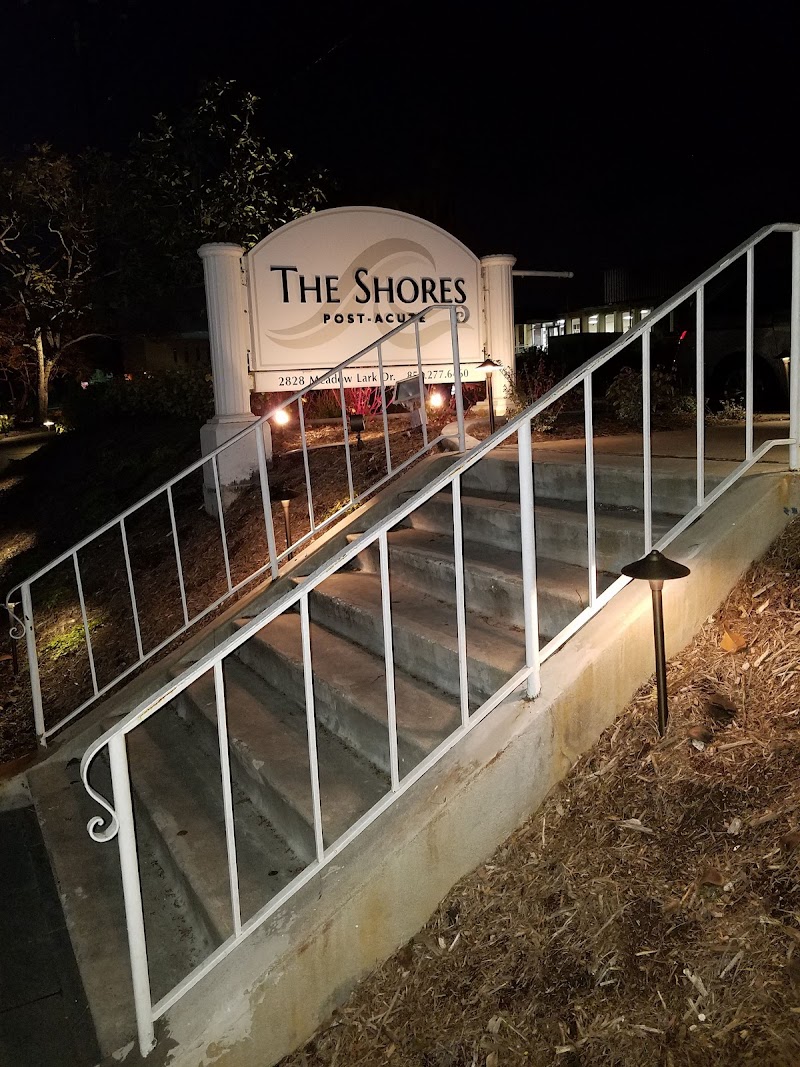
Aug 2023 1 deficiency
CONCERN (D) 📢 Someone Reported This

A family member, employee, or ombudsman was alarmed enough to file a formal complaint

Potential for Harm - no one hurt, but risky conditions existed

Comprehensive Care Plan (Tag F0656)

Could have caused harm · This affected 1 resident

**NOTE- TERMS IN BRACKETS HAVE BEEN EDITED TO PROTECT CONFIDENTIALITY** Based on observation, interview, and record review, the facility failed to develop a patient centered care plan regarding an emp...

Read full inspector narrative →
**NOTE- TERMS IN BRACKETS HAVE BEEN EDITED TO PROTECT CONFIDENTIALITY** Based on observation, interview, and record review, the facility failed to develop a patient centered care plan regarding an employee to resident abuse allegation for one resident (Resident 5). This failure had the potential to affect the delivery of care, miscommunication among caregivers, and decreased psychosocial well-being for Resident 5. Findings: Resident 5 was admitted to the facility on [DATE] with the diagnoses which included hemiplegia (total or partial paralysis of one side of the body) and hemiparesis (muscle weakness on one side of the body) following cerebral infarction (disrupted blood flow to the brain) affecting the right dominant side according to the facility's admission Record. During a review of nurse's notes dated 8/16/23, the nurse's notes indicated Resident 5 was discharged to home. An interview was conducted with the social services assistant (SSA) on 8/23/23, at 9:57 A.M. The SSA stated Resident 5 reported a CNA who was rough with care. The SSA stated on 8/11/23, Resident 5 pressed the call light to have her diaper changed and certified nurse assistant 2 (CNA 2) came to the room but CNA 2 told Resident 5 she was not able to change Resident 5 because she was on break. According to the SSA, CNA 2 returned to assist Resident 5, but Resident 5 stated CNA 2 looked upset and was rough during the diaper change. The SSA stated Resident 5 further reported CNA 2's hand on Resident 5's back felt rough. During a review of the facility's record titled SBAR & Initial COC/Alert Charting . dated 8/11/23, the record indicated, .Immediate & New Interventions .20b. Did you create a care plan for the event .c. N/A (answer). A review of Resident 5's care plans was conducted. Resident 5's care plan dated 8/23/23 indicated, [Resident 5] 252 A with an allegation toward staff being rough toward her during personal care. During an interview and concurrent record review with the Assistant Director of Nursing 2 (ADON) on 8/23/23, at 11:51 A.M. ADON 2 stated a care plan regarding an abuse allegation should be initiated on the day of the incident. ADON 2 reviewed Resident 5's care plan regarding the abuse allegation. ADON 2 stated Resident 5's care plan regarding the abuse allegation was not initiated on the day of the allegation, which happened on 8/11/23. ADON 2 stated he created Resident 5's care plan today, 8/23/23 and Resident 5 was no longer at the facility. ADON 2 further stated it was important to complete a care plan because it reflected what care the resident should receive and the plan of action. The Director of Nursing (DON) was interviewed on 8/30/23, at 11:13 A.M. The DON stated it was important to have a care plan because it was like the bible of how to care for a resident. The DON further stated if Resident 5's care plan was not initiated on the day the incident occurred, there may be a re-occurrence of an abuse because staff was not aware of it. A review of the facility's policy and procedure (P&P) titled, Care Plans, Comprehensive Person-Centered dated December 2016, the P&P indicated, .A comprehensive, person-centered care plan that includes measurable objectives and timetables to meet the resident's physical, psychosocial and functional needs is developed and implemented .Assessments of residents are ongoing and care plans are revised as information about the resident's conditions change .
Aug 2023 1 deficiency
CONCERN (D) 📢 Someone Reported This

A family member, employee, or ombudsman was alarmed enough to file a formal complaint

Potential for Harm - no one hurt, but risky conditions existed

Deficiency F0625 (Tag F0625)

Could have caused harm · This affected 1 resident

**NOTE- TERMS IN BRACKETS HAVE BEEN EDITED TO PROTECT CONFIDENTIALITY** Based on interview and record review the facility failed to provide two of three sampled residents (Resident 1 and Resident 2) w...

Read full inspector narrative →
**NOTE- TERMS IN BRACKETS HAVE BEEN EDITED TO PROTECT CONFIDENTIALITY** Based on interview and record review the facility failed to provide two of three sampled residents (Resident 1 and Resident 2) written notification of bed hold at transfer to the hospital. This deficient practice resulted in two residents (Resident 1 and Resident 2) not receiving notification of their right to return to the facility. Findings: 1) Resident 1 was admitted to the facility on [DATE] with diagnosis of paraplegia (inability to move the lower half of the body) and gastroparesis (a disorder that slows or stops the movement of food from your stomach to lower intestines). Resident 1 was transferred to a general acute care hospital (GACH) on 5/12/23 for a clogged feeding tube. 2) Resident 2 was admitted to the facility on [DATE] with a diagnosis of diabetes (abnormal blood sugar condition). Resident 2 was transferred to a general acute care hospital (GACH) on 4/24/23 for treatment of a soft tissue infection of the right lower limb. A review of the facility census on 8/10/23 indicated Resident 1 and Resident 2 were no longer residents at the facility. On 8/11/23 at 2:18 P.M. an interview was conducted with licensed nurse (LN 1). LN 1 stated the facility had a 7-day bed hold policy and nurses were responsible for verbally notifying the resident or responsible party (RP) of the right to have their bed held for 7 days at the time of transfer to the hospital. LN 1 stated he was had not been trained to complete the facility bed hold form or provide the resident with written information about their right to a bed hold at admission and transfer. LN 1 stated he believed the social worker was responsible for giving the resident the written information. On 8/11/23 at 3:37 P.M. an interview was conducted with the social worker (SW). The SW stated the admissions department was responsible to provide residents with written notification of their right to a 7-day behold at admission in standard resident admissions packet. On 08/11/2023 at 4:12 PM an interview and concurrent record review were conducted with the admissions coordinator (AC). The AC stated the facility was responsible for providing all residents with 7-day bed hold policy and notification form at admission and transfer to the hospital. A review of the facility's Bed Hold Policy and Notification form indicated the form was to be signed and dated by the resident or resident representative upon admission to the facility and again transfer to a general acute care hospital. A record review of Resident 1 and Resident 2's Bed Hold Policy and Notification Form was conducted with the AC and indicated the following: 1) Resident 1's Bed Hold Policy and Notification Form indicated the section to be completed upon transfer to the hospital was blank and Resident 1 had not signed the form within 24 hours of transfer on 5/12/23. 2) Resident 2's Bed Hold Policy and Notification Form indicated the section to be completed upon transfer to the hospital was blank and Resident 1 had not signed the form within 24 hours of transfer on 05/01/23. The AC stated the record did not indicate Resident 1 or Resident 2 were provided written notification of the facility bed hold policy at the time of transfer. On 08/11/2023 at 4:30 PM an interview was conducted with the infection prevention (IP) nurse. The IP stated every resident who transferred out of the facility needed to have a change of condition form documented in electronic medical record which indicated if the resident was offered a bed hold at the time of transfer. Resident 1 & Resident 2's electronic health record was reviewed with the IP and indicated the following: Resident 1's chart indicated the form titled, SBAR & Initial COC/Alert Charting & Skilled Documentation had not been completed. A review of Resident 1's nursing note, dated 5/12/23 at 2:39 A.M., indicated Resident 1 had not been offered notification of bed hold rights at transfer. Resident 2's chart indicated the form titled, SBAR & Initial COC/Alert Charting & Skilled Documentation had not been completed. A review of Resident 2's nursing note, dated 4/24/23 at 2:29 P.M., indicated Resident 2 had not been offered notification of bed hold rights at transfer. A review of the facility's undated policy titled Bed Hold Policy indicated, .B. Transfer to Acute Care Hospitalization: 1 .The licensed nurse shall SEND A COPY OF THE BED HOLD POLICY with the transfer documentation. 2. The resident or representative notifies the facility within 24 hours of transfer of their decision to exercise the bed hold. This is confirmed by facility staff .
Feb 2023 1 deficiency
CONCERN (D) 📢 Someone Reported This

A family member, employee, or ombudsman was alarmed enough to file a formal complaint

Potential for Harm - no one hurt, but risky conditions existed

Pharmacy Services (Tag F0755)

Could have caused harm · This affected 1 resident

**NOTE- TERMS IN BRACKETS HAVE BEEN EDITED TO PROTECT CONFIDENTIALITY** Based on observation, interview and record review, the facility failed to ensure the residents (1, 2, 3, 4) were free from diver...

Read full inspector narrative →
**NOTE- TERMS IN BRACKETS HAVE BEEN EDITED TO PROTECT CONFIDENTIALITY** Based on observation, interview and record review, the facility failed to ensure the residents (1, 2, 3, 4) were free from diversion of their controlled medications ([meds]medications that can cause physical and mental dependence and are regulated by the Drug Enforcement Administration) when Licensed Nurse (LN) 1 documented Residents 1, 2, 3, and 4 received their controlled medications for the month of January 2023. This had the potential for affected residents' medication to not be available in the event they were needed. There were no missed doses for the affected residents. Findings: On 1/30/23, the Department received an entity reported incident (ERI) related to pharmaceutical services. On 2/8/23, an unannounced onsite to the facility was conducted. A review of the residents' record was as follows. 1.Resident 1 was readmitted to the facility on [DATE], with diagnoses which included osteomyelitis of left ankle and foot (infection of bones which may spread to the bone marrow), per the facility's admission Record. A review of Resident 1's physicians order dated 9/9/22 indicated, Roxicodone tablet 5 mg [sic- milligram], give 1 tablet by mouth every 4 hours as needed for moderate - severe pain. The order was discontinued on 12/21/22. On 2/8/23 at 3:45 P.M., a concurrent interview and review of Resident 1's record was conducted with the Assistant Director of Nursing (ADON) 2. ADON 2 stated Resident 1's controlled medication was discontinued on 12/21/22. ADON 2 stated Resident 1's controlled medication sheet (used to record controlled meds was administered to the resident) indicated Resident 1 received the controlled meds on the following dates: - 1/17/23 at 10:30 A.M, - 1/22/23 at 4:29 A.M., - 1/22/23 at 11:45 A.M., and - 1/25/23 at 6 P.M. On 2/8/23 at 3:53 P.M., a concurrent interview and review of LN 1's schedule was conducted with ADON 2. ADON 2 stated LN 1 had the following schedule on the following dates: - 1/17/23 - ADON 2 stated LN 1 was off. ADON 2 stated LN 1 documented Resident 1 received his controlled meds. - 1/22/23 - ADON stated LN 1 was off. ADON 2 stated LN 1 documented Resident 1 received his controlled meds. - 1/25/23 - ADON stated LN 1 worked that day. Per ADON 2, she found Resident 1 did not request any pain meds in the past two weeks. ADON 2 stated Resident 1's controlled meds should have been discarded or should have been disposed of properly when the physician discontinued his meds. ADON 2 stated it was important to avoid errors and drug diversion. On 2/8/23 at 4:39 P.M., attempted to talk to the resident but did not wake up when his name was called. LN 1 was not available for interview. A review of the facility's policy titled, Disposal of Medications, Syringes and Needles, Discontinue Medications, dated 2007, indicated, .Policy .when medications are discontinued by the prescriber . the medications are marked as discontinued and destroyed or disposed of through an authorized destruction center or licensed reverse distributor as allowed by regulation. PROCEDURES: I. If a prescriber discontinues a medication the medication container is removed from the medication cart within at least a week from being discontinued . 2. Resident 2 was admitted to the facility on [DATE], with diagnoses which included chronic obstructive pulmonary disease (breathing related problems), per the facility's admission Record. A review of Resident 2's physicians order dated 11/6/22 indicated, Oxycodone-Acetaminophen Tablet 5-325 mg Give 1 tablet by mouth every 12 hours as needed for pain. Hold if RR [sic- respiratory rate below] <12 or if sedated. On 2/8/23 at 3:45 P.M., a concurrent interview and review of Resident 2's record was conducted with ADON 2. ADON 2 stated Resident 2 had not requested any pain meds. ADON 2 stated Resident 2 was not able to verbalize needs, the LNs assessed him of his facial grimaces and gestures if he was in pain. ADON 2 stated Resident 2's controlled medication sheet indicated Resident 2 received the controlled meds on the following dates: - 1/17/23 at 5:50 P.M., - 1/19/22 at 10 P.M., - 1/23/23 at 4:10 P.M., - 1/25/23 at 10:10 P.M., and - 1/26/23 at 7:15 P.M. On 2/8/23 at 3:53 P.M., a concurrent interview and review of LN 1's schedule was conducted with ADON 2. ADON 2 stated LN 1 had the following schedule on the following dates: - 1/17/23 - ADON 2 stated LN 1 was off. ADON 2 stated LN 1 documented Resident 2 received his controlled meds. - 1/19/23 - ADON 2 stated LN 1 observed another LN when passing meds. - 1/23/23 - ADON 2 stated LN 1 was off. ADON 2 stated LN 1 documented Resident 2 received his controlled meds. - 1/25/23 - ADON 2 stated LN 1 worked that day. - 1/26/23 - ADON 2 stated LN worked that day. On 2/8/23 at 4:38 P.M., attempted to talk to the resident but did not respond when his name was called. LN 1 was not available for interview. A policy was requested. ADON 2 stated the facility had no policy related to drug diversion. 3. Resident 3 was readmitted to the facility on [DATE], with diagnoses which included cystitis (inflammation of the bladder), per the facility's admission Record. A review of Resident 3's physicians order dated 12/30/22 indicated, oxycodone-Acetaminophen Tablet 5-325 mg Give 1 tablet by mouth every 6 hours as needed for Pain (moderate/severe pain). Hold if sedated or RR < 12. The order was discontinued on 1/17/23 at 6:57 P.M. On 2/8/23 at 3:45 P.M., a concurrent interview and review of Resident 3's record was conducted with ADON 2. ADON 2 stated Resident 3 was able to verbalize his needs. ADON 2 stated Resident 3 had not requested any pain meds. ADON 2 stated Resident 3's controlled medication sheet indicated Resident 3 received the controlled meds on the following dates: - 1/22/23 at 10:30 A.M., and - 1/22/22 at 3:52 P.M., On 2/8/23 at 3:53 P.M., a concurrent interview and review of LN 1's schedule was conducted with ADON 2. ADON 2 stated LN 1 had the following schedule on the following dates: - 1/22/23 - ADON 2 stated LN 1 was off. ADON 2 stated LN 1 documented Resident 3 received his controlled meds. On 2/8/23 at 4:34 P.M., an observation and interview of Resident 3 was conducted in his room. Resident 3 was lying in bed, he stated he had a wound and was in pain but did not want any pain meds. Resident 3 stated he needed to be repositioned and he will be fine with repositioning. Resident 3 stated he did not ask for pain meds in the past because repositioning worked for him. LN 1 was not available for interview. A policy was requested. ADON 2 stated the facility had no policy related to drug diversion. 4. Resident 4 was readmitted to the facility on [DATE], with diagnoses which included neoplasm of spinal cord (tumor within the bones of the spine), per the facility's admission Record. A review of Resident 4's physicians order dated 7/27/22 indicated, oxycodone-Acetaminophen Tablet 10-325 mg give 1 tablet by mouth every 6 hours as needed for moderate pain (4-6) to severe pain (7-10). Hold if RR < 12 or if sedated. On 2/8/23 at 3:45 P.M., a concurrent interview and review of Resident 4's record was conducted with ADON 2. ADON 2 stated Resident 4 was able to verbalize his needs. ADON 2 stated Resident 4 only request for Tylenol if he was in pain. ADON 2 stated Resident 4's controlled medication sheet indicated Resident 4 received the controlled meds on the following dates: - 1/12/23 at 12:53 A.M, - 1/12/23 at 4:20 A.M., - 1/23/23 at 12:15 P.M., and - 1/23/23 with no time indicated. On 2/8/23 at 3:53 P.M., a concurrent interview and review of LN 1's schedule was conducted with ADON 2. ADON 2 stated LN 1 had the following schedule on the following dates: - 1/12/23 - ADON 2 stated LN 1 was on orientation for charting and was at the facility in the day. ADON 2 stated LN 1 documented Resident 4 received his controlled meds. - 1/22/23 and 1/23/23 - ADON 2 stated LN 1 was off. ADON 2 stated LN 1 documented Resident 4 received his controlled meds. On 2/8/23 at 4:43 P.M., an observation and interview of Resident 4 was conducted in his room. Resident 4 was sitting up in bed, he stated he had not asked any pain meds. Resident 4 stated he only asked for Tylenol when he was in pain. Resident 4 stated he had learned that controlled meds had some bad effects to his health and that was the reason he avoided asking controlled meds. LN 1 was not available for interview. A policy was requested. ADON 2 stated the facility had no policy related to drug diversion.
Feb 2022 22 deficiencies 1 IJ
CRITICAL (J)

Immediate Jeopardy (IJ) - the most serious Medicare violation

Safe Environment (Tag F0921)

Someone could have died · This affected 1 resident

Based on observation, staff interviews, and record review, the facility failed to ensure a safe, functional, and sanitary environment for residents who receive food from the kitchen, and all staff who...

Read full inspector narrative →
Based on observation, staff interviews, and record review, the facility failed to ensure a safe, functional, and sanitary environment for residents who receive food from the kitchen, and all staff who access the kitchen when a sewage backflow flood was observed in the kitchen. The facility prepared and served resident breakfast meals from the kitchen during the sewage flood backflow in the basement, which affected the kitchen. The facility's failure to ensure safe and sanitary conditions in the kitchen due to plumbing backflow sewage flood, had the likelihood for contaminated microorganisms (tiny bacterial organisms) to come into contact with the residents' food and could have led to widespread foodborne illnesses for 247 residents who received food prepared in the kitchen. Cross reference E0015, F812 Findings: 1. During the initial tour of the facility kitchen on 2/14/22 at approximately 9:45 A.M., there was a large three-inch deep pool of light brown, yellow colored odorous fluid with tannish colored particles which streamed out of a floor sink drain in the pots and pans dish room. The Certified Dietary Manager (CDM) stated the area was used to wash food carts. The CDM stated she noticed the yellow-colored fluid backflow from the sink drain a few days ago and notified the facility's maintenance director (MDR) over the weekend. On 2/14/22 at 3:33 P.M., an observation and concurrent interview was conducted in the pots and pans room with the CDM and MDR. A large pool of water had drained down to a smaller puddle in a continuous slow drain. The CDM stated the floor drain had a consistent backflow problem. The CDM stated the Maintenance Director (MDR) snaked (use of long, slender pipe to unclog) the drain pipe earlier that day and stated he may need to do it again for the jets to unclog and clear it. On 2/15/22 at approximately 4:30 P.M., the Monthly Review Dietary Quality and Infection Control Review Audit Inspection reports completed by the Registered Dietitian were reviewed. The reports indicated in August 2021, Maintenance report-Dishroom .5. Drain keeps clogging up, water backs up from drain when using .Emergency water does not seem complete; November 2021, Drains need cleaning in pots and pans room; December 2021, Drains need cleaning in pots and pans room; and February 2022, Drains need cleaning in pots and pans room. On 2/17/22 at 9:18 A.M., a concurrent observation and interview was conducted of the facility's kitchen which was located in the basement. After exiting the first-floor elevator door into the basement, there was presence of an inch deep of a waterlike fluid observed to have flooded the entire basement, including the kitchen. The MDR stood outside the kitchen entrance and stated a kitchen pipe back flowed (unwanted flow of water in the reverse direction) and caused the basement to flood. On 2/17/22 at 9:37 A.M., an observation of the kitchen and interview with the A.M. (morning) [NAME] (CK 1) was conducted. There were multiple puddles of large waterlike fluid substances throughout the kitchen with a foul odor. CK 1 stated, when he arrived at the facility kitchen early that morning, it was water everywhere and the kitchen was flooded. CK 1 stated he and the kitchen staff still prepared breakfast in the kitchen. On 2/17/22 at 10:15 A.M., an interview was conducted with the Administrator (ADM). The ADM was asked about the plan to handle the kitchen flooding issue and contacting the local county environmental health department to report the incident. The ADM stated the plumbing company said the main sewer pipe under the facility started to flood in the kitchen and traveled throughout the basement. The ADM stated the facility should have enough food to feed the residents for the day. The ADM also stated the facility was prepared to make purchases for food to feed residents the therapeutic diets. The ADM stated staff who were exposed to the sewer water on their foot, got disinfected. The ADM stated the kitchen would be closed for the sanitation company to clean and disinfect it, then reopened when the pipe issue was fixed. According to the Federal FDA Food Code 2017, section 5-202.12, A plumbing system shall be installed to preclude backflow of a solid, liquid, or gas contaminant into the water supply system at each point of use at the food establishment, including on a hose bib if a hose is attached or on a hose bib if a hose is not attached and backflow prevention is required by LAW . On 2/17/22 at 12:00 P.M., a joint observation of the emergency water located in the maintenance department of the basement next to the kitchen was conducted with the MDR. There were about 400 five-gallon jugs of water inside a closet, with several directly on the ground in the sewage flood water. The jugs were very dusty and were dated BB 8/31/20 (Best By). During an interview with the MDR about the emergency water, the MDR stated the water jugs should have been stored 6 inches off the ground and the expiration dates checked. According to the January 26, 2021, Centers for Disease Control and Prevention (CDC), National Center for Emerging and Zoonotic Infectious Diseases (NCEZID), Division of Foodborne, Waterborne, and Environmental Diseases (DFWED) document titled Water, Sanitation, & Hygiene (WASH)- related Emergencies & Outbreaks, Creating and Storing an Emergency Water Supply indicated .How much Emergency Water to store .Replace non-store bought water every 6 months . On 2/17/22 at 3:54 P.M., an interview was conducted with the County Registered Environmental Health Specialist (REHS) regarding the kitchen plumbing backflow. The REHS stated the kitchen was self-closed by the facility and should not have served breakfast in a potentially contaminated area. would be re-inspected for re-opening after 24 hours or when the plumbing was fixed. According to the 2017 Federal Food and Drug Administration (FDA) Food Code, section 3-305.11 Food Storage. 3-305.12 Food Storage, titled Prohibited Areas, Preventing Contamination from the Premises. Pathogens can contaminate and/or grow in food that is exposed to contamination and not properly stored. Shoes carry contamination onto the floors of food preparation and storage areas. Even trace amounts of refuse or wastes in rooms used as toilets or for dressing, storing garbage or implements, or housing machinery can become sources of food contamination. Moist conditions in storage areas promote microbial (tiny bacteria that can cause disease) growth and can be sources of microbial contamination for stored food . Review of facility policy dated 2018, titled General Appearance of Food & Nutrition Department, Floors, floor mats, and walls must be .maintained in good condition 11 .The wet floor should not be walked on until it is thoroughly dry . Review of facility policy dated 2018, titled Section 8 Sanitation, indicated .4. Employees are to alert the FNS Director immediately to any equipment needing repair .26.backflow prevention (unwanted flow of water in the reverse direction) . An Immediate Jeopardy (IJ) was called under F921 §483.90(i) Other Environmental Conditions on February 17, 2022, at 4:12 P.M. The Administrator, Registered Dietitian and the Director of Nursing were informed that the IJ was called under F921. The facility developed a plan of action (POA) in response to the Immediate Jeopardy on 2/17/22. However, the IJ was not removed until 2/19/22 at 3:35 P.M. when the POA was completed and verified. The Correction Plan included the following: 1. The facility purchased pudding, saltine crackers, margarine, vanilla wafers, donuts/danishes enough to last for the next 3 days. 2. The facility closed the kitchen and emergency food supply was used and prepared in the dining room by kitchen staff. OSHPD was notified of the kitchen pipe backflow. Sanitary practices were implemented to prepare and cook food for residents. 3. The facility would provide chicken and tuna sandwiches as alternates at dinner and the written menu would be updated on 2/18/22 to reflect snacks, diabetics, renal, vegetarians, and alternates. 4. The facility purchased water cases on 2/17/22 in the amount of 2475 gallons enough to support 550 residents, staff, and visitors for the next 3 days. 5. Operations in the kitchen were stopped as soon as the clogged drain was identified. Kitchen staff were instructed not to go into the kitchen while it was non-operational. 6. Residents on fortified diet provided additional pudding with meals to provide additional calories. The facility purchased more pudding to ensure enough on 2/17/22, for the next 3 days. 7. The facility purchased more food enough for the next 3 days. Kitchen will be closed if not operational and staff will be notified not to enter by putting signs at the doors. 8. All contaminated food will be discarded. All affected areas cleaned and disinfected with bleach solution 100 ppm chlorine. 9. Food served for dinner were from the emergency supply room which were not contaminated. 10. RD will randomly interview 5 residents from each station to ensure they are satisfied with the meal offered. 11. Emergency water will be checked monthly by the Maintenance Director to ensure it does not expire. 12. Kitchen staff will be in-serviced on reporting clogged drains immediately on 2/17/22. 13. RD and/or CDM will ensure the emergency food supply is adequate to meet the needs of the residents on fortified diets by auditing the emergency food supply monthly. The following action plan was completed on or by February 19, 2022. 1. The kitchen was closed on 2/17/22 after breakfast was served to the residents, and cleaned, disinfected, and sanitized by an outside vendor. The kitchen was partially reopened on 2/18/22 with a temporary partition wall the sectioned off the Pots and pans room for the continuation of the plumbing work in floor sink drain. 2. Invoices were provided for additional food items to support the emergency menu 3-day food plan including therapeutic diets of diabetic and renal diets, vegetarians, and alternate menus. 3. Invoices were provided for bottled water and 5-gallon water jugs to restock the emergency water supply to accommodate 550 residents, staff and visitors. 4. The county environmental health extended the temporary partial kitchen closure for 7 days of the Pots and Pans room for the plumbing work to be completed. 5. Kitchen staff were in-serviced by the Registered Dietitian on the following topics: recognizing a clogged drain and reporting to management; cleaning pots and pans through the dish machine, kitchen sanitation and cleanliness, infection control practices for dietary services, ensuring adequate food supply & rotating emergency food before expiration date, fortification of food, and checking refrigerator temperatures. 6. Wall shelves stacked with clean pots and pans outside of the kitchen were covered to protect from cross-contamination from dirty paths of travel. 7. The emergency food and water supply and emergency plan were added to the monthly Quality Assessment and Assurance (QAA) and members will review to ensure adequate monitoring is effective. During a concurrent observation and interview with the ADM on 2/18/22 at 11:40 A.M. of the partially re-opened kitchen, the ADM stated the kitchen was professionally cleaned, sanitized, and disinfected by a company. The ADM stated plumbing in the Pots and Pans room was still being fixed but the kitchen cooking and operational side was reopened. During a concurrent observation and interview with the RD on 2/18/22 at 12:04 P.M. of the lunch trayline service in the partially re-opened kitchen, the RD stated she in-serviced the staff on recognizing a clogged drain and reporting to management; cleaning pots and pans through the dish machine, kitchen sanitation and cleanliness, infection control practices for dietary services, ensuring adequate food supply & rotating emergency food before expiration date, and the fortification of food. The RD also stated she updated the emergency menu to include the alternate menu items including chicken and tuna salad sandwiches, and vegetable soup. During a concurrent observation and interview of the emergency water and food with the RD on 2/18/22 at 2:40 P.M., the RD manually counted and validated there were 500 cases of bottled water with 5.28 gallons which totaled 2640 gallons of emergency water. The expiration date was August 2023. There was a water receipt purchase date of 2/17/22 for 480 cases of bottled water. RD stated an additional food order was expected to arrive on 2/19/22 to complete the emergency food supply missing menu items. During an observation of the kitchen and lunch trayline on 2/19/22 at 11:47 A.M., the kitchen staff served a hot cooked lunch meal of Salisbury steak with mushroom gravy, mashed potatoes, seasoned peas and carrot and raisin salad. The menu alternates were provided, and accurate fortified portions were verified. The floors and dishmachine room were clean and the Pots and Pans room was still partitioned and sectioned off, inaccessible and out of service. During an observation and interview on 2/19/22 at 12:55 PM of the dishwashing in the dishmachine room, The Dishwasher (DSW) 2 correctly demonstrated the process to test the sanitizer of the dish machine using a test strip. DSW 2 also described the additional wash and sanitize process through the dish machine for the large pots and pans due to the Pots and Pans room being out of service. The IJ was lifted on February 19, 2022 at 3:35 P.M., in the presence of the facility's Administrator, Registered Dietitian, Director of Nursing, Nursing Home Administrator Consultant, and RN Consultant after an acceptable corrective action plan was provided and verified to be implemented by observation, interviews, and document review. Review of the County Environmental Health Inspectors report dated 2/18/22, indicated a seven-day partial kitchen closure due to the continuation of the plumbing repair to fix the sink drain pipe that caused the sewage backflow in the Pots and Pans room.
CONCERN (D)

Potential for Harm - no one hurt, but risky conditions existed

Resident Rights (Tag F0550)

Could have caused harm · This affected 1 resident

**NOTE- TERMS IN BRACKETS HAVE BEEN EDITED TO PROTECT CONFIDENTIALITY** 3. Resident 59 was admitted to the facility on [DATE], with diagnoses which included dementia with behavioral disturbance (a dec...

Read full inspector narrative →
**NOTE- TERMS IN BRACKETS HAVE BEEN EDITED TO PROTECT CONFIDENTIALITY** 3. Resident 59 was admitted to the facility on [DATE], with diagnoses which included dementia with behavioral disturbance (a decline in mental ability that affects daily living) and disorientation (a temporary or permanent state of confusion regarding place, time or personal identity), per the facility's admission Record. A review of Resident 59's History and Physical, dated 8/25/21, indicated that the resident did not have the capacity to understand and make decisions on her own. During a meal observation on 2/14/22 at 12:20 P.M., Resident 59 was observed walking around the small dining area in Station one. Resident 59 wore a hospital gown with no undergarment. Resident 59 lifted the bottom portion of the hospital gown, exposing her private areas, as she walked around the dining area. Five other residents were observed in the dining room, being assisted by staff while eating. CNA 6 followed Resident 59, as the resident paced around the dining room, with a paper towel in her gloved hands. Resident 59 had a bowel movement on the floor and CNA 6 wiped Resident 59's buttocks with a paper towel, and used another paper towel to pick the feces from the floor. Resident 59 continued to pace the dining room with bottom part of the hospital gown lifted up by the resident, exposing her private areas. During an interview with CNA 6 on 2/14/22 at 12:30 P.M., CNA 6 stated she should not have wiped Resident 59's private area publicly and should have redirected Resident 59 to her room. CNA 6 stated cleaning Resident 59 in front of other residents did not promote the resident's dignity and privacy. During an interview with LN 6 on 2/16/22 at 11:07 A.M., LN 6 stated Resident 59 should have been redirected to her room and should not have been cleaned in front of other residents. LN 6 stated that cleaning Resident 59 in front others was not a dignified treatment of the resident. During an interview with LN 7 on 02/17/22 at 12:18 P.M., LN 7 stated the staff should have redirected Resident 59 back to her room to be cleaned in order to provide Resident 59 with dignity. During an interview with DON on 2/22/22 at 9:05 A.M., the DON stated, that CNA 6 should have taken Resident 59 back to her room to be cleaned. The DON stated cleaning Resident 59 in front of other residents was not a dignified way of caring for the resident. Per the facility's policy, titled, Dignity, dated February 2021, . 1. Residents are treated with dignity and respect at all times .5. When assisting with care, residents are supported in exercising their rights .e. provided with a dignified dining experience .12. Demeaning practices and standards of care that compromise dignity are prohibited, Staff are expected to promote dignity and assist the residents . Based on observation, interview and record review, the facility failed to ensure privacy and dignity was provided to three of five residents when: 1. Resident 188 did not have shower as scheduled; 2. CNA 12 did not knock or announce herself before entering the residents' room (86); and 3. Resident 59 was provided personal care while in the dining room with others present. These failures had the potential to lower the self esteem and self-worth for Resident 188, Resident 86, and Resident 59. Findings: 1. Resident 188 was readmitted to the facility on [DATE], with diagnoses which included hemiplegia (paralysis on one side of the body), per the facility's admission Record. Resident 188's history and physical, dated 8/1/21, indicated he had the capacity to understand and make decisions. On 2/14/22 at 11:03 A.M., an observation and interview with Resident 188 in his room was conducted. Resident 188 was sitting up in bed, pulled himself up using an overbed trapeze. Resident 188 stated he has not had a shower for over a month. Resident 188 stated he was on isolation zone two weeks prior and was told while in isolation unit were no showers could be provided. Resident 188 stated he has been out of isolation for two weeks and still has not had a shower, and it was my right to get one. Resident 188 stated he told staff he could even get one shower a week shower instead of the two times a week shower, but still did not get one. Resident 188 stated he had never refused a shower. On 2/15/22 at 3:36 P.M., a follow up observation and interview with Resident 188 in his room was conducted. Resident 188 was sitting up in bed, foul smell noted. Resident 188 stated he still has not been offered a shower. On 2/16/22 at 9:48 A.M., an interview with CNA 11 was conducted. CNA 11 stated Resident 188 did not get shower while on isolation and he was complaining of itchiness. CNA 11 stated it was his right to have shower. On 2/16/22 at 12:36 P.M., an interview with ADON 1 was conducted. ADON 1 stated Resident 188 had the right to get a shower for hygiene and dignity. On 2/16/22 at 3:57 P.M., an interview with the IP was conducted. The IP stated the staff should have provided showers to the residents in the isolation area, because that was hygiene and dignity issues. On 2/17/22 at 11:22 A.M., an interview with the DON was conducted. The DON stated the staff should have provided shower to Resident 188 and follow his preference to meet his basic needs. A review of the facility's policy titled, Resident Rights, revised December 2016, indicated, . Federal and state laws guarantee certain basic rights to all residents . These rights include the resident's right to . h. be supported by the facility in exercising his or her rights . 2. Resident 86 was readmitted to the facility on [DATE], with diagnoses which included urinary tract infection (infection of the urine tract), per the facility's admission Record. Resident 86's history and physical, dated 11/14/21, indicated he had the capacity to understand and make decisions. On 2/14/22 at 9:52 A.M., an observation and interview of Resident 86 in his room was conducted. Resident 86 was sitting up in bed. Resident 86 stated he had been in the facility for two years. While in the room, CNA 12 opened the resident's door without knocking, looked in and left. Resident 86 stated, They do that all the time, I did not hear her knock. Resident 86 stated it was not appropriate because it was a privacy issue. Resident 86 further stated, This is my house now, what if I'm naked? On 2/16/22 at 8:18 A.M., an observation of CNA 12 was conducted. CNA 12 was holding a meal tray for another resident in a different room. CNA 12 did not knock prior to entering the room and she did not announce herself. On 2/16/22 at 9:30 A.M., an observation of CNA 12 was conducted. CNA 12 went to answer Resident 86's call light. CNA 12 entered the resident's room without knocking or announcing herself. On 2/16/22 at 9:40 A.M., an interview with CNA 12 was conducted. CNA 12 stated she forgot to knock on the resident's door. CNA 12 stated she should have knocked for resident's privacy, rights and dignity. On 2/16/22 at 12:10 P.M., an interview with ADON 1 was conducted. ADON 1 stated CNA 12 should have been courteous to the residents by announcing herself, whether the residents were verbal or non-verbal, and should have knocked before going to the resident's rooms for privacy. On 2/17/22 at 11:22 A.M., an interview with the DON was conducted. The DON stated the facility was the residents home and staff should have knocked or announced their presence before entering the resident's rooms, for privacy and dignity. A review of the facility's policy titled, Resident Rights, revised December 2016, indicated, . Federal and state laws guarantee certain basic rights to all residents . These rights include the resident's right to .b. be treated with respect . and dignity .t. privacy .
CONCERN (D)

Potential for Harm - no one hurt, but risky conditions existed

Deficiency F0583 (Tag F0583)

Could have caused harm · This affected 1 resident

**NOTE- TERMS IN BRACKETS HAVE BEEN EDITED TO PROTECT CONFIDENTIALITY** Based on observation, interview and record review, the facility failed to ensure three of five residents (59) reviewed for priva...

Read full inspector narrative →
**NOTE- TERMS IN BRACKETS HAVE BEEN EDITED TO PROTECT CONFIDENTIALITY** Based on observation, interview and record review, the facility failed to ensure three of five residents (59) reviewed for privacy, was provided with privacy, when Resident 59's personal care was conducted in the dining room in front of other residents. This failure had the potential to devalue the resident's self-esteem and self-worth. Findings: Resident 59 was admitted to the facility on [DATE], with diagnoses which included dementia with behavioral disturbance (a decline in mental ability that affects daily living) and disorientation (a temporary or permanent state of confusion regarding place, time or personal identity), per the facility's admission Record. A review of Resident 59's History and Physical, dated 8/25/21, indicated that the resident did not have the capacity to understand and make decisions on her own. During a meal observation on 2/14/22 at 12:20 P.M., Resident 59 was observed walking around the small dining area in Station one. Resident 59 wore a hospital gown with no undergarment. Resident 59 lifted the bottom portion of the hospital gown, exposing her private areas, as she walked around the dining area. Five other residents were observed in the dining room, being assisted by staff while eating. CNA 6 followed Resident 59, as the resident paced around the dining room, with a paper towel in her gloved hands. Resident 59 had a bowel movement on the floor and CNA 6 wiped Resident 59's buttocks with a paper towel, and used another paper towel to pick the feces from the floor. Resident 59 continued to pace the dining room with bottom part of the hospital gown lifted up by the resident, exposing her private areas. During an interview with CNA 6 on 2/14/22 at 12:30 P.M., CNA 6 stated she should not have wiped Resident 59's private area publicly and should have redirected Resident 59 to her room. CNA 6 stated cleaning Resident 59 in front of other residents did not promote the resident's dignity and privacy. During an interview with LN 6 on 2/16/22 at 11:07 A.M., LN 6 stated Resident 59 should have been redirected to her room and should not have been cleaned in front of other residents. LN 6 stated that cleaning Resident 59 in front of others was not a dignified treatment of the resident. During an interview with LN 7 on 02/17/22 at 12:18 P.M., LN 7 stated the staff should have redirected Resident 59 back to her room to be cleaned in order to provide Resident 59 with dignity. During an interview with DON on 2/22/22 at 9:05 A.M., the DON stated CNA 6 should have taken Resident 59 back to her room to be cleaned. The DON stated cleaning Resident 59 in front of other residents was not a dignified way of caring for the resident. Per the facility's policy titled, Dignity, dated February 2021, .Each resident shall be cared for in a manner that promotes and enhances his or her sense of well being, level of satisfaction with life, and feelings of self-worth and self -esteem . 1. Residents are treated with dignity and respect at all times . 5. When assisting with care, residents are supported in exercising their rights .e. provided with a dignified dining experience .11. Staff promote, maintain, and protect resident privacy, including bodily privacy during assistance with personal care .
CONCERN (D)

Potential for Harm - no one hurt, but risky conditions existed

Comprehensive Care Plan (Tag F0656)

Could have caused harm · This affected 1 resident

**NOTE- TERMS IN BRACKETS HAVE BEEN EDITED TO PROTECT CONFIDENTIALITY** 2. Resident 59 was admitted to the facility on [DATE] with diagnoses which included dementia with behavioral disturbance (a decl...

Read full inspector narrative →
**NOTE- TERMS IN BRACKETS HAVE BEEN EDITED TO PROTECT CONFIDENTIALITY** 2. Resident 59 was admitted to the facility on [DATE] with diagnoses which included dementia with behavioral disturbance (a decline in mental ability that affects daily living) and disorientation (a temporary or permanent state of confusion regarding place, time or personal identity), per facility's admission Record. During a meal observation on 2/14/22 at 12:20 P.M., Resident 59 was observed walking around the small dining area in Station one. Resident 59 wore a hospital gown with no undergarment. Resident 59 lifted the bottom portion of the hospital gown, exposing her private areas, as she walked around the dining area. CNA 6 followed Resident 59, as the resident paced around the dining room, with a paper towel in her gloved hands. Resident 59 had a bowel movement on the floor and CNA 6 wiped Resident 59's buttocks with a paper towel and used another paper towel to pick the feces from the floor. A review of Resident 59's History and Physical, dated 8/25/21, indicated that the resident did not have the capacity to understand and make decisions on her own. During a record review of Resident 59's care plan for bladder and bowel toileting, dated 8/25/18, indicated encouraged to use the toilet before and after meals. During an interview with the DON on 2/22/22 at 9:05 A.M., the DON stated CNA 6 should have taken Resident 59 back to her room to use the bathroom. The DON stated that bladder and bowel care plan was not implemented before and after meals. Per the facility's policy titled Care Plans, Comprehensive Person-Centered, dated December 2016, .each residents comprehensive person- centered care plan will be consistent with the resident's rights . including the right to receive the services and /or items included in the plan of care . Based on observation, interview, and record review, the facility failed to ensure two of 38 sampled residents (218, 59) care plans were implemented related to: 1. Resident 218's turning, and repositioning; and 2. Resident 59's privacy related to blowel and bladder care. These failures had the potential for decline in skin prevention for Resident 218 and a decline in toilet training for Resident 59. Findings: 1. Resident 218 was readmitted to the facility on [DATE], with diagnoses which included Parkinson's disease (progressive nervous system disorder that affects movements), per the facility's admission Record. A review of Resident 218's MDS (assessment tool), dated 1/12/22, indicated that the resident had a BIMS (a cognitive assessment) score of two (0-7 indicated severe cognitive impairment). Per the Functional Status, Resident 218 was totally dependent on staff for bed mobility. A review of Resident 218's care plan titled, Risk of Development of Skin Breakdown, dated 4/8/14 indicated, .Provide a therapeutic mattress and reposition every 2 hours According to the physicians order, dated 8/1/20, .Turn and reposition every two hours as tolerated every shift . On 2/16/22 at 7:56 A.M., 10:16 A.M., 12:41 P.M., and 2:43 P.M., Resident 218 was observed in bed lying on her back in the same position. On 2/16/22 at 2:53 P.M., a joint interview and record was conducted with CNA 3. CNA 3 stated Resident 218 should be turned every 2 hours and documented in a task called task document. When CNA 3 was informed that Resident 218 was observed laying on her back from 7:56 A.M. to 2:43 P.M., CNA 3 acknowledged Resident 218 had not been turned every two hours even though it was documented that resident had been turned. On 2/17/22 at 8:46 A.M., an interview with the ADON 1 was conducted. The ADON 1 stated CNA 3 should have turned and repositioned Resident 218 every 2 hours, because it was in the care plan and was a physican order. The ADON 1 stated Resident 218's care plan related to turning and repositioning should have been implemented to help prevent skin breakdown. On 2/17/22 at 10:56 A.M., an interview with the IDON was conducted. The IDON stated CNA 3 should have turned and repositioned Resident 218, in accordance with Resident 218's care plan to help prevent skin breakdown. A review of the facility's policy, revised 12/16, titled Care Plans, Comprehensive Person-Centered, Policy statement, indicated, .A comprehensive, person-centered care plan that includes measurable objectives and timetables to meet the resident's physical, psychosocial and functional needs is developed and implemented for each resident implementation of his or her plan of care, included the right to . g., receive the services and/or items included in the care plan
CONCERN (D)

Potential for Harm - no one hurt, but risky conditions existed

Pressure Ulcer Prevention (Tag F0686)

Could have caused harm · This affected 1 resident

**NOTE- TERMS IN BRACKETS HAVE BEEN EDITED TO PROTECT CONFIDENTIALITY** 2. Resident 224 was admitted to the facility on [DATE], with diagnoses including diabetes (abnormal blood sugar), unspecified op...

Read full inspector narrative →
**NOTE- TERMS IN BRACKETS HAVE BEEN EDITED TO PROTECT CONFIDENTIALITY** 2. Resident 224 was admitted to the facility on [DATE], with diagnoses including diabetes (abnormal blood sugar), unspecified open wound on resident's scrotum, cellulitis (skin infection) of the buttocks, per the facility's admission Record. Resident 224's clinical records was reviewed. The MDS (an assessment tool), dated 2/5/22, under Skin Conditions indicated there was an unhealed Stage II pressure ulcer (characterized by partial-thickness loss of dermis presenting as a shallow open ulcer with a red-pink wound bed without slough) on admission, open lesions, and Moisture Associated Damage (MASD), and that the resident needed pressure ulcer care. Per the physicians order, May have LAL for wound management/preventative measures. Check placement and functionality, every shift . Per the care plan, titled, .is at risk for pressure injury development skin breakdown r/t diabetes, hx of pressure injury, immobility, incontinence, and vascular disease .Apply Low Air Loss Mattress as ordered to relieve pressure points and check placement every shift . On 2/14/22 at 5:05 P.M., an observation and interview of Resident 224 was conducted in the resident's room. Resident 224's bed was a normal bed with no air mattress or pressure relieving devices. Resident 224 stated he had a preexisting pressure ulcer that had been treated at the hospital with antibiotics. Resident 224 stated he had requested a new bed when he was first admitted , but it never came. On 2/16/22 at 5 P.M., an observation and interview of Resident 224 was conducted in resident's room. Resident was observed to be on a low air loss (LAL) mattress. Resident 224 stated the staff placed the mattress on his bed the night of 2/14/22. Resident 224 stated the mattress kept losing air throughout the day and the staff kept trying to reset it for his comfort. On 2/16/22 at 5:15 P.M.,. an interview with LN 16 was conducted. LN 16 stated the LAL mattress for Resident 234 was placed on 2/14/22. LN 16 stated Resident 224 was uncomfortable before he had the air mattress on his bed, and would often sit on the commode to relieve the pain from the pressure of his back. LN 16 stated she spent a lot of time with Resident 224 trying to help the resident get comfortable, before the air mattress was placed on the resident's bed. LN 16 stated the LAL mattress was important to provide comfort, to help heal the existing pressure ulcer, and to help prevent new pressure ulcers from developing. Per facility's policy, revised September 2013, Support Surface Guidelines, .1. Any individual at risk for developing pressure ulcers should be placed on a redistribution support surface, such as foam, static air, alternating air, gel or air loss device when lying in bed . 3. Resident 234 was admitted to the facility on [DATE], with diagnoses including Stage III pressure Ulcer (Full thickness skin loss) in the sacral area (lower back), per the facility's admission Record. Resident 234's clinical record was reviewed. The MDS (assessment tool), dated 2/2/22, under Skin Conditions indicated the resident had a Stage III pressure ulcer on admission, and that the resident needed pressure reducing device for bed, as well as pressure injury care. According to the physicians order, dated 1/28/22 . May have LAL mattress for wound management/preventative measures. Check placement and functionality, every shift . Per Resident 234's Care Plan, Resident 234 .is at risk for pressure injury development skin breakdown related to (r/t) diabetes, history (hx) of pressure injury, immobility, incontinence, and vascular disease . Apply Low Air Loss Mattress as ordered to relieve pressure points and check placement every shift . On 2/14/22 at 9:20 A.M., an observation of Resident 234's bed revealed that no LAL mattress was installed on the resident's bed. On 2/16/22 at 2:15 P.M., a concurrent observation and interview was conducted with CNA 18, while Resident 234 was being turned. An alternating pressure pad was being placed on Resident 234's bed. CNA 18 stated she did not know the difference between a low air loss mattress and an alternating pressure pad (APP). On 2/17/22 at 9:30 A.M., an interview with ADON 1, ADON 1 stated she was not sure why Resident 234 was on an APP. ADON 1 stated the physician's order was for Resident 234 to be placed on a LAL mattress and not an APP. ADON 1 stated the LAL was more advanced and was used to promote healing, while the APP was used for preventing the development of pressure ulcers. ADON 1 stated the LAL mattress provided more protection for existing ulcers than the APP mattress. On 2/17/22 at 12:25 P.M., a concurrent observation, interview and record review was conducted with the DON. The DON stated the difference between LAL mattress and APP mattress was that the LAL mattress was more to promote healing and APP was more preventative. The DON reviewed Resident 234's physician order for a LAL mattress. The DON observed Resident 234 on APP mattress. The DON stated a LAL should have been supplied to help the existing pressure ulcer. Per facility's policy, revised September 2013, Support Surface Guidelines, .1. Any individual at risk for developing pressure ulcers should be placed on a redistribution support surface, such as foam, static air, alternating air , gel or air loss device when lying in bed . Based on observation, interview, and record review, the facility failed to ensure that necessary skin treatment and services were provided to three of six residents (218, 224, 234) reviewed for pressure ulcer when: 1. Resident 218 was not turned and repositioned every two hours as ordered; and 2. Resident 224 and Resident 234 were not provided a Low Air Loss Mattress (LAL - an air mattress that helps with the prevention and healing of pressure ulcers) per the physicians order. These failures may have caused Residents 218, 224 and 234 to have worsening skin deterioration. Findings: 1. Resident 218 was readmitted to the facility on [DATE], with diagnoses which included Parkinson's disease (progressive nervous system disorder that affects movements), per the facility's admission Record. A review of Resident 218's MDS (assessment tool), dated 1/12/22, indicated that the resident had a BIMS (a cognitive assessment) score of two (0-7 indicated severe cognitive impairment). Per the Functional Status, Resident 218 was totally dependent on staff for bed mobility. A review of Resident 218's care plan titled, Risk of Development of Skin Breakdown, dated 4/8/14 indicated, .Provide a therapeutic mattress and reposition every 2 hours According to the physicians order, dated 8/1/20, .Turn and reposition every two hours as tolerated every shift . On 2/16/22 at 7:56 A.M., 10:16 A.M., 12:41 P.M., and 2:43 P.M., Resident 218 was observed in bed lying on her back in the same position. On 2/16/22 at 2:53 P.M., a joint interview and record was conducted with CNA 3. CNA 3 stated Resident 218 should be turned every 2 hours and documented in a task called task document. When CNA 3 was informed that Resident 218 was observed laying on her back from 7:56 A.M. to 2:43 P.M., CNA 3 acknowledged Resident 218 had not been turned every two hours even though it was documented that resident had been turned. On 2/17/22 at 8:46 A.M., an interview with the ADON 1 was conducted. The ADON 1 stated CNA 3 should have turned and repositioned Resident 218 every 2 hours, because it was in the care plan and was a physician order. The ADON 1 stated Resident 218's care plan related to turning and repositioning should have been implemented to help prevent skin breakdown. On 2/17/22 at 10:56 A.M., an interview with the DON was conducted. The DON stated CNA 3 should have turned and repositioned Resident 218, in accordance with Resident 218's care plan to help prevent skin breakdown. A review of the facility's policy, revised 7/17, titled, Prevention of Pressure Ulcers/Injuries, indicated, .Mobility/Repositioning, 2. At least every two hours, reposition residents who are reclining and dependent on staff for repositioning
CONCERN (D)

Potential for Harm - no one hurt, but risky conditions existed

Deficiency F0692 (Tag F0692)

Could have caused harm · This affected 1 resident

**NOTE- TERMS IN BRACKETS HAVE BEEN EDITED TO PROTECT CONFIDENTIALITY** Based on observation, interviews, and record review, the facility failed to ensure a comprehensive and effective systematic appr...

Read full inspector narrative →
**NOTE- TERMS IN BRACKETS HAVE BEEN EDITED TO PROTECT CONFIDENTIALITY** Based on observation, interviews, and record review, the facility failed to ensure a comprehensive and effective systematic approach was implemented to monitor and maintain acceptable parameters of nutritional status for one of 38 sampled resident's (Resident 39's) when: 1. The facility failed to implement a physician's order for fortified milk, health shake, yogurt (those were food items used as nutritional interventions for weight loss) and 2 bowls of soup. 2. The facility failed to ensure a resident with significant unplanned weight loss was monitored effectively as per facility Policy and standard of care. Resident 39 experienced unplanned 20.17 percent weight loss in a year that was not monitored effectively as per facility Policy and standard of care. As a result, Resident 39 had an unplanned significant weight loss. Cross reference 800, 803, 812 Findings: Per the facility's Face sheet, Resident 39 was admitted to the facility on [DATE] with a diagnosis of Parkinson's Disease (a brain disorder affecting coordination), Type II Diabetes Mellitus (disease that result too much sugar in the blood), Quadriplegia (paralysis from the neck down, including the trunk, legs and arms), Oropharyngeal Dysphagia (swallowing problems occurring in the mouth and or the throat). A record review of Resident 39 was conducted. Per the weight record, Resident 39 had a 15.8 pound (lb.), 10.3 percent (%) weight loss in six month from July 2021- January 2022; and 34 lbs. (20.17%) weight loss in one year from February 2021-February 2022. The six month weight loss percent was calculated using the 153.4 lbs. on July 1, 2021, and the 137.6 lbs. on January 4, 2022. Resident 39 experienced insidious weight loss and continued to lose weight in February 2022. Resident 39's weights are as follows: 2/1/22 - 134.6 lbs. 1/4/22 - 137.6 lbs. 12/7/21 - 137.4 lbs. 11/9/21 - 138.2 lbs. 10/5/21 - 141.2 lbs. 9/7/21 - 145.6 lbs. 8/3/21 - 147.6 lbs. 7/1/21 - 153.4 lbs. 6/1/21 - 155.4 lbs. 5/4/21 - 158.0 lbs. 4/6/21 - 163.0 lbs. 3/2/21 - 167.0 lbs. 2/2/21 - 168.6 lbs. A review of Resident 39 's Physician's ordered was conducted on 2/22/22. The physician's order: Dated 9/20/21, was for 4 ounce (oz) sugar free health shake between meals and between meal 6 times daily Dated 9/3/2021, was for 8 oz fortified milk with meals for supplement Dated 8/21/2021, was for May have 2 bowls of soup puree (lunch and dinner) per daughter request Dated 1/13/2021, was for Fortified diet, pureed texture, regular liquid consistency, pureed liquified. x 2 yogurt diet at meals. 1:1 feeding assistant Dated 1/6/2021, was for weekly weights Per the physician's progress notes: * 1/23/21, .Obesity .proceed as per orders. * 3/26/21, .Obesity better .proceed as per orders. * 4/26/21, .Obesity better .proceed as per orders. * 5/28/21, .Obesity better .proceed as per orders. * 6/23/21, .Obesity .proceed as per orders. * 7/29/21, .Obesity .proceed as per orders. * 8/25/21, .Obesity better .proceed as per orders. * 11/28/21, .Obesity better .proceed as per orders. * 12/20/21, .Obesity better .proceed as per orders DNR. * 1/20/22, .Obesity better .proceed as per orders. Per the Interdisciplinary Team (IDT) progress notes, annual nutrition assessment, quarterly nutrition assessment and dietary nutrition progress notes: *1/12/21 Interdisciplinary Team (IDT) progress notes, the RD indicated, Event: Significant weight loss of 11.2 lbs. (6.2 %) for 1 month. Current body weight: 171 lbs. (1/5/21) . 182.2 lbs. (12/8/20) -11.2 lbs./- 6.2 % for 1 month, 181.6 lbs. (10/6/20) -10.6 lbs./-5.8 % for 3 months, 178.4 lbs. (7/7/20) -7.4 lbs./- 4.1% for 6 months. Goal weight range 165 -185 .Diet: CCHO (Carbohydrate Control), Puree texture, thin liquid 1:1 Asist with meals supplement: Sugar free Health shake 4 oz two times per days at breakfast and lunch. Intake by mouth: 25 -50 % of most meals, 75 -80 % at dinner. Fed buy staff. Received x 2 soup at lunch and dinner, yogurt at breakfast, lunch, and dinner. Chocolate Pudding (+dessert) at lunch and dinner, x2 puree oatmeal at breakfast, puree fruit at evening snack .Resident with significant weight loss for 1 month related to recent diagnosis of COVID and poor po intake at most meals .per nursing staff, resident mostly eats the yogurts at meals. She accepts the health shakes per nursing .remains within goal weight range at this time.Goal: .No significant/ undesired weight change upon next review. Interventions: - Diet change to fortified CCHO, puree, thin liquids - Continue 1:1 Assist with meals (nursing to encourage increase intake by mouth as tolerated) - Increase supplement to sugar free health shake 4 oz three times with meals. - Add to weekly weights to closely monitor. - send yogurt at evening snack. *2/12/21 Annual nutrition assessment note, the RD indicated, .Diet: Fortified, Carbohydrate Control (CCHO), Puree texture, thin liquid 1:1 Assist with meals supplement: Sugar free Health shake 4 oz three time with meals. Receives x2 soups at lunch and dinner, x3 yogurt at breakfast, lunch, and dinner. Chocolate pudding (+ dessert) at lunch and dinner, x2 Puree oatmeal at breakfast, Puree fruit + yogurt at evening snack. Po intake (intake by mouth): 50 -75% of meals: noted x3 episode of 30% this month. Fed by staff. Current body weight 172.6 lbs. (2/9/21) Goal weight range: 165 -185 lbs .per nursing staff, resident mostly eats the yogurts at meals. She accepts the health shake per nursing. Health shake recently increased 1/7/21 .Interventions: - Continue with same plan of care-follow up PRN (as necessary). *5/13/21 Quarterly nutrition assessment note, the RD indicated, . Diet: Fortified CCHO, Puree texture, thin liquid 1:1 Assist with meals supplement: Sugar free Health shake 4 oz three time with meals. Receives x2 soups at lunch and dinner, x3 yogurt at breakfast, lunch, and dinner. Chocolate pudding (+ dessert) at lunch and dinner, x2 Puree oatmeal at breakfast, Puree fruit + yogurt at evening snack. Intake by mouth: 50 -75% of meals. Fed by staff. Current body weight 158.0lbs. (5/4/21), 163.0 lbs. (4/6/21) -5.0 lbs./-3.1 % for 1 month, 168.6 lbs. (2/2/21) -10.6 lbs./- 6.3 % for 3 months, 180.2 lbs. (11/3/20) -22.2 lbs./-12.3 % for 6 months. Significant weight loss for 6 months. Goal weight range 165 - 185 lbs. Per CNA, resident loves yogurt. Resident now below goal weight range Interventions: - Add 90 cc No Sugar Added (NSA) Med Pass four times per day for supplement due to weight loss and variable intake at times .Weekly weight to closely monitor .Follow up PRN. *7/1/21 Nutrition/Dietary progress note, the RD indicated, current weight: 152 lbs. (6/29/21); noted with significant 3.4 lbs./2.19 % weight loss x 1 week. Goal weight range: 165 -185 lbs. Diet: Fortified CCHO diet, Puree texture, thin liquids. Intake by mouth remains variable 20 -75% x 2 weeks. Resident receiving 4 oz health shakes three time per day with good acceptance, and Medpass 2.0 90 milliliter (ml) four times per day with variable to good acceptance .Resident continues with variable PO intake, likely reason for weight loss .New interventions implemented: 1. Increase 8 oz sugar free health shake three times per day with meals .Will continue to monitor weights. *7/14/21 Nutrition/Dietary progress note, the RD indicated, .Current weight: 148.8 lbs. (7/13/21); noted with significant 4.8 lbs./3.12 % weight loss per 1 week. Goal weight range: 165 -185 lbs. Diet: Fortified CCHO diet, Puree texture, thin liquids. Intake by mouth: remains variable 50 -75% this past week, Supplements: 8 oz health shakes three time per day (increased on 7/1/21) with variable acceptance . Resident continues with variable po intake, however improved this week . Nursing to continue to encourage PO intake. Will continue on weekly weights and will continue monitor. *8/11/21 Quarterly nutrition assessment note, the RD indicated, .Diet: Fortified CCHO diet, Puree, thin. Fed by staff. Health shake three time per day with meals. NSA Med pass 90 ml four times per day. Intake by mouth: breakfast: 40 -60, Lunch 20 -60, Dinner 20 -60 Current body weight: 147.2 lbs. (8/10/21), (7/13/21) 148.8 lbs. (-1.6 lbs./ - 1 %) for 1 month, (5/18/21) 159 lbs. (-11.8 lbs./-7.4 %) for 3 months, (2/9/21) 172.6 lbs. (-25.4 lbs./-14.7%) for 6 months. Goal weight range: 165 - 185 lbs. Resident weights trending down x 6 months. PO intake variable 20 -60 every meal, fed by staff Resident will benefit from increasing med pass to 120 ml four times per day and adding fortified milk 8 oz with meals three time per day to promote weight gain/prevent weight loss .Goal: maintain goal weight range. Interventions: Continue to offer meal assistance/encouragement as tolerated, increase med pass 2.0 120 ml four time per day. Add 8 oz fortified milk three times per day with meals, RD to follow up PRN. *8/18/21 Nutrition/Dietary progress note, the RD indicated, RD follow up: Spoke with resident representative (RR)about resident weight loss .Goal is for weight maintenance at this time, with no further weight loss per RR, adjusted Goal weight range: 144 - 159 lbs.RD to monitor as indicated. *9/20/21 Nutrition/Dietary progress note, the RD indicated, RD consult for low Po intake: Resident continues with low PO intake 20- 50 % average per meal, fed by staff. Per staff, when resident PO intake less than 50%, typically accepts health shakes. May benefit from increasing health shake to 6 times daily with meals and between meals. Goal weight range: 144 -159. Current body weight is 143.6 lbs. (9/14/21).Continue weekly weights. RD to closely monitor and follow up PRN . *11/12/21 Quarterly nutrition assessment note, the RD indicated, .Diet: Fortified CCHO diet, puree, thin. Fed by staff. Health shake three time per day with meals. Med pass NSA 90 ml four times per day. Intake by mouth: breakfast: 30 -50, Lunch 40 -50, Dinner 50 -60 Current body weight: 138.2 lbs. (11/9/21), (10/26/21) 139.6 lbs. (-1.4 lbs./ - 1 %) for 1 month, (8/3/21) 147.6 lbs. (-9.4 lbs./-6.3 %) for 3 months, (5/4/21) 158 lbs. (-19.8 lbs./-12.5%) for 6 months. Goal weight range: 165 - 185 lbs. Significant weight loss for 6 months. PO intake variable 30 -60 every meal Care conference on 11/10/21 with resident representative made aware of significant weight loss and desires her mom to be comfortable. Hospice care being considered. Interventions: Continue to offer meal assistance/encouragement as tolerated. Continue monitoring as ordered. RD to follow up PRN. *1/5/22 Nutrition/Dietary progress note, the RD indicated, .Significant/undesired weight loss for 1 week and 6 months Current diet + supplement are adequate to meet needs. On adequate supplement, however resident with poor intake. Will continue with same plan of care: nursing to encourage and assist as tolerated. Follow up PRN. *2/7/22 Nutrition/Dietary progress note, the RD indicated, Trialed liquified diet for resident to monitor acceptance. Per RNA + CNA, resident does better with the liquids and liquified diet Recommendations: - Change diet to Fortified, Liquified Puree, Regular liquids (Discontinue CCHO), continue x2 yogurt at meals due to resident likes/accepts yogurt. Continue to monitor; follow up PRN. *2/9/22 Annual nutrition assessment note, the RD indicated, .Diet: Fortified puree thin liquid x2 yogurt at meals. 1:1 Feeding assist. Health shake 6 times daily (with meals and between meals), 8 oz fortified milk three times per day with meals, Med pass 120 ml four times per day. PO: 26 -72 %. Fed by staff .Current body weight: 134.8 lbs. (2/8/22), (1/11/22) 136.6 lbs. (-1.8 lbs./ -1.3 %) for 1 month, (11/9/21) 138.2 lbs. (-3.4#/ -2.5 %) for 3 months, (8/10/21) 147.2 lbs. (-12.4 lbs./- 8.4%) for 6 months. Goal weight range: 144 -159 lbs. Resident weight trending down x 6 months, remains below Goal weight range .Resident was trialing liquified puree diet x 3 days, per CNA resident does better with this diet. RD changed diet to fortified, puree, thin added 2 x yogurt with meals and added to RNA feeding program due to weight loss. Will continue to monitor resident for updated weight following these interventions. RD to follow up PRN . 1. During an observation on 2/14/22, at 12:30 PM, at Resident 39's bedside, Resident 39's lunch meal tray at bedside table. Resident was lying in bed with eyes closed. All foods items in meal tray unopened. Lunch meal tray ticket indicated 1:1 Assist, Fortified, liquefied puree, Preferences: Fortified milk 8 oz, Health shake 4 oz, x2 yogurt (puree), Chocolate pudding + dessert, Juice 8 oz. Resident 39's lunch meal tray ticket did not contain directions to the kitchen staff to provide 2 bowls of soup with lunch meal as per physician ordered. During an observation on 2/15/22, at 12:22 PM, at Resident 39's bedside, lunch meal tray ticket indicated 1:1 Assist, Fortified, liquefied puree, Preferences: Fortified milk 8 oz, Health shake 4 oz, x2 yogurt (puree), Chocolate pudding + dessert, Juice 8 oz. There were 3 food items (Italian Lasagna, Seasonal Broccoli, Garlic bread) in mugs, pudding, juice, and 8 oz fortified milk in meal tray. There was no x2 yogurt and 2 bowls of soup available in meal tray as per physician's ordered. Resident 39's meal tray ticket did not contain directions to the kitchen staff to provide 2 bowls of soup with meals. Verified finding with the Certified Nursing Aide 12 (CNA) missing yogurt in the tray. CNA 12 stated I will call kitchen to send the yogurt. During an observation on 2/16/22, at 8:25 AM, at Resident 39's bedside, breakfast meal tray ticket indicated 1:1 Assist, Fortified, liquefied puree, Preferences: Health shake 4 oz, x 2 fortified oatmeal (puree), x2 yogurt (puree), Coffee, Juice 8 oz. There was no 8 oz fortified milk provided in meal tray as per physician ordered. Resident 39's meal tray ticket did not contain directions to the kitchen staff to provide 8 oz fortified milk. During an observation on 2/16/22, at 12:31PM, at Resident 39's bedside, lunch meal tray ticket indicated 1:1 Assist, Fortified, liquefied puree, Preferences: Fortified milk 8 oz, Health shake 4 oz, x2 yogurt (puree), Chocolate pudding + dessert, Juice 8 oz. Lunch meal tray had 8 oz fortified milk in cup, 4 oz health shake, chocolate pudding in serving bowl, Roast beef with gravy in mug, Mashed potatoes in mug, Brussel sprouts in mug, Wheat roll in mug, chocolate chip bar in mug and yogurt in serving bowl. 2 bowls of soup were not provided in meal tray as per physician's ordered. Resident 39's meal tray ticket did not contain directions to the kitchen staff to provide 2 bowls of soup with meals. During an interview on 2/17/22, at 9:03 AM, with CNA 12, CNA12 stated resident did not get fortified milk with breakfast, and I informed the dietitian During a concurrent observation and interview on 2/17/22, at 12:25 PM, with CNA 12, at resident 39's bedside. Resident was lying in bed with eyes closed. CNA 12 tried to feed resident. CNA 12 kept tapping on resident 39 and had conversation with her to ensure resident awake. CNA 12 stated Basically resident 39 only eat 3 food items, health shake, fortified milk, and yogurt daily. Resident 39 got vanilla health shake this morning with breakfast but not lunch. I will grab chocolate health shake from nourishment refrigerator for resident 39. Observed lunch meal tray, only 4 food items (Raviolis, [NAME] Bean, Pudding, Punch) in Styrofoam cups and 8 oz whole milk provided. No fortified milk, health shake, yogurt, soup provided in meal tray as physician's ordered. Lunch meal tray ticket indicated 1:1 Assist, Fortified, liquefied puree, Preferences: 8 oz fortified milk, Health shake 4 oz, x2 yogurt (puree), Chocolate pudding + dessert, 8 oz juice. Resident 39's meal tray ticket did not contain directions to the kitchen staff to provide 2 bowls of soup with meals. During a concurrent observation and interview on 2/22/22, at 8:09 AM, at Resident 39's bedside, with CNA 13. Meal tray ticket indicated 1:1 Assist, Fortified, liquefied puree, Preferences: Health shake 4 oz, x 2 Fortified oatmeal (puree), x2 yogurt (puree), Coffee, Juice 8 oz. 8 oz fortified milk was not provided on meal tray as physician's ordered. CNA 13 verified 8 oz fortified milk was not available on meal tray. Resident 39's meal tray ticket did not contain directions to the kitchen staff to provide 8 oz fortified milk. During a concurrent interview and record review, on 2/22/22, at 8:38 AM, at main dining room, with Registered Dietitian (RD) reviewed Resident 39's physician orders and verified there was a current order to provide health shake, fortified milk, yogurt and 2 bowl of puree soup (lunch and dinner). RD stated 4 oz health shake 6 times daily with meal and between meal, 8 oz fortified milk with each meal and x2 yogurt were nutritional interventions for weight loss. The RD expectation was dietary staff needed to provide physician's prescribed diet orders. The RD stated Dietary staff needed to follow recipe to make the fortified diets. During an interview on 2/22/22, at 9:41 AM, with Assistant Director of Nursing 36 (ADON), ADON 36 stated the licensed nurse was responsible for checking the meal service trays to ensure all food items are included. The tray should be completed with all the food items before meal tray is provided. The kitchen and RD were supposed to notify missing food items. It was my expectation that the residents would receive their full nutritional meal. Nursing was responsible for verifying and checking the doctor's ordered diet prescribed for residents health status. During an interview on 2/22/22, at 10:34 AM, with Director of Nursing (DON), stated Nursing should ensure the trays with the meals should match the tray card. Every meal was checked by the licensed nurse who used the most current diet ordered for each resident and verify the diet list info with the tray ticket for the resident. If something was missing, the kitchen was notified to bring it and added it to the current tray items. Nursing was responsible for rolling the interventions out for the resident. It is important to follow the doctor's orders. During a review of the facility's policy and procedure (P&P) titled, Tray Card System, approved by the facility on 8/27/2019, the P&P indicated, Policy: Each meal tray at breakfast, lunch and dinner will have a tray card which designates the resident's name, diet, food dislikes, food requests, allergies, beverage preference and portion size. During a review of Resident 39's meal tray ticket was reviewed, dated 2/22/2022, indicated: Breakfast 1:1 assist; Fortified, liquified puree; Preferences: Health shake 4 oz, x 2 fortified oatmeal (puree), x 2 yogurt (puree), Coffee, Juice 8 oz. Lunch 1:1 assist, Fortified, liquified puree; Preferences: Fortified milk 8 oz, Health shake 4 oz, x 2 yogurt (puree), Chocolate Pudding + dessert, Juice 8 oz. Dinner 1:1 assist, Fortified, liquified puree; Preferences: Fortified milk 8 oz, Health shake 4 oz, x 2 yogurt (puree), Mashed potato (no gravy), Juice 8 oz. During a review of a facility document titled Diet Orders List dated February 14, 2022, indicated: resident 39's diet order: Fortified, Liquified Pureed. 2. A record review of Resident 39 was conducted. The Minimum Data Set (an assessment tool used for assessing residents) dated 11/12/2021, 8/13/2021,5/14/2021, indicated Section K Swallowing/Nutritional Status, the resident had a weight loss of 5 percent or more in the last month or loss of 10 percent or more in last 6 months but was not on physician-prescribed weight loss regimen. Resident 39 's care plan, dated 1/25/22, indicated significant weight loss continues. Goal: The resident will maintain adequate nutritional status as evidenced by reaching and maintaining weight within 144 - 159 pounds. During a concurrent interview and record review, on 2/22/22, at 8:38 AM, with the RD, the RD stated residents who triggered at weight variance in the computer system were those residents who experience undesirable weight loss or weight gain. Two percent (%) for 1 week, 5 % for 1 month, 7.5% for 3 months and 10 % for 6 months were criteria for significant weight change. The RD stated residents who experienced a significant weight change would be continually monitored for any changes in their weight for 4 weeks. If resident's goal weight was achieved, the resident would discontinue weekly weight monitor, or the RD would reassess the residents. The RD stated I will now closely monitor this resident and may be this was a bad practice. The RD stated I could not remember 100 % for this resident if I offered other alternative interventions like appetite stimulants or other feeding options. I was not sure Speech therapy saw the resident or not. But I could ask the therapy director. The RD stated the alternative therapeutic nutrition interventions should have been discussed with the resident's representative, and the physician's orders followed to provide adequate nutrition care to achieve the resident 39's goal weight. During an interview on 2/22/22, at 9:41 AM, with Assistant Director of Nursing 36 (ADON), regarding resident 39's weight loss, ADON 2 in agreement with nursing responsibility was to carry out recommend nutrition interventions or any treatments from the IDT members, monitor, assessing, reassessing, evaluating those nutrition interventions and treatment. Report back to IDT members, how tolerated those nutrition interventions and treatment, if it worked or not tolerated by resident. During an interview on 2/22/22, at 10:34 AM, with Director of Nursing (DON), stated Resident 39's representative not in agreement with hospice at this time. DON was surprised the appetite stimulant was not recommended for resident 39. DON admitted if nursing followed physician's orders, rolling the nutrition interventions, monitoring, assessing, reassessing, evaluating those nutrition interventions, resident 39 at least able maintain weight. Research indicates .weight loss is a strong indicator of malnutrition and poor nutrition status . (A. Kobriger, Dehydration in the Elderly, 2011.) According to [NAME]-[NAME] in the 2008 Journal of the American Medical Director's Association article Oropharyngeal Dysphagia in Long-Term Care: Misperceptions of Treatment Efficacy, 9th edition, pp. 523-531; a multifactorial approach is needed to adequately assess residents' nutrition needs. And the incidence and prevalence of malnourished residents in long-term care range from 29 to 90 percent. Per a review of facility's policy, dated September 2008, titled Weight Assessment and Intervention, indicated, The multidisciplinary team will strive to prevent, monitor, and intervene for undesirable weight loss our residents 5. The dietitian will review the unit weight record upon receipt to follow individual weight trends over time. Negative trends will be evaluated by the treatment team whether or not the criteria for significant weight change has been met. 6. The threshold for significant unplanned and undesired weight loss will be based on the following criteria .a. 1 month - 5 % weight loss is significant; greater than 5 % is severe. b. 3 months - 7.5 % weight loss is significant; greater than 7.5 % is severe. c. 6 months - 10 % weight loss is significant; greater than 10 % is severe. Analysis: 1. Assessment information shall be analyzed by the multidisciplinary team and conclusion shall be made regarding: .d. whether and to what extent weight stabilization or improvement can be anticipated. 2. The Physician and the multidisciplinary team will identify conditions .that may be causing . weight loss or increasing the risk of weight loss. For example: i. inadequate availability of food or fluids . Per a review of facility's undated document titled, Weight Change Protocol, indicated, Early identification of the weight problem and possible cause(s) can minimize complications. Assessment of residents experiencing weight change should be completed in a timely manner .Residents who experience significant changes in weight or insidious weight loss will be assessed by the RD.The RD will assess, nutritionally diagnosis, suggest interventions, monitor, and evaluate the success of the interventions Assessment: Identify reasons for the weight loss, which could include: insufficient availability of adequate amounts or types of food and fluid desired . Interventions: .work collaboratively with Speech Therapy; .Appetite stimulation .Referral to Social Service or IDT to meet with resident and decision maker to discuss resident's weight . Evaluation: The evaluation process is done again if there is another significant weight change. Interventions are changed if not effective
CONCERN (D)

Potential for Harm - no one hurt, but risky conditions existed

Deficiency F0757 (Tag F0757)

Could have caused harm · This affected 1 resident

**NOTE- TERMS IN BRACKETS HAVE BEEN EDITED TO PROTECT CONFIDENTIALITY** Based on observation, interview and record review, the facility failed to ensure one of two sampled residents (39) were free fro...

Read full inspector narrative →
**NOTE- TERMS IN BRACKETS HAVE BEEN EDITED TO PROTECT CONFIDENTIALITY** Based on observation, interview and record review, the facility failed to ensure one of two sampled residents (39) were free from unnecessary drugs. This failure had the potential to negatively impact the resident's well-being. Findings: Resident 39 was admitted to the facility on [DATE], with diagnoses which included Parkinson's Disease (a brain disorder affecting coordination), per the facility's admission Record. According to Resident 39's physician order, indicated the following: Multi-Vitamin / Minerals Tablet (Supplement), give 1 tablet by mouth one time a day. Order date 2/15/19; order status active. Vitamin C Tablet 500 milligram (mg) (a supplement), Give 1 tablet by mouth one time a day for 30 days Supplement for wound healing last dose 3/1/19. Order date 2/15/19; the order was still listed as active. On 2/22/22 at 9:40 A.M., a concurrent interview and record review was conducted with the ADON 36. ADON 36 stated, the Vitamin C order should have been discontinued after the 30 days. The LNs should have discontinued the Vitamin C order, the resident is already taking a Multi - Vitamin. The resident could have potentially had medical issues with continued use. On 2/22/22 at 10:24 A.M., a concurrent interview and record review was conducted with the DON. The DON stated, the Vitamin C order should have been discontinued after the 30 days. The resident could have potentially had an adverse effect from continued use. The LNs were not following the facility policy. According to a review of the facility's policy, titled Stop Orders for Acute Conditions, revised 11/2017, . New medication orders for acute conditions are subject to automatic stop orders unless the medication orders specify the number of doses or duration of medication .
CONCERN (D)

Potential for Harm - no one hurt, but risky conditions existed

Medication Errors (Tag F0758)

Could have caused harm · This affected 1 resident

**NOTE- TERMS IN BRACKETS HAVE BEEN EDITED TO PROTECT CONFIDENTIALITY** Based on observation, interview, and record review, the facility failed to ensure that there was adequate indication for the use...

Read full inspector narrative →
**NOTE- TERMS IN BRACKETS HAVE BEEN EDITED TO PROTECT CONFIDENTIALITY** Based on observation, interview, and record review, the facility failed to ensure that there was adequate indication for the use of a psychotropic medication (used to stabilize or improve mood, mental, status, or behavior) for one of five residents (Resident 95) reviewed for unnecessary use of medication. This failure had the potential for Resident 95 to be exposed to the psychotropic medication side effects which could adversely affect the Resident 95's behavior and well-being. Findings: Resident 1 was admitted to the facility on [DATE] with diagnoses which included unspecified dementia (loss of cognitive functioning, thinking, remembering, and reasoning) with behavioral disturbance, mood disorder, unspecified anxiety disorder, unspecified recurrent major depressive disorder, and unspecified psychosis (disconnection to reality), per the facility's Resident Face sheet. A review of Resident 95's physician's order summary report dated 2/16/22 indicated, on 10/21/21, Resident 95 was prescribed with Seroquel (medication to treat schizophrenia-mental disorder, bipolar - mode swings disorder, and depression) 12.5 mg (milligrams) by mouth two times daily. The physician's order summary also indicated, Seroquel was prescribed for dementia with psychosis and confabulation (type of memory error in which gaps in a person's memory are unconsciously filled with fabricated information) as Resident 95 believes registered nurses (RN) are trying to take his money and uncontrollable angry outbursts. A review of Resident 95's weekly summaries, completed prior to the prescription of Seroquel, dated 8/29/21, 9/5/21, 9/12/21, 9/19/21, 9/26/21, 10/3/21, 10/10/21, 10/17/21, indicated Resident 95 did not exhibit behavioral symptoms. On 2/15/22 at 3:15 P.M., an observation and interview with Resident 95 was conducted. Resident 95 was laying on bed and was pleasant. Resident 95 stated, he does not feel any side effects of psychotropic medication and had no concern. On 2/15/22 at 3:49 P.M., an interview with certified nursing assistant (CNA) 1 was conducted. CNA 1 stated, she had been working in the facility for 14 years and knew Resident 95 very well. CNA 1 stated, Resident 95 was resistive to care and did not want to be touched. CNA 1 stated Resident 95 held their hands to stop us from taking care of him. CNA 1 stated Resident 95 was not combative. On 2/22/22 at 8:16 A.M., an interview with the Director of Nursing (DON) was conducted. The DON stated, Resident 95 believed nurses were taking his money. The DON stated, Resident 95 did not have any money, valuables, belongings including clothes when he was admitted to the facility. The DON stated, Resident 95 was resistive to care if he did not know or recognize the person who was providing care. On 2/22/22 at 9:32 A.M., a joint interview and record review was conducted with the assistant director of nursing (ADON) 1. The ADON 1 stated Resident 95 was resistive to care but could be redirected when care was explained to him. The ADON 1 stated that Resident 95 was not combative but was confuse at times. The ADON 1 reviewed Resident 95's medical record and was not able to locate documentation related to Resident 95's behavior and the non-pharmacologic interventions used, prior to initiating the use of a psychotropic medication. A joint record review with ADON 1 pertaining to the behavior of Resident 95 prior to the initiation of the use of Seroquel was conducted. There was no COC, IDT review notes, physician's notes, nurse's notes related to Resident 95's behavior prior starting the use of Seroquel on the electronic medical records or the paper medical records. On 2/22/22 at 10:14 A.M., an interview with the DON was conducted. The DON stated, there should have been enough monitoring and accurate documentation of the behavior of Resident 95 to justify the indication of the use of Seroquel. The DON stated, the IDT team should have met and review Resident's 95 behavior before initiating Seroquel. The DON further stated it was important for staff to assess, observe, and record the behavior of a resident before the initiation of a psychotropic medication. A review of the Facility's policy and procedure, dated 11/17, entitled Medication monitoring and management, section 8.4, policy, . Each resident's drug regimen is reviewed to ensure it is free from unnecessary drugs. This includes any drug . without adequate monitoring, without adequate indications for its use . The policy further indicated, Enduring Conditions, . Before initiating or increasing a psychotropic medication for enduring conditions, the resident's symptoms and therapeutic goals must be clearly and specifically identified and documented. Additionally, the facility must ensure that the resident's expressions or indications of distress are: . Not due to environmental stressors alone (e.g., . unfamiliar care giver . inadequate or inappropriate staff response) ., Not due to psychological stressors alone (e.g., loneliness, taunting, abuse), anxiety or fear stemming from misunderstanding related to his or cognitive impairment (e.g., the mistaken belief that this is not where he/she lives .) that can be expected to improve or resolve as the situation is addressed; Persistent - The medical record must contain clear documentation that the resident's distress persists and his or her quality of life is negatively affected and unless contraindicated, that multiple, non- pharmacological approaches have been attempted .
CONCERN (D)

Potential for Harm - no one hurt, but risky conditions existed

Deficiency F0805 (Tag F0805)

Could have caused harm · This affected 1 resident

Based on observation, interviews, and record review, the facility failed to ensure the appropriate food textures were provided when one of 4 residents (Residents 39) with Fortified liquefied pureed di...

Read full inspector narrative →
Based on observation, interviews, and record review, the facility failed to ensure the appropriate food textures were provided when one of 4 residents (Residents 39) with Fortified liquefied pureed diet order (a diet in liquid form that requires no chewing for one who has difficulty chewing and/ or swallowing) had lumps in their breakfast oatmeal, Chocolate chip bar dessert and pudding. This failure had the potential to place the resident at risk of choking and aspiration and decrease nutritional status. Cross reference F692, F800, F803 Findings: A review of facility document dated February 14, 2022, titled Diet Orders List, indicated . four residents received Fortified Liquefied Pureed Diet . During an interview on 2/15/22, at 1:01 PM, with [NAME] Helper 1 (CKH), at kitchen, CKH 1 demonstrated how he made liquified pureed diet. CKH 1 used a fork to stir a scoop of pureed bread with an ounce of hot water in a six ounce mug. After stirring for about 15 seconds, the texture was semi- smooth with a few visible lumps. CKH 1 acknowledged the lumps and stated liquified pureed diet texture is not supposed to have lumps. During a concurrent observation and interview on 2/16/22, at 8:25 AM, at Resident 39's bedside, with Certified Nursing Aide 12 (CNA), observed a mug with Fortified liquefied pureed oatmeal had some lumps. Substantial finding Fortified liquefied pureed oatmeal had some lumps with CNA 12. CNA 12 admitted for tified liquified pureed oatmeal had some lumps. During a concurrent observation and interview on 2/16/22 at 12:30 PM, at Resident 39's bedside, with CNA 12, observed a mug with brown color liquid, chocolate chip bar dessert, had some lumps inside. CNA 12 admitted she saw a few lumps inside brown color liquid. During an interview on 2/16/22, at 12:45 PM, with Registered Dietitian (RD), in kitchen, RD stated resident who accepted more liquid than pureed solid foods would get liquified pureed diet. The process to make liquified pureed diet was adding more liquid like broth, milk, or water to pureed foods then thinned to a drinkable consistency. During an interview on 2/16/22, at 1:07 PM, with Assistant Dietary Supervisor 1 (ADS), in kitchen, ADS 1 stated we knew liquified pureed diet was ready by looking at the texture of the foods which should be smooth. During a concurrent observation and interview on 2/17/22, at 12:25 PM, with CNA 12, at resident 39's bedside, Fortified liquified pureed pudding had some lumps. CNA 12 agreed the Fortified liquified pureed pudding had some lumps. During an interview on 2/18/22, at 12:29 PM, with ADS 2, ADS 2 stated liquified pureed diet should be no lump and drinkable. During an interview on 2/22/22, at 4:07 PM, with the RD, the RD stated Fortified liquified pureed diet should be lump free. Per review of an undated facility document titled Liquefied Pureed Diet (or thin pureed in cups), Description: The Liquefied Pureed diet is designed for residents who have difficulty eating solid food (including puree texture) from a spoon or fork, .The diet would be considered for those who have more success consuming foods in liquid form from a mug, cup or glass. The texture of all foods served will be smooth, free of lumps and liquefied adequately to flow freely from a mug. Per review of facility document dated 8/8/19, titled Fortification of Food: Increasing Calories and/or Protein in the Diet, .The enrichment of foods will be done on an individual basis for residents who cannot consume adequate amounts of calories and/or protein to sustain their weight or nutrition status .Adds 300 calories per day, 100 calories per meal .
CONCERN (D)

Potential for Harm - no one hurt, but risky conditions existed

Deficiency F0806 (Tag F0806)

Could have caused harm · This affected 1 resident

**NOTE- TERMS IN BRACKETS HAVE BEEN EDITED TO PROTECT CONFIDENTIALITY** Based on observation, interview, and facility document review, the facility failed to: 1. provide a substitute entree of simila...

Read full inspector narrative →
**NOTE- TERMS IN BRACKETS HAVE BEEN EDITED TO PROTECT CONFIDENTIALITY** Based on observation, interview, and facility document review, the facility failed to: 1. provide a substitute entree of similar nutritive value and provide a vegetarian diet when a resident (Resident 1) had a documented preference for a vegetarian diet; and 2. serve the proper consistency food and preference of food to 1 resident (Resident 2). This failure had the potential for two residents (Resident 1 and 2) to consume fewer nutrients than indicated for the approved menu and for one resident (Resident 2) to not tolerate the consistency of food provided resulting in choking, out of 264 residents who received food from the kitchen. Findings: 1. A record review for Resident 1, showed in the admission Record he was a [AGE] year-old male admitted on [DATE] with diagnoses including dementia, major depressive disorder, and generalized muscle weakness. Review of the Quarterly Minimum Data Set (MDS) assessment dated [DATE], showed under the section titled Cognitive Patterns, Resident 1 had a Brief Interview of Mental Status (BIMS; a test used to get a quick snapshot of how well a person is functioning cognitively) of 3 which showed severe cognitive impact. Review of the Initial assessment completed on 9/1/20 for Resident 1, showed Resident 1 was admitted from the hospital with a Vegetarian Reg (regular) texture diet. The section for Diet Order showed Vegetarian Diet, Regular Texture . and under Comments/Food Preferences showed No Meat. Follows a vegetarian diet. Review of the Quarterly Dietary Assessment for Resident 1 dated 12/1/20, and signed by Registered Dietitian 2 (RD 2), showed in the section for Diet Order, Vegetarian Diet, Regular Texture . and under Comments/Food Preferences showed No Meat. Follows a vegetarian diet. Under Additional Notes it showed . Noted on a vegetarian diet since admission. Visited resident during breakfast, seemed confused, eating well. Asked if he eats meat or chicken, he said no . Review of the Quarterly Dietary Assessment for Resident 1 from 3/1/21 - 3/2/22 showed the following: - 3/1/21 in the section for Diet Order, vegetarian diet, regular texture. - 6/2/21, in the section for diet order, regular diet with regular texture and in the comments section no meat. - 8/27/21, in the section for diet order Regular diet (large portions), and regular texture, no meat. Under comments/food preference, it read no meat, no fish. - 11/30/21, in the section for diet order Regular diet and regular texture. In the comments section it read no meat, no fish. - 3/2/22 in the section for diet order regular diet with no meat and no fish. Under comments/food preferences it showed on file dislikes meat, fish. Review of diet order reports for Resident 1 showed the following diets: - Starting 9/22/2020 Regular diet, Regular texture . and the directions showed vegetarian - Starting 9/3/2020 Regular diet, Regular texture . and the directions showed no meat . - Starting 12/7/2021 Regular diet, Regular texture . and the directions showed no meat, no fish . Review of the menu spread sheet titled, Spring Cycle Menus and dated Week 1 Wednesday 3/9/22, 4/06/22, 5/04/2022, 6/01/22 showed the Regular diet for lunch on 5/4/22 consisted of roasted turkey with Béarnaise sauce, sweet potatoes, rosemary cauliflower and peas, a green salad with dressing, sherbet, and milk. The spreadsheet also included a menu for therapeutic diets such as Pureed (a texture modified diet for people who have difficulty with chewing and/or swallowing), Mechanical Soft (a texture modified diet for people who have difficulty chewing and/or swallowing), Consistent Carbohydrate (a diet with a consistent amount of carbohydrates/starchy foods intended for people with diabetes), Renal (a diet intended for people with kidney disease). The spreadsheet did not include a vegetarian diet menu. Review of Resident 1's lunch tray ticket dated 5/4/2022, showed Resident 1 was on a Regular diet and disliked fish and meat. An observation and concurrent interview with Dietary Aide 1 (DA 1) on 5/4/22 at 11:30 A.M., showed food being plated for resident lunch trays. Resident 1 did not receive meat on his tray. On his plate he received, a scoop of mashed potatoes, a scoop of sweet potatoes, and cauliflower and peas. DA 1 stated Resident 1 did not get the turkey with béarnaise sauce because the resident did not want meat or fish, so he gave the resident a scoop of mashed potatoes instead of meat. An observation on 5/4/22 at 12:17 A.M., showed Resident 1 in the hallway by the nursing station in Unit 1. Resident 1 was pacing around the nursing station and did not respond to questions, including questions about his food preferences. In an interview with Registered Dietitian 1 (RD 1) and the Food and Nutrition Services Director (FNSD) on 5/4/22 at 3 P.M., RD 1 confirmed Resident 1 did not have a diet order for a vegetarian diet. She stated the tray ticket showed no meat so the resident should not receive any meat at all. She stated she was not concerned that Resident 1 received mashed potatoes in place of meat and he was probably getting other stuff. She said this resident could still have eggs and milk products. In response to the question, is a no meat diet the same thing as a vegetarian diet, FNSD responded the resident should be given an alternate food and the RD needed to specify the alternate. She also stated the facility did provide a Vegetarian Diet if it was ordered. RD 1 and FNSD confirmed a Registered Dietitian needed to make the recommendation to the physician to order a vegetarian diet. RD 1 stated she was not aware of what diet Resident 1 was on because she did not do his last dietary assessment. She stated she only reviewed diets when she did the assessments and Resident 1's assessment was not due since she was back from leave of absence. Review of the Policy and Procedure titled Food Preferences showed resident's food preferences will be adhered to within reason. Substitutes for all foods disliked will be given from the appropriate food group. Review of the Diet Manual dated 2020, in the Vegetarian Diet section, it showed the Lacto ovo vegetarian diet allowed milk, butter, cheese, yogurt, and eggs. It also showed that lunch should include 2 to 3 ounces of a protein equivalent. Protein equivalents equal to 1 ounce of protein were listed and included protein rich foods such as cheese, cottage cheese, eggs, peanut butter tofu, yogurt, and legumes. 2. A record review for Resident 1, showed in the admission Record she was [AGE] years old and admitted on [DATE] and had diagnoses including but not limited to unspecified protein-calorie malnutrition (the lack of sufficient energy or protein to meet the body's needs), chronic obstructive pulmonary disease (a lung disease which makes it difficult to breath), facial weakness, paranoid schizophrenia, adult failure to thrive (a decline in older adults usually with multiple medical conditions, resulting in poor nutrition, weight loss, inactivity, depression, and decreased functional ability), major depressive disorder, dysphagia (difficulty swallowing), and dementia with behavioral disturbance. An observation on 5/4/22 at 11:17 A.M., showed food being plated for resident lunches. Dietary Aide 1 (DA 1) placed a scoop of lumpy, green, food onto the tray for Resident 2. DA 1 stated the lumpy green food was mechanical cauliflower and peas. Review of Resident 2's tray ticket on the tray, showed she was on a pureed textured diet and disliked cauliflower. On 5/4/22 at 11:45 P.M., the mechanical cauliflower and peas and the pureed cauliflower and peas were tasted in the presence of Registered Dietitian 1 (RD 1). The texture was lumpy of the mechanical cauliflower and peas was lumpy and the pureed cauliflower and peas was smooth. RD 1 stated the mechanical cauliflower and peas was not as smooth as the pureed. In an interview on 5/4/22 at 4:19 P.M., The Food and Nutrition Services Director (FNSD) stated there was not an alternate pureed vegetable on the trayline for DA 1 to serve for lunch that day on 5/4/22. She stated DA 1 should have let her or another staff know he did not have the pureed alternate vegetable to serve to Resident 2. Review of the Diet Manual dated 2020, showed the Regular Pureed Diet was designed for residents who had difficulty chewing and/or swallowing. The texture of the food should be of a smooth and moist consistency. The manual showed the Regular Mechanical Soft Diet texture was soft, chopped, or ground. Review of the Policy and Procedure titled Food Preferences showed resident's food preferences will be adhered to within reason. Substitutes for all foods disliked will be given from the appropriate food group. Review of the in-service titled, Pureed Foods dated 10/2020, showed the definition of a pureed food was a smooth and moist consistency.
CONCERN (D)

Potential for Harm - no one hurt, but risky conditions existed

Medical Records (Tag F0842)

Could have caused harm · This affected 1 resident

**NOTE- TERMS IN BRACKETS HAVE BEEN EDITED TO PROTECT CONFIDENTIALITY** Based on observation, interview, and record review, the facility failed to ensure one of one sampled resident (218) turning, and...

Read full inspector narrative →
**NOTE- TERMS IN BRACKETS HAVE BEEN EDITED TO PROTECT CONFIDENTIALITY** Based on observation, interview, and record review, the facility failed to ensure one of one sampled resident (218) turning, and repositioning was accurately documented in the resident's medical record. These failures had the potential to cause miscommunication of the care provided to Resident 218 and to the other health care providers. Findings: Resident 218 was readmitted to the facility on [DATE], with diagnoses which included Parkinson's disease (progressive nervous system disorder that affects movements), per the facility's admission Record. A review of Resident 218's MDS (assessment tool), dated 1/12/22, indicated that the resident had a BIMS (a cognitive assessment) score of two (0-7 indicated severe cognitive impairment). Per the Functional Status, Resident 218 was totally dependent on staff for bed mobility. A review of Resident 218's care plan titled, Risk of Development of Skin Breakdown, dated 4/8/14 indicated, .Provide a therapeutic mattress and reposition every 2 hours According to the physicians order, dated 8/1/20, .Turn and reposition every two hours as tolerated every shift . On 2/16/22 at 7:56 A.M., 10:16 A.M., 12:41 P.M., and 2:43 P.M., Resident 218 was observed in bed lying on her back in the same position. A review of Resident 218's turning and repositioning task document, dated 2/16/22, indicated Resident 218 was turned and reposition every 2 hours. On 2/16/22 at 2:53 P.M., a joint interview and record was conducted with CNA 3. CNA 3 stated Resident 218 should be turned every 2 hours and documented in a task called task document. When CNA 3 was informed that Resident 218 was observed laying on her back from 7:56 A.M. to 2:43 P.M., CNA 3 acknowledged Resident 218 had not been turned every two hours even though it was documented that resident had been turned. On 2/17/22 at 8:46 A.M., a joint interview and record review with the ADON 1 was conducted. The ADON 1 stated, CNA 3 should have turned and repositioned Resident 218 every 2 hours and was not supposed to document Resident 218 was turned, when the resident was not. The ADON 1 stated it was important for staff to document accurately to avoid miscommunication among healthcare providers. The ADON 1 further stated that staff were expected to document accurately to make sure the care plan and physician's orders were implemented properly to meet the needs of residents. On 2/17/22 at 9:54 A.M., an interview with the Medical Records Director (MRD) was conducted. The MRD stated CNA 3 should not have recorded the repositioning and turning of Resident 218 if it was not done. The MRD stated, the medical records were a communication tool for healthcare providers. On 02/17/22 at 10:56 A.M., an interview with the IDON was conducted. The IDON stated CNA 3 should have documented Resident 218's care accurately. The IDON stated it was important for staff to document accurately to communicate to other healthcare providers the care provided to residents. The IDON stated staff were expected to document accurately to meet the needs of residents. A copy of the facility's policy and procedure related to accurate documentation was requested. According to the MRD, the facility did not have a policy and procedure related to accurate documentation.
CONCERN (D)

Potential for Harm - no one hurt, but risky conditions existed

Deficiency F0849 (Tag F0849)

Could have caused harm · This affected 1 resident

**NOTE- TERMS IN BRACKETS HAVE BEEN EDITED TO PROTECT CONFIDENTIALITY** Based on observation, interview and record review, the facility failed to ensure a hospice calendar was in the resident's hospic...

Read full inspector narrative →
**NOTE- TERMS IN BRACKETS HAVE BEEN EDITED TO PROTECT CONFIDENTIALITY** Based on observation, interview and record review, the facility failed to ensure a hospice calendar was in the resident's hospice binder for one of five residents (20) reviewed for hospice. This failure had the potential for miscommunication and lack of collaboration with the hospice agency related to Resident 20's care. Findings: Resident 20 was admitted to the facility on [DATE], with diagnoses which included ataxia (involuntary movements), per the facility's admission Record. A review of Resident 20's record was conducted on 2/17/22. Resident 20's MDS (an assessment tool), dated 4/3/21, indicated Resident 20's brief interview for mental status (BIMS) score was 4, which meant Resident 20's cognition was severely impaired. On 2/15/22 at 3:51 P.M., a concurrent interview and record review with LN 12 was conducted. LN 12 stated she could not find the January and February calendar schedule for hospice. LN 12 stated the personalized hospice calendar was important so the nurses knew when the hospice staff would visit the resident. LN 12 stated the purpose of the calendar was a tool to communicate the hospice agency's schedule to the facility. On 2/16/22 at 12:03 P.M., an interview with ADON 1 was conducted. ADON 1 stated the process for the hospice staff was to make calendar of schedule of visits to the resident. ADON 1 stated the hospice calendar was an important tool to communicate to the facility when hospice staff would come. On 2/17/22 at 11:25 A.M., an interview with the DON was conducted. The DON stated there should be a calendar of visits of the hospice staff to communicate when they were coming in order to coordinate and plan for residents' care. According to the facility's policy, titled Hospice Program, revised July 2017, indicated, .12 .e. Ensuring that our facility staff provides orientation on . appropriate forms, and record keeping requirements, to hospice staff furnishing care to the residents .
CONCERN (E)

Potential for Harm - no one hurt, but risky conditions existed

Deficiency F0809 (Tag F0809)

Could have caused harm · This affected multiple residents

**NOTE- TERMS IN BRACKETS HAVE BEEN EDITED TO PROTECT CONFIDENTIALITY** Based on observations, interviews, and record reviews the facility failed to ensure all residents were consistently offered even...

Read full inspector narrative →
**NOTE- TERMS IN BRACKETS HAVE BEEN EDITED TO PROTECT CONFIDENTIALITY** Based on observations, interviews, and record reviews the facility failed to ensure all residents were consistently offered evening bedtime nourishments and snacks according to facility policy. This failure had the potential to negatively affect nutrition status and wellbeing of all residents. The facility census was 258. Cross reference F692, F800 Findings: On 2/15/22 at 3:40 PM, an interview was conducted with CNA 11 about nourishments and snacks provided by the facility. CNA 11 stated she had not seen any snacks or nourishments offered to all residents in the evening or at night. CNA 11 stated residents can ask for certain snacks at night and the staff can try to get them from the kitchen. On 2/17/22 at 8:53 AM, an interview was conducted with the ACT about resident snacks. The ACT stated she occasionally distributed snacks during the activity sessions on Fridays or during special events. The ACT stated she had not seen routine snacks regularly offered to residents. On 2/17/22 at 5:23 PM, an interview was conducted with confidential Resident 220 regarding bedtime snacks. Resident #220 stated residents are not consistently offered snacks or nourishments at bedtime or in the evening. On 2/16/22 at 11:49 A.M., during an interview with the RD about the nourishment refrigerators, the RD stated it was important for residents to enjoy the facility's food and receive nourishments that are safely stored. According to a Practice Paper on Individualized Nutrition Approaches for Older Adults in Healthcare Communities published by the Academy of Nutrition and Dietetics, older adult residents aged 60-[AGE] years old who received at least two snacks/nourishments per day were less likely to experience weight loss than residents who did not. Journal of American Dietetic Association, 2010;110: 1554-1563. Per facility policy dated 2018, titled Nourishment Policy, .Bedtime snacks of a nourishing quality will be offered routinely to all residents .The Food & Nutrition Services Department shall provide nourishments up to three times per day .snacks must be provided to residents .
CONCERN (E)

Potential for Harm - no one hurt, but risky conditions existed

Deficiency F0813 (Tag F0813)

Could have caused harm · This affected multiple residents

Based on observation, interview and facility policy review, the facility failed to implement their policy and procedure related to food brought from the outside to residents for 2 of 5 residents' refr...

Read full inspector narrative →
Based on observation, interview and facility policy review, the facility failed to implement their policy and procedure related to food brought from the outside to residents for 2 of 5 residents' refrigerators when the food inside the refrigerators were not labeled or dated, and expired food was not discarded. This failure had the potential to expose the facility's residents to unsafe food storage practices which could lead to foodborne illness. Findings: 1. On 2/15/22, at 4:02 P.M., an observation of the residents' refrigerator on Station 3 and a concurrent interview & facility policy review with LN 36 was conducted. The following food items were observed: a. An undated clear plastic container with a red lid and resident name and room number on it. b. An open clear plastic store bought soup with a resident's name, room number and the following dates: handwritten 2/9/22, and manufacturer's date of 12/29/21. LN 36 validated the above listed items as not being properly labeled and stated, the food items should have been labeled with the resident(s) name and date it was placed in the refrigerator by the staff member who placed it in the refrigerator. LN 36 stated, she was not familiar with the facility policy and procedure for storage of resident food or who was responsible for disposing expired food from the resident fridge. LN 36 stated the resident food in the unit refrigerator was good for three days. 2. On 2/16/22, at 12:17 P.M., an observation of the residents' refrigerator on Station 5 and a concurrent interview & facility policy review with ADON 37 was conducted. The following food items were observed: a. Two clear plastic containers with lids, one containing rice and the other food content was unidentifiable, both containers without a name or date. b. An unopened plastic store package of sushi without a name or date. c. An opened container of coffee mate with illegible name and room number, but no date. ADON 37 validated the above listed items as not being correctly labeled. ADON 37 stated the food items should have been labeled with the resident(s) name and dated when placed in the resident refrigerator. ADON 37 stated, the process for resident food storage was the responsibility of the staff who puts the food in the refrigerator to label it, per the facility policy. ADON 37 stated, the food was good for three days before being discarded. ADON 37 stated, the CNAs check the resident refrigerator daily and are responsible for disposing expired food items and for cleaning it. ADON 37 further stated, we are not following the facility's policy. On 2/16/22 at 1:29 P.M., an observation and interview with the RD was conducted. The RD stated, each nursing station has its own resident refrigerator. The RD stated, it is the nursing staff that is responsible for labeling and dating the resident food and checking the refrigerator temperature, but housekeeping is responsible for making sure the fridge was clean. The RD stated the food in the resident refrigerators was good for two days before being discarded to prevent food borne illnesses. On 2/22/21, at 11:38 A.M., an interview with the DON was conducted. The DON stated, the nursing staff on each unit are responsible for storage, labeling, and discarding of resident food in stored unit refrigerators. The DON stated resident food in the resident refrigerators was to be discarded after two days. The DON stated, the expectation is for the nursing staff to follow the facility policy and procedure for storage of resident food. The DON further stated, we need to follow the facility policy and procedure to prevent food borne illness. According to the facility's policy, titled Brining in Food for a Resident, revised 6/10/21, indicated .Food or beverages should be labeled & dated to monitor for food safety .Food or beverages in unmarked or unlabeled containers will be dated upon arrival in the facility and thrown away two days after date marked. The facility policy does not identify who is responsible for cleaning the resident refrigerator.
CONCERN (F)

Potential for Harm - no one hurt, but risky conditions existed

Deficiency F0800 (Tag F0800)

Could have caused harm · This affected most or all residents

**NOTE- TERMS IN BRACKETS HAVE BEEN EDITED TO PROTECT CONFIDENTIALITY** Based on observations, interviews, and record reviews the facility failed to ensure overall systematic operations was effectivel...

Read full inspector narrative →
**NOTE- TERMS IN BRACKETS HAVE BEEN EDITED TO PROTECT CONFIDENTIALITY** Based on observations, interviews, and record reviews the facility failed to ensure overall systematic operations was effectively executed for its food and nutrition services department when: 1. A resident with a 10.4% significant weight loss in six months was not consistently monitored. 2. Facility Menus were not approved by the RD, and the emergency menus and recipes were not followed as printed. (fortified diet) 3. Evening nourishments were not consistently offered to all residents at bedtime. 4. The kitchen environment was unsanitary and unsafe with open ceiling holes and uncovered and broken floor tiles were exposed in the walk in refrigerator and Pots & pans, 5. Kitchen staff competence issues- thermometer calibration, dish machine and red bucket sanitizer strength levels. These failures exposed residents to potentially unsafe and unsanitary foods that could negatively affect their nutrition and health status. The facility census was 258. Cross reference F692, F802, F803, F805, F809, F812, F921 Findings: 1. Weight loss 2. Emergency menus, recipes 3. Bedtime snacks/nourishments 4. Kitchen staff skills competence- sanitizer bucket tests, thermometer calibration 5. Unsafe Kitchen environment and appearance-Ceiling holes/shingles, Broken floor tiles, Floor drain back flow (sewage), Air gaps 6. Food brought from the outside for residents. These failures exposed resident to potentially unsafe and unsanitary foods that could negatively affect their nutrition and health status. The facility census was 258. Cross reference F692, F802, F803, F805, F809, F812, F921. Findings: 1. Weight loss. During observations, staff interviews, and record reviews for the recertification survey 2/14/22 - 2/19/22, Resident 39 had a 15.8 pound (lb), 10.3 percent (%) weight loss in six months from July 2021 - January 2022, and 34 lbs, (20.17%) weight loss in one year from February 2021 - February 2022. The insidious weigh loss interventions of liquefied fortified pureed were not timely monitored for effectiveness by the RD which led to Resident 39 continuing to experience insidious weight loss in February 2022. Per review of the facility's Face Sheet, Resident 39 was admitted on [DATE] with a diagnosis of Parkinson's Disease (a brain disorder affecting coordination), Type II Diabetes Mellitus (disease that results too much sugar in the blood), Quadriplegia (paralysis from the neck down including the trunk, legs and arms), and Oropharyngeal Dysphasia (swallowing problems occurring in the mouth and or the throat). 2. Emergency menus, regular menus, and recipes not followed. During observations, staff interviews, and document reviews, for the recertification survey 2/14/22//-2/19-22 period, the facility failed to ensure enough food was on hand to follow the emergency menu, and meet the dietary needs of the resident during a sewage backflow flood in the kitchen. Also during multiple observations, staff interviews and record reviews the facility also failed to follow therapeutic menus and recipes for alternate food items, pureed, fortified, and liquefied fortified diets. 3. Bedtime snacks / nourishments. During observations, staff interviews, and document reviews for the recertification survey 2/14/22-2/19/22 period, the facility failed to ensure all residents were consistently offered evening bedtime nourishments and snacks according to facility policy. 4. Kitchen staff skills competence During observations, staff interviews, and document reviews for the recertification survey 2/14/22-2/19/22 period, the facility failed to ensure kitchen staff were competent in their ability to: Calibrate thermometers; fortify resident diets; Follow the therapeutic diet spreadsheets for pureed meals and alternate food items; Check sanitizer from the red bucket and dish machine using a test strip; and clean produce safely during food production. 5. Unsafe kitchen environment and appearance-Ceiling holes / shingles, Broken floor tiles, Floor drain back flow (sewage), Air gaps. During observations, staff interviews, and document reviews for the recertification survey 2/14/22-2/19/22 period, the facility failed to ensure proper safe and sanitary food practices, storage and sanitation requirements were met when for the walk in freezer with 10 ice cream boxes stacked directly on the floor; the walk in refrigerator #2 ceiling was not maintained and food uncovered; no air gaps (a fixture that provides back-flow prevention to drain water from backing up into the floor sink and possible contaminating the area used for food production) in two areas of the kitchen. Food prep / wash sink and the three compartment sinks; fans in the dish machine room and Pots and Pans room were dirty blowing on clean dishes; dirty scoops were stored with clean scoops; several missing floor tiles throughout the kitchen a floor drain had backed up yellow liquid substance and foul odor; and a ceiling tile was missing above the floor drain creating an exposed hole. 6. Food brought from the outside for residents During observations, staff interviews, and document reviews during the 2/14/22 - 2/19/22 recertification survey process, the facility failed to provide safe storage of resident food brought from the outside according to facility policy. On 2/22/22 at 12:03 P.M., an interview was conducted with the ADM, DON, and RD. The ADM stated it was important for the facility to have a functional kitchen to provide food for the residents. The RD also stated it was important to feed residents nutritious food from a clean safe kitchen.
CONCERN (F)

Potential for Harm - no one hurt, but risky conditions existed

Deficiency F0801 (Tag F0801)

Could have caused harm · This affected most or all residents

Based on observation, interview, and facility document review, the facility failed to ensure the competency of the Food and Nutrition Services Director (FNDS) and Registered Dietitian 1 (RD 1) when mu...

Read full inspector narrative →
Based on observation, interview, and facility document review, the facility failed to ensure the competency of the Food and Nutrition Services Director (FNDS) and Registered Dietitian 1 (RD 1) when multiple issues relating to a safe and sanitary kitchen environment, serving food preferences and appropriate texture of food, and staff competency for using the dish machine were identified. This failure had the potential for decreased nutrient intake for 2 residents; as well as the potential for contamination of food, equipment, utensils leading to food borne illness and/or spread of disease for 264 residents who received food from the kitchen out of a facility census of 267. Findings: During the Federal Re-certification Re-visit survey conducted from 5/3/22 to 5/5/22, multiple issues were identified with 1.) storing and preparing food and a safe and sanitary environment including floors were in poor condition and dirty, ceiling tiles were in poor condition and dirty, a dish machine vent was in poor condition, fans were not maintained so they were clean, a wall space was dirty and not accessible for cleaning (Cross-reference F812); 2.) serving food preferences to 2 residents as well as serving the appropriate texture of food to 1 resident (Cross-reference F-806); and 3.) staff competency for a staff responsible for testing the sanitizer strength of the dish machine. Review of the job description provided for the FNSD position, titled Dietary Services Coordinator dated 3/2012, showed Dietary Services Coordinator was responsible for planning, developing, organizing, evaluating, supervising, and directing the Dietary Department and its programs and activities in accordance with company policies, procedures, standards, and applicable federal regulations; training competent department personnel; providing training to Dietary Department employees in all aspects of their jobs; coordinating with the Registered Dietitian regarding the review and customization of the regular and therapeutic menus to meet the food preferences of the residents in accordance with established policies, procedures, Diet Manual guidelines, and regulations; organizing food preparation and service and supervising staff to ensure that food is made according to the regular and therapeutic menus, and resident preferences; ensuring food is stored, prepared, and served under sanitary conditions to prevent the transmission of food-borne illness Review of the policy and procedure titled Sanitation showed FNS Director was responsible for instructing employees in the use of equipment and each employee was to know how to operate the equipment in his specific work area; the FNS Director was responsible for reporting any equipment needing repair to maintenance; and the FNS Director was responsible for creating the cleaning schedule. Review of the job description titled Registered Dietitian dated 3/2012, showed the RD's responsibilities included but not limited to overseeing the production and sanitation of the nutrition department; designing individual/specialized diet programs for residents as necessary; making recommendations for resident diets to ensure overall health of each resident; utilizes professional knowledge of food values to make substitutions as necessary
CONCERN (F)

Potential for Harm - no one hurt, but risky conditions existed

Deficiency F0802 (Tag F0802)

Could have caused harm · This affected most or all residents

Based on observation, interview, and record review, the facility failed to ensure the kitchen staff carried out the tasks of the food and nutrition services department in accordance with the standard ...

Read full inspector narrative →
Based on observation, interview, and record review, the facility failed to ensure the kitchen staff carried out the tasks of the food and nutrition services department in accordance with the standard of practice for the following kitchen competencies: 1. Kitchen staff did not know how to calibrate food thermometers. 2. Kitchen staff did not follow the facility policy and procedure for fortifying resident diets. 3. Kitchen staff did not follow the facility policy and procedure for liquefied pureed diet for residents. 4. Kitchen staff did not know the quaternary ammonium concentration of the kitchen sanitizer buckets. 5. Kitchen staff did not wash cantaloupe in a safe manner prior to serving. 6. A kitchen dishwasher did not know how to correctly test PPM concentration of the dishwashing solution with the chlorine test strip. These failures had the potential to expose 258 residents who consume food from the kitchen to practices associated with the transmission of foodborne illness. Reference F- 800, F-803, F-812. Findings: 1. On 2/14/22 at 3:44 P.M., an observation and interview with CK 3 was conducted. CK 3 stated, he does not do the thermometer calibration because the ADS 2 (Assistant Dietary Supervisor) does it every Monday morning. CK 3 proceeded to place the thermometer into a cup with ice which read 36.6 degrees Fahrenheit. CK 3 stated, he did not know what to do since the thermometer did not read 32 degrees Fahrenheit. A review of the thermometer calibration log was conducted on 2/14/22. The thermometer calibration log was not completed at 3:43 P.M. On 2/14/22 at 3:44 P.M., an observation, interview and record review with CDM was conducted. The CDM acknowledged CK 3 did not know how to correctly calibrate the thermometer. CDM stated that ADS 2 does the thermometer calibration weekly and sometimes daily. The CDM stated, it was important to calibrate thermometers to make sure that the food being served is safe. On 2/15/22 at 10:57 A.M., an observation and interview of a DA 1 (Dietary Aid) was conducted. DA 1 stated, she was making a chef salad with chicken and had taken a piece of chicken breast from the stove. When DA 1 was asked if she had taken the temperature of the chicken breast, DA 1 said no. DA 1 proceeded to take the temperature of the chicken which read 42.2 degrees, and did not know if this temperature was correct. DA 1 stated, she did not know when the last time the thermometer had been calibrated, this is done by someone else. DA 1 stated, I do not remember how to do it. On 2/15/22 at 11:13 A.M., an observation and interview with the CDM was conducted. The CDM stated, it was important to calibrate thermometers to make sure that the food being served is safe. Per the 2017 Federal Food Code, section 4-204.112, titled, Temperature Measuring Devices, .the inability to accurately read a thermometer could result in food being held at unsafe temperatures. Temperature measuring devices must be appropriately scaled per Code requirements to ensure accurate readings . A review of the facility policy, undated, titled Thermometer Calibration, the policy indicated, Food the thermometers are to be calibrated each week .1. Fill a large glass with crushed ice and add clean tap water until the glass is full .2. Put the thermometer stem into the ice water so that the sensing area is completely submerged .Do not let the stem touch the bottom or sides of the glass. Wait 30 seconds .3 .Digital Thermometer - Press the reset button to adjust the read-out. If this is unsuccessful, discard the thermometer. A review of the facility job description, dated 2018, titled Cook, the document indicated, .Knowledge of basic principles of quantity food cooking and equipment use 2. On 2/16/22 at 11:43 A.M., an observation the lunch tray line was conducted. Several fortified diet trays consistently missed the ½ ounce of butter on either their mashed potatoes or Brussel sprouts. On 2/17/22 at 2:47 P.M., an interview with the RD was conducted. The RD stated, It is the expectation that the staff follow the policy for fortification of food so that residents get the calories they need. On 2/18/22 at 11:59 A.M., an observation, Interview and policy review with DA #3 was conducted. DA #3 stated, she was fortifying milk for residents who were a fortified diet. DA #3 stated, the mixture for fortifying milk was 2.5 teaspoons of non-fat dry milk powder to a glass of milk. DA #3 stated, she was familiar with fortifying milk and pointed to instructions for fortifying milk that were posted at her work station: 2 tablespoons of non-fat dry milk powder to 8 ounces of milk. DA #3 stated, I did not mix it the way the recipe says. On 2/17/22 at 2:47 P.M., an interview with the RD was conducted. The RD stated, the fortified milk mixture was 2 teaspoons of non-fat powdered milk in 8 ounces of milk. The RD stated, the staff are expected to follow the policy for fortifying foods so that residents get the calories the need. On 2/22/22 at 9:28 A.M., during an interview with the RD, the RD stated her goal and expectation was for the kitchen staff to follow the recipes and menus. A review of the facility policy, dated 2018, titled, Fortification of Food, the policy indicated, .Fortified Milk 2 tablespoons of non-fat dry milk powder will be added to each 8 ounces of milk served. A review of the facility policy, dated 8/8/19, titled, Fortification of Food, the policy indicated, .Fortified Diet ½ ounce melted margarine will be added to one item of the meal . A review of the facility job description, dated 2018, titled Dietary Aide, the document indicated, .Knowledge of basic principles of quantity food cooking and equipment use . 3. On 2/15/22 at 1:00 P.M., an observation of the lunch tray line and interview with CKH #1 was conducted. CKH #1 had a cup with bread crumbs and mixed it with hot water stirred it and placed it onto a residents tray that had a diet ticket reading liquefied pureed diet. On 2/16/22, at 12:45 P.M., an interview in the kitchen with the RD was conducted. The RD stated, the process for liquefied pureed diet was to add more liquid: broth, milk, or water to the pureed foods then thinned to a drinkable consistency. On 2/16/22 at 1:00 P.M., an interview with CKH #1 was conducted. CKH #1 stated, yesterday he used water to liquefy the bread and not chicken broth. On 2/22/22 at 9:28 A.M. an interview was conducted with the RD. The RD stated her goal and expectation was for the kitchen staff to follow the recipes and menus. A review of the facility menu guide, dated 2020, titled, Liquefied Pureed Diet, the menu indicated, .The texture of the foods served will be smooth, free of lumps .Food List: Bread .Fluids to be added: Gravy, sauces, broth, or Milk. A review of the facility job description, dated 2018, titled Cook, the document indicated, .Ability to accurately measure food ingredients and portions . A review of the facility job description, dated 2018, titled, Registered Dietician the document indicated, .Plans and supervises the preparation of therapeutic diets. 4. On 2/14/22 at 3:22 P.M., an observation and Interviewed with DA #3 was conducted. DA #3 stated, the red bucket was the sanitizer to clean the surface of the counters. DA #3 dipped a quaternary test strip into the red sanitizer bucket solution with a noted color change of orange. DA #3 stated, the color should be green, but did not know what to do if the quaternary test strip reading was not correct. On 2/14/22 at 3:58 P.M., an interview with the CDM was conducted. The CDM stated, The staff are expected to follow the facility policy and procedure for quaternary ammonium buckets to ensure the effectiveness of the solution prior to cleaning counter surfaces; and to prevent food borne illnesses. A review of the facility policy, dated 2018, titled, Quaternary Ammonium Log Policy , the policy indicated, .the concentration will be tested at least every shift or when the solution is cloudy. The solution will be replaced when the reading is below 200 PPM (parts per million). The replacement solution will be tested prior to usage .Alert FNS Director if ammonium levels are below minimum. A review of the facility job description, dated 2018, titled Dietary Aide, the document indicated, .Cleaning as assigned on cleaning schedule . 5. On 02/15/22 at 10:44 A.M., an observation with ADS #1 was conducted. ADS #1 donned gloves took a cantaloupe washed it at the prep sink under running water, proceeded to cut the cantaloupe and put the pieces into a clear plastic container. On 02/16/22 at 10:37 A.M., an interview with ADS #1 was conducted. ADS #1 stated, she did not use the scrub brush when cleaning the cantaloupe yesterday and should have. On 02/16/22 at 10:56 A.M., an interview with the CDM was conducted. The CDM stated, the staff are expected to follow the facility policy and procedure for cleaning fruits and vegetables. The CDM further stated, it is important to use the scrub brush on certain produce to remove any bacteria that maybe on it. A review of the facility policy, dated 2018, titled, Food Preparation, the policy indicated, .1. Wash fresh fruit thoroughly under running water and scrub with a brush if needed to remove soil or other contaminants before being cut . Per the 2017 Federal Food Code, Section 3-302.15, titled Washing Produce; all fresh produce, except commercially washed, pre-cut, and bagged produce, must be thoroughly washed under running, potable water or with chemicals .or both, before eating, cutting or cooking .it is important to remove soil and debris before use. Scrubbing with a clean brush is recommended for produce with a tough rind or peel, such as .fruits that will not be bruised easily or penetrated by brush bristles. Washing fresh fruits and vegetables with soap, detergent or other surfactants should be avoided as they facilitate infiltration and may not be approved for use on food. A review of the facility job description, dated 1/1/18, titled Assistant Dietary Services Supervisor, the document indicated, .Ensure proper handling . 6. On 2/14/22 at 9:50 A.M., an observation and interview of DSW was conducted. DSW pulled out a chlorine test strip from a container and dipped it in the dishwasher machine water; color change indicated a reading of 50-100 PPM. On 2/14/22 at 9:50 A.M., an interview with the CDM was conducted. The CDM stated, it is the expectation that staff follow the facility policy and procedure for dish washing. The CDM further stated, it is important for dishes to be sanitized in the dishwasher to prevent residents from getting food borne illnesses. On 2/15/22 at 9:37 A.M., an interview with Rep-B was conducted. Rep-B stated, the chlorine test strip needs to be put on the plate and not dipped in water. A review of the facility policy, dated 2018, titled, Dishwashing, the policy indicated, all dishes will be properly sanitized through the dishwasher .the Chlorine should read 50-100 PPM on dish surface in final rinse.
CONCERN (F)

Potential for Harm - no one hurt, but risky conditions existed

Menu Adequacy (Tag F0803)

Could have caused harm · This affected most or all residents

Based on observation, staff interviews, and record review, the facility failed to follow the recipes and therapeutic menus as planned and printed, according to facility policy. This failure had the p...

Read full inspector narrative →
Based on observation, staff interviews, and record review, the facility failed to follow the recipes and therapeutic menus as planned and printed, according to facility policy. This failure had the potential to result in weight loss of 247 of 258 residents who consumed food from the kichen due to reduced food intake, which could have resulted in a decline in activities of daily living, and may have further compromised their nutritional status. Cross reference E015 and F812 Findings: 1. During an initial kitchen tour observation on 2/14/22 at 9:45 A.M. with the Certified Dietary Manager (CDM), a record review of the facility's menus was requested. The Regular Menu and the Therapeutic Cook's Spreadsheet menu were not followed as planned and printed. Furthermore, none of the facility's menus including the posted regular menu, therapeutic Cook's spreadsheet menu, or alternate menu were signed or dated by the facility's Registered Dietitian (RD). On 2/15/22 9:30 A.M., an interview was conducted with the RD. The RD stated she did not know all the facility's menus had to be approved by the facility's Registered Dietitian. The RD acknowledged the regular menu, therapeutic cook's spreadsheet menu, alternate menu, and the emergency food menu were signed or dated by the facility's Registered Dietitian. The RD further stated she would review, sign and date all of the facility's menus to indicate her approval. Per facility policy dated 2018, titled Menu Planning, .3 .The Dietitian is to sign and date spreadsheets .; Menus are to be approved by the facility Registered Dietitian . During an initial kitchen tour observation on 2/14/22 at 10:25 A.M. with the Certified Dietary Manager (CDM) Supervisor, a record review of the facility's regular menu, therapeutic Cook's spreadsheet menu, and alternate menu were conducted. None of the menus were signed or dated by the facility's Registered Dietitian. Per facility policy dated 2018, titled Section 3 Menu Planning, .4. The menus are planned to meet the nutritional needs of residents in accordance with national guidelines, Physician's Orders .Menus are to be approved by the facility Registered Dietitian . On 2/15/22 at 11:25 A.M., a joint observation and record review was conducted of the lunch trayline and therapeutic Cook's spreadsheet menu. The cook's spreadsheet menu indicated the lunch meal on 2/15/22 was: Italian lasagna, seasoned broccoli, garlic bread, and peanut butter cup pudding. The pureed diet received a brown colored bread which appeared different from the regular diet. According to the cook's spreadsheet menu, the pureed diet was to receive pureed garlic bread. On 2/15/22 at 12:13 P.M., an interview was conducted with a [NAME] Helper (CKH1) about the pureed garlic bread. CKH1 stated he used a half loaf of wheat bread, added melted butter, and cup of milk and blended it in the food processor. CKH1 stated he typically used whole milk or mocha mix to make the pureed bread. CKH1 reviewed the lunch therapeutic cook's spreadsheet menu for 2/15/22 and acknowledged the pureed diet meal was supposed to receive pureed garlic bread, not wheat bread. CKH1 stated it was important to follow the menus and recipes because the residents could get sick. The CDM acknowledged CKH1 did not follow the garlic bread recipe and stated he needed more training. Per the facility's undated Garlic bread recipe, .Ingredients: Garlic powder, melted margarine, parsley flakes, wheat bread .pureeds: 1 slice = #16 . Per the facility's Pureed Breads, Cakes, Cookies, Pancakes, French Toast, Sweet Rolls, Waffles, Tortillas, Sandwiches Recipe, dated 3/17, .DIRECTIONS: 1. Complete regular recipe. Measure out the number of portions needed for puree diets . Per facility policy dated 2018, titled Section 3 Menu Planning, .Procedures .4. Standardized recipes adjusted to the appropriate yield shall be maintained and used in food preparation . 2. On 2/15/22 at 10:40 A.M., a joint observation and interview was conducted with the Dietary Aide (DA) 1. DA 1 prepared four chef salads from the alternate menu at the food prep counter across from the produce wash sink. DA 1 placed chopped iceberg lettuce, sliced tomatoes, diced boiled egg, and shredded cheddar cheese on a plate. DA 1 went to the stove took a chicken breast from the stove and walked back to the food prep counter. DA 1 chopped up the chicken breast and placed it on one of the Chef's salad plates. On 2/15/22 at 10:57 AM, a joint observation and interview was conducted with DA 1, a cook (CK) 1 and the Certified Dietary Manager (CDM). DA 1 stated she did not know the temperature of the chicken breast she took from the stove. DA 1 asked CK 1 and he stated he had not taken the temperature yet. DA 1 picked up a thermometer and stuck it into the chicken breast. DA 1 asked Is the temperature supposed to be 42.2 Fahrenheit? DA 1 stated she did not know what the final cooking temperature for chicken should be, but it was important not to serve under cooked chicken to the resident because they could get sick. DA 1 stated she was trained by her coworker, DA 2, on how to make the Chef's salad. The CDM acknowledged DA 1 incorrectly made the chef's salad with iceberg lettuce and the chicken breast. The CDM stated DA 1 needed to be re-trained. Per review of the undated facility Chef's Salad recipe, .Ingredients: romaine lettuce, turkey cooked, lean ham cooked, cheddar .cheese, tomatoes sliced, large eggs hard cooked sliced . Per facility policy dated 2018, titled Food Preparation, 1. The facility will use approved recipes, standardized to meet the resident census .9. Keep raw and cooked foods separate .; Preparation of Meats: 1. [NAME] meat .poultry .165 degrees Fahrenheit for 15 seconds . 3. A review of the Cook's therapeutic spreadsheet menu for 2/16/22 indicated the lunch meal was roast beef with gravy, mashed potatoes, brussel sprouts, wheat roll and chocolate chip cookie bar. During an observation and interview with the Assistant Dietary Supervisor (ADS) 2 of the lunch trayline on 2/16/22 at 11:43 A.M., the kitchen staff did not consistently fortify meals. The ADS 1 stated the fortified item was ½ ounce (a scoop) of melted butter. However, several fortified diet trays consistently missed the ½ ounce of butter on either their mashed potatoes or brussels sprouts. Six of the ten residents on pureed diets did not get an extra ½ ounce of butter on their entrée or potatoes and two pureed meals received extra scoop of butter on their pureed bread. There was inconsistency in adding melted butter to the entrée or mashed potatoes for the regular diet and to both the mashed potatoes and wheat roll for the pureed diet. The ADS 2 stated the fortified item was one ounce (a scoop) melted butter on the mashed potatoes or roast beef entrée. The ADS 2 acknowledged the additional scoop of butter was not consistently added to a regular diet and pureed diet meals during trayline. A review of the facility policy, dated 8/8/19, titled, Fortification of Food, the policy indicated, .Fortified Diet ½ ounce melted margarine will be added to one item of the meal . On 2/16/22 at 12:01 P.M., an observation of the lunch trayline and interviews with CKH 1 and ADS 2 were conducted. CKH 1 had a cup with bread crumbs and mixed it with hot water stirred it and placed it onto a resident tray that had a diet ticket reading fortified pureed. CKH 1 stated, he was fortifying a bread for a resident's liquified pureed diet. The ADS 2 acknowledged CKH 1 did not correctly fortify a liquified puree diet according to the facility's recipe. 4. On 2/18/22 at 11:59 A.M., an observation, interview and policy review were conducted with DA 3. DA 3 stated, she was fortifying milk for residents who are on a fortified diet. DA 3 stated, the mixture for fortifying milk was 2.5 teaspoons of non-fat dry milk powder to a glass of milk. DA 3 stated, she was familiar with the fortifying milk and pointed to instructions for fortifying milk that are posted at her work station: 2 tablespoons of non-fat dry milk powder to 8 ounces of milk. DA 3 stated, I did not mix it the way the recipe says. On 2/17/22 at 2:47 P.M., an interview with the RD was conducted. The RD stated, the fortified milk mixture was 2 teaspoons of non-fat powdered milk in 8 ounces of milk. The RD stated, the staff are expected to follow the policy for fortifying foods so that residents get the calories the need. On 2/22/22 at 8:49 A.M., an interview was conducted with the RD. The RD stated her expectation was for the kitchen staff to follow the recipes and menus as printed. Per review of the facility policy, dated 2018, titled, Fortification of Food, the policy indicated, .Fortified Milk 2 tablespoons of non-fat dry milk powder will be added to each 8 ounces of milk served. Per the facility document dated 6/10/21, titled Fortified Milk Procedure (Adding Protein), 2 tbsp. of non-fat dry milk powder for each 8 oz. milk served, 2 cups of nonfat dry milk to 1 gallon of milk, use by 24 hours . Per review of facility document dated 8/8/19, titled Fortification of Food: Increasing Calories and/or Protein in the Diet, .The enrichment of foods will be done on an individual basis for residents who cannot consume adequate amounts of calories and/or protein to sustain their weight or nutrition status .Adds 300 calories per day, 100 calories per meal .Fortified Milk= 13.5 grams protein Per review of facility document dated 2020, titled Fortified Diet, .Foods: Examples of adding calories may include- .non-fat dry milk powder added to .puddings and drinks . Per facility policy dated 2018, titled Section 3 Menu Planning, .Procedures 1. The facilities' .diets ordered by the physician should mirror the nutritional care provided by the facility .2. Menus are written for regular and modified diets in compliance with the diet manual .
CONCERN (F)

Potential for Harm - no one hurt, but risky conditions existed

Food Safety (Tag F0812)

Could have caused harm · This affected most or all residents

**NOTE- TERMS IN BRACKETS HAVE BEEN EDITED TO PROTECT CONFIDENTIALITY** Based observation, interview and record review, the facility failed to ensure proper safe and sanitary food practices, storage, ...

Read full inspector narrative →
**NOTE- TERMS IN BRACKETS HAVE BEEN EDITED TO PROTECT CONFIDENTIALITY** Based observation, interview and record review, the facility failed to ensure proper safe and sanitary food practices, storage, and sanitation requirements were met when: 1. The walk-in freezer had 10 ice cream boxes stacked directly onto the floor area 2. The walk-in refrigerator #2 had a circulation fan unit detached from the ceiling and had unidentifiable black substance mixed with rust; an exposed piece of pipe connected to the ceiling with rust on it; exposed open ceiling holes without covering; 2 large holes open uncovered by the entrance door and freezer entrance door; and several dirty clear plastic cool air strips laying on top of a food cart. 3. No air gaps under the Food prep /produce wash sink or under the three compartment sinks in pots and pans room. 4. Three sink compartment room had three fans debris and dust blowing air directly on cleaned washed scoops and serving utensils. 5. A cart had a stack of wet dish containers on top of it stored as dry. 6. A green handled scoop in the clean utensil bin had visible dirty residual food particles noted on its metal surface area. 7. A large blue scoop had several deep grooves, indentations, and scratches on its surface and being used to scoop food. 8. The Pots and Pans room had a floor drain backed up with large pool of yellow liquid substance and foul odor; and a missing cardboard ceiling tile. 9. Fruit (cantaloupe) was not prepared according to facility policy and procedure and food code standards. 10. Resident refrigerators not cleaned properly in addition; there where expired food items not dated. 11. Broken kitchen floor tiles in the dry storage area, and under ice machine. Overall appearance of the kitchen and safety of the broken tiles. These failures to ensure safe and sanitary conditions in the kitchen had the potential to result in harmful bacteria growth and cross contamination that could lead to foodborne pathogens to come in contact with the residents' food. Furthermore, this could cause food borne illness to 247 of the 258 vulnerable residents who were medically compromised and received food from the kitchen. Furthermore, the facility's failure to ensure safe and sanitary conditions in the kitchen due to plumbing backflow sewage flood, had the likelihood for contaminated microorganisms (tiny harmful bacteria) to come into contact with the residents' food and could have led to widespread foodborne illnesses. Findings: 1. On 2/14/22 at 9:11 A.M., an observation of the walk-in freezer was conducted. Ten boxes containing ice cream was stacked directly onto the floor. On 2/14 at 9:22A.M., a concurrent observation and interview with the CDM was conducted. The CDM stated, these boxes are not supposed to be on the floor, the floor is considered dirty and could contaminate the food. 2. On 2/14/22 at 8:28 A.M., an observation of the kitchen walk in refrigerator was conducted. The following was noted: A gap between the cool air circulation fans and the ceiling that had a collection of unidentifiable black substance mixed with dust. In addition, a gap was noted between the fan and ceiling. An exposed piece of pipe connected to the ceiling with rust on near the entrance. Two holes in the ceiling one exposed opening with no covering near the front of the walk-in refrigerator. Another with a separation with its metal cover. Several dirty clear plastic cool air strips laying onto a food and drink cart. On 2/14/22 at 8:51 A.M., a concurrent observation and interview with the CDM was conducted. The CDM validated the surveyor's observation of the walk-in refrigerator. The CDM stated, these items need to be fixed. The CDM stated, this could potentially contaminate the food in here. During a review of the kitchen document titled, Dietary Quality and Infection Control Review, dated August 2021, indicated, the following list of items identified by the RD, needed to be repaired in the kitchen area: a. Ceiling is peeling / cracked / rusting b. Fan needs cleaning c. Rust on piping 2017 Food and Drug Administration (FDA) Food Code, Section 6-201.11, Floors .and Ceilings: floors, floor coverings .and ceilings shall be designed, constructed, and installed so they are smooth and easily cleanable. 2017 Federal Food and Drug Administration (FDA) Food Code, section 6-501.11, titled Repairing, indicated Physical Facilities shall be maintained in good repair. 3. No air gaps (a fixture that provides back-flow prevention. When installed and maintained properly, the air gap works to prevent drain water from backing up into the sink and possibly contaminating the area used for washing food. An air gap is a way to make certain wastewater and contaminants never re-enter the clean water supply) noted in two areas of the kitchen: a. Food prep / wash sink area. b. The three compartment sinks (three sinks used for washing dishes, one for washing, one for rinsing and one for sanitizing dishes). According to the FDA Federal Food Code 2017, indicates A plumbing system shall be installed to preclude backflow of a solid, liquid, or gas contaminant into the water supply system at each point of use at the food establishment, including on a hose [NAME] if a hose is attached or on a hose [NAME] if a hose is not attached and backflow prevention is required by LAW, by: (A) Providing an air gap as specified under 5-202.12. Section 5-202.13 indicated An air gap between the water supply inlet and the flood level rim of the plumbing fixture, equipment, or nonfood equipment shall be at least twice the diameter of the water supply inlet and may not be less than one inch. In addition, During periods of extraordinary demand, drinking water systems may develop negative pressure in portions of the system. If a connection exists between the system and a source of contaminated water during times of negative pressure, contaminated water may be drawn into and foul the entire system. Providing an air gap between the water supply outlet and the flood level rim of the plumbing fixture or equipment prevents contamination that may be caused by backflow. During an observation on 2/14/ 2022, at 8:48 AM, at kitchen, the two compartment sinks that were used for food preparations (washing fruit and vegetables) did not have air gap. During an interview on 2/15/2020, at 10:15 AM, with CDM and MDR, at kitchen, verified with CDM and MDR, no air gap with the two compartment prep sinks. MDR took pictures of the 2 compartment sinks and sent them to the contract plumber. CDM stated Dietary staff used the 2 compartment prep sinks for washing fruits and vegetable. On 2/15/22 at 10:33 AM, an interview was conducted with the MDR. The MDR stated the contract plumber responded to him that no air gap was needed for these two compartment sinks. During a concurrent observation and interview on 2/15/2022, at 10:34 AM, with the MDR at the pots and pans washing area, three compartment sinks had no air gap. The MDR stated that he would let the contract plumber know about the lack of air gaps. 4. On 2/14/22 at 10:08 A.M., an observation of the three-sink compartment room was conducted. A wall fan with debris and dust on its wire enclosure was noted to be blowing air directly over newly washed scoops and serving utensils. On 2/14/22 at 10:15 A.M., a concurrent observation and interview with the CDM was conducted. The CDM stated, the utensils are to be air dried, the fan could potentially contaminate the clean utensils. The Federal Code 2017 indicates food contacted surface and utensils are to be clean to sight and touch and utensils and food contact surfaces of equipment are to have a smooth, easily cleanable surface and resistant to scratching, and decomposition. 5. On 2/14/22 at 11:37 A.M., a concurrent observation and interview with the CDM was conducted. A clean lunch cart near the dishwasher room had two stacks of wet dishes on top of the cart. The CDM stated, this is not supposed to be here, it is wet and needs to fully dry. The CDM further stated, this can be a cause for food borne illnesses. 6. On 2/15/22 at 11:11 A.M., a concurrent observation in the kitchen tray line and interview with CKH 1 was conducted. A green handled scoop in the clean utensil bin had dried dirty residual food particles noted on its metal surface area. CKH 1 stated, the utensil was dirty and should not be in here. CKH 1 stated, someone could get sick. On 2/15/22 at 12:16 P.M., a concurrent observation and interview with the CDM was conducted. The CDM stated, utensils need to be clean to prevent food borne illnesses. According the 2017 Federal FDA Food Code 2017, food contact surfaces and utensils are to be clean to sight and touch and utensils and food contact surfaces of equipment are to have a smooth, easily cleanable surface and resistant to scratching, and decomposition. 7. A large blue scoop had several deep grooves, indentations, and scratches on its surface and was used for food production. During a concurrent observation and interview on 2/14/2022, at 8:15 AM, with CK 1, at kitchen, a large blue scoop had several deep groves, indentations, and scratches on its surface stored at a metallic serving pan next to food preparation sink. CK 1 stated he used the large blue scoop for scooping out foods. During an observation on 2/14/2022, at 9:08 AM, at kitchen, CK1 used the large blue scoop and scooped out rice from a large serving pan into small serving pan. During an interview on 2/15/2022, at 10:23 AM, with CDM, at kitchen, CDM stated I was going to remove the large blue scoop because it already was torn and I was going to replace it. During a review of the facility's policy titled, Sanitation, undated, indicated, The Food and Nutrition Services Department shall have equipment of the type .for the proper preparation, serving and storing of food.All equipment shall be maintained as necessary and kept in working order 9. All utensils .shall be maintained in a good repair and shall be free from breaks, corrosions, open seam, cracks and chipped areas. 10. Plastic ware, that becomes unsightly, unsanitary .because of ships, cracks or loss of glaze shall be discarded 8. Pots and pans washing area had the following: a. A floor drain had backed up yellow liquid substance and a foul odor. b. A missing cardboard ceiling tile. During a concurrent observation and interview on 2/14/2022 at 10:09 AM, with the CDM and MDR, at the pot and sink washing area, a floor drain had backed up yellow liquid substance and a foul odor and a missing cardboard ceiling tile above the clogged drain. The CDM and MDR verified the clogged and missing ceiling tile. The CDM stated I noticed the drain clogged on Friday. I sprayed Sani-Klean (chemical used for cleaning in the kitchen), which cause the liquid of the drain to turn a yellow color, and this area was used for cleaning food carts. During an interview on 2/14/2022, at 3:33 PM, with CDM, at the pots and sink washing area, CDM stated the clogged drain is still draining slowly. The clogged drain needed to be snaked to clear the clog. On 2/17/2022, at 10:04 AM, an interview was conducted with the ADM. The kitchen pots and pans area, dry storage and prep areas were observed to have areas of sewage overflow water. ADM stated, there was a blockage in pipe cause water overflow. ADM admitted the facility has a sewage issue and the plumber was contacted. During a concurrent observation and interview on 2/17/2022, at 10:15 AM, with ADM, at the kitchen, the ADM stated the backflow started in the kitchen and the contract plumber was assessing the situation for the facility. The affecting area was the lower-level area (kitchen, laundry, maintenance room, bathroom, break room area and dry food storage room). The dietary staff was mobilizing to prep for lunch in the upper dining area. I already contacted the contract company to disinfect the kitchen. During a review of the kitchen document titled, Dietary Quality and Infection Control Review, dated August 2021, indicated, the following list of items identified by the RD needed to be repaired in the kitchen area: a. Check backflow b. Drain keeps clogging According to 2017 Federal Food and Drug Administration (FDA) Food Code, section 6-501.11, titled Repairing, indicated Physical Facilities shall be maintained in good repair. During a review of the facility's policy titled, Maintenance Service, Revised December 2009, indicated, Maintenance Service shall be provided to all areas of the building, grounds and equipment .1. The maintenance department is responsible for maintaining the buildings, grounds, and equipment in a safe and operable manner at all times.2 . b. maintaining the building in good repair and free from hazards . On 2/17/22 at 12:10 P.M., an observation of the lunch meal service in the large dining room and record review was conducted. The lunch meal for Day 2 of the Emergency Menu was used and consisted of canned ravioli, canned green beans, canned fruit, and canned pudding. The kitchen staff used chaffing dishes (to warm food) with sternos (contained fuel for heating) to heat canned ravioli and green beans. A review of the canned ravioli cooking instructions indicated to heat food to 165 degrees Fahrenheit before serving . After fifteen minutes of serving disposable lunch meals, the kitchen staff took the temperature of the ravioli and canned green beans. The facility staff failed to take the food temperatures at the start of meal service as required by Nutrition standards of practice. 9. On 02/15/22 at 10:44 A.M., an observation with ADS 1 was conducted. ADS 1 donned gloves took a cantaloupe washed it at the prep sink under running water, proceeded to cut the cantaloupe and put the pieces into a clear plastic container. On 02/16/22 at 10:37 A.M., an Interview with ADS 1 was conducted. ADS 1 stated, she did not use the scrub brush when cleaning the cantaloupe yesterday and should have. On 02/16/22 at 10:56 A.M., an Interview with the CDM was conducted. The CDM stated, the staff are expected to follow the facility policy and procedure for cleaning fruits and vegetables. The CDM further stated, it is important to use the scrub brush on certain produce to remove any bacteria that maybe on it. A review of the facility policy, dated 2018, titled, Food Preparation, the policy indicated, .1. Wash fresh fruit thoroughly under running water and scrub with a brush if needed to remove soil or other contaminants before being cut . 2/22/22 at 9:28 A.M., an interview was conducted with the RD. The RD stated her goal and expectation is for the kitchen staff to follow the recipes and menus. Per the 2017 Federal Food Code, Section 3-302.15, All fresh produce, except commercially washed, pre-cut, and bagged produce, must be thoroughly washed under running, potable water or with chemicals .or both, before eating, cutting or cooking. Even if you plan to peel or otherwise alter the form of the produce, it is still important to remove soil and debris first. Scrubbing with a clean brush is only recommended for produce with a tough rind or peel, such as carrots, cucumbers or citrus fruits that will not be bruised easily or penetrated by brush bristles. Scrubbing firm produce with a clean produce brush and drying with a clean cloth towel or fresh disposable towel can further reduce bacteria that may be present. Washing fresh fruits and vegetables with soap, detergent or other surfactants should be avoided as they facilitate infiltration and may not be approved for use on food. A review of the facility job description, dated 1/1/18, titled Assistant Dietary Services Supervisor, the document indicated, .Ensure proper handling . 10. On 2/15/22, at 4:02 P.M., an observation of the residents' refrigerator on Station 3 and a concurrent interview and facility policy review with LN 36 was conducted. The following food items were observed: A. Clear plastic container with red lid with a resident name and room number - no date B. An open clear plastic store bought soup with a resident name, room number with the following: date of 2/9/22 expired per facility policy and a manufacturers date of 12/29/21- expired. C. An observation of the resident fridge weather stripping on the door was noted to have embedded various pieces of food particles and unidentifiable black and crystal-like substance with a musty like odor. LN 36 validated the above listed items as not being labeled or that the resident refrigerator was not clean. LN 36 stated, the food items should have been labeled with the resident(s) name and dated. LN 36 stated, the process for storage of residents' food, was the responsibility of the staff who put the resident's food in the residents refrigerator and that they were to label the food item(s) per the facility policy. LN 36 stated, she was not familiar with the facility policy and procedure for storage of resident food or who was responsible for disposing expired food from the resident fridge. When LN 36 was asked about a cleaning log, LN 36 stated, she was not aware of a cleaning log for the resident refrigerator and did not know who was responsible for cleaning the resident fridge or the last time the resident refrigerator was cleaned. LN 36 further stated, we are not following the policy and procedure. On 2/16/22, at 12:17 A.M., an observation of the residents' refrigerator on Station 5 and a concurrent interview and facility policy review with the Assistant Director of Nursing (ADON) 37 was conducted. The following food items were observed: A. Two clear plastic containers one containing rice another unidentifiable food contents - no name or date. B. An unopened plastic store container with sushi no name or date. C. An open container of coffee mate with illegible room number and name, no date. ADON 37 validated the above listed items as not being labeled. ADON 37 stated, the food items should have been labeled with the resident(s) name and dated. ADON 37 stated, the process for storage of resident food was the responsibility of the staff who put the resident food in resident refrigerator and to label the food item(s) per the facility policy. ADON 37 stated, the CNAs check the resident refrigerator daily and are responsible for disposing of expired resident food and for cleaning it. ADON 37 further stated, we are not following the policy. 02/16/22 1:29 A.M., an observation and interview with the RD was conducted. The RD stated, each nursing station has its own resident refrigerator. The RD stated, it is the staff that is responsible for labeling and dating the resident food, check the temperature and make sure the fridge is clean. The RD stated, I do not know who is responsible for cleaning the resident refrigerator. The RD stated, the food in the resident refrigerator was good for two days and needs to be discarded to prevent food borne illnesses. On 2/16/22 at 2:58 P.M., an interview with Director of Housekeeping (DHK) was conducted. The DHK stated, she is aware of the resident refrigerators in the utility rooms located in each nursing station. She stated that housekeeping is not responsible for cleaning the resident refrigerators; if asked by nursing to clean the refrigerator, they will do it. The DHK further stated, it is nursing who was responsible for cleaning the resident refrigerator on their units. On 2/22/21, at 11:38 A.M., and interview with the DON was conducted. The DON stated, the nursing staff are responsible for storage, labeling, discarding of resident food and cleaning of resident refrigerators. The DON stated, the expectation is for the LN staff to follow the facility policy and procedure for storage of resident food. The DON further stated, we are not following the facility policy and procedure and need to prevent resident food borne illness. According to the facility's policy posted the utility room, titled Brining in Food for a Resident, revised 6/10/21, indicated .Food or beverages should be labeled & dated to monitor for food safety .Food or beverages in unmarked or unlabeled containers will be dated upon arrival in the facility and thrown away two days after date marked. The facility policy and procedure does not identify who is responsible for cleaning the resident refrigerator. 11. Broken kitchen floor tiles in the dry storage area, and under ice machine. Appearance of the kitchen and safety of the broken tiles. During an observation on 2/14/2022, at 8:59 AM, at the dry storage area, a broken tile around air gap was observed and there were missing tiles under the storage shelves. During an observation on 2/14/2022, at 9:19 AM, under the ice machine, broken tile area was observed. On 2/14/2022, at 9:27 AM, an interview was conducted with the MDR. The MDR admitted there was a broken tile under the ice machine, dry storage, and missing tiles under storage shelves. The MDR stated he would be taking care of those findings. During an interview on 2/14/2022, at 3:53 PM, with CDM, the CDM verified there was a broken tile under ice machine, dry storage, and missing tiles under storage shelves. According to the FDA Food Code Annex (FDA FCA), dated 2017, the FDA FCA indicated, Floors that are of smooth, durable construction and that are nonabsorbent are more easily cleaned. Requirements and restrictions regarding floor coverings, utility lines, and floor/wall junctures are intended to ensure that regular and effective cleaning is possible, and that insect and rodent harborage is minimized. (FDA Food Code Annex; Cleanability 6-201.11 Floors, Walls, and Ceilings.) According to 2017 Federal Food and Drug Administration (FDA) Food Code, section 6-501.11, titled Repairing, indicated Physical Facilities shall be maintained in good repair. During a review of the facility's policy titled, Maintenance Service, Revised December 2009, indicated, Maintenance Service shall be provided to all areas of the building, grounds and equipment .1. The maintenance department is responsible for maintaining the buildings, grounds, and equipment in a safe and operable manner at all times 2.h. maintaining the grounds, . in good order During a review of the facility's policy titled, General Appearance of Food and Nutrition Department, undated, indicated, Floor must be .maintained in a good condition During a review of the Monthly Review Dietary Quality and Infection Control Review Audit Inspection reports on 2/15/22, completed by the Registered Dietitian in August-December 2021, and February 2022 indicated .Tiles missing on the wall .Tiles cracked or broken needs replacing or repair .Maintenance report-Dishroom .5. Drain keeps clogging up, water backs up from drain when using .Emergency water does not seem complete; November 2021 .Drains need cleaning in Pots and Pans room; December 2021, Drains need cleaning in Pots and Pans room; and February 2022, Drains need cleaning in Pots and Pans room.
CONCERN (F)

Potential for Harm - no one hurt, but risky conditions existed

QAPI Program (Tag F0867)

Could have caused harm · This affected most or all residents

Based on observation, interview, and record review, the facility's Quality Assessment and Assurance (QA) committee failed to identify, develop, and implement plan of action related to infection contro...

Read full inspector narrative →
Based on observation, interview, and record review, the facility's Quality Assessment and Assurance (QA) committee failed to identify, develop, and implement plan of action related to infection control practices between the green zone (unit for unaffected residents with no COVID-19 (a highly contagious virus) exposure, and red zone (unit for residents with positive COVID-19) (Refer to F880). This failure had the potential to put residents and staff at risk for COVID-19 infections. Findings: On 2/22/22 11:21 A.M., Quality Assurance & Performance Improvement (QAPI) interview was conducted with the ADM 1, ADM 2, the DON, RD, and the IP. The IP stated she was not aware the staff assigned to the red zone were crossing over to the green and back to the red zone during the same shift. She further stated she had not been conducting audits of staff crossing the different zones. The IP stated she should have monitored the staff assignments between the red and green zone to ensure that proper infection control practices were being followed. The IP acknowledged that staff practices of going in and out of the red zone, to go to the green zone should have been identified and corrected. Per the facility's policy titled, Quality Assurance & Performance Improvement (QAPI) Program-Governance and Leadership revised March 2020, .a. collect and analyze performance indicator data and other information; b. identify, evaluate, monitor and improve facility systems and processes that support the delivery of care and services .
CONCERN (F)

Potential for Harm - no one hurt, but risky conditions existed

Infection Control (Tag F0880)

Could have caused harm · This affected most or all residents

**NOTE- TERMS IN BRACKETS HAVE BEEN EDITED TO PROTECT CONFIDENTIALITY** 4. Resident 59 was admitted to the facility on [DATE], with diagnoses which included dementia with behavioral disturbance (a dec...

Read full inspector narrative →
**NOTE- TERMS IN BRACKETS HAVE BEEN EDITED TO PROTECT CONFIDENTIALITY** 4. Resident 59 was admitted to the facility on [DATE], with diagnoses which included dementia with behavioral disturbance (a decline in mental ability that affects daily living) and disorientation (a temporary or permanent state of confusion regarding place, time or personal identity), per facility's admission Record. A review of Resident 59's History and Physical, dated 8/25/21, indicated the resident did not have the capacity to understand and make decisions on her own. During a meal observation on 2/14/22 at 12:20 P.M., Resident 59 was observed walking around the small dining area in Station one. Resident 59 wore a hospital gown with no undergarment. Resident 59 lifted the bottom portion of the hospital gown, exposing her private areas, as she walked around the dining area. CNA 6 followed Resident 59, as the resident paced around the dining room, with a paper towel in her gloved hands. Resident 59 had a bowel movement on the floor and CNA 6 wiped Resident 59's buttocks with a paper towel and another paper towel was used to pick the feces from the floor. CNA 6 removed her gloves while throwing paper towels in the trash can, located in the dining room. CNA 6 then proceeded to remove lunch trays from the dining tables without washing her hands in between tasks. During an interview with CNA 6 on 2/14/22 at 12:30 P.M., CNA 6 stated she should have washed her hands after she removed the dirty gloves, and that was an infection control issue. During an interview with licensed nurse LN 7 on 2/17/22 at 12:18 P.M., LN 7 stated CNA 6 should have washed her hands thoroughly after cleaning Resident 59 and before touching trays for infection control issues. During an interview with the the IP on 2/22/22 at 8:21 A.M., the IP stated CNA 6 should have helped the resident back to the room, cleaned the resident in the resident's room, informed housekeeping to clean and disinfect the dining room. The IP also stated that CNA 6 should have washed her hands after she removed her dirty gloves and before picking up lunch trays from the table for infection control. During an interview with the DON on 2/22/22 at 9:05 A.M., the DON stated CNA 6 should have taken the resident back to resident 59's room for privacy, dressed her up for meals, sanitized floor, washed hands before touching trays for infection control. During a review of the facility's policy and procedure, titled Handwashing/Hand Hygiene, dated August 2019, indicated, . All personel shall follow the handwashing/hand hygiene procedures to help prevent the spread of infections to other personel, residents before and after direct contact with residents . after contact with blood or bodily fluids .hand hygiene is recognized as the best practice for preventing healthcare-associated infections . Based on observation, interview and record review, the facility failed to ensure safe infection control standards of practice when; 1. Staff were not isolated to the designated red zone (COVID - an isolated section of the facility with infectious residents); 2. Two staff members (AA 21 and LN 22) entered a designated yellow room (PUI-persons under investigation: precautions for possible Covid exposure-a highly contagious virus that spreads by droplet and contact) without donning (to put on) the appropriate personal protective equipment (PPE) prior to entering the yellow room. 3. CNA 6 did not perform hand hygiene after providing personal care to Resident 59. These failure had the potential to expose unaffected residents and staff to the Covid virus and/or other pathogens. Findings: 1. During an initial observation of Station 5 on 2/14/22 at 8:30 A.M., LN 17 was observed crossing the plastic barrier between the Covid Positive Unit to the green zone (Covid free Unit). During an interview with CNA 16 in the Covid Positive Unit on 2/14/22 at 5:30 P.M., CNA 16 stated she has six Covid positive residents, and if she needed help, she would call over to Covid Free Unit to get help. CNA 16 stated a LN would come over from the green zone to the red zone to administer medication to the residents. During an interview with LN 17 on 2/15/22 at 08:50 A.M., LN 17 stated on 2/14/22 at 8:30 A.M., she returned to the Covid Free Unit from the Covid Positive Unit. LN 17 stated the Covid Unit was staffed with a full-time dedicated CNA and had no dedicated LN. LN 17 stated she was assigned to the Covid Free Unit, but would go in to the red zone to administer medications, then returned to the green zone. LN 17 stated the DON was making the day-to-day decision for staffing in the Covid Positive Unit. During an observation and interview with LN 18 on 2/15/22 at 8:55 A.M., LN 18 was observed going through plastic barrier from the Covid Positive Unit to the Covid Free Unit. LN 18 stated she had worked a double shift to cover both units as no other LNs would go into the Covid Positive Unit. LN 18 stated that coming back and forth between the units could cause the Covid infection to spread to Covid free residents. During an interview with LN 19 on 2/15/22 at 9:10 A.M., LN 19 stated the Covid unit should have dedicated staff to the Covid unit and should not be crossing into the Covid free unit. During an interview with the IP on 2/15/22 at 3:45 P.M., the IP stated the facility just finished testing, had twelve new Covid positive residents for a total of 18 residents. The IP stated those 12 positive residents were now in the Covid unit, and their previous roommates were placed on PUI. The IP stated that if they were in Crisis level then a CNA and LN could float between the Covid and the Covid Free Unit. During an interview with the ADM on 2/15/22 at 4:30 P.M., the ADM stated they were not in Crisis staffing at this time. During a follow up interview and record review with the IP on 2/16/22 at 11:30 A.M., the IP stated they should have had dedicated staff to the Covid positive unit but they did not. The IP reviewed the policy titled, Covid Positive Unit Staffing and stated the staff should not be crossing from Covid Positive Unit back to the Covid Free Zone because it can increase the spread of Covid infection to Covid free residents. During an interview with the DON on 2/17/22 at 12:15 P.M., the DON stated staff crossing from Covid positive zone to the Covid free zone was not an acceptable practice. The DON stated her expectation was staff would finish their shift in the Covid Positive Unit, and leave, not returning to Covid Free Unit. The DON stated crossing back into Covid Free Unit could increase spread of the Covid infection to others within the facility. Per facility's Mitigation plan dated May 2020, titled, MITIGATION PLAN: COVID 19 UNIT STAFFING, .5. Each employee assigned to the COVID unit will be prohibited from the rest of the facility. The COVID unit possesses its own entrance, break room, time clock, and restroom . There should be no rotation of staff between floors or wings during the period they are working each day . 2. Resident 27 was re-admitted to the facility on [DATE], with diagnoses which included end stage renal disease (inability for the kidneys to filter blood) with dependence of renal dialysis (a machine which filters the blood of toxins and fluid), per the facility's admission Record. On 2/14/22 at 8:56 A.M., an observation was conducted in the facility's north/west hallway. Resident 27's room was at the end of the hallway, close to an exit door, labeled for dialysis transport. Resident 27's room had a bright yellow cart outside the door entrance, which contained three drawers of PPE supplies. A sign was posted on the outside door frame indicating what PPE was required when entering the room. The required equipment had check marks next to face mask, face shield, gown, and gloves. On 2/14/22 at 8:57 A.M., an interview was conducted with Resident 27 in her room. Resident 27 stated she was transported to dialysis every Monday, Wednesday, and Friday. Resident 27 stated she was recently discharged from the hospital after many test, because she was confused and disoriented, but everything checked out good. On 2/14/22, Resident 27's MDS (a clinical assessment tool), dated 11/8/21, indicated a cognitive score of 13 (score 13-15 means cognitively intact). On 2/15/22 at 8:54 A.M., an observation was conducted outside Resident 27's room. A staff member walked into the resident's room, wearing a mask and face shield, but had not donned a PPE gown. The staff member handed the resident a coloring book, and then stood near the foot of the bed, talking to the resident. On 2/15/22 at 08:56 A.M., the staff member exited the room and identified herself as AA 21. AA 21 stated she should have put on a protective gown and she did not. AA 21 stated PPE was required because the resident was in a designated isolation room. AA 21 stated by not gowning, she put herself and other residents at risk for contamination for Covid. On 02/15/22 at 9:39 A.M., an interview was conducted with CNA 21. CNA 21 stated if a yellow cart was outside a particular room, it indicated the resident was on isolation precautions. The sign outside the resident's room indicated what PPE was required before entering the room. CNA 21 stated the PPE was important, in order to stop any transmission to other residents or staff. CNA 21 stated if the required PPE was not worn when inside an isolation room, there was a risk of contaminating others after you left the isolation room. On 2/15/22 at 9:43 A.M., an interview was conducted with LN 21. LN 21 stated the droplet precautions signs outside the isolation rooms, tells everyone who enters the room what is required to be wore, before entering the room. LN 21 stated if the PPE equipment was not on when inside the room, that staff member could unknowingly infect others by transmitting the pathogen when they left the room. On 2/16/22 at 3:06 P.M., an interview was conducted with the IP. The IP stated all staff needed to don and doff (put on and take off) PPE before entering and exiting Resident 27's room. The IP stated Resident 27 was on isolation precautions because she was transported out of the facility three times a week for dialysis and was in contact with others during those transfers. The IP stated by not donning all the required PPE, others were at risk of exposure for Covid. On 2/17/22 at 9 A.M., an observation was conducted outside Resident 27's room. A staff member with a stethoscope around her neck entered Resident 27's room without donning a PPE gown. A yellow PPE cart was outside the door entrance and signage was next to the door frame. The sign indicated the room was on droplet precautions and a mask, face shield, and gown was required before entry. The staff member was speaking to the resident while she stood on the left side of the bed. On 2/17/22 at 9:07 A.M., an interview was conducted with LN 22 after she exited Resident 27's room, LN 22 stated Resident 27's room was a designated yellow room, which meant it was an isolation room and special PPE was required before entering. LN 22 stated she forgot to put on a gown before entering. LN 22 stated by not donning all the required PPE, she was risking infection exposure to other resident's and staff. On 2/22/22 at 8:37 A.M., an interview was conducted with the DON. The DON stated all staff must don and doff PPE, according to the signage posted. The DON stated by not following the signage, they were risking possible infection to other residents and staff. According to the facility's policy, titled Cohorting Policy and Procedure, dated 1/11/22, .Unknown Covid-19 status Residents: 1. Facility should place resident in a single room .so the resident can be monitored for evidence of COVID-19. 1a. All recommended COVID 19 PPE should be worn during care of residents under observation .
MINOR (B)

Minor Issue - procedural, no safety impact

Deficiency F0912 (Tag F0912)

Minor procedural issue · This affected multiple residents

**NOTE- TERMS IN BRACKETS HAVE BEEN EDITED TO PROTECT CONFIDENTIALITY** Based on observation, and record review, the facility failed to provide at least 80 sq. ft.(square feet) per resident in 113 of ...

Read full inspector narrative →
**NOTE- TERMS IN BRACKETS HAVE BEEN EDITED TO PROTECT CONFIDENTIALITY** Based on observation, and record review, the facility failed to provide at least 80 sq. ft.(square feet) per resident in 113 of 148 multiple resident rooms. Findings: The facility has 113 resident rooms that do not meet the minimum requirement of 80 square feet per resident. The variations in room size requirements were not observed to adversely affect the resident's health, safety, quality of care or quality of life during the survey. Continuance of the room size waiver is recommended. The 113 resident rooms affected were as follows: 1. room [ROOM NUMBER] - 2 resident occupancy, 74.59 Sq. Ft. per resident, Totaling 149.17 Sq. Ft. 2. room [ROOM NUMBER] - 2 resident occupancy, 74.59 Sq. Ft. per resident, Totaling 149.19 Sq. Ft. 3. room [ROOM NUMBER] - 2 resident occupancy, 74.80 Sq. Ft. per resident, Totaling 149.6 Sq. Ft. 4. room [ROOM NUMBER] - 2 resident occupancy, 74.32 Sq. Ft. per resident, Totaling 148.68 Sq. Ft. 5. room [ROOM NUMBER] - 2 resident occupancy, 74.41 Sq. Ft. per resident, Totaling 150.81 Sq. Ft. 6. room [ROOM NUMBER] - 2 resident occupancy, 75.93 Sq. Ft. per resident, Totaling 151.85 Sq. Ft. 7. room [ROOM NUMBER] - 2 resident occupancy, 74.65 Sq. Ft. per resident, Totaling 149.29 Sq. Ft. 8. room [ROOM NUMBER] - 2 resident occupancy, 74.98 Sq. Ft. per resident, Totaling 149.79 Sq. Ft. 9. room [ROOM NUMBER] - 2 resident occupancy, 74.50 Sq. Ft. per resident, Totaling 149 Sq. Ft. 10. room [ROOM NUMBER] - 2 resident occupancy, 74.95 Sq. Ft. per resident, Totaling 149.89 Sq. Ft. 11. room [ROOM NUMBER] - 2 resident occupancy, 77.21 Sq. Ft. per resident, Totaling 154.42 Sq. Ft. 12. room [ROOM NUMBER] - 2 resident occupancy, 77.21 Sq. Ft. per resident, Totaling 157.35 Sq. Ft. 13. room [ROOM NUMBER] - 2 resident occupancy, 74.26 Sq. Ft. per resident, Totaling 148.51 Sq. Ft. 14. room [ROOM NUMBER] - 2 resident occupancy, 74.52 Sq. Ft. per resident, Totaling 149.03 Sq. Ft. 15. room [ROOM NUMBER] - 2 resident occupancy, 74.66 Sq. Ft. per resident, Totaling 149.31 Sq. Ft. 16. room [ROOM NUMBER] - 2 resident occupancy, 75.10 Sq. Ft. per resident, Totaling 150.17 Sq. Ft. 17. room [ROOM NUMBER] - 2 resident occupancy, 74.89 Sq. Ft. per resident, Totaling 149.77 Sq. Ft. 18. room [ROOM NUMBER] - 2 resident occupancy, 75.03 Sq. Ft. per resident, Totaling 150.06 Sq. Ft. 19. room [ROOM NUMBER] - 2 resident occupancy, 74.79 Sq. Ft. per resident, Totaling 150.06 Sq. Ft. 20. room [ROOM NUMBER] - 2 resident occupancy, 74.68 Sq. Ft. per resident, Totaling 149.35 Sq. Ft. 21. room [ROOM NUMBER] - 2 resident occupancy, 74.84 Sq. Ft. per resident, Totaling 149.68 Sq. Ft. 22. room [ROOM NUMBER] - 2 resident occupancy, 75.17 Sq. Ft. per resident, Totaling 150.33 Sq. Ft. 23. room [ROOM NUMBER] - 2 resident occupancy, 74.95 Sq. Ft. per resident, Totaling 149.90 Sq. Ft. 24. room [ROOM NUMBER] - 2 resident occupancy, 75.09 Sq. Ft. per resident, Totaling 149.90 Sq. Ft. 25. room [ROOM NUMBER] - 2 resident occupancy, 78.91 Sq. Ft. per resident, Totaling 157.82 Sq. Ft. 26. room [ROOM NUMBER] - 2 resident occupancy, 74.61 Sq. Ft. per resident, Totaling 149.22 Sq. Ft. 27. room [ROOM NUMBER] - 2 resident occupancy, 75.38 Sq. Ft. per resident, Totaling 150.76 Sq. Ft. 28. room [ROOM NUMBER] - 2 resident occupancy, 74.76 Sq. Ft. per resident, Totaling 149.52 Sq. Ft. 29. room [ROOM NUMBER] - 2 resident occupancy, 75.26 Sq. Ft. per resident, Totaling 150.52 Sq. Ft. 30. room [ROOM NUMBER] - 2 resident occupancy, 75.15 Sq. Ft. per resident, Totaling 150.29 Sq. Ft. 31. room [ROOM NUMBER] - 2 resident occupancy, 75.30 Sq. Ft. per resident, Totaling 150.60 Sq. Ft. 32. room [ROOM NUMBER] - 2 resident occupancy, 74.37 Sq. Ft. per resident, Totaling 148.74 Sq. Ft. 33. room [ROOM NUMBER] - 2 resident occupancy, 74.61 Sq. Ft. per resident, Totaling 149.22 Sq. Ft. 34. room [ROOM NUMBER] - 2 resident occupancy, 74.63 Sq. Ft. per resident, Totaling 149.25 Sq. Ft. 35. room [ROOM NUMBER] - 2 resident occupancy, 74.62 Sq. Ft. per resident, Totaling 149.24 Sq. Ft. 36. room [ROOM NUMBER] - 2 resident occupancy, 74.62 Sq. Ft. per resident, Totaling 149.24 Sq. Ft. 37. room [ROOM NUMBER] - 2 resident occupancy, 74.95 Sq. Ft. per resident, Totaling 149.89 Sq. Ft. 38. room [ROOM NUMBER] - 2 resident occupancy, 74.75 Sq. Ft. per resident, Totaling 149.50 Sq. Ft. 39. room [ROOM NUMBER] - 2 resident occupancy, 74.41 Sq. Ft. per resident, Totaling 148.82 Sq. Ft. 40. room [ROOM NUMBER] - 2 resident occupancy, 74.89 Sq. Ft. per resident, Totaling 149.78 Sq. Ft. 41. room [ROOM NUMBER] - 2 resident occupancy, 74.68 Sq. Ft. per resident, Totaling 149.35 Sq. Ft. 42. room [ROOM NUMBER] - 2 resident occupancy, 75.03 Sq. Ft. per resident, Totaling 150.06 Sq. Ft. 43. room [ROOM NUMBER] - 2 resident occupancy, 74.74 Sq. Ft. per resident, Totaling 149.47 Sq. Ft. 44. room [ROOM NUMBER] - 2 resident occupancy, 74.86 Sq. Ft. per resident, Totaling 149.71 Sq. Ft. 45. room [ROOM NUMBER] - 2 resident occupancy, 74.85 Sq. Ft. per resident, Totaling 149.70 Sq. Ft. 46. room [ROOM NUMBER] - 2 resident occupancy, 74.29 Sq. Ft. per resident, Totaling 148.58 Sq. Ft. 47. room [ROOM NUMBER] - 2 resident occupancy, 76.73 Sq. Ft. per resident, Totaling 153.45 Sq. Ft. 48. room [ROOM NUMBER] - 2 resident occupancy, 76.04 Sq. Ft. per resident, Totaling 152.08 Sq. Ft. 49. room [ROOM NUMBER] - 2 resident occupancy, 74.86 Sq. Ft. per resident, Totaling 149.79 Sq. Ft. 50. room [ROOM NUMBER] - 2 resident occupancy, 74.78 Sq. Ft. per resident, Totaling 149.55 Sq. Ft. 51. room [ROOM NUMBER] - 2 resident occupancy, 74.60 Sq. Ft. per resident, Totaling 149.20 Sq. Ft. 52. room [ROOM NUMBER] - 2 resident occupancy, 74.46 Sq. Ft. per resident, Totaling 148.91 Sq. Ft. 53. room [ROOM NUMBER] - 2 resident occupancy, 74.90 Sq. Ft. per resident, Totaling 149.79 Sq. Ft. 54. room [ROOM NUMBER] - 2 resident occupancy, 74.85 Sq. Ft. per resident, Totaling 149.69 Sq. Ft. 55. room [ROOM NUMBER] - 2 resident occupancy, 74.67 Sq. Ft. per resident, Totaling 149.33 Sq. Ft. 56. room [ROOM NUMBER] - 2 resident occupancy, 75.43 Sq. Ft. per resident, Totaling 150.86 Sq. Ft. 57. room [ROOM NUMBER] - 2 resident occupancy, 76.80 Sq. Ft. per resident, Totaling 153.59 Sq. Ft. 58. room [ROOM NUMBER] - 2 resident occupancy, 76.10 Sq. Ft. per resident, Totaling 152.19 Sq. Ft. 59. room [ROOM NUMBER] - 2 resident occupancy, 74.88 Sq. Ft. per resident, Totaling 149.75 Sq. Ft. 60. room [ROOM NUMBER] - 2 resident occupancy, 74.67 Sq. Ft. per resident, Totaling 149.34 Sq. Ft. 61. room [ROOM NUMBER] - 2 resident occupancy, 74.67 Sq. Ft. per resident, Totaling 149.46 Sq. Ft. 62. room [ROOM NUMBER] - 2 resident occupancy, 75.16 Sq. Ft. per resident, Totaling 150.32 Sq. Ft. 63. room [ROOM NUMBER] - 2 resident occupancy, 74.74 Sq. Ft. per resident, Totaling 149.48 Sq. Ft. 64. room [ROOM NUMBER] - 2 resident occupancy, 74.61 Sq. Ft. per resident, Totaling 149.21 Sq. Ft. 65. room [ROOM NUMBER] - 2 resident occupancy, 74.46 Sq. Ft. per resident, Totaling 148.92 Sq. Ft. 66. room [ROOM NUMBER] - 2 resident occupancy, 75.03 Sq. Ft. per resident, Totaling 150.05 Sq. Ft. 67. room [ROOM NUMBER] - 2 resident occupancy, 73.88 Sq. Ft. per resident, Totaling 147.76 Sq. Ft. 68. room [ROOM NUMBER] - 2 resident occupancy, 74.56 Sq. Ft. per resident, Totaling 149.12 Sq. Ft. 69. room [ROOM NUMBER] - 2 resident occupancy, 74.25 Sq. Ft. per resident, Totaling 148.49 Sq. Ft. 70. room [ROOM NUMBER] - 2 resident occupancy, 74.82 Sq. Ft. per resident, Totaling 149.63 Sq. Ft. 71. room [ROOM NUMBER] - 2 resident occupancy, 74.68 Sq. Ft. per resident, Totaling 149.36 Sq. Ft. 72. room [ROOM NUMBER] - 2 resident occupancy, 74.87 Sq. Ft. per resident, Totaling 149.73 Sq. Ft. 73. room [ROOM NUMBER] - 2 resident occupancy, 74.62 Sq. Ft. per resident, Totaling 149.23 Sq. Ft. 74. room [ROOM NUMBER] - 2 resident occupancy, 75.22 Sq. Ft. per resident, Totaling 150.44 Sq. Ft. 75. room [ROOM NUMBER] - 2 resident occupancy, 74.90 Sq. Ft. per resident, Totaling 149.80 Sq. Ft. 76. room [ROOM NUMBER] - 2 resident occupancy, 74.66 Sq. Ft. per resident, Totaling 149.31 Sq. Ft. 77. room [ROOM NUMBER] - 2 resident occupancy, 74.51 Sq. Ft. per resident, Totaling 149.02 Sq. Ft. 78. room [ROOM NUMBER] - 2 resident occupancy, 74.79 Sq. Ft. per resident, Totaling 149.58 Sq. Ft. 79. room [ROOM NUMBER] - 2 resident occupancy, 74.89 Sq. Ft. per resident, Totaling 149.78 Sq. Ft. 80. room [ROOM NUMBER] - 2 resident occupancy, 74.54 Sq. Ft. per resident, Totaling 149.08 Sq. Ft. 81. room [ROOM NUMBER] - 2 resident occupancy, 74.53 Sq. Ft. per resident, Totaling 149.05 Sq. Ft. 82. room [ROOM NUMBER] - 2 resident occupancy, 74.53 Sq. Ft. per resident, Totaling 149.05 Sq. Ft. 83. room [ROOM NUMBER] - 2 resident occupancy, 74.54 Sq. Ft. per resident, Totaling 149.08 Sq. Ft. 84. room [ROOM NUMBER] - 2 resident occupancy, 74.82 Sq. Ft. per resident, Totaling 149.64 Sq. Ft. 85. room [ROOM NUMBER] - 2 resident occupancy, 74.78 Sq. Ft. per resident, Totaling 149.56 Sq. Ft. 86. room [ROOM NUMBER] - 2 resident occupancy, 74.91 Sq. Ft. per resident, Totaling 149.56 Sq. Ft. 87. room [ROOM NUMBER] - 2 resident occupancy, 78.38 Sq. Ft. per resident, Totaling 156.76 Sq. Ft. 88. room [ROOM NUMBER] - 2 resident occupancy, 75.50 Sq. Ft. per resident, Totaling 150.99 Sq. Ft. 89. room [ROOM NUMBER] - 2 resident occupancy, 74.79 Sq. Ft. per resident, Totaling 149.57 Sq. Ft. 90. room [ROOM NUMBER] - 2 resident occupancy, 74.95 Sq. Ft. per resident, Totaling 149.89 Sq. Ft. 91. room [ROOM NUMBER] - 2 resident occupancy, 74.95 Sq. Ft. per resident, Totaling 149.90 Sq. Ft. 92. room [ROOM NUMBER] - 2 resident occupancy, 75.37 Sq. Ft. per resident, Totaling 150.74 Sq. Ft. 93. room [ROOM NUMBER] - 2 resident occupancy, 75.03 Sq. Ft. per resident, Totaling 150.05 Sq. Ft 94. room [ROOM NUMBER] - 2 resident occupancy, 75.04 Sq. Ft per resident, Totaling 150.07 Sq. Ft. 95. room [ROOM NUMBER] - 2 resident occupancy, 75.17 Sq. Ft. per resident, Totaling 150.33 Sq. Ft. 96. room [ROOM NUMBER] - 2 resident occupancy, 74.89 Sq. Ft. per resident, Totaling 149.77 Sq. Ft. 97. room [ROOM NUMBER] - 2 resident occupancy, 74.83 Sq. Ft. per resident, Totaling 149.66 Sq. Ft. 98. room [ROOM NUMBER] - 2 resident occupancy, 74.96 Sq. Ft. per resident, Totaling 149.92 Sq. Ft. 99. room [ROOM NUMBER] - 2 resident occupancy, 74.49 Sq. Ft. per resident, Totaling 148.97 Sq. Ft. 100. room [ROOM NUMBER] - 2 resident occupancy, 74.44 Sq. Ft. per resident, Totaling 148.82 Sq. Ft. 101. room [ROOM NUMBER] - 2 resident occupancy, 75.16 Sq. Ft. per resident, Totaling 150.31 Sq. Ft. 102. room [ROOM NUMBER] - 2 resident occupancy, 74.36 Sq. Ft. per resident, Totaling 148.72 Sq. Ft. 103. room [ROOM NUMBER] - 2 resident occupancy, 74.51 Sq. Ft. per resident, Totaling 149.01 Sq. Ft. 104. room [ROOM NUMBER] - 2 resident occupancy, 74.54 Sq. Ft. per resident, Totaling 149.08 Sq. Ft. 105. room [ROOM NUMBER] - 2 resident occupancy, 74.96 Sq. Ft. per resident, Totaling 149.92 Sq. Ft. 106. room [ROOM NUMBER] - 2 resident occupancy, 74.82 Sq. Ft. per resident, Totaling 149.63 Sq. Ft. 107. room [ROOM NUMBER] - 2 resident occupancy, 74.57 Sq. Ft. per resident, Totaling 149.14 Sq. Ft. 108. room [ROOM NUMBER] - 2 resident occupancy, 74.42 Sq. Ft. per resident, Totaling 148.84 Sq. Ft. 109. room [ROOM NUMBER] - 2 resident occupancy, 74.67 Sq. Ft. per resident, Totaling 149.34 Sq. Ft. 110. room [ROOM NUMBER] - 2 resident occupancy, 74.76 Sq. Ft. per resident, Totaling 149.52 Sq. Ft. 111. room [ROOM NUMBER] - 2 resident occupancy, 75.92 Sq. Ft. per resident, Totaling 151.83 Sq. Ft. 112. room [ROOM NUMBER] - 2 resident occupancy, 75.79 Sq. Ft. per resident, Totaling 151.58 Sq. Ft. 113. room [ROOM NUMBER] - 2 resident occupancy 75.05 Sq. Ft. per resident, Totaling 150.09 Sq. Ft.
Understanding Severity Codes (click to expand)
Life-Threatening (Immediate Jeopardy)
J - Isolated K - Pattern L - Widespread
Actual Harm
G - Isolated H - Pattern I - Widespread
Potential for Harm
D - Isolated E - Pattern F - Widespread
No Harm (Minor)
A - Isolated B - Pattern C - Widespread

Questions to Ask on Your Visit

  • "What changes have you made since the serious inspection findings?"
  • "Can I speak with families of current residents?"
  • "What's your RN coverage like on weekends and overnight?"

Our Honest Assessment

Strengths
  • • No fines on record. Clean compliance history, better than most California facilities.
  • • 26% annual turnover. Excellent stability, 22 points below California's 48% average. Staff who stay learn residents' needs.
Concerns
  • • Multiple safety concerns identified: 1 life-threatening violation(s). Review inspection reports carefully.
  • • 56 deficiencies on record, including 1 critical (life-threatening) violation. These warrant careful review before choosing this facility.
  • • Grade C (51/100). Below average facility with significant concerns.
Bottom line: Mixed indicators with Trust Score of 51/100. Visit in person and ask pointed questions.

About This Facility

What is The Shores Post-Acute's CMS Rating?

CMS assigns THE SHORES POST-ACUTE an overall rating of 3 out of 5 stars, which is considered average nationally. Within California, this rating places the facility higher than 0% of the state's 100 nursing homes. This mid-range rating indicates the facility meets federal standards but may have areas for improvement.

How is The Shores Post-Acute Staffed?

CMS rates THE SHORES POST-ACUTE's staffing level at 3 out of 5 stars, which is average compared to other nursing homes. Staff turnover is 26%, compared to the California average of 46%. This relatively stable workforce can support continuity of care.

What Have Inspectors Found at The Shores Post-Acute?

State health inspectors documented 56 deficiencies at THE SHORES POST-ACUTE during 2022 to 2025. These included: 1 Immediate Jeopardy (the most serious level, indicating potential for serious harm or death), 52 with potential for harm, and 3 minor or isolated issues. Immediate Jeopardy findings are rare and represent the most serious regulatory concerns. They require immediate corrective action.

Who Owns and Operates The Shores Post-Acute?

THE SHORES POST-ACUTE is owned by a for-profit company. For-profit facilities operate as businesses with obligations to shareholders or private owners. The facility is operated by LINKS HEALTHCARE GROUP, a chain that manages multiple nursing homes. With 305 certified beds and approximately 299 residents (about 98% occupancy), it is a large facility located in SAN DIEGO, California.

How Does The Shores Post-Acute Compare to Other California Nursing Homes?

Compared to the 100 nursing homes in California, THE SHORES POST-ACUTE's overall rating (3 stars) is below the state average of 3.1, staff turnover (26%) is significantly lower than the state average of 46%, and health inspection rating (3 stars) is at the national benchmark.

What Should Families Ask When Visiting The Shores Post-Acute?

Based on this facility's data, families visiting should ask: "What changes have been made since the serious inspection findings, and how are you preventing similar issues?" "Can I visit during a mealtime to observe dining assistance and food quality?" "How do you handle medical emergencies, and what is your hospital transfer rate?" "Can I speak with family members of current residents about their experience?" These questions are particularly relevant given the facility's Immediate Jeopardy citations.

Is The Shores Post-Acute Safe?

Based on CMS inspection data, THE SHORES POST-ACUTE has documented safety concerns. Inspectors have issued 1 Immediate Jeopardy citation (the most serious violation level indicating risk of serious injury or death). The facility has a 3-star overall rating and ranks #100 of 100 nursing homes in California. Families considering this facility should ask detailed questions about what corrective actions have been taken since these incidents.

Do Nurses at The Shores Post-Acute Stick Around?

Staff at THE SHORES POST-ACUTE tend to stick around. With a turnover rate of 26%, the facility is 20 percentage points below the California average of 46%. Low turnover is a positive sign. It means caregivers have time to learn each resident's needs, medications, and personal preferences. Consistent staff also notice subtle changes in a resident's condition more quickly.

Was The Shores Post-Acute Ever Fined?

THE SHORES POST-ACUTE has no federal fines on record. CMS issues fines when nursing homes fail to meet care standards or don't correct problems found during inspections. The absence of fines suggests the facility has either maintained compliance or corrected any issues before penalties were assessed. This is a positive indicator, though families should still review recent inspection reports for the full picture.

Is The Shores Post-Acute on Any Federal Watch List?

THE SHORES POST-ACUTE is not on any federal watch list. The most significant is the Special Focus Facility (SFF) program, which identifies the bottom 1% of nursing homes nationally based on persistent, serious quality problems. Not being on this list means the facility has avoided the pattern of deficiencies that triggers enhanced federal oversight. This is a positive indicator, though families should still review the facility's inspection history directly.