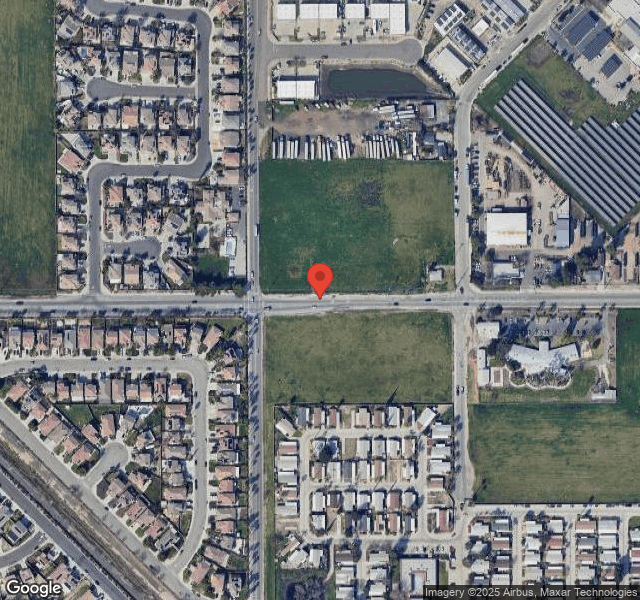

THE BRADLEY GARDENS

980 WEST SEVENTH STREET, SAN JACINTO, CA 92582 (951) 654-9347
For profit - Corporation 44 Beds Independent Data: November 2025
Trust Grade
60/100
#692 of 1155 in CA
Last Inspection: March 2024

Within standard 12-15 month inspection cycle. Federal law requires annual inspections.

Overview

The Bradley Gardens nursing home has a Trust Grade of C+, which means it is slightly above average but still has room for improvement. It ranks #692 out of 1155 facilities in California, placing it in the bottom half, and #28 out of 53 facilities in Riverside County, indicating limited options for better local care. The facility is improving, with issues decreasing from 19 in 2024 to just 1 in 2025. Staffing is a strength, with a turnover rate of 0% compared to the state average of 38%, which suggests that staff members are stable and familiar with the residents. While the home has not faced any fines, a recent inspection highlighted concerns, such as unsafe food preparation practices in the kitchen and inadequate staffing information reporting to federal databases. These incidents raise questions about food safety and transparency in staffing that families should consider.

Trust Score
C+
60/100
In California
#692/1155
Bottom 41%
Safety Record
Low Risk
No red flags
Inspections
Getting Better
19 → 1 violations
Staff Stability
○ Average
Turnover data not reported for this facility.
Penalties
✓ Good
No fines on record. Clean compliance history, better than most California facilities.
Skilled Nurses
⚠ Watch
Each resident gets only 26 minutes of Registered Nurse (RN) attention daily — below average for California. Fewer RN minutes means fewer trained eyes watching for problems.
Violations
⚠ Watch
52 deficiencies on record. Higher than average. Multiple issues found across inspections.
★★★☆☆
3.0
Overall Rating
★★★☆☆
3.0
Staff Levels
★★★★★
5.0
Care Quality
★★☆☆☆
2.0
Inspection Score
Stable
2024: 19 issues
2025: 1 issues

The Good

  • 5-Star Quality Measures · Strong clinical quality outcomes
  • Full Sprinkler Coverage · Fire safety systems throughout facility
  • No fines on record

Facility shows strength in quality measures, fire safety.

The Bad

3-Star Overall Rating

Near California average (3.1)

Meets federal standards, typical of most facilities

The Ugly 52 deficiencies on record

Apr 2025 1 deficiency
CONCERN (D) 📢 Someone Reported This

A family member, employee, or ombudsman was alarmed enough to file a formal complaint

Potential for Harm - no one hurt, but risky conditions existed

Report Alleged Abuse (Tag F0609)

Could have caused harm · This affected 1 resident

**NOTE- TERMS IN BRACKETS HAVE BEEN EDITED TO PROTECT CONFIDENTIALITY** Based on observation, interview, and record review, the facility failed to ensure an allegation of abuse was reported to the sta...

Read full inspector narrative →
**NOTE- TERMS IN BRACKETS HAVE BEEN EDITED TO PROTECT CONFIDENTIALITY** Based on observation, interview, and record review, the facility failed to ensure an allegation of abuse was reported to the state survey agency within two hours for two of four residents (Residents 1 and 2). This failure had the potential for the state survey agency to investigate the allegation and ensure residents were safe. Findings: A review of Resident 1's medical records indicated he was admitted on [DATE], with diagnoses of schizophrenia, (a mental illness that is characterized by disturbances in thought), chronic obstructive pulmonary disease, (COPD - a chronic inflammatory lung disease that causes obstructed airflow from the lungs), depression, (a mood disorder that causes a persistent feeling of sadness and loss of interest), and anxiety disorder, (a chronic condition characterized by an excessive and persistent sense of apprehension). A review of Resident 1's History and Physical dated January 3, 2025, indicated he did not have the capacity to make decisions. A review of Resident 1's Progress Notes dated March 6, 2025, at 11:15 p.m., indicated .Resident continues on behavior monitoring d/t physical/verbal aggression towards peers and staff. Resident was in TV Room with peers and staff when he began to display aggressive behavior during this shift. This staff was present and witnessed resident appear confused and angry. Assuming a female peer was talking and pointing at him, he leaned towards her in his wheelchair and swung and hit her hand/arm. Male staff attempted to stand between the two peers to deescalate the situation and resident pushed male staff at that time . A review of Resident 2's medical records indicated she was admitted [DATE], with diagnoses of cerebral edema, (swelling in the brain), secondary malignant neoplasm of brain, (cancer in the brain from the original location), schizophrenia, and chronic obstructive pulmonary disease. A review of Resident 2's History and Physical dated February 14, 2024, indicated she was alert and oriented to person, place, and time, with intellectual disability. A review of Resident 2's Progress Notes dated March 6, 2025, at 11:15 p.m., indicated .Altercation occurred towards end of shift with a male peer. Resident alert and oriented x3. Resident was hit by confused male peer on right arm/hand, while in TV Room. Both residents were immediately separated for resident safety. Head to Toe assessment done on this resident immediately following altercation, no injury noted. No c/o pain or discomfort, no sign of redness or swelling observed to right arm/hand. When asked if she felt safe, resident stated, yes, I'm fine. Continued to encouraged resident to use the call light if she needed anything. Q15min monitoring initiated. DON .Will continue with current plan of care . On March 11, 2025, at 12:32 p.m., an interview was conducted with Resident 2. Resident 2 stated, she was involved in an altercation with Resident 1 in the television room. Resident 2 stated, a staff member was within touching distance of Resident 1. Resident 2 stated, she was talking to a nurse, Resident 1 threatened her. Resident 2 stated she was pointing at the nurse she was speaking to, Resident 1 hit her on the hand. On March 11, 2025, at 2:38 p.m., an interview was conducted with the Certified Nursing Assistant, (CNA). The CNA stated she was working the 3 p.m. to 11 p.m. shift on March 6. 2025. The CNA stated that Resident 1 was in the television room when Resident 2 pointed toward the nurse she was speaking to, Resident 1 hit her on the hand. The CNA stated she removed Resident 1 from the area. On March 11, 2025, at 2:46 p.m., a telephone interview was conducted with the Licensed Vocational Nurse (LVN). The LVN stated that on March 6, 2025, at 11:15 p.m., Resident 1 hit Resident 2's hand. The LVN stated she notified the Director of Nursing (DON) and facility administrator right away. The LVN stated that they must notify the DON and administrator within two hours for an allegation of abuse. On March 11, 2025, at 3:23 p.m., an interview was conducted with the Director of Nursing, (DON). The DON stated that on March 6, 2025, at 11:15 p.m., the incident between Resident 1 and Resident 2 was reported to the Administrator right away. The DON stated that they are required to report an allegation of physical abuse within two hours to the police, Ombudsman, and state survey agency. On March 11, 2025, at 3:27 p.m., an interview was conducted with the Administrator, (Admin). The Admin stated that she notified the state survey agency on March 7, 2025, at 5 a.m. by telephone (six hours after the allegation was made). A review of the facility 's policy and procedure titled Abuse Investigation and Reporting revised July 2017, indicated .All reports of resident abuse, neglect, exploitation, misappropriation of resident property, mistreatment and/or injuries of unknown source (abuse) shall be promptly reported to local, state and federal agencies (as defined by current regulations) and thoroughly investigated by facility management .
Aug 2024 3 deficiencies
CONCERN (D) 📢 Someone Reported This

A family member, employee, or ombudsman was alarmed enough to file a formal complaint

Potential for Harm - no one hurt, but risky conditions existed

Transfer Requirements (Tag F0622)

Could have caused harm · This affected 1 resident

**NOTE- TERMS IN BRACKETS HAVE BEEN EDITED TO PROTECT CONFIDENTIALITY** Based on interview and record review, the facility failed to ensure the transfer or discharge requirements were met and the tran...

Read full inspector narrative →
**NOTE- TERMS IN BRACKETS HAVE BEEN EDITED TO PROTECT CONFIDENTIALITY** Based on interview and record review, the facility failed to ensure the transfer or discharge requirements were met and the transfer was appropriate and necessary for two of 22 residents (Residents 1 and 2), when two cognitively impaired residents were transferred to another skilled nursing facility. This failure had the potential to cause confusion and discomfort for these residents due to unfamiliar environment. Findings: 1. A review of Resident 1's admission records indicated the resident was initially admitted to the facility on [DATE], with diagnoses which included cognitive communication deficit, unspecified dementia (loss of memory, language, problem solving and other thinking abilities), unspecified psychosis (collection of symptoms that affect the mind), and bipolar disorder (episodes of mood swings ranging from depressive lows to manic highs). A review of Resident 1 ' s history and physical (a reference document that gives concise information about a patient ' s history and examination findings at the time of admission) dated July 2, 2022, indicated the resident is not mentally capable of understanding. A review of Resident 1 ' s Brief Interview for Mental Status (BIMS- a tool to assess cognitive impairment) dated 5/31/24, indicated Resident 1 has a BIMS score of 3, which indicated severe impairment of cognitive skills. A review of Resident 1 ' s Baseline Plan of Care dated 2/16/2022, indicated Resident 1 ' s discharge plan is Long Term Care (LTC). A review of Resident 1 ' s Social Service Note, dated 5/23/2024, indicated, Care plan conference was held with resident during which the change in the facility ' s operations were discussed and patient verbalized a desire and agreed to explore a transfer to another long-term care (LTC) facility . A review of the Physician and Telephone Orders dated 7/2/2024, indicated an order to transfer Resident 1 to SNF B for custodial care (The same plan of care for Resident 1 at the current SNF[SNF A]). A review of Resident 1's Physician's Discharge summary dated , 7/12/2024, indicated, .Transfer/Discharge was necessary due to per resident request . On July 24, 2024, at 5:08 p.m. during an interview, the Social Services Director (SSD) stated Resident 1 has no living family, and he is the one deciding on his care. She stated she felt confident at the time of interview, they understood the changes, and so she went ahead and proceeded with the discharge process. On July 25, 2024, at 1:40 p.m., during an interview, the Director of Nursing (DON) stated Resident 1 ' s BIMS score was a 3; however, during the care conference, the resident understood what the facility staff were asking them, so the discharge was still resident-initiated discharge. A review of Resident 1 ' s progress notes and social services notes did not indicate what was explained to the resident regarding the changes in the facility operations that prompted the resident to agree to the transfer to another SNF. On August 2, 2024, at 11:05 a.m., during an interview while at SNF B, Resident 1 was unable to provide pertinent information to the reason why was he transferred from SNF A to SNF B. 2. A review of Resident 2's admission Record indicated Resident 2 was admitted to the facility on [DATE], with diagnoses including Alzheimer ' s disease (a progressive disease that destroys memory and other mental functions), and history of transient ischemic attack (stroke). A review of Resident 2 ' s history and physical dated 8/8/23 indicated the resident is not mentally capable of understanding. A review of Resident 2 ' s Baseline Plan of Care dated 2/7/2022, indicated Resident 2 ' s discharge plan is Long Term Care. A review of Resident 2 ' s Social Service Annual assessment dated [DATE], indicated, .Resident has been in facility since 2022 .plans to remain in facility . A review of Resident 1 ' s BIMS dated 5/15/2024 indicated that Resident 2 has a score of 4, which indicated severe impairment of cognitive skills. A review of Resident 2 ' s Social Service Note, dated 5/22/2024 indicated, Care plan conference was held with resident in person on May 22, 2024, during which the change in the facility operations were discussed and patient verbalized a desire to explore a transfer to another LTC facility where smoking is prohibited. A review of the Physician and Telephone Orders dated 6/28/2024, indicated, may transfer to (Name of Long-Term Care facility- SNF B) for custodial care. (The same plan of care for Resident 2 at the current SNF [SNF A]) A review of Resident 2's Physician ' s Discharge summary, dated [DATE], indicated, .Transfer/Discharge was necessary due to per resident request . A review of Resident 2 ' s progress notes did not indicate any documentation that Resident 1 requested a transfer to another SNF or other health care facility prior to the care conference conducted on May 23, 2024. On July 24, 2024, at 5:08 p.m., The Social Services (SS) was interviewed. She stated Resident 2 has no living family, and he is the one deciding on his care. She stated she felt confident at the time of interview that the resident understood the changes, and she went ahead and proceeded with the discharge process. On July 25, 2024, at 1:40 p.m., during an interview, the DON stated Resident 2 made the decision to transfer to another SNF. On August 2, 2024, at 10:50 a.m., during an interview while at SNF B, Resident 2 was confused and did not know where he was and the reason of his transfer to the new facility (SNF B). On August 23, 2024, at 3:11 p.m., during an interview with the Social Service Director (SSD), the SSD stated, Residents 1 and 2 did not ask to be discharged prior to the care conference meeting discussing the facility changes. A review of the facility policy and procedure titled, Transfer or Discharge, Facility-Initiated, dated October 2022, indicated, .Once admitted to the facility, residents have the right to remain in the facility, and not be transferred or discharged unless .the transfer or discharge is necessary for the resident's welfare and the resident's need cannot be met in this facility .the transfer or discharge is appropriate because the resident's health has improved sufficiently so the resident no longer needs the services provided by this facility .Facility -initiated transfers and discharges, when necessary, must meet specific criteria and require resident/representative notification and orientation, and documentation .'Facility- initiated transfer or discharge' means a transfer or discharge which .did not originate through a resident's verbal or written request, and/or is in alignment with the resident's stated goals for care and preferences .
CONCERN (D) 📢 Someone Reported This

A family member, employee, or ombudsman was alarmed enough to file a formal complaint

Potential for Harm - no one hurt, but risky conditions existed

Transfer Notice (Tag F0623)

Could have caused harm · This affected 1 resident

**NOTE- TERMS IN BRACKETS HAVE BEEN EDITED TO PROTECT CONFIDENTIALITY** Based on interview and record review, the facility failed to provide a written notice of transfer or discharge to two of 22 resi...

Read full inspector narrative →
**NOTE- TERMS IN BRACKETS HAVE BEEN EDITED TO PROTECT CONFIDENTIALITY** Based on interview and record review, the facility failed to provide a written notice of transfer or discharge to two of 22 residents reviewed (Residents 1 and 2). Residents 1 and 2 were deemed with cognitive impairment and had no legal representative. In addition, the written notice of transfer or discharge for Residents 1 and 2, was not provided timely to the Office of the Long Term Care (LTC) Ombudsman. These failures had the potential to result in violation of the resident ' s rights, as issues related to the transfer or discharge may not be addressed promptly, leading to harm to the resident, especially if the transfer or discharge was not in the best interest of the resident or was done without proper procedure. This failure did not provide opportunity for the Ombudsman to advocate for the residents to ensure the transfer or discharge was necessary. Findings: 1. A review of Resident 1 ' s admission RECORD, indicated, Resident 1 was admitted to the facility on [DATE], with diagnoses which included cognitive communication deficit (difficulties in communication that arise from impairment in cognitive functions) and dementia (memory loss). Further review of the admission record indicated the resident did not have any listed legal representative. A review of Resident 1 ' s Brief Interview for Mental Status, dated May 23, 2024, indicated Resident 1 had severe cognitive impairment. A review of Resident 1 ' s Social Service Note, dated May 23, 2024, indicated .Care plan conference was held with resident during which the change in the facility operations were discussed and patient verbalized a desire and agreed to explore a transfer to another LTC facility . A review of Resident 1 ' s physician order dated July 1, 2024, indicated, .may transfer to (name of the skilled nursing facility) .for custodial care . A review of Resident 2 ' s Notice of Proposed Transfer/Discharge, dated July 8, 2024, provided by the facility, indicated the document was crossed out. A review of progress notes, did not indicate whether a notice of proposed transfer or discharge was provided to the resident and the LTC Ombudsman on the day the transfer or discharge was discussed on May 23, 2024, with Resident 1. 2. A review of Resident 2 ' s admission RECORD, indicated Resident 2 was admitted to the facility on [DATE], with diagnoses which included Alzheimer ' s disease (a brain disorder that slowly destroys memory and thinking skills). Further review of the admission record indicated the resident did not have any listed legal representative. A review of Resident 2 ' s document titled Brief Interview for Mental Status, dated May 15, 2024, indicated Resident 2 had severe cognitive impairment. A review of Resident 2 ' s Notice of Proposed Transfer/Discharge, dated July 8, 2024, indicated the document was crossed out. A review of Resident 2 ' s Social Service Note, indicated the following: - Dated May 22, 2024, .Care plan conference held with resident in person on May 22, 2024, during which the change in the facility operations were discussed and patient verbalized a desire to explore a transfer to another LTC facility . - Dated June 28, 2024, .Spoke to resident and informed that he was accepted @ (at) (name of the facility) . - Dated July 1, 2024, .Resident will be transported to (name of the facility) . A review of Resident 2 ' s physician order dated June 28, 2024, indicated, .Resident may transfer to (name of the facility) under custodial care . A review of progress notes, did not indicate whether a notice of proposed transfer or discharge was provided to the resident and the LTC Ombudsman on the day the transfer or discharged was discussed on May 22, 2024, with Resident 2, or at least 30 days prior to the proposed transfer to SNF B. On August 23, 2024, at 3:11 p.m., the Social Service Director (SSD) was interviewed, and she stated, the notice of the proposed transfer/discharge form would not be given to the resident unless the resident requested. The SSD stated, the Ombudsman would receive the written notice of proposed transfer/discharge on the day of the discharge or the following day of the discharge. A review of the facility policy and procedure titled, Transfer or Discharge, Facility-Initiated, dated October 2022, indicated, .Once admitted to the facility, residents have the right to remain in the facility. Facility -initiated transfers and discharges, when necessary, must meet specific criteria and require resident/representative notification and orientation, and documentation .'Facility- initiated transfer or discharge' means a transfer or discharge which .did not originate through a resident's verbal or written request, and/or is in alignment with the resident's stated goals for care and preferences .the resident and his or her representative are given a thirty (30)-day advance written notice of an impending transfer or discharge from this facility .A copy of the notice is sent to the Office of the State Long-Term Care Ombudsman at the same time the notice of transfer or discharge is provided to the resident and representative .
CONCERN (D) 📢 Someone Reported This

A family member, employee, or ombudsman was alarmed enough to file a formal complaint

Potential for Harm - no one hurt, but risky conditions existed

Deficiency F0624 (Tag F0624)

Could have caused harm · This affected 1 resident

**NOTE- TERMS IN BRACKETS HAVE BEEN EDITED TO PROTECT CONFIDENTIALITY** Based on interview and record review, the facility failed to ensure two of 22 sampled residents (Residents 1 and 2), was provide...

Read full inspector narrative →
**NOTE- TERMS IN BRACKETS HAVE BEEN EDITED TO PROTECT CONFIDENTIALITY** Based on interview and record review, the facility failed to ensure two of 22 sampled residents (Residents 1 and 2), was provided orientation in the form the residents could understand, to ensure a safe and orderly transfer from a skilled nursing facility (SNF A) to another skilled nursing facility (SNF B). Residents 1 and 2 were deemed with cognitive impairment, lacked the capacity to make decisions, and had no listed legal representatives. This failure of the facility had the potential to negatively affect the psychosocial well-being of Residents 1 and 2. Findings: A review of the facility discharged and transferred list from May 2024 to July 2024, indicated there were two residents who were transferred to another SNF with no family representative's involvement, and were deemed incapable of making decisions. A review of Resident 1's admission records indicated the resident was initially admitted to the facility on [DATE], with diagnoses which included cognitive communication deficit, unspecified dementia (loss of memory, language, problem solving and other thinking abilities), unspecified psychosis (collection of symptoms that affect the mind), and bipolar disorder (episodes of mood swings ranging from depressive lows to manic highs). A review of Resident 1's history and physical (a reference document that gives concise information about a patient's history and examination findings at the time of admission) dated July 2, 2022, indicated the resident is not mentally capable of understanding. A review of Resident 1's Brief Interview for Mental Status (BIMS- a tool to assess cognitive impairment) dated 5/31/24, indicated Resident 1 has a BIMS score of 3, which indicated severe impairment of cognitive skills. A review of Resident 1's Social Service Note, dated 5/23/2024, indicated, Care plan conference was held with resident during which the change in the facility's operations were discussed and patient verbalized a desire and agreed to explore a transfer to another long-term care (LTC) facility . A review of the progress notes did not indicate any documentation that the facility explained or oriented the resident, deemed incapable of understanding, the discharge plan to another SNF. A review of the Physician and Telephone Orders dated 7/2/2024, indicated an order to transfer Resident 1 to SNF B for custodial care (The same plan of care for Resident 1 at the current SNF [SNF A]). A review of Resident 1's Physician's Discharge summary dated , 7/12/2024, indicated, .Transfer/Discharge was necessary due to per resident request . On July 24, 2024, at 5:08 p.m. during an interview, the Social Services Director (SSD) stated Resident 1 has no living family, and he is the one deciding on his care. She stated she felt confident at the time of interview, they understood the changes, and she went ahead and proceeded with the discharge process. On July 25, 2024, at 1:40 p.m., during an interview, the Director of Nursing (DON) stated Resident 1's BIMS score was a 3; however, during the care conferences, the resident understood what the facility was asking them. A review of Resident 1's progress notes and social services notes did not indicate what was explained and the details of the transfers. On August 2, 2024, at 11:05 a.m., during an interview while at SNF B, Resident 1 was unable to provide pertinent information to the reason why was he transferred from SNF A to SNF B. A review of Resident 2's admission Record indicated Resident 2 was admitted to the facility on [DATE], with diagnoses including Alzheimer's disease (a progressive disease that destroys memory and other mental functions), and history of transient ischemic attack (stroke). A review of Resident 2's history and physical dated 8/8/23, indicated the resident is not mentally capable of understanding. A review of Resident 2's Baseline Plan of Care dated 2/7/2022, indicated Resident 2's discharge plan is Long Term Care. A review of Resident 2's Social Service Annual assessment dated [DATE], indicated, .Resident has been in facility since 2022 .plans to remain in facility . A review of Resident 1's BIMS dated 5/15/2024 indicated that Resident 2 has a score of 4, which indicated severe impairment of cognitive skills. A review of Resident 2's Social Service Note, dated 5/22/2024 indicated, Care plan conference was held with resident in person on May 22, 2024, during which the change in the facility operations were discussed and patient verbalized a desire to explore a transfer to another LTC facility where smoking is prohibited. A review of the Physician and Telephone Orders dated 6/28/2024, indicated, may transfer to (Name of Long-Term Care facility- SNF B) for custodial care. (The same plan of care for Resident 2 at the current SNF [SNF A]) A review of Resident 2's Physician's Discharge summary, dated [DATE], indicated, .Transfer/Discharge was necessary due to per resident request . A review of Resident 2's progress notes did not indicate any documentation that Resident 1 requested a transfer to another SNF or other health care facility prior to the care conference conducted on May 23, 2024. On July 24, 2024, at 5:08 p.m., The Social Services (SS) was interviewed. She stated Resident 2 has no living family, and he is the one deciding on his care. She stated she felt confident at the time of interview, the resident understood the changes, and she went ahead and proceeded with the discharge process. On 7/25/2024, at 1:40 p.m., during an interview, the DON stated Resident 2 made the decision to transfer to another SNF. On 8/2/2024, at 10:50 a.m., during an interview while at SNF B, Resident 2 was confused and did not know where he was and the reason of his transfer to the new facility (SNF B). A review of the facility's policy and procedure titled Transfer or Discharge, Resident Initiated, dated April 1, 2024, indicated, .Resident- initiated transfer or discharge means the resident or if appropriate, the resident representative has provided verbal or written notice of intent to leave the facility (leaving the facility does not include the general expression of a desire to return home or the elopement of residents with cognitive impairment) .for resident-initiated discharges .the comprehensive care plan contains the residents goals for admission and desired outcomes, which will be in alignment with the discharge if it is resident-initiated . A review of the facility policy and procedure titled, Transfer or Discharge, Facility-Initiated, dated October 2022, indicated, .Once admitted to the facility, residents have the right to remain in the facility. Facility -initiated transfers and discharges, when necessary, must meet specific criteria and require resident/representative notification and orientation, and documentation .'Facility- initiated transfer or discharge' means a transfer or discharge which .did not originate through a resident's verbal or written request, and/or is in alignment with the resident's stated goals for care and preferences .
Mar 2024 15 deficiencies
CONCERN (D)

Potential for Harm - no one hurt, but risky conditions existed

Deficiency F0578 (Tag F0578)

Could have caused harm · This affected 1 resident

Based on interview and record review, the facility failed, for one of 12 sampled residents (Resident 38), to ensure the resident or resident representative was informed and provided a written informat...

Read full inspector narrative →
Based on interview and record review, the facility failed, for one of 12 sampled residents (Resident 38), to ensure the resident or resident representative was informed and provided a written information regarding the formulation of an advance directive (written instruction such as living will or durable power of attorney for health care about the provision of care and services the resident preferred when he is no longer able to decide for himself) upon admission to the facility. This failure had the potential for the residents to have inappropriate treatment and services in the event of a medical emergency. Findings: A review of Resident 38's document titled, Physician Orders for Life Sustaining Treatment (POLST- form completed by the resident and/or legal representative that records the resident's treatment preferences in the event of a medical emergency), dated January 31, 2024, indicated, Resident 38 did not provide information regarding advance directive. A review of Residetn 38's document titled, Residents Receipt of Self-Determination Act Information, dated February 1, 2024, indicated, .Please have the appropriate category checked as to whether or not an Advance Directive has been executed by this resident .No .THE SOCIAL SERVICES DESIGNEE WILL FOLLOW-UP WITH YOU FOR ANY CARE DIRECTIVES YOU DESIRE . Further review of Resident 38's records indicated Resident 38 was not provided with information regarding formulating an advance directive. During a concurrent interview and review of Resident 38's POLST, on March 27, 2024, at 3:54 p.m., with the Social Service Director, she stated the POLST dated January 31, 2024, did not indicate that Resident 38 nor the resident representative were asked about the advance directive. The SSD stated, the admitting nurse should have asked the resident about the advance directive. During a concurrent interview and review of Resident 38's Residents Receipt of Self Determination Act Information, on March 29, 2024, at 9:35 a.m., with the Business Office Manager (BOM), she stated the document, Residents Receipt of Self Determination Act Information, dated February 1, 2024, indicated that Resident 38 responded No, when asked whether an advance directive was executed. The BOM stated there was no documentation showing the facility offered assistance in formulating an advance directive. The BOM stated, the facility should have assisted in formulating an advance directive. A review of the facility policy titled, Advance Directives, dated December 2016, indicated .Prior to or upon admission of a resident, the Social Service Director or Designee will inquire of the resident, his/her family members and/or his or her legal representative about existence of any written advance directives .Information about whether or not the resident has executed an advance directive shall be displayed prominently in the medical record .If the resident indicates that he has not established advance directives, the facility staff will offer assistance in establishing advance directives .
CONCERN (D)

Potential for Harm - no one hurt, but risky conditions existed

Deficiency F0625 (Tag F0625)

Could have caused harm · This affected 1 resident

**NOTE- TERMS IN BRACKETS HAVE BEEN EDITED TO PROTECT CONFIDENTIALITY** Based on interview and record review, the facility failed to ensure a written notice of bed-hold policy (reserving a resident's ...

Read full inspector narrative →
**NOTE- TERMS IN BRACKETS HAVE BEEN EDITED TO PROTECT CONFIDENTIALITY** Based on interview and record review, the facility failed to ensure a written notice of bed-hold policy (reserving a resident's bed while resident is out of the facility for therapeutic leave or hospitalization) was provided to the resident/and or resident representative, for one of one resident reviewed for hospitalization (Resident 34) when Resident 34 was transferred to the acute hospital. This failure had the potential for the resident or resident representative not to be informed of their right to hold the bed while out of the facility and the right to be readmitted back to the facility. Findings: On March 29, 2024, Resident 34's record was reviewed. Resident 34 was admitted to the facility on [DATE], with diagnoses which included osteomyelitis (bone infection), end stage renal disease (a permanent kidney failure that requires a regular course of dialysis-a procedure to remove waste products and excess fluid from the blood when the kidneys stop working properly). Further review of Resident 34's document titled, BEDHOLD INFORMED CONSENT, dated February 22, 2024, indicated, .CONFIRMATION OF TRANSFER & (and) BEDHOLD PROVISION .Copy of Bedhold Notice sent with resident .blank (no answer) .Notice given to Responsible Party at time of transfer .blank (no answer) . A review of Resident 34's LICENSED NURSES PROGRESS NOTES, dated March 22, 2024, at 4:00 p.m., indicated that Resident 34 was transferred to (name of hospital) from the dialysis center for blood transfusion. A review of Resident 34's Notice of Proposed Transfer/Discharge, dated March 22, 2024, indicated Resident 34 was transferred to (name of hospital) on March 22, 2024. There was no documented evidence Resident 34 or resident representative were provided with information of the facility's bed hold notice at time of transfer. On March 29, 2024, at 1:29 p.m., a concurrent interview with Licensed Vocational Nurse (LVN) 1 and review of Resident 34's records were conducted. LVN 1 stated, Resident 34 was receiving dialysis and that the dialysis center transferred the resident to the hospital for a blood transfusion. LVN 1 stated, the bed hold notice for transfer was done by the Social Services Designee (SSD) or Admissions Representative. LVN 1 stated, there was no documentation indicating that the bed hold notice was discussed with the resident or resident representative at the time of transfer. On March 29, 2024, at 1:55 p.m., a concurrent interview and review of Resident 34's BEDHOLD INFORMED CONSENT, were conducted with the SSD. The SSD stated, the bed hold notice was not completed upon transfer and should have been completed upon transfer. The SSD stated, the licensed nurse progress note did not indicate any discussion of the bed hold notice with the resident or resident representative. On March 29, 2024, at 3:08 p.m., a concurrent interview and review of Resident 34's BEDHOLD INFORMED CONSENT, were conducted with the Director of Nursing (DON). The DON stated, the bed hold notice was not completed upon resident's transfer. The DON stated, there was no written information indicating that a bed hold notice was provided to the resident or resident representative upon transfer. The DON stated, there was no documentation in the licensed nurse progress notes regarding Resident 34's bedhold. The facility's policy and procedure titled, Bed-Holds and Returns, dated March 2022, was reviewed. The policy indicated, .all residents/representatives are provided written information regarding the facility bed hold policies . residents are provided written information about these policies at least twice .well in advance of any transfer .at the time of transfer .(or, if the transfer was an emergency, within 24 hours) .
CONCERN (D)

Potential for Harm - no one hurt, but risky conditions existed

Quality of Care (Tag F0684)

Could have caused harm · This affected 1 resident

**NOTE- TERMS IN BRACKETS HAVE BEEN EDITED TO PROTECT CONFIDENTIALITY** Based on observation, interview, and record review, the facility failed to ensure one of one resident reviewed (Resident 24) rec...

Read full inspector narrative →
**NOTE- TERMS IN BRACKETS HAVE BEEN EDITED TO PROTECT CONFIDENTIALITY** Based on observation, interview, and record review, the facility failed to ensure one of one resident reviewed (Resident 24) received care and treatment to maintain their highest practicable physical well-being when a dietitian recommendation for a diet upgrade was not made known to the physician by the licensed nurses. This failure resulted in the resident remaining on her current diet, which could potentially lead to a decline in resident's overall condition. Findings: On March 28, 2024, a review of Resident 24's Face Sheet, indicated, Resident 24 was admitted to the facility on [DATE], with a diagnosis which included, cerebral infarction (lack of oxygen to the brain), and dementia (memory loss). A review of Resident 24's, Minimum Data Set, (a standardized assessment for the management of care) dated, December 17, 2023, indicated, .BIMS (Brief Interview for Mental Status- screening tool to assess mental capability) Summary Score . 3 .(severe cognitive impairment). A review of Resident 24's document titled, Resident Meet and Greet, dated June 9, 2023, indicated, .Daughter asking when (name of Resident) can upgrade to mech. (mechanical) soft diet . A review of Resident 24's document titled, Nutrition Screening Form, dated June 8, 2023, indicated, Resident 34's family requested on June 14, 2023, an upgrade of the resident's diet. A review of Resident 24's document titled, Nutrition Recommendations, dated June 22, 2023, indicated, .Recommendations .Refer to MD (physician) or ST (speech therapy) .Reason .Family desires food texture upgrade from puree . A review of Resident 24's document titled, Nutrition Risk Assessment Summary, dated June 22, 2023, indicated, .Refer texture upgrade to MD (physician), Hospice . A review of Resident 24's document titled, Care conference note, dated June 22, 2023, indicated, .Dietary .puree diet c (with) thickened liquids .(name of family member) only concerns is diet texture . Further review of Resident 24's Dietary, Nursing, and Hospice progress notes from June 2023 to March 2024, indicated there was no upgrade for Resident 24's diet. In addition, the hospice physician was not made aware of the family request or the nurtirion recommendations. A review of Resident 24's plan of care, dated September 23, 2023, indicated, .Resident problems/concerns .potential for altered nutrition .interventions .review food likes and dislikes .fortified pureed diet with nectar thick liquids. On March 28, 2024, at 2:54 p.m., the Dietary Supervisor (DSS) was interviewed. The DSS stated, she was aware of the family's request to upgrade the diet texture in June 2023. The DSS stated, the Registered Dietitian (RD) made a recommendation to hospice. On March 28, 2024, at 3:01 p.m., the RD was interviewed. The RD stated, she made a referral to the hospice MD. The RD stated, when a referral is made, the nursing staff should communicate the recommendations with hospice and process the recommendations. On March 29, 2024, at 5:01 p.m., an interview was conducted with the Director of Nursing (DON). The DON stated when dietary recommendations are made, she would review them and make the hospice teams aware if residents were on hospice. The DON stated the licensed nurses were responsible for informing the hospice team about dietary recommendations. The DON stated she was not aware of the dietary preferences upgrade request made in June 2023 for Resident 24. The DON stated, the physician was not made aware of the recommendation and should have been informed of the dietary upgrade request. The facility policy and procedure titled Resident Examination and Assessment, dated January 2018, was reviewed. The policy indicated, .it is the responsibility of the facility to meet the resident's personal care and nursing needs in coordination with the hospice representative, and ensure that the level of care provided is appropriately based on the individual resident's needs .communicating with the hospice provider (and documenting such communication) to ensure that the needs of the resident are addressed and met 24 hours per day .to ensure quality of care for the resident and family .ensuring that the LTC facility communicates with the hospice medical director, the resident's attending physician, and other practitioners participating in the provision of care to the resident as needed to coordinate the hospice care with the medical care provided by other physicians .
CONCERN (D)

Potential for Harm - no one hurt, but risky conditions existed

Pharmacy Services (Tag F0755)

Could have caused harm · This affected 1 resident

Based interview and record review, the facility failed to ensure accurate accountability of controlled medications (those with high potential for abuse or addiction) when random controlled medication ...

Read full inspector narrative →
Based interview and record review, the facility failed to ensure accurate accountability of controlled medications (those with high potential for abuse or addiction) when random controlled medication use audits did not reconcile for two out of three residents (Residents 23 and 27). There was a total of 4 unaccounted controlled medications. This failure had the potential for misuse or abuse of controlled medications. Findings: The controlled drugs record (CDR, an inventory count sheet that keeps record of the usage of controlled medications) for three random residents receiving controlled medications were reviewed during the survey. 1. Resident 27 had a physician's order, dated February 3, 2024, for hydrocodone-acetaminophen (a potent controlled medication for pain) 10/325 milligrams (mg, unit of measurement) tablet, take 1 tablet by mouth every 6 hours as needed for moderate pain 4-6. During a concurrent interview and record review on March 26, 2024 at 3:09 p.m. with licensed vocational nurse (LVN) 2, Resident 27's CDR for hydrocodone-acetaminophen 10/325 mg and the Medication Administration Records (MAR) dated March 2024 were reviewed. a. The CDR for hydrocodone-acetaminophen 10/325 mg indicated the nursing staff removed one tablet on March 1, 2024 at 6:11 p.m. and on March 10, 2024 at 8:50 a.m. from the medication cart and documented on the CDR (meaning they removed the medication from the locked controlled medication compartment in the medication cart). The MAR indicated, on March 1, 2024 for the 6:11 p.m. administration and on March 10, 2024 for the 8:50 a.m. administration, there were no nursing staff initials in the box for Resident 27's hydrocodone-acetaminophen 10/325 mg, to demonstrate the medication was administered. LVN 2 stated, there was no documentation on the MAR that indicated Resident 27 received the hydrocodone-acetaminophen 10/325 mg on March 1, 2024 at 6:11 p.m and on March 10, 2024 at 8:50 a.m., and she said, there should have been. b. The CDR for hydrocodone-acetaminophen 10/325 mg did not indicate the nursing staff removed one tablet of hydrocodone-acetaminophen 10/325 mg on March 8, 2024 at 1:30 p.m. The MAR indicated, on March 8, 2024 for the 1:30 p.m. administration, the nursing staff wrote their initials in the box for Resident 27's hydrocodone-acetaminophen 10/325 mg to demonstrate the medication was administered. Additionally, the nursing staff documented on the back page of the MAR: 3/8 Norco [brand name for hydrocodone-acetaminophen] 10/325 mg at [1:30 p.m.] . and signed with their signature (meaning they administered the medication to Resident 27). LVN 2 acknowledged, there was no documentation on the CDR to indicate the nurse removed the hydrocodone-acetaminophen 10/325 mg tablet from the locked controlled medication compartment in the medication cart. During a concurrent interview and record review on March 27, 2024 at 3:09 p.m. with the Director of Nursing (DON), a review of Resident 27's CDR for the hydrocodone-acetaminophen 10/325 mg and MAR dated March 2024 reflected the nursing staff signed the hydrocodone-acetaminophen 10/325 mg tablet out of the CDR but did not document the respective administration on the MAR on March 1, 2024 at 6:11 p.m. and on March 10, 2024 at 8:50 a.m. Additionally the nurse documented the administration of 1 tablet of hydrocodone-acetaminophen 10/325 mg on the MAR on March 8, 2024 at 1:30 p.m. but did not document the removal of the medication from the medication cart on the CDR. The DON verified this finding and acknowledged 3 hydrocodone-acetaminophen 10/325 mg tablets were not accounted. The DON acknowledged the nurse should have documented in both places, on the CDR and on the MAR. 2. Resident 23 had a physician's order, dated February 24, 2024 for Percocet (oxycodone-acetaminophen, a potent controlled medication for pain) 10/325 mg tablet, take 1 tablet by mouth every 6 hours as needed for moderate (4-6) pain or severe (7-10) pain. During a concurrent interview and record review on March 27, 2024 at 11:20 a.m. with licensed LVN 1, Resident 23's CDR for Percocet 10/325 mg and the MAR dated March 2024 were reviewed. The CDR for Percocet 10/325 mg indicated the nursing staff removed one tablet on March 24, 2024 at 8:30 p.m. from the medication cart and documented on the CDR (meaning they removed the medication from the locked controlled medication compartment in the medication cart). The MAR indicated, on March 24, 2024 for the 8:30 p.m. administration, there were no nursing staff initials in the box for Resident 23's Percocet 10/325 mg, to demonstrate the medication was administered. LVN 1 stated, there was no documentation on the MAR that indicated Resident 23 received the Percocet 10/325 mg on March 24, 2024 at 8:30 p.m. During a concurrent interview and record review on March 27, 2024 at 3:22 p.m. with the DON, a review of Resident 23's CDR for the Percocet 10/325 mg and MAR dated March 2024 reflected the nursing staff signed the Percocet 10/325 mg tablet out of the CDR but did not document the respective administration on the MAR on March 24, 2024 at 8:30 p.m. The DON verified this finding and acknowledged 1 Percocet 10/325 mg tablet was not accounted. When asked why it is important to follow the process for controlled substance documentation of administrations, the DON stated, so we don't overdose, if not documenting right the next person could give a medication when a resident already received it. The DON added, it is also important for tracking usage to prevent diversion. During a review of the facility's policy and procedures (P&P) titled, Controlled Substances, revised April 2019, the P&P indicated, An individual resident controlled substance record is made for each resident who is receiving a controlled substance .Upon administration: The nurse administering the medication is responsible for recording: Name of resident receiving the medication; name, strength and dose of the medication; time of administration; method of administration, quantity of the medication remaining; and signature of the nurse administering the medication. During a review of the facility's P&P titled, Medication Administration, revised November 2017, the P&P indicated, Each dose administered to a resident shall be properly recorded in the resident's medical record .Each dose of PRN [as needed] mediation that is administered must be explained as to time, dose, reason given, and effectiveness of the dose .The initials of the nurse must be recorded on the front of the med sheet .in the proper column for the correct date and time of the administration; Date, time, drug name, dose, route .reason given and effectiveness (result) must be indicated whenever a PRN med [medication] is administered. Documentation of PRN use is recorded on the back of the med sheet which shall include the nurse's signature .
CONCERN (D)

Potential for Harm - no one hurt, but risky conditions existed

Drug Regimen Review (Tag F0756)

Could have caused harm · This affected 1 resident

**NOTE- TERMS IN BRACKETS HAVE BEEN EDITED TO PROTECT CONFIDENTIALITY** Based on interview, and record review, the facility failed to ensure the Consultant Pharmacist (CP) identified and reported irre...

Read full inspector narrative →
**NOTE- TERMS IN BRACKETS HAVE BEEN EDITED TO PROTECT CONFIDENTIALITY** Based on interview, and record review, the facility failed to ensure the Consultant Pharmacist (CP) identified and reported irregularities during the monthly medication regimen review (MRR) for one of five sampled residents (Resident 4) when Resident 4 was administered Seroquel (an antipsychotic medication for bipolar disorder, depression, and schizophrenia) without manufacturer specified monitoring. This failure had the potential for the medication not being optimized for best possible health outcome, and unnecessary or prolonged use of the medication which could lead to adverse effects and unidentified risks associated with the use of psychotropic medications that included but not limited to sedation, respiratory depression, constipation, anxiety, agitation, and memory loss. Finding: During a review of Resident 4's Physician's Orders, dated June, 9, 2021, the Physician's Orders indicated, Resident 4 was admitted to the facility on [DATE] under the care of Hospice (focused on the care, comfort, and quality of life for person with a serious illness approaching the end of life), and had diagnoses including dementia. During a review of Resident 4's Face Sheet, dated October 12, 2023, the Face Sheet indicated, Resident became off from .Hospice effective date on 11/30/22 . During a review of Resident 4's Physician Progress Note, dated December 8, 2022, the Physician's Progress Note indicated, .new patient .now off hospice .[diagnosis] dementia .[medications] Seroquel . Resident 4's medical record indicated she had been receiving Seroquel in various doses since June 16, 2021. Her current Physician's Orders, dated July 14, 2023, indicated provider orders for: Quetiapine (Seroquel) 25 milligram (mg, unit of measurement) tab, take 1 tablet by mouth daily for dementia with psychotic features manifested by continuous yelling out .; Quetiapine (Seroquel) 50 mg tab, take 1 tablet by mouth at bedtime for dementia with psychotic features manifested by continuous yelling out .; and Monitor Side Effects of Seroquel (Quetiapine) .blood abnormalities . During a review of Resident 4's Medication Administration Record (MAR), dated March 1, 2024 through March 31, 2024, the MAR indicated, Monitor side effects of Seroquel (quetiapine) .blood abnormalities . During a concurrent interview and record review on March 29, 2024 at 1:20 p.m. with the Director of Nursing (DON), Resident 4's medical record was reviewed. When asked if manufacturer specified monitoring for blood abnormalities, such as high cholesterol and high blood sugar, during the use of Seroquel was completed for Resident 4, the DON stated, I don't see any orders for labs [manufacturer specified monitoring]. The DON added, usually when a resident comes off hospice, doctor orders baseline labs or pharmacist recommends to order labs. The DON said, she will check with medical records. During a follow-up interview on March 29, 2024 at 4:02 p.m. with the DON, the DON stated, no documentation was found in Resident 4's medical record that labs were ordered or monitored during the use of Seroquel while admitted to the facility under hospice care on June 2021 and no labs ordered when the resident was taken off hospice care since November 2022. The DON added, it is important to monitor (the labs specified by the manufacturer) for adverse reactions to see if the medication needs to be discontinued. The DON verified there were no recommendations by the Consultant Pharmacist (CP) during monthly MRRs between January 1, 2023 to February 29, 2024 related to manufacturer specified monitoring for labs related to metabolic abnormalities during use of Seroquel for Resident 4. During a telephone interview on March 29, 2024 at 5:44 p.m. with the Consultant Pharmacist (CP), the CP stated, the antipsychotic use monitoring process included monitoring for behaviors and side effects. When asked regarding Resident 4 receiving Seroquel since June 2021 without manufacturer specified monitoring for labs related to metabolic abnormalities such as high cholesterol and high blood sugar, the CP acknowledged the resident should have been monitored and stated, Should monitor for lipids [cholesterol] and hyperglycemia [blood sugar)]. A review of the CP's monthly MRRs for Resident 4 from January 1, 2023 to February 29, 2024 indicated there were no recommendations from the CP related to the need for monitoring of manufacturer specified labs related to metabolic abnormalities during use of Seroquel for Resident 4. During a review of the facility's policy and procedures (P&P), titled Pharmacy Medication Regimen Review, revised November 2017, the P&P indicated, The consultant pharmacist performs the review of each resident's medication regimen monthly, which shall include but are not limited to all psychotropic .medication orders (active and discontinued) used since previous review .The consultant pharmacist documents in a separate written report any found irregularities .the procedure is as follows: .based on information gathered during mediation monitoring, the pharmacist evaluates (but not limited to): .recommended labwork . During a review of the facility's P&P titled, Antipsychotic Medication Use, dated December 2016, the P&P indicated, .Nursing staff shall monitor for and report any of the following side effects and adverse consequences of antipsychotic medications to the attending physician .increase in total cholesterol/triglycerides, unstable or poorly controlled blood sugar . A review of the Prescribing Information (PI, detailed description of a drug's uses, dosage range, side effects, drug-drug interactions, and contraindications that is available to clinicians) for Seroquel, revised January 2022, indicated, Warnings and Precautions .antipsychotic drugs have been associated with metabolic changes that include hyperglycemia [high blood sugar]/diabetes mellitus, dyslipidemia [high cholesterol] .Any patient treated with atypical antipsychotics should be monitored for symptoms of hyperglycemia .Dyslipidemia: Undesirable alterations have been observed in patients treated with atypical antipsychotics. Appropriate clinical monitoring .including fasting blood lipid testing at the beginning of, and periodically, during treatment .
CONCERN (D)

Potential for Harm - no one hurt, but risky conditions existed

Medication Errors (Tag F0758)

Could have caused harm · This affected 1 resident

**NOTE- TERMS IN BRACKETS HAVE BEEN EDITED TO PROTECT CONFIDENTIALITY** Based on interview and record review, the facility failed to ensure one of five sampled residents (Resident 4) was free from unn...

Read full inspector narrative →
**NOTE- TERMS IN BRACKETS HAVE BEEN EDITED TO PROTECT CONFIDENTIALITY** Based on interview and record review, the facility failed to ensure one of five sampled residents (Resident 4) was free from unnecessary psychotropic (drugs that affects brain activities associated with mental processes and behavior) medications when Resident 4 was administered Seroquel (quetiapine, an antipsychotic medication for bipolar disorder, depression, and schizophrenia) without manufacturer specified monitoring. This failure had the potential for the medication not being optimized for best possible health outcome, and unnecessary or prolonged use of the medication which could lead to adverse effects and unidentified risks associated with the use of psychotropic medications that included but not limited to sedation, respiratory depression, constipation, anxiety, agitation, and memory loss. Finding: During a review of Resident 4's Physician's Orders, dated June, 9, 2021, the Physician's Orders indicated, Resident 4 was admitted to the facility on [DATE] under the care of Hospice (focuses on the care, comfort, and quality of life for person with a serious illness approaching the end of life), and had diagnoses including dementia. During a review of Resident 4's Face Sheet, dated October 12, 2023, the Face Sheet indicated, Resident became off from .Hospice effective date on 11/30/22 . During a review of Resident 4's Physician Progress Note, dated December 8, 2022, the Physician's Progress Note indicated, .new patient .now off hospice .[diagnosis] dementia .[medications] Seroquel . Resident 4's medical record indicated she had been receiving Seroquel in various doses since June 16, 2021. Her current Physician's Orders, dated July 14, 2023, indicated provider orders for: Quetiapine (Seroquel) 25 milligram (mg, unit of measurement) tab, take 1 tablet by mouth daily for dementia with psychotic features manifested by continuous yelling out .; Quetiapine (Seroquel) 50 mg tab, take 1 tablet by mouth at bedtime for dementia with psychotic features manifested by continuous yelling out .; and Monitor Side Effects of Seroquel (Quetiapine) .blood abnormalities . During a review of Resident 4's Medication Administration Record (MAR), dated March 1, 2024 through March 31, 2024, the MAR indicated, Monitor side effects of Seroquel (quetiapine) .blood abnormalities . During a concurrent interview and record review on March 29, 2024 at 1:20 p.m. with the Director of Nursing (DON), Resident 4's medical record was reviewed. When asked if manufacturer specified monitoring for blood abnormalities, such as high cholesterol and high blood sugar, during the use of Seroquel was completed for Resident 4, the DON stated, I don't see any orders for labs [manufacturer specified monitoring]. The DON added, usually when a resident comes off hospice, doctor orders baseline labs or pharmacist recommends to order labs. The DON said, she will check with medical records. During a follow-up interview on March 29, 2024 at 4:02 p.m. with the DON, the DON stated, no documentation was found in Resident 4's medical record that labs were ordered during the use of Seroquel while admitted to the facility under hospice care on June 2021 and no labs ordered when the resident was taken off hospice care since November 2022. The DON added, it is important to monitor (the labs specified by the manufacturer) for adverse reactions to see if the medication needs to be discontinued. During a telephone interview on March 29, 2024 at 5:44 p.m. with the Consultant Pharmacist (CP), the CP stated, the antipsychotic use monitoring process included monitoring for behaviors and side effects. When asked regarding Resident 4 receiving Seroquel since June 2021 without manufacturer specified monitoring for labs related to metabolic abnormalities such as high cholesterol and high blood sugar, the CP acknowledged the resident should have been monitored and stated, Should monitor for lipids [cholesterol] and hyperglycemia [blood sugar)]. During a review of the facility's policy and procedure (P&P) titled, Antipsychotic Medication Use, dated December 2016, the P&P indicated, .Nursing staff shall monitor for and report any of the following side effects and adverse consequences of antipsychotic medications to the attending physician .increase in total cholesterol/triglycerides, unstable or poorly controlled blood sugar . A review of the Prescribing Information (PI, detailed description of a drug's uses, dosage range, side effects, drug-drug interactions, and contraindications that is available to clinicians) for Seroquel, revised January 2022, indicated, Warnings and Precautions .antipsychotic drugs have been associated with metabolic changes that include hyperglycemia [high blood sugar]/diabetes mellitus, dyslipidemia [high cholesterol] .Any patient treated with atypical antipsychotics should be monitored for symptoms of hyperglycemia .Dyslipidemia: Undesirable alterations have been observed in patients treated with atypical antipsychotics. Appropriate clinical monitoring .including fasting blood lipid testing at the beginning of, and periodically, during treatment .
CONCERN (D)

Potential for Harm - no one hurt, but risky conditions existed

Deficiency F0801 (Tag F0801)

Could have caused harm · This affected 1 resident

Based on observation, interview, and record review, the facility failed to have a full-time director of food and nutrition services. The lack of a full-time, qualified supervision over Food and Nutrit...

Read full inspector narrative →
Based on observation, interview, and record review, the facility failed to have a full-time director of food and nutrition services. The lack of a full-time, qualified supervision over Food and Nutrition services had the potential to result in residents not being assessed regarding their nutritional needs, as well as lack of oversight of food preparations, services, and storage for 30 residents. Findings: On March 26, 2024, at 9:31 a.m., an interview with [NAME] (CK) 1 was conducted. CK 1 stated there was no Dietary Supervisor (DSS) for about a month now. On March 26, 2024, at 3:15 p.m., an interview was conducted with the DSS. The DSS stated she worked full time until February 28, 2024, then transitioned to on-call (expected to be available at any time, usually with short notice) until the facility could find a replacement. On March 28, 2024, at 10:04 a.m., an interview with the Administrator (ADM) was conducted. The ADM acknowleged the facility did not have a full-time DSS. On March 28, 2024, at 11:05 a.m., an interview with the Registered Dietitian (RD) was conducted. The RD stated, she visited the facility once a week and worked 24 hours per month. A review of the facility's payroll work hours for the DSS, indicated, the DSS worked on the following dates: - March 4, 2024 - 0.78 hours (hrs); - March 6, 2024 - 0.5 hrs.; - March 7, 2024 - 1 hr.; - March 8, 2024 - 1.79 hrs.; - March 13, 2024 - 0.5 hrs.; - March 15, 2024 - 3.5 hrs.; - March 18, 2024 - 1.47 hrs.; - March 22, 2024 - 1.21 hrs.
CONCERN (D)

Potential for Harm - no one hurt, but risky conditions existed

Infection Control (Tag F0880)

Could have caused harm · This affected 1 resident

Based on observation, interview, and record review, the facility failed to ensure the infection prevention program was implemented when a facility staff did not disinfect the automatic blood pressure ...

Read full inspector narrative →
Based on observation, interview, and record review, the facility failed to ensure the infection prevention program was implemented when a facility staff did not disinfect the automatic blood pressure (BP-pressure of blood in blood vessels) cuff machine before and after residents' use according to the facility policy. This failure had the potential for the vulnerable residents to be exposed to cross-contamination and the development of infections. Findings: On March 27, 2024 at 8:43 a.m., a medication pass observation was conducted with Licensed Vocational Nurse (LVN) 2. LVN 2 was observed carrying an automatic BP cuff machine from on top the medication cart and then proceeded to Resident 21's room. LVN 2 applied the automatic BP cuff on Resident 21's right arm. After obtaining Resident 21's BP reading, LVN 2 removed the automatic BP cuff from Resident 21's arm and placed the automatic BP cuff machine on top of the medication cart. LVN 2 was not observed to have disinfected the automatic BP cuff machine before and after use on Resident 21. On March 27, 2024 at 8:53 a.m., a medication pass observation was conducted with LVN 2. LVN 2 retrieved the same automatic BP cuff machine from on top of the medication cart, and proceeded to Resident 5's room. LVN 2 applied the automatic BP cuff on Resident 5's right arm. After obtaining Resident 5's BP reading, LVN 2 removed the automatic BP cuff from Resident 5's right arm and placed the same automatic BP cuff machine on top of the same medication cart. LVN 2 was not observed to have disinfected the used automatic BP cuff machine before and after use on Resident 5. During an interview March 27, 2024 at 9:10 a.m. with LVN 2, LVN 2 stated she did not disinfect the automatic BP cuff machine before and after use on Residents 21 and Resident 5. LVN 2 further stated she should have used the disinfectant wipes to disinfect the used automatic BP cuff before and after each resident use. She said, I will do it right now. When asked why it is important to disinfect a shared BP cuff machine before and after use on each resident, LVN 2 stated, Important for infection control. During an interview March 27, 2024 at 3:01 p.m. with the Director of Nursing (DON), the DON stated the expectation is for nursing staff to clean and disinfect any equipment before and after use on each resident. During a review of the facility's policy and procedure (P&P) titled, Cleaning and Disinfecting of Resident-Care Items and Equipment, dated October 2018, the P&P indicated, Resident-care equipment, including reusable items and durable medical equipment will be cleaned and disinfected according to the current CDC (Centers for Disease Control and Prevention- a nationally recognized disease control and prevention organization) recommendations for disinfection .Non-critical items are those that come in contact with intact skin but not mucous membrane .Non-critical resident-care items include .blood pressure cuffs . According to the CDC article titled, Disinfection and Sterilization Guideline for Disinfection and Sterilization in Healthcare Facilities, updated May 2019, .non-critical patient-care devices are disinfected when visibly soiled and on a regular basis .such as after use on each patient .
CONCERN (E)

Potential for Harm - no one hurt, but risky conditions existed

Deficiency F0802 (Tag F0802)

Could have caused harm · This affected multiple residents

Based on observations, interviews, and record reviews the facility failed to ensure dietary staff were able to carry out the functions of food and nutrition services safely and effectively when: 1. Fo...

Read full inspector narrative →
Based on observations, interviews, and record reviews the facility failed to ensure dietary staff were able to carry out the functions of food and nutrition services safely and effectively when: 1. Food service workers did not recognize that the Quat sanitizer concentration was not at the right concentration; (Cross referred F 812) This failure had the potential to cause foodborne illness for 30 out of 31 sampled residents who received foods from the kitchen. 2. Diet Aide 1 and [NAME] 2 were unable to properly clean working surface; This failure had the potential to cause foodborne illness for 30 out of 31 sampled residents who received foods from the kitchen. 3. [NAME] 2 did not follow the menu for serving on 3/27/24 lunch; (Cross referred F 803 and F 804) This failure had the potential for 30 out of 31 residents receiving food prepared in the kitchen do not meet their nutritional needs which may lead to nutritional related health complications. 4. Diet Aide served Jello to residents who require nectar thick consistency (Cross referred F 805); and This failure had the potential risk of aspiration for two of two sampled residents, Residents 6 and 24 who received nectar thick consistency from the kitchen. 5. [NAME] 2 did not know the right concentration of chlorine (sanitizer) for the dish machine. This failure had the potential to cause foodborne illness for 30 out of 31 sampled residents who received foods from the kitchen. Findings: 1. A review of the Quat sanitizer bottle's guidelines showed appropriate sanitizing levels were 200-400 ppm. On March 26, 2024, at 10:10 a.m., a concurrent observation and interview were conducted with Dietary Aide 1 (DA 1). DA 1 was asked to test the Quat sanitizer solution in the sanitizer bucket. The sanitizer test strip read between 100 -200 ppm (parts per million). DA 1 stated the test strip should read 100 -200 ppm and the sanitizer was at the right concentration. On March 26, 2024, at 11:06 a.m., a concurrent observation and interview were conducted with [NAME] 2 (CK 2). CK 2 was observed testing the Quat sanitizer solution in the sanitizer bucket. The sanitizer test strip read between 100 -200 ppm. CK 2 stated the test strip should read between 200-400 ppm. CK 2 hesitated for few seconds and stated the sanitizer was at the right concentration even thought was under 200 ppm. CK 2 did not throw away or change the sanitizer and continue let the kitchen used the sanitizer. On March 26, 2024, at 4:00 p.m., a concurrent observation and interview were conducted with the Dietary Supervisor (DSS). The DSS was observed testing the Quat sanitizer solution in the sanitizer bucket. The sanitizer test strip read between 100 -200 ppm. The DSS stated the test strip should read 100 -200 ppm and the sanitizer currently was at the right concentration. On March 27, 2024, at 12:22 p.m., a concurrent observation and interview were conducted with Dietary Aide 2 (DA 2). DA 2 was observed testing the Quat sanitizer solution in the sanitizer bucket. The sanitizer test strip read between 100 -200 ppm. DA 2 stated the test strip should read 200 ppm. DA 2 unsure the sanitizer was in right concentration. DA 2 seek guideline with CK 2. CK 2 stated the sanitizer was in right concentration with under 200 ppm. On March 28, 2024, at 12:06 p.m., a concurrent observation, interview, and Quat sanitizer's bottle instructions review was conducted with the Registered Dietitian (RD). The RD was observed testing the Quat sanitizer solution. The sanitizer test strip read between 100 -200 ppm. The RD stated that is right concentration. A review of the Quat sanitizer bottle's instructions indicated, .To sanitize .apply 200 -400 ppm active quaternary (Quat) solution . During a review of the facility's Policy and Procedure (P&P) titled, Sanitizer bucket for cleaning cloths, dated 1/1/2017, the P&P indicated, 1. Sanitizer buckets are filled with . an appropriate sanitizer at a high concentration to ensure that the solution stays effective Quat ppm at 200 .6 While dispenser pumps set up by the chemical company may be used, it is the responsibility of the staff to ensure that sanitizing is at an effective level . 2. During a general food production observation on March 27, 2024, at 10:27 a.m., Diet Aide 1 (DA 1) was observed cleaning the Prep table after preparing raw chicken. DA 1 only used green bucket detergent to clean the Prep table. When interviewed, DA 1 stated the green bucket contained soap and she used the soap to clean the Prep table. During a general food production observation on March 27, 2024, at 11:08 a.m., [NAME] 2 (CK 2) was observed cleaning the Prep table after preparing mashed potatoes. CK 2 only used red bucket sanitizer to clean the Prep table. On March 28, 2024, at 11:05 a.m., an interview with the RD was conducted. The RD stated the proper way to clean the Prep table surfaces was to clean with detergent, rinse and sanitize to minimize the soil and microbial contamination. During a review of the facility's Policy and Procedure (P&P) titled, Cleaning and Sanitizing - Basics, dated 2018, the P&P indicated, When cleaning and sanitizing any food contact surface, it is extremely important .Clean and sanitize in place method (for .work table surfaces) 1. Clean items with warm water and detergent. 2. Rinse with clear warm water. 3. Sanitizer surfaces with .Quaternary Ammonia (Quat) 200 ppm/ 1 minute . During a review of the facility Job Description, titled Food and Nutrition Services Aide (kitchen Aide), dated 1/1/2017, the job description indicated, Primary function: Under general supervision performs a variety of simple, routine tasks related to the preparation and serving of foods; to clean kitchen area .Worked performed: .2. Cleans work area according to directions . During a review of the facility Job Description, titled Cook, dated 1/1/2017, the job description indicated, Primary function: .maintains area utilizing high standard of sanitation . 3. During a food production observation on March 27, 2024, between 10:00 a.m. until 12:30 a.m., [NAME] 2 did not follow menu for serving lunch on 3/27/24. a. Pureed chicken was being served to puree diets by using a # 8 scoop; whereas the menu specified a # 10 scoop; b. Three Potatoes wedges were being served to regular diets; whereas the menu specified four potato wedges; and c. Spinach was being served to all diets except pureed spinach using a #10 scoop; whereas the menu specified a # 8 scoop. d. CK 2 did not follow the pureed chicken and spinach recipes by adding water and thickener. e. CK 2 did not serve biscuit per menu for Regular diets, small portion, large portion, Mechanical soft diets, and Carbohydrate control diets (a meal plan for Diabetic resident). f. CK 2 did not serve gravy per menu for puree diets. On March 28, 2024, at 11:05 a.m., an interview was conducted with the RD. The RD stated cooks should follow the menu. During a review of the facility Job Description, titled Cook, dated 1/1/2017, the job description indicated, Primary function: Under general supervision prepared food for residents using menu and standardized recipes.Worked performed: .3. Follows menu and recipes . 4. On March 27, 2024, at 12:35 p.m., during a lunch tray assemby observation in the kitchen with DA 2, DA 2 served Jello to Residents 6 and 24 who required nectar thick liquids. On March 27, 2024, at 12:54 p.m., a concurrent observation and interview with the Activity Director (AD) was conducted in the dining room. The AD verified Resident 24 was on nectar thick consistency and received Jello on her meal tray. On March 27, 2024, at 1:14 p.m., a concurrent observation and interview with Certified Nurse Aide 1 (CNA 1) was conducted at Resident 6's bedside. CNA 1 stated Resident 6 received Jello with her meal and Resident 6 finished the Jello. On March 28, 2024, at 11:05 a.m., an interview was conducted with the RD. The RD stated residents on nectar thick consistency should not receive Jello because Jello melts in the mouth, it turned into a thin liquid. According to the International Dysphagia Diet Standardization Initiative (IDDSI) framework (is an international set of descriptors describing texture modified foods and thickened liquids for people with eating, drinking and swallowing problems (dysphagia) across the lifespan) describes edible gelatin, indicated, .Per testing and due to the challenging and variable nature of gelatin/Jell-O preparations across the USA, it is best practice to have gelatin/Jell-O only on the Regular, . Thin Liquid .https://iddsi.org/IDDSI/media/images/Posters/GELATIN-JELLO-FAQ-USIRG-CHART-FINAL.pdf During a review of the facility Job Description, titled Food and Nutrition Services Aide (kitchen Aide), dated 1/1/2017, the job description indicated, Primary function: Under general supervision performs a variety of simple, routine tasks related to the preparation and serving of foods .Work performed . 2. Sets up trays accurately . 5. On March 27, 2024, at 3 p.m., a concurrent observation, interview and dish machine Operational Requirements review were conducted with CK 2. CK 2 was observed checking the chlorine of the dish machine. The chlorine test strip read between 100 -200 ppm. CK 2 stated the test strip should read between 100-200 ppm and it was at the right concentration. During a review of the dish machine Operational Requirements posted on the dish machine, it was indicated that it required 50 ppm available chlorine. On March 28, 2024, at 11:05 a.m., an interview was conducted with the Registered Dietitian (RD). The RD stated the dish machine chlorine should read bet 50 -100 ppm. During a review of the facility Job Description, titled Cook, dated 1/1/2017, the job description indicated, Primary function .maintains area utilizing high standard of sanitation .
CONCERN (E)

Potential for Harm - no one hurt, but risky conditions existed

Menu Adequacy (Tag F0803)

Could have caused harm · This affected multiple residents

Based on observation, interview, and facility document review, the facility failed to ensure the menus were followed and resident nutritional needs were met when: 1. Correct portion sizes were not fol...

Read full inspector narrative →
Based on observation, interview, and facility document review, the facility failed to ensure the menus were followed and resident nutritional needs were met when: 1. Correct portion sizes were not followed; 2. The [NAME] did not serve biscuit during lunch on 3/27/2024; and 3. The [NAME] did not serve gravy for pureed diet during lunch on 3/27/2024. These failures had the potential for 30 out of 31 residents receiving food prepared in the kitchen do not meet their nutritional needs which may lead to nutritional related health complications. Finding: (Cross referred 802) 1. On March 27, 2024, at 12:21 p.m., an interview was conducted with [NAME] 2 (CK 2) in front of Trayline (a system of food preparation in which trays move along an assembly line). CK 2 stated he was going to use a grey scoop numbered 8 to serve pureed chicken, and an ivory scoop numbered 10 to serve Spinach. On March 27, 2024, at 12:30 p.m., an observation of the lunch meal plating service was conducted with CK 2. The following were observed: Pureed chicken was being served to the pureed diets using a # 8 scoop; Three Potatoes wedges was being served to the regular diet; and Spinach was being served to all diets except pureed spinach using a #10 scoop. A review of the facility document titled Daily Cook's Menu, dated Week 3, Wednesday, Standard Spring 2024, indicated, .# 10 scoop pureed chicken was to be served, 4 wedges Potato was to be serve to regular diet and # 8 scoop (1/2 cup) Spinach was to be served to all other diets . On March 27, 2024, at 3:16 p.m., an interview was conducted with the Dietary Supervisor (DSS). The DSS stated it was very important to follow menu's portion sizes when serving the residents because dietary staff did not want to over or underserve portions to the residents. The DSS explained underserved portion sizes could cause residents to not get enough nutrients while overserved portion sizes could lead to residents receiving many nutrient resulting in unplanned weight gain. On March 28, 2024, at 11:05 a.m., an interview was conducted with the Registered Dietitian (RD). The RD stated cooks should follow the menu. A review of the facility document titled, The Facility's Resident Diet List, dated March 26, 2024, indicated seven residents, Residents 1, 6, 8, 9, 10, 14, and 24 were on a pureed diet. A review of the facility document titled, The Facility's Resident Diet List, dated March 26, 2024, indicated eight residents, Residents 5, 13, 18, 22, 28, 30, 36, and 38 were on a regular diet. A review of the facility's Policy and Procedure (P&P) titled, Portion Control, undated, the P&P indicated, Policy: Individual will receive the appropriate portions of food as outlined on the menu. Control at the point of service is necessary to assure that accurate portion sizes are served. Procedure .2. The menu should list the specific portion size for each food item .3. Food should be served with .scoops .of standard sizes .a. Portions that are too small result in the individual not receiving the nutrients needed. b. Portions that are too large increase food costs as well as providing the individual with more food that needed . A review of the facility's Policy and Procedure (P&P) titled, Menu Guidelines, dated 1/1/2017, the P&P indicated, Policy: To prepare foods according to the menu .Procedures .a. Correct portion size will be given per menu pattern; . 2. On March 27, 2024, at 12:30 p.m., an observation of the lunch meal plating service was conducted with CK 2 in front of the trayline. There were no biscuits available in the trayline. A review of the facility document titled Daily Cook's Menu, dated Week 3, Wednesday, Standard Spring 2024, indicated, Biscuit was to be served to Regular diet, small portion, large portion, Mechanical soft diet, and Carbohydrate control diet [(CCHO) a meal plan for diabetic residents]. On March 27, 2024, at 3:16 p.m., an interview was conducted with the DSS. The DSS stated CK 2's usual assignment was preparing evening meal and today he was being asked to cook the noon meal, which was not his usual assignment. The DSS acknowledged that even though preparing the noon meal was not CK 2's usual assignment, CK 2 still needed to prepare and serve all food items on the menu to residents. On March 28, 2024, at 11:05 a.m., an interview was conducted with the RD. The RD stated cooks should follow the menu. A review of the facility document titled, The Facility's Resident Diet List, dated March 26, 2024, indicated Residents 2, 4, 5, 7, 12, 13, 16, 17, 18, 20, 21, 22, 23, 27, 28, 29, 30, 32, 35, 36, 38, and 93 were on a regular diet, small portion, large portion, Mechanical soft diet and CCHO diet. A review of the facility's Policy and Procedure (P&P) titled, Menu Guidelines, dated 1/1/2017, the P&P indicated, Policy: To prepare foods according to the menu . 3. On March 27, 2024, at 12:30 p.m., an observation of the lunch meal plating service was conducted with CK 2 in front of the trayline. There was no gravy available on the trayline. A review of the facility document titled Daily Cook's Menu, dated Week 3, Wednesday, Standard Spring 2024, indicated, Gravy was to be served to Pureed diet. On March 27, 2024, at 3:16 p.m., an interview was conducted with the DSS. The DSS stated CK 2 usual assignment was preparing evening meal and today he was being asked to cook noon meal which was not his usual assignment. The DSS acknowledged even though preparing noon meal was not CK 2's usual assignment, CK 2 still needed to prepare and serve all food items on menu. On March 28, 2024, at 11:05 a.m., an interview was conducted with the RD. The RD stated cooks should follow the menu. A review of the facility document titled, The Facility's Resident Diet List, dated March 26, 2024, indicated seven residents, Residents 1, 6, 8, 9, 10, 14, and 24 were on a pureed diet. A review of the facility's Policy and Procedure (P&P) titled, menu Guidelines, dated 1/1/2017, the P&P indicated, Policy: To prepare foods according to the menu .
CONCERN (E)

Potential for Harm - no one hurt, but risky conditions existed

Deficiency F0804 (Tag F0804)

Could have caused harm · This affected multiple residents

Based on observation, interview, and record review, the facility failed to ensure the recipe for preparing puree was followed for seven of seven residents (Residents 1, 6, 8, 9, 10, 14 and 24) receivi...

Read full inspector narrative →
Based on observation, interview, and record review, the facility failed to ensure the recipe for preparing puree was followed for seven of seven residents (Residents 1, 6, 8, 9, 10, 14 and 24) receiving pureed (any food item that has been processed into a smooth and uniform texture) foods. This failure had the potential to compromise the nutritional status of Residents 1, 6, 8, 9, 10, 14, and 24 resulting in decreased oral intake and weight loss. Findings: (Cross referred 802) On March 27, 2024, at 11:40 a.m., a concurrent observation of the puree preparation for lunch and interview with [NAME] (CK) 2 were conducted. CK 2 placed seven pieces of chicken into the blender, added unmeasured hot water, and blended. After the chicken was pureed, CK 2 transferred the chicken into a pan, and the end product of pureed chicken came out with a running/ watery consistency. CK 2 stated he added about a quart (a unit of measurement) of water to the chicken in the blender. CK 2 stated he added 1/2 cup of thickener (a thickening agent that increases the viscosity of a liquid) to the pureed chicken to make a smooth pudding consistency. On March 27, 2024, at 12:01 p.m., a concurrent observation and interview were conducted with CK 2. CK 2 was observed preparing pureed spinach. After the spinach was pureed, CK 2 transferred the spinach into a pan, and the end product of pureed spinach came out with a watery/running consistency. CK 2 stated, he added unmeasured amount of cooked spinach, half a quart [16 (ounce) a unit of measurement] of hot water and half a quart of spinach juice to make pureed spinach. CK 2 further stated, he added 1/2 cup of thickener to the pureed spinach to achieve a pudding consistency. On March 27, 2024, at 3:16 p.m., an interview was conducted with the Dietary Service Supervisor (DSS). The DSS stated plain water should not be added to make pureed food. The DSS stated by adding water, the nutritive value of the foods would decrease and it would also dilute the flavor. On March 28, 2024, at 11:05 a.m., an interview was conducted with the Registered Dietitian (RD). The RD stated by adding plain water to make puree, food will become diluted and thinner. The RD further stated, chicken broth should have been added if it was for chicken. A review of facility document titled, (name of the facility) Diet List, dated March 26, 2024, was reviewed. The document indicated the following: Resident 1 .Diet Order .Regular-Puree . .Resident 6 .Diet Order .Fortified-Puree-Nectar Thick Liquids . .Resident 8 .Diet Order .Fortified-Puree . .Resident 9 .Diet Order .Fortified-Puree . .Resident 10 .Diet Order .Fortified Puree . .Resident 14 .Diet Order .Regular-Puree-Large Portions . .Resident 24 .Diet Order .Fortified-Puree-Nectar Thick Liquids . A review of the facility's General Description of Diet titled, Pureed Diet, dated 2017, indicated, The Pureed diet is recommended for residents who have difficulty chewing and /or swallowing, missing teeth or poorly fitting dentures. The texture of the food should be smooth and moist; the consistency, thick and able to hold its shape (mashed potato or pudding like consistency) .Food that is pureed to a runny consistency can be unappetizing . A review of the facility's Recipe titled, Chicken, for the period 3/11/2024 - 6/9/2024, indicated, .PUREE: .Add 1 tablespoon broth, gravy, or sauce cover securely. Blend until smooth .Add additional broth gravy, or sauce as needed. Continue blending until pudding like consistency is reached . A review of the facility's Recipe titled, Spinach, for the period 3/11/2024 - 6/9/2024, indicated, .PUREE: Place number of portions needed of prepared product in blender or food processor. Gradually add 1-1/2 teaspoon thickener for each portion. Blend until smooth .Continue blending until pudding -like consistency is reached .
CONCERN (E)

Potential for Harm - no one hurt, but risky conditions existed

Deficiency F0805 (Tag F0805)

Could have caused harm · This affected multiple residents

Based on observation, interview and record review, the facility failed to ensure the appropriate liquid texture was provided when two of two (Residents 6 and 24) did not receive nectar thick liquids a...

Read full inspector narrative →
Based on observation, interview and record review, the facility failed to ensure the appropriate liquid texture was provided when two of two (Residents 6 and 24) did not receive nectar thick liquids as prescribed by the physician and the residents were served jello during lunch on March 27, 2024 . This failure had the potential to place the residents at risk for aspiration (when food is breathed into the lungs). Findings: (Cross referred F802) a. A review of Resident 6's physician orders for March 2024, indicated a fortified pureed diet with nectar thick liquids was ordered on November 22, 2022. On March 27, 2024, at 1:14 p.m., a concurrent observation of Resident 6 and an interview with Certified Nurse Assistant (CNA) 1 were conducted. Resident 6 was observed in her room, head of bed elevated and was being fed by CNA 1. CNA 1 stated he fed Resident 6 jello and was offered to drink milk served with her meal tray. On March 27, 2024, at 1:31 p.m., an interview with the Dietary Service Supervisor (DSS) was conducted. The DSS stated Resident 6's milk had chunks of thickener (a thickening agent that increases the viscosity of a liquid) at the bottom of the glass. The DSS explained the provided milk was not in nectar thick consistency due to dietary staff not stirring the thickener well. The DSS stated the potential risk of not providing nectar thick consistency per physician order was aspiration. The DSS also stated residents on nectar thickened liquid should not receive jello. b. A review of Resident 24's physician orders for March 2024, indicated a fortified pureed diet with nectar thickened liquid was ordered on October 9, 2023. On March 27, 2024, at 12:54 p.m., a concurrent observation of Resident 24 and an interview with the Activity Director (AD) were conducted in the dining room. Resident 24 was observed sitting on a geri chair (a specialized chair), with milk and jello (gelatin) on her meal tray. The AD assisting Resident 24 stated jello was provided for Resident 24. On March 27, 2024, at 1:08 p.m., an interview with the Infection Preventionist (IP) was conducted in the dining room. The IP stated Resident 24's milk on the meal tray did not look like nectar thick consistency. On March 28, 2024, at 11:05 a.m., an interview with the Registered Dietitian (RD) was conducted. The RD stated, thickened liquids should be mixed well with no visible chunks of thickener on bottom of glass to make the right consistency of fluid. The RD further stated residents on nectar thickened liquid should not receive jello because when jello melted into the mouth, it turned into a thin liquid. A review of the facility's undated policy and procedure titled, Thickened Liquids, was reviewed. The policy indicated, .it is the policy of this facility to ensure that individuals requiring thick liquids receive the appropriate consistency .thin liquids will be thickend according to MD order in the dietary Department .this applies to all liquids being served to individuals including milk . According to the International Dysphagia Diet Standardization Initiative framework (is an international set of descriptors describing texture modified foods and thickened liquids for people with eating, drinking and swallowing problems across the lifespan) describes edible gelatin, indicated, .Per testing and due to the challenging and variable nature of gelatin/Jell-O preparations across the USA, it is best practice to have gelatin/Jell-O only on the Regular .Thin Liquid .
CONCERN (F)

Potential for Harm - no one hurt, but risky conditions existed

Food Safety (Tag F0812)

Could have caused harm · This affected most or all residents

**NOTE- TERMS IN BRACKETS HAVE BEEN EDITED TO PROTECT CONFIDENTIALITY** Based on observation, interview, and record review, the facility failed to ensure safe and sanitary food preparation and storage...

Read full inspector narrative →
**NOTE- TERMS IN BRACKETS HAVE BEEN EDITED TO PROTECT CONFIDENTIALITY** Based on observation, interview, and record review, the facility failed to ensure safe and sanitary food preparation and storage practices in the kitchen when: 1. The Prep sink did not have an air gap (is vertical space between the end of a pipe and the top of a nearby sink that prevents the backflow of contaminated water); 2. The Quat sanitizer used to sanitize food preparation surfaces did not meet the right concentration requirements on 3/26/2024, 3/27/2024 and 3/28/2024; ( Cross referred 802) 3. Dust was observed on several areas in the kitchen; 4. Reach in refrigerator shelves had chipped paint; 5. Several equipment in the kitchen found to have buildup; 6. Trash were found in multiple areas in the kitchen; 7. Inside the containers used to store clean scoops, utensils and lids had food residuals; 8. Broken tiles found under reach in refrigerator and utility area; 9. During thawing process, ground meat not fully submerged into running water; 10. [NAME] with facial hair did not wear hair restraint; 11. The dirty trash can touching several clean surfaces; 12. Rust found on several equipment in the kitchen; and 13. There were several food items that were open and exposed to the air in the reach in freezer. Having the food exposed to the air in the freezer could potentially cause freezer burn and affect the quality of the foods. These failures had the potential to cause foodborne illness (stomach illness acquired from ingesting contaminated food) in a medically vulnerable population of 30 out of 31 residents who received food prepared in the kitchen. 1. On March 26, 2024, at 10:31 a.m., during a concurrent observation and interview with [NAME] 1 (CK 1) in front of the Prep sink (sink used for washed produce), CK 1 stated he used the sink as Prep sink. CK 1 stated, there was no air gap for the Prep sink. On March 26, 2024, at 3:15 p.m., an interview was conducted with the Dietary Supervisor (DSS) in front of the Prep sink. The DSS confirmed the Prep sink did not have an air gap. The DSS stated she was not aware the Prep sink needs an air gap. During a review of the U.S Food and Drug Administration's (FDA) Food Code 2022, Section 5-203.14 Backflow Prevention Device, the FDA Food Code indicated, A PLUMBING SYSTEM shall be installed to preclude backflow of a solid, liquid, or gas contaminant into the water supply system at each point of use at the FOOD ESTABLISHMENT, .backflow prevention is required by LAW, by: (A) Providing an air gap . 2. A review of the Quat sanitizer bottle's guidelines showed appropriate sanitizing levels were 200-400 ppm. On March 26, 2024, at 10:10 a.m., a concurrent observation and interview were conducted with Dietary Aide 1 (DA 1). DA 1 was asked to test the [NAME] sanitizer solution in the sanitizer bucket. The sanitizer test strip read between 100 -200 ppm (parts per million). DA 1 stated the test strip should read 100 -200 ppm and the sanitizer was in right concentration. On March 26, 2024, at 11:06 a.m., a concurrent observation and interview were conducted with [NAME] 2 (CK 2). CK 2 was observed testing the Quat sanitizer solution in the sanitizer bucket. The sanitizer test strip read between 100 -200 ppm. CK 2 stated the test strip should read between 200 -400 ppm. CK 2 hesitated for few seconds and stated the sanitizer was at the right concentration even though it was under 200 ppm. CK 2 did not throw away or change the sanitizer and continued to allow the kitchen to use the sanitizer. On March 26, 2024, at 4:00 p.m., a concurrent observation and interview were conducted with the Dietary Supervisor (DSS). The DSS was observed testing the Quat sanitizer solution in the sanitizer bucket. The sanitizer test strip read between 100 -200 ppm. The DSS stated the test strip should read 100 -200 ppm and the sanitizer currently was at the right concentration. On March 27, 2024, at 12:22 p.m., a concurrent observation and interview were conducted with Dietary Aide 2 (DA 2). DA 2 was observed testing the Quat sanitizer solution in the sanitizer bucket. The sanitizer test strip read between 100 -200 ppm. DA 2 stated the test strip should read 200 ppm. DA 2 was unsure if the sanitizer was at the right concentration and sought guideline from CK 2. CK 2 stated the sanitizer was at the right concentration with under 200 ppm. On March 28, 2024, at 11:05 a.m., an interview was with the Registered Dietitian (RD) was conducted. The RD stated if the Quat sanitizer did not meet the right concentration requirements per manufacturer guideline, it would be ineffective to sanitize food preparation surfaces. On March 28, 2024, at 12:06 p.m., a concurrent observation, interview, and Quat sanitizer's bottle instructions review were conducted with the Registered Dietitian (RD). The RD was observed testing the Quat sanitizer solution. The sanitizer test strip read between 100 -200 ppm. The RD stated that is right concentration. A review of the Quat sanitizer bottle's instructions indicated, .To sanitize .apply 200 -400 ppm active quaternary (Quat) solution . During a review of the facility's Policy and Procedure (P&P) titled, Cleaning and Sanitizing - Basics, dated 2018, the P&P indicated, .Always refer to manufacturer's recommendation of dilution strength . During a review of the facility's Policy and Procedure (P&P) titled, Sanitizer bucket for cleaning cloths, dated 1/1/2017, the P&P indicated, .1. Sanitizer buckets are filled with . an appropriate sanitizer at a high concentration to ensure that the solution stays effective (Quat ppm at 200 .6 .While dispenser pumps set up by the chemical company may be used, it is the responsibility of the staff to ensure that sanitizing is at an effective level . 3. On March 26,2024, at 3:15 p.m., a concurrent observation and interview with the DSS was conducted, in the kitchen. The DSS confirmed brown debris was dust on the wall next to the entrance door. On March 26,2024, at 3:17 p.m., a concurrent observation and interview with the DSS was conducted, at the beverage Prep area. The DSS confirmed brown debris was dust underneath Prep table where clean serving cups stored on the bottom of the Prep table. On March 26,2024, at 3:19 p.m., a concurrent observation and interview with the DSS were conducted, next to oven. The DSS confirmed dust was hanging on silver shelves. On March 26,2024, at 3:20 p.m., a concurrent observation and interview with the DSS were conducted, in front of dish machine. The DSS confirmed black debris was dust hanging on the exhaustion fan above dish machine. On March 27,2024, at 3:13 p.m., a concurrent observation and interview with the DSS were conducted, inside the walk-in refrigerator. The DSS confirmed black debris was dust hanging on the wires inside walk-in refrigerator near the entrance door. The DSS stated dust should not be found in the kitchen which could cause cross contamination. On March 28,2024, at 11:05 a.m., an interview with the RD was conducted. The RD stated dust should not be found in the kitchen and needs to be removed. During a review of the U.S Food and Drug Administration's (FDA) Food Code 2022, indicated, Cleanliness of the food establishment is important to minimize attractants for insects and rodents, aid in preventing the contamination of food and equipment, and prevent nuisance conditions. During a review of the U.S Food and Drug Administration's (FDA) Food Code 2022, indicated, Nonfood-contact surfaces of equipment shall be kept free of an accumulation of dust, dirt, food residue, and other debris. Also, The objective of cleaning focuses on the need to remove . soil from non-food contact surfaces so that pathogenic microorganisms will not be allowed to accumulate, and insects and rodents will not be attracted. 4. On March 26,2024, at 3:15 p.m., a concurrent observation and interview with the DSS were conducted, in front of the reach-in refrigerator. The DSS confirmed there were four out of seven grey shelves had chipped paint. The DSS stated grey shelves not supposed to have chipped paint. During a review of the U.S Food and Drug Administration's (FDA) Food Code 2022, indicated, food-contact surfaces and utensils are to be clean to sight and touch and utensils and food contact surfaces of equipment are to have a smooth, easily cleanable surface and resistant to scratching, pitting, and decomposition. 5. On March 26,2024, at 3:15 p.m., a concurrent observation and interview with the DSS was conducted. Several equipment in the kitchen found to have buildup of grime. a. Microwave; b. The reach in refrigerator's door; c. The reach in refrigerator's hinge; d. Underneath Pre table next to dry storeroom where on bottom stored clean kitchen ware; e. Oven range; and f. Inside both oven. The DSS confirmed buildup of grime found on those equipments. The DSS stated buildup of grime was not supposed to be on those equipment because it could cause cross contamination. On March 28,2024, at 11:05 a.m., an interview with the RD was conducted. The RD stated buildup grime not supposed be on the equipment, the equipment needed to be clean. During a review of the U.S Food and Drug Administration's (FDA) Food Code 2022, 4-602.13 Nonfood-Contact Surfaces , the Food code indicated, The presence of food debris or dirt on nonfood contact surfaces may provide a suitable environment for the growth of microorganisms which employees may inadvertently transfer to food. If these areas are not kept clean, they may also provide harborage for insects, rodents, and other pests. During a review of the U.S Food and Drug Administration's (FDA) Food Code 2022, indicated, Cleanliness of the food establishment is important to minimize attractants for insects and rodents, aid in preventing the contamination of food and equipment, and prevent nuisance conditions. 6. On March 26,2024, at 3:15 p.m., a concurrent observation and interview with the DSS were conducted. There was food debris found on the floor under oven. The DSS confirmed food debris found on the floor under oven. On March 26,2024, at 3:26 p.m., a concurrent observation and interview with the DSS were conducted. A dirty mug, a dirty cup, 4 oz shake, dust, condiments, and trash were found on the floor under the reach-in refrigerator. The DSS confirmed there was a dirty mug, a dirty cup, 4 oz shake, dust, condiments, and trash on the floor under the reach-in refrigerator. The DSS stated food debris and trash on the floor could attract pests to the kitchen. On March 28,2024, at 11:05 a.m., an interview with the RD was conducted. The RD stated food debris, trash, and dust should not be on the floor. The kitchen floor needs to be kept clean. During a review of the U.S Food and Drug Administration's (FDA) Food Code 2022, indicated, Cleanliness of the food establishment is important to minimize attractants for insects and rodents, aid in preventing the contamination of food and equipment, and prevent nuisance conditions. 7. On March 26, 2024, at 3:15 p.m., a concurrent observation and interview with the DSS were conducted. There were food residuals found inside the pan used to stored clean lids. Food residuals were also found inside two plastic containers used to store clean scoops and utensils. The DSS confirmed food residuals were found inside the pan and two plastic containers used to store clean lids, scoops and utensils. The DSS stated pan and plastic containers should be clean. The DSS stated the potential risk having food residuals inside the pan and plastic containers was cross contaminate the clean lids, scoops, and utensils. On March 28, 2024, at 11:05 a.m., an interview with the RD was conducted. The RD stated the pans and plastic containers used to store clean lids, scoops and utensils needed to keep clean. On March 28, 2024, at 4:00 p.m., an interview with the DSS was conducted. The DSS stated the facility did not have policy and procedure for sanitation or general cleanness of the kitchen. During a review of the U.S Food and Drug Administration's (FDA) Food Code 2022, 4-602.13 Nonfood-Contact Surfaces , the Food code indicated, The presence of food debris or dirt on nonfood contact surfaces may provide a suitable environment for the growth of microorganisms which employees may inadvertently transfer to food. If these areas are not kept clean, they may also provide harborage for insects, rodents, and other pests. 8. On March 27, 2024, at 3:26 p.m., a concurrent observation and interview with the DSS was conducted. There was a broken tile found under the reach in refrigerator floor and utility area. The DSS confirmed the broken tiles under the reach in refrigerator floor and utility area. The DSS stated kitchen could not have broken tiles because the bacteria could get into the broken tiles and grow inside the broken tiles and then spread in the kitchen. On March 28, 2024, at 11:05 a.m., an interview with the RD was conducted. The RD stated the kitchen should try to maintain good working floor condition so dietary staff could clean and sanitizer the floor properly. During a review of the U.S. FDA (Food and Drug Administration) Food Code 2022, Annex Section 6-201.11 Cleanability Floors, walls, and Ceilings the FDA Food Code indicated, .Floors that are of smooth, durable construction and that are nonabsorbent are more easily cleaned. Requirements and restrictions regarding floor coverings, utility lines, and floor/wall junctures are intended to ensure that regular and effective cleaning is possible and that insect and rodent harborage is minimized . 9. On March 27, 2024, at 2:58 p.m., a concurrent observation and interview with CK 2 was conducted at the prep sink. There was a tub of ground meat only submerged 75 percent into running water in a small pan. CK 2 stated he was thawing the ground meat so he could use the ground meat for tonight dinner. On March 28,2024, at 11:05 a.m., an interview with the RD was conducted. The RD stated when thawing of foods, they needed to fully submerged under running water. During a review of the facility's Policy and Procedure (P&P) titled, Thawing of Food, dated 1/1/2017, the P&P indicated, Time/Temperature control (TCS/PHF) foods shall be thawed only: .b. Completely submerged under potable running water ., and with sufficient velocity to agitate and flush off loose food particles into the sink drain. 10. During general food production observation on March 27, 2024, at 10:59 a.m., CK 2 was noted to have facial hair without covering. The DSS was confirmed CK 2 had facial hair without covering. The DSS stated CK 2 need to cover his facial hair while working in the kitchen. During a review of the facility's Policy and Procedure (P&P) titled, Hair Nets and Personnel Permitted in Food & Nutrition Services Department, dated 1/1/2017, the P&P indicated, Dietary (Food and Nutrition Services) staff must wear hair restraints (e.g., hairnet, hat, and/or beard restraint) to prevent their hair from contacting exposed food. 11. On March 26, 2024, at 11:35 a.m., an observation was conducted in kitchen. A big grey dirty trash can lined between a clean can opener and clean coffee cart. And they were touching each other. On March 26, 2024, at 3:15 p.m., an interview with the DSS was conducted. The DSS stated the big grey dirty trash can not supposed lined between a clean can opener and clean coffee cart and touching each other because it could cause cross contamination. On March 27, 2024, at 10:12 a.m., an observation was conducted in utility area. The same big grey dirty trash can touch the clean kitchenware stored in utility area. On March 28,2024, at 11:05 a.m., an interview with the RD was conducted. The RD stated the big grey dirty trash can not supposed to touch any clean surface due to potential cross contamination. During a review of the U.S Food and Drug Administration's (FDA) Food Code 2022, indicated, Cleanliness of the food establishment is important to minimize attractants for insects and rodents, aid in preventing the contamination of food and equipment, and prevent nuisance conditions. 12. On March 26,2024, at 3:15 p.m., a concurrent observation and interview with the DSS were conducted. The white rack used to dry dome (a piece of kitchen equipment used as a cover to keep food hot) had brown grime. The DSS verified brown grime was rust. On March 26,2024, at 3:17 p.m., a concurrent observation and interview with the DSS was conducted in utility area. The silver shelves used to store clean kitchenware had rust. The DSS confirmed rust on silver shelves. The DSS stated rust could get into clean dome and clean kitchen ware which could cause cross contamination. On March 27,2024, at 3:13 p.m., a concurrent observation and interview with the DSS was conducted. There was brown grime inside the ice cream freezer. The DSS confirmed the brown grime was rust. On March 28,2024, at 11:05 a.m., an interview with the RD was conducted. The RD stated rust not supposed found on drying rack, silver shelves and ice cream freezer. On March 28, 2024, at 4:00 p.m., an interview with the DSS was conducted. The DSS stated the facility did not have policy and procedure for rust. During a review of the U.S Food and Drug Administration's (FDA) Food Code 2022, indicated, food-contact surfaces and utensils are to be clean to sight and touch and utensils and food contact surfaces of equipment are to have a smooth, easily cleanable surface and resistant to scratching, pitting, and decomposition. 13. On March 27, 2024, at 10:21 a.m., a concurrent observation and interview with the DSS was conducted. There was an opened bag of beef frank and an opened bag of dice chicken exposed to the air in the reach-in freezer. The DSS confirmed an opened bag of beef frank and an opened bag of dice chicken not sealed. The DSS stated opened food items in freezer needed to be sealed otherwise could cause freezer burn. On March 28, 2024, at 4:00 p.m., an interview with the DSS was conducted. The DSS stated the facility did not have policy and procedure for food items that were open and exposed to the air in the reach-in freezer.
CONCERN (F)

Potential for Harm - no one hurt, but risky conditions existed

Staffing Data (Tag F0851)

Could have caused harm · This affected most or all residents

Based on interview and record review, the facility failed to electronically submit staffing information based on payroll data to the Federal (Center for Medicare & Medicaid Services- CMS) database for...

Read full inspector narrative →
Based on interview and record review, the facility failed to electronically submit staffing information based on payroll data to the Federal (Center for Medicare & Medicaid Services- CMS) database for the first Fiscal Qaurter of the year. This deficient practice prevented the provision of complete and accurate direct care staffing information to the public. Findings: During a review of the CMS PBJ (pay roll based journal) Staffing Data Report CASPER (Certification and Survey Provider Enhanced Report) FY (fiscal year) Quarter 1 (October 1- December 31) indicated, .Failed to submit Data for the Quarter . During an interview on March 28, 2024, at 3:30 p.m., with the Business Office Manager (BOM), the BOM stated, the Payroll Manager (PM) was responsible for submitting the report to CMS. During an interview on March 28, 2024, at 3:35 p.m., the PM stated, she had outsourced the PBJ reporting to a third party. The PM stated, the company contracted to handle the PBJ reporting encountered difficulties in submitting the report on February 9, 2024. The PM stated, she did not take any action and relied on the company. The PM further stated, the deadline for submission for the first Fiscal Quarter was the 14th of February. The PM stated, the PBJ report was not submitted to CMS. According to the manual for PBJ submission, the deadline for each reporting period, indicated: .FISCAL QUARTER .1 .REPORTING PERIOD .October 1- December 31 .DUE DATE .February 14 . FISCAL QUARTER 2 .REPORTING PERIOD .January 1- March 31 .DUE DATE .May 15 . FISCAL QUARTER . 3 .REPORTING PERIOD .April 1- June 30 .DUE DATE .August 14 . FISCAL QUARTER . 4 .REPORTING PERIOD .July 1- September 30 .DUE DATE .November 14 .
MINOR (B)

Minor Issue - procedural, no safety impact

Deficiency F0911 (Tag F0911)

Minor procedural issue · This affected multiple residents

**NOTE- TERMS IN BRACKETS HAVE BEEN EDITED TO PROTECT CONFIDENTIALITY** Based on observation and interview, the facility failed to ensure the two resident bedrooms (rooms [ROOM NUMBERS]) did not accom...

Read full inspector narrative →
**NOTE- TERMS IN BRACKETS HAVE BEEN EDITED TO PROTECT CONFIDENTIALITY** Based on observation and interview, the facility failed to ensure the two resident bedrooms (rooms [ROOM NUMBERS]) did not accommodate more than four residents per room. This failure had the potential to have an adverse effect on the residents' safety and wellbeing. Findings: During the facility survey on March 26 to March 29, 2024, rooms [ROOM NUMBERS] were observed to have five beds which can accommodate five residents in each room. room [ROOM NUMBER] was observed to have five beds occupied by four residents. room [ROOM NUMBER] was observed to have five beds and currently being occupied by five residents. During the facility survey days on March 26 to March 29, 2024, no adverse effects impacting the quality of life of the residents residing in rooms [ROOM NUMBERS] were observed. On March 26, 2024, at 9:18 a.m., the Director of Nursing (DON) was interviewed. The DON stated, there was no complain from the residents regarding having five residents in the room. The DON stated, there was no quality of life issues.
Mar 2024 1 deficiency
CONCERN (D) 📢 Someone Reported This

A family member, employee, or ombudsman was alarmed enough to file a formal complaint

Potential for Harm - no one hurt, but risky conditions existed

Deficiency F0806 (Tag F0806)

Could have caused harm · This affected 1 resident

**NOTE- TERMS IN BRACKETS HAVE BEEN EDITED TO PROTECT CONFIDENTIALITY** Based on observation, interview and record review, the facility failed to provide food that accommodates one of three sampled re...

Read full inspector narrative →
**NOTE- TERMS IN BRACKETS HAVE BEEN EDITED TO PROTECT CONFIDENTIALITY** Based on observation, interview and record review, the facility failed to provide food that accommodates one of three sampled residents' (Resident A) allergies and preferences. Resident A has peanut butter allergy and was provided peanut butter and jelly sandwich. This failure had the potential for Resident A to not receive the caloric intake needed when his preferences were not followed, this could result in poor nutrition and further compromised to Resident A ' s medical status. Findings: On January 25, 2024, at 1:15 p.m., an unannounced visit was made to the facility to investigate an allegation of quality of care and treatment. A review of the Resident A's medical record indicated the resident was admitted to the facility on [DATE], with diagnoses which included diabetes mellitus (metabolic disease, involving inappropriately elevated blood glucose levels). A review of Resident A's Dietary Progress Notes, dated December 28, 2023, indicated, Quarterly update note .resident on regular diet, mechanical soft texture, no coffee, no orange juice .No bread with lunch or dinner substitute meat portions with one cup of yogurt/cottage cheese .Allergy to peanut butter . On February 5, 2024, at 12:35 p.m., an observation and concurrent interview was conducted with Resident A. Resident A ' s nutrition card indicated he receives a regular diet-mechanical soft, no cabbage, green beans, peas, does not eat meat, no PB (peanut butter) for resident allergy. Resident A had PB and jelly sandwich at bedside. Resident A did not remember why he had a PB and jelly sandwich on his nightstand, he stated he does not eat PB. Resident A stated, he ate yogurt and ice cream for lunch, he did not eat what was served, it was green beans, and he does not like green beans. Resident A lifted plate cover and observed two portions of green beans on his plate. Resident A stated, they would bring him food he requested to not be served. In addition, he stated the kitchen messes up a lot. On February 5, 2024, at 1:25 p.m., an interview and concurrent record review were conducted with the Dietary Supervisor (DS). The DS reviewed Resident A ' s meal Plan, and she stated the resident (Resident A) received yogurt and green beans for lunch. The DS stated that was not okay. The DS stated the cook should have given him a different vegetable he would eat, and not green beans. The DS stated, Resident A should not be receiving peanut and butter sandwiches from the Certified Nursing Assistants (CNA), it was not on his nourishment list for snacks, he should not have received a sandwich at all. A review of the facility ' s policy and procedure under nutrition Care, dated 01/01/2028, indicated .The dietetic service shall provide food of the quality and quantity to meet each resident ' s needs .meet the nutritional needs of residents in accordance with established national guidelines .
Aug 2021 17 deficiencies
CONCERN (D)

Potential for Harm - no one hurt, but risky conditions existed

Notification of Changes (Tag F0580)

Could have caused harm · This affected 1 resident

**NOTE- TERMS IN BRACKETS HAVE BEEN EDITED TO PROTECT CONFIDENTIALITY** Based on interview and record review, the facility failed to ensure for one of three residents reviewed for closed record (Resid...

Read full inspector narrative →
**NOTE- TERMS IN BRACKETS HAVE BEEN EDITED TO PROTECT CONFIDENTIALITY** Based on interview and record review, the facility failed to ensure for one of three residents reviewed for closed record (Resident 39), the physician was notified when the resident was transferred to the hospital. This failure had the potential to result in the physician not being aware of the medical condition of the resident. Findings: Resident 39's record was reviewed. Resident 39 was admitted to the facility on [DATE], with diagnoses which included atrial fibrillation (abnormal heart rate). The document titled, LICENSED NURSES PROGRESS NOTES, indicated the following: - Dated June 15, 2021, at 1 p.m., Resident 39 requested to be discharged to the hospital; and - Dated June 15, 2021, at 8:30 p.m., Resident 39 was discharged to the hospital. There was no documentation Resident 39's physician was notified of the resident's discharge to the hospital . In addition, there was no physician's order for the resident's discharge. On August 12, 2021, at 4:18 p.m., the Director of Nursing (DON) was interviewed. The DON stated Resident 39 was admitted under hospice. He stated the hospice nurse who arranged the transfer to the hospital should have notified the physician. The DON stated there should be a physician's order for the discharge. In a concurrent review of Resident 39's record, the DON stated there was no notification of the physician and there was no physician order for the transfer to the hospital. A review of the facility policy and procedure titled, Discharging a Resident without a Physician's Approval, dated October 12, 2012, indicated, .A physician's order should be obtained for all discharges, unless a resident or representative is discharging himself or herself against medical advice .Should a resident, or his or her representative (sponsor) request an immediate discharge, the resident's Attending Physician will be promptly notified .
CONCERN (D)

Potential for Harm - no one hurt, but risky conditions existed

Deficiency F0582 (Tag F0582)

Could have caused harm · This affected 1 resident

**NOTE- TERMS IN BRACKETS HAVE BEEN EDITED TO PROTECT CONFIDENTIALITY** Based on interview and record review, the facility failed to provide a Notice of Medicare Provider Non-Coverage (NONMC - a notic...

Read full inspector narrative →
**NOTE- TERMS IN BRACKETS HAVE BEEN EDITED TO PROTECT CONFIDENTIALITY** Based on interview and record review, the facility failed to provide a Notice of Medicare Provider Non-Coverage (NONMC - a notice when the care the resident is receiving from a skilled nursing facility [SNF] is ending and how the resident can contact the agency to appeal) to the resident or resident representative for one of three residents reviewed for beneficiary notification (Resident 33). This failure had the potential for the resident not to be aware of the opportunity to appeal for the skilled services that was discontinued by the facility. Findings: A review of Resident 33's record indicated Resident 33 was admitted to the facility on [DATE]. The form titled, SNF Beneficiary Protection Notification Review, indicated, Medicare Part A Skilled Services Episode Start Date: 12/17/2020 (December 17, 2020) .Last covered day of Part A Service: 3-2-21 (March 2, 2021) . There was no documented evidence the resident or the resident representative was provided the NONMC. On August 12, 2021, at 3:02 p.m., the [NAME] Officer (BO) was interviewed. The BO stated she was not responsible for providing the resident or resident representative the NONMC. She stated she was responsible for billing. The BO stated the Minimum Data Set (MDS- an assessment tool) Nurse should be responsible for the NONMC. On August 12, 2021, at 4:34 p.m., the Administrator (ADM), was interviewed. The ADM stated there was no NONMC issued to Resident 33.
CONCERN (D)

Potential for Harm - no one hurt, but risky conditions existed

Deficiency F0645 (Tag F0645)

Could have caused harm · This affected 1 resident

**NOTE- TERMS IN BRACKETS HAVE BEEN EDITED TO PROTECT CONFIDENTIALITY** Based on interview and record review, the facility failed to ensure, for one of two residents reviewed for PASRR (a federal requ...

Read full inspector narrative →
**NOTE- TERMS IN BRACKETS HAVE BEEN EDITED TO PROTECT CONFIDENTIALITY** Based on interview and record review, the facility failed to ensure, for one of two residents reviewed for PASRR (a federal requirement to help ensure that individuals are not inappropriately placed in nursing homes for long term care) (Resident 37), the PASRR level I assessment was coded accurately. This failure had the potential for having residents that were not appropriate in the facility and for Resident 37 not to receive the appropriate services. Findings: Resident 37's record was reviewed. Resident 37 was admitted to the facility on [DATE], with diagnoses which included psychosis (mental disorder characterized by disconnection from reality), major depressive disorder (persistent feeling of sadness and loss of interest), and anxiety disorder (intense excessive and persistent feeling of worry and fear). Resident 37's document titled, Preadmission Screening and Resident Review (PASRR) Level 1 Screening Document, dated October 24, 2020, indicated .Level 1 - Negative .Section V- Mental Illness .No .Does the resident have a diagnosed mental disorder such as .Psychotic/Psychosis, Delusional Depression, Mood Disorder .Panic/Anxiety .Psychotropic Medication .No .Has the resident been prescribed psychotropic medications . The document titled PHYSICIAN ORDERS, for the month of August 2021, indicated the following: - LEXAPRO (ESCITALOPRAM OXALATE) [antidepressant medication] 10MG (milligram) TABS (tablets) 1 PO (by mouth) DAILY / DEPRESSION . - ZYPREXA (OLANZAPINE) [antipsychotic medication] 2.5MG TABS 1 PO Q12H (every 12 hours) / PSYCHOSIS . The document titled Initial Psychiatric Evaluation, dated January 16, 2021, indicated Resident 37 was diagnosed with psychotic disorder and mood disorder. The document titled Psychiatric Progress Note, dated February 15, 2021, indicated Resident 37 had anxiety disorder. On August 11, 2021, at 2:14 p.m., the Director of Nursing (DON) was interviewed, and stated he was responsible for doing the PASRR. He stated he got the information from the transfer records when completing the PASRR. In a concurrent review of Resident 37's record, the DON stated he should have done a new PASRR for the resident. He stated the resident had a diagnosis of psychosis and depression and the PASRR should be coded yes.
CONCERN (D)

Potential for Harm - no one hurt, but risky conditions existed

Comprehensive Care Plan (Tag F0656)

Could have caused harm · This affected 1 resident

**NOTE- TERMS IN BRACKETS HAVE BEEN EDITED TO PROTECT CONFIDENTIALITY** Based on observation, interview, and record review, the facility failed to ensure for one of 39 residents, (Resident 24), a care...

Read full inspector narrative →
**NOTE- TERMS IN BRACKETS HAVE BEEN EDITED TO PROTECT CONFIDENTIALITY** Based on observation, interview, and record review, the facility failed to ensure for one of 39 residents, (Resident 24), a care plan was developed and implemented to address the resident's contractures (shortening and hardening of the muscles, tendons or other tissues leading to deformity and rigidity of joints) to the right lower leg and left hand. This failure had the potential for the resident to not receive the necessary care and services and not be provided with the appropriate treatment. Findings: On August 9, 2021, at 12:13 p.m., Resident 24 was observed with contractures to the right lower leg and the left hand. Resident 24's record was reviewed. Resident 24 was admitted to the facility on [DATE], with diagnoses of senile degeneration of brain (a decline in an elder's cognitive and physical health). The document titled History and Physical, dated March 22, 2021, indicated Resident 24 had a right leg contracture. The document titled, Physician's Progress Notes, dated May 12, 2021, indicated, .extremities .left hand and right knee contracture. The Minimum Data Set (MDS-an assessment tool) comprehensive assessment dated [DATE], indicated, .Section G 0440: Functional Limitation in Range of Motion to upper and lower extremity .(2) .impairment on both sides .(2) upper extremity .(2) lower extremity . On August 11, 2021, at 3:43 p.m., in a concurrent observation of Resident 24 and an interview with Licensed Vocational Nurse (LVN) 1, LVN 1 stated the resident should have had a pillow between her legs and a pillow under her right leg for positioning. LVN 1 stated Resident 24 should have a hand roll in place to the contracted left hand. On August 11, 2021, at 3:47 p.m., in an interview with LVN 2, she stated a resident with contractures should have a care plan. On August 11, 2021, at 4 p.m., in an interview with the Director of Nurses, the DON stated a resident with the contractures should have a care plan. A review of the facility policy and procedure titled, Care planning-Interdisciplinary Team, revised date of September 2013, indicated, . A comprehensive care plan for each resident is developed within seven (7) days of completion of the resident assessment (MDS) .Include measurable objectives and timeframe .incorporate identified problem areas .incorporate risk factors associated with identified problems .reflect treatment goals, timetables and objectives in measurable outcomes .aid in preventing or reducing decline in the resident's functional status and/or functional levels .reflect currently recognized standards of practice for problem areas and conditions. A review of the facility policy titled, Resident Mobility and Range of Motion, revised July 2017, indicated, .Residents will not experience an avoidable reduction in range of motion (ROM) .Residents with limited range of motion will receive treatment and services to increase and/or prevent a further decrease in ROM .as part of the comprehensive assessment, the nurse will also identify conditions that place the resident at risk for complications related to ROM and mobility, including;Contractures .the care plan will be developed by the interdisciplinary team based on the comprehensive assessment, and will be revised as needed .the care plan will include specific interventions, exercises and therapies to maintain, prevent avoidable decline in, and/or improve mobility and range of motion .
CONCERN (D)

Potential for Harm - no one hurt, but risky conditions existed

Deficiency F0676 (Tag F0676)

Could have caused harm · This affected 1 resident

**NOTE- TERMS IN BRACKETS HAVE BEEN EDITED TO PROTECT CONFIDENTIALITY** Based on observation, interview, and record review, the facility failed, for one of 13 residents reviewed (Resident 19), to ensu...

Read full inspector narrative →
**NOTE- TERMS IN BRACKETS HAVE BEEN EDITED TO PROTECT CONFIDENTIALITY** Based on observation, interview, and record review, the facility failed, for one of 13 residents reviewed (Resident 19), to ensure Resident 19 was provided care when she requested for the staff to clean her ears. This failure resulted in Resident 19 being placed at risk for unattended daily needs and concerns. Findings: On August 12, 2021, at 11:44 a.m., Resident 19 was observed with contractures (a condition of shortening and hardening of muscles, tendons, or other tissue often leading to deformity and rigidity of joints) of both hands. In a concurrent interview with Resident 19, she stated she requested the staff to clean her ears. Resident 19 stated the staff would not clean her ears. She stated she requested to clean her ears everyday. Resident 19's record was reviewed. Resident 19 was admitted to the facility on [DATE], with diagnoses which included muscular dystrophy (MS - muscle weakness and loss of muscle mass). Resident 19's Minimum Data Set (an assessment tool) dated June 2, 2021, indicated, Resident 19 required total dependence with personal hygiene. Resident 19's care plan dated February 18, 2021, indicated, .Resident needs lim (limited)/ext (extensive) assist for activities of daily living (ADL's) r/t (related to) .MS .contractures of extremities .Interventions .assist as needed with ADL's . On August 12, 2021, at 2:20 p.m., the Director of Staff Development (DSD) was interviewed. The DSD stated when a resident wanted her ears cleaned, the staff would call the physician for assessment. She stated the staff could not clean resident's ears until the resident was assessed by the physician. The DSD stated she was aware of Resident 19's request to have her ears cleaned. She stated she informed the charge nurse. In a concurrent interview with Resident 19 by the DSD, Resident 19 stated the doctor saw her but the doctor did not assess her ears. In addition, a concurrent review of Resident 19's record was conducted with the DSD, she stated there was no documentation the physician was notified that the resident requested for her ears to be checked.
CONCERN (D)

Potential for Harm - no one hurt, but risky conditions existed

Quality of Care (Tag F0684)

Could have caused harm · This affected 1 resident

**NOTE- TERMS IN BRACKETS HAVE BEEN EDITED TO PROTECT CONFIDENTIALITY** Based on observation, interview, and record review, the facility failed to ensure resident's change in skin condition was assess...

Read full inspector narrative →
**NOTE- TERMS IN BRACKETS HAVE BEEN EDITED TO PROTECT CONFIDENTIALITY** Based on observation, interview, and record review, the facility failed to ensure resident's change in skin condition was assessed and monitored for one of 13 residents reviewed (Resident 37). This failure had the potential to result in the delay in treatment which could lead to skin infection. Findings: On August 9, 2021, at 11:09 a.m., Resident 37 was observed with red, bumpy areas and red linear marks on the upper chest area. In a concurrent interview with Resident 37, she stated she was itchy and she scratched it. Resident 37's record was reviewed. Resident 37 was admitted to the facility on [DATE], with diagnoses which included hypothyroidism (underactive thyroid gland) and diabetic neuropathy (nerve damage associated with diabetes mellitus [abnormal blood sugar]). Resident 37's WEEKLY SUMMARY, dated August 8, 2021, indicated, .Skin Conditions .None . The facility document titled SHOWER SHEET, dated August 6, 2021, indicated Resident 37 had scratches on lower left leg. There was no documentation the scratches on the lower left leg and upper chest area was monitored and assessed. On August 11, 2021, at 2:53 p.m., Licensed Vocational Nurse (LVN) 2 was interviewed. LVN 2 stated when a Certified Nursing Assistant (CNA) noticed changes in the resident's skin, the CNA would report to the charge nurse and would document in the progress notes for monitoring and assessment. She stated the physician should be notified. In a concurrent observation of Resident 37, LVN 2 stated Resident 37 had dry skin and scratches on the upper chest and the left lower leg. In a concurrent review of Resident 37's record, LVN 2 stated there was no assessment and no monitoring of resident's skin condition. She stated there was no care plan and the physician was not notified. On August 11, 2021, at 3:32 p.m., CNA 3 was interviewed. CNA 3 stated she was familiar with Resident 37. She stated Resident 37 had been complaining that she was itchy for about three weeks to a month. CNA 3 stated Resident 37 was scratching her chest and leg. CNA 3 stated when there was a skin change, she should report it to the charge nurse. On August 11, 2021, at 3:41 p.m., LVN 3 was interviewed. He stated for any changes in skin condition, he would do an assessment, monitor for 72 hours, and notify the physician. A review of the facility policy and procedure titled Change in a Resident's Condition or Status, dated May 2017, indicated, .Our facility shall promptly notify the resident, his or her Attending Physician, and representative of changes in the resident's medical/mental condition and/or status .The nurse will notify the Attending Physician or physician on call when there has been a(an) .significant change in the resident's physical .condition .the nurse will make detailed observations and gather relevant information .
CONCERN (D)

Potential for Harm - no one hurt, but risky conditions existed

Unnecessary Medications (Tag F0759)

Could have caused harm · This affected 1 resident

**NOTE- TERMS IN BRACKETS HAVE BEEN EDITED TO PROTECT CONFIDENTIALITY** Based on observation, interview, and record review, the facility failed to ensure the medication error rate was less than five p...

Read full inspector narrative →
**NOTE- TERMS IN BRACKETS HAVE BEEN EDITED TO PROTECT CONFIDENTIALITY** Based on observation, interview, and record review, the facility failed to ensure the medication error rate was less than five percent, when during medication pass observation the medication order for Doxycline (antibiotic) and senokot (laxative) were not administered as ordered by the physician for one of five residents (Resident 12). This failure resulted in a medication error rate of 6.25% (two errors out of 32 opportunities). Findings: On August 11, 2021, at 9:40 a.m., a medication administration observation for Resident 12 was conducted with Licensed Vocational Nurse (LVN) 5. LVN 5 was observed administering the following medications to Resident 12: - Finasteride (medication to treat an enlarged prostate) 5 mg (milligrams), 1 tablet; - Carvedilol (blood pressure medication) 3.125 mg, 1 tablet; - Amlodipine (blood pressure medication) 10 mg, 1 tablet; - Magnesium Oxide (mineral supplement) 400 mg, 1 tablet; - Senokot S (laxative) 1 tablet; -Tamsulosin (medication used for an enlarged prostate) 0.4 mg, 2 capsules; - Novolog (insulin-medication used to treat Diabetes Mellitus [DM- a disease that affects the ability of the pancreas to make and release insulin]) 5 units SQ (subcutaneous-an injection given under the skin); and - Levemir (long acting insulin-medication used to treat DM) 10 units SQ. On August 12, 2021, at 3:30 p.m., Resident 12's record was reviewed. Resident 12 was admitted to the facility on [DATE], with diagnoses that included urinary retention (unable to pass urine), rhabdomyolysis (muscle destruction), hypertension (high blood pressure), DM. The facility document titled, Physician's Orders, indicated the following: .SENOKOT-S 8.6/50MG TABS 2 PO BOWEL MANAGEMENT . order date on September 19, 2020; and .Doxycycline100 mg twice per day by mouth for 10 days for redness and swelling to scrotum (a male reproductive organ) .order date on August 6, 2021. LVN 5 was observed to not administer Doxycycline and Senokot-S two tablets to Resident 12 as ordered by the physician. On August 11, 2021, at 10:52 a.m., a concurrent interview and record review was conducted with LVN 5 LVN 5 stated Resident 12 had an order for Doxycycline 100 mg by mouth to be given at 9 a.m LVN 5 stated she did not give the Doxycycline to Resident 12 during the medication administration. She stated she missed it. LVN 5 further stated Resident 12 had an order for Senokot S two tablets by mouth to be given at 9 a.m. LVN 5 stated she only gave one tablet of Senokot S to Resident 12. She stated she should have given two tablets as ordered by the physician. The facility policy and procedure titled, Administering Medications, revised April 2019, was reviewed. The policy indicated .medications are administered in accordance with prescriber orders, including any required time frame .in order to enhance optimal therapeutic effect of the medication . The facility policy and procedure titled, Adverse Consequences and Medication Error, revised 2014, was reviewed. The policy indicated, .a medication error .includes an .omission- a drug is ordered but not administered .
CONCERN (D)

Potential for Harm - no one hurt, but risky conditions existed

Deficiency F0801 (Tag F0801)

Could have caused harm · This affected 1 resident

Based on interview, and record review, the facility failed to ensure the Director of Food and Nutrition Services (DFNS) met the qualifications necessary to oversee the day to day operations of the Foo...

Read full inspector narrative →
Based on interview, and record review, the facility failed to ensure the Director of Food and Nutrition Services (DFNS) met the qualifications necessary to oversee the day to day operations of the Food and Nutrition Services department. This failure had the potential to put 37 residents who received food from the facility kitchen out of a census of 38 at risk for food borne illness and compromise their nutritional status. Findings: A review of the facility document titled Job description-Director of Food and Nutrition Services, revised 1/1/2018 and signed by the DFNS, showed under the section titled, Education Requirements, the DFNS who meets the requirements for the California Health and Safety Code 1265.4 and the CMS regulation 801 §483.60 (a)(2). On August 9, 2021, at 3:37 p.m., an interview was conducted with the DFNS regarding her qualifications. The DFNS stated she started her present position in November 2020. The DFNS stated she was currently enrolled in a Certified Dietary Manager course and was expected to graduate within the next few months. When asked if she had any other qualifications for the DFNS position such as an Associate of Arts degree in food service management, she stated she did not. The DFNS stated she was told she needed to obtain a CDM certificate for the position of DFNS but was hired prior to obtaining the certificate. On August 11, 2021, at 3:27 p.m., an interview was conducted with the facility Administrator regarding the lack of qualifications of the DFNS. The Administrator was not aware the DFNS was not qualified since the DFNS was still in school.
CONCERN (D)

Potential for Harm - no one hurt, but risky conditions existed

Deficiency F0804 (Tag F0804)

Could have caused harm · This affected 1 resident

Based on observation and staff interviews, the facility failed to ensure 10 out of 38 residents received pureed foods that were prepared by methods to conserve nutritive value. This failure placed res...

Read full inspector narrative →
Based on observation and staff interviews, the facility failed to ensure 10 out of 38 residents received pureed foods that were prepared by methods to conserve nutritive value. This failure placed residents receiving a pureed diet at risk for compromised nutritional status. Findings: On August 10, 2021, at 8:53 a.m., a pot of green peas was observed cooking on the stove in the facility kitchen. On August 10, 2021, at 9:11 a.m., an observation of the puree preparation for the lunch meal was conducted with [NAME] 3. [NAME] 3 removed the green peas from the stove and pureed the peas in the blender. After the peas were pureed, [NAME] 3 transferred the peas to a serving pan. The serving pan was placed on the steam table until lunch meal service at 12:00 p.m. On August 10, 2021, at 9:33 a.m., an interview was conducted with [NAME] 3. [NAME] 3 stated he put the green peas on the stove to cook at 8:30 a.m. On August 11, 2021, at 9:04 a.m., [NAME] 3 was observed in the kitchen cooking broccoli on the stoved for the lunch meal. On August 12, 2021, at 10:00 a.m., an interview was conducted with the Registered Dietitian (RDN). The RDN confirmed cooking vegetables more than three hours prior to meal service did not conserve the nutritive value of the food.
CONCERN (D)

Potential for Harm - no one hurt, but risky conditions existed

Infection Control (Tag F0880)

Could have caused harm · This affected 1 resident

Based on observation, interview, and record review, the facility failed to ensure the infection prevention program was implemented when a facility staff did not disinfect the wrist blood pressure (BP-...

Read full inspector narrative →
Based on observation, interview, and record review, the facility failed to ensure the infection prevention program was implemented when a facility staff did not disinfect the wrist blood pressure (BP-pressure of blood in blood vessels) cuff machine before and after residents' use according to the facility policy. This failure had the potential for the vulnerable residents to be exposed to cross-contamination and the development of infections. Findings: On August 11, 2021, at 9:32 a.m., a medication pass observation was conducted with Licensed Vocational Nurse (LVN) 5. LVN 5 was observed carrying an automatic wrist BP cuff machine from atop the medication cart and then proceeded to Resident 5's room. LVN 5 applied the wrist BP cuff on Resident 5's left wrist. After obtaining Resident 5's BP reading, LVN 5 removed the wrist BP cuff machine from Resident 5's wrist and placed the wrist BP cuff machine on top of the medication cart. LVN 5 was not observed to have disinfected the wrist BP cuff machine before and after use on Resident 5. On August 11, 2021, at 9:38 a.m., an observation was conducted with LVN 5. LVN 5 retrieved the same wrist BP cuff machine from on top of the medication cart, and proceeded to Resident 12's room. LVN 5 applied the wrist BP cuff on Resident 12's left wrist. After obtaining Resident 12's BP reading, LVN 5 removed the wrist BP cuff machine and placed the same wrist BP cuff machine on top of the same medication cart. LVN 5 was not observed to have disinfected the used wrist BP cuff machine before and after use on Resident 12. On August 11, 2021, at 10:51 a.m., an interview was conducted with LVN 5. LVN 5 stated she used the same wrist BP cuff machine on Residents 5 and 12 and she did not disinfect the wrist BP cuff machine before and after use on both residents. LVN 5 further stated she should have used the disinfectant wipes to disinfect the used wrist BP cuff before and after each resident use. She stated she forgot. The facility policy and procedure titled, Cleaning and Disinfecting of Resident-Care Items and Equipment, dated October 2018, was reviewed. The policy indicated, .Resident-care equipment, including reusable items and durable medical equipment will be cleaned and disinfected according to the current CDC (Centers for Disease Control and Prevention- a nationally recognized disease control and prevention organization) recommendations for disinfection .Non-critical items are those that come in contact with intact skin but not mucous membrane .Noncritical resident-care items include .blood pressure cuffs . According to the CDC article titled, Disinfection and Sterilization Guideline for Disinfection and Sterilization in Healthcare Facilities, dated 2018, .non-critical patient-care devices are disinfected when visibly soiled and on a regular basis .such as after use on each patient .
CONCERN (E)

Potential for Harm - no one hurt, but risky conditions existed

Deficiency F0578 (Tag F0578)

Could have caused harm · This affected multiple residents

**NOTE- TERMS IN BRACKETS HAVE BEEN EDITED TO PROTECT CONFIDENTIALITY** 3. Resident 37's record was reviewed. Resident 37 was admitted to the facility on [DATE], with diagnoses which included psychosi...

Read full inspector narrative →
**NOTE- TERMS IN BRACKETS HAVE BEEN EDITED TO PROTECT CONFIDENTIALITY** 3. Resident 37's record was reviewed. Resident 37 was admitted to the facility on [DATE], with diagnoses which included psychosis (mental disorder characterized by disconnection from reality) and depressive disorder (persistent feeling of sadness and loss of interest). Resident 37's HISTORY AND PHYSICAL, dated November 4, 2021, indicated, Resident 37 is mentally capable of understanding. The document titled Physician Orders for Life-Sustaining Treatment (POLST), dated October 26, 2020, indicated, .Discussed with .Advance Directive .available and reviewed .blank (no information) .Advance Directive not available .blank (no information) .No Advance Directive .blank (no information) . There was no documentation Resident 37 was provided information in formulating an advance directive. On August 11, 2021, at 1:01 p.m., the Social Service Director (SSD) was interviewed. The SSD stated she was responsible for the Advance Directive. She stated she offered information regarding formulation of the AD to the resident on admission and at least twice a year. In a concurrent review of Resident 37's record, the SSD stated there was no documentation Resident 37 was offered the AD. A review of the facility policy and procedure titled, Advance Directives, dated December 2016, indicated, .Advance directive will be respected in accordance with state law and facility policy .Upon admission, the resident will be provided with written information concerning the right to refuse or accept medical or surgical treatment and to formulate an advance directive if he or she chooses to do so .Information about whether or not the resident has executed an advance directive shall be displayed prominently in the medical record . Based on interview and record review, the facility failed to ensure the Advance Directives (AD-written instruction, such as a living will or durable power of attorney for healthcare, recognized under State Law, relating to the provision of healthcare when the individual is incapacitated) was discussed with the resident or resident representatives for three of seven residents reviewed for Advance Directives (Residents 18, 24, and 37). This failure had the potential for the residents to not receive their preplanned treatment and services in the event they were incapacitated and or unable to speak for themselves. Findings: 1. Resident 18's record was reviewed. Resident 18 was admitted to the facility on [DATE], with diagnosis which included major depressive disorder (a mood disorder that causes a persistent feeling of sadness and loss of interest). The document titled, Physician Orders for Life-Sustaining Treatment (POLST), dated September 27, 2014, indicated, .No Advance Directive . On August 11, 2021, at 08:50 a.m., in an interview with the Social Services Director (SSD), she stated Resident 18's responsible party was difficult to get in touch with, and had not tried to contact her again. The SSD stated she did not provide the AD to the resident or responsible party. The SSD further stated she was responsible for following up with the residents and their responsible party's regarding AD. A review of the facility policy and procedure titled, Advance Directives, revised, December 2016, indicated .Upon admission, the resident will be provided with written information concerning the right to refuse or accept medical or surgical treatment and to formulate an advance directive if he or she chooses to do so .written information will include a description of the facility's policies to implement advance directive and applicable state law .information about whether or not the resident has executed an advance directive shall be displayed prominently in the medical record . 2. Resident 24's record was reviewed. Resident 24 was admitted to the facility on [DATE], with diagnosis which included senile degeneration of brain (a decline in an elder's cognitive and physical health). The document titled, Physician Orders for Life-Sustaining Treatment (POLST), dated March 19, 2021, . indicated, .No Advance Directive . The document was signed by Resident 24's responsible party. On August 12, 2021, at 9:38 a.m., in an interview with the Social Services Director (SSD), she stated that she was responsible for talking to residents on admission and placing the Advance Directive forms in the medical record. She stated she did not place the information in the record and she did not follow up with the resident's responsible party. The SSD was unable to find additional information on advance directive. A review of the facility policy and procedure titled, Advance Directives, revised on December 2016, indicated .Upon admission, the resident will be provided with written information concerning the right to refuse or accept medical or surgical treatment and to formulate an advance directive if he or she chooses to do so .written information will include a description of the facility's policies to implement advance directive and applicable state law .information about whether or not the resident has executed an advance directive shall be displayed prominently in the medical record .
CONCERN (E)

Potential for Harm - no one hurt, but risky conditions existed

Drug Regimen Review (Tag F0756)

Could have caused harm · This affected multiple residents

**NOTE- TERMS IN BRACKETS HAVE BEEN EDITED TO PROTECT CONFIDENTIALITY** Based on interview and record review, the facility failed to act upon the pharmacist's Drug Regimen Review (DRR) recommendations...

Read full inspector narrative →
**NOTE- TERMS IN BRACKETS HAVE BEEN EDITED TO PROTECT CONFIDENTIALITY** Based on interview and record review, the facility failed to act upon the pharmacist's Drug Regimen Review (DRR) recommendations for four of seven residents reviewed for unnecessary medications (Residents 6, 34, 30, and 37), when: 1a. For Resident 6, there were recommendations for a Gradual Dose Reduction (GDR) on Risperdal (medication used to treat psychosis- a mental illness) and Remeron (a medication used to treat depressive disorder) dated June 28, 2021; and 1b. For Resident 6, there was a recommendation for a review on the Prilosec (medication used to treat Peptic Ulcer Disease [PUD]-type of digestive illness) maintenance dose dated July 28, 2021; 2. For Resident 34, there were recommendations for GDR on Zyprexa (medication used to treat psychosis-a type of mental illness), Zoloft (medication used to treat depression- a mental illness), Remeron, and Atarax (medication used to treat anxiety, nausea, vomiting, and allergies) dated June 28, 2021; 3. For Resident 30, there was a recommendation for a review if the order for Risperdal was appropriate for the resident dated May 27, 2021; and 4. For Resident 37, there was a recommendation for a review if the Ferrous sulfate (iron supplement) was clinically appropriate dated July 29, 2021. These failures had the potential to increase the risks for adverse consequences related to the current medication therapy. Findings: 1a. On August 12, 2021, at 11:28 a.m., Resident 6's record was reviewed. Resident 6 was admitted to the facility on [DATE], with diagnoses that included dementia (brain disease affecting memory), insomnia (inability to sleep), mood disorder (mental disorder), and major depressive disorder (a mental disorder). The physician's orders included the following: - RISPERDAL .1MG (milligram) TABS 1 PO (by mouth) Q8H (every eight hours) .PSYCHOSIS (mental disorder in which there is a loss of reality) . date ordered July 16, 2020; and - REMERON .7.5 MG TABS 1 PO QHS (every bedtime) .DEPRESSION . date ordered August 12, 2020. The document titled, Note to Attending Physician/Prescriber, signed by Pharmacist (Pharm) 1, dated June 28, 2021, indicated, .Resident has been on the same dose of Risperdal 1mg q8hrs with Remeron 7.5mg qhs since 7/20/2020 adjustments. GDR .is due if medically warranted .the facility must attempt a GDR in two separate quarters (with at least one month between the attempts), unless clinically contradicted. After the first year, a GDR must be attempted annually, unless clinically contraindicated . There was no documented evidence the facility acted upon Pharm 1's DRR recommendation for a GDR attempt on Risperdal and Remeron for Resident 6. 1b. Resident 6 was admitted to the facility on [DATE], with diagnoses that included PUD. The physician's order indicated, PRILOSEC .40 MG TABS 1 PO DAILY .PEPTIC ULCER, ordered July 10, 2020. The document titled, Note to Attending Physician/Prescriber, signed by Pharm 2, dated July 29, 2021, indicated, . This [AGE] year old resident has been receiving Prilosec 40 mg PO daily for peptic ulcer since 7/10/20 . guidelines suggest a review and documentation of a clinical rational for use at a maintenance dose of more than 1 year since Proton Pump Inhibitor (PPI-medication that blocks acid production in the stomach) are tied to C difficile diarrhea (infectious diarrhea) as well as the recent FDA (Federal Drug Administration- agency that regulates drugs) warnings for increased hip fracture risk . Please assess risk vs (versus) benefit of current order .However, if maintenance therapy is clinically necessary, please document risk vs benefit . The document indicated the Nurse Practitioner signed, but undated, and agreed to Pharm 2's DRR recommendation on July 29, 2021. There was no documented evidence if it was clarified and acted upon by the facility. On August 12, 2021, at 11:46 a.m., the Director of Nursing (DON) was interviewed. The DON stated the process was for the licensed nurses to acknowledge the pharmacist's DRR recommendations, and refer to the resident's physician for further orders. The DON stated there was no documented evidence Pharm 1 and 2's DRR recommendations on June 28, 2021 and July 29. 2021, for Resident 6, were acted upon by the facility. The DON stated licensed nurses should have followed up with Resident 6's physician. 2. On August 12, 2021, at 11:09 a.m., Resident 34's record was reviewed. Resident 34 was admitted to the facility on [DATE], with diagnoses that included dementia (severe brain disease affecting memory), mood disorder, and major depressive disorder (mental illness). The physician's orders included the following: - ZYPREXA .2.5MG (milligams) TABS 1 PO (by mouth) DAILY/PSYCHOTIC DISORDER (mental illness with a loss of reality) . date ordered October 5, 2020; - ZOLOFT .50MG TABS 1 PO DAILY/DEPRESSION . date ordered Februray 16, 2021; - REMERON .15MG TABS 1 PO Q HS/ DEPRESSION . date ordered October 5, 2020; and - ATARAX .(10MG TABS 1 PO BID (twice per day) .ANXIETY (mental disorder with unfounded fear) ordered January 1, 2021. The document titled, Note to Attending Physician/Prescriber, signed by Pharm 1, dated June 28, 2021, indicated, .Resident has been on the same dose of Zyprexa 2.5mg qd, Zoloft 50mg qd, Remeron 15 mg qhs, & Atarax 10mg bid since 2/2021 adjustments .GDR .is due if medically warranted . The document indicated the Nurse Practitioner signed, but not dated, Pharm 1's DRR recommendation on June 28, 2021, however, there was no documented evidence it was clarified and acted upon. On August 12, 2021, at 11:46 a.m., the Director of Nursing (DON) was interviewed. The DON stated the process was for the licensed nurses to acknowledge the pharmacist's DRR recommendations, and refer to the resident's physician for further orders. The DON further stated Pharm 1's DRR recommendation, dated June 28, 2021, was signed by the NP, but did not address the recommendations. The DON stated the licensed nurses should have clarified and followed up with Resident 34's physician. On August 12, 2021, at 1:12 p.m., Pharm 2 was interviewed. Pharm 2 was asked if the pharmacists conduct a follow up with the facility on previous DRR recommendations. Pharm 2 stated she reviewed previous DRR recommendations, but did not review any resident records to check if the DRR recommendations were acted upon. 3. Resident 30's record was reviewed. Resident 30 was admitted to the facility on [DATE], with diagnoses which included malignant neoplasm of the thyroid gland (cancer of the thyroid gland [regulates body temperature, heart rate, and metabolism]). The document titled Note To Attending Physician/Prescriber, dated May 27, 2021, indicated, .New admitted resident is on RISPERDAL (antipsychotic medication) 4mg QD (daily) .please assess if current order is appropriate . There was no documentation the pharmacy recommendation was acted upon. On August 12, 2021, at 11:47 a.m., Licensed Vocational Nurse (LVN) 4 was interviewed. LVN 4 stated she would follow-up with the physician if the pharmacy had a recommendation for the resident. On August 12, 2021, at 11:48 a.m., LVN 2 was interviewed. She stated Resident 30 was a hospice resident. She stated the hospice nurse would follow-up with the hospice physician regarding pharmacy recommendation. In a concurrent review of Resident 30's record, LVN 2 stated there was a pharmacy recommendation on May 27, 2021. She stated there was no documentation the pharmacy recommendation was acted upon by the hospice physician. LVN 2 stated the physician was in the facility on June 18, 2021, and the pharmacy recommendation should have been followed-up with the physician. 4. Resident 37's record was reviewed. Resident 37 was admitted to the facility on [DATE], with diagnoses which included chronic kidney disease. The document titled, Note to the Attending Physician/Prescriber, dated July 29, 2021, indicated, .resident has received Ferrous Sulfate 325 mg (milligram) PO (oral) BID (twice a day) since 10/24/20 (October 24, 2020). Her last HgB (hemoglobin)=14.2gm/dl (grams per deciliter) .To decrease possible constipation risk and accumulation in tissues with chronic dosing, please consider, if clinically appropriate . There was no documentation the pharmacy recommendation was acted upon. On August 11, 2021, at 2:14 p.m., the Director of Nursing (DON) was interviewed. The DON stated the staff should have worked on the pharmacy recommendations right away. The DON stated the staff should have followed- up with the physician. In a concurrent review of Resident 37's record, the DON stated the pharmacy wrote a note to the physician and not to nursing. He stated once the physician came in, the physician would be informed of the pharmacy recommendation. The DON stated there was no documentation that the pharmacy recommendation for Resident 37 was acted upon by the physician.
CONCERN (E)

Potential for Harm - no one hurt, but risky conditions existed

Deficiency F0761 (Tag F0761)

Could have caused harm · This affected multiple residents

Based on observation and interview, the facility failed to ensure the following items in the medication room were not expired and stored readily available for use: 1. Seven pre-filled 10 ml (millilite...

Read full inspector narrative →
Based on observation and interview, the facility failed to ensure the following items in the medication room were not expired and stored readily available for use: 1. Seven pre-filled 10 ml (milliliter) saline syringes; 2. 27 pre-filled 0.5 ml syringes of afluria Quadrivalent (brand name of influenza vaccine); 3. Four multi-dose vials of Fluzone (brand name of influenza vaccine); 4. Three vials of 10 ml sterile water (used for diluting medications); and 5. One vial of Ondansetron (medication used to treat nausea and vomiting) 4 mg (milligrams)/ 2 ml in the emergency kit (E-Kit-sealed container of medications used for emergency treatment). These failures had the potential for the residents to have ineffective treatments due to the use of expired medications. Findings: 1. On August 12, 2021, at 2:12 p.m., an inspection of the medication room was conducted with Licensed Vocational Nurse (LVN) 4. The following items were observed readily available for use; a. Stored in a drawer containing IV (intravenous) medication supplies were the following: - Three pre-filled 10 ml saline syringes with an expiration date of March 2021; - Two pre-filled 10 ml syringes with an expiration date of July 2021; - One pre-filled 10 ml saline syringe with an expiration date of February 2021; - One pre-filled 10 ml saline syringe with an expiration date of June 2021; and b. Stored in the medication refrigerator were the following: -Two, unopened boxes of 20, 0.5 ml prefilled syringes of afluria Quadrivalent influenza vaccines, with an expiration date of June 30, 2021; - One, opened box of seven, 0.5 ml pre-filled syringes of afluria Quadrivalent influenza vaccines with an expiration date of June 30, 2021; and - Four, unopened boxes of five ml, multi-dose vials of Fluzone influenza vaccines with an expiration date of June 30, 2021. In a concurrent interview with LVN 4, she stated expired medications should not have been stored in the medication room and readily available for use. LVN 4 further stated the expired medications should have been discarded because there was a potential for the expired medications to be administered by the licensed nurses to residents. 2. On August 12, 2021, at 2:28 p.m., an inspection of the E-Kit injectable medications was conducted with LVN 4. The following were observed stored inside the E-Kit readily available for use: - One vial of Ondansetron 4 mg/2 ml with an expiration date of July 2021; and - Three vials of 10 ml sterile water with an expiration date of August 1, 2021. In a concurrent interview with LVN 4, she stated there should be no expired medications readily available for use in the E-Kit. On August 12, 2021, at 2:50 p.m., an interview was conducted with the Director of Nursing (DON). The DON stated there should be no expired medications stored in the medication room readily available for use. The DON stated it was the licensed nurses and pharmacist's responsibility to check expiration dates of medications and remove them from storage for medication disposal. The facility policy and procedure, titled, .Emergency Drug Supply, dated November 2017, was reviewed. The policy indicated, .Each emergency drug supply is dated with an expiration date corresponding to the earliest dated item in the tray supple. When the supply approaches expiration, the DIRECTOR OF NURSING, charge nurse, or pharmacy consultant notifies the pharmacy for exchange .
CONCERN (F)

Potential for Harm - no one hurt, but risky conditions existed

Deficiency F0802 (Tag F0802)

Could have caused harm · This affected most or all residents

Based on observation, interview, and facility policy and procedure review, the facility failed to ensure the kitchen staff had the appropriate skill set to prepare meals that met the nutritional needs...

Read full inspector narrative →
Based on observation, interview, and facility policy and procedure review, the facility failed to ensure the kitchen staff had the appropriate skill set to prepare meals that met the nutritional needs of the facility residents when: 1. Two cooks did not follow the facility menu; 2. One cook did not follow the puree recipes; and 3. One [NAME] did not cook puree vegetables to preserve nutritive value. These failures posed a risk of 37 out of 39 highly susceptible residents who received food prepared in the kitchen to not meet their nutritional needs which could lead to nutritional related health concerns. Findings: 1. A review of the facility policy and procedure titled Menu Guidelines, dated January 1, 2017, read, To prepare foods according to the menu . Purees: 1. This is a texture and not a diet. Follow the menu pattern indicated then puree those items. Follow the recipe instructions for the puree texture for all food items. During the lunch meal dining service on August 9, 2021, at 12:20 p.m., more than 4 puree diet meal trays in the dining room and more than 3 puree diet meal trays on the cart for room tray service were observed with one scoop of puree meat lasagna. On August 9, 2021, at 12:22 p.m., an interview was conducted with [NAME] 1. When asked how [NAME] 1 knew what portion size to provide puree diets, [NAME] 1 stated he referred to the Daily Cook's Menu (a spreadsheet with portion sizes for all food items and diets). [NAME] 1 further stated he provided one #10 scoop (3/8 cup) instead of two #10 scoops (3/4 cup) of the meat lasagna for the puree diets because he felt two scoops was too much food. A review of the facility document titled Daily Cook's Menu, dated Week 3, Monday, Standard Summer 2021, which was used for the lunch meal, showed pureed diets were to receive two #10 scoops of puree Meat and Cheese Lasagna. An interview was conducted with the Registered Dietitian (RDN) on August 12, 2021, at 10:00 a.m. The RDN stated a cook should not change the portion size of the food and should follow the menu. (Cross reference to F 803, example #1.) A review of the facility document titled In-Service Meeting Minutes, dated April 2021, showed following of menus and recipes was covered. The attendance page reflected [NAME] 1 was in attendance. On August 10, 2021, at 10:43 a.m., [NAME] 3 and Dietary Aide (DA) 1 were observed in the diet office. DA 1, who was bilingual in English and Spanish was reading the Daily Cook's Menu to [NAME] 3 in Spanish. [NAME] 3 wrote down the information from the Daily Cook's Menu on a piece of paper in Spanish. When asked if [NAME] 3 could read English, DA 1 stated he could; however, he preferred to have the information in Spanish to make it easier for him during the meal service. On August 10, 2021, at 11:55 a.m., an observation of the lunch meal service was conducted with [NAME] 3. The following were observed: a. puree rice pilaf was being served to the puree diets using a # 12 scoop (1/3 cup), b. puree peas were served with a # 12 scoop (1/3 cup), and c. regular peas were served with a # 12 scoop. A review of the facility document titled Daily Cook's Menu, dated Week 3, Tuesday, Standard Summer 2021, showed for puree diets, # 8 scoop (1/2 cup) of [NAME] Sub was to be served and # 10 scoop (3/8 cup) of puree peas was to be served. A # 8 scoop of Regular peas was to be served to all other diets. An interview was conducted with the RDN on August 12, 2021, at 10:00 am. The RDN stated a cook should not change the portion size of the food and should follow the menu. (Cross reference to F 803, example #1a.) A review of the facility document titled In-Service Meeting Minutes, dated April 2021, showed, following of menus and recipes was covered. The attendance page did not reflect [NAME] 3 was in attendance. A review of the personnel file for [NAME] 3 did not show a signed job description, a competency evaluation, or a job performance evaluation. On August 11, 2021, at 4:10 p.m., an interview was conducted with the Administrator and the DFNS. The Administrator stated [NAME] 3 was hired by a previous DFNS and he was not sure how [NAME] 3 was trained. 2. On August 10, 2021, at 9:11 a.m., an observation of the puree preparation for the lunch meal service was conducted with [NAME] 3 using a translator. [NAME] 3 stated he was pureeing food for ten servings. [NAME] 3 stated he used one bag of peas (40 ounces) and two tablespoons of margarine for the ten servings. [NAME] 3 stated he started cooking the peas at 8:30 a.m. Using a plastic disposable spoon, [NAME] 3 put approximately one and a half spoons of pepper in the pot then drained the peas. [NAME] 3 then transferred the peas to the blender and added an unmeasured amount of margarine to the peas and blended it. The pureed peas were put in a pan, covered, and put on the steam table warmer at 9:33 a.m. A review of the recipe titled Peas with Shallots, dated May 12, 2021, showed the ingredients for 30 servings were, ¼ cup margarine, 7 ¼ each shallots, 7/8 teaspoon pepper and three quarts, three cups of peas (120 ounces). Ten servings were not calculated in the recipe. Shallots were not used by [NAME] 3 when pureeing the peas. An interview was conducted with the Registered Dietitian (RDN) on August 12, 2021, at 10:00 am. When asked if [NAME] 3 was qualified to calculate the recipe for less servings than what the recipe called for, the RDN stated she could calculate the recipes for less portions than the 30 portions that were reflected on the recipe. (Cross reference to F 803, example #2.) On August 10, 2021, at 10:19 a.m., an observation of the puree preparation for the lunch meal service was conducted with the [NAME] 3 using a translator. The [NAME] 3 stated he was preparing ten servings of puree rice pilaf. Eight # 8 scoops (1/2 cup) of previously cooked rice pilaf were added to the blender with 1 ½ cups of milk, then blended. A review of the Daily Cook's Menu dated Week 3, Tuesday, Standard Summer 2021, showed for puree diets, # 8 scoop (1/2 cup) of [NAME] Sub was to be given. The Daily Cook's Menu did not reflect to serve puree [NAME] Pilaf to puree diets. A review of the recipe titled Rice Sub dated 5/12/21, showed to use cream of rice cereal, eggs, margarine, garlic powder and parsley flakes for ingredients. An interview was conducted with Registered Dietitian (RDN) on August 12, 2021, at 10:00 am. The RDN stated the expectation was that the menu be followed. (Cross reference to F 803, example #2a.) 3. On August 10, 2021, at 8:53 a.m., a pot of green peas was observed cooking on the stove in the kitchen. On August 10, 2021, at 9:11 a.m., an observation of the puree preparation for the lunch meal was conducted with [NAME] 3. [NAME] 3 removed the green peas from the stove and pureed the peas in the blender. After the peas were pureed, [NAME] 3 transferred the peas to a serving pan. The serving pan was placed on the steam table until lunch meal service at 12:00 p.m. On August 10, 2021, at 9:33 a.m., an interview was conducted with [NAME] 3. [NAME] 3 stated he started cooking the green peas on the stove at 8:30 a.m. On August 11, 2021, at 9:04 a.m., [NAME] 3 was observed in the kitchen cooking broccoli for the lunch meal. On 8/12/2021 at 10:00 a.m., an interview was conducted with the Registered Dietitian (RDN). The RDN confirmed cooking vegetables more than three hours prior to meal service did not conserve the nutritive value of the food. (Cross Reference F 804). A review of the facility document titled In-Service Meeting Minutes, dated April 2021, showed, following of menus and recipes was covered. The attendance page did not reflect [NAME] 3 was in attendance. A review of the personnel file for [NAME] 3 did not show a signed job description, a competency evaluation, or a job performance evaluation. On August 11, 2021, at 4:10 p.m., an interview was conducted with the Administrator and the DFNS. The Administrator stated [NAME] 3 was hired by a previous DFNS and he was not sure how [NAME] 3 was trained.
CONCERN (F)

Potential for Harm - no one hurt, but risky conditions existed

Menu Adequacy (Tag F0803)

Could have caused harm · This affected most or all residents

**NOTE- TERMS IN BRACKETS HAVE BEEN EDITED TO PROTECT CONFIDENTIALITY** Based on observation, interview and facility document review, the facility failed to ensure the menus were followed and resident...

Read full inspector narrative →
**NOTE- TERMS IN BRACKETS HAVE BEEN EDITED TO PROTECT CONFIDENTIALITY** Based on observation, interview and facility document review, the facility failed to ensure the menus were followed and resident nutritional needs were met when: 1. Correct portion sizes were not followed; 2. Puree recipes were not followed; and 3. Fortified diets were not followed. These failures had the potential for 37 out of 38 residents receiving food prepared in the kitchen to not meet their nutritional needs which may lead to nutritional related health complications. Finding: 1. A review of the facility policy and procedure titled Menu Guidelines dated January 1, 2017, read, To prepare foods according to the menu . Purees: 1. This is a texture and not a diet. Follow the menu pattern indicated then puree those items. Follow the recipe instructions for the puree texture for all food items. During the lunch meal dining service on August 9, 2021, at 12:20 p.m., more than four puree diet meal trays in the dining room and more than three (3) puree diet meal trays on the cart for room tray service were observed with one scoop of puree meat lasagna. On August 9, 2021, at 12:22 p.m., an interview was conducted with [NAME] 1. When asked how [NAME] 1 knew what portion size to provide puree diets, [NAME] 1 stated he referred to the Daily Cook's Menu (a spreadsheet with portion sizes for all food items and diets). [NAME] 1 further stated he provided one #10 scoop (3/8 cup) instead of two #10 scoops (3/4 cup) of the meat lasagna for the puree diets because he felt two scoops was too much food. A review of the facility document titled Daily Cook's Menu (a spreadsheet with portion sizes for all foods and diets) dated Week 3, Monday, Standard Summer 2021, which was used for the lunch meal, showed pureed diets were to receive two #10 scoops of puree Meat and Cheese Lasagna. An interview was conducted with Registered Dietitian (RDN) on August 12, 2021, at 10:00 a.m. The RDN stated a cook should not change the portion size of the food and should follow the menu. A review of the facility document titled,The [NAME] Gardens Resident Diet List, dated 8/9/21 showed, ten residents were on a pureed diet. A review of the facility document titled Consultant Dietitian Report Card, dated July 2021 showed, menus were followed, modified texture diets were served accurately. a. On August 10, 2021, at 11:55 a.m., an observation of the lunch meal service was conducted with [NAME] 3. The following were observed: puree rice pilaf was being served to the puree diets using a # 12 scoop (1/3 cup); puree peas were served with a # 12 scoop (1/3 cup); and regular peas were served with a # 12 scoop. A review of the facility document titled Daily Cook's Menu, dated Week 3, Tuesday, Standard Summer 2021, showed for puree diets, # 8 scoop (1/2 cup) of [NAME] Sub was to be served and # 10 scoop (3/8 cup) of puree peas was to be served. A # 8 scoop of Regular peas was to be served to all other diets. A review of the facility document titled The [NAME] Gardens Resident Diet List, dated August 9, 2021, showed, ten residents were on a pureed diet and 27 residents were on diets that received regular peas. An interview was conducted with the RDN on August 12, 2021, at 10:00 a.m. The RDN stated a cook should not change the portion size of the food and should follow the menu. A review of the facility document titled Consultant Dietitian Report Card, dated July 2021, showed, menus were followed, modified texture diets were served accurately. 2. On August 10, 2021, at 9:11 a.m., an observation of the puree preparation for the lunch meal service was conducted with [NAME] 3 using a translator. [NAME] 3 stated he was pureeing food for ten servings. [NAME] 3 stated he used one bag of peas (40 ounces) and two tablespoons of margarine for the ten servings. [NAME] 3 stated he started cooking the peas at 8:30 a.m. Using a plastic disposable spoon, [NAME] 3 put approximately one and a half spoons of pepper in the pot then drained the peas. [NAME] 3 then transferred the peas to the blender and added an unmeasured amount of margarine to the peas and blended it. The pureed peas were put in a pan, covered, and put on the steam table warmer at 9:33 a.m A review of the recipe titled Peas with Shallots, dated May 12, 2021, showed the ingredients for 30 servings were, ¼ cup margarine, 7 ¼ each shallots, 7/8 teaspoon pepper and three quarts, three cups of peas (120 ounces). Ten servings were not calculated in the recipe. Shallots were not used by [NAME] 3 when pureeing the peas. An interview was conducted with the RDN on August 12, 2021, at 10:00 a.m When asked if [NAME] 3 was qualified to calculate the recipe for less servings than what the recipe called for, the RDN stated she could calculate the recipes for less portions than the 30 portions that were reflected on the recipe. a. On August 10, 2021,at 10:19 a.m., an observation of the puree preparation for the lunch meal service was conducted with [NAME] 3 using a translator. [NAME] 3 stated he was preparing ten servings of puree rice pilaf. Eight # 8 scoops (1/2 cup) of previously cooked rice pilaf were added to the blender with 1 ½ cups of milk, then blended. A review of the Daily Cook's Menu dated Week 3, Tuesday, Standard Summer 2021, showed for puree diets, # 8 scoop (1/2 cup) of [NAME] Sub was to be given. The Daily Cook's Menu did not reflect to serve puree [NAME] Pilaf to puree diets. A review of the recipe titled Rice Sub, dated May 12, 2021, showed to use cream of rice cereal, eggs, margarine, garlic powder and parsley flakes for ingredients. An interview was conducted with the RDN on August 12, 2021, at 10:00 a.m. The RDN stated the expectation was that the menu be followed. A review of the facility document titled The [NAME] Gardens Resident Diet List, dated August 9, 2021, showed, ten residents were on a pureed diet. A review of the facility document titled Consultant Dietitian Report Card, dated July 2021, showed, recipes were utilized, including texture altered diets. 3. A review of the facility policy and procedure titled Fortified Diet, dated 2017, showed the Fortified diet provided nutrient dense foods for residents requiring extra protein and calories who are unable to consume adequate amounts of foods. On August 10, 2021, at 12:13 p.m., an interview was conducted with Diet Aid (DA) 1. DA 1 was asked how she fortified diets. DA 1 stated she fortified milk by adding dry milk to whole milk. DA 1 stated she labeled the fortified milk with an F on the cover of the milk. DA 1 further stated she made fortified milk for two residents . On August 11, 2021, at 2:20 p.m., an interview was conducted with the DFNS. When asked about fortified diets, the DFNS stated the kitchen usually adds extra butter or fortified milk to the meals. On August 12, 2021, at 10:00 a.m., an interview was conducted with the RDN and the DFNS. When asked about fortified diets, the RDN stated the fortified diet was individualized for the residents and included added butter and whole milk. The RDN then asked the DFNS if they were serving super milk (fortified milk) to the residents. The DFNS stated they were serving fortified milk. The RDN and DFNS were not aware that only two residents were receiving the fortified milk. A review of the facility document titled The [NAME] Gardens Resident Diet List, dated August 9, 2021, showed, ten residents were on a fortified diet. A review of the facility document titled Consultant Dietitian Report Card, dated July 2021, showed, fortified diets were provided.
CONCERN (F)

Potential for Harm - no one hurt, but risky conditions existed

Food Safety (Tag F0812)

Could have caused harm · This affected most or all residents

Based on observation, interview and record review, the facility failed to ensure food safety and sanitation requirements were met in the kitchen as evidenced by: 1. A sanitizing solution used to sanit...

Read full inspector narrative →
Based on observation, interview and record review, the facility failed to ensure food safety and sanitation requirements were met in the kitchen as evidenced by: 1. A sanitizing solution used to sanitize food preparation surfaces did not meet the proper sanitizing requirements; 2. The ice machine splash curtain (a plastic cover for the evaporator and water spillway; the parts of the ice machine that produce ice) had a thick white residue and the manufacturer's cleaning instructions were not followed for the splash curtain; 3. Inadequate hand washing; 4. Food was not properly labeled and dated; 5. Kitchen equipment was not clean; 6. Kitchen equipment was in poor condition; 7. Non dietary personnel in the kitchen did not wear hair nets; and 8. A drainpipe on the ice machine did not have an air gap. These failures had the potential to pose the risk for exposure to food-borne illnesses in a medical vulnerable population of 38 that received food prepared in the kitchen. Findings: 1. A review of the facility policy and procedure titled Sanitizer Bucket for Cleaning Cloths, dated 2018 showed, 1. Sanitizer buckets are filled with warm water and an appropriate sanitizer at a high concentration to ensure that the solution stays effective. 2. These are filled twice a day (minimum): at the beginning of the a.m. shift by the diet aide and refilled at the start of the shift by the p.m. diet aide. During an observation of the sanitizing bucket and concurrent interview with Dietary Aide (DA) 3 on August 9, 2021, at 2:45 p.m., DA 3 was asked to test the sanitizing solution in the sanitizing bucket. The sanitizing test strip read 170 ppm (parts per million). DA 3 stated the sanitizing solution was low and the a.m. dietary aide should have changed the sanitizing solution prior to completing the a.m. shift. A review of the sanitizing solution guidelines showed appropriate sanitizing levels were 272-700 ppm. An interview was conducted with the Director of Food and Nutrition Services (DFNS) on August 11, 2021, at 2:20 PM. The DFNS confirmed the sanitizing solution must be within the appropriate range per the sanitizing solution guidelines to effectively sanitize food preparation surfaces. The DFNS stated the p.m. DA is responsible for changing the sanitizing solution at the start of the p.m. shift. 2. A review of the research from the School of Sustainable Engineering at Arizona State University, (https://www.prweb.com/releases/2014/01/prweb11465620.htm, showed, If the minerals that cause hard water scaling are not entirely removed, people are at risk of bacterial infections, especially the elderly and those with a weak or compromised immune system. A review of the ice machine cleaning and sanitizing instructions showed: . 4. Add recommended amount of approved nickel safe ice machine cleaner to the water trough according to the label instructions on the container. 5. Initiate the wash cycle at the ice/off/wash switch by placing the switch in the wash position. Allow the cleaner to circulate for approximately 15 minutes to remove mineral deposits. 6. Depress the purge switch and hold until the ice machine cleaner has been flushed down the drain and diluted by the fresh incoming water. 7. Terminate the wash cycle at the ice/off/wash switch by placing the switch in the off' position. Remove the splash curtain and inspect the evaporator and water spillway to ensure all mineral residue has been removed. 8. If necessary, wipe the evaporator, spillway, and other water transport surfaces with a clean soft cloth to remove any remaining residue. If necessary, remove the water distribution tube, disassemble, and clean with a bottle brush. Reassemble all components and repeat steps 4 through 7 as required to remove residue . On August 9, 2021, at 9:45 a.m., an observation of the ice machine and concurrent interview with the Maintenance Supervisor (MS) was conducted. The MS stated he cleaned the ice machine monthly. Upon inspection of the interior of the ice machine, the splash curtain (the cover of the evaporator to keep water from splashing) was removed. The splash curtain had a thick white residue on the interior portion of the curtain. The ES stated the white residue was hard water deposits and were difficult to remove. The ES stated he used a product called Lime Go to remove the hard water deposits. Prior to putting the splash curtain back in the machine, the ES stated he sometimes does not use the Lime Go product but runs the splash curtain through the dish machine in the kitchen. The ES proceeded to the kitchen. Using the pot and pan detergent in the kitchen, the ES wiped the splash curtain and ran it through the dish machine. On August 9, 2021, at 10:51 a.m., an interview was conducted with the ES. The ES stated he had not used the ice machine cleaner on the splash curtain to remove the hard water deposits. The ES stated he soaked the splash curtain in the Lime Go product. He further stated perhaps he should purchase a new splash curtain. 3. According to the Food Code Annex, 2017, 2-301.15, effective handwashing is essential for minimizing the likelihood of the hands becoming a vehicle for cross contamination. It is important that handwashing be done only at a properly equipped handwashing facility in order to help ensure food employees effectively clean their hands. On August 9, 2021, at 9:45 a.m. an observation of the ice machine was conducted with the MS. Without washing his hands and donning gloves, the ES removed the splash curtain to inspect the curtain for cleanliness. After inspection of the splash curtain, the ES proceeded to put the splash curtain back in the ice machine. It was suggested by the surveyor he clean the splash curtain prior to putting it back in the machine. The ES entered the kitchen to wash the splash curtain. Without washing his hands, the ES removed a clean pan from the dish machine. The ES then put the splash curtain in the dish machine, washed his hands, donned a pair of gloves, and removed the splash curtain from the dish machine. On August 11, 2021, an interview was conducted with the DFNS. The DFNS confirmed the ES should always wash his hands prior to touching clean pans. 4. A review of the facility policy and procedure titled Labeling/Date Marking and Safe Storage of Refrigerated and Frozen Foods, dated 2018 showed, 1. Any foods removed from original container will be properly labeled as follows: a. The name of the food item being stored and the date the food was removed from its original container and stored. 4. Labeling/Date marking frozen foods a.When foods do not have a delivery date .label with current date. According to the USDA Food Code 2017, 3-302.12 Food Storage Containers, Identified with Common Name of Food. Except for containers holding food that can be readily and unmistakably recognized such as dry pasta, working containers holding food or food ingredients that are removed from their original packages for use in the food establishment, such as cooking oils, flour, herbs, potato flakes, salt, spices, and sugar shall be identified with the common name of the food. During the initial tour of the kitchen with the DFNS on August 9, 2021, at 8:48 a.m. the following were observed: a. Two plastic containers with a white powder were observed without a label or date. The DFNS confirmed food items stored in containers should have a label with the food name and date the food was put in the container. b. An opened bottle of lime juice was stored in the dry storeroom. The lime juice label stated to refrigerate after opening. The DFNS discarded the lime juice. c. A bag of hot dog buns had a use by date of 6/23/21. The DFNS stated the hot dog buns had been frozen but was unable to confirm the date the hot dog buns were removed from the freezer. The DFNS discarded the hot dog buns. d. More than ten bags of frozen vegetables were observed without a date in the freezer. The DFNS confirmed the vegetables should be labeled and dated. On August 9, 2021, at 11:18 a.m., an observation of the refrigerator used to store resident's food was conducted with the Director of Staff Development (DSD). A bag with five pies dated 7/30/21, was observed in the refrigerator. The DSD confirmed the pies were expired and removed the pies from the refrigerator. On August 9, 2021, at 3:02 p.m., an observation of the meat thawing procedure was conducted with [NAME] 2. Two plastic bins were observed in the walk-in refrigerator. One bin contained two pieces of unlabeled, undated frozen meat and one bin contained one undated case of turkey burger and one undated case of chicken thighs. [NAME] 2 stated the thawing foods should be labeled with the date the food was pulled from the freezer and when the food is to be used. On August 12, 2021, at 10:00 a.m. an interview was conducted with the Registered Dietitian (RDN). The RDN confirmed thawing foods should be labeled and dated. 5. According to the USDA Food Code 2017, Section 4-601.11 Equipment, Food-Contact Surfaces, Nonfood-Contact Surfaces, and Utensils. (A) Equipment, food-contact surfaces, and utensils shall be clean to sight and touch. (B) The food-contact surfaces of cooking equipment and pans shall be kept free of encrusted grease deposits and other soil accumulations. (C) Nonfood-contact surfaces of equipment shall be kept free of an accumulation of dust, dirt, food residue, and other debris. A review of the facility document titled Food Storage Charts- Dry Storage, dated 2018 showed, flour, non-fat dry milk, rice, sugar should be stored in an airtight container and kept tightly closed. During the initial tour of the kitchen with the DFNS on August 9, 2021, at 8:48 a.m., the following were observed: a. The walk-in refrigerator cooling unit located in the upper left corner of the refrigerator, had a black and white crusty residue on the sides and the underneath portion of the cooling unit. Directly under the cooling unit raw vegetables and fruits were being stored. The DFNS was not sure how the cooling unit was cleaned or who was responsible for cleaning the cooling unit. The MS was asked to join the initial tour. The MS was asked if he was responsible for cleaning the cooling unit, the MS stated it was an old unit and the machinery was inside the cooling unit. The DFNS confirmed food should not be stored under machinery that was not clean. b. In the dry storeroom, six food storage bins were observed with white powder and crumbs on the lids. In addition, the lids to the bins were not tightly closed. The DNFS confirmed food storage bins should be clean and kept tightly closed. c. The kitchen ceiling and light fixture above a food production area was observed with a gray dusty residue. The DNFS confirmed the ceiling and light fixture needed cleaning. On August 9, 2021, at 10:23 a.m., an interview was conducted with [NAME] 1 regarding how to clean the can opener. [NAME] 1 stated he runs the can opener through the dish machine. The can opener base should be unscrewed and scrubbed. [NAME] 1 confirmed the can opener base was sticky and needed cleaning. On August 9, 2021, at 11:34 a.m. an observation of the storage area near the back door of the kitchen was conducted with the DFNS. The knife rack and shelves that held clean plastic pitchers had a thick gray residue. The DFNS confirmed the area was not clean. A review of the facility document untitled dated to be completed by 5/23/21, showed, 19. Clean shelves by the back door, no dust. The cleaning was signed off by [NAME] 1. According to the USDA Food Code Section 4-501.14 Ware washing Equipment, Cleaning Frequency. A ware washing machine; the compartments of sinks, basins, or other receptacles used for washing and rinsing equipment, utensils, .shall be cleaned: .(C) If used, at least every 24 hours. On August 10, 2021, at 10:17 a.m., the inside of the dish machine was observed with a black residue on the interior top, bottom, and sides of the dish machine. On August 10, 2021, at 11:19 a.m., an interview was conducted with DA 1. DA 1 stated she was not responsible for cleaning the dish machine. On August 11, 2021, at 2:20 p.m.,an interview was conducted with the DM (Dietary Manager regarding the cleaning of the dish machine. The DM stated the dish machine was not on the cleaning schedule. A review of the facility document titled Weekly Dietary Aide Cleaning Schedule dated 2/18/21 through 3/6/21 showed the dish machine was to be cleaned twice a week. The cleaning schedule dated 3/9/21 through 8/1/21 did not include the dish machine. 6. According to the USDA Food Code 2017 Equipment Section 4-501.11 Good Repair and Proper Adjustment. (A) Equipment shall be maintained in a state of repair and condition that meets the requirements specified under Parts 4-1 and 4-2 . (C) Cutting or piercing parts of can openers shall be kept sharp to minimize the creation of metal fragments that can contaminate food when the container is opened. According to the USDA Food Code 2017 Section 4-501.12 Cutting Surfaces. Surfaces such as cutting blocks and boards that are subject to scratching and scoring shall be resurfaced if they can no longer be effectively cleaned and sanitized or discarded if they are not capable of being resurfaced. During the initial tour of the kitchen on August 9, 2021, at 8:48 a.m. with the DFNS the following was observed: a. Three cutting boards were observed to be heavily marred; one white cutting board attached to the tray line, one blue and one brown cutting board. The DNFS stated she had not replaced the cutting boards since she started in November 2020. The DFNS confirmed the cutting boards needed to be replaced. b. Three large frying pans were observed with a hard, thick black residue on the interior surface of the pans. The DFNS confirmed the pans should be replaced. c. The exhaust hood above the stove was painted with white paint. When touched, the paint flaked off onto the food preparation area below the exhaust hood. On August 9, 2021, at 10:34 a.m. an interview was conducted with the DFNS. The DFNS stated she was not aware of the chipping paint but confirmed paint should not falling into food preparation areas. During an interview with the MS on 8/9/21 at 10:10 a.m., the MS stated the hood had been painted since he worked at the facility. d. A food preparation sink did not have a handle. The DNFS stated the MS had the handle. On 8/09/21, at 10:10 a.m., an interview was conducted with the MS. The MS stated the handle to food preparation sink was an ongoing problem. He stated he was thinking of getting a smaller handle. On 8/09/21, at 10:31 a.m., and interview was conducted with the DFNS. The DFNS stated the can opener blade was rusty and not sharp. She further stated the can opener blade needed replacing. 7. A review of the facility policy and procedure titled Hair Nets and Personnel Permitted in Food and Nutrition Services Department, dated 2018 showed, any outside personnel allowed in the Food and Nutrition Services Department will be required to wear hairnets or caps while in the department. a. On 8/09/21 at 11:43 a.m. the facility administrator was observed in the kitchen rinsing his cup in the three-compartment sink without wearing a hair net. The administrator stated he forgot to put on a hair net. The DFNS confirmed everyone in the kitchen must wear a hair net. b. On 8/09/21 at 12:30 p.m. the MS was observed in the kitchen without a hair net. The MS stated he forgot because he came in the back door. On 8/09/21 at 2:44 p.m. the MS was observed in the kitchen replacing the food preparation sink handle without wearing a hair net. During an interview with the RDN on 8/12/21 at 10:00 a.m., the RDN confirmed anyone entering the kitchen should wear a hair net. 8. According to the USDA Food Code 2017 Section 5-202.13 Backflow Prevention, Air Gap. An air gap between the water supply inlet and the flood level rim of the plumbing fixture, equipment, or nonfood equipment shall be at least twice the diameter of the water supply inlet and may not be less than 25 mm (1 inch). On August 9, 2021, at 9:45 a.m., an observation of the facility ice machine and concurrent interview was conducted with the MS. When asked where the drainpipe for the ice machine was, the MS stated the drainpipe was outside. Two pipes were observed to come out of the wall where the ice machine was attached. The MS confirmed both pipes were drains from the ice machine. One was plumbed directly into the main drain in the ground and did not have an air gap. The MS provided a diagram titled Electrical and Plumbing Requirements page 14 from the ice machine owner's manual that showed two drains on the back of the ice machine. The top drain was labeled the discharge line. The bottom drain was labeled icemaker water out.
MINOR (B)

Minor Issue - procedural, no safety impact

Deficiency F0911 (Tag F0911)

Minor procedural issue · This affected multiple residents

**NOTE- TERMS IN BRACKETS HAVE BEEN EDITED TO PROTECT CONFIDENTIALITY** Based on observation, and interview, the facility failed to ensure the two resident bedrooms (rooms [ROOM NUMBERS]) did not acco...

Read full inspector narrative →
**NOTE- TERMS IN BRACKETS HAVE BEEN EDITED TO PROTECT CONFIDENTIALITY** Based on observation, and interview, the facility failed to ensure the two resident bedrooms (rooms [ROOM NUMBERS]) did not accommodate more than four residents per room. This failure had the potential to have an adverse effect on the residents' safety and wellbeing. Findings: During the facility survey on August 9 to August 12, 2021, rooms [ROOM NUMBERS] were observed to have five beds which can accomodate five residents in each room. room [ROOM NUMBER] was observed to have five beds occupied by five residents. room [ROOM NUMBER] was observed to have five beds which can accomodate five residents, and currently being occupied by four residents. During the facility survey days on August 9 to August 12, 2021, there was no adverse effect that impacted the quality of life of the residents who resided in the rooms as observed during the survey. On August 12, 2021, at 8:16 a.m., the Administrator (Adm) was interviewed. The Adm stated the last room waiver request was May 31, 2019. The Adm stated that facility did not request for room waiver last year 2020 and this year 2021. The Adm is requesting for a room waiver again for rooms [ROOM NUMBERS].
May 2019 15 deficiencies
CONCERN (D)

Potential for Harm - no one hurt, but risky conditions existed

Deficiency F0638 (Tag F0638)

Could have caused harm · This affected 1 resident

**NOTE- TERMS IN BRACKETS HAVE BEEN EDITED TO PROTECT CONFIDENTIALITY** Based on interview and record review, the facility failed to ensure a quarterly Minimum Data Set (MDS - a standardized assessmen...

Read full inspector narrative →
**NOTE- TERMS IN BRACKETS HAVE BEEN EDITED TO PROTECT CONFIDENTIALITY** Based on interview and record review, the facility failed to ensure a quarterly Minimum Data Set (MDS - a standardized assessment tool) assessment was completed in a timely manner, for one of 13 residents reviewed(Resident 1). This failure had the potential for the facility to not monitor Resident 1's health status or capture critical indicators of changes in the resident's condition between assessments, which could result in the delay of treatment and services for Resident 1. Findings: According to the Long-Term Care Facility Resident Assessment Instrument 3.0 User's Manual, revised October 2018, the quarterly assessments should have an Assessment Reference Date (ARD - date of assessment) and be completed within 92 days from a previous required MDS assessment. On May 29, 2019, at 3:35 p.m., Resident 1's record was reviewed with the MDS Nurse (MDSN). Resident 1 was admitted to the facility on [DATE]. Resident 1's Significant Change Status Assessment (SCSA - a comprehensive assessment) was completed on December 13, 2018. Resident 1's quarterly MDS assessment had an ARD of March 28, 2019 (105 days after the SCSA was completed). In a concurrent interview with the MDSN, the MDSN stated the MDS quarterly assessment should have been completed within 92 days from the SCSA. The MDSN stated the MDS quarterly assessment, dated March 28, 2019, was 13 days overdue. The MDSN stated the quarterly MDS assessment should have been done on March 15, 2019.
CONCERN (D)

Potential for Harm - no one hurt, but risky conditions existed

MDS Data Transmission (Tag F0640)

Could have caused harm · This affected 1 resident

**NOTE- TERMS IN BRACKETS HAVE BEEN EDITED TO PROTECT CONFIDENTIALITY** Based on interview and record review, the facility failed to ensure the quarterly Minimum Data Set (MDS - a standardized assessm...

Read full inspector narrative →
**NOTE- TERMS IN BRACKETS HAVE BEEN EDITED TO PROTECT CONFIDENTIALITY** Based on interview and record review, the facility failed to ensure the quarterly Minimum Data Set (MDS - a standardized assessment tool) assessment, for one of 14 residents reviewed, was transmitted to the Centers for Medicare and Medicaid Services (CMS) in a timely manner. This failure resulted in the facility to not be in compliance with federal regulations. Findings: According to the Long-Term Care Facility Resident Assessment Instrument 3.0 User's Manual, revised October 2018, the quarterly MDS assessments should be transmitted to CMS within 14 days from the date the MDS assessment was completed. On May 29, 2019, at 3:35 p.m., Resident 1's record was reviewed with the MDS Nurse (MDSN). Resident 1 was admitted to the facility on [DATE], with diagnoses which included chronic obstructive pulmonary disease (a lung disease). Resident 1's most current MDS assessment was completed on March 28, 2019. In a concurrent interview with the MDSN, the MDSN stated there was no documentation when Resident 1's quarterly MDS assessment, dated March 28, 2019, was transmitted to CMS. On May 30, 2019, at 11:32 a.m., a follow up interview and record review was conducted with the MDSN. The MDSN provided a document titled, CMS Submission Report MDS 3.0 NH Final Validation, dated May 29, 2019. The document indicated Resident 1's quarterly MDS assessment was submitted to CMS on May 29, 2019. In a concurrent interview with the MDSN, the MDSN confirmed she transmitted Resident 1's quarterly MDS assessment, dated March 28, 2019, on May 29, 2019 (62 days from completion date). The MDSN stated the quarterly MDS assessment should have been transmitted to CMS on April 11, 2019 (14 days from the date of MDS completion). The MDSN stated the MDS assessment, dated March 28, 2019, was transmitted late (48 days late from the due date of MDS transmission).
CONCERN (D)

Potential for Harm - no one hurt, but risky conditions existed

Deficiency F0658 (Tag F0658)

Could have caused harm · This affected 1 resident

**NOTE- TERMS IN BRACKETS HAVE BEEN EDITED TO PROTECT CONFIDENTIALITY** Based on observation, interview, and record review, the facility failed to ensure the Symbicort inhaler medication (medication a...

Read full inspector narrative →
**NOTE- TERMS IN BRACKETS HAVE BEEN EDITED TO PROTECT CONFIDENTIALITY** Based on observation, interview, and record review, the facility failed to ensure the Symbicort inhaler medication (medication administered through inhalation used for shortness of breath) was administered according to the facility's policy and procedure and manufacturer's guidelines, for one of three residents reviewed for medication administration (Resident 83). This failure had the potential for Resident 83 to receive Symbacort inhaler medication with decreased efficacy. Findings: On May 30, 2019, at 8:45 a.m., during medication pass, Licensed Vocational Nurse (LVN) 2 was observed to administer two puffs of the Symbicort inhaler medication, one puff at a time, to Resident 83. The second puff of the inhaler was observed to have been administered five seconds after the first puff was administered. On May 30, 2019, at 9:21 a.m., LVN 2 was interviewed. LVN 2 stated the two puffs of Symbicort inhaler medication should be administered one minute apart for each puff. LVN 2 stated she did not wait for one minute to administer Resident 83's second puff of the Symbicort inhaler medication. LVN 2 further stated she should have waited for one minute before she administered the second puff of the Symbicort inhaler medication to Resident 83. On May 30, 2019, Resident 83's record was reviewed. Resident 83 was admitted to the facility on [DATE], with diagnoses which included shortness of breath. The facility document titled, PHYSICIAN'S ORDERS, dated May 1, 2019, included an order for Symbicort inhaler medication two puffs by mouth every 12 hours for shortness of breath, for Resident 83. On May 30, 2019, at 10:29 a.m., the Director of Nursing (DON) was interviewed. The DON stated there should be one minute apart between puffs when the Symbicort inhaler medication was administered. The DON further stated the licensed nurse should have waited for one minute before administering the second puff of the Symbicort inhaler medication to Resident 83. According to Lexicomp online (a nationally recognized medication reference), Budesonide and Formetrol (generic names of Symbacort) .Administration: Adult .Delivery of dose .Wait > (more than) 30 seconds prior to the second inhalation dose . The facility policy and procedure titled, .Miscellaneous Medication Administration Guidelines, revised November 2017, was reviewed. The policy indicated, .For metered dose inhalers (MDI) (such as Proair, Atrovent, etc) . Wait 1 (one) minute between puffs of same or different medications .
CONCERN (D)

Potential for Harm - no one hurt, but risky conditions existed

ADL Care (Tag F0677)

Could have caused harm · This affected 1 resident

**NOTE- TERMS IN BRACKETS HAVE BEEN EDITED TO PROTECT CONFIDENTIALITY** 2. On May 28, 2019, at 12:35 p.m., a meal observation was conducted. Resident 17 was observed in his room sleeping in his bed. R...

Read full inspector narrative →
**NOTE- TERMS IN BRACKETS HAVE BEEN EDITED TO PROTECT CONFIDENTIALITY** 2. On May 28, 2019, at 12:35 p.m., a meal observation was conducted. Resident 17 was observed in his room sleeping in his bed. Resident 17's tray was observed on the meal cart. Resident 17's roommate was observed being fed by Certified Nurse Assistant (CNA) 2. After a few minutes, Licensed Vocational Nurse (LVN) 3 was observed to get Resident 17's tray from the meal cart and placed it on an over bed table. LVN 3 was then observed to leave Resident 17's room to go to the nurses' station. LVN 3 was observed to come back to Resident 17's room and placed the over bed table at the foot of Resident 17's bed, and left the room. LVN 3 came back to Resident 17's room and was observed to prepare Resident 17 for the lunch meal by waking Resident 17 up, elevating the head of the bed, repositioning Resident 17's head, and placing a clothing protector over Resident 17's chest. LVN 3 was observed to leave the room afterwards. On May 28, 2019, at 12:51 p.m., Resident 17's untouched covered meal tray was still observed placed on the over bed table by Resident 17's bed. On May 28, 2019, at 12:53 p.m., CNA 3 was observed to enter Resident 17's room and started to feed Resident 17 (approximately 18 minutes from the time the meal tray was removed from the cart and placed on the over bed table by Resident 17's bed). On May 28, 2019, at 1:05 p.m., CNA 3 was interviewed. CNA 3 stated they assist residents during meals as soon as they are done with another resident. On May 28, 2019, at 1:06 p.m., CNA 2 was interviewed. CNA 2 stated the residents should be assisted during meals as soon as possible once the tray has been out. CNA 2 stated it was not acceptable for Resident 17 to wait to be fed. On May 29, 2019, Resident 17's record was reviewed. Resident 17 was admitted to the facility on [DATE], with diagnoses which included dysphagia (difficulty swallowing). The Minimum Data Set (MDS - a standardized assessment tool), dated April 23, 2019, indicated Resident 17 required total assistance in eating. On May 30, 2019, at 10:40 a.m., the Director of Nursing (DON) was interviewed. The DON stated residents who were dependent on staff for eating could wait about five minutes when the tray comes out. The DON stated Resident 17 should not have been made to wait for around 20 minutes before being assisted to eat. The facility's policy and procedure titled, Resident Nutrition Services, revised April 2010, was reviewed. The policy indicated, .Each resident shall receive .prompt meal services and appropriate feeding assistance . Based on observation, interview, and record review, the facility failed to ensure the dependent residents received feeding assistance in a timely manner, for two of eight residents (Residents 32 and 17) reviewed for dining observation, when Residents 32 and 17 were not assisted with their lunch meal in a timely manner. These failures had the potential for Residents 32 and 17 to lose their appetite and for their food to become cold and not palatable (tasty) which may result in Residents 32 and 7 not maintainining adequate nutritional intake. Findings: 1. On May 28, 2019, at 12:04 p.m., during lunch meal observation in the dining room, Resident 32 was observed seated in a geri-chair (a padded reclining chair), next to a table. On May 28, 2019, at 12:21 p.m., Resident 32 was observed to have a covered lunch tray, on the table next to him. Resident 32 was observed to not feed himself. On May 28, 2019, at 12:36 p.m., Restorative Nurse Assistant (RNA) was observed to assist Resident 32 for feeding (20 minutes after the food tray was placed by Resident 32's table). On May 28, 2019, the record for Resident 32 was reviewed. Resident 32 was admitted to the facility on [DATE], with diagnoses which included cerebral palsy (a condition marked by impaired muscle coordination). The Minimum Data Set (MDS - a standardized assessment tool), dated May 22, 2019, indicated Resident 32 required total assistance in eating.
CONCERN (D)

Potential for Harm - no one hurt, but risky conditions existed

Deficiency F0700 (Tag F0700)

Could have caused harm · This affected 1 resident

**NOTE- TERMS IN BRACKETS HAVE BEEN EDITED TO PROTECT CONFIDENTIALITY** Based on observation, interview, and record review, the facility failed to ensure a bed rail entrapment assessment was completed...

Read full inspector narrative →
**NOTE- TERMS IN BRACKETS HAVE BEEN EDITED TO PROTECT CONFIDENTIALITY** Based on observation, interview, and record review, the facility failed to ensure a bed rail entrapment assessment was completed, the least restrictive alternatives were implemented, and an informed consent was obtained from the resident or responsible party (RP) prior to the installation and use of the bed rails, and an ongoing assessment of the risks and benefits of the use of the bed rails was conducted, for one of four residents reviewed for accident (Resident 5). These failures had the potential for Resident 5 to be at risk for injury and entrapment. In addition, the resident or resident's representative may not become aware of the risks and benefits of using the bed rails. Findings: On May 28, 2019, at 8:39 a.m., Resident 5 was observed awake and lying in bed in a semi-sitting position. Resident 5's bed was observed to have four unpadded half bed rails up. Resident 5 was observed to move her arms as she was fidgeting on her blanket and trying to reach the over bed table. Resident 5 was observed to have multiple bruises on both hands and arms. On May 29, 2018, at 8:58 a.m., Resident 5 was observed to be sleeping in bed with the head of the bed elevated in a semi-sitting position. Resident 5's bed was observed to have four unpadded half bed rails up. Resident 5's right arm was observed to be in between the right upper and lower bed rails. The gap between the right upper and lower rails was measured at 9 cm. On May 29, 2019, at 9:25 a.m., Licensed Vocational Nurse (LVN) 3 was interviewed. LVN 3 stated Resident 5 used the four bed rails for safety because Resident 5 had a history of falls. LVN 3 was asked to put the head of the bed in a flat position. The gap between the upper and lower rails when the bed was in a flat position was 30 cm. On May 31, 2019, at 9:22 a.m., Resident 5 was observed to be in bed in a sitting position. Resident 5's bed was observed to have four unpadded half bed rails up. Resident 5 was observed to be grabbing the right lower bed rail. Resident 5's left hand was observed to be reaching for things on the over bed table in front of her at the same time. Resident 5 was observed to continuously reach for her blanket. On May 31, 2019, Resident 5's record was reviewed. Resident 5 was admitted to the facility on [DATE], with diagnoses which included dementia (memory loss). The facility document titled, HISTORY AND PHYSICAL, dated November 30, 2018, indicated Resident 5 did not have the capacity to understand. The facility document titled, PHYSICIAN'S ORDERS, dated May 1, 2019, indicated an order dated November 29, 2018, for .FULL SIDE RAILS UP X 2 FOR BED FALL RISK. The facility document titled, BED RAIL/ASSIST BAR EVALUATION, dated February 28, 2019, indicated Resident 5 had the possibility to climb over the bed rails. In addition, the document indicated Resident 5 had a desire or reason to get out of bed. There was no documented evidence least restrictive alternatives were used prior to bed rail installation. There was no documented evidence a bed rail entrapment assessment was conducted prior to the use of the bed rails. There was no documented evidence an informed consent for the use of the bed rails was obtained from Resident 5or Resident 5's RP. There was no documented evidence a comprehensive plan of care to address the risks and benefits of the use of the bed rails was initiated. There was no documented evidence an ongoing assessessment of the risks and benefits of Resident 5's use of the bed rails were being conducted. On May 31, 2019, at 10:55 a.m., Resident 5 was observed with the Director of Nursing (DON). Resident 5 was lying awake in bed and was observed to have multiple bruises on both of her hands and arms. In a concurrent interview with the DON, the DON confirmed Resident 5's bed had four unpadded half bed rails up for safety. On May 31, 2019, at 11 a.m., a concurrent interview and record review with the DON was conducted. The DON stated the facility did not use the least restrictive alternatives prior to the installation and use of the bed rails. The DON confirmed there was no documentation a bed rail entrapment assessment was conducted by the facility for Resident 5. The DON stated the facility should have conducted a bed rail entrapment assessment for Resident 5. The DON confirmed Resident 5's RP was not notified of the risks and benefits of the use of the bed rails. The DON stated Resident 5's RP should have been notified of the risks and benefits of the use of the bed rails. The DON confirmed there was no comprehensive plan of care in Resident 5's record to address the risks and benefits for the use of the bed rails. The DON stated the facility should have initiated a comprehensive care plan to address the use of the bed rails. The policy and procedure for the use of bed rails was requested from the DON. On May 31, 2019, at 4:25 p.m., the DON was interviewed and stated there was no policy and procedure for the use of bed rails. According to the Clinical Guidance For the Assessment and Implementation of Bed Rails In Hospitals, Long Term Care Facilities, and Home Care Settings (dated April 2003),' developed by the Hospital Bed Safety Workgroup of the Food and Drug Administration (FDA- a federal government agency), .Use of bed rails should be based on patients' assessed medical needs and should be documented clearly and approved by the interdisciplinary team .The patient's chart should include a risk-benefit assessment that identifies why other care interventions are not appropriate or not effective if they were previously attempted and determined not to be the treatment of choice for the patient; .Potential Risks of Bed Rails .Create a source of known morbidity and mortality such as: Strangling, suffocation, serious bodily injury .or death when patients or parts of their bodies are caught between rails, the openings of the rails, or between the bed rails and mattress .Impede patients from safely getting out of bed: Patients crawl over rails and fall from greater heights increasing the risk for serious injury .
CONCERN (D)

Potential for Harm - no one hurt, but risky conditions existed

Deficiency F0804 (Tag F0804)

Could have caused harm · This affected 1 resident

**NOTE- TERMS IN BRACKETS HAVE BEEN EDITED TO PROTECT CONFIDENTIALITY** Based on observation, interview, and record review, the facility failed to ensure the food served to the residents was palatable...

Read full inspector narrative →
**NOTE- TERMS IN BRACKETS HAVE BEEN EDITED TO PROTECT CONFIDENTIALITY** Based on observation, interview, and record review, the facility failed to ensure the food served to the residents was palatable (tasty) and their nutritive value was not compromised, when; 1. The cream of wheat was cold and the consistency of the oatmeal and the pancake was dry; and 2. The pancakes were difficult to chew and the crust had a hard texture. These failures resulted in the residents to receive breakfast meals which were not palatable and appetizing. Additionally, these failures had the potential to affect the residents' nutritional status by insufficient food intake. Findings: On May 30, 2019, at 6:51 a.m., an observation of the breakfast tray line (the serving of food onto plates) was conducted with the Dietary Services Supervisor (DSS). The pancake batter and cream of wheat were observed to be in two separate large pots next to the stove. The pancakes were cooked on the stove and turned over by the Cook. The [NAME] was observed to place the cooked pancakes on the resident's plates. Some pancakes were observed to be overly cooked and had a slightly dark brown color. Oatmeal and cream of wheat were observed to be scooped into brown plastic containers and placed on the resident's trays. 1. On May 30, 2019, at 8:26 a.m., during test tray inspection, the test tray temperatures were obtained with the DSS and the Cook. The [NAME] measured the temperature of a stack of the cream of wheat. The temperature of the cream of wheat was 102.0 degrees F (F - unit of measure for temperature of food). In a concurrent interview, the DSS and the [NAME] stated the oatmeal was dry. The DSS and the [NAME] stated the cream of wheat should have a higher temperature. The facility's policy and procedure titled, Test Tray, dated January 1, 2017, was reviewed. The policy indicated, .Temperatures will be taken of all food items .A report will be made to the Administrator with the above information. Corrective action will need to be taken if .hot food items are lower than 120 degrees F . 2. On May 30, 2019, at 8:31 a.m., during test tray inspection conducted with the DSS and the Cook, the texture of the crust of the pancake was observed to be hard. In a concurrent interview, the DSS and the [NAME] stated the pancakes were dry. On May 30, 2019, at 2:17 p.m., Resident 84 was interviewed. Resident 84 stated, The pancakes served this morning were like leather. Resident 84 stated she had the staff cut up the pancakes and the staff had a hard time slicing the pancakes. Resident 84 stated the pancakes and the oatmeal were not warm enough for her. On May 30, 2019, Resident 84's record was reviewed. Resident 84 was admitted to the facility on [DATE]. The Minimum Data Set (an assessment tool), dated June 6, 2019, indicated Resident 84 had a Brief Interview for Mental Status (BIMS) score of 15 which indicated Resident 84 had intact thinking process.
CONCERN (D)

Potential for Harm - no one hurt, but risky conditions existed

Deficiency F0808 (Tag F0808)

Could have caused harm · This affected 1 resident

**NOTE- TERMS IN BRACKETS HAVE BEEN EDITED TO PROTECT CONFIDENTIALITY** Based on observation, interview, and record review, the facility failed to ensure a therapeutic diet (diet ordered by the physic...

Read full inspector narrative →
**NOTE- TERMS IN BRACKETS HAVE BEEN EDITED TO PROTECT CONFIDENTIALITY** Based on observation, interview, and record review, the facility failed to ensure a therapeutic diet (diet ordered by the physician) was followed, for one of 13 residents reviewed (Resident 17), when Resident 17 did not receive large portion as ordered by the physician. This failure had the potential for Resident 17 to not receive the appropriate nutrition as ordered by the physician. Findings: On May 30, 2019, at 7:47 a.m., Resident 17 was observed sitting in his wheelchair in the dining room, waiting for breakfast to be served. Licensed Vocational Nurse (LVN) 1 was observed to serve Resident 17's meal tray. The meal tray was observed to have a bowl of cream of wheat, a plate with a half-filled small bowl of pureed pancake, a scoop of pureed sausage, four ounces of water, and four ounces of milk. Resident 17's diet card was concurrently reviewed. The diet card indicated Resident 17 to receive fortified, puree, large portions, and honey thickened liquids. LVN 1 was observed to sit beside Resident 17 and started to feed Resident 17. In a concurrent interview with LVN 1, LVN 1 stated Resident 17 had a bowl of cream of wheat, a scoop of pureed sausage, a scoop of pureed pancake, and honey thickened liquids. On May 30, 2019, at 7:52 a.m., a concurrent interview and record review with the Dietary Services Supervisor (DSS) and LVN 1 were conducted. The facility document titled, Daily Cook's Menu indicated residents with large portion pureed diet were to receive two scoops of pureed pancake and two scoops of pureed sausage. LVN 1 was observed to describe how much food Resident 17 received in his breakfast meal tray on that day (May 30, 2019) to the DSS. LVN 1 was observed to tell the DSS Resident 17 received one scoop of pureed pancake and one scoop of pureed sausage. In a concurrent interview with the DSS, the DSS stated residents with a diet order of large portions were to receive two servings of breakfast entrée (two scoops of pureed pancakes and two scoops of pureed sausage). The DSS stated Resident 17 received short of what Resident 17 should have received as ordered by the physician. On May 30, 2019, Resident 17's record was reviewed. Resident 17 was admitted to the facility on [DATE], with diagnoses which included dysphagia (difficulty in swallowing). The facility document titled, PHYSICIAN'S ORDERS, dated May 1, 2019, included a diet order dated January 11, 2019, which indicated, .LARGE PORTION WITH ALL MEALS / WEIGHT LOSS . On May 30, 2019, the Director of Nursing (DON) was interviewed. The DON stated the licensed nurses should check the meal tray prior to serving to the residents. The DON stated if the meal tray was incorrect, the nursing staff should return the tray to the dietary department. The DON stated Resident 17 should have received large portion diet as ordered by the physician. The facility policy and procedure titled, Resident Nutrition Services, revised April 2010, was reviewed. The policy indicated, .Each resident shall receive the correct diet, with preferences accommodated as feasible .Nursing personnel will ensure that residents are served the correct food tray .
CONCERN (D)

Potential for Harm - no one hurt, but risky conditions existed

Infection Control (Tag F0880)

Could have caused harm · This affected 1 resident

Based on observation, interview, and record review, the facility failed to ensure the infection prevention program was implemented when facility staff did not disinfect the blood pressure (BP - pressu...

Read full inspector narrative →
Based on observation, interview, and record review, the facility failed to ensure the infection prevention program was implemented when facility staff did not disinfect the blood pressure (BP - pressure of blood against the blood vessels) apparatus and stethoscope (medical instrument used to listen to a person's heart, abdomen, blood vessels, and lung sounds) between residents' use and before and after use on a resident, according to facility policy. This failure had the potential for the vulnerable residents to be exposed to cross-contamination and the development of infection. Findings: On May 30, 2019, at 8:25 a.m., Licensed Vocational Nurse (LVN) 2 was observed during medication administration. LVN 2 was observed to get the BP apparatus and stethoscope from the bottom drawer of the medication cart. LVN 2 was observed to enter the resident's room with the BP apparatus and the stethoscope and placed the BP apparatus and stethoscope on Resident 21's right arm. After Resident 21's BP was obtained, LVN 2 was observed to administer Resident 21's medication then returned the BP apparatus and stethoscope at the bottom drawer of the medication cart. LVN 2 started to prepare the medication of another resident. LVN 2 was not observed to disinfect the BP apparatus and stethoscope before and after she used the BP apparatus and stethoscope on Resident 21. On May 30, 2019, at 9:21 a.m, LVN 1 was observed during medication administration. LVN 1 was observed to get the BP apparatus from the medication cart. LVN 1 was observed to place the BP apparatus on Resident 27's left wrist to get the BP. LVN 1 was observed to place the BP apparatus on top of the medication cart after administering Resident 27's medication. On May 30, 2019, at 9:30 a.m., LVN 1 was observed to approach Resident 4 after she administered Resident 27's medications. LVN 1 was observed to place the BP apparatus on Resident 4's right wrist. LVN 1 was not observed to disinfect the BP apparatus between being used on Residents 27 and 4. On May 30, 2019, at 10:29 a.m., the Director of Nursing (DON) was interviewed. The DON stated the licensed nurses should have disinfected the BP apparatus and stethoscope before and after use on each resident. On May 30, 2019, at 11:12 a.m., LVN 1 was interviewed. LVN 1 stated she did not disinfect the BP apparatus before and after she used it on Residents 27 and 4. LVN 1 stated she should have disinfected it before and after using it on the residents. On May 30, 2019, at 2:48 p.m., LVN 2 was interviewed. LVN 2 stated she did not disinfect the BP apparatus and stethoscope before and after she used it on Resident 21. According to the web article titled, Disinfection and Sterilization Guideline for Disinfection and Sterilization in Healthcare Facilities, dated 2008, from the Centers for Disease Control and Prevention (CDC- a nationally recognized disease control and prevention organization) website, .Ensure that, at a minimum, non-critical patient-care devices are disinfected when visibly soiled and on a regular basis (such as after use on each patient .) . The facility's policy and procedure titled, Cleaning and Disinfection of Resident-Care Items and Equipment, revised October 2009, was reviewd. The policy indicated, .Resident care equipment, including re-usable items and durable medical equipment will be cleaned and disinfected according to current CDC recommendations for disinfection and the OSHA (Occupational Safety and Health Administration) Bloodborne Pathogens Standard .Non-critical items are those that come in contact with intact skin .Non-critical resident-care items include .blood pressure cuffs .Reusable items are cleaned and disinfected or sterilized between residents (e.g., stethoscopes .) .
CONCERN (E)

Potential for Harm - no one hurt, but risky conditions existed

Resident Rights (Tag F0550)

Could have caused harm · This affected multiple residents

**NOTE- TERMS IN BRACKETS HAVE BEEN EDITED TO PROTECT CONFIDENTIALITY** 1b. On May 28, 2019, at 12:25 p.m., during meal observation in the dining room, Resident 5 was observed sitting in her wheelchai...

Read full inspector narrative →
**NOTE- TERMS IN BRACKETS HAVE BEEN EDITED TO PROTECT CONFIDENTIALITY** 1b. On May 28, 2019, at 12:25 p.m., during meal observation in the dining room, Resident 5 was observed sitting in her wheelchair while being fed by Certified Nurse Assistant (CNA) 1. CNA 1 was observed to be standing while she was feeding Resident 5. On May 29, 2019, at 8:40 a.m., CNA 1 was interviewed. CNA 1 stated Resident 5 needed to be assisted during meals. CNA 1 stated the staff should be sitting down while feeding the residents. CNA 1 stated she was standing up while feeding Resident 5 during lunch yesterday as there was no available chair. CNA 1 stated she should not be standing up while feeding Resident 5. On May 29, 2019, Resident 5's record was reviewed. Resident 5 was admitted to the facility on [DATE], with diagnoses which included dementia (memory loss). The MDS assessment, dated March 15, 2019, indicated Resident 5 required supervision while eating. On May 30, 2019, at 10:40 a.m., the Director of Nursing (DON) was interviewed. The DON stated staff should be sitting down when feeding residents. 2. On May 28, 2019, at 12:15 p.m., during meal observation in the dining room, Residents 18 and 32 were observed seated at the same table. Resident 18 was observed to have received his meal tray and started to eat independently. On May 28, 2019, at 12:22 p.m., Resident 32 was observed to have not been served his meal tray. Resident 32 was observed to wave his hand at the staff and was looking around. On May 28, 2019, at 12:35 p.m, Resident 18 was observed to have finished eating his meal while the Restorative Nurse Assistant (RNA) was observed to set up Resident 32's meal tray. Resident 32 was observed sitting in his gerichair (reclining chair). The RNA was observed to start feeding Resident 32 (20 minutes after Resident 18, who was sitting at the same table as Resident 32, received his meal tray and started eating). On May 29, 2019, Resident 32's record was reviewed. Resident 32 was admitted to the facility on [DATE], with diagnoses which included cerebral palsy (a condition marked by impaired muscle coordination). The MDS assessment, dated May 22, 2019, indicated Resident 32 required total assistance in eating. On May 30, 2019, at 10:40 a.m., the DON was interviewed. The DON stated residents seated at the same table should be served their meal trays at the same time. The facility's policy and procedure titled, Assistance with Meals, revised February 2014, was reviewed. The policy indicated, .Residents shall receive assistance with meals in a manner that meets the individual needs of each resident .Residents who cannot feed themselves will be fed with attention to safety, comfort and dignity, for example .Not standing over residents while assisting them with meals . Based on observation, interview, and record review, the facility failed to ensure respect and dignity were maintained, for three of eight residents reviewed for dining observation (Residents 5, 10, and 32), when: 1. The facility staff was observed standing up while feeding Residents 10 and 5 in the dining room; and 2. Resident 32 was observed to have waited for more than 20 minutes for his meal to be served and be assisted, while another resident (Resident 18), who was seated at the same table as Resident 32, was already eating. These failures had the potential to affect the psychosocial and emotional well-being of Residents 10, 5, and 32. Findings: 1a. On May 28, 2019, at 12:25 p.m., during meal observation in the dining room, Licensed Vocational Nurse (LVN) 1 was observed standing while feeding Resident 10, who was sitting. On May 28, 2019, at 12:35 p.m., an interview with LVN 1 was conducted. LVN 1 stated she usually sat down while feeding the residents but the facility was short of chairs. LVN 1 stated she should have been seated while feeding Resident 10. On May 28, 2019, Resident 10's record was reviewed. Resident 10 was admitted to the facility on [DATE], with diagnoses which included generalized weakness and multiple sclerosis (a nerve disorder). The Minimum Data Set (MDS- an assessment tool), dated December 20, 2018, indicated Resident 10 was totally dependent on staff when eating.
CONCERN (E)

Potential for Harm - no one hurt, but risky conditions existed

Deficiency F0578 (Tag F0578)

Could have caused harm · This affected multiple residents

**NOTE- TERMS IN BRACKETS HAVE BEEN EDITED TO PROTECT CONFIDENTIALITY** 3. On May 29, 2019, Resident 5's record was reviewed. Resident 5 was admitted to the facility on [DATE], with diagnoses which in...

Read full inspector narrative →
**NOTE- TERMS IN BRACKETS HAVE BEEN EDITED TO PROTECT CONFIDENTIALITY** 3. On May 29, 2019, Resident 5's record was reviewed. Resident 5 was admitted to the facility on [DATE], with diagnoses which included dementia (memory loss). The facility document titled, HISTORY AND PHYSICAL, dated November 30, 2018, indicated Resident 5 was not mentally capable of understanding. There was no documented evidence an AD was executed for Resident 5. On May 30, 2019, at 1:37 p.m., the facility document titled, Residents Receipt of Self-Determination Act Information, dated November 29, 2018, provided by the SSD, was reviewed with the SSD. The document included a section for the resident or responsible party to check if an AD had been executed or if assistance for an AD to be formulated was desired. The document did not indicate if Resident 5's responsible party desired to have assistance in formulating an AD or if an AD has been executed by Resident 5. In a concurrent interview with the SSD, the SSD stated the document was initially conducted with Resident 5's RP by the AC. The SSD stated she did not follow up with the RP if Resident 5 had an AD executed. The SSD further stated she should have followed up with the RP regarding providing information on AD for Resident 5. The facility's policy and procedure titled, Advance Directives, revised February 2014, was reviewed. The policy indicated, .Advance directives will be respected in accordance with state law and facility policy .Prior to or upon admission of a resident to our facility, the Social Services Director or designee will provide written information to the resident concerning his/her right to make decisions concerning medical care, including the right to accept or refuse medical or surgical treatment, and the right to formulate an advance directives .Prior to or upon admission of a resident, the Social Services Director or designee will inquire of the resident, and/or his/her family members, about the existence of any written advance directives .If the resident indicates that he or she has not established advance directives, the facility staff will offer assistance in establishing advance directives . Based on interview and record review, the facility failed to ensure the right of the residents to formulate an advance directive (AD-a written instructions on the provision of medical care and treatment in the event the person was not able to make the decision) was respected for three of 13 residents reviewed for AD (Residents 29, 15, and 5), when: 1. Written information about AD was not provided to Resident 29; 2. Resident 15 was not assisted in formulating an AD; and 3.The facility failed to ensure the information regarding Resident 5's AD was obtained. These failures had the potential to result in Residents 29, 15, and 5's wishes related to the provision of medical treatment and services to not be followed when Residents 29,15, and 5 were unable to make the decision for themselves. Findings: 1. On May 29, 2019, Resident 29's record was reviewed. Resident 29 was admitted to the facility on [DATE], with diagnoses which included psychosis (mental problem). The History and Physical, dated May 25, 2018, indicated Resident 26 was not mentally capable of understanding. The document titled, Physician Orders for Life-Sustaining Treatment (POLST- a form that included a physician's order and identified the residents' wishes regarding medical treatment), dated December 20, 2018, did not indicate if Resident 29 had an advanced directive or if written information was provided to Resident 29 regarding advance directives. On May 30, 2019, at 3:35 p.m., the Social Service Designee (SSD) was interviewed. The SSD stated there was no documentation written information about AD was provided to Resident 29. The SSD stated the written information about advance directive should have been provided to the resident or the resident's representative. 2. On May 29, 2019, Resident 15's record was reviewed. Resident 15 was admitted to the facility on [DATE], with diagnoses which included bipolar disorder (a mental disorder). There was no documented evidence Resident 15 had an advanced directive. There was no documented evidence written information regarding advance directive was provided to Resident 15. On May 30, 2019, at 1:50 p.m., Resident 15's record was reviewed with the admission Coordinator (AC). The document titled, Residents Receipt of Self-Determination Act Information, dated December 31, 2018, indicated, Resident's name .Please have the appropriate category checked as to whether or not an Advance Directive has been executed by this resident, family member .Desired (box for desired had been marked with X) DPOA-Healthcare (had been marked with X) .THE SOCIAL SERVICES DESIGNEE WILL FOLLOW-UP WITH YOU FOR ANY CARE DIRECTIVES YOU DESIRE Resident (signature) Date: 12-31-18 (December 31, 2018) . In a concurrent interview with the AC, the AC stated Resident 15 desired to execute an AD on December 31, 2018. The AC further stated she did not know if the SSD have followed up Resident 15's desire to execute an AD. On May 30, 2019, at 2:10 p.m., Resident 15's record was reviewed with the SSD. The SSD stated Resident 15 desired to execute an AD. The SSD stated Resident 29 did not execute an AD. The SSD stated she should have followed up with Resident 15 to execute an AD.
CONCERN (E)

Potential for Harm - no one hurt, but risky conditions existed

Quality of Care (Tag F0684)

Could have caused harm · This affected multiple residents

**NOTE- TERMS IN BRACKETS HAVE BEEN EDITED TO PROTECT CONFIDENTIALITY** Based on observation, interview, and record review, the facility failed to ensure assessment, monitoring, care, and treatment we...

Read full inspector narrative →
**NOTE- TERMS IN BRACKETS HAVE BEEN EDITED TO PROTECT CONFIDENTIALITY** Based on observation, interview, and record review, the facility failed to ensure assessment, monitoring, care, and treatment were provided, for two of 13 residents reviewed (Residents 5 and 32), when: 1. Resident 5 had multiple bruising on both hands and arms; and 2. Resident 32 had edema (swelling) on both hands and feet. These failures had the potentional for the delay of care and treatment for Residents 5 and 32. Findings: 1. On May 28, 2019, at 8:39 a.m., Resident 5 was observed awake and lying in bed in a semi-sitting position. Resident 5's bed was observed to have four unpadded half side rails up. Resident 5 was observed to move her arms as she was fidgeting on her blanket and trying to reach the over bed table. Resident 5 was observed to have multiple bruises on both hands and arms. On May 29, 2019, at 9:25 a.m., Licensed Vocational Nurse (LVN) 3 was interviewed. LVN 3 stated Resident 5 had multiple bruises on both hands and arms because Resident 5 moved a lot while she was in bed. LVN 3 stated Resident 5 had a history of multiple skin tears because of the discoloration. On May 31, 2019, Resident 5's record was reviewed. Resident 5 was admitted to the facility on [DATE]. Resident 5's physician's order did not include the use of any blood thinners (medications to thin blood and can cause bruising). The facility document titled, admission Nursing Evaluation, dated November 29, 2018, indicated Resident 5 was admitted with multiple bruises on both arms and left hand. There was no documented evidence Resident 5's multiple bruises on both arms and hands were monitored and addressed. There was no documented evidence a plan of care was initiated to address the multiple bruises on Resident 5's arms and hands. On May 31, 2019, at 10:55 a.m., Resident 5 was observed with the Director of Nursing (DON). Resident 5 was observed to have multiple bruises on both arms and hands. In a concurrent interview with the DON, the DON stated Resident 5 bruised easily because of fragile skin. The DON stated Resident 5 had been using the four half bed rails for safety. The DON stated the bed rails can aggravate the bruising on Resident 5's arms and hands which can lead to skin tears. The DON further stated the facility should have placed padding on the bed rails. On May 31, 2019, at 11 a.m., a concurrent interview and record review with the DON was conducted. The DON confirmed Resident 5 was not on blood thinners. The DON stated there was no documentation the multiple bruises on Resident 5's arms and hands were being monitored and addressed. The DON stated there was no comprehensive plan of care for the multiple bruises initiated since Resident 5's admission to the facility. The DON further stated the facility should have initiated a plan of care to monitor and address care and treatment for Resident 5's multiple bruises on both arms and hands. The undated facility's policy and procedure titled, SKIN INTEGRITY MANAGEMENT PROGRAM PREVENTION/TREATMENT PROCEDURES, was reviewed. The policy indicated, .The facility acknowledges the need to establish a skin care program for the prevention of skin related problems such as skin excoriation, skin tears . A total plan to prevent/heal skin integrity problems must include prevention .This management program shall be initiated immediately when a high risk patient or skin integrity problem is identified . 2. On May 28, 2019, at 10:04 a.m., Resident 32 was observed sitting in a gerichair (a padded reclining chair) in the dining room. Resident 32 was observed to have both hands swollen and were in a fist. On May 31, 2019, Resident 32's record was reviewed. Resident 32 was admitted to the facility on [DATE], with diagnoses which included heart failure (failure of the heart muscle to pump blood). There was no documented evidence the edema on both hands were identified, addressed, and monitored. There was no documented evidence a plan of care was initiated to address Resident 32's risk for the development of edema related to the diagnosis of heart failure. On May 31, 2019, at 1:25 p.m., Resident 32 was observed with the DON by the nurse's station. Resident 32 was observed sitting on a gerichair. Resident 32's both hands and feet were observed to be swollen. The DON assessed Resident 32. During a concurrent interview, the DON stated Resident 32 had non-pitting edema (swelling of the skin that does not result in persistent indentation when skin was pressed) on both hands and feet. The DON stated there was no documentation Resident 32's swelling on both hands and feet were identified, addressed, and monitored, and so, the facility would not be able to assess and monitor if the swelling of Resident 32's hands and feet was improving or worsening. The DON stated the facility should have identified and addressed Resident 32's edema on both hands and feet. The DON stated there was no comprehensive plan of care initiated to address Resident 32 to be at risk for the development of edema related to heart failure. The DON further stated the facility should have initiated a comprehensive plan of care to address Resident 32's edema and heart failure. The policy and procedure on monitoring of edema was requested from the DON. On May 31, 2019, at 4:25 p.m., the DON was interviewed and stated there was no policy and procedure on edema monitoring.
CONCERN (F)

Potential for Harm - no one hurt, but risky conditions existed

Food Safety (Tag F0812)

Could have caused harm · This affected most or all residents

Based on observation, interview, and record review, the facility failed to ensure sanitary conditions were maintained in the food and nutrition services when: 1. Multiple food items were found in the ...

Read full inspector narrative →
Based on observation, interview, and record review, the facility failed to ensure sanitary conditions were maintained in the food and nutrition services when: 1. Multiple food items were found in the refrigerator unlabeled and undated; and 2. The temperature in the dry storage and emergency food storage areas were not maintained within the temperature range set by the facility policy. These failures had the potential to result in foodborne illness in a vulnerable population of 37 residents who consumed food from the kitchen. Findings: 1a. On May 28, 2019, at 8:23 a.m., during the initial kitchen tour conducted with the Dietary Services Supervisor (DSS), the following food items were observed unlabeled and undated inside Refrigerator 2: - Two plastic containers of vanilla pudding; - Two plastic containers of applesauce; - Two plastic containers of diced pears; and - Two plastic containers of yogurt. On May 28, 2019, at 8:26 a.m., an interview with the Dietary Aide (DA) 1 was conducted. DA 1 stated she did not label or date the food items found in Refrigerator 2. On May 29, 2019, at 9:48 a.m., an interview was conducted with the Registered Dietitian (RD). The RD stated the multiple food items found in Refrigerator 2 should have been labeled and dated prior to placing them in Refrigerator 2. 1b. On May 30, 2019, at 6:15 a.m., Refrigerator 2 was observed with the DSS. Two unlabeled and undated containers were observed in Refrigerator 2. In a concurrent interview with the DSS, the DSS stated the two unlabeled and undated plastic white containers contained yogurt. The facility's policy and procedure titled, Subject: Labeling/Date Marking and Safe Storage of Refrigerated & Frozen Foods, dated January 1, 2017, was reviewed. The policy indicated, .To provide a means for the safe storage of refrigerated items that have been opened and may not be in their original container .Any foods removed from original container will be properly labeled as follows .The name of the food item being stored and the date the food was removed from its original container and stored . 2. On May 28, 2019, at 8:23 a.m., during the initial kitchen tour conducted with the Dietary Services Supervisor (DSS), it was observed to be warm in the dry storage and emergency disaster food storage areas. On May 29, 2019, at 9:48 a.m., an interview was conducted with the Registered Dietitian (RD). The RD stated temperatures in the dry storage and emergency disaster food storage areas should have been monitored to prevent food spoilage. On May 31, 2019, at 2:47 p.m., the DSS was interviewed. The DSS stated the Director of Maintenance (DOM) did not perform routine temperature checks of the dry storage and emergency disaster storage areas. Concurrently, the DSS was observed to use a laser gauged digital thermometer to measure the temperature in the dry storage and emergency food storage areas. The temperature in the dry storage area was taken by the DSS to be 77.7 degrees Fahrenheit (F - unit of measurement for temperature). The temperature in the emergency food storage area was taken by the DSS to be 80.7 degrees F. The facility policy and procedure titled, Storage Temperatures and Procedures - Food Safety ., dated May 30, 2019, was reviewed. The policy indicated, .Dry Foods .The area should be dry and cool to prevent spoilage and the swelling of canned goods .The ideal temperature range is .50 degrees F to 59 degrees F .
CONCERN (F)

Potential for Harm - no one hurt, but risky conditions existed

Garbage Disposal (Tag F0814)

Could have caused harm · This affected most or all residents

Based on observation, interview, and record review, the facility failed to ensure two trash containers were completely covered to prevent insect and rodent infestation. This failure had the potential...

Read full inspector narrative →
Based on observation, interview, and record review, the facility failed to ensure two trash containers were completely covered to prevent insect and rodent infestation. This failure had the potential for the vulnerable residents of the facility to be exposed to infections from insect and rodent infestations. Findings: On May 28, 2019, at 8:43 a.m., during the initial kitchen tour with the Dietary Services Supervisor (DSS), two uncovered trash containers were observed in the parking lot outside the kitchen back door. One uncovered trash container was filled with white plastic bags containing trash. There were 16 additional white plastic bags containing trash observed on the ground outside the trash container. The second trash container was observed to have the left lid completely open and the right lid partially closed. The second trash container was observed to be overflowing with cardboard boxes. In a concurrent interview with the DSS, the DSS confirmed the trash containers should have been completely covered and not overfilled. The DSS stated there should be no trash bags on the ground. The facility's policy and procedure titled, Adequate Sewage Disposal and Plumbing, dated 2018, was reviewed. The policy indicated, .Sanitary garbage disposal. Improperly disposed of garbage is an excellent source of unsanitary practices and unpleasant odors. The real dangers are .Harboring place for vermin, flies, rodents, and cockroaches .A source of food contamination and of equipment and utensils used in food preparation .To prevent this, follow these easy practices .Provide garbage containers that .Are in adequate supply to hold all garbage between collections .lids must be tight-fitting .Control of rodents and insects .Keep garbage lids closed . According to the 2017 FDA (Food and Drug Administration) Food Code, Receptacles and waste handling units for refuse, recyclables, and returnables shall be kept covered .After they are filled; and .With tight-fitting lids or doors if kept outside the food establishment .
CONCERN (F)

Potential for Harm - no one hurt, but risky conditions existed

Deficiency F0838 (Tag F0838)

Could have caused harm · This affected most or all residents

Based on inteview and record review, the facility failed to ensure a facility-wide assessment (an assessment to determine what resources were necessary to competently provide quality care for resident...

Read full inspector narrative →
Based on inteview and record review, the facility failed to ensure a facility-wide assessment (an assessment to determine what resources were necessary to competently provide quality care for residents) was conducted and documented. This failure had the potential for the facility to not identify what resources were necessary to care for its residents competently during day-to-day operations and emergencies. Findings: On May 28, 2019, at 10:15 a.m., an entrance conference was conducted with the Facility Owner (FO). The FO stated the facility Administrator was not available. The FO was provided a list of information needed from the facility which included the facility assessment. On May 28, 2019, at 2:30 p.m., the FO was asked for the facility assessment. The FO stated she was not familiar with the facility assessment. On May 29, 2019, at 9:55 a.m., the undated facility document titled, (Name of facility) Facility Assessment, was reviewed with the FO. The document did not indicate the following requirements: - Staff competencies necessary to provide the level and types of care needed; - Physical environment, equipment, services, and other physical plant considerations; - Ethnic, cultural, or religious factors that may potentially affect the care; - Facility resources such as building, equipment (medical and non-medical), contracts or agreements with outside vendors to provide services and equipment, health information technology; and - Facility based and community-based risk assessment to evaluate the facility's ability to maintain continuity of operations during an emergency or natural disaster. During a concurrent interview, the FO stated the facility did not conduct and document a facility-wide assessment.
MINOR (B)

Minor Issue - procedural, no safety impact

Deficiency F0911 (Tag F0911)

Minor procedural issue · This affected multiple residents

**NOTE- TERMS IN BRACKETS HAVE BEEN EDITED TO PROTECT CONFIDENTIALITY** Based on observation, interview, and record review, the facility failed to ensure two resident bedrooms (rooms [ROOM NUMBERS]) d...

Read full inspector narrative →
**NOTE- TERMS IN BRACKETS HAVE BEEN EDITED TO PROTECT CONFIDENTIALITY** Based on observation, interview, and record review, the facility failed to ensure two resident bedrooms (rooms [ROOM NUMBERS]) did not accommodate more than four residents per room. Findings: On March 28, 2019, at 8:56 a.m., rooms [ROOM NUMBERS] were observed to have five beds which can accommodate five residents in each room. room [ROOM NUMBER] was observed to have three residents occupying the room. room [ROOM NUMBER] was observed to have five residents occupying the room. On June 3, 2019, the record of the facility room size was reviewed. Both rooms [ROOM NUMBERS] measurements were 418 square feet. This square footage allowed 83.6 square feet per resident (418 square foot divided by 5 residents). During the facility survey from March 28 to March 31, 2019, there was no negative impact to the health, safety and comfort of the residents observed. The residents residing in Rooms 17 who were interviewable stated they were comfortable in the space provided. On May 28, 2019, at 3:15 p.m., the Facility Owner (FO) was interviewed. The FO stated the facility have sent a letter of request for room waiver to the Centers for Medicare and Medicaid Services (CMS) in July 2018, after the yearly inspection of the facility. The FO stated the facility have not received any response from CMS regarding the request for room waiver. The FO stated the facility is requesting for a room waiver again for rooms [ROOM NUMBERS].
Understanding Severity Codes (click to expand)
Life-Threatening (Immediate Jeopardy)
J - Isolated K - Pattern L - Widespread
Actual Harm
G - Isolated H - Pattern I - Widespread
Potential for Harm
D - Isolated E - Pattern F - Widespread
No Harm (Minor)
A - Isolated B - Pattern C - Widespread

Questions to Ask on Your Visit

  • "Can I speak with families of current residents?"
  • "What's your RN coverage like on weekends and overnight?"

Our Honest Assessment

Strengths
  • • No major safety red flags. No abuse findings, life-threatening violations, or SFF status.
  • • No fines on record. Clean compliance history, better than most California facilities.
Concerns
  • • 52 deficiencies on record. Higher than average. Multiple issues found across inspections.
Bottom line: Mixed indicators with Trust Score of 60/100. Visit in person and ask pointed questions.

About This Facility

What is The Bradley Gardens's CMS Rating?

CMS assigns THE BRADLEY GARDENS an overall rating of 3 out of 5 stars, which is considered average nationally. Within California, this rating places the facility higher than 0% of the state's 100 nursing homes. This mid-range rating indicates the facility meets federal standards but may have areas for improvement.

How is The Bradley Gardens Staffed?

CMS rates THE BRADLEY GARDENS's staffing level at 3 out of 5 stars, which is average compared to other nursing homes.

What Have Inspectors Found at The Bradley Gardens?

State health inspectors documented 52 deficiencies at THE BRADLEY GARDENS during 2019 to 2025. These included: 49 with potential for harm and 3 minor or isolated issues. While no single deficiency reached the most serious levels, the total volume warrants attention from prospective families.

Who Owns and Operates The Bradley Gardens?

THE BRADLEY GARDENS is owned by a for-profit company. For-profit facilities operate as businesses with obligations to shareholders or private owners. The facility operates independently rather than as part of a larger chain. With 44 certified beds and approximately 33 residents (about 75% occupancy), it is a smaller facility located in SAN JACINTO, California.

How Does The Bradley Gardens Compare to Other California Nursing Homes?

Compared to the 100 nursing homes in California, THE BRADLEY GARDENS's overall rating (3 stars) is below the state average of 3.1 and health inspection rating (2 stars) is below the national benchmark.

What Should Families Ask When Visiting The Bradley Gardens?

Based on this facility's data, families visiting should ask: "Can I visit during a mealtime to observe dining assistance and food quality?" "How do you handle medical emergencies, and what is your hospital transfer rate?" "Can I speak with family members of current residents about their experience?"

Is The Bradley Gardens Safe?

Based on CMS inspection data, THE BRADLEY GARDENS has a clean safety record: no substantiated abuse findings (meaning no confirmed cases of resident harm), no Immediate Jeopardy citations (the most serious violation level indicating risk of serious injury or death), and is not on the Special Focus Facility watch list (a federal program monitoring the lowest-performing 1% of nursing homes). The facility has a 3-star overall rating and ranks #100 of 100 nursing homes in California. While no facility is perfect, families should still ask about staff-to-resident ratios and recent inspection results during their visit.

Do Nurses at The Bradley Gardens Stick Around?

THE BRADLEY GARDENS has not reported staff turnover data to CMS. Staff turnover matters because consistent caregivers learn residents' individual needs, medications, and preferences. When staff frequently change, this institutional knowledge is lost. Families should ask the facility directly about their staff retention rates and average employee tenure.

Was The Bradley Gardens Ever Fined?

THE BRADLEY GARDENS has no federal fines on record. CMS issues fines when nursing homes fail to meet care standards or don't correct problems found during inspections. The absence of fines suggests the facility has either maintained compliance or corrected any issues before penalties were assessed. This is a positive indicator, though families should still review recent inspection reports for the full picture.

Is The Bradley Gardens on Any Federal Watch List?

THE BRADLEY GARDENS is not on any federal watch list. The most significant is the Special Focus Facility (SFF) program, which identifies the bottom 1% of nursing homes nationally based on persistent, serious quality problems. Not being on this list means the facility has avoided the pattern of deficiencies that triggers enhanced federal oversight. This is a positive indicator, though families should still review the facility's inspection history directly.