ALMADEN HEALTH AND REHABILITATION CENTER
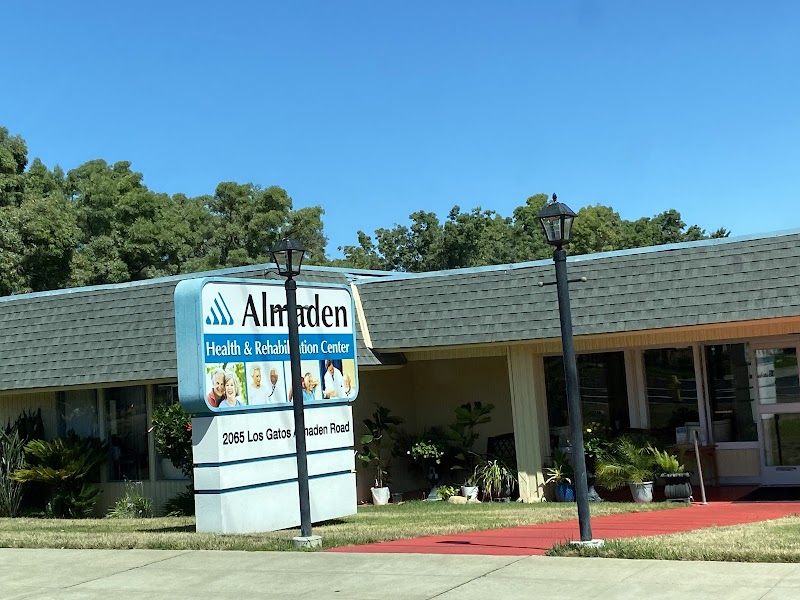
2065 LOS GATOS-ALMADEN ROAD, SAN JOSE, CA 95124 (408) 377-9275
For profit - Partnership 77 Beds MARINER HEALTH CARE Data: November 2025
Trust Grade
60/100
#522 of 1155 in CA
Last Inspection: January 2025

Within standard 12-15 month inspection cycle. Federal law requires annual inspections.

Overview

Almaden Health and Rehabilitation Center has a Trust Grade of C+, indicating a decent quality of care that is slightly above average. It ranks #522 out of 1155 facilities in California, placing it in the top half of the state, and #33 out of 50 in Santa Clara County. However, the facility's trend is worsening, with the number of reported issues increasing from 5 in 2024 to 8 in 2025. Staffing is a strength, rated at 4 out of 5 stars, with turnover at 43%, which is average, but the facility offers more RN coverage than 79% of California facilities. While there have been no fines, the inspector found concerning issues, such as a clogged toilet in one resident's room that had been reported but remained unresolved, and the lack of proper signage for oxygen concentrators, which could pose safety hazards. Additionally, there were serious lapses in kitchen hygiene, including expired food items and staff not wearing hair restraints, raising concerns about food safety. Overall, while Almaden Health has some strengths, families should be aware of these significant weaknesses.

Trust Score
C+
60/100
In California
#522/1155
Top 45%
Safety Record
Low Risk
No red flags
Inspections
Getting Worse
5 → 8 violations
Staff Stability
○ Average
43% turnover. Near California's 48% average. Typical for the industry.
Penalties
✓ Good
No fines on record. Clean compliance history, better than most California facilities.
Skilled Nurses
○ Average
Each resident gets 40 minutes of Registered Nurse (RN) attention daily — about average for California. RNs are the most trained staff who monitor for health changes.
Violations
⚠ Watch
38 deficiencies on record. Higher than average. Multiple issues found across inspections.
★★★☆☆
3.0
Overall Rating
★★★★☆
4.0
Staff Levels
★★★★☆
4.0
Care Quality
★★★☆☆
3.0
Inspection Score
Stable
2024: 5 issues
2025: 8 issues

The Good

  • 4-Star Staffing Rating · Above-average nurse staffing levels
  • 4-Star Quality Measures · Strong clinical quality outcomes
  • Full Sprinkler Coverage · Fire safety systems throughout facility
  • No fines on record
  • Staff turnover below average (43%)

    5 points below California average of 48%

Facility shows strength in staffing levels, quality measures, fire safety.

The Bad

3-Star Overall Rating

Near California average (3.1)

Meets federal standards, typical of most facilities

Staff Turnover: 43%

Near California avg (46%)

Typical for the industry

Chain: MARINER HEALTH CARE

Part of a multi-facility chain

Ask about local staffing decisions and management

The Ugly 38 deficiencies on record

Jan 2025 8 deficiencies
CONCERN (D)

Potential for Harm - no one hurt, but risky conditions existed

Resident Rights (Tag F0550)

Could have caused harm · This affected 1 resident

Based on observation, interview, and record review, the facility failed to provide dignity and privacy to one of 18 sampled residents (Resident 52) during care when Resident 52's lower back was partia...

Read full inspector narrative →
Based on observation, interview, and record review, the facility failed to provide dignity and privacy to one of 18 sampled residents (Resident 52) during care when Resident 52's lower back was partially exposed to public view while seated in a shower chair in the facility's hallway. This failure compromised Resident 52's dignity. Findings: Review of Resident 52's Face Sheet (a document that contains a summary of a patient's personal and demographic information) indicated Resident 52 was admitted to the facility with diagnoses including muscle wasting and atrophy (loss of muscle mass and strength), dementia (a condition that affects memory, thinking and the ability to make decisions) and psychotic disorder (a mental health condition that can cause confusion , hallucinations, or delusions.) Review of Resident 52's Minimum Data Set (MDS, assessment tool) assessment, dated 11/14/24, indicated Resident 52's Brief Interview for Mental Status (BIMS, cognition level) score was 3 (severe impairment). During an observation on 1/28/25, at 8:30 a.m., in the hallway outside Resident 52's room, observed Resident 52 sitting in a shower chair and being wheeled by Certified Nursing Assistant (CNA) O. Although, Resident 52 was covered with blanket, the right side of Resident 52's buttocks remained exposed. The Director of Nursing (DON) , who was also in the hallway, confirmed the observation and reminded CNA O to cover Resident 52's right buttocks. During a concurrent interview with the DON, the DON stated that Resident 52's buttocks should have been covered completely and not exposed to public view. Review of an undated facility's policy titled, Resident Dignity and Personal Privacy indicated, . 3. Drape and dress residents appropriately at all times to avoid exposure and embarrassment. 4. Maintain resident privacy during toileting, bathing, and other activities of personal hygiene .
CONCERN (D)

Potential for Harm - no one hurt, but risky conditions existed

Deficiency F0558 (Tag F0558)

Could have caused harm · This affected 1 resident

Based on observation, interview, and record review the facility failed to ensure resident's care needs were accommodated for one of six sampled residents (Resident 37) when Resident 37's call light /b...

Read full inspector narrative →
Based on observation, interview, and record review the facility failed to ensure resident's care needs were accommodated for one of six sampled residents (Resident 37) when Resident 37's call light /button (a button device used to request assistance) was not within reach to use. This failure had the potential to affect the resident's ability to request for prompt assistance and help. Findings: Review of Resident 37's Face Sheet (a document that contains a summary of a patient's personal and demographic information) indicated, Resident 37 was admitted to the facility with diagnoses including Parkinsonism (a disease that include symptoms of slowness of movements, muscle rigidity, involuntary tremors/shaking and impaired balance and posture), vascular dementia (decline in mental capacity affecting daily function), and rhabdomyolysis (a breakdown of muscle tissue). Review of Resident 37's Admission's Minimum Data Set (MDS, assessment tool) assessment, dated 12/5/2024, indicated Resident 37's brief interview for mental status (BIMS, cognition level) score was 9 (moderate cognitive impairment). During a review of Resident 37's Care Plan dated 08/08/2023, updated on 01/19/2025, indicated The resident is at risk for falls related to history of falls and balance problem, and with intervention reflected, Keep environment free of hazards, clutter free, call light within reach. During an observation and interview on 1/21/25 at 11:22 a.m., in the room of Resident 37. Resident 37 was awake and sitting in his wheelchair next to his bed. Resident 37 was observed repeatedly verbalizing, I can't find my call light. Can somebody help me find my call light? During an observation and concurrent interview on 1/21/25 at 11:30 a.m. with Certified Nursing Assistant (CNA) B, CNA B was observed searching the bed of Resident 37 and the surrounding area, then was observed removing Resident 37's call light from the surface of the bed of Resident 37' s roommate and attaching the call light onto Resident 37' s bed. CNA B stated, The call light should not be over there. It should be on Resident 37's bed. During an interview on 1/27/25 at 3:30 p.m. with the Director of Nursing (DON) the DON stated, Resident's call lights should be within their reach not on floors or on another resident's bed. A review of the facility's policy and procedure titled, Call Lights-Answering Of dated 3/21/2024, indicated, .7. When leaving the room, ensure that the call light is placed within the resident ' s reach. Maintain Resident ' s Safety.
CONCERN (D)

Potential for Harm - no one hurt, but risky conditions existed

Deficiency F0658 (Tag F0658)

Could have caused harm · This affected 1 resident

Based on observation, interview, and record review, the facility failed to maintain and meet current standards of nursing practice when, the medication was not administered according to the physician'...

Read full inspector narrative →
Based on observation, interview, and record review, the facility failed to maintain and meet current standards of nursing practice when, the medication was not administered according to the physician's order for one of 10 residents (Resident 65). This failure could potentially result in complications of the residents' medical conditions. Findings: During medication administration observation on 1/22/25 at 10:12 a.m., Licensed Vocational Nurse (LVN) A prepared seven medications for Resident 65. The medications included one tablet of aspirin (blood thinner that lowers risk of blood clots) 81 mg (mg, unit of measure), one tablet of docusate sodium (stool softener) 100 mg, one tablet of clopidogrel (an antiplatelet blood-thinning medication) 75 mg, one tablet of loratadine (medication that relieves upper respiratory allergies) 10 mg, 1 tablet of losartan (medication used to lower blood pressure) 75 mg, one tablet of Tradjenta (medication used to control blood sugar levels in the blood) 5 mg and metformin (medication used to control blood sugar levels) 1000 mg. During an observation of medication administration on 1/22/25, at 10:12 a.m., LVN A administered seven medications to Resident 65. Resident 65 swallowed one to two of the tablets at a time with sips of water provided by LVN A. Review of Resident 65's Physician Order Report dated 1/3/2025 indicated to administer metformin tablet 1000 mg; 1 tab; Special Instructions: For diabetes, administer with meals twice a day; 8:00 a.m, 6:00 p.m. A review of Resident 65's medication administration record (MAR) showed LVN A documented for the 8:00 a.m. metformin 1000 mg administration on: 1/22/25 given late at 10:12 a.m. During an interview and record review for Resident 65 on 1/28/25 at 9:05 a.m. with LVN A, LVN A stated metformin should be given with meals or at least thirty minutes after eating food. LVN A also stated Resident 65 was served breakfast between 7:00 a.m. to 7:30 a.m. on the morning of 1/22/25 and verified there were no snacks offered to Resident 65 before administering the metformin. During an interview on 1/28/25 at 9:15 a.m. with the Director of Nurses (DON), the DON stated it is her expectation that all nurses give medications according to physician orders and facility policy. Review of the facility's policy titled, Oral Medication Administration undated, indicated, .9. Administer medications with food according to the Physician's Order or manufacturer's specification.
CONCERN (E)

Potential for Harm - no one hurt, but risky conditions existed

Safe Environment (Tag F0584)

Could have caused harm · This affected multiple residents

Based on observation, interview, and record reviews, the facility failed to maintain a safe and functional environment when: 1. The toilet in Resident 9's room was clogged; 2. Resident 9's bathroom ca...

Read full inspector narrative →
Based on observation, interview, and record reviews, the facility failed to maintain a safe and functional environment when: 1. The toilet in Resident 9's room was clogged; 2. Resident 9's bathroom call light was broken; and, 3. The facility's three of four shower rooms had multiple broken tiles. These failures compromised residents' safety, well-being, and access to a properly maintained living environment. Findings: 1. During an observation and concurrent interview on 1/21/25, at 2:50 p.m., in Resident 9's room, a sign near the toilet indicated it was out of order. Resident 9 stated that the toilet had been clogged for weeks and that he had reported it to the staff. The Director of Nursing (DON), who was nearby immediately reported the issue to the Maintenance Director (MD) F. 2. During an observation and concurrent interview on 1/24/25, at 3:00 p.m., the bathroom call light in Resident 9's room was observed to be broken. Licensed Vocational Nurse (LVN) N confirmed that the call light was not working and reported it to the maintenance staff. During an interview on 1/28/25, at 9:50 a.m., the MD F stated he conducted daily rounds, but his rounds had not identified any broken call lights. The MD F state he did not document his daily maintenance checks. Review of facility's policy, titled, Call Lights-Answering Of dated 3/21/24, indicated, .Preventive Maintenance program is in place for monitoring of the call light system . 3. During an observation on 1/22/25, at 12:27 p.m., multiple broken tiles were observed in three of four shower rooms the facility. During a concurrent observation and interview on 1/28/25, at 10:02 a.m., the MD F confirmed awareness of the above issue and stated he planned to replace the tiles. The MD F also stated he was currently fixing Resident 9's toilet. Review of an undated facility's policy, titled, Physical Plant Interior Maintenance, indicated, .Interior maintenance of the physical plant is an essential function of the preventive maintenance program to assure employee and resident safety .Check all areas of ceramic/vinyl flooring for repairs and cleanliness. Repair/report all damaged areas .
CONCERN (E)

Potential for Harm - no one hurt, but risky conditions existed

Respiratory Care (Tag F0695)

Could have caused harm · This affected multiple residents

**NOTE- TERMS IN BRACKETS HAVE BEEN EDITED TO PROTECT CONFIDENTIALITY** Based on observation, interview and record review, the facility failed to provide proper oxygen (a colorless, odorless gas) care...

Read full inspector narrative →
**NOTE- TERMS IN BRACKETS HAVE BEEN EDITED TO PROTECT CONFIDENTIALITY** Based on observation, interview and record review, the facility failed to provide proper oxygen (a colorless, odorless gas) care and treatment services for four of 18 sampled residents (Residents 168, 60, 268, and 29) when: 1. Resident 168 had an oxygen concentrator (a portable device that provides oxygen) at the bedside, but there was no oxygen signage posted on the door. 2. Resident 60 had an oxygen concentrator at the bedside, but there was no oxygen signage posted on the door. 3. Resident 268 had an oxygen concentrator at bedside, but the nasal cannula had no label, and no oxygen signage posted on the door. 4. Resident 29 had an oxygen concentrator at the bedside, but there was no oxygen signage posted on the door. This deficient practice had the potential to for accidents and hazards that could pose harm to residents in the facility. Findings: 1. During an observation on 1/21/25, at 10:20 a.m., Resident 168 was lying in bed, asleep, with a nasal cannula (NC, device placed in the nostril used to deliver oxygen) delivering oxygen attached from a running oxygen concentrator. There was no oxygen signage posted on Resident 168's door. 2. During an observation on 1/22/25, at 10:40 a.m., Resident 60 was lying in bed, with a NC delivering oxygen attached from a running oxygen concentrator. There was no oxygen signage on Resident 60's door. During a concurrent interview, Licensed Vocational Nurse (LVN) N stated that an Oxygen in Use sign should be posted on the doors of Resident 168 and 60. 3. During an observation on 1/21/25 at 1:58 p.m., Resident 268 was lying in bed asleep, with a nasal cannula delivering oxygen attached from a running oxygen concentrator. The nasal cannula had no label. There was no oxygen signage posted on Resident 268's door. During an interview on 1/21/25 at 2:07 p.m., with LVN M, she confirmed the above observation and stated the nasal cannula should be labeled with date and time, and there should be a signage posted at the door. During an interview on 1/27/25 at 11:12 a.m., with the DON, the DON stated there should be labeling on the oxygen tubing and signage by the door for residents receiving oxygen. 4. Review of Resident 29's medical record indicated Resident 29 was admitted on [DATE] with diagnoses including anemia (low number of red blood cells), spondylosis (wear and tear of the bones of the spine[backbone]), atrial fibrillation (an irregular heart rhythm which can lead to blood clots and stroke), and peripheral vascular disease (a blood vessel disorder that affects blood circulation). Review of Resident 29's Physician Order Report dated 11/21/24 indicated an order for oxygen support via nasal cannula (a device used to deliver supplemental oxygen or airflow) at 2 liters as needed. During an observation on 1/21/25 at 10:11a.m., Resident 29 was in her room sitting up in bed receiving oxygen via nasal cannula. There was no No Smoking sign posted at the entrance of or anywhere inside Resident 29's room. During an observation and interview on 1/27/25 at 11:18 a.m. with the Director of Nursing (DON) outside of Resident 29's room the DON verified no oxygen signage posting outside the room or anywhere inside the room of Resident 29. The DON stated there should be an Oxygen in Use and/or a No Smoking sign posted on the door of every resident receiving oxygen therapy. Review of the facility's policy titled Oxygen Administration, undated indicated, Post an oxygen precaution (No Smoking) sign on the resident's door.
CONCERN (E)

Potential for Harm - no one hurt, but risky conditions existed

Food Safety (Tag F0812)

Could have caused harm · This affected multiple residents

Based on observation, interview, and record review, the facility failed to ensure safe food storage practices and sanitary conditions in the kitchen when: 1. Kitchen staff did not wear hair restraints...

Read full inspector narrative →
Based on observation, interview, and record review, the facility failed to ensure safe food storage practices and sanitary conditions in the kitchen when: 1. Kitchen staff did not wear hair restraints while in the kitchen, 2. Five of seven green peppers were wrinkled and soft, one of 3 cucumbers soft, 3. Three opened spice containers and one vanilla extract bottle with expired dates, 4. Three of eight cutting boards had deep cut marks on their surface, and 5. Two of 18 cans of sliced peaches, one of 12 cans of sliced pears, one of 6 cans of fruit cocktail were dented, and one of three cans of nacho cheese sauce with expired date of 12/23/24, in the emergency food supplies. These failures had the potential to cause food contamination and spread food-borne illness to residents who received their food from the kitchen. Findings: 1. During a concurrent observation and interview on 1/21/25 at 11:50 a.m., with the Dietary Manager (DM), the DM was wearing a head covering brown in color and not covering whole hair while in the kitchen going in and out of the walk-in freezer. The DM stated she does not need to cover whole hair because she was not doing meal prep or in the tray line. During an interview on 1/22/25 at 1:41 p.m., with the Infection Preventionist (IP) G, the IP G stated anyone who enter the kitchen, hairnet must be worn under the hat or own covering. During a concurrent observation and interview on 1/27/25 at 7:12 a.m., with the DM, the DM confirmed that one of the cooks (CK E) was not wearing a hairnet under the visor cap. Review of the facility's policy and procedures (P&P) titled Food Handling Practices, undated, indicated Practice good personal hygiene: restrain hair appropriately. Review of the Food and Drug Administration's (FDA) Food Code 2022 Chapter 2-402, indicated food employees shall wear hair restraints such as hats, hair coverings or nets, beard restraints, and clothing that covers body hair, that are designed and worn to effectively keep their hair from contacting exposed food, clean equipment, utensils, lines, and unwrapped single service and single-use articles. 2. During a concurrent observation and interview on 1/21/25 at 12:03 p.m., with the DM, the DM confirmed the green peppers and cucumber were wrinkled and soft. The DM stated the produce are still good because it will be cooked and not served raw or added in salads. The DM also stated the wrinkles will go away once it was cooked or placed in water. During a review of the facility's P&P, titled Food Storage Principles, undated, indicated proper food storage is essential for preserving food quality. 3. During a concurrent observation and interview with Administrator (ADM) B, on 1/22/25 at 8:47 a.m., ADM B confirmed three spice containers, and one vanilla extract bottle were expired as follows: a. Ground Thyme with best by date 9/1/24. b. Tarragon Leaves with best by date 11/29/24. c. Ground Allspice with best by date 11/18/24. d. Vanilla Extract with best by date 12/25/24. ADM B stated the spices, and vanilla extract should be thrown away when expired or past best by date. During a review of the facility's P&P, titled Food Storage Principles, undated, indicated Discard foods that have exceeded their expiration date. 4. During a concurrent observation and interview with ADM B on 1/22/25 at 8:50 a.m., ADM B confirmed the three cutting boards had deep cut marks on their surfaces. The ADM B stated they should have been thrown away when they got new cutting boards. Review of the The Federal Food and Drug Administration (FDA) Food Code 2022 Chapter 4-501.12, indicated surfaces such as cutting blocks and boards that are subject to scratching and scoring shall be resurfaced if they can no longer be effectively cleaned and sanitized. 5. During a concurrent observation and interview on 1/23/25 at 2:14 p.m., with the DM in the emergency food supply storage room, the DM confirmed the above observation and stated it will not be used and will be thrown out. During a review of the facility's P&P, titled Food Storage Principles, undated, indicated Discard foods that have exceeded their expiration date. Review of the The Federal Food and Drug Administration (FDA) Food Code 2022 Chapter 3-201.11, indicated rusted and pitted or dented cans may also present a serious potential hazard.
CONCERN (E)

Potential for Harm - no one hurt, but risky conditions existed

Infection Control (Tag F0880)

Could have caused harm · This affected multiple residents

2. During an observation 1/22/25 at 9:00 a.m., housekeeper (HK) P was observed carrying a soiled curtain in the hallway without placing it in a plastic bag or a closed bin. HK P then entered the laund...

Read full inspector narrative →
2. During an observation 1/22/25 at 9:00 a.m., housekeeper (HK) P was observed carrying a soiled curtain in the hallway without placing it in a plastic bag or a closed bin. HK P then entered the laundry room and stated that the curtain was dirty and should have been placed in a plastic bag before bringing to the laundry room. The curtain had visible yellow stains. During an interview on 1/27/25 at 2:27 p.m., the Infection Preventionist (IP) G stated that facility policy requires staff to transport soiled linens, curtains, and towels in a closed bin or a plastic bag. The IP G further stated that heavily soiled items should be placed in a red hazard bag. Review of an undated facility's policy, titled, Soiled linen Collection & Transfer, indicated, .Laundry chutes may be used for transporting soiled linens . 3. During a concurrent observation and interview on 1/22/25 at 9:10 a.m., a breathing treatment mask was observed on top of Resident 64's bedside drawer, not stored in a plastic bag. The Licensed Vocational Nurse (LVN) N confirmed that the breathing treatment mask should be stored in a plastic bag to prevent contamination/ infection. During an interview on 1/27/25 at 2:40 p.m., IP G stated that breathing treatment masks should be changed every 72 hours, replaced if visibly dirty, and stored in a plastic bag when not in use. Review of an undated facility's policy,titled, Aerosol (Nebulizer) Therapy indicated, .Clean nebulizer once treatment is completed .place in plastic storage bag . Based on observation, interview, and record review, the facility failed to ensure infection control practices were implemented when: 1. One Licensed Vocational Nurse (LVN) A failed to use the proper disinfectant (chemical liquid that destroys bacteria) to disinfect a shared (used for multiple residents) glucometer (blood glucose meter to measure and display the amount of sugar [glucose] in the blood) according to manufacturer's instructions and accepted professional standards for one resident; 2. One housekeeping staff failed to handle and transport dirty laundry properly; and 3. The facility staff failed to ensure proper storage of Resident 64's breathing treatment (nebulizer treatment, which involves inhaling a mist of medication through a device) mask. These failures could result in cross-contamination and the spread of infection throughout the facility. Findings: 1. During a medication pass observation on 1/22/25 at 12:13 p.m., LVN A was observed removing the glucometer (device used to measure level of glucose [sugar]) in the blood) from the drawer of the medication cart and wiped the glucometer with alcohol pads before obtaining the blood sugar reading for Resident 169. When finished LVN A wiped the glucometer with alcohol pads then placed the glucometer back in the drawer of the medication cart. During an interview on 1/22/25 at 12:18 p.m. with LVN A, LVN A stated, I always use alcohol wipes to clean the glucometer for convenience. LVN A stated an in-service was conducted recently and was instructed to sanitize the glucometer with Clorox (a disinfectant) wipes or Sani-cloths (a germicidal disinfectant). During an interview with the Director of Nursing (DON), the DON stated she conducted an in-service in December of 2024 for all nursing staff members and a review was conducted on 1/21/25. The DON stated she instructed the staff to use the purple top canister of Super Sani cloths and Clorox wipes to clean all equipment used between residents. The DON stated the dwell time for both wipes is three minutes. The DON also stated she never instructed staff to use alcohol pads for cleaning of equipment because, It does not kill the bacteria. A review of the manufacturer's instructions titled, Medline-Evencare G2, Blood Glucose Monitoring System, indicated, .4. To disinfect your meter, clean the meter with one of the validated disinfecting wipes listed below: .Clorox Healthcare Bleach and Disinfectant Wipes.
CONCERN (E)

Potential for Harm - no one hurt, but risky conditions existed

Deficiency F0925 (Tag F0925)

Could have caused harm · This affected multiple residents

Based on observation, interview, and record review, the facility failed to maintain an effective pest control program to keep the facility free of cockroaches and spiders when: 1. Roach and spider car...

Read full inspector narrative →
Based on observation, interview, and record review, the facility failed to maintain an effective pest control program to keep the facility free of cockroaches and spiders when: 1. Roach and spider carcasses were observed in the kitchen, 2. No monitor log for deep cleaning of resident rooms reported to have sighting of roaches, and 3. Facility did not follow their facility's plan of correction regarding pest control. These failures had the potential to cause health hazards and food borne illness to residents. Findings: 1. During a kitchen tour on 1/22/25 at 8:47 a.m., accompanied by Administrator (ADM) D, three traps with roach carcasses were observed on the side and under the ice machine, dated 11/17. One roach carcass was observed behind the plastic containers on one side of the kitchen wall. During a tour of the dry storage room on 1/22/25 at 9:23 a.m., with ADM D, one trap was observed with six carcasses of spiders, dated 9/17. In a concurrent interview with ADM D, ADM D confirmed the above observations and stated pest control company comes in weekly to place new traps. During an interview on 1/22/25 at 10:45 a.m., with Dietary Aide (DA) I, DA I stated she saw small roaches in the kitchen in August. DA I stated she reported the sighting to the supervisor. During an interview on 1/22/25 at 10:55 a.m., with the Dietary Manager (DM), the DM stated the pest control company instructed them not to remove the traps. The DM stated she will remove the trap with roaches and not remove if not roaches. During an interview on 1/22/25 at 10:48 a.m., with [NAME] (CK) J, she stated she saw alive and dead roaches three weeks ago. During an interview on 1/22/25 at 10:52 a.m., with CK K, the CK K stated she saw two dead roaches one month ago. During an interview on 1/23/25 at 2:41 p.m., with Pest Control Company (PCM), the PCM stated it is the judgement of the pest control staff if they will change or keep or replace the monitors. The PCM also stated if its still good, as in the glue still works, then they will not replace. During a review of the facility's Pest Control/Sightings Log, dated January 2025, indicated presence of roaches in the kitchen. During an interview on 1/23/25 at 1:07 p.m., with the DM, the DM verified the entries in the log. Review of the Food and Drug Administration's (FDA) Food Code 2022 Chapter 6-501.111 indicated The premises shall be maintained free of insects, rodents, and other pests. Review of the Food and Drug Administration's (FDA) Food Code 2022 Chapter 6-501.112 indicated Dead or trapped birds, insects, rodents, and other pests shall be removed from control devices and the premises at a frequency that prevents their accumulation, decomposition, or the attraction of pests. 2. During a concurrent observation and interview on 1/21/25 at 1:45 p.m., with Resident 32, in her room, Resident 32 stated she saw a live roach on 1/10/25 and 1/19/25. Resident 32 stated she reported the sightings to the staff. During a record review of the facility's Pest Control/Sightings Log for the month of January 2025, indicated the 1/19/25 report was not documented. During an interview on 1/22/25 at 4:17 p.m., with Maintenance Director (MD) F, MD F stated he did not get any report regarding pests in the resident room. During an interview on 1/28/25 at 10:25 a.m., with ADM C, he stated they don't keep logs or written report for the rooms that were deep cleaned. ADM C stated that deep cleaning was a remedial action for pest control. During an interview on 1/28/25 at 2:19 p.m., with MD F, MD F stated no written logs of deep cleaning done in the resident rooms. During a review of the facility's policy and procedure (P&P), titled Pest Control, undated, indicated Maintain a written report of pest sightings and remedial actions. 3. During an interview on 1/27/25 at 3:38 p.m., with Infection Preventionist (IP) H, IP H stated during pest control deep cleaning, all belongings are taken out of the resident room. The IP H stated for any sightings in resident rooms, patient is moved out of the room and deep cleaning done. IP H stated maintenance will deep clean the room and housekeeping will mop the floor. During an interview on 1/28/25 at 12:19 p.m., with ADM C, ADM C just nodded his head and did not say anything when told that State Surveyors have not seen any rooms being deep cleaned for the past six days. During an interview on 1/28/25 at 10:25 a.m., with ADM C, ADM C stated rooms that were reported to have sightings will be deep cleaned. ADM C stated all belongings, curtain, bed and resident will be moved out of the room to be deep cleaned. During an interview on 1/28/25 at 1:56 p.m., with Housekeeper (HK) L, HK L stated she does not empty the room during deep cleaning. HK L stated she would move stuff around the room. During a review of the Form CMS 2567 Plan of Correction, date survey completed 9/11/24, indicated Any rooms identified for pest will be deep cleaned by housekeeping and maintenance staff immediately.
Sept 2024 2 deficiencies
CONCERN (E) 📢 Someone Reported This

A family member, employee, or ombudsman was alarmed enough to file a formal complaint

Potential for Harm - no one hurt, but risky conditions existed

Garbage Disposal (Tag F0814)

Could have caused harm · This affected multiple residents

Based on observation, interview and record review, the facility failed to ensure a sanitary environment was provided when: 1. The dumpster's lid for garbage was not fully closed and 2. Leftover foods ...

Read full inspector narrative →
Based on observation, interview and record review, the facility failed to ensure a sanitary environment was provided when: 1. The dumpster's lid for garbage was not fully closed and 2. Leftover foods and some trashes were found on the ground of facility's garbage storage area. These failures had the potential to attract rodents and pests and may put residents' health and safety at risk. Findings: During a facility tour with the Director of Maintenance (DM) on 8/28/24 at 9:21 a.m., one dumpster for garbage was observed with broken lid and not fully closed. Leftover foods (cooked rice and food scraps), two empty food boxes, one green plastic bottle, several cardboards and papers were found on the ground of the facility's garbage storage area. The DM confirmed the above observations. The DM acknowledged the garbage lid should be fully closed and all wastes on ground should have been put inside the garbage bin to prevent attracting rodents and pest coming to the garbage storage area. During an interview with the Administrator (ADM) on 8/28/24 at 2:43 p.m., the ADM acknowledged dumpster garbage lid should be fully closed and wastes should be placed inside the garbage bin to prevent attracting pest and rodents. Review of the facility's undated policy and procedures titled Pest Control indicated, Keep facility grounds free of trash and brush. Keep the dumpster area clean and the lid closed.
CONCERN (E) 📢 Someone Reported This

A family member, employee, or ombudsman was alarmed enough to file a formal complaint

Potential for Harm - no one hurt, but risky conditions existed

Safe Environment (Tag F0921)

Could have caused harm · This affected multiple residents

Based on observation, interview and record review, the facility failed to ensure safe environment when the screen that covers the window leading to the kitchen sink was broken. This failure had the po...

Read full inspector narrative →
Based on observation, interview and record review, the facility failed to ensure safe environment when the screen that covers the window leading to the kitchen sink was broken. This failure had the potential for the rodents and pests to enter the kitchen and had the potential to put residents' health and safety at risk. Findings: During an observation with the Director of Maintenance (DM) on 8/28/24 at 10:02 a.m., the screen mesh that covering the window leading to kitchen sink was observed broken on the bottom part creating a small gap. The DM confirmed the observation and acknowledged the window screen should have been maintained in good repair to prevent possible entrance of pests and rodents in the kitchen and facility. Review of the facility's undated policy and procedures titled Pest Control indicated, Maintain intact screens on windows that open.
Sept 2024 3 deficiencies
CONCERN (D) 📢 Someone Reported This

A family member, employee, or ombudsman was alarmed enough to file a formal complaint

Potential for Harm - no one hurt, but risky conditions existed

Resident Rights (Tag F0550)

Could have caused harm · This affected 1 resident

Based on observation, interview, and policy review, the facility failed to treat one of three sampled residents (Resident 1) with respect and dignity when certified nursing assistant A (CNA A) did not...

Read full inspector narrative →
Based on observation, interview, and policy review, the facility failed to treat one of three sampled residents (Resident 1) with respect and dignity when certified nursing assistant A (CNA A) did not provide privacy to Resident 1 during transporting Resident 1 from her room to the shower room. This failure had the potential to cause embarrassment for the resident. Findings: During an observation on 8/14/24 at 4 p.m., CNA A transported Resident 1 in the hallway from her room to the shower room. Resident 1 was sitting on a shower chair. The front of Resident 1 was covered with a linen sheet, but her back and her buttocks were not covered and were exposed. During a concurrent interview with CNA A, she confirmed Resident 1's back and buttocks were not covered and were exposed. CNA A stated she missed the back of Resident 1's body, and she should cover Resident 1's body before transporting her in the hallway. During an interview with the director of nursing (DON), on 8/15/24 at 1:45 p.m., she stated staff should cover the resident's body before transporting the resident in the hallway. Review of the facility's undated policy, Tub Bath and Shower, indicated . General Guidelines: . 4. When transporting the resident to and from the bath area, make sure that the resident is covered and his or her privacy is maintained.
CONCERN (E) 📢 Someone Reported This

A family member, employee, or ombudsman was alarmed enough to file a formal complaint

Potential for Harm - no one hurt, but risky conditions existed

Infection Control (Tag F0880)

Could have caused harm · This affected multiple residents

Based on observation, interview, and policy review, the facility failed to implement infection control practices when: 1. Licensed vocational nurse B (LVN B) walked in the hallway with gloves on; 2. H...

Read full inspector narrative →
Based on observation, interview, and policy review, the facility failed to implement infection control practices when: 1. Licensed vocational nurse B (LVN B) walked in the hallway with gloves on; 2. Housekeeper C (HKP C) wore the same gloves to wipe resident Room AA and Room BB; and 3. Certified nursing assistant D (CNA D) brought the lunch tray to Resident 2's room which was an isolation room for Coronavirus disease (COVID-19, an infectious disease caused by the SARS-CoV-2 virus which can spread from an infected person's mouth or nose in small liquid particles when they cough, sneeze, speak, sing or breathe) and fed her in the room wearing a surgical mask. These failures had the potential to spread infection in the facility. Findings: 1. During an observation and interview on 8/14/24 at 11:55 a.m., LVN B was walking in the hallway wearing gloves on her hands. LVN B stated she came to help a resident in her room. LVN B acknowledged that she should not wear gloves in the hallway. During an interview with the director of nursing (DON,) on 8/14/24 at 12:15 p.m., she stated staff should not wear gloves in the hallway. 2. During an observation on 8//14/24 at 12:10 p.m., HKP C finished wiping resident Room AA, threw the trash of Room AA into the trash bin on her cleansing cart, pushed the cleansing cart in the hallway to Room BB, and wiped Room BB with the same gloves on her hands. During a concurrent interview with HKP C and Spanish interpreter E (ITP E), HKP C acknowledged that she should change gloves after cleansing Room AA and before cleansing Room BB. During an interview with the DON on 8/14/24 at 12:15 p.m., she stated housekeeper should change gloves after cleansing one room and before cleansing another room. Review of the facility's undated policy, Standard Precautions, indicated . 4. Gloves: . Remove gloves promptly after use, and wash hands immediately before touching non-contaminated items and environmental surfaces, and before going to another resident. 3. During an observation on 8/14/24 at 12:35 p.m., CNA D brought a lunch tray to Resident 2's room, a COVID-19 isolation room, wearing a gown, gloves, and a surgical mask. During an interview with CNA D, on 8/14/24 at 12:50 p.m., he stated he was feeding Resident 2 in her room. CNA D acknowledged that he should wear an N95 mask (a respiratory protective device designed to achieve a very close facial fit and very efficient filtration of airborne particles) when entering Resident 2's room. During an interview with the DON, on 8/14/24 at 1:30 p.m., she stated staff should wear N95 mask when entering COVID-19 isolation room. Review of the facility's undated policy, COVID-19 Using Personal Protective Equipment (PPE), indicated . 3. When caring for a resident with suspected or confirmed SARS-CoV-2 infection, the following infection prevention and control practices are followed: . b. Respirator: 1. An N95 respirator (or equivalent or higher-level respirator) is donned before entry into the resident room or care area .
CONCERN (E) 📢 Someone Reported This

A family member, employee, or ombudsman was alarmed enough to file a formal complaint

Potential for Harm - no one hurt, but risky conditions existed

Deficiency F0925 (Tag F0925)

Could have caused harm · This affected multiple residents

Based on observation, interview, and facility document review, the facility failed to maintain an effective pest control to keep the facility free of cockroaches when live cockroaches were observed in...

Read full inspector narrative →
Based on observation, interview, and facility document review, the facility failed to maintain an effective pest control to keep the facility free of cockroaches when live cockroaches were observed in Resident 4's room even though the room was inspected and treated for roaches. This failure had the potential to result in pest transferred disease to residents. Findings: During an interview with Resident 3, on 8/14/24 at 2:40 p.m., she stated about two weeks ago she saw a cockroach on her lunch tray. Review of the facility's Crossfire Pest Rodents and Termites Report indicated Resident 4's room was inspected and treated for cockroach and rodent on 5/31/24. However, on 6/10/24, the facility's Maintenance Work Request indicated pest control spray was requested for Resident 4's room because cockroaches were seen crawling on Resident 4's bed side rails and closet. It also indicated the request was completed on 6/12/24. Review of the facility's Ecolab Customer Services Report indicated Resident 4's room was treated for cockroaches again on 7/2/24. During an observation and interview with Resident 4 in his room, on 8/14/24 at 4:05 p.m., he stated there were many cockroaches in his room; they crawled under his bed and on his bed side rails. Resident 4 stated he told everyone about that; they sprayed, but there were still cockroaches. So, he bought the cockroach trap and placed it in his room. A cockroach trap was observed on the floor, beneath the curtain, and against the wall. Resident 4 stated he placed the trap there two weeks ago. The trap had five dead cockroaches on it. When Resident 4 pulled the basket on the floor toward him, there were five live cockroaches crawling out from underneath the bottom of the basket. During an observation and interview with the maintenance director (MD) in Resident 4's room, on 8/15/24 at 12 p.m., he confirmed there were five dead cockroaches on the trap and acknowledged that five live cockroaches were seen in Resident 4's room yesterday. Review of the facility's Maintenance Work Request, dated 8/13/24, indicated registered nurse F (RN F) reported cockroaches in Resident 5's room. During an interview with RN F, on 8/15/24 at 12:05 p.m., she stated on 8/13/24, a CNA in day shift reported to her that she and Resident 5 saw cockroaches in his room, so she submitted the Maintenance Work Request. During an interview with the MD, on 8/15/24 at 12:15 p.m., he reviewed the Maintenance Work Requests for Resident 4's and Resident 5's rooms, and he confirmed that the facility's pest control was not working and not effective.
Aug 2023 1 deficiency
CONCERN (E) 📢 Someone Reported This

A family member, employee, or ombudsman was alarmed enough to file a formal complaint

Potential for Harm - no one hurt, but risky conditions existed

Safe Environment (Tag F0584)

Could have caused harm · This affected multiple residents

**NOTE- TERMS IN BRACKETS HAVE BEEN EDITED TO PROTECT CONFIDENTIALITY** Based on observation, interview, and record review, the facility failed to ensure a comfortable, safe temperature level was main...

Read full inspector narrative →
**NOTE- TERMS IN BRACKETS HAVE BEEN EDITED TO PROTECT CONFIDENTIALITY** Based on observation, interview, and record review, the facility failed to ensure a comfortable, safe temperature level was maintained in the range of 71 to 81 degrees Fahrenheit (a unit of measurement of temperature) in the facility hallway, and three resident rooms (room [ROOM NUMBER], 2, and 3). This failure had the potential for the residents to have an uncomfortable environment. Findings: Review of Resident 1's face sheet (a document that gives a resident's information at a quick glance) indicated Resident 1 admitted to facility on 7/12/2023 with diagnoses right tibia fracture (a broken right lower leg bone), left femur fracture (a broken left thigh bone), congestive heart failure (a chronic condition in which the heart does not not pump blood as well as it should), asthma (a condition in which airways narrow, swell, and may produce extra mucus, which makes it difficult to breathe), and diabetes type 2 (a chronic condition that affects the way the body processes blood sugar). Resident's minimum data set (MDS, a clinical assessment tool) dated 7/18/2023 indicated Resident 1's brief interview for mental status (BIMS) score of 15 of 15 (13-15 score means a intact cognition). During observation and interview with Resident 1 on 7/24/2023 at 10:25 a.m., Resident 1 stated she was feeling hot in room [ROOM NUMBER] and started upon admission to the facility. Resident 1 also stated room [ROOM NUMBER] was getting hotter by noon every day from last one week or so. Resident 1 further stated no cool air coming into room [ROOM NUMBER] and the facility provided a small electric fan to her but the fan was not able to keep up the cool air in the room [ROOM NUMBER]. Review of Resident 2's face sheet indicated Resident 2 admitted to facility on 2/20/2018 with diagnoses including atrial fibrillation (an irregular, often rapid heart rate that commonly causes poor blood flow), hypertension (a condition in which the force of the blood against the artery walls is too high), and dementia (loss of memory, language, problem-solving and other thinking abilities that are severe enough to interfere with daily life). Resident 2 had a resposible party 1 (RP 1- person acting on behalf of the resident for day-to-day decision making for resident) for decision making. Resident 2's MDS assessment dated [DATE] indicated Resident 2's BIMS score of 3 of 15 (0-7: severely impaired cognition). During an interview with Resident 2's RP (RP 1) on 7/24/2023 at 1:10 p.m., RP 1 stated room [ROOM NUMBER] feels hot every time when he was visiting Resident 1. RP 1 also stated he was sweating in the room [ROOM NUMBER] during his visits, and he was concerned for Resident 2 for the high temperature in the room [ROOM NUMBER]. During a concurrent observation and interview with facility's Maintenance director (MD) on 7/24/2023 at 12:40 p.m., MD checked temperature in room [ROOM NUMBER] using facility's laser thermometer (LT: non-contact thermometer designed to accurately measure temperature from a distance). MD confirmed current temperature in the room [ROOM NUMBER] was 88 degrees Fahrenheit and no cold air coming through air-condition vent (a small opening responsible to redirecting cooled air into the room) located on room [ROOM NUMBER]'s ceiling. MD stated room [ROOM NUMBER]'s temperature should have been between 71 to 81 degrees Fahrenheit. Review of Resident 3's face sheet indicated Resident 3 was admitted to facility on 6/23/2023 with diagnoses including atherosclerotic heart disease (narrow of arteries close to heart), diabetes type 2, chronic kidney disease (mild to moderate damage to kidneys), dementia, and hypertension. Resident 3 had a RP for decision making. Resident 3's MDS assessment dated [DATE] indicated his BIMS score was 3 of 15. Resident 3 had a severed impaired cognition. During an interview with Resident 3's RP 2 (RP 2) on 7/24/2023 at 1:01 p.m., RP 2 stated room [ROOM NUMBER] feels always hot when visiting Resident 3 and no cold air coming through vent located on ceiling of the room [ROOM NUMBER]. RP 2 also stated she complained about the heat in the room [ROOM NUMBER] during recent heat wave and the facility provided electric fan to Resident 3 and after few days later staff took that fan away from room [ROOM NUMBER] to use inside the facility staff office. RP 2 confirmed no actions were taken after she complained to administrator a week ago for high temperature in room [ROOM NUMBER]. During a concurrent observation and interview with MD on 7/24/2023 at 1:32 p.m., MD checked temperature in room [ROOM NUMBER] using LT and he confirmed room [ROOM NUMBER]'s temperature was 87 degrees Fahrenheit. MD stated facility's air-conditioner was not working for about a week and there was no cool air coming through the vent for room [ROOM NUMBER]. Review of Resident 4's face sheet indicated Resident 4 was admitted to facility on 1/18/2023 with diagnoses including trimalleolar fracture of left leg (broken left ankle joint), congestive heart failure, epilepsy (a disorder in which nerve cell activity in the brain disturbed, causing seizures [a sudden, uncontrolled burst of electrical activity in the brain]), diabetes type 2, and hypertension. Resident 4's MDS assessment dated [DATE] indicated Resident 3's BIMS score 15 of 15, intact cognition. During an interview with Resident 4 on 7/24/2023 at 1:15 p.m., Resident 4 stated room [ROOM NUMBER] feels hot all day. Resident 4 also stated there was no fan in room [ROOM NUMBER]. Resident 4 further stated staff were aware of heat in room [ROOM NUMBER], no one fixing. During a concurrent observation and interview with MD on 7/24/2023 at 1:35 p.m., MD checked temperature in room [ROOM NUMBER] using LT and confirmed temperature in room [ROOM NUMBER] was 88 degrees Fahrenheit. During a concurrent observation and interview with MD on 7/24/2023 at 2:10 p.m., MD checked temperature in hallway near nurse's station. MD confirmed temperature was in hallway was 90 degrees Fahrenheit. MD stated three of seven air-conditioner units were not working in the facility about a week and the date to repair was on 7/28/2023. MD also stated temperature in resident rooms, and in hallways should have maintained between 71 to 81 degrees Fahrenheit all the time. During an interview with certified nursing assistance A (CNA A) on 7/24/2023 at 2:20 p.m., CNA A stated past several days there were few residents were complaining about hot temperature, and no cool air coming from vents in their rooms. CNA A also stated facility's MD was aware about the residents concern. CNA A further stated electric fans in resident's rooms and hallways were helping to keep temperature low in the facility during this heat weather. During an interview with facility's administrator (ADMN) on 7/24/2023 at 4:00 p.m., ADMIN stated three of seven air-condition units currently not working in the facility started on 7/18/2023. ADMN scheduled a repair on 7/28/2023 regarding the air conditioning . ADMN also stated facility was using temporary cooling system with electric fans to reduce temperature in resident ' s rooms and facility hallway. ADMN further stated temperature in the facility should have been maintained between 71-81-degree Fahrenheit. During a review of the facility's policy and procedure (P&P) tilted, Air Temperature Readings, undated, the P&P indicated, Investigate air temperature complaints. The acceptable range for air temperature is 71degrees to 81 degrees F.
Apr 2023 15 deficiencies
CONCERN (D)

Potential for Harm - no one hurt, but risky conditions existed

Comprehensive Care Plan (Tag F0656)

Could have caused harm · This affected 1 resident

**NOTE- TERMS IN BRACKETS HAVE BEEN EDITED TO PROTECT CONFIDENTIALITY** Based on observation, interview, and record review, the facility failed to develop and/or implement a comprehensive person-cente...

Read full inspector narrative →
**NOTE- TERMS IN BRACKETS HAVE BEEN EDITED TO PROTECT CONFIDENTIALITY** Based on observation, interview, and record review, the facility failed to develop and/or implement a comprehensive person-centered care plan for three of 18 sampled residents (Resident 61, 7, and 56) when 1. For Resident 61,who could not speak English, the facility failed to develop a care plan to address the communication barriers; 2. For Resident 7, the facility failed to develop a care plan to address the management of seizures; and 3. For Resident 56, the facility failed to develop a care plan to address the management of diabetis mellitus (DM, increase blood sugar) foot. These failures had the potential to result in the residents not receiving the care and services necessary to maintain their health, safety and well-being. Findings: 1. A review of Resident 61's clinical record indicated she was admitted on [DATE] with diagnoses including unspecified dementia (impaired ability to remember, think, or make decisions that interfere with doing everyday activities) and dysphagia (difficulty swallowing and taking more time and effort to move food or liquid from your mouth to your stomach). During a concurrent observation and interview with Resident 61 on 4/24/2023 at 1:10 p.m., in Resident 61's room, Resident 61 spoke non-english language all the time, and no communication boards were noted at the bedside. During a concurrent interview and record review with the Licensed Vocational Nurse J (LVN J) on 4/23/2023 at 5:36 p.m., the LVN J verified there was no care plan to address the communication barriers, and she stated the resident should have a care plan for her communication issue. During an interview with the Director of Nursing (DON) on 4/28/2023 at 10:45 a.m., she confirmed that Resident 61 could not speak English and the nurses should have developed a care plan to address the communication barriers. A review of the facility's undated policy and procedure titled Comprehensive Plan of Care indicated, the comprehensive plan of care must address the resident's individual needs, strengths, and preference .reflect interventions to meet both short- and long-term resident goals 2. Review of Resident 7's clinical records indicated he was admitted on [DATE] and had diagnoses including seizures (uncontrolled jerking movements of the arms and legs caused by abnormal brain activity). Review of Resident 7's minimum data set (MDS, an assessment tool) section I on 4/05/23 indicated the resident had seizure disorder. There was no care plan to address the management of seizure. During an interview with DON on 4/27/23 at 2:02 p.m., she reviewed Resident 7's clinical record and verified the resident had no care plan to address the management of seizure. The DON acknowledged the facility should have developed the care plan. 3. Review of Resident 56's clinical records indicated he was admitted on [DATE] and had diagnoses including type 2 DM During a concurrent observation and interview with DON on 4/28/23 at 9:12 a.m., Resident 56 had long, thick, and curved toenails. The DON confirmed the observation and stated he needed DM foot care. During a concurrent interview and record review with the DON on 4/28/23 at 9:23 a.m., she reviewed Resident 56's clinical record and verified there was no care plan to address the management of DM foot. The DON acknowledged the facility should have developed the care plan. Review of the facility's undated policy, Comprehensive Plan of Care, indicated, Each resident will have a comprehensive care plan developed that includes goals, measurable objectives, and timetables to meet their medical, nursing, metal, and psychosocial needs identified during the comprehensive assessment. The comprehensive plan of care must address the resident's individual needs, strengths, and preferences.
CONCERN (D)

Potential for Harm - no one hurt, but risky conditions existed

Deficiency F0676 (Tag F0676)

Could have caused harm · This affected 1 resident

**NOTE- TERMS IN BRACKETS HAVE BEEN EDITED TO PROTECT CONFIDENTIALITY** Based on observation, interview and record review, the facility failed to provide communication services to one of 18 sampled re...

Read full inspector narrative →
**NOTE- TERMS IN BRACKETS HAVE BEEN EDITED TO PROTECT CONFIDENTIALITY** Based on observation, interview and record review, the facility failed to provide communication services to one of 18 sampled residents (Resident 28) who spoke in their non-English language. This failure had the potential for the resident not to maintain or improve her ability to carry out the activities of daily living (ADL). Findings: Review of Resident 28's clinical records indicated she was admitted on [DATE] and had diagnoses including dementia (a decline in mental capacity affecting daily function), major depressive disorder (a mood disorder that causes a feeling of sadness and loss of interest), and left radius fracture (broken forearm bone). During an observation and interview on 4/24/23 at 8:29 a.m., Resident 28 was trying to communicate with certified nursing assistant E (CNA E) in her non-English language, and CNA E stated she could not understand Resident 28. CNA E further stated she could only communicate with the resident through gestures and assumed the resident's needs. Review of Resident 28's care plan of communication-language barrier dated 12/21/22 indicated to provide a translator via phone service and provide communication cards for basic needs to the resident. During an interview and record review with director of nursing (DON) on 4/27/23 at 9:32 a.m., the DON acknowledged Resident 28 spoke only in her non-english language. The DON stated a communication binder in the language of Resident 28 have been provided and facility staff were using the binder to communicate with the resident during ADL care. The DON further stated the translator via phone service was not available to the facility yet. During an observation and interview with the DON on 4/27/23 at 9:39 a.m. in Resident 28's room, there was no communication binder. The DON stated she could not locate Resident 28's communication binder. The DON acknowledged the communication binder in the language of Resident 28 should have been available during ADL care. During an interview with licensed vocational nurse C (LVN C) on 4/27/23 at 9:42 a.m., she acknowledged Resident 28 spoke non-English language. LVN C stated she was not aware of the communication binder in the language of Resident 28 and did not provide a translator via phone service. During an interview with CNA E on 4/27/23 at 10:02 a.m., she stated the communication binder in the language of Resident 28 was missing for a long time. During an interview and record review with the DON on 4/27/23 at 10:35 a.m., she reviewed Resident 28's care plans and stated Resident 28's communication care plan was a generalized, and a standing care plan. The DON acknowledged the care plan should have been person-centered, and individualized for the resident. Review of the facility's undated policy, Resident Communication, indicated, Purpose: to improve or maintain the resident's self-performance in using newly acquired functional communication skills . Use communication boards and picture books, . Review of the facility's undated policy, Care Plan Essentials, indicated, Purpose: To provide a quick reference guide to particular needs of individual residents, . related to individualized care and treatment of the resident .
CONCERN (D)

Potential for Harm - no one hurt, but risky conditions existed

Deficiency F0687 (Tag F0687)

Could have caused harm · This affected 1 resident

**NOTE- TERMS IN BRACKETS HAVE BEEN EDITED TO PROTECT CONFIDENTIALITY** Based on observation, interview, and record review, the facility failed to provide necessary podiatry services for one of 18 sam...

Read full inspector narrative →
**NOTE- TERMS IN BRACKETS HAVE BEEN EDITED TO PROTECT CONFIDENTIALITY** Based on observation, interview, and record review, the facility failed to provide necessary podiatry services for one of 18 sampled residents (Resident 56) when his toenails were long enough to curl under. This failure had the potential to affect the resident's foot health and contribute to injury and/or infection. Findings: Review of Resident 56's clinical records indicated he was admitted on [DATE] and had diagnoses including hemiplegia (a symptom that involves the loss of the ability to move on one-side of body) and hemiparesis (one-sided weakness), hypertension (high blood pressure), and type 2 diabetes (high blood sugar). During an observation and interview with Resident 56 on 4/24/23 at 10 a.m., he stated that his toenails were very long, and he needed a podiatry service. Resident 56's great toenail was long and hypertrophied (excessively enlarged), and his 2nd to 5th toenails were discolored and curled under the toes. Resident 56 stated he had not seen a podiatrist since his admission. Review of Resident 56's Minimum Data Set (MDS, an assessment tool) dated 3/28/23 indicated his brief interview for mental status (BIMS, cognition level) score was 12, moderately impaired. Further review of the clinical record indicated Resident 56 had a physician's order, dated 12/30/21, for podiatry services for treatment of hypertrophied toenails and/or other problems as needed. During an observation and interview with registered nurse B on 4/24/23 at 10:10 a.m., she confirmed the observation and stated the podiatrist (foot doctor) need to trim the resident's toenails because he had diabetes. RN B stated nurses report diabetic residents' toenail care needs to the social service worker (SSW). RN B further stated she reported Resident 56's podiatry needs to the SSW long time ago. During an interview with director of nursing (DON) on 4/25/23 at 2:27 p.m., she stated she could not locate any document indicating that podiatry services were provided to Resident 56. The DON acknowledged the facility should have provided podiatry services to the resident. During an interview with the DON on 4/28/23 at 9:23 a.m., she stated the podiatrist visited the facility monthly, and a monthly list was provided by the SSW. The DON stated Resident 56 was not included in the list without reason, and the facility missed him for podiatry services. Review of the facility's undated policy Foot Care, indicated, The nurse must pay special attention to the care of feet for persons with peripheral vascular disease or diabetes. A licensed nurse, therapist, or podiatrist must trim toenails of a diabetic resident. Review of the facility's undated policy Referral to Outside Agencies, indicated, To establish guidelines for making referrals to outside agencies that will meet the psychosocial and/or concrete needs of a resident, . Referral can be made by the social service director, licensed nurse, or a member of the IDT based on a resident's individualized, specific need .
CONCERN (D)

Potential for Harm - no one hurt, but risky conditions existed

Deficiency F0698 (Tag F0698)

Could have caused harm · This affected 1 resident

**NOTE- TERMS IN BRACKETS HAVE BEEN EDITED TO PROTECT CONFIDENTIALITY** Based on observation, interview, and record review, the facility failed to provide dialysis services consistent with profession...

Read full inspector narrative →
**NOTE- TERMS IN BRACKETS HAVE BEEN EDITED TO PROTECT CONFIDENTIALITY** Based on observation, interview, and record review, the facility failed to provide dialysis services consistent with professional standards for one of three residents (22) who received hemodialysis (medical procedure to remove fluid and waste products from the blood and to correct electrolyte, i.e. salts and mineral imbalances by using a machine and an artificial kidney) when staff and Resident 22's clinical record indicated the wrong dialysis access site; and Resident 22's dialysis communication records were missing. These failures had the potential for the resident to be inaccurately assessed and be at risk for complications. Findings: Review of Resident 22's admission Record indicated he was admitted to the facility on [DATE] with diagnoses including end stage renal disease and dependence on renal dialysis. During an observation and interview with Resident 22 on 4/26/23 at 1:55 p.m., indicated Resident 22's dialysis access site was on his left upper arm. Resident 22 stated that was the only dialysis site he had, and he did not have any dialysis access site on his chest. However, Resident 22's clinical record indicated his dialysis access site was on his right upper chest. During an interview with certified nursing assistant N (CNA N) on 4/28/23 at 10:50 a.m., he stated Resident 22's dialysis access site was on his right upper chest. During an interview with the director of nursing (DON) on 4/28/23 at 3:35 p.m., she reviewed Resident 22's clinical record and stated Resident 22's dialysis access site was on his right upper chest. During an observation and interview with the DON on 4/28/23 at 3:44 p.m., she observed the dialysis access site on Resident 22 and confirmed Resident 22's dialysis access site was on his left upper arm. The DON stated Resident 22's dialysis access site on his right upper chest was discontinued. When Resident 22 had a new dialysis access site on his left upper arm, the facility should have assessed the site and updated Resident 22's clinical record, but that was not done. Review of Resident 22's dialysis communication records, from 1/2023 to 4/2023, indicated his dialysis communication record was missing for 1/24/23, 1/31/23, 2/9/23, and 2/14/23. During an interview with the DON on 4/28/23 at 3:57 p.m., she review Resident 22's clinical record and confirmed Resident 22's dialysis communication record was missing for 1/24/23, 1/31/23, 2/9/23, and 2/14/23. Review of the facility's undated policy, Hemodialysis, indicated Purpose: To provide residents with safe, accurate, and appropriate care, assessments and interventions to improve resident outcomes. Review of the facility's undated policy, Care of Residents with End-Stage Renal Disease (ESRD), indicated Residents with ESRD will be cared for according to currently recognized standards of care. Procedure: 1. Staff caring for residents with ESRD, including residents receiving dialysis care outside the facility, shall be trained in the care and special needs of these residents.
CONCERN (D)

Potential for Harm - no one hurt, but risky conditions existed

Deficiency F0700 (Tag F0700)

Could have caused harm · This affected 1 resident

**NOTE- TERMS IN BRACKETS HAVE BEEN EDITED TO PROTECT CONFIDENTIALITY** Based on observation, interview, and record review, the facility failed to review the risks and benefits of bed rails (adjustabl...

Read full inspector narrative →
**NOTE- TERMS IN BRACKETS HAVE BEEN EDITED TO PROTECT CONFIDENTIALITY** Based on observation, interview, and record review, the facility failed to review the risks and benefits of bed rails (adjustable metal or rigid plastic bars that attach to the bed) with the resident or resident representative (RR, a person empowered to make decisions for the resident/person legally responsible and liable for a decision or an action) and obtain the physician's order and informed consent prior to the use of bed rails for one of 18 sampled residents (Resident 7). This failure had the potential to put the resident at risk for entrapment and serious injury due to not being aware of the risks and benefits of bed rails. Findings: Review of Resident 7's clinical records indicated he was admitted on [DATE] and had diagnoses including type 2 diabetes (high blood sugar), seizures (uncontrolled jerking movements of the arms and legs caused by abnormal brain activity), and depressive episodes. During the initial tour of the facility conducted on 4/24/23 at 10:18 a.m., Residents 7 had half bed rails elevated. Review of Resident 7's physician orders indicated there was no order of the use of bed rails. Review of Resident 7's clinical records indicated there was no consent form for bed rails, indicating the risks and benefits of bed rail use were explained to the resident or resident representative. During an interview and record review with licensed vocational nurse F (LVN F) on 4/25/23 at 3:55 p.m., she confirmed there was no physician order and/or consent for a bed rail. During an observation and interview with LVN F on 4/25/23 at 4 p.m., Resident 7 had half bed rails elevated, and LVN F confirmed the observation. LVN F stated the facility should have obtained the physician's order and informed consent prior to the use of bed rails. During an interview with director of nursing (DON) on 4/27/23 at 9:50 a.m., she stated the facility should have obtain the physician's order and informed consent prior to the use of bed rails. Review of the facility's undated policy Side rails, indicated, Requirements are . Complete informed consent, reviewing risks and benefits with responsible party, including risk for entrapment. Obtain MD order, including diagnosis/medical necessity for use of restraint.
CONCERN (D)

Potential for Harm - no one hurt, but risky conditions existed

Pharmacy Services (Tag F0755)

Could have caused harm · This affected 1 resident

Based on observation, interview and record review, the facility failed to implement procedures to ensure safe handling of hazardous drugs (medications capable of causing serious effects); and ensure c...

Read full inspector narrative →
Based on observation, interview and record review, the facility failed to implement procedures to ensure safe handling of hazardous drugs (medications capable of causing serious effects); and ensure controlled medications (those with high potential for abuse and addiction) were fully accounted when: 1. Hazardous drug handling procedures were not implemented during medication pass observation for Resident 274; 2. Random controlled medication use audit for two of six sampled residents (Residents 12 and 322) did not reconcile. The medications were signed out of the controlled drugs accountability sheet (Count Sheet, an inventory sheet that keeps record of the usage of controlled medications) but not documented on the Medication Administration Records (MAR) to indicate they were given to the residents. These failures had the potential for exposing staff and residents to serious side effects from hazardous drugs including cancer and fertility problems; and misuse or diversion (the illegal distribution or abuse of prescription drugs or their use for purposes not intended by the prescriber) and inaccurate accountability of controlled medications. Findings: 1. During a medication pass observation for Resident 274 on 4/24/23, at 8:42 a.m., registered nurse B (RN B) was observed preparing two capsules of CellCept (mycophenolate, an immunosuppressant medication that lowers the activity of the body's immune system) and 11 other medications with ungloved hands. The red pharmacy auxiliary sticker label (a label added on to a dispensed medication package by a pharmacist that displays additional warnings, information, or instructions) indicated Hazardous Drugs on the CellCept medication package. During an interview on 4/24/23, at 9:14 a.m., with RN B, regarding the hazardous drug auxiliary sticker label for CellCept, she stated, The hazardous drug sticker means I am supposed to wear gloves. On 4/25/23, a review of Resident 274's clinical record indicated a physician's order, dated 4/14/2023, for CellCept (mycophenolate) 250 milligrams (mg, unit of measurement) capsule, give two capsules by mouth twice a day. During an interview on 4/25/23, at 11:13 a.m., with the director of nursing (DON) in the presence of the regional director of clinical operations (RDCO), they stated, the consultant pharmacist (CP) would inform the facility about hazardous drugs on a resident-by-resident basis and would provide an in-service for resident specific hazardous drugs. They confirmed the CP had not provided a hazardous drug list or any in-services on hazardous drug handling procedures. The DON said the red pharmacy auxiliary label Hazardous Drug means nurses should have wear gloves to protect themselves. During a telephone interview on 4/26/23, at 9:47 a.m., with the CP, she stated nurses should have wear gloves while handling hazardous drugs. She said when a resident is on a hazardous drug, she would make the recommendation to wear gloves and the instructions should have been reflected on the MAR. The CP confirmed she did not provide the facility with a list of hazardous drugs and she had not done an in-service on hazard drug handling procedures. A review of Lexicomp Online, a nationally recognized drug information resource, indicated for CellCept capsule, Hazardous Drugs Handling Considerations .Use appropriate precautions for . handling . preparation . administration . Follow NIOSH [The National Institute for Occupational Safety and Health, the United States federal agency responsible for conducting research and making recommendations to prevent work-related injury and illness] .recommendations and institution-specific policies/procedures for appropriate containment strategy. A review of the Prescribing Information (PI, detailed description of a drug's uses, dosage range, side effects, drug-drug interactions, and contraindications that is available to clinicians) for CellCept (mycophenolate mofetil capsule), dated August 2022, indicated, Handling and Disposal .[CellCept] has demonstrated teratogenic [ability to disturb the growth and development of an embryo or fetus] effects in humans . Wearing disposable gloves is recommended . Avoid inhalation or direct contact with skin or mucous membranes of the powder contained in CellCept capsules. During a review of the facility's policy and procedures (P&P) titled, Cytotoxic [A substance that kills cells] Agent Guidelines, dated January 2023, the P&P indicated, Cytotoxic medications . should be handled using gloves . Nurses handling and administering cytotoxic medications are to use a non-touch technique, wearing gloves . Careful hand hygiene must be adhered to throughout the process. 2. The controlled medication Count Sheets for six random residents receiving controlled medications were requested for review during the survey. a. Resident 12 had a physician's order for methadone (a controlled medication for pain) tablet 5mg, give one tablet by mouth every 8 hours for pain management, start date 3/17/23. During a concurrent interview and record review on 4/25/23, at 11:19 a.m., with the DON, a review of Resident 12's Count Sheet for methadone and the 4/2023 MAR reflected the nursing staff removed 1 tablet on 4/3/23 at 2 p.m. the medication cart and documented on the Count Sheet while documenting the respective administration as Not administered: Refused on the MAR. The DON validated the discrepancy in documentation between the Count Sheet and the MAR. She said, It should have been wasted on the controlled [substance] record. I don't know the reason it was documented on [Controlled Substance] record as given. b. Resident 322 had a physician's order for hydrocodone-acetaminophen (a controlled medication for pain) tablet 10-325mg, give 1 tablet by mouth every 6 hours as needed for moderate to severe pain, start date 3/23/23. During a concurrent interview and record review on 4/25/23, at 11:35 a.m., the DON, a review of Resident 322's Count Sheet for hydrocodone-acetaminophen and the 4/2023 MAR reflected the nursing staff removed 1 tablet on 4/15/23 at 9 a.m., on 4/20/23 at 1:30 p.m., and on 4/22/23 at 2 p.m. from the medication cart and documented on the Count Sheet without documenting the respective administration on the MAR to show they were administered to the resident. The DON confirmed three hydrocodone-acetaminophen tablets were not accounted for. During a follow-up interview with the DON on 4/25/23, at 1:48 p.m., she stated she could not locate documentation for the missing documentation of controlled medications for Residents 12 and 322. During a review of the facility's P&P titled, Oral Medication Administration (undated), it indicated, Documentation: 1. Electronic Medication Administration Record; 2. On the individual control drug record, sign out all controlled substances administered; 3. Document in the electronic health records system.
CONCERN (D)

Potential for Harm - no one hurt, but risky conditions existed

Drug Regimen Review (Tag F0756)

Could have caused harm · This affected 1 resident

Based on interview, and record review, the facility failed to request a medication regimen review (MRR) following changes in condition (worsening of an existing problem or the emergence of new signs o...

Read full inspector narrative →
Based on interview, and record review, the facility failed to request a medication regimen review (MRR) following changes in condition (worsening of an existing problem or the emergence of new signs or symptoms, such as falls or seizures) for two out of five sampled residents (Resident 48 and 59); and failed to ensure the consultant pharmacist (CP) identified potential medications contributing to falls and make recommendations to the facility for reduction or discontinuation of one of the medications during the monthly MMRs for Resident 59. This failure had the potential for medications not being optimized for best possible health outcome, and unnecessary or prolonged use of medications which could lead to medication adverse effects (such as falls) for the residents. Findings: 1. A review of Resident 59's clinical record indicated she was admitted to the facility with diagnoses including fracture of right femur (thigh), Alzheimer's disease (memory problem), brief psychotic (condition that affect the mind, where there has been some loss of contact with reality) disorder, unspecified dementia (mental decline) with behavioral disturbance, other reduced mobility, unspecified fall subsequent encounter, and muscle weakness.' A review of Resident 59's clinical record indicated she had been receiving Seroquel (an antipsychotic medication) 25 milligrams (mg, unit of measurement) every 12 hours since 8/2022. In January 2023, it was reduced to 12.5 mg in the morning, and 25 mg in the evening (37.5 mg total) for dementia with behavioral disturbance as m/b aggression i.e. hitting. Resident 59's clinical record showed, on 2/18/23, the physician ordered a new medication, mirtazapine (an anti-depressant, which has sedating effect) 7.5 mg daily at each bedtime. Four days later, on 2/22/23, Resident 59 sustained a fall. A review of the nursing progress notes for fall, written on 2/22/23 at 8:26 p.m., indicated on 2/22/23 Resident 59 went inside of the nurses station, fell on the floor, was unable to stand, complained of left hip pain, 911 was called, and Resident 59 was taken to the hospital. A review of the hospital Discharge Instructions, dated 3/2/23, indicated Resident 59's reason for hospital visit was for a right intertrochanteric [three to four inches from the hip joint] hip fracture. A review of the nursing progress notes, written on 3/2/23, at 3:56 p.m., indicated, [Resident 59] admitted from [hospital] .with acute R [right] intertrochanteric femur fracture . On [February] 23rd r-hip [right hip] nailing [a type of surgery to fix a broken or fractured hip] was done . A review of Resident 59's clinical record indicated she had another fall on 3/14/23. A review of the nursing progress notes for fall, written on 3/14/23 at 6:18 p.m., indicated, Around 4p.m., CNA [certified nursing assistant] called to writers attention that resident is on the floor in a sitting position scooting herself closer to the door. When asked what happened, resident unable to say how she ended on the floor . According to Lexi-comp, a nationally recognized drug information resource, the combined use of Seroquel and Mirtazapine results in a drug-drug interaction (interaction between a drug and another substance that prevents the drug from performing as expected). It indicated, CNS [Central Nervous System] Depressants [medications that slow brain activity, which causes drowsiness and muscle relaxation] may enhance the adverse/toxic effect of other CNS Depressants . Dose reductions of one or both CNS depressant agents may be necessary. Monitor for additive CNS-depressant effects whenever two or more CNS depressants are concomitantly used . Risk Rating C [a moderate risk level]: Monitor therapy. Lexi-comp indicates both Seroquel and mirtazapine could cause drowsiness, sedation, and falls. During an interview with the director of nursing (DON) on 4/27/23, at 10:21 a.m., when asked whether the facility asked the pharmacist to review Resident 59's medication regimen to see if the fall could have been attributed by the medications, the DON said, No, we don't normally do that. I just talk to the doctor whenever the residents had a change of condition. During a telephone interview with the CP on 4/27/23, at 11:12 a.m., she stated whenever a resident had change of condition such as a fall, the facility should request for an MRR from the pharmacy to see if medications could have been the contributory factor. She added, A change of condition MRR should have been requested after [Resident 59] fell. When asked whether she identified in the monthly MRR in February or March regarding the potential for Seroquel and mirtazapine to contribute to her falls and made recommendation for changes, the CP stated, No I didn't. A recommendation should have been made, either decrease or change one of those medications. Mirtazapine and Seroquel are both sedating. I didn't make further recommendations. A review of the CP's monthly MRRs for Resident 59, from 2/2023 to 4/2023, indicated there were no recommendations from the CP for consideration of changes to Seroquel and/or mirtazapine, as they could have contributed to the resident's falls. 2. Review of Resident 48's clinical record indicated she was admitted to the facility with diagnoses including unspecified convulsions (a condition in which muscles contract and relax quickly and cause uncontrolled shaking of the body) and epilepsy (aka seizure, a condition that affects the brain and causes frequent seizures). A review of the clinical record indicated physician's orders, as follows: a. levetiracetam (used for seizures) 100 mg tablet, 1 tablet by mouth every 12 hours, dated 3/5/23; and b. lacosamide (used for seizures) 100 mg tablet, 1 tablet by mouth twice a day, dated 4/7/23. A review of nursing progress notes, dated 4/3/23, at 2:55 p.m., indicated, At 9 a.m., CNA reported to the LN [licensed nurse] that the resident was having jerky movement. LN went immediately to assess the resident. Noted resident was having episode of seizure . seizure episode lasted about 1 [minute] . resident returned back to baseline after 2 [minutes] . During a concurrent interview and record review with the DON, on 4/28/23, at 10:07 a.m., regarding the MRR for when Resident 48 had a seizure, the DON reviewed the clinical record, she stated, The pharmacist comes monthly but for change of conditions we don't communicate with the pharmacist, only the doctor . If the doctor says to contact the pharmacist, then I would call the pharmacist. The DON confirmed no MRR was completed after Resident 48 had a seizure. During a review of the facility's policy and procedures (P&P) titled, Changes in Resident Condition (undated), the P&P indicated, Procedure . b. a significant change in the resident's physical, mental or psychosocial status; c. a need to alter treatment significantly (i.e., a need to discontinue an existing form of treatment due to adverse consequences, or to commence a new form of treatment) . During a review of the facility's P&P titled, Medication Regimen Review and Reporting, dated January 2023, the P&P indicated, More frequent medication regimen reviews may be deemed necessary. This may include when the resident experiences an acute change of condition .
CONCERN (D)

Potential for Harm - no one hurt, but risky conditions existed

Deficiency F0757 (Tag F0757)

Could have caused harm · This affected 1 resident

**NOTE- TERMS IN BRACKETS HAVE BEEN EDITED TO PROTECT CONFIDENTIALITY** Based on interview and record review, the facility failed to ensure 1 of 18 sampled residents (Resident 33) was free from unnece...

Read full inspector narrative →
**NOTE- TERMS IN BRACKETS HAVE BEEN EDITED TO PROTECT CONFIDENTIALITY** Based on interview and record review, the facility failed to ensure 1 of 18 sampled residents (Resident 33) was free from unnecessary medications when the nursing staff did not monitor for signs and symptoms of adverse effects related to the use of blood thinning medications. Resident 33 was receiving Xarelto (generic name rivaroxaban, an anti-coagulant, or blood thinning medication). This failure had the potential for side effects of this medication (such as bleeding, excessive bruising, etc.) to go undetected or recognized for timely intervention. Findings: On 4/26/23, a review of Resident 33's clinical record indicated he was admitted to the facility on [DATE] with diagnoses including paraplegia (the inability to voluntarily move the lower parts of the body). A review of Resident 33's hospital record's History and Physical (H&P), dated 4/8/22, indicated a medication list which included Xarelto. A review of Resident 33's clinical record indicated a physician's order, dated 11/21/22, for Xarelto (rivaroxaban) tablet 20 mg (milligrams, unit of measure) 1 tablet by mouth once a day for DVT (deep vein thrombosis, a blood clot in a deep vein, usually in the legs). Monitor for s/s (signs and symptoms) of bleeding/bruising. A review of the Prescribing Information (detailed description of a drug's uses, dosage range, side effects, drug-drug interactions, and contraindications that is available to clinicians) for Xarelto, dated February 2023, it indicated it was an anticoagulant that can cause serious and fatal bleeding. A review of Lexicomp online, a nationally recognized drug information resource, indicated the following for Xarelto, Monitor for signs and symptoms of bleeding (bruising or bleeding that is not normal .nosebleeds that won't stop, bowel movements that are red or black like tar, throwing up blood or liquid that looks like coffee grounds). On 4/26/23, a review of Resident 33's clinical record indicated a care plan, dated 11/21/22, it indicated, Monitor for bleeding, ecchymosis [bruise], hematoma [blood pooling outside the blood vessel], hematuria [blood in urine], hematemesis [vomiting blood], and other s/s of bleeding and refer to AP. During a concurrent interview and record review of Resident 33's Medication Administration Record (MAR) with the director of nursing (DON) on 4/26/23, at 1:23 p.m., the DON said, We monitor and document for bleeding. Resident has a catheter, so we look for bleeding in catheter and bruises and bleeding during observation during med [medication] pass . I don't see any documentation in the active orders in the chart. The DON confirmed there was no documentation the nursing staff monitored for s/s of bleeding related to the use of Xarelto. During a review of the facility's policy and procedures (P&P) titled, Anticoagulant Therapy (undated), the P&P indicated, Throughout anticoagulant therapy monitor the resident for signs and symptoms of bleeding . Documentation: 1. Physician Order; 2. Anticoagulant Therapy Flow Sheet; 3. Medication Administration Record; 4. Document in the electronic health records system .
CONCERN (D)

Potential for Harm - no one hurt, but risky conditions existed

Unnecessary Medications (Tag F0759)

Could have caused harm · This affected 1 resident

Based on observation, interview, and record review, the facility failed to ensure the facility medication error rate did not exceed five percent or greater when observation of 34 opportunities during ...

Read full inspector narrative →
Based on observation, interview, and record review, the facility failed to ensure the facility medication error rate did not exceed five percent or greater when observation of 34 opportunities during the medication pass resulted in two errors. The calculated medication error rate was 5.88 percent. These failures placed Residents 38 and 274 at risk for not receiving the full therapeutic effects of medications when medications were not given according to the manufacturer's specifications. Findings: 1. During a medication pass observation for Resident 38 on 4/24/23, at 7:54 a.m., registered nurse A (RN A) was observed administering six medications, which included potassium chloride (used to treat low levels of potassium) extended-release tablet, with a cup containing about 6 ounces (or 180 milliliters [ml], unit of measurement) of water. At the bedside, Resident 38 was observed taking all his medications with two sips of water or about half of the water cup. RN A did not insist on the resident taking more water with his medications. During an interview on 4/24/23, at 8:08 a.m., with RN A, she stated Resident 38 consumed approximately 120 ml of water with his medications. A review of Lexicomp online, a nationally recognized drug information resource, indicated the following for potassium chloride tablets: Oral dosage forms should be taken with meals and a full glass of water or other liquid to minimize the risk of GI [gastrointestinal] irritation. On 4/24/23, a review of Resident 38's clinical record indicated a physician's order, dated 4/21/2023, for potassium chloride tablet extended release 20 mEq (milliequivalent, unit of measurement) 1 [tablet] oral once a day. During a follow-up concurrent interview and record review, on 4/24/23, at 3:28 p.m., with RN A, the facility's current Nursing Drug Handbook, dated 2021, was reviewed. It indicated, Potassium Chloride: Oral dosage forms should be taken with meals and a full glass of water . RN A reconfirmed Resident 38 was given approximately 120 ml of water and stated One full glass was 240 ml. That was good to know. 2. During a medication pass observation for Resident 274 on 4/24/23, at 8:42 a.m., registered nurse B (RN B) was observed administering 12 medications, which included ferrous sulfate (iron, used to treat or prevent low blood levels of iron) tablet and calcium (used to treat or prevent low blood levels of calcium) tablet. During a concurrent interview and record review with RN B on 4/24/23, at 3:19 p.m., she reviewed Resident 274's clinical record and stated Resident 274 was given iron and calcium at the same time since 4/14/23. When asked if there were any concerns with iron and calcium administered at the same time, RN B stated, Calcium could inhibit the absorption of iron, should move to a different time. On 4/24/23, a review of Resident 274's clinical record indicated the following physician's orders: - ferrous sulfate tablet 325 milligrams (mg unit of measurement), 1 tablet oral, give between 9:30 to 10 am once a day, dated 4/14/23; - calcium tablet 500 mg, 1 tablet oral twice a day, dated 4/14/23. During a telephone interview on 4/26/23, at 9:47 a.m., with the consultant pharmacist (CP), she stated iron and calcium should have not be given at the same time because calcium could decrease absorption of iron, and I would recommend nurses to separate by two hours. A review of Lexicomp Online, indicated for calcium tablet, Drug interactions . Iron Preparations: [calcium] may decrease the absorption of Iron Preparations . Consider separating doses of oral iron and [calcium] in patients who require chronic use of both agents and monitor for reduced iron efficacy. Risk D [a high risk level]: Consider therapy modification. During a review of the facility's policy and procedures titled, Oral Medication Administration (undated), it indicated, 8. Offer plenty of drinking water .if not contraindicated . Note manufacturer's specifications for administering medications with adequate fluids. For example . potassium supplements. 9. Administer medications . according to the manufacturer's specification.
CONCERN (D)

Potential for Harm - no one hurt, but risky conditions existed

Deficiency F0761 (Tag F0761)

Could have caused harm · This affected 1 resident

Based on observation, interview, and record review, the facility failed to ensure proper medication storage and labeling of medications in two of two medication carts inspected when: 1. Medication Car...

Read full inspector narrative →
Based on observation, interview, and record review, the facility failed to ensure proper medication storage and labeling of medications in two of two medication carts inspected when: 1. Medication Cart 3 contained two (2) expired medications and one (1) test strip (thin plastic strips which measures blood sugar levels) vial opened without an open date label; 2. Medication Cart 1 contained one (1) expired medication and one (1) test strip vial opened without an open date label. The deficient practices had a potential for residents to receive unsafe and ineffective medications (reduced potency) from being used past their discard (expiration) date and not being removed from active stock. Findings: 1. On 4/24/23 at 10:36 a.m., an inspection of Medication Cart 3 with licensed vocational nurse C (LVN C) identified: a. one opened and expired Rocklatan (used to treat glaucoma) eye drop bottle, dated opened on 3/9/23; b. one opened and expired medication inhaler Trelegy Ellipta (medication for lung disease), dated opened on 3/1/23; c. one test strip (material for testing blood sugar) vial was opened but did not have an open date label. A review of the manufacturer's labeling for Rocklatan with LVN C indicated to discard opened bottle after 6 weeks. A review of the labeling from the manufacturer for Trelegy Ellipta with LVN C indicated to discard it 6 weeks after opening the foil tray or when the counter reads 0 (after all blisters have been used), whichever comes first. A review of the labeling from the manufacturer for the test strips with LVN C indicated the test strips should have been used within six months after opened. LVN C confirmed the Rocklatan eye drops expired on 4/20/23 (6 weeks after opening); and the Trelegy Ellipta inhaler expired on 4/12/23. LVN C said it was important not have expired medications in the cart because the medications might not work. Additionally, LVN C verified the opened test strip vial was not labeled with an open date. 2. On 4/24/23 at 11:13 a.m., an inspection of Medication Cart 1 with registered nurse A (RN A) identified one expired Narcan (used to reverse opioid overdose) medication. RN A confirmed the Narcan medication was expired in December 2021 and said it should have been removed from the medication cart. Additionally, one opened test strip vial did not have an open date label. RN A verified the opened test strip vial was undated and stated she could not tell when the test strips expired. A review of the labeling from the manufacturer for the test strips with RN A indicated they should have been used within six months after opened. During a telephone interview on 4/26/23, at 9:47 a.m., with the consultant pharmacist (CP), she stated nurses should have check medication carts daily and remove expired medications from the carts. She said if a resident received expired medication, We don't know how efficacious it [the medication] would be. During a review of the facility's policy and procedures (P&P) titled, Storage of Medication, dated January 2023, the P&P indicated, Outdated .medications .are immediately removed from stock, disposed of .and reordered from the pharmacy . During a review of the facility's P&P titled, Medications and Medication Labels, dated May 2016, the P&P indicated, Multi-dose vials shall be labeled to assure product integrity, considering the manufacturer's specifications . Nursing staff should document the date opened on multi-dose vials on the attached auxiliary label.
CONCERN (D)

Potential for Harm - no one hurt, but risky conditions existed

Deficiency F0883 (Tag F0883)

Could have caused harm · This affected 1 resident

**NOTE- TERMS IN BRACKETS HAVE BEEN EDITED TO PROTECT CONFIDENTIALITY** Based on interview and record review, the facility failed to ensure one of six residents (Resident 51) received pneumococcal vac...

Read full inspector narrative →
**NOTE- TERMS IN BRACKETS HAVE BEEN EDITED TO PROTECT CONFIDENTIALITY** Based on interview and record review, the facility failed to ensure one of six residents (Resident 51) received pneumococcal vaccinations based on the facility's policy. This failure had the potential to expose the resident to pneumococcal infections (caused by common bacteria [streptococcus pneumonia] that can affect different parts of the body). Findings: Review of Resident 51's clinical record indicated he was admitted to the facility on [DATE]. Review of Resident 51's Pneumococcal Vaccination Consent Form dated 6/24/22 indicated, responsible party (RP, person who is accountable in making decision on behalf of the resident) consented for the pneumococcal vaccine to be given. Review of the immunization list provided by the facility, indicated Resident 51 did not have the pneumococcal vaccine. During an interview with infection preventionist (IP) on 4/26/23 at 10:44 a.m., she confirmed the pneumococcal vaccine was not followed up. The IP acknowledged the pneumococcal vaccine should have been given to the resident. Review of the facility's undated policy, Pneumococcal Vaccine indicated, All residents will be offered pneumococcal vaccines to aid in preventing pneumonia/pneumococcal infections. Pneumococcal vaccines will be administered to residents (unless medically contraindicated, already given, or refused) per our facility's physician-approved pneumococcal vaccination protocol.
CONCERN (E)

Potential for Harm - no one hurt, but risky conditions existed

Quality of Care (Tag F0684)

Could have caused harm · This affected multiple residents

**NOTE- TERMS IN BRACKETS HAVE BEEN EDITED TO PROTECT CONFIDENTIALITY** Based on observation, interview, and record review, the facility failed to provide care and services in accordance with professi...

Read full inspector narrative →
**NOTE- TERMS IN BRACKETS HAVE BEEN EDITED TO PROTECT CONFIDENTIALITY** Based on observation, interview, and record review, the facility failed to provide care and services in accordance with professional standards of practice for four of 18 sampled residents (Residents 35, 37, 23, and 172) when: 1. For Resident 35, the facility failed to change the wound dressing as ordered and failed to label the wound dressing with the initial, date, and time; 2. For Resident 37, medication was left unattended in the room; 3. Creatinine with estimated glomerular filtration rate (creatinine with eGFR, a test that measures the level of kidney function and determines the stage of kidney disease) test was not done for Resident 23 as ordered; and 4. The wound care nurse (WCN) did not provide treatment to Resident 172's sacrum wound as ordered by the physician. These failures had the potential to negatively affect the health and safety of the residents. Findings: 1. Review of Resident 35's clinical record indicated he was admitted on [DATE] and had the diagnosis of diabetes (a disease that causes high blood sugar), chronic venous insufficiency (improper functioning of the vein valves in the leg, causing swelling and skin changes). Review of Resident 35's physician order, dated 4/23/2023, indicated a left medial heel (LMH) open blister: Cleanse with normal saline, pat dry, and apply Puracol plus collagen (a native collagen wound dressing that promotes natural healing) every other day and cover with Opti foam (Silicone Faced Foam Dressing provides gentle adhesive to create an optimum healing condition) then reassess after 21 days. Left medial shin (LMS) open area: Cleanse with normal saline, pat dry, and apply Puracol plus collagen every other day and cover with Opti foam, then reassess after 21 days. During a concurrent observation and interview with the Licensed Vocational Nurse D (LVN D) in Resident 35's room on 4/28/2023 at 11: 21 a.m., Resident 35's LMS open area was covered with a dressing dated 4/23/2023 by the wound care nurse (WCN). LMH open blister was covered by an Opti foam dressing with brownish drainage, and no initial, date and time was noted on the dressing. LVN D confirmed the above observation and stated the LMS dressing should have been changed on 4/25/23 and 4/27/23 and those two missed treatments could cause infection and delay the wound healing. The nurse should have labeled the LMH dressing with the initial, date, and time. During a phone interview with LVN K on 4/28/2023 at 3:39 p.m., she confirmed that she did not change the LMS dressing for Resident 35 on 4/25/2023 and 4/27/2023 and accidentally charted as completed on those two days. During an interview with the WCN on 4/28/2023 at 4:05 p.m., he verified that LVN K did not change the LMS dressing on 4/25 and 4/27 as ordered, and LVN K should have labeled the LMH dressing with the initial, date, and time for next shift nurse to follow up. A review of the facility's undated policy and procedure titled Wound Care and Treatment indicated, .verify that there was a physician's order for this procedure . The policy and procedure also indicated, dress wound .mark tape with initials, time and date then apply to dressing . 2. During an observation and interview on 4/24/23 at 9:45 a.m., there was one medication in a medication cup on the window frame. Resident 37 stated the night shift nurse gave to her, but she didn't take the medication. Review of Resident 37's physician order dated 2/22/23 indicated: Omeprazole (acid reducer) 20 milligram (mg, a type of unit measurement) 1 capsule oral before breakfast for GI (gastrointestinal) prophylaxis once a day at 6:30 am. During a concurrent observation and interview with registered nurse B (RN B) on 4/24/23 at 9:45 a.m., she confirmed the medication was left unattended and stated the medication should have not be left unattended in the room. RN B stated the nurse should have verified Resident 37 if she took her medication. Review of the facility's undated policy Oral Medication Administration, indicated Purpose was to administer oral medications in an accurate, safe, timely, and sanitary manner. Procedure: 10. Verify that medications are actually taken. 3. Review of Resident 23's physician order indicated she had an order for creatinine with estimated glomerular filtration rate (creatinine with eGFR, a test that measures the level of kidney function and determines the stage of kidney disease) on the second Monday of March and September, started on 3/25/19. But creatinine with eGFR test results were not found for 3/2020, 9/2020, and 9/2021. During an interview with the director of nursing (DON) on 4/28/23 at 4:37 p.m., she reviewed Resident 23's clinical record, verified with the laboratory staff, and confirmed the creatinine with eGFR test was not done for Resident 23 in 3/2020, 9/2020, and 9/2021. The DON stated Resident 23's creatinine with eGFR test should have been completed 4. Review of Resident 172's admission Record indicated he was admitted to the facility on [DATE] with diagnoses including sepsis (a serious condition in which the body responds improperly to an infection) and pressure ulcer (damage to an area of the skin caused by constant pressure on the area for a long time). Review of Resident 172's physician order, dated 4/16/23, indicated he had an order to cleanse his sacrum wound with normal saline (NS, a 0.9% sterile solution of salt in water), pat dry, apply Cavilon (used to treat skin irritation) to the periwound skin, apply Eakin ring moldable barrier (helps prevent leaks and skin irritation by forming an absorptive barrier) to the inferior edge, pack the wound with Aquacel Ag (antimicrobial primary dressings), then cover with several 4 by 4 inch gauzes to make sure Aquacel Ag contact with wound bed, then cover with large Mepilex (absorbent foam dressing) every two days and as needed. During a wound treatment observation with the WCN on 4/26/23 at 10:50 a.m., the WCN cleansed Resident 172's sacrum wound with NS, patted dry, applied Cavilon to the periwound skin, applied Eakin ring moldable barrier to the inferior edge, packed the wound with Aquacel Ag, then cover with Mepilex. The WCN did not cover the wound with several 4 by 4 inch gauzes to make sure Aquacel Ag contact with the wound bed. During an interview with the WCN on 4/26/23 at 11:45 a.m., he confirmed that he did not cover the wound with several 4 by 4 inch gauzes to make sure Aquacel Ag contact with the wound bed. The WCN stated he should follow the physician's order. Review of the California Board of Registered Nursing website, California Business and Professions Code, Division 2, Chapter 6, Article 2, Section 2725(b)(2), indicated registered nurses should ensure the safety, protection of residents; administration of medications, and therapeutic agents, necessary to implement a treatment, disease prevention, ordered by and within the scope of the licensure of a physician.
CONCERN (E)

Potential for Harm - no one hurt, but risky conditions existed

Accident Prevention (Tag F0689)

Could have caused harm · This affected multiple residents

Based on observation, interview, and record review, the facility failed to ensure residents had an environment free from accident hazards when red sharps (objects with sharp points or edges such as ne...

Read full inspector narrative →
Based on observation, interview, and record review, the facility failed to ensure residents had an environment free from accident hazards when red sharps (objects with sharp points or edges such as needles or syringes) containers were left open, unattended, and accessible on two out of three medication carts. This failure had the potential to put residents and staff at risk for injuries from needlesticks and sharp objects. Findings: During a concurrent observation and interview on 4/24/23, at 12:33 p.m., at Medication Cart 2, with registered nurse B (RN B), a red sharps container was observed sitting on top of the medication cart. The lid was open and the container was approximately 70-80% full. RN B placed a used insulin syringe and needle into the open container on top of the cart. She stated she agreed that the sharps container can be tampered with by residents who are curious, or those with dementia who might want to put their hands in or dump the contents out. RN B stated the sharps container on the side of the medication cart did not have a lid and that's why she had to use this container on top of the medication cart. During an observation on 4/24/23, at 12:39 p.m., at medication cart 3 in the nursing station, another red sharps container was observed sitting on top of the medication cart, near a laptop, unattended, with the lid open. The container was approximately 30% full. During an interview on 4/24/23, at 12:43 p.m., with licensed vocational nurse C (LVN C), she confirmed the sharps container was opened on top of the cart, unattended, and contained lancets (used to prick the skin) and syringes. She agreed it was hazardous and stated, The sharps container on the side of the medication cart ran out of lids that's why we have to use this one. LVN C removed the sharps container from the top of the medication cart and placed it inside the drawer. During an interview on 4/24/23, at 3:15 p.m., with the LVN D, he stated, We are waiting for the [sharps] containers that fit in the medication cart and we are using those [sharps] containers in the meantime. During an interview on 4/25/23, at 8:58 a.m., with the infection preventionist (IP), regarding sharps containers left open, unattended, on top of medication carts, and accessible to anyone, she agreed that it was dangerous and stated, We ran out of rectangle bins for the carts and those containers are used as substitute. For the ones they are using, they should be locked in the [medication] cart when they leave the cart. It should not be left unattended. During a review of the facility's undated policy and procedure titled, Wastes & Cleaning Practices indicated, Contaminated sharps are discarded immediately .in containers that are closable . Ensure that sharps containers are not opened, emptied, or cleaned manually in or in any other manner which would expose employees to the risk of percutaneous (through the skin) injury [penetration of skin by a contaminated needle or sharp object] .
CONCERN (E)

Potential for Harm - no one hurt, but risky conditions existed

Food Safety (Tag F0812)

Could have caused harm · This affected multiple residents

Based on observation, interview, and facility document review, the facility failed to ensure food was stored and distributed and the kitchen floor was maintained in accordance with professional standa...

Read full inspector narrative →
Based on observation, interview, and facility document review, the facility failed to ensure food was stored and distributed and the kitchen floor was maintained in accordance with professional standards for food service safety when: 1. The resident food refrigerator was found out of the safe temperature range; 2. Multiple resident meal trays had crack, rough edges; 3. The floor below the dish machine had two broken tiles; and 4. The ice machines had rough whitish build up on parts. These failures had the potential to cause the growth of microorganisms or attract pests which could cause foodborne illness or cross contaminate food or ice (cross contamination occurs when unclean surfaces or utensils spread germs to food and could potentially cause foodborne illness) for the 68 residents eating at the facility. Findings: 1. During an observation on 4/24/23 at 8:33 a.m., the resident food refrigerator had one bag of shredded cheese inside. The two thermometers inside the refrigerator read 48 F (degrees Fahrenheit - a unit of temperature measurement) and 47 F and the cheese was 46 F. During a concurrent interview at that time, the director of nursing (DON) confirmed the observations and stated the refrigerator should have been 41 F or less and it was not safe to store foods in the refrigerator until the temperature gets down. During an observation and concurrent interview on 4/24/23 at 9:47 a.m., with the dietary services supervisor (DSS), the resident refrigerator was 48 F and there was no food inside and no sign on the outside saying not to use the refrigerator. DSS confirmed the observation. A review of facility document titled Temperature Log (for food) - Once Daily, undated, indicated Normal refrigerator temperature: 35-41 F (Fahrenheit) and Notify maintenance if temperature, ref (refrigerator) in nursing unit, was not within range. 2. During an observation on 4/25/23 at 11:12 a.m., approximately 80 pink resident meal trays were stacked by the trayline (equipment where hot foods for resident meals are served from). Approximately half of the pink meal trays had cracks on their corners, and most had chips and were rough to touch on the corners. Some cracks were large enough that the inside of the tray could be seen and white or black residue was in some cracks. During an interview at that time, the dietary services supervisor (DSS) confirmed the observation and said he is replacing the meal trays bit by bit. He pointed to approximately 20 maroon colored meal trays on the shelf below and stated he bought those to replace some of the cracked trays. During an observation on 4/25/23 at 11:54 a.m., during the lunch meal service in the kitchen, the pink trays from the stack described above were used for the resident lunch service. Review of facility document titled, Meal Service, dated 2023, indicated Plates and serving equipment; plates, cups, silverware, special feeding devices, that are chipped or unsightly will be discarded. According to the 2022 Food and Drug Administration (FDA) Food Code, non-food-contact surfaces of equipment shall be kept free of an accumulation of dust, dirt, food residue, and other debris and shall be free of unnecessary ledges, projections, and crevices. Non-food contact surfaces of equipment that are exposed to splash, spillage, or other food soiling or that require frequent cleaning shall be constructed of a corrosion-resistant, nonabsorbent, and smooth material and shall be cleaned at a frequency necessary to preclude accumulation of soil residues. The 2022 FDA Food Code Annex further explains that hard-to-clean areas could allow the growth of foodborne pathogenic microorganisms and the objective of cleaning is to remove soil from nonfood contact surfaces so that pathogenic microorganisms will not be allowed to accumulate. The presence of food debris or dirt on nonfood contact surfaces may provide a suitable environment for the growth of microorganisms which employees may inadvertently transfer to food. 3. During an observation on 4/24/23 at 8:08 a.m., two floor tiles under the dishmachine were cracked and missing pieces of tile exposing the floor beneath and sharp edges, water pooled in the gaps. During a concurrent interview at that time, the DSS stated he had reported the broken tiles to maintenance department three weeks ago and they plan to replace the tile. During an interview on 4/24/23 at 3:28 p.m., the DSS stated when there are issues in the kitchen they usually put them in the maintenance binder but the broken tiles were not in the binder. The DSS stated he sent an email with a list of maintenance issues in the kitchen to the Administrator (Admin) a couple of weeks ago and he would normally discuss issues like this with the Admin in the morning meeting. Review of facility document titled Dietary Problems, undated, sent as an attachment to an email sent 4/11/23 to Admin, indicated among other issues: Tile needs repair (cracked). During an interview on 4/26/23 at 9:08 a.m., the maintenance supervisor (MS) stated he was not aware of the broken tiles in the kitchen. He said usually the kitchen communicates maintenance issues to him through the maintenance binder, but broken tiles were not in the binder. He further stated sometimes the kitchen tells him issues verbally. During a concurrent observation and interview at that time in the kitchen, the MS confirmed there were two broken tiles under the dishmachine and they needed to be fixed. According to the 2022 FDA Food Code, floors shall be designed, constructed, and installed so they are smooth and easily cleanable. The 2022 FDA Food Code defines smooth as a floor, wall, or ceiling having an even or level surface with no roughness or projections that render it difficult to clean. The Food Code Annex further explains that floors that are of smooth, durable construction and that are nonabsorbent are more easily cleaned. Requirements and restrictions regarding floor coverings are intended to ensure that regular and effective cleaning was possible and that insect and rodent harborage was minimized. 4. During a concurrent observation and interview in the presence of the DSS on 4/24/23 at 9:51 a.m., at the ice machine in the kitchen, the MS stated he cleans the ice machine every month and the instructions for cleaning are inside the door of the machine. The MS said he empties the ice bin then cleans with warm water. He said he uses the descaler/cleaner (used to remove lime scale and mineral deposits which are a buildup of a white, chalk-like substance that forms where water collects or where water is dispensed) solution with the warm water, but does not use a sanitizer after cleaning. The MS removed the cover over the ice making part of the machine and inside the cover was a white, rough, crusty build-up that could be scraped off with a fingernail. The DSS confirmed the observation. The DSS stated the ice machine cleaning vendor just cleaned and sanitized the ice machine one to two weeks ago. The vendor cleans the machine every three to six months. The vendor was not able to remove the white build-up on the ice maker cover when they were here. During a concurrent observation and interview in the presence of the DSS on 4/24/23 at 10:07 a.m., at the dispenser ice machine in the nursing unit, the ice dispenser chute had a white, crusty ring around the bottom. The DSS confirmed the observation. The MS stated he cleans this machine with warm water and does not use a descaler/cleaner or sanitizer. He last cleaned it last month and he does not have the manufacturer's instructions for how to clean and sanitize the machine. The MS was not able to open up the machine so the inside could be seen. The DSS stated the ice machine cleaning vendor said this machine looked clean when they were here so they did not clean it and that they can only clean the outside. Review of facility documents Invoices from the ice machine cleaning vendor dated 1/30/23 and 4/20/2023 indicated the vendor cleaned the ice machine in kitchen on these dates, but did not have any information regarding the ice machine at the nursing station. During an interview on 4/24/23 at 1:50 p.m., the DSS stated the maintenance department does not have logs for either ice machine for when ice machine cleaning was done by them. During an interview on 4/26/23 at 9:08 a.m., the MS stated he was not trained at the facility on how to clean the ice machines; he studied air conditioning in school so he already knew how to clean ice machines. Review of facility document titled 'Sanitation and Infection Control Subject: Cleaning Ice Machine', dated 2023, indicated ice machines will be cleaned and sanitized once a month, follow manufacturer recommendations to clean the internal mechanisms of the ice machine, and if another department is responsible for cleaning the ice machine, make sure the process is being followed according to policy for technique and time frame. The individual responsible must be properly trained by the manufacturer with approved competency. Review of facility documents (for the kitchen ice machine) titled 'Air/Water/Remote Condenser Ice Machines Technician's handbook' and 'Cleaning/Sanitizing Procedure' (from inside the door of kitchen ice machine), undated, indicated cleaning/sanitizing procedure removes mineral deposits from areas or surfaces that are in direct contact with water; ice machine cleaner is used to remove lime scale and mineral deposits, and depending upon the amount of mineral build-up, a larger quantity of (cleaner) solution may be required. Review of facility document (for the nursing station ice machine) titled 'Ice and Water Dispensers Operation and Service Manual', dated 2/13, indicated the recommended cleaning procedures that follow should be performed at least as frequently as recommended and more often if environmental conditions dictate - drain line - weekly, drain pan/drip pan weekly, exterior as needed, condenser monthly, dispenser and components, ice machine, transport tube, ice storage/bin - semi-annually. The manual further indicated cleaning of the condenser can usually be performed by facility personnel, and cleaning/descaling and sanitizing of the ice machine system should be performed by your facility's trained maintenance staff or a [Brand] authorized service agent. The manual further indicated a 38-step process for cleaning/descaling and sanitizing the machine semi-annually but more often if conditions dictate and indicated to use the manufacturer's ice machine cleaner/descaler and sanitizing products, a process for cleaning/ descaling and sanitizing the ice machine, and a process for cleaning/descaling and sanitizing the dispenser.
CONCERN (E)

Potential for Harm - no one hurt, but risky conditions existed

Infection Control (Tag F0880)

Could have caused harm · This affected multiple residents

**NOTE- TERMS IN BRACKETS HAVE BEEN EDITED TO PROTECT CONFIDENTIALITY** 6. During a medication pass observation for Resident 274 on 4/24/23, at 8:53 a.m., registered nurse B (RN B) was observed prepar...

Read full inspector narrative →
**NOTE- TERMS IN BRACKETS HAVE BEEN EDITED TO PROTECT CONFIDENTIALITY** 6. During a medication pass observation for Resident 274 on 4/24/23, at 8:53 a.m., registered nurse B (RN B) was observed preparing an intravenous (IV, a way of giving a drug through a needle or tube inserted into a vein) medication, ceftriaxone (an antibiotic used to treat infections). RN B did not wipe the medication vial's rubber stopper after she removed the cap, proceeded to insert the adapter to the medication vial, and connected the saline (diluent) bag to the adapter. During an interview on 04/24/23, at 9:14 a.m., with RN B, she stated the medication vial is clean because it's covered with the cap. She stated, We clean if vial was opened like for insulin [used to treat diabetes], we clean top of vial before drawing insulin, but this one is covered with cap so I believe it's clean .not open to air. That is my understanding and that is the way we are doing it. On 4/24/23, a review of Resident 274's clinical record indicated a physician's order, dated 4/21/2023, for ceftriaxone 2 g (grams, unit of measure) intravenous (directly into a vein) twice a day, dated 4/14/23. During an interview on 4/25/23, at 8:58 a.m., with the infection preventionist (IP), she stated, nurses need to wipe the top of medication vials with alcohol and then they can poke it [with the adapter] even if there is a cap. The Association for Professionals in Infection Control and Epidemiology (APIC) is the leading professional association for infection preventionists. According to the APIC Position Paper On Safe Injection, Infusion, And Medication Vial Practices In Healthcare, dated January 2016, it indicated, Medication Vials . Disinfect the rubber septum on all vials prior to each entry, even after initially removing the cap of a new, unused vial. (https://www.apic.org/Resource_/TinyMceFileManager/Position_Statements/2016APICSIPPositionPaper.pdf) 7. During a medication pass observation for Resident 274 on 4/24/23, at 8:53 a.m., RN B was observed administering an IV medication, ceftriaxone. RN B left Resident 274's room to obtain new tubing (flexible plastic tube connected to the saline bag that delivers the IV medication into the vein), removed her gloves and gown, placed in the trash can next to resident's bedside. On 4/24/23 at 9:08 a.m., during the same medication pass observation, RN B returned to Resident 274's room with new tubing after re-gowned and new gloves. RN B programmed the IV medication pump (medical device that delivers medications into the body in controlled amounts) to deliver the IV medication, removed her gloves and gown, and placed into the trash can next to resident's beside again. During an interview on 4/24/23, at 9:14 a.m., with RN B, she stated, the PPE are supposed to be discarded in the proper receptacle. She continued, I put in the garbage bag, but I'm supposed to put in the covered trash can. A review of the signage affixed on Resident 274's room door indicated, CONTACT PRECAUTIONS EVERYONE MUST . Put on gown before room entry. Discard gown before room exit . Use dedicated or disposable equipment. During an interview with the IP on 4/25/23, at 8:58 a.m., she stated, nurses should use the black trashcan inside the room with a lid that was the designated receptacle for PPE, they cannot put [PPE] into the resident's trash can. During a review of the facility's policy and procedures titled Personal Protective Equipment (PPE) Guidelines, dated 2/7/22, it indicated, How to take off (Doff) PPE gear . Remove gown .dispose in trash receptacle. 5. Review of Resident 274's clinical record indicated he was admitted on [DATE] and had the diagnoses, including bacteremia (the presence of bacteria in the bloodstream). A review of Resident 274's physician order, dated 4/17/2023, indicated resident was on contact isolation from 4/17/2023 to 5/3/2023 for MDRO (a multidrug-resistant organism resistant to many antibiotics) enterobacter urinary tract infection. During a concurrent observation and interview with the infection preventionist (IP) on 4/25/2023 at 11: 25 a.m., in the hallway. The Certified Nursing Assistant O (CNA O) was walking in the hallway with full PPE (equipment worn to minimize exposure to hazards that cause serious workplace injuries and illnesses), including a gown, a head cover, and a pair of gloves and shoe covers. She held a trash bag, opened the storage room with her gloved hand, and threw the trash bag on the floor. The IP stated that CNA O should not wear any PPE in the hallway. She further stated that the shoe covers contaminated the hallway floor, and the glove contaminated the storage doorknob, potentially spreading infection in the facility. During an interview with the CNA O on 4/25/2023 at 11:33 a.m., she stated that she came into Resident 274's contact isolation room to pick up the trash and should have taken off the PPE before leaving the isolation room. She further stated that she might spread germs to the facility. During a concurrent observation and an interview with IP P on 4/25/2023 at 11:43 a.m., in front of the storage room. Observed the trash bag from 274's isolation room was on the floor and open to the air. IP P verified the above observation and stated Resident 274 was on contact isolation for MRSO, and the staff Should seal the trash bag and should not dispose of the trash bag on the floor. During an interview with the Director of Nursing (DON) on 4/28/2023 at 2:06 p.m., the DON stated that the CNA should have sealed the wastes from the contact isolation room in a plastic bag and disposed of it in a trash can with a lid to prevent spreading of infectious and contiguous disease. A review of the facility's undated policy and procedure titled Personal Protective Equipment Guidelines, indicated, remove PPE after it becomes contaminated, and before leaving the work area. A review of the facility's undated policy and procedure titled Standard Precautions, indicated, remove gloves promptly after use, and wash hands immediately before touching non-contaminated items and environmental surfaces, and before going to another resident A review of the facility's undated policy and procedure titled wastes and cleaning practices, indicated, seal waste materials from regulated waste receptacles in regulated waste collection boxes. 3. During an observation on 4/24/23 at 12:37 p.m., ST G came out of one resident room with a coffee cup. ST G put the cup on top of the meal tray cart and entered another room without hand hygiene. During an interview with ST G on 4/24/23 at 12:38 p.m., ST G confirmed the observation and stated she should have performed hand hygiene after touching the cup. During an interview with infection preventionist (IP) on 4/28/23 at 2:11 p.m., she stated facility staff should perform hand hygiene after contact with any subject. Review of the facility's undated policy Standard Precautions, indicated, All employees are expected to practice standard precautions to reduce both the risk of transmitting infections and the likelihood of exposure to bloodborne pathogens. Wash hands after touching or coming in contact with blood, body fluids, secretions, excretions and contaminated items. 4. During an observation on 4/24/23 at 12:43 p.m., CNA H entered one resident room on contact precaution to distribute a lunch tray without gloves and/or a gown. The signage for contact precaution was placed on the room door, and a personal protective equipment (PPE) cabinet was placed next to the room door. During an interview with licensed vocational nurse I (LVN I) on 4/24/23 at 12:43 p.m., he confirmed the observation. LVN I stated CNA H should have used proper PPE for contact precautions, like gloves and a gown, when entering the room. During an interview with CNA H on 4/24/23 at 12:45 p.m., he confirmed the observation and stated he did not know the room was on contact precaution. CNA H stated he should have used gloves and gown when entering the room. Review of the facility's undated policy Transmission Precautions: Contact, indicated, Wear clean, non-sterile gloves when entering the room. Wear a clean, non-sterile gown upon entering the resident's room. Based on observation, interview, and record review, the facility failed to maintain proper infection control practices when: 1. Resident 17's suction tubing and canister were undated; 2. The wound care nurse (WCN) placed Resident 172's urine bag on his bed and let it touching the floor, opened Resident 172's night stand with contaminated gloved hand, and asked certified nursing assistant L (CNA L) to hold the clean dressing on Resident 172's left heel wound with her contaminated gloved hand; 3. Speech therapist (ST) did not practice standard precautions; 4. CNA did not use proper personal protective equipment (PPE) for contact precautions; 5. CNA wore PPE in the hallway and disposed of a unsealed trash bag from the contact isolation room on the storage room floor. 6. Registered Nurse B (RN B) failed to disinfect the rubber stopper of a medication vial before inserting the adaptor (a device) to dilute the medication; and 7. RN B did not properly dispose of personal protective equipment (PPE, gown and gloves) in the dedicated receptacle for one resident (Resident 274) with contact precautions (anyone entering the room is required to wear a gown and gloves). These failures have the potential to result in transmission of infection among residents. Findings: 1. Review of Resident 17's admission Record indicated she was admitted to the facility on [DATE] with pneumonitis (inflammation of the lungs) diagnosis. Review of Resident 17's physician order indicated she had an order for oral suction as needed for excessive secretion, started on 2/25/23. During an observation and interview with registered nurse A (RN A) on 4/24/23 at 9:21 a.m., Resident 17's suction tubing and canister were undated. RN A stated Resident 17's suction tubing and canister should be dated. During an interview with the infection preventionist (IP) on 4/28/23 at 2:05 p.m., she stated the suction tubing and the canister should be dated. Review of the facility's undated policy, Cleaning and Disinfecting Emergency Suction Equipment, indicated Procedure: . 3. Discard suction catheter, disposable canister, and tubing into designated receptacle if the canister is 3/4 full of secretions and no longer than weekly replacements. 2. Review of Resident 172's admission Record indicated he was admitted to the facility on [DATE] with diagnoses including sepsis (a serious condition in which the body responds improperly to an infection) and pressure ulcer (damage to an area of the skin caused by constant pressure on the area for a long time). During a wound treatment observation with the WCN and CNA L on 4/26/23 at 10:50 a.m., the WCN started the pressure ulcer treatment on Resident 172's sacrum (the large, triangle-shaped bone in the lower spine that forms part of the pelvis) and left heel by picked up Resident 172's urine bag which was hung on his bed side and put it on Resident 172's bed. While cleansing Resident 172's wound on his sacrum, the WCN noticed Resident 172 had feces at his anus area. The WCN wiped the feces with gauzes then opened Resident 172's night stand and got the wipe package with his gloved contaminated hand and asked CNA L to cleanse Resident 172's anus area. After cleansing and applying treatment and the clean dressing on Resident 172's left heel, the WCN needed to cut the abdominal pad, so he asked CNA L to hold the clean dressing on Resident 172's left heel with the same gloved hand that she turned Resident 172, held him, wiped his anus area, and put on the diaper for him. After the treatments were done, CNA L picked up the urine bag on Resident 172's bed and handed to the WCN. Instead of hanging the urine bag on the bed side, the WCN let it freely hung down from Resident 172's bed, and the urine bag was touching the floor. During an interview with the WCN on 4/26/23 at 11:45 a.m., he stated the urine bag should not be placed on the resident's bed and should not be touching the floor. The WCN stated he should remove the gloves and cleanse his hands before opening Resident 172's night stand for the wipe package, and CNA L should have remove the gloves and cleanse her hands before holding the clean dressing on Resident 172's left heel wound. During an interview with the infection preventionist (IP) on 4/28/23 at 2:02 p.m., she stated the urine bag should not be placed on the resident's bed and should not be touching the floor. The WCN should have remove the gloves and cleanse his hands before opening Resident 172's night stand, and CNA L should have remove the gloves and cleanse her hands before holding on the clean dressing on Resident 172's left heel wound. Review of the facility's undated policy, Standard Precautions, indicated Procedure: . 4. Gloves: . Remove gloves promptly after use, and wash hands immediately before touching non-contaminated items and environmental surfaces, and before going to another resident. Review of the facility's undated policy, Indwelling Catheter Care, indicated Fundamental Information: Maintenance: . Keep the drainage tube and collection bag lower than bladder at all times . Procedure: . 18. Attach collection bag, below bladder level, to bed frame.
Apr 2023 1 deficiency
CONCERN (D) 📢 Someone Reported This

A family member, employee, or ombudsman was alarmed enough to file a formal complaint

Potential for Harm - no one hurt, but risky conditions existed

Deficiency F0552 (Tag F0552)

Could have caused harm · This affected 1 resident

**NOTE- TERMS IN BRACKETS HAVE BEEN EDITED TO PROTECT CONFIDENTIALITY** Based on observation, interview and record review, the facility failed to inform the residents' responsible party (RP, an indivi...

Read full inspector narrative →
**NOTE- TERMS IN BRACKETS HAVE BEEN EDITED TO PROTECT CONFIDENTIALITY** Based on observation, interview and record review, the facility failed to inform the residents' responsible party (RP, an individual authorized to act for the resident as an official delegate or agent) of the room changes of the two of four residents investigated, (Residents 1 and 2) when: 1. Resident 1's RP was not informed of the room change when Resident 1 was exposed to Cornavirus disease (COVID-19, an infectious disease caused by a new strain of coronavirus) and 2. Resident 2's RP was not informed of the room change after her isolation (being separated from other residents) due to testing positive for COVID-19. This deficient practice resulted to Resident 1 and 2's RP, to be unaware of the changes and not able to participate in their care and treatment. Findings: 1. During a concurrent observation and interview with Resident 1 on 3/22/23 at 10:45 a.m., Resident 1 appears calm, alert, oriented and responsive to questions. Resident 1 verified that he had a few room changes recently. Review of Resident 1's clinical records indicated, he was admitted to the facility on [DATE] with diagnoses including paranoid schizophrenia (severe mental health condition with symptoms of delusions and hallucinations). Review of Resident 1's progress notes indicated, Resident 1 had room changes on 1/31/23, for altercation with other resident, on 2/14/23, for exposure to positive COVID-19 resident and on 2/23/23, after Resident 1 finished his isolation. Further review of Resident 1's clinical records indicated, there were no RP notifications for the room transfers on 2/14/23 and 2/23/23. During a review and concurrent interview with the infection preventionist (IP) on 3/22/23 at 1:40 p.m., the IP reviewed Resident 1's clinical records and confirmed, there were no documentation indicating the RP was notified for Resident 1's room changes on 2/14/23 and 2/23/23. During a review and concurrent interview with the director of nursing (DON), on 3/22/23 at 3:45 p.m., the DON verified, there were no documentation indicating Resident 1's RP was notified during room changes on 2/14/23 and 2/23/23. The DON further stated, the RP should be notified during a room change and it should be documented in the progress notes. 2. During an observation of Resident 2 on 3/22/23 at 11:40 a.m., Resident 2 was walking in the hallway by herself. Resident was calm, alert but confused. Review of Resident 2's clinical records indicated, she was readmitted to the facility on [DATE] with diagnoses including unspecified dementia (loss of memory) with behavioral disturbance. Review of Resident 2's progress notes indicated, Resident 2 had room transfers on 12/5/22 for testing positive of COVID-19 and on 12/19/22, after her isolation due to testing positive for COVID-19. Further review of Resident 2's clinical records indicated, there was no RP notification for the room transfer on 12/19/22, after Resident 2's isolation. During a review and concurrent interview with the IP on 3/22/23 at 1:15 p.m., IP reviewed Resident 2's clinical records and verified, there were no progress notes, indicating the RP was notified during a room change on 12/19/22. During a review and concurrent interview with the DON, on 3/22/23 at 3:50 p.m., the DON verified, there was no documentation indicating Resident 2's RP was notified during a room change on 2/19/23. The DON further stated, the RP should be notified during a room change and it should be documented in the progress notes. Review of the facility's undated policy, Resident Care: Changes in Resident Condition, indicated, The resident, attending physician and resident representative (if resident has no capacity to make health care decisions or if resident opts to notify a designated family member), are notified when changes in condition or certain events occur. Communication with the interdisciplinary team and direct care staff is also important to ensure that consistency and continuity of care are maintained. The resident and/or resident representative and attending physician are notified by the licensed nurse/company designee, when there is a change in room or roommate assignment. Changes in the resident status are documented in the progress notes.
Mar 2023 1 deficiency
CONCERN (D) 📢 Someone Reported This

A family member, employee, or ombudsman was alarmed enough to file a formal complaint

Potential for Harm - no one hurt, but risky conditions existed

Deficiency F0658 (Tag F0658)

Could have caused harm · This affected 1 resident

**NOTE- TERMS IN BRACKETS HAVE BEEN EDITED TO PROTECT CONFIDENTIALITY** Based on observation, interview and record review, the facility failed to provide care and services according to accepted standa...

Read full inspector narrative →
**NOTE- TERMS IN BRACKETS HAVE BEEN EDITED TO PROTECT CONFIDENTIALITY** Based on observation, interview and record review, the facility failed to provide care and services according to accepted standards of clinical practice when the nursing staff failed to address the change in skin condition for one of seventy-three residents, (Resident 1). This failure had the potential to compromise the quality of care received by the resident. Findings: Review of the facility's, shower daily skin inspection reports dated 12/27/22, 1/6/23 and 1/10/23, Resident 1 had rashes at the back as per the nursing staffs. Review of Resident 1's clinical record indicated, he's a [AGE] year old male with diagnoses of huntington's disease (causes the progressive degeneration of nerve cells in the brain), dysphagia (difficulty in swallowing), weakness and history of fall. During an interview with the treatment nurse (TN) on 1/23/23 at 5:00 p.m., TN verified that nobody reported to him about Resident 1's rashes at the back on 12/27/22, 1/6/23 and 1/10/23. TN further stated that he was told only about Resident 1's rashes last 1/11/23, that's why, they only got the skin treatment order for Resident 1's rashes on 1/11/23. TN also verified that Resident 1 did not receive treatment for the rashes, prior to that. TN also stated that the nurses who did the shower daily inspection reports of Resident 1 on 12/27/22, 1/6/23 and 1/10/23 should have notified the doctor for a skin treatment order. Review of Resident 1's medication orders indicated, he had orders of permethrin cream, 5%, administer 1 application topically, once a day, to all body parts excluding face, then shower the next morning, on 1/11/23, 1/12/23 and 1/19/23. During an interview with the director of nursing (DON), on 3/6/23 at 12:20 pm., DON verified that the nurses should have notified the doctor for skin treatment order for Resident 1, when they noticed rashes at his back, in the shower daily skin inspection reports on 12/27/22, 1/6/23 and 1/10/23. Review of the facilitys undated policy and procedure entitled, Resident Care: Changes in Resident Condition, indicated, The resident, attending physician, and resident reprisentative are notified when changes in condition or certain events occur. Communication with the interdisciplinary team (group of professionals all working collaboratively toward a common goal) and direct care staff is also important to ensure that consistency and continuity of care are maintained. The licensed nurse will contact the physician based on the urgency of the situation. Changes in condition are communicated by the licensed nurses from shift to shift through the twenty-four hour report management system.
Feb 2023 1 deficiency
CONCERN (D) 📢 Someone Reported This

A family member, employee, or ombudsman was alarmed enough to file a formal complaint

Potential for Harm - no one hurt, but risky conditions existed

Accident Prevention (Tag F0689)

Could have caused harm · This affected 1 resident

Based on interview, and record review, the facility failed to ensure safe transfer of one of three sampled residents (Resident 1) when CNA A transferred Resident 1 using the mechanical lift (also refe...

Read full inspector narrative →
Based on interview, and record review, the facility failed to ensure safe transfer of one of three sampled residents (Resident 1) when CNA A transferred Resident 1 using the mechanical lift (also referred as Hoyer lifts, a devices designed to help caregivers move a person who require support for mobility beyond the manual support provided by caregiver) by herself. This failure had a potential to cause discomfort during transfer, accident, and injury to the residents. Findings: During a review of Resident 1's clinical record it was indicated she had diagnoses of quadriplegia (a symptom of paralysis that affects all a person's limb and body from neck down), muscles weakness, contracture (a fixed tightening of muscles, tendons, ligaments, or skin) right hand. A review of Resident 1's Minimum Data Set (MDS, an assessment and screening tool), dated 7/27/22, Resident 1 had a BIMS score was 15 whisch means she was cognitively intact During an interview with Resident 1 on 1/24/23, at 10:18 a.m., she stated CNA A transferred Resident 1 by herself using the hoyer lift and the metal bar hit on her head. During an interview with the CNA on 1/24/23, at 11:02 a.m., she stated that Resident 1 should have been transferred by two person using the mechanical lift. CNA A stated she transferred Resident 1 with the mechanical lift and the metal bar made contact on Resident 1's head. During an interview with Registered Nurse B (RN B) on 1/24/2023, at 12:18 p.m., she stated Resident 1 should have been transferred using a two-person assist when using mechanical lift for safety reasons. During an interview on 2/7/2023, at 10:19 a.m., with the Director of Nursing (DON), she stated Resident 1 should have been transferred by two-person assist using the mechanical lift. The DON stated there was a potential the resident could fall and cause injury to the resident during transfer. Review of the facility's undated policy and procedure titled, Resident Transfer: Mechanical Lift RC1 0406.01, indicated, Manufacturer's instruction and recommendation should always followed, including the number of staff needed for a safe transfer. Mechanical lifts require at least two-person assist. Based on interview, and record review, the facility failed to ensure safe transfer of one of three sampled residents (Resident 1) when CNA A transferred Resident 1 using the mechanical lift (also referred as Hoyer lifts, a devices designed to help caregivers move a person who require support for mobility beyond the manual support provided by caregiver) by herself. This failure had a potential to cause discomfort during transfer, accident, and injury to the residents. Findings: During a review of Resident 1's clinical record it was indicated she had diagnoses of quadriplegia (a symptom of paralysis that affects all a person's limb and body from neck down), muscles weakness, contracture (a fixed tightening of muscles, tendons, ligaments, or skin) right hand. A review of Resident 1's Minimum Data Set (MDS, an assessment and screening tool), dated 7/27/22, Resident 1 had a BIMS score was 15 whisch means she was cognitively intact During an interview with Resident 1 on 1/24/23, at 10:18 a.m., she stated CNA A transferred Resident 1 by herself using the hoyer lift and the metal bar hit on her head. During an interview with the CNA on 1/24/23, at 11:02 a.m., she stated that Resident 1 should have been transferred by two person using the mechanical lift. CNA A stated she transferred Resident 1 with the mechanical lift and the metal bar made contact on Resident 1's head. During an interview with Registered Nurse B (RN B) on 1/24/2023, at 12:18 p.m., she stated Resident 1 should have been transferred using a two-person assist when using mechanical lift for safety reasons. During an interview on 2/7/2023, at 10:19 a.m., with the Director of Nursing (DON), she stated Resident 1 should have been transferred by two-person assist using the mechanical lift. The DON stated there was a potential the resident could fall and cause injury to the resident during transfer. Review of the facility's undated policy and procedure titled, Resident Transfer: Mechanical Lift RC1 0406.01, indicated, Manufacturer's instruction and recommendation should always followed, including the number of staff needed for a safe transfer. Mechanical lifts require at least two-person assist.
Dec 2022 1 deficiency
CONCERN (D) 📢 Someone Reported This

A family member, employee, or ombudsman was alarmed enough to file a formal complaint

Potential for Harm - no one hurt, but risky conditions existed

Quality of Care (Tag F0684)

Could have caused harm · This affected 1 resident

Based on interview and record review the facility failed to provide services according to professional standards for one of three residents (Resident 101) when: 1. Resident 101's new sacral wound was ...

Read full inspector narrative →
Based on interview and record review the facility failed to provide services according to professional standards for one of three residents (Resident 101) when: 1. Resident 101's new sacral wound was not reported to Resident 101's responsible party (RP - a person empowered to make decisions for the resident/ person legally responsible and liable for a decision or an action). 2. Licensed nurses did not assess Resident 101's Braden Scale (a tool developed for nurses to assess a patient's risk of developing a pressure ulcer [PU- an area of skin that breaks down when something keeps rubbing or pressing against the skin]) as scheduled. 3. The Interdisciplinary team (IDT - a group of health care professionals from diverse fields who work toward a common goal for residents) did not follow the facility's policy and procedure regarding skin care management for Resident 101. These failures had the potential to compromise the quality of care received by the resident. Findings: 1. Review of Resident 101's clinical record, history and physical dated 10/26/21, indicated Resident 101 had diagnoses including severe end-stage Parkinson (a neurologic disease that significantly affects mobility) disease with bedbound (bedridden) status, and dementia (a condition characterized by memory loss). Review of Resident 101's minimum data set (MDS, an assessment tool), significant change in status assessment, dated 8/31/2021, indicated Resident 101 had memory problem with both long-term memory (consists of memories that the brain has stored over an extended period of time) and short-term memory (a capacity for holding a small amount of information in an active, readily available state for a short interval). Further review of the MDS indicated Resident 101 was mostly dependent with the activities of daily living (ADLs, a term used in healthcare to refer to people's daily self-care activities, like bed mobility, transfers, eating, toileting, etc.). During a phone interview with Resident 101's RP on 9/28/2022 at 3:51 p.m., the RP stated she only received a phone call on 10/21/2021 reagarding Resident 101's bottom redness. The RP also stated she did not receive any phone call about a new wound except on 10/26/2022 from Resident 101's physician related the wound worsened and it was infected. During a concurrent interview and record review on 9/30/2022 at 12:56 p.m., the licensed vocational nurse A (LVN A) reviewed Resident 101's Wound Management Detail Report. The LVN A confirmed there was an unstageable wound (a type of pressure ulcer where depth of the ulcer is completely concealed with a thick layer of tissue that may be yellow, grey, green, brown, or black) on Resident 101's sacrum (large, triangle-shaped bone in the lower spine that forms part of the pelvis) area on 10/20/2021. The LVN A stated the PU should have been reported to Resident 101's RP. Further record review of the Wound Management Detail Report indicated on 10/21/2021, there was a Stage 1 (non-blanchable redness) pressure ulcer (damage to the skin caused by prolonged pressure) to coccyx (tailbone) area. The LVN A stated, the Resident 101's physician and RP was notified on the same day. During an interview with the director of nursing B (DON B) on 9/30/2022 at 2:41 p.m., the DON B stated any skin issues should have been reported to the RP. During a review of the facility's policy and procedure titled, Skin Care Management, dated 12/1/2005, indicated the licensed nurse would communicate all identified pressure ulcers to the attending physician and patient's family or responsible party. The licensed nurse would document notifications and orders/changes to treatment in the patient's medical record and the care plan. 2. During a concurrent interview and record review on 10/19/2022 at 10:39 a.m., the MDS nurse (MDSN, a nurse responsible in doing an assessment/MDS to each resident) reviewed Resident 101's Braden Scale (a tool used to help health professionals, especially nurses, to assess a patient's risk of developing a pressure ulcer). The MDSN confirmed there were no Braden Scale performed for Resident 101 for June 2021, August 2021 and October 2021. The MDSN stated nurses are responsible in doing each resident's Braden Scale. The MDSN also stated Resident 101 Braden Scale should have done upon admission, quarterly, annually and if there was a change in resident's status. During an interview with the director of nursing C (DON C) on 10/19/2022 at 1:28 p.m., the DON C stated Braden Scale should have been performed upon resident's admission, on a quarterly basis, annually and during a significant change in resident's condition. During a review of the facility's policy and procedure titled, Skin Care Management, dated 12/1/2003, indicated residents are reviewed on admission, quarterly, annually and with significant changes for their risk for development of pressure ulcers. Additionally, residents are screened on admission, weekly thereafter for 3 weeks (totaling 4 weeks), quarterly, annually, and with a significant change of status for their risk for development of pressure ulcers. The initial admission and weekly for 3 weeks screens for patient risk are completed using the Braden Scale. Quarterly, annual, and significant change of status screens for patient risk are completed. 3. During a concurrent interview and record review on 9/30/2022 at 12:56 p.m., the LVN A reviewed Resident 101's clinical records. The LVN A confirmed there were no IDT notes regarding Resident's 101's wounds from 10/20/21 to 10/26/2021. During an interview with the MDSN on 9/30/2022 at 1:28 p.m., the MDSN stated, there should have an IDT meeting done for every change of condition. The MDSN further stated the IDT consists of the DON, social service director (SSD), activity director (AD), and the therapist's manager. During a concurrent interview and record review on 9/30/2022 at 3:05 p.m., both the DON B and the licensed vocational D (LVN D) reviewed Resident 101's clinical records. Both DON B and LVN D confirmed there were no IDT meeting about the wounds of Resident 101 from 10/20/2021 to 10/26/2021. The DON B stated there should have an IDT meeting done for Resident 101 to talked about the resident's diagnoses, conditions, and possible interventions. During an interview with DON C on 10/19/2022 at 1:28 p.m., the DON C stated the IDT meeting was important for the team to determine the contributing factors of a problem and to come with resident centered interventions. During a review of the facility's policy and procedure titled, Skin Care Management, dated 12/1/2005, indicated residents with newly identified or known pressure ulcers will be assessed by the IDT upon notification and weekly thereafter, and a care plan will be developed, implemented, evaluated, and re-evaluated to treat actual pressure ulcers and reduce further pressure ulcers. This would include but not limited to review of laboratory results, risk factors, positioning, etc.The interdisciplinary wound team consisting of: nursing management, charge nurse, dietary, therapy, Medical Director (as necessary) will conduct weekly rounds to evaluate pressure ulcers, revise care plan accordingly, and document results. Social service intervention may also be indicated.
Jan 2020 5 deficiencies
CONCERN (D)

Potential for Harm - no one hurt, but risky conditions existed

Safe Environment (Tag F0584)

Could have caused harm · This affected 1 resident

Based on observation, interview and record review, the facility failed to provide safe and homelike environment for five of 18 residents when, (1) The armrests of Resident 2's wheelchair and Resident ...

Read full inspector narrative →
Based on observation, interview and record review, the facility failed to provide safe and homelike environment for five of 18 residents when, (1) The armrests of Resident 2's wheelchair and Resident 45's bed bolster (long pillow or cushion used to suppport the body part of persons lying on bed) were ripped, and (2) Residents 39, 63 and 221's bed privacy curtains had brown stains. These failures had the potential to result for psychosocial harm should residents experience decreased sense of well-being. Findings: 1. During an observation on 1/22/2020 at 9:00 a.m., the armrests of Resident 21's wheelchair were ripped. During an interview with Resident 21 on 01/22/2020 at 9:01 a.m., she stated, It looks really bad. 2. During an observation on 1/22/2020 at 8:20 a.m., Resident 45's bed bolster on her right lower body part was ripped. During an interview with licensed vocational nurse A (LVN A) on 1/22/2020, at 8:30 a.m., LVN A stated it needs to be replaced because it might cause a skin tear to the resident. 3. During an observation on 1/21/2020 and 1/22/2020 at 1:05 p.m., Residents 39, 63 and 221's bed privacy curtains had brown stains. During an interview with Resident 39 on 1/22/2020 at 1:06 p.m., Resident 39 stated it looked gross. During an interview with the ombudsman (Obd) on 1/16/2020 at 12:46 p.m., the Obd stated the facility staff are not thorough in housekeeping or cleaning. During interview with the maintenance director (MD) on 1/23/2020 at 2:40 p.m., the MD acknowledged the armrests of the wheelchair and bed bolster need to be repaired or replaced. The MD stated the brown stains of the privacy curtains might be from food stain and needed to be changed with clean curtains. The MD confirmed there was no record of request from the licensed nurses or nursing aides to repair or replace the armrests. There was also no record revealed that included the date/times when bed privacy curtains were changed.
CONCERN (D)

Potential for Harm - no one hurt, but risky conditions existed

Deficiency F0657 (Tag F0657)

Could have caused harm · This affected 1 resident

Based on interview and record review, the facility failed to revise the care plan (a document which provides direction for and communicates to staff the individualized care of the resident) for two of...

Read full inspector narrative →
Based on interview and record review, the facility failed to revise the care plan (a document which provides direction for and communicates to staff the individualized care of the resident) for two of 18 sampled residents (Residents 4 and 56) when: Residents 4 and 56's fall care plans were not revised to include interdisciplinary team (IDT) recommendations made to prevent further falls. This failure had the potential to result in the repeat occurrence of falls for the residents. Findings: 1. Review of Resident 4's clinical record indicated admission to the facility on 8/10/17 with diagnoses including muscle weakness, repeated falls and dementia (decline in mental capacity affecting thinking and memory). During an observation on 1/21/2020 at 1:33 p.m., Resident 4 was sitting in a wheelchair (WC) inside her room. Resident 4 stated, I am supposed to call for help but I don't always do it when I have to go to the bathroom. Review of Resident 4's Incident/Accident Post Review: Summary of IDTs, indicated the following dates of falls and new recommendations made by the team following each fall: • 8/28/19: Reeducate resident to lock her WC when adjusting self or ask for help • 9/6/19: Try to initiate sensor alarm in WC again; request additional non-skid floor strips and place them strategically • 9/23/19: offer bedside commode • 10/19/19: may benefit from anti-rollback device on the WC • 12/10/19: Educate resident to lie back on bed when resident needs help to untangle sheets; educate certified nursing assistant (CNA) who brings breakfast to assist Resident 4 to sit at the side of the bed per resident preference. Review of Resident 4's Fall Care Plan (CP), indicated the CP revisions were made to include the new IDT recommendations to prevent falls following the fall of 9/6/19. Further review of the care plan, indicated thr CP revisions were not made to include the new IDT recommendations to prevent falls after the falls of 8/28/19, 9/23/19, 10/19/19 and 12/10/19. During an interview with the director of nursing (DON) on 1/22/2020 at 1:18 p.m., she presented all of Resident 4's fall CP's. The DON noted the only fall CP updated was on 9/6/19 and stated, We missed the care plan and it is my fault. 2. Review of Resident 56's clinical record indicated admission to the facility on 9/5/19 with diagnoses of myasthenia gravis (a disease which causes muscle weakness), history of falls and dementia. Review of Resident 56's Incident/Accident Post Review: Summary of IDT dated 1/1/2020, indicated Resident 56 had a witnessed fall on 1/1/2020 in the lobby while supervised by the receptionist. The above Incident Review included a new recommendation to have Resident 56's future supervision provided by nursing/activity staff instead of by the receptionist. Review of Resident 56's fall CP, indicated revisions were not made to Resident 56's fall CP to include the new IDT fall prevention recommendation for the fall of 1/1/2020. A care plan was later presented on 1/22/2020 indicating the fall CP was updated on 1/22/2020 to include the new recommendation made to prevent falls for the fall of 1/1/2020. During an interview with the DON on 1/22/2020 at 1:18 p.m., she stated, I must have missed it, yes, the CP should be updated with new interventions. Review of the facility's 8/2013 policy, Fall Prevention, indicated all residents who had a fall will have a CP in place with added/new interventions . the IDT will analyze interdisciplinary data related to the fall and recommend an appropriate intervention to minimize the risk for fall or injury . the Care Planning IDT will update the resident's CP to include the additional recommendations . all falls/injuries are reviewed at the weekly risk meeting for four weeks for additional IDT input.
CONCERN (D)

Potential for Harm - no one hurt, but risky conditions existed

Deficiency F0658 (Tag F0658)

Could have caused harm · This affected 1 resident

Based on observation, interview and record review, the facility failed to change the midline catheter (put into a vein by the bend in elbow or upper arm) dressing for one of two residents (Resident 18...

Read full inspector narrative →
Based on observation, interview and record review, the facility failed to change the midline catheter (put into a vein by the bend in elbow or upper arm) dressing for one of two residents (Resident 18). This failure had the potential to result to intravenous (into a vein) complications. Findings: During an observation on 1/21/2020 at 12:45 p.m., Resident 18 's midline catheter site on left upper arm was covered with transparent dressing and had brown color discharge underneath. The date marked on dressing was 1/12. During an interview with LVN B on 1/21/2020 at 1:15 p.m., LVN B stated the catheter dressing change was two days past due, and was supposed to be changed by a registered nurse. During a review of the facility's policy and procedure (P&P), Dressing Change for Vascular Access Devices, dated 2011, indicated 2. Transparent semi-permeable membrane dressings are changed every 7 days and PRN.
CONCERN (D)

Potential for Harm - no one hurt, but risky conditions existed

Deficiency F0679 (Tag F0679)

Could have caused harm · This affected 1 resident

Based on observation, interview, and record review, the facility failed to adequately provide activities for two of five sampled residents (Residents 8 and 61) to support their physical, mental, and p...

Read full inspector narrative →
Based on observation, interview, and record review, the facility failed to adequately provide activities for two of five sampled residents (Residents 8 and 61) to support their physical, mental, and psychosocial well-being when activities for Residents 8 and 61 were limited in number and not following the care plans. 1. Resident 8 was admitted with diagnoses which included muscle weakness, dementia, and altered mental status. Multiple observations during the survey, Resident was observed in bed. During an interview with the activities director (AD) on 1/23/2020 at 3:19 p.m., she stated she played music for Resident 8 from her phone for five minutes, which is about two songs. The AD stated she also him pictures from a showed calendar, did reality orientation (the day, month, year from the calendar), and sometimes aroma therapy with unscented lotion. The AD stated Resident 8 used to have a radio, but it fell in 12/2019 and it has not been replaced yet. The AD stated sometimes staff took him to activities to listen to music. The AD stated she stayed with him five to ten minutes per visit. During an interview with the AD on 1/24/19 at 1:32 p.m.,she stated there was not a room visit log, since he was not on 1:1 room visits. During a review of Resident 8's activity care plan dated 6/25/19, the Resident unable to attend activities due to Dementia care plan indicated a goal of Resident 8 benefiting and participating in bedside activity 2-3 times per week. One of the interventions indicated Room visits: 1 on 1 . 2. Resident 61 was admitted with diagnoses that included muscle wasting and atrophy (muscles getting smaller) and dementia. During multiple observations during the survey, Resident 61 was only observed in bed. During an interview with the AD on 1/23/2020 at 3:36 p.m., she stated previously, she would mainly say just hello in the afternoon. The AD stated did currently, she did reality orientation with a calendar, sometimes showed Resident 61 some pictures, or sometimes they would listen to music for 2-3 minutes. The AD stated she would spend 5-10 minutes each visit, or maybe up to 11 minutes if using lotion. During an interview with Resident 61 (using staff as an interpreter) on 1/23/2020 at 3:49 p.m., she stated she would like more in-room activities. During a review of Resident 61's In Room One on One Activity Participation Log dated 01/2020, the In Room One on One Activity Participation Log indicated a visit on 1/22/2020 for ten minutes with gentle hand massage and on 1/23/2020 (untimed) visit with Resident. No other documentation of room visits. During an interview with the AD on 1/24/2020 at 1:20 p.m., she stated those two days were the only in-room activities she had documented. During a review of Resident 61's activity care plan with a start date of 1/14/2020, the Resident unable to attend group activity due to: diagnosis of dementia care plan indicated a goal of Resident 61 benefiting and participating in room/bedside activities: 2-3 times per week. During a review of the facility's One-to-One Activities policy and procedure (P&P) dated 06/2007, the P&P indicated, 1. Ensure that the frequency and types of activity services provided are reflected in the resident's care plan.7. Record all one-to-one visits on that day in the daily attendance participation records using the appropriate response code.
CONCERN (E)

Potential for Harm - no one hurt, but risky conditions existed

Food Safety (Tag F0812)

Could have caused harm · This affected multiple residents

Based on observation, interview, and record review, the facility failed to ensure sanitary conditions were maintained in the food and nutrition services, when: 1. There was ice-build up on the ceiling...

Read full inspector narrative →
Based on observation, interview, and record review, the facility failed to ensure sanitary conditions were maintained in the food and nutrition services, when: 1. There was ice-build up on the ceiling in the walk-in freezer. 2. There was no adequate amount of sanitizing solution (quat) in one of the red bucket containers. 3. The wall fan had black matter on the blades and front grill. 4. One dietary staff was not properly wearing a hair restraint. These failures had the potential to result in food borne illness among residents. Findings: 1. During an observation on 1/21/2020 at 8:15 a.m., there was ice-build up on the ceiling in the walk-in freezer. During a review of the power refrigerator invoice dated 1/21/2020, the description of work done, indicated the door heater has failed and needs to be replaced . 2. During an observation on 1/22/2020 at 2:23 p.m., the dietary staff manager (DSM) dipped the quat strip (to test the amount of solution) in the red bucket (near the hand washing sink) for 10 seconds and the strip turned orange (equals zero) . There was no adequate amount of quat in the red bucket. During an interview with the DSM on 1/22/2020 at 2:25 p.m., the DSM stated it was last changed several hours ago, so it needed to be discarded and refreshed for appropriate concentration of quat. solution. During a review of the red bucket logs for 1/2020, did not indicate the times they were changing the red bucket. During a review of the facility's policy and procedure (P&P) dated 2019, indicated 4. Results for buckets will be checked for proper temperature and PPM (parts per million, unit of concentration) every 2 hours . 3. During an observation on 1/21/2020 and1/22/2020 at 2:00 p.m., the wall fan had black matter on the blades and front grill. During an interview with the MD on 1/22/2020 at 2:40 p.m., The MD stated it was not logged in the maintenance request for it to be cleaned. 4. During an observation on 1/22/2020 at 4:45 p.m., one dietary aide wore a hair restraint not covering all of her hair. During an interview with the RD on 1/22/2020 at 5:15 p.m., she acknowledged it should cover all her hair.
Understanding Severity Codes (click to expand)
Life-Threatening (Immediate Jeopardy)
J - Isolated K - Pattern L - Widespread
Actual Harm
G - Isolated H - Pattern I - Widespread
Potential for Harm
D - Isolated E - Pattern F - Widespread
No Harm (Minor)
A - Isolated B - Pattern C - Widespread

Questions to Ask on Your Visit

  • "Can I speak with families of current residents?"
  • "What's your RN coverage like on weekends and overnight?"

Our Honest Assessment

Strengths
  • • No major safety red flags. No abuse findings, life-threatening violations, or SFF status.
  • • No fines on record. Clean compliance history, better than most California facilities.
  • • 43% turnover. Below California's 48% average. Good staff retention means consistent care.
Concerns
  • • 38 deficiencies on record. Higher than average. Multiple issues found across inspections.
Bottom line: Mixed indicators with Trust Score of 60/100. Visit in person and ask pointed questions.

About This Facility

What is Almaden Center's CMS Rating?

CMS assigns ALMADEN HEALTH AND REHABILITATION CENTER an overall rating of 3 out of 5 stars, which is considered average nationally. Within California, this rating places the facility higher than 0% of the state's 100 nursing homes. This mid-range rating indicates the facility meets federal standards but may have areas for improvement.
How is Almaden Center Staffed?

CMS rates ALMADEN HEALTH AND REHABILITATION CENTER's staffing level at 4 out of 5 stars, which is above average compared to other nursing homes. Staff turnover is 43%, compared to the California average of 46%. This relatively stable workforce can support continuity of care.

What Have Inspectors Found at Almaden Center?

State health inspectors documented 38 deficiencies at ALMADEN HEALTH AND REHABILITATION CENTER during 2020 to 2025. These included: 38 with potential for harm.
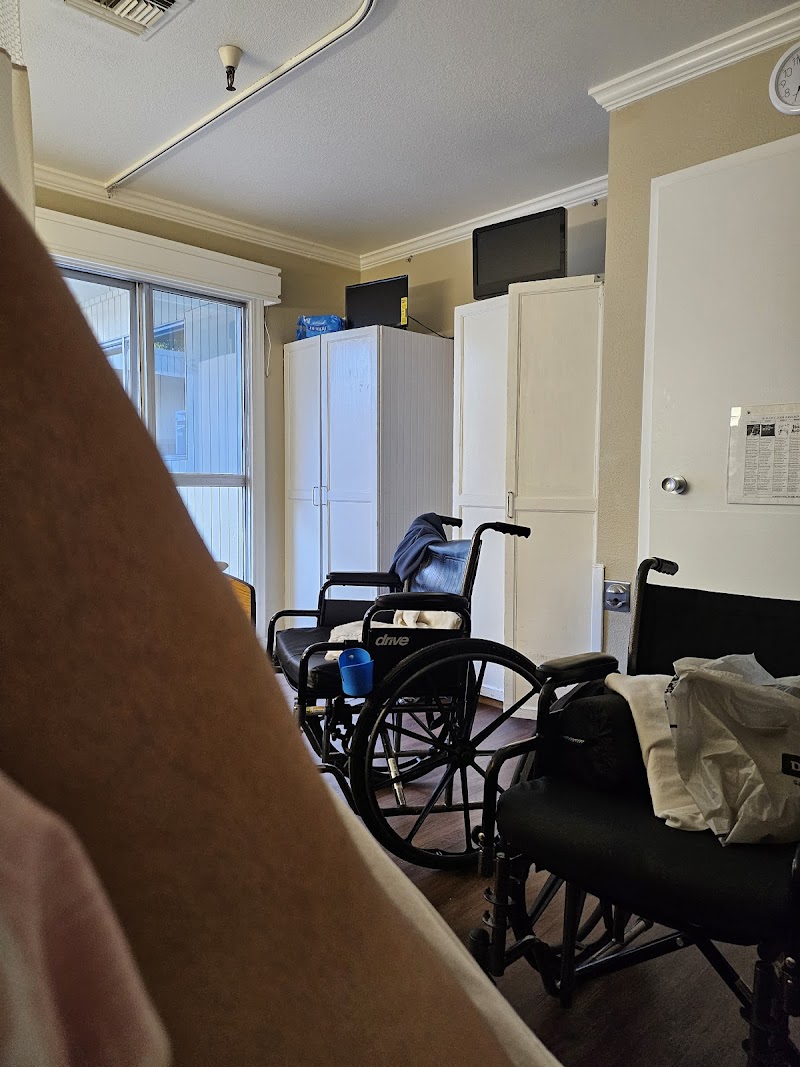
Who Owns and Operates Almaden Center?

ALMADEN HEALTH AND REHABILITATION CENTER is owned by a for-profit company. For-profit facilities operate as businesses with obligations to shareholders or private owners. The facility is operated by MARINER HEALTH CARE, a chain that manages multiple nursing homes. With 77 certified beds and approximately 68 residents (about 88% occupancy), it is a smaller facility located in SAN JOSE, California.
How Does Almaden Center Compare to Other California Nursing Homes?

Compared to the 100 nursing homes in California, ALMADEN HEALTH AND REHABILITATION CENTER's overall rating (3 stars) is below the state average of 3.1, staff turnover (43%) is near the state average of 46%, and health inspection rating (3 stars) is at the national benchmark.

What Should Families Ask When Visiting Almaden Center?

Based on this facility's data, families visiting should ask: "Can I visit during a mealtime to observe dining assistance and food quality?" "How do you handle medical emergencies, and what is your hospital transfer rate?" "Can I speak with family members of current residents about their experience?"

Is Almaden Center Safe?

Based on CMS inspection data, ALMADEN HEALTH AND REHABILITATION CENTER has a clean safety record: no substantiated abuse findings (meaning no confirmed cases of resident harm), no Immediate Jeopardy citations (the most serious violation level indicating risk of serious injury or death), and is not on the Special Focus Facility watch list (a federal program monitoring the lowest-performing 1% of nursing homes). The facility has a 3-star overall rating and ranks #100 of 100 nursing homes in California. While no facility is perfect, families should still ask about staff-to-resident ratios and recent inspection results during their visit.

Do Nurses at Almaden Center Stick Around?

ALMADEN HEALTH AND REHABILITATION CENTER has a staff turnover rate of 43%, which is about average for California nursing homes (state average: 46%). Moderate turnover is common in nursing homes, but families should still ask about staff tenure and how the facility maintains care continuity when employees leave.

Was Almaden Center Ever Fined?

ALMADEN HEALTH AND REHABILITATION CENTER has no federal fines on record. CMS issues fines when nursing homes fail to meet care standards or don't correct problems found during inspections. The absence of fines suggests the facility has either maintained compliance or corrected any issues before penalties were assessed. This is a positive indicator, though families should still review recent inspection reports for the full picture.

Is Almaden Center on Any Federal Watch List?

ALMADEN HEALTH AND REHABILITATION CENTER is not on any federal watch list. The most significant is the Special Focus Facility (SFF) program, which identifies the bottom 1% of nursing homes nationally based on persistent, serious quality problems. Not being on this list means the facility has avoided the pattern of deficiencies that triggers enhanced federal oversight. This is a positive indicator, though families should still review the facility's inspection history directly.