COURTYARD CARE CENTER
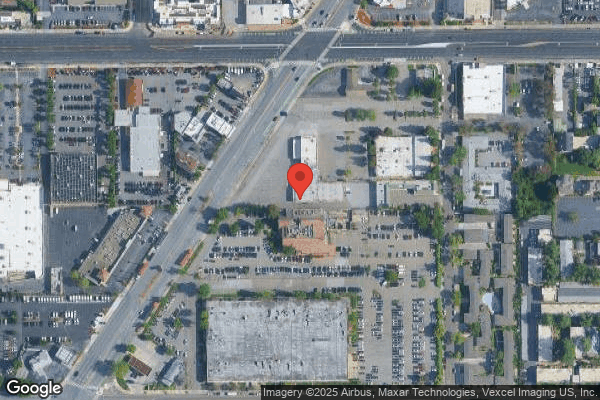
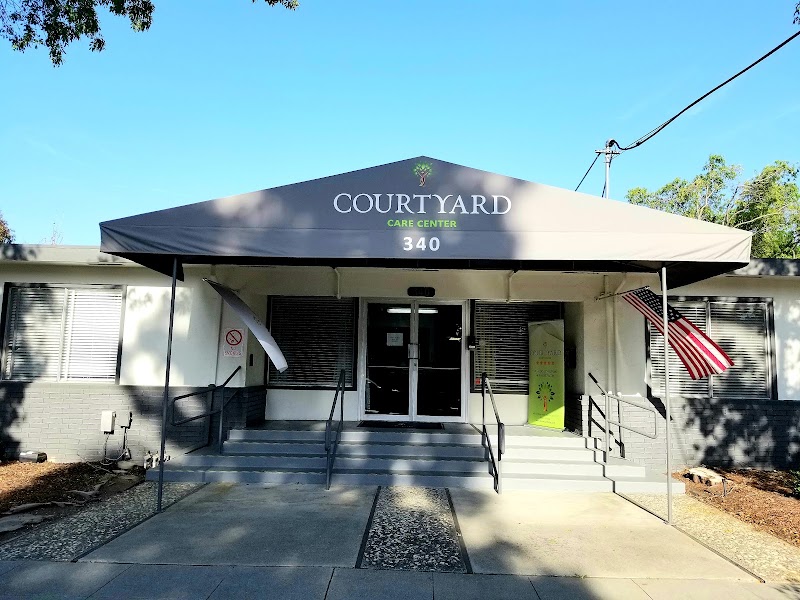
340 NORTHLAKE DRIVE, SAN JOSE, CA 95117 (408) 249-0344
For profit - Limited Liability company 76 Beds DAVID & FRANK JOHNSON Data: November 2025
Trust Grade
65/100
#321 of 1155 in CA
Last Inspection: January 2025

Within standard 12-15 month inspection cycle. Federal law requires annual inspections.

Overview

Courtyard Care Center in San Jose, California, has received a Trust Grade of C+, indicating it is decent and slightly above average among nursing homes. It ranks #321 out of 1155 facilities in California, placing it in the top half, and #21 of 50 in Santa Clara County, meaning there are only 20 better options nearby. However, the facility's trend is concerning as issues have significantly worsened, increasing from 1 in 2024 to 15 in 2025. Staffing is a mixed bag; while the turnover rate is 38%, which is acceptable, the staffing rating is average, and RN coverage is also average, meaning residents may not always receive the highest level of care. Notably, the facility has had no fines, but there are serious concerns, including failures to properly manage residents' fall risks and ensure safe food handling, which could lead to health issues.

Trust Score
C+
65/100
In California
#321/1155
Top 27%
Safety Record
Moderate
Needs review
Inspections
Getting Worse
1 → 15 violations
Staff Stability
○ Average
38% turnover. Near California's 48% average. Typical for the industry.
Penalties
✓ Good
No fines on record. Clean compliance history, better than most California facilities.
Skilled Nurses
○ Average
Each resident gets 34 minutes of Registered Nurse (RN) attention daily — about average for California. RNs are the most trained staff who monitor for health changes.
Violations
⚠ Watch
44 deficiencies on record. Higher than average. Multiple issues found across inspections.
★★★★☆
4.0
Overall Rating
★★★☆☆
3.0
Staff Levels
★★★★★
5.0
Care Quality
★★★☆☆
3.0
Inspection Score
Stable
2024: 1 issues
2025: 15 issues

The Good

  • 5-Star Quality Measures · Strong clinical quality outcomes
  • Full Sprinkler Coverage · Fire safety systems throughout facility
  • No fines on record
  • Staff turnover below average (38%)

    10 points below California average of 48%

Facility shows strength in quality measures, fire safety.

The Bad

Staff Turnover: 38%

Near California avg (46%)

Typical for the industry

Chain: DAVID & FRANK JOHNSON

Part of a multi-facility chain

Ask about local staffing decisions and management

The Ugly 44 deficiencies on record

1 actual harm
Sept 2025 2 deficiencies
CONCERN (D) 📢 Someone Reported This

A family member, employee, or ombudsman was alarmed enough to file a formal complaint

Potential for Harm - no one hurt, but risky conditions existed

Comprehensive Care Plan (Tag F0656)

Could have caused harm · This affected 1 resident

**NOTE- TERMS IN BRACKETS HAVE BEEN EDITED TO PROTECT CONFIDENTIALITY** Based on interview, and record review, the facility failed to develop and implement comprehensive person-centered care plans to ...

Read full inspector narrative →
**NOTE- TERMS IN BRACKETS HAVE BEEN EDITED TO PROTECT CONFIDENTIALITY** Based on interview, and record review, the facility failed to develop and implement comprehensive person-centered care plans to address a resident to resident altercation, for one of three sampled residents (Resident 3). This failure had the potential to result in the resident not receiving the interventions necessary to maintain their highest level of well-being.Findings:Review of Resident 3's clinical record indicated Resident 3 was admitted to the facility on [DATE] with diagnoses including anoxic brain damage (brain damage caused by lack of oxygen), alcohol dependence, anxiety disorder (a disorder that causes people to feel panicked for long periods of time), and type II diabetes mellitus (a disorder that causes elevated blood sugar levels).Review of Resident 3's minimum data set (MDS, a required assessment for all skilled nursing facility residents to get reimbursed by Medicare) Section C-Cognitive Patterns indicated Resident 3 had a brief interview for mental status (BIMS, a score to evaluate cognitive status of residents) score of four.Review of Resident 3's chart indicated on 8/29/25, Resident 3 was seen in the hallway of the facility yelling and grabbing another resident's arm. Resident 3 and the other resident were separated after the altercation. On 9/4/25, Resident 3 was discharged to another facility.During a concurrent interview and record review with the director of nursing (DON) on 9/12/25 at 12:37 p.m., the DON said the interdisciplinary team, which consists of herself and other department such as social services and rehabilitation, typically updates a resident's care plan after any incident takes place. The DON also confirmed there was no care plan entry for Resident 3.Review of facility policy titled Comprehensive Care Plans, revised 12/19/22, indicated .The comprehensive care plan will describe at a minimum, the following.The services that are to be furnished to attain or maintain the resident's highest practicable physical, mental, and psychosocial well-being.Review of facility policy titled Care Plan Revisions Upon Status Change, revised 12/19/22, indicated .The comprehensive care plan will be reviewed, and revised as necessary, when a resident experiences a status change.The MDS Coordinator and the Interdisciplinary Team will discuss the resident condition and collaborate on intervention options.The care plan will be updated with the new or modified interventions
CONCERN (D) 📢 Someone Reported This

A family member, employee, or ombudsman was alarmed enough to file a formal complaint

Potential for Harm - no one hurt, but risky conditions existed

Quality of Care (Tag F0684)

Could have caused harm · This affected 1 resident

Based on interview and record review, the facility failed to ensure care and services were provided in accordance with professional standards of practice for one out of 3 sampled residents (Resident 1...

Read full inspector narrative →
Based on interview and record review, the facility failed to ensure care and services were provided in accordance with professional standards of practice for one out of 3 sampled residents (Resident 1), when there were multiple days for which there was no evidence of documentation of resident behavioral charting after a staff-to-resident incident. This failure had the potential to compromise the resident's health, safety, and overall well-beingFindings:Review of Resident 1's clinical record indicated Resident 1 was admitted to the facility with diagnoses including cerebral infarction (also known as a stroke, an attack in the brain caused by lack of blood flow), mood disorder, and major depressive disorder with psychotic symptoms (a mental disorder that affects mood).Review of Resident 1's clinical record indicated on 8/29/25, Resident 1 had an altercation with a certified nurse assistant (CNA). Resident 1 had called his daughter after a CNA had cared for him, and said the CNA had push him. Resident 1's daughter called adult protective services (APS), and the police were called. Resident 1 told the police that he pushed the CNA first, and the CNA pushed back.During a concurrent observation and interview with Resident 1 on 8/29/25 at 1:54 p.m., Resident 1 was seen in his room, lying in bed, with no visible injuries. Resident 1 said he grabbed the CNA and the CNA pushed him off. Resident 1 also said he had yelled at the CNA.During a concurrent interview and record review with the director of nursing (DON) on 9/12/25 at 12:33 p.m., the DON said the nursing staff should be documenting on residents who have an incident with a staff member or other resident for 72 hours. The DON confirmed that there was only one documented entry for Resident 1 in the 72 hour period after the incident on 8/29/25, on 8/31/25.Review of facility policy titled Abuse, Neglect and Exploitation, revised 12/19/22, indicated .The facility will make efforts to ensure all residents are protected from physical and psychosocial harm, as well as additional abuse, during and after the investigation. Examples include but are not limited to.Increased supervision of the alleged victim and residents.
Apr 2025 1 deficiency
CONCERN (D) 📢 Someone Reported This

A family member, employee, or ombudsman was alarmed enough to file a formal complaint

Potential for Harm - no one hurt, but risky conditions existed

Comprehensive Care Plan (Tag F0656)

Could have caused harm · This affected 1 resident

**NOTE- TERMS IN BRACKETS HAVE BEEN EDITED TO PROTECT CONFIDENTIALITY** Based on interview and record review, the facility failed to develop care plans for one of four sampled residents (Residents 1) ...

Read full inspector narrative →
**NOTE- TERMS IN BRACKETS HAVE BEEN EDITED TO PROTECT CONFIDENTIALITY** Based on interview and record review, the facility failed to develop care plans for one of four sampled residents (Residents 1) when the facility failed to create a baseline fall care plan (Care plans identify the specific cares and services necessary to meet the residents' needs). Failure to develop care plans had the potential to result in the residents not receiving interventions needed to maintain their health and safety at the highest practicable level. Findings: Review of Resident 1's clinical record indicated he was admitted to the facility on [DATE] with a diagnoses including type 2 diabetes mellitus (when blood sugar is too high), end stage renal disease (condition which the kidneys lose the ability to remove waste and balance fluids), muscle weakness, osteoarthritis (when flexible tissue at the ends of the bones wears down). Fall Risk assessment dated [DATE] indicated Resident 1's score was 15, meaning Resident 1 was high risk for fall. A review of Resident 1's care plan did not address his risk for fall. Review of Resident 1's clinical record indicated Resident 1 had several falls in the facility. There was no care plan in Resident 1's record to address the risk for falls. During an interview with the Assistant Director of Nursing (ADON) on 2/21/25 at 11:36 a.m., ADON reviewed Resident 1's record and confirmed there was no care plan to address fall risk. The ADON further stated I don't see it, it should have a separate care plan for fall. Review of the facility's policy, titled Comprehensive Care Plan , revised dated 12/19/22, indicated, the facility will develop and implement a comprehensive person-centered care plan for each resident, consistent with resident rights, that includes measurable objectives and timeframes to meet a resident's medical, nursing, and [NAME] and psychosocial needs that are identified in the resident's comprehensive assessment. 6.The comprehensive care plan will include measurable objectives and timeframes to meet the resident's needs .
Jan 2025 12 deficiencies
CONCERN (D)

Potential for Harm - no one hurt, but risky conditions existed

Deficiency F0552 (Tag F0552)

Could have caused harm · This affected 1 resident

**NOTE- TERMS IN BRACKETS HAVE BEEN EDITED TO PROTECT CONFIDENTIALITY** Based on interview and record review, the facility failed to ensure residents were informed of risks and benefits of treatment f...

Read full inspector narrative →
**NOTE- TERMS IN BRACKETS HAVE BEEN EDITED TO PROTECT CONFIDENTIALITY** Based on interview and record review, the facility failed to ensure residents were informed of risks and benefits of treatment for four (Resident 23, Resident 34, Resident 70, and Resident 174) out of 16 sampled residents when: 1. Resident 23's psychotropic medication (drugs that affect the brain, mood, thoughts, or behavior) informed consent was not completed and verified; 2. Resident 70' psychotropic medication informed consent was not completed and verified; 3. Resident 34's responsible party was not notified in a timely manner about the results of a chest X-ray (digital image of internal composition of the body); and 4. Resident 174's psychotropic medication informed consent was not completed and verified. These failures had the potential to put residents at risk for misidentifying and not reporting possible side effects and adverse reactions that can be detrimental to their health due to lack of knowledge about their psychotropic medications, as well as putting Resident 34 RPs not informed of his current care in a timely manner. Findings: 1. Review of Resident 23's clinical record indicated Resident 23 was admitted on [DATE] with diagnoses of cerebral vascular accident (also known as stroke, a disorder of the brain caused by lack of blood flow), and schizoaffective disorder (a disorder of the brain that can cause people to see and hear things that are not real). Review of Resident 23's clinical record indicated Resident 23 had an order for Risperidone ( medication used to treat symptoms of schizophrenia [mental disorder]) 0.25 milligram (mg, unit of measurement) Give 1 tablet by mouth two times a day for m/b [manifested by] auditory hallucinations related to Schizoaffective disorder. Review of Resident 23's clinical record further indicated an informed consent was signed on 12/13/24 by the resident. The risks, benefits, and side effects of the medication were not listed in the informed consent form. During an interview with the Interim Director of Nursing (IDON) on 1/30/25 at 2:56 p.m, the IDON stated the consent that was in the chart for Resident 23 for Risperidone was the current consent being used. The IDON also stated she would follow up on if the form used for obtaining consent for the use of psychotropics followed facility policy for the use of psychotropics. 2. Review of Resident 70's clinical record indicated Resident 70 was admitted on [DATE] with diagnoses of deconditioning and schizoaffective disorder (a disorder of the brain that can cause people to see and hear things that are not real). Review of Resident 70's clinical record indicated Resident 70 had an order for Olanzapine (medication used to treat schizophrenia) 2.5 mg by mouth daily for schizoaffective disorder. Review of Resident 23's clinical record further indicated an informed consent was signed on 12/29/24 by the responsible party. The risks, benefits, and side effects of the medication were not listed in the informed consent form. During an interview with the IDON on 1/30/25 at 2:56 p.m, the IDON said the consent that was in the chart for Resident 70 for Olanzapine was the current consent being used. 3. Review of Resident 34's clinical record indicated Resident 34 was admitted on [DATE] with a diagnosis including hypoxic brain injury (an injury caused by lack of oxygen). Review of Resident 34's clinical record also indicated he had a chest X-ray ordered and completed on 1/10/25 which indicated the lungs were clear. Review of Resident 34's clinical record further indicated that there was no record of a note stating the responsible party was contacted about the results of the chest X-ray. During an interview with the IDON on 1/30/25 at 4:26 p.m., the IDON stated it was unclear whether the chest X-ray result was communicated to Resident 34's responsible party after the results were received by the facility. Review of facility policy titled Notification of Changes, dated 12/19/22, indicated .The facility must inform the resident, consult with the resident's physician and/or notify the resident's family member or legal representative when there is a change requiring such notification. Circumstances requiring notification include .Significant change in the resident's physical, mental or psychosocial condition .Circumstances that require a need to alter treatment. This may include .New treatment . 4. A review of Resident 174's medical records indicated diagnoses of but are not limited to, anxiety disorder (mental health conditions that involve excessive fear, worry, or panic), major depressive disorder (persistent feelings of sadness, hopelessness, and lack of interest in activities), and paranoid schizophrenia (a condition typically affects your thinking abilities, memories, and senses). During a concurrent interview and record review of Resident 174's medical records with the IDON on 1/30/25 at 11:20 a.m., the IDON verified that Resident 174 was on Risperidone, Buspirone (anxiolytic, used to treat symptoms of anxiety, such as fear, dread, uneasiness, and muscle tightness, that may occur as a reaction to stress) and Sertraline (antidepressant, used to treat symptoms of depression) medications. The IDON verified and stated that the informed consent they used for psychotropic medication titled, Physician Documentation of Informed Consent. The IDON verified the consent form indicated, PHYSICIAN USE ONLY and there was no space indicated for a signature from a resident or a representative giving the consent. The IDON also verified Resident 174's consent forms for medications Risperidone, Buspirone, and Sertraline dated 8/17/23 did not indicate specific frequency, indications, possible side effects and adverse reactions of each medication, no signature from Resident 174 and no indication if consent was verbal. The IDON verified the facility form titled, Facility Verification of Informed Consent for Resident 174's medications Risperidone, Buspirone, and Sertraline did not indicate a date and signature from Resident 174 or a representative. The IDON also verified Resident 174's consent forms titled, Psychoactive Medication Consent dated 8/20/21 for medications Risperidone, Buspirone and Sertraline indicated the classifications of the medications (anti-psychotic, anti-anxiety, and anti-depressant), the specific frequency and indications of each medications, side effects and adverse reactions, and Resident 174's signature. The IDON verified the form titled, Facility Verification of Informed Consent to Physical Restraints Psychotherapeutic Drug or 'Prolonged Use of Active' Device for Resident 174's Risperidone, Buspirone, and Sertraline dated 8/20/21 indicated signature from a facility staff. The IDON stated that the facility changed its consent forms since a new company took over. A review of Resident 174's Physician Orders indicated the following: - Risperidone Oral Tablet Disintegrating 1 mg [milligram, unit of measurement]; give 0.5 tablet by mouth two times a day for paranoia related to paranoid schizophrenia - Buspirone HCl tablet 10 mg; give 1 tablet by mouth one time a day m/b [manifested by] excessive worrying related to major depressive disorder - Sertraline HCl Oral tablet 50 mg; give 1 tablet by mouth one time a day for m/b expression of sadness over medical condition related to major depressive disorder A review of facility's policy and procedure (P&P) titled, Informed Consent revised 3/25/24, the P&P indicated, Policy Explanation and Compliance Guidelines: 2. Psychotherapeutic Medications: a. The information provided to the resident/health care decision maker regarding a decision concerning the administration of psychotherapeutic medication . i. The reason for the treatment and the name and nature and seriousness of resident's illness. Ii. The nature of the medication to be used including the does, frequency, duration . vi. That the resident has the right to accept or refuse the proposed medications .and if he or she consents, has the right to revoke his or her consent for any reason at any time. b. Prior to initiating the administration of a psychotherapeutic medication .licensed nursing staff shall verify with the resident or surrogate decision maker that he/she has given informed consent for the proposed psychotherapeutic medication .to the prescriber. Psychotherapeutic medications may not be administered until informed consent has been verified. 3. If a form is used to document that informed consent was verified, the licensed nursing staff will complete the Verification of Informed Consent Form and place it under the consent section in the clinical record. 4. The physician may document that he/she obtained informed consent in the clinical record, on progress notes, history and physical or a standard form used by the facility.
CONCERN (D)

Potential for Harm - no one hurt, but risky conditions existed

Deficiency F0578 (Tag F0578)

Could have caused harm · This affected 1 resident

**NOTE- TERMS IN BRACKETS HAVE BEEN EDITED TO PROTECT CONFIDENTIALITY** Based on interview and record review, the facility failed to follow their policy and procedure (P&P) for an advance directive (A...

Read full inspector narrative →
**NOTE- TERMS IN BRACKETS HAVE BEEN EDITED TO PROTECT CONFIDENTIALITY** Based on interview and record review, the facility failed to follow their policy and procedure (P&P) for an advance directive (AD, a written instruction, such as a living will or durable power of attorney that authorizes another person to act on behalf of the resident) and completion of the Physician Order for Life-Sustaining Treatment (POLST, a document that specifies the medical treatments the residents wants to receive during serious illness) form for one out of two sampled residents (Resident 23). These failures had the potential to lead to the delivery of unnecessary or inappropriate medical services against residents' goals and wishes. Findings: Review of Resident 23's admission record indicated Resident 23 was admitted to the facility on [DATE]. Review of Resident 23's POLST form dated 1/20/24 indicated section D for AD was marked for Advance Directive, Healthcare Agent if named in Advance Directive field was empty. Further review of Resident 23's clinical record indicated there was no documented copy of an AD signed by the resident or responsible party (RP, a person who is accountable for making decisions on behalf of the resident). During a concurrent interview and record review on 1/30/25 at 11:09 a.m., with the social services director (SSD), the SSD confirmed that Resident 23's POLST form was marked for Advance Directive but that she would need to follow up to see if there was a copy on file. Review of the facility's policy titled Residents' Rights Regarding Treatment and Advance Directives, dated 12/19/22, indicated .Upon admission, should the resident have an advance directive, copies will be made and placed on the chart as well as communicated to the staff.
CONCERN (D)

Potential for Harm - no one hurt, but risky conditions existed

Comprehensive Care Plan (Tag F0656)

Could have caused harm · This affected 1 resident

Based on observation, interview, and record review, the facility failed to implement and develop a comprehensive care plan for one of 18 residents (Resident 67), when Resident 67's dementia (a general...

Read full inspector narrative →
Based on observation, interview, and record review, the facility failed to implement and develop a comprehensive care plan for one of 18 residents (Resident 67), when Resident 67's dementia (a general term for a group of brain disorders that cause a decline in cognitive abilities, such as memory, thinking, reasoning, and problem-solving) diagnosis was not addressed. This failure had the potential to result in the inability to identify the residents' individualized care issues and implement person-centered care. Findings: During a review of Resident 67's care plans, in his electronic health record, a care plan regarding his dementia was not found. During an interview with the facility's nurse consultant (NC) on 1/29/25 at 8:43 a.m., the NC stated Resident 67 should have a specific cognitive care plan. The NC acknowledged Resident 67 did not have a dementia care plan. During a review of the facility's policy, titled Dementia Care, revised 12/19/2022, the policy indicated .3. The care plan interventions will be related to each resident's individual symptomology and rate of dementia (or related disease) progression with the end result being noted improvement or maintained of ;the expected stable rate of decline associated with dementia and dementia-like illnesses.
CONCERN (D)

Potential for Harm - no one hurt, but risky conditions existed

Quality of Care (Tag F0684)

Could have caused harm · This affected 1 resident

Based on observation, interview and record review, the facility failed to ensure needed care and services were provided in accordance with the resident's goals for care for one resident (Resident 38) ...

Read full inspector narrative →
Based on observation, interview and record review, the facility failed to ensure needed care and services were provided in accordance with the resident's goals for care for one resident (Resident 38) out of six sampled residents, when Resident 38's physician's order for interaction was not followed. This failure had the potential to put Resident 38 at risk for decline in physical, mental and psychosocial well-being. Findings: During a concurrent observation and interview on 1/27/25 at 8:55 a.m. with Resident 38, Resident 38 was lying in bed, awake, alert and oriented. Resident 38 stated I'm trying to get counseling for emotional situation. I get very irritable at people and I scream. During a concurrent observation and interview on 1/30/25 at 10:55 a.m. with Licensed Vocational Nurse (LVN) A, Resident 38 was lying in his bed. LVN A stated that Resident 38 was not in a wheelchair this morning. LVN A also stated that she never saw Resident 38 in a wheelchair even when Resident 38 was in a different station. During a concurrent observation and interview on 1/31/25 at 9:23 a.m. with Resident 38, Resident 38 was lying in his bed. Resident 38 stated he was not put in a wheelchair this morning. A review of Resident 38's medical records indicated diagnoses of but are not limited to, major depressive disorder (a mental condition that causes a persistent low mood, loss of interest and hopelessness), mood disorder (a mental health condition that causes extreme emotional states, such as depression and mania), and muscle weakness. A review of Resident 38's Physician's Orders indicated, Resident needs to be up in a wheelchair in the morning; one time a day every Mon [Monday], Wed [Wednesday], Fri [Friday] for interaction. A review of facility's policy and procedure (P&P) titled, Provision of Physician Ordered Services revised 5/15/23, the P&P indicated, .4. Activity restrictions: Nursing and support staff will ensure compliance with activity restrictions prescribed by the physician.
CONCERN (D)

Potential for Harm - no one hurt, but risky conditions existed

Deficiency F0698 (Tag F0698)

Could have caused harm · This affected 1 resident

**NOTE- TERMS IN BRACKETS HAVE BEEN EDITED TO PROTECT CONFIDENTIALITY** Based on observation, interview and record review, the facility failed to ensure a resident receiving dialysis (removal of waste...

Read full inspector narrative →
**NOTE- TERMS IN BRACKETS HAVE BEEN EDITED TO PROTECT CONFIDENTIALITY** Based on observation, interview and record review, the facility failed to ensure a resident receiving dialysis (removal of waste and excess fluid from the body) treatment received consistent care with professional standards for one out of two sampled residents (Resident 32) when their dialysis communication sheets (DCS) were missing for several treatment days. This failure had the potential for Resident 32's dialysis care not being properly communicated and putting Resident 32 at risk for complications. Findings: Review of Resident 32's clinical record indicated she was admitted on [DATE] with a diagnosis of cerebrovascular accident (CVA, also known as stroke, a brain disorder caused by lack of blood flow to the brain), and end-stage renal disease (when the kidneys no longer function to remove waste from the blood). Review of Resident 32's clinical record further indicated Resident 32 received dialysis on Tuesday, Thursday and Saturday. Review of Resident 32's dialysis record indicated there were missing DCS forms from 1/16/25-1/28/25. During a concurrent interview and record review with the Interim Director of Nursing (IDON) on 1/30/25 at 2:56 p.m., the IDON stated the DCS forms should be kept in the resident's chart or in white binder that goes with the resident from the facility to the dialysis center, and then back to the facility. The IDON confirmed there was no DCS forms from 1/16/25-1/28/25 for Resident 32. Review of the facility's policy titled Hemodialysis, last revised 6/5/23, indicated .The licensed nurse will communicate to the dialysis facility via telephonic communication or written format, such as a dialysis communication form or other form, that will include, but not limit itself to .Timely medication administration (initiated, held or discontinued) by the nursing home and/or dialysis facility .Physician/treatment orders, laboratory values, and vital signs .Dialysis treatment provided .Dialysis adverse reactions/complications .
CONCERN (D)

Potential for Harm - no one hurt, but risky conditions existed

Drug Regimen Review (Tag F0756)

Could have caused harm · This affected 1 resident

Based on interview and record review, the consultant pharmacist (CP) failed to identify and report irregularities during the medication regimen review (MRR) for two (Resident 25 and Resident 174) out ...

Read full inspector narrative →
Based on interview and record review, the consultant pharmacist (CP) failed to identify and report irregularities during the medication regimen review (MRR) for two (Resident 25 and Resident 174) out of 23 sampled residents when: 1. Abnormal Involuntary Movement Scale (AIMS, a rating scale that measures the severity of abnormal movements) was not done for Resident 25; and 2. AIMS was not done for Resident 174. This failure had the potential to result in unnecessary or prolonged use of the psychotropic medication, which could increase the resident's risk of experiencing side effects (undesirable effects from the medication). Findings: 1. A review of Resident 25's medical record indicated a diagnosis of but is not limited to Schizoaffective Disorder (chronic mental health condition in which people experience mood disorder, symptoms include hallucinations and/or delusions; feelings of intense sadness). A review of Resident 25's Physician Order dated 7/4/24 indicated, Seroquel Oral Tablet [antipsychotic medication] 300 mg [milligram, a unit of measurement]; give one tablet by mouth in the morning for m/b [manifested by] visual hallucination related to schizoaffective disorder. A review of Resident 25's Physician Order dated 7/16/23 indicated, Monitor for side effects to use of psychotropic medications. During a concurrent interview and record review of Resident 25's medical records with the CP on 1/31/25 at 9:52 a.m., the CP verified Resident 25 was on antipsychotic medication, Quetiapine (Seroquel). The CP also verified AIMS was not done for Resident 25. The CP stated, the facility should have done it initially and every six months. The CP also stated, since 2022, according to the facility, they do not use AIMS and we did not recommend AIMS since then. The CP also stated, I don't know what they do in replacement of AIMS. A review of the facility's policy and procedure (P&P) titled, Use of Psychotropic Medication revised 12/19/22, the P&P indicated, .11. The effects of the psychotropic medications on a resident' physical, mental, and psychosocial well-being will be evaluated on an ongoing basis, such as but not limited to: .b.During the pharmacist's monthly medication regimen review. A review of facility's policy and procedure (P&P) titled, Consultant Pharmacist Services Provider Requirements dated October 2017, the P&P indicated, .E. Activities that the consultant pharmacist or off-site pharmacist performs includes, but is not limited to: 1 a A residents's drug regimen must be free of unnecessary drugs. An unnecessary drug is any drug when used in: iii. Without adequate monitoring 2. A review of Resident 174's medical records indicated diagnosis of but is not limited to paranoid schizophrenia (a condition typically affects your thinking abilities, memories, and senses). A review of Resident 174's Physician Orders indicated, Risperidone Oral Tablet Disintegrating 1 mg; give 0.5 tablet by mouth two times a day for paranoia related to paranoid schizophrenia. During a concurrent interview and record review of Resident 174's medical records with the CP on 1/31/25 at 9:59 a.m., the CP verified Resident 174 was on antipsychotic medication, Risperidone. The CP verified that the AIMS was last done on 9/24/21 for Resident 174. The CP stated AIMS was last recommended to the facility in December 2022 and the facility said they use a different system. The CP also stated, I don't know what they do in replacement of AIMS. A review of facility's policy and procedure (P&P) titled, Use of Psychotropic Medication revised 12/19/22, the P&P indicated, .11. The effects of the psychotropic medications on a resident' physical, mental, and psychosocial well-being will be evaluated on an ongoing basis, such as but not limited to: .b. During the pharmacist's monthly medication regimen review . A review of facility's policy and procedure (P&P) titled, Consultant Pharmacist Services Provider Requirements dated October 2017, the P&P indicated, .E. Activities that the consultant pharmacist or off-site pharmacist performs includes, but is not limited to: 1 a A residents's drug regimen must be free of unnecessary drugs. An unnecessary drug is any drug when used in: iii. Without adequate monitoring
CONCERN (D)

Potential for Harm - no one hurt, but risky conditions existed

Medication Errors (Tag F0758)

Could have caused harm · This affected 1 resident

**NOTE- TERMS IN BRACKETS HAVE BEEN EDITED TO PROTECT CONFIDENTIALITY** 1c. Review of Resident 23's clinical record indicated Resident 23 was admitted on [DATE] with diagnoses of cerebral vascular acc...

Read full inspector narrative →
**NOTE- TERMS IN BRACKETS HAVE BEEN EDITED TO PROTECT CONFIDENTIALITY** 1c. Review of Resident 23's clinical record indicated Resident 23 was admitted on [DATE] with diagnoses of cerebral vascular accident (also known as stroke, a disorder of the brain caused by lack of blood flow), and schizoaffective disorder (a disorder of the brain that can cause people to see and hear things that are not real). Review of Resident 23's clinical record indicated Resident 23 had an order, dated 10/26/24, for Risperidone 0.25 milligram (mg, unit of measurement) Give 1 tablet by mouth two times a day for m/b auditory hallucinations related to Schizoaffective disorder. Review of Resident 23's medical record indicated there was no AIMS assessment documented anywhere in the electronic chart. During an interview with the Pharmacy Consultant (PC) on 1/31/25 at 10:05 AM, the PC said an AIMS assessment should have been done for Resident 23. 1d. Review of Resident 70's clinical record indicated Resident 70 was admitted on [DATE] with diagnoses of deconditioning and schizoaffective disorder (a disorder of the brain that can cause people to see and hear things that are not real). Review of Resident 70's clinical record indicated Resident 70 had an order for Olazapine 2.5 mg by mouth daily for schizoaffective disorder. Review of Resident 70's medical record indicated there was no AIMS assessment documented anywhere in the electronic chart. During an interview with the Pharmacy Consultant (PC) on 1/31/25 at 10:05 AM, the PC said an AIMS assessment should have been done for Resident 70. Based on observation, interview, and record review, the facility failed to ensure four of 18 sampled residents (Residents 23, 25, 70 and 174) were free from unnecessary psychotropic (drug that affects brain activities associated with mental processes and behavior) medications when Abnormal Involuntary Movement Scale (AIMS, a rating scale designed to measure involuntary movements known as tardive dyskinesia [TD], a disorder that sometimes develops as a side effect of long-term treatment with antipsychotic medications) assessment was not done. The failure resulted in lack of adequate monitoring and unnecessary medications for the residents, which had the potential for increased risks associated with the use of psychotropic medications. Findings: 1a. A review of Resident 25's medical record indicated a diagnosis of but is not limited to Schizoaffective Disorder (chronic mental health condition in which people experience mood disorder, symptoms include hallucinations and/or delusions; feelings of intense sadness) A review of Resident 25's Physician Order dated 7/4/24 indicated, Seroquel Oral Tablet [antipsychotic medication] 300 mg [milligram, a unit of measurement]; give one tablet by mouth in the morning for m/b [manifested by] visual hallucination related to schizoaffective disorder A review of Resident 25's Physician Order dated 7/16/23 indicated, Monitor for side effects to use of psychotropic medications. A review Lexicomp indicated, Quetiapine [Seroquel] may cause extrapyramidal symptoms (EPS), also known as drug-induced movement disorders. The EPS include tardive dyskinesia (TD, an involuntary movement disorder that causes a range of repetitive muscle movements in the face, neck, arms and legs). During a concurrent interview and record review of Resident 25's medical records with the Consultant Pharmacist (CP) on 1/31/25 at 9:52 a.m., the CP verified Resident 25 was on antipsychotic medication, Quetiapine (Seroquel). The CP also verified Abnormal Involuntary Movement Scale (AIMS) was not done for Resident 25. The CP stated, the facility should have done it initially and every six months. The CP also stated, since 2022, according to the facility, they do not use AIMS and we did not recommend AIMS since then. The CP also stated, I don't know what they do in replacement of AIMS. 1b. A review of Resident 174's medical records indicated diagnosis of but is not limited to paranoid schizophrenia (a condition typically affects your thinking abilities, memories, and senses). A review of Resident 174's Physician Orders indicated, Risperidone Oral Tablet Disintegrating 1 mg [milligram, unit of measurement]; give 0.5 tablet by mouth two times a day for paranoia related to paranoid schizophrenia During a concurrent interview and record review of Resident 174's medical records with the Consultant Pharmacist (CP) on 1/31/25 at 9:59 a.m., the CP verified Resident 174 was on antipsychotic medication, Risperidone. The CP verified that Abnormal Involuntary Movement Scale (AIMS) was last done on 9/24/21 for Resident 174. The CP stated AIMS was last recommended to the facility in December 2022 and the facility said they use a different system. The CP also stated, I don't know what they do in replacement of AIMS. During a concurrent interview and record review with the Interim Director of Nursing (IDON) on 1/31/25 at 11:07 a.m., the IDON stated the facility does not have a specific form to monitor abnormal involuntary movements for residents on psychotropic medications. The IDON also stated, she does not remember the frequency of AIMS. The IDON also verified the facility had no specific form/assessment in replacement of AIMS. A review of facility's policy and procedure (P&P) titled, Use of Psychotropic Medication revised 12/19/22, the P&P indicated, .11. The effects of the psychotropic medications on a resident' physical, mental, and psychosocial well-being will be evaluated on an ongoing basis, such as but not limited to: .b.During the pharmacist's monthly medication regimen review .
CONCERN (E)

Potential for Harm - no one hurt, but risky conditions existed

Pharmacy Services (Tag F0755)

Could have caused harm · This affected multiple residents

Based on observation, interview and record review, the facility failed to provide appropriate pharmaceutical services when: 1. Two medications, glipizide and duloxetine, were not available for two out...

Read full inspector narrative →
Based on observation, interview and record review, the facility failed to provide appropriate pharmaceutical services when: 1. Two medications, glipizide and duloxetine, were not available for two out of seven residents (Residents 224 and 55) 2. There were discrepancies between the controlled drug (those with high potential for abuse and addiction record (CDR, an inventory/accountability sheet) and the medication administration record (MAR) for four out of four residents (Residents 224, 32, 1 and 2) These failures had the potential to affect the health of residents and resulted in the facility not having accurate accountability of controlled medications which had the potential for misuse or diversion. Findings: 1. During a medication pass observation on 1/28/25 at 4:41 p.m., LVN F stated she did not have glipizide (medication that lowers blood sugar) 5 milligram (mg, unit of measurement) in the medication cart for Resident 224, and that she would have to call the pharmacy to get it stocked. A review of Resident 224's physician orders, dated 10/29/24, indicated Resident 224 was to receive glipizide 5 mg tablet two times a day for hyperglycemia [high blood sugar] related to TYPE 2 DIABETES MELLITUS [chronic condition when the body could not produce insulin that could lead to high blood sugar levels]. During a follow up interview with LVN F on 1/28/25 at 4:45 p.m., LVN F stated she would call to get an order for a one-time dose of glipizide at 8 p.m., that day to make up for the dose missed. During a medication pass observation on 1/29/25 at 8:53 a.m., LVN F stated she did not have duloxetine (a medication used to treat depression [feeling of sadness]) 30 mg in the medication cart for Resident 55, and that she would have to call the pharmacy to get it stocked. A review of Resident 55's physician orders, dated 6/18/24, indicated Resident 55 was to receive duloxetine 30 mg Give 3 capsule by mouth one time a day for m/b [manifested by] feelings of sadness related to SCHIZOAFFECTIVE DISORDER [a mental health condition], UNSPECIFIED. Review of the facility's policy titled Organizational Aspects-IA1: Provider Pharmacy Requirements, effective date April 2008, indicated The provider pharmacy agrees to perform the following pharmaceutical services .Providing routine and timely pharmacy service seven days per week and emergency pharmacy service 24 hours per day, seven days per week .Medications which should be promptly available such as anti-infectives, as well as drugs used to treat problems .All other new medication orders are received and available for administration on the day they are ordered . 2. During the survey, four random CDRs for four residents (Residents 224, 32, 1 and 2) were requested for review. On 1/30/25 at 11 a.m., a review of the residents' physician orders, the CDRs and MARs indicated the following: a. Resident 224 had a physician order, dated 10/14/24 for oxycodone (a medication that can treat moderate to severe pain) 5 mg 1 tablet by mouth every 4 hours as needed for moderate to severe pain (7-10). Resident 224 had two instances which were recorded in the CDR but not documented as given in the MAR: on 1/10/25 at 6 p.m. and 1/28/25 at 7:15 p.m. b. Resident 32 had a physician order, dated 10/5/24 for oxycodone 5 mg 1 tablet via G-tube [a thin, flexible tube inserted surgically through the stomach that can be used for delivering nutrition, and medications when a person is unable to eat or drink orally] every 4 hours as needed for pain scale of 7-10 [severe pain]. Resident 32 had seven instances which were recorded in the CDR but not documented as given in the MAR: 1/7/25 at 5 a.m., 1/12/25 at 5 a.m., 1/15/25 at 4 a.m., 1/20/25 at 11:30 a.m., 1/22/25 at 4 a.m., 1/25/25 at 6:06 a.m., 1/26/25 at 11:30 p.m., and 1/27/25 at 10:48 p.m. c. Resident 1 had a physician order, dated 12/31/24, for Roxicodone (Oxycodone HCl) oral tablet 5 mg Give 3 tablet by mouth every 6 hours as needed for Sever pain scale 7-10. Resident 1 had three instances which were recorded in the CDR but not in the MAR: on/1/12/25 at 12:30 p.m., on 1/16/25 at 9 a.m., and on 1/18/25 at 5:02 p.m. d. Resident 2 had a physician order, dated 11/5/23, for oxycodone 5 mg Give 2 tablet by mouth every 4 hours as needed for Pain Management for severe pain 7-10. Resident 2 had six instances which were recorded in the CDR but not documented as given in the MAR: on 1/14/25 at 10:35 p.m., 1/17/25 at 7 a.m., 1/18/25 at 7 a.m., 1/23/25 at 2 p.m., 1/25/25 at 10 p.m., and 1/26/25 at 7 a.m. During a concurrent interview and record review with the interim Director of Nursing (IDON) on 1/30/25 at 2:56 p.m., the IDON reviewed the residents' respective CDRs and MARs: a. For Resident 224, the IDON verified the recorded dates in the CDR and the MAR and confirmed the findings above. b. For Resident 32, the IDON verified the recorded dates in the CDR and the MAR and confirmed all findings except 1/7/25, which she was able to verify as recorded in the MAR and 1/22/25, which was recorded in the CDR as given at 0400, but in the MAR it was recorded as given at 6:28 a.m. The IDON stated that whatever time the medication was taken out and recorded in the CDR should be the time in the MAR as well. c. For Resident 1, the IDON verified the recorded dates in the CDR and the MAR and confirmed all findings except 1/16/25, which was recorded in the CDR at 9 a.m. but recorded in the MAR at 10:42. The IDON stated that this was not okay, that the times should match between the CDR and the MAR. d. For Resident 2, the IDON verified the recorded dates in the CDR and MAR and confirmed the above findings. The IDON further stated that all controlled medications should be recorded in the MAR and the CDR when they were given. Review of the facility's policy titled Controlled Substance Administration & Accountability, last revised 6/5/23, indicated .In all cases, the dose noted on the usage form or entered into the automated dispensing system must match the dose recorded on the Medication Administration Record (MAR), Controlled Drug Record, or other facility specified form and placed in the patient's medical record.
CONCERN (E)

Potential for Harm - no one hurt, but risky conditions existed

Unnecessary Medications (Tag F0759)

Could have caused harm · This affected multiple residents

Based on observation, interview and record review, the facility had a facility medication error rate of 7.7% when four errors out of 52 opportunities during the medication administration for four out ...

Read full inspector narrative →
Based on observation, interview and record review, the facility had a facility medication error rate of 7.7% when four errors out of 52 opportunities during the medication administration for four out of six residents (Residents 12, 224, 55 and 2). This failure resulted in medication not given in accordance with the prescriber's orders which had the potential for residents not receiving the full therapeutic effects of the medications. Findings: 1. During a concurrent medication pass observation and interview on 1/27/25 at 12:31 p.m., with LVN E, LVN E administered three units (standard measurement) of insulin aspart (a type of insulin injection to lower blood sugar level) to Resident 12 with a pen injector (an injector that uses a dial to administer the correct medication dosage). Prior to administering the 3 units, LVN E did not prime (process of filling the tubing) the pen injector needle with two units. LVN E stated I would usually prime the needle with 2 units. Review of UpToDate: Lexidrug (a drug reference for healthcare professionals) indicated for insulin aspart administration .For prefilled pen injectors, prime the needle before each injection with 2 units . 2. During a concurrent medication pass observation and interview on 1/28/25 at 4:41 p.m., with LVN F, LVN F stated she did not have glipizide (medication used to lower blood sugar level) 5 milligram (mg, unit of measurement) on hand to give to Resident 224 along with her other medications at the time. LVN F stated she would need to call the physician to get an order to give the medication at a later time and to call the pharmacy to refill the medication. Review of Resident 224's physician orders, dated 10/29/24, indicated Glipizide Oral Tablet 5 mg Give 1 tablet by mouth two times a day for hyperglycemia related to TYPE 2 DIABETES MELLITUS [high blood sugar level] WITH UNSPECIFIED COMPLICATIONS. Review of the facility's policy titled Provision of Physician Ordered Services, last revised 5/15/23, indicated .Medication administration and therapeutic treatments; Qualified nursing personnel will administer medications as ordered by the physician .Medications will be administered following facility protocols, dosage guidelines, and documentation procedures. 3. During a concurrent medication pass observation and interview on 1/29/25 at 8:53 a.m., with LVN F, LVN F stated she did not have duloxetine (medication used to treat depression [feelings of sadness] and anxiety [feelings of excessive worry and fear]) 30 mg on hand to give to Resident 55 along with his other medications at the time. During a follow up interview on 1/29/25 at 9 a.m.,, LVN F stated she would have to contact the pharmacy to restock the duloxetine, and that It's important to keep the medication cart stocked with their medications. Review of Resident 55's physician orders, dated 6/18/24, indicated Duloxetine HCL Oral Capsule Give 3 capsules by mouth one times a day for m/b feelings of sadness related to SCHIZOAFFECTIVE DISORDER [mental disorder], UNSPECIFIED. Review of the facility's policy titled Medication Administration, dated 12/19/22, indicated Keep medication cart clean, organized, and stocked with adequate supplies. 4. During a concurrent medication pass observation and interview on 1/29/25 at 8:53 a.m., with LVN F, LVN F administered Ketotifen eye drops (a medication that treats dryness in the eyes) in both the right and left eye, for Resident 55. The label on the box the eye drops indicated Instill 1 drop in right eye two times a day for dry eyes. LVN F confirmed what was on the label, and stated It's supposed to be both eyes I think .oh, it's just the right eye. Review of Resident 55's physician order's, dated 101/4/24, indicated Ketotifen Fumarate Opthalmic Solution 0.035% Instill 1 drop in right eye two times a day for dry eyes. Review of the facility's policy titled Administration of Eye Drops or Ointments, dated 12/19/22, indicated .Verify orders and labeling prior to administration .Compare the label with the order to verify correct medication, dose, route and time of administration .Confirm which eye requires treatment .
CONCERN (E)

Potential for Harm - no one hurt, but risky conditions existed

Food Safety (Tag F0812)

Could have caused harm · This affected multiple residents

Based on observation, interview, and record review, the facility failed to ensure safe and sanitary conditions were maintained for food storage according to standards of practice and facility policy w...

Read full inspector narrative →
Based on observation, interview, and record review, the facility failed to ensure safe and sanitary conditions were maintained for food storage according to standards of practice and facility policy when: 1. There were expired food items; 2. Cookware was not properly dried; 3. The temperature log book for the refrigerator used to store food for residents was incomplete. These deficient practices potentially exposed 65 residents, who received food from the kitchen to food-borne illnesses. Findings: 1. During the initial tour of the facility's kitchen on 1/27/25 at 8:32 a.m., with the dietary aide, (DA), the following were observed: a. Gelatin in refrigerator R3 which had an expiration date of 1/26/25. b. Refrigerator R2 had Ground beef which had an expiration date of 1/26/25. c. Freezer F1 had a bag of 4 buns with a date of 12/16/24. d. One pie crust had dates of 12/16/24 and use by 1/16/24. 2. During an observation and subsequent interview, with the dietary manager (DM), on 1/29/25 at 10:51 a.m., there were seven large metal sheet pans which were stacked wet on storage rack. During a subsequent interview with the DM, she stated the trays should not be wet. 3. During a record review and subsequent interview, with the director of staff development (DSD), on 1/30/25 at 3:08 p.m., the refrigerator in the medication room, at station one/two, used for food brought in by visitors, had a temperature log for January 2025 which missing temperatures for 1/28/25, for a.m. and p.m., on 1/29/25, for a.m., and p.m., and on 1/30/25 for a.m. The DSD acknowledged that the temperatures were missing, and should have been there. During a review of the facility's procedure, titled Dish and Utensil Procedure, with an unreadable revision date, indicated .6. Dishes, trays, and utensils shall be air dried before storage. Do not towel dry.
CONCERN (E)

Potential for Harm - no one hurt, but risky conditions existed

Infection Control (Tag F0880)

Could have caused harm · This affected multiple residents

Based on observation, interview, and record review, the facility failed to ensure proper infection control practices were implemented when: 1. Staff did not label resident wash basins kept in shared b...

Read full inspector narrative →
Based on observation, interview, and record review, the facility failed to ensure proper infection control practices were implemented when: 1. Staff did not label resident wash basins kept in shared bathrooms with the residents' identifiers; 2. Staff did not wear the proper personal protective equipment (PPE) when entering a room under enhanced droplet precautions; 3. Staff did not label oxygen tubing for one resident (Resident 21); 4. Staff did not ensure the dressing around a gastrostomy tube (GT, a thin, flexible tube inserted through the stomach to deliver nutrients or medications) was intact and correct infection precaution was followed for one resident (Resident 7); and 5. A urinary catheter (a device that drains urine) bag was found touching the floor, for one resident (Resident 38). These failures had the potential to compromise resident's health and safety, and potentially lead to the spread of communicable illnesses. Findings: 1. During an observation on 1/27/25 at 8:52 a.m., two unlabeled wash basins were seen in the shared bathroom of resident room AA. During an observation on 1/27/25 at 9:44 a.m., one unlabeled wash basin was seen on top of the paper towel dispenser in the shared bathroom of resident room BB. During an interview with Certified Nursing Assistant G on 1/29/25 at 11:06 a.m., CNA G stated wash basins should be labeled with the resident's name and room number. During an interview with the Interim Director of Nursing (IDON), the IDON stated resident items such as urinals should be labeled with the resident's name and room number. 2. During an observation on 1/29/25 at 8:58 a.m., the IDON and Licensed Vocational Nurse F (LVN F) went into resident room CC wearing a gown, gloves and N-95 mask (a specialized type of face mask that offers more protection than a regular face mask). A sign on the door for resident room CC indicated Enhanced Droplet Precautions, to include a gown, gloves, a N-95 mask and a faceshield. The IDON and LVN F did not don (wear) a faceshield before they entered resident room CC. During an observation on 1/29/25 at 9:45 a.m., the Maintenance Supervisor (MS) went into resident room CC wearing a gown, gloves, and a regular face mask. The MS also did not don a faceshield before entering resident room CC. During an interview with the IDON on 1/29/25 at 9 a.m., the IDON stated enhanced droplet precautions should be gown, gloves and N-95 mask. The IDON stated she did not know about the use of faceshields with enhanced droplet precautions. During an interview with the MS on 1/31/25 at 10:31 a.m., the MS stated that he looks at the sign that was posted on the door to know what PPE to wear in a room. During an interview with the infection preventionist (IP), the IP stated Enhanced Droplet Precautions are all PPE, including gown, gloves, face shield and N-95 mask. The IP also stated that all staff have been given a recent in-service on the correct use of PPE. Review of the facility's policy titled Personal Protective Equipment, dated 12/19/22, indicated All staff who have contact with residents and/or their environments must wear personal protective equipment as appropriate during resident care activities and at other times in which exposure to blood, body fluids, or potentially infectious materials is likely. 3. During an observation on 1/28/25 at 9:06 a.m., Resident 21 was seen lying in bed, wearing a nasal cannula device (a device that goes in the nostrils to deliver oxygen). The tubing did not have a label with a date or initials. During an interview with LVN I on 1/31/25 at 10:39 a.m., LVN I stated oxygen tubing should be labeled with the date when the oxygen tubing was changed. Review of the facility's policy titled Oxygen Administration, last revised 5/20/24, indicated .Change oxygen tubing and mask/cannula weekly and as needed . 4. During an observation on 1/27/25 at 9:08 a.m. with CNA C in Resident 7's bedside, an Enhanced Barrier Protection sign was visible on Resident 7's wall on top of the bed. CNA C was wearing gloves but was not wearing a gown while changing Resident 7's under pad and briefs. Resident 7 had a GT covered in gauze and tape dated 1/25. The GT dressing was loose and tape on the edges were not adhering on the skin. During an interview on 1/27/25 at 9:20 a.m. with CNA C, CNA C stated he did not know if he should wear a gown while doing close contact care for Resident 7. During a concurrent observation and interview on 1/27/25 at 1:19 p.m. with LVN H, LVN H stated, Resident 7's GT dressing was changed every day shift. LVN H verified the date on Resident 7's GT dressing was 1/25. LVN H also stated, CNAs must wear gown when changing Resident 7's briefs. During an interview on 1/30/25 at 1:32 p.m. with the IP, the IP stated that residents who have GT are on Enhanced Barrier Precaution and staff must wear face mask, gown and gloves when doing high-contact procedures or anything procedures that involve touching the resident. The IP also stated that Resident 7's GT dressing must be changed every night shift and as needed. A review of Resident 7's medical records indicated a diagnosis of but is not limited to Dysphagia, oropharyngeal phase (swallowing problems occurring in the mouth and/or throat) and Gastrostomy Status (a surgical procedure used to insert a tube through the abdomen and into the stomach). A review of resident 7's active physician orders indicated, Enhance Barrier Precaution every shift for Enteral feeding [GT feeding] requirement. PPE [personal protective equipment] : Clean hands before and after leaving room, gown and gloves. It also indicated, GT site: Cleanse with NS [normal saline, sterile solution of water and salt], pat dry, apply dressing every day shift. A review of facility's policy and procedures (P&P) titled, Enhanced Barrier Precautions revised 6/17/2024, the P&P indicated, .3. Implementation of Enhance Barrier Precautions: b. PPE for enhanced barrier precautions is only necessary when performing high-contact care activities .4. High-contact resident care activities include: d. Providing hygiene e. Changing linens f. Changing briefs or assisting with toileting . A review of facility's policy and procedure (P&P) titled, Personal Protective Equipment revised 12/19/22, the P&P indicated, .1. All staff who have contact with residents and/or their environments must wear personal protective equipment as appropriate during resident care activities and at other times in which exposure to blood, body fluids, or potentially infectious materials is likely. 5. During an observation on 1/30/25 at 10:39 a.m. with CNA B in Resident 38's bedside, CNA B verified that Resident 38's urine bag was touching the floor. During an interview on 1/30/25 at 1:32 p.m. with the IP, the IP stated that urine bags must not touch the floor. A review of Resident 38's medical records indicated a diagnosis of but is not limited to obstructive and reflux uropathy (a condition in which the flow of urine is blocked). A review of facility's policy and procedure (P&P) titled Appropriate Use of Indwelling Catheters revised 12/19/22, the P&P indicated, .9. Indwelling urinary catheters .will be utilized in accordance with current standards of practice, with interventions to prevent complications to the extent possible. Possible complications include, but are not limited to: urinary tract infection, blockage of the catheter, expulsion of the catheter, pain, discomfort, and bleeding .
CONCERN (F)

Potential for Harm - no one hurt, but risky conditions existed

Transfer Notice (Tag F0623)

Could have caused harm · This affected most or all residents

Based on interview and record review, the facility failed to ensure the Long Term Care Ombudsman (Ombudsman, an advocate for residents in the nursing homes) was notified in writing of a transfer for 8...

Read full inspector narrative →
Based on interview and record review, the facility failed to ensure the Long Term Care Ombudsman (Ombudsman, an advocate for residents in the nursing homes) was notified in writing of a transfer for 82 transfers/discharges. This failure had the potential of not providing 71 residents and/or their responsible party (RP, a person who is accountable for making decisions on behalf of the resident) with access to an advocate who could inform them of their rights and from being inappropriately transferred. Findings: During a review of Residents 11 and 58's electronic health records regarding their transfers to an acute care hospital, on several occasions, a transfer notification form, that is to be sent to the Ombudsman, was not located. During an interview with the social services director (SSD), on 1/31/25 at 10:22 a.m., the SSD stated the facility do not have any notification forms to the Ombudsman for Residents 11 or 58. The SSD stated the facility did not have an Ombudsman since May of 2024 and did not notify the Ombudsman office of any transfers/discharges, since May of 2024. During a review of a list of residents who were transferred/discharged from May 2024 through January 2025, the list indicated 98 discharge/transfers since May 2024, with only seven notifications to the Ombudsman in January 2025. During an interview with the SSD on 1/31/25 at 12:40 p.m., the SSD stated each resident who was transferred or discharged , from May 2024 through January 2025, was listed; if they went out more than once they were listed each time. Neither the Ombudsman nor the resident or their representative received a notice of transfer/discharge, except the ones in January of this year. During a review of the facility's policy, titled Transfer and Discharge (including AMA), revised 12/19/2022, indicated .4. The facility's transfer/discharge notice will be provided to the resident and the resident's representative in a language and manner in which they can understand.7. The facility will maintain evidence that the notice was sent to the Ombudsman.12. Emergency Transfer/Discharges - initiated by the facility for medical reasons to an acute care setting such as a hospital, for the immediate safety and welfare of a resident (nursing responsibilities unless otherwise specified).h. The Social Services Director, or designee, will provide copies of notices for emergency transfers to the Ombudsman .
Apr 2024 1 deficiency
CONCERN (D) 📢 Someone Reported This

A family member, employee, or ombudsman was alarmed enough to file a formal complaint

Potential for Harm - no one hurt, but risky conditions existed

Deficiency F0583 (Tag F0583)

Could have caused harm · This affected 1 resident

**NOTE- TERMS IN BRACKETS HAVE BEEN EDITED TO PROTECT CONFIDENTIALITY** Based on interview and record review, the facility failed to ensure a resident's private medical information was protected again...

Read full inspector narrative →
**NOTE- TERMS IN BRACKETS HAVE BEEN EDITED TO PROTECT CONFIDENTIALITY** Based on interview and record review, the facility failed to ensure a resident's private medical information was protected against unauthorized disclosure for 1 of 3 residents, when Resident 1 was furnished with medications labeled with medical information relevant to Resident 2 and Resident 3 upon discharge from the facility. This failure resulted in Resident 2 and Resident 3's private information being disclosed to another resident without their permission. Review of Resident 1's clinical record indicated she was admitted on [DATE]. Resident 1had a brief interview for mental status (BIMS) score of 15 (a score of 13 to 15 indicates cognitively intact). Review of Resident 1's social service progress note dated 12/19/23, indicated Resident 1 was accepted at another skilled nursing facility (SNF) and would discharge on [DATE]. Review of social service progress notes dated, 1/7/24, indicated Resident 1's friend (R1F) came to the facility to return medications given to Resident 1 upon her discharge that did not belong to Resident 1. Per R1F, the medications were not labeled with Resident 1's name and belonged to two residents currently residing at the facility from where Resident 1 had been discharged on 12/20/23. During interview on 1/10/24 at 4:15 p.m. with R1F, she stated she accompanied Resident 1 to her home upon discharge from the second SNF. R1F stated Resident 1 noticed, among Resident 1's medication cards, there were 2 medication cards, not labeled with Resident 1's name. R1F stated Resident 1 took pictures of the medication cards and asked R1F if she would return the medications to the facility. During a concurrent record review with R1F, she referred to photos taken by Resident 1, on 1/7/24, which contained pictures of the medications and medication cards of Resident 2 and Resident 3 that Resident 1 had in her possession. Resident 2's medication card contained 42 yellow round pills, and the label of which indicated: [Resident 2's name] . 12/11/23 [facility name SNF], CARBIDOPA-LEVO 25-100MG . GIVE 2 TABLETS BY MOUTH THREE TIMES A DAY FOR PARKINSONS DISEASE. Resident 3's medication card contained 21 white oval pills, and the label of which indicated: [Resident 3's name] . 12/11/23 [facility name SNF], METOPROLOL SUCC ER 25MG . GIVE 1 TABLET BY MOUTH ONE TIME A DAY RELATED TO ESSENTIAL HYPERTENSION . During an interview on 1/11/24 at 10:30 a.m. with the director of nursing (DON), she stated that medications belonging to Resident 2 and Resident 3 were given to resident 1 upon her discharged on 12/20/23. The DON confirmed that Resident 2 and Resident 3 were current residents at the facility. The DON stated the facility did not have authorization to disclose Resident 2 and Resident 3's personal health information to Resident 1. The DON further stated Resident 2 and 3's right to have their medical information protected against unauthorized disclosure was violated when the facility discharged Resident 1 and accidentally sent Resident 2 and Resident 3's medications and medication cards labeled with their names, prescriptions, and drug indications. During an interview on 1/11/24 at 1:00 p.m. with Registered Nurse A (RN A), she stated on 12/20/23, she was the assigned pm shift nurse for Resident 1. She stated Resident 1 was being discharged to another SNF and she called the receiving SNF to give report on Resident 1. RN A stated she obtained Resident 1's medications from the medication cart to give to Resident 1 and stated she did not recall giving any other resident's medications to Resident 1 other than those prescribed to Resident 1 upon discharge. Review of the facility's policy Safeguarding of Resident Identifiable Information, dated 12/19/2022, indicated It is the facility's policy to implement reasonable and appropriate measures to protect and maintain the safety and confidentially of the resident's identifiable information and to safeguard against destruction or unauthorized release of information and records . 1. A facility may not release information that is resident-identifiable to the public .
Oct 2023 10 deficiencies
CONCERN (D)

Potential for Harm - no one hurt, but risky conditions existed

Deficiency F0638 (Tag F0638)

Could have caused harm · This affected 1 resident

Based on interview and record review, the facility failed to complete a quarterly minimum data set (MDS, a resident clinical assessment tool) assessment in a timely manner for one of 17 sampled reside...

Read full inspector narrative →
Based on interview and record review, the facility failed to complete a quarterly minimum data set (MDS, a resident clinical assessment tool) assessment in a timely manner for one of 17 sampled residents (Resident 61). This failure resulted in Resident 61's MDS to not be reviewed timely. Findings: During a concurrent interview and record review on 10/05/23 at 9:24 a.m. with the MDS Director (MDSD), Resident 61's MDS schedule was reviewed. The schedule indicated Resident 61's comprehensive MDS Assessment Reference Date (ARD) was 5/22/23; however, the quarterly MDS ARD was 9/14/23. The MDSD stated Resident 61's quarterly MDS assessment was not scheduled in a timely manner. Review of the facility's policy and procedure (P&P) titled, MDS 3.0 Completion, dated 12/19/2022, indicated, Quarterly Assessment - completed using an ARD no >92 days from the most recent prior quarterly or comprehensive assessment (counting ARD to ARD).
CONCERN (D)

Potential for Harm - no one hurt, but risky conditions existed

ADL Care (Tag F0677)

Could have caused harm · This affected 1 resident

Based on observation, interview and record review, the facility failed to ensure activities of daily living (ADL) were provided to maintain good grooming and personal hygiene for one of 17 sampled res...

Read full inspector narrative →
Based on observation, interview and record review, the facility failed to ensure activities of daily living (ADL) were provided to maintain good grooming and personal hygiene for one of 17 sampled residents (Resident 46) when Resident 46's fingernails were unkept. This failure left the resident incompletely groomed. Findings: Review of Resident 46's clinical record indicated she had the diagnoses of dementia (conditions characterized by impairment of least two brain functions, such as memory loss and judgement), and muscles weakness. During a concurrent observation and interview with the Certified Nursing Assistant (CNA) B in Resident 46's room on 10/4/23 at 9:06 a.m., resident's fingernails were long with black matter underneath the nails. CNA B confirmed this observation and stated the nails should be cleaned during ADL care. During an interview with Resident 46's responsible party (RP, person designated to make decisions on behalf of a resident) on 10/5/23 at 11:32 a.m., she stated she spoke with facility staff a month ago regarding Resident 46's nail care not being done. During an interview with the Director of Staff Development (DSD)/Interim Infection Preventionist (IIP) on 10/05/23 at 8:27 a.m. , she stated nailcare should be done on shower days; and that, Resident 46's shower schedule was twice a week. During an interview with the Director of Nursing (DON) on 10/6/23 at 1:46 p.m., she stated residents' nails should be cleaned during shower days by CNAs. Review of the facility's policy and procedure (P&P) titled, Activities of Daily Living (ADL),dated 12/19/22, indicated, A resident who is unable to carry out activities of daily living will receive the necessary services to maintain good nutrition, grooming, and personal and oral hygiene.
CONCERN (D)

Potential for Harm - no one hurt, but risky conditions existed

Quality of Care (Tag F0684)

Could have caused harm · This affected 1 resident

Based on observation, interview, and record review, the facility failed to maintain professional standards of practice for one of four sampled residents (Resident 28) when oxygen was not administered ...

Read full inspector narrative →
Based on observation, interview, and record review, the facility failed to maintain professional standards of practice for one of four sampled residents (Resident 28) when oxygen was not administered per a physician's order. This failure resulted in Resident 28 receiving oxygen at a higher setting than prescribed. Findings: During an observation 10/2/23 at 9:32 a.m. in Resident 28's room, the resident was observed receiving oxygen at 5 liters (L, a metric unit of volume) via nasal cannula (NC, a flexible tubing placed into the nostrils and connected to an oxygen source). During an interview and record review with licensed vocational nurse (LVN) G on 10/04/23 at 8:56 a.m., Resident 28's oxygen order, dated 1/27/23, indicated 2 L via NC as needed for shortness of breath. LVN G confirmed Resident 28 was on 5 L oxygen, while the physician's order for 2 L oxygen was not followed. During an interview with the director of nursing (DON) on 10/6/23 at 1:46 p.m., she stated nursing staff should follow physicians' orders when administering medications or oxygen. Review of the facility's policy and procedure (P&P) titled, Oxygen Administration, dated 12/19/2022, indicated, Oxygen is administered under orders of a physician, except in the case of an emergency.
CONCERN (D)

Potential for Harm - no one hurt, but risky conditions existed

Pharmacy Services (Tag F0755)

Could have caused harm · This affected 1 resident

Based on observation, interview and record review, the facility failed to ensure medications from one of three emergency kits (e-kits) were locked and replaced after use. This failure had the potenti...

Read full inspector narrative →
Based on observation, interview and record review, the facility failed to ensure medications from one of three emergency kits (e-kits) were locked and replaced after use. This failure had the potential to result in medications not being available during emergency situations. Findings: During a concurrent observation and interview in the medication storage room with Registered Nurse (RN) D on 10/2/23 at 11:02 a.m., the e-kit containing injectable medications (administered with a needle and syringe) was found unlocked. RN D stated e-kits should be locked and restocked within 24 to 48 hours, so medications are available for residents. During concurrent interview and record review with RN D on 10/2/23 at 11:02 a.m., the e-kit pharmacy log indicated Ertapenem, an intravenous (within a vein) antibiotic used to treat infections, was removed 9/18/23. RN D confirmed the e-kit was open at that time but not relocked or restocked. During an interview with the Director of Nursing (DON) on 10/4/23 at 3:40 p.m., she confirmed the e-kit should be locked and replaced. Review of the facility's policy Emergency Pharmacy Service and Emergency Kits, dated August 2014, indicated, When an emergency or stat (immediate) dose of a medication is needed, the nurse unlocks the container and removes the required medication. After removing the medication, complete the emergency e-kit slip and re-seal the emergency supply. As soon as possible, the nurse records the medication use on the medication order form and notifies the pharmacy for replacement of the emergency drug supply.
CONCERN (D)

Potential for Harm - no one hurt, but risky conditions existed

Unnecessary Medications (Tag F0759)

Could have caused harm · This affected 1 resident

Based on observation, interview, and record review, the facility had a 5.13% (percent, a specified amount of units for every hundred units) medication error rate when two medication errors out of 39 o...

Read full inspector narrative →
Based on observation, interview, and record review, the facility had a 5.13% (percent, a specified amount of units for every hundred units) medication error rate when two medication errors out of 39 opportunities were identified during medication pass for two of ten residents (Resident 2 and Resident 220). These failures had the potential to result in ineffective drug therapy. Findings: Review of Resident 2's clinical record. An Order Summary Report, dated 10/4/23, indicated Lidocaine External Patch 4% (Lidocaine patches are generally used to help relieve pain) Apply to generalized painful areas topically (on the skin) one time a day for generalized pain. Apply to the area resident requests. Start date 2/22/23. Teview of Resident 220's clinical record titled, Order Summary Report, dated 10/4/23, indicated, Propranolol HCL (Propranolol HCL, medication used to treat high blood pressure) oral tablet 10 mg (milligrams, a unit of measure)(BP -the pressure of circulating blood against the walls of blood vessels) Give 1 tablet by mouth two times a day for HTN (hypertension - elevated blood pressure). Hold for SBP <100 (systolic blood pressure, the bottom number of a blood pressure reading). Start date 9/18/23. During a medication administration observation on 10/3/23 at 7:47 a.m., the Licensed Vocational Nurse (LVN) C prepared medications for Resident 2. During a medication administration observation and concurrent interview with LVN C on 10/3/23 at 8:33 a.m., LVN C prepared medications for Resident 220. LVN C stated Propranolol was not available and needed to be ordered. During a follow up interview with LVN C on 10/3/23 at 3:08 p.m., LVN C stated the propranolol for Resident 220 arrived, but had not been given during and since the morning medication administration pass. LVN C also stated Resident 2's lidocaine patch scheduled for morning administration was not given. Review of the facility's policy titled Medication Administration, dated 12/19/23, indicated, b. Administer [medications] within 60 minutes prior to or after scheduled time unless otherwise ordered by Physician.
CONCERN (D)

Potential for Harm - no one hurt, but risky conditions existed

Deficiency F0761 (Tag F0761)

Could have caused harm · This affected 1 resident

Based on observation, interview, and record review the facility failed to follow their policy for medication self-administration for 1 of 3 residents (Resident 25) when Resident 25 had medications on ...

Read full inspector narrative →
Based on observation, interview, and record review the facility failed to follow their policy for medication self-administration for 1 of 3 residents (Resident 25) when Resident 25 had medications on her bedside table without an IDT (interdisciplinary team, composed of a group of healthcare staff from various disciplines who work together to discuss care for individual residents) evaluation allowing for it. This failure left medications accessible to a resident, who lacked an evaluation for whether such medications should be left at her bedside. Findings: During an observation on 10/3/23 at 9:40 a.m., there was a bottle of Pepto-Bismol and Ibuprofen 200 mg tablets on the bedside table of Resident 25. During a concurrent interview with Resident 25, Resident 25 stated, I take the medication when needed, but not often. During an observation on 10/5/23 at 8:19 a.m., there was an albuterol inhaler (inhalable medication used to improve breathing) on the bedside table of Resident 25. During a concurrent interview with Resident 25, she stated she sent home the Pepto-Bismol and Ibuprofen because she was not using them very often; and now, she has the albuterol inhaler. During an interview on 10/5/23 at 8:19 a.m. with LVN F, LVN F stated she was not aware Resident 25 had medications at her bedside for self-administration. Review of Resident 25's clinical record, dated October 2023, lacked evidence of any evaluation, order, or care plan for medication self-administration. During an interview with the Director of Nursing (DON) on 10/5/23 at 3:25 p.m., she stated for self-administered medications, an assessment on the resident is completed, an order is obtained from the physician, and a care plan is created. The DON stated none of these three steps were taken for Resident 25 and she was unaware of medications unattended by staff at the resident's bedside. Review of the facility's policy titled, Medication Administration, dated 12/19/22, indicated, .Observe resident consumption of medications. Review of the facility's policy titled, Resident Self- Administration of Medication, dated 12/19/22, indicated, It is the policy of this facility to support each resident's right to self-administer medication. A resident may only self-administer medications after the facility's interdisciplinary team has determined which medications may be self-administered safely.
CONCERN (D)

Potential for Harm - no one hurt, but risky conditions existed

Deficiency F0883 (Tag F0883)

Could have caused harm · This affected 1 resident

**NOTE- TERMS IN BRACKETS HAVE BEEN EDITED TO PROTECT CONFIDENTIALITY** Based on interview and record review, the facility failed to administer the correct pneumococcal vaccine (vaccine to prevent bac...

Read full inspector narrative →
**NOTE- TERMS IN BRACKETS HAVE BEEN EDITED TO PROTECT CONFIDENTIALITY** Based on interview and record review, the facility failed to administer the correct pneumococcal vaccine (vaccine to prevent bacterial pneumonia [infection of the lungs]) for one of five sampled residents (Resident 25) per the Centers for Disease Control and Prevention (CDC)'s pneumococcal vaccine schedule guidelines. This failure resulted in Resident 25 receiving an additional unnecessary pneumococcal vaccine. Findings: Review of Resident 25's facesheet (a document that gives a resident's information at a quick glance, including contact details and a brief medical history), indicated Resident 25's date of birth was 8/5/1956, and she was admitted on [DATE]. During a concurrent interview and record review with the director of staff development (DSD)/interim infection preventionist (IIP) on 10/05/23 at 01:57 p.m., Resident 25's Immunization Report, dated 10/5/23, indicated Resident 25 received pneumovax 23 (PPSV23, a type of pneumococcal vaccine) on 3/27/17 and 4/7/23. The DSD/IIP stated, per CDC new pneumococcal vaccination guidelines, Resident 25 should have received Prevnar 20 (PCV20, a type of pneumococcal vaccine) instead of PPSV23. During an interview with the director of nursing (DON) on 10/06/23 12:47 p.m., she stated the facility provided new guidelines for pneumococcal vaccination to staff and the new vaccines were ordered and provided by the pharmacy; such that, Resident 25 should have received PCV20 per the new guidelines. Review of the facility's policy and procedure titled Pneumococcal Vaccine (Series), reviewed/revised 9/2/22, indicated, A pneumococcal vaccination is recommended for all adults 65 years and older and based on the following recommendations: a. For adults 65 years' or older who have only received a PPSV23: Give 1 dose PCV15 or PCV20. [ .] ii. Regardless of if PCV15 or PCV20 is given, an additional dose of PPSV23 is not recommended since they already received it.
CONCERN (E)

Potential for Harm - no one hurt, but risky conditions existed

Deficiency F0700 (Tag F0700)

Could have caused harm · This affected multiple residents

During the initial tour of the facility conducted on 10/2/23, at 9:32 a.m., Residents 6, 11, 21, 26, 28, and 46 all had quarter bed rails elevated. Review for Resident 6's Bed Rails assessments lacked...

Read full inspector narrative →
During the initial tour of the facility conducted on 10/2/23, at 9:32 a.m., Residents 6, 11, 21, 26, 28, and 46 all had quarter bed rails elevated. Review for Resident 6's Bed Rails assessments lacked evidence Resident 6 was assessed for bed rails safety between 4/19/22 and 10/6/23. Review for Resident 11's Bed Rails assessments lacked evidence Resident 11 was assessed for bed rails safety between 7/11/22 and 10/6/23. Review for Resident 21's Bed Rails assessments lacked evidence Resident 21 was assessed for bed rails safety between 11/28/22 and 10/6/23. Review for Resident 26's Bed Rails assessments lacked evidence Resident 26 was assessed for bed rails safety between 10/5/22 and 10/6/23. Review for Resident 28's Bed Rails assessments lacked evidence Resident 28 was assessed for bed rails safety between 10/21/22 and 10/6/23. Review for Resident 46's Bed Rails assessments lacked evidence Resident 46 was assessed for bed rails safety between 9/10/22 and 10/6/23. During an interview with the Director of Nursing (DON) on 10/5/23 at 1:15 p.m., she stated bed rails assessments were to be done upon admission and re-evaluated every quarter. Review of the facility's policy and procedure (P&P) titled Proper Use of Bed Rails, reviewed/revised 12/19/2022, indicated, Responsibilities of ongoing monitoring and supervision are specified as follows: b. A nurse assigned to the resident will complete reassessments in accordance with the facility's assessment schedule, but not less than quarterly upon a significant change in status, or a change in the type of bed/mattress/rail. Based on observation, interview, and record review, the facility failed to assess bed rails (adjustable metal or rigid plastic bars that attach to the bed) safety for 12 of 17 residents (Residents 6, 11, 12, 21, 26, 28, 36, 43, 46, 52, 54 and 56) periodically, according to their policy. This failure placed the residents at risk for entrapment and injury. Findings: During the initial tour of the facility conducted on 10/2/23, at 9:00 a.m., Residents 12, 52, and 54, all had quarter bed rails elevated. Review for Resident 12's Bed Rails assessments lacked evidence to indicate Resident 12 was assessed for bed rails safety between 1/30/23 and 10/6/23. Review for Resident 52's Bed Rails assessments lacked evidence to indicate Resident 52 was assessed for bed rails safety between 5/30/22 and 10/6/23. Review for Resident 54's Bed Rails assessments lacked evidence to indicate Resident 54 was assessed for bed rails safety between 6/3/22 and 8/24/23. During an observation 10/2/23 at 8:49 a.m., Residents 36, 43 and 56 were in their beds with quarter side rails up. Review for Resident 36's Bed Rails assessments lacked documented evidence that Resident 36 was assessed for bed rails safety between 4/27/21 and 10/2/23. Review for Resident 43's Bed Rails assessments lacked documented evidence that Resident 43 was assessed for bed rails safety between 4/29/21 and 10/2/23. Review for Resident 56's Bed Rails assessments lacked evidence that Resident 56 was assessed for bed rails safety.
CONCERN (E)

Potential for Harm - no one hurt, but risky conditions existed

Food Safety (Tag F0812)

Could have caused harm · This affected multiple residents

Based on observation, interview and record review, the facility failed to ensure food was stored in accordance with professional standards for food safety when: 1. A dented can of applesauce was store...

Read full inspector narrative →
Based on observation, interview and record review, the facility failed to ensure food was stored in accordance with professional standards for food safety when: 1. A dented can of applesauce was stored on a the dry storage shelf. 2. An outdated bag of pinto beans was stored on a dry storage shelf. 3. Outdated onions were stored on a dry storage shelf; and, 4. Outdated ground herbs were stored on top of the kitchen condiment shelf. These failures had the potential to cause foodborne illness for residents who received food from the kitchen. Finding: 1. During a concurrent kitchen observation and interview with the Registered Dietician (RD) on 10/02/23 at 9:11 a.m., a dented can of unsweetened applesauce was on a shelf in the dry storage area intended for items to be consumed. The RD confirmed this observation and stated dented cans should be stored in an area designated for dented cans. Review of the facility's policy and procedure titled, Food Storage, revised 8/29/23, indicated, dented or bulging cans should be placed on Damaged Goods Shelf and returned for credits. 2. During a concurrent kitchen observation and interview with the RD on 10/02/23 at 9:11 a.m., a plastic bag of pinto beans with an open date of 8/25/23 and use by date of 9/25/23 written on the bag was on a dry storage shelf. The RD stated the pinto beans should should have been removed. 3. During a concurrent kitchen observation and interview with the RD on 10/02/23 at 9:11 a.m., a plastic container was filled with red and yellow onions that were soft to the touch. The container had a label that indicated, 9/18/23 yellow, red onion, UB [use by]: 9/26/23. The RD confirmed the onions had passed their use by date. During an interview with the Dietary Manager (DM) on 10/5/23 at 10:38 a.m., she stated food items should be disposed of by the use by date. 4. During a concurrent kitchen observation and interview with the DM on 10/2/23 at 2:00 p.m., a bottle of expired Mediterranean-style ground oregano had a label that indicated, opened 9/2/22 use by 9/2/23. The DM stated it should not be there for use. Review of the facility's P&P titled, Food Storage - Dry Storage, revised 8/9/23, indicated, Any expired or outdated food products should be discarded.
CONCERN (E)

Potential for Harm - no one hurt, but risky conditions existed

Infection Control (Tag F0880)

Could have caused harm · This affected multiple residents

**NOTE- TERMS IN BRACKETS HAVE BEEN EDITED TO PROTECT CONFIDENTIALITY** Based on observation, interview, and record review, the facility failed to ensure infection control practices were implemented w...

Read full inspector narrative →
**NOTE- TERMS IN BRACKETS HAVE BEEN EDITED TO PROTECT CONFIDENTIALITY** Based on observation, interview, and record review, the facility failed to ensure infection control practices were implemented when: 1. Certified Nursing Assistant (CNA) B did not remove their gloves or perform hand hygiene after placing dirty laundry in a bin before taking a wheelchair into a room; and, 2. Licensed Vocational Nurse (LVN) C did not clean a blood pressure (BP) cuff after obtaining vital signs for 4 of 4 residents (Residents 2, 46, 63, and 220) during medication pass. These failures increased the potential for the spread of communicable diseases among residents. Findings: 1. During an observation on 10/2/23 at 9:26 AM, CNA B, walked to the hallway from room [ROOM NUMBER] wearing gloves and carrying a full linen bag. CNA B placed the linen bag in the dirty linen bin and, without removing the gloves worn, took a clean wheelchair from the hallway into room [ROOM NUMBER]. During an interview with CNA B on 10/2/23 at 9:48 AM, he confirmed he took the wheelchair into room [ROOM NUMBER] without changing his gloves or cleaning his hands after placing the dirty laundry in the bin. CNA B stated he should have removed his gloves and cleaned his hands after disposing of the laundry before moving the wheelchair. Review of the facility's policy Hand Hygiene, dated 12/19/2022, indicated, 1. Staff will perform hand hygiene when indicated, using proper technique consistent with accepted standards of practice . Before and after handling clean or soiled dressings, linens . 2. During an observation on 10/3/23 at 7:47 a.m., LVN C took Resident 2's blood pressures (BP) prior to giving medications, then continued passing medications. LVN C then took Resident 46, Residents 220, and Resident 63's BP during the medication pass. LVN C did not clean/disinfect the BP cuff and/or before or after use. During an interview with LVN C on 10/3/23 at 9:15 a.m., he confirmed he did not clean the BP cuff and machine after using it for the Residents 2, 46, 220, and 63; and that, he should have cleaned it with disinfectant wipes after each use. Review of the facility's policy Infection Prevention and Control Program, dated 9/2/2022, indicated, All staff shall assume that all residents are potentially infected or colonized with an organism that could be transmitted during the course of providing resident care services.
Jan 2023 3 deficiencies
CONCERN (D) 📢 Someone Reported This

A family member, employee, or ombudsman was alarmed enough to file a formal complaint

Potential for Harm - no one hurt, but risky conditions existed

Comprehensive Care Plan (Tag F0656)

Could have caused harm · This affected 1 resident

**NOTE- TERMS IN BRACKETS HAVE BEEN EDITED TO PROTECT CONFIDENTIALITY** Based on interview and record review , the facility failed to implement their care plan policy for one of three resident (Reside...

Read full inspector narrative →
**NOTE- TERMS IN BRACKETS HAVE BEEN EDITED TO PROTECT CONFIDENTIALITY** Based on interview and record review , the facility failed to implement their care plan policy for one of three resident (Resident 1) when her comprehensive care plan did not include the discharge care planning . This failure had the potential of not providing residents with the appropriate discharge services according to residents ' preference and needs. Findings : Review of Resident 1 ' s admission record indicated she was admitted to the facility on [DATE] with a diagnoses including CHF (Congestive Heart Failure). Review of Resident 1 ' s minimum data set (MDS, an assessment tool) dated 8/24/22, indicated a Brief Interview for Mental Status (BIMS) score of 15 ( a score of 13 – 15 indicates intact cognitive response). Review of Resident 1 ' s post discharge plan of care and summary dated 10/11/22, indicated she was discharged to her apartment. Review of the complaint intake received by the California Department of Public Health (CDPH) on 10/14/22 indicated the administrator (ADM) forced Resident 1 out of the facility when her certified nursing assistant (CNA) was out of town. Review of Resident 1 ' s care plan indicated the care plan did not include her discharge planning. During a concurrent interview and record review with the MDS registered nurse (MDSRN) on 10/19/22 at 12:20 p.m., she confirmed there was no discharge care plan developed since Resident 1 ' s admission to the facility. MDSRN stated there should be a discharge care plan developed on Resident 1 ' s initial care conference and post her comprehensive assessment. During an interview with the acting ADM on 10/19/22 at 2:45 p.m., he denied Resident 1 was forced out from the facility. The acting ADM stated the care plan was not an issue when the Resident 1 was already discharge. Review of the facility ' s policy, Care Plan – Comprehensive, dated 11/2016, indicated The comprehensive care plan includes the following: discharge plan, as applicable that addresses the resident ' s discharge goal (s) . the resident ' s comprehensive care plan is developed within seven days after the completion of the resident ' s comprehensive assessment (MDS) .
CONCERN (D) 📢 Someone Reported This

A family member, employee, or ombudsman was alarmed enough to file a formal complaint

Potential for Harm - no one hurt, but risky conditions existed

Incontinence Care (Tag F0690)

Could have caused harm · This affected 1 resident

**NOTE- TERMS IN BRACKETS HAVE BEEN EDITED TO PROTECT CONFIDENTIALITY** Based on observation, interview, and record review, the facility failed to ensure two of three residents (Resident 2 and 3) with...

Read full inspector narrative →
**NOTE- TERMS IN BRACKETS HAVE BEEN EDITED TO PROTECT CONFIDENTIALITY** Based on observation, interview, and record review, the facility failed to ensure two of three residents (Resident 2 and 3) with an indwelling urinary catheter (tube inserted into the bladder to drain urine) received appropriate care and services when : 1. Resident 2 ' s comprehensive care plan did not include his indwelling urinary catheter and updated timely to reflect his refusal to use a leg bag. 2. Resident 3's physician order to apply a catheter strap was not followed. These failures had the potential to negatively affect the resident's health and well-being. Findings : Review of Resident 2 ' s admission record indicated he was admitted to the facility with a diagnosis including sepsis ( blood poisining by bacteria) and urinary tract infection (UTI). During an observation on 10/18/22 at 10:55 a.m., Resident 2 was ambulating in the hallway and his urinary catheter bag was under his right foot yellow sock. During an interview with licensed vocational nurse C (LVN C) on 10/18/22 at 11:00 a.m., she confirmed Resident 2 had a urinary bag under his sock and had history of refusing to use a leg bag while ambulating. During a concurrent interview and record review with the minimum data set RN (MDSRN) on 10/18/22 at 11:25 a.m., she reviewed Resident 2 ' s care plan. MDSRN stated Resident 2 was readmitted to the facility on [DATE] with an indwelling urethral catheter. MDSRN stated Resident 2 ' s indwelling urethral catheter care plan was not initiated on admission and LVN C updated the care plan on 10/18/22 which included Resident 2 ' s leg bag refusal while ambulating. During a concurrent interview and record review with the director of nursing (DON) on 11/10/22 at 1:30 p.m. she confirmed Resident 2 ' s resolved care plan under urinary catheter was not a current care plan. Review of Resident 3 ' s admission record indicated he was admitted to the facility on [DATE] with a diagnosis of CVA (stroke) and benign prostatic hyperplasia (enlarge prostate ) with lower urinary infection (UTI). Review of Resident 3 ' s physician order dated 2/11/21, indicated apply coude ( a curved tip or slightly angled catheter that is sometimes needed when a straight tip catheter is not easily inserted ) tip Foley catheter to resident ' s thigh with urological catheter strap to prevent pulling. Rotate alternately between thighs every shift. During an observation and concurrent interview with MDSRN and Resident 3 on 10/18/22 at 10:00 a.m., Resident 3 was lying in bed and has a urinary catheter bag. His urinary catheter strap was missing but has numerous tape anchoring the tubing to his skin. Resident 3 stated since yesterday it doesn ' t have a strap, tape is there so the catheter will not pull. MDSRN stated facility has a velcro strap that Resident 3 was using, maybe the strap got dirty so it was removed. MDSRN acknowledged his physician order was not followed for the application of strap. Review of the facility ' s policy, Catheter Care – Urinary, dated 12/2004, indicated Review the resident ' s care plan to assess for any special needs of the resident .
CONCERN (D) 📢 Someone Reported This

A family member, employee, or ombudsman was alarmed enough to file a formal complaint

Potential for Harm - no one hurt, but risky conditions existed

Deficiency F0745 (Tag F0745)

Could have caused harm · This affected 1 resident

**NOTE- TERMS IN BRACKETS HAVE BEEN EDITED TO PROTECT CONFIDENTIALITY** Based on interview and record review, the facility failed to provide medically-related social services for one of three sampled ...

Read full inspector narrative →
**NOTE- TERMS IN BRACKETS HAVE BEEN EDITED TO PROTECT CONFIDENTIALITY** Based on interview and record review, the facility failed to provide medically-related social services for one of three sampled residents (Resident 3) when the social services director (SSD) failed to provide documentation in a timely manner on social services provided such as psychiatry visits, communication with the family member (FM), and update the care plan.These failures could potentially cause a delay to appropriately address Resident 3 ' s needs in a timely manner. Findings : Review of Resident 3 ' s admission record indicated he was admitted to the facility on [DATE] with a diagnosis of CVA (stroke) and major depressive disorder. Review of Resident 3 ' s minimum data set (MDS, an assessment tool), dated 10/7/21, indicated he has a Brief Interview for Mental Status (BIMS) score of 11 (8 - 12 Moderate impairment). Review of Resident 3 ' s physician order, dated 6/22/22, indicated fluoxetine HCL 20 mg daily for anti- depressant and an order for psychological evaluation dated 5/5/22. Review of Resident 3 ' s social service notes dated 1/20/22, indicated referral sent to psychiatrist ( a medical specialty concerned with the prevention, diagnosis, and treatment of mental illness) . The following note after 1/20/22 was on 4/5/22, and the note did not mention about psychiatrist referral or follow –up social services. The following notes from 5/4/22 to 6/22/22, indicated referral sent to the physician A and physician B but Resident 3 was not seen by both during the time frame . Social Service spoke with the daughter on 5/4/22 and 5/31/22. On 7/29/22, the notes indicated Resident 3 was seen by physician B . From 7/29/22, there was no further notes from social services. Review of Resident 3 ' s care plan initiated on 3/10/22, indicated problem as behavior for psychosocial well- being. The care plan did not include revision or updates as of 3/10/22. Review of Resident 3 ' s Interdisciplinary Team (IDT, team members from different departments involved in a resident's care) Behavior and Psych ( psychiatry) Management notes, dated 6/22/22, indicated Resident was to be seen by psychiatrist, however he requested more paper works, social service will reschedule. Review of Resident 3 ' s physician B visit information dated 7/29/22, indicated Summarize criteria needed to discharge from psychotherapy and recommendations for aftercare. Patient is not a good candidate for continued psychotherapy secondary to cognition, patient will be discharged from psychological services at this time. Please see the following behavioral recommendations: use consistency in assigning caregivers, use gentle, non-threatening approaches that build trust . Review of a complaint intake received by the California Department of Public Health (CDPH) on 8/22/2022, indicated Resident 1 ' s family member (FM) requested mental health services on 11/2021 and the facility has not provided with those services yet. The FM was disappointed that the facility is not following through with their request and asking for a year now. The facility has scheduled an appointment on 10/3/22 as per the Ombudsman but the FM was not sure if it happened. During a concurrent interview and record review with the social service director (SSD) on 10/18/22 at 1:50 a.m. he stated he started his job as SSD on 4/2022. He stated he was not aware what happened between 1/20/22 (referring to the last social service note) and until he started to work in the facility as SSD. He stated on 5/4/22, Resident 3 ' s daughter called about getting grief counselling because Resident 3 was depressed and he made a referral to physician A and physician B ( SSD refer physician A as the psychiatrist and physician B as the psychologist). SSD stated physician A never saw Resident 3 until he emailed physician B on 6/8/22 and Resident 3 was seen by physician B on 7/29/22. SSD stated there might be a cancellation in between 6/8/22 to 7/28/22 but he was not able to provide the reason and stated he did not document. SSD stated after physician B visit, he was not sure what was the next plan because there was no report available for him to review .SSD stated he did not have a follow up and document relevant notes to include physician B ' s visit and the daughter was notified. SSD also stated physician B would only verbalized to him his residents ' visits but he did not know about a report made after, not in writing. During an interview with the acting administrator (ADM) on 10/19/22 at 2:40 p.m., he provided Resident 3 ' s physician B visit notes dated 7/29/22, and stated the SSD was new to his job. The ADM stated Resident 3 ' s daughter knew about the visit and was asked if there was evidence about notification of the visit relayed to the daughter, the ADM stated he would look and later on became argumentative, questioning the investigation process. During a concurrent interview and record review with the director of nursing (DON) on 11/10/22 at 10:03 a.m., she confirmed the last social services notes was dated 7/29/22. The DON was not able to find Resident 3 ' s other IDT notes to address his psychosocial issues. The DON stated care planning was upon admission, revised every quarterly or any change in residents ' condition that would guarantee to change the plan of care. During a follow up interview and concurrent record review with the SSD on 11/10/22 at 10:15 a.m., he stated he did not know how to access the portal to view the visit notes of physician B on 7/29/22. SSD stated on 10/27/22, Resident 3 received another psychiatrist visit. SSD confirmed he missed to document each visits on his notes and it was important to document relevant services provided. The SSD also stated he did not document any discussion between him and the FM or the resident between 7/29/22 and up to present time. SSD stated he did not update or revise Resident 1 ' s care plan to address the psychosocial well- being appropriately and timely. Review of the facility ' s job description of Social Service Director, indicated Duties and responsibilities : Assure t
Jan 2022 15 deficiencies 1 Harm
SERIOUS (G)

Actual Harm - a resident was hurt due to facility failures

Accident Prevention (Tag F0689)

A resident was harmed · This affected 1 resident

**NOTE- TERMS IN BRACKETS HAVE BEEN EDITED TO PROTECT CONFIDENTIALITY** Based on observation, interview and record review, the facility failed to follow its own policy and procedure to evaluate reside...

Read full inspector narrative →
**NOTE- TERMS IN BRACKETS HAVE BEEN EDITED TO PROTECT CONFIDENTIALITY** Based on observation, interview and record review, the facility failed to follow its own policy and procedure to evaluate residents' fall risk, to investigate the fall, to implement resident centered care plan, to revise the fall care plan and/or place the effective interventions to prevent four of 17 sampled residents (Residents 1, 24, 37 and 38) from multiple falls recurring when: 1. For Resident 1, the facility did not revise the fall care plan, did not implement fall care plan intervention or evaluate the resident's fall risk. Resident 1 had eight (8) unwitnessed falls from 5/21/2020 to 1/25/2022. 2. For Resident 24, the facility did not revise the fall care plan, did not implement fall care plan intervention or evaluate the resident's fall risk. Resident 24 had four (4) unwitnessed falls from 9/11/2021 to 1/8/2022. 3. For Resident 37, staff failed implement the fall care plan intervention to provide dycem (non-slip mat) on his wheelchair, which had resulted in Resident 37 sliding on his wheelchair and falling on the floor on 8/17/21. Resident 37 sustained an abrasion on his chin. Resident 37 had eight (8) falls from 8/16/21 to 1/23/22. 4. For Resident 38, staff failed to provide frequent checks on Resident 38, which had resulted in Resident 38's fall onto the floor lying on her back and sustaining a hematoma (a bad bruise, it happens when an injury causes blood to collect and pull under the skin) on her right scalp on 6/17/21. Resident 38 had nine (9) falls from 5/20/21 to 12/31/21. These failures resulted in the residents' continued falls and resulted in fall injuries. Resident 1 had a left humerus fracture (upper arm break) from the 6th fall on 6/21/2, a head contusion (a bruise) from the seventh fall on 11/19/21 and head laceration from the eighth fall on 1/25/22. Resident 24 had a fourth fall on 1/8/22 with a closed fracture of second thoracic vertebra (middle part of back that connects to ribs). Resident 37 had a sustained abrasion on the chin from the fall on 8/17/21. Resident 38 had a sustained hematoma on the right scalp from the fall on 6/17/21. Findings: 1. During a review of Resident 1's clinical record it indicated she was admitted with multiple diagnoses including hypertension (high blood pressure), dementia with behavior disturbance (decline in mental capacity affecting daily function and impairs reasoning), unspecified psychosis (a mental disorder characterized by a disconnection from reality). During a review of Resident 1's Minimum Data Set (MDS, an assessment tool) dated 12/2/21, it indicated Resident 1's mental status evaluation revealed moderate impairment. During a review of Resident 1's clinical record it indicated Resident 1 had falls on the following dates: 5/21/20, 9/4/20, 10/29/20, 1/22/21, 3/12/21, 6/21/21, 11/19/21 and 1/25/22. During a review of Residents 1's clinical record, the fall risk assessments dated 4/9/20, 7/17/20, 5/21/20, 9/5/20, 10/17/20, 10/29/20, 3/12/21, 4/17/21, 6/21/2, 11/19/21, and 1/30/22 indicated Resident 1 was a high risk for falls. Resident 1's 1/22/21 fall risk assessment indicated low risk for falls. Review of Resident 1's Minimum Data Set (MDS) dated [DATE], the annual review indicated Resident 1 was able to perform Activities of Daily Living (ADLs) with supervision and set-up to one person assist. Following the fall on 6/21/21 the MDS dated [DATE] indicated the performance of ADLs was with extensive assistance and two person assist with total dependence. During a review of Resident 1's fall risk care plan dated 4/9/20 indicated Resident 1 is high risk for falls, interventions included; 1. Anticipate resident's needs. 2. Be sure the resident's call light is within reach and encourage the resident to use it for assistance as needed. The resident needs prompt response to all request for assistance. 3. Educate resident the use of call button for assistance and not to get up from bed or wheelchair unassisted 4. Refer to rehab. 5. Ensure nonskid socks when ambulating or mobilizing in wheelchair. 6. The resident needs a safe environment with even floors free from spills and/or clutter, adequate, glare free light, a working and reachable call light, the bed in low position at night, side rails as ordered, handrails on walls, personal items within reach. 7. The resident's bed will keep in the lowest position. a. During a review of Resident 1's Interdisciplinary Team (IDT a group of health care professionals from diverse fields who work toward a common goal for residents) note dated 5/22/20 at 1:00 p.m., indicated Resident 1 had an unwitnessed fall on 5/21/20 at 5:10 p.m. [Resident 1] was found sitting on the floor of her room. Resident stated, I was getting my rosary under my bed, but I slid on the floor. No injuries. Predisposing diseases indicated Dementia /Alzheimer's disease and other: difficulty in walking, muscle weakness. Conditions that contributed to the fall were listed as: unsteady gait. IDT recommendations indicated Resident is alert and wishes to be independent. She has weakness on her bilateral lower extremities and is at high risk for fall. Resident is educated on the use of call light and not to get up unassisted. Care plan revision and referral to physical therapy. Other intervention recommendations: PT (physical therapy) evaluation with focus on safety, recommended and given a reacher (tool for reaching), educated how to use. Frequent reminders to call for assistance when she drops something on the floor, not to attempt to pick it up. During a review of Resident 1's clinical record, the Fall Risk assessment dated [DATE] at 10:45 p.m. indicated Resident 1's level of consciousness (awareness)/mental state was alert, had 1-2 falls in past three months and was a high risk for falls. During a review of Resident 1's fall risk care plan dated 5/21/20 and 5/22/20 indicated Resident 1 was found on the floor, beside her bed, interventions included 1. Frequent reminders to call for assistance if she drops something on the floor and not to attempt to reach down for it. 2. Keep personal items within easy reach. 3. Assess neurological (brain) status and vital signs, notify MD for any significant abnormal changes. 4. Assess resident's immediate needs for toileting, need for food, thirst or in pain, reaching for something, educate resident the use of call light for assistance and not to get up unassisted 5. Provide resident with a reacher and educate her on how to use it. 6. PT eval with focus on safety. b. During a review of Residents 1's IDT note dated 9/9/20 at 1:00 p.m., the IDT note indicated Resident 1 had an unwitnessed fall on at 9/4/20 at 4:00 p.m., Resident 1 .had fallen in her room at the bedside sometime early evening of 9/4/20.landed on knees and had to turn to a sitting position for her to get back to bed. No injury. Predisposing diseases indicated Dementia/Alzheimer's disease and other: psychosis, difficulty walking, muscle weakness. Conditions that may contributed to the fall were listed as: history of falls, cognitive deficits (an inclusive term used to describe an impairment of how individual's mentally processes information), and recurrent dizziness with episodes of double vision. IDT recommendations indicated resident has recurrent complaint of dizziness and double vision. Also having episode of auditory and visual hallucinations (perception of something not present). Ambulatory with forward wheel walker. Care plan revision and referrals to occupational therapy. Other intervention recommendations included: occupational therapy evaluation and treat with focus on safety. Assess resident for dizziness and double vision and instruct resident to stay in bed if symptoms persist. Review of Resident 1's Fall Risk assessment dated [DATE] at 10:19 a.m., the fall risk assessment indicated Resident 1's level of consciousness/mental state was alert, had 1-2 falls in past three months and was a high risk for falls. During a review of Resident 1's fall risk care plan dated 9/5/20, 9/8/20 and 9/9/20, the care plan indicated Resident 1 claimed fall in her room, interventions included; 1. Assess the resident and instruct her to stay in bed if dizziness and double vision present. 2. Guarantee appropriate room lighting especially during the night. 3. Move items used by resident within easy reach, such as call light . 4. Notify MD (medical doctor) and RP (responsible party). 5. OT (occupational therapy) evaluation and treat if indicated. 5. Respond to call light as soon as possible. 6. Teach client how to safely ambulate (walk), including using safety measures such as handrails in bathroom. During a review of Resident 1's fall care plan dated 9/5/20, 9/8/20 and 9/9/20, the care plan indicated no evidence that the facility addressed cognitive deficits that may have contributed to the fall as indicated in IDT note dated 9/9/20 at 1:00 p.m. c. During review of Resident 1's IDT note dated 10/29/20 at 3:53 p.m., the IDT note indicated Resident 1 had an unwitnessed fall on 10/29/2020 at 4:00 a.m. Staff responded to a loud noise coming from the residence room and noted the resident lying on the floor in supine position between the bed and over bed table . According to the resident she was trying to sit at the edge of her bed . slid down to the floor. she complained of pain at the back of the left ear 3/10, no injury. Conditions that contributed to the fall were listed as: history of falls, cognitive deficits, and episodes of confusion (decreased alertness), dizziness, and double vision. IDT recommendations indicated: Resident has episodes of dizziness and double vision but denies having them prior to this event. Was wearing nonskid socks, floor dry, room well light and height of bed in lowest position. Care plan revision and referrals to physical therapy and occupational therapy. other intervention recommendations physical therapy and occupational therapy referral with focus on safety. During review of Resident 1's Fall Risk assessment dated [DATE] at 4:33 a.m., the fall risk assessment indicated Resident 1's level of consciousness /mental state was intermittent confusion, had 1-2 falls in past three months and was a high risk for falls. During review of Resident 1's fall risk care plan dated 10/29/20, the care plan indicated Resident 1 had an actual fall interventions included 1. Encourage resident to ask for assistance. 2. Neuro checks (assessment of the brain) for three days. 3. Observe/document/report PRN (as needed) for 72 hours to MD for signs and symptoms of pain, bruises, change in mental status, new onset of confusion, sleepiness, inability to maintain posture (position in which someone holds their body when standing or sitting), agitation (state of anxiety or nervous excitement). 4. Place frequently used items in reach. 5. Refer to rehab PT/ OT with focus on safety. During a review of Resident 1's fall care plan dated 10/29/20, the care plan indicated no evidence that the facility addressed cognitive deficits and episodes of confusion that were indicated in the IDT note dated 10/29/20 at 3:53 p.m. as conditions that may have contributed to Residents 1's fall risk or the intermittent confusion indicated on the Fall Risk assessment dated [DATE] at 4:33 p.m. that increased Resident 1's risks for fall. During a review of Resident 1's fall care plan, dated, 10/29/20, the care plan indicated no evidence of new interventions were created in order to prevent future falls. d. During a review of Resident 1's IDT note dated 1/22/21 at 1:50 p.m., the IDT note indicated Resident 1 had an unwitnessed fall on 1/22/21 at 1:50 p.m. resident had fallen on the floor. Resident stated she wants to use the commode and cannot get anyone to help her, and she then got up from her bed unassisted and fell. No injury noted. Conditions that may have contributed to the fall were listed as: unsteady gait and history of falls. IDT recommendations indicated, resident has generalized weakness on bilateral lower extremities. At times she wishes to be independent, impulsive and does not want to call for assistance. Care plan revision and referral to physical therapy. Other intervention recommendations encourage resident not to get up unassisted and use call bell for assistance. Anticipate residents' basic needs. During review of Resident 1's SBAR communication form dated 1/22/21 at 2:01 p.m., the SBAR indicated things that make the condition worse are resident at risk of not using her call button or ask for help due to diagnosis of dementia. During review of Resident 1's Fall Risk assessment dated [DATE] at 4:14 p.m. indicated Resident 1's level of consciousness/mental state was alert, had no falls in past three months and was a low risk for falls. During review of Resident 1's fall risk care plan dated 1/22/21, the care plan indicated Resident 1 had an unwitnessed fall. Interventions included 1. Notify MD and RP. 2. Assess for injury. 3. Assessed for pain and medicate. 4. Encourage the use of call button and not to get up unassisted. 5. Anticipate and assist basic needs: toileting, food, thirst, medicate for pain, reaching out down. During review of Resident 1's clinical record no evidence was provided on how the facility anticipated Resident 1's needs for toileting, food, thirst, medicate for pain, reaching out down, an intervention indicated on care plan dated 1/22/21. During a review of Resident 1's fall care plan, dated 1/22/21, the care plan indicated no evidence of new interventions were created in order to prevent future falls. During review of Resident 1's fall care plan, dated 1/22/21, the care plan indicated no evidence the facility addressed resident at risk of not using her call button or asking for help due to diagnosis of dementia as indicated on Resident 1's SBAR dated 1/22/21 at 2:01 p.m. that contributed to the fall. e. During review of Resident 1's IDT note dated 3/15/21 at 11:56 a.m., the IDT note indicated Resident 1 had an unwitnessed fall on 3/12/21 at 3:48 p.m.resident with sitting on the floor at the bedside. According to resident she was about to sit at the edge of her bed, but she was already sliding and could not control it, so she slowly eased herself down to the floor. No injury noted, complaint of pain 4/10 on right hip. Predisposing diseases indicated Dementia /Alzheimer's disease and other: psychosis, difficulty walking, weakness. Conditions that contributed to the fall: history of falls, cognitive deficits. IDT recommendations indicated resident is ambulatory with forward wheeled walker (FWW). Has muscle weakness and difficulty walking. Has impaired safety judgment and is impulsive. Care plan revision. Referrals to physical therapy and occupational therapy. Other intervention recommendations refer to physical therapy and occupational therapy with focus on safety. Remind resident to slow down and maintain balance prior to standing or sitting activity. During review of Resident 1's Fall Risk dated 3/12/21 at 4:08 p.m., the fall risk indicated Resident 1's level of consciousness/mental state was intermittent confusion, had three or more falls in past three months and was a high risk for falls. During review of Resident 1's fall risk care plan dated 3/12/21 and 3/15/21, the care plan indicated Resident 1 slid on the floor in her room related to impulsiveness, unable to slow down, muscle weakness pain and impaired safety judgment interventions included 1. Neuro check per facility protocol 2. Note for any pain and discomfort, offer pain medications as needed. 3. Notify MD. 4. Placed belongings and call light within reach. 5. Refer to therapy with focus on safety. 6. Remind resident to slow down, control her balance prior to standing or sitting. During review of Resident 1's fall care plan dated 3/15/21, the care plan indicated no evidence the facility addressed Resident 1's cognitive deficits, impaired safety judgment and impulsiveness as indicated in the IDT note dated 3/15/21 at 11:56 a.m. and level of consciousness/mental state of intermittent confusion indicated Fall Risk dated 3/12/21 at 4:08 p.m. that increased Resident 1's risk for falls. f. During review of Resident 1's SBAR (Situation, Background, Assessment, Recommendation, an assessment tool used to facilitate prompt and appropriate communication of a problem) Communication form dated 6/21/21 at 10 p.m. indicates Resident 1 had an unattended fall on 6/21/21 (time not indicated), with complaints of pain on left shoulder. SBAR also indicated things that make the condition worse are resident does not use call light for assistance, not using FWW when ambulating. During review of Resident 1's SBAR Follow-up dated 6/22/21 at 12:49 a.m. indicated at 8:15 p.m. loud bang in the hallway and resident (Resident 1) yelling help, help .resident laying on her left side on the floor in the hallway by the residence room facing the nursing station. Complain of pain on arm pointing to left mid upper arm she was standing by her door looking for nurse, turned around to go back to her room, her legs felt shaky and fell landing on her left arm. During review of Resident 1's Fall Risk dated 6/21/21 at 10:40 p.m. it indicated Resident 1's level of consciousness/mental state was intermittent confusion, had 1-2 falls in past three months and was a high risk for falls. During review of Resident 1's Nursing progress notes dated 6/22/21 at 8:17 a.m. indicated resident was complaining of severe pain of the left shoulder .there was obvious swollen as well as bruising. Xray results: Comminuted minimally displaced left humeral neck and head fracture (broken upper arm bone). Resident 1 left the facility at 5 a.m. to the Emergency Department. During review of Resident 1's Emergency Department visit summary dated 6/22/21 at 1:42 p.m. indicated Resident 1's diagnosis was: Closed displaced fracture of surgical neck of left humerus .Acute cystitis (inflammation of the urinary bladder) .Resident was given a sling [a device to limit movement of the shoulder or elbow while it heals] . During review of Resident 1's Nursing progress notes dated 6/22/21 at 9:52 p.m. indicated Resident 1 arrived at 7:00 p.m.with complaint of pain of the left shoulder and arm due to fracture of left humerus due to fall left shoulder warm to touch and appear swelling with no redness .resident with new diagnosis of UTI [urinary tract infection] During review of Resident 1's fall risk care plan dated 6/22/21and 6/23/21, indicated Resident 1 had an actual fall. Interventions included 1. Assess severity of pain and offer medication as ordered. 2 Follow-up with orthopedics in a week. 3. Keep left upper extremity in sling provided by the ER 4. Maintain left upper extremity in proper alignment. 5. Monitor swelling and bruising of left upper extremity and notify MD if significantly worse or if there is skin opening. 6. PT/OT evaluation and treat with focus on safety. 7. Administer pain medication as ordered, notify MD of unrelieved pain. 8. Encourage and reorient to the use of call light when help is needed. 9. Notify RP and MD. 10. Remind resident to always use forward wheeled walker when ambulating. 11. Send resident to acute hospital per MD order. 12. Start left shoulder X ray due to pain. 13. Transfer to hospital ER via ambulance for further evaluation on fall. During review of Resident 1's fall care plan dated 6/22/21 and 6/23/21, the care plan indicated no evidence the facility addressed Resident 1's intermittent confusion as indicated in Fall Risk dated 6/21/21 at 10:40 p.m. that increased Resident 1's risk for falls. During review of Resident 1's care plan dated 6/22/21 indicated to remind the resident to use the walker, following the fall on 6/22/21 resident had pain in the left arm, was diagnosed with a broken bone and according to nurses notes the resident was using a sling. During review of Resident 1's IDT weekly At Risk meeting note dated 6/24/21 at 2:17 p.m. indicated resident had a fall 6/21/21, while she was turning in the hallway, claimed her leg became shaky while turning back towards her room, causing her to fall on her left side, complain of pain 6/10, had swollen and bruising on the area, X ray revealed comminuted mildly displaced fracture left humeral neck and head, she was sent to the ER for further evaluation and follow up. Sling was applied to the left upper extremity. Offered medication for pain. Continue with auditory hallucination .Resident has intermittent confusion usually ambulate with forward wheel walker (FWW) but did not use during the fall, reminded to use the forward wheel walker. Physical therapy and occupational therapy evaluation and treatment. Started on antibiotic for UTI till 6/29/21. Care plan reviewed and updated. During review of Resident 1's IDT risk review note dated 7/26/21 at 5:18 p.m. indicated, . decline in late loss ADL, falls with major injury and range of motion (ROM) limitations receiving services. Residents' prior function was independent to supervision. She previously [was] able to ambulate around with FWW. Recently she had a fall while trying to turn back to her room and her legs weakened and fell on the floor on her left side to staining fracture of her left humeral neck and head. Left upper extremity is immobilized with a splint. She had a decline in function since requiring extensive assistance with bed mobility, transfer, bathing and dressing due to pain and ROM limitations of the upper extremity . g. During review of Resident 1's change in condition notes dated 11/19/21 at 10:00 a.m. indicated Resident 1 had a fall on 11/19/21 with injury: bump to back of lower head. During review of Resident 1's nursing notes dated 11/19/21 at 11:15 indicated at around 9:45 a.m., Resident 1 was noted sitting on the floor, facing her bed, walker on her side .noted bump on back of head approximately 2.5x 2.5 centimeters (cm., unit of measurement), skin intact, no bruising noted. At around 10:34 a.m. resident complained three out of 10 pain on bump site, medicated for pain. Per resident she was standing up and fixing her personal belongings on her table when she got out of balance and fell. Nursing notes dated 11/19/21 at 10:53 indicated, .nurse and received an order to send the resident to the hospital for further evaluation. During review of Resident 1's Emergency Department note: Discharge summary dated [DATE] at 11:52 indicated Resident 1 presented with fall. Patient reports that she was trying to get up from bed and her legs gave out, she fell on the side hitting her head on the side table. Denies any LOC . Complaining of pain in her back, left sided chest wall, left shoulder (acute on chronic). 8 to 10 hours into emergency visit, patient went into a period of A Fib with RVR (abnormal heartbeat) heart rate in the 140s. Patient otherwise asymptomatic .heart rate controlled . discharged Condition stable. Discharge diagnosis: principal problem: fall During review of Resident 1's clinical record there was no evidence the facility completed an IDT note following Resident 1's fall on 11/19/21. During review of Resident 1's Fall Risk assessment dated [DATE] at 11:34 a.m. it indicated Resident 1's level of consciousness/mental state was intermittent confusion, had 1 to 2 falls in the past three months and was a high risk for falls. Review of Resident 1's fall risk care plan dated 11/19/21 indicated Resident 1 had an actual fall related to poor balance. Interventions included 1. Provide activities that promote exercise and strength building where possible provide one to one activities if bedbound. 2. PT (physical therapy) consult for strength and mobility. 3. Continue interventions on the at-risk plan. 4. Monitor/ document /report PRN (as needed) times 72 hours to MD (medical doctor) for signs and symptoms of pain, bruises, change in mental status, new onset of confusion, sleepiness, inability to maintain posture, agitation. 5. Neuro checks. Review of Resident 1's fall care plan dated 11/19/21 indicated there was no evidence the facility addressed Resident 1's intermittent confusion as indicated in Fall Risk dated 11/19/21 at 11:34 a.m. that increased Resident 1's risk for falls. h. Review of Resident 1's IDT Fall Review dated 1/26/22 at 9:32 p.m. indicated the resident had an unwitnessed fall on 1/25/22 on the evening shift. Resident 1 was asked what happened and she said she tried to sit on her walker after she finished brushing her teeth in the bathroom in her room, but the walker was not locked, causing her to fall. Resident 1 sustained a small laceration on the occipital (position at the back of the head) area of her head and was sent to the ER for further evaluation and treatment. Resident 1 returned from the ER and no abnormal findings were noted. IDT recommendation was to encourage the resident to use call light when she needs assistance, physical therapy will screen . Review of Resident 1's nursing note dated 1/26/22 at 12:59 a.m. indicated, .what happened, I was about to go back to my room, I turned around and my walker shift to side and fell. Resident went to bathroom unassisted and without calling for staff assist. Review of Resident 1's Fall Risk assessment dated [DATE] at 11:56 p.m. indicated Resident 1's level of consciousness/mental state was intermittent confusion, had 1-2 falls in past three months and was a high risk for falls. During review of Resident 1's Fall Risk assessment dated [DATE] at 3:53 p.m. indicated Resident 1's level of consciousness/mental state was disoriented x three at all times, had 1-2 falls in past three months and was a high risk for falls. Review of Resident 1's fall risk care plan dated 1/25/22 indicated Resident 1 had actual fall interventions including, 1. Apply pressure to laceration site to stop bleeding. 2.Transfer to hospital for further evaluation and treatment. 3. Head to toe skin check. 4. Neuro checks started. Review of Resident 1's fall care plan dated 1/25/22, indicated no evidence the facility addressed Resident 1's intermittent confusion as indicated in Fall Risk dated 1/25/22 at 11:56 p.m. and disoriented x three on 1/30/22 at 3:53 p.m. that increased Resident 1's risk for falls. Review of Resident 1's fall care plan dated 1/25/22, indicated no evidence the facility addressed the interventions to decrease Resident 1's risk of falls. Review of Resident 1's clinical record indicated there was no evidence the facility completed weekly at risk review meetings for all of the falls mentioned above. During observation and interview on 1/25/22 at 8:26 a.m., Resident 1 was in her bed, the bed in a low position, the call light withinin reach. Resident 1's room contained many of her belongings. Resident 1 stated she has many pretty clothes and pictures from home. She stated she hurt her arm when she fell, it still hurts. During an interview on 1/26/22 at 1:41 p.m. Registered Nurse H (RN) stated Resident 1 had a fall last night when she went to the bathroom by herself. During an observation and interview on 1/26/22 at 1:56 p.m. in Resident 1's bathroom with certified nursing assistant I (CNA) Resident 1's bathroom was observed to have two wheelchairs placed in corners of the bathroom. CNA I stated the wheelchairs should not be stored there. During interview on 1/26/22 at 2:23 p.m. with the Minimum Data Set Nurse Coordinator (MDSC), MDSC stated an At Risk for Fall assessment is done after every fall, based on the assessment, higher numbers mean better intervention is needed, if other interventions are not working. Need to find what is causing the fall, the root cause, that helps come up with better interventions. A concurrent interview and record review was done with MDSC on 1/26/22 at 2:47 p.m. with Resident 1's clinical record. Review of the clinical record indicated an IDT note was not completed following Resident 1's fall on 11/19/21. MDSC verified the IDT note was not completed and stated, there is no active care plan specific on how to prevent Resident 1's fall risk. During interview on 1/27/22 at 4:19 p.m. with licensed vocational nurse J (LVN), LVN J stated she was working on 1/25/22 when station 1 called her because there was a loud noise and Resident 1 was found on the floor. She did not call prior to getting up. During interview on 1/27/22 at 4:25 p.m., LVN J stated she was working on 6/21/21 when Resident 1 had the fall, and she broke her arm. LVN J stated most of the time she did not use the call light, we remind her, it doesn't work (reminding her). During interview on 1/28/22 at 11:54 a.m. with he rehab program director (RPD), RPD stated Resident 1 had a decline in her ADL because of limited use of her arm. She could not use the walker with her arm as she was in pain and had a sling. During interview on 1/31/22 at 3:52 p.m. with MDSC, MDSC stated Physical therapy/Occupational (PT/OT) alone is not sufficient to address the fall. Therapy (PT/OT) addresses ADLs and makes recommendations with other disciplines to address problems and coordinate care. During concurrent interview and record review on 1/31/22 at 3:36 p.m. of Resident 1's clinical record, with MDSC and the DON. MDSC stated it is important to get to the root cause. Is it cognition, needing to go to the bathroom, find the cause to get appropriate interventions for that resident. MDSC verified there are no changes in the interventions, they are repeated after each fall. During interview on 1/31/22 at 3:47 p.m. with MDSC, she stated the licensed nurse incorrectly entered information in the Fall Risk assessment dated [DATE] at 4:14 p.m. indicating no falls in the past three months. Resident 1 had a fall in October 2020. Fall risk assessment completed 1/22/21 indicated Resident 1's fall risk is low risking following her fourth fall. Resident 1 had a fall on 10/29/20. During a review of the facility's policy and procedure titled Accidents and Incidents - Investigating and Reporting dated revised 4/2016, The residents care plan will be amended to include immediate interventions if applicable and subsequent interventions During a review of the facility's policy and procedure titled Fall Management dated July 2017, the policy indicated, The IDT evaluates each resident's fall risk. A care plan is developed and implemented, based on this evaluation, with ongoing review .the facility is obligated to investigate .and put into place an intervention to minimize it from recurring. Review of the facility's revised policy and procedure of Fall Management dated November 2017, indicated .The IDT should choose a consistent day of the week for the At Risk Review Meeting .Residents who have experienced actual falls will be reviewed each week during the At Risk Review Meeting .The At Risk Review committee members will review residents with falls for documentation, compliance, and interventions on a weekly basis .After the At Risk Review Meeting, the IDT will perform the follow-up items assigned as indicated by the review . 2. During review of Resident 24's clinical record, it indicated she was admitted with multiple diagnoses including Iron deficiency anemia (blood has a lower-than-normal number of red blood cells), syncope (temporary loss of being awake and aware of one's surroundings) and collapse (falling down), hypertension (high blood pressure) and a history of falling. Review of Resident 24's Minimum Data Set (MDS, an assessment tool), dated 9/1/21, it indicated Resident 24's mental status evaluation revealed moderate impairment. During review of Resident 24 's clinical record, the clinical record indicated Resident 24 had falls on the following dates: 9/11/21, 9/26/21, 11/10/21 and 1/8/22. Review Residents 24's fall risk assessments dated 3/16/19, 9/11/21, 9/26/21, and 1/9/22, indicated Resident 24 was at high risk for falls due to multiple problems including interm[TRUNCATED]
CONCERN (D)

Potential for Harm - no one hurt, but risky conditions existed

Deficiency F0582 (Tag F0582)

Could have caused harm · This affected 1 resident

Based on interview and record review, the facility failed to provide a Skilled Nursing Facility Advance Beneficiary Notice of Non-Coverage (SNF ABN, notice that transfers potential financial liability...

Read full inspector narrative →
Based on interview and record review, the facility failed to provide a Skilled Nursing Facility Advance Beneficiary Notice of Non-Coverage (SNF ABN, notice that transfers potential financial liability) to one of three residents (Resident 30). This failure had the potential to compromise Resident 30's right to appeal (apply for reversal of) the facility's decision to discontinue Medicare Part A services (skilled treatments paid by Medicare). This failure also had the potential to result in Resident 30 not being informed of his payment responsibilities to the facility after Medicare Part A services ended. Findings: Review of Resident 30's medical record indicated he was admitted to the facility under Medicare Part A on 7/28/2021. The medical record further indicated Resident 30 came off Medicare Part A services on 8/3/2021, but continued living in the facility. Review of Resident 30's SNF Beneficiary Protection Notification Review, filled out by the facility on 1/27/2022, indicated the facility initiated Resident 30's discharge from Medicare Part A services when benefit days were not exhausted (the resident still had Medicare Part A days remaining). The SNF Beneficiary Protection Notification Review further indicated the facility did not provide a SNF ABN to Resident 30. During an interview with the administrator (ADM) on 1/27/2022 at 3:37 p.m., he acknowledged the facility should have provided a SNF ABN to Resident 30. During an interview with the business office manager (BOM) on 1/27/2022 at 3:41 p.m., she acknowledged the facility should have provided a SNF ABN to Resident 30. The Department of Health and Human Services and Centers for Medicare & Medicaid Services Form CMS-20052, dated 2/2017, indicated the facility must provide a SNF ABN when the resident has skilled benefit days remaining and is being discharged from Part A services and will continue living in the facility.
CONCERN (D)

Potential for Harm - no one hurt, but risky conditions existed

Report Alleged Abuse (Tag F0609)

Could have caused harm · This affected 1 resident

**NOTE- TERMS IN BRACKETS HAVE BEEN EDITED TO PROTECT CONFIDENTIALITY** Based interview and record review, the facility failed to follow its own policy and procedure to report the allegations of resid...

Read full inspector narrative →
**NOTE- TERMS IN BRACKETS HAVE BEEN EDITED TO PROTECT CONFIDENTIALITY** Based interview and record review, the facility failed to follow its own policy and procedure to report the allegations of resident-to-resident verbal abuse of two encounters, for two (Resident 4 and Resident 44) of 17 sampled residents to the California Department of Public Health (CDPH), the ombudsman and law enforcement immediately, but not later than 2 hours when: 1. Resident 4 was involved in an altercation on 7/29/21 at 6:00 p.m., 2. Resident 44 was involved in an altercation on 7/29/21 at 6:00 p.m. and 8/21/21 at noon. This failure had the potential to result in delay of investigation and the reporting of further allegations of abuse. 1. Review of Resident 4's admission record indicated Resident 4 was admitted with multiple diagnoses including cerebral infarction (a condition resulting from a lack of oxygen in the brain potentially causing a loss of sensory and motor function), hemiplegia (paralysis of one side of the body) and hemiparesis (weakness such as mild loss of strength in a leg, arm, or face), acute kidney failure (kidneys suddenly become unable to filter waste products from the blood), and major depressive disorder (a mood disorder). Review of Resident 4's minimum data set (MDS, an assessment tool) indicated he had a brief interview for mental status (BIMS) score of 11 (a score of eight to 12 indicates the resident's cognition was mildly impaired) Review of Resident 4's IDT risk review dated 7/30/21 at 1:29 p.m. indicated .his roommate pushed his overbed table towards him and swung his fist at him . During an interview on 1/27/22 at 12:20 p.m. with Resident 4, Resident 4 stated there was an altercation with another resident (Resident 44) with words not physical. He was my roommate then, but we didn't agree on some of the music because it was not appropriate for all females. I think he was grieving some deaths in his family. After that we changed rooms. 2. Review of Resident 44's admission record indicated Resident 44 was admitted with multiple diagnoses including diabetes mellitus (a condition which affects the way the body processes blood sugar), end stage renal disease (kidneys no longer work as they should to meet your body's needs), atrial flutter (abnormal heartbeat), schizophrenia (a serious mental disorder in which people interpret reality abnormally), and morbid obesity (weight is more than 80 to 100 pounds above their ideal body weight). Review of Resident 44's MDS dated [DATE] indicated he had a BIMS score of 12 (a score of eight to 12 indicates the resident is mildly impaired). Review of Resident 44's IDT note dated 7/30/21 at 4:37 p.m. indicated .resident gestured as if he is going to hit him with his fist and pushed the overhead table toward him ., No physical contact was made. Review of Resident 44's IDT note dated 8/23/21 at 4:34 p.m. indicated, .this resident [Resident 44] is allegedly accused of verbally threatened another resident . During an interview on 1/25/22 on 8:34 a.m. with Resident 44, Resident 44 stated, yes, I was placed with racist roommates. I had to raise my voice. My current roommate works well. During an interview on 1/25/22 at 1:55 p.m. with the administrator (ADM), the ADM stated, for abuse with no injury, we have 5 days to report. During concurrent interview and record review with the director of nursing (DON) on 1/27/22 at 8:59 a.m., Resident 44's progress notes were reviewed. The Change in Condition dated 8/21/21 at 12:12 p.m. indicated there was a verbal altercation with another resident. During an interview with the DON on 1/27/22 at 9:15 a.m., the DON stated for abuse reporting with no injury, we have 5 days to report. During an interview with ADM on 1/27/22 at 9:36 a.m., the ADM stated the State of California (SOC 341) - Report of Suspected Dependent Adult/Elder Abuse for incident of alleged abuse dated 7/29/21 was not available. There is no documentation that the alleged verbal abuse was reported on form SOC 341 or by telephone. During review of State of California (SOC) Report of Suspected Abuse dated 8/22/21, the SOC indicated date/time of the incident was 8/21/21 around noon abuse: verbal threat. The facility notified CDPH and ombudsman by fax on 8/22/21 at 10:38 a.m. During review of the facility policy and procedure Abuse - Reporting and Investigation date revised 2/2020, the policy indicates .will notify law enforcement, LTC (long term care) ombudsman (assist residents in long-term care facilities with issues related to day-to-day care) and CDPH (California department of public health) licensing and certification immediately by telephone and in writing (SOC 341) as soon as possible, but not later than two hours after the allegation is made, if the events that caused the allegation involve abuse or result in serious bodily injury .
CONCERN (D)

Potential for Harm - no one hurt, but risky conditions existed

Deficiency F0625 (Tag F0625)

Could have caused harm · This affected 1 resident

Based on interview and record review, the facility failed to notify one of six residents (Resident 19) and/or the resident's representative regarding the facility's policy for the bed hold when they w...

Read full inspector narrative →
Based on interview and record review, the facility failed to notify one of six residents (Resident 19) and/or the resident's representative regarding the facility's policy for the bed hold when they were transferred to the hospital without receiving notice. This failure has the potential to violate the resident's right to allow the resident to return to the facility. Findings: Resident 19 was admitted to the facility with diagnoses included a history of Transient Ischemic Attack (TIA, similar to a stroke, but only lasts for a short duration), and cerebral infarction (disrupted blood flow to the brain, causing part of the brain to die off), chronic obstructive pulmonary disease (COPD, disease which causes airflow blockage and breathing-related problems), and dementia (the loss of cognitive functioning, thinking, remembering, and reasoning). Review of Resident 19's electronic record (eRecord) indicated Resident 19 had a hospital leave which started on 9/25/21 and she had returned on 9/29/21. During an interview on 1/28/22 at 9:44 a.m. with the director of nursing (DON), DON stated she could not find documentation that a bed hold form was given to Resident 19 or her representative. During an interview on 1/28/22 at 10:03 a.m. with medical records staff (MR), MR stated she was trying to find the bed hold form for Resident 19. During an interview on 1/31/22 at 2:10 p.m. with MR, MR stated she could not find a bed hold form for Resident 19. During a review of the facility's policy and procedure titled Bed Holds, revised 02/2019, indicated, .1. Current regulations require that the facility provide/offer a bed-hold of up to 7 days when a resident is transferred to the acute hospital.3. Nurse supervisor/charge nurse or designee shall notify the resident/legal representative of his/her right to a bed-hold at the time of transfer to the hospital and complete the bed-hold notice.
CONCERN (D)

Potential for Harm - no one hurt, but risky conditions existed

Assessment Accuracy (Tag F0641)

Could have caused harm · This affected 1 resident

**NOTE- TERMS IN BRACKETS HAVE BEEN EDITED TO PROTECT CONFIDENTIALITY** Based on interview and record review, the facility failed to accurately complete the Minimum Data Set (MDS, an assessment tool) ...

Read full inspector narrative →
**NOTE- TERMS IN BRACKETS HAVE BEEN EDITED TO PROTECT CONFIDENTIALITY** Based on interview and record review, the facility failed to accurately complete the Minimum Data Set (MDS, an assessment tool) for one of 17 sampled residents (Resident 1) and one resident (Resident 68). Failure to accurately assess had the potential to compromise the facility's ability to develop and implement resident-centered care plans and interventions. Findings: 1. Review of Resident 1's Situation, Background, Assessment, Recommendation (SBAR, a tool used to communicate information to the doctor) Communication Form and Progress Notes indicated she fell in the facility on 9/4/2020, 1/22/2021 and 3/12/2021. Resident 1's MDS, dated [DATE] and 4/17/2021 were reviewed. Section J1800 asked the question, Has the resident had any falls since admission/entry or reentry or the prior assessment? The answer to this question was coded 0 to indicate Resident 1 did not have any falls during the specified time frames. Resident 1's falls on 9/4/2020, 1/22/2021 and 3/12/2021 were not coded on the MDS. During an interview and concurrent record review with the Minimum Data Set Coordinator (MDSC) on 1/28/2022 at 11:41 a.m., she reviewed Resident 1's medical record and confirmed the resident fell on 9/4/2020, 1/22/2021 and 3/12/2021. The MDSC stated the fall on 9/4/2020 should have been coded on the MDS dated [DATE]. She further stated the falls on 1/22/2021 and 3/12/2021 should have been coded on the MDS dated [DATE]. The MDSC confirmed none of the above falls were coded on the appropriate MDS. Review of the Centers for Medicare & Medicaid Services (CMS) 10/2019 Resident Assessment Instrument 3.0 User's Manual (RAI Manual, MDS coding instructions) indicated for section J1800, Code 1, Yes if the resident has fallen in the specified time frame. 2. Review of Resident 68's medical record indicated he was discharged from the facility on 10/29/2021. Review of Resident 68's Progress Notes, dated 10/29/2021, indicated the responsible party (RP, person designated to make decisions for the resident) decided to have Resident 68 discharged from the facility against medical advice (AMA, against the advice of the doctor). During an interview with the administrator (ADM) on 1/28/2022 at 2:13 p.m., he confirmed Resident 68 was discharged AMA, and this was considered an unplanned discharge. According to the ADM, the RP indicated he would be taking Resident 68 home. Resident 68's discharge MDS, dated [DATE] was reviewed. Section A0310 was coded 1 to indicate Resident 68's discharge was planned. Section A2100 was coded 03 to indicate Resident 68 was discharged to the acute hospital. During an interview and concurrent record review with the MDSC on 1/28/2022 at 2:26 p.m., she confirmed if Resident 68 was discharged AMA, the MDS should have indicated it was an unplanned discharge. She also confirmed if Resident 68 was discharged home, the MDS should have indicated he was discharged to the community, not to the acute hospital. The MDSC acknowledged Resident 68's 10/29/2021 MDS was not coded accurately. Review of the CMS 10/2019 RAI Manual indicated for section A0310, Code 2: if type of discharge is an unplanned discharge. The RAI Manual further indicated for section A2100, Code 01, community (private home/apt., board/care, assisted living, group home): if discharge location is a private home, apartment, board and care, assisted living facility, or group home.
CONCERN (D)

Potential for Harm - no one hurt, but risky conditions existed

Quality of Care (Tag F0684)

Could have caused harm · This affected 1 resident

**NOTE- TERMS IN BRACKETS HAVE BEEN EDITED TO PROTECT CONFIDENTIALITY** Based on interview and record review, the facility failed to provide adequate supervision and security for one of three resident...

Read full inspector narrative →
**NOTE- TERMS IN BRACKETS HAVE BEEN EDITED TO PROTECT CONFIDENTIALITY** Based on interview and record review, the facility failed to provide adequate supervision and security for one of three residents (Resident 47) when facility staff was unaware Resident 47 wandered away outside the facility for several hours. This failure compromised the resident's safety and put her at high risk for injury. Findings: During record review of Resident 47's clinical record, Resident 47 was admitted on [DATE] with diagnoses included dementia (memory loss), diabetes mellitus (high blood sugar) and osteoporosis (a condition in which bones become weak and brittle). Review of Resident 47's minimum data set (MDS, a resident assessment tool) dated 12/08/21, indicated Resident 47 was severely cognitively impaired and required supervision during activities of daily living (ADLs). Review of Resident 47's elopement risk assessment dated [DATE], indicated Resident 47 was at risk for elopement. During interview with licensed vocational nurse (LVN E) on 01/28/22 at 1:30 p.m., LVN E stated he was not aware Resident 47 was at risk for elopement (wandering). Resident 47 was gone for some time between 12:00 p.m. to 3:00 p.m. on 12/12/21. A police officer came to the facility to return Resident 47 as she was found in the street. LVN E further stated that nursing aides also did not know the whereabouts of Resident 47. Review of Resident 47's clinical record revealed there was no evidence documentation indicated staff checked frequently (or at regular intervals) as to the whereabouts of Resident 47. During interview with the director of staff development (DSD), on 1/28/22 at 1:35 p.m., DSD acknowledged the lack of documentation that staff checks frequently at regular intervals the whereabouts of Resident 47, and stated there should have been evidence of documentation that staff checks on her frequently. Review of Resident 47's social services note dated 12/12/21, indicated Elopement: About 3:25 p.m., the dayshift nurse came to social services director (SSD) to alert an officer is here. SSD allowed police officer to enter. He stated a good Samaritan found a lady and asked her where she lives. The Samaritan told officer she lives at (the facility name) down the street. The police officer showed SSD a cellphone picture of Resident 47 inside the car for [sic] the person driving. According to police officer the 2nd officer could not get resident to get the patrol vehicle. They decided to keep her in the car. The car arrived and SSD directed staff to come take her inside the facility. During interview with the director of nursing (DON) on 01/28/22 at 02:45 p.m., the DON stated Resident 47 was gone between 1 to 3 p.m. DON thought that Resident 47 had passed by along with the residents who went out to smoke in the designated area. The alarm was off at the time. Staff had overlooked Resident 47 who went out to the street and staff was unaware of the incident until the police returned the resident to the facility. The facility did not report the incident to the California Department of Public Health. Review of Resident 47's care plan related to elopement risk revised on 9/02/21, indicated Observe location at regular and frequent intervals. Document wandeering behavior and attempted diversional interventions. Orient resident to environment. Reorient/validate and redirect resident as needed. Wanderguard on the right wrist to alert staff when resident is trying to get out of facility unassisted . Review of the facility's revised policy and procedure titled Elopement dated 7/2012, indicated .Should an employee observe a resident leaving the premises, he/she should: a. Attempt to prevent the departure; b. Obtain assistance from other staff members in the immediate vicinity, if necessary; .5. Upon return of the resident to the facility, the director of nursing services or charge nurse should .Complete and file an investigation report;
CONCERN (D)

Potential for Harm - no one hurt, but risky conditions existed

Drug Regimen Review (Tag F0756)

Could have caused harm · This affected 1 resident

**NOTE- TERMS IN BRACKETS HAVE BEEN EDITED TO PROTECT CONFIDENTIALITY** Based on interview and record review, the facility failed to address whether one of 17 sampled residents (Resident 1) would bene...

Read full inspector narrative →
**NOTE- TERMS IN BRACKETS HAVE BEEN EDITED TO PROTECT CONFIDENTIALITY** Based on interview and record review, the facility failed to address whether one of 17 sampled residents (Resident 1) would benefit from gradual dose reduction (GDR, stepwise tapering of a dose to determine if conditions can be managed by a lower dose or if the medication can be discontinued altogether) of a psychotropic medication (medication capable of affecting the mind, emotions and behavior). This failure had the potential to result in unnecessary or prolonged use of the psychotropic medication, which could increase the resident's risk of experiencing side effects (undesirable effects from the medication). Findings: Review of Resident 1's medical record indicated she was admitted on [DATE] and had the diagnosis of dementia (mental disorder caused by brain disease or injury) and psychosis (a severe mental disorder in which thought and emotions are so impaired that contact is lost with external reality). Review of Resident 1's Order Summary Report indicated she had a physician's order, dated 7/21/2021, for Risperidone (medication used to treat psychotic disorders) 0.5 milligrams (mg, unit of dose measurement) one tablet by mouth one time a day for dementia with psychotic features. Review of Resident 1's Note To Attending Physician/Prescriber, written by the consultant pharmacist (CP) and dated 12/2/2021 indicated, [Resident 1] did not have any behaviors of yelling/screaming out loud and believes that somebody accuse her that she is a thief in the month of November. Per Federal CMS [Centers for Medicare & Medicaid Services] guidelines, gradual psychotropic dose reductions should be attempted in two separate quarters within the first year (with at least one month between attempts) and then annually unless clinically contraindicated. Would a trial discontinuation of the Risperidone be appropriate at this time? If no, please document the risks vs benefits for continued therapy below. During an interview and concurrent record review with the director of nursing (DON) on 1/31/2022 at 9:19 a.m., she stated when the facility receives a Note To Attending Physician/Prescriber from the CP, the attending physician is supposed to indicate if he agrees or disagrees with the recommendations. The DON stated if the attending physician disagrees with a GDR, he is supposed to document a rationale explaining why a GDR will not be attempted. The DON reviewed Resident 1's medical record and confirmed a GDR for Risperidone was not attempted. The DON also confirmed Resident 1's attending physician did not document whether he agreed or disagreed with a GDR, and did not document a rationale for not attempting a GDR for Risperidone. The facility's policy titled General Guidelines for the Use of Psychoactive Medications, revised 10/2012 indicated, Residents who use antipsychotic drugs must receive gradual dose reductions, unless clinically contraindicated, in an effort to discontinue the use of such drugs. Clinically contraindicated (as defined by Centers for Medicare and Medicaid Services [CMS]) means that a resident need not undergo a 'gradual dose reduction' or 'behavioral interventions' if: c. The resident's physician provides a justification why the continued use of the drug and the dose is clinically appropriate .
CONCERN (D)

Potential for Harm - no one hurt, but risky conditions existed

Medication Errors (Tag F0758)

Could have caused harm · This affected 1 resident

**NOTE- TERMS IN BRACKETS HAVE BEEN EDITED TO PROTECT CONFIDENTIALITY** Based on interview and record review, the facility failed to ensure three of 17 sampled residents (Residents 43, 38 and 47) were...

Read full inspector narrative →
**NOTE- TERMS IN BRACKETS HAVE BEEN EDITED TO PROTECT CONFIDENTIALITY** Based on interview and record review, the facility failed to ensure three of 17 sampled residents (Residents 43, 38 and 47) were free from unnecessary psychotropic medications (medications capable of affecting the mind, emotions and behavior) when: 1. For Resident 43, the facility did not identify and monitor target behaviors (specific behaviors intended to be reduced or eliminated by the medication), did not monitor side effects (undesirable effects from the medication), and did not identify appropriate indications for the use of psychotropic medications; 2. For Resident 38, the facility did not identify and monitor target behaviors for psychotropic medications; and 3. For Resident 47, the facility did not identify and monitor target behaviors for psychotropic medications. These failures compromised the facility's ability to determine whether or not the psychotropic medications were effective. These failures also increased the residents' risk of experiencing harmful effects from the psychotropic medications. Findings: 1. Review of Resident 43's medical record indicated she was admitted on [DATE] and had the diagnoses of bipolar disorder (a mental health condition that causes extreme mood swings) and major depressive disorder (a mood disorder that causes persistent feelings of sadness or loss of interest). Review of Resident 43's Order Summary Report indicated she had a physician's order, dated 12/1/2021, for Sertraline (medication used to treat depression) 100 milligrams (mg, unit of dose measurement) one tablet by mouth one time a day for antidepressant. She also had a physician's order, dated 12/1/2021, for Quetiapine (medication used to treat psychotic disorders) 25 mg one tablet by mouth one time a day for anxiety. The physician's orders did not specify target behaviors for Sertraline or Quetiapine. Review of Resident 43's medication administration record (MAR), dated 12/2021 and 1/2022, indicated there was no documentation of behavior monitoring or side effects monitoring for Sertraline or Quetiapine. During an interview with registered nurse D (RN D) on 1/26/2022 at 1:38 p.m., she confirmed the facility must identify target behaviors for residents receiving psychotropic medications. RN D stated nurses should monitor the residents for target behaviors and side effects and document this on the MAR. RN D reviewed Resident 43's medical record and confirmed there was no documentation of behavior monitoring and side effects monitoring for Sertraline or Quetiapine. During an interview with the unit manager (UM) on 1/26/2022 at 2:01 p.m., she confirmed antipsychotic medications needed to have appropriate indications for use. The UM reviewed Resident 43's medical record and confirmed anxiety was not an appropriate indication for use of Quetiapine. During an interview with the consultant pharmacist (CP) on 1/31/2022 at 8:30 a.m., he confirmed behavior monitoring, side effects monitoring, and appropriate indications for use must all be in place for residents receiving psychotropic medications. The CP reviewed his own records and confirmed Resident 43 was missing behavior and side effects monitoring for Sertraline and Quetiapine. The CP also acknowledged anxiety was not an appropriate indication for the use of Quetiapine. The facility's policy titled General Guidelines for the Use of Psychoactive Medications, revised 10/2017 indicated, Designated facility staff will document episodes of behavior, the impact of the medication on behavior, and the presence or absence of side effects. The policy further indicated antipsychotic medications should not be used if anxiety is the only indication. 2. During review of Resident 38's clinical record, Resident 38 was admitted on [DATE], with diagnoses included dementia (memory loss), major depressive disorder and hypertension (high blood pressure). Review of Resident 38's Minimum Data Set (MDS, an assessment tool), dated 11/18/21, indicated Resident 38 was severely cognitively impaired and required extensive assistance during ADLs. Review of Resident 38 physician's order, dated 10/2021, indicated (1) Risperdal tablet 0.5 mg. Give 1 tablet by mouth one time a day for dementia. (2) Citalopram hydrobromide 20 mg tab. Give 1 tab by mouth OD r/t major depressive disorder. (3) Divalproex sodium cap DR sprinkle 125 mg. Give 4 capsule by mouth BID r/t dementia. There were no target behaviors for use of these antipsychotic/psychotropic medications. During interview with licensed vocational nurse E (LVN E) on 01/28/22 at 1:20 p.m., LVN E acknowledged that the physician order did not specify the target behaviors for use of these medications. LVN E also stated there was lack of behavioral monitoring that were specific for the use of each of these medications. 3. During record review of Resident 47's clinical record, Resident 47 was admitted on [DATE] with diagnoses including dementia, hypertension and major depressive disorder. Review of Resident 47's physician order, dated 9/2/21, indicated: (1) Seroquel 25 mg tab. Give 3 tablet by mouth at HS for Alzheimer's r/t dementia .(2) Mirtazapine 7.5 mg tab. Give 2 tablet by mouth at bedtime for sleep and appetite r/t major depressive d/o. There were no specific target behaviors for use of these psychotropic medications. During an interview with LVN E on 01/28/22 at 1:45 PM , LVN E acknowledged there was no behavior monitoring specified, and stated there should have been target behaviors specified for the use of each of the medications. During an interview with the director of staff development (DSD) on 1/28/22 at 1:22 pm, the DSD acknowledged the above findings and stated that monitoring target behaviors for use of these medications were important parameters to measure the effectiveness of the use of these antipsychotic/psychotropic medications.
CONCERN (D)

Potential for Harm - no one hurt, but risky conditions existed

Deficiency F0883 (Tag F0883)

Could have caused harm · This affected 1 resident

Based on interview and record review, the facility failed to obtain consents to either receive or refuse pneumonia vaccine for one of five residents (Resident 23). This failure put the resident at ris...

Read full inspector narrative →
Based on interview and record review, the facility failed to obtain consents to either receive or refuse pneumonia vaccine for one of five residents (Resident 23). This failure put the resident at risk of not being informed of the risks and benefits of the pneumonia vaccines, and not giving them the ability to make an informed decision. Findings: Review of Resident 23's electronic record (eRecord) for vaccine status, the eRecord indicated a consent was needed for pneumovax (a pneumonia vaccine). Neither a consent nor refusal was located by the surveyor. During an interview on 1/28/22 at 10:21 a.m. with the Infection Preventionist (IP), IP stated she had not found a consent to accept or refuse the pneumovax vaccine for Resident 23. During a review of the facility's policy and procedure (P&P) titled, Pneumococcal Vaccination, revised 05/2009, the P&P indicated, .1. Upon admission the resident will be assessed for eligibility to receive the pneumococcal vaccine, and when indicated, provided the vaccination within sixty (60) days of admission to the facility unless medically contraindicated or the resident refuses the vaccine for personal or religious reasons.5. Administration of vaccine/ immunization is recorded in the resident's clinical record. The date of vaccination, lot number, expiration date, person administering the vaccine and the site of the vaccination will be recorded in the clinical record .
CONCERN (D)

Potential for Harm - no one hurt, but risky conditions existed

Safe Environment (Tag F0921)

Could have caused harm · This affected 1 resident

**NOTE- TERMS IN BRACKETS HAVE BEEN EDITED TO PROTECT CONFIDENTIALITY** Based on observation, interview and record review, the failed to maintain comfortable and sanitary shared bathroom for one of th...

Read full inspector narrative →
**NOTE- TERMS IN BRACKETS HAVE BEEN EDITED TO PROTECT CONFIDENTIALITY** Based on observation, interview and record review, the failed to maintain comfortable and sanitary shared bathroom for one of three residents, when there was a black matter and long, narrow piece of black material that was sticky on one side in the bathroom tile surfaces. Also, the two tissue holder beside the toilet had no rollers. This had the potential to affect resident's psychosocial well-being. Findings: During observation on 01/26/22 at 10:15 a.m., in the bathroom commonly shared by Residents 9, 53 and 55, there was a black matter and long, narrow piece of black material that was sticky on one side in the bathroom tile surfaces. The door was hard to open because it was stuck. Also, the two tissue holder had no rollers beside the toilet. During an interview with Resident 55 on 01/26/22 at 10:30 a.m., Resident 55 stated it felt awful to look it that way. Resident 55 stated that housekeepers did not clean daily. During an interview with registered nurse F (RN F) on 01/26/22 at 10:35 a.m., RN F acknowledged the above findings and stated it should be cleaned with bleach to remove the black matter, and the housekeeper should ensure the tissue holders were fixed to hold tissue rolls. The facility's undated policy and procedure titled Complete Room Cleaning, indicated .4. Dust mop floor. Use [NAME] mop to gather all trash & debris on floor 5. Damp mop floor with germicide solution damp mop floor working from back corner to door. Use Wet Floor sign when finished .
CONCERN (E)

Potential for Harm - no one hurt, but risky conditions existed

Deficiency F0698 (Tag F0698)

Could have caused harm · This affected multiple residents

**NOTE- TERMS IN BRACKETS HAVE BEEN EDITED TO PROTECT CONFIDENTIALITY** Based on observation, interview and record review, the facility failed to routinely assess the arteriovenous fistula (AV fistula...

Read full inspector narrative →
**NOTE- TERMS IN BRACKETS HAVE BEEN EDITED TO PROTECT CONFIDENTIALITY** Based on observation, interview and record review, the facility failed to routinely assess the arteriovenous fistula (AV fistula, a connection surgically made between an artery and a vein for dialysis access) for one of three sampled residents (Resident 22) who received dialysis (a procedure in which a machine filters wastes and fluid from the blood). This failure had the potential to result in unidentified complications with Resident 22's AV fistula. Findings: Review of Resident 22's medical record indicated she was admitted on [DATE] and had the diagnosis of end stage renal disease (ESRD, the kidneys no longer function as they should to meet the body's needs). The medical record further indicated Resident 22 received dialysis every Tuesday, Thursday and Saturday. Review of Resident 22's Order Summary Report indicated she had a physician's order dated 10/30/2021, to check dialysis site for bleeding, redness and tenderness every shift. She also had a physician's order dated 10/29/2021, to auscultate bruit (use a stethoscope and listen for a swishing sound) and palpate for thrill (use the fingers to feel for vibration) of the left AV fistula every shift. During an observation and concurrent interview on 1/28/2022 at 8:26 a.m., Resident 22 was sitting up in bed. Her AV fistula was located on her left upper arm. Resident 22 stated the nurses assessed her AV fistula sometimes. When asked if the nurses looked at the AV fistula every shift, Resident 22 stated, No. When asked if the nurses felt the AV fistula with their hands and listened to it with their stethoscopes every shift, Resident 22 stated, No. Review of Resident 22's treatment administration record (TAR) indicated from 11/1/2021 to 1/27/2022, there were 24 shifts for which there was no documentation that the nurses checked Resident 22's dialysis access site for bleeding, redness and tenderness. During the same time frame, there were also 24 shifts for which there was no documentation that the nurses auscultated bruit and palpated for thrill of Resident 22's left AV fistula. During an interview and concurrent record review with the unit manager (UM) on 1/28/2022 at 9:16 a.m., the UM reviewed Resident 22's TAR and confirmed there were many shifts for which the nurses did not document they assessed Resident 22's AV fistula as ordered. The UM stated if it was not documented, it was not done. Review of the facility's policy titled Renal Dialysis, Care of Residents, reviewed 11/2017, indicated to inspect the dialysis access site for color, warmth, redness, edema (swelling), pain and drainage every shift. The policy indicated to check for bruit once per shift and notify the physician immediately for any changes. The policy further indicated, Place your fingertips lightly over the access vein and feel for the thrill.
CONCERN (E)

Potential for Harm - no one hurt, but risky conditions existed

Pharmacy Services (Tag F0755)

Could have caused harm · This affected multiple residents

Based on observation, interview and record review, the facility failed to provide pharmaceutical services to meet the needs of each resident when: 1. The facility did not reorder two out of 12 emergen...

Read full inspector narrative →
Based on observation, interview and record review, the facility failed to provide pharmaceutical services to meet the needs of each resident when: 1. The facility did not reorder two out of 12 emergency medication kits (E-kits) after using them; and 2. The facility failed to ensure controlled medications (medications regulated by the government because they may be abused or cause addiction) for four out of six residents (Residents 31, 371, 20 and 66) were accounted for. Failure to reorder the E-kits had the potential to result in medications not being available to the residents when needed. Failure to account for controlled medications had the potential to result in diversion (transfer for illicit use) of the medications. Findings: 1. During an observation on 1/24/2022 at 10:12 a.m., one E-kit containing narcotic medications (medications that dull the senses and have the potential to cause addiction) was inspected. The medication list on the outside of the E-kit indicated there were supposed to be eight tablets of Dilaudid (pain medication) 2 milligrams (mg, unit of dose measurement), eight tablets of Oxycodone (pain medication) 5 mg, and eight tablets Norco (pain medication) 5/325 mg. There were only seven tablets of each of these medications inside the E-kit. Review of the facility's Emergency Kit Pharmacy Log (record of medications removed from the E-kit) indicated a licensed nurse removed one tablet of Dilaudid 2 mg on 12/15/2021, one tablet of Oxycodone 5 mg on 12/27/2021, and one tablet of Norco 5/325 mg on 1/2/2022. During an interview with the unit manager (UM) on 1/24/2022 at 10:12 a.m., she confirmed the above observations and confirmed the licensed nurses did not reorder the E-kit after removing the medications. The UM stated after taking medication out of the E-kit, the licensed nurse should order a replacement from the pharmacy right away. During an observation on 1/24/2022 at 10:26 a.m., one E-kit containing assorted medications was inspected. The medication list on the outside of the E-kit indicated there was supposed to be one vial (small cylindrical container) of Nitroglycerin (medication used to treat chest pain) 0.4 mg. There were zero vials of Nitroglycerin 0.4 mg inside the E-kit. Review of the Facility's Emergency Kit Pharmacy Log indicated a licensed nurse removed the vial of Nitroglycerin 0.4 mg from the E-kit on 12/13/2021. During an interview with the UM on 1/24/2022 at 10:26 a.m., she confirmed the above observations and confirmed the licensed nurse did not reorder the E-kit after removing the Nitroglycerin 0.4 mg. The UM acknowledged if a resident needed emergency Nitroglycerin, it would not have been available in the E-kit. During an interview with the consultant pharmacist (CP) on 1/31/2022 at 8:30 a.m., he stated when medications are taken out of the E-kit, the E-kit should be replaced within 72 hours. Review of the facility's Pharmacist Consultant Summary Report, dated 1/7/2022 indicated, E-kit sticker must be faxed to the pharmacy after the E-kit is used, as the pharmacy will not replace the E-kit automatically. E-kits must be replaced within 72 hours after opening. The facility's policy titled Medication Ordering and Receiving from Pharmacy, dated 8/2014 indicated, If exchanging kits, the used sealed kits are replaced with the new sealed kits within 72 hours after opening. 2. Review of Resident 31's medical record indicated he had a physician's order, dated 11/28/2020, for Norco 5/325 mg one tablet by mouth every eight hours as needed for moderate to severe pain. Review of Resident 31's Controlled Drug Record (document used to keep track of the quantity of a controlled medication the resident has in supply) indicated a licensed nurse removed one tablet of Norco 5/325 mg from Resident 31's supply on 10/4/2021 at 6:00 p.m., 10/10/2021 at 6:00 p.m., 12/26/2021 at 1:00 p.m., 12/29/2021 at 11:00 a.m., and 1/4/2022 at 12:10 a.m. Review of Resident 31's medication administration record (MAR) dated 10/2021, 12/2021 and 1/2022, indicated there was no documentation that he received Norco 5/325 mg on the above dates and times. Review of Resident 371's medical record indicated she had a physician's order, dated 1/16/2022, for Oxycodone 5 mg one half tablet (2.5 mg) by mouth every six hours as needed for moderate pain. She also had a physician's order, dated 1/16/2022, for Oxycodone 5 mg one tablet (5 mg) by mouth every six hours as needed for severe pain. Review of Resident 371's Controlled Drug Record indicated a licensed nurse removed one-half tablet of Oxycodone 5 mg from Resident 371's supply on 1/19/2022 at 11:00 a.m. A licensed nurse also removed two half tablets of Oxycodone 5 mg from Resident 371's supply on 1/23/2022 at 12:10 p.m. Review of Resident 371's MAR, dated 1/2022, indicated there was no documentation that she received Oxycodone on the above dates and times. Review of Resident 20's medical record indicated he had a physician's order, dated 11/27/2021, for Oxycodone 10 mg by mouth every 4 hours as needed for severe abdominal pain. Review of Resident 20's Controlled Drug Record indicated a licensed nurse removed two tablets of Oxycodone 5 mg from Resident 20's supply on 1/22/2022 at 7:30 a.m. and 11:00 a.m. Review of Resident 20's MAR, dated 1/2022, indicated there was no documentation that he received Oxycodone 10 mg on the above date and times. Review of Resident 66's medical record indicated she had a physician's order, dated 12/30/2021 for Norco 5/325 mg one tablet by mouth every four hours as needed for moderate pain. Review of Resident 66's Controlled Drug Record indicated a licensed nurse removed one tablet of Norco 5/325 mg from Resident 66's supply on 1/17/2022 at 3:00 a.m. Review of Resident 66's MAR, dated 1/2022, indicated there was no documentation that she received Norco/5/325 mg on the above date and time. During an interview and concurrent record review with the Minimum Data Set Coordinator (MDSC) on 1/25/2022 at 9:28 a.m., she reviewed the medical records for Residents 31, 371, 20 and 66. The MDSC confirmed there was no documentation that these residents received their controlled medications on the dates and times specified above. The MDSC stated if a licensed nurse removes controlled medications from a resident's supply, they must document on the MAR to show they administered the medication to the resident. The facility's policy titled Preparation and General Guidelines IIA5: Controlled Medications, dated 8/2014 indicated, When a controlled medication is administered, the licensed nurse administering the medication immediately enters the following information on the accountability record [controlled drug record] and the medication administration record (MAR): 1) Date and time of administration. 2) Amount administered. 3) Signature of the nurse administering the dose on the accountability record at the time the medication is removed from the supply. 4) Initials of the nurse administering the dose on the MAR after the medication is administered.
CONCERN (E)

Potential for Harm - no one hurt, but risky conditions existed

Deficiency F0800 (Tag F0800)

Could have caused harm · This affected multiple residents

Based on observation, interview, and facility document review, the facility failed to ensure residents were provided a well-balanced diet that met nutrition needs when serving sizes on the meal tray t...

Read full inspector narrative →
Based on observation, interview, and facility document review, the facility failed to ensure residents were provided a well-balanced diet that met nutrition needs when serving sizes on the meal tray tickets did not match the planned and approved menu for Regular diets, Regular Puree diets (texture modified diets that do not require chewing), Carbohydrate Controlled (CCHO, therapeutic diets designed for people with diabetes to keep the carbohydrate levels in meals evenly spaced throughout the day), Mechanical Soft diets (texture modified diets that require less chewing than regular diets), and Renal 80 gram (therapeutic diet that is low in sodium, phosphorus, and protein for people with kidney disease) CCHO Mechanical Soft diets. This failure had the potential to result in not meeting the nutritional needs thus further compromising the medical status of 32 out of 68 residents eating in the facility. Findings: Review of facility document titled Winter Menu (spreadsheet), dated 12/27/21 - 2/27/22, indicated for 1/24/22 Monday Lunch, the serving sizes for the Regular diet were: one Beef Enchilada, #12 (1/3 cup) scoop of Black beans, and #12 scoop (1/3 cup) of Cilantro Lime Rice. During an observation of the lunch meal service on 1/24/22 starting at 11:42 a.m., food service worker C (FSW C) served two Beef Enchiladas, a #8 scoop (½ cup) of Black Beans, and a #12 scoop (1/3 cup) of Cilantro Lime [NAME] for each Regular diet resident plate. FSW C and Dietary Services Supervisor (DSS) confirmed all Regular diets got two enchiladas, a #8 scoop (1/2 cup) black beans, and a #12 scoop (1/3 cup) of rice. Review of the lunch meal tray tickets from 1/24/22 for Residents 66 and 271 indicated Regular and serving sizes were: two Beef Enchiladas, ½ cup Black Beans, and 1/3 cup Cilantro Lime Rice. Review of facility provided document titled (Facility Name) Census List dated 1/24/22 indicated 18 residents (Residents #66, 271, 47, 52, 12, 36, 31, 23, 269, 10, 58, 8, 16, 57, 51, 45, 369, 268) received Regular diets for lunch that day. A random review of four more lunch meal tray tickets from 1/24/22 found the following differences in serving sizes when compared to the 1/24/22 Lunch Winter menu spreadsheet serving sizes for those diets: 1. Regular Pureed diet (Resident 43): Black beans #8 (1/2 cup) scoop instead of #12 (1/3 cup) scoop, 2. CCHO Mechanical Soft (Resident 270): Soft black Beans #12 (1/3 cup) scoop instead of #16 (1/4 cup) scoop and Soft Cilantro Lime [NAME] #12 (1/3 cup) scoop instead of #16 (1/4 cup) scoop, 3. Renal 80 gram CCHO Mechanical Soft (Resident 44): Seasoned Ground Beef w/ Gravy on Bun 2 oz instead of 3 oz; Creamed Corn 1/4 cup instead of #8 (1/2 cup); and Soft Cilantro Lime [NAME] #16 (1/4 cup) instead of #12 (1/3 cup), and 4. Renal 80 gram CCHO (Resident 42): Seasoned Ground Beef with Gravy on Bun 6 oz (Ounces) instead of 3 oz. Review of facility provided document titled (Facility Name) Census List dated 1/24/22 indicated three residents (Residents 32, 43, 35) received Regular Pureed diets for lunch that day. Review of facility provided document titled (Facility Name) Census List dated 1/24/22 indicated eight residents (Residents 19, 11, 270, 28, 34, 37,17, 9) received CCHO Mechanical Soft diets for lunch that day. Review of facility provided document titled (Facility Name) Census List dated 1/24/22 indicated 2 residents (Residents 22, 44) received Renal 80 gm CCHO Mechanical Soft diets for lunch that day. Review of facility provided document titled (Facility Name) Census List dated 1/24/22 indicated one resident (Resident 42) received Renal 80 gm CCHO diet for lunch that day. During an interview on 1/24/22 at 12:35 p.m. with dietary services supervisor (DSS) and food service worker C (FSW C), DSS and FSW C confirmed they used the serving sizes indicated on the meal tray tickets to serve the meals to residents. DSS further confirmed that some of the meal tray tickets serving sizes did not match the menu spreadsheet serving sizes and was unsure why they did not match. DSS stated she will check with the corporate Registered Dietitian and that she had not noticed these discrepancies before the surveyor pointed them out. During an interview on 1/25/22 at 8:40 a.m. with Registered Dietitian A (RD A) in the presence of DSS, RD A confirmed meal tray tickets serving sizes should match the menu spreadsheet serving sizes. RD A stated the nutrient analysis of the menus is based on the menu spreadsheet serving sizes which are based on the recipes. RD A stated she would look into why the serving sizes are not matching between the meal tray tickets and the menu spreadsheet. During an interview on 1/25/22 starting at 10:23 a.m., RD A stated the corporate dietary services supervisor (CDSS) made corrections to serving sizes on the meal tray tickets that morning and now the serving sizes match the menu spreadsheet for the week. RD A stated she worked with CDSS on a conference call that morning to fix the differences in serving sizes between the meal tray tickets and menu spreadsheet. RD A further stated there were changes made, similar to the serving sizes found by the surveyor, on every day except Friday. RD A stated she assumed CDSS would correct the rest of the weeks of the menu cycle, but she was not sure. RD A stated CDSS's job is to enter the serving sizes into the meal tray ticket system to match the menu spreadsheet. During an interview on 1/25/22 at 10:33 a.m., DSS stated the previous registered dietitian (RD B) used to observe the meal service every day, would verbally give feedback to DSS, and had not noted the discrepancies in serving sizes. She also stated RD B's last day was 1/14/22. The most recent Registered Dietitian audit forms were requested. Review of facility documents titled Sanitation Audit Report dated 11/2021, 9/2021, 8/2021, and 7/2021, indicated the registered dietitian did not identify any issues under Food items served match what is listed on tray ticket. One issue was identified in 11/2021 under Menus and recipes followed and a handwritten note said, Follow diet spreadsheet see comment. The handwritten comment said one meal at Lunch did not follow CCHO diet dessert, instead diet (sugar-free) ice cream and provide sherbet. Followed dietary staff and manager and in-service the importance of following diet spreadsheet. No issues with serving sizes were identified. During a telephone interview on 1/26/22 at 1:06 p.m., RD A confirmed the serving size differences found between what was being served and what was on the menu would affect the nutrient analysis. Review of facility document titled Menu Planning, dated 2020, indicated The menus are planned to meet the nutritional needs of residents in accordance with established national guidelines, Physician's orders and, to the extent medically possible, in accordance with the most recent recommended dietary allowances .Menus are to be approved by the facility Registered Dietitian prior to the beginning of each quarterly menu cycle.
CONCERN (E)

Potential for Harm - no one hurt, but risky conditions existed

Deficiency F0885 (Tag F0885)

Could have caused harm · This affected multiple residents

Based on interview and record review, the facility failed to notify all residents, their representatives, and families of a confirmed case of COVID-19 in the facility in a timely manner, when the comm...

Read full inspector narrative →
Based on interview and record review, the facility failed to notify all residents, their representatives, and families of a confirmed case of COVID-19 in the facility in a timely manner, when the communication was not sent for five days after a positive COVID-19 case was identified in the facility. This failure could potentially cause a spread of COVID-19 in the facility and is in violation of federal regulations to mitigate the spread of COVID-19 virus. Findings: During an interview on 1/28/22 at 2:14 p.m. with the Infection Preventionist (IP), IP stated she had first learned of a resident having a positive COVID-19 test on 1/8/22. During an interview on 1/31/22 at 9:10 a.m. with the administrator (ADM), ADM stated he used text them all service to notify families. ADM stated this was done on 1/13/22. ADM stated he was first aware of a positive COVID-19 case on 1/8/22. During a review of the facility's Mitigation Plan, it indicated, .Facilities must inform residents and their representatives by 5:00 PM the day after an occurrence of a single confirmed infection of COVID-19, or three or more residents or staff with new-onset of respiratory symptoms that occur within 72 hours.Also, updates to residents and their representatives with cumulative information must be provided weekly. or each subsequent time a confirmed infection of COVID-19 is identified .
CONCERN (F)

Potential for Harm - no one hurt, but risky conditions existed

Food Safety (Tag F0812)

Could have caused harm · This affected most or all residents

Based on observation, interview, and facility document review, the facility failed to ensure food was stored, prepared, distributed, and served in accordance with professional standards for food servi...

Read full inspector narrative →
Based on observation, interview, and facility document review, the facility failed to ensure food was stored, prepared, distributed, and served in accordance with professional standards for food service safety when: 1. Food service equipment was stored wet, and 2. The floor below the dish machine was not smooth and cleanable. These failures had the potential to cause the growth of microorganisms or attract pests which could cause foodborne illness or cross-contaminate food (cross-contamination occurs when unclean surfaces or utensils spread germs to food and can potentially cause foodborne illness) for the 68 residents eating at the facility. Findings: 1. During the initial kitchen tour on 1/24/22 starting at 8:55 a.m., the following was found on a storage rack in the middle of the kitchen: Three four-quart plastic containers were wet inside and stacked together, one twelve-quart plastic container was wet inside and stacked with other similar containers, one large plastic bowl was wet inside and stacked with similar items, and five metal pans were wet inside and stacked together. During an interview at that time with the dietary services supervisor (DSS), DSS confirmed all equipment was wet and should have been air dried before stacking and storing. DSS stated this is all the space they have for air drying, indicating the storage rack that the wet, stacked pans and containers were on. On another observation in the kitchen on 1/24/22 starting at 2:15 p.m., sixteen coffee mugs were observed wet inside and inverted (upside down) directly on trays. In an interview at that time with food service worker A (FSW A) and food service worker B (FSW B), they confirmed the mugs were wet inside and should have been air dried before storing upside down on trays. Review of facility policy titled Dish Washing, dated 2018, indicated Dishes are to be air dried in racks before stacking and storing. According to the 2017 Food and Drug Administration (FDA) Food Code, Section 4-901.11 Equipment and Utensils, Air-Drying Required, After cleaning and sanitizing, equipment and utensils: shall be air-dried . According to the FDA Food Code 2017 Annex 4-901.11 items must be allowed to drain and to air-dry before being stacked or stored. 2. During an observation on 1/24/22 at 2:30 p.m. in the kitchen, an approximately ten by four foot area of concrete flooring directly beneath the dish machine between the dirty and clean side had cracks and a rough, bumpy, and crumbly texture. During an interview at that time, DSS confirmed the floor under the dish machine was rough with cracks and was not smooth. DSS stated the facility had replaced floors throughout the building and planned to replace or redo the floor in kitchen. DSS further confirmed that this section of flooring is hard to clean, and that staff can sweep it, but they cannot mop it. During an interview on 1/25/22 at 10:51 a.m. with the administrator (ADM), ADM stated he is aware of the rough floor under the dish machine, and they plan to make fixes to the floor in kitchen. He further stated the maintenance supervisor (MS) is a contractor, so he talked to him several times about fixing the floor. ADM provided documentation showing a quote for flooring replacement throughout the facility except the kitchen. During an interview on 1/25/22 at 12:19 p.m. with MS regarding the rough floor under the dish machine, MS stated he is aware of the issue and the plan is to tile under there so the kitchen staff can clean it. He further stated if they just paint over it again, it will be same problem where the paint will flake off and expose the rough floor. MS did not know when they would do the tiling and that he had not yet ordered or purchased the tiles. During a telephone interview on 1/26/22 starting at 11:32 a.m. with registered dietitian (RD A), RD A confirmed the floor under dish machine should be cleanable and smooth. Review of facility document titled General Appearance of Food and Nutrition Department, dated 2018, indicated Floors .must be scheduled for routine cleaning and maintained in good condition, and Floors must be mopped at least once per day. According to the 2017 Food and Drug Administration (FDA) Food Code, Section 6-201.11 Floors, Walls, and Ceilings, floors, floor coverings, walls, wall coverings, and ceilings shall be designed, constructed, and installed so they are smooth and easily cleanable. In the 2017 FDA Food Code in section 1-2 Definitions Smooth means: .(3) A floor, wall, or ceiling having an even or level surface with no roughness or projections that render it difficult to clean.
Understanding Severity Codes (click to expand)
Life-Threatening (Immediate Jeopardy)
J - Isolated K - Pattern L - Widespread
Actual Harm
G - Isolated H - Pattern I - Widespread
Potential for Harm
D - Isolated E - Pattern F - Widespread
No Harm (Minor)
A - Isolated B - Pattern C - Widespread

Questions to Ask on Your Visit

  • "Can I speak with families of current residents?"
  • "What's your RN coverage like on weekends and overnight?"

Our Honest Assessment

Strengths
  • • No fines on record. Clean compliance history, better than most California facilities.
  • • 38% turnover. Below California's 48% average. Good staff retention means consistent care.
Concerns
  • • 44 deficiencies on record, including 1 serious (caused harm) violation. Ask about corrective actions taken.
Bottom line: Mixed indicators with Trust Score of 65/100. Visit in person and ask pointed questions.

About This Facility

What is Courtyard's CMS Rating?

CMS assigns COURTYARD CARE CENTER an overall rating of 4 out of 5 stars, which is considered above average nationally. Within California, this rating places the facility higher than 99% of the state's 100 nursing homes. This rating reflects solid performance across the metrics CMS uses to evaluate nursing home quality.

How is Courtyard Staffed?

CMS rates COURTYARD CARE CENTER's staffing level at 3 out of 5 stars, which is average compared to other nursing homes. Staff turnover is 38%, compared to the California average of 46%. This relatively stable workforce can support continuity of care.

What Have Inspectors Found at Courtyard?

State health inspectors documented 44 deficiencies at COURTYARD CARE CENTER during 2022 to 2025. These included: 1 that caused actual resident harm and 43 with potential for harm. Deficiencies causing actual harm indicate documented cases where residents experienced negative health consequences.

Who Owns and Operates Courtyard?

COURTYARD CARE CENTER is owned by a for-profit company. For-profit facilities operate as businesses with obligations to shareholders or private owners. The facility is operated by DAVID & FRANK JOHNSON, a chain that manages multiple nursing homes. With 76 certified beds and approximately 71 residents (about 93% occupancy), it is a smaller facility located in SAN JOSE, California.

How Does Courtyard Compare to Other California Nursing Homes?

Compared to the 100 nursing homes in California, COURTYARD CARE CENTER's overall rating (4 stars) is above the state average of 3.2, staff turnover (38%) is near the state average of 46%, and health inspection rating (3 stars) is at the national benchmark.

What Should Families Ask When Visiting Courtyard?

Based on this facility's data, families visiting should ask: "Can I visit during a mealtime to observe dining assistance and food quality?" "How do you handle medical emergencies, and what is your hospital transfer rate?" "Can I speak with family members of current residents about their experience?"

Is Courtyard Safe?

Based on CMS inspection data, COURTYARD CARE CENTER has a clean safety record: no substantiated abuse findings (meaning no confirmed cases of resident harm), no Immediate Jeopardy citations (the most serious violation level indicating risk of serious injury or death), and is not on the Special Focus Facility watch list (a federal program monitoring the lowest-performing 1% of nursing homes). The facility has a 4-star overall rating and ranks #1 of 100 nursing homes in California. While no facility is perfect, families should still ask about staff-to-resident ratios and recent inspection results during their visit.

Do Nurses at Courtyard Stick Around?

COURTYARD CARE CENTER has a staff turnover rate of 38%, which is about average for California nursing homes (state average: 46%). Moderate turnover is common in nursing homes, but families should still ask about staff tenure and how the facility maintains care continuity when employees leave.

Was Courtyard Ever Fined?

COURTYARD CARE CENTER has no federal fines on record. CMS issues fines when nursing homes fail to meet care standards or don't correct problems found during inspections. The absence of fines suggests the facility has either maintained compliance or corrected any issues before penalties were assessed. This is a positive indicator, though families should still review recent inspection reports for the full picture.

Is Courtyard on Any Federal Watch List?

COURTYARD CARE CENTER is not on any federal watch list. The most significant is the Special Focus Facility (SFF) program, which identifies the bottom 1% of nursing homes nationally based on persistent, serious quality problems. Not being on this list means the facility has avoided the pattern of deficiencies that triggers enhanced federal oversight. This is a positive indicator, though families should still review the facility's inspection history directly.