HERMAN HEALTH CARE CENTER

2295 PLUMMER AVENUE, SAN JOSE, CA 95125 (408) 269-0701
For profit - Individual 99 Beds Independent Data: November 2025
Trust Grade
13/100
#1040 of 1155 in CA
Last Inspection: February 2024

Within standard 12-15 month inspection cycle. Federal law requires annual inspections.

Overview

Herman Health Care Center has received a Trust Grade of F, indicating significant concerns and a poor overall performance. They rank #1040 out of 1155 facilities in California, placing them in the bottom half, and #48 out of 50 in Santa Clara County, meaning there are very few local options that are worse. The facility is showing an improving trend, reducing the number of issues from 36 to 3, which is a positive sign despite the current poor ratings. Staffing is average with a 3/5 rating and a turnover rate of 39%, which is similar to the state average. However, the facility has concerning RN coverage, being lower than 82% of California facilities, which means residents may not receive timely medical attention. Specific incidents raised during inspections included a serious failure to ensure a resident was safe from sexual abuse, and unsafe discharges that left residents in vulnerable situations, such as one found sleeping outside after being discharged. Additionally, there were issues with the improper use of bed rails for numerous residents, suggesting a lack of proper safety protocols. While there are some improvements in the number of issues reported, the facility still faces critical weaknesses that families should carefully consider.

Trust Score
F
13/100
In California
#1040/1155
Bottom 10%
Safety Record
High Risk
Review needed
Inspections
Getting Better
36 → 3 violations
Staff Stability
○ Average
39% turnover. Near California's 48% average. Typical for the industry.
Penalties
⚠ Watch
$16,146 in fines. Higher than 93% of California facilities. Major compliance failures.
Skilled Nurses
⚠ Watch
Each resident gets only 19 minutes of Registered Nurse (RN) attention daily — below average for California. Fewer RN minutes means fewer trained eyes watching for problems.
Violations
⚠ Watch
61 deficiencies on record. Higher than average. Multiple issues found across inspections.
★☆☆☆☆
1.0
Overall Rating
★★★☆☆
3.0
Staff Levels
☆☆☆☆☆
0.0
Care Quality
★☆☆☆☆
1.0
Inspection Score
Stable
2024: 36 issues
2025: 3 issues

The Good

  • Full Sprinkler Coverage · Fire safety systems throughout facility
  • No fines on record
  • Staff turnover below average (39%)

    9 points below California average of 48%

Facility shows strength in fire safety.

The Bad

1-Star Overall Rating

Below California average (3.1)

Significant quality concerns identified by CMS

Staff Turnover: 39%

Near California avg (46%)

Typical for the industry

Federal Fines: $16,146

Below median ($33,413)

Minor penalties assessed

The Ugly 61 deficiencies on record

2 actual harm
Jun 2025 2 deficiencies 1 Harm
SERIOUS (G) 📢 Someone Reported This

A family member, employee, or ombudsman was alarmed enough to file a formal complaint

Actual Harm - a resident was hurt due to facility failures

Deficiency F0627 (Tag F0627)

A resident was harmed · This affected 1 resident

**NOTE- TERMS IN BRACKETS HAVE BEEN EDITED TO PROTECT CONFIDENTIALITY** Based on interview and record review the facility failed to implement their discharge planning process in including residents fo...

Read full inspector narrative →
**NOTE- TERMS IN BRACKETS HAVE BEEN EDITED TO PROTECT CONFIDENTIALITY** Based on interview and record review the facility failed to implement their discharge planning process in including residents for their preparation to effectively transition them to post-discharge care for two of three sampled residents (Residents 1 and 2). Resident 1 and 2's records did not contain discharge care plans, interdisciplinary team (IDT, members of healthcare team that meets to discuss and plan resident care) meeting note addressing discharge planning, and referrals being sent to and accepted from shelters (temporary housing) and home health agencies (organization that provides skilled nursing and other therapeutic services to individuals in their homes). This failure resulted in unsafe discharges and placed residents at health and safety risks. Resident 2 after discharge was found sleeping outside a liquor store and admitted to a hospital. Findings: Review of Resident 1's record indicated he had diagnoses including dementia (memory problem) with agitation, failure to thrive (progressive loss of physical and functional abilities, often accompanied by weight loss, poor appetite and inactivity) and anxiety (mental disorder). Review of Resident 1's hospital History and Physical Note, dated 9/21/24, indicated the resident was non-English speaking, had a history of behavior change, agitation and violent behavior against caregiver, had visual hallucinations (seeing images that are not actually present) and was highly suspicious for insidious progression of dementia. Review of Resident 1's Minimum Data Set (MDS, an assessment tool), dated 11/11/24, indicated his Brief Interview for Mental Status (BIMS) was 3, indicating he had severe cognitive impairment in daily decision-making skills. Resident 1's MDS, dated [DATE] and 1/23/25, indicated there were no active discharge plan for the resident to return to the community. Review of Resident 1's Psychosocial Note, dated 11/8/24 at 2:19 p.m., indicated Resident 1 was being taken care of by a longtime friend, became physically violent over the 10 years, hurt the friend/caregiver and the caregiver wanted no contact with Resident 1. Review of Resident 1's Psychosocial Note, dated 1/20/25 at 2:56 p.m., indicated the resident stated he would like to be back in his hometown community. Review of Resident 1's Psychosocial Note, dated 1/21/25 at 11:12 a.m., indicated the resident had stated he would like to be transferred to a lower level of care, had no income, no family involved in care, and referrals were to be made to a home health agency and case manager for housing. Review of Resident 1's record did not contain discharge care plan, IDT discharge planning notes, referrals with information indicating resident status and acceptance from the shelter and home health agency. During an interview on 1/29/25 at 4:15 p.m., the regional social services director (RSSD) stated Resident 1 was discharged to a homeless shelter and the IDT met weekly discussing resident discharges. The RSSD also stated when a resident was being discharged there should be progress notes addressing discharge planning. During an interview on 3/27/25 at 12:30 p.m., the social services director ( SSD) who documented Resident 1's Psychosocial Notes stated there should have been and were no discharge care plans, no IDT notes, no referrals and acceptances letter from shelters and home health agencies and no notes indicating resident participation in discharge planning. During a follow-up interview on 4/24/25 at 1:40 p.m., the RSSD stated as part of the discharge process the facility sends information such as resident history and physical, rehabilitation notes to shelters and home health agencies, and makes arrangements for sheltered individual as to where to meet for home services. When asked for supportive documentation the RSSD stated everything is done verbally over the phone. No discharge referral or documentation were provided. Resident 1's discharge documentation was requested from the assistant director of nurses (ADON) and/or SSD on 3/27/25, 4/24/25 and 5/15/25 and were not provided. Review of Resident 1's physician's order, dated 1/22/25, indicated the resident may be discharged to home with home health services. Resident 1 was discharged on 1/23/25 at 1:36 p.m. to a shelter. Review of Resident 1's face sheet (document that provides an overview of a residents' information and medical history) indicated the resident was readmitted to the facility on [DATE]. Review of Resident 1's Physician Note, dated 2/6/25 at 12:25 p.m., indicated Resident 1 was readmitted due to dementia and was unable to care for himself. During an interview on 1/30/25 at 11:50 a.m., a staff member (SM) A from Resident 1's shelter stated when residing in the shelter individuals needs to check in daily by 5 p.m. and leave the next day by 9 a.m. and if a person had problem behavior they may not have a bed to return to. The SM A also said the shelter rarely received referral or accepted admission of elderly skilled nursing residents, they are a red flag. 2. Review of Resident 2's record indicated he had diagnoses including alcohol-induced dementia and anxiety. Resident 2's MDS, dated [DATE] indicated his BIMs was 8, indicating he had moderate difficulty with daily decision-making skill. Resident 2's MDS, dated [DATE], indicated no to active discharge planning in returning to the community. Review of Resident 2's Psychosocial Note, dated 11/5/24 at 1145 a.m., indicated the SSD spoke to a Resident 2's family member who stated the family could not care for the resident at home and Resident 2 could not be in a facility that is not locked. Review of Resident 2's Psychosocial Note, dated 1/20/25 at 2:56 p.m., indicated the resident stated he would like to be back to his hometown community, his income was unknown, family uninvolved and the resident would be linked to county resources. Review of Resident 2's Psychosocial Note, dated 1/23/25 at 11:22 a.m., indicated the resident was informed he would be picked up at 9 a.m. (date not specified) for discharge. There was no documentation Resident 2 was informed in advance of where he was going, behavioral expectations of the shelter, and no documentation community resource information was provided. The record also did not contain a discussion indicating whether the resident could manage living in a community without income and social support and if he understood and would abide by the shelter's rules. Review of Resident 2's Psychosocial Note, dated 1/23/25 at 11:31 a.m., written by the RSSD, indicated a family member stated he did not want to be involved and to just call when the resident is dead. It also indicated the discharge plan was to educate Resident 2 upon discharge of resources in the community and to attend programs to help him find permanent housing and mental/behavioral help. There was no documentation Resident 2 was provided with community resource information besides the name and telephone number of the home health agency. Resident 2's record also lacked an assessment determining capability of obtaining assistance from community resources. Resident 2 was discharged from the facility to a shelter on 1/24/25 at 10 a.m. During an interview on 1/31/25 at 12:15 p.m., the regional clinical consultant (RCC) stated discharge planning began on admission, residents' capabilities, goals and interventions were to be identified and documented in progress or IDT notes. During an interview on 3/27/25 at 12:30 p.m., the SSD who documented Residents 2's Psychosocial notes except on the Psychosocial Note on 1/23/25 at 11:31 a.m., acknowledged there were no discharge care plans, IDT discharge planning notes, information of community resources provided, referrals and acceptances from shelters and home health agencies and no notes indicating resident participation in discharge planning. During an interview on 5/12/25 at 10:38 a.m., the administrator (ADM) stated the role of the ADM was to oversee residents' discharges were safe and to document ADM participation in resident progress and or IDT notes. The ADM stated he did not document discharge planning notes for Residents 1 and 2. During an interview on 5/14/25 at 2:30 p.m., the medical director (MD) stated did not know Resident 1 and 2 were discharged to shelters and given the residents' circumstances i.e., no income or family support the discharges may not have been safe. On 1/29/25, 4/24/25 and 5/15/25 the ADON and SSD were asked for discharge documentation i.e. faxed information to shelter and home health agency, community resources given to Resident 2 and were not provided. Review of Resident 2's Hospitalist Discharge summary, dated [DATE] at 11:42 a.m., indicated the resident was brought to the hospital after found sleeping outside a liquor store, he was gravely disabled (unable to obtain basic survival needs of food, clothing and shelter due to a mental health condition), he was currently homeless and complained about his living situation being out in cold weather and did not have any family or friends to turn to. Review of the Facility-Initiated Transfer or Discharge policy, dated October 2022, indicated a post-discharge plan was developed for each resident prior to his or her discharge. This plan was to be reviewed by a member of the interdisciplinary team with the resident at least 24 hours before discharge. Sufficient preparation and orientation for the resident prior to an immediate facility-oriented discharge included explaining to the resident where he/she was going and why, taking steps to minimize anxiety or depression, and nursing notes were to include documentation of appropriate orientation and preparation prior to discharge. The policy also indicated information were to be communicated included the basis for discharge, all special instructions or precautions for ongoing care such as comprehensive care plan goals, resident status, diagnoses and allergies, medications. Review of the Comprehensive Person-Centered Care Plans policy, revised in March 2022, indicated each resident had the right to participate in the planning process and in establishing goals and outcomes of care.
CONCERN (E) 📢 Someone Reported This

A family member, employee, or ombudsman was alarmed enough to file a formal complaint

Potential for Harm - no one hurt, but risky conditions existed

Deficiency F0628 (Tag F0628)

Could have caused harm · This affected multiple residents

**NOTE- TERMS IN BRACKETS HAVE BEEN EDITED TO PROTECT CONFIDENTIALITY** Based on interview and record review the facility failed to timely notify a representative of the Office of the State Long-Term ...

Read full inspector narrative →
**NOTE- TERMS IN BRACKETS HAVE BEEN EDITED TO PROTECT CONFIDENTIALITY** Based on interview and record review the facility failed to timely notify a representative of the Office of the State Long-Term Care Ombudsman (an entity that serves as an impartial advocate for individuals or groups who have concerns or complaints about a particular organization) regarding discharges for two of two sampled residents (Residents 1 and 2). The facility faxed discharge notices on the day of discharge. This failure resulted in missed opportunities for an ombudsman to advocate if residents had concerns about their discharge. Findings: 1. Review of Resident 1's Minimum Data Set (MDS, an assessment tool), dated 11/11/24, indicated his Brief Interview for Mental Status (BIMS) was 3, indicating he had severe cognitive impairment in daily decision-making skills. Resident 1's Psychosocial Note, dated 1/20/25 at 2:56 p.m., indicated the resident would like to be back in his hometown community. Review of the Notice of Proposed Transfer/Discharge form dated 1/24/25 indicated the ombudsman's office was notified about Resident 1's discharge on [DATE]. Review of an Alert Note, dated 1/24/25 at 9:30 a.m., indicated Resident 1 was picked up by transport and discharged . 2. Review of Resident 2's MDS dated [DATE], indicated his BIMS was 8 indicating moderate cognitive impairment. Resident 2's Psychosocial Note, dated 1/21/25 at 11:12 a.m., indicated the social services director (SSD) met with the resident and the resident stated he would like to be transferred to a lower level of care. Review of an Alert Note, dated 1/23/25 at 1:07 p.m., indicated Resident 2 was discharged from the facility. During an interview on 3/27/25 at 11:13 a.m., the SSD who reviewed the discharge notices stated notices should not be sent on the day of discharge, going forward they will be sent earlier. The Transfer or Discharge, Facility-Initiated policy, dated October 2022, indicated under Notice of Transfer or Discharge (Planned) a copy of the notice was sent to the Office of the State Long-Term Ombudsman at the same time the notice of transfer or discharge is provided to the resident and representative.
Jun 2025 1 deficiency 1 Harm
SERIOUS (G) 📢 Someone Reported This

A family member, employee, or ombudsman was alarmed enough to file a formal complaint

Actual Harm - a resident was hurt due to facility failures

Free from Abuse/Neglect (Tag F0600)

A resident was harmed · This affected 1 resident

**NOTE- TERMS IN BRACKETS HAVE BEEN EDITED TO PROTECT CONFIDENTIALITY** Based on interview and record review, the facility failed to ensure one of three sampled resident (Resident 1) was free from sex...

Read full inspector narrative →
**NOTE- TERMS IN BRACKETS HAVE BEEN EDITED TO PROTECT CONFIDENTIALITY** Based on interview and record review, the facility failed to ensure one of three sampled resident (Resident 1) was free from sexual abuse (sexual act that is committed or attempted by another person who is incapable of appraising the nature of the act or unable to give consent) when certified nursing assistant E (CNA E) did not separate female Resident 1 from male Resident 2. As a result of above failure, Resident 1's naked waist down body and Resident 1's private area were exposed to Resident 2. Findings: Review of Resident 1's undated face sheet (FS: a document that gives a resident's information at a quick glance) indicated Resident 1 was admitted to facility on 6/13/2023. Review of Resident 1's FS indicated diagnoses included schizoaffective disorder (a chronic mental illness that causes a person to experience dramatic changes in their thoughts, moods and behaviors), bipolar disorder (a mental illness that causes clear shifts in a person's mood, energy, activity levels, and concentration),anxiety (persistent, excessive fear or worry for day to day situations), depression (a mood disorder that causes a persistent feeling of sadness and loss of interest in daily living), dementia (loss of thinking, memory, language and reasoning skills) and hospice care (a specialized care designed to provide comfort and support to individuals with terminal illness). Review of Resident 1's minimum data set (MDS: Resident's clinical and functional assessment tool) assessment dated [DATE] indicated Resident 1's brief interview for mental status (BIMS) score of 8 of 15 which means 8-12 with moderately impaired cognition. Review of Resident 1's medical doctor (MD)'s progress notes dated 3/20/2025 indicated, orientation to person only, not to place or time. Review of Resident 1's document for change in condition (CIC: a document used to document and report a change in a resident's physical and mental health) evaluation dated 3/18/2025 indicated, Resident (Resident 1) was found in Unit 1 in one of the male resident's (Resident 2) bed laying down with no pants or brief on. The male resident was standing next to her. Review of Resident 2's FS indicated Resident 2 was admitted to facility on 1/30/2025 with diagnoses of dementia and anxiety. Review of Resident 2's MDS assessment dated [DATE] indicated, Resident 2's BIMS score of 12 of 15, which means 8-12 with moderately impaired cognition Review of Resident 2's document for CIC evaluation dated 3/18/2025 indicated, Resident (Resident 2) was seen with a female resident (Resident 1) in his bed. Resident (Resident 1) had no clothes waist down and laying down with Resident (Resident 2)'s bed while the male resident was standing up fully clothed, but belt buckle undone. During concurrent observation and interview with CNA B on 3/20/2025 at 11:30 a.m., noted CNA B was watching Resident 1 in Resident 1's room. CNA B stated she was monitoring Resident 1 one on one basis to prevent Resident 2 was not approaching Resident 1 to prevent further altercations. During an interview with LVN D on 3/20/2025 at 3:35 p.m., LVN D (licensed vocational nurse D) stated CNA E came to LVN D, (LVN D that time was in another unit adjacent to Resident 2's unit) CNA E reported saying that Resident 1 and Resident 2 were in Resident 2's room when CNA E tried to separate both, Resident 2 became aggressive and threatened to hit CNA E on 3/18/2025 around 4:30 p.m. LVN D stated CNA E did not separate both residents, left the Resident 2's room to report to LVN D. Few minutes later when LVN D walked into Resident 2's room, LVN D noted privacy curtain was around Resident 2's bed, Resident 1 was laying in Resident 2's bed with no clothes waist down, naked. LVN D also stated Resident 2 was standing at the foot of the bed with fully clothes on, belt buckle undone. LVN D further stated Resident 1's waist down naked body and Resident 1's private area were exposed to Resident 2. LVN D confirmed there were no staff in the room when he arrived at Resident 2's room. LVN D also stated he was able to get help from another staff, separated both residents, dressed Resident 1 and made her to leave the room. LVN D also stated CNA E should not have left both male and female residents together in room without staff's presence before left the room report to him. LVN D further stated CNA E should have stayed with both residents or separated both residents to prevent sexual abuse altercation (a dispute or conflict involving sexual activity or interactions including inappropriate looking) between Resident 1 and Resident 2. During an interview with CNA E on 3/20/2025 at 3:55 p.m., with the presence of facility's director of staff development (DSD), CNA E stated she noticed Resident 1 sitting on Resident 2's bed, fully clothed. When CNA E tried to separate both residents, Resident 2 became aggressive, threatened to hit CNA E with belt and asked CNA E to leave the room. CNA E got scared, called for help, no staff came. CNA E left the room and walked to another unit to report to charge nurse (charge nurse was in other unit that time). CNA E also stated she did not separate both residents before she left to report to charge nurse. CNA E also stated she should have waited for help to come or separated both residents before she left Resident 2's room to prevent sexual abuse altercation between Residents 1 and 2. During an interview with DSD on 3/20/2025 at 4:14 p.m., DSD stated CNA E should have not have left Resident 1 and 2 in a room for Resident 1's safety and prevent sexual altercation. DSD also stated this sexual abuse altercation could have been prevented if CNA E did not leave Resident 2's room or separated Resident1 from Resident 2. During an interview with facility's assistant director of nursing (ADON) on 3/20/2025 at 4:20 p.m., ADON stated CNA E should not have left both male and female residents in a room together alone to prevent sexual altercation and safety of the female resident. During an interview with facility's director of nursing (DON) on 4/18/2025 at 1:32 p.m., nursing staff should have separated both residents to prevent and residents were free from sexual abuse altercations. Review of facility's policy and procedure (P&P) titled, Abuse Prevention Program, revised December 2016, the P&P indicated, Our Residents have the right to be free from abuse.
Nov 2024 1 deficiency
CONCERN (D) 📢 Someone Reported This

A family member, employee, or ombudsman was alarmed enough to file a formal complaint

Potential for Harm - no one hurt, but risky conditions existed

Quality of Care (Tag F0684)

Could have caused harm · This affected 1 resident

**NOTE- TERMS IN BRACKETS HAVE BEEN EDITED TO PROTECT CONFIDENTIALITY** Based on observation, interview and record review, the facility failed to provide care in accordance with professional standards...

Read full inspector narrative →
**NOTE- TERMS IN BRACKETS HAVE BEEN EDITED TO PROTECT CONFIDENTIALITY** Based on observation, interview and record review, the facility failed to provide care in accordance with professional standards of practice for one of two residents investigated, (Resident 1), when Resident 1 was not provided with appropriate assistance with his activities of daily living (ADL, basic tasks individuals perform to take care of themselves on a daily basis) to prevent accident. This failure resulted in the safety of Resident 1, being compromised, thus having multiple falls. Findings: During a concurrent observation and interview of Resident 1 on 10/25/24 at 3:30 p.m., Resident 1 was laying in his bed, alert, calm and comfortable. He was watched one on one by a certified nursing assistant. Resident 1 was confused and could not recall his falling incidents. Review of Resident 1's admission record dated 10/15/24 indicated, Resident 1 was initially admitted to the facility on [DATE]. Resident 1's latest readmission was 9/24/24 with diagnoses including fracture (break or crack in a bone) of unspecified part of neck of left femur (thigh bone), subsequent encounter for closed fracture (a broken bone that does not break the skin) with routine healing, unspecified dementia (memory loss), unspecified severity with agitation (a state of anxiety) and adult failure to thrive (syndrome that involves a decline in a person's physical and mental health). Review of Resident 1's progress notes (legal documents that record a resident's health, care, and any changes in their condition) from 8/24/24 to 10/7/24 indicated, Resident 1 was seen walking around the hallway using his front wheel walker by himself, limping on his left leg on 8/24/24. Resident 1 was observed grimacing and in pain, pointing to his left leg. Resident had another fall on 8/25/24. Left hip x-ray was done on 8/25/24 which indicated that there was acute appearing, mildly impacted, about approximately 8.6 millimeters (mm, a metric unit of length) horizontal fracture (a break in the bone that runs perpendicular to the bone's width), seen through the sub capital left femoral neck fracture (fracture in the neck of the left thigh bone) with approximately 5.6 mm lateral step off of the distal fracture moiety (break in portion of the end of the bone). Resident 1 had diffused osteopenia (a condition where a person's x-ray shows a decrease in bone mineral density in all of thier bones. Further review of Resident 1's progress notes from 8/24/24 to 10/7/24 indicated, Resident 1 had two more falls. Resident 1 had a fall on 10/4/24, where Resident 1 was standing in his room, then turning around to sit in his bed and he fell. Resident 1 was sent out to the hospital emergency room and was diagnosed with contusion (bruise) of hip (the area on each side of the pelvis). Resident 1 had another fall on 10/7/24, where Resident 1 was ambulating outside, then he fell and had a skin tear (superficial wound) of his left thumb. He was on continued monitoring. Review of Resident 1's fall risk assessment (a clinical evaluation that helps identify a person's risk of falling) dated 3/31/24, indicated that Resident 1 had a fall risk assessment score of 14 meaning high risk for fall. Resident 1 had balance problems while standing and walking and had decreased muscular coordination. Review of Resident 1's fall intervention on 3/31/24 indicated the use of wheelchair with supervision. Review of Resident 1's minimum data set (MDS, a standardized, comprehensive assessment tool used to evaluate the health of residents in nursing homes) resident assessment and care screening of Resident 1 dated 6/13/24 indicated, that Resident 1 was coded 02, for his MDS, Sections GG0170D: Sit to stand and GG0170E: Chair or wheelchair/bed to chair or wheelchair transfer, indicating, Substantial/maximal assistance. The helper does more than half the effort. Helper lifts or holds trunk or limbs and provides more than half the effort. Further review of Resident 1's MDS resident assessment and care screening of Resident 1 dated 9/27/24 indicated, that Resident 1 was coded 04, for his MDS, Sections GG0170D: Sit to stand, GG0170E: Chair or wheelchair/bed to chair or wheelchair transfer and GG0170K: Walk 150 feet, indicating, Supervision or touching assistance. Helper provides verbal cues and/or touching/steadying and/or contact guard assistance as resident completes activity. Assistance may be provided throughout the activity or intermittently. Helper lifts or holds trunk or limbs and provides more than half the effort. During an interview with the facility minimum data set coordinator (FMDSC) and the regional minimum data set coordinator (RMDSC) on 10/15/24 at 1:26 p.m., they verified that Resident was seen limping on 8/24/24 and had falls on 8/25/24, 10/4/24 and 10/7/24. FMDSC and RMDSC further verified that for the fall risk assessment of Resident 1 on 8/25/24, Resident 1 had balance problem while walking, unstable when making turns and requires assistive device. FMDSC and RMDSC then stated that for the section GG of Resident 1's MDS, Resident 1 needed supervision or touching assistance with sitting to standing and transferring from chair to bed or bed to chair. During the interview with the director of staff development (DSD) on 10/15/24 at 3:20 p.m., DSD verified that Resident 1 was seen limping on 8/24/24 and had fall with fracture on 8/25, fall with contusion of hip on 10/4/24 and fall with skin tear on his left thumb on 10/7/24. Review of Resident 1's interdisciplinary team conference record dated 4/1/24 indicated, to provide Resident 1 with frequent monitoring to anticipate needs. Review of Resident 1's at risk for fall care plan dated 3/1/24 indited, to assist Resident 1 with his activities of daily living (ADL). Review of Resident 1's ADL care plan dated 3/1/24 indicated, to assist Resident with activities of daily living as needed and to monitor resident for all ADL needs. Review of Resident 1's fall risk evaluation dated 8/25/24, indicated that resident 1 had balance problem while walking, change in gait pattern when walking through doorway and jerking or unstable when making turns. During an interview with the DSD on 11/20/24 at 11:32 a.m., DSD verified the above findings. She then stated that Resident 1 is on one on one monitoring right now. During the interview with the minimum data set consultant (MDSC) on 11/20/24 at 1:34 p.m., MDSC verified the above findings and will review on their plans for Resident 1. Review of the facility's policy titled, Fall Risk Assessment, revised March, 2018 indicated, The nursing staff, in conjunction with the attending physician, consultant pharmacist, therapy staff, and others, will seek to identify and document resident risk factors for falls and establish a resident-centered falls prevention plan based on relevant assessment information. The staff, with the support of the attending physician, will evaluate functional and psychological factors that may increase fall risk, including, ambulation, mobility, gait, balance, excessive motor activity, activities of daily living (ADL) capabilities, activity tolerance, continence, and cognition .
Jul 2024 1 deficiency
CONCERN (D) 📢 Someone Reported This

A family member, employee, or ombudsman was alarmed enough to file a formal complaint

Potential for Harm - no one hurt, but risky conditions existed

Free from Abuse/Neglect (Tag F0600)

Could have caused harm · This affected 1 resident

Based on interview and record review, the facility failed to protect a resident's right to be free from any type of abuse, including corporal punishment (type of physical punishment), and neglect, tha...

Read full inspector narrative →
Based on interview and record review, the facility failed to protect a resident's right to be free from any type of abuse, including corporal punishment (type of physical punishment), and neglect, that could results in, or has the likelihood to result in physical harm, pain, or mental anguish for one of two sampled Residents (Resident 1), when Resident 1 was physically abused by Resident 2. This failure resulted in Resident 1 being physically abused by Resident 2 and sustaining a minor injury (bruising to back of head). Findings: During a review of Resident 1's SOC 341 (Mandated Report for Elder/Dependent Adult Abuse Allegation) dated 6/14/24, indicated, and abuse allegation was reported to the California Department of Public Health (CDPH) indicating Resident 1 as the victim and Resident 2 as the abuser. Report indicated, At approx [sic] 1530 [charge nurse] reported that [Resident 2] pushed [Resident 1] to the floor while they were having an argument over a chair. Both residents were separated immediately. Investigation Initiated. During a review of the Facility's 5 day investigative report dated 6/18/24, report indicated, Summary on 6/14/24 at approximately 1530, it was reported that [Resident 2] hit and pushed [Resident 1], which caused this resident to fall. [Resident 1] sustained a small induration [thickening of the skin that can result from edema, inflammation] to posterior head [back of head]. The conclusion on the investigation that based on interviews and observations the Administrator was able to confirm that this incident did occur. During a review of Resident 1's SBAR (Change in condition form) dated 6/14/24, form indicated, Skin/Wound observation date and time 6/14/24 4 p.m., bruising or hematoma bruising site head posterior[back of head]. During an interview with Administrator on 7/25/24 at 10 a.m., Administrator stated, we did substantiate the abuse allegation between Resident 1 and Resident 2 on 6/14/24. During a review of the Facility's Policy & Procedure (P&P) titled, Abuse Prevention Program, dated 2001, the P&P Indicated, Our Residents have the right to be free from abuse.
Jul 2024 2 deficiencies
CONCERN (D) 📢 Someone Reported This

A family member, employee, or ombudsman was alarmed enough to file a formal complaint

Potential for Harm - no one hurt, but risky conditions existed

Pharmacy Services (Tag F0755)

Could have caused harm · This affected 1 resident

**NOTE- TERMS IN BRACKETS HAVE BEEN EDITED TO PROTECT CONFIDENTIALITY** Based on an interview and record review, the facility failed to ensure medications were administered as ordered by the medical d...

Read full inspector narrative →
**NOTE- TERMS IN BRACKETS HAVE BEEN EDITED TO PROTECT CONFIDENTIALITY** Based on an interview and record review, the facility failed to ensure medications were administered as ordered by the medical doctor (MD) for 1 of 2 sampled Resident (Resident 1). This failure had the potential to adversely affect the health and well- being of Resident 1. Findings: A Record review of Resident 1's face sheet (FS: a document that gives a resident's information at a quick glance) indicated Resident 1 was admitted to the facility on [DATE]. Review of Resident 1's FS indicated Resident admitted with diagnoses included dementia (loss of ability to think, remember, and reason to levels that affect daily life and activities), alcohol abuse (disorder when can't stop drinking even when its puts health and safety at risk), cognitive communication deficit (condition with trouble reasoning and making decisions while talking), and encephalopathy (disturbance of brain function). Review of Resident 1's physician's medication orders indicated divalproex (to treat mental illness) 250 mg (mg: milligrams, unit of measurement of mass equal to a thousandth of a gram) twice a day ordered on 5/30/2024, trazodone (to treat mental or mood disorders) 100mg daily, ordered on 5/30/2024, and melatonin (to treat delayed sleep phase and sleep disorders) 3 milligrams at bedtime every day, ordered on 5/21/2024. Review of Resident 1's electronic medication administration record (EMAR: a legal document for medication administration record) for June 2024 indicated: Blank EMAR documentation on 6/7/2024, 6/13/2024, 6/15/2024, 6/17/2024, 6/19/2024, 6/22/2024 and 6/23/2024 for administration of divalproex at 4:00 p.m. Blank EMAR documentation on 6/6/2024, 6/7/2024, 6/13/2024, 6/17/2024, 6/18/2024, 6/19/2024, 6/22/2024, and 6/23/2024 for administration of trazodone and melatonin at 9:00 p.m. During a concurrent review of EMAR for June 2024 for Resident 1 and interview with registered nurse supervisor (RN S) on 6/24/2024 at 3:31 p.m., RN S confirmed blank EMAR for above three medications and dates indicated above. RN S stated if EMAR left blank without license nurse's initial that means medications were not administered to resident 1. RN S further stated licensed nurses should have administered and documented EMAR for medications as ordered for Resident 1. During an interview with director of nursing (DON) on 6/24/2024 at 3:39 p.m., DON confirmed licensed nurses did not administer medications as ordered for Residents 1. DON stated if license nurse did not initial after administered medications indicated medications were not given to Resident 1. DON further stated licensed nurses should have administered medications as ordered and completed EMAR documentation for Resident 1. Review of facility's P&P titled, Administering Medications, revised December 2012, the P&P indicated, Medications must be administered in according with orders, including nay required time frame. The individual administering the medication must initial the resident's MAR (medication administration record) on the appropriate line after giving each medication and before administering the next ones.
CONCERN (D) 📢 Someone Reported This

A family member, employee, or ombudsman was alarmed enough to file a formal complaint

Potential for Harm - no one hurt, but risky conditions existed

Drug Regimen Review (Tag F0756)

Could have caused harm · This affected 1 resident

Based on interview, and record review, the facility failed to ensure to follow psychiatric nurse practitioner (PNP: licensed as nurse practitioner or clinical nurse specialist, provides the full range...

Read full inspector narrative →
Based on interview, and record review, the facility failed to ensure to follow psychiatric nurse practitioner (PNP: licensed as nurse practitioner or clinical nurse specialist, provides the full range of mental health care needs)'s recommendations and medication regimen review (MRR: a thorough evaluation of medication regimen for resident with the goal of promoting positive outcomes) for 2 of 2 sampled Residents (Resident 1 and 2) when; 1. Failed to follow up for PNP's recommendations for medication, and blood tests (common tests healthcare providers use to monitor overall health or help diagnose medical condition) for Resident 1; 2. Failed to follow up for MRR request for Resident 1; and 3. Failed to follow up for psychologist (a trained mental health professional who specializes in the study and treatment of mind and behavioral disorders)'s recommendations for Resident 2. These failures had the potential to effect on health and psychosocial well-being for Resident 1 and 2. Findings: Review of Resident 1's face sheet (FS: a document that gives a resident's information at a quick glance) indicated Resident 1 was admitted to facility on 5/21/2024. Review of Resident 1's FS indicated Resident admitted with diagnoses included dementia (loss of ability to think, remember, and reason to levels that affect daily life and activities), alcohol abuse (disorder when can't stop drinking even when its puts health and safety at risk), cognitive communication deficit (condition with trouble reasoning and making decisions while talking), and encephalopathy (disturbance of brain function). 1. Review of PNP's recommendations dated 6/11/2024, indicated, risperidone (antipsychotic medication to treat mental health disorders) 0.25 mg (milligram: a unit of mass equal to one thousandth of a gram) BID (twice a day) and labs for TSH (thyroid stimulating hormone, a chemical produced by gland in the brain), CBC (complete blood work: a test, used to diagnose and monitor numerous diseases), CMP (comprehensive metabolic panel: a blood test that gives body's fluid balance), valproic acid (medication to used to treat mental disorders] level in blood) level (blood test to measure valproic acid level), and ammonia (a toxic waste product made by the body during digestion) level (blood test to measure ammonia level in blood) signed and undated by MD (medical doctor) for Resident 1. 2.Review of offsite medication review form dated 6/16/2024 for Resident 1 indicated facility sent MRR request for Behavioral changes-unusual behavior patterns, to facility's consulting pharmacy (delivering medications and providing pharmacy services to facility) via fax (send or receive documents electronically). Review of clinical documentation for Resident 1 indicated there was no documented evidence for approved PNP's recommendations for medication and blood work have been ordered for Resident 1. Review of clinical documentation for Resident 1indicated there was no documented evidence of facility received MRR request response from consulting pharmacist or facility followed up for response for MRR for Resident 1. Review of Resident 2's FS indicated Resident 1 was admitted to facility on 4/30/2024. Resident 2's FS also indicated Resident 2's admission diagnoses included alzeimer's disease (a progressive disease that destroys memory and other important mental functions). Review of Resident 2's psychologist notes dated 6/19/2024 indicated, Consider Follow-up by Psychiatry (a branch of medicine concerned with study, diagnosis, and treatment of mental illness). Review of Resident 2's clinical documentation indicated there was no documented evidence for psychiatry follow up for Resident 2. During an interview with registered nurse supervisor (RN S) on 7/24/2024 at 3:09 p.m., RN S confirmed PNP's recommendations for medication and blood work were not ordered for Resident 1. RN S also confirmed MRR not been followed up for Resident 1 after requested on 6/16/2024. RN S acknowledged psychologist recommendations not been followed up for Resident 2. RN S stated nursing staff should have followed PNP's recommendations and MRR response from pharmacy for Resident 1. RN S also stated nursing staff should have followed up with psychiatry for Resident 2. During an interview with facility's director of nursing (DON) on 7/24/2024 at 3:39 p.m., DON acknowledged nursing staff did not follow PNP's recommendations and requested MRR response from pharmacy for Resident 1. DON also acknowledged psychologist recommendations for psychiatry not been followed for Resident 2. DON stated nursing staff should have carried over MD approved PNP's recommendations for medication and blood work for Resident 1. DON also stated nursing staff should have followed up with pharmacy for MRR response for Resident 1 and followed up with psychiatry for Resident 2. Review of facility's policy and procedure (P&P) titled, Physician Services, revised February 2021, the P&P indicated, Physician orders and progress notes are maintained in accordance with facility policy. Consultative services are made available from community-based consultants or from a local hospital or medical center. Review of facility's P&P Medication Utilization and Prescribing- Clinical Protocol, revised April 2018, the P&P indicated, The consultant pharmacist can help by reviewing facility medication usage patterns and trends and by intensifying medication reviews of individuals taking medications that present clinically significant risks.
Jul 2024 1 deficiency
CONCERN (E) 📢 Someone Reported This

A family member, employee, or ombudsman was alarmed enough to file a formal complaint

Potential for Harm - no one hurt, but risky conditions existed

Investigate Abuse (Tag F0610)

Could have caused harm · This affected multiple residents

Based on interview and record review the facility failed to follow it's Policy & Procedure (P&P) titled, Abuse Reporting and Investigation for three of four sampled residents (Resident 1, Resident 2, ...

Read full inspector narrative →
Based on interview and record review the facility failed to follow it's Policy & Procedure (P&P) titled, Abuse Reporting and Investigation for three of four sampled residents (Resident 1, Resident 2, and Resident 3) when: 1. The facility failed to complete a 5-day investigative report for Resident 1's abuse allegation and send the report to the California Department of Public Health (CDPH). 2. The facility failed to complete a 5-day investigative report for Resident 2's abuse allegation and send the report to the CDPH. 3. The facility failed to complete a 5-day investigative report for Resident 3's abuse allegation and send the report to the CDPH. These failures had the potential for Resident 1, 2, and 3's abuse allegations to not be investigated thoroughly and resulted in CDPH being unaware of the outcome of each investigation by the facility. Findings: 1. During a review of Residents 1's SOC 341 (Report of Suspected Dependent Adult/Elder abuse) dated 12/18/23 indicated, an allegation of abuse was reported to CDPH. Report indicated, Resident 1 reported a physical abuse allegation to staff, involving Resident 4. During an interview on 7/23/24, at 10 a.m., with Director of Nursing (DON), DON stated, she could not find a 5-day report for Resident 1's abuse allegation. DON stated, the Administrator was the abuse coordinator for the facility. During an interview on 7/23/24, at 2:12 p.m., with Administrator (ADM), ADM stated he was unable to provide a 5-day report for Resident 1's abuse allegation. Administrator stated, there should have been one for each abuse allegation. 2. During a review of Residents 2's SOC 341 dated 12/13/23 report indicated, an allegation of abuse was reported to CDPH. Report indicated, Resident 2 reported a physical abuse allegation to staff, involving Resident 4. During an interview on 7/23/24, at 10 a.m., with Director of Nursing (DON), DON stated, she could not find a 5-day report for Resident 2's abuse allegation. During an interview on 7/23/24, at 2:12 p.m., with Administrator, ADM stated he was unable to provide a 5-day report for Resident 2's abuse allegation. 3. During a review of Residents 3's SOC 341 dated 12/26/23 report indicated, an allegation of abuse was reported to CDPH. Report indicated, Resident 3 reported a physical abuse allegation to staff, involving an unknown staff member. During an interview on 7/23/24, at 10 a.m., with Director of Nursing (DON), DON stated, she could not find a 5-day report for Resident 3's abuse allegation. During an interview on 7/23/24, at 2:12 p.m., with Administrator, ADM stated he was unable to provide a 5-day report for Resident 3's abuse allegation. During a review of the facility's P&P titled, Abuse Reporting and Investigation, dated 2021, the P&P indicated, Providing State Survey Agency and Other Agencies of the Results a. The APC [Abuse Prevention Coordinator] will provide a written report of the results of all abuse investigations and appropriate action taken to the CDPH Licensing & Certification and others that may be required by State or local laws, within five (5) working days of the reported allegation.
Jun 2024 1 deficiency
CONCERN (E) 📢 Someone Reported This

A family member, employee, or ombudsman was alarmed enough to file a formal complaint

Potential for Harm - no one hurt, but risky conditions existed

Pharmacy Services (Tag F0755)

Could have caused harm · This affected multiple residents

**NOTE- TERMS IN BRACKETS HAVE BEEN EDITED TO PROTECT CONFIDENTIALITY** Based on an interview and record review, the facility failed for 2 of 2 sampled residents (Resident 1 and 2): a) to ensure medic...

Read full inspector narrative →
**NOTE- TERMS IN BRACKETS HAVE BEEN EDITED TO PROTECT CONFIDENTIALITY** Based on an interview and record review, the facility failed for 2 of 2 sampled residents (Resident 1 and 2): a) to ensure medications were administered as ordered by the medical doctor (MD) and b) to follow their policy and procedure (P&P) for administering medications. These failures had the potential to adversely affect the health and well-being of Residents 1 and 2. Findings: A Record review of Resident 1's face sheet (a document that gives a resident's information at a quick glance) indicated Resident 1 was admitted to the facility on [DATE] and discharged on 3/11/2024. Review of Resident 1's medications orders included: Oxybutynin (medication to relax the muscles in the bladder [body organ that stores urine]) 5mg (mg: milligram, a unit of measurement of mass or weight) twice a day; Benztropine (used to treat side effects of other medications) 1mg twice a day; Fish Oil (dietary supplement) 2,000mg twice a day; Polyethylene glycol powder (medication for constipation, makes it easier to have a bowel movement) 17 grams (gram: unit of mass equal to one thousandth of kilogram) daily, mix with 4-8 oz (oz: unit of weight measurement) of water/juice; Calcium (dietary supplement) 600 mg twice a day; Menthol (used to treat minor aches and pains) 4% gel apply to right hip, and lower back twice a day; Thiamine (a nutritional supplement) 100 mg daily; Furosemide (used to treat excessive fluid accumulation in body) 20 mg daily; Risperidone (used to treat mood disorders) 3 mg daily; Bupropion (used to treat depression [a mood disorder]) 150 mg daily; Vitamin D3 (dietary supplement) 2000 units (units: dose of medication measurement) daily; Lidocaine (used to relieve pain) 4% patch (contains lidocaine, attach to skin to treat pain) apply topically to lower back daily for 12 hours (on at 8 am, remove at 8 pm). Risperidone (medication for some mental illness) 4 mg daily at bedtime; Melatonin (sleep supplement) 3 mg daily at bedtime and Magnesium (dietary supplement) 400 mg daily. Review of Resident 1's electronic medication administration record (EMAR: a legal document for medication administration record) for February 2024 indicated: Blank on 2/9/2024, 2/10/2024, 2/11/2024, 2/16/2024, 2/20/2024, and 2/23/2024 for Oxybutynin; Blank EMAR documentation on 2/9/2024 through 2/12/11/2024, 2/20/2024 at 8;00 a.m., and documented not administered on 2/14/2024, 2/15/2024 through 2/18/2024 at 8:00 a.m., and at 4:00 p.m., on 2/10/2024, 2/13/2024, 2/16/2024, 2/18/2024, 2/20/2024, and 2/24/2024 for Benztropine; Blank EMAR documentation on 2/9/2024 through 2/11/2024, 2/20/2024, and 2/23/2024 for Fish Oil at 8:00 a.m. Blank EMAR documentation for Menthol administration on 2/9/2024 through 2/11/2024, 2/16/2024, 2/20/2024, and 2/23/2024 at 8:00 a.m. Blank EMAR documentation on 2/8/2024 through 2/11/224, 2/16/2024, and 2/20/2024 for Thiamine at 8:00 a.m. Blank EMAR documentation on 2/9/2024 through 2/11/2024, 2/20/2024, and 2/23/2024 for Bupropion at 8:00 a.m. Blank EMAR documentation on 2/9/2024 through 2/11/2024, 2/20/2024, 2/23/2024 and not administered on 2/8/2024 for Furosemide at 8:00 a.m. Blank EMAR documentation on 2/9/2024 through 2/11/2024, 2/20/2024, 2/23/2024, and not administered on 2/8/2024, 2/24/2024, 2/24/2024, 2/27/2024, and 2/29/2024 for Risperidone at 8:00 a.m. Blank EMAR documentation on 2/9/2024 through 2/11/2024, 2/16/2024, 2/20/2024, 2/23/2024, and not administered on 2/14/2024 for Lidocaine Patch at 8:00 a.m. Blank EMAR documentation on 2/9/2024 through 2/11, 2/16, 2/20, and 2/23/2024 for Vitamin D3 at 8:00 a.m. Review of Resident 2's face sheet indicated Resident 2 was admitted to the facility on [DATE] and currently residing in facility. Review of Resident 2's minimum data set (MDS: an assessment tool) assessment dated [DATE] indicated, Resident 2's brief interview for mental status (BIMS, assessment to test a person's cognition - knowing, learning, and understanding things) score indicated 15/15 [a score of 0 to 7 indicates severe cognitive impairment, 8-12 moderate impairment, 13-15 patient is cognitively intact]. Review of Resident 2's medication orders included Ticagrelor (medication to prevent blood clots) 90 mg twice a day; Metoprolol tartrate (used to treat high blood pressure [a condition in which the force of the blood against the walls of the vessels too high) 75 mg twice a day, hold if SBP (systolic blood pressure: first number, it measures the pressure of blood pushing against vessel walls) less than 100 mmHg (millimeters of mercury: blood pressure unit measurement) or HR (heart rate) less than 60; Divalproex (medication for management of certain behaviors caused by mood disorders) 500 mg twice a day; Glipizide (used to treat diabetes [too much sugar in the blood] 10 mg daily; Famotidine (used to treat excess stomach acids) 20 mg daily; Aspirin EC (used to reduce the risk of having heart attack [a blockage of blood flow to the heart muscle] 81 mg daily; Amlodipine (used to treat to high blood pressure) 5mg daily; Lisinopril (used to treat high blood pressure) 40 mg daily; Vitamin B-1 (dietary supplement) 100 mg daily; Atorvastatin (used to treat high cholesterol [type of fat in the body]) 80 mg daily; Insulin glargine (used to treat diabetes) inject 20 units subcutaneously (medication given beneath the skin by injection) at bedtime; Olanzapine (used to treat mental disorders) 10 mg daily at bedtime; Gabapentin (used to treat nerve pain) 800 mg three times daily, and check blood glucose via fingerstick (type of blood sugar measurement) three times daily before breakfast, lunch, and dinner, notify MD if blood sugar less than 70 or more than 250. Review of Resident 2's EMAR for February 2024 indicated: Blank on 2/22, 2/24, 2/29/2024 at 6:30 a.m., 2/8, 2/20, 2/22, 2/23, 2/27, 2/28/2024 at 11:30 a.m., 2/6/2024 at 4:30 p.m., and not checked on 2/6/2024 at 11:30 a.m., for blood glucose monitoring. Blank EMAR documentation on 2/8, 2/20, 2/22, 2/27, 2/28, 2/29 at 8:00 a.m., 2/6, 2/9, and 2/29/24 at 4:00 pm., for Ticagrelor. Blank EMAR documentation on 2/8, 2/29, 2/20, 2/22, 2/27, 2/28, 2/29 at 8:00 a.m., 2/6, 2/29 at 4:00 p.m., and not administered on 2/13/2024 at 8:00 a.m., for Metoprolol Tartrate. Blank EMAR documentation on 2/8, 2/20, 2/22, 2/27, 2/28, 2/29 at 8:00 a.m., 2/6, 2/9, 2/19 at 4:00 p.m., not administered on 2/14, 2/15 at 8:00 a.m., and 2/15 at 4:00 p.m., for Divalproex. Blank EMAR documentation on 2/21 and not administered on 2/28 at 6:30 a.m., for Glipizide. Blank EMAR documentation on 2/22, and not administered on 2/20, 2/28, and 2/29 at 6:30 a.m., for Famotidine. Blank EMAR documentation on 2/8, 2/14, 2/20, 2/22, 2/27, 2/28, 2/29, and not administered on 2/19 at 8:00 a.m., for Lisinopril. Blank EMAR documentation on 2/8, 2/20, 2/22, 2/27, 2/28, and 2/29 at 8:00 a.m., for Vitamin B-1. Blank EMAR documentation on 2/8, 2/20, 2/22, 2/27, 2/28, and 2/29 at 8:00 a.m., for Amlodipine. Blank EMAR documentation on 2/8, 2/20, 2/22, 2/27, 2/28, 2/29, and not administered on 2/9, 2/12, 2/14, 2/15, 2/16, 2/24, and 2/25 at 8:00 a.m., for Lisinopril. Blank EMAR documentation on 2/6, 2/8, 2/17, 2/19, 2/20, and 2/21 at 8:00 p.m., for atorvastatin and Olanzapine. Blank EMAR documentation on 2/6, 2/8, 2/17, 2/19, 2/21, and 2/25 at 8:00 a.m., for Insulin Glargine. Blank EMAR documentation on 2/22 at 6:00 a.m., 2/8, 2/10, 2/20, 2/22, 2/28 at 2:00 p.m., 2/6, 2/17, 2/19, 2/21, and 2/23 at 10:00 p.m., for Gabapentin. During an interview with Resident 2 on 3/29/2024 at 10:25 a.m., Resident 2 stated nurses did not give his medications when facility used nurses from outside (non-regular staff) last month. Resident 2 also stated he had no recollection which specific medications and how many times he did not receive the medications. During a concurrent review of Resident 1 and 2's EMAR for February 2024 and interview with medical record director (MRD) on 3/29/2024 at 2:10 p.m., the MRD reviewed the EMARs for both Residents 1 and 2 and stated the EMAR for both residents were left blank and showed that the medications were not administered as ordered. MRD also stated if not documented means medications were not given to residents. MRD further stated licensed nurses should have administered and documented medications as ordered for Resident 1 and 2. During an interview with director of nursing (DON) on 3/29/2024 at 2:31 p.m., DON confirmed licensed nurses did not administer and documented medications as ordered for Residents 1 and 2. DON stated if EMAR were left blank, not documented means medications were not given to the residents. DON also stated facility used nurses from registry last month, nurses from registry did not administer or did not document administration of medications for both residents. DON further stated licensed nurses should have administered and documented after given medications to residents as ordered. Review of facility's P&P titled, Administering Medications, revised April 2019, the P&P indicated, Medications are administered in a safe and timely manner, and as prescribed. Medications are administered in accordance with prescriber orders Based on an interview and record review, the facility failed for 2 of 2 sampled residents (Resident 1 and 2): a) to ensure medications were administered as ordered by the medical doctor (MD) and b) to follow their policy and procedure (P&P) for administering medications. These failures had the potential to adversely affect the health and well-being of Residents 1 and 2. Findings: A Record review of Resident 1's face sheet (a document that gives a resident's information at a quick glance) indicated Resident 1 was admitted to the facility on [DATE] and discharged on 3/11/2024. Review of Resident 1's medications orders included: Oxybutynin (medication to relax the muscles in the bladder [body organ that stores urine]) 5mg (mg: milligram, a unit of measurement of mass or weight) twice a day; Benztropine (used to treat side effects of other medications) 1mg twice a day; Fish Oil (dietary supplement) 2,000mg twice a day; Polyethylene glycol powder (medication for constipation, makes it easier to have a bowel movement) 17 grams (gram: unit of mass equal to one thousandth of kilogram) daily, mix with 4-8 oz (oz: unit of weight measurement) of water/juice; Calcium (dietary supplement) 600 mg twice a day; Menthol (used to treat minor aches and pains) 4% gel apply to right hip, and lower back twice a day; Thiamine (a nutritional supplement) 100 mg daily; Furosemide (used to treat excessive fluid accumulation in body) 20 mg daily; Risperidone (used to treat mood disorders) 3 mg daily; Bupropion (used to treat depression [a mood disorder]) 150 mg daily; Vitamin D3 (dietary supplement) 2000 units (units: dose of medication measurement) daily; Lidocaine (used to relieve pain) 4% patch (contains lidocaine, attach to skin to treat pain) apply topically to lower back daily for 12 hours (on at 8 am, remove at 8 pm). Risperidone (medication for some mental illness) 4 mg daily at bedtime; Melatonin (sleep supplement) 3 mg daily at bedtime and Magnesium (dietary supplement) 400 mg daily. Review of Resident 1's electronic medication administration record (EMAR: a legal document for medication administration record) for February 2024 indicated: Blank on 2/9/2024, 2/10/2024, 2/11/2024, 2/16/2024, 2/20/2024, and 2/23/2024 for Oxybutynin; Blank EMAR documentation on 2/9/2024 through 2/12/11/2024, 2/20/2024 at 8;00 a.m., and documented not administered on 2/14/2024, 2/15/2024 through 2/18/2024 at 8:00 a.m., and at 4:00 p.m., on 2/10/2024, 2/13/2024, 2/16/2024, 2/18/2024, 2/20/2024, and 2/24/2024 for Benztropine; Blank EMAR documentation on 2/9/2024 through 2/11/2024, 2/20/2024, and 2/23/2024 for Fish Oil at 8:00 a.m. Blank EMAR documentation for Menthol administration on 2/9/2024 through 2/11/2024, 2/16/2024, 2/20/2024, and 2/23/2024 at 8:00 a.m. Blank EMAR documentation on 2/8/2024 through 2/11/224, 2/16/2024, and 2/20/2024 for Thiamine at 8:00 a.m. Blank EMAR documentation on 2/9/2024 through 2/11/2024, 2/20/2024, and 2/23/2024 for Bupropion at 8:00 a.m. Blank EMAR documentation on 2/9/2024 through 2/11/2024, 2/20/2024, 2/23/2024 and not administered on 2/8/2024 for Furosemide at 8:00 a.m. Blank EMAR documentation on 2/9/2024 through 2/11/2024, 2/20/2024, 2/23/2024, and not administered on 2/8/2024, 2/24/2024, 2/24/2024, 2/27/2024, and 2/29/2024 for Risperidone at 8:00 a.m. Blank EMAR documentation on 2/9/2024 through 2/11/2024, 2/16/2024, 2/20/2024, 2/23/2024, and not administered on 2/14/2024 for Lidocaine Patch at 8:00 a.m. Blank EMAR documentation on 2/9/2024 through 2/11, 2/16, 2/20, and 2/23/2024 for Vitamin D3 at 8:00 a.m. Review of Resident 2's face sheet indicated Resident 2 was admitted to the facility on [DATE] and currently residing in facility. Review of Resident 2's minimum data set (MDS: an assessment tool) assessment dated [DATE] indicated, Resident 2's brief interview for mental status (BIMS, assessment to test a person's cognition - knowing, learning, and understanding things) score indicated 15/15 [a score of 0 to 7 indicates severe cognitive impairment, 8-12 moderate impairment, 13-15 patient is cognitively intact]. Review of Resident 2's medication orders included Ticagrelor (medication to prevent blood clots) 90 mg twice a day; Metoprolol tartrate (used to treat high blood pressure [a condition in which the force of the blood against the walls of the vessels too high) 75 mg twice a day, hold if SBP (systolic blood pressure: first number, it measures the pressure of blood pushing against vessel walls) less than 100 mmHg (millimeters of mercury: blood pressure unit measurement) or HR (heart rate) less than 60; Divalproex (medication for management of certain behaviors caused by mood disorders) 500 mg twice a day; Glipizide (used to treat diabetes [too much sugar in the blood] 10 mg daily; Famotidine (used to treat excess stomach acids) 20 mg daily; Aspirin EC (used to reduce the risk of having heart attack [a blockage of blood flow to the heart muscle] 81 mg daily; Amlodipine (used to treat to high blood pressure) 5mg daily; Lisinopril (used to treat high blood pressure) 40 mg daily; Vitamin B-1 (dietary supplement) 100 mg daily; Atorvastatin (used to treat high cholesterol [type of fat in the body]) 80 mg daily; Insulin glargine (used to treat diabetes) inject 20 units subcutaneously (medication given beneath the skin by injection) at bedtime; Olanzapine (used to treat mental disorders) 10 mg daily at bedtime; Gabapentin (used to treat nerve pain) 800 mg three times daily, and check blood glucose via fingerstick (type of blood sugar measurement) three times daily before breakfast, lunch, and dinner, notify MD if blood sugar less than 70 or more than 250. Review of Resident 2's EMAR for February 2024 indicated: Blank on 2/22, 2/24, 2/29/2024 at 6:30 a.m., 2/8, 2/20, 2/22, 2/23, 2/27, 2/28/2024 at 11:30 a.m., 2/6/2024 at 4:30 p.m., and not checked on 2/6/2024 at 11:30 a.m., for blood glucose monitoring. Blank EMAR documentation on 2/8, 2/20, 2/22, 2/27, 2/28, 2/29 at 8:00 a.m., 2/6, 2/9, and 2/29/24 at 4:00 pm., for Ticagrelor. Blank EMAR documentation on 2/8, 2/29, 2/20, 2/22, 2/27, 2/28, 2/29 at 8:00 a.m., 2/6, 2/29 at 4:00 p.m., and not administered on 2/13/2024 at 8:00 a.m., for Metoprolol Tartrate. Blank EMAR documentation on 2/8, 2/20, 2/22, 2/27, 2/28, 2/29 at 8:00 a.m., 2/6, 2/9, 2/19 at 4:00 p.m., not administered on 2/14, 2/15 at 8:00 a.m., and 2/15 at 4:00 p.m., for Divalproex. Blank EMAR documentation on 2/21 and not administered on 2/28 at 6:30 a.m., for Glipizide. Blank EMAR documentation on 2/22, and not administered on 2/20, 2/28, and 2/29 at 6:30 a.m., for Famotidine. Blank EMAR documentation on 2/8, 2/14, 2/20, 2/22, 2/27, 2/28, 2/29, and not administered on 2/19 at 8:00 a.m., for Lisinopril. Blank EMAR documentation on 2/8, 2/20, 2/22, 2/27, 2/28, and 2/29 at 8:00 a.m., for Vitamin B-1. Blank EMAR documentation on 2/8, 2/20, 2/22, 2/27, 2/28, and 2/29 at 8:00 a.m., for Amlodipine. Blank EMAR documentation on 2/8, 2/20, 2/22, 2/27, 2/28, 2/29, and not administered on 2/9, 2/12, 2/14, 2/15, 2/16, 2/24, and 2/25 at 8:00 a.m., for Lisinopril. Blank EMAR documentation on 2/6, 2/8, 2/17, 2/19, 2/20, and 2/21 at 8:00 p.m., for atorvastatin and Olanzapine. Blank EMAR documentation on 2/6, 2/8, 2/17, 2/19, 2/21, and 2/25 at 8:00 a.m., for Insulin Glargine. Blank EMAR documentation on 2/22 at 6:00 a.m., 2/8, 2/10, 2/20, 2/22, 2/28 at 2:00 p.m., 2/6, 2/17, 2/19, 2/21, and 2/23 at 10:00 p.m., for Gabapentin. During an interview with Resident 2 on 3/29/2024 at 10:25 a.m., Resident 2 stated nurses did not give his medications when facility used nurses from outside (non-regular staff) last month. Resident 2 also stated he had no recollection which specific medications and how many times he did not receive the medications. During a concurrent review of Resident 1 and 2's EMAR for February 2024 and interview with medical record director (MRD) on 3/29/2024 at 2:10 p.m., the MRD reviewed the EMARs for both Residents 1 and 2 and stated the EMAR for both residents were left blank and showed that the medications were not administered as ordered. MRD also stated if not documented means medications were not given to residents. MRD further stated licensed nurses should have administered and documented medications as ordered for Resident 1 and 2. During an interview with director of nursing (DON) on 3/29/2024 at 2:31 p.m., DON confirmed licensed nurses did not administer and documented medications as ordered for Residents 1 and 2. DON stated if EMAR were left blank, not documented means medications were not given to the residents. DON also stated facility used nurses from registry last month, nurses from registry did not administer or did not document administration of medications for both residents. DON further stated licensed nurses should have administered and documented after given medications to residents as ordered. Review of facility's P&P titled, Administering Medications , revised April 2019, the P&P indicated, Medications are administered in a safe and timely manner, and as prescribed. Medications are administered in accordance with prescriber orders
May 2024 1 deficiency
CONCERN (D) 📢 Someone Reported This

A family member, employee, or ombudsman was alarmed enough to file a formal complaint

Potential for Harm - no one hurt, but risky conditions existed

ADL Care (Tag F0677)

Could have caused harm · This affected 1 resident

Based on interview and record review, the facility failed to provide necessary activities of daily living (ADL-skills required to independently care for oneself, such as eating, bathing, and mobility)...

Read full inspector narrative →
Based on interview and record review, the facility failed to provide necessary activities of daily living (ADL-skills required to independently care for oneself, such as eating, bathing, and mobility) for one of three sampled residents (Resident 1) when Resident 1's shower sheets was not available and not documented for a period of one month (3/4/24-4/4/24). This failure had the potential to negatively affect Resident 1's physical and mental health. Findings: During an interview on 4/4/24, at 2:00 p.m., with Resident 1, Resident 1 stated she was not showered regularly according to her scheduled shower days. Resident 1 stated she is supposed to be showered on Mondays, Wednesdays, and Fridays. Resident 1 stated she was dependent on staff to bathe her due to weakness from a chronic medical condition and she was unable to bathe herself. During a concurrent interview and record review on 4/4/24, at 2:40 p.m., with Certified Nursing Assistant (CNA) A, the shower sheet binder dated 3/4/24 to 4/4/24 was reviewed. The shower sheet binder indicated, no documentation Resident 1 was showered for this time period. CNA A stated, there was no documentation that Resident 1 was showered for this period of 3/4/24 to 4/4/24. CNA A stated, we are supposed to fill out a shower sheet each time a resident was showered, and given a bed bath, or any refusal. During a review of Resident 1's Brief Interview for Mental Status (BIMS- tool used to screen and identify the cognitive condition of residents) dated 12/12/23. Resident 1 had a BIMS of 15, indicated the resident was cognitively intact, no impairment to memory, and thinking, or judgement. During a review of Resident 1's Minimum Data Set (MDS- a standardized assessment tool that measures health status in nursing home residents) Section GG, dated 3/5/24, MDS section GG indicated, the shower/bathe self which the ability to bathe self, including washing, rinsing, and drying self with a score of 01that means Dependent-Helper does ALL of the effort. During an interview with Director of Nursing (DON) on 4/4/24 at 4:18 p.m., the DON confirmed the request for Resident 1's shower sheets was not documented and filled out for the period of 3/4/24 to 4/4/24. During a review of shower sheets requested dated 3/4/24-4/4/24, there was no documented evidenced Resident 1 receiving any type of shower or any refusal on 3/4/24 to 4/4/24 . During a review of the facility's policy and procedure (P&P) titled, Bath, Shower/Tub dated 2018, the P&P indicated, The purpose of this procedure are to promote cleanliness, provide comfort to the resident and to observe the condition of the resident's skin. Documentation 1. The date and time the shower/tub bath was performed. 2. The name and title of individual(s) who assisted the resident with the shower/tub bath. 3. All assessment data (e.g, any reddened areas, sores, etc., on the resident's skin) obtained during the shower/tub bath. 4. How the resident tolerated the shower/tub bath. 5. If the resident refused the shower/tub bath, the reason(s).
May 2024 1 deficiency
CONCERN (D) 📢 Someone Reported This

A family member, employee, or ombudsman was alarmed enough to file a formal complaint

Potential for Harm - no one hurt, but risky conditions existed

Deficiency F0658 (Tag F0658)

Could have caused harm · This affected 1 resident

Based on interview and record review, the facility failed to provide care according to professional standards of practice for two of two residents (Resident 1 & Resident 2), when nursing staff failed ...

Read full inspector narrative →
Based on interview and record review, the facility failed to provide care according to professional standards of practice for two of two residents (Resident 1 & Resident 2), when nursing staff failed to order two medications timely. This failure had the potential for negative health outcomes related to not receiving prescribed medications as ordered. During a review of Resident 1's Physician Orders dated March 2024, Orders indicated, Hydroxyzine [Antihistamine that can treat anxiety] HCL[hydrochloride] 25MG [milligrams] tablet. Give 1 tablet by mouth every 12 hours for anxiety. During a concurrent interview and record review on 3/19/24, at 2:32 p.m., with Licensed Vocational Nurse (LVN) A, Resident 1's Medication Administration Record (MAR) dated March 2024 was reviewed. The MAR indicated, Resident 1 did not receive Hydroxyzine on 3/18/24 for the AM dose or the PM dose. Resident 1 also did not receive Hydroxyzine for 3/19/24 AM dose. LVN A stated, I was working yesterday, when I went to give Resident 1 the Hydroxyzine for the AM dose, I noticed we were out of the medication, so I could not give it for the AM dose on 3/18/24 and had to order the medication. I worked a double shift and was working the PM shift as well. Resident 1 did not receive the PM dose of Hydroxyzine on 3/18/24. LVN A stated Resident 1 did not receive her AM dose of Hydroxyzine today because we do not have the medication. LVN A stated when the medications are low, we are supposed to take the label of the medication and place it on the order form and fax it to the pharmacy, so this medication ran out because it was not ordered. During a review of Resident 2's Physician Orders dated March 2024, Orders indicated, Clozapine [medication used to treat schizophrenia] 50MG tablet give three tabs PO [by mouth] daily at bedtime for schizoaffective disorder, bipolar type. During a concurrent interview and record review on 3/19/24, at 2:32 p.m., with LVN A, Resident 2's MAR dated March 2024 was reviewed. The MAR indicated, Resident 2 was not given Clozapine on 3/11/24. LVN A stated, we ran out of Clozapine for Resident 2, so I could not give it for her PM dose on 3/11/24. I had to order the medication because it was not ordered. During an interview on 5/8/24 at 1:54 p.m., with the Director of Nursing (DON), the DON stated, the nurses are responsible for ordering all medications when they run low, the pharmacy does not automatically refill any medications. During a review of the facility's policy and procedure (P&P) titled Medication Ordering and Receiving From Pharmacy, dated 2008, the P&P indicated, 2.If not automatically refilled by pharmacy, repeat medications (refills) are written on a medication order form/ordered by peeling the bottom part of the pharmacy label and placing it in the appropriate area on the order form provided by the pharmacy for that purpose and ordered as follows: A. Reorder medication five days in advance of need to assure an adequate supply is on hand.
Feb 2024 28 deficiencies
CONCERN (D) 📢 Someone Reported This

A family member, employee, or ombudsman was alarmed enough to file a formal complaint

Potential for Harm - no one hurt, but risky conditions existed

Report Alleged Abuse (Tag F0609)

Could have caused harm · This affected 1 resident

**NOTE- TERMS IN BRACKETS HAVE BEEN EDITED TO PROTECT CONFIDENTIALITY** Based on interview and record review, the facility failed to follow their abuse policy for one of 24 sampled residents (Resident...

Read full inspector narrative →
**NOTE- TERMS IN BRACKETS HAVE BEEN EDITED TO PROTECT CONFIDENTIALITY** Based on interview and record review, the facility failed to follow their abuse policy for one of 24 sampled residents (Resident 52) when staff did not report and investigate Resident 52's allegation of abuse timely. This failure had the potential to compromise Resident 52's safety and delay abuse investigations. Findings: Resident 52 was admitted on [DATE] with diagnoses including hemiplegia following cerebral infarction (damage to the brain tissues, also known as a stroke) affecting left nondominated side, mood disorder (a mental health condition), type 2 diabetes (high blood sugar), and chronic obstructive pulmonary disease (COPD, a disease that affects airflow in the lungs and makes it difficult to breathe). During a review of Resident 52's Minimum Data Set (MDS, an assessment tool) dated 1/22/2024, the MDS indicated she had a brief interview of mental status (BIMS, a structured cognitive test) scoring 03 (severe cognitive impairment). During a review of Resident 52's Nurses Notes dated 1/28/2024 at 2:00 p.m., the note indicated that around 7:30 a.m., resident went out of her room yelling, 'He raped me, he raped me.' resident was unable to identify any person. resident was more disoriented than baseline, pacing and agitated. when writer asked if someone touched her inappropriately, the resident denied. During a review of Resident 52's Nurses Notes dated from 1/28/2024 to 1/31/2024, the nurses notes indicated Resident 52 was on monitoring for false accusations and mood fluctuation. During a review of Resident 52's clinical record on 2/13/2024, the record revealed there was no care plan developed for the allegation of sexual abuse and no interdisciplinary team (IDT, a group of dedicated healthcare professionals who work together to provide the needed care) note initiated. During an interview and record review on 2/13/2024 at 4:01 p.m. with the Administrator (ADM), she reviewed the nurses notes dated 1/28/2024 and confirmed that there was an allegation of sexual abuse from Resident 52. The ADM stated she was not aware of Resident 52's allegations of abuse on 1/28/2024. The ADM stated she was the facility's abuse coordinator, and the allegation of sexual abuse should have been reported to her on 1/28/2024. During an interview and record review on 2/13/2024 at 4:23 p.m. with the Social Services Director (SSD), she reviewed the nurses notes dated 1/28/2024 and confirmed that there was an allegation of sexual abuse from Resident 52. The SSD stated she was not aware of Resident 52's allegations of abuse on 1/28/2024. The SSD stated the allegation of sexual abuse should have been reported to the facility abuse coordinator on 1/28/2024 and investigated. The SSD also stated the facility should have report it and investigate an allegation of abuse regardless of the resident's cognitive level. The SSD further stated the allegation should have been reported to the Police Department, California Department of Public Health (CDPH), and Ombudsman (an official who investigates and helps settle complaints) timely. During a review of the facility's policy and procedure (P&P) titled Abuse, Neglect, Exploitation or Misappropriation - Reporting and Investigating, revised 9/2022, the P&P indicated, All reports of resident abuse, neglect, exploitation, or theft/misappropriation of resident property are reported to local, state and federal agencies (as required by current regulations) and thoroughly investigated by facility management. If resident abuse, neglect, exploitation, misappropriation of resident property or injury of unknown source is suspected, the suspicion must be reported immediately to the administrator and other officials according to state law. The administrator or the individual making the allegation immediately reports his or her suspicion to the following persons or agencies: the state licensing/certification agency; the local/state ombudsman; law enforcement officials. 'Immediately' is defined as: a. within two hours of an allegation involving abuse or result in serious bodily injury.
CONCERN (D)

Potential for Harm - no one hurt, but risky conditions existed

Transfer Requirements (Tag F0622)

Could have caused harm · This affected 1 resident

**NOTE- TERMS IN BRACKETS HAVE BEEN EDITED TO PROTECT CONFIDENTIALITY** Based on interview and record review, the facility failed to ensure the hospital transfer information was documented in the medi...

Read full inspector narrative →
**NOTE- TERMS IN BRACKETS HAVE BEEN EDITED TO PROTECT CONFIDENTIALITY** Based on interview and record review, the facility failed to ensure the hospital transfer information was documented in the medical record for one of 24 sampled residents (Resident 56). The facility did not document the date and time of transfer, where she was transferred to, how she was transported, and the summary of her condition when she was transferred. The failure resulted in lack of information regarding the resident's transfer, and the potential for not providing necessary care and services to the resident. Findings: A review of Resident 56's medical record indicated she was admitted to the facility with diagnoses including urinary tract infection (UTI). A review of Resident 56's Minimum Data Set (a resident assessment and screening tool), dated 12/15/23, indicated she had a BIMS score of 15 (Brief Interview for Mental Status, a test given by medical professionals that helps determine a patient's cognitive understanding, scored from 1 to 15), which indicated she was cognitively intact. During an interview with Resident 56 on 2/12/24 at 10:46 a.m., she stated she was transferred to the hospital a few days ago, and was prescribed an antibiotic for UTI but the facility has not given it to her. On 2/12/24, a review of a nursing progress notes in Resident 56's medical record, dated 2/9/24 at 9:01 p.m., indicating Resident return to facility on 2/9/24 via ambulance transferred by gurney. However, there was no documentation of the date and time of transfer, how, where, and the description or summary of the resident's condition at the time of transfer to the hospital. During a concurrent interview and record review with the interim Director of Staff Development (IDSD) on 2/12/24 at 3:58 p.m., he reviewed Resident 56's medical record and stated he couldn't seem to pull out that information as to when, where, and how Resident 56 was transferred. During an interview with the Medical Record Director (MRD) on 2/14/24 at 11:57 a.m., she stated she could not find any documentation of when Resident 56 was transferred to the hospital. She stated the resident was cared by registry nurses (licensed or certified staff who receive compensation from a third party agency to work at a nursing care institution), and they probably forgot [to document]. She stated there should be documentation of resident transfer out of the facility but she could not speak for them. A review of the acute care hospital's Discharge summary, dated [DATE], indicated Resident 56 was admitted to the hospital on [DATE] at 2052 (8:52 p.m.) for UTI, and discharged from the hospital and transferred back to the facility via ambulance transport on 2/9/24 at 1430 (2:30 p.m.). During a concurrent interview and record review with Director of Nursing A (DON A) on 2/15/24 at 10:28 a.m., she stated she saw the notes of the resident returning on 2/9/24 but could not find any documentation of resident being transferred out. She stated she called the registry staff to see why the documentation was not there but they did not call her back. A review of a facility policy and procedure titled Transfer or Discharge, Facility-Initiated, dated 10/2022, indicated: When a resident is transferred or discharged from the facility, the following information is documented in the medical record: a. The basis for the transfer . b. That an appropriate notice was provided to the resident and/or legal representative; c. The date and time of the transfer or discharge; d. The new location of the resident; e. The mode of transportation; f. A summary of the resident's overall medical, physical, and mental condition . j. The signature of the person recording the data in the medical record.
CONCERN (D)

Potential for Harm - no one hurt, but risky conditions existed

Assessment Accuracy (Tag F0641)

Could have caused harm · This affected 1 resident

**NOTE- TERMS IN BRACKETS HAVE BEEN EDITED TO PROTECT CONFIDENTIALITY** Based on interview and record review, the facility failed to accurately assess and complete the Minimum Data Set (MDS, an assess...

Read full inspector narrative →
**NOTE- TERMS IN BRACKETS HAVE BEEN EDITED TO PROTECT CONFIDENTIALITY** Based on interview and record review, the facility failed to accurately assess and complete the Minimum Data Set (MDS, an assessment tool) for two of 24 sampled residents (Residents 12 and 46). This failure had the potential to compromise the facility's ability to develop and implement resident-centered care plans and interventions. Findings: 1. A review of Resident 12's physician's order indicated she was admitted to hospice with the admitting diagnosis of heart failure (a chronic condition in which the heart cannot pump blood as well as it should) on 8/21/2023. Resident 12's MDS dated [DATE] was reviewed. Section O0100 asked to check all of the following treatments, procedures, and programs that were performed during the last 14 days, and K. hospice care was not checked. Resident 12's MDS dated [DATE] was reviewed. Section O0100 indicated K. hospice care was not checked. During an interview and concurrent record review on 2/14/2024 at 11:22 a.m. with the Minimum Data Set Coordinator (MDSC), the MDSC reviewed Resident 12's clinical record and confirmed she was admitted to hospice on 8/21/2023. The MDSC acknowledged that hospice care should have been checked on the MDS dated [DATE] and 11/22/2023. The MDSC confirmed the MDS was not accurate because it should have been indicated that Resident 12 was on hospice care during the specified time frame. During a review of Long-Term Care Facility Resident Assessment Instrument (RAI) 3.0 User's Manual Version 1.18.11 October 2023, the manual indicated, The RAI process has multiple regulatory requirements. Federal regulations at 42 CFR 483.20 (b)(1)(xviii), (g), and (h) require that (1) the assessment accurately reflects the resident's status. 2. Review of Resident 46's face sheet (a document that contains a summary of patient's personal and demographic information) indicated, Resident 46 was admitted to the facility with diagnoses including type 2 diabetes mellitus (a condition which affects the way the body processes blood sugar) with hyperglycemia (high blood sugar), vascular dementia (problems with reasoning, planning, judgement, memory and other thought processes caused by brain damage from impaired blood flow to the brain), unspecified severity, encounter for attention to gastrostomy (a surgical opening into the stomach, often referred to as a G-tube, for administration of nutrition and medications), and dysphagia, oropharyngeal phase (swallowing problems occurring in the mouth and/or the throat). During a concurrent interview and record review with MDSC on 2/15/2024 at 11:45 a.m., MDSC reviewed Resident 46's MDS Section K - Swallowing/Nutritional Status for both 5-day assessment dated [DATE] and Quarterly assessment dated [DATE]. MDSC confirmed the MDS 5-day assessment dated [DATE], indicated, Resident 46's weight was 146 pounds and section K0300 (Weight Loss) was coded 2. Yes, not on physician-prescribed weight-loss regimen. Further review of the MDS 5-day assessment MDSC confirmed Resident 46 was getting nutrition thru the feeding tube. MDSC confirmed the weight in Resident 46's Quarterly assessment dated [DATE] was 147 pounds and K0300 was coded 2. MDSC stated Resident 46's Quarterly assessment's section K0300 should have been coded as '0. No or unknown.' MDSC further stated there was no weight loss when the MDS Quarterly assessment was completed. Review of Center for Medicare and Medicaid Services' Long-Term Care Facility Resident Assessment Instrument 3.0 (CMS' LTCF RAI - a guide for facility staff to existing coding and transmission) Version 1.18.11, dated October 2023, indicated, K0300: Weight Loss .Coding instructions: Code 0, no or unknown: if the resident has not experienced weight loss of 5% or more in the past 30 days or 10% or more in the last 180 days or if information about prior weight is not available .Code 2, yes, not on physician-prescribed weight loss regimen: if the resident has experienced a weight loss of 5% or more in the past 30 days or 10% or more in the last 180 days, and the weight loss was not planned and prescribed by a physician. Further review indicated, Accurate coding is important for reporting on the type and amount of care provided.
CONCERN (D)

Potential for Harm - no one hurt, but risky conditions existed

PASARR Coordination (Tag F0644)

Could have caused harm · This affected 1 resident

**NOTE- TERMS IN BRACKETS HAVE BEEN EDITED TO PROTECT CONFIDENTIALITY** Based on interview and record review, the facility failed to ensure to follow their Policy and Procedure for one of 5 sampled re...

Read full inspector narrative →
**NOTE- TERMS IN BRACKETS HAVE BEEN EDITED TO PROTECT CONFIDENTIALITY** Based on interview and record review, the facility failed to ensure to follow their Policy and Procedure for one of 5 sampled residents (Resident 1) Preadmission Screening and Resident Review (PASSR a federal requirement to help ensure that individuals who have mental disorder or intellectual disabilities are not inappropriately placed in nursing homes for long term care) to reopen and submit annual level I screening. These failures had the potential for inaccurate care and services provided to residents with a mental disorder, intellectual disability, or related conditions. Findings: Review of Resident 1's clinical record indicated he was readmitted on [DATE] and had a diagnoses of cognitive communication deficit (difficulty with thinking and how someone uses language), seizure (a sudden, uncontrolled burst of electrical activity in the brain), paranoid schizophrenia (a lifelong brain disorder that causes people to interpret reality abnormally), another idiopathic peripheral autonomic neuropathy. During a review of Resident 1's document titled PASRR Level I Screening dated 12/22/22, it indicated a positive result of Level I Screening. There was no documented evidenced the Annual PASRR Screening was completed for 12/2023. Review of the State Agency (SA) letter, dated 12/22/22, revealed the SA was unable to complete a Level II evaluation due to Resident 1 Level II Mental Health Evaluation was not scheduled for the following reason the individual was isolated as a health or safety precaution. The SA letter further revealed as follows: The case is now closed. To reopen, please submit a new Level I Screening. Please note this letter is a courtesy notice for administrative purposes only and does not comprise a completed individualized determination. During a concurrent interview, and record review on 2/15/24 at 9:40 a.m. with Administrator, a letter from Department of Health Care Services dated 12/22/22 indicated Unable to complete Level II Evaluation for Resident 1. It was also indicated After reviewing a Positive Level I Screening and speaking with staff, a Level II Mental Health Evaluation was not scheduled for the following reason: The individual was isolated as a health or safety precaution. The case was now closed. To reopen, please submit a new Level I Screening. The Administrator stated if resident was discharge and comeback from hospital and don't have significant change of condition, it does not need PASRR level I again. During review of facility's policy and procedure (P&P), titled Pre-admission Screening and Resident Review (PASSR) , dated 12/2017, the P&P indicated, All residents will be screened on admission and annually thereafter
CONCERN (D)

Potential for Harm - no one hurt, but risky conditions existed

Accident Prevention (Tag F0689)

Could have caused harm · This affected 1 resident

2. During an observation on 2/12/24, at 9:07 a.m., in Resident 40's room, a folded sheet was noted on the floor to the right side of Resident 40s bed, spanning the length of the whole bed. The sheet w...

Read full inspector narrative →
2. During an observation on 2/12/24, at 9:07 a.m., in Resident 40's room, a folded sheet was noted on the floor to the right side of Resident 40s bed, spanning the length of the whole bed. The sheet was noted to be wet in the middle. During an interview on 2/12/24 at 9:24 a.m., with certified nursing assistant (CNA) Q, CNA Q stated, she folded the sheet and placed it on the floor next to Resident 40's bed this morning when she started her shift. CNA Q stated, Resident 40 urinates on the floor, so we lay out a sheet on the floor to soak it up, the other CNAs told me to do this, we have always done this as far as I could remember. CNA Q stated, Resident 40 was a high risk for fall, so I could see how the sheet would have been an issue related to fall and I would remove it now. During an observation on 2/13/24, at 9:29 a.m., in Resident 40's room, a sheet was seen folded on the floor spanning the right-side length of the bed. During an interview on 2/13/24, at 9:32 a.m., with CNA K, CNA K stated, she folded the sheet and placed it on the floor. During a review of Resident 40's Fall Risk Care Plan dated 7/29/23, Care plan indicated, at risk for fall rt [related to] dx [diagnosis] of dementia. Maintain safe environment, room free of clutter. A review of the facility's policy and procedures titled Safety and Supervision of Residents, dated 7/2017, indicated, Our facility strives to make the environment as free from accident hazards as possible. Resident safety and supervision and assistance to prevent accidents are facility-wide priorities. Based on observation, interview, and record review, the facility failed to ensure the environment was safe and free of accident hazards for two of 97 residents in the facility (Residents 40 and 81). Resident 81's broken pieces of glass from the wall clock in his room were not cleaned up timely, posing a risk of injury for the residents and staff. For Resident 40, the facility staff placed a wet shower sheet blanket on the floor near the bed, presenting a fall risk for the resident. Findings: 1. During the medication administration observation with Licensed Vocational Nurse (LVN) C and LVN D on 2/12/24 at 9:09 a.m., eight pieces of sharp, broken glass, in various sizes, were observed on the floor, near Resident 81's bed and wheelchair. Both nursing staff acknowledged this observation. LVN D stated the glass wall clock fell off the wall last night, and the night shift staff must have missed it when they did the cleaning. During an interview with LVN D on 2/12/24 at 9:18 a.m., LVN D stated the wall clock broke around 4 a.m. (five hours ago). She explained that Resident 81 was asking for help, when the nurse arrived he was getting agitated. She stated she worked the night shift last night and should have made sure it was cleaned up right. She acknowledged the broken glasses presented a risk of injury to the resident. A review of Resident 81's medical record indicated he was admitted to the facility with diagnoses including cognitive communication defect deficit, mild neurocognitive (related to ability to think and reason) disorder due to known physiological conditions without behavioral disturbance, history of traumatic brain injury, and falling. A review of Resident 81's Minimum Data Set (a resident assessment and screening tool), dated 1/5/24, indicated he had a BIMS score of 9 (Brief Interview for Mental Status, a test given by medical professionals that helps determine a patient's cognitive understanding, scored from 1 to 15), which indicated he had moderate cognitive impairment. During an interview with Director of Nursing A (DON A) on 2/13/24 at 4:49 p.m., she stated the broken glasses observed in Resident 81's room should have been cleaned up right away for the safety of residents and staff.
CONCERN (D)

Potential for Harm - no one hurt, but risky conditions existed

Deficiency F0697 (Tag F0697)

Could have caused harm · This affected 1 resident

**NOTE- TERMS IN BRACKETS HAVE BEEN EDITED TO PROTECT CONFIDENTIALITY** Based on observation, interview, and record review, the facility failed to provide adequate pain management in accordance with p...

Read full inspector narrative →
**NOTE- TERMS IN BRACKETS HAVE BEEN EDITED TO PROTECT CONFIDENTIALITY** Based on observation, interview, and record review, the facility failed to provide adequate pain management in accordance with physician orders and resident needs for one of 24 sampled residents (Resident 370). This failure could result in ineffective pain management. Findings: A review of Resident 370's clinical record indicated he was admitted on [DATE] and had diagnoses including acute osteomyelitis (inflammation of bone caused by infection), type 2 diabetes (high blood sugar) with diabetic neuropathy (a nerve damage that occurs with diabetes), and bipolar disorder (a mental health disorder). His minimum data set (MDS, an assessment tool) dated 1/11/2024 indicated he had a brief interview of mental status (BIMS, a structured cognitive test) scoring 15 (cognitively intact). During an interview on 2/13/2024 at 9:50 a.m. with Resident 370, he stated he didn't receive his Norco (a pain medication) to control his pain on his feet for a week. Resident 370 also stated that the nurse told him that they had no Norco available when he requested it and gave him Tylenol, which was not enough to alleviate his pain. Resident 370 further stated he was having pain with a pain scale of 10/10 (meaning severe pain) on his feet now and wanted to take Norco for his pain. A review of Resident 370's medical record indicated a physician order dated 1/09/2024 indicated Monitor pain level every shift: 0=no pain, 1-3=mild pain, 4-7=moderate pain, 8-10=very severe pain; a physician order dated 1/08/2024 indicated Hydromorphone 2 mg (milligrams) tablet, give 1 tablet by mouth every 3 hours as needed for moderate to severe pain; a physician order dated 1/10/2024 indicated Norco 5-325 tablet, take 1 tablet by mouth every 4 hours as needed for moderate to severe pain A record review of Resident 370's medication administration record (MAR) for February 2024 on 2/13/2024 indicated Resident 370's pain level was 5 on 2/09/2024 and 2/11/2024; 6 on 2/05/2024; and 7 on 2/02/2024, 2/03/2024, and 2/07/2024. The MAR also reflected that there was no Norco administration from 2/02/2024 to 2/13/24. During an interview and record review on 2/13/2024 at 10:22 a.m. with Licensed Vocational Nurse T (LVN T), she stated that Resident 370 requested the Norco, but she does not have the Norco or Hydromorphone to give to Resident 370 because it was not available to administer. LVN T stated she called the facility pharmacy, and the pharmacy staff informed her that the physician needed to sign for the prescription. During a concurrent interview and record review on 2/14/2024 at 1:09 p.m. with Director of Nursing A (DON A), she confirmed Resident 370 had a physician's order of Norco for moderate to severe pain as needed, and the Norco was not available to administer for Resident 370 from 2/02/2024 to 2/13/2024. DON A acknowledged that Norco should have been available to administer upon request for Resident 370 to manage his moderate to severe pain. During a concurrent interview and record review on 2/14/2024 at 1:12 p.m. with DON A, she confirmed Resident 370's pain assessment indicated he had moderate to severe pain on 2/02/2024, 2/03/2024, 2/05/2024, 2/07/2024, 2/09/2024, and 2/11/2024. DON A acknowledged that Norco should have been administered upon request for moderate to severe pain as ordered. During a review of the facility's policy and procedures (P&P) titled Pain Assessment and Management, revised 10/2022, The pain management program is based on a facility-wide commitment to appropriate assessment and treatment of pain, based on professional standards of practice, the comprehensive care plan, and the resident's choices related to pain management. Pain management is defined as the process of alleviating the resident's pain based on his or her clinical condition and established treatment goals. The medication regimen is implemented as ordered.
CONCERN (D)

Potential for Harm - no one hurt, but risky conditions existed

Deficiency F0757 (Tag F0757)

Could have caused harm · This affected 1 resident

Based on interviews and record review, the facility failed to ensure two of 24 sampled residents (Residents 75 and 370) were free from unnecessary medications when: 1. Resident 75 received two routine...

Read full inspector narrative →
Based on interviews and record review, the facility failed to ensure two of 24 sampled residents (Residents 75 and 370) were free from unnecessary medications when: 1. Resident 75 received two routine insulin (medication to lower blood sugar [BS]) and two other medications to control BS without a hold order when the BS is too low; without hypoglycemia protocol (intervention instructions for when the BS is too low); without staff monitoring for signs and symptoms of hypo/hyperglycemia (too low/too high blood sugar); and without a written care plan for diabetes; and 2. Resident 370 received Lovenox (an anticoagulant to prevent blood clots) and aspirin (an anti-platelet medication; the combined use increases the risk of bleeding) without staff monitoring for signs and symptoms related to anticoagulant use (such as bruising/bleeding); and received two insulin orders without written hypoglycemia protocol and staff monitoring for signs and symptoms of hypo/hyperglycemia. These failures had the potential for side effects of these medications to go undetected or recognized for timely intervention. Findings: 1. A review of Resident 75's medical record indicated she was admitted to the facility with diagnoses including type 2 diabetes mellitus (DM, is an impairment in the way the body regulates and uses sugar as a fuel) with hyperglycemia. According to the American Diabetic Association, a normal before-meal BS in individuals with diabetes is 80 - 130 milligrams/deciLiter (unit of measurement) (https://diabetes.org/living-with-diabetes/treatment-care/checking-your-blood-sugar; accessed 2/21/24). A review of Resident 75's physicians orders included the following: a. Novolog (a rapid-acting insulin), inject 3 units subcutaneously (SQ, under the skin) 3 times daily before meals for DM, dated 6/13/23; b. Lantus (a long-acting insulin), inject 10 units SQ daily at bedtime for DM, dated 6/13/23; c. Metformin (anti-diabetic medication used to improve glucose control in people with type 2 DM) 1,000 milligrams (mg) twice daily for DM, dated 6/13/23; d. Jardiance (anti-diabetic medication) 10 mg daily for DM, dated 6/13/23 Despite Resident 75 receiving four medications (as above) to control BS, there was no documented evidence in Resident 75's medical record of an order for when to hold the Humalog or calling the doctor; no nursing staff monitoring for signs and symptoms of hypo/hyperglycemia; no prescribed hypoglycemia protocol such as when to administer food or rescue medication(s) when the BS is too low; and no care plan developed for the DM. During a concurrent interview and record review with Director of Nursing B (DON B) on 2/16/24 10:15 a.m., she reviewed Resident 57's medical record and confirmed the above. She stated there should be a hold order when the BS is too low, such as when it is below 70 mg/dL. She also confirmed there was no prescribed hypoglycemia protocol with interventions such as to give juice/food or medication such as D50W (dextrose in 50% water) when the BS is too low; and no monitoring of hypo/hyperglycemia symptoms (such as sweating, shakiness, pale looking, headache .etc.). DON B stated those should have been included in Resident 75's orders. 2. A review of Resident 370's medical record indicated he was admitted to the facility with diagnoses including type 2 DM and gastritis (when your stomach lining gets red and swollen/inflamed). A review of Resident 370's physician's orders included: a. Lovenox (enoxaparin) 40 mg, inject SQ once daily, dated 1/9/24 b. Aspirin 81 mg, one tablet daily for stroke prevention, dated 1/8/24 c. Admelog (a rapid-acting insulin), administer via sliding scale (a set of instructions for administering insulin dosages based on specific BS readings). If below 70, [follow] Hypoglycemia Protocol. If more than 400, call MD, dated 1/9/24. d. Lantus, inject 25 units SQ daily at bedtime for DM, dated 1/8/24. A review of Resident 370's care plans, dated 1/2024, indicated the resident is at risk for gastrointestinal (GI) distress and GI bleeding due to gastritis and the use of Lovenox. To date, the Prescribing Information for Lovenox indicates to monitor signs and symptoms of bleeding such as bruising that is not normal, nosebleeds, red/black tarry stools, bleeding from the gums, etc. According to Lexi-comp, a nationally recognized drug information resource, the combined use Lovenox and aspirin results in a drug-drug interaction (interaction between a drug and another substance that prevents the drug from performing as expected) risk-rating Level D (moderate severity, which means to avoid or consider therapy modification). It indicated, Discontinue antiplatelet agents prior to initiating enoxaparin whenever possible. If concomitant administration is unavoidable, monitor closely for signs and symptoms of bleeding. On 2/16/24 at 9:53 a.m., a concurrent interview and record review of Resident 370's medical record was conducted with Registered Nurse L (RN L), a registry nursing staff (licensed or certified staff who receives compensation from a third party agency to work at a nursing care institution). She stated she could not find evidence the nursing staff monitored for signs and symptoms of adverse effects of Lovenox and aspirin. After reviewing the order for Admelog, she stated she did not know how or where to locate the hypoglycemia protocol. During a concurrent interview and record review with DON B on 2/16/24 at 10:38 a.m., she confirmed there should be orders for staff to monitor for signs and symptoms related to anticoagulation and aspirin use. She also stated there should be an order for monitoring signs/symptoms related to hypo/hyperglycemia, and a written hypoglycemia protocol so the staff knows what to carry out in case the resident is hypoglycemic. A review of the facility's Diabetes - Clinical Protocol, revised 11/2020, indicated, The Physician will order desired parameters for monitoring and reporting information related to blood sugar management . The staff will incorporate such parameters into the Medication Administration Record and care plan. The staff will identify and report issues that may affect, or be affected by, a patient's diabetes and and diabetes management such as hypoglycemia. A review of the facility's Anticoagulation - Clinical Protocol, revised 11/2018, indicated the physician and staff [a]ssess for any signs or symptoms related to adverse drug reactions due to the medication alone or in combination with other medications and will monitor for possible complications in individuals who are being anticoagulated .
CONCERN (D)

Potential for Harm - no one hurt, but risky conditions existed

Deficiency F0836 (Tag F0836)

Could have caused harm · This affected 1 resident

Based on interview, and record review, the facility failed to update and/or revised their policy and procedure in compliance with Federal regulations and with accepted professional standards and princ...

Read full inspector narrative →
Based on interview, and record review, the facility failed to update and/or revised their policy and procedure in compliance with Federal regulations and with accepted professional standards and principles when the facility did not revise the facility's bed safety policy and procedure upon completion of the facility's recertification survey's plan of correction (POC). This failure had the potential to compromise resident's health and safety. Findings: Review of the facility's policy and procedure titled, Bed Safety, indicated the revision date was December 2007. During an interview with director of nursing (DON) on 4/12/2024 at 10:59 a.m., DON stated the policy and procedure should have been updated when the POC was completed. DON further stated, based on my practice, we should have reviewed the policy and procedure quarterly since the regulations changed. During an interview with administrator (ADM) on 4/12/2024 at 1:25 p.m., ADM stated facility's policy and procedure should have been reviewed annually or if something needed to be changed. ADM confirmed the policy and procedure titled, Bed Safety, was reviewed but not updated. ADM stated, it should have been revised.
CONCERN (D)

Potential for Harm - no one hurt, but risky conditions existed

Deficiency F0883 (Tag F0883)

Could have caused harm · This affected 1 resident

**NOTE- TERMS IN BRACKETS HAVE BEEN EDITED TO PROTECT CONFIDENTIALITY** Based on interview and record review, the facility failed to offer, administer, and track Influenza vaccine (known as flu shot, ...

Read full inspector narrative →
**NOTE- TERMS IN BRACKETS HAVE BEEN EDITED TO PROTECT CONFIDENTIALITY** Based on interview and record review, the facility failed to offer, administer, and track Influenza vaccine (known as flu shot, immunization against infection by influenza viruses), pneumococcal vaccine (PV, immunization against bacterial that causes pneumonia, one type of lung infection), and COVID-19 vaccine (immunization against COVID-19 [Coronavirus, a severe respiratory illness caused by a virus and spread from person to person]) for three of 24 sampled residents (Residents 12, 52, and 370). This failure had the potential to cause the health complications for the residents. Findings: 1. A review of Resident 12's clinical record indicated that Resident 12 was admitted on [DATE]. A review of Resident 12's informed consent for the influenza vaccine dated 9/22/2022 indicated that the responsible party (RP, the person who is accountable for making decisions on behalf of the resident) consented for the influenza vaccine to be given. A review of the immunization list provided by the facility, indicated there was no evidenced documentation indicating Resident 12 received the influenza vaccine in 2022. During an interview and record review on 2/16/2024 at 9:55 a.m. with the Director of Staff Development Consultant (DSDC), he stated he could not locate any documentation indicating the influenza vaccine was given in 2022 for Resident 12. The DSDC acknowledged the influenza vaccine should have been given to the resident, and the facility should have the documentation. The DSDC also stated he could not locate any documentation regarding the pneumococcal vaccine for Resident 12. The DSDC acknowledged that the facility should have tracked the pneumococcal record for Resident 12. 2. A review of Resident 52's clinical record indicated that Resident 52 was admitted on [DATE]. During an interview and record review on 2/16/2024 at 10 a.m. with the DSDC, he stated he could not locate any documentation regarding the influenza vaccine, pneumococcal vaccine, or COVID-19 vaccine for Resident 52. The DSDC acknowledged that the facility should have tracked the immunization record for Resident 52. During an interview and record review on 2/29/2024 at 11:08 a.m. with the Minimum Data Set Coordinator (MDSC), he acknowledged the facility should track the resident immunization record and offer any eligible vaccine, and document. The MDSC confirmed Resident 52's MDS section O 0250 influenza vaccine was marked No and the reason not received was marked Offered and declined, and 0300 pneumococcal vaccine was marked No and the reason not received was marked Offered and declined. The MDSC stated there was no evidenced documentation indicating the vaccines were offered to Resident 52 but declined. 3. A review of Resident 370's clinical record indicated that Resident 370 was admitted on [DATE]. During an interview and record review on 2/16/2024 at 9:50 a.m. with the DSDC, he stated he could not locate any documentation regarding the influenza vaccine, pneumococcal vaccine, and COVID-19 vaccine for Resident 370 when the surveyor requested the documentation on 2/15/2024. The DSDC acknowledged that the facility should have tracked the immunization record for Resident 370. The DSDC further stated that the facility found out that Resident 370 was eligible for the influenza vaccine and the pneumococcal vaccine and would follow up. During an interview and record review on 2/29/2024 at 11:08 a.m. with the Minimum Data Set Coordinator (MDSC), he confirmed Resident 370's MDS section O 0250 influenza vaccine was marked No and reason not received was marked None of above, and 0300 pneumococcal vaccine was marked No and reason not received was marked Offered and declined. The MDSC stated there was no evidenced documentation indicating the pneumococcal vaccine was offered to Resident 370 but declined. The MDSC also stated there was no documentation regarding why the influenza vaccine was not administered to Resident 370. During a review of the facility's policy and procedure (P&P) titled Vaccination of Residents, revised 10/2019, the P&P indicated, All residents will be offered vaccines that aid in preventing infectious disease unless the vaccine is medically contraindicated or the resident has already been vaccinated. All new residents shall be assessed for current vaccination status upon admission. If vaccines are refused, the refusal shall be documented in the resident's medical record.
CONCERN (E)

Potential for Harm - no one hurt, but risky conditions existed

Resident Rights (Tag F0550)

Could have caused harm · This affected multiple residents

**NOTE- TERMS IN BRACKETS HAVE BEEN EDITED TO PROTECT CONFIDENTIALITY** 3. During an observation on 2/12/24, at 10:48 a.m., in Resident 46's room. Licensed Vocational Nurse (LVN) P gave Resident 46 hi...

Read full inspector narrative →
**NOTE- TERMS IN BRACKETS HAVE BEEN EDITED TO PROTECT CONFIDENTIALITY** 3. During an observation on 2/12/24, at 10:48 a.m., in Resident 46's room. Licensed Vocational Nurse (LVN) P gave Resident 46 his medication through his Gastrostomy tube (a tube inserted through the abdomen that brings nutrition directly to the stomach) without closing Resident 46's privacy curtain around his bed, or the door to his room, three other residents were noted in the room at the time. Resident 46's abdomen and waist were exposed for other residents and visitors to see. During an interview on 2/12/24, at 11 a.m., with LVN P, LVN P stated, she did not close the privacy curtain or the door prior to giving patient care to Resident 46, and she should have. During an interview on 2/16/24, at 1:12 p.m., with Director of Nursing (DON) A, DON A stated, staff should close the privacy curtains prior to giving patient care. 4. During an interview on 2/14/24, at 2:21 p.m., with Certified Nursing Assistant (CNA) K, outside Resident 40's room, CNA K stated, He won't let me change his diaper, referring to Resident 40. During an interview on 2/16/24, at 1:12 p.m., with DON A, DON A stated, staff should refer to residents in a respectful way. During a review of the facility's policy and procedure (P&P), titled, Dignity, dated 2011, the P&P indicated, Staff speak respectfully to residents at all times, including addressing the resident by his or her name of choice and not 'labeling' or referring to the resident by his or her room number, diagnosis, or care needs. Staff promote, maintain, and protect resident privacy, including bodily privacy during assistance with personal care and during treatment procedures. 2a. Review of Resident 55's clinical record indicated, he was admitted on [DATE] with diagnoses that included hemiplegia (muscle weakness) and hemiparesis (one sided muscle weakness), reflux uropathy (a condition in which urine regurgitates [backward flowing] from the bladder back into the ureter), epileptic seizure (recurrent seizure, brief involuntary movement involve part of the body). Review of Resident 55's clinical record indicated a physician order of indwelling urinary (Foley) catheter, dated 10/02/22. During an observation on 2/12/24 at 9:01 a.m., Resident 55 was lying in bed. The urine collection bag for his indwelling catheter was hanging on the right side of his bed. The urine collection bag was not covered, and the contents were visible. During observation on 2/12/24 at 12:29 p.m., Resident 55's urine collection bag was not covered. 2b. Review of Resident 621's clinical record indicated, he was admitted on [DATE] with diagnoses that included low back pain, cellulitis (bacterial skin infection), retention of urine, sciatica (pain, weakness, numbness caused by injury or pressure to sciatic nerve). Review of Resident 621's clinical record indicated a physician order of indwelling urinary (Foley) catheter, dated 2/13/24. During an observation on 2/12/24 at 9:24 a.m., Resident 621 was lying in bed. The urine collection bag for his indwelling catheter was hanging on the left side of his bed. The urine collection bag was not covered, and the contents were visible. During a concurrent observation and interview on 2/12/24 at 9:30 a.m., with CNA G, stated it was always like that I don't see any covered for the catheter, never seen that is covered. During a concurrent observation and interview with LVN C on 2/12/24, at 9:33 p.m., inside Resident 55 and 621 's room, LVN C verified Resident 55 and 621's urine collection bag was not covered. LVN C stated the urine collection bag should have been covered with a privacy bag. During an interview on 2/16/24, at 1:11 p.m., with Director of Nursing (DON) A, the DON A stated urine collection bag should have been covered for privacy of the resident. During review of the facility's policy and procedure (P&P) titled, Dignity , revised 2/2021, the P&P indicated, 12a. helping the resident to keep urinary catheter bags covered. 5. During an observation on 2/12/2024 at 2:00 p.m., Resident 52's room door was opened, and no privacy was observed. Resident 52 was visible from the hallway and was walking in the room with no clothes. Registered Nurse L (RN L) confirmed the observation. RN L stated she was not aware there was no privacy curtain for Resident 52. During an observation on 2/13/2024 at 10:02 a.m., Resident 52's room door was opened, and no privacy was observed. Resident 52 was visible from the hallway, took off her gown, and came out to the hallway with no clothes. Certified Nurse Assistant M (CNA M) assisted Resident 52 to her room. During an observation and interview on 2/13/2024 at 10:10 a.m. with RN N, she confirmed there was no privacy curtain in Resident 52's room. RN N stated Resident 52's privacy curtain was not replaced for the resident's safety after she had torn her privacy curtain off, but she was not sure about the details. RN N further stated there was no evidenced documentation about the reason why Resident 52 didn't have a privacy curtain in her room. During an observation and interview on 2/15/2024 at 9:05 a.m. with Licensed Vocational Nurse F (LVN F), she confirmed there was no privacy curtain in Resident 52's room. LVN F stated that Resident 52 should have a privacy curtain for privacy. During an interview and record review on 2/15/2024 at 9:09 a.m. with LVN F, she confirmed there was no documentation about not providing a privacy curtain to Resident 52 for her safety. LVN F stated the facility should have a privacy curtain unless there was a documented safety risk, and it should have been offered alternatives to provide privacy if the privacy curtain had a safety risk. During a review of the facility's policy and procedure (P&P) titled Dignity, revised 2/2021, the P&P indicated, Staff promote, maintain and protect privacy, including bodily privacy during assistance with personal care and during treatment procedures. Based on observation, interview, and record review, the facility failed to ensure respect and dignity was maintained for seven of 24 sampled residents (Residents 28, 84, 55, 621, 46, 40, and 52) when: 1. Staff provided feeding assistance to Residents 28 and 84 while standing; 2. Staff failed to provide privacy bags for Residents 55 and 621's urinary bags; 3. Resident 46's privacy was not maintained during patient care; 4. Resident 40's dignity was not maintained by staff; and 5. Staff did not provide a privacy curtain inside Resident 52's room. These failures had the potential to affect the emotional and psychosocial well-being of the residents. Findings: 1a. Review of Resident 28's Minimum Data Set (MDS, an assessment tool) 5-day assessment, dated 1/15/2024, indicated her cognition was severely impaired and she required partial/moderate assistance (helper does less than half the effort) on staff for eating. During lunch meal observation on 2/12/2024 at 12:29 p.m., Resident 28 was in her room, lying in bed. Certified Nurse assistant H (CNA H) stood beside Resident 28 while providing spoon-feeding assistance. During a follow up interview with CNA H at 12:32 p.m., CNA H confirmed she was standing while feeding Resident 28. CNA H stated she should have been sitting down when she was feeding residents to show some respect. 1b. Review of Resident 84's MDS Quarterly assessment, dated 12/18/2023, indicated her cognition was severely impaired. During a concurrent lunch meal observation and interview with CNA I on 2/12/2024 at 12:35 p.m., Resident 84 was in her room, lying in bed. CNA I stood beside Resident 84 while providing spoon-feeding assistance. CNA I confirmed she was standing while feeding Resident 84. CNA I stated she should have sit down when feeding residents. During an interview with Licensed Vocational Nurse F (LVN F) on 2/15/2024 at 9:32 a.m., LVN F stated, CNA should have sit beside the resident when feeding them for their integrity. During a review of the facility's policy and procedure titled, Assistance with Meals, date revised March 2022, indicated, Residents who cannot feed themselves will be fed with attention to safety, comfort and dignity, for example: a. not standing over resident while assisting them with meals .
CONCERN (E)

Potential for Harm - no one hurt, but risky conditions existed

Deficiency F0552 (Tag F0552)

Could have caused harm · This affected multiple residents

Based on interview and record review, the facility failed to ensure the informed consent (process in which a health care provider educates a patient about the risks, benefits, and alternatives of a gi...

Read full inspector narrative →
Based on interview and record review, the facility failed to ensure the informed consent (process in which a health care provider educates a patient about the risks, benefits, and alternatives of a given procedure or intervention in order to obtain agreement or permission for care, treatment, or services) was in place (or verified) prior to the initiation and administration of psychotropic medication (drugs that affects brain activities associated with mental processes and behaviors) for three of 24 sampled residents (Resident 58, 75, and 370). This deficient practice had the potential for the residents or the responsible party (RP) to not be informed of the risk and benefits of the psychotropic medications, and to make an informed decision, before receiving the medications. Findings: 1. A review of Resident 58's medical record indicated she was admitted to the facility with diagnoses including bipolar disorder (condition associated with episodes of mood swings ranging from depressive lows to manic highs), major depressive disorder (a mood disorder that causes a persistent feeling of sadness and loss of interest), and vascular dementia (brain damage caused by multiple strokes). A review of Resident 58's medication orders indicated she had been receiving trazodone (an antidepressant), in various doses, for depression manifested by inability to sleep; and Cymbalta (antidepressant) 30 mg, 1 capsule daily at bedtime for major depressive disorder, since admission in September 2020. Further review of Resident 58's electronic or paper medical records reflected no informed consents were obtained or verified for both trazodone and Cymbalta. During a concurrent interview and record review with Director of Nursing (DON) B on 2/15/24 at 1:10 p.m., she reviewed Resident 58's medical record and stated she could not locate the informed consent for trazodone and Cymbalta. During a follow-up interview with DON B on 2/16/24 at 1:20 p.m., she stated she had the help of medical record staff and looked through the old paper records but could not locate the missing informed consent forms. She stated the facility staff should have made sure the psychotropic informed consent forms were in the chart before they administered the medications to the residents. 2. Resident 75 was admitted to the facility with diagnoses including unspecified dementia and cognitive communication deficit. A review of Resident 75's physician's orders indicated she had been receiving: - Depakote (medication to treat mood disorder) 250 mg twice daily and 375 mg at bedtime for dementia with agitation, dated 10/25/23; and - Escitalopram (an antidepressant) 10 mg daily for depression, dated 6/13/23. A review of Resident 75's medical record indicated no evidence the facility staff verified the informed consent was obtained for these two medications. During a concurrent interview and record review with DON B on 2/16/24 at 10:15 a.m., she reviewed Resident 75's electronic and paper medical records and stated, None that I can see here. I checked all the pages here in the chart. It should be part of the admission. During a follow-up interview on 2/16/24 at 1:21 p.m., DON B stated she could not locate the informed consents for Resident 57's Depakote and escitalopram. She stated she called Resident 57's RP who is aware of the resident's medications. She confirmed the nursing staff should have verified the informed consent was obtained before they administered the psychotropic medications. 3. A review of Resident 370's medical record indicated he was admitted to the facility with diagnoses including bipolar disorder. His medication orders included: - Aripiprazole (an antipsychotic medication) 25 mg daily for bipolar disorder manifested by abrupt changes in behavior from calm to sudden loud outbursts, dated 1/9/24 - Trazodone 100 mg 1 tab at bedtime for bipolar with depressive episodes, dated 1/8/24. There was no documented evidence in Resident 370's medical record the facility staff verified the informed consents for these two medications. During a concurrent interview and record review with DON B on 2/16/24 at 10:38 a.m., she reviewed Resident 370's electronic and paper medical record and confirmed there were no informed consent forms for the above medications. During a follow-up interview on 2/16/24 at 1:21 p.m., DON B stated she could not find any informed consent forms for Resident 370's psychotropic medications, spoke with resident, and he was fully aware of his psychotropic medications. She acknowledged the informed consent forms should be in the medical record before the medications were administered. A review of the facility's Informed Consent Nursing Manual - General, dated 7/8/2016, indicated, Each time a new order for a psychotropic drug is obtained, the Licensed Nurse verifies with the resident and/or legal representative that informed consent has been obtained. The Licensed Nurse documents this verification on . Form C- Informed Consent Verification.
CONCERN (E)

Potential for Harm - no one hurt, but risky conditions existed

Deficiency F0558 (Tag F0558)

Could have caused harm · This affected multiple residents

**NOTE- TERMS IN BRACKETS HAVE BEEN EDITED TO PROTECT CONFIDENTIALITY** 2. A review of Resident 41's clinical record indicated she was admitted on [DATE] and had diagnoses including psychosis (a menta...

Read full inspector narrative →
**NOTE- TERMS IN BRACKETS HAVE BEEN EDITED TO PROTECT CONFIDENTIALITY** 2. A review of Resident 41's clinical record indicated she was admitted on [DATE] and had diagnoses including psychosis (a mental illness), dementia (a decline in mental capacity affecting daily functioning), and hypertension (high blood pressure). Her minimum data set (MDS, an assessment tool) dated 12/18/2023 indicated she had a brief interview of mental status (BIMS, a structured cognitive test) scoring 99 (the resident was unable to complete the interview). During an observation on 2/13/2024 at 10:15 a.m., Resident 41 was lying in bed, and her call device was not within reach and was tied to the right side of the side rail. During an observation and interview on 2/13/2024 at 11:57 a.m. with Certified Nurse Assistant Z (CNA Z), she confirmed the observation and stated Resident 41 was not able to use the call device, and there was no need to put the call device within reach for the resident. During an interview on 2/15/2024 at 11:57 a.m. with the Minimum Data Set Coordinator (MDSC), he acknowledged that the residents should have a call device, and the facility should have provide an alternative means to communicate if the resident was not able to use the call device. 3. Resident 52 was admitted on [DATE] with diagnoses including hemiplegia following cerebral infarction (damage to the brain tissues, also known as a stroke) affecting left nondominated side, mood disorder (a mental health condition), type 2 diabetes (high blood sugar), and chronic obstructive pulmonary disease (COPD, a disease that affects airflow in the lungs and makes it difficult to breathe). During a review of Resident 52's Minimum Data Set (MDS, an assessment tool) dated 1/22/2024, the MDS indicated she had a brief interview of mental status (BIMS, a structured cognitive test) scoring 03 (severe cognitive impairment). During an observation on 2/12/2024 at 9:59 a.m., Resident 52 was lying in bed, and no call device was observed. During an observation and interview on 2/12/2024 at 10:04 a.m. with Certified Nurse Assistant M (CNA M), she confirmed the observation and stated she did not know why there was no call device for Resident 52. During an interview on 2/12/2024 at 10:08 a.m. with Registered Nurse N (RN N), she confirmed there was no call device for Resident 52. RN N stated the facility removed the call device from Resident 52 related to her self-harming behavior. RN N further confirmed the facility did not offer any alternative means to communicate with Resident 52. During an observation and interview on 2/15/2024 at 9:01 a.m. with Licensed Vocational Nurse F (LVN F), Resident 52 was sitting in a chair in front of her room, and no call device was observed in her room. LVN F confirmed the observation. LVN F started to check Resident 52's room and found the call device behind the resident's closet. LVN F connected the call device to the wall connecter, but it was not working. LVN F stated the facility staff should have reported it for repair instead of putting it away. During an interview and record review on 2/15/2024 at 9:09 a.m. with LVN F, she reviewed Resident 52's clinical record and stated there was no evidenced documentation indicating Resident 52's call device was removed for the resident's safety. LVN F also stated the resident should have a device to call for assistance. During a review of the facility's policy and procedure (P&P) titled Call System, Resident, dated 9/2022, the P&P indicated, Residents are provided with a means to call staff for assistance through a communication system that directly calls a staff member or a centralized work station. The resident call system remains functional at all times. If the resident has a disability that prevents him/her from making use of the call system, an alternative means of communication that is usable for the resident is provided and documented in the care plan. The resident call system was routinely maintained and tested by the maintenance department. Based on observation, interview, and record review, the facility failed to ensure resident's needs were accommodated for five of 24 sampled residents when: 1. Residents 11, 2, and 18's call light button (a cord with a button used by residents to request assistance) were not within reach to use; 2. Resident 41's call light button was not within reach to use; and 3. Resident 52's call light was broken and unable to use. These failures had the potential to affect these resident's physical and psychosocial well-being. Findings: 1a. Review of Resident 11's face sheet (a document that contains a summary of patient's personal and demographic information) indicated, Resident 11 was admitted to the facility with diagnoses including Alzheimer's disease (a progressive disease that destroys memory and mental functions), major depressive disorder (a mood disorder that causes a persistent feeling of sadness and loss of interest), Bell's palsy (a condition affecting the nerve that controls facial muscles, resulting in facial weakness or paralysis), and hypertensive chronic kidney disease with stage 1-4 (a damage to kidney due to high blood pressure). Review of Resident 11's Minimum Data Set (MDS, an assessment tool) 5-day assessment, dated 11/18/2023, indicated Resident 11 had memory problem. During a concurrent observation and interview with Certified Nurse Assistant O (CNA O) on 2/12/2024 at 10:29 a.m., inside Resident 11's room, Resident 11 was asleep on her bed. Resident's call light button was observed inside her bedside's top drawer. CNA O confirmed Resident 11's call light button was not within reach to use. 1b. Review of Resident 2's face sheet indicated, Resident 2 was admitted to the facility with diagnoses including bipolar disorder (mental disorder characterized by periods of elevated mood and depression, often with poor decision-making), and unspecified dementia (decline in mental capacity affecting daily function). Review of Resident 2's MDS Quarterly assessment, dated 11/15/2023, indicated Resident 2 had memory problem. During a concurrent observation and interview with CNA O on 2/12/2024 at 10:30 a.m., Resident 2 was lying in bed and call light button was on the floor, under her bed. CNA O confirmed Resident 2's call light was not within resident's reach to use. 1c. Review of Resident 18's face sheet indicated, Resident 18 was admitted to the facility with diagnoses including iron deficiency anemia (a condition in which the body does not have enough healthy red blood cells) secondary to blood loss, contracture (a fixed tightening of muscle, tendons, ligaments, or skin ) of muscle, multiple sites, specified depressive episodes and manic (state of mind characterized by high energy, and excitement over a sustained period of time) episode. Review of Resident 18's MDS Quarterly assessment, dated 1/10/2024, indicated Resident 18 had memory problem and she had an impairment in one side of the upper extremity (shoulder, elbow, wrist, hand). During a concurrent observation and interview with CNA O on 2/12/2024 at 10:33 a.m., Resident 18 was lying in bed and her call light button was found on the floor, slightly under the bed. CNA O picked up Resident 18's call light button and placed it on Resident 18's right side. Resident 18 was observed to have right sided weakness. CNA O stated resident's call light button should have been always placed within their reach to use. During a concurrent observation and interview with Licensed Vocational Nurse F (LVN F) on 2/16/2024 at 9:53 a.m., Resident 18's call light button was placed to her right side. LVN F confirmed Resident 18 had right sided weakness and right hand was contracted. LVN F stated resident's call light should have been within their reach and it should have been placed near their dominant side or near their functioning hands. During a review of the facility's policy and procedure titled, Answering the Call Light, date revised September 2022, indicated, The purpose of this procedure is to ensure timely responses to the resident's requests and needs .Ensure that the call light is accessible to the resident when in bed .
CONCERN (E)

Potential for Harm - no one hurt, but risky conditions existed

MDS Data Transmission (Tag F0640)

Could have caused harm · This affected multiple residents

**NOTE- TERMS IN BRACKETS HAVE BEEN EDITED TO PROTECT CONFIDENTIALITY** Based on interview and record review, the facility failed to complete and transmit the Minimum Data Set (MDS, an assessment tool...

Read full inspector narrative →
**NOTE- TERMS IN BRACKETS HAVE BEEN EDITED TO PROTECT CONFIDENTIALITY** Based on interview and record review, the facility failed to complete and transmit the Minimum Data Set (MDS, an assessment tool) discharge assessment and death tracking record in a timely manner for three of five residents (Residents 47, 82, and 15). These failures resulted in the resident's discharge assessment and death tracking record not being transmitted and received by the Center for Medicare and Medicaid System (CMS) within the time requirement. Findings: 1. During a concurrent interview and record review with Minimum Data Set Coordinator (MDSC, a nurse who assess and evaluate the quality of care being given to long-term care residents) on [DATE] at 11:37 a.m., MDSC reviewed Resident 47's clinical records. Resident 47's clinical records indicated, Resident 47 was admitted to the facility on [DATE] and was discharged on [DATE] to home. MDSC confirmed the MDS discharge assessment dated [DATE] was completed but not signed by a Registered Nurse Coordinator (RNC) to verify the assessment completion. MDSC further confirmed the MDS discharge assessment was not transmitted to CMS as required. MDSC stated the discharge assessment should have been done within 7 days of resident's discharge and should have been submitted to CMS within 14 days. 2. During another concurrent interview and record review with MDSC on [DATE] at 11:40 a.m., MDSC reviewed Resident 82's clinical records. Resident 82's clinical records indicated, Resident 82 was admitted to the facility on [DATE] and was discharged to another skilled nursing facility (SNF, a facility that provides 24-hour skilled nursing care, as well as related or rehabilitative services) on [DATE]. MDSC confirmed Resident 82's MDS discharge assessment dated [DATE] was not signed by RNC and it was not transmitted to CMS as required. Review of Center for Medicare and Medicaid Services' Long-Term Care Facility Resident Assessment Instrument 3.0 (CMS's LTCF RAI - a guide for facility staff to existing coding and transmission) Version 1.18.11, dated [DATE], indicated, Federal regulation requires the RN assessment coordinator to sign and thereby certify that the assessment is complete. Further review indicated, the discharge assessment should be completed no later than 14 calendar days from discharge date and the transmission date should be no later than 14 calendar days from the MDS completion date. 3. During a concurrent interview and record review with MDSC on [DATE] at 11:42 a.m., MDSC reviewed Resident 15's clinical records. The clinical records indicated, Resident 15 was admitted to the facility on [DATE] and Resident 15 expired on [DATE]. MDSC confirmed Resident 15's death tracking MDS dated [DATE] was not transmitted to CMS as required. MDSC stated there should be an Accepted status beside the assessment if the MDS was transmitted to CMS. Review of the CMS's LTCF RAI 3.0 Version 1.18.11, dated [DATE], indicated, Death in facility tracking record should be completed no later than 7 calendar days from discharge (death) and the transmission date should be no later than 14 calendar days from discharge (death).
CONCERN (E)

Potential for Harm - no one hurt, but risky conditions existed

Comprehensive Care Plan (Tag F0656)

Could have caused harm · This affected multiple residents

**NOTE- TERMS IN BRACKETS HAVE BEEN EDITED TO PROTECT CONFIDENTIALITY** 5. During an observation on 2/13/24, at 9:34 a.m., in Resident 79's room, an oxygen machine was turned on at Resident 79's bedsi...

Read full inspector narrative →
**NOTE- TERMS IN BRACKETS HAVE BEEN EDITED TO PROTECT CONFIDENTIALITY** 5. During an observation on 2/13/24, at 9:34 a.m., in Resident 79's room, an oxygen machine was turned on at Resident 79's bedside. Resident 79 was receiving oxygen from the machine via a nasal cannula (plastic tubing that enters the nostrils to supply oxygen). During a review of Resident 79's facesheet, dated 2/16/24, the facesheet indicated, a diagnosis of COPD. During a review of Resident 79's Medical Record (undated), the Medical Record indicated no care plan for the diagnosis of COPD, or for the use of oxygen. During an interview on 2/16/24, at 1:12 p.m., with DON A, DON A stated, if a resident is receiving oxygen they should have a care plan for it. During a review of the facility's P&P titled Care Plans, Comprehensive Person-Centered dated 2016, the P&P indicated, A comprehensive, person-centered care plan that includes measurable objectives and timetables to meet the resident's physical, psychosocial and functional needs is developed and implemented for each resident. 3. Resident 52 was admitted on [DATE] with diagnoses including an unspecified mood disorder. During an observation on 2/13/2024 at 10:02 a.m., Resident 52 was observed with multiple bruises on her front side of body (both arm and leg, chest, and abdomen). A review of Resident 52's care plans indicated there was no care plan developed to address mood disorder or skin discoloration. During a concurrent observation and interview on 2/15/2024 at 9:05 a.m. with Licensed Vocational Nurse F (LVN F), Resident 52 was observed with multiple bruises on her left face, both arm, and leg. LVN F confirmed the observation. During a concurrent interview and record review on 2/15/2024 at 9:09 a.m. with LVN F, she reviewed Resident 52's care plans and confirmed there was no care plan developed to address her skin discoloration. LVN F acknowledged that the care plan to address skin discoloration should have been developed for Resident 52. During a concurrent interview and record review on 2/16/2024 at 9:51 a.m. with the Minimum Data Set Coordinator (MDSC), he reviewed Resident 52's clinical record and confirmed Resident 52 had a diagnosis of mood disorder. MDSC confirmed there was no care plan developed to address mood disorder. LVN F acknowledged that the care plan to address mood disorder should have been developed for Resident 52. 4. A review of Resident 369's clinical record indicated she was admitted on [DATE] and had diagnoses including COPD. A review of Resident 369's care plans indicated there was no care plan to address COPD. During a concurrent interview and record review on 2/14/2024 at 1:04 p.m. with Director of Nursing A (DON A), she reviewed Resident 369's care plans and confirmed there was no care plan to address COPD developed. DON A acknowledged that the care plan to address COPD should have been developed for Resident 369. During a review of the facility's policy and procedure (P&P) titled Care Plans, Comprehensive Person-Centered, revised 3/2022, the P&P indicated, A comprehensive, person-centered care plan that includes measurable objectives and timetables to meet the resident's physical, psychosocial and functional needs is developed and implemented for each resident. Based on observation, interview, and record review, the facility failed to develop and implement individualized, resident-centered a care plans for five of 24 sampled residents (Residents 22, 28, 52, 369, and 79) when: 1. Staff did not follow Resident 22's care plan for wandering (when a person roams around and becomes lost or confused about their location) and elopement (an individual's behavior of leaving an area without permission or supervision); 2. Staff did not develop care plan for Resident 28's diagnosis of chronic obstructive pulmonary disease (COPD, a disease that affects airflow in the lungs and makes it difficult to breathe) and use of oxygen for Resident 28; 3. For Resident 52, there was no care plan developed to address mood disorder (a mental health condition) or skin discoloration; 4. For Resident 369, there was no care plan developed to address chronic obstructive pulmonary disease (COPD, a disease that affects airflow in the lungs and makes it difficult to breathe); and 5. The facility failed to create a care plan for the diagnosis of COPD and use of oxygen for Resident 79. These failures to developed and/or follow care plans had the potential unmet care needs for residents. Findings: 1. Review of Resident 22's face sheet (a document that contains a summary of patient's personal and demographic information) indicated, Resident 22 was admitted to the facility with diagnoses including unspecified dementia (decline in mental capacity affecting daily function), unspecified severity, with agitation (a state of anxiety or nervous excitement), schizoaffective disorder (a mental health disorder that is marked by a combination of schizophrenia symptoms, such as hallucinations or delusions, and mood disorder symptoms, such as depression or mania), and bipolar disorder (mental disorder characterized by periods of elevated mood and depression, often with poor decision-making). Review of Resident 22's care plan titled, WANDERING BEHAVIOR, dated 11/21/2023, indicated, At risk for injuries se4condary to wandering behavior .Monitor resident location with visual check at least q (every) 2h (hour). Review of Resident 22's care plan titled, ELOPEMENT, dated November 2023, indicated, At risk for injuries secondary to elopement .Monitor resident location with visual check at least q2h. During an initial observation on 2/12/2024 at 10:44 a.m., Resident 22's bed was empty and unable to locate resident in Hall AA. At 11:15 a.m. Resident 22 was observed outside Hall AA, in front of the facility's exit door and Resident 22 asked every staff that passed by to open the exit door for her. During another observation on 2/13/2024 at 8:38 a.m., Resident 22 was observed in front of the facility's exit door, attempted to open the door, and was not easily redirected. Another observation at 10:18 a.m., Resident 22 was observed at the facility's exit door and asked every staff to open the door for her. During a concurrent interview and record review with licensed vocational nurse F (LVN F) on 2/15/2024 at 9:34 a.m., LVN F reviewed Resident 22's wandering and elopement care plans dated November 2023. LVN F confirmed she couldn't find any documentations about the visual checks as indicated in the care plans. At 11:15 a.m., LVN F showed this surveyor every 15-minute monitoring for Resident 22's whereabouts and confirmed it was initiated when recertification survey started on 2/11/2024. During a concurrent interview and record review with minimum data set coordinator (MDSC) on 2/16/2024 at 11:47 a.m., MDSC confirmed he was not able to find any documentations of staff about every 2-hour visual checks for the month of December 2023 and January 2024. MDSC stated, if there were no documentations in placed, it meant that the visual checks indicated in the care plans were not done. 2. Review of Resident 28's face sheet indicated, Resident 28 was re-admitted to the facility on [DATE] with diagnoses including hypertensive heart disease (problems that could develop in the heart as a result of high blood pressure) without heart failure, COPD, and other post procedure complication, and disorders of respiratory system. During an observation on 2/12/2024 at 10:51 a.m., Resident 28 was lying in bed, and was on oxygen at 4 liters per minute (LPM) with the use of nasal cannula (NC, a device used to deliver supplemental oxygen or airflow). During another observation on 2/13/2024 at 2:04 p.m., Resident 28 was lying in bed and was on oxygen at 4 LPM thru NC. During a concurrent interview and record review with licensed vocational nurse T (LVN T) on 2/13/2024 at 2:08 p.m., LVN T reviewed Resident 28's clinical records and confirmed Resident 28 was on oxygen because she had a diagnosis of COPD. During a concurrent interview and record review with LVN F on 2/15/2024 at 9:20 a.m., LVN F reviewed Resident 28's care plans. LVN F confirmed Resident 28 had no care plans developed related to diagnosis of COPD and oxygen use. LVN F stated there should have been care plans developed for Resident 28's COPD diagnosis and oxygen use. Review of the facility's policy and procedure titled, Care Plans, Comprehensive Person-Centered, date revised March 2022, indicated, 2. The comprehensive, person-centered care plan is developed within seven (7) days of the completion of the required MDS .and no more than 21 days after admission.
CONCERN (E)

Potential for Harm - no one hurt, but risky conditions existed

Deficiency F0679 (Tag F0679)

Could have caused harm · This affected multiple residents

**NOTE- TERMS IN BRACKETS HAVE BEEN EDITED TO PROTECT CONFIDENTIALITY** 4. A review of Resident 70's clinical record indicated she was admitted on [DATE] and had diagnoses including epilepsy (seizure)...

Read full inspector narrative →
**NOTE- TERMS IN BRACKETS HAVE BEEN EDITED TO PROTECT CONFIDENTIALITY** 4. A review of Resident 70's clinical record indicated she was admitted on [DATE] and had diagnoses including epilepsy (seizure), type 2 diabetes (high blood sugar), major depressive disorder (a mood disorder that causes a feeling of sadness and loss of interest), and bipolar disorder (a mental illness). Her minimum data set (MDS, an assessment tool) dated 12/18/2023 indicated she had a brief interview of mental status (BIMS, a structured cognitive test) scoring 08 (moderate cognitive impairment). During a review of Resident 70's activities care plan, the care plan included interventions to invite/assist to daily activities; offer in room program weekly for mental and social stimulation; and provide resident with books/magazines. During an observation and interview on 2/13/24 at 9:33 a.m., Resident 70 was lying in her bed, and there were no books, newspapers, or magazines for the resident. Resident 70 stated she didn't attend any activities in the facility, and there was no room visit from activity staff. Resident 70 further stated she liked coloring and reading books, but she didn't receive paper to color or a book to read. During an observation from 2/13/2024 to 2/16/2024 in Resident 70's room, there were no books, newspapers, or magazines for the resident observed. During an interview on 2/15/2024 at 1:35 p.m. with the Activities Assistant (AA), she stated Resident 70 has refused to attend the facility's group activities since early 2023. The AA also stated that Resident 70 was offered coloring materials and books. During an interview and record review on 2/15/2024 at 2:05 p.m. with the AA, she reviewed Resident 70's activity care plan and confirmed that Resident 70 should have been invited to activities and provided with coloring material and books. The AA stated she could not locate any documentation indicating the facility offered activities or room visits for Resident 70 from May 2023 to the present. The AA also stated there was no evidence document indicating Resident 70 was offered coloring material or books. The AA acknowledged the activities should have been provided for Resident 70 and documented. 5. A review of Resident 41's clinical record indicated she was admitted on [DATE] and had diagnoses including psychosis (a mental illness), dementia (a decline in mental capacity affecting daily functioning), and hypertension (high blood pressure). Her minimum data set (MDS, an assessment tool) dated 12/18/2023 indicated she had a brief interview of mental status (BIMS, a structured cognitive test) scoring 99 (the resident was unable to complete the interview). During a review of Resident 41's activities care plan, the care plan included interventions to provide 1:1 stimulation to the patient's room when unable to attend activities. During an interview on 2/15/2024 at 1:40 p.m. with the AA, she stated Resident 41 didn't attend the facility group activities and received room visits two to three times a week. During an interview and record review on 2/15/2024 at 2:15 p.m. with the AA, she reviewed Resident 41's activity care plan and stated Resident 41 should receive a 1:1 room visit. The AA stated she could not locate any documentation indicating Resident 41 received activities from July 2023 to December 2023. The AA acknowledged the activities should have been provided for Resident 41 and documented. During a review of the facility's policy and procedure (P&P) titled Activity Program, revised 6/2018, the P&P indicated, Activity programs are designed to meet the interests of and support the physical, mental and psychosocial well-being of each resident. Activities offered are based on the comprehensive resident-centered assessment and the preferences of each resident. Activities are scheduled 7 days a week. All activities are documented in the resident's medical record. Based on observation, interview and record review, the facility failed to provide an ongoing activity program that meet the resident's needs, interests, and preferences for five of 24 sampled residents when Residents 22, 61, 75, 70, and 41's activity care plan were not updated and followed. This failure had the potential to affect the residents' physical, mental, psychosocial well-being, and self-worth. Findings: 1. Review of Resident 22's face sheet (a document that contains a summary of patient's personal and demographic information) indicated, Resident 22 was admitted to the facility with diagnoses including unspecified dementia (decline in mental capacity affecting daily function), unspecified severity, with agitation (a state of anxiety or nervous excitement), schizoaffective disorder (a mental health disorder that is marked by a combination of schizophrenia symptoms, such as hallucinations or delusions, and mood disorder symptoms, such as depression or mania), and bipolar disorder (mental disorder characterized by periods of elevated mood and depression, often with poor decision-making). Review of Resident 22's care plan titled, ACTIVITY/PSYCHOSOCIAL WELL BEING CARE PLAN, dated 11/17/2023, indicated, It is important for resident: To have books, newspaper and Magazines to read; To listen to music; To do things with group of people; To do her favorite Activities; To go outside to get fresh air when weather is good. Further review revealed, the goal was for Resident 22 to participate in programmed activities at least three times a week. The care plan had no other approaches checked except for, Activity staff will monitor resident during activities particularly during arts class and will provide proper make-up kit for residents. During initial observation on 2/12/2024 at 10:44 a.m., Resident 22's bed was empty and unable to locate resident in Hall AA. At 11:15 a.m. Resident 22 was observed outside Hall AA, in front of the facility's exit door and Resident 22 asked every staff that passed by to open the exit door for her. During another observation on 2/13/2024 at 8:38 a.m., Resident 22 was observed in front of the facility's exit door, attempted to open the door, and was not easily redirected. Another observation at 10:18 a.m., Resident 22 was observed at the facility's exit door and asked every staff to open the door for her. During a concurrent observation and interview on 2/14/2024 at 9:52 a.m., Resident 22 was lying in bed, awake and with a certified nurse assistant U (CNA U) as a sitter (a professional who provides supervision and care to residents while in a facility) inside her room. CNA U stated, I am her sitter. I have to watch her. No music or any activities being done. During a concurrent interview and record review with the activities assistant (AA) on 2/15/2024 at 4:30 p.m., AA reviewed Resident 22's activity care plan and their documentations for the month of January and February 2024. AA confirmed January 2024's documentation was activity visits once a week and no activities provided based on Resident 22's interests. AA stated she couldn't find any documentations for the month of February 2024 and confirmed there were no activities provided. 2. Review of Resident 61's face sheet indicated, Resident 61 was admitted to the facility with diagnosed including encounter for attention to gastrostomy (a tube inserted through the abdomen that delivers nutrition and medications directly to the stomach or an opening into the stomach from the belly for the introduction of food), cerebrovascular disease (CVA/stroke, a condition resulting from a lack of oxygen in the brain potentially causing a loss of sensory and motor function), paranoid schizophrenia (a pattern of behavior where a person feels distrustful and suspicious of other people and acts accordingly), generalized anxiety (a mental illness that causes constant fear), major depressive disorder (a mood disorder that causes a persistent feeling of sadness and loss of interest) and dementia (decline in mental capacity affecting daily function). Review of Resident 61's undated care plan titled, Activity/Psychosocial Well Being Care Plan, indicated, Resident prefers to stay in bed/room .Resident loved: to watch TV; To join others in DR (dining room); T do nail care grooming. Further review revealed, Resident will participate in weekly in room programs; Resident will participate in rooms visits weekly for socialization .active listening when noted feeling anxious, angry & ask what she needed/to meet resident's needs .Offer in room program weekly for mental and social stimulation .Provide resident w/ (with) books/magazine, assist resident w/ music of interest .provide resident w/ outdoor activities . During multiple observations on 2/12, 2/13, 2/14, and 2/15/2024, Resident 61 was observed inside her room, lying in bed and with periods of loud screaming/anger outburst to staff. No activities performed for Resident 61 during the observation days. During a concurrent interview and record review with AA on 2/15/2024 at 4:30 p.m., AA reviewed Resident 61's activity care plan and the documentations they have. AA confirmed they only have activity documentations for Resident 61 on January and February 2023. AA stated they did not have the March 2023 to February 2024 documentations. AA confirmed Resident 61's activity care plan was not implemented. 3. Review of Resident 75's face sheet indicated, Resident 75 was admitted to the facility with diagnoses including type 2 diabetes mellitus (occurs when the body is unable to regulate glucose [sugar] in the blood ) with hyperglycemia (elevated blood sugar), dementia with agitation, and hypertensive heart disease (problems that could develop in the heart as a result of high blood pressure) without heart failure. Review of Resident 75's care plan titled, ACTIVITY, dated 6/14/2023, indicated, Provide 1:1 stimulation for resident's most observed responsive senses: touch, smell and sound .Offers religious visits from volunteer .Provide outdoor stimulation .Provide 1:1 program in room and Take resident out of room when up and take to group activities that does not need physical participation. During an initial observation on 2/12/2024 at 10:39 a.m., Resident 75 was lying in bed, asleep. During another observation on 2/13/2024 at 12:29 p.m., resident was in bed and refused to finish her lunch. During a concurrent interview and record review with AA on 2/15/2024 at 4:30 p.m., AA reviewed Resident 75's activity care plan and the documentations they have. AA confirmed they did not have Resident 75's January 2024 activity documentation and for February, she was seen on 2/2, 2/3, 2/9 and 2/11/2024. AA confirmed activities did not happen when there was no documentation.
CONCERN (E)

Potential for Harm - no one hurt, but risky conditions existed

Quality of Care (Tag F0684)

Could have caused harm · This affected multiple residents

**NOTE- TERMS IN BRACKETS HAVE BEEN EDITED TO PROTECT CONFIDENTIALITY** 3. During a dining observation at Hall BB on 2/12/24 at 12:24 p.m., food tray was served to resident, few of the resident are ea...

Read full inspector narrative →
**NOTE- TERMS IN BRACKETS HAVE BEEN EDITED TO PROTECT CONFIDENTIALITY** 3. During a dining observation at Hall BB on 2/12/24 at 12:24 p.m., food tray was served to resident, few of the resident are eating in the dining Hall BB and others resident's respective room. When another HFEN observed Resident 34, and Resident 35's lunch tray was served on time. During review of resident's mealtime: Breakfast 7:15-8:15 a.m., Lunch 12:15-1:15 p.m., and dinner 5:15-6:15 p.m., posted in the dining hall. During an observation and interview on 2/12/24 at 1:08 p.m., with Licensed Vocational Nurse P (LVN P), there are two consumed food trays on top of the table outside the dining hall near the food cart for Resident 34 and Resident 35's food tray. LVN P verified above observation those consumed food tray are for Resident 34 and Resident 35. LVN P stated food should have been checked by the nurse and the CNA before serving to resident. During an interview on 2/16/24 at 9:07 a.m., with LVN J, stated nurse check the food tray before distribution to the resident. During an interview on 2/14/24 at 3:47 p.m., with Dietary Manager (DM) stated the food meal including snacks are served in each hall. It was the nurse responsibility to check the food tray. During an interview on 2/15/24 at 3:21 p.m., with master's in science Registered Dietician Nutritionist (MSRDN), stated the nurse pass out the food tray, the staff should check the correct tray to the right resident. MSRDN further stated the nurses takes the tray out in the tray cart and gives the meal based on the meal ticket. During review of facility's policy and procedure (P&P), titled Nourishment Policy , dated 2023, indicated It is the nursing department's responsibility to see that each resident receives the nourishment, as ordered. 5. A review of Resident 369's clinical record indicated she was admitted on [DATE] and had diagnoses including chronic obstructive pulmonary disease (COPD, a disease that affects airflow in the lungs and makes it difficult to breathe). During an observation on 2/12/2024 at 9:55 a.m., Resident 369 was lying in bed receiving oxygen at 2.5 liters/min (liters per minute, LPM, unit of measurement) via nasal cannula (flexible tubing placed into the nostrils and connected to an oxygen source). During an interview and record review on 2/12/2024 at 10:36 a.m. with Registered Nurse L, she confirmed the observation. RN L reviewed Resident 369's physician's order and confirmed there was no physician order to apply oxygen to Resident 369. RN L acknowledged that a licensed nurse should have obtained a physician order for oxygen prior to applying the oxygen. During an interview on 2/14/2024 at 1:03 p.m. with Director of Nursing A (DON A), she acknowledged there should have been a physician's order to apply oxygen to the residents. During a review of the facility's policy and procedure (P&P) titled Oxygen Administration, revised 10/2010, the P&P indicated, Verify that there is a physician's order for this procedure. Review the physician's orders or facility protocol for oxygen administration. 6. During an observation on 2/13/2024 at 9:01 a.m., Resident 370 was lying in bed, and a PICC line on his right arm was observed. A review of Resident 370's clinical record indicated he had a physician's order, dated 1/09/2024, for a right upper arm PICC line-change dressing every 7 days every Monday using sterile technique. A review of Resident 370's February 2024 TAR indicated there was no documentation of the dressing change for the right upper arm PICC line on Monday, 2/12/2024. A review of Resident 370's clinical record indicated there was no documentation indicating the arm circumference and length of the external catheter were measured during the dressing change for the PICC on the right upper arm. During an interview on 2/14/2024 at 1:15 p.m. with Director of Nursing A (DON A), she stated the PICC line dressing should have been changed weekly and the arm circumference and the length of the external catheter should have been measured during the dressing change to confirm the placement of the PICC line and documented. During an interview and concurrent record review on 2/15/2024 at 1:00 p.m. with Licensed Vocational Nurse F (LVN F), she confirmed Resident 370's February 2024 TAR, which indicated there was no documentation of the dressing change for the right upper arm PICC line on 2/12/2024. LVN F also confirmed there was no evidenced documentation indicating the arm circumference and the length of the external catheter were measured during the dressing change to confirm the placement of the PICC line. During a review of the facility's policy and procedure (P&P) titled PICC Dressing Change, dated 6/2018, the P&P indicated, Dressing changes using transparent dressings are performed: 2. At least weekly. Length of external catheter is obtained: 2. During dressing changes. Documentation in the medical record includes, but is not limited to: 2. Site assessment; 3. Length of external catheter. 4a. Review of Resident 28's face sheet indicated, Resident 28 was re-admitted to the facility with diagnoses including hypertensive heart disease without heart failure, chronic obstructive pulmonary disease (COPD - a long lasting lung disease), and other post procedure complication, and disorders of respiratory system. During an observation on 2/12/2024 at 10:51 a.m., Resident 28 was lying in bed, and was on oxygen at 4 liters per minute (LPM) with the use of nasal cannula (NC, a device used to deliver supplemental oxygen or airflow). During another observation 2/13/2024 at 2:04 p.m., Resident 28 was lying in bed and was on oxygen at 4 LPM thru NC. During a concurrent interview and record review with licensed vocational nurse T (LVN T) on 2/13/2024 at 2:08 p.m., LVN T reviewed Resident 28's physician orders and other clinical records. LVN T confirmed Resident 28 had a diagnosis of COPD and there was no physician order for oxygen use. LVN T stated the oxygen rate that Resident 28 had was a high rate and there should be a physician's order for oxygen use. During an interview with LVN F on 2/15/2024 at 9:20 a.m., LVN F stated there should have been a physician's order for oxygen use. 4b. Review of Resident 28's clinical records titled, Physician Orders, dated February 2024, indicated, BILATERAL (both) FEET - APPLY PREVALON BOOT Q (every) SHIFT (days, evenings, nights) WHILE IN BED, date ordered 1/12/2024. During an observation on 2/13/2024 at 2:04 p.m., Resident 28 was lying in bed, wearing one Prevalon Boot to her right foot. There was no boot on her left foot. During a concurrent interview and record review with LVN T on 2/13/2024 at 2:08 p.m., LVN T reviewed the physician's order for Prevalon Boot use. LVN T confirmed Resident 28 should have Prevalon boots to both feet while in bed. LVN T further confirmed she only found one Prevalon boot and would look for one more. During an interview with LVN F on 2/15/2024 at 9:27 a.m., LVN F stated, as a nurse, we should follow the physician's order. Based on observation, interview, and record review, the facility failed to ensure seven of 24 sampled residents (Residents 28, 34, 35, 56, 58, 369 and 370) received the necessary care and services to attain or maintain the highest practicable physical, mental, and psychosocial well-being, when: 1. Resident 56's antibiotic order from the hospital was not carried out. This placed the resident at risk for untreated and worsening infection; 2. For Resident 58, the facility staff failed to evaluate and report to the physician when the resident did not sleep for multiple days. The inability to have quality sleep may affect the resident's quality of life and lead to psychosocial outcomes (such as depression, anxiety, distress); 3. For Resident 34 and Resident 35's food tray ticket was not checked during food distribution . 4. For Resident 28, staff administered oxygen without physician's order and staff did not follow the physician's order for the use of Prevalon Boots (type of boots that have a cushioned bottom that floats the heel off the surface of the mattress, helping to reduce pressure); 5. For Resident 369, the facility staff administered oxygen without a physician's order; and 6. For resident 370, the facility staff did not follow their policy and procedure for PICC (peripherally inserted central catheter to deliver medications) line care. These failures had the potential to compromise the resident's health and well-being. Findings: 1. A review of Resident 56's medical record indicated she was admitted to the facility with diagnoses including urinary tract infection (UTI). A review of Resident 56's Minimum Data Set (a resident assessment and screening tool), dated 12/15/23, indicated she had a BIMS score of 15 (Brief Interview for Mental Status, a test given by medical professionals that helps determine a patient's cognitive understanding, scored from 1 to 15), which indicated she was cognitively intact. During an interview with Resident 56 on 2/12/24 at 10:46 a.m., she stated she was transferred to the hospital a few days ago, and was prescribed an antibiotic for UTI but the facility has not given it to her. During another interview with Resident 56 on 2/12/24 at 3:57 p.m., she stated she has been having UTI symptoms such as burning on urination for a week; that was the reason why she went to the hospital. During a concurrent interview and record review with interim Director of Staff Development (IDSD) on 2/12/24 at 3:58 p.m., he reviewed Resident 56's medical record and stated there was a nurses notes on 2/9/24 indicating Resident return to facility 2/9/24 via ambulance . Resident on new orders for Macrobid [an antibiotic for infections] 100 mg [milligrams] twice daily for 5 days. Diagnosis of UTI. He stated, Unfortunately they [the nurses] did not carry out this order. During a follow-up interview with the IDSD on 2/12/24 at 4:35 p.m., he stated he spoke with Resident 56's doctor (Physician) and he prescribed a new antibiotic for her. A review of A review of the acute care hospital's Discharge summary, dated [DATE], indicated Resident 56 was admitted to the hospital on [DATE] at 2052 (8:52 p.m.) for UTI, and discharged from the hospital with an for Macrobid 100 mg twice daily for 5 days, from 2/9 to 2/13/24. During a concurrent interview and record review with the Director of Nursing A (DON A) on 2/13/24 at 4:30 p.m., she stated Resident 56 was cared for a registry nurse (licensed or certified staff who receive compensation from a third party agency to work at a nursing care institution). She stated the expectation is that whoever received the resident from the hospital would need to call the physician to carry out the order. She stated the failure to carry out is a medication error and the physician needs to be notified. During an interview with the Physician on 2/15/24 at 9:55 a.m., he acknowledged the nursing staff failed to carry out the Macrobid order for Resident 56. He stated that they should have informed him of the order and carry it out on 2/9/24, the day she returned to the facility. A review of the facility's Acute Condition Changes- Clinical Protocol, dated 3/2018, indicated, The physician and nursing staff will review the details of any recent hospitalization and will identify complications and problems that occurred during the hospital stay . and the nursing staff will collect pertinent details to report to the physician. 2. A review of Resident 58's medical record indicated she was admitted to the facility with diagnoses including major depressive disorder (a mood disorder that causes a persistent feeling of sadness and loss of interest) and history of multiple strokes. During an interview with Resident 58 on 2/14/24 at 4:41 p.m., Resident 58 stated she has trouble sleeping and is often unable to sleep through the night. Resident 58 stated she feels exhausted and has not been getting enough sleep for a long time. She stated she would take a short nap in the evening and would stay up all night; when she could not sleep, she would watch TV all night long. Resident 58 verbalized that she is getting trazodone (a medication used for depression and difficulty sleeping) and that it does not work for her sleep. She stated she told someone at the facility last year and no one followed up. A review of the physician's order indicated that Resident 58 gets trazodone 100 milligrams at bedtime for inability to sleep, dated 8/17/23. The physician's order, dated 8/17/23, indicated to monitor number of hours of sleep during evening and overnight shifts. During an interview with Resident 58's Physician on 2/15/24 at 9:50 a.m., the Physician stated that Resident 58 or facility staff did not report Resident 58's difficulty sleeping to him. Physician stated he would review the Medication Administration Record (where staff documented the number of hours of sleep) for hours of sleep. A review of Resident 58's electronic medical record indicated that Resident 58 reported to social services (SS) staff on 12/14/23 that she had a few nights where she struggled to fall asleep in the past fourteen days, and that the SS staff informed the nurse of the complaint. During a concurrent interview and record review with Director of Nursing B (DON B) on 2/15/24 at 1:09 p.m., DON B verified that the MAR for Resident 58 showed multiple dates with zero (0) hours of sleep documented for evening and overnight shifts, as follows: - December 2023: 13 out of 31 days had zero hours of sleep - January 2024: 9 out of 31 days days had zero hours of sleep - February 2024: 11 out of 15 days had zero hours of sleep; this indicated Resident 58 only slept 4 nights out of 15 days this month. During this interview and review, DON B stated she was unable to find evidence of the facility staff notifying the physician of her multiple days of unable to sleep, or the follow-up from the SS. DON B stated the physician should have been notified, and staff should have followed up on the SS note from 12/14/23 on Resident 58's lack of sleep. She confirmed that lack of sleep would decrease the resident's quality of life and may lead to distress or behaviors. During an interview with Social Service Director (SSD) on 2/15/24 at 3:17 p.m., she verified that after Resident 58 reported difficulty sleeping on 12/14/23, the SS staff informed Resident 58's nurse and documented in the electronic medical record. The SSD stated she interviewed Resident 58 earlier today and was told the same information she had told the surveyor. A review of the facility's policy and procedures titled Change in a Resident's Condition or Status, revised 2/2021, indicated: Our facility promptly notifies the resident, his or her attending physician . of changes in the resident's medical/mental condition and/or status . The nurse will notify the resident's attending physician . when these has been a . significant change in the resident's physical/mental condition.
CONCERN (E)

Potential for Harm - no one hurt, but risky conditions existed

Respiratory Care (Tag F0695)

Could have caused harm · This affected multiple residents

**NOTE- TERMS IN BRACKETS HAVE BEEN EDITED TO PROTECT CONFIDENTIALITY** 5. Review of Resident 1's clinical record indicated he was readmitted on [DATE] and had a diagnosis of dysphagia (difficulty swa...

Read full inspector narrative →
**NOTE- TERMS IN BRACKETS HAVE BEEN EDITED TO PROTECT CONFIDENTIALITY** 5. Review of Resident 1's clinical record indicated he was readmitted on [DATE] and had a diagnosis of dysphagia (difficulty swallowing), asthma (a condition a person 's airway become inflamed, narrow, and swell), cognitive communication deficit (difficulty with thinking and how someone uses language), seizure (a sudden, uncontrolled burst of electrical activity in the brain). Review of Resident 1's Physician Orders dated 12/22/23, indicated, may administer oxygen two to four liters per minute (LPM, rate of oxygen administration) via NC as needed to maintain oxygen level above 93% .) and change oxygen tubing and humidifier (a device to increase the moisture level in the air) every Sunday. During an observation on 2/12/24 at 9:13 a.m., Resident 1's oxygen concentrator (machine used to deliver oxygen) was set at 4.5 LPM and receiving oxygen via NC. The NC was dated 2/4/24 (8 days prior to this observation). During a concurrent observation and interview on 2/12/24 at 9:40 a.m., with the License Vocational Nurse C (LVN), stated Resident 1's oxygen order was 2-4 L. She further stated NC should had been changed yesterday, Sunday. It's a weekly change of NC. During an observation on 2/13/24 at 8:00 a.m., Resident 1's oxygen concentrator was set at 4.5 LPM and receiving oxygen via NC. The NC was dated 2/12/24 (1 days prior to this observation). During a concurrent observation and interview on 2/13/24 at 8:02 a.m., with LVN J, she confirmed the oxygen was on 4.5 lpm via NC. LVN J verified the Resident 1's NC was dated 2/12/24. She stated the NC are change every week. During a concurrent interview and record review on 2/13/24 at 9:46 a.m., with LVN J, she checks the physician order and stated the oxygen order for Resident 1's was 2-4 L. During an interview on 2/16/24 at 1:11 p.m., with Director of Nursing A (DON A), she stated oxygen are based on the physician order and should follow the order. 4. A review of Resident 369's clinical record indicated she was admitted on [DATE] and had diagnoses including chronic obstructive pulmonary disease (COPD, a disease that affects airflow in the lungs and makes it difficult to breathe). During an observation on 2/12/2024 at 9:55 a.m., Resident 369 was lying in bed receiving oxygen at 2.5 liters/min (liters per minute, LPM, unit of measurement) via nasal cannula (flexible tubing placed into the nostrils and connected to an oxygen source). There was no signage for the oxygen posted outside of the room. During an interview and record review on 2/12/2024 at 10:36 a.m. with Registered Nurse L, she confirmed the observation. RN L acknowledged the signage for the oxygen should have been posted outside of the room because Resident 369 was in use of the oxygen. During a review of the facility's policy and procedure (P&P) titled Oxygen Administration, revised 10/2010, the P&P indicated, The following equipment and supplies will be necessary when performing this procedure. 4. No Smoking/Oxygen in Use signs. Based on observation, interview, and record review, the facility failed to ensure that proper care and treatment services for oxygen (O2) was provided for five of nine sampled residents (Resident 61, 28, 58, 369, and 1) when: 1. Staff did not follow the physician's order for Resident 61's oxygen therapy; 2. Staff did not post an Oxygen in use/No Smoking sign at Resident 28's door; 3. Staff did not post an Oxygen in use/No Smoking sign at Resident 58's door. 4. Staff did not post an Oxygen in use/No Smoking sign at Resident 369's door; and 5. Licensed vocational nurse (LVN) J failed to ensure oxygen (a colorless and odorless gas that people need to breath) was administered as specified in the physician's order and the nasal cannula (NC, flexible tubing inserted into the nostrils and attached to an oxygen source) was outdated for Resident 1; and These failures had the potential to result in complications related to improper treatment while receiving O2 therapy. Findings: 1. Review of Resident 61's face sheet indicated, Resident 61 was admitted to the facility with diagnoses including encounter for attention to gastrostomy (a tube inserted through the abdomen that delivers nutrition and medications directly to the stomach or an opening into the stomach from the belly for the introduction of food), cerebrovascular disease (CVA/stroke, a condition resulting from a lack of oxygen in the brain potentially causing a loss of sensory and motor function), paranoid schizophrenia (a pattern of behavior where a person feels distrustful and suspicious of other people and acts accordingly), generalized anxiety (a mental illness that causes constant fear), major depressive disorder (a mood disorder that causes a persistent feeling of sadness and loss of interest) and dementia (decline in mental capacity affecting daily function). Review of Resident 61's Physician Orders for the month of February 2024, indicated an order on 11/28/23, MAY ADMINISTER OXYGEN VIA (thru) NASAL CANNULA (NC) UP TO 5 LPM (liters per minute) AS NEEDED FOR SOB (shortness of breath). During an observation on 2/12/2024 at 10:19 a.m., Resident 61 was in bed, and was on oxygen therapy at 3 LPM via NC. During a concurrent interview and record review with licensed vocational nurse T (LVN T) on 2/13/2024 at 2:16 p.m., LVN T reviewed Resident 61's physician orders. LVN T confirmed Resident 61's oxygen order was at 5 LPM as needed for SOB. During another observation on 2/14/2024 at 9:43 a.m., Resident 61 was lying in bed and oxygen was in placed at 6 LPM via NC. During a concurrent interview and record review with licensed vocational nurse F (LVN F) on 2/15/2024 at 9:12 a.m., LVN F reviewed Resident 61's physician orders and the photo taken on 2/14/2024 at 9:43 a.m. with the oxygen's rate level. LVN F confirmed the order for Resident 61's oxygen rate was 5 LPM as needed for SOB. LVN F further confirmed the photo of the oxygen level was passed the 5 LPM. LVN F stated nurses should have follow the doctor's order for oxygen administration. During a review of the facility's policy and procedure titled, Oxygen Administration, date revised October 2010, indicated, The purpose of this procedure is to provide guidelines for safe oxygen administration. Preparation: 1. Verify that there is a physician's order for this procedure. Review the physician's orders or facility protocol for oxygen administration. 2. Review of Resident 28's face sheet indicated, Resident 28 was re-admitted to the facility on [DATE] with diagnoses including hypertensive heart disease without heart failure (problems that could develop in the heart as a result of high blood pressure), chronic obstructive pulmonary disease (COPD, a disease that affects airflow in the lungs and makes it difficult to breathe), and other post procedure complication, and disorders of respiratory system. During an initial observation on 2/12/2024 at 10:51 a.m., Resident 28 was observed with oxygen in used at 4 LPM via NC. There was no Oxygen in use/No Smoking, sign posted at Resident 28's entrance door. During a concurrent observation and interview with registered nurse L (RN L) on 2/12/2024 at 11:05 a.m., RN L confirmed there was no signage regarding the use of oxygen in Resident 28's entrance door. RN L stated they run out of the Oxygen in use /No Smoking sign. During an interview with LVN F on 2/15/2024 at 9:20 a.m., LVN F stated the Oxygen in use/No Smoking sign should have been posted at the entrance door of Resident 28. LVN F confirmed they have some smokers in Hall AA. 3. Review of Resident 58's face sheet indicated, Resident 58 was admitted to the facility with diagnoses including hypertensive heart disease without heart failure, acute respiratory failure (a condition when lungs cannot release oxygen to blood causing shortness of breath) and vascular dementia (problems with reasoning, planning, judgement, memory, and other thought processes caused by brain damage from impaired blood flow to the brain). During an observation on 02/12/24 at 09:25 AM in Hall CC, Resident 58 was observed receiving oxygen via nasal cannula with the oxygen concentrator at the bedside with no sign of Oxygen in use/No Smoking posted by the door outside Resident 58's room. During an interview with certified nurse assistant Y (CNA Y), on 02/12/24 at 09:27 AM, CNA Y confirmed, there was no sign on Resident 58's door because Resident 58 doesn't receive oxygen all the time. During a review of the facility's policy and procedure title, Oxygen Administration, date revised October 2010, indicated, Steps in the Procedure: .2. Plan an Oxygen in Use sign on the outside of the room entrrance door .
CONCERN (E)

Potential for Harm - no one hurt, but risky conditions existed

Deficiency F0726 (Tag F0726)

Could have caused harm · This affected multiple residents

Based on interview and record review, the facility failed to ensure nursing staff were competent in the use of the facility's charting system prior to their first shift. This failure had the potential...

Read full inspector narrative →
Based on interview and record review, the facility failed to ensure nursing staff were competent in the use of the facility's charting system prior to their first shift. This failure had the potential for incorrect documentation of patient care, assessments, and medication administration. Findings: During an interview on 2/15/24, at 12:46 p.m., with the Interim Director of Staffing Development (IDSD), IDSD stated, he took over this position on 2/8/24. IDSD stated, he was not able to locate the onboarding binder which oriented new staff to the charting system. IDSD stated, our charting system was not as common as other Long Term Care Facilities so with the prior DSD, staff were trained on how to use the software prior to starting work. IDSD stated, we recently lost over 10 Licensed Nurses in the past two weeks so we utilize registry staff from three different companies. IDSD stated, I do not have any documentation showing that the registry staff were oriented or competent in use of our charting system prior to starting work. IDSD stated, currently we are relying on other staff who have been here longer to help teach the new registry staff how to use the charting system. During an interview on 2/15/24 at 1:09 p.m., with Licensed Vocational Nurse (LVN) F, LVN F stated, I only got a vague intro to the facility when I started two weeks ago. I did not have any onboarding training regarding using the charting system. I had to rely on other nurses or certified nurse assistants (CNAs) to help me with charting while I worked. During an interview on 2/15/24 at 10:35 a.m., with CNA K, CNA K stated They did not train me on how to chart, I had to learn as I worked. CNA K stated, she started working at the facility October 2023, the charting system was hard to use so it took me a while to learn, a lot of people complain about it. During an interview on 02/15/24, at 4:18 p.m., with IDSD, IDSD stated, there is no documentation in the employee files about training or competency for the charting system. During an interview on 2/16/24, at 10:41 a.m., with LVN J, LVN J stated, she started here at the facility a few weeks ago and was not trained on how to use the charting system. During an interview on 2/16/24, at 10:54 a.m., with LVN C, LVN C stated, she has worked here over a few months, and was trained by registry staff for one shift. LVN C stated, the nurse who trained her did not know how to use the charting system either. During a review of the facility's Policy & Procedure (P&P) titled, Staffing, Sufficient and Competent Nursing dated 2022, the P&P indicated, Our facility provides sufficient numbers of nursing staff with the appropriate skills and competency necessary to provide nursing and related care and services for all residents in accordance with resident care plans and the facility assessment. 'Competency' is a measurable pattern of knowledge, skills, abilities, behaviors, and other characteristics that an individual needs to perform work roles or occupational functions successfully.
CONCERN (E)

Potential for Harm - no one hurt, but risky conditions existed

Staffing Information (Tag F0732)

Could have caused harm · This affected multiple residents

Based on observation, interview and record review the facility failed to post direct care staffing numbers, and nursing staff responsible for direct care to residents for two days (2/14/24-2/15/24) in...

Read full inspector narrative →
Based on observation, interview and record review the facility failed to post direct care staffing numbers, and nursing staff responsible for direct care to residents for two days (2/14/24-2/15/24) in each three halls of the facility. This failure resulted in residents and visitors not knowing the accurate number of hours of staff working and which staff were scheduled. Findings: During an observation on 2/14/24 at 9 a.m., in Hall BB. No staff schedule or direct patient care hours were seen posted. During an observation on 2/14/24 at 9:15 a.m., in Hall CC . No staff schedule or direct patient care hours were seen posted. During an observation on 2/14/24 at 9:30 a.m., in Hall AA. No staff schedule or direct patient care hours were seen posted. During an observation on 2/15/24 at 9:45 a.m., in Hall BB. No staff schedule or direct patient care hours were seen posted. During an observation on 2/15/24 at 10:01 a.m., in Hall CC. No staff schedule or direct patient care hours were seen posted. During an observation on 2/15/24 at 10:06 a.m., in Hall AA. No staff schedule or direct patient care hours were seen posted. During a concurrent observation and interview on 2/15/24, at 1:31 p.m., with DON A, at nurses station in Hall BB, no staffing schedule, or direct patient care hours were posted. DON A stated, I do not know where the staffing information was, I would have to correct it and have the Director of Staff Development post it in all three hallways, the information is supposed to be posted. During a review of the facility's Policy & Procedure (P&P) titled, Staffing, Sufficient and Competent Nursing, dated 2022, the P&P indicated, Direct care daily staffing number (the number of nursing personnel responsible for providing direct patient care to residents) are posted in the facility to every shift.
CONCERN (E)

Potential for Harm - no one hurt, but risky conditions existed

Pharmacy Services (Tag F0755)

Could have caused harm · This affected multiple residents

4a. During an interview with DON B on 2/15/24 at 11:54 a.m., DON B stated that when a resident requests a controlled medication, the nurse removes the medication, signs it out of the count sheet (an i...

Read full inspector narrative →
4a. During an interview with DON B on 2/15/24 at 11:54 a.m., DON B stated that when a resident requests a controlled medication, the nurse removes the medication, signs it out of the count sheet (an inventory sheet that keeps record of the usage of controlled medications), administers the medication to the resident, and documents the administration on the resident's Medication Administration Record (MAR). A review of Resident 17's clinical record indicated the following physician's order: Norco 5 (hydrocodone 5 mg with acetaminophen 325 mg, a potent controlled medication for pain), give one tablet by mouth every 4 hours as needed for moderate/severe pain, dated 11/2/23. During a concurrent interview and record review with DON B on 2/15/24 at 12:47 p.m., a review of Resident 17's count sheets for Norco 5 and the 2/2024 MAR, indicated the nursing staff signed out one tablet on the following dates and times but did not document the administration on the MAR: - 2/4/24 at 1 a.m. - 2/6/24 at 6 a.m. - 2/7/24 at 4:30 a.m. - 2/7/24 at 3:02 p.m. - 2/8/24 at 2:48 p.m. - 2/8/24 at 8 p.m. - 2/9/24 at 4 a.m. During this interview and record review, DON B confirmed the finding and acknowledged that 7 tablets of Norco 5 for Resident 17 were not accounted for. 4b. A review of Resident 20's clinical record indicated the following physician's order: tramadol (a potent controlled medication for pain) 50 mg, give one tablet by mouth every 6 hours as needed for moderate to severe pain, dated 2/3/24. During a concurrent interview and record review with DON B on 2/15/24 at 12:47 p.m., a review of Resident 20's count sheets for Tramadol 50 mg and the 2/2024 MAR, indicated the nursing staff signed out one tablet on the following dates and times but did not document the administration on the MAR: - 2/5/24 at 12:30 p.m. - 2/9/24 at 9 p.m. During this interview and record review, DON B confirmed the finding and acknowledged that 2 tablets of Tramadol for Resident 20 were not accounted for. 4c. A review of Resident 56's clinical record indicated the following physician's order: Norco 10 (hydrocodone 10 mg with acetaminophen 325 mg, a potent controlled medication for pain), give one tablet by mouth every 4 hours as needed for moderate to severe pain, dated 12/10/23. During a concurrent interview and record review with DON B on 2/15/24 at 12:47 p.m., a review of Resident 17's count sheets for Norco 10 and the 2/2024 MAR, indicated the nursing staff signed out one tablet on the following dates and times but did not document the administration on the MAR: - 2/10/24 at 3 p.m. - 2/10/24 at 7:30 p.m. - 2/12/24 at 6 a.m. During this interview and record review, DON B confirmed the finding and acknowledged that 3 tablets of Norco 10 for Resident 56 were not accounted for. 4d. A review of Resident 65's clinical record indicated the following physician's order: tramadol 50 mg, give one tablet by mouth every 12 hours as needed for moderate pain level 4-7, dated 12/7/22. During a concurrent interview and record review with DON B on 2/15/24 at 12:47 p.m., a review of Resident 65's count sheets for tramadol and the 12/2023, 1/2024, and 2/2024 MARs, indicated the nursing staff signed out one tablet on the following dates and times but did not document the administration on the MAR: - 12/29/23 at 4:30 p.m. - 12/30/23 at 4 p.m. - 12/31/23 at 4:30 a.m. - 12/31/23 at 5 p.m. - 1/5/24 at 9:15 a.m. - 1/10/24 at 7 p.m. - 2/8/24 at 2 p.m. - 2/12/24 at 9 a.m. During this interview and record review, DON B confirmed the finding and acknowledged that 8 tablets of tramadol for Resident 65 were not accounted for. A review of the facility's P&P titled Administering Medications, revised 4/2019, indicated: The individual administering the medication initials the resident's MAR on the appropriate line after giving each medication . A review of the facility's P&P titled Controlled Substances, revised 11/2022, indicated: The system of reconciling the receipt, dispensing and disposition of controlled substances includes the following: a. Records of personnel access and usage; b. Medication administration records. 5. During an inspection of Medication Cart 2 in Hall AA on 2/12/24 at 12:43 p.m., the Narcotic Count Sheet Release (a document that is signed by nurses at each shift change to ensure accuracy of controlled substance inventory) was reviewed for 2/2024. Documentation was incomplete for 8 of 12 dates on the log. Licensed Vocational Nurse (LVN) E verified that the documentation was incomplete. During an inspection of Medication Cart 1 in Hall CC on 2/13/24 at 9:26 a.m., the Narcotic Release log was reviewed for 2/2024. Documentation was incomplete for 9 of 12 dates on the log. Licensed Vocational Nurse (LVN) F verified that the documentation was incomplete. During an interview with Director of Nursing (DON) A on 2/13/24 at 5:04 p.m., DON A stated that the Narcotic Release logs are supposed to be signed at each shift. DON A acknowledged the finding. A review of the facility's policies and procedures (P&P) Controlled Substances, revised 11/2022, indicated: Nursing staff count controlled medication inventory at the end of each shift, using these records to reconcile the inventory count and The nurse coming on duty and the nurse going off duty make the count together and document and report any discrepancies to the director of nursing services. 6. During an inspection of the Medication Cart 2 in Hall AA on 2/12/24 at 12:43 p.m. in the presence of Licensed Vocational Nurse (LVN) E. , the E-Kit containing controlled medications was observed to be sealed with yellow plastic tags, indicating it had previously been opened. The E-Kit container had a yellow carbon copy of a slip indicating that one tablet of Norco 5 (hydrocodone 5 mg with acetaminophen 325 mg, a potent controlled medication for pain) was used on the following dates and times: 1/13/24 at 4:44 p.m., 1/13/24 at 10:45 p.m., and 1/31/24 at 11:30 p.m. LVN E acknowledged it was first opened on 1/13/24, a month ago. During an interview with Director of Nursing (DON) A on 2/13/24 at 5:01 p.m., DON A stated that E-Kits should have been replaced within 72 hours of opening. DON A acknowledged the e-kit should have been replaced already. A review of the facility's policies and procedures (P&P) Pharmacy Services Overview revised 4/2019, indicated: The facility shall contract with a licensed consultant pharmacist to help it obtain and maintain timely and appropriate pharmacy services that support residents' needs, are consistent with current standards of practice, and meet state and federal requirements. The State law Title 22 CCR § 72377 indicated: The emergency drug supply shall be stored in a portable container . The director of nursing service or charge nurse shall notify the pharmacist when drugs have been used from the emergency kit or when the seal has been broken. Drugs used from the kit shall be replaced within 72 hours and the supply resealed by the pharmacist. 7. Review of Resident 76's face sheet (summary page of a patient's important information), indicated Resident 76 was admitted to the facility with diagnoses including bipolar disorder (mental disorder characterized by periods of elevated mood and depression, often with poor decision-making), major depressive disorder (a mood disorder that causes a persistent feeling of sadness and loss of interest) and unspecified psychosis (a collection of symptoms that affect the mind, where there has been some loss of contact with reality). Review of Resident 76's minimum data set (MDS, an assessment tool) quarterly assessment, dated 1/16/2024, indicated Resident 76 was cognitively intact. Review of Resident 76's Physician Orders for the month of February 2024, date ordered 1/5/2023, indicated, RISPERIDONE (Generic name for Risperdal) 3 MG (milligrams, unit of measurement) ODT (orally disintegrating or orally dispersible tablet, dosage forms that dissolve rapidly on contact with saliva) - Give 1 tablet by mouth Q (every) daily/ Bipolar Disorder m/b (manifested by) verbal aggressive behavior towards others. During a concurrent observation and interview with Resident 76 on 2/12/2024 at 10:01 a.m., Resident 76 was seated on her wheelchair. Resident 76 complained she did not get her morning Risperdal for several days already. During a follow up interview with Resident 76 on 2/13/2024 at 8:47 a.m., Resident 76 stated she felt better because she finally got her morning Risperdal. During a concurrent interview and record review with MDS coordinator (MDSC) on 2/15/2024 at 4:12 p.m., MDSC reviewed Resident 76's February MAR. MDSC confirmed Resident 76 did not received her morning Risperdal on 2/8, 2/9, 2/10 and 2/11/2024. During a concurrent observation and interview with licensed vocational nurse F (LVN F) on 2/16/2024 at 9:59 a.m., LVN F checked Resident 76's stock of Risperdal 3 mg. LVN F confirmed a box of Risperdal 3 mg with 28 tablets was delivered on 2/12/2024. LVN F confirmed there were 23 tablets left in the box. LVN F stated nurses should have order residents medications before they run out of supply. Based on observation, interviews, and record review, the facility failed to provide pharmaceutical services to meet the needs of three out of 24 sampled residents (Residents 56, 76, and 95). Also, the facility failed to ensure morning medication administration was given timely as per facility and procedures for two out of three halls (Hall CC) with the potential to affect 14 residents in this hall; and controlled medications (those with high potential for abuse and addiction) were fully accounted. These happened when: 1. Resident 56's Depakote (medication to treat mood disorder) was not available for administration. This had the potential for untreated medical conditions and withdrawal symptoms; 2. The morning medication administration in Hall CC was given late for two days during the survey. Late medication administration resulted in a medication not given to Resident 56 due to its scheduled time; and may lead to residents' discomfort (such as unnecessary pain) and affecting their health and safety (such as too low/high blood sugar, blood pressure, etc.); 3. There was no documentation of routine medication administration for two days for Resident 56 and 95. This resulted in inaccurate and/or omission errors in medication administration. 4. Controlled medication audit for four out of four residents (Residents 17, 20, 56, and 65) did not reconcile. This had the potential for misuse or diversion of controlled medications; 5. Narcotic Count Sheet Release (a document that is signed by nurses at each shift change to ensure accuracy of controlled substance inventory) logs were incomplete for two out of three inspected medication carts; 6. One of three opened emergency kits (E-kit, a kit/box containing medications and supplies for immediate use during a medical emergency) was not replaced timely to ensure availability of medications for resident use in case of an emergency; and 7. Resident 76's routine Risperdal (an anti-psychotic medication) was not given for four days. This had the potential for untreated behavioral conditions and withdrawal symptoms. Findings: 1. During a medication administration observation with Licensed Vocational Nurse (LVN) C on 2/12/24 at 10:17 a.m., LVN C stated that she does not have the Depakote (divalproex, medication for mood disorder) to give to Resident 56 because it was not available to administer. She stated the nurses were to get them in on Friday, 2/9/24, but it is still not here yet. LVN C reviewed the medication administration record (MAR) dated 2/12/24 and stated that Resident 56 is supposed to get the medication two times a day. A review of Resident 56's physician's order, dated 12/10/23, indicated for divalproex sodium extended release (ER) 250 mg, give three tablets two times a day (at 8 a.m. and 4 p.m.) for schizoaffective disorder manifested by sudden loud verbal outbursts. During an interview with LVN F on the next day, on 2/13/24 at 9:18 a.m., she looked in the medication cart and stated Resident 56's Depakote was still not in yet. During a concurrent interview and record review with Director of Nursing A (DON A) on 2/13/24 at 4:30 p.m., she stated the nursing staff called the pharmacy today and it will arrive later this afternoon. She reviewed Resident 56's 2/2024 Medication Administration Record (MAR) and acknowledged Resident 56 missed three Depakote doses since Monday morning (2/12/24). During this review, the MAR also reflected there was no Depakote administration during the 8 a.m. medication pass on 2/10 and 2/11/24. The DON stated, I was not here so I don't know what happened. A review of the facility's policy and procedures (P&P) titled Pharmacy Services Overview, dated 4/2019, The facility shall accurately and safely provide or obtain pharmaceutical services, including the provision of routine and emergency medications . Pharmaceutical services consists of . Residents have sufficient supply of their prescribed medications and receive medications (routine, emergency or as needed) in a timely manner. 2. During a concurrent interview and observation on 2/12/24 at 10:08 a.m., LVN C stated she was assigned resident care for part of Hall BB and Hall CC this morning. She stated she will not give Resident 56 her levothyroxine (a thyroid medication) because the medication is supposed to be given before breakfast and Resident 56 already ate breakfast. On 2/12/24 at 10:26 a.m., at Resident 56's bedside, LVN C administered 11 medications to Resident 56 which did not include the levothyroxine. During an interview with Resident 56 on 2/12/24 at 10:46 a.m., she stated she had been waiting for the nurse to give her the Norco (a potent narcotic for pain) as she had a 10 out of 10 pain (worst pain). During another interview with Resident 56 on 2/12/24 at 3:57 p.m., she stated, due to recent staff changes, the morning nurses are usually late and sometimes they do not come until 1 p.m. to administer morning medications. A review of Resident 56's Minimum Data Set (MDS, a resident assessment and screening tool), dated 12/15/23, indicated she had a BIMS score of 15 (Brief Interview for Mental Status, a test given by medical professionals that helps determine a patient's cognitive understanding, scored from 1 to 15), which indicated she was cognitively intact. A review of Resident 56's medication orders and 2/2024 MAR indicated her levothyroxine was scheduled daily at 6:30 a.m. Her other routine medications included: furosemide (for high blood pressure) twice daily at 8 a.m. and 4 p.m.; Miralax (for bowel movement) twice daily at 8 a.m. and 4 p.m.; divalproex (Depakote) twice daily at 8 a.m. and 4 p.m.; gabapentin (for nerve pain) 3 times daily at 8 a.m., 12 p.m., and 4 p.m.; multi-vitamins daily at 8 a.m., senna (a laxative) daily at 8 a.m., hydroxyzine (for anxiety) twice daily at 8 a.m. and 8 p.m.; lidocaine patch (for back pain) daily at 8 a.m.; Spiriva (for breathing problems) daily at 8 a.m.; QVAR inhaler (for breathing problems) twice daily at 8 a.m. and 4 p.m.; Refresh eye drops (for dry eyes) three times daily at 8 a.m., 12 p.m., and 4 p.m.; and fluticasone nasal spray (for allergies) daily at 8 a.m. On 2/13/24 at 9:19 a.m., in Hall CC, Resident 100 was observed telling LVN F that roommate (Resident 95) has been crying out for pain medication and needs her antibiotic. LVN F stated she will get to her roommate as soon as she can. During an interview with LVN F on 2/13/24 10:10 a.m., she stated the assigned nurse will come over to Hall CC as soon as she is done administering medications in Hall BB. She stated that sometimes the nurses are tied up with residents in Hall BB and would not be able to come to this hall on time. LVN F stated, although she was not assigned, she will help right now as it was already late for the morning medication pass. On 2/13/24 at 10:48 a.m., LVN F and LVN J were observed passing medications in Hall CC. They stated they just started the medication administration in this hall. Resident 100 was observed asking for her roommate's medications again. During an interview with Resident 100, on 2/13/24 at 10:57 a.m., she stated her roommate (Resident 95) gets a pain pill around 9 a.m. and 4 p.m. but has been getting them late during the morning medication pass. She said she understands there has been been a lot of staff changes but the nurses have been late giving medications to her roommate. A review of Resident 95's medication orders included: metformin twice daily 8 a.m. and 4 p.m.; biofreeze gel (topical pain) twice daily at 8 a.m. and 4 p.m.; quetiapine (an antipsychotic) twice daily at 8 a.m. and 4 p.m.; Ativan (for anxiety) 3 times daily at 8 a.m., 12 p.m., and 4 p.m.; gabapentin 3 times daily at 8 a.m., 12 p.m., and 4 p.m.; divalproex three times daily at 8 a.m., 2 p.m., and 8 p.m.; glipizide daily at 8 a.m.; colchicine (for gout) daily at 8 a.m.; amlodipine daily at 8 a.m.; and losartan daily at 8 a.m. During a follow-up interview on 2/13/24 at 12:32 p.m., LVN F stated she finished giving the morning medications to the residents in Hall CC at around 11:30 a.m. She confirmed the morning medications were scheduled at 8 a.m. On 2/13/24, a review of the facility's census indicated Hall CC had 14 residents. During an interview with DON A on 2/13/24 at 4:49 p.m., she stated medications are supposed to be given within 1 hour of scheduled time. A review of the facility's P&P Administering Medications revised 4/2019, indicated: Medications are administered in accordance with prescriber orders, including any required time frame and Medications are administered within one (1) hour of their prescribed time, unless otherwise specified (for example, before and after meal orders). 3a. A review of Resident 56's February 2024 MAR indicated the nursing staff left blank (indicating no administration) for 8 AM medication administration on 2/10 and 2/11/24 for the following medications: furosemide, Miralax, divalproex (Depakote), QVAR, Refresh eye drops, hydroxyzine, fluticasone nasal spray, lidocaine patch, multi-vitamins, senna, and Spiriva. 3b. A review of Resident 95's February 2024 MAR indicated the nursing staff left blank for 8 AM medication administration for the following medications on 2/10 and 2/11/24: biofreeze, quetiapine, Ativan, gabapentin, divalproex sodium, glipizide and amlodipine. A review of Resident 95's Minimum Data Set (MDS, a resident assessment and screening tool), dated 11/20/23, indicated she had a BIMS score of 99, which means the resident was unable to complete the assessment. Resident 95 was not interviewable. During a concurrent interview and record review with DON A on 2/15/24 at 10:28 a.m., the DON reviewed and confirmed the missing documentation of routine medication administration at 8 AM on 2/10 and 2/11/24 for both Residents 56 and 95. She stated, I don't know what happened as she tried to call the nurse who was scheduled to work on both days but they did not call her back. A review of the facility's P&P Administering Medications, revised 4/2019, indicated: As required or indicated for a medication, the individual administering the medication records in the resident's medical record . the date and time the medication was administered . and . the signature and title of the person administering the drug.
CONCERN (E)

Potential for Harm - no one hurt, but risky conditions existed

Drug Regimen Review (Tag F0756)

Could have caused harm · This affected multiple residents

Based on interviews and record review, the facility failed to ensure the Consultant Pharmacist (CP) identified and reported irregularities during the monthly medication regimen review (MRR), and condu...

Read full inspector narrative →
Based on interviews and record review, the facility failed to ensure the Consultant Pharmacist (CP) identified and reported irregularities during the monthly medication regimen review (MRR), and conducted an interim or immediate MRR (iMRR, an MRR when the medication regimen is thought to contribute to an acute change in condition or adverse effect, or when resident is not expected to stay less than 30 days), for three of 24 sampled residents (Residents 58, 75, and 370) when: 1. The facility did not request for an iMRR by the pharmacist to evaluate whether Resident 58's multiple falls were caused or contributed by medications; 2. The CP failed to make recommendations for Resident 75 who received four medications to control blood sugar (BS) without a hold order when the BS is too low; without hypoglycemia protocol (intervention instructions for when the BS is too low); and without staff monitoring for signs and symptoms of hypo/hyperglycemia (too low/too high blood sugar); 3. The CP failed to make recommendations for Resident 370 who received Lovenox (an anticoagulant to prevent blood clots) and aspirin (an anti-platelet medication; the combined use increases the risk of bleeding) without staff monitoring for signs and symptoms related to anticoagulant use (such as bruising/bleeding); and received two insulin orders without written hypoglycemia protocol and staff monitoring for signs and symptoms of hypo/hyperglycemia. This failure had the potential for medications not being optimized for best possible health outcome, and unnecessary or prolonged use of medications which could lead to medication adverse effects for the residents Findings: 1. A review of Resident 58's medical record indicated she was admitted to the facility with diagnoses including history of strokes, bipolar disorder (condition associated with episodes of mood swings ranging from depressive lows to manic highs), major depressive disorder (MDD, a mood disorder that causes a persistent feeling of sadness and loss of interest), and vascular dementia (brain damage caused by multiple strokes). Further review of her medical record indicated the resident had sustained multiple falls on: 1/19/23, 2/21/23, 8/12/23, and 1/18/24. During an interview with Resident 58 on 2/14/24 at 4:41 p.m., Resident 58 stated she had three falls last year, in 2023. A review of Resident 58's medication orders indicated she had been receiving routine medications that could contribute to falls, including: - Trazodone (an antidepressant), in various doses, for in ability to sleep since 9/18/2020 - Cymbalta (an antidepressant) 30 mg 1 capsule daily for MDD since 9/18/2020 - Zyprexa (an antipsychotic) 5 mg, 1 tablet at bedtime for bipolar disorder since 2/9/22 There was no evidence in Resident 58's medical record indicating an iMRR was conducted after the resident had the falls. During a telephone interview with the CP on 2/15/24 at 12:12 p.m., he stated he would recommend that an iMRR be requested when there are any changes in resident condition that could be related to medication use. When asked if an iMRR was done by a pharmacist related to the resident's falls (on dates above), the CP stated, I don't see any that was done. During a concurrent interview and record review with Director of Nursing B (DON B) on 2/15/24 at 1:10 p.m., she stated an iMRR should be requested when there is a change of condition that could be related to medication use. She stated the facility should have requested for an iMRR for Resident 58 after she has had multiple falls. 2. A review of Resident 75's medical record indicated she was admitted to the facility with diagnoses including type 2 diabetes mellitus (DM, is an impairment in the way the body regulates and uses sugar as a fuel) with hyperglycemia. According to the American Diabetic Association, a normal before-meal BS in individuals with diabetes is 80 - 130 milligrams/deciLiter (unit of measurement) (https://diabetes.org/living-with-diabetes/treatment-care/checking-your-blood-sugar; accessed 2/21/24). A review of Resident 75's physicians orders included the following: a. Novolog (a rapid-acting insulin), inject 3 units subcutaneously (SQ, under the skin) 3 times daily before meals for DM, dated 6/13/23; b. Lantus (a long-acting insulin), inject 10 units SQ daily at bedtime for DM, dated 6/13/23; c. Metformin (anti-diabetic medication used to improve glucose control in people with type 2 DM) 1000 milligrams (mg) twice daily for DM, dated 6/13/23; d. Jardiance (anti-diabetic medication) 10 mg daily for DM, dated 6/13/23 Despite Resident 75 receiving four medications (as above) to control BS, there was no documented evidence in Resident 75's medical record of an order for when to hold the Humalog or calling the doctor; no nursing staff monitoring for signs and symptoms of hypo/hyperglycemia; no prescribed hypoglycemia protocol such as when to administer food or rescue medication when the BS is too low; and no care plan developed for the DM. During a concurrent interview and record review with Director of Nursing B (DON B) on 2/16/24 10:15 a.m., she reviewed Resident 57's medical record and confirmed the above. She stated the CP should have caught it during the month MRR. During a telephone interview with the CP on 2/16/24 at 11:14 a.m., he stated he did not but should have identified and reported to the facility regarding the lack of hold parameters for the Humalog order, and the lack of monitoring for signs and symptoms related to hypo/hyperglycemia and the hypoglycemia protocol. 3. A review of Resident 370's medical record indicated he was admitted to the facility with diagnoses including type 2 DM and gastritis (when your stomach lining gets red and swollen/inflamed). A review of Resident 370's physician's orders included: a. Lovenox (enoxaparin) 40 mg, inject SQ once daily, dated 1/9/24 b. Aspirin 81 mg, one tablet daily for stroke prevention, dated 1/8/24 c. Admelog (a rapid-acting insulin), administer via sliding scale (a set of instructions for administering insulin dosages based on specific BS readings). If below 70, [follow] Hypoglycemia Protocol. If more than 400, call MD, dated 1/9/24. d. Lantus, inject 25 units SQ daily at bedtime for DM, dated 1/8/24. A review of Resident 370's care plans, dated 1/2024, indicated the resident is at risk for gastrointestinal (GI) distress and GI bleeding due to gastritis and the use of Lovenox. To date, the Prescribing Information for Lovenox indicates to monitor signs and symptoms of bleeding such as bruising that is not normal, nosebleeds, red/black tarry stools, bleeding from the gums, etc. According to Lexi-comp, a nationally recognized drug information resource, the combined use Lovenox and aspirin results in a drug-drug interaction (interaction between a drug and another substance that prevents the drug from performing as expected) risk-rating Level D (moderate severity, which means to avoid or consider therapy modification). It indicated, Discontinue antiplatelet agents prior to initiating enoxaparin whenever possible. If concomitant administration is unavoidable, monitor closely for signs and symptoms of bleeding. During a concurrent interview and record review with DON B on 2/16/24 at 10:38 a.m., she confirmed there is no evidence the facility staff monitored for signs and symptoms related to anticoagulation and aspirin use. She also stated there should be an order for monitoring signs/symptoms related to hypo/hyperglycemia; and a written hypoglycemia protocol so the staff knows what to carry out in case the resident is hypoglycemic. During a telephone interview with the CP on 2/16/24 at 11:20 a.m., he confirmed he did not make a recommendation for the nursing staff to monitor signs and symptoms related to hypo/hyperglycemia and for Lovenox and aspirin use. He stated, Yes, I should have made the recommendations for those. A review of the facility's policy and procedure titled MEDICATION REGIMEN REVIEW (MONTHLY REPORT), dated 6/2021, indicated: The consultant pharmacist reviews the medication (MRR) for each resident at least monthly . While MRRs are generally monthly, a more frequent remote iMRR may be deemed necessary if the medication regimen is thought to contribute to an acute change in condition or adverse consequence . The director of nursing or charge nurse notifies the consultant pharmacist of clinical pharmacist . The consultant pharmacist or designee . works with facility personnel and electronic records to gather pertinent information related to the resident's status and/or request for consultation. The findings are phoned, faxed, or e-mailed to the director of nursing or designee and documented . Resident-specific irregularities and/or clinically significant risks resulting from or associated with medications are documented and reported to the Director of Nursing, and/or prescriber as appropriate.
CONCERN (E)

Potential for Harm - no one hurt, but risky conditions existed

Unnecessary Medications (Tag F0759)

Could have caused harm · This affected multiple residents

Based on observation, interview, and record review, the facility had a medication error rate of 14.29% when five medication errors occurred out of 35 opportunities during the medication administration...

Read full inspector narrative →
Based on observation, interview, and record review, the facility had a medication error rate of 14.29% when five medication errors occurred out of 35 opportunities during the medication administration for one out of five residents (Resident 56). The failures resulted in medications not given according to the physician's orders and had the potential for Resident 56 to not receive the full therapeutic effects of the medications. Findings: 1. During an observation on 2/12/24 at 10:08 a.m., while preparing medications for Resident 56, Licensed Vocational Nurse C (LVN C) stated she needed Refresh Tears eye drops. On 2/12/24 at 10:20 am., LVN D was observed bringing a bottle of Gericare Artificial Tears eye drops for LVN C to give to Resident 56. During a medication pass observation on 2/12/24 at 10:26 a.m., LVN C was observed administering 11 medications to Resident 56. The medications included Gericare Artificial Tears eye drops. A review of Resident 56's physician's order, dated 12/27/23, indicated Refresh Tears 0.5% eye drop, give 1-2 drops in both eyes three times daily for dry eyes (at 8 a.m., 12 p.m., and 4 p.m.). During a concurrent interview and observation on 2/13/24 at 9:18 a.m., LVN F stated that there were no Refresh Tears eye drops in the medication cart for Resident 56, only Artificial Tears eye drops. LVN F acknowledged that Refresh Tears eye drops and Artificial Tears eye drops are not the same. A review of the Drug Label for Refresh Tears dated 6/30/22, retrieved from DailyMed (a website operated by the U.S. National Library of Medicine to publish up-to-date and accurate drug labels to health care providers and the general public, provided and updated daily by the U.S. Food and Drug Administration), indicated that the active ingredient is carboxymethylcellulose sodium 0.5%. A review of the Drug Label for Gericare Artificial Tears dated 10/30/23, retrieved from DailyMed, indicated that the active ingredients are glycerin 0.2%, hypromellose 0.2%, and polyethylene glycol-400 1%. 2. While preparing medications for Resident 56 on 2/12/24 at 10:17 a.m., LVN C stated that she does not have the Depakote (divalproex, medication for mood disorder) to give to Resident 56 because it was not available to administer. LVN C reviewed the medication administration record (MAR) dated 2/12/24 and stated that Resident 56 is supposed to get the medication two times a day. A review of Resident 56's physician's order, dated 12/10/23, indicated for divalproex sodium extended release (ER) 250 mg, give three tablets two times a day (at 8 a.m. and 4 p.m.) for schizoaffective disorder manifested by sudden loud verbal outbursts. A review of Resident 56's 2/2024 MAR indicated LVN C placed an N (not administered) for the 2/12/24 entry at 8 a.m. 3. During a concurrent interview and observation on 2/12/24 at 10:08 a.m., LVN C stated that she will not give Resident 56 her levothyroxine (thyroid medication) because the medication is supposed to be given before breakfast and Resident 56 already ate breakfast. A review of the physician's order indicated that Resident 56 gets levothyroxine 25 micrograms (mcg, unit of measurement) tablet once daily (at 6:30 a.m.) at least 30 minutes before breakfast. A review of the Prescribing Information (PI, detailed description of a drug's uses, dosage range, side effects, drug-drug interactions, and contraindications that is available to clinicians) for levothyroxine tablets, dated 12/2/23, retrieved from DailyMed indicated, Administer once daily, preferably on an empty stomach, one-half to one hour before breakfast with a full glass of water. 4. During the medication pass observation with LVN C above on 2/12/24 at 10:26 a.m., the 11 medications administered to Resident 56 did not include polyethylene glycol (Miralax, medication for bowel movement) and fluticasone nasal spray (for allergies). A review of Resident 56's physicians orders indicated the following: - Polyethylene glycol 3350 powder, give 17 grams two times a day (at 8 a.m. and 4 p.m.) for bowel management, dated 12/10/23. - Fluticasone 50 micrograms one spray in each nostril once daily (at 8 a.m.) for allergy, dated 12/10/23. During an interview on 2/12/24 at 2:34 p.m., LVN C verified that she did not give the Miralax and fluticasone to Resident 56 in the morning as ordered. During an interview with DON A on 2/13/24 at 4:29 p.m., she stated her expectation is that medications are given within one hour of the ordered time. A review of the facility's P&P Administering Medications revised 4/2019, indicated: Medications are administered in accordance with prescriber orders, including any required time frame and Medications are administered within one (1) hour of their prescribed time, unless otherwise specified (for example, before and after meal orders).
CONCERN (E)

Potential for Harm - no one hurt, but risky conditions existed

Deficiency F0761 (Tag F0761)

Could have caused harm · This affected multiple residents

**NOTE- TERMS IN BRACKETS HAVE BEEN EDITED TO PROTECT CONFIDENTIALITY** Based on observation, interview, and record review, the facility failed to ensure medications were stored and labeled appropriat...

Read full inspector narrative →
**NOTE- TERMS IN BRACKETS HAVE BEEN EDITED TO PROTECT CONFIDENTIALITY** Based on observation, interview, and record review, the facility failed to ensure medications were stored and labeled appropriately when: - One of three medication refrigerators was identified unlocked when not in use; and its temperature was not being monitored and maintained twice daily as per professional standards of practice. This failure could lead to loss of medications and loss of drug potency due to unmonitored temperatures; - An opened multi-dose eye drop in the medication cart was not labeled with a resident name. The failure had the potential for the medication being used for the incorrect resident; - A package of expired blood sugar test strips was found in the medication cart. The failure could lead to the product being used past its effective date; - A bottle of Lorazepam (medication to treat anxiety) Intensol solution was found stored at room temperature in the medication cart. The medication was supposed to be stored in the fridge. This failure could lead to loss of drug potency and product stability; - An opened insulin lispro (an injectable pen containing insulin, a hormone that regulates blood sugar) in the medication cart was incorrectly dated with a 54 day expiration date. This failure had the potential for the medication to be administered past the true 28 day expiration date. Findings: 1. During a visit to Medication Room in Hall AA with Licensed Vocational Nurse (LVN) E on [DATE] at 1:14 p.m., a medication refrigerator was identified unlocked. A brief review of the contents inside revealed the refrigerator contained numerous medications including 3 boxes of flu vaccine and 3 syringes of pneumococcal vaccine (vaccine used to help prevent infections caused by certain types of germs or bacteria called pneumococcus). LVN E verified that the medication refrigerator was supposed to be locked. During a concurrent observation, interview, and record review in Medication Room in Hall AA on [DATE] at 1:28 p.m., the medication refrigerator temperature log was reviewed and noted to be incomplete. The refrigerator temperature was only documented once a day from [DATE] to [DATE]. The refrigerator temperature was not documented on [DATE] or [DATE]. LVN E verified the refrigerator temperature log was incomplete and that the staff were checking only one time a day. During an interview with Director of Nursing (DON) A on [DATE] at 5:04 p.m., she acknowledged and stated the medication refrigerator was supposed to be locked when not in use, and that the temperature monitoring and documentation should be two times per day. A review of the Centers for Disease Control and Prevention's Vaccine Storage and Handling Toolkit, updated 1/2023, indicated to check and record the current temperature a minimum of two times per workday (at the start and end of the workday) for vaccine storage units. A review of the facility's policies and procedures (P&P) titled Storage of Medications revised 4/2019 indicated Compartments (including, but not limited to, drawers, cabinets, rooms, refrigerators, carts, and boxes) containing drugs and biologicals are locked when not in use. 2. During an inspection of Medication Cart 2 in Hall AA on [DATE] at 12:39 p.m. with LVN E, the following were identified and confirmed with LVN E: a. An opened package of Artificial Tears eye drop with no resident name was identified. LVN E stated that the eye drops were supposed to be labeled with the resident name. b. An expired package of blood sugar test strips was observed. LVN E verified that the test strips expired on [DATE]. c. A bottle of Lorazepam Intensol was observed stored at room temperature. LVN E acknowledged that the medication was supposed to be stored in the refrigerator. d. An opened Admelog SoloStar (insulin lispro) injection pen was observed with incorrect date labeling. The insulin pen was labeled open on [DATE], discard on [DATE] (54 day expiration). LVN E stated that the discard date for opened insulin pens is 28 days. LVN E acknowledged that the discard date was labeled incorrectly. A review of the Prescribing Information (PI, detailed description of a drug's uses, dosage range, side effects, drug-drug interactions, and contraindications that is available to clinicians) for Lorazepam Intensol, dated [DATE], indicated: Store at cold temperature. Refrigerate at 2ºC [degrees Celsius] to 8ºC. A review of the PI for Admelog SoloStar, dated [DATE], indicated In-use (opened) ADMELOG vials and ADMELOG SoloStar pens must be used within 28 days or be discarded, even if they still contain ADMELOG. During an interview with DON A on [DATE] at 5:00 p.m., she acknowledged and stated eye drops are for individual residents and need to be labeled with the resident's name. A review of the facility's P&P titled Storage of Medications revised 4/2019 indicated Discontinued, outdated, or deteriorated drugs or biologicals are returned to the dispensing pharmacy or destroyed and Drug containers that have missing, incomplete, improper, or incorrect labels are returned to the dispensing pharmacy or destroyed. A review of the facility's P&P titled Labeling of Medication Containers revised 4/2019 indicated Labels for individual resident medications include all necessary information, such as . the resident's name . and expiration date when applicable.
CONCERN (E)

Potential for Harm - no one hurt, but risky conditions existed

Garbage Disposal (Tag F0814)

Could have caused harm · This affected multiple residents

Based on observation, interview, and document review, the facility failed to ensure garbage was properly contained when one of the receptacles lid was not tight-fitting and cannot close. This failure ...

Read full inspector narrative →
Based on observation, interview, and document review, the facility failed to ensure garbage was properly contained when one of the receptacles lid was not tight-fitting and cannot close. This failure had the potential to attract insects, rodents, and other pests to the facility. Findings: During a concurrent observation and interview on 2/14/24 at 8:35 a.m., accompanied by the maintenance director (MD), there were two dumpsters in the facility's designated waste area, one of the receptacles was for cardboard and one receptacle for garbage. The receptacle lids for the garbage were defective and cannot close. MD confirmed the above observation on defective receptacle lid. The MD stated the receptacle lids were supposed to be closed and acknowledged the defective receptacles lid could attract pests. The United States Food and Drug Administration's 2022 Food Code indicated, Refuse, recyclables, and returnable shall be stored in receptacles or waste handling units so that they are inaccessible to insects and rodents. The Food Code further indicated, Outside receptacles must be constructed with tight-fitting lids or covers to prevent the scattering of the garbage or refuse by birds, the breeding of flies, or the entry of rodents. During a review of the facility's policy and procedure (P&P) titles , Food-Related Garbage and Refuse Disposal, revised 10/2017, the P&P indicated, All garbage and refuse containers are provided with tight fitting lids or cover and must be kept covered when stored or not in continuous use ; further policy Garbage and refuse containing food wastes will be stored in a manner that is inaccessible to pest; and Outside dumpsters provided by garbage pickup services will be kept closed and free of surrounding litter.
CONCERN (E)

Potential for Harm - no one hurt, but risky conditions existed

Infection Control (Tag F0880)

Could have caused harm · This affected multiple residents

3. During a medication pass observation on 2/12/24 at 9:24 a.m., LVN E was observed preparing and administering four medications to Resident 12, including a fluoxetine (for depression) capsule. LVN E ...

Read full inspector narrative →
3. During a medication pass observation on 2/12/24 at 9:24 a.m., LVN E was observed preparing and administering four medications to Resident 12, including a fluoxetine (for depression) capsule. LVN E used bare hands to open up the capsule to prepare the medication for the resident. During a medication pass observation on 2/12/24 at 9:41 a.m., LVN E was observed preparing seven medications for Resident 33. The medications included Artificial Tears eye drops (for dry eyes) and half-tablet of vitamin D (a supplement) 2,000 international units. LVN E was observed using the pill cutter to cut the vitamin D tablet but she did not clean or sanitize the pill cutter before returning it to the medication cart. On 2/13/24 at 9:45 a.m., a Resident 33's bedside, LVN E touched the bed remote control with bare hands to raise the head of the bed and then administered the eye drops for Resident 33 without performing hand hygiene and putting on gloves between these tasks. During an interview with LVN E on 2/12/24 at 9:50 a.m., LVN E stated she was supposed to wear gloves when administering eye drops. LVN E also stated that she was supposed to wear gloves when opening up the medication capsule. LVN E also acknowledged that she did not wipe the pill cutter after use and was supposed to sanitize it with an alcohol pad after use to prevent cross-contamination of medications. During an interview with DON A on 2/13/24 at 4:59 p.m., DON A stated that wearing gloves when opening up a medication capsule and when administering eye drops is standard nursing practice. A review of the facility's policies and proceduresAdministering Medications, revised 4/2019, indicated: Staff follows established facility infection control procedures (e.g., handwashing, antiseptic technique, gloves, isolation precautions, etc.) for the administration of medications. Based on observation, interview and record review, the facility failed to maintain an infection prevention and control program to prevent the spread of infections when: 1. A dietary staff (DS) failed to perform hand hygiene between tasks that required hand washing; 2. Licensed vocational nurse E (LVN E) did not clean Resident 61's nasal cannula (NC - a device that consists of plastic tube that fits behind the ears, and a set of two prongs that are placed in the nostrils for oxygen administration) before placing it back on Resident 61's nostrils; 3. A nursing staff failed to employ proper infection control procedures during the medication administration for Residents 12 and 33. These failures had the potential for residents to be at increased risk of healthcare-associated infections. Findings: 1. During a concurrent kitchen observation and interview on 2/12/24 at 10:57 a.m., with DS R, during observation DS R was standing in front of the stove wearing a pair of gloves when he picked up his name plate on the floor and put back on his shirt. Further observation DS R keep on touching his hair and bare skin (not covered by clothing) with his gloves. Another DS S translated for DS R, stated about the glove's incident. DS R verified he was wearing gloves and picked up the name plate in the floor. DS R stated gloves should be changed every time touching dirty things. During an interview on 2/12/24 at 11: 06 a.m., with Dietary Manager (DM), stated gloves should be change for every task and wash their hand. The 2022 Food Code Section 2-301.14 (I), title, When to Wash indicates that after engaging in other activities that contaminates the hands. During review of facility's policy and procedure (P&P), titled Gloves Use Policy, dated 2023, indicated When gloves need to be changed: 2. Before beginning a different task; and 7. After touching bare skin or hair. 2. During an observation on 2/12/2024 at 9:36 a.m., Resident 61 was lying in bed, with oxygen concentrator at bedside and the NC was on the floor. During a concurrent observation and interview with LVN E on 2/12/2024 at 10:19 a.m., in Resident 61's room, LVN E placed the NC back to Resident 61's nostrils and turned on the oxygen at 3 liters per minute (LPM). LVN E confirmed she did not clean the NC prior to application back to Resident 61's nostrils. LVN E stated she should have cleaned or changed the NC to prevent Resident 61 from having respiratory infection. Review of Centers for Disease Control and Prevention's (CDC) recommendations and reports titled, Guidelines for Preventing Health-Care-Associated Pneumonia, 2003, dated March 26, 2004, indicated, 1. General measures: a. Thoroughly clean all equipment and devices to be sterilized or disinfected .c. Preferably use sterile water for rinsing reusable semicritical respiratory equipment and devices when rinsing is needed after they have been chemically disinfected. If this is not feasible, rinse the device with filtered water or tap water, and then rinse with isopropyl alcohol and dry with forced air .
CONCERN (F)

Potential for Harm - no one hurt, but risky conditions existed

Deficiency F0700 (Tag F0700)

Could have caused harm · This affected most or all residents

**NOTE- TERMS IN BRACKETS HAVE BEEN EDITED TO PROTECT CONFIDENTIALITY** Based on observation, interview, and record review, the facility failed to ensure the proper use of side or bed rails (adjustabl...

Read full inspector narrative →
**NOTE- TERMS IN BRACKETS HAVE BEEN EDITED TO PROTECT CONFIDENTIALITY** Based on observation, interview, and record review, the facility failed to ensure the proper use of side or bed rails (adjustable rigid bars attached to the side of a bed) for 40 (Residents 3, 6, 8, 10, 12, 14, 18, 20, 22, 24, 27, 28, 32, 41, 42, 45, 49, 50, 52, 55, 56, 58, 59, 64, 67, 69, 70, 74, 78, 91, 96, 98, 100, 103, 105, 113, 319, 320, 321, and 369) of 40 sampled residents (residents who used bed or side rails) when: 1. There was no documentation that indicated the facility conducted consistent routine maintenance of the facility's beds and side rails for 40 of 40 sampled residents; 2. There was no documentation of informed consents (A process in which patients are given important information, including possible risks and benefits, about a medical procedure or treatment) were obtained prior to bed rail use for 40 of 40 sampled residents; 3. There was no documentation that indicated alternatives were offered and/or attempted prior to the use of side rails for 38 of 40 sampled residents (Residents 3, 6, 10, 12, 14, 18, 20, 22, 24, 27, 28, 32, 41, 42, 45, 49, 50, 52, 55, 56, 58, 59, 64, 67, 69, 70, 74, 78, 91, 96, 98, 100, 103, 105, 113, 319, 321 and 320); 4. There was no side rail assessment form completed prior to the use of side rails for 16 of 40 sampled residents (Residents 6, 22, 24, 27, 64, 319, 320, 321, 20, 42, 45, 56, 58, 59, 98 and100); and 5. There were no side rail care plans for 29 of 40 sampled residents (Residents 3, 8, 10, 14, 18, 20, 22, 27, 28, 41, 49, 52, 56, 58, 64, 69, 70, 74, 78, 91, 96, 98, 100, 103, 105,113, 320, 321, and 369). These failures had the potential to place the residents at risk of entrapment and serious injury. Findings: 1. During an interview with Maintenance Director (MD) on 2/14/2024 at 10:46 a.m., MD stated maintenance would install bed rails to resident's bed when ordered by nurses. MD confirmed there was no daily bed rail checks or annual checks of the beds unless there was a complain about it. MD further confirmed there was no daily routine checks of the bed. MD stated if the bed was broken staff would write it in the maintenance log. During a review of the facility's policy and procedure titled, Bed Safety and Bed Rails, date revised August 2022, indicated, Maintenance staff routinely inspects all beds and related equipment to identify risks and problems including potential entrapment risks. 2. During an observation in Resident 69's room on 2/12/2024 at 9:00 a.m ., Resident 69 had bilateral (both sides) half side rails in his bed and were raised up. During an observation in Resident 55's room on 2/12/2024 at 9:01 a.m ., Resident 55 had bilateral half side rails in his bed and were raised up. During an observation in Resident 96's room on 2/12/2024 at 9:17 a.m ., Resident 96 had bilateral half side rails in his bed and were raised up. During an observation in Resident 10's room on 2/12/2024 at 9:18 a.m ., Resident 10 had bilateral half side rails in his bed and were raised up. During an observation in Resident 91's room on 2/12/2024 at 9:25 a.m., Resident 91 had bilateral half side rails in his bed and in upright position. During an observation in Resident 3's room on 2/12/2024 at 9:41 a.m., Resident 3 had bilateral half side rails in bed and in upright position. During an observation in Resident 321's room on 2/12/2024 at 11:08 a.m., Resident 321 was lying in bed, with right side rail raised up and the left side of the bed was against the wall. During an observation in Resident 98's room on 2/14/2024 at 10:28 a.m., Resident 98 had bilateral bedrails in the upright position. During an observation in Resident 56's room on 2/14/24 at 10:28 a.m., Resident 56 was awake and seated up in bed with bilateral upper bedrails in upright position. During an observation in Resident 59's room on 2/14/24 at 10:30 a.m., Resident 59 was lying in bed with bilateral upper bedrails in the upright position. During a concurrent observation and interview with Resident 42 on 2/14/24 at 10:31 a.m., Resident 42 was observed walking around the room, one right side bedrail was in upright position, and the left side of bed was pushed against the wall. Resident 42 stated she used right sided bedrail to assist her with standing. During an observation on 2/14/24 at 10:33 a.m., Resident 100 was lying in bed with right sided bedrail in upright position and the left side of bed was pushed against the wall. Across Resident 100's room was Resident 58's room, Resident 58 was observed seated at the edge of bed and had bilateral upper bedrails in upright position. During an interview with medical record director (MRD) on 2/14/2024 at 10:35 a.m., MRD stated side rail consent should be found in resident's chart under the consent tab. MRD confirmed she did not file any side rail consent since she started working at the facility 14 months ago. At 10:50 a.m., after looking at resident's filed charts, MRD confirmed Residents 3, 6, 8, 10, 12, 14, 18, 20, 22, 24, 27, 28, 32, 41, 42, 45, 49, 50, 52, 55, 56, 58, 59, 64, 67, 69, 70, 74, 78, 91, 96, 98, 100, 103, 105, 113, 319, 320, 321, and 369 did not have consents for bed/side rail use. During an observation in Resident 50's room on 2/14/24 at 10:40 a.m., Resident 50 was lying in bed with bilateral upper bedrails in upright position. During an observation in Resident 20's room on 2/14/24 at 10:42 a.m., Resident 20 was awake, seated up in bed with bilateral upper bedrails in upright position. During an observation in Resident 45's room on 2/14/24 at 10:45 a.m., Resident 45 was lying in bed, with bilateral upper bedrails in upright position. During a concurrent observation and interview on 2/14/23, at 12:31 p.m., with licensed vocational nurse D (LVN D), in Resident 67's room, two upper side rails were in upright position on Resident 67's bed. LVN D confirmed, Resident 67 had two upper side rails in bed. During a review of Resident 67's Medical Record (undated), the Medical Record indicated, no consent was documented for use of side rails. During a concurrent observation and interview on 2/14/23, at 12:33 p.m., with LVN D, in Resident 78's room, two upper side rails were in upright position on Resident 78's bed. LVN D confirmed the observation. During a review of Resident 78's Medical Record (undated), the Medical Record indicated, no consent was documented for use of side rails. During a concurrent observation and interview on 2/14/23, at 12:38 p.m., with LVN D, in Resident 49's room, two upper side rails were in upright position on Resident 49's bed. LVN D confirmed Resident 49 had two upper side rails in bed. During a review of Resident 49's Medical Record (undated), the Medical Record indicated, no consent was documented for use of side rails. During a concurrent observation and interview on 2/16/23 at 8:48 a.m. with LVN F in Resident 52's room, two upper side rails were in upright position on Resident 52's bed. LVN F confirmed the observation. During a concurrent observation and interview on 2/16/23 at 8:50 a.m. with LVN F in Resident 369's room, two upper side rails were in upright position on Resident 369's bed. LVN F confirmed the observation. During a concurrent observation and interview on 2/16/23 at 8:52 a.m. with LVN F in Resident 70's room, two upper side rails were in upright position on Resident 70's bed. LVN F confirmed the observation. During a concurrent observation and interview on 2/16/23 at 8:53 a.m. with LVN F in Resident 41's room, two upper side rails were in upright position on Resident 41's bed. LVN F confirmed the observation. During a concurrent observation and interview on 2/16/23 at 8:54 a.m. with LVN F in Resident 103's room, two upper side rails were in upright position on Resident 103's bed. LVN F confirmed the observation. During a concurrent observation and interview on 2/16/23 at 8:55 a.m. with LVN F in Resident 105's room, two upper side rails were in upright position onn Resident 105's bed. LVN F confirmed the observation. During a concurrent observation and interview on 2/16/23 at 8:56 a.m. with licensed vocational nurse F (LVN F) in Resident 8's room, one upper side rail was raised up on Resident 8's bed. LVN F confirmed the observation. During an interview with licensed vocational nurse C (LVN C) on 2/16/24 at 8:58 a.m., LVN C confirmed the beds of Residents 3, 10, 55, 69, 91, and 96 had side rails. During a concurrent observation and interview with LVN F on 2/16/2024 at 9:00 a.m., in Residents 319 and 32's room, two upper bed rails were raised up on Resident 319's bed. LVN F confirmed Resident 319 used her bed rails for turning and to sit up at the edge of the bed. Residents 319 and 32 were roommates. Resident 32's two upper side rails were in upright position on Resident 32's bed. LVN F confirmed the observation. During a concurrent observation and interview on 2/16/23 at 9:01 a.m. with LVN F in Residents 113 and 12's room, two upper side rails were raised up on Resident 113's bed. Resident 12 who was Resident 113's roommate had a bed with two upper bed rails in upright position. LVN F confirmed both observations. During a concurrent observation and interview with LVN F on 2/16/2024 at 9:02 a.m., in Resident 320's room, two upper bed rails were raised up. LVN F confirmed Resident 320 used his bed rails to assist with repositioning. During a concurrent observation and interview on 2/16/23 at 9:03 a.m. with LVN F in Resident 18's room, two upper side rails were in upright position on Resident 18's bed. LVN F confirmed the observation. During a concurrent observation and interview on 2/16/23 at 9:04 a.m. with LVN F in Resident 14's room, two upper side rails were in upright position on Resident 14's bed. LVN F confirmed the observation. During a concurrent observation and interview with LVN F on 2/16/2024 at 9:05 a.m., in Residents 27 and 6's room, two upper bed rails were raised up on Resident 27's bed. LVN F confirmed Resident 27 used the two upper bed rails to help with turning. Resident 6 who was Resident 27's roommate had a bed with two upper bed rails in upright position. LVN F confirmed Resident 6 used her bed rails for turning and to helped her to sit up at the edge of bed. During a concurrent observation and interview with LVN F on 2/16/2024 at 9:06 a.m., in Residents 24 and 64's room, right bed rail was raised up on Resident 24's bed. LVN F confirmed Resident 24 used one bed rail to assist with turning. Resident 64 who was Resident 24's roommate had a bed with two upper bed rails raised up. LVN F confirmed Resident 64 held on to the bed rail whenever certified nurse assistants (CNAs) would turn her. During a concurrent observation and interview with LVN F on 2/16/2024 at 9:08 a.m., in Residents 28 and 74's room, left upper bed rail was raised up on Resident 28's bed and right side of the bed was against the wall. LVN F confirmed Resident 28 used the left upper bed rail to help her turn. Resident 74 who was Resident 28's roommate had a bed with right upper bed rail in upright position. LVN F confirmed Resident 74 used her bed rail to help with turning. During a concurrent observation and interview with LVN F on 2/16/2024 at 9:10 a.m., in Resident 22's room, left bed rail was in upright position on Resident 22's bed. LVN F confirmed Resident 22 used the left bed rail for repositioning and she held on to it to sit up at the edge of bed. Review of Residents 3, 8, 10, 12, 14, 18, 20, 32, 41, 42, 45, 49, 50, 52, 55, 56, 58, 59, 67, 69, 70, 78, 91, 96, 98, 100, 103, 105, 113, 319, 320, 321, 369, 27, 6, 24, 64, 28, 74, and 22' s clinical records, indicated no bed rail or side rail consents were obtained prior to use of bed rails. During a review of the facility's policy and procedure titled, Bed Safety and Bed Rails, date revised August 2022, indicated, 8. Before using bed rails for any reason, the staff shall inform the resident or representative about the benefits and potential hazards associated with bed rails and obtain informed consent. 3. During a review of Resident 67's Side Rail Assessment, dated 1/22/24, Assessment indicated, no documented use of alternatives prior to using side rails. During a review of Resident 78's Side Rail Assessment, dated 10/2/22, Assessment indicated, no documented use of alternatives prior to using side rails. During a review of Resident 49's Side Rail Assessment, dated 12/8/22, Assessment indicated, no documented use of alternatives prior to using side rails. Review of Residents 319, 320 ,321, 27, 6, 24, 64, 28, 74, and 22's charts revealed there were no Bedrail assessments completed and there were no alternatives offered or attempted prior to use of bed rails/side rails. During an interview with minimum data set coordinator (MDSC) on 2/15/2024 at 11:56 a.m., MDSC confirmed there were no alternatives offered or attempted to 38 of 40 residents (Residents 3, 6, 10, 12, 14, 18, 20, 22, 24, 27, 28, 32, 41, 42, 45, 49, 50, 52, 55, 56, 58, 59, 64, 67, 69, 70, 74, 78, 91, 96, 98, 100, 103, 105, 113, 319, 321 and 320) prior to side/bed rail use d. During a concurrent interview and record review with MDSC on 2/16/2024 at 9:37 a.m., MDSC reviewed Resident 28 and 74's clinical records. MDSC confirmed Residents 28 and 74 had Bedside Rail Assessment done. MDSC confirmed Resident 28's Bedside Rail Assessment completed on 1/16/2024 revealed, there were no alternatives offered prior to use of bed rails. MDSC confirmed Resident 74's Bedside Rail Assessment initiated on 1/26/2024 did not indicate alternatives were tried prior to bedside rail used. During a review of Resident 12's Side Rail Assessment, dated 7/13/2022, Assessment indicated, no documented use of alternatives prior to using side rails. During a review of Resident 14's Side Rail Assessment, dated 6/27/2023, Assessment indicated, no documented use of alternatives prior to using side rails. During a review of Resident 18's Side Rail Assessment, dated 7/15/2022, Assessment indicated, no documented use of alternatives prior to using side rails. During a review of Resident 32's Side Rail Assessment, dated 1/23/2023, Assessment indicated, no documented use of alternatives prior to using side rails. During a review of Resident 41's Side Rail Assessment, dated 9/01/2022, Assessment indicated, no documented use of alternatives prior to using side rails. During a review of Resident 52's Side Rail Assessment, dated 1/22/2024, Assessment indicated, no documented use of alternatives prior to using side rails. During a review of Resident 70's Side Rail Assessment, dated 9/19/2022, Assessment indicated, no documented use of alternatives prior to using side rails. During a review of Resident 103's Side Rail Assessment, dated 9/09/2023, Assessment indicated, no documented use of alternatives prior to using side rails. During a review of Resident 105's Side Rail Assessment, dated 9/23/2023, Assessment indicated, no documented use of alternatives prior to using side rails. During a review of Resident 113's Side Rail Assessment, dated 1/03/2024, Assessment indicated, no documented use of alternatives prior to using side rails. During a review of Resident 3's Side Rail Assessment , dated 10/9/23, Assessment indicated, no documented use of alternatives prior to using side rails. During a review of Resident 10's Side Rail Assessment , dated 10/4/23, Assessment indicated, no documented use of alternatives prior to using side rails. During a review of Resident 55's Side Rail Assessment , dated 9/12/22, Assessment indicated, no documented use of alternatives prior to using side rails. During a review of Resident 69's Side Rail Assessment , dated 3/22/23, Assessment indicated, no documented use of alternatives prior to using side rails. During a review of Resident 91's Side Rail Assessment , dated 6/6/23, Assessment indicated, no documented use of alternatives prior to using side rails. During a review of Resident 96's Side Rail Assessment , dated 9/22/23, Assessment indicated, no documented use of alternatives prior to using side rails. Review of Residents 20, 42, 45, 56, 58, 59, 98 and 100's charts revealed there were no Bed rail assessments completed and no alternatives offered or attempted prior to use of bed rails. Review of Resident 50's bedside rail assessment form, dated 1/22/2024, indicated there were no alternatives offered or attempted prior to use of bed rails. During a review of the facility's policy and procedure titled, Bed Safety and Bed Rails, date revised August 2022, indicated, 4. Prior to the installation or use of a side or bed rail, alternatives to the use of side or bed rails are attempted .5. If attempted alternatives do not adequately [NAME] t the resident's needs the resident may be evaluated for the use of bed rails . 4. During a concurrent interview and record review with MDSC on 2/16/2024 at 9:33 a.m., MDSC reviewed Residents 6, 22, 24, 27, 64, 319, 320 and 321's clinical records. MDSC confirmed there were no initiated or completed Bedside Rail Assessments for Residents 6, 22, 24, 27, 64, 319, 320, and 321. MDSC stated there should be a bed rail/side rail assessment done prior to use of bed rails to determine if it was appropriate for residents' use. Review of Residents 20, 42, 45, 56, 58, 59, 98 and 100's clinical records revealed there were no documented bedrail assessment forms initiated or completed. During a review of the facility's policy and procedure titled, Bed Safety and Bed Rails, date revised August 2022, indicated, 3. The use of bed rails (including temporarily raising the side rails for episodic use during care) is prohibited unless the criteria for use of bed rails have been met, including attempts to use alternatives, interdisciplinary evaluation, resident assessment, and informed consent. 5. Review of the 40 sampled resident's Bed/Side rail care plans, revealed 29 of 40 sampled residents (Residents 3, 8, 10, 14, 18, 20, 22, 27, 28, 41, 49, 52, 56, 58, 64, 69, 70, 74, 78, 91, 96, 98, 100, 103, 105, 113, 320, 321, and 369 ) did not have bed or side rails care plan. During an interview with registered nurse L (RN L ) on 2/29/2024 at 10:21 a.m., RN L stated residents who had bed rails in used should have a care plan in place. RN L further stated care plans were important for nurses to know the proper implementation or intervention needed by the residents and for nurses to revise the care plan if the interventions did not work. During an interview with MDSC on 2/29/2024 at 10:54 a.m., MDSC stated there should be a care plan for bed rail used. MDSC further stated, bed rail care plans were important for nurses to visualize the need of each resident.
CONCERN (F)

Potential for Harm - no one hurt, but risky conditions existed

Food Safety (Tag F0812)

Could have caused harm · This affected most or all residents

Based on observation, interview, and record review, the facility failed to ensure food was stored, prepared, and served in accordance with professional standards for food safety when: 1. The kitchen ...

Read full inspector narrative →
Based on observation, interview, and record review, the facility failed to ensure food was stored, prepared, and served in accordance with professional standards for food safety when: 1. The kitchen refrigerator door has ice buildup in the rubber gasket (a flexible elastic strip attached to the outer edge of a refrigerator); 2. Three pieces of colored chopping board are stained and two cloudy and one cracked blender container in the kitchen sink; and 3 The snacks /nourishment in the unit refrigerator were outdated. These failures had the potential to cause food contamination and spread food-borne illness to residents who received their food from the kitchen. Findings: 1.During an initial kitchen concurrent observation and interview on 2/12/24 at 11:06 a.m., with the Dietary Staff V (DS V) inside the kitchen's one of the refrigerators. There were some ice buildups and leak at the surrounding refrigerator door rubber gasket . DS V confirmed the observation above. DS V stated the refrigerator should not have ice buildup. DS V further stated the refrigerator was cleaned every day and manage by the Maintenance Director (MD). During a concurrent observation and interview on 2/12/24 at 11:15 a.m., with the MD verified the above observation of the refrigerator door rubber gasket has leak and with ice buildup. MD further stated the refrigerator door rubber gasket should not have ice buildup and he stated it was recently fixed more than a week. MD stated requested the service vendor a new rubber gasket. During an interview on 2/14/24 at 8:18 a.m., with Dietary Manager (DM), stated the kitchen refrigerator should not have ice buildup. During a follow up interview on 2/16/24 at 9:29 a.m., with MD, stated he don't have the copy of the receipt of maintenance refrigerator. He stated he called the vendor yesterday to fixed it, but not answering. He would follow up again. The 2022 Food Code Section 4-501.11 indicates that proper maintenance of equipment to manufacturer specifications that helps ensure that it will continue to operate as designated refrigeration units in disrepair may no longer be capable of proper cooling or holding time/temperature control for safety foods at safe temperature. During review of facility's policy and procedure (P&P), titled, Refrigerators and Freezer, revised 2022, indicated, Refrigerator and or/freezer are maintained in good working condition. 2a. During an initial kitchen observation and interview on 2/12/24 at 10:54 a.m., with DM there were three colored chopping boards beside the microwave with cuts and stained. DM confirmed the observation and stated those chopping board should have been tossed and not be used. 2b. During a concurrent observation and interview on 2/13 /24 at 8:18 a.m., with the DM in the kitchen, two blender container was cloudy, and one blender container is cracked inside. DM verified the blender container was cloudy and cracked inside. The 2022 FDA Food Code, Section 4-602.11, indicates that utensils should be clean to sight and touch. During review of facility's policy and procedure (P&P), titled, Sanitation , dated 2023, indicated, All utensils, counters, shelves, and equipment shall be kept clean, maintained in good repair and shall be free from breaks, corrosions, open seam, cracks, and chipped areas . 3. During a concurrent observation interview on 2/14/24 at 10:28 a.m., with Certified Nurse Assistant Q (CNA Q) and CNA X in Hall BB's resident unit refrigerator there were several foam food container with yogurts and ten sandwiches dated 2/13/24, four sandwich dated 2/11/24, and three sandwich dated 2/10/24 beyond use date. CNA Q verified above observation and stated the sandwich should have been tossed. During a concurrent observation and interview on 2/14/24 at 10:38 a.m., with Licensed Vocational Nurse D (LVN D), verified the yogurt and sandwich date are 2/13/24. LVN D stated those yogurt and sandwiches should not been given to the resident. During an interview on 2/14/24 at 3:39 p.m., with LVN F, stated food coming from the kitchen facilities and with beyond the use by date and should have been discarded. During a concurrent follow up observation and interview on 2/15/24 at 10:03 a.m., with Registered Nurse (RN) W at Hall BB in the resident unit refrigerator, there were two apple sauce in foam food container dated 2/11/24. She verified above observation and stated it should be tossed and not be used. During an interview on 2/15/24 at 3:21 p.m., with master's in science Register Dietician Nutritionist (MSRDN), food inside the unit refrigerator should be check and tossed beyond use date. During review of facility's policy and procedure (P&P), titled, Food receiving and Storage , revised 07/2014, indicated, Food items and snacks kept on the nursing unit must be maintained as indicated below: b. All food belonging to resident must be labeled with the resident's name, the item and the USE BY date .
MINOR (B)

Minor Issue - procedural, no safety impact

Deficiency F0912 (Tag F0912)

Minor procedural issue · This affected multiple residents

**NOTE- TERMS IN BRACKETS HAVE BEEN EDITED TO PROTECT CONFIDENTIALITY** Based on observation, interview, and record review, the following multi-resident rooms provided less than 80 square feet per res...

Read full inspector narrative →
**NOTE- TERMS IN BRACKETS HAVE BEEN EDITED TO PROTECT CONFIDENTIALITY** Based on observation, interview, and record review, the following multi-resident rooms provided less than 80 square feet per resident: Findings: [NAME] Hall Rooms: Room Total Sq. Ft. Sq. Ft/Bed No. of Beds 8 289 72 4 9 298 74 4 10 288 72 4 11 298 74 4 17 297 74 4 19 298 74 4 22 299 74 4 [NAME] Hall Rooms: Room Total Sq. Ft. Sq. Ft/Bed No. of Beds 29 297 74 4 31 300 75 4 33 301 75 4 34 299 74 4 36 300 75 4 38 299 74 4 40 302 75 4 None of the rooms were observed to inhibit the staff from providing care or the residents from receiving adequate care. The staff and the residents moved freely in the rooms. The residents and the staff stated the square footage of the rooms was not a concern. Continuance of the room waiver is recommended.
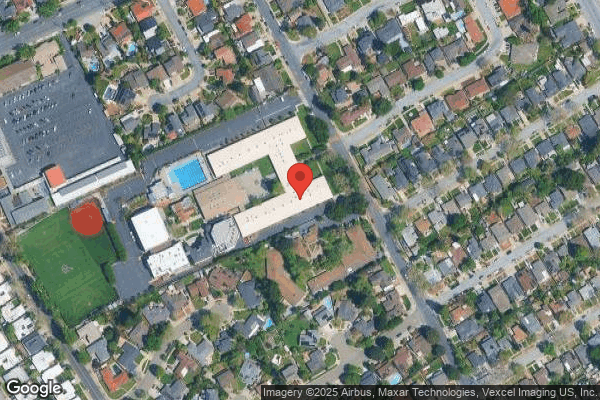
Apr 2022 10 deficiencies
CONCERN (D)

Potential for Harm - no one hurt, but risky conditions existed

Deficiency F0557 (Tag F0557)

Could have caused harm · This affected 1 resident

2. During an observation on 4/04/22 at 12:37 p.m., restorative nurse assistant I (RNA I) was standing while feeding Resident 48. During an interview with RNA I on 4/04/22 at 12:51 p.m., RNA I confirme...

Read full inspector narrative →
2. During an observation on 4/04/22 at 12:37 p.m., restorative nurse assistant I (RNA I) was standing while feeding Resident 48. During an interview with RNA I on 4/04/22 at 12:51 p.m., RNA I confirmed she was standing while feeding Resident 48. During an interview with registered nurse H (RN H) on 4/04/22 at 12:53 p.m., RN H confirmed RNA I was standing while feeding Resident 48 and stated RNA I should sit down when feeding residents. 3. During an observation on 4/04/22 at 12:49 p.m., RNA I was standing while feeding Resident 57. During an interview with RNA I on 4/04/22 at 12:51 p.m., RNA I confirmed she was standing while feeding Resident 57. During an interview with RN H on 4/04/22 at 12:53 p.m., RN H confirmed RNA I was standing while feeding Resident 57 and stated RNA I should sit down when feeding residents. Review of the facility's policy, Quality of Life- Dignity revised 2/2020 indicated, Each resident shall be cared for in a manner that promotes and enhances his or her sense of well-being, level of satisfaction with life, feeling of self-worth and self-esteem. Based on observation, interview, and record review, the facility failed to treat three of 22 sampled residents (Residents 3, 48 and 57) with respect and dignity when staff were observed standing while feeding the residents. This failure resulted in not ensuring resident's rights to be treated with respect and dignity and could potentially affect the resident's self-worth. Findings: 1. During an observation on 4/05/22 7:54 a.m., certified nursing assistant B (CNA B) was observed standing while feeding Resident 3. During an interview with CNA B on 4/5/22 at 7:56 a.m., CNA B confirmed the above observation and stated she should sit down when feeding residents.
CONCERN (D)

Potential for Harm - no one hurt, but risky conditions existed

Assessment Accuracy (Tag F0641)

Could have caused harm · This affected 1 resident

**NOTE- TERMS IN BRACKETS HAVE BEEN EDITED TO PROTECT CONFIDENTIALITY** 3. Review of Resident 1's clinical record indicated Resident 1 was admitted on [DATE] and had diagnoses of fracture of left pubi...

Read full inspector narrative →
**NOTE- TERMS IN BRACKETS HAVE BEEN EDITED TO PROTECT CONFIDENTIALITY** 3. Review of Resident 1's clinical record indicated Resident 1 was admitted on [DATE] and had diagnoses of fracture of left pubis (broken hip bone), displaced intertrochanteric fracture (broken hip) of left femur (thigh bone), type 2 diabetes (high blood sugar), major depressive disorder (mood disorder that causes persistent feelings of sadness and loss of interest), psychosis (mental disorder characterized by a disconnection from reality), and cerebral infarction (stroke, a damage to brain tissues). Review of Resident 1's SBAR Communication Form, dated 9/27/21, indicated she had an unwitnessed fall and was transferred to the emergency room. Review of Resident 1's Orthopaedic Surgery Consult Note, dated 9/27/21, indicated Resident 1 was diagnosed with left intertrochanteric fracture and not able to tolerate Flexion/extension (bending/straightening) of left hip/knee. Resident 1 was recommended for surgical fixation of the left hip. Review of Resident 1's MDS, dated [DATE], indicated Resident 1's Section G0110: Activities of Daily Living (ADL) Assistance changed from MDS dated [DATE]. The ADL assistance changes included: Bed mobility: required Extensive assistance from Supervision Transfer: required Total dependence from Supervision Dressing: required Extensive assistance from Limited assistance Toilet use: required Total dependence from Supervision Personal hygiene: required Total dependence from Limited assistance Review of Resident 1's MDS, dated [DATE], indicated Section G0400 Functional Limitation in Range of Motion (ROM, full movement potential of a joint) asked to code for limitation that interfered with daily functions. The Section G0400 B. Lower extremity (hip, knee, ankle, and foot)' was coded '0. No impairment.' During an interview and record review with the MDSC on 4/07/22 at 1:48 p.m., she reviewed Resident 1's MDS and confirmed Resident 1's ADL assistance changed after the fall with left intertrochanteric fracture. The MDSC confirmed the MDS Section G0400B, dated 10/07/21, was not coded accurately. The MDSC stated the MDS should have been coded '1. Impairment on one side.' Review of Long-Term Care Facility Resident Assessment Instrument 3.0 User's Manual Version 1.17.1 October 2019, indicated The RAI process has multiple regulatory requirements. Federal regulations at 42 CFR 483.20 (b)(1)(xviii), (g), and (h) require that (1) the assessment accurately reflects the resident's status. Based on interview and record review, the facility failed to accurately complete the Minimum Data Set (MDS, an assessment tool) for three of 22 sampled residents (Residents 60, 46 and 1). Failure to accurately assess the residents had the potential to compromise the facility's ability to develop and implement resident-centered care plans and interventions. Findings: 1. Review of Resident 60's SBAR (situation, background, assessment, recommendation) Communication Forms indicated he fell on 7/25/20, 8/10/20 and 8/16/20. Resident 60's MDS dated [DATE] was reviewed. Section J1800 asked the question, Has the resident had any falls since admission/entry or reentry or the prior assessment, whichever is more recent? The person who completed the MDS coded 0, which indicated Resident 60 did not have any falls during the specified time frame. During an interview and concurrent record review with the Minimum Data Set Coordinator (MDSC) on 4/11/22 at 3:01 p.m., the MDSC reviewed Resident 60's medical record and confirmed he fell on 7/25/20, 8/10/20 and 8/16/20. The MDSC stated these three falls should have been coded on the MDS dated [DATE]. The MDSC confirmed the MDS was not accurate because it should have indicated that Resident 60 fell during the specified time frame. 2. Review of Resident 46's SBAR Communication Form, dated 5/4/20, indicated he had a witnessed fall. Resident 46's MDS dated [DATE] was reviewed. Section J1800 asked the question, Has the resident had any falls since admission/entry or reentry or the prior assessment, whichever is more recent? The person who completed the MDS coded 0, which indicated Resident 46 did not have any falls during the specified time frame. During an interview and concurrent record review with the MDSC on 4/11/22 at 3:10 p.m., the MDSC reviewed Resident 46's medical record and confirmed he fell on 5/4/20. The MDSC stated this fall should have been coded on the MDS dated [DATE]. The MDSC confirmed the MDS was not accurate because it should have indicated that Resident 46 fell during the specified time frame. Review of the Centers for Medicare & Medicaid Services (CMS) 10/2019 Resident Assessment Instrument 3.0 User's Manual (RAI Manual, MDS coding instructions) indicated for section J1800, Code 1, Yes if the resident has fallen in the specified time frame.
CONCERN (D)

Potential for Harm - no one hurt, but risky conditions existed

Deficiency F0658 (Tag F0658)

Could have caused harm · This affected 1 resident

**NOTE- TERMS IN BRACKETS HAVE BEEN EDITED TO PROTECT CONFIDENTIALITY** Based on observation, interview and record review, the facility failed to provide care and services in accordance with professio...

Read full inspector narrative →
**NOTE- TERMS IN BRACKETS HAVE BEEN EDITED TO PROTECT CONFIDENTIALITY** Based on observation, interview and record review, the facility failed to provide care and services in accordance with professional standards of practice for one of ten residents observed for medication administration (Resident 39) and one of 22 sampled residents (Resident 30), when: 1. For Resident 39, the licensed nurse did not follow the physician's order for the administration of: a. pantoprazole (medication that decreases the amount of acid produced in the stomach); b. vitamin D3 (supplement for building and maintaining healthy bones); and 2. For Resident 30, the licensed nurse did not follow the proper timing of the administration of Amoxicillin (antibiotic used to treat bacterial infections). These failures had the potential to compromise the residents' health and well-being. Findings: 1.a. During the medication pass observation on 4/7/22 at 9:10 a.m. with registered nurse J (RN J), she was observed giving twelve medications including a tablet of pantoprazole, delayed release (DR), 20 milligrams (mg, a metric unit of mass) tablet. Resident 39 took the medication after his breakfast. Review of Resident 39's clinical record indicated the resident was a [AGE] year old male, readmitted to the facility 7/22/21 and had diagnoses including chronic obstructive pulmonary disease (COPD, progressive lung disease that blocks airflow, making it difficult to breathe) with acute exacerbation (sudden worsening of symptoms), acute diastolic congestive heart failure (sudden heart failure involving the left side of the heart causing shortness of breath and weakness) and paranoid schizophrenia (mental health condition with symptoms of fear, along with loss of the ability to tell what's real and what's not real). Review of Resident 39's physician orders for the month of April 2022, indicated Resident 39 had an order of pantoprazole DR, 20 mg tablet, give one tablet by mouth daily before breakfast at 6:30 a.m., for gastroesophageal reflux disease (GERD, a condition in which the stomach contents leak backward from the stomach into the esophagus or food pipe). During an interview with RN J on 4/7/22 at 10:00 a.m., she verified that pantoprazole DR tablet should have been given before breakfast and it was not given as ordered. RN J also stated Resident 39 had his breakfast already when he took the pantoprazole DR tablet. During a review of Lexicomp (online.[NAME].com, an online reference for clinical drug information) it indicated pantoprazole is preferably administered 30 to 60 minutes before a meal for most indications and best if taken before breakfast. Review of the facility's policy Preparation and General Guidelines: Medication Administration - General Guidelines dated October 2017 indicated, Medications are administered as prescribed in accordance with good nursing principles and practices. Medications are administered within 60 minutes of scheduled time (one hour before and one hour after), except before or after meal orders, which are administered based on mealtimes. Unless otherwise specified by the prescriber, routine medications are administered according to the established medication administration schedule for the facility. 1.b. During a review of Resident 39's physician orders for the month of April 2022, indicated Resident 39 had an order of vitamin D3 1,000 unit tablet, give one tablet by mouth daily for supplement at 8:00 a.m., initiated on 7/22/21. During the medication pass observation on 4/7/22 at 9:10 a.m. with RN J, there was no vitamin D3 tablet given to Resident 39. During an interview with RN J on 4/8/22 at 9:02 a.m., RN J acknowledged vitamin D3 was not given to Resident 39 during the medication pass on 4/7/22. During an interview with the assistant director of nursing (ADON) on 4/8/22 at 9:25 a.m., he stated the vitamin D3 tablet of Resident 39 should be given daily in the morning as ordered. Review of the facility's policy, Preparation and General Guidelines: Medication Administration - General Guidelines dated October 2017 indicated, Medications are administered in accordance with written orders of the attending physician. At the end of each medication pass, the nurse administering the medications reviews the medication administration record (MAR, used to document medications given to residents) to ensure necessary doses were administered and documented. 2. During a concurrent inspection of the facility's Med Cart B and medication reconciliation with licensed vocational nurse G (LVN G) on 4/6/22 at 10:05 a.m., Resident 30's antibiotic or controlled drug record sheet indicated he had 25 remaining Amoxicillin (antibiotic used to treat bacterial infections) 500 mg tablets. Resident 30's medication bubble pack (medication packaging) had 26 Amoxicillin 500 mg tablets. During a concurrent interview with LVN G, he confirmed the above findings and stated Resident 30 refused to take his antibiotic dose at 8:00 a.m. Review of Resident 30's clinical record indicated the resident 30 was a [AGE] year old male readmitted to the facility, 2/7/22 and had diagnoses including acute kidney failure (a condition in which the kidneys suddenly can not filter waste from the blood), urinary tract infection (UTI, an infection in any part of the urinary system which includes the kidneys, bladder, ureters and urethra), hypertension (HTN, high blood pressure) and anxiety disorder (mental health disorder characterized by feelings of fear or apprehension). Review of Resident 30's physician order dated 4/4/22 indicated Amoxicillin 500 mg tablet, take one tablet by mouth three times a day for 10 days for tooth infection. The medication was scheduled to be taken at 8:00 a.m., 1:00 p.m., and 4:00 p.m. During a follow-up interview with LVN G on 4/8/22 at 11:08 a.m., he stated that he was able to give all the doses of Amoxicillin 500 mg tablet, to Resident 30, on 4/6/22. LVN G further stated the first dose of Amoxicillin 500 mg tablet on 4/6/22, was given at 11:30 a.m. instead of 8:00 a.m., the second dose at 1:00 p.m. and the third dose was at 4 p.m During an interview with the consultant Pharmacist (CP) on 4/11/22 at 11:03 a.m., he stated the first dose of Amoxicillin given to Resident 30 by LVN G on 4/6/22 at 11:30 a.m., was too close to the next dose which was at 1:00 p.m., since the order for the antibiotic was three times a day. The CP further stated if the dose was missed, skip the missed dose and continue with the next dose and then notify the physician. During a review of Lexicomp, it indicated to take the missed dose of Amoxicillin, as soon as you thought about it and if the missed dose of Amoxicillin was close to the time of the next dose, skip the missed dose and go back to the normal time. Do not take two doses at same time or extra doses.
CONCERN (E)

Potential for Harm - no one hurt, but risky conditions existed

Accident Prevention (Tag F0689)

Could have caused harm · This affected multiple residents

**NOTE- TERMS IN BRACKETS HAVE BEEN EDITED TO PROTECT CONFIDENTIALITY** 9. Review of Resident 1's clinical record indicated, Resident 1 was admitted on [DATE] and had diagnoses of fracture of left pub...

Read full inspector narrative →
**NOTE- TERMS IN BRACKETS HAVE BEEN EDITED TO PROTECT CONFIDENTIALITY** 9. Review of Resident 1's clinical record indicated, Resident 1 was admitted on [DATE] and had diagnoses of fracture of left pubis (broken hip bone), displaced intertrochanteric fracture (broken hip) of left femur (thigh bone), type 2 diabetes (high blood sugar), major depressive disorder (mood disorder that causes persistent feelings of sadness and loss of interest), psychosis (mental disorder characterized by a disconnection from reality), and cerebral infarction (stroke, a damage to brain tissues). Review of Resident 1's SBAR Communication Forms indicated she fell on 9/27/21. Review of Resident 1's fall risk assessment, dated 9/27/21, indicated Level of Consciousness (aware of surroundings)/Mental status, History of Falls (past 3 months), Ambulation/elimination status, and Vision status were not marked. During an interview and record review with the ADON on 4/07/22 at 9:49 a.m., he reviewed Resident 1's fall risk assessment, dated 9/27/21 and confirmed the assessment was not completed properly. The ADON stated the nurses should mark all sections that applies to the resident to complete the fall risk assessment properly. 10. Review of Resident 34's clinical record indicated Resident 34 was admitted on [DATE] and had diagnoses of dementia (impairment of brain functions, such as memory loss and judgement) with behavioral disturbance, psychosis, and major depressive disorder. Review of Resident 34's post fall observation assessments indicated she fell on 7/17/21. Review of Resident 34's fall risk assessment, dated 9/20/21, indicated 'No Falls in past 3 months' was marked for History of Falls. During an interview and record review with the MDSC on 4/06/22 at 11:51 a.m., she reviewed Resident 34's medical record and confirmed Resident 34's fall risk assessment, dated 9/20/21 was not accurate. The MDSC stated 1-2 Falls in past 3 months' should have been marked for History of Falls on the assessment. Review of facility Falls and Fall Risk, Managing revised 3/2018, indicated Based on previous evaluations and current data, the staff will identify interventions related to the resident's specific risks and causes to try to prevent the resident from falling and to try to minimize complications from falling. Based on observation, interview, and record review, the facility failed to maintain safety for nine out of 22 sampled residents (Resident 17, 53, 73, 60, 46, 3, 10, 1, and 34) when: 1. For Resident 17, there was no fall risk assessment (tool, used to identify fall risk factors and to predict patients' chance of falling) completed on 3/21/22 after a fall and the bowel and bladder program fall intervention was not implemented; 2. Resident 53 was on oxygen and had a roommate who smoked, but No Smoking/Oxygen in Use sign was not posted on the resident's door. 3. For Resident 73, there was no quarterly fall risk assessment between 4/2021 to 11/2021; 4. One stall in the communal (shared by many residents) bathroom in building C (bldg C) had no call button; 5. For Resident 60, the facility did not develop and implement new and relevant interventions to prevent future falls; 6. For Resident 60 and Resident 46, the facility did not complete fall risk assessments after the residents fell; 7. For Resident 3, the fall risk assessment and neuro checks (neurological functions and level of consciousness assessment) were incomplete; 8. For Resident 10, the fall risk assessment was incomplete and neuro checks were not completed; 9. For Resident 1, the fall risk assessment dated [DATE] was not completed properly; and 10. For Resident 34, the fall risk assessment dated [DATE] was not accurate. These failures can affect the safety and well-being of the residents in the facility. Findings: 1.a. Review of Resident 17's clinical record indicate Resident 17 was admitted to the facility on [DATE] with diagnoses of Alzheimer's Disease (a brain disorder that slowly destroys memory and thinking skills, and eventually the ability to carry out the simplest tasks), Major Depressive Disorder (a mood disorder that interferes with daily life), anxiety disorder (involves a persistent feeling of anxiety or dread, which can interfere with daily life). Review of Resident 17's Fall Management IDT (Interdisciplinary team, disciplines involved in the care of a patient to collaborate and develop the patient's plan of care) Follow Up, dated 3/8/22, indicated Resident 17 had an unwitnessed fall on 3/8/22 at 10:30 p.m. and was found sitting next to her bed and stated, I wanted to use the bathroom. The IDT's new intervention was to implement bowel and bladder program (to assist resident to the bathroom every 2 hours). Review of Resident 17's Fall Risk Care Plan, dated 12/6/2021, indicated At risk for fall r/t [r/t, related to] degenerative disease of nervous system, history of multiple falls, use of anxiolytics [medication use to reduce anxiety [feeling of worry and fears], balance problem, memory problem, poor safety awareness, patient refusing bed side commode. Interventions initiated on 3/9/2022, indicated Bowel and Bladder Program assist every 2 hours. During an interview with certified nursing assistant K (CNA K) on 04/07/22, at 09:31 a.m., at the activity room, Resident 17 was sitting in the wheelchair. CNA K stated Resident 17 was not on a bowel and bladder program. During a concurrent interview and record review with the Minimum Data Set Coordinator (MDSC) on 4/7/22, at 12:00 p.m., the MDSC stated the IDT recommended the bowel and bladder program with assist to the bathroom every 2 hours as a fall intervention. The MDSC further stated the resident's care plan was updated but it was not followed up. Further review of Resident 17's clinical record, Activities of Daily Living, and the bowel and bladder binder indicated no documentation of the bowel and bladder program with assist every 2 hours was implemented. The MDSC confirmed the finding and stated the bowel and bladder program intervention should have been documented in the Bowel and Bladder Tracking form. Review of the facility's policy, revised 7/2014, Bowel & Bladder Training/Toileting Program, indicated, Interventions identified by the Licensed Nurses and/or the IDT will be care planned and communicated to the corresponding professional and to the facility staff for implementation. The CNA/RNA will observe and record the resident's present voiding/bowel evacuation pattern on the Bowel and Bladder Tracking form. 1.b. Review of Resident 17's SBAR (Situation Background Assessment Recommendation, a form of communication in healthcare setting) Communication Form, dated 3/21/2022, indicated that at 7:30 a.m., charge nurse saw Resident 17 get up and fall backward, sustained 3.5 x 3 centimeters (cm, unit of measurement) skin tear on the back of her head. Review of Resident 17's clinical record indicated there was no Fall Risk Assessment completed after Resident 17 fell on 3/21/2022. During a concurrent interview and record review with the MDSC 04/11/22, at 11:27 a.m., the MDSC confirmed the fall risk assessment was not done on 3/21/2022. The MDSC acknowledged fall risk assessment should be done right away after the fall incident. 2. Review of Resident 53's clinical record indicated she had diagnoses of chronic obstructive pulmonary disease (COPD, lung disease that cause airflow blockage and breathing-related problems), pneumonitis (inflammation of lung tissue), Respiratory failure, unspecified (condition in which your blood doesn't have enough oxygen or has too much carbon dioxide), anxiety disorder, bipolar disorder (disorder associated with episodes of mood swings ranging from depressive lows to manic highs). Review of Resident 53's physician's order, dated 3/29/2022, indicated, Administer oxygen at 2 liters per minute via nasal cannula as needed for shortness of breath. During an observation on 4/4/2022, at 4:25 p.m., while the resident 53's room, the resident was receiving oxygen inhalation at 2 liters per minute via nasal cannula (a plastic tubing used to deliver oxygen) connected from oxygen concentrator machine (a type of medical device used for delivering oxygen to individuals with breathing-related disorders). There was not a No Smoking, Oxygen in Use signage posted at the door or in the resident's room. During an interview with licensed vocational nurse L (LVN L) on 4/4/2022, at 4:30 p.m., LVN L acknowledged the above observation and stated there should be a No Smoking, Oxygen in Use sign posted at the door. In addition, LVN L confirmed Resident 53's roommate (Resident 40) smoked. Review of the facility's policy, revised 10/2010, Oxygen Administration indicated, Place an Oxygen in Use sign on the outside of the room entrance door or in a designated place on or over the the resident's bed. 3. Review of Resident 73's quarterly fall risk assessments indicated there was no fall risk assessments done between 4/15/2021 until 11/30/2021. During a concurrent interview and record review with the MDSC on 4/7/2022 at 12:10 p.m., she confirmed there were no fall risk assessments done from 4/15/2021 until 11/30/2021. The MDSC stated the fall risk assessments should be done on admission, post fall and quarterly. Review of facility's undated policy, Fall Prevention Program Policies and Procedures, indicated, Residents will be identified as being at risk for falls at admission, quarterly, annually and with a significant change in condition. 7. Review of Resident 3's clinical record indicated she was admitted to the facility on [DATE] with diagnoses including dementia (memory loss) with behavioral disturbance. Review of Resident 3's physician order dated 4/19/21 indicated amlodipine besylate (a medication that can treat high blood pressure and chest pain) 5 milligrams (mg, unit of measurement) by mouth daily for hypertension (high blood pressure). Review of Resident 3's Fall Risk assessment dated [DATE] indicated, the assessment for postural hypotension (a sudden drop of blood pressure when a person stands up from a sitting position of lying position) was not answered. Review of Resident 3's SBAR dated 4/1/22, indicated she had a witnessed fall. Review of Resident 3's neurological assessment flow sheet after the fall on 4/1/22 indicated the assessments were not completed on 4/2/22, 4/3/22 and 4/4/22. During an interview with the assistant director of nursing (ADON) on 4/6/22 at 3:51 p.m., the ADON confirmed Resident 3's fall risk assessment was incomplete. During an interview with the MDSC on 4/6/22 at 4:30 p.m., the MDSC acknowledged Resident 3's neurological assessment was incomplete. 8. Review of Resident 10's clinical record indicated she was admitted to the facility on [DATE] with diagnoses including history of falling. Review of Resident 10's SBAR dated 1/26/22 indicated she had an unwitnessed fall. Review of Resident 10's fall risk assessment dated [DATE] indicated postural hypotension was not assessed. Resident 10's neurological assessment indicated assessments were not completed on 1/27/22 and 1/28/22. During an interview with the ADON on 4/7/22 at 12:18 p.m., the ADON reviewed Resident 10's neurological assessment and stated nurses should complete the assessment. During a concurrent interview and record review with the ADON on 4/8/22 at 3:53 p.m., the ADON stated Resident 10 had a fall prior to her admission to the facility. The ADON reviewed Resident 10's admission fall risk assessment and confirmed the history of fall was not assessed. An interview with the ADON on 4/8/22 at 4:07 p.m., the ADON stated fall risk assessments should be completed. The facility's undated document titled [Name of facility] Fall Prevention Program Policies and Procedures indicated, fall risk assessments should be completed to reduce falls and prevent injury. Review of the facility's undated policy Resident Examination and Assessment indicated, .examine and assess the resident for any abnormalities in health status . 4. During an observation on 4/6/22 at 10:53 a.m., the communal bathroom in BLDG C was inspected. The bathroom had three stalls with toilets. One of the three stalls did not have a button to activate the bathroom's call light system. During an interview with the director of maintenance (DOM) on 4/6/22 at 11:09 a.m., he confirmed one stall in the communal bathroom in BLDG C did not have a call button. The DOM acknowledged that if a resident needed help from that stall, the resident would not be able to activate the bathroom's call light system. The DOM stated there should be a call button in that stall. During an interview with licensed vocational nurse E (LVN E) on 4/6/22 at 11:10 a.m., she explained that only one resident room in BLDG C had its own bathroom. The rest of the residents in BLDG C used the communal bathroom. The facility's policy titled Answering the Call Light, revised 10/2010 indicated, Explain to the resident that a call system is also located in his/her bathroom. The policy further indicated to be sure the call light is within easy reach of the resident. 5. Review of Resident 60's fall risk care plan, dated 3/12/20, indicated he was at risk for falls due to multiple factors, including but not limited to balance problems, poor safety awareness and use of psychotropic medications (medications that cause changes in mood, feelings or behavior). There were multiple interventions on the fall risk care plan, included placing the call light within reach and encouraging him to ask for assistance if needed. Review of Resident 60's SBAR Communication Form, dated 8/10/20, indicated staff heard the resident calling for help and found him sitting on the floor in front of his wheelchair. Resident 60 stated he was trying to sit up straight, but slid off. Review of Resident 60's SBAR Communication Form, dated 8/16/20, indicated staff heard the resident calling for help and found him sitting on the floor. Resident 60 stated he was reaching for his urinal (portable container for the resident to urinate into) and slid from his wheelchair because the wheelchair cushion was too big. Review of Resident 60's SBAR Communication Form, dated 12/8/20, indicated the resident was yelling for help and staff found him sitting on the floor in front of his wheelchair. Resident 60 stated he just woke up and slid off the wheelchair. Review of Resident 60's medical record indicated the facility did not develop and implement new fall interventions after each of the falls mentioned above. Also, the facility did not develop any interventions to address the fact that Resident 60 slid from his wheelchair during all the above mentioned falls. During an interview and concurrent record review with the MDSC on 4/8/22 at 3:37 p.m., she reviewed Resident 60's medical record and confirmed the facility did not develop and implement new interventions after the falls mentioned above. She also confirmed the facility did not develop interventions to address Resident 60's falls from his wheelchair, specifically. The facility's policy titled Falls and Fall Risk, Managing, revised 3/2018 indicated, Based on previous evaluations and current data, the staff will identify interventions related to the resident's specific risks and causes to try to prevent the resident from falling and try to minimize complications from falling. The policy further indicated, If falling recurs despite initial interventions, staff will implement additional or different interventions, or indicate why the current approach remains relevant. 6. During an interview with the MDSC on 4/8/22 at 9:46 a.m., she explained the facility was supposed to complete resident fall risk assessments upon admission, quarterly and after each time a resident falls. Review of Resident 60's SBAR Communication Forms indicated he fell on 3/20/20 and 4/8/20. There was no documentation that fall risk assessments were done after these falls. During an interview and concurrent record review with the MDSC on 4/8/22 at 3:37 p.m., she reviewed Resident 60's medical record and confirmed the facility did not complete fall risk assessments after Resident 60 fell on 3/20/20 and 4/8/20. Review of Resident 46's SBAR Communication Forms indicated he fell on 2/3/20, 2/8/20, 3/8/20, 4/22/20 and 10/20/21. There was no documentation that fall risk assessments were done after these falls. During an interview and concurrent record review with the MDSC on 4/11/22 at 10:03 a.m., she reviewed Resident 46's medical record and confirmed the facility did not complete fall risk assessments after Resident 46 fell on 2/3/20, 2/8/20, 3/8/20, 4/22/20 and 10/20/21. The facility's undated document titled [Name of facility] Fall Prevention Program Policies and Procedures indicated, Residents will be identified as being at risk for falls at admission, quarterly, annually and with a significant change of condition.
CONCERN (E)

Potential for Harm - no one hurt, but risky conditions existed

Pharmacy Services (Tag F0755)

Could have caused harm · This affected multiple residents

**NOTE- TERMS IN BRACKETS HAVE BEEN EDITED TO PROTECT CONFIDENTIALITY** 1. Review of Resident 39's medical record indicated he had a physician's order dated 9/21/21, for Oxycodone (pain medication) 5 ...

Read full inspector narrative →
**NOTE- TERMS IN BRACKETS HAVE BEEN EDITED TO PROTECT CONFIDENTIALITY** 1. Review of Resident 39's medical record indicated he had a physician's order dated 9/21/21, for Oxycodone (pain medication) 5 milligrams (mg, unit of dose measurement) one half tablet every six hours as needed (PRN) for severe pain. Review of Resident 39's Controlled Drug Record (document used to keep track of the quantity of a controlled medication the resident has in supply) indicated in the months of 3/2022 and 4/2022, on 29 occurrences a licensed nurse removed one half tablet of Oxycodone, 5 mg from Resident 39's supply. Review of Resident 39's 3/2022 and 4/2022 medication administration record (MAR) indicated Oxycodone, 5 mg was documented as given only 13 times. Review of Resident 56's medical record indicated he had a physician's order dated 2/8/22, for Hydromorphone (pain medication) 2 mg, one half tablet every six hours PRN for breakthrough pain. Review of Resident 56's Controlled Drug Record indicated for the months of 1/2022, 2/2022, 3/2022 and 4/2022, a licensed nurse removed one half tablet of Hydromorphone, 2 mg from Resident 56's supply 15 times. Review of Resident 56's 1/2022, 2/2022, 3/2022 and 4/2022 MAR indicated Hydromorphone, 2 mg was documented as given only eight times. Review of Resident 72's medical record indicated she had a physician's order dated 3/9/22, for Oxycodone, 5 mg, one tablet every four hours PRN. Review of Resident 72's Controlled Drug Record indicated in the month of 3/2022, a licensed nurse removed one tablet of Oxycodone, 5 mg from Resident 72's supply 26 times. Review of Resident 72's 3/2022 MAR indicated Oxycodone, 5 mg was documented as given only 23 times. Review of Resident 82's medical record indicated he had a physician's order dated 12/5/21, for Oxycodone, 5 mg, one tablet every eight hours PRN. Review of Resident 82's Controlled Drug Record indicated in the month of 12/2021, a licensed nurse removed one tablet of Oxycodone, 5 mg from Resident 82's supply two times on 12/25/21 and one time on 12/27/21. Review of Resident 82's 12/2021 MAR indicated Oxycodone, 5 mg was not documented as given on 12/25/21 or 12/27/21. During a concurrent interview and record review on 4/7/22 at 11:00 a.m. with licensed vocational nurse A (LVN A), she reviewed the above residents' medical records and confirmed there was missing documentation in the MAR for the controlled medications mentioned above. During an interview with the CP on 4/8/22 at 4:54 p.m., he confirmed that when licensed nurses remove a controlled medication from a resident's supply, they should document this on the Controlled Drug Record. When the nurses administer the medication to the resident, they should document this on the MAR. The CP stated it was one of his responsibilities to review the facility's controlled medication documentation. He acknowledged he did not identify any issues with controlled medication documentation during his visits to the facility. Review of the facility's policy titled Preparation and General Guidelines for Controlled Medications, dated 8/2014 indicated, When a controlled medication is administered, the licensed nurse administering the medication immediately enters .the information on the accountability record [Controlled Drug Record] and the medication administration record (MAR). The policy further indicated, The Director of Nursing and the consultant pharmacist maintain the facility's compliance with federal and state laws and regulations in the handling of controlled medications. 2.a. Review of Resident 87's clinical record indicated she was admitted to the facility on [DATE] with diagnoses including schizoaffective disorder, bipolar type (a chronic mental health condition characterized by symptoms of schizophrenia [severe mental disorder affecting how a person's think, feel and behaves] with symptoms of hallucinations or delusions, mood disorder, such as mania and depression). Review of Resident 87's physician order dated 5/19/21, indicated risperidone (an antipsychotic medication used to treat schizophrenia, bipolar disorder) 3 mg give 2 tablets at bedtime for schizoaffective disorder manifested by paranoia (a state of mind that caused unrealistic distrust of others or a feeling of being persecuted). There was no documented target behavior and behavior monitoring for the use of risperidone. During a concurrent interview and record review with the assistant director of nursing (ADON) on 4/7/22 at 4:13 p.m., the ADON reviewed Resident 87's clinical record and confirmed there was no target behavior for the use of Risperidone. The ADON further stated the target behavior should be monitored. 2.b. Review of Resident 27's clinical record indicated she was admitted to the facility on [DATE] with diagnoses including schizoaffective disorder, bipolar type. Review of Resident 27's physician order dated 4/27/21 indicated Risperdal (brand name for risperidone) 3 mg, 1 tablet twice a day for schizoaffective disorder, bipolar type manifested by paranoia. Review of Resident 27's physician order list did not indicate a target behavior and behavior monitoring for the use of Risperdal. During a concurrent interview and record review with the ADON on 4/7/22 at 4:26 p.m., the ADON reviewed Resident 27's clinical record and confirmed there was no target behavior for the use of risperidone. The ADON acknowledged the target behavior should be monitored. During an interview with the CP on 4/8/22 at 4:40 p.m., the CP explained his process of medication regimen review/drug regimen review (MRR/DRR, thorough evaluation of the medication regiment of a resident) and stated he reviews residents' charts and reviews medication administration record (MAR). During a concurrent interview and record review with the ADON on 4/11/22 at 10:28 a.m., the ADON reviewed the Consultant Pharmacist's Medication Review: Listing of Residents Reviewed with No Recommendations for the months of January/2022 and February/2022 and confirmed Residents 27 and 87 did not have any recommendations on those months. Review of the facility's policy, Organizational Aspects IA2: Consultant Pharmacist Services Provider Requirements dated 10/2017 indicated, .E. Activities that the consultant pharmacist or off-site pharmacist performs includes, but is not limited to: 1. Reviewing the medication regimen (medication regimen review) of each resident at least monthly, or more frequently under certain conditions, incorporating federally mandated standards of care in addition to other applicable professional standards. The review will be documented in the resident medical record. a. A Resident's drug regimen must be free of unnecessary drugs. An unnecessary drug is any drug when used in: .III. Without adequate monitoring . Based on observation, interview and record review, the facility failed to provide pharmaceutical services to meet the needs of each resident when: 1. The facility failed to ensure controlled medications (medications regulated by the government because they may be abused or cause addiction) for four out of five residents (Residents 39, 56, 72 and 82) were accounted for, and the consultant pharmacist (CP) did not identify this failure; and 2. The CP did not identify irregularities for two residents (Residents 87 and 27) who were receiving psychotropic medications (medications that cause changes in mood, feelings or behavior). Failure to account for controlled medications had the potential to result in diversion (transfer for illicit use) of the medications and lack of pain control for the residents. Failure to identify irregularities had the potential to result in residents receiving psychotropic medications without adequate monitoring and without appropriate indications for use. Findings:
CONCERN (E)

Potential for Harm - no one hurt, but risky conditions existed

Medication Errors (Tag F0758)

Could have caused harm · This affected multiple residents

**NOTE- TERMS IN BRACKETS HAVE BEEN EDITED TO PROTECT CONFIDENTIALITY** Based on interview and record review, the facility failed to ensure nine of 22 sampled residents (Residents 1, 10, 16, 27, 30, 7...

Read full inspector narrative →
**NOTE- TERMS IN BRACKETS HAVE BEEN EDITED TO PROTECT CONFIDENTIALITY** Based on interview and record review, the facility failed to ensure nine of 22 sampled residents (Residents 1, 10, 16, 27, 30, 72, 76, 77 and 87) were free from unnecessary psychotropic medications (medications that cause changes in mood, feelings or behavior) when: 1. For Resident 1, the facility failed to ensure there was an indication for the use of Seroquel (medication to treat psychotic disorder); 2. For Resident 72, the facility failed to ensure there was an indication and a target behavior (behavior intended to be changed by the medication) for the use of Depakote (medication to treat seizures); 3. For Resident 77, the facility failed to ensure the order for as needed (PRN) Lorazepam (ativan, a medication used to treat anxiety) and Haloperidol (medication to treat psychotic disorder) was limited to 14 days; 4. For Resident 30, the facility did not monitor potential side effects for Wellbutrin (medication used to treat depression) and Ativan; 5. For Resident 76, the facility did not identify a target behavior and did not monitor potential side effects for Ativan; 6. For Resident 10, the facility did not monitor orthostatic hypotension; 7. For Resident 16, the facility did not monitor target behavior; 8. For Resident 27, the facility did not identify a target behavior for the use of risperidone (an anti-psychotic medication used to treat schizophrenia, bipolar disorder); and 9. For Resident 87, the facility did not identify a target behavior for the use of risperidone. These failures had the potential to compromise the facility's ability to determine the effectiveness of the psychotropic medications and increase the residents' risk for adverse effects from the psychotropic medications. Findings: 1. Review of Resident 1's clinical record indicated Resident 1 was admitted on [DATE] and had diagnoses of fracture of left pubis (broken hip bone), displaced intertrochanteric fracture of left femur (broken thigh bone), type 2 diabetes (high blood sugar), major depressive disorder (mood disorder that causes persistent feelings of sadness and loss of interest), psychosis (mental disorder characterized by a disconnection from reality), and cerebral infarction (stroke, a damage to brain tissues). Review of Resident 1's physician's order, dated 10/03/21, indicated Seroquel 12.5 milligrams (mg, unit of dose measurement) by mouth once a day at bedtime. Review of Resident 1's clinical record indicated there was no documented indication for the use of Seroquel. During an interview and record review with the assistant director of nursing (ADON) on 4/07/22 at 1:48 p.m., he confirmed Seroquel did not have an indication. The ADON stated there should be an indication for the use of Seroquel. 2. Review of Resident 72's clinical record indicated Resident 72 was admitted on [DATE] and had diagnoses of displaced trimalleolar fracture (broken ankle bone) of right lower leg, chronic obstructive pulmonary disease (COPD, lung disease), and depression (mood disorder that causes persistent feelings of sadness and loss of interest). Review of Resident 72's physician's order, dated 3/09/22, indicated Depakote 125 mg by mouth once a day. Review of Resident 72's clinical record indicated there was no documented indication for the use of Depakote. There was also no documentation of target behavior for the use of Depakote. During an interview and record review with the ADON on 4/08/22 at 8:51 a.m., the ADON confirmed there was no documented indication for the use of Depakote. The ADON stated there should be an indication for the use of Depakote. During an interview and record review with the ADON on 4/08/22 at 1:56 p.m., the ADON confirmed there was no identified target behavior for Resident 72 . The ADON stated the nurses should identify a target behavior for the use of Depakote. Review of facility Behavior /Psychotropic drug Management dated 6/2019 indicated, any order for psychoactive medication must include . Diagnosis for it's use and specific behavior manifested. 3. Review of Resident 77's clinical record indicated, Resident 77 was admitted on [DATE] and had diagnoses of Alzheimer's disease (a brain disorder), dementia (impairment of brain functions, such as memory loss and judgement) without behavioral disturbance, anxiety disorder (mental disorder characterized by feelings of worry or fear), hypertension (high blood pressure). Review of Resident 77's physician's order, dated 2/16/22, indicated Lorazepam 0.5 mg every 2 hours PRN for anxiety and Haloperidol 2 mg/ml 0.25 ml every 2 hours PRN for agitation/nausea. Review of Resident 77's medication administration record (MAR) indicated Resident 77 still had the orders, dated 2/16/22, for Lorazepam 0.5 mg every 2 hours PRN for anxiety and Haloperidol 2 mg/ml 0.25 ml every 2 hours PRN for agitation/nausea. Further review of the MAR indicated Resident 77 received Lorazepam on 4/07/22, 50 days after the PRN order was written and Haloperidol on 4/10/22, 53 days after the PRN order was written. During an interview and record review with the ADON on 4/08/22 at 2:03 p.m., he confirmed the PRN order for Lorazepam and Haloperidol had exceeded 14 days and there was no documented rationale from the doctor for extending the PRN Lorazepam and/or Haloperidol beyond 14 days. The ADON stated PRN psychotropic medications should be limited to 14 days. Review of facility Behavior /Psychotropic drug Management dated 6/2019 indicated, Any psychoactive medication prescribed on a PRN basis, must be ordered not to exceed 14 days. If the physician feels the medication needs to be continued, the reason(s) for the continued usage must be documented in the clinical record. 6. Review of Resident 10's clinical record indicated she was admitted to the facility on [DATE] with diagnoses including major depressive disorder (persistent feeling of sadness and loss of interest) vascular dementia (memory loss) without behavioral disturbance. Review of Resident 10's physician order dated 12/27/21, indicated Quetiapine Fumarate (Seroquel, an anti-psychotic medication that is used for schizophrenia [severe mental disorder) 50 mg 1 tablet by mouth twice a day due to delirium secondary to vascular dementia. Review of Resident 10's SBAR (situation, background, assessment, recommendation) a form of communication in healthcare settings) indicated she had a fall on 1/26/22. During an interview and concurrent record review with the ADON on 4/8/22 at 4:07 p.m., the ADON reviewed Resident 10's clinical record and confirmed there was no orthostatic hypotension (a sudden drop of blood pressure when a person stand up from a sitting position of lying position) monitoring. The ADON acknowledged orthostatic hypotension should be monitored if a resident is on anti-psychotic medication. Review of the facility's undated policy, Behavior/Psychotropic Drug Management indicated, .14. The resident's orthostatic blood pressure will be monitored at least weekly to determine the resident's change blood pressure during position-position change. This information will assist the Licensed Nurses and IDT members in evaluating appropriateness of the medication dosage. 7. Review of Resident 16's clinical record indicated she was admitted to the facility on [DATE] with diagnoses including unspecified dementia (memory loss) with behavioral disturbance (includes verbal and physical aggression, wandering and hoarding) and generalized anxiety disorder (excessive worrying). Review of Resident 16's physician's order dated 2/9/22 indicated Zyprexa (anti-psychotic medication that can treat certain mental/mood disorder such as bipolar disorder and schizophrenia) 5 mg 1 tablet by mouth at bedtime for bipolar disorder (mental illness which a person can experience mood swings [period of overly happy or periods of feeling sad) with psychotic features manifested by making paranoid statements- People are constantly stealing things. During a concurrent interview and record review with the minimum data set coordinator (MDSC) on 4/7/22 at 8:57 a.m., the MDSC reviewed Resident 16's clinical record and confirmed there was no monitoring for Resident 16's behavior. During an interview with the consultant pharmacist (CP) on 4/8/22 at 4:46 p.m., the CP acknowledged Resident 16's behavior should be monitored. Review of Resident 16's bipolar with psychotic features care plan dated 2/9/22 indicated to monitor behavior episodes of thinks people are constantly stealing. Review of the facility's policy, Care Plans, Comprehensive Person-Centered dated 12/2016 indicated, A comprehensive, person-centered care plan that includes measurable objectives and timetables to meet resident's physical, psychosocial and functional needs is developed and implemented for each resident. Review of the facility's undated policy, Behavior/Psychotropic Drug Management indicated, . 22. Occurrences of behaviors for which psychoactive medications are in use and administered will be documented by hash marks (#) on the medication administration record every shift. 8. Review of Resident 27's clinical record indicated she was admitted to the facility on [DATE] with diagnoses including schizoaffective disorder, bipolar type (a chronic mental health condition characterized by symptoms of schizophrenia [severe mental disorder affecting how a person's think, feel and behaves] with symptoms of hallucinations or delusions, mood disorder, such as mania and depression). Review of Resident 27's physician order dated 4/27/21 indicated Risperdal (brand name for risperidone) 3 mg, 1 tablet twice a day for schizoaffective disorder, bipolar type manifested by paranoia (a state of mind that caused unrealistic distrust of others or a feeling of being persecuted). Review of Resident 27's physician order list did not indicate a target behavior and behavior monitoring for the use of Risperdal. During a concurrent interview and record review with the ADON on 4/7/22 at 4:26 p.m., the ADON reviewed Resident 27's clinical record and confirmed there was no target behavior for the use of risperidone. The ADON acknowledged the target behavior should be monitored. During an interview with the consultant pharmacist (CP) on 4/8/22 at 4:45 p.m., the CP stated Resident 27's behavior manifestation should be more specific. 9. Review of Resident 87's clinical record indicated she was admitted to the facility on [DATE] with diagnoses including schizoaffective disorder, bipolar type Review of Resident 87's physician order dated 5/19/21, indicated risperidone (an antipsychotic medication used to treat schizophrenia, bipolar disorder) 3 mg give 2 tablets at bedtime for schizoaffective disorder manifested by paranoia. Further review of Resident 87's clinical record indicated there was no documented target behavior and behavior monitoring for the use of risperidone. During a concurrent interview and record review with the ADON on 4/7/22 at 4:13 p.m., the ADON reviewed Resident 87's clinical record and confirmed there was no target behavior for the use of risperidone. The ADON further stated the target behavior should be monitored. During an interview with the CP on 4/8/22 at 4:42 p.m., the CP stated Resident 87's behavior manifestation should be more specific. Review of the facility's policy, Behavior /Psychotropic drug Management dated 6/2019 indicated, psychoactive medication order should include specific behavior manifested. 4. Review of Resident 30's medical record indicated he had the diagnoses of major depressive disorder (a mood disorder that causes persistent feelings of sadness or loss of interest) and anxiety. Review of Resident 30's physician orders indicated he had an order, dated 3/18/22, for Wellbutrin 100 milligrams (mg, unit of dose measurement) by mouth twice daily for depression manifested by verbalization of feeling of sadness. He also had an order, dated 3/16/22, for Ativan 1 mg by mouth every 8 hours as needed for anxious behavior of constant worrying of health condition manifested by repeatedly calling 911/wanting to go ER [emergency room]. Review of Resident 30's MAR, for the months of 3/2022 and 4/2022, indicated there was no documentation of side effects monitoring for Wellbutrin or Ativan. During an interview with the ADON on 4/7/22 at 9:21 a.m., he stated for residents taking psychotropic medications, the nurses should monitor for side effects every shift and document this on the MAR. The ADON reviewed Resident 30's record and confirmed there was no documentation of side effects monitoring for Wellbutrin or Ativan. 5. Review of Resident 76's medical record indicated he had the diagnosis of anxiety. Review of Resident 76's physician orders indicated he had an order, dated 3/22/22, for Ativan 0.5 mg by mouth every 6 hours as needed for anxiety. The order did not specify a manifestation or target behavior for the use of Ativan. Review of Resident 76's MAR, for the months of 3/2022 and 4/2022, indicated there was no documentation of target behavior monitoring or side effects monitoring for Ativan. During an interview with the infection preventionist (IP) on 4/7/22 at 2:05 p.m., she stated target behaviors should be identified for psychotropic medications. She stated the nurses should monitor for target behaviors and side effects every shift and document this on the MAR. The IP reviewed Resident 76's record and confirmed there was no documentation of target behavior monitoring or side effects monitoring for Ativan. The facility's policy titled Behavior/Psychotropic Drug Management, dated 6/2019 indicated, Any order for psychoactive medications must include .a specific behavior manifested. Resident should be observed and/or monitored for side effect and adverse effects while on any specific classification of psychotropic medication regimen. Occurrences of behaviors for which psychoactive medications are in use and administered will be documented by hash marks (#) on the medication administration record every shift.
CONCERN (E)

Potential for Harm - no one hurt, but risky conditions existed

Deficiency F0761 (Tag F0761)

Could have caused harm · This affected multiple residents

**NOTE- TERMS IN BRACKETS HAVE BEEN EDITED TO PROTECT CONFIDENTIALITY** 2. During an observation and concurrent interview with the ADON on [DATE] at 9:12 a.m., in medication room A (Med Rm A), the med...

Read full inspector narrative →
**NOTE- TERMS IN BRACKETS HAVE BEEN EDITED TO PROTECT CONFIDENTIALITY** 2. During an observation and concurrent interview with the ADON on [DATE] at 9:12 a.m., in medication room A (Med Rm A), the medication refrigerator temperature was 29 degrees Fahrenheit (F, unit of temperature measurement). The ADON confirmed this observation and stated the medication refrigerator temperature should be between 36 and 46 degrees F. During an interview with the consultant pharmacist (CP) on [DATE] at 4:54 p.m., he stated the medication refrigerator temperature should be maintained between 36 and 46 degrees F. The CP explained that if the medication refrigerator temperature is too low, the medications could freeze or lose potency. Review of the facility's Medication Refrigerator Temperature Log, dated 4/2022, indicated the medication refrigerator temperature should be maintained between 36 and 46 degrees F. The facility's policy titled Medication Storage In the Facility, dated 4/2008 indicated, Medications requiring 'refrigeration' or 'temperatures between 36 [degrees] F and 46 [degrees] F' are kept in a refrigerator with a thermometer to allow temperature monitoring. Based on observation, interview and record review, the facility failed to ensure proper medication storage and disposal when: 1. One medication bottle was not discarded after it was opened for use as per facility policy; and 2. The temperature for one of three medication refrigerators was not properly maintained. These deficient practices had the potential for residents to receive unsafe and ineffective medications due to inadequate monitoring. Findings: 1. During a concurrent inspection of the facility's medication cart B (Med Cart B) and interview with licensed vocational nurse G (LVN G) on [DATE] at 10:05 a.m., there was one bottle of sodium chloride (essential nutrient used to prevent loss of too much fluid from the body) 1 gram (gm, unit of weight measurement) tablets, with open date of [DATE]. LVN G verified, the bottle of sodium chloride was opened on [DATE]. LVN G further stated an opened medication bottle was usually good for 30 to 60 days from the date that it was opened. During an interview with the assistant director of nursing (ADON) on [DATE] at 11:00 a.m., he verified that the bottle of sodium chloride tablets was opened on [DATE] and it needs to be discarded. The ADON further clarified that it should have been discarded within 180 days from the date that it was opened. Review of the facility's policy statement titled MEDICATION ORDERING AND RECEIVING FROM PHARMACY, effective date: 11/2021, indicated, Floor stock may not be maintained on the nursing unit beyond the manufacturer's expiration date. Once the medication has expired or has been opened for more than 180 days, it must be removed and sequestered from all other floor stock until it can be destroyed.
CONCERN (E)

Potential for Harm - no one hurt, but risky conditions existed

Food Safety (Tag F0812)

Could have caused harm · This affected multiple residents

Based on observation, interview, and record review, the facility failed to ensure food was stored, prepared, and served under sanitary conditions when: 1. Several clear shallow pans and aluminum pans...

Read full inspector narrative →
Based on observation, interview, and record review, the facility failed to ensure food was stored, prepared, and served under sanitary conditions when: 1. Several clear shallow pans and aluminum pans were stacked together and was not air dried; and 2. Dietary staff O (DS O) did not wear hairnet properly. These failures had the potential to cause foodborne illness (illness resulting from contaminated food ) for 93 residents who received food from the kitchen. Findings: 1. During an initial kitchen tour on 4/4/22 at 8:45 a.m., several shallow clear plastic pans were wet and stacked together. During a concurrent interview with dietary staff N (DS N), she confirmed the above observation and stated the pans were wet. DS N further acknowledged the pans should not be stored in the dry rack area. During an additional kitchen observation with DS N on 4/4/22 at 4:30 p.m., several clear plastic and aluminum pans were wet and stacked together. DS N confirmed the observation and stated the food containers should be air dried before storing. Review of the facility's policy, Dish Washing dated 2018, indicated Dishes are to be air dried in racks before staking and storing. 2. During an observation and concurrent interview with the DS N on 4/4/22 at 4:30 p.m., DS O's hairnet was not covering the bottom portion of her head. DS N confirmed the observation and stated DS O's hair was not fully covered. DS N further stated, the hairnet should be worn properly to fully cover the hair. The FDA 2017 Food Code, Section 2-402.11, indicates A hair restraint keeps dislodged hair from ending up in the food and may deter employees from touching their hair.
CONCERN (F)

Potential for Harm - no one hurt, but risky conditions existed

Infection Control (Tag F0880)

Could have caused harm · This affected most or all residents

**NOTE- TERMS IN BRACKETS HAVE BEEN EDITED TO PROTECT CONFIDENTIALITY** 4.a. During the medication pass observation on 4/6/22 at 11:30 a.m. with licensed vocational nurse F (LVN F), it was observed LV...

Read full inspector narrative →
**NOTE- TERMS IN BRACKETS HAVE BEEN EDITED TO PROTECT CONFIDENTIALITY** 4.a. During the medication pass observation on 4/6/22 at 11:30 a.m. with licensed vocational nurse F (LVN F), it was observed LVN F went inside the room of Resident 73 bringing a glucometer placed in a medication tray to check resident 73's blood glucose (sugar found in the blood) The reading was 161 milligram/deciliter (mg/dl, a unit of measure that shows the concentration of a substance in a specific amount of fluid). LVN F then sanitized the glucometer after use but placed back the glucometer in the unsanitized medication tray which he used earlier with Resident 73. During an interview with LVN F on 4/6/22 at 12:05 p.m., LVN F verified that he should not have placed the sanitized glucometer back on the unsanitized medication tray and instead he should have placed on the medication cart. 4b.During the medication pass observation with LVN F on 4/6/22 at 11:39 a.m., LVN F prepared Novolog (a rapid-acting insulin or hormone that regulates blood sugar levels) and withdrew 5 units to an insulin syringe (a hollow plastic tube) to be administered to Resident 73. LVN F placed the prepared medication on Resident 73's bedside table. LVN F did not sanitize the bedside table before placing the prepared medication. During an interview with LVN F on 4/6/22 at 12:05 p.m., LVN F confirmed the above observation and stated he should have placed the prepared insulin medication on a sanitized medication tray or should have sanitized the bedside table before placing the medication. Review of Resident 73's clinical record indicated Resident 73 was admitted to the facility on [DATE] with diagnoses including diabetes mellitus type 2 (DM2, a chronic disease characterized by high levels of sugar in the blood), anxiety disorder (mental health disorder characterized by feelings of fear or apprehension), and bipolar disorder (a disorder associated with episodes of mood swings ranging from depressive lows to manic highs). Review of Resident 73's physician orders for the month of April 2022, indicated Resident 73 had an order of Novolog, 100 units (insulin measurement)/ml (milliliter) (concentration of insulin in each milliliter) vial, inject 5 units subcutaneously before meals. Hold if blood glucose is less than 120 mg/dl, for DM2. Review of the facility's Cleaning and Disinfection of Environmental Surfaces policy and procedures, revised August 2019 indicated, Environmental surfaces will be cleaned and disinfected according to current Centers for Disease Control and Prevention (CDC, a federal agency whose mission is to protect public health by preventing and controlling disease, injury and disability) recommendations for disinfection of healthcare facilities. Non-critical environmental surfaces including bedside tables will be disinfected with an environmental protection agency (EPA, agency that sets and enforces rules and standards that protect the environment and control pollution) - registered intermediate or low-level hospital disinfectant according to the label's safety precautions and use directions. 4c. During a concurrent medication pass observation and interview with registered nurse J (RN J) on 4/7/22 at 9:10 a.m., RN J checked the blood pressure of Resident 39 with a blood pressure apparatus (used for blood pressure monitoring). It was further observed that RN J did not sanitize the blood pressure apparatus after use and placed it on the medication cart right after she used it onResident 39. RN J verified that she should have sanitized the blood pressure apparatus after she used it and before storing it. Review of the facility's Cleaning and Disinfection of Resident-Care Items and Equipment policy statement, interpretation and implementation, revised July 2014 indicated, Resident-care equipment, including reusable items will be cleaned and disinfected according to current CDC recommendations for disinfection of healthcare facilities. Reusable items are cleaned and disinfected or sterilized between residents according to manufacturers' instructions. 6. During a concurrent observation and interview on 4/5/2022 at 9:55 a.m., while in the shower room. The hospice aide (HA) was assisting Resident 77, who was sitting in a wheelchair. The HA had on gloves and disposed a dirty diaper into the trash bin. After removing the gloves and placing it into a trash bin, the HA touched the resident's wheelchair, and placed the sweater over the resident. The HA did not perform hand hygiene in between tasks. The surveyor informed the HA regarding the observation. The HA stated she should have washed her hands after removing her gloves. During an interview with the IP on 4/11/2022 at 2:00 p.m., the IP stated the HA should perform hand hygiene after removing the gloves. Review of facility's policy, revised 8/2019, Handwashing/Hand Hygiene, Use an alcohol-based hand rub containing at least 62% alcohol, or alternatively, soap and water: After removing gloves. 7. Review of the Resident 56's clinical record indicated he had diagnoses of End Stage Renal Disease (a medical condition in which a person's kidneys cease functioning on a permanent basis leading to the need for a regular course of long-term dialysis or a kidney transplant to maintain life), Type 2 diabetes (characterized by high levels of sugar in the blood), Peripheral Vascular disease, unspecified (blood circulation disorder that causes the blood vessels outside of the heart and brain to narrow, block, or spasm), major depressive disorder (a mood disorder that causes a persistent feeling of sadness and loss of interest and can interfere with your daily). During a dressing change observation with LVN M on 4/7/2022 at 10:22 a.m., while in Resident 56's room, Resident 56 was sitting on a reclining wheelchair. LVN M performed hand hygiene, applied clean gloves, and then discarded the old dressing on Resident 56's right chest Permacath. LVN M performed hand hygiene, applied a new pair of clean gloves, then cleansed and covered the insertion site with sterile gauze. LVN M did not don (put on) sterile gloves before cleaning and applying sterile gauze at the insertion site. During a concurrent interview with LVN M, she stated she should put on sterile gloves when changing Resident 56's Permacath dressing. During an interview with the IP, on 4/7/2022 at 3:30 p.m, the IP stated staff should use sterile gloves during the Permacath dressing change. Review of facility's policy, Central Venous Catheter (CVC) Dressing Change, dated 6/2018, indicated, Procedure: .Discard dressing and removed gloves, wash hands or use hand sanitizer, don sterile gloves, cleansed around catheter insertion site, air dry, apply transparent or gauze dressing directly over insertion site Based on observation, interview, and record review, the facility failed to ensure infection control practices were implemented when: 1. Laboratory staff (LS) was wearing gloves in the hallway; 2. COVID-19 (Coronavirus disease 2019); a highly contagious respiratory disease) screening process was not done properly; 3. The facility's COVID-19 screening logs were incomplete; 4. a. The nurse placed the glucometer (machine used to measure how much glucose or sugar is in the blood) on the unsanitized medication tray after the glucometer was disinfected; b. The nurse placed the syringe with medication in the unsanitized bedside table before administering it to the resident; c. The nurse did not sanitize the blood pressure apparatus after use; 5. The hospice aide (HA) did not perform hand hygiene after removing gloves; and 6. For Resident 56, licensed vocational nurse M (LVN M) did not use sterile gloves during Permacath (a dialysis catheter placed through a vein into or near the right upper chamber of the heart) dressing change. These failures could result in the spread of infection and cross-contamination that could affect the 93 residents who reside in the facility. Findings: 1. During an observation on 4/4/22 at 12:05 p.m., the LS was walking in the hallway of [NAME] Hall with gloves on. Licensed vocational nurse A (LVN A) confirmed the observation and informed the LS not to wear gloves in the hallway. During an interview with the infection preventionist (IP) on 4/6/22 at 9:16 a.m., the IP stated the LS should not be wearing gloves in the hallway. According to the Centers for Disease Control and Prevention (CDC) website https://www.cdc.gov/niosh/npptl/pdfs/PPE-Sequence-508.pdf indicated USE SAFE WORK PRACTICES TO PROTECT YOURSELF AND LIMIT THE SPREAD OF CONTAMINATION. 2. During an observation on 4/6/22 at 8:41 a.m., surveyors entered the facility, and the receptionist (RECEP) pointed the infrared thermometer (IR thermometer, a device that measures body temperature) that was mounted on the wall. The RECEP did not ask any COVID-19 screening questions nor ask the surveyor's name. At 8:55 a.m., the minimum data set coordinator (MDSC) entered the facility and the RECEP did not ask any COVID-19 screening questions nor ask the MDSC's name. The MDSC utilized the IR thermometer and continued to enter the facility. At 8:57 a.m., the RECEP asked the surveyor Who was that lady that just went in? During an interview with the MDSC on 4/6/22 at 9:00 a.m., the MDSC stated COVID-19 screening questions should be asked by the RECEP. During an interview with the infection preventionist (IP) on 4/6/22 at 9:08 a.m., the IP stated the RECEP should ask visitors and staff the COVID-19 screening questions and not only asking to take the temperature. 3. During observations on 4/5/22 at 8:07 a.m. and 4/6/22 at 8:55 a.m., the RECEP screened an individual for COVID-19 at the facility's entrance. The individual took his own temperature using an electronic thermometer that was mounted on the wall, then showed his identification badge to the RECEP. The RECEP allowed the individual to enter the facility without asking if he was experiencing any of the signs and symptoms associated with COVID-19. During an interview with the IP on 4/6/22 at 9:08 a.m., she confirmed the RECEP did not perform proper COVID-19 screening. The IP acknowledged the RECEP should have asked all the questions listed on the Staff & Visitor Screening Log. The facility's Staff & Visitor Screening Log was reviewed. From 3/31/22 to 4/6/22, there was documentation of screening for 60 individuals. For 31 out of the 60 individuals, the Staff & Visitor Screening Log was not completely filled out. During a follow-up interview and concurrent record review with the IP on 4/6/22 at 9:34 a.m., the IP reviewed the facility's Staff & Visitor Screening log and confirmed the screening documentation was incomplete. The facility's policy titled Coronavirus Disease (COVID-19) - Infection Prevention and Control Measures, updated 4/2020 indicated, Anyone arriving at the facility (including staff) is screened for fever and symptoms of COVID-19 before entering.
MINOR (B)

Minor Issue - procedural, no safety impact

Deficiency F0912 (Tag F0912)

Minor procedural issue · This affected multiple residents

**NOTE- TERMS IN BRACKETS HAVE BEEN EDITED TO PROTECT CONFIDENTIALITY** Based on observation, interview and record review, the following multi-resident rooms provided less than 80 square feet per resi...

Read full inspector narrative →
**NOTE- TERMS IN BRACKETS HAVE BEEN EDITED TO PROTECT CONFIDENTIALITY** Based on observation, interview and record review, the following multi-resident rooms provided less than 80 square feet per resident: Findings: [NAME] Hall Rooms: Room Total Sq. Ft. Sq. Ft./Bed No. of Beds 8 289 72 4 9 298 74 4 10 288 72 4 11 298 74 4 17 297 74 4 19 298 74 4 22 299 74 4 [NAME] Hall Rooms: Room Total Sq. Ft. Sq. Ft./Bed No. of Beds 29 297 74 4 31 300 75 4 33 301 75 4 34 299 74 4 36 300 75 4 38 299 74 4 40 302 75 4 None of the rooms were observed to inhibit the staff from providing care or the residents from receiving adequate care. The staff and the residents moved freely in the rooms. The residents and the staff stated the square footage of the rooms was not a concern. Continuance of the room waiver is recommended.

Apr 2019 12 deficiencies
CONCERN (D)

Potential for Harm - no one hurt, but risky conditions existed

Deficiency F0558 (Tag F0558)

Could have caused harm · This affected 1 resident

**NOTE- TERMS IN BRACKETS HAVE BEEN EDITED TO PROTECT CONFIDENTIALITY** Based on observation, interview, and record review, the facility failed to provide reasonable accommodation for one of 20 sample...

Read full inspector narrative →
**NOTE- TERMS IN BRACKETS HAVE BEEN EDITED TO PROTECT CONFIDENTIALITY** Based on observation, interview, and record review, the facility failed to provide reasonable accommodation for one of 20 sampled residents (Resident 78) when the facility failed to provide a television (TV) remote control to Resident 78. This failure resulted in Resident 78 being unable to watch TV while in bed and had the potential to compromise her emotional and psychosocial needs. Findings: Review of Resident 78's clinical record indicated she was admitted to the facility on [DATE] with diagnoses including dementia (loss of memory and cognition). Review of Resident 78's minimum data set (MDS, an assessment tool) dated 1/23/19, indicated she was totally dependent for bed mobility. During a telephone interview with Resident 78's responsible party (RP, person who makes decisions for the resident), on 4/18/19 at 12:12 p.m., she stated Resident 78's TV was not working and needed a TV remote. The RP further stated she told the nurses and maintenance staff about her concern approximately 3 months ago. During an observation and concurrent interview with licensed vocational nurse D (LVN D), on 4/8/19 at 12:36 p.m., he turned Resident 78's TV on and the screen showed No signal. LVN D looked for the TV remote on bedside table including the drawers and confirmed he did not find Resident 78's TV remote. He further stated the TV channel cannot be changed without the TV remote. During a concurrent observation and interview with the activity assistant (AA) on 4/8/19 at 12:53 p.m., the AA could not turn the TV on and stated I think it needs a remote. During an observation and concurrent interview with the maintenance director (MD) on 4/8/19 at 1:02 p.m., he looked for the TV remote and stated he could not find one. During a record review and concurrent interview with the MD, LVN D and LVN F on 4/8/19 at 1:05 p.m., LVN D and LVN F reviewed the maintenance log and confirmed Resident 78's TV remote was not reported in the log. During an interview with the director of nursing (DON) on 4/12/19 at 9:15 a.m., she stated the staff were supposed to put maintenance requests in the maintenance log. A review of the facility's policy, Work Orders, Maintenance revised April 2010, indicated work orders should be completed in order to establish maintenance service.
CONCERN (D)

Potential for Harm - no one hurt, but risky conditions existed

Abuse Prevention Policies (Tag F0607)

Could have caused harm · This affected 1 resident

Based on interview and record review, the facility failed to implement their abuse prevention policy when there was no documented result of the criminal background check for one of three certified nur...

Read full inspector narrative →
Based on interview and record review, the facility failed to implement their abuse prevention policy when there was no documented result of the criminal background check for one of three certified nursing assistants (CNA E) found in the employee's file. This failure placed residents at risk for abuse. Findings: During a review of employee files, CNA E's file indicated he was hired by the facility on 7/9/18 and had fingerprint screening on 7/24/18. CNA E's fingerprint result was not found in the file. During an interview with the director of staff development (DSD) on 4/12/19 at 9:39 a.m., she stated CNA E had fingerprint screening on 7/24/18 but did not find CNA E's fingerprint result in his file. During an interview with the administrator (ADM) on 4/12/19 at 2:10 p.m., she acknowledged CNA E's fingerprint result should be in his file. A review of the facility's policy and procedure, Abuse Prevention Program dated 8/2006, indicated the facility conducts employee background checks and will not knowingly employ any individual who has been convicted of abusing, neglecting, or mistreating individuals. A review of the facility's policy and procedure, Background Screening Investigations dated 11/2015, indicated the Personnel/Human Resources Director, or other designee, will conduct background checks, criminal conviction including fingerprinting as may be required by state law on all potential employees. Such investigation will be initiated within two days of an offer of employment.
CONCERN (D)

Potential for Harm - no one hurt, but risky conditions existed

Transfer Notice (Tag F0623)

Could have caused harm · This affected 1 resident

**NOTE- TERMS IN BRACKETS HAVE BEEN EDITED TO PROTECT CONFIDENTIALITY** Based on interview and record review, the facility failed to ensure the Long Term Care Ombudsman (Ombudsman, an advocate for res...

Read full inspector narrative →
**NOTE- TERMS IN BRACKETS HAVE BEEN EDITED TO PROTECT CONFIDENTIALITY** Based on interview and record review, the facility failed to ensure the Long Term Care Ombudsman (Ombudsman, an advocate for residents in nursing homes) was notified in writing of a transfer/discharge for one of three residents (Resident 28). This failure had the potential of not providing Resident 28 and/or their responsible party (RP) with access to an advocate who could inform them of their rights and from being inappropriately transferred or discharged . Findings: A review of Resident 28's closed clinical record indicated he was admitted to the facility on [DATE] with diagnoses including Schizophrenia (a severe mental disorder affecting how a person thinks, feels and behaves) and hypertension. He was discharged to a board and care facility on 2/28/19. Further review of Resident 28's closed clinical record on 4/12/19, indicated no documented evidence that the Ombudsman was notified of the transfer/discharge. During an interview with the social service director (SSD) on 4/12/19 at 9:26 a.m., she stated she did the discharge planning for Resident 28. The SSD confirmed she did not notify the ombudsman in any form of communication regarding Resident 28's transfer/discharge on [DATE]. During an interview with the director of nursing (DON) on 4/12/19 at 2:54 p.m., she acknowledged the Ombudsman should had been notified about the transfer/discharge of Resident 28 to the board and care facility. She further stated the facility did not have a policy and procedure for resident transfer/discharge notification to the Ombudsman.
CONCERN (D)

Potential for Harm - no one hurt, but risky conditions existed

Deficiency F0726 (Tag F0726)

Could have caused harm · This affected 1 resident

**NOTE- TERMS IN BRACKETS HAVE BEEN EDITED TO PROTECT CONFIDENTIALITY** Based on observation, interview, and record review, the facility failed to provide comprehensive nursing services for two out of...

Read full inspector narrative →
**NOTE- TERMS IN BRACKETS HAVE BEEN EDITED TO PROTECT CONFIDENTIALITY** Based on observation, interview, and record review, the facility failed to provide comprehensive nursing services for two out of two sampled residents (Residents 97 and 78) when: 1. the physician was not notified regarding Resident 97's blood sugar level and; 2. licensed vocational nurse D (LVN D) did not check for gastrostomy (GT, a tube inserted through the abdomen that delivers nutrition directly to the stomach) site placement and residual before administering tube feeding to Resident 78. These failures could affect the resident's safety and quality of care. Findings: 1. A review of Resident 97's clinical record indicated she was admitted to the facility on [DATE] with the diagnoses including Type 2 Diabetes Mellitus (high blood sugar). A review of Resident 97's physician order dated 10/23/18, indicated for blood sugar more than 450 milligrams per deciliter (mg/dl, a measurement that indicates the amount of a particular substance like sugar in a specific amount of blood). A review of Resident 97's January 2019 medication administration record (MAR) indicated the blood sugar level was checked daily at 6:30 a.m., 11:30 a.m., and 4:30 p.m The MAR further indicated for blood sugar levels of 401-500 administer 12 units (units, the amount of insulin to be administered) of Insulin Aspart (medication used to lower blood sugar level) subcutaneously (sq, a method of administering medication) and call the physician if blood sugar level is more than 450 mg/dl. Further review of Resident 97's January 2019 MAR indicated the following blood sugar levels: 1/2/19 at 4:30 p.m., 480 mg/dl 1/3/19 at 6:30 a.m., 461 mg/dl 1/24/19 at 11:30 a.m., 489 mg/dl 1/25/19 at 11:30 a.m., 481 mg/dl 1/2619 at 11:30 a.m., 457 mg/dl 1/27/19 at 4:30 p.m., 455 mg/dl During an interview with the medical records director (MRD) on 4/11/19 at 3:23 p.m., the MRD provided the surveyor a progress notes indicating no data found for January 24, 25, 26. The MRD confirmed she checked Resident 97's medical records and did not find any progress notes for January 24, 25, 26, indicating that physician was called regarding Resident 97's blood sugar level. During a record review and concurrent interview with the director of nurses (DON) on 4/11/19 at 3:37 p.m., the DON reviewed Resident 97's MAR and stated the physician should had been notified when the blood sugar level was more than 450 mg/dl. A review of the facility's policy, Diabetes-Clinical Protocol dated December 2015, indicated The physician orders desired parameters for monitoring and reporting information related to blood sugar management. 2. A review of Resident 78's clinical record indicated she was admitted to the facility on [DATE] with the diagnoses including dementia (memory loss) and epilepsy (abnormal electrical activity in the brain that can cause seizures). During an observation on 4/8/19 at 2:00 p.m., LVN D prepared a new tube feeding bag for Resident 78 and removed the old bag. LVN D primed (placing fluid to the tube prior to attaching to the patient to prevent air from entering) the tube feeding line and attached it to Resident 78's GT site without checking the placement and the gastric residual (fluid remaining in the stomach). During a concurrent interview with LVN D, he confirmed he did not check the GT placement and the gastric residual before administering the tube feeding. A review of the facility's policy, Enteral Tube Feeding via Continuous Pump revised March 2015, indicated Verify the placement of the tube and check gastric residual volume.
CONCERN (D)

Potential for Harm - no one hurt, but risky conditions existed

Pharmacy Services (Tag F0755)

Could have caused harm · This affected 1 resident

Based on observation, interview, and record review, the facility failed to ensure routine medication would be available for two of two residents (Residents 44 and Resident 50) when the amlodipine besy...

Read full inspector narrative →
Based on observation, interview, and record review, the facility failed to ensure routine medication would be available for two of two residents (Residents 44 and Resident 50) when the amlodipine besylate (an anti-hypertensive medication) was unavailable for administration. This failure could affect the residents' health condition. Findings: During a medication pass observation on 4/9/19 at 8:45 a.m., licensed vocational nurse C (LVN C) was preparing medication for Resident 44. He reviewed and counted all the medications to be administered. LVN C noticed one medication (amlodipine besylate) was not available. A review of Resident 44's April 2019 medication administration record (MAR), indicated Resident 44 had an order for amlodipine besylate tablet 10 mg (milligram), one tablet orally one time a day for hypertension (high blood pressure). During an interview with LVN C on 4/9/19 at 8:50 a.m., LVN C confirmed the amlodipine was not available for administration. He also stated if the medication was not delivered licensed nurses should follow-up on the availability of the medication. A review of Resident 50's April 2019 MAR, indicated Resident 50 had an order for amlodipine besylate tablet 10 mg, one tablet orally one time a day for hypertension. During a concurrent interview with LVN C, he confirmed the amlodipine was not available for Resident 50. A review of the facility's policy, Ordering and Receiving Non-Controlled Medications dated 9/10, indicated Reorder routine medications by the reorder date on the label to assure an adequate supply is on hand.
CONCERN (D)

Potential for Harm - no one hurt, but risky conditions existed

Drug Regimen Review (Tag F0756)

Could have caused harm · This affected 1 resident

**NOTE- TERMS IN BRACKETS HAVE BEEN EDITED TO PROTECT CONFIDENTIALITY** Based on interview and record review, the facility failed to ensure the pharmacist's drug regimen review (DRR, the process of re...

Read full inspector narrative →
**NOTE- TERMS IN BRACKETS HAVE BEEN EDITED TO PROTECT CONFIDENTIALITY** Based on interview and record review, the facility failed to ensure the pharmacist's drug regimen review (DRR, the process of reviewing medications) recommendations for three out of three residents (Residents 54, 69 and 72) was followed-up and acted upon. This failure had the potential for the residents to suffer unnecessary adverse side effects that could negatively impact his/her physical, mental and psychosocial well being. Findings: 1. A review of Resident 54's clinical record indicated he was re-admitted to the facility on [DATE] with diagnoses including Alzheimer's disease (a brain disorder that destroys memory and thinking skills), major depressive disorder (a persistent feeling of sadness and loss of interest), and obsessive compulsive disorder (OCD, unreasonable thoughts and fears that can lead to repetitive behaviors). A review of Resident 54's physician order dated 2/13/19, indicated Quetiapine Fumarate (medication used to treat mental or mood conditions) 25 milligram (mg, unit of measurement) 3 tablets by mouth at bedtime for obsessive compulsive behavior. A review of Resident 54's DRR dated 2/19/19, indicated Resident 54 was receiving anti-psychotic Quetiapine for OCD. The DRR further indicated anti-psychotic medication should only be used with certain conditions. OCD was not one of the indications. There was no evidence the DRR was followed-up. During an interview with the director of nursing (DON) and registered nurse B (RN B) on 4/10/19 at 3:50 p.m., the DON and RN B stated they clarified with the physician the correct indication for Quetiapine was for major depressive disorder not OCD. 2. A review of Resident 69's clinical record indicated she was admitted on [DATE] with diagnoses including schizoaffective disorder-bipolar type (a mental disorder in which a person experiences a combination of schizophrenia symptoms, such as hallucinations or delusions, and mood disorder symptoms, such as depression or mania), anxiety disorder (intense, excessive and persistent worry and fear about everyday situations), and bipolar disorder (a mental condition marked by alternating periods of elation and depression). A review of Resident 69's physician order dated 3/25/19, indicated Ativan (anti-anxiety medication) 1 mg give 0.5 tablet by mouth twice a day for anxiety disorder (feelings of worry and fears) manifested by pacing in the hallway. A review of Resident 69's physician order dated 10/17/17, indicated Clozapine (medication to treat schizophrenia) 50 mg give 3 tablets by mouth at bed time for schizoaffective disorder manifested by resistive to care. A review of Resident 69's physician order dated 4/1/19, indicated Fluoxetine (medication used to treat depression) 20 mg 1 capsule by mouth daily for depression manifested by flat affect (reduced emotional reactivity). A review of Resident 69's DRR dated 11/28/18, indicated gradual dose reduction (GDR, stepwise tapering of dose) recommendation for the above medications. A review of Resident 72's clinical record indicated she was initially admitted on [DATE], and readmitted on [DATE] with diagnoses including schizophrenia (a chronic and severe mental disorder that affects how a person thinks, feels, and behaves) and other specified depressive episodes (symptoms characteristic of a depressive disorder that cause clinically significant distress or impairment in social, occupational, or other important areas of functioning predominate but do not meet the full criteria for any of the disorders in the depressive disorders diagnostic class). A review of Resident 72's physician order dated 3/1/19, indicated Citalopram 20 mg by mouth daily for depression manifested by sadness and Mirtazapine 15 mg by mouth at bedtime for depression manifested by poor appetite. A review of Resident 72's physician order dated 2/13/19, indicated Risperdal 0.5 mg by mouth daily for Schizophrenia manifested by talking to someone not present and Risperdal 0.5 mg by mouth daily for Schizophrenia manifested by talking to someone not present. A review of Resident 72's DRR dated 11/27/18, indicated a GDR recommendation. During an interview with RN B on 4/12/19 at 3:15 p.m., he stated the facility notified the psychiatrist (medical specialist in diagnosing and treating mental illness) of GDR recommendations during the monthly psychiatrist visit or by fax. RN B reviewed the electronic health record system for Residents 69 and 72 and confirmed he did not find any response from the psychiatrist regarding Residents 69 and 72's GDR recommendations. During a concurrent interview with the medical records director (MRD), she confirmed there was no documented response from the psychiatrist regarding the GDR recommendations for Residents 69 and 72. A review of the facility's undated policy, Medication Regimen Review and Reporting, indicated The nursing care center follows up on the recommendations and shall be acted upon within 30 calendar days.
CONCERN (D)

Potential for Harm - no one hurt, but risky conditions existed

Medication Errors (Tag F0758)

Could have caused harm · This affected 1 resident

**NOTE- TERMS IN BRACKETS HAVE BEEN EDITED TO PROTECT CONFIDENTIALITY** Based on interview and record review, the facility failed to ensure two of six sampled residents (Residents 83 and 91) were free...

Read full inspector narrative →
**NOTE- TERMS IN BRACKETS HAVE BEEN EDITED TO PROTECT CONFIDENTIALITY** Based on interview and record review, the facility failed to ensure two of six sampled residents (Residents 83 and 91) were free from unnecessary psychotropic medications (medications capable of affecting the mind, emotions and behavior) when: 1. PRN (as needed) Olanzapine (anti-psychotic medication used to treat psychotic symptoms) was used beyond 14 days without documented rationale from the physician indicating the continued use and; 2. Non-pharmacological interventions were not attempted before psychotropic medications were administered for Residents 83 and 91. These failures had the potential to place the residents at risk to receive unnecessary medications. Findings: 1. A review of Resident 83's clinical record indicated he was admitted to the facility on [DATE] with the diagnoses including dementia (memory loss), and major depressive disorder (persistent feeling of sadness and loss of interest). A review of Resident 83's physician order dated 2/13/19, indicated Olanzapine 2.5 milligrams (mg, unit of measurement) every 12 hours PRN for psychosis (severe mental disorder affecting thoughts and emotions and contact to external reality is lost) manifested by sudden outburst of anger. A review of Resident 83's medication administration record (MAR) for February 2019, indicated Olanzapine was given on 2/13, 2/19, and 2/25. A review of Resident 83's MAR for March 2019, indicated PRN Olanzapine was given on 3/5, 3/6, 3/7, 3/9, 3/13, 3/14, 3/22, and 3/23. A review of Resident 83's MAR for April 2019, indicated PRN Olanzapine was given on 4/3 and 4/7. Further review of Resident 83's clinical record indicated the antipsychotic medication was ordered beyond 14 days and there was no documentation regarding non-pharmacological interventions provided. During a record review and concurrent interview with the director of nursing (DON) on 4/10/19 at 8:12 a.m., the DON reviewed Resident 83's physician order for Olanzapine and stated anti-psychotic PRN medication should only be used for 14 days. She further stated Resident 83 should be evaluated by the physician face to face. The DON confirmed there were no physician progress notes indicating Resident 83 was re-evaluated by the physician regarding the use of Olanzapine beyond 14 days. During a record review and concurrent interview with the DON on 4/10/19 at 2:46 p.m., she reviewed Resident 83's medication administration record (MAR) and confirmed non-pharmacological interventions were not documented. During an interview with the DON on 4/12/19 at 11:03 a.m., the DON stated she was not able to find any progress notes regarding the use of PRN Olanzapine beyond 14 days. She confirmed no drug regimen review (DRR) was done for Resident 83 for the month of March 2019. A review of the facility's policy, Antipsychotic Medication Use dated March 2015, indicated For residents who were already receiving anti-psychotic medications upon admission, the anti-psychotic medication should be re-evaluated at the time of admission and/or within two weeks . 2. A review of Resident 91's clinical record indicated she was admitted to the facility on [DATE] with diagnoses including Dementia (memory loss), Alzheimer's disease (a brain disorder that destroys memory and thinking skills), and Schizophrenia (a severe mental disorder affecting how a person thinks, feels, and behaves). A review of Resident 91's physician order dated 3/4/19, indicated Ativan solution (medication used to manage anxiety (restlessness) one milliliter (ml, a unit of measurement) by mouth every 24 hours PRN for restlessness related to dementia manifested by repeatedly getting up from chair/banging legs to be used for 30 days. During a review of Resident 91's MAR dated 3/6/19 to 4/1/19, indicated Ativan was given on 3/6/19, 3/8/19, 3/17/19, 3/22/19, 3/24/19, 3/27/19, 3/29/19, 3/30/19, and 4/1/19. There was no evidence regarding non-pharmacological interventions had been attempted before Ativan was given on those dates. During an interview with licensed vocational nurse C (LVN C) on 4/10/19 at 10:03 a.m., he stated non-pharmacological interventions prior to the use of Ativan were not documented on the above dates. During an interview with the DON on 4/10/19 at 4:12 p.m., she confirmed there was no documentation in Resident 91's clinical record that non-pharmacological interventions were tried before administering Ativan. The DON acknowledged licensed staff should have tried non-pharmacological interventions first and documented them in Resident 91's clinical record on the above dates. A review of the facility's policy and procedure, Psychoactive Drug Monitoring dated 1/2018, indicated Non-pharmacological interventions such as behavior modifications and their effects shall be documented as part of the care planning process and shall be utilized by the prescriber in assessing the continued need for psychoactive medication.
CONCERN (D)

Potential for Harm - no one hurt, but risky conditions existed

Unnecessary Medications (Tag F0759)

Could have caused harm · This affected 1 resident

Based on observation, interview and record review, the facility had a 7.41% medication error rate when two medication errors out of 27 opportunities were observed during medication pass for two reside...

Read full inspector narrative →
Based on observation, interview and record review, the facility had a 7.41% medication error rate when two medication errors out of 27 opportunities were observed during medication pass for two residents (Residents 87 and 44). These failures had the potential to compromise the residents' health condition. Findings: During a medication pass observation and concurrent interview with licensed vocational nurse D (LVN D) on 4/8/19 at 9:00 a.m., LVN D checked all the medications to be administered for Resident 87. LVN D stated that Resident 87 had five oral (by mouth) medications, an eye medication and an injection. LVN D confirmed the medications were to be given 4/8/19. LVN D prepared and administered the oral and eye medications. LVN D went back to the medication cart and took the box of aripiprazole solution (abilify maintena injection, a medication used for the treatment of mood and mental disorder characterized by disconnection from reality). LVN D was holding the box of the aripiprazole solution injection to prepare the medication when the surveyor intervened and asked LVN D when the last dose was given. LVN D was unable to verify the date. A review of Resident 87's medication administration record (MAR) dated 3/19 indicated, Resident 87 had an order for aripiprazole solution inject 1.5 ml (milliliter, a unit of measurement) intramuscularly one time a day every four weeks on Monday. The injection was last administered on 3/25/19 and the next date for administration would be on 4/22/19. The injection would have been administered 15 days earlier than the scheduled date if the surveyor did not intervene. A review of the facility's policy, Medication Administration, indicated Medication and dosage schedule on the MAR should be compared with the medication label prior to administration. During a medication pass observation on 4/9/19 at 8:45 a.m., LVN C was observed preparing medication for Resident 44. He reviewed and counted all the medications to be administered. LVN C noticed one medication (amlodipine besylate) was not available. During an interview with LVN C on 4/9/19 at 8:50 a.m., LVN C confirmed Resident 44's amlodipine besylate was not given due to the unavailability of the medication. A review of Resident 44's physician order dated 3/21/19, indicated amlodipine besylate 10 mg 1 tablet orally one time a day for hypertension (high blood pressure). A review of the facility's policy, Medication Administration, indicated Medications are administered in accordance with written orders of the prescriber.
CONCERN (D)

Potential for Harm - no one hurt, but risky conditions existed

Deficiency F0760 (Tag F0760)

Could have caused harm · This affected 1 resident

Based on observation, interview and record review, the facility failed to ensure one of seven residents (Resident 87) observed during medication pass was free from significant medication error when li...

Read full inspector narrative →
Based on observation, interview and record review, the facility failed to ensure one of seven residents (Resident 87) observed during medication pass was free from significant medication error when licensed vocational nurse D (LVN D) prepared to administer aripiprazole solution, an injection (a medication used for the treatment of mood and mental disorder characterized by disconnection from reality) 15 days earlier than the scheduled date. This failure had the potential to expose the resident to an unnecessary dose that would increase the risk of adverse side effects from the the medication. Findings: During a medication pass observation and concurrent interview with LVN D on 4/8/19 at 9:00 a.m., LVN D checked the medications to be administered for Resident 87 including aripiprazole solution injection. LVN D confirmed that the injection was to be given 4/8/19. LVN D took the box of aripiprazole solution from the medication cart to prepare the medication when the surveyor intervened and asked LVN D when the last dose of the injection was given. LVN D was unable to verify the date. A review of Resident 87's medication administration record (MAR) dated 3/19, indicated Resident 87 had an order for aripiprazole solution inject 1.5 ml (milliliter, a unit of measure) intramuscularly one time a day every four weeks on Monday. The injection was last administered on 3/25/19 and the next date for administration would be on 4/22/19. The injection would have been administered 15 days earlier than the scheduled date if the surveyor did not intervene. According to https://www.fda.gov/downloads/Drugs/DrugSafety/UCM342207.pdf indicated Abilify Maintena(aripiprazole) side effects include an increased risk of death in elderly.
CONCERN (D)

Potential for Harm - no one hurt, but risky conditions existed

Medical Records (Tag F0842)

Could have caused harm · This affected 1 resident

**NOTE- TERMS IN BRACKETS HAVE BEEN EDITED TO PROTECT CONFIDENTIALITY** 2. A review of Resident 83's clinical record indicated he was admitted to the facility on [DATE] with the diagnoses including de...

Read full inspector narrative →
**NOTE- TERMS IN BRACKETS HAVE BEEN EDITED TO PROTECT CONFIDENTIALITY** 2. A review of Resident 83's clinical record indicated he was admitted to the facility on [DATE] with the diagnoses including dementia and depression. A review of Resident 83's physician order dated 2/13/19, indicated the following medications: Olanzapine 2.5 milligrams (mg, unit of measurement) every 12 hours PRN for psychosis (severe mental disorder affecting thoughts and emotions and contact to external reality is lost) manifested by sudden outburst of anger. Olanzapine 2.5 mg orally one time a day for psychosis manifested by sudden outburst of anger. Olanzapine 5 mg orally one time a day for psychosis manifested by sudden outburst of anger. A review of Resident 83's psychoactive informed consent did not indicate the date it was obtained. The informed consent indicated a diagnosis of dementia but did not indicate a specific indication for the above medication. During an interview with the medical records director (MRD) on 4/12/19 at 9:06 a.m., she reviewed the informed consent and confirmed the consent was not dated. During an interview with the director of nursing (DON) on 4/12/19 at 9:23 a.m., she reviewed Resident 83's psychoactive informed consent and confirmed the indication of the olanzapine in the physician order did not match the diagnosis in the informed consent. During an interview with the MRD on 4/12/19 at 10:22 a.m., she confirmed Resident 83 had only one psychoactive informed consent. The MRD further stated, I checked the loose files already. 3. A review of Resident 87's clinical record indicated she was admitted to the facility on [DATE] with the diagnoses schizoaffective disorder (chronic mental disorder characterized by hallucinations or delusions). A review of Resident 87's March 2019 medication administration record (MAR) indicated an order of aripiprazole injection (medication used to treat mental or mood disorder) 1.5 milliter (ml) intramuscularly (directly to the muscle) one time a day every 4 weeks on Monday. The MAR further indicated the aripiprazole injection was administered on 3/25/19. A review of Resident 87's April 2019 MAR indicated the aripiprazole injection was scheduled to be administer on 4/8/18, 15 days earlier than the prescribed order. During a medication pass observation on 4/8/19 at 9:00 a.m., licensed vocational nurse D (LVN D) was about to administer the aripiprazole injection to Resident 87 when the surveyor intervened. A review of the facility's policy, Health Information Record Manual dated 1/21/19, indicated medications shall be monitored for accuracy. Based on interview and record review, the facility failed to maintain accurate medical records for three out of three sampled residents (Residents 6, 83, and 87) when: 1. Resident 6's psychotropic informed consent for Celexa was not obtained; 2. Resident 83's psychotropic informed consent was undated and did not have the same indication that was on the physician's order and; 3. Resident 87's aripiprazole injection (a medication used for the treatment of mood and mental disorder characterized by disconnection from reality) schedule was not recapitulated (process of checking the records). Findings: 1. A review of Resident 6's clinical record indicated he was admitted to the facility on [DATE] with diagnoses including depression (persistent loss of interest in activities), anxiety (restlessness), dementia (memory loss), and psychosis (a severe mental disorder in which thought and emotions are so impaired that contact is lost with external reality). His physician orders dated 9/5/18 indicated Resident 6 was taking multiple psychotropic medications including Celexa (drug to treat depression) 10 milligram (mg, a unit of measurement) give one tablet one time a day for depression manifested by verbalization of sadness until 3/6/19. Further review of Resident 6's clinical record on 4/12/19 indicated Celexa was not included in the psychotropic informed consent obtained by the facility from Resident 6's responsible party on 9/8/18. During an interview with registered nurse B (RN B) on 4/12/19 at 2:21 p.m., he confirmed Celexa was not included in the psychotropic informed consent obtained by the facility on the above date. He acknowledged the medication should have been included in the written consent before starting the Celexa. A review of the facility's policy and procedure, Informed Consent dated 6/5/18, indicated Documentation of a patient's informed consent decision shall be included in the patient's medical record This documentation may include the consent for medical form detailing the patient's informed consent.
CONCERN (E)

Potential for Harm - no one hurt, but risky conditions existed

Infection Control (Tag F0880)

Could have caused harm · This affected multiple residents

3. During a tube feeding observation on 4/8/19 at 2:00 p.m., LVN D knocked at Resident 78's room, explained the procedure and donned gloves to both hands. LVN D adjusted the height of the bed, removed...

Read full inspector narrative →
3. During a tube feeding observation on 4/8/19 at 2:00 p.m., LVN D knocked at Resident 78's room, explained the procedure and donned gloves to both hands. LVN D adjusted the height of the bed, removed the old tube feeding bag from the pole and placed it on the foot of Resident 78's bed. LVN D prepared the tube feeding formula bag, labeled it and attached new tubing line without removing his gloves or performing hand hygiene. LVN D primed (putting fluid in the tubing to prevent air entering) the tubing then attached the tube to Resident 78's gastrostomy tube (GT, tube that inserted in the abdomen, used to deliver nutrition) when he noticed there was still air in the tubing, he then unhooked the tubing from the GT site and flushed the air out and reattached it to the GT. LVN D did not change gloves. A review of the facility's policy, Enteral Tube Feeding via Continuous Pump revised March 2015, indicated Use aseptic technique (using practices and procedures to prevent contamination from pathogens, involves applying the strictest rules to minimize the risk of infection) when preparing or administering enteral feedings. 2. A review of Resident 71's clinical record indicated she had diagnoses including muscle weakness and spinal cord injury. Her physician order indicated give oxygen inhalation at 2 liter per minute via nasal cannula as needed for oxygen saturation (amount of oxygen in the blood) below 90%. During an initial tour of the facility on 4/8/19 at 8:38 a.m., Resident 71's oxygen cannula was observed exposed on the top the bed and undated. During a concurrent interview with licensed vocational nurse C (LVN C), he confirmed the above observation. He stated Resident 71 used oxygen as needed for shortness of breath. During an interview with the director of nursing (DON) on 4/10/19 at 4:12 p.m., she acknowledged facility staff should have put a date on Resident 71's oxygen cannula to know when they needed to change it. She further stated oxygen cannula tubing is being changed every week. A review of the facility's policy and procedure, Departmental (Respiratory Therapy) Prevention of Infection dated 11/2011, indicated Change the oxygen cannula and tubing every 7 days, or as needed. Based on observation, interview and record review, the facility failed to ensure infection control measures were followed for three out of 20 residents (Residents 87, 71 and 78) when: 1. licensed vocational nurse D (LVN D) did not wash his hands during medication administrations for Resident 87; 2. an oxygen cannula (a device used to deliver supplemental oxygen to a person) was observed exposed on the top of the bed undated for Resident 71 and; 3. LVN D did not change his gloves during tube feeding (TF, a liquid form of nourishment that's delivered to the body through a flexible tube directly going to the stomach) administration for Resident 78. These failures exposed these residents to cross contamination and may spread pathogens that lead to infection. Findings: 1. During the medication pass observation on 4/8/19 at 9:00 a.m., the licensed vocational nurse D (LVN D) was observed administering medication for one resident, LVN D did not wash his hands after the medication was administered and proceeded to prepare the medications for Resident 87. LVN D did not wash hands in between resident's medication administration. Further, LVN D did not wash his hands before the administration of eye medication and after the administration of eye medication. During an interview with LVN D on 4/8/19 at 9:25 a.m., he confirmed the surveyor's observation. A review of the facility's policy, Medication Administration, indicated Hands are washed with soap and water before ophthalmic medication administration, after administration and any resident contact.
MINOR (B)

Minor Issue - procedural, no safety impact

Deficiency F0912 (Tag F0912)

Minor procedural issue · This affected multiple residents

**NOTE- TERMS IN BRACKETS HAVE BEEN EDITED TO PROTECT CONFIDENTIALITY** Based on observation, interview and record review, the following multi-resident rooms provided less than 80 square feet per resi...

Read full inspector narrative →
**NOTE- TERMS IN BRACKETS HAVE BEEN EDITED TO PROTECT CONFIDENTIALITY** Based on observation, interview and record review, the following multi-resident rooms provided less than 80 square feet per resident: Findings: Room Number Sq. Ft. per bed [NAME] Hall Rooms: Room Total Sq. Ft. Sq. Ft./Bed No. of Beds 8 289 72 4 9 298 74 4 10 288 72 4 11 298 74 4 17 297 74 4 19 298 74 4 22 299 74 4 [NAME] Hall Rooms: Room Total Sq. Ft. Sq. Ft./Bed No. of Beds 29 297 74 4 31 300 75 4 33 301 75 4 34 299 74 4 36 300 75 4 38 299 74 4 40 302 75 4 None of the rooms were observed to inhibit the staff from providing care or the residents from receiving adequate care. The staff and the residents moved freely in the rooms. The residents and the staff stated the square footage of the rooms was not a concern. Continuance of the room waiver is recommended.
Understanding Severity Codes (click to expand)
Life-Threatening (Immediate Jeopardy)
J - Isolated K - Pattern L - Widespread
Actual Harm
G - Isolated H - Pattern I - Widespread
Potential for Harm
D - Isolated E - Pattern F - Widespread
No Harm (Minor)
A - Isolated B - Pattern C - Widespread

Questions to Ask on Your Visit

  • "What safeguards are in place to prevent abuse and neglect?"
  • "Can I speak with families of current residents?"
  • "What's your RN coverage like on weekends and overnight?"

Our Honest Assessment

Strengths
  • • 39% turnover. Below California's 48% average. Good staff retention means consistent care.
Concerns
  • • Multiple safety concerns identified: Federal abuse finding, 2 harm violation(s), Payment denial on record. Review inspection reports carefully.
  • • 61 deficiencies on record, including 2 serious (caused harm) violations. Ask about corrective actions taken.
  • • $16,146 in fines. Above average for California. Some compliance problems on record.
  • • Grade F (13/100). Below average facility with significant concerns.
Bottom line: This facility has a substantiated abuse finding. Extreme caution advised. Explore alternatives.

About This Facility

What is Herman Health's CMS Rating?

CMS assigns HERMAN HEALTH CARE CENTER an overall rating of 1 out of 5 stars, which is considered much below average nationally. Within California, this rating places the facility higher than 0% of the state's 100 nursing homes. A rating at this level reflects concerns identified through health inspections, staffing assessments, or quality measures that families should carefully consider.

How is Herman Health Staffed?

CMS rates HERMAN HEALTH CARE CENTER's staffing level at 3 out of 5 stars, which is average compared to other nursing homes. Staff turnover is 39%, compared to the California average of 46%. This relatively stable workforce can support continuity of care. RN turnover specifically is 64%, which is notably high. RNs provide skilled clinical oversight, so turnover in this role can affect medical care quality.

What Have Inspectors Found at Herman Health?

State health inspectors documented 61 deficiencies at HERMAN HEALTH CARE CENTER during 2019 to 2025. These included: 2 that caused actual resident harm, 56 with potential for harm, and 3 minor or isolated issues. Deficiencies causing actual harm indicate documented cases where residents experienced negative health consequences.

Who Owns and Operates Herman Health?

HERMAN HEALTH CARE CENTER is owned by a for-profit company. For-profit facilities operate as businesses with obligations to shareholders or private owners. The facility operates independently rather than as part of a larger chain. With 99 certified beds and approximately 96 residents (about 97% occupancy), it is a smaller facility located in SAN JOSE, California.

How Does Herman Health Compare to Other California Nursing Homes?

Compared to the 100 nursing homes in California, HERMAN HEALTH CARE CENTER's overall rating (1 stars) is below the state average of 3.1, staff turnover (39%) is near the state average of 46%, and health inspection rating (1 stars) is much below the national benchmark.

What Should Families Ask When Visiting Herman Health?

Based on this facility's data, families visiting should ask: "What safeguards and monitoring systems are in place to protect residents from abuse or neglect?" "Can I visit during a mealtime to observe dining assistance and food quality?" "How do you handle medical emergencies, and what is your hospital transfer rate?" "Can I speak with family members of current residents about their experience?" These questions are particularly relevant given the substantiated abuse finding on record.

Is Herman Health Safe?

Based on CMS inspection data, HERMAN HEALTH CARE CENTER has documented safety concerns. The facility has 1 substantiated abuse finding (meaning confirmed case of resident harm by staff or other residents). The facility has a 1-star overall rating and ranks #100 of 100 nursing homes in California. Families considering this facility should ask detailed questions about what corrective actions have been taken since these incidents.

Do Nurses at Herman Health Stick Around?

HERMAN HEALTH CARE CENTER has a staff turnover rate of 39%, which is about average for California nursing homes (state average: 46%). Moderate turnover is common in nursing homes, but families should still ask about staff tenure and how the facility maintains care continuity when employees leave.

Was Herman Health Ever Fined?

HERMAN HEALTH CARE CENTER has been fined $16,146 across 1 penalty action. This is below the California average of $33,240. While any fine indicates a compliance issue, fines under $50,000 are relatively common and typically reflect isolated problems that were subsequently corrected. Families should ask what specific issues led to these fines and confirm they've been resolved.

Is Herman Health on Any Federal Watch List?

HERMAN HEALTH CARE CENTER is not on any federal watch list. The most significant is the Special Focus Facility (SFF) program, which identifies the bottom 1% of nursing homes nationally based on persistent, serious quality problems. Not being on this list means the facility has avoided the pattern of deficiencies that triggers enhanced federal oversight. This is a positive indicator, though families should still review the facility's inspection history directly.