SAN JOSE HEALTHCARE & WELLNESS CENTER
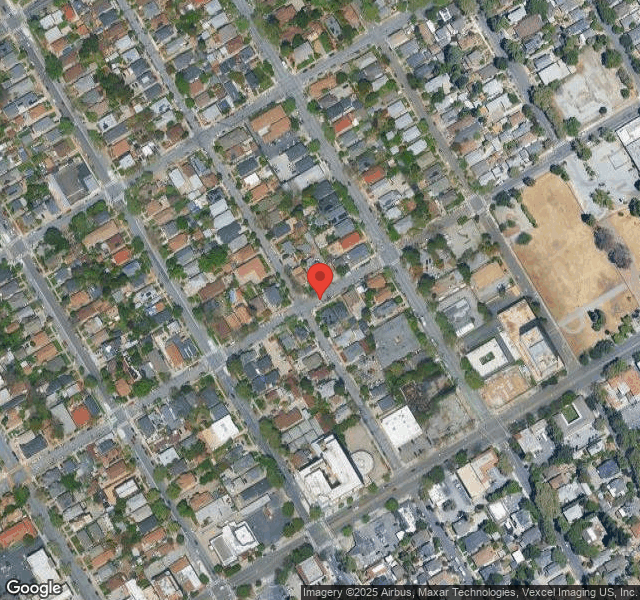

75 N. 13TH STREET, SAN JOSE, CA 95112 (408) 295-2665
For profit - Limited Liability company 58 Beds SHLOMO RECHNITZ Data: November 2025
Trust Grade
65/100
#450 of 1155 in CA
Last Inspection: March 2025

Within standard 12-15 month inspection cycle. Federal law requires annual inspections.

Overview

San Jose Healthcare & Wellness Center has a Trust Grade of C+, indicating it is slightly above average among nursing homes. With a state ranking of #450 out of 1,155, they are positioned in the top half of California facilities, but they rank #30 out of 50 in Santa Clara County, meaning there are only a few local options that are better. The facility is experiencing a concerning trend, as the number of issues found has worsened significantly from 3 in 2024 to 14 in 2025. Staffing is rated average with a turnover rate of 35%, which is better than the state average, and there have been no fines on record, suggesting a stable financial and operational environment. However, there have been specific incidents, such as failing to transfer a deceased resident to the mortuary within the required time, and issues with the proper use of bed rails for several residents, which raises concerns about safety and compliance with care standards. Overall, while there are strengths in staffing stability and financial standing, recent trends and specific incidents highlight areas that need improvement.

Trust Score
C+
65/100
In California
#450/1155
Top 38%
Safety Record
Moderate
Needs review
Inspections
Getting Worse
3 → 14 violations
Staff Stability
○ Average
35% turnover. Near California's 48% average. Typical for the industry.
Penalties
✓ Good
No fines on record. Clean compliance history, better than most California facilities.
Skilled Nurses
○ Average
Each resident gets 33 minutes of Registered Nurse (RN) attention daily — about average for California. RNs are the most trained staff who monitor for health changes.
Violations
⚠ Watch
42 deficiencies on record. Higher than average. Multiple issues found across inspections.
★★★★☆
4.0
Overall Rating
★★★☆☆
3.0
Staff Levels
★★★★★
5.0
Care Quality
★★★☆☆
3.0
Inspection Score
Stable
2024: 3 issues
2025: 14 issues

The Good

  • 5-Star Quality Measures · Strong clinical quality outcomes
  • Full Sprinkler Coverage · Fire safety systems throughout facility
  • No fines on record
  • Staff turnover below average (35%)

    13 points below California average of 48%

Facility shows strength in quality measures, fire safety.

The Bad

Staff Turnover: 35%

11pts below California avg (46%)

Typical for the industry

Chain: SHLOMO RECHNITZ

Part of a multi-facility chain

Ask about local staffing decisions and management

The Ugly 42 deficiencies on record

1 actual harm
Jun 2025 1 deficiency
CONCERN (D) 📢 Someone Reported This

A family member, employee, or ombudsman was alarmed enough to file a formal complaint

Potential for Harm - no one hurt, but risky conditions existed

Quality of Care (Tag F0684)

Could have caused harm · This affected 1 resident

**NOTE- TERMS IN BRACKETS HAVE BEEN EDITED TO PROTECT CONFIDENTIALITY** Based on interview and record review, the facility failed to establish and communicate which licensed nurse was responsible for ...

Read full inspector narrative →
**NOTE- TERMS IN BRACKETS HAVE BEEN EDITED TO PROTECT CONFIDENTIALITY** Based on interview and record review, the facility failed to establish and communicate which licensed nurse was responsible for providing care to one of three sampled residents (Resident 1) on the evening shift (3:00 p.m. to 11:00 p.m.) of 4/9/25. This failure resulted in Resident 1 not receiving scheduled medications in a timely manner, and had the potential to result in other care needs not being met. Findings: Review of Resident 1's medical record indicated she was admitted on [DATE] and had diagnoses including, but not limited to dementia (a progressive state of decline in mental abilities), diabetes mellitus (DM, a disorder characterized by difficulty in blood sugar control and poor wound healing), hypertensive heart disease (a heart condition that develops from chronic high blood pressure), and heart failure (a condition in which the heart does not pump blood as well as it should). Review of Resident 1's medication administration record (MAR), dated 4/2025, indicated Resident 1 was scheduled to receive the following evening medications: 1.) Lactobacillus oral capsule (a supplement that contains beneficial bacteria) at 5:00 p.m.; 2.) Metformin (a medication used to treat DM) 500 milligrams (mg, unit of dose measurement) at 5:30 p.m.; 3.) Metoprolol (a medication used to treat high blood pressure and heart failure) 25 mg at 5:00 p.m.; and 4.) Insulin Lispro injection (medication used to treat DM) 100 units per milliliter (u/ml, unit of dose measurement) per sliding scale (amount to be administered depends on blood sugar reading) at 5:00 p.m. For lactobacillus, metformin, and metoprolol, the MAR did not specify what time the medications were given on 4/9/25. However, for the insulin lispro injection, the MAR indicated the medication was administered by licensed vocational nurse A (LVN A) at 6:59 p.m. (almost two hours after the scheduled administration time) on 4/9/25. The facility's monthly nursing assignment, dated 4/2025, was reviewed. The monthly nursing assignment indicated licensed vocational nurse B (LVN B) was scheduled to provide care to Resident 1's area of the facility on 4/9/25. During an interview with LVN A on 6/19/25 at 10:44 a.m., LVN A stated there was an evening shift during which there was confusion about the licensed nurse assignment for Resident 1. LVN A stated he was the nurse supervisor on this particular evening shift. LVN A explained that LVN B was usually scheduled to provide care to Resident 1's area of the facility on the evening shift, but it had been requested that LVN B not provide care to Resident 1. LVN A further explained that since LVN B could not provide care to Resident 1, licensed vocational nurse C (LVN C) was supposed to take on that responsibility. LVN A confirmed LVN C was not informed that she was supposed to provide care to Resident 1 on this particular evening shift. LVN A stated he or LVN B should have communicated this to LVN C. LVN A confirmed that on this particular evening shift, he was the one who administered Resident 1's scheduled 5:00 - 5:30 p.m. medications at around 7:00 p.m. LVN A confirmed these medications were administered late, as they should have been administered within one hour before or after the scheduled times. The facility's undated document, titled LVN Staff Nurse Job Description, indicated the LVN was responsible for giving and receiving nursing reports upon beginning and ending of their assigned shift. It also indicated the LVN was responsible for reviewing and assisting in revision of nursing assignments. The facility's policy titled Medication - Administration, revised 1/1/2012, indicated, Medications may be administered one hour before or after the scheduled medication administration time.
Mar 2025 13 deficiencies
CONCERN (D)

Potential for Harm - no one hurt, but risky conditions existed

Resident Rights (Tag F0550)

Could have caused harm · This affected 1 resident

**NOTE- TERMS IN BRACKETS HAVE BEEN EDITED TO PROTECT CONFIDENTIALITY** Based on observation, interview, and record review, the facility failed to treat the residents with dignity for one of 14 reside...

Read full inspector narrative →
**NOTE- TERMS IN BRACKETS HAVE BEEN EDITED TO PROTECT CONFIDENTIALITY** Based on observation, interview, and record review, the facility failed to treat the residents with dignity for one of 14 residents (31) when licensed vocational nurse A (LVN A) opened Resident 31's room door without covering her while her back and buttocks were exposed. This failure had the potential to cause embarrassment and feelings of low self-esteem (unhappy and thinking negatively about yourself) for the resident. Findings: Review of Resident 31's admission Record indicated she was admitted to the facility on [DATE]. During a wound treatment observation, on 3/5/25 at 2:11 p.m., Resident 1 was lying in her bed, the first bed from her room door; the curtain was opened all the way, and the door was closed. LVN A turned Resident 1 to the side. Resident 1's back and buttocks were exposed and facing the room door. LVN A found that Resident 1 had bowel movement. Without covering Resident 1's body, LVN A opened the door and called the certified nursing assistant (CNA) to come to clean Resident 1. During the wound treatment, LVN A needed assistance. Again, without covering Resident 1's body, LVN A opened the door and called for help. During an interview with LVN A, on 3/5/25 at 3:20 p.m., she acknowledged that she should have covered Resident 31's body before she opened the room door to call for assistance. Review of the facility's policy, Resident Rights, dated 1/1/12, indicated Employees are to treat all residents with kindness, respect, and dignity and honor the exercise of residents' rights.
CONCERN (D)

Potential for Harm - no one hurt, but risky conditions existed

Deficiency F0552 (Tag F0552)

Could have caused harm · This affected 1 resident

2. A review of Resident 4's clinical record shows diagnoses including Parkinson's Disease (disorder of the nervous system that causes tremors, stiffness, and slow movements), Schizoaffective disorder ...

Read full inspector narrative →
2. A review of Resident 4's clinical record shows diagnoses including Parkinson's Disease (disorder of the nervous system that causes tremors, stiffness, and slow movements), Schizoaffective disorder (a mental health condition including schizophrenia, which affects thinking, emotions, and behavior), mood disorders and, Dementia (a group of thinking and social symptoms that interferes with daily functioning) with agitation. A review of Resident 4's physician's order for Valproic Acid (medication used to treat seizures, mood disorders) 250 milligrams/5 milliliter (mg/ml, measurement of solution's concentration) to be given two times a day to manage mood disorder, including angry outburst, throwing things towards patients and aggressive behavior. The medication was started on 6/24/24. During a concurrent interview and record review with the director of nursing (DON) on 3/7/25, at 10:47 a.m., the DON confirmed that Resident 4's clinical record did not contain an Informed Consent for Valproic acid. After further review, the DON found an informed consent for Seroquel (a medication used to treat schizophrenia, bipolar disorder, and severe depression), but acknowledged that an informed consent should also have been obtained for Resident 4's Valproic Acid. 3. A review of Resident 28's clinical record with diagnoses including Encephalopathy (a condition that affects brain function, leading to confusion, memory problems, and difficulty thinking); schizoaffective disorder, bipolar disorder (mood swings between depression and mania). A review of Resident 28's physician's order for Risperidone 0.25 mg, twice a day, to manage Schizoaffective Disorder, Bipolar type manifested by paranoid thoughts, physical aggression. The medication was ordered on 12/4/24. During a concurrent interview and record review with the DON on 3/7/25, at 2:40 p.m., the DON confirmed that the Informed Consent Documentation dated 12/5/24, and signed by Resident 28 and the physician, was incomplete. The document did not include the medication name, dose, frequency, indications, side effects, or possible adverse reactions. The DON also confirmed that Resident 28's Verification of Informed Consent for Risperidone was missing a date and a nurse's signature. Based on interview and record review, the facility failed to properly obtain informed consent (permission granted in the knowledge of the possible consequences) for psychotropic medications (medications capable of affecting the mind, emotions and behavior) for three (Resident 20, Resident 4, and Resident 28) out of 14 residents. This failure had the potential to compromise the right of the residents or responsible parties (persons designated to make decisions of behalf of the residents) to be fully informed regarding care and treatment in order to make health care decisions. Findings: 1. A review of Resident 20's clinical record indicated he had a physician's order for Risperidone (medication used to treat mental illness that causes disturbed or unusual thinking, loss interest in life, and strong or inappropriate emotions) 0.25 milligrams (mg, unit of dose measurement) to be administered at bedtime for one week started on 3/1/25 until 3/8/25. A review of Resident 20's diagnoses included but not limited to unspecified psychosis [refers to a collection of symptoms that affect the mind, where there has been some loss of contact with reality] not due to a substance or known physiological condition During a concurrent interview and record review of Resident 20's clinical record with The Director of Nursing (DON) on 3/6/25 at 1:58 p.m., the DON verified the document entitled Informed Consent Documentation dated 12/10/24, signed by Resident 20 and the physician, did not indicate medication name, dose, frequency, indications, side effects and possible adverse reactions. The DON also verified Resident 20's Verification of Informed Consent for Risperidone which did not indicate a date and a nurse's signature. A review of facility's Policy and Procedure (P&P) entitled NP67 Informed Consent dated 1/3/24, the P&P indicated, Except in emergencies, informed consent must be obtained prior to the proposed treatment or procedure. A review of facility's undated Policy and Procedure (P&P) entitled, Behavior/Psychoactive Drug Management, the P&P indicated, .J. When processing a new order or an increase in psychoactive drugs, the Attending Physician/Prescriber must do and as follows: i. Obtain informed consent from resident or responsible party .K. When an order for psychotropic drug is obtained, the Licensed Nurse verifies with the Attending Physician/Prescriber that informed consent has been obtained .
CONCERN (D)

Potential for Harm - no one hurt, but risky conditions existed

Deficiency F0554 (Tag F0554)

Could have caused harm · This affected 1 resident

Based on observation, interview, and record review, the facility failed to ensure medications were not left unattended at the bedside for one of 14 sampled residents (Resident 4). Resident 4 was not a...

Read full inspector narrative →
Based on observation, interview, and record review, the facility failed to ensure medications were not left unattended at the bedside for one of 14 sampled residents (Resident 4). Resident 4 was not approved to self-administer medications. This deficient practice placed Resident 4 and other residents at risk for harm. Findings: A review of Resident 4's clinical record with diagnoses including Parkinson's Disease (disorder of the nervous system that causes tremors, stiffness, and slow movements), schizoaffective disorder (a mental health condition including schizophrenia [mental health illness affects thinking, emotions, and behavior), mood disorders, Dementia (a group of thinking and social symptoms that interferes with daily functioning) with agitation. A review of Resident 4's Self-Administration of Medication Assessment form, dated 1/16/25, indicated that Resident 4 was not a candidate for self-administration of medications. During an observation of Resident 4 in her room on 3/3/25 at 9:01 a.m., the resident was sitting in her wheelchair, and a medication cup with five pills was left on her breakfast tray. In a concurrent interview, Resident 4 stated that staff routinely leave her medications, and she takes them on her own. No licensed staff member was present in the room. During an interview with Registered Nurse E (RN E) on 3/3/25, at 3:19 p.m., RN E confirmed that she gave the pills to Resident 4. However, the resident indicated she would take the medication later. RN E stated she left the medication in the room and did not stay to observe whether Resident 4 took all of the prescribed medications. During an interview with the Director of Nursing (DON) on 3/7/25, at 2:37 p.m., the DON confirmed that Resident 4 is not approved for self-administration of medications. Review of facility's policy, titled, Medication Administration, dated 1/1/12, indicated, Medication will be administered directed by a license nurse and upon the order of a physician or licensed independent practitioner.
CONCERN (D) 📢 Someone Reported This

A family member, employee, or ombudsman was alarmed enough to file a formal complaint

Potential for Harm - no one hurt, but risky conditions existed

Free from Abuse/Neglect (Tag F0600)

Could have caused harm · This affected 1 resident

Based on observation, interview and record review, the facility failed to ensure one (Resident 14) out of 14 sampled residents was free from abuse when staff shouted at and did not acknowledge Residen...

Read full inspector narrative →
Based on observation, interview and record review, the facility failed to ensure one (Resident 14) out of 14 sampled residents was free from abuse when staff shouted at and did not acknowledge Resident 14's statement for hunger. This failure had the potential to impact the physical and mental well-being of the resident. Findings: A review of Resident 14's clinical record indicated admission date of 6/8/2021 with diagnoses including Unspecified Dementia [decline in mental abilities, like memory, thinking, and reasoning], Type 2 Diabetes Mellitus [a condition where the body either does not make enough insulin or cannot use insulin properly, leading to high blood sugar levels] with diabetic chronic kidney disease [occurs when high blood sugar levels from diabetes damage the kidneys' ability to filter waste and excess fluid] and, Major Depressive Disorder [a mood disorder that causes a persistent feeling of sadness and loss of interest]. A review of Resident 14's Minimum Data Set (MDS, an assessment tool), dated 2/4/25, indicated a brief interview for mental status score of 12 [BIMS, a tool used to assess cognition (knowing, learning, and understanding), a score of 0 to 7 indicates severe cognitive impairment, 8-12 moderate impairment, 13-15 patient is cognitively intact]. The MDS indicated, Resident 14 had poor appetite or overeating. A review of Resident 14's Psychiatric Evaluation dated 2/28/25 indicated a psychiatric follow up visit dated 12/19/24 indicated, Symptom #1: mood lability .Symptom triggers: current social, medical condition Symptom #2: anxiety . Symptom triggers: current social, medical condition .Associated signs and symptoms: behavioral outbursts, verbal aggression, mood lability, and interpersonal conflicts . A review of Resident 14's Nutrition/Dietary notes dated 12/2/24 indicated, significant weight loss of 11.3% within x 180 days . A review of Resident 14's physician order indicated, Snacks twice daily at 2 pm and 8 pm two times a day. During an interview on 3/6/25 at 10:58 a.m. with Licensed Vocational Nurse (LVN) G, LVN G stated, Resident 14 eats by herself and was independent. During a kitchen observation and interview on 3/6/25 at 3:10 p.m., a State Surveyor (SS, California Department of Public Health, CDPH nurse surveyor) was walking down the hallway towards the kitchen, this SS observed Resident 14 in a wheelchair, holding the kitchen door slightly opened and was saying Hello, I'm hungry. The SS heard a shouting voice coming from inside the kitchen said Go to your room! Go to your room! Then, a hand was seen trying to close the door and the staff still shouting at Resident 14, Go to your room! The SS then showed herself at the kitchen door and witnessed the Dietary Manager (DM) holding the door from inside the kitchen as she was shouting, Go to your room! to Resident 14. The DM stopped when she noticed the SS. DM then told Resident 14 that her tray will be brought to her room. Resident 14 let go of the kitchen door and left. The HFEN entered the kitchen and observed DM was not wearing a hair covering. DM stated she removed it because she was about to leave the kitchen. The SS informed DM that emergency food supplies were to be checked, and DM led the SS into the kitchen pantry. The Registered Dietician (RD) came in the middle of checking the emergency supplies. The HFEN asked the DM for appropriate ways on how to address a resident stating hunger, DM did not provide an answer. During an interview on 3/6/25 at 4:12 p.m. with the Regional Registered Dietician (RRD), the RRD was asked what is the appropriate response to a resident who is stating she was hungry, the RRD stated, We let them know what we can do for them. During an interview on 3/7/25 at 2:04 p.m. with the Dietary [NAME] (DC), the DC stated, she will not shout at a resident if they were asking for food and instead will say, How can I help you? What can I do for you? During an interview on 3/7/25 at 2:22 p.m. with the Director of Nursing (DON), the DON stated, kitchen staff must speak respectfully to the residents. The DON also stated, kitchen staff must let the nurse or nurse aide get the food from the kitchen. A review of facility's Job Description for Dietary Services Supervisor/Certified Dietary Manager indicated, .Ensures that all consumer/resident rights are protected. A facility document entitled, Employee Relations Conduct January 2024 edition indicated, .the following are examples of conduct that are prohibited and will not be tolerated .Rude, discourteous condescending, unprofessional or otherwise socially unacceptable behavior toward a customer, or anyone in contact with the Company .Any employee/resident abuse . A review of facility's policy and procedure (P&P) entitled, Resident Rights revised 1/1/2012, the P&P indicated, Purpose to promote and protect the rights of all residents at the facility Employees are to treat all residents with kindness, respect, and dignity and honor the exercise of residents' rights .III. Each resident is allowed to choose activities, schedules and health care that are consistent with his or her interests, assessments and plans of care, including: A. Sleeping, eating .
CONCERN (D)

Potential for Harm - no one hurt, but risky conditions existed

Quality of Care (Tag F0684)

Could have caused harm · This affected 1 resident

**NOTE- TERMS IN BRACKETS HAVE BEEN EDITED TO PROTECT CONFIDENTIALITY** Based on observation, interview, and record review, the facility failed to ensure the residents received the necessary care and ...

Read full inspector narrative →
**NOTE- TERMS IN BRACKETS HAVE BEEN EDITED TO PROTECT CONFIDENTIALITY** Based on observation, interview, and record review, the facility failed to ensure the residents received the necessary care and services for three of 14 residents (3, 21, and 23) when: 1. Resident 3 was not served yogurt, tofu, orange, tangerine with his meals as ordered by the physician; 2. For Resident 21, rolled towels to his bilateral (right and left sides of the body) hands and offloading boots to his bilateral lower extremities were not applied as ordered by the physician; and 3. Certified nursing assistant C (CNA C) did not know about her resident, Resident 23. These failures had the potential to affect the residents' care and could jeopardize their health and well-being. Findings: 1. Review of Resident 3's admission Record indicated he was admitted to the facility on [DATE]. Review of Resident 3's physician order, dated 1/31/25, indicated he had an order for the facility to provide yogurt, tofu, orange, tangerine with his meals. During an observation, on 3/4/25 at 12:45 p.m., Resident 3 did not have yogurt, tofu, orange, tangerine with his lunch. During an observation and interview with the registered dietician (RD), on 3/5/25 at 12:35 p.m., Resident 3 did not have yogurt, tofu, orange, tangerine with his lunch. The RD reviewed Resident 3's physician order and confirmed Resident 3 had an order for the facility to provide yogurt, tofu, orange, tangerine with his meals. During an interview with Resident 3, on 3/5/25 at 1:25 p.m., he stated he would like to have yogurt, orange, tangerine with his meals. During an interview with the director of nursing (DON), on 3/5/25 at 1:35 p.m., she stated that the physician order should be followed. Review of the facility's policy, Dietary Profile and Resident Preference Interview, dated 4/21/22, indicated Resident preferences will be reflected in the medical record and tray-card and updated in a timely manner. 2. Review of Resident 21's admission Record indicated he was admitted to the facility on [DATE]. Review of Resident 21's physician orders indicated he had orders for the licensed nurse to apply roll towel to his bilateral hand every shift for it helps fingers from rubbing due to closed hand fist, started on 12/10/24; and to apply offloading boot to his bilateral lower extremities every shift for pressure release, started on 11/17/24. During the observations, on 3/4/25 at 11:20 a.m. and on 3/4/25 at 3:40 p.m., Resident 21 did not have rolled towels in his hands and offloading boots on his lower extremities. During an observation and interview with licensed vocational nurse B (LVN B), on 3/5/25 at 11:10 a.m., Resident 21 did not have rolled towels in his hands and offloading boots on his lower extremities. LVN B reviewed Resident 21's clinical record and stated that she would apply rolled towels in Resident 21's hands and offloading boots on Resident 21's lower extremities as ordered by the physician. Review of the facility's undated job description, LVN Staff Nurse, indicated . General Duties and Responsibilities: General: Provides nursing care as prescribed by physician/health care professional in accordance with the legal scope of practice, any Board of Licensing restrictions, and within established standards of care, policies, and procedures . 3. Review of Resident 23's admission Record indicated he was admitted to the facility on [DATE] with dependence on renal dialysis (a type of treatment that helps the body remove extra fluid and waste products from the blood when the kidneys are not able to) diagnosis. Review of Resident 23' s clinical record indicated he had an arteriovenous (AV) shunt (a surgical connection between an artery and a vein) on his right lower arm. During an interview with certified nursing assistant C (CNA C), on 3/5/25 at 1:05 p.m., she stated that she worked with Resident 23. Resident 23 was a dialysis resident. CNA C stated Resident 23's dialysis site was on his chest, and she could take his blood pressure on either his left arm or right arm. Review of the facility's policy, NP37 Dialysis Management, dated 3/27/24, indicated . No blood pressure, phlebotomy (a procedure in which a needle is used to take blood from a vein, usually for laboratory testing), or other pressure inducing procedures on the arm with an AV shunt.
CONCERN (D)

Potential for Harm - no one hurt, but risky conditions existed

Pharmacy Services (Tag F0755)

Could have caused harm · This affected 1 resident

Based on observation, interview, and record review, the facility failed to ensure that medications were fully administered as prescribed for one of 4 residents (Resident 21) observed during medication...

Read full inspector narrative →
Based on observation, interview, and record review, the facility failed to ensure that medications were fully administered as prescribed for one of 4 residents (Resident 21) observed during medication pass administration. This failure placed Resident 21 at risk for ineffective treatment and potential health complications. Findings: During a medication pass administration observation on 3/4/25, at 4:10 p.m., Licensed Vocational Nurse D (LVN D) prepared Resident 21's medications for administration via gastrostomy tube (GT, tube inserted through the abdomen to deliver nutrition and medications directly to the stomach). LVN D crushed each medication separately, placed them into individual medicine cups, and added approximately 10 milliliters (ml, unit of measurement) of water per cup. After confirming that Resident 21 had 12 medications, LVN D administered each medication separately, flushing the GT with 10 ml of water between doses. However, medication residue remained in 6 of the 12 medication cups after administration. During a concurrent interview, LVN D confirmed that residue remained in the six medication cups and acknowledged that more water should have been added to ensure all medication was administered. During an interview with the Director of Nursing (DON) on 3/7/25, at 2:35 p.m., the DON acknowledged that Resident 21 did not receive the full prescribed dose because medications remained in the medication cups. Review of Resident 21's physician's order, ordered date 11/16/24, indicated, crush and dilute medications with water prior to administering via TF (tube feeding) as appropriate Review of facility's policy, titled, Medication Administration, dated 1/1/2012, indicated, Medications and treatments will be administered as prescribed to ensure compliance with dose guidelines.
CONCERN (D)

Potential for Harm - no one hurt, but risky conditions existed

Deficiency F0761 (Tag F0761)

Could have caused harm · This affected 1 resident

Based on observation, interview and record review, the facility failed to store and label medications and biologicals according to manufacturer instructions and facility policy. These failures had th...

Read full inspector narrative →
Based on observation, interview and record review, the facility failed to store and label medications and biologicals according to manufacturer instructions and facility policy. These failures had the potential for residents to receive incorrect or unsafe medications. Findings: During an observation on 3/4/25, at 3:50 p.m., in Station 2, while inspecting the medication cart with Registered Nurse E (RN E), the following issues were identified: 1. One unopened bottle of Latanoprost eye drops (a medication used to treat glaucoma, which is increased pressure inside the eye) for Resident 3 was found in the top drawer of the medication cart. The pharmacy label indicated that it should be refrigerated until opened, it was not stored in the refrigerator. 2. An inhaler Breo Ellipta (an inhaled medication to treat breathing problems) for Resident 15 was opened but did not have an open date indicated on the label. 3. One unopened Humalog (a fast-acting insulin used to control blood sugar) insulin vial (a small glass or plastic bottles used to store liquids, or powder medication) for Resident 16 was stored in the medication cart. The pharmacy label on the insulin vial indicated that it should be kept in the refrigerator until opened. During a concurrent interview, RN E confirmed that the Latanoprost eye drops, and Humalog insulin vial should have been stored in the refrigerator until opened and that the Breo Ellipta inhaler should have been labeled with an open date upon first use. A review of the facility's policy and procedure titled, Medication Storage in the Facility, dated 4/2008, indicated: Medications and biologicals are stored safely, securely, and properly, following manufacturer's recommendations.
CONCERN (D)

Potential for Harm - no one hurt, but risky conditions existed

Deficiency F0847 (Tag F0847)

Could have caused harm · This affected 1 resident

**NOTE- TERMS IN BRACKETS HAVE BEEN EDITED TO PROTECT CONFIDENTIALITY** Based on interview and record review, the facility failed to explain the arbitration agreement (a contract requires that person ...

Read full inspector narrative →
**NOTE- TERMS IN BRACKETS HAVE BEEN EDITED TO PROTECT CONFIDENTIALITY** Based on interview and record review, the facility failed to explain the arbitration agreement (a contract requires that person who signed it resolve disputes by a neutral third party, rather than in court before a judge and/or jury) which Resident 23 and Resident 31 signed during their admission to the facility. This failure resulted in Resident 23 and Resident 31 signing the facility's arbitration agreement without their full understanding of the same. Findings: Review of Resident 23's clinical record indicated he was admitted to the facility on [DATE], and he signed the facility's arbitration agreement on 1/20/25. Review of Resident 23's Minimum Data Set (MDS, a clinical assessment tool), dated 1/9/25, indicated his cognition was intact. Review of Resident 31's clinical record indicated she was admitted to the facility on [DATE], and she signed the facility's arbitration agreement on 1/22/25. Review of Resident 31's MDS, dated [DATE], indicated her cognition was intact. During an interview with Resident 23, on 3/5/25 at 12:15 p.m., he stated that he did not know about arbitration agreement; no one explained about it to him. Resident 23 stated that the facility gave him document to sign, and he signed it. During an interview with Resident 31, on 3/5/25 at 12:30 p.m., she stated that she did not know about arbitration agreement; no one explained about it to her. Resident 31 stated that the facility gave her document to sign, and she signed it. During an interview with the admission director (AD), on 3/7/25 at 10:55 a.m., she stated that she oversaw the facility's arbitration agreement, and she would make sure to explain the arbitration agreement to the residents. Review of the facility's policy, AD 17 Arbitration Agreements, dated 5/26/23, indicated . 3. If the facility presents an arbitration agreement to the resident, the person presenting the arbitration agreement will: a. Explain the agreement to the resident in a form and manner that they understand, including in a language the resident understand; and b. Confirm that the resident understands the agreement.
CONCERN (E)

Potential for Harm - no one hurt, but risky conditions existed

Deficiency F0700 (Tag F0700)

Could have caused harm · This affected multiple residents

Based on observation, interview, and record review, the facility failed to ensure the proper use of side or bed rails (adjustable rigid bars attached to the side of a bed) for six of 11 residents (31,...

Read full inspector narrative →
Based on observation, interview, and record review, the facility failed to ensure the proper use of side or bed rails (adjustable rigid bars attached to the side of a bed) for six of 11 residents (31, 33, 35, 37, 42, and 49) when: 1. Residents 31, 33, and 35 did not have care plan for siderails; 2. Residents 42 and 49 did not have a physician's order for the use of siderails and care plan for siderails; and 3. Resident 37 did not have a consent and a physician's order for the use of siderails, and care plan for siderails. These failures had the potential to place the residents at risk of entrapment and injury. Findings: During an observation on 3/4/25 at 11:47 a.m., Residents 31, 33, 35, 37, 42, and 49 had bilateral siderails. Review of Residents 31, 33, and 35's clinical records indicated Residents 31, 33, and 35 did not have care plan for siderails. Review of Residents 42 and 49's clinical records indicated Residents 42 and 49 did not have a physician's order for the use of siderails and care plan for siderails. Review of Resident 37's clinical record indicated Resident 37 did not have a consent and a physician's order for the use of siderails, and care plan for siderails. During an interview with the director of nursing (DON) on 3/7/25 at 11:49 a.m., she reviewed Residents 31, 33, 35, 37, 42, and 49's clinical records, and she confirmed that Residents 31, 33, and 35 did not have care plan for siderails; Residents 42 and 49 did not have a physician's order for the use of siderails and care plan for siderails; and Resident 37 did not have a consent and a physician's order for the use of siderails, and care plan for siderails. The DON stated the residents should have documented consent, physician's order, and care plan for the use of siderails. Review of the facility's policy, NP120 Bed Rails, dated 6/12/24, indicated . 1. Evaluating the Resident's Need for Bed Rails: . d. The ordering physician will obtain informed consent from the resident/resident representative prior to the use of bed rails. e. A care plan will be developed regarding the use of bed rails.
CONCERN (E)

Potential for Harm - no one hurt, but risky conditions existed

Deficiency F0802 (Tag F0802)

Could have caused harm · This affected multiple residents

Based on observation, interview, and record review, the facility failed to ensure the kitchen staff competently carried out the functions of the food and nutrition services department according to fac...

Read full inspector narrative →
Based on observation, interview, and record review, the facility failed to ensure the kitchen staff competently carried out the functions of the food and nutrition services department according to facility policy and standards of practice when kitchen staff did not correctly demonstrate how to test the dish machine sanitizer. This failure had the potential to place 51 residents who consumed food from the kitchen at risk for exposure to contaminants in food that may lead to food borne illness. Findings: During a kitchen observation and interview on 3/4/25 at 1:09 p.m. with the Registered Dietician (RD), Dietary Manager (DM), and Dietary [NAME] (DC), DC tested the sanitizer of the facility dish machine. DC took a test strip and dipped it in the water that came out of the dish machine after a cycle. The test strip turned purple and DC compared it to the test strip container. The RD and DM stated this was how they test the sanitizer. During an interview on 3/5/25 at 10:41 a.m. with dish machine vendor technician specialist (TS), TS stated, the correct way to test the dish machine sanitizer was either to take a cleaned plate out of a dish machine, flip the plate upside down, and put the test strip on the bottom of the plate or let the test strip touch the inside walls of the dish machine and then compare the strip with the test strip container. TS also stated, that test strip should not be dipped directly in the water from the dish machine. TS stated that kitchen staff were trained about this technique. Dish machine procedure manual/manufacturer guidelines was requested but was not provided. Based on dish machine vendor's Proper Testing Procedure for the low temperature dish machine, When testing for sanitizer, we need to test the items that are actually being washed .a good example is coffee cups .coffee cups have a concave bottom that will hold a little bit of final rinse water .as soon as the rack comes out of the machine, take the test strip, wipe it on the bottom of the coffee cup . (https://diversey.com/en/video-hub/chlorine-sanitizer-testing) A review of facility's policy and procedure (P&P) entitled Dish Machine Operation and Cleaning revised 10/1/2014, the P&P indicated, .The dietary staff will use the dish machine according to the manufacturer's guidelines A review of facility's policy and procedure (P&P) entitled, Dietary Department-General revised 6/1/2014, the P&P indicated, .I. The primary objectives of the dietary department include: .B. Maintenance of standards for sanitation and safety
CONCERN (E)

Potential for Harm - no one hurt, but risky conditions existed

Food Safety (Tag F0812)

Could have caused harm · This affected multiple residents

Based on observation, interview and record review, the facility failed to ensure safe and sanitary conditions were maintained in the kitchen for food preparation equipment and food storage methods, ac...

Read full inspector narrative →
Based on observation, interview and record review, the facility failed to ensure safe and sanitary conditions were maintained in the kitchen for food preparation equipment and food storage methods, according to standards of practice and facility policy when: 1. Foods were stored unlabeled and/or past used-by date; and 2. Sink drainage pipe with buildup within the inner lining. These failures had the potential for food contamination, resulting in food borne illnesses for 51 residents who consume food from the kitchen. Findings: 1. During the initial kitchen tour observation and interview on 3/3/25 at 8:51 a.m., with the Registered Dietician (RD), the sink faucet was dripping and drainage pipe with an air gap was dirty with accumulation of whitish to yellowish build up around the inner lining. The outer part of the pipe had whitish substance in drip patterns. During an observation and interview in the kitchen on 3/4/25 at 1:00 p.m. with the Dietary Manager (DM), the DM confirmed the state of the dirty sink drainage pipe and stated that the DM is the cleaner for the drainage pipe, but it was not in the schedule. DM confirmed the sink faucet cannot be turned off completely for one or two weeks and a work order was requested. During a concurrent interview and record review on 3/6/25 at 9:40 a.m. with the Regional Registered Dietician (RRD), the RRD stated, The drainage pipe could have been cleaner. The RRD also verified the facility kitchen's Food and Nutrition: Cleaning Log dated 12/30/24 to 3/6/25 did not include the sink and drainage pipe on the list of areas/equipment to be cleaned. The RRD stated that it will be recommended to add the sink on the cleaning log. A review of facility's policy and procedure (P&P) entitled, Dietary Department-General revised 6/1/2014, the P&P indicated, .I. The primary objectives of the dietary department include: .B. Maintenance of standards for sanitation and safety A review of facility's policy and procedure (P&P) entitled, Cleaning Schedule revised 10/1/2014, the P&P indicated, The dietary staff will maintain a sanitary environment in the dietary department by complying with the routine cleaning schedule developed by the Dietary Manager .II. The Dietary Manager monitors the cleaning schedule to ensure compliance. 2. During the initial kitchen tour observation and interview on 3/3/25 at 9:11 a.m., with the Registered Dietician (RD), RD verified a container of sugar-free gelatin labeled with 2/6/25-2/28/25, an opened non-dairy creamer without labeled open-date and lettuce salad mix without labeled open-date were stored in the refrigerator. The RD stated that refrigerators were checked every morning. The RD stated that the non-dairy creamer must be labeled with the date it was opened and can be used within seven days. The RD verified that the lettuce salad mix was wilted and must be thrown out. During a concurrent interview and record review on 3/6/25 at 9:40 a.m. with the Regional Registered Dietician (RRD), the RRD stated ,Produce should not be necessarily labeled. According to the non-dairy creamer manufacturer's guidelines, once opened, the product can be refrigerated up to three weeks. (https://www.richsusa.com/products/toppingscreams/creamers/02209/#:~:text=KEEPS%203%20WEEKS%20IN%20REFRIGERATOR.) A review of facility document entitled Produce Storage Guidelines dated 2023 indicated, lettuce, salad greens, parsley may be refrigerated for three to five days. A review of facility's policy and procedure (P&P) entitled, Dietary Department-General revised 6/1/2014, the P&P indicated, .I. The primary objectives of the dietary department include: .B. Maintenance of standards for sanitation and safety; C. Maintenance of standards for quality of food . A review of facility's policy and procedure (P&P) entitled, P-DS52 Food Storage and Handling dated 6/4/24, the P&P indicated, .9. Fresh Vegetable Storage .f. Label and date all food items
CONCERN (E)

Potential for Harm - no one hurt, but risky conditions existed

Infection Control (Tag F0880)

Could have caused harm · This affected multiple residents

2. During a dining observation, on 3/3/25 at 12:23 p.m., certified nursing assistant C (CNA C) brought the chair over, sat down, and fed Resident 40 without sanitizing her hands. During a concurrent i...

Read full inspector narrative →
2. During a dining observation, on 3/3/25 at 12:23 p.m., certified nursing assistant C (CNA C) brought the chair over, sat down, and fed Resident 40 without sanitizing her hands. During a concurrent interview with CNA C, she acknowledged that she should sanitized her hands before feeding Resident 40. During an observation, on 3/3/25 at 12:37 p.m., licensed vocational nurse A (LVN A) pushed Station 2 lunch cart over and opened the lids of residents' lunch plates to check on the meals without washing or sanitizing her hands; then registered nurse F (RN F) came over and opened the lids of residents' lunch plates to check on the meals without washing or sanitizing her hands. During a concurrent interview, LVN A and RN F acknowledged that they should wash or sanitize their hands before opening the plate lids to check on the meals on residents' meal trays. Review of the facility's policy, DD05 Dining Program, dated 2/20/25, indicated . Facility staff will perform hand hygiene prior to distribution of trays. The Centers for Disease Control and Prevention (CDC) recommends healthcare professionals practice hand hygiene before and after interacting with patients, especially before feeding them, using alcohol-based hand rubs or washing hands with soap and water. 3. During a wound treatment observation, on 3/5/25 at 2:11 p.m., licensed vocational nurse A (LVN A) cut the bag of the V.A.C. Granufoam Dressing [(VAC, vacuum assisted closure of a wound; granufoam - designed to adapt to irregular wound contours; it is a negative pressure wound therapy dressing)] with the scissors. Then without cleansing the scissors, she used it to cut the granufoam dressing and inserted it into Resident 31's sacral wound; and cut the vacuum assisted closure tape and applied the tapes on Resident 31's sacral wound. During an interview with LVN A, on 3/5/25 at 3:20 p.m., LVN A acknowledged that she should cleaned the scissors before cutting the granufoam dressing and the vacuum assisted closure tape to apply them to Resident 31's wound. For infection control during wound care, the Centers for Disease Control and Prevention (CDC) recommends standard precautions, proper use of personal protective equipment (PPE), hand hygiene, and meticulous cleaning and disinfection of equipment and surfaces. Based on observation, interview, and record review, the facility failed to ensure staff followed proper infection control procedures when: 1. Licensed Vocational Nurse D (LVN D) did not wash or sanitize hands before checking Resident 21's vital signs (blood pressure [BP], pulse, and oxygen saturation [SpO2], which measures the amount of oxygen in the blood); 2. Certified nursing assistant C (CNA C) did not wash or sanitize her hands before feeding Resident 40; licensed vocational nurse A (LVN A) and registered nurse F (RN F) did not wash or sanitize their hands before opening the plate lids to check the residents' meals on the meal tray; and 3. Licensed vocational nurse A (LVN A) did not clean the used scissors before cutting the granufoam dressing (designed to adapt to irregular wound contours) and the vacuum assisted closure tape for Resident 31's wound. These failures had the potential to increase the risk of spreading infections in the facility. Findings: 1. During an observation and concurrent with interview on 3/4/25, at 3:53 p.m., LVN D was observed pushing a portable vital signs machine into Resident 21's room. LVN D placed the BP cuff around Resident 21's left upper arm and proceeded to check the resident's other vital signs. However, LVN D did not wash or sanitize hands before entering the resident's room or before checking the vital signs. LVN D confirmed the observations and acknowledged that hand hygiene should have been performed before checking Resident 21's vital signs. Review of the Centers for Disease Control and Prevention's (CDC) guidance titled, Clinical Safety: Hand Hygiene for Healthcare Workers, updated 2/27/24, recommends performing hand hygiene immediately before touching a patient.
MINOR (B)

Minor Issue - procedural, no safety impact

Deficiency F0912 (Tag F0912)

Minor procedural issue · This affected multiple residents

Based on observation, interview, and record review, the facility failed to ensure 10 bedrooms measured at least 80 square feet per resident. Having less than 80 square feet per resident could potentia...

Read full inspector narrative →
Based on observation, interview, and record review, the facility failed to ensure 10 bedrooms measured at least 80 square feet per resident. Having less than 80 square feet per resident could potentially compromise the care and services the residents receive. Findings: The residents' bedroom measurements were as follows: Room Number Bed Capacity Square Feet per Resident 1 2 78 9 3 69 10 3 69 11 2 66 12 3 76 14 3 76 17 3 69 18 3 69 21 3 77 23 3 77 During the survey, residents were observed in their rooms. Nursing care and services were not negatively impacted by the shortage of space. During the survey, residents and staff were interviewed to determine if there were any concerns or issues with the lack of space. The residents and staff verbalized no complaints or concerns regarding space. Recommend continuance of room waiver.
Sept 2024 2 deficiencies
CONCERN (D) 📢 Someone Reported This

A family member, employee, or ombudsman was alarmed enough to file a formal complaint

Potential for Harm - no one hurt, but risky conditions existed

Pharmacy Services (Tag F0755)

Could have caused harm · This affected 1 resident

**NOTE- TERMS IN BRACKETS HAVE BEEN EDITED TO PROTECT CONFIDENTIALITY** Based on interview and record review, the facility failed to ensure one of three residents (Resident 1) received medications as ...

Read full inspector narrative →
**NOTE- TERMS IN BRACKETS HAVE BEEN EDITED TO PROTECT CONFIDENTIALITY** Based on interview and record review, the facility failed to ensure one of three residents (Resident 1) received medications as ordered by the physician. This failure had the potential to compromise the resident's health and well-being. Findings: Review of Resident 1's medical record indicated she was admitted on [DATE] and had diagnoses including cellulitis (a type of skin infection) and other disorders of the skin and subcutaneous tissue (the deepest layer of skin). Review of Resident 1's Order Summary Report indicated she had physician orders, dated 8/3/24, for the following medications: 1. Cleocin-T External Lotion (antibiotic lotion used to treat infection) 1% (unit of dose measurement) apply to affected areas topically (to the skin) two times a day for infection; 2. Mupirocin External Ointment (medication used to treat infection) 2% apply to affected area topically three times a day for infected skin; 3. Diclofenac Sodium External Gel (medication used to treat pain) 1% apply to affected area topically four times a day for pain; and 4. Nyamyc External Powder (medication used to treat skin infections caused by fungus) 100,000 units per gram (unit of dose measurement) apply to abdominal fold/groin area topically four times a day for MASD (moisture-associated skin damage). Resident 1's medication administration record (MAR) and treatment administration record (TAR), dated 8/2024, were reviewed. On 8/3/24 and 8/4/24, there were multiple scheduled times for which the above medications were not documented as administered. Instead, the nurses who were supposed to administer the medications documented, 9. Further review of the MAR and TAR indicated a documentation of 9 meant, See Progress Notes. Review of Resident 1's Progress Notes, dated 8/3/24 and 8/4/24, indicated licensed nurse A (LN A) and LN B documented the above medications were on order. During an interview and concurrent record review with LN A on 9/11/24, at 4:11 p.m., LN A reviewed Resident 1's medical record and acknowledged the documentations of 9 and on order regarding the medications mentioned above. LN A stated that on order meant the pharmacy had not yet delivered the medications to the facility. LN A stated she looked for Resident 1's medications but could not find them. During an interview and concurrent record review with LN B on 9/13/24, at 11:09 a.m., LN B reviewed Resident 1's medical record and acknowledged the documentations of 9 and on order regarding the medications mentioned above. LN B stated he looked in the medication cart, treatment cart, and medication room and could not find Resident 1's medications. LN B confirmed that on the days and times he documented 9 and on order in Resident 1's medical record, he did not administer the medications because he could not find them in the facility. The facility's Consolidated Delivery Sheets (documentation of medications delivered from the pharmacy) were reviewed. The delivery sheets indicated the facility did, in fact, receive all of Resident 1's above-mentioned medications on 8/3/24 at 2:31 a.m. (before the first doses were due to be administered). The facility's policy titled Medication - Administration, revised 1/1/12, indicated medications and treatments will be administered as prescribed.
CONCERN (D) 📢 Someone Reported This

A family member, employee, or ombudsman was alarmed enough to file a formal complaint

Potential for Harm - no one hurt, but risky conditions existed

Medical Records (Tag F0842)

Could have caused harm · This affected 1 resident

**NOTE- TERMS IN BRACKETS HAVE BEEN EDITED TO PROTECT CONFIDENTIALITY** Based on interview and record review, the facility failed to ensure the medical record was complete and accurate for one of thre...

Read full inspector narrative →
**NOTE- TERMS IN BRACKETS HAVE BEEN EDITED TO PROTECT CONFIDENTIALITY** Based on interview and record review, the facility failed to ensure the medical record was complete and accurate for one of three sampled residents (Resident 1) when there was no documentation that the nurse notified Resident 1's physician of multiple medications that were not administered. This failure had the potential to compromise the facility's ability to track and communicate care relevant to Resident 1. Findings: Review of Resident 1's medical record indicated she was admitted on [DATE] and had diagnoses including cellulitis (a type of skin infection) and other disorders of the skin and subcutaneous tissue (the deepest layer of skin). Review of Resident 1's Order Summary Report indicated she had physician orders, dated 8/3/24, for the following medications: 1. Cleocin-T External Lotion (antibiotic lotion used to treat infection) 1% (unit of dose measurement) apply to affected areas topically (to the skin) two times a day for infection; 2. Mupirocin External Ointment (medication used to treat infection) 2% apply to affected area topically three times a day for infected skin; 3. Diclofenac Sodium External Gel (medication used to treat pain) 1% apply to affected area topically four times a day for pain; and 4. Nyamyc External Powder (medication used to treat skin infections caused by fungus) 100,000 units per gram (unit of dose measurement) apply to abdominal fold/groin area topically four times a day for MASD (moisture-associated skin damage). Resident 1's medication administration record (MAR) and treatment administration record (TAR), dated 8/2024, were reviewed. On 8/3/24 and 8/4/24, there were multiple scheduled times for which the above medications were not documented as administered. During an interview with licensed nurse B (LN B) on 9/13/24, at 11:09 a.m., LN B confirmed he did not administer the above medications to Resident 1 because he was not able to find the medications in the facility. Further review of Resident 1's medical record indicated there was no documentation that LN B notified Resident 1's physician of the medications that were not administered. During a follow-up interview and concurrent record review with LN B on 9/13/24, at 11:54 a.m., LN B reviewed Resident 1's medical record and confirmed there was no documentation that he notified Resident 1's physician of the medications that were not administered. LN B stated he did notify the physician, but he did not document. LN B confirmed he was supposed to document this and stated, If it is not documented, it didn't happen. The facility's policy titled Completion & Correction, revised 1/1/12, indicated the facility will work to complete medical records in a standardized manner to provide the highest quality and accuracy in documentation. The policy indicated, Entries will be recorded promptly as the events or observations occur. Entries will be complete, legible, descriptive and accurate. The policy further indicated to document each time a physician is notified by phone or in person regarding a resident's condition.
Jul 2024 1 deficiency
CONCERN (D) 📢 Someone Reported This

A family member, employee, or ombudsman was alarmed enough to file a formal complaint

Potential for Harm - no one hurt, but risky conditions existed

Quality of Care (Tag F0684)

Could have caused harm · This affected 1 resident

Based on interview and record review, the facility failed to provide care in accordance with professional standards of practice for two of three sampled residents (Resident 1 and 2) when: 1. Staff did...

Read full inspector narrative →
Based on interview and record review, the facility failed to provide care in accordance with professional standards of practice for two of three sampled residents (Resident 1 and 2) when: 1. Staff did not complete an SBAR (situation, background, assessment, recommendation, a communication tool) and did not notify the physician and the responsible party (RP, person designated to make decisions on behalf of a resident) when an altercation occurred between Resident 1 and Resident 2; 2. Licensed nurse did not do a skin assessment for Resident 1 when Resident 2 threw coffee on Resident 1; 3. Licensed nurses did not put Resident 1 and Resident 2 on alert charting (nurses on each shift closely monitor and document in the medical record for 72 hours about a specific condition) when an altercation between Resident 1 and Resident 2 occurred; 4. Staff did not follow up with Resident 2 following a room change. These failures had the potential to result in inadequate monitoring of the resident's conditions, and the potential to negatively affect the residents' health, safety and well-being. Findings: Review of facility's document titled SOC 341 (Document for reporting suspected dependent Adult/Elder Abuse), dated 1/11/24, indicated at approximately 8:17 a.m., it was reported that Resident 2 threw cold coffee on roommate, Resident 1. A facility's untitled document, dated 1/15/24, contained a summary of the findings regarding the SOC. The summary indicated on 1/11/24 the certified nursing assistant (CNA) noticed that coffee had been spilled on Resident 1. The document further indicated Resident 1 informed the CNA that her roommate Resident 2 had thrown cold coffee on her. Upon interview with Resident 2, Resident 2 admitted to throwing coffee at Resident 1 1. During an interview with the director of nursing (DON) on 7/11/24 at 2:45 p.m., she reviewed the clinical records of Resident 1 and Resident 2 and confirmed there was no SBAR done on 1/11/24 when the incident occurred between Resident 1 and Resident 2. The DON acknowledged an SBAR should have been completed and stated in addition the facility must notify a resident's physician and responsible party if there is an altercation between 2 residents. The DON reviewed Resident 1 and Resident 2's clinical records and confirmed there was no documentation that the physicians and RPs of the residents had been notified. The DON acknowledged the facility should have notified the physicians and the RPs about the altercation between Resident 1 and Resident 2. Review of the facility's policy titled Change of Condition. Revised 11/18/21, indicated The licensed nurse will document the following: Date, time, and pertinent details of the incident and subsequent assessment in the Resident's chart. In addition, the policy indicated the licensed nurse will notify the resident's physician, legal representative or appropriate family member when there is an incident or accident involving the resident. 2. During an interview with licensed vocational nurse A (LVN A) on 7/11/24 at 1:00 p.m., she stated when there is a physical altercation between two resident the licensed nurse must complete a skin assessment and document any findings in the resident's clinical record. LVN A reviewed Resident 1's clinical record and confirmed there was no documentation that a skin assessment had been performed on Resident 1 on 1/11/24 after Resident 2 had thrown coffee on Resident 1. LVN A stated Resident 1 should have a full skin assessment performed to assess for any injury. Review of the facility's policy titled Abuse Prevention and Management, dated 2022, indicated .6. Immediate Actions . b. The resident will be assessed by the licensed nurse for any physical or emotional distress. Notify the physician and provide treatment as ordered, if applicable. Notify the responsible party of the incident and result of assessment findings. 3. During an interview with the DON on 7/11/24 at 2:45 p.m., she reviewed the clinical records of Resident 1 and Resident 2 and confirmed licensed nurses did not document in the days following the incident between Resident 1 and Resident 2 on 1/11/24. The DON stated the licensed nurse should document every shift for 3 days after the incident to assess and record any adverse effects from the altercation. The DON acknowledged there was no follow-up documentation by the licensed nurses and stated there should be. Review of the facility's policy titled Change of Condition. Revised 11/18/21, indicated when there is an incident or accident involving the resident the Licensed nurse will document each shift for at least 72 hours on Resident. 4. Review of Resident 2's clinical record indicated that on 1/11/24 she had a room change and was no longer roommates with Resident 1. There was no documentation in Resident 2's record to indicate any follow up was done to assess the transition to the new room. There was no documentation to indicate if Resident 2 was getting along with her new roommate or was having any adverse effects to the room change. During an interview with the DON on 7/11/24 at 2:45 p.m., she reviewed the clinical record of Resident 2 and confirmed there was no documentation to indicate any follow up was conducted to assess Resident 2's adjustment to the new room location. The DON stated staff should document for 3 days after a room change to monitor any adverse effects. Review of the facility's policy titled Room or Roommate Change, revised March 2018, indicated Social Service or designee will make a follow up visit to assess the resident's adjustment to the change.
Oct 2023 8 deficiencies
CONCERN (D)

Potential for Harm - no one hurt, but risky conditions existed

Deficiency F0557 (Tag F0557)

Could have caused harm · This affected 1 resident

**NOTE- TERMS IN BRACKETS HAVE BEEN EDITED TO PROTECT CONFIDENTIALITY** Based on observation, interview, and record review, the facility failed to ensure one of two sampled residents (Resident 34) rec...

Read full inspector narrative →
**NOTE- TERMS IN BRACKETS HAVE BEEN EDITED TO PROTECT CONFIDENTIALITY** Based on observation, interview, and record review, the facility failed to ensure one of two sampled residents (Resident 34) received a replacement of her personal belongings when her bilateral (affecting both sides) hearing aids (small, wearable electronic device to facilitate better communication) were missing since the end of December 2022. This deficient practice resulted in Resident 34 to be without hearing aids for over nine months. Findings: During a concurrent observation and interview of Resident 34's room on 10/16/23 at 9:55 a.m., Resident 34 stated she was hard-of-hearing and did not have hearing aids on. She stated her hearing aids were with the medication nurse. During an interview with certified nursing aide B (CNA B) on 10/18/23 at 9:23 a.m., she stated Resident 34 did not have hearing aids. CNA B stated Resident 34 was hard of hearing and she (CNA B) had to raise her voice when talking to Resident 34. During an interview with Licensed Vocational Nurse C (LVN C) on 10/18/23 at 9:47 a.m., she stated Resident 34 was hard of hearing. She stated Resident 34 used to have hearing aids. Review of Resident 34's clinical record indicated she was admitted on [DATE] with diagnoses including unspecified hearing loss, bilateral. Review of Resident 34's inventory record, dated 9/23/22, indicated she had two hearing aids. Review of Resident 34's minimum data set (MDS, an assessment tool), dated 9/25/23, indicated the resident had minimal difficulty (difficulty in some environments e.g., when person speaks softly, or setting is noisy) in hearing. Review of Resident 34's Orders - Administration Note, dated 12/24/22, indicated, Hearing aids on both sides, apply in the morning time . for hearing deficits. Hearing aid not put on. Not in the med cart . Review of Resident 34's Orders - Administration Note, dated 12/25/22, indicated, Hearing aids on both sides, apply in the morning time . for hearing deficits. Hearing aid not available . Review of notes, dated 12/25/22 indicated, Since yesterday, [Resident 34's] hearing aid missing. Review of Resident 34's Theft/Loss Report, dated 9/6/23, indicated, missing hearing aid. During an interview on 10/18/23 at 3:53 p.m., with Social Services Director (SSD), she stated Resident 34 was hard of hearing. She stated she tried to follow up as soon as she found out Resident 34's hearing aids were missing but confirmed Resident 34 did not have hearing aids yet. Review of the facility's policy and procedure, Theft and Loss, dated July 11, 2017, indicated, When personal property is reported missing, the staff will immediately begin a search for the missing property. A Theft and Loss report is to be initiated . The completed Theft and Loss report should be given to Social Services Staff for further investigation and resolution.
CONCERN (D)

Potential for Harm - no one hurt, but risky conditions existed

Deficiency F0658 (Tag F0658)

Could have caused harm · This affected 1 resident

**NOTE- TERMS IN BRACKETS HAVE BEEN EDITED TO PROTECT CONFIDENTIALITY** Based on observation, interview, and record review the facility failed to follow physician's orders when a licensed vocational n...

Read full inspector narrative →
**NOTE- TERMS IN BRACKETS HAVE BEEN EDITED TO PROTECT CONFIDENTIALITY** Based on observation, interview, and record review the facility failed to follow physician's orders when a licensed vocational nurse (LVN F) did not administer a medication to Resident 152 according to the physician's order for it. This failure resulted in Resident 152 to not receive the physician's ordered medication as prescribed. Findings: Review of Resident 152's Order Summary Report, dated 10/19/23 indicated the resident was admitted to the facility on [DATE] with diagnoses including muscle weakness and myocardial infarction (heart attack). It also indicated Resident 152 had a physician's order, dated 10/5/23, for Polyethylene Glycol 3350 powder (medication used to manage or treat constipation) Give 17 gram (g, unit of measurement) by mouth two times a day for constipation prevention. During an observation and concurrent interview on 10/17/23 at 4:30 p.m., LVN F poured polyethylene glycol powder into a cap of the container until it filled approximately halfway to the top of a white line. When asked how much powder was in the cap, LVN F stated it was 17 g. LVN F poured the powder into a drinking cup and mixed it with water. LVN F administered the polyethylene glycol and other medications to Resident 152. During an observation and concurrent interview on 10/17/23 at 4:46 p.m., LVN F looked at the polyethylene glycol container cap and confirmed she did not fill the cap to the indicated line. LVN F stated she should have filled the powder to the top of the white line. Review of the directions printed on the polyethylene glycol container, indicated, The bottle top is a measuring cap marked to contain 17 grams of powder when filled to the indicated line (white section in cap) . fill to top of white section in cap which is marked to indicate the correct dose (17 g). Review of the facility's policy, Medication - Administration, revised 1/1/12, indicated, Medications and treatments will be administered as prescribed to ensure compliance with dose guidelines. The policy also indicated one of the seven rights of medication is the right amount.
CONCERN (D)

Potential for Harm - no one hurt, but risky conditions existed

Deficiency F0685 (Tag F0685)

Could have caused harm · This affected 1 resident

**NOTE- TERMS IN BRACKETS HAVE BEEN EDITED TO PROTECT CONFIDENTIALITY** Based on observation, interview, and record review, the facility failed to ensure one of two sampled residents (Resident 34) rec...

Read full inspector narrative →
**NOTE- TERMS IN BRACKETS HAVE BEEN EDITED TO PROTECT CONFIDENTIALITY** Based on observation, interview, and record review, the facility failed to ensure one of two sampled residents (Resident 34) received assistive devices when when her bilateral (affecting both sides) hearing aids (small, wearable electronic device to facilitate better communication) were missing since the end of December 2022. This deficient practice resulted in Resident 34 to be without hearing aids for over nine months. Findings: During a concurrent observation and interview of Resident 34's room on 10/16/23 at 9:55 a.m., Resident 34 stated she was hard-of-hearing and did not have hearing aids on. She stated her hearing aids were with the medication nurse. During an interview with certified nursing aide B (CNA B) on 10/18/23 at 9:23 a.m., she stated Resident 34 did not have hearing aids. CNA B stated Resident 34 was hard of hearing and she (CNA B) had to raise her voice when talking to Resident 34. During an interview with Licensed Vocational Nurse C (LVN C) on 10/18/23 at 9:47 a.m., she stated Resident 34 was hard of hearing. She stated Resident 34 used to have hearing aids. Review of Resident 34's clinical record indicated she was admitted on [DATE] with diagnoses including unspecified hearing loss, bilateral. Review of Resident 34's inventory record, dated 9/23/22, indicated she had two hearing aids. Review of Resident 34's minimum data set (MDS, an assessment tool), dated 9/25/23, indicated the resident had minimal difficulty (difficulty in some environments e.g., when person speaks softly, or setting is noisy) in hearing. Review of Resident 34's Orders - Administration Note, dated 12/24/22, indicated, Hearing aids on both sides, apply in the morning time . for hearing deficits. Hearing aid not put on. Not in the med cart . Review of notes, dated 12/25/22 indicated, Since yesterday, [Resident 34's] hearing aid missing. During an interview on 10/18/23 at 3:53 p.m., with Social Services Director (SSD), she stated Resident 34 was hard of hearing. She stated she tried to follow up as soon as she found out Resident 34's hearing aids were missing but confirmed Resident 34 did not have hearing aids yet. During a review of the facility's policy and procedure titled, Referral to Outside Services, dated December 01, 2013, indicated, The Director of Social Services coordinates the referral of resident to outside agencies/programs to fulfill resident needs for services not offered by the Facility.
CONCERN (D)

Potential for Harm - no one hurt, but risky conditions existed

Deficiency F0688 (Tag F0688)

Could have caused harm · This affected 1 resident

Based on observation, interview, and record review, the facility failed to ensure one of three sampled residents (Resident 16), was provided Restorative Nursing Assistance (RNA; restorative care for i...

Read full inspector narrative →
Based on observation, interview, and record review, the facility failed to ensure one of three sampled residents (Resident 16), was provided Restorative Nursing Assistance (RNA; restorative care for individuals recovering from illnesses or injuries) services as ordered. This failed practice could result in decreases in mobility and complications for residents requiring RNA services. Findings: During an interview with Restorative Nursing Aide A (RNA A) on 10/19/23 at 9:29 a.m., she stated she works as an RNA 4 days a week on Mondays, Tuesdays, Wednesdays, and Thursdays. She stated there was currently no other RNA for 27 patients. She stated about once a month for the past 6 months, she was pulled out of the schedule to work as a CNA (Certified Nursing Assistant, an entry-level role that provides vital support to both patients and nurses). She stated some residents missed their RNA therapy when she was pulled out to work as a CNA. Review of Resident 16's clinical record, on 10/19/2023 at 1:37 p.m., indicated a physician's order, dated 8/17/2023, for RNA services four times a week for three months. During a concurrent interview and record review of the RNA schedule with RNA A on 10/19/2023 at 2:26 p.m., RNA service logs indicated that Resident 16 received RNA services only twice in one week from 9/24/2023 to 9/30/2023. During an interview with the Director of Nursing (DON) on 10/19/23 at 3:39 p.m., she stated the facility needed at least one RNA a day. The DON stated there was only one RNA available four times a week. Review of facility's policy, titled Restorative Nursing Program Guidelines, dated September 2019, indicated, The Restorative Nursing program provides nursing interventions that promote the Resident's ability to adapt and adjust to living as independently and safely as possible.
CONCERN (D)

Potential for Harm - no one hurt, but risky conditions existed

Deficiency F0730 (Tag F0730)

Could have caused harm · This affected 1 resident

Based on interview and record review, the facility failed to complete a performance review for one of three certified nursing assistants (CNA) at least once every 12 months for CNA E. This failure res...

Read full inspector narrative →
Based on interview and record review, the facility failed to complete a performance review for one of three certified nursing assistants (CNA) at least once every 12 months for CNA E. This failure resulted in a lack of evaluation and feedback related to CNA E's performance. Findings: Review of CNA E's personnel file indicated she was hired on 9/25/12 and had an employee performance review with competency assessments on 4/23/21. During concurrent interview and record review on 10/20/23 at 1:28 p.m., the director of staff development provided competency assessments for CNA E, completed on 8/26/23. The DSD stated it looked like there was no performance review/competency assessment completed for CNA E in the year 2022. Review of the facility's policy, revised 3/17/22 indicated, Competency assessments will be performed . annually . The annual evaluation of an employee will include review of completed competency assessments which may have been done throughout the year.
CONCERN (E)

Potential for Harm - no one hurt, but risky conditions existed

Pharmacy Services (Tag F0755)

Could have caused harm · This affected multiple residents

Based on interview and record review, the facility failed to ensure complete records for controlled medications (those with high potential for abuse and addiction) when controlled medication use audit...

Read full inspector narrative →
Based on interview and record review, the facility failed to ensure complete records for controlled medications (those with high potential for abuse and addiction) when controlled medication use audit for three of six residents (Residents 13, 43, and 153) were not reconciled. The medications were signed out of the Individual Narcotic Record count sheet (an inventory sheet that keeps record of the usage of controlled medications); however, they were not documented on the Medication Administration Record (MAR) to indicate they were given to the residents. This failure had the potential for misuse or diversion (illegal distribution or abuse of prescription drugs or their use for purposes not intended by the prescriber) of controlled medications. Findings: On 10/17/23, six random Individual Narcotic Records count sheets for six residents were requested for review. Review of Resident 13's clinical record indicated he had a physician's order, dated 6/7/23 for tramadol (a potent narcotic for pain) 50 mg one tablet every six hours as needed (PRN) for pain. Review of the count sheet for Resident 13's tramadol indicated the medication was signed out on 10/4/23 at 5 p.m., 10/9/23 at 5 p.m., 10/10/23 at 5 p.m. and 10/10/23 at 11:05 p.m. with no documentation of administration on Resident 13's MAR. Review of Resident 43's clinical record indicated he had a physician's order, dated 9/22/23 for hydrocodone-acetaminophen oral tablet 5-325 mg (a potent narcotic for pain) one tablet every four hours as needed (PRN) for pain. Review of the count sheet for Resident 43's hydrocodone-acetaminophen indicated the medication was signed out on 10/14/23 at 9 a.m. and 10/15/23 at 9 a.m. with no documentation of administration on Resident 43's MAR. Review of Resident 153's clinical record indicated he had a physician's order, dated 9/29/23, for hydrocodone-acetaminophen oral tablet 5-325 mg one tablet every eight hours as needed (PRN) for severe pain. Review of the count sheet for Resident 153's hydrocodone-acetaminophen indicated the medication was signed out on 10/10/23 at 6:30 a.m. and 10/12/23 at 9 a.m. with no documentation of administration on Resident 153's MAR. During concurrent record review and interview on 10/19/23 at 1:15 p.m., the director of nursing (DON) confirmed there was a discrepancy between the count sheets and the MAR for Residents 13, 43, and 153. The DON stated when a nurse removed a narcotic from the locked narcotic box, signed it out on the count sheet, and administered the medication, the expectation was it would be documented in the MAR. Review of the facility's policy, Medication - Administration, revised 1/1/12, indicated, When a PRN medication is given, it will be charted on the Medication Administration Record. The Nurse will document the reason given, reason for drug, route of administration, date, and time.
CONCERN (E)

Potential for Harm - no one hurt, but risky conditions existed

Food Safety (Tag F0812)

Could have caused harm · This affected multiple residents

Based on observation, interview and record review, the facility failed to ensure food was stored in accordance to professional standards of food safety when: 1. Outdated graham cracker crumbs in a pla...

Read full inspector narrative →
Based on observation, interview and record review, the facility failed to ensure food was stored in accordance to professional standards of food safety when: 1. Outdated graham cracker crumbs in a plastic container was stored in an active use area of the dry storage; 2. An ice chest containing ice was stored on the floor. These failures had the potential to cause foodborne illness for residents who received food from the kitchen. Findings: 1. During a concurrent kitchen observation and interview with the Dietary Director (DD) on 10/6/23 at 9:00 a.m., there was a plastic container containing graham cracker crumbs in an active use area of the dry storage. The container had a label that indicated, 7/17/23, UB [use by]: 9/17/23. The DD confirmed the graham cracker crumbs had passed its use by date. She stated it should be discarded. 2. During a concurrent observation and interview with the Registered Dietician Nutritionist (RDN) on 10/18/23 at 10:24 a.m., an 85-liter (L, unit of volume) ice chest was on the floor. The RDN confirmed the ice chest was on the floor and stated ice for residents' consumption was stored inside the ice chest. During a concurrent interview and record review with the RDN on 10/18/23 at 11:00 a.m., the RDN stated the ice machine was out of commission since 8/7/23 according to the ice machine log. The RDN stated they began using the ice chest when the ice machine was out of commission. Review of the United States Food and Drug Administration's (FDA) 2022 Food Code, indicated, Food shall be protected from contamination by storing the food . at least 15 cm (6 inches) above the floor . Review of the facility's policy and procedure titled, Food Storage, dated July 25, 2019, indicated, Food should be stored off the floor.
MINOR (B)

Minor Issue - procedural, no safety impact

Deficiency F0912 (Tag F0912)

Minor procedural issue · This affected multiple residents

Based on observation, interview, and record review, the facility failed to ensure 10 bedrooms measured at least 80 square feet per resident. Having less than 80 square feet per resident could potentia...

Read full inspector narrative →
Based on observation, interview, and record review, the facility failed to ensure 10 bedrooms measured at least 80 square feet per resident. Having less than 80 square feet per resident could potentially compromise the care and services the residents receive. Findings: The residents' bedroom measurements were as follows: Room Number Bed Capacity Square Feet per Resident 1 2 78 9 3 69 10 3 69 11 2 66 12 3 76 14 3 76 17 3 69 18 3 69 21 3 77 23 3 77 During the survey, residents were observed in their rooms. Nursing care and services were not negatively impacted by the shortage of space. During the survey, residents and staff were interviewed to determine if there were any concerns or issues with the lack of space. The residents and staff verbalized no complaints or concerns regarding space. Recommend continuance of room waiver.
Oct 2023 1 deficiency 1 Harm
SERIOUS (G) 📢 Someone Reported This

A family member, employee, or ombudsman was alarmed enough to file a formal complaint

Actual Harm - a resident was hurt due to facility failures

Quality of Care (Tag F0684)

A resident was harmed · This affected 1 resident

**NOTE- TERMS IN BRACKETS HAVE BEEN EDITED TO PROTECT CONFIDENTIALITY** Based on observation, interview, and record review the facility failed to ensure to transfer the resident's body to the referred...

Read full inspector narrative →
**NOTE- TERMS IN BRACKETS HAVE BEEN EDITED TO PROTECT CONFIDENTIALITY** Based on observation, interview, and record review the facility failed to ensure to transfer the resident's body to the referred mortuary (a funeral home, where dead bodies are kept before burial or cremation) within four hours after Resident 1 expired at the facility. This failure has caused significant emotional distress for three of three sampled residents (Resident 2, 3, and 4). Findings: Review of Resident 1's undated face sheet (a document that gives a resident's information at a quick glance) indicated, Resident 1 was admitted to facility on 7/28/2023 with diagnoses including acute and chronic respiratory failure (a condition in which the respiratory system is unable to provide an adequate supply of oxygen or to remove carbon dioxide efficiently), adult failure to thrive (a condition with weight loss, poor nutrition, and decreased activity), hepatitis c (a viral infection that affects the liver), and depression (a mood disorder that causes a persistent feeling of sadness and loss of interest). Resident 1's face sheet section for mortician (a person who arranges funerals) name and license number indicated, Funeral Home Unknown/TBD (TBD: to be to decide). Review of Resident 1's alert note dated 8/8/2023 indicated, paramedics (a medical professional who specializes in emergency treatment) assessed the resident and pronounced the time of the death at 6:34 pm. Review of Resident 1's alert note dated 8/9/2023 indicated, Mortuary pick up the body by mortuary representative. Left the facility at 9:12 am. Review of Resident 1's mortician (a professional involved in the business of funeral rites) receipt/record of death document indicated, Resident 1's body was released from facility by licensed vocational nurse A (LVN A), and Resident 1's body was received by mortuary representative on 8/9/2023 at 9:00 a.m. During an interview with director of nursing (DON) on 8/31/2023 at 4 :49 p.m., DON stated staff should have released Resident 1's body to mortuary and staff should not have kept in the facility more than 4 hours after Resident 1's death. During an interview with LVN A over the telephone on 9/5/2023 at 3:52 p.m., LVN A confirmed Resident 1's body was released to mortuary on 8/9/2023 at 9:00 a.m. LVN A stated there was strong odor came from the Resident 1's body into the hallway in the morning of 8/9/2023. LVN A further stated facility should not have kept Resident 1's body more than 4 hours and arranged for mortuary to pick up within 4 hours after Resident 1 expired at 6:34 p.m., on 8/8/2023. 1. During an observation and interview with Resident 2 in his room on 9/21/2023 at 1:07 p.m., Resident 2 was up in a wheelchair. Resident 2 stated he (Resident 2) felt sad, and repeatedly asked staff when the mortuary will be coming to pick up the body. Resident 2 also stated he (Resident 2) was bothered by the smell seemed like came from the body. Resident 2 further stated he (Resident 2) does not want to deal with that smell again in the facility. Resident 2's minimum data set (MDS: clinical and functional assessment tool) assessment dated [DATE] indicated, Resident 2's brief interview for mental status (BIMS) score of 13 of 15 (13-15: Intact cognition). Resident 2's assigned room was located opposite to Resident 1's room. 2. During an observation and interview with Resident 3 in his room on 9/21/2023 at 1:20 p.m., Resident 3 was observed sitting in a wheelchair next to his bed. Resident 3 stated felt sorry for the resident who died in facility and staff unable to send the body to mortuary till next day. Resident 3 also stated he (Resident 3) was sad worried and hoped facility would not keep his body in the facility long time when he dies. Resident 3 stated he kept on asking staff when the mortuary would be coming to pick up the body. Resident 3 further stated he could smell in his room most likely that smell came from the body, and he (Resident 3) wished no one could have to smell that kind of smell in their life. Review of Resident 3's face sheet indicated Resident 3 was admitted to facility on 5/14/2021 with current diagnoses including depressive, adjustment disorder (an emotional or behavioral reaction to a stressful event or change in resident's life), and transient cerebral ischemic attack (a temporary blockage of blood flow to the brain). Review of Resident 3's MDS assessment dated [DATE] indicated, Resident 3's BIMS score of 15 of 15, intact cognition. Resident 3's assigned room was located opposite to Resident 1's room. 3. During an observation and interview with Resident 4 in her room on 9/21/2023 at 1:40 p.m., Resident 4 was observed sitting in a chair in her room. Resident 4 stated she (Resident 4) felt sad and emotionally heartbroken when she (Resident 4) heard about facility was not able to release the body till next day. Resident 4 further stated she (Resident 4) remembered the smell from the body and not able to forget. Review of Resident 4's face sheet indicated Resident 4 was admitted to facility on 9/23/2022, with current diagnoses including psychotic disturbance (a mental disorder characterized by a disconnection from reality), mood disturbance (a mood disorder is a mental health condition that primarily affects person's emotional state), and anxiety (a disorder involves more than temporary worry or fear). Review of Resident 4's MDS assessment dated [DATE] indicated Resident 4's BIMS score of 15 of 15, intact cognition. Resident 4's assigned room was located opposite to Resident 1's room. During an interview with certified nursing assistant B (CNA B) on 9/21/2023 at 2:15 p.m., CNA B said she (CNA B) could smell strong odor from Resident 1's dead body. CNA B said she (CNA B) observed some kind of fluid came out of Resident 1's mouth when mortuary staff came to pick up the body on 8/9/2023. CNA B also stated Resident 2, and Resident 3 were looked sad, worried and did not eat breakfast on 8/9/2023. CNA B stated both Resident 2 and 3 were kept on asking CNA B when the Resident 1's body would be removed from the facility. CNA B further stated Resident 4 was quiet, appeared sad, and did not speak much on 8/9/2023. During an interview with facility's administrator (ADMN) on 9/21/2023 at 3:30 p.m., the ADMN confirmed Resident 1's body was released to mortuary on 8/9/2023 at 9 a.m. The ADMN stated miscommunication between nursing staff and previous DON in handling the mortuary situation for Resident 1 has potentially caused in delay to release the body. ADMN stated nursing staff should have released Resident 1's body to mortuary within 4 hours after Resident 1's death. During a telephone interview with LVN C on 9/25/2023 at 3:38 p.m., LVN C stated she spent time to find a mortuary to release the Resident 1's body affected her work that night. LVN C stated she was told by public administrator (PA: this office gets involved when there is no one else with higher authority to act when resident has no next of kin)'s office staff, they cannot send mortician to pick up the body. LVN C stated she made telephone calls during that night to several mortuaries in the area with no success and no help from DON, or ADMN till the next morning. LVN C also stated Resident 2, and Resident 3 did not sleep during night on 8/8/2023. LVN C stated Resident 2 and Resident 3 seemed worried and kept on asking LVN C for when Resident 1's body would be removed from facility. LVN C further stated Resident 2, Resident 3, and Resident 4 had verbalized feeling sad about facility not able to release the body to mortuary. During an interview with Resident 2 on 9/28/2023 at 7:44 a.m., Resident 2 stated he (Resident 2) did not sleep during the night on 8/8/2023. Resident 2 also stated he missed the sleep and felt sad that night. Resident 2 further stated he lost interest in food due to the smell from the body, he stated he ate very little breakfast on 8/9/2023. During an interview with Resident 3 on 9/28/2023 at 7:50 a.m., Resident 3 stated did not sleep whole night on 8/8/2023. Resident 3 stated he could not sleep by knowing a body was near to his room. Resident 3 also stated he lost his appetite and did not eat breakfast on 8/9/2023. Resident 3 stated he was scared and worried about what would happen to his body when he dies in facility. Resident 3 further stated he desperately waited that night for Resident 1's body to be removed from the facility. During an interview with Resident 4 on 9/28/2023 at 8:00 a.m., Resident 4 stated she felt emotionally sad and did not want to talk to anyone. Resident 4 also stated she was emotionally scarred from the fact that the facility kept the body until it started smelling bad. During a telephone interview with the DON on 10/3/2023 at 2:20 p.m., the DON stated, definitely could have caused emotional distress for other residents in the facility when body was kept more than 12 hours. Review of facility's policy and procedure (P&P) titled, Identifying a Mortuary, revied, dated 7/14/2017, the P&P indicated, The facility will obtain information regarding the resident's preferred mortuary to ensure a timely transfer of the body following a resident's death. If the resident/resident representative has not informed the facility of their choice of mortuary, and the resident expires, efforts will be made to contact the representative. If the resident representative cannot be contacted within 4 hours, the body will be released to a mortuary on the facility referral list.
Aug 2023 1 deficiency
CONCERN (D)

Potential for Harm - no one hurt, but risky conditions existed

Deficiency F0883 (Tag F0883)

Could have caused harm · This affected 1 resident

**NOTE- TERMS IN BRACKETS HAVE BEEN EDITED TO PROTECT CONFIDENTIALITY** Based on interview and record review the facility failed to follow their policy and procedure (P&P) for pneumococcal vaccination...

Read full inspector narrative →
**NOTE- TERMS IN BRACKETS HAVE BEEN EDITED TO PROTECT CONFIDENTIALITY** Based on interview and record review the facility failed to follow their policy and procedure (P&P) for pneumococcal vaccination for one of six sampled residents (Resident 1). Resident 1 pneumococcal vaccine (vaccination to protect resident from pneumococcal disease) was not offered and not administered in accordance with the current Center for Disease Control and Prevention (CDC) recommendations. This deficient practice had the potential for acquiring pneumococcal disease for Resident 1. Findings: Review of Resident 1's face sheet (a document that gives a resident's information at a quick glance) indicated Resident 1 admitted to facility on 5/23/2023 with diagnoses including diabetes mellitus type 2 (a chronic condition that affects the way the body processes blood sugar), sepsis (condition in which the body responds to an infection), and protein calorie malnutrition (deficiency of energy, protein and other nutrients causes measurable adverse effects on body function and clinical outcome). Resident 1 had an assigned resposible party (RP- person acting on behalf of the resident for day-to-day decision making for resident) for decison making. Review of Resident 1's physician orders dated 5/23/2023 indicated Pneumococcal vaccine upon admission and as needed unless it was already been given/or medically contraindicated. Review of Resident 1's minimum data set (MDS, a clinical assessment tool) assessment dated [DATE] indicated Resident 1 was not a candidate for interview with a short term and long-term memory problem. Review of Resident 1's electronic medical record immunization report indicated Resident 1 received pneumococcal conjugate vaccine 13 (PCV 13: type of vaccine used to protect adults against pneumonia) on 5/23/2023. There was no indication that Resident 1 received pneumococcal polysaccharide vaccine 23 (PPSV 23: vaccine protects against 23 types of bacteria that cause pneumococcal disease) 8 weeks after taken PCV 13 as recommended by CDC. Review of CDC pneumococcal vaccine timing for adults 65 years or older indicated For adults with an immunocompromising condition (when people's immune system was not working as well as it should to protect from infection), the minimum interval for PPSV 23 was 8 weeks or more than 8 weeks since last PCV13 dose. Review of CDC pneumococcal vaccination: summary of who and when to vaccinate indicated, increased risk of exposure to pneumococcal infections among people 65 years or older, who are living in nursing homes or other long-term care facilities, and chronic medical condition such as diabetes. During a concurrent interview and record review with facility's infection preventionist (IP) on 8/1/2023 at 1:40 p.m., IP stated she was not aware of CDC's recommendations for PPSV23 to offer/administer 8 weeks after received dose of PCV13 for residents who are immunocompromised. IP confirmed Resident 1 received dose of PCV 13 ten weeks ago at the acute hospital before she came to facility on 5/23/2023 and did not offer PPSV 23 after 8 weeks. IP stated Resident 1 was immunocompromised due to her diagnosis of diabetes and currently living in a long-term care nursing facility. IP also stated she would informed Resident 1's physician and RP. IP also provide PPSV 23 this week if they both agree with CDC's recommendations. Review of facility's P&P titled, Pneumococcal Disease Prevention, date revised 2/18/2021, the P&P indicated, The facility will offer pneumococcal immunization to each Resident, according to Center for Disease Control and Prevention (CDC) recommendations, unless it is medically contraindicated, or the Resident has already been immunized.
May 2023 1 deficiency
CONCERN (D) 📢 Someone Reported This

A family member, employee, or ombudsman was alarmed enough to file a formal complaint

Potential for Harm - no one hurt, but risky conditions existed

Quality of Care (Tag F0684)

Could have caused harm · This affected 1 resident

**NOTE- TERMS IN BRACKETS HAVE BEEN EDITED TO PROTECT CONFIDENTIALITY** Based on observation, interview and record review, the facility failed to ensure care and services were provided in accordance w...

Read full inspector narrative →
**NOTE- TERMS IN BRACKETS HAVE BEEN EDITED TO PROTECT CONFIDENTIALITY** Based on observation, interview and record review, the facility failed to ensure care and services were provided in accordance with professional standards of practice for one of three residents (Resident 1). Resident 1's fall care plan intervention on the interdisciplinary team's (IDT-team members from different disciplines working collaboratively, with a common purpose, to set goals, make decisions and share resources and responsibilities) recommendations were not implemented when the bed was not in lowest position and call light button was not within her reach. These failures had the potential for further falls and injury to Resident 1. Findings: Record review of Resident 1 indicated Resident 1 admitted to facility with diagnoses including dementia (a group of conditions characterized by impairment of at least two brain functions, such as memory loss and judgment), displaced intertrochanteric fracture of left femur (broken left hip joint bone), orthostatic hypotension (a condition in which blood pressure [the force of circulating blood on the walls of the arteries] suddenly drops when stand up from a seated or lying position), syncope (loss of consciousness resulting from insufficient blood flow to the brain), and depression (a mood disorder that causes a persistent feeling of sadness and loss of interest). Review of Resident 1's minimum data set (MDS- a clinical assessment tool) dated 6/22/22, Resident 1's brief interview for mental status (BIMS) score of 4/15 (0 to 7- severe impaired cognition). Review of Resident1's fall risk assessment dated [DATE] indicated Resident 1's fall risk score of 18 was at risk for fall. Review of Resident 1's risk for falls care plan date initiated 2/28/23 and date revised 3/6/23 indicated to be sure the resident's call light button within reach and encourage the resident to use it for assistance as needed. Review of Resident 1's IDT post falls progress notes dated 3/13/23 indicated, IDT recommended interventions to put the bed at the lowest position, and remind resident to use the call light for assistance. During an observation on 3/22/2023 at 3:00 p.m., Resident 1's bed was noted not in lowest position when she was in bed. Resident 1's call light cord was wrapped hung on the wall where the call light cord plugged into the electric socket, and not within reach for Resident 1 's while she was lying in bed. During a concurrent observation and interview with licensed vocational nurse B (LVN B) on 3/22/2023 at 3:10 p.m., LVN B acknowledged both of the above observations. LVN B stated the nursing staff should have placed Resident 1's bed in lowest position for her safety. LVN B further stated staff should have placed Resident 1's call light within reach to call for help when needed. During an interview with the Director Of Nursing (DON) on 3/22/2023 at 4:15 p.m., the DON stated staff should have followed the IDT fall care plan interventions to keep the bed in lowest position and placed call light within reach for Resident 1's safety. Review of the facility's policy and procedure titled Fall Management Program dated revised November 2018 indicated, The facility would implement a Fall Management Program that supports to providing an environment free from fall hazards.
Jan 2023 1 deficiency
CONCERN (D) 📢 Someone Reported This

A family member, employee, or ombudsman was alarmed enough to file a formal complaint

Potential for Harm - no one hurt, but risky conditions existed

Abuse Prevention Policies (Tag F0607)

Could have caused harm · This affected 1 resident

**NOTE- TERMS IN BRACKETS HAVE BEEN EDITED TO PROTECT CONFIDENTIALITY** Based on interview, and record review, the facility failed to implement facility ' s written abuse policy and procedure (P&P) fo...

Read full inspector narrative →
**NOTE- TERMS IN BRACKETS HAVE BEEN EDITED TO PROTECT CONFIDENTIALITY** Based on interview, and record review, the facility failed to implement facility ' s written abuse policy and procedure (P&P) for one out of four sampled resident (Resident 1) when: 1. Facility failed to notify Resident 1's verbal abuse allegation to the California Department of Public Health (CDPH), Ombudsman, and Local Law Enforcement within 2 hours after facility aware of the abuse allegation; 2. Alleged suspected certified nursing assistance A (CNA A) was not suspended immediately and CNA A was assigned on next shift on the same day to provide care for Resident 1. These failures had the potential to affect the resident ' s psychosocial well-being, further abuse, and delayed abuse allegation investigation. Findings: Review of Resident 1 ' s clinical record indicated he was admitted to the facility on [DATE], with diagnoses including diabetes mellitus (increased blood sugar), hypertension (increase in blood pressure), benign prostatic hyperplasia (enlarged prostate gland), and muscle weakness (reduced strength in one or more muscles). Resident 1 ' s minimum data set (MDS, an assessment tool) dated 1/22/23, indicated he was cognitively intact (no memory problem). Further review of Resident 1's clinical record indicated Resident 1's daughter reported CNA A told Resident 1 to shut up during his care in the morning on 1/21/23. Resident 1 ' s daughter reported the allegation to LVN B on 1/21/23 at around 10 a.m. During an interview with Resident 1 on 1/30/23, at 11:00 a.m., Resident 1 stated CNA A told him to shut up when he asked her to slow down during his care on 1/21/23 in the morning. He also stated he reported to his daughter same day. Resident 1 further stated CNA A continued to take care of him until 11 p.m., on 1/21/23. During an interview with director of nursing (DON) on 1/30/23 at 12:45 a.m., the DON stated LVN B did not report the allegation of abuse to the California Department of Public Health (CDPH), Ombudsman, and Local Law Enforcement, and did not separate CNA A from Resident 1 after the incident of abuse. She also stated any facility staff who received allegation of abuse should report to the abuse coordinator and should have suspended CNA A immediately. During an interview with facility ' s administrator (ADMN) on 1/30/23 at 1:00 p.m., the ADM acknowledged LVN B did not report abuse allegation on 1/21/23, and did not separate CNA A from Resident 1. ADM further stated LVN B should have reported the incident to the California Department of Public Health (CDPH), Ombudsman, and Local Law Enforcement within 2 hours and suspended CNA A immediately. During phone interview with LVN B on 2/2/23 at 3:10 p.m., the LVN B stated Resident 1's daughter reported CNA A stated shut up to Resident 1 on 1/21/23 at around 10:00 a.m. She acknowledged she did not report to abuse coordinator and other necessary entities on 1/21/23. She also stated accused CNA A was not removed from Resident 1. She further stated she should have reported to the abuse coordinator and removed accused CNA immediately from Resident 1. Review of facility ' s daily staffing sheet record indicated CNA A was assigned to Resident 1 from 7 a.m. up to 3 p.m., (morning shift) and 3 p.m., to 11 p.m., (evening shift) on 1/21/23. Review of the facility ' s policy and procedure (P&P) titled, Abuse-Reporting & Investigations, revised July 2018, the P&P indicated, If the suspected perpetrator was an employee, remove the employee immediately from the care of the resident(s) and immediately suspend the employee pending the outcome of the investigation in accordance with facilities policies. Notification of Outside Agencies of Allegation of Abuse with No Serious Bodily Injury- A. The Administrator or designated representative will notify within two (2) hours notify by telephone, CDPH, the Ombudsman, and Law Enforcement. B. The administrator or designated representative will send a written SOC 341 report to the Ombudsman and Law Enforcement and CDPH Licensing and Certification within two (2) hours. Based on interview, and record review, the facility failed to implement facility's written abuse policy and procedure (P&P) for one out of four sampled resident (Resident 1) when: 1. Facility failed to notify Resident 1's verbal abuse allegation to the California Department of Public Health (CDPH), Ombudsman, and Local Law Enforcement within 2 hours after facility aware of the abuse allegation; 2. Alleged suspected certified nursing assistance A (CNA A) was not suspended immediately and CNA A was assignedon next shift on the same day to provide care for Resident 1. These failures had the potential to affect the resident's psychosocial well-being, further abuse, and delayed abuse allegation investigation. Findings: Review of Resident 1's clinical record indicated he was admitted to the facility on [DATE], with diagnoses including diabetes mellitus (increased blood sugar), hypertension (increase in blood pressure), benign prostatic hyperplasia (enlarged prostate gland), and muscle weakness (reduced strength in one or more muscles). Resident 1's minimum data set (MDS, an assessment tool) dated 1/22/23, indicated he was cognitively intact (no memory problem). Further review of Resident 1's clinical record indicated Resident 1's daughter reported CNA A told Resident 1 to shut up during his care in the morning on 1/21/23. Resident 1's daughter reported the allegation to LVN B on 1/21/23 at around 10 a.m. During an interview with Resident 1 on 1/30/23, at 11:00 a.m., Resident 1 stated CNA A told him to shut up when he asked her to slow down during his care on 1/21/23 in the morning. He also stated he reported to his daughter same day. Resident 1 further stated CNA A continued to take care of him until 11 p.m., on 1/21/23. During an interview with director of nursing (DON) on 1/30/23 at 12:45 a.m., the DON stated LVN B did not report the allegation of abuse to the California Department of Public Health (CDPH), Ombudsman, and Local Law Enforcement, and did not separate CNA A from Resident 1 after the incident of abuse. She also stated any facility staff who received allegation of abuse should report to the abuse coordinator and should have suspended CNA A immediately. During an interview with facility's administrator (ADMN) on 1/30/23 at 1:00 p.m., the ADM acknowledged LVN B did not report abuse allegation on 1/21/23, and did not separate CNA A from Resident 1. ADM further stated LVN B should have reported the incident to the California Department of Public Health (CDPH), Ombudsman, and Local Law Enforcement within 2 hours and suspended CNA A immediatley. During phone interview with LVN B on 2/2/23 at 3:10 p.m., the LVN B stated Resident 1 ' s daughter reported CNA A stated shut up to Resident 1 on 1/21/23 at around 10:00 a.m. She acknowledged she did not report to abuse coordinator and other necessary entities on 1/21/23. She also stated accused CNA A was not removed from Resident 1. She further stated she should have reported to the abuse coordinator and removed accused CNA immediately from Resident 1. Review of facility's daily staffing sheet record indicated CNA A was assigned to Resident 1 from 7 a.m. up to 3 p.m., (morning shift) and 3 p.m., to 11 p.m., (evening shift) on 1/21/23. Review of the facility's policy and procedure (P&P) titled, Abuse-Reporting & Investigations , revised July 2018, the P&P indicated, If the suspected perpetrator was an employee, remove the employee immediately from the care of the resident(s) and immediately suspend the employee pending the outcome of the investigation in accordance with facilities policies . Notification of Outside Agencies of Allegation of Abuse with No Serious Bodily Injury - A. The Administrator or designated representative will notify within two (2) hours notify by telephone, CDPH, the Ombudsman, and Law Enforcement . B. The administrator or designated representative will send a written SOC 341 report to the Ombudsman and Law Enforcement and CDPH Licensing and Certification within two (2) hours .
Dec 2021 13 deficiencies
CONCERN (D)

Potential for Harm - no one hurt, but risky conditions existed

Deficiency F0645 (Tag F0645)

Could have caused harm · This affected 1 resident

Based on interview and record review, the facility failed to ensure the Pre-admission Screening and Resident Review (PASRR, screening for individuals with a mental disorder and individuals with intell...

Read full inspector narrative →
Based on interview and record review, the facility failed to ensure the Pre-admission Screening and Resident Review (PASRR, screening for individuals with a mental disorder and individuals with intellectual disability) screening document was accurately completed for two of two residents (39 and 43). This failure had the potential for mentally ill residents not to receive the required care and services. Findings: 1. Review of Resident 39's admission Record and physician orders indicated she was admitted to the facility with diagnoses including psychosis (hearing or seeing things that do not exist, or believing things that other people do not) and depression (a mood disorder that causes a persistent feeling of sadness and loss of interest). Resident 39 was prescribed aripiprazole (used to treat mental/mood disorders) 5 milligrams (mg, a metric unit of mass) daily for psychotic mood disorder, started on 4/4/21, and sertraline (used to treat depression) 25 mg daily for depressive disorder, started on 5/5/21. However, review of Resident 39's PASRR Level I Screening document, dated 11/2/21, indicated Resident 39 was noted to have no diagnosed mental disorder. During an interview with the director of nursing (DON) on 12/9/21 at 12:44 p.m., she reviewed Resident 39's clinical record and confirmed that Resident 39's PASRR Level I Screening document should indicate Resident 39 had a diagnosed mental disorder. 2. Review of Resident 43's admission Record and physician orders indicated he was admitted to the facility with diagnoses including psychosis and depression. Resident 43 was prescribed citalopram (used to treat depression) 20 mg daily for depression, started on 11/10/21. However, review of Resident 43's PASRR Level I Screening document, dated 11/15/21, indicated Resident 43 was noted to have no diagnosed mental disorder. During an interview with the director of nursing (DON) on 12/9/21 at 1:07 p.m., she reviewed Resident 43's clinical record and confirmed that Resident 43's PASRR Level I Screening document should indicate Resident 43 had a diagnosed mental disorder. Review of the facility's undated policy, PASSR - Screening and Referral Responsibility, indicated admission Coordinator and/or Case Manager/Marketer and/or designee to identify Mental Illness or Intellectual and Development Disability or Related Condition using Extension Sheet . Use Extension Sheet as guide/reference to input/answer designated questions pertaining to resident's condition prior to admission.
CONCERN (D)

Potential for Harm - no one hurt, but risky conditions existed

Comprehensive Care Plan (Tag F0656)

Could have caused harm · This affected 1 resident

**NOTE- TERMS IN BRACKETS HAVE BEEN EDITED TO PROTECT CONFIDENTIALITY** Based on observation, interview, and record review, the facility failed to ensure the risk for fall care plan was implemented fo...

Read full inspector narrative →
**NOTE- TERMS IN BRACKETS HAVE BEEN EDITED TO PROTECT CONFIDENTIALITY** Based on observation, interview, and record review, the facility failed to ensure the risk for fall care plan was implemented for one of two residents (43) by not placing the landing pad on the right side of Resident 43's bed for his safety. This failure had the potential for Resident 43 to sustain injury if he fell from his bed. Findings: Review of Resident 43's admission Record indicated he was admitted to the facility on [DATE] with diagnoses including difficulty in walking, muscle weakness, and osteoporosis (a disease that thins and weakens the bones). Review of Resident 43's Fall Risk Evaluation, dated 11/10/21, indicated he was at risk for fall. Review of Resident 43's physician orders, dated 12/6/21, indicated he had an order for a landing pad on the right side of the bed for safety and its placement was to be checked every shift. Review of Resident 43's care plan for risk for fall, initiated on 12/6/21, indicated a landing pad on the right side of the bed was one of the risk for fall interventions. During the observations on 12/7/21 at 2:25 p.m. and 12/8/21 at 11:50 a.m., Resident 43 was lying in bed and there was no landing pad on the right side of his bed. During an interview with the director of nursing (DON) on 12/9/21 at 1:10 p.m., she reviewed Resident 43's clinical record and confirmed Resident 43's risk for fall care plan regarding the landing pad was not implemented. Review of the facility's policy, Comprehensive Person-Centered Care Planning, dated 11/2018, indicated The Baseline Care Plan Summary will be developed and implemented, using the necessary combination of problem specific care plans, .
CONCERN (D)

Potential for Harm - no one hurt, but risky conditions existed

Deficiency F0657 (Tag F0657)

Could have caused harm · This affected 1 resident

**NOTE- TERMS IN BRACKETS HAVE BEEN EDITED TO PROTECT CONFIDENTIALITY** Based on observation, interview and record review, the facility failed to ensure comprehensive care plan was revised for one of ...

Read full inspector narrative →
**NOTE- TERMS IN BRACKETS HAVE BEEN EDITED TO PROTECT CONFIDENTIALITY** Based on observation, interview and record review, the facility failed to ensure comprehensive care plan was revised for one of three residents reviewed (Resident 3), to include new intervention/s to prevent recurrence of elopement (wandering). This failure had the potential to present imminent threat to resident's safety. Findings: During review of Resident 3's clinical record, Resident 3 was admitted on [DATE] with diagnoses included dementia (memory loss), diabetes mellitus (high blood sugar), and psychosis (mental disorder). During review of Resident 3's minimum data set (MDS, a resident tool assessment) dated 8/21/2021, indicated Resident 3 was moderately cognitively impaired, independent during activities of daily living (ADLS), and ambulates thru wheelchair. During observation on 12/08/21 at 3:45 pm, Resident 3 was alert, seated in her wheelchair, able to get up by herself, but had periods of confusion. Her Wander Guard was placed on the back of her wheelchair . During an interview with licensed vocational nurse (LVN C), on 12/09/21 at 12:15, LVN C stated Resident 3 left the faciity on 8/30/21 at around 2:00 p.m. Resident 3 was gone for about less than an hour when they received a call from staff at the shopping mall transit center, indicating they found residents. The administrator picked her up from there to return to the facility. Resident 3 was uncomfortable with the Wander Guard placed on her ankle so they took it off and placed it on the back of her wheelchair. LVN C also stated she can remove it and she gets up by herself at times. Review of Resident 3's care plan related to elopement/wandering revised date 11/18/21, did not indicate new interventions to prevent recurrence of resident's elopement. During interview with LVN C, on 12/09/21, at 12:20 p.m., LVN C confirmed that there was no revised interventions to prevent recurrence of resident's elopement.
CONCERN (D)

Potential for Harm - no one hurt, but risky conditions existed

Quality of Care (Tag F0684)

Could have caused harm · This affected 1 resident

**NOTE- TERMS IN BRACKETS HAVE BEEN EDITED TO PROTECT CONFIDENTIALITY** Based on interview and record review, the facility failed to ensure the residents received the necessary care and services to at...

Read full inspector narrative →
**NOTE- TERMS IN BRACKETS HAVE BEEN EDITED TO PROTECT CONFIDENTIALITY** Based on interview and record review, the facility failed to ensure the residents received the necessary care and services to attain and/or maintain their highest practicable well-being for two of twelve sampled residents (39 and 43) when: 1. Licensed nurses did not hold midodrine (used to treat low blood pressure) 10 milligrams (mg, a metric unit of mass) as ordered for Resident 39, when her systolic blood pressure (SBP, the pressure in the arteries when the heart beats) was higher than 130 millimeters of mercury (mmHg, a measurement of pressure); and 2. Physician's laboratory orders for Resident 43 were not done: prothrombin time (PT, a blood test that measures how long it takes blood to clot)/international normalized ratio (INR, a way of standardizing the results of prothrombin time tests, no matter the testing method), complete blood count (CBC, a blood test that helps to detect a range of disorders and conditions), comprehensive metabolic panel (CMP, it provides important information about the body's chemical balance and how the body uses food and energy), and digoxin (used to treat heart failure and abnormal heart rhythms) level in the blood test. These failures had the potential to adversely affect the residents' health status. Findings: 1. Review of Resident 39's admission record indicated she was admitted to the facility on [DATE] with orthostatic hypotension (a condition in which the blood pressure quickly drops when the person stands up from a sitting or lying position) diagnosis. Review of Resident 39's physician order, dated 2/7/21, indicated she had an order for midodrine 10 mg three times daily for hypotension (low blood pressure); hold midodrine 10 mg if her SBP was greater than 130 mmHg. Review of Resident 39's medication administration record (MAR), from 9/2021 to 12/2021, indicated licensed nurses administered midodrine 10 mg to Resident 39 when her SBP was greater than 130 mmHg on 9/1/21, 9/3/21, 9/6/21, 9/7/21, 9/10/21 to 9/13/21, 9/18/21 to 9/22/21, 9/24/21 to 9/29/21, 10/2/21 to 10/4/21, 10/6/21 to 10/8/21 , 10/10/21, 10/11/21, 10/15/21 to 10/18/21, 10/21/21 to 10/24/21, 10/26/21, 10/27/21, 11/1/21, 11/4/21, 11/6/21, 11/7/21, 11/12/21, 11/14/21 to 11/19/21, 11/21/21 to 11/23/21, 11/25/21, 11/26/21, 11/28/21, 11/29/21, 12/2/21, 12/3/21, 12/5/21, and 12/6/21. During an interview with the director of nursing (DON) on 12/9/21 at 1:02 p.m., she reviewed Resident 39's clinical record and confirmed that licensed nurses administered midodrine 10 mg to Resident 39 when her SBP was greater than 130 mmHg on 9/1/21, 9/3/21, 9/6/21, 9/7/21, 9/10/21 to 9/13/21, 9/18/21 to 9/22/21, 9/24/21 to 9/29/21, 10/2/21 to 10/4/21, 10/6/21 to 10/8/21 , 10/10/21, 10/11/21, 10/15/21 to 10/18/21, 10/21/21 to 10/24/21, 10/26/21, 10/27/21, 11/1/21, 11/4/21, 11/6/21, 11/7/21, 11/12/21, 11/14/21 to 11/19/21, 11/21/21 to 11/23/21, 11/25/21, 11/26/21, 11/28/21, 11/29/21, 12/2/21, 12/3/21, 12/5/21, and 12/6/21. DON stated licensed nurses should follow the physician's order. 2. Review of Resident 43's admission record indicated he was admitted to the facility on [DATE] with atrial fibrillation (A-fib, an irregular and often very rapid heart rhythm that can lead to blood clots in the heart; it increases the risk of stroke and heart failure) diagnosis. Review of Resident 43's physician order, dated 11/10/21, indicated he had an order for Coumadin (used to treat and prevent blood clots) 10 mg at bedtime for A-fib and digoxin 125 microgram (mcg, a metric unit of mass) daily for heart failure. Resident 43 also had laboratory order dated 11/17/21 for PT/INR to be done on 11/20/21, and order dated 11/16/21 for PT/INR, CMP, CBC, and digoxin level to be done on 11/30/21. However, there were no laboratory results found for PT/INR done on 11/20/21 and PT/INR, CMP, CBC, and digoxin level done on 11/30/21. During an interview with the DON on 12/9/21 at 1:15 p.m., she reviewed Resident 43's clinical record and confirmed the physician orders for PT/INR to be done on 11/20/21 and PT/INR, CMP, CBC, and digoxin level to be done on 11/30/21 were not done. DON stated these laboratory orders should have been completed for Resident 43. Review of the California Board of Registered Nursing website, California Business and Professions Code, Division 2, Chapter 6, Article 2, Section 2725(b)(2), indicated registered nurses should ensure the safety, protection of residents; administration of medications, and therapeutic agents, necessary to implement a treatment, disease prevention, ordered by and within the scope of the licensure of a physician. Review of the facility's 1/2012 policy, Medication-Administration, indicated to ensure the accurate administration of medications for residents in the facility and it would be administered directed by the licensed nurse upon the order of a physician. Review of the facility's 8/2020 policy, Physician Orders, indicated orders pertaining to other health care disciplines would be transcribed and implement to appropriate communication system. Documentation pertaining to physician orders would be maintained to the resident's medical record.
CONCERN (D)

Potential for Harm - no one hurt, but risky conditions existed

Pharmacy Services (Tag F0755)

Could have caused harm · This affected 1 resident

Based on interview, and record review, the facility failed to maintain a consistent process of drug reconciliation (maintenance of an accurate count) when incoming and outgoing licensed nurses did not...

Read full inspector narrative →
Based on interview, and record review, the facility failed to maintain a consistent process of drug reconciliation (maintenance of an accurate count) when incoming and outgoing licensed nurses did not consistently sign the controlled drug count document at change of shift, 13 times in 6 weeks (10/24/21 - 12/6/21) for one of two medication carts. This failure had the potential to result in the delay of identification of medication discrepancy (the difference in the actual count versus the recorded amount) and possible inappropriate use of controlled narcotic (drugs used to reduce pain, induce sleep and may alter mood or behavior) medication. Findings: During a concurrent interview and record review on 12/06/21 at 11:10 a.m. with Licensed Vocational Nurse (LVN) E and the Director of Nursing (DON), LVN E, stated that the narcotic controlled drug count was conducted by two licensed nurses; and the document should be signed off by them at each change of shift. A review of the controlled drug count document with LVN E identified that it was incomplete, missing signatures/initials of the nurses conducting the controlled drug counts. During a review of Controlled Drug Count documents, from 10/24/21 through 12/6/21, the control drug count entry was missing a licensed nurse signature or initials on the following dates and shifts for either nurse on duty or nurse off duty: 10/26/21 at 7 a.m., 11/3/21 at 11p.m., 11/4/21 at 3 p.m., 11/5/21 at 11 p.m., 11/6/21 at 7 a.m., 11/19/21 at 7 a.m., 11/19/21 at 3 p.m., 11/19/21 at 11 p.m., 11/20/21 at 7 a.m., 11/26/21 at 11p.m., 11/27/21 at 7 a.m., 11/27/21 at 11 p.m., and 11/28/21 at 7 a.m. During an interview on 12/09/21 at 10:30 a.m. with RN F, RN F stated the narcotic controlled drug count document should be completed by both nurses, incoming and outgoing, each shift, if only signed by one nurse it means that nurse takes full responsibility if there is a discrepancy. If not signed, then not done. Review of the facility's policy and procedure, Medication Storage in the Facility, dated April 2008, the Controlled Medication Storage Procedures D. indicated At each shift change, a physical inventory of all controlled medications, including the emergency supply was conducted by two licensed nurses and is documented on the controlled medication accountability record.
CONCERN (D)

Potential for Harm - no one hurt, but risky conditions existed

Drug Regimen Review (Tag F0756)

Could have caused harm · This affected 1 resident

**NOTE- TERMS IN BRACKETS HAVE BEEN EDITED TO PROTECT CONFIDENTIALITY** Based on interview and record review, the facility failed to ensure the consultant pharmacist's (CP) recommendations were acted ...

Read full inspector narrative →
**NOTE- TERMS IN BRACKETS HAVE BEEN EDITED TO PROTECT CONFIDENTIALITY** Based on interview and record review, the facility failed to ensure the consultant pharmacist's (CP) recommendations were acted upon for one of 12 sampled residents (39) when the CP indicated hemoglobin A1c (HbA1c, a test measures the amount of blood sugar attached to part of the red blood cells that carries oxygen from the lungs to the rest of the body) and electrocardiogram (EKG, a test measures electrical signals in the heart; an abnormal EKG can be a sign of heart disease or damage) for Resident 39, and the facility did not present these recommendations to the physician. This failure had the potential for Resident 39 to receive unnecessary medication and to suffer unnecessary adverse side effects that could negatively impact her physical, mental, and psychosocial well-being. Findings: Review of Resident 39's admission record indicated she was admitted to the facility on [DATE], with diagnoses including psychosis (hearing or seeing things that do not exist, or believing things that other people do not) and depression (a mood disorder that causes a persistent feeling of sadness and loss of interest). Review of Resident 39's physician order indicated on 4/4/21. She was prescribed aripiprazole (used to treat mental/mood disorders) 5 milligrams (mg, a metric unit of mass) daily for psychotic mood disorder. Review of Resident 39's Note To Attending Physician/Prescriber, dated 5/14/21, indicated the CP recommended HbA1c and EKG for Resident 39 since she had aripiprazole 5 mg every day, but there was no physician/prescriber response. During an interview with the director of nursing (DON) on 12/9/21 at 12:50 p.m., she reviewed Resident 39's clinical record and confirmed the CP's recommendations on HbA1c and EKG for Resident 39 were not presented to the physician. Review of the facility's policy, Consultant Pharmacist Reports, dated 4/2008, indicated Recommendations are acted upon and documented by the facility staff and/or the prescriber.
CONCERN (D)

Potential for Harm - no one hurt, but risky conditions existed

Unnecessary Medications (Tag F0759)

Could have caused harm · This affected 1 resident

Based on observation, interview, and record review, the facility had a 5.56% medication error rate when two medication errors out of 36 opportunities were observed during medication passes for two res...

Read full inspector narrative →
Based on observation, interview, and record review, the facility had a 5.56% medication error rate when two medication errors out of 36 opportunities were observed during medication passes for two residents (Residents 2 and 32). These failures had the potential to compromise the residents' medical health. Findings: 1. During a medication administration observation and interview on 12/6/21 at 9:40 a.m., with Registered Nurse (RN) B, RN B administered the scheduled medications to Resident 2 at the scheduled medication pass. However, RN B did not administer the furosemide (a diuretic, used to treat fluid retention and swelling) 20 milligrams (mg, unit of measure). RN B stated she could not find the furosemide 20 mg which was due during this medication pass. She stated she would notify the pharmacy. A review of Resident 2's medical record indicated a physician's order, dated 6/28/21, for furosemide 20 mg by mouth, once a day for edema (swelling caused by excess fluid trapped in the body's tissues). The medication was scheduled to be administered daily at 9:00 a.m. During a follow-up interview on 12/6/21 with RN B at 2:09 p.m., she stated she still had not received the furosemide for Resident 2, it will come with the afternoon pharmacy delivery. She acknowledged the medication would be given late. 2. During a medication administration observation on 12/6/21 at 4:39 p.m., RN I administered medications to Resident 32 at the scheduled medication pass. RN I administered Alvesco inhaler (used to prevent and reduce the symptoms [wheezing and shortness of breath] caused by asthma [inflammatory disease of the airway]) 160 micrograms (mcg, unit of measure) 1 puff followed by a second puff by mouth. During an interview on 12/6/21 at 4:44 p.m. with RN I, RN I confirmed two puffs were given with less than 1 minute between puffs. A review of Resident 32's medical record indicated a physician's order, dated 1/28/21, for Alvesco 160 mcg inhaler, one puff via oral inhalation twice daily for congestive heart failure (heart failure) exacerbation. During a concurrent follow-up interview and record review of Resident 32's physician's order and the medication administration record (MAR) on 12/6/21 at 4:50 p.m. with RN I, she confirmed both the physician's order and MAR indicated Alvesco160 mcg one puff, two times a day. RN I verified the dose for Alvesco 160 mcg was for 1 puff, not 2 puffs. During review of the facility's policy and procedure, Medication Administration, date revised January 1, 2012, the Procedure: Administration of Medications indicated: .A. ii. Medication and treatments will be administered as prescribed to ensure compliance with dose guidelines. B. The Licensed Nurse will prepare medications within one hour of administration. B. i. Medications maybe administered one hour before or after scheduled medication administration time.VI. Medication Right's .B. The seven rights of medication are: .ii. The right amount. iv. The right time.
CONCERN (D)

Potential for Harm - no one hurt, but risky conditions existed

Deficiency F0761 (Tag F0761)

Could have caused harm · This affected 1 resident

**NOTE- TERMS IN BRACKETS HAVE BEEN EDITED TO PROTECT CONFIDENTIALITY** Based on observation, interview and record review, the facility failed to ensure medication and biologicals were stored and labe...

Read full inspector narrative →
**NOTE- TERMS IN BRACKETS HAVE BEEN EDITED TO PROTECT CONFIDENTIALITY** Based on observation, interview and record review, the facility failed to ensure medication and biologicals were stored and labeled appropriately when undated medications and an expired medication were found in the medication carts; and internal and external medications were not stored separately. These failures had the potential for residents to receive expired, incorrect, and unsafe medications. Findings: A. During an observation on [DATE] at 10:58 a.m. in Station 1 for medication cart review with Licensed Vocational Nurse (LVN) E and the Director of Nursing (DON), the following were identified: 1. Two of two glucose test strip (a thin plastic strips that measures blood sugar) bottles were opened, not dated. 2. An eye drop medication, 3 bags of suppositories (solid but readily meltable cone or cylinder of usually medicated material for insertion into a bodily passage or cavity) and 2 nitroglycerin (used to prevent chest pain, placed under the tongue) bottles were stored in the same bin of the drawer in the medication cart. 3. An unopened Xalatan (used to treat high pressure inside the eye due to eye diseases) eye drop bottle was kept in the medication cart, at room temperature, and not dated when removed from the refrigerator. The pharmacy's label on the Xalatan eye drops indicated to keep in refrigerator until opened. Store an unopened bottle of Xalatan eye drops in a refrigerator. 4. A bottle of Gerituss DM (combination medication is used to relieve coughs) expired 11/2021 During an interview on [DATE] at 11:00 a.m. with LVN E and DON, LVN E confirmed the glucose test strips should be dated when opened; medications used for different routes should not be kept together in same bin to prevent medication errors; and the expired medication should have been removed. B. During an observation on [DATE] at 11:45 a.m. in Station 2 for medication cart review with RN B and DON, the following were identified: 1. Three of three glucose test strip bottles were opened, not dated. 2. Multiple eye drops and 3 bottles of injectable Vitamin B12 (a nutrient that helps keep your body's blood and nerve cells healthy) were in the same bin of the drawer of the medication cart. During an interview on [DATE] at 11:31a.m. with RN B and DON, they verified the above findings. During a review of the manufacturer's recommendations for glucometer test strip, dated 12/19, Assure Platinum Test Strips, indicated the following instructions: When you first open the bottle, write the date on the bottle label. Use the test strips within 3 months of first opening the bottle. Do not use test strips beyond the expiration date on the label.
CONCERN (D)

Potential for Harm - no one hurt, but risky conditions existed

Deficiency F0802 (Tag F0802)

Could have caused harm · This affected 1 resident

Based on observation, interview, and facility document review, the facility failed to ensure one kitchen staff had appropriate competencies when the staff did not know the correct final temperature fo...

Read full inspector narrative →
Based on observation, interview, and facility document review, the facility failed to ensure one kitchen staff had appropriate competencies when the staff did not know the correct final temperature for cooked chicken and did not calibrate three thermometers correctly. These failures had the potential to place the 47 residents who received food prepared in the kitchen at risk for food borne illness. Findings: a. During an interview on 12/6/21 at 10:14 a.m., Food Service Worker A (FSW A) stated she had been working here 30 years. During an observation of food preparation on 12/6/21 starting at 11:06 a.m., Food Service Worker A (FSW A) took temperatures of chicken coming out of the oven. During a concurrent interview at that time with FSW A, FSW A stated she is looking for 160 degrees Fahrenheit (°F) to make sure the chicken is cooked thoroughly. FSW A confirmed that if the final cooked chicken temperature was 160°F that the chicken would be fine to serve to residents. It was noted the cooked chicken temperatures were observed to be 180°F and 179°F. Review of facility policy titled Meat Cookery and Storage Operational Manual-Dietary Services dated 7/1/14 indicated Meat will be cooked to the following internal temperatures: Poultry 165°F for 15 seconds. According to the 2017 Food and Drug Administration (FDA) Food Code, Section 3-401.11 Raw Animal Foods, raw animal foods such as . poultry ., shall be cooked to heat all parts of the food to a temperature and for a time that complies with one of the following methods based on the food that is being cooked .(3) 165°F or above for < 1 second (instantaneous) for poultry. b. During an observation of food preparation on 12/6/21 starting at 10:59 a.m., Food Service Worker A was preparing chili at the stovetop and three bi-metallic food thermometers were sitting in a plastic cup full of ice and water on the countertop. All three tips of the thermometers were touching the bottom of the cup. During a concurrent interview with FSW A at that time, FSW A stated she is calibrating the thermometers and that it is ok for the tips of the thermometers to touch the bottom of the cup when calibrating them. FSW A adjusted each of the thermometers then rechecked that they were reaching 32°F. It was noted that one thermometer read 0°F before calibration, indicating that while FSW A was competent in adjusting the thermometer temperature to 32°F; another staff member had previously calibrated that thermometer to 0°F. According to the United Stated Department of Agriculture Food Safety and Inspection Service website, there are two ways to check the accuracy of a food thermometer. One method uses ice water, the other uses boiling water. To use the ice water method, fill a large glass with finely crushed ice. Add clean tap water to the top of the ice and stir well. Immerse the food thermometer stem a minimum of 2 inches into the mixture, touching neither the sides nor the bottom of the glass. Wait a minimum of 30 seconds before adjusting. Without removing the stem from the ice, hold the adjusting nut under the head of the thermometer with a suitable tool and turn the head so the pointer reads 32 °F. During an interview with Registered Dietitian (RD) on 12/07/21 starting at 9:41 a.m., RD confirmed that the thermometers should be suspended in a water and ice mixture and not touching the cup when calibrating. During an interview with RD on 12/07/21 at 1:53 p.m., RD stated there has not been any recent staff in-services specifically on final food temperatures or calibrating thermometers. Review of a facility document titled Rockport Competencies Verification - Dietary Cooks dated 5/24/21 for FSW A, indicated FSW A was competent in calibrating thermometers by Explanation. There was no indication of evaluation of competency of final cooking temperatures.
CONCERN (E)

Potential for Harm - no one hurt, but risky conditions existed

Menu Adequacy (Tag F0803)

Could have caused harm · This affected multiple residents

Based on observation, staff interview, and facility document review, the facility failed to ensure the planned menu was followed for four residents (Residents #1, 14, 20, 33) on Regular Carbohydrate C...

Read full inspector narrative →
Based on observation, staff interview, and facility document review, the facility failed to ensure the planned menu was followed for four residents (Residents #1, 14, 20, 33) on Regular Carbohydrate Controlled (CCHO) diets (diets designed for people with Diabetes to assist in keeping blood sugars within normal range). This failure had the potential to result in not meeting the nutritional needs thus further compromising the nutritional status of the residents. Findings: Review of the facility menu titled Winter Menus for Week 1 Monday 12/6/21 indicated for the CCHO Regular diet, the following items: Three Bean Chili 1 cup, Tossed [NAME] Salad ½ c (cup), Cornbread with [NAME] Chilies ½. During an observation of the lunch meal service on 12/6/21 starting at 11:56 a.m., Food Service Worker A (FSW A) plated food for Resident's 1, 14, 20, 33 in the presence of Registered Dietitian (RD). FSW A put one whole piece of cornbread on each of Resident's 1, 14, 20, 33 plates, and RD placed the plate cover on the plate on the tray in cart ready to go out to residents. During a concurrent interview and observation with the RD, she confirmed the whole pieces of cornbread on the five resident's plates were correct for the CCHO diets. The RD then went to check the lunch menu and told FSW A that CCHO Regular gets ½ piece of cornbread. FSW A then removed the whole pieces of cornbread from Residents 1, 14, 20, 33 plates and replaced them with ½ pieces of cornbread. During an interview on 12/6/21 at 12:30 p.m., the after the meal service, RD confirmed the four residents had been served the wrong portion size of cornbread. Review of the facility document titled Diet Type Report dated 12/7/21, indicated under Diet type and texture for Resident #1 NAS (No added salt) CCHO Regular, for Resident #14 CCHO Standard Portion Mechanical Soft, for Resident #20 CCHO Standard Portion Regular, and for Resident #33 NAS CCHO Regular. During an interview on 12/7/21 starting at 9:41 a.m. with Registered Dietitian (RD), RD stated she expects staff to follow the menu for serving sizes.
CONCERN (E)

Potential for Harm - no one hurt, but risky conditions existed

Food Safety (Tag F0812)

Could have caused harm · This affected multiple residents

Based on observation, interview and facility document review, the facility failed to ensure food was stored, prepared, distributed, and served in accordance with professional standards for food servic...

Read full inspector narrative →
Based on observation, interview and facility document review, the facility failed to ensure food was stored, prepared, distributed, and served in accordance with professional standards for food service safety when: 1. Nursing refrigerators were out of temperature range two times in a week, 2. An air gap was not present in the food preparation sink, and 3. Food service equipment was stored wet. These failures had the potential to cause the growth of microorganisms which could cause foodborne illness or cross contaminate food (cross contamination occurs when unclean surfaces or utensils spread germs to food and can potentially cause foodborne illness) for the 47 residents eating at the facility. Findings: 1. During an interview with the Director of Nursing (DON) in the presence of the Registered Dietitian (RD) by the nursing refrigerator (that holds resident food brought in by visitors) the DON stated the nurses are responsible for monitoring the temperatures of the refrigerator. During a concurrent record review at that time of a facility document titled Daily Temperature Record of Personal Food Refrigerators (Required Temperature: 34 to 40) which was affixed to the front of the refrigerator, the DON and RD confirmed two temperatures were out of acceptable range on the log: 12/2/21 42°F and 12/4/21 42°F. DON further confirmed she was not aware of the temperatures having been out of range and said she would check with maintenance if they were notified. The current temperature of the refrigerator was 39°F. During an interview with RD on 12/07/21 starting at 9:41 a.m., RD stated that the nursing refrigerator should not be higher than 40°F. During an interview with the Administrator (ADM) on 12/7/21 at 2:00 p.m., ADM stated he noticed the nursing refrigerator was not maintaining acceptable temperatures sometime last month, so maintenance changed it to the lowest (coldest) possible setting. The ADM was unsure of the exact date the setting was changed, but thought it was probably before 12/2/21 (when the refrigerator was out of temperature range). No maintenance records were provided. Review of facility policy, Food Brought in by Visitors Nursing Manual - Dietary & Dining, dated 6/2018, indicated under Procedure: Ensuring safe food handling once the food is brought to the facility, including safe reheating and hot/cold holding, and handling of leftovers. 2. During a concurrent observation and interview with the RD on 12/6/21 at 10:18 a.m., RD confirmed there was no air gap at the food preparation sink in the kitchen. During an interview with the maintenance supervisor (MS) on 12/6/21 starting at 4:12 p.m., MS confirmed there was no air gap at the food preparation sink, and the sink was directly connected to the sanitary sewer. According to standards of practice within the foodservice industry, an air gap between the water supply inlet (drain pipe) and the flood level rim of the plumbing fixture (floor sink drain), equipment or non-food equipment shall be at least twice the diameter of the water supply inlet and may not be less than one inch. During periods of extraordinary demand, drinking water systems may develop negative pressure in portions of the system. If a connection exists between the system and a source of contaminated water during times of negative pressure, contaminated water may be drawn into and foul the entire system. (2017 FDA Food Code) According to the 2017 Food and Drug Administration (FDA) Food Code, Section 5-402.11 Backflow Prevention, a direct connection may not exist between the sewage system and a drain originating from equipment in which food, portable equipment or utensils are placed. 3. During the initial kitchen tour on 12/6/21 starting at 8:50 a.m., the following was found: the food processor was stored upside down wet inside and the stand mixer was stored covered with a plastic bag with water puddled in the bowl. During an interview at that time, the RD confirmed the items were wet and should be rewashed and air dried. Review of facility policy, Pot and Pan Cleaning Operational Manual - Dietary Services, dated 10/1/14, indicated Allow the items to air dry and When items are dry, store them in the proper storage area. According to the 2017 Food and Drug Administration (FDA) Food Code, Section 4-901.11 Equipment and Utensils, Air-Drying Required, After cleaning and sanitizing, equipment and utensils: shall be air-dried . According to the FDA Food Code 2017 Annex 4-901.11 items must be allowed to drain and to air-dry before being stacked or stored.
CONCERN (E)

Potential for Harm - no one hurt, but risky conditions existed

Infection Control (Tag F0880)

Could have caused harm · This affected multiple residents

**NOTE- TERMS IN BRACKETS HAVE BEEN EDITED TO PROTECT CONFIDENTIALITY** 6. During a medication pass observation on 12/6/21 at 9:25 a.m. with RN B, she was observed checking Resident 31's BP by placing...

Read full inspector narrative →
**NOTE- TERMS IN BRACKETS HAVE BEEN EDITED TO PROTECT CONFIDENTIALITY** 6. During a medication pass observation on 12/6/21 at 9:25 a.m. with RN B, she was observed checking Resident 31's BP by placing the BP cuff around the resident's right upper arm. After she finished, RN B did not clean or sanitize the BP cuff. During another medication pass observation with RN B on 12/6/21 at 9:40 a.m., she was observed checking Resident 2's BP by using the same BP machine and cuff that were used for Resident 31. RN B did not sanitize the BP cuff before placing it on Resident 2's right upper arm. During an interview on 12/6/21 at 10:05 a.m. with RN B, RN B confirmed she did not clean and sanitize BP cuff between the two residents; and stated it should be cleaned, but the sanitizing spray was not available on the cart. 7. During an interview on 12/6/21 at 10:27 a.m. the DON stated there was one glucose monitor per medication cart; it is multi- use (used for multiple residents) and cleaned between residents. During the inspection of Medication Cart #2 on 12/6/21 at 11:45 a.m. with RN B, the glucose monitor used to check 12 residents' blood sugar level (Residents 2, 6, 10, 12, 13, 24, 30, 31, 34, 202, 205, and 206) in Station 2 was identified with a black/brown stain on the battery cover and near the charging port of the unit . 8. During the inspection of Medication Cart #2 on 12/6/21 at 11:45 a.m., the Silent Night pill crusher was identified with thick black, brown stains and dust all over the unit, located on top of the medication cart. During an interview on 12/6/21 at 11:45 a.m. with the DON and RN B, they confirmed brown/black substance on the glucose monitor in the drawer of Station 2 Medication Cart and the Silent Night pill crusher. They acknowledged these devices should be clean. During an interview on 12/8/21 at 9:27 a.m. with Infection Perfectionist (IP) nurse, the IP stated, all equipment was wiped down with the hospital disinfectant with bleach, after every resident. That included the BP cuff, stethoscope, and blood glucose monitor. During a concurrent interview and record review on 12/8/21 at 9:27 a.m. with the Director of Staff Development (DSD), the DSD stated monthly in-services were provided on infection prevention, the last in-service specific to cleaning equipment was dated 5/26/21. The PowerPoint for the in-service indicated Medical Equipment and Care Items and Disinfecting Glucometers . Non-dedicated equipment that must be cleaned between uses . glucometer. During a review of the facility's policy and procedure, Cleaning and Disinfection of Resident Equipment, dated January 1, 2012, it indicated Reusable items are cleaned and disinfected or sterilized between residents (e.g., stethoscopes) . 4. During an interview with the director of staff development (DSD) on 12/6/21 at 9:04 a.m., she stated there were three residents housed in rooms three and four in the facility's yellow zone (observation unit for newly admitted residents, unvaccinated residents, and residents with potential exposure to COVID-19). The DSD stated residents in the yellow zone are on droplet and contact precautions and all staff entering yellow zone rooms must wear full PPE. During an observation in the facility's yellow zone on 12/6/21 at 9:07 a.m., certified nursing assistant G (CNA G) entered room [ROOM NUMBER] and was not wearing an isolation gown. He proceeded to assist a resident to transfer from the wheelchair to the bed by placing his arms around the resident's torso and lifting him onto the bed. CNA G then pulled the privacy curtain closed around the resident's bed. Review of an undated sign titled, Yellow Zone Requirements, which was posted outside of room [ROOM NUMBER], indicated to wear a gown before entering the room. During an interview with CNA G on 12/6/21 at 9:29 a.m., he confirmed that he did not put on a gown prior to entering room [ROOM NUMBER]. CNA G stated that he had a gown inside the room already and had put the gown on after closing the privacy curtain. He confirmed that he should put the gown on prior to entering the room since room [ROOM NUMBER] was in the yellow zone. During an interview with the DSD on 12/6/21 at 9:35 a.m., she confirmed all personal protective equipment (PPE, i.e. gown, gloves, respirator, face shield) should be put on prior to entering a resident's room in the facility's yellow zone. According to the Centers for Disease Control and Prevention (CDC) website, Preparing for COVID-19 in Nursing Homes updated November 20, 2020, indicated healthcare personnel (HCP) who were working in the observation area should wear an N95 (a high filtering mask) or higher-level respirator, eye protection, gloves, and gown when caring for residents in the observation area. 5. During an observation on 12/06/21 at 11:40 a.m., housekeeper H (HK H) was inside room [ROOM NUMBER] (yellow zone/observation unit) sweeping the floor with a broom. HK H was observed wearing a surgical mask and a face shield. HK H was not wearing an isolation gown or an N95 mask. Review of an undated sign titled, Yellow Zone Requirements, which was posted outside of room [ROOM NUMBER], indicated to wear a gown and an N95 mask before entering the room. During an interview with HK H and with the director of housekeeping and laundry (DH/L) assisting for language translation on 12/6/21 at 11:45 a.m., HK H confirmed she was not wearing a gown or an N95 mask while she was sweeping inside of room [ROOM NUMBER]. During a concurrent interview with the DH/L he confirmed that HK H should wear an N95 and a gown during cleaning of the rooms in the yellow zone. He stated staff are trained and inserviced on PPE that is required in the yellow zone. During an observation on 12/06/21 at 11:56 a.m., HK H was exiting room [ROOM NUMBER] while wearing an isolation gown. HK H removed the gown in the hallway and placed the gown into the trash bin on the side of her utility cart. The isolation gown was at the top of the bin, uncovered and exposed to the air as HK H wheeled the utility cart to the next room. During an interview with the DSD on 12/06/21 at 11:56 a.m., she confirmed she observed HK H wearing the isolation gown in the hallway and discard it into the bin on her utility cart. The DSD stated HK H should remove the gown while still inside the room and place the gown in the receptacles inside the room designated for trash and linen. A review of Centers for Disease Control and Prevention Guideline titled, Guideline for Isolation Precaution: Preventing Transmission of Infectious Agents in Healthcare Settings (2007), indicated isolation gowns should be removed before leaving the patient care area to prevent possible contamination of environment outside the patient's room. Review of the California Department of Public Health Healthcare-Associated Infections Program's guideline,COVID-19 PPE, Resident Placement/Movement, and Staffing Considerations by Resident Category, dated 9/22/2020 indicated healthcare personnel should wear an N95 respirator, eye protection, gown, and gloves when caring for newly admitted and residents with unknown COVID-19 exposure. Based on observation, interview, and record review, the facility failed to follow proper infection control procedures when: 1. Resident 3's oxygen nasal cannula (a device consisting a lightweight tube, split on one end into two prongs which are placed in the nostrils and from which a mixture of air and oxygen flows) was lying on her bed and not covered; 2. Certified nursing assistant J (CNA J) did not sanitize or wash her hands after touching the curtain and before feeding Resident 43; 3. Resident 43's syringe which was used to flush and administer the medications through his gastrostomy tube (GT, a tube inserted through the wall of the abdomen directly into the stomach; it can be used to give drugs and liquids, including liquid food, to the resident) was not changed daily; 4. Staff did not wear a gown while providing direct resident care in the yellow zone; 5. A housekeeper did not wear appropriate PPE (personal protective equipment such as gloves, gown, faceshiled, and goggles) and remove PPE properly while working in the yellow zone; and 6. Registered nurse did not clean and sanitize the blood pressure (BP, the force of your blood pushing against the walls of your arteries) cuff before and/or after use between residents; for two of two residents (Residents 2 and 31). 7. Clean and sanitize the glucose meter device (a medical device to check the resident's blood sugar level with a drop of the resident's blood to a test strip) for 12 of 12 residents (Residents 2, 6, 10, 12, 13, 24, 30, 31, 34, 202, 205, and 206). 8. Clean the Silent Knight Pill crusher used for residents in Station 2. These failures had the potential to put residents at risk of spreading of infection. Findings: 1. Review of Resident 3's admission Record indicated she was admitted to the facility on [DATE] with acute and chronic respiratory failure diagnosis. Review of Resident 3's physician order, dated 12/1/21, indicated she had an order for oxygen at 2 liters (L, a metric unit of volume) per minute via nasal cannula as needed to keep oxygen saturation (the amount of oxygen traveling through the body with the red blood cells) at greater than 90%. During an observation and interview with licensed vocational nurse D (LVN D) on 12/6/21 at 10:17 a.m., Resident 3's nasal cannula was lying on her bed and not covered. There was no container available by Resident 3's bedside for her nasal cannula to be stored. LVN D stated Resident 3 should have a cover bag available and her nasal cannula should be stored in the cover bag. Review of the facility's policy, Oxygen Therapy, dated 11/2017, indicated Oxygen is administered under safe and sanitary condition to meet resident needs. 2. Review of Resident 43's admission Record indicated he was admitted to the facility on [DATE] with dysphagia (difficulty in swallowing) diagnosis. During an observation and interview with CNA J on 12/6/21 at 12:46 p.m., CNA J was feeding Resident 43 in his room with the curtain half closed it. CNA J stood up, pushed the curtain to open it up, then sat down and continued feeding Resident 43 without sanitizing or washing her hands. CNA J stated she should have sanitize her hands after touching the curtain and before feeding Resident 43. Review of the facility's policy, Hand hygiene, dated 9/1/20, indicated Facility staff follow the hand hygiene procedures to help prevent the spread of infections to other staff, residents, volunteers, and visitors. 3. Review of Resident 43's admission record indicated he was admitted to the facility on [DATE] with encounter for gastrostomy tube diagnosis. During an observation and interview with LVN E on 12/6/21 at 1:39 p.m., Resident 43's syringe was dated 12/4/21. LVN E stated she used the syringe to flush and give Resident 43 his medication through his GT in the morning. LVN E reviewed the instruction on the syringe's plastic cover and stated according to the manufacturer's instruction, Resident 43's syringe should be changed every 24 hours. Review of the facility's policy, Enteral Feeding - Open, dated 1/1/12, indicated Change feeding bag and tubing every 24 hours or as required by manufacturer guidelines.
MINOR (B)

Minor Issue - procedural, no safety impact

Deficiency F0912 (Tag F0912)

Minor procedural issue · This affected multiple residents

Based on observation, interview, and record review, the facility failed to ensure ten bedrooms measured at least 80 square feet per resident. Having less than 80 square feet per resident could potenti...

Read full inspector narrative →
Based on observation, interview, and record review, the facility failed to ensure ten bedrooms measured at least 80 square feet per resident. Having less than 80 square feet per resident could potentially compromise the care and services the residents receive. Findings: During observation on 12/07/21 at 1:45 p.m. , the residents' bedroom measurements were as follows: Room Number Bed Capacity Square Feet per Resident 1 2 78 9 3 69 10 3 69 11 2 66 12 3 76 14 3 76 17 3 69 18 3 69 21 3 77 23 3 77 During the survey, residents were observed in their rooms. Nursing care and services were not negatively impacted by the shortage of space. The closets and storage were sufficient to accommodate the needs of the residents. During the survey, residents and staff were interviewed to determine if there were any concerns or issues with the lack of space. The residents and staff verbalized no complaints or concerns regarding space. Recommend continuance of room waiver.
Understanding Severity Codes (click to expand)
Life-Threatening (Immediate Jeopardy)
J - Isolated K - Pattern L - Widespread
Actual Harm
G - Isolated H - Pattern I - Widespread
Potential for Harm
D - Isolated E - Pattern F - Widespread
No Harm (Minor)
A - Isolated B - Pattern C - Widespread

Questions to Ask on Your Visit

  • "Can I speak with families of current residents?"
  • "What's your RN coverage like on weekends and overnight?"

Our Honest Assessment

Strengths
  • • No fines on record. Clean compliance history, better than most California facilities.
  • • 35% turnover. Below California's 48% average. Good staff retention means consistent care.
Concerns
  • • 42 deficiencies on record, including 1 serious (caused harm) violation. Ask about corrective actions taken.
Bottom line: Mixed indicators with Trust Score of 65/100. Visit in person and ask pointed questions.

About This Facility

What is San Jose Healthcare & Wellness Center's CMS Rating?

CMS assigns SAN JOSE HEALTHCARE & WELLNESS CENTER an overall rating of 4 out of 5 stars, which is considered above average nationally. Within California, this rating places the facility higher than 99% of the state's 100 nursing homes. This rating reflects solid performance across the metrics CMS uses to evaluate nursing home quality.

How is San Jose Healthcare & Wellness Center Staffed?

CMS rates SAN JOSE HEALTHCARE & WELLNESS CENTER's staffing level at 3 out of 5 stars, which is average compared to other nursing homes. Staff turnover is 35%, compared to the California average of 46%. This relatively stable workforce can support continuity of care. RN turnover specifically is 56%, which is notably high. RNs provide skilled clinical oversight, so turnover in this role can affect medical care quality.

What Have Inspectors Found at San Jose Healthcare & Wellness Center?

State health inspectors documented 42 deficiencies at SAN JOSE HEALTHCARE & WELLNESS CENTER during 2021 to 2025. These included: 1 that caused actual resident harm, 38 with potential for harm, and 3 minor or isolated issues. Deficiencies causing actual harm indicate documented cases where residents experienced negative health consequences.

Who Owns and Operates San Jose Healthcare & Wellness Center?

SAN JOSE HEALTHCARE & WELLNESS CENTER is owned by a for-profit company. For-profit facilities operate as businesses with obligations to shareholders or private owners. The facility is operated by SHLOMO RECHNITZ, a chain that manages multiple nursing homes. With 58 certified beds and approximately 50 residents (about 86% occupancy), it is a smaller facility located in SAN JOSE, California.
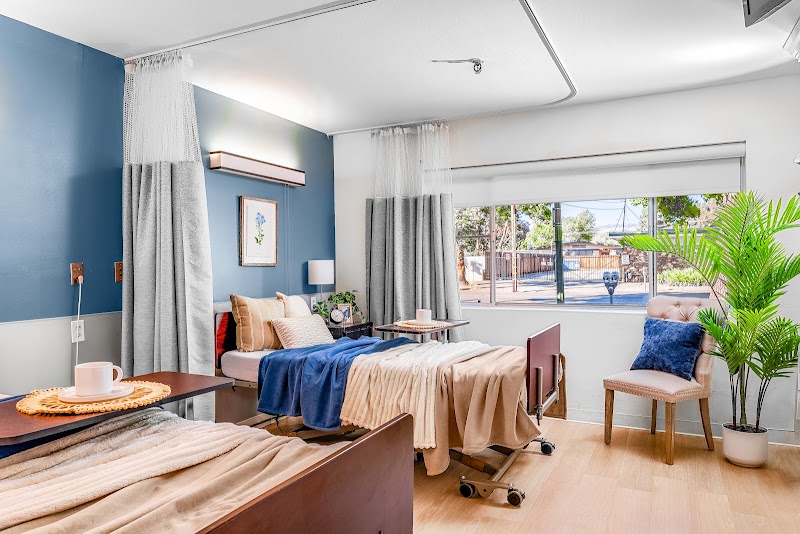
How Does San Jose Healthcare & Wellness Center Compare to Other California Nursing Homes?

Compared to the 100 nursing homes in California, SAN JOSE HEALTHCARE & WELLNESS CENTER's overall rating (4 stars) is above the state average of 3.2, staff turnover (35%) is significantly lower than the state average of 46%, and health inspection rating (3 stars) is at the national benchmark.

What Should Families Ask When Visiting San Jose Healthcare & Wellness Center?

Based on this facility's data, families visiting should ask: "Can I visit during a mealtime to observe dining assistance and food quality?" "How do you handle medical emergencies, and what is your hospital transfer rate?" "Can I speak with family members of current residents about their experience?"

Is San Jose Healthcare & Wellness Center Safe?

Based on CMS inspection data, SAN JOSE HEALTHCARE & WELLNESS CENTER has a clean safety record: no substantiated abuse findings (meaning no confirmed cases of resident harm), no Immediate Jeopardy citations (the most serious violation level indicating risk of serious injury or death), and is not on the Special Focus Facility watch list (a federal program monitoring the lowest-performing 1% of nursing homes). The facility has a 4-star overall rating and ranks #1 of 100 nursing homes in California. While no facility is perfect, families should still ask about staff-to-resident ratios and recent inspection results during their visit.

Do Nurses at San Jose Healthcare & Wellness Center Stick Around?

SAN JOSE HEALTHCARE & WELLNESS CENTER has a staff turnover rate of 35%, which is about average for California nursing homes (state average: 46%). Moderate turnover is common in nursing homes, but families should still ask about staff tenure and how the facility maintains care continuity when employees leave.

Was San Jose Healthcare & Wellness Center Ever Fined?

SAN JOSE HEALTHCARE & WELLNESS CENTER has no federal fines on record. CMS issues fines when nursing homes fail to meet care standards or don't correct problems found during inspections. The absence of fines suggests the facility has either maintained compliance or corrected any issues before penalties were assessed. This is a positive indicator, though families should still review recent inspection reports for the full picture.

Is San Jose Healthcare & Wellness Center on Any Federal Watch List?

SAN JOSE HEALTHCARE & WELLNESS CENTER is not on any federal watch list. The most significant is the Special Focus Facility (SFF) program, which identifies the bottom 1% of nursing homes nationally based on persistent, serious quality problems. Not being on this list means the facility has avoided the pattern of deficiencies that triggers enhanced federal oversight. This is a positive indicator, though families should still review the facility's inspection history directly.