WHITE BLOSSOM CARE CENTER
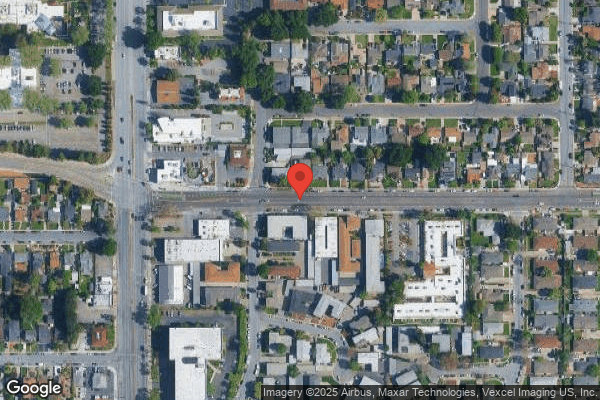
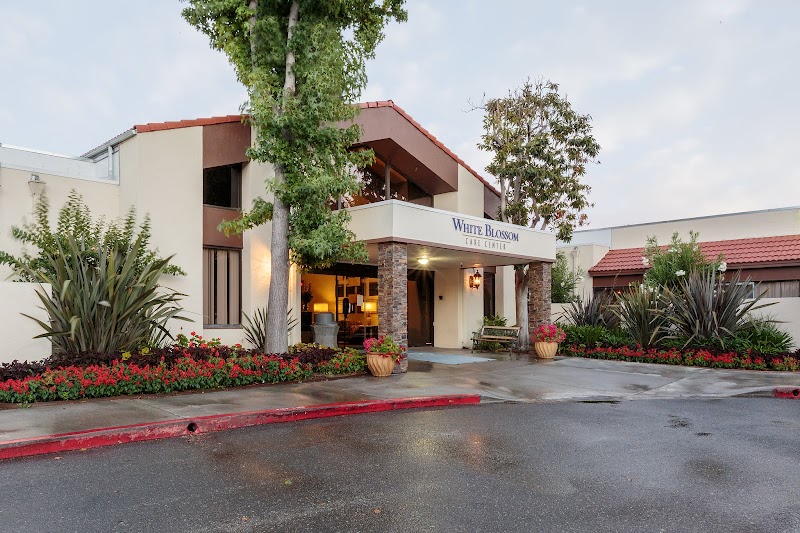
1990 FRUITDALE AVENUE, SAN JOSE, CA 95128 (408) 998-8447
For profit - Limited Liability company 153 Beds PACS GROUP Data: November 2025 1 Immediate Jeopardy citation
Trust Grade
48/100
#509 of 1155 in CA
Last Inspection: November 2024

Within standard 12-15 month inspection cycle. Federal law requires annual inspections.

Overview

White Blossom Care Center has received a Trust Grade of D, indicating below-average performance with some concerns about care quality. It ranks #509 out of 1155 facilities in California, placing it in the top half, while locally in Santa Clara County, it is #32 out of 50, meaning there are better local options. The facility is improving, with reported issues decreasing from 12 in 2024 to just 2 in 2025. However, staffing is a weakness, rated at 2 out of 5 stars, with a turnover rate of 44%, which is slightly above average for the state. In terms of fines, the center has incurred $83,177, which is concerning as it exceeds fines from 82% of California facilities. Although they have average RN coverage, which is important for catching potential problems, specific incidents of concern include a failure to supervise residents during smoking, which could lead to safety risks, and lapses in infection control practices that could put residents at risk for infections. While the facility has strengths in overall quality measures, the combination of staffing issues and specific incidents raises important considerations for families.

Trust Score
D
48/100
In California
#509/1155
Top 44%
Safety Record
High Risk
Review needed
Inspections
Getting Better
12 → 2 violations
Staff Stability
○ Average
44% turnover. Near California's 48% average. Typical for the industry.
Penalties
○ Average
$83,177 in fines. Higher than 58% of California facilities. Some compliance issues.
Skilled Nurses
○ Average
Each resident gets 35 minutes of Registered Nurse (RN) attention daily — about average for California. RNs are the most trained staff who monitor for health changes.
Violations
⚠ Watch
55 deficiencies on record. Higher than average. Multiple issues found across inspections.
★★★★☆
4.0
Overall Rating
★★☆☆☆
2.0
Staff Levels
★★★★★
5.0
Care Quality
★★★☆☆
3.0
Inspection Score
Stable
2024: 12 issues
2025: 2 issues

The Good

  • 5-Star Quality Measures · Strong clinical quality outcomes
  • Full Sprinkler Coverage · Fire safety systems throughout facility
  • No fines on record
  • Staff turnover below average (44%)

    4 points below California average of 48%

Facility shows strength in quality measures, fire safety.

The Bad

Staff Turnover: 44%

Near California avg (46%)

Typical for the industry

Federal Fines: $83,177

Well above median ($33,413)

Moderate penalties - review what triggered them

Chain: PACS GROUP

Part of a multi-facility chain

Ask about local staffing decisions and management

The Ugly 55 deficiencies on record

1 life-threatening
Jun 2025 1 deficiency
CONCERN (D) 📢 Someone Reported This

A family member, employee, or ombudsman was alarmed enough to file a formal complaint

Potential for Harm - no one hurt, but risky conditions existed

Quality of Care (Tag F0684)

Could have caused harm · This affected 1 resident

**NOTE- TERMS IN BRACKETS HAVE BEEN EDITED TO PROTECT CONFIDENTIALITY** Based on interview and record reviews, the facility failed to provide the necessary care and services for two of 3 sampled resid...

Read full inspector narrative →
**NOTE- TERMS IN BRACKETS HAVE BEEN EDITED TO PROTECT CONFIDENTIALITY** Based on interview and record reviews, the facility failed to provide the necessary care and services for two of 3 sampled residents (Residents 1 and 2) when: 1.Facility staff did not ensure timely assessment, physician notification, or complete documentation of a change in condition for Resident 1; and 2. Facility staff did not notify the physician or conduct a thorough investigation after Resident 2 fell on 2/27/25. These failures placed Residents 1 and 2 at risk for delayed treatment and potential harm. Findings: 1. A review of Resident 1's medical record indicated Resident 1 was admitted on [DATE] with diagnoses that included hemiplegia and hemiparesis following unspecified cerebrovascular disease (partial or complete paralysis on one side of the body after a stroke or brain injury), traumatic hemorrhage of cerebrum (bleeding in the brain caused by trauma), type 2 DM (diabetes mellitus, a chronic condition that affects how the body processes blood sugar), memory deficit following cerebral infarction (memory problems after a stroke). A review of Resident 1's transfer form, dated 2/17/25 at 6:45 p.m., indicated Resident 1 was transferred to the hospital due to malaise (a general feeling of being unwell or weak). A review of Resident 1's progress note, completed by the evening (PM) shift Licensed Vocational Nurse (LVN) A on 2/17/25 at 11:23 p.m., indicated that Resident 1's wife transported him to the hospital after he stated he was not feeling well. LVN A documented that Resident 1's vital signs at the time were within normal limits: blood pressure (BP, the force of blood pushing against the walls of the arteries) 152/89, pulse 76, respiration 18 (process of breathing), and oxygen saturation 97% (O2 sat, the percentage of oxygen in the blood). The progress notes further stated that Resident 1 was taken by his wife at 6:15 p.m., and that at 10:30 p.m., the wife reported Resident 1 had been admitted to the hospital for sepsis (life-threathening condition that could arise due to body's reaction to an infection), as he had been in the past. LVN A documented that the AM (morning) supervisor was notified, and the NOC (night) shift nurse was informed that the resident was in the hospital. A review of the eINTERACT Change of Condition (COC) form, completed by the NOC shift nurse on 2/18/25 at 12:26 a.m., indicated that Resident 1's change in condition began in the afternoon of 2/17/25. The form stated that the resident was complaining of malaise, had vital signs within normal range, and no shortness of breath (SOB) or complaints of pain. The form also documented that Resident 1's blood glucose (BG, the level of sugar in the blood) on 2/17/25 at 4:20 p.m. was 328 mg/dL (milligrams per deciliter, unit of measurement). According to the COC form, the primary care clinician was not notified until 11:38 p.m., several hours after Resident 1 had already been taken to the hospital by his wife. Further review of Resident 1's clinical records, no other documentation indicating what ocurred prior or during the time when Resident 1 left the facility at 6:15 p.m. During an interview on 2/25/25 at 3:30 p.m., with the Certified Nursing Assistant (CNA) B assigned to Resident 1 on the evening of 2/17/25, CNA B stated the charge nurse told her Resident 1 was not feeling well and asked her to take his vital signs. CNA B stated the vital signs were within normal limits. Resident 1 told CNA B he was feeling tired. During an interview with the Director of Nursing (DON) on 2/25/25 at 4:15 p.m., the DON stated that when a resident or family requests a hospital transfer, staff should assess the resident, notify the physician of the assessments, and the family's request, and may facilitate the transfer per family's request, even if vitals signs appear stable. During an interview with the Nurse Supervisor (NS) C on 4/29/25 at 4 p.m., NS C stated she was not aware of Resident 1's complaint or the family's request for transfer until after Resident 1 had left the facility. The NS C confirmed that no timely assessment or documentation occurred during the PM shift, and that the facility protocol requires nurses to assess the resident, document changes, notify the physician, and respond to family requests appropriately. A review of Resident 1's hospital Discharge summary, dated [DATE], stated the resident was admitted on [DATE] for suspected sepsis related to a complicated urinary tract infection (UTI, bladder infection). The summary also noted that the resident had fever, chills, shaking, and malaise for several days prior to admission. The hospital suspected that a viral upper respiratory infection (URI, viral or bacterial illness in the upper airways, including the nose, sinuses and throat) triggered sepsis. Review of the undated facility's policy titled Change in a Resident's Condition or Status indicated, .Prior to notifying the physician or healthcare provider, the nurse will make detailed observations and gather relevant and pertinent information for the provider, including (for example) information prompted by the Interact SBAR (Situation, Background, Assessment, Recommendation) Communication form . 2a.A review of Resident 2's clinical record indicated the resident was admitted on [DATE] with diagnoses including Disseminated Coccidioidomycosis (a serious fungal infection that spread throughout the body); Unspecified injury of Thoracic Spinal Cord (an unclear injury to the part of the spinal cord located in the upper and middle back). A review of the COC form, dated 2/27/25, indicated NO under physician notification, and the explanation field was marked N/A. A review of Resident 2's Progress notes showed no documentation that the physician had been notified following the fall on 2/27/25. During a phone interview with Registered Nurse (RN) D on 5/1/25 at 4:32 p.m., night shift RN D stated that Certified Nursing Assistant (CNA) E reported Resident 2 had fallen during activity of daily living care around midnight. RN D confirmed that he did not notify the physician and did not report to the morning shift nurse about not calling the physician. RN D acknowledged that he should have notified the physician about Resident 2's fall or endorsed it to the morning shift. During a concurrent interview and record review with the DON on 5/20/25 at 4:35 p.m., the DON confirmed that the physician was not notified. The DON stated that the best practice was to notify the physician and document fall monitoring in the progress notes. 2b. A review of the Interdisciplinary team (IDT, a group of healthcare staff from different areas who work together to plan and provide care for a resident) note indicated the IDT note was created on 3/11/25 - 11 days after the effective date of 2/28/25. During a phone interview with CNA E on 5/20/25 at 8:23 a.m., CNA E stated he was assisting Resident 2's roommate at the time of the fall and did not witness the incident. CNA E reported hearing a loud noise and then found Resident 2 on the floor. During a concurrent interview and record review of the IDT note with the Assistant Director of Nursing (ADON) on 5/20/25, at 4:45 p.m., the ADON stated she conducted the fall investigation by interviewing Resident 2 and RN D but did not interview CNA E due to scheduling issues. ADON acknowledged that CNA E's statement contradicted the IDT note, which stated the fall occurred during activity of daily living care with CNA E present. Review of the undated facility's policy titled Change in a Resident's Condition or Status indicated, Our facility promptly notifies the resident, his or her attending physician, and the resident representative of changes in the resident's medical/mental condition .a. accident or incident involving the resident .d. significant change in the resident's physical/emotional mental condition .g. need to transfer the resident to a hospital/treatment center Review of the undated facility's policy titled Accidents and Incidents - Investigating and Reporting indicated, All accidents or incidents involving residents, employess, visitors, vendors, etc., ocurring on our premises shall be investigated .c. the circumstances surrounding the accident or incident m. other pertinent data as necessary or required
May 2025 1 deficiency
CONCERN (D) 📢 Someone Reported This

A family member, employee, or ombudsman was alarmed enough to file a formal complaint

Potential for Harm - no one hurt, but risky conditions existed

Deficiency F0658 (Tag F0658)

Could have caused harm · This affected 1 resident

**NOTE- TERMS IN BRACKETS HAVE BEEN EDITED TO PROTECT CONFIDENTIALITY** Based on interview and record review, the facility failed to provide services in accordance with professional standards of pract...

Read full inspector narrative →
**NOTE- TERMS IN BRACKETS HAVE BEEN EDITED TO PROTECT CONFIDENTIALITY** Based on interview and record review, the facility failed to provide services in accordance with professional standards of practice for one of two sampled residents (Resident 1) when license nurses did not accurately complete Resident 1's elopement and wandering risk assessment. This failure had the potential to compromise the facility's ability to provide resident-centered interventions based on assessment data. Findings: Review of Resident 1's medical record indicated she was admitted on [DATE] and re-admitted on [DATE] with diagnoses including cerebral palsy (a congenital disorder of movement, muscle tone, or posture due to abnormal brain development), chromosomal abnormality (a genetic condition that occurs when there are missing, extra, or irregular portions of chromosomal DNA [a molecule that carried genetic instructions for the development and functioning of all living organisms]), other lack of expected normal physiological development in childhood (known as developmental delay, means a child or adult is not achieving the expected developmental milestones at the typical age). Review of Resident 1's Minimum Data Set (MDS, an assessment tool), dated 1/21/25, indicated she had a brief interview of mental status (BIMS, a structured cognitive test) scoring 3 (severe cognitive impairment). Review of Resident 1's health status note, dated 1/28/25 at 00:23 a.m., indicated the resident eloped from the facility during shift change, and the resident attempted to leave the facility to go home. Review of Resident 1's elopement and wandering risk observation/assessment, dated 11/9/24, indicated: 0. None present was marked for C. Disease diagnosis: does the resident have a diagnosis that may impact cognition? (i.e., Alzheimer's disease, Anxiety disorder, Bipolar disorder, Delusions, Dementia, Depression, ID/DD, OBS, Schizophrenia, or other not listed); H. Other relevant information was blank; I. Interventions: 1. Has the care plan been initiated/updated to reflect interventions aimed at reducing the risk of unsafe wandering or an elopement? was blank. Review of Resident 1's care plans indicated there was no care plan developed for elopement or wandering. During an interview and record review with assistant director of nursing (ADON) A on 4/7/25 at 9:10 a.m., she confirmed the record review. ADON A stated Resident 1's elopement and wandering risk observation/assessment, dated 11/9/24 was not accurate for the resident's diagnoses. ADON A acknowledged that 4. Two or more are present should have been marked for question C, and all sections should have been completed. During an interview and record review with licensed vocational nurse (LVN) B on 4/7/25 at 3:45 p.m., she confirmed she completed Resident 1's elopement assessment dated [DATE]. LVN B stated Resident 1's elopement and wandering risk observation/assessment, dated 11/9/24 was not accurate for the resident's diagnoses. LVN B acknowledged that 4. Two or more are present should have been marked for question C, and all sections should have been completed. Review of the facility's undated policy and procedure titled Wandering and Elopements indicated, The facility will identify residents who are at risk of unsafe wandering and strive to prevent harm .If identified as at risk for wandering, elopement, or other safety issues, the resident's care plan will include strategies and interventions to maintain the resident's safety. Review of the facility's policy and procedure titled Care Plans, Comprehensive Person-Centered, dated 2001, indicated, A comprehensive, person-centered care plan that includes measurable objectives and timetables to meet the resident's physical, psychosocial and functional needs is developed and implemented for each resident.
Nov 2024 2 deficiencies
CONCERN (D)

Potential for Harm - no one hurt, but risky conditions existed

PASARR Coordination (Tag F0644)

Could have caused harm · This affected 1 resident

Based on interview, record review, and facility document and policy review, the facility failed to ensure a Level I Preadmission Screening and Resident Review (PASRR) was updated to reflect a newly di...

Read full inspector narrative →
Based on interview, record review, and facility document and policy review, the facility failed to ensure a Level I Preadmission Screening and Resident Review (PASRR) was updated to reflect a newly diagnosed serious mental disorder for 1 (Resident #11) of 6 residents reviewed for PASRR requirements. Findings included: A facility policy titled admission Criteria, updated on 10/24/2024, specified, c. The facility designated staff will complete a new PASRR for residents with new diagnosis of mental illness and/or significant change of condition and refer them to the appropriate state-designated authority for Level II PASRR evaluation. An admission Record indicated the facility admitted Resident #11 on 10/04/2007. According to the admission Record, the resident had a medical history that included diagnoses of major depressive disorder and mood disorder, both with an onset date of 01/14/2019. Per the admission Record, Resident #11 also had a diagnosis of psychotic disorder, with an onset date of 06/21/2023. An annual Minimum Data Set (MDS), with an Assessment Reference Date (ARD) of 09/11/2024, revealed Resident #11 had a Brief Interview for Mental Status (BIMS) score of 15, which indicated the resident had intact cognition. The MDS indicated the resident had active diagnoses of depression, bipolar disorder, psychotic disorder, and mood disorder. Resident #11's care plan included an undated focus area that indicated the resident required an anti-depressant medication for major depressive disorder with psychotic features manifested by angry outbursts and physical aggressiveness. The care plan also included additional undated focus areas that indicated the resident was at risk for mood and behavioral disturbances, had episodes of aggressive behavior toward other residents, had episodes of inappropriate, disruptive, and combative behaviors toward staff that included throwing water, hitting, yelling, kicking, false allegations, and being sexually inappropriate, and required a mood stabilizing medication for manic episodes, which were manifested by angry, verbal outbursts and physical aggressiveness. Resident #11's Preadmission Screening and Resident Review (PASRR) Level I Screening, dated 03/16/2022, indicated the screening was performed due to a Suspected MI [mental illness]. The Level I Screening indicated the resident had a diagnosed mental disorder, such as Depression, Anxiety, Panic, Schizophrenia/Schizoaffective Disorder, Psychotic, Delusional, and/or Mood Disorder and indicated the resident received Depakote for major depressive disorder with psychotic features. The Level I screening was positive, and a Level II evaluation was required. A letter from the State of California - Health and Human Services Agency Department of Health Care Services, dated 03/16/2022, revealed Resident #11's Level II evaluation was not completed, because Resident #11 had no serious mental illness. The letter directed the facility to submit a new Level I screening should the case need to be reopened. A Psychiatry Diagnostic Interview note, dated 06/08/2023, revealed Resident #11 had a primary psychiatric diagnosis of major depressive disorder, recurrent, severe with psychotic symptoms and a secondary diagnosis of other psychotic disorder not due to a substance or known physiological condition. The note directed staff to add the diagnosis of psychotic disorder to the resident's record. Resident #11's medical record revealed no evidence of an updated Level I PASRR following the resident's new diagnosis of psychotic disorder in 06/2023. During an interview on 11/21/2024 at 12:54 PM, MDS Licensed Vocational Nurse (LVN) #3 said when Resident #11 received a new mental illness diagnosis, an updated PASRR should have been completed. During an interview on 11/21/2024 at 1:59 PM, the Director of Nursing (DON) stated a new PASRR should have been completed for Resident #11.
CONCERN (D)

Potential for Harm - no one hurt, but risky conditions existed

Deficiency F0645 (Tag F0645)

Could have caused harm · This affected 1 resident

**NOTE- TERMS IN BRACKETS HAVE BEEN EDITED TO PROTECT CONFIDENTIALITY** 2. An admission Record indicated the facility originally admitted Resident #25 on 05/29/2015 and most recently admitted the resi...

Read full inspector narrative →
**NOTE- TERMS IN BRACKETS HAVE BEEN EDITED TO PROTECT CONFIDENTIALITY** 2. An admission Record indicated the facility originally admitted Resident #25 on 05/29/2015 and most recently admitted the resident on 05/08/2024. According to the admission Record, the resident had a medical history that included diagnoses of schizophrenia, major depressive disorder, bipolar disorder, anxiety disorder, and borderline personality disorder. An annual Minimum Data Set (MDS), with an Assessment Reference Date (ARD) of 08/29/2024, revealed Resident #25 had a Brief Interview for Mental Status (BIMS) score of 15, which indicated the resident had intact cognition. The MDS indicated the resident had active diagnoses of anxiety disorder, depression, bipolar disorder, schizophrenia, post-traumatic stress disorder (PTSD), and borderline personality disorder and received antipsychotic medications during the assessment look-back period. Resident #25's care plan included a focus area, initiated on 05/10/2024, that indicated the resident was at risk for altered mood related to their overall health status, including diagnoses of schizophrenia, PTSD, bipolar disorder, borderline personality disorder, and severe rheumatoid arthritis. Another focus area, initiated on 05/10/2024, indicated the resident required the antipsychotic medications Abilify and perphenazine related to bipolar disorder and schizophrenia as evidenced by visual hallucinations and extreme mood swings. Resident #25's Preadmission Screening and Resident Review (PASRR) Level I Screening, completed on 05/07/2024 at a local hospital, indicated the screening type was an Initial Preadmission Screening (PAS). The Level I screening indicated the resident did have a serious diagnosed mental disorder such as Depressive Disorder, Anxiety Disorder, Panic Disorder, Schizophrenia/Schizoaffective Disorder, or symptoms of Psychosis, Delusions, and/or Mood Disturbance. The screening specified that the resident had a diagnosis of schizophrenia; however, the resident's other diagnosed mental illnesses were not reflected. The screening indicated the resident met the criteria for an Exempted Hospital Discharge, and the case was closed. A letter from the State of California - Health and Human Services Agency California Department of Health Care Services, dated 05/07/2024, revealed Resident #25's Level I screening was negative, and a Level II evaluation was not required. The letter also indicated the reason was due to an Exempted Hospital Discharge. The letter directed the facility to submit a new Level I screening on the 31st day if the resident remained in the facility greater than 30 days. Resident #25's medical record revealed no documented evidence the facility submitted a new Level I screening for Resident #25 due to inaccurate information on their initial Level I screening or when the resident remained in the facility greater than 30 days. During an interview on 11/21/2024 at 12:54 PM, MDS Licensed Vocational Nurse (LVN) #3 stated she did not know PASRRs had an option for exempted hospital discharges. MDS LVN #3 said the facility should have submitted a new Level I screening for Resident #25. During an interview on 11/21/2024 at 1:59 PM, the Director of Nursing (DON) stated the facility should have submitted a new Level I screening for Resident #25. Based on record review, interview, and facility policy review, the facility failed to ensure Preadmission Screening and Resident Review (PASRR) Level I screenings accurately reflected the presence of diagnosed serious mental disorders and failed to ensure new PASRR Level I screenings were submitted on the 31st day of admission to the skilled nursing facility following an exempted hospital discharge for 2 (Resident #127 and Resident #25) of 6 residents reviewed for PASRR requirements. Findings included: A facility policy titled admission Criteria, updated on 10/24/2024, specified, 9. All new admissions and readmissions are screened for mental disorders (MD), intellectual disabilities (ID) or related disorders (RD) per the Medicaid Pre-admission Screening and Resident Review (PASARR) [another acronym for PASRR] process. a. The discharging hospital conducts a Level I PASARR screen for all potential Skilled Nursing Facility (SNF) admissions, regardless of payer source, to determine if the individual meets the criteria for a MD, ID or RD. b. When/if the level I screen indicates that the individual may meet the criteria for MD, ID, or RD, he or she is referred to the state PASARR representative by the system for the Level II (evaluation and determination) screening process. 1. An admission Record indicated the facility originally admitted Resident #127 on 09/11/2024 and most recently admitted the resident on 10/07/2024. According to the admission Record, Resident #127 had a medical history that included a diagnosis of schizoaffective disorder. A hospital Discharge Summary, for a date of service of 09/11/2024, revealed Resident #127 was discharged from the hospital on [DATE] with discharge diagnoses that included schizoaffective disorder and schizophrenia. The Discharge Summary also reflected the resident was discharged from the hospital with orders for risperidone (an antipsychotic medication) for psychotic symptoms. An admission Minimum Data Set (MDS), with an Assessment Reference Date (ARD) of 10/17/2024, revealed Resident #127 had a Brief Interview for Mental Status (BIMS) score of 14, which indicated the resident had intact cognition. According to the MDS, the resident had an active diagnosis of schizophrenia and received an antipsychotic medication during the assessment look-back period. Resident #127's Preadmission Screening and Resident Review (PASRR) Level I Screening, completed on 09/09/2024 at a local hospital, indicated the screening type was an Initial Preadmission Screening (PAS). The Level I screening indicated the resident did not have a serious diagnosed mental disorder such as Depressive Disorder, Anxiety Disorder, Panic Disorder, Schizophrenia/Schizoaffective Disorder, or symptoms of Psychosis, Delusions, and/or Mood Disturbance; however, a separate section of the screening that addressed psychotropic medications indicated the resident was receiving risperidone for schizoaffective disorder. The screening indicated the resident met the criteria for an Exempted Hospital Discharge, and the case was closed. A letter from the California Department of Health Care Services, dated 09/09/2024, revealed Resident #127's Level I screening was negative, and a Level II evaluation was not required. The letter also indicated the reason was due to an Exempted Hospital Discharge. The letter directed the facility to submit a new Level I screening on the 31st day if the resident remained in the facility greater than 30 days. Resident #127's medical record revealed no documented evidence the facility submitted a new Level I screening for Resident #127 due to inaccurate information on their initial Level I screening or when the resident remained in the facility greater than 30 days. During an interview on 11/21/2024 at 11:29 AM, Admissions Director #4 stated the hospital completed PASRRs prior to each resident's admission to the facility. Admissions Director #4 said medical records staff would notify them if any information in the PASRR was incorrect. During an interview on 11/21/2024 at 12:43 PM, the Medical Records Director stated residents who were admitted from the hospital brought their PASRRs with them, and if they did not, someone from the Medical Records Department would notify the Admissions Department, so they could reach out to the hospital for it. The Medical Records Director said medical records staff audited all admission paperwork, including PASRRs, for accuracy, but the MDS Department was responsible for ensuring the PASRRs were accurate. During an interview on 11/21/2024 at 12:57 PM, MDS Registered Nurse (RN) #2 said MDS staff reviewed the PASRR when completing the admission MDS to ensure it was accurate. MDS RN #2 confirmed a new Level I screening should have been completed for Resident #127. During an interview on 11/21/2024 at 2:00 PM, the Director of Nursing (DON) stated he expected MDS staff to ensure PASRRs were accurate. During an interview on 11/21/2024 at 2:20 PM, the Administrator stated he expected MDS and medical records staff to ensure PASRRs were accurate.
Oct 2024 1 deficiency
CONCERN (E) 📢 Someone Reported This

A family member, employee, or ombudsman was alarmed enough to file a formal complaint

Potential for Harm - no one hurt, but risky conditions existed

Infection Control (Tag F0880)

Could have caused harm · This affected multiple residents

**NOTE- TERMS IN BRACKETS HAVE BEEN EDITED TO PROTECT CONFIDENTIALITY** Based on observation, interview, and record review, the facility failed to ensure infection control practices were implemented w...

Read full inspector narrative →
**NOTE- TERMS IN BRACKETS HAVE BEEN EDITED TO PROTECT CONFIDENTIALITY** Based on observation, interview, and record review, the facility failed to ensure infection control practices were implemented when: 1. Eight plastic containers of [brand name] bleach (provide effective infection control for hard surfaces to help stop pathogen transmission) lids were not closed and were exposed in the hallways; 2. Two certified nursing assistants A and B (CNA A and CNA B) were wearing gloves in the hallway walking room to room and did not perform hand hygiene in between task; 3. One box of clean gloves and one bottle of hand sanitizer were on top of a clean movable cart and were approximately 1/2 inch from a treatment cart with attached trash bin with an open lid. 4. Three laundry hampers with three linens on top were stored outside by the facility patio; 5. A bin was over flowing with housekeeping towels outside the laundry area hallway; 6. Two empty drinking water bottles, clean rolled plastic bags, one opened gloves and hand sanitizer were all stored together in a housekeeping cart that was parked in the hallway; 7. Resident 1's nasal cannula (tubing inserted into the nostrils and attached to an oxygen tank or concentrator) was hanging and touching the wheelchair; 8. Red pushcart with used meal trays and utensils were parked underneath the water and juice dispenser in the nursing station. These failures had the potential to spread infection in the facility. Findings: 1.During an initial tour observation on 10/10/2024 at 10:57, 11, 11:02, 11:04 and 11:06 a.m., the following were observed: - Two plastic containers of [brand name] bleach were observed on top of garbage hampers. The two containers of [brand name] bleach had open lids and the contents were exposed. - Two plastic containers of [ brand name] bleach were observed on top of an isolation bin that were outside resident's room. The two containers of [brand name] bleach had open lids and the contents were exposed. -Four vital sign machines parked in the facility hallway contained plastic containers of [brand name] bleach. The four plastic containers of [brand name] bleach had open lids and the contents were exposed. During a concurrent observation and interview on 10/10/24 at 11:06 a.m., with the director of staff development (DSD), he confirmed the above observations and stated that the lids of the [brand name] bleach should have been closed and should not be exposed. 2. During an observation on 10/10/24 at 11:01 a.m., CNA A was wearing gloves in the hallway walking room to room with the same gloves on and did not perform hand hygiene in between task. During a concurrent observation and interview on 10/10/24 at 11:02 a.m., with CNA A, she confirmed the above observations and stated she should have not used the same gloves in the hallway going room to room. She further stated that she should have performed hand hygiene in between task to prevent the spread of infection. During a concurrent observation and interview on 10/10/24 at 11:20 a.m., with CNA B, she confirmed that she used the same gloves in the hallway coming from the room of resident's that was assigned for her and did not perform hand hygiene after discarding used gloves in the garbage can outside the resident's room. She further stated that hand hygiene was important to prevent the spread of infection. 3. During a concurrent observation and interview with licensed vocational nurse C (LVN C) on 10/10/24 at 11:05 a.m., one box of clean gloves and one bottle of hand sanitizer were on top of a clean movable cart and were approximately 1/2 inch from a treatment cart with attached trash bin with an open lid. LVN C confirmed the observation and stated the clean gloves and the bottle of hand sanitizer should not be exposed to an open trash bin containing used pair of blue gloves, papers, two empty tubes. 4. During a concurrent observation and interview with the DSD on 10/10/24 at 11:07 a.m., three laundry hampers with three linens on top were stored outside by the facility's patio. The DSD confirmed the observation and stated that hampers should have been stored in the laundry area and there should be no linens on top of the hampers to prevent the spread of infection. 5. During a concurrent observation and interview with the environmental director (ED) on 10/10/24 at 11:08 a.m., a bin was overflowing with housekeeping towels outside the laundry area hallway. The ED confirmed the observation and stated the housekeeping towels should be stored in the bin with the lid closed. 6. During a concurrent observation and interview with the DSD on 10/10/24 at 11:14 a.m., two empty drinking water bottles, clean rolled plastic bags, one opened gloves and hand sanitizer were all stored together in a housekeeping cart that was parked in the hallway. The DSD confirmed the observation and stated the empty drinking water bottles should not be stored together with the clean housekeeping items to prevent contamination. 7. During a concurrent observation and interview with the DSD on 10/10/24 at 11:15 a.m., Resident 1's nasal cannula (tubing inserted into the nostrils and attached to an oxygen tank or concentrator) was hanging and touching the wheelchair. The DSD confirmed the above observation and stated the nasal cannula should not be exposed and should not be touching the wheelchair. The DSD further stated Resident 1's nasal cannula should be stored in a black mesh bag. 8. During a concurrent observation and interview with the DSD on 10/10/24 at 11:17 a.m., red push cart with used meal trays and utensils were parked underneath the water and juice dispenser in the nursing station. The DSD confirmed the observation and stated the red pushcart are used for dirty trays and resident's [NAME] after they ate and should not be parked underneath the water and juice dispenser due to infection control issue. A review of the facility's undated policy and procedure (P&P), titled Handwashing/Hand Hygiene, the P&P indicated all personnel are expected to adhere to hand hygiene policies and practices to help prevent the spread of infections to other personnel, residents, and visitors. Hand hygiene products and supplies (sinks, soap, towels, alcohol-based hand- rub (ABHR) dispensers are placed in areas of high visibility and in patient care areas. Review of the facility's undated policy and procedure, titled Personal Protective Equipment- using Gloves, indicated when gloves are indicated, use disposable single -use gloves . perform hand hygiene after removing gloves. (note: Gloves do not replace hand hygiene) . Discard used gloves into the waste receptacle inside the examination or treatment room. Review of the facility's undated policy and procedure, titled Standard Precaution, indicated keep the oxygen cannula and tubing used in a pouch when not in use.
Aug 2024 2 deficiencies
CONCERN (D) 📢 Someone Reported This

A family member, employee, or ombudsman was alarmed enough to file a formal complaint

Potential for Harm - no one hurt, but risky conditions existed

Medication Errors (Tag F0758)

Could have caused harm · This affected 1 resident

**NOTE- TERMS IN BRACKETS HAVE BEEN EDITED TO PROTECT CONFIDENTIALITY** Based on interview and record review, the facility failed to ensure one of three residents (Resident 2) were free from unnecessa...

Read full inspector narrative →
**NOTE- TERMS IN BRACKETS HAVE BEEN EDITED TO PROTECT CONFIDENTIALITY** Based on interview and record review, the facility failed to ensure one of three residents (Resident 2) were free from unnecessary psychotropic medications (medication capable of affecting the mind, emotions, and behavior) when Resident 2 received quetiapine fumarate (Seroquel, an antipsychotic medication used to treat certain mental/mood conditions) without adequate indication and monitoring a specific target behavior for its use. This failure could result in lack of adequate monitoring and had the potential for residents to receive unnecessary medications. Findings: Resident 2 was admitted to the facility on [DATE] with diagnoses including dementia (loss of thinking, remembering, and reasoning skills) in other diseases classified elsewhere, unspecified severity, without behavioral disturbance, psychotic disturbance, mood disturbance, and anxiety; type 2 diabetes mellitus (high levels of sugar in the blood) ; essential hypertension (high blood pressure that does not have a known cause). During a review of Resident 2's Minimum Data Set (MDS, a resident clinical assessment tool) dated 6/12/24, the MDS indicated, Resident 2 had a BIMS score of 99 (Brief Interview for Mental Status, a mandatory tool used to screen and identify the cognitive condition of residents. A score of 99 indicates that a patient was unable to complete the BIMS). During a review of Resident 2's nursing telehealth evaluation dated 6/7/24 9:49 p.m., indicated Resident 2's family member (FM) was requesting Seroquel because ER (emergency room) forgot to add that medication with discharge orders. During a review of Resident 2's physician order dated 6/7/24, it was indicated a new order for Seroquel 25 mg (milligram, unit of measurement) daily at bedtime for 3 days. The order did not have an indication for use and monitoring of side effects. During an interview on 7/26/24 at 4:12 p.m., with Licensed Vocational Nurse (LVN) B, she stated she went through the medication list with the FM and Seroquel was not in the list. LVN B stated the FM wanted Seroquel to ordered. LVN B stated she contacted the doctor and got an order for Seroquel. During a concurrent interview and record review on 8/21/24 at 9:25 a.m., with the Pharmacy Consultant (PC), the PC stated a new admission review intermittent medication regimen review (IMRR) was done on 6/10/24. The PC stated the IMRR recommendation was to put an order to monitor target behavior and side effects. During a review of Resident 2's medication administration record (MAR) indicated Resident 2 received Seroquel on 6/8/24 and 6/9/24. There was no monitoring of target behavior and side effects on the MAR. During an interview on 9/11/24 at 4:29 p.m., with the PC, the PC stated the recommendation was to taper (gradual) antipsychotic medication. The PC stated some patients may see some rebound behaviors when stopping the antipsychotic. Review of the facility's policy, titled Antipsychotic Medication Use, undated, indicated Residents will only receive antipsychotic medications when necessary . The attending physician and other staff will gather and document information to clarify a resident's behavior, mood, function, medical condition, and specific symptoms. Residents who are admitted from the community or transferred from a hospital .will be evaluated for the appropriateness and indications for use. Nursing staff shall monitor for and report any of the following side effects and adverse consequences of antipsychotic medications .
CONCERN (D) 📢 Someone Reported This

A family member, employee, or ombudsman was alarmed enough to file a formal complaint

Potential for Harm - no one hurt, but risky conditions existed

Infection Control (Tag F0880)

Could have caused harm · This affected 1 resident

**NOTE- TERMS IN BRACKETS HAVE BEEN EDITED TO PROTECT CONFIDENTIALITY** Based on observation, interview, and record review, the facility failed to ensure infection prevention practices were followed f...

Read full inspector narrative →
**NOTE- TERMS IN BRACKETS HAVE BEEN EDITED TO PROTECT CONFIDENTIALITY** Based on observation, interview, and record review, the facility failed to ensure infection prevention practices were followed for one of four residents (Resident 1) when the door of the Covid-19 isolation room was open. This failure had the potential to result in transmission and spread of Covid-19 infection. Findings: During an observation, on 8/21/24 at 3:20 p.m., the door of a Covid-19 isolation room AA was open. Review of Resident 1's clinical record indicated she was admitted on [DATE] with a diagnosis including acute pulmonary edema (fluid builds up in the lungs making it difficult to breathe), acute and chronic respiratory failure with hypoxia (a condition where not enough oxygen in the body) A condition in which the lungs have a hard time loading the blood with oxygen or removing carbon dioxide. Lungs cannot release enough oxygen into the blood). Resident 1 was covid positive on 8/21/24. During an interview on 8/21/24 at 3:27 p.m., with Licensed Vocational Nurse (LVN) A, she confirmed Resident 1 was Covid-19 positive and acknowledged that the door of the room was open. LVN A stated the door should be closed at all times. During an interview on 8/21/24 at 3:55 p.m., with the Infection Preventionist (IP), she stated the door of a covid positive room should be closed at all times to contain the infection. According to CDC's Infection Control Guidance:SARS-CoV-2/COVID-19, indicated Place a patient with suspected or confirmed SARS-CoV-2 infection in a single-person room. The door should be kept closed.
Aug 2024 1 deficiency
CONCERN (D) 📢 Someone Reported This

A family member, employee, or ombudsman was alarmed enough to file a formal complaint

Potential for Harm - no one hurt, but risky conditions existed

Infection Control (Tag F0880)

Could have caused harm · This affected 1 resident

Based observation, interview, and record review the facility failed to implement infection control practices for three of four emergency crash carts when: 1. Emergency crash carts (crash cart is a set...

Read full inspector narrative →
Based observation, interview, and record review the facility failed to implement infection control practices for three of four emergency crash carts when: 1. Emergency crash carts (crash cart is a set of trays/drawers/shelves on wheels used for transportation and dispensing of emergency medication/equipment at site of medical/surgical emergency for life support protocols to potentially save someone's life) B, and C contained oropharyngeal airway (OPA, also known as an oral airway is a medical device that helps maintain or keep a patient's airway open) kit that was not stored in the original packaging and was not labeled with shelf-life expectancy or no expiration date. 2. Emergency crash cart A contained oropharyngeal airway kit stored in two plastic bags had yellowish substance with no label or expiration date. 3. Emergency crash care B and C had one yankauer (Yankauer suction tips are often used to suction oropharyngeal secretions to prevent aspiration. They can be used in the mouth to remove excess fluid and secretions from people who have difficulty swallowing or spitting) and one adult nasal oxygen cannula (nasal cannula is a device that gives you additional oxygen- supplemental oxygen or oxygen therapy through your nose and It's a thin, flexible tube that goes around your head and into your nose) with no shelf-life expectancy or expiration date. These failures had the potential to spread infection and cross-contamination in the facility. Findings: 1. During an observation with the director of nursing on 7/12/24 at 12:08 p.m., emergency crash cart b and c contained oropharyngeal airway with no label or expiration date and was not stored in their original packaging. During a concurrent observation and interview with the infection control preventionist nurse (ICPN) on 7/12/24 at 12:20 p.m., the ICPN confirmed emergency crash cart B and C contained OPA with different sizes stored in two separate plastic bags. The first plastic bag had five pieces of OPA 50 millimeter (mm, is a unit of length in the International System of Units, equal to one thousandth of a meter), five pieces of OPA 60 mm, 70 mm, and 80 mm. The second bag had five pieces of 90 mm, 100 mm, and 110 mm. The ICPN confirmed the OPAs were not stored in their original packaging and the plastic bags did not have the OPAs shelf-life expectancy or expiration date. The ICPN further stated that the OPAs should have been stored in their original packaging for staff to know when the expiration date or shelf-life expectancy. During a concurrent observation and interview with the central supply (CS) on 7/12/24 at 12:16 p.m., he acknowledged the above observation. The CS stated that he was responsible for re-stocking medical supplies in the crash cart, but the above OPAs were there for some time. The CS confirmed the OPAs were stored in the plastic bags and not from their original packaging. He further stated that he tried to look for the original packages inside the central supply room but could not find it. 2. During a concurrent observation and interview with the ICPN on 7/12/24 at 12:28 pm., she confirmed that emergency crash cart A contained OPAs with different sizes were stored in plastic bags. The first plastic bag had five pieces of OPA 50 mm, 60 mm, 70 mm, and 80 mm. The second bag had five pieces of OPA 90 mm, 100 mm, and 110 mm. The ICPN confirmed there was a yellowish substance in the two plastic bags containing OPAs and the OPAs were not labeled with their shelf-life expectancy or their expiration date. The ICPN stated the two bags should have been replaced by the staff and the OPAs should have been stored from their original packaging, for facility staff to now the OPAs shelf-life expectancy or expiration date. 3. During a concurrent observation and interview with the ICPN on 7/12/24 at 12:30 p.m., the ICPN confirmed that emergency crash cart for station B and C contained one yankauer with bulb tip and one adult nasal cannula oxygen tubing with no shelf-life expectancy or no expiration date. The ICPN stated the yankauer and the nasal cannula oxygen tubing should have shelf-life expectancy or expiration date. Review of the facility's policy and procedure revised January 2023 titled, Emergency Cart (E-Cart) indicated to organize and maintain the emergency cart (E- Cart) to ensure adequate needed equipment E- Carts will be maintained and supplied with required check list which includes respiratory equipment All nurses should be familiar with the E- Cart contents, location, supplies shall be re -informed during designated mandatory in services. Review of the facility's Emergency Cart Check off list, indicated Central Supply will check and refill carts during weekdays, and supervisor /nurses will check and log on weekends. Review of the facility's policy and procedure revised February 2023 titled, Medication labeling and Storage indicated medical supplies and equipment that do not have expiration dates the facility can replace those items as needed . (e.g.: if /when the packaging or equipment are wet or discolored, visibly worn out.
Jun 2024 2 deficiencies
CONCERN (D) 📢 Someone Reported This

A family member, employee, or ombudsman was alarmed enough to file a formal complaint

Potential for Harm - no one hurt, but risky conditions existed

Investigate Abuse (Tag F0610)

Could have caused harm · This affected 1 resident

Based on interview and record review, the facility failed to perform a thorough investigation and report for seven of nine residents (Residents 1, 2, 3, 4, 5, 11, and 12). This failure had the potenti...

Read full inspector narrative →
Based on interview and record review, the facility failed to perform a thorough investigation and report for seven of nine residents (Residents 1, 2, 3, 4, 5, 11, and 12). This failure had the potential to compromise the facility's ability to determine the circumstances surrounding the incidents and could have compromised the residents' safety. Findings: During a review of the 5-day investigation summary of an alleged altercation between Residents 2 and 3, the summary did not indicate the outcome for the facility's investigation of whether the facility was able to determine if they thought the altercation did occur, or not. During a review of the 5-day investigation summary of an alleged altercation between Residents 1 and 2, the summary did not indicate the outcome for the facility's investigation of whether the facility was able to determine if they thought the altercation did occur, or not. During a record review and concurrent interview on 5/7/24 at 4:14 p.m., with the Minimum Data Set Nurse (MDSN), she reviewed the Interdisciplinary Team (IDT, a group of healthcare professionals from different fields that work together towards common goal for a patient) notes and confirmed that there was no conclusion for the alleged altercation between Residents 1 and 2. During a review of the 5-day investigation summary of an alleged altercation between Residents 4 and 5, the summary did not indicate the outcome for the facility's investigation of whether the facility was able to determine if they thought the altercation did occur, or not. During an observation and concurrent interview on 5/7/24 at 4:14 p.m., with the MDSN, she reviewed the IDT notes and confirmed that there was no conclusion for the alleged altercation between Residents 4 and 5. During a record review and concurrent interview on 5/7/24 at 4:50 p.m., with the administrator (ADM), the ADM reviewed the facility's 5-day follow-up for the incidents. The ADM stated the follow-up investigations were not thorough, not clear. He was not able to verify if the allegations were substantiated or not. The ADM also stated the facility's 5-day follow-up investigation for the incidents had not followed their abuse P&P. A review of the facility's, undated, policy and procedure (P&P) titled Abuse, Neglect, Exploitation, or Misappropriation - Reporting and Investigating, the P&P indicated, All reports of resident abuse .are reported to local, state, and federal agencies .and thoroughly investigated by facility management. Findings of all investigations are documented and reported. The follow-up investigation report will provide sufficient information to describe the results of the investigation, and indicate any corrective actions taken if the allegation was verified.
CONCERN (D) 📢 Someone Reported This

A family member, employee, or ombudsman was alarmed enough to file a formal complaint

Potential for Harm - no one hurt, but risky conditions existed

Deficiency F0658 (Tag F0658)

Could have caused harm · This affected 1 resident

Based on interview and record review, the facility failed to ensure three of three resident (Residents 8, 9, and 10) were kept free from constipation when physicians orders were not followed for inter...

Read full inspector narrative →
Based on interview and record review, the facility failed to ensure three of three resident (Residents 8, 9, and 10) were kept free from constipation when physicians orders were not followed for interventions according to the facility's policy and professional standards. This failure caused each resident to become unnecessarily constipated. Findings: Review of Resident 8's clinical record indicated she was admitted with diagnoses which included hemiplegia and hemiparesis (hemiplegia refers to complete paralysis, while hemiparesis refers to partial weakness) following cerebrovascular disease (a group of conditions that affect blood flow and the blood vessels in the brain), metabolic encephalopathy (a problem in the brain caused by a chemical imbalance in the blood), constipation, and dementia (impaired ability to remember, think, or make decisions that interferes with doing everyday activities). During a review of Resident 8's bowel movements (BMs) documentation in the medical record, it indicated that Resident 8 did not have a BM from 5/9/24 - 5/12/24. During a review of Resident 8's physician orders, the orders indicated the following: 1. Milk of Magnesia (MOM) suspension 400 MG (a dosage strength of medication)/5 ML (an amount of liquid) Give 30 ml by mouth every 24 hours as needed for no bowel movements in two days, administer 30 ml daily as needed. 2. Dulcolax Suppository 10 mg (Bisacodyl) Insert one suppository rectally as needed for constipation daily as needed if MOM is ineffective and no BM in 24 hours. 3. Fleet enema 7-19 gm (dosage strength)/118 ml (Sodium Phosphates) Insert one dose rectally daily as needed if MOM and Dulcolax are ineffective and no BM in eight hours. During a review of Resident 8's Medication Administration Record (MAR), the MAR indicated she did not receive the following: 1. MOM from 5/1 - 5/16/24. It was discontinued after 5/16/24. 2. Bisacodyl suppository until 5/12/24. 3. Fleet enema until 5/15, when she was administered two Fleet enemas instead of one, as indicated by the physician order. Review of Resident 9's clinical record indicated she was admitted with diagnoses which included dementia (impaired ability to remember, think, or make decisions that interferes with doing everyday activities) and need for assistance with personal care. During a review of Resident 9's BMs documentation in the medical record, it indicated that Resident 9 did not have BMs from 5/5-5/9, 5/14-5/17 until 3:49 a.m., and 5/24-5/27 until 8:15 p.m. During a review of Resident 9's physician orders, the orders indicated the following: 1. MOM suspension 400 MG/5 ML Give 30 ml by mouth as needed for constipation once a day. 2. Mineral oil enema insert one application rectally as needed for constipation once a day. 3. Dulcolax Suppository 10 MG (Bisacodyl) Insert 1 suppository rectally as needed for constipation (if MOM is ineffective). During a review of Resident 9's MAR for the month of May 2024, the MAR indicated she did not receive the following: 1. MOM for the month of May 2024. 2. Mineral oil enemas in the month of May 2024. 3. Dulcolax Suppositories in the month of May 2024. Review of Resident 10's clinical record indicated he was admitted with diagnoses which included anemia (a condition that develops when your blood produces a lower-than-normal amount of healthy red blood cells), atrial fibrillation (an irregular and often very rapid heart rhythm), and chronic systolic heart failure (the left ventricle of your heart, which pumps most of the blood, has become weak). During a review of Resident 10's BMs documentation in the medical record, it indicated that Resident 10 did not have BMs from 5/26-5/29 until 1:51 p.m. During a review of Resident 10's physician orders, the orders indicated the following: 1. Bisacodyl Suppository 10 mg Insert one suppository rectally as needed for constipation daily as needed for constipation daily if MOM is ineffective. 2. Fleet enema 7-19 gm (dosage strength)/118 ml (Sodium Phosphates) Insert one dose rectally as needed for constipation daily if Dulcolax suppository is ineffective. 3. Milk of Magnesia Suspension 400 MG/5ML (Magnesium Hydroxide) Give 30 ml by mouth as needed for constipation daily. During a review of Resident 10's MAR for the month of May 2024, the MAR indicated he did not receive: 1. MOM for the month of May 2024. 2. Fleet enemas in the month of May 2024. 3. Bisacodyl Suppositories in the month of May 2024. During an interview on 6/6/24 at 1:57 p.m. with licensed vocational nurse A (LVN A), she stated with no BM after 48 hrs, Resident 9 should have been considered constipated. LVN A stated, for constipation, MOM would be the first thing given, then suppository if MOM does not work. After looking in Resident 9's MAR, LVN A stated, neither MOM nor mineral oil enema were recorded as given in May. She also stated, with no BM on 5/14 & 5/15, she would have been considered constipated. LVN A stated there should be a report given if residents do not have a BM for 48 hours, but she had not checked it. During an interview on 6/6/24 at 2:22 p.m. with certified nursing assistant B (CNA B), she stated she reports to the nurse if residents have not had a BM after 2 days, at the end of the shift. The nurses will also check in the computer. During an interview on 6/6/24 at 3:01 p.m. with the director of nursing (DON), he stated, the CNAs report the BMs in [name of electronic health record] and the nurse was responsible to check. The nurses will look in the computer, and also ask the CNAs to clarify. If 48 hours without a BM, the nurse should ask the CNA and the resident. Then follow orders for constipation protocol. During a review of the facility's undated policy and procedure (P&P) titled Bowel Management Protocol, the P&P indicated, Normal bowel pattern is once every day up to once every three (3) days. The nurse will review the resident flow record daily and compose a list of those residents not having had a BM in three (3) days. The nurse will provide medication as ordered by the physician or obtain a physician's order. The medication given should be recorded on the MAR.
Jun 2024 1 deficiency
CONCERN (D) 📢 Someone Reported This

A family member, employee, or ombudsman was alarmed enough to file a formal complaint

Potential for Harm - no one hurt, but risky conditions existed

Deficiency F0552 (Tag F0552)

Could have caused harm · This affected 1 resident

**NOTE- TERMS IN BRACKETS HAVE BEEN EDITED TO PROTECT CONFIDENTIALITY** Based on interview and record review, the Social Service Director (SSD) failed to inform the responsible party (RP, person desig...

Read full inspector narrative →
**NOTE- TERMS IN BRACKETS HAVE BEEN EDITED TO PROTECT CONFIDENTIALITY** Based on interview and record review, the Social Service Director (SSD) failed to inform the responsible party (RP, person designated to make decisions on behalf of a resident) of one of two sampled residents (Resident 1) regarding Resident 1's appointment with a psychologist. This failure had the potential to affect the ability of the RP to participate in Resident 1's treatment. Findings: Review of Resident 1's clinical record indicated she was admitted on [DATE] and had diagnoses of Hemiplegia and Hemiparesis following Cerebral Infarction (weakness or complete paralysis on one side of the body due to a stroke), Aphasia (loss of ability to understand or express speech), dementia (mental disorder caused by brain disease or injury), Parkinsonism (brain conditions that cause slowed movements, stiffness and tremors), Major depressive disorder (mood disorder that causes a persistent feeling of sadness and loss of interest), Bipolar Disorder (mental illness that causes unusual shifts in a person ' s mood, energy, activity levels, and concentration). The clinical record indicated Resident 1 was not self-responsible but had a designated RP. Review of Intake Information, dated 4/18/24, indicated, A psychologist . saw her on April 10 .I told him that I didn ' t find out about his session with my mom in time to be able to attend . Review of the social service note, dated 3/28/24, indicated, SSD received verbal permission from RP to sign consent to treat for psych eval. Referral sent. However, there was no documentation in the clinical record indicating that Resident 1's RP was informed about the date of Resident 1 ' s psychologist appointment. During a concurrent interview and record review with the SSD on 6/12/24, at 1:40 p.m., the SSD stated that she informed the RP via phone call about the date of Resident 1 ' s psychologist appointment but did not document it in the social service notes. The SSD acknowledged that this information should have been documented. Review of facility document, titled, Job description: Social Services Director, dated 10/2016, indicated, Assist in making outpatient appointments as ordered and schedule on-site ancillary patient services to include optometry, podiatry, dentistry and psychiatric services. Based on interview and record review, the Social Service Director (SSD) failed to inform the responsible party (RP, person designated to make decisions on behalf of a resident) of one of two sampled residents (Resident 1) regarding Resident 1's appointment with a psychologist. This failure had the potential to affect the ability of the RP to participate in Resident 1's treatment. Findings: Review of Resident 1's clinical record indicated she was admitted on [DATE] and had diagnoses of Hemiplegia and Hemiparesis following Cerebral Infarction (weakness or complete paralysis on one side of the body due to a stroke), Aphasia (loss of ability to understand or express speech), dementia (mental disorder caused by brain disease or injury), Parkinsonism (brain conditions that cause slowed movements, stiffness and tremors), Major depressive disorder (mood disorder that causes a persistent feeling of sadness and loss of interest), Bipolar Disorder (mental illness that causes unusual shifts in a person's mood, energy, activity levels, and concentration). The clinical record indicated Resident 1 was not self-responsible but had a designated RP. Review of Intake Information, dated 4/18/24, indicated, A psychologist . saw her on April 10 .I told him that I didn't find out about his session with my mom in time to be able to attend . Review of the social service note, dated 3/28/24, indicated, SSD received verbal permission from RP to sign consent to treat for psych eval. Referral sent. However, there was no documentation in the clinical record indicating that Resident 1's RP was informed about the date of Resident 1's psychologist appointment. During a concurrent interview and record review with the SSD on 6/12/24, at 1:40 p.m., the SSD stated that she informed the RP via phone call about the date of Resident 1's psychologist appointment but did not document it in the social service notes. The SSD acknowledged that this information should have been documented. Review of facility document, titled, Job description: Social Services Director, dated 10/2016, indicated, Assist in making outpatient appointments as ordered and schedule on-site ancillary patient services to include optometry, podiatry, dentistry and psychiatric services.
Jun 2024 1 deficiency
CONCERN (D) 📢 Someone Reported This

A family member, employee, or ombudsman was alarmed enough to file a formal complaint

Potential for Harm - no one hurt, but risky conditions existed

Safe Environment (Tag F0921)

Could have caused harm · This affected 1 resident

Based on observation, interview, and record review, the facility failed to provide a safe and comfortable environment for one of three Residents (Resident 1) when space heater was used in the rehabili...

Read full inspector narrative →
Based on observation, interview, and record review, the facility failed to provide a safe and comfortable environment for one of three Residents (Resident 1) when space heater was used in the rehabilitation room. This failure had the potential to compromise residents' safety, health and well-being. Findings: During an interview on 4/19/24 at 8:25 a.m., with Resident 1, she stated that when she was in the rehabilitation room, the therapy staff could not turn up the space heater and Resident 1 was not allowed to have space heater and heating pad while the Rehabilitation (Rehab) staff currently use a space heater. Resident 1 further stated that the staff in the rehabilitation room was using space heater for six months because the heating unit was not functioning, and the rehabilitation room was cold if there was no space heater. During an initial tour of the facility with the Administrator (ADM) on 4/19/24 at 12:27 p.m., in the rehabilitation room, a space heater was plugged in. A red indicator light was on and the space heater was located under a desk During a concurrent observation and interview on 4/19/24 at 12:28 p.m., with Rehab Staff A (RS A), she confirmed the above observation and stated that rehab staff was using space heater for four to six months because of the problem with the heater/cooling system of the facility. She further stated that the maintenance supervisor was aware of the heater/cooling system problem of the facility for months. During a concurrent observation and interview on 4/19/24 at 12:30 p.m., with the Director of Nursing (DON), he acknowledged the above observation, took the space heater out from the rehabilitation room, and stated that staff could not use a space heater. During a concurrent interview and record review on 5/16/24 at 11:32 a.m., with the Maintenance Supervisor (MS), he stated that facility staff could not use space heater in the facility, and he could not provide in house facility preventive maintenance log and monitoring for cooling and heating system of the facility. Review of the undated facility's policy and procedure (P&P) titled, Homelike Environment, the P&P indicated, Residents are provided with a safe, clean, comfortable, and homelike environment .These characteristics include: orderly environment, comfortable and safe temperatures . Staff provides person centered care that emphasizes the residents' comfort personal needs and preferences
Feb 2024 1 deficiency 1 IJ (1 affecting multiple)
CRITICAL (K) 📢 Someone Reported This

A family member, employee, or ombudsman was alarmed enough to file a formal complaint

Immediate Jeopardy (IJ) - the most serious Medicare violation

Accident Prevention (Tag F0689)

Someone could have died · This affected multiple residents

**NOTE- TERMS IN BRACKETS HAVE BEEN EDITED TO PROTECT CONFIDENTIALITY** Based on observation, interview, and record review, the facility failed to ensure a safe smoking environment and provide supervi...

Read full inspector narrative →
**NOTE- TERMS IN BRACKETS HAVE BEEN EDITED TO PROTECT CONFIDENTIALITY** Based on observation, interview, and record review, the facility failed to ensure a safe smoking environment and provide supervision for nine of nine residents (Residents 1, 2, 3, 4, 5, 6, 7, 8, and 9) who smoked outside of the facility as evidenced by: 1.The facility failed to follow the Minimum Data Set (MDS, a standardized assessment tool for residents' functional status to help identify health problems and to identify the proper care needed) assessment to provide staff supervision and/or physical assistance for nine of nine residents (Residents 1,2,3,4,5,6,7,8 and 9) when these nine residents left their rooms/units and went outside of the facility to smoke at the old smoking area, located at the corner of the facility near a major street and the facility's parking lot. 2.The facility failed to follow four of eight residents' (Residents 2,3,5, and 8) MDS assessment to provide staff supervision and/or staff physical assist when these four residents left their rooms/units, went outside of the facility to smoke, and traversed (traveled across or through) on the sidewalk to and from the new smoking area, which was in a gated garden with a locked gate near the facility parking lot. The sidewalk was adjacent to the facility parking lot. These failures resulted in Resident 1 crossing the street via an electronic scooter (electric powered mobility scooter for adults) from the old smoking area without staff supervision on [DATE]. Resident 1 was hit by a car in the street. Resident 1 was sent to the hospital and died in the hospital on [DATE]. These failures had potential to likely put the other eight residents (Residents 2, 3, 4, 5, 6, 7, and 9) at risk when crossing the parking lot and/or street and likely to be hit by a car (vehicle) without staff supervision. On [DATE], at 6:54 p.m., an Immediate Jeopardy (IJ, a situation in which the facility's noncompliance with one or more requirements of participation has caused, or is likely to cause, serious injury, harm, impairment, or death to a resident) was identified and declared, in the presence of the facility's Regional Director of Clinical Service (RDCS), Director of Nursing (DON), Administrator In Training (AIT), and the facility's Regional [NAME] President (RVP) was on the phone, due to the facility's failure to provide supervision for four of eight residents (Residents 2, 3,5, 8) who smoked when these four residents went outside of the facility to the new smoking area and when these four residents returned from the smoking area to the facility. The facility failed to follow these four residents' MDS assessment requirements regarding the locomotion off unit as three of these four residents (Residents 3,5 and 8) required supervision with one person assist, and one of these four residents (Resident 2) required limited assistant with one-person physical assist. The route to and from the smoking area requires residents to traverse (travel across or through) the sidewalk, which was adjacent to the busy parking lot. On [DATE], at 2:45 p.m., the facility's RDCS submitted an acceptable IJ removal Plan (IJRP, a plan with interventions to immediately correct the deficient practices). On [DATE], at 5 p.m., at the facility, the IJ was lifted. The acceptable IJRP included the following corrective actions: 1) The facility will provide supervision to the four residents and all other residents who smoke when they go outside of the facility to the smoking area and when they return from the smoking area to the facility. Supervision will be done through direct supervision or assistance by the direct care staff/employees or trained staff, and/or through continuous utilization of currently installed facility outer cameras that provide direct line of sight to the ADA (American Disability Act) compliant sidewalk that residents use to propel to and from the smoking area to ensure safety. The outer cameras will be made accessible to the receptionist, licensed nurses at the nursing stations, Administrator, Director of Nursing (DON), and other designees. The facility will designate direct care staff/employees or trained staff to provide supervision and/or assistance for those residents. The facility will continue to utilize the smoking schedule for the residents at the designated smoking area. 2) All residents that go out of the facility who smoke have the potential to be affected by this practice. The interdisciplinary leadership team will monitor that the corrective plan is implemented consistently. 3) The Director of Nursing (DON), Asst. ADON, or Director of Staff Development (DSD) will in-service the direct care staff on providing supervision to all residents who smoke when they go outside of the facility to the smoking area and when they return from the smoking area to the facility. Supervision can be done through direct supervision or assistance by the staff and/or continuous utilization of currently installed facility outer cameras that provide direct line of sight to the sidewalk that residents use to propel to and from the smoking area to ensure safety. 4) The interdisciplinary team (IDT, a group of healthcare professionals from different fields that work together towards common goal for a patient) will conduct a weekly review of staff compliance on following the plan of correction on ensuring residents' safety in the weekly IDT meetings. Any concerns will be discussed by the Administrator or designee for immediate resolution. The IDT will also review daily in the IDT meeting if there are new residents who smoke that require supervision and/or assistance. The DON or designee will keep an updated list of residents who smoke. 5) The Administrator, Director of Nursing (DON) or designee will audit staff compliance in ensuring supervision and safety of residents weekly for 4 weeks, then monthly for 6 months, beginning the week of [DATE], and ending the month of [DATE] and ongoing as needed. Any concerns or issues will be discussed in the daily stand-up meeting for immediate resolution and/or re-assessment by the interdisciplinary team. 6) The Administrator or DON will provide a written quality assurance report that includes evaluation of the effectiveness of the plan of correction in the quarterly Quality Assurance and Performance Improvement meeting for 6 months using pertinent compliance audit information and resolutions from [DATE] through the end of [DATE] and ongoing as needed. 7) The corrective actions began on [DATE], and will be completed by [DATE]. As stated, these failures resulted in Resident 1 being hit by a car in the street and dying in the hospital on [DATE] and had the potential to likely put other eight residents (Resident 2, 3, 4, 5, 6, 7, and 9) at risk to cross the parking lot and/or street and likely to be hit by a car (vehicle) without staff supervision. Furthermore, these failures had potential to put the other residents in the facility at risk when the residents who smoked did not return the cigarettes and lighter to the staff after the smoking. Findings: 1a. Review of Resident 1's Order Summary Report indicated he was admitted to the facility on [DATE], with diagnoses including right ankle and foot acute osteomyelitis (an infection in the bone) and alcohol abuse. Review of Resident 1's acute hospital Admission/Discharge Information signed on [DATE], indicated, he had a right below the knee amputation (BKA). Review of the facility's unusual occurrence report received by the Department on [DATE], indicated that on [DATE], Resident 1 went outside the facility to smoke and decided to take his motorized scooter across the street. The report further indicated Resident 1 was struck by a car. Review of the police report dated [DATE], indicated that Resident 1 was crossing the street at 1990 Fruitdale Ave. with his motorized wheelchair headed north towards the north sidewalk of Fruitdale Ave. Review of Resident 1's acute hospital records dated [DATE] indicated, [years old] man was in a wheelchair in the street and was involved in a collision with a vehicle throwing him 10' (10 feet) from the wheelchair. Bystanders witnessed the event and provided Good Samaritan aid to the patient with rapid CPR [cardiopulmonary resuscitation]. Further review of Resident 1's acute hospital record dated [DATE] indicated, Resident 1 sustained 3 centimeters (cm, unit of measurement) posterior scalp laceration (an injury at the back of the head involving skin tear) with underlying skull fracture (fracture in the head) and laceration to forehead (skin tear in the front of the head). Resident 1's time of death was 11:13 a.m. Review of Resident 1's Minimum Data Set (MDS, an assessment tool) dated [DATE], indicated he needed supervision with one-person physical assist for locomotion off unit (how resident moves to and returns from off-unit locations (e.g., areas set aside for dining, activities, or treatments). If facility has one floor, how resident moves to and from distant areas on the floor. If in a wheelchair, self-sufficiency once in a chair. Review of Resident 1's MDS dated [DATE], indicated he had Brief Interview for Mental Status score of 14 (score of 13 to 15 indicates intact cognition [able to follow commands]). His MDS indicated current use of tobacco was answered no. Review of Resident 1's Physical Therapy PT Evaluation & Plan of Treatment dated [DATE], indicated Resident 1's long term goal # 3 was, Patient will increase ability to safely propel self in wheelchair 200 feet with independence for grasp/release of items, for safe maneuvering in small spaces and for safety awareness. (Target: [DATE]). Review of Resident 1's Physical Therapy PT Discharge Summary electronically signed on [DATE] indicated, Resident 1's long term goal # 3 was discontinued. The record indicated Resident 1's physical therapy was discontinued on [DATE]. The comments indicated wheelchair mobility distance 50 feet with supervision or touching assistance. The comment section of the Physical Therapy PT Discharge Summary indicated Barriers include S/P [status post] amputation on R LE [right lower extremity] amputation on L LE [left lower extremity], NWB [non weight bearing] L LE, .decreased cardiopulmonary [heart and lungs] tolerance, and decreased safety. During an interview with Certified Nursing Assistant A (CNA A) on [DATE], at 2:40 p.m., CNA A stated on [DATE], she saw Resident 1 outside the facility after breakfast. CNA A stated there were no staff that went with the residents when they went to smoke that day. CNA A further stated she had not observed any staff supervising residents who smoke. CNA A verified Resident 1 had a right BKA and needed a one person assist. CNA A stated Resident 1 had used a motorized scooter and a regular wheelchair. CNA A further stated on [DATE], she saw three nurses running from the charting room towards the main entrance of the facility and did not know what was going-on at that time. When asked if there was protective equipment for residents who smoke, like a smoking apron, CNA A stated she did not know what a smoking apron was. During an interview with Licensed Vocational Nurse H on [DATE], at 2:54 p.m., LVN H stated Resident 1 went to the smoking area about 45 minutes to an hour after breakfast. LVN H stated license nurses had direct visual and were able to talk to residents who smoke outside. LVN H further stated they were allowed to visualize the residents who smoke through the charting room and nurses were able to talk to the residents through the sliding door. LVN H stated she checked Resident 1 every 5 minutes or so. When asked what was the time window for the medication pass, LVN H stated typically on the floor at 9 a.m. and finishing medication pass during the incident. LVN H stated she did not see Resident 1 go into the street. LVN H stated Resident 1 was assessed to use the motorized scooter. During a telephone interview with the Physical Therapy (PT) on [DATE], at 12:43 p.m., he reviewed Resident 1's daily notes and stated Resident 1 had right BKA and non-weight bearing on left lower extremity. The PT explained, supervision means a person needs to be near the resident for safety. The PT further explained when a goal was discontinued it means the goal was not met. During a telephone interview with the Minimum Data Set Nurse (MDSN) on [DATE] at 3:22 p.m., the MDSN stated Resident 1's MDS dated [DATE] indicated Resident 1's functional status for locomotion off unit was supervision with one person assist. The MDSN stated supervision means oversight and cueing. The MDSN explained that based on the assessment, Resident 1 needed staff supervision. The MDSN further stated Resident 1 had one side lower extremity impairment with mobility devices such as a walker and wheelchair. During an interview with the regional director of clinical services (RDCS) on [DATE] at 1:34 p.m., the RDCS stated Resident 1's used of motorized scooter was not formally assessed. During an interview with the Director of Nursing (DON) on [DATE], at 1:26 p.m., the DON stated prior to the incident on [DATE], the facility's smoking area was by the sidewalk by the corner of the building. Residents who smoke will tell the nurse when they go to smoke. The resident does not need to sign in and out when they go out to smoke. The DON further stated the facility was a non-smoking facility. The DON added, there were no reasonable rules given to Resident 1 because there was no admission agreement signed by the resident. The DON stated there should be an admission agreement, and unfortunately it was not signed. Review of the XI. Facility Rules and Grievance Procedure of the CALIFORNIA STANDARD admission AGREEMENT FOR SKILLED NURSING FACILITIES AND INTERMEDIATE CARE FACILITIES indicated You agree to comply with reasonable rules, policies, and procedures that we establish. When you are admitted , we will give you a copy of those rules, and policies, and procedures, including a procedure for you to suggest changes to them. During an interview with the MDSN on [DATE], at 2:55 p.m., the MDSN stated the importance of the admission agreement was for the resident or responsible party to know the facility's policy and the care to be provided. Review of the facility's RESIDENT RESPONSIBILITIES AND RULES OF CONDUCT, indicated .10. Resident may not leave the premises without signing out to their respective nurses' station .11. If the facility is a smoking facility, smoking is permitted only in designated areas. Smoking regulations are posted throughout the facility. Smoking regulations must be followed at all times. Some smoking restriction may apply to individual residents . 1b. Review of Resident 2's face sheet (a document that contains the information of the resident) indicated Resident 2 was re-admitted to the facility on [DATE] with diagnoses including hemiplegia (loss of muscle function of one side of the body) and hemiparesis (weakness of one side of the body) following cerebral infarction (stroke, damage to the brain tissues due to loss of oxygen) affecting left non-dominant side, muscle wasting and atrophy (decreased in size), anxiety disorder (feelings of worry and fears) and depression (persistent loss of interest in activities). Review of Resident 2's MDS indicated Resident 2's BIMS (brief interview for mental status) score was 9 (score of 8 to 12 indicates cognition was moderately impaired). Resident 2's locomotion off unit (how resident moved to and return from off-unit locations, such as areas set aside for dining, activities, or treatments) required limited assistance with one-person physical assist. Resident 2's MDS indicated Resident 2 required a wheelchair as his mobility device. 1c. Review of Resident 3's Order Summary Report, indicated he was admitted to the facility on [DATE], with diagnoses including acquired absence of left leg below the knee (BKA, below the knee amputation), schizophrenia (severe mental disorder affecting how a person thinks, feel, and behaves). Review of Resident 3's face sheet indicated a family member was his responsible party (RP, a person who is accountable in making decision on behalf of the resident). Review of Resident 3's MDS dated [DATE], indicated he had a BIMS score of 12 and he needed supervision (oversight, encouragement, or cueing) with one-person physical assist for locomotion on unit (how resident moves and returns from his room) and locomotion off unit (how resident moves around outside his room or distant areas). Resident 3 required a wheelchair as his mobility device. 1d. Review of Resident 4's face sheet indicated Resident 4 was re-admitted to the facility on [DATE], with diagnoses including anemia (body does not have enough healthy red blood cells), history of falling, and muscle weakness. Review of Resident 4's MDS dated [DATE], indicated Resident 4's BIMS score was 14 (cognitively intact). Resident 4's locomotion off unit required supervision with one-person physical assist. Resident 4 required a wheelchair as his mobility device. 1e. Review of Resident 5's face sheet indicated Resident 5 was admitted to the facility on [DATE], with the diagnoses including difficulty in walking, other specified disorders of the brain, and muscle wasting and atrophy (decreased in size). Review of Resident 5's MDS dated [DATE], indicated Resident 5's BIMS score was 10. Resident 5's locomotion off unit required supervision with setup. Resident 5 required a wheelchair as his mobility device. 1f. Review of Resident 6's face sheet indicated Resident 6 was admitted on [DATE], with diagnoses of difficulty in walking, muscle wasting and atrophy. Review Resident 6's MDS dated [DATE], indicated Resident 6's BIMS score was 15. Resident 6's locomotion off unit required supervision with one-person physical assist. Resident 6 required a wheelchair as his mobility device. 1g. Review of Resident 7's face sheet indicated Resident 7 was admitted to the facility on [DATE], with diagnoses including muscle wasting and atrophy, muscle weakness, anxiety disorder. Review of Resident 7's MDS dated [DATE], indicated Resident 7's BIMS score was 15. Resident 7's locomotion off unit activity occurred only one or twice with one-person physical assist. Resident 7 required a wheelchair as his mobility device. 1h. Review of Resident 8's face sheet indicated Resident 8 was admitted to the facility on [DATE], with diagnoses of abnormalities of gait and mobility, along with anemia. Review of Resident 8's MDS dated [DATE], indicated Resident 8's BIMS score was 15. Resident 8's locomotion off unit required supervision with one-person physical assist. Resident 8 required a wheelchair as his mobility device. 1i. Review of Resident 9's face sheet indicated Resident 9 was admitted to the facility on [DATE], with diagnoses including abnormal posture, fall, psychoactive substance (a chemical substance that could change the perception or mood) abuse, hemiplegia (loss of muscle function of one side of the body) and hemiparesis (weakness of one side of the body). Review of Resident 9's MDS dated [DATE], indicated Resident 9's BIMS score was 15. Resident 9's locomotion off unit required supervision with one-person physical assist. Resident 9 required a wheelchair as his mobility device. 2. During an observation and interview with the facility Regional [NAME] President (RVP) and the Regional Director of Clinical Service (RDCS) on [DATE], at 3:45 p.m., both RVP and RDCS used a measurement device to measure the distance between the facility main entrance area to the old smoking area and to the new smoking area. The RVP and RDCS stated the distance between the facility main entrance area to the old smoking area was 180 feet. The distance from the main entrance area to the new area smoking area was 80 feet. During an observation at the new smoking area on [DATE], at 11:30 a.m., a locked gate was between the new smoking area and the sidewalk. The sidewalk was adjacent to the facility parking lot. The sidewalk was leading to the facility main entrance. There were six residents sitting in their wheelchairs while smoking in the smoking area. During an interview with CNA D on [DATE], at 11:37 a.m., CNA D stated she was just assigned to watch the residents to smoke in the new smoking area today ([DATE]). CNA D stated there was no staff to supervise residents to smoke at the old smoking area before. CNA D stated she was just told to sit and watch the resident in the new smoking area. She stated she did not get any training regarding how to supervise these residents in the new smoking area in case an emergency occurred. CNA D stated residents came and went freely by themselves, and no staff supervised and accompanied the residents when they wheeled themselves on the sidewalk to and from the new smoking area. During an observation on [DATE], at 11:50 a.m., Resident 3 was observed to wheel himself via a wheelchair to the new smoking area through the sidewalk by himself. No staff accompanied or supervised him at the sidewalk. During an observation on [DATE], at 11:54 a.m., Resident 3 wheeled himself from the new smoking area back to the facility through the sidewalk. No staff accompanied or supervised Resident 3 when Resident 3 left the smoking area and back to the facility. During an observation on [DATE], from 12 p.m. to 12:05 p.m., five cars droved by the sidewalk near the new smoking area. During an observation on [DATE], at 1:30 p.m., Resident 2 wheeled himself via a wheelchair through the sidewalk to the new smoking area. No staff accompanied or supervised Resident 2 when he wheeled himself to the new smoking area through the sidewalk. During an interview with CNA J on [DATE], at 1:43 p.m., he stated he was just assigned to watch the resident to smoke in the new smoking area last Friday or Saturday. CNA J stated most residents came to smoke and went back to the facility by themselves through the sidewalks, and no staff supervised these residents when residents wheeled themselves on the sidewalk to and from the smoking area. During an observation on [DATE], at 1:51 p.m., Resident 3 wheeled himself through the sidewalk from the new smoking area towards the main entrance of the facility. No staff accompanied or supervised him at the sidewalk. Resident 3 wheeled himself back to his room and did not return his cigarette or lighter. When a surveyor interviewed Resident 3 at 1:54 p.m., Resident 3 stated he returned his cigarette and lighter to the nurse already. During an interview with LVN C on [DATE], at 1:56 p.m., LVN C stated she did not know Resident 3 came back to his room from smoking. LVN C stated Resident 3 did not return his cigarette and lighter at this time. LVN C stated Resident 3 should have returned the remaining cigarette and lighter after smoking. LVN C further stated Resident 3 had his last cigarette and may have no cigarette to return, but Resident 3 should have returned his lighter after smoking. During a concurrent observation and interview on [DATE], at 1:59 p.m., LVN C found Resident 3 at the activity room. Resident 3 returned his lighter to LVN C when LVN C asked the resident. LVN C stated Resident 3 sometimes forgot to return his cigarette and lighter after smoking. During an observation on [DATE], at 2:05 p.m., Resident 2, Resident 3, and Resident 7 were sitting in their wheelchairs and smoking in the new smoking area. There were no facility staff in the smoking area to watch Residents 2,3 and 7. CNA J was standing and talking to one resident who was in the wheelchair at the sidewalk near the new smoking area. At 2:10 p.m., CNA J opened the locked gate and entered the new smoking area to watch the residents who smoked. During an interview with CNA J on [DATE], at 2:19 p.m., when CNA J was asked why he was outside of the new smoking area instead of inside the smoking area to watch the residents, CNA J stated that one resident finished smoking and tried to wheel himself by crossing the parking lot to go to a store (resident needed to cross the street to get to the store) to buy something. CNA J stated he had to stop the resident and called a facility supervisor to help handle the situation since he needed to go back to the new smoking area to watch the other residents who smoked there. CNA J stated he did not know the name of the resident who tried to cross the parking lot to go to a store, but this resident always came and left the smoking area by himself unaccompanied or unsupervised by staff on the sidewalk. During an observation and interview with Resident 4 at the new smoking area on [DATE], at 2:13 p.m., Resident 4 finished smoking and sat in the wheelchair. Resident 4 stated he and other residents started to smoke at this new smoking area since last weekend. Resident 4 stated the old smoking area, which was located at the corner of the street and the parking lot was not safe for him and other residents to smoke. Resident 4 further stated there was no staff who watched or supervised them at the old smoking area. During an observation and interview with Resident 7 at the new smoking area on [DATE], at 2:25 p.m., Resident 7 was sitting in a wheelchair and smoking. Resident 7 stated he just came and left the new smoking area through the sidewalk, and no staff provided supervision when he wheeled himself through the sidewalk. During an observation and interview with Resident 2 at the new smoking area on [DATE], at 2:28 p.m., Resident 2 was sitting in a wheelchair and smoking. Resident 2 stated before last Friday ([DATE]) he went outside of the facility to the old smoking area to smoke whenever he wanted without staff supervision at the old smoking area. Resident 2 stated he came and left the new smoking area through the sidewalk without a staff watching or supervising him at the sidewalk. During an observation with Resident 5 at the sidewalk near the new smoking area on [DATE], at 3:30 p.m., Resident 5 wheeled himself via a wheelchair back to the facility from the new smoking area through the sidewalk. There was no staff supervising Resident 5 at the sidewalk. During an interview with Resident 6 on [DATE], at 3:01 p.m., he stated prior to [DATE] there was no smoking area, since the facility is a non-smoking facility. The residents who smoked went out to the sidewalk and, off of the facility's property. After Resident 1's accident last [DATE], the facility provided the garden area at the right rear of the parking lot as the designated smoking area. During an interview with Resident 9 on [DATE], at 9:48 a.m., Resident 9 stated he had the tendency to drop his cigarettes at times and would not notice until he had burned. Resident 9 further stated, he does not tell anyone when he goes out to smoke and that staff members were not present all the time while he smokes. During an observation and subsequent interview with Resident 6 on [DATE], at 10:05 a.m., in the smoking area, Resident 6 had ashes on his shirt and pants. He stated it was not a problem and brushed off the ashes. During an observation on [DATE], at 10:15 a.m., one resident left through the gate, which leads to the parking lot, to go into the building. He had to push on the handle a few times to get it open. He was not accompanied by facility staff. During an interview with Resident 7, 8 and 9 on [DATE], at 11:40 a.m., the residents were sitting in the new designated smoking area, Resident 7, 8 and 9 all stated they all wheeled themselves without staff assistance to and from the smoking area. During an observation on [DATE], at 11:51 a.m., Resident 3 came into the smoking area through the front gate without staff assistance or supervision. During an observation on [DATE], at 11:54 a.m., Resident 8 went inside the facility, from the smoking area without staff assistance or supervision. During an observation on [DATE], at 12:02 p.m., a nurse near a medication cart, spoke briefly to Resident 8 and did not ask Resident 8 to return the cigarette or lighter. During an interview with Licensed Vocational Nurse B (LVN B) on [DATE], at 2:04 p.m., LVN B stated, residents who smoke usually roll themselves to the smoking area and back to the facility. During an interview with Resident 8 on [DATE], at 2:19 p.m., he stated prior to the incident on [DATE], they had been smoking on the sidewalk by the street. After the incident they now go to the garden area. Resident 8 stated he could wheel himself, and that no one helps him going to the smoking area or when he returns to the facility. During an interview with Resident 7 on [DATE], at 2:59 p.m., Resident 7 stated he could wheel himself going to the smoking area and back to the facility. He stated the staff does not assess him for burns after smoking. Review of the facility's policy, Smoking Policy-Residents revised [DATE] indicated, Prior to, and upon admission, residents are informed of the facility smoking policy, including designated smoking areas, and the extent to which the facility can accommodate their smoking or non-smoking preferences. Review of the facility's policy, Safety and Supervision of Residents revised [DATE] indicated, Our facility strives to make the environment as free from accident hazards as possible. Resident safety and supervision and assistance to prevent accidents are facility-wide priorities.
Jan 2024 1 deficiency
CONCERN (D) 📢 Someone Reported This

A family member, employee, or ombudsman was alarmed enough to file a formal complaint

Potential for Harm - no one hurt, but risky conditions existed

Quality of Care (Tag F0684)

Could have caused harm · This affected 1 resident

Based on interview and record review the facility failed to ensure staff followed their fall policy for one of three sampled residents (Resident 1). Resident 1 fell six times within a month and the in...

Read full inspector narrative →
Based on interview and record review the facility failed to ensure staff followed their fall policy for one of three sampled residents (Resident 1). Resident 1 fell six times within a month and the interdisciplinary team (IDT, members of the health care team who meet to discuss and plan residents' care) did not meet after every fall, comprehensive post fall assessments were not always conducted and post fall care plans were not consistently updated with preventative measures. This failure placed the resident at risk for further falls and injury. Findings: During an observation on 12/9/23 at 1:40 p.m., Resident 1 was seated on his bed and was yelling, water, water that could be heard from the hallway for about 10 minutes. During an interview on 12/9/23 at 1:45 p.m., registered nurse (RN) A stated Resident 1 had right sided weakness, did not walk, and was not able to say what he wants but made his needs known by answering yes or no to questions. Review of Resident 1's Minimum Data Set (MDS, an assessment tool), dated 12/11/23, indicated the resident had problems with memory and had severe difficulty in daily decision-making skills. Resident 1 had an at risk for falls care plan, initiated on 11/20/23, with preventative measures to educate/remind to call for help with all transfers, evaluate medications that may increase fall risk, keep bed in low position with brakes locked, and keep call light within reach. Resident 1 had a physician's order, dated 11/20/23 to give Apixaban (blood thinning medication with a side effect of internal bleeding) 5 milligram (mg, a metric unit of measurement) twice daily. Resident 1 also had a care plan, dated 11/30/23, indicating he had behavioral problems of striking out, combativeness, verbally or physically abusive, and inappropriate disrobing. 1. Review of Resident 1's Change in Condition Evaluation (CIC) form, dated 11/21/23 at 3:11 p.m., indicated the resident stated he slid off the bed trying to get up. The Nurses Note, dated 11/21/23 at 5:17 a.m., indicated the resident was witnessed by staff attempting to roll around and maneuver self out of bed all throughout the night. The IDT note, dated 11/22/23 at 12 noon, indicated new preventative measures of room change close to nursing station for increased monitoring and landing pads on both sides of the bed were implemented. 2. Resident 1's Change in CIC form, dated 11/23/23 at 4:29 a.m., indicated at 4:10 a.m., the resident was found lying on the side of bed, he was refusing to stay in bed and would grab a hold of any surroundings to pull himself up. Resident 1's Nurses Notes, dated 11/23/23 at 8:34 a.m., indicated the resident was found on the floor again around 4 a.m. by the nursing aid when nurse was on break. The record did not indicate whether the licensed nurse on break was a contributory factor to the fall. 3. Review of Resident 1's Nurse's Note, dated 11/23/23 at 10:35 p.m., indicated at 10:30 p.m. when a roommate asked to check on the resident, Resident 1 was noted to be lying on the side of the bed, had a bump on his forehead and a bruise on the back right thigh. Resident 1 only replied yes to the fall and started moaning. The record did not indicate if the roommate was interviewed about the resident's fall. 4. Resident 1's CIC form, dated 11/24/23, at 3:28 a.m., indicated the resident was found on floor and was slowly becoming lethargic with Ativan (medication to treat anxiety) taking effect. During an interview on 1/2/24 at 3:30 p.m., the director of staff development who reviewed the record did not offer an explanation or provide documentation indicating if Ativan use was beneficial or contributory to the resident ' s fall. 5. Resident 1's Change in CIC form, dated 11/24/23, at 11:30 p.m., indicated the resident was lying on floor mat, rolling side to side, yelled owe when the neck area of his spine was touched, and a physician ordered a 911 (emergency) transport. The Nurses Note, dated 11/15/23 at 2:25 a.m., indicated per medical doctor, Resident 1 was currently experiencing internal bleeding and was redirected to another hospital. Review of the IDT - Fall Note, dated 11/28/23 at 9:05 p.m., addressed Resident 1's second, third, fourth and fifth fall. It did not assess for the potential causes i.e., resident ' s prior behavior or what he was trying to do on 11/23/23 at 10:30 p.m., 11/24/23 at 3:28 a.m., and 11/24/23 at 11:30 p.m. and lacked implementation of new preventative measures. 6. Resident 1's CIC form, dated 12/9/23 at 2:49 p.m., indicated the resident was found on the floor next to his bed. The 12/9/23 CIC form and IDT - Fall notes, dated 12/12/23 at 4 p.m. did not indicate the resident's behavior prior to the fall. During an interview on 1/2/24 at 2 p.m., the director of staff development (DSD) stated when a resident falls the IDT should meet a day later except on weekends to discuss resident behaviors, preferences, and risk factors such as non-compliance and to find root causes of the fall. During a follow up interview on 1/2/24 at 4:40 pm., the DSD stated understanding the record did not fully assess potential cause of resident falls and there was no new implementation of fall preventative measures after the second to the fifth fall. On 1/5/23 at 10 a.m., post fall evaluations in addressing Resident 1's medication regimen that may increase a risk for falls and or contribute to post fall complications was requested and not provided. Review of Assessing Falls and Their Causes policy, revised March 2018, indicated after a fall, to clarify the details of the fall, such as what the individual was trying to do at the time the fall occurred. Within 24 hours of a fall to try to identify possible or likely causes, refer to resident-specific evidence including medical history, known functional impairments, evaluate chain of events including what the resident was doing, whether there was a pattern of falls and to document appropriate interventions taken to prevent future falls. The Falls and Fall Risk, Managing policy, revised March 2018, indicated resident centered fall prevention plans should be reviewed and revised as appropriate and medications associated with increased risks for falls may be identified and adjusted in consultation with the consultant pharmacist, nursing staff and attending physician.
Dec 2023 1 deficiency
CONCERN (D) 📢 Someone Reported This

A family member, employee, or ombudsman was alarmed enough to file a formal complaint

Potential for Harm - no one hurt, but risky conditions existed

Deficiency F0559 (Tag F0559)

Could have caused harm · This affected 1 resident

**NOTE- TERMS IN BRACKETS HAVE BEEN EDITED TO PROTECT CONFIDENTIALITY** Based on interview and record review, the facility failed to follow their room change policy for one of three sampled residents ...

Read full inspector narrative →
**NOTE- TERMS IN BRACKETS HAVE BEEN EDITED TO PROTECT CONFIDENTIALITY** Based on interview and record review, the facility failed to follow their room change policy for one of three sampled residents (Resident 1) when there was no documentation that the responsible party (RP, person designated to make decisions on behalf of the resident) was notified of multiple room changes. There was also no documentation that the facility monitored Resident 1 after these room changes occurred. These failures had the potential to compromise Resident 1's rights and psychosocial well-being. Findings: Review of Resident 1's medical record indicated he was admitted on [DATE] and had the diagnosis of dementia (a mental disorder caused by brain disease or injury). The medical record indicated Resident 1 had a RP. Further review of Resident 1's medical record indicated he had room changes on 2/22/23, 2/24/23, 3/11/23, 3/14/23, 3/26/23, 4/26/23, 5/11/23, and 9/20/23. There was no documentation in Resident 1's electronic or paper medical record that indicated the RP was notified of these room changes. There was no documentation that indicated staff monitored Resident 1 after these room changes occurred. There was no documented information in Resident 1's medical record related to these room changes. During an interview and concurrent record review with the interim director of nursing (IDON) on 12/5/23 at 10:48 a.m., she explained the facility should inform the RP prior to implementing room changes. She also explained that staff should do psychosocial monitoring of the resident for 72 hours after a room change. The IDON reviewed Resident 1's medical record and confirmed he had room changes on the dates mentioned above. The IDON confirmed there was no documentation that the facility notified Resident 1's RP of these room changes. She also confirmed there was no documentation that staff did psychosicial monitoring of Resident 1 after these room changes occurred. The facility's policy titled Room Change/Roommate Assignment, revised 5/2017, indicated that prior to changing rooms, resident representatives will be given notice of such change. The policy also indicated residents have the right to refuse to move to another room under certain circumstances. The policy further indicated that documenation of a room change is recorded in the resident's medical record.
Jun 2023 1 deficiency
CONCERN (D) 📢 Someone Reported This

A family member, employee, or ombudsman was alarmed enough to file a formal complaint

Potential for Harm - no one hurt, but risky conditions existed

Deficiency F0657 (Tag F0657)

Could have caused harm · This affected 1 resident

**NOTE- TERMS IN BRACKETS HAVE BEEN EDITED TO PROTECT CONFIDENTIALITY** Based on observation, interview, and record review, the facility failed to revise resident's care plan for one of three sampled ...

Read full inspector narrative →
**NOTE- TERMS IN BRACKETS HAVE BEEN EDITED TO PROTECT CONFIDENTIALITY** Based on observation, interview, and record review, the facility failed to revise resident's care plan for one of three sampled residents (Resident 1) when Resident 1's care plan was not updated since medication clonazepam (can treat seizures, panic disorder, and anxiety) was discontinued on 12/5/22. This failure had the potential to compromise Residents 1' physical health and psychosocial well-being. Findings: A review of Resident 1's clinical record indicated Resident 1 was admitted to the facility on [DATE] with diagnoses including unspecified dementia (a group of thinking and social symptoms that interferes with daily functioning), generalized anxiety disorder (a condition of excessive worry about everyday issues and situations), major depressive disorder (a mental health disorder characterized by persistently depressed mood or loss of interest in activities, causing significant impairment in daily life), bipolar disorder (a disorder associated with episodes of mood swings ranging from depressive lows to manic highs). During a concurrent interview and record review with licensed vocational nurse (LVN) A on 6/22/23 at 3:10 p.m., LVN A reviewed Resident 1's clinical record and verified Resident 1's clonazepam was discontinued on 12/5/22. LVN A reviewed Resident 1's ANTI-ANXIETY CARE PLAN revised 5/18/23 indicated to administer anti-anxiety medication per physician's order. LVN A stated nurses should have revised Resident 1's careplan when the medication was discontinued. A review of the facility's policy and procedure(P&P) titled, Care Plans, Comprehensive Person-Centered revised March 2022, the P&P indicated, the interdisciplinary team should review and revised the care plan atleast quarterly.
May 2023 3 deficiencies
CONCERN (D) 📢 Someone Reported This

A family member, employee, or ombudsman was alarmed enough to file a formal complaint

Potential for Harm - no one hurt, but risky conditions existed

Deficiency F0638 (Tag F0638)

Could have caused harm · This affected 1 resident

**NOTE- TERMS IN BRACKETS HAVE BEEN EDITED TO PROTECT CONFIDENTIALITY** Based on interview and medical record review, the facility failed to ensure a quarterly Minimum Data Set (MDS, an assessment too...

Read full inspector narrative →
**NOTE- TERMS IN BRACKETS HAVE BEEN EDITED TO PROTECT CONFIDENTIALITY** Based on interview and medical record review, the facility failed to ensure a quarterly Minimum Data Set (MDS, an assessment tool) was completed in a timely manner for one of three sampled residents (Resident 1). This failure had the potential to compromise the facility's ability to provide care plan interventions to Resident 1. Findings: Review of Resident 1's clinical record indicated she was admitted to the facility on [DATE] with diagnoses including aphasia (damage or injury to language parts of the brain), Bell's Palsy (a condition affecting the nerve that controls facial muscles, resulting in facial weakness or paralysis) , Type 2 Diabetes Mellitus 2 (A chronic condition that affects the way the body processes blood sugar (glucose), Hemiplegia (paralysis that affects just one side) and Hemiparesis (weakness on half of the body) following cerebral infarction (necrotic tissue in the brain resulting from a blockage or narrowing in the arteries supplying blood and oxygen to the brain). During an interview and concurrent record review with the Minimum Data Set Coordinator (MDSC) on 5/24/23 at 11:46 a.m., she reviewed Resident 1's clinical record and stated an annual MDS was done on 11/16/22, a quarterly MDS was done on 2/9/23, and a quarterly MDS dated [DATE] was marked in progress, meaning the MDS was not completed and transmitted. The MDSC further stated the quarterly MDS dated [DATE] was late and should have been completed 92 days from the last assessment. The Centers for Medicare and Medicaid Services Resident Assessment Instrument Version 3.0 Manual (MDS instructions), dated 10/19 indicated, .The quarterly assessment is an OBRA (federal law) non-comprehensive assessment for a resident that must be completed at least every 92 days
CONCERN (D) 📢 Someone Reported This

A family member, employee, or ombudsman was alarmed enough to file a formal complaint

Potential for Harm - no one hurt, but risky conditions existed

Deficiency F0745 (Tag F0745)

Could have caused harm · This affected 1 resident

**NOTE- TERMS IN BRACKETS HAVE BEEN EDITED TO PROTECT CONFIDENTIALITY** Based on interview and record review, the facility failed to schedule an interdisciplinary team (IDT, staff from different depar...

Read full inspector narrative →
**NOTE- TERMS IN BRACKETS HAVE BEEN EDITED TO PROTECT CONFIDENTIALITY** Based on interview and record review, the facility failed to schedule an interdisciplinary team (IDT, staff from different departments who coordinate care provided to residents) care plan meeting for one of three sampled residents (Resident 1). This deficient practice had the potential to omit relevant care issues based on the preferences and needs of Resident 1. Findings: Review of Resident 1's clinical record indicated she was admitted to the facility on [DATE] with diagnoses including aphasia (damage or injury to language parts of the brain), Bell's Palsy (a condition affecting the nerve that controls facial muscles, resulting in facial weakness or paralysis), Type 2 Diabetes Mellitus (a chronic condition that affects the way the body processes blood sugar [glucose]), Hemiplegia (paralysis that affects just one side) and Hemiparesis (weakness on half of the body) following cerebral infarction cerebral (necrotic tissue in the brain resulting from a blockage or narrowing in the arteries supplying blood and oxygen to the brain). A review of Resident 1's Minimum Data Set (MDS, an assessment tool), dated 1/17/23, indicated her brief interview for mental status (BIMS) score was 11, which indicated her cognition was moderately impaired. During a telephone interview on 5/3/23 at 2:00 p.m., with Resident 1's responsible party (RP, person empowered to make decisions for the resident), the RP stated she had not been invited to care plan meetings since 11/2021, except for the most recent one held this year. During a concurrent interview and record review on 5/24/23 at 12:19 p.m., with the assistant director of nursing (ADON), he reviewed Resident 1's medical record and stated he could not provide any IDT care plan meeting notes that were done before 2/13/23. The ADON confirmed there were no IDT care plan meetings done since he started working in the facility on 9/2022. He further stated the social service director (SSD) was responsible for scheduling the care plan meetings and inviting the residents or RPs to attend. The ADON stated residents or RPs should be invited for care plan meetings when the residents are first admitted , quarterly and annually. During a concurrent interview and record review on 5/24/23 at 12:56 p.m., with the SSD, she reviewed Resident 1's medical record and stated she could not see any documentation that IDT care plan meetings were done before she started working in the facility on 10/2022. The SSD confirmed there was no documentation that the resident or RP were invited to attend care plan meetings to discuss the current comprehensive plan of care and participate in the resident's care planning. The SSD further stated she started to communicate with the residents and/or family members and invite them to participate in the residents' care plan meeting when she started working in the facility as SSD on 10/2022. A review of the facility's document titled Social Services Director Job Description, dated 3/2017, indicated the Director of Social Services establishes course of action by exploring options; setting goals with resident and their families, assist residents in achieving the highest practicable level of self-care, independence and well-being, provide medically related social services so that the highest practicable physical, mental and psychosocial well-being of each resident is attained or maintained, evaluate social and family information, psychological and emotional needs to assist in assessing social services needs as well as develop care plans for social services issues .
CONCERN (D) 📢 Someone Reported This

A family member, employee, or ombudsman was alarmed enough to file a formal complaint

Potential for Harm - no one hurt, but risky conditions existed

Infection Control (Tag F0880)

Could have caused harm · This affected 1 resident

Based on observation, interview, and record review, the facility failed to ensure infection control practices were implemented for one of three sampled residents (Resident 2) when: 1. Certified nursin...

Read full inspector narrative →
Based on observation, interview, and record review, the facility failed to ensure infection control practices were implemented for one of three sampled residents (Resident 2) when: 1. Certified nursing assistant A (CNA A) did not wear her isolation gown, face shield and gloves while changing Resident 2's bed sheets in a COVID- 19 (a new strain of virus that can cause mild to severe respiratory illness) exposure isolation room; and 2. CNA A did not perform hand hygiene after putting dirty linens inside the dirty hamper outside Resident 2's room. These failures had the potential to introduce and spread COVID-19 infection in the facility. Findings: 1. During an initial tour observation on 2/9/23 at 10:05 a.m., CNA A was inside Resident 2's room, which had isolation precaution signage outside the door. CNA A was changing the bed linens without wearing gloves, gown and face shield. During a concurrent observation and interview on 2/9/23 at 10:10 a.m., with the Director of staff development (DSD), he confirmed that Resident 2's room was on isolation precautions due to COVID-19 exposure. The DSD stated staff should follow proper personal protective equipment (PPE) donning (putting on) and doffing (removing) practices and hand hygiene. During an observation on 2/9/23 at 10:12 a.m., CNA A and restorative nursing assistant B (RNA B) entered the isolation room of Resident 2 without wearing gown, face shield and gloves. The DSD stopped both CNA A and RNA B and told them to wear gown, face shield and gloves before entering the isolation room. During an interview on 2/9/23 at 10:15 a.m., with CNA A, she acknowledged the above observation and stated that she should wear a gown, gloves and face shield while changing Resident 2's bed linens in order to prevent the spread of infection. According to the Centers for Disease Control and Prevention (CDC) website, Interim Infection Prevention and Control Recommendations for Healthcare Personnel During the Coronavirus Disease 2019 (COVID-19) Pandemic, updated 5/8/23 indicated, healthcare personnel who enters a patient room with suspected or confirmed COVID-19 should wear high filtering mask, gloves, and eye protection. 2. During an initial tour observation on 2/9/2023 at 10:08 a.m., CNA A did not perform hand hygiene after putting dirty linens inside the dirty hamper outside Resident 2's room. During an interview on 2/9/23 at 10:15 a.m., with CNA A, she acknowledged the above observation and stated that she should have performed hand hygiene to prevent the spread of infection. Review of the CDC's website, ppe-sequence.pdf (cdc.gov) indicated the sequence for putting on personal protective equipment (PPE) and how to safely remove PPE Perform hand hygiene between steps.
Dec 2022 4 deficiencies
CONCERN (D) 📢 Someone Reported This

A family member, employee, or ombudsman was alarmed enough to file a formal complaint

Potential for Harm - no one hurt, but risky conditions existed

Resident Rights (Tag F0550)

Could have caused harm · This affected 1 resident

**NOTE- TERMS IN BRACKETS HAVE BEEN EDITED TO PROTECT CONFIDENTIALITY** Based on observation, interview and record review the facility failed to treat residents with respect and dignity, and care in a...

Read full inspector narrative →
**NOTE- TERMS IN BRACKETS HAVE BEEN EDITED TO PROTECT CONFIDENTIALITY** Based on observation, interview and record review the facility failed to treat residents with respect and dignity, and care in a manner that promoted their rights that enhanced their quality of life when two of three sampled residents ' (Resident 1 and 2) call button were not responded promptly. This failure could result in the delay of response to the resident ' s requests and needs Findings: During an interview with Resident 1 on 12/8/22 at 9:30 a.m., she verbalized that staff took long time to respond to call light. Resident 1 also stated, good luck if staff respond to your call light. During an interview with Resident 2 on 12/8/22 at 12:53 p.m., Resident 2 claimed she is currently the Resident Council President, and stated the problem with staff ' s response to call light were discussed almost every time the residents had their monthly resident council meeting. Resident 2 also stated on some occasions especially at night time that she had her call button on for about 20-30 minutes and staff did not respond. She remembered one night, nobody responded to her call button so she got up and walked towards the nurses station only to find some staff sitting by the station talking to each other. During an observation on 12/8/22 at 1:28 p.m., the control panel in front of the nurses station indicated room [ROOM NUMBER] (Resident 1) call light was on for more than 15 minutes. There were three staff sitting by the nurses station who did not respond to the call light, in the hallway, one staff was distributing magazines/letters, and the treatment nurse (TN) passed by twice by the room but did not respond to Resident 1 ' s call light as well. During an interview with the director of staff development (DSD) and licensed vocational nurse A (LVN A) on 12/8/22 at 2:15 p.m., both staff stated, all staff were responsible to respond to resident ' s call lights. The DSD also stated he would discuss this concern with the staff. Review of the facility ' s undated policy and procedure, Resident Rights, indicated employees shall treat all residents with kindness, respect, and dignity. Review of the facility ' s undated policy and procedure, Answering the Call Light indicated to respond to the resident ' s requests and needs, and staff should answer the resident ' s call as soon as possible.
CONCERN (D) 📢 Someone Reported This

A family member, employee, or ombudsman was alarmed enough to file a formal complaint

Potential for Harm - no one hurt, but risky conditions existed

Deficiency F0554 (Tag F0554)

Could have caused harm · This affected 1 resident

Based on observation, interview and record review, the facility failed to ensure one of three sampled residents (Resident 1) who kept medications at bedside had a physician order, care plan and an ass...

Read full inspector narrative →
Based on observation, interview and record review, the facility failed to ensure one of three sampled residents (Resident 1) who kept medications at bedside had a physician order, care plan and an assessment as capable of self-administering her medication. This failure had the potential to result in unsafe medication administration and could have allowed other residents to access unlocked medications. Findings: During an observation and concurrent interview on 12/08/22 at 9:30 a.m. with Resident 1, there were several single- use containers of preservative-free Refresh Plus Lubricant eye drops on Resident 1's overbed table and one bottle of Artificial Tears solution which Resident 1 stated she administered them herself. During a record review and concurrent interview with the licensed vocational nurse (LVN A), case manager, and the director of staff development (DS) on 12/8/22 at 1:31 p.m., both LVN A and DSD reviewed Resident 1's physician ' s order and stated there was no physician order to self-administer the eye drop medications. Both staff acknowledged Resident 1 had the right to self-administer her medications but there should be physician ' s order and an assessment to self-administer medication, and a care plan developed prior to self-administration and to keep medication at bedside. A review of facility's undated policy and procedure titled, Self-Administration of Medications, indicated, Residents have the right to self-administer medications if the interdisciplinary team has determined that it is clinically appropriate and safe for the resident to do so. As part of the evaluation comprehensive assessment, the interdisciplinary team (IDT) assesses each resident ' s cognitive and physical abilities to determine whether self-administering medications is safe and clinically appropriate for the resident. Self-administered medications must be stored in a safe and secure place, which is not accessible by other residents. If safe storage is not possible in the resident's room, the medications of residents permitted to self-administer are stored on a central medication cart or in the medication room.
CONCERN (D) 📢 Someone Reported This

A family member, employee, or ombudsman was alarmed enough to file a formal complaint

Potential for Harm - no one hurt, but risky conditions existed

Deficiency F0658 (Tag F0658)

Could have caused harm · This affected 1 resident

During a record review and concurrent interview with the director of staff development (DSD) on 12/8/22 at 1245 p.m., the DSD reviewed Resident 1 ' s Weekly Summary dated 10/19/22, 11/2/22 and 11/16/2...

Read full inspector narrative →
During a record review and concurrent interview with the director of staff development (DSD) on 12/8/22 at 1245 p.m., the DSD reviewed Resident 1 ' s Weekly Summary dated 10/19/22, 11/2/22 and 11/16/22 and did not find any documented evidence that the assessment section Current Skin Condition (Select all that apply) included Resident 1 ' s multiple skin issues on her left foot, left toe, dorsal hands, buttocks, etc.). Review of Resident 1 ' s clinical record also indicated the Weekly Summary from October 19-December 8, 2022 were completed only on 10/19/22, 11/2/22, 11/16/22. There were no weekly summaries completed on 10/26/22, 11/9/22, 11/23/22, 11/30/22, 11/7/22. During the concurrent interview, the DSD confirmed the missing Weekly Summary notes that were not completed on a weekly basis, and the missing documentations regarding Resident 1 ' s skin conditions on the Weekly Summary that were completed. The DSD stated weekly summary notes should be completed by nurses on a weekly basis. The DSD concurred that Resident 1 ' s current skin conditions should have been documented to indicate the descrition of the skin conditions on the corresponding appropriate section in the weekly summary (Current Skin Condition) report. A review of Resident 3 ' s clinical record on 12/8/22 at 1:28 p.m., it indicated the Weekly Summary were not done on 9/16/22, 9/23/22, 9/30/22, 10/7/22 and 10/14/22, 10/28/22 and 11/11/22. Review of the undated facility ' s policy and procedure, Skin Breakdown Weekly Summary-Clinical Protocol, indicated the nursing staff and nurse practitioner will assess and document individual ' s significant risk factors . The nurse shall describe and document/report the full assessment of skin breakdown including location, stage (for Pressure Ulcers), wound measurement and wound or skin breakdown characteristics.
CONCERN (D) 📢 Someone Reported This

A family member, employee, or ombudsman was alarmed enough to file a formal complaint

Potential for Harm - no one hurt, but risky conditions existed

Infection Control (Tag F0880)

Could have caused harm · This affected 1 resident

During an observation, interview and record review the facility failed to implement infection control practice to help prevent the possible spread of infection when one of three certified nursing assi...

Read full inspector narrative →
During an observation, interview and record review the facility failed to implement infection control practice to help prevent the possible spread of infection when one of three certified nursing assistants (CNA B) had long artificial nails when providing care to her assigned residents. Long nails could harbor microorganisms and could have the potential to spread the infection to others. Findings: During an observation and concurrent interview with CNA C on 12/8/22 at 12:32 p.m., CNA B had pink long artificial nails. CNA B stated she was assigned to a group including Resident 1, and confirmed her nails were long about two inches and artificial that would require special removal solution which she had worn since the Thanksgiving Holiday. CNA B stated artificial nails were not allowed to when working with residents because she could poke the residents with her long nails during care. During an interview with the director of staff development (DSD) on 12/8/22 at 2:15 p.m., the DSD validated staff were not allowed to have long artificial nails because this was an infection control issue, could hardly clean the nails properly when caring for residents. Review of the facility ' s undated policy and procedure, Dress Code and Personal Hygiene, indicated all employees dress and groom in a manner that is appropriate to their working conditions. Staff should keep fingernails clean and trimmed appropriately.
Feb 2022 16 deficiencies
CONCERN (D)

Potential for Harm - no one hurt, but risky conditions existed

Deficiency F0554 (Tag F0554)

Could have caused harm · This affected 1 resident

**NOTE- TERMS IN BRACKETS HAVE BEEN EDITED TO PROTECT CONFIDENTIALITY** Based on observation, interview and record review, the facility failed to ensure two of 29 sampled residents (Residents 89 and 2...

Read full inspector narrative →
**NOTE- TERMS IN BRACKETS HAVE BEEN EDITED TO PROTECT CONFIDENTIALITY** Based on observation, interview and record review, the facility failed to ensure two of 29 sampled residents (Residents 89 and 243) who kept medications at bedside had a physician order, care plan and an assessment as capable of self-administering medication. These failures had the potential to result in unsafe medication administration and could have allowed other residents to access unlocked medications. Findings: 1. During a concurrent observation and interview on 02/08/22 at 9:36 a.m. with Resident 89, an artificial tears eye drop was on Resident 89's overbed table, written on the front of the box with a permanent marker was, exp 2/23 (expiration 2/23). Resident 89 stated the nurse gave her the artificial tears because she wears contact lenses. During a concurrent interview and record review on 02/08/22 at 10:01 a.m., licensed vocational nurse L (LVN L) reviewed Resident 89's physician order and medication administration record (MAR), she did not find any order for artificial tears. She stated there should be no medication at the resident's bedside. During a concurrent interview and record review on 02/14/22 at 8:18 a.m., the assistant director of nursing A (ADON A) reviewed Resident 89's physician order and clinical records. ADON A confirmed there were no self-administration assessment and no order for artificial tears. ADON A stated nurses should do a self-administration assessment if a resident request to have a medication at bedside, obtain a physician order, and if a resident is safe to have it at bedside, they can provide a lock box for the resident to keep, or it can be kept in their medication cart. During an interview on 02/15/22 at 9:46 a.m. with the minimum data set coordinator (MDSC, responsible for resident assessment), she stated staff should do a self-administration assessment of medication, obtain a physician order, and should care plan when the resident requested to have a medication at bedside. A review of the facility's policy and procedure titled, Administering Medications, dated April 2019, indicated 27. Residents may self-administer their own medications only if the Attending Physician, in conjunction with the Interdisciplinary Care Planning Team, has determined that they have the decision-making capacity to do so safely. A review of facility's policy and procedure titled, Self-Administration of Medications, dated February 2021, indicated 8. Self-administered medications must be stored in a safe and secure place, which is not accessible by other residents. If safe storage is not possible in the resident's room, the medications of residents permitted to self-administer are stored on a central medication cart or in the medication room. A licensed nurse transfers the unopened medication to the resident when the resident requests them. 2. Review of Resident 243's clinical record indicated she was re-admitted to the facility on [DATE] with diagnoses including cholecystitis (inflammation of the gall bladder) and abnormal posture. During an observation in Resident 243's room on 2/8/22 at 10:08 a.m., an artificial tears medication (eye drop) was on the overbed table. During concurrent interview with Resident 243, she confirmed she was using artificial tears and administering it by herself. At 10:14 a.m., ADON A took the medication at bedside. During a concurrent interview and record review with ADON A on 2/8/22 at 10:15 a.m., ADON A reviewed Resident 243's clinical record and stated there was no physician order to self-administer medication. ADON A acknowledged Resident 243 did not have an assessment to self-administer medication and there was no care plan. ADON A further stated medication could be left at bedside in a lock container. Review of the facility's policy, Self-Administration of Medications dated 2/2021, indicated If is deemed safe and appropriate for a resident to self-administer medication, this is documented in the medical record and the care plan.
CONCERN (D)

Potential for Harm - no one hurt, but risky conditions existed

Deficiency F0558 (Tag F0558)

Could have caused harm · This affected 1 resident

**NOTE- TERMS IN BRACKETS HAVE BEEN EDITED TO PROTECT CONFIDENTIALITY** Based on observation, interview, and record review, the facility failed to ensure needs were accommodated for three residents (3...

Read full inspector narrative →
**NOTE- TERMS IN BRACKETS HAVE BEEN EDITED TO PROTECT CONFIDENTIALITY** Based on observation, interview, and record review, the facility failed to ensure needs were accommodated for three residents (35, 55, and 72) when the call light devices were not within reach. This failure had the potential for a delayed response and not meeting the resident needs. Findings: 1. Resident 55's clinical record indicated she was admitted on [DATE], was on hospice and had diagnoses of muscle weakness, osteoarthritis (a chronic joint disease), dementia (a group of condition with impairment of brain function) with behavioral disturbance, hypertension (high blood pressure), anxiety disorder (a mental health condition) and difficulty in walking. During an observation of Resident 55 on 2/07/22 at 1:47 p.m., Resident 55 was lying in bed and the call light was over the head board not within reach. During an observation and interview with certified nurse assistant H (CNA H) on 2/07/22 at 1:47 p.m., CNA H confirmed Resident 55's call light was over the head board and was not within reach. CNA H stated the call light should be within reach. 2. Resident 72's clinical record indicated she was admitted on [DATE] and had diagnoses of vascular dementia (brain damage caused by multiple strokes), hypertension (high blood pressure), anxiety disorder (a mental health condition), type2 diabetes (a chronic condition that affects the way the body processes blood sugar), Hemiplegia (paralysis of one side of body) and hemiparesis (weakness on one side of body) following cerebrovascular disease (conditions that affect blood flow and the blood vessels in the brain) affecting left non dominant side. During an observation of Resident 72 on 2/07/22 at 2:15 p.m., Resident 72 was sitting in her wheelchair and the call light was hanging on the right side of the bed rail not within reach. During an observation and interview with CNA J on 2/07/22 at 2:15 p.m., CNA J confirmed Resident 72's call light was hanging on the right side of the bed rail not within reach. CNA J stated the call light should be within reach. 3. Resident 35's clinical record indicated she was admitted on [DATE] and had diagnoses of end stage renal disease, paraplegia (paralysis of one side of body), chronic respiratory failure, chronic pain syndrome, congestive heart failure (a chronic condition in which the heart doesn't pump blood as well as it should), paranoid schizophrenia (severe mental condition) and type 2 diabetes (a chronic condition that affects the way the body processes blood sugar). Review of Resident 35's MDS dated [DATE], indicated her brief interview for mental status (BIMS) score was 10 moderately impaired. During an observation of Resident 35 on 2/08/22 at 9:15 a.m., Resident 35 was lying in bed and the call light (she had a soft touch call pad) was tied to the right side of the bed rail not within reach. Resident 35 stated she could not find her call light and could not reach her call light when the surveyor informed her where it was. During an observation and interview with licensed nurse F (LVN F) on 2/08/22 at 9:15 a.m., LVN F confirmed Resident 35's call light was tied on to the right side of the bed rail not within reach. LVN F stated the call light should be within reach. Review of the facility's policy, Answering the call light, revised October 2010, indicated When the resident is in bed or confined to a chair be sure the call light is within easy reach of the resident.
CONCERN (D)

Potential for Harm - no one hurt, but risky conditions existed

Deficiency F0645 (Tag F0645)

Could have caused harm · This affected 1 resident

**NOTE- TERMS IN BRACKETS HAVE BEEN EDITED TO PROTECT CONFIDENTIALITY** Based on interview and record review, the facility failed to accurately assess the preadmission screening and resident review re...

Read full inspector narrative →
**NOTE- TERMS IN BRACKETS HAVE BEEN EDITED TO PROTECT CONFIDENTIALITY** Based on interview and record review, the facility failed to accurately assess the preadmission screening and resident review report (PASRR, an evaluation data requirement to determine whether a resident with mental illness (MI) requires specialized services such as referral to a mental health authority) for three of 29 sampled residents (Residents 91, 496, and 507). This failure had the potential to put the residents at risk for not receiving appropriate care and services. Findings: 1. Review of Resident 91's clinical record indicated he was re-admitted to the facility on [DATE] with diagnoses including encounter for palliative care (specialized care for people with serious illness promoting quality of life) anxiety (feelings of worry and fears). During a concurrent interview and record review with the minimum data set coordinator (MDSC) on 2/9/22 at 2:36 p.m., the MDSC reviewed Resident 91's clinical record and stated PASSR was not updated when Resident 91 was admitted to hospice. During a concurrent interview and record review with the MDSC on 2/10/22 at 9:22 a.m., the MDSC reviewed Resident 91's clinical record and stated Resident 91 was admitted to hospice (specialized care for people nearing end of life) on 1/21/21 and was discharged to hospice services on 1/15/22. According to https://www.dhcs.ca.gov/services/MH/Pages/PASRR_faq_about.aspx indicated PASSR should be updated when there is a change in the individual condition. 2. Review of Resident 496's clinical record indicated he was admitted to the facility on [DATE] with diagnoses including bipolar disorder (a mental illness that brings severe high and low moods and changes in sleep, energy, thinking, and behavior). During an interview and concurrent record review with the MDSC on 2/10/22 at 9:30 a.m., she reviewed Resident 496's clinical record and stated she could not find Resident 496's PASRR. The MDSC further stated Resident 496's PASARR has not been done yet and confirmed the PASARR should be done on admission. 3. Review of Resident 507's clinical record indicated she was admitted to the facility on [DATE] with diagnoses including dementia (a chronic or persistent disorder of the mental processes caused by brain disease or injury and marked by memory disorders, personality changes, and impaired reasoning) During an interview and concurrent record review with the MDSC on 2/10/22 at 9:30 a.m., she reviewed Resident 507's clinical record and stated she could not find Resident 507's PASRR. The MDSC further stated Resident 507's PASARR has not been done yet and confirmed the PASARR should be done on admission. Review of the facility's policy admission Criteria, revised 3/2019, indicated All new admissions and readmissions are screened for mental disorders (MD), intellectual disabilities (ID) or related disorders (RD) per the Medicaid Pre-admission Screening and Resident Review (PASARR) process. The facility conducts a Level I PASARR screen for all potential admissions to determine if the individual meets the criteria for a MD, ID or RD
CONCERN (D)

Potential for Harm - no one hurt, but risky conditions existed

Deficiency F0658 (Tag F0658)

Could have caused harm · This affected 1 resident

**NOTE- TERMS IN BRACKETS HAVE BEEN EDITED TO PROTECT CONFIDENTIALITY** 3. Resident 37's clinical record indicated he was admitted on [DATE] and had the diagnoses of acute respiratory failure, dementi...

Read full inspector narrative →
**NOTE- TERMS IN BRACKETS HAVE BEEN EDITED TO PROTECT CONFIDENTIALITY** 3. Resident 37's clinical record indicated he was admitted on [DATE] and had the diagnoses of acute respiratory failure, dementia (a group of condition with impairment of brain function) without behavioral disturbance, hypertension (high blood pressure), depressive disorder (a mental health disorder characterized by depressed or loss of interest in activities) and type 2 diabetes (a chronic condition that affects the way the body processes blood sugar). During observations on 2/8/22 at 12:53 p.m. and on 2/9/22 at 10:10 a.m., Resident 37 was in his room receiving oxygen at one and a half liters per minute (L/min, oxygen flow rate) via nasal cannula (flexible tubing inserted into the nostrils). During an observation and interview on 2/9/22 at 10:43 a.m., with licensed vocational nurse F (LVN F), she confirmed that Resident 37 was on oxygen at two L/min via nasal cannula. During an interview and record review on 2/9/22 at 10:43 a.m., with LVN F, she reviewed Resident 37's clinical record and could not find any oxygen orders since Resident 37 was admitted to the facility. LVN F confirmed Resident 37 had the oxygen on but had no order from the physician. 4. Resident 55's clinical record indicated she was admitted on [DATE], was on hospice and had the diagnoses of muscle weakness, osteoarthritis (a chronic joint disease), dementia (a group of condition with impairment of brain function) with behavioral disturbance, hypertension (high blood pressure), anxiety disorder (a mental health condition) and difficulty in walking. During an observation on 2/9/22 at 9:55 a.m., Resident 55 was in her room receiving oxygen at four L/min via nasal cannula. Resident 55's physician's order dated 2/8/22, indicated Oxygen at two L/min via nasal cannula as needed for shortness of breath. During an observation and interview on 2/9/22 at 10:24 a.m., with LVN F, she confirmed Resident 55 was on oxygen at four L/min via nasal cannula. During an interview and record review on 2/9/22 at 10:24 a.m., with LVN F, she reviewed Resident 55's clinical record and confirmed the oxygen order from the physician was oxygen at two L/min. LVN F stated oxygen should be applied at two L/min as ordered. Review of the facility's policy, Oxygen administration, revised October 2010, indicated Verify that there is a physician's order for this procedure. Review the physician's orders or facility protocol for oxygen administration. 2. Review of Resident 43's clinical record indicated he was admitted to the facility on [DATE] with diagnoses including end stage renal disease (kidney failure, kidney's no longer functioning in permanent basis) and acute posthemorrhagic anemia (a condition that develops when a person lose a large amount of blood). During a concurrent interview and record review with assistant director of nursing A (ADON A) on 2/14/22 at 2:21 p.m., ADON A reviewed Resident 43's electronic clinical record and confirmed there was a weekly summary on 1/6/22 and 1/13/22 indicating Resident 43 had a bruise. ADON A further stated there was no physician's order regarding Resident 43's bruise. ADON A acknowledged there were only two weekly summary done in January 2022. Review of the facility's policy, admission Assessment and Follow Up: Role of the Nurse, dated 9/2012, indicated Conduct supplemental assessments (following forms and protocol) including: .e. Skin assessment; . Based on observation, interview and record review, the facility failed to provide care and services in accordance with professional standards of practice for two of 29 sampled residents (Residents 37 and 43 ) and 2 non-sampled residents (Residents 55 and 125) when: 1. For Resident 125 intravenous solution and intravenous tubing were not dated; 2. For Resident 43, bruise was not monitored; 3. For Resident 37, oxygen was administered without a physician's order; 4. For Resident 55, oxygen was not administered as ordered. These failures had the potential to compromise the residents' health and well-being. Findings: 1. During an observation on 2/7/22 at 1:50 p.m., Resident 125 had an IV (intravenous) solution bag hanging on a pole next to her bed. The solution label read: Sodium Chloride 0.45%. Administer 75ml (ml- unit of measure) per hour. The solution was dripping into a tubing that was connected to Resident 125's right arm intravenously peripherally inserted central catheter (PICC, a thin, soft, long catheter [tube] that is inserted into a vein in arm, leg or neck and the tip of the catheter is positioned in a large vein that carries blood into the heart) line. There was no date on the IV solution bag and the tubing connecting the solution to the resident's arm was undated. Review of Resident 125' s February 2022 intravenous administration record (IAR) indicated to administer sodium chloride 0.45% parental solution intravenously at 75cc/hr every shift for hydration related to elevated BUN (blood urea nitrogen), stop date to be determined by resolution of labs. The order was dated 2/3/22 The IAR further indicated to change the IV tubing daily and prn (as needed). The order was dated 2/3/22. During an interview with assistant director of nursing B (ADON B) on 2/7/22 at 2:00 p.m., she confirmed Resident 125's IV solution bag and IV tubing were undated. She stated when the IV solution is administered, the bag should be dated with the date and the start time. ADON B further stated the IV tubing is changed every day and the tubing should be dated. A review of the facility's policy Intravenous administration of Fluid and Electrolytes, revised 4/2016, indicated for continuous therapy, mark solution container with label that states when bag was started. A review of the facility's policy Administration Set/Tubing Changes, revised 4/2016, indicated all tubing is labeled with start and change date and time. Any tubing that is observed not to have a label must be changed and then labeled accordingly.
CONCERN (D)

Potential for Harm - no one hurt, but risky conditions existed

Quality of Care (Tag F0684)

Could have caused harm · This affected 1 resident

**NOTE- TERMS IN BRACKETS HAVE BEEN EDITED TO PROTECT CONFIDENTIALITY** 2. A review of Resident 6's clinical record, indicated the resident was admitted with diagnoses including pneumonia (infection o...

Read full inspector narrative →
**NOTE- TERMS IN BRACKETS HAVE BEEN EDITED TO PROTECT CONFIDENTIALITY** 2. A review of Resident 6's clinical record, indicated the resident was admitted with diagnoses including pneumonia (infection of one or both lungs), sepsis, unspecified organism (blood poisoning due to an infection), heart failure (a condition when the heart is unable to pump blood to the lungs or the rest of the body) and hyponatremia (low sodium level in blood). A review of Resident 6's physician's order dated 1/20/2022, and renewed on 2/6/2022, indicated, FLUID RESTRICTION OF APPROX [approximately] 1.5L/DAY [liter per day - volume of measurement], DIETARY: APPROX 975 CC [cubic centimeter - volume of measurement], NURSING: APPROX 525CC (APPROX AM - 200ML [milliliter - volume of measurement], APPROX PM - 200ML, APPROX NOC [nocturnal - night shift]- 125ML) Every Shift. During an initial observation on 02/08/22 at 4:11 p.m., Resident 6 was asleep, with a drawing of a no pitcher on the wall, and a liter of mandarin orange flavored water was on Resident 6's overbed table. During a concurrent observation and interview on 02/09/22 at 9:15 a.m. with Resident 6, another bottle of flavored water and two cups of cranberry juice were on his overbed table. Resident 6 stated, nobody informed him about his fluid restriction. During a concurrent interview and record review on 02/09/22 at 9:26 a.m., licensed vocational nurse M (LVN M) reviewed Resident 6's care plans. LVN M acknowledged there was no care plan for non-compliance with fluid restriction. LVN M stated when a resident is non-compliant with fluid restriction, nurses should continue to encourage resident to follow the order and should document in the progress note. During an observation on 02/10/22 at 9:36 a.m., Resident 6 was lying in bed, with a liter of flavored sparkling water on top of his overbed table. During an interview on 02/10/22 at 9:43 a.m., the nurse supervisor (NS) stated Resident 6 is non-compliant with the fluid restriction order, and his family are the ones leaving soda and sparkling water. NS further stated [Resident 6] will get mad if they will take those water and soda. NS confirmed nurses should care plan the non-compliance and to continue to educate resident about fluid restriction. During a concurrent interview and record review on 02/14/22 at 8:18 a.m., assistant director of nursing A (ADON A) reviewed Resident 6's clinical records. ADON A confirmed, Resident 6 does not have a care plan for non-compliance with fluid restriction. 3. A review of Resident 52's physician order report dated 02/12/2022-02/15/2022, indicated, an order of heparin for diagnosis (dx) of DVT ppx (deep vein thrombosis prophylaxis or blood clot prevention) and an order of Furosomioe for dx of BLE edema (bilateral lower extremity's swelling). During a concurrent interview and record review on 02/14/22 at 1:06 p.m., minimum data set coordinator (MDSC) reviewed Resident 52's care plans. MDSC confirmed there were no care plans for heparin and furosemide use. MDSC stated nurses should initiate care plans or revise them whenever there are new orders. During a concurrent interview and record review on 02/14/22 at 2:10 p.m., ADON A reviewed Resident 52's care plans. ADON A confirmed care plans for heparin and furosemide were not done. Based on observation, interview and record review, the facility failed to ensure care and services were provided in accordance with professional standards of practice for three of 29 sampled residents (Residents 242, 6, and 52) when: 1. Resident 242's intervention to have psych consult was not implemented and her care plan was not person-centered; 2. Resident 6's care plan for non-compliance with fluid restriction was not initiated. 3. Resident 52's care plan for heparin (blood thinner to treat or prevent blood clots) and furosemide (water pill) use were not initiated. These failures had the potential to compromise the resident's health and well-being. Findings: 1. Review of Resident 242's clinical record indicated she was admitted to the facility on [DATE] with diagnoses including hemiplegia (loss of muscle function of one side of the body) and hemiparesis (partial weakness of one side of the body) following a cerebral infarction (stroke, damage to brain tissues due loss of oxygen) affecting left non-dominant side. Review of Resident 242's minimum data set (MDS, an assessment tool) dated 5/9/21 indicated Resident 242 did not have a pressure injury (sores [ulcer] damage to the skin and underlying tissue as a result of prolonged pressure). Review of Resident 242's progress note dated 10/8/21 indicated she developed stage 3 pressure injury (sore that extends into the tissue) in the right upper buttock. Review of Resident 242's progress note dated 12/29/21 indicated her right upper buttock progressed to stage 4 pressure injury. Review of Resident 242's pressure ulcer care plan dated 10/8/21 indicated the care plan was last reviewed and revised on 10/21/21. During a concurrent interview and record review with the minimum data set coordinator (MDSC) on 2/10/22 at 4:24 p.m., the MDSC reviewed the above care plan and confirmed it was not revised. The MDSC further acknowledged the above care plan should be revised. Review of Resident 242's non-compliance care plan dated 8/11/21 indicated she was exhibiting refusal to do restorative nursing assistant (RNA, program that helps residents to gain and improve quality of life by increasing their level of strength and mobility) program, and refusal to go out of bed. The intervention included to obtain psych consult/psychosocial therapy. Review of Resident 242's non-compliance care plan dated 10/19/21 indicated to encourage family involvement. During a concurrent interview and record review with the MDSC on 2/14/22 at 8:08 a.m., the MDSC reviewed Resident 242's clinical record and confirmed there was no psych consult done. During an interview with the MDSC on 2/14/22 at 2:17 p.m., the MDSC stated Resident 242 did not have a family member. The MDSC acknowledged Resident 242's care plan was not person centered. Review of the facility's policy, Care Plans, Comprehensive Person-Centered dated 12/2016, indicated A comprehensive, person-centered care plan that includes measurable objectives and timetables to meet the resident's physical, psychosocial and functional needs is developed and implemented for each resident.
CONCERN (D)

Potential for Harm - no one hurt, but risky conditions existed

Pressure Ulcer Prevention (Tag F0686)

Could have caused harm · This affected 1 resident

**NOTE- TERMS IN BRACKETS HAVE BEEN EDITED TO PROTECT CONFIDENTIALITY** Based on interview and record review, the facility failed to provide services to promote healing of pressure ulcers (damage to t...

Read full inspector narrative →
**NOTE- TERMS IN BRACKETS HAVE BEEN EDITED TO PROTECT CONFIDENTIALITY** Based on interview and record review, the facility failed to provide services to promote healing of pressure ulcers (damage to the skin and underlying tissue as a result of prolonged pressure) for one of 29 sampled residents (Resident 501), when there was no admission skin assessment completed and the licensed nurse did not obtain measurements when facility aquired pressure ulcers were identified on the bilateral heels and mid-back of Resident 501. These failures had the potential to delay treatments and potentially lead to new or worsening pressure ulcers. Failure to obtain measurements had the potential to compromise the facility's ability to determine whether Resident 501's pressure ulcers were increasing or decreasing in size. Findings: Review of Resident 501's clinical record indicated she was admitted to the facility on [DATE] with diagnoses including fracture of the right femur (upper bone of the leg), malignant neoplasm of the bone (cancer), scoliosis (abnormal curvature of the spine), kyphosis (outward curvature of the spine causing hunching of the back), and osteoporosis (bones become brittle and fragile). Review of Resident 501's minimum data set (MDS, an assessment tool) dated 1/21/22, indicated her cognition was intact, she had impairment of the right upper extremity and both lower extremities, and needed extensive assistance for bed mobility. Review of Resident 501's Braden scale assessment (tool used in wound assessment) dated 1/14/22 indicated, she had a score of 14 (a score of 13-14 represents a moderate risk for developing pressure ulcers). Review of Resident 501's nursing progress note titled Weekly Wound Summary dated 1/26/22, indicated Bilateral heels: round dark discoloration DTI (DTI, deep tissue injury, pressure-related injury to tissues under intact skin). The progress note further indicated mid-back wound: dry scab, purplish redness discoloration with superficial open area, right on bony prominence of the spine. There were no measurements of the bilateral heels or mid-back region in the progress note. Review of Resident 501's Weekly Skin Review document dated 1/26/22, identified the location of bilateral heels DTI and a mid-back wound on a diagram of the body. Instructions on the Weekly Skin Review document indicated to describe appearance including measurement, color and drainage of the findings listed on the diagram. There were no measurements documented for the bilateral heel DTIs or the mid-back wound identified on the weekly skin review. A review of Resident 501's physician progress note dated 2/7/22 indicated Pressure injuries on bilateral heels and mid/low back first noted on 1/26/22. 2/7- Pressure ulcer of lower back, unstageable ulcer covered by whitish slough. During an interview and concurrent record review with licensed vocational nurse G (LVN G) on 2/11/22 at 2:00 p.m., she stated she performs treatments and wound assessments every week for residents in the facility, and stated she first assessed Resident 501's skin and wounds on 1/26/22. She reviewed Resident 501's Weekly Skin Review document from 1/26/22 and confirmed there were no measurements of Resident 501's wounds. LVN G stated she completed the form and identified the wounds but did not measure anything. LVN G confirmed the measurements should be there and further stated all wounds should be measured during the weekly skin review to monitor size changes and assess if treatments are effective. LVN G reviewed Resident 501's Weekly Skin Review documents and confirmed there were no measurements of the mid-back wound documented until 2/1/22, two weeks after Resident 501's admission. LVN G confirmed there were individual measurements for two mid-back wounds on 2/1/22 identified as superior and inferior mid-back. LVN G further confirmed there were no documented measurements of the bilateral heel DTI's until 2/8/22, three weeks after Resident 501's admission. During an interview and concurrent record review with assistant director of nursing B (ADON B) on 2/14/22 at 9:34 a.m., she stated there was no documentation or body diagram to indicate Resident 501's admission skin assessment was done on 2/19/22 when she was admitted . ADON B confirmed there should be an initial skin assessment done by the licensed nurse on admission and all wounds measured and documented. She further confirmed the wounds should be measured once a week and documented on the weekly skin review. A review of the facility's policy, Pressure Ulcers/Skin Breakdown - Clinical Protocol, revised 4/2018, indicated the staff will examine the skin of newly admitted residents for evidence of pressure ulcers or other skin conditions. In addition the nurse shall describe and document/report the following: full assessment of pressure sore including location, stage, length, width and depth, presence of exudates and necrotic tissue.
CONCERN (D)

Potential for Harm - no one hurt, but risky conditions existed

Deficiency F0688 (Tag F0688)

Could have caused harm · This affected 1 resident

**NOTE- TERMS IN BRACKETS HAVE BEEN EDITED TO PROTECT CONFIDENTIALITY** Based on interview and record review the facility failed to ensure appropriate treatment and services were provided for one of 2...

Read full inspector narrative →
**NOTE- TERMS IN BRACKETS HAVE BEEN EDITED TO PROTECT CONFIDENTIALITY** Based on interview and record review the facility failed to ensure appropriate treatment and services were provided for one of 29 sampled residents (Resident 91) when the restorative nursing assistant (RNA, program that helps residents to gain and improve quality of life by increasing their level of strength and mobility) program was not implemented. The deficient practice had the potential to result in residents' decline in range of motion. Findings: Review of Resident 91's clinical record indicated he was admitted to the facility on [DATE] and re-admitted on [DATE] with diagnoses including muscle weakness and other abnormalities of gait and mobility. Review of Resident 91's physician order dated 1/13/22 indicated an order for RNA program every shift. During a concurrent interview and record review with the minimum data set coordinator (MDSC) on 2/10/222 at 9:30 a.m., the MDSC reviewed Resident 91's physician order and confirmed the above order. During an interview with the MDSC on 2/10/22 at 9:42 a.m., the MDSC confirmed the RNA program was not being done and there were RNA notes, no RNA care plan. The MDSC acknowledged the RNA program order needs to clarified. Review of the facility's policy, Restorative Nursing Services dated 7/2017, indicated Residents will receive restorative nursing care as needed to help promote optimal safety and independence.
CONCERN (D)

Potential for Harm - no one hurt, but risky conditions existed

Accident Prevention (Tag F0689)

Could have caused harm · This affected 1 resident

**NOTE- TERMS IN BRACKETS HAVE BEEN EDITED TO PROTECT CONFIDENTIALITY** Based on observation, interview and record review, the facility failed to ensure non smoking policy and fall management policy w...

Read full inspector narrative →
**NOTE- TERMS IN BRACKETS HAVE BEEN EDITED TO PROTECT CONFIDENTIALITY** Based on observation, interview and record review, the facility failed to ensure non smoking policy and fall management policy were implemented to prevent accident for three of 29 sampled residents (Residents 90, 128, and 130) when: 1. The interdisciplinary team (IDT, team composed of members from different departments involved in resident's care) failed to do a proper smoking risk assessment, provide adequate monitoring and failed to revised Resident 90's smoking care plan. 2. Resident 128 did not have a post fall assessment, fall care plan was not updated and IDT was not done; and 3. Resident 130's neurological assessment (neuro checks, an assessment of neurological functions and level of consciousness) was incomplete. These failures had the potential to result in serious injury to the residents in the facility. Findings: 1. A review of Resident 90's clinical records indicated he was admitted to the facility with diagnoses including chronic obstructive pulmonary disease, unspecified (COPD, a long lasting lung disease), acquired absence of right leg above knee, and phantom limb syndrome with pain (a condition in which patients experience sensations like pain, in a limb that does not exist). During a concurrent observation and interview on 02/08/22 at 10:55 a.m., Resident 90 was sitting on the edge of bed, with right above knee amputee. Resident 90 stated he had been a smoker for 55 years and had been smoking at the facility without supervision. Resident 90 further stated he had been keeping his cigarettes and lighter but there were times the nurses confiscates the smoking paraphernalia. During a concurrent observation and interview on 02/09/22 at 12:55 p.m., Resident 90 was wheeling himself outside the facility and the director of activities (DOA) was walking beside him towards the sidewalk of Fruitdale Avenue (Ave.). The DOA was standing in front of Resident 90 and observed Resident 90 throw his lighted cigarette at the curb. The DOA stated the sidewalk of Fruitdale Ave. was not their designated smoking area. The DOA confirmed the facility was non-smoking facility, and they do not have a designated smoking area. The DOA further stated Resident 90 was non-compliant with their policy and had been refusing a nicotine patch or gum ordered for him. During a concurrent interview and record review on 02/09/22 at 1:28 p.m., the minimum data set coordinator (MDSC) reviewed Resident 90's clinical records and confirmed there was an initial Safe Smoking Risk assessment done on 8/16/21 but was not completed by the IDT. The MDSC stated the facility was a non-smoking facility and she confirmed Resident 90 had no physician order to smoke. During an interview on 02/9/22 at 1:49 p.m., assistant director of nursing A (ADON A) stated they do not do a Safe Smoking Risk assessment and confirmed the facility was a non-smoking facility. ADON A further stated Resident 90 was non-compliant with their policy and would smoke anywhere. ADON A stated there was no designated smoking area in the facility and no monitoring was done regarding Resident 90's whereabouts. During an observation on 02/14/11 at 12:45 p.m., Resident 90 was wheeling himself outside the facility with DOA walking beside him towards Fruitdale Ave.'s sidewalk to smoke. Resident 90 was observed not wearing a protective apron for smoking (used to protect resident from burning). During an interview on 2/14/22 at 1:13 p.m., the DOA confirmed she never assisted Resident 90 to smoke outside prior this week. The DOA stated Resident 90 was getting his cigarettes and lighter under his left thigh. The DOA further stated she tried to redirect Resident 90, but he insisted on smoking. The DOA stated Resident 90 was a safe smoker, and he gets mad when staff takes his cigarettes and lighter away from him. During an interview on 02/14/22 at 1:33 p.m., the social service assistant (SSA) stated their plan for Resident 90 was to be transferred to another skilled nursing facility (SNF) due to the smoking problem. The SSA stated she was not aware about Resident 90 smoking outside the facility and keeping cigarettes and a lighter. During a review of the facility's policy and procedure titled, Smoking Policy - Residents and Visitors, dated April 2017, indicated This facility shall establish and maintain a safe non-smoking environment for residents and visitors. Policy interpretation and Implementation, 3. All areas accessible to residents shall be considered non-smoking areas. Non-smoking restrictions shall be strictly enforced. 4. Smoking materials of any kind (cigarettes, lighters, matches, e-cigarettes, etc.) possessed by residents or visitors shall be strictly forbidden on facility premises. 7. Facility personnel may check periodically to determine if residents have any smoking materials in violation of our non-smoking policies. Staff shall confiscate any such materials, and shall notify the Nurse Supervisor that they have done so. 8. In the event of non-compliance, the facility will address the lack of compliance with the resident and/or responsible party and reevaluate the resident's plan of care as indicated. 2. Review of Resident 128's clinical record indicated he was admitted to the facility on [DATE] with diagnoses including muscle weakness and history of falling. Review of Resident 128's safety events report dated 1/30/22 indicated he had an unwitnessed fall. During a concurrent interview and record review with ADON A on 2/11/22 at 4:38 p.m., ADON A reviewed Resident 128's clinical record and confirmed post fall assessment was not done following a fall on 1/30/22. ADON A further stated a post fall risk assessment should be done after a fall. Further review of Resident 128's clinical record and concurrent interview with ADON A on 2/11/22 at 4:42 p.m., ADON A reviewed the care plan and confirmed Resident 128's care plan was not updated after the fall. ADON A acknowledged the care plan should be updated. Further review of Resident 128's safety events report dated 1/30/22 indicated an incomplete IDT. During an interview with ADON A on 2/11/22 at 4:45 p.m., ADON A confirmed the above record review and stated, I did not get a chance to follow up with the nurse. ADON A acknowledged IDT should be done. Review of the facility's policy, Care Planning-Interdisciplinary Team dated 9/2013, indicated The mechanics of how the Interdisciplinary Team meets its responsibilities in the development of the interdisciplinary care plan 3. Review of Resident 130's clinical record indicated he was admitted in the facility on 11/24/21 with diagnoses including difficulty in walking and low back pain. Review of Resident 130's safety events report dated 1/3/22 indicated he had an unwitnessed fall on 1/2/22. Review of Resident 130's neurological assessment flowsheet indicated on 1/2/22 he was not assessed every hour, every two hours and every four hours. During a concurrent interview and record review with the MDSC on 2/14/22 at 12:54 p.m., the MDSC reviewed Resident 130's neurological assessment flowsheet and confirmed the assessment was incomplete. Review of the facility's policy, Falls-Clinical Protocol, revised 3/2018, indicated nurses should document neurological assessment.
CONCERN (D)

Potential for Harm - no one hurt, but risky conditions existed

Deficiency F0698 (Tag F0698)

Could have caused harm · This affected 1 resident

**NOTE- TERMS IN BRACKETS HAVE BEEN EDITED TO PROTECT CONFIDENTIALITY** Based on interview, and record review, the facility failed to ensure resident receiving dialysis (removal of waste and excess fl...

Read full inspector narrative →
**NOTE- TERMS IN BRACKETS HAVE BEEN EDITED TO PROTECT CONFIDENTIALITY** Based on interview, and record review, the facility failed to ensure resident receiving dialysis (removal of waste and excess fluid from the body) treatment received care consistent with professional standards for one of 29 sampled residents (Resident 43) when his dialysis communication reports (DCR) were incomplete. This deficient practice had the potential for Resident 43's dialysis care not being properly communicated and could put Resident 43 at risk for complications. Findings: Review of Resident 43's clinical record indicated he was admitted to the facility on [DATE] with diagnoses including end stage renal disease (kidney failure, kidney's no longer functioning in permanent basis). Review of Resident 43's DCRs dated 1/4/22, 1/8/22, 1/11/22, 1/20/22, 1/24/22 indicated, the dialysis unit part of the DCR were blank. During a concurrent interview and record review with the minimum data set coordinator (MDSC) on 2/14/22 at 9:31 a.m., the MDSC reviewed Resident 43's DCRs dated 1/4/22, 1/8/22, 1/11/22, 1/20/22 and 1/24/22 and stated the DCRs were incomplete. The MDSC further acknowledged there were no notes indicating the nursing followed up from the dialysis center. During an interview with licensed vocational nurse S (LVN S) on 2/14/22 at 11:35 a.m., LVN S stated the DCRs should be filled out completely and if dialysis center did not fill out the form it should be sent back or fax it back to the dialysis center right away. Review of the facility's policy, Dialysis Services, dated 11/2017, indicated Ongoing communication and collaboration with the dialysis facility regarding dialysis care and services.
CONCERN (E)

Potential for Harm - no one hurt, but risky conditions existed

Deficiency F0578 (Tag F0578)

Could have caused harm · This affected multiple residents

**NOTE- TERMS IN BRACKETS HAVE BEEN EDITED TO PROTECT CONFIDENTIALITY** 2. Review of Resident 44's clinical record indicated he was admitted to the facility on [DATE] with diagnoses including malignan...

Read full inspector narrative →
**NOTE- TERMS IN BRACKETS HAVE BEEN EDITED TO PROTECT CONFIDENTIALITY** 2. Review of Resident 44's clinical record indicated he was admitted to the facility on [DATE] with diagnoses including malignant neoplasm of prostate (uncontrolled growth of cell in the prostate gland) legal blindness. Review of Resident 44's POLST dated 12/22/21 indicated a family member signed the form. Further review of Resident 44's POLST indicated Section D of the form was not completed. The form did not indicate if the family member was Resident 44's legally decision maker, and if an AD was in place or not. During an interview with assistant director of nursing A (ADON A) on 2/9/22 at 1:42 a.m., ADON A reviewed Resident 44's POLST and confirmed the form was incomplete. ADON A further stated the POLST form should be completed. 3. Review of Resident 91's clinical record indicated he was re-admitted to the facility on [DATE] with diagnoses including encounter for palliative care (specialized care for people with serious illness promoting quality of life) anxiety (feelings of worry and fears). Review of Resident 91's POLST indicated the from was prepared on 1/15/22 and was signed by a family member on 2/9/22. Further review of Resident 91's POLST indicated Section D of the form was not completed. The form did not indicate if the family member was Resident 91's legal decision maker and if an AD was in place or not. During an interview with ADON A on 2/9/22 at 1:48 p.m., ADON A confirmed Resident 91's POLST was incomplete. During an interview with the minimum data set coordinator (MDSC) on 2/10/22 at 9:15 a.m., the MDSC stated the POLST should be completed upon admission and the AD should be followed up. Review of the facility's policy, Advance Directives, dated 12/2016, indicated Information about whether or not the resident has executed an advance directive shall be displayed prominently in the medical record. Based on interview and record review, the facility failed to ensure an advance directive (AD, a written instruction, such as a living will or durable power of attorney for health care when the individual is incapacitated) or Physician Orders for Life-Sustaining Treatment (POLST, document that specifies the medical treatments the resident wants to receive during serious illness) was completed for 5 of 29 sampled residents (Residents 44, 91, 122, 493, 496 and 512). These failures could lead to the delivery of unnecessary or inappropriate medical services, which are against the resident's goals and wishes. Findings: 1. Review of Resident 122's clinical record indicated he was admitted to the facility on [DATE]. Review of Resident 122's undated POLST form indicated the AD section of the POLST was blank. The POLST form did not indicate if there was an advance directive in place or it was not available. Review of Resident 493's clinical record indicated she was admitted to the facility on [DATE]. Review of Resident 493's POLST form indicated the AD section of the POLST was blank. The POLST form did not indicate if there was an advance directive in place or it was not available. Review of Resident 496's clinical record indicated he was admitted to the facility on [DATE]. Review of Resident 496's POLST form indicated the AD section of the POLST was blank. The POLST form did not indicate if there was an advance directive in place or it was not available. Further review of Resident 496's POLST form indicated the section titled Artificially Administered Nutrition was blank. The POLST form did not indicate Resident 496's choices regarding feeding tubes and artificial nutrition. Review of Resident 512's clinical record indicated he was admitted to the facility on [DATE]. Review of Resident 512's POLST form indicated the AD section of the POLST form was blank. The POLST form did not indicate if there was an advance directive in place or it was not available. Further review of Resident 512's POLST form indicated the section titled Artificially Administered Nutrition was blank. The POLST form did not indicate Resident 512's choices regarding feeding tubes and artificial nutrition. During an interview and concurrent record review with assistant director of nursing B (ADON B) on 2/10/22 at 10:15 a.m., ADON B reviewed the POLST forms for Residents 122, 493, 496, and 512. She stated the admission nurse reviews the POLST form with the resident or their responsible party (RP) and discusses their wishes regarding medical treatment. ADON B confirmed Resident's 122, 493, 496 and 512 POLST forms were incomplete. She stated all sections of the POLST forms should be completed and signed by the physician and the resident or their RP. A review of the facility's 12/2016 policy, Advance Directives, indicated the advanced directives would be respected in accordance with state and facility policy. Upon admission, the resident would be provided with written information concerning the right to refuse or accept medical or surgical treatment and to formulate an advance directive if he or she chooses to do so.
CONCERN (E)

Potential for Harm - no one hurt, but risky conditions existed

Deficiency F0655 (Tag F0655)

Could have caused harm · This affected multiple residents

**NOTE- TERMS IN BRACKETS HAVE BEEN EDITED TO PROTECT CONFIDENTIALITY** Based on interview and record review, the facility failed to ensure seven of 29 sampled residents (Residents 1, 13, 19, 23, 35, ...

Read full inspector narrative →
**NOTE- TERMS IN BRACKETS HAVE BEEN EDITED TO PROTECT CONFIDENTIALITY** Based on interview and record review, the facility failed to ensure seven of 29 sampled residents (Residents 1, 13, 19, 23, 35, 37 and 442) had a Baseline care plan within 48 hours of resident's' admission when residents' Baseline care plan were incomplete. These failures had the potential for the facility staff not to meet the residents' immediate care needs and safety against adverse events that most likely to occur right after admission. Findings: 1. Resident 13's clinical record indicated she was admitted on [DATE] and had the diagnoses of dementia (a group of condition with impairment of brain function) without behavioral disturbance, history of falling, pneumonia (a lung infection) and anemia (a condition in which the blood does not have enough healthy red blood cells). Review of Resident 13's Baseline care plan dated 11/25/21, indicated 'in progress' and missing information on the following sections: resident and/or resident representative (RR) participating in baseline care plan meeting, describe resident and/or RR stated goal/objectives, health and safety history and potential risks. During a record review and interview with assistant director of nursing A (ADON A) on 2/14/22 at 11:05 a.m., ADON A confirmed Resident 13's Baseline care plan dated 11/25/21 had not been completed yet. During an interview with ADON A on 2/14/22 at 1:57 p.m., ADON A stated the Baseline care plan should be completed within 48 hours of the resident's admission. 2. Review of Resident 19's clinical record indicated she was admitted to the facility on [DATE]. Review of Resident 19's Baseline Care Plan dated 11/30/20, indicated 'in progress' and missing information except physical/occupational therapy section. During a record review and interview with ADON A on 2/15/22 at 8:48 a.m., he reviewed Resident 19's Baseline care plan and confirmed Resident 19's Baseline care plan had not been completed yet. ADON A stated all sections of the Baseline care plan should be completed within 48 hours of the resident's admission. 3. Review of Resident 35's clinical record indicated she was admitted to the facility on [DATE]. Review of Resident 35's Baseline care plan dated 10/10/2020, indicated 'in progress' and missing information except physical/occupational therapy section. During a record review and interview with ADON A on 2/15/22 at 8:48 a.m., he reviewed Resident 35's Baseline care plan and confirmed Resident 35's Baseline care plan had not been completed yet. ADON A stated all sections of the Baseline care plan should be completed within 48 hours of the resident's admission. 4. Review of Resident 442's clinical record indicated she was admitted to the facility on [DATE]. Review of Resident 442's Baseline care plan dated 11/04/21, indicated 'in progress' and missing information on the following section: physician orders. During a record review and interview with ADON A on 2/15/22 at 8:48 a.m., he reviewed Resident 442's Baseline care plan and confirmed Resident 442's Baseline care plan had not been completed yet. ADON A stated all sections of the Baseline care plan should be completed within 48 hours of the resident's admission. 5. Review of Resident 23's clinical record indicated he was admitted to the facility on [DATE]. Review of Resident 23's Baseline Care Plan dated 8/06/19 for readmission, indicated 'in progress' and missing information except physical/occupational therapy section. During a record review and interview with ADON A on 2/15/22 at 8:48 a.m., he reviewed Resident 23's Baseline care plan and confirmed Resident 23's Baseline care plan has not been completed yet. ADON A stated all sections of the Baseline care plan should be completed within 48 hours of the resident's admission. 6. Review of Resident 37's clinical record indicated he was admitted to the facility on [DATE]. Review of Resident 37's Baseline care plan dated 7/20/2020 for readmission, indicated 'in progress' and missing information except physical/occupational therapy section. During a record review and interview with ADON A on 2/15/22 at 8:48 a.m., he reviewed Resident 37's Baseline care plan and confirmed Resident 37's Baseline care plan had not been completed yet. ADON A stated all sections of the Baseline care plan should be completed within 48 hours of the resident's admission. 7. Review of Resident 1's clinical record indicated she was admitted to the facility on [DATE]. Review of Resident 1's Baseline care plan dated 2/17/21, indicated 'in progress' and missing information except physical/occupational therapy section. During a record review and interview with ADON A on 2/15/22 at 8:48 a.m., he reviewed Resident 1's Baseline care plan and confirmed Resident 1's Baseline care plan had not been completed yet. The ADON A stated all sections of the Baseline care plan should be completed within 48 hours of the resident's admission. Review of the facility's policy, Care Plans - Baseline, revised 12/2016, indicated to assure that the resident's immediate care needs are met and maintained, a baseline care plan will be developed within forty-eight hours of the resident's admission.
CONCERN (E)

Potential for Harm - no one hurt, but risky conditions existed

Pharmacy Services (Tag F0755)

Could have caused harm · This affected multiple residents

**NOTE- TERMS IN BRACKETS HAVE BEEN EDITED TO PROTECT CONFIDENTIALITY** 6. Resident 93's clinical record indicated she was admitted on [DATE] and had the diagnoses of Hemiplegia (paralysis of one side...

Read full inspector narrative →
**NOTE- TERMS IN BRACKETS HAVE BEEN EDITED TO PROTECT CONFIDENTIALITY** 6. Resident 93's clinical record indicated she was admitted on [DATE] and had the diagnoses of Hemiplegia (paralysis of one side of body) and hemiparesis (weakness on one side of body) following cerebral infarction (a brain tissue damage as a result of disrupted blood flow) affecting right dominant side, Atrial fibrillation (an irregular heart rate), pulmonary embolism (a condition in which arteries in the lungs become blocked by a blood clot), peripheral vascular disease (a blood circulation disorder) and hypertension (high blood pressure). Review of Resident 93's MDS dated [DATE], indicated her brief interview for mental status (BIMS) score was 15 cognitively intact. During an interview on 2/10/22 at 8:15 a.m., Resident 93 stated she didn't receive her heart medication, Pradaxa for couple of days. Resident 93's physician's order dated 12/28/21, indicated Pradaxa 150 milligram (mg, a unit of mass or weight) one capsule orally two times a day for deep vein thrombosis (DVT, a blood clot in a deep vein) prophylaxis. During an interview and record review on 2/10/22 at 8:55 a.m., with licensed vocational nurse G (LVN G), she reviewed Resident 93's clinical record and confirmed the resident had the order of Pradaxa 150 mg twice a day, but the medication was not available for administration at 5 pm on 1/13/22, at 9 am on 1/14/22 and at 5 pm on 1/21/22. During an interview and record review on 2/11/22 at 8:04 a.m., with assistant director of nursing A (ADON A), he reviewed Resident 93's clinical record and confirmed the resident had the order of Pradaxa 150 mg twice a day, but the medication was not available for administration at 5 pm on 1/13/22, at 9 am on 1/14/22 and at 5 pm on 1/21/22. ADON A confirmed there was no documentation of contacting the pharmacy and notifying the physician for the unavailable medication. ADON A stated the nurse should contact the pharmacy and notify the physician for the unavailable medication. Review of the facility's policy, Pharmacy Services Overview, revised April 2019, indicated Nursing staff communicate prescriber orders to the pharmacy and are responsible for contacting the pharmacy if a resident's medication is not available for administration. Based on observation, interview, and record review, the facility failed to ensure controlled medications (those with high potential for abuse and addiction) were fully accounted; and medications were available to administer or given according to the physician's order/manufacturer's specifications, when: 1. Three out of four nurses failed to document on the controlled substance accountability sheet (aka Count Sheet, an inventory sheet that keeps record of the usage of controlled medications) in a timely manner after they removed the medications from the medication carts; 2. Norco (a potent narcotic for pain) 10/325 milligrams (mg, unit of measurement) for Resident 90 was given too soon before it was due and not according to the physician's order; 3. Random controlled medication use audit for six of six residents (Residents 11, 21, 57, 89, 107, and 503) did not reconcile. The medications were signed out of the Count Sheets but not documented on the Medication Administration Record (MAR) to indicate they were given to the residents; 4. Resident 71 received tamsulosin (a medication to treat enlarged prostate) not in accordance with the manufacturer's specifications; 5. Resident 28 did not receive 3 doses of Advair Diskus (a inhaled medication for breathing problems); and 6. Resident 93 did not receive 3 doses of Pradaxa (a blood thinner to treat and prevent blood clots). These deficient practices had the potential for misuse or diversion of controlled medications; medications given too soon or given not consistent with manufacturers specification may lead to overdose or side effects; and medications not available had the potential for worsening of the residents' clinical conditions. Findings: 1. During an inspection of Medication Cart #1A with licensed vocation nurse D (LVN D) on 2/7/22 at 2:13 p.m., random controlled medications in the medication cart were matched against the controlled medication Count Sheets for accurate accountability. A review of Resident 503's Count Sheet indicated the amount remaining for Norco 5/325 mg was one tablet short compared to the physical count in the medication cart. LVN D said she remembered giving one tablet in the morning but forgot to document on the Count Sheet. LVN D said she could not show the administration documentation because her computer was having a technical problem. She acknowledged she was supposed to sign it out on the Count Sheet as soon as the medication was removed. Similarly, during an inspection of Medication Cart #3 with LVN E on 2/7/22 at 3:14 p.m., a review of Resident 55's Count Sheet indicated the amount remaining for lorazepam (a controlled medication for anxiety) 0.5 mg did not match the count inside the medication cart; there was 1 tablet short. LVN E said she gave 1 tablet to the resident at around 9 a.m. that morning but forgot to document. She said she was supposed to sign it out on the Count Sheet as soon as it was removed from the medication cart to account for the medication. During a concurrent interview and record review on 2/9/22 at 10:25 a.m., at Station 2 Medication Cart with LVN K, a review Resident 90's Count Sheet for Norco 10/325 mg indicated 12 tablets but there was only 10 tablets inside the medication cart. She stated she gave two tablets earlier, at 10 a.m., but did not have a black or blue pen to document on the Count Sheet. She stated she should have documented whenever she removed controlled medication from the cart. LVN K could not show evidence that she gave the medication at 10 a.m. because it was not documented on the resident's MAR. During an interview on 2/9/22 at 10:40 a.m. with Assistant Director of Nursing A (ADON A), he said the nurses were supposed to sign out on the Count Sheet as soon as they removed the controlled medication from the locked box to account for the medications. 2. During a concurrent interview and record review on 2/9/22 at 10:25 a.m. with LVN K above, she stated Resident 90 asked for his Norco often due to severe pain and an infection. A review of the resident's Count Sheet for Norco indicated 2 tablets were removed and given that morning, on 2/9/22, at 6 a.m. She stated Resident 90's Norco 10/325 mg order was: 2 tablets every 6 hours around the clock. LVN K could not show the 10 a.m. documentation of Norco administration because it was too soon (only 4 hours from last administration at 6 a.m.). She acknowledged she gave the Norco too soon, not according to the physician's order. During a concurrent interview and record review on 2/9/22 at 10:40 a.m. with ADON A, he said Resident 90 had a physician's order for Norco 10/325 mg, 2 tablets every 6 hours, dated 2/7/22. ADON A said, She [LVN K] has not documented it yet. It was too soon, the computer system did not allow her to proceed with the medication administration, as the last dose was given at 6 a.m. that morning. The next dose was due at 12 noon. Further review of Resident 90's Count Sheet for Norco indicated the nursing staff gave medication too soon three (3) times: on 2/3/22 at 1:01 p.m. and 5 p.m. (4 hours apart); on 2/5/22 at 1:02 a.m. and 5:27 a.m. (4 hours and 25 minutes apart); and that morning, on 2/9/22 at 6 a.m. and 10 a.m. (4 hours apart). ADON A acknowledged Resident 90's Norco was given too close together three times, posing potential for overdose for the resident. A review of the facility's policy and procedures (P&P) titled Administering Medications, revised 4/2019, indicated: Medications are administered in accordance with prescriber orders, including any required time frame and The individual administering the medication checks the label THREE (3) times to verify .right time . of administration before giving the medication. 3. The controlled medication Count Sheets for six random residents receiving as-needed controlled medications were requested for review during the survey. During an interview with ADON A on 2/10/22 at 9:38 a.m., he said anytime a nurse removed a controlled medication from the locked compartment of the medication cart, he/she needed to account for the medication by signing it out of count sheet book (meaning the Count Sheet) and document the administration of the medication on the MAR. a. Resident 503 had a physician's order for Norco 5/325 mg, 1 tablet every 6 hours as needed for pain, dated 2/4/22. During a concurrent interview and record review on 2/10/22 at 9:58 a.m. with ADON A, a review of Resident 503's Count Sheet for Norco and 2/2022 MAR reflected the nursing staff removed 1 tablet on 2/7/22 at 8:58 am and on 2/8/22 at 1:15 p.m. from the medication cart and documented on the Count Sheet without documenting the respective administration on the MAR. ADON A verified this finding, and stated they should have been documented. He confirmed two Norco tablets were unaccounted for. b. Resident 89 had a physician's order for lorazepam (for anxiety) 0.5 mg 1 tablet every 8 hours as needed for anxiety, dated 12/8/21. During a concurrent interview and record review on 2/10/22 at 10:01 a.m. with ADON A, a review of Resident 89's Count Sheet for lorazepam and 12/2021 MAR indicated the nursing staff signed out of the Count Sheet 1 tablet on 12/11/22 at 2 p.m. but it was not documented on the MAR as being given. ADON A verified this finding, and stated it should have been documented to account for the medication. c. Resident 107 had a physician's order for morphine (potent narcotic for pain) 7.5 mg every 6 hours as needed for pain, dated 11/16/21. During a concurrent interview and record review on 2/10/22 at 10:05 a.m. with ADON A, a review of Resident 107's Count Sheet for morphine and 1/2022 MAR indicated the nursing staff removed the following from the medication cart without their administration on the MAR: 1 tablet on 1/20/22 at 7:50 p.m., 1/25/22 at 3:30 a.m., 1/25/22 at 8:10 p.m., and 1/26/22 at 7 p.m. ADON A verified this finding and said, That's a lot! He verified four morphine doses were removed but not documented, resulting in them not being accounted for. d. Resident 11 had a physician's order for Norco 5/325 mg, 1 tablet every 6 hours as needed for moderate pain, dated 10/10/21. During a concurrent interview and record review on 2/10/22 at 10:11 a.m., a review of Resident 11's Count Sheet for Norco and 1/2022 MAR indicated the nursing staff removed the following medication from the medication cart without documenting on the MAR: 1 tablet on 1/24/22 at 5:20 a.m., 1/25/22 at 5:40 a.m., and on 1/30/22 at 7:45 a.m. ADON A verified the finding, and acknowledged three Norco tablets were unaccounted for. e. Resident 57 had a physician's order for Tylenol with codeine (medication for pain) 300 mg-30 mg, 1 tablet every 6 hours as needed for pain, dated 5/28/21. During a concurrent interview and record review with ADON A on 2/10/22 at 10:17 a.m., a review of Resident 57's Count Sheet for Tylenol with codeine and the 1/2022 MAR indicated the nursing staff removed the following without documenting their administration on the MAR: 1 tablet on 1/14/22 at 9:05 a.m., 1/16/22 at 9:30 a.m., 1/18/22 at 2:20 a.m., 1/21/22 at 8:50 a.m., 1/22/22 at 8:50 p.m., and on 1/23/22 at 9 p.m. ADON A verified six Tylenol with codeine tablets were unaccounted for. f. Resident 21 had a physician's order for oxycodone (a potent narcotic for pain) 5 mg, 1 tablet 4 hour as needed for pain moderate pain, and 2 tablets every 8 hours as needed for severe pain, dated 1/23/22. During a concurrent interview and record review with ADON A on 2/10/22 at 10:22 a.m., a review of Resident 21's Count Sheet for oxycodone and 2/2022 MAR indicated the nursing staff removed the following from the Count Sheet without documenting on the MAR: 1 tablet on 2/1/22 at 1:30 p.m., 2 tablets on 2/2/22 at 6 a.m., and 1 tablet on 2/3/22 at 6 a.m. ADON A verified the finding, and confirmed four oxycodone tablets were unaccounted for. A review of the facility's P&P titled Administering Medications, revised 4/2019, indicated: .the individual administering the medication records in the resident's medical record: the date and time the medication was administered. A review of the facility's P&P titled Controlled Substances, revised 4/2019, indicated, Controlled substances are reconciled upon . administration. 4. During a medication pass observation on 2/8/22 at 8:45 a.m. in the presence of ADON A, LVN C was observed preparing six medications for Resident 71. She stated Resident 71 was on crushed medications because he could not swallow whole pills. She removed a capsule of tamsulosin 0.4 mg from the medication package and was about to open the capsule to mix the contents with applesauce. ADON A stood nearby and told LVN C she could not open the capsule. LVN C stated she will contact the doctor for advice. During a concurrent interview and record review shortly after the medication pass, on 2/8/22 at 9:14 a.m., LVN C documented on Resident 71's MAR: Not administered unable to crush. She stated she did not know she was not supposed to open the capsule. A review of the last 14-day MAR indicated LVN C administered the tamsulosin on 2/3, 2/4, and 2/7/22. When asked how she administered it, LVN C stated, I opened the capsule and gave it with applesauce. She again stated she did not know. A review of the Nursing Progress Notes, dated 2/8/22 at 9:20 am., LVN C wrote: Resident is crush med with apple sauce. Unable to administer Tamsulosin cap. Notified MD. Awaiting for new orders. Will endorse to net [next] shift. Review of Resident 71's medical record indicated a physician's order, dated 12/25/2020, for tamsulosin capsule 0.4 mg once a day for benign prostatic hyperplasia (enlarged prostate). A review of Resident 71's 1/2022 MAR indicated LVN C administered the tamsulosin 20 times in January 2022. During a follow-up interview with LVN C on 2/08/22 at 1:02 p.m., she stated the resident was on pureed (soft, pudding-like consistency) diet, and to prevent aspiration (foods or fluids get into your airway), all his medications were in liquid, crushed, or opened if it came in a capsule. She acknowledged she administered the tamsulosin in January by opening them and mixing the contents in applesauce. She again stated she was not aware it was not supposed to be opened. A review of the Lexi-comp online, a nationally recognized drug information, it indicated, Capsules should be swallowed whole; do not crush, chew, or open. 5. During a medication pass observation on 2/8/22 at 9:29 a.m., LVN F was observed preparing five medications for Resident 28. She looked in the medication cart twice and could not locate the Advair Diskus, which was due to be given during the 9 a.m. medication pass, for the resident. She reviewed the MAR and said it was not given last night either. The PM shift nurse wrote on 2/7/22 at 17:23 due item not available will inform pharmacy. LVN F verified she did not give the Advair to the resident during the medication pass. During an interview with Resident 28 on 2/8/22 at 10:05 a.m., he stated the Advair was for chronic obstructive pulmonary disease (COPD, lung disease characterized by chronic obstruction of lung airflow that interferes with normal breathing) from smoking. He said his COPD was controlled. Review of Resident 28's medical record indicated a physician's order for Advair Diskus 250-50 mcg/dose 1 puff twice daily for COPD, dated 10/26/21. During a follow-up interview with LVN F on 2/8/22 at 12:38 p.m., she said she followed-up with pharmacy and was told they will deliver it later today. She stated night shift staff endorsed to her that it was on the way. She did not know what happened to the medication . they had it before, it could have run out and not ordered timely. Review of Resident 28's February 2022 MAR indicated the resident did not receive the Advair Diskus three times: at 5 p.m. on 2/7/22; and 9 a.m. and 5 p.m. on 2/8/22. The nursing staff documented: Drug/item unavailable comment: awaiting delivery. A review of the facility's P&P titled Pharmacy Service Overview, revised 4/2019, indicated: Residents have sufficient supply of their prescribed medications and receive medications (routine, emergency or as-needed) in a timely manner.
CONCERN (E)

Potential for Harm - no one hurt, but risky conditions existed

Medication Errors (Tag F0758)

Could have caused harm · This affected multiple residents

**NOTE- TERMS IN BRACKETS HAVE BEEN EDITED TO PROTECT CONFIDENTIALITY** Based on observation, interview, and record review, the facility failed to ensure three out of 29 sampled residents (Residents 1...

Read full inspector narrative →
**NOTE- TERMS IN BRACKETS HAVE BEEN EDITED TO PROTECT CONFIDENTIALITY** Based on observation, interview, and record review, the facility failed to ensure three out of 29 sampled residents (Residents 1, 37, and 55) were free from unnecessary psychotropic medications (drugs that affects brain activities associated with mental processes and behaviors) when: 1. Resident 37 received Abilify (an antipsychotic medication) when there was no clinical indication; 2. Resident 55 received Seroquel (an antipsychotic medication) without adequate indication for its use or documented evidence of target symptoms resulting harm or severe distress to the resident; and 3. Resident 1 received as-needed (PRN) lorazepam (an anti-anxiety medication) since 4/2021 without specified duration for use, and did not receive gradual dose reduction (GDR, a tapering of a dose to determine if symptoms, conditions, or risks can be managed by a lower dose or if the dose or medication can be discontinued) for Depakote (a mood stabilizer), trazodone (an anti-depressant), and Ambien (a hypnotic medication for sleep). The failure resulted in unnecessary medications for the residents, which had the potential for increased risks associated with psychotropic medication use that include, but not limited to, sedation, respiratory depression, falls, constipation, anxiety, agitation, abnormal involuntary movements, and memory loss. Findings: A review of Lexi-comp online (www.[NAME].com), a nationally recognized drug information indicated the potential side effects of antipsychotic medications that included: drug mouth, blurred vision, falls, agitation, confusion, urinary retention, constipation, confusion, increased blood pressure, increase in lipids, unstable or poorly controlled blood sugar, abnormal involuntary movements, and cerebrovascular events such as stroke, irregular heart rhythms, etc. 1. A review of Resident 37's medical record indicated he was admitted to the facility with diagnoses including diabetes (high blood glucose), hyperlipidemia (high lipids in the blood), major depressive disorder (a mood disorder that causes a persistent feeling of sadness and loss of interest), and dementia in other diseases classified elsewhere without behavior disturbance. A review of the Minimum Data Set (MDS, a care area assessment and screening tool), dated 9/21/21, indicated the resident had cognitive impairment. Resident 37's medical record indicated he had been receiving Abilify in various doses since July 2019. His current physician's order indicated: Abilify 1 milligram (mg, unit of measurement) once daily for severe depression with psychotic features m/b [manifested by] constantly talking to non-existing person, dated 5/26/21. A review of the Care Plan for Psychotropic Drug Use, dated 12/22/21, indicated: [Resident 37] requires anti-psychotic medication for severe depression with psychotic features m/b constant talking to non-existing person. During a concurrent observation and interview on 2/10/22 at 8:52 a.m., Resident 37 was observed sleeping quietly in bed. No behaviors or distress was observed. Resident 37's roommate (Roommate 1), who was sitting in his bed, stated he had been in the same room with Resident 37 for about a year. He stated, He [Resident 37] doesn't talk. He's like that all the time, meaning sleeping all the time. Resident 37 suddenly opened his eyes but did not respond or show awareness when greeted. Roommate 1 stated Resident 37 never had any behaviors. He added, He's in bed sleeping and quiet all the time. He's not bothering anyone. A review of the quarterly psychotropic meetings (where multiple clinical staff met to discuss psychotropic medications), dated 5/7/21, 7/29/21, and 9/25/21, indicated the resident had zero episodes of targeted behavior of constantly talking to non-existing person from 2/1/21 to 9/30/21. Further review of Resident 37's medical record indicated the resident had zero targeted symptoms of constantly talking to non-existing person in January and February 2022. A review of the MDSs, dated 1/2/21, 9/21/21, 12/16/21, indicated the resident had no exhibition of hallucinations/delusions or behavioral symptoms. During another observation and interview on 2/10/22 at 2:08 p.m., Resident 37 was observed lying in bed, very quiet, and opening his eyes without communicating with the surveyor. Roommate 1 again stated Resident 37 doesn't talk. Very quiet. Sometimes he will ask for the light to be turned off. He stated Resident 37's family visited every Tuesday when there was visitation. Roommate 1 and another roommate (Roommate 2) both stated they never witnessed the resident constantly talking to non-existing person. Roommate 2 stated the resident did not even talk to his family members when they visited. He stated, They talk to him but he doesn't talk to them. During an interview on 2/10/22 at 2:12 p.m. with certified nurse assistant N (CNA N), he stated Resident 37 was very quiet .Doesn't talk much. During an interview on 2/10/22 at 2:22 p.m. with CNA J, she described Resident 37 as quiet most of the time and had no behaviors. She stated she had not witnessed him constantly talking to non-existing persons. During an interview with LVN O on 2/10/22 at 2:44 p.m., she stated Resident 37 talked very little and had no behaviors. She stated she had not witnessed the resident constantly talking to anyone. During a telephone interview with Resident 37's family member 1 (FM 1) on 2/19/22 at 2:50 p.m., FM 1 stated she used to visit the resident weekly when visitation was allowed. She said the resident had no history of constantly talking to non-existing person that she was aware. She stated the resident talked very little, could understand and respond, but would not normally speak. She stated when the staff talked too much, he would pull the blanket over his face, and liked to say No to staff because he did not understand them. She stated the resident had several episodes of falls. During an interview with LVN P on 2/10/22 at 4:30 p.m., she stated Resident 37 only talks a couple of words, not a lot, and sometimes asked for the lights to be turned off. She stated she had not observed the resident constantly talking. She added, He barely talks. He doesn't verbalize anything. On 2/11/22 at 9:36 a.m., Resident 37 was observed lying in bed, sound asleep. No behaviors of constantly talking observed. During a concurrent interview and record review with assistant director of nursing A (ADON A) on 2/11/22 at 10:51 a.m., he stated Resident 37 received Abilify for severe depression with psychotic features m/b constantly talking to non-existing person. He stated, within the past two and a half months, the resident had only 2 documented episodes of such behavior. He stated the resident was non-verbal most of the time, and did not even respond to his physician whenever he visited. He said, Sometimes the resident would talk, most of the time he doesn't. He reviewed Resident 37's clinical record and stated the resident had a fall on 1/18/22. A review of the nursing progress notes, dated 2/10/22 at 10:40 p.m., ADON A wrote, Resident 37's family stated also that resident does not even talk verbally to his own family. During a follow-up interview on 2/14/22 at 9:40 a.m., ADON A stated Resident 37 had an aggressive episode with a family member in 2015, but besides that he could not find any documented reasons for why he was put on Abilify. He could not find any evidence of history or recent behavior of constantly talking to non-existing person. ADON A acknowledged Resident 37 had been receiving Abilify without a clinical indication for its use. A review of the facility's policy and procedures (P&P) titled Antipsychotic Medication Use, revised 12/2016, indicated Residents will only receive antipsychotic medications when necessary to treat specific conditions for which they are indicated and effective . The Attending Physician and other staff will gather and document information to clarify a resident's behavior, mood . specific symptoms, and risks to the resident and others. 2. Resident 55 was admitted to the facility with diagnoses including hyperlipidemia, anxiety, atrial fibrillation (irregular heart rhythms), high blood pressure, heart failure, vascular dementia without behavioral disturbance, and fall with right hip fracture. A review of Resident 55's medical record indicated she had been receiving various doses of Seroquel since January 2021. Her current physician's order, dated 7/30/21, for Seroquel 25 mg, half tab (12.5 mg) once in the morning and 1 tab (25 mg) at bedtime for psychosis with behavioral disturbance m/b agitation (resistive to care). During a concurrent interview and observation on 2/10/22 at 9:03 a.m., the resident was observed sitting quietly in her bed. She responded to questions but was confused. No behaviors or distress was observed. A review of her MDSs, dated 1/21/21, 9/30/21, and most recent 12/23/21, indicated the resident had no presence or frequency of behavioral symptoms, but had minimal indicators (0 or 1 day over the last two weeks) of depressed mood or feeling down. During an interview with CNA J on 2/10/22 at 2:25 p.m., she stated the resident never resisted care from her as long as you explain to her what you are doing first. During an interview with LVN G on 2/10/22 at 2:38 p.m., she stated the resident got agitated and fidgety sometimes by getting out of bed and wanting to see her son and daughter; sometimes she refused to talk to people, got upset or a little angry and brushes you off. LVN G was not aware Resident 55 had the behavior of resistive to care, and stated the resident was sad because she misses her family. She acknowledged these were not indications for an antipsychotic use. During an interview with CNA Q, on 2/10/22 at 4:20 p.m., she described Resident 55 as sweet lady, a bit sensitive, most of the time she wants to talk to her son and daughter, and Sometimes she's in the bad mood when she remembers stuff but when you come back later, she's like nothing ever happened. CNA Q stated the resident did not have resistive to care behavior. During an interview with LVN P on 2/10/22 at 4:35 p.m., she stated the resident had agitation sometimes, but staff or family member talking with her will calm her down. She had not known the resident to be resistive to care. On 2/11/22 at 9:40 a.m., Resident 55 was observed lying in her bed, awake and quiet. No behaviors or distress was observed. During an interview with CNA H on 2/11/22 at 9:50 a.m., she explained, Sometimes she [Resident 55] doesn't want you to help her, sometimes she doesn't want meds, but will calm down when you explain to her. There are times she doesn't want showers, depends on her mood, but we explain to her and she will listen. Most of the time she's nice. She doesn't want you to touch her stuff. During a concurrent interview and record review with ADON A on 2/11/22 at 12:45 p.m., he stated Resident 55 was receiving Seroquel for psychosis with behavioral disturbance manifested by agitation, resistive to care. He reviewed the behavioral monitoring and said the resident had 2 episodes of some agitation this month. He acknowledged neither agitation nor resistive to care were appropriate indications for the use of an antipsychotic medication. A review of the quarterly psychotropic meetings indicated she had the following number of episodes of agitation m/b resistive care: - February to April 2021: 6 episodes - May to July 2021: 10 episodes - July to September 2021: 3 episodes Resident 55's medical record indicated she had a witnessed fall on 1/25/22. During another interview with ADON A on 2/14/22 at 9:47 a.m., he stated the resident had an auditory hallucination - difficulty with redirection and crying in February 2021 and screaming and biting staff member on 6/13/21. He confirmed the resident had not been known to resist care, and had the right to refuse care. ADON A stated he could not find any documented evidence the target behavior agitation or resistive to care that demonstrated harm to the resident/others or caused severe distress for the resident. During a telephone interview with the consultant pharmacist (CP) on 2/14/22 at 3:40 p.m., she acknowledged both agitation and resistive to care were not appropriate indications for the use of an antipsychotic. A review of the facility's P&P titled Antipsychotic Medication Use, revised 12/2016, indicated antipsychotic medications will not be used for symptoms such as restlessness, fidgeting, nervousness, and uncooperativeness (resistive to care). The P&P indicated antipsychotic medications will generally be considered if the behavioral symptoms present a danger to the resident or others. 3. Resident 1 was admitted to the facility with diagnoses including anxiety, bipolar (a disorder associated with episodes of mood swings ranging from depressive lows to manic highs) and insomnia. During a concurrent observation and interview on 2/10/22 at 8:40 a.m., Resident 1 was in her bed, able to carry out a pleasant conversation. a. On 2/10/22, a review of Resident 1's medical record indicated the physician's order for: Trazodone 50 mg, 1 tablet once daily at bedtime for depression m/b inability to sleep, dated 2/20/21. A review of the 9/3/21 Psychotropic Drug Review of Trazodone indicated the resident had none (0) symptoms of inability to sleep from 6/1/21 to 8/31/21. A review of the behavioral monitoring on the medication administration record (MAR) indicated resident had zero (0) symptoms from 9/2021 to 12/2021; 2 episodes in 1/2022; and zero episodes in 2/2022. There was no documented evidence in the medical record the facility attempted a GDR for trazodone since it was started in 2/2021, a year ago. A review of the CP's medication regimen review (MRR), dated 7/27/21, indicated the CP recommended the reduction of trazodone. In response, the MRR indicated, md [medical doctor] notified regarding pharmacist recommendation but md disagree, md stated benefits out weight the risk. The CP made another GDR recommendation on 11/5/21, the MRR indicated the physician disagreed indicating, resident is stable with current psychotherapeutic regimen. b. A review of Resident 1's medical record indicated the physician's order for: Ambien 5 mg, 1 tablet once daily at bedtime for insomnia m/b inability to sleep, dated 4/14/21. A review of the 9/3/21 Psychotropic Drug Review of Ambien indicated the resident had no medical symptom/behavior episodes of inability to fall asleep or stay asleep from 6/1 to 8/31/21. A review of the MARs indicated she had zero episodes from 9/2021 to 12/2021; 2 episodes in 1/2022, and zero (0) in 2/2022. There was no documented evidence in the medical record the facility attempted the GDR for Resident 1's Ambien since 4/14/21, 10 months prior. A review of the CP's MRRs indicated the CP recommended the GDR for Ambien on 5/1/21, 10/31/21, and 1/2/22. The MRRs indicated the physician disagreed to all three with same response: md notified regarding pharmacist recommendation but md disagree stated reduction of med is not beneficial with resident, benefits out weight the risk. c. A review of Resident 1's medical record indicated the physician's order for: Divalproex (brand name Depakote) 125 mg, 1 tablet every 12 hours for bipolar disorder as evidenced by sudden mood swings, dated 4/20/21. A review of the 9/3/21 Psychotropic Drug Review of Depakote indicated the resident had 2 behavioral episodes of sudden mood swing from 6/1 to 8/31/21. A review of the MARs indicated the resident did not have any episodes from 9/2021 to 12/2021; 3 episodes in 1/2022, and zero episodes in 2/2022. Despite the minimal of episodes, there was no documented evidence in the medical record the facility attempted a GDR for Resident 1's Depakote since it was started on 4/20/21, 10 months prior. A review of the CP's recommendation for the reduction of Depakote, dated 5/31/21, indicated the md disagree, stated resident with behavior of mood swing that with present dose it stabilized resident's behavior, benefits out weight the risk. Another MRR, dated 10/31/21, indicated: md disagree stated reduction of med is not beneficial with resident, benefits out weight the risk. d. A review of Resident 1's medical record indicated the physician's order for: Ativan 1 mg every 6 hours PRN anxiety m/b verbalization of nervousness, do not stop - resident continues to express needs, dated 4/12/21. There was no specified duration for the Ativan PRN order. A review of the 9/3/21 Psychotropic Drug Review of Ativan indicated the resident had 2 episodes of verbalization of nervousness from 6/1 to 8/31/21, and review of the MARs showed she had zero (0) episodes from 9/2021 to 12/2021. During a concurrent interview and record review with ADON A on 2/14/22 at 10:00 a.m., he confirmed the Ativan PRN order was being used beyond 14 days and did not have a specified duration. During another interview on 2/14/22 at 2:14 p.m. ADON A stated he did not find any evidence of attempted GDR for Resident 1's Ambien, Trazodone, and Depakote since they were started. There were only those the pharmacist recommended but the doctor disagreed. He acknowledged that the MD's response of benefits outweighed risk did not provide a meaningful, resident-specific benefit vs. risk statement or clinical rationale. During a telephone interview with the CP on 2/14/22 at 3:45 p.m. , she confirmed the Ativan PRN order did not have a specified duration for use. She confirmed there were no attempted or failed GDR for Resident 1's Ambien, Trazodone, and Depakote. She also acknowledged there were no clinical contraindication for GDR for these medications, and the benefits outweigh risk statements were not clinical rationale for why a GDR should not be attempted. A review of the facility's P&P titled Antipsychotic Medication Use, revised 12/2016, indicated The need to continue PRN orders for psychotropic medications beyond 14 days requires that the practitioner document the rationale for the extended order. The duration of the PRN order will be indicated in the order. A review of the facility's P&P titled Tapering Medications and Gradual Drug Dose Reduction, revised 4/2007, indicated The staff and practitioner will consider tapering of medications as one approach to finding an optimal dose or determining whether continued use of a medication is benefiting the resident . The Physician will review periodically whether current medications are still necessary . or whether those conditions and risks could potentially be equally well managed or controlled without certain medications or with a lower dose. The P&P indicated, within the first year of the psychotropic medications . the facility will attempt to taper the medication during at least two separate quarters (with at least one month between the attempts), unless clinically contraindicated.
CONCERN (E)

Potential for Harm - no one hurt, but risky conditions existed

Deficiency F0761 (Tag F0761)

Could have caused harm · This affected multiple residents

**NOTE- TERMS IN BRACKETS HAVE BEEN EDITED TO PROTECT CONFIDENTIALITY** Based on observation, interview, and record review, the facility failed to ensure proper medication storage and labeling of medi...

Read full inspector narrative →
**NOTE- TERMS IN BRACKETS HAVE BEEN EDITED TO PROTECT CONFIDENTIALITY** Based on observation, interview, and record review, the facility failed to ensure proper medication storage and labeling of medications when: 1. Temperature monitoring was not consistently documented twice daily on the temperature log sheets, in November 2021 and January 2022, for two of three medication refrigerators (REF #1 and REF#2); 2. An prescription eye medication and five insulin pens did not have the pharmacy labels; 3. Three inhalers were not dated after being opened in Medication Cart #1A; 4. An insulin vial and an oral inhaler were identified in the active stock, being used beyond the discard (expiration) date; and 5. An insulin dispensed and labeled for Resident 52 was being used for Resident 71. The deficient practices had a potential for residents to receive medications with unsafe and reduced potency from being used past their discard date; medication errors due to medications not being labeled; and inadequately monitored medications, which could lead to unsafe and ineffective medications for the residents. Findings: 1. During a visit to the facility's medication room for Stations 2, 3, and 4 (Med Rooms 2/3/4) with Assistant Director of Nursing A (ADON A) on 2/7/22 at 1:29 p.m., two medication refrigerators (REF #1 and REF# 2) were observed inside the medication room. They both contained numerous refrigerated medications. A review of the temperature logs reflected temperatures for November 2021 and January 2022 were documented only once daily. ADON A stated the nursing staff were to document the temperature twice daily. Further review of these temperature logs indicated the staff documented only once daily monitoring: 13 of 30 days for REF#1 and 22 days of 30 days for REF #2 in [DATE]; and 31 of 31 days for both refrigerators in January 2022. During a concurrent observation and interview on 2/8/22 at 3:57 p.m. with ADON A, in Med room [ROOM NUMBER]/3/4, REF #1 was observed to contain many refrigerated medications such as various types of insulin (to lower the blood glucose), Avonex (to treat multiple sclerosis) pen, Copaxone (for multiple sclerosis) injection, eye drops, calcitonin nasal solution (to prevent bone loss), etc. REF #2 was observed to contain several refrigerated medications including three intravenous antibiotic (to treat various infections) eclipse balls (container type), a syringe of Prevnar 13 (a pneumococcal vaccine - to protect against pneumonia), and a vial of Pneumovax-23 (a pneumococcal vaccine). ADON A verified the nursing staff monitored only once daily 13 of 30 days for REF# 1, and 22 days out of 30 days for REF #2 in November 2021. Both refrigerators had only once daily monitoring in January 2022. ADON A verified REF #2 contained vaccines. He stated, for consistent practice, the facility decided to monitor and record twice daily whether the refrigerators contained vaccines or not. A review of the facility's Refrigerator Temperature Log, revised 3/29/13, indicated: Record temperature twice daily during PM shift (1500-2330) and NOC [night] shift (2300-0730). A review of the facility's policy and procedures (P&P) titled Medication Room Refrigerators and Freezer Maintenance, revised 12/2014, indicated License Nurses will check and record refrigerator . temperatures twice daily if vaccines were stored and only once daily if no vaccines were stored in the refrigerator. 2. During a visit to Med room [ROOM NUMBER]/3/4 with ADON A on 2/7/22 at 1:14 p.m., inspection of a medication refrigerator identified a small bottle of latanoprost eye solution (a prescription medication to treat glaucoma) in a sandwich-size plastic bag without the pharmacy label on it. The plastic bag had the the name of the resident and his date of birth written with a Sharpie pen. ADON A stated he did not know why the eye solution did not have a pharmacy label on it, and acknowledged it should have had a pharmacy label. During this same visit, a Trulicity (a type of insulin) pen was identified in a quart-size plastic bag. The bag had the pharmacy label and other auxiliary labels, but the pen did not. Similarly, further inspection identified a box containing four Trulicity pens. The pharmacy label was affixed on the outside of the box but each pen did not contain a patient-specific label. ADON A acknowledged that without patient-specific labels on the each medication unit had the potential for medication errors (such as given to the wrong resident with the same medication order) once they were removed out of the bag or box. A review of the facility's P&P titled Storage of Medications, revised 11/2020, indicated Drug containers that have missing, incomplete, improper, or incorrect labels are returned to the pharmacy for proper labeling before storing. A review of the facility's P&P titled Administering Medications, revised 4/2019, indicated Insulin pens are clearly labeled with the resident's name or other identifying information. Prior to administering insulin with an insulin pen, the Nurse verifies that the correct pen is used for that patient. 3. On 2/7/22 at 2:13 p.m. in the presence of LVN D, an inspection of Medication Cart #1A identified three Wixela Inhub (medication used to control symptoms of asthma) Inhalers for three residents. They were opened without the open date. A review of the manufacturer's instructions on the box for the Wixela Inhub Inhaler indicated, Discard the INHUB 1 month after removal from the foil pouch or after all inhalation powder has been used . whichever comes first. LVN D verified they did not contain the open date, and acknowledged without the open date, the inhalers could be used past 1 month (in case of resident refusal or out on pass) after opening. A review of the facility's P&P titled Administering Medications, revised 4/2019, indicated: .when opening a multi-dose container, the date opened is recorded on the container. 4. On 2/7/22 at 2:13 p.m. in the presence of LVN D, an inspection of Medication Cart #1A also identified, in the active stock, a vial of Lantus (a long-acting insulin) for a resident. The yellow label on the vial indicated it was opened on 1/1/22, and was good until 1/29/22 (28 days). LVN D acknowledged the Lantus vial had past its beyond-use/expiration date and should be put away. On 2/7/22 at 3:14 p.m. in the presence of LVN E, inspection of Medication Cart #3 identified an Advair Diskus (an inhalation medication for breathing problems) for a resident which had the open date of 1/2/22. The manufacturer's instructions on the Advair box indicated, Discard ADVAIR DISKUS 1 month after opening the foil pouch or when the counter reads 0 . whichever comes first. This indicated the medication should have been discarded on 2/2/22 (five days ago). LVN E verified this finding. A review of the facility's P&P titled Storage of Medications, revised 11/2020, indicated in part, Discontinued, outdated, or deteriorated drugs and biologicals are . destroyed. 5. On 2/7/22 at 2:44 p.m. in the presence of LVN C and ADON A, an inspection of Medication Cart #4 identified a vial of Novolog (short-acting insulin) solution inside the cart. The resident name on the pharmacy label was blacked out, and the name of Resident 71 was hand-written on the vial's label with a Sharpie pen. The direction for use on the pharmacy label indicated, Inject up to 12 units subcutaneously per sliding scale before meals and at bedtime. ADON A said he did not know why the resident's name was blacked out on the pharmacy label. During a follow-up interview on 2/8/22 at 12:40 p.m., ADON A stated the Novolog vial in question belonged to Resident 52. He was not sure why the name was crossed out and the medication was being administered to Resident 71. He stated Resident 71 also had an order for Novolog, but the direction was to inject up to 10 units (not 12). ADON A acknowledged the medication dispensed for one resident was being used for another resident. This also had the potential for medication error such as wrong dose. A review of the facility's P&P titled Administering Medications, revised 4/2019, indicated Medications ordered for a particular resident may not be administered to another resident .
CONCERN (E)

Potential for Harm - no one hurt, but risky conditions existed

Food Safety (Tag F0812)

Could have caused harm · This affected multiple residents

Based on observation, interview, and record review, the facility failed to ensure food was stored, prepared, and served under sanitary conditions when: 1. Kitchen refrigerator's wire rack had yellowi...

Read full inspector narrative →
Based on observation, interview, and record review, the facility failed to ensure food was stored, prepared, and served under sanitary conditions when: 1. Kitchen refrigerator's wire rack had yellowish to orange color; 2. Spatula was chipped; 3. Seven pans were stacked and not air dried; 4. Knife sharpener had tape; 5. Measuring scoop had brownish color 6. Microwave's plastic film was peeling off and had accumulation of orange particles; 7. Can opener gear had orange to brownish color; 8. Station X's ice machine bin had whitish to brownish buildup and Station XYZ ice machine had whitish and greenish discoloration; 9. Two cutting boards had deep cuts; 10. Food in the residents refrigerator was not labeled; and 11. Refrigerator temperature for residents' food were not monitored consistently. These failures had the potential to cause foodborne illness (illness resulting from contaminated food) for 142 of 148 residents who received food from the kitchen. Findings: 1. During an initial kitchen tour on 2/7/22 at 1:06 p.m., with the dietary supervisor (DS), the kitchen refrigerator's six wire rack had yellowish to orange color. During a concurrent observation and interview with the DS on 2/7/22 at 1:10 p.m., the DS touched the wire racks and stated, the coating was peeling out. The DS stated the wire racks needed to be changed. According to the Food & Drug Administration (FDA) 2017 Food Code, Section 4-202.16, Nonfood-contact surfaces shall be free of unnecessary ledges, projections, and crevices, and designed and constructed to allow easy cleaning and to facilitate maintenance. 2. During an initial kitchen tour observation and concurrent interview with the DS on 2/7/22 at 1:15 p.m., the spatula was chipped and was not soft to touched. The DS confirmed the observation. 3. During an initial kitchen tour observation on 2/7/22 at 1:16 p.m., there were seven pans stacked together and wet. The DS confirmed the observation and stated they needs to be air dried. According to the FDA 2017 Food Code, Section 4-901.11, indicated equipment and utensils must air-dry before stacking or stored. 4. During an initial kitchen tour observation on 2/7/22 at 1:18 p.m., the knife sharpener had a white tape. The DS confirmed the observation. 5. During additional kitchen observation on 2/7/22 at 1:19 p.m., a measuring scoop had a brownish discoloration. The DS confirmed the observation. 6. Another kitchen observation on 2/7/22 at 1:23 p.m., the kitchen's microwave's plastic film was peeling off and had accumulation of orange particles. The DS confirmed the observation and removed the microwave's plastic film. According to the 2017 Food Code Section 4-501.13, stated Failure of microwave ovens to meet the CFR standards could result in human exposure to radiation leakage, resulting in possible medical problems to consumers and employees using the machines. 7. During kitchen tour observation on 2/7/22 at 1:27 p.m., the can opener gear had brownish to orange color when wiped with white paper napkin. The DS confirmed the observation and stated it needs to clean and scrubbed. 8. During an observation on 2/7/22 at 1:56 p.m., station XYZ's ice machine dispense chutes surrounding had whitish and greenish discoloration. During an interview with the maintenance supervisor (MS) on 2/7/22 at 2:06 p.m., the MS confirmed the above observation and stated, it was probably calcium build-up. During an observation in station X on 2/7/22 at 2:52 p.m., the outside of the machine's ice bin had a buildup of whitish to brownish discoloration. The MS confirmed the observation. According to the Food Code 2017 as specified in paragraph 4-602.11, indicated water vending equipment, ice makers should be cleaned on a routine basis to prevent the development of slime, mold, or soil residues that may contribute to an accumulation of microorganism. 9. During a follow-up kitchen observation on 2/10/22 at 1:40 p.m., there were two cutting boards with deep cuts. The white cutting board had brownish discoloration. The DS confirmed the observation. 2017 FDA Food Code Section 4-602.11, stated that utensils should be clean to sight and touch. 10. During an observation in station XYZ pantry on 2/10/22 at 2:14 p.m., the refrigerator had unlabeled food. Assistant director of nursing A (ADON A) confirmed the observation. Review of the facility's policy, Foods Brought by Family/Visitors dated 10/2017, indicated Containers will be labeled with resident's name, item and the use by date. 11. During an observation on in station X on 2/10/22 at 2:18 p.m., station X's refrigerator temperature was 50 Fahrenheit (F). ADON A confirmed the observation. Review of station X and station XYZ refrigerators temperature log for the month of 12/2021 indicated on 12/5, 12/6, 12/12, 12/13, 12/19, 12/20, 12/26 and 12/27 the refrigerators temperature were not monitored Review of station X and station XYZ refrigerators log for the month of 1/2022 indicated on 1/2, 1/3 1/9, 1/10, 1/16, 1/17, 1/23, 1/24, 1/30 and 1/31 the refrigerators temperature were not monitored. During an interview with the maintenance assistant (MA) on 2/11/22 at 8:19 a.m., the MA confirmed the above record review. The MA further stated no one was monitoring the refrigerator temperature on the above date because he was off. Review of the facility's policy, Resident's food storage-Refrigerators and Freezers dated 12/2014, indicated Charge Nurses or designated employees will check and record refrigerator and freezer temperatures daily.
CONCERN (E)

Potential for Harm - no one hurt, but risky conditions existed

Infection Control (Tag F0880)

Could have caused harm · This affected multiple residents

Based on observation, interview, and record review, the facility failed to ensure infection control practices were implemented when: 1. Laboratory staff (LS) was not properly screened before entering ...

Read full inspector narrative →
Based on observation, interview, and record review, the facility failed to ensure infection control practices were implemented when: 1. Laboratory staff (LS) was not properly screened before entering the facility; 2. Mortuary Staff (MS) was not wearing N95 (a high filtering mask) and did not gown up; 3. Certified nursing assistant R (CNA R) was not wearing N95; 4. Infection Preventionist (IP) was not wearing N95 properly; 5. Licensed vocational nurse C (LVN C) did not perform hand hygiene and change gloves after touching potentially contaminated surfaces during the medication administration for Resident 71. These failures could result in the spread of infection and cross-contamination that could affect the 148 residents that reside in the facility. Findings: 1. During an observation in the front lobby on 2/8/22 at 7:33 a.m., the LS was in front of the surveyor and signed the respiratory screening questionnaire for COVID-19 (Coronavirus disease 2019; a highly contagious respiratory disease) form for visitors. The ward clerk (WC) was in the receptionist desk and the WC did not check the form before letting the LS enter the station. Review of the respiratory screening questionnaire did not indicate the temperature of the LS, did not indicate when was the last COVID-19 test, did not indicate when was the second dose of the COVID-19 was administered and potential symptoms was not answered. During an interview with the WC on 2/8/22 at 7:38 a.m., the WC stated she was not present when the LS signed the respiratory screening questionnaire form. During a concurrent interview and record review with the director of staff and development (DSD) on 2/15/22 at 11:50 a.m., the DSD reviewed the visitor's screening form and stated if the form is incomplete, somebody should intervene and stop the LS to enter. According to the California Department of Public Health (CDPH) All Facilities Letter (AFL) 22-07 dated 2/7/22 stated . CDPH is requiring SNFs to develop and implement processes for verifying the vaccination status of all visitors seeking indoor visitation . All visitors, regardless of their vaccination must be screened for fever and COVID-19 symptoms . 2. During an observation on 2/9/22 at 9:08 a.m., the MS was picking up Resident 244's body. The MS was wearing a surgical mask and was not wearing a gown and face shield. During an interview with assistant director of nursing (ADON A) on 2/9/22 at 9:08 a.m., ADON A stated facility visitors were provided with N95 (a high filtering mask). During a concurrent observation and interview with ADON A on 2/9/22 at 9:09 a.m., ADON A confirmed the MS was not wearing N95, gown and face shield. According to the Centers for Meicare and Medicaid Services (CMS) QSO-20-39-NH revised 11/12/21, stated Instructional signage throughout the facility and proper visitor education on COVID 19 signs and symptoms, infection control precautions, other applicable facility practices (e.g., use of face covering or mask, specified entries, exits and routes to designated areas, hand hygiene). 3. During a concurrent observation and interview on 2/10/22 at 7:28 a.m., certified nursing assistant R (CNA R) was wearing an N95. CNA R confirmed her mask was with an ear loop. The DSD then talked to CNA R. During an interview with CNA R on 2/10/22 at 8:17 a.m., CNA R stated she got the mask from home and thought it was an N95. CNA R confirmed she should be wearing an N95 in the facility. According to https://www.cdph.ca.gov/Programs/CHCQ/LCP/CDPH%20Document%20Library/AFL-20-74-Attachment-01.pdf dated 7/22/21 indicated N95 is recommended in the yellow zone. 4. During an observation on 2/10/22 at 9:00 a.m., the infection preventionist (IP) was walking in the hallway. She was noted to have long waist-length hair flowing down her back freely without containment. The IP was observed to be wearing a face mask but no strap was visible on the crown (topmost part of the skull or head) of her head. During a concurrent interview on 2/10/22 at 9:00 a.m., the IP was asked if she was wearing an N95 mask ((filtering facepiece device designed to achieve a very close facial fit that filters at least 95% of airborne particles). The IP stated she was wearing an N95 and stated currently everyone entering the facility was required to wear an N95 and a face shield while they were inside the facility. The IP lifted her hair up in the air exposing her neck for better visualization of her mask. Both straps of the N95 were observed to be below the ears at the base of the IP's neck. The IP stated it always slips down. The IP confirmed there was no strap placed at the crown of her head and she confirmed she was not wearing the N95 correctly. According to the CDC's website (https://www.cdc.gov/niosh/docs/2010-133/pdfs/2010-133.pdf) How to Properly Put on and Take Off a Disposable Respirator indicated the top strap goes over and rests at the top back of your head. The bottom strap is positioned around your neck and below the ears. 5. During a medication administration observation on 2/8/22 at 9:01 a.m., LVN C was observed putting on gloves, then carrying four oral medications and an eye drop to Resident 71's bedside. At the bedside, with the help of a CNA, LVN C repositioned the resident to a better lying position. Then she touched the doorknob to partly close the door to provide privacy for the resident. She proceeded to give him his oral medications. After she finished, she touched the bed remote control, which was hanging on the side of the bed, and lowered the head board in order to give the resident his eye drops. With the same gloved hands, she administered the eye drops, wiping the resident's eyes with tissue without performing hand hygiene and changing gloves. During an interview on 2/8/22 at 9:14 a.m., LVN C confirmed she put on gloves, touched the resident to reposition him, touched the doorknob to close the door, gave the oral medications, touched the bed remote control to lower the bed, gave the eye drops, and touched the resident's eyes using the tissues with the same gloved hands throughout the entire process. She acknowledged she should have performed hand hygiene and changed gloves after touching potentially contaminated surfaces. A review of the facility's policy and procedures titled, Administering Medications, revised 4/2019, indicated Staff follows established facility infection control procedures (e.g., handwashing, antiseptic technique, gloves, isolation precautions, etc.) for the administration of medications . A review of the facility's policy and procedures titled, Handwashing/Hand Hygiene revised 8/2019, indicated1 All personnel shall follow the handwashing/hand hygiene procedures to help prevent the spread of infections to other personnel, residents, and visitors. It also reflected that Handwashing/Hand Hygiene should be done before and after direct contact with resident; after contact with objects (e.g., medical equipment) in the immediate vicinity of the resident.
Oct 2019 16 deficiencies
CONCERN (D)

Potential for Harm - no one hurt, but risky conditions existed

Resident Rights (Tag F0550)

Could have caused harm · This affected 1 resident

Based on interview and record review, the facility failed to treat one of four residents (Resident 93) with respect and dignity when Resident 93's request to use a bedpan was not provided timely. This...

Read full inspector narrative →
Based on interview and record review, the facility failed to treat one of four residents (Resident 93) with respect and dignity when Resident 93's request to use a bedpan was not provided timely. This failure had the potential to negatively affect the resident's emotional and psychosocial well-being. Findings: Review of Resident 93's clinical record indicated she was admitted to the facility with diagnoses including cellulitis (infection of the skin) of right lower limb. Review of Resident 93's Minimum Data Set (MDS, assessment tool) dated 9/19/19, indicated Resident 93 was cognitively intact and required one person physical assistance with activities of daily living (ADLs, basic tasks of everyday life i.e. eating, bathing, dressing, toileting). Review of Resident 93's care plan, dated 9/12/19, indicated at risk for altered ADLs related to decline in functional ADL activity such as toileting. Her intervention was to provide assistance with ADLs as indicated. During an interview with Resident 93 on 10/07/19 at 9:52 a.m., Resident 93 indicated on 10/06/19 in the afternoon, she pressed her call light to use the bedpan. Resident 93 stated certified nursing assistant S (CNA S) came to her room and she told CNA S she needed to use a bedpan. Resident 93 stated CNA S told her he was on break, her CNA was also on break, I can't help you and took off. Resident 93 indicated she could not hold it any longer so she had to let herself wet her brief and it resulted in her bed sheet becoming wet. Resident 93 stated she felt annoyed and had to wait longer for her CNA to finally change her. During an interview with CNA S on 10/08/19 at 3:07 p.m., he acknowledged answering Resident 93's call light on 10/06/19. CNA S stated Resident 93 wanted to use a bed pan and he told Resident 93 he was on lunch break. CNA S stated he told Resident 93 he would let her CNA know she needed to use the bedpan. CNA S indicated he could not remember who was the CNA he informed about Resident 93's request to use a bedpan. CNA S stated Resident 93 was continent of urine, but wore a brief and would use a bedpan. During a telephone interview with CNA T on 10/08/19 at 3:43 p.m., CNA T stated when she came back from her break on 10/06/19, Resident 93 told her she had been waiting to use the bedpan and wet her brief and bed sheet from waiting too long. CNA T stated before her break time, she did not remember CNA S informing her Resident 93 needed to use a bedpan. She confirmed Resident 93 had a wet diaper and bed sheet when she changed her. CNA T stated Resident 93 was continent of urine, but also used a brief and would need assistance to use a bedpan. CNA T stated it was not normal for Resident 93 to wet her brief. A review of the facility's 8/2009 policy, Quality of Life , indicated each resident should be cared for in a manner that promotes and enhances quality of life, dignity, respect, and individuality.
CONCERN (D)

Potential for Harm - no one hurt, but risky conditions existed

Deficiency F0552 (Tag F0552)

Could have caused harm · This affected 1 resident

**NOTE- TERMS IN BRACKETS HAVE BEEN EDITED TO PROTECT CONFIDENTIALITY** Based on interview and record review, the facility failed to ensure five of 12 residents (9, 19, 23, 44, and 47) had informed co...

Read full inspector narrative →
**NOTE- TERMS IN BRACKETS HAVE BEEN EDITED TO PROTECT CONFIDENTIALITY** Based on interview and record review, the facility failed to ensure five of 12 residents (9, 19, 23, 44, and 47) had informed consents (written permission before implementing a healthcare intervention) prior to initiating psychotropic medication (medication capable of affecting the mind, emotions, and behavior). These failures resulted in the residents receiving psychotropic medications without being informed about their risks and side effects. Findings: 1. Review of Resident 9's admission Record indicated he was admitted on [DATE] with diagnoses including paranoid schizophrenia (a chronic mental disorder in which a person hears voices or sound effects and believes everyone is out to cause harm) and anxiety disorder (frequent intense, excessive, and persistent worry and fear about everyday situations). Review of Resident 9's physician order indicated on 7/12/19 he had an order for lorazepam (used to treat anxiety) 1 milligram (mg, a metric unit of mass) once a day as needed for anxiety, and on 7/24/19 he had an order for risperidone (used to treat mental health problems) 4 mg at bedtime for schizophrenia, but the informed consent for lorazepam did not have the signatures of the physician and Resident 9's representative, and the informed consent for risperidone did not have the signature of Resident 9's representative. During an interview with the assistant director of nursing (ADON) on 10/10/19 at 2:44 p.m., she reviewed Resident 9's clinical record and confirmed the informed consent for lorazepam did not have the signatures of the physician and Resident 9's representative, and the informed consent for risperidone did not have the signature of Resident 9's representative. 2. Review of Resident 19's admission Record indicated he was admitted on [DATE] with diagnoses including anxiety disorder and dementia (a condition characterized by a decline in memory, language, problem-solving and other thinking skills that affect a person's ability to perform everyday activities) with behavioral disturbance. Review of Resident 19's physician order indicated on 9/18/19 he had an order for citalopram (used to treat depression, a mood disorder that causes a persistent feeling of sadness and loss of interest) 5 mg at bedtime for depression, and on 9/24/19 he had an order for risperidone 0.25 mg every 12 hours for depression, but the informed consents for citalopram and risperidone did not have the signature of Resident 19's representative. During an interview with the ADON on 10/10/19 at 10:32 a.m., she reviewed Resident 19's clinical record and confirmed the informed consents for citalopram and risperidone did not have the signature of Resident 19's representative. 3. Review of Resident 23's admission Record indicated she was admitted on [DATE] with depression disorder (a mood disorder that causes a persistent feeling of sadness and loss of interest). Review of Resident 23's physician order, dated 4/13/18, indicated she had an order for clonazepam (used to treat panic disorder, a sudden episode of intense fear that triggers severe physical reactions when there is no real danger or apparent cause) 0.5 mg at bedtime for anxiety, but the informed consent for clonazepam did not have the signature of Resident 23's representative. During an interview with the ADON on 10/10/19 at 2:08 p.m., she reviewed Resident 23's clinical record and confirmed the informed consent for clonazepam did not have the signature of Resident 23's representative. 4. Review of Resident 44's admission Record indicated she was admitted on [DATE] with dementia with behavioral disturbance. Review of Resident 44's physician order, dated 8/31/19, indicated she had an order for mirtazapine (used to treat depression) 7.5 mg at bedtime for depression, but the informed consent for mirtazapine did not have the signatures of the physician and Resident 44's representative. During an interview with the ADON on 10/10/19 at 1:49 p.m., she reviewed Resident 44's clinical record and confirmed the informed consent for mirtazapine did not have the signatures of the physician and Resident 44's representative. 5. Review of Resident 47's admission Record indicated she was admitted on [DATE] with depression disorder. Review of Resident 47's physician order, dated 8/18/19, indicated she had an order for citalopram 20 mg every day for depression, but the informed consent for citalopram did not have the signatures of the physician and the resident. During an interview with the ADON on 10/10/19 at 11:09 a.m., she reviewed Resident 47's clinical record and confirmed the informed consent for citalopram did not have the signatures of the physician and the resident. The facility's 3/2018 policy, Psychotropic Medication Use, indicated Prior to administration of a psychotropic medication, the prescribing clinician will obtain informed consent from the resident (or as appropriate, the resident representative), and document the consent in the medical record.
CONCERN (D)

Potential for Harm - no one hurt, but risky conditions existed

Deficiency F0578 (Tag F0578)

Could have caused harm · This affected 1 resident

**NOTE- TERMS IN BRACKETS HAVE BEEN EDITED TO PROTECT CONFIDENTIALITY** Based on interview and record review, the facility failed to ensure an advance directive (AD, a written instruction, such as a l...

Read full inspector narrative →
**NOTE- TERMS IN BRACKETS HAVE BEEN EDITED TO PROTECT CONFIDENTIALITY** Based on interview and record review, the facility failed to ensure an advance directive (AD, a written instruction, such as a living will or durable power of attorney for health care when the individual is incapacitated) or Physician Orders for Life-Sustaining Treatment (POLST, a form designed to improve patient care by creating a portable medical order form that records patients' treatment wishes so that emergency personnel know what treatments the patient wants in the event of a medical emergency) was available and failed to accurately reflect the POLST on the physician orders for three of three residents (338, 341, and 53). For Residents 338 and 341, the facility did not have an advance directive or POLST on file. For Resident 53, a physician's order did not match the POLST. These failures had the potential for these residents not to receive their pre-planned treatment and services in the event they were incapacitated and/or unable to speak for themselves. Findings: 1. Review of Resident 338's clinical record indicated Resident 338 was admitted to the facility on [DATE]. The clinical record did not include the AD or POLST. 2. Review of Resident 341's clinical record indicated Resident 341 was admitted to the facility on [DATE]. The clinical record did not include the AD or POLST. 3. Review of Resident 53's clinical record indicated Resident 53 was admitted to the facility on [DATE]. Review of Resident 53's POLST, dated [DATE], indicated do not resuscitate (DNR, in case of respiratory and cardiac failure, no cardiopulmonary resuscitation [CPR] or other life sustaining treatments or methods should be used). Review of Resident 53's physician's order, dated [DATE], indicated he was a full code (FC, person would allow all interventions needed to get their heart started). During an interview with medical records staff U (MRS U) on [DATE] at 1:16 p.m., she confirmed Residents 338 and 341 did not have an AD or POLST in their files. During an interview with the director of nursing (DON) on [DATE] at 3:20 p.m., the DON confirmed the admission nurse forgot to change Resident 53's physician's order to match Resident 53's POLST. A review of the facility's 12/2016 policy, Advance Directives, indicated the advanced directives would be respected in accordance with state and facility policy. Upon admission, the resident would be provided with written information concerning the right to refuse or accept medical or surgical treatment and to formulate an advance directive if he or she chooses to do so.
CONCERN (D)

Potential for Harm - no one hurt, but risky conditions existed

Transfer Notice (Tag F0623)

Could have caused harm · This affected 1 resident

Based on interview and record review, the facility failed to ensure the State Long Term Care Ombudsman (Ombudsman, an advocate for residents in the nursing homes) was notified in writing of hospital t...

Read full inspector narrative →
Based on interview and record review, the facility failed to ensure the State Long Term Care Ombudsman (Ombudsman, an advocate for residents in the nursing homes) was notified in writing of hospital transfers for six of nine residents (Residents 2, 4, 16, 31, 47, and 135). This failure had the potential of not providing the resident and/or their responsible party (RP, a person who is accountable in making decisions on behalf of the resident) with access to an advocate who could inform them of their rights. Findings: 1. Review of Resident 2's Event Report, dated 8/4/19, indicated he was transferred to an acute care hospital. During an interview with social services assistant K (SSA K) on 10/10/19 at 3:16 p.m., she stated she did not know the facility needed to notify the Ombudsman for hospital transfers. 3. Review of Resident 4's clinical record indicated she was transferred to an acute care hospital on 8/2/19, 8/9/19, 8/19/19, and 8/30/19 for desaturation (low oxygen level in the blood). The clinical record did not include notification of the Ombudsman. Review of Resident 135's clinical record indicated he was transferred to an acute care hospital on 7/15/19 for an elevated heart rate. The clinical record did not include notification of the Ombudsman. During an interview with the SSD on 1009/19 at 10:56 a.m., she confirmed the Ombudsman should have been notified of the transfers for Residents 4 and 135. Review of the facility's policy, Transfer or Discharge Notice, revised 12/2016, indicated a copy of transfer notification shall be sent to the Ombudsman office. 2. Review of Resident 16's Progress Notes indicated he was transferred to an acute care hospital on 6/7/19 and 8/20/19. Review of Resident 31's Progress Notes indicated she was transferred to an acute care hospital on 3/16/19. Review of Resident 47's Progress Notes indicated she was transferred to an acute care hospital on 8/7/19. During an interview with the social service director (SSD) on 10/9/19 at 1:17 p.m., she stated she did not notify the Ombudsman of the transfer to an acute care hospital for Residents 16, 31, and 47 because before 9/2019, she did not know that the facility was supposed to inform the Ombudsman of residents' transfers to the hospital.
CONCERN (D)

Potential for Harm - no one hurt, but risky conditions existed

Deficiency F0645 (Tag F0645)

Could have caused harm · This affected 1 resident

**NOTE- TERMS IN BRACKETS HAVE BEEN EDITED TO PROTECT CONFIDENTIALITY** 3. Review of Resident 41's clinical record indicated, she was admitted to the facility on [DATE], with diagnoses including Schiz...

Read full inspector narrative →
**NOTE- TERMS IN BRACKETS HAVE BEEN EDITED TO PROTECT CONFIDENTIALITY** 3. Review of Resident 41's clinical record indicated, she was admitted to the facility on [DATE], with diagnoses including Schizophrenia. During an interview and record review with the ADON on 10/8/19, the ADON reviewed Resident 41's clinical record and stated she could not find Resident 41's PASRR. During an interview with the director of nursing (DON) on 10/8/19 on 3:59 p.m., she stated she made a new PASRR for Resident 41 on 10/8/19. She further stated, We can actually make PASRR everyday if we want to. Review of the Guide to Completing the PASRR Level I Screening dated 5/2018 indicated, resident review is done when updating an existing PASRR on file when: A. The individual's stay has exceeded the 30-day exempted hospital discharge. The Resident Review Level I Screening should be submitted by the 40th calendar day after admission for such cases. B. There is a significant change in an individual's physical or mental condition. According to the MDS 3.0 manual a significant change is a decline or improvement in an individual's status. Based on interview and record review, the facility failed to ensure the Pre-admission Screening and Resident Review (PASRR, screening for individuals with a mental disorder and individuals with intellectual disability) screening documents were completed for three of five residents (16, 31, and 41). This failure had the potential for mentally ill residents not to receive the required care and services. Findings: 1. Review of Resident 16's PASRR, dated 8/28/08, indicated Resident 16 was noted to have no mental illness. Review of Resident 16's admission Record indicated he had diagnoses including psychosis (a set of symptoms of mental illnesses that result in strange or bizarre thinking, perceptions, behaviors, and emotions) and major depressive disorder (a severe and persistent low mood, profound sadness, or a sense of despair that can last for months or even years). Review of Resident 16's clinical record indicated he did not have an updated PASRR. During an interview with the assistant director of nursing (ADON) on 10/10/19 at 3:15 p.m., she reviewed Resident 16's clinical record and confirmed he did not have an updated PASRR. 2. Review of Resident 31's admission Record indicated she was admitted on [DATE] with diagnoses including paranoid schizophrenia (a chronic mental disorder in which a person hears voices or sound effects and believes everyone is out to cause harm), major depressive disorder, and obsessive-compulsive disorder (a chronic disorder in which a person has uncontrollable, reoccurring thoughts and/or behaviors that he or she feels the urge to repeat over and over). Review of Resident 31's clinical record indicated she did not have a PASRR done for her 5/20/14 admission. During an interview with the ADON on 10/10/19 at 3:12 p.m., she reviewed Resident 31's clinical record and confirmed she did not have a PASRR done for her 5/20/14 admission.
CONCERN (D)

Potential for Harm - no one hurt, but risky conditions existed

Comprehensive Care Plan (Tag F0656)

Could have caused harm · This affected 1 resident

**NOTE- TERMS IN BRACKETS HAVE BEEN EDITED TO PROTECT CONFIDENTIALITY** 2. Review of Resident 126's clinical record indicated she was admitted to the facility with diagnoses including unspecified deme...

Read full inspector narrative →
**NOTE- TERMS IN BRACKETS HAVE BEEN EDITED TO PROTECT CONFIDENTIALITY** 2. Review of Resident 126's clinical record indicated she was admitted to the facility with diagnoses including unspecified dementia (a condition characterized by a decline in memory, language, problem-solving and other thinking skills that affect a person's ability to perform everyday activities) with behavioral disturbance. Review of Resident 126's physician order, dated 9/20/19, indicated Zyprexa (medication used to treat mental conditions) 5 milligrams (mg, unit of dose measurement) at bedtime for bipolar (psychiatric illness characterized by manic and depressive episodes) manifested by frequent change in moods . Further review of Resident 126's record indicated there was no care plan developed to address the use of Zyprexa. During an interview with MDSN H on 10/10/19 at 9:24 a.m., she confirmed the Zyprexa care plan was not developed. Review of the facility's policy, Care Plans, Comprehensive Person-Centered, revised 12/2016, indicated, A comprehensive, person-centered care plan that includes measurable objectives and timetables to meet the resident's physical, psychosocial and functional needs is developed and implemented for each resident. The policy further indicated the comprehensive, person-centered care plan will incorporate identified problem areas and risk factors associated with identified problems. Based on interview and record review, the facility failed to develop care plans for two of 31 sampled residents (Residents 57 and 126). For Resident 57, the facility did not develop a care plan to address management of diabetes (a disease in which the blood sugar levels are too high). For Resident 126, the facility did not develop a care plan to address the use of psychotropic medication (medication capable of affecting the mind, emotions, and behavior). This failure had the potential to result in the residents not receiving the interventions necessary to maintain their highest level of well-being. Findings: 1. Review of Resident 57's clinical record indicated he was admitted on [DATE] and had the diagnosis of diabetes. The record also indicated Resident 57 had physician orders for two different types of insulin (medication used to lower blood sugar). Further review of Resident 57's clinical record indicated he had no care plan to address the management of his diabetes. During an interview with minimum data set nurse F (MDSN F) on 10/10/19 at 10:32 a.m., she reviewed Resident 57's clinical record and confirmed he had no care plan to address diabetic management. MDSN F acknowledged the facility should have developed the care plan.
CONCERN (D)

Potential for Harm - no one hurt, but risky conditions existed

Deficiency F0658 (Tag F0658)

Could have caused harm · This affected 1 resident

**NOTE- TERMS IN BRACKETS HAVE BEEN EDITED TO PROTECT CONFIDENTIALITY** 9. During a medication administration observation with LVN A on 10/7/19 at 9:17 a.m., LVN A administered Lantus (a medication to...

Read full inspector narrative →
**NOTE- TERMS IN BRACKETS HAVE BEEN EDITED TO PROTECT CONFIDENTIALITY** 9. During a medication administration observation with LVN A on 10/7/19 at 9:17 a.m., LVN A administered Lantus (a medication to regulate blood sugar) subcutaneously (below the skin that generally consists of fat and connective tissues) below the upper part of the right arm (deltoid region) of Resident 438. During an interview with LVN A on 10/7/19 at 9:39 a.m., LVN A confirmed she administered the insulin below the deltoid region of Resident 438. During a review of the clinical record for Resident 438, the Physician Order Report indicated an order for Lantus U - 100 insulin (insulin glargine) solution; 100 unit/ml (milliliters, a unit of measurement); 20 units; subcutaneous for DM (diabetes mellitus, a group of diseases that result in too much sugar in the blood); once a day at 9:00 a.m. A review of the American Journal of Nursing dated May 2012, Volume 117 Issue 5 titled, Administration of Subcutaneous Injections, indicated the most rapid absorption occurs from injections to the abdomen, followed by the lateral or posterior aspect of the upper arm, and finally, the upper lateral thigh and hips or buttocks. 8. Review of Resident 73's clinical record indicated he was admitted to the facility on [DATE] with diagnoses including type II diabetes mellitus (blood sugar higher than normal) and congestive heart failure (the heart can no longer pump enough blood to meet the body's need). Review of Resident 73's physician order dated 8/27/19, indicated Humulin 70/30 inject 16 units sq at 9:00 p.m. notify the physician if blood sugar level is <70 or >350. Further review of Resident 73's physician order dated 8/27/19, indicated check finger stick blood glucose before meals at 6:30 a.m., 11:30 a.m., and at 4:30 p.m. During an interview and record review with the ADON on 10/9/19 at 11:45 a.m., the ADON reviewed Resident 73's medication administration history (MAH) and confirmed the blood sugar level results at 9:00 p.m., were recorded except on 9/7/19, 9/8/19 and 9/9/19. The ADON stated there should be a blood sugar result. Further review of the September 2019 MAH indicated on 9/21/19, the blood sugar level at 9:00 p.m. was 385 milligrams per deciliter (mg/dl, measurement that indicates particular substance in the blood). The ADON confirmed there was no documentation indicating the physician was notified. During an interview with LVN L on 10/9/19 at 1:30 p.m., she stated Resident 73 did not have a specific order to check blood sugar at bed time, but she checks it for her peace of mind. LVN L confirmed a physician order was needed to check blood sugar. During an interview with the ADON on 10/10/19 at 5:04 p.m., she confirmed blood sugar checking needs a physician order. Review of the facility's policy, Nursing Care of the Resident with Diabetes Mellitus dated 12/2015, indicated the physician will order the frequency of glucose monitoring. Document blood sugar results. 6. Review of Resident 135's clinical record indicated he was admitted to the facility with diagnoses including hemiparesis (weakness on one side of the body) affecting the left side. Review of Resident 135's physician order, dated 9/23/19, indicated CCHO (Controlled Carbohydrate Diet) Mechanical Soft chopped Thin Liquid Only Lunch and Dinner Tray, 1:1 supervision for lunch and dinner dated 9/26/19 and 1:1 supervision in am (morning) with certified nursing assistant (CNA) dated 9/26/19. Review of Resident 135's care plan, dated 6/27/19, indicated cerebrovascular accident (CVA, stroke) at risk for aspiration and his interventions included to follow guidelines of speech therapist (ST) as indicated. During an observation on 10/8/19 at 7:40 a.m., Resident 135 had a breakfast tray card indicating mechanical soft chopped diet. On his plate were 2 slices of toasted bread and scrambled eggs. Resident 135 was eating with no staff member present and was not able to eat the bread. During a concurrent interview with CNA P, she stated Resident 135 could eat by himself and she did not need to stay with Resident 135 to watch him eat. During another observation on 10/9/19 at 7:47 a.m., Resident 135 had a breakfast tray card indicating mechanical soft chopped. On his plate were 2 slices of toasted bread and scrambled eggs. Resident 135 was eating with no staff member present. During a concurrent interview with CNA Q, who was observed feeding another resident across from Resident 135, CNA Q stated he could see Resident 135 from where he was and he did not need to stay with Resident 135 while he eats. CNA Q stated he did not need to cut the bread in small pieces. During an interview and concurrent record review with the speech pathologist (SP) on 10/9/19 at 8:42 a.m., the SP stated Resident 135 had mild dysphagia (difficulty swallowing) and confirmed Resident 135 should be served a mechanical soft chopped diet. The SP indicated the two slices of bread should be chopped by the nursing assistant before serving as indicated on his diet card. During an interview with registered nurse R (RN R) on 10/9/19 at 9:13 a.m., RN R confirmed Resident 135 had orders for lunch and dinner, but did not have an order for breakfast. RN R indicated Resident 135's attending physician should be informed. RN R indicated Resident 135's order of 1:1 supervision meant to stay with Resident 135 while eating. 7. Review of Resident 341's clinical record indicated she was admitted to the facility with diagnoses including non-pressure chronic (persisting for a long time) ulcer of other part of left foot. Review of Resident 341's physician order, dated 10/9/19, indicated Puracol Ag (a type of dressing to kill chronic infections and antibiotic-resistant bacteria that prevents the wound from healing) to wound bed lateral left foot every other day. Resident 341's right heel order, dated 10/7/19, indicated Opticell Ag (a type of dressing can be used on wounds of all drainage levels) to wound bed daily. During a treatment observation together with LVN J on 10/9/19 at 8:26 a.m., LVN J applied two pieces of Opticell Ag dressings to Resident 341's left foot wound. During a follow-up interview with LVN J on 10/9/19 at 10:34 a.m., LVN J confirmed he applied a wrong treatment dressing to Resident 341's left foot wound. The Opticell dressing was for Resident 341's right foot wound. Based on observation, interview and record review, the facility failed to provide care and services in accordance with professional standards for nine of 31 residents (Residents 16, 47, 57, 73, 86, 135, 291, 341, and 438) when: 1. For Resident 57, the facility did not follow a physician's order for prevalon boots (boots worn to help prevent skin break down); 2. For Resident 291, the facility did not follow a physician's order for a low air loss mattress (LAL mattress, a mattress composed of inflatable air cushions that is used to relieve pressure on body parts); 3. For Resident 86, the facility did not follow their own policy for treating constipation (difficulty emptying the bowels); 4. For Resident 16, the facility did not follow a physician's order for the restorative nursing assistant (RNA) to apply PRAFO (Pressure Relief Ankle Foot Orthosis, used for patients with compromised mobility and at risk of developing pressure sores at the heel) boots; 5. For Resident 47, the licensed nurses did not follow a physician's order for administration of hydralazine (medication used to lower blood pressure); 6. For Resident 135, the facility did not follow a physician's order regarding meals and did not provide one to one supervision during meals as indicated in the plan of care; 7. For Resident 341, the licensed nurse did not follow a physician's order for wound treatment; 8. For Resident 73, blood sugar checks were performed without a physician order, physician was not notified regarding high blood sugar results, and blood sugar results were not documented; and 9. For Resident 438, the licensed nurse used improper technique when administering insulin (medication used to lower blood sugar). These failures had the potential to negatively affect the residents' health, safety, and well-being. Findings: 1. Review of Resident 57's physician's order, dated 8/30/19, indicated he was to wear prevalon boots bilaterally (on both sides) at all times while in bed. During an observation on 10/10/19 at 7:16 a.m., Resident 57 was lying in bed and was not wearing prevalon boots. During an observation and concurrent interview with certified nursing assistant G (CNA G) on 10/10/19 at 9:06 a.m., Resident 57 was lying in bed and was not wearing prevalon boots. CNA G confirmed this observation. During an observation and concurrent interview with the director of nursing (DON) on 10/10/19 at 9:11 a.m., Resident 57 was lying in bed and was not wearing prevalon boots. The DON confirmed this observation and confirmed Resident 57 was supposed to be wearing prevalon boots while in bed. The DON searched Resident 57's room and confirmed the prevalon boots were not there. 2. Review of Resident 291's physician's order, dated 10/3/19, indicated she was to have a LAL mattress for the diagnosis of pressure ulcer (injury to the skin and underlying tissue as a result of prolonged pressure) of the sacral (tailbone) region. Review of Resident 291's pressure ulcer care plan, dated 10/3/19, indicated to place pressure reduction device (LAL mattress) as indicated. During an observation on 10/8/19 at 10:57 a.m., Resident 291 was lying in bed on a regular mattress, not a LAL mattress. During an observation and concurrent interview on 10/9/19 at 7:41 a.m., Resident 291 was lying in bed on a regular mattress. Resident 291 stated, I should have a low air loss mattress. During an observation and concurrent interview with licensed vocational nurse J (LVN J) on 10/9/19 at 9:30 a.m., LVN J confirmed Resident 291 did not have a LAL mattress. LVN J reviewed Resident 291's physician's order and confirmed she should have had a LAL mattress since 10/3/19. 4. Review of Resident 16's admission Record indicated he was admitted on [DATE] with diagnoses including diabetes (a disease in which the blood sugar levels are too high), peripheral vascular disease (PVD, a condition in which narrowed blood vessels reduce blood flow to the limbs), and spastic hemiplegia (a condition in which the muscles on one side of the body are in a constant state of contraction). Review of Resident 16's physician order, dated 8/18/19, indicated he had an order for RNA to apply PRAFO boots for two hours every day. Review of Resident 16's RNA record indicated PRAFO boots were not applied for Resident 16 in 8/2019. During an interview with the director of staff development (DSD) on 10/10/19 at 3:01 p.m., she reviewed Resident 16's RNA record and confirmed PRAFO boots were not applied for Resident 16 in 8/2019 because the RNA flow sheet (a patient care record that documents interventions through the use of checkmarks and brief notations) was not created for the 8/2019 PRAFO boot order. The facility's 7/2017 policy, Restorative Nursing Services, indicated Residents will receive restorative nursing care as needed to help promote optimal safety and independence. 5. Review of Resident 47's admission Record indicated she was admitted on [DATE] with hypertension (abnormally high blood pressure). Review of Resident 47's physician order, dated 8/19/19, indicated she had an order for hydralazine 25 milligrams (mg, a metric unit of mass) every six hours as needed for systolic blood pressure (SBP, the pressure that the blood is exerting against the artery walls when the heart beats) higher than 150. Review of Resident 47's medication administration record (MAR) for 9/2019 and 10/2019 indicated hydralazine 25 mg was not administered to Resident 47 when her SBP was higher than 150 on 9/7/19, 9/21/19, 9/27/19, 9/28/19, and 10/5/19. During an interview with the assistant director of nursing (ADON) on 10/10/19 at 9:40 a.m., she reviewed Resident 47's MAR for 9/2019 and 10/2019 and confirmed hydralazine 25 mg was not administered to Resident 47 on 9/7/19, 9/21/19, 9/27/19, 9/28/19, and 10/5/19 when her SBP was higher than 150. The facility's 12/2012 policy, Administering Medications, indicated Medications must be administered in accordance with the orders, including any required time frame. 3. Review of Resident 86's clinical record indicated he had diagnoses including difficulty walking and muscle weakness. Review of Resident 86's Vitals Report, dated 8/2019 indicated he did not have a bowel movement for four days, from 8/3/19 to 8/6/19. Review of Resident 86's Medication Administration History, dated 8/2019 indicated he did not receive any medication from 8/3/19 to 8/6/19 to treat constipation. Review of Resident 86's Vitals Report, dated 8/2019 indicated he did not have a bowel movement for four days, from 8/19/19 to 8/22/19. Review of Resident 86's Medication Administration History, dated 8/2019 indicated he received a dulcolax suppository (used to treat constipation) on 8/23/19 at 5:09 a.m., on the fifth day of no bowel movement. During an interview on 10/10/19 at 1:52 p.m., the DON stated milk of magnesia (MOM, used to treat constipation) should be given on the third day of no bowel movement and dulcolax suppository should be given if MOM is not effective. The DON confirmed Resident 86 should have received MOM on 8/5/19 and the dulcolax was given late. The DON also stated the MOM should be given before the dulcolax. Review of the facility's undated policy, Bowel Management, indicated give MOM as needed with PM medication pass if no bowel movement in two to three days and dulcolax as needed if MOM is ineffective.
CONCERN (D)

Potential for Harm - no one hurt, but risky conditions existed

Accident Prevention (Tag F0689)

Could have caused harm · This affected 1 resident

**NOTE- TERMS IN BRACKETS HAVE BEEN EDITED TO PROTECT CONFIDENTIALITY** Based on interview and record review, the facility failed to ensure safe food consumption for one of 31 residents (Resident 2) w...

Read full inspector narrative →
**NOTE- TERMS IN BRACKETS HAVE BEEN EDITED TO PROTECT CONFIDENTIALITY** Based on interview and record review, the facility failed to ensure safe food consumption for one of 31 residents (Resident 2) when the licensed nurse did not check the food brought by the family. This failure resulted in Resident 2 being transferred to an acute care hospital. Findings: Review of Resident 2's face sheet (document that contains information of a resident) indicated he was re-admitted to the facility on [DATE] with diagnoses including Pneumonitis (inflammation of the lung tissue) due to inhalation of food and vomit and dysphagia (difficulty swallowing). Review of Resident 2's Event Report, dated 8/4/19, indicated Resident 2 was seen being fed by his daughter with un-mechanical food for lunch and appeared to be choking. Resident 2 appeared cyanotic (having bluish or purplish discoloration of the skin and mucous membranes) and the Heimlich maneuver (a technique used to help a choking person to force out the foreign object blocking the airway) was performed until the foreign airway obstruction was expelled. Resident 2 was transferred to an acute care hospital. Review of Resident 2's physician order, dated 12/8/17, indicated he was to be on a mechanical soft diet (diet for people who had trouble chewing and swallowing). The physician order further indicated the diet order was discontinued on 8/5/19 after the incident. Review of Resident 2's minimum data set (MDS, an assessment tool) dated 7/6/19, indicated his cognition was moderately impaired. Further review of Resident 2's MDS indicated he needed supervision and one person assist for eating. During an interview with certified nursing assistant O (CNA O) on 10/10/19 at 10:55 a.m., she stated Resident 2 was alert with episodes of confusion, could feed himself, but needed set-up assistance in eating. CNA O stated Resident 2's family would regularly visit and bring food. During an interview and record review with minimum data set nurse H (MDSN H) on 10/10/19 at 12:51 p.m., MDSN H reviewed Resident 2's clinical record and confirmed there was no care plan regarding the family bringing food. She reviewed the event report dated 8/4/19 and stated Resident 2 was seen being fed un-mechanical food and was observed choking. During an interview with Resident 2's family member (FM) on 10/10/19 at 1:58 p.m., the FM stated she regularly brought food for Resident 2 prior to the incident of choking. She stated, the nurses did not tell me anything about what kind of food we can bring. During an interview with licensed vocational nurse I (LVN I) on 10/10/19 at 2:14 p.m., LVN I stated Resident 2's family brought food regularly. LVN I confirmed he did not check the food brought by the family on 8/4/19. He further added Resident 2 should be on a mechanical soft diet, but he did not check the food the family brought. Review of Resident 2's acute care hospital Discharge summary, dated [DATE], indicated a discharge diagnosis of aspiration pneumonia (lung infection after inhaling food). During an interview with the assistant director of nursing (ADON) on 10/10/19 at 2:31 p.m., she stated Resident 2's family visits and brings food every day. The ADON stated the nurses did not need to document what kind of food the family was bringing. She further added, we don't need to do monitoring. During an interview with social services assistant K (SSA K) on 10/10/19 at 2:40 p.m., she stated facility staff should review and discuss current diet orders with the resident or resident's family during quarterly care conferences. SSA K reviewed the notes for Resident 2's care conferences that took place on 10/2/18, 1/8/19, and 4/1/19. SSA K confirmed there was no documentation indicating the facility discussed Resident 2's diet orders during these care conferences. During an interview with LVN J on 10/10/19 at 3:16 p.m., he stated it was part of his responsibility to check the food brought by the family and document what food the family brings. During an interview with MDSN H on 10/10/19 at 3:45 p.m., she reviewed Resident 2's MDS dated [DATE] and confirmed Resident 2 needed supervision for eating. Review of the facility's policy, Food Brought by Family/Visitors, revised 7/2017, indicated Facility staff will strive to balance resident choice and a homelike environment with the nutritional and safety needs of residents. The policy further indicated, Foods that present a potential choking hazard for residents with impaired cognitive function or swallowing difficulty will be taken from the resident and returned to the family/visitor.
CONCERN (D)

Potential for Harm - no one hurt, but risky conditions existed

Deficiency F0698 (Tag F0698)

Could have caused harm · This affected 1 resident

**NOTE- TERMS IN BRACKETS HAVE BEEN EDITED TO PROTECT CONFIDENTIALITY** Based on interview and record review, the facility failed to provide appropriate care to one resident (Resident 76) on dialysis ...

Read full inspector narrative →
**NOTE- TERMS IN BRACKETS HAVE BEEN EDITED TO PROTECT CONFIDENTIALITY** Based on interview and record review, the facility failed to provide appropriate care to one resident (Resident 76) on dialysis (process of removing excess water, solutes, and toxins from the blood in people whose kidneys could no longer perform these functions naturally) when: 1. Licensed vocational nurse L (LVN L) did not know how to assess Resident 76's arteriovenous (AV) shunt (a connection, made by a vascular surgeon, of an artery to a vein for dialysis access) for bruit (swishing sound that indicates patency heard by auscultating the AV shunt) and thrill (vibration that indicates arterial and venous blood flow and patency felt by palpating the AV shunt); and 2. Licensed nurses did not assess Resident 76's bruit and thrill before and after dialysis. These failures had the potential for Resident 76 not to receive the appropriate nursing care, delayed detection, and management of complications from the dialysis access site. Findings: 1. Review of Resident 76's admission Record indicated he was admitted on [DATE] with diagnoses including end stage renal disease (ESRD, the final and permanent stage of chronic kidney disease, where kidney function had declined to the point that the kidneys could no longer function on their own) and dependence on renal dialysis. Review of Resident 76's clinical record indicated he had an AV shunt on his left upper arm. During an interview with LVN L on 10/9/19 at 4:27 p.m., she stated she assessed Resident 76's bruit by auscultating (listening with a stethoscope) the left side of his neck, and she did the same thing when she assessed Resident 76's thrill. 2. Review of Resident 76's Dialysis Communication Reports indicated licensed nurses did not assess Resident 76's bruit and thrill before he went to dialysis on 8/5/19 and 9/20/19 and after he came back from dialysis on 8/30/19, 9/2/19, and 9/6/19. During an interview with the assistant director of nursing (ADON) on 10/9/19 at 5:10 p.m., she reviewed Resident 76's Dialysis Communication Reports and confirmed licensed nurses did not assess Resident 76's bruit and thrill before he went to dialysis on 8/5/19 and 9/20/19 and after he came back from dialysis on 8/30/19, 9/2/19, and 9/6/19. The ADON stated licensed nurses should assess Resident 76's bruit and thrill before and after dialysis. The facility's 11/2017 policy, Dialysis Services, indicated It is the policy of the facility that each resident receives care and services for the provision of hemodialysis consistent with professional standards of practice including the ongoing assessment of the resident's condition and monitoring for complications before and after dialysis treatment received at a certified dialysis facility. The policy further indicated, Monitor AV shunt for presence of bruit and thrill upon return from dialysis.
CONCERN (D)

Potential for Harm - no one hurt, but risky conditions existed

Pharmacy Services (Tag F0755)

Could have caused harm · This affected 1 resident

**NOTE- TERMS IN BRACKETS HAVE BEEN EDITED TO PROTECT CONFIDENTIALITY** Based on interview and record review, the facility failed to provide consultant pharmacist services related to the use of as nee...

Read full inspector narrative →
**NOTE- TERMS IN BRACKETS HAVE BEEN EDITED TO PROTECT CONFIDENTIALITY** Based on interview and record review, the facility failed to provide consultant pharmacist services related to the use of as needed psychotropic medications (medications capable of affecting the mind, emotions, and behavior) for four of seven residents (7, 52, 42, and 11) and failed to provided pharmacist services related to drug interaction for Resident 16. This put residents at risk for inappropriate drug use. Findings: 1. During a review of records, the prescription orders indicated the following: a. For Resident 7, Lorazepam (an anti-anxiety medication) 0.5 mg (milligrams, a unit of measurement) once a day PRN (as needed) for anxiety manifested by panic attack started on 8/2/19 with no end date. b. For Resident 52, Lorazepam 2 mg/ml give 0.25 ml (milliliters, a unit of measurement) = 0.5 mg PRN every six hours for anxiety manifested by shortness of breath to the point of distress started on 9/23/19 with no end date. c. For Resident 42, Lorazepam 0.5 mg PRN every eight hours for anxiety manifested by continuous shaking of upper extremity leading to distress started on 9/12/19 with no end date. d. For Resident 11, Lorazepam 0.5 mg PRN every six hours for anxiety manifested by increased SOB (shortness of breath) leading to exhaustion started on 8/2/19 with no end date. During a review of records, the pharmacist medication regimen review indicated the following: a. For Resident 7, indicated PRN medication use was reviewed with no nursing and physician follow-up needed. b. For Resident 52, indicated PRN medication use was reviewed with no nursing and physician follow-up needed. c. For Resident 42, indicated PRN medication use was reviewed with no nursing and physician follow-up needed. d. For Resident 11, indicated PRN medication use was reviewed with no nursing and physician follow-up needed. During an interview with the director of nursing (DON) on 10/10/19 at 3:15 p.m., the DON stated it was not communicated by the consultant pharmacist that PRN psychotropic medication were only limited to 14 days. The DON also confirmed the medication regimen reviews by the consultant pharmacist did not indicate any recommendations related to PRN psychotropic usage. Review of the facility's Consultant Pharmacist Corporate to Corporate Agreement, effective 4/26/16, indicated Consultant will report to the facility to help in ensuring that residents' medication therapy is necessary and appropriate based upon (i) use of the appropriate dose, (ii) the provision of behavioral interventions and gradual dose reduction for individuals receiving antipsychotics (unless clinically contraindicated) and the tapering of other medications when clinically indicated in an effort to reduce or discontinue such medication, (iii) use for the appropriate duration, recommend to monitor adverse consequences, and (iv) dose reduction or discontinuation of the medication in the presence of adverse consequences. 2. Review of Resident 16's clinical record indicated he had physician orders for calcium carbonate (used to prevent or treat low blood calcium levels) 500 mg, calcium (1,250 mg) daily at 9:00 a.m. and ferrous sulfate (used to prevent or treat low blood iron levels) 220 mg/5 milliliters (ml, a metric unit of volume) daily at 9:00 a.m. started on 6/12/19. Thus since 6/12/19 ferrous sulfate and calcium carbonate were given daily at the same time at 9:00 a.m. During an interview with the assistant director of nursing (ADON) on 10/10/19 at 10:41 a.m., she reviewed Resident 16's physician orders and confirmed ferrous sulfate and calcium carbonate were given daily at the same time at 9:00 a.m. since 6/12/19. The ADON stated ferrous sulfate and calcium carbonate should not be given at the same time and she would ask the physician to change the time. During a telephone interview with pharmacist N (PHARM N) on 10/10/19 at 12:51 p.m., he stated ferrous sulfate and calcium carbonate should be administered at least one hour apart to avoid drug-to-drug interaction that may decrease the absorption of iron. According to Lexicomp (www.[NAME].com), a nationally recognized drug information resource, the concurrent use of calcium and ferrous sulfate led to a drug-drug interaction (DDI) of Risk Rating D, which was a significant interaction and required therapy modification. The effect of the DDI was that the calcium may decrease the absorption of oral preparations of iron salts. It indicated the iron absorption was decreased an average of 60% when given as ferrous sulfate and co-administered with calcium. Lexicomp also indicated to separate the administrations of these medications so it may minimize the potential for significant interaction.
CONCERN (D)

Potential for Harm - no one hurt, but risky conditions existed

Medication Errors (Tag F0758)

Could have caused harm · This affected 1 resident

**NOTE- TERMS IN BRACKETS HAVE BEEN EDITED TO PROTECT CONFIDENTIALITY** Based on interview and record review, the facility failed to ensure ten of 12 residents (Residents 7, 10, 114, 52, 11, 439, 42, ...

Read full inspector narrative →
**NOTE- TERMS IN BRACKETS HAVE BEEN EDITED TO PROTECT CONFIDENTIALITY** Based on interview and record review, the facility failed to ensure ten of 12 residents (Residents 7, 10, 114, 52, 11, 439, 42, 9, 31, and 126) were free from unnecessary psychotropic medications (medications capable of affecting the mind, emotions, and behavior) when: 1. For Residents 7, 10, 114, 52, 11, 439, 42, and 9, the facility failed to ensure PRN (as needed) psychotropic medication orders were limited to 14 days duration or had end dates if extended beyond 14 days; 2. For Resident 31, the facility failed to attempt a recommended dose reduction; and 3. For Resident 126, the facility failed to do behavior and side effects monitoring. These failures had the potential to negatively affect the residents' physical and psychosocial well-being. Findings. 1. During a review of records, the prescription orders indicated the following: a. For Resident 7, Lorazepam 0.5 mg (milligrams, a unit of measurement) once a day PRN for anxiety manifested by panic attack started on 8/2/19 with no end date. b. For Resident 10, Lorazepam 0.5 mg PRN every eight hours for anxiety manifested by aggressive behavior such as hitting staff during ADL (activities of daily living) care started on 8/23/19 with no end date. c. For Resident 114, Lorazepam 0.5 mg PRN every six hours for anxiety manifested by verbalization of nervousness related to medical condition started on 9/16/19 with no end date. d. For Resident 52, Lorazepam 2 mg/ml give 0.25 ml (milliliters, a unit of measurement) 0.5 mg PRN every six hours for anxiety manifested by shortness of breath to the point of distress started on 9/23/19 with no end date. e. For Resident 11, Lorazepam 0.5 mg PRN every six hours for anxiety manifested by increase SOB leading to exhaustion started on 8/2/19 with no end date. f. For Resident 439, Lorazepam 0.5 mg PRN at bedtime for anxiety as evidenced by restlessness was ordered on 9/26/19 with no end date. During an interview with the director of nursing (DON) on 10/10/19 at 3:15 p.m., the DON stated she was not aware about the 14-day limit for PRN psychotropic drugs that was written in the facility policy. The DON stated it was not communicated by the consultant pharmacist that PRN psychotropic medication were only limited to 14 days. g. Review of Resident 42's clinical record indicated he was admitted to the facility on [DATE] with diagnoses including Paranoid Schizophrenia (a chronic mental disorder in which a person hears voices or sound effects and believes everyone is out to cause harm). Review of Resident 42's physician order, dated 9/12/19, indicated Ativan (anti-anxiety medication) 0.5 mg 1 tablet every eight hours as needed for anxiety manifested by continuous shaking of upper extremities leading to distress. During an interview and record review with the assistant director of nursing (ADON) on 10/10/19 at 7:13 a.m., the ADON reviewed Resident 42's clinical record including physician orders, physician's progress notes, medication administration record (MAR), and medication regimen review (MRR). The ADON confirmed there was no end date for the PRN Ativan. She further stated, I cannot tell if the medication needs a stop date. 3. Review of Resident 126's clinical record indicated she was admitted to the facility with a diagnoses including unspecified dementia (a condition characterized by a decline in memory, language, problem-solving and other thinking skills that affect a person's ability to perform everyday activities) with behavioral disturbance. Review of Resident 126's physician order, dated 9/20/19, indicated Zyprexa (medication used to treat mental conditions) 5 mg at bedtime for bipolar (psychiatric illness characterized by manic and depressive episodes) manifested by frequent change in moods. Review of Resident 126's medication administration record (MAR) for September 2019 indicated the MAR did not include behavior monitoring and side effects monitoring for Zyprexa. During an interview and concurrent record review with the DON on 10/09/19 at 3:32 p.m., the DON confirmed Resident 126's behavior monitoring and side effects monitoring for the use of Zyprexa was not done. The DON stated Resident 126's moods were happy, sad, and had episodes of hitting. The DON confirmed the behavior was not specific to reflect Resident 126 moods. Review of the facility's policy, Psychotropic Medication Use, revised 3/2018, indicated Monitoring of a resident receiving Psychotropic medication will include evaluation of the effectiveness of the medication, as well as an assessment for possible adverse consequences. h. Review of Resident 9's admission Record indicated he was admitted on [DATE] with diagnoses including paranoid schizophrenia and anxiety disorder (frequent intense, excessive and persistent worry and fear about everyday situations). Review of Resident 9's clinical record indicated he had a physician order for lorazepam (used to treat anxiety) 1 mg once a day PRN for anxiety started on 7/12/19. Thus, Resident 9's lorazepam order had been active since 7/12/19 without discontinuing after 14 days. The facility's 3/2018 policy, Psychotropic Medication Use, indicated PRN psychotropic drug orders are limited to 14 days. If it is appropriate to extend the order beyond 14 days, the Attending Physician or prescribing practitioner shall document the rationale in the medical record and indicate a duration for the PRN order. 2. Review of Resident 31's admission Record indicated she was admitted on [DATE] with diagnoses including paranoid schizophrenia, major depressive disorder, and obsessive-compulsive disorder (a chronic disorder in which a person has uncontrollable, reoccurring thoughts and/or behaviors that he or she feels the urge to repeat over and over). Review of Resident 31's physician orders indicated she had been on haloperidol (used to treat schizophrenia) 5 mg at bedtime for schizophrenia since 2/1/19. Review of Resident 31's Consults-Pharmacist Review-Note to Physician/Prescriber, dated 5/2/19, indicated the pharmacist recommended the physician to review Resident 31's haloperidol for a dose reduction, but the pharmacist's recommendation was not presented to the physician. During an interview with the ADON on 10/10/19 at 9:55 a.m., she reviewed Resident 31's Consults-Pharmacist Review-Note to Physician/Prescriber for haloperidol and confirmed the pharmacist's recommendation for a dose reduction was not presented to the physician. The facility's 3/2018 policy, Psychotropic Medication Use, indicated Re-evaluation of the use of the psychotropic medication at the time of admission or soon thereafter, to consider whether the medication can be reduced or discontinued. Collaboration by the Attending Physician and consultant pharmacist may be a part of this re-evaluation process.
CONCERN (D)

Potential for Harm - no one hurt, but risky conditions existed

Unnecessary Medications (Tag F0759)

Could have caused harm · This affected 1 resident

Based on observation, interview and record review, the facility had a 10% medication error rate when three medication errors occurred out of 30 opportunities during the medication observations for two...

Read full inspector narrative →
Based on observation, interview and record review, the facility had a 10% medication error rate when three medication errors occurred out of 30 opportunities during the medication observations for two of six residents (23 and 300). This failure had the potential to compromise the residents' medical health and well-being. Findings: During a medication administration observation with licensed vocational nurse B (LVN B) on 10/7/19 at 3:36 p.m., LVN B did not prime the Humalog KwikPen (used to regulate blood sugar) before selecting the prescribed dose for Resident 23. During an interview with LVN B on 10/7/19 at 4:18 p.m., LVN B confirmed she did not prime Resident 23's Humalog KwikPen because she only primed the insulin pen when there were visible air bubbles. During an interview with the director of nursing (DON) on 10/10/19 at 11:30 a.m., the DON confirmed nurses should follow the manufacturer's guidelines in administering insulin pens. A review of Humalog KwikPen manufacturer's guidelines indicated, prime before each injection, priming pen means removing the air from the needle and cartridge that may collect during normal use and ensures that the pen is working correctly. If you do not prime before each injection, you may get too much or too little insulin. During a medication administration observation with LVN B on 10/7/19 at 3:54 p.m., LVN B administered eight units of Humalog to Resident 23's left lower abdomen. During a follow-up interview with LVN B on 10/7/19 at 4:18 p.m., LVN B stated Humalog was usually given before meals and dinner was usually served on her station around five to five thirty in the afternoon. LVN B also stated Humalog was a rapid acting insulin with an onset of action (how quickly the insulin reaches the bloodstream and begins to lower blood glucose) of 15 minutes. A review of Resident 23's Physician Order Report indicated an order for Humalog Insulin 100 unit /ml per sliding scale twice a day at 06:30 and 16:30. A review of Resident 23's Physician Order Report indicated an order to check blood sugar before breakfast and before dinner; twice a day; at 06:30 and 16:30. During an interview with the DON on 10/10/19 at 11:30 a.m., the DON confirmed nurses should follow the manufacturer's guidelines in administering insulin pens. A review of Humalog KwikPen manufacturer's guidelines indicated, administer the dose of Humalog within 15 minutes before a meal or immediately after a meal by injection. A review of the facility's policy, Administering Medications, revised 12/12, indicated, medications must be administered in accordance with the orders, including any required time frame. The policy also indicated, medications shall be administered in a safe and timely manner, and as prescribed. During a medication administration observation with LVN C on 10/8/19 at 8:45 a.m., LVN C provided Resident 300 Gabapentin (an anti-convulsant that can be used to treat pain caused by nerve damage) 600 mg one tab. Resident 300 was observed taking the pill by mouth. During a review of the clinical record for Resident 300 on 10/8/19 at 8:50 a.m., the Physician Order indicated an order for Gabapentin 600 mg take half a tablet (300 mg) for neuropathic pain (cause by nerve damage) twice a day. During an interview with LVN C on 10/8/19 at 8:53 a.m., LVN C confirmed she gave Resident 300 a full tablet of Gabapentin 600 mg. A review of the facility's policy, Administering Medications revised 12/12, indicated medications must be administered in accordance with the orders, including any required time frame. The policy also indicated, medications shall be administered in a safe and timely manner, and as prescribed.
CONCERN (D)

Potential for Harm - no one hurt, but risky conditions existed

Deficiency F0761 (Tag F0761)

Could have caused harm · This affected 1 resident

Based on observation, interview and record review, the facility failed to store and label medications based on facility policy when: 1. A Lantus insulin (used to regulate blood sugar) pen had no pharm...

Read full inspector narrative →
Based on observation, interview and record review, the facility failed to store and label medications based on facility policy when: 1. A Lantus insulin (used to regulate blood sugar) pen had no pharmacy label and no date when it was opened; 2. Two bottles of Gabapentin (commonly used to prevent seizures) Solution were found in a medication cart; and 3. A sealed bottle of Latanoprost (used to treat high pressure inside the eye due to glaucoma) eye drops was found in a medication cart. These failures could potentially compromise the health and safety of the residents. Findings: 1. During a medication room audit with the assistant director of nursing (ADON) on 10/7/19 at 8:30 a.m., a Lantus insulin pen was found with no pharmacy label and no date when it was opened. A review of the facility's policy, Storage of Medications, revised 4/2007, indicated drug containers that have missing, incomplete, improper, or incorrect labels shall be returned to the pharmacy for proper labeling before storing. 2. During a medication cart audit with licensed vocational nurse B (LVN B) on 10/7/19 at 3:17 p.m., two bottles of Gabapentin solution were found inside the medication cart. During an interview with Pharmacist N (PHARM N) on 10/10/19 at 10:39 a.m., PHARM N confirmed that Gabapentin solution should be stored in the refrigerator. A review of the facility's policy, Storage of Medications, revised 4/2007, indicated medications requiring refrigeration must be stored in a refrigerator located in the drug room at the nurses' station or other secured location. 3. During a medication cart audit with LVN J on 10/8/19 at 11:13 a.m., a sealed bottle of Latanoprost was found inside the medication cart. During a follow-up interview with LVN J, he confirmed Latanoprost should be kept inside the refrigerator when not open. A review of the facility's policy, Storage of Medications, revised 4/2007, indicated medications requiring refrigeration must be stored in a refrigerator located in the drug room at the nurses' station or other secured location.
CONCERN (D)

Potential for Harm - no one hurt, but risky conditions existed

Infection Control (Tag F0880)

Could have caused harm · This affected 1 resident

**NOTE- TERMS IN BRACKETS HAVE BEEN EDITED TO PROTECT CONFIDENTIALITY** 3. During an observation on 10/7/19 at 3:58 p.m., certified nursing assistant M (CNA M) took clean linen from the linen cart, dr...

Read full inspector narrative →
**NOTE- TERMS IN BRACKETS HAVE BEEN EDITED TO PROTECT CONFIDENTIALITY** 3. During an observation on 10/7/19 at 3:58 p.m., certified nursing assistant M (CNA M) took clean linen from the linen cart, dropped the linens on the floor, then picked them up. CNA M then put the linen in the soiled linen bin, proceeded back to the linen cart and took more clean linens. CNA M did not perform hand hygiene before taking more clean linens. During an interview with CNA M on 10/7/19 at 4:56 p.m., she confirmed she did not perform hand hygiene after picking up the linen that was dropped on the floor. During an interview with the DSD on 10/10/19 at 3:28 p.m., she stated she expects hand hygiene to be performed when handling clean linen. Based on observation, interview and record review, the facility failed to ensure infection prevention practices were followed for three of 31 residents (Residents 341, 342, and 343) when: 1. For Resident 341, a licensed nurse did not perform hand hygiene in between glove changes; 2. For Residents 343 and 342 , the facility failed to implement their intravenous (IV, a therapy that delivers fluids or medications directly into a vein) management policy; and 3. A facility staff did not perform hand hygiene after touching a contaminated object. These deficient practices had the potential to spread infection. Findings: 1. Review of Resident 341's clinical record indicated she was admitted to the facility with diagnoses including non-pressure chronic (persisting for a long time) ulcer of other part of left foot . Review of Resident 341's physician order, dated 10/7/19, indicated Puracol Ag to left foot wound bed. During an observation together with licensed vocational nurse J (LVN J) on 10/9/19 at 8:26 a.m., LVN J applied hand gloves to clean Resident 341's wound. LVN J was observed to take off her hand gloves and apply new gloves without hand washing and pat dry the wound. LVN J again took off the gloves and applied new gloves without hand washing and applied the dressing to the wound. During an interview with LVN J on 10/7/19 at 8:40 a.m., he stated he did not need to wash his hands each time after removing gloves. During an interview with the director of staff development (DSD) on 10/9/19 at 11:36 a.m., the DSD confirmed staff should perform hand washing in between glove changes. 2 . Review of Resident 343's clinical record indicated he was readmitted to the facility on [DATE] with diagnoses including acute congestive heart failure (the heart can no longer pump enough blood to meet the body's need). Resident 343's progress notes, dated 10/2/19, indicated Resident 343 was alert and oriented x 4 (oriented to self, time, place, and situation). During an observation and concurrent interview with Resident 343 on 10/7/19 at 9:21 a.m., Resident 343 had an IV line wrapped in blue dressing around his left arm. Resident 343 stated, I don't need it. I don't know why it's still here. During an interview and concurrent record review with registered nurse R (RN R) on 10/8/19 at 1:38 p.m., RN R confirmed Resident 343 did not have an order for IV line monitoring and his admission assessment did not indicate an IV line. RN R indicated Resident 343's IV line should have been discontinued to avoid the risk of infection. Review of Resident 342's clinical record indicated he was readmitted to the facility on [DATE] with diagnoses including pneumonia (a lung infection). Review of Resident 342's progress notes, dated 10/1/19, indicated Resident 342 was alert and oriented x 3 (oriented to self, time, and place). During an observation and concurrent interview with Resident 342 on 10/7/19 at 8:27 a.m., Resident 342 had two IV lines on his right arm dated 9/27/19 and one undated. Resident 342 stated, Yes, it was used before. During an interview and concurrent record review with RN R on 10/8/19 at 1:25 p.m., RN R confirmed Resident 342 came to the facility on [DATE] with the IV line and had an IV antibiotic (medication used to treat infection) from 10/1/19 to 10/3/19. RN R indicated after 10/3/19, she could not find an order for IV management such as flushing and monitoring the line every shift. RN R confirmed the IV line should have been discontinued and Resident 342's IV site was at risk to get infected if left unattended. A review of the facility's 8/2015 policy, Handwashing/Hand Hygiene, indicated perform hand hygiene before applying non-sterile gloves. A review of the facility's 6/2018 policy, Removal of a Peripheral IV (Over the Needle, Peripheral Short Catheter), indicated verify if a physician's order was required and the peripheral IV catheter was removed when therapy was discontinued.
CONCERN (E)

Potential for Harm - no one hurt, but risky conditions existed

Food Safety (Tag F0812)

Could have caused harm · This affected multiple residents

Based on observation, interview and record review, the facility failed to ensure food safety and sanitation requirements were met in the kitchen when: 1. Exhaust vents on top of the stove and steamer ...

Read full inspector narrative →
Based on observation, interview and record review, the facility failed to ensure food safety and sanitation requirements were met in the kitchen when: 1. Exhaust vents on top of the stove and steamer were found with black and sticky particles; 2. The dish machine vent was covered with grey fuzzy substances; 3. The fan on the wall of the dishwashing area was covered with gray fuzzy particles; 4. Certified nursing assistant D (CNA D) walked inside the kitchen and past the yellow line without wearing a hairnet and without washing her hands; 5. There were black particles found inside the ice machine; and 6. Refrigerators and freezer at the nursing station had incomplete and missing tracking sheets and unlabeled food items. These failures had the potential to result in cross-contamination and cause food-borne illnesses in 145 of 150 medically vulnerable residents who consumed food from the kitchen. Findings: 1. During an initial tour of the kitchen with the dietary supervisor (DS) on 10/7/19 at 7:56 a.m., exhaust vents on top of the stove and steamer were found with black particles. During a follow-up interview with the DS, the DS stated the black particles were only a shadow. The surveyor asked the DS to remove one vent to be inspected thoroughly. The surveyor wiped the black particles with a clean paper towel and black and sticky particles came off from the vents. The DS confirmed the vents should be cleaned more. According to the 2017 Federal FDA Food Code, nonfood-contact surfaces of equipment were to be free of accumulation of dust, dirt, food residue and other debris. 2. During an initial tour of the kitchen with the DS on 10/7/19 at 8:09 a.m., the dish machine vent was covered with gray fuzzy particles. The DS confirmed the presence of the gray fuzzy particles and will contact the facility contractor to clean it. According to the 2017 Federal FDA Food Code, nonfood-contact surfaces of equipment were to be free of accumulation of dust, dirt, food residue and other debris. 3. During an initial tour of the kitchen with the DS on 10/7/19 at 8:12 a.m., the fan on the wall by the dishwashing area was covered with gray fuzzy particles. The DS confirmed the presence of gray fuzzy particles covering the fan. According to the 2017 Federal FDA Food Code, nonfood-contact surfaces of equipment were to be free of accumulation of dust, dirt, food residue and other debris. 4. During an observation in the kitchen on 10/7/19 at 9:51 a.m., CNA D walked inside the kitchen, and passed the yellow line without washing her hands and without wearing a hair net. CNA D grabbed a coffee cup and started to pour coffee. During a follow-up interview with the DS, the DS confirmed CNA D should not have crossed the yellow line on the floor without wearing a hairnet and washing her hands. The DS also stated staff are educated not to enter the kitchen unless they are wearing a hairnet and washing their hands during their orientation at the facility. During an interview with director of staff and development (DSD) on 10/9/19 at 10:38 a.m., the DSD confirmed that CNA D should not have crossed the yellow line in the kitchen without wearing a hairnet and performing a hand hygiene. 5. During an observation and interview with the maintenance supervisor (MS) on 10/8/19 at 9:50 a.m., the MS unscrewed the top portion of the ice machine where it makes ice. Using a clean paper towel, the surveyor wiped the inside of the ice machine, including the swing door, and observed black particles on the paper towel. The MS confirmed black particles on the paper towel and stated the ice machine should be cleaned. A review of the facility's policy, Sanitization, revised 10/08, indicated ice machine and ice storage containers will be drained, cleaned, and sanitized per manufacturer's instructions and facility policy. 6. During a concurrent observation and interview with assistant director of nursing (ADON) on 10/7/19 at 8:45 a.m., refrigerator containing food items inside the medication room did not have a thermometer. ADON confirmed refrigerator did not have thermometer because someone placed it on the freezer. ADON also stated that nursing was not tracking refrigerator temperatures and there was no temperature log. During a concurrent observation and interview with director of nursing (DON) on 10/7/19 at 8:52 a.m., an undated food container was found inside the freezer. The DON confirmed the food container was ice cream and confirmed it was undated. The DON also confirmed there was no temperature log posted by the refrigerator and maintenance personnel should have it. During an interview and record review with the MS on 10/8/19 at 10:29 a.m., the MS confirmed maintenance was the one who is tracking the temperatures of the refrigerators inside the medication rooms. The MS also stated there was no tracking for the temperature of freezers in the medication rooms. A review of the facility's policy, Refrigerators and Freezers, revised 12/14, indicated monthly tracking sheets will include time, temperature, initials, and action taken. The food service supervisor or designated employees will check and record temperatures and freezer temperature daily with first opening and at closing in the evening.
CONCERN (E)

Potential for Harm - no one hurt, but risky conditions existed

Room Equipment (Tag F0908)

Could have caused harm · This affected multiple residents

Based on observation, interview and record review, the facility failed to ensure the freezer was being maintained when there was ice buildup. This failure had the potential for equipment not functioni...

Read full inspector narrative →
Based on observation, interview and record review, the facility failed to ensure the freezer was being maintained when there was ice buildup. This failure had the potential for equipment not functioning in the way they were intended. Findings: During an initial tour of the kitchen with the dietary supervisor (DS) on 10/7/19 at 8:00 a.m., observed inside the freezer was a thick white coating covering a tube. The DS confirmed it was ice buildup covering the tube. During an interview with the maintenance supervisor (MS) on 10/8/19 at 10:13 a.m., the MS confirmed the presence of ice covering a tube inside the freezer. A review of the facility's policy, Refrigerators and Freezers, revised 12/14, indicated supervisors will inspect refrigerators and freezers monthly for gasket condition, fan condition, presence of rust, excess condensation, and any other damage or maintenance needs. Necessary repairs will be initiated immediately.
Understanding Severity Codes (click to expand)
Life-Threatening (Immediate Jeopardy)
J - Isolated K - Pattern L - Widespread
Actual Harm
G - Isolated H - Pattern I - Widespread
Potential for Harm
D - Isolated E - Pattern F - Widespread
No Harm (Minor)
A - Isolated B - Pattern C - Widespread

Questions to Ask on Your Visit

  • "What changes have you made since the serious inspection findings?"
  • "Can I speak with families of current residents?"
  • "What's your RN coverage like on weekends and overnight?"

Our Honest Assessment

Strengths
  • • 44% turnover. Below California's 48% average. Good staff retention means consistent care.
Concerns
  • • Multiple safety concerns identified: 1 life-threatening violation(s), $83,177 in fines. Review inspection reports carefully.
  • • 55 deficiencies on record, including 1 critical (life-threatening) violation. These warrant careful review before choosing this facility.
  • • $83,177 in fines. Extremely high, among the most fined facilities in California. Major compliance failures.
  • • Grade D (48/100). Below average facility with significant concerns.
Bottom line: Trust Score of 48/100 indicates significant concerns. Thoroughly evaluate alternatives.

About This Facility

What is White Blossom's CMS Rating?

CMS assigns WHITE BLOSSOM CARE CENTER an overall rating of 4 out of 5 stars, which is considered above average nationally. Within California, this rating places the facility higher than 99% of the state's 100 nursing homes. This rating reflects solid performance across the metrics CMS uses to evaluate nursing home quality.
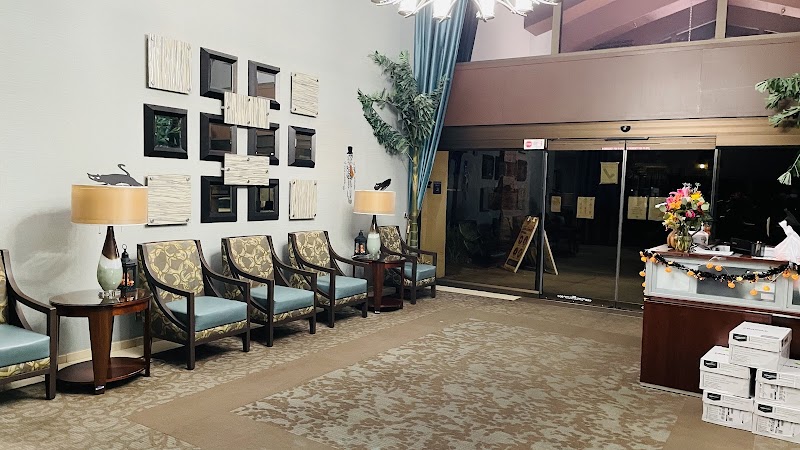
How is White Blossom Staffed?

CMS rates WHITE BLOSSOM CARE CENTER's staffing level at 2 out of 5 stars, which is below average compared to other nursing homes. Staff turnover is 44%, compared to the California average of 46%. This relatively stable workforce can support continuity of care. RN turnover specifically is 65%, which is notably high. RNs provide skilled clinical oversight, so turnover in this role can affect medical care quality.

What Have Inspectors Found at White Blossom?

State health inspectors documented 55 deficiencies at WHITE BLOSSOM CARE CENTER during 2019 to 2025. These included: 1 Immediate Jeopardy (the most serious level, indicating potential for serious harm or death) and 54 with potential for harm. Immediate Jeopardy findings are rare and represent the most serious regulatory concerns. They require immediate corrective action.
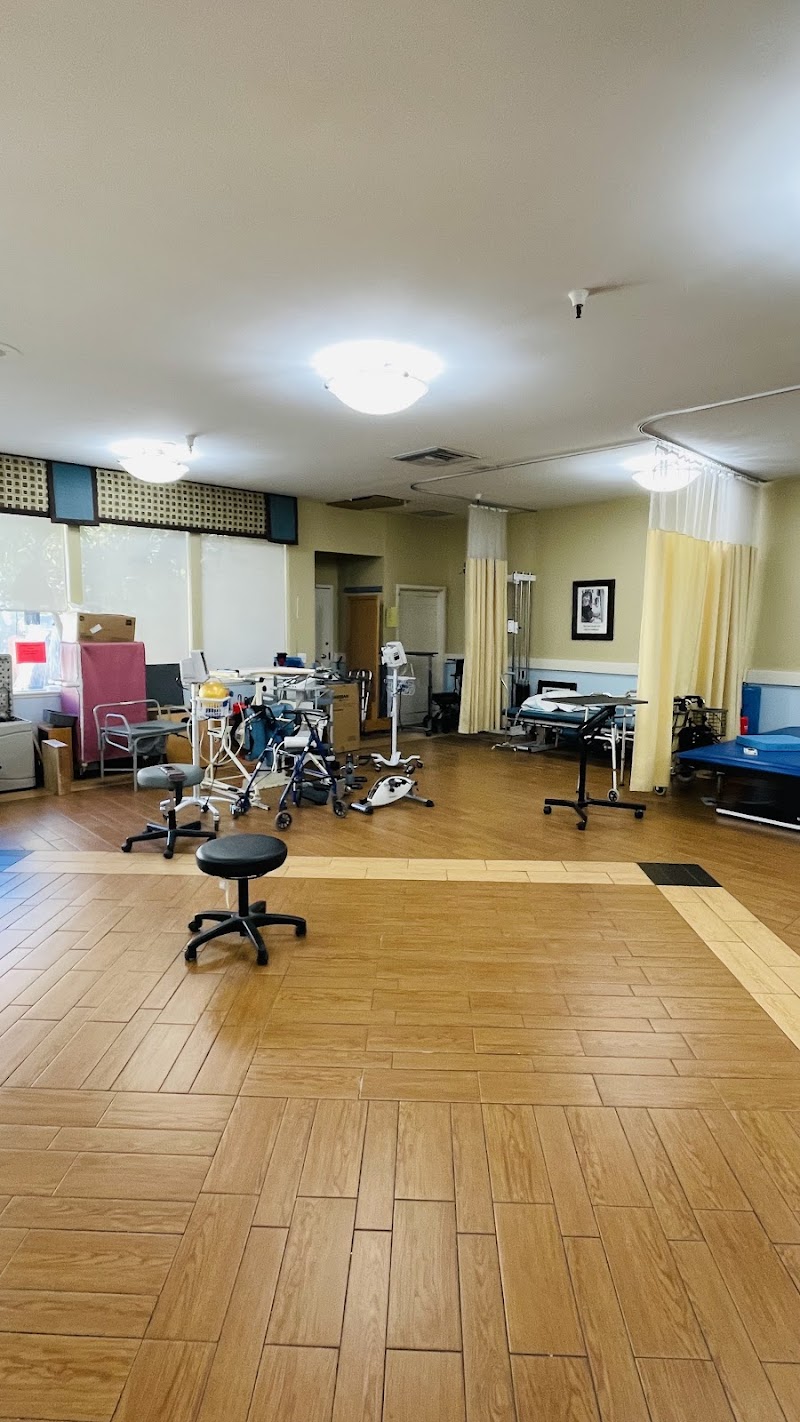
Who Owns and Operates White Blossom?

WHITE BLOSSOM CARE CENTER is owned by a for-profit company. For-profit facilities operate as businesses with obligations to shareholders or private owners. The facility is operated by PACS GROUP, a chain that manages multiple nursing homes. With 153 certified beds and approximately 145 residents (about 95% occupancy), it is a mid-sized facility located in SAN JOSE, California.
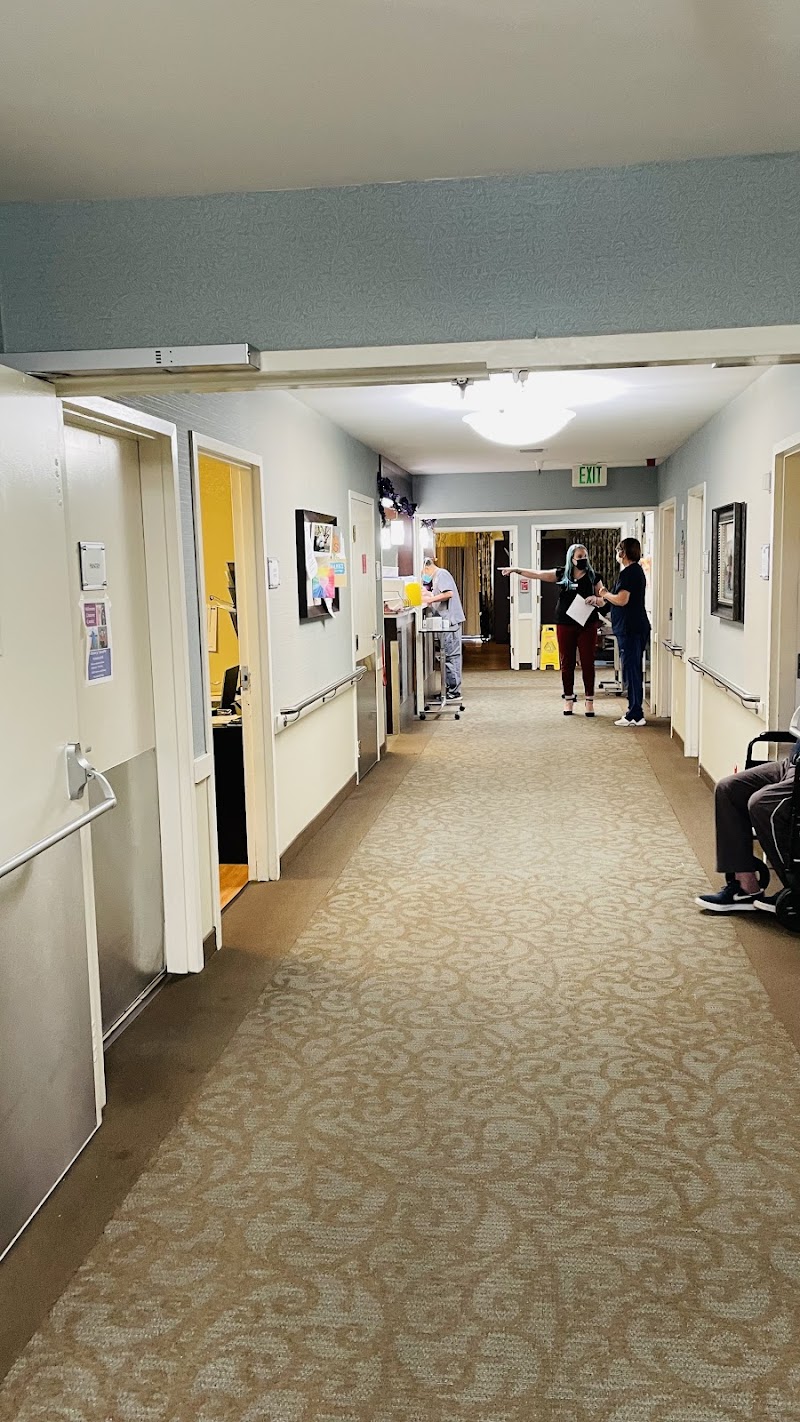
How Does White Blossom Compare to Other California Nursing Homes?

Compared to the 100 nursing homes in California, WHITE BLOSSOM CARE CENTER's overall rating (4 stars) is above the state average of 3.2, staff turnover (44%) is near the state average of 46%, and health inspection rating (3 stars) is at the national benchmark.

What Should Families Ask When Visiting White Blossom?

Based on this facility's data, families visiting should ask: "What changes have been made since the serious inspection findings, and how are you preventing similar issues?" "Can you walk me through typical staffing levels on day, evening, and night shifts?" "Can I visit during a mealtime to observe dining assistance and food quality?" "How do you handle medical emergencies, and what is your hospital transfer rate?" These questions are particularly relevant given the facility's Immediate Jeopardy citations and the below-average staffing rating.

Is White Blossom Safe?

Based on CMS inspection data, WHITE BLOSSOM CARE CENTER has documented safety concerns. Inspectors have issued 1 Immediate Jeopardy citation (the most serious violation level indicating risk of serious injury or death). The facility has a 4-star overall rating and ranks #1 of 100 nursing homes in California. Families considering this facility should ask detailed questions about what corrective actions have been taken since these incidents.

Do Nurses at White Blossom Stick Around?

WHITE BLOSSOM CARE CENTER has a staff turnover rate of 44%, which is about average for California nursing homes (state average: 46%). Moderate turnover is common in nursing homes, but families should still ask about staff tenure and how the facility maintains care continuity when employees leave.

Was White Blossom Ever Fined?

WHITE BLOSSOM CARE CENTER has been fined $83,177 across 2 penalty actions. This is above the California average of $33,911. Fines in this range indicate compliance issues significant enough for CMS to impose meaningful financial consequences. Common causes include delayed correction of deficiencies, repeat violations, or care failures affecting resident safety. Families should ask facility leadership what changes have been made since these penalties.

Is White Blossom on Any Federal Watch List?

WHITE BLOSSOM CARE CENTER is not on any federal watch list. The most significant is the Special Focus Facility (SFF) program, which identifies the bottom 1% of nursing homes nationally based on persistent, serious quality problems. Not being on this list means the facility has avoided the pattern of deficiencies that triggers enhanced federal oversight. This is a positive indicator, though families should still review the facility's inspection history directly.